Focusing on similes: comparisons using 'like' or 'as'. Includes introductory slides and a practice worksheet.
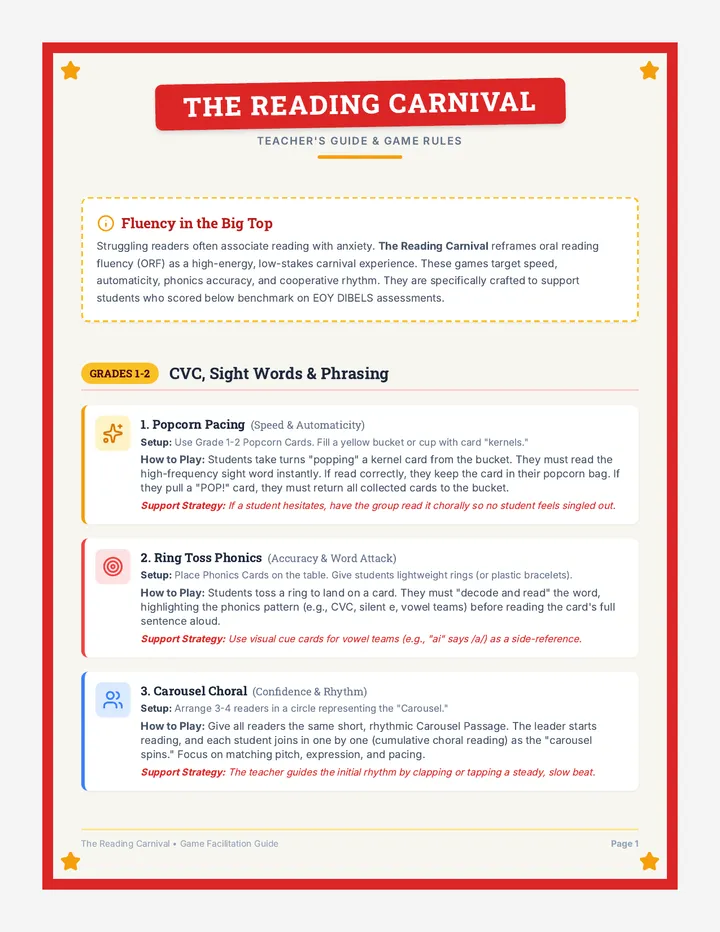
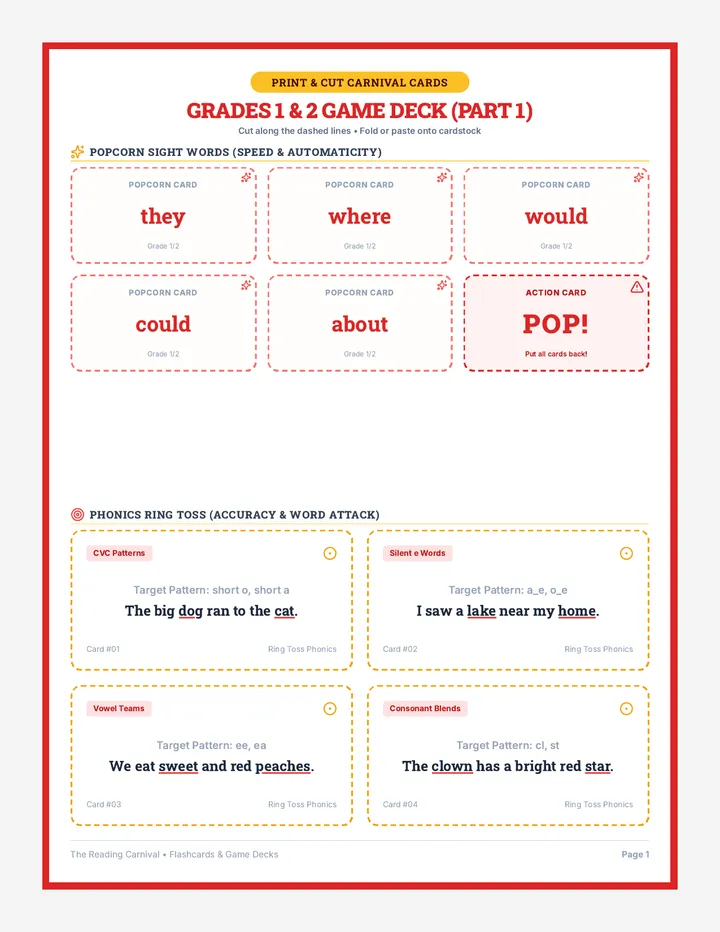
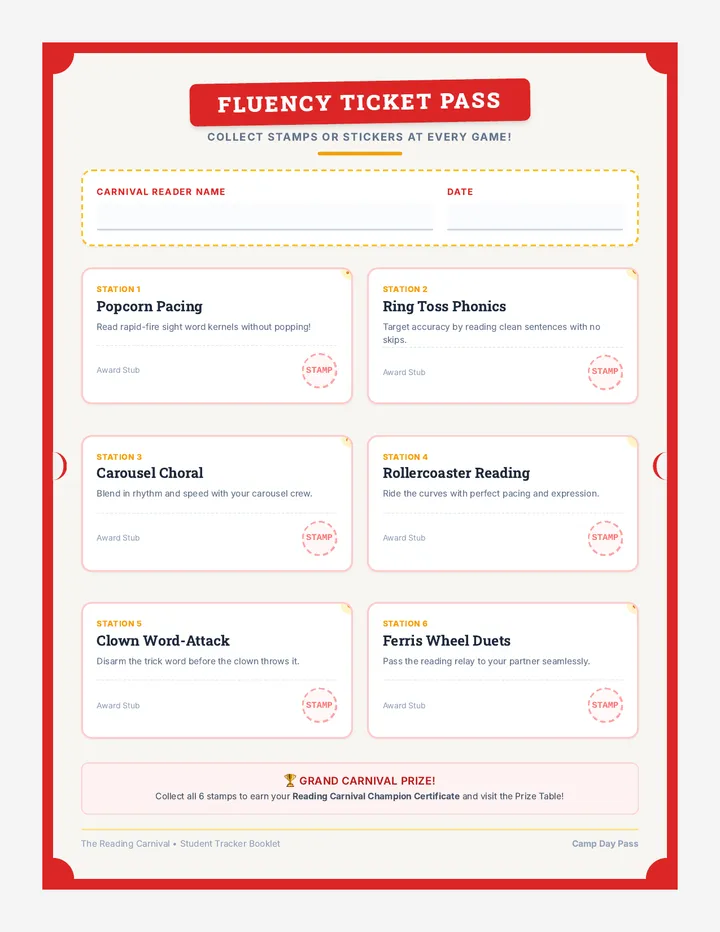
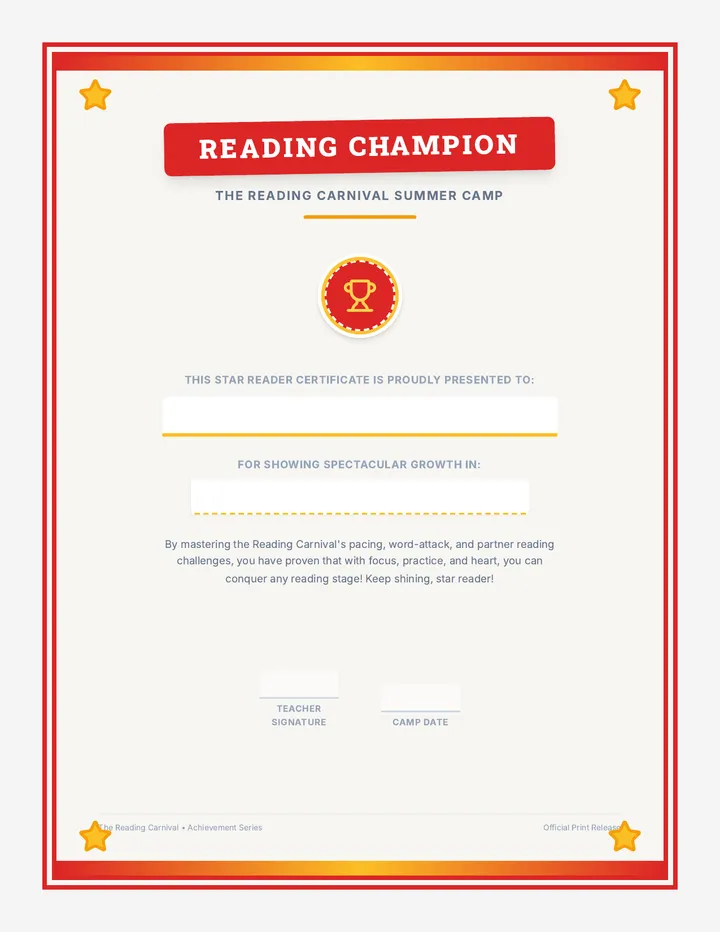
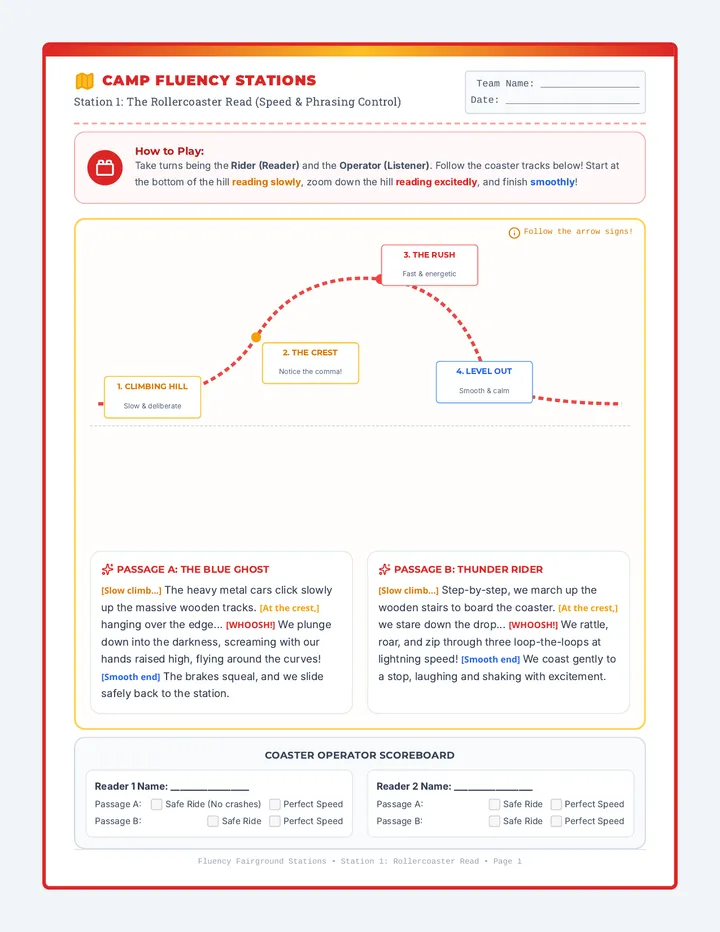
A comprehensive oral reading fluency bundle themed around 'The Reading Carnival'. It includes game guides, differentiated reading cards, progress trackers, and achievement awards designed specifically for struggling 1st-4th grade readers to build speed, accuracy, and confidence in a high-energy summer camp environment.
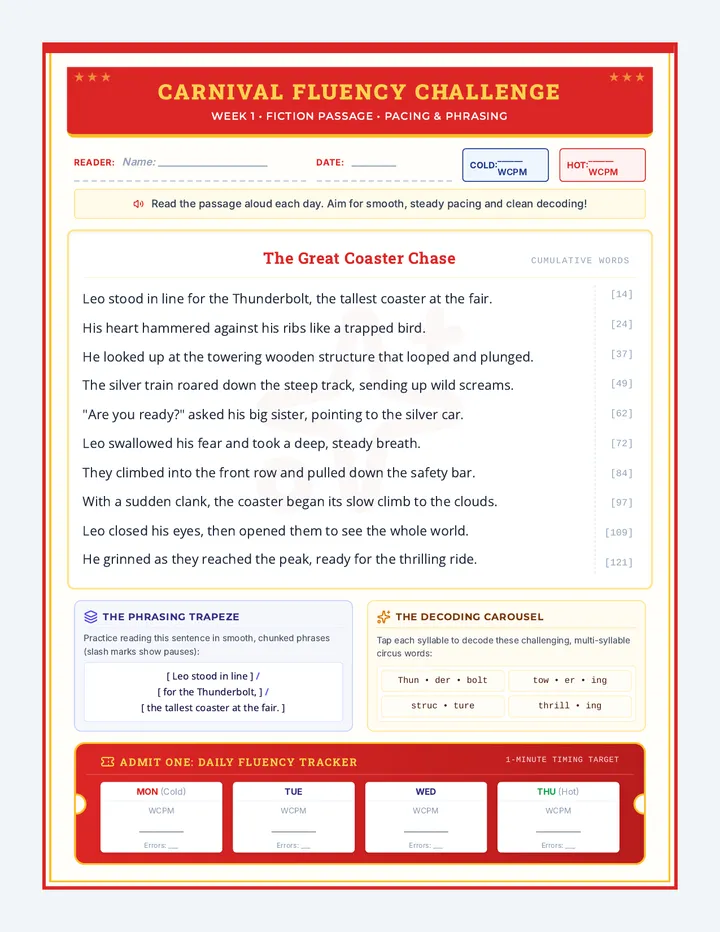
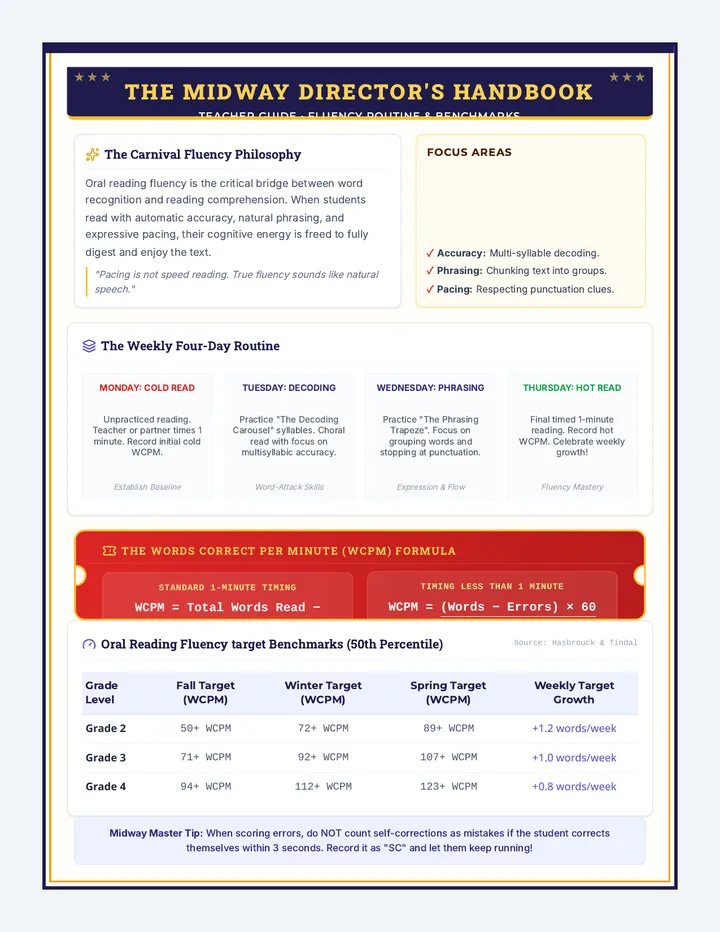
A weekly oral reading fluency program themed around a vintage carnival. It focuses on pacing, phrasing, and decoding multi-syllable words through engaging fiction and non-fiction passages with built-in trackers.
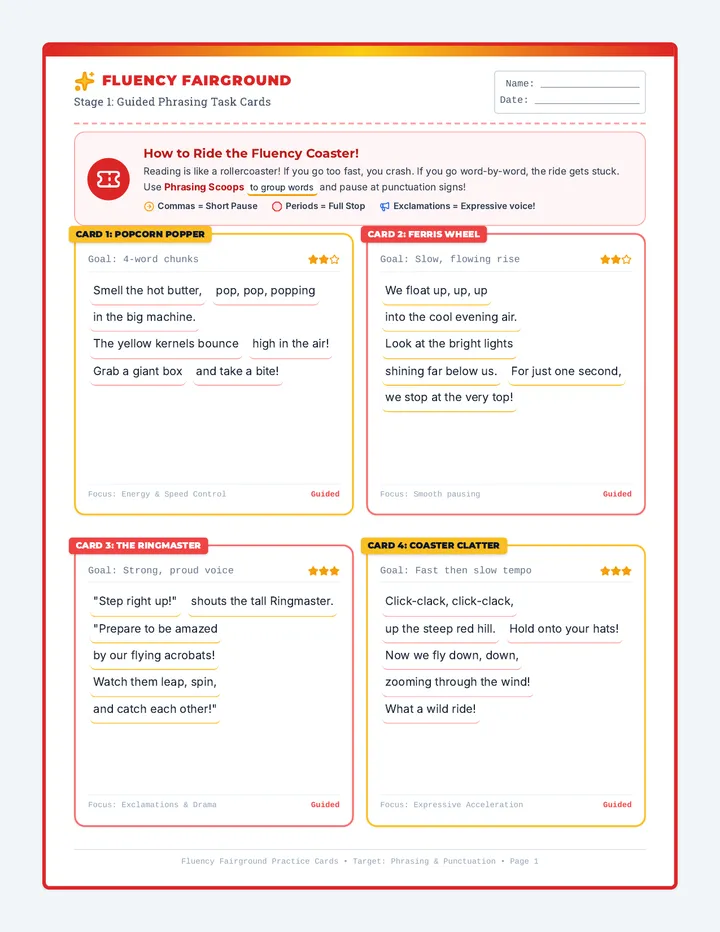
A high-energy, carnival-themed literacy package designed to boost oral reading fluency with a focus on phrasing and punctuation. Features print-and-cut phrasing task cards, partner-based carnival games, and a dramatic Reader's Theater script set under the Big Top.
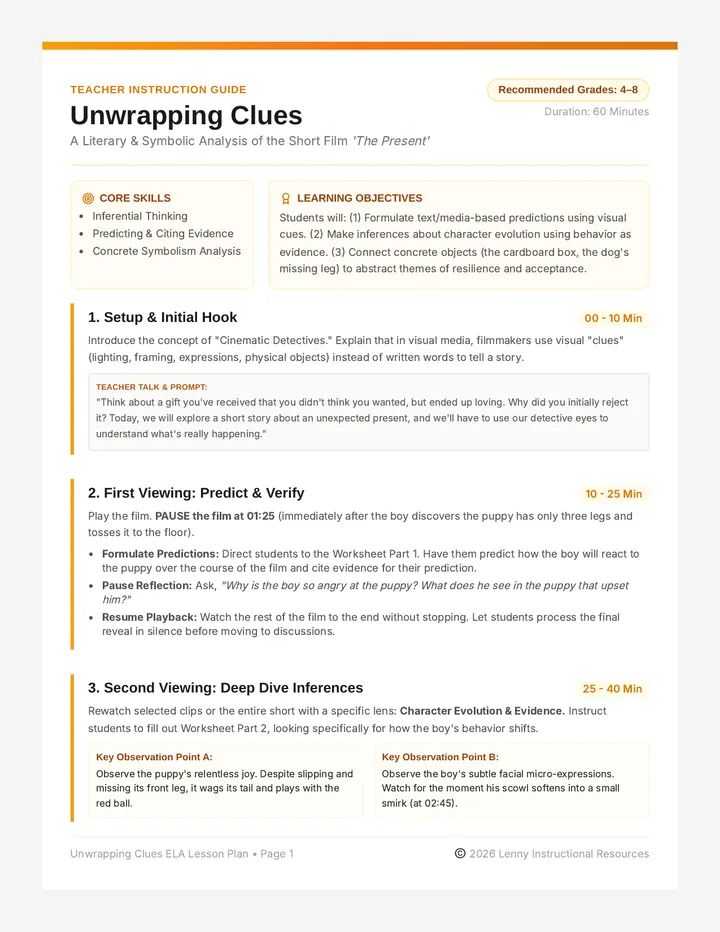
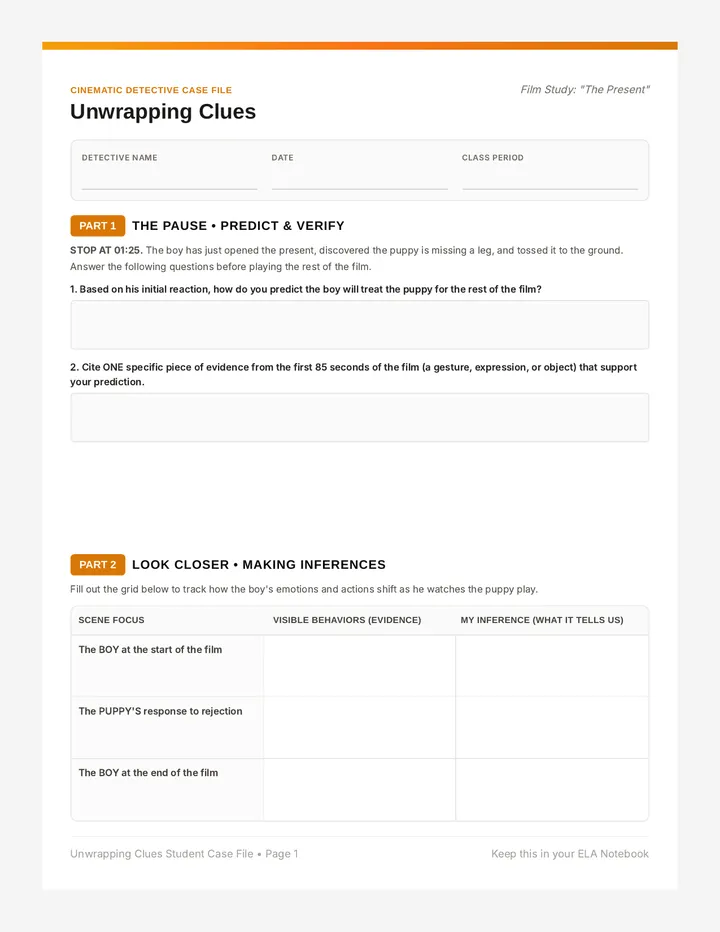
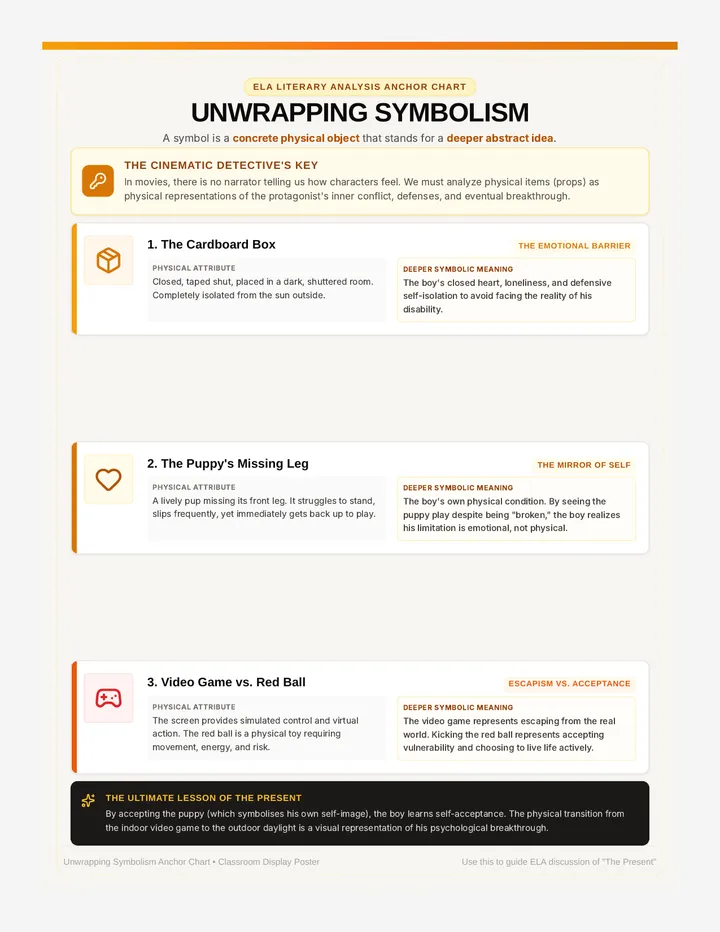
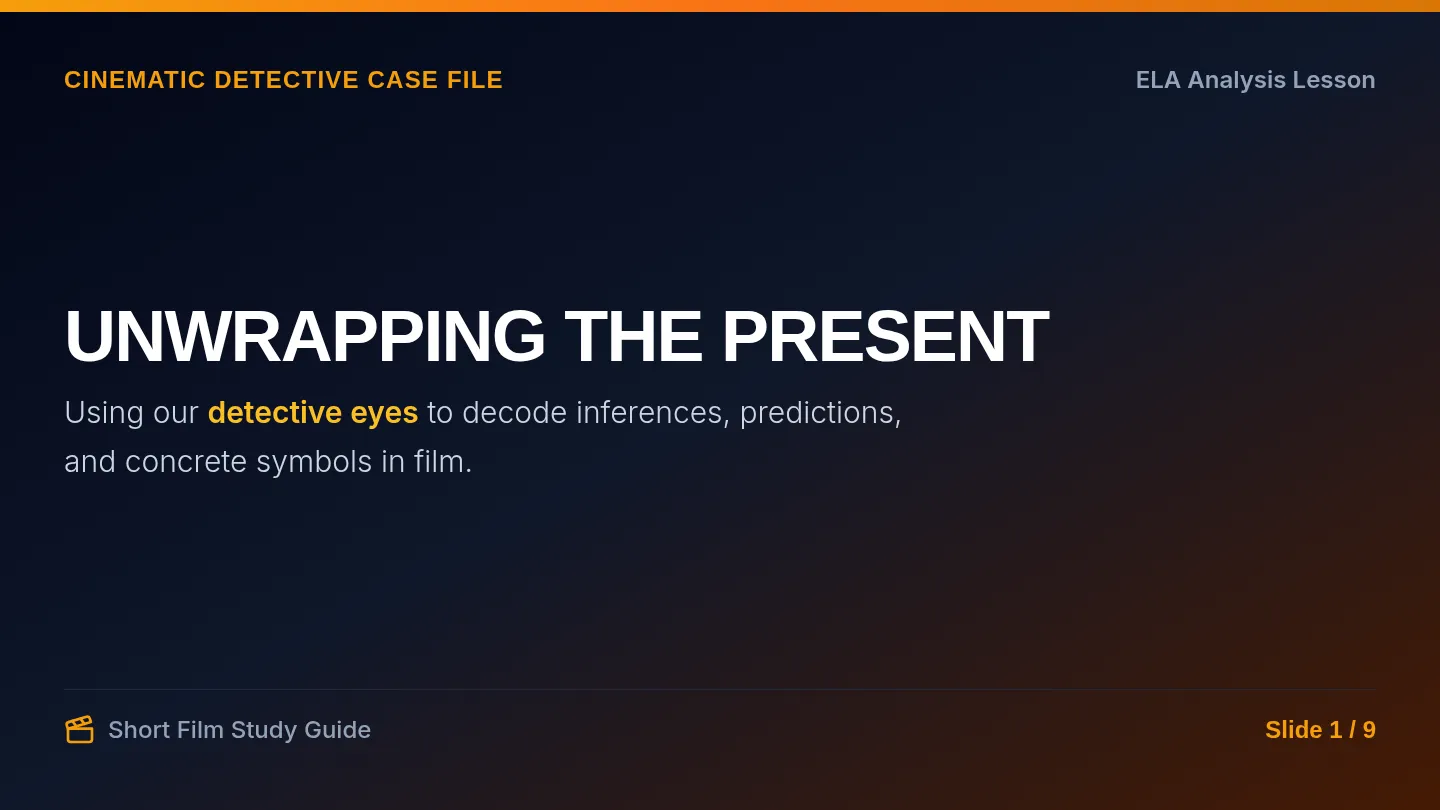
A comprehensive 60-minute ELA lesson focused on the animated short film 'The Present'. Students explore core reading skills—inferential thinking, prediction, citing evidence, and concrete symbolism—by analyzing the boy, the box, the dog, and the final reveal.
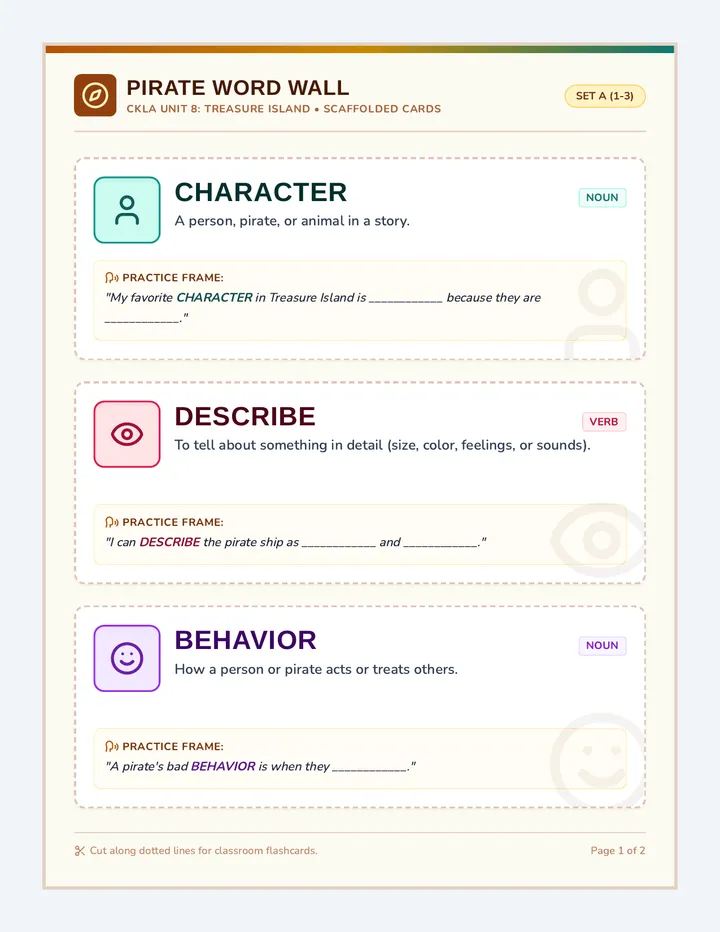
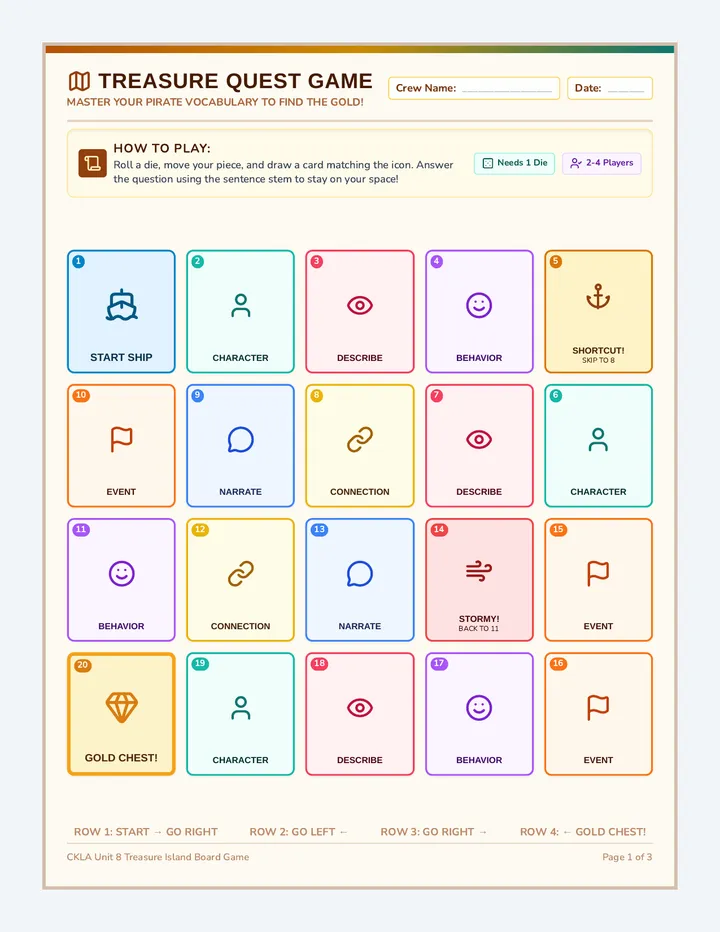
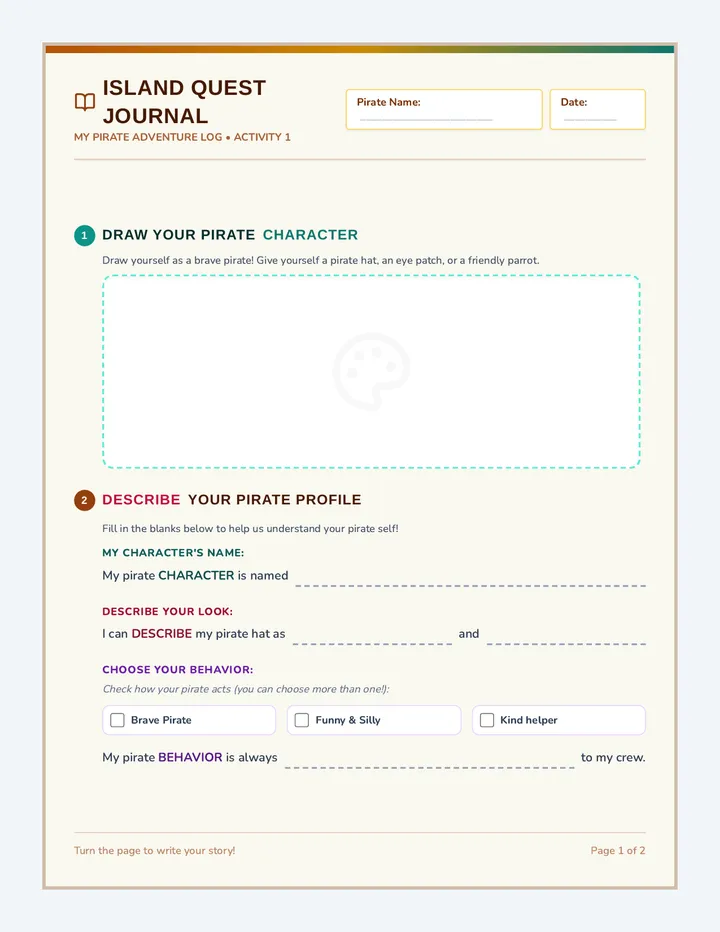
An engaging end-of-the-year activity bundle themed around CKLA Unit 8 Treasure Island, specifically scaffolded for 4th-grade students with low literacy. This lesson incorporates active gameplay, visual word wall cards, and sentence-stem writing prompts to master key vocabulary.
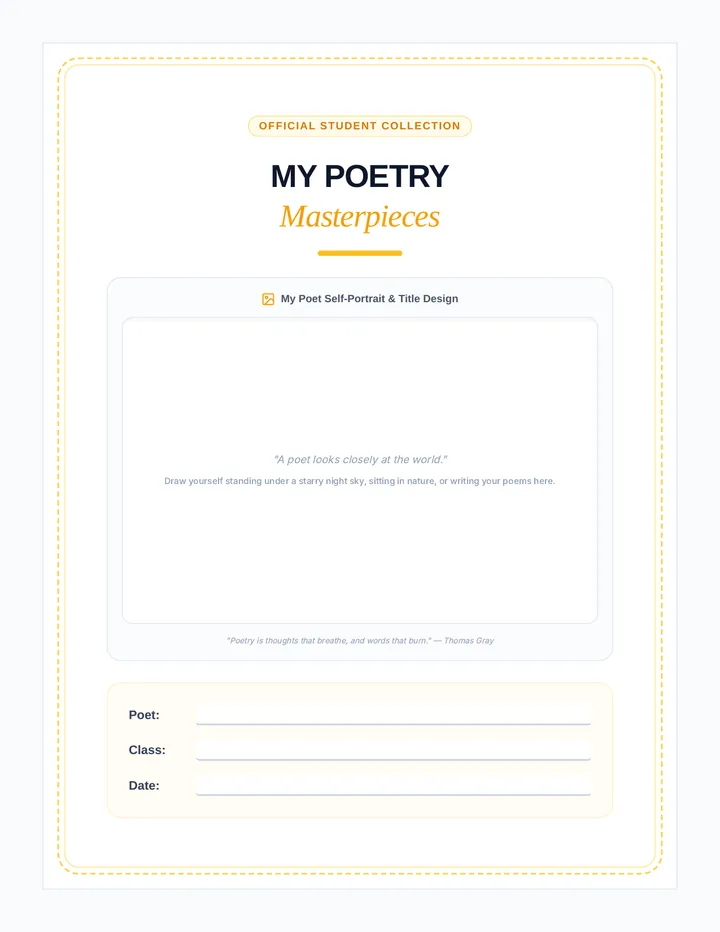
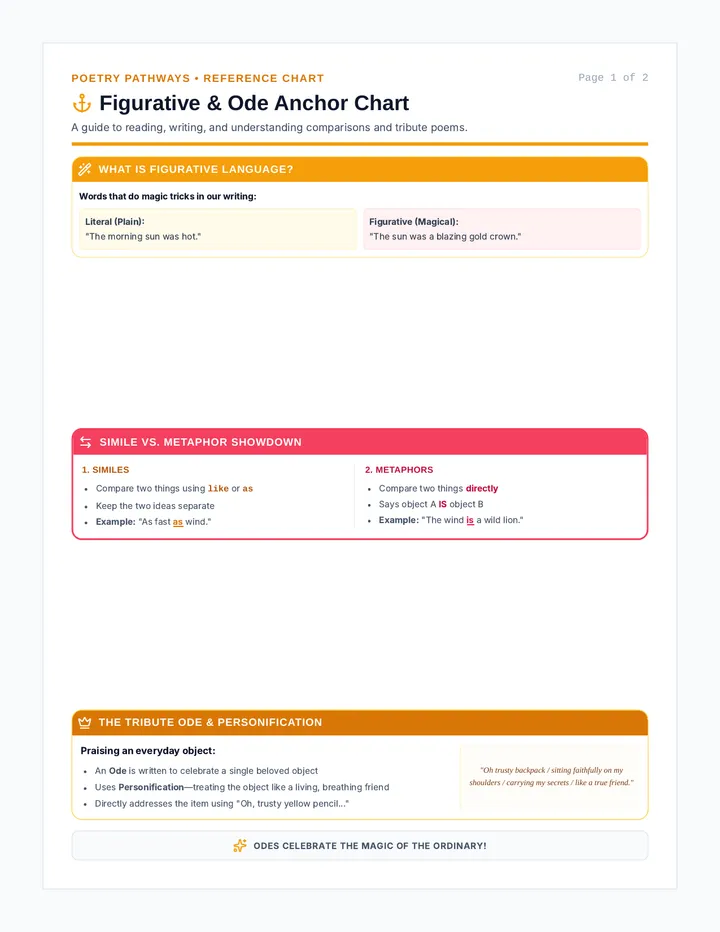
Focuses on using Metaphors and Similes to create powerful figurative imagery. Includes a final "My Poetry Masterpieces" portfolio cover and peer celebration review pages.
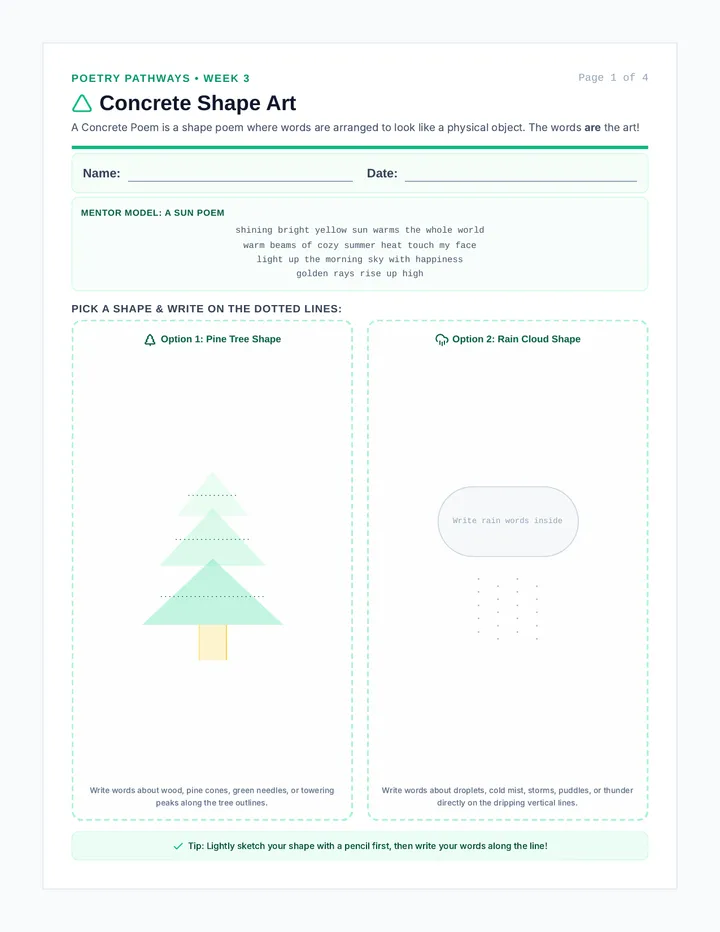
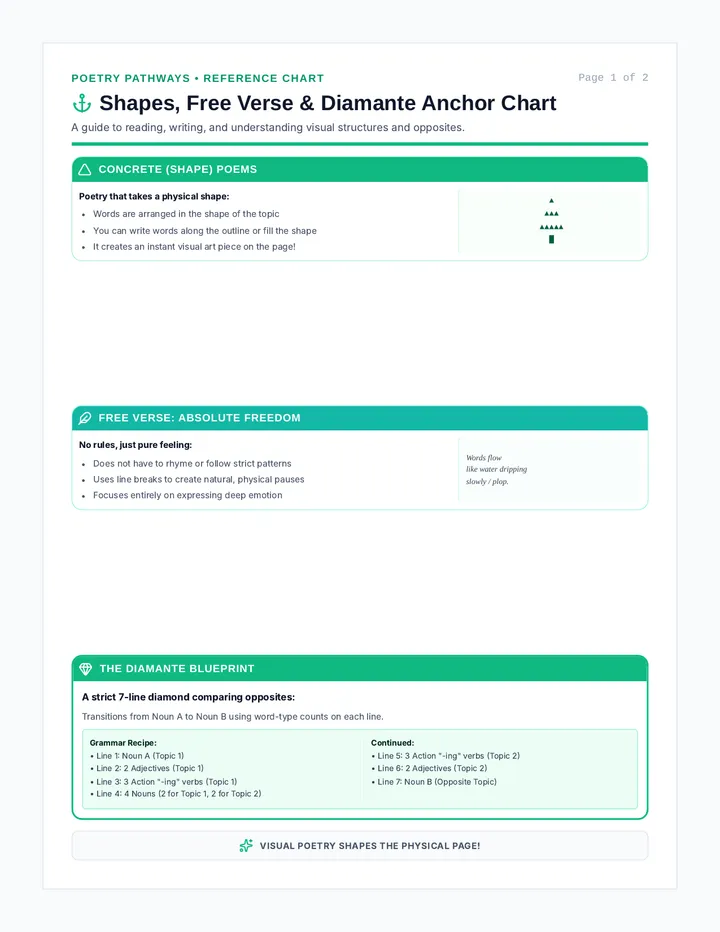
Focuses on shape, movement, and visual arrangement with Concrete (Shape) Poems and Free Verse. Provides scaffolded outline guides, word maps, and sensory feeling prompts.
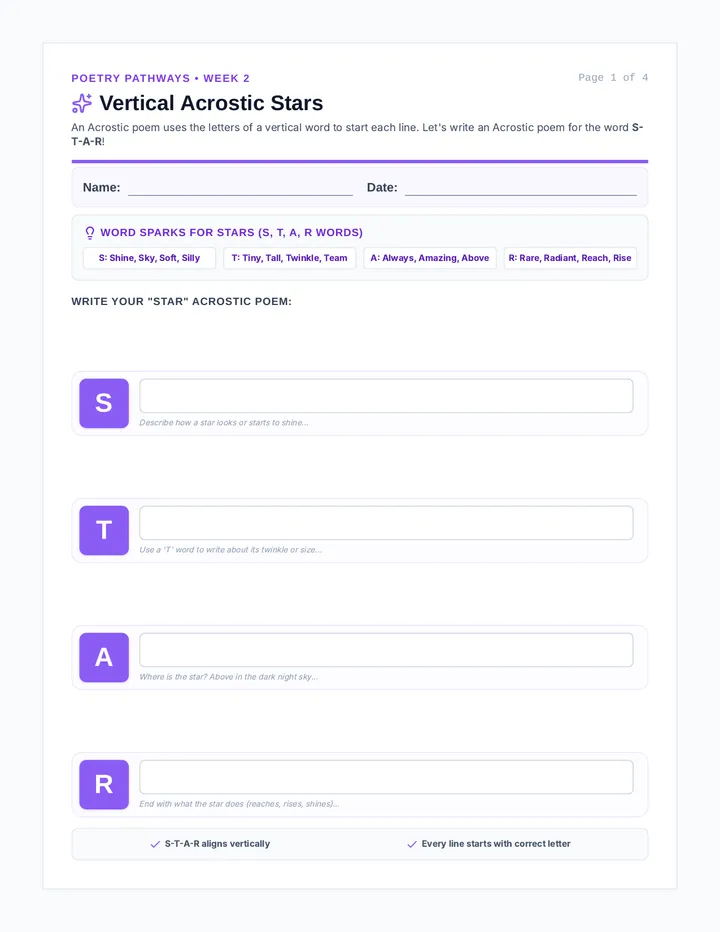
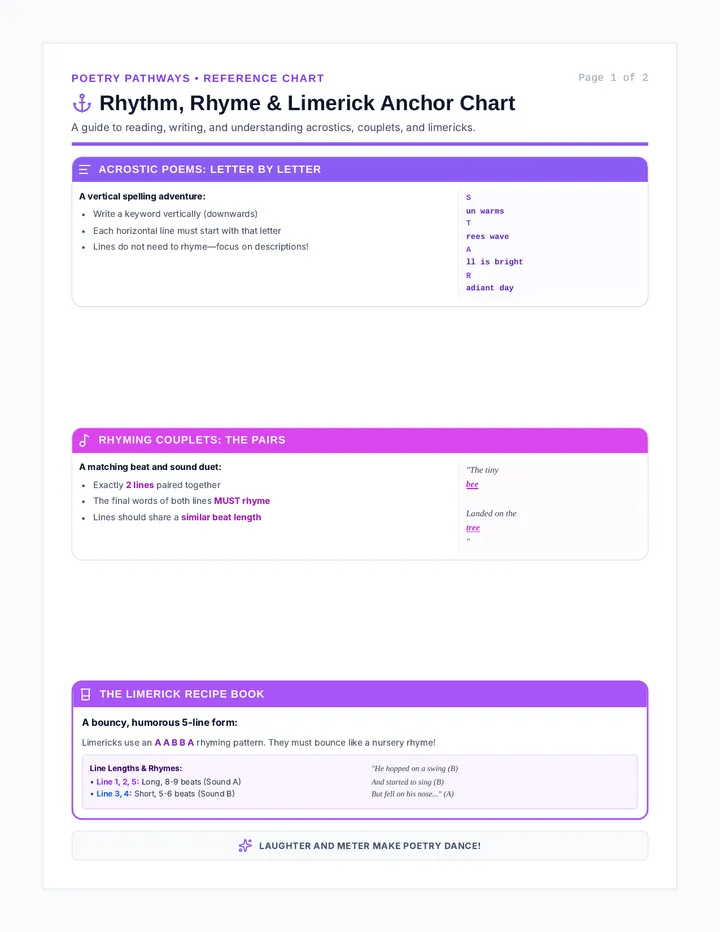
Focuses on structure, rhythm, and sound through Acrostic Poems and Rhyming Couplets. Offers step-by-step graphic templates, letter grids, rhyming dictionaries, and syllable beat counters.
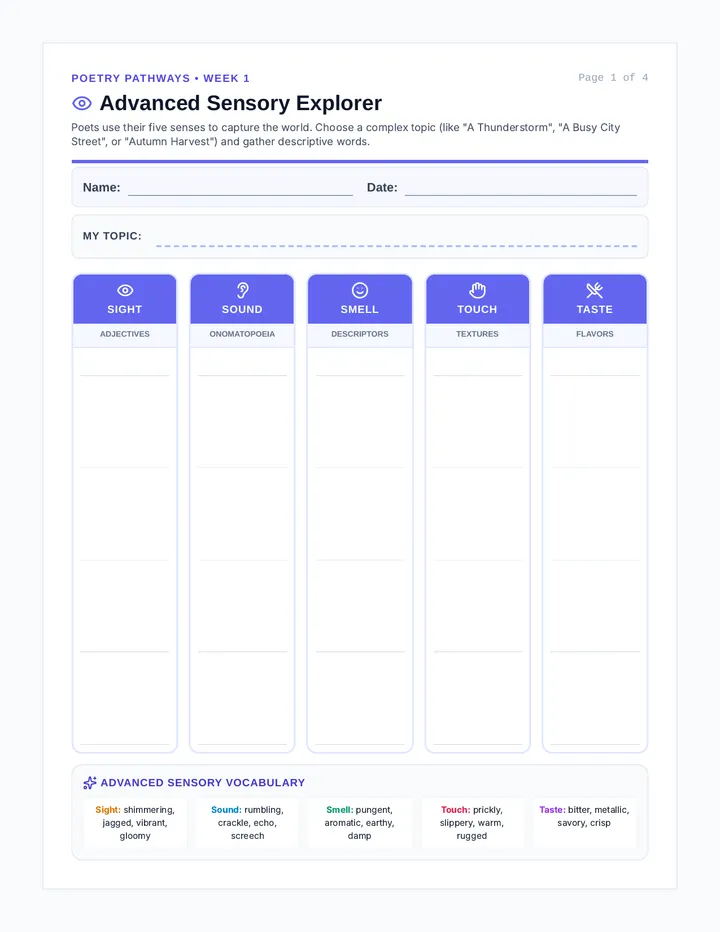
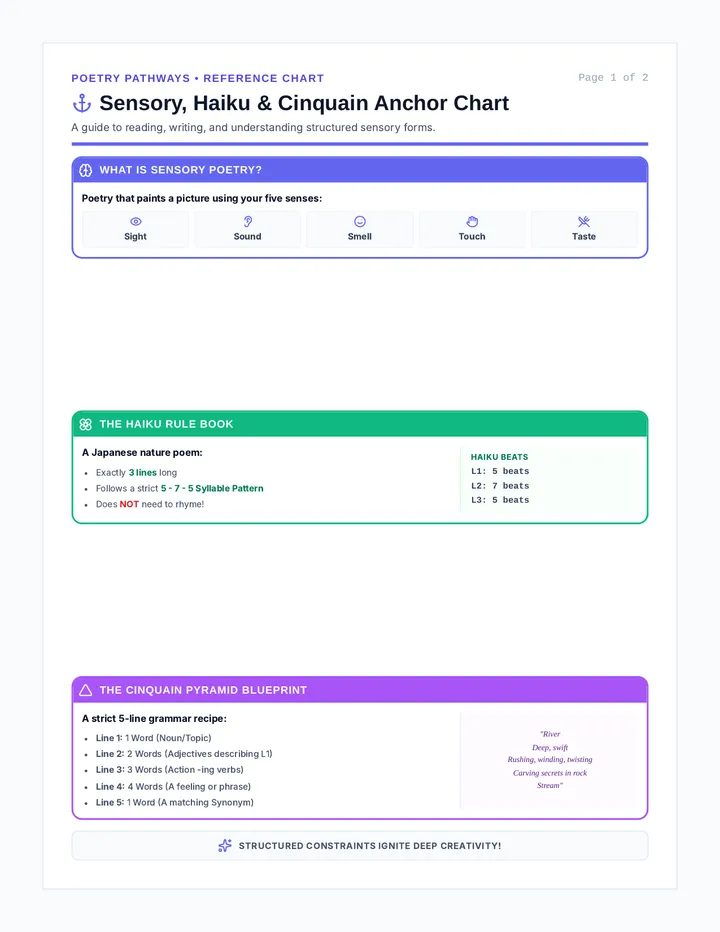
Focuses on Sensory and Color Poetry (Haiku and Color Poems). Students explore imagery using their five senses, utilizing highly visual sensory organizers, word banks, and syllable counters.
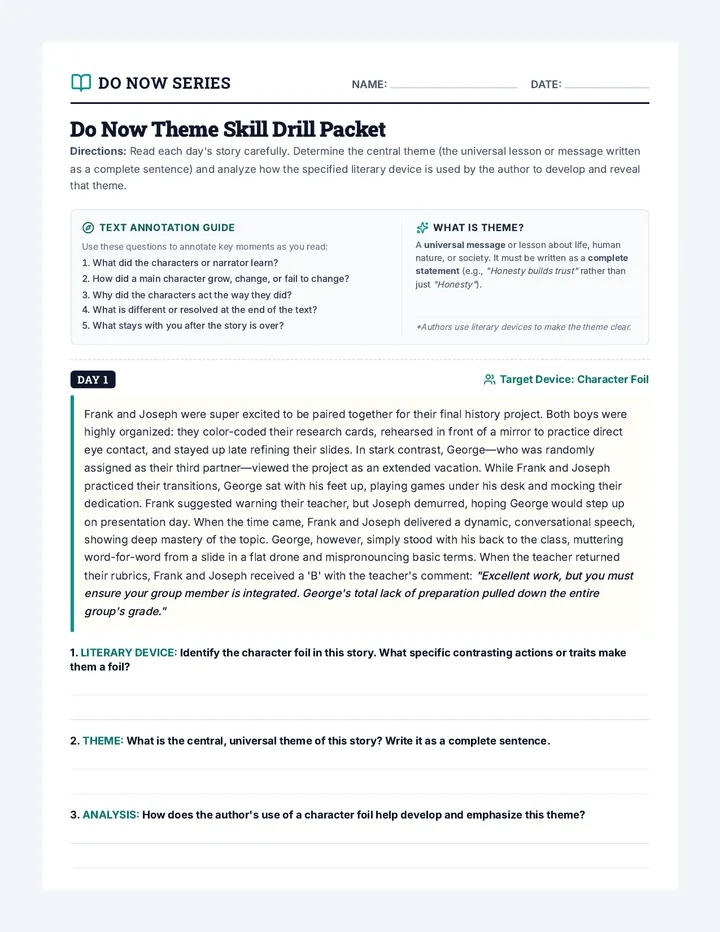
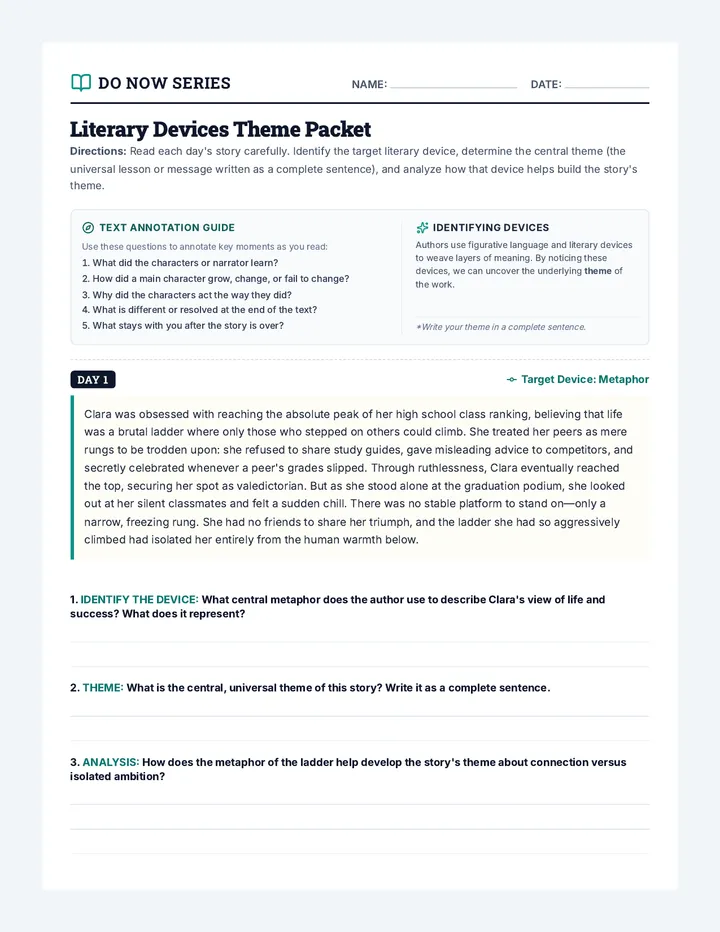
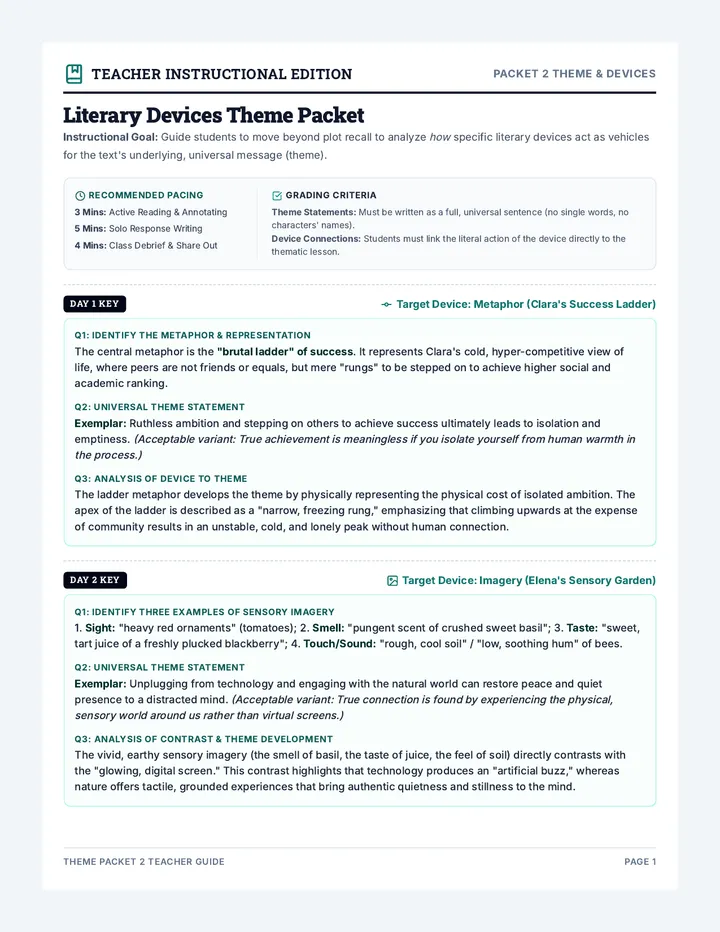
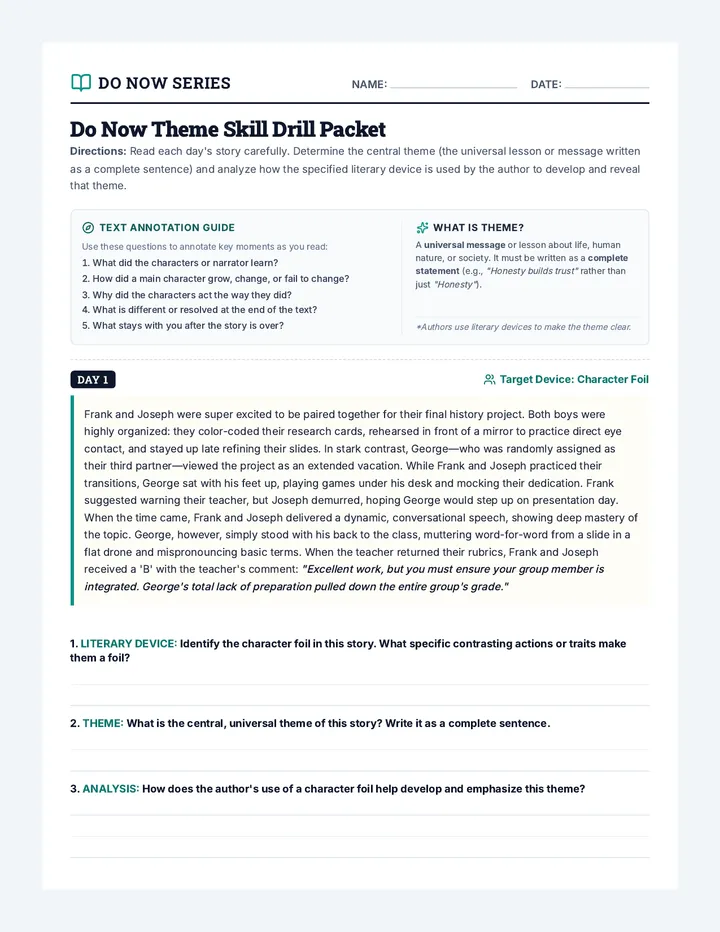
A cohesive lesson and drill series designed to help students master the connection between explicit literary devices and the central themes of literary texts.
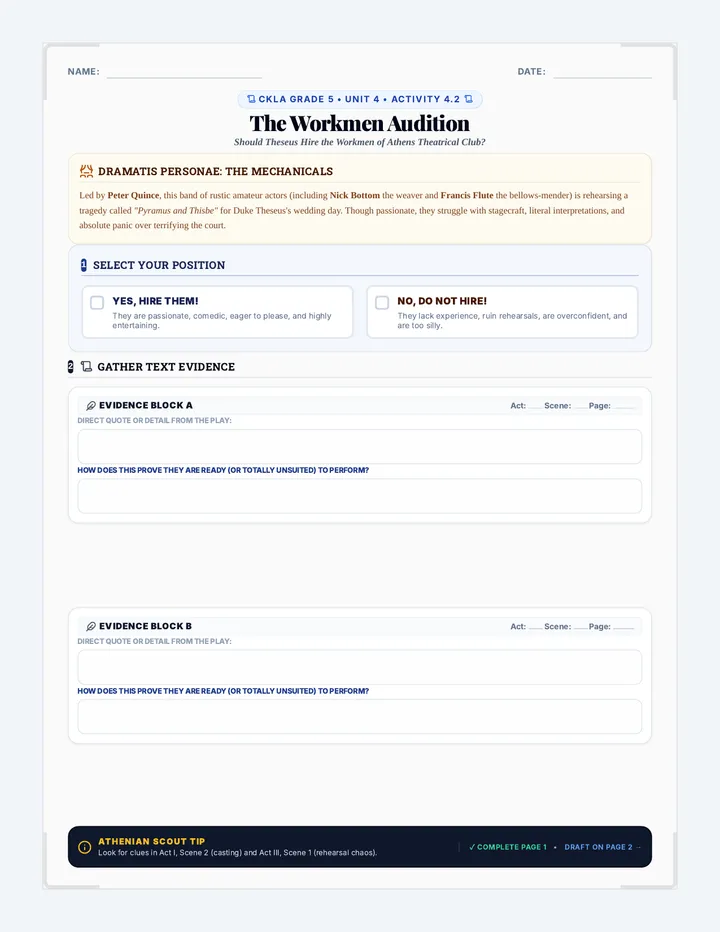
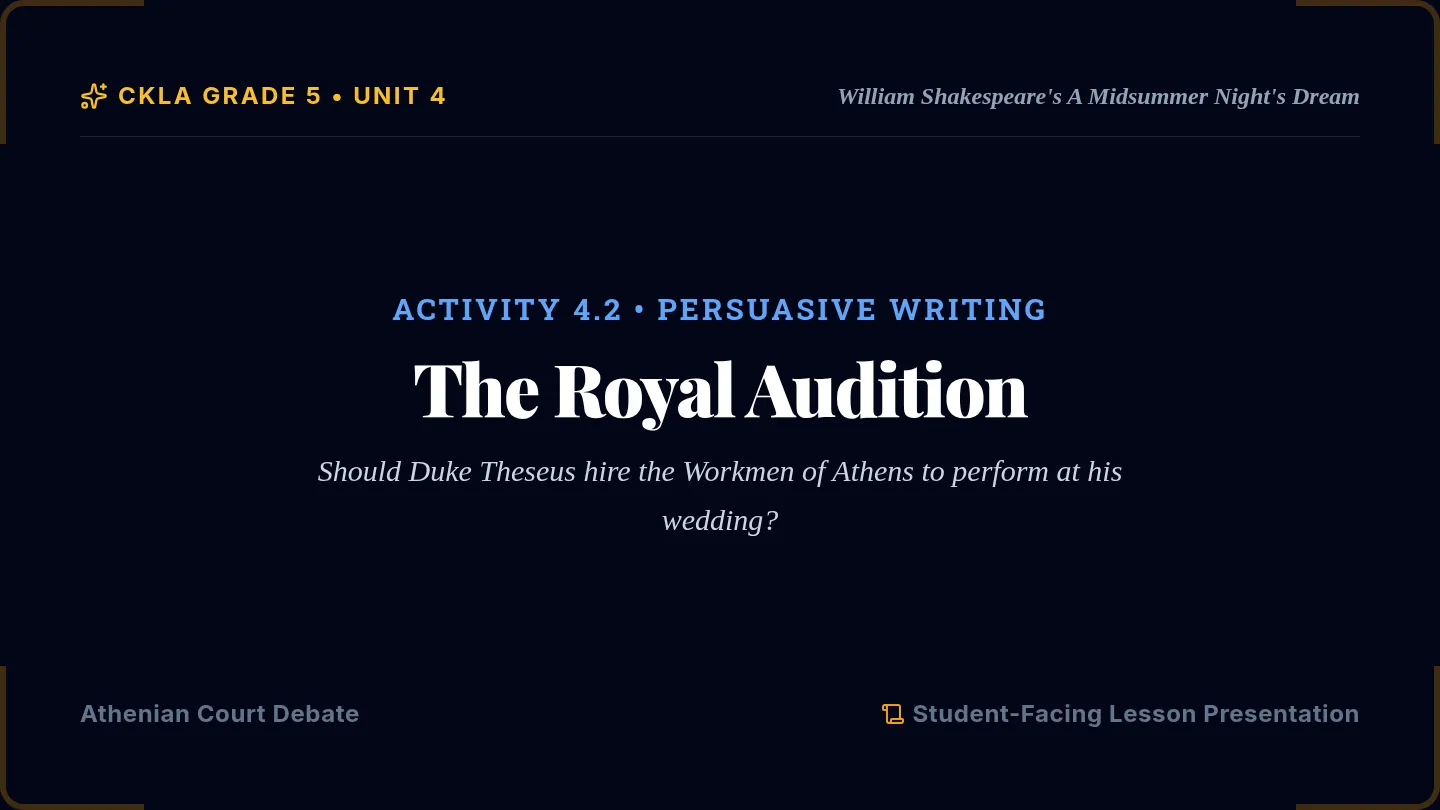
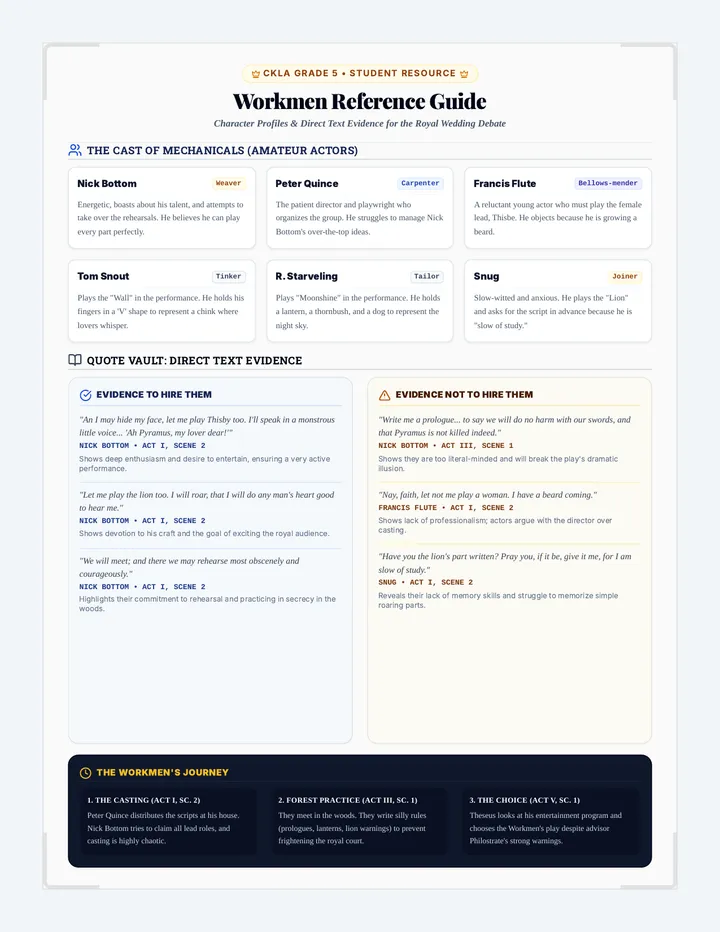
A comprehensive writing lesson centered around the CKLA Grade 5 persuasive prompt: 'Should Theseus hire the Workmen of Athens Theatrical Club?' Students gather text evidence about the mechanicals' theatrical abilities, weigh their strengths and weaknesses, and draft a structured persuasive paragraph.
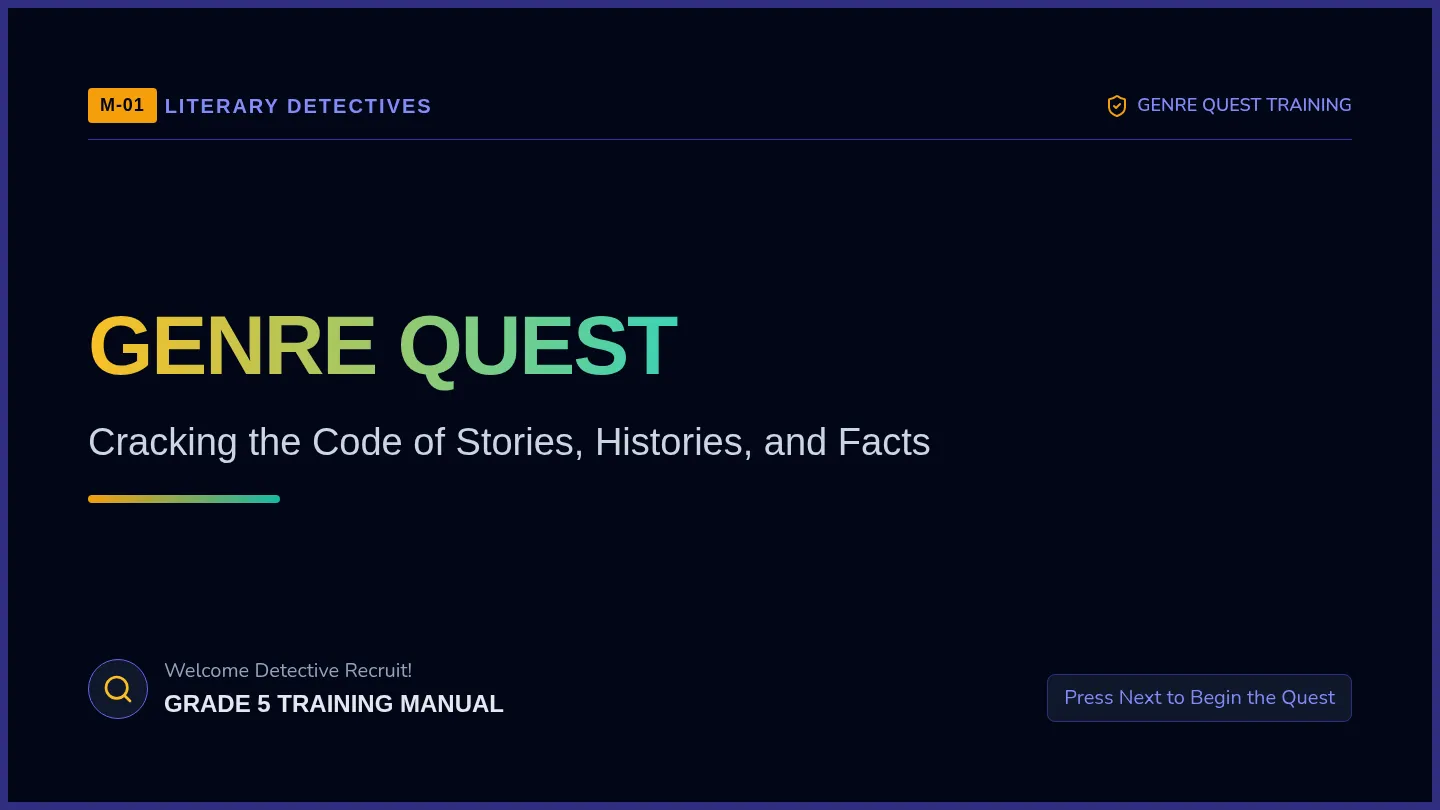
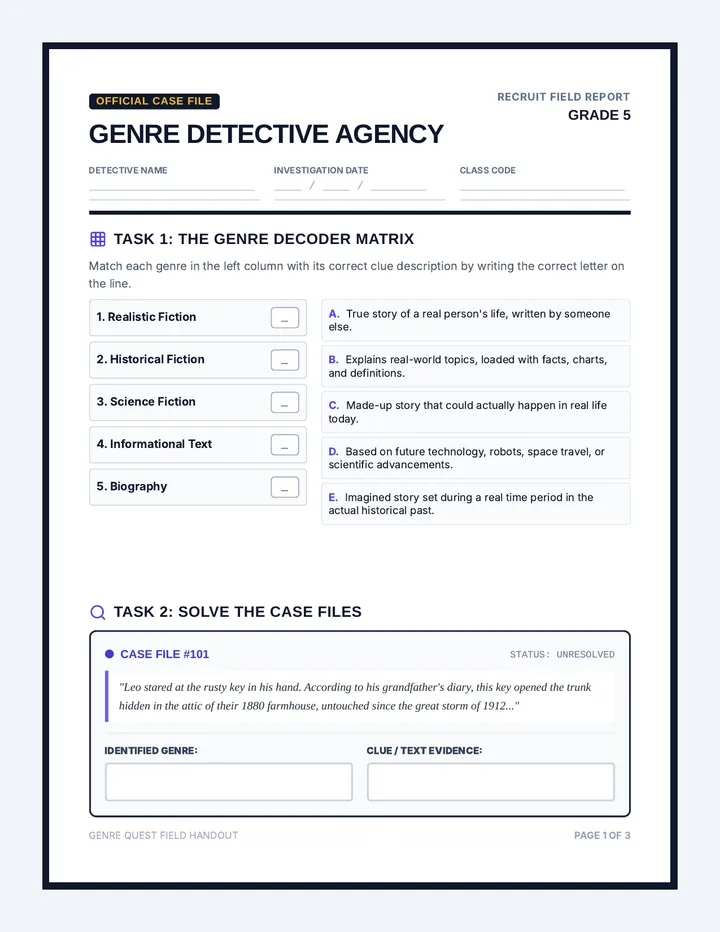
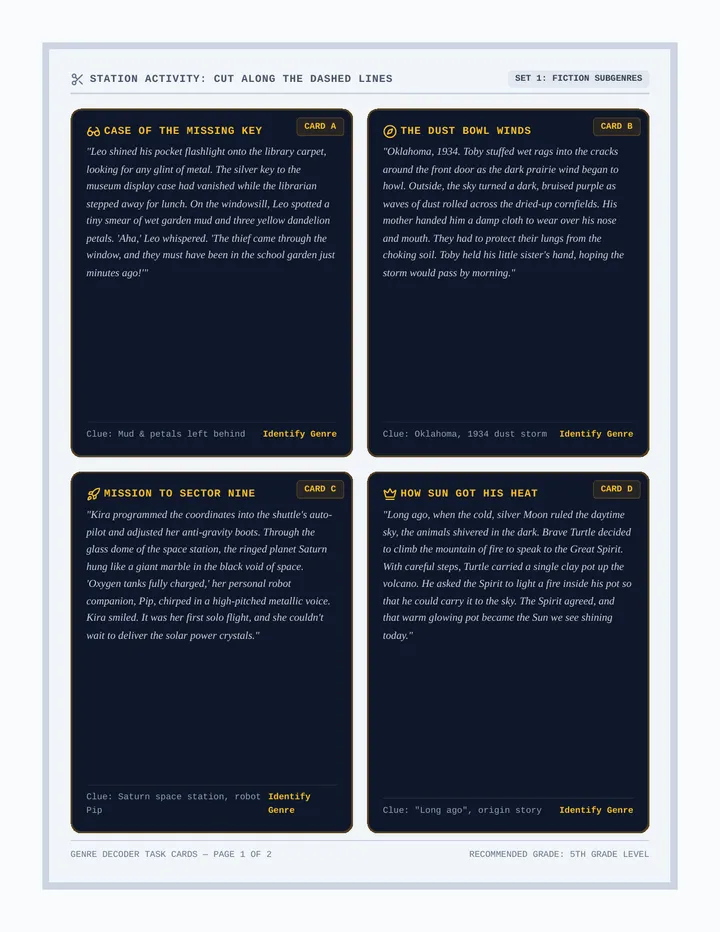
A comprehensive lesson designed for 5th-grade students to identify and distinguish between key literary genres, including fiction and nonfiction basics, and a modern mix of fantasy, science fiction, mystery, and adventure.
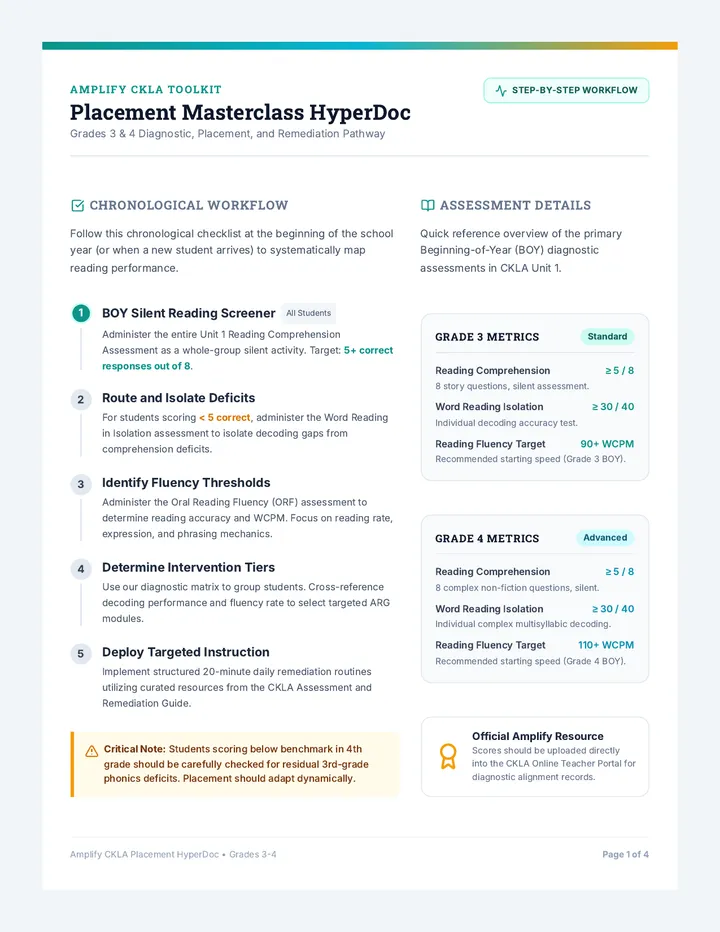
A specialized lesson designed for third and fourth-grade educators to master the CKLA placement, diagnostic, and remediation pathways. This lesson contains professional guides, visual flowcharts, and student grouping trackers to streamline the intervention process.
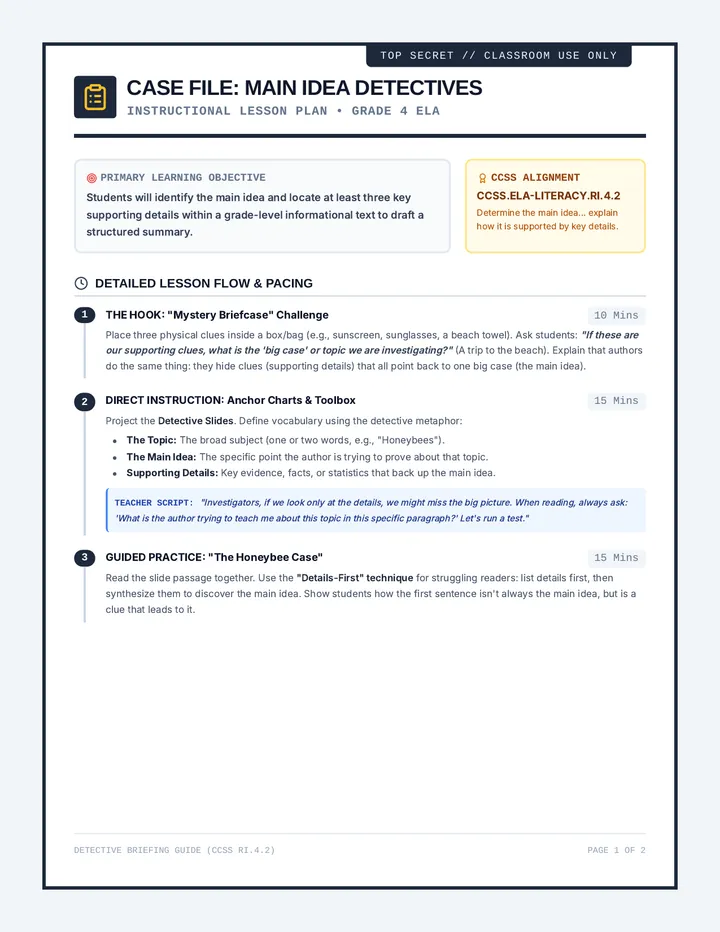
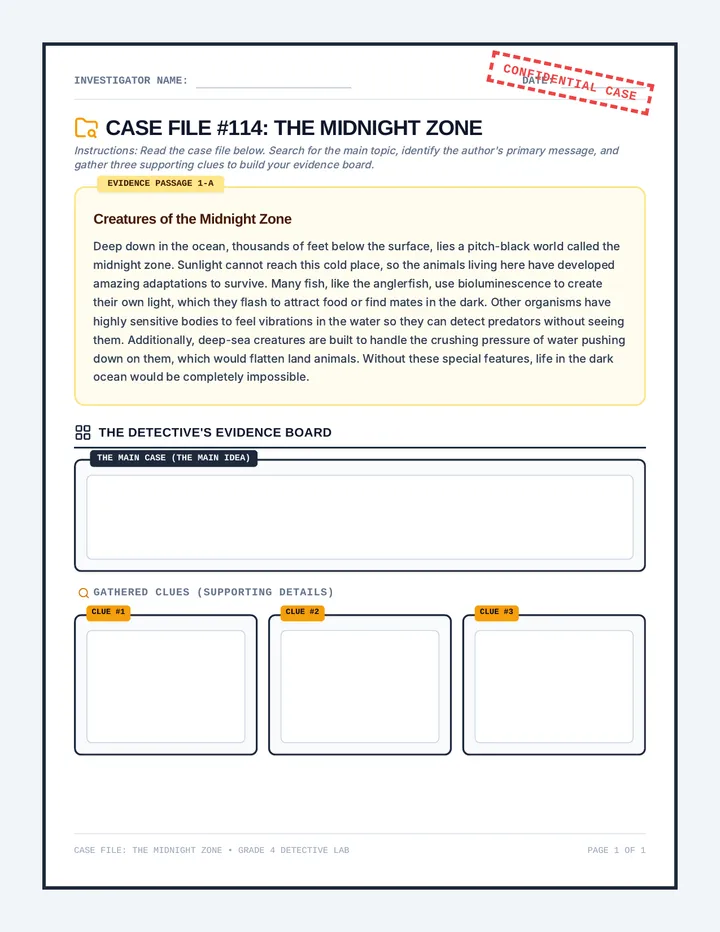
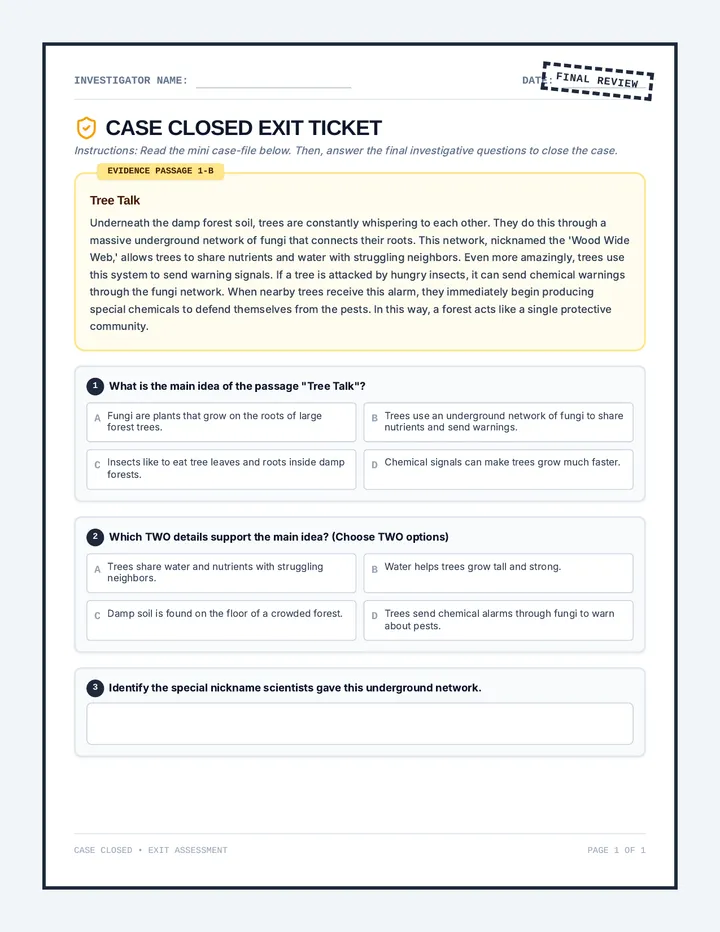
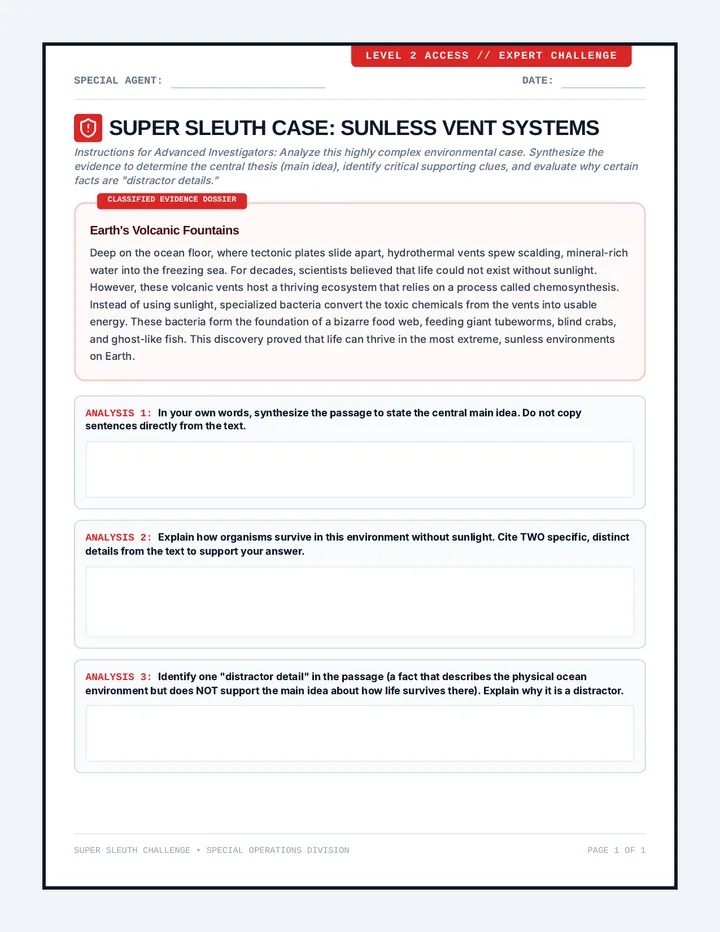
A comprehensive 4th grade ELA lesson plan and set of materials focused on identifying the main idea and supporting details in informational texts. Features a cohesive, highly engaging 'Detective/Investigator' theme with differentiation strategies and structured work areas.
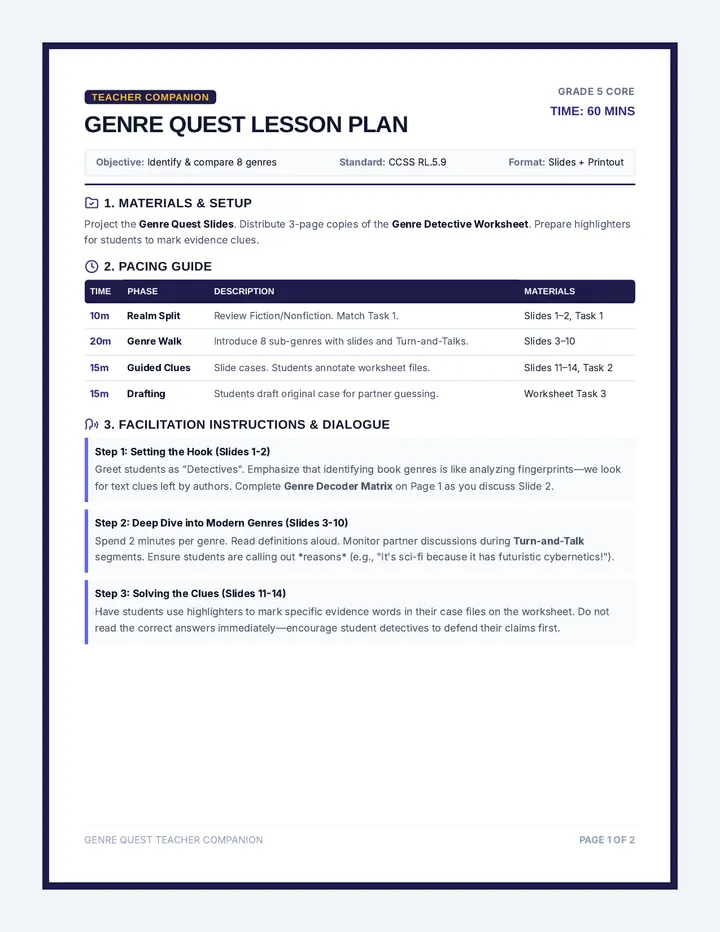
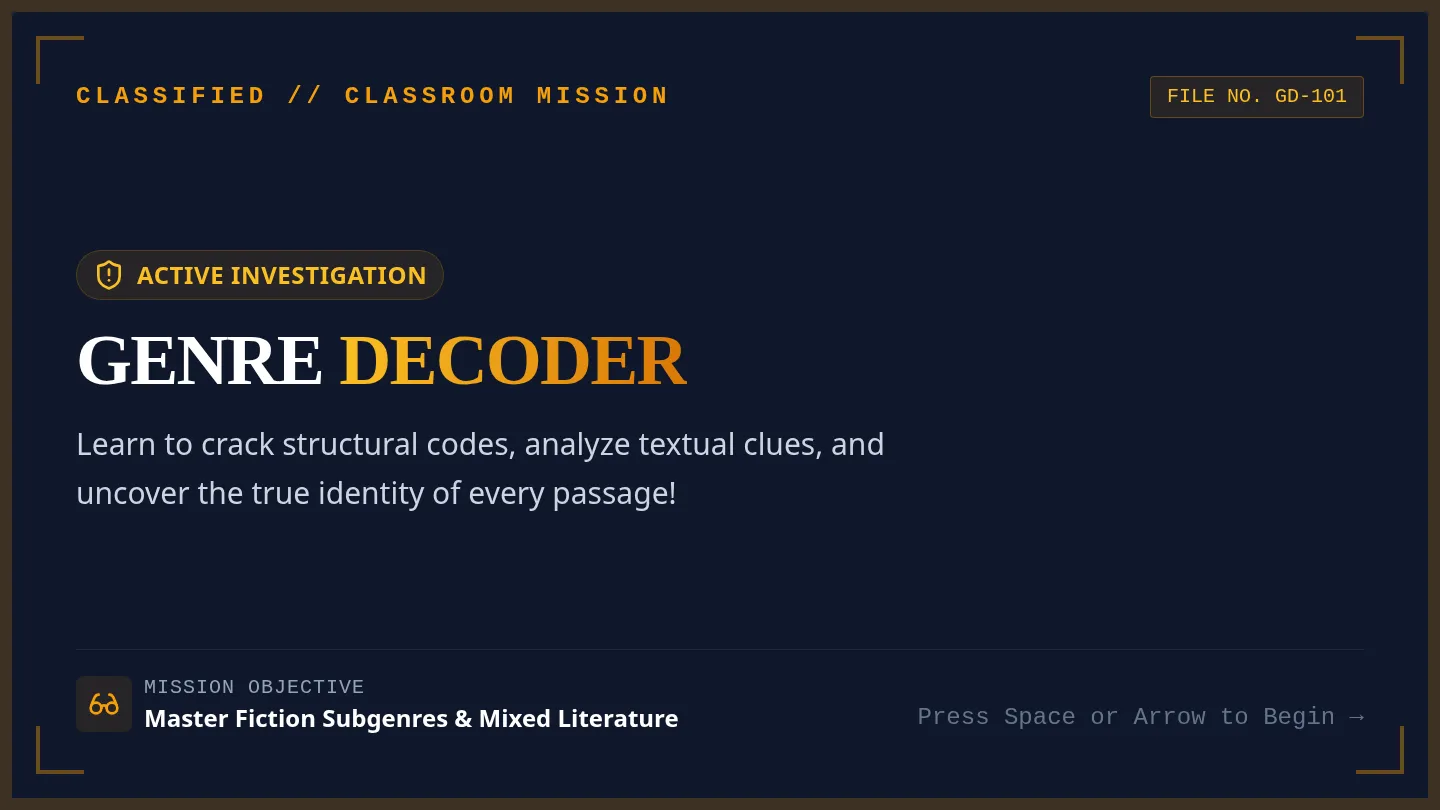
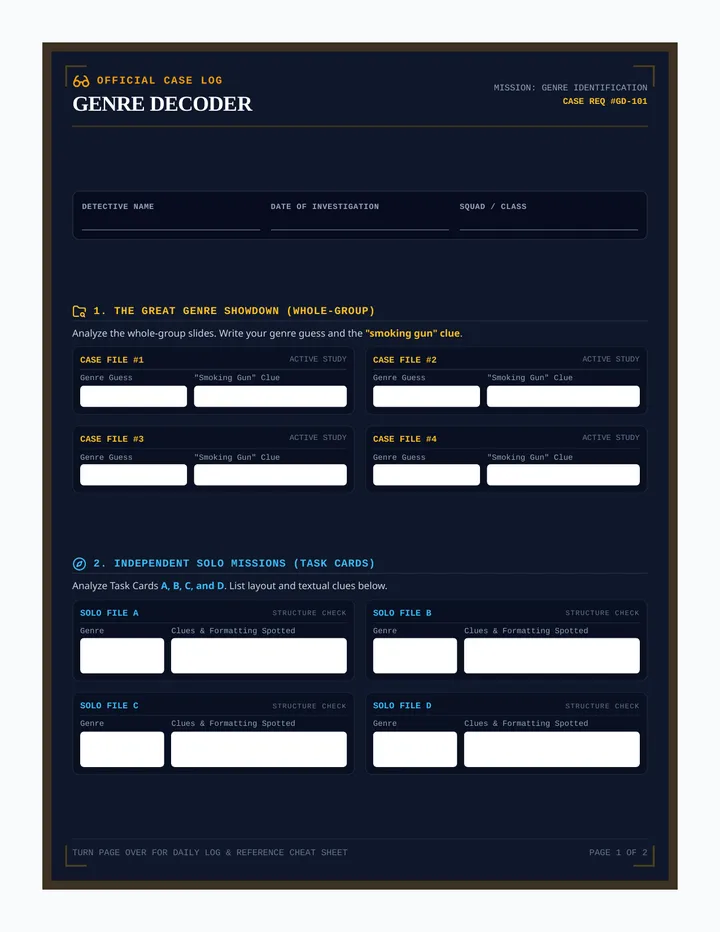
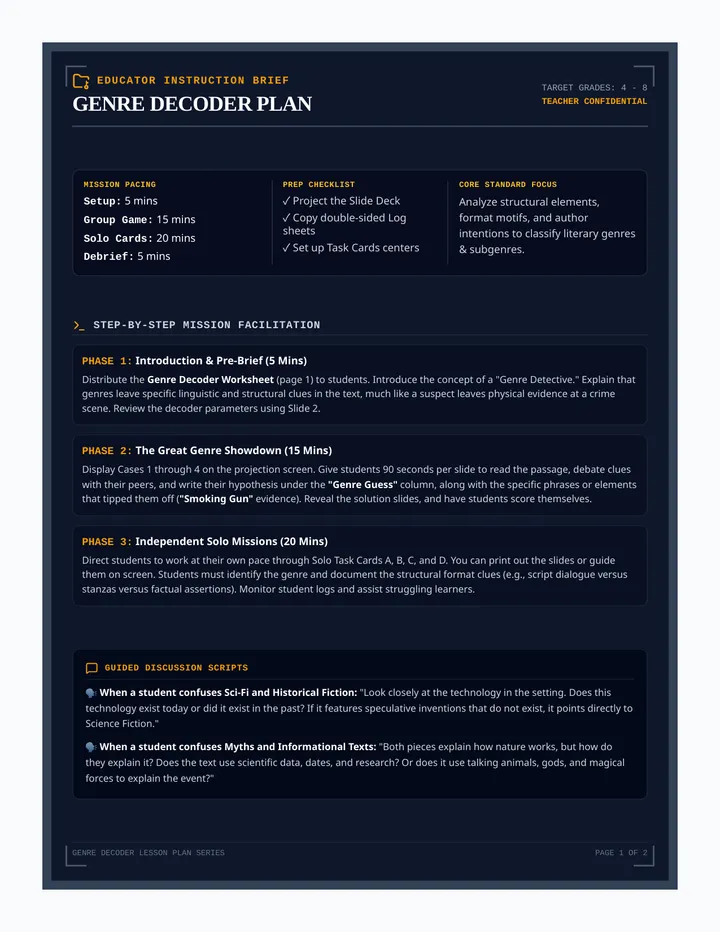
An interactive, gamified lesson where students become 'Genre Detectives' to identify fiction subgenres and mixed literature genres. Includes an interactive classroom presentation, a printable student recording sheet, and a comprehensive teacher guide with full answer keys.
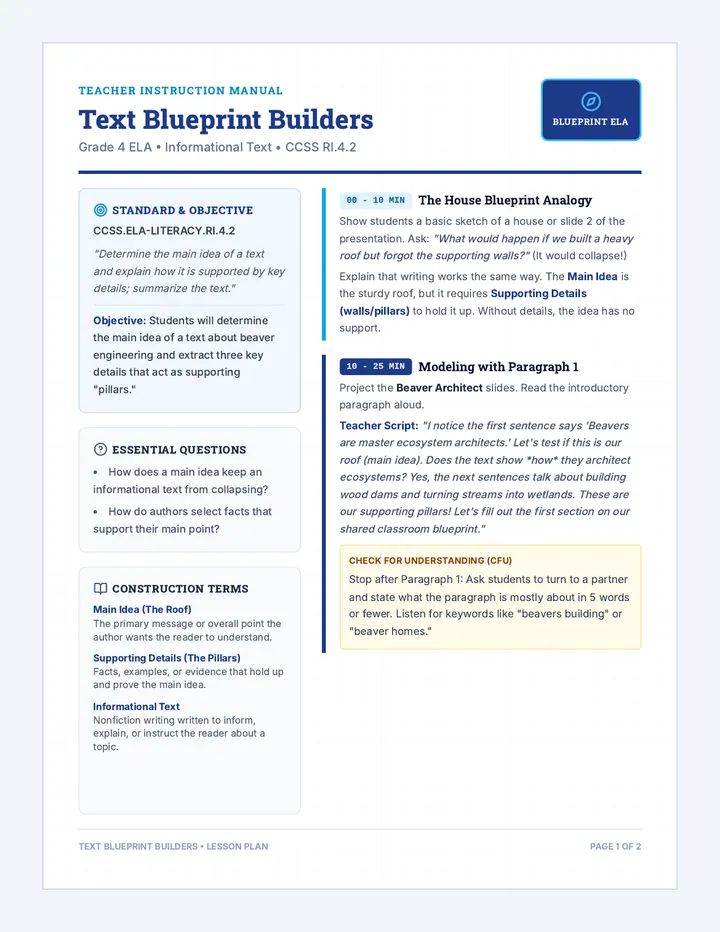
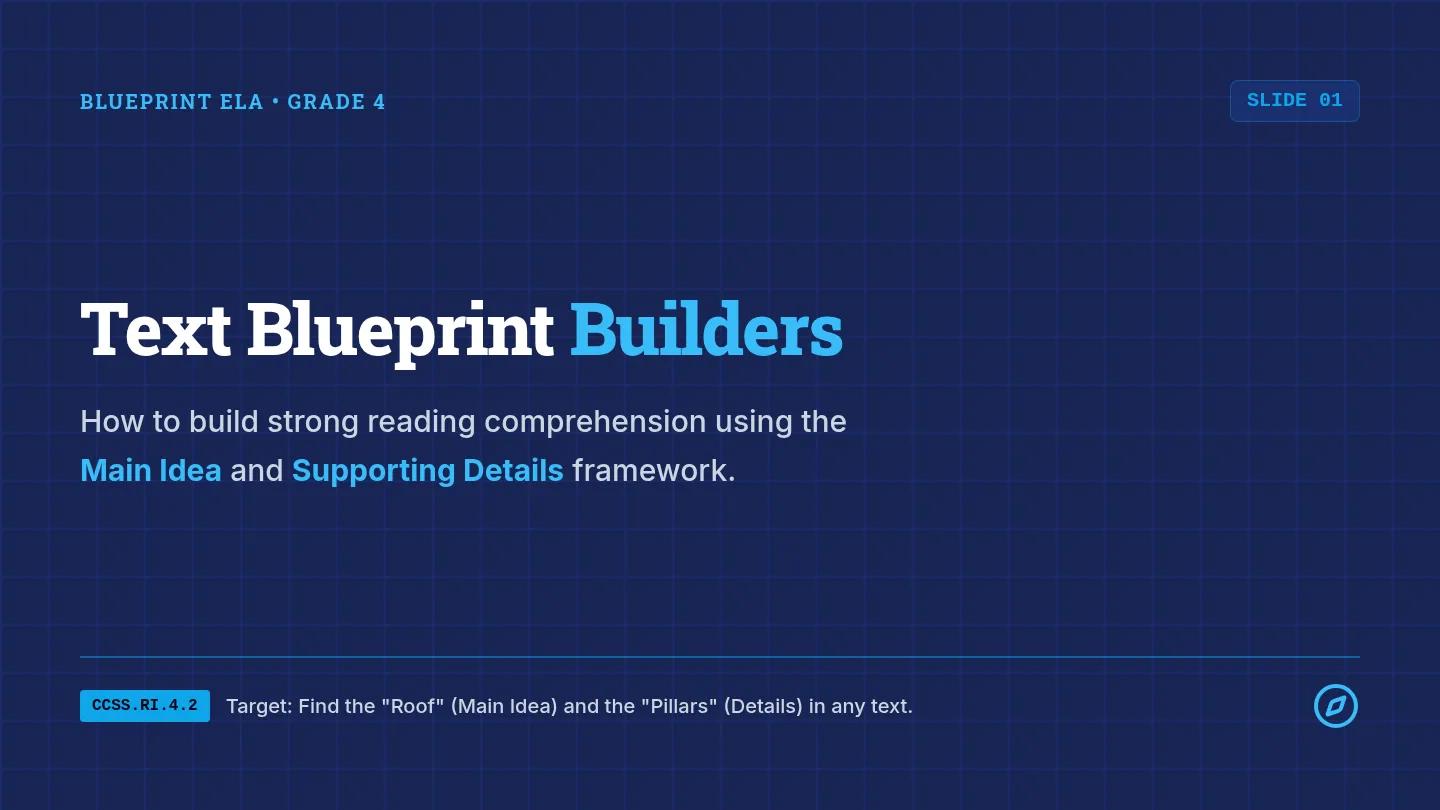
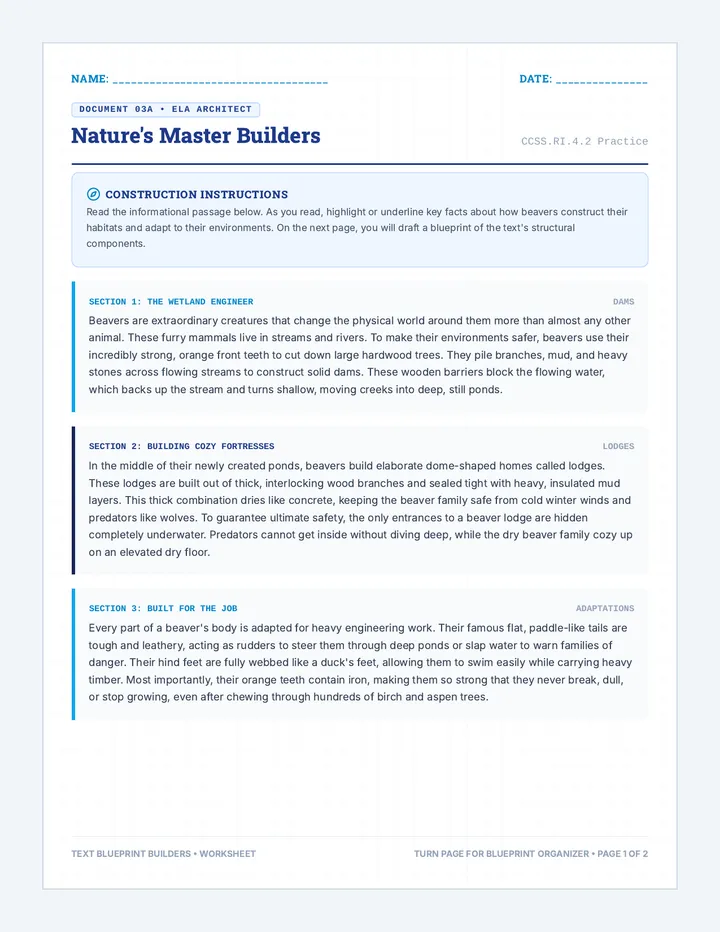
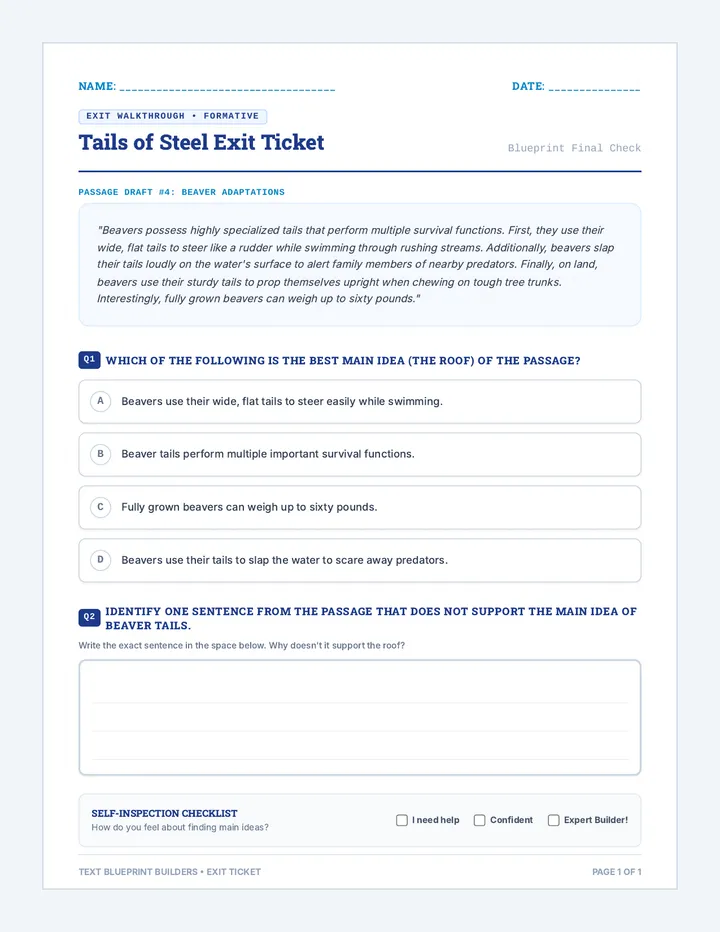
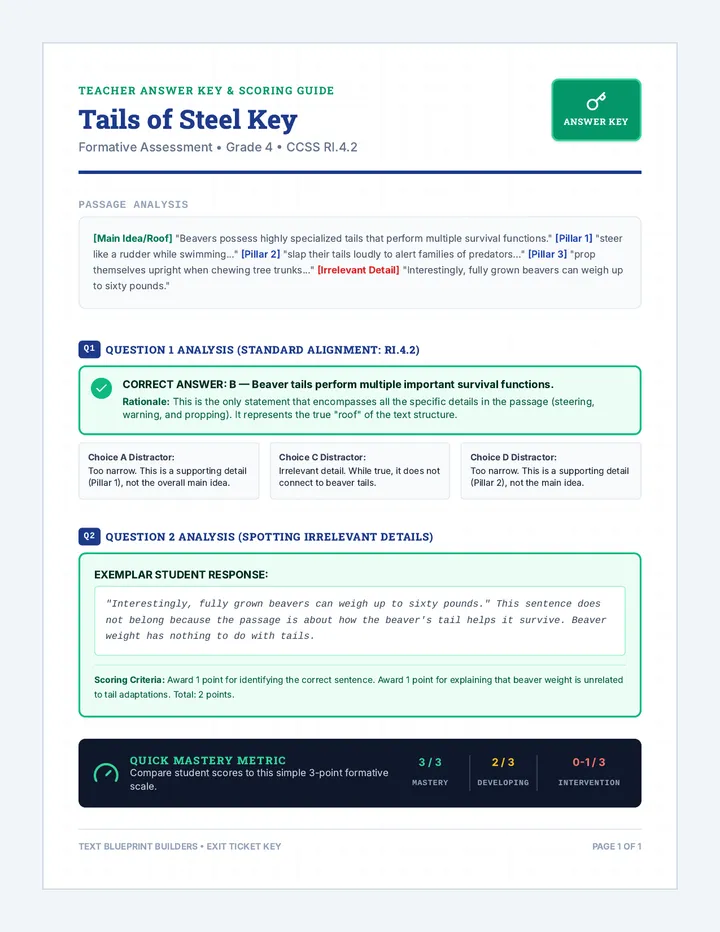
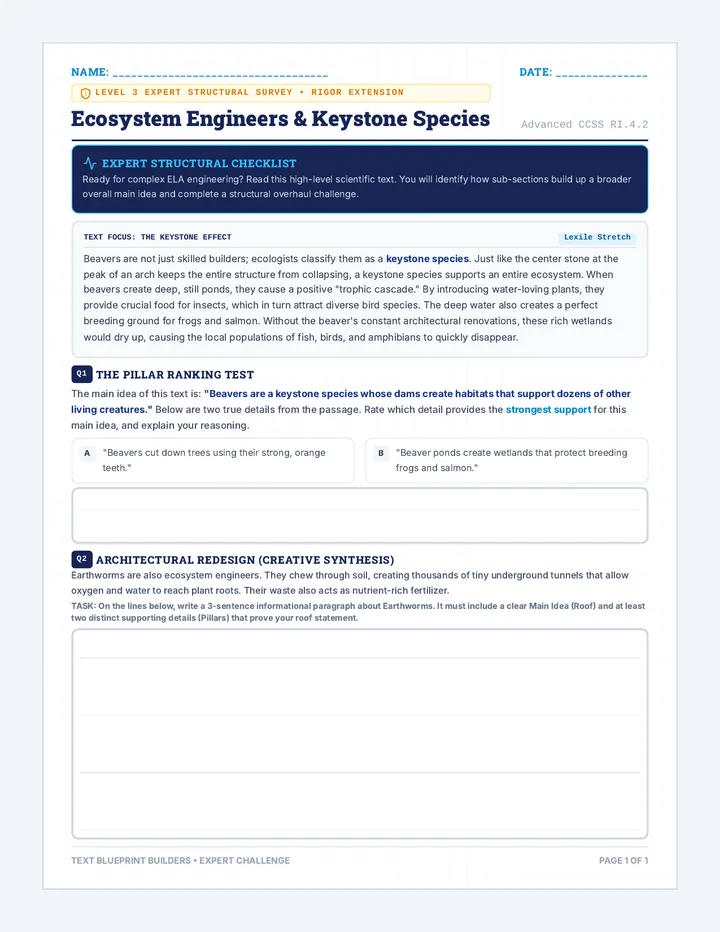
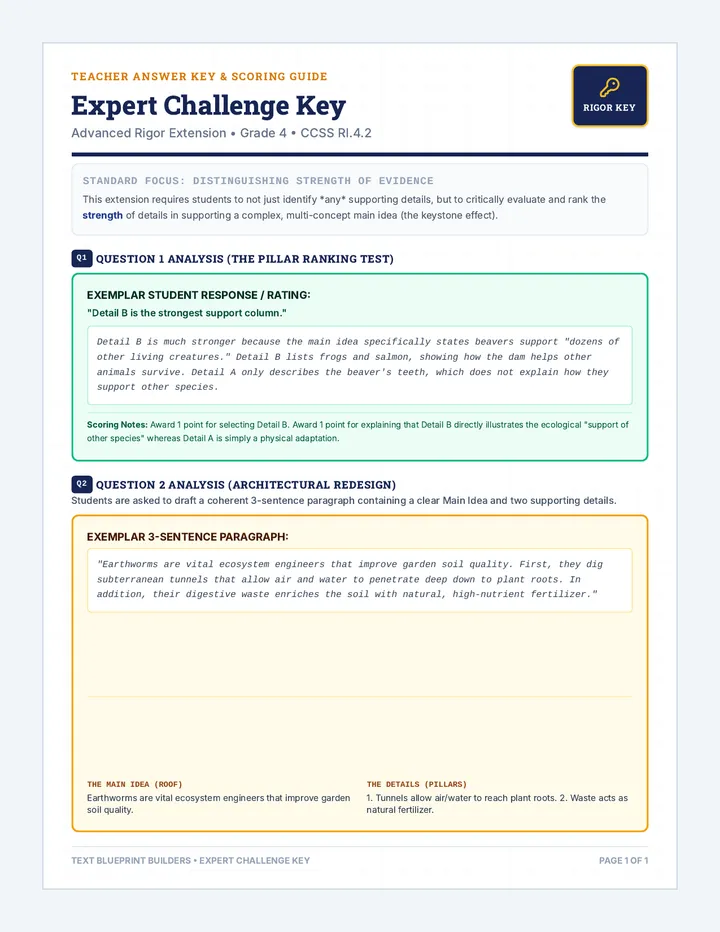
A comprehensive 4th-grade ELA lesson plan focused on identifying the main idea and supporting details in an informational text about beavers, styled around a 'Text Blueprint' theme. Includes detailed teacher instructions, differentiation for ELs and struggling readers, interactive slides, a structured student worksheet, and a formative exit ticket with an answer key.
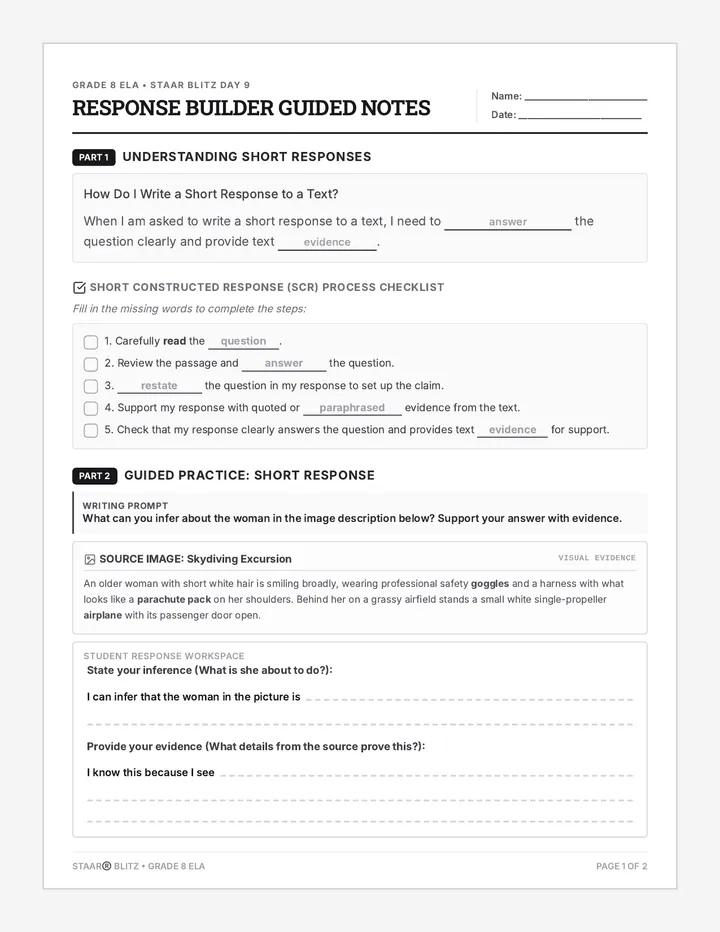
A structured eighth-grade ELA lesson focused on crafting clear, evidence-supported short and extended responses using structured scaffolds, text evidence integration, and argumentative alignment.