Students explore how animals modify their environments to meet their needs, specifically focusing on beavers. Through an engineering challenge, students will design and test a model dam using natural materials.
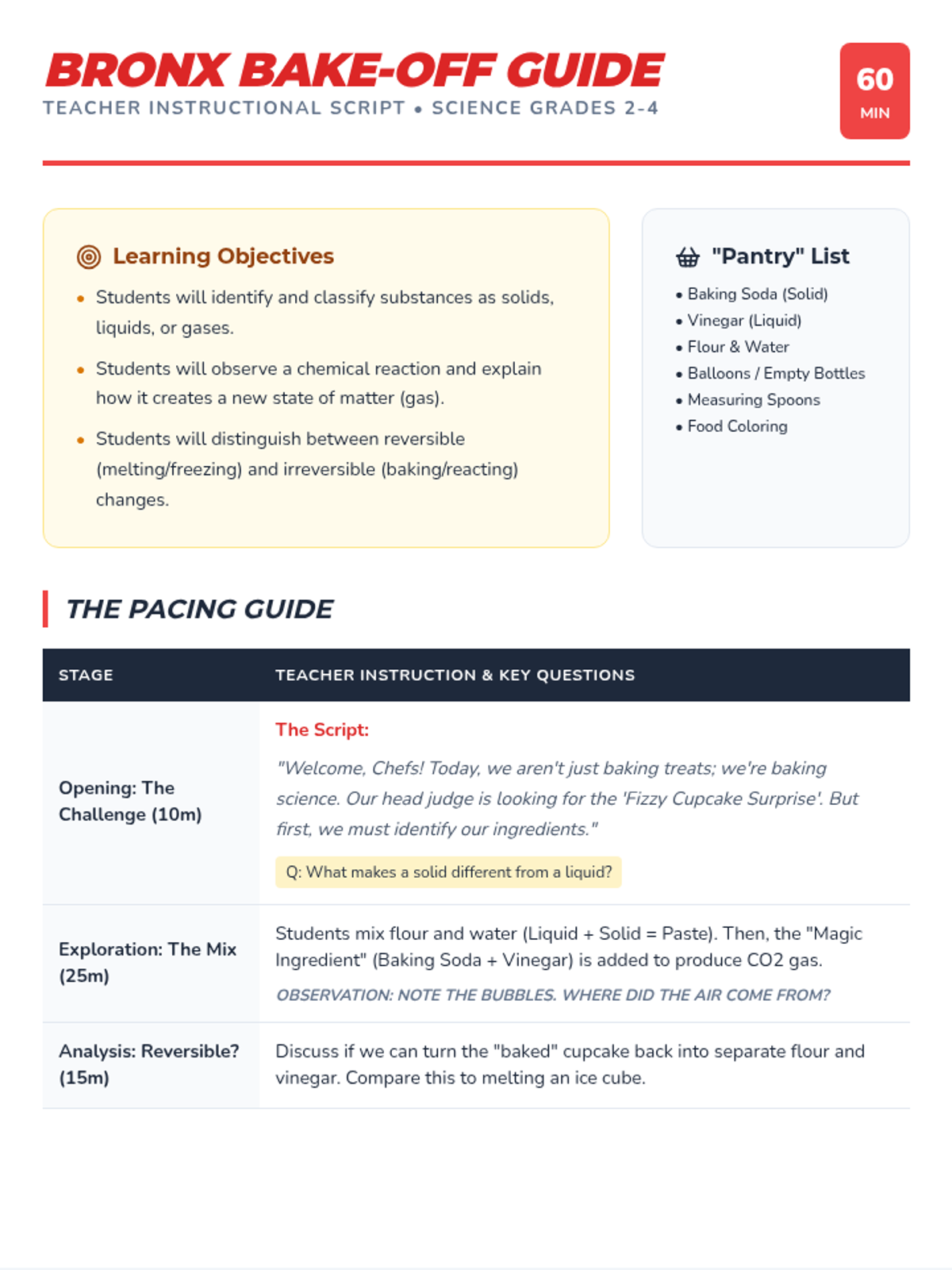
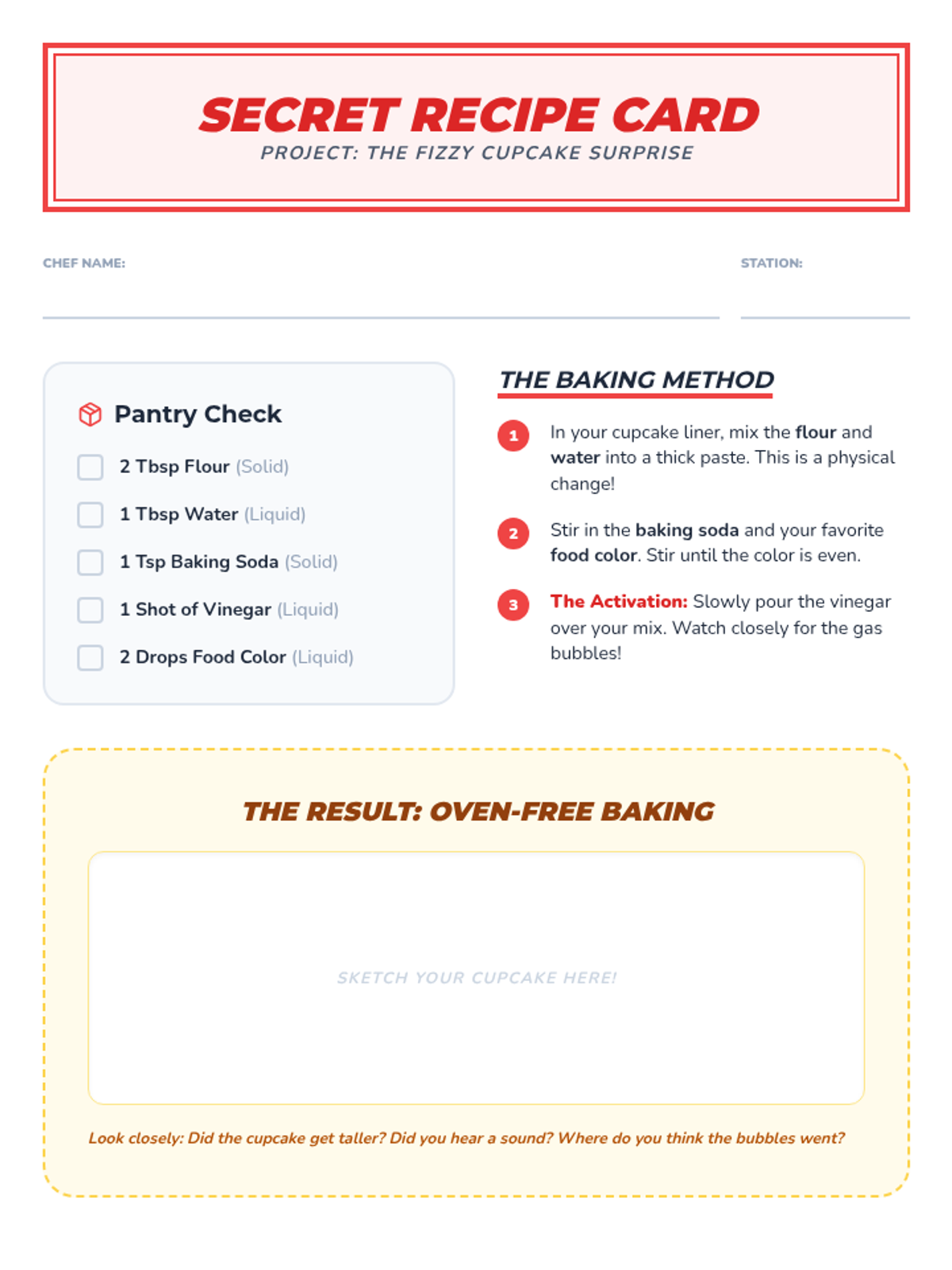
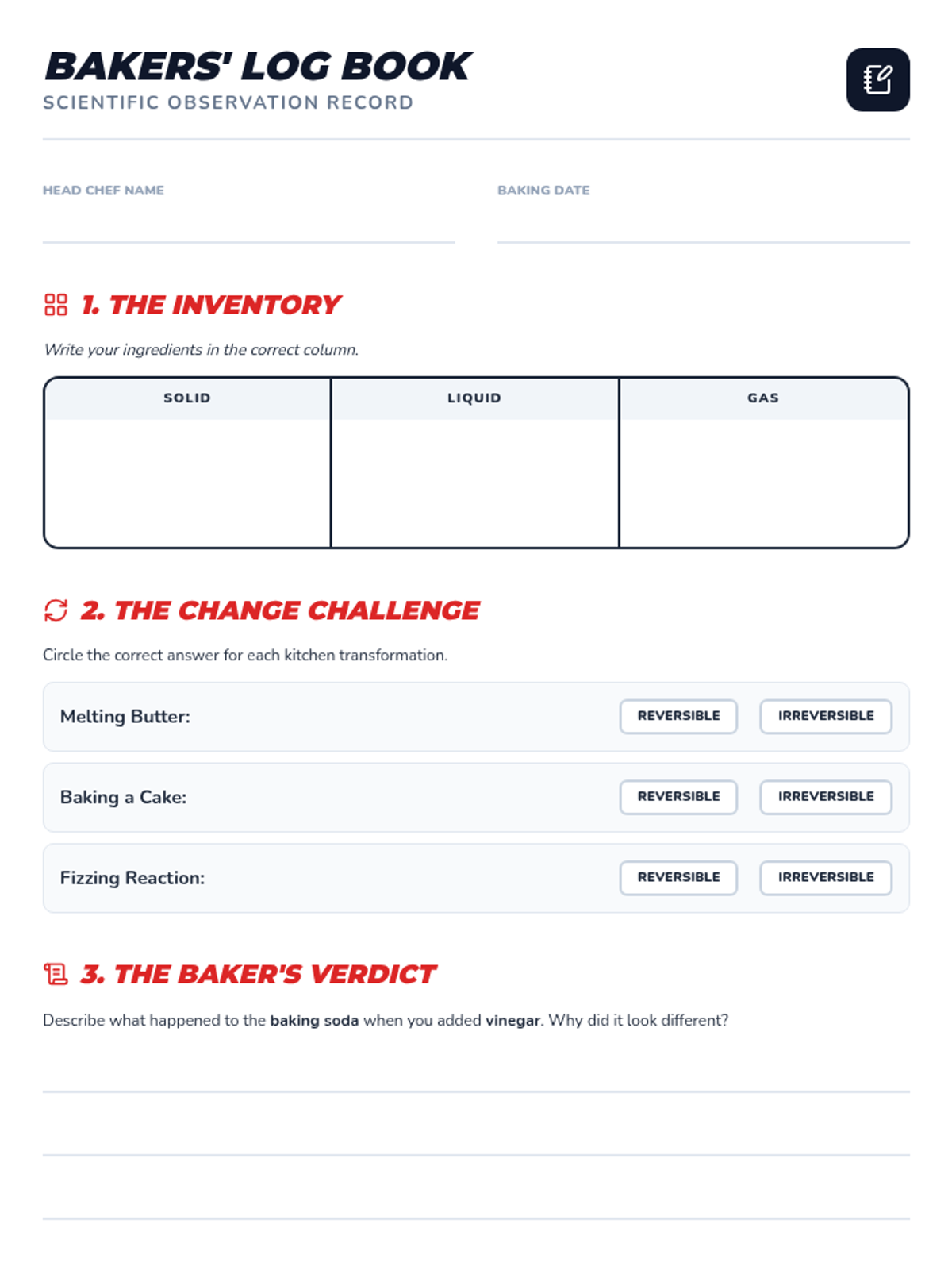
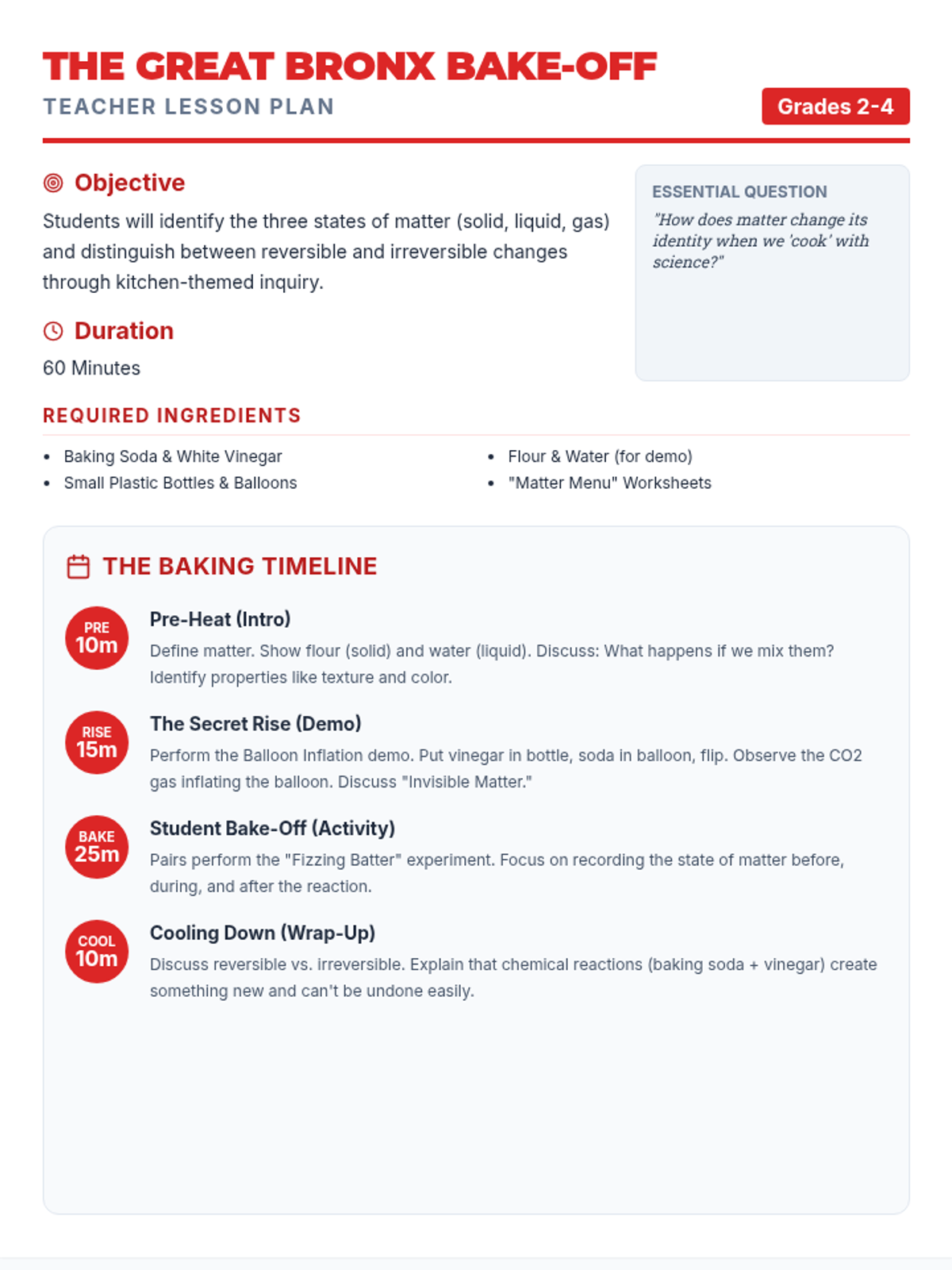
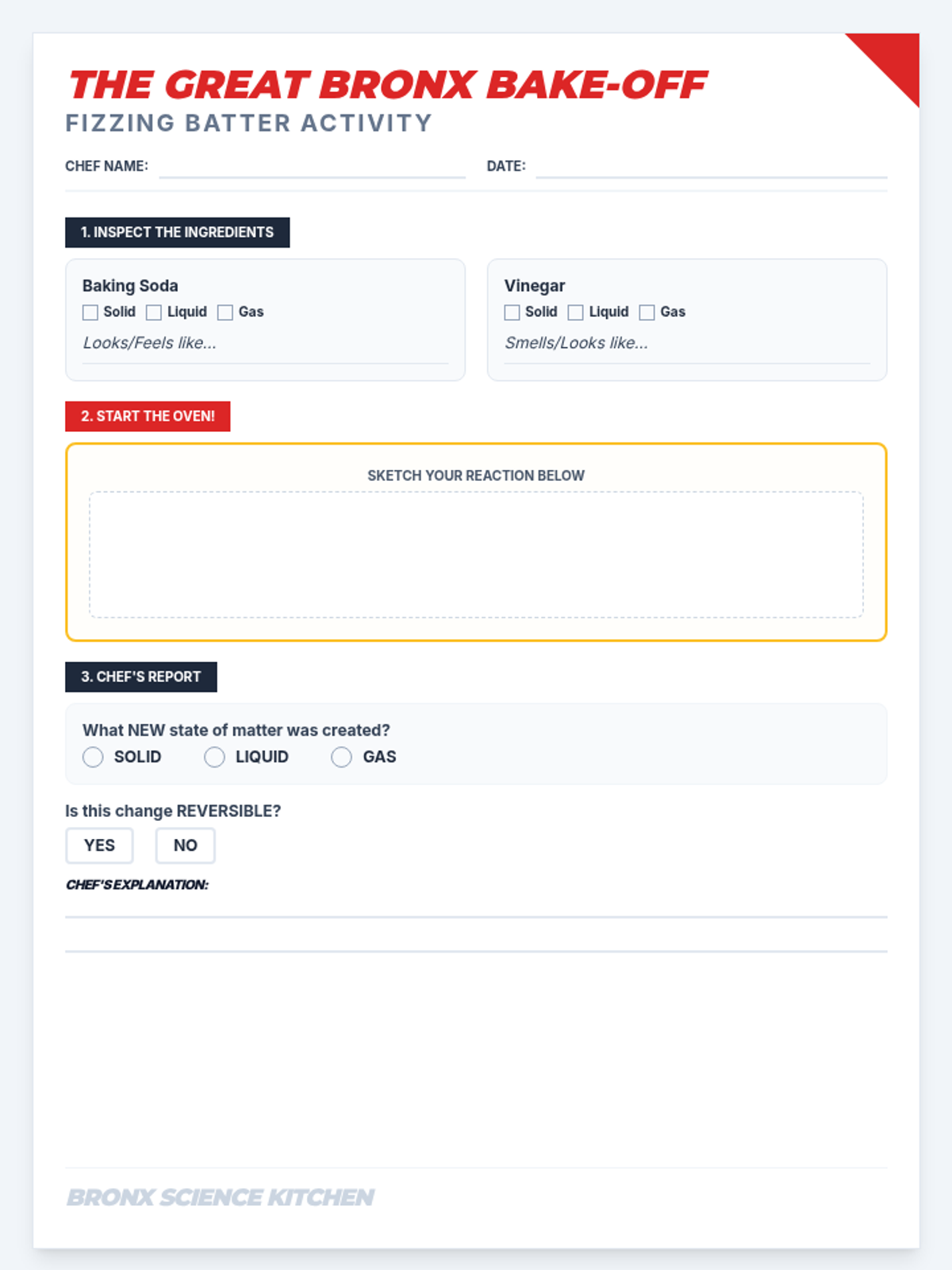
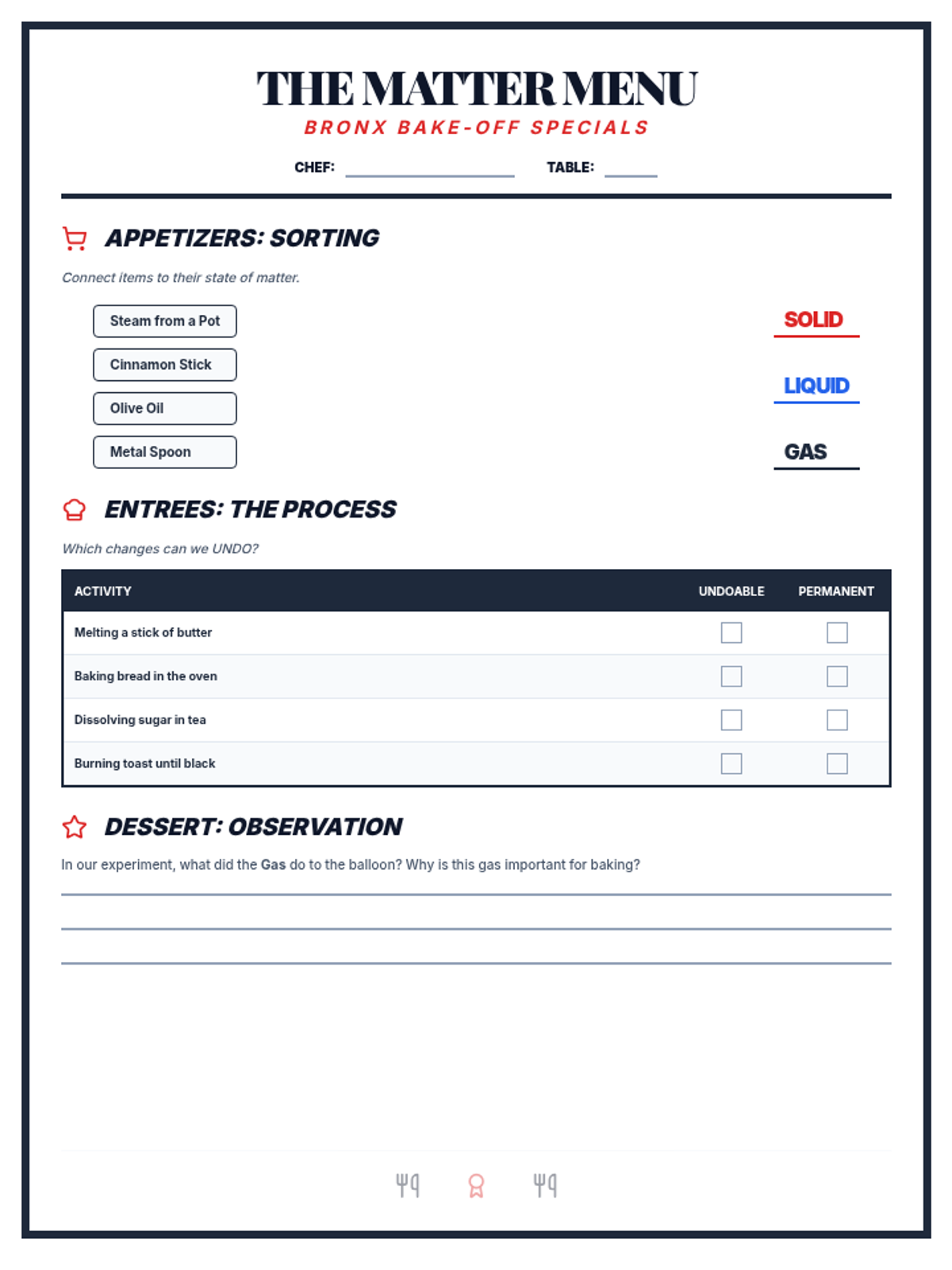
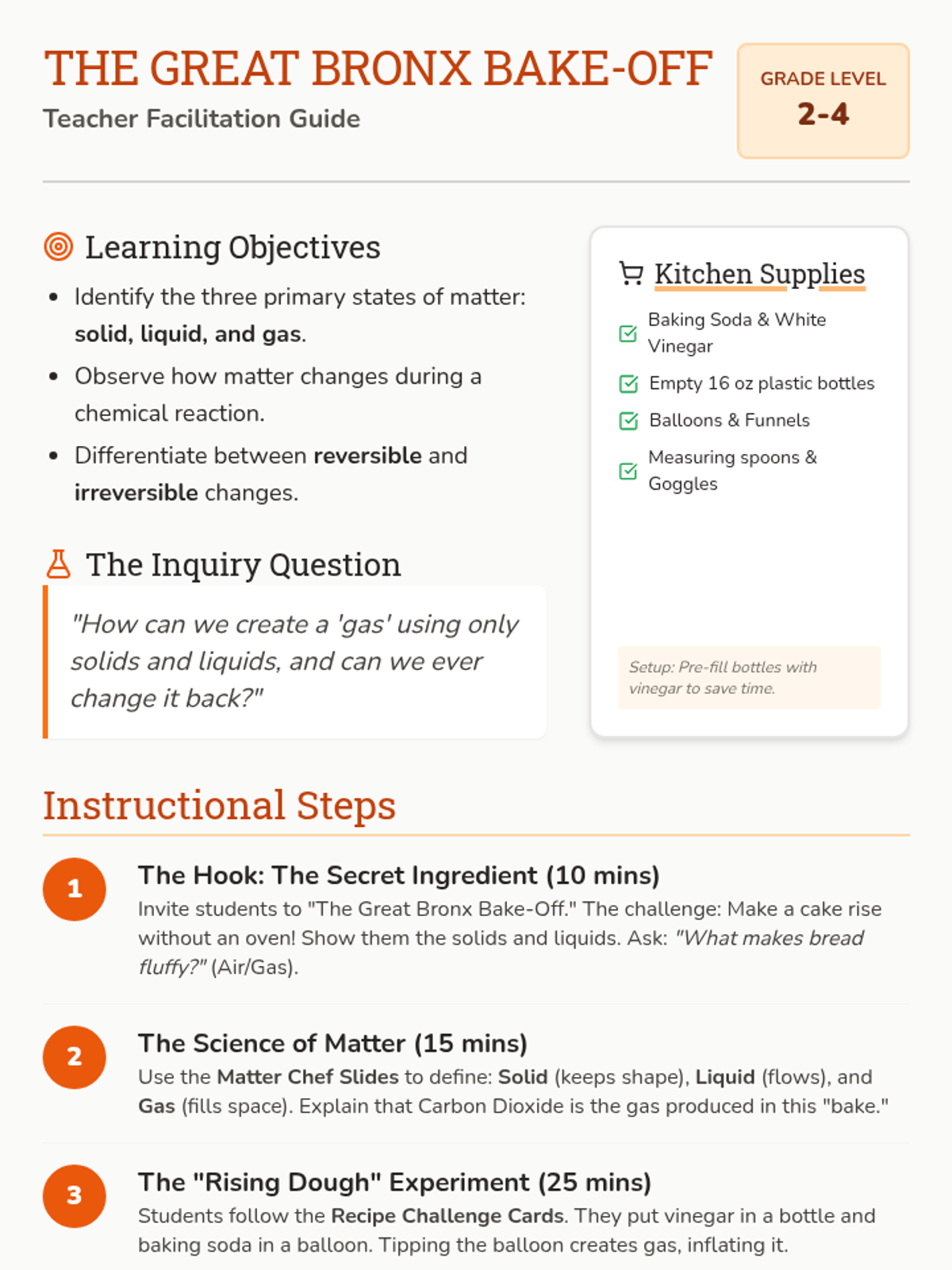
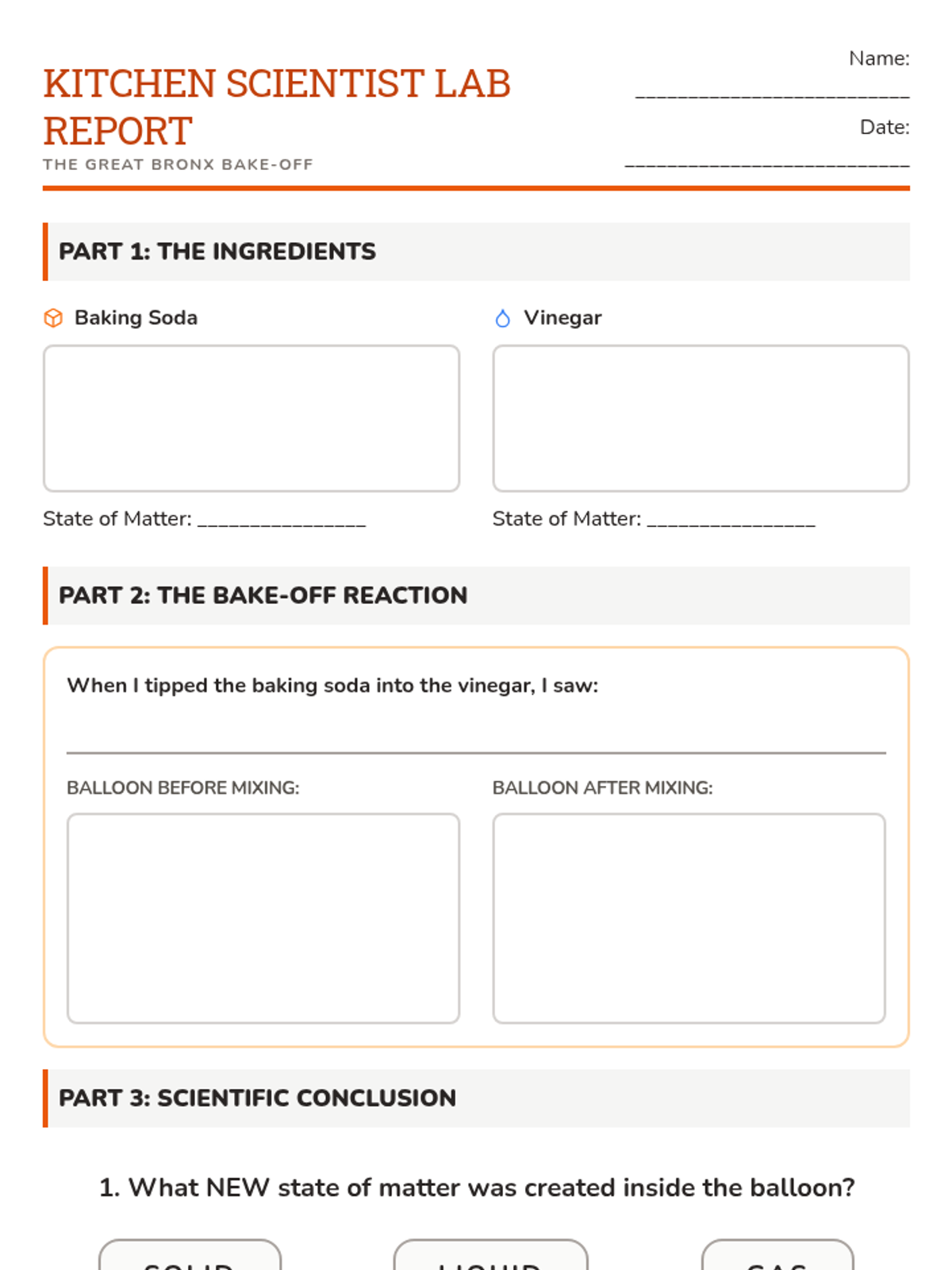
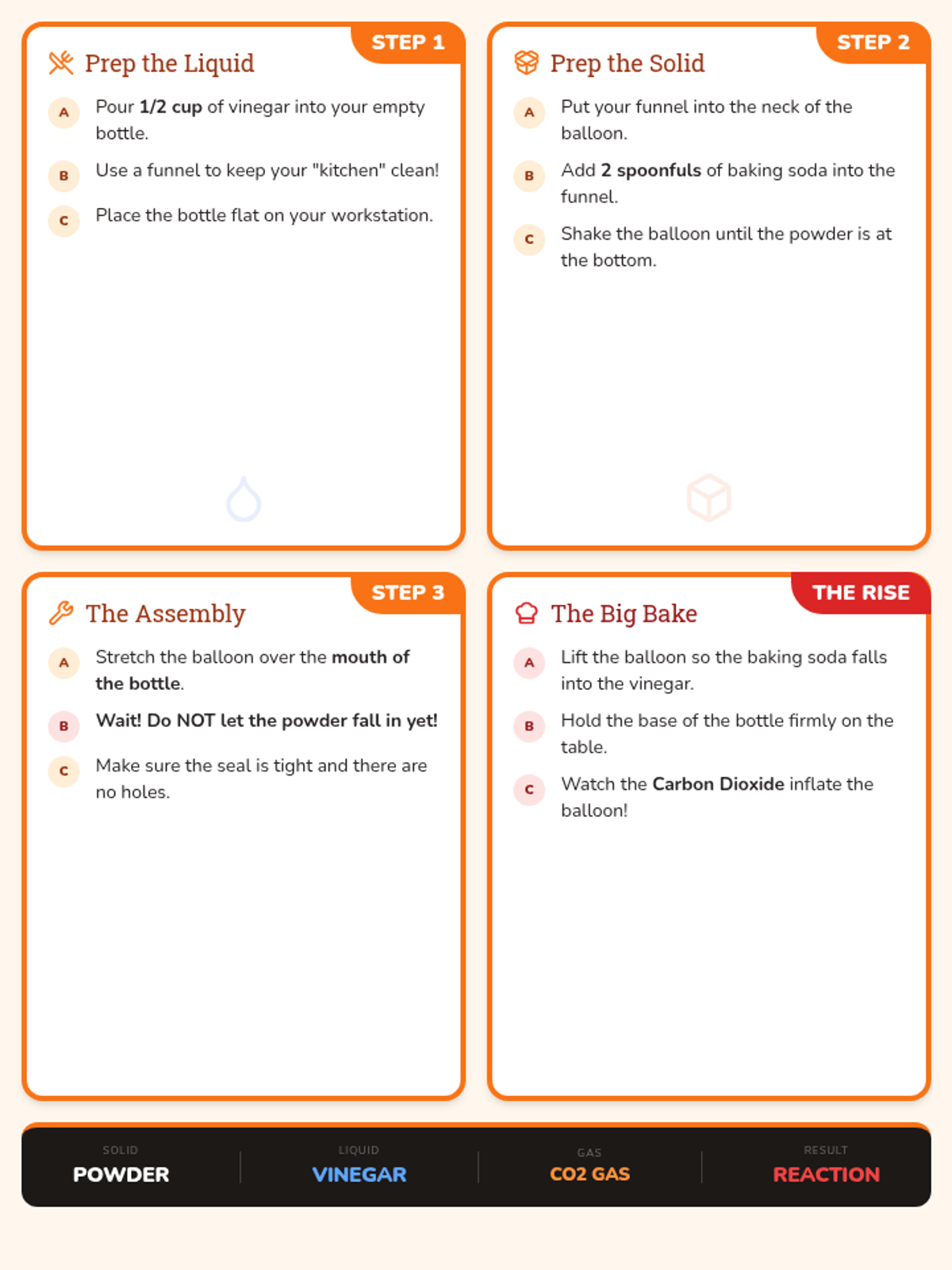
In this inquiry-based science lesson, students step into the roles of master bakers to investigate the states of matter. By observing 'kitchen' reactions and transformations, students learn to identify solids, liquids, and gases while exploring the difference between reversible and irreversible changes.
A chemistry-meets-culinary lesson for grades 2-4 where students investigate the states of matter and changes through a 'bake-off' theme using simple kitchen science.
Students step into the roles of pastry chefs to investigate states of matter. Through 'kitchen science,' they observe physical and chemical changes as they simulate baking processes using common household ingredients.
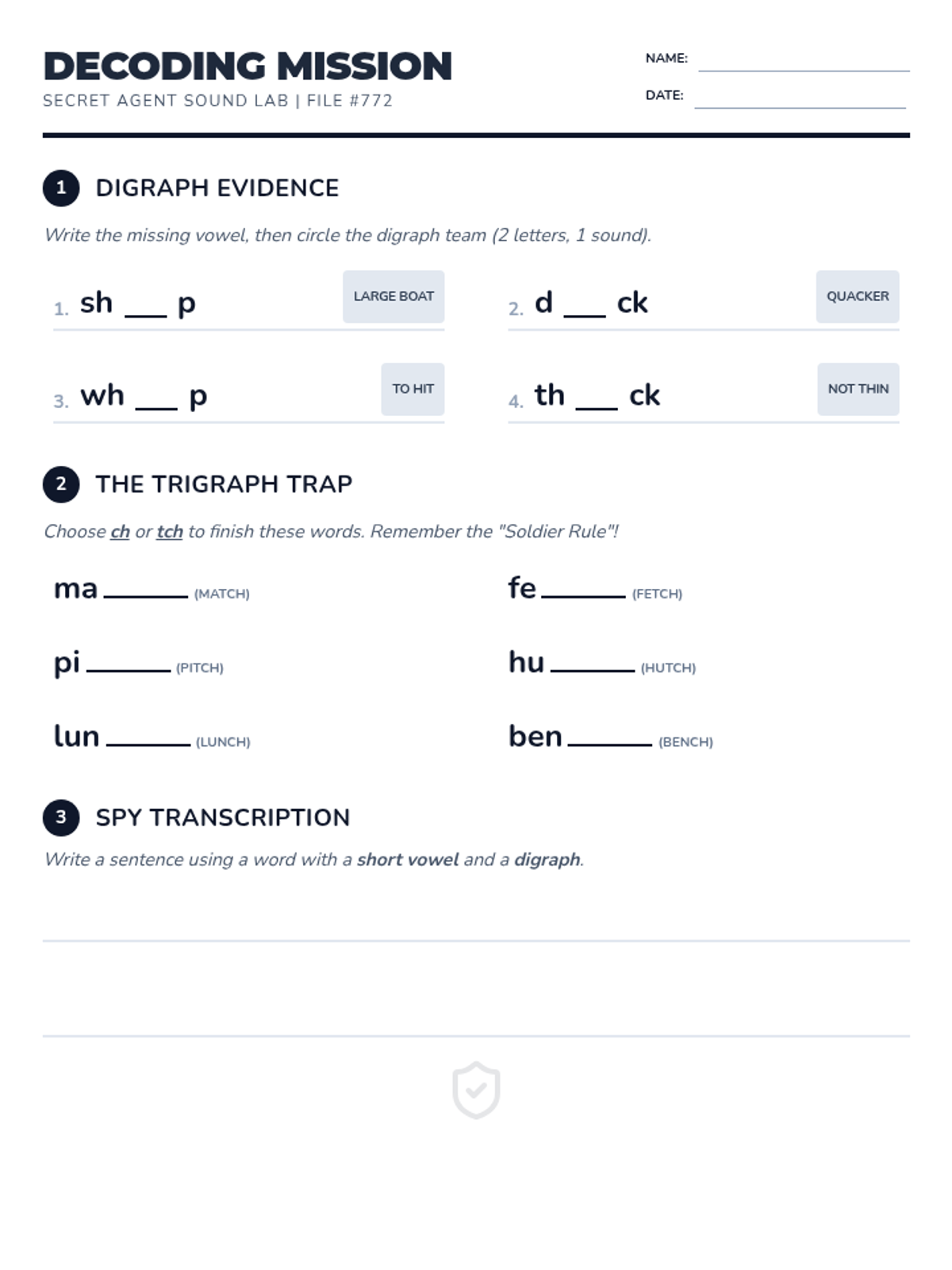
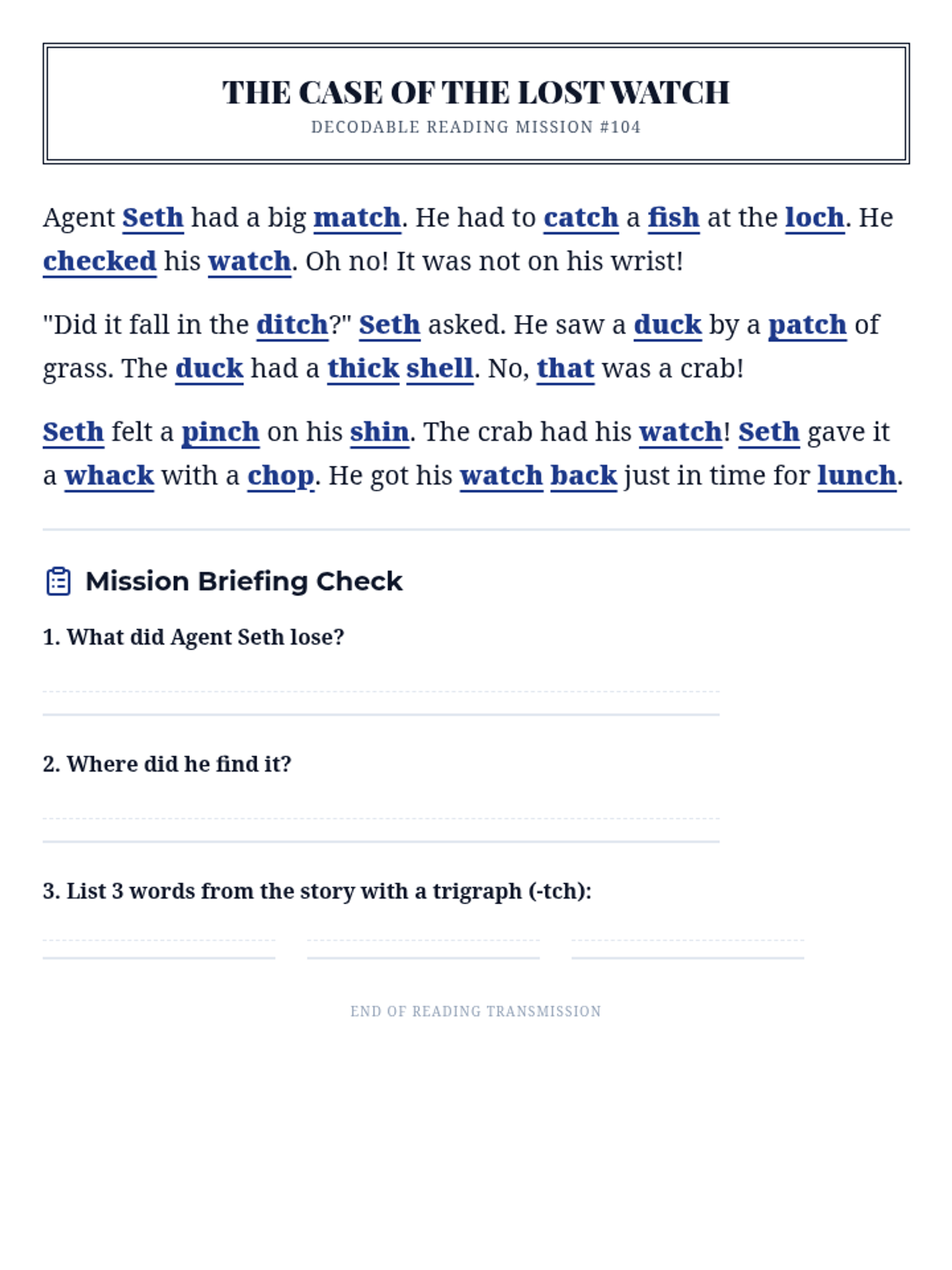
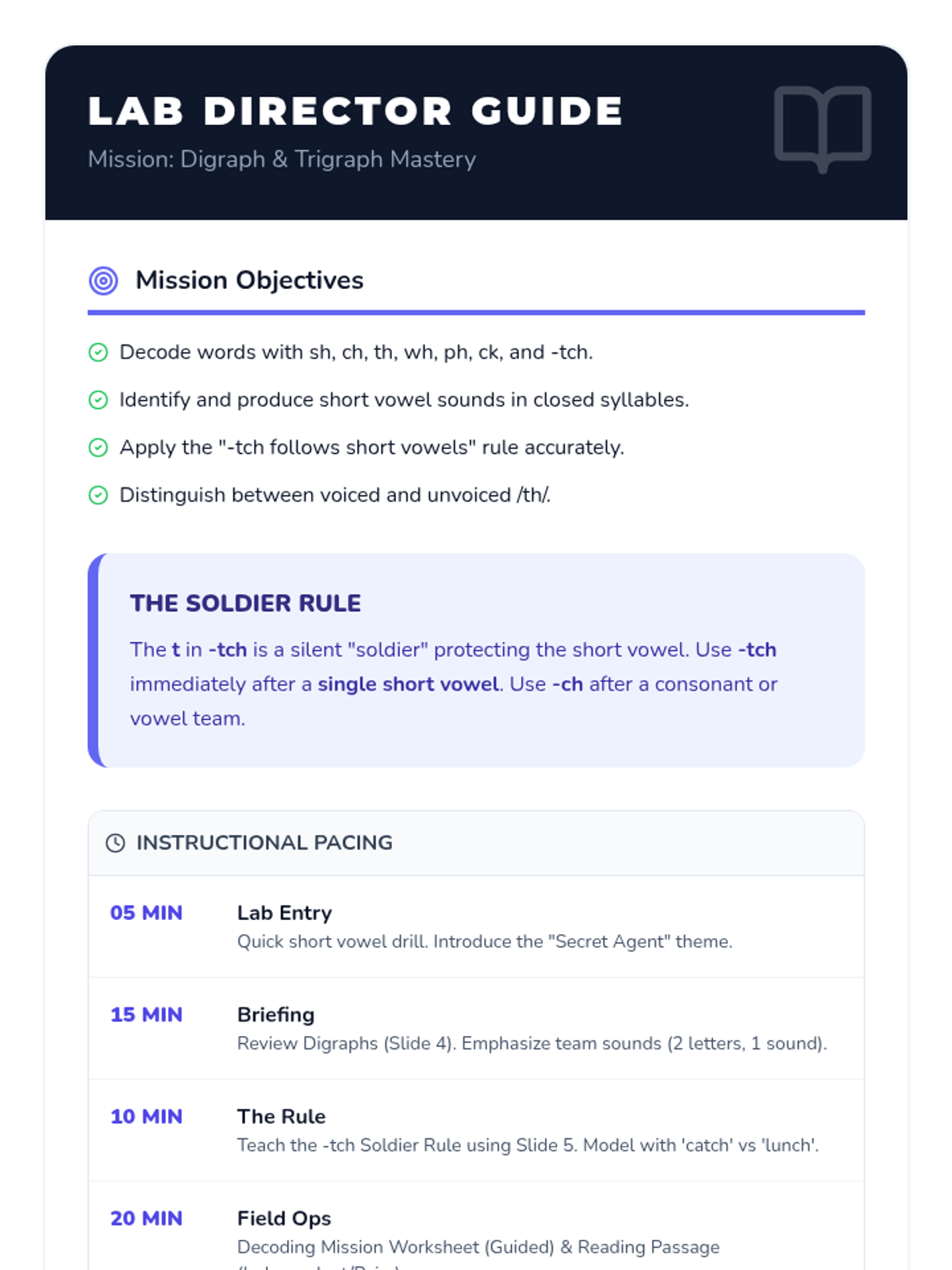
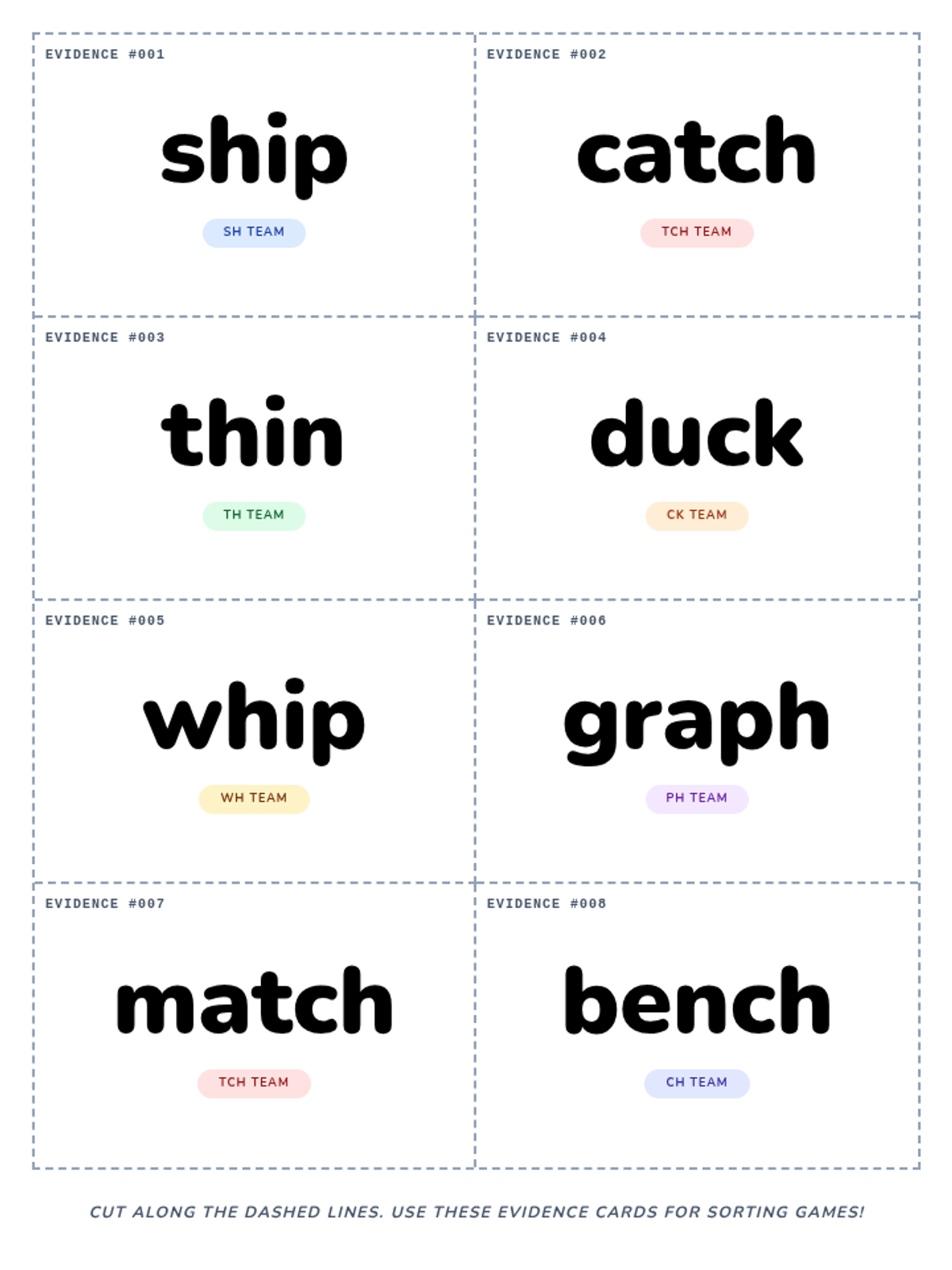
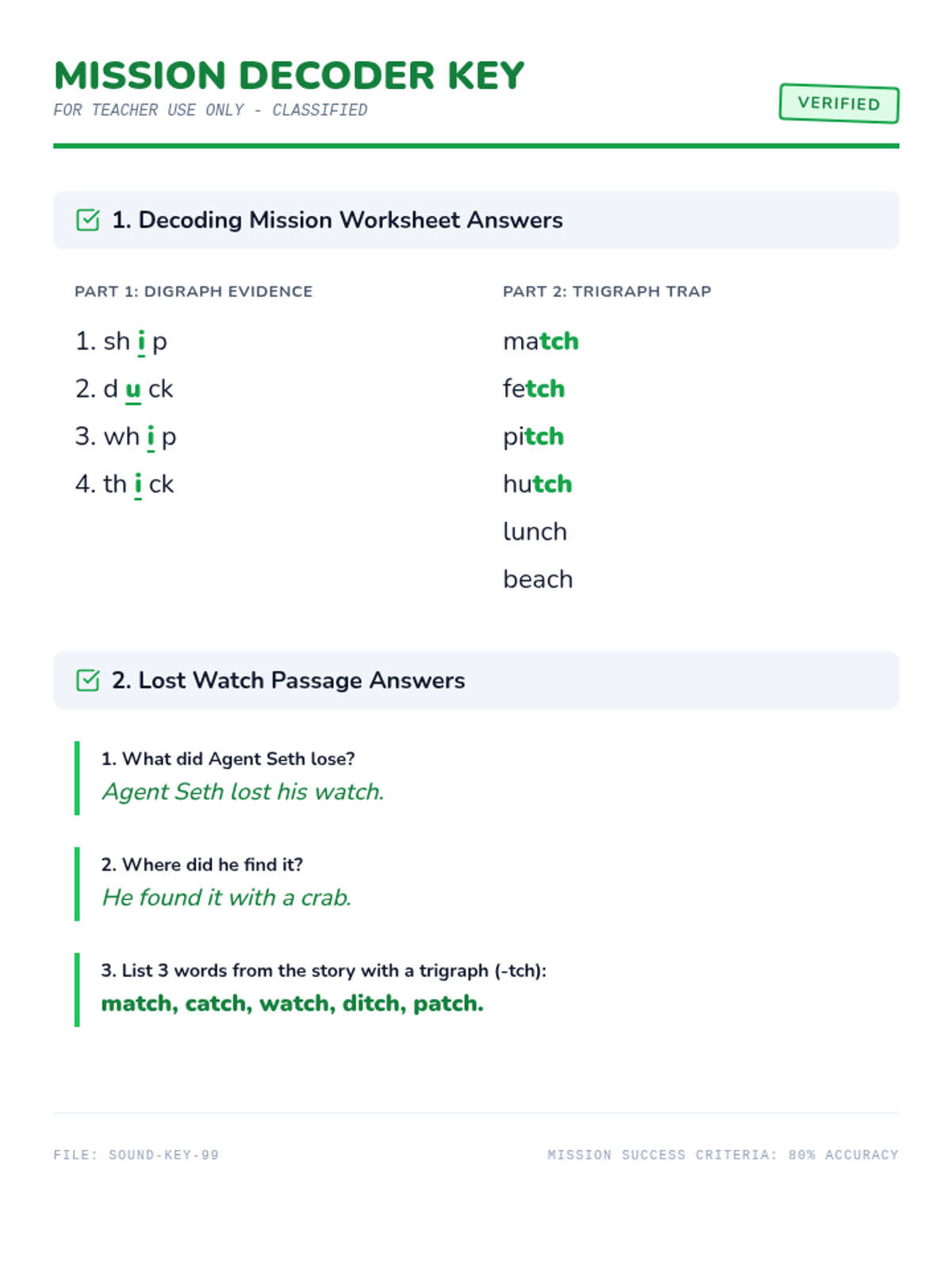
A comprehensive 2nd-grade phonics lesson focusing on short vowels, all common digraphs (sh, ch, th, wh, ph, ck), and the -tch trigraph, themed around a 'Secret Agent Sound Lab'.
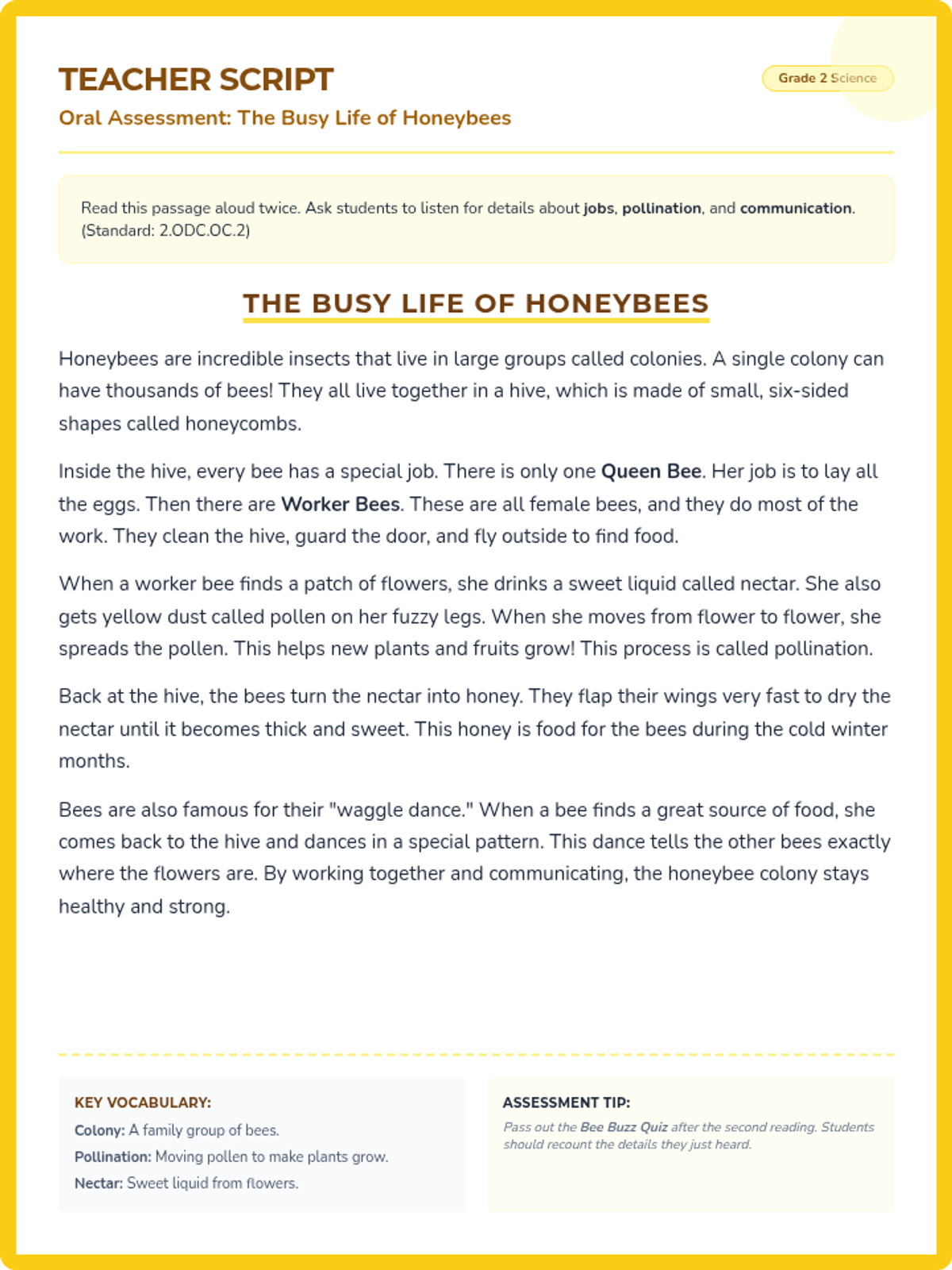
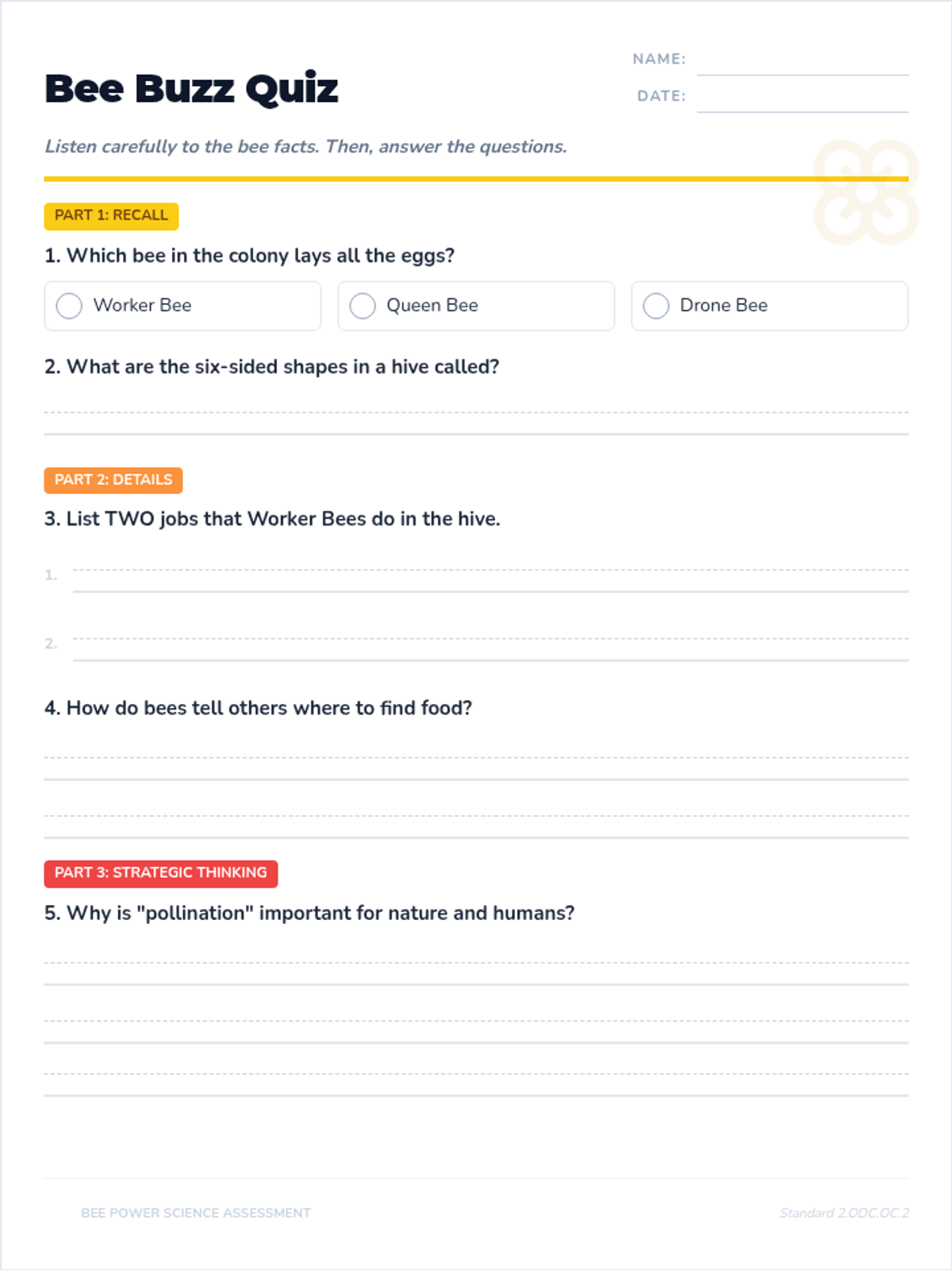
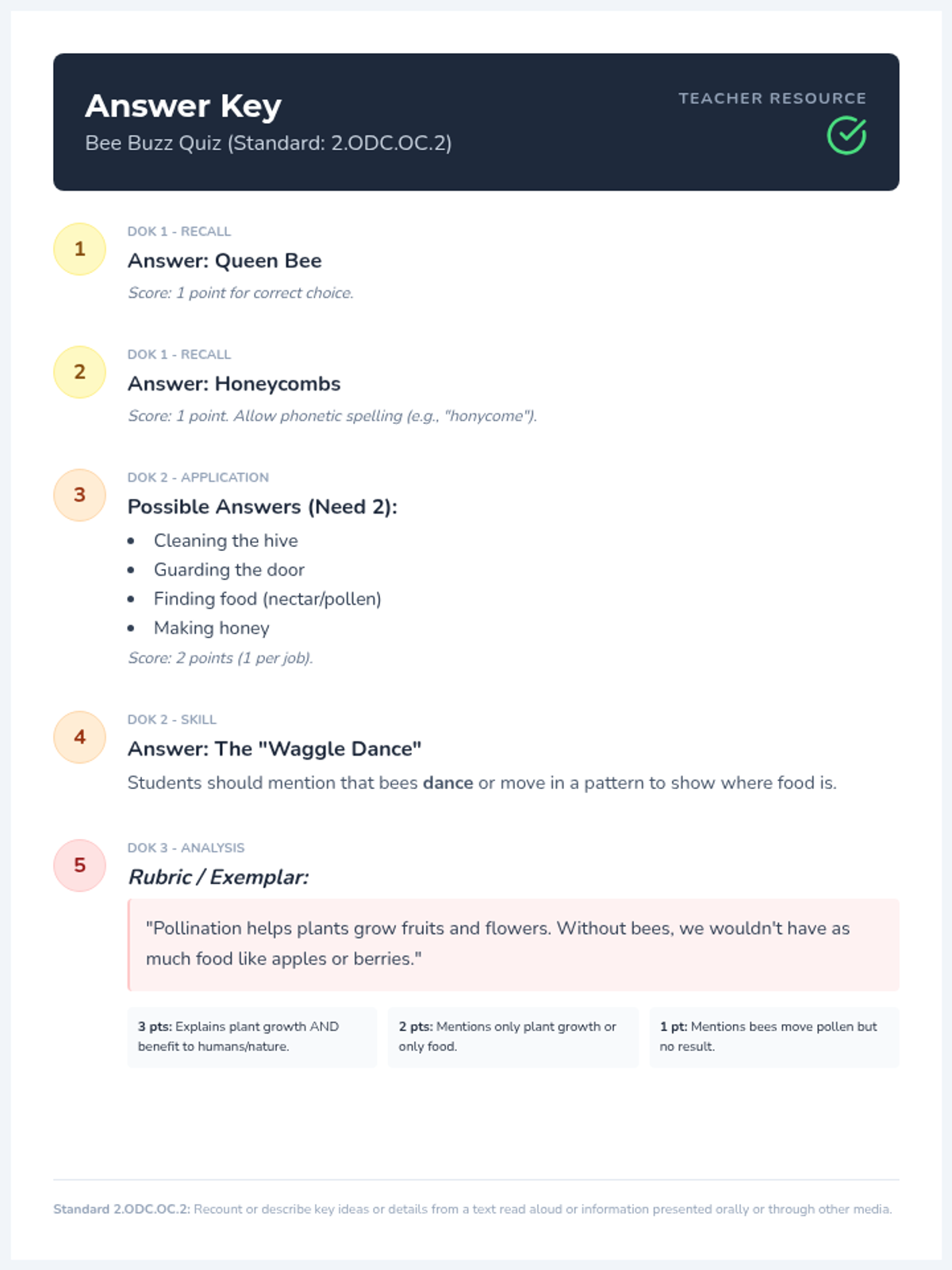
A 2nd-grade science assessment focused on listening comprehension and recounting key details from an oral presentation about honeybees.
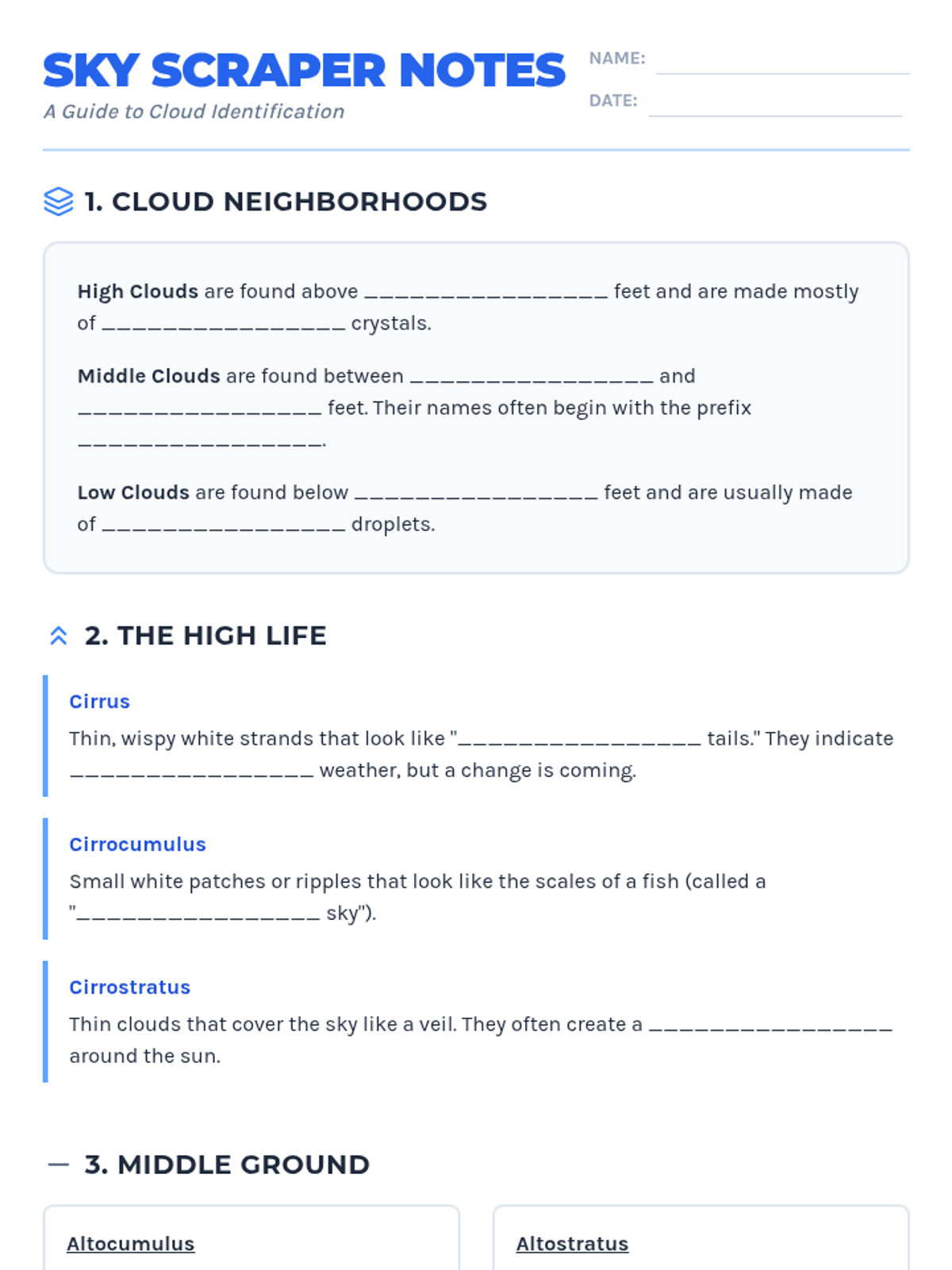
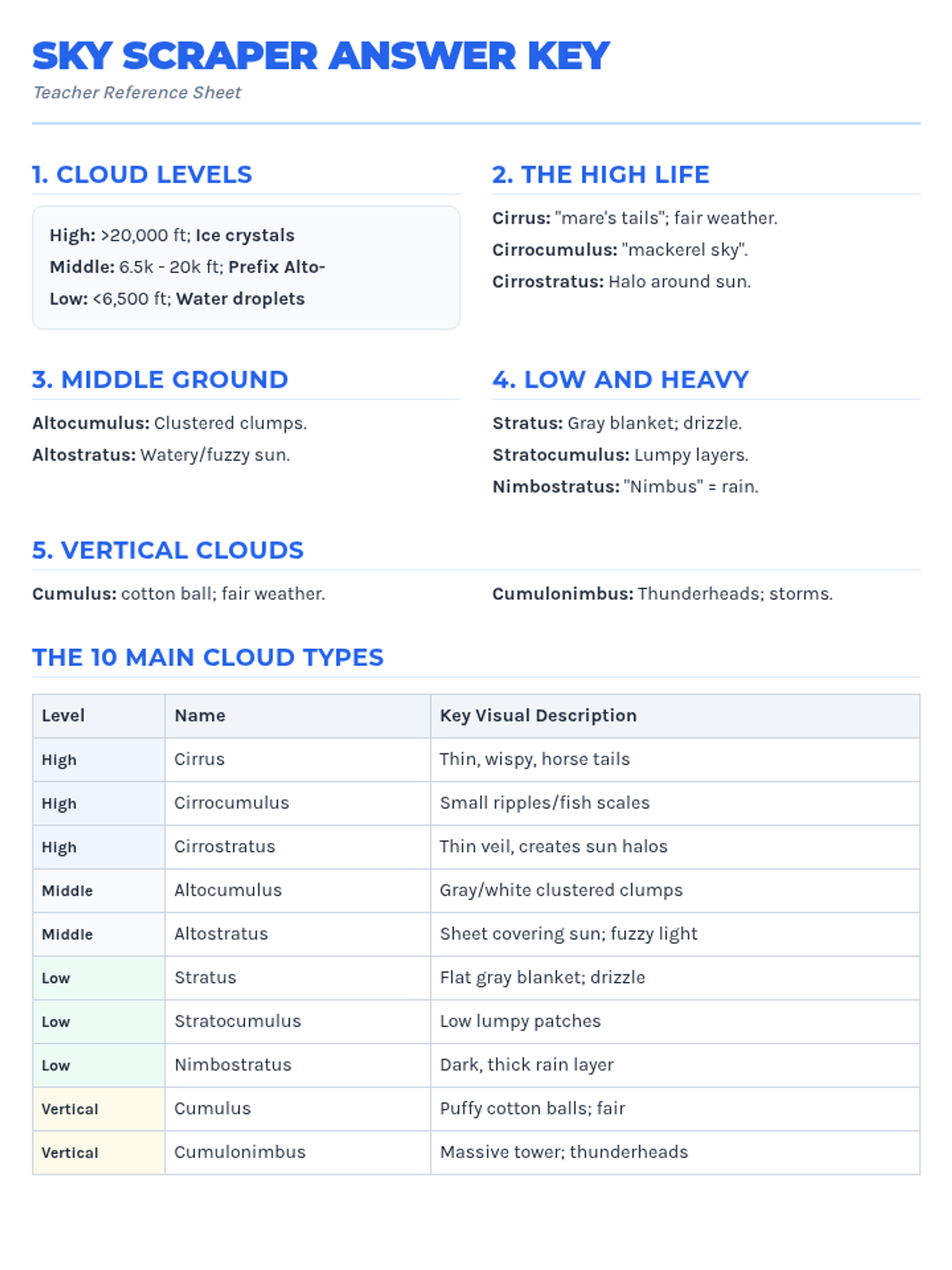
A comprehensive look at the 10 main cloud types, categorized by their altitude, with deep dives into Cirrus, Stratus, and Cumulus clouds.
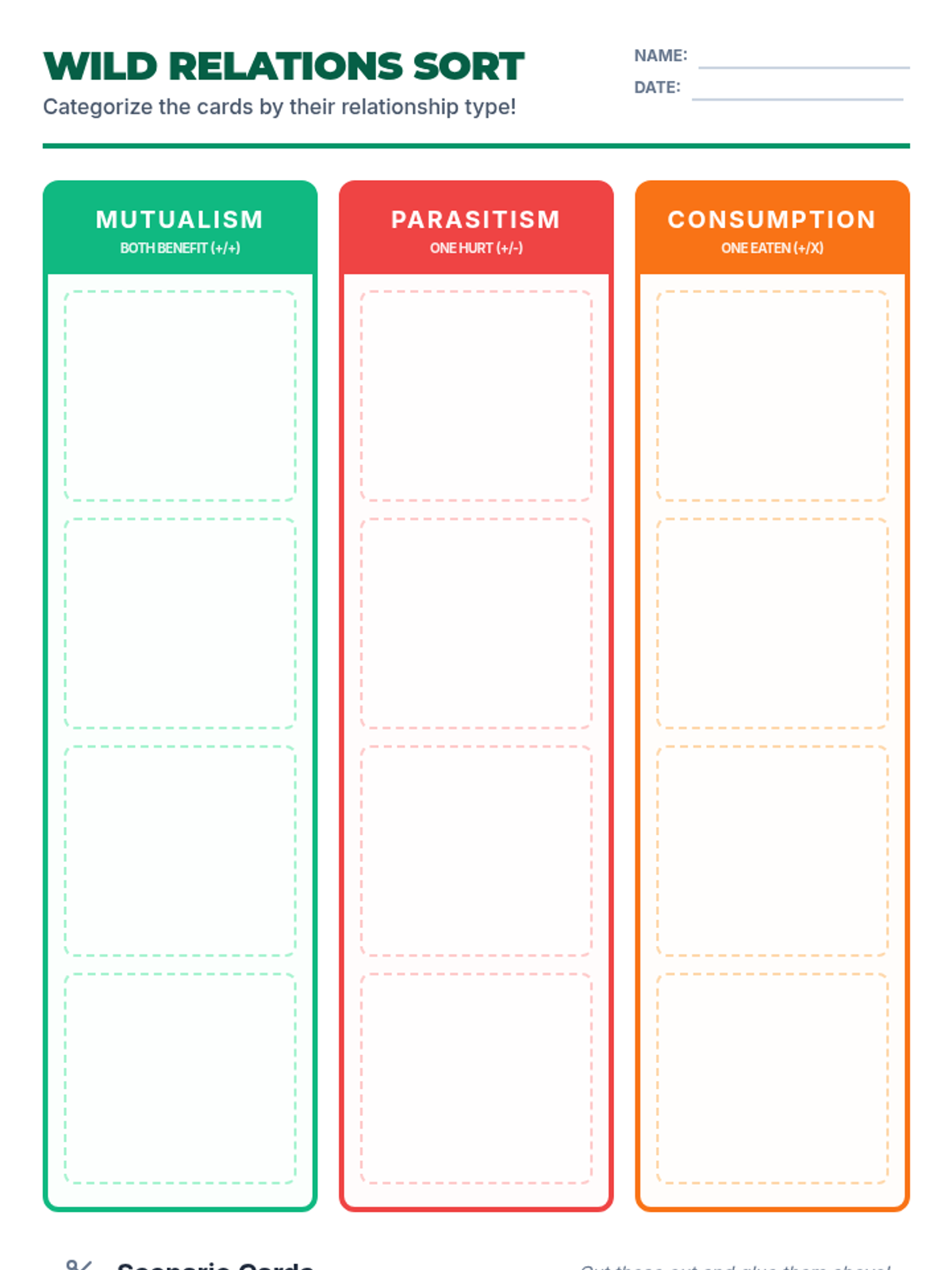
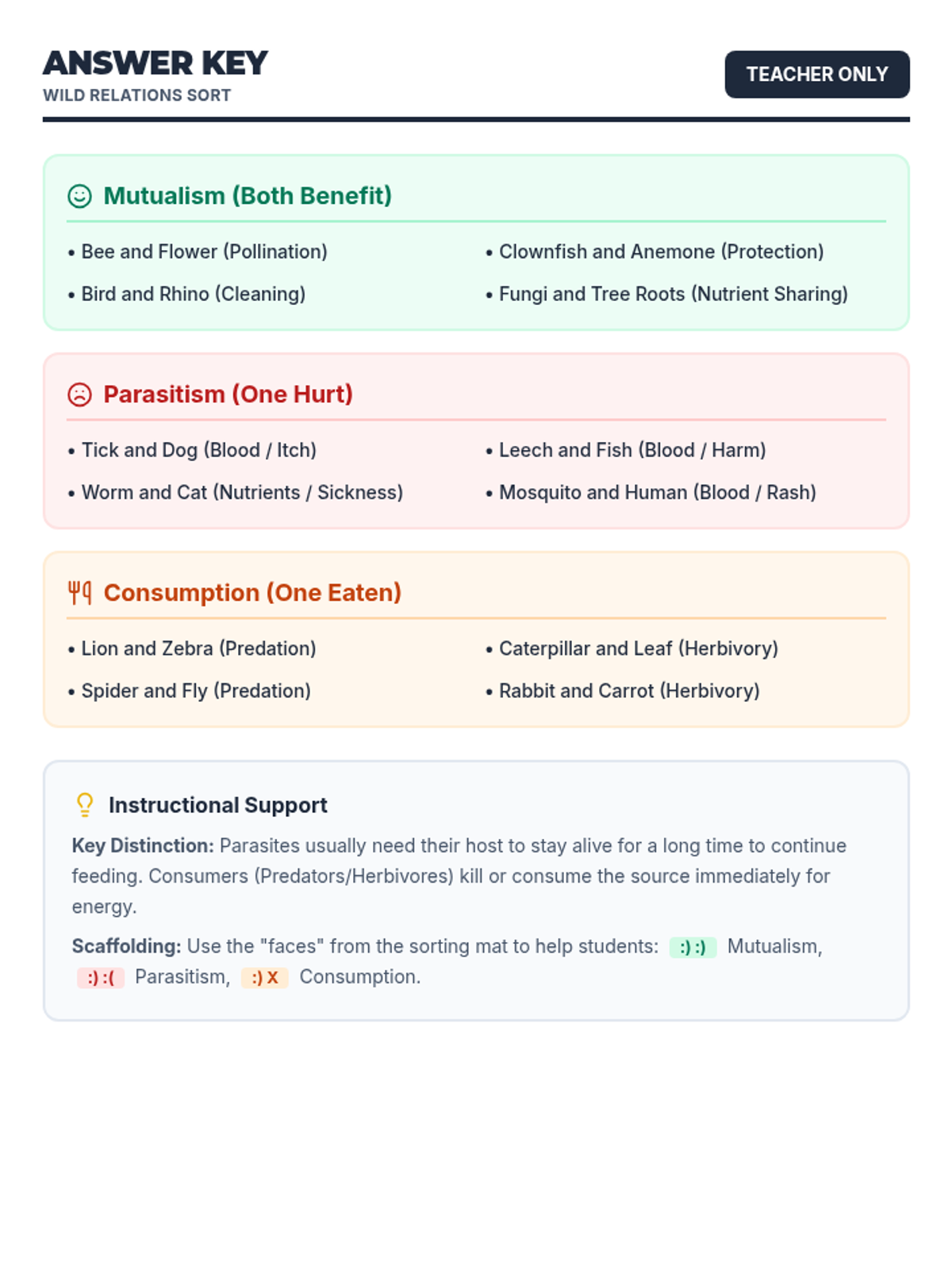
In this lesson, students explore the different ways organisms interact in nature. They will identify and categorize relationships into three types: mutualism, parasitism, and consumerism using visual examples and simple scenarios.
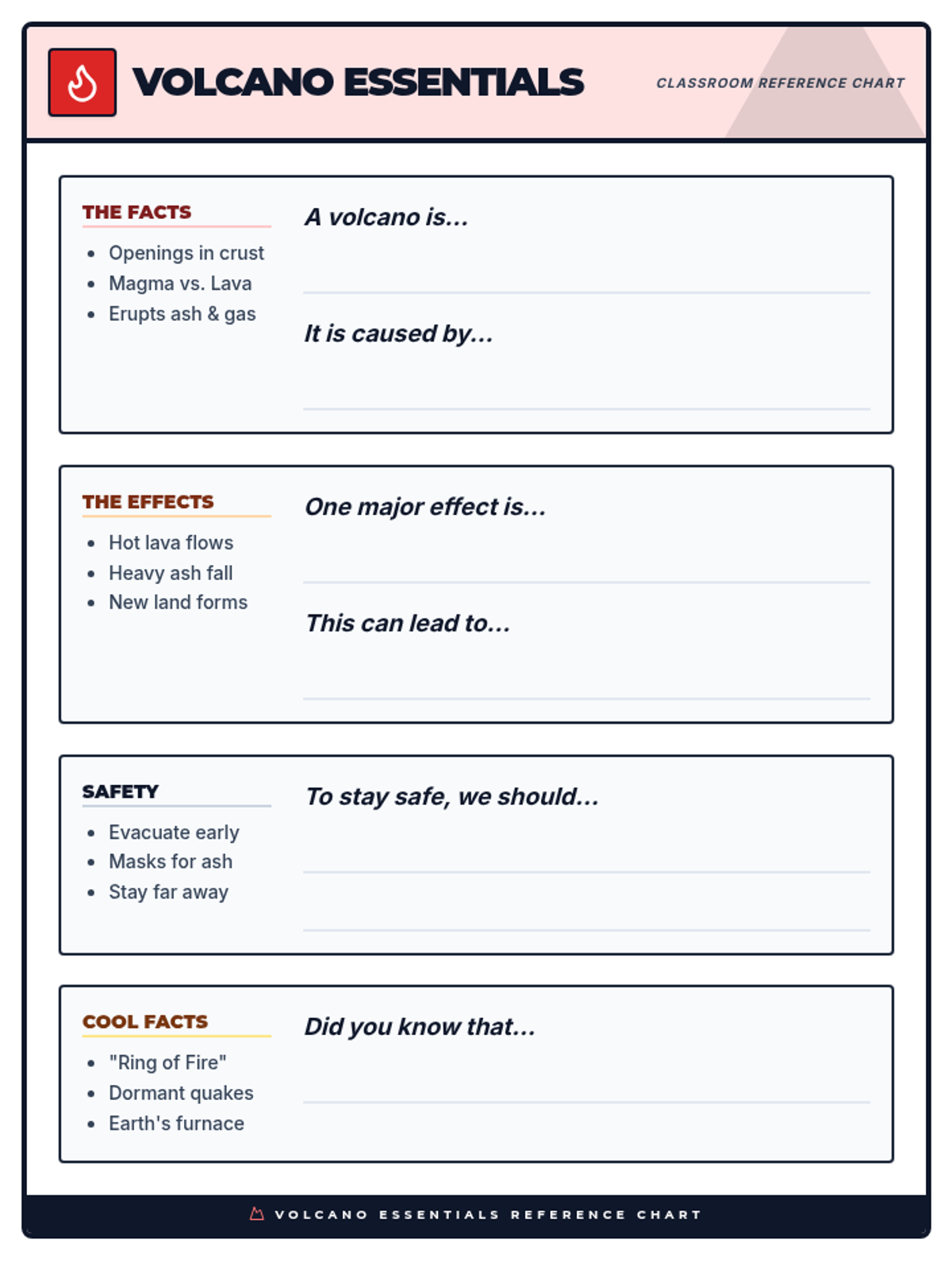
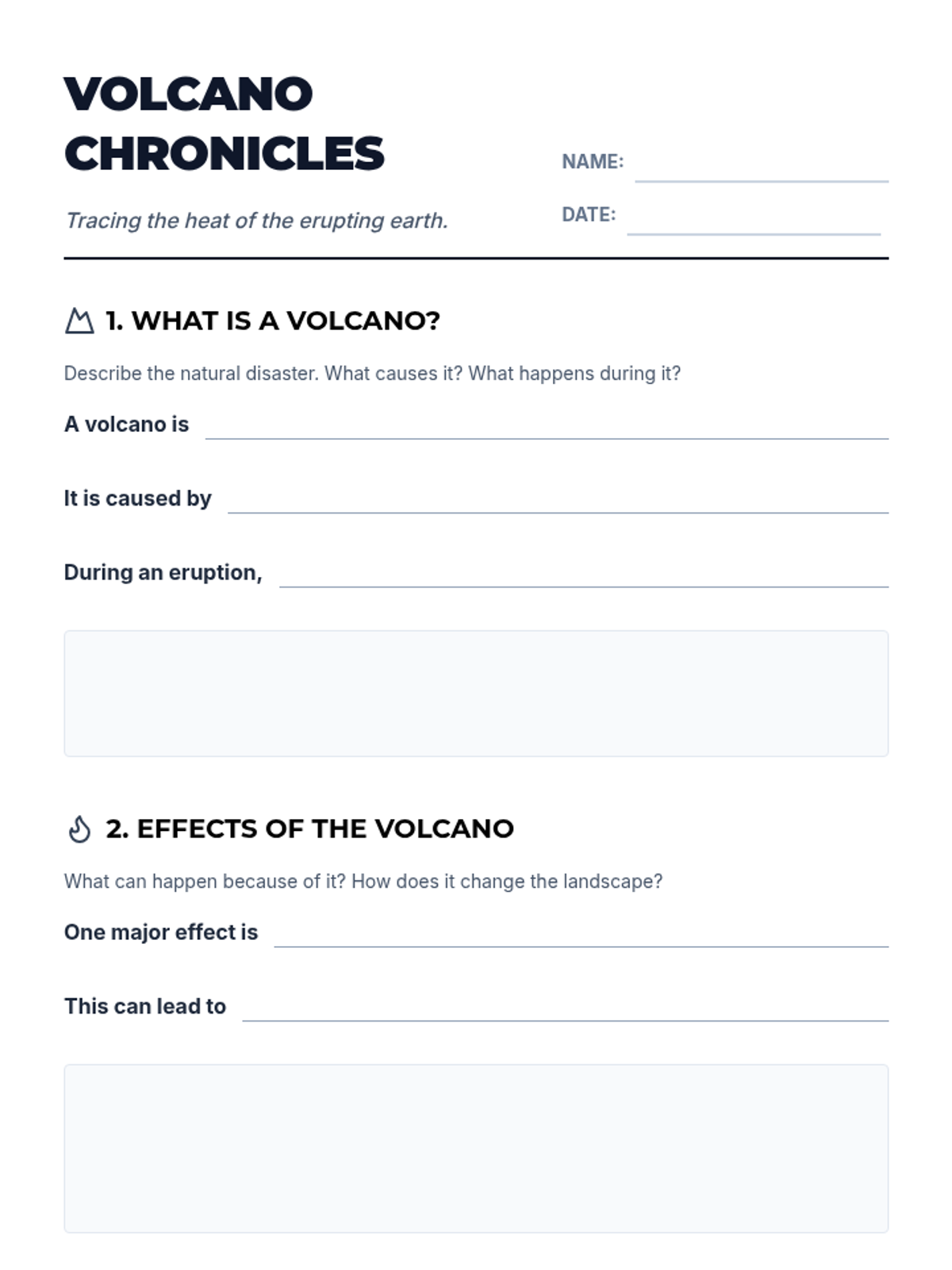
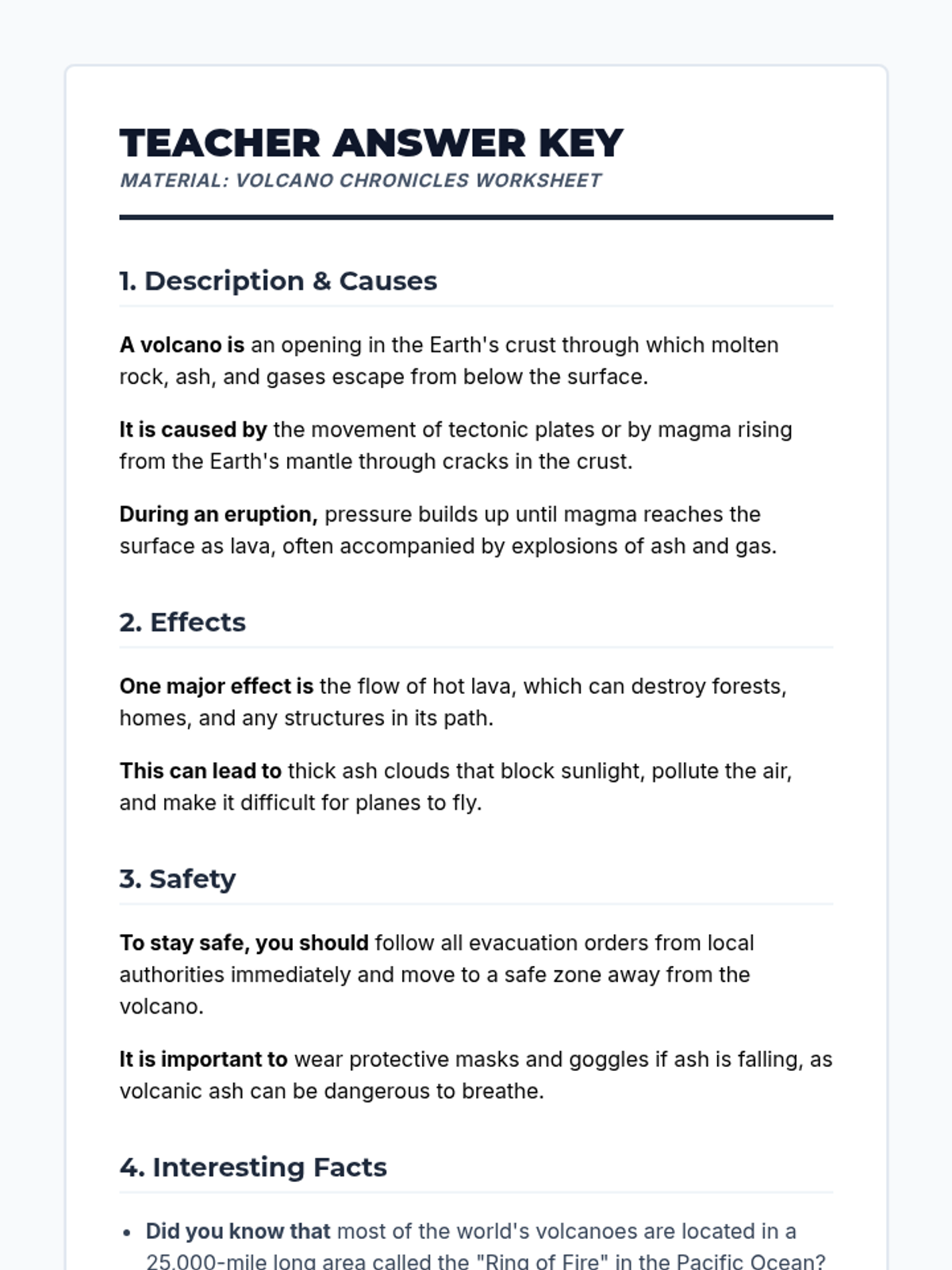
A comprehensive lesson on volcanoes, exploring magma and lava, eruption types, the impact of ash and lava flows, and critical evacuation safety protocols.
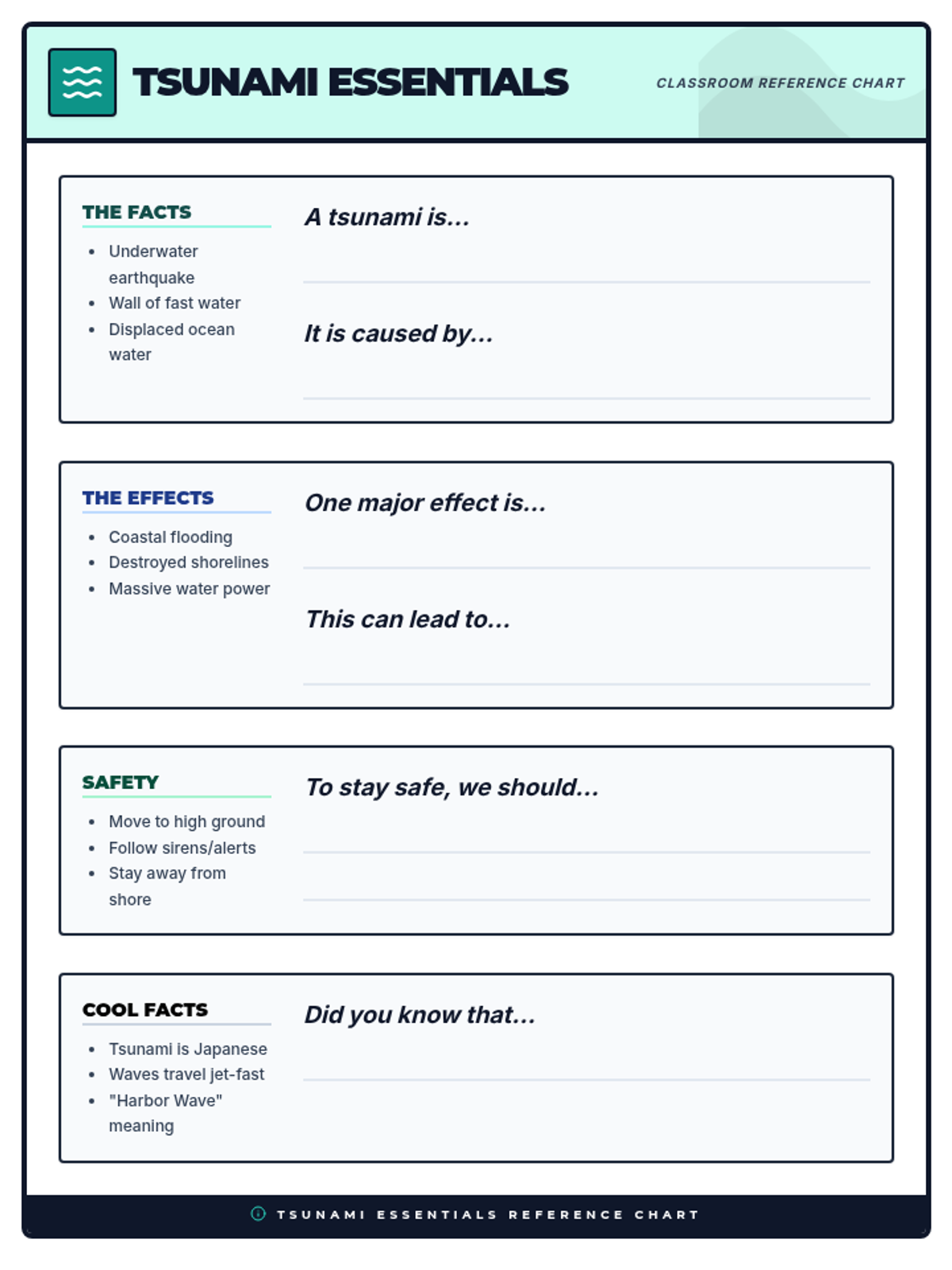
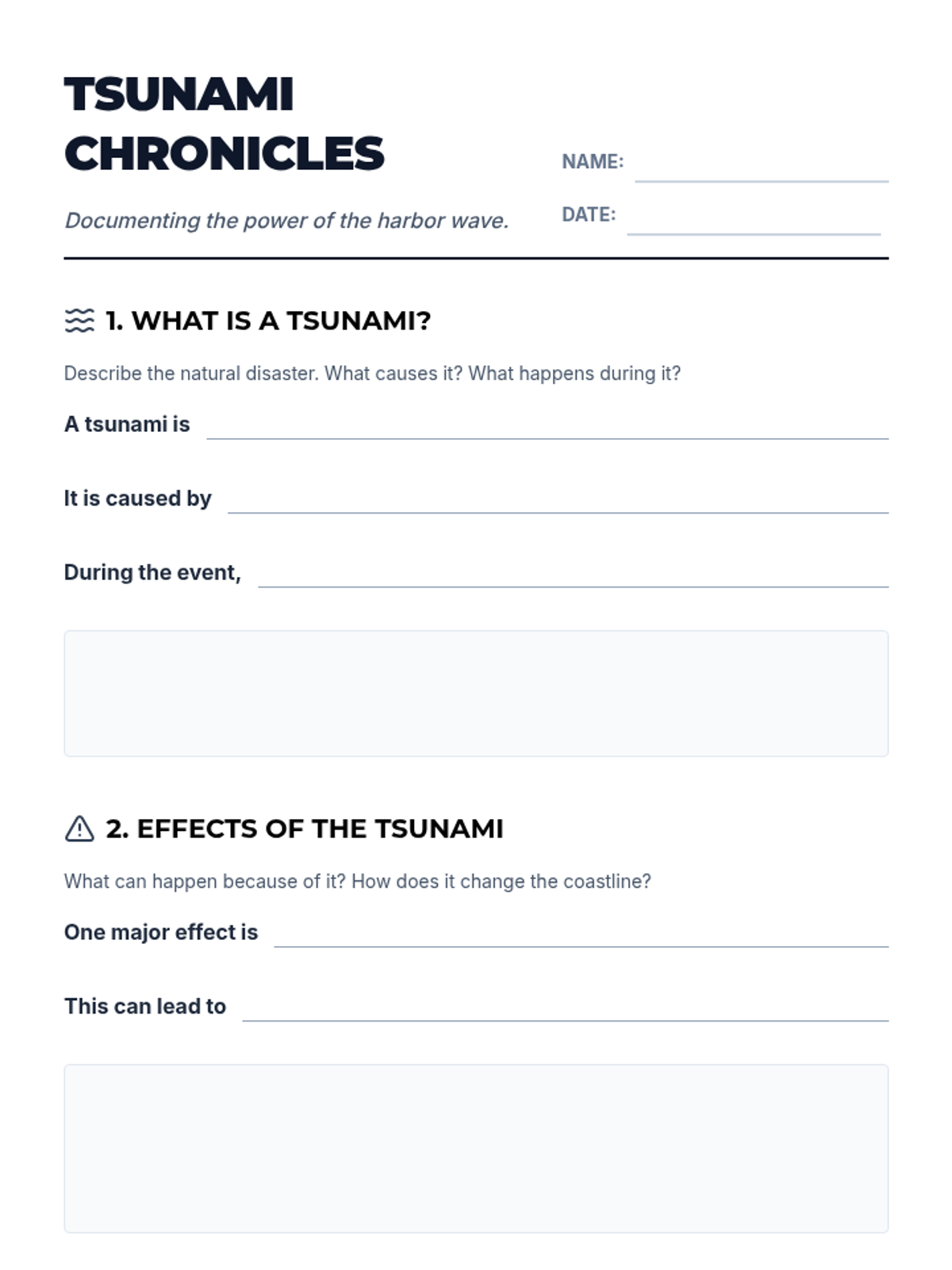
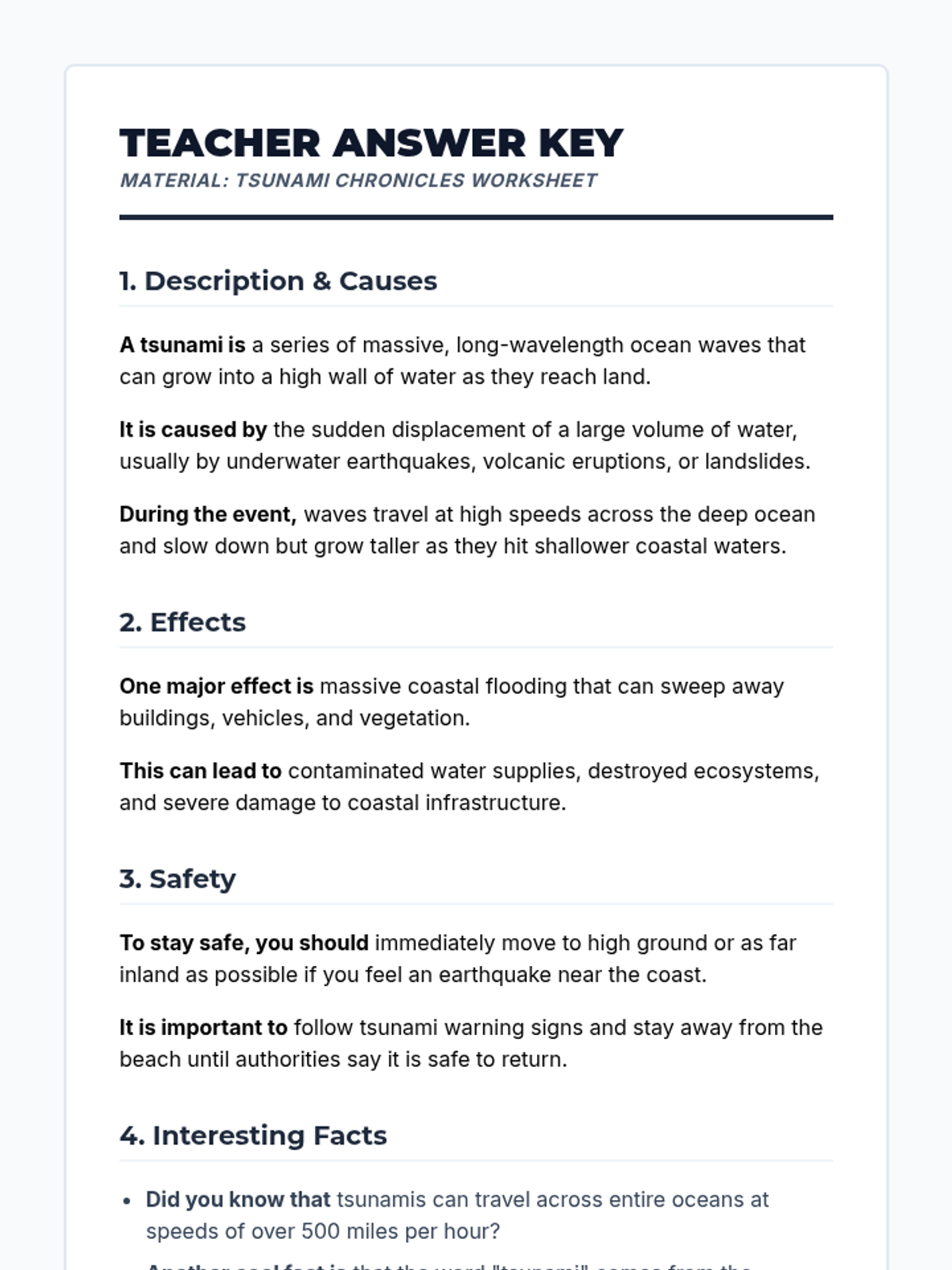
A comprehensive lesson on tsunamis, exploring their triggers like underwater earthquakes, the physics of wall-of-water waves, and critical coastal evacuation safety.
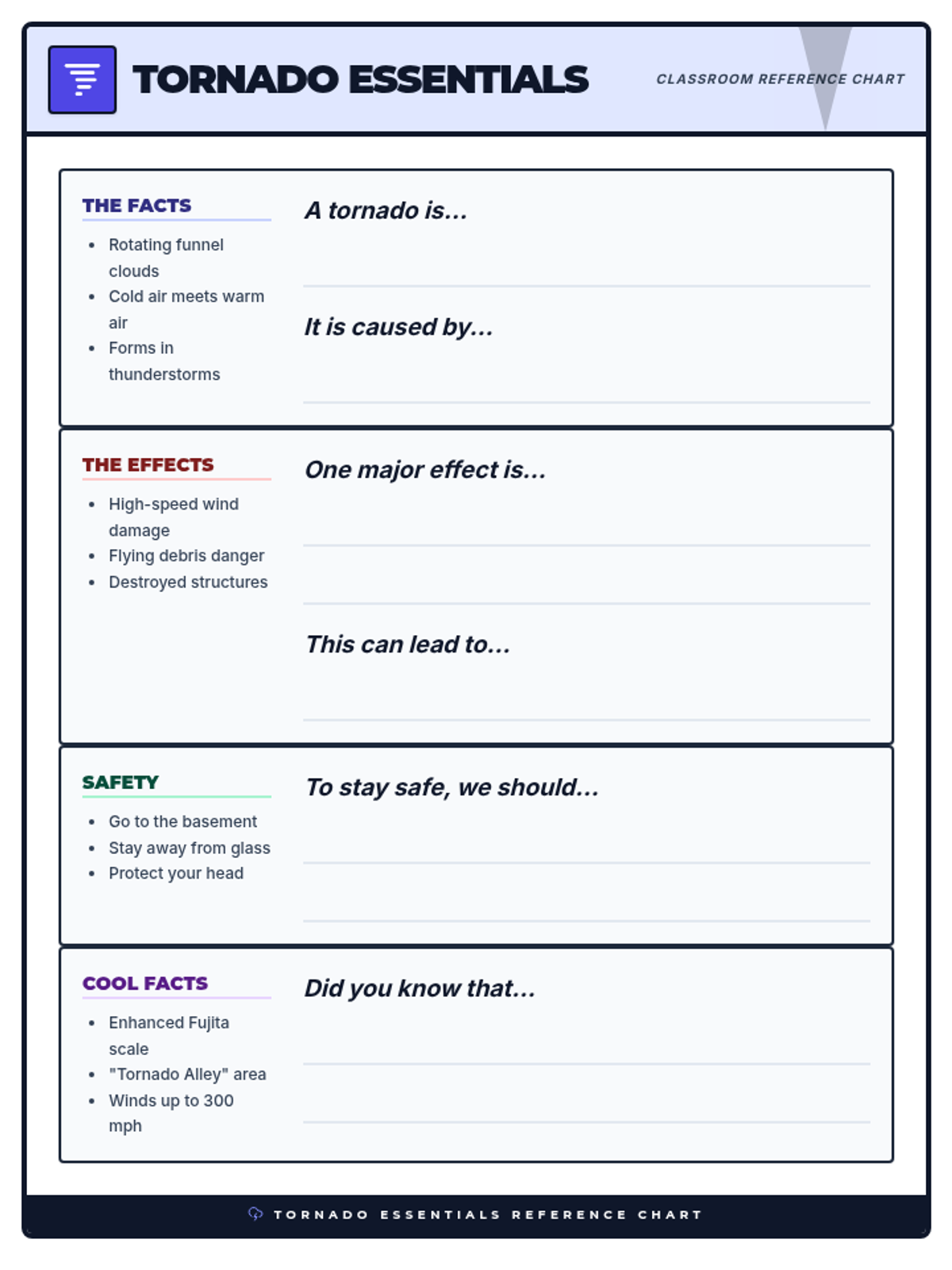
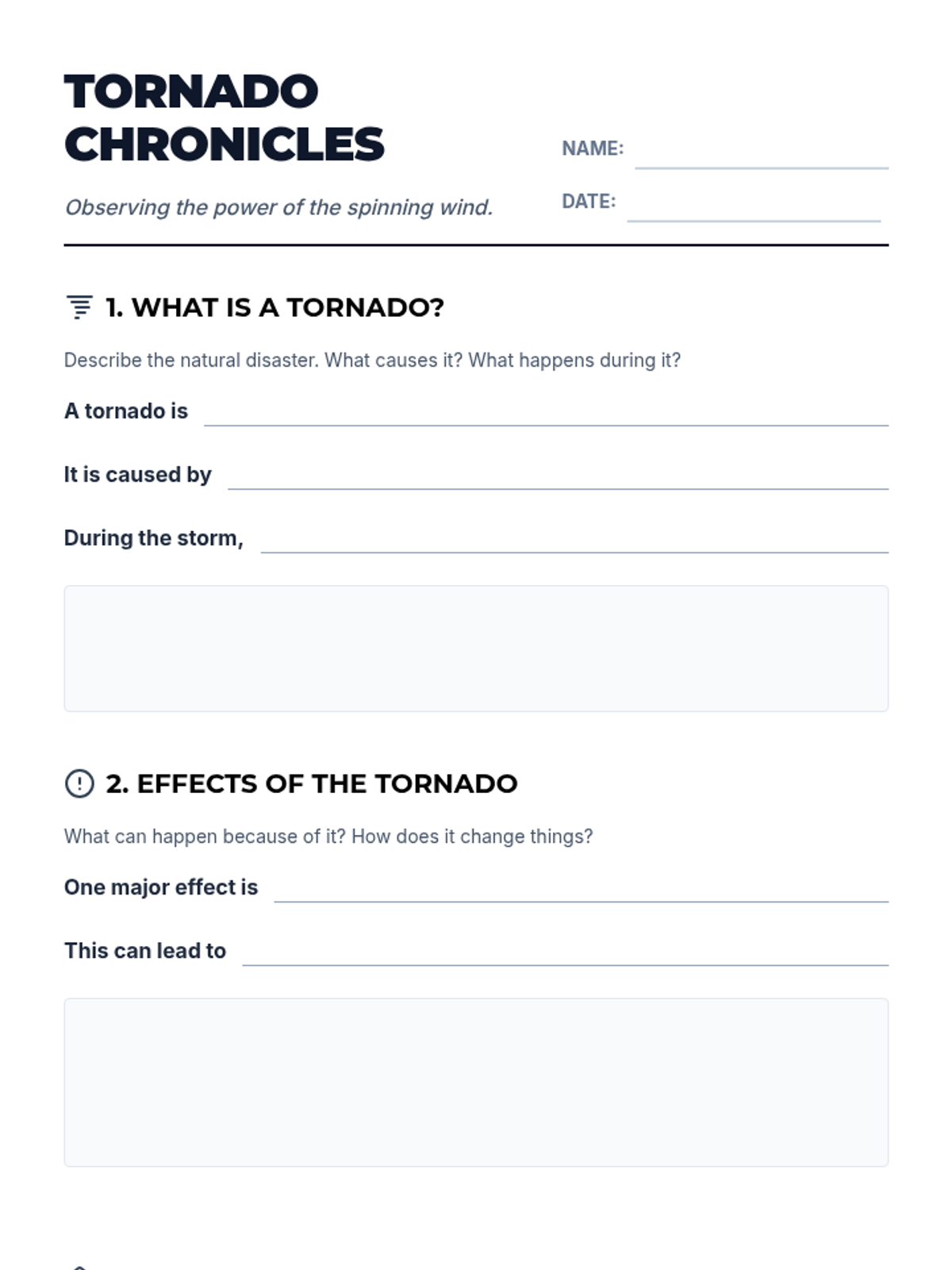
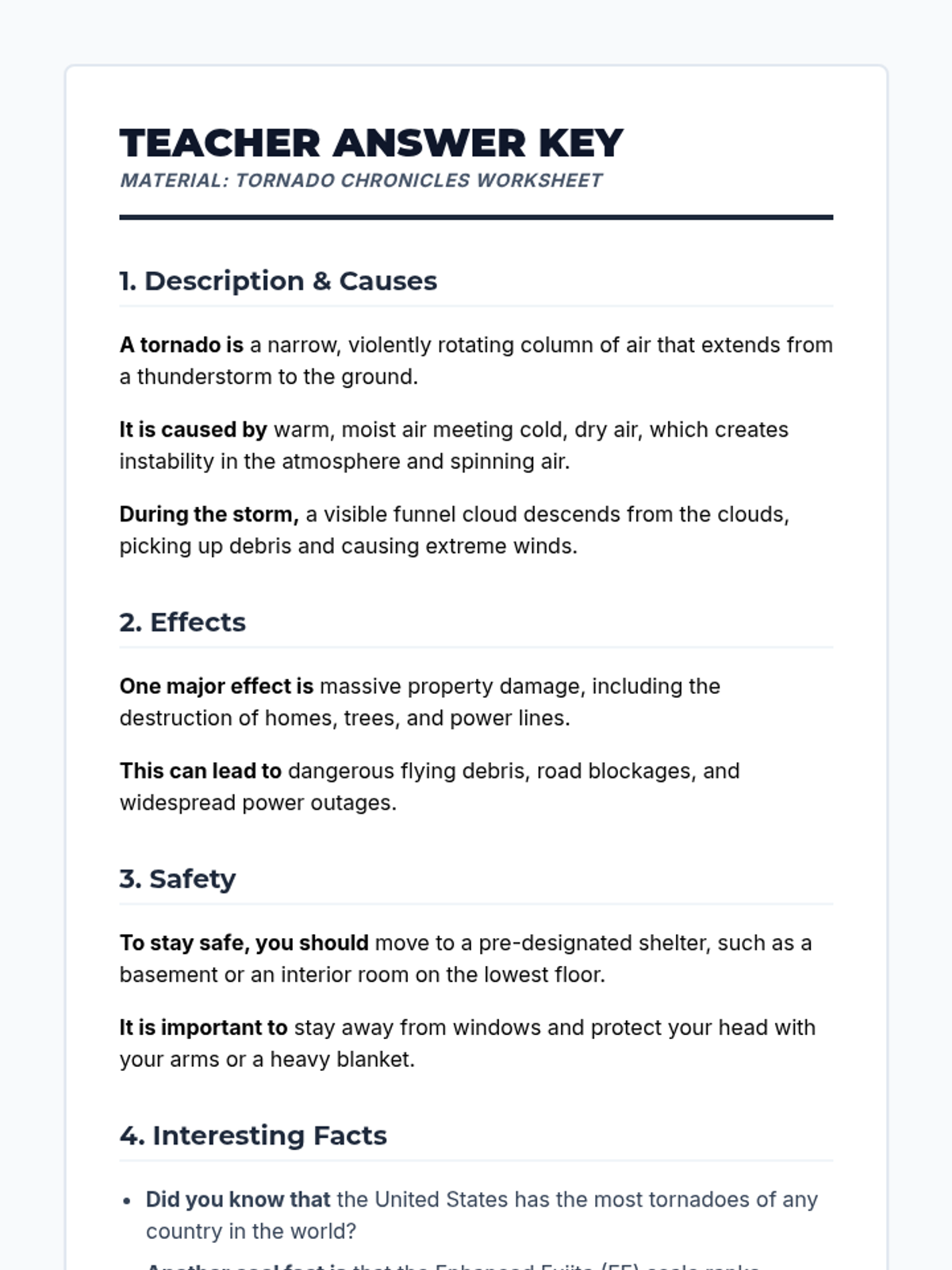
A comprehensive lesson on tornadoes, covering their formation from rotating thunderstorms, their devastating wind impacts, and critical "get low" safety protocols.
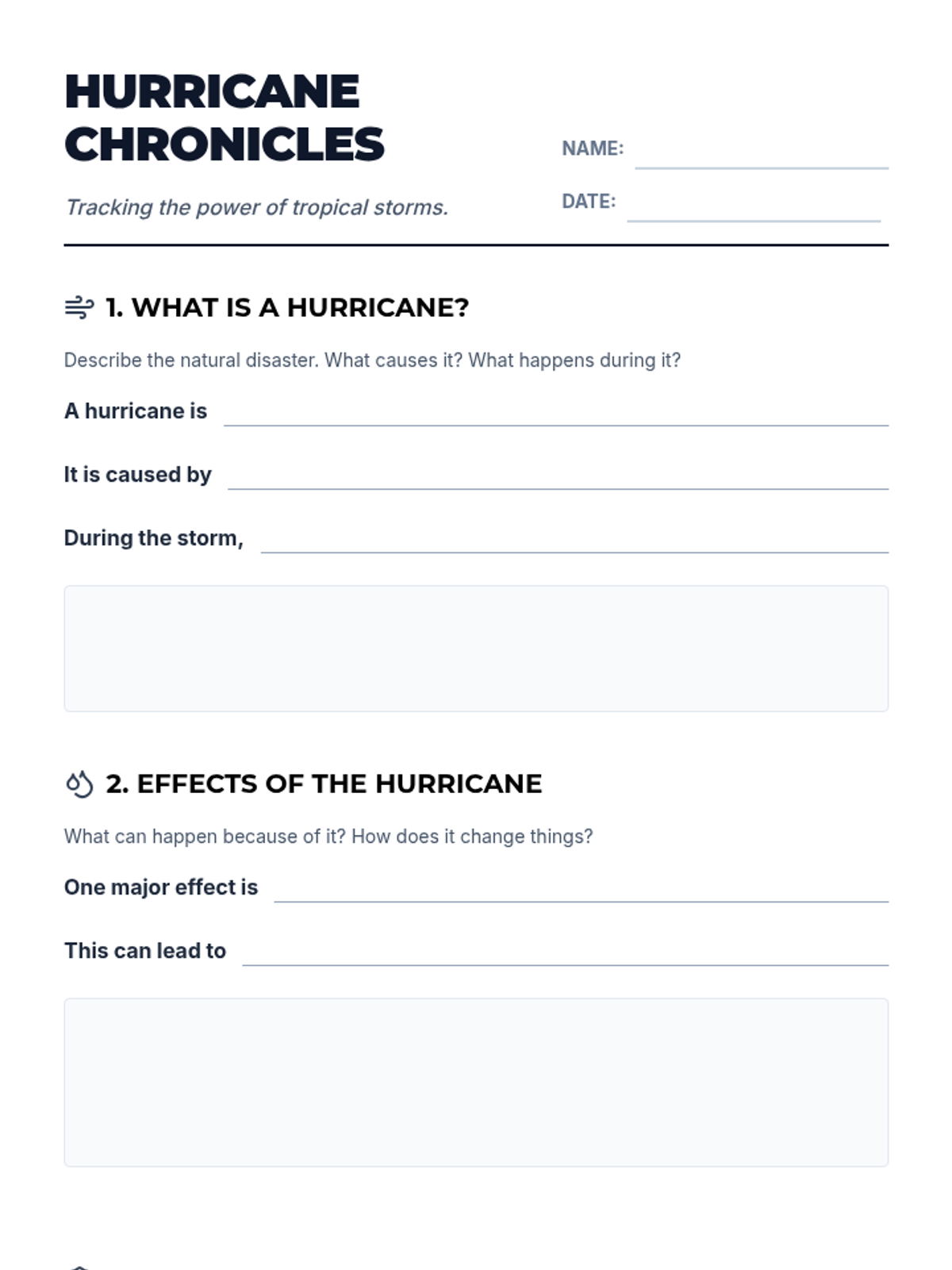
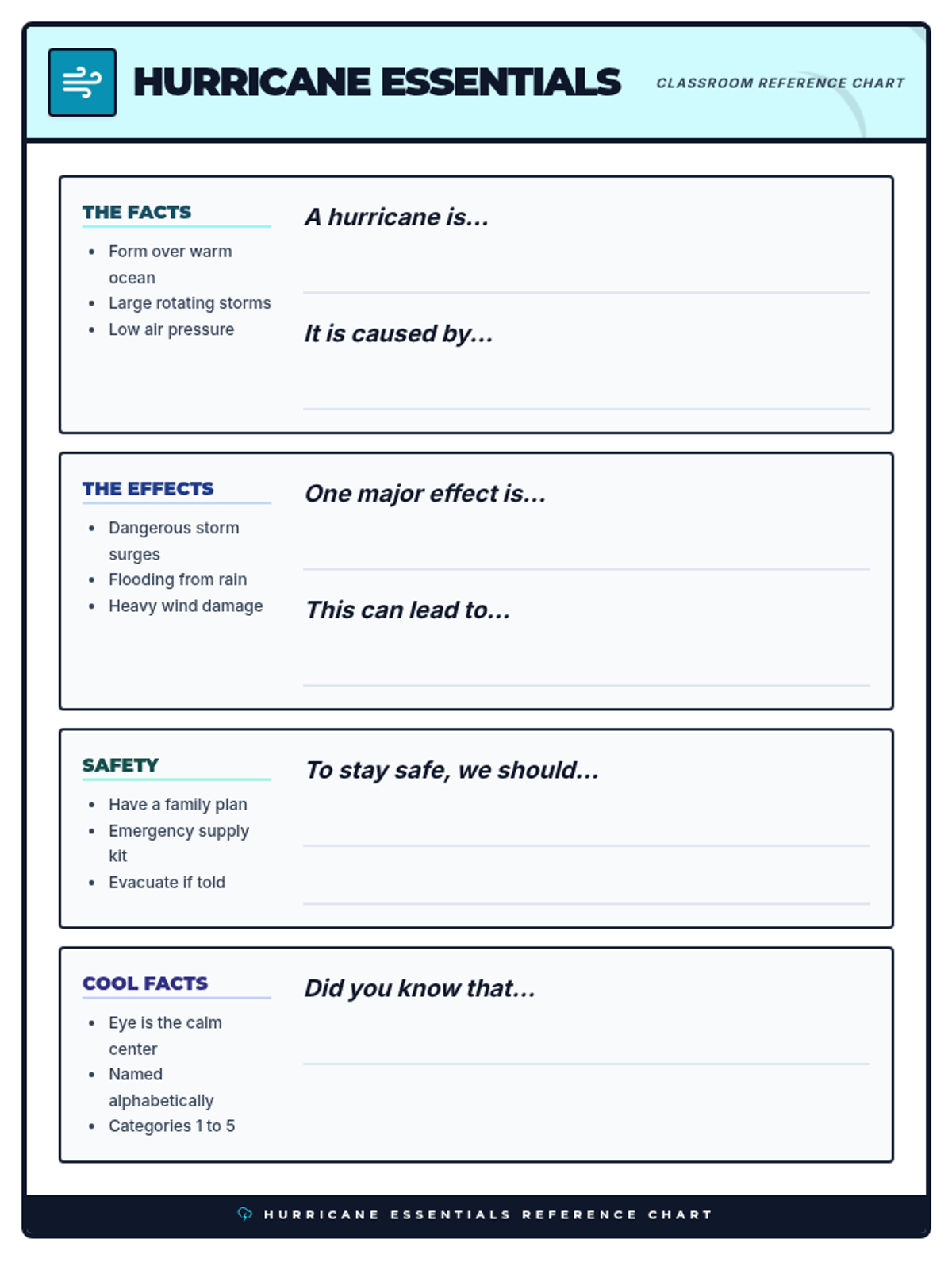
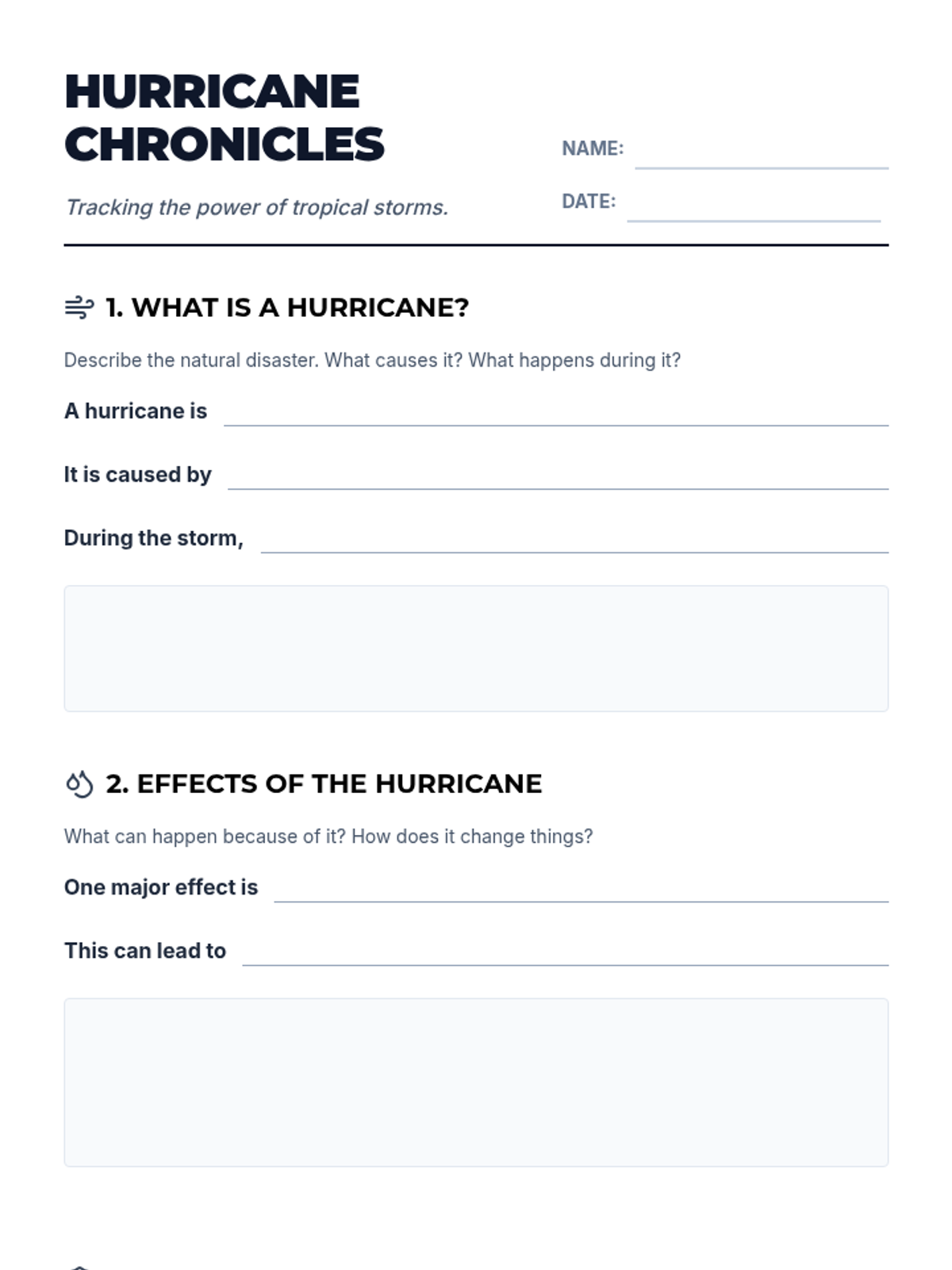
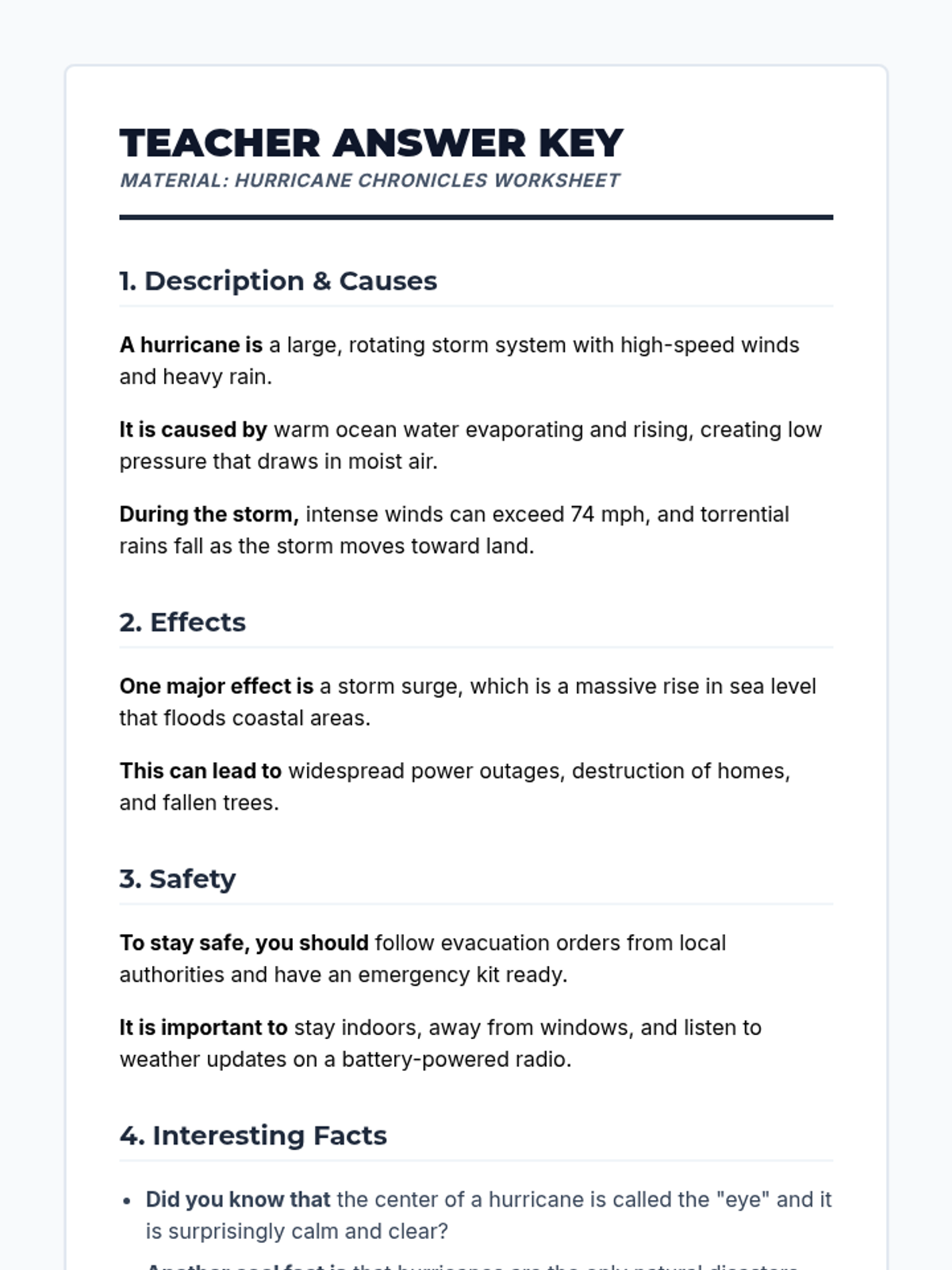
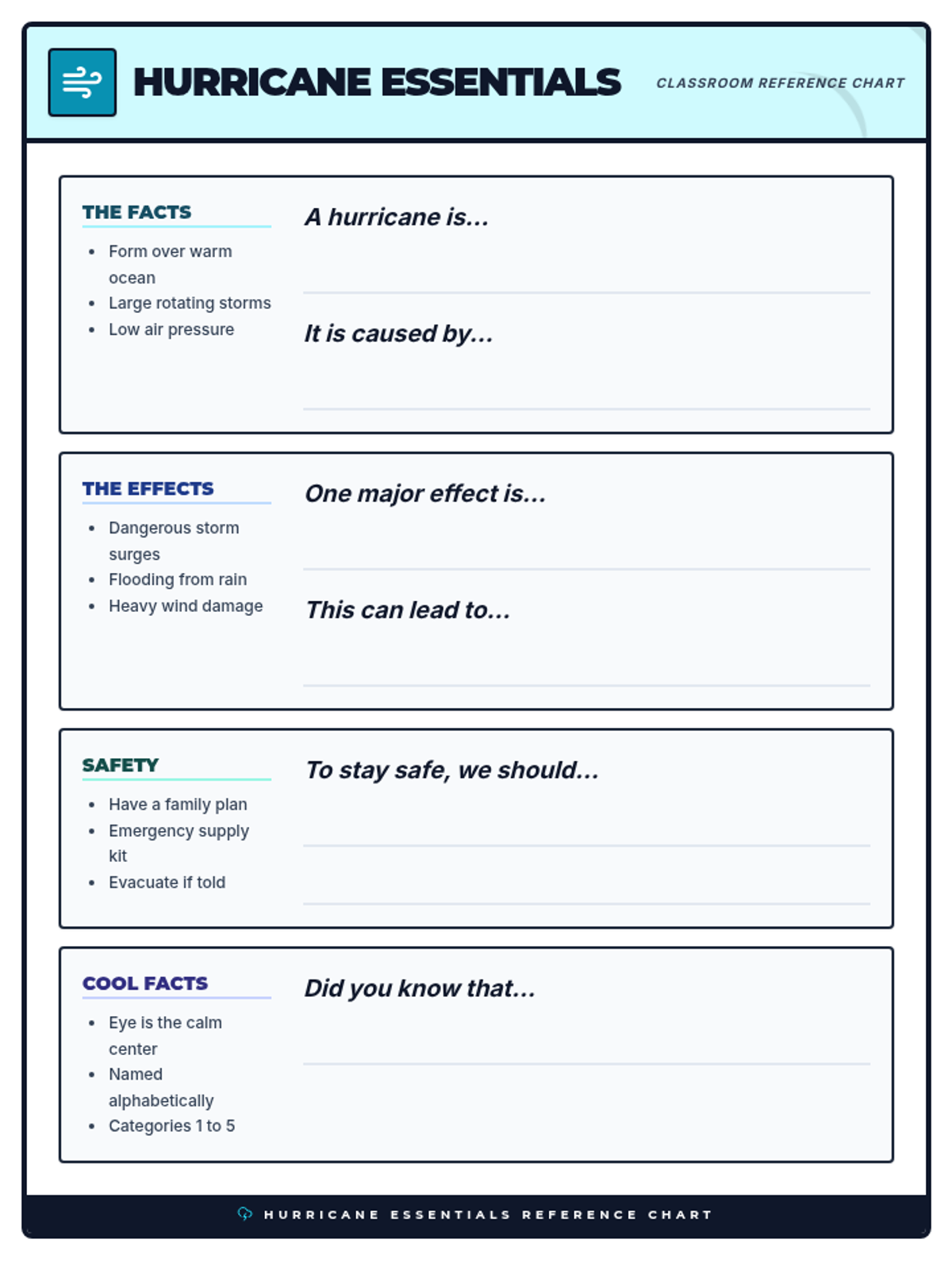
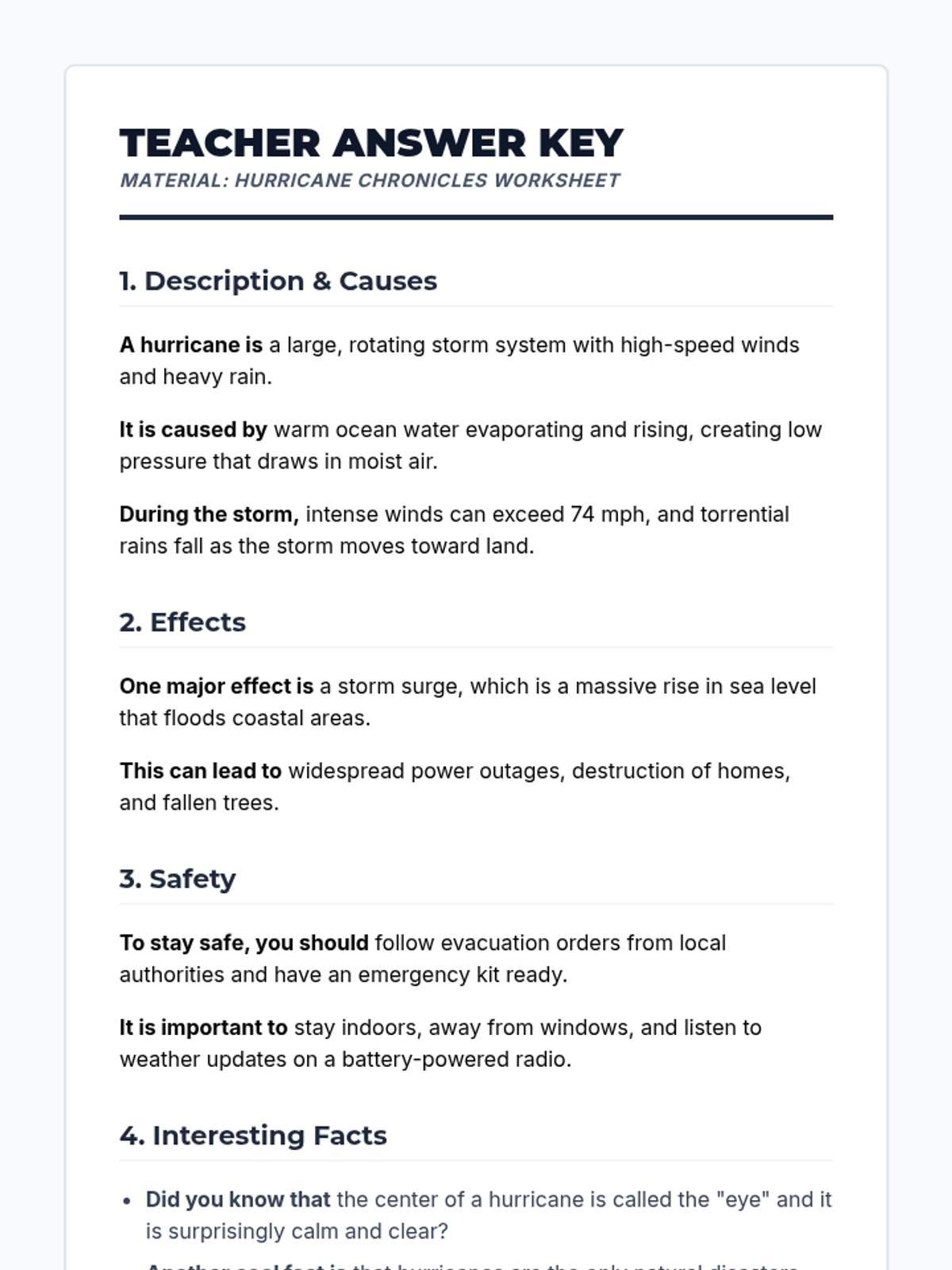
A comprehensive lesson on hurricanes, exploring their formation over warm oceans, their powerful effects like storm surges, and critical safety procedures.
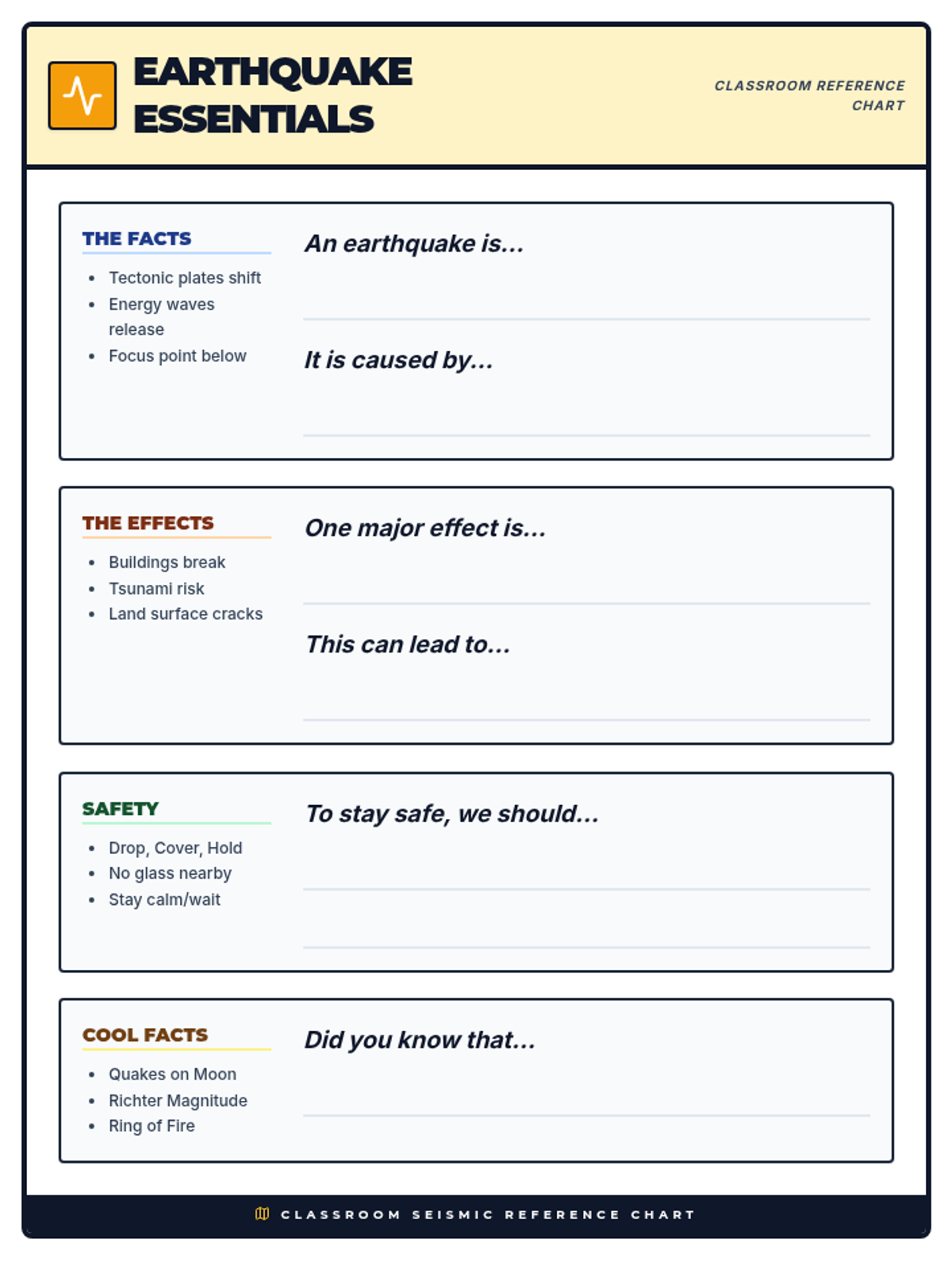
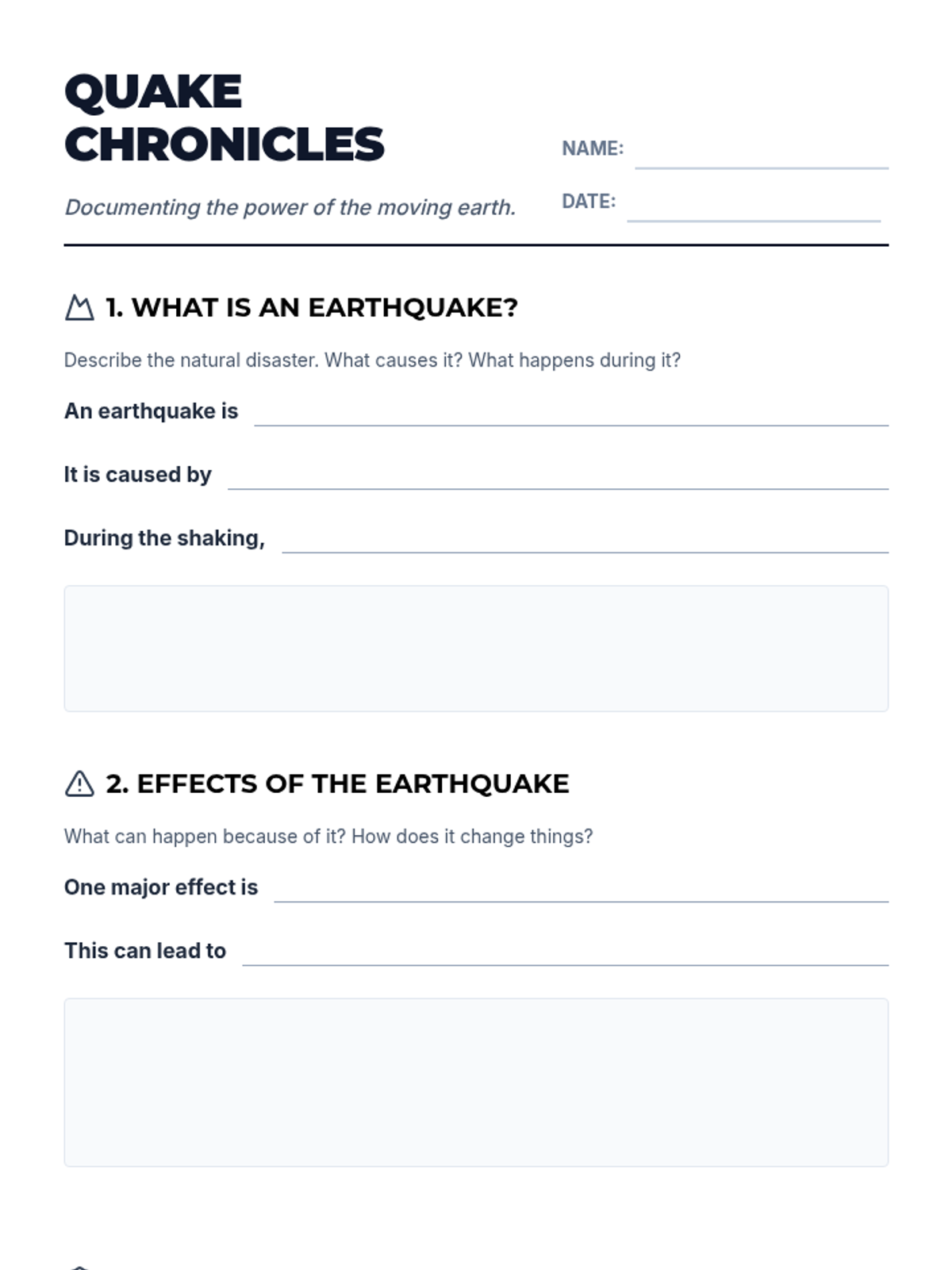
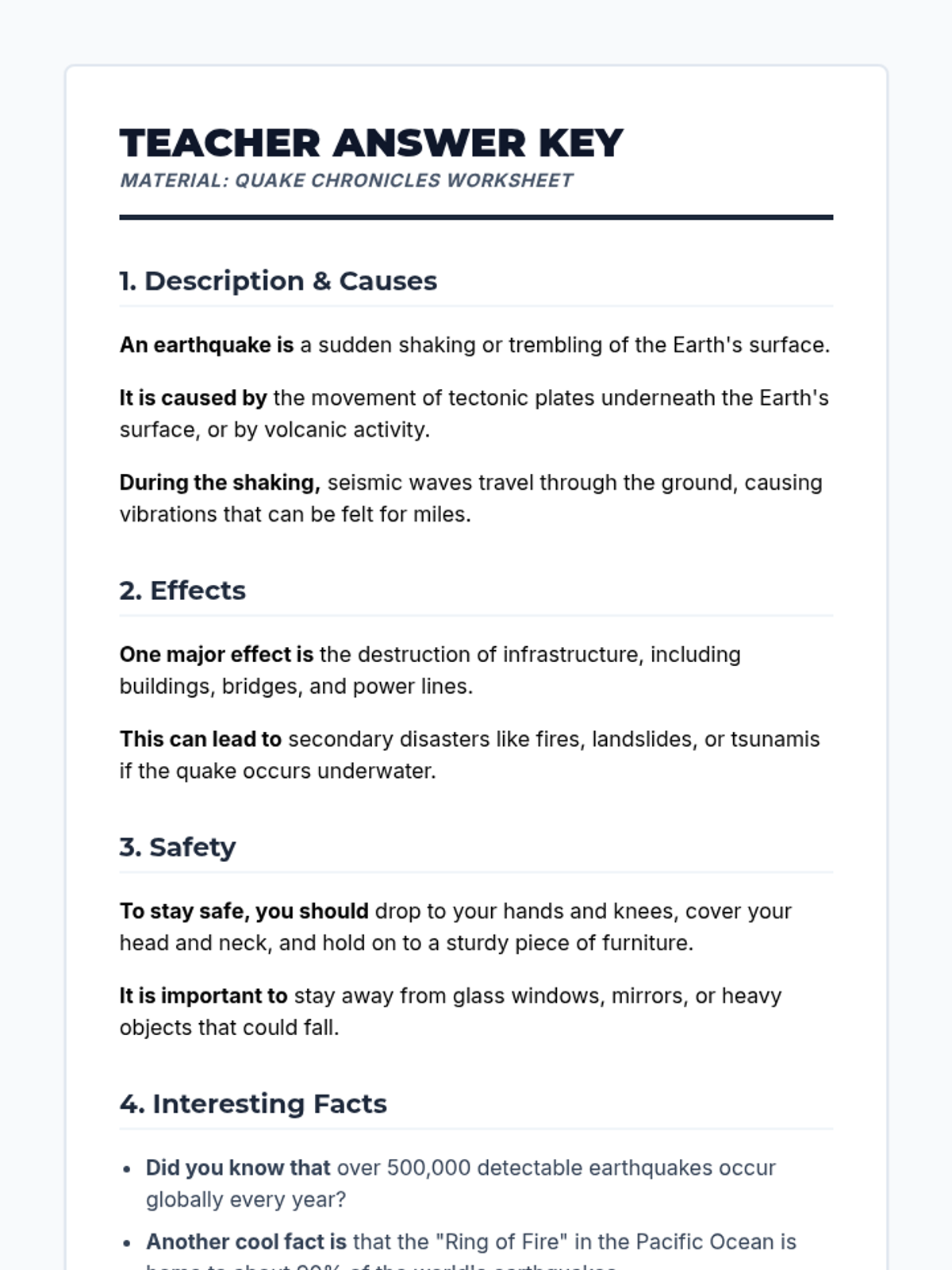
A comprehensive lesson on earthquakes, covering their causes, effects, safety protocols, and fascinating seismic facts using sentence starters to support student writing.
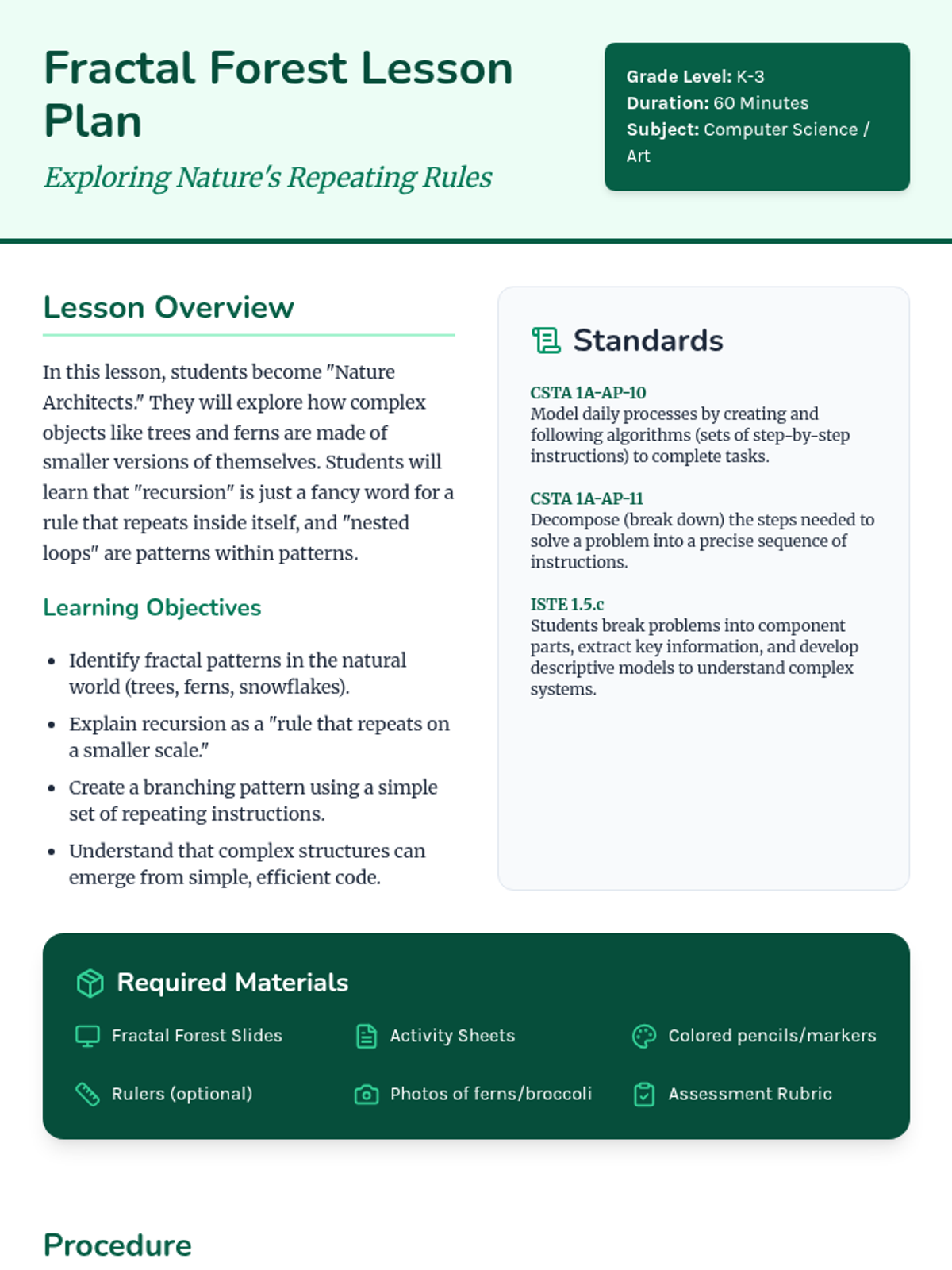
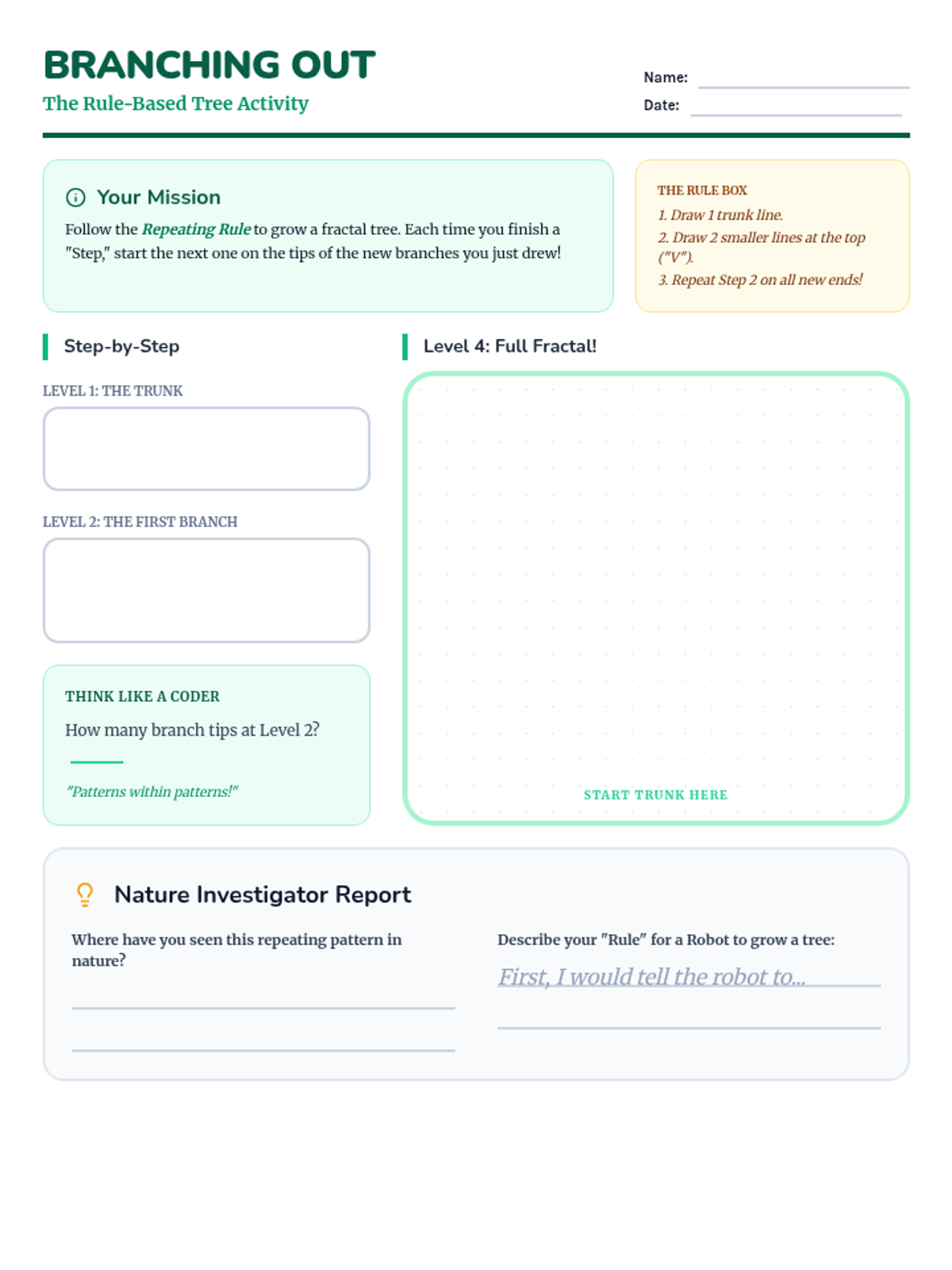
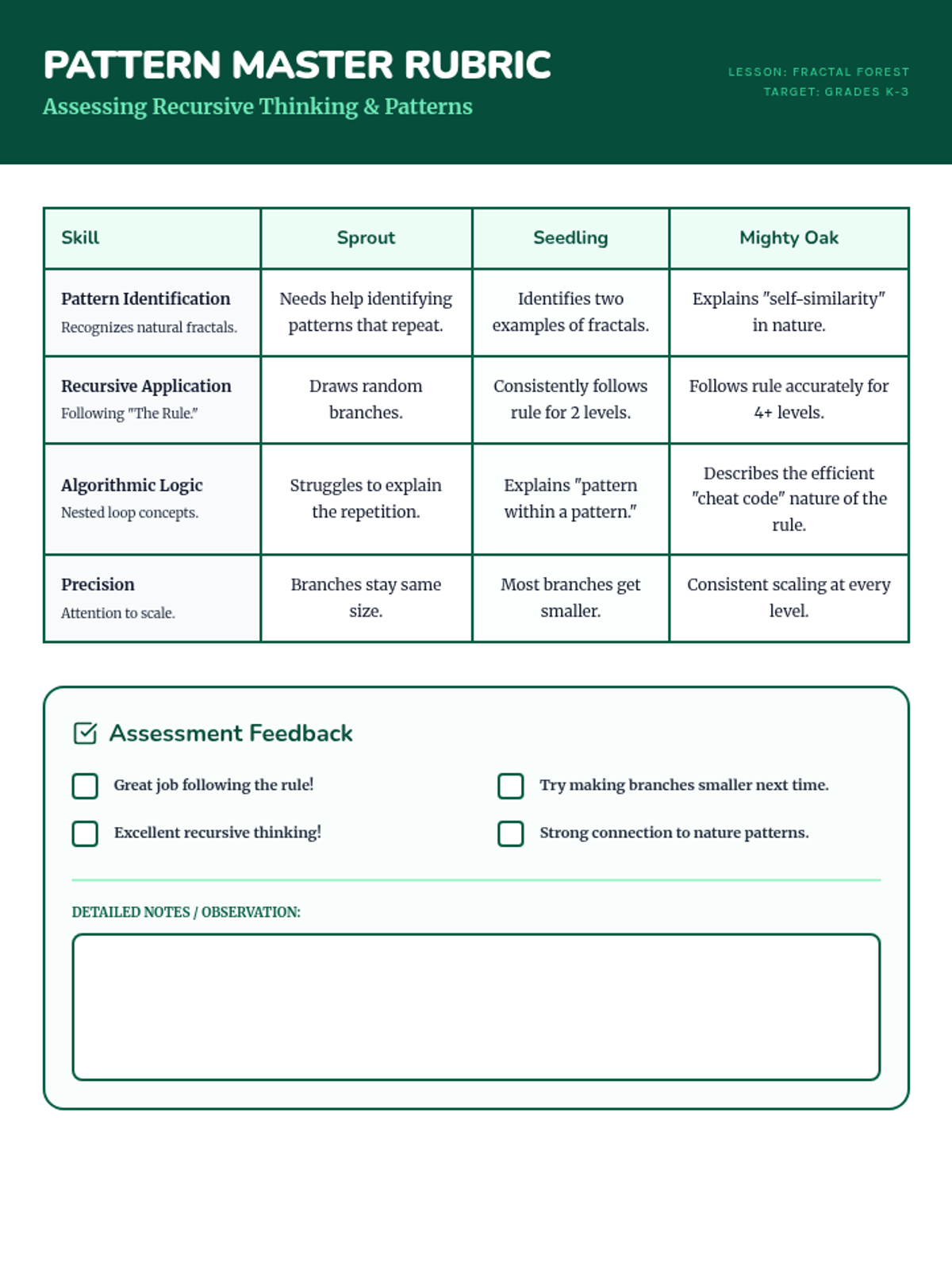
Students in grades K-3 discover the magic of recursion and nested loops by observing patterns in nature and applying simple repeating rules to grow their own digital and hand-drawn forests.
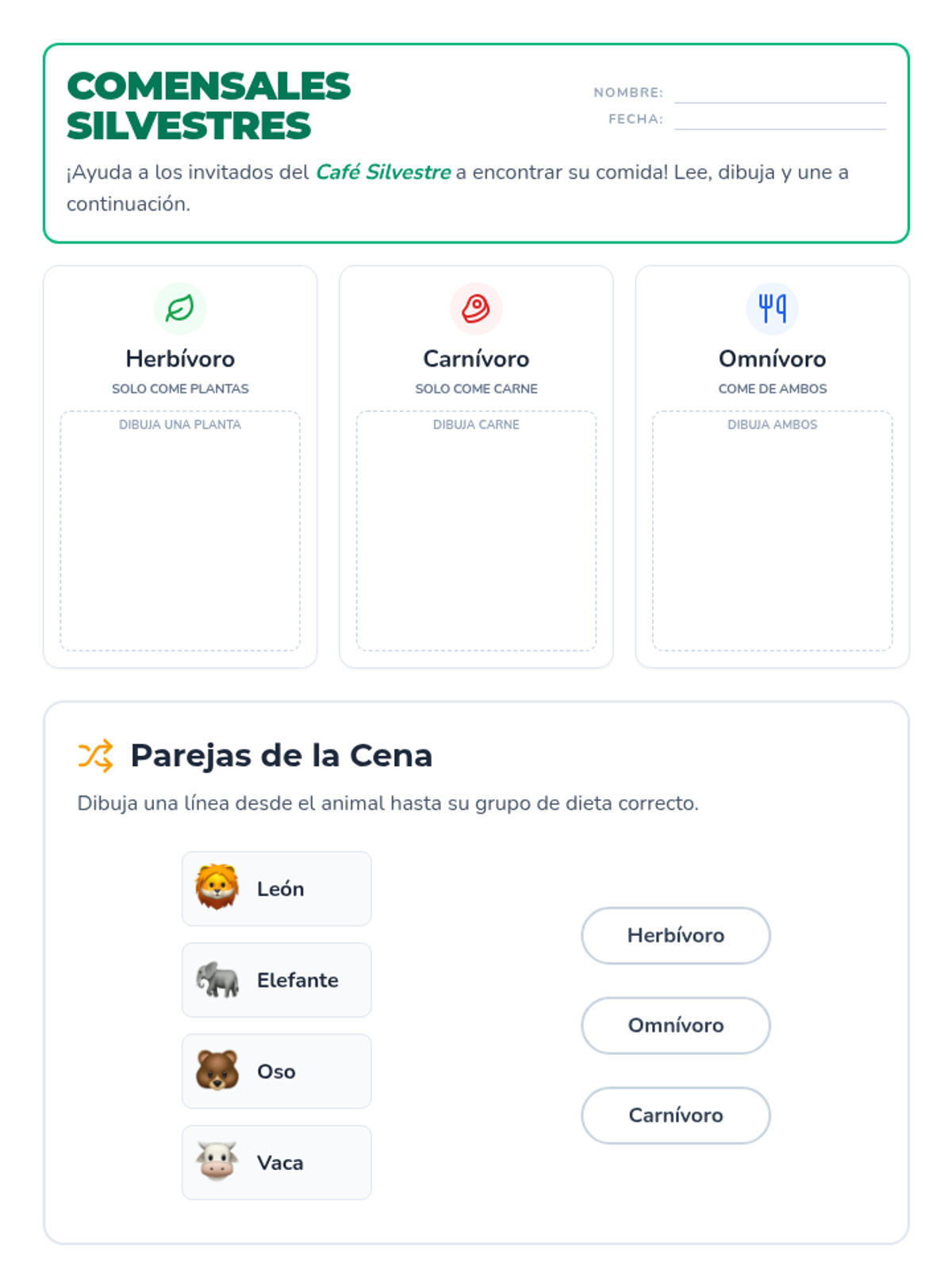
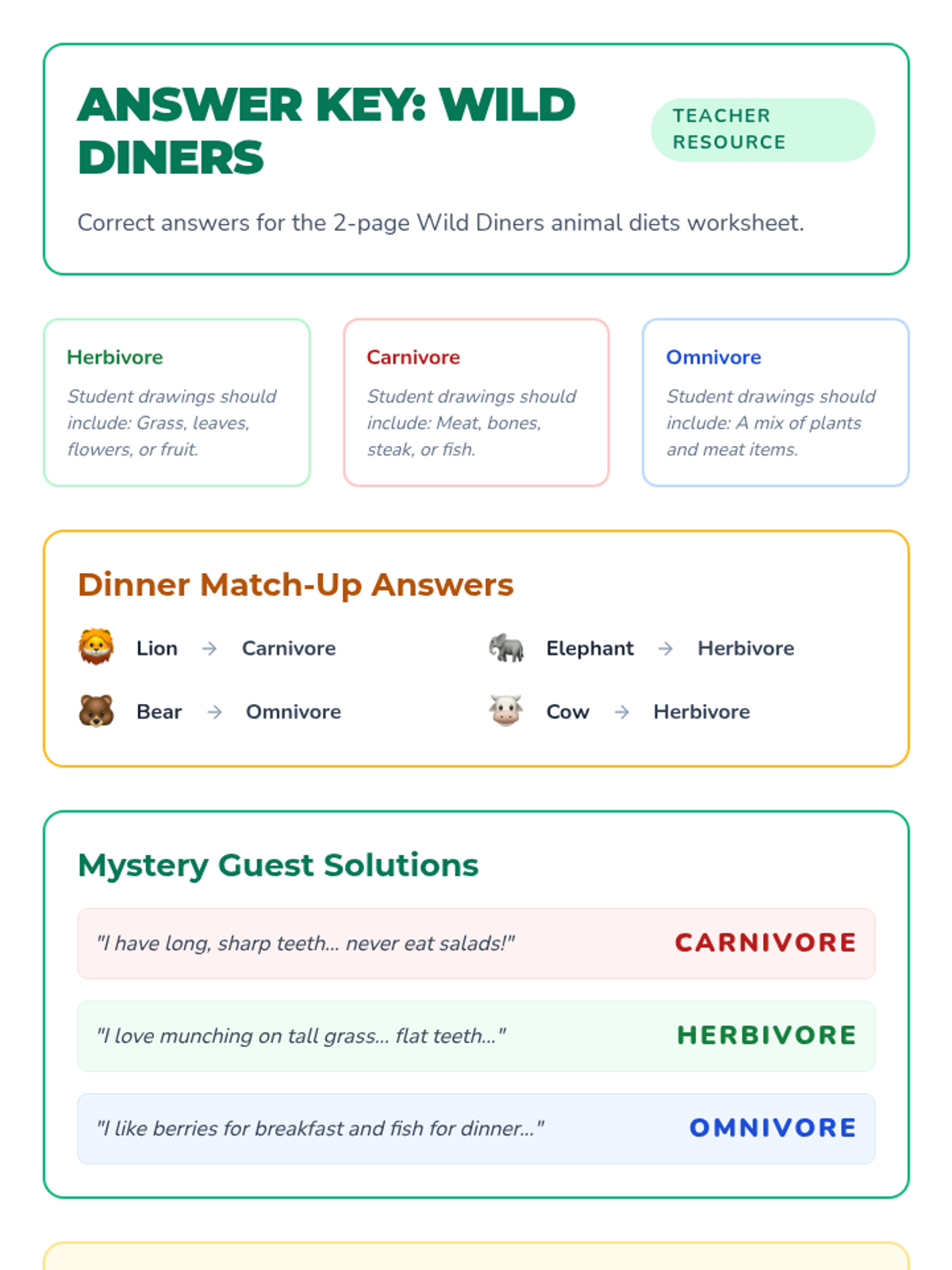
An introductory lesson on animal diets, categorizing creatures as carnivores, herbivores, and omnivores through visual identification and simple riddles.
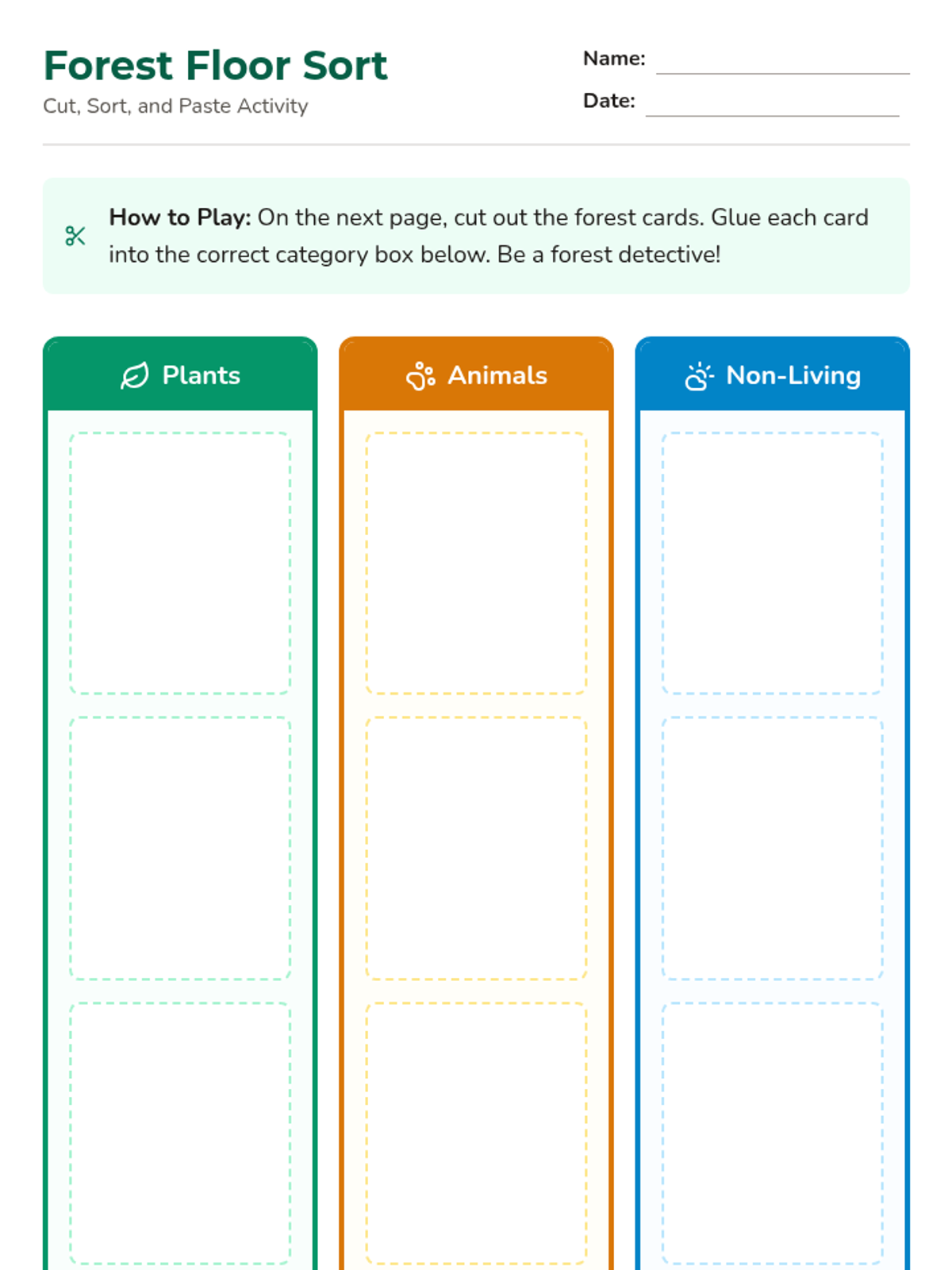
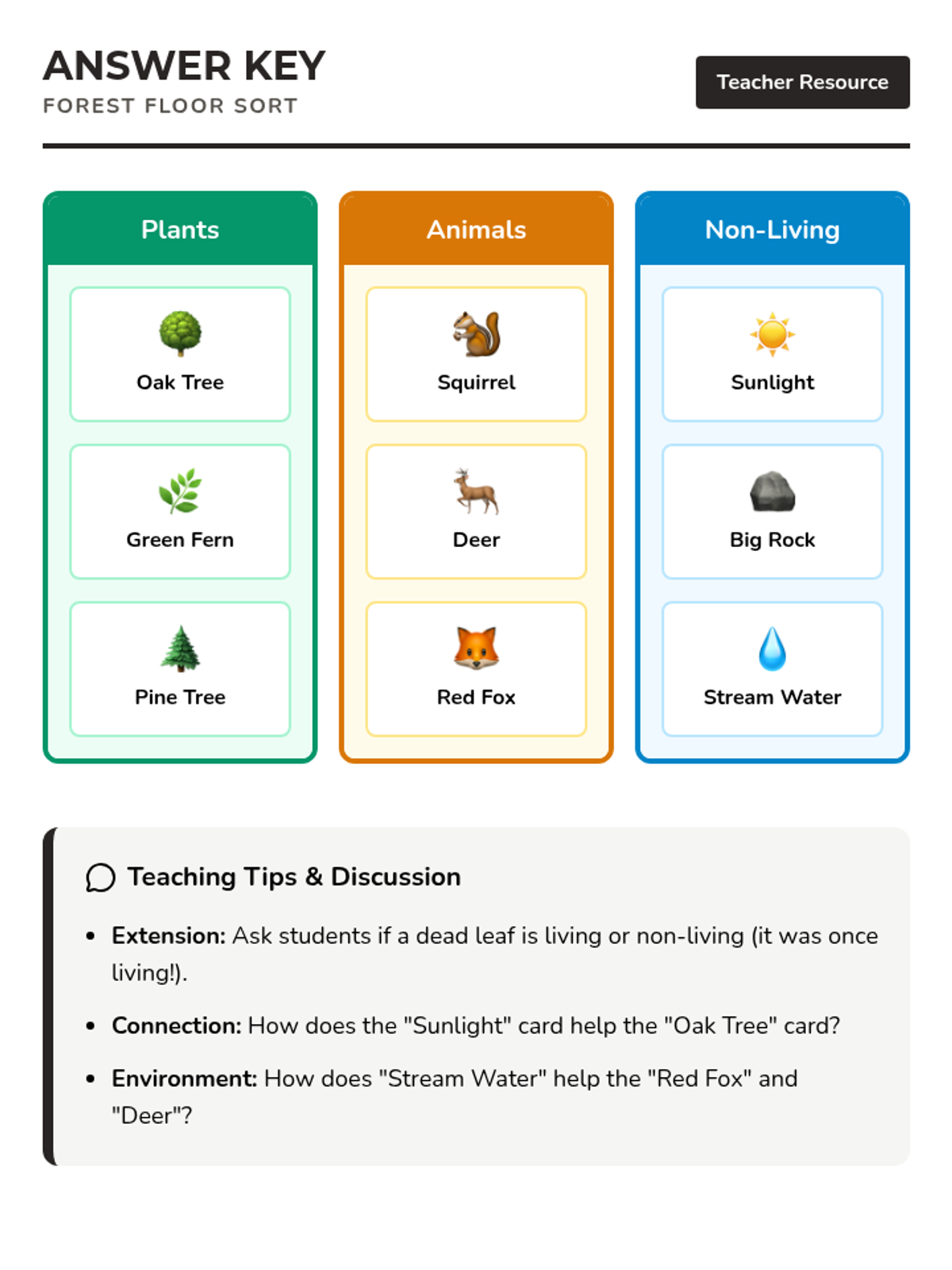
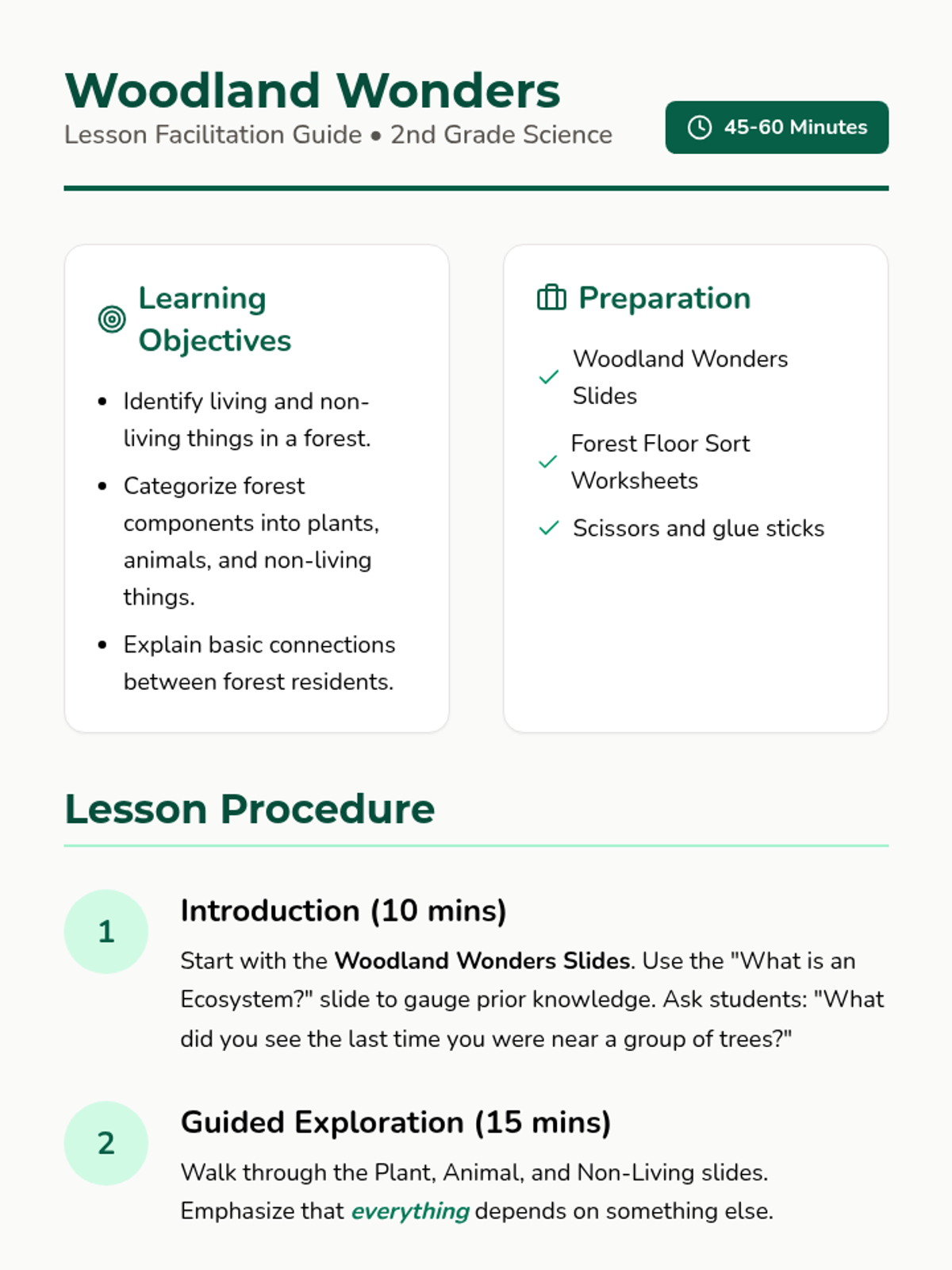
An introductory lesson on the forest ecosystem where students identify and categorize living and non-living components. Students will explore the roles of plants, animals, and the environment in a woodland setting.
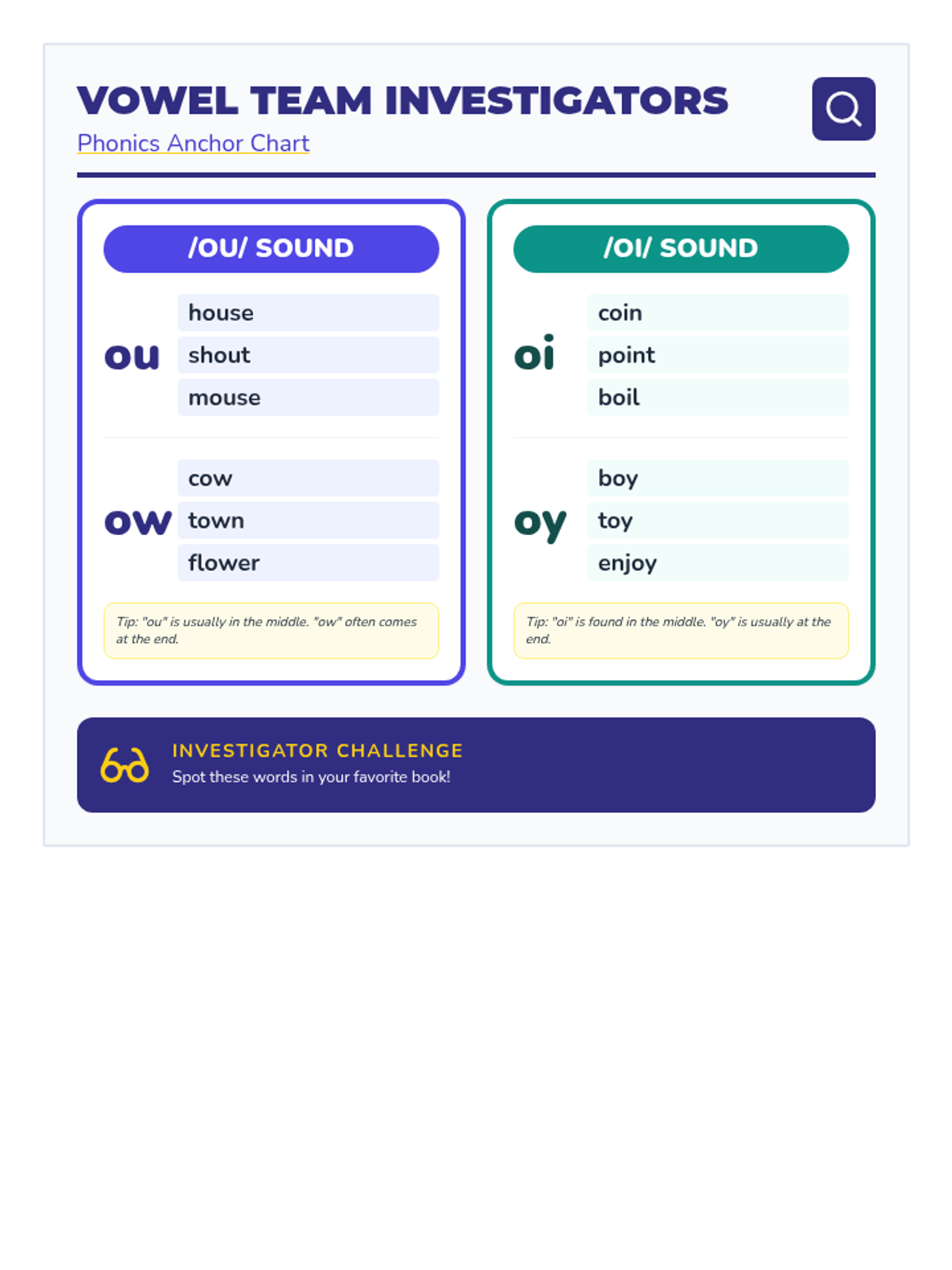
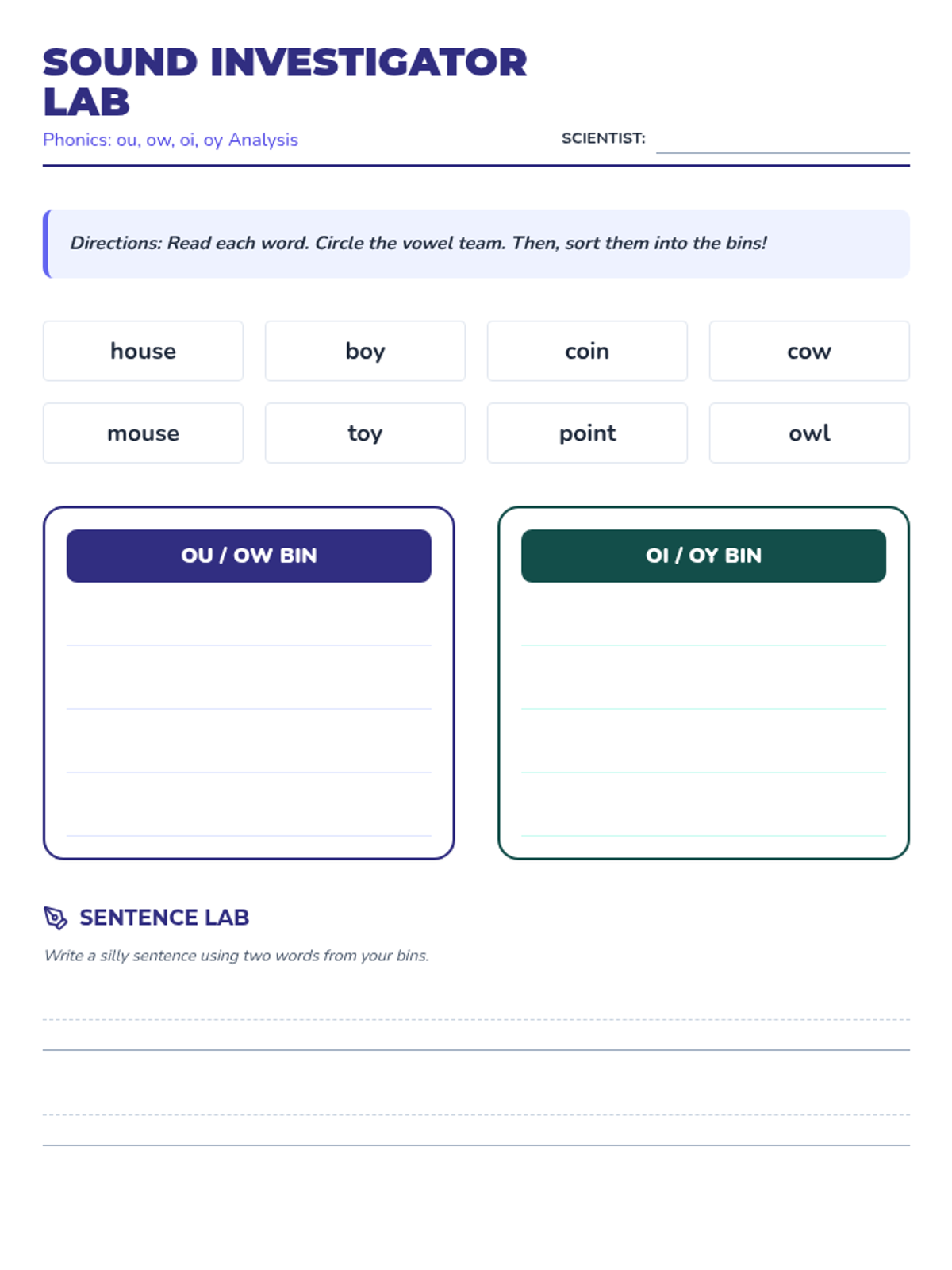
Students decode and apply knowledge of vowel teams and diphthongs (ou, ow, oi, oy) in multi-syllabic words.
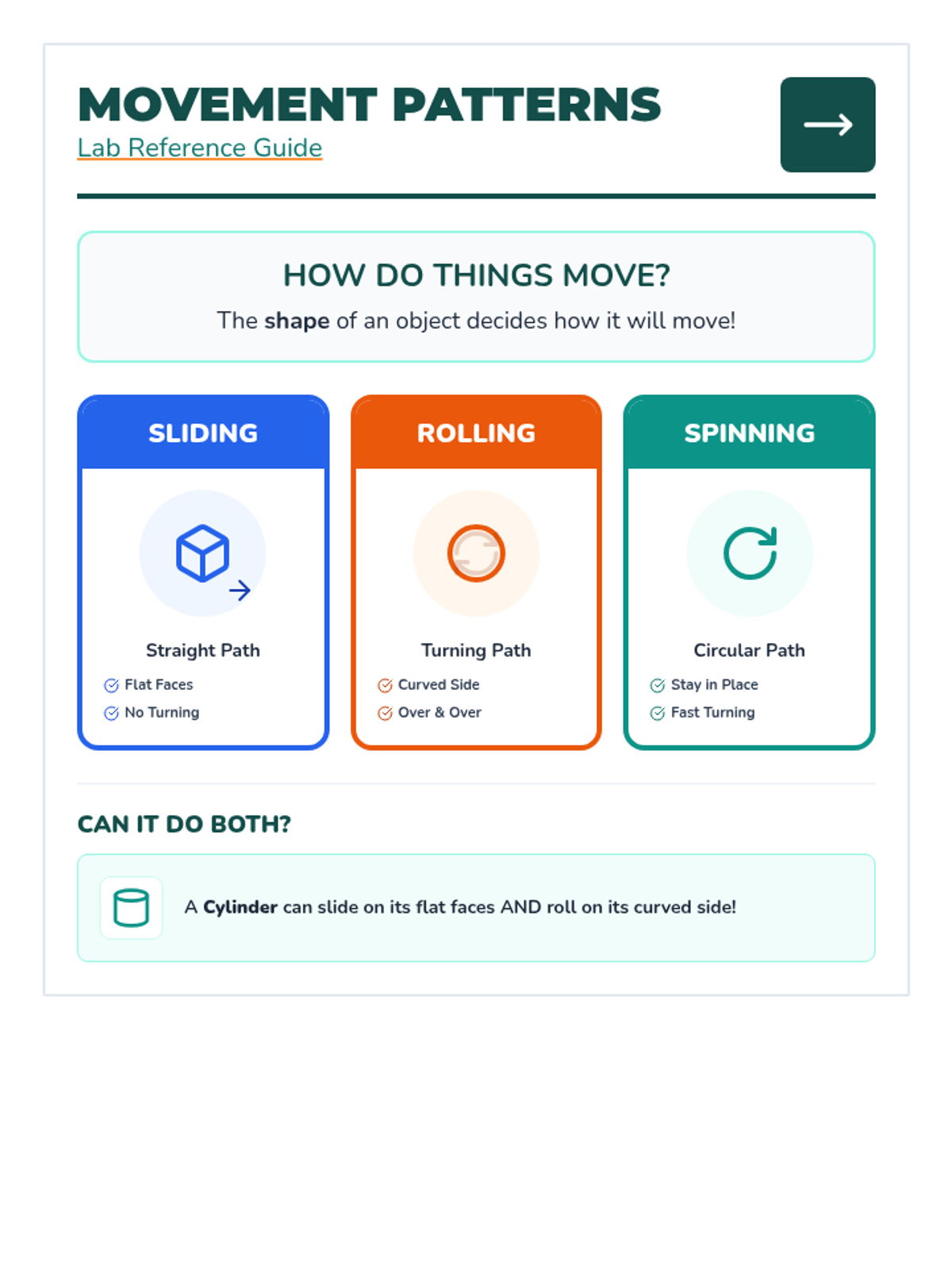
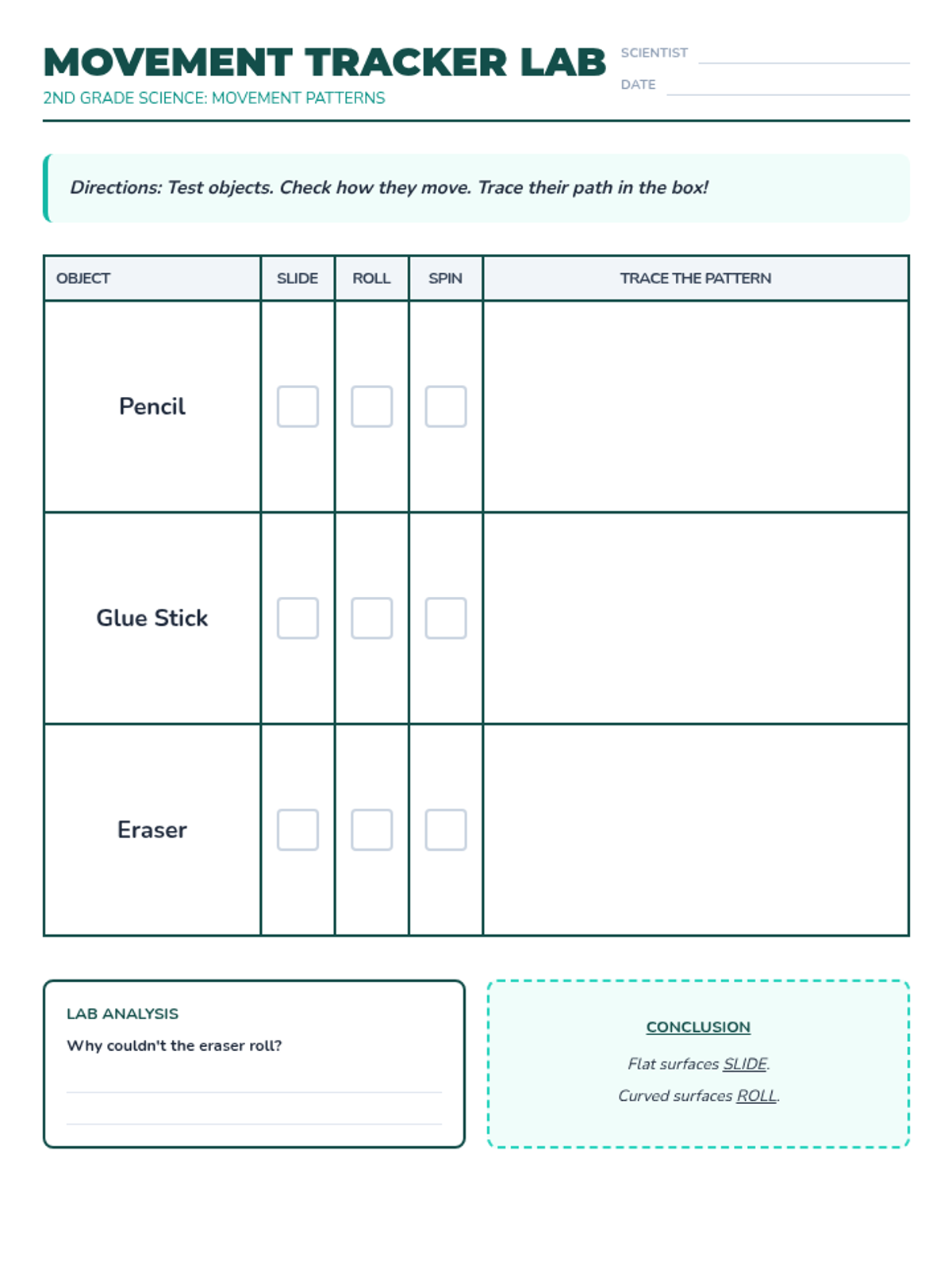
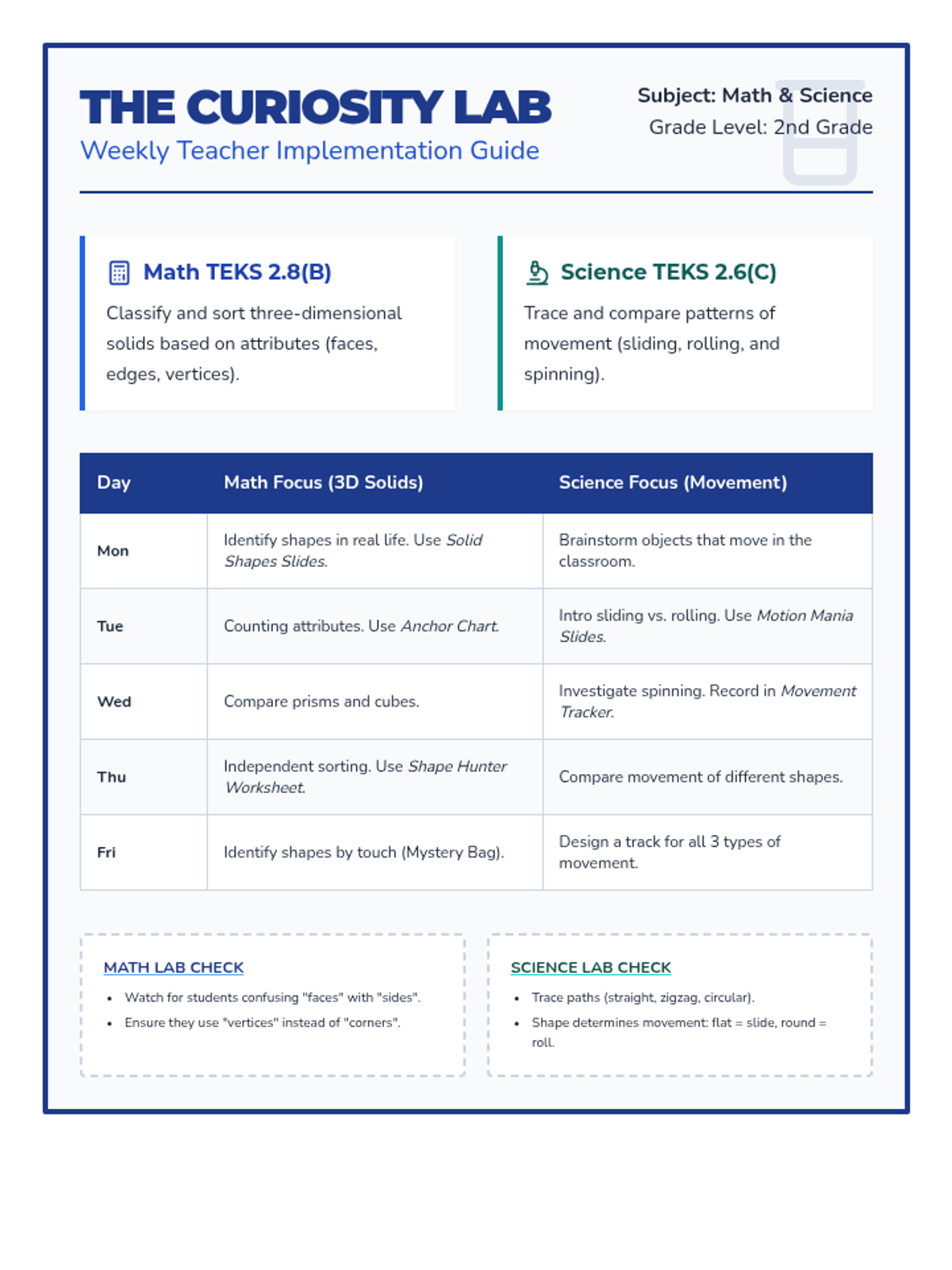
Students investigate and compare different patterns of movement, including sliding, rolling, and spinning, through hands-on observation.
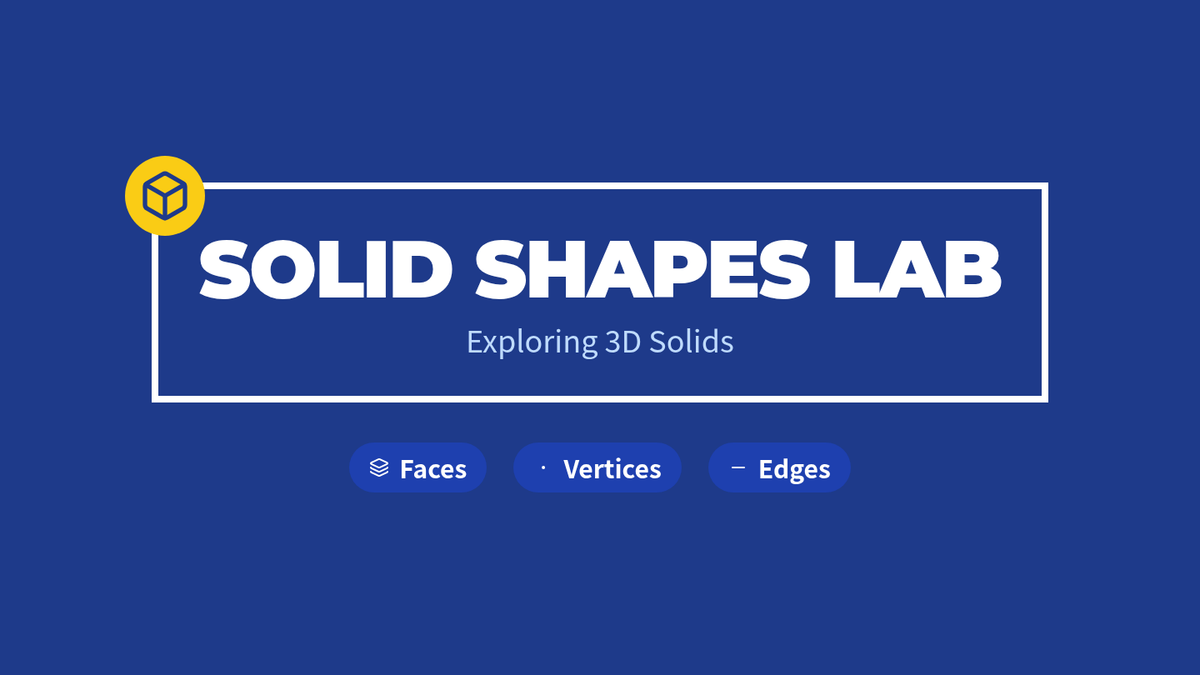
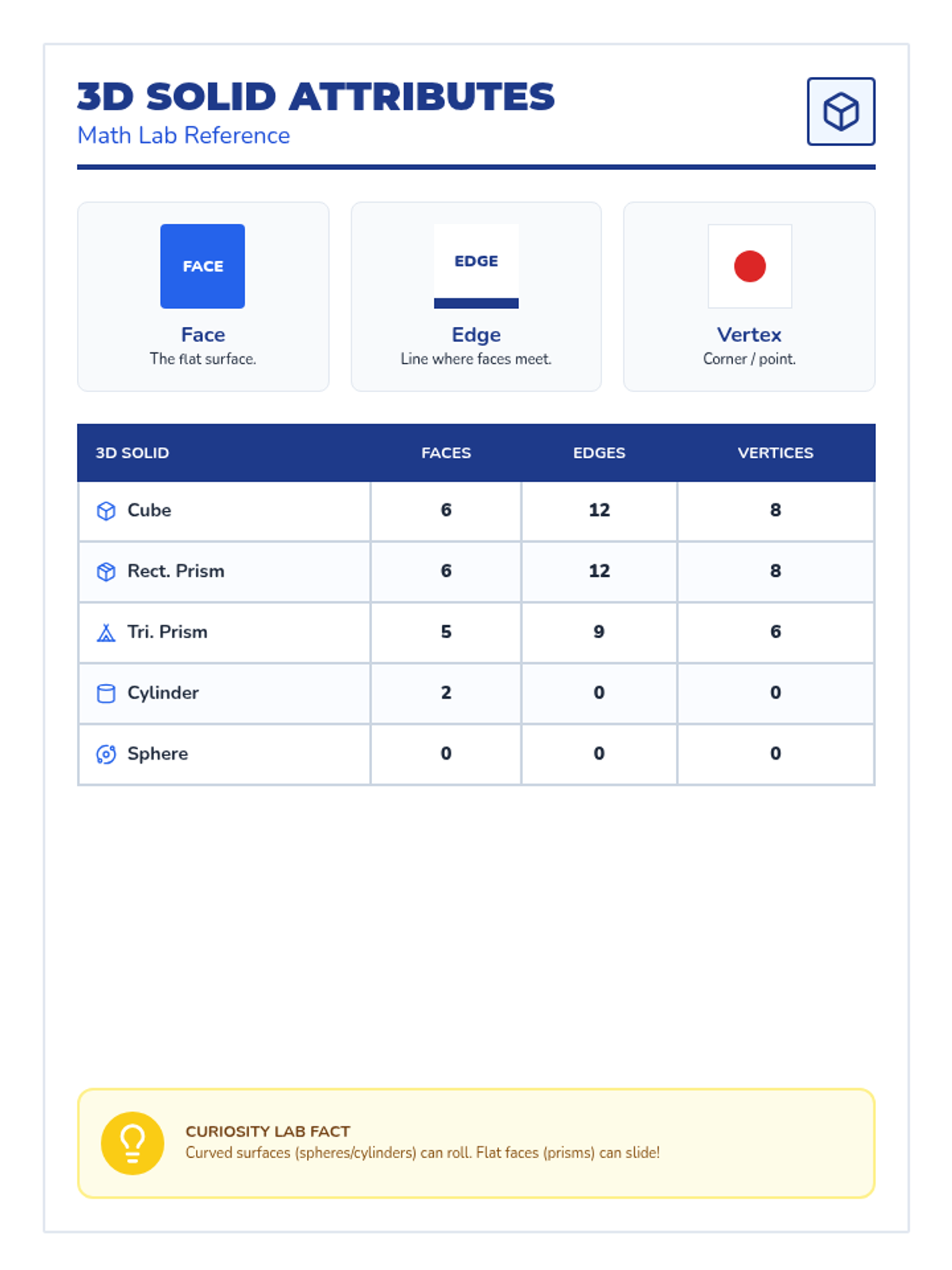
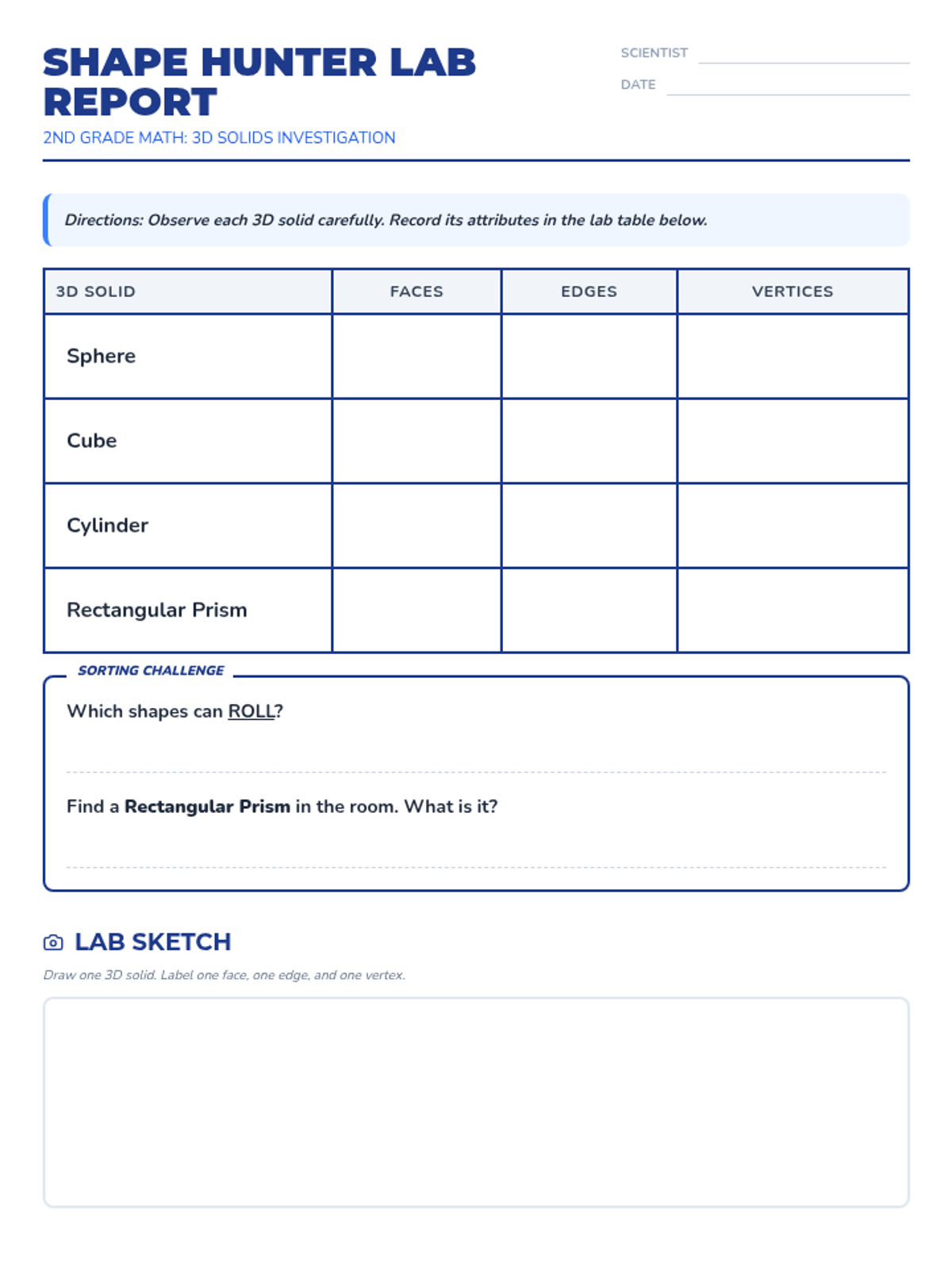
Students identify, classify, and sort three-dimensional solids using formal geometric language like faces, edges, and vertices.
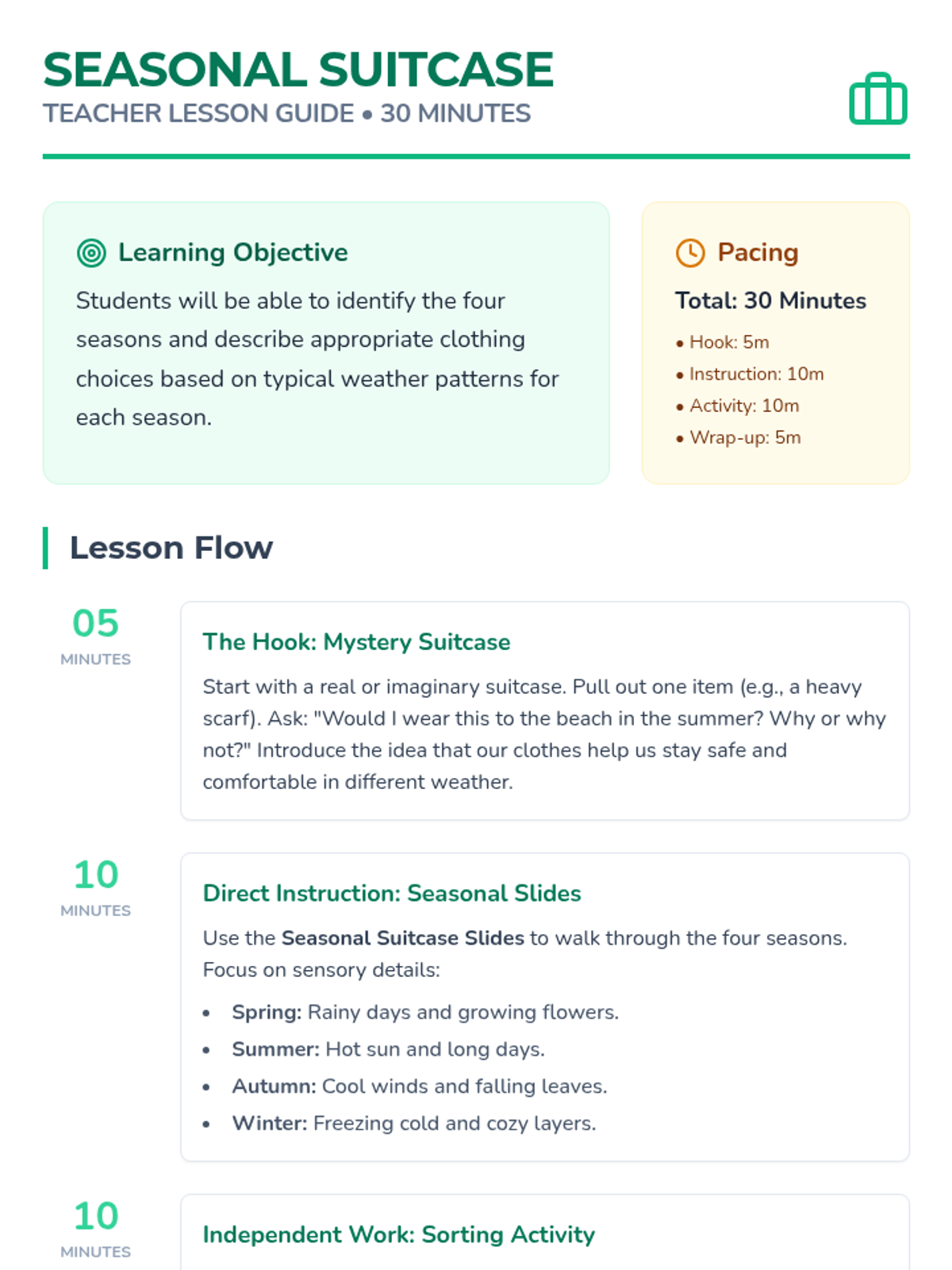
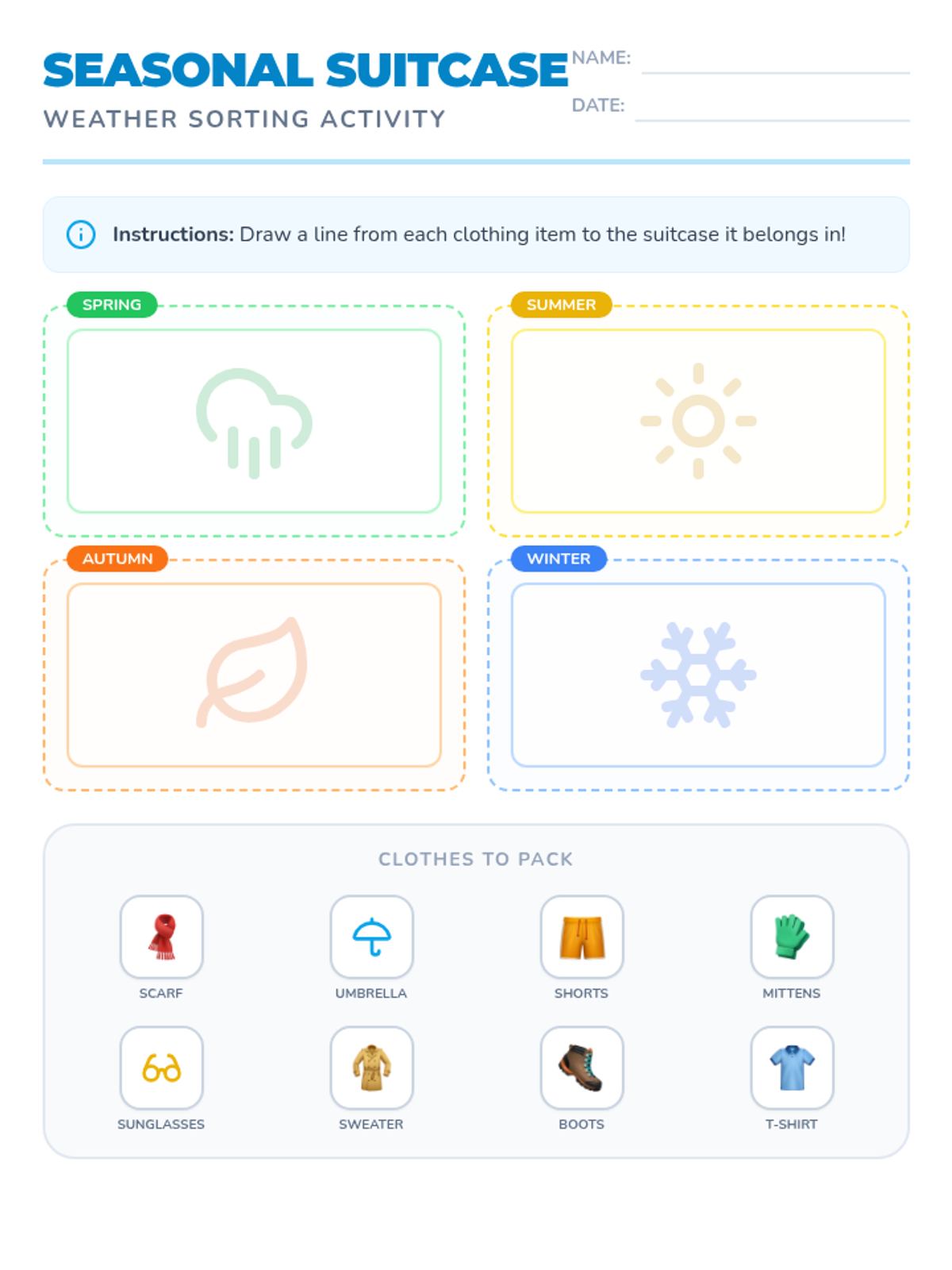
A 30-minute introduction to the four seasons and how we dress for different types of weather. Students will learn to identify seasonal patterns and select appropriate clothing for each.
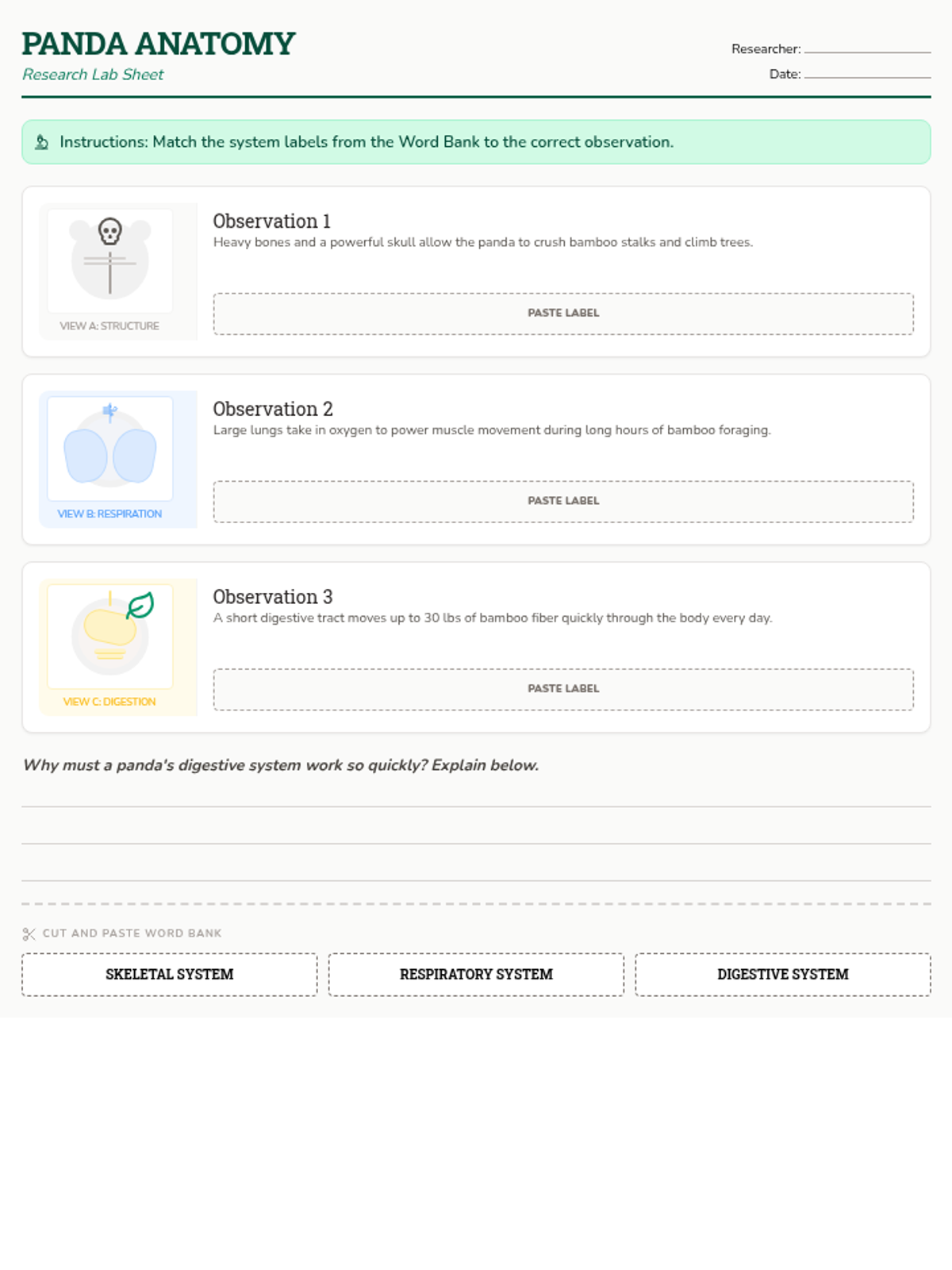
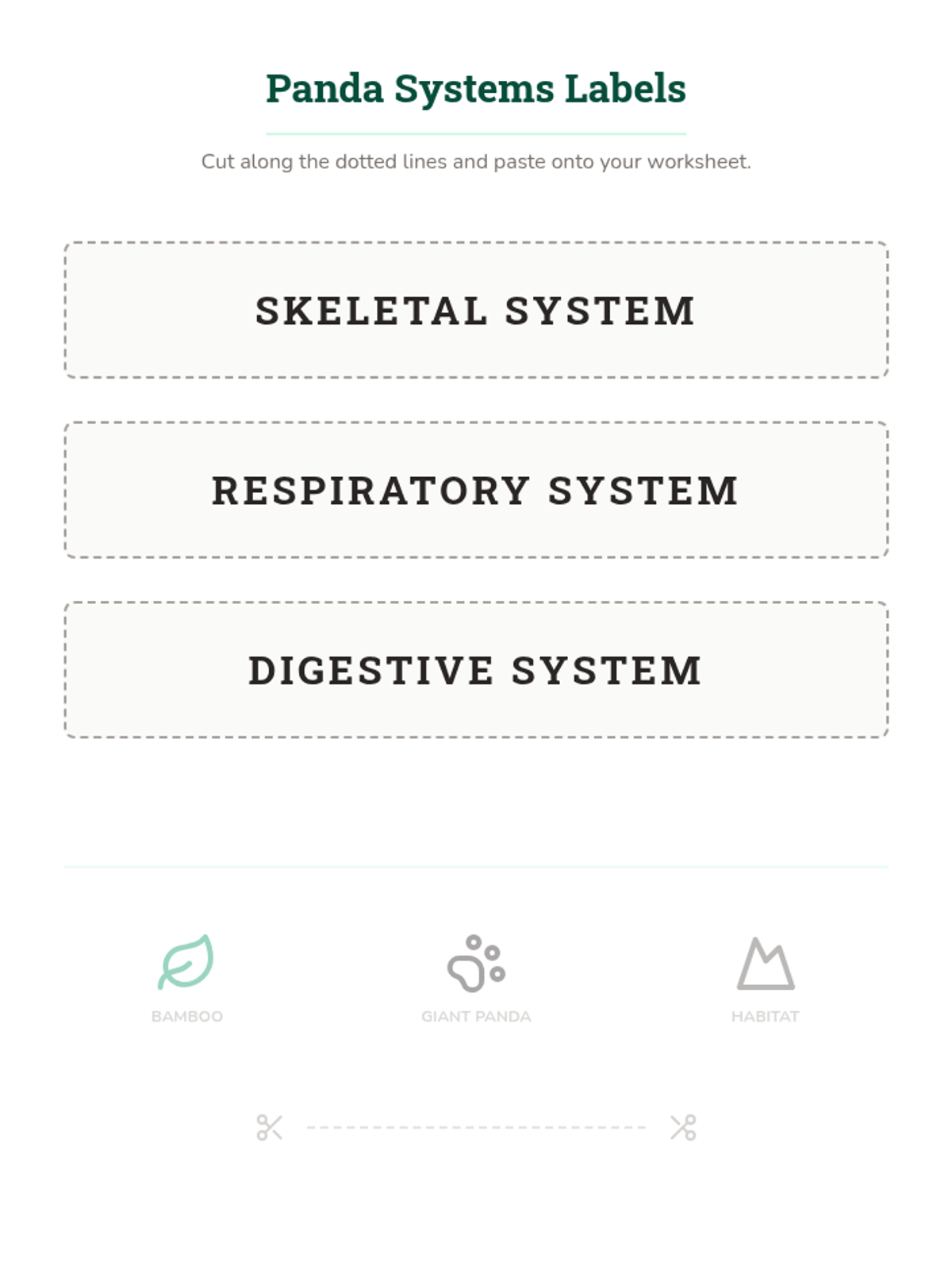
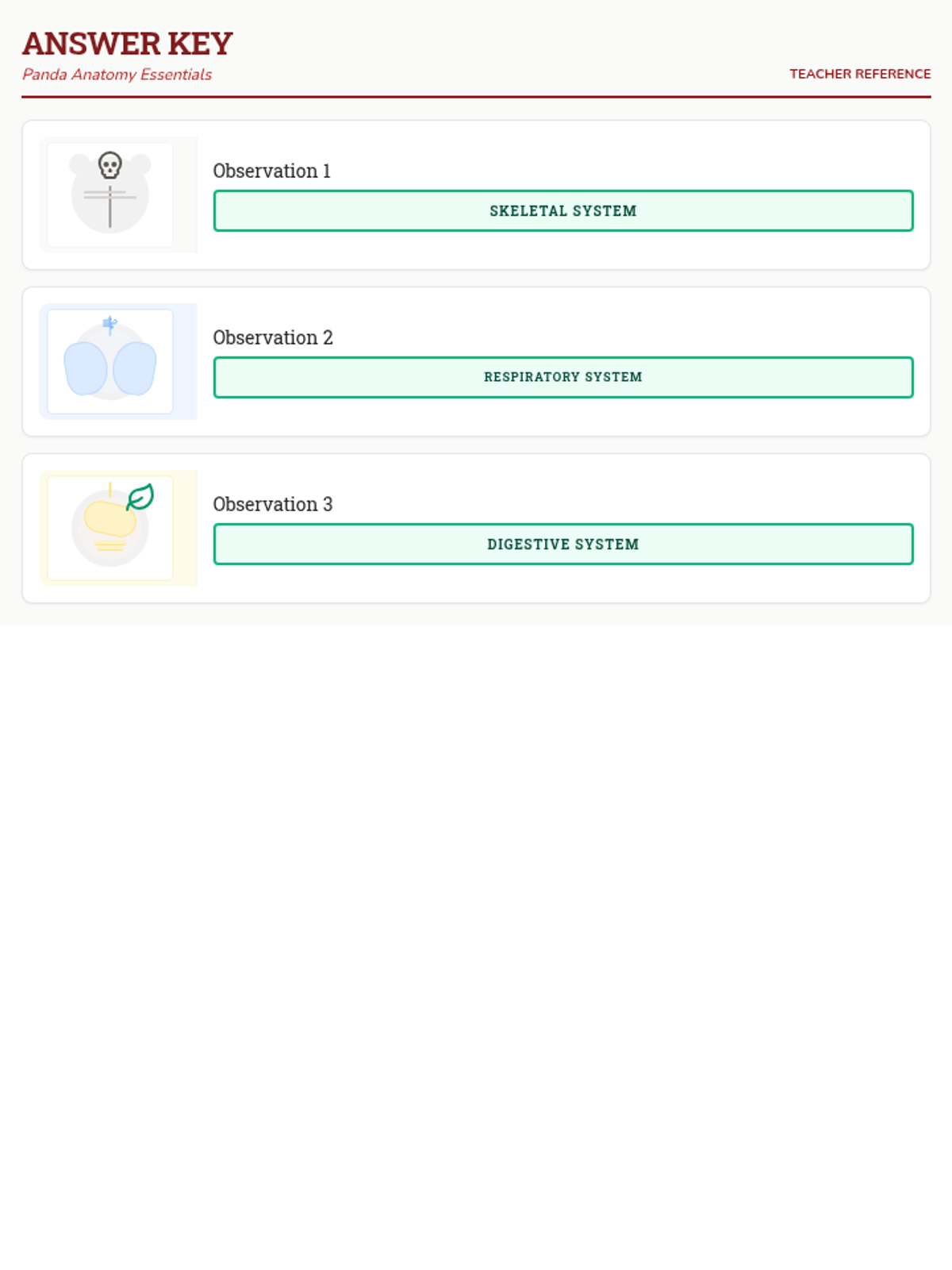
A hands-on lesson identifying the major internal systems of a Giant Panda, focusing on how their anatomy supports their unique bamboo-based diet and lifestyle.
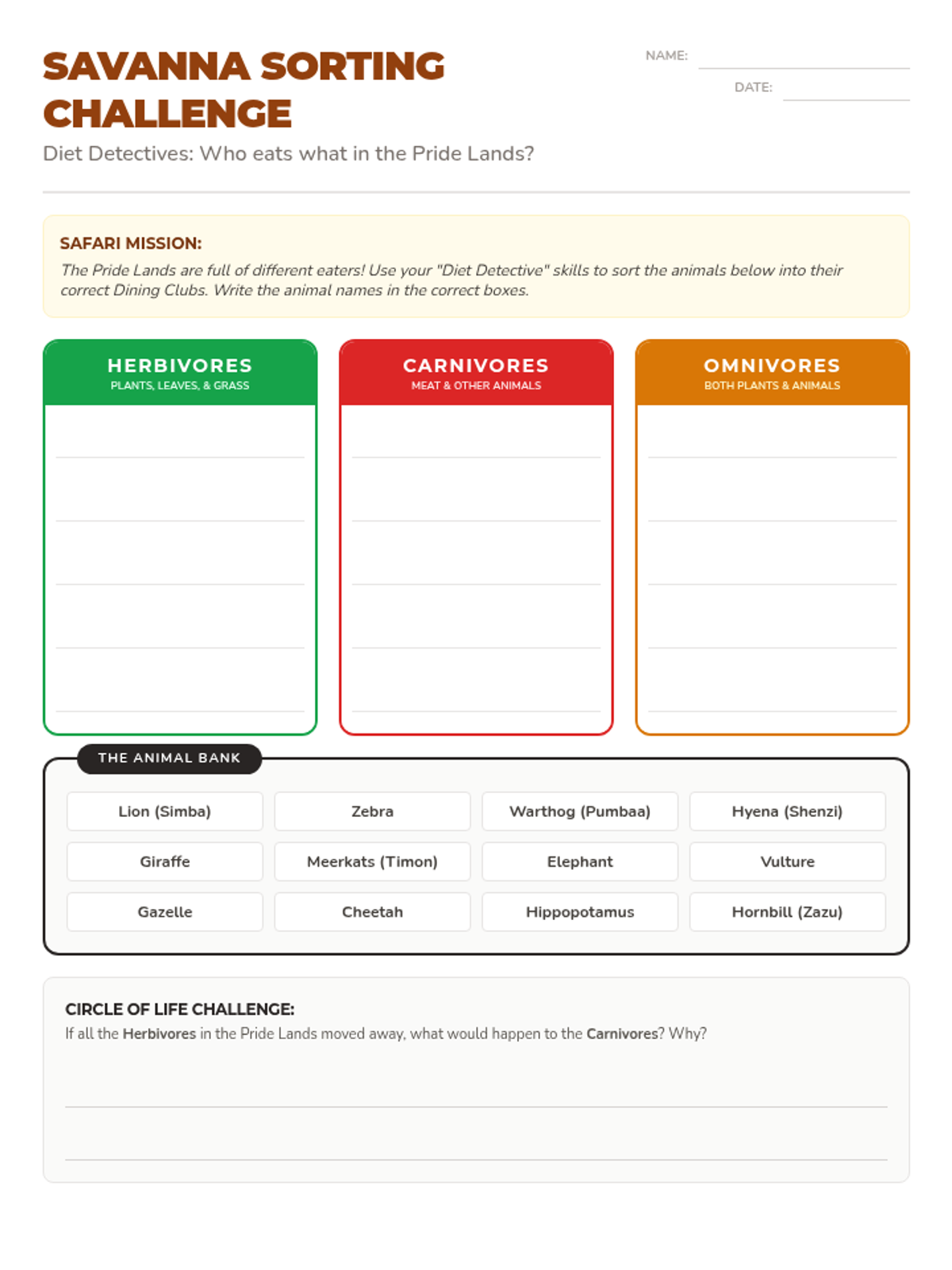
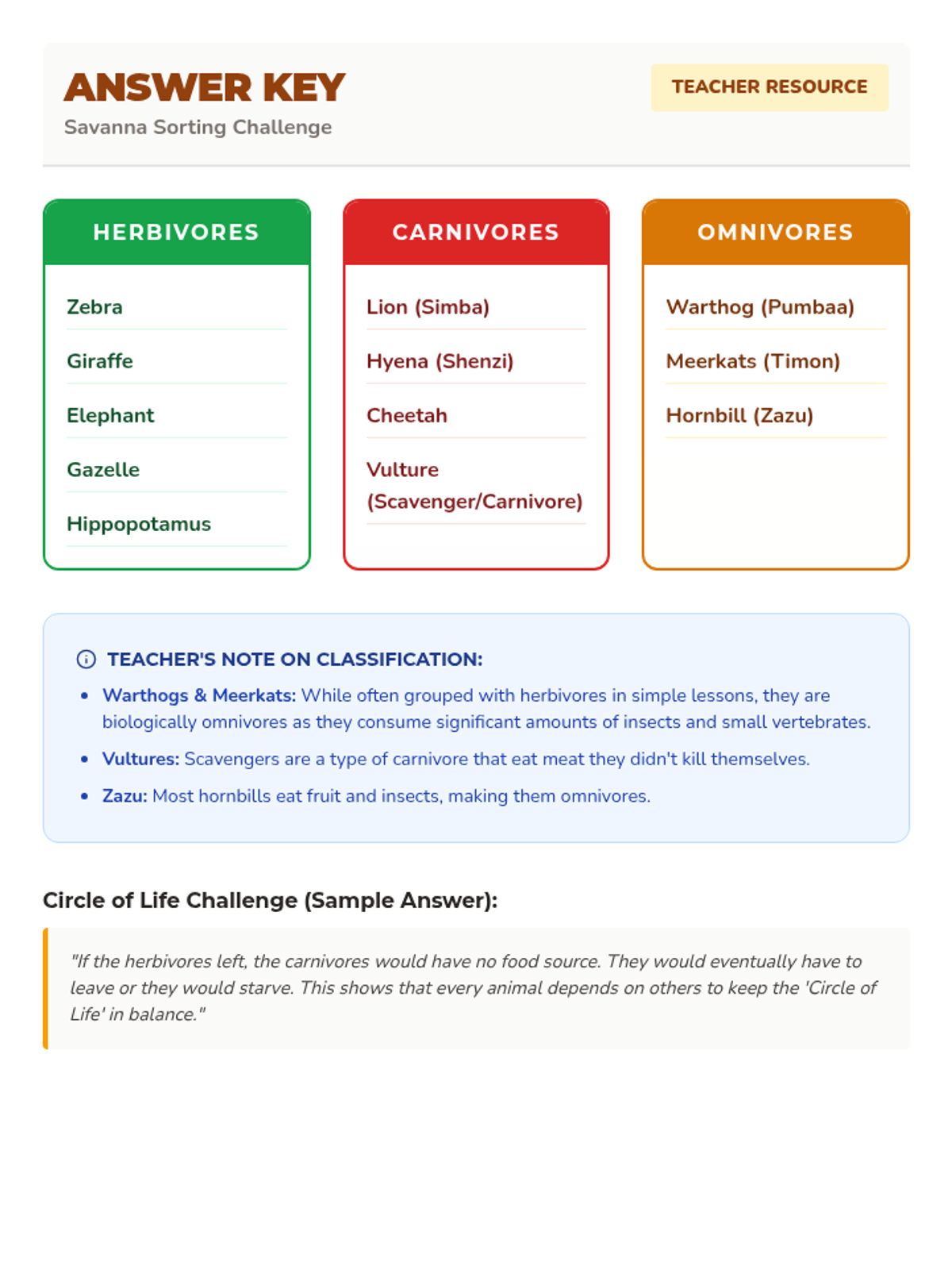
Culminating sorting activity where students categorize Lion King characters and other savanna animals by their diets, followed by a reflection on the 'Circle of Life'.
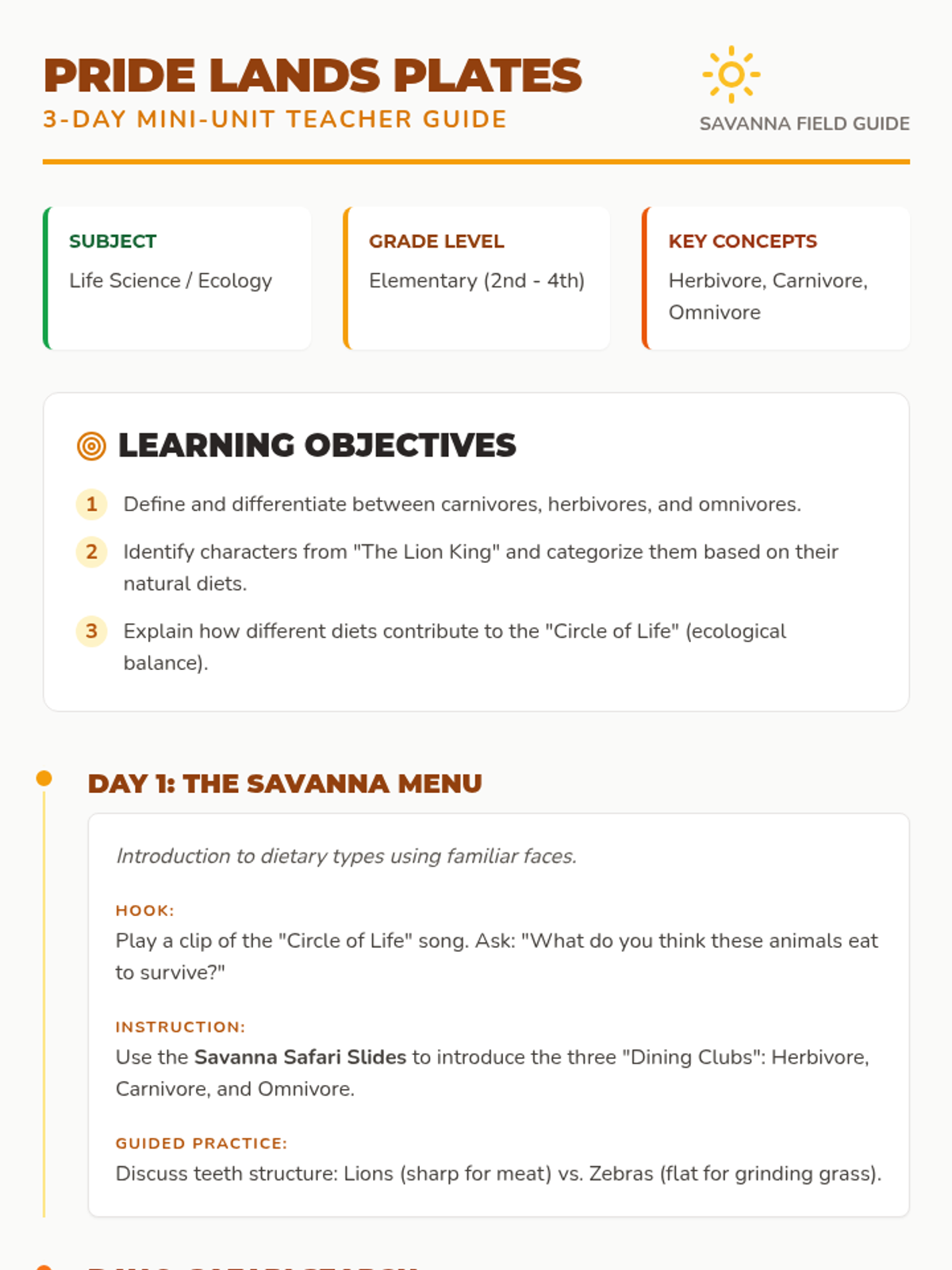
Students analyze the ecosystem of the Pride Lands, identifying various animals from the film and researching or discussing their real-world dietary habits.
Introduction to herbivores, carnivores, and omnivores using Pride Lands characters as examples. students learn to identify dietary traits and basic dental structures associated with each group.