Explore the folklore and origins of the Easter Bunny, and how it became a symbol of the holiday. This lesson encourages students to research and understand cultural myths and their evolution.
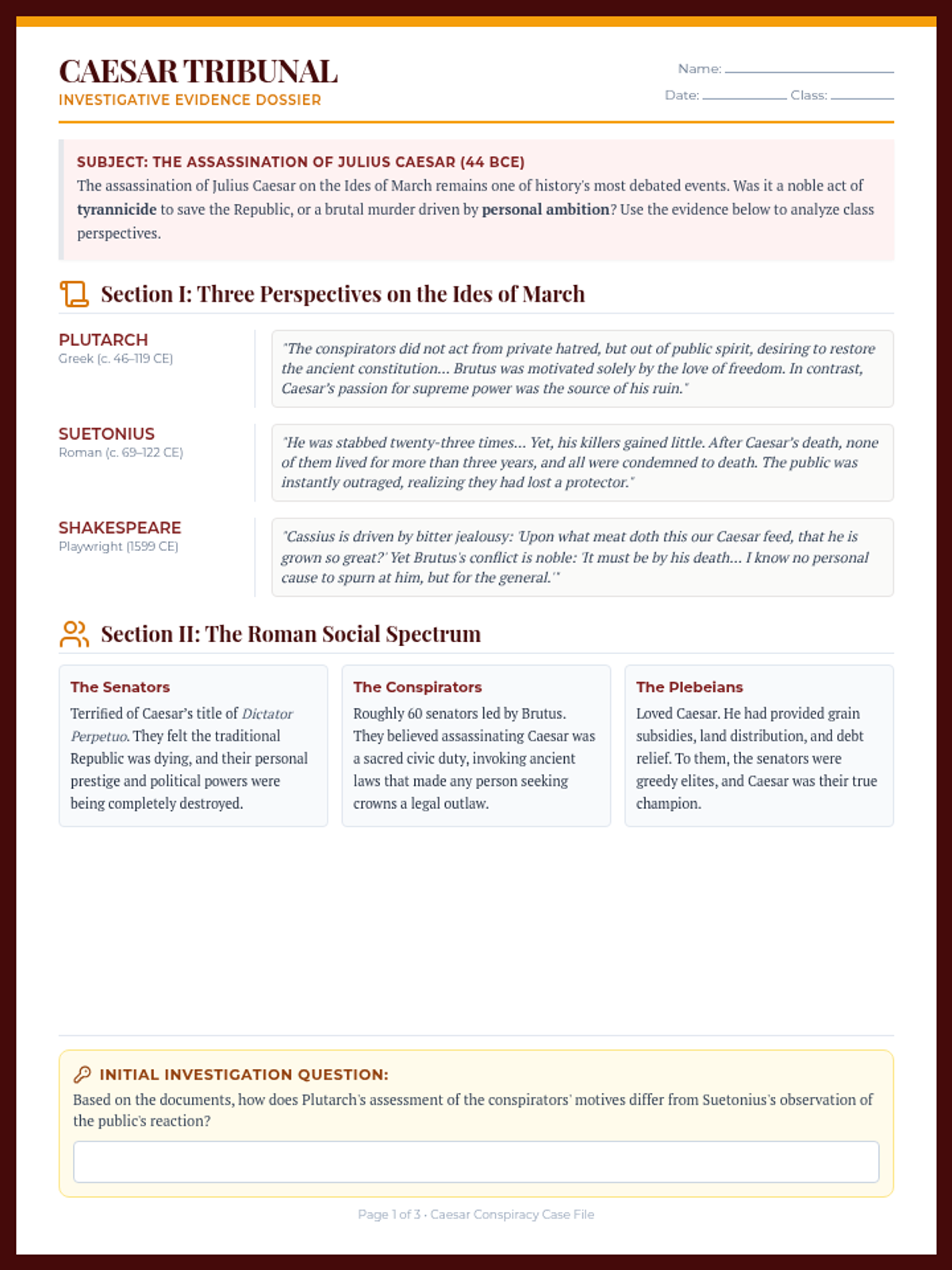
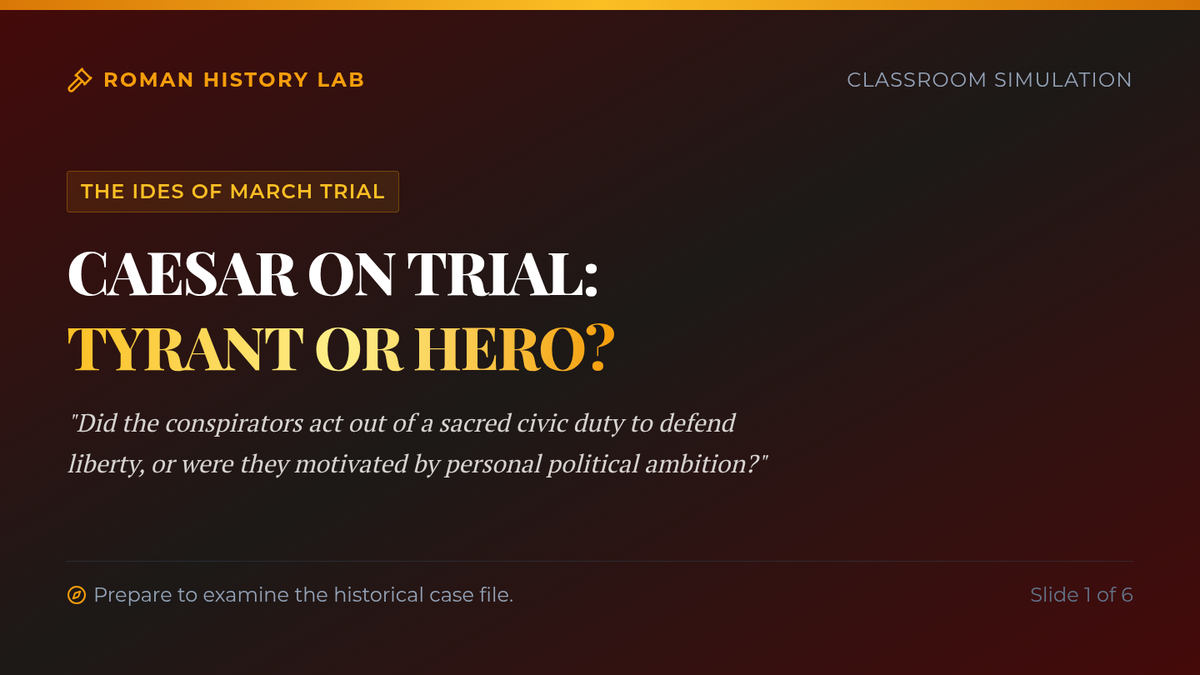
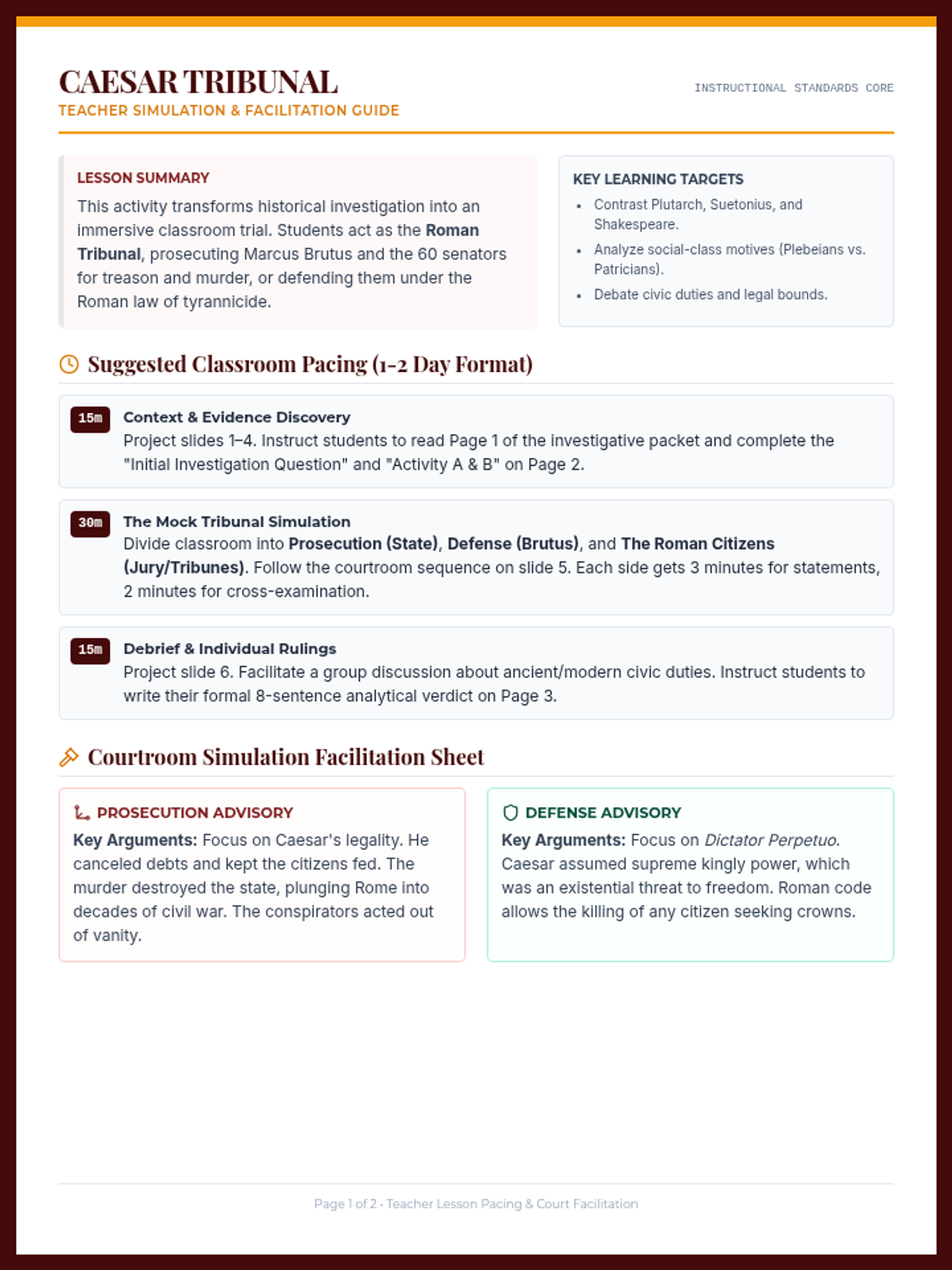
A comprehensive classroom simulation and analysis lesson about the assassination of Julius Caesar. Students examine historical perspectives, engage with primary sources, and debate civic duty through a mock trial and a three-page investigative document.
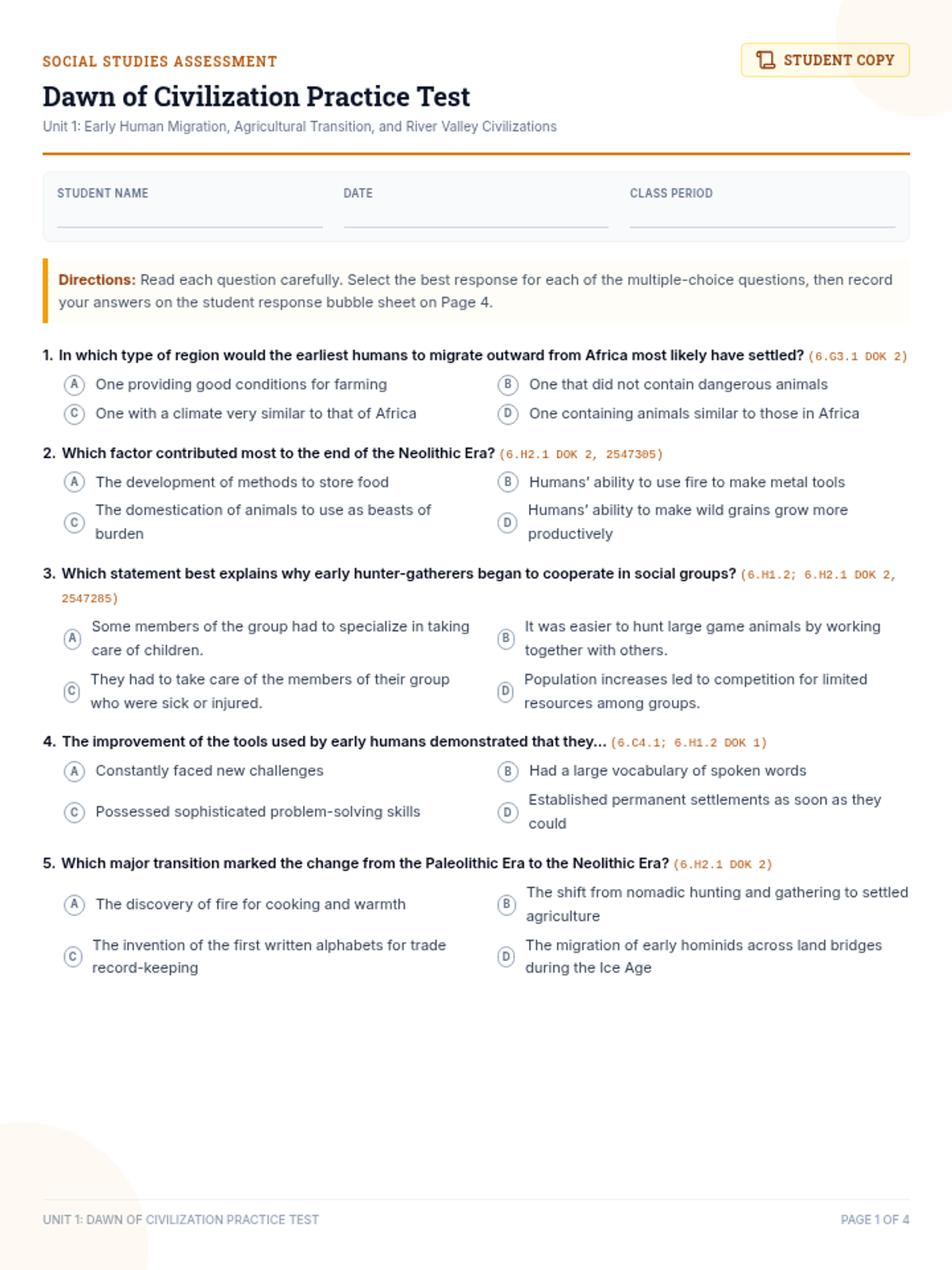
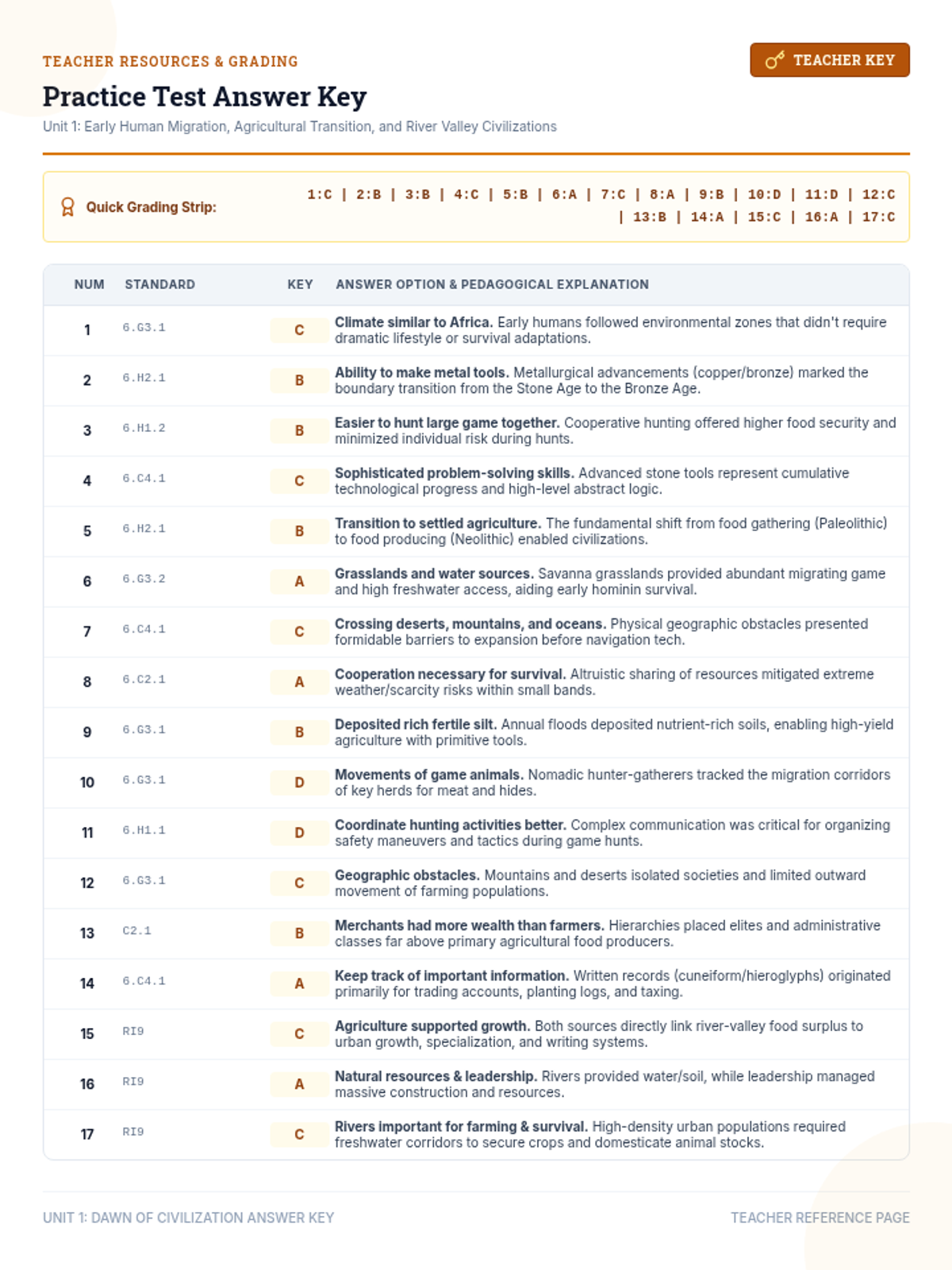
An exploration of early human migration, the transition from hunter-gatherers to agrarian societies, and the rise of the first river valley civilizations in Mesopotamia and ancient Egypt.
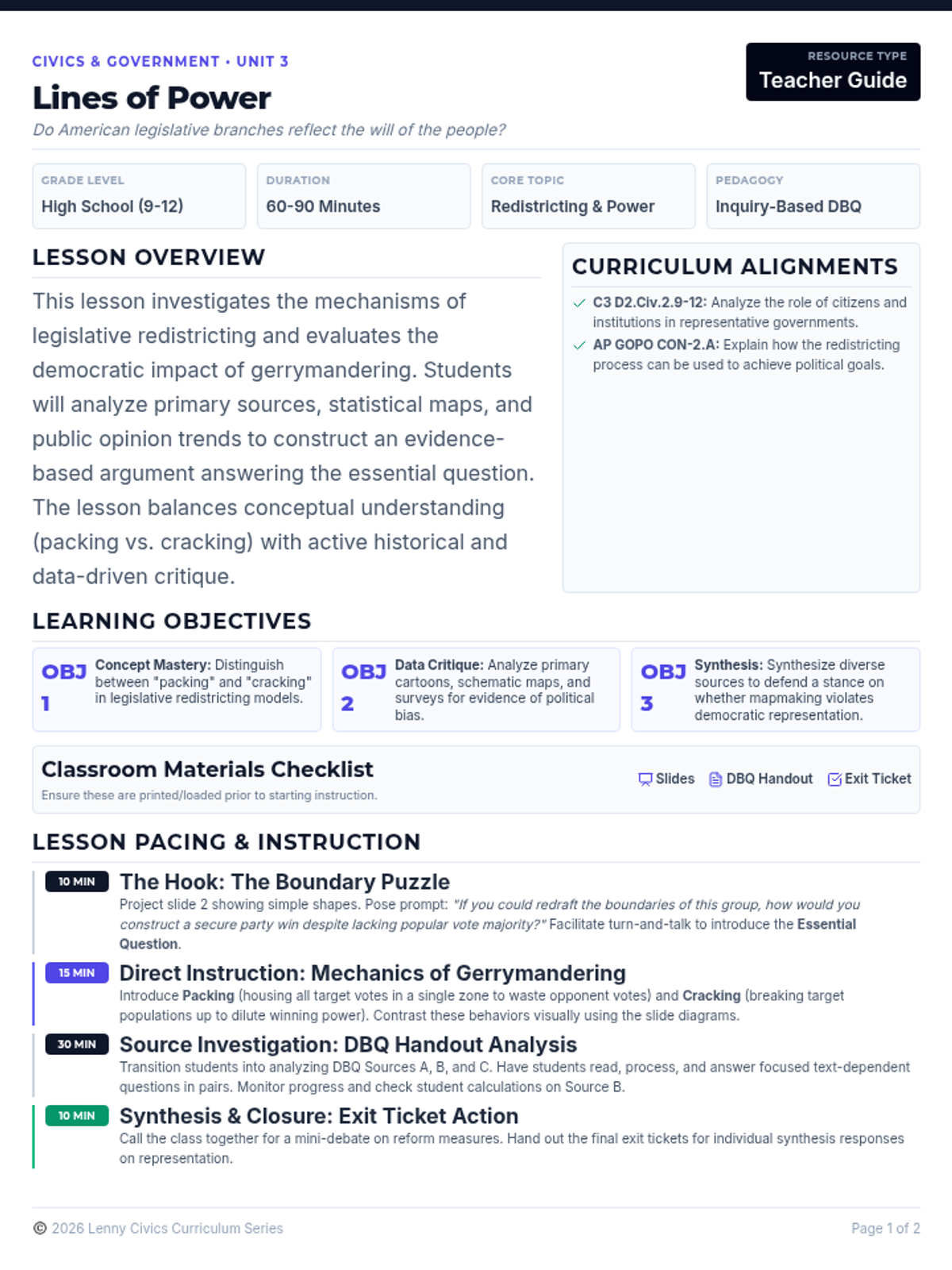
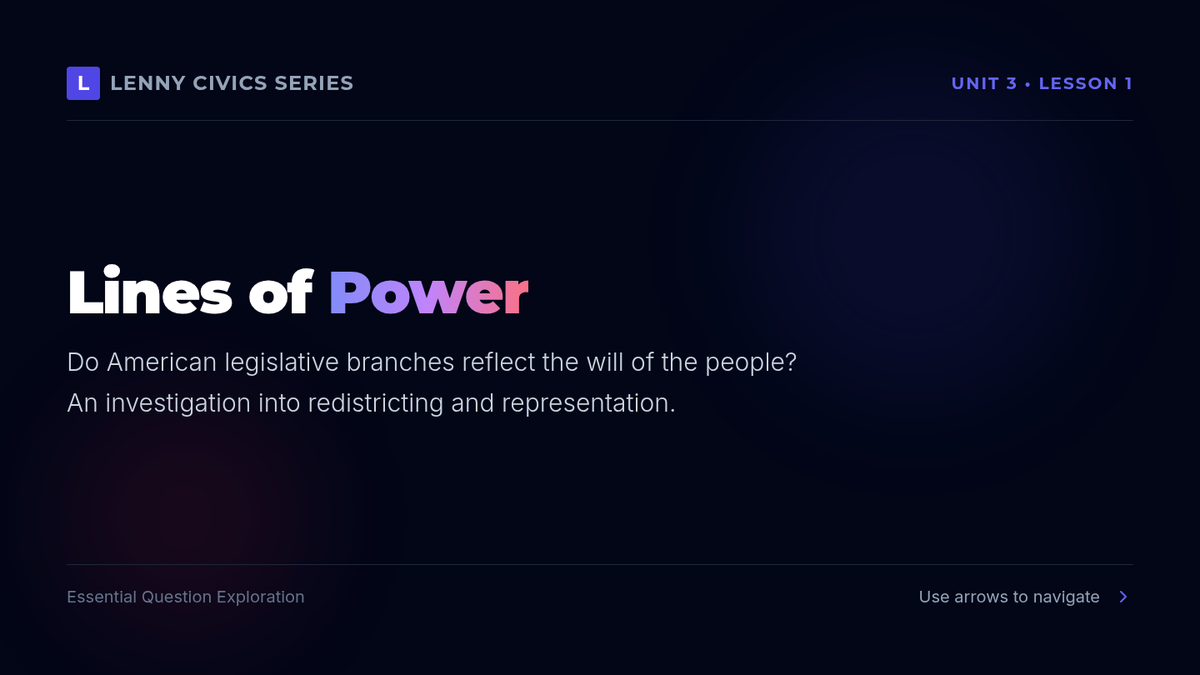
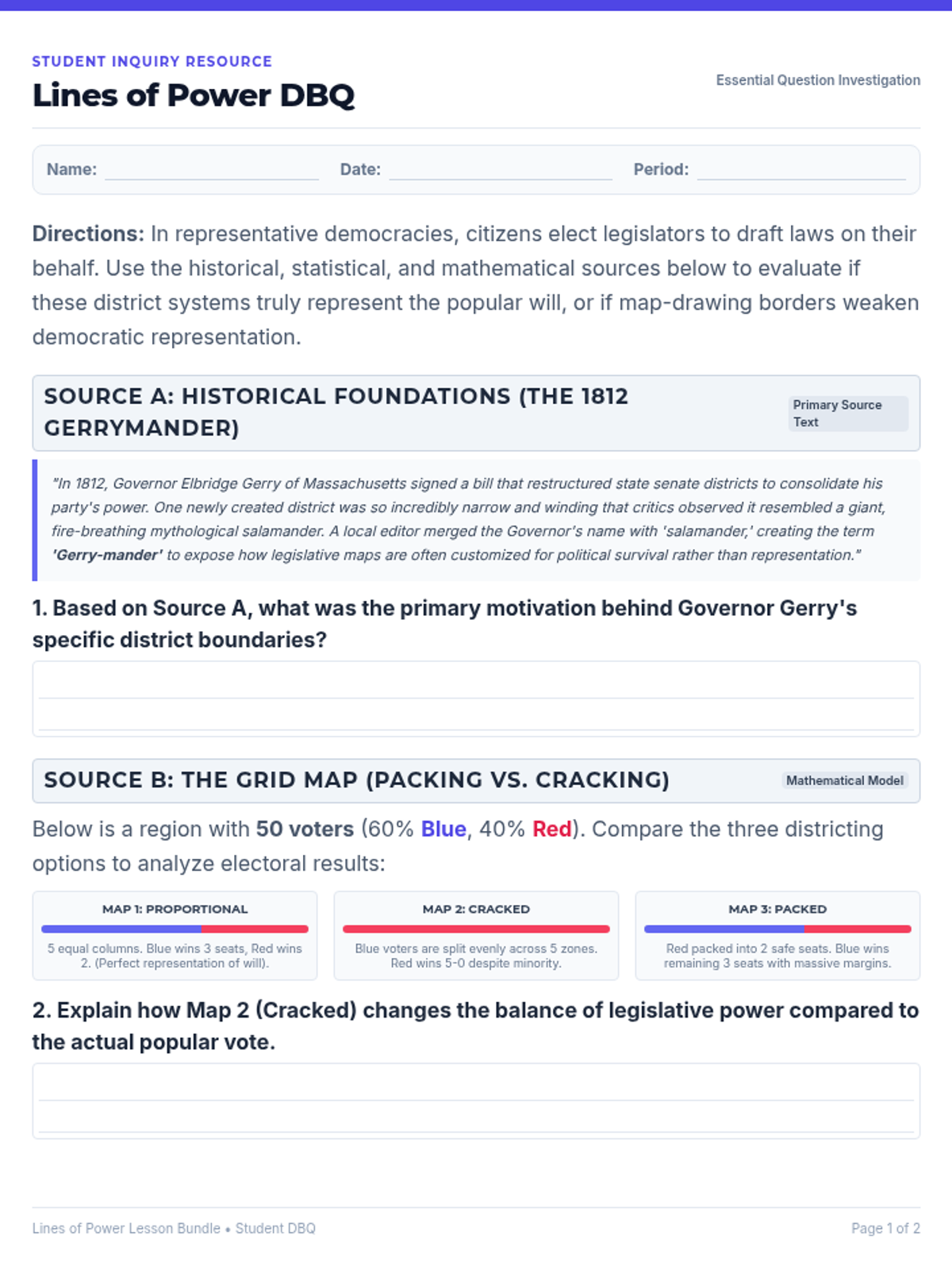
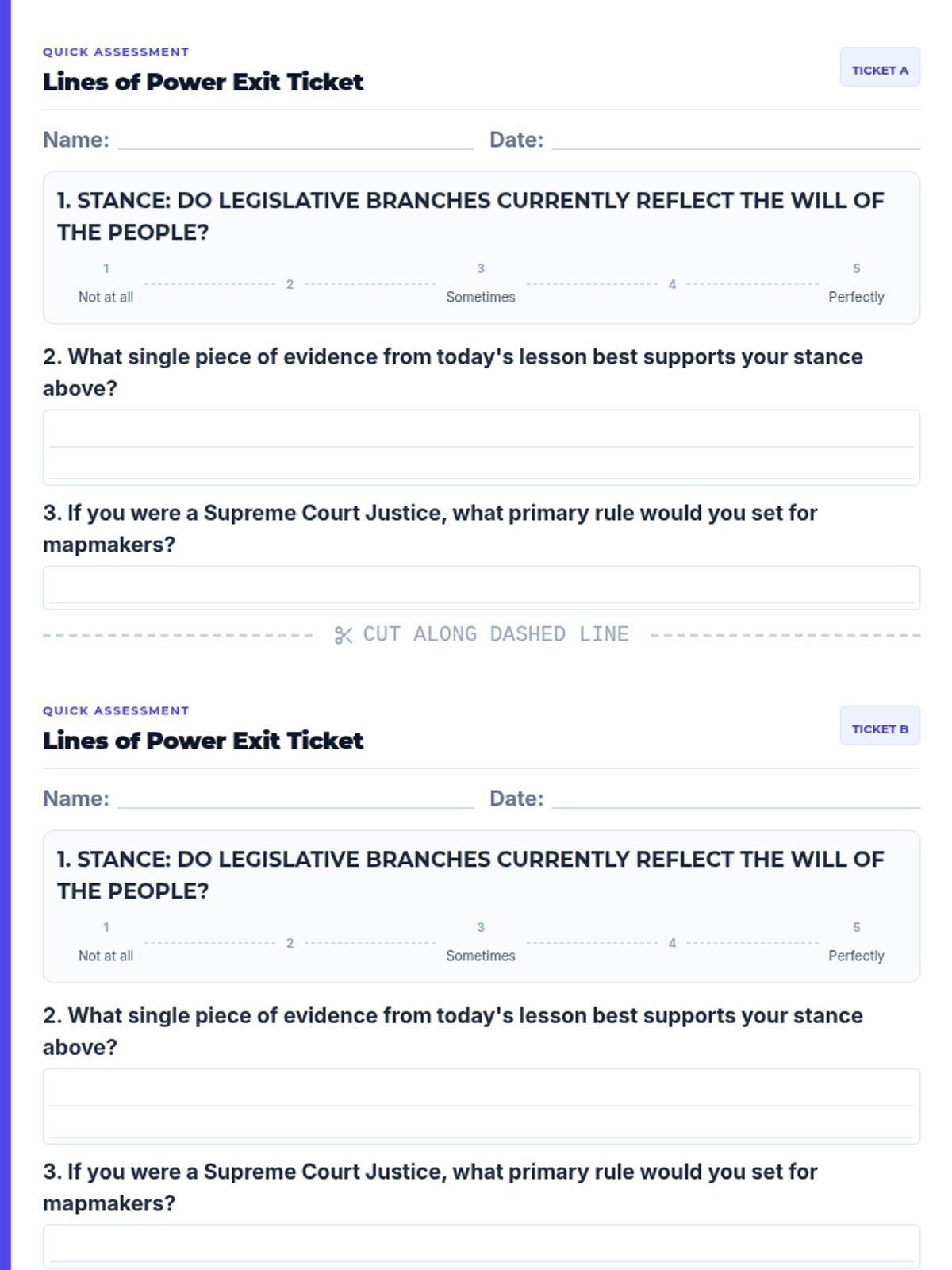
A comprehensive lesson investigating redistricting, packing, and cracking to evaluate if legislative branches truly represent the will of the people. Includes a slide deck, a structured DBQ worksheet, a professional teacher guide, and an interactive exit ticket.
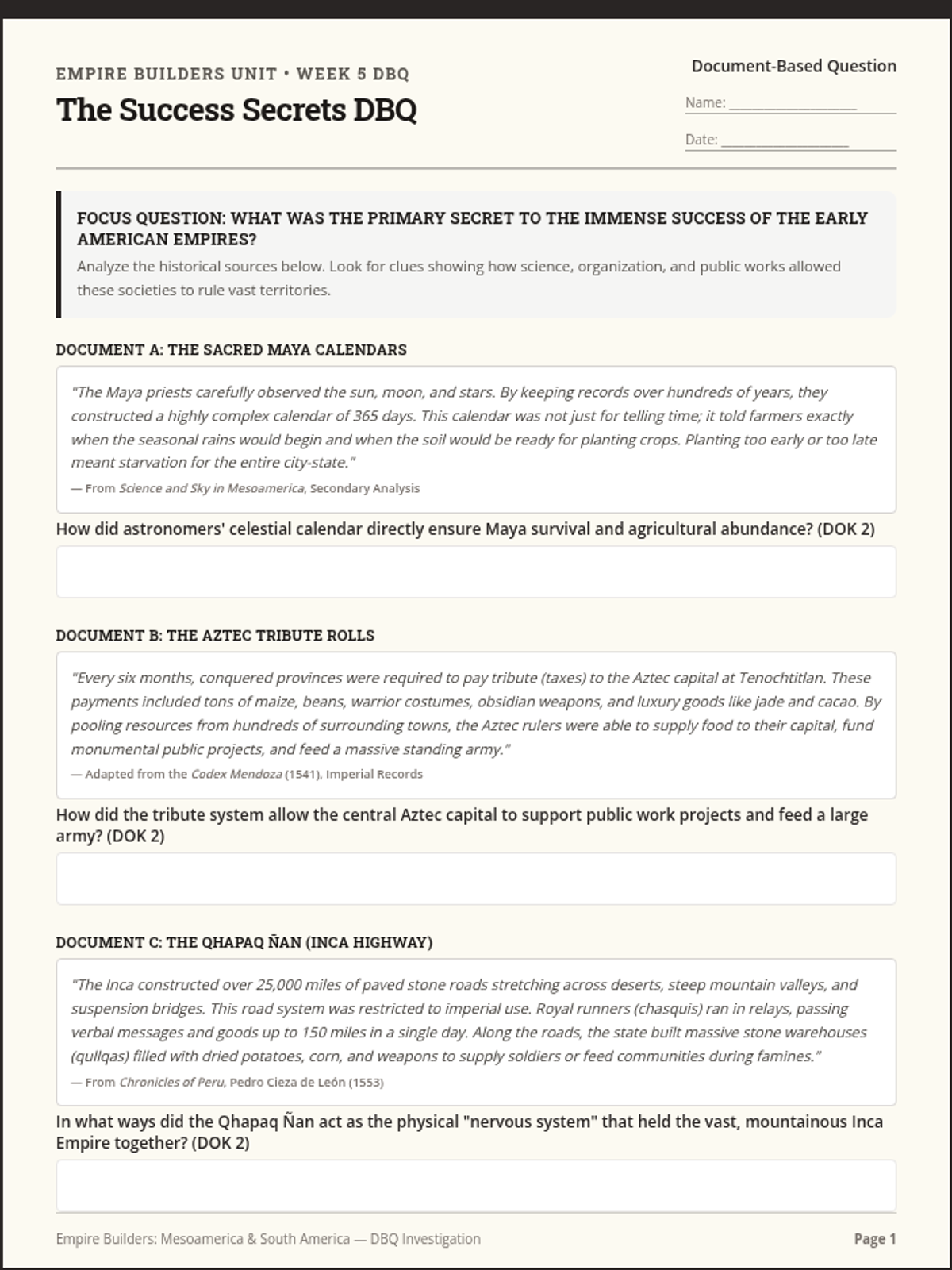
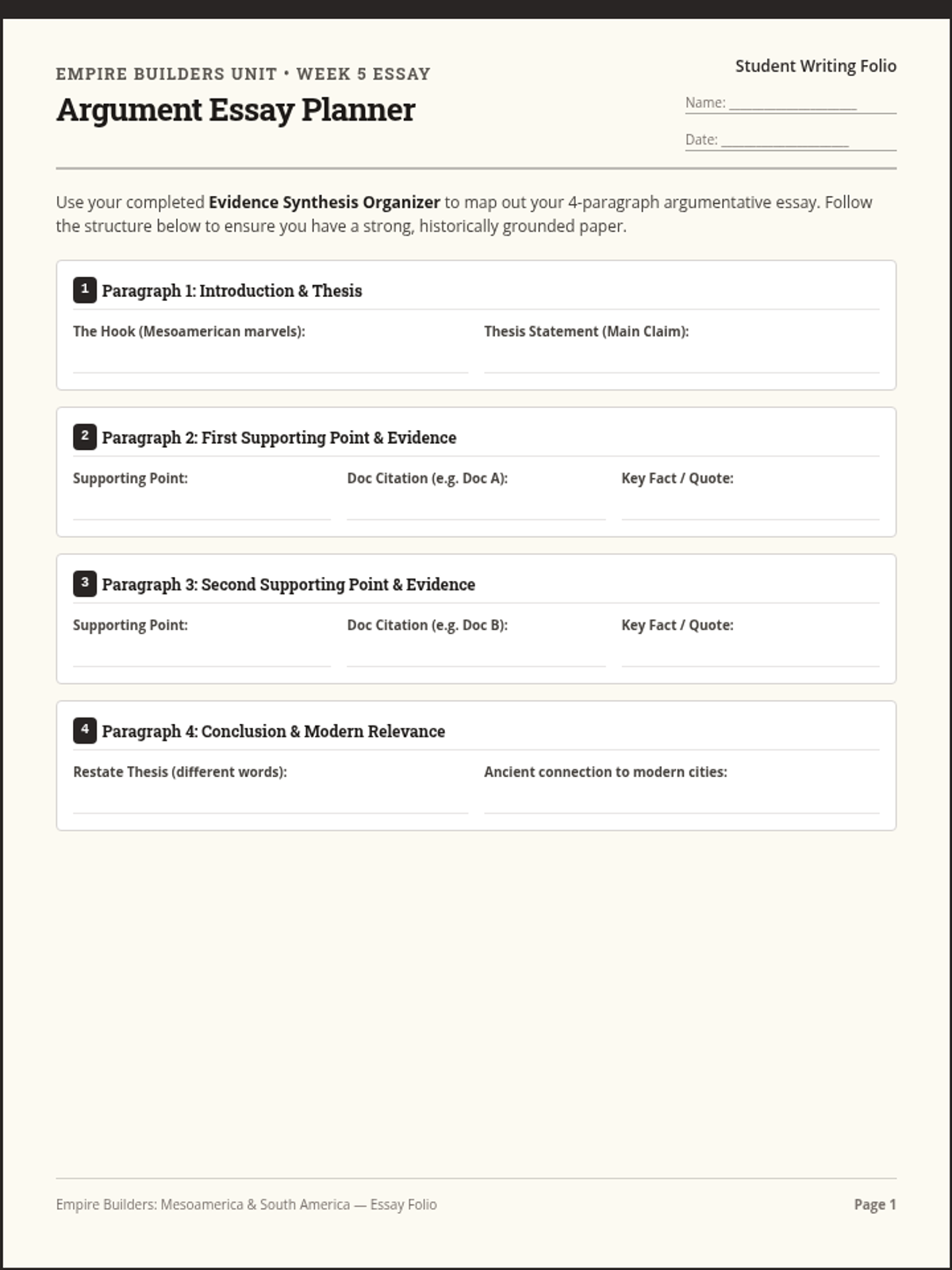
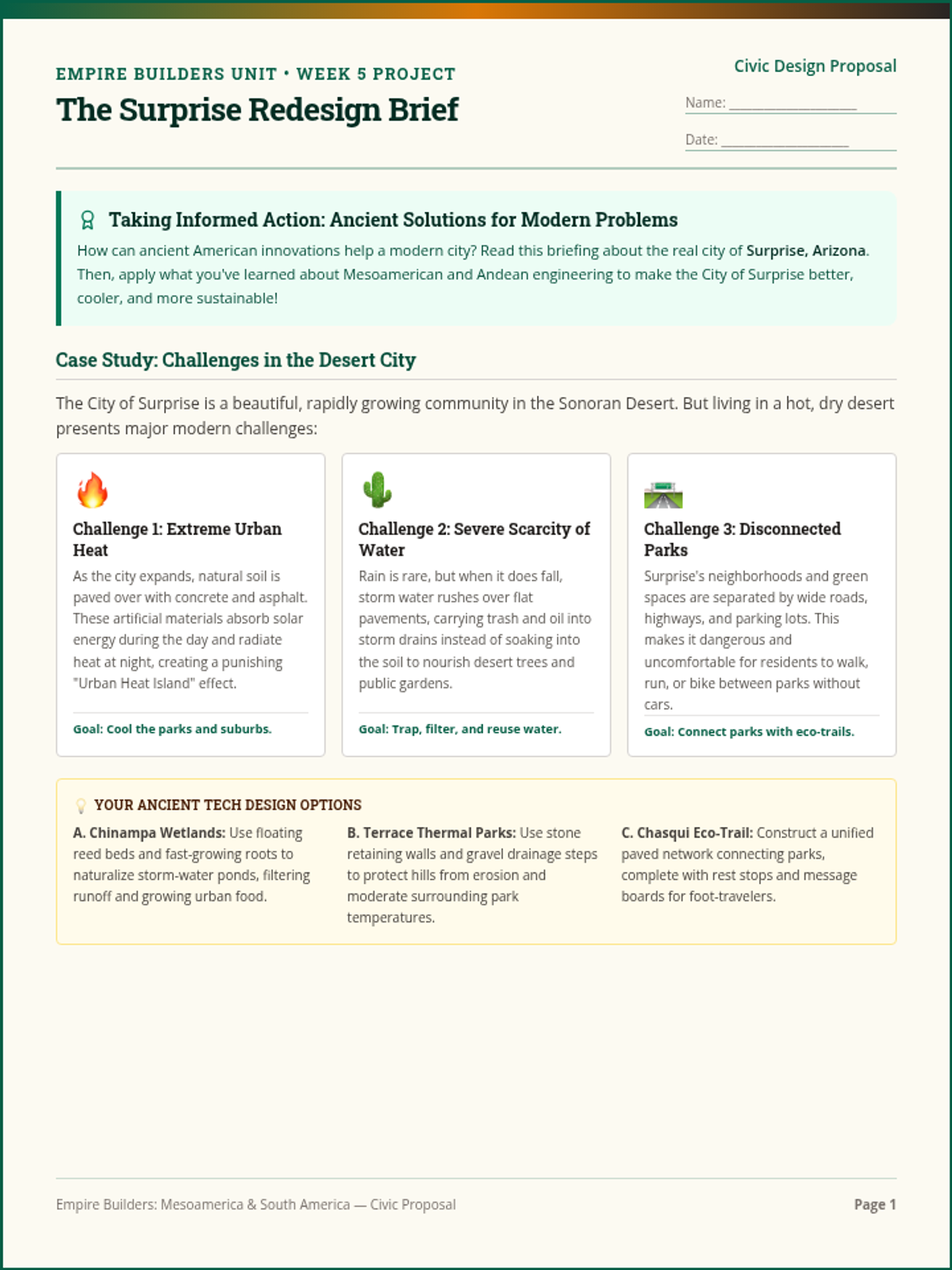
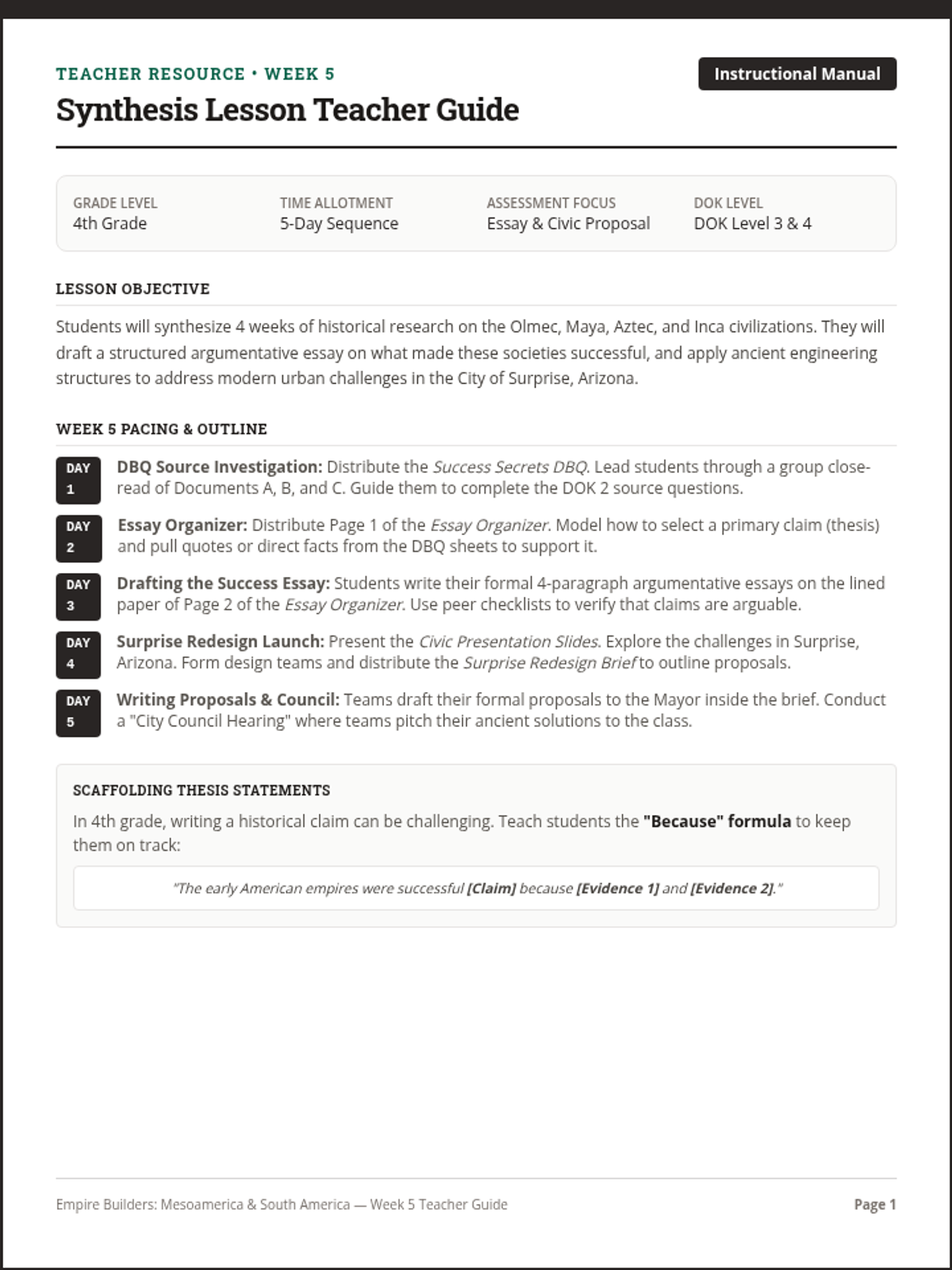
Students synthesize their knowledge across all four civilizations, completing a DBQ, writing an argumentative essay on success, and formulating a civic project for Surprise, AZ.
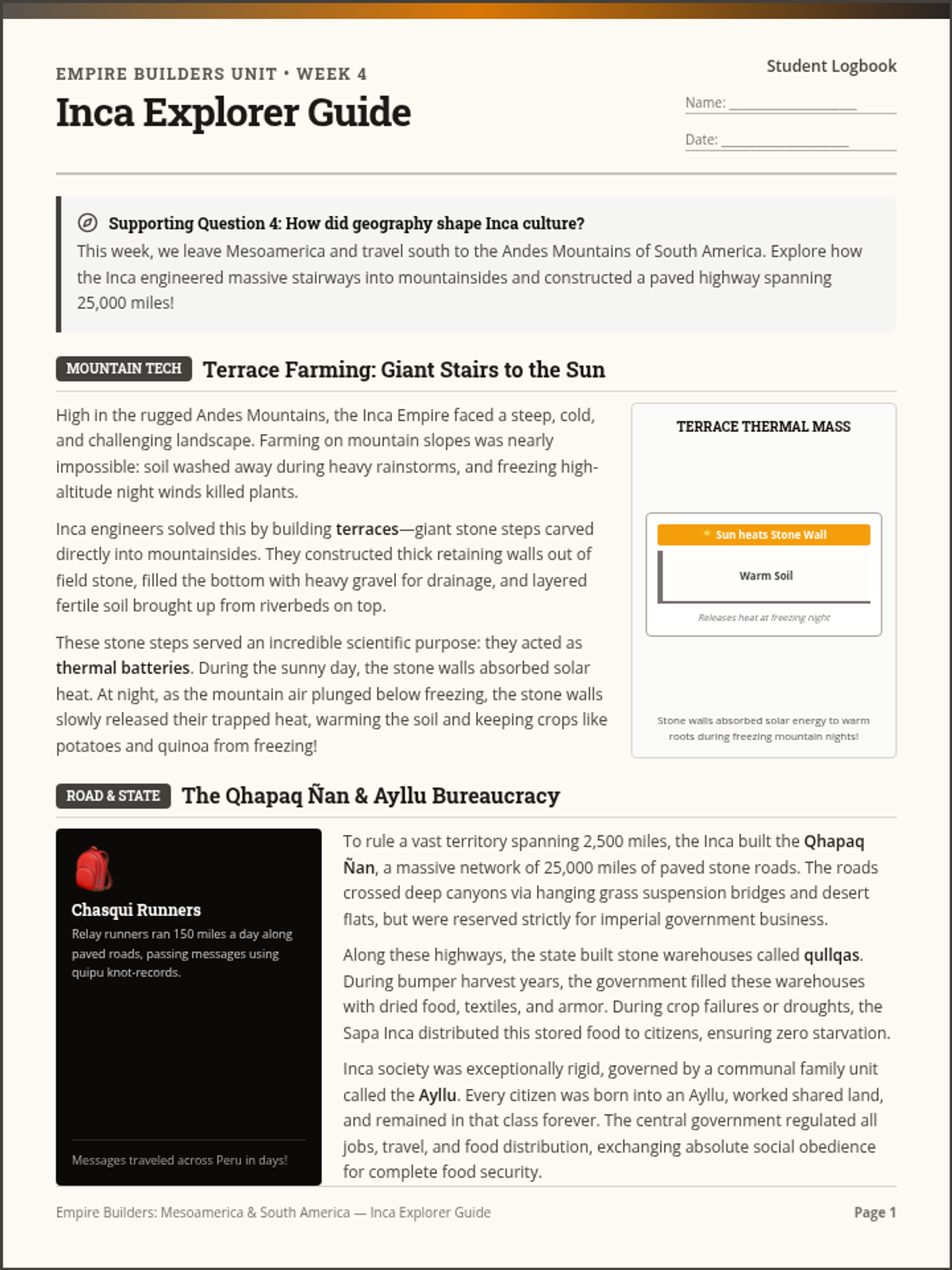
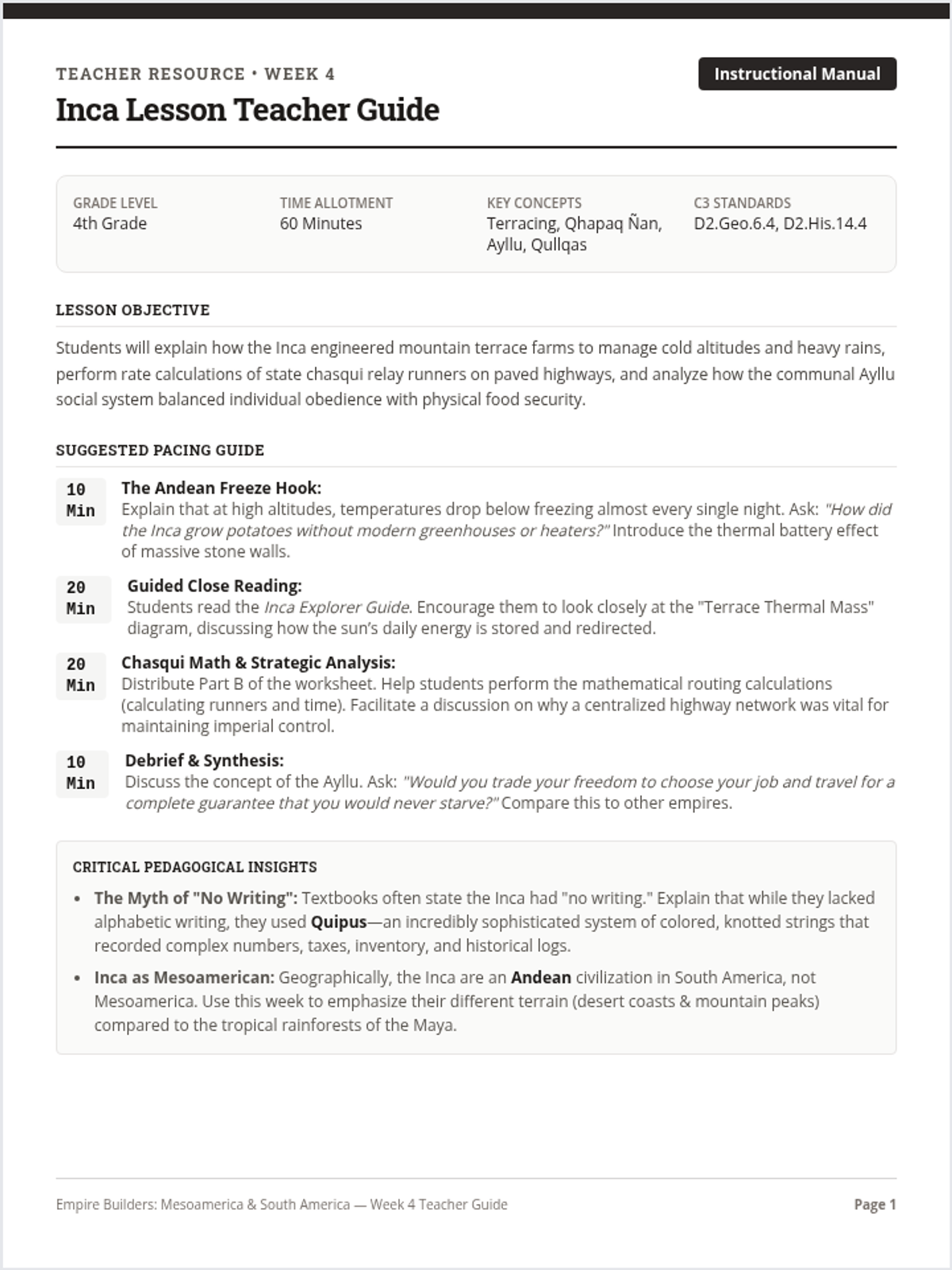
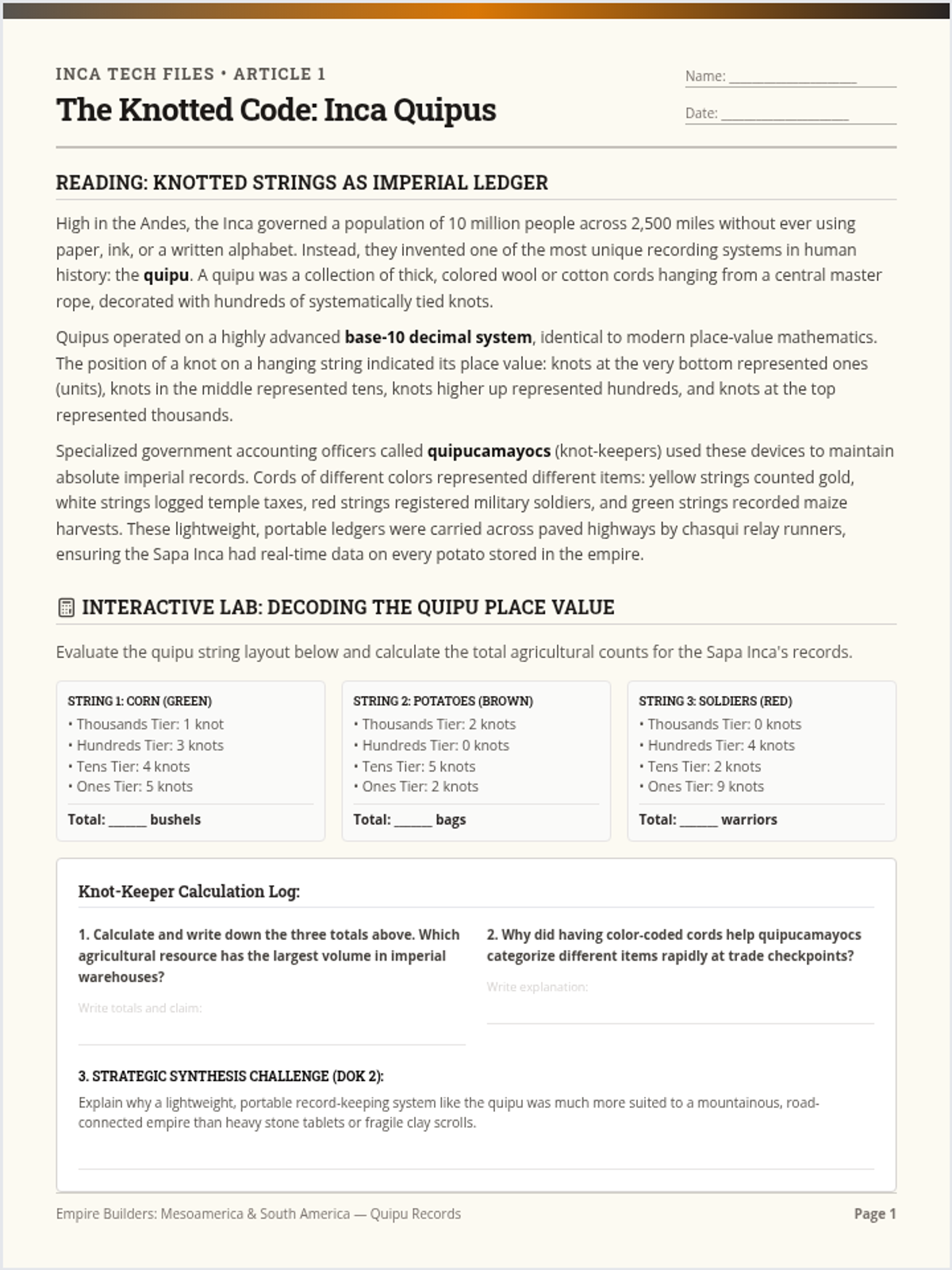
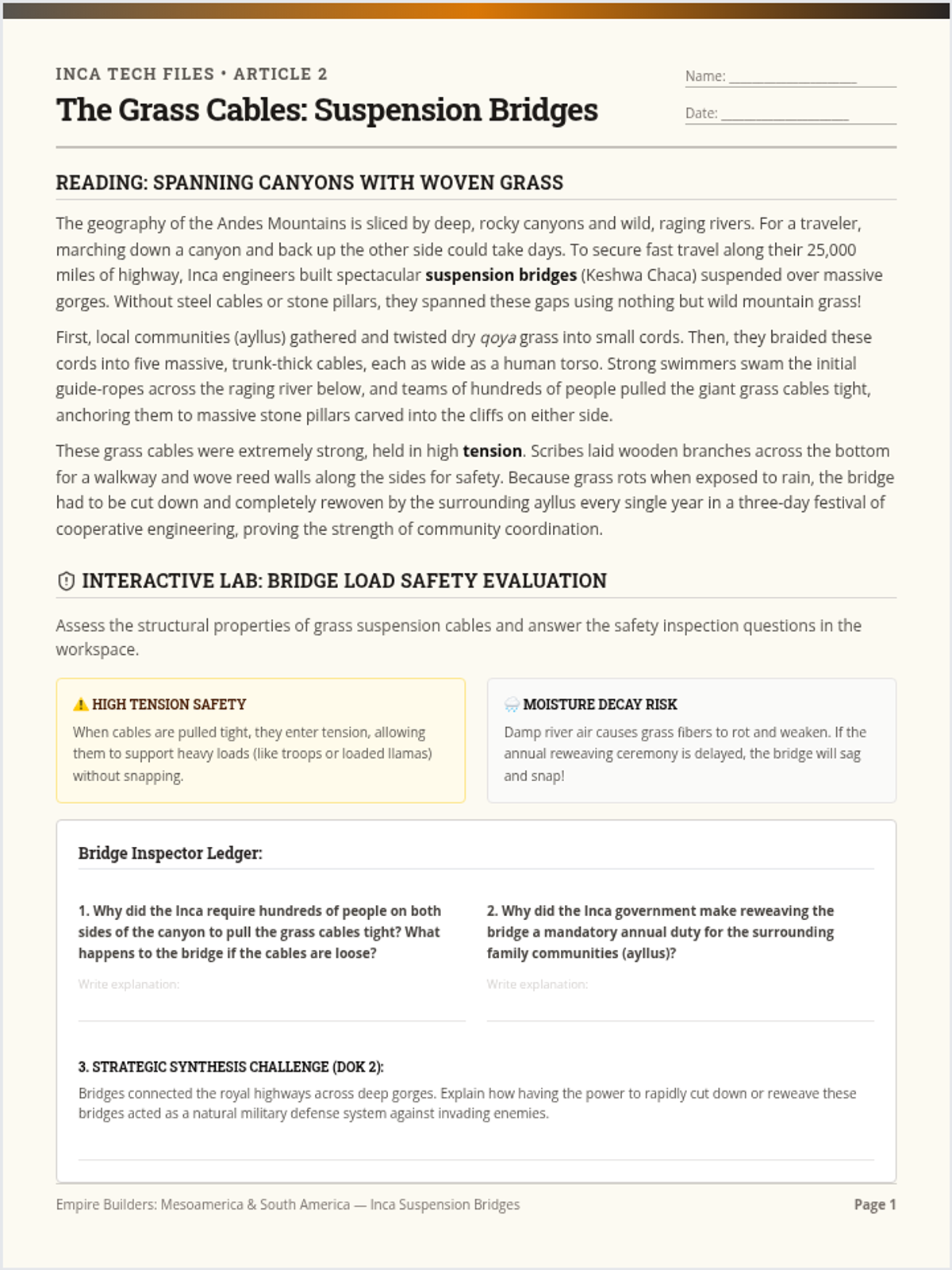
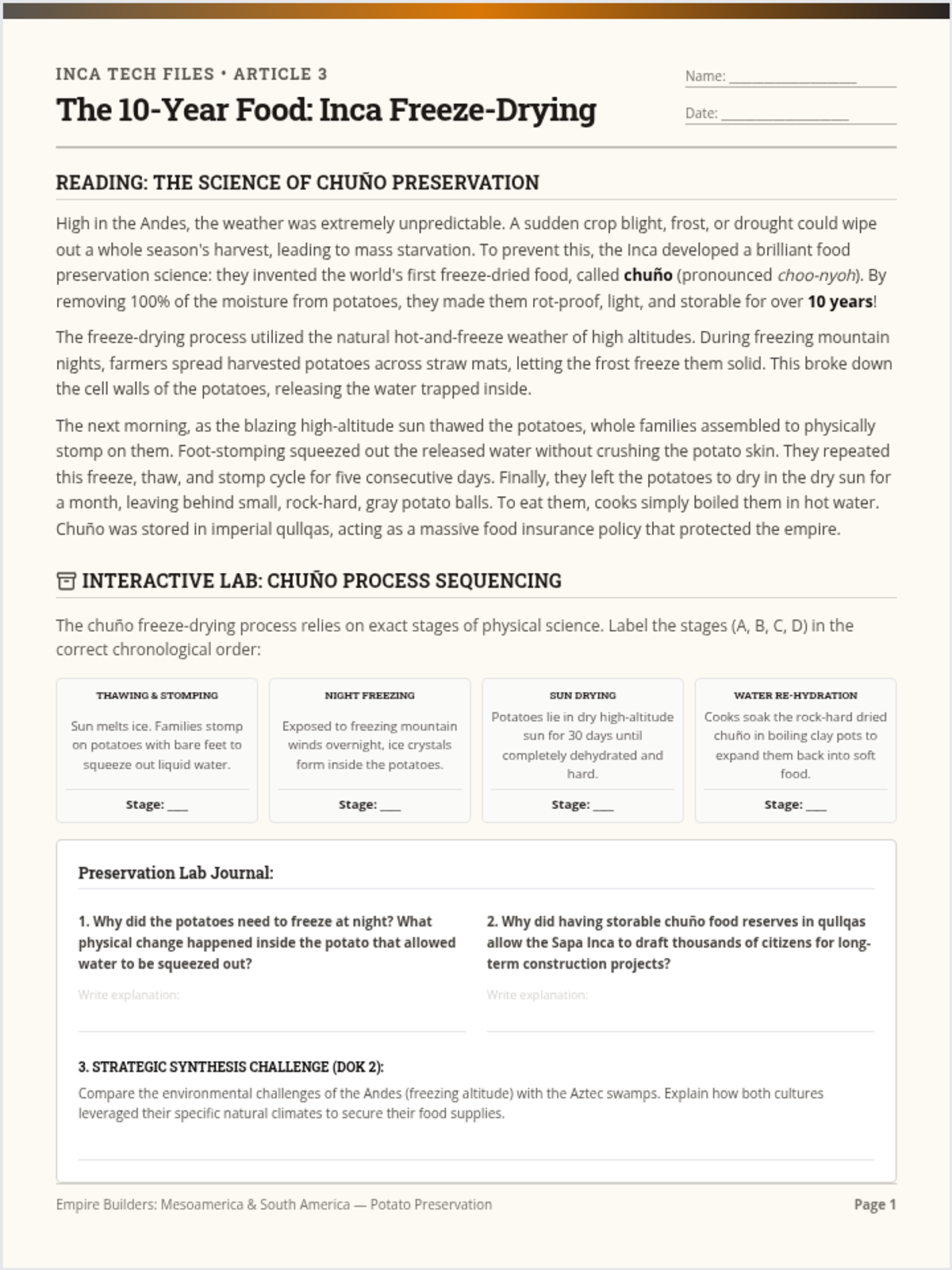
Students explore the Inca civilization, studying their steep mountain terracing, Qhapaq Ñan roads, and rigid Ayllu community hierarchy.
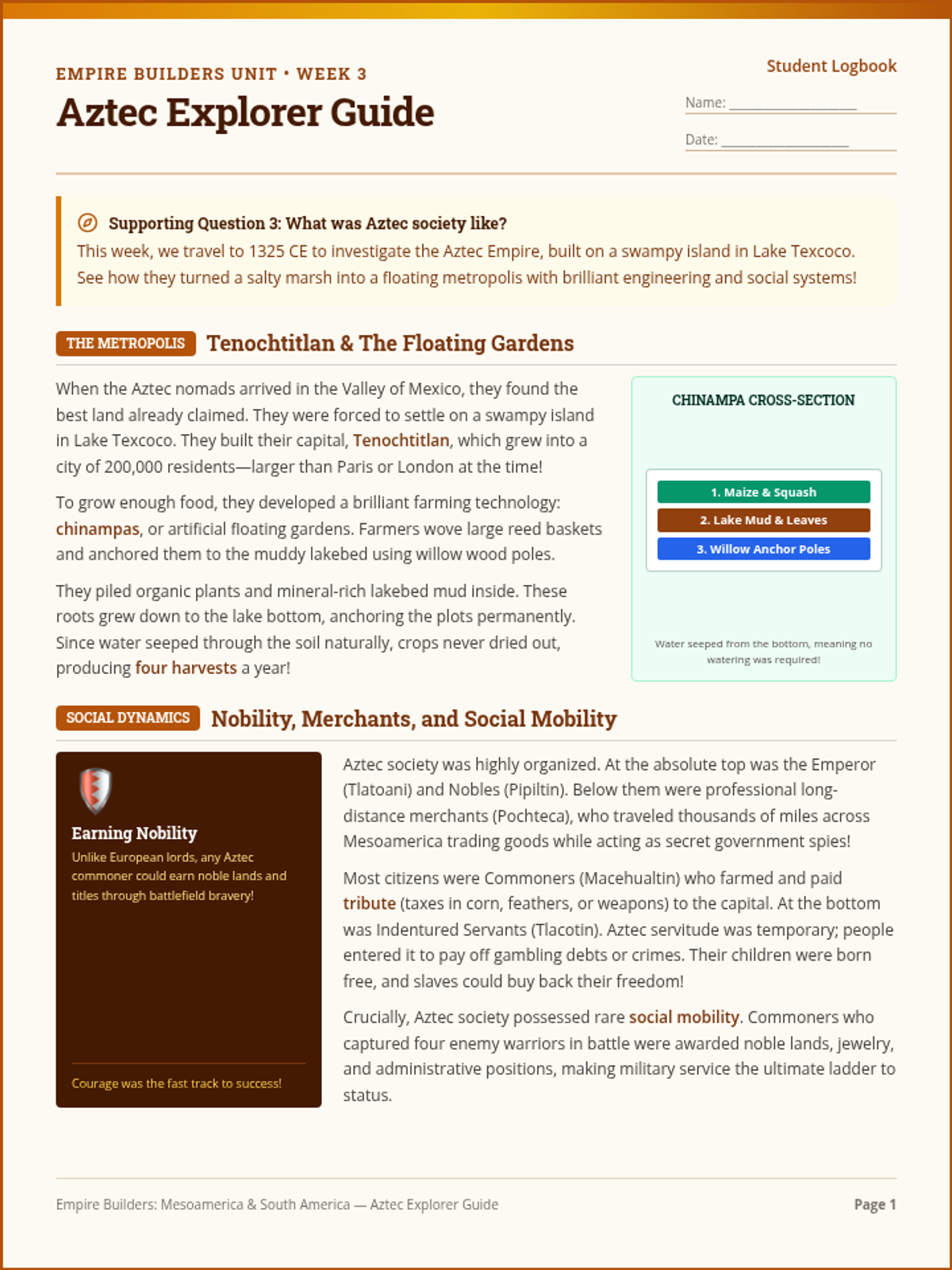
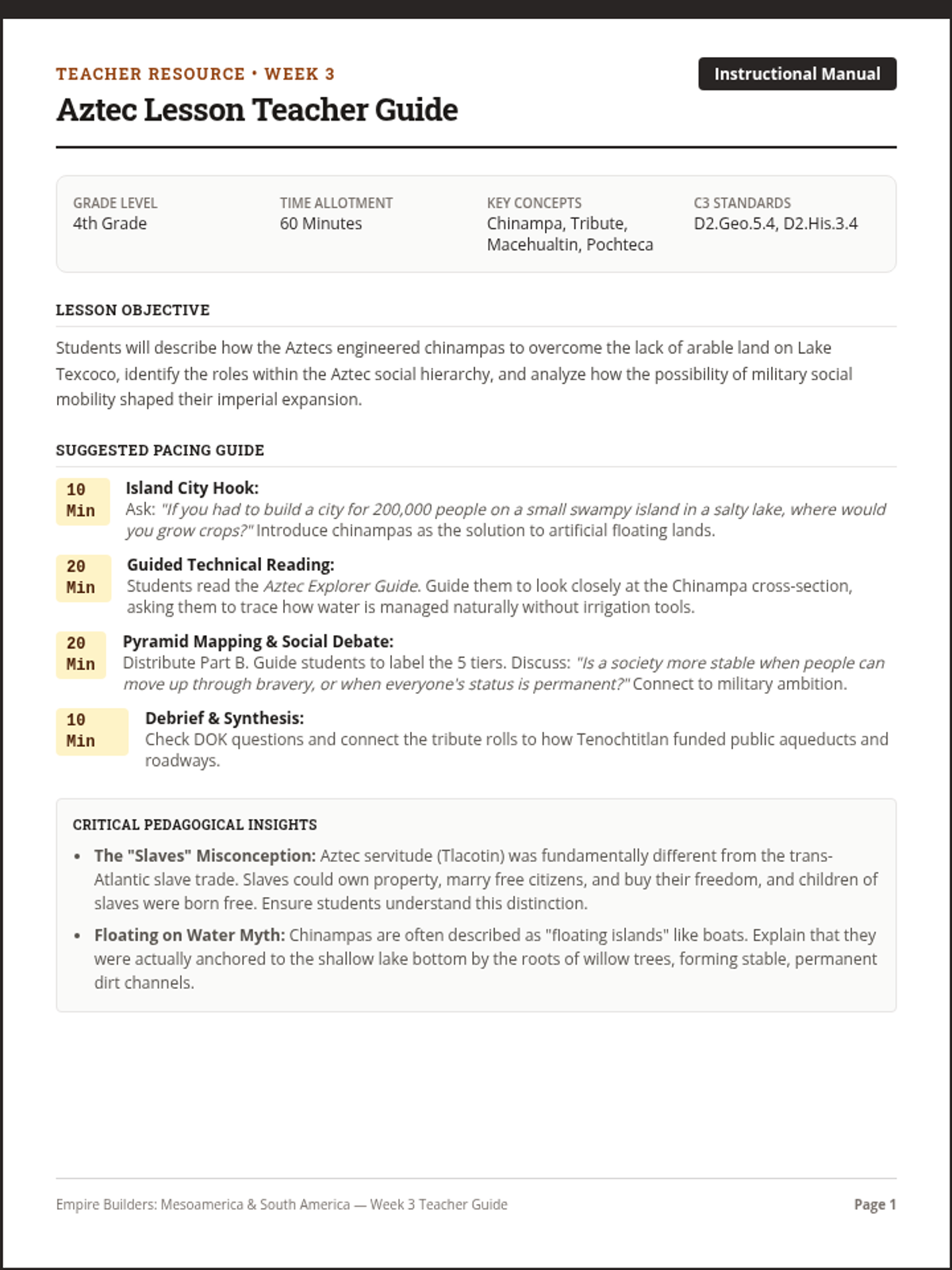
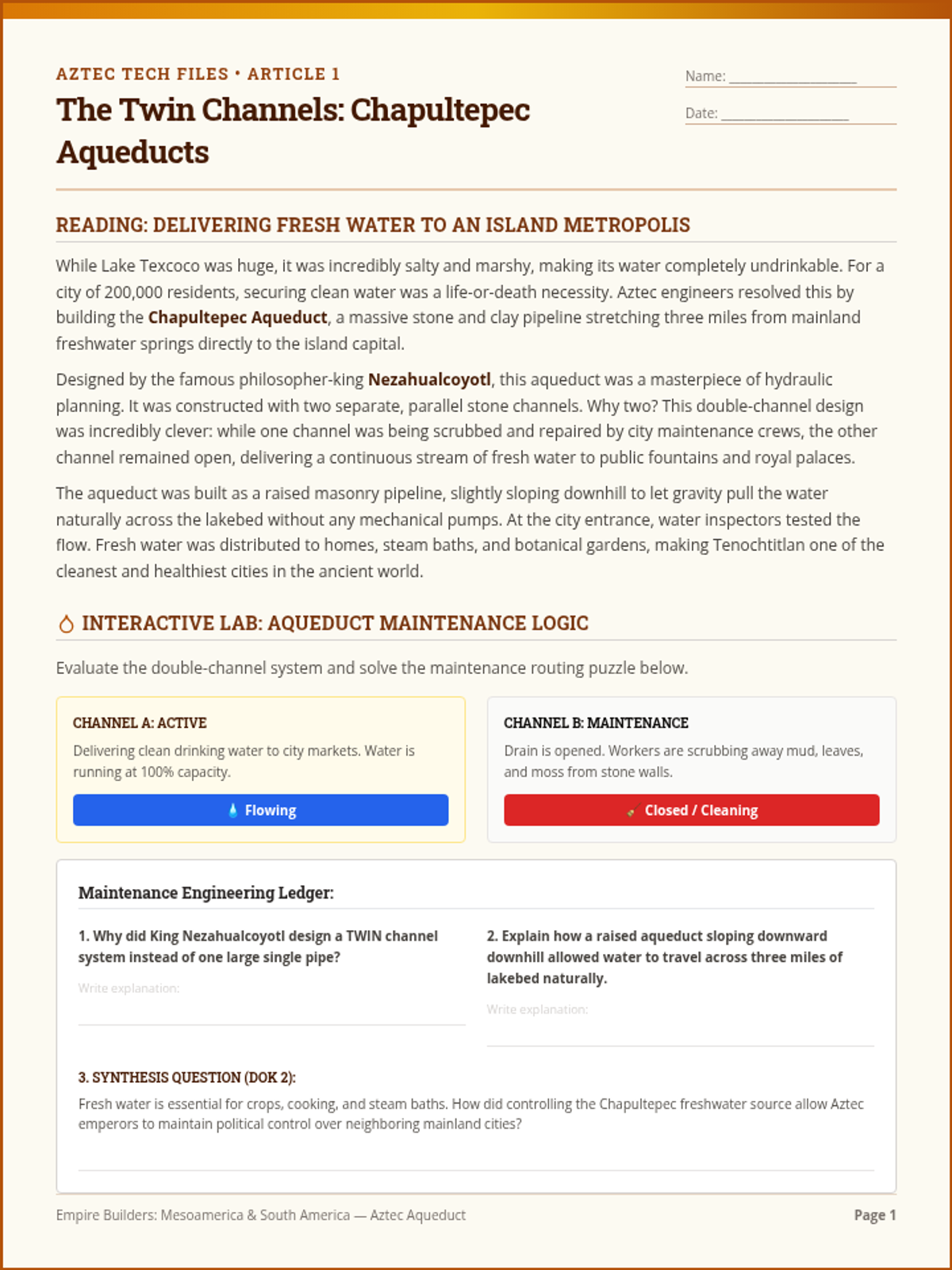
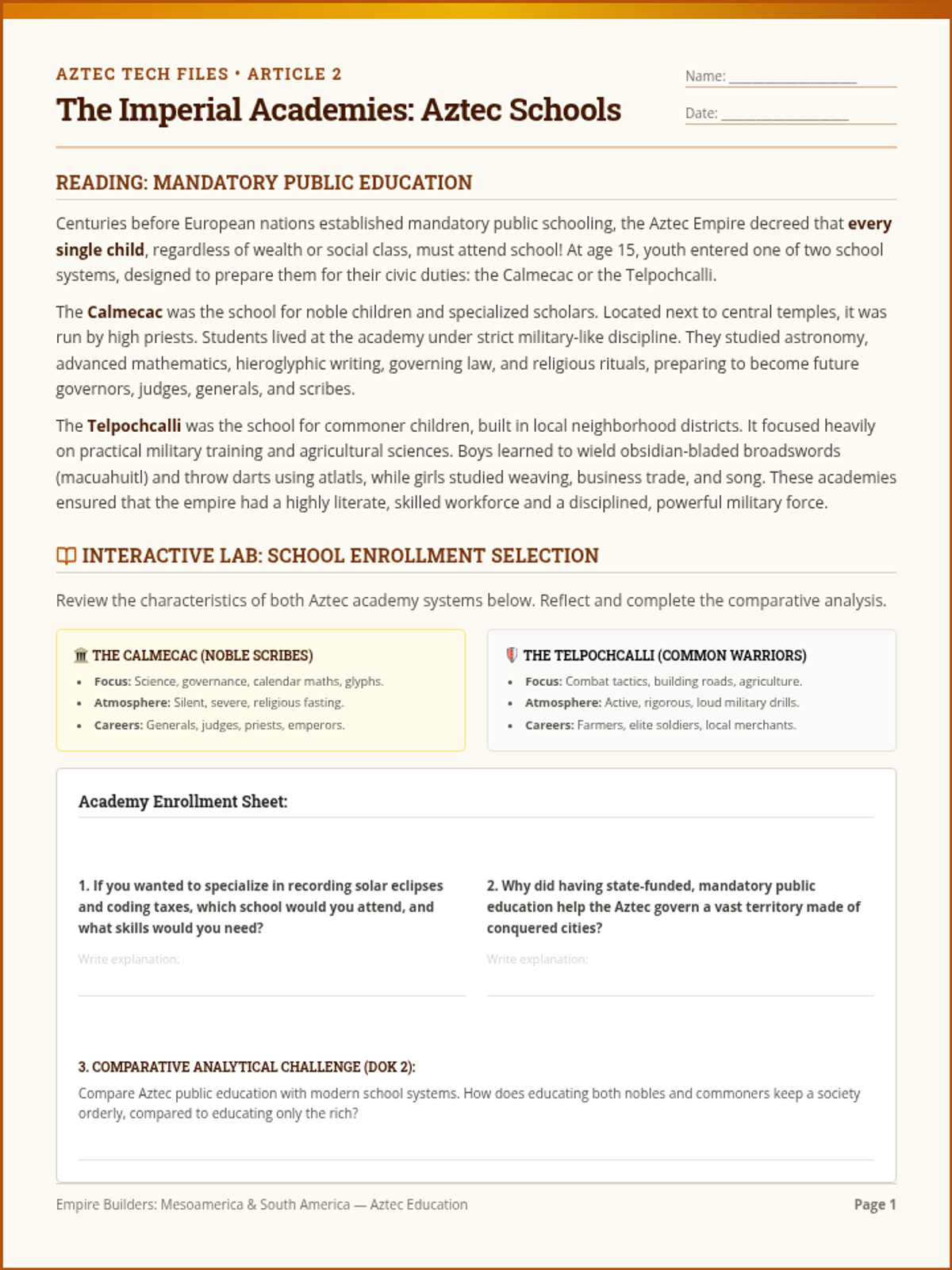
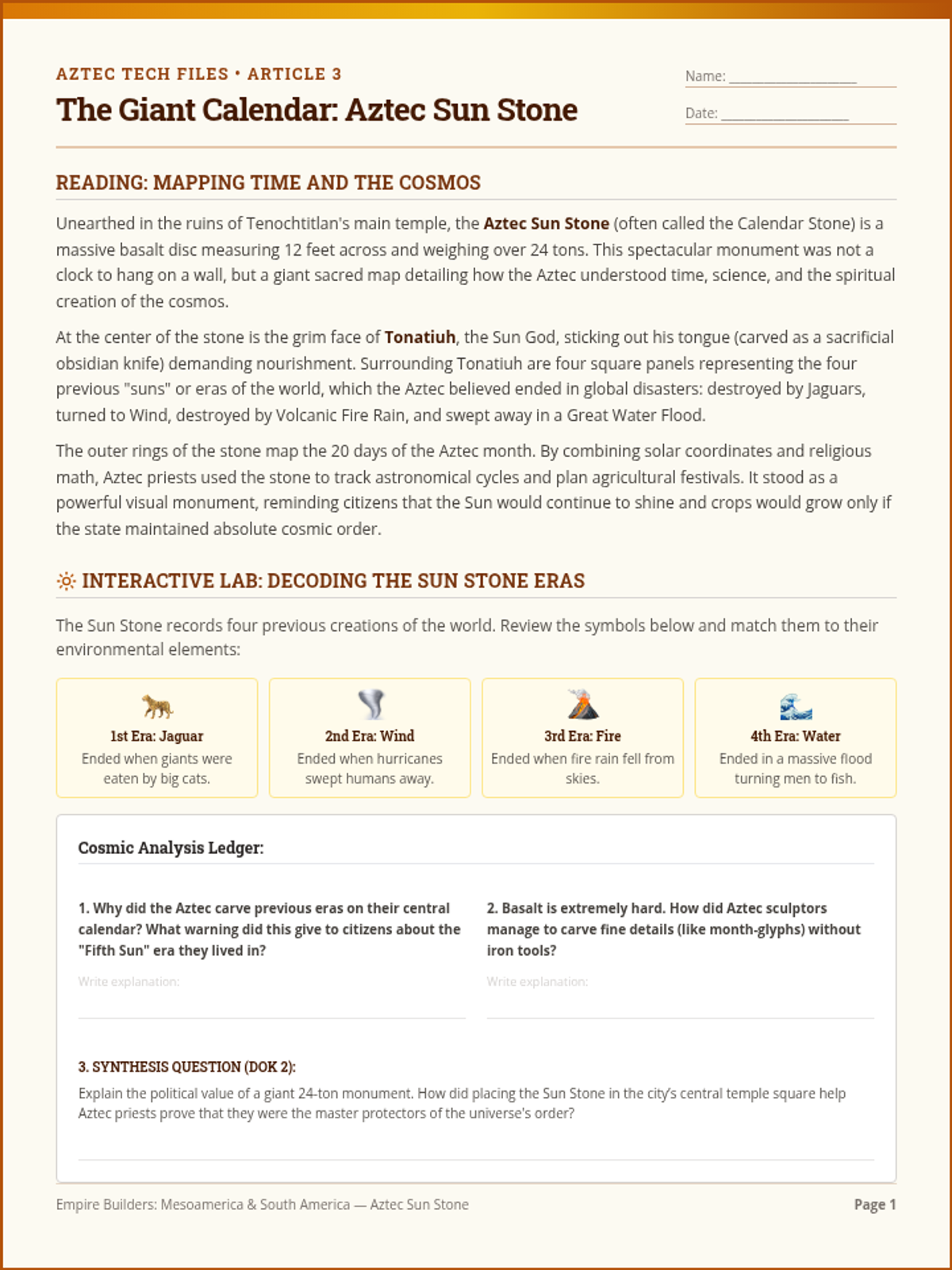
Students explore the Aztec civilization, studying their lake-basin city of Tenochtitlan, chinampa agriculture, and military social mobility.
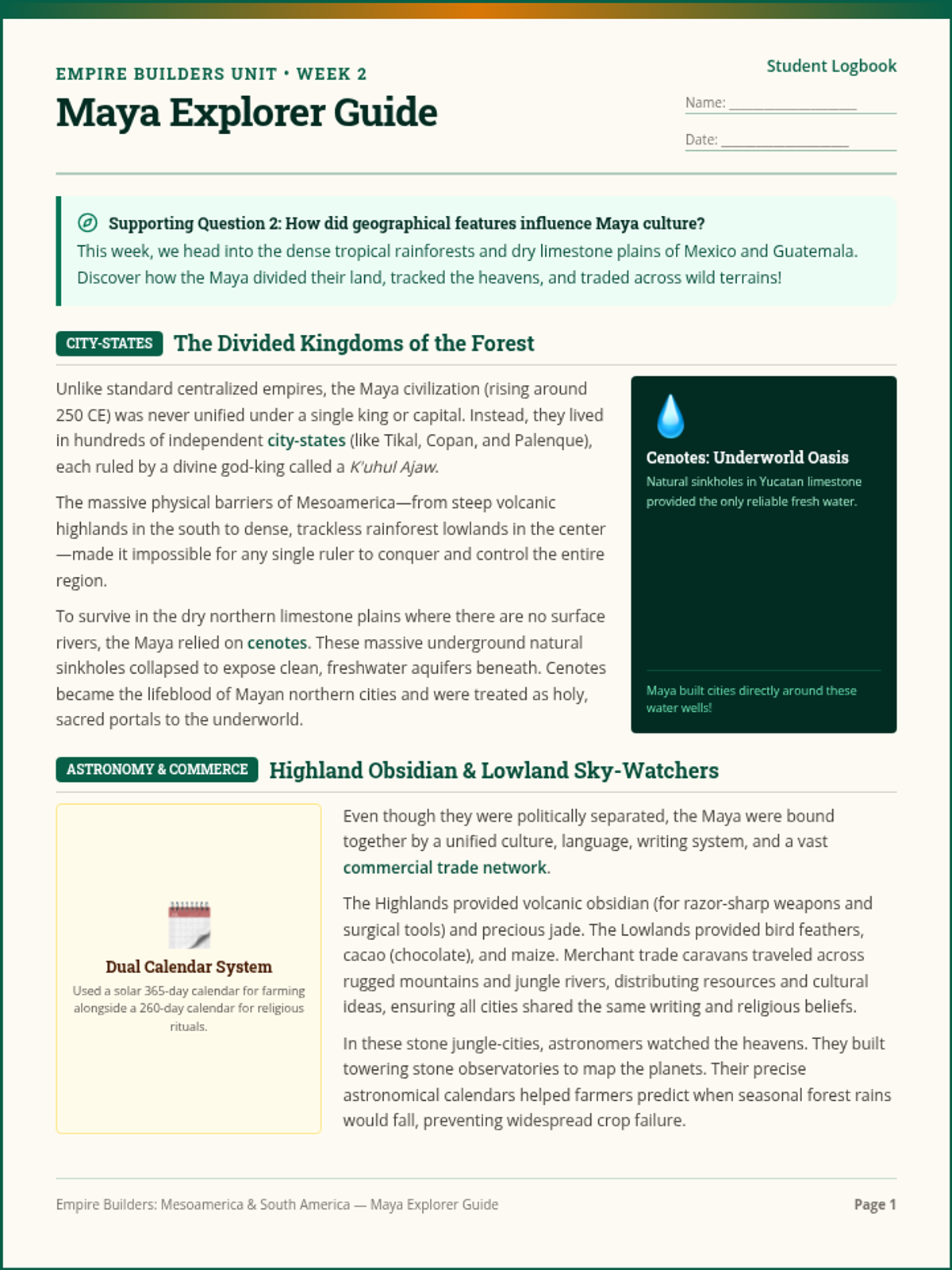
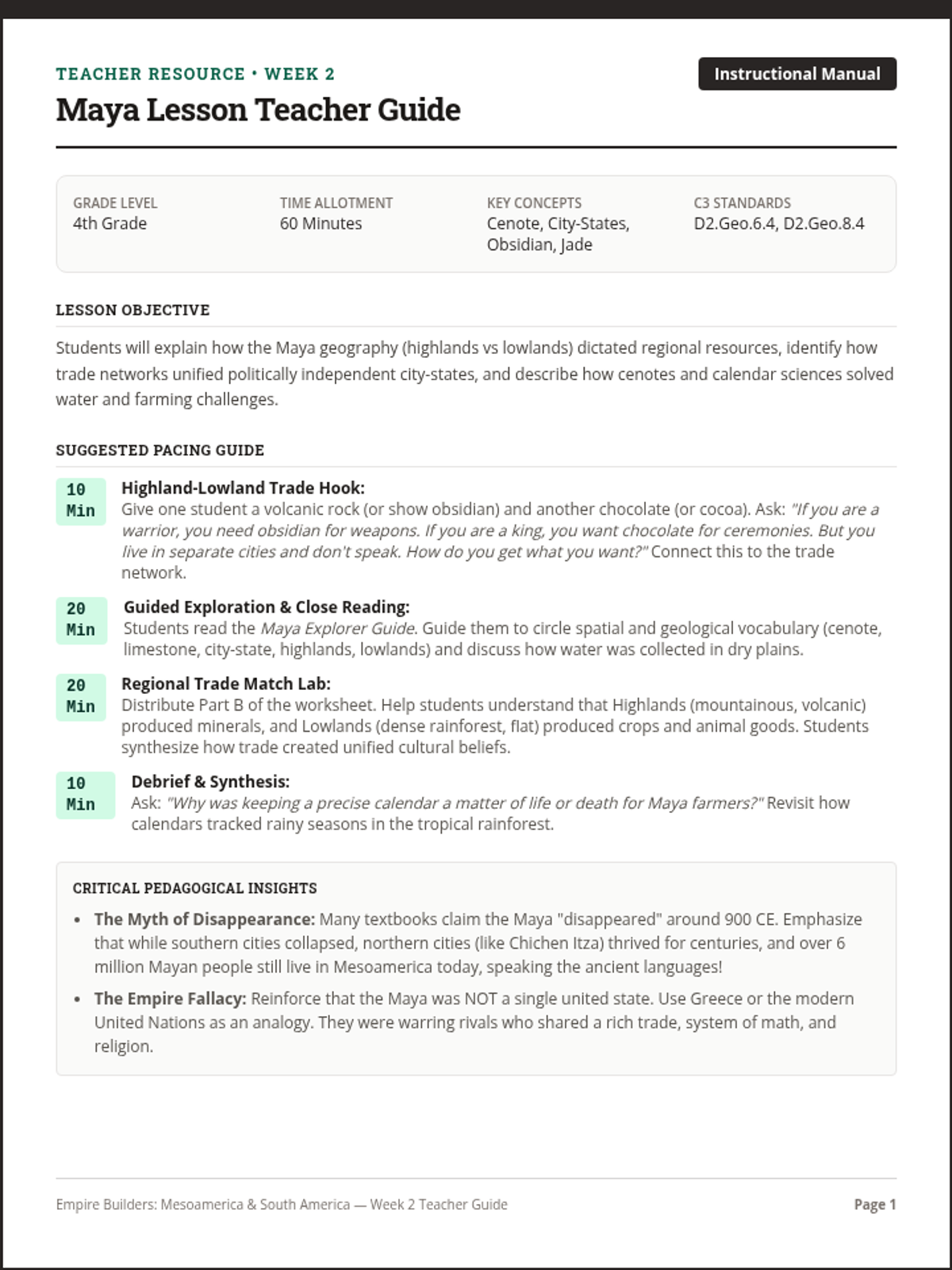
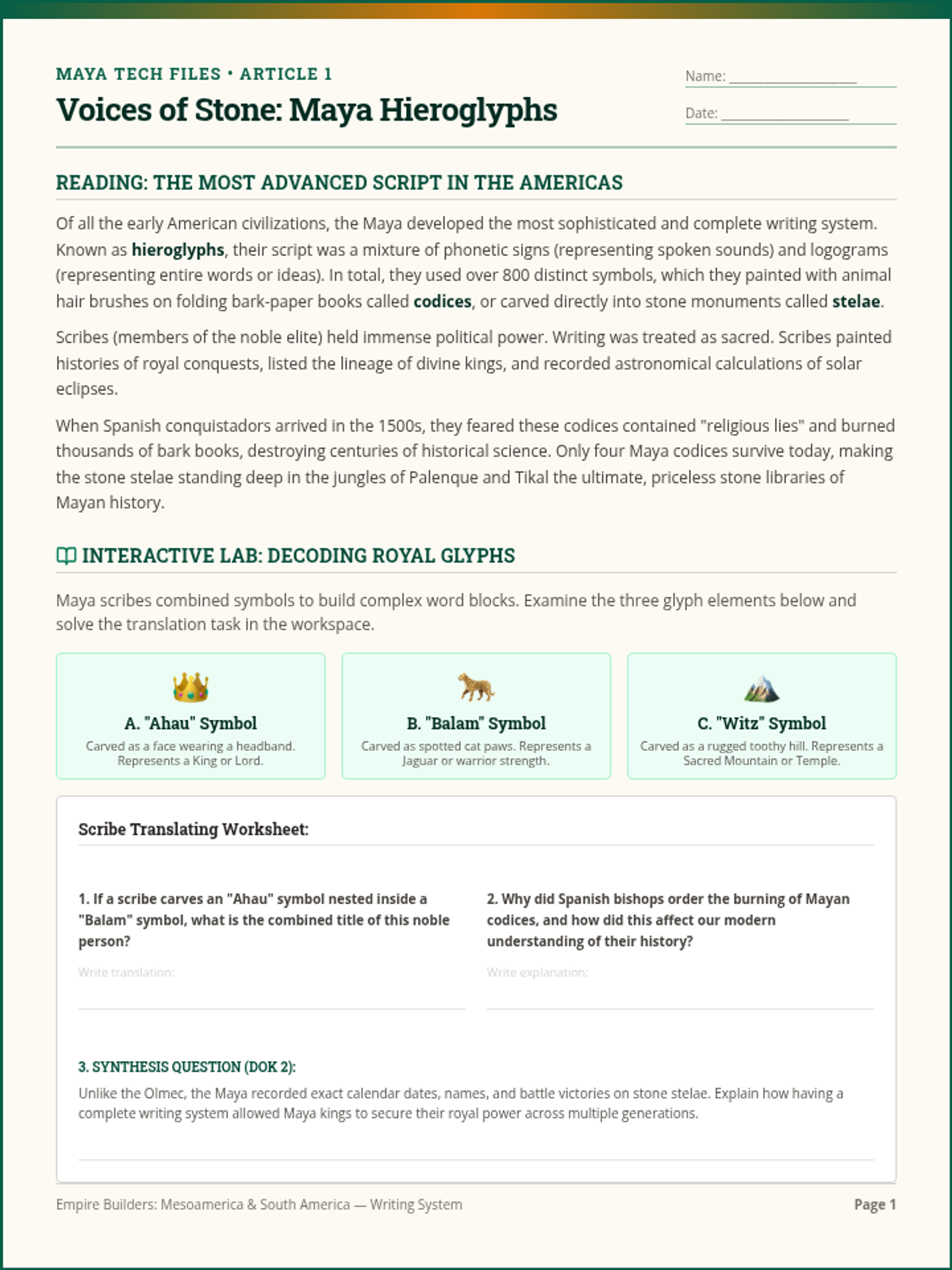
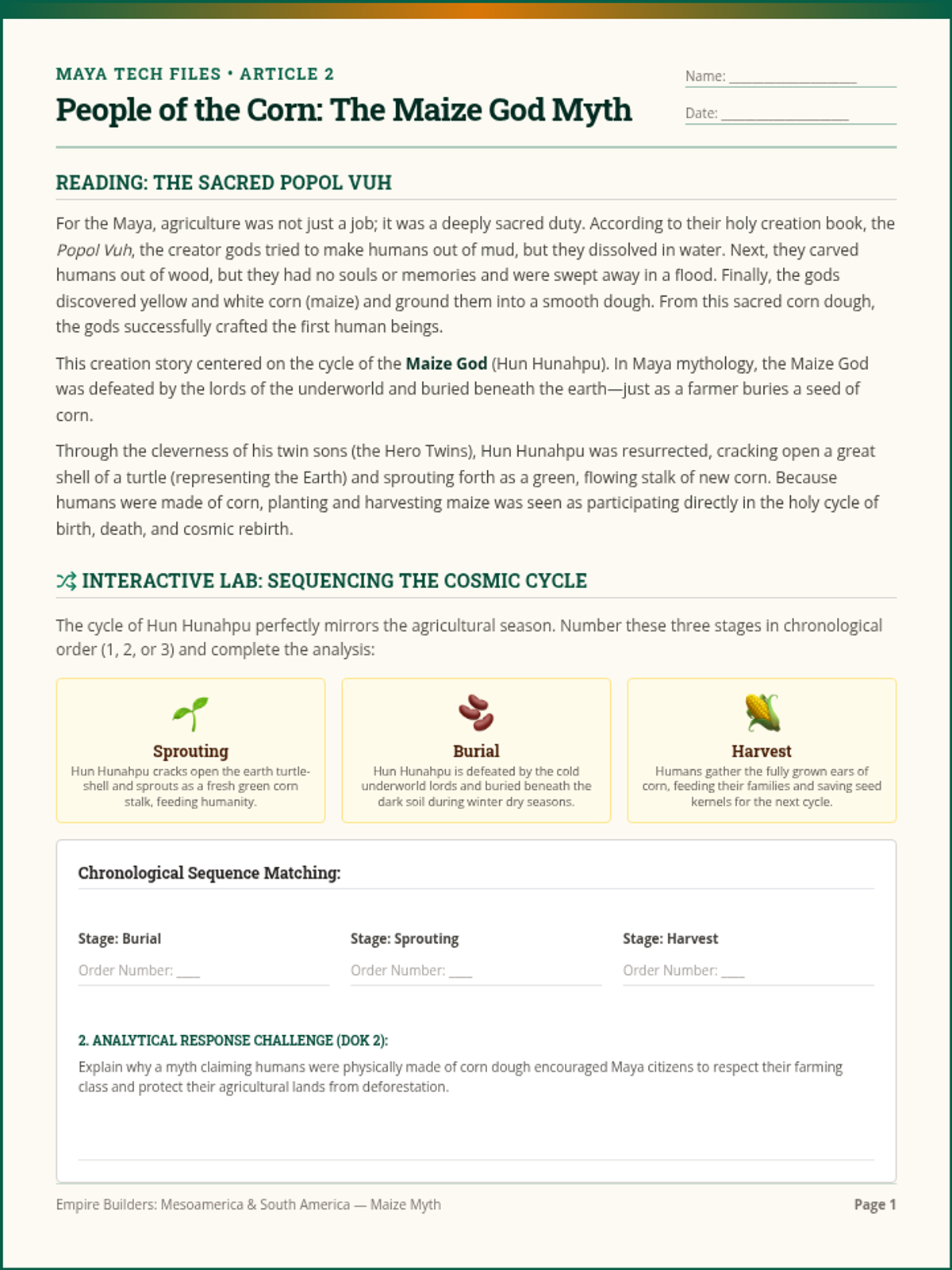
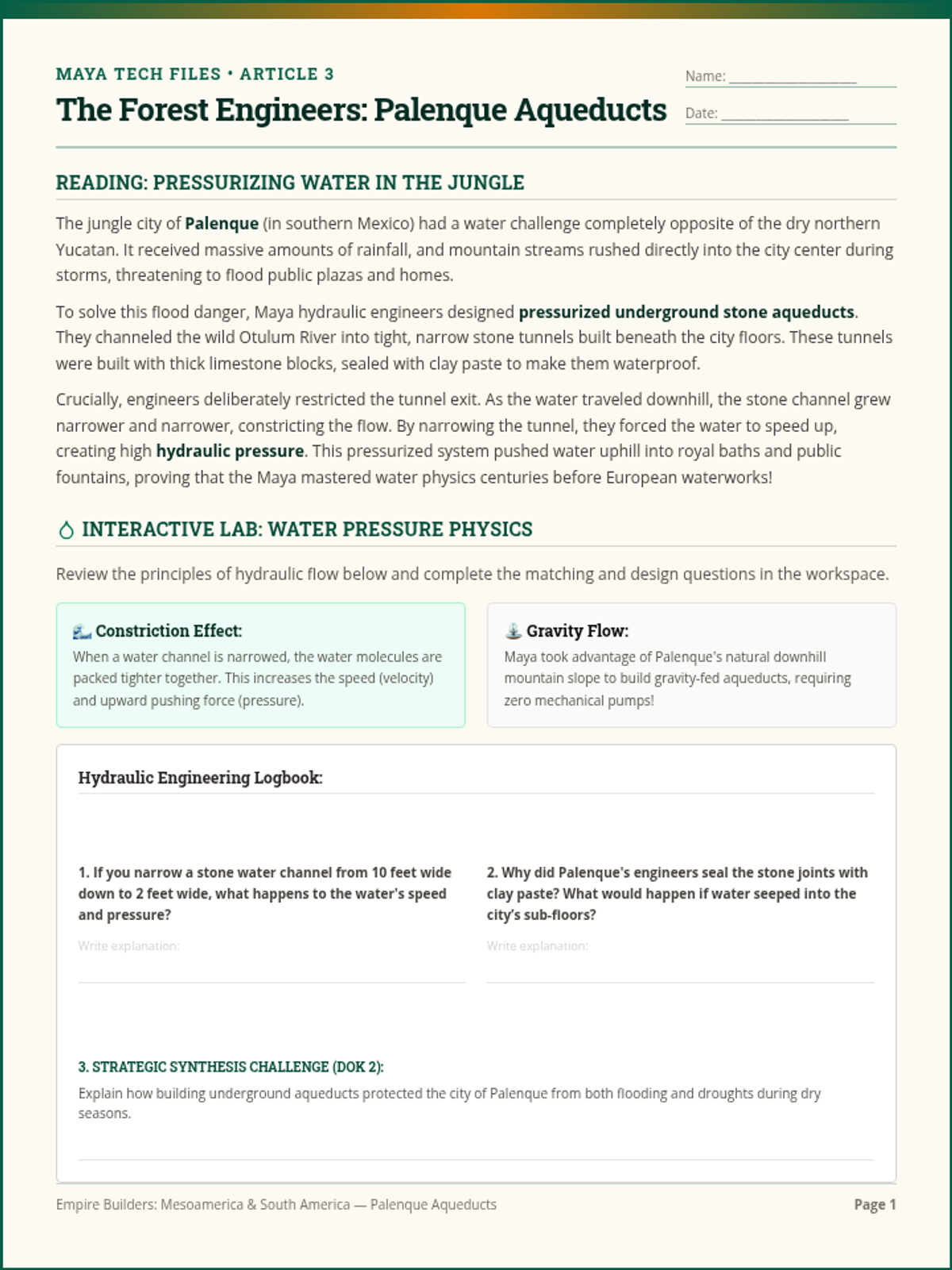
Students explore the Maya civilization, studying their rainforest terrain, calendar systems, and independent city-state hierarchy.
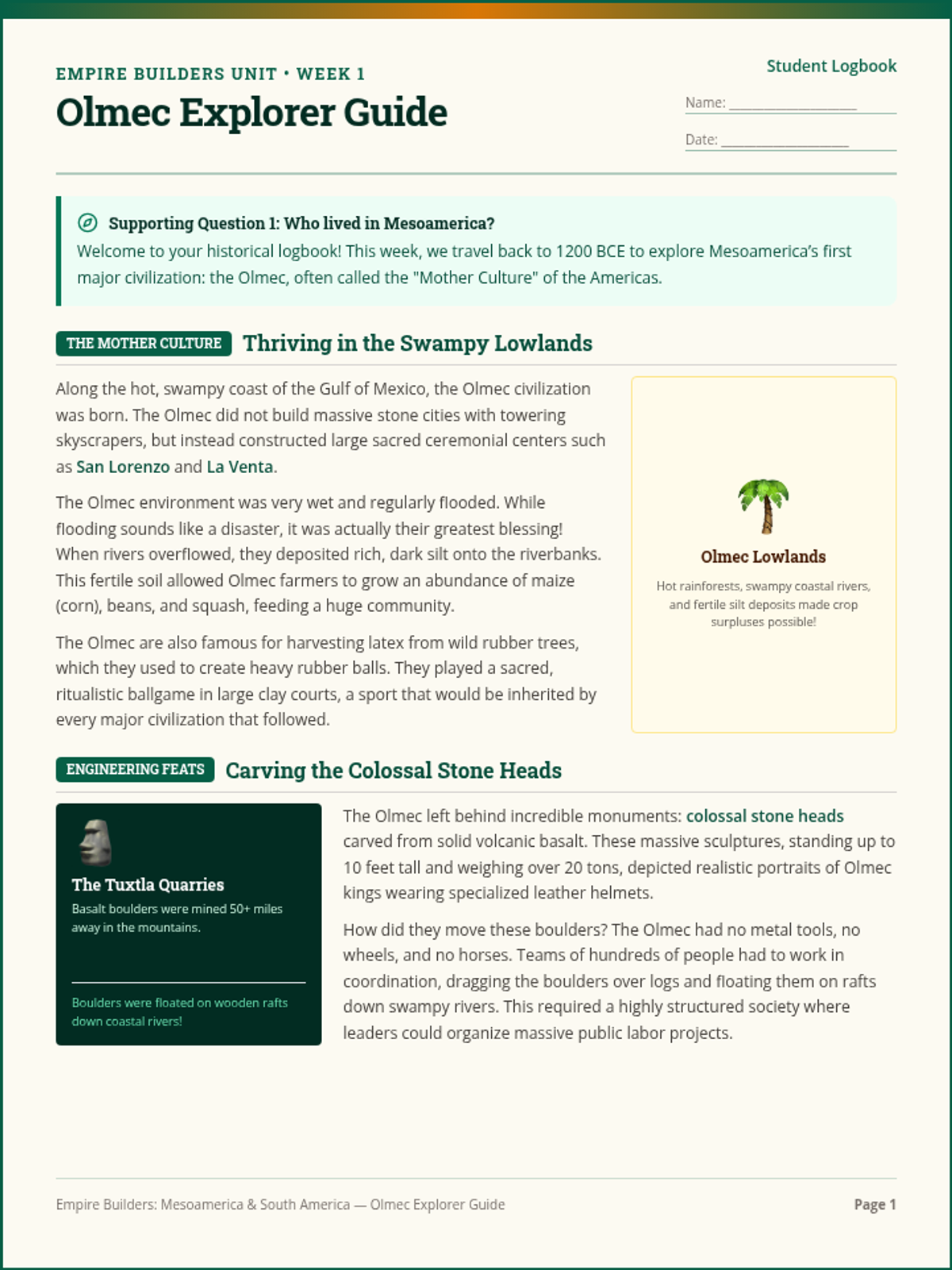
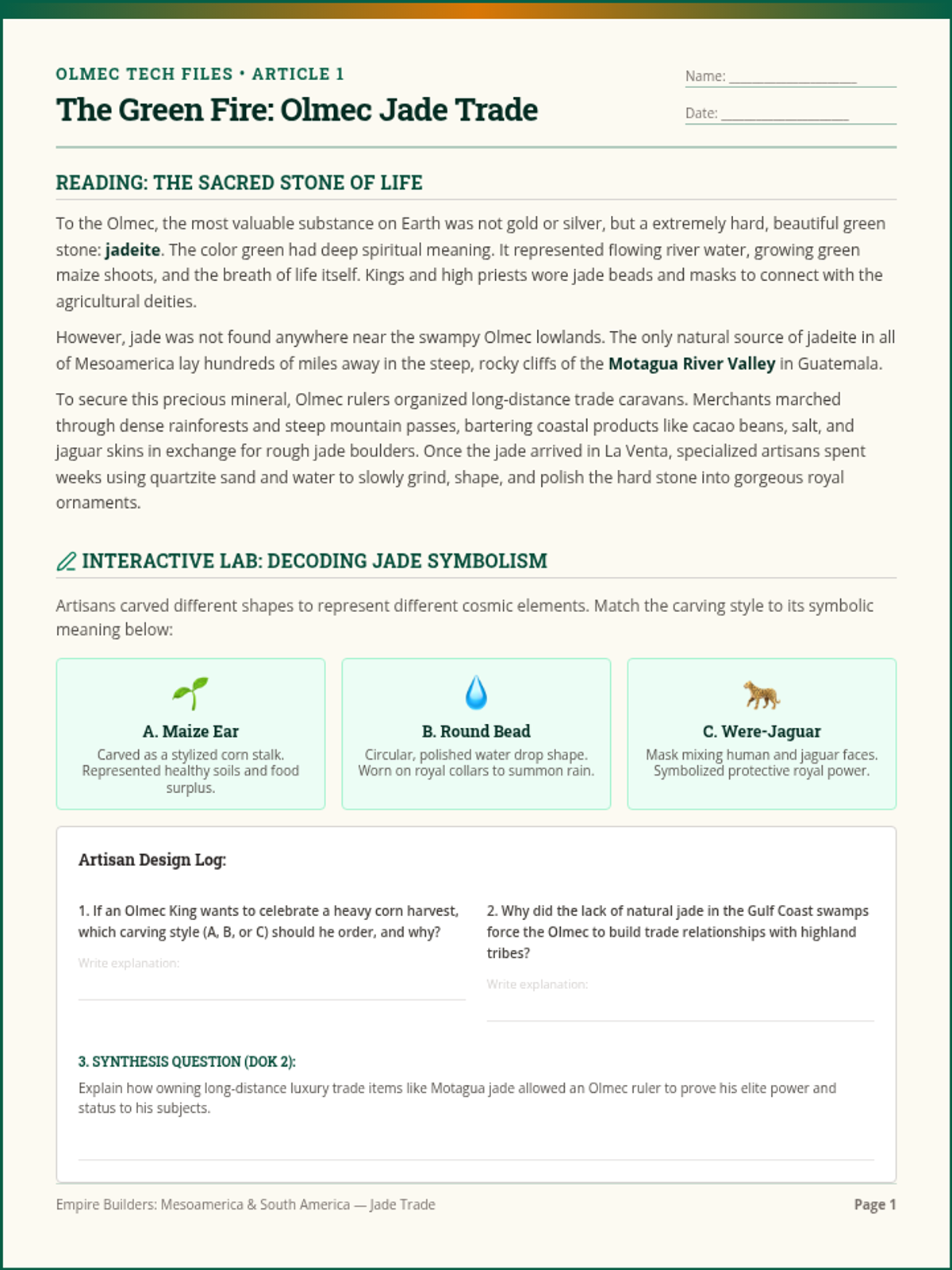
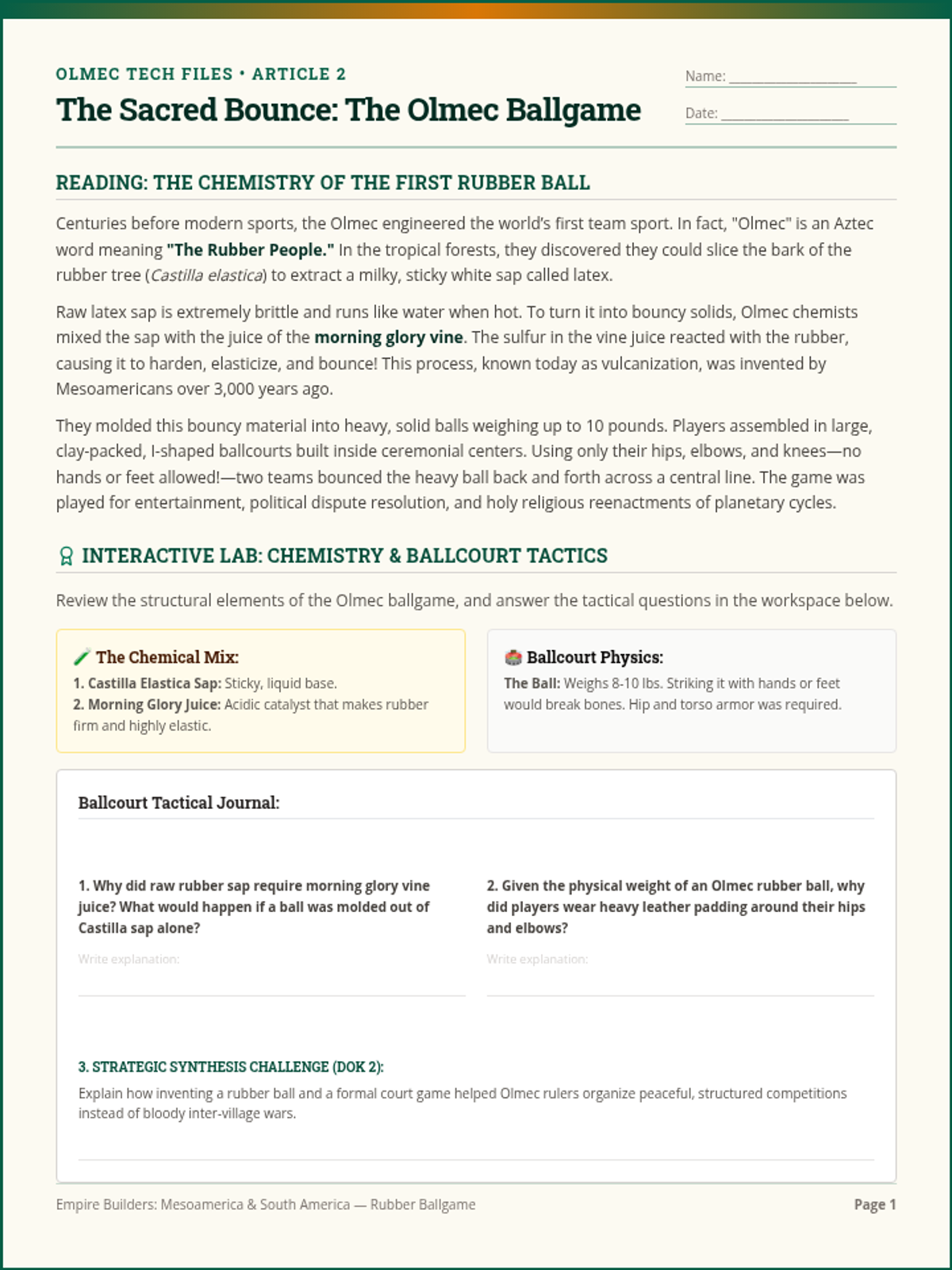
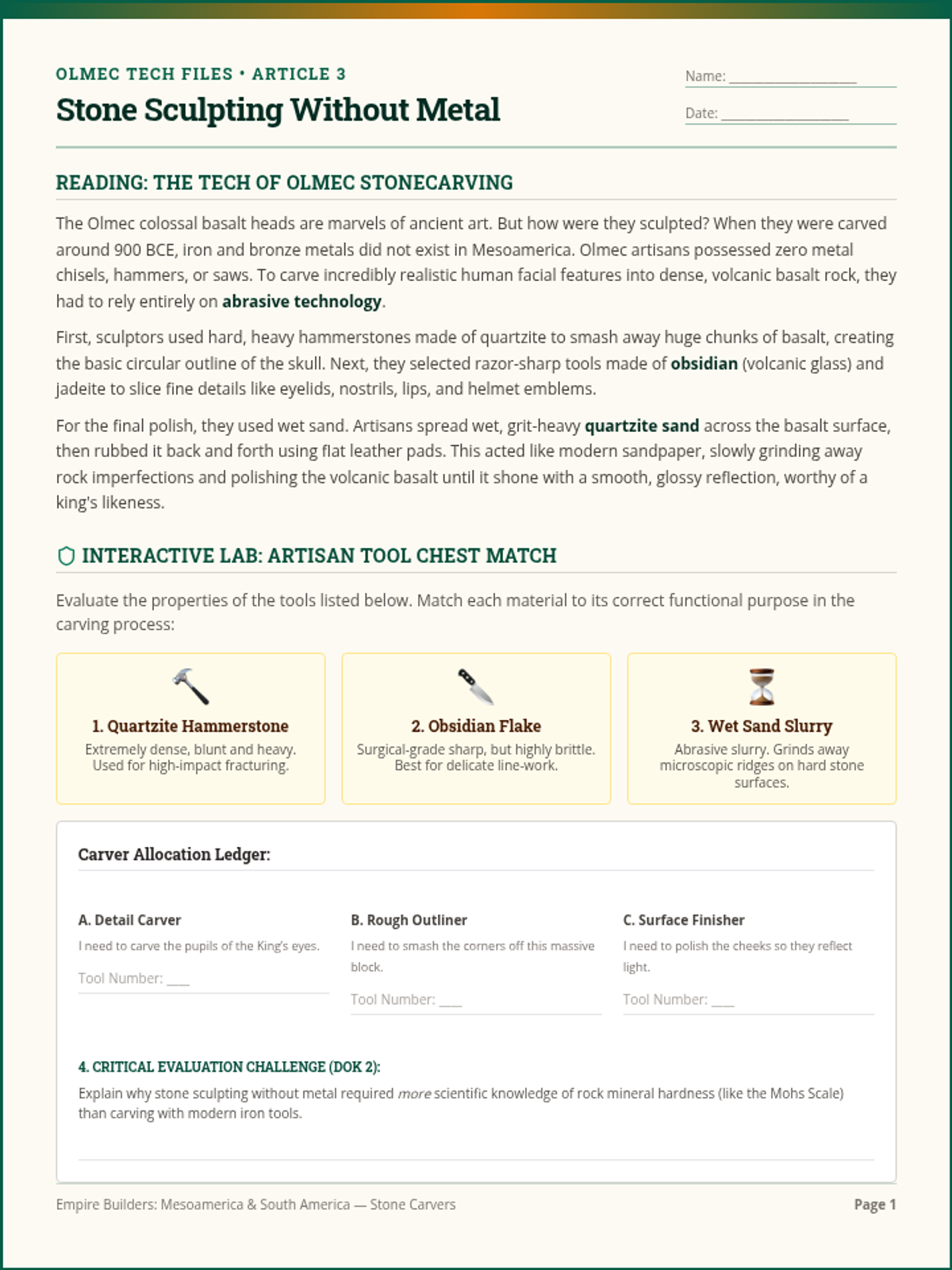
Students explore the Olmec civilization, investigating their swampy geography, monumental stone heads, and social structure.
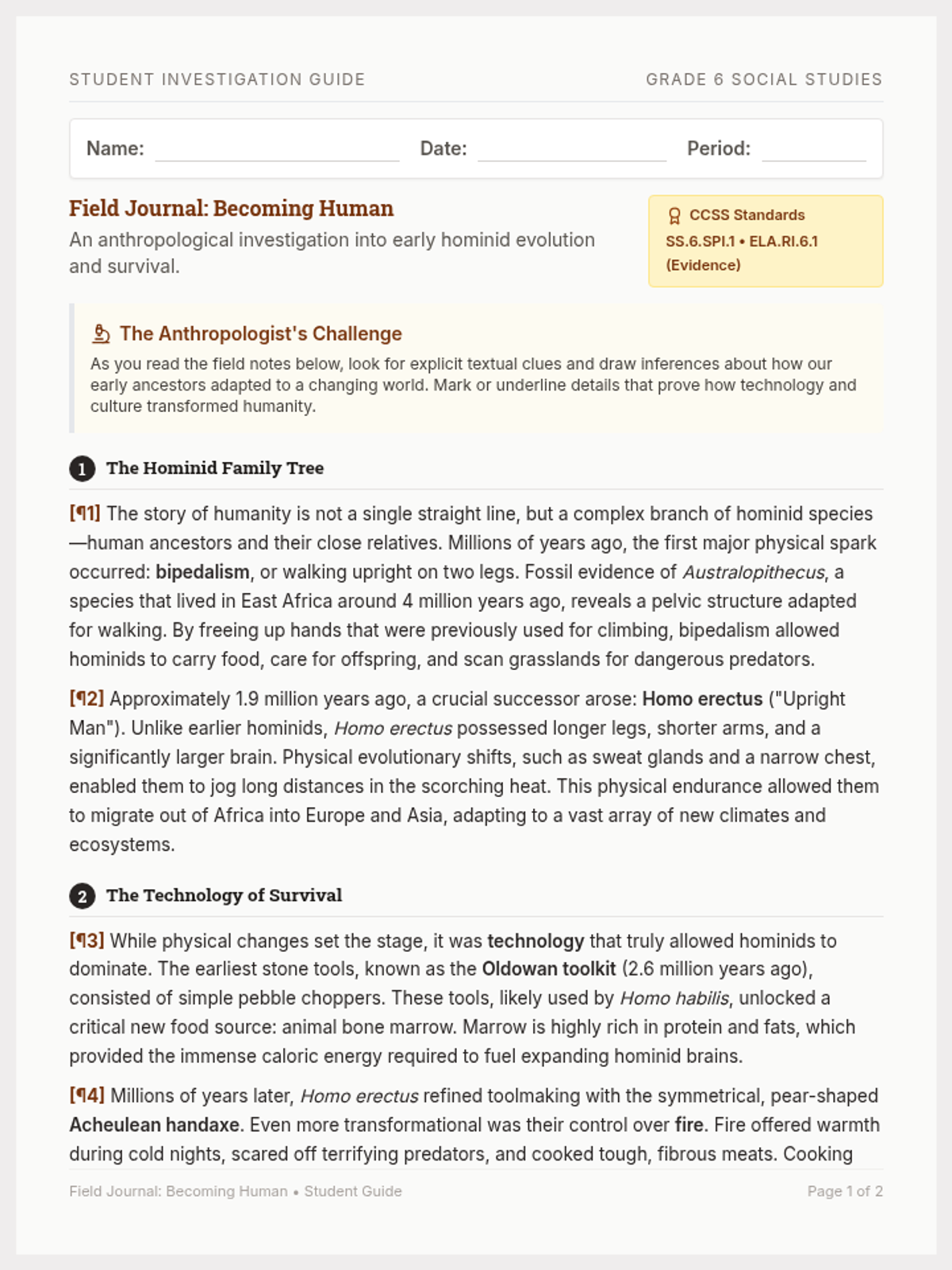
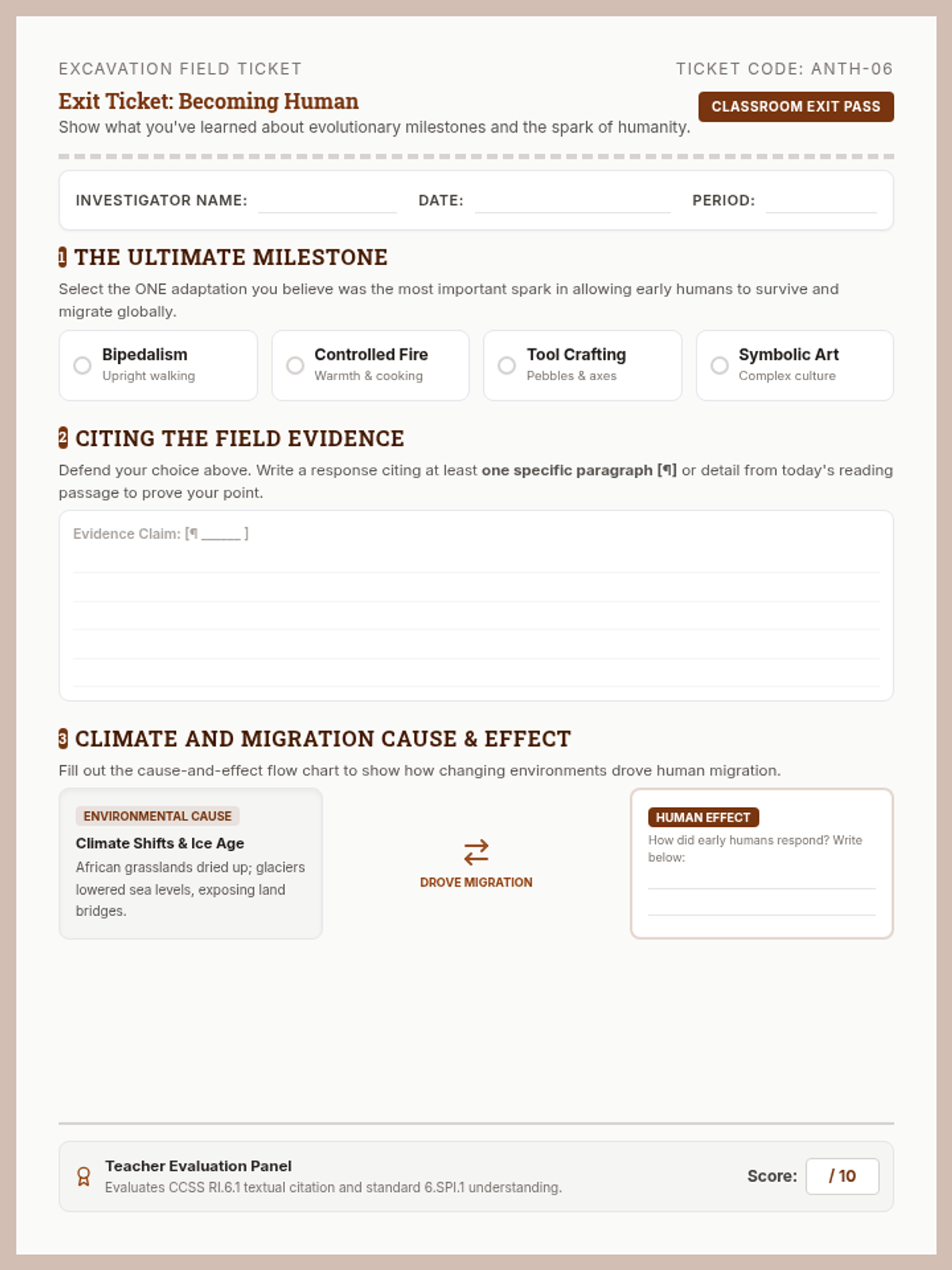
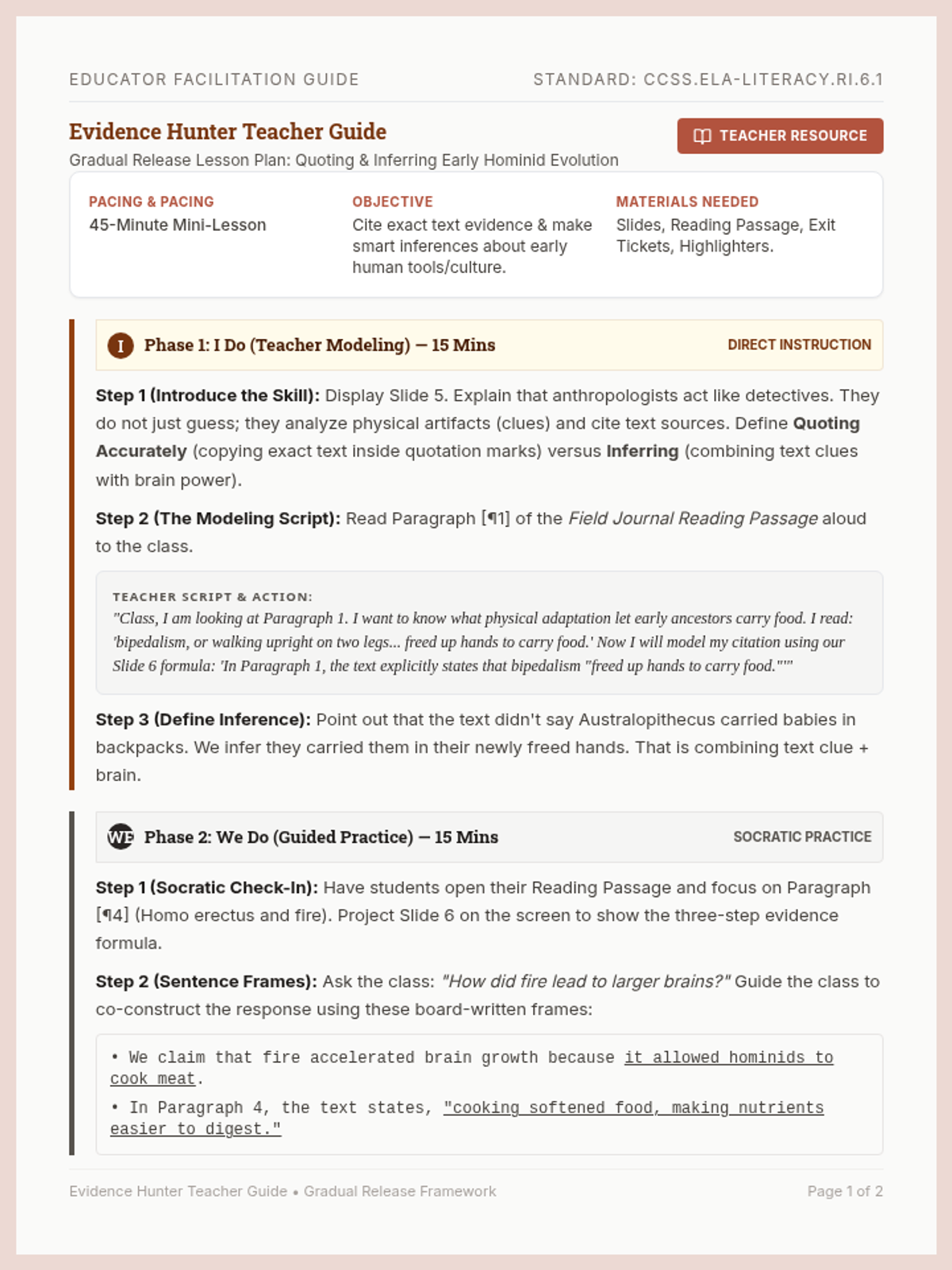
A 6th-grade social studies lesson investigating early human evolution, tool adaptations, cultural practices, and migration patterns, integrated with CCSS ELA-Literacy RI.6.1.
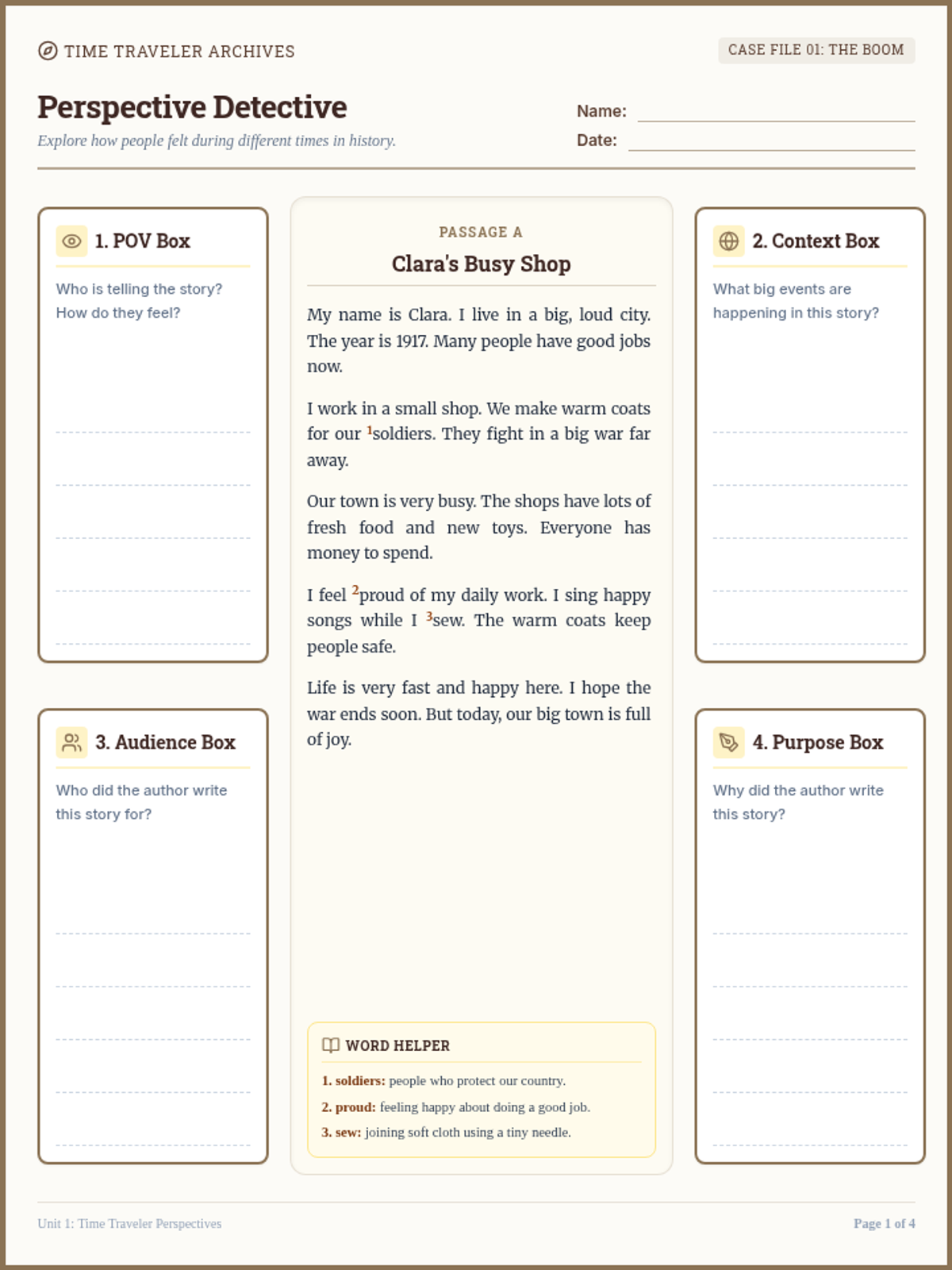
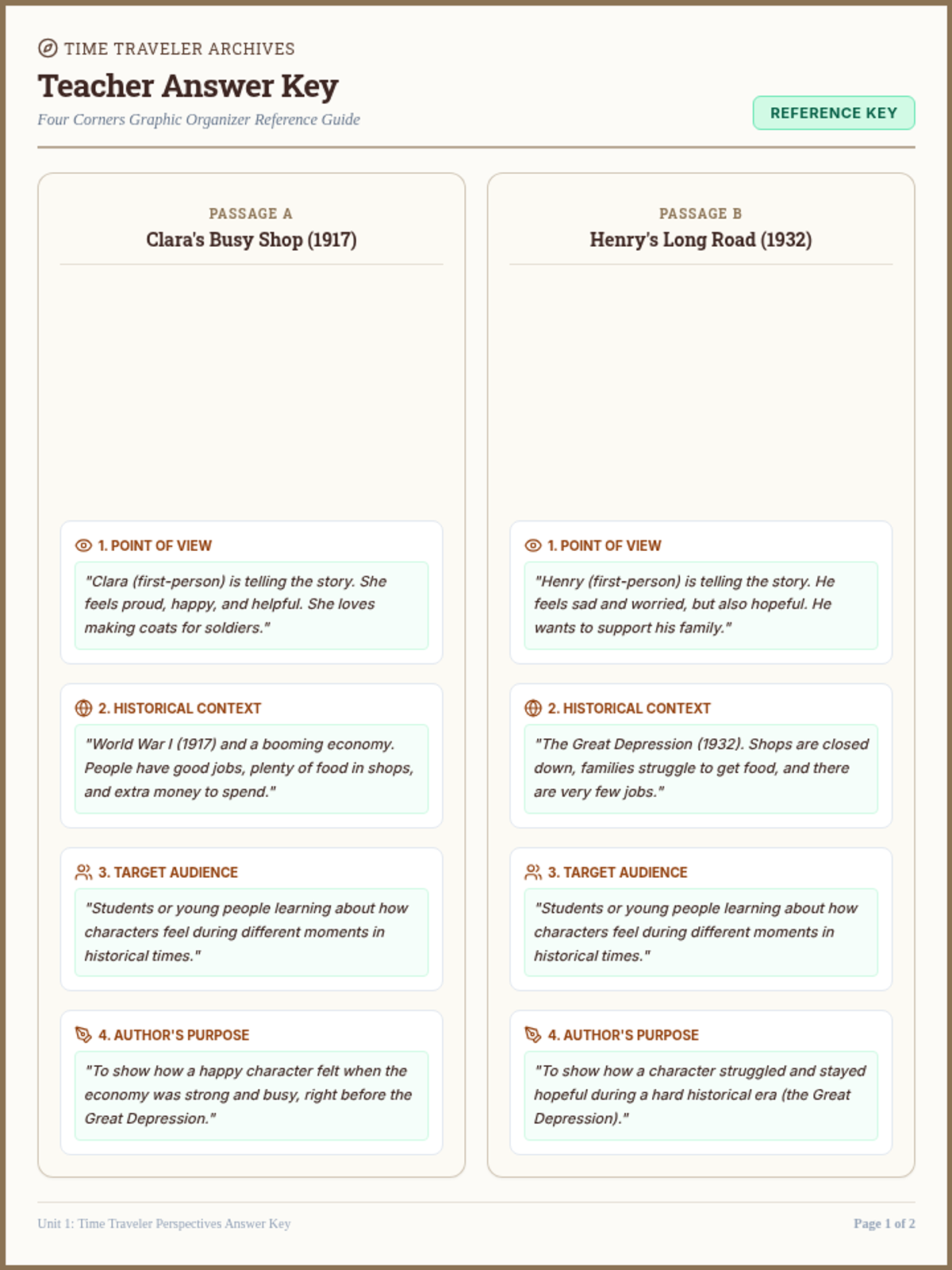
An independent reading unit focusing on perspective and point of view during two contrasting historical eras: World War I and the Great Depression. Students analyze character emotions and historical contexts using a 'four corners' layout.
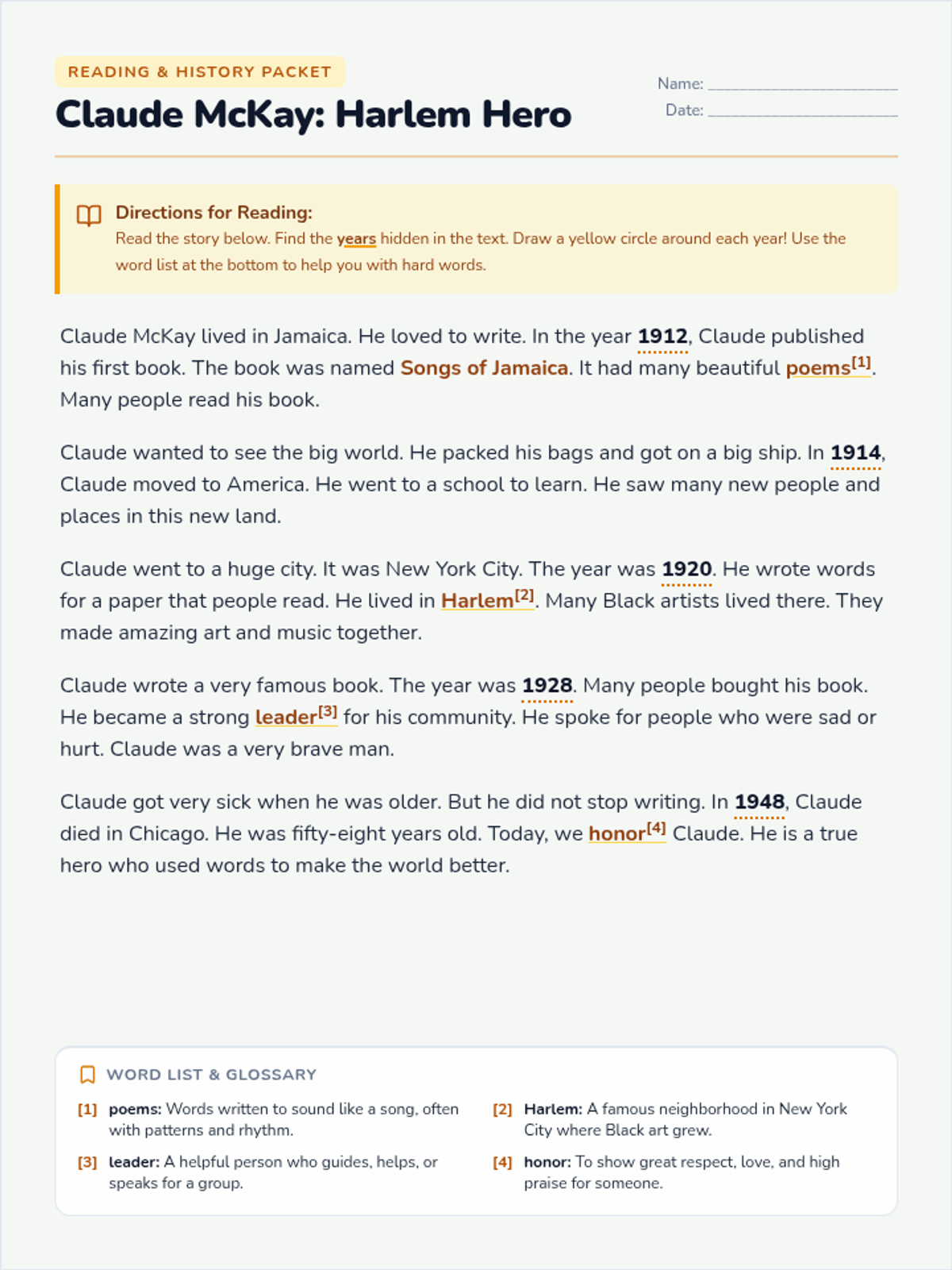
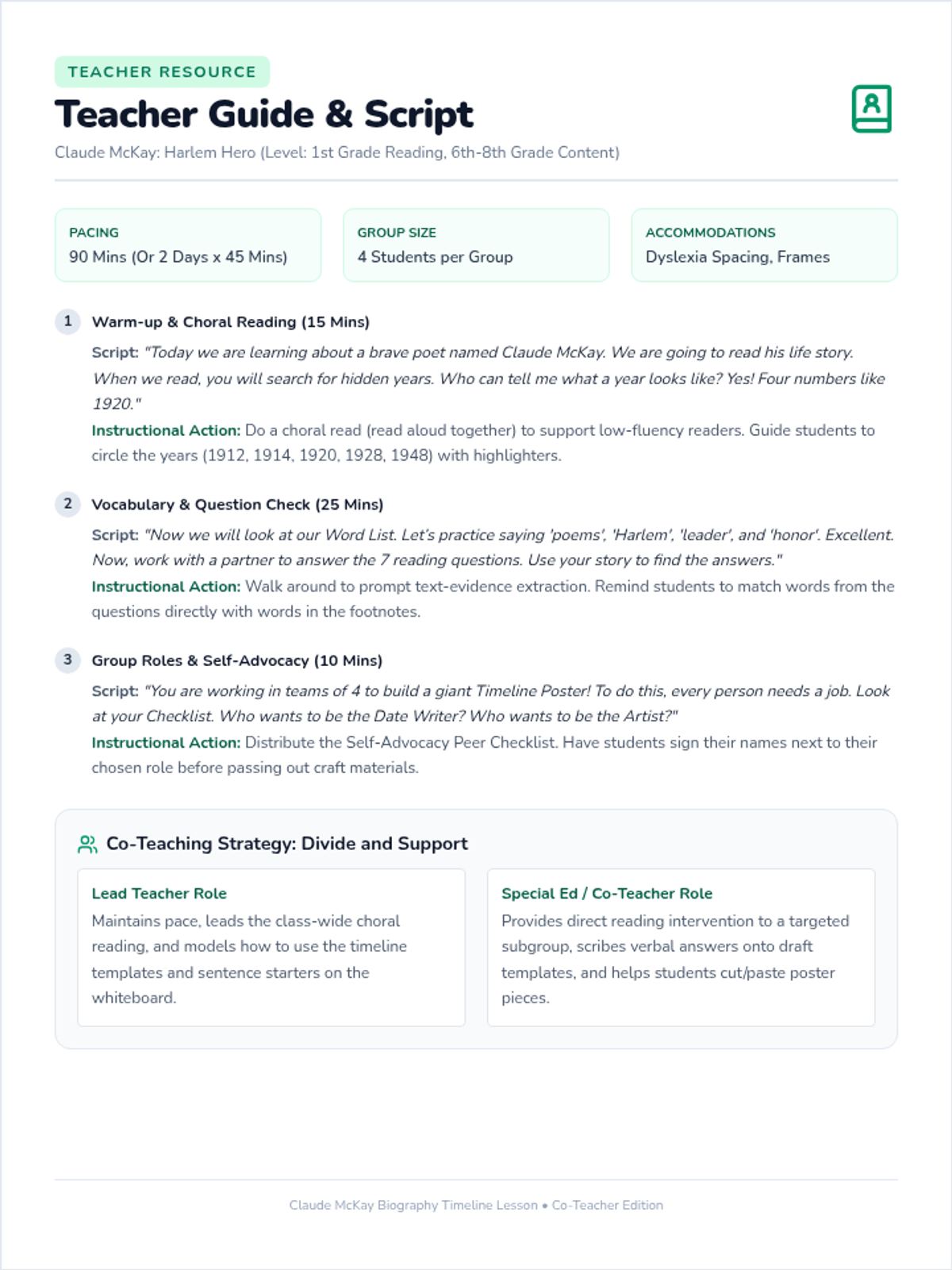
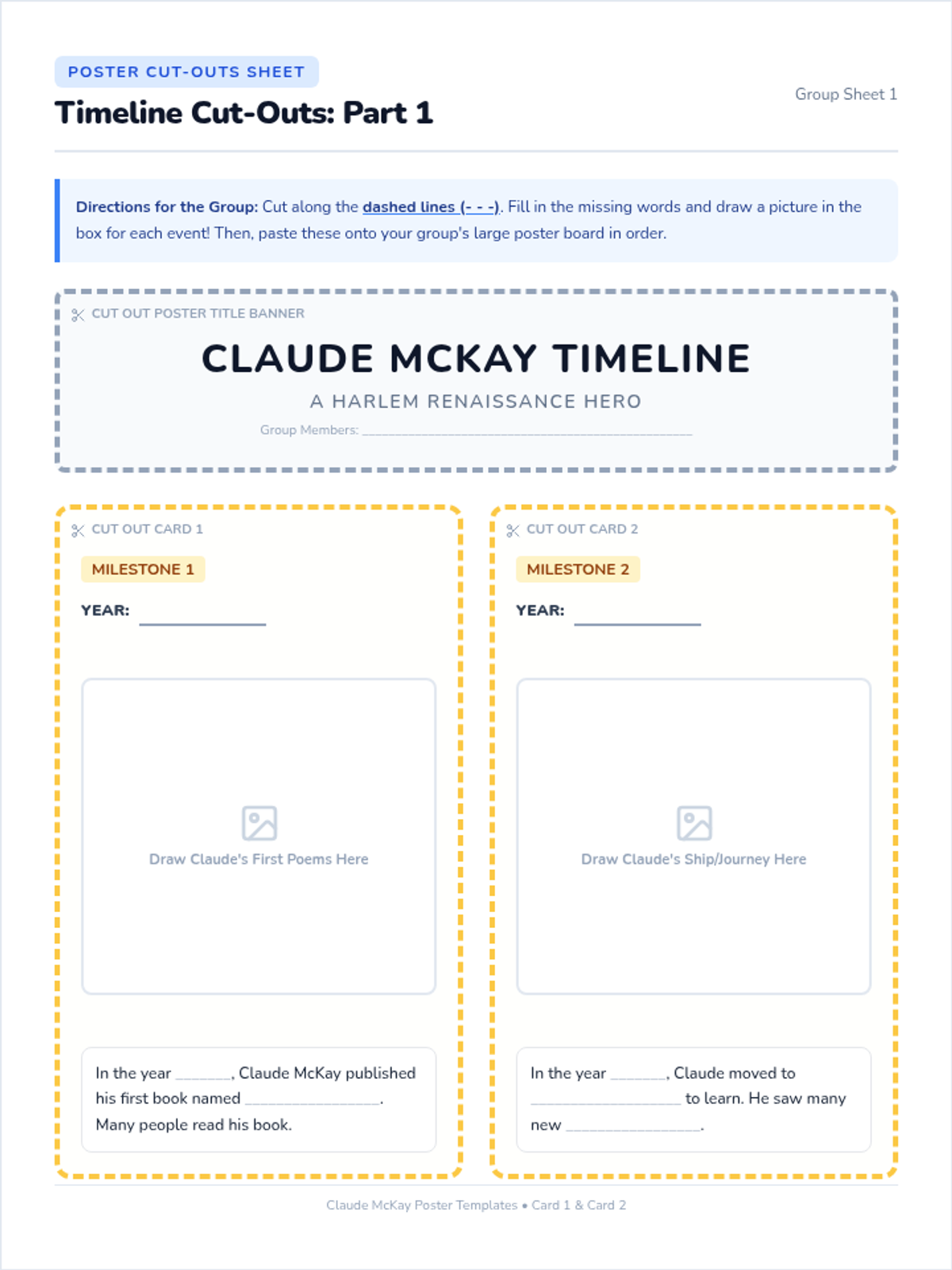
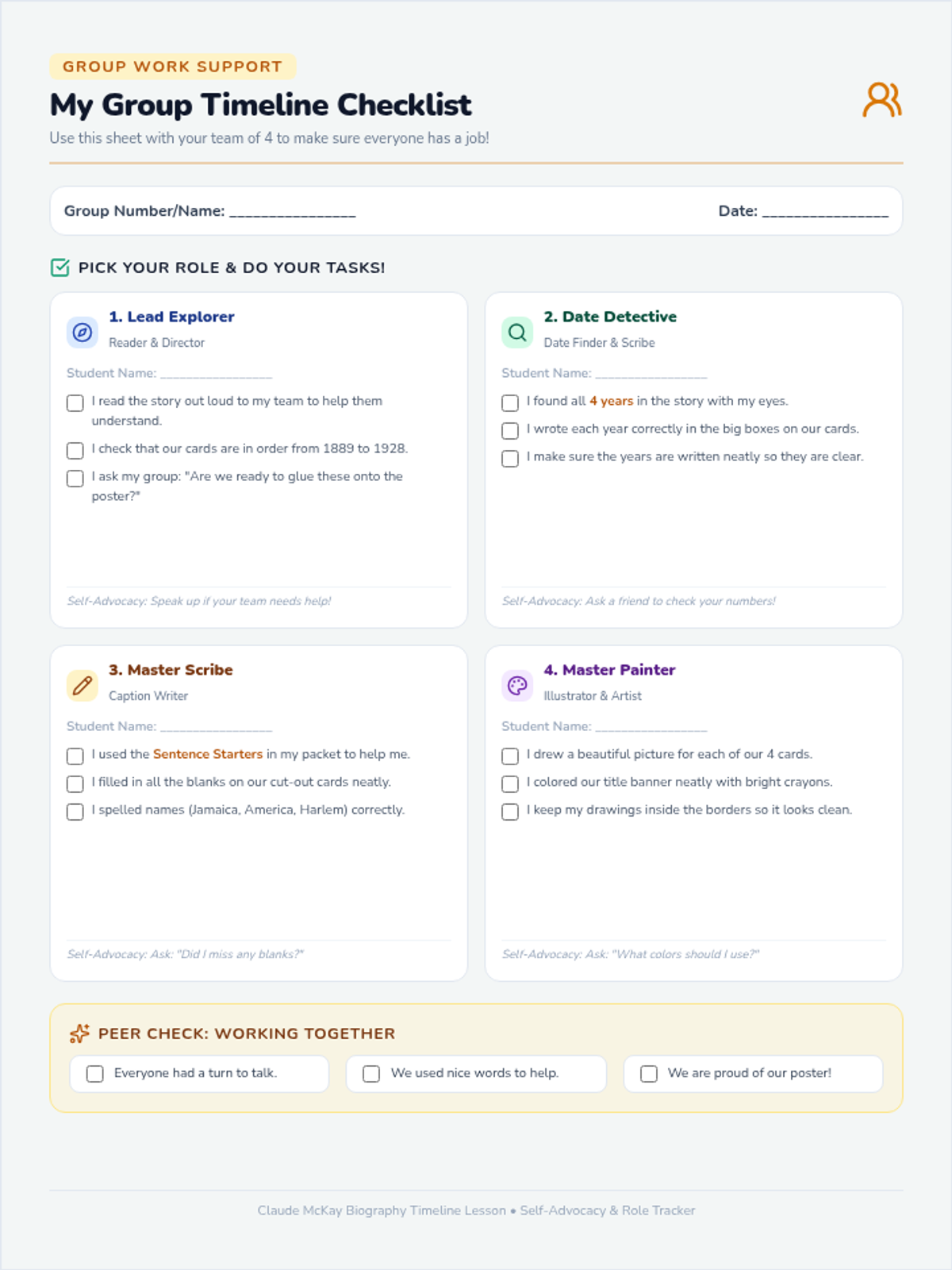
A highly scaffolded middle school lesson on Harlem Renaissance poet Claude McKay, adapted for a first-grade reading level. Includes a text analysis, footnote glossary, comprehension questions, a group timeline poster project, and support tools for co-teachers.
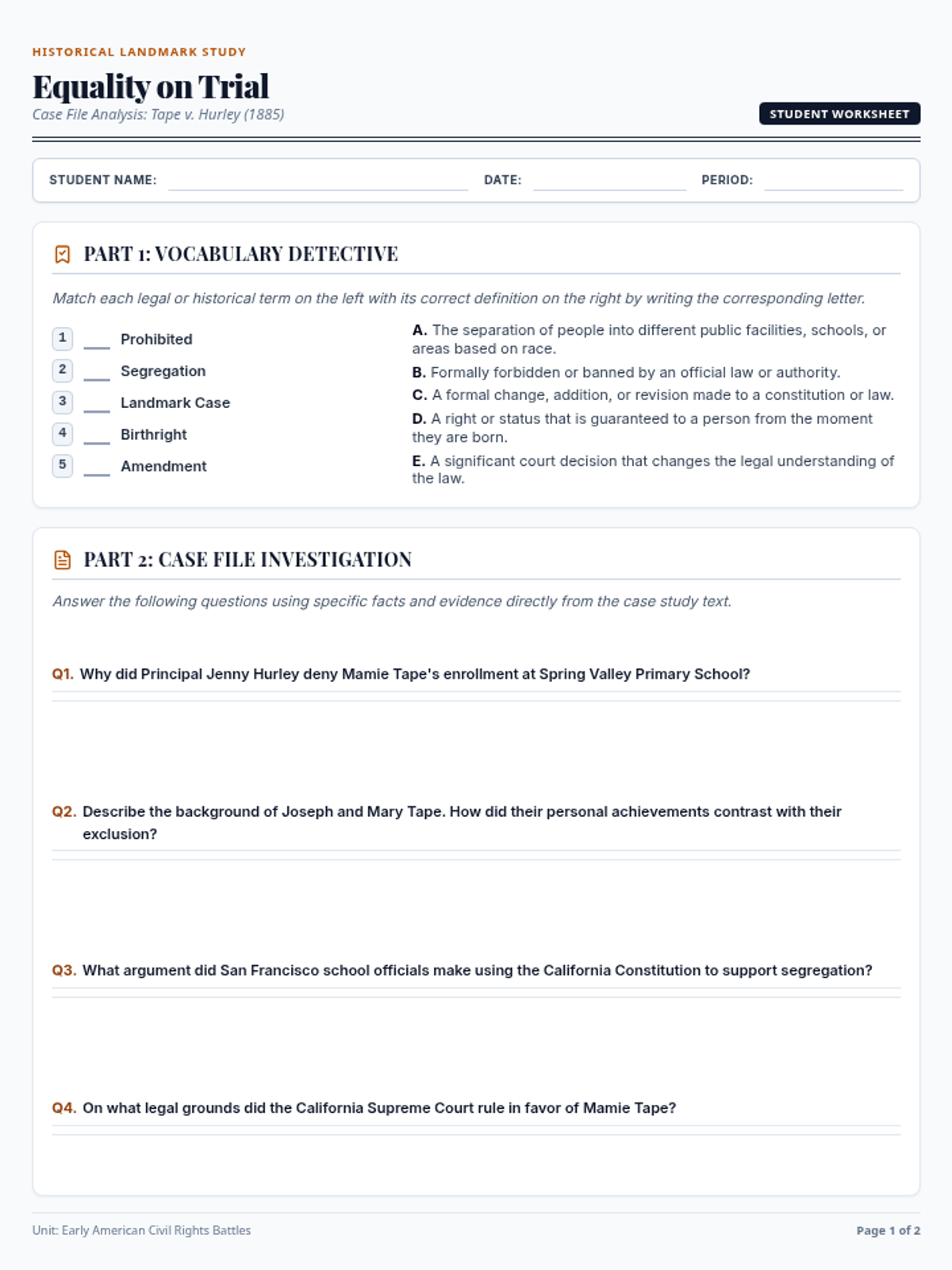
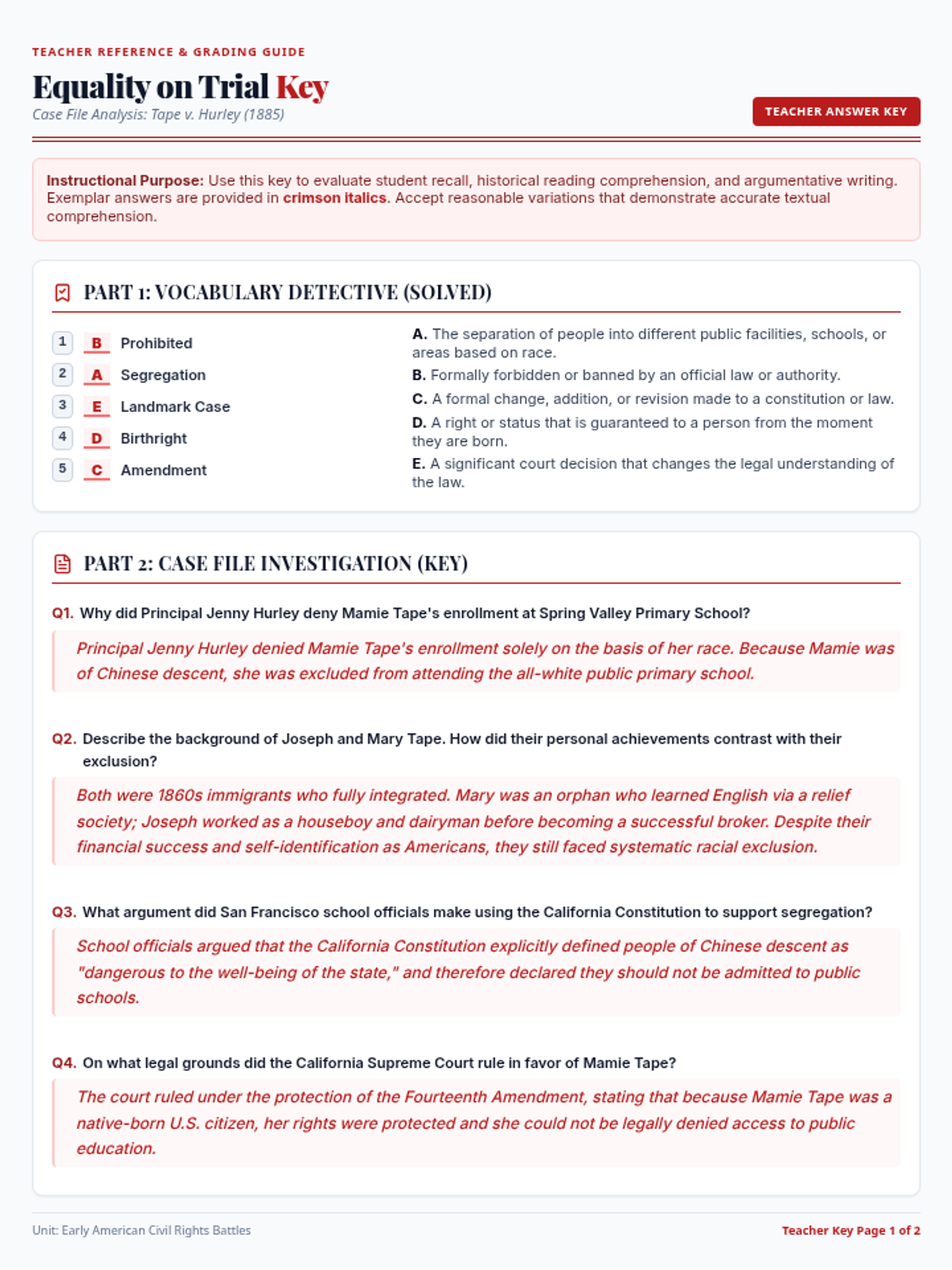
A lesson centered on the landmark civil rights case Tape v. Hurley (1885), examining the Tape family's fight for public education in San Francisco and its historical links to Mendez v. Westminster and Brown v. Board of Education.
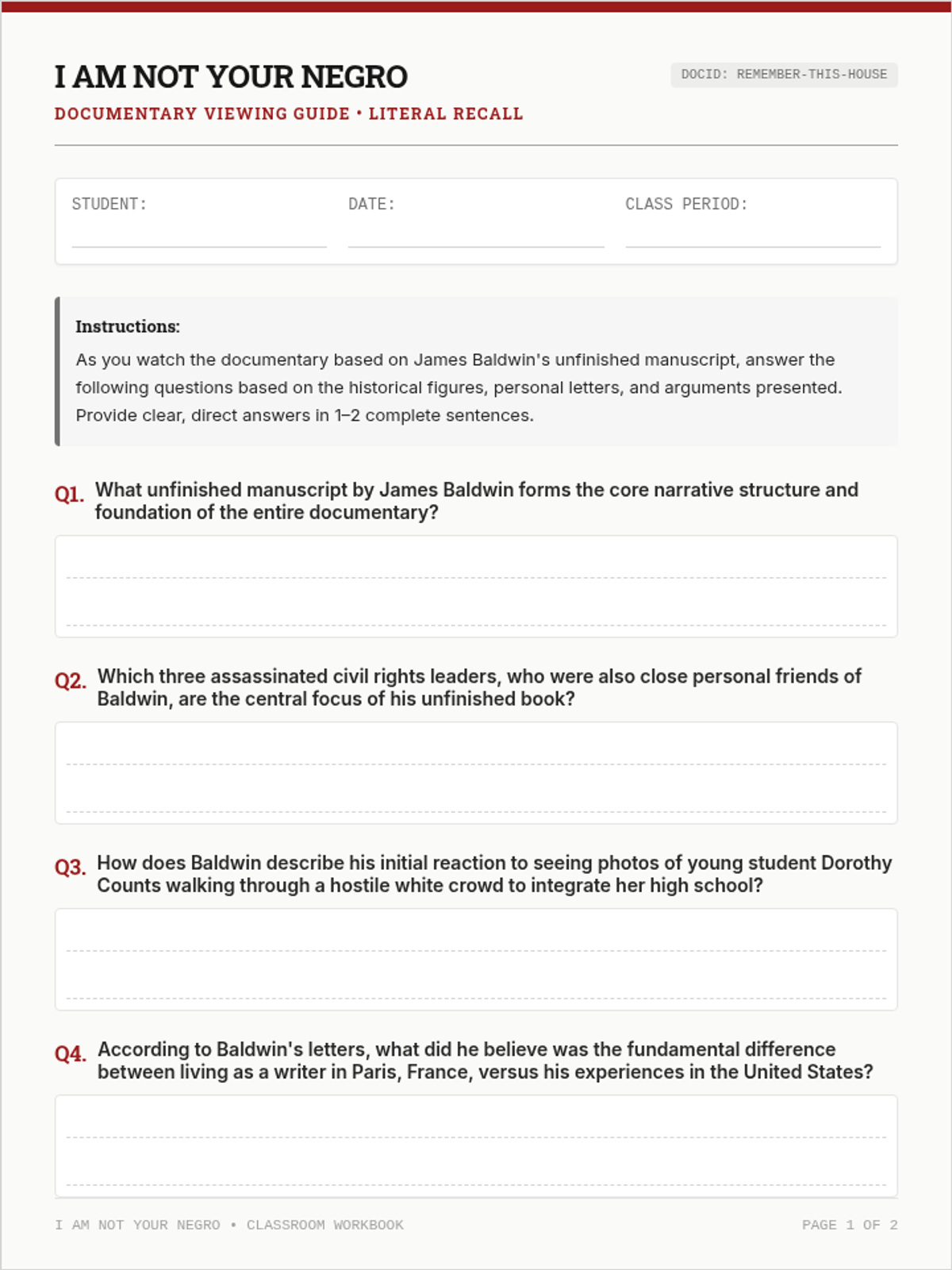
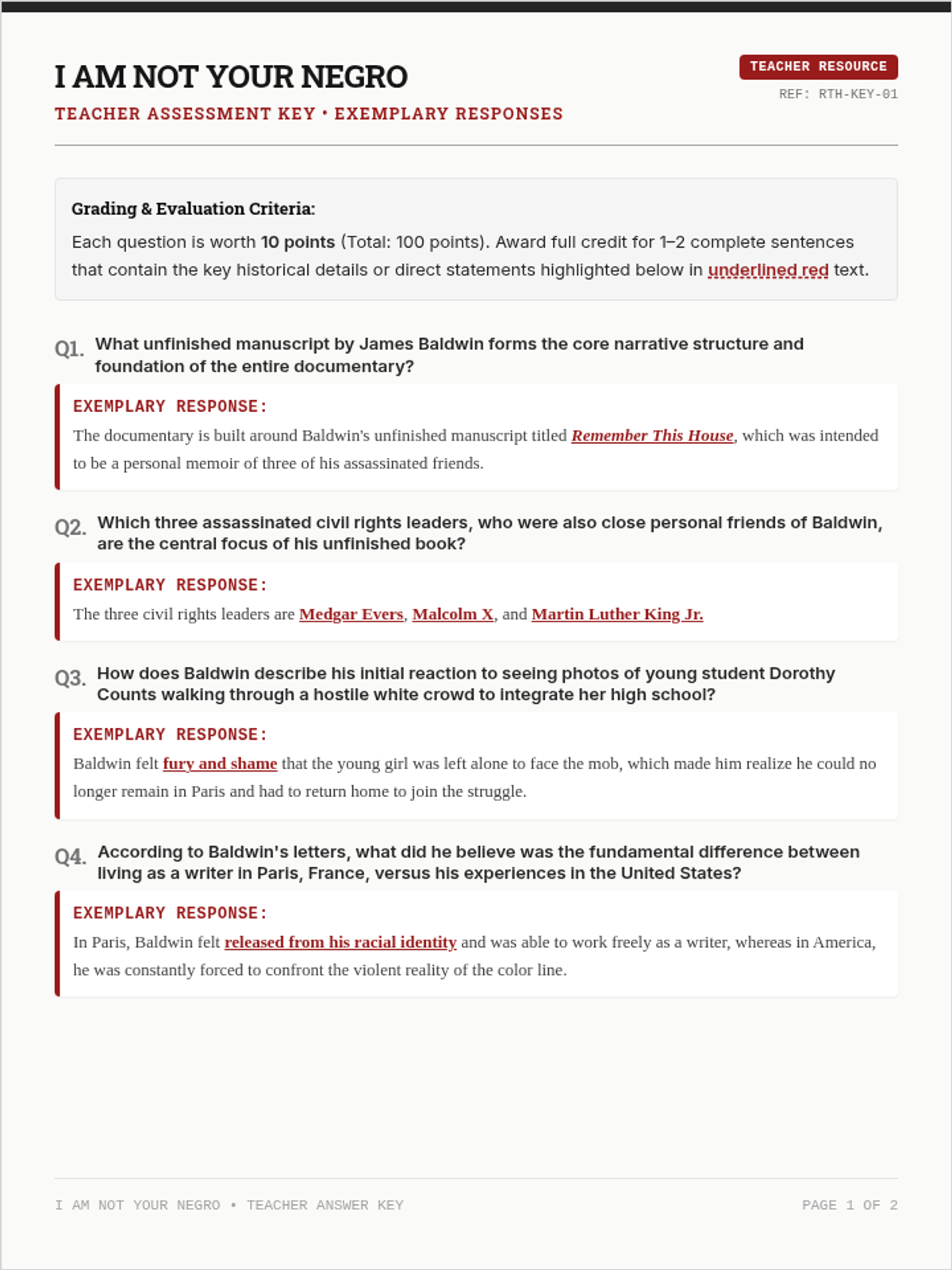
A high school/college level history and literature lesson focused on James Baldwin's documentary 'I Am Not Your Negro'. It examines literal comprehension and recall of key historical figures, events, and Baldwin's core arguments about race, media, and American identity.
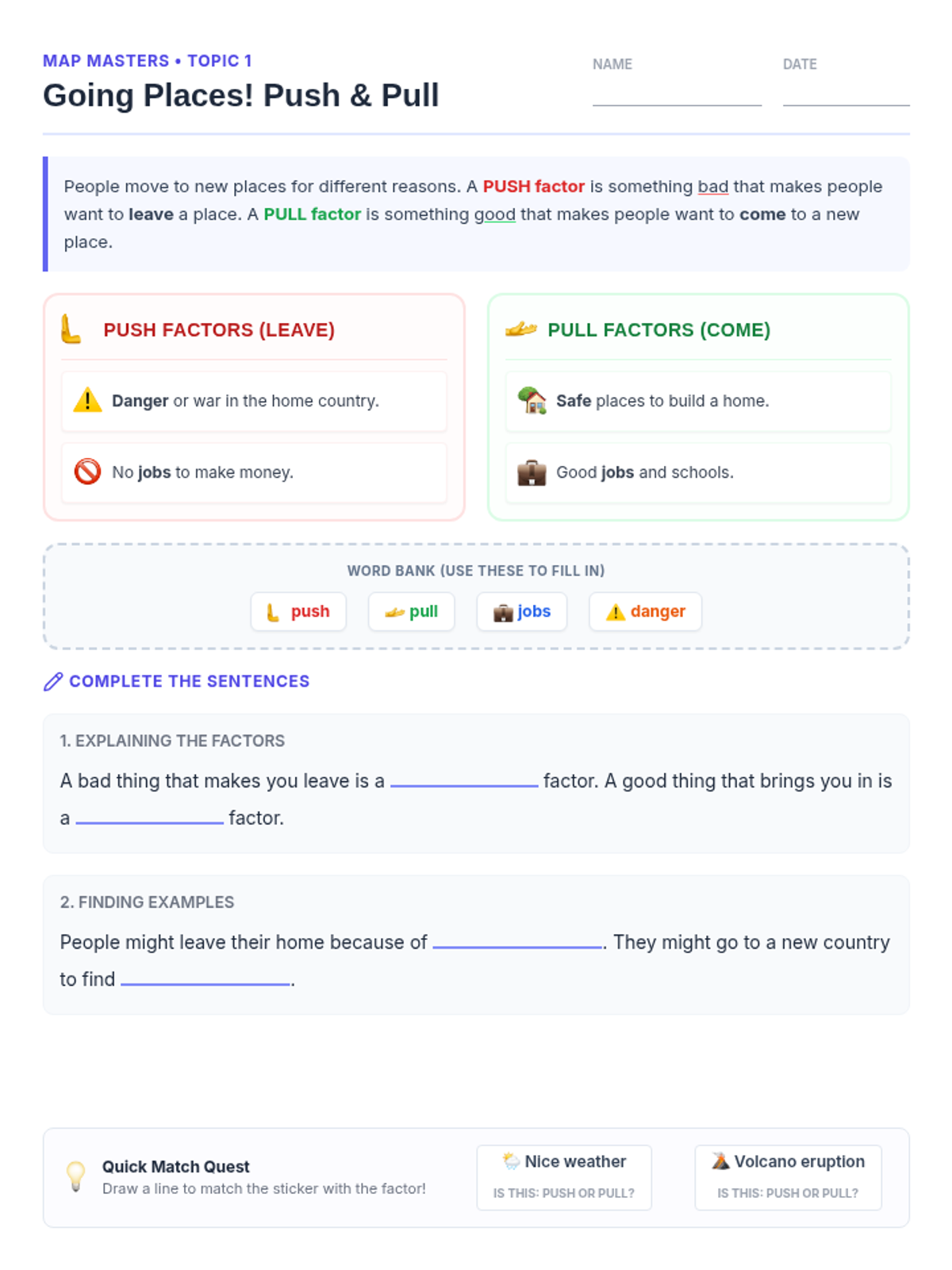
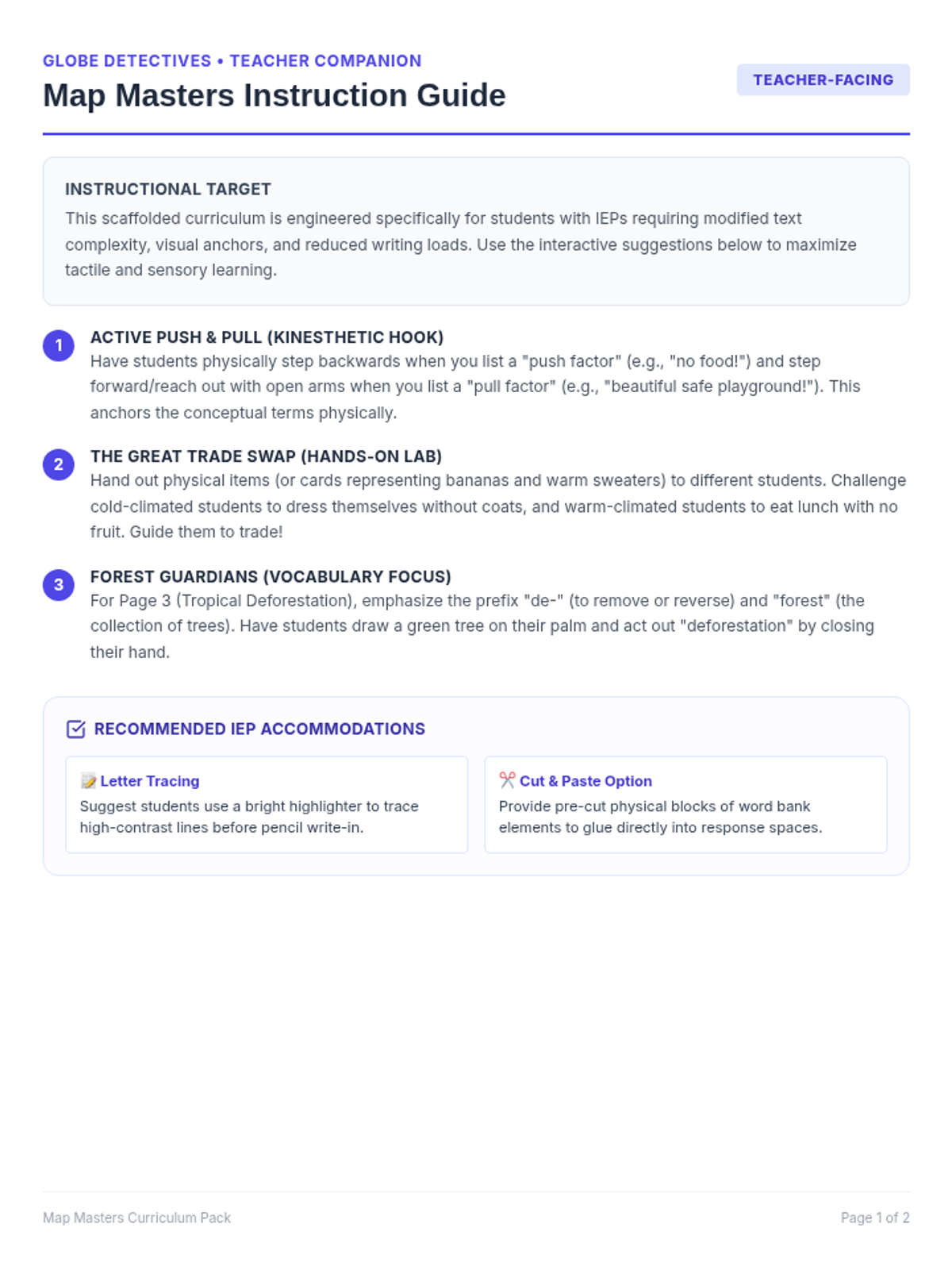
A scaffolded geography lesson exploring push and pull migration factors, global trade, and tropical deforestation with extensive visual supports and sentence frames designed for IEP accessibility.
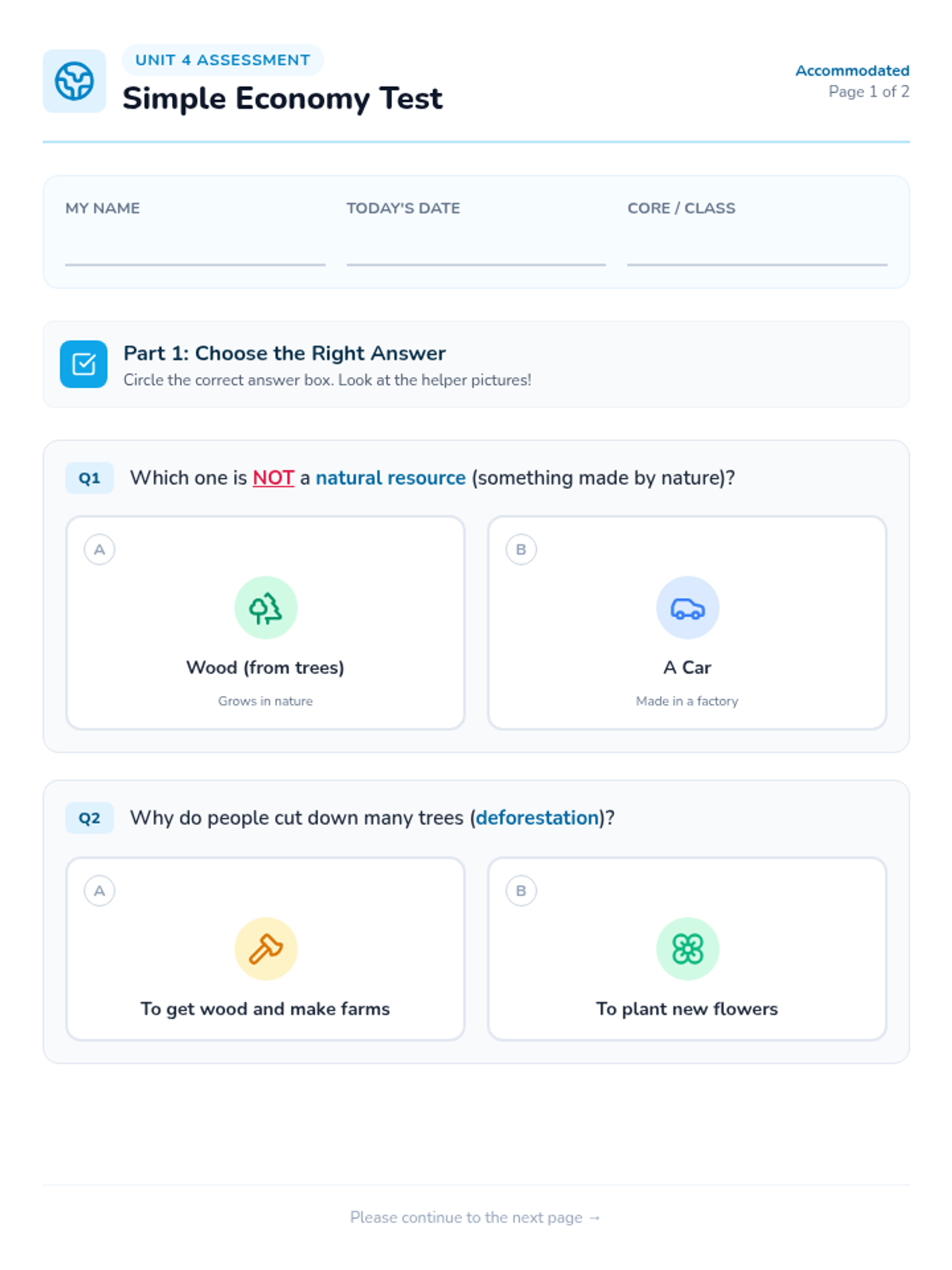
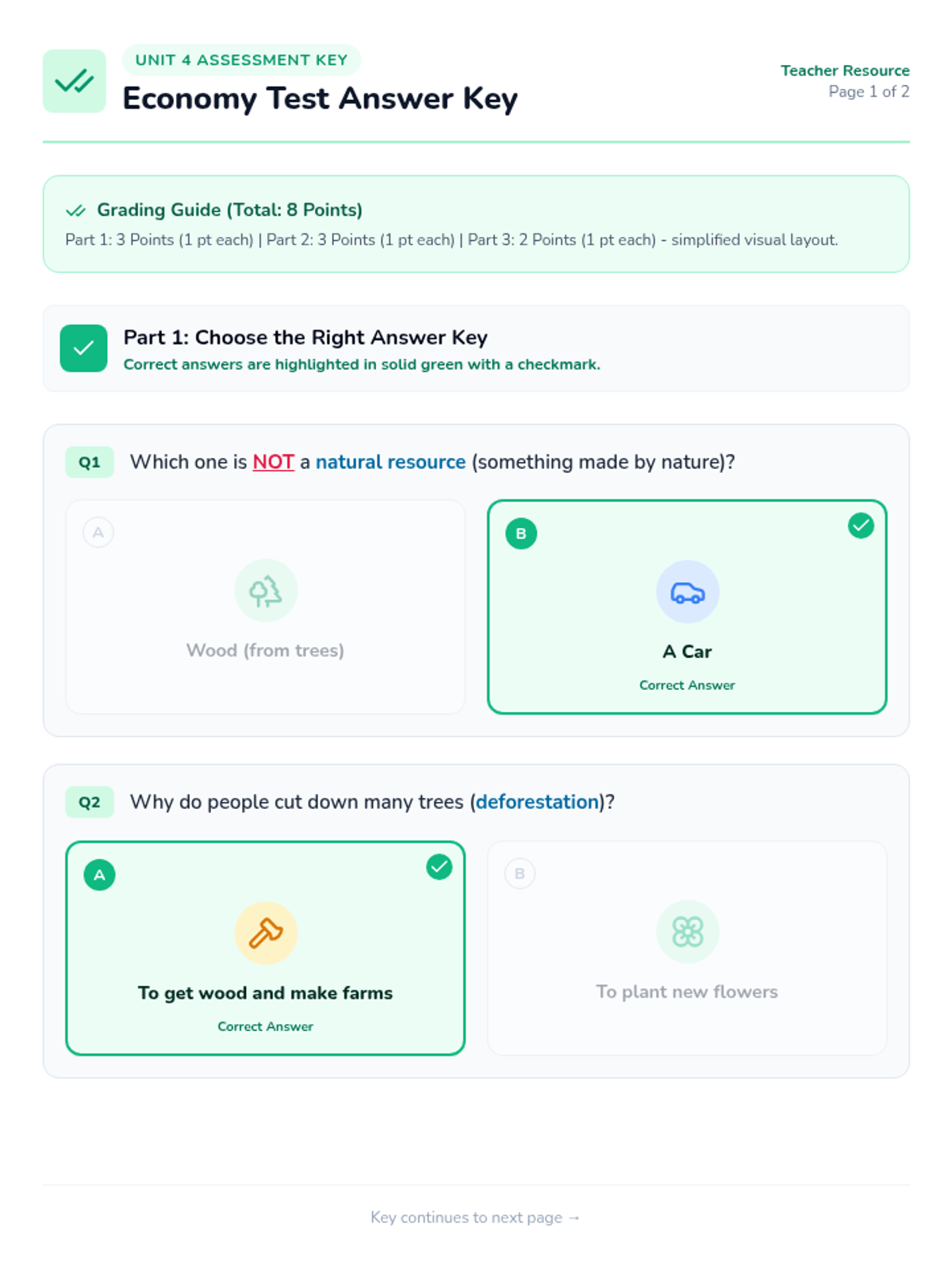
A modified, highly accessible economics assessment package tailored for students with IEP accommodations. Features simplified reading level, reduced multiple-choice options, bolded key terms, clear visual icons, and an intuitive match-by-letter format instead of complex grids.
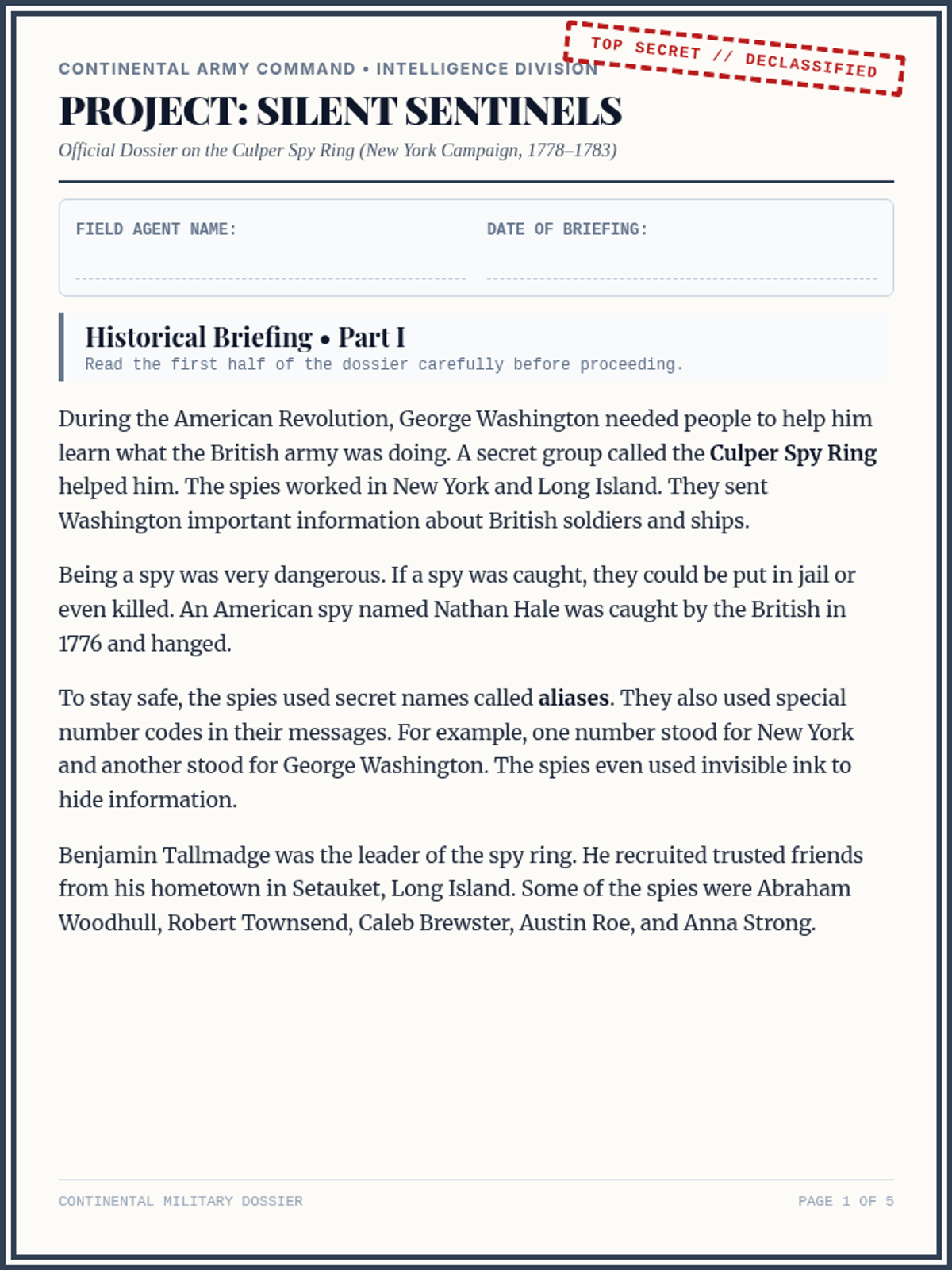
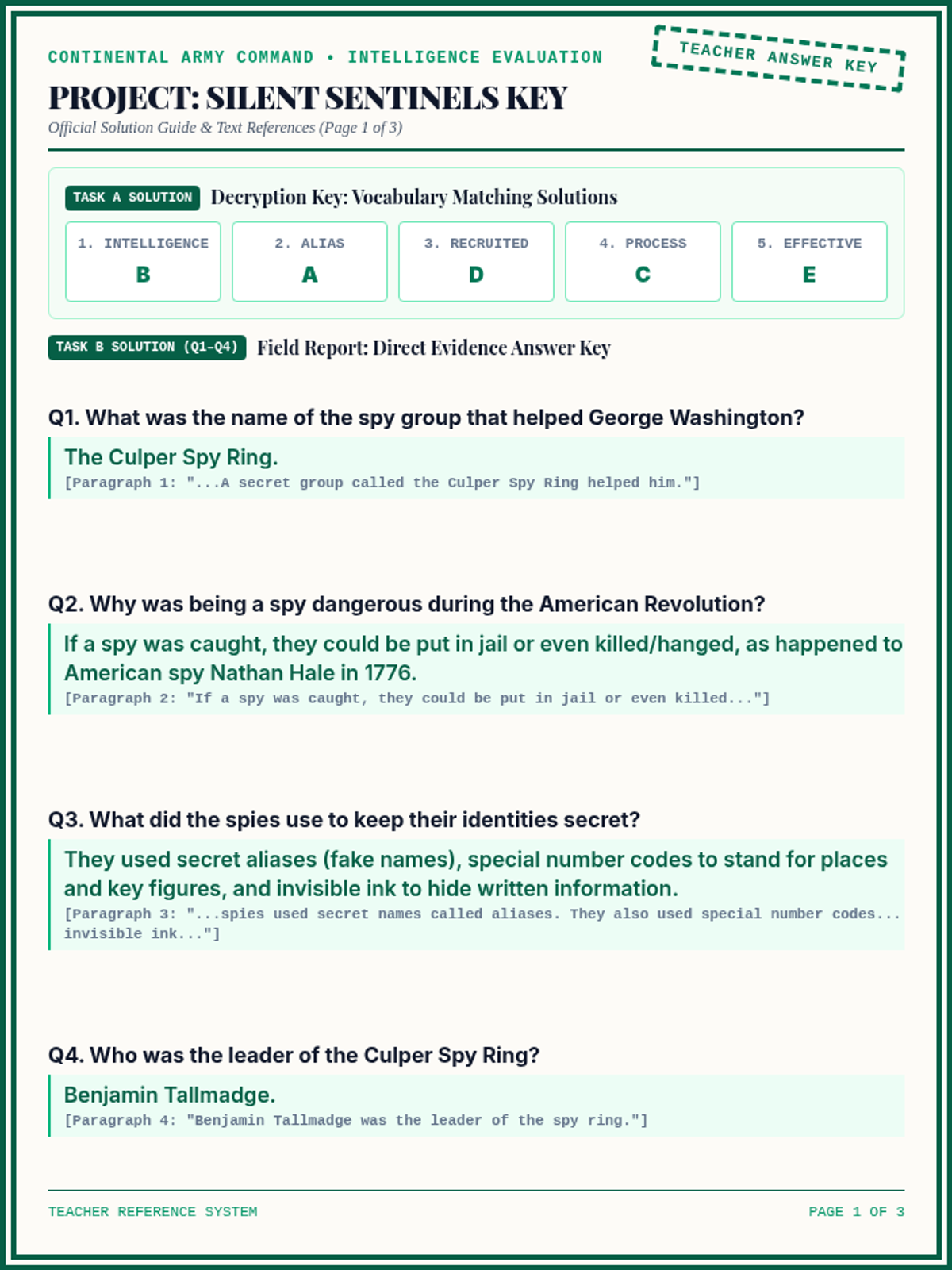
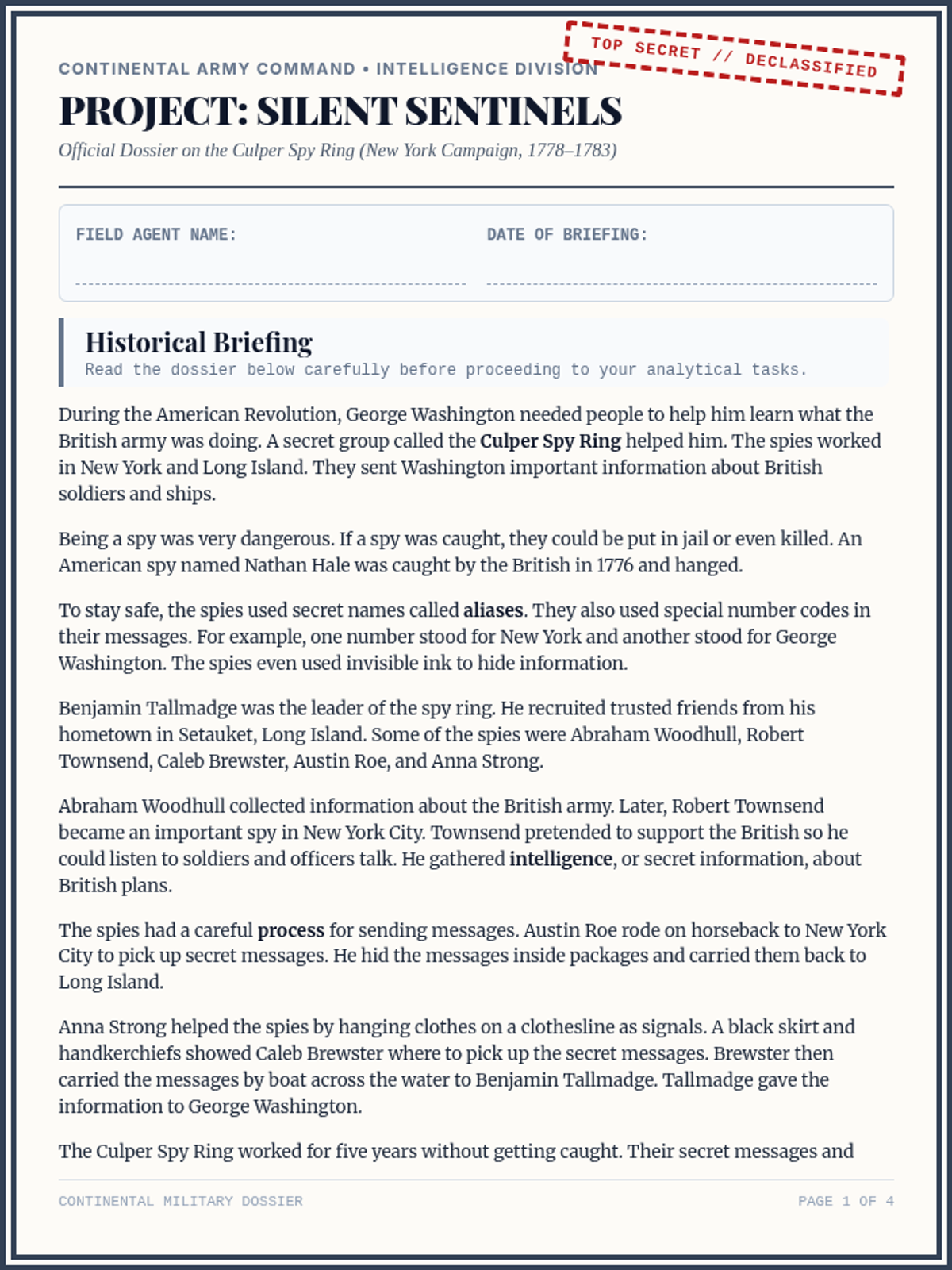
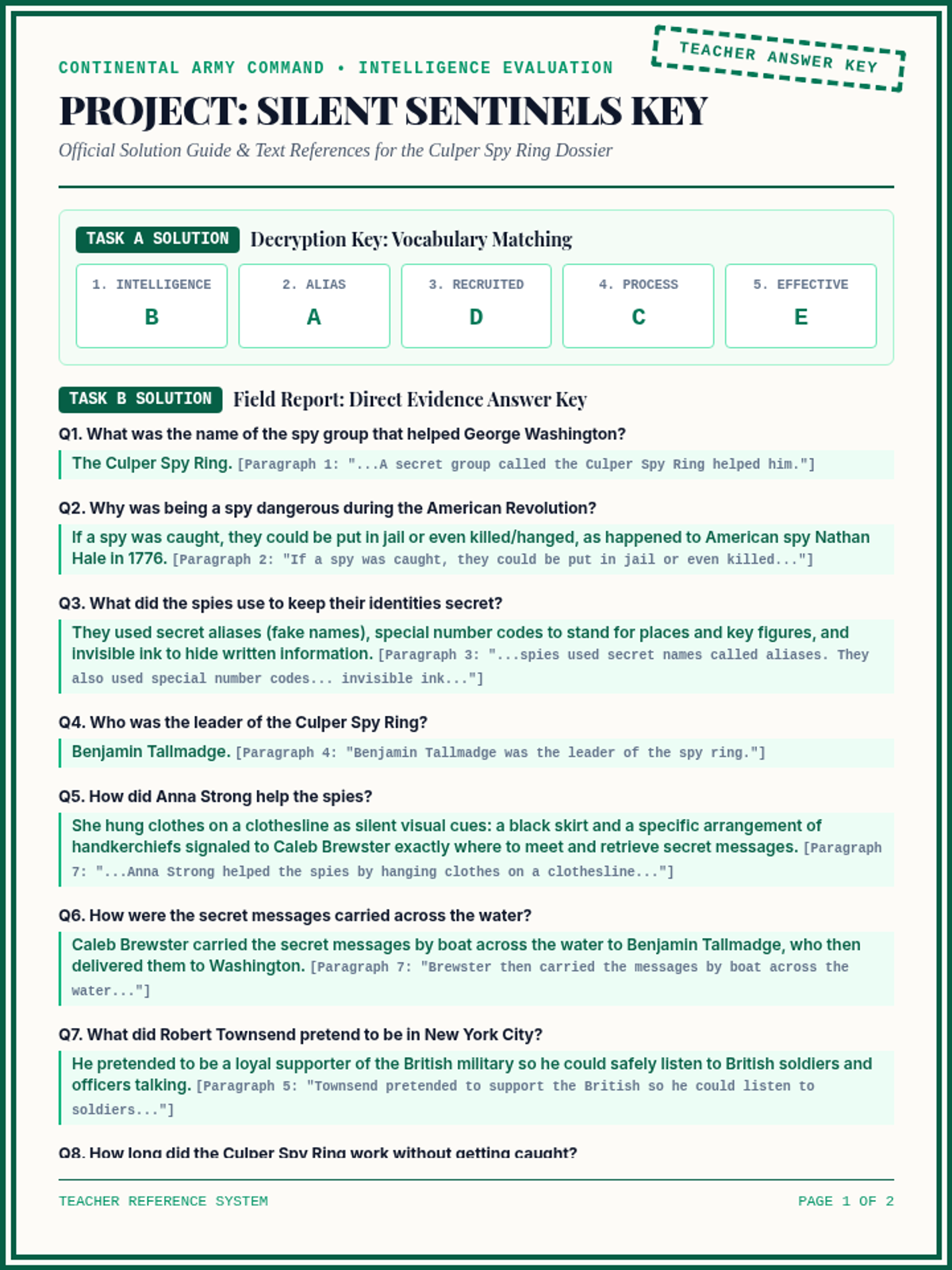
A comprehensive lesson on the Culper Spy Ring during the American Revolution. Students read about the historical secret agent network, master key espionage vocabulary, and analyze literal and inferential comprehension questions in a structured, multi-page intelligence file format.
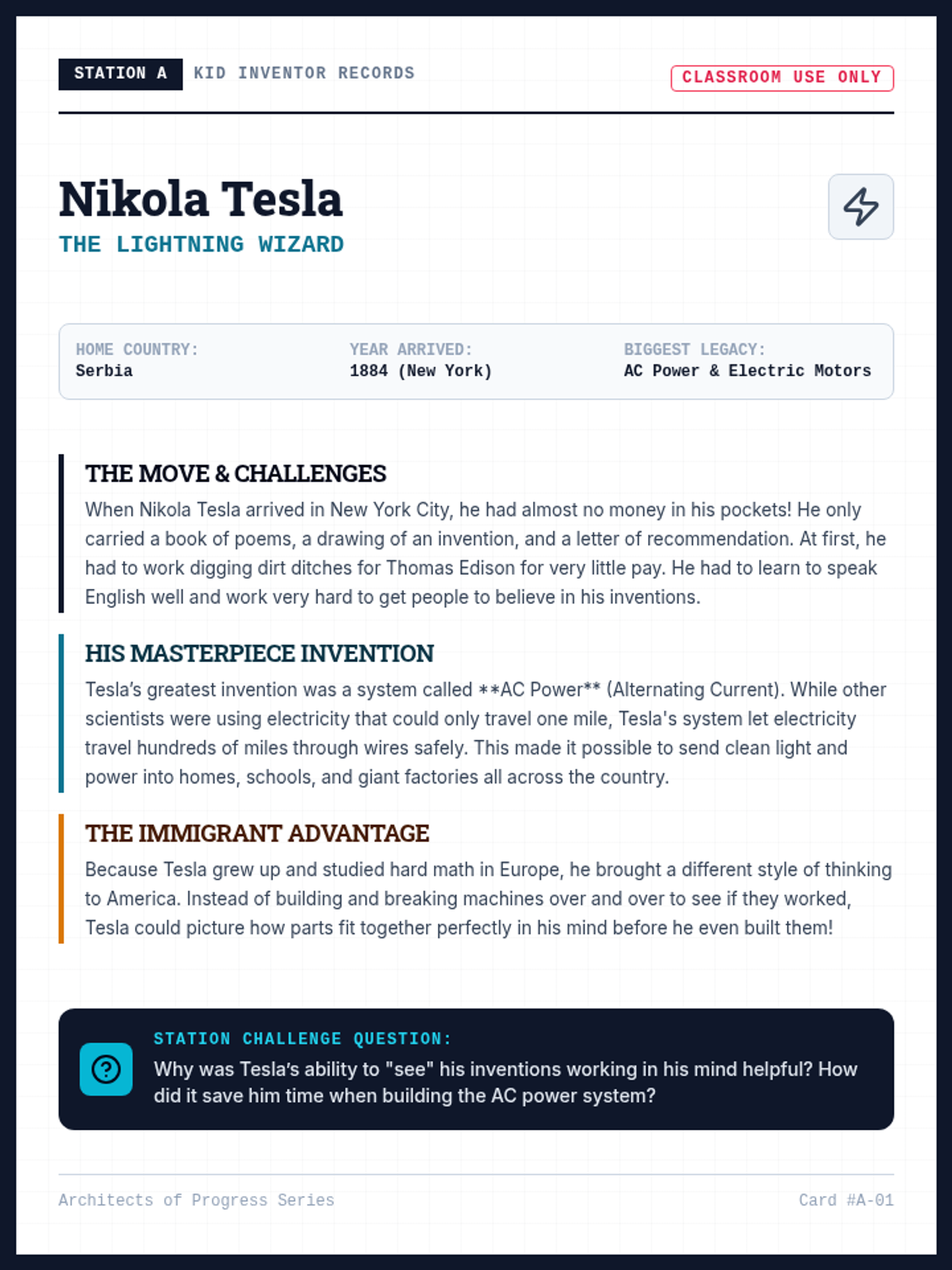
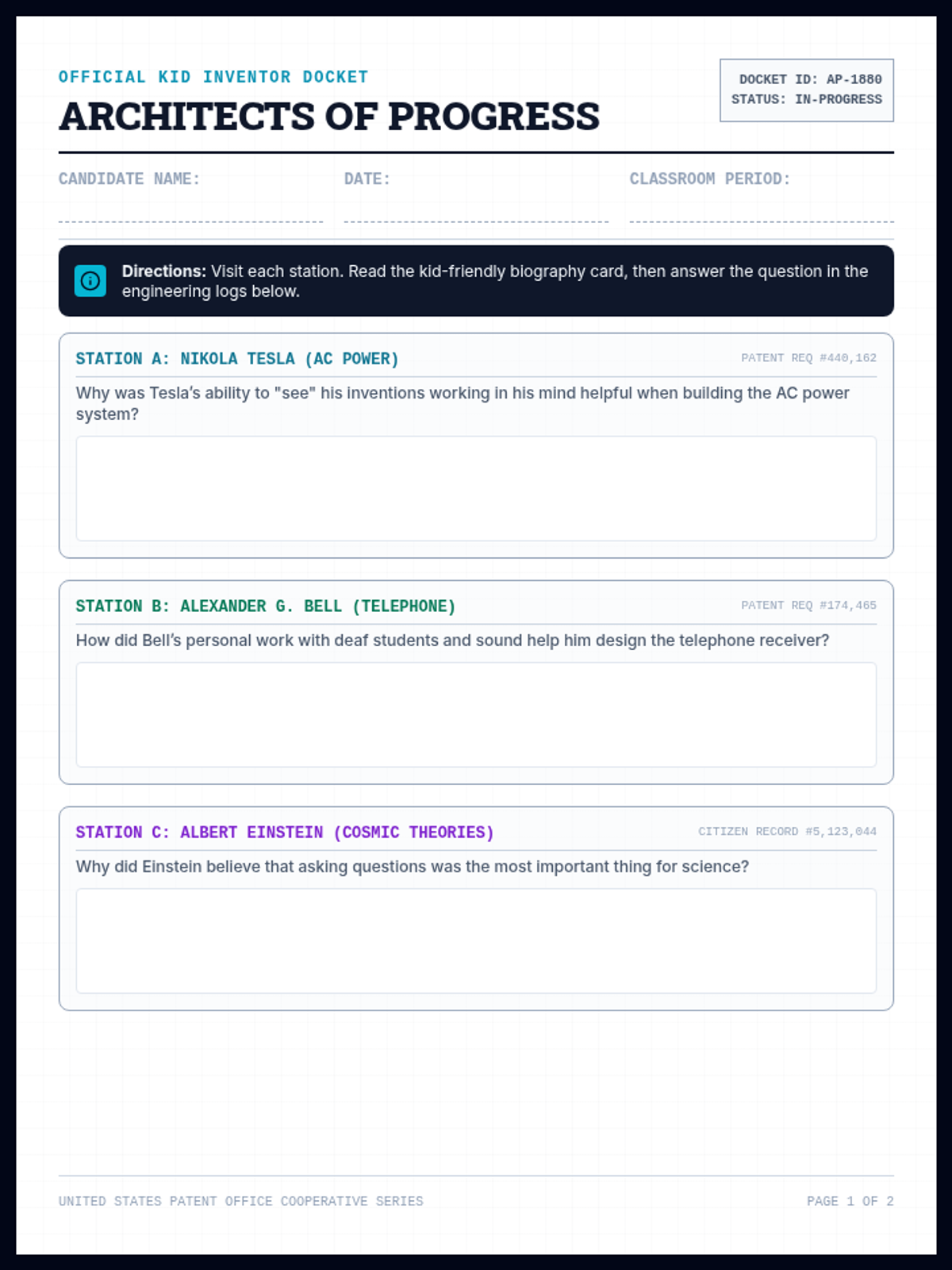
An exploration of extraordinary immigrants who shaped the modern United States through groundbreaking inventions, scientific discoveries, and iconic architectural feats. Students analyze the lives of Nikola Tesla, Alexander Graham Bell, Albert Einstein, John Roebling, and Alexandre Eiffel, examining how their diverse backgrounds fueled American innovation.
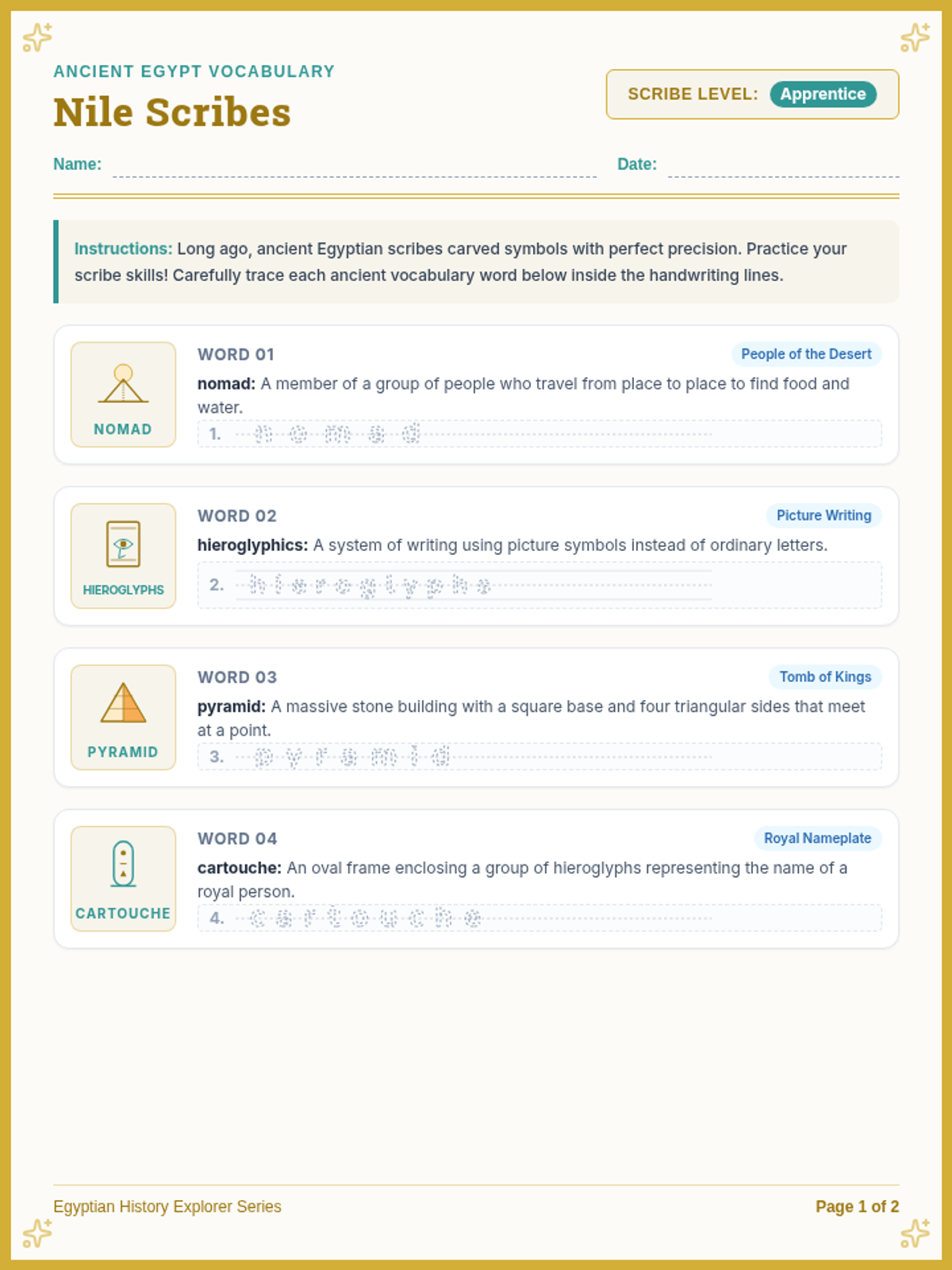
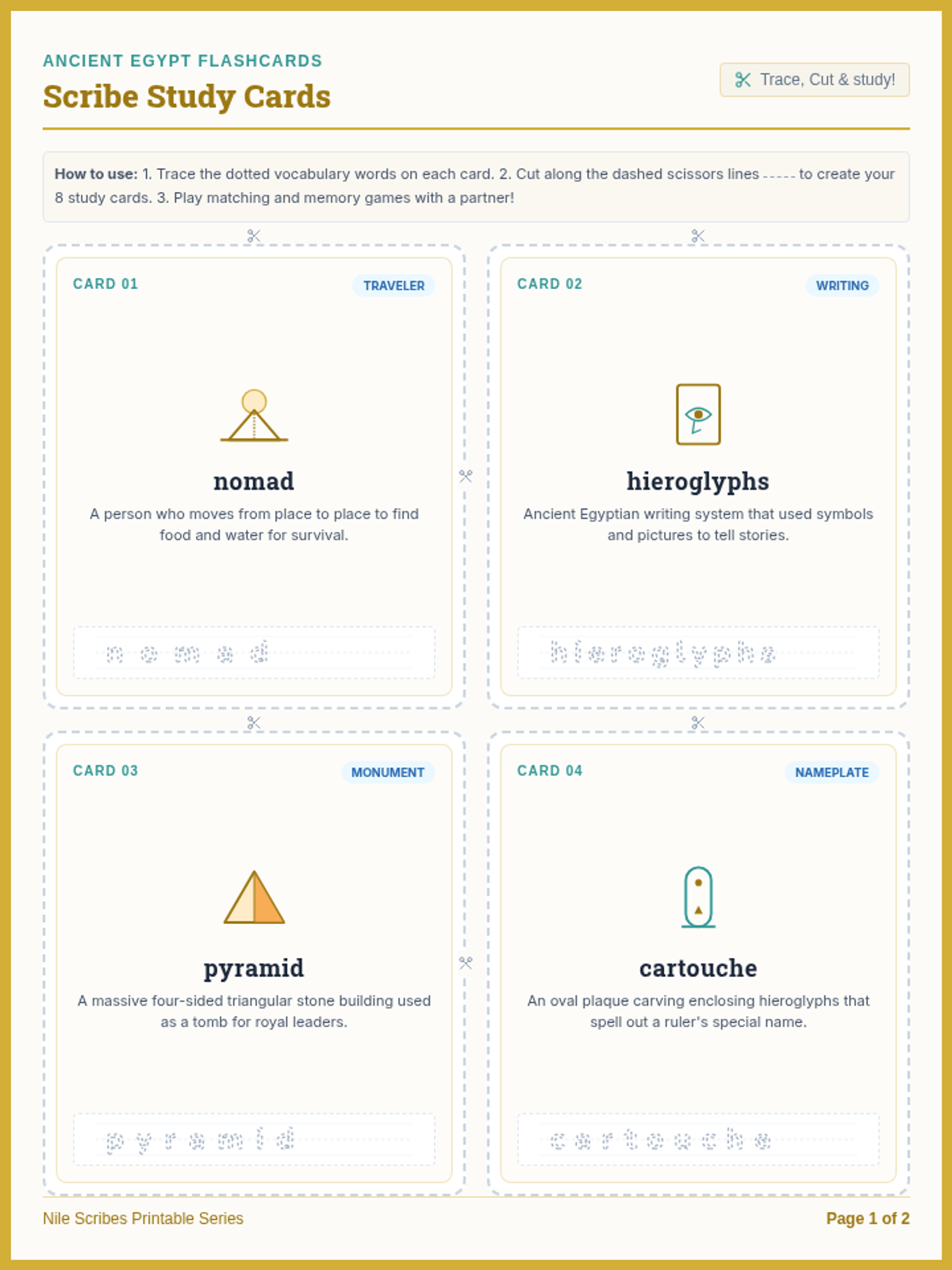
An introductory early-literacy vocabulary lesson about Ancient Egypt. Students learn key terms through tactile hands-on tracing worksheets, vocabulary matching games, and printable trace-and-cut flashcards.
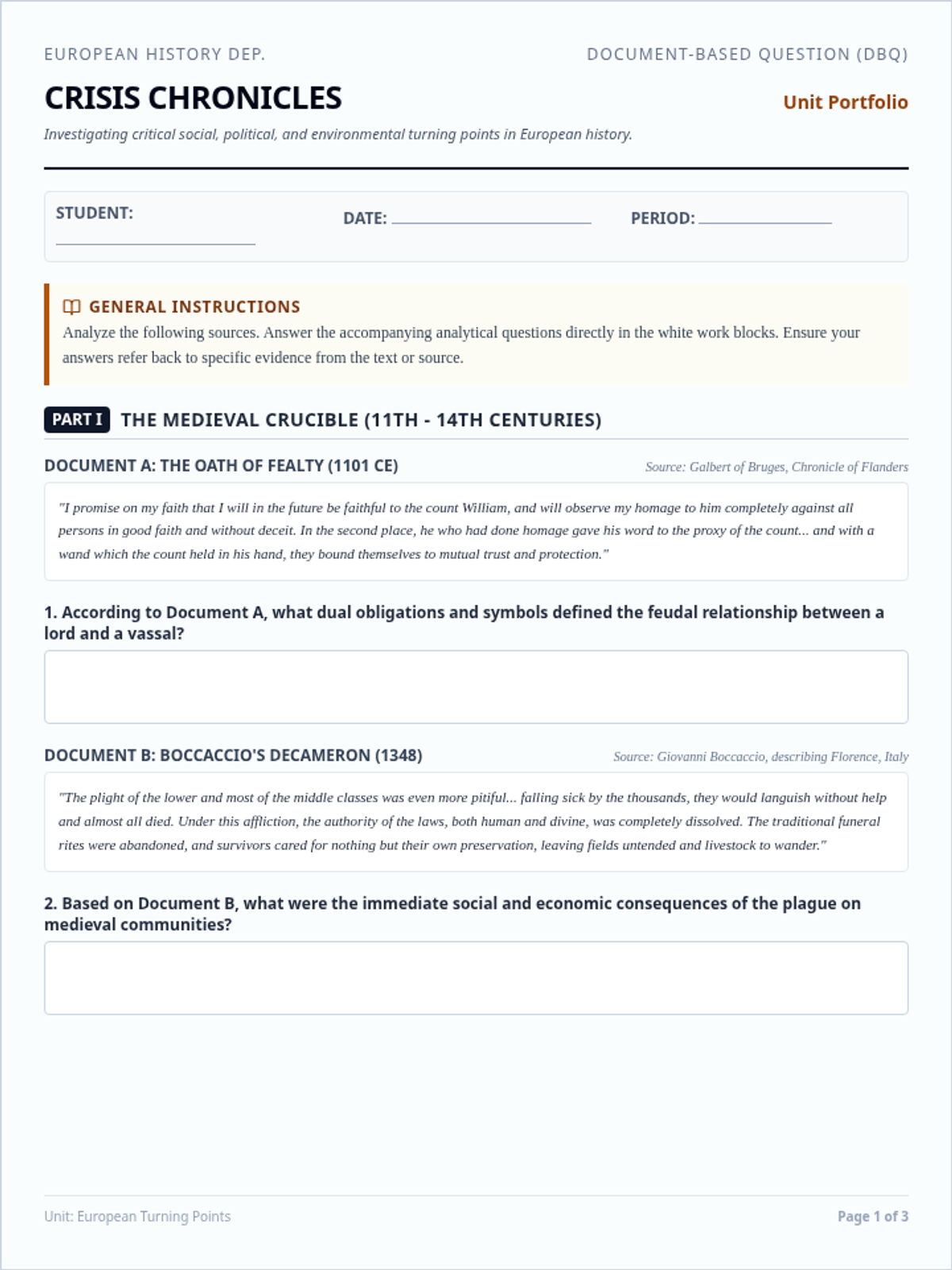
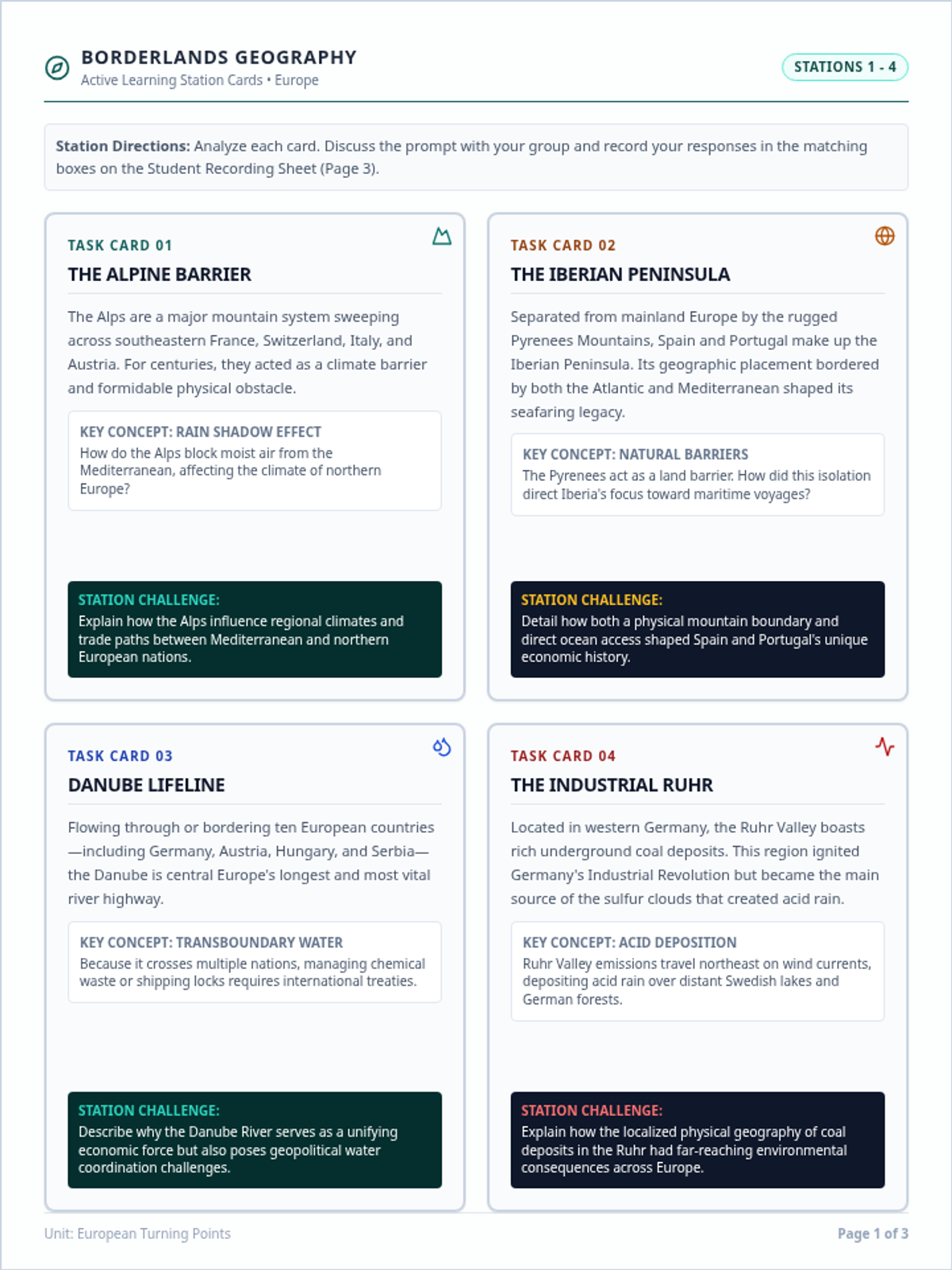
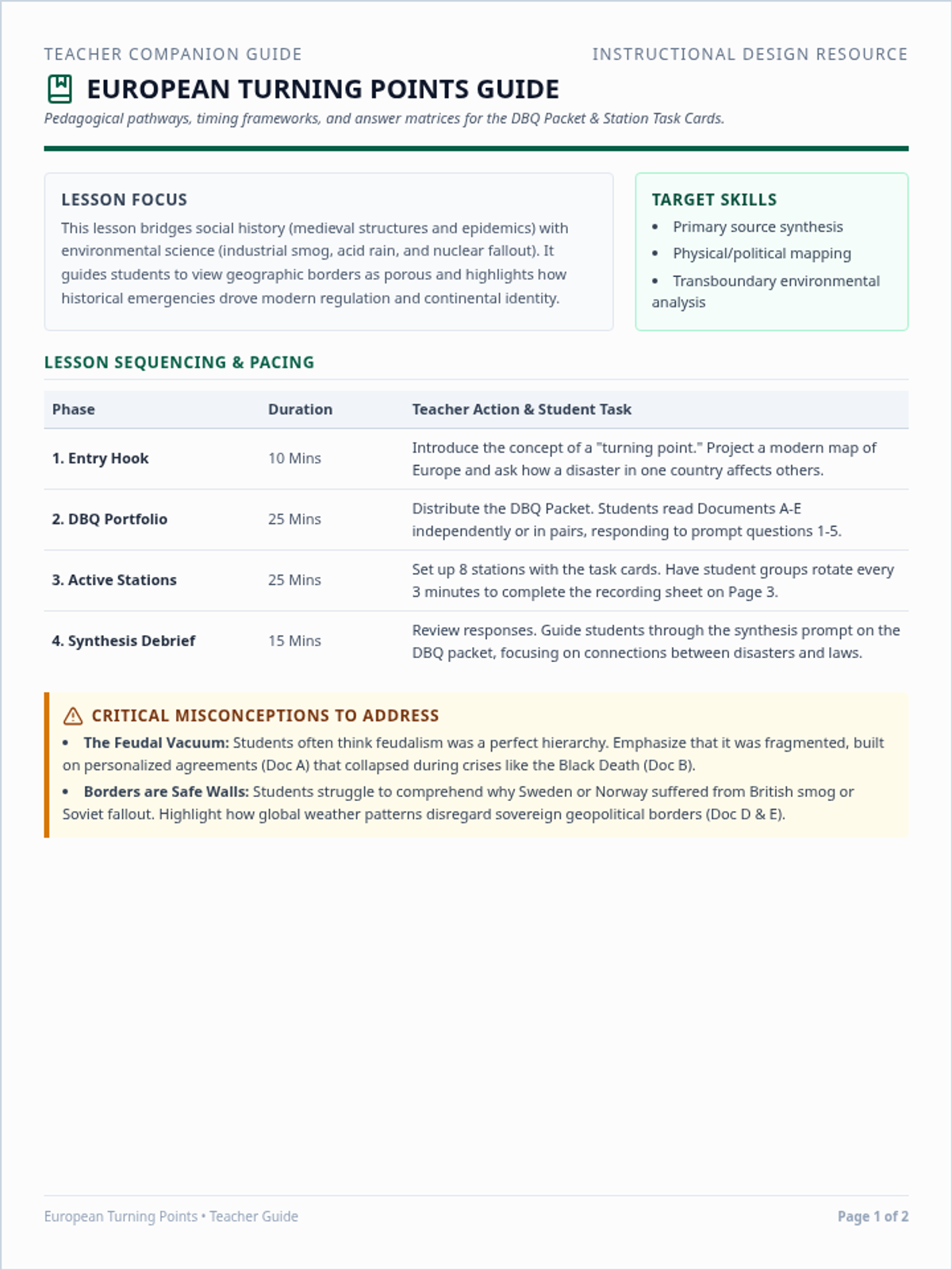
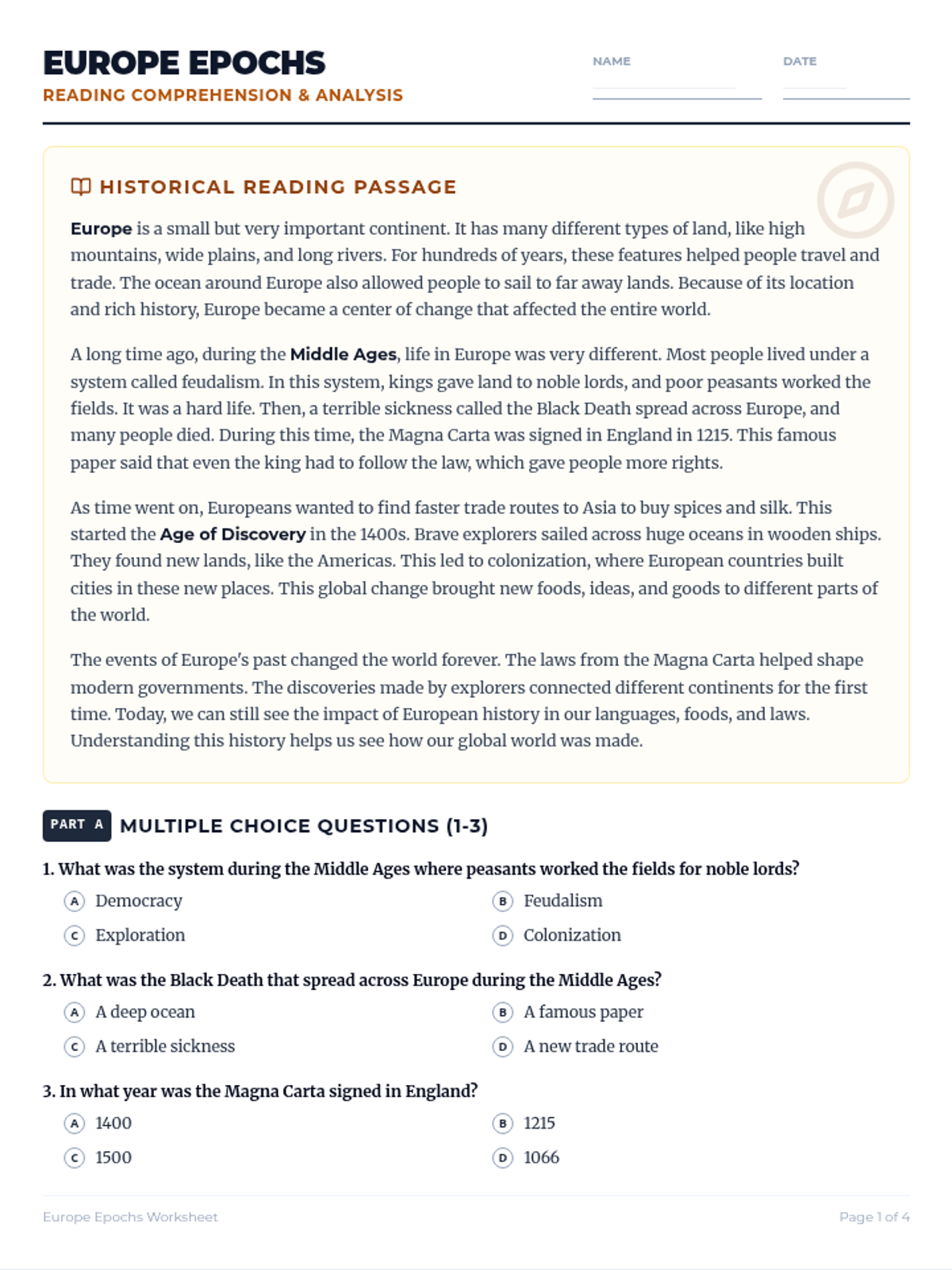
A multi-faceted historical and geographical investigation of Europe, examining critical physical features and key crises from the Middle Ages to modern environmental challenges.
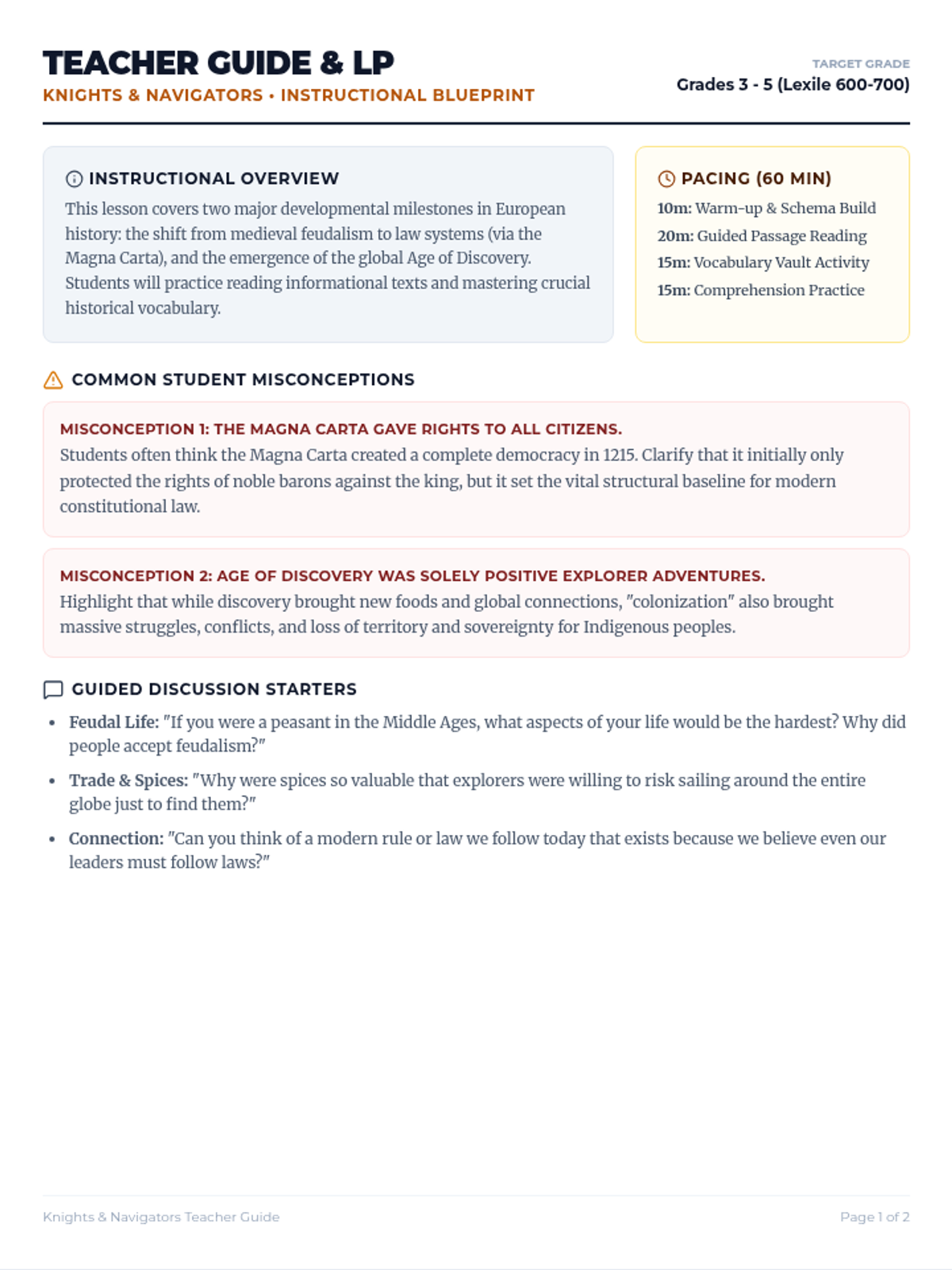
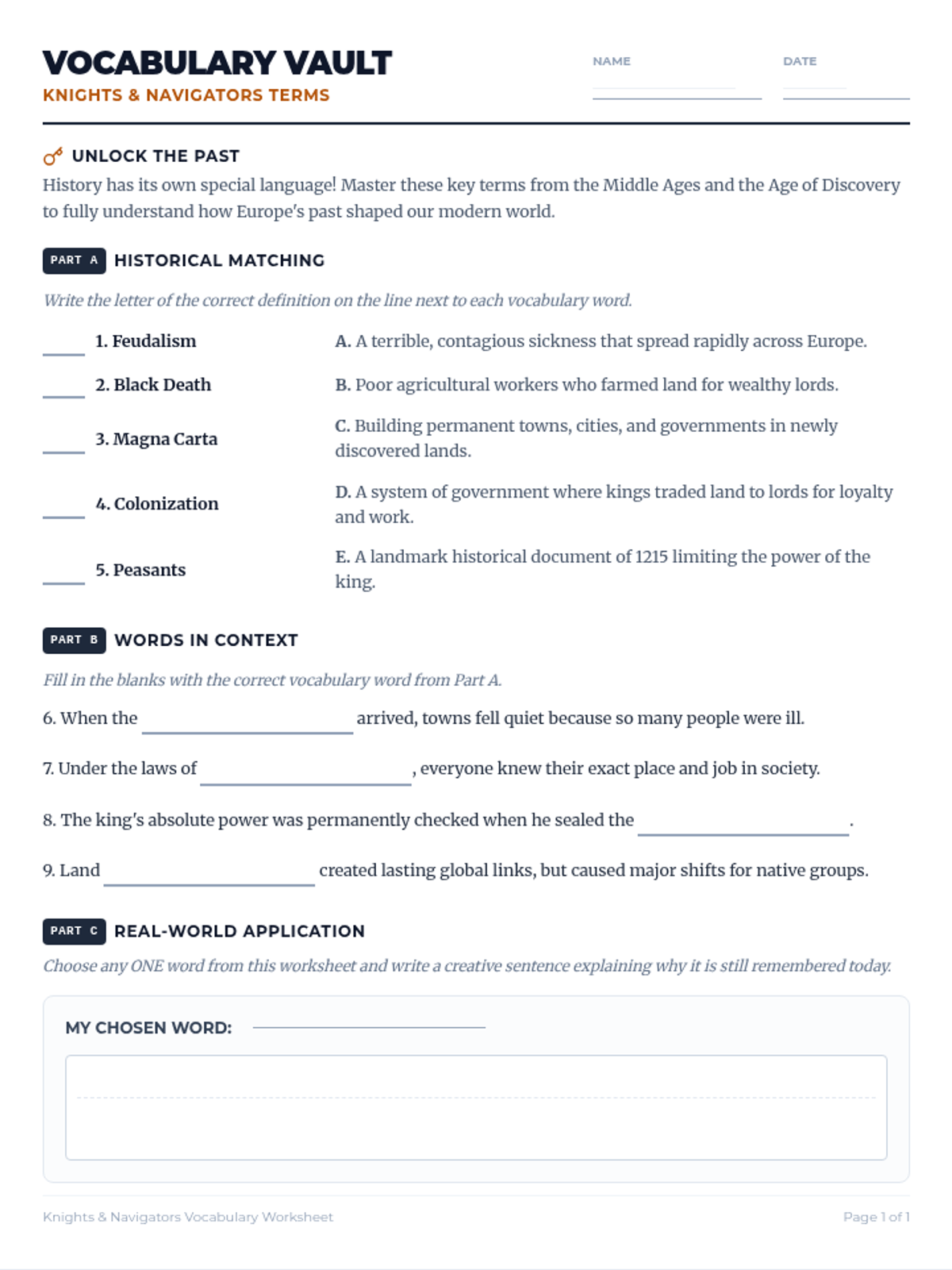
A fun and engaging history lesson exploring Europe during the Middle Ages and the Age of Discovery. Students read about key historical shifts, complete robust comprehension checks, and master vocabulary.
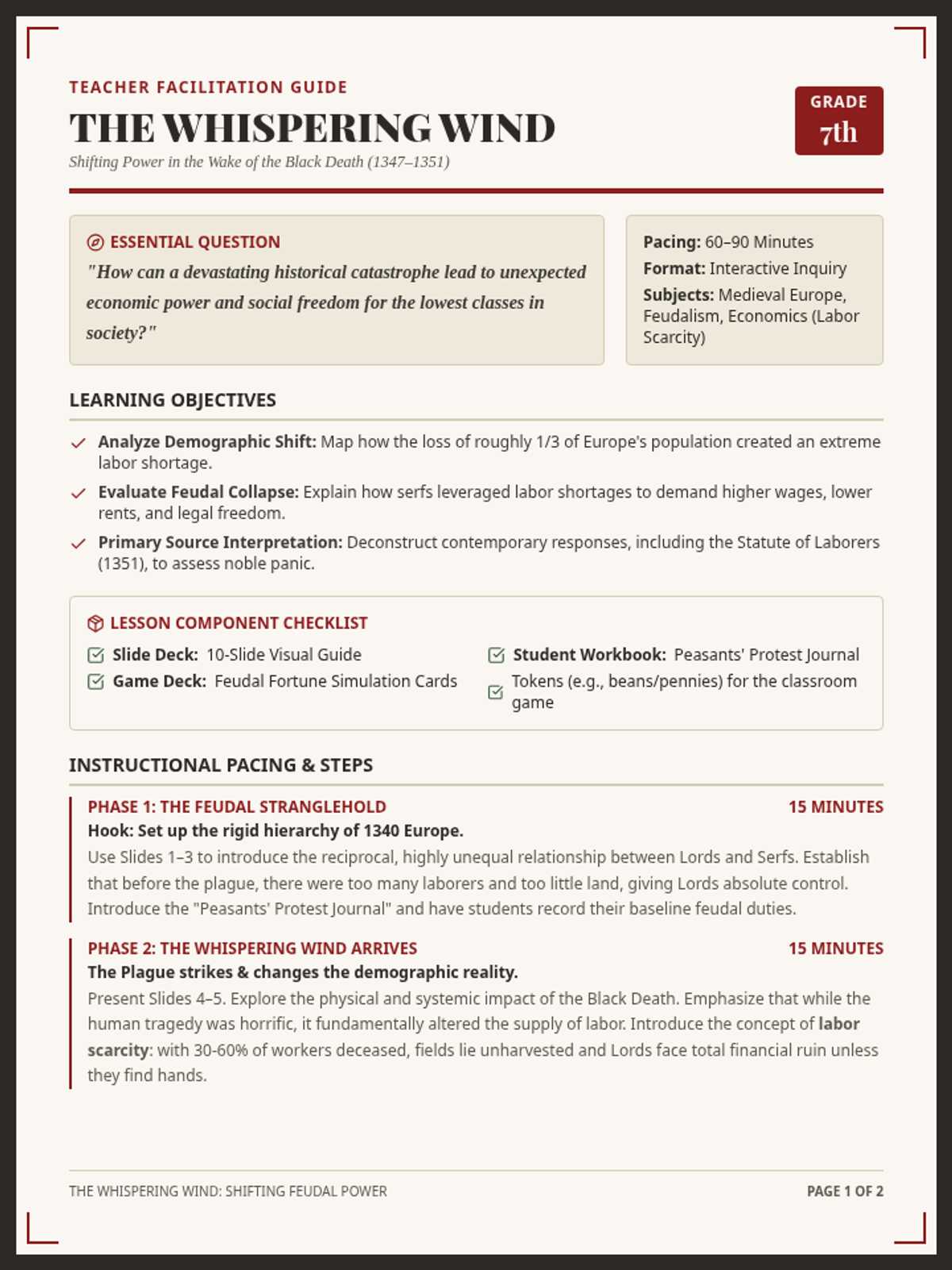
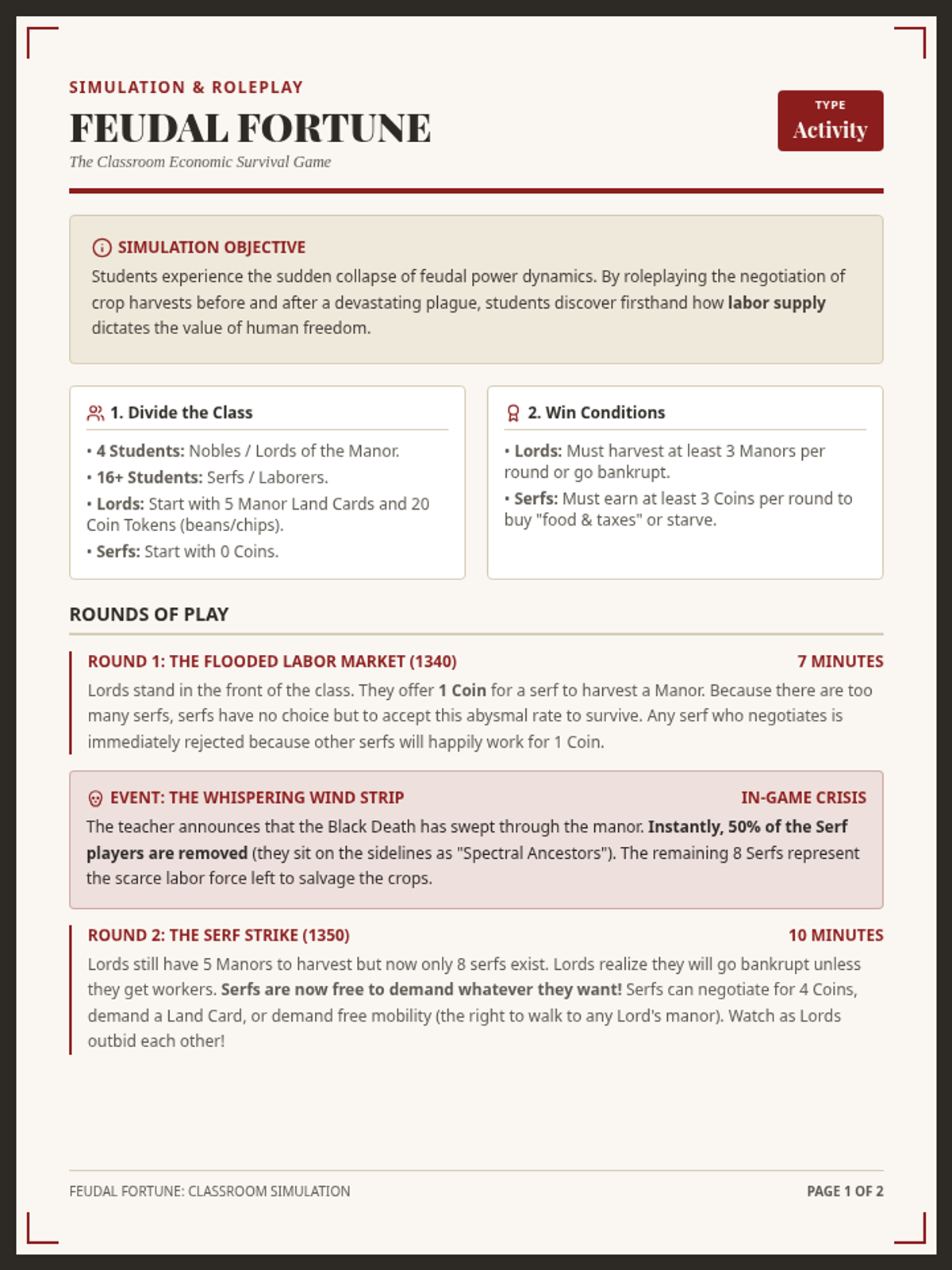
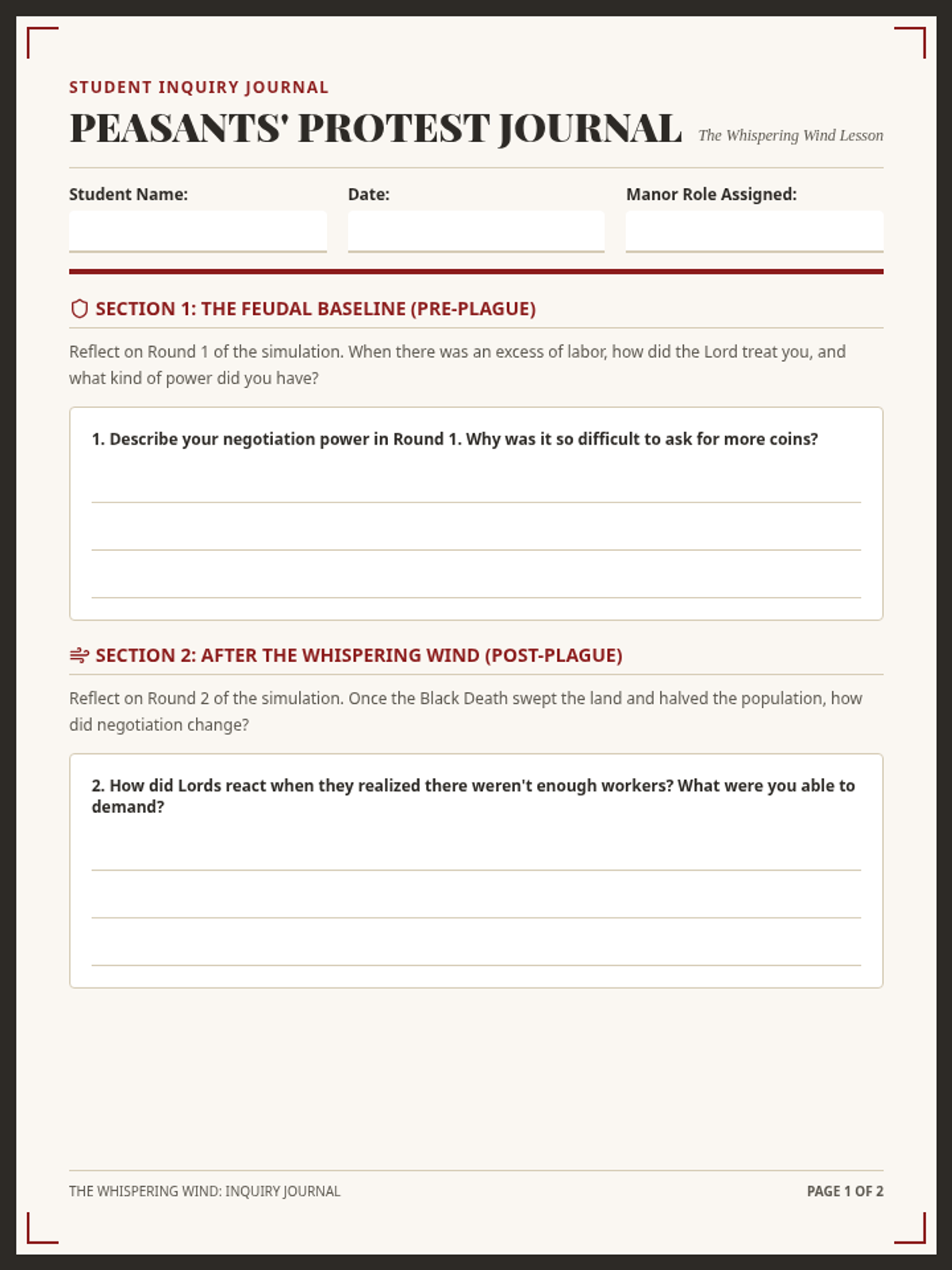
An inquiry-based lesson exploring how the demographic crisis of the 14th-century Black Death disrupted feudal structures in Europe. Students analyze labor scarcity, roleplay economic shifts, and evaluate primary sources to understand how catastrophe led to working-class empowerment.
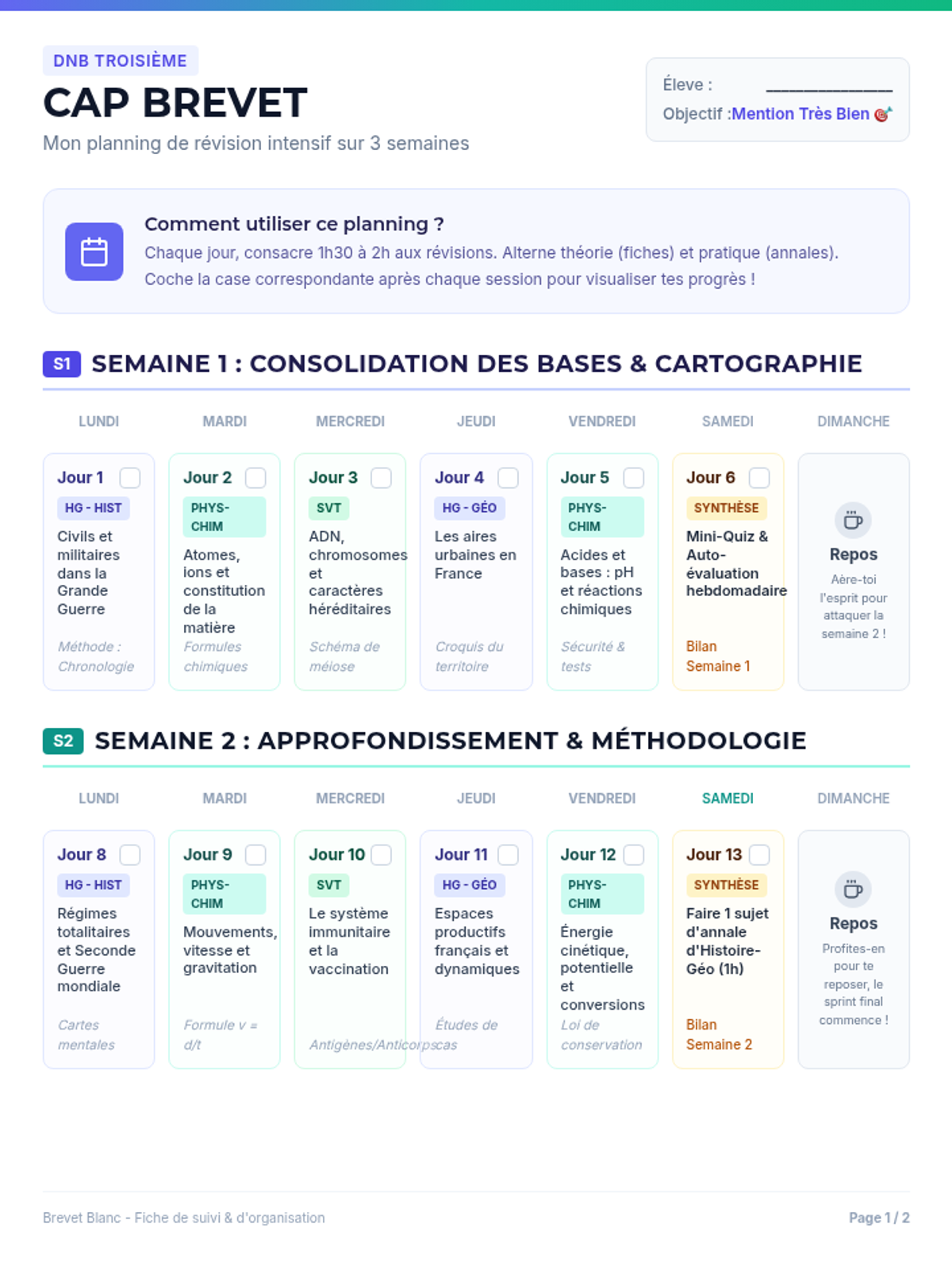
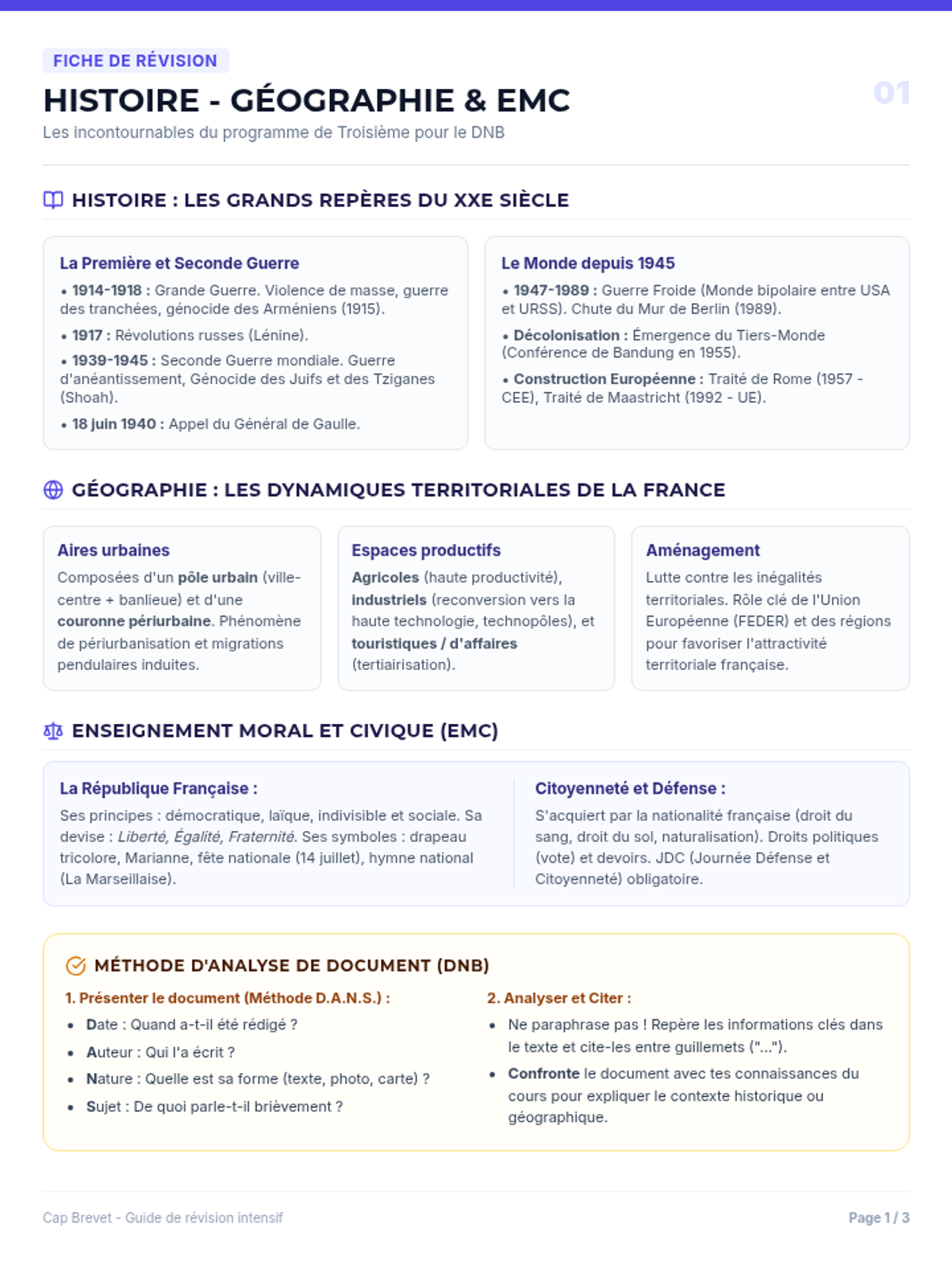
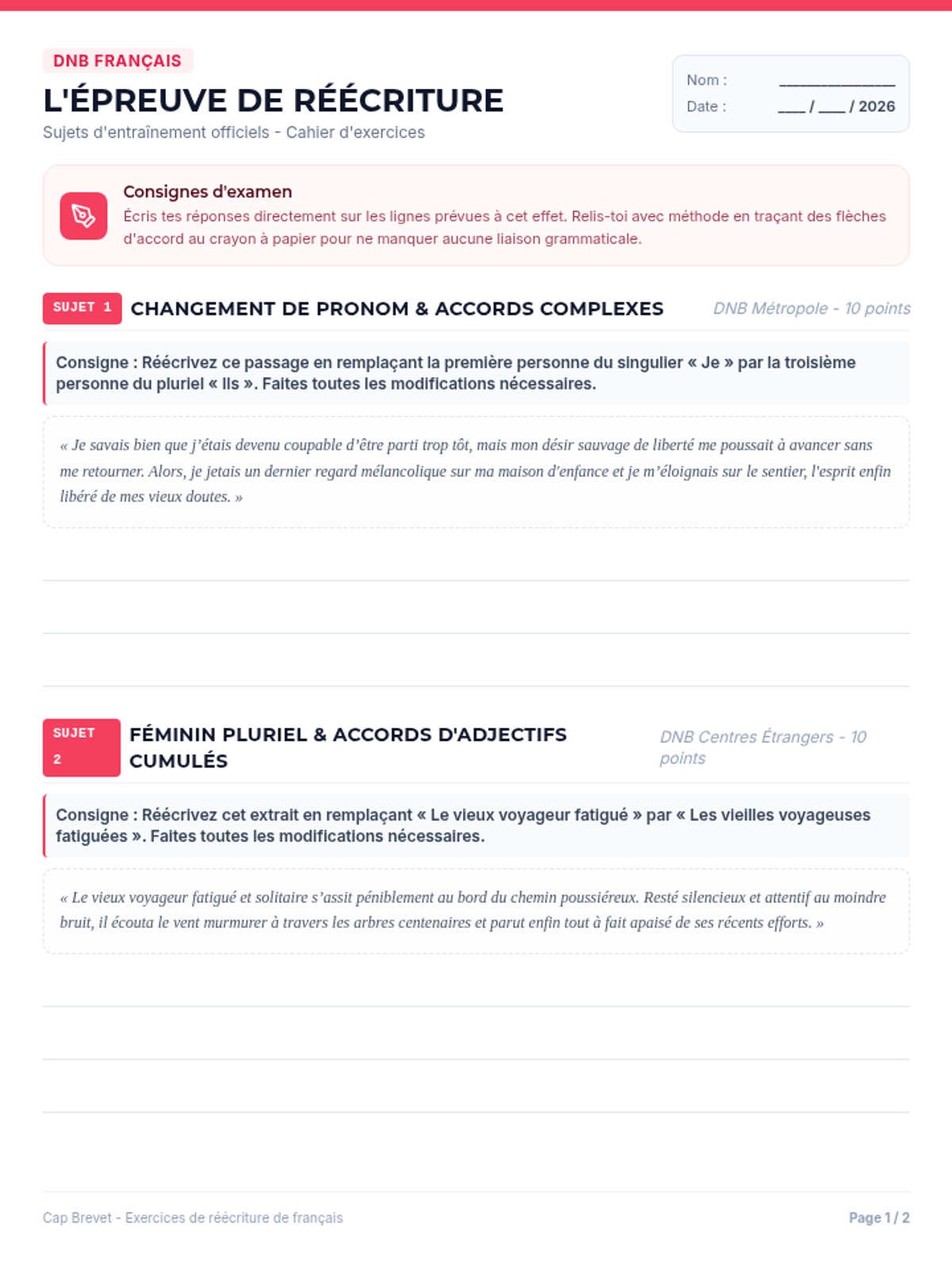
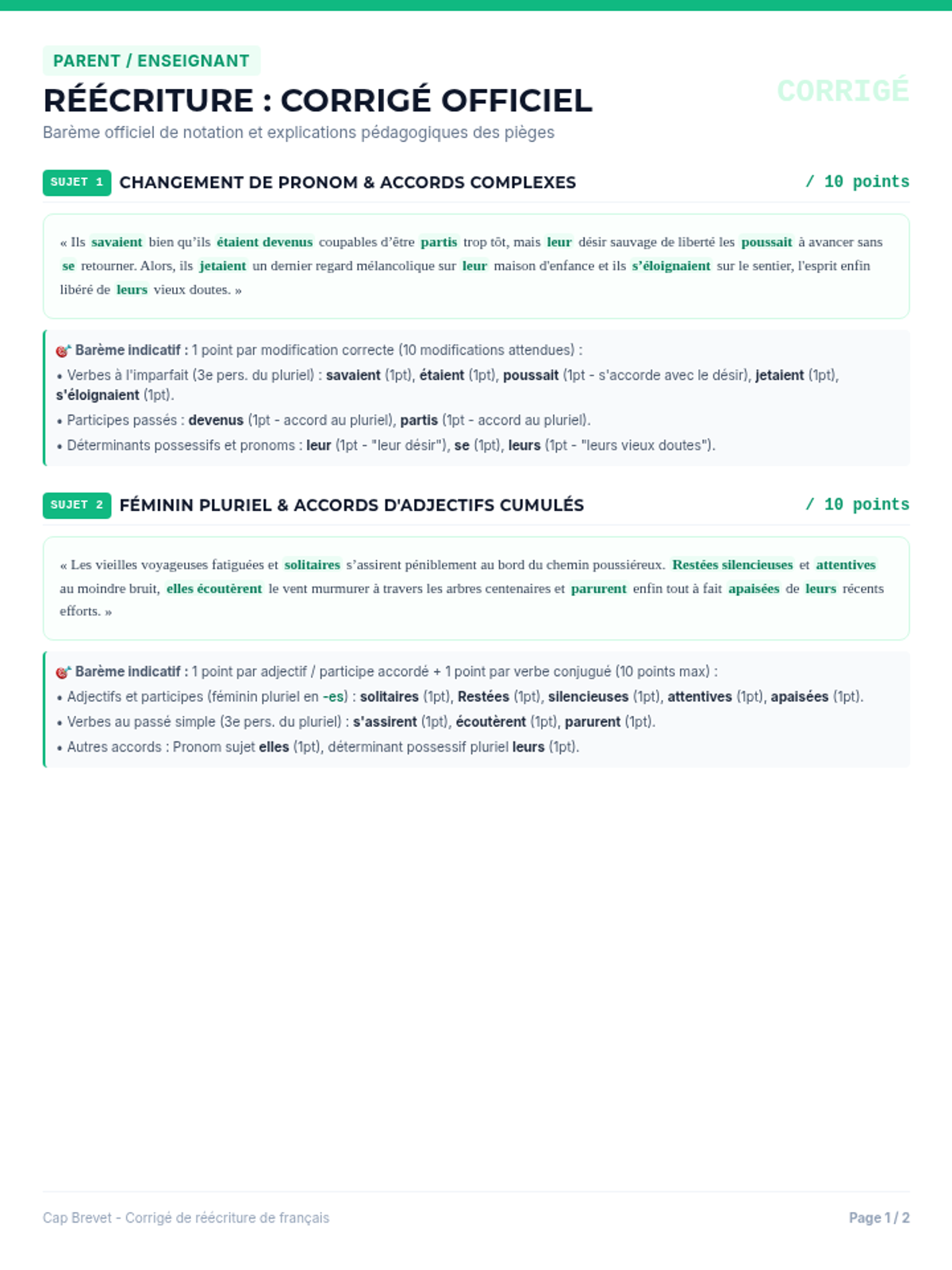
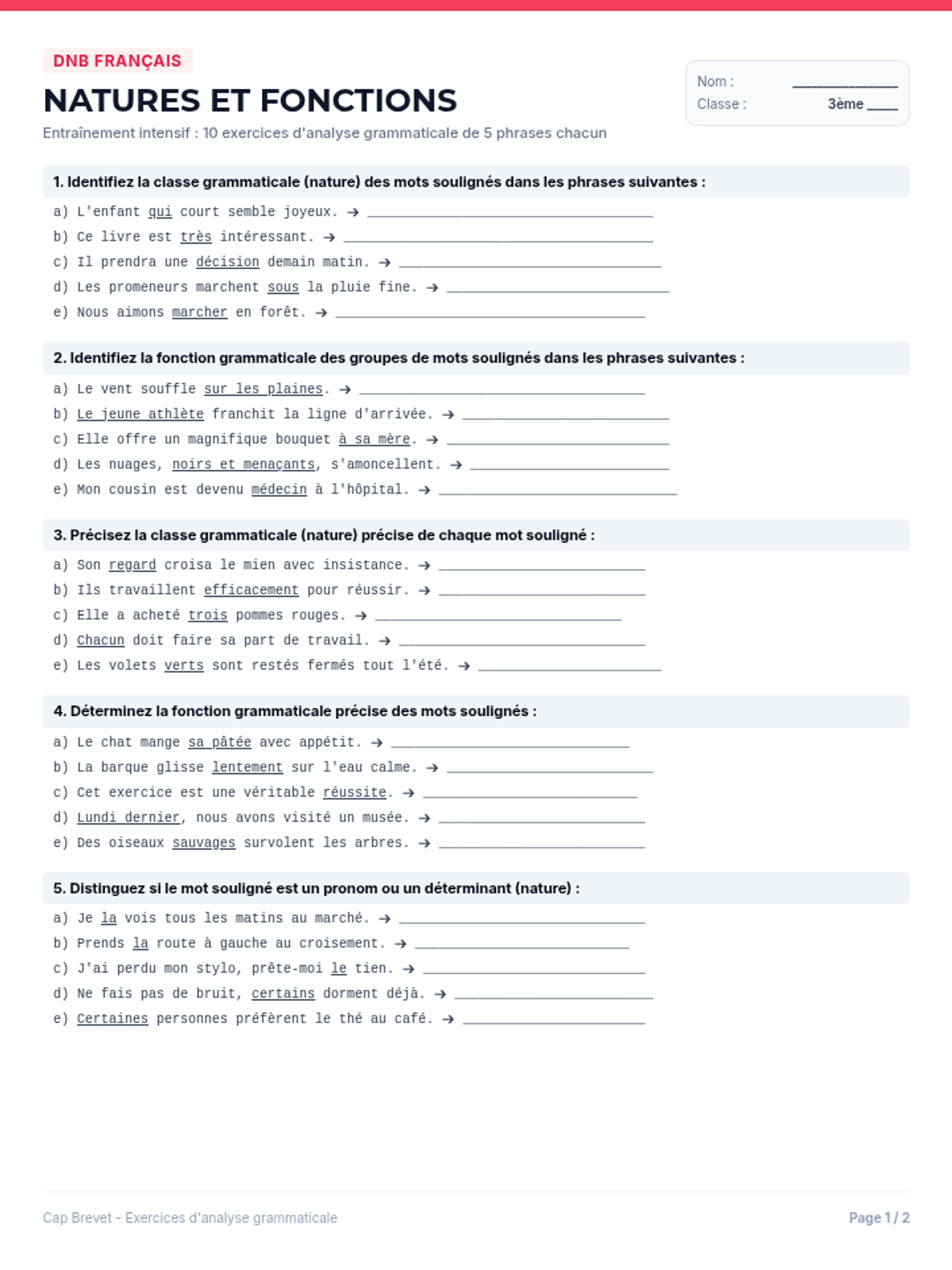
Un programme de révision intensif et structuré sur 3 semaines pour préparer sereinement les épreuves de SVT, Physique-Chimie et Histoire-Géographie du Diplôme National du Brevet.
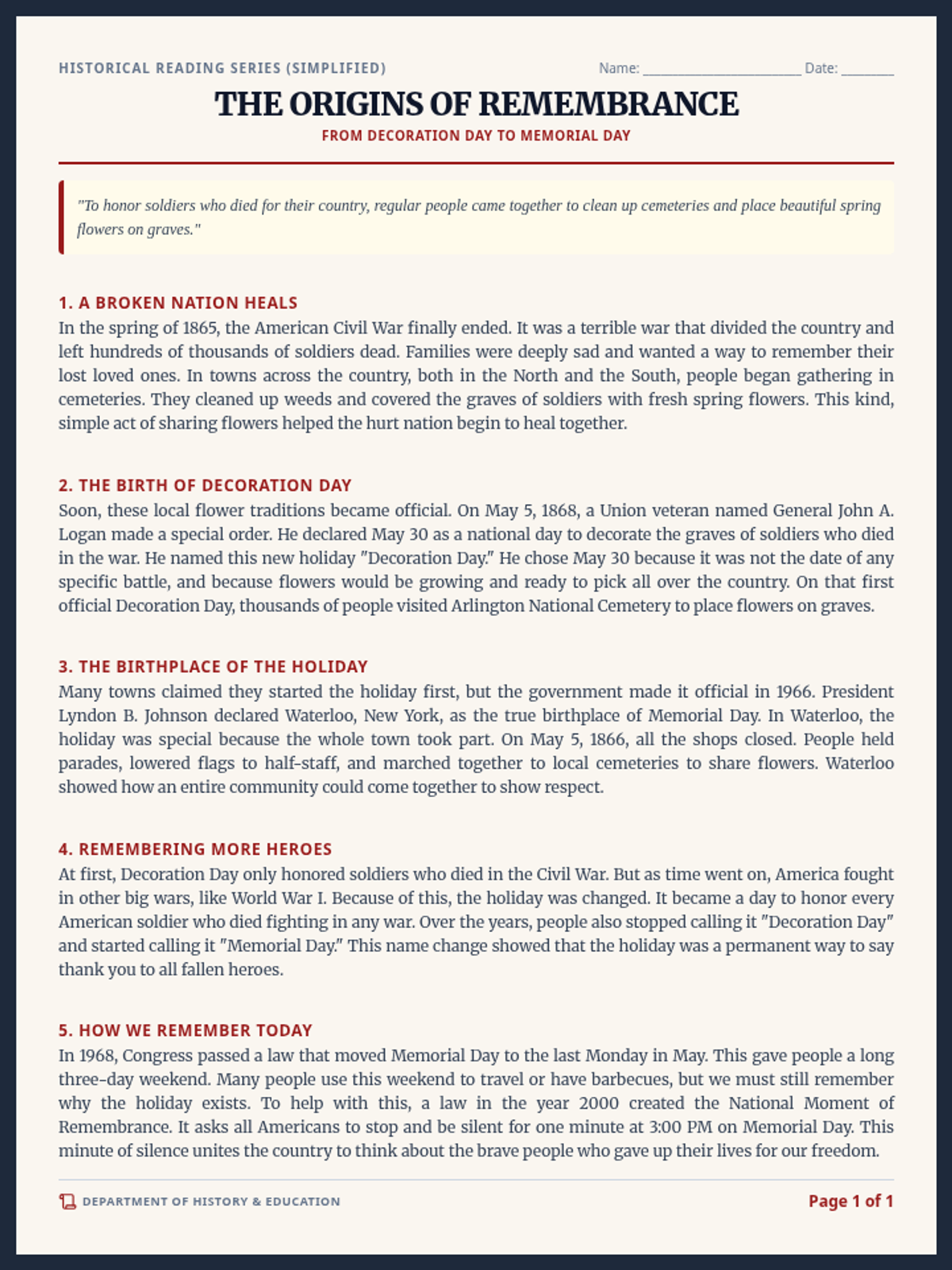
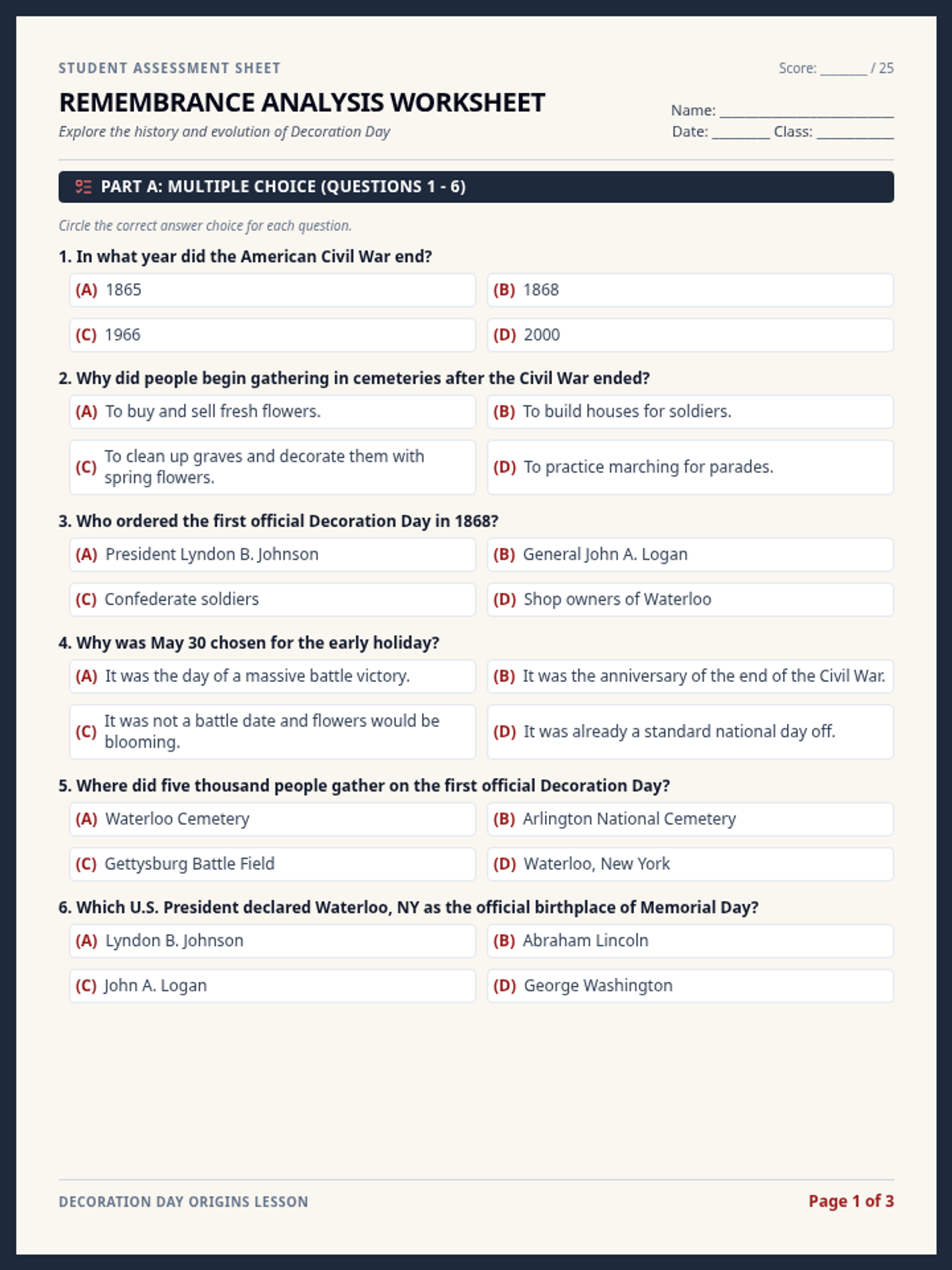
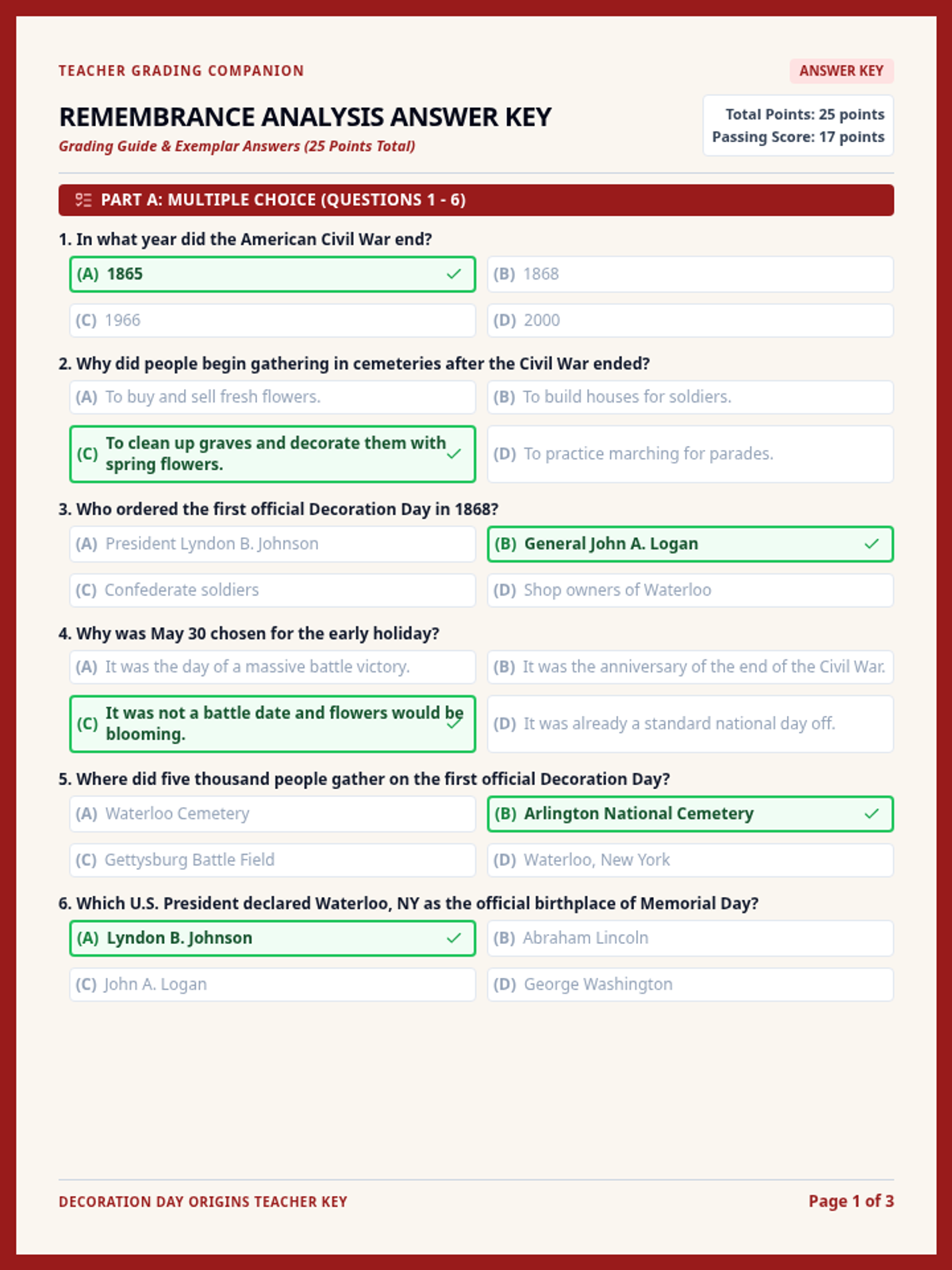
A history lesson exploring the post-Civil War origins of Memorial Day, starting as Decoration Day, and its evolution into a national day of remembrance. Students read a 5-paragraph passage and complete comprehension activities.
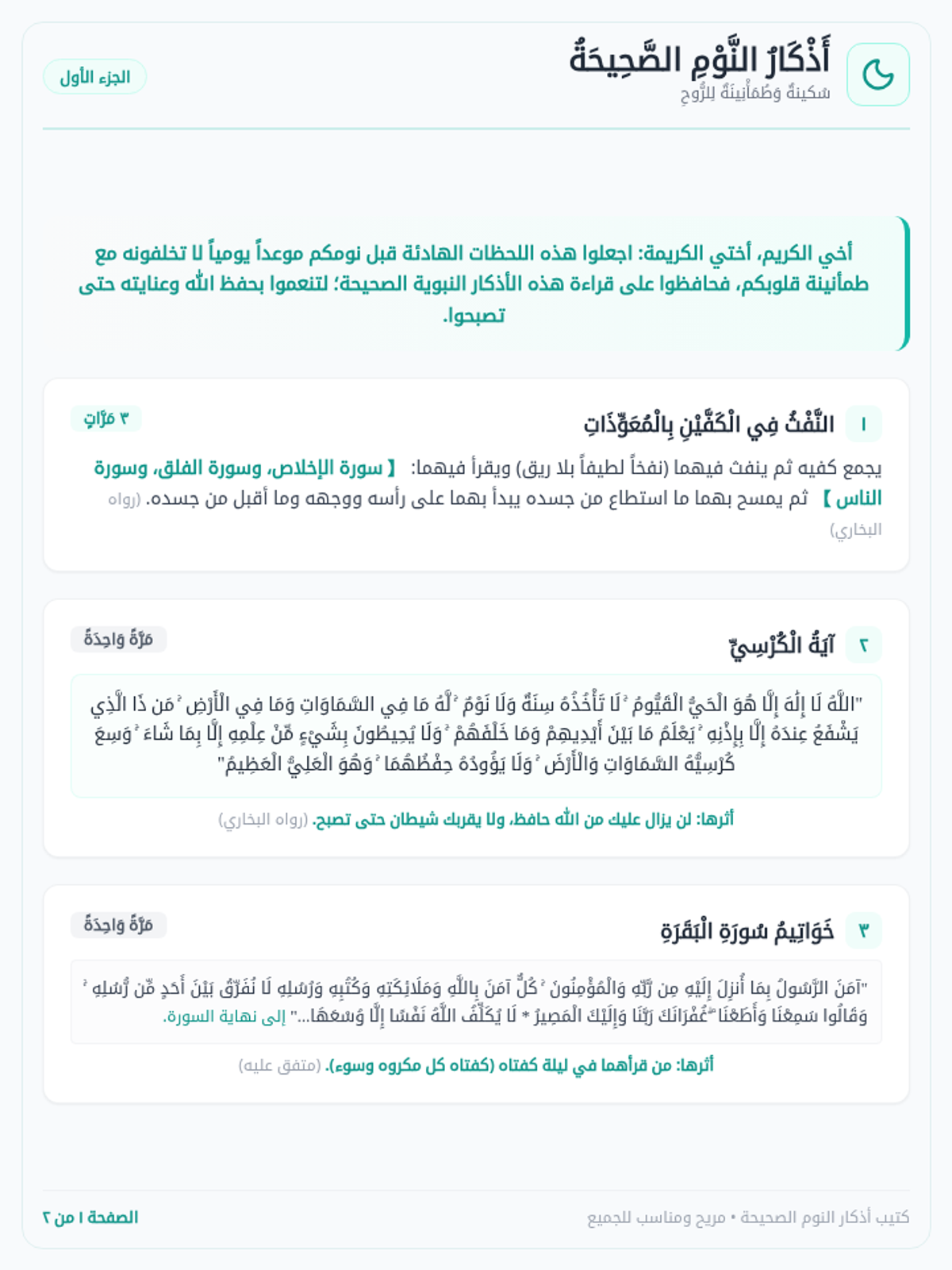
أذكار النوم الصحيحة من السنة النبوية الشريفة مصممة بأسلوب عصري وألوان مهدئة للعين (الرمادي والتركواز الفاتح) لتسهيل القراءة والتصفح اليومي قبل النوم.
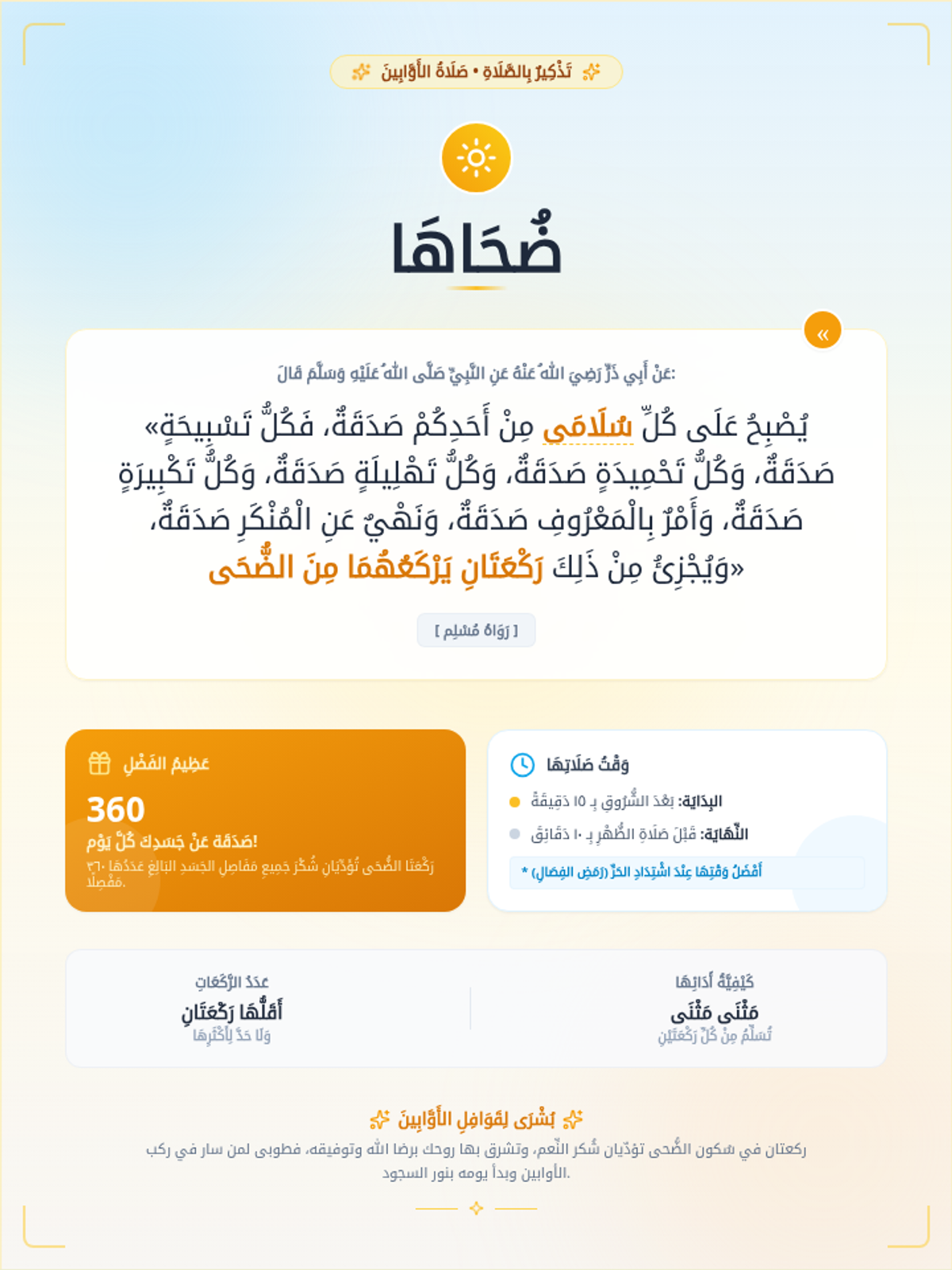
A lesson focusing on daily spiritual habits, providing beautifully designed reminder cards and resources for students and teachers to cultivate consistent worship.
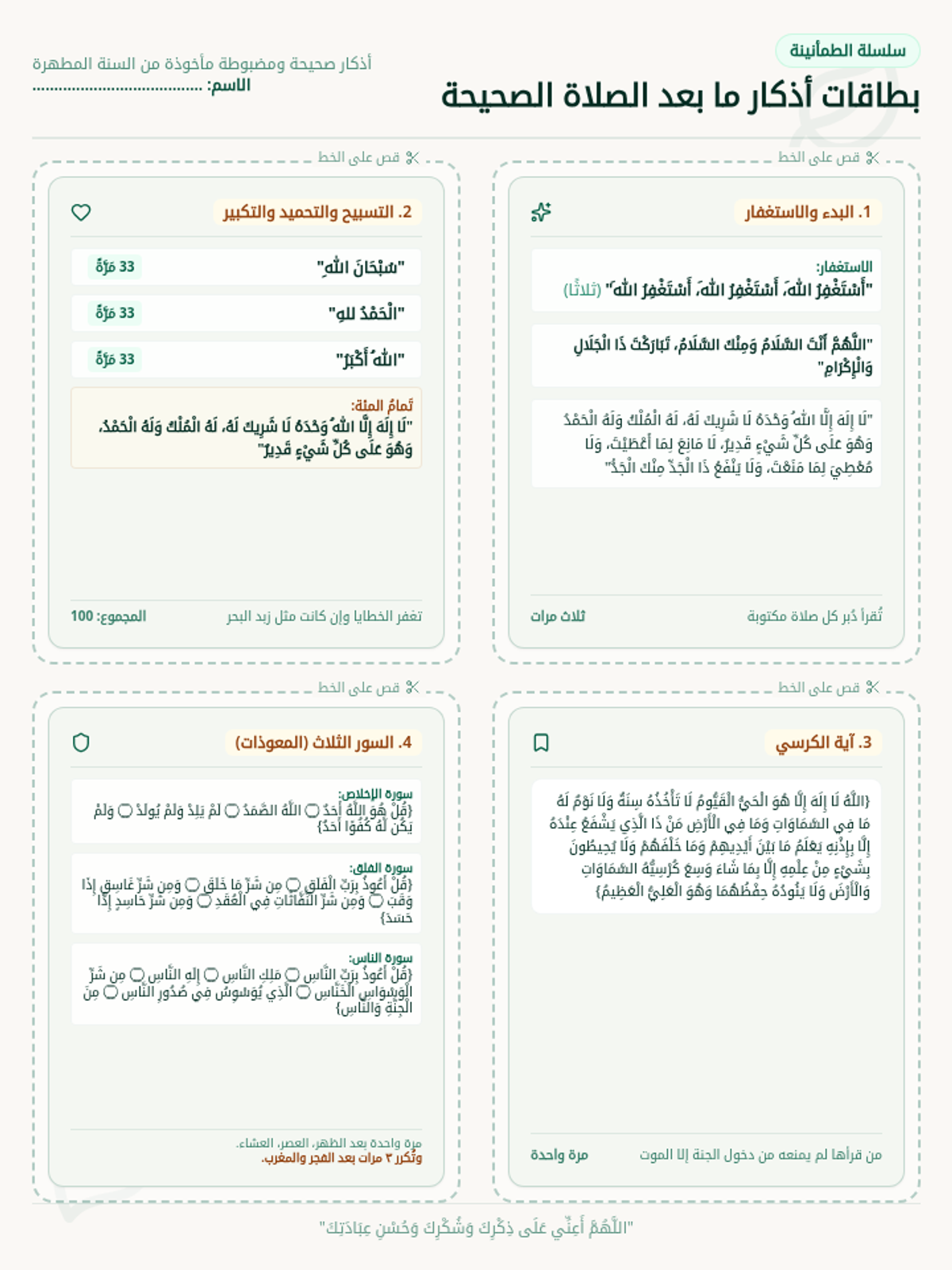
مجموعة تعليمية مصممة لمساعدة الطلاب على حفظ وتطبيق أذكار ما بعد الصلاة اليومية بيسر وطمأنينة.
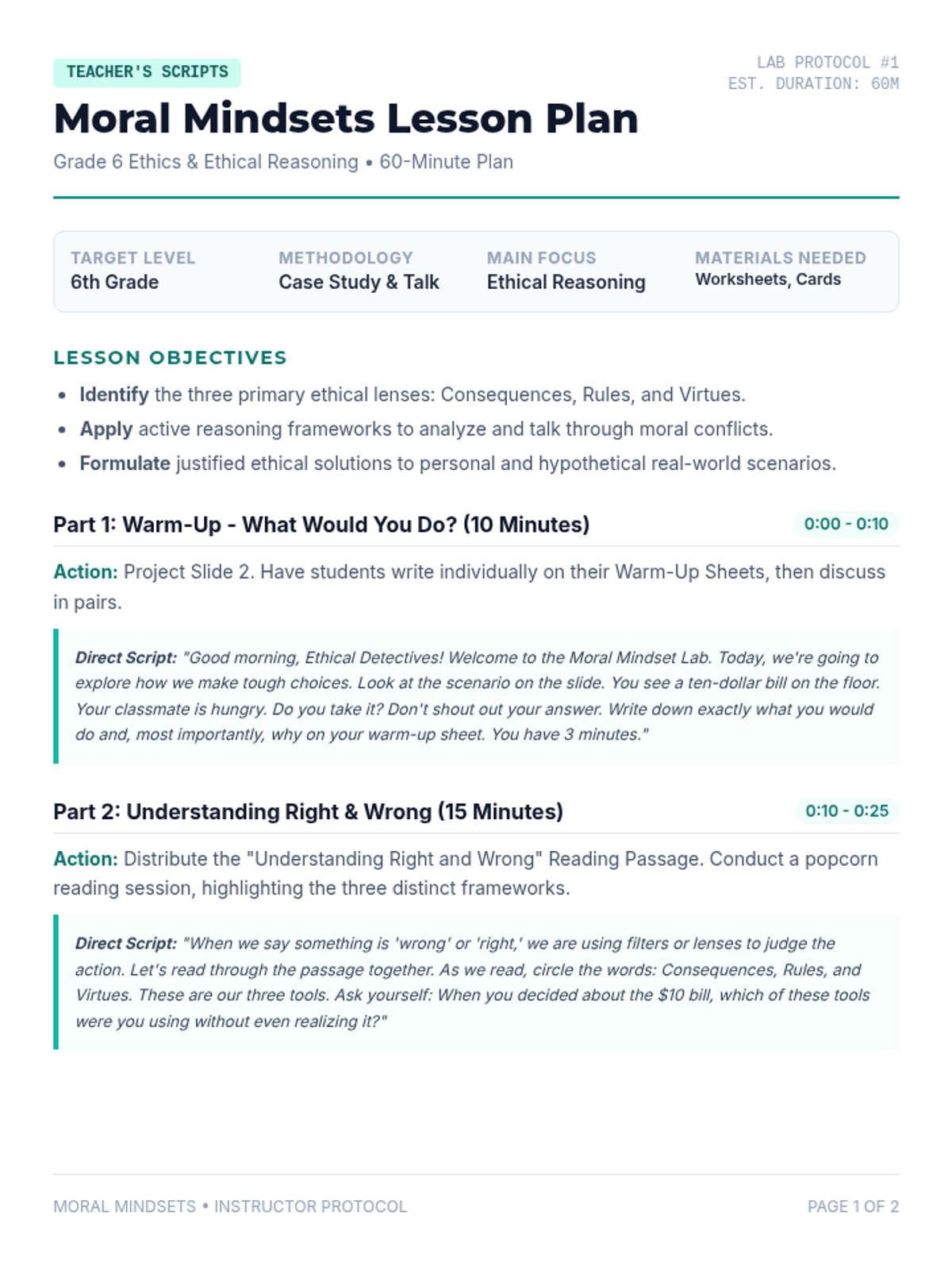
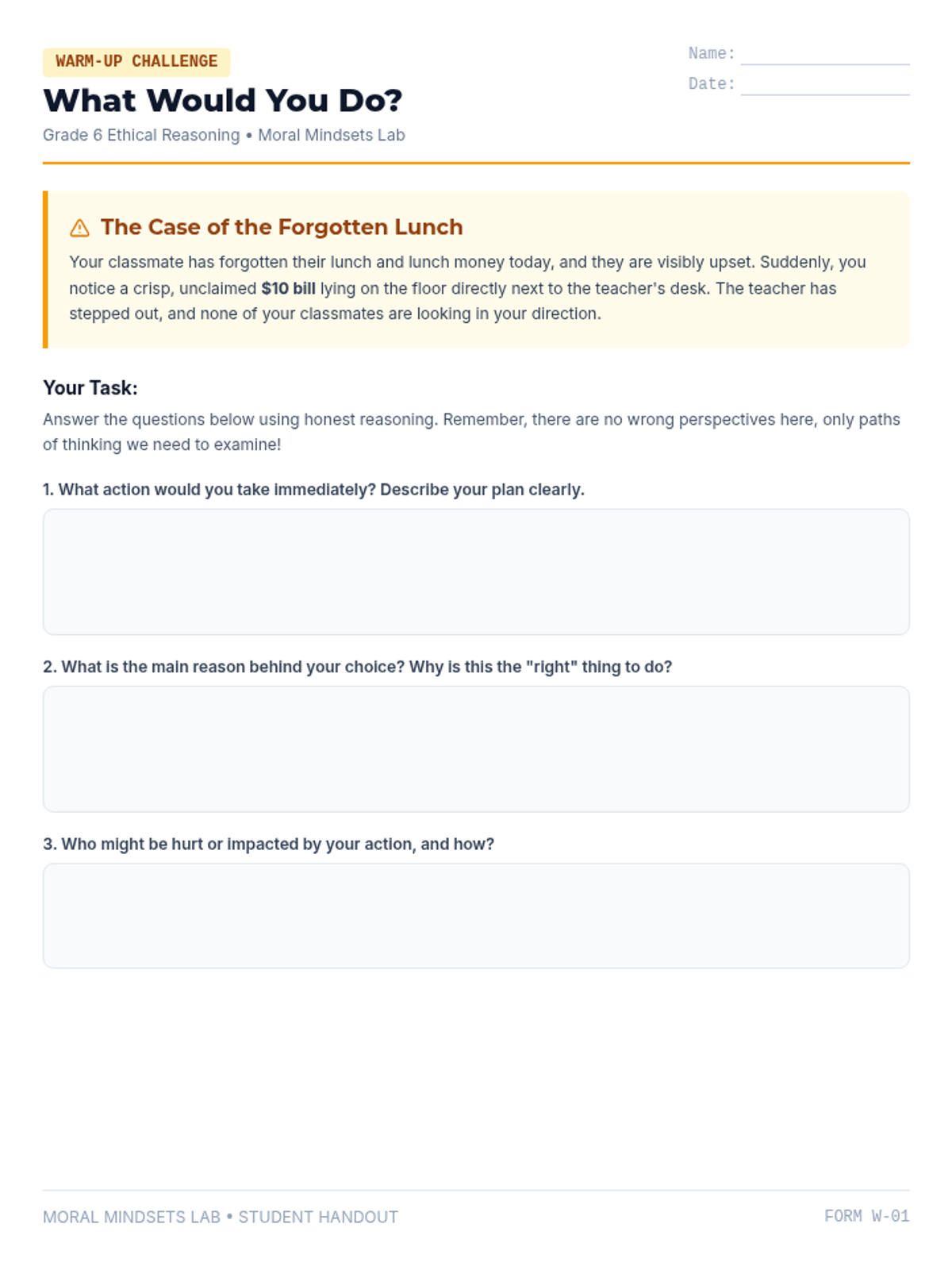
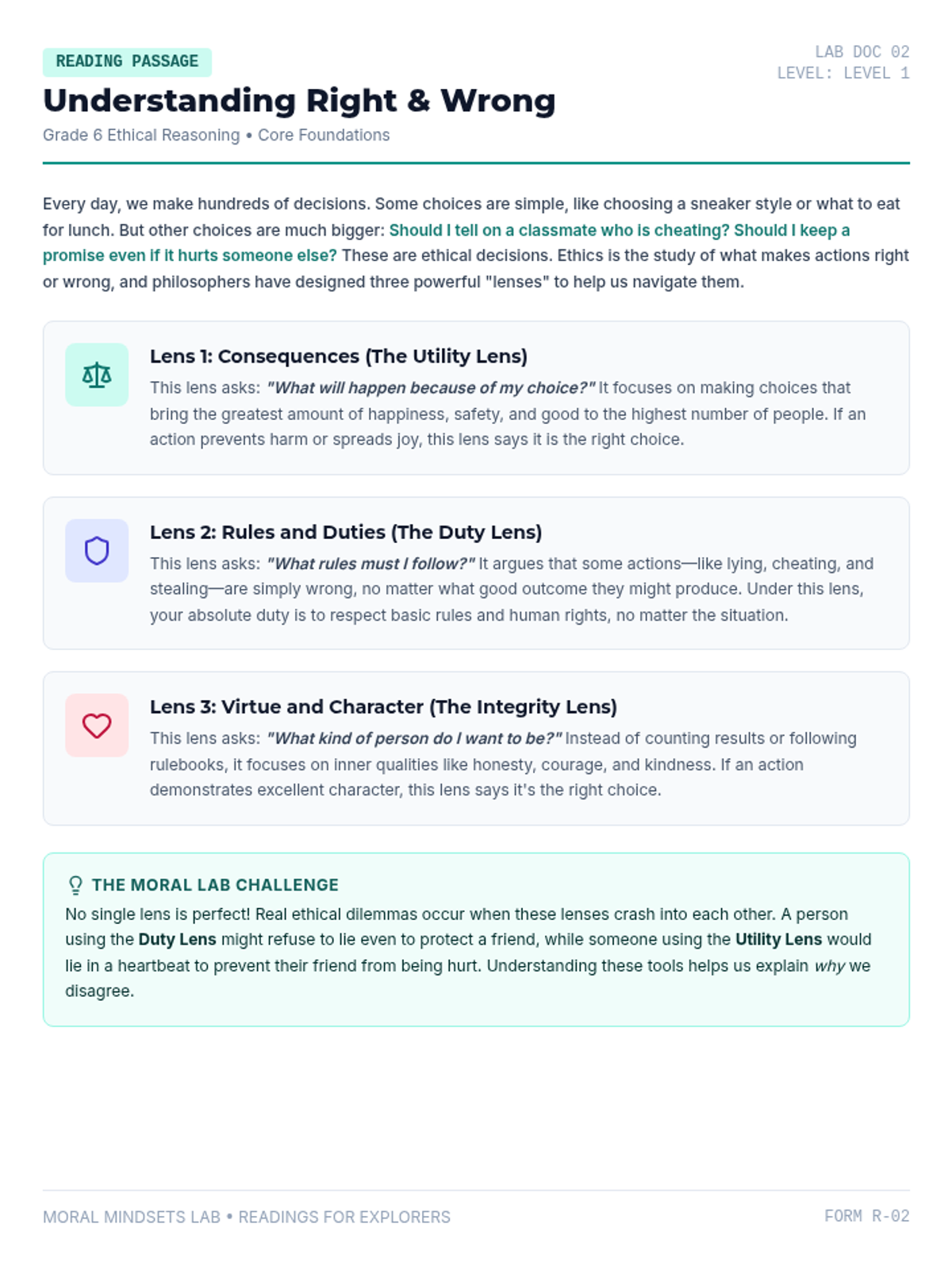
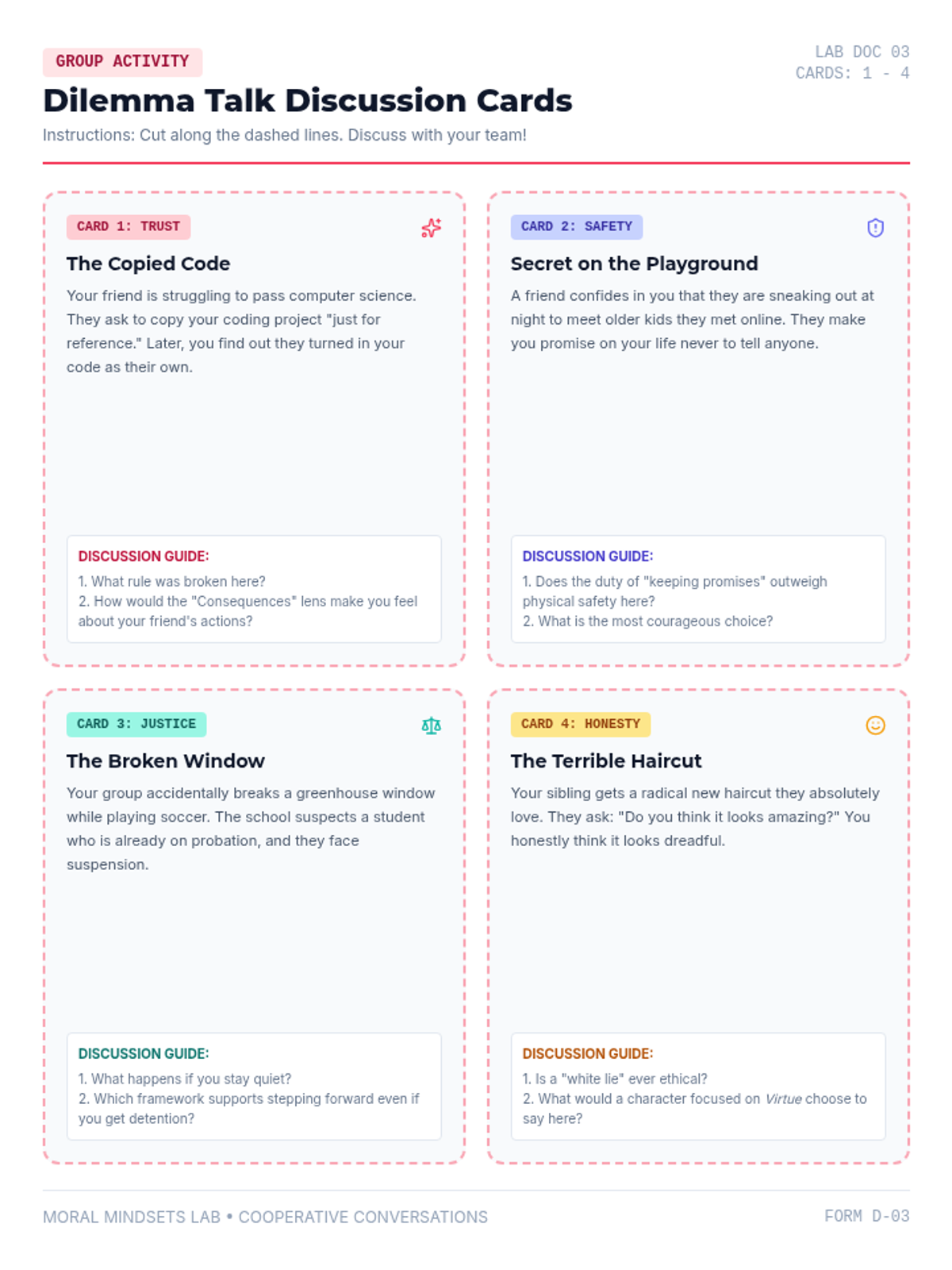
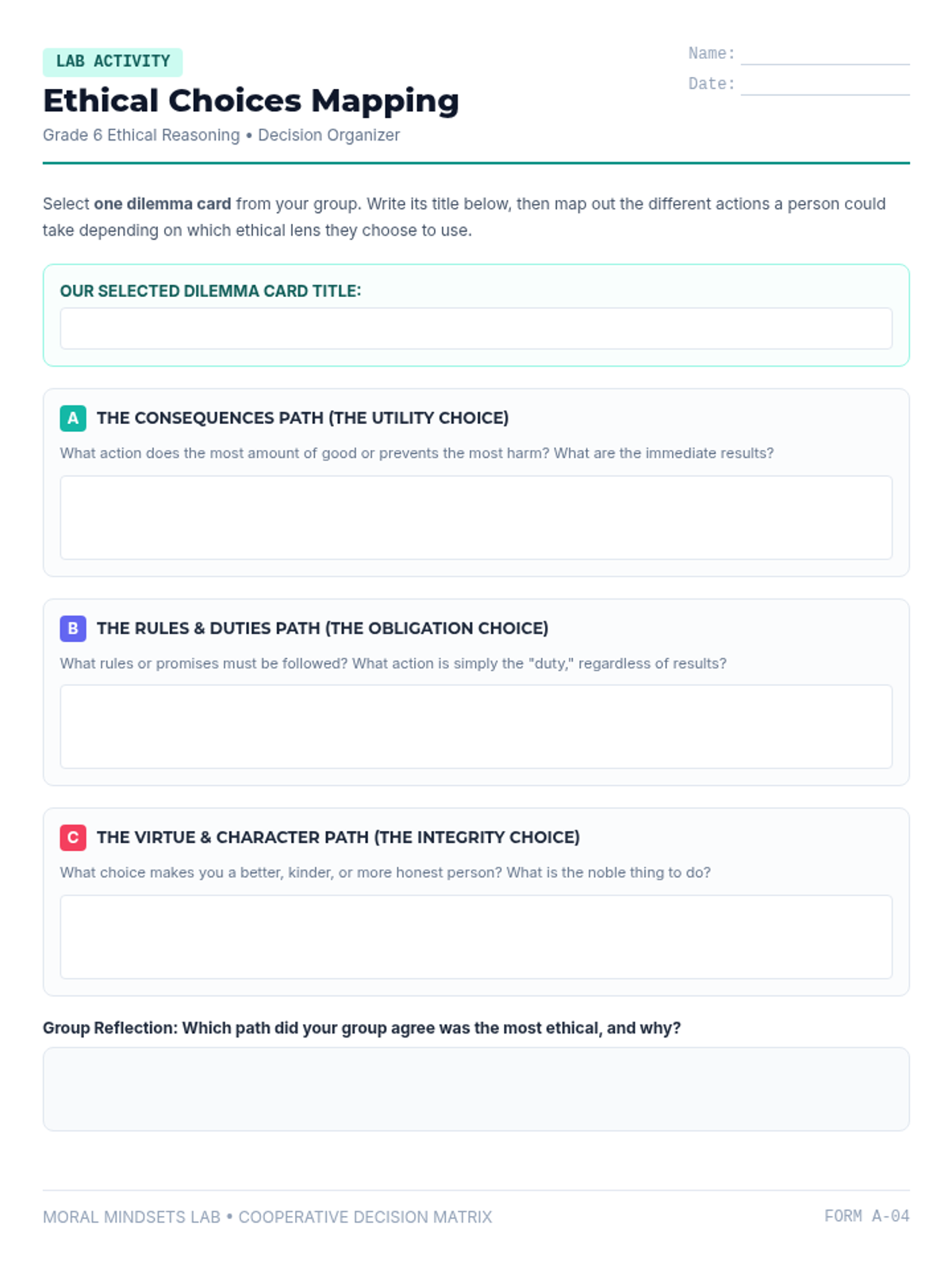
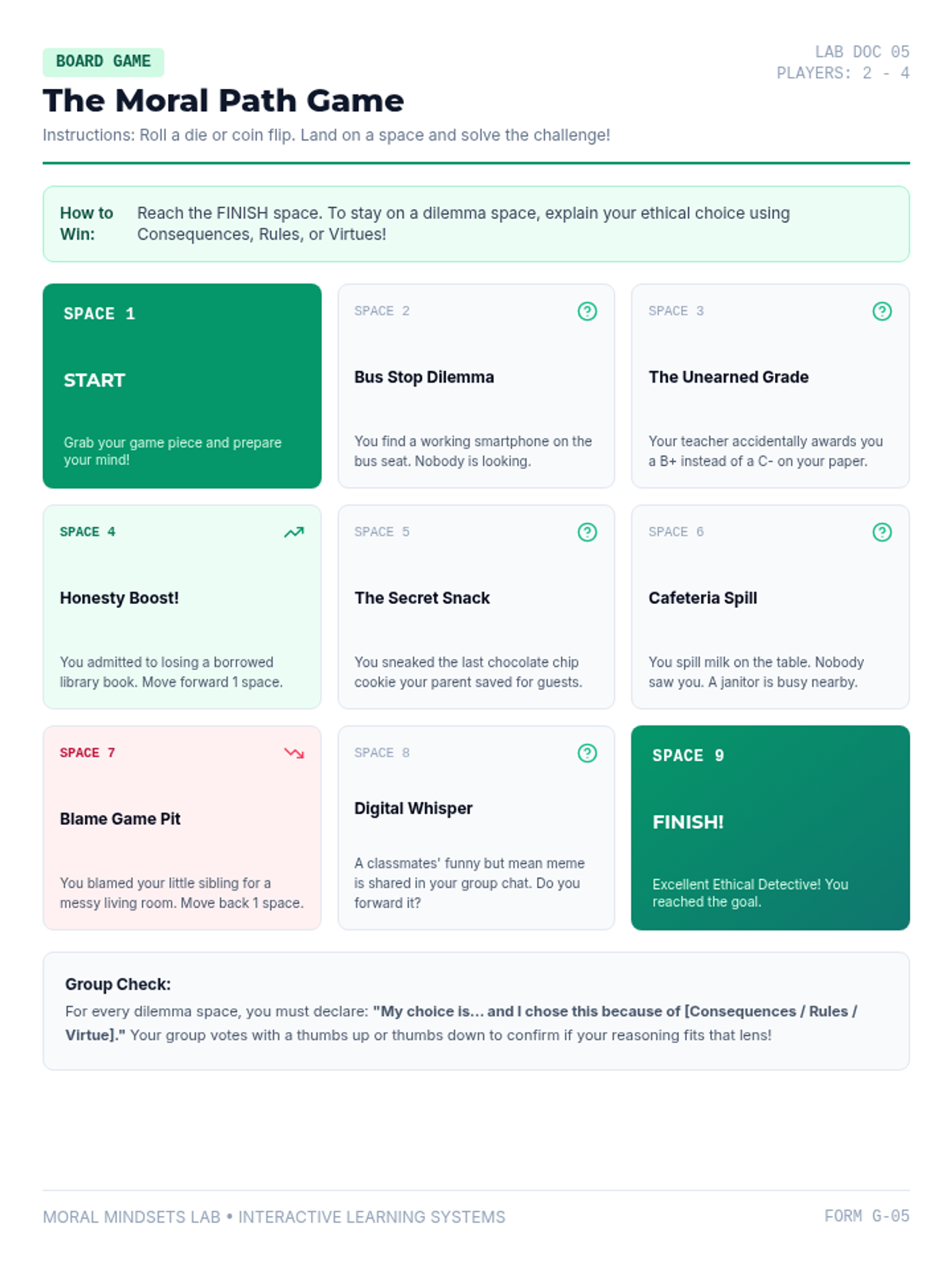
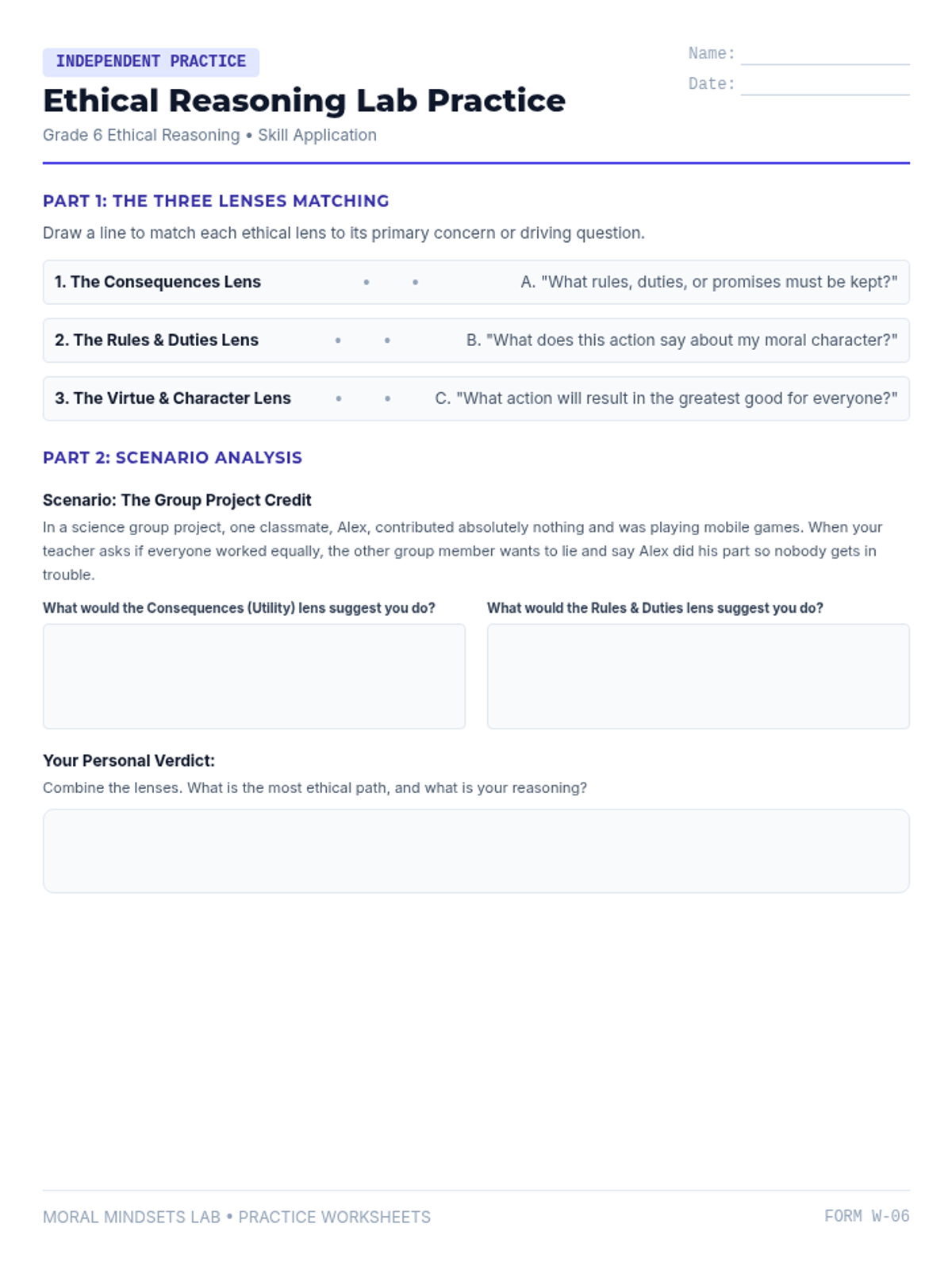
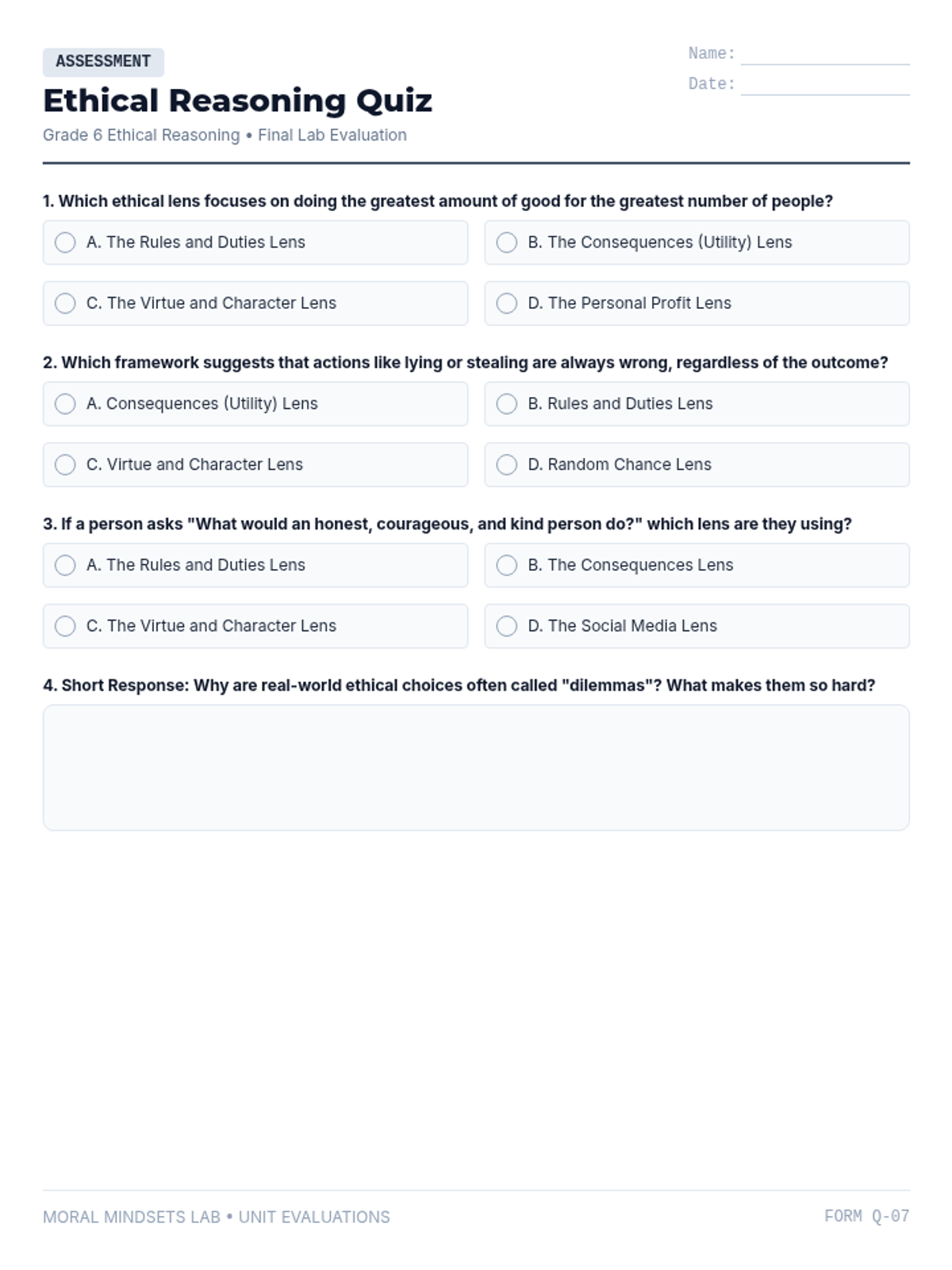
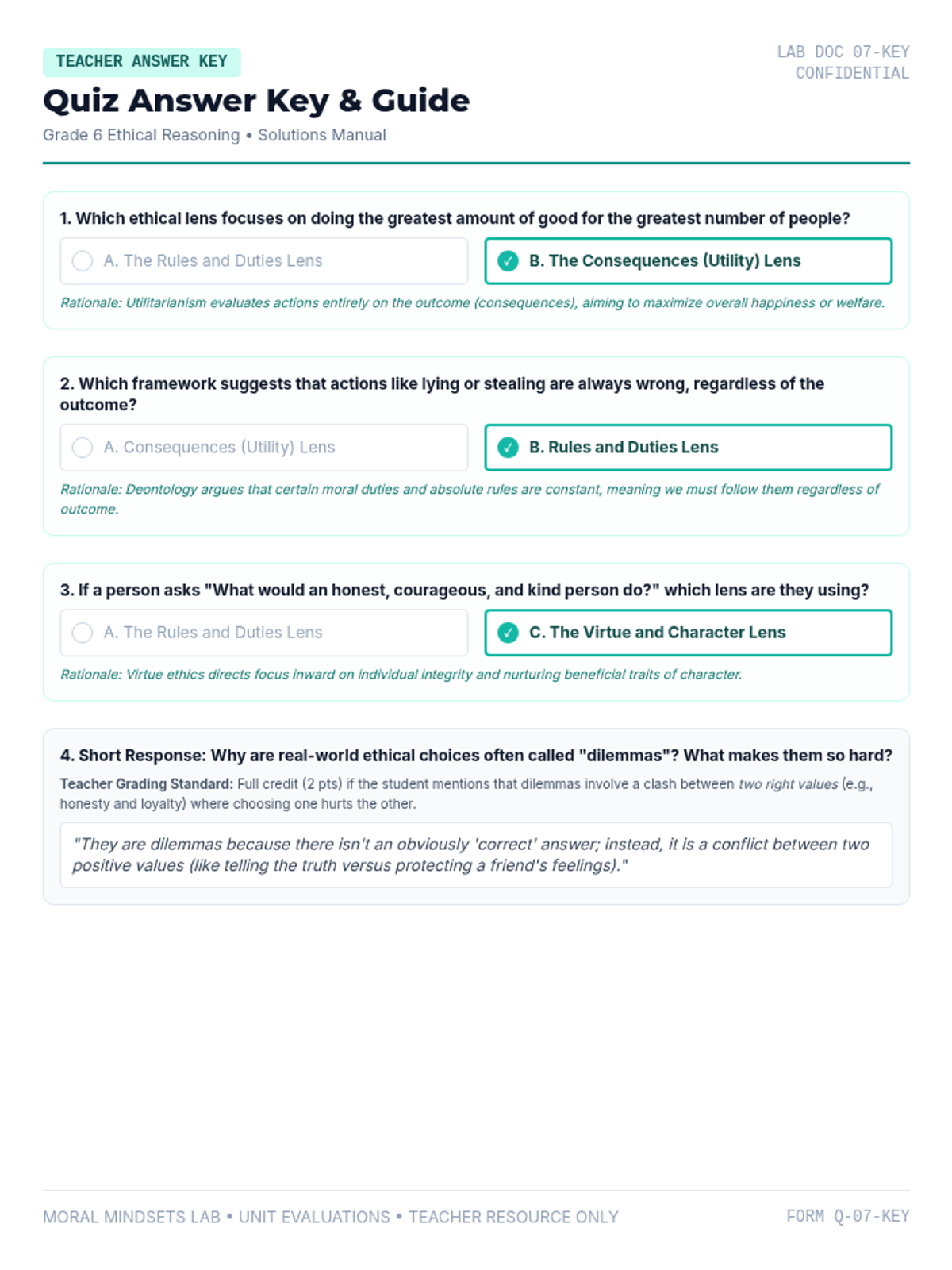
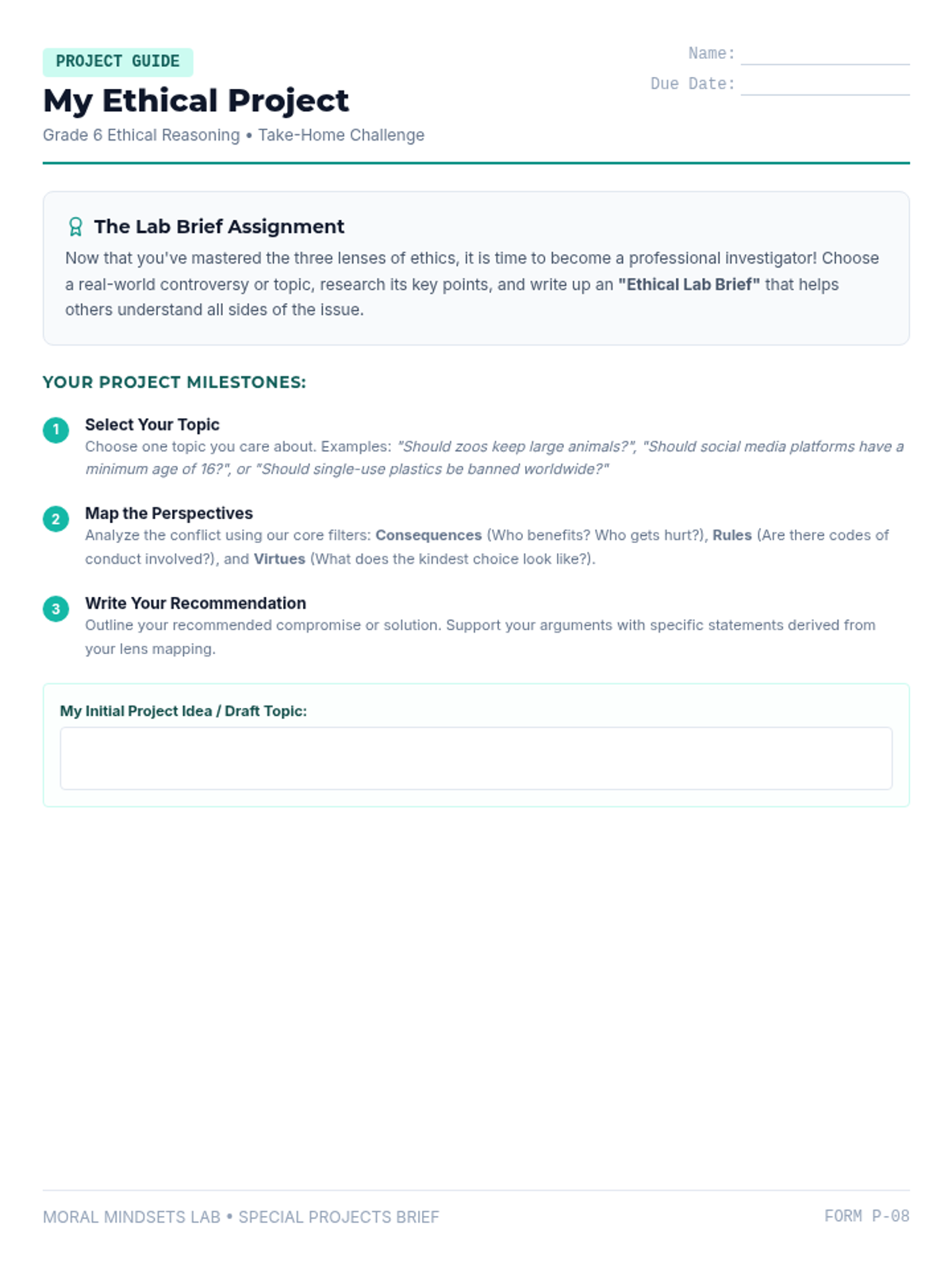
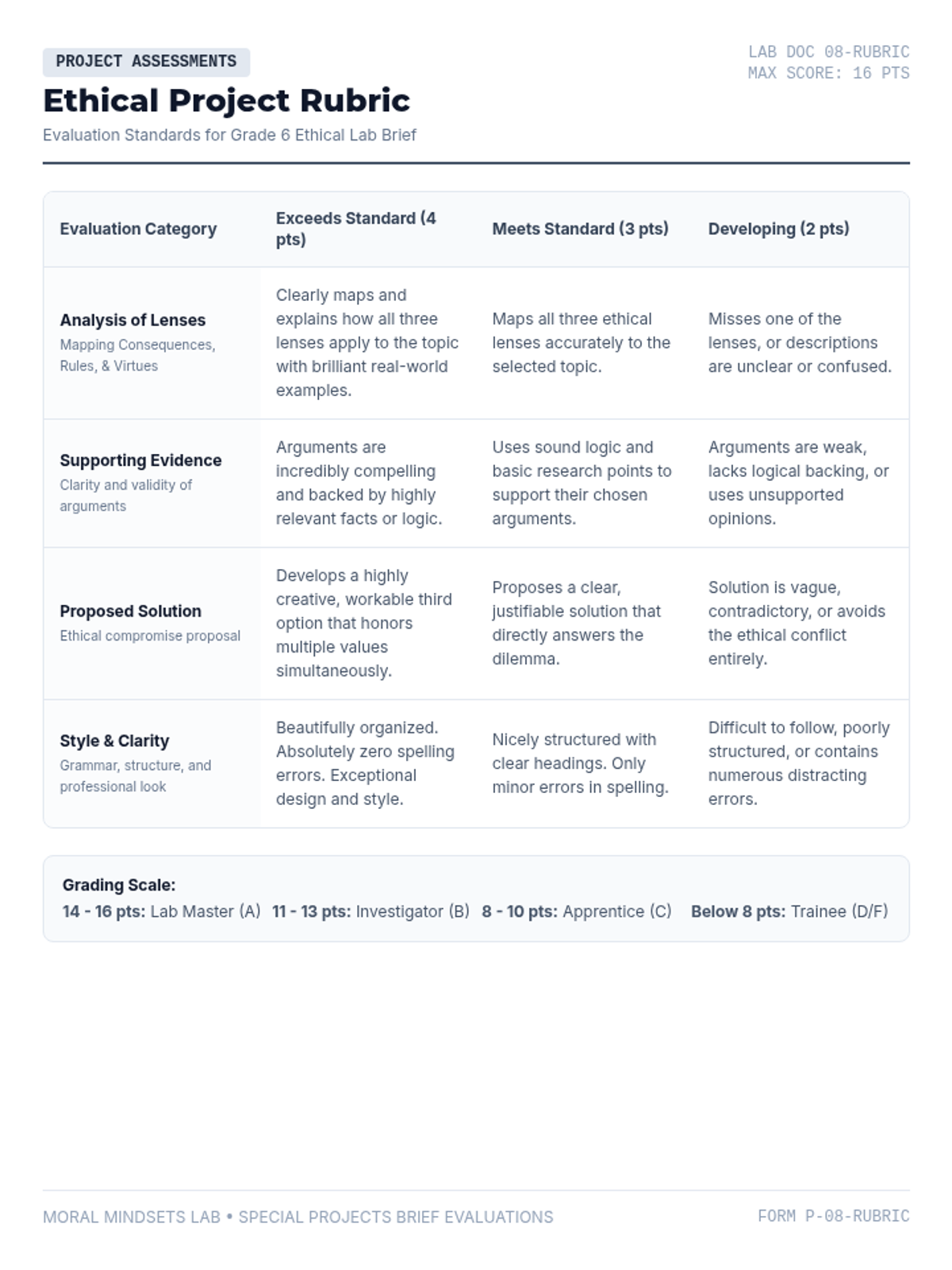
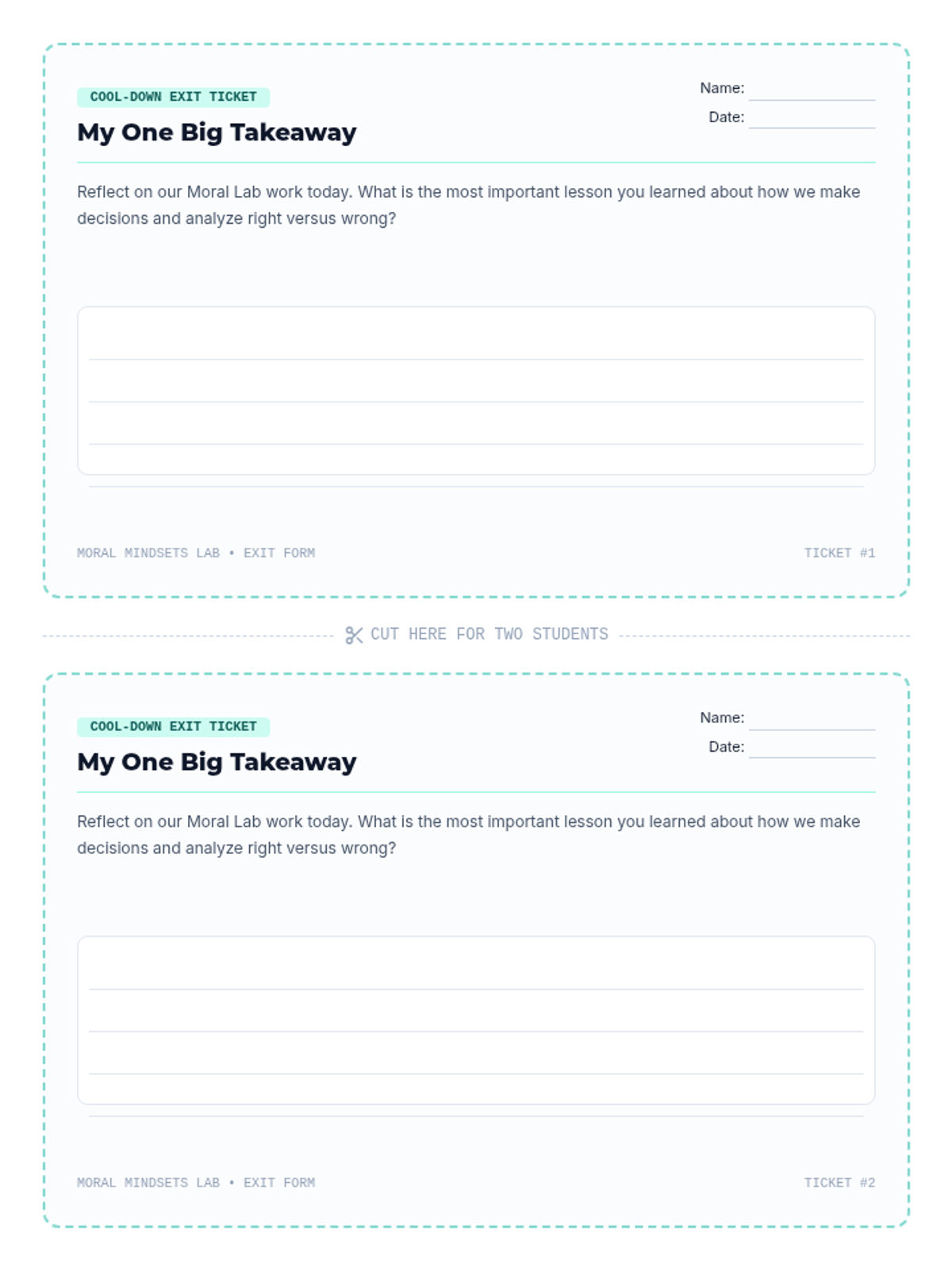
A comprehensive grade 6 lesson introducing ethical reasoning through the 'Moral Lab' framework. Students explore the concepts of right, wrong, and ethical dilemmas, analyzing real-world scenarios through structured discussions and hands-on activities.