A 30-minute introductory lesson for 7th graders on the four fundamental elements of music: rhythm, melody, harmony, and timbre.
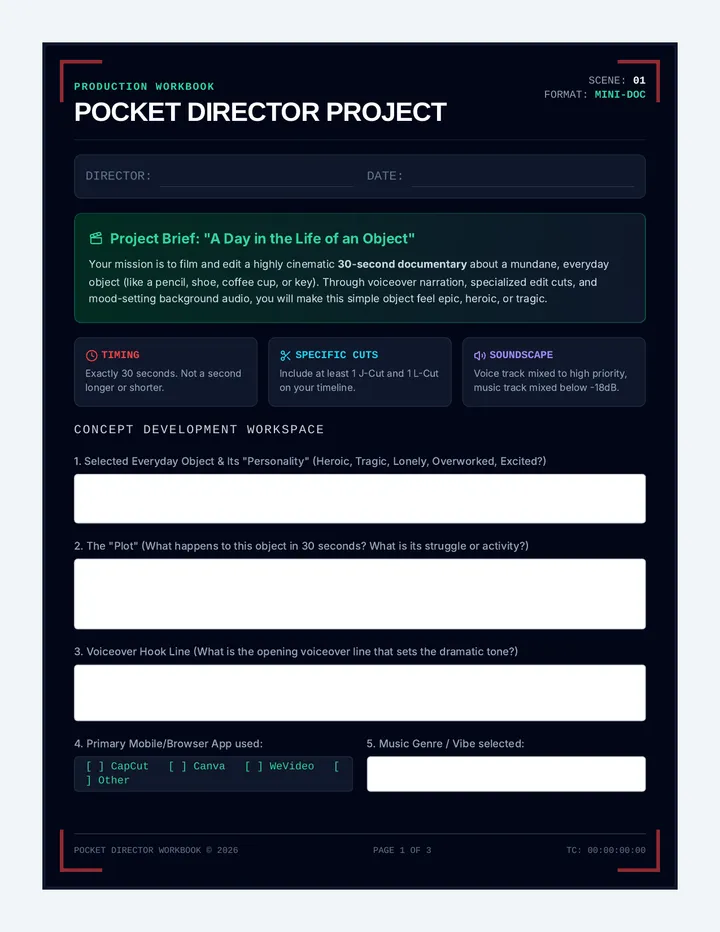
A lesson introducing students to mobile and browser-based video editing. Students will learn core editing concepts like standard cuts, jump cuts, and J/K cuts, and complete a hands-on 30-second mini-documentary project.
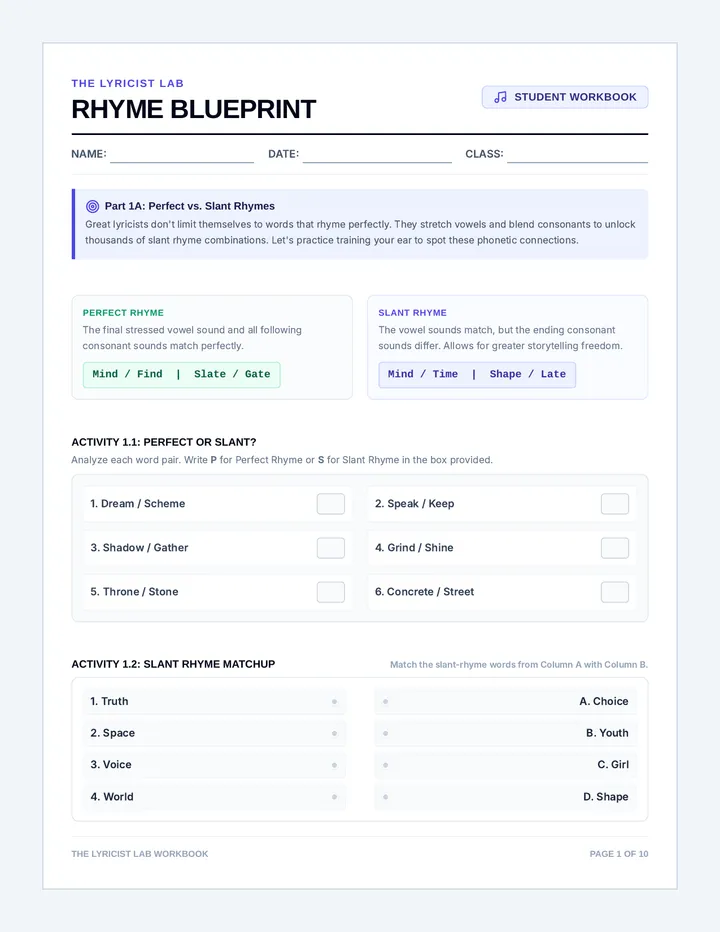
A comprehensive lesson that breaks down the structural, rhythmic, and poetic elements of hip-hop and rap lyrics. Students learn complex rhyming, flow cadence, figurative imagery, and wordplay, then plan and write a complete 16-bar verse using highly visual scaffolding.
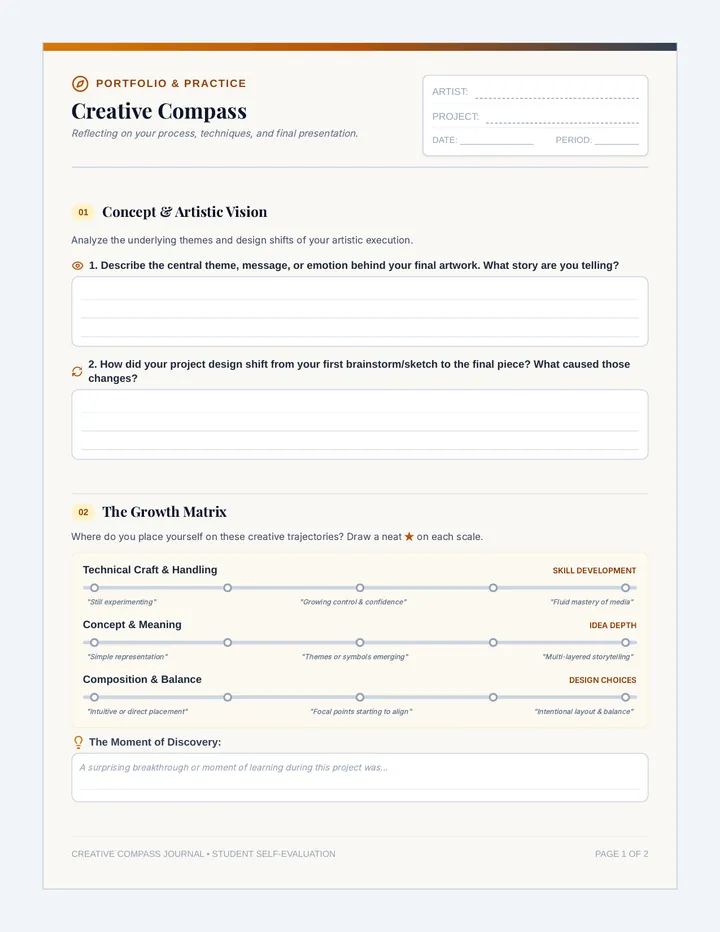
A comprehensive self-evaluation and growth-tracking lesson for art students. Students reflect on their artistic process, compare initial drafts to final works, and evaluate their studio habits and citizenship.
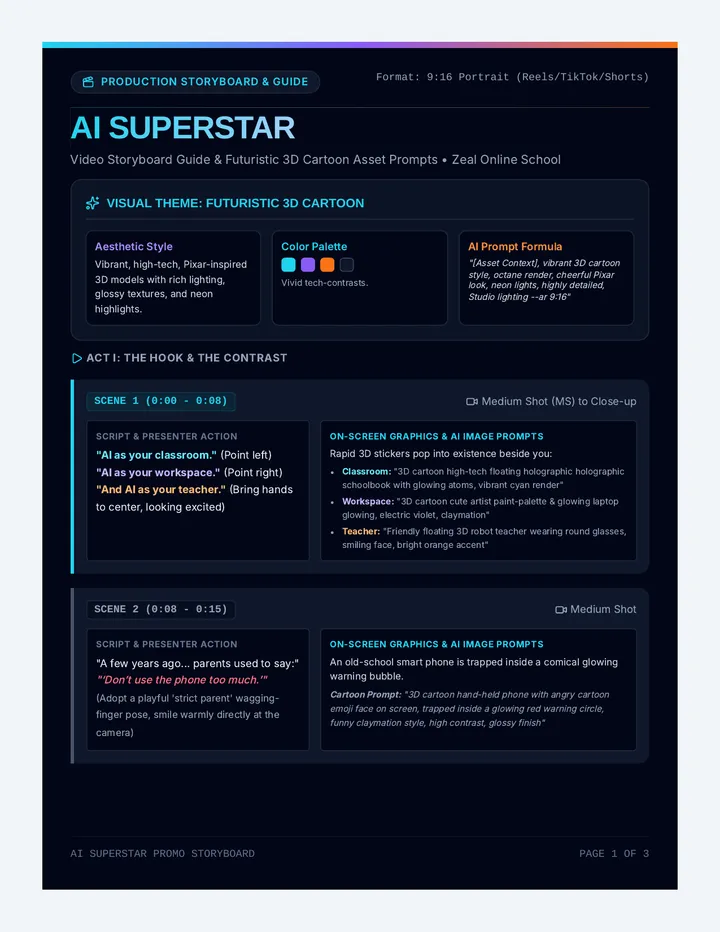
Production plan and storyboard guide for the 'AI Superstar' promotional video. This lesson contains the visual storyboard detailing framing, presenter actions, and specific 3D cartoon image prompts to help the presenter record and edit the promotional video.
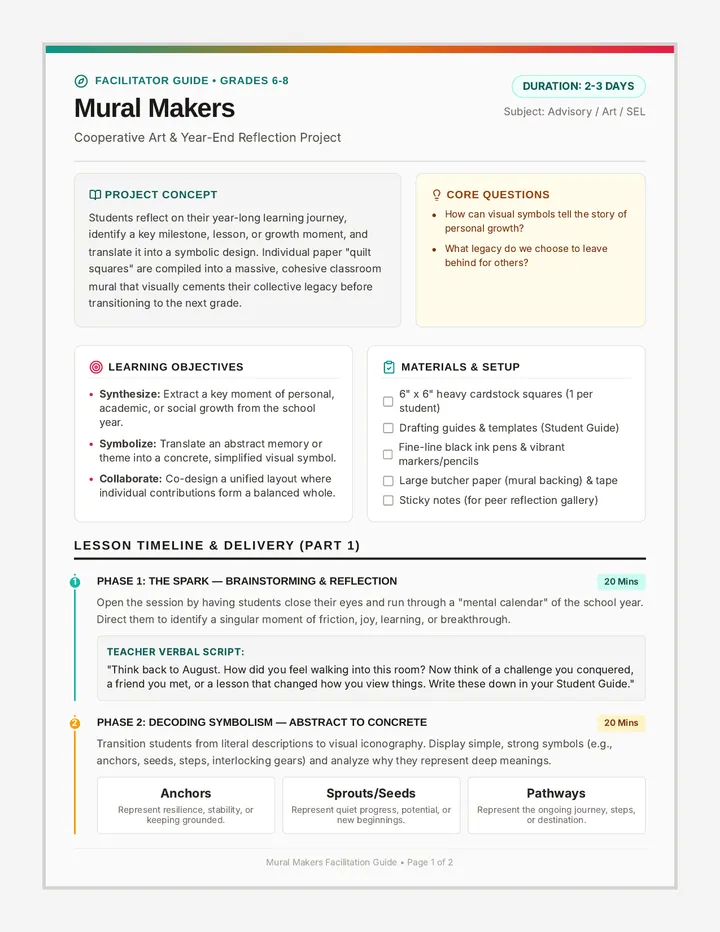
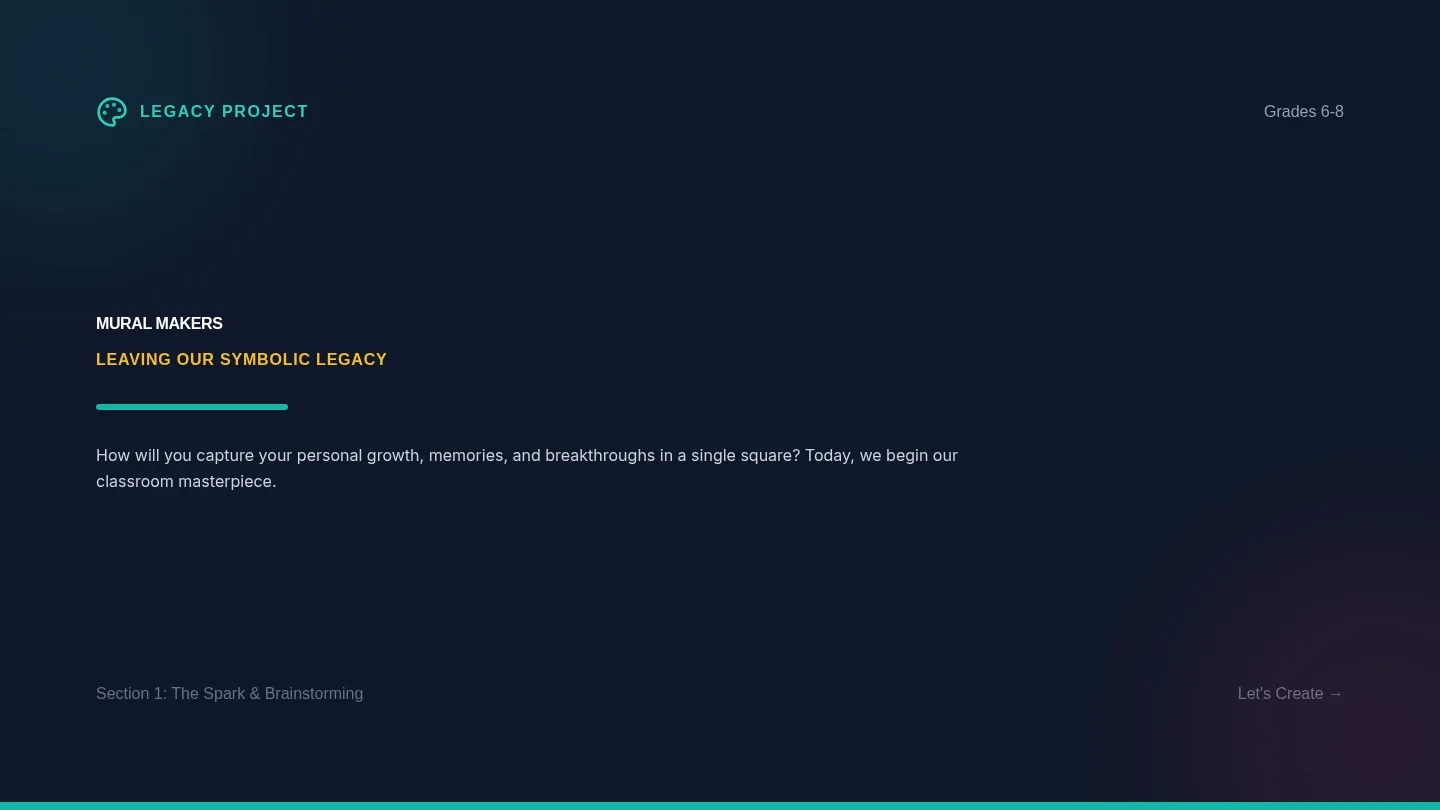
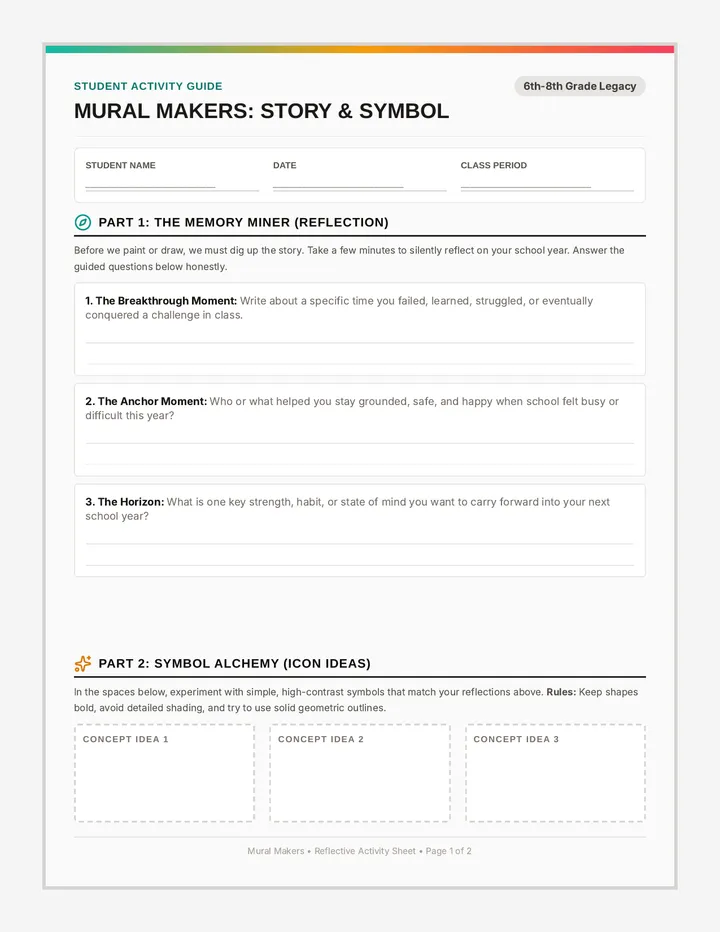
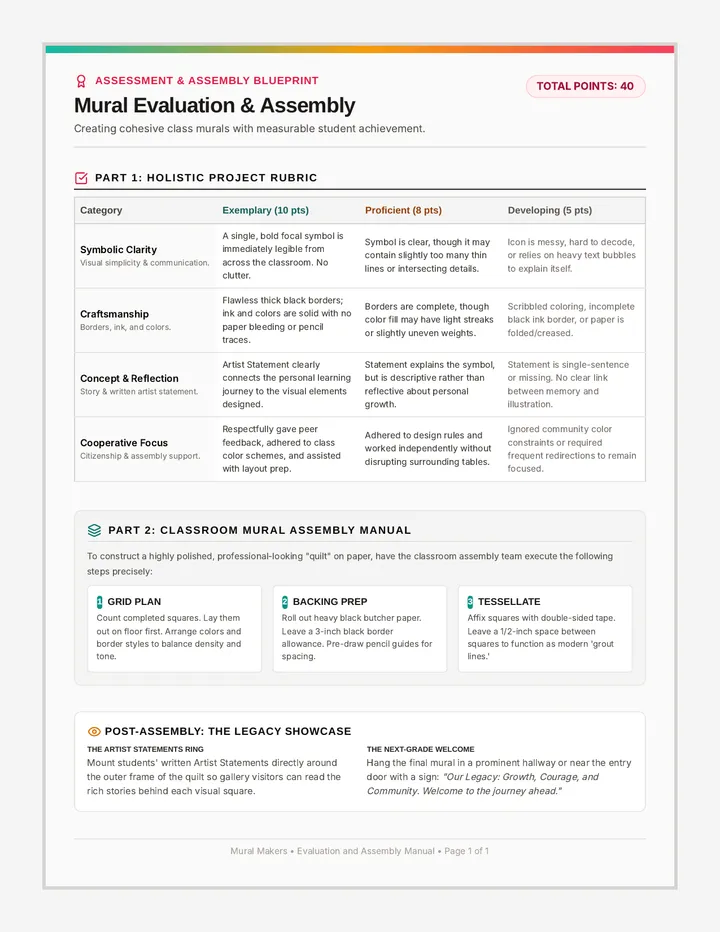
A collaborative art and reflection project where students design individual symbolic quilt squares representing their growth and memories, combining them into a grand classroom legacy mural.
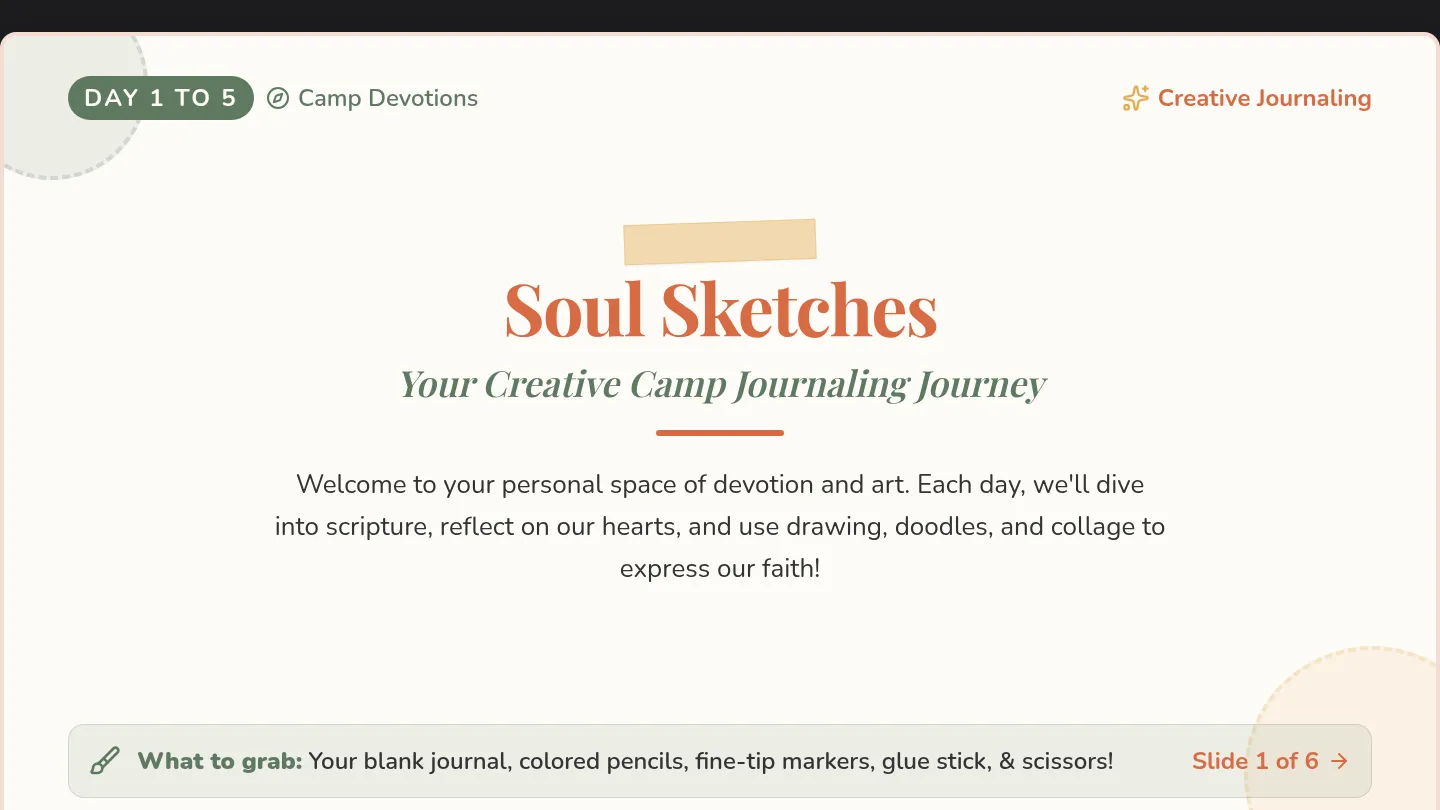
A spiritual journaling curriculum designed for young girls at church camp, integrating meaningful Christian devotions with engaging art, drawing, and collage prompts.
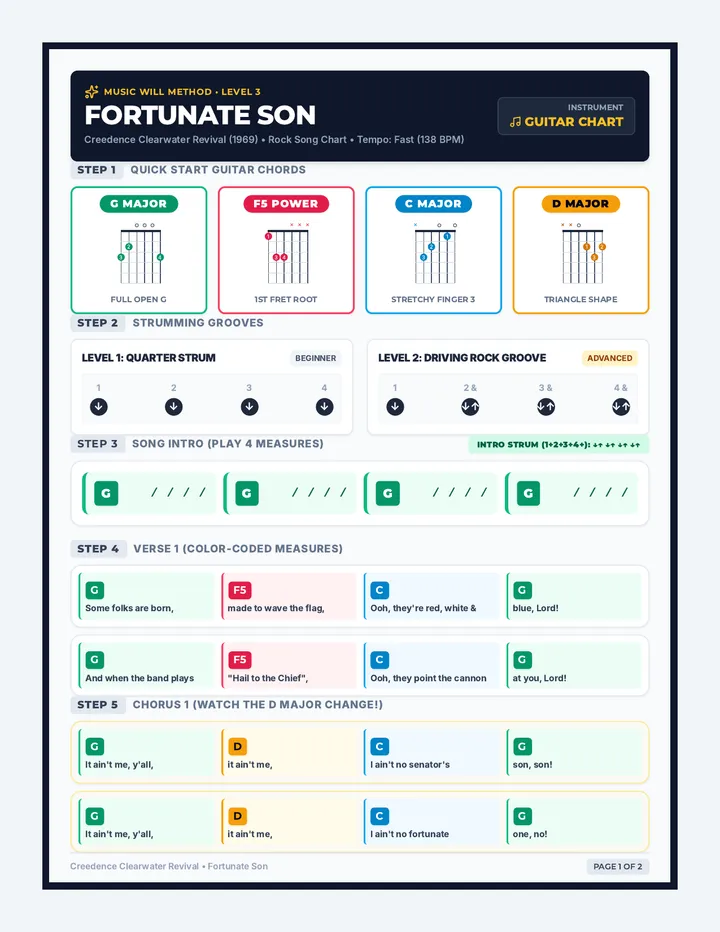
An engaging guitar lesson focused on Creedence Clearwater Revival's 'Fortunate Son', introducing intermediate rock strumming patterns, chord transitions (G, F, C, D), and visual lyric tracking.
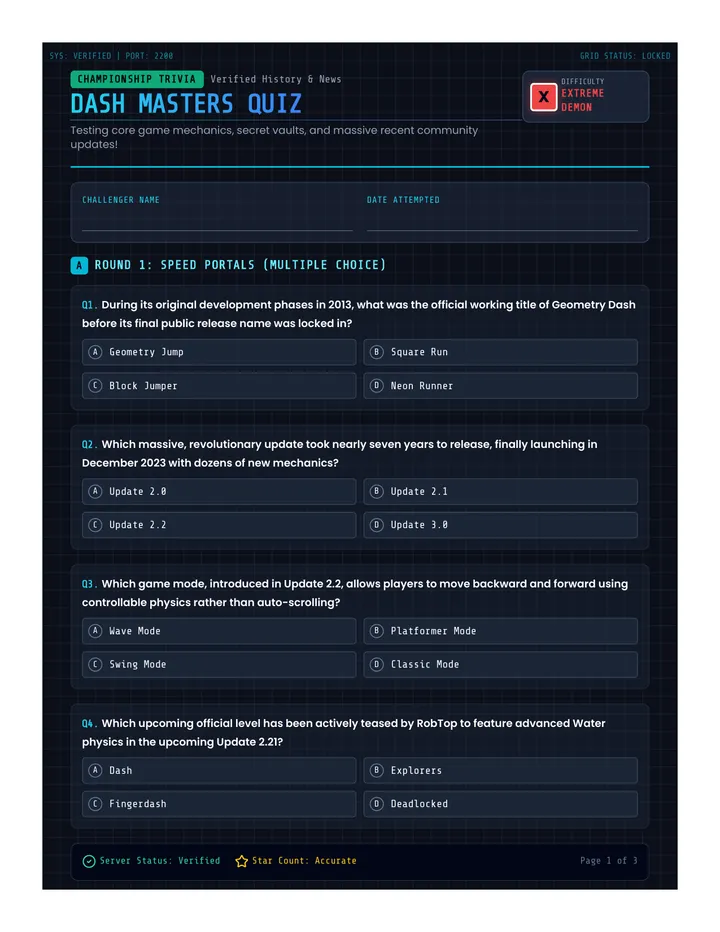
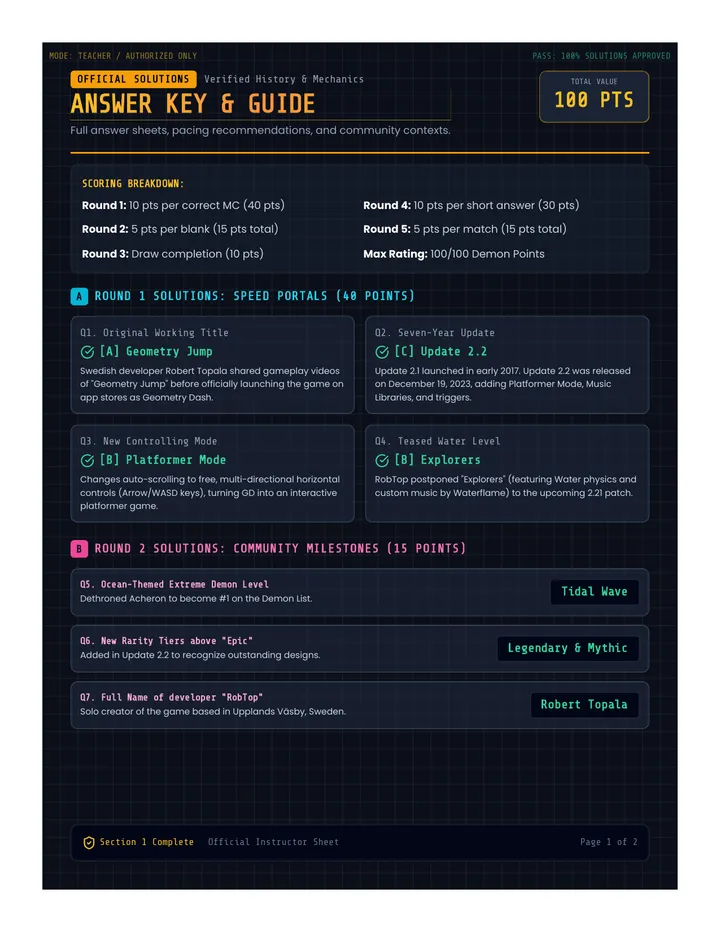
A fun-filled, competitive trivia challenge centered around the history, mechanics, and recent community updates of the sensation Geometry Dash. Perfect for gaming clubs, brain breaks, or student-led activities.
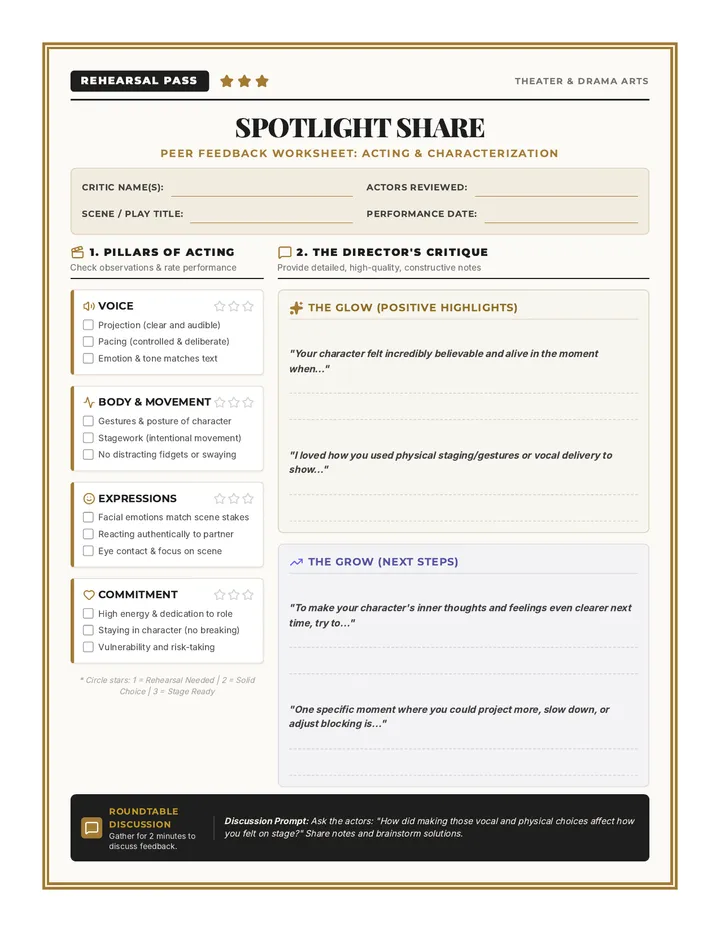
A lesson centered on scene work, characterization, and dramatic performance. Students analyze characters, rehearse scripts, and engage in peer feedback to elevate their physical and vocal choices before final performance.
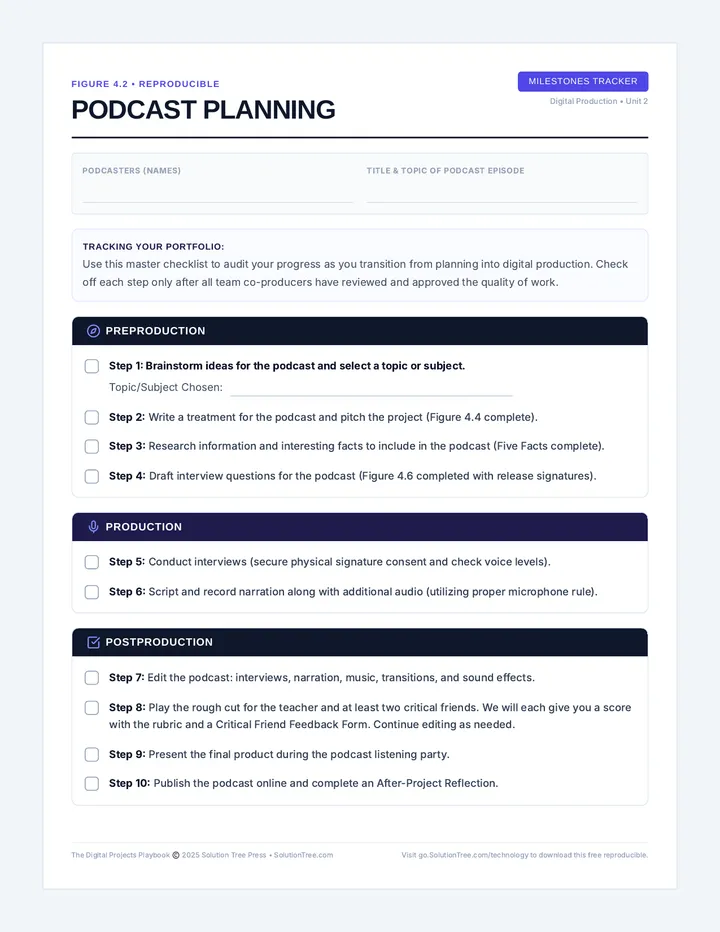
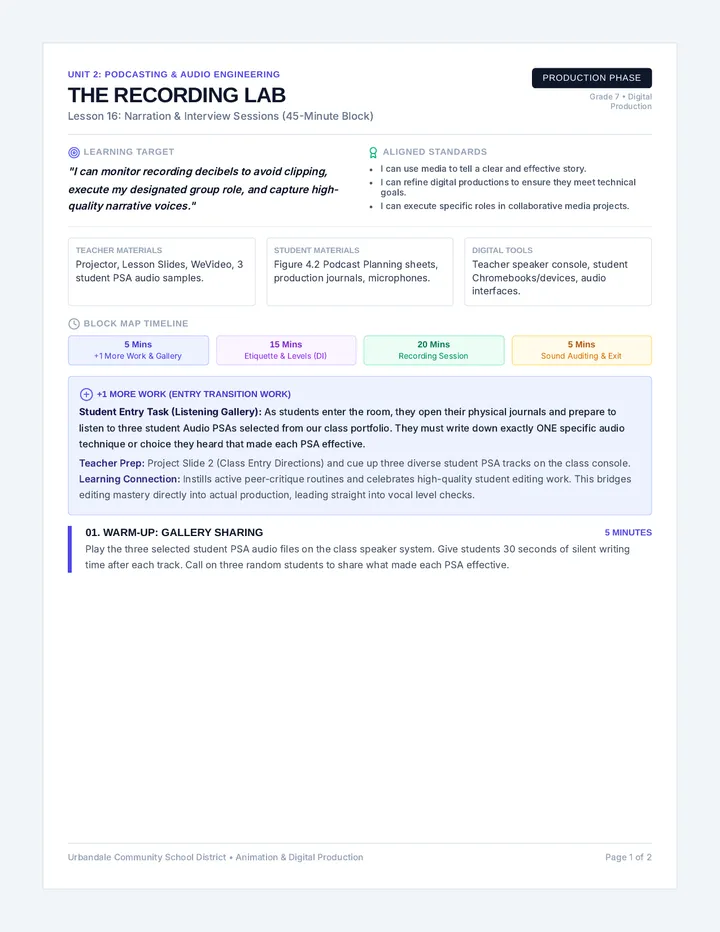
Students transition from planning to production. They explore recording etiquette, monitor input decibels to avoid 'The Red Zone' clipping, and conduct interviews and narration recordings following Figure 4.2 Steps 5 and 6.
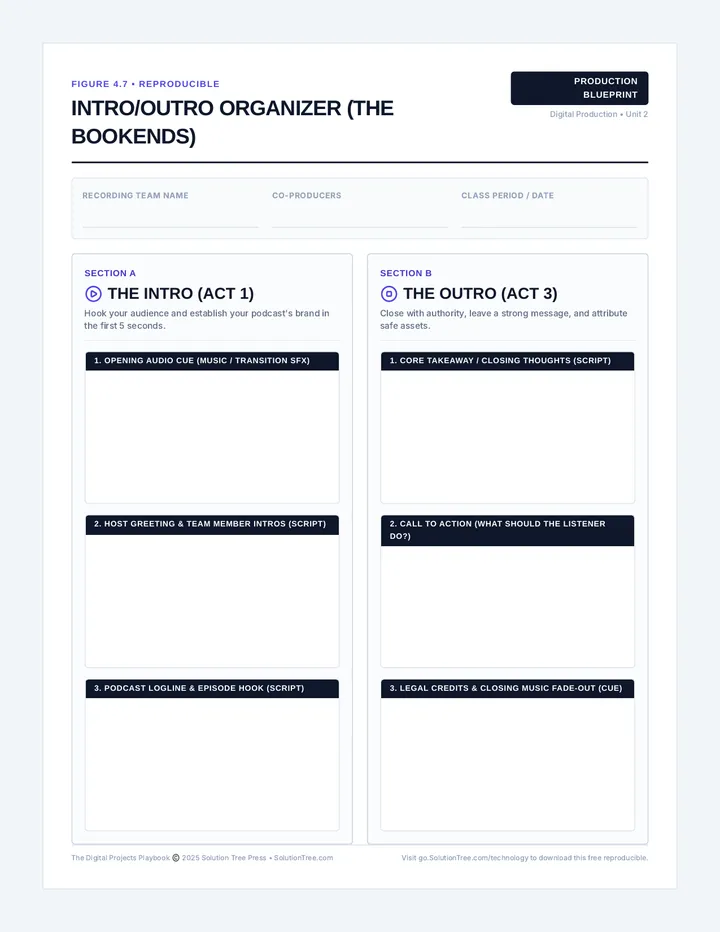
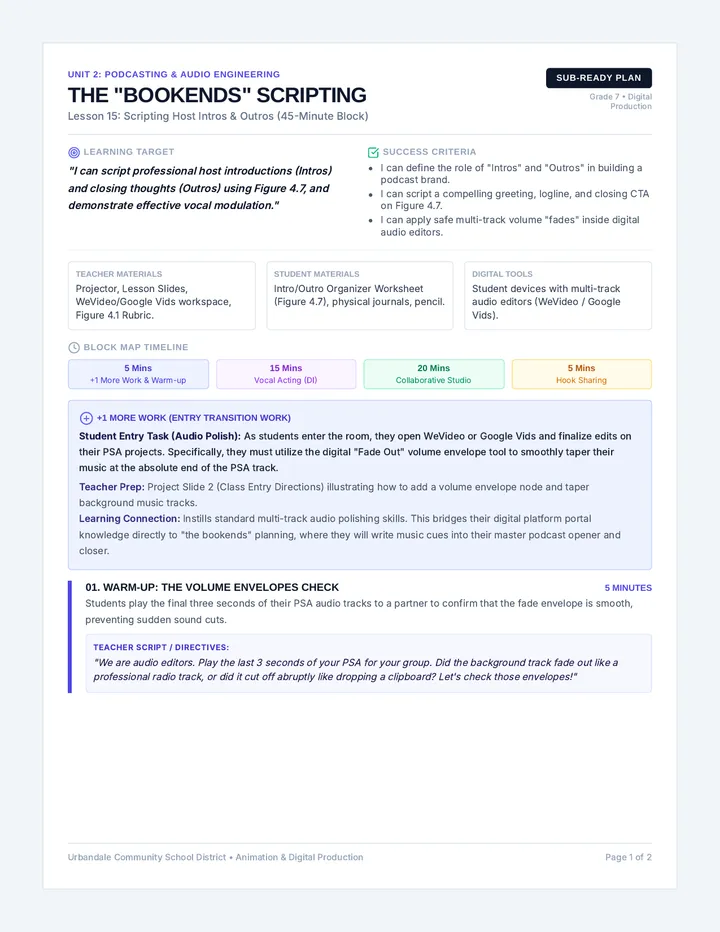
Students script their podcast host introductions (Intros) and closing thoughts (Outros) using Figure 4.7 (Intro/Outro Organizer). Teachers model vocal modulation and review Figure 4.1 Rubric standards.
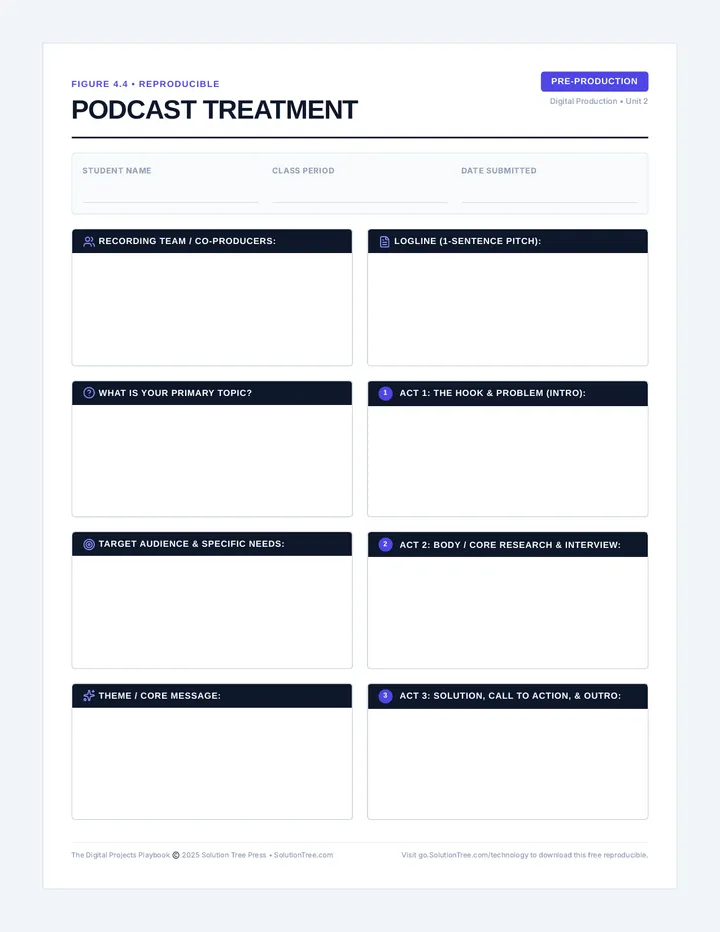
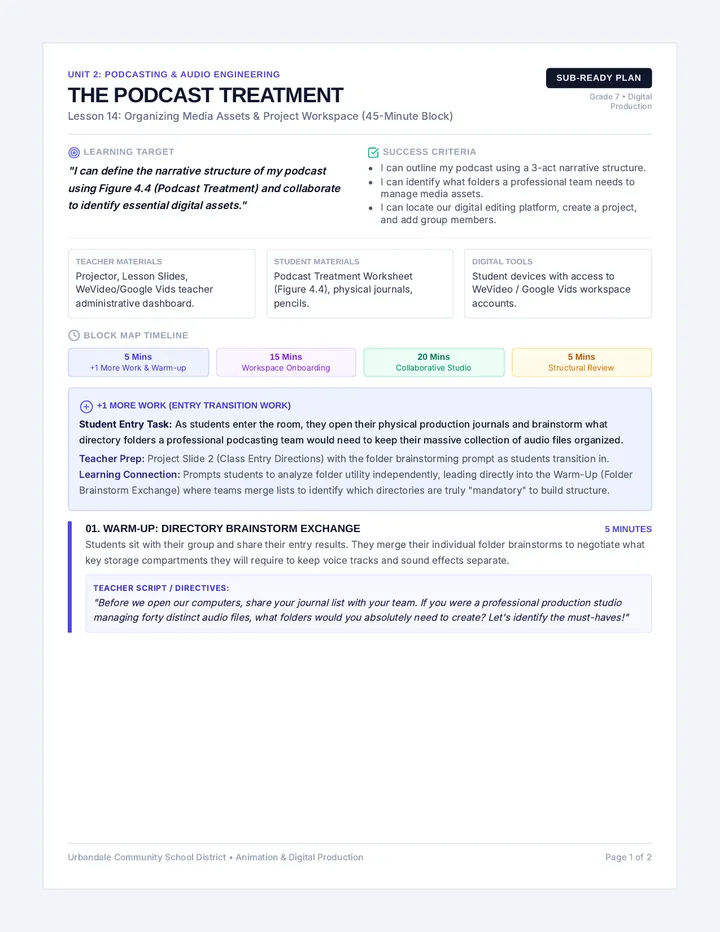
Students define the narrative structure of their podcast using Figure 4.4 (Podcast Treatment), organizing their show into a three-act structure. Teachers introduce WeVideo/Google Vids workspace setup and establish asset organization expectations.
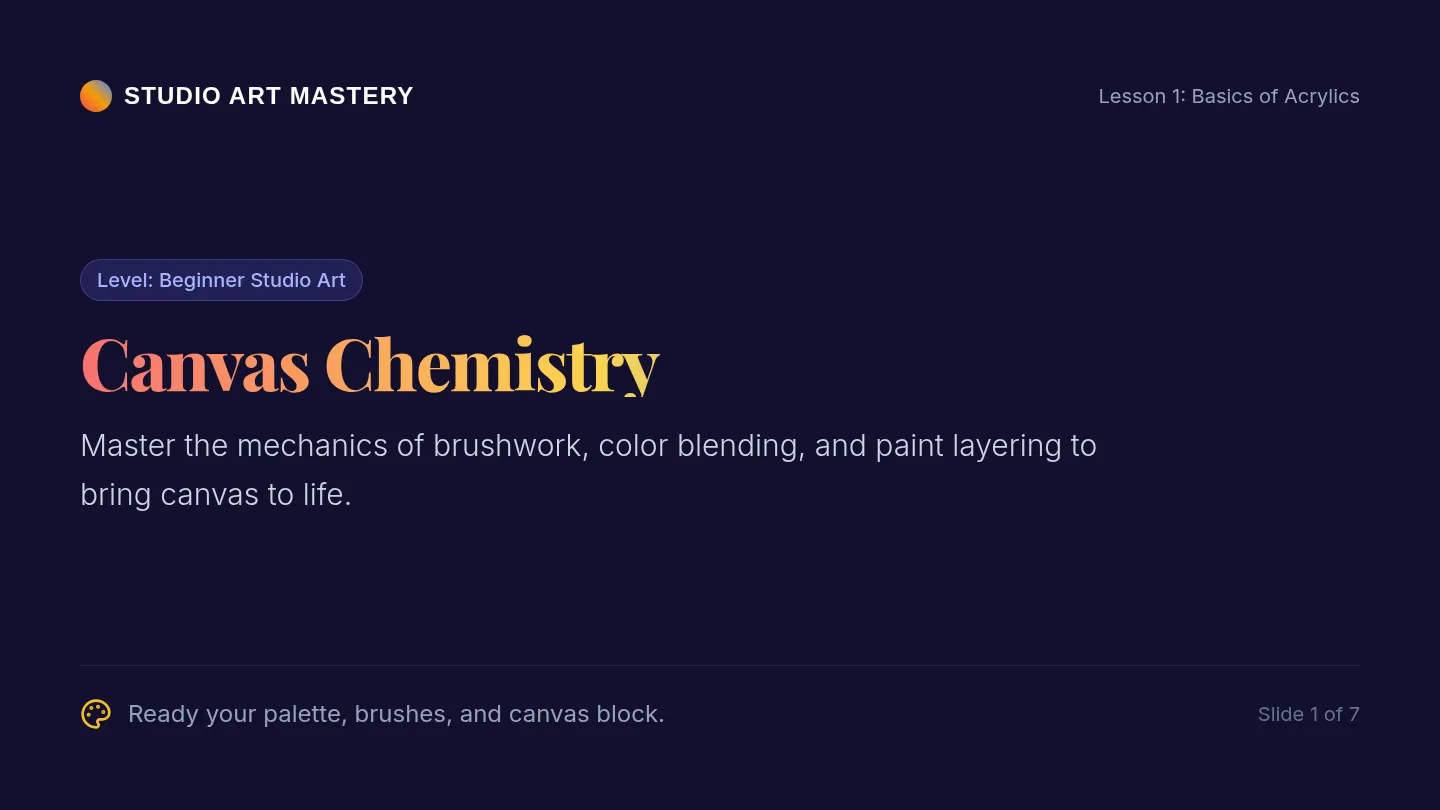
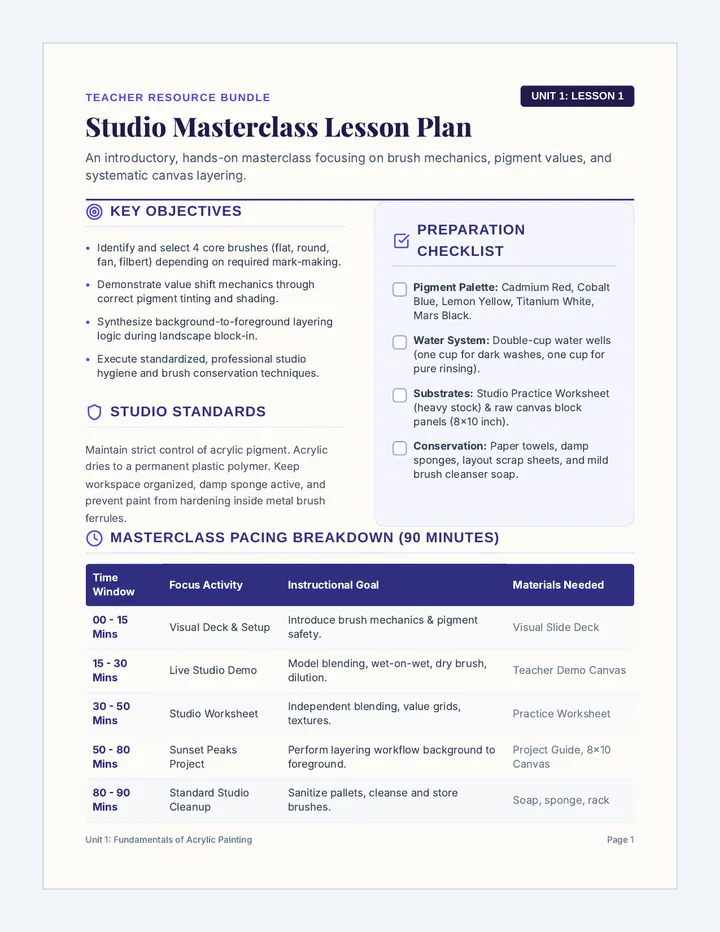
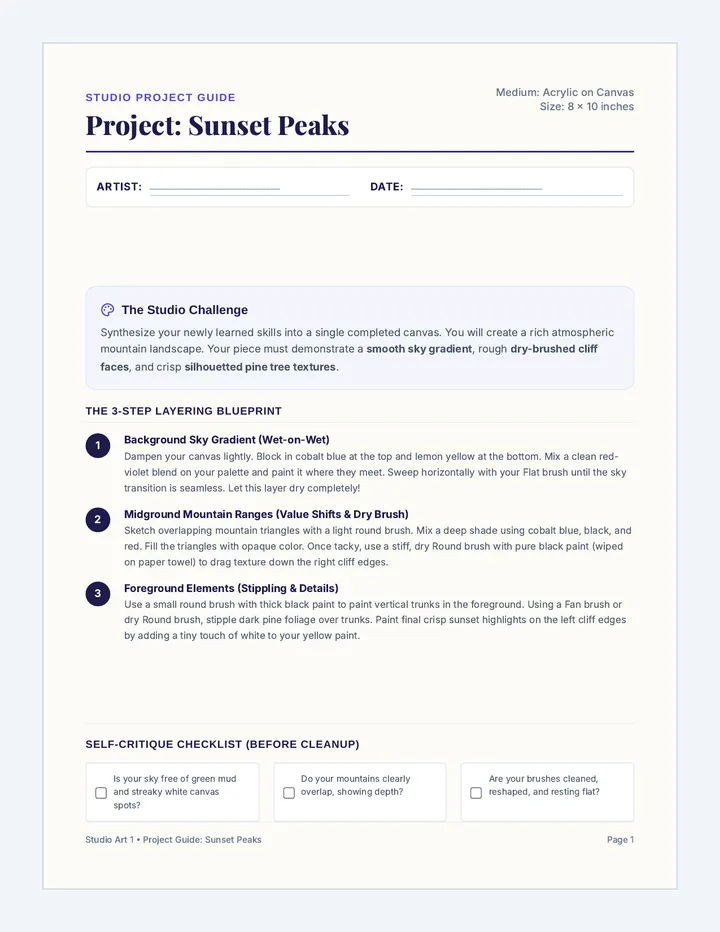
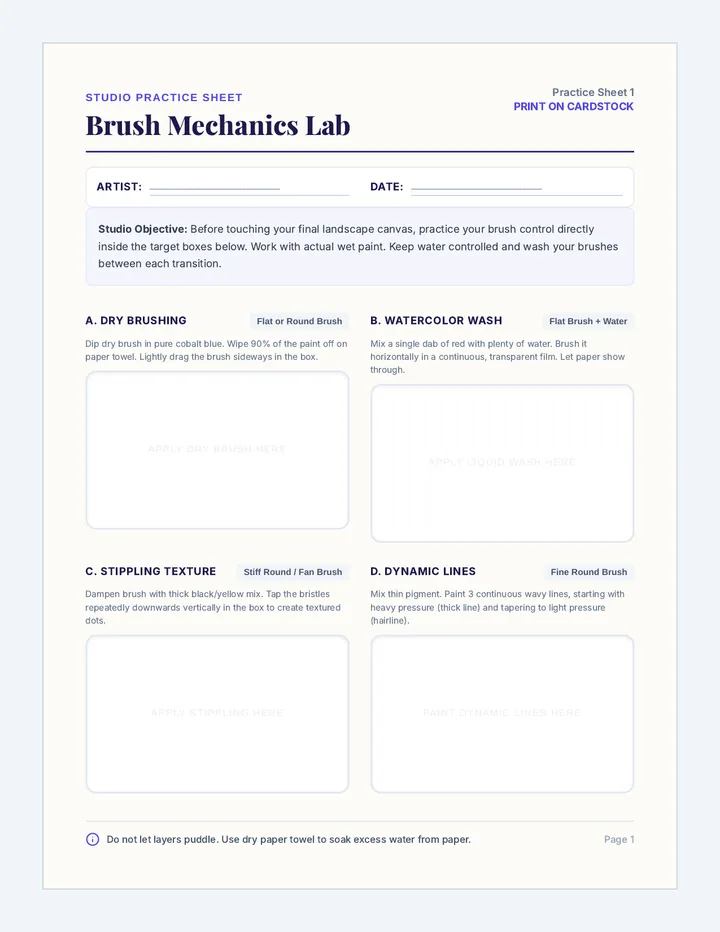
An introductory studio lesson on the fundamentals of acrylic painting. Students explore brushwork textures, color mixing mechanics, and structural layering through hands-on practice and a guided landscape project.
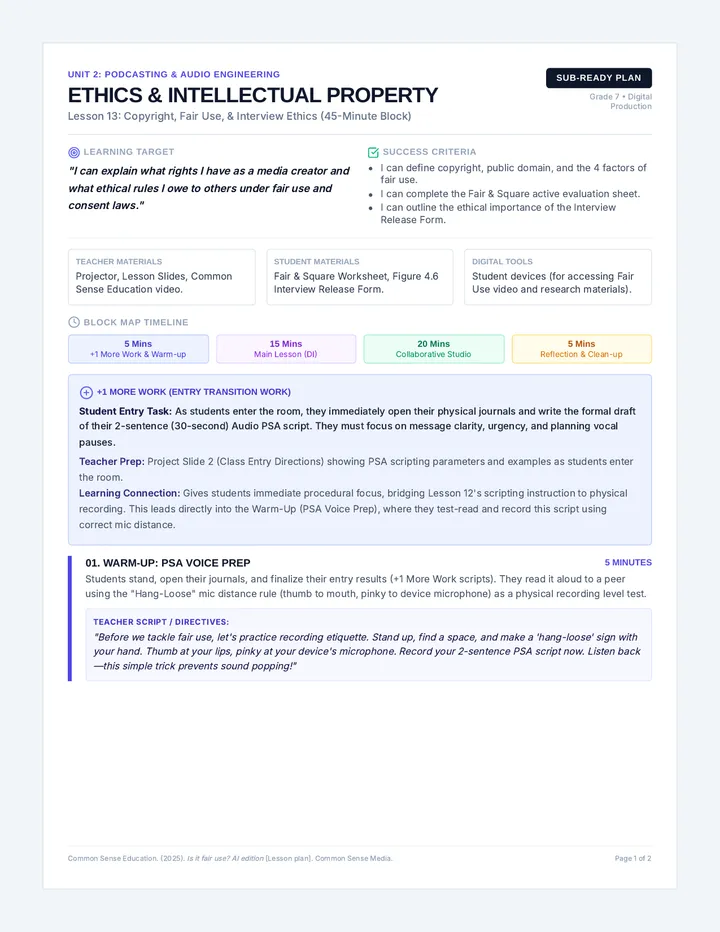
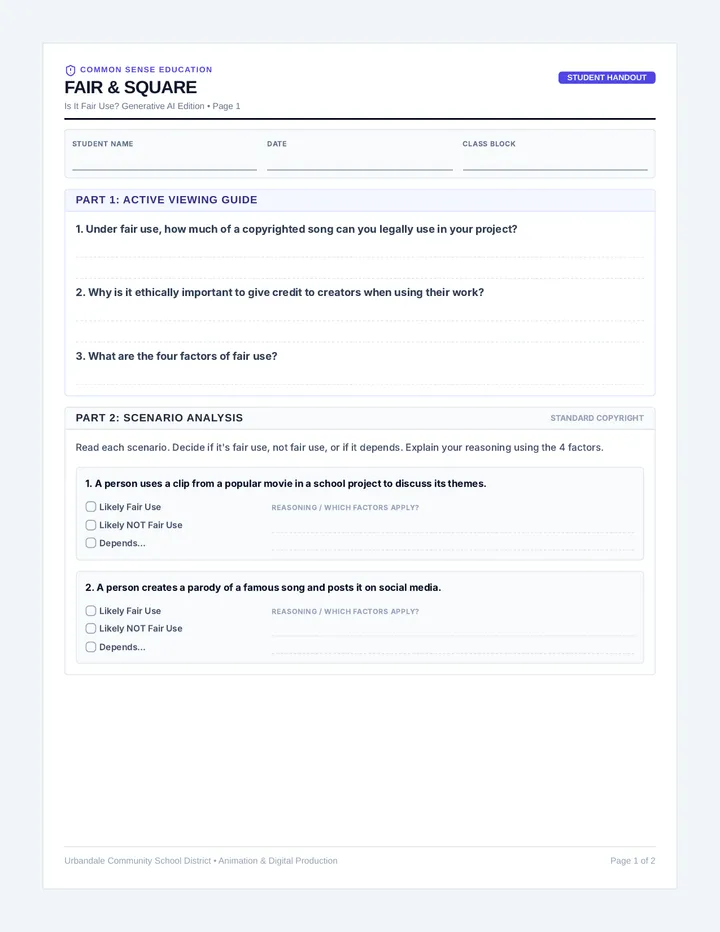
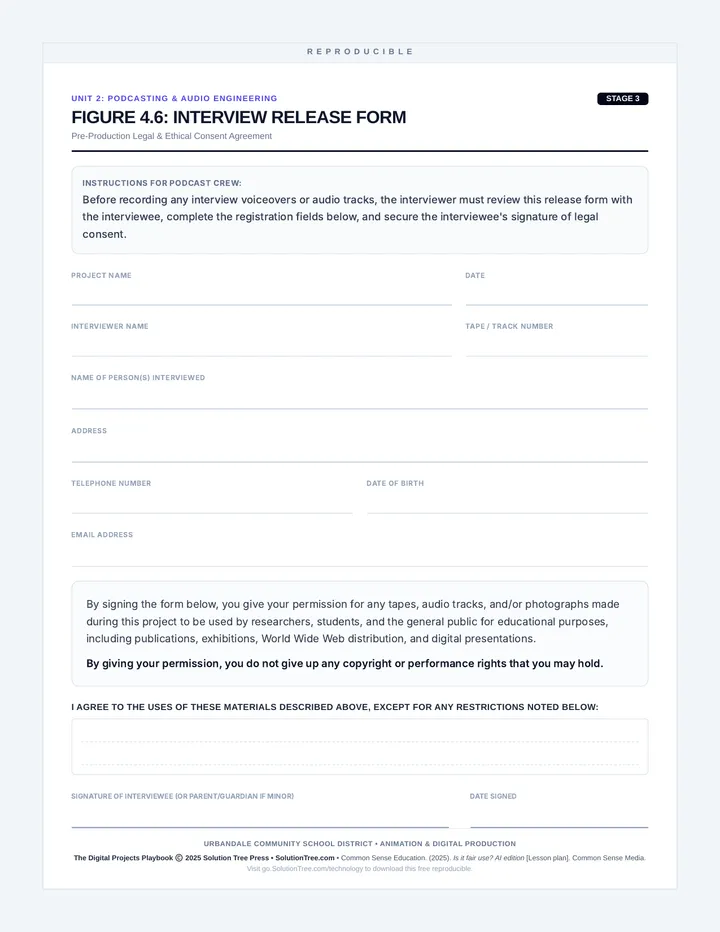
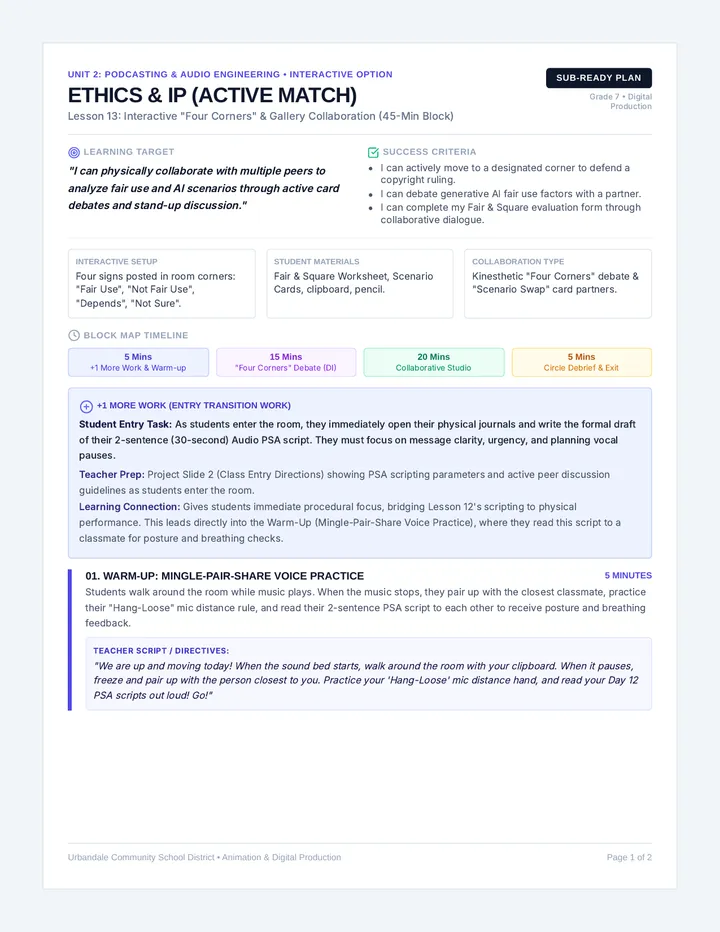
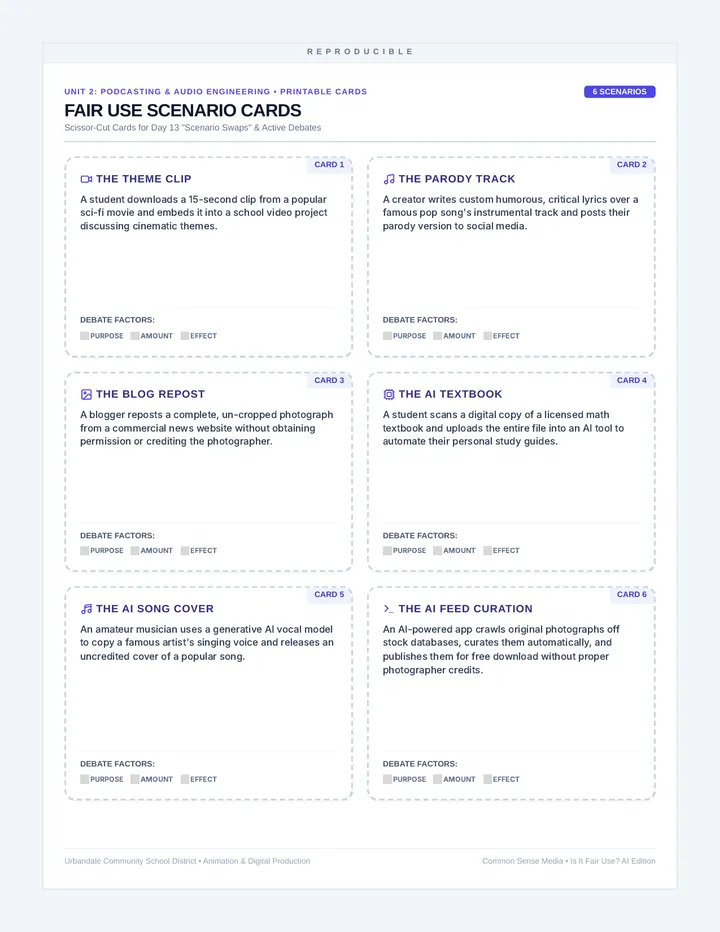
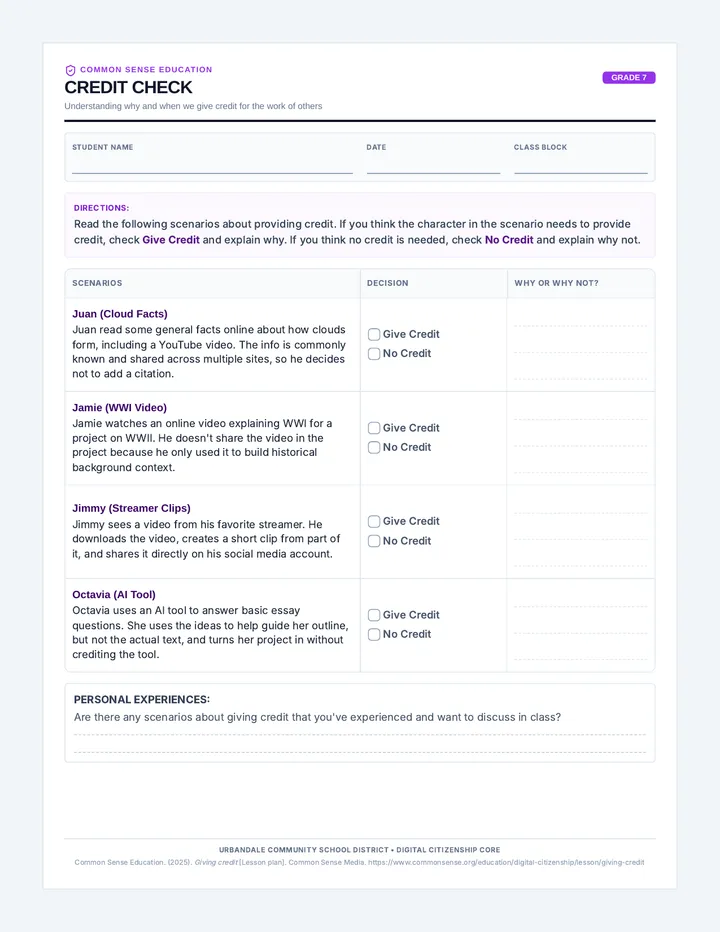
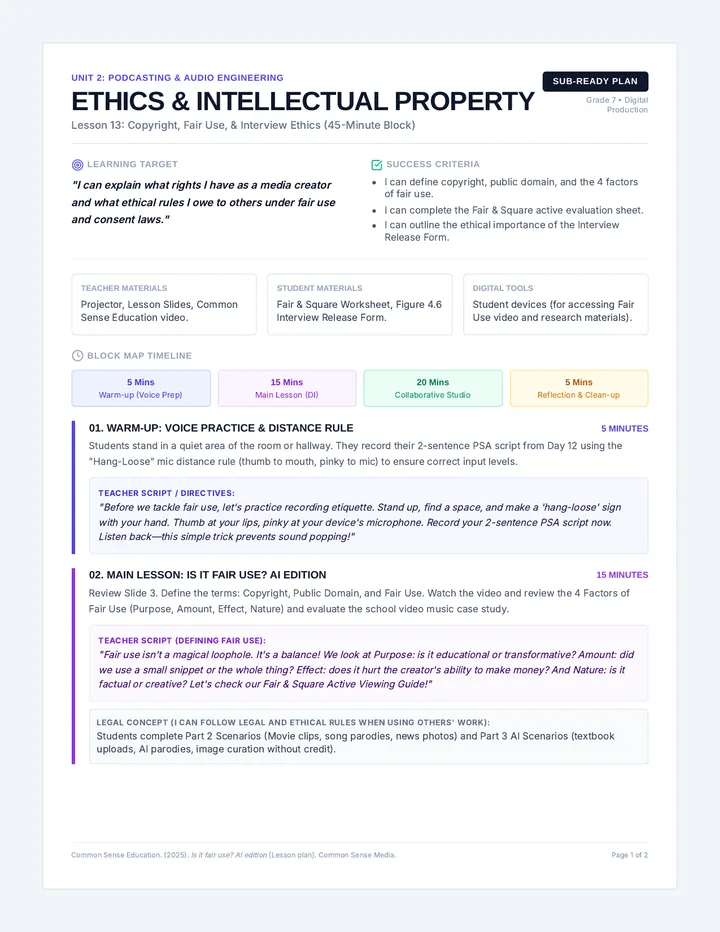
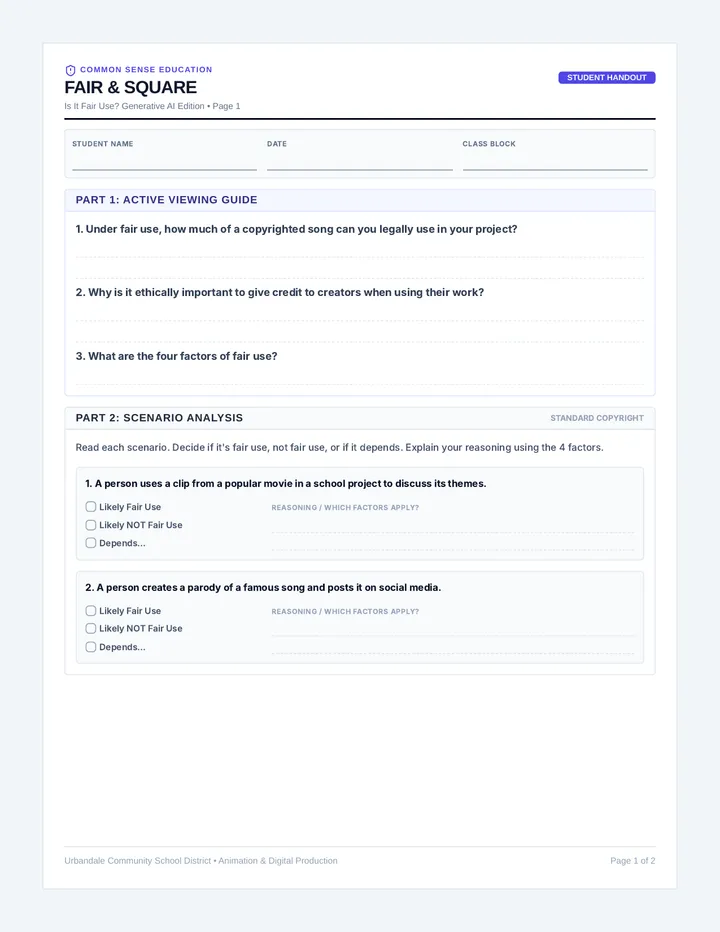
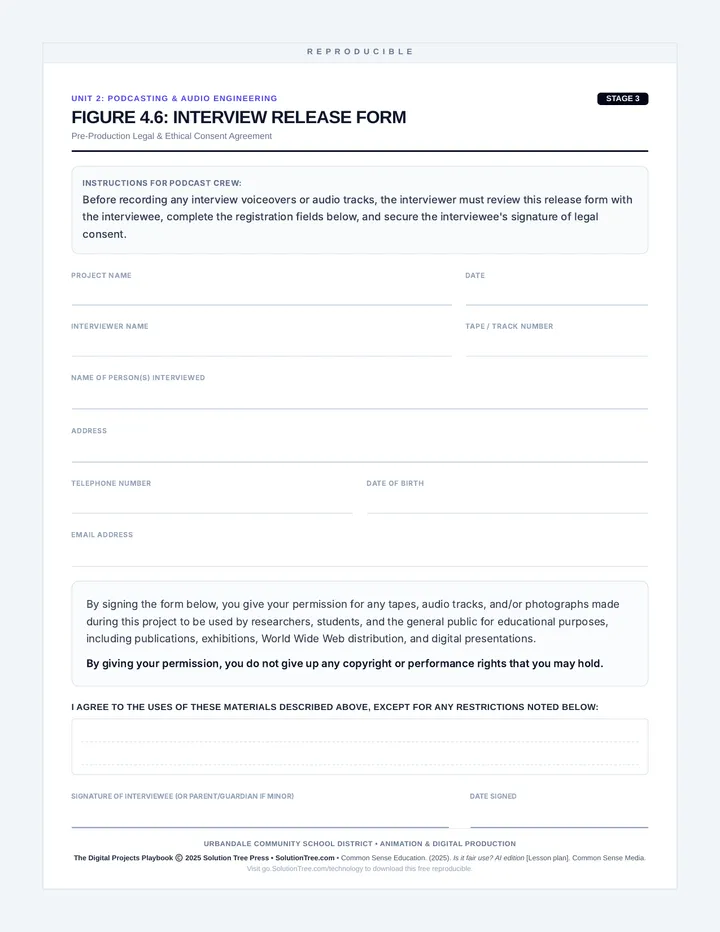
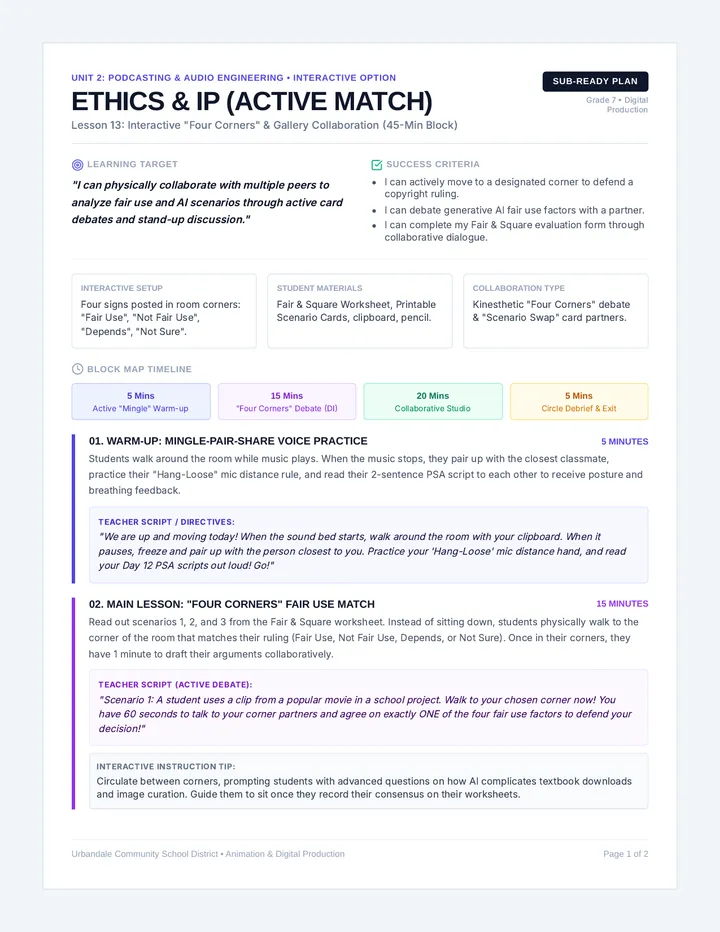
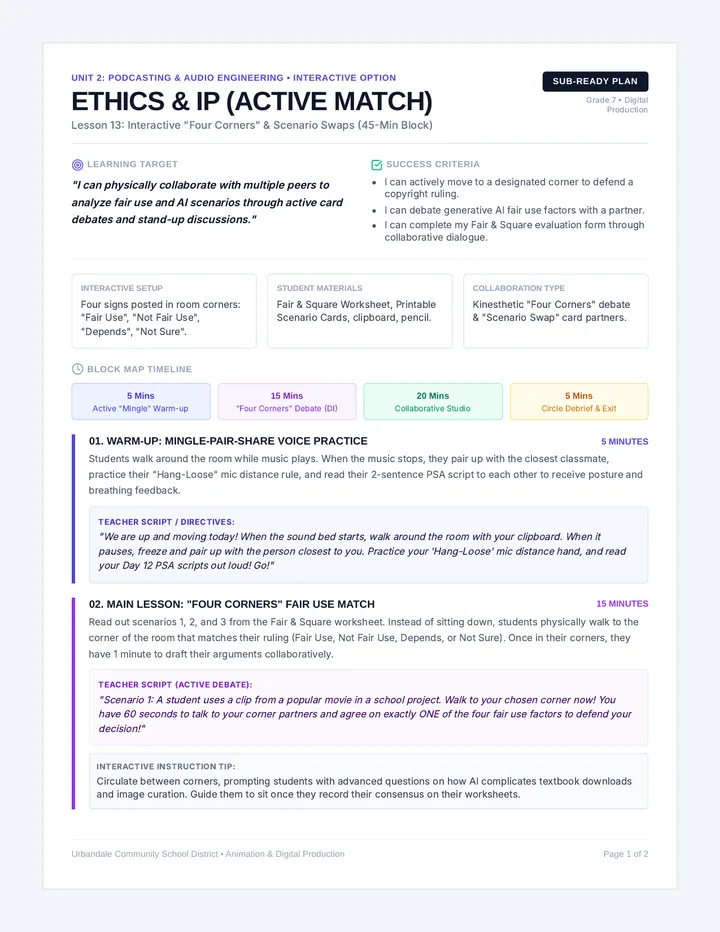
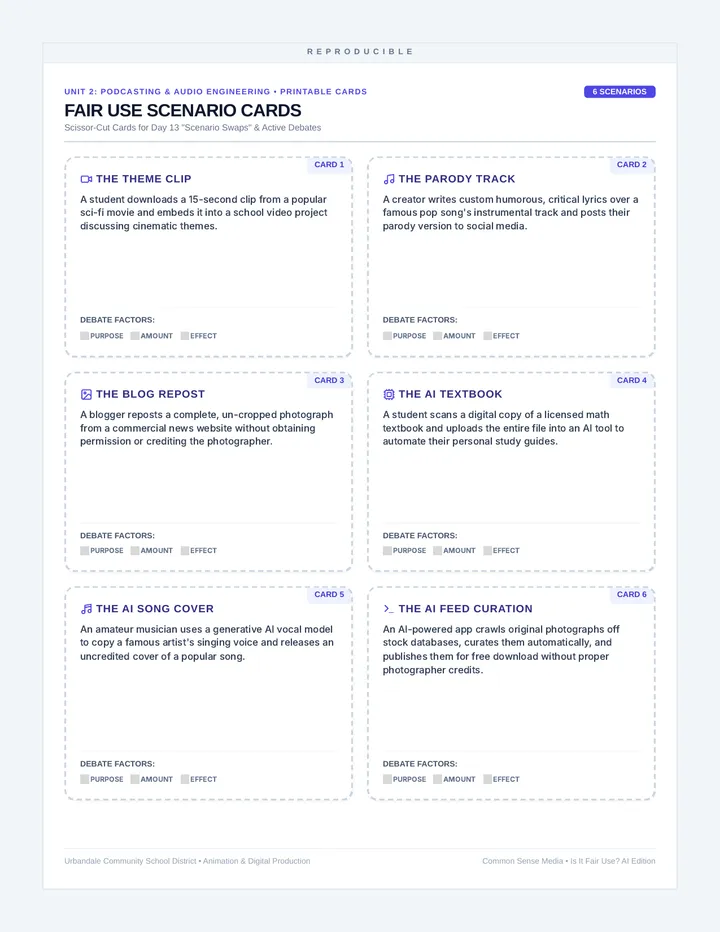
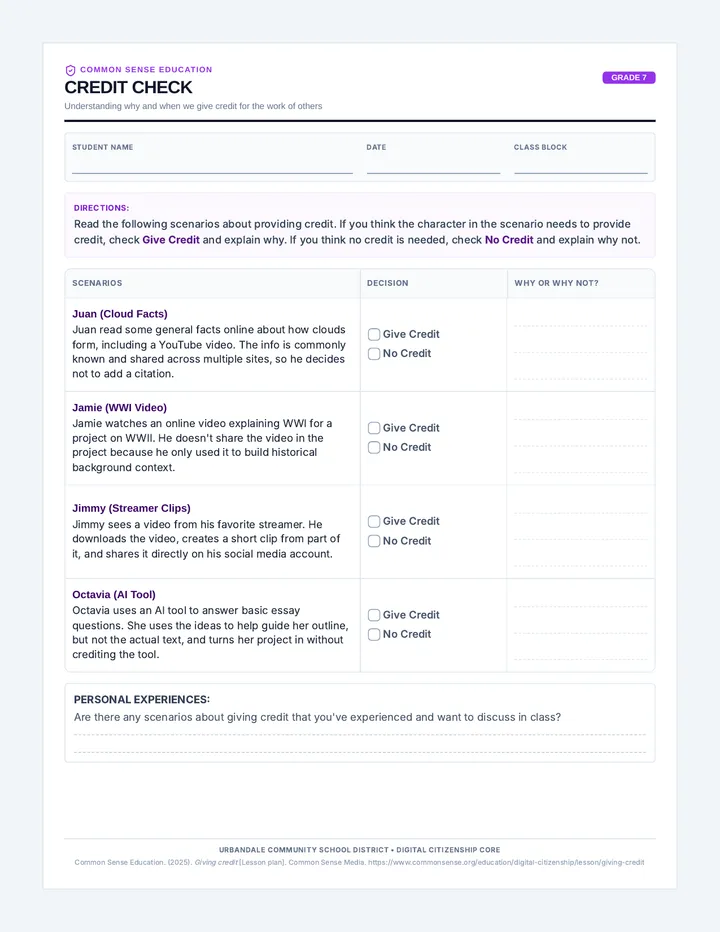
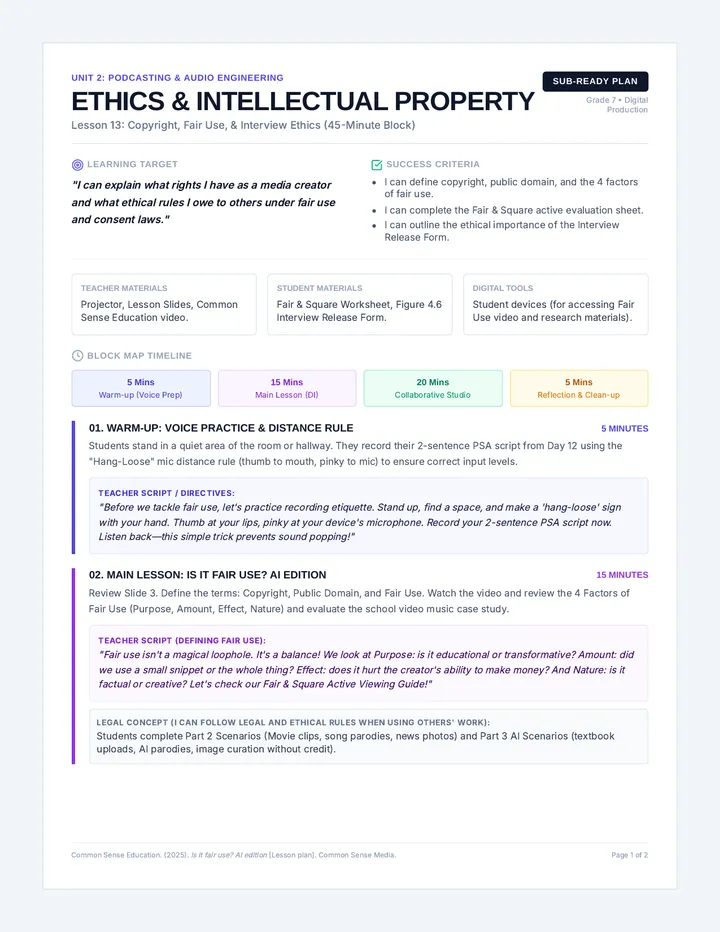
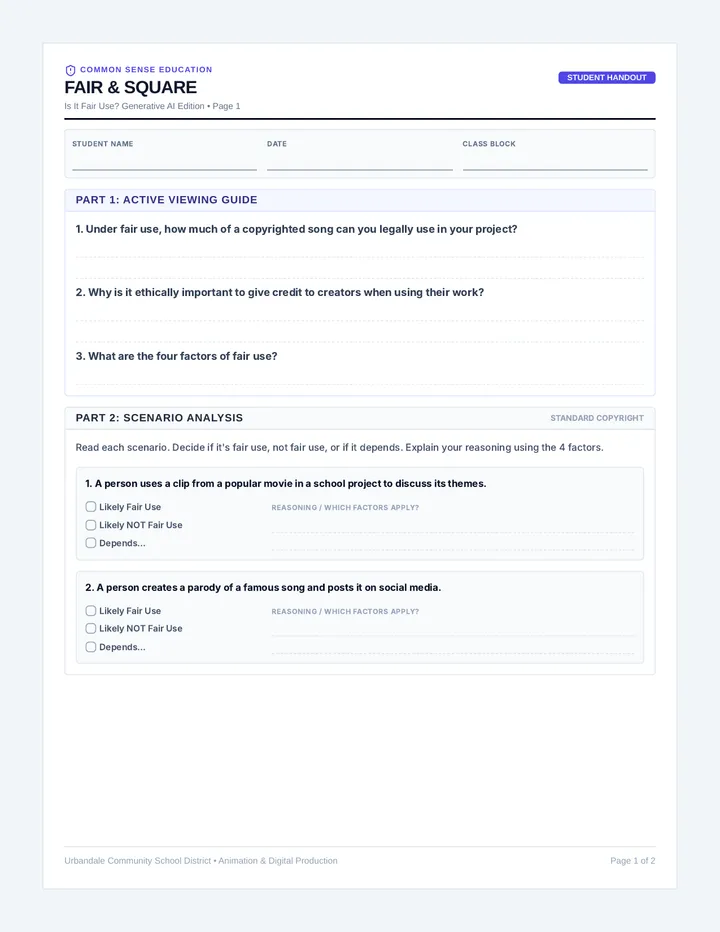
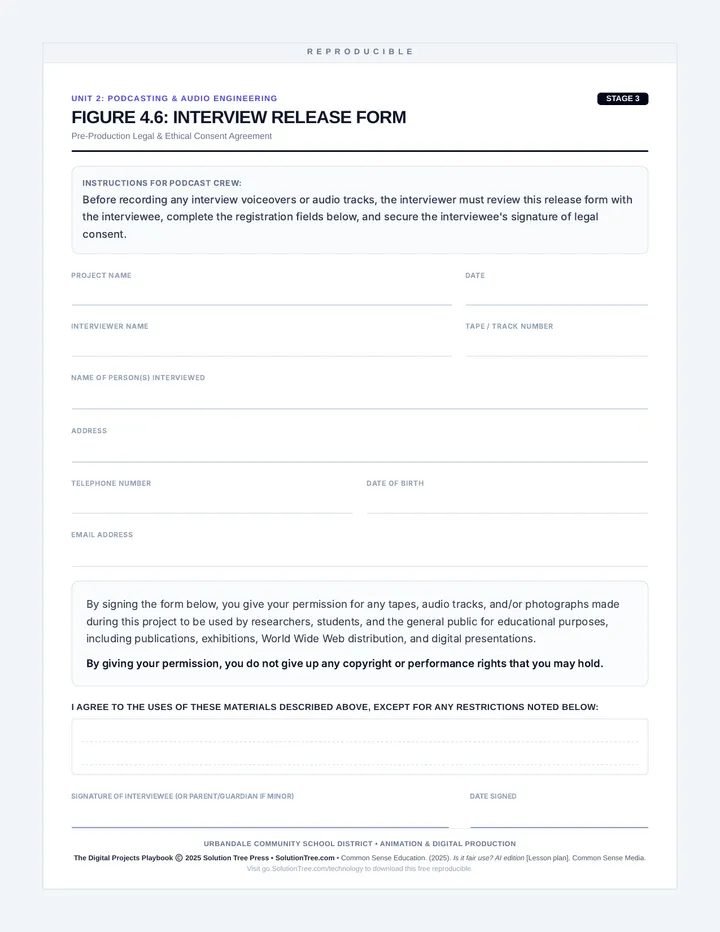
Introduce students to copyright, public domain, the four factors of fair use, generative AI complications, and interview release ethics.
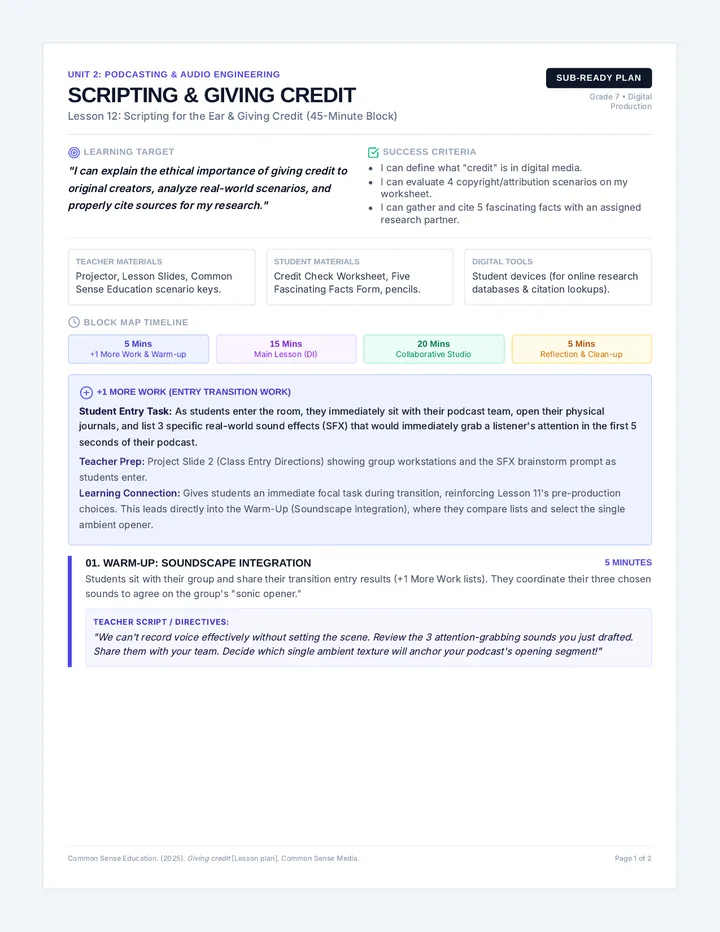
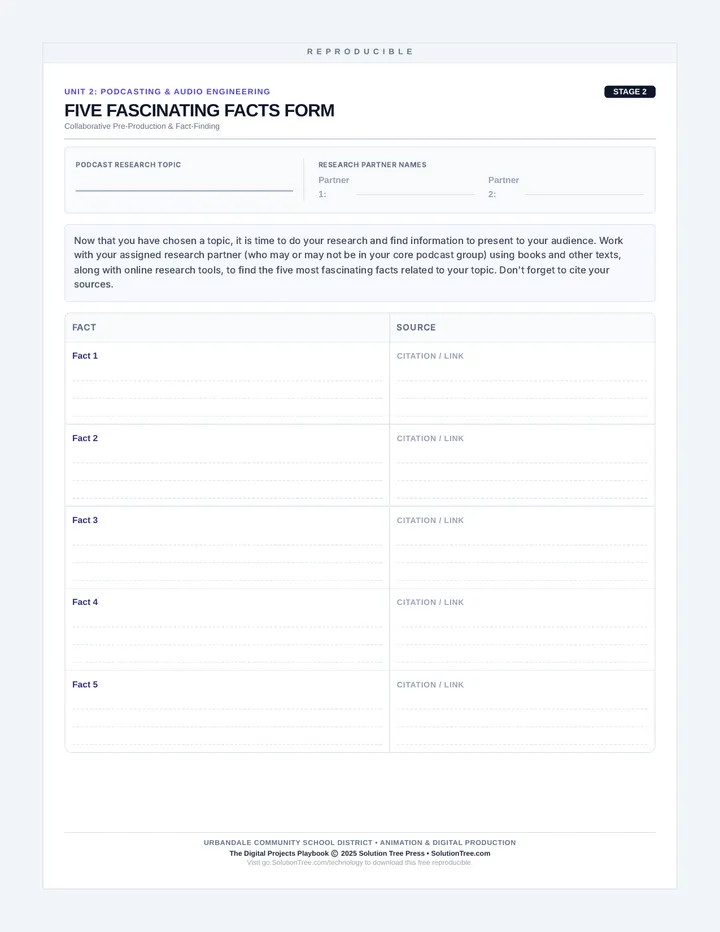
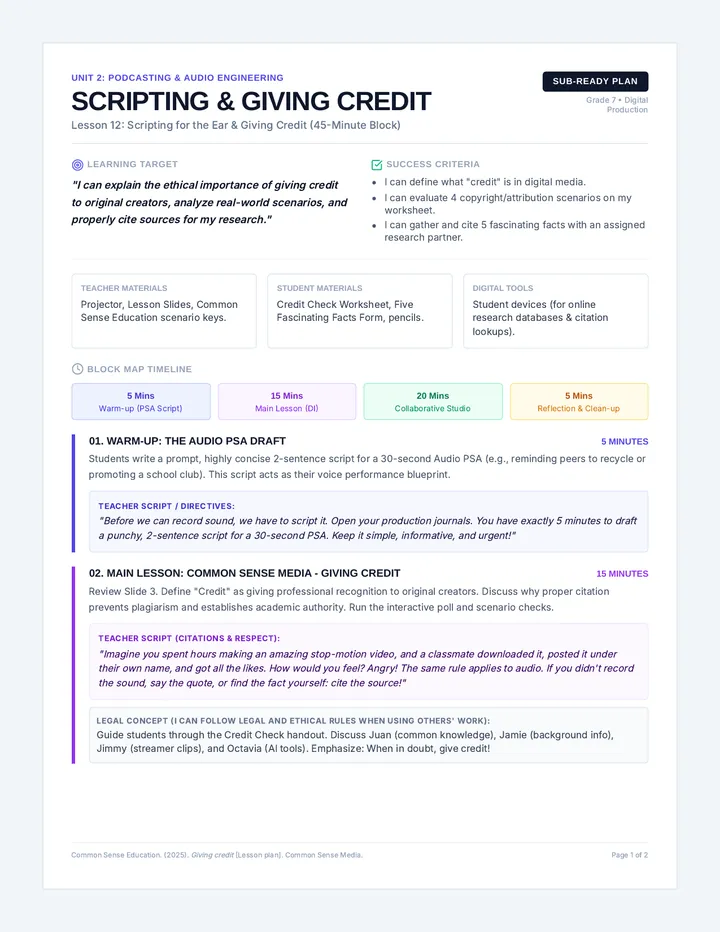
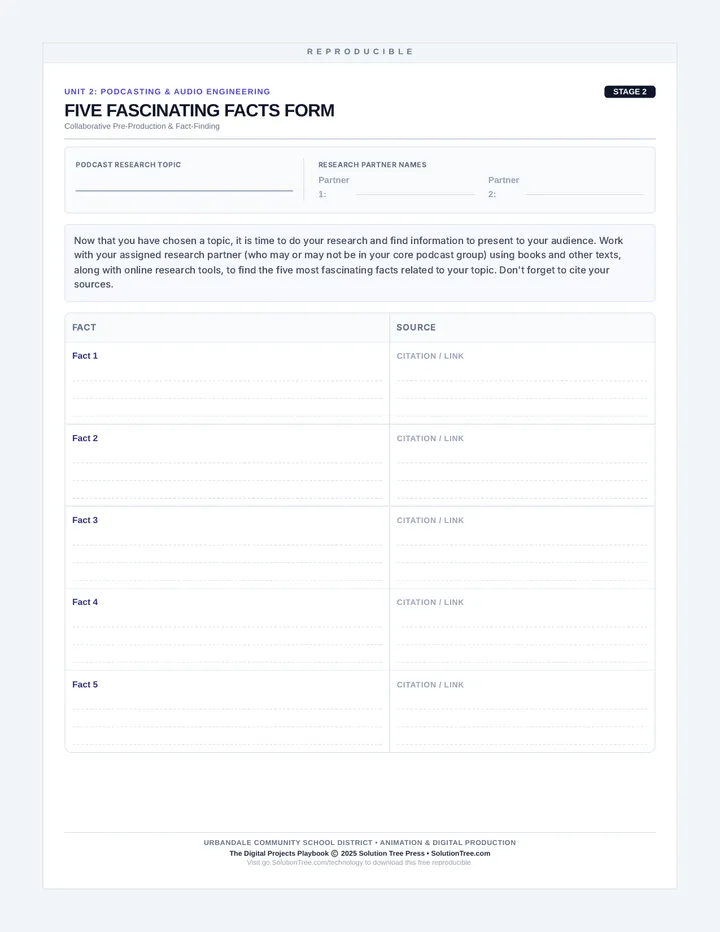
Learn the ethical and technical aspects of scripting for audio, focusing on writing for the ear, citing audio sources, and research fact-finding using the Five Fascinating Facts Form.
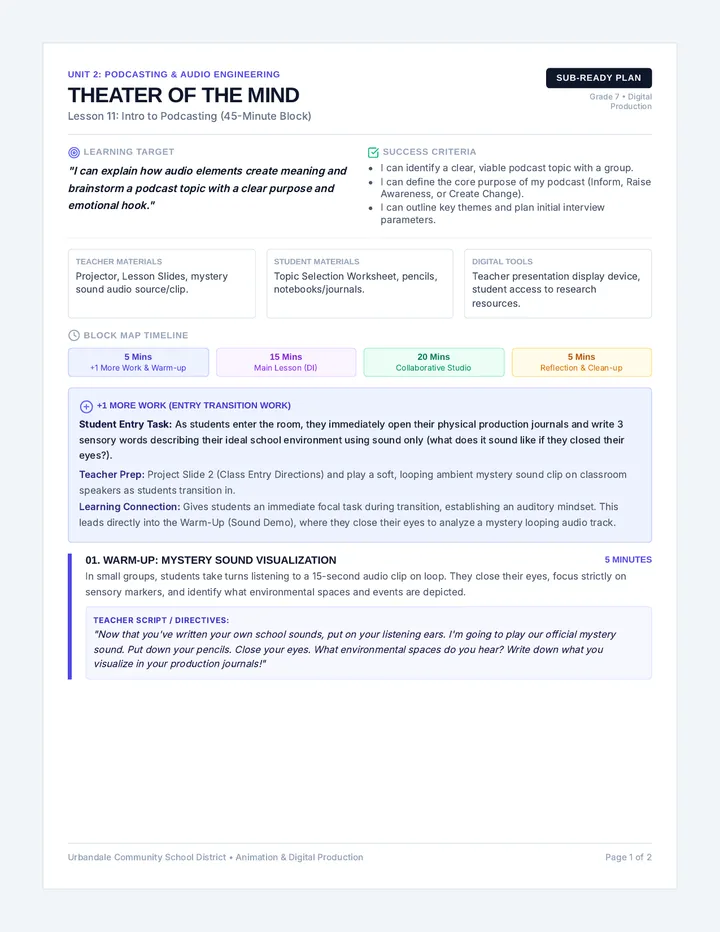
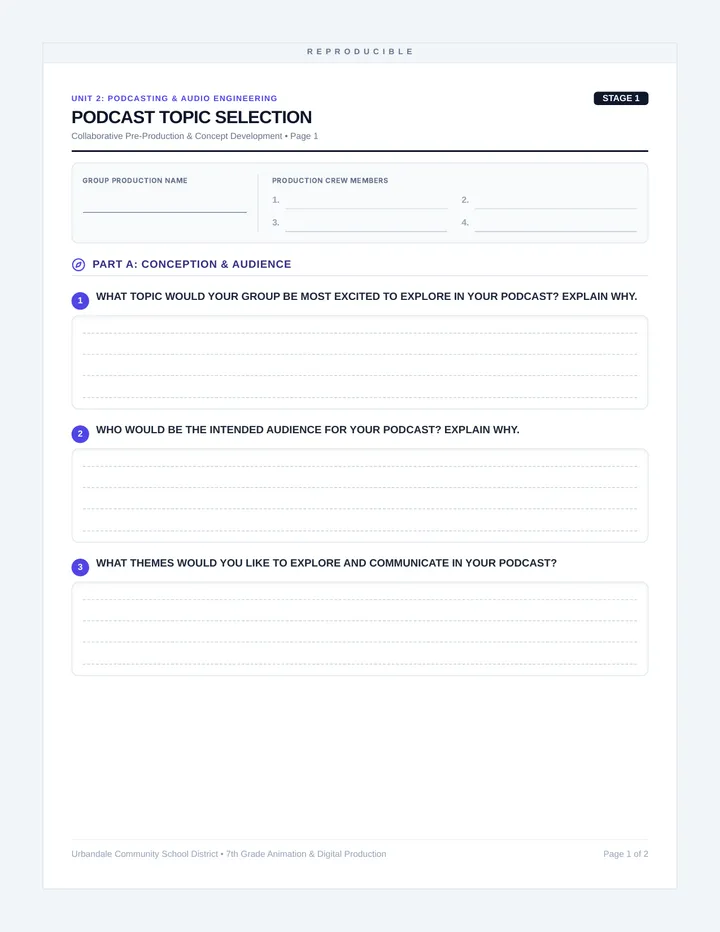
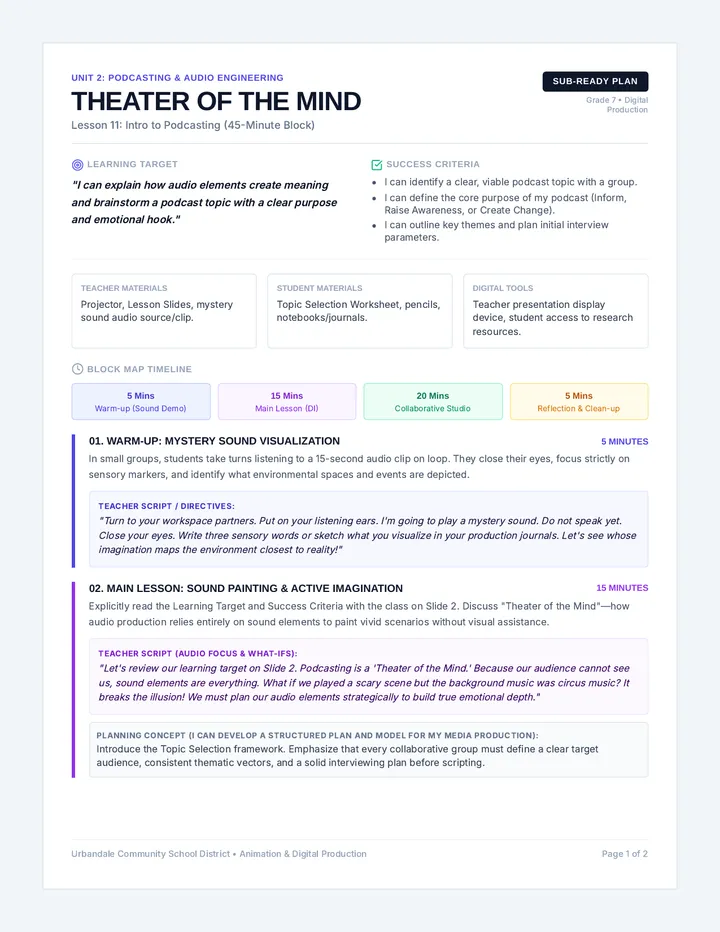
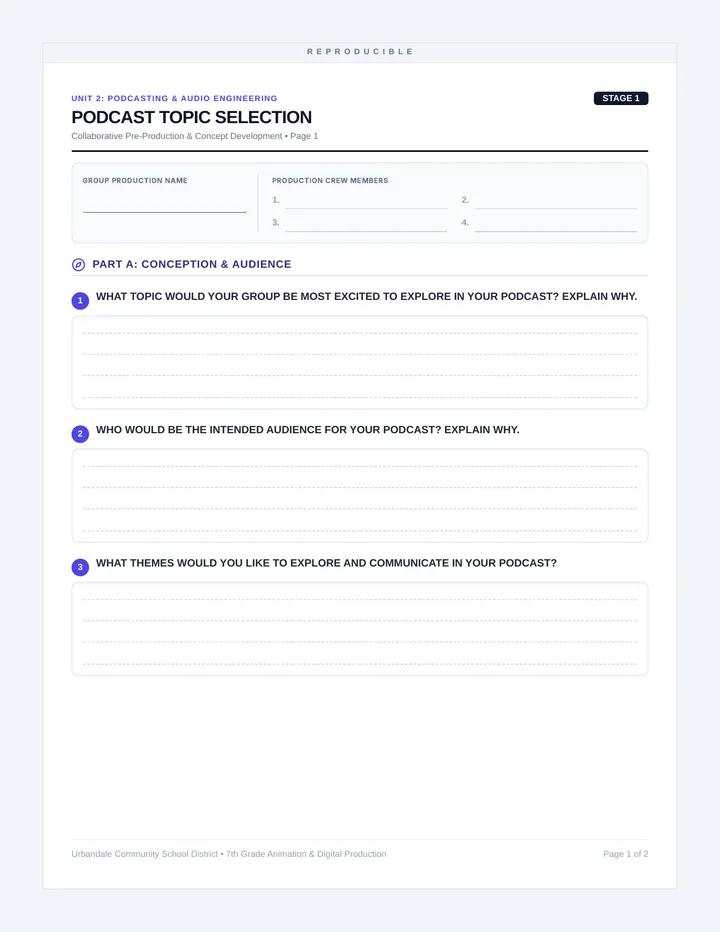
Introduce students to podcasting and the concept of 'Theater of the Mind.' Students explore how sound paints pictures, select topics, form groups, and complete Figure 4.3 (Topic Selection).
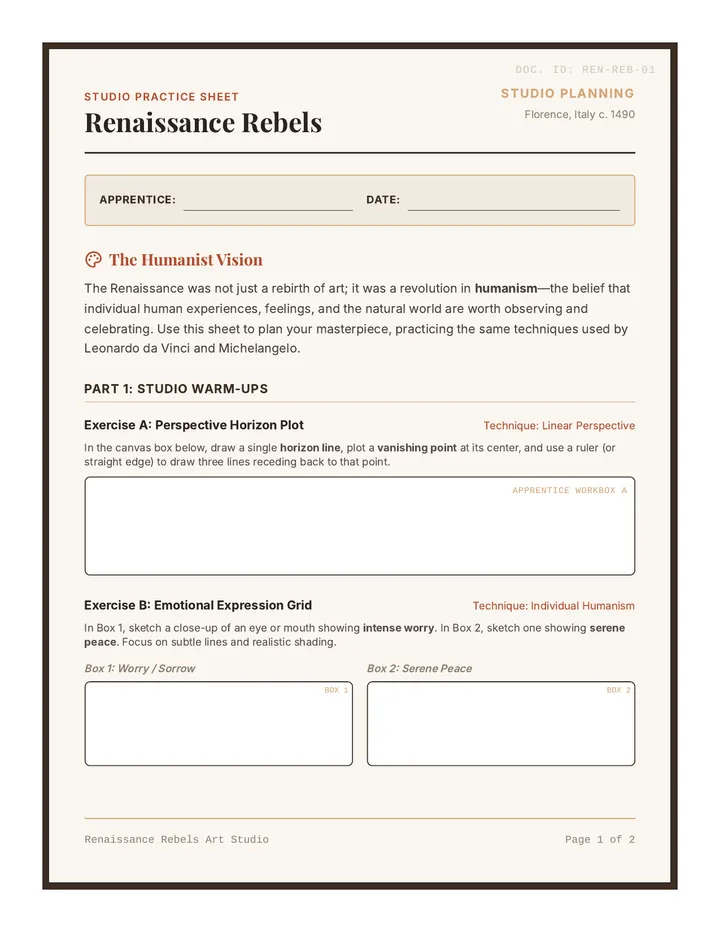
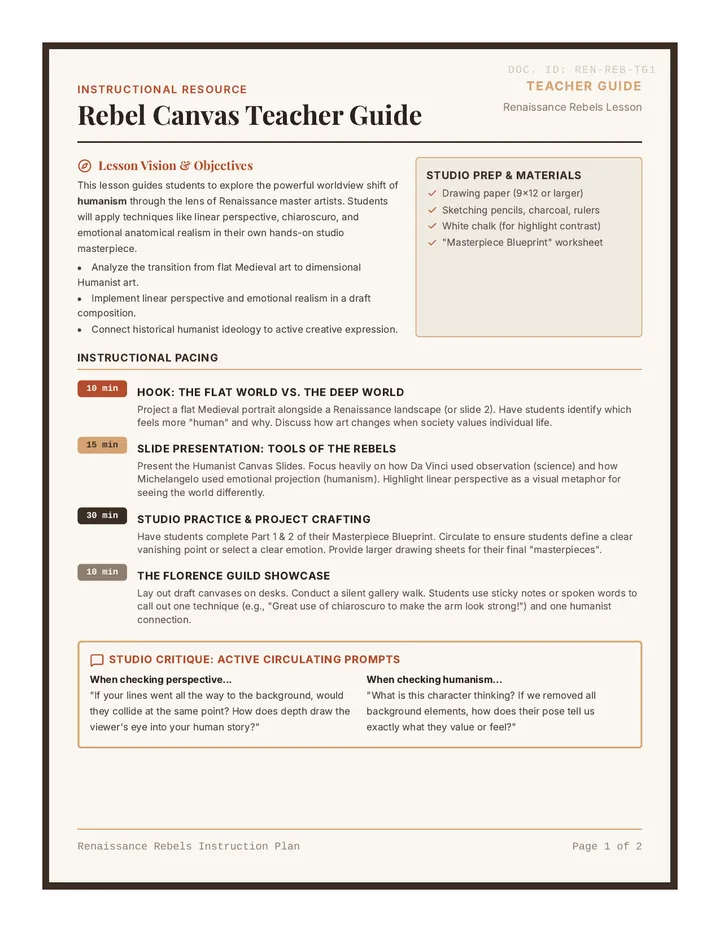
An art and history lesson exploring how Renaissance artists like Da Vinci and Michelangelo used humanism to shift the world's perspective, culminating in a hands-on student art project.
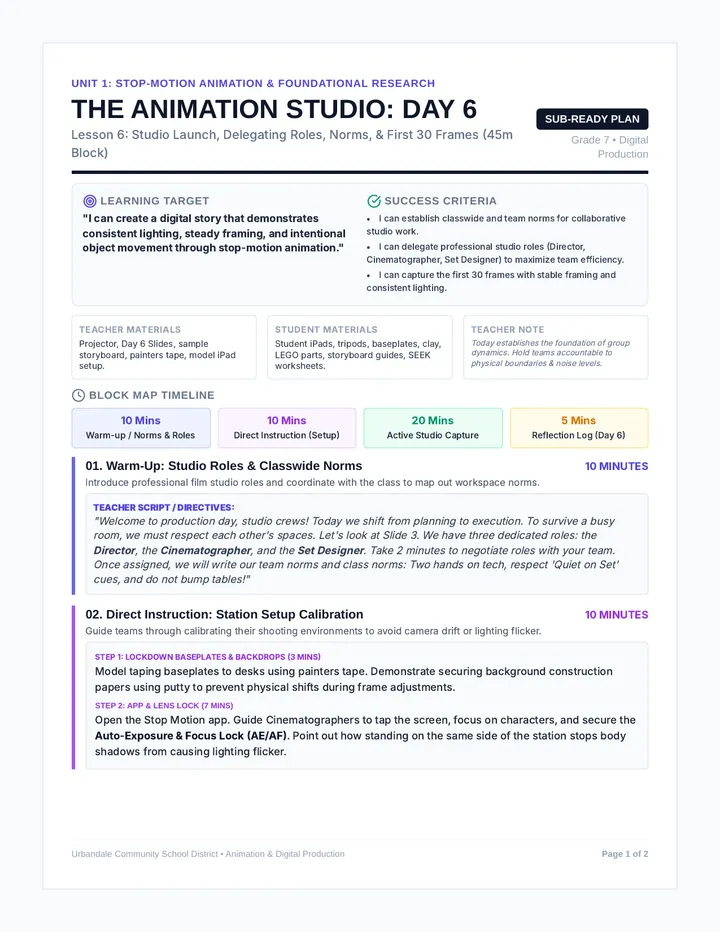
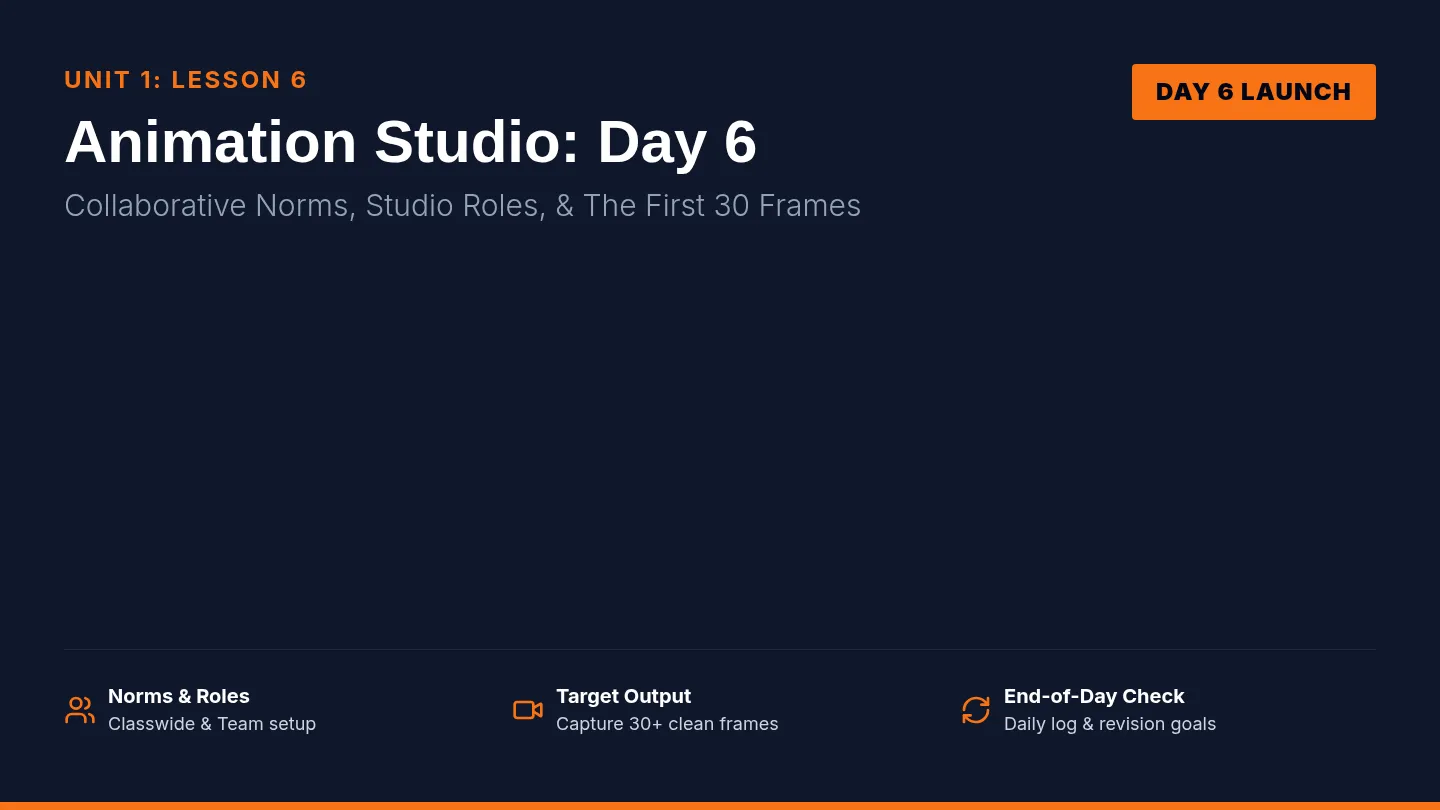
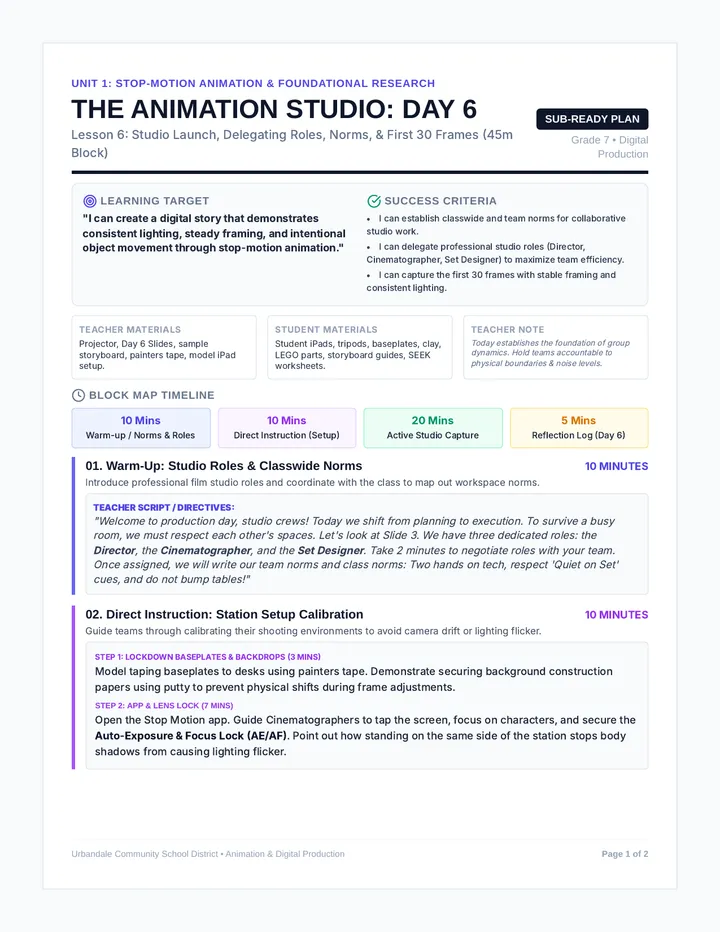
Unit 1, Lesson 6: The Animation Studio - Day 6. Teams establish collaborative group norms and class safety norms, delegate professional roles, and capture the first 30 frames.
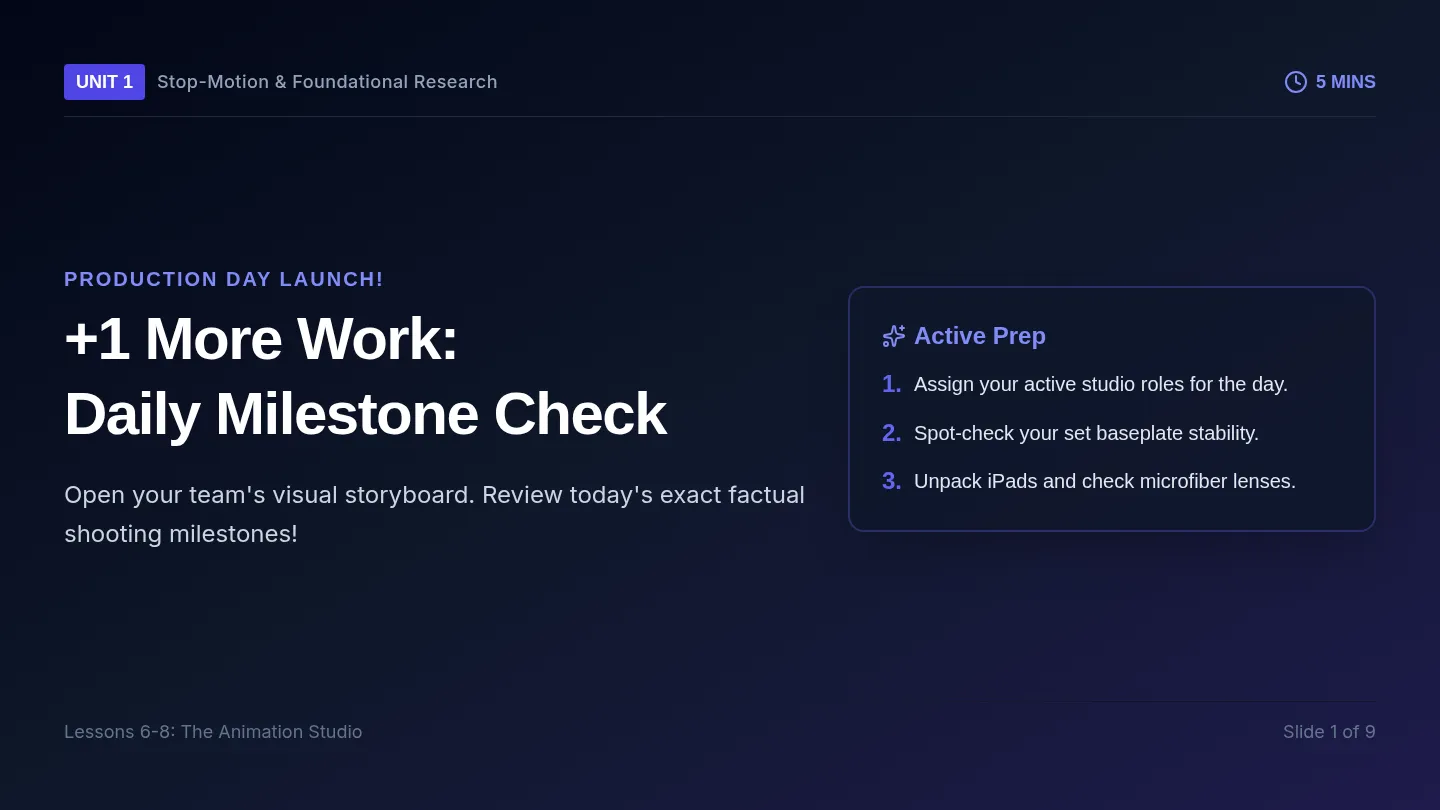
Unit 1, Lessons 6-8: Multi-day animation studio production block. Teams establish student roles, execute industry production cues, and shoot their 10-fact historical stop-motion animations on iPads.
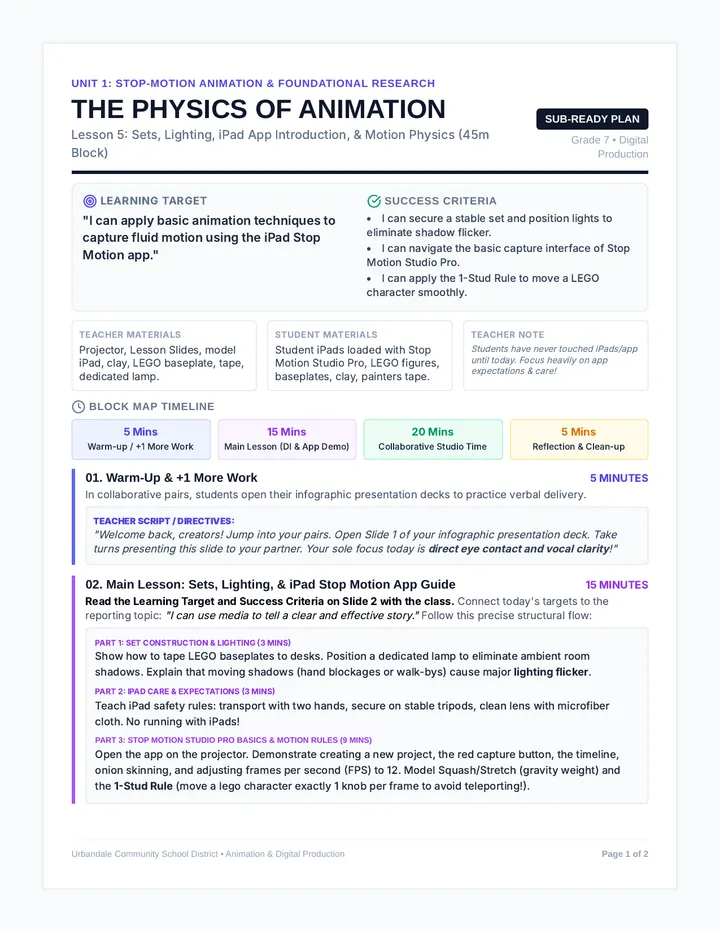
Unit 1, Lesson 5: The Physics of Animation. Combining Squash and Stretch, the 1-Stud Rule, set construction stability, lighting consistency, and storyboard revision.
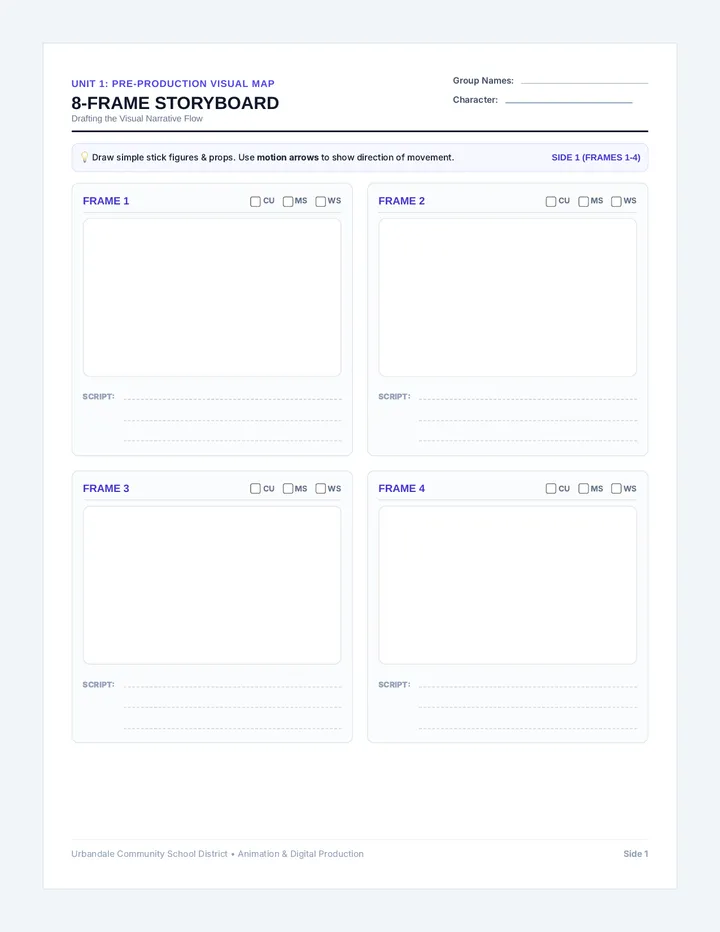
Unit 1, Lesson 4: Introducing the anatomy of a storyboard, exploring visual action, camera shot directions, and drafting an 8-frame visual storyboard plan for the stop-motion animation.
Unit 1, Lesson 3: Synthesizing historical research into 10 punchy factual sentences for the stop-motion script, while conducting an internet safety scavenger hunt on Phishing, Digital Footprint, and Privacy.
Unit 1, Lesson 2: Introducing the S.E.E.K. digital search strategy to help students research, verify, and document credible facts about a historical figure for their future stop-motion script.
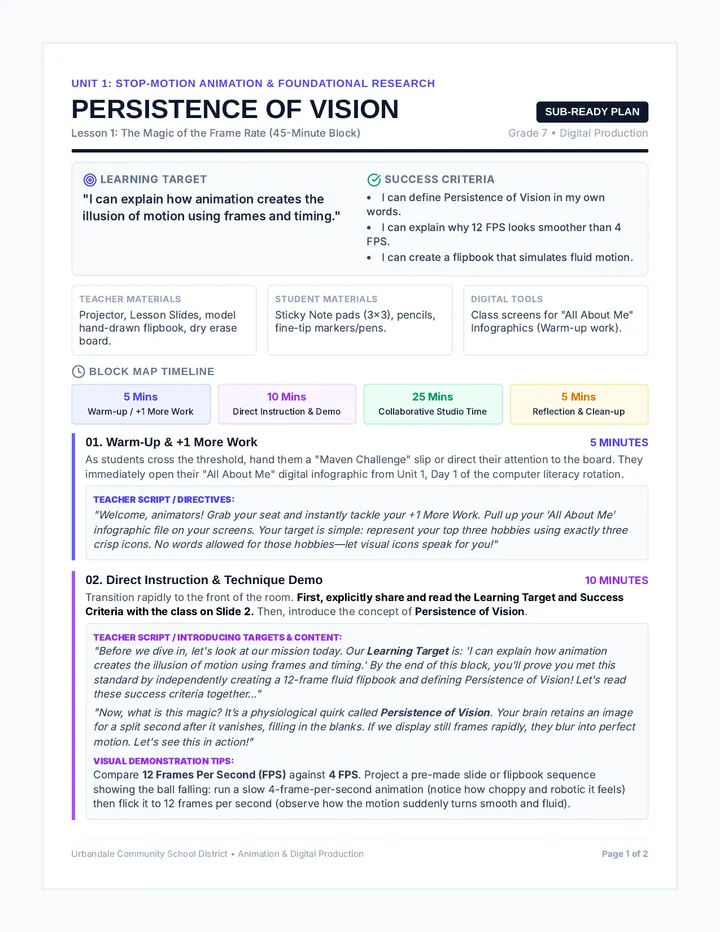
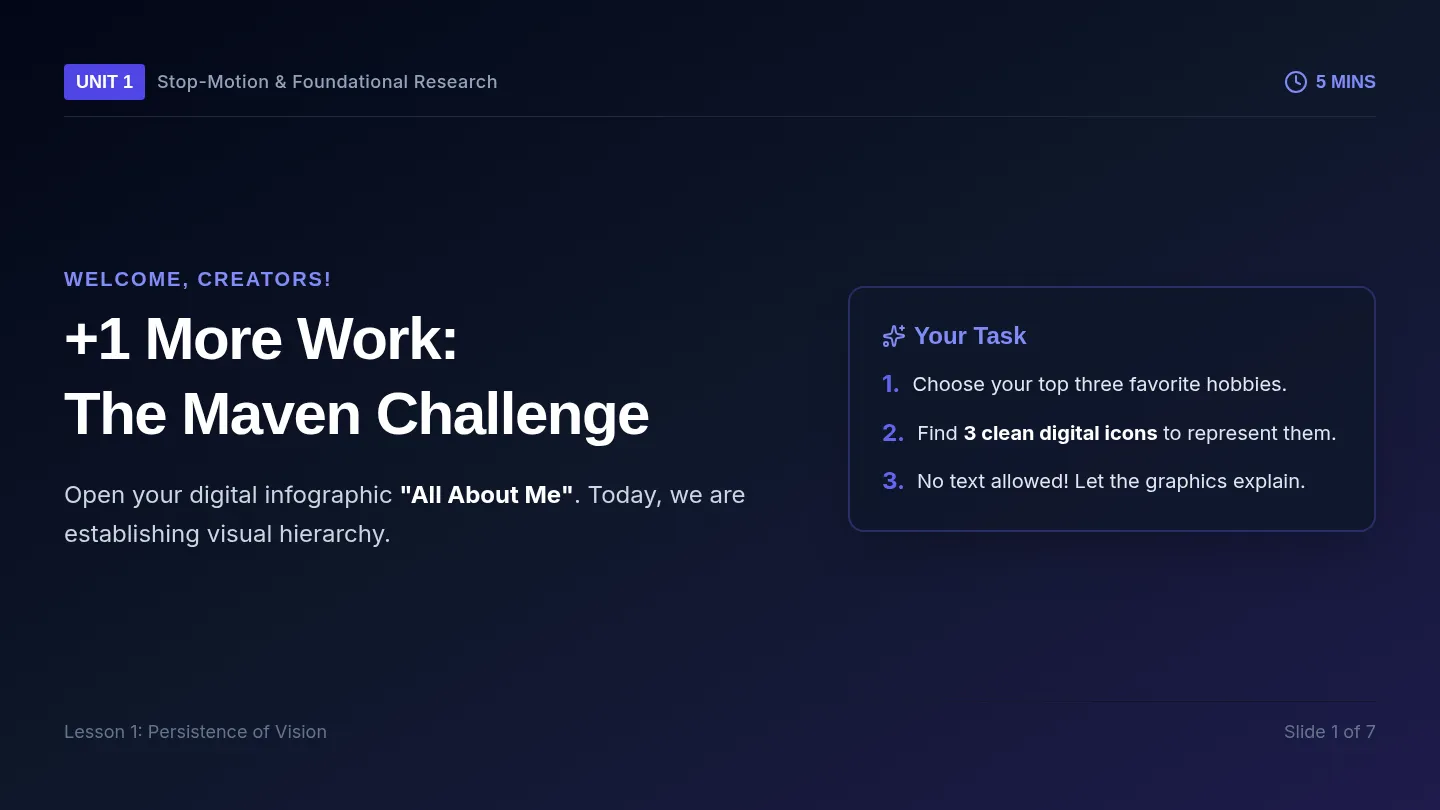
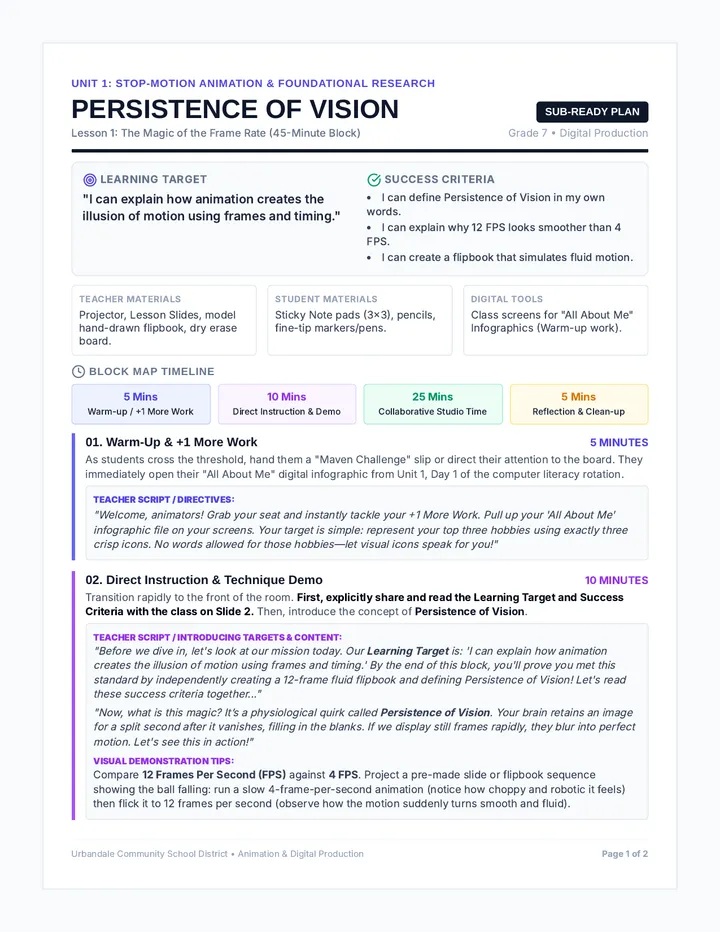
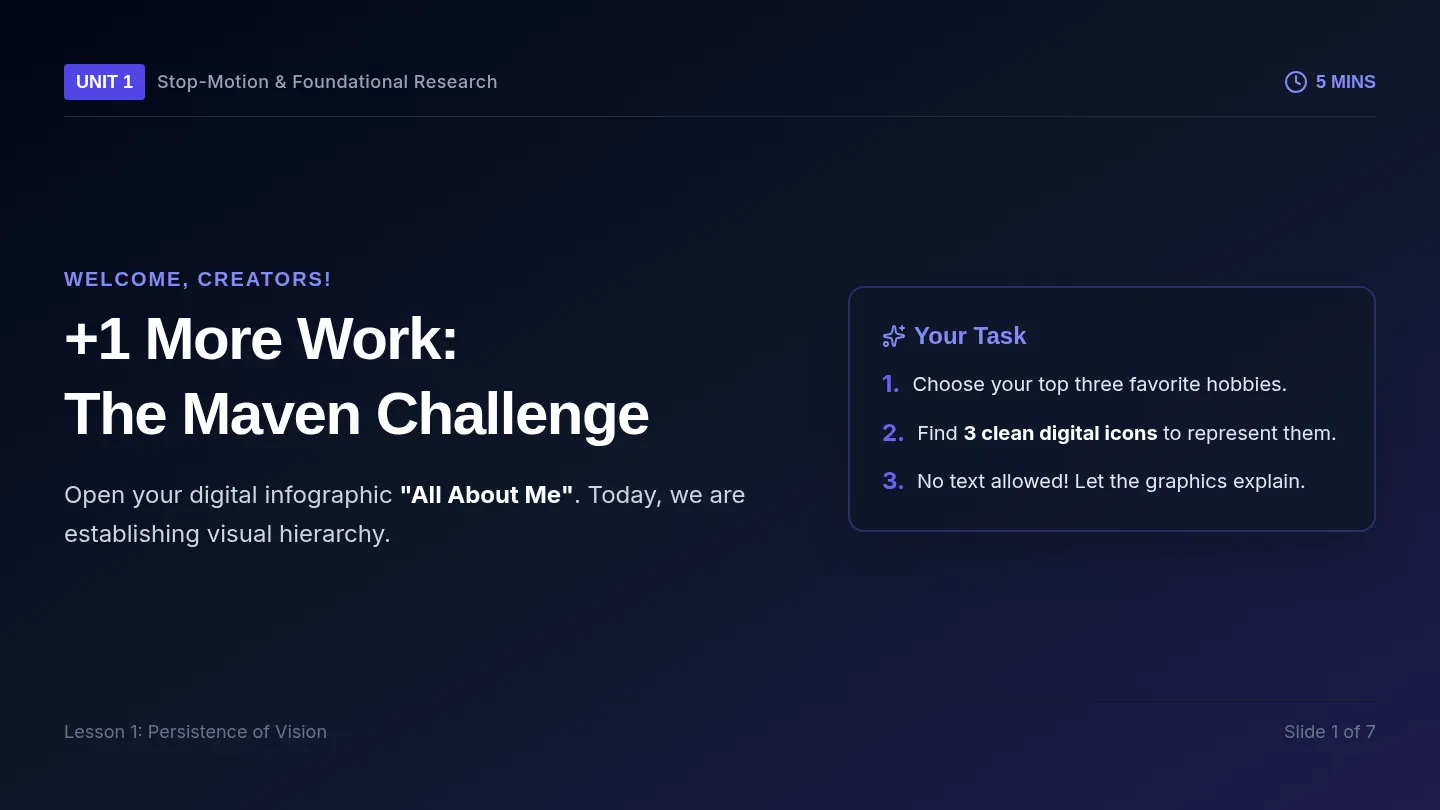
Unit 1, Lesson 1: Persistence of Vision lesson outline exploring frames per second (FPS), professional exemplars, and flipbook creation.
Unit 1, Lesson 9: The Frame Festival. A celebration block where students showcase their completed historical stop-motion animations, conduct peer critique reviews, and evaluate final projects using the comprehensive unit rubric.
A comprehensive lesson launcher for a multi-day independent or group Creative Passion Project, providing the framework for students to research and build their own projects.
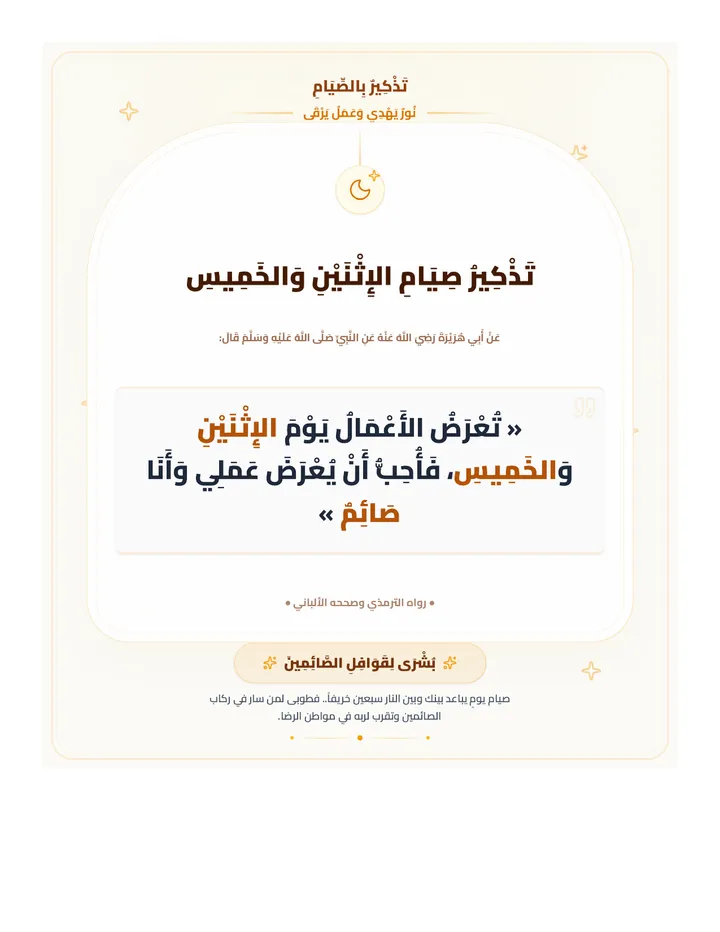
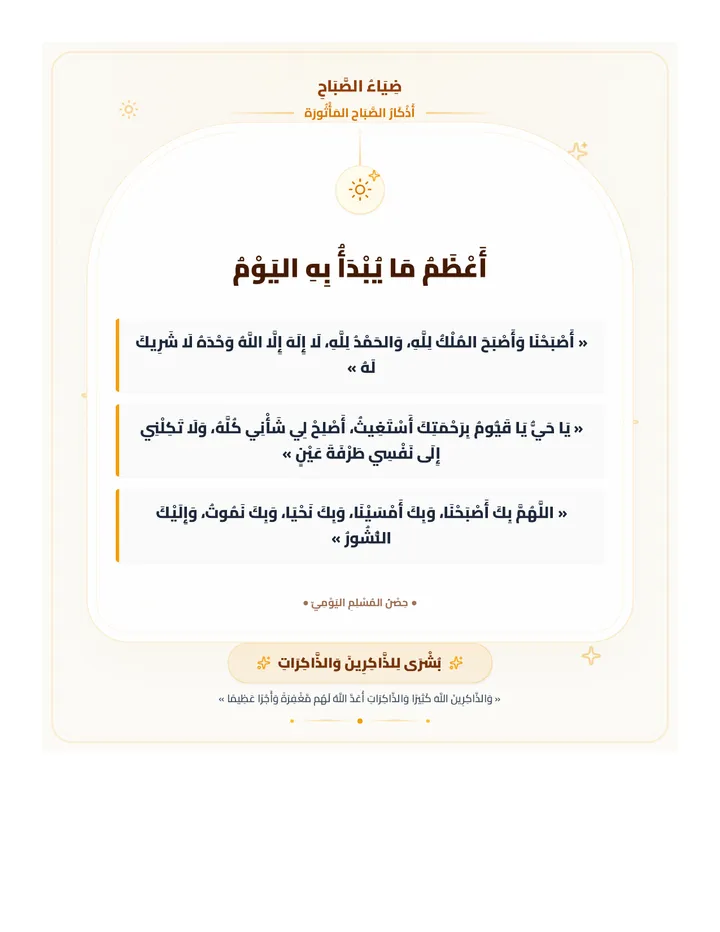
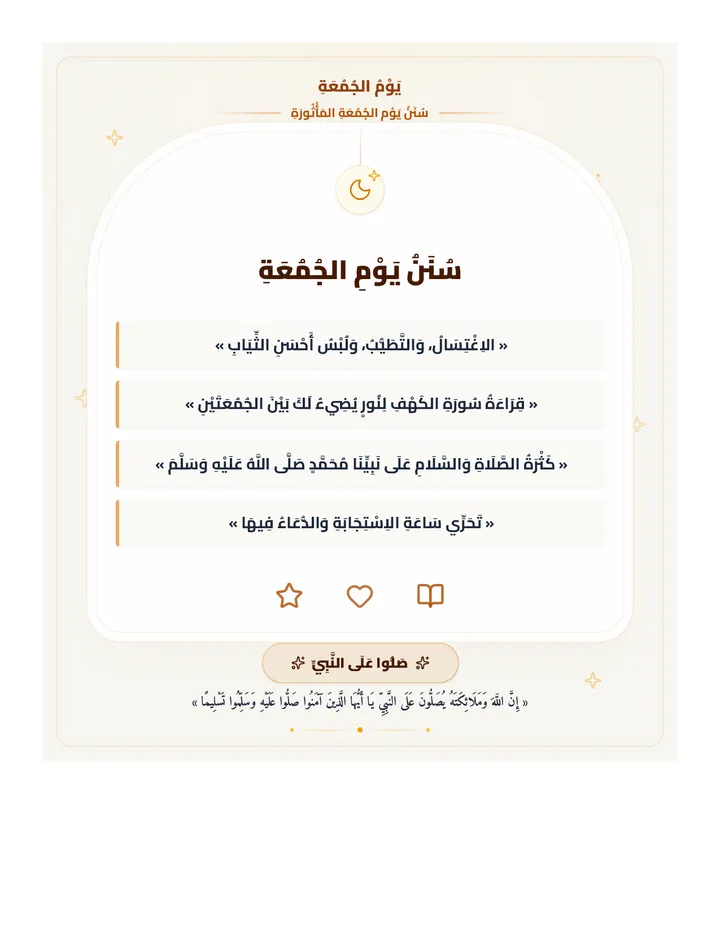
A premium, cohesive collection of beautifully designed spiritual and religious reminders for daily, weekly, and seasonal practices, featuring high-contrast connected Arabic typography, elegant arches, and glowing celestial themes.
An art and history integration lesson focusing on 18th-century Chinese nodding-head figures. Students explore clay science, learn pinch pot and coil techniques, and sculpt their own clay bobble heads using balanced counterweights.
An art and science lesson exploring how to transform ordinary, irregular river rocks into convincing 3D animal illusions. Students learn the principles of light, shadow, value, and form placement to turn flat or rounded stone surfaces into realistic sleeping animals.
An introductory lesson on kinetic art and mechanics where students build their own flapping butterfly automaton. Using simple classroom materials like paperclips, bottle caps, and paper, students learn about cranks, linkages, and the history of art in motion without needing hot glue.
Master the illusion of deep space using one-point perspective, horizontal grid contraction, and overlapping spheres. Students create a striking optical illusion of a checkerboard tunnel with falling 3D apples using black markers and colored pencils.
A deep dive into the photorealistic and abstract grid style of Chuck Close. Students explore his life story, master his concentric organic shape grid technique, and discover how to build optical illusion portraits.
A short, comedic lesson featuring a modern play about Egyptian gods managing their cosmic duties. Includes a complete script with Ra, Isis, Osiris, and Anubis, character introduction slides, and a creative design worksheet.
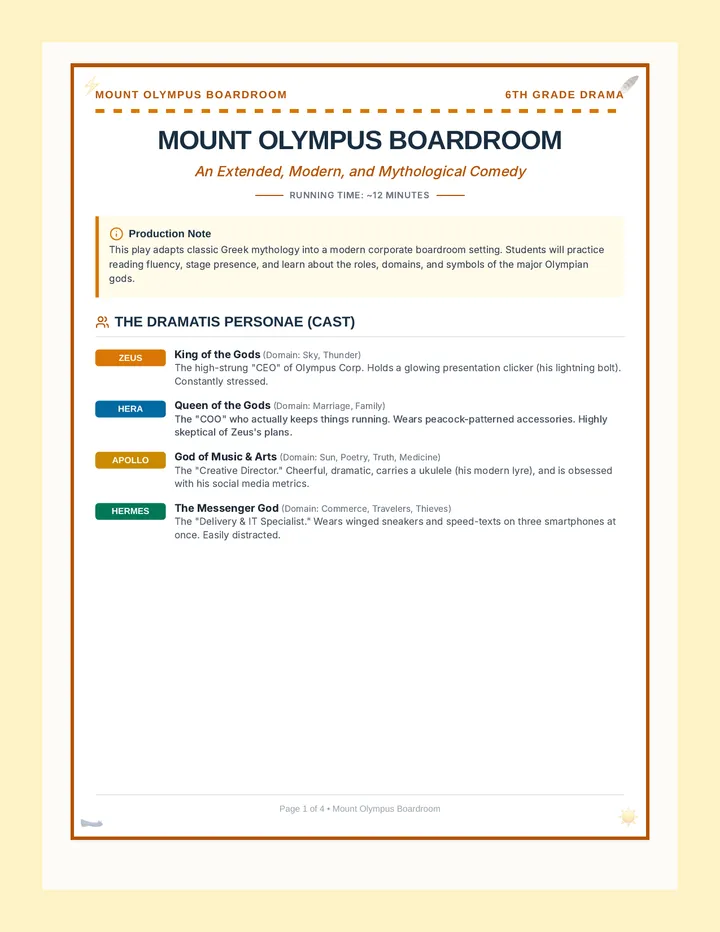
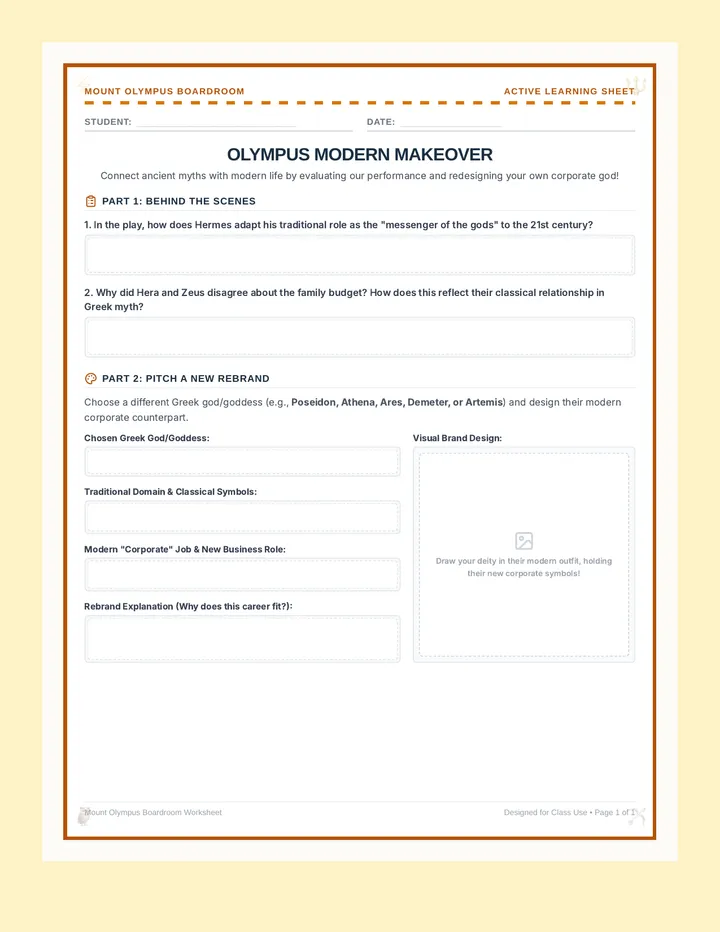
A short, humorous, and educational lesson featuring a 10-minute modern play about the Greek gods adapting to modern life. Includes a complete performance script, character introduction slides, and an interactive student worksheet to design modern adaptations of other mythological figures.
A foundational art lesson exploring the seven core principles of design—Balance, Contrast, Emphasis, Movement, Pattern, Rhythm, and Unity—through visual vocabulary and printable word wall cards.