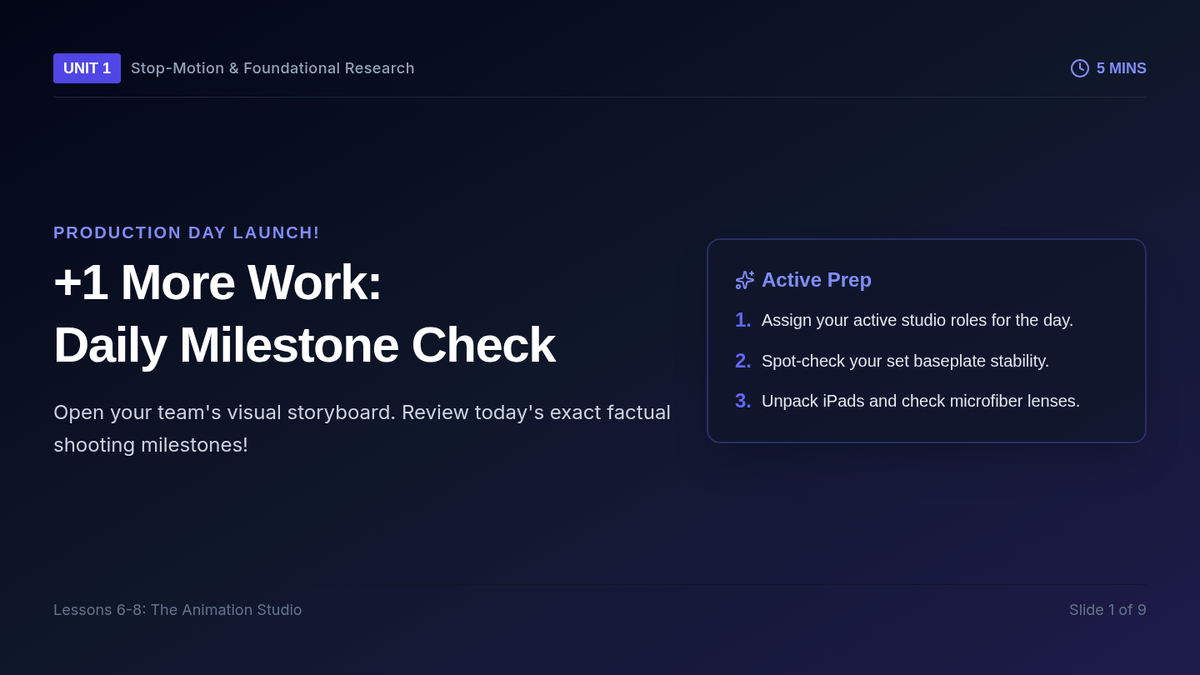
Unit 1, Lesson 6: The Animation Studio - Day 6. Teams establish collaborative group norms and class safety norms, delegate professional roles, and capture the first 30 frames.
No materials in this lesson yet.
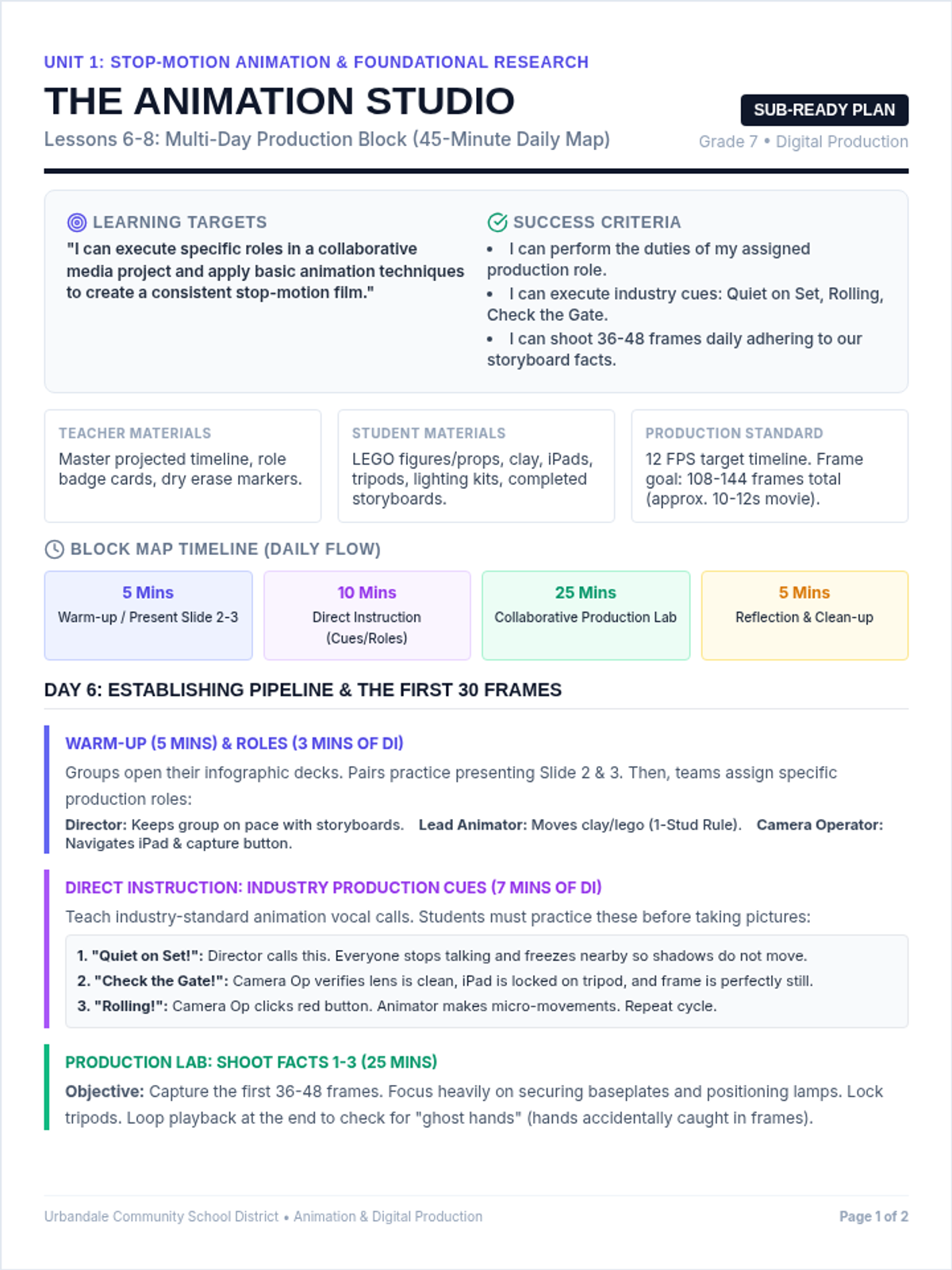
Unit 1, Lessons 6-8: Multi-day animation studio production block. Teams establish student roles, execute industry production cues, and shoot their 10-fact historical stop-motion animations on iPads.
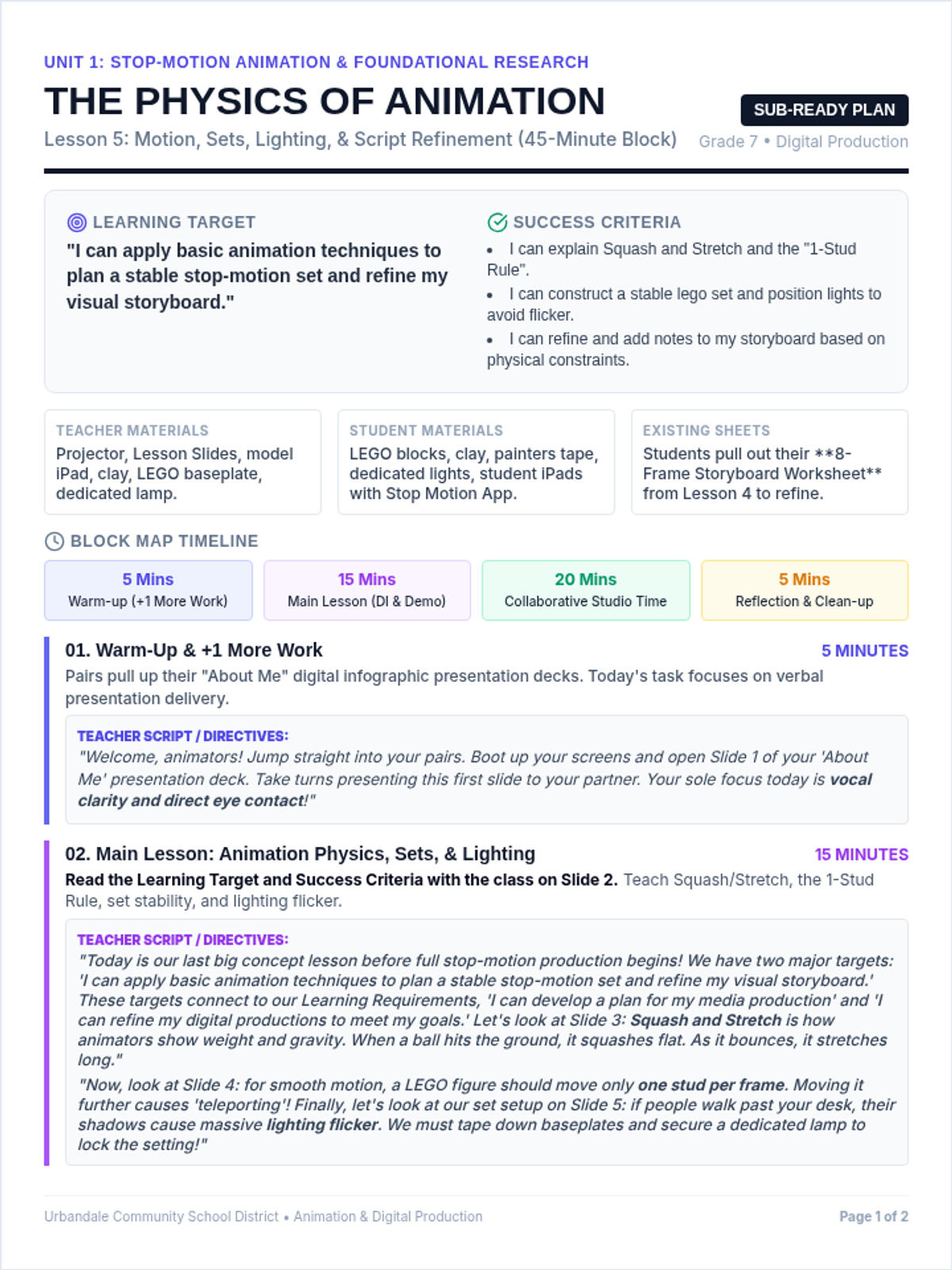
Unit 1, Lesson 5: The Physics of Animation. Combining Squash and Stretch, the 1-Stud Rule, set construction stability, lighting consistency, and storyboard revision.
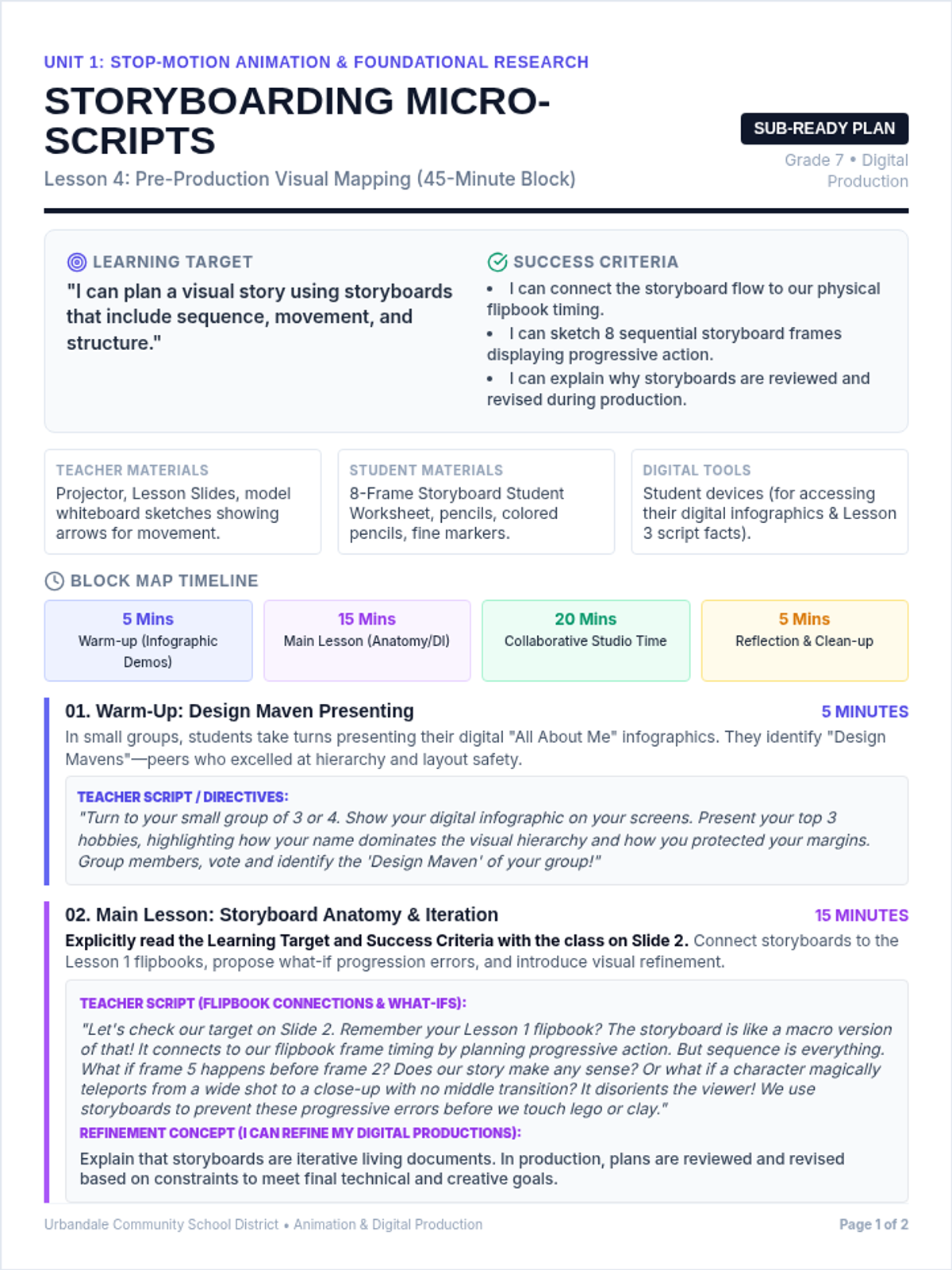
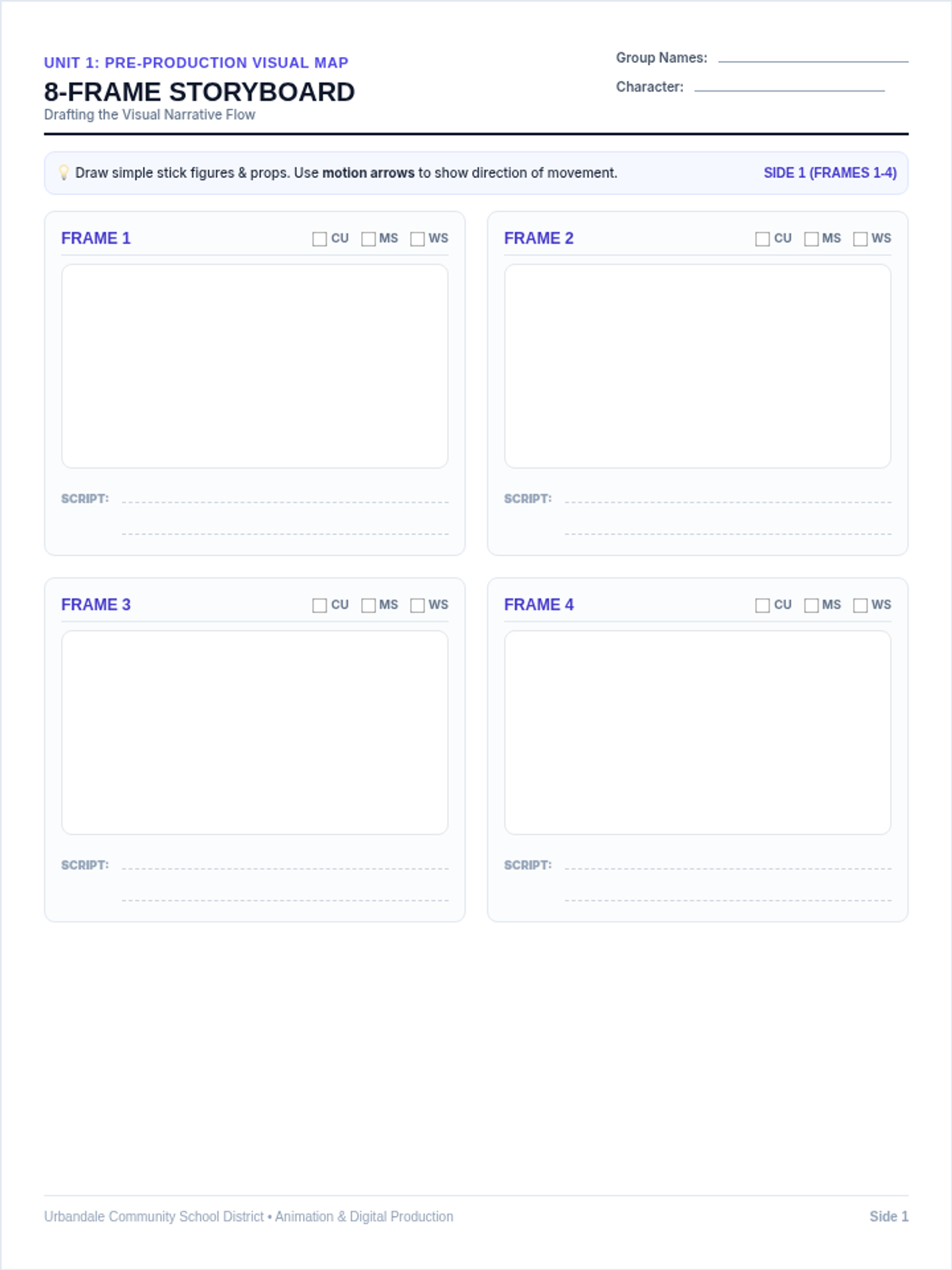
Unit 1, Lesson 4: Introducing the anatomy of a storyboard, exploring visual action, camera shot directions, and drafting an 8-frame visual storyboard plan for the stop-motion animation.
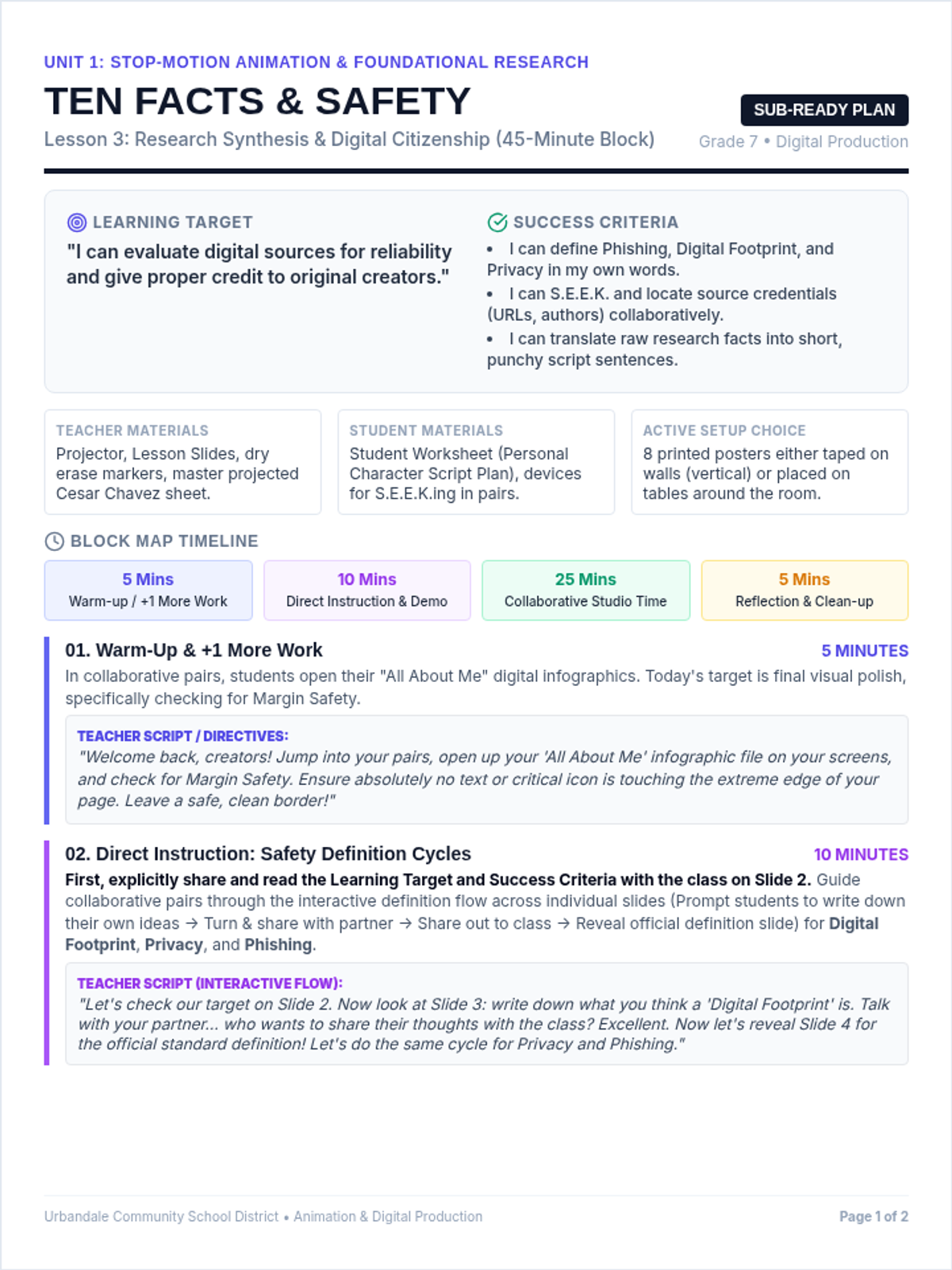
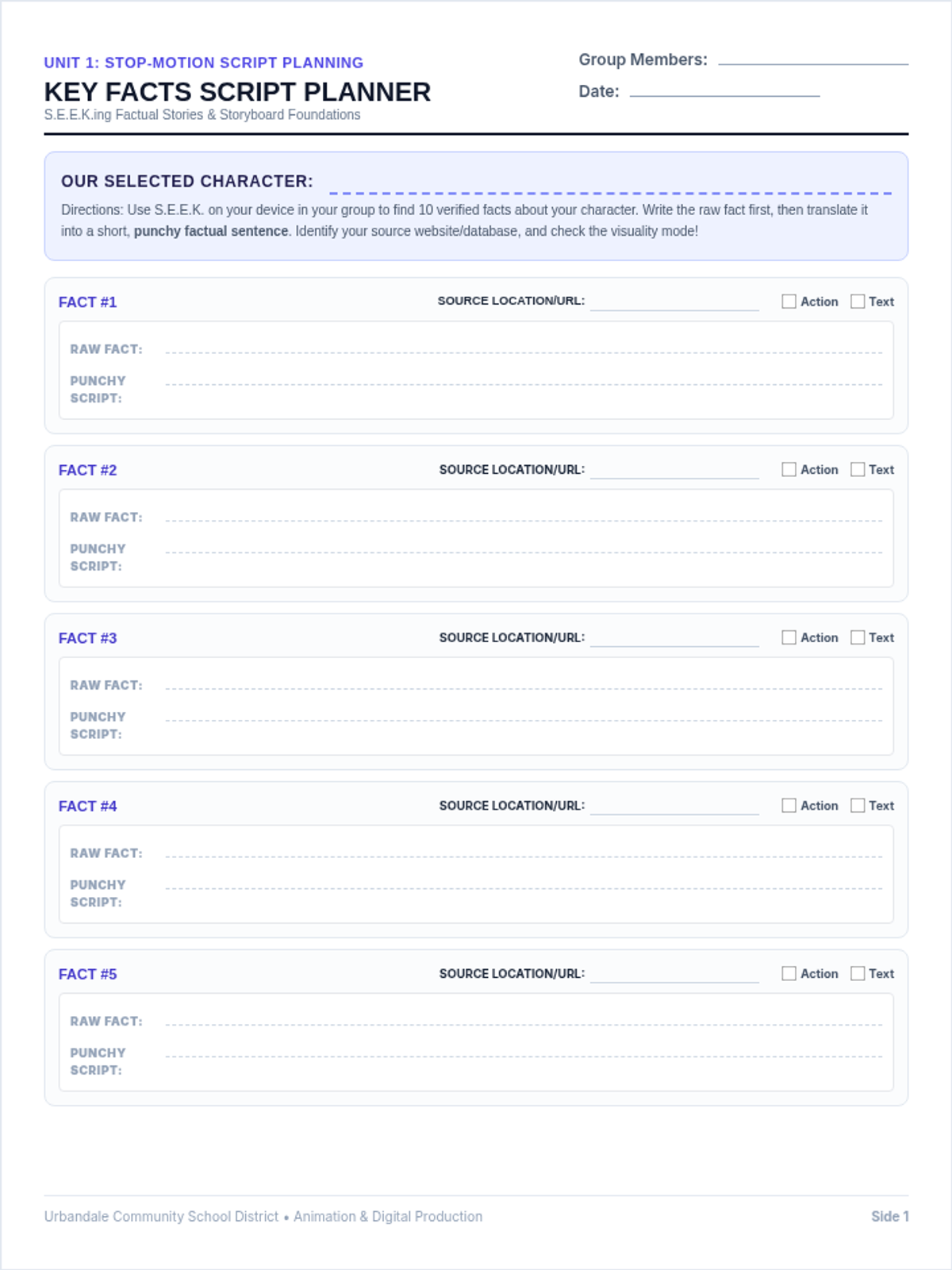
Unit 1, Lesson 3: Synthesizing historical research into 10 punchy factual sentences for the stop-motion script, while conducting an internet safety scavenger hunt on Phishing, Digital Footprint, and Privacy.
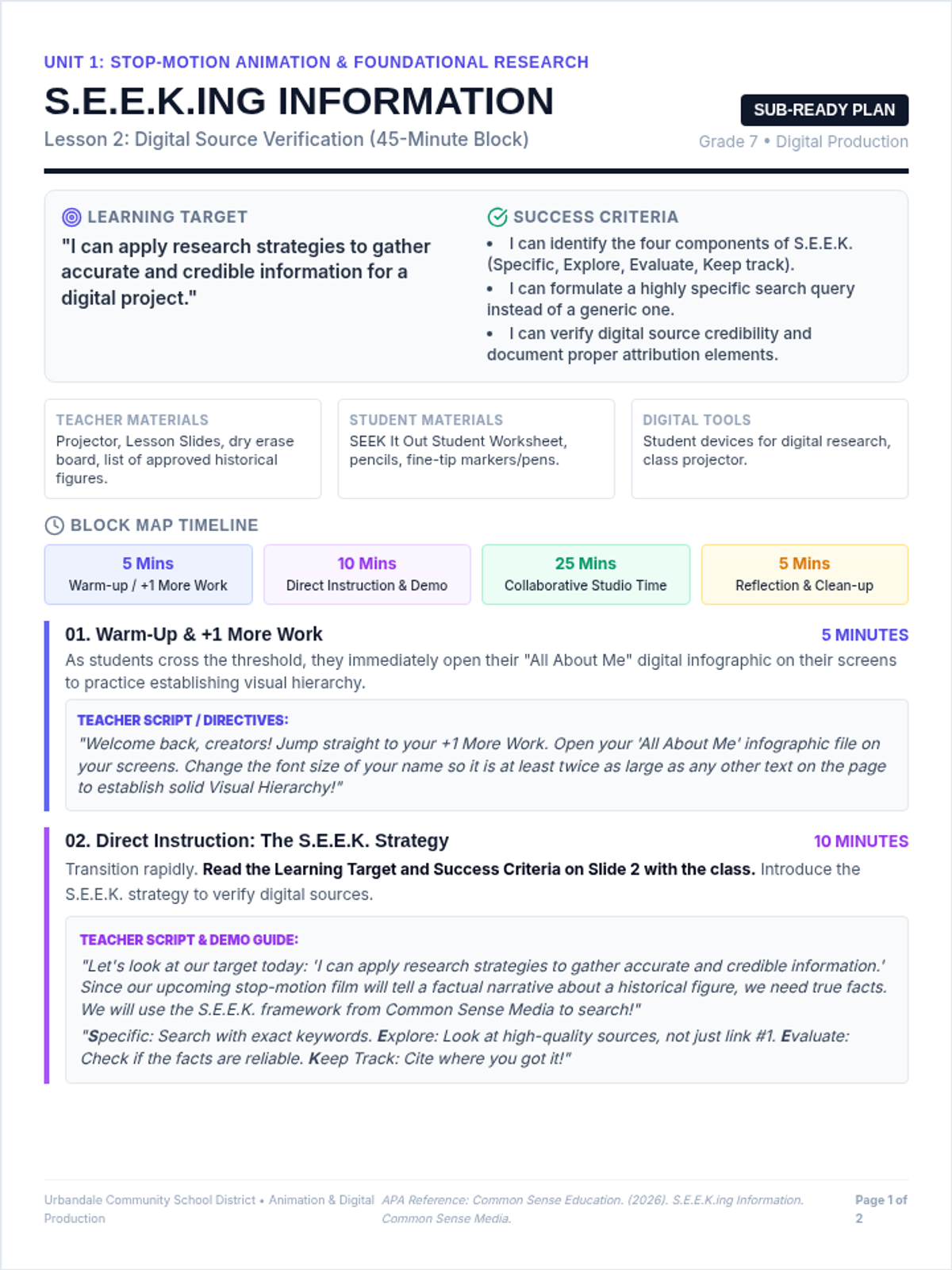
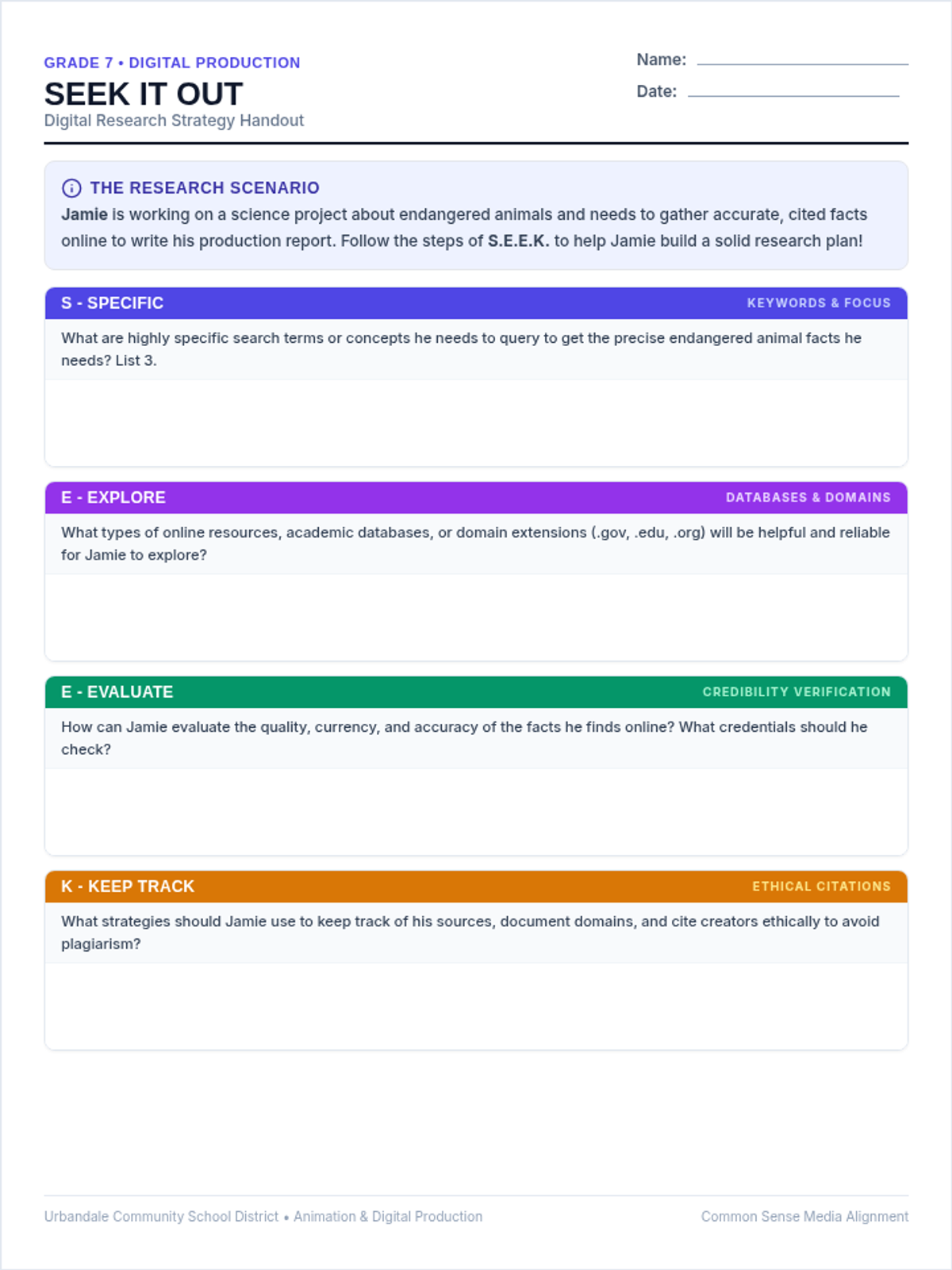
Unit 1, Lesson 2: Introducing the S.E.E.K. digital search strategy to help students research, verify, and document credible facts about a historical figure for their future stop-motion script.
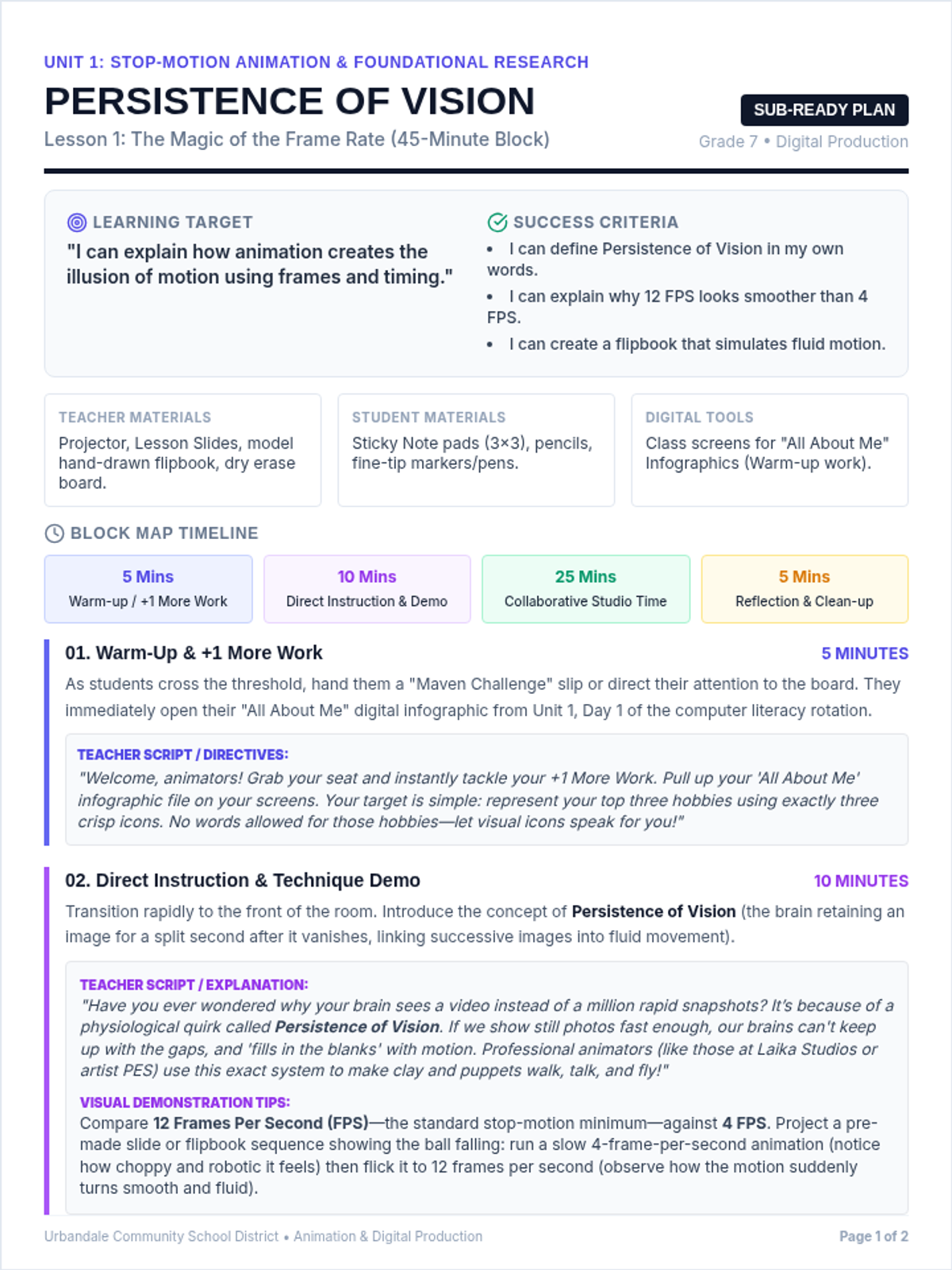
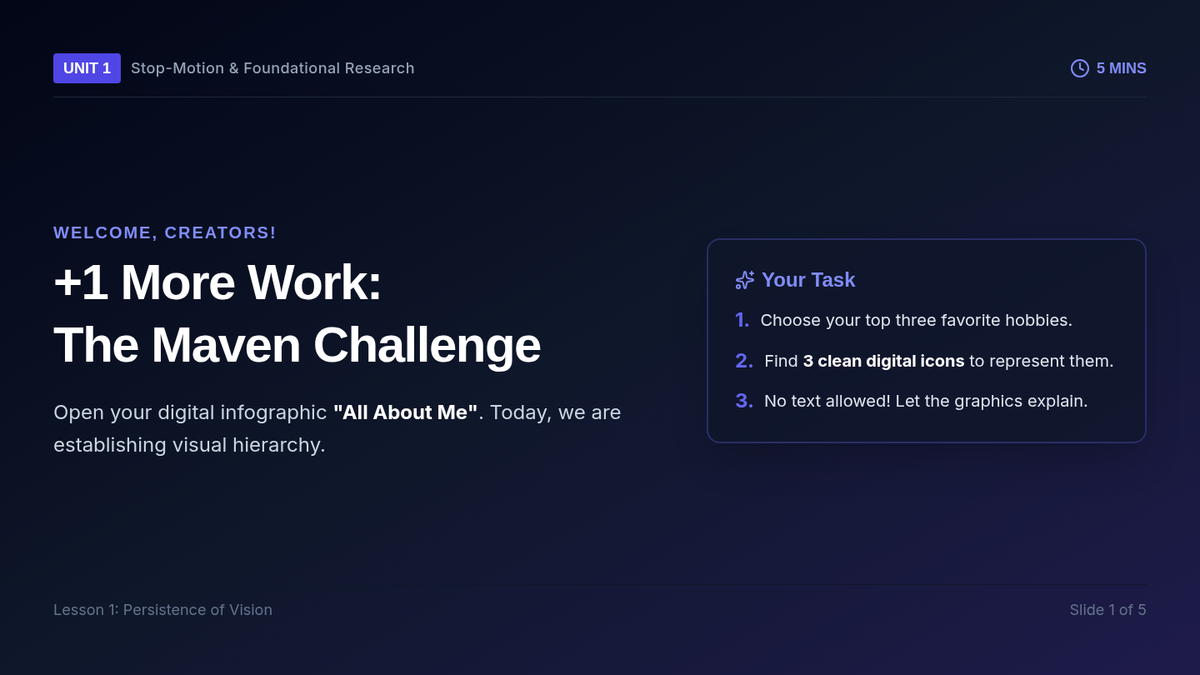
Unit 1, Lesson 1: Persistence of Vision lesson outline exploring frames per second (FPS), professional exemplars, and flipbook creation.
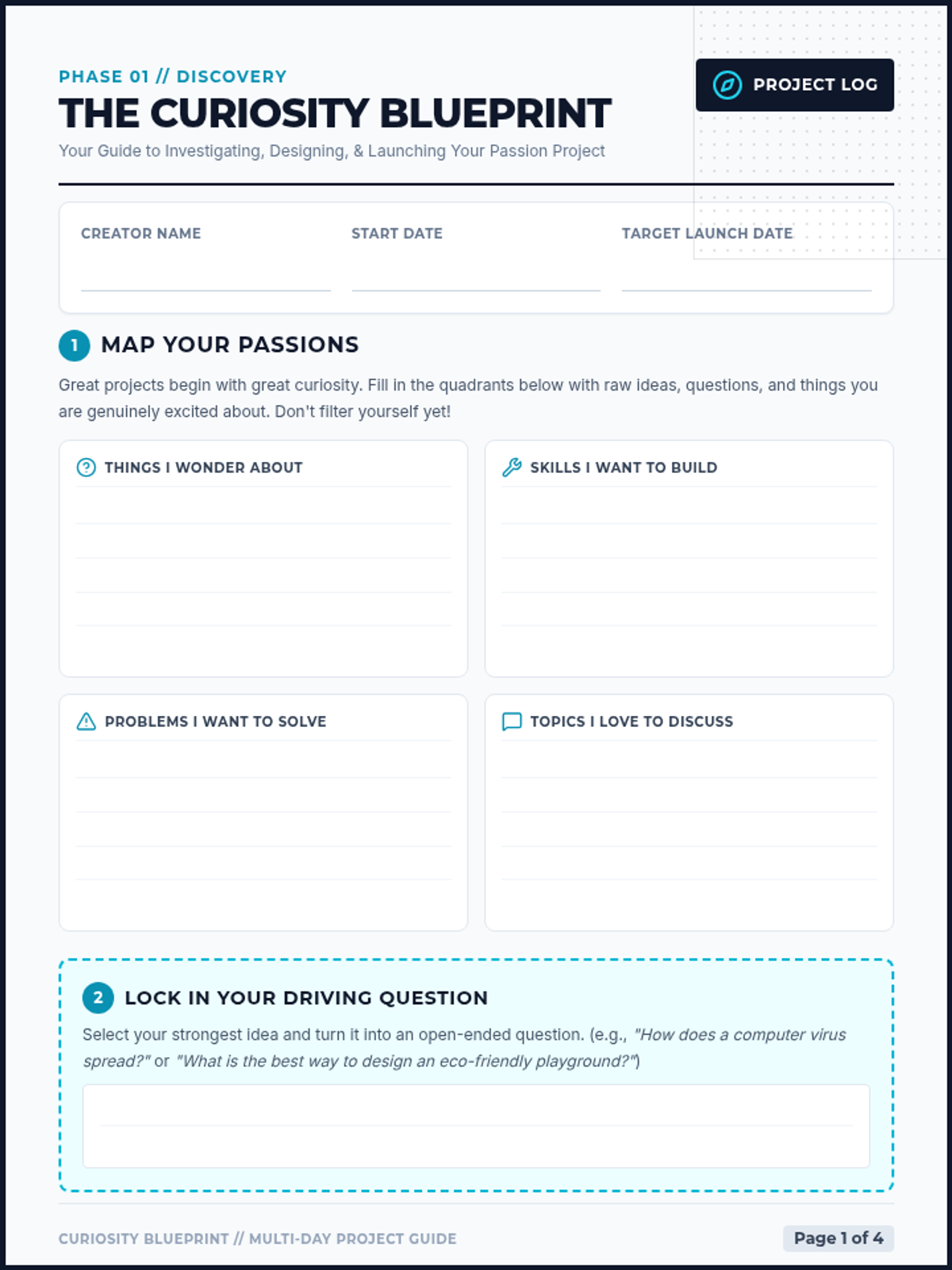
A comprehensive lesson launcher for a multi-day independent or group Creative Passion Project, providing the framework for students to research and build their own projects.
A premium, cohesive collection of beautifully designed spiritual and religious reminders for daily, weekly, and seasonal practices, featuring high-contrast connected Arabic typography, elegant arches, and glowing celestial themes.
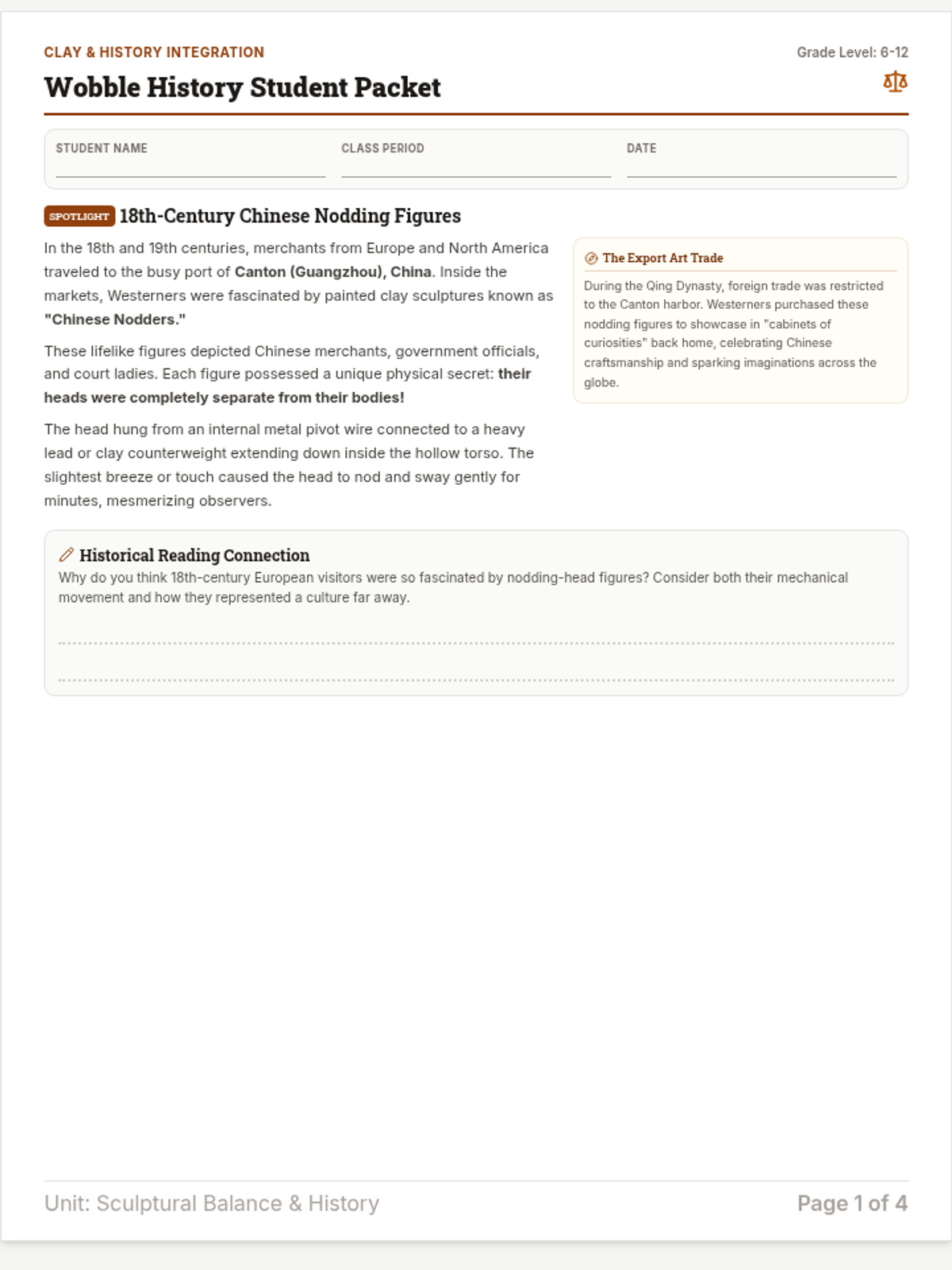
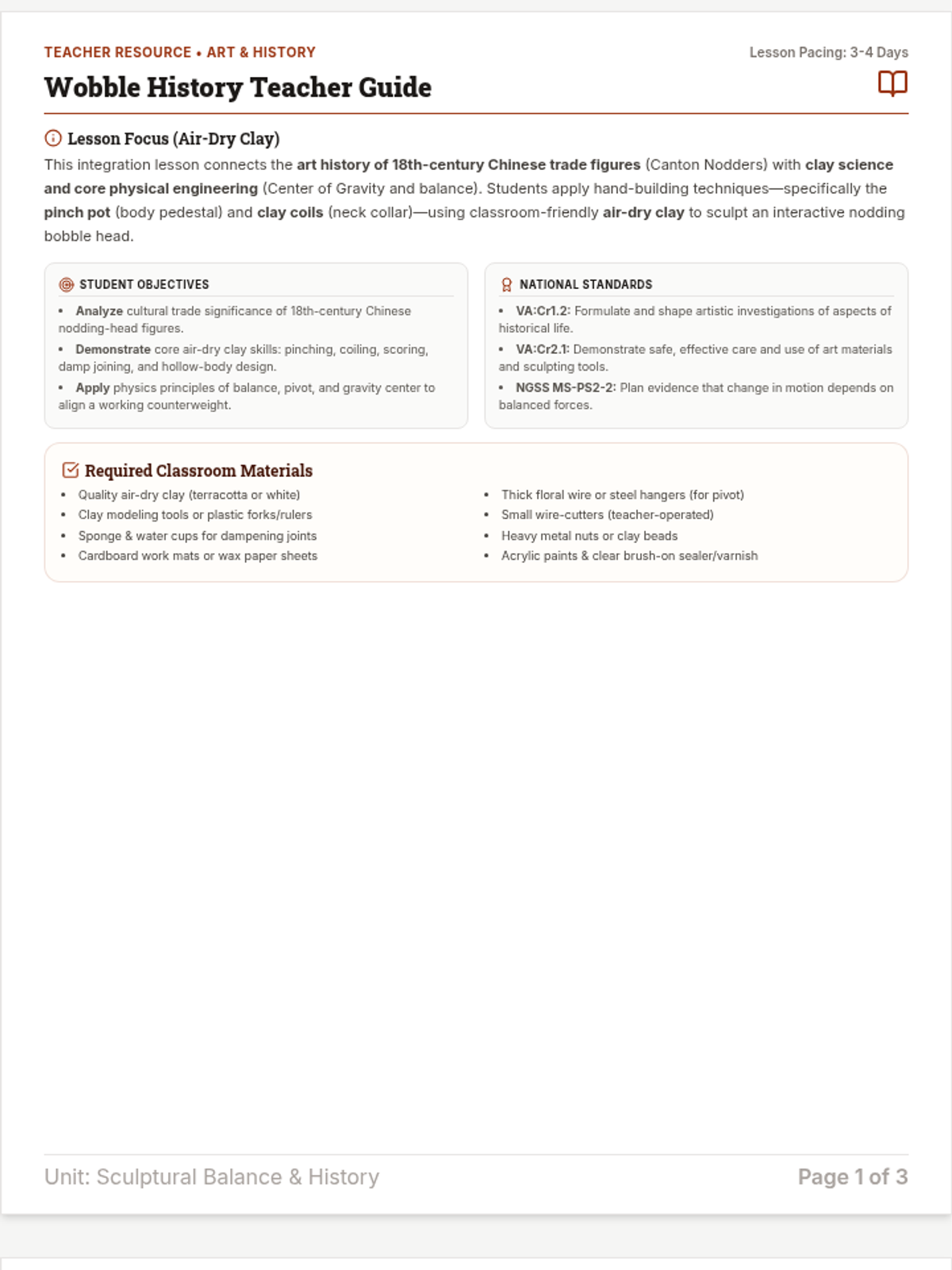
An art and history integration lesson focusing on 18th-century Chinese nodding-head figures. Students explore clay science, learn pinch pot and coil techniques, and sculpt their own clay bobble heads using balanced counterweights.
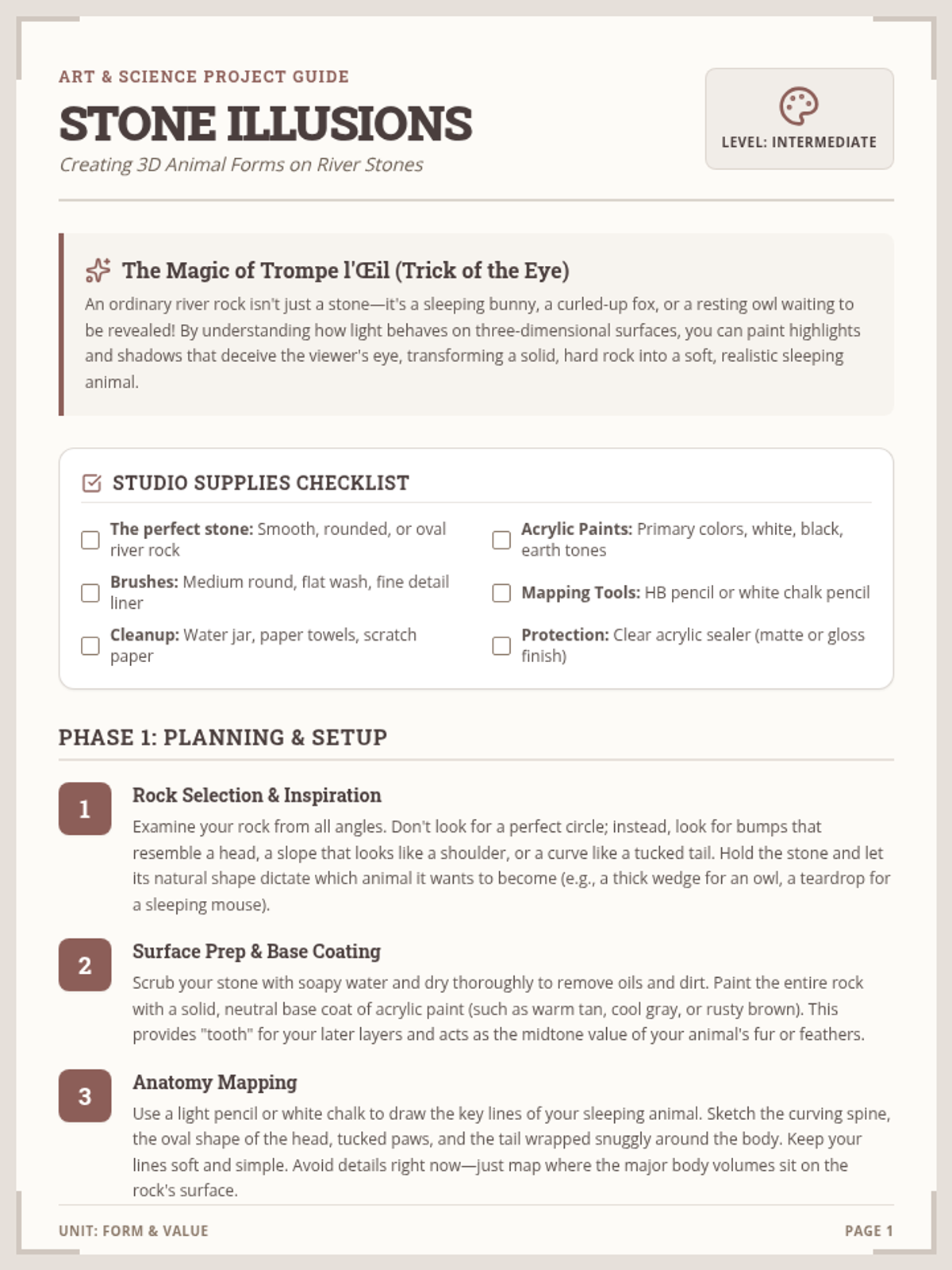
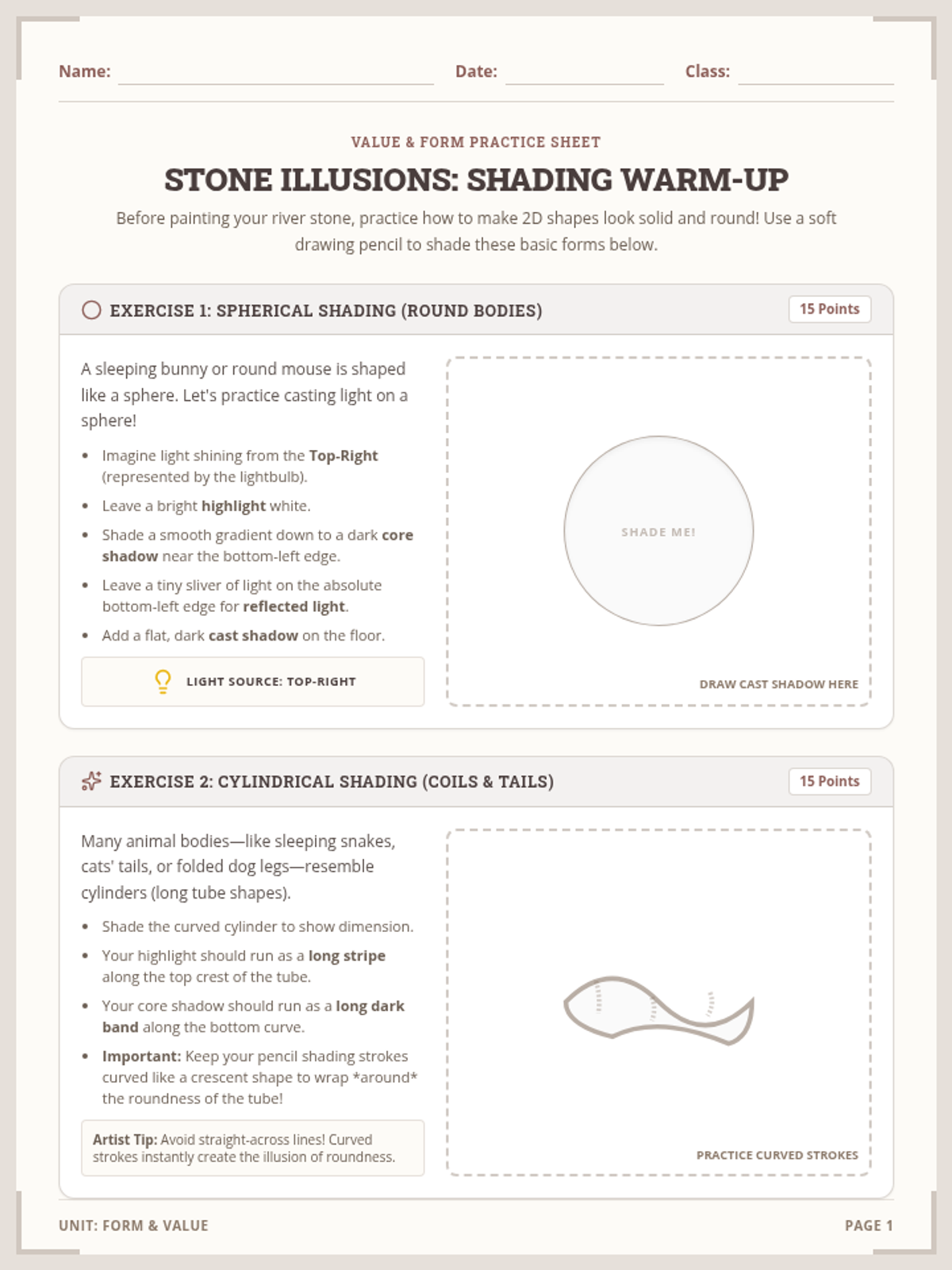
An art and science lesson exploring how to transform ordinary, irregular river rocks into convincing 3D animal illusions. Students learn the principles of light, shadow, value, and form placement to turn flat or rounded stone surfaces into realistic sleeping animals.
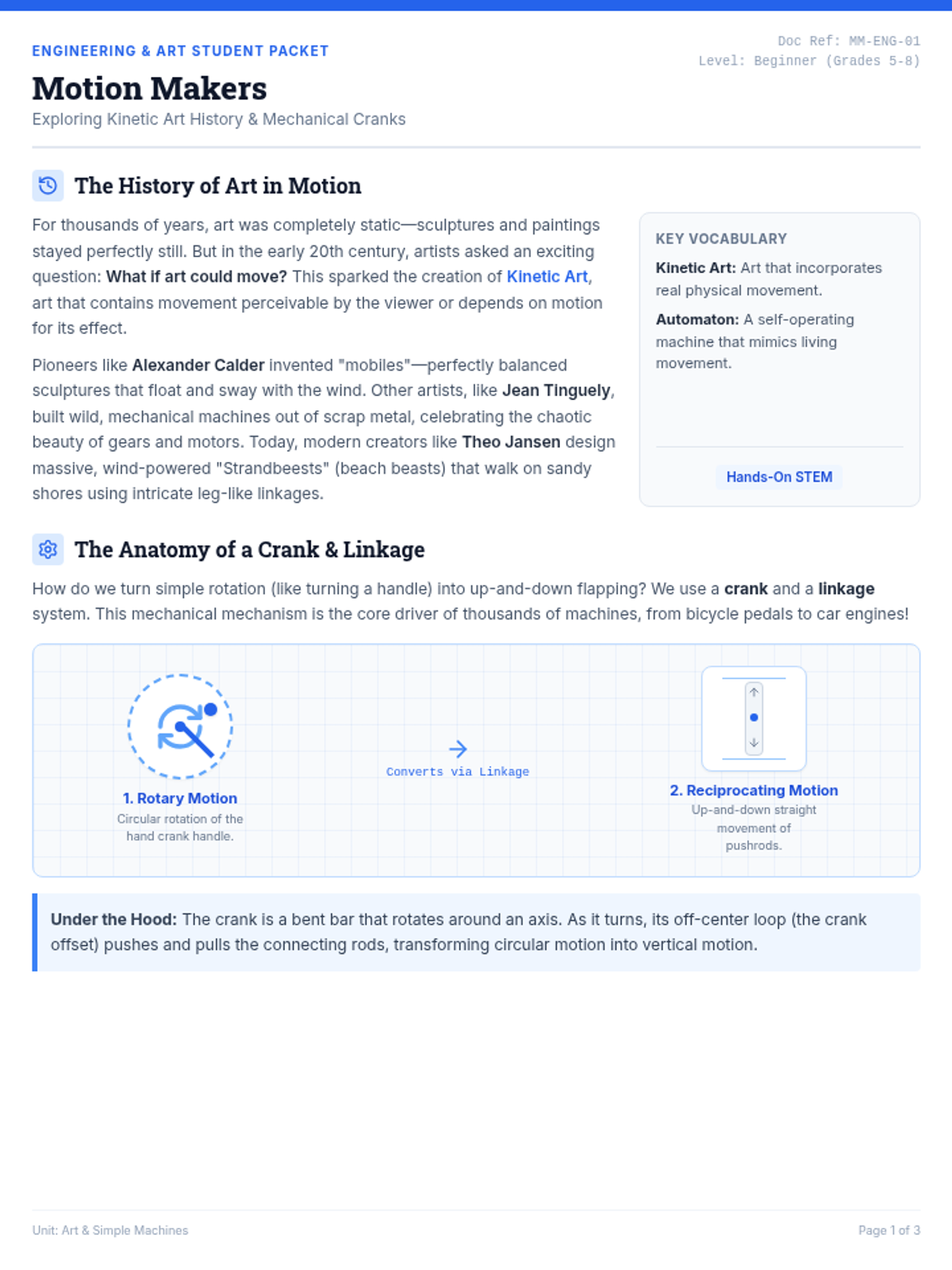
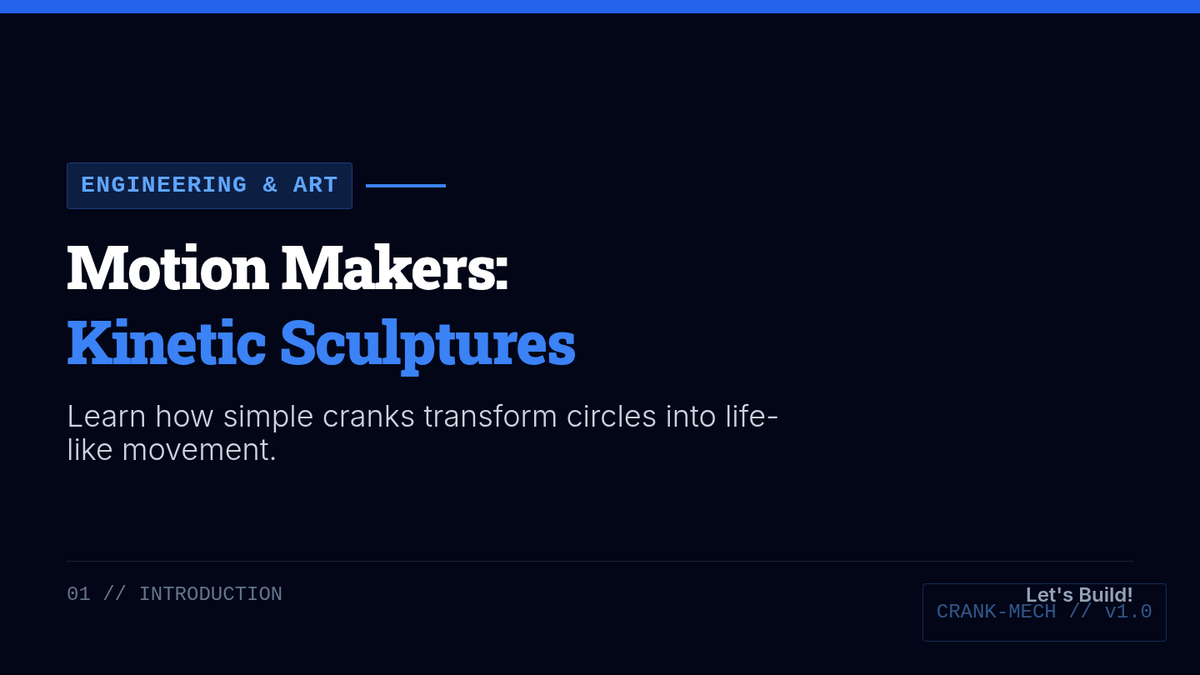
An introductory lesson on kinetic art and mechanics where students build their own flapping butterfly automaton. Using simple classroom materials like paperclips, bottle caps, and paper, students learn about cranks, linkages, and the history of art in motion without needing hot glue.
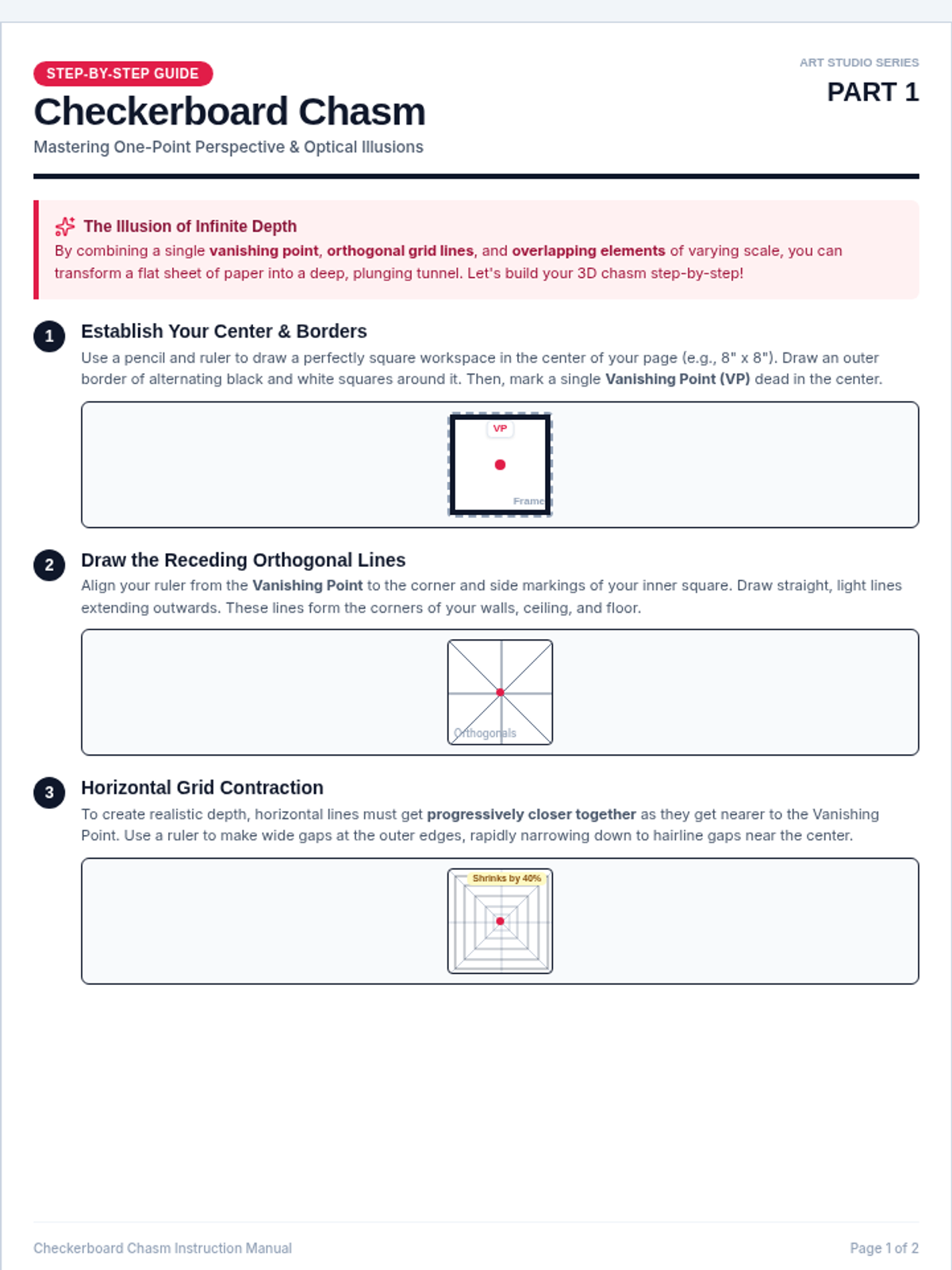
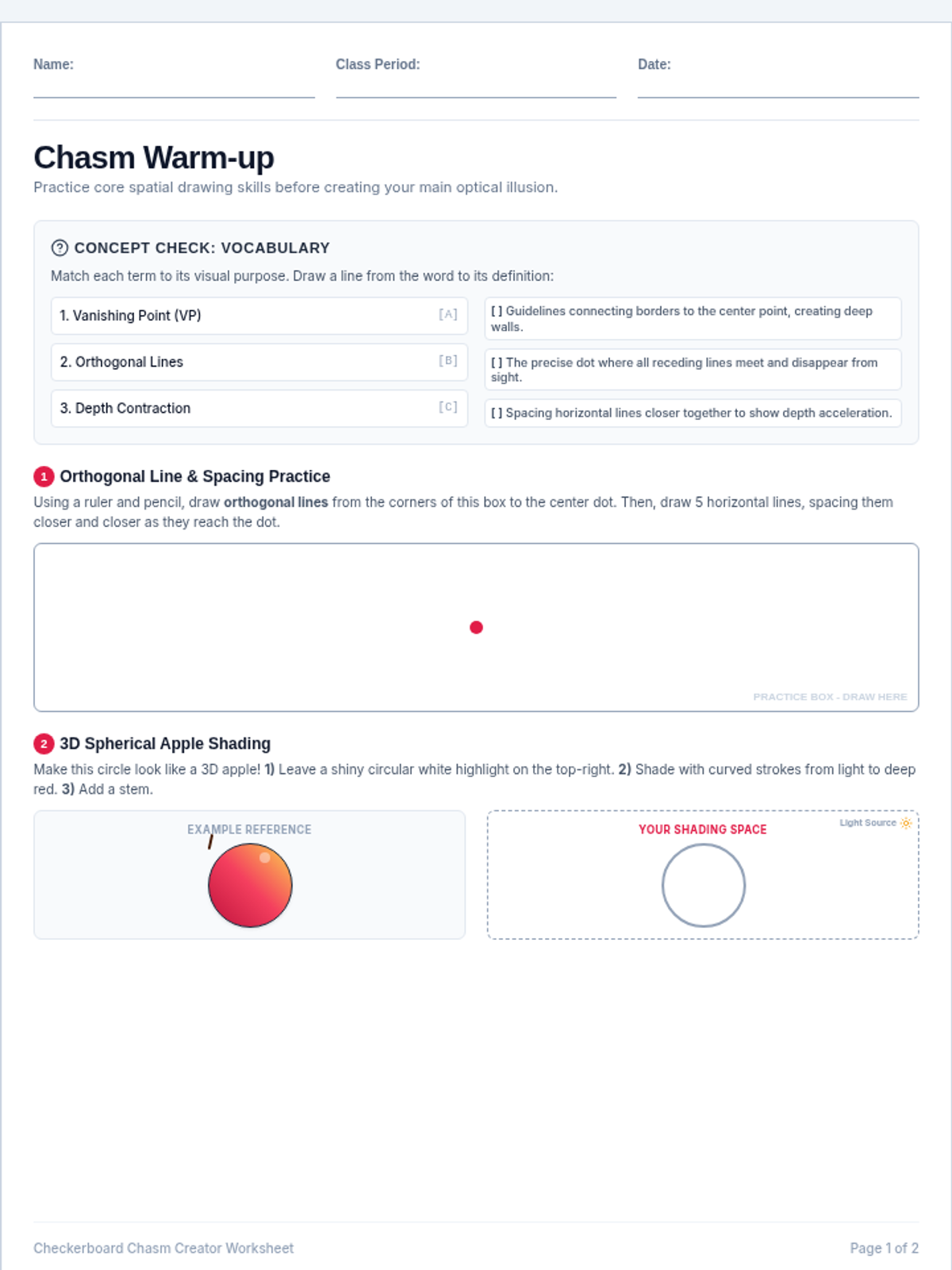
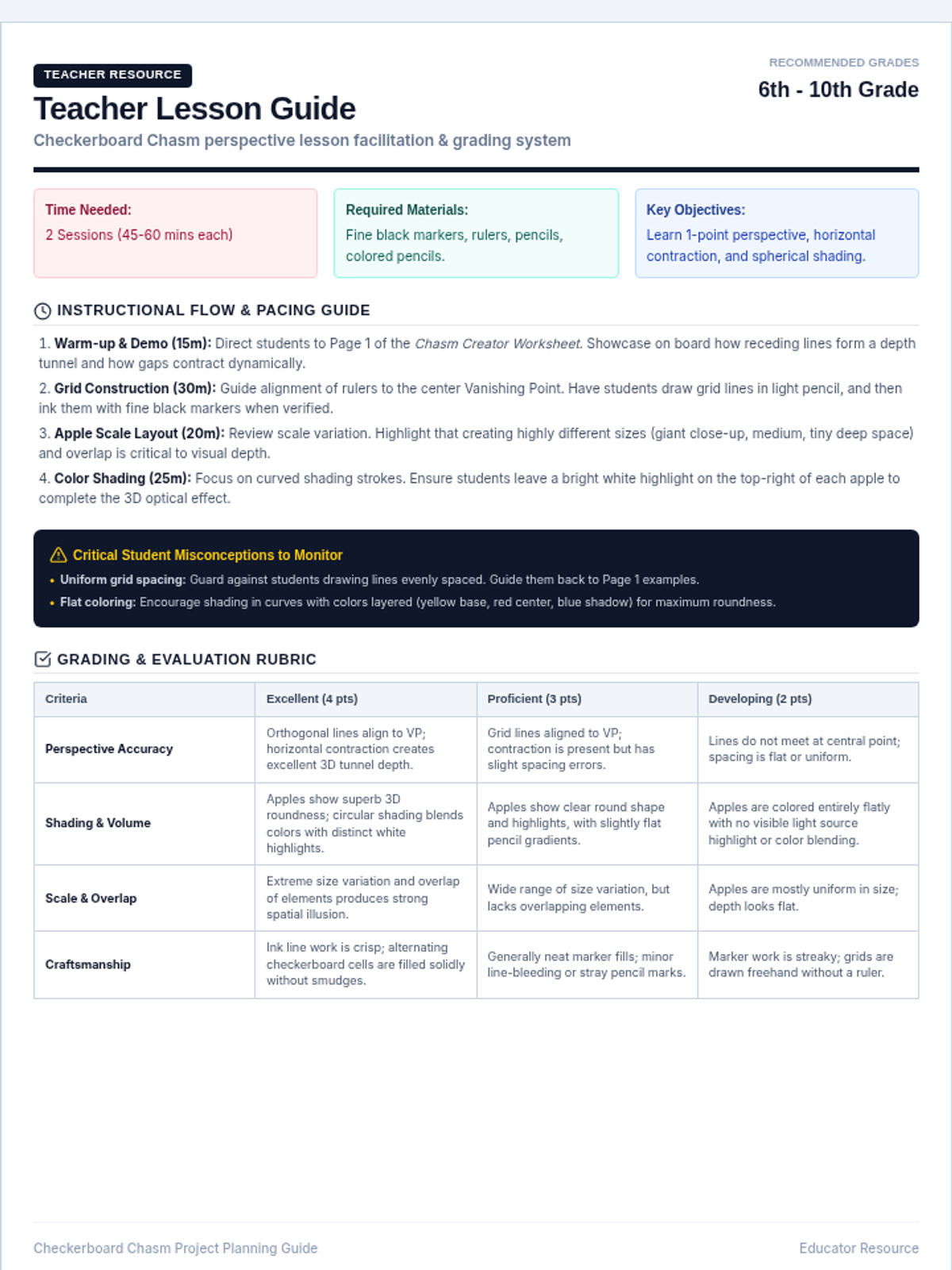
Master the illusion of deep space using one-point perspective, horizontal grid contraction, and overlapping spheres. Students create a striking optical illusion of a checkerboard tunnel with falling 3D apples using black markers and colored pencils.