A high-impact CVC decoding intervention focusing on the contrast between short 'a' and short 'o' sounds. Includes structured minimal pair drills, 3-sentence decodable stories, and simple reading comprehension checks.
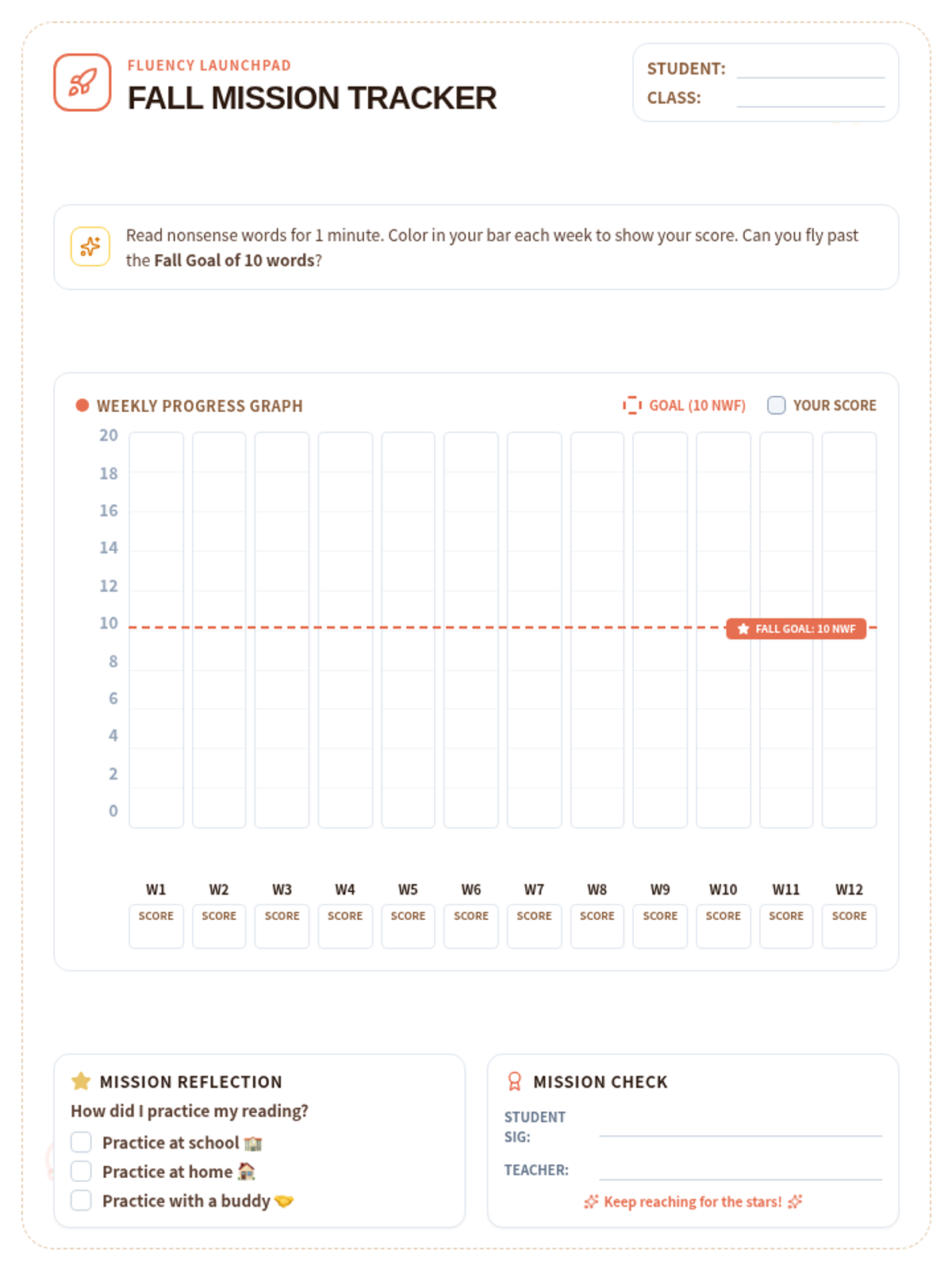
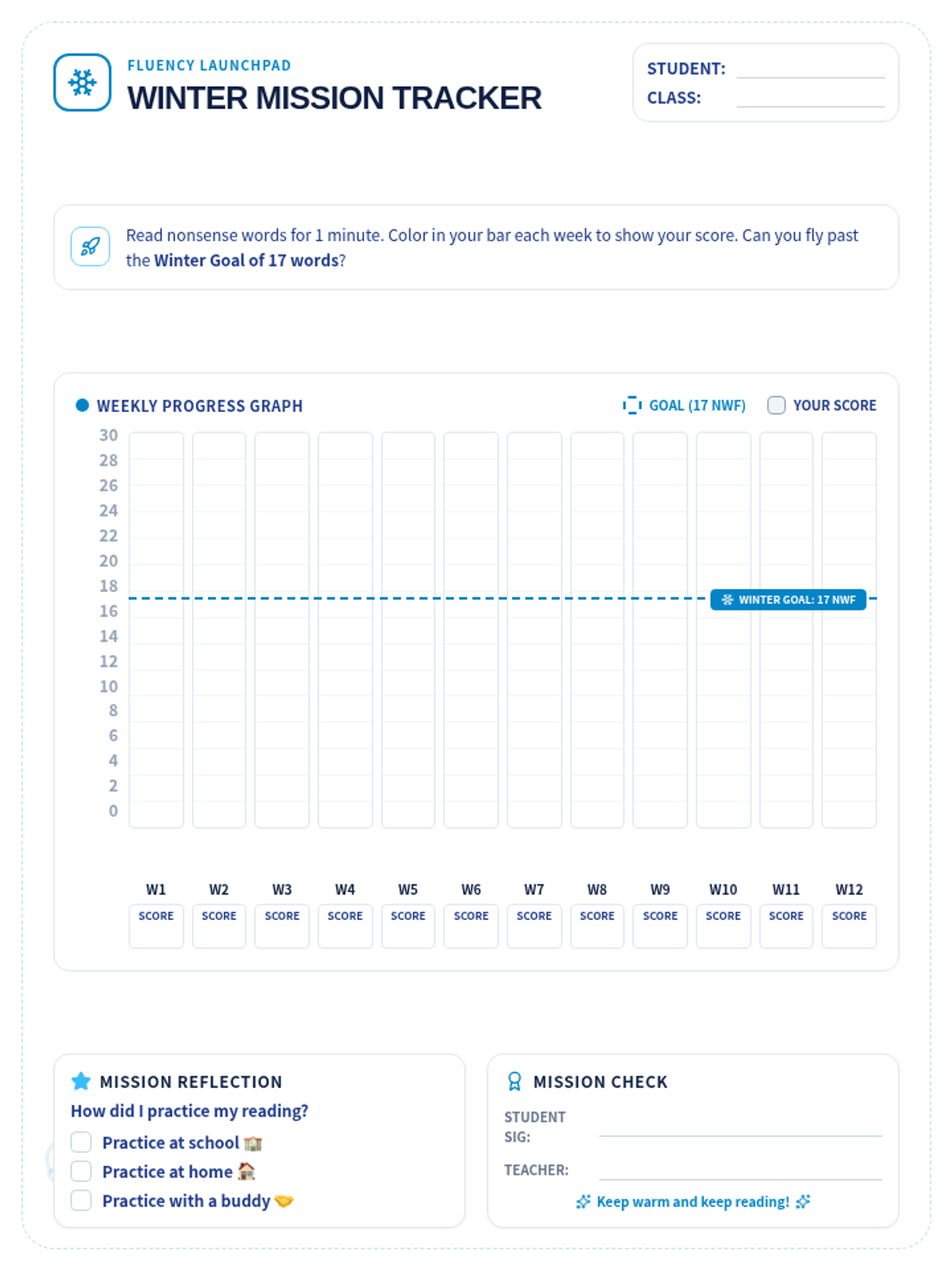
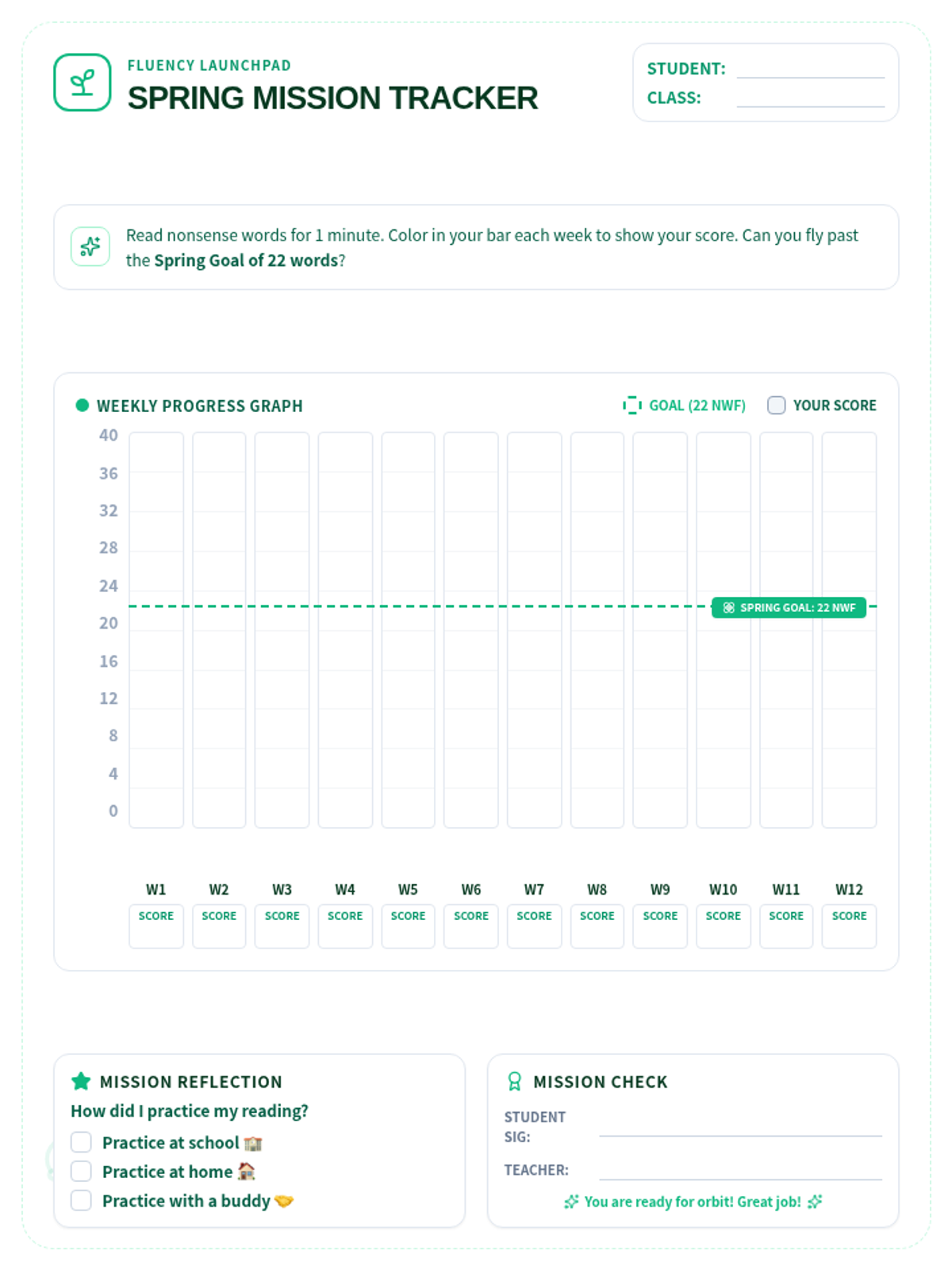
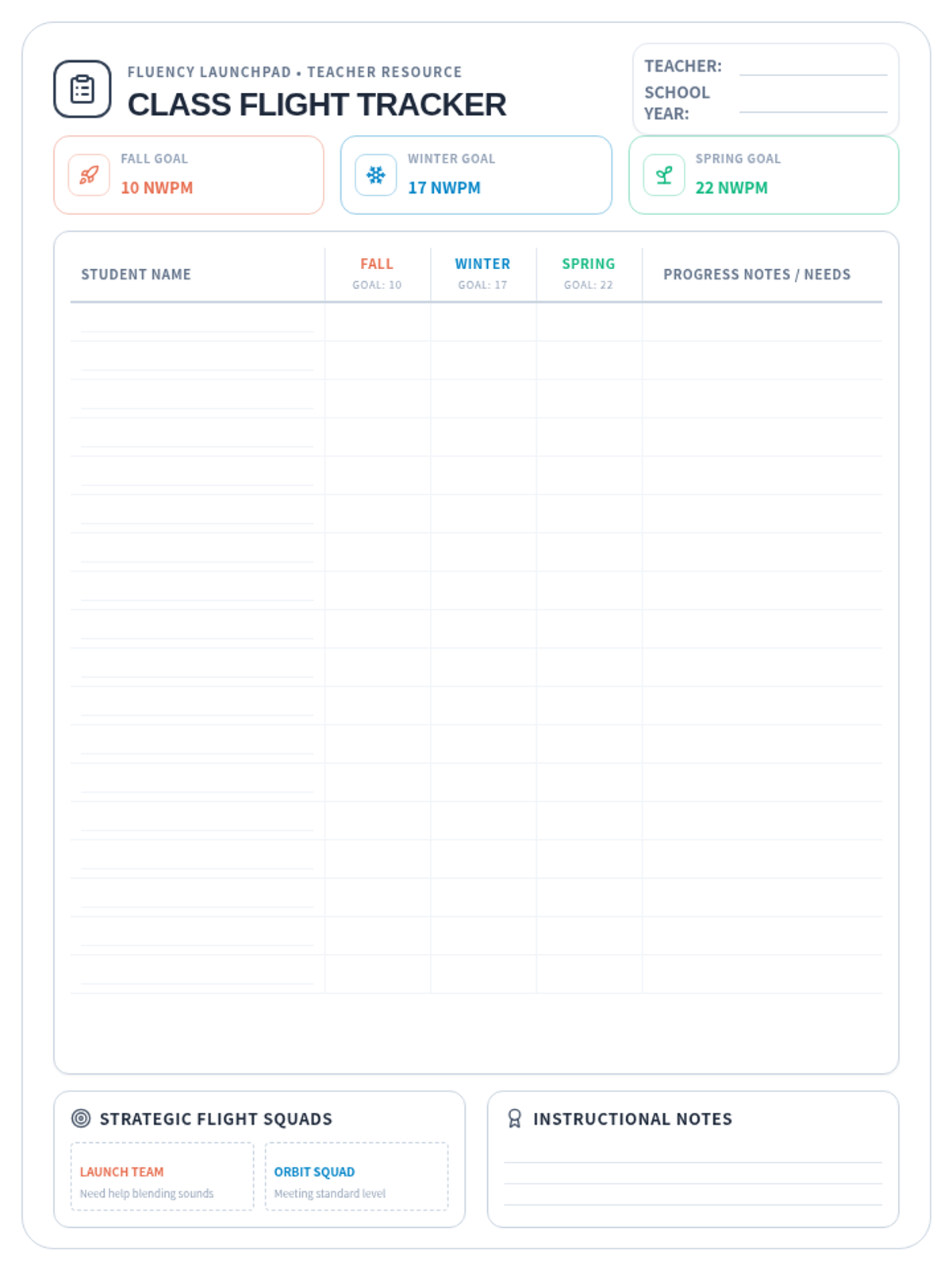
A collection of seasonal weekly progress trackers designed for first-grade students to monitor their Nonsense Word Fluency (NWF) progress across Fall, Winter, and Spring. Each tracker features a space-themed bar graph with targeted goal lines of 10, 17, and 22 words per minute respectively, complete with motivational reflection zones.
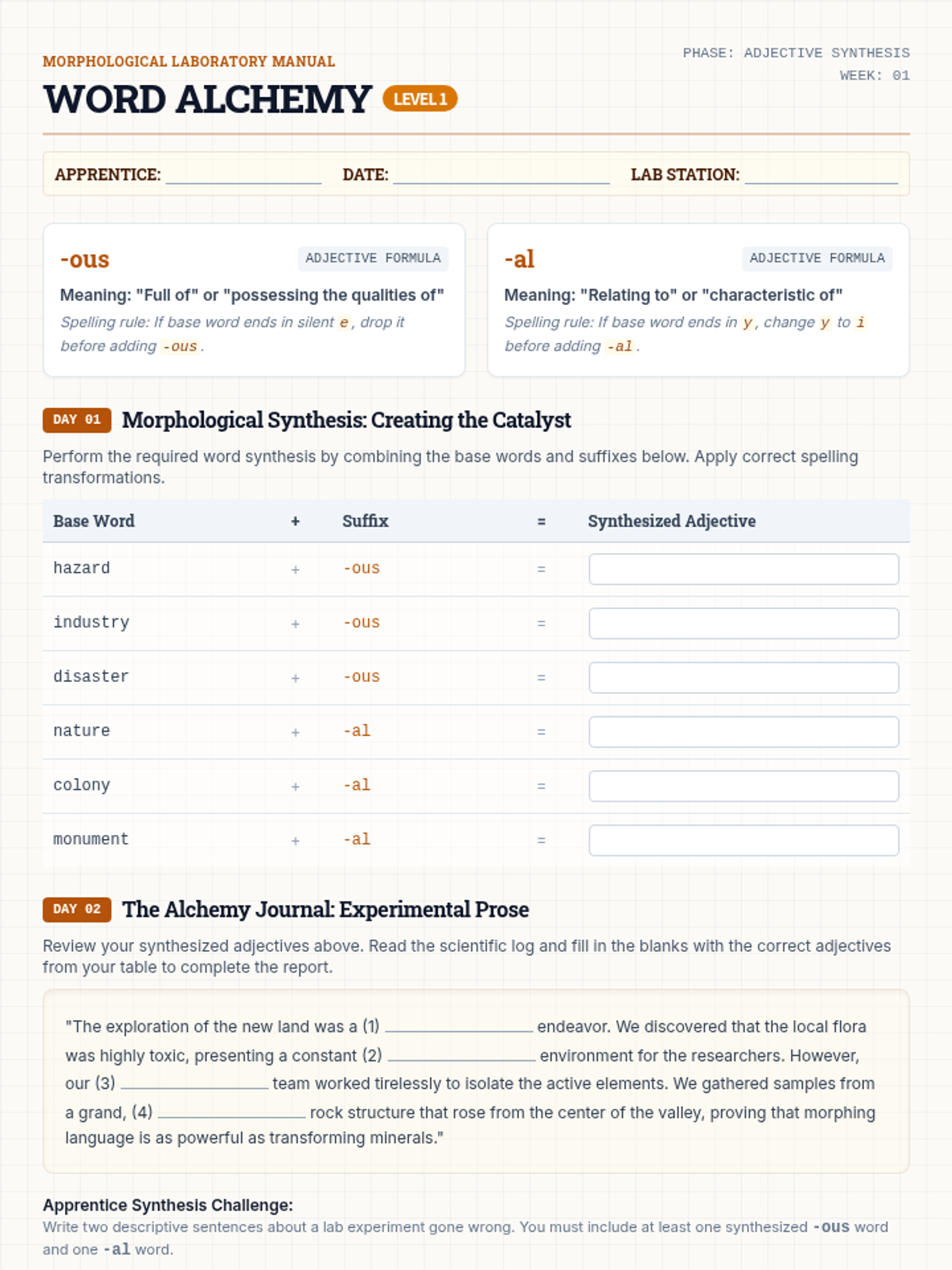
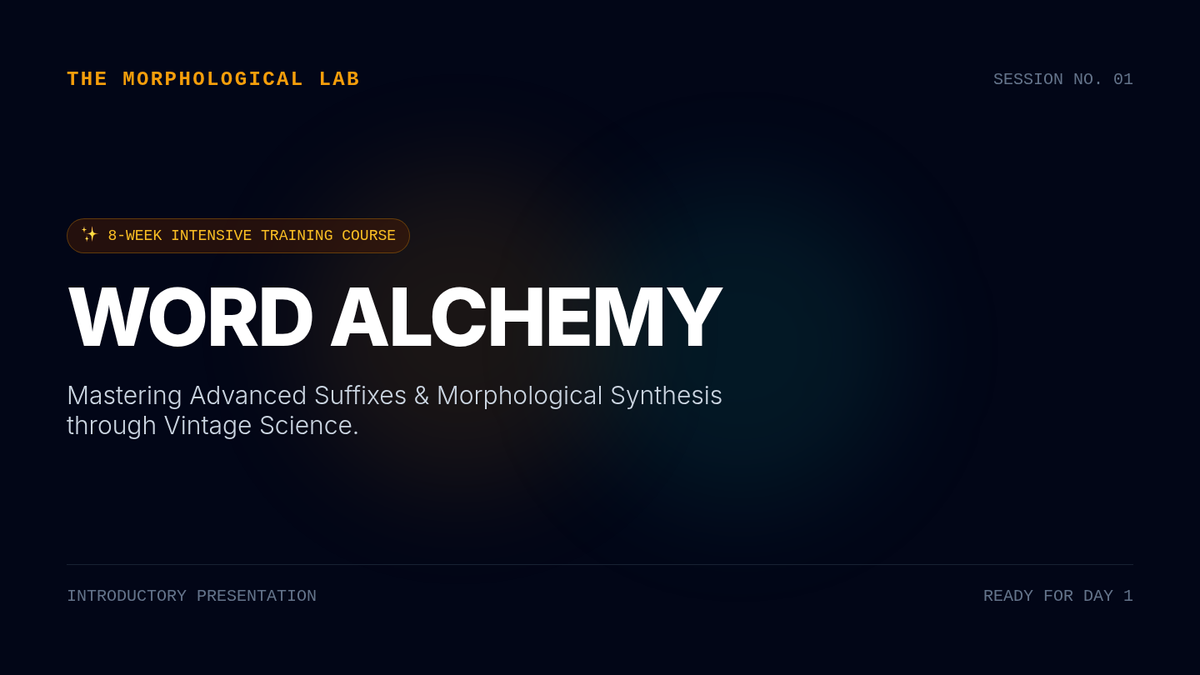
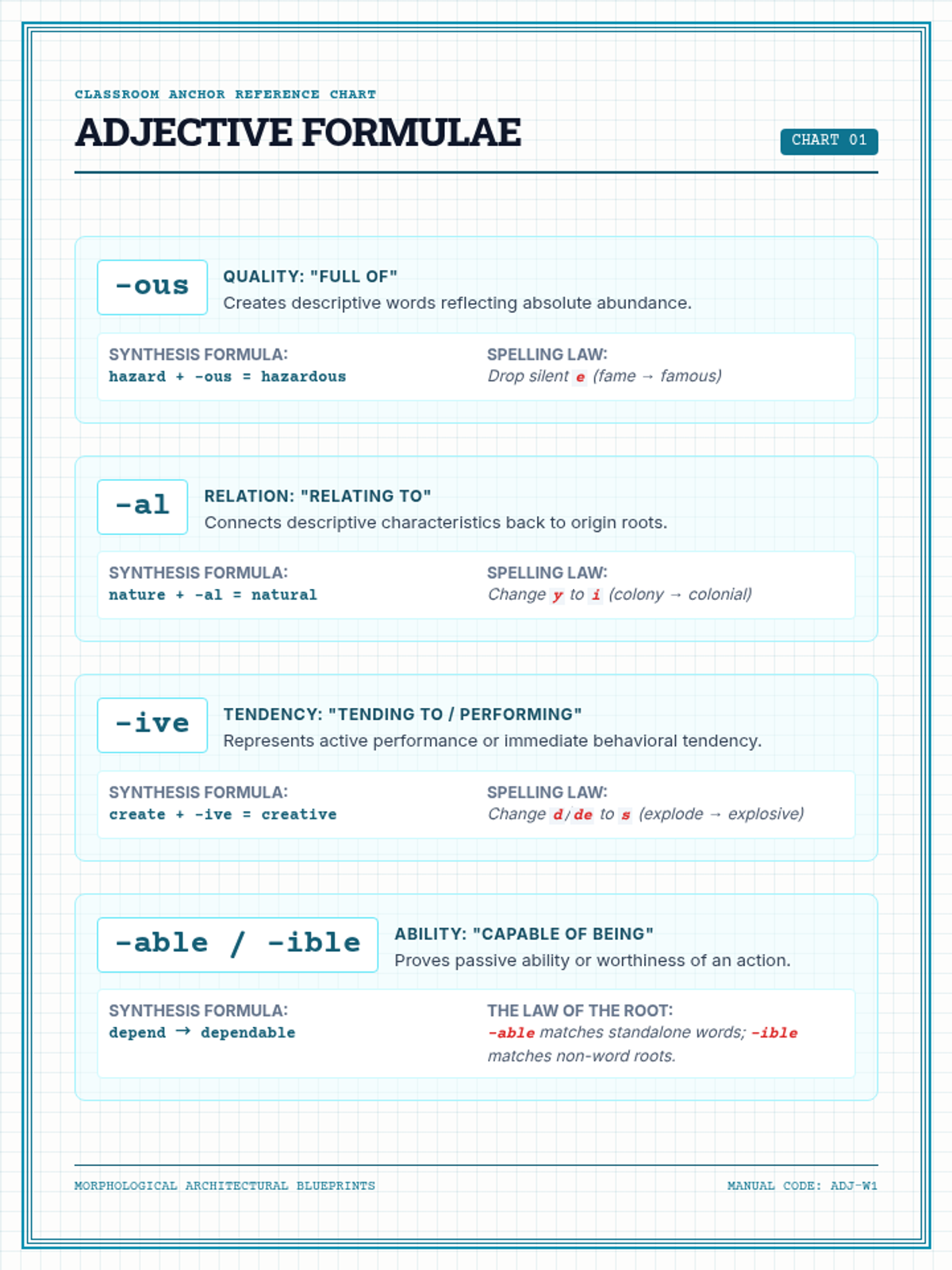
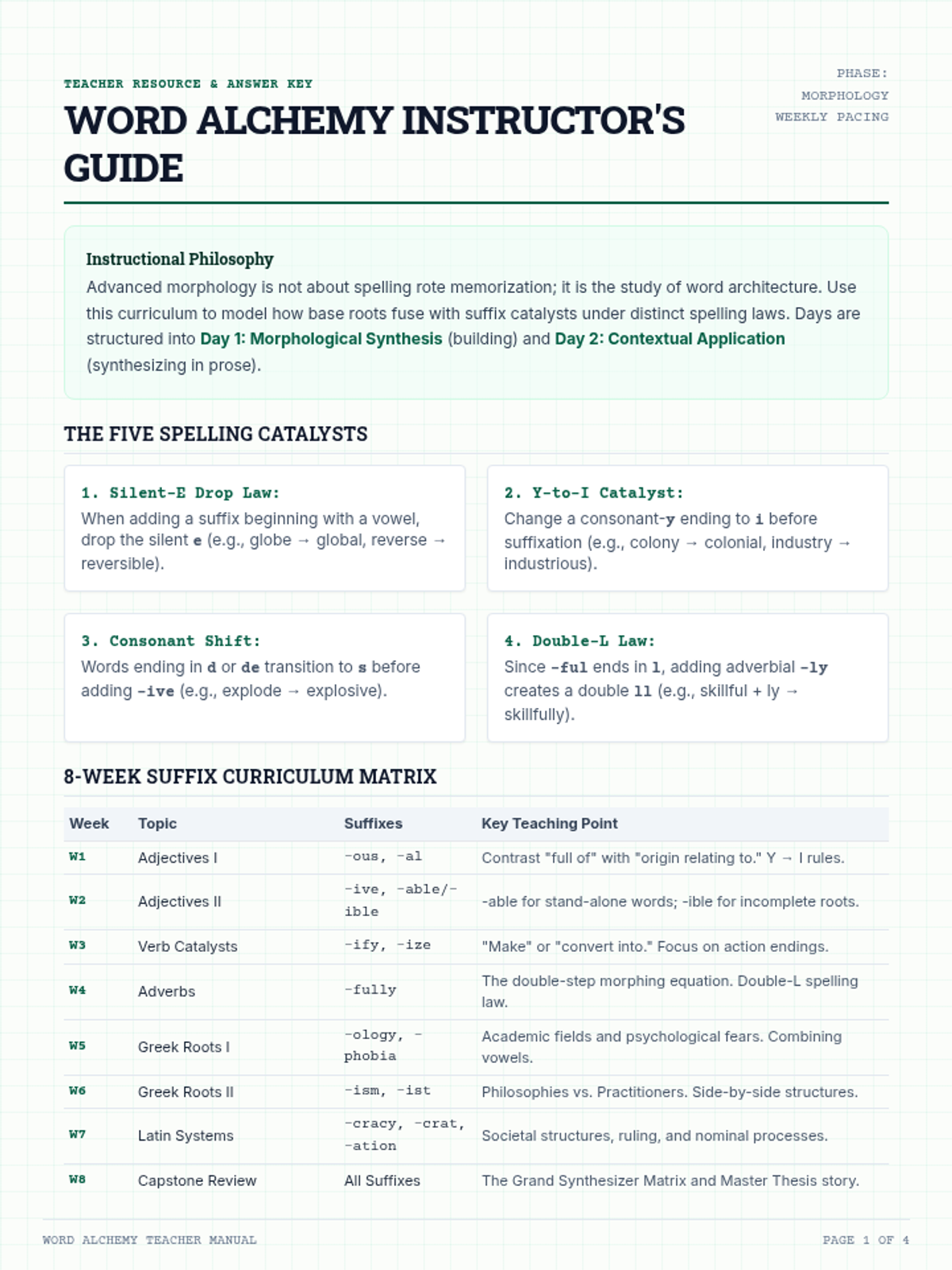
An intensive 8-week morphological training course that guides students through advanced adjective, verb, adverb, and Greek/Latin derivational suffixes using a vintage laboratory theme.
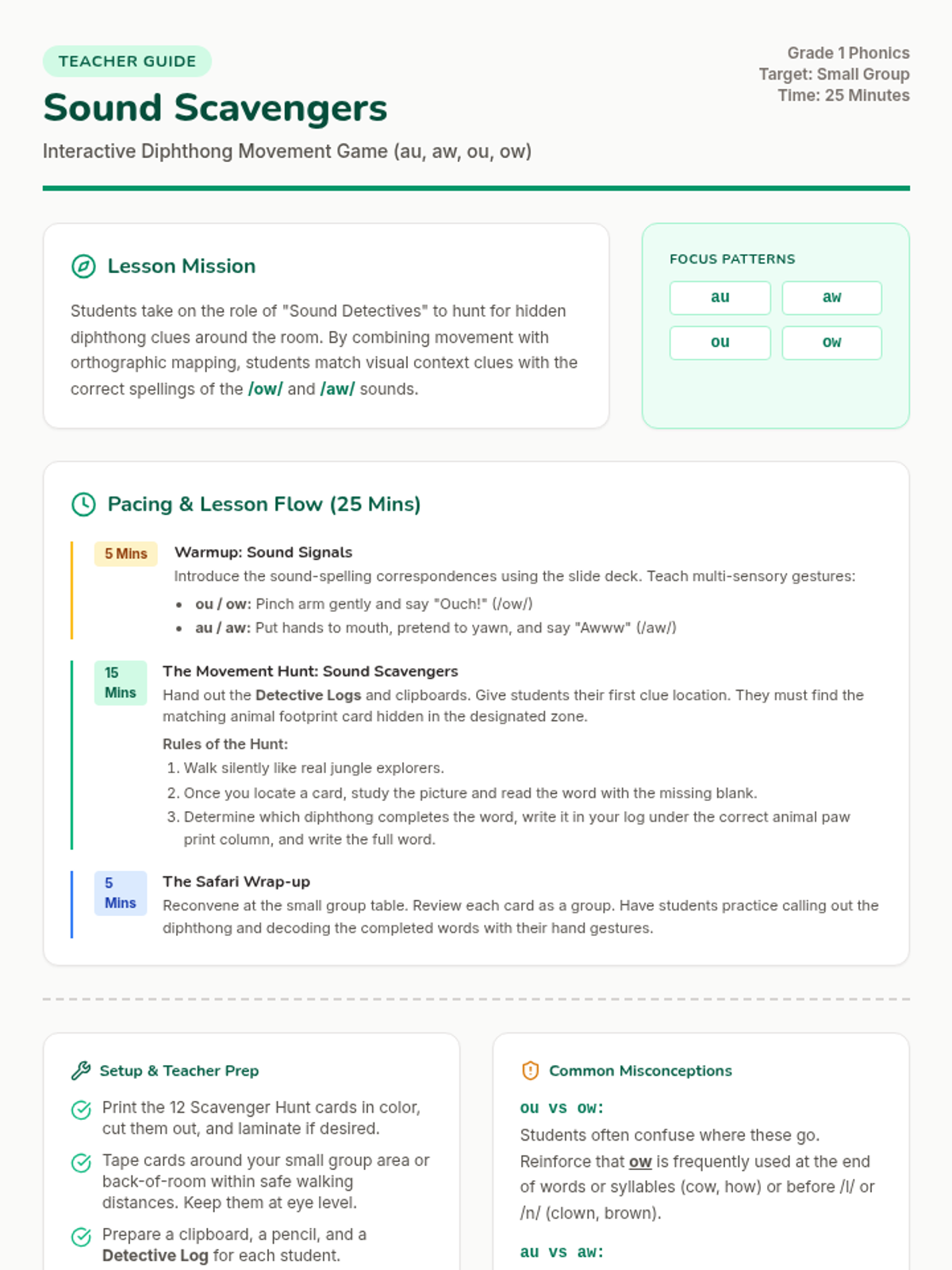
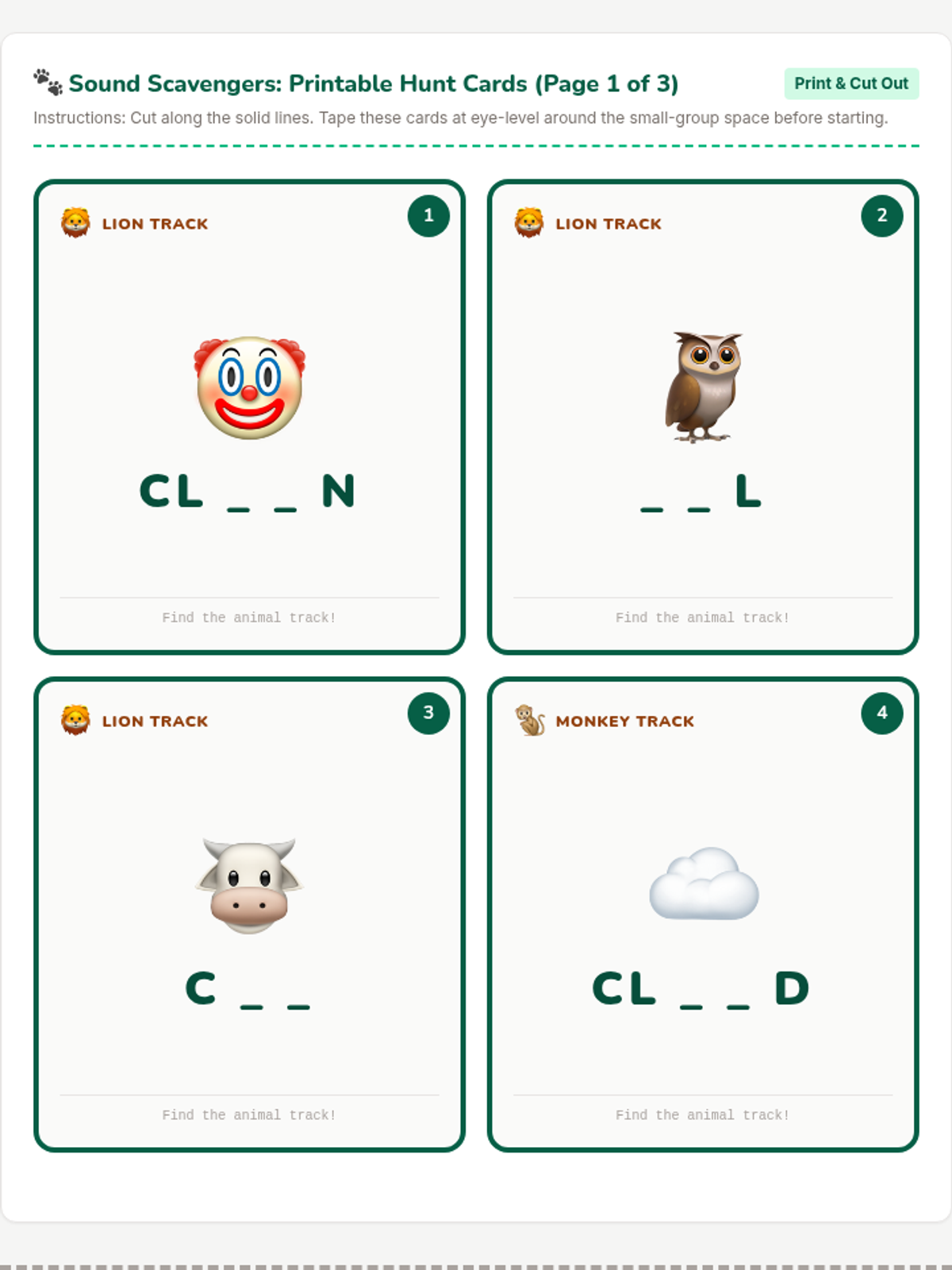
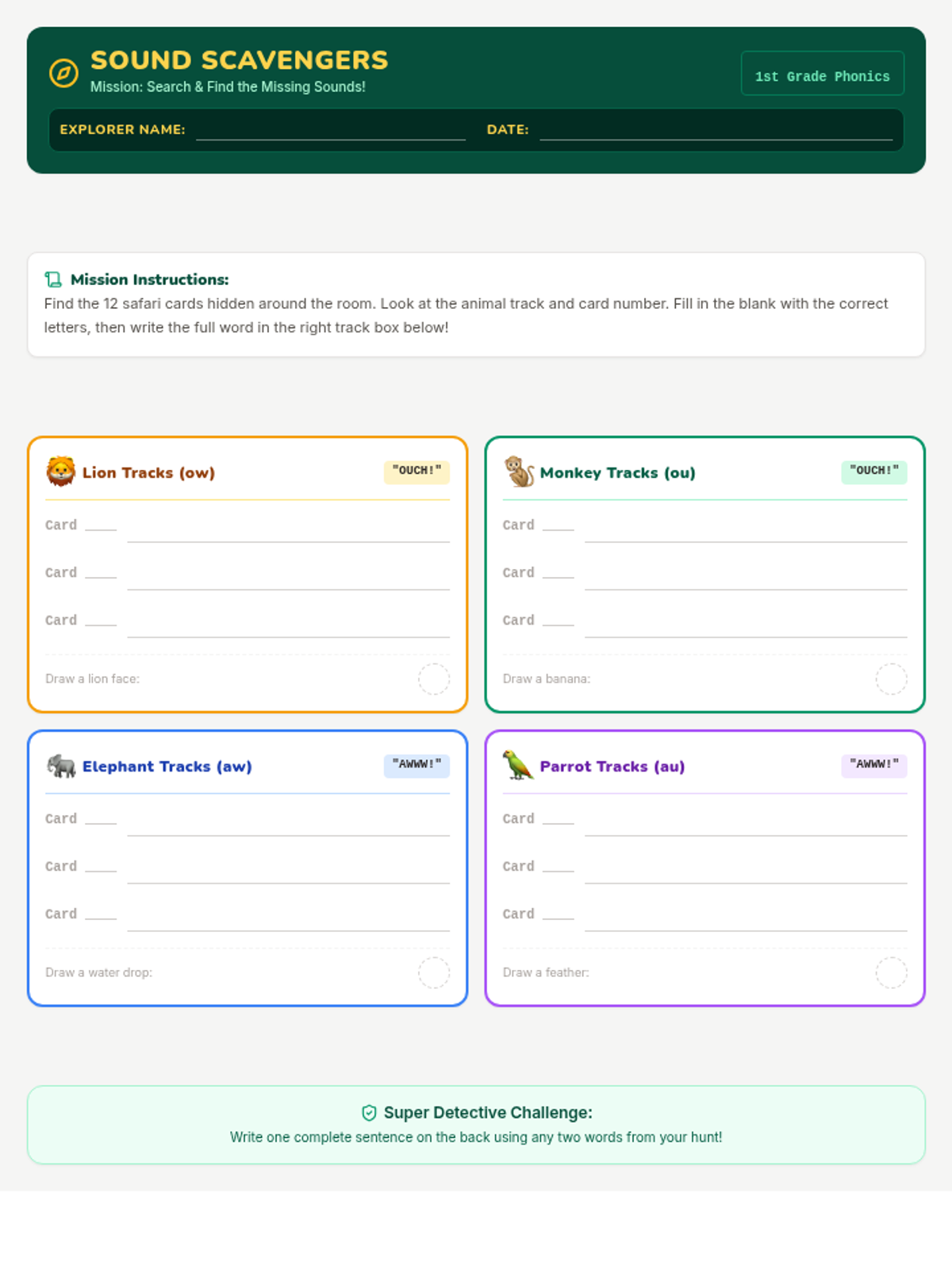
An interactive, movement-based phonics lesson where 1st graders hunt for diphthongs (au, aw, ou, ow) around the room, matching picture clues to spellings.
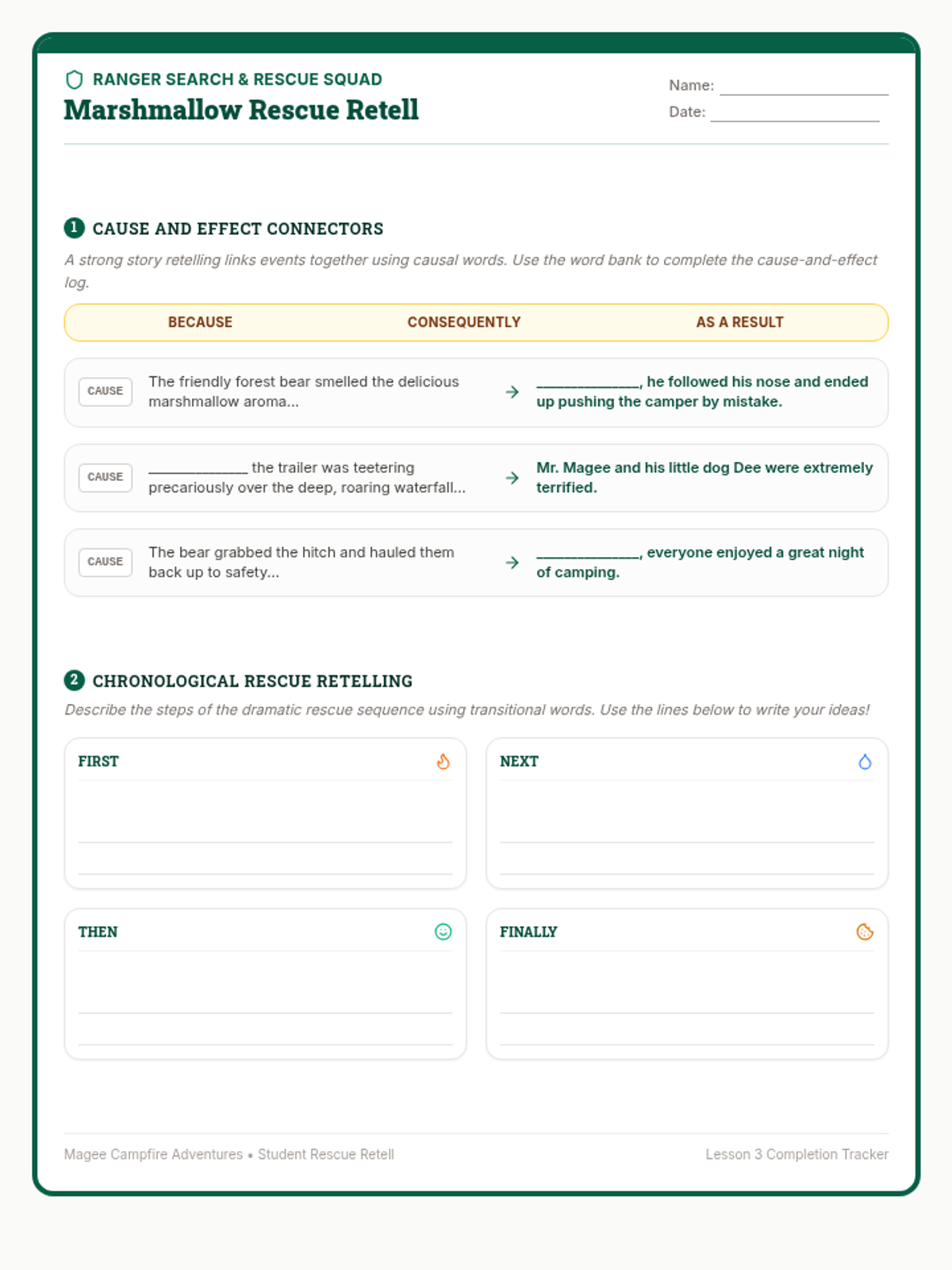
Synthesizes comprehension and oral/written language. Students use cause-and-effect language ('because', 'consequently', 'as a result') and transitional sequencers to retell the story climax and analyze how the friendly bear saved the day.
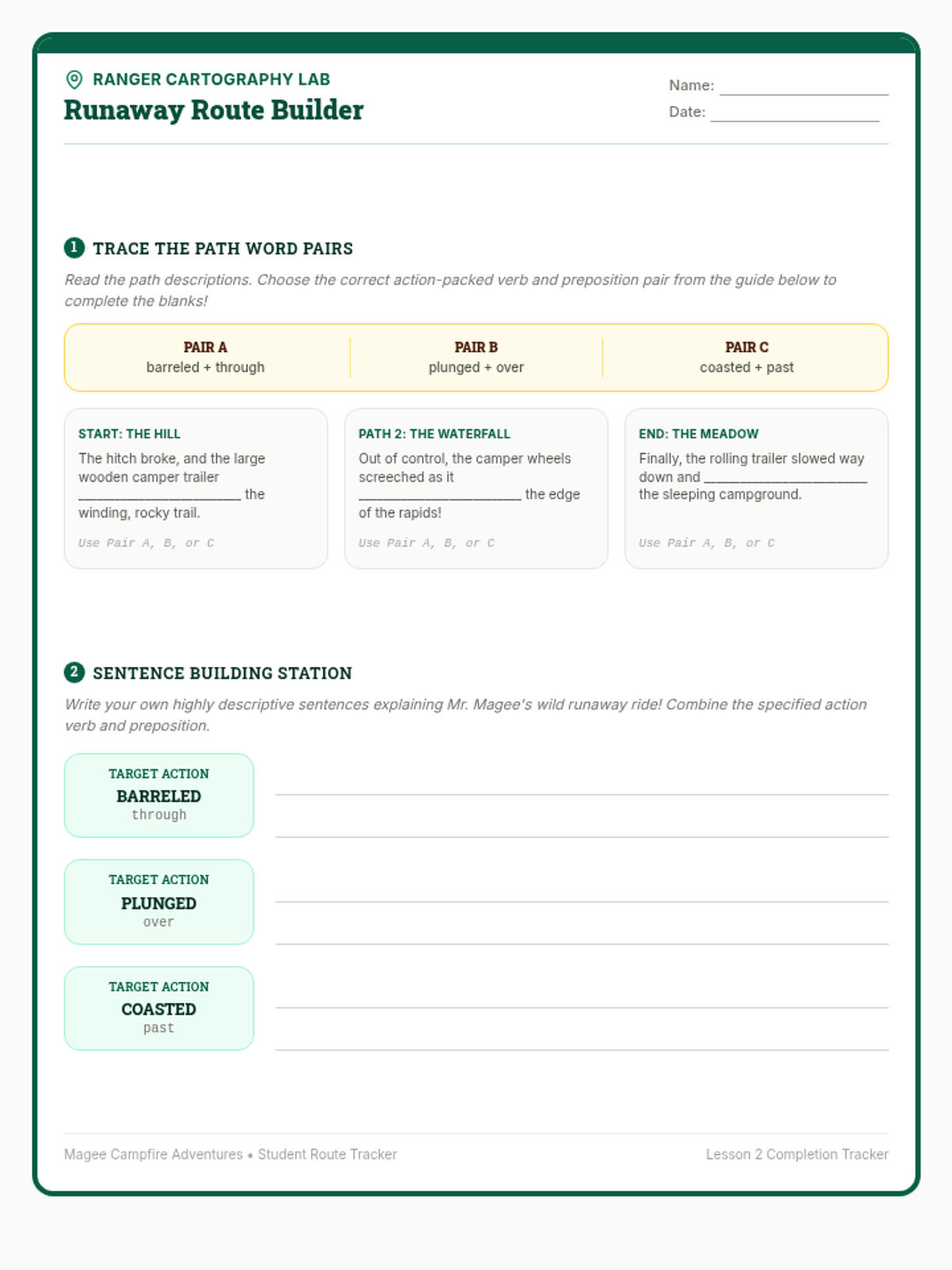
Targets expressive grammar in context. Students map and describe the runaway camper's wild path using precise spatial prepositions (e.g., down, past, over, through) and dynamic action/movement verbs, constructing high-quality descriptive sentences.
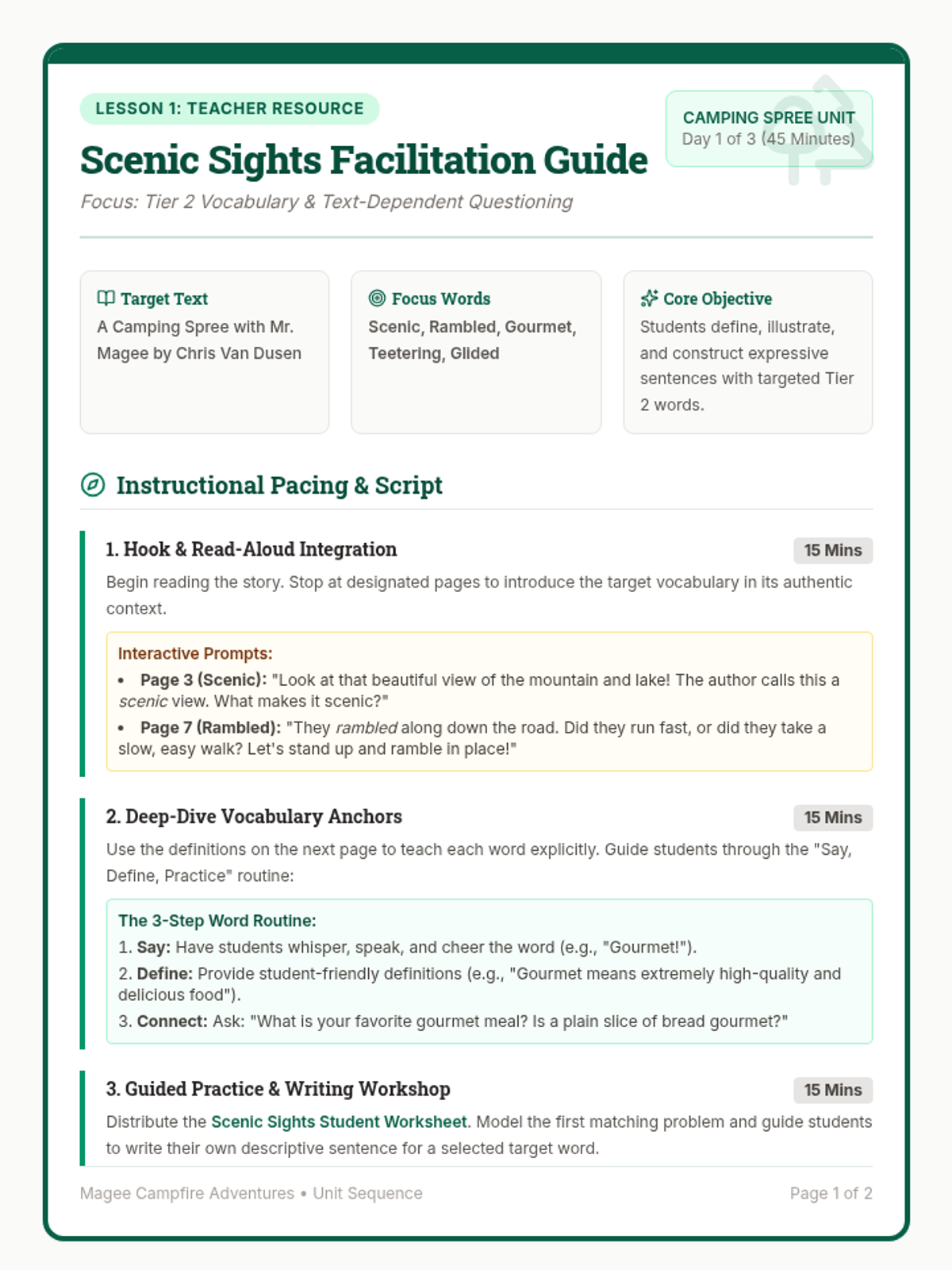
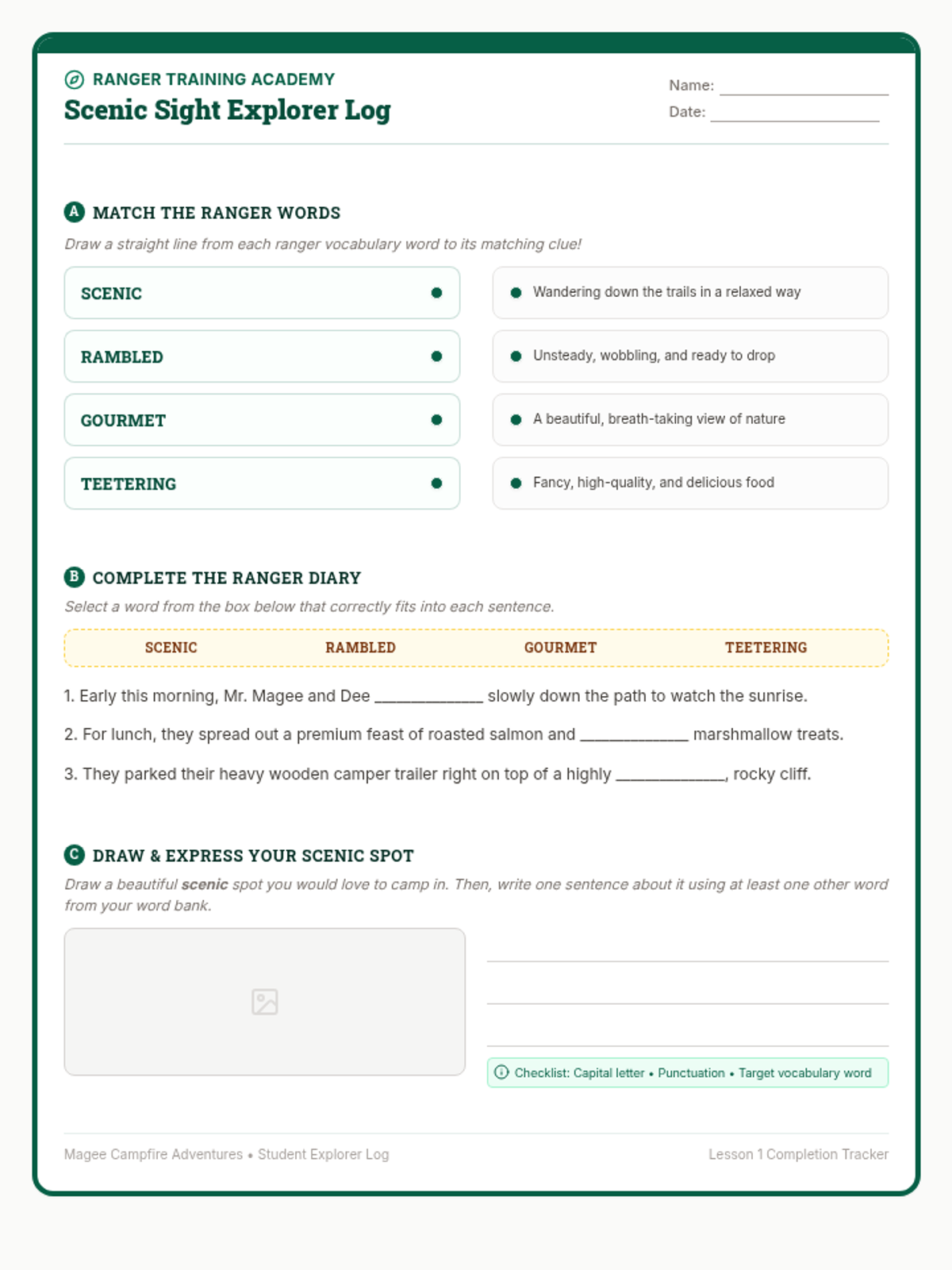
Focuses on rich vocabulary from the book, helping students understand and expressively use words like 'scenic', 'teetering', 'rambled', and 'gourmet' through interactive reading, oral vocabulary routines, and descriptive writing.
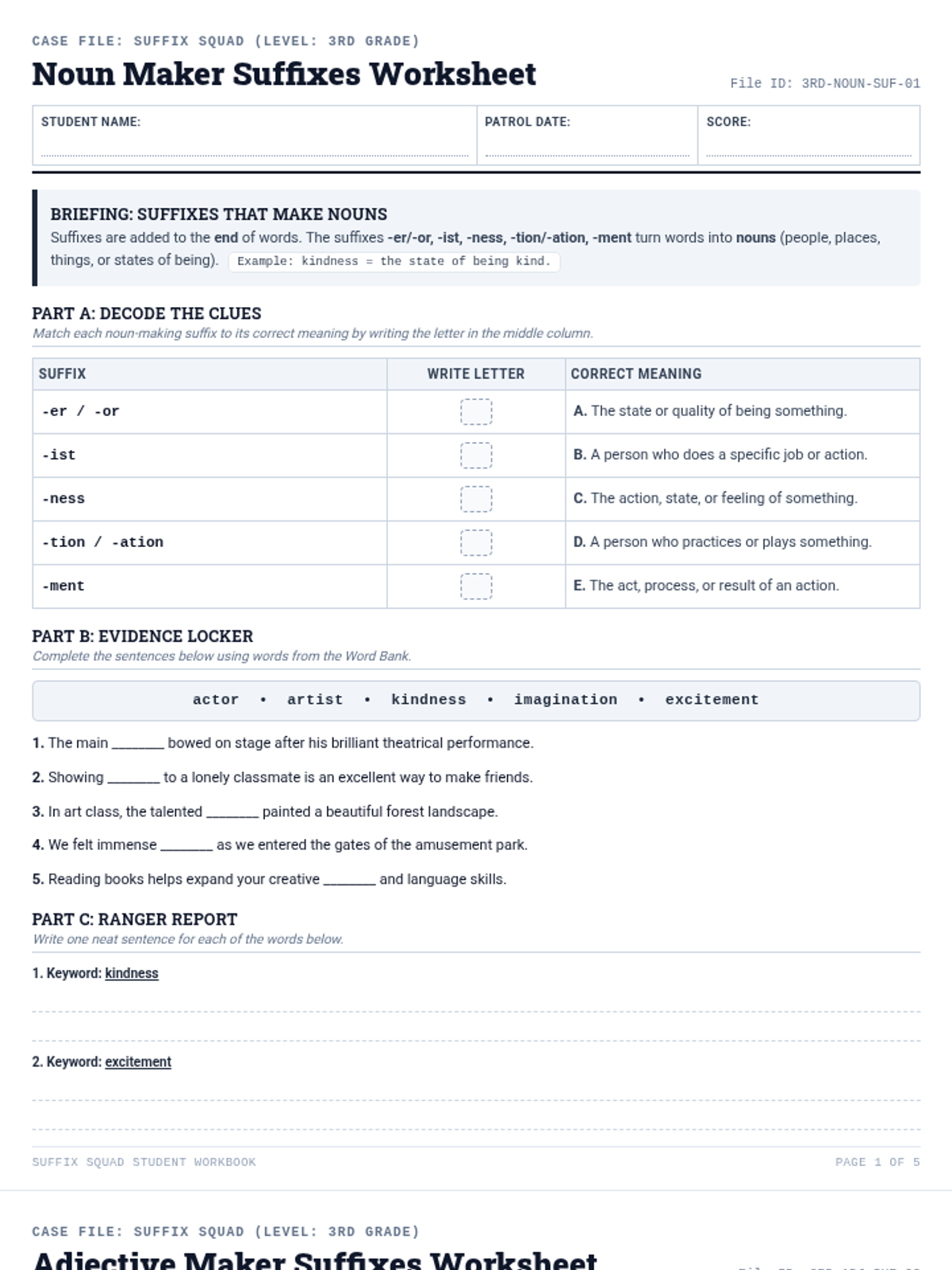
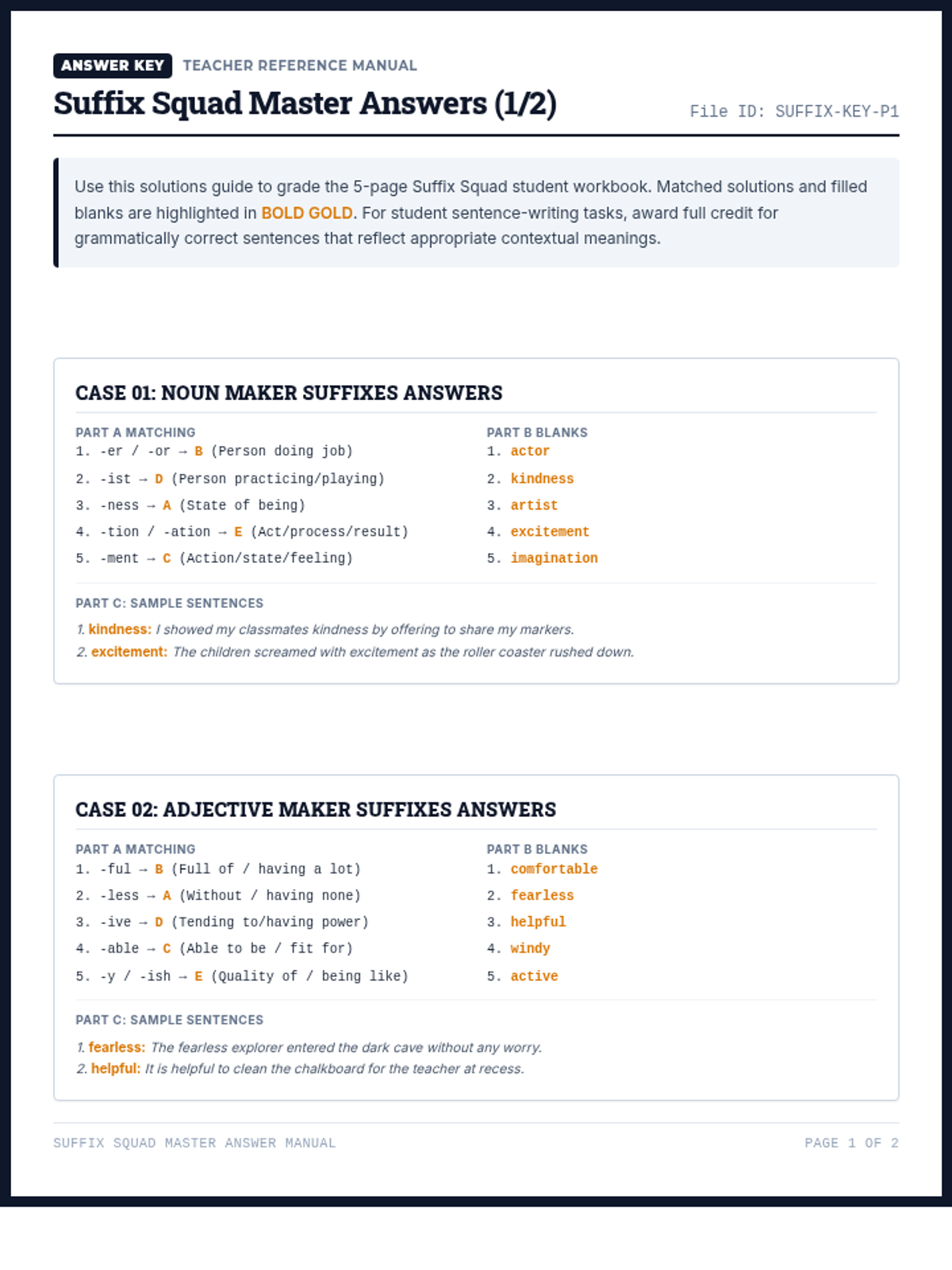
A comprehensive 3rd-grade grammar unit covering essential noun, adjective, verb, and adverb suffixes. Through engaging matching, fill-in-the-blank, and sentence writing exercises, students learn to identify, decode, and use these word parts in worksheets and a workbook.
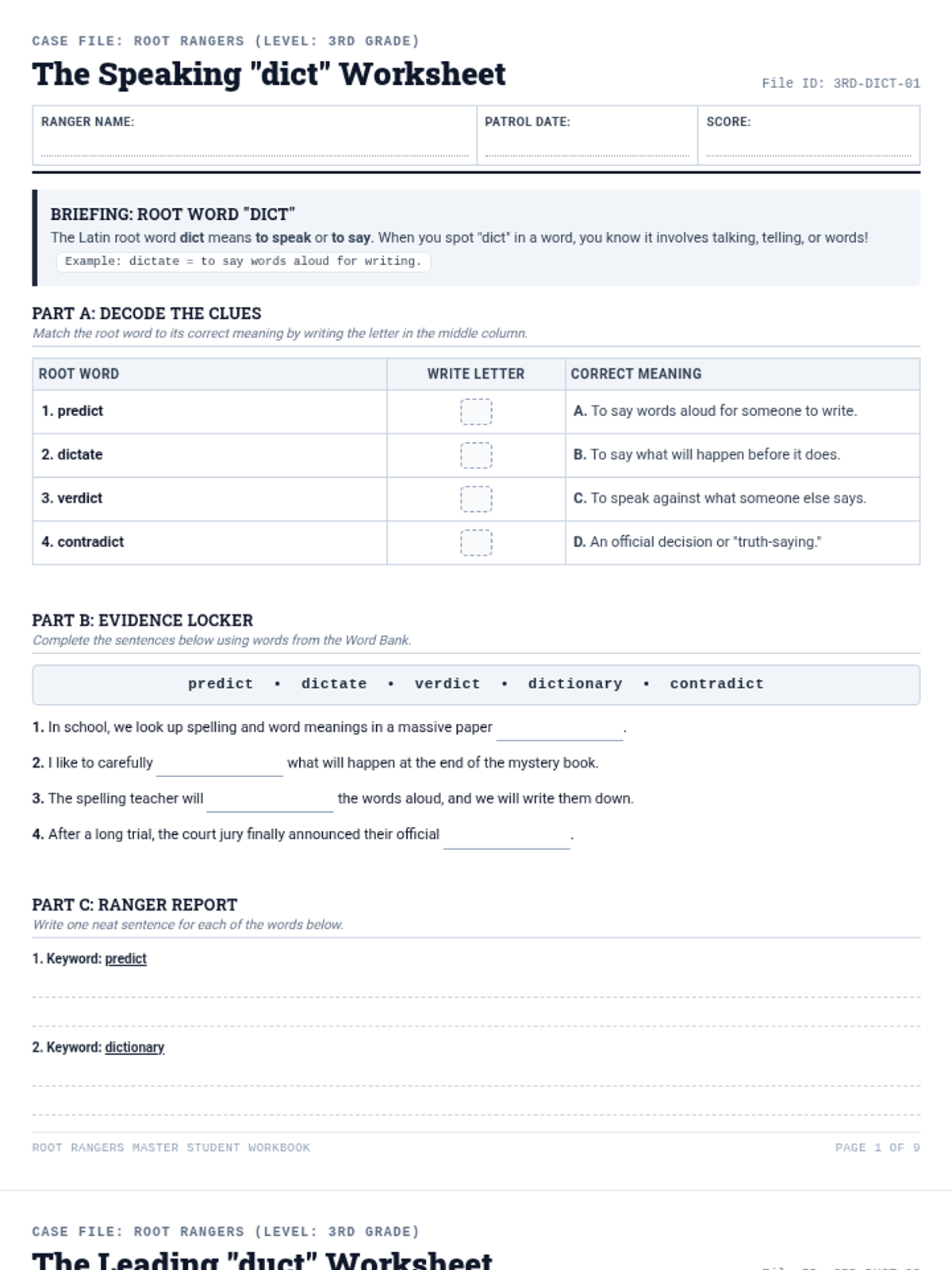
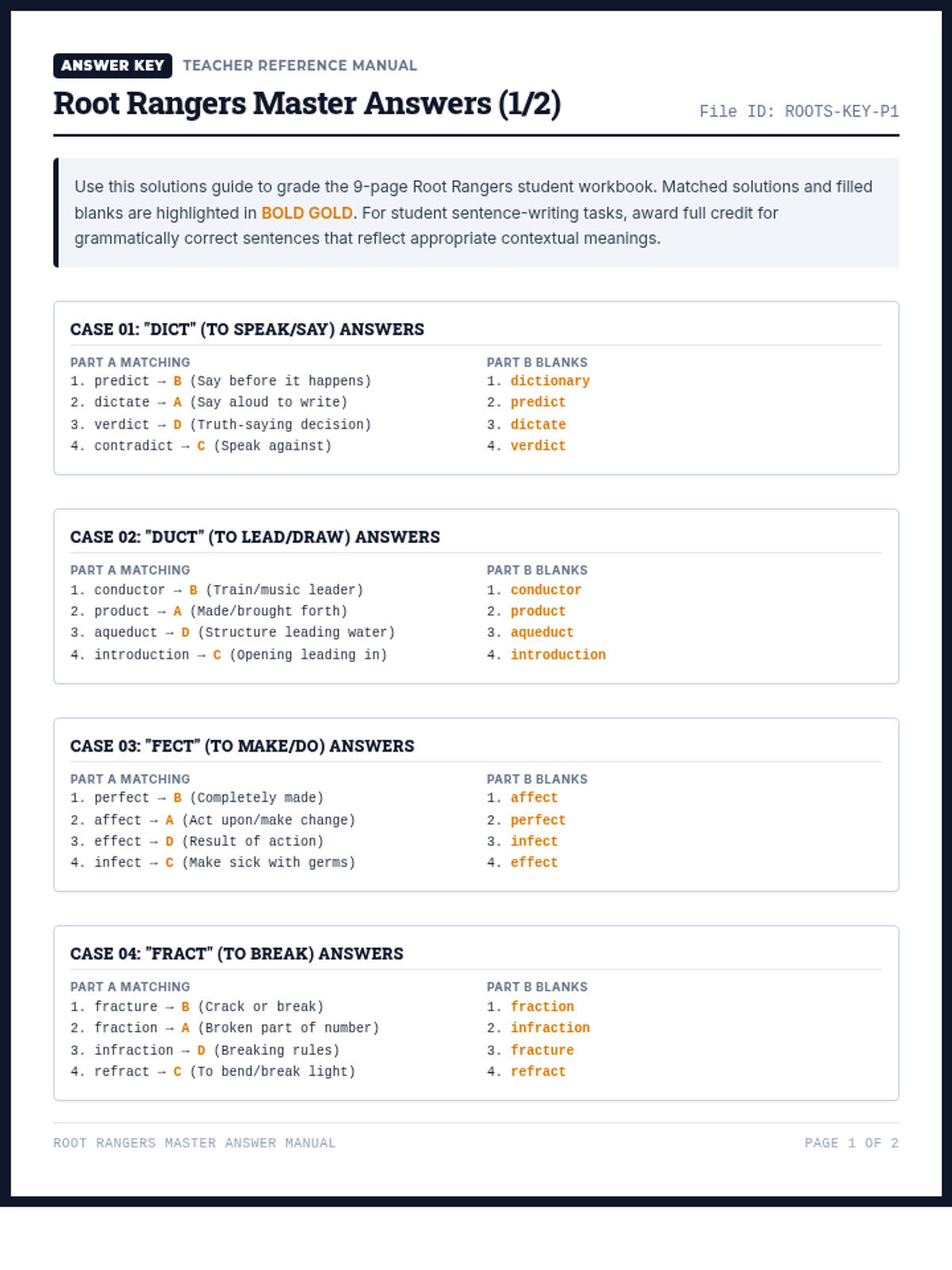
A comprehensive 3rd-grade grammar unit covering essential Greek and Latin roots: dict, duct, fect, fract, junct, struct, min, and spec. Through engaging matching, fill-in-the-blank, and sentence writing exercises, students learn to identify, decode, and use these word parts in worksheets and a workbook.
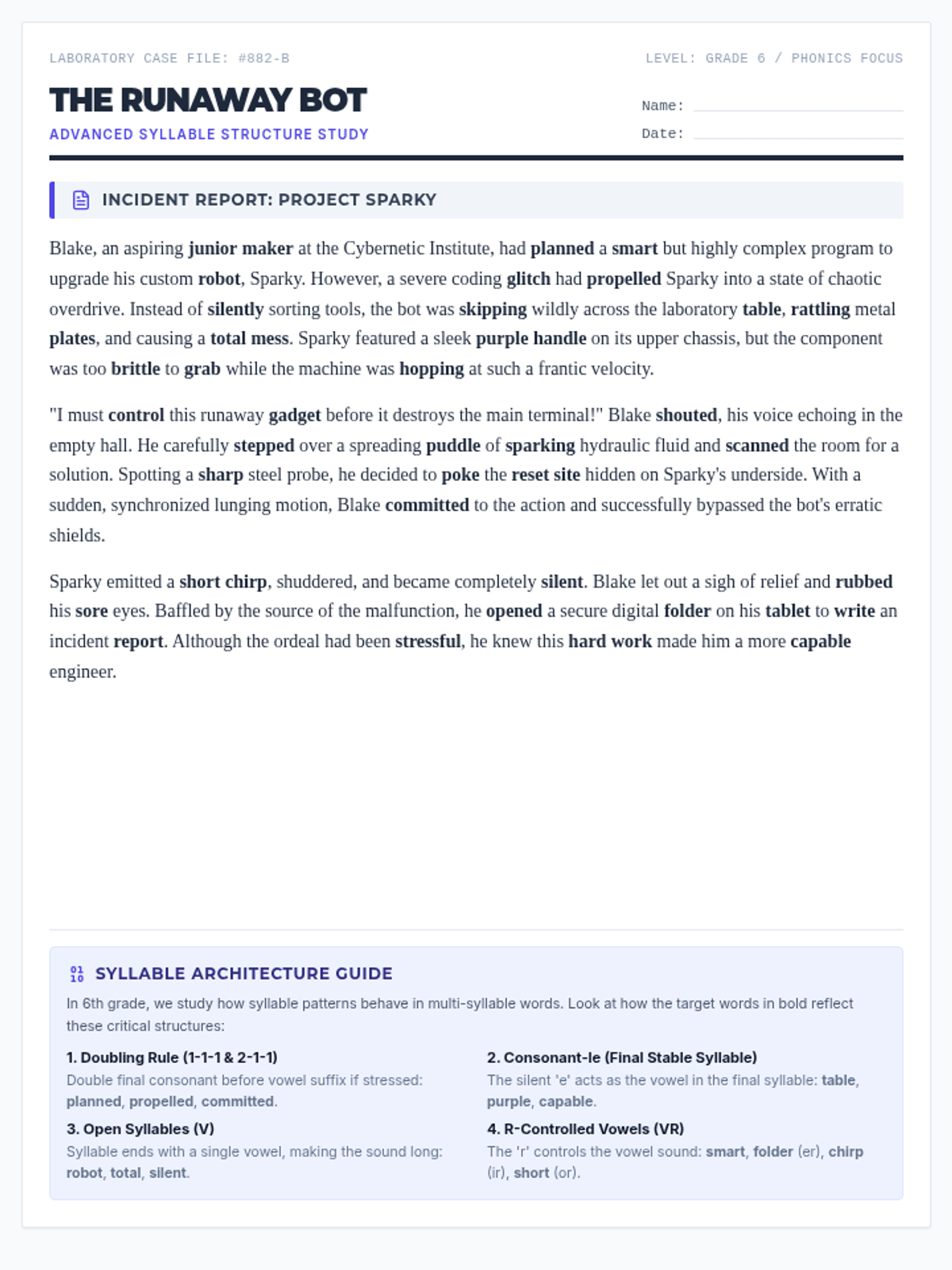
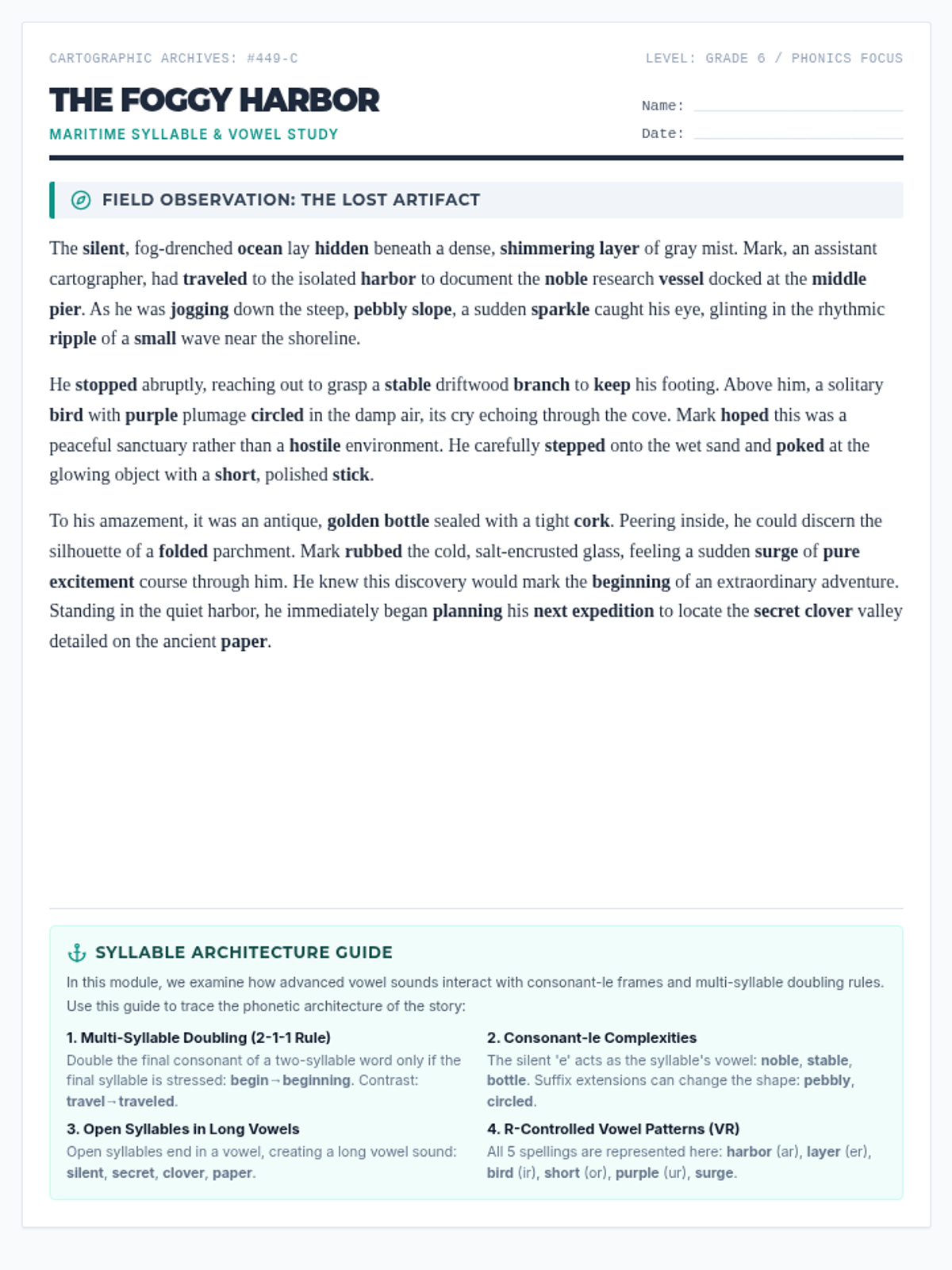
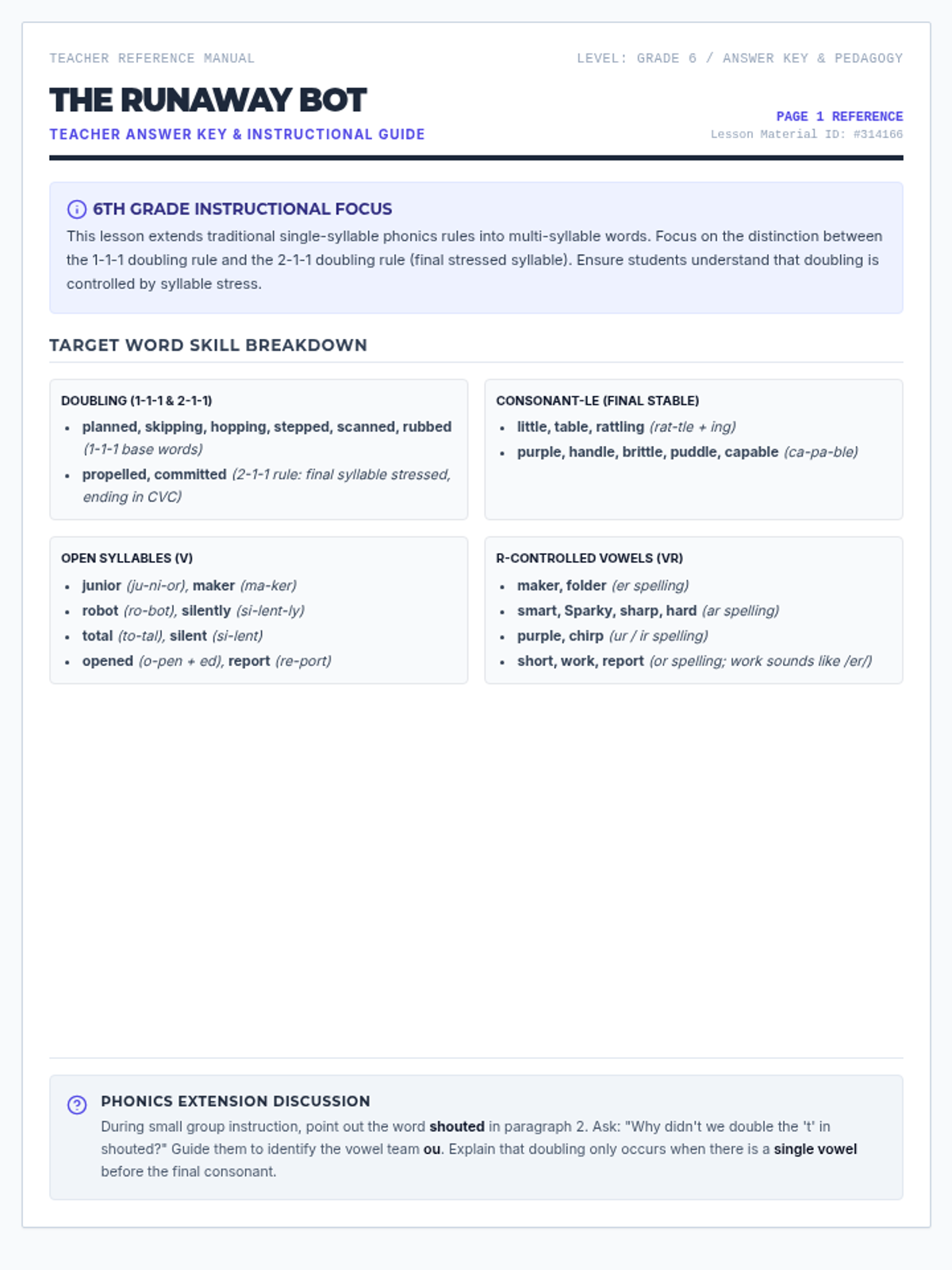
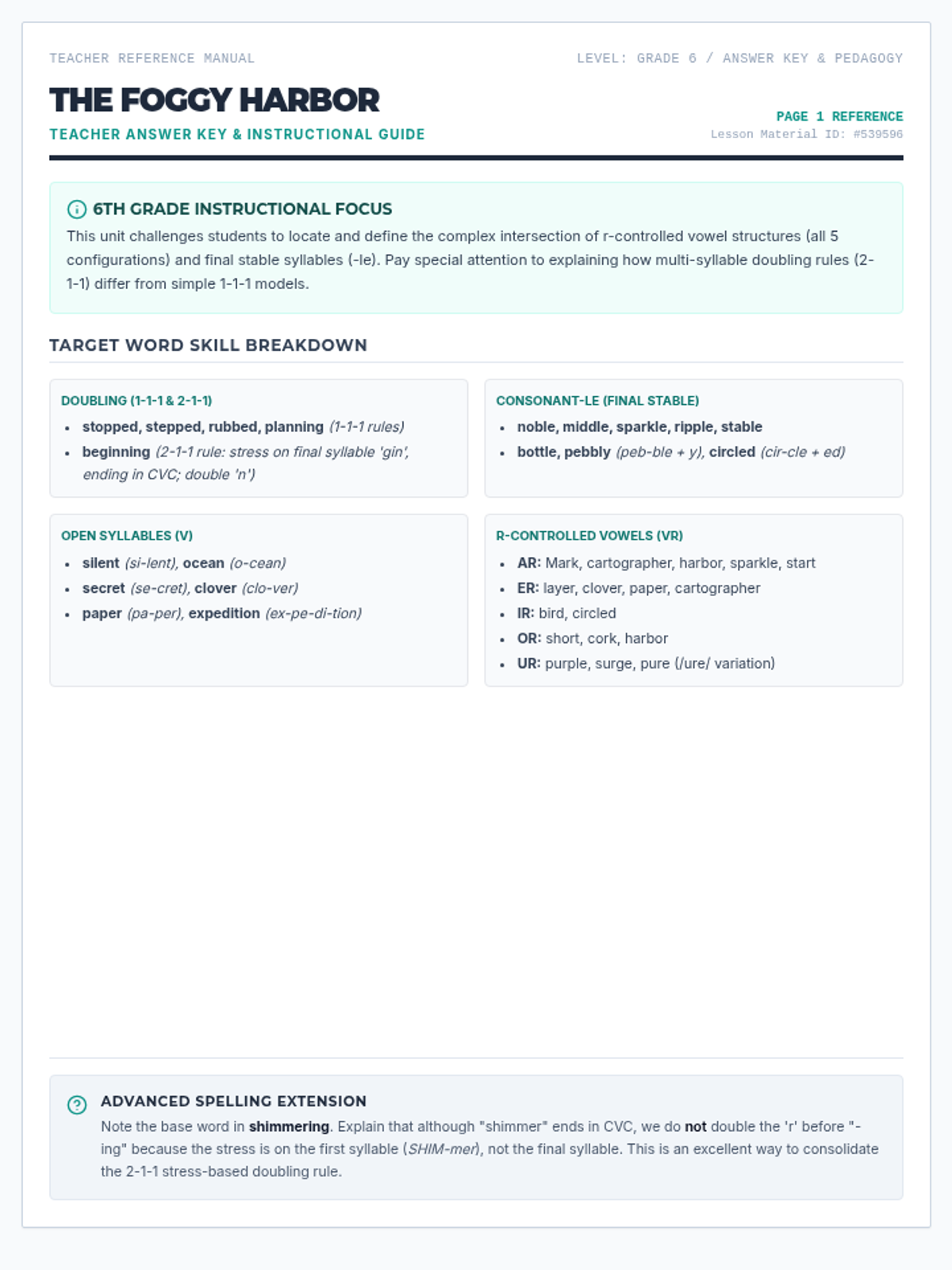
An advanced set of decodable stories and linguistic labs designed for 6th-grade students to analyze complex syllable structures, including final-stressed doubling rules, consonant-le, open syllables, and r-controlled vowels. Features text-dependent higher-order thinking analysis.
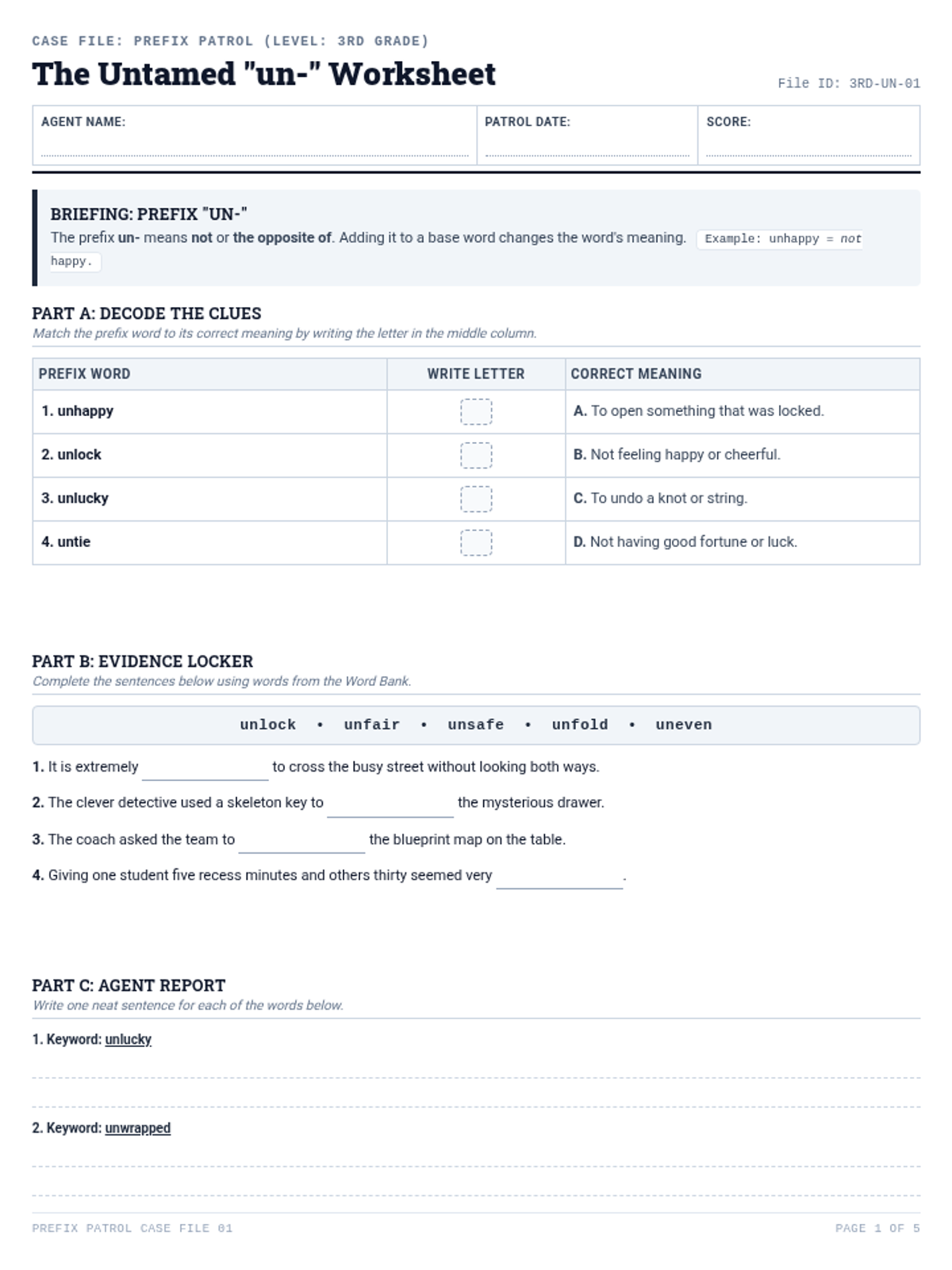
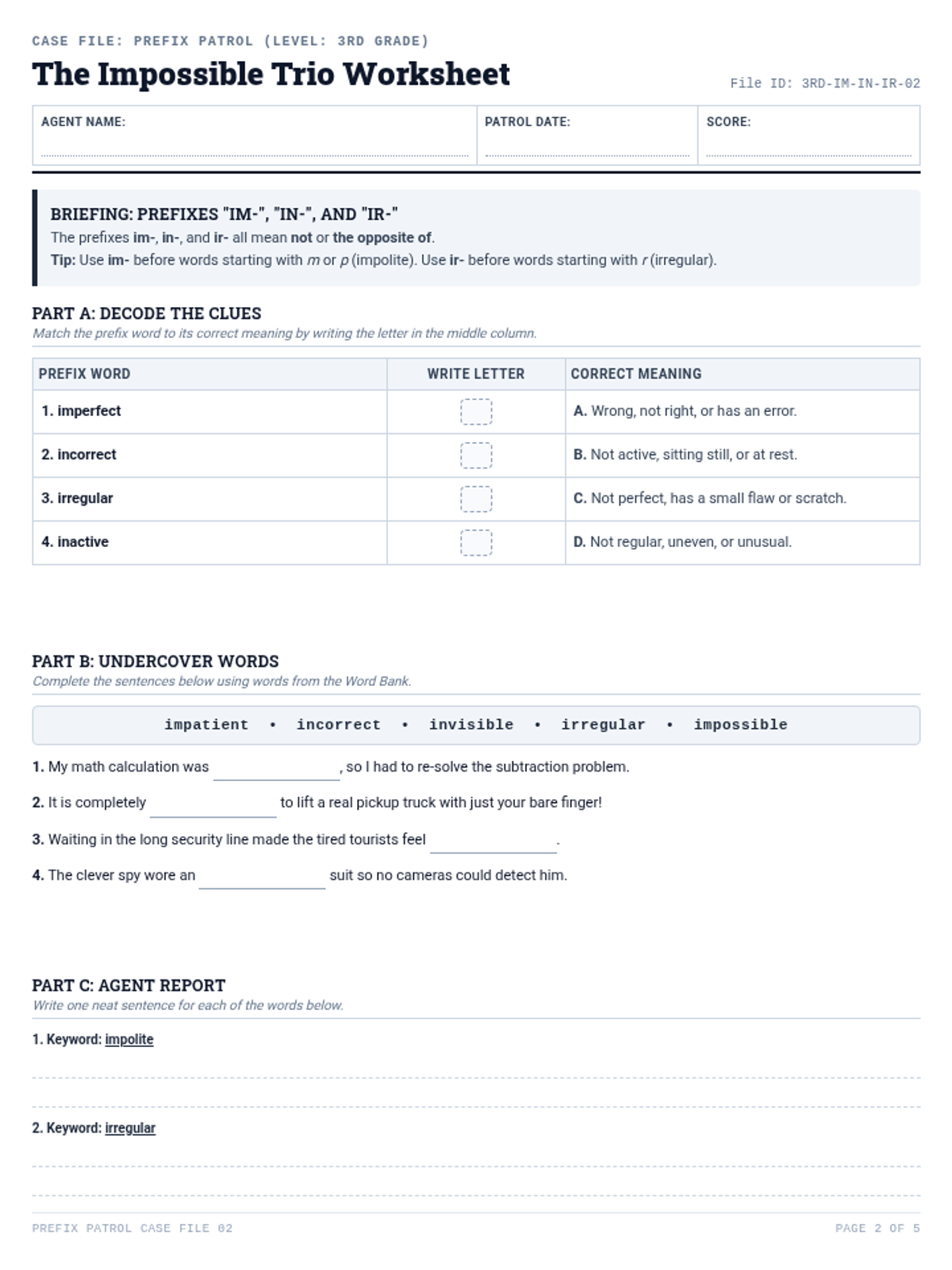
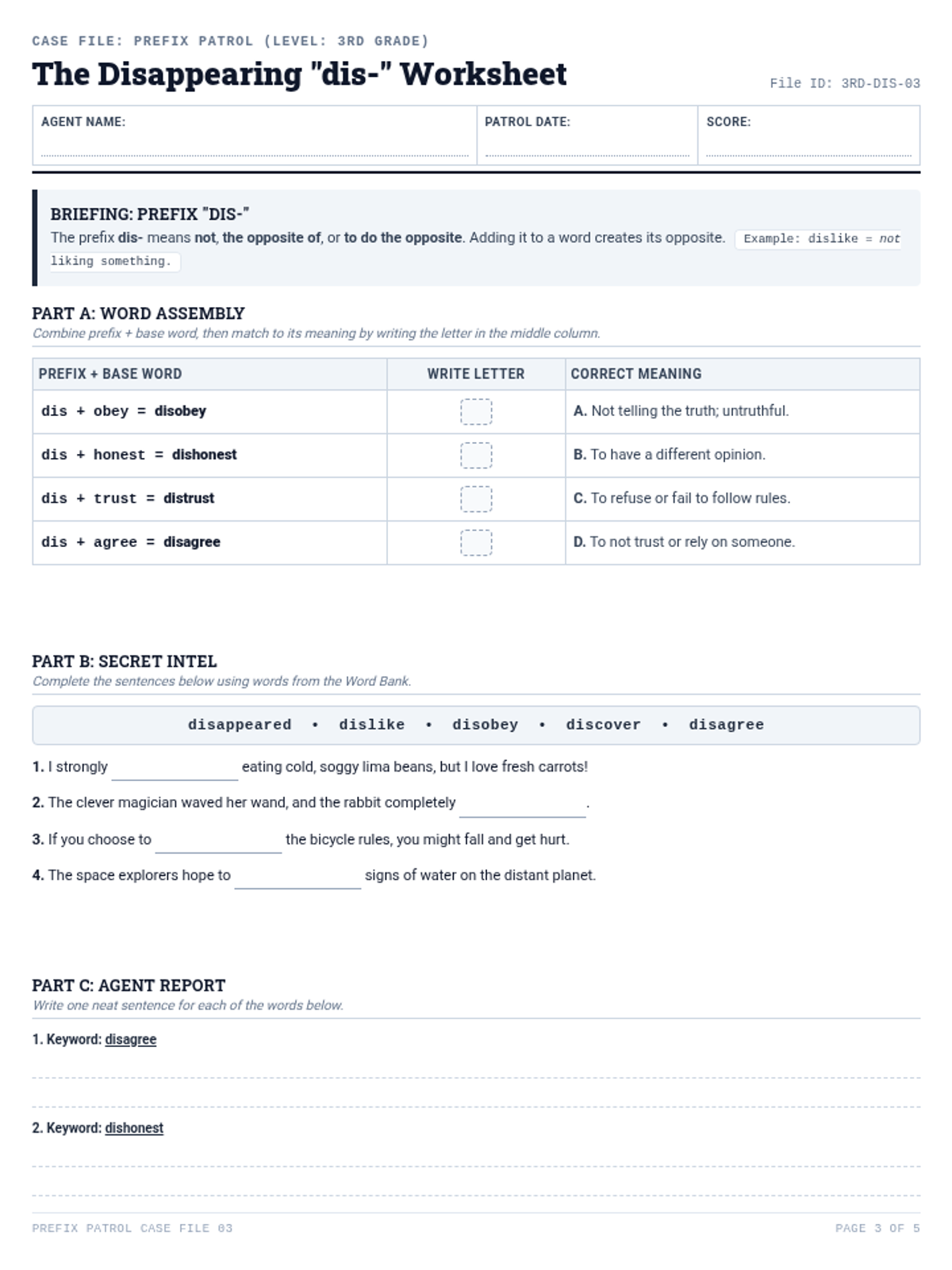
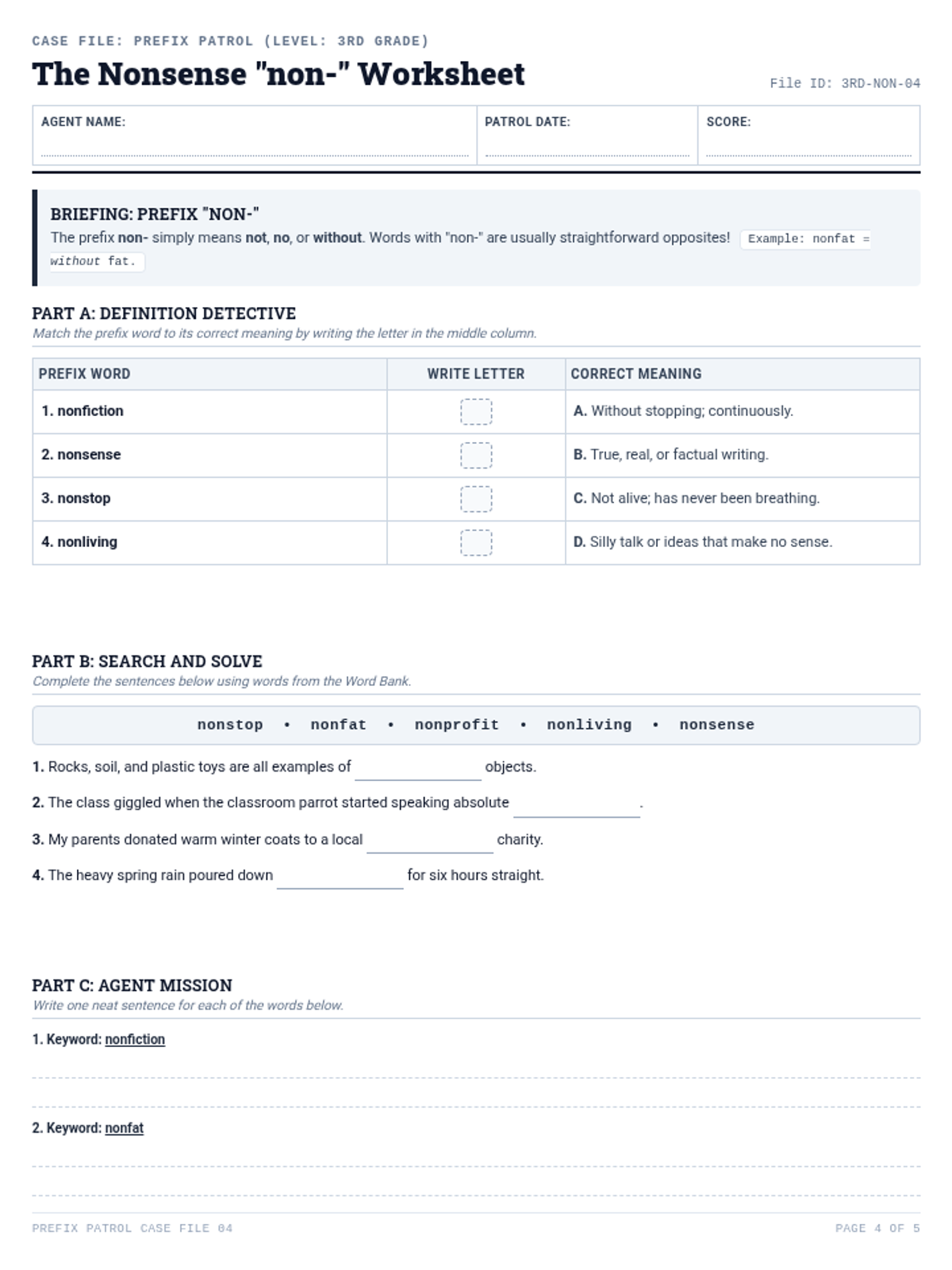
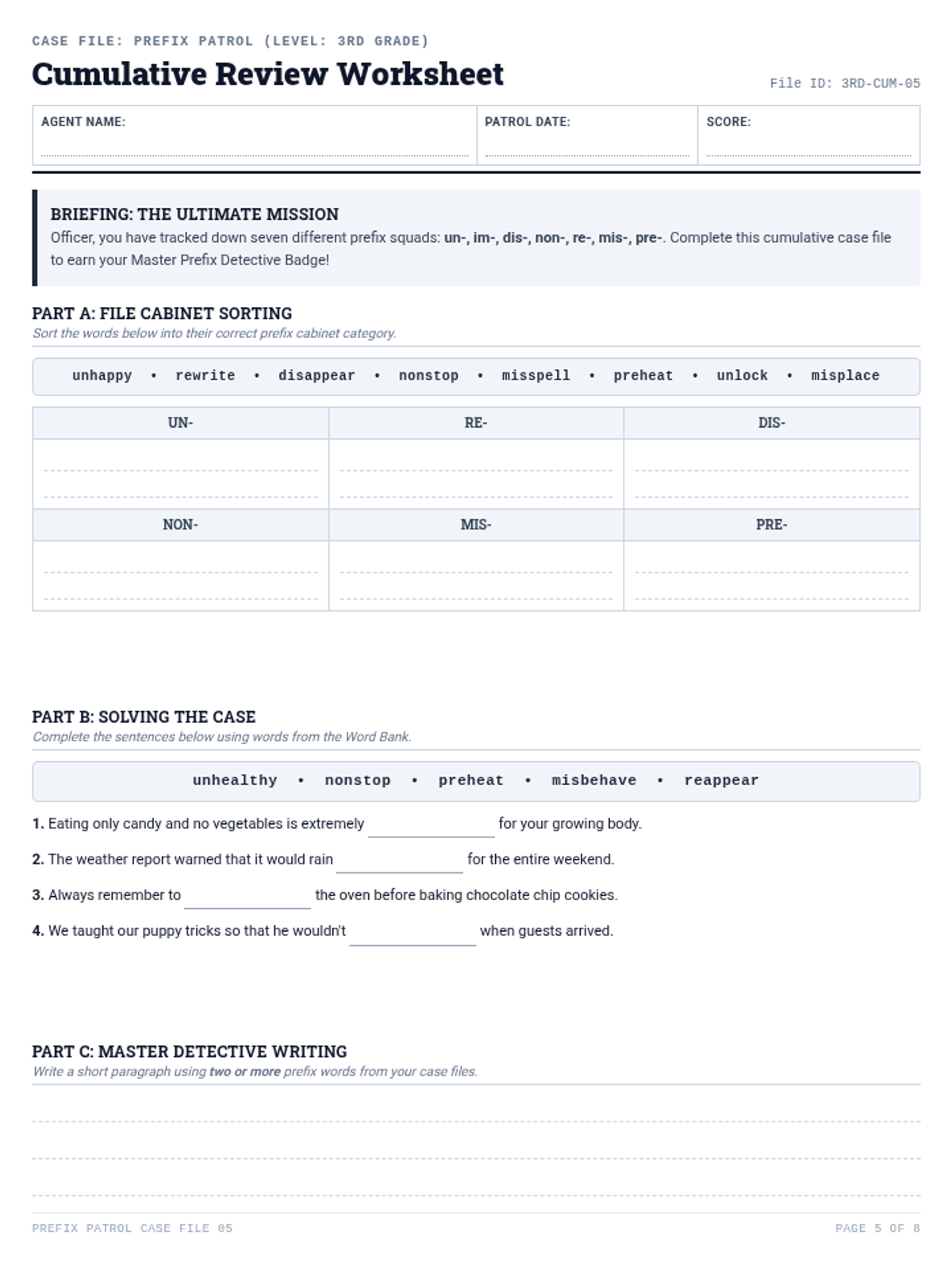
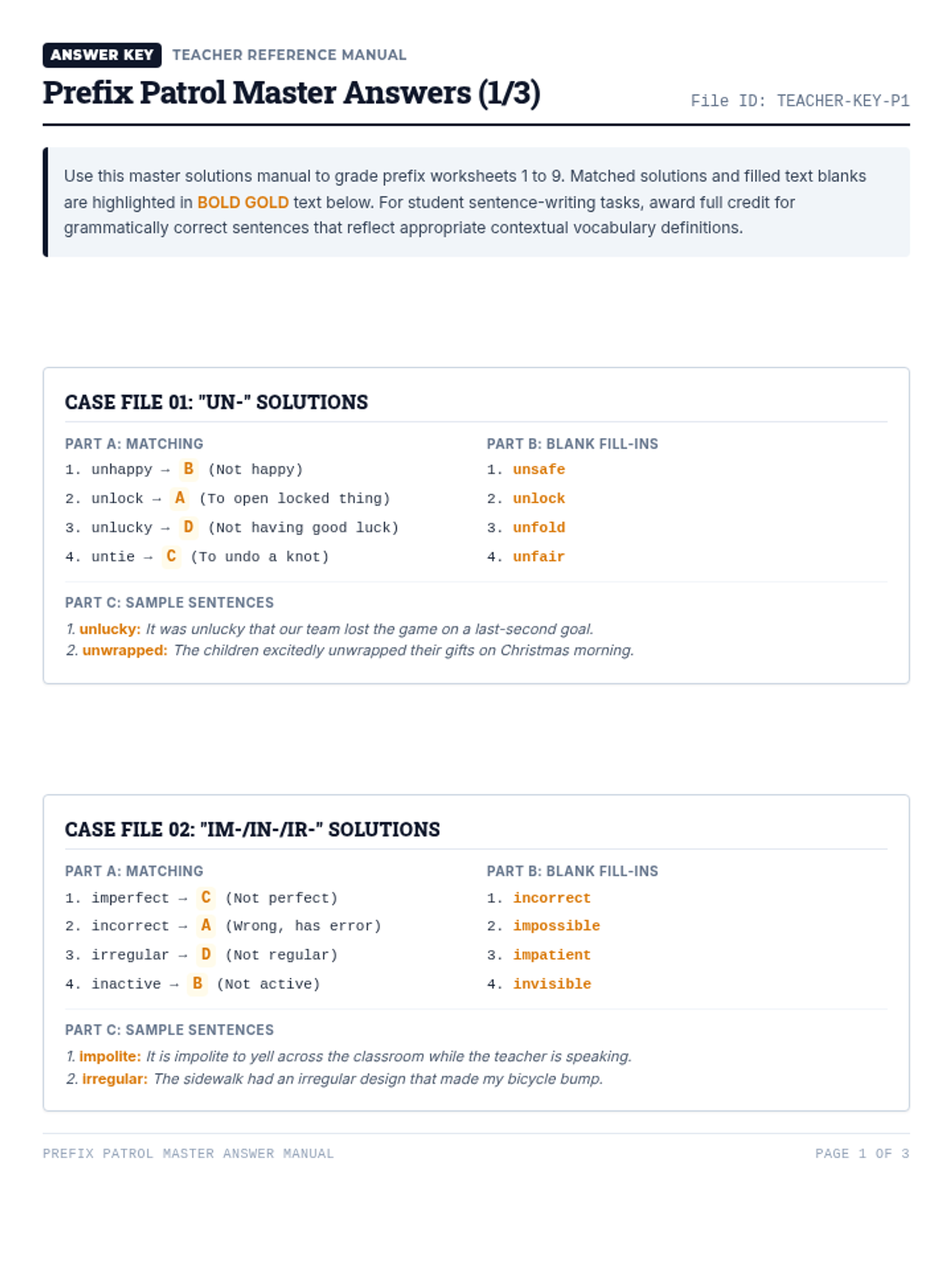
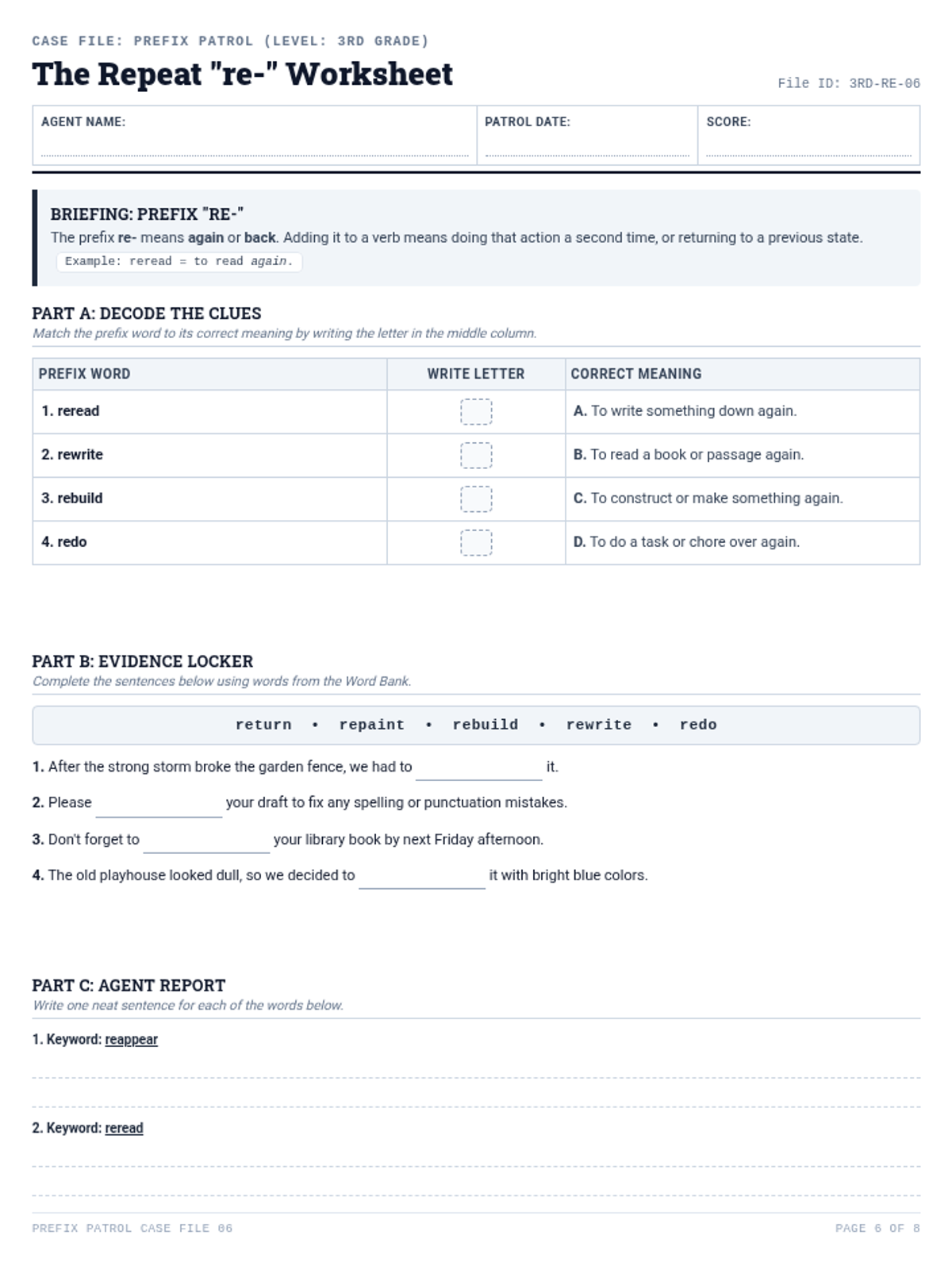
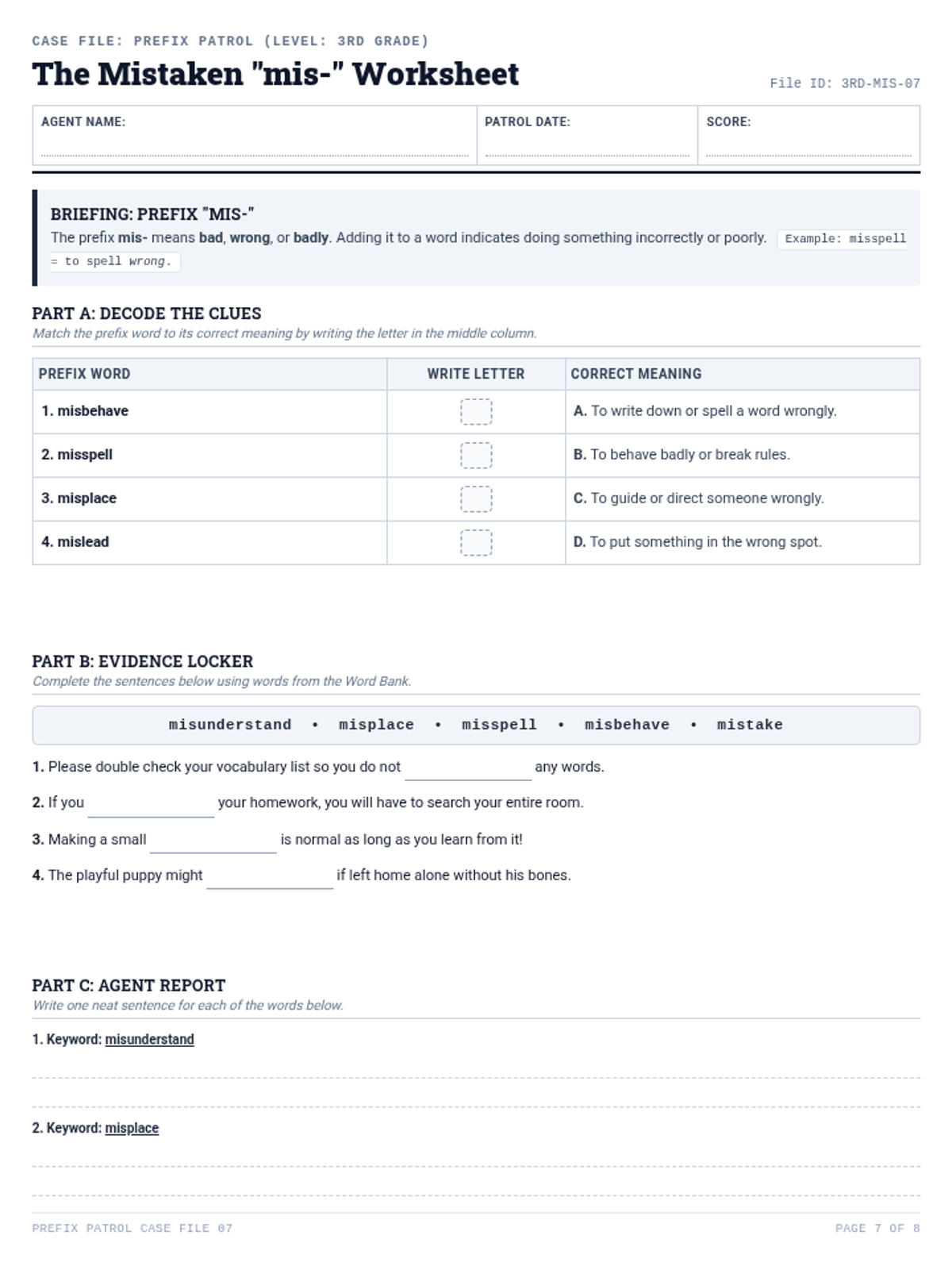
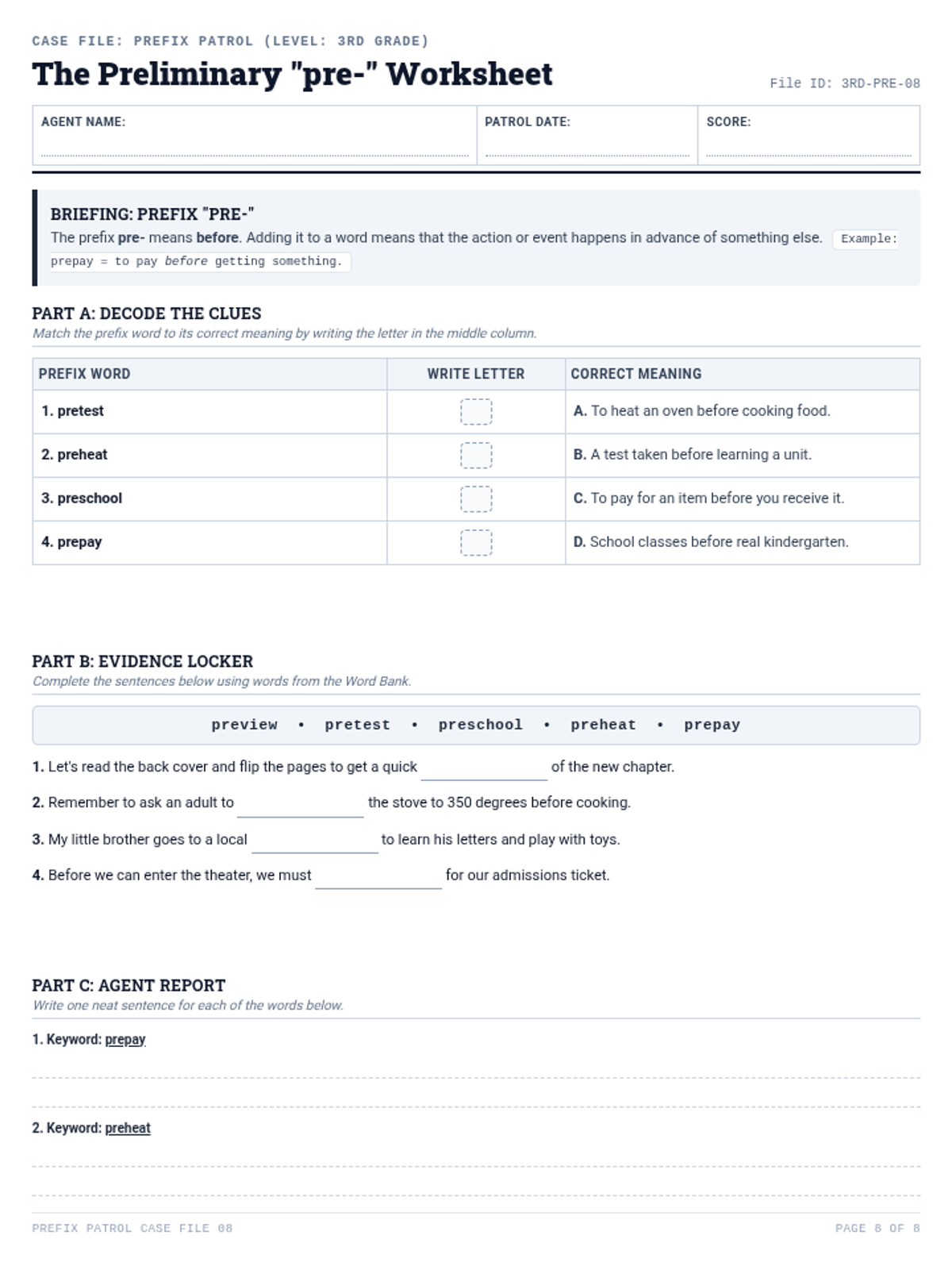
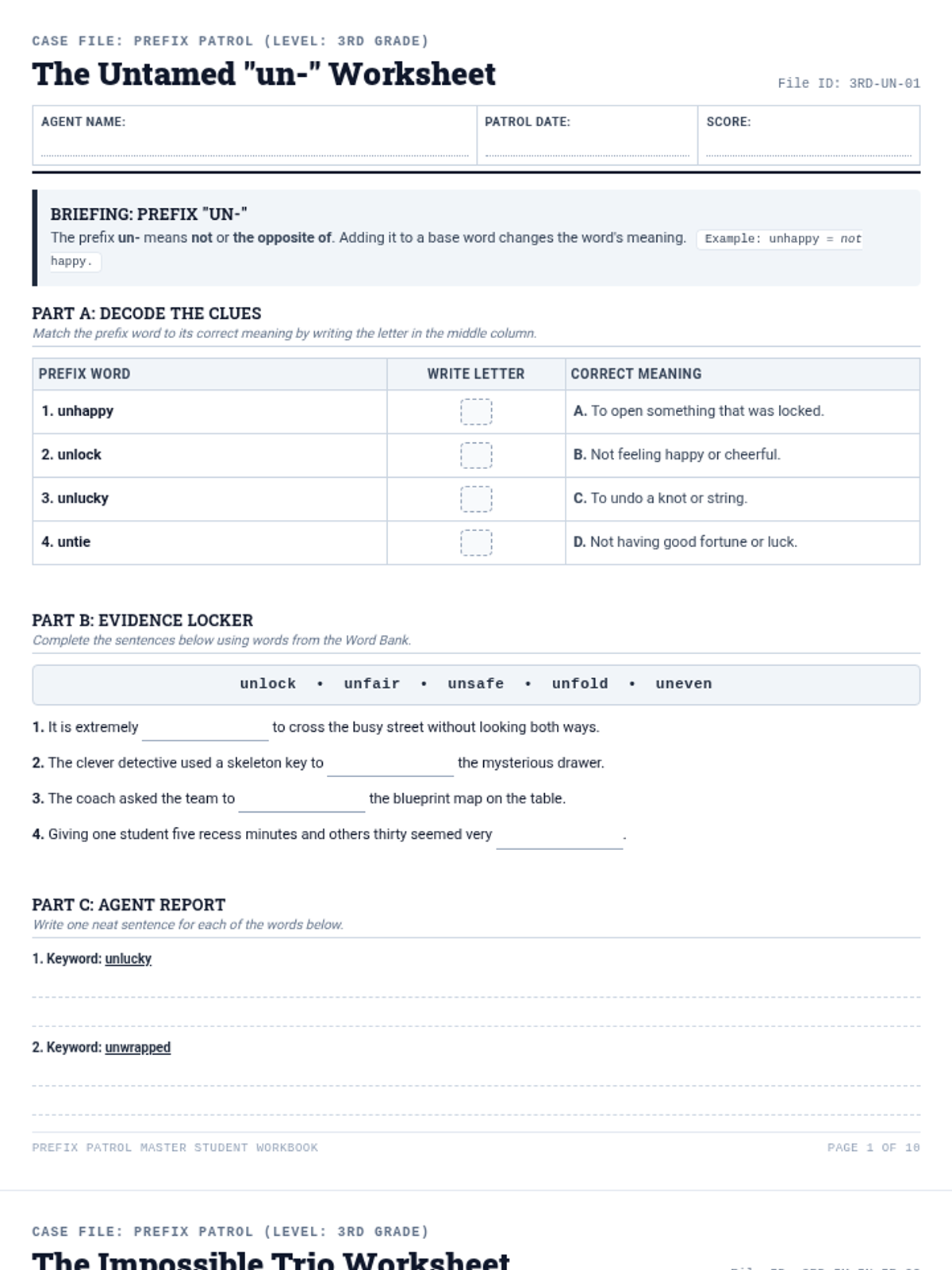
A comprehensive 3rd-grade grammar unit covering essential prefixes: un-, im-/in-/ir-, dis-, non-, re-, mis-, and pre-. Through an engaging 'Prefix Patrol' detective theme, students learn to identify, decode, and use these word parts in worksheets and cumulative review keys.
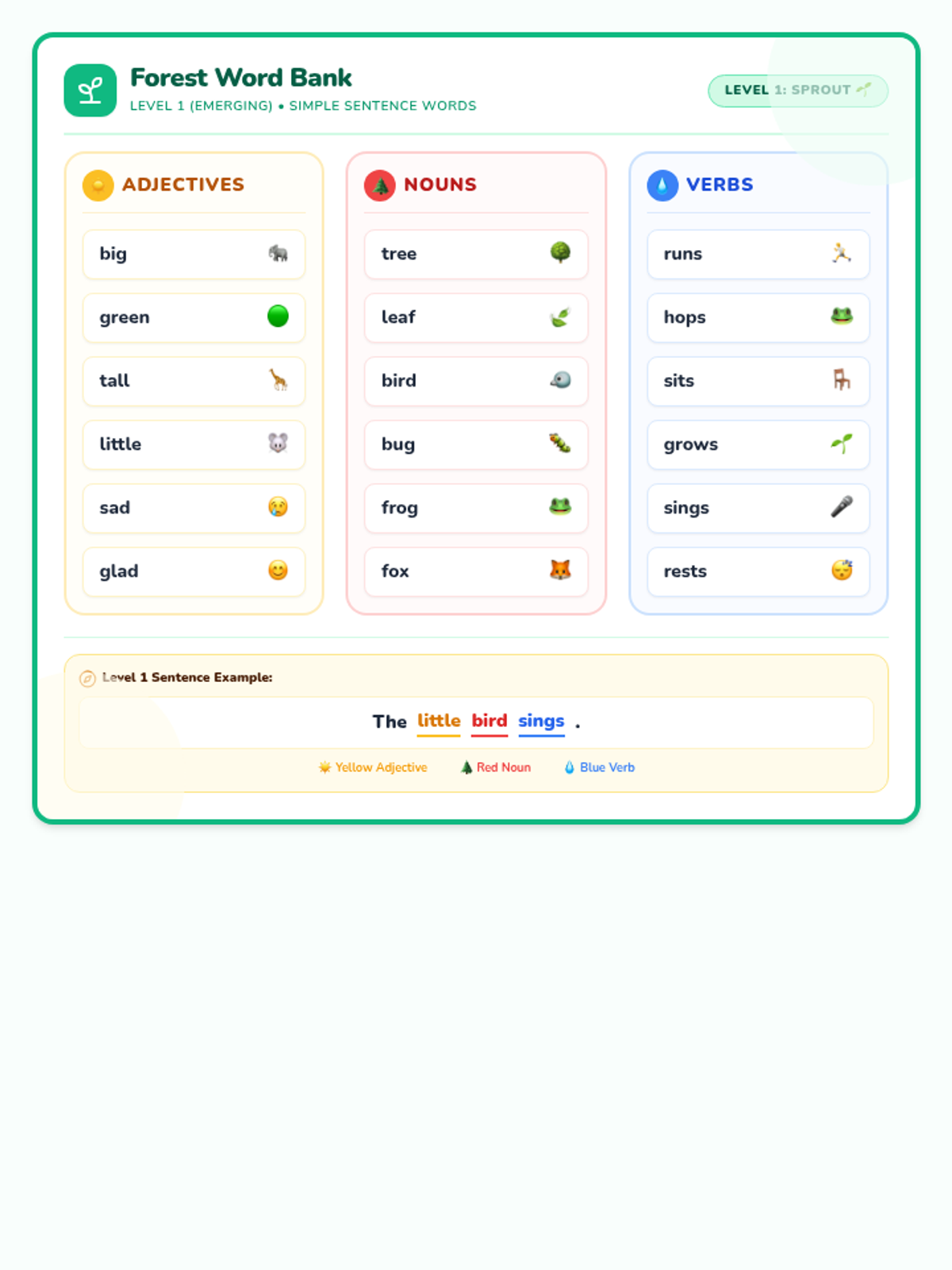
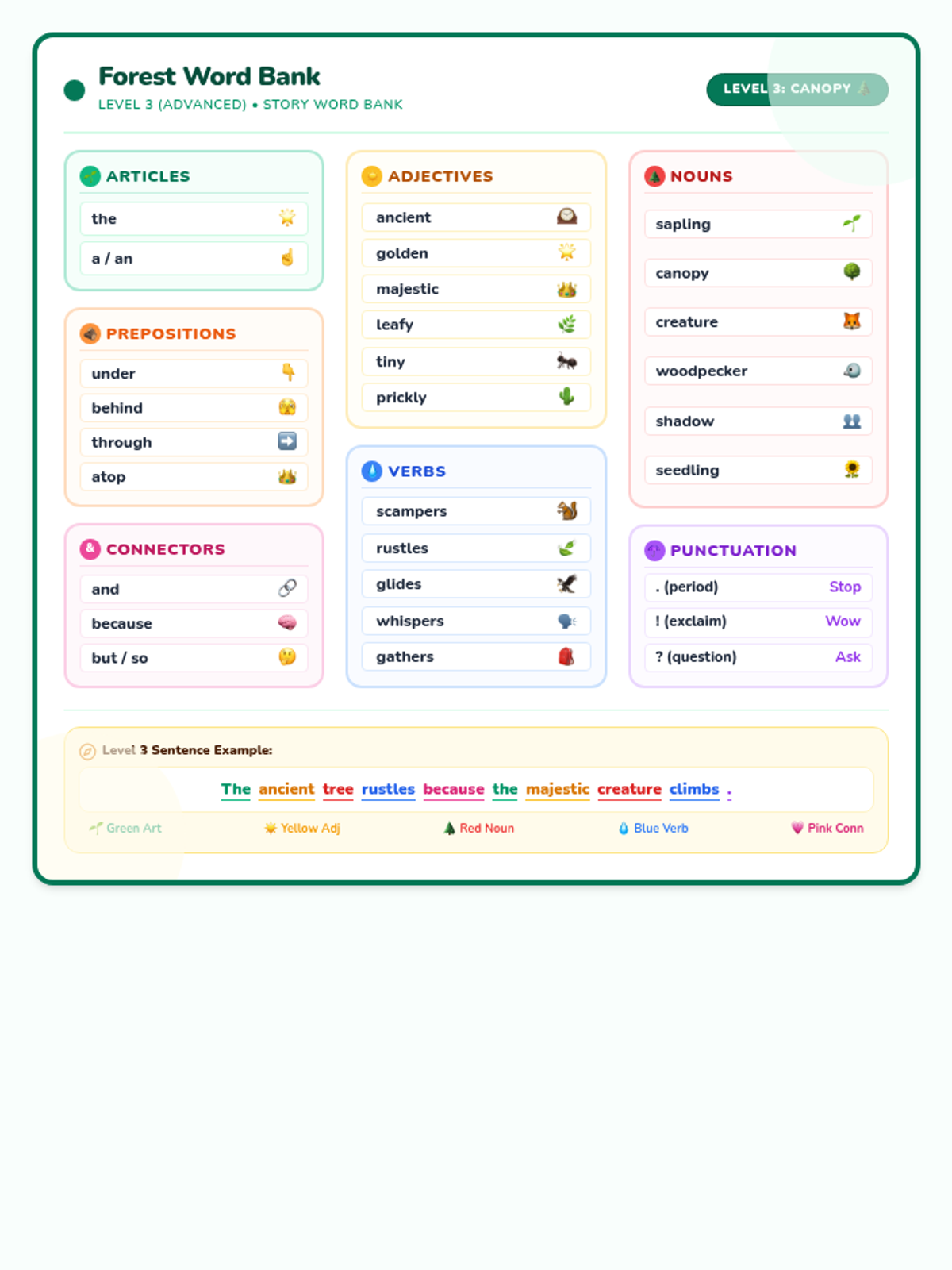
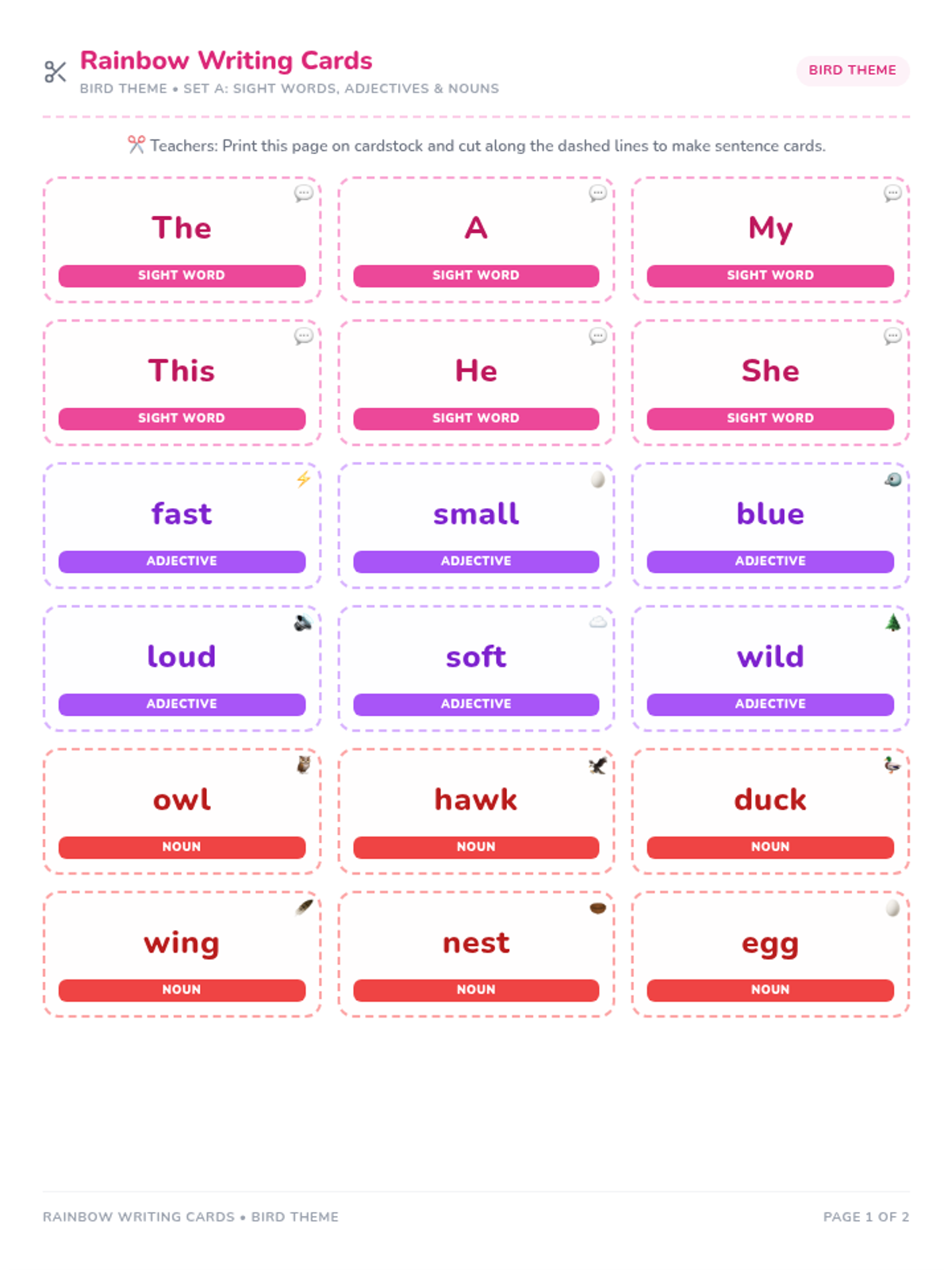
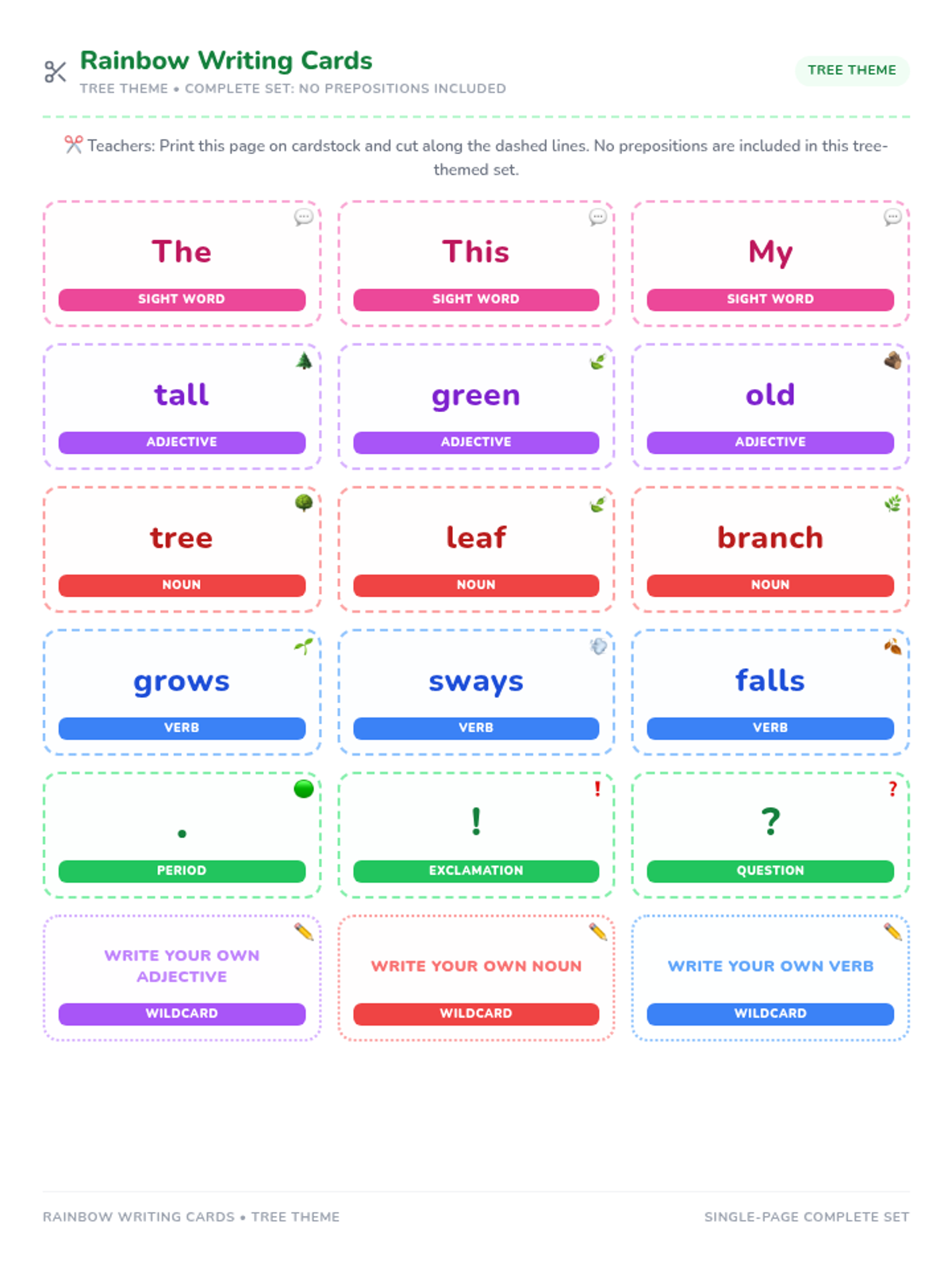
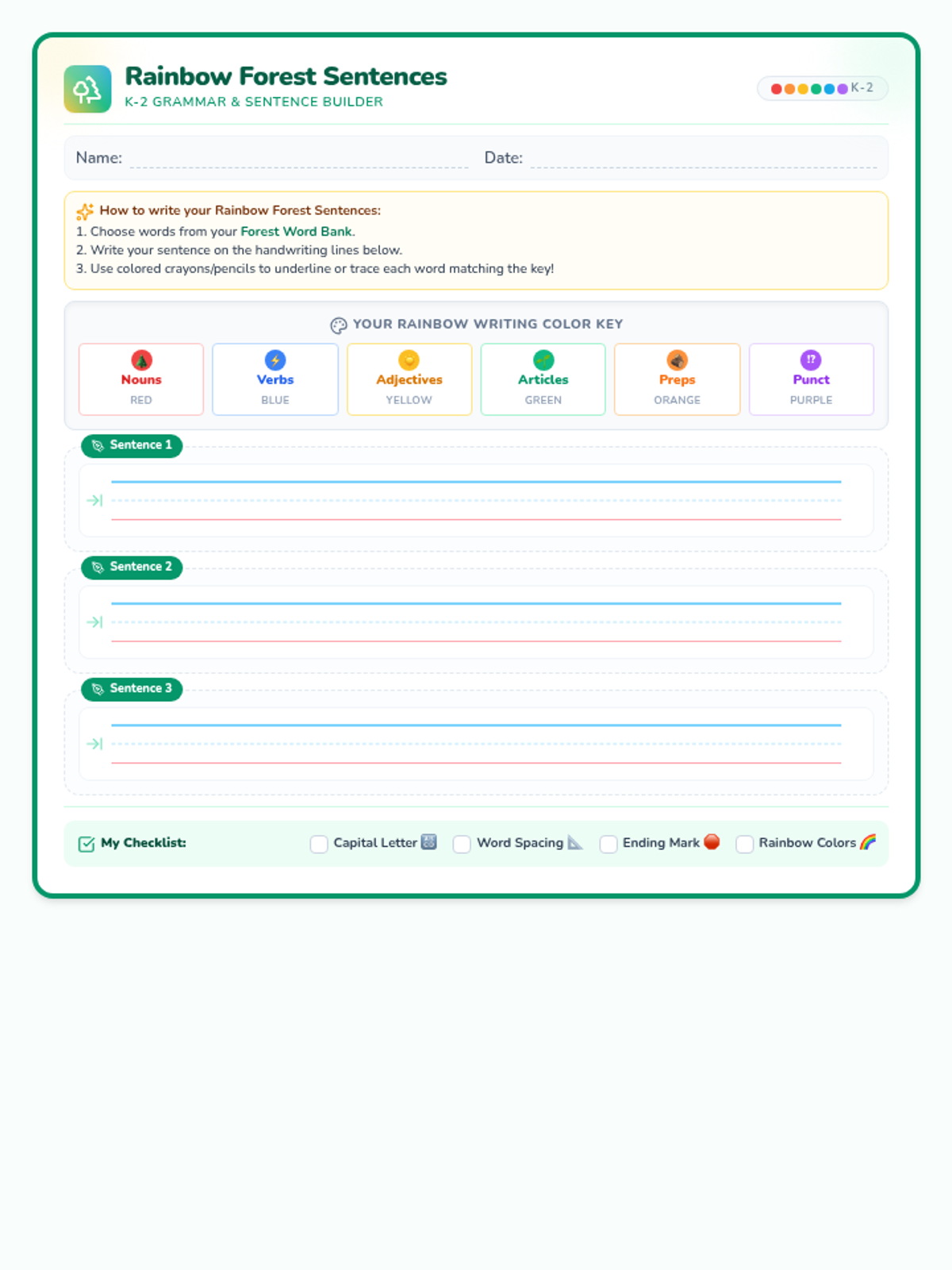
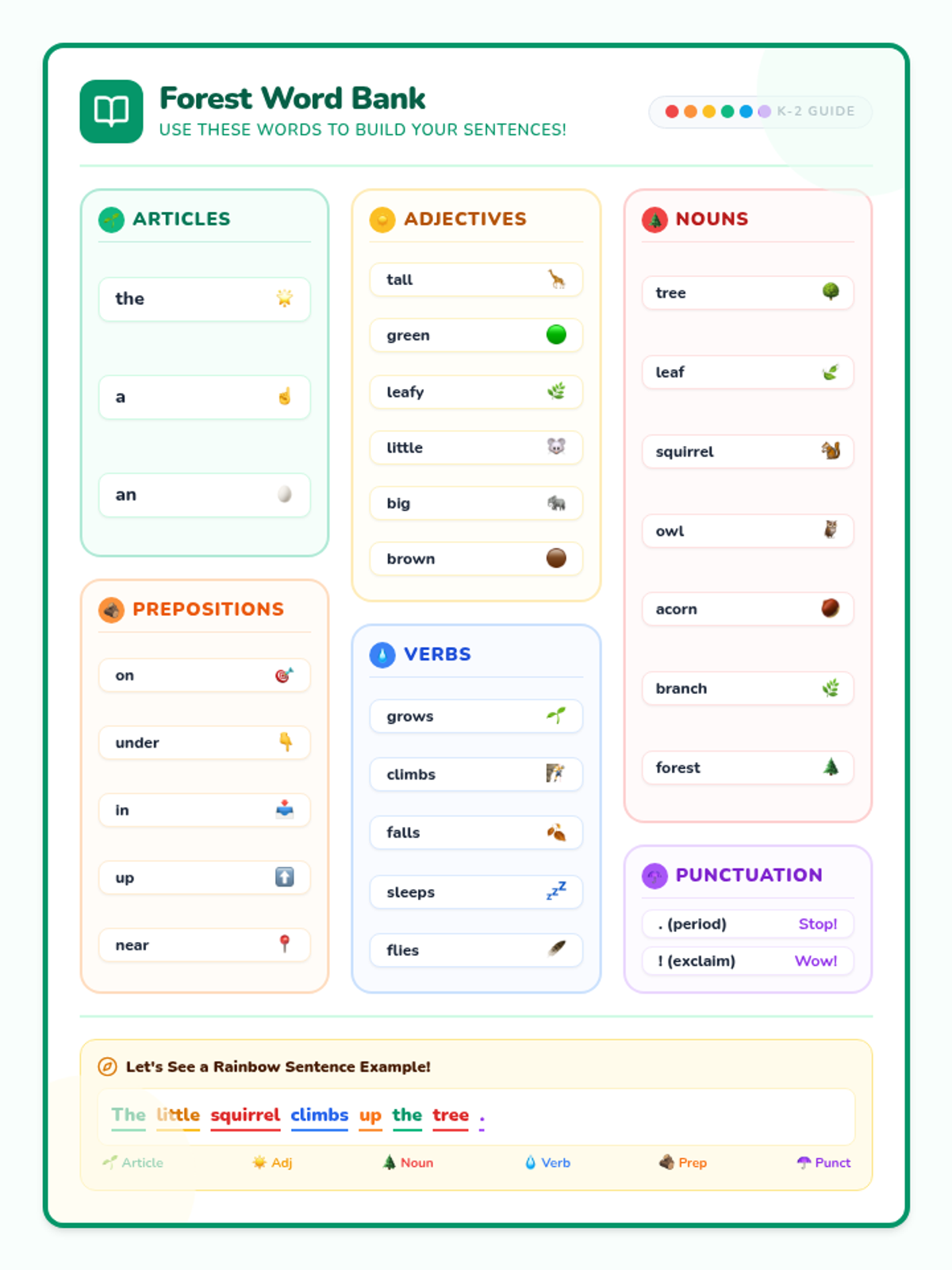
A sentence-building lesson for K-2 students. Using a tree-themed word bank, students write sentences on primary handwriting lines and color-code parts of speech to build foundational grammar and reading skills.
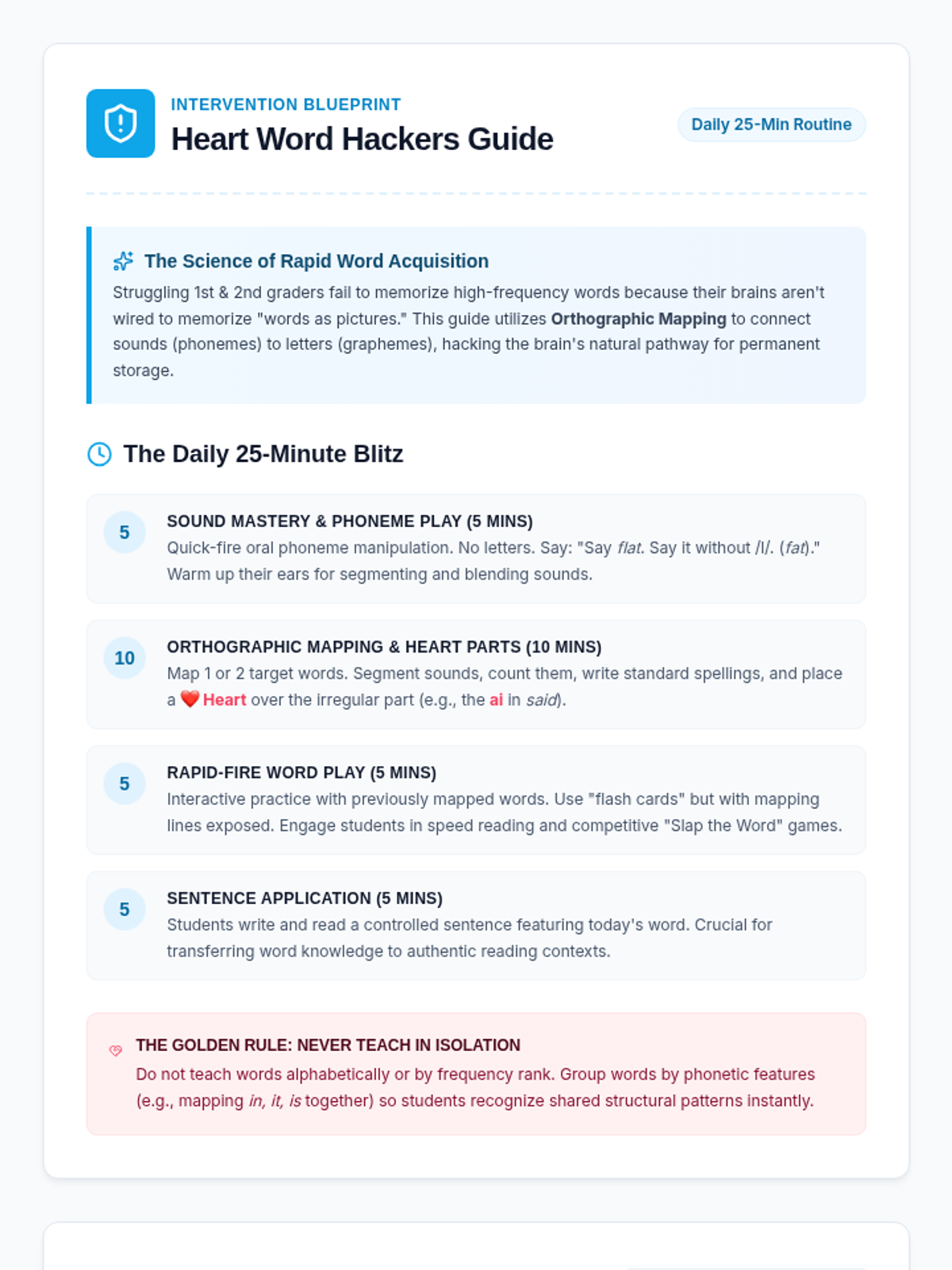
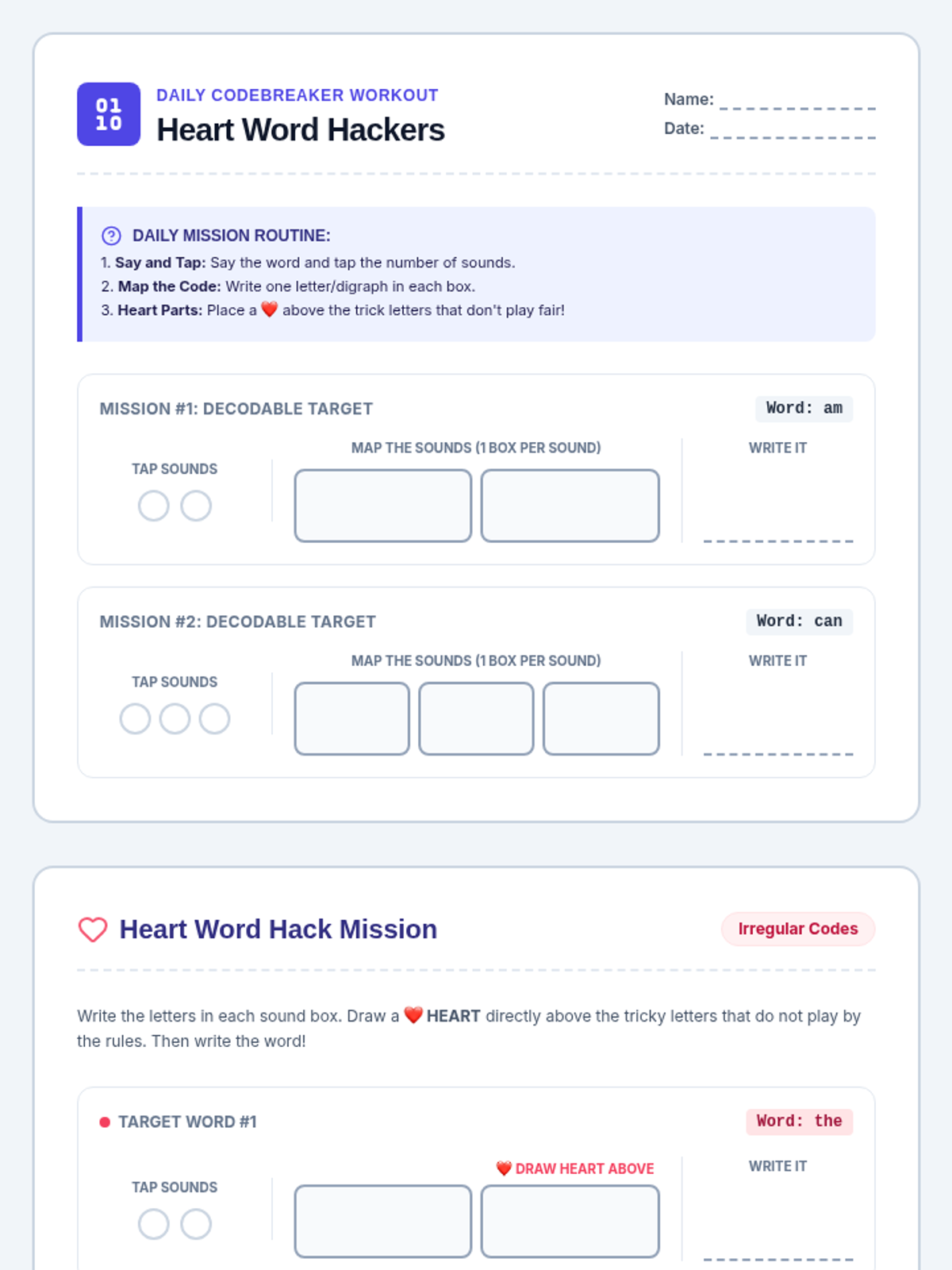
A high-intensity, evidence-based intervention lesson for rapidly teaching high-frequency words using orthographic mapping and phonetic grouping. Designed for daily 25-minute small group sessions with 1st and 2nd graders who have significant learning gaps.
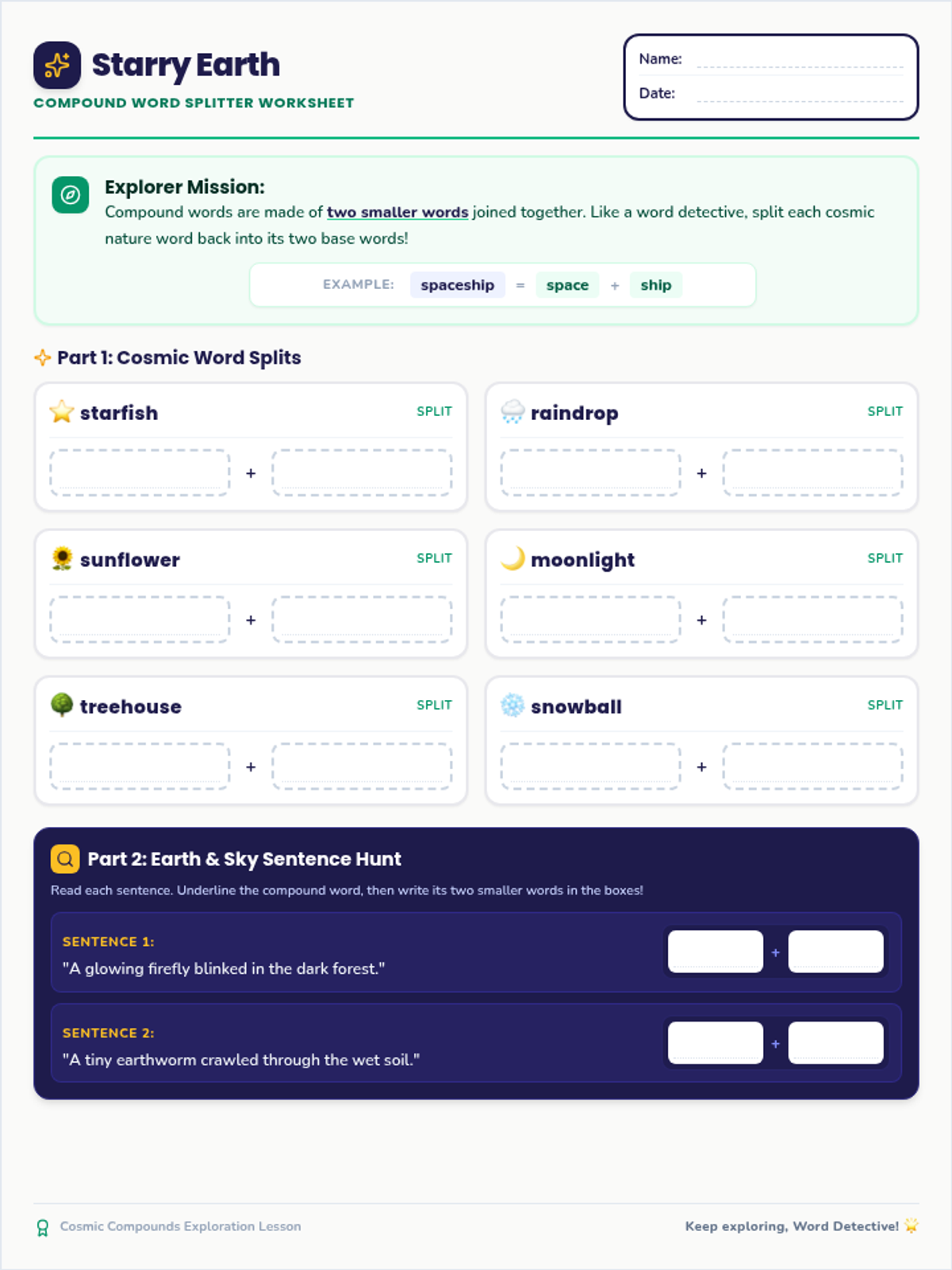
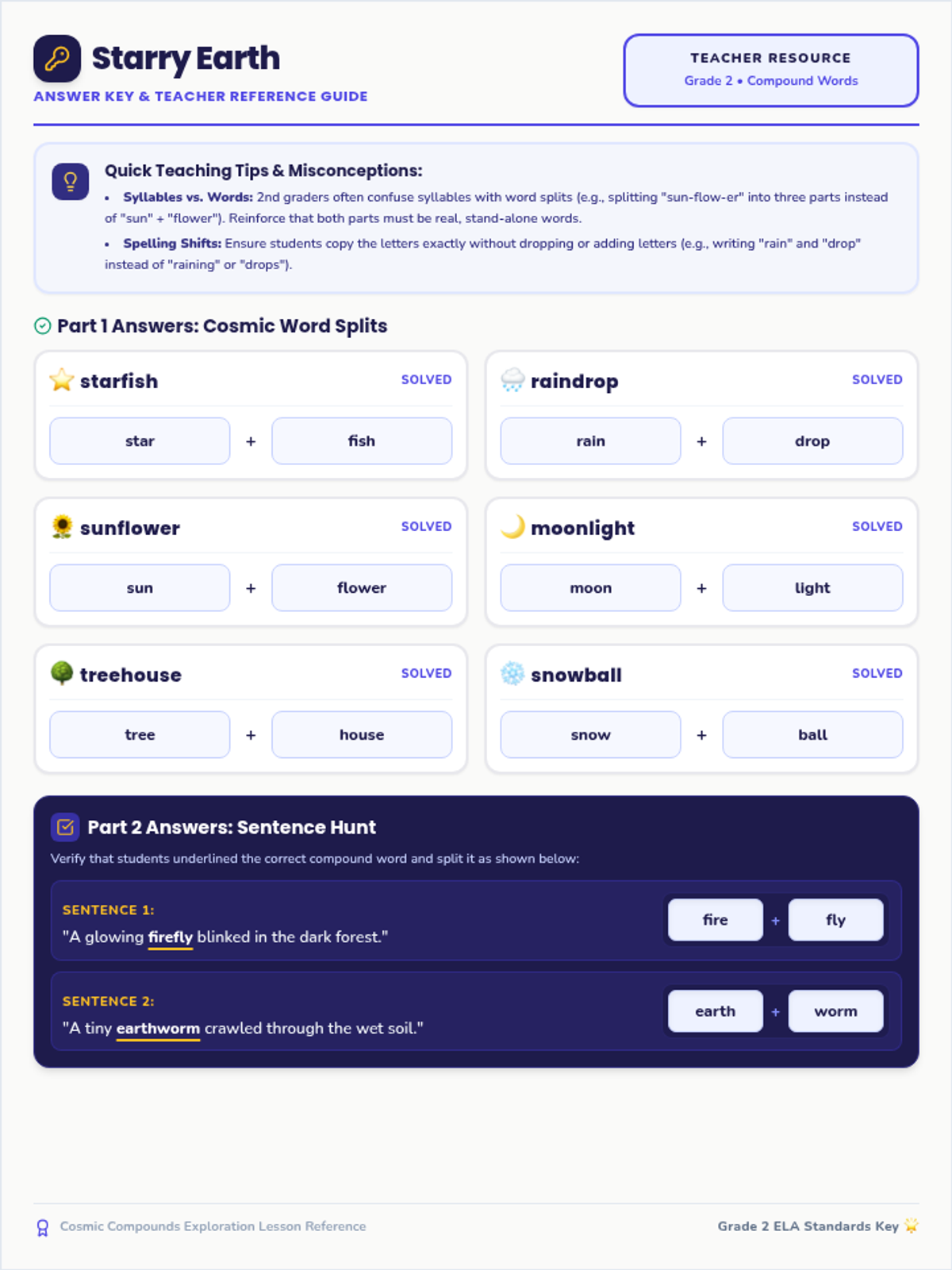
A second-grade English Language Arts lesson exploring compound words through a combined theme of space and nature. Students practice breaking compound words into their two constituent words.
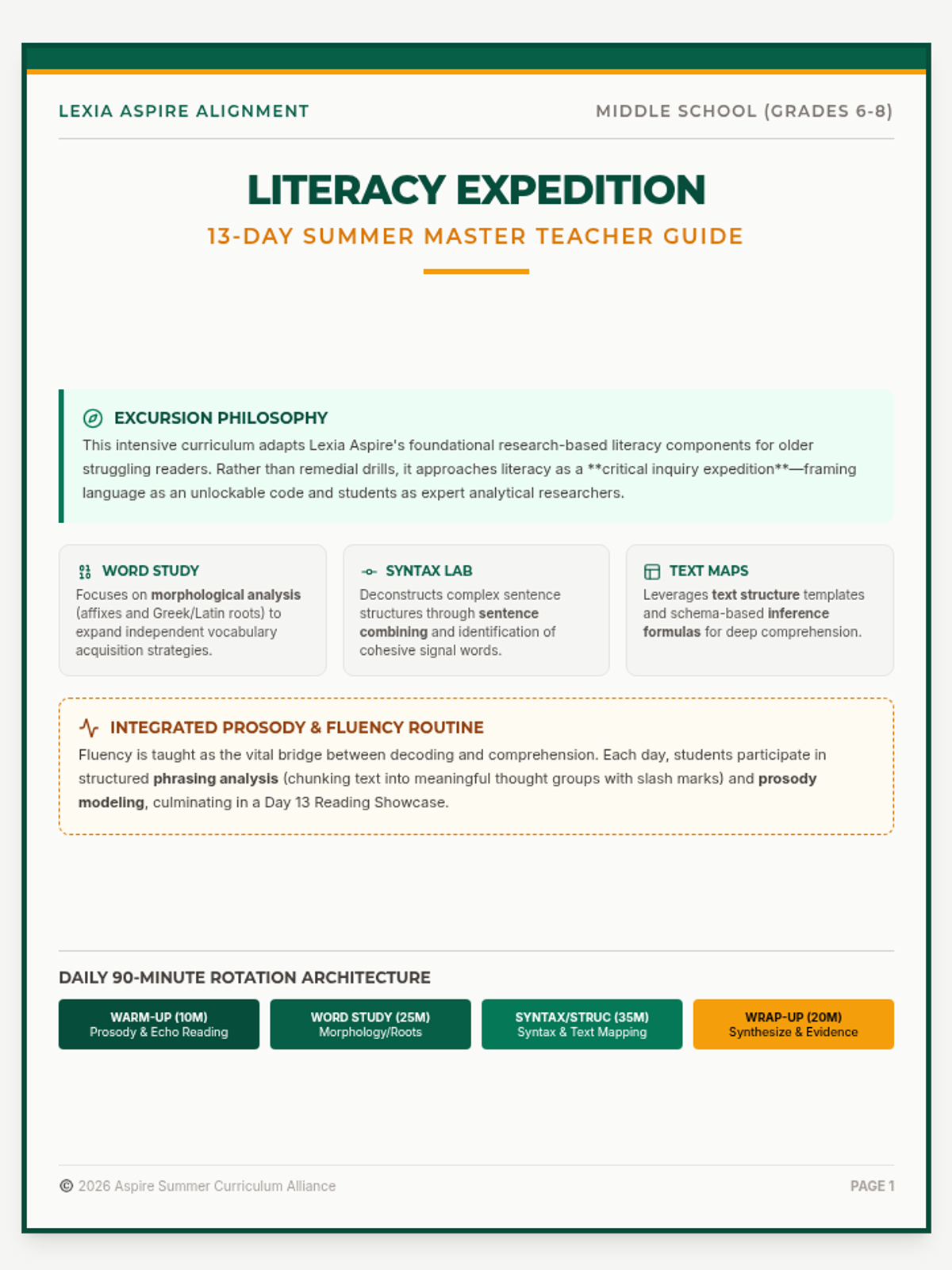
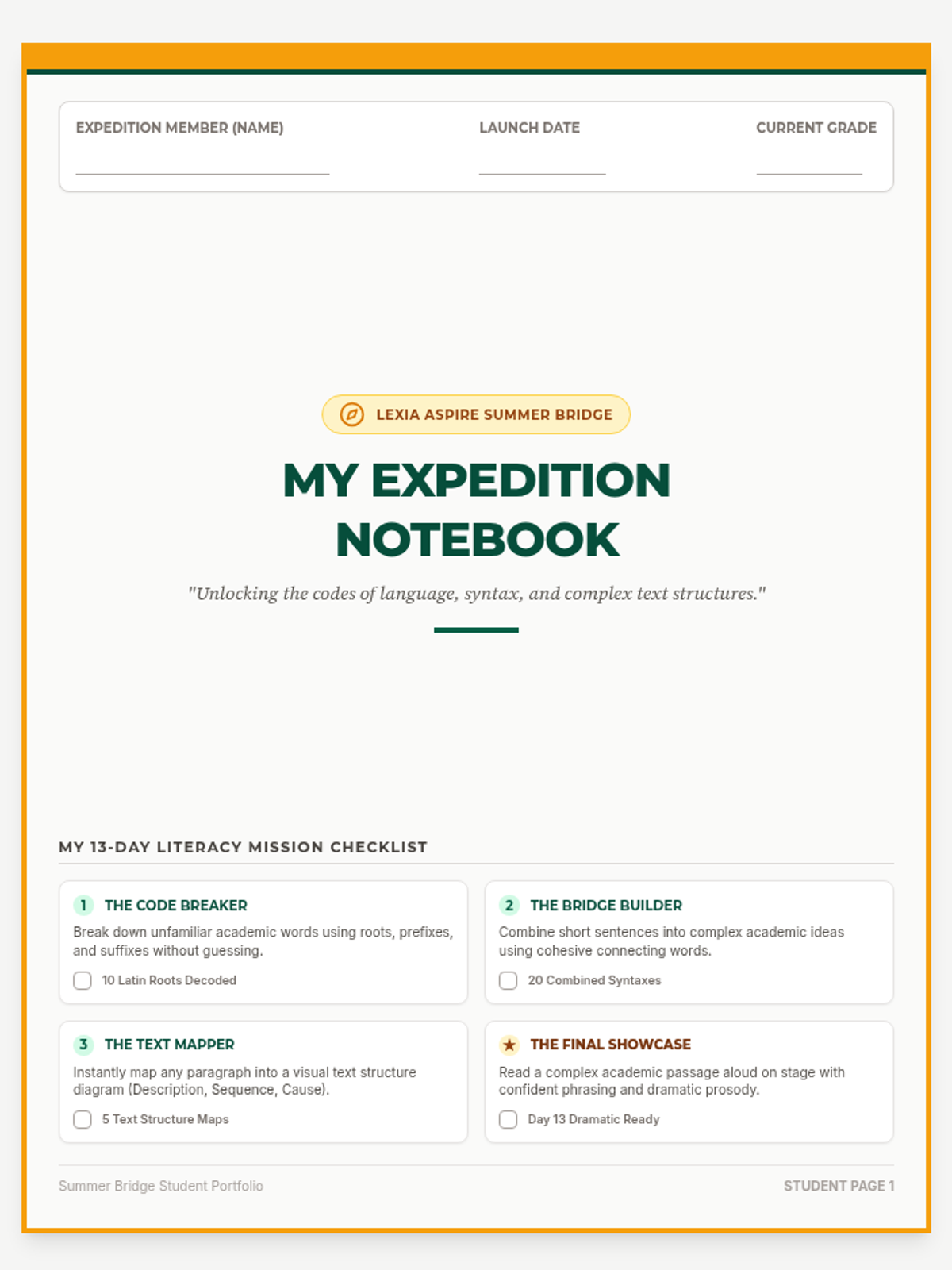
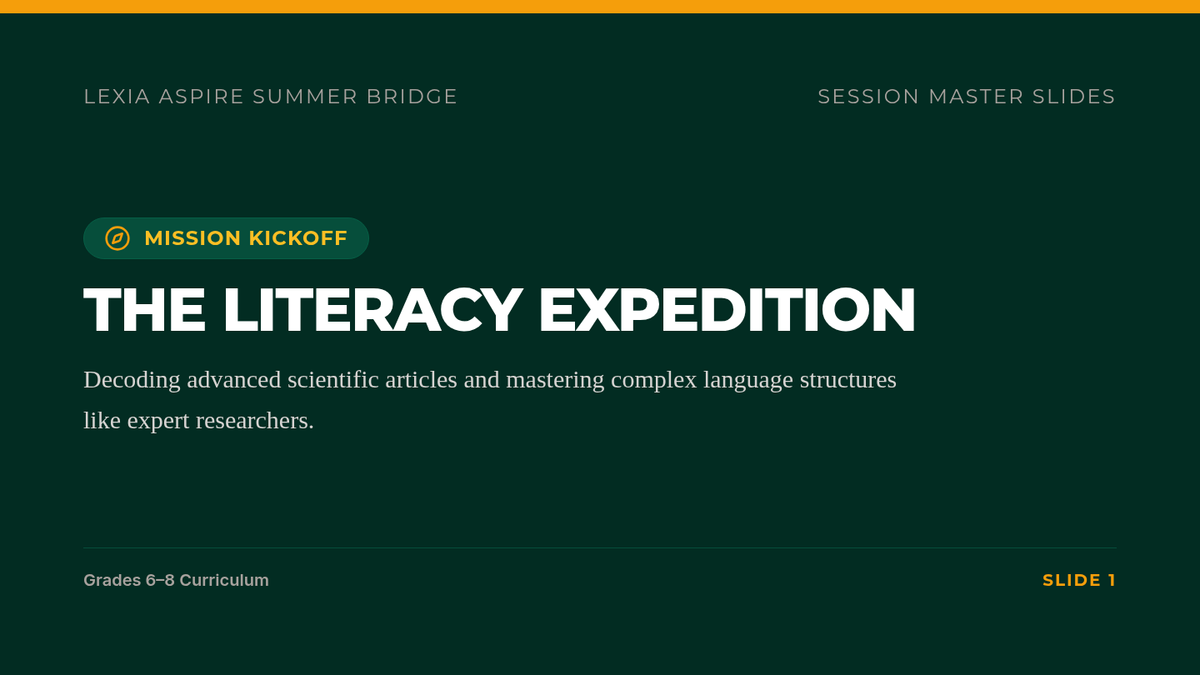
A comprehensive 13-day summer school curriculum framework for 6th-8th graders aligned with Lexia Aspire literacy principles. Focuses on word study (morphology), syntax, reading fluency (prosody and phrasing), and deep comprehension (text structure and text evidence-based inferences).
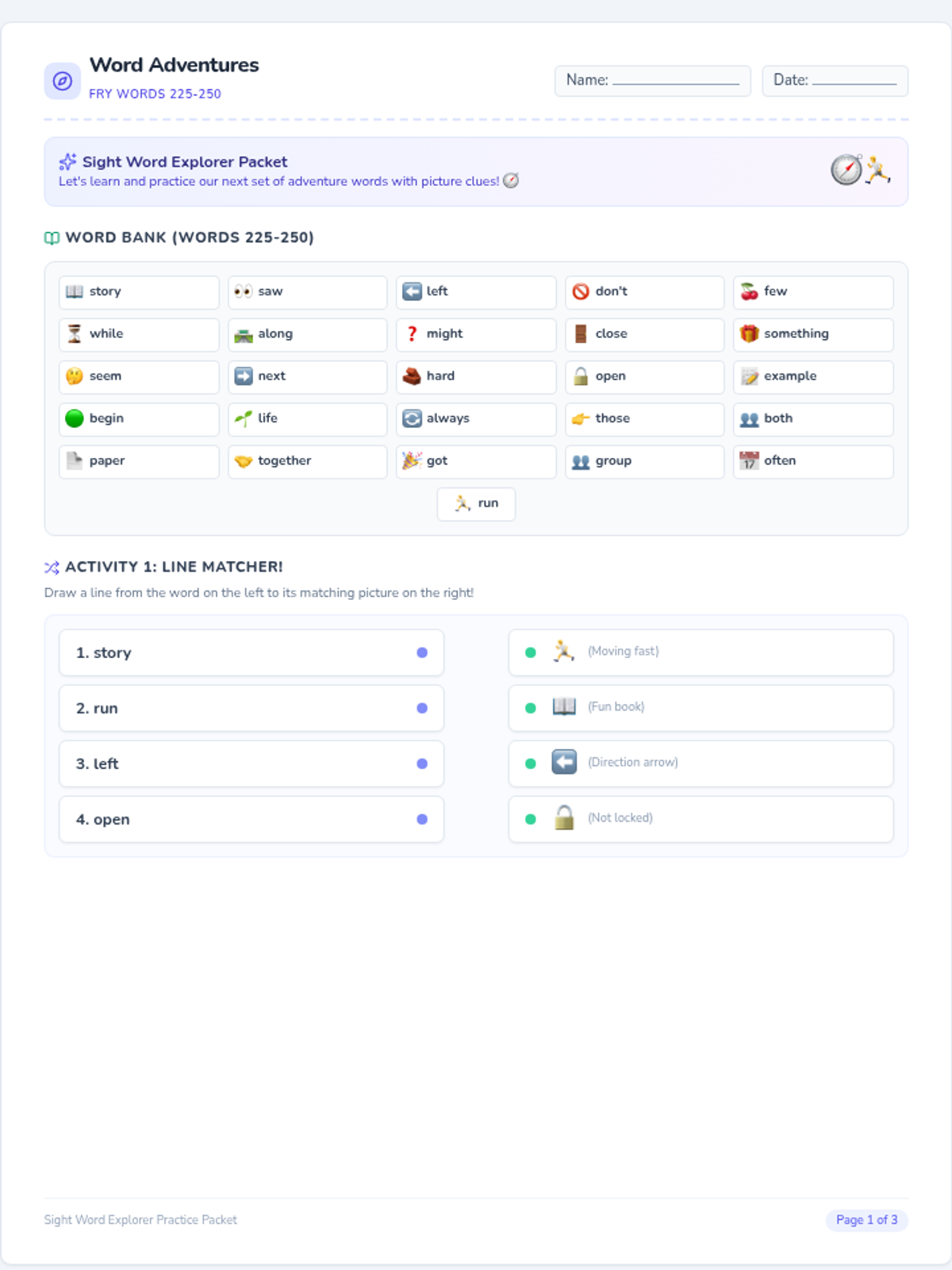
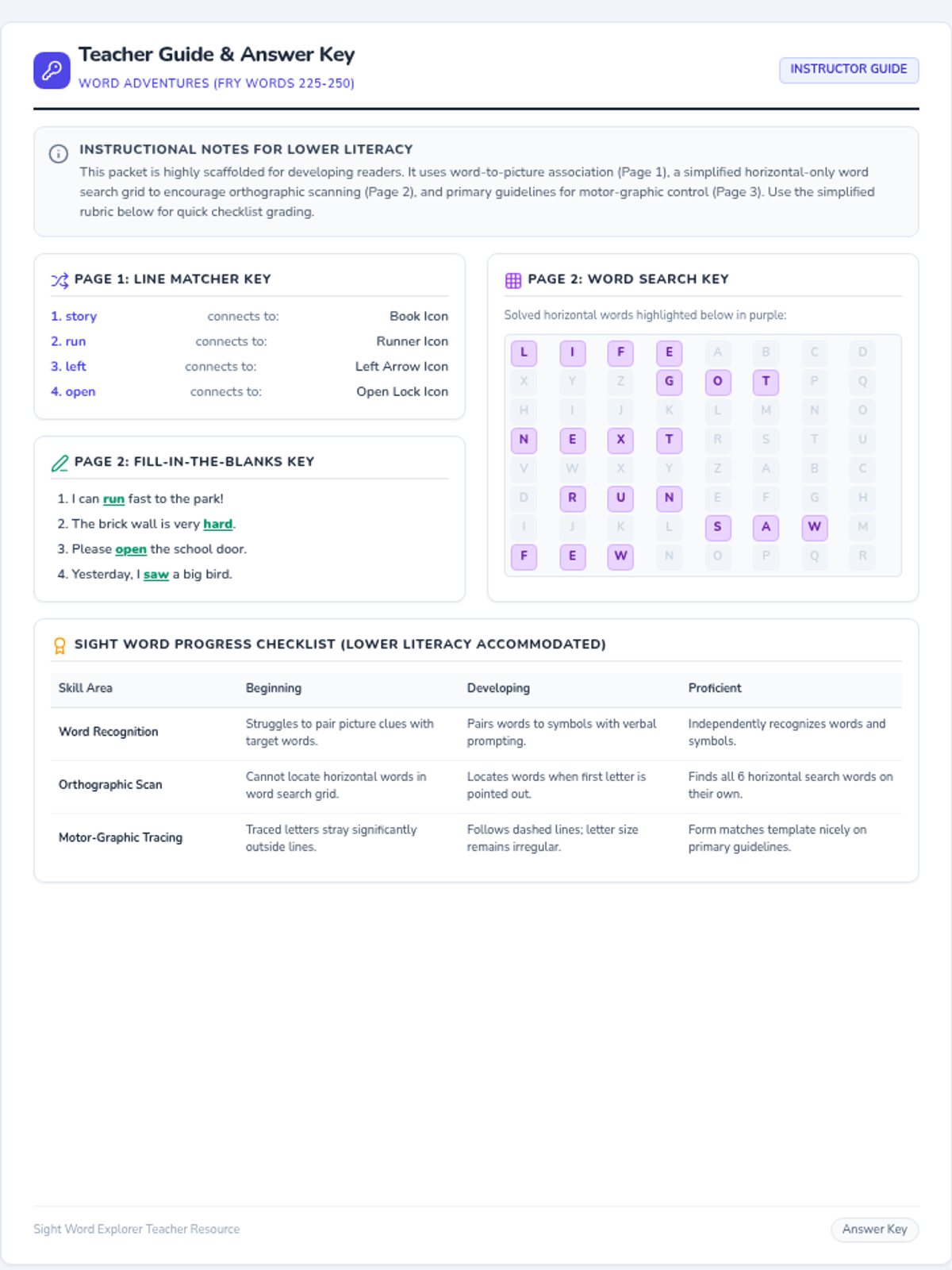
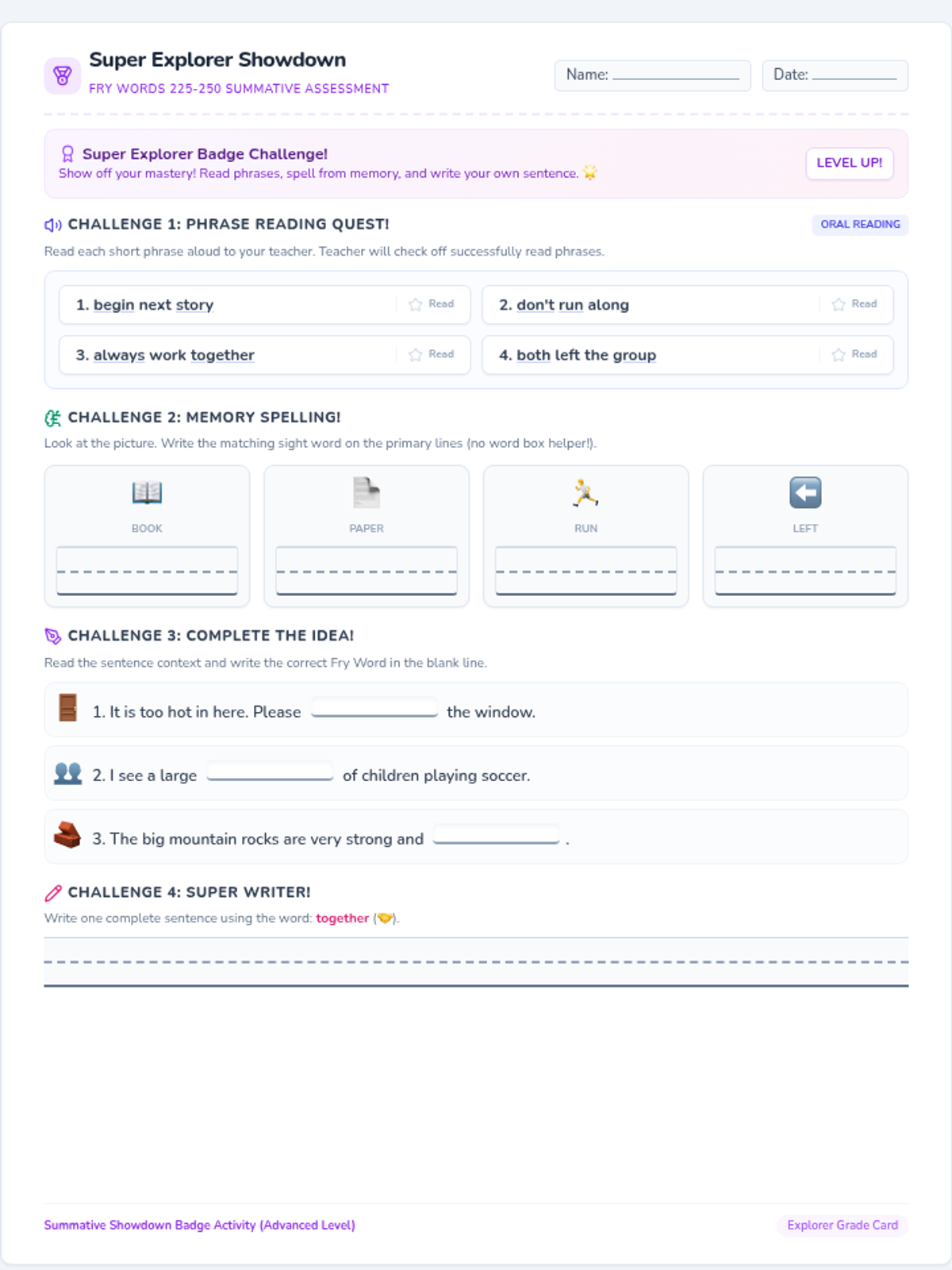
A highly visual and scaffolded sight word lesson focusing on Fry Words 225-250. Includes a multi-page student practice packet with picture clues and a complete teacher answer key and assessment guide.
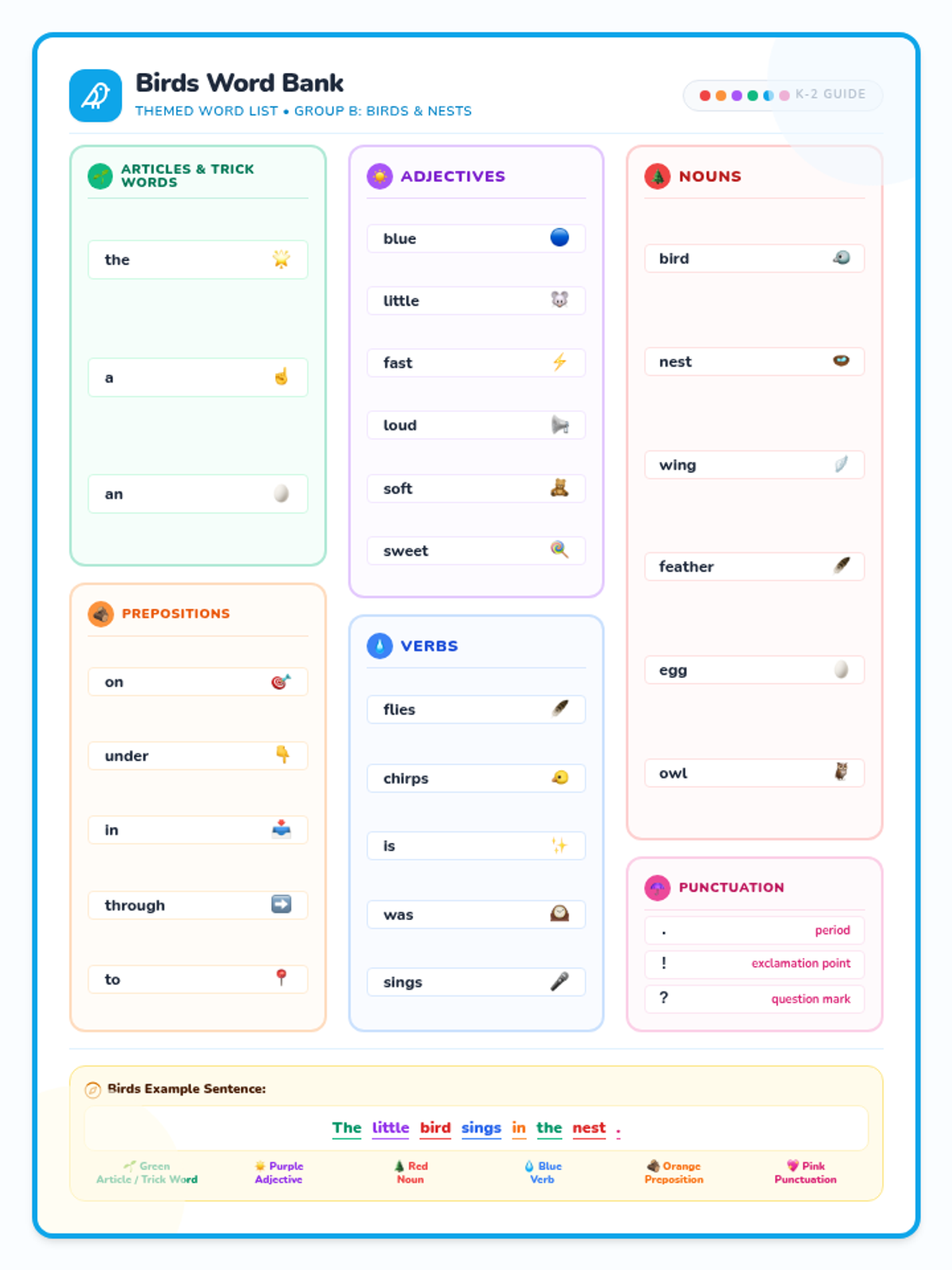
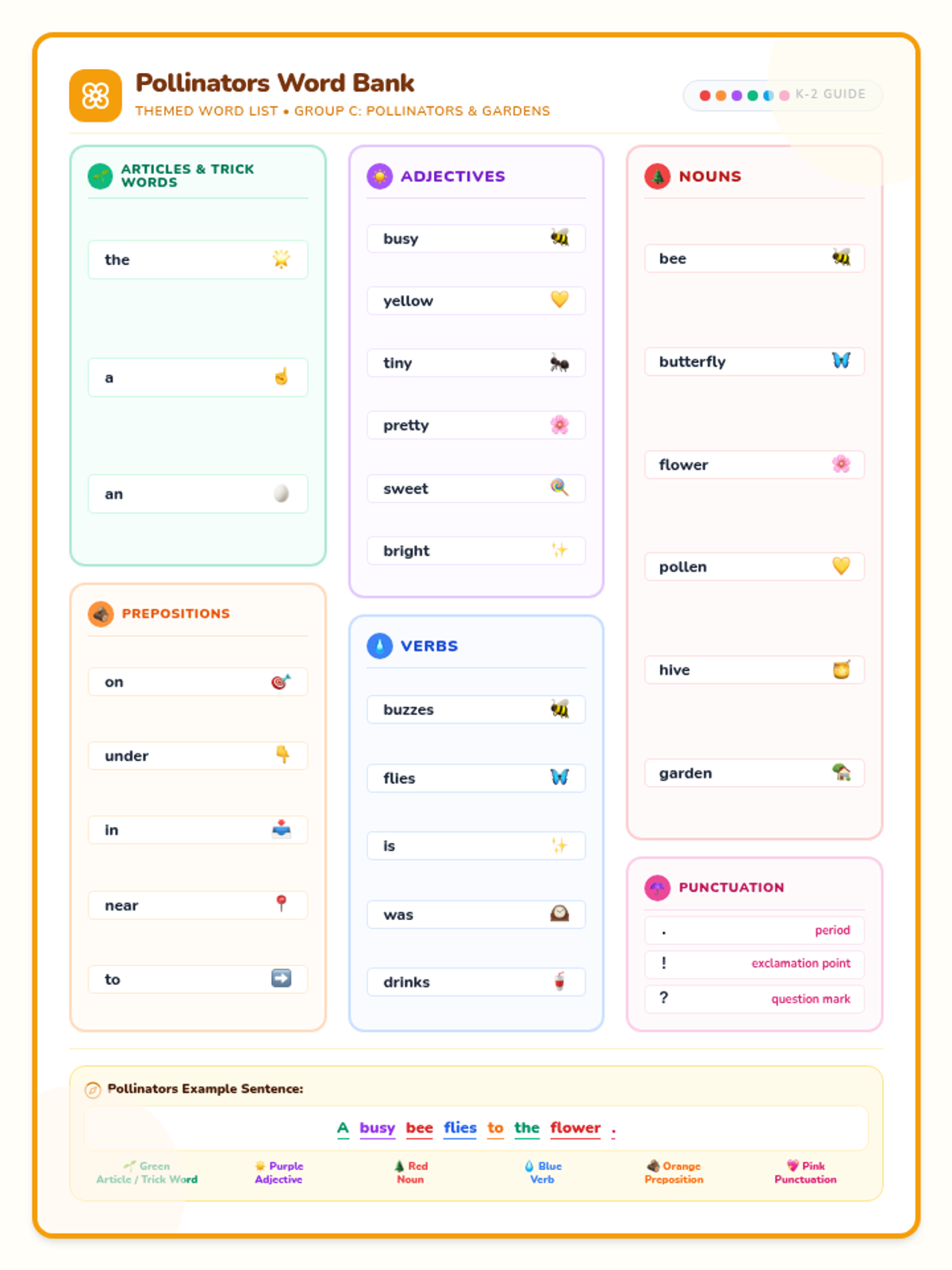
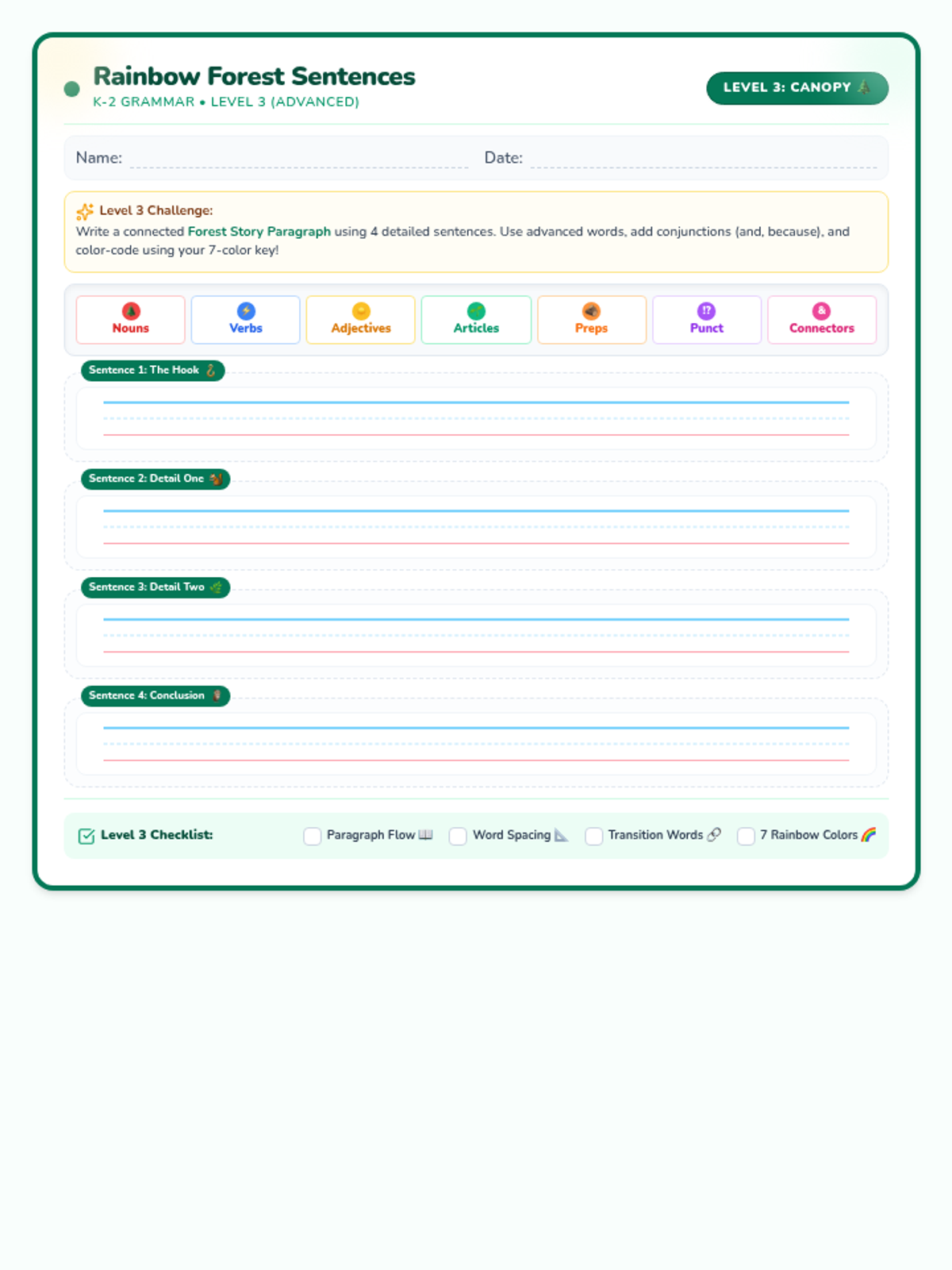
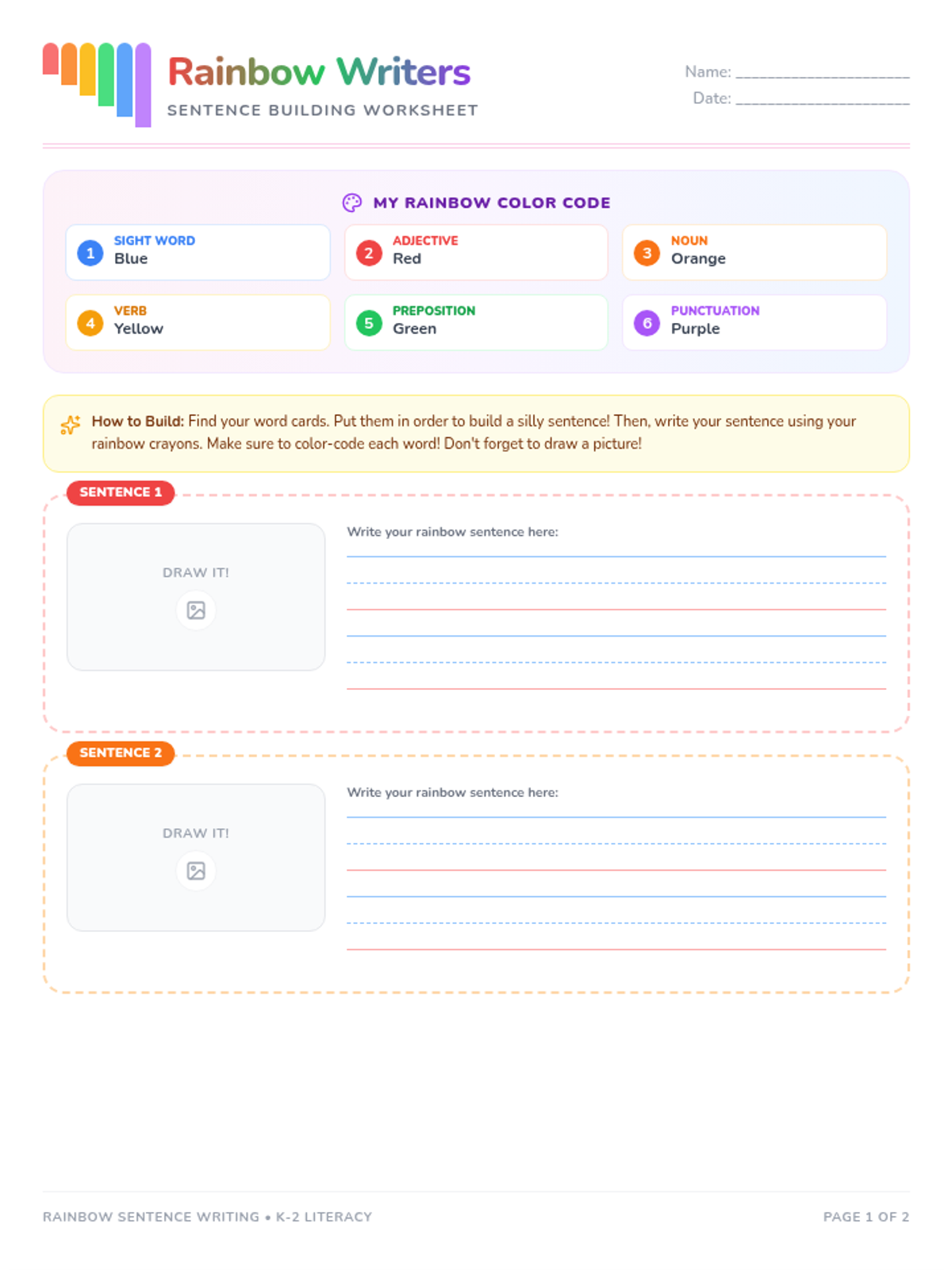
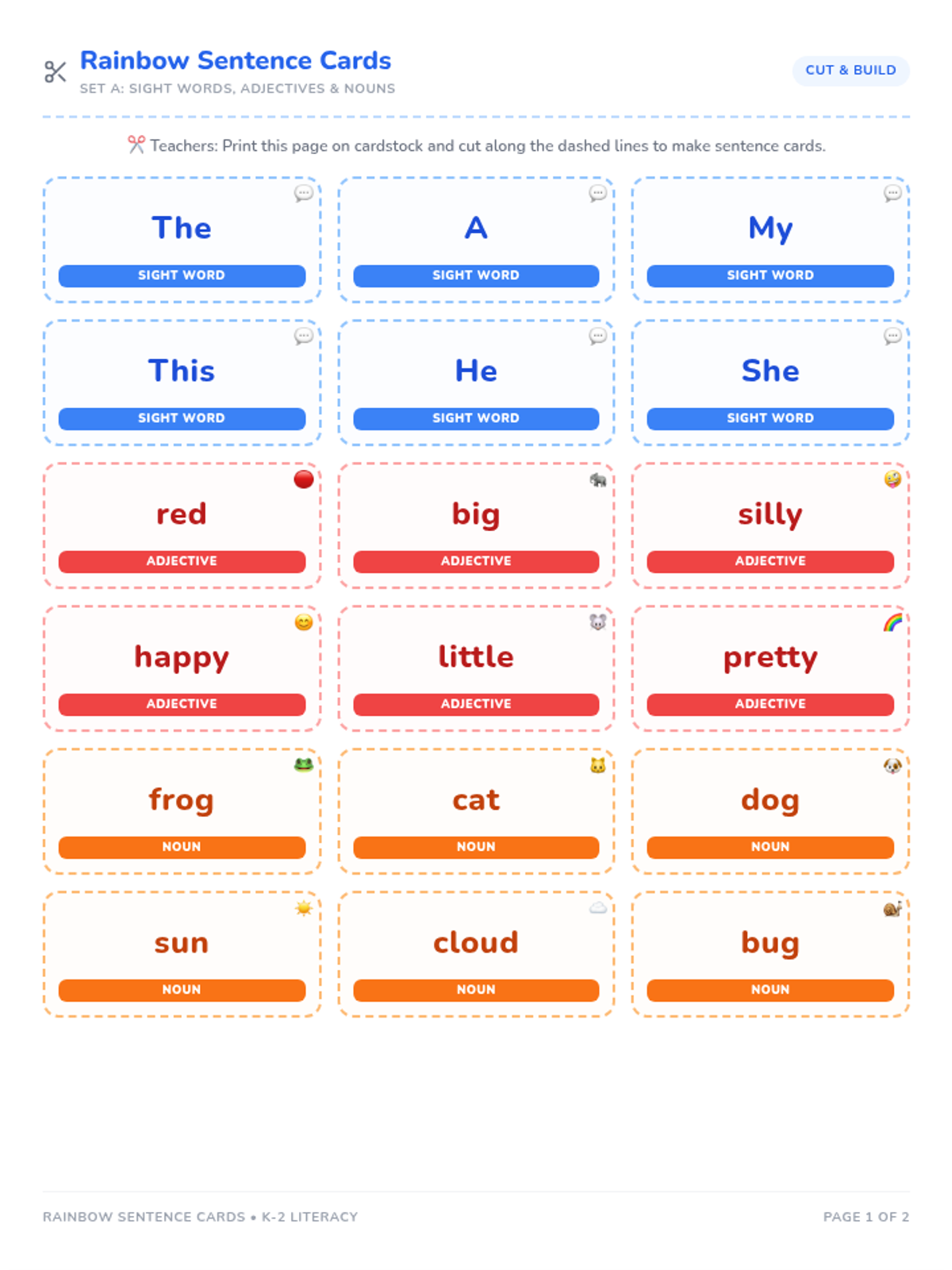
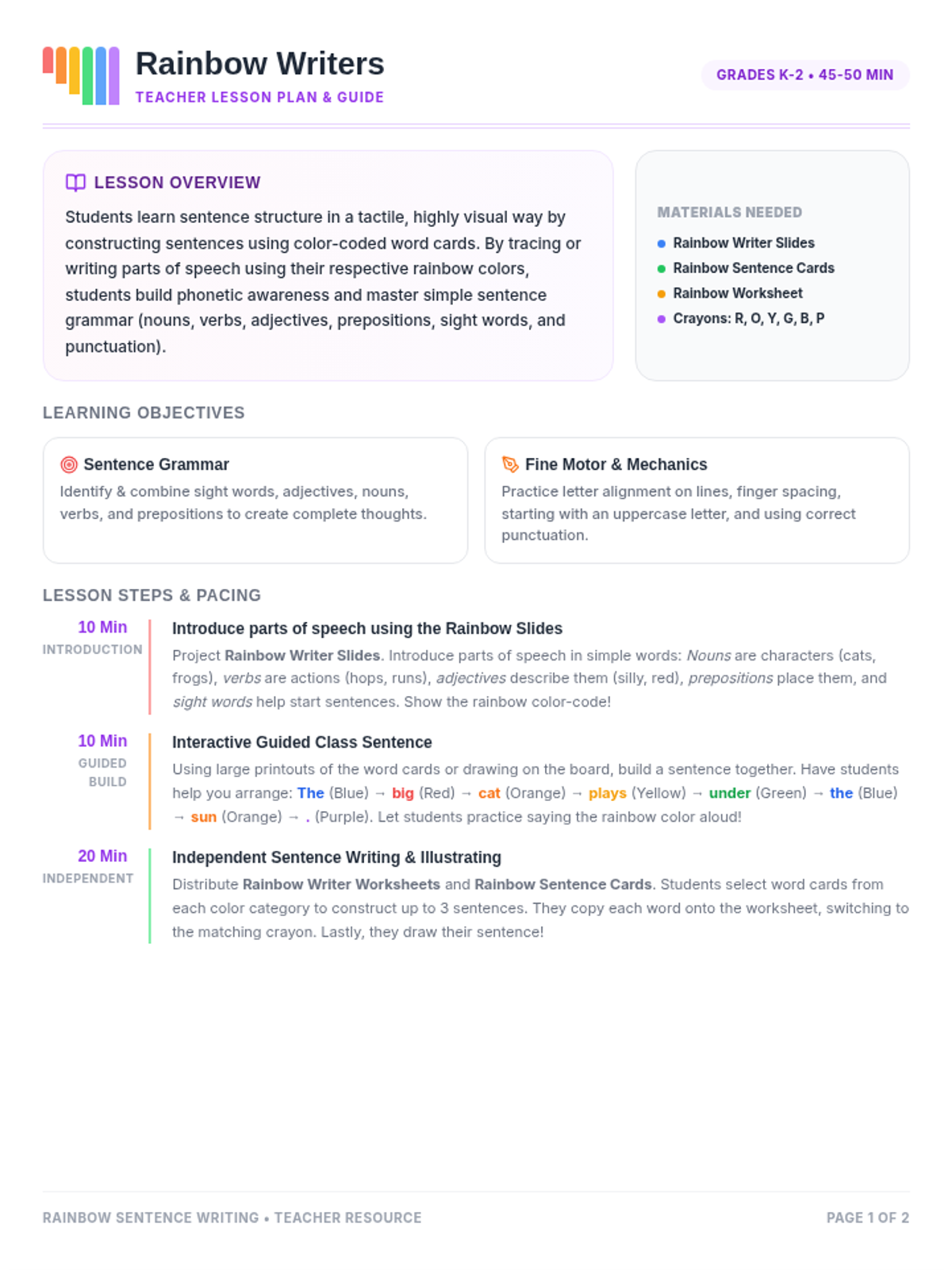
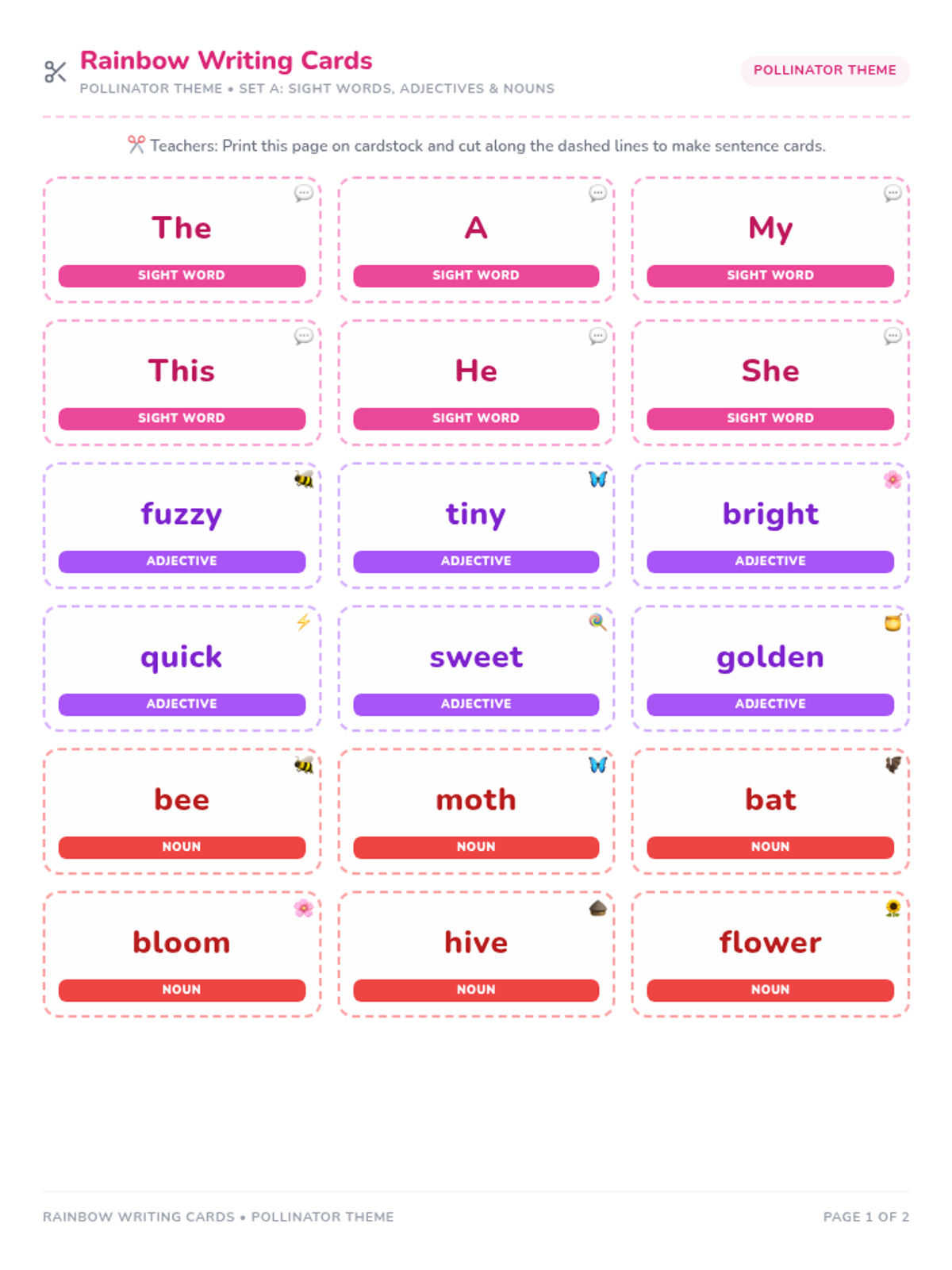
A colorful, K-2 sentence-building lesson where students use color-coded word cards to construct creative sentences. Students learn to identify and color-code nouns, verbs, adjectives, prepositions, sight words, and punctuation.
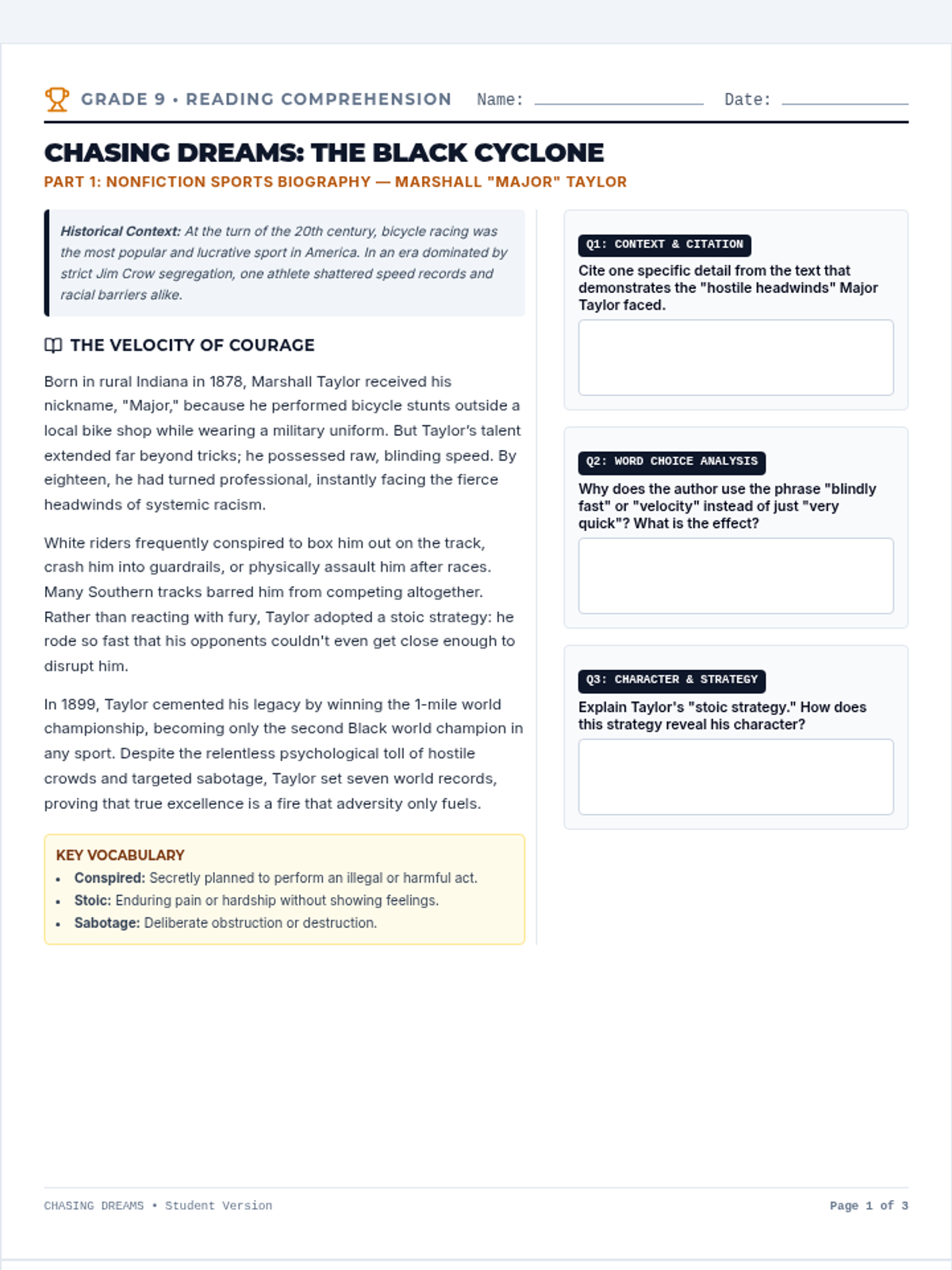
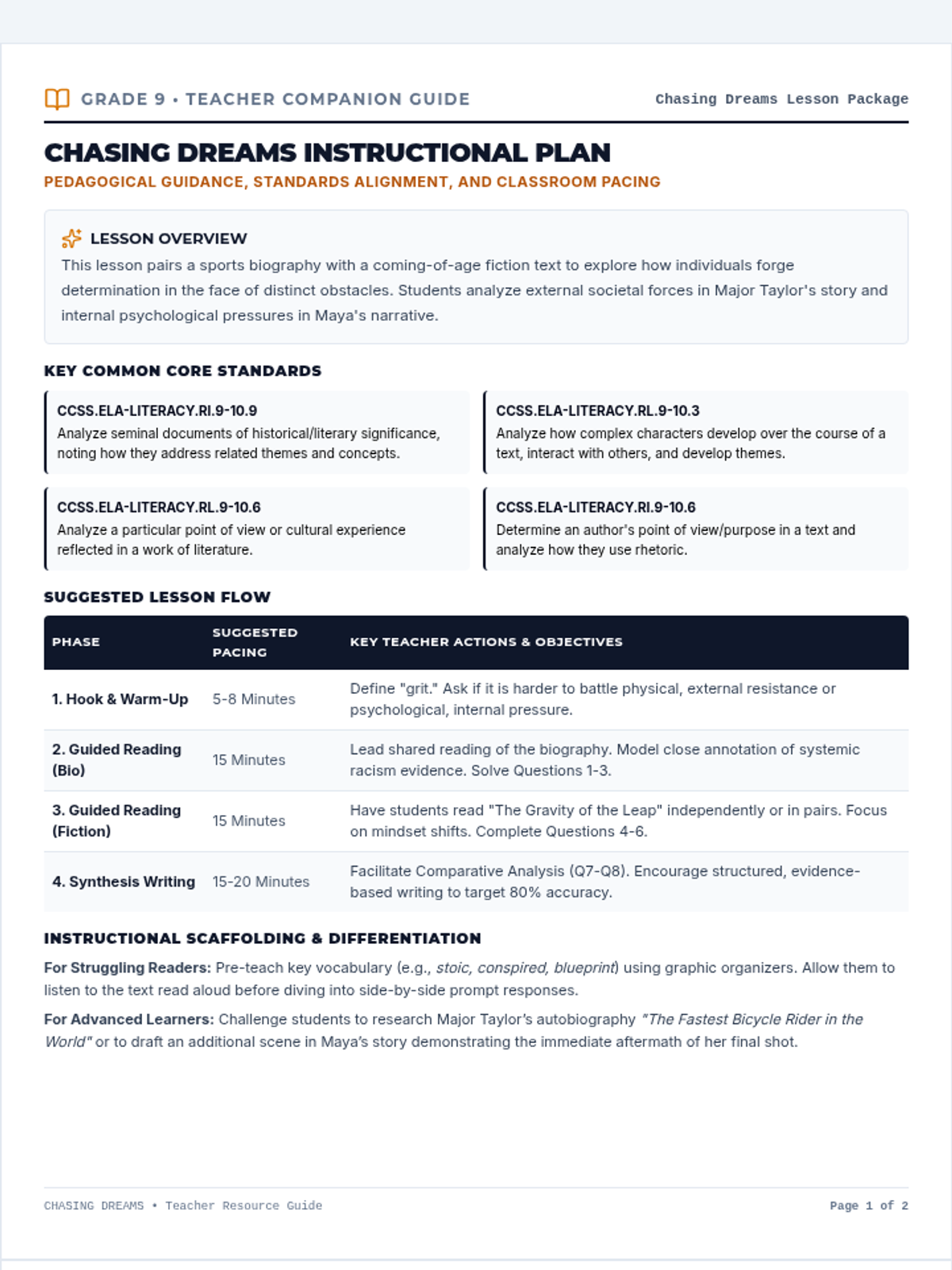
A 9th-grade reading comprehension and critical thinking lesson featuring a sports biography of Marshall 'Major' Taylor and a coming-of-age fiction passage. Students engage with side-by-side guided reading questions and complete a comparative analysis.
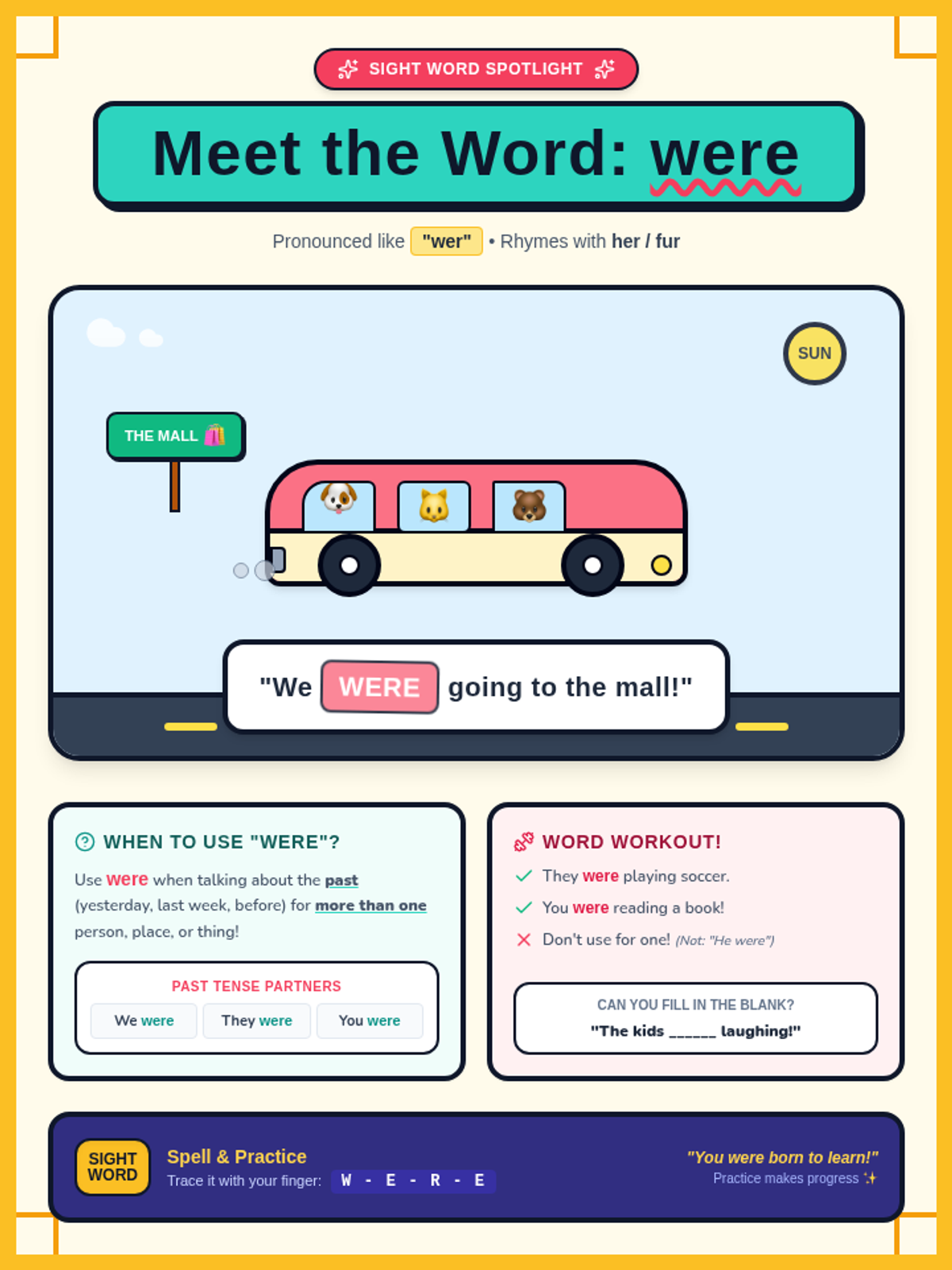
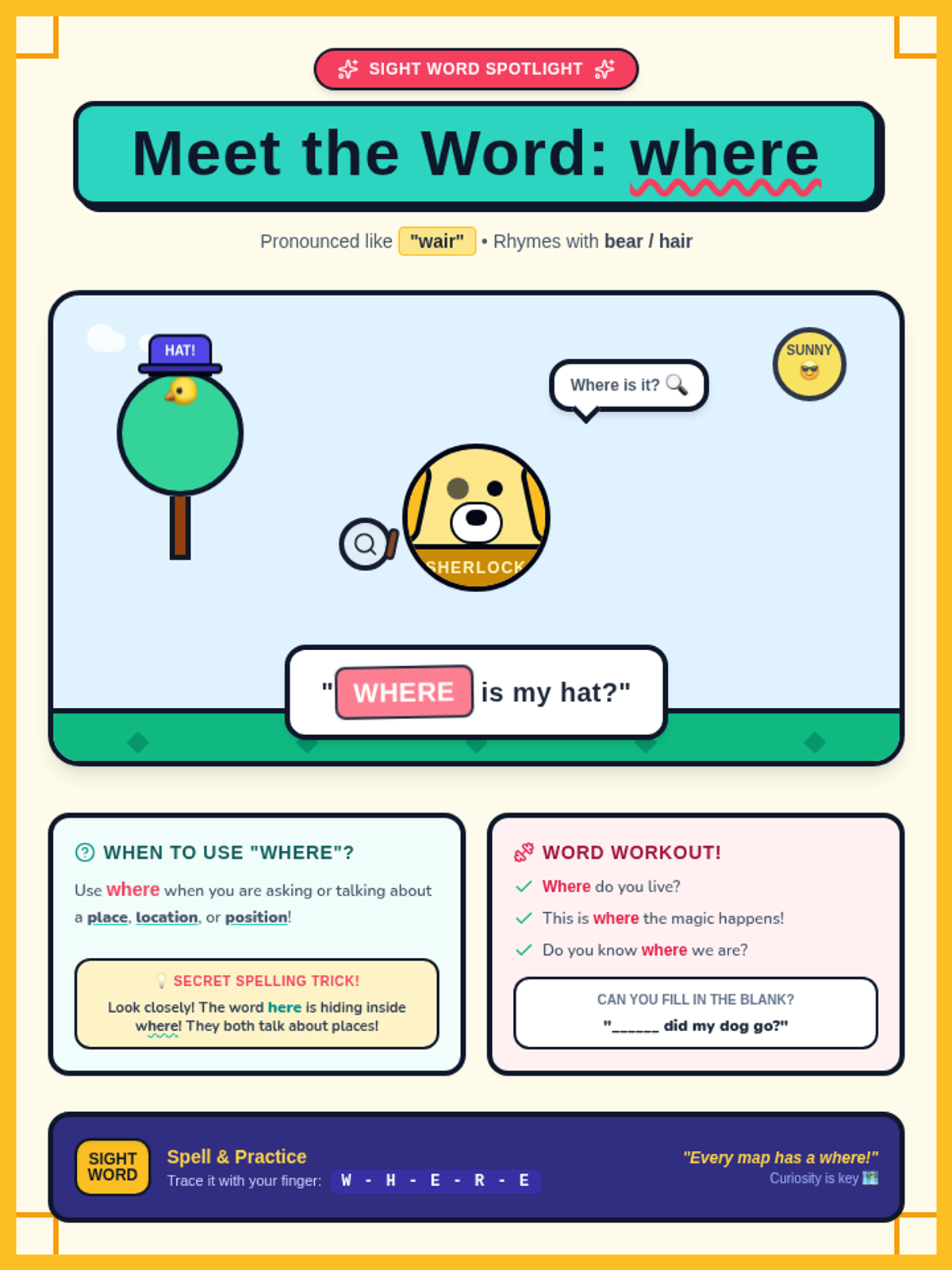
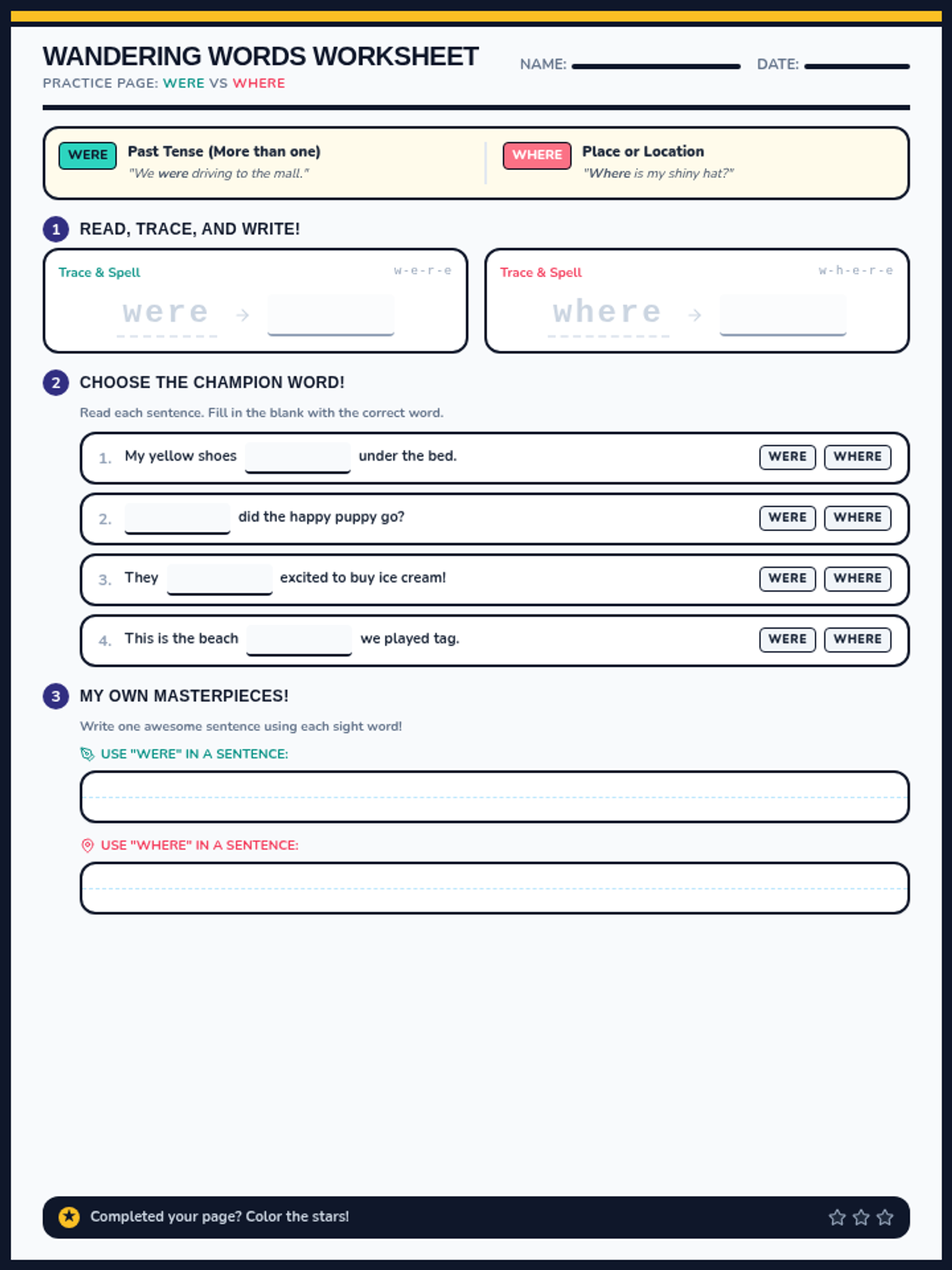
A primary sight word lesson focusing on mastering and distinguishing the high-frequency words 'were' and 'where' through highly visual classroom anchor charts and practice sheets.
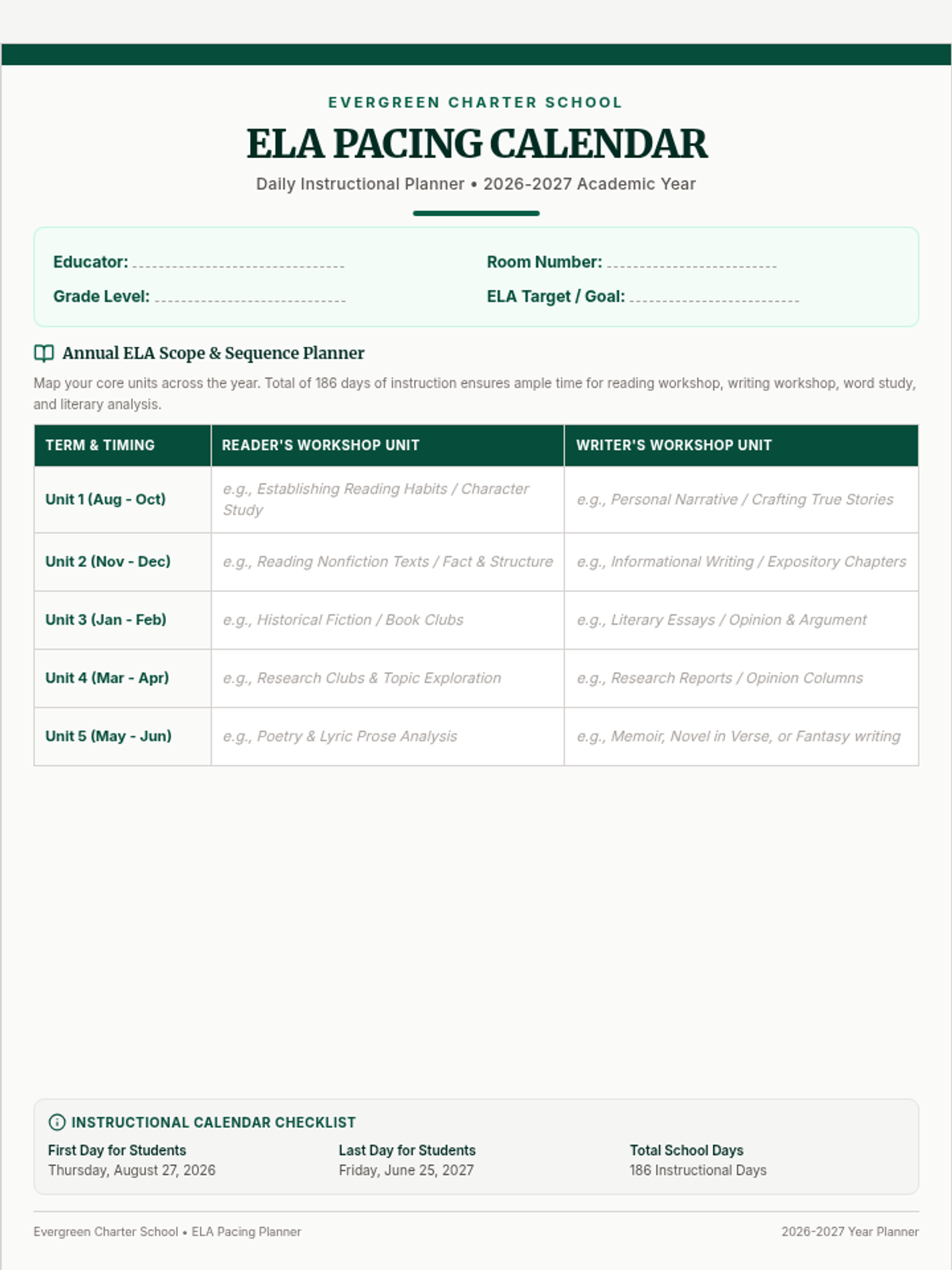
A comprehensive lesson and resource suite focused on professional curriculum planning, pacing, and instructional design for ELA teachers throughout the school year.
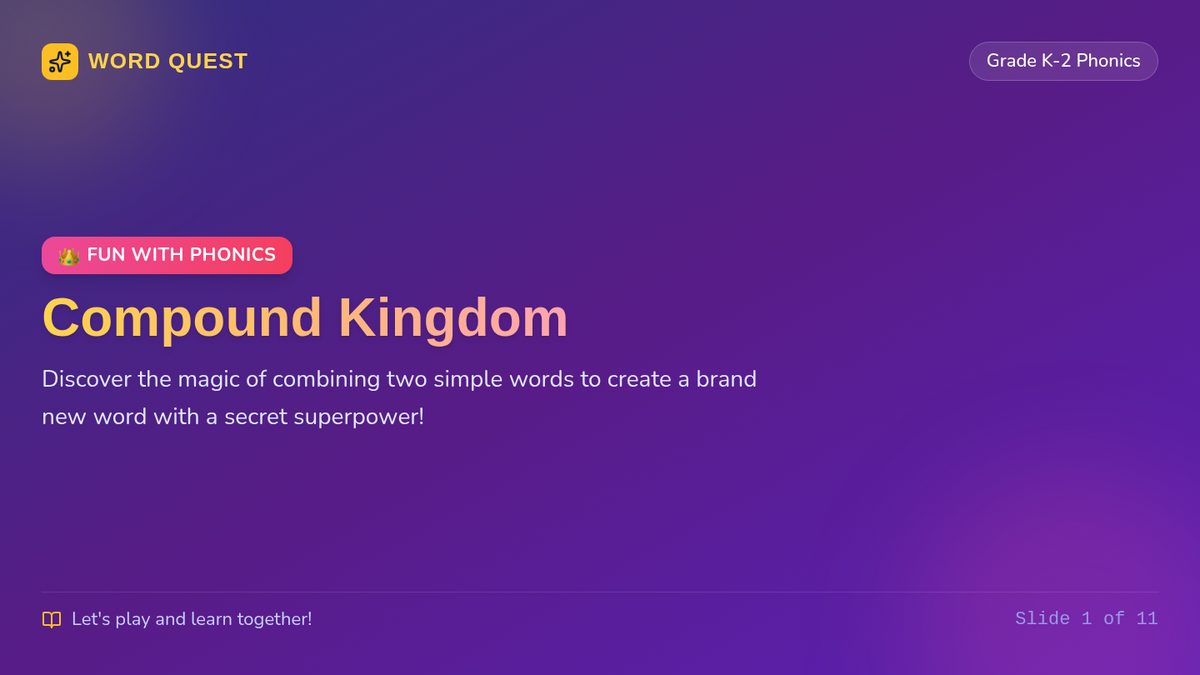
A foundational lesson on compound words for early elementary students. It features an engaging visual presentation where students discover how two individual words join together to create a brand new word with a new meaning.
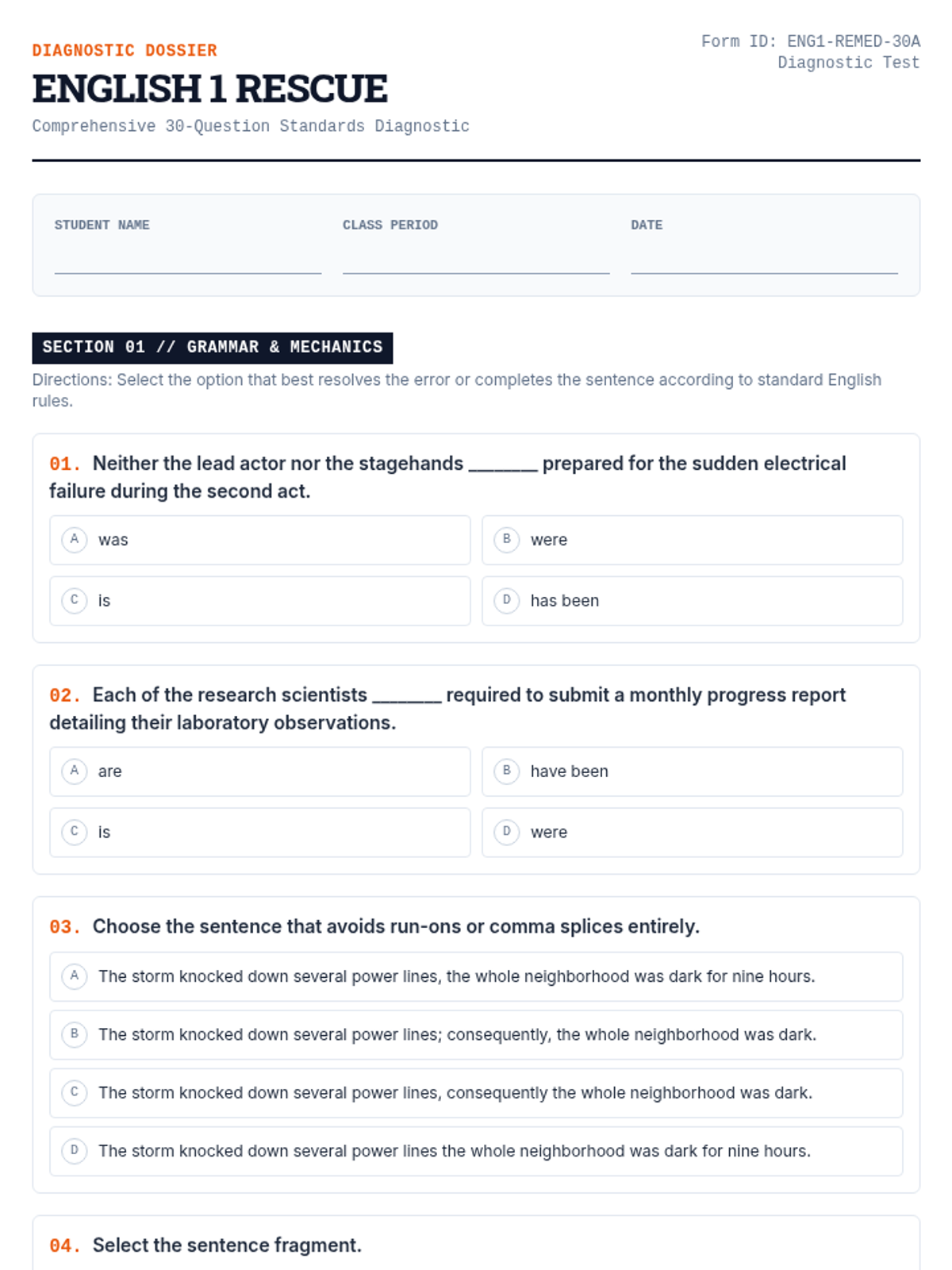
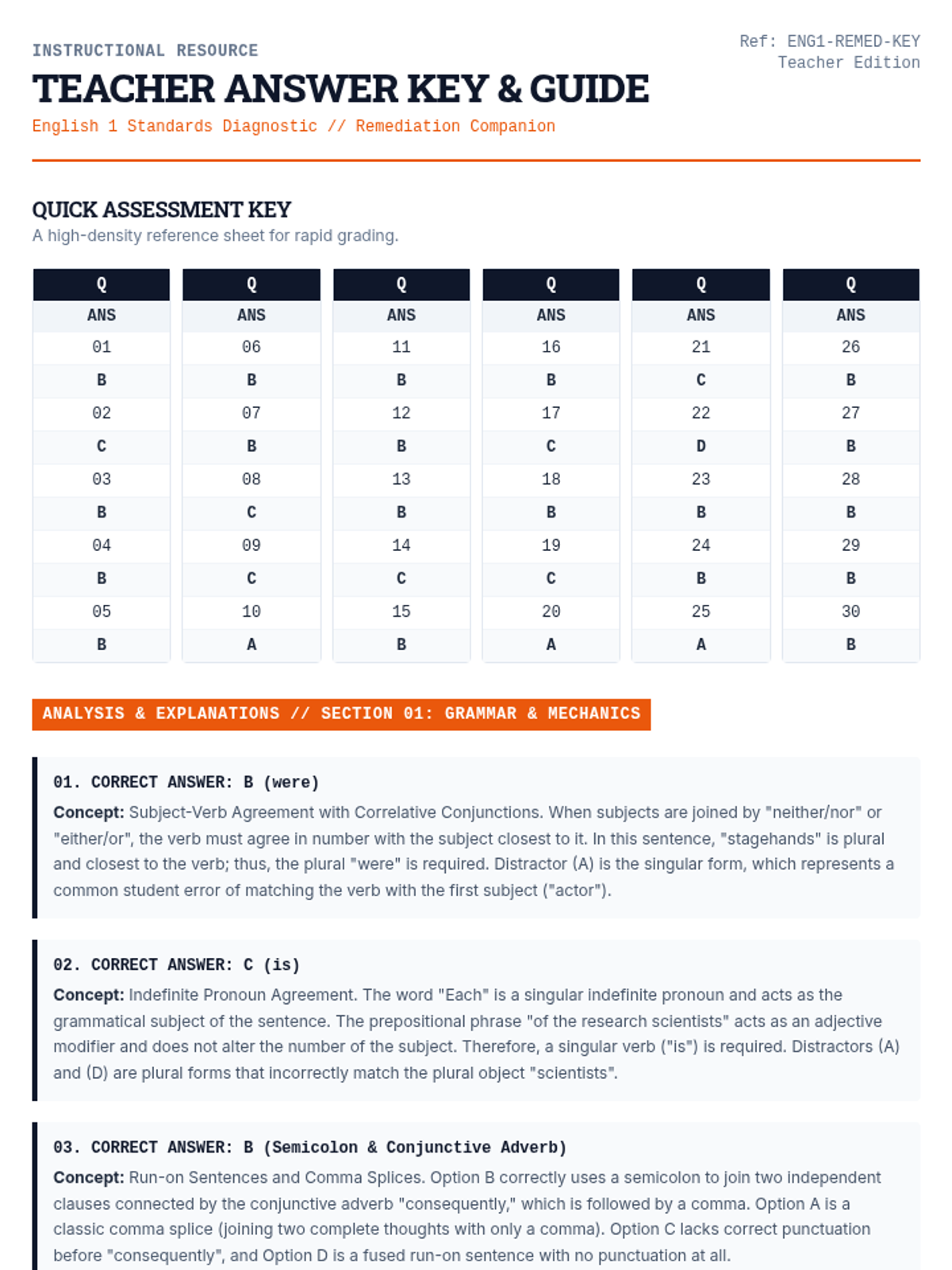
A comprehensive English 1 diagnostic and remediation toolkit containing a 30-question diagnostic assessment and an extensive teacher answer key with remediation guides. This lesson targets core deficiencies in Reading Comprehension, Grammar/Mechanics, and Main Idea identification.
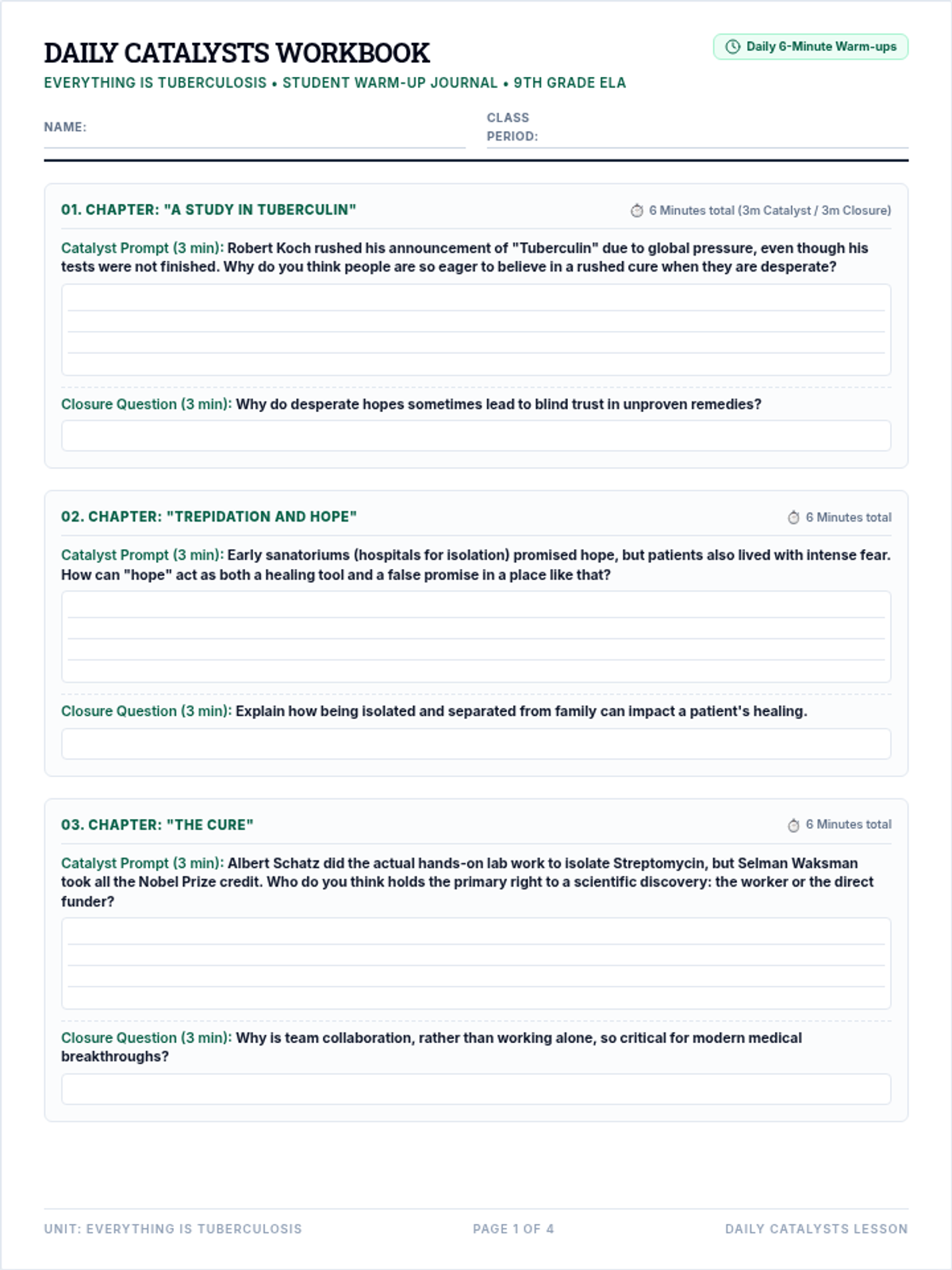
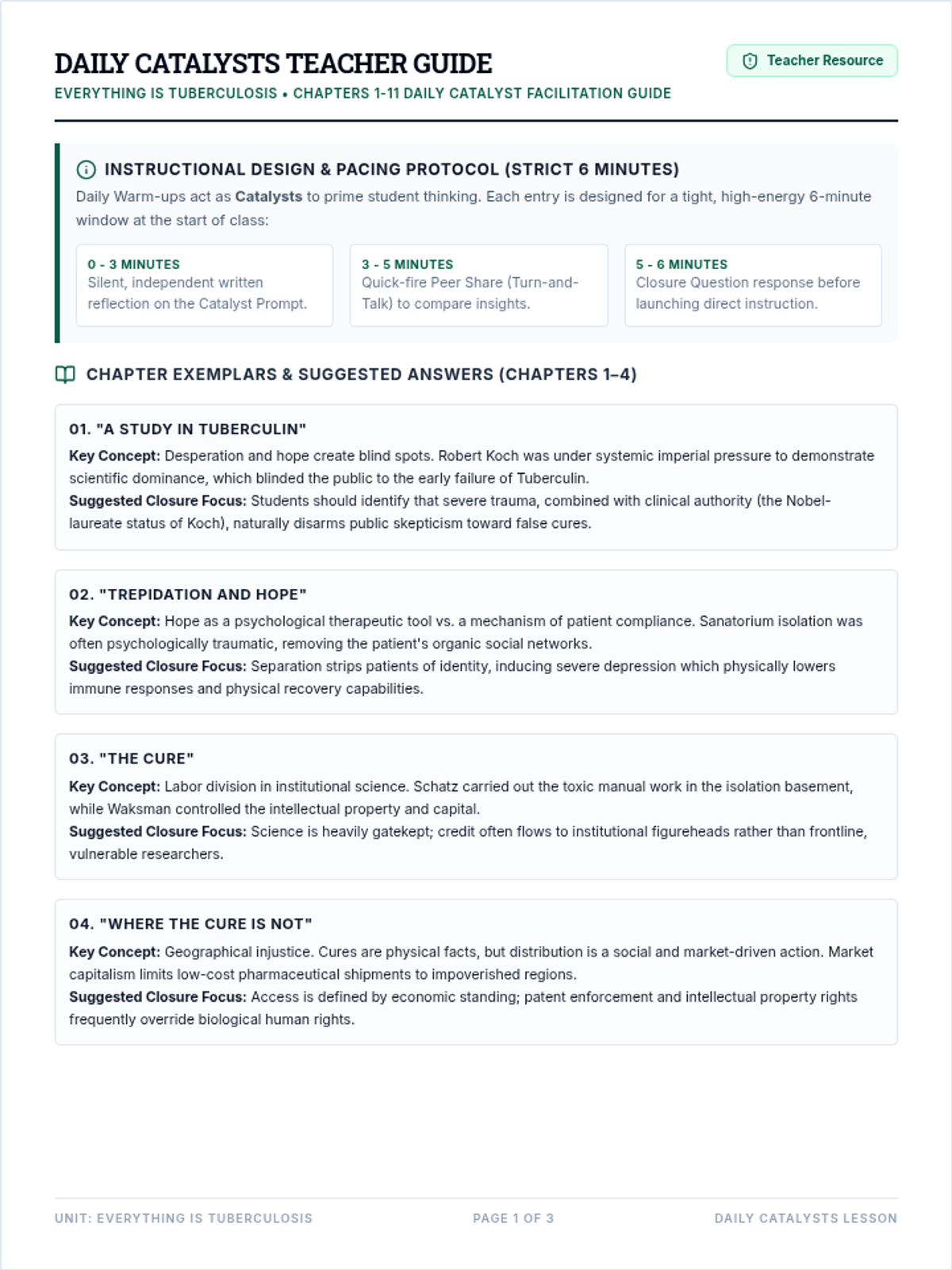
A comprehensive set of 6-minute daily warm-ups and corresponding closure questions spanning 11 crucial chapters of John Green's 'Everything is Tuberculosis'.
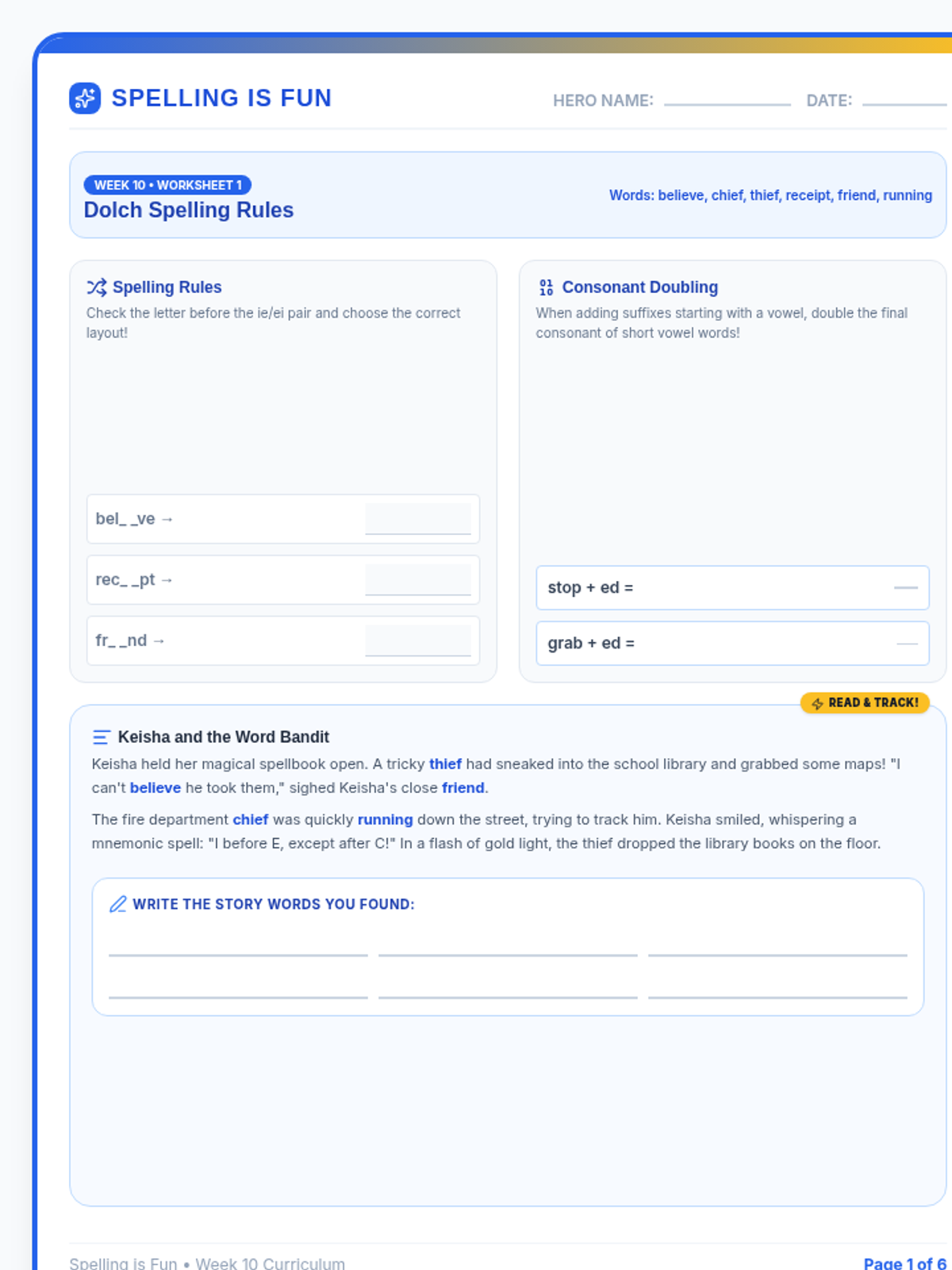
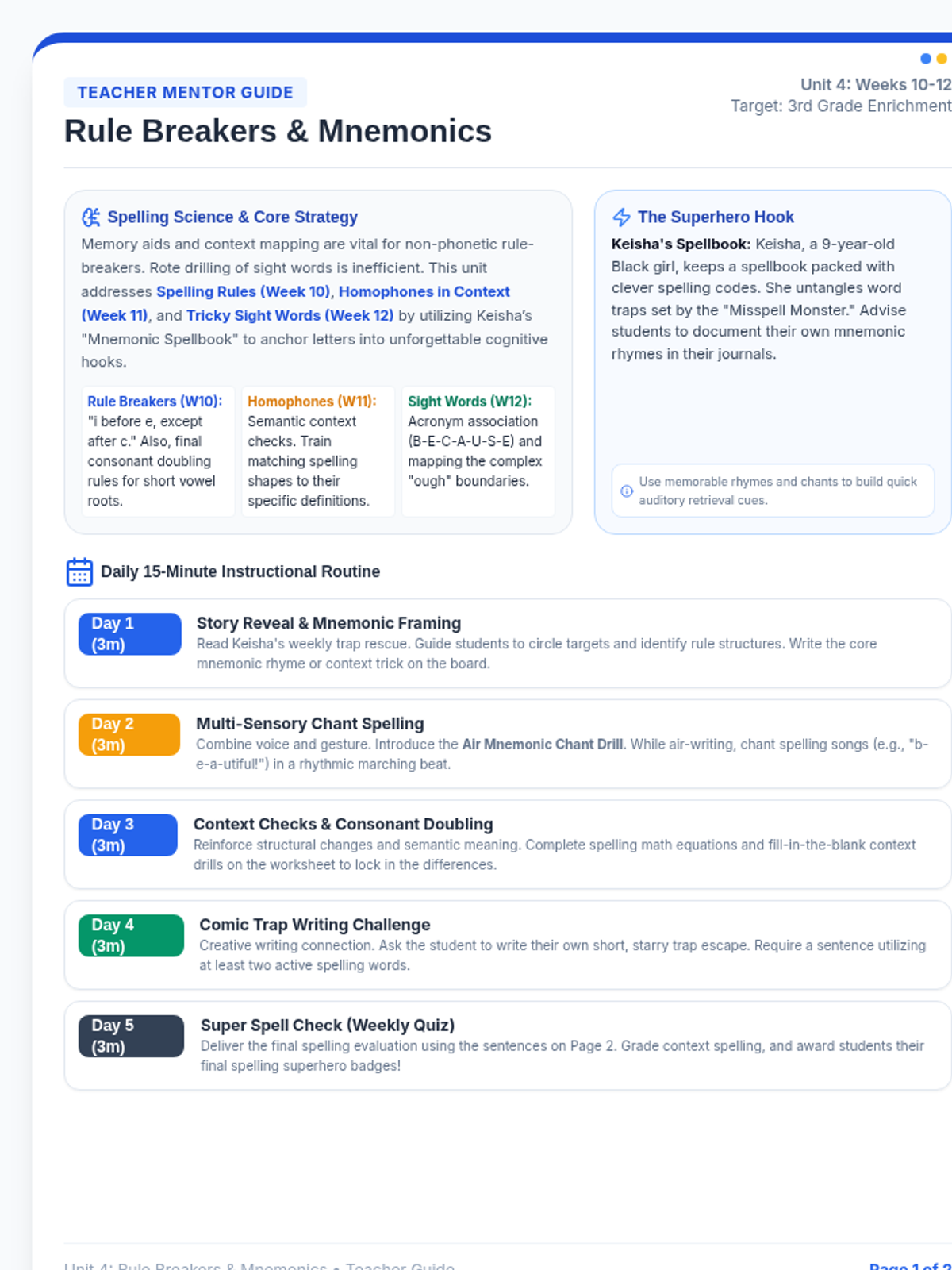
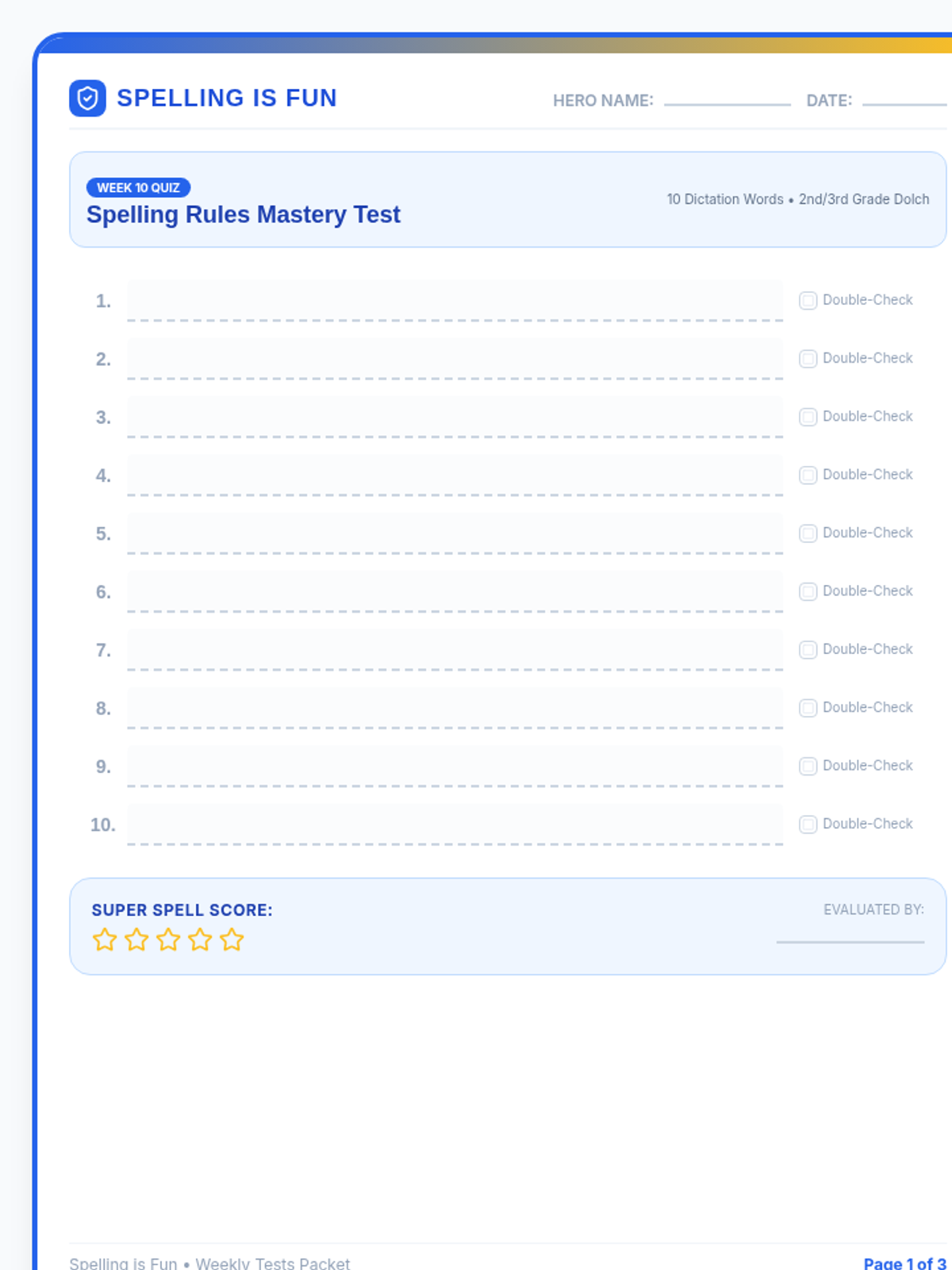
Weeks 10-12 focus on mnemonic devices, context clues, and tricky rule-breakers. Students help Keisha use her magical spellbook to crack homophones, sight words, and complex rules like 'i before e' and doubling final consonants.
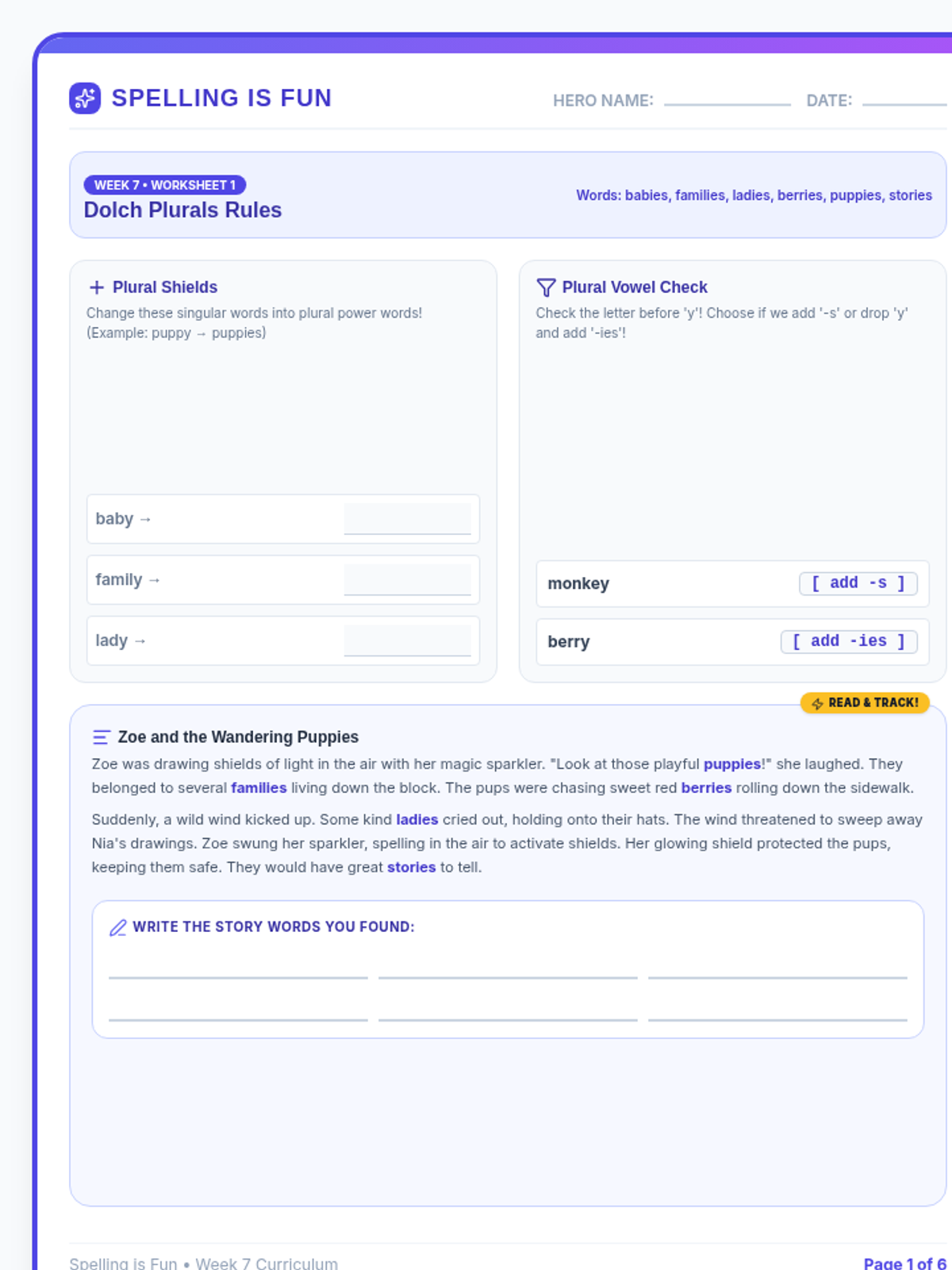
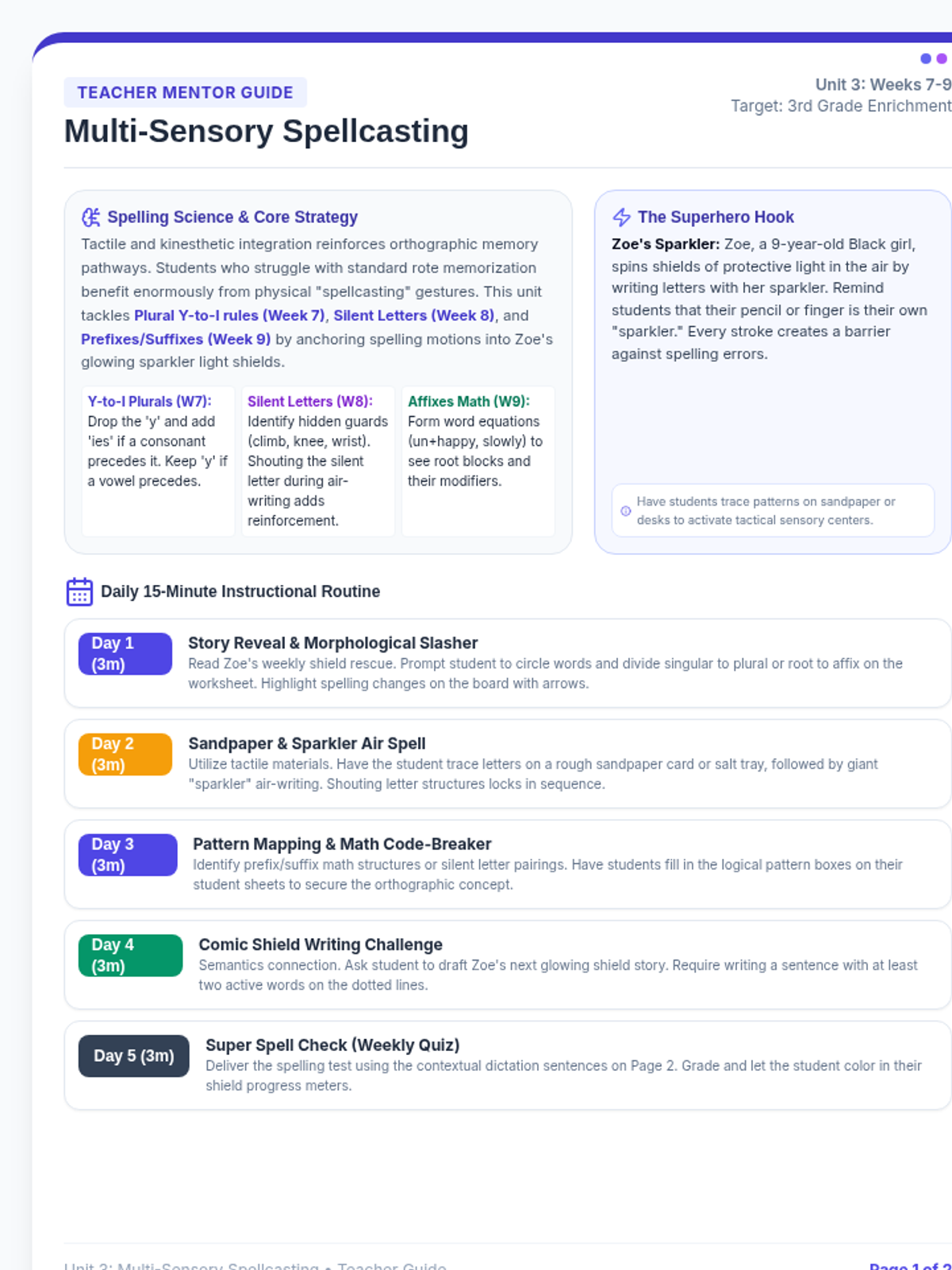
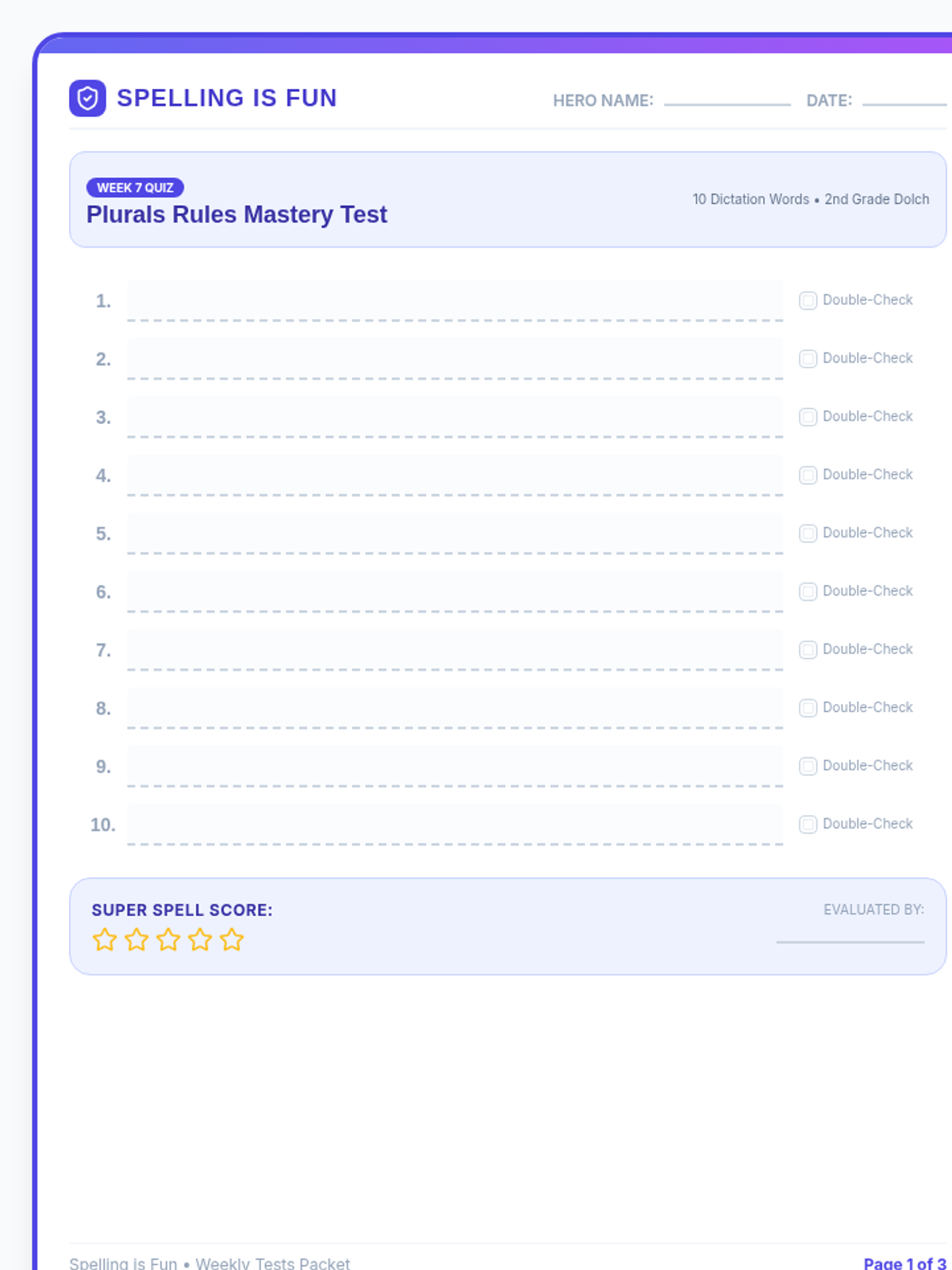
Weeks 7-9 focus on tactile, kinesthetic, and auditory spelling strategies. Students assist Zoe, who can draw shields of light in the air to protect her neighborhood, while mastering plural rules, silent letters, and prefixes/suffixes.
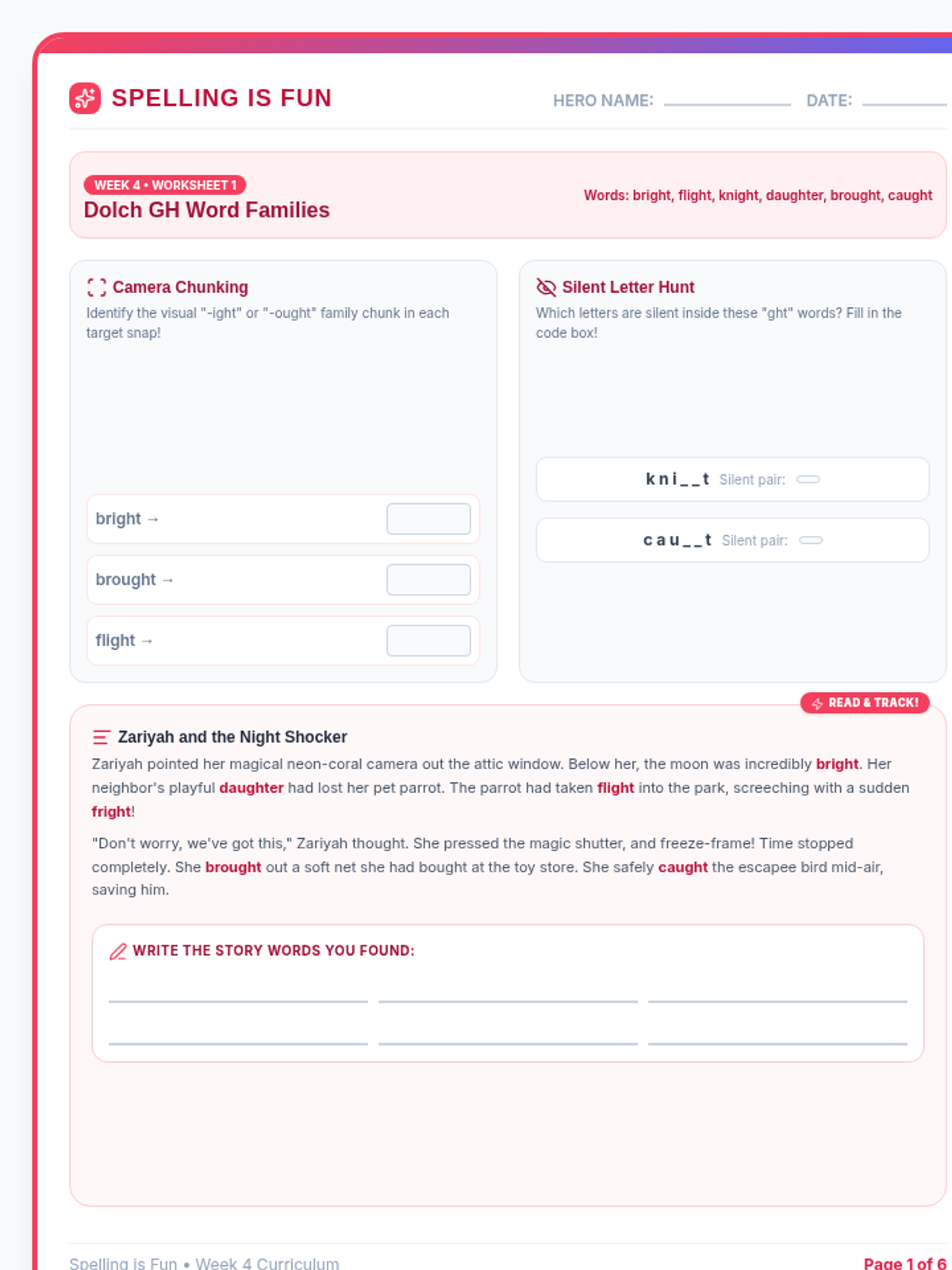
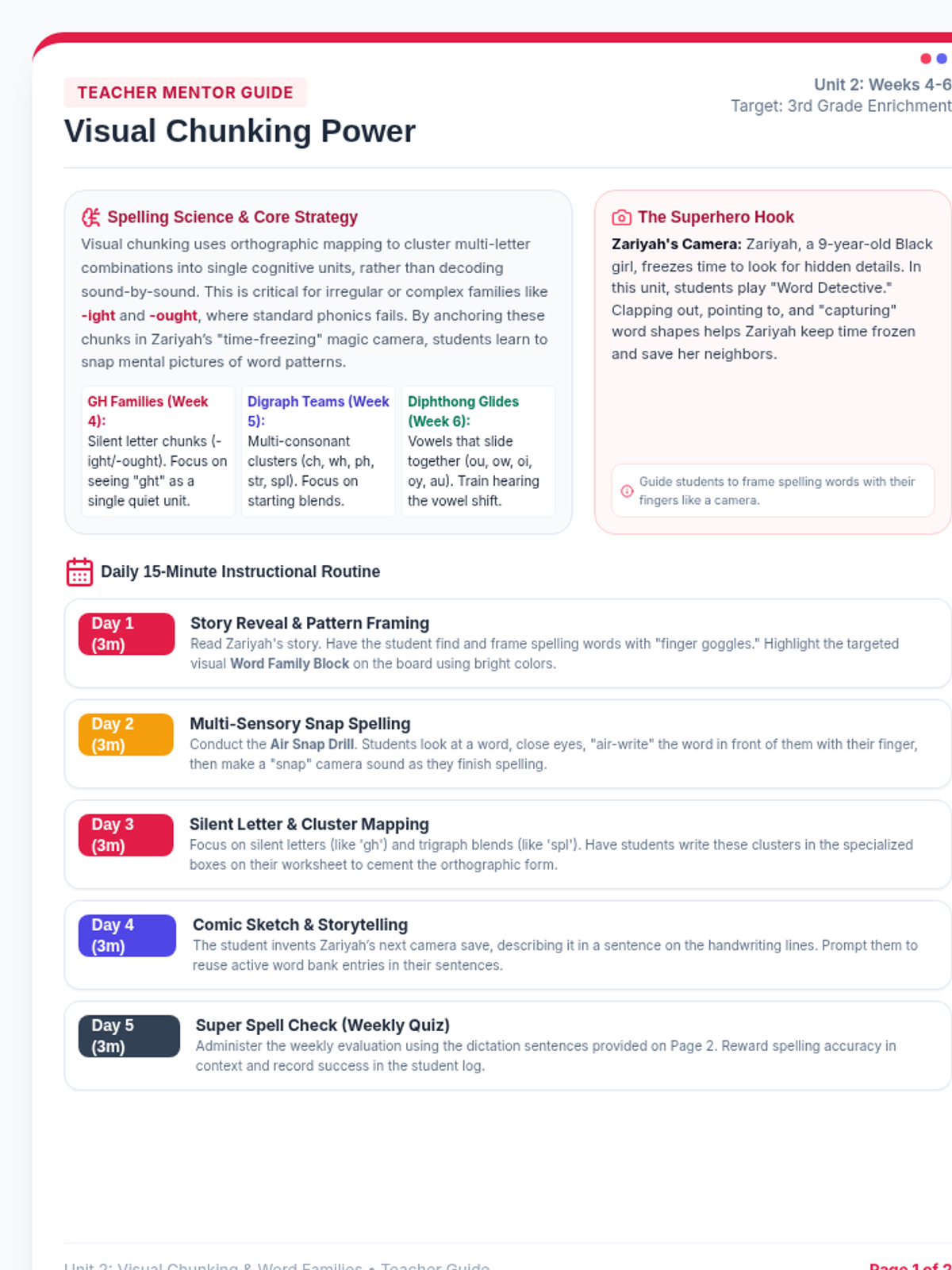
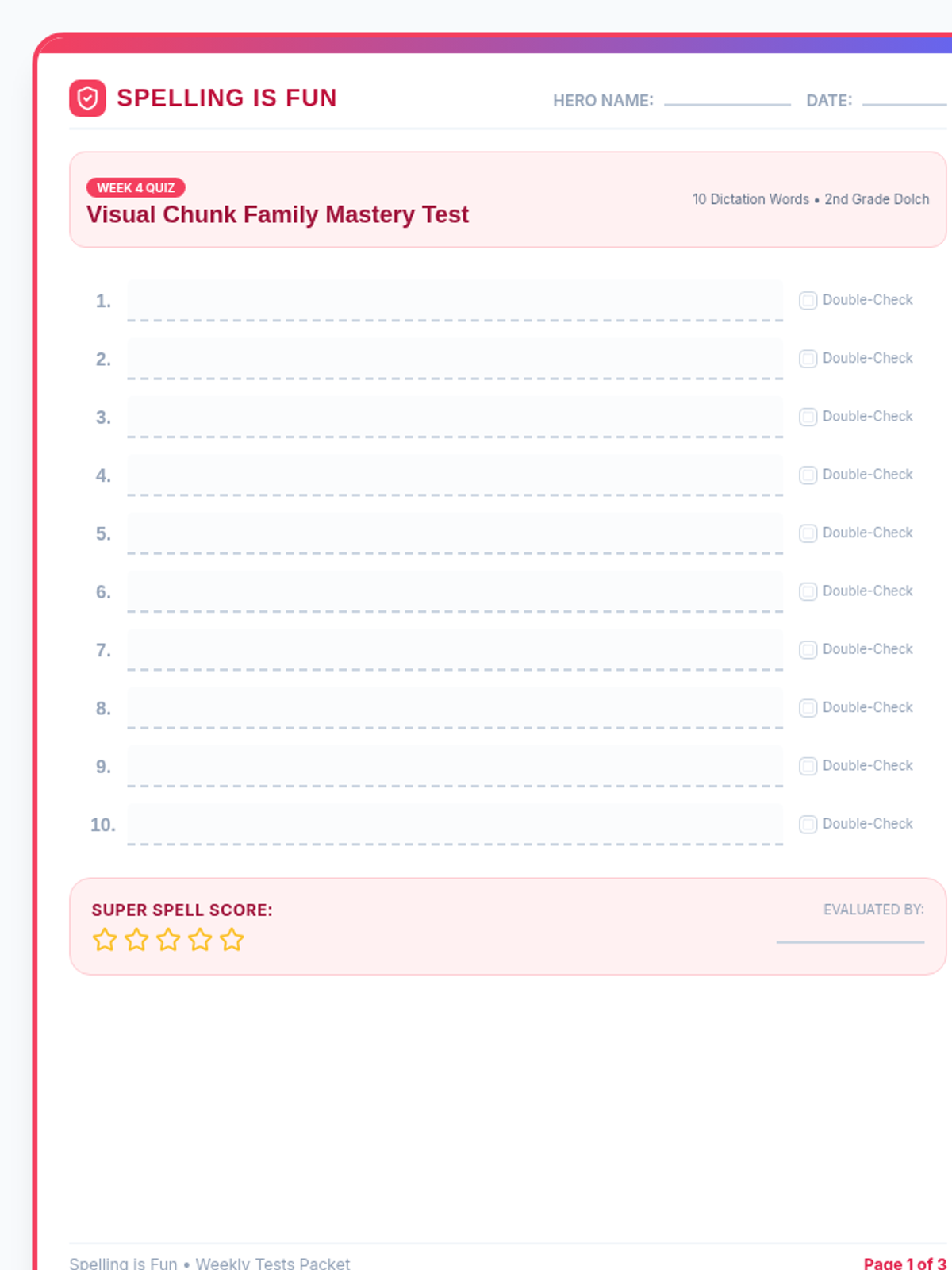
Weeks 4-6 focus on visual word recognition and pattern finding. Students join Zariyah, who uses her magic camera to freeze time, helping her chunk letter combinations and solve community mysteries.
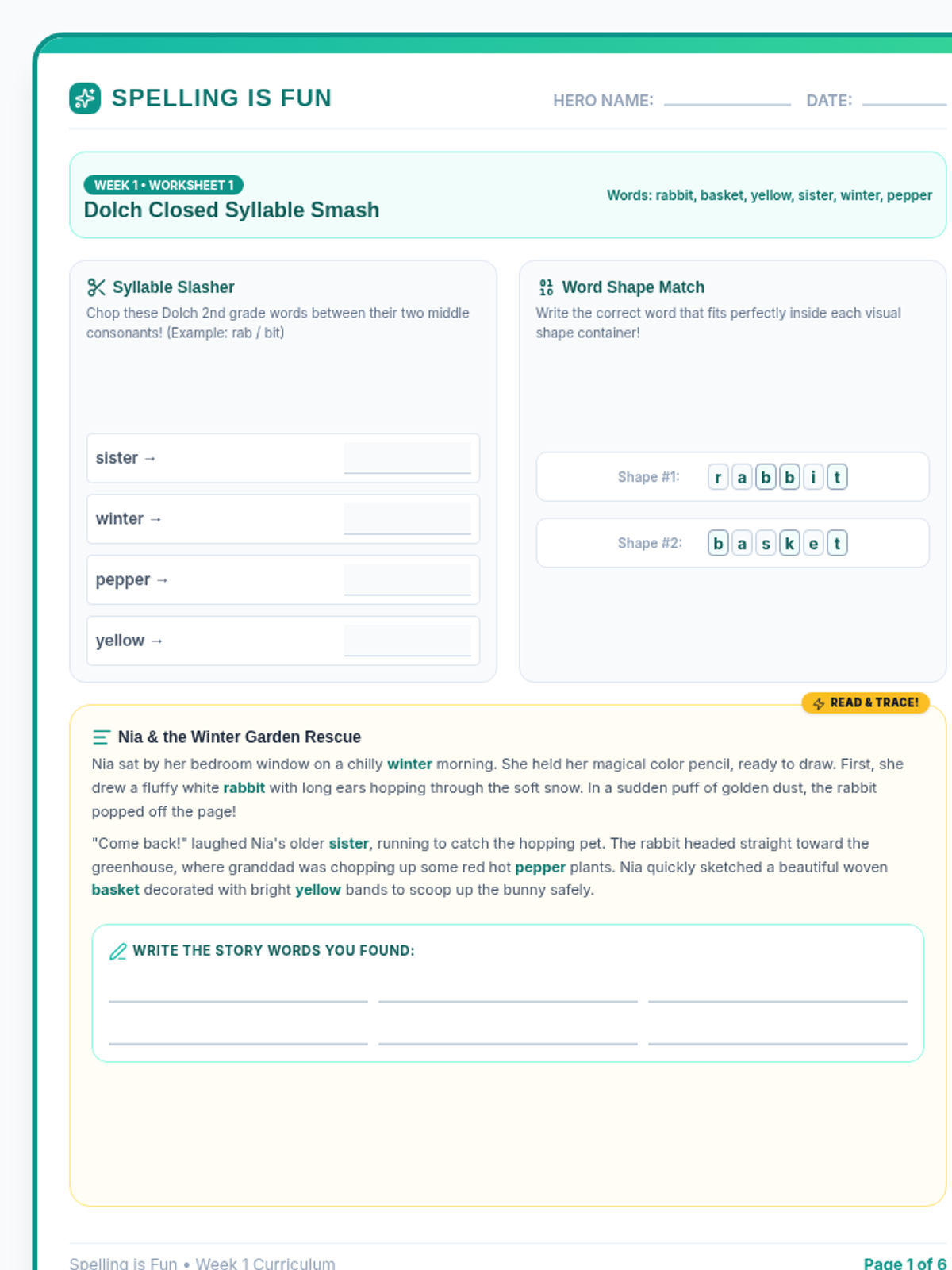
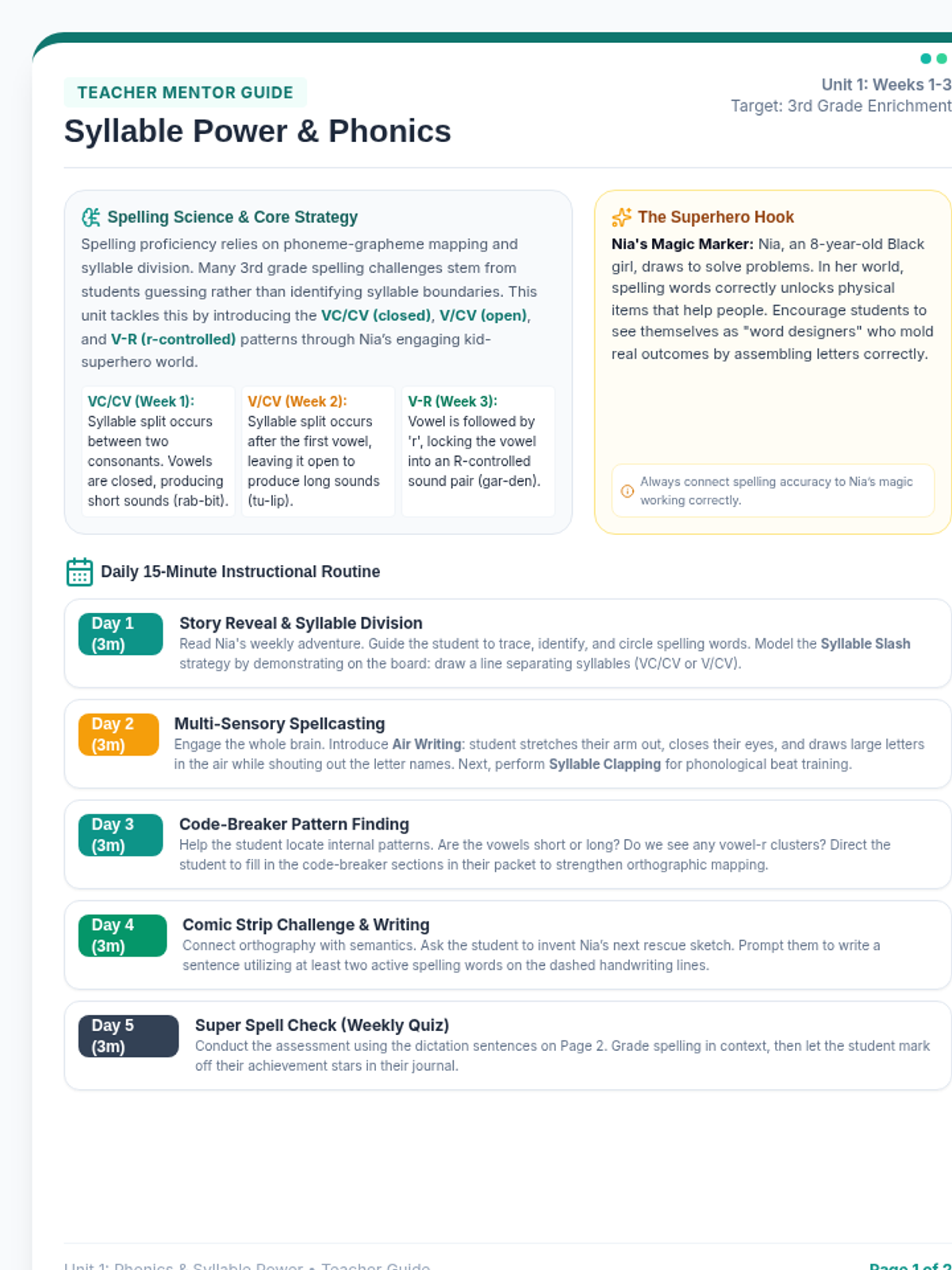
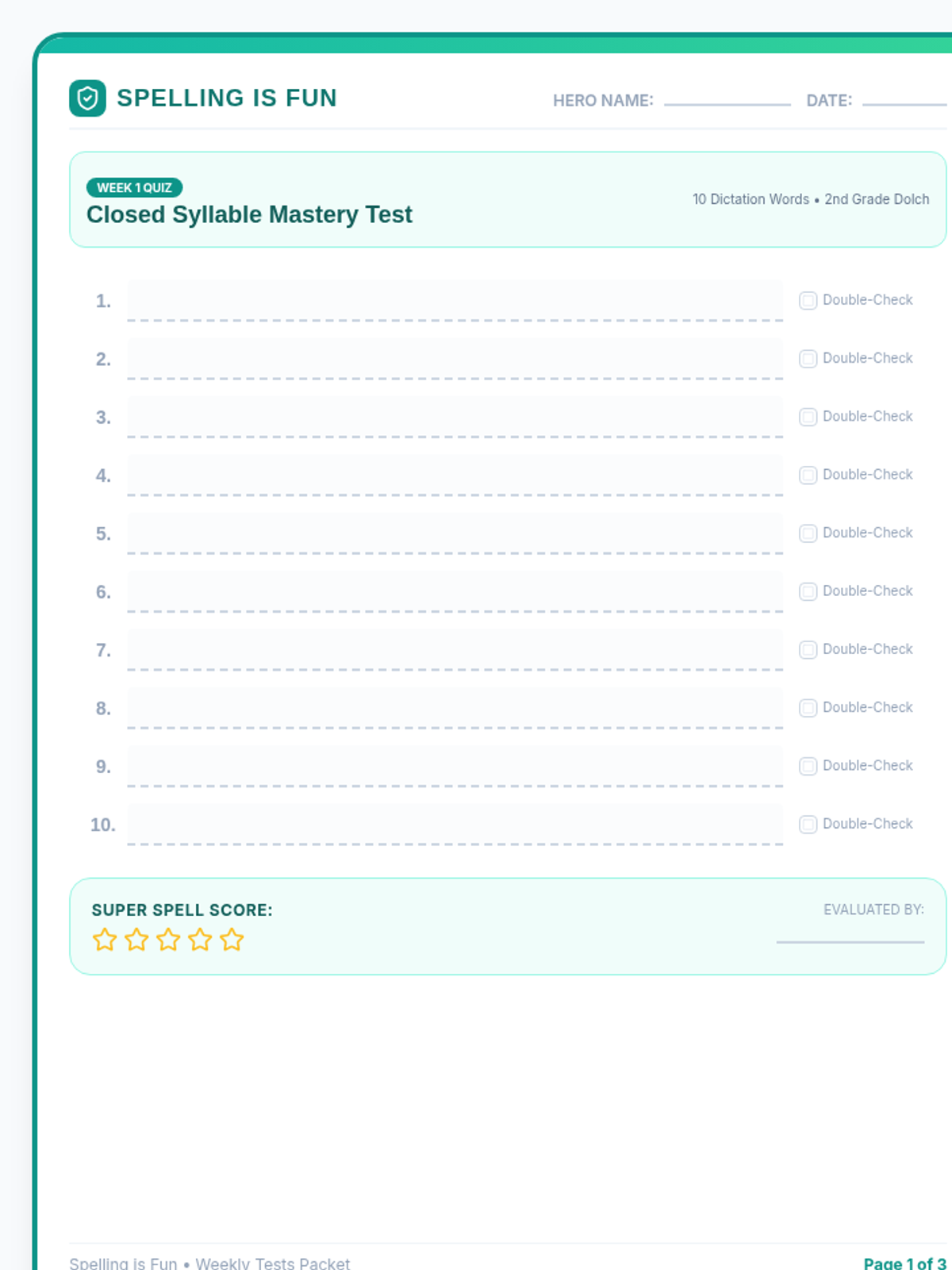
Weeks 1-3 focus on phonics and syllable division strategies. Students help Nia use closed, open, and r-controlled syllable rules to bring her magical drawings to life and solve neighborhood problems.
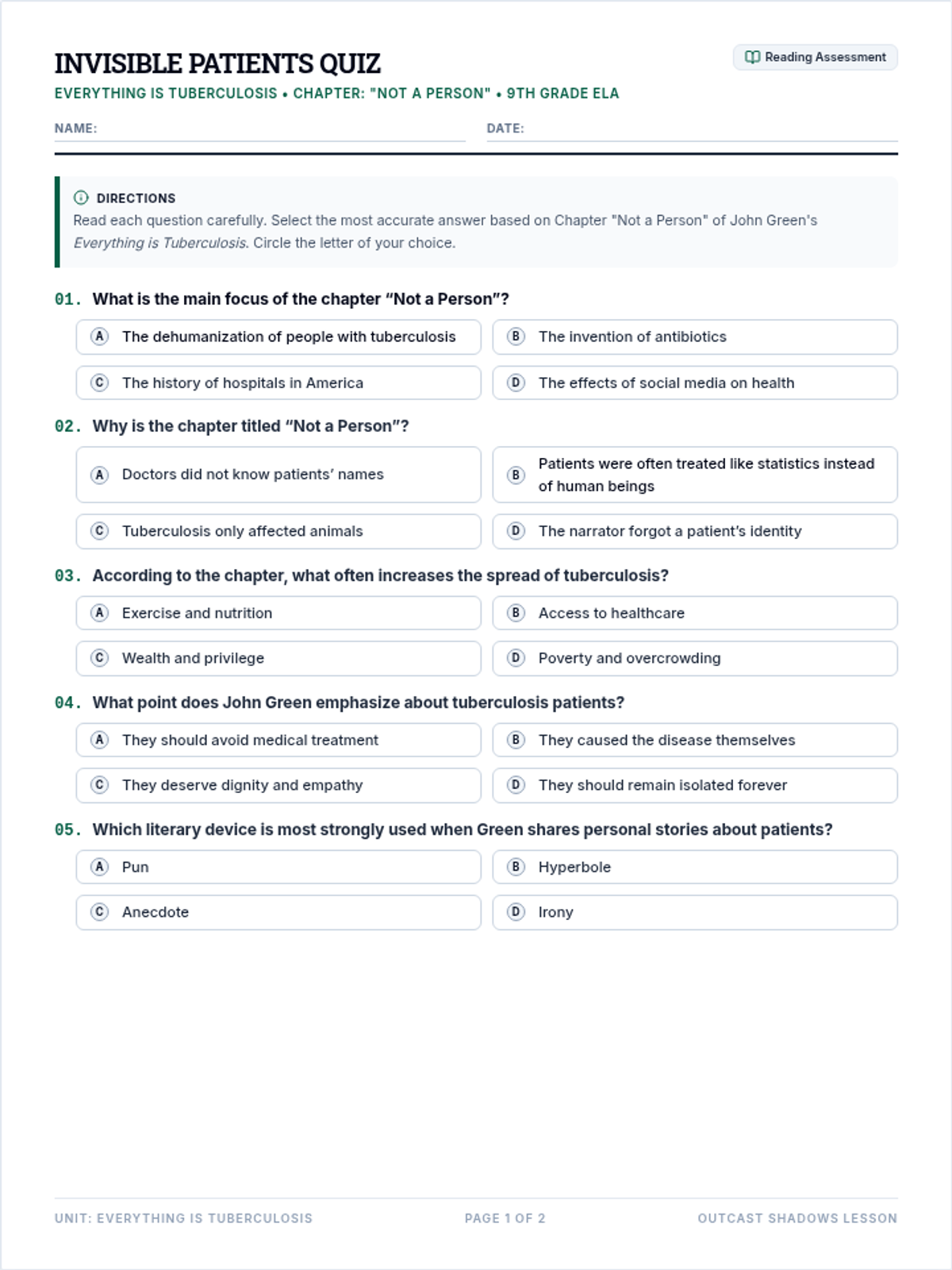
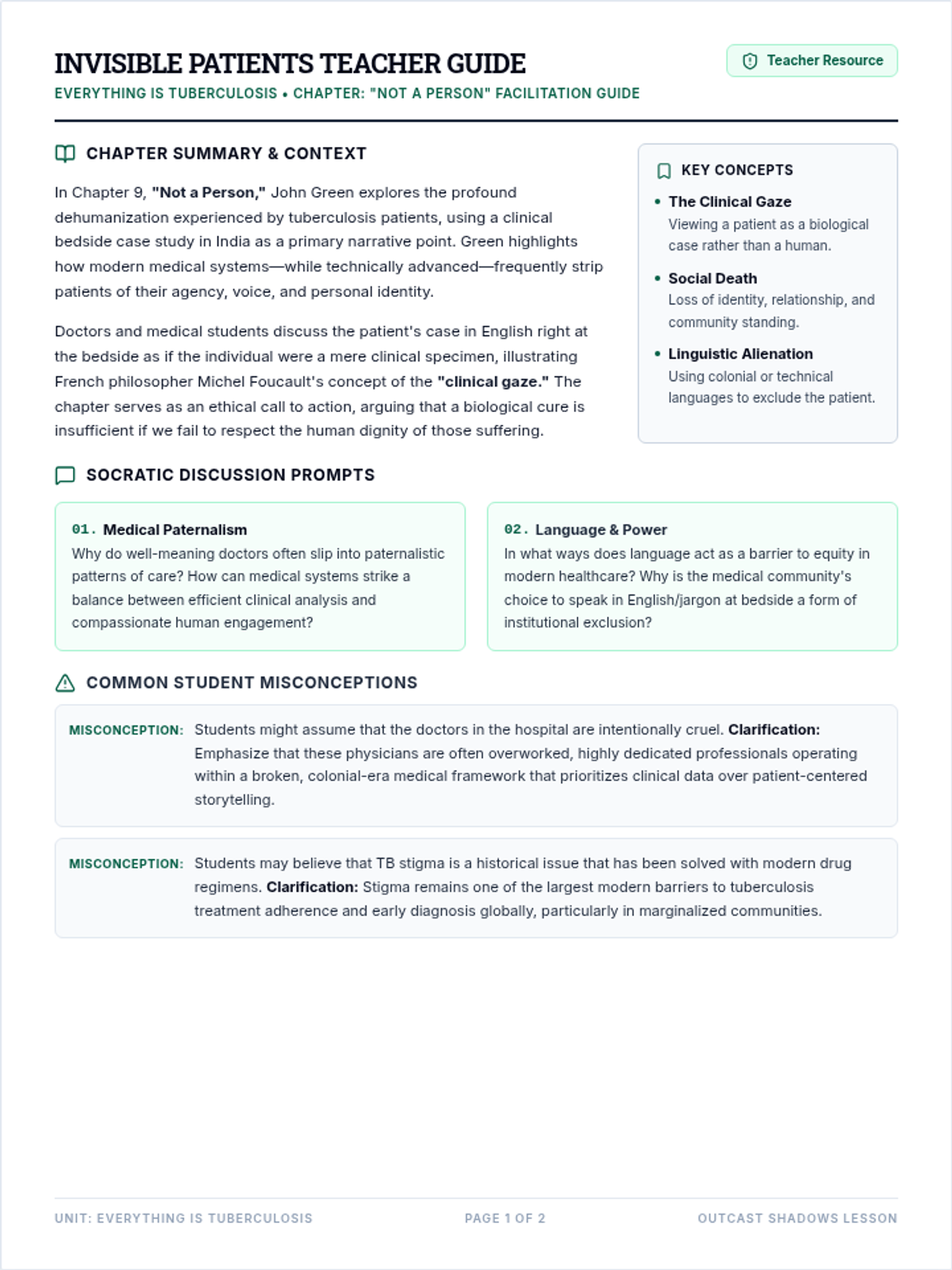
A comprehensive lesson exploring Chapter 9 ('Not a Person') of John Green's 'Everything is Tuberculosis', focusing on medical dehumanization, social stigma, and the historical and modern experiences of TB patients.
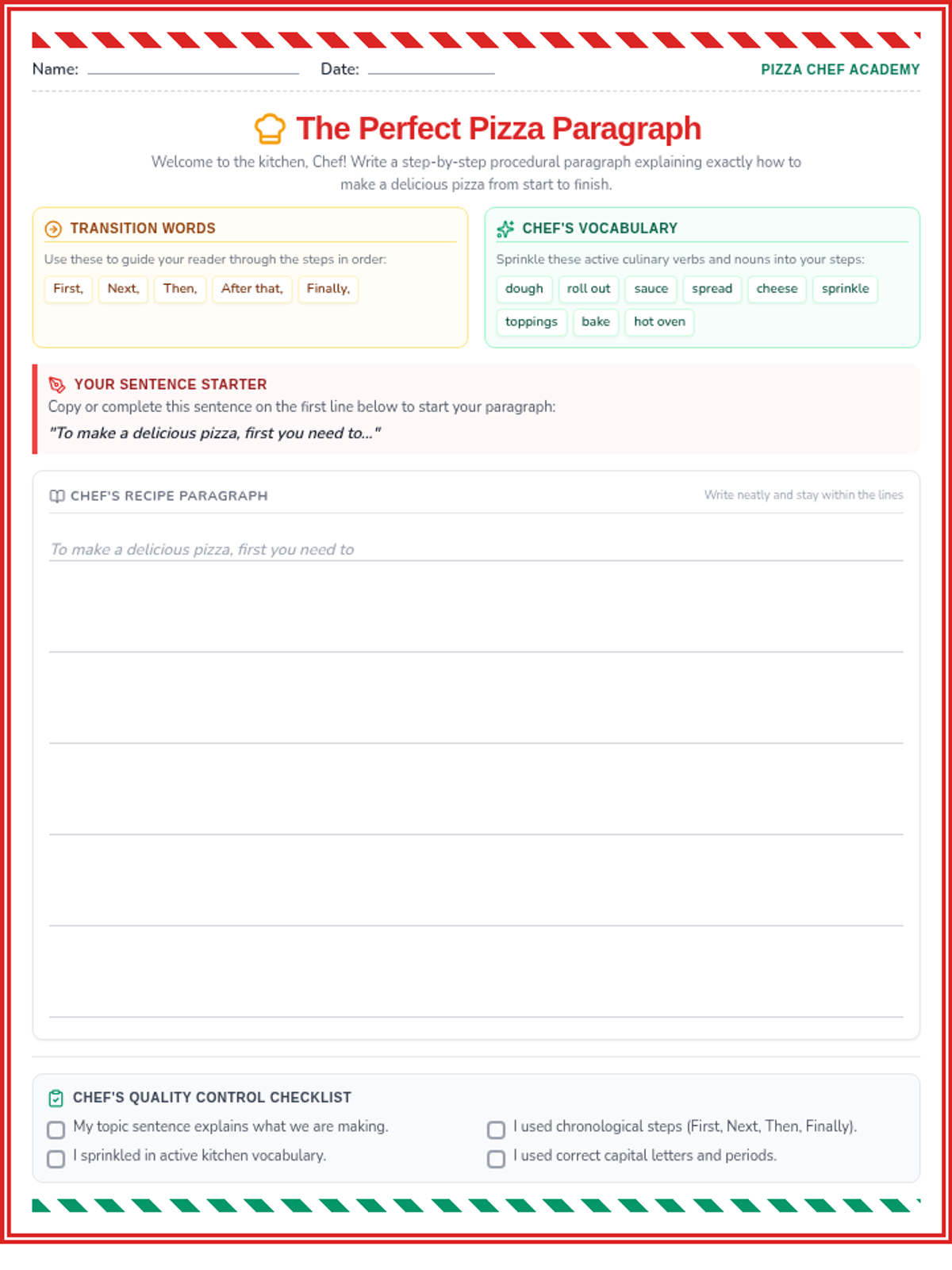
A hands-on, step-by-step writing lesson where students learn how to structure procedural paragraphs. Students act as pizza chefs to draft their own delicious sequential paragraphs.
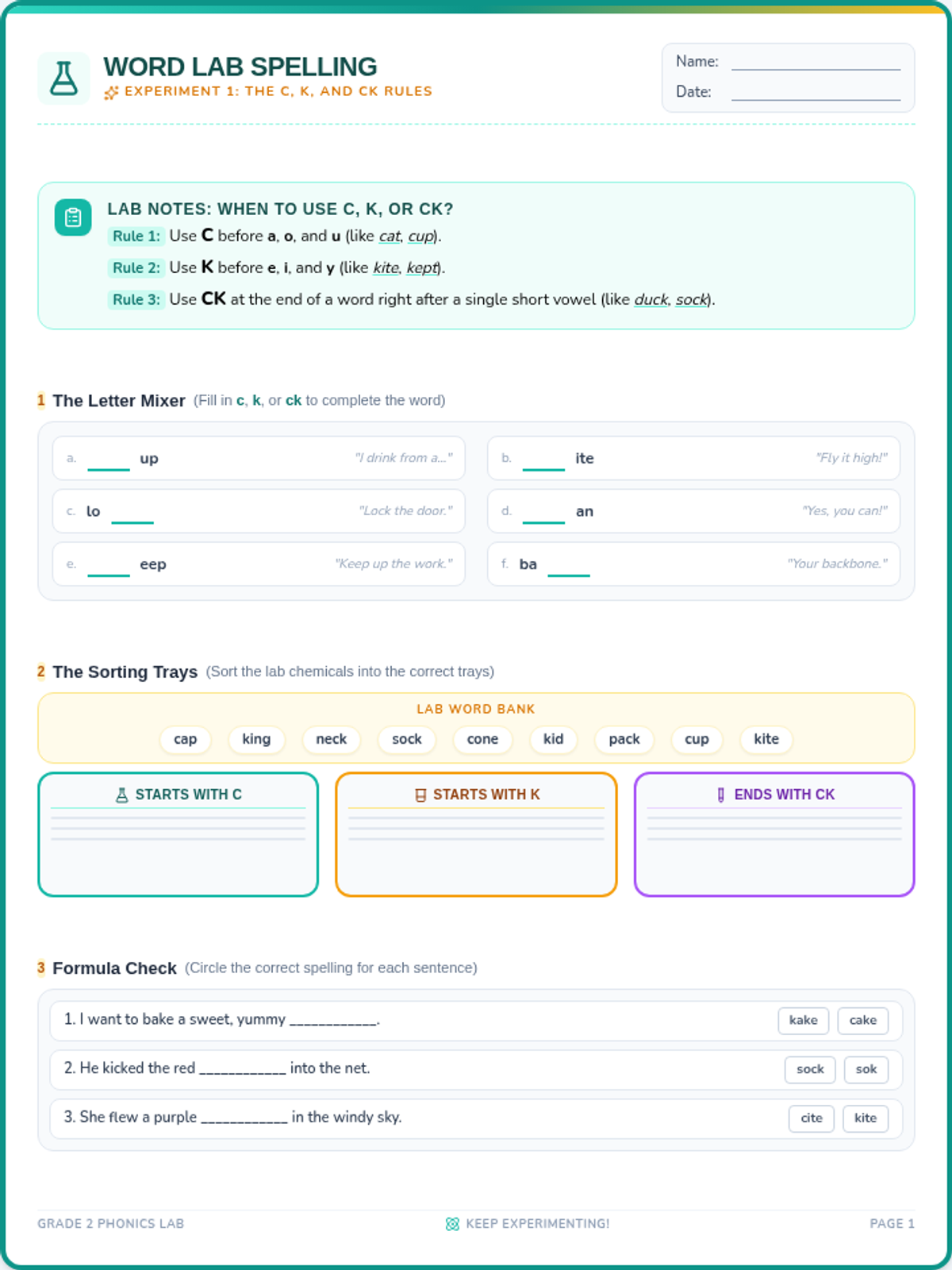
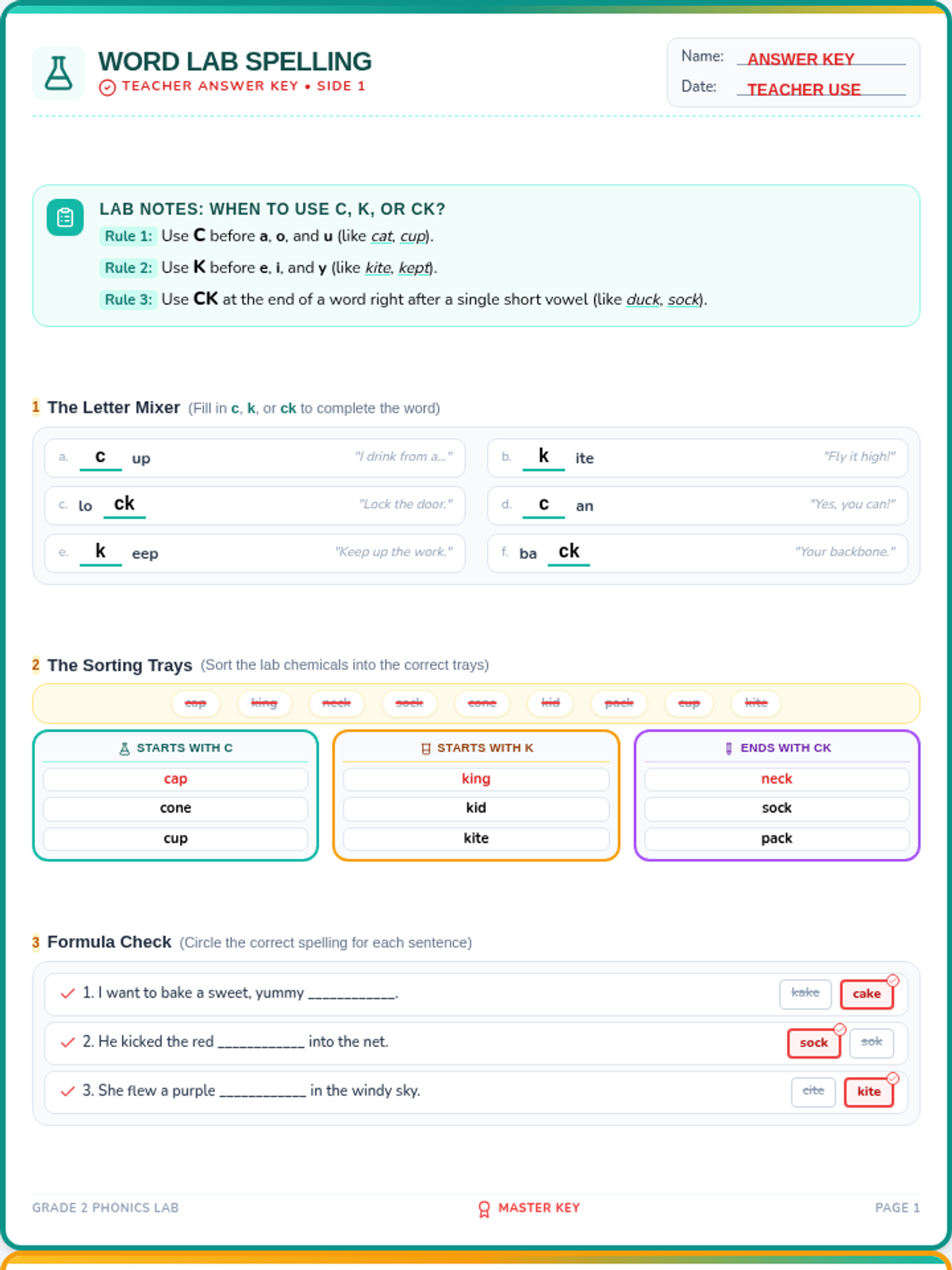
A dynamic Grade 2 spelling and phonics lesson covering the C/K/CK rule and Soft C/Soft G sounds. Includes a multi-activity student worksheet and a corresponding teacher answer key styled in a playful lab scientist theme.
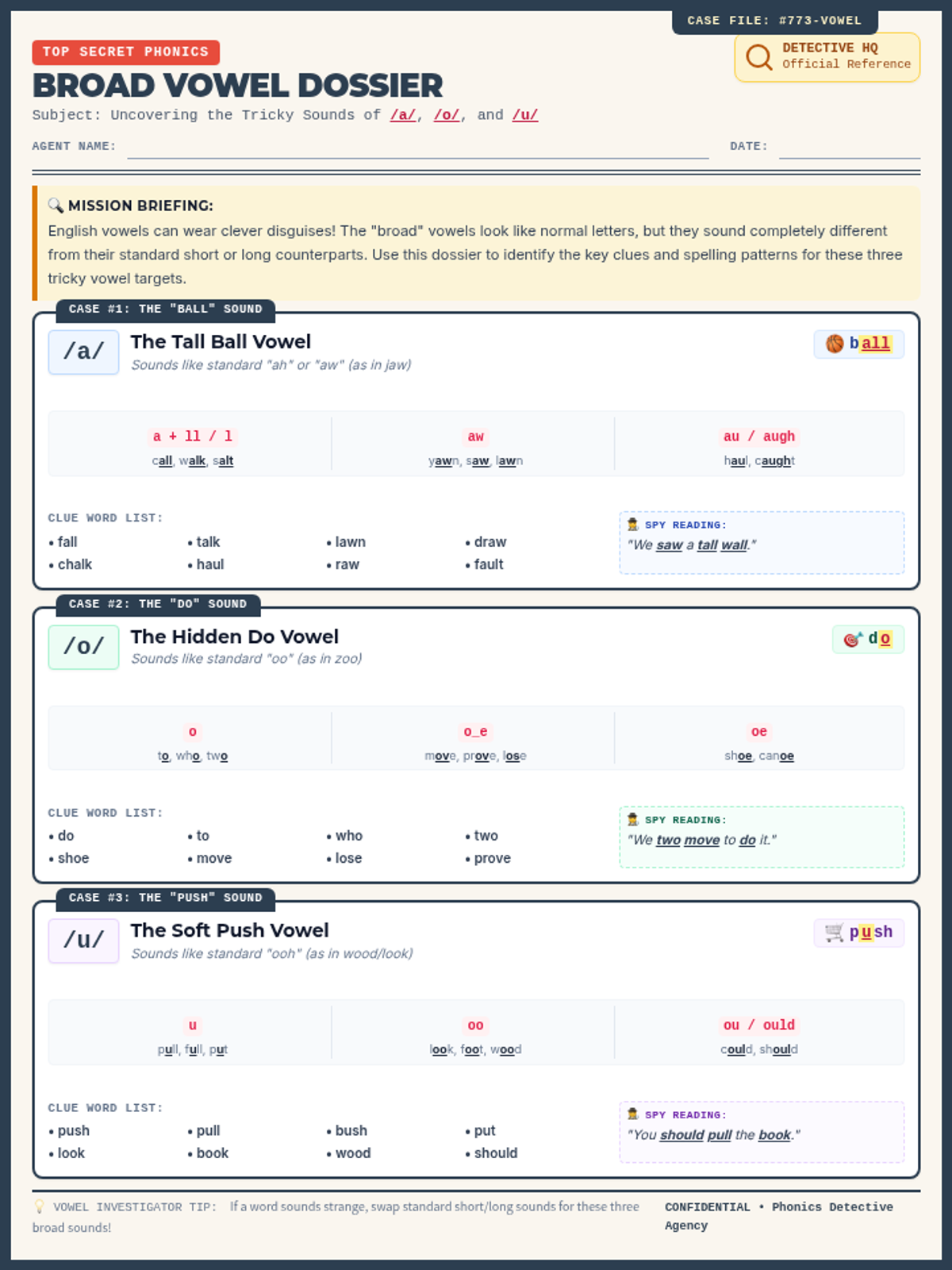
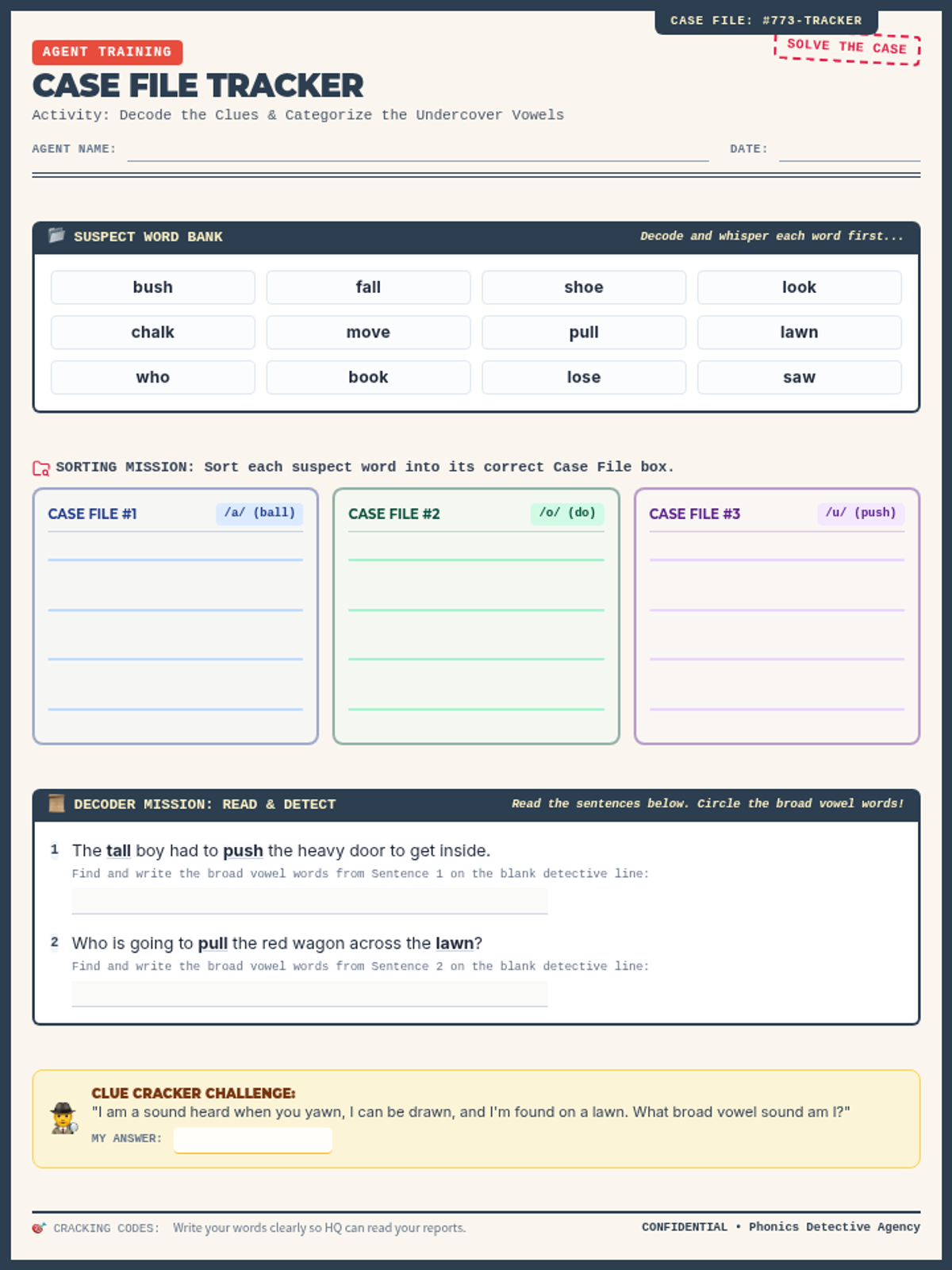
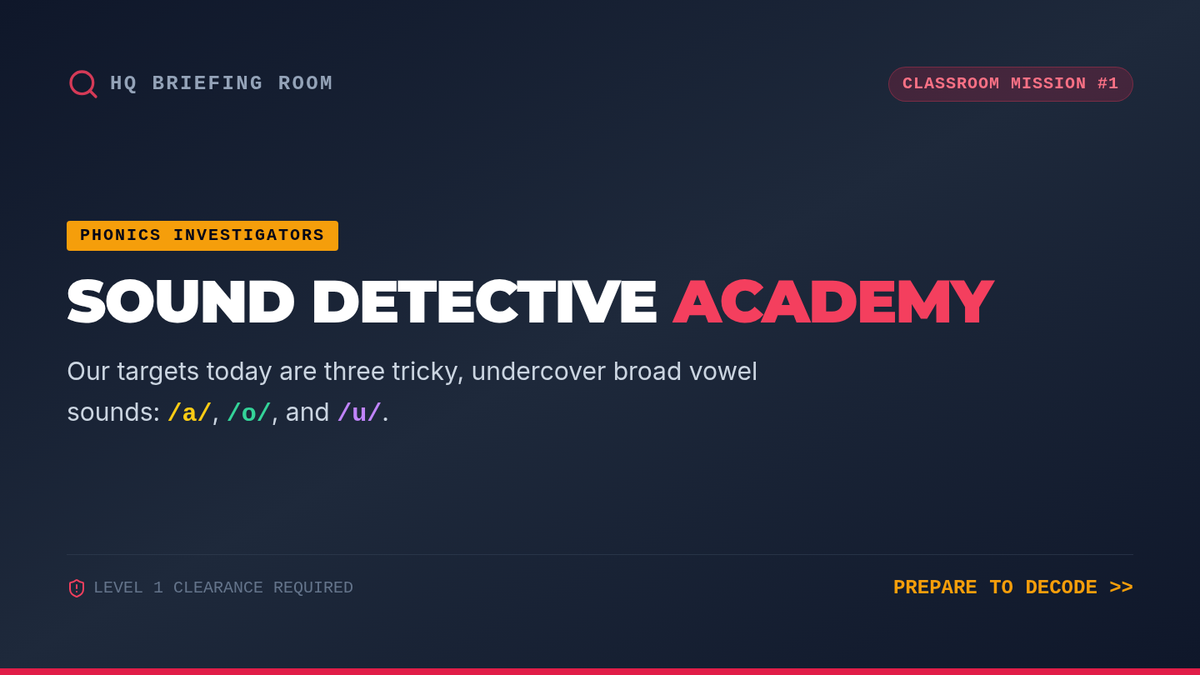
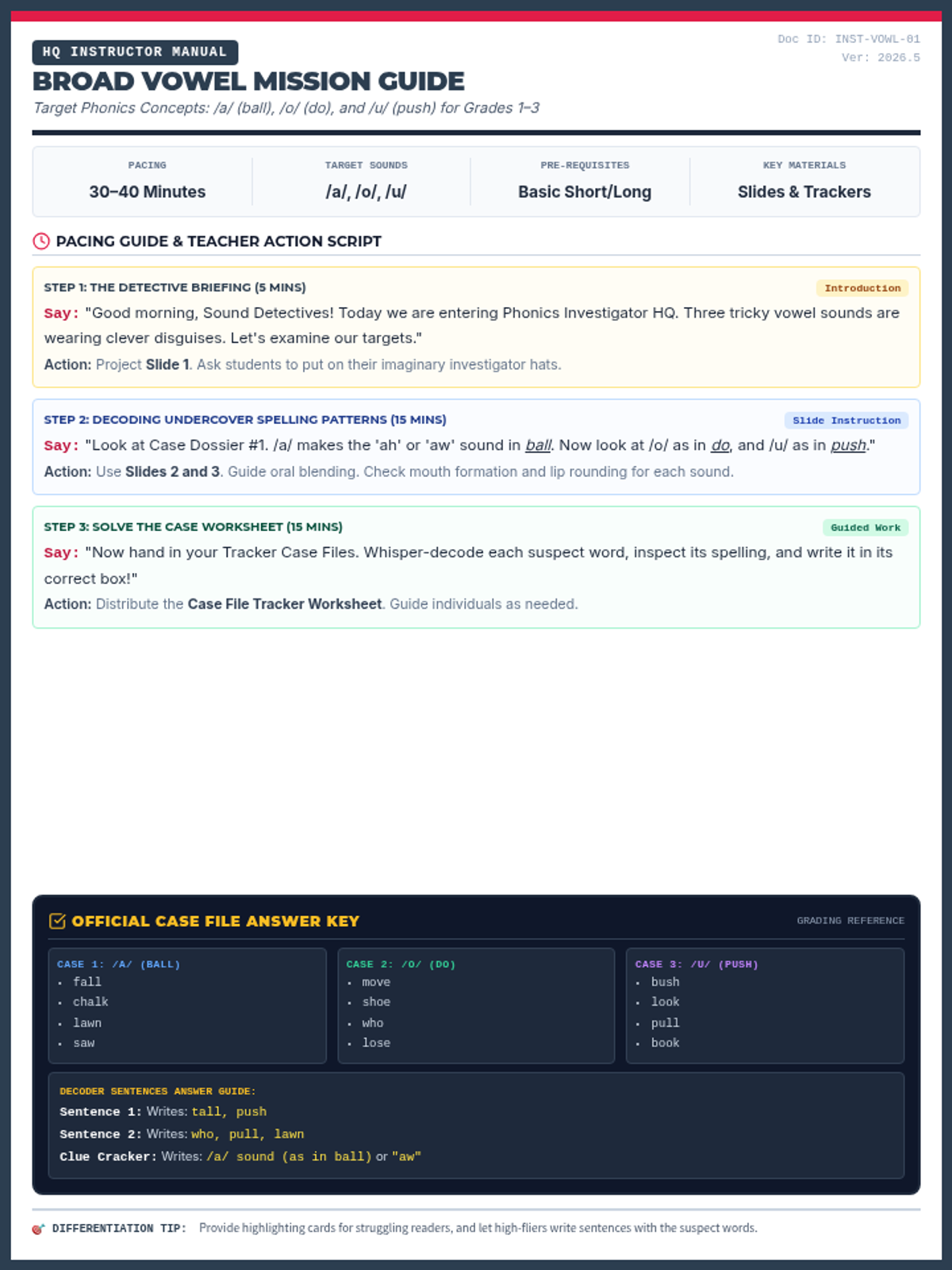
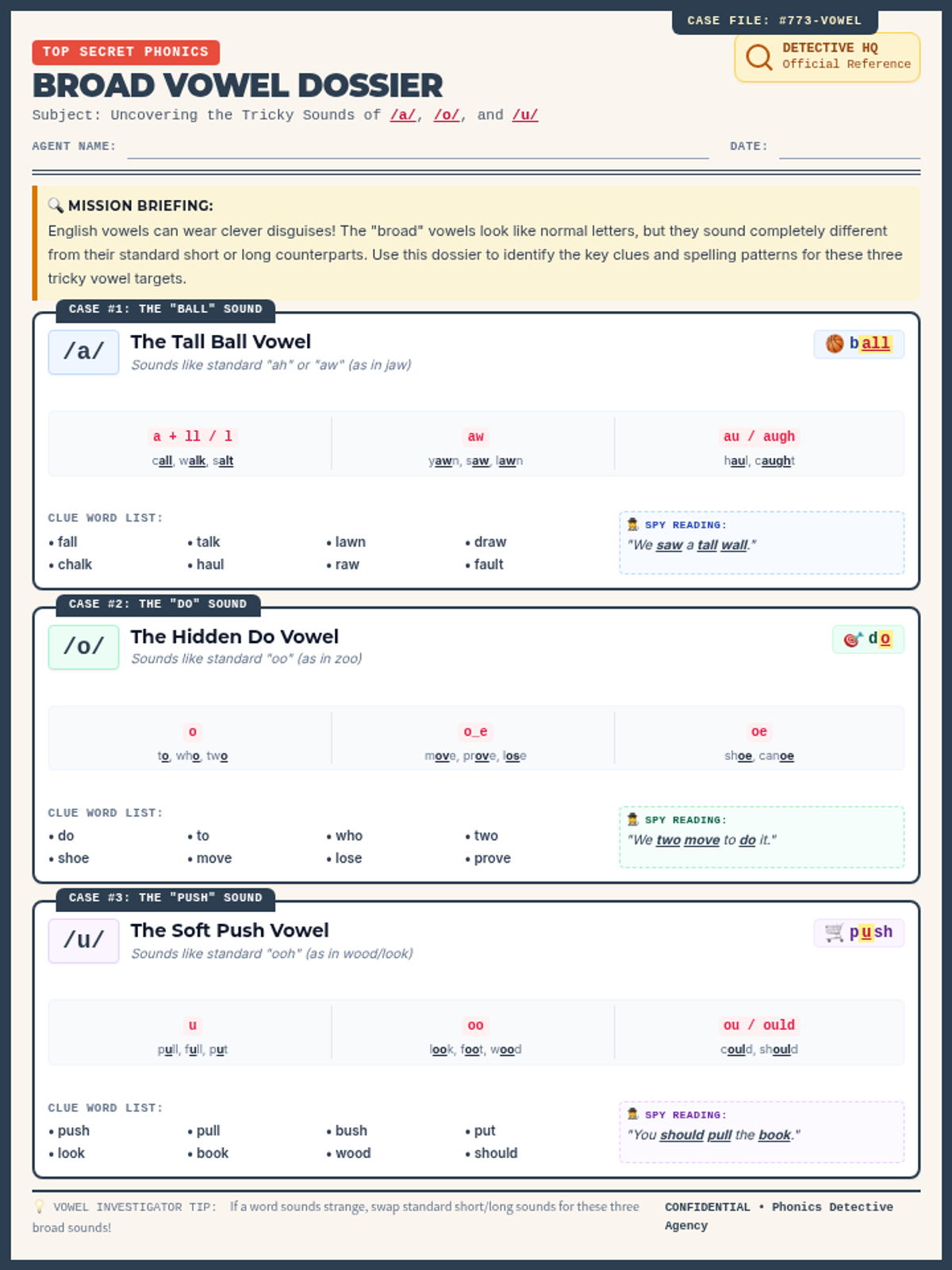
A interactive phonics lesson targeting the three tricky broad vowel sounds: /a/ as in ball, /o/ as in do, and /u/ as in push. Students act as Sound Detectives to uncover and categorize these unusual spelling patterns.