Weeks 1-3 focus on phonics and syllable division strategies. Students help Nia use closed, open, and r-controlled syllable rules to bring her magical drawings to life and solve neighborhood problems.
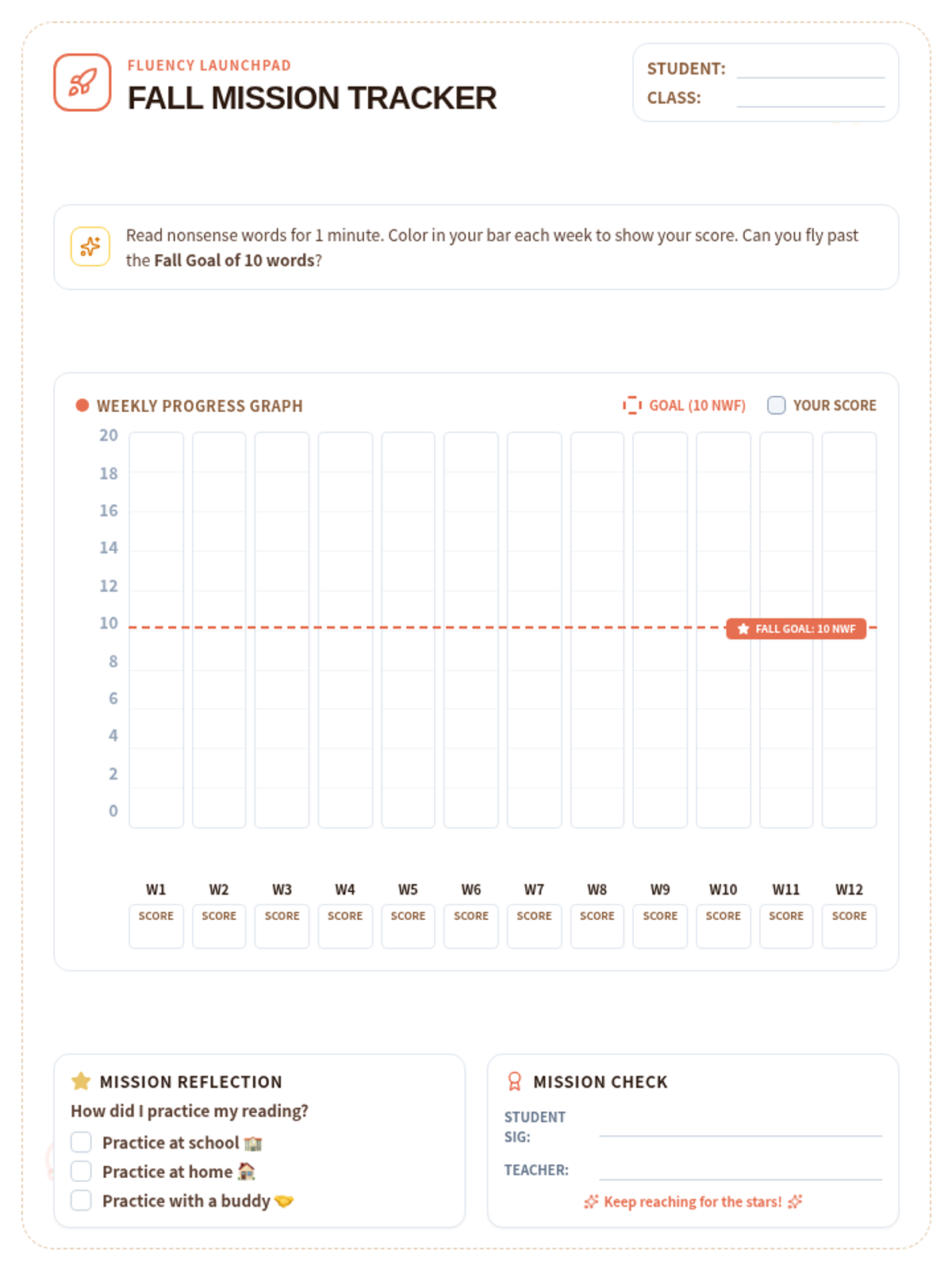
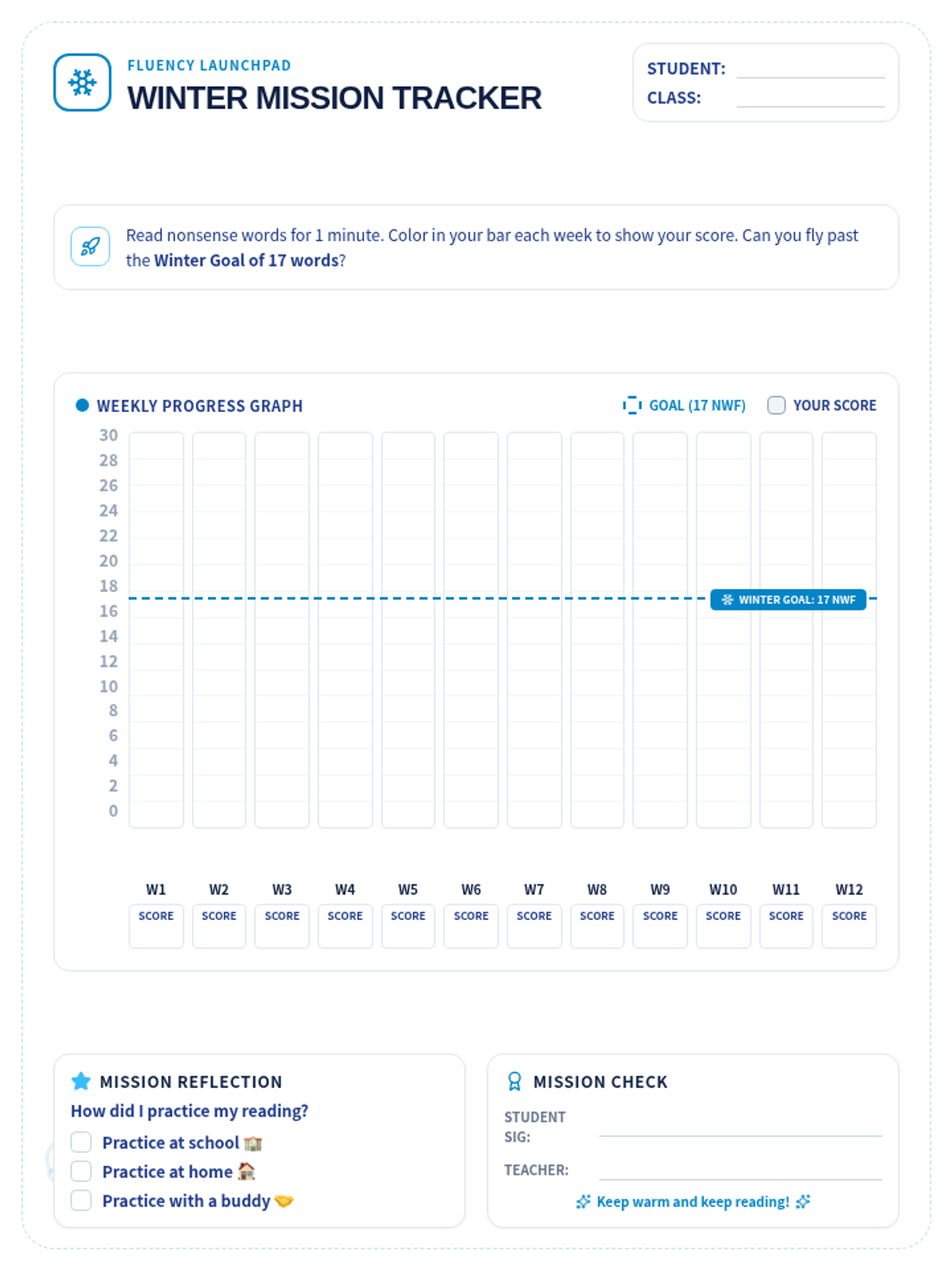
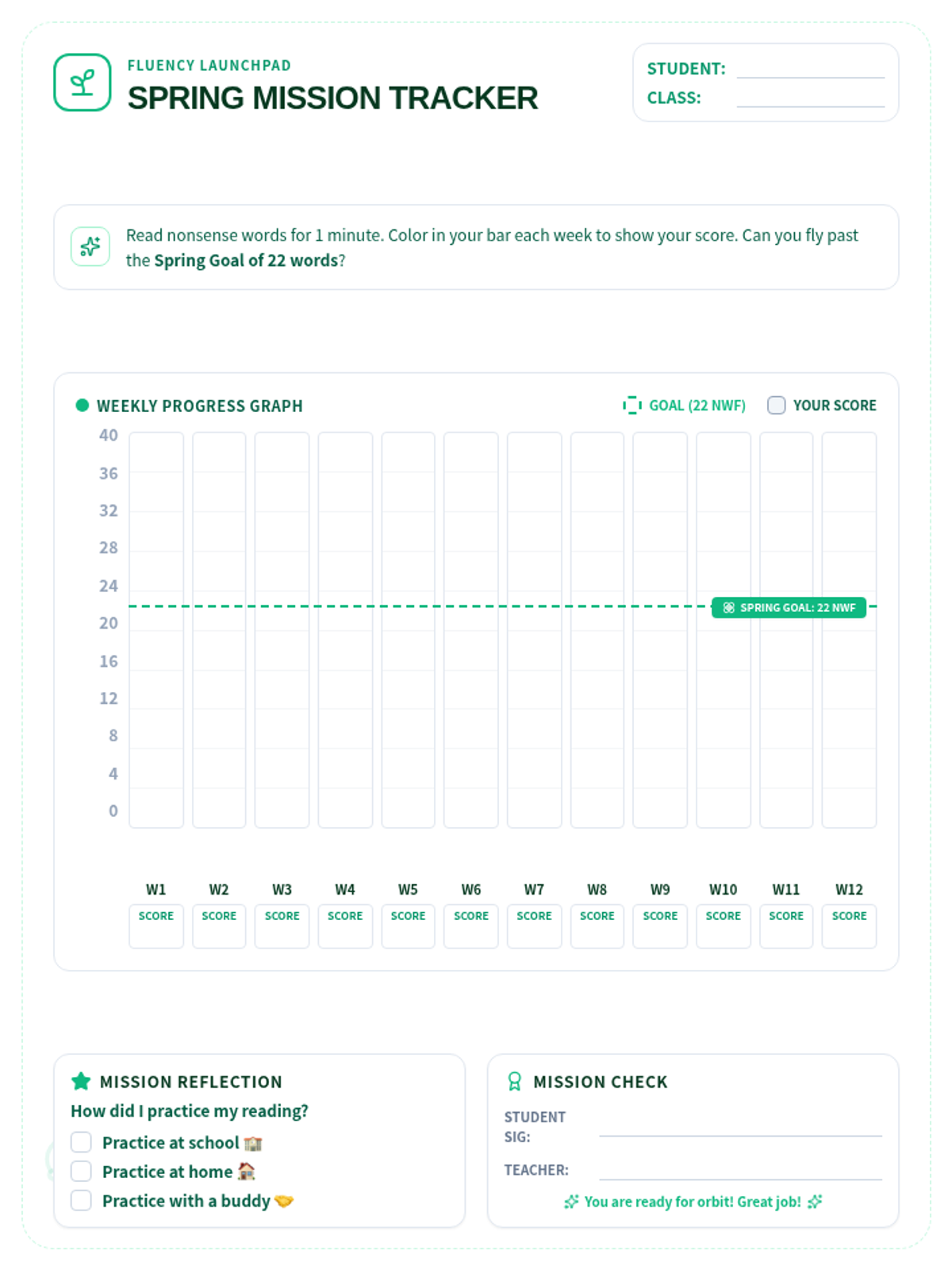
A collection of seasonal weekly progress trackers designed for first-grade students to monitor their Nonsense Word Fluency (NWF) progress across Fall, Winter, and Spring. Each tracker features a space-themed bar graph with targeted goal lines of 10, 17, and 22 words per minute respectively, complete with motivational reflection zones.
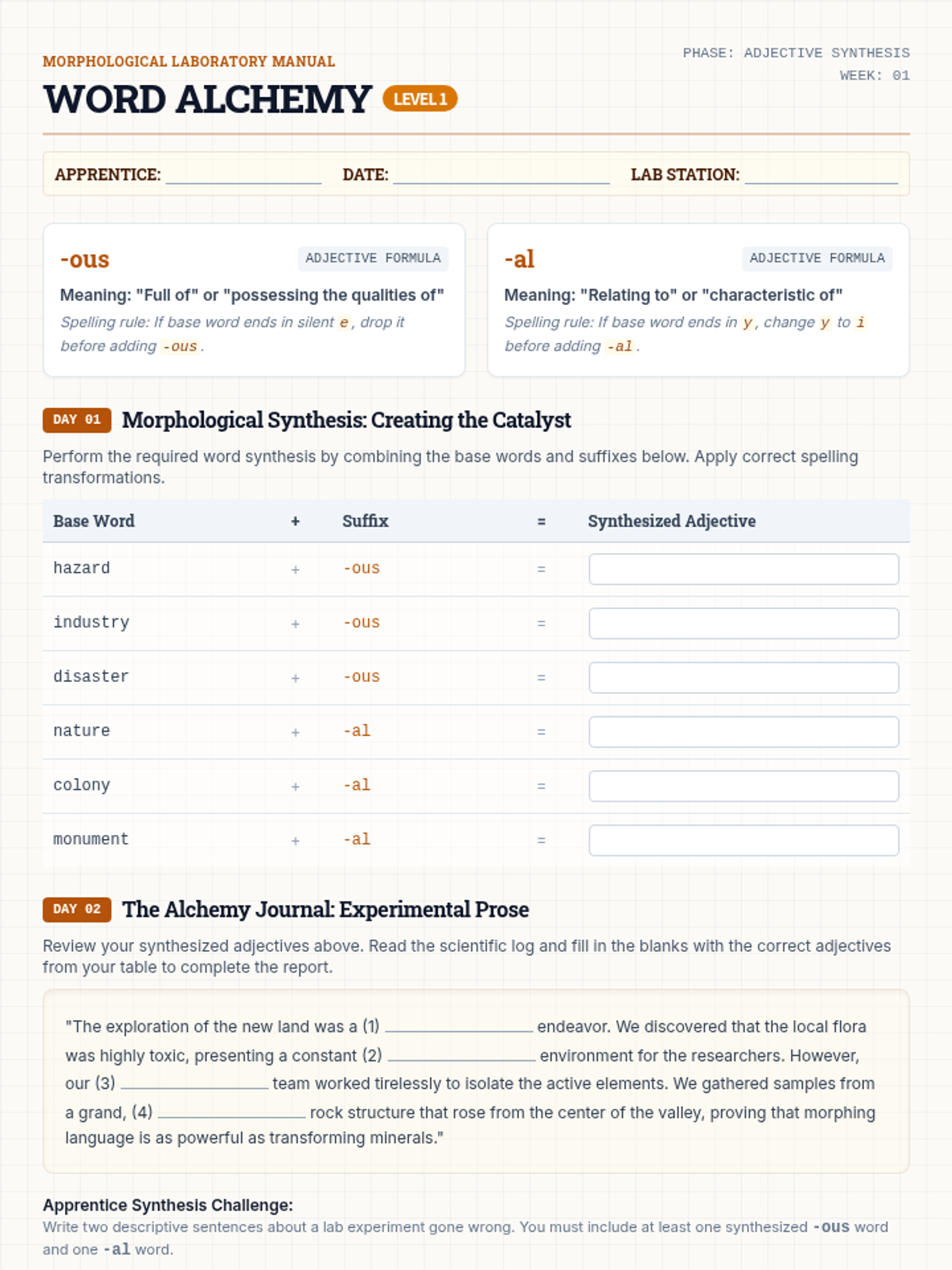
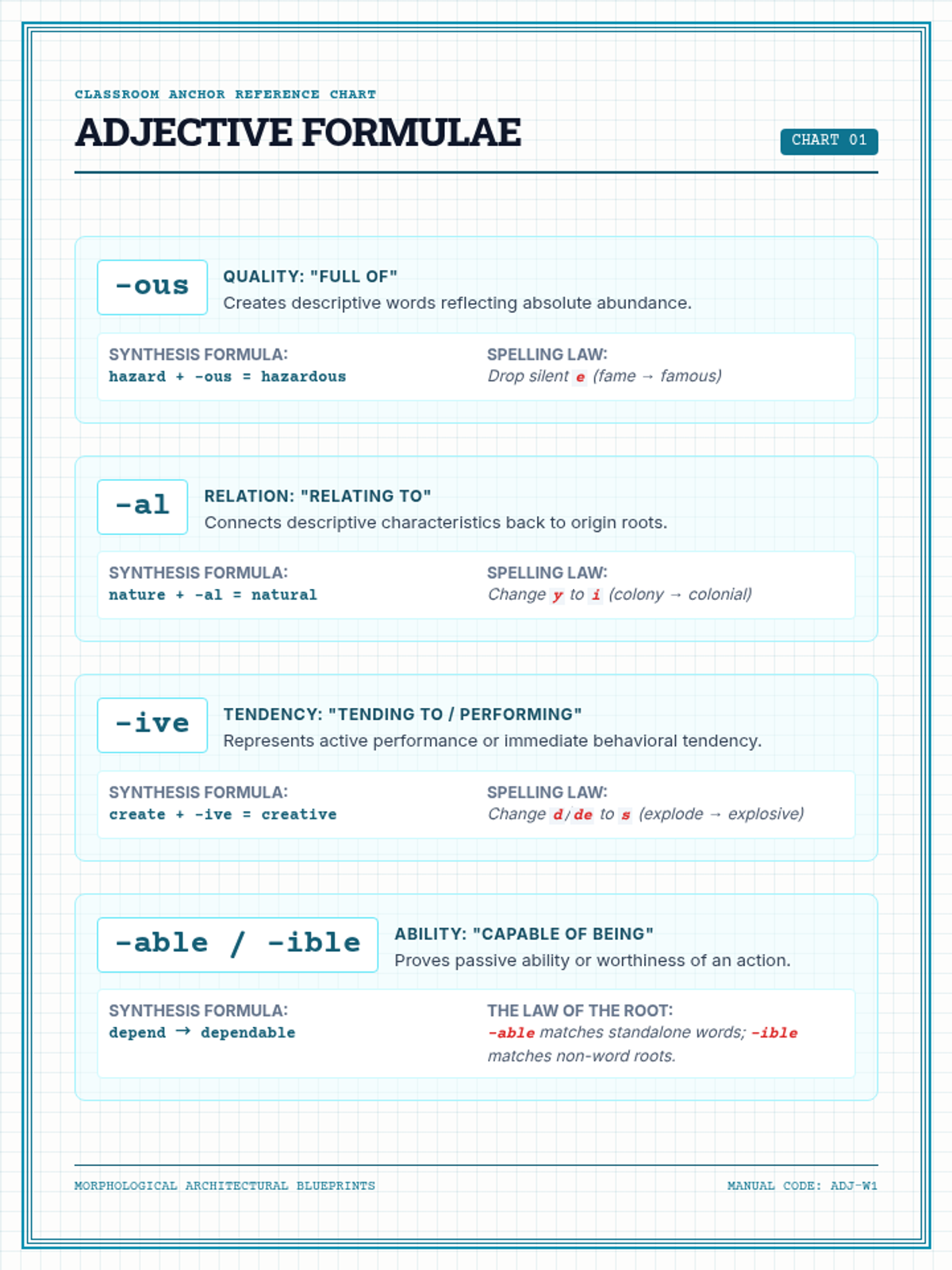
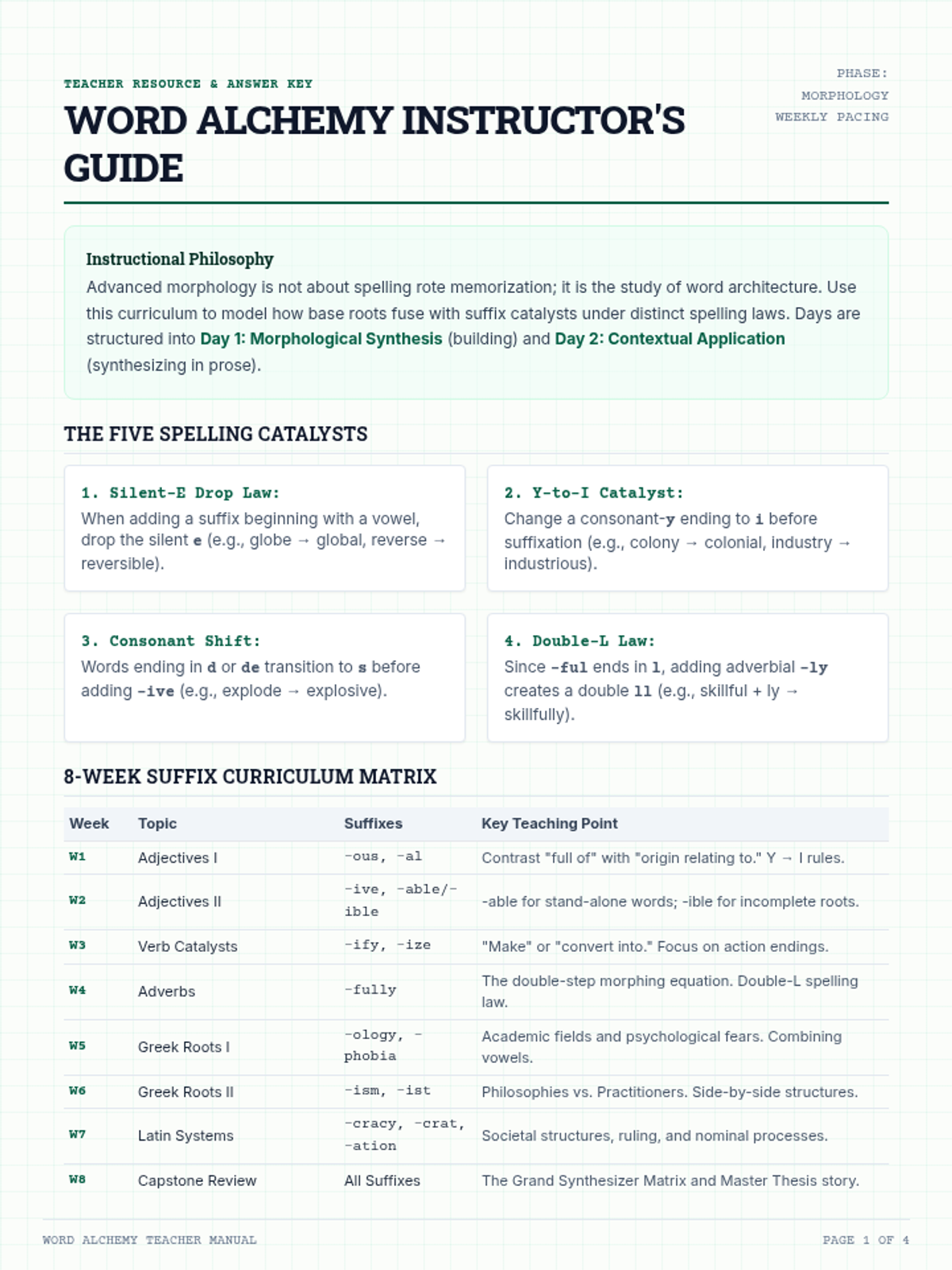
An intensive 8-week morphological training course that guides students through advanced adjective, verb, adverb, and Greek/Latin derivational suffixes using a vintage laboratory theme.
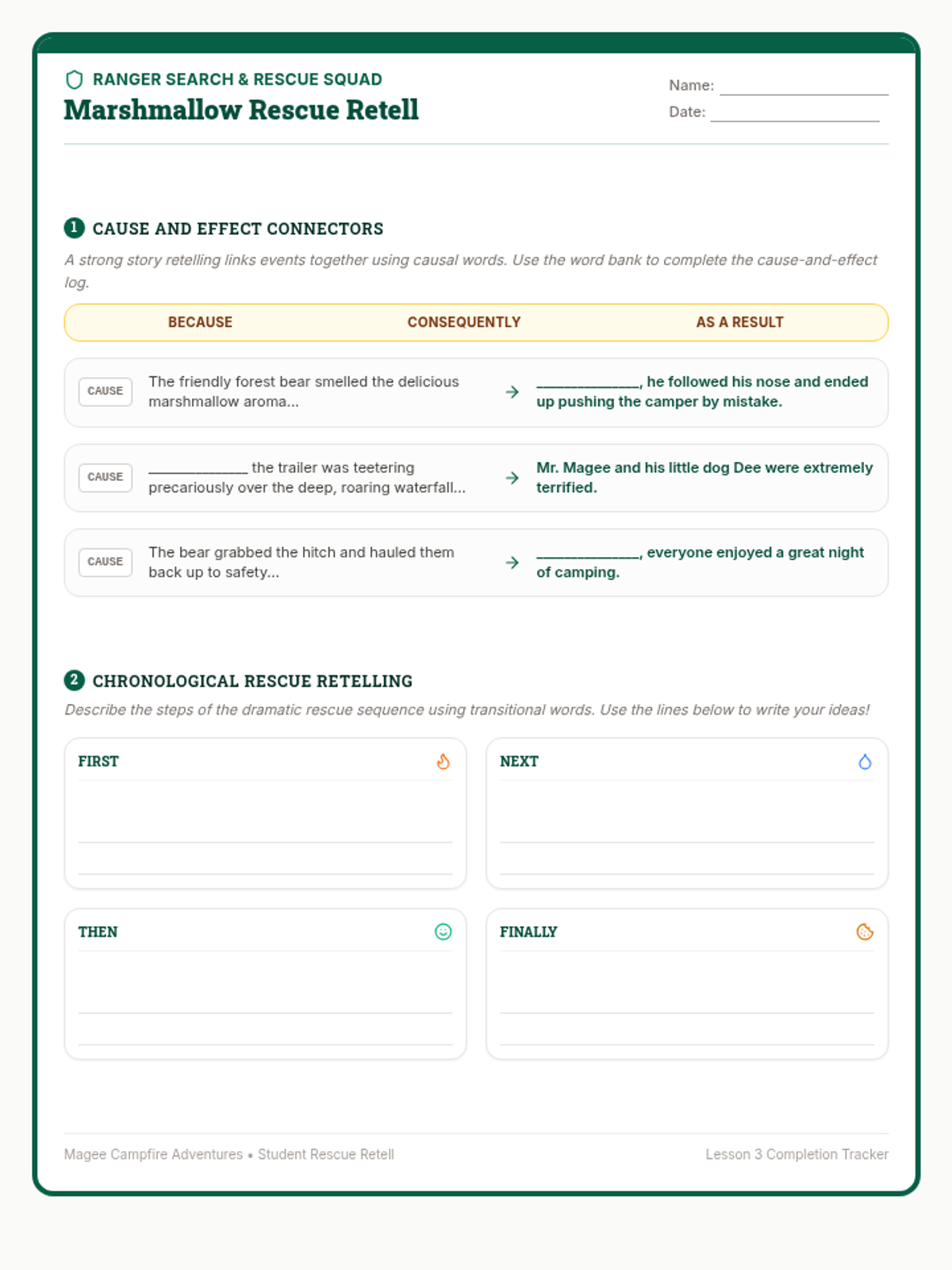
Synthesizes comprehension and oral/written language. Students use cause-and-effect language ('because', 'consequently', 'as a result') and transitional sequencers to retell the story climax and analyze how the friendly bear saved the day.
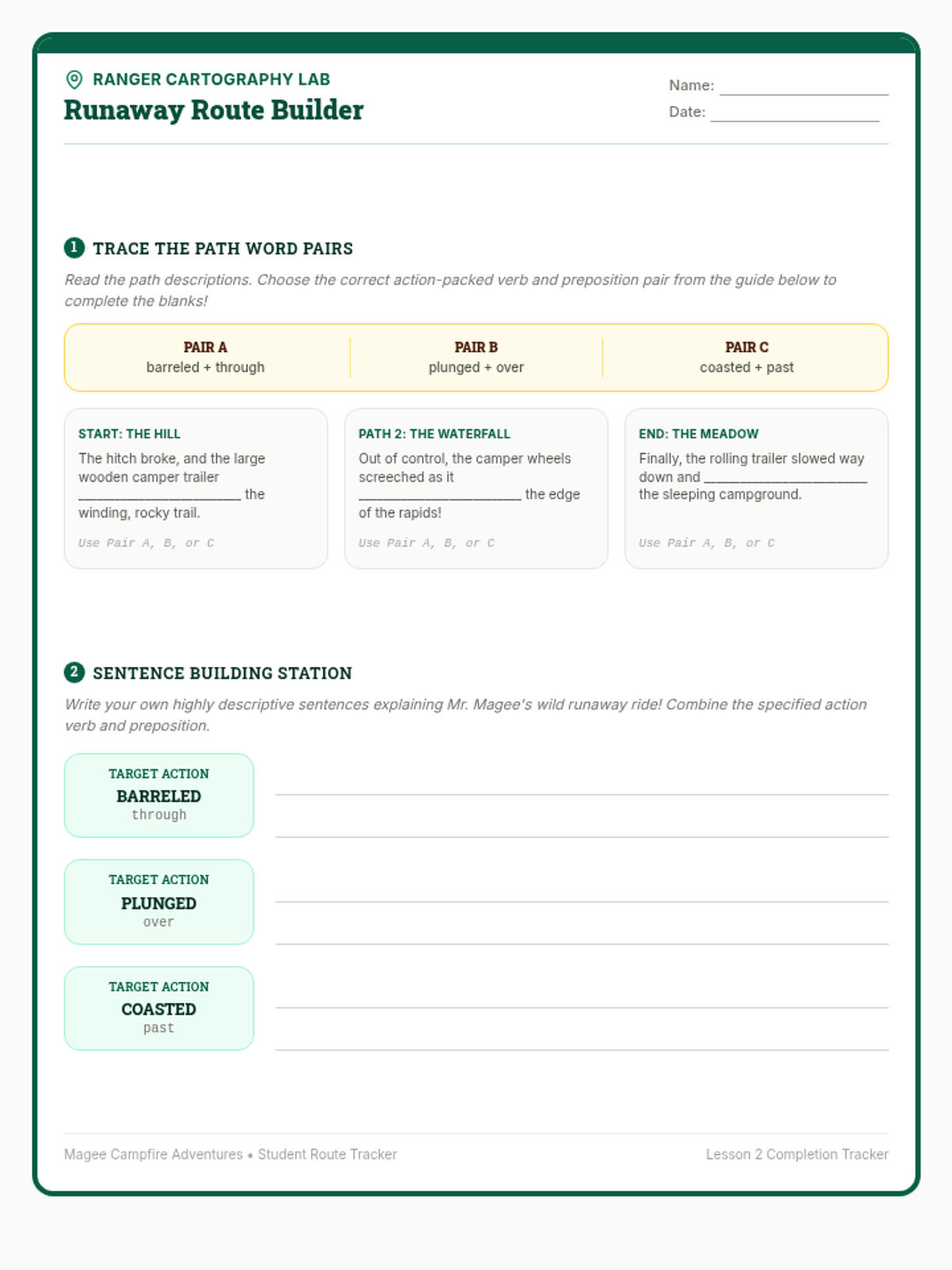
Targets expressive grammar in context. Students map and describe the runaway camper's wild path using precise spatial prepositions (e.g., down, past, over, through) and dynamic action/movement verbs, constructing high-quality descriptive sentences.
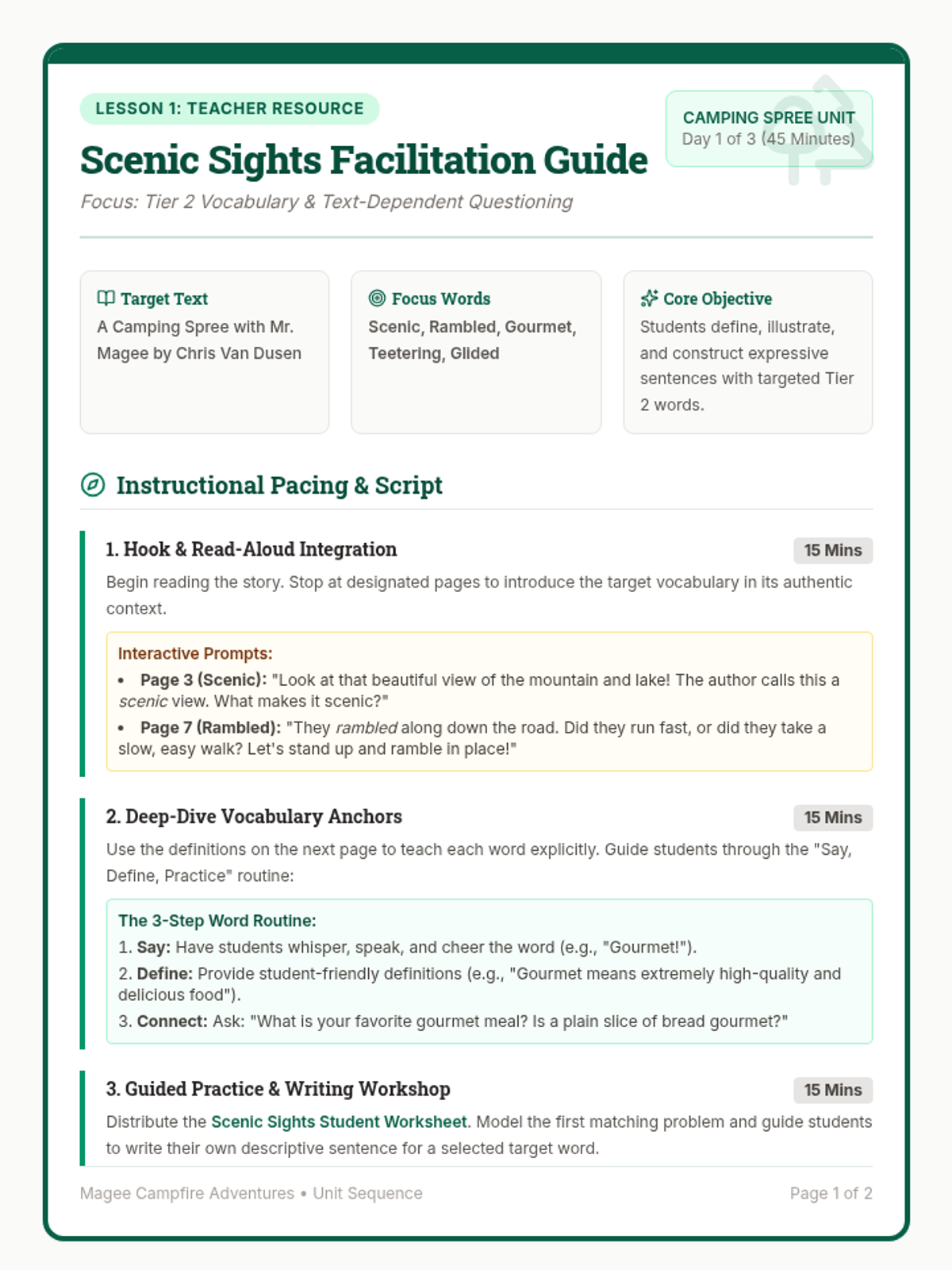
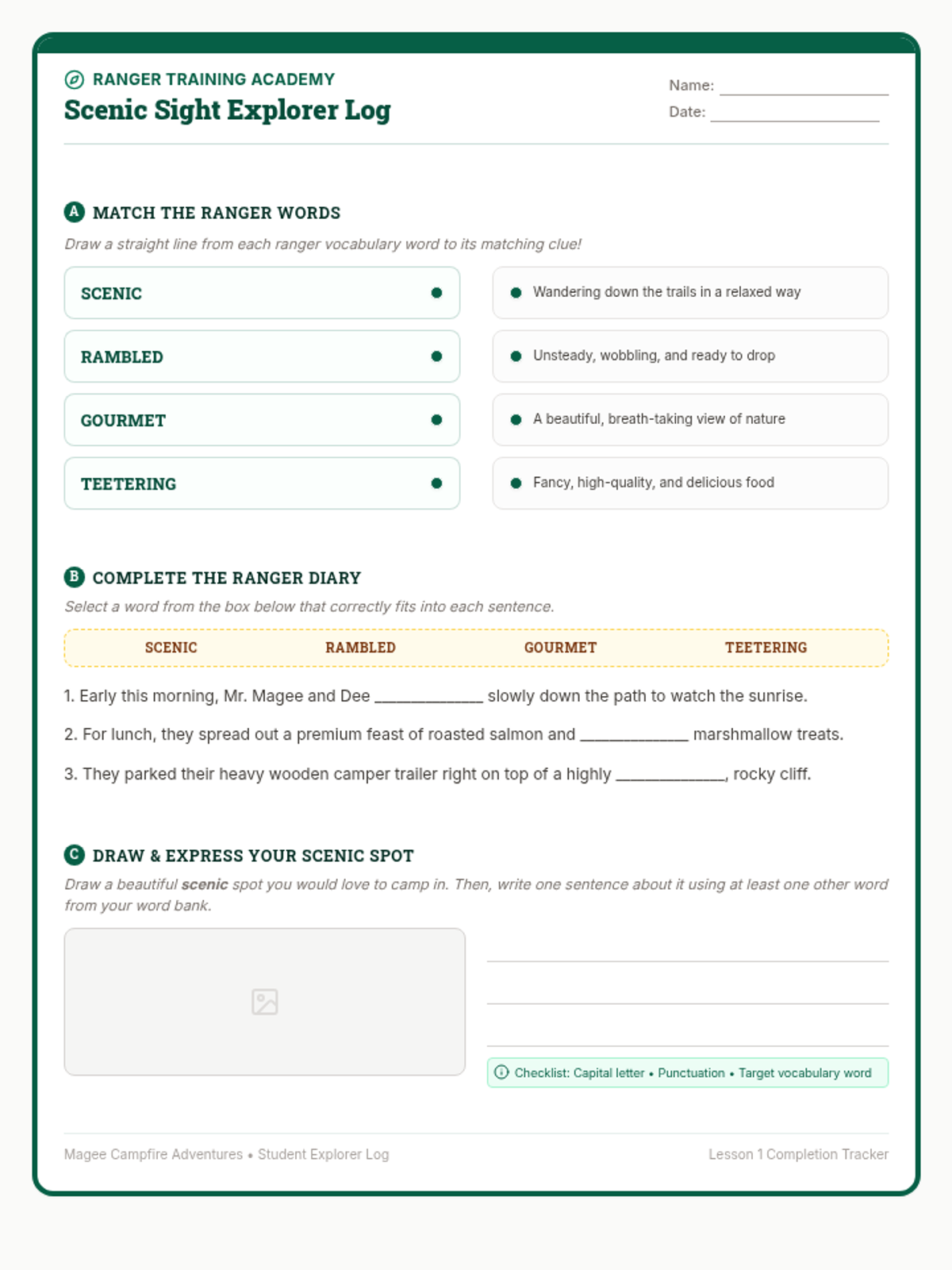
Focuses on rich vocabulary from the book, helping students understand and expressively use words like 'scenic', 'teetering', 'rambled', and 'gourmet' through interactive reading, oral vocabulary routines, and descriptive writing.
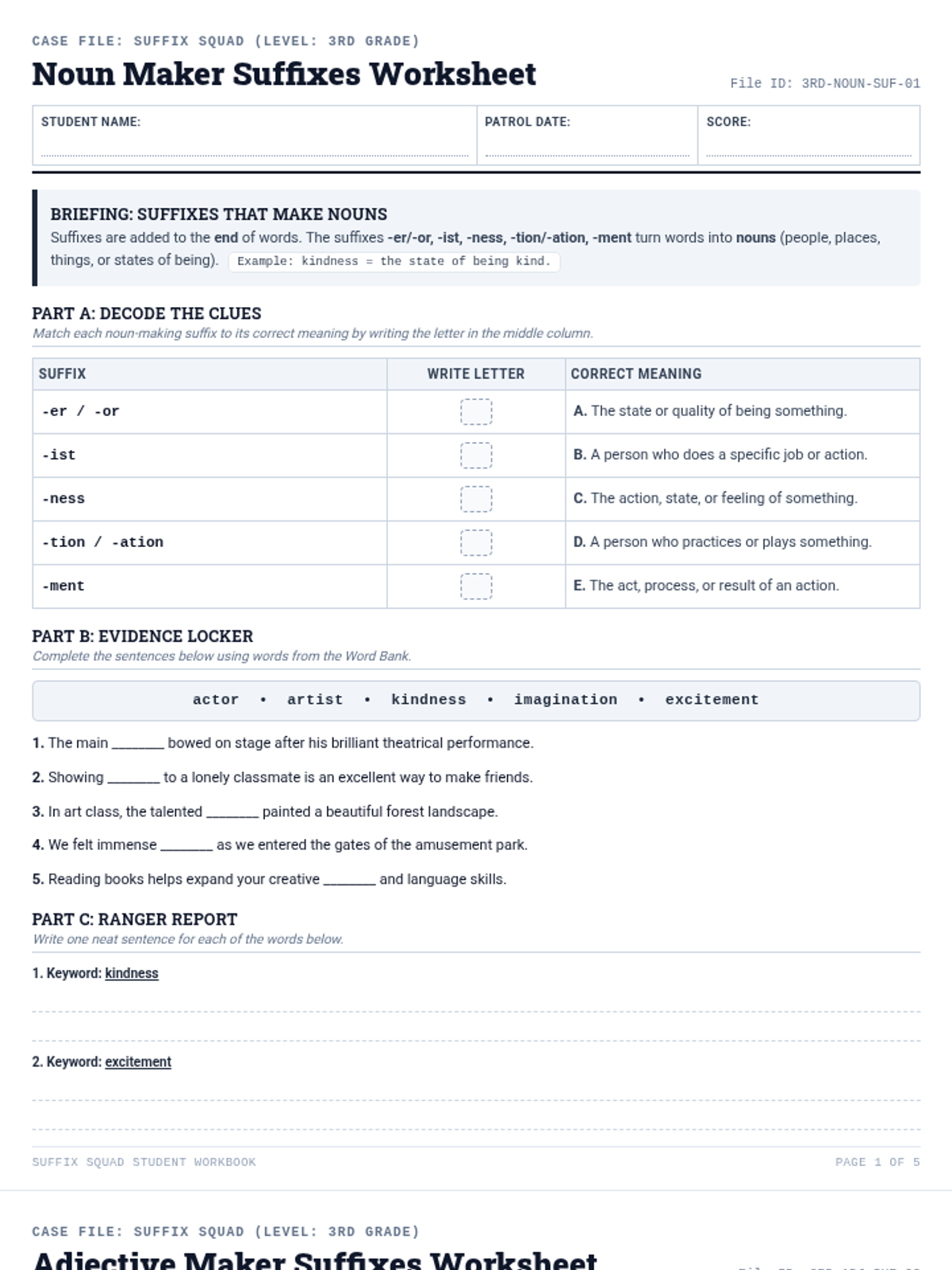
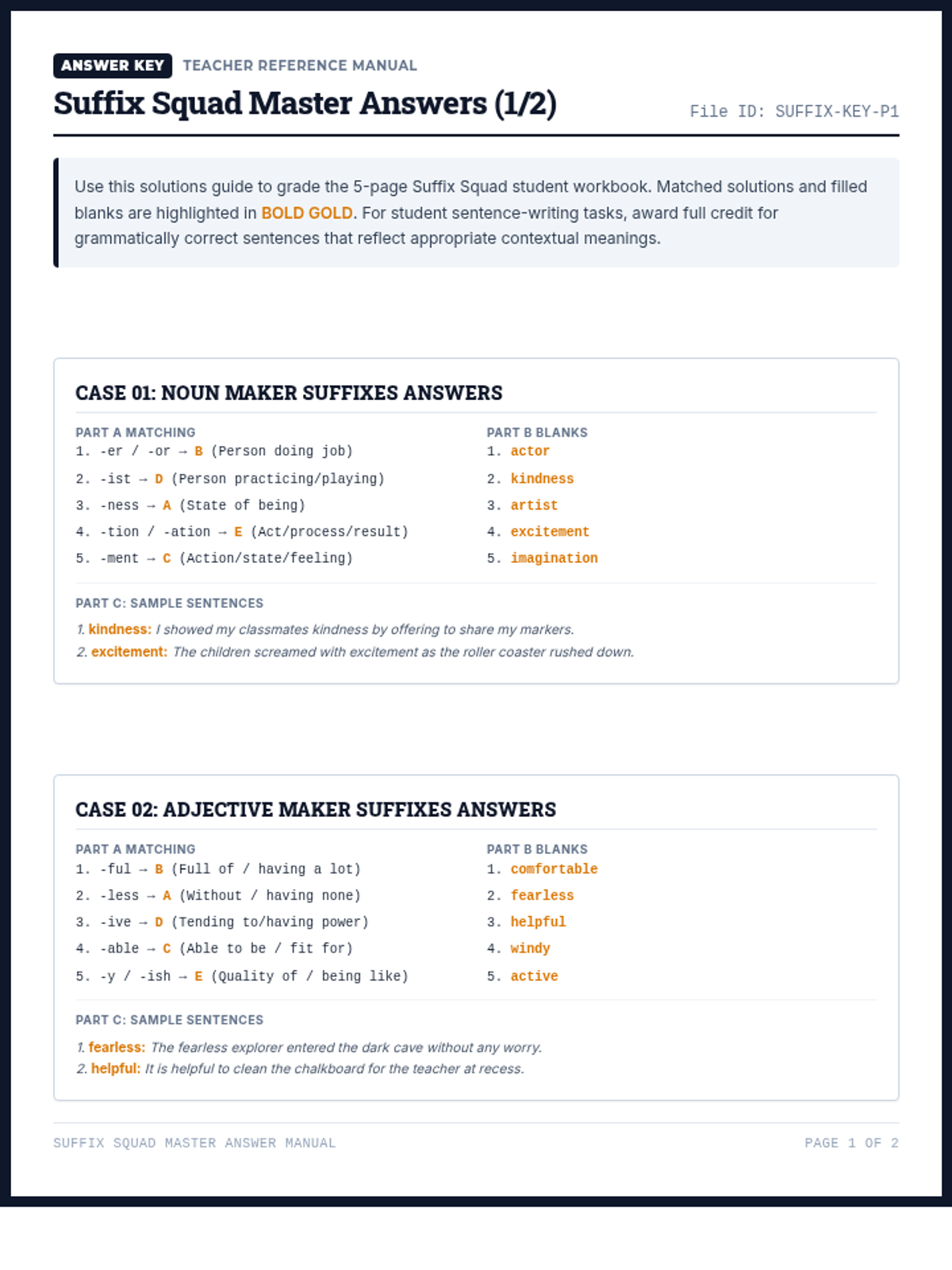
A comprehensive 3rd-grade grammar unit covering essential noun, adjective, verb, and adverb suffixes. Through engaging matching, fill-in-the-blank, and sentence writing exercises, students learn to identify, decode, and use these word parts in worksheets and a workbook.
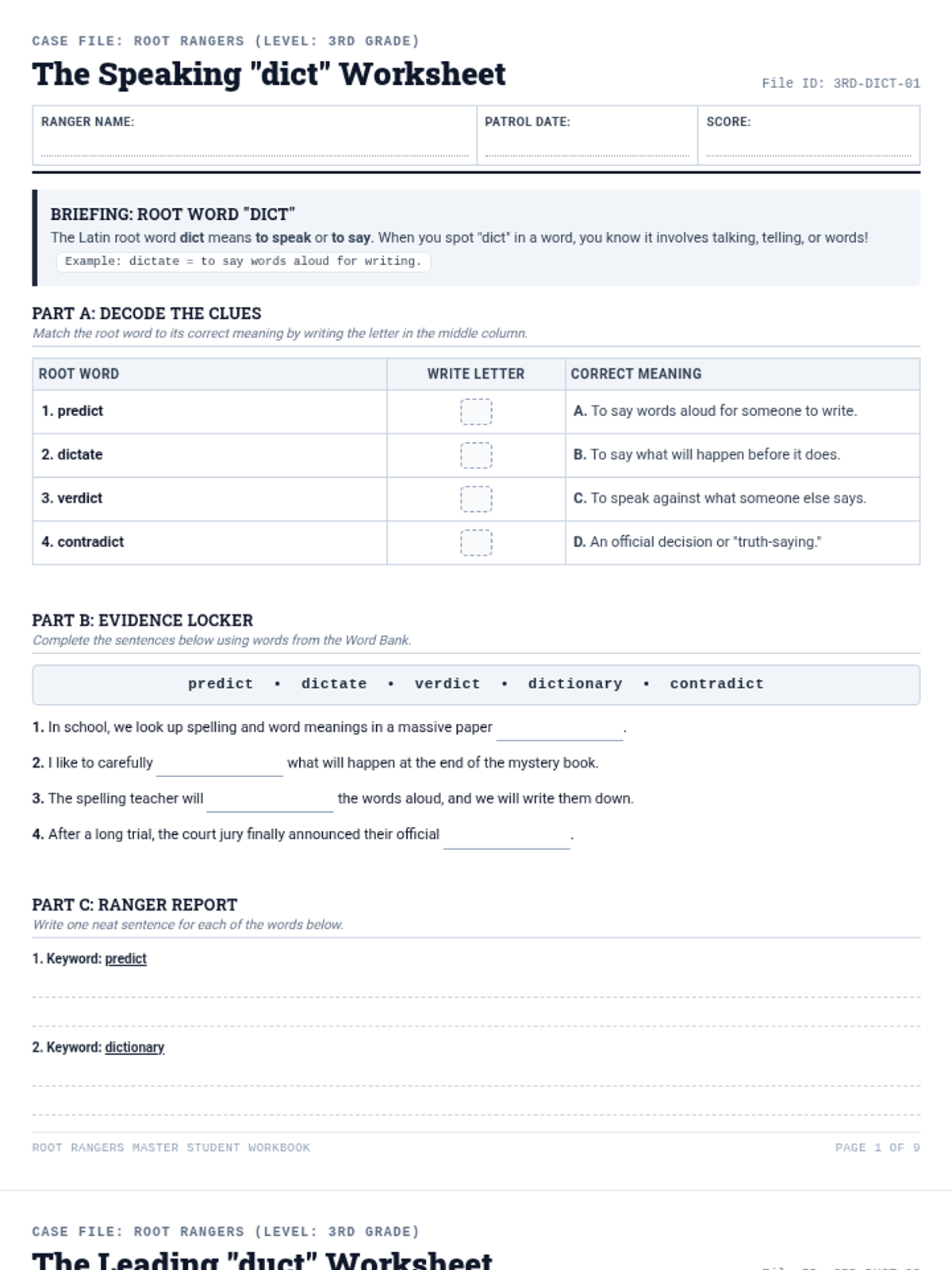
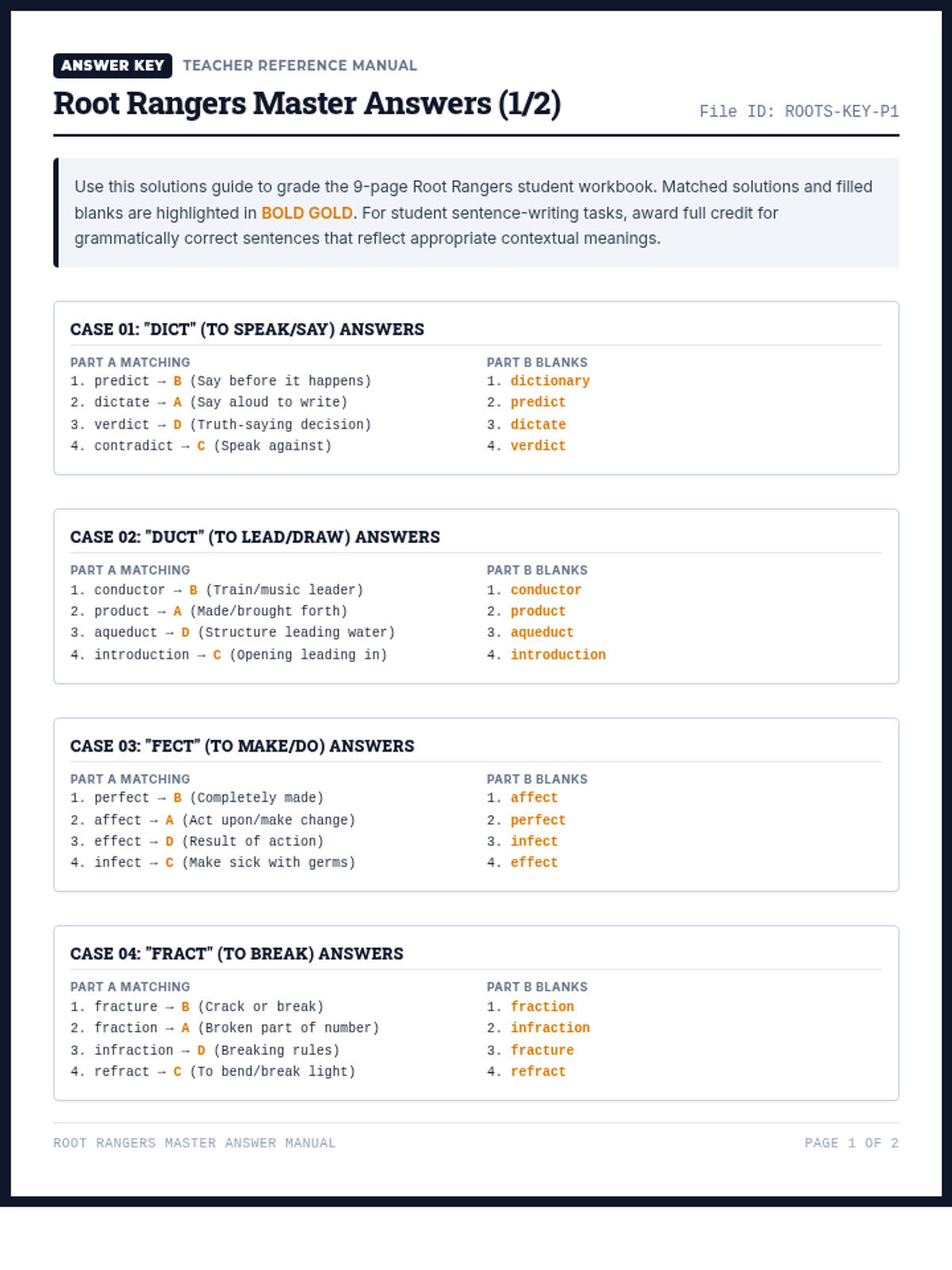
A comprehensive 3rd-grade grammar unit covering essential Greek and Latin roots: dict, duct, fect, fract, junct, struct, min, and spec. Through engaging matching, fill-in-the-blank, and sentence writing exercises, students learn to identify, decode, and use these word parts in worksheets and a workbook.
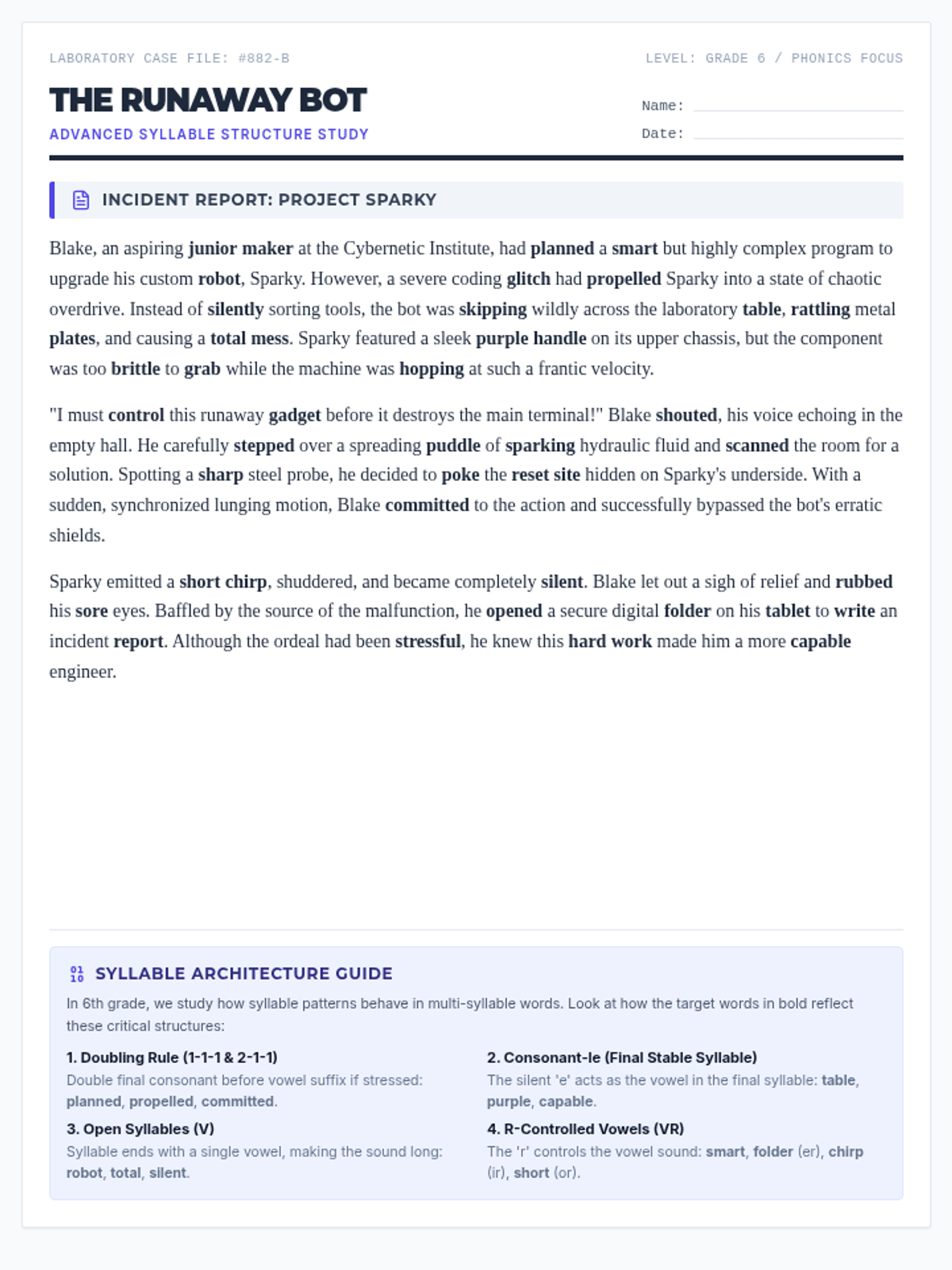
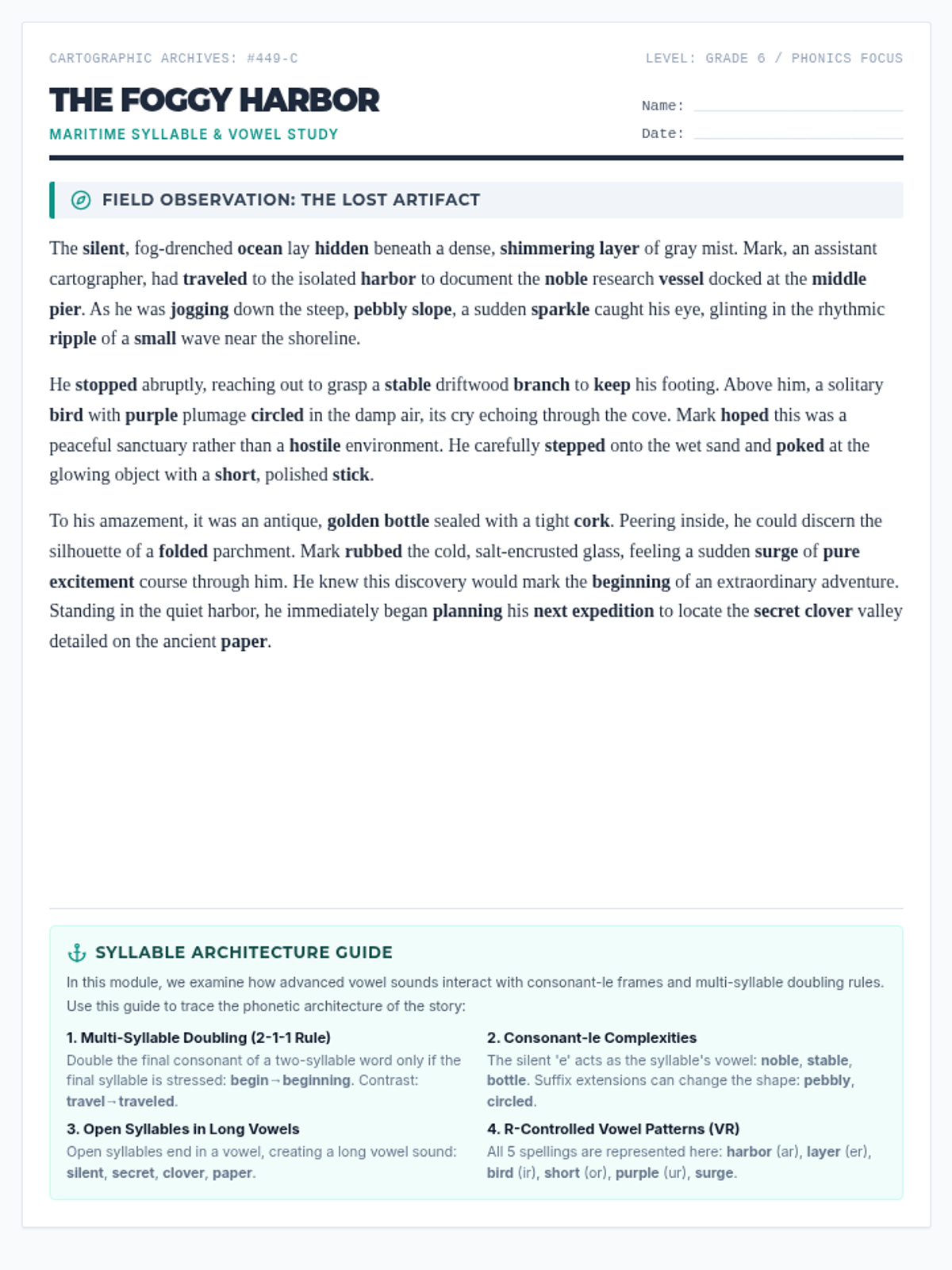
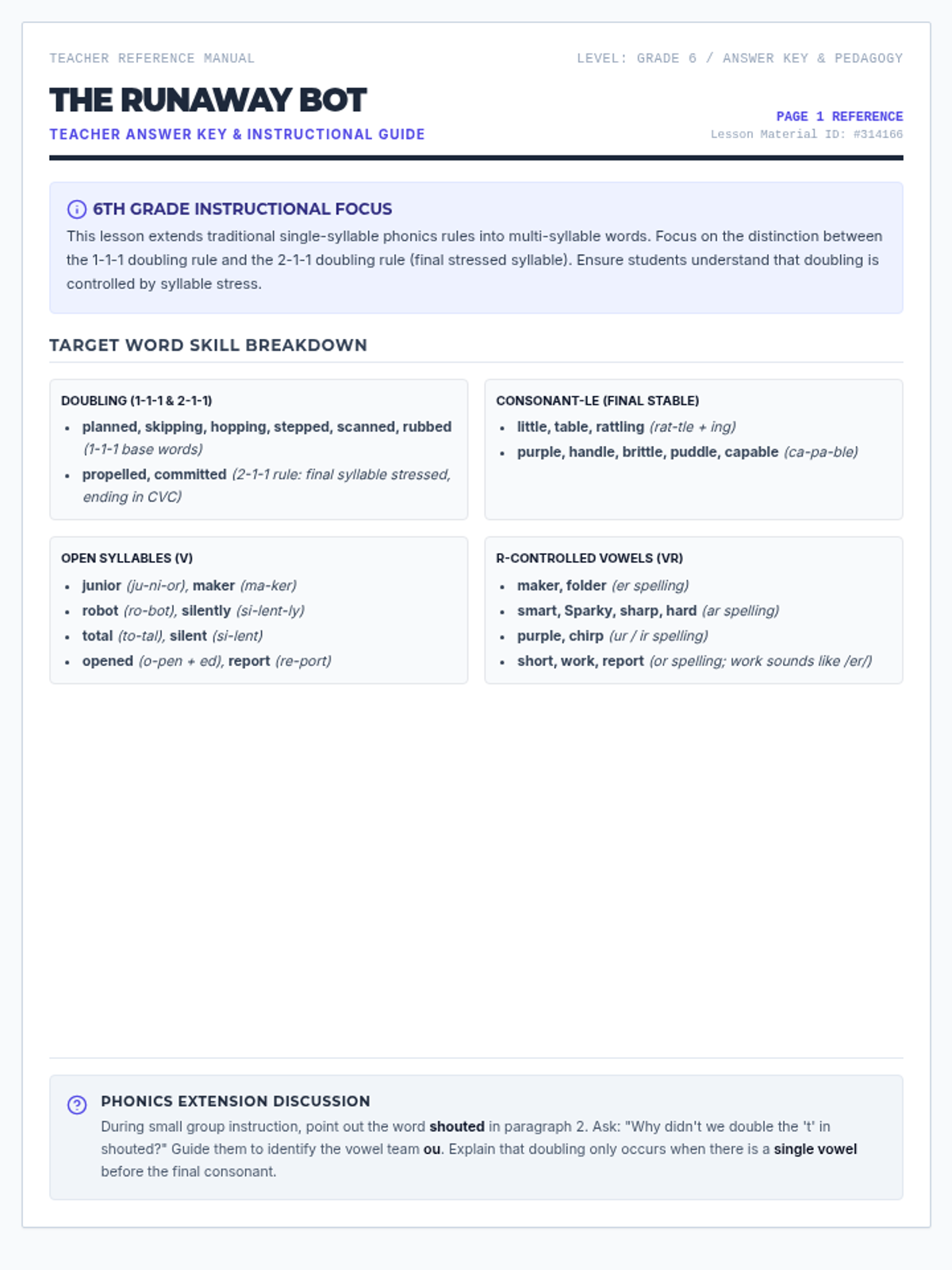
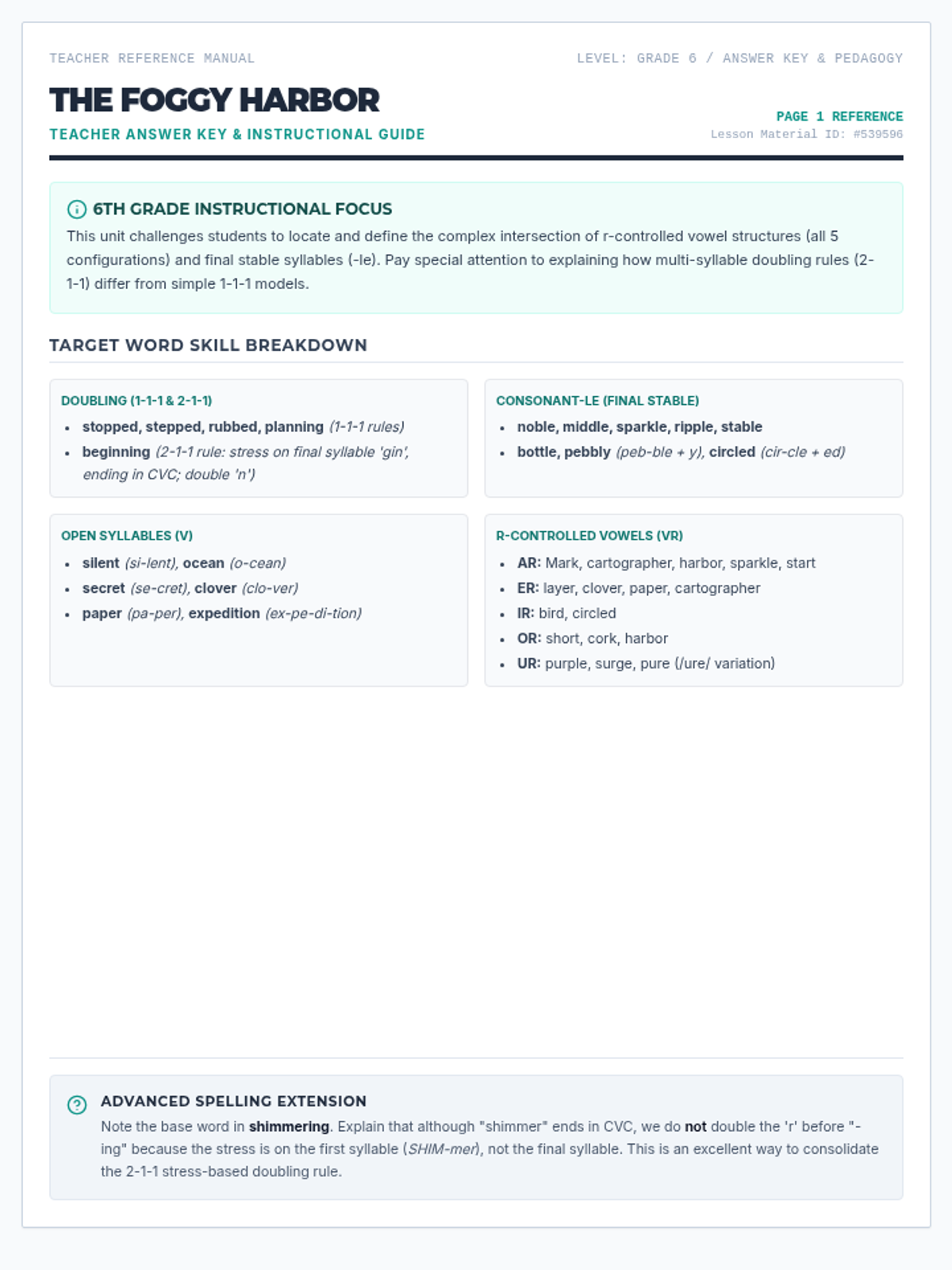
An advanced set of decodable stories and linguistic labs designed for 6th-grade students to analyze complex syllable structures, including final-stressed doubling rules, consonant-le, open syllables, and r-controlled vowels. Features text-dependent higher-order thinking analysis.
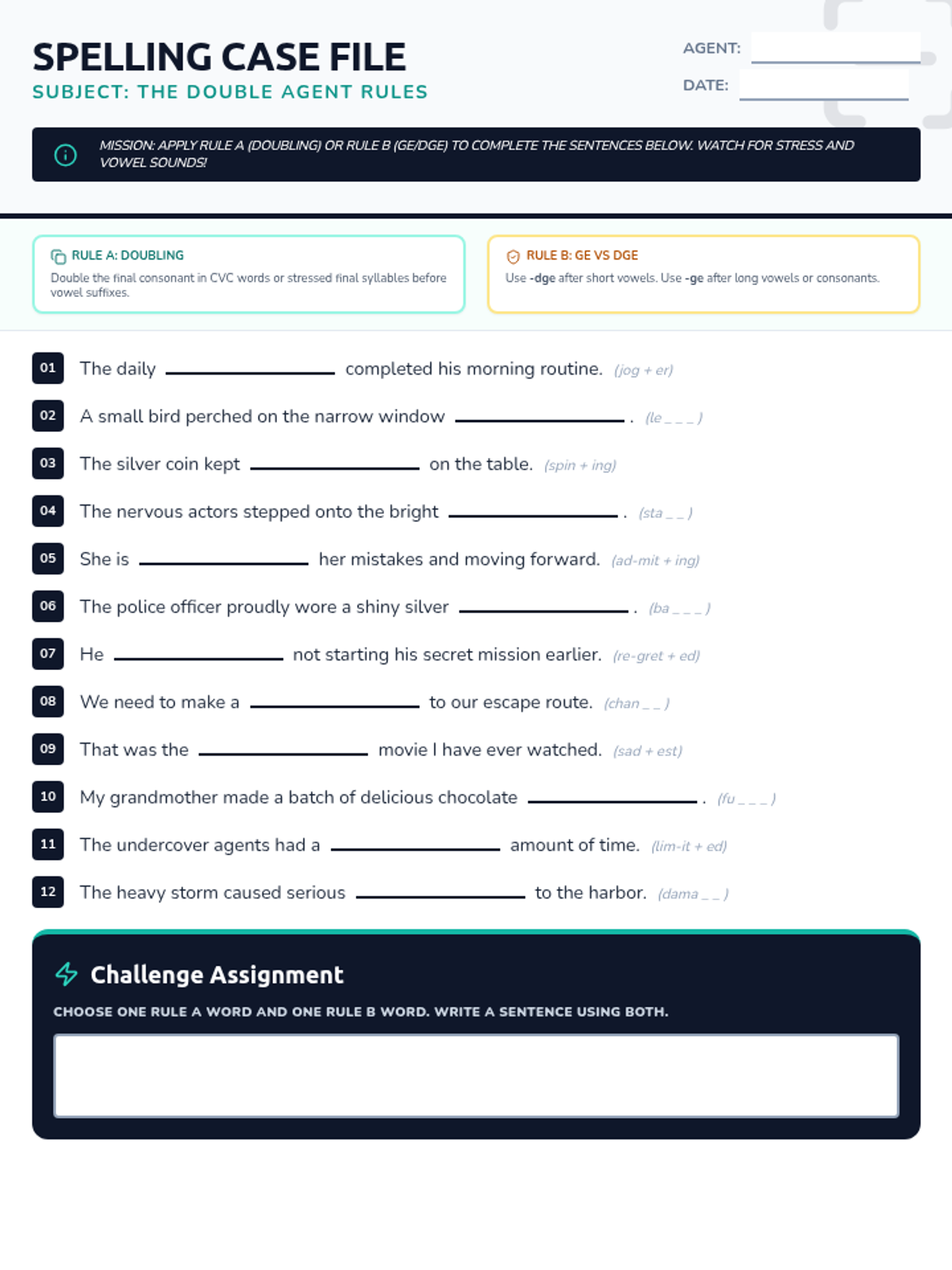
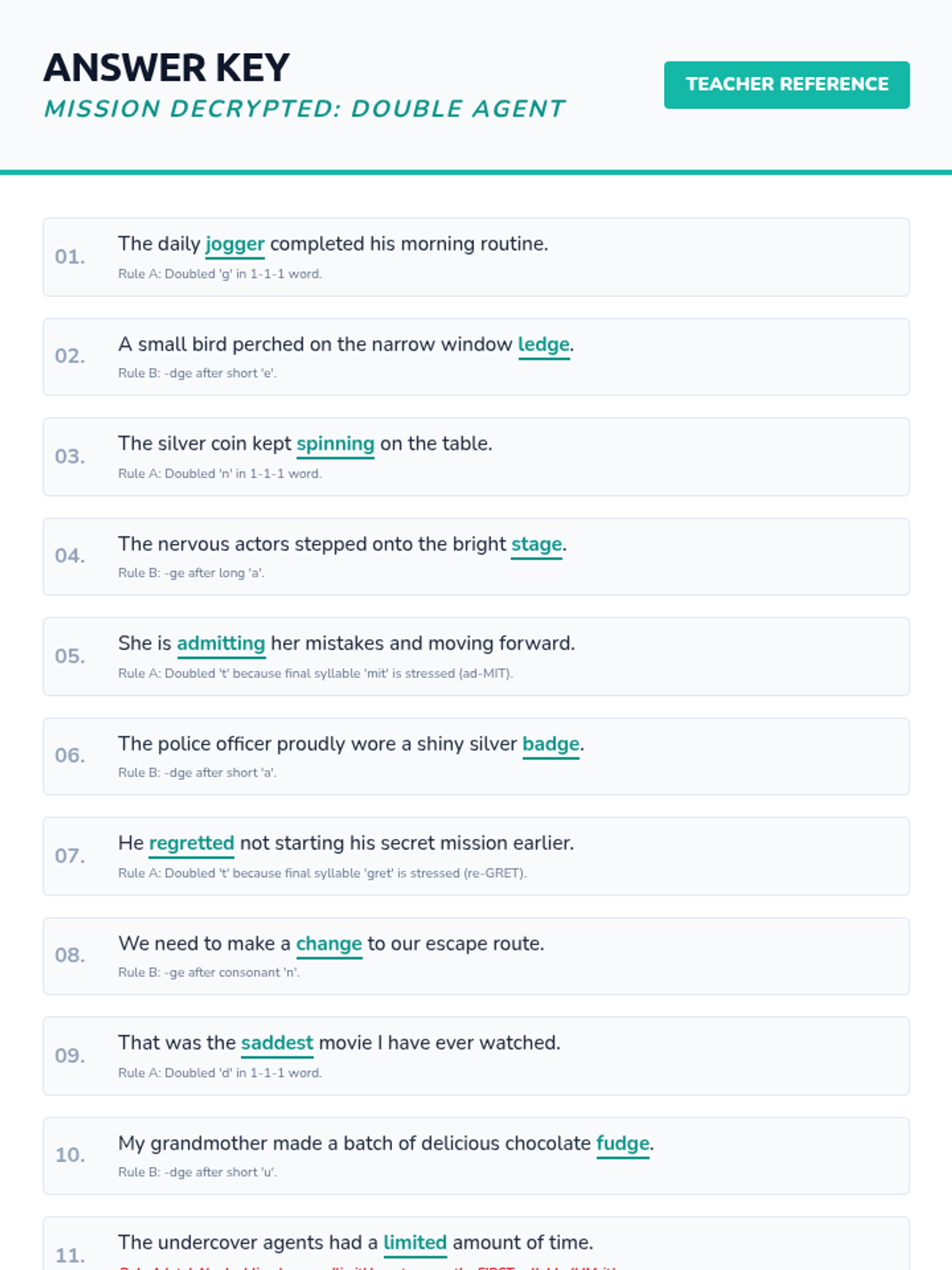
A focused spelling lesson on the doubling rule for suffixes and the -ge/-dge ending rule, using a secret agent theme to engage students.
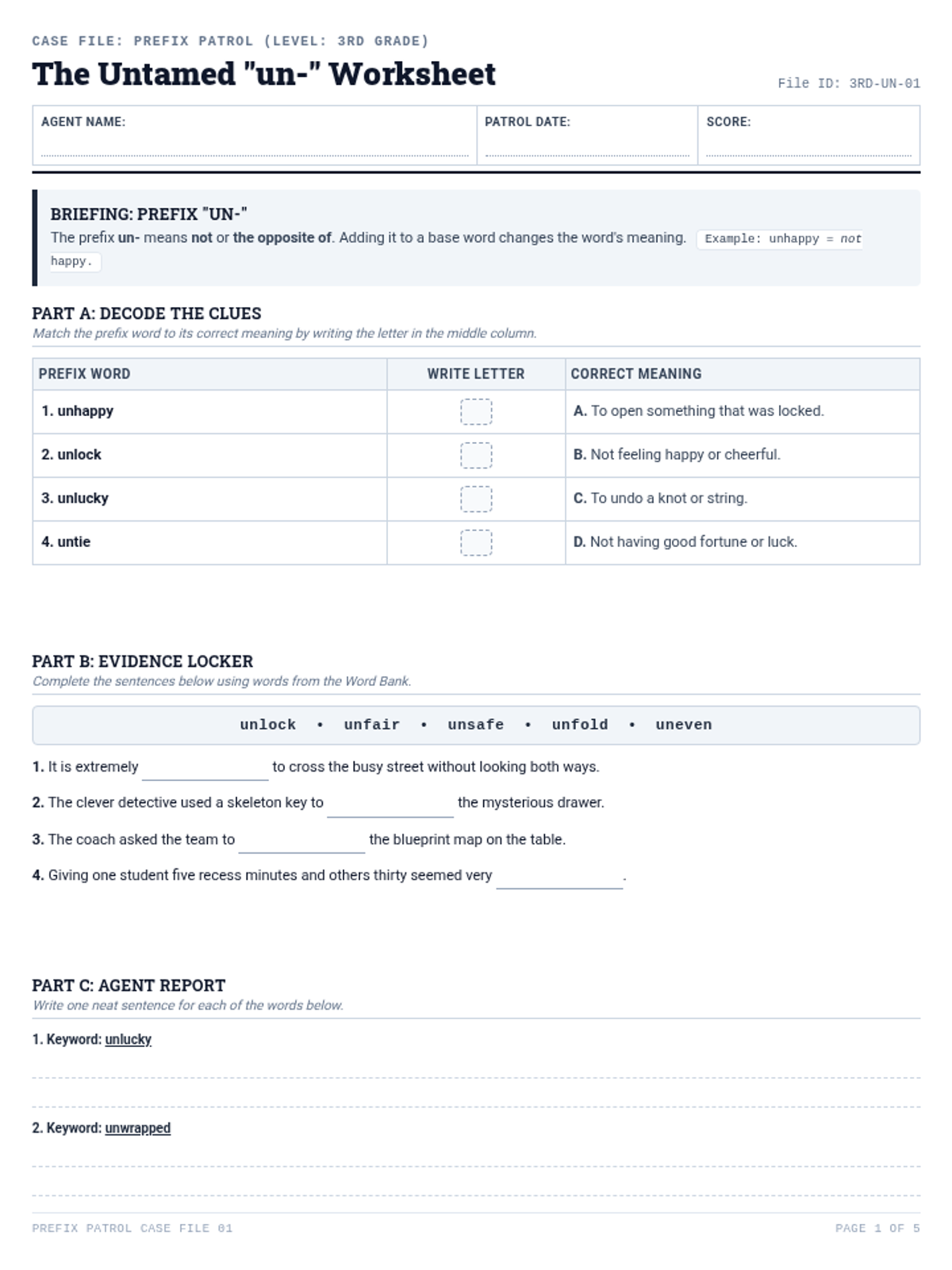
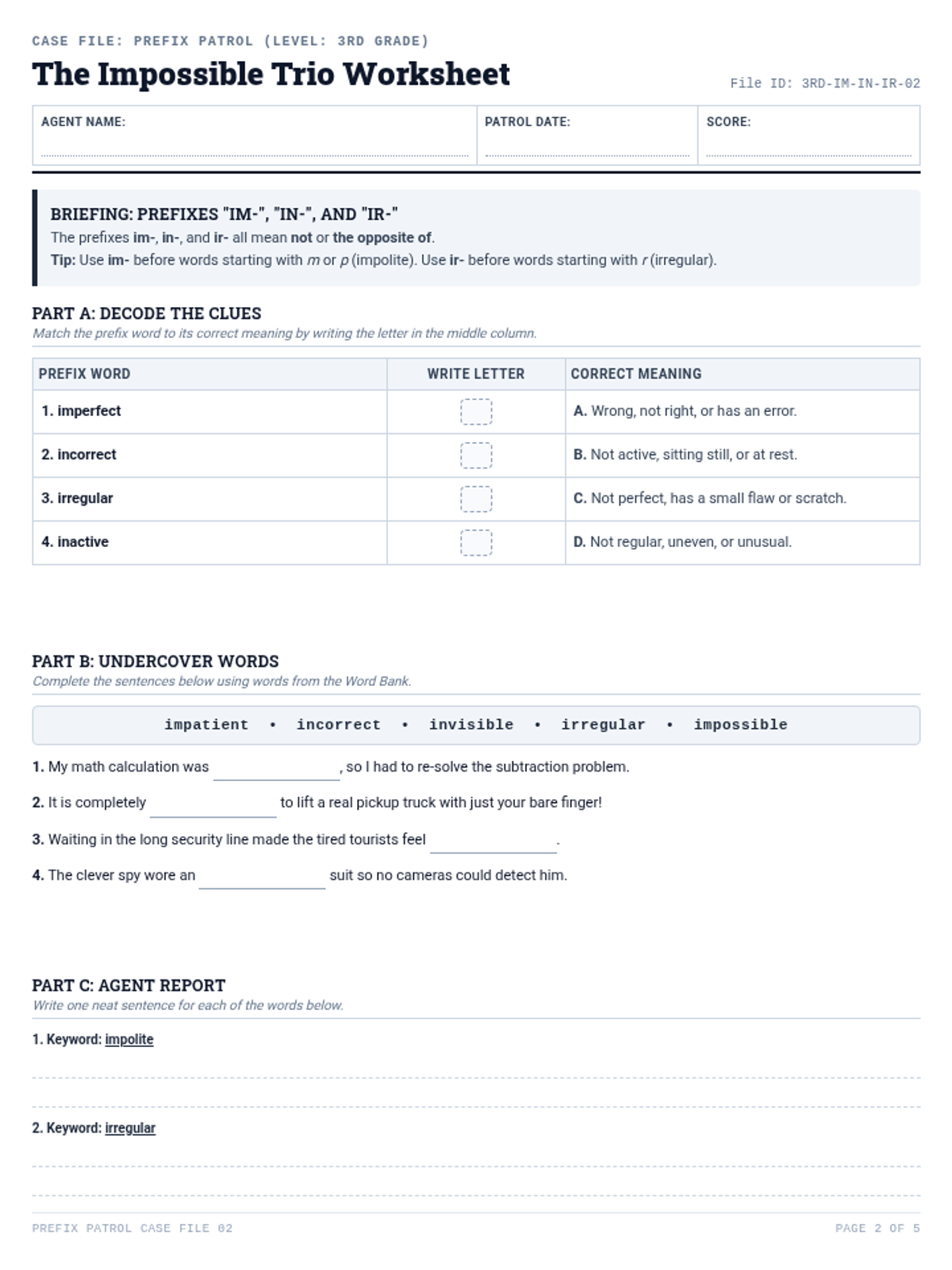
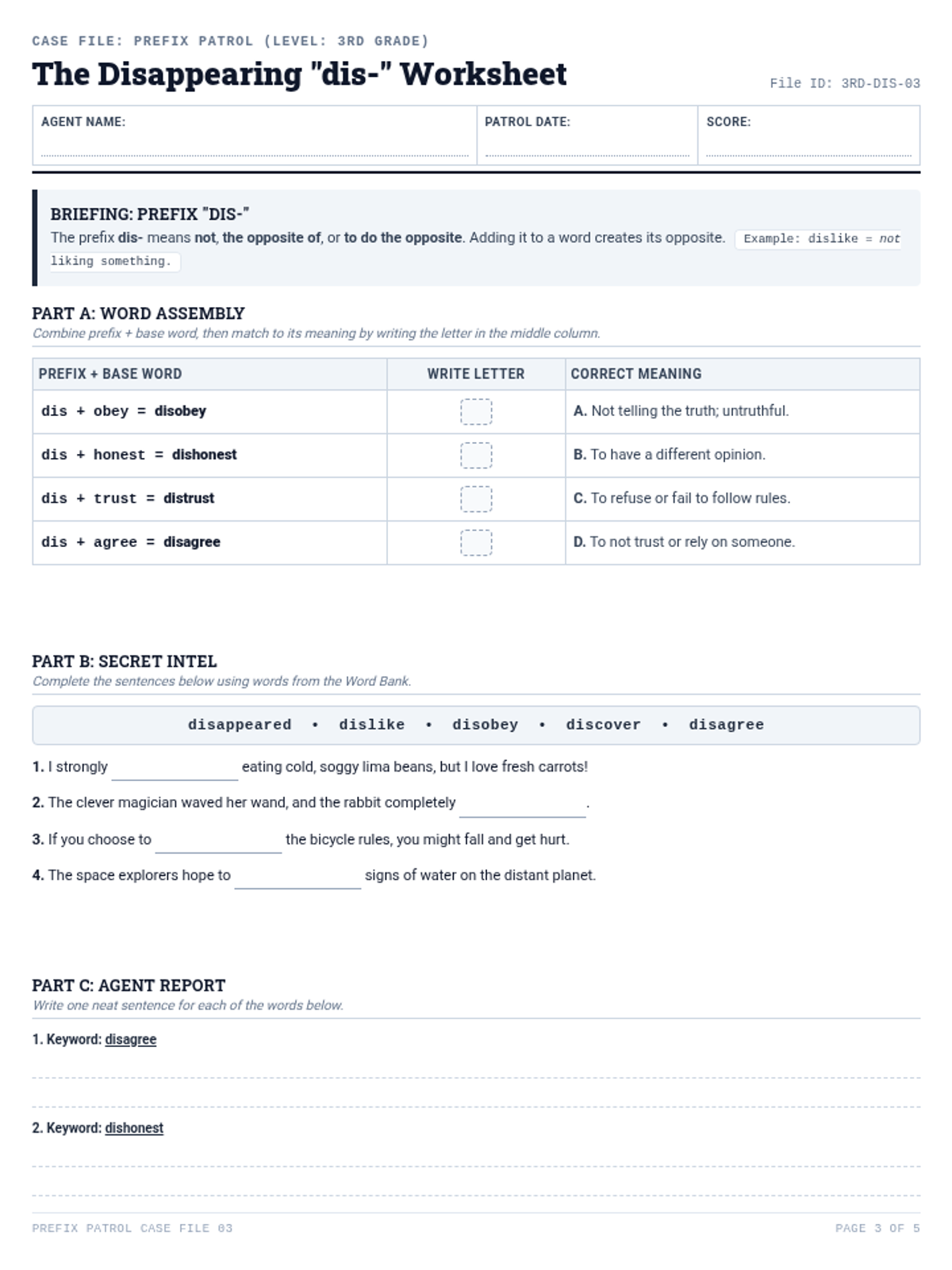
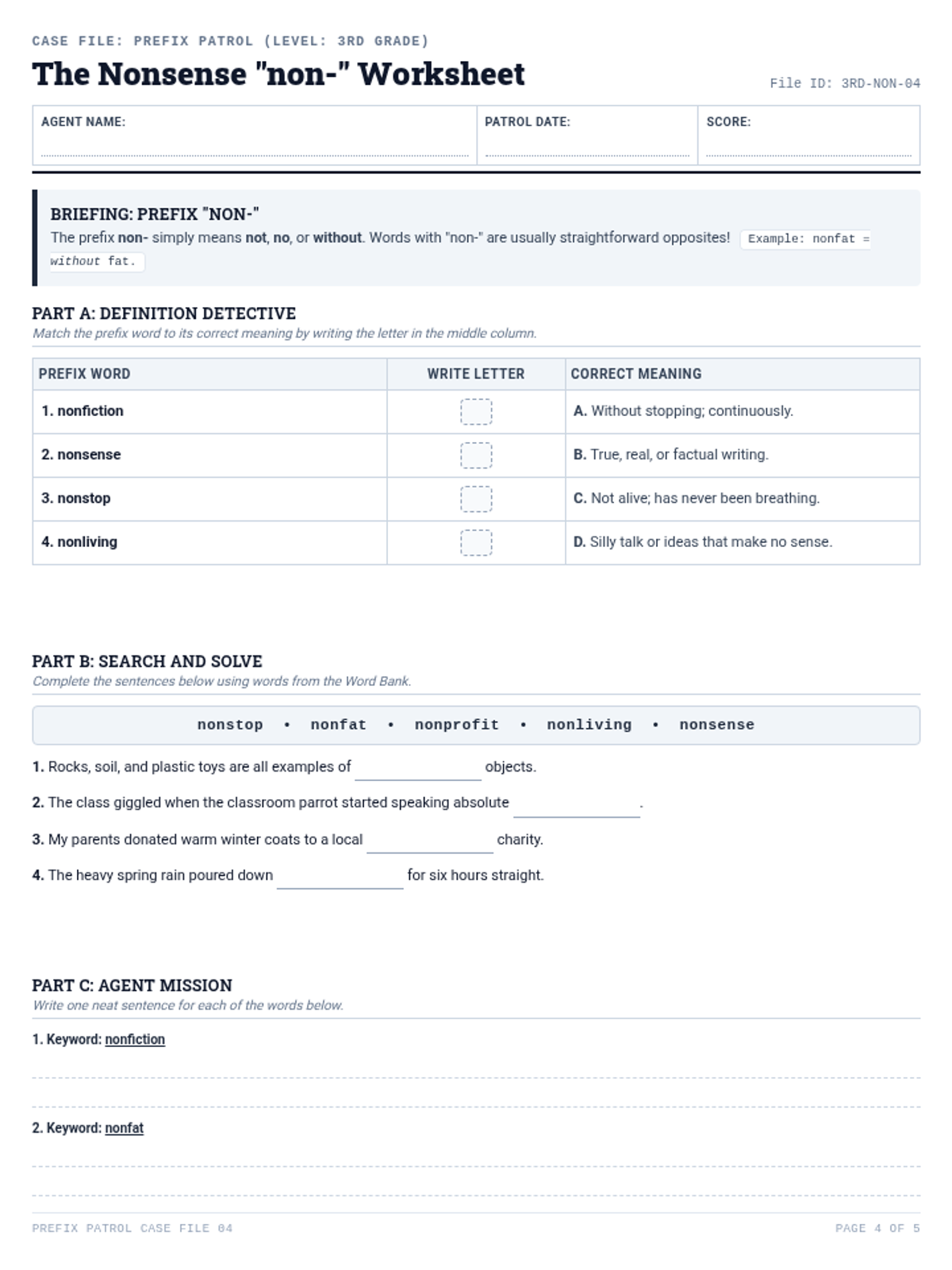
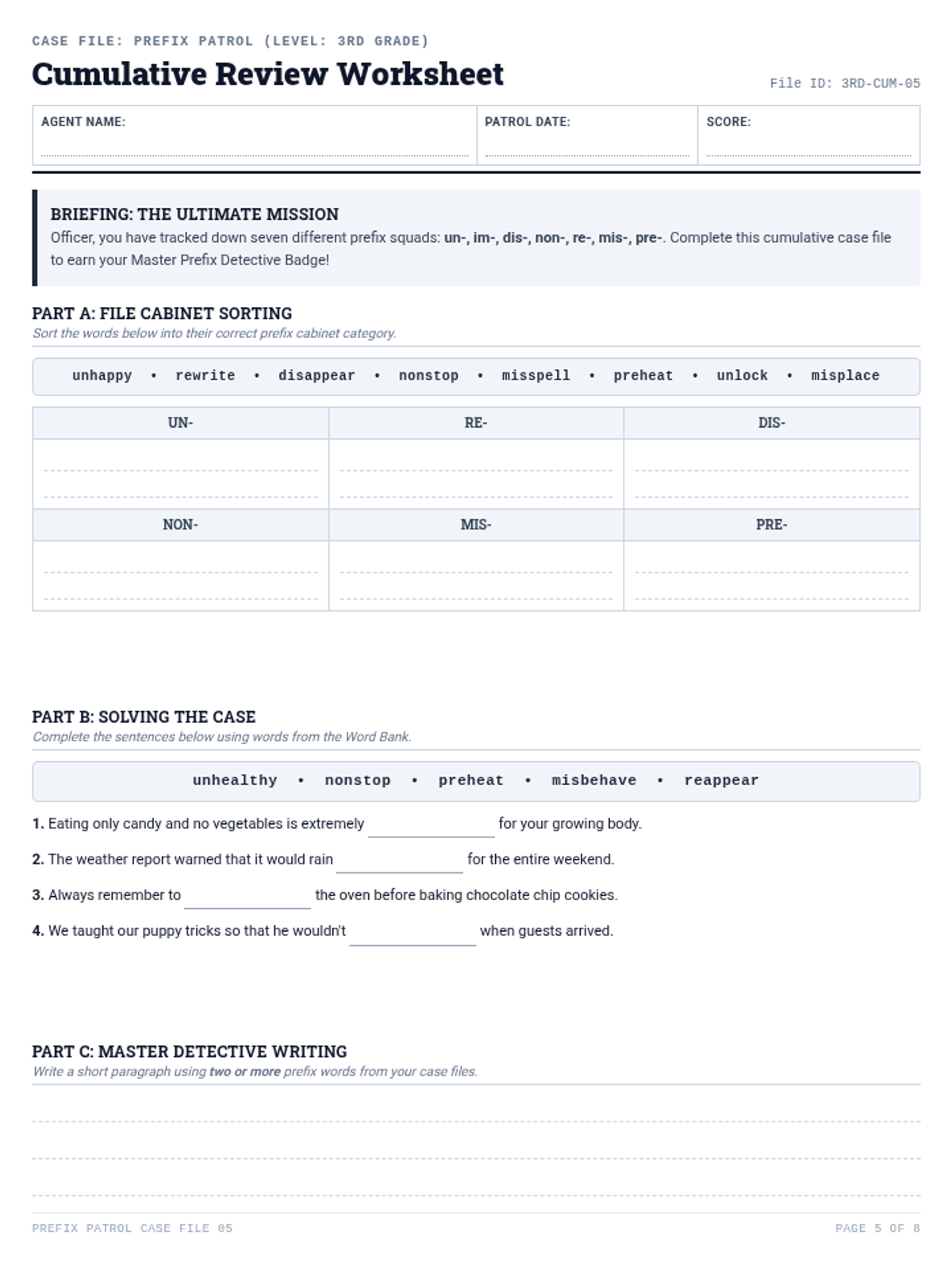
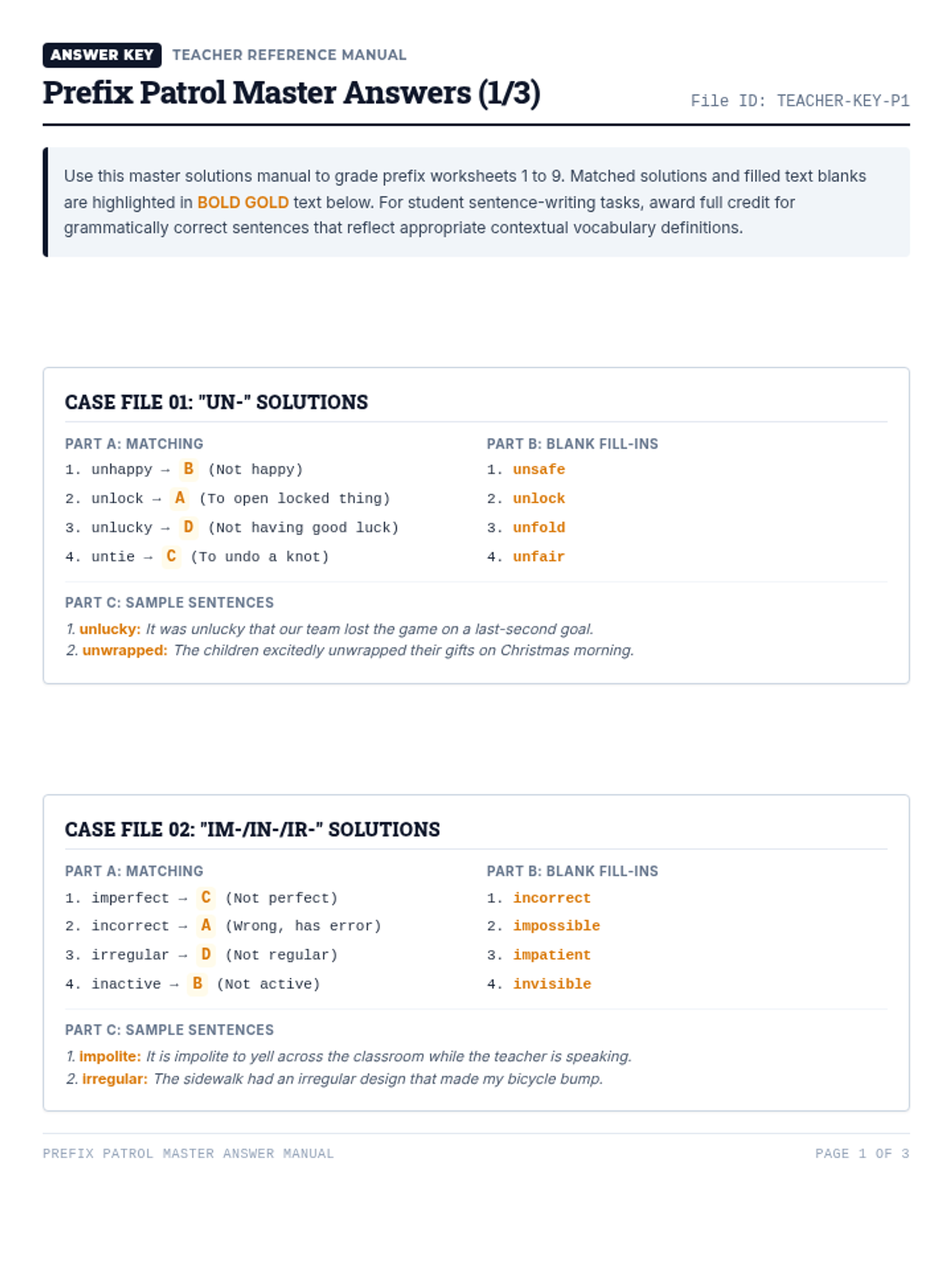
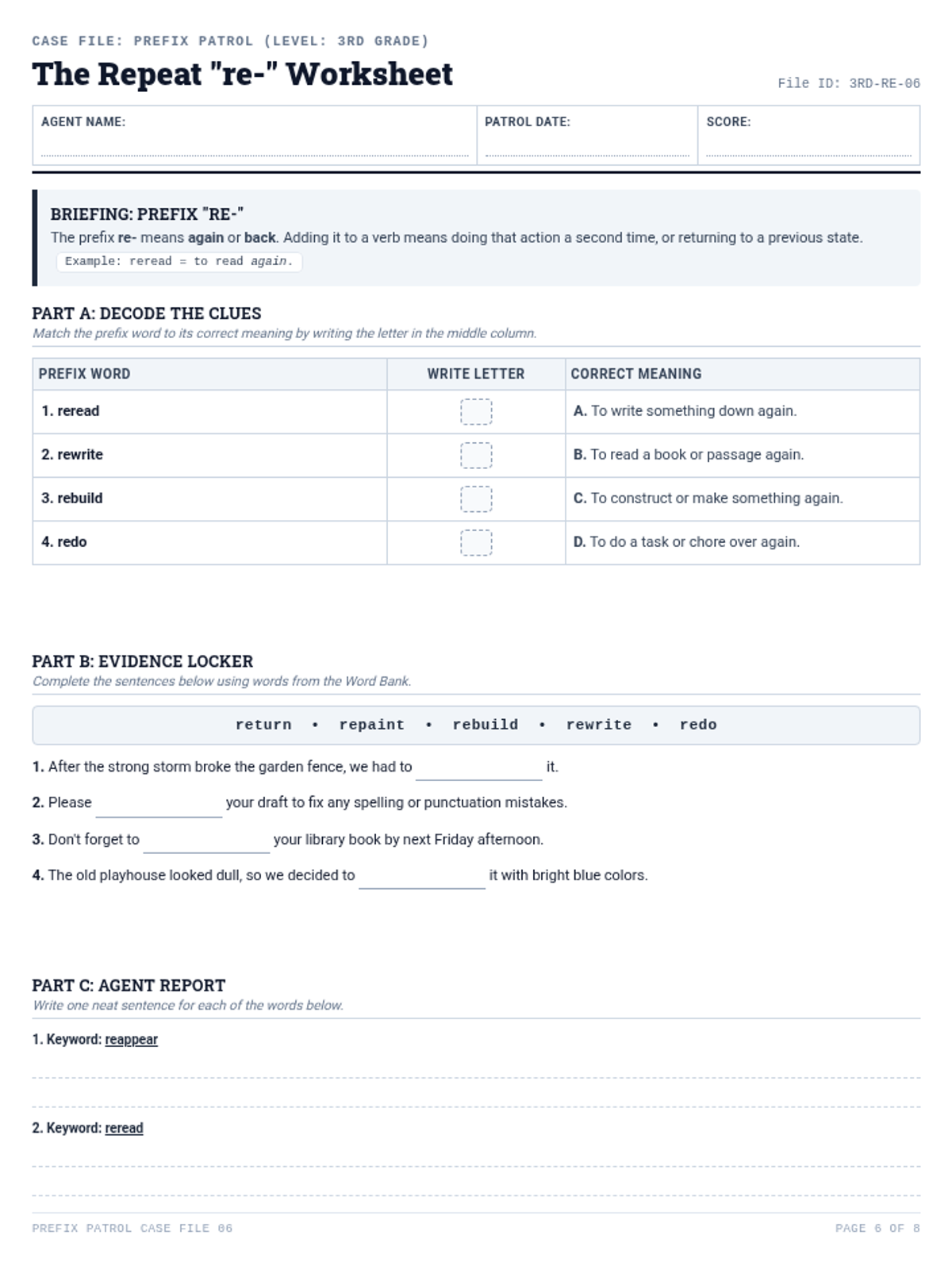
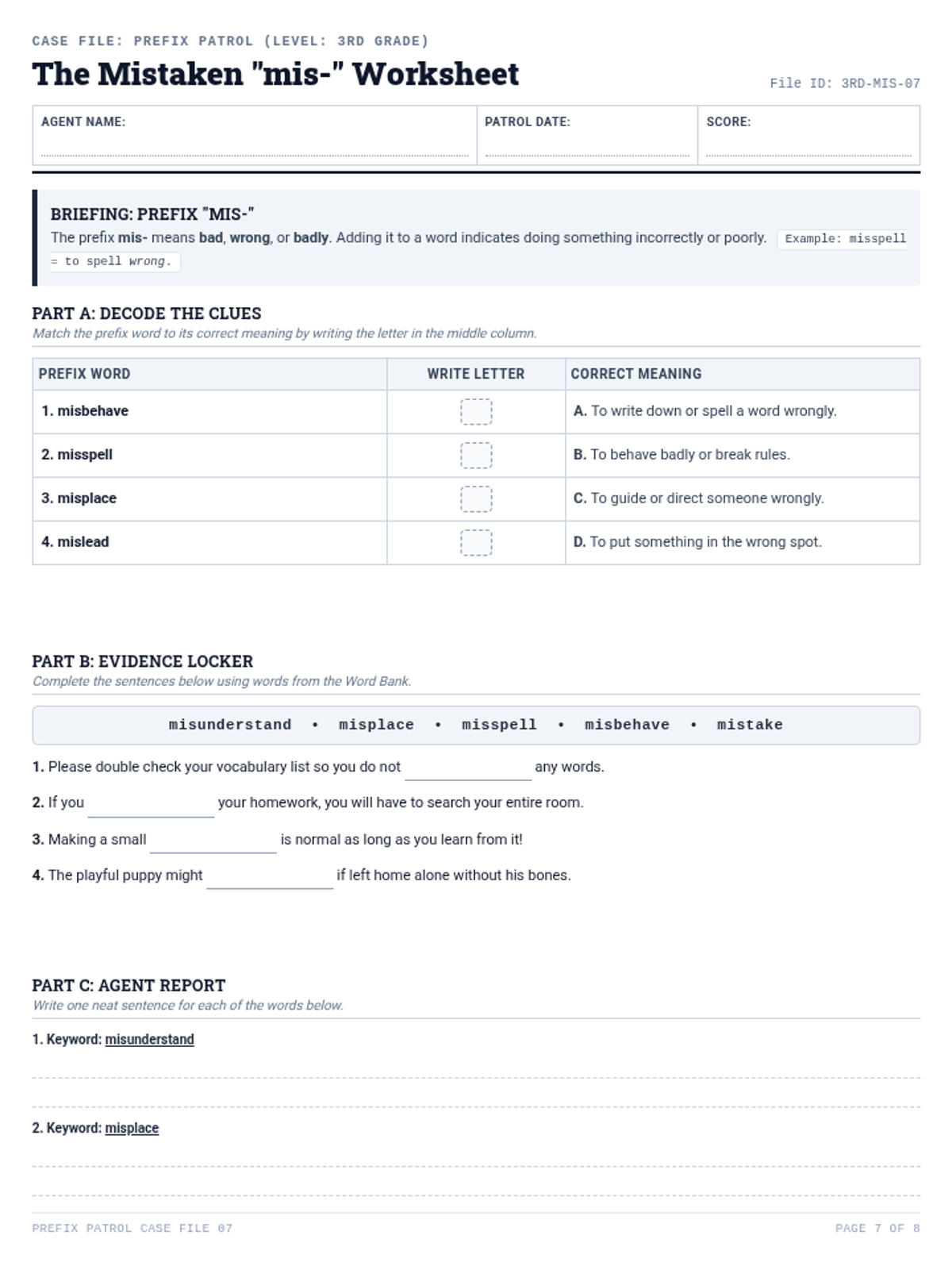
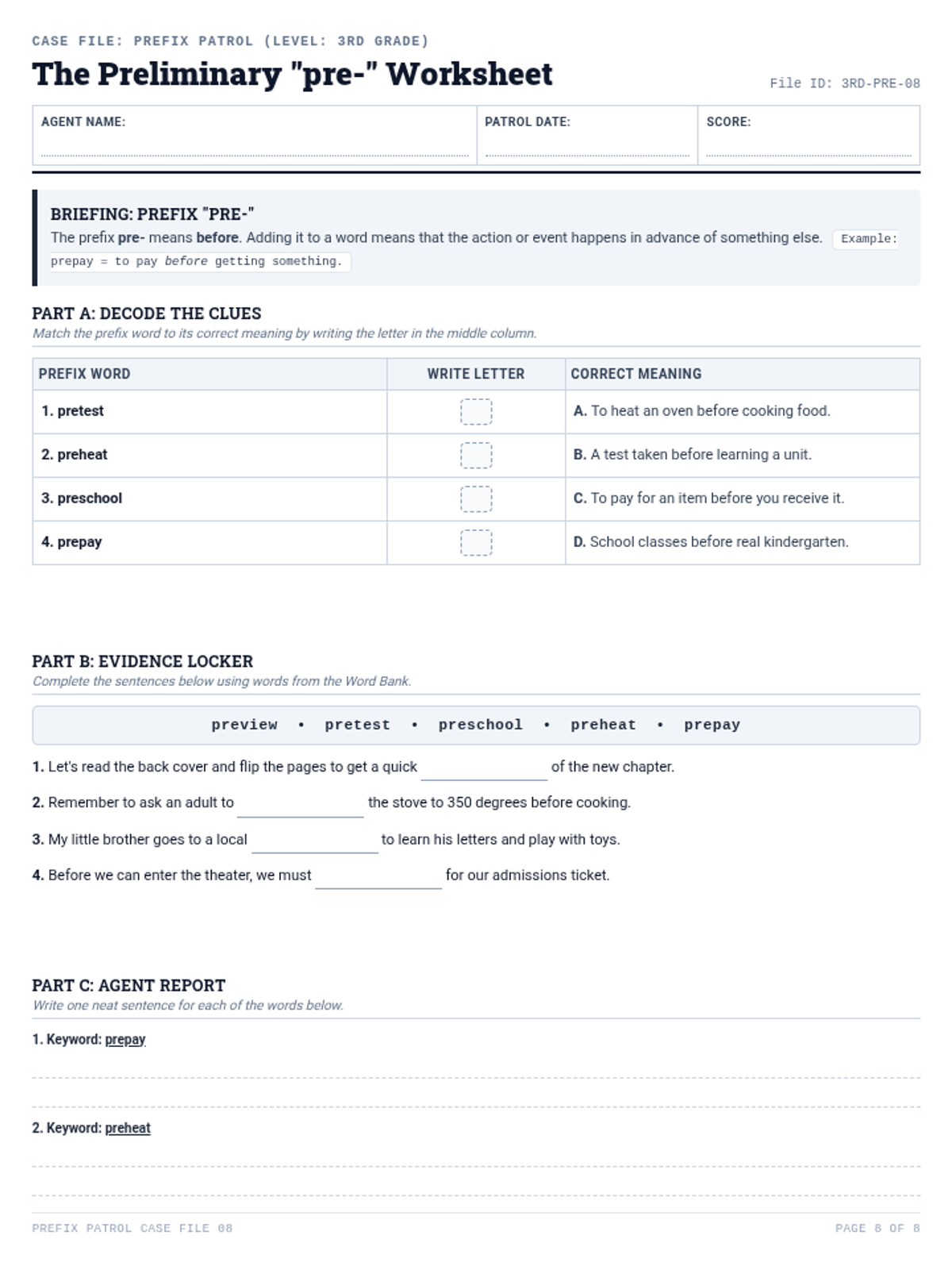
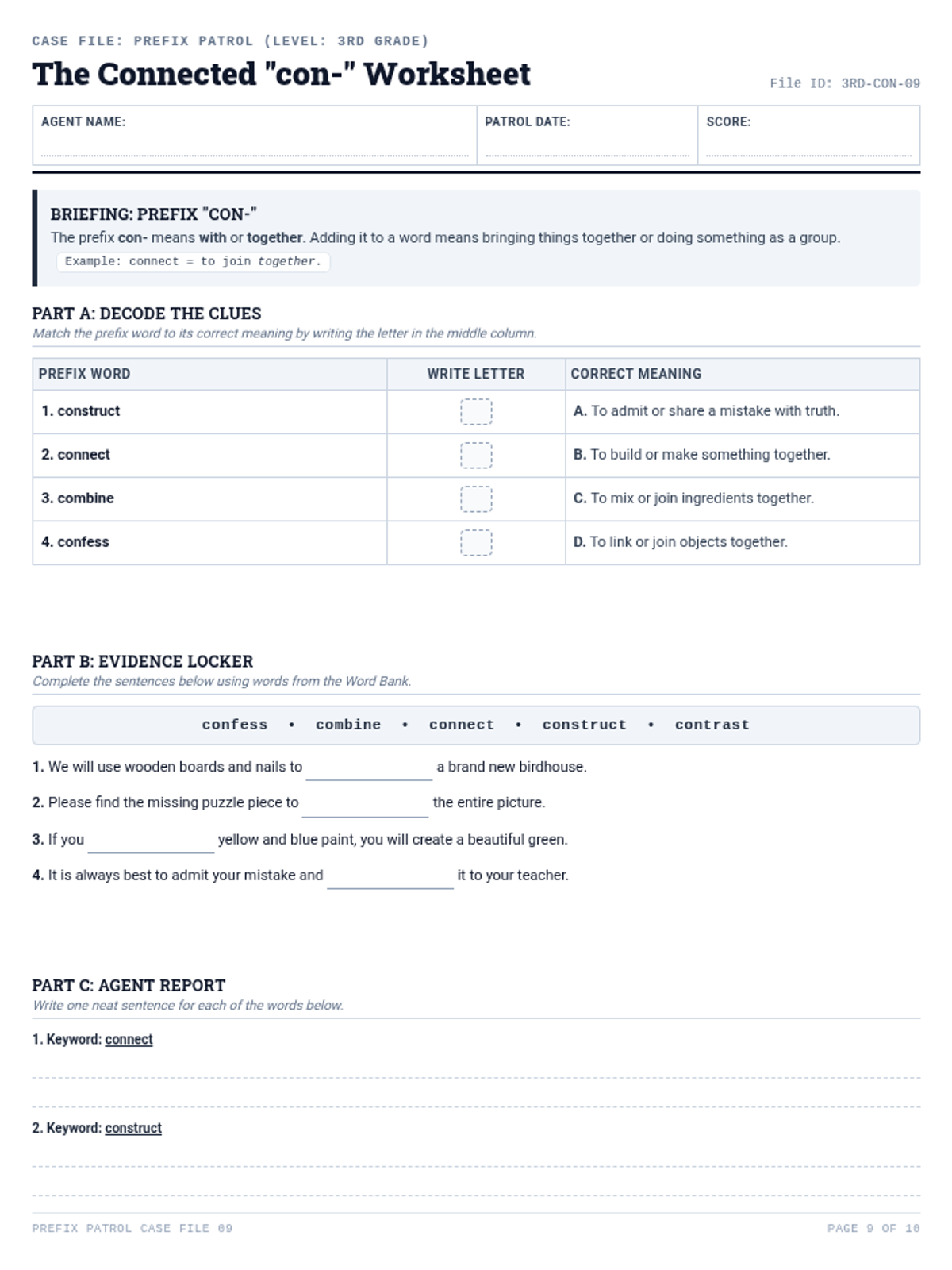
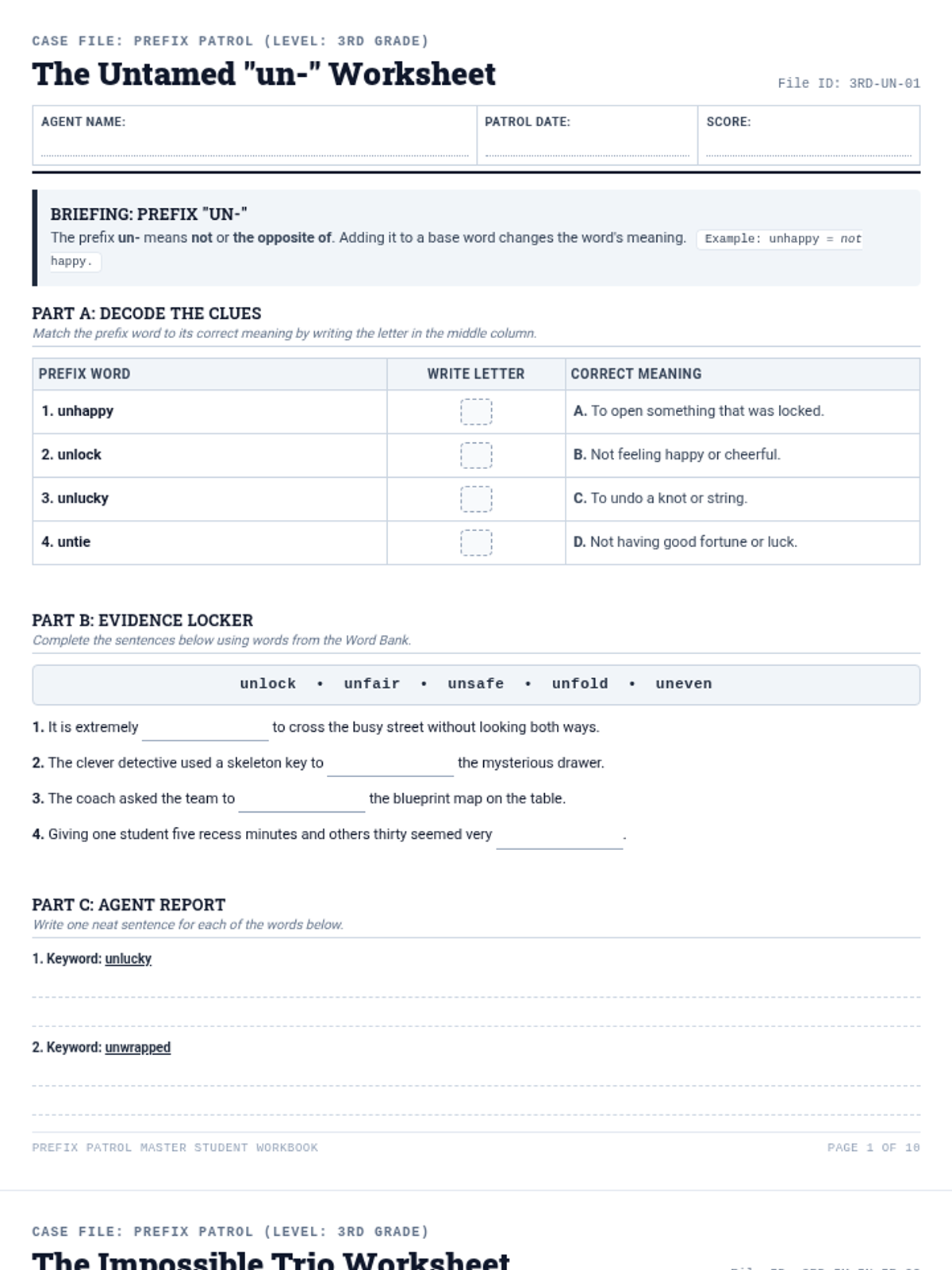
A comprehensive 3rd-grade grammar unit covering essential prefixes: un-, im-/in-/ir-, dis-, non-, re-, mis-, and pre-. Through an engaging 'Prefix Patrol' detective theme, students learn to identify, decode, and use these word parts in worksheets and cumulative review keys.
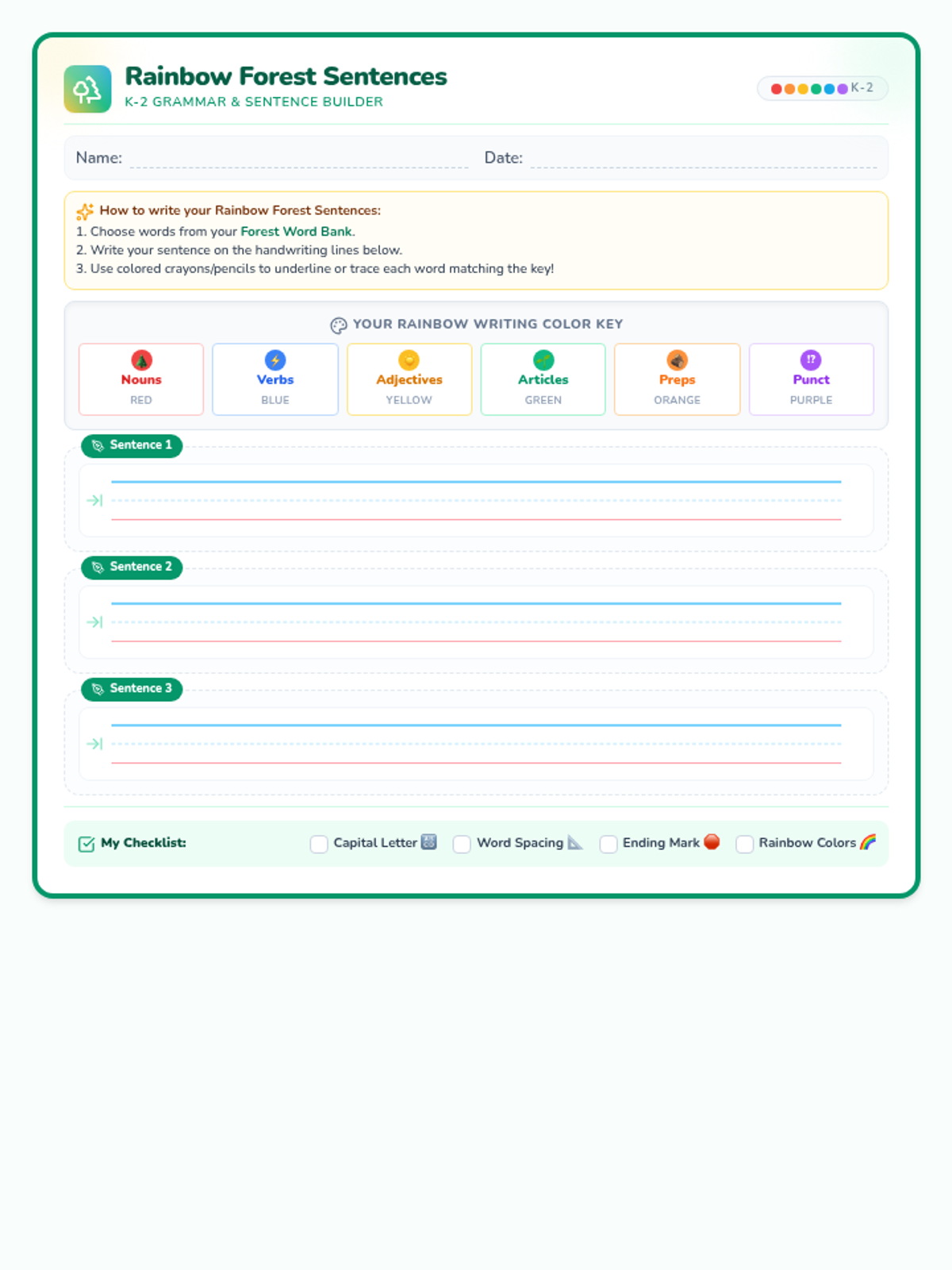
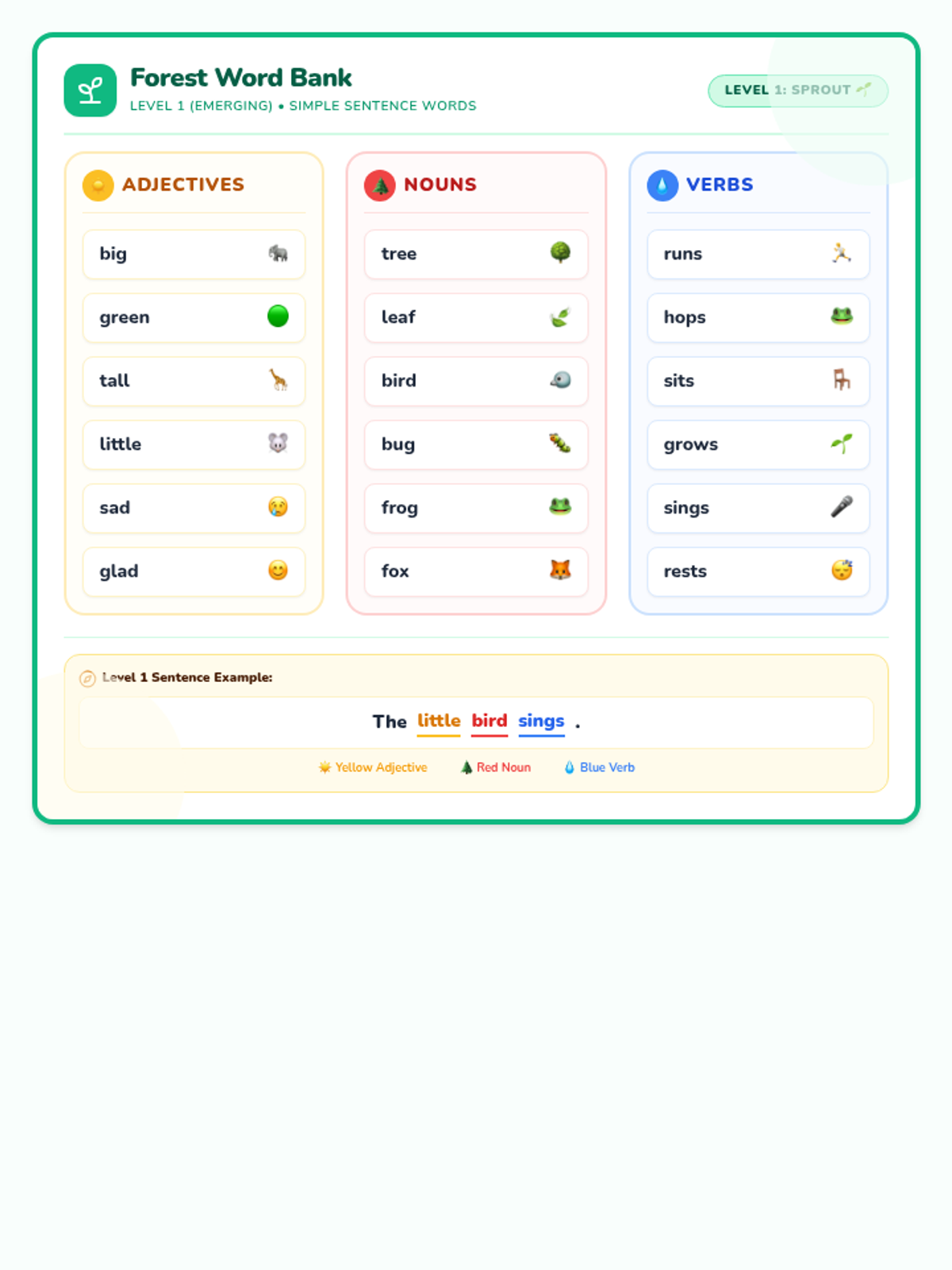
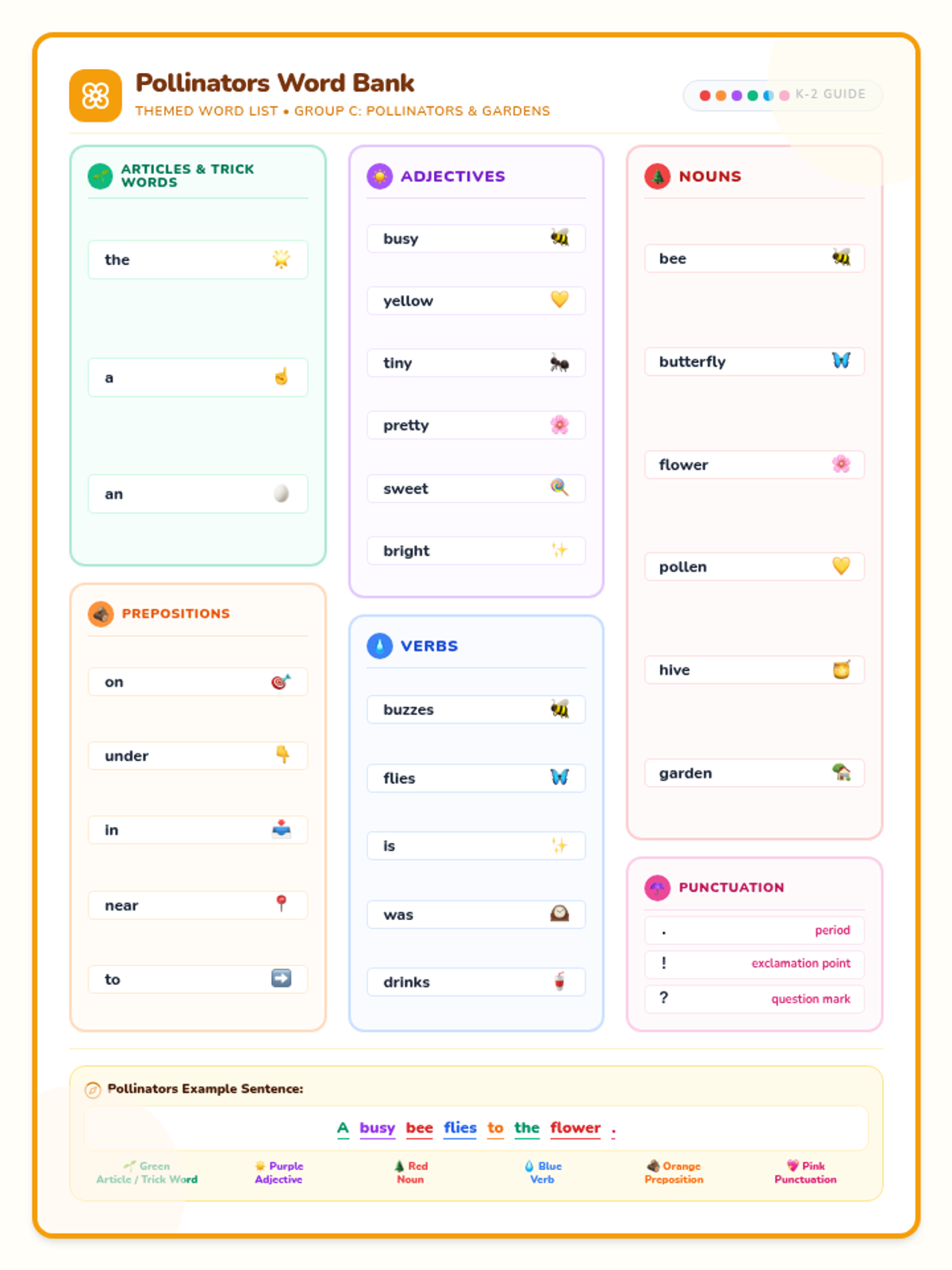
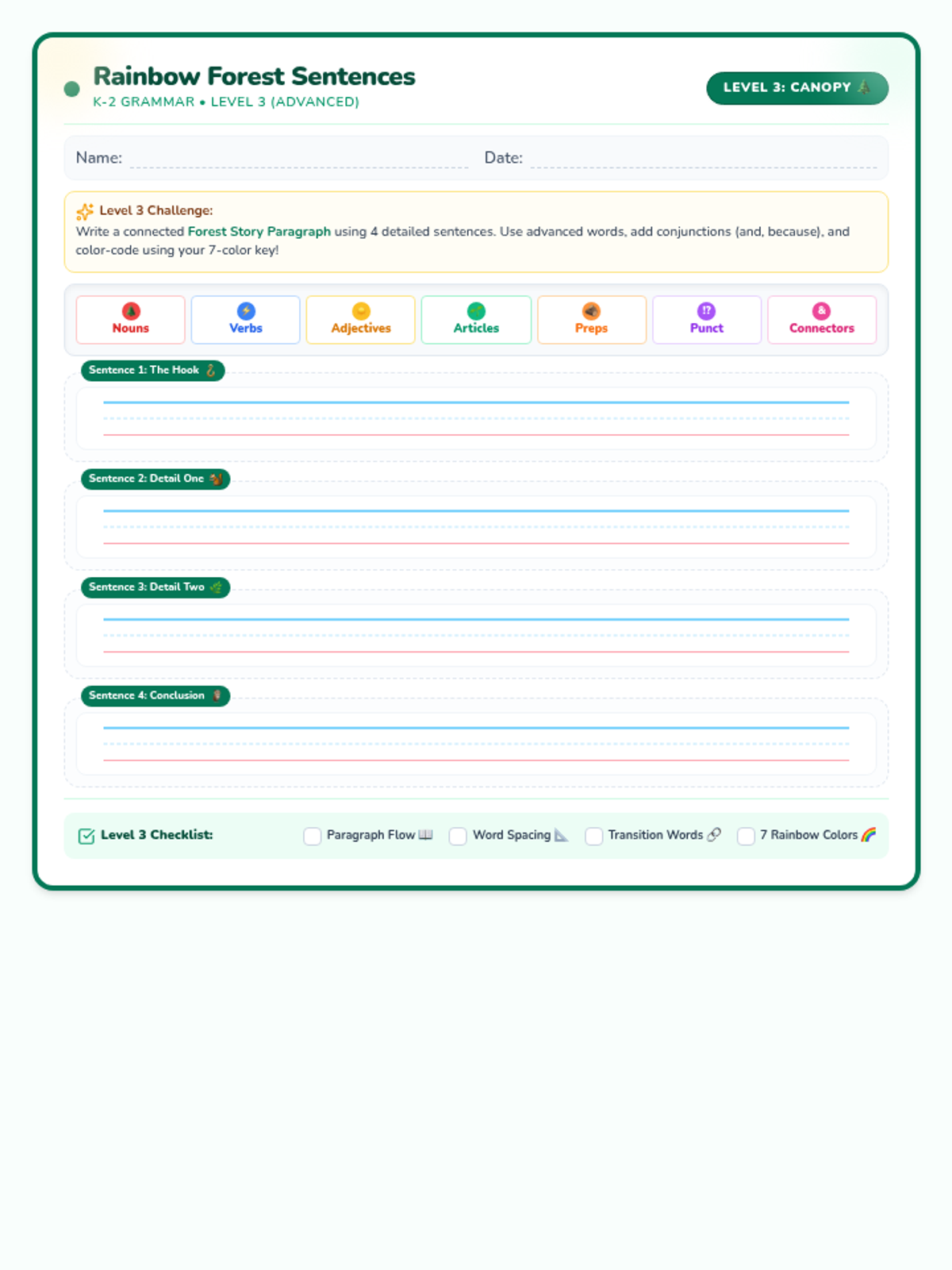
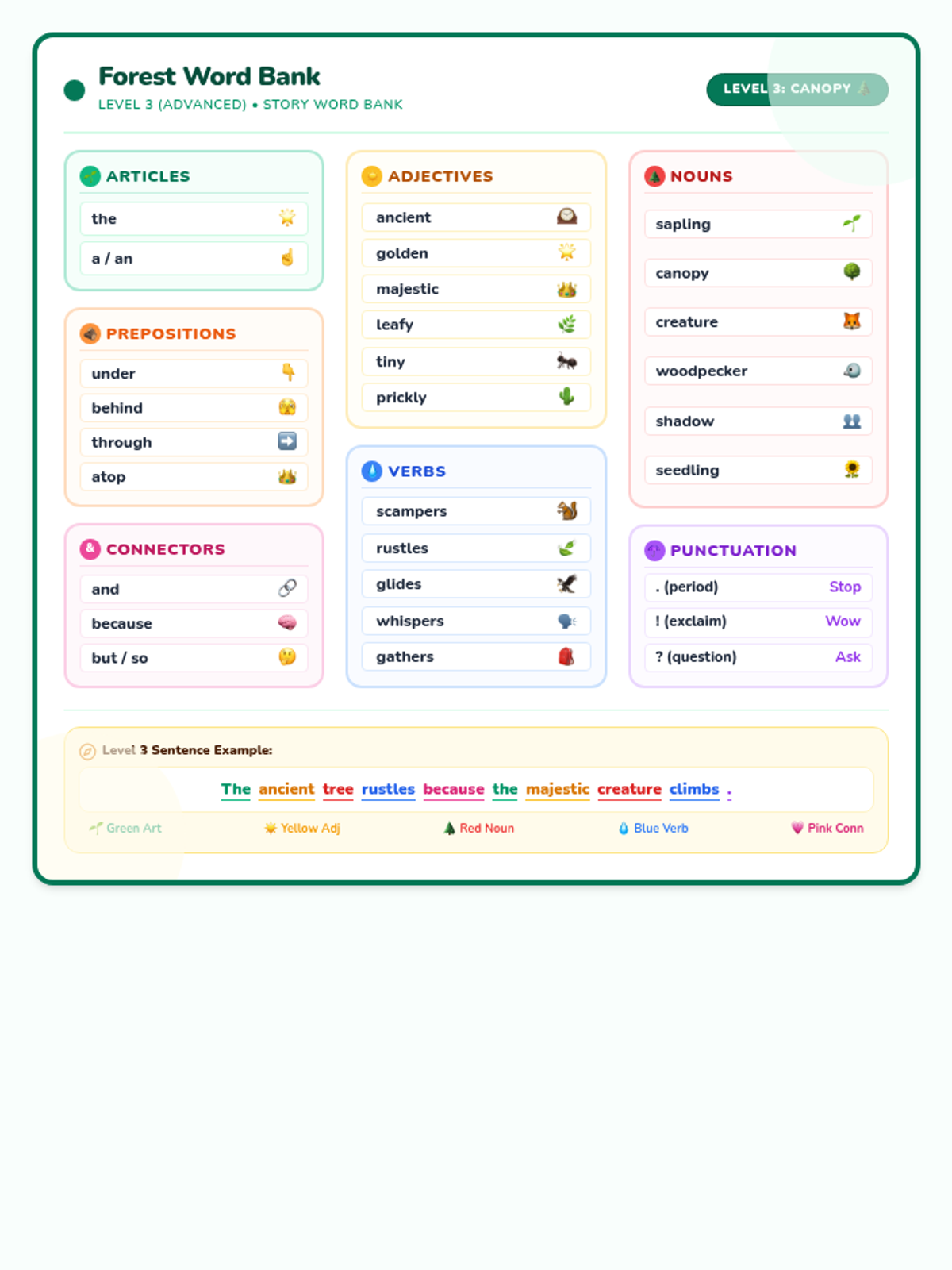
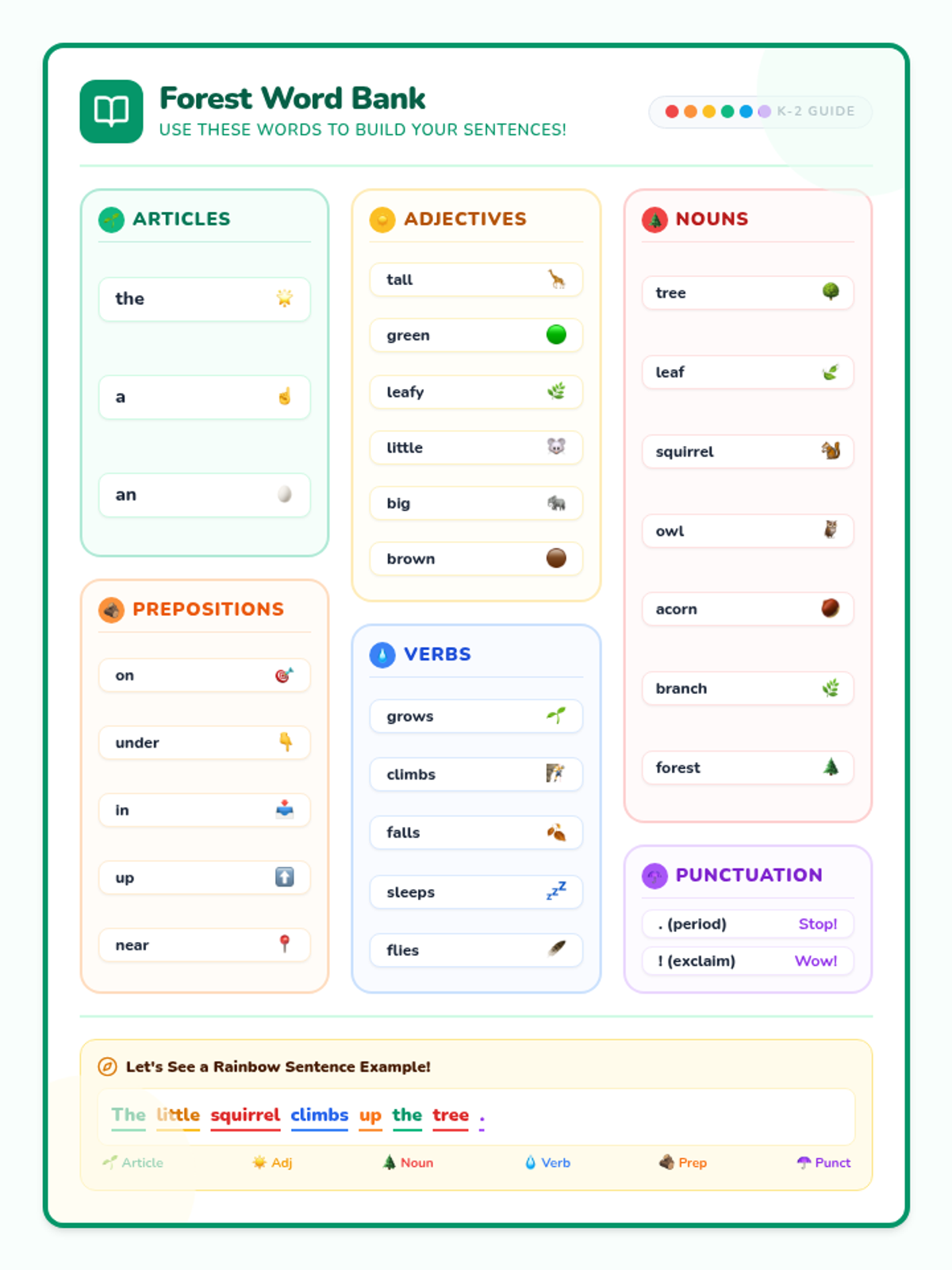
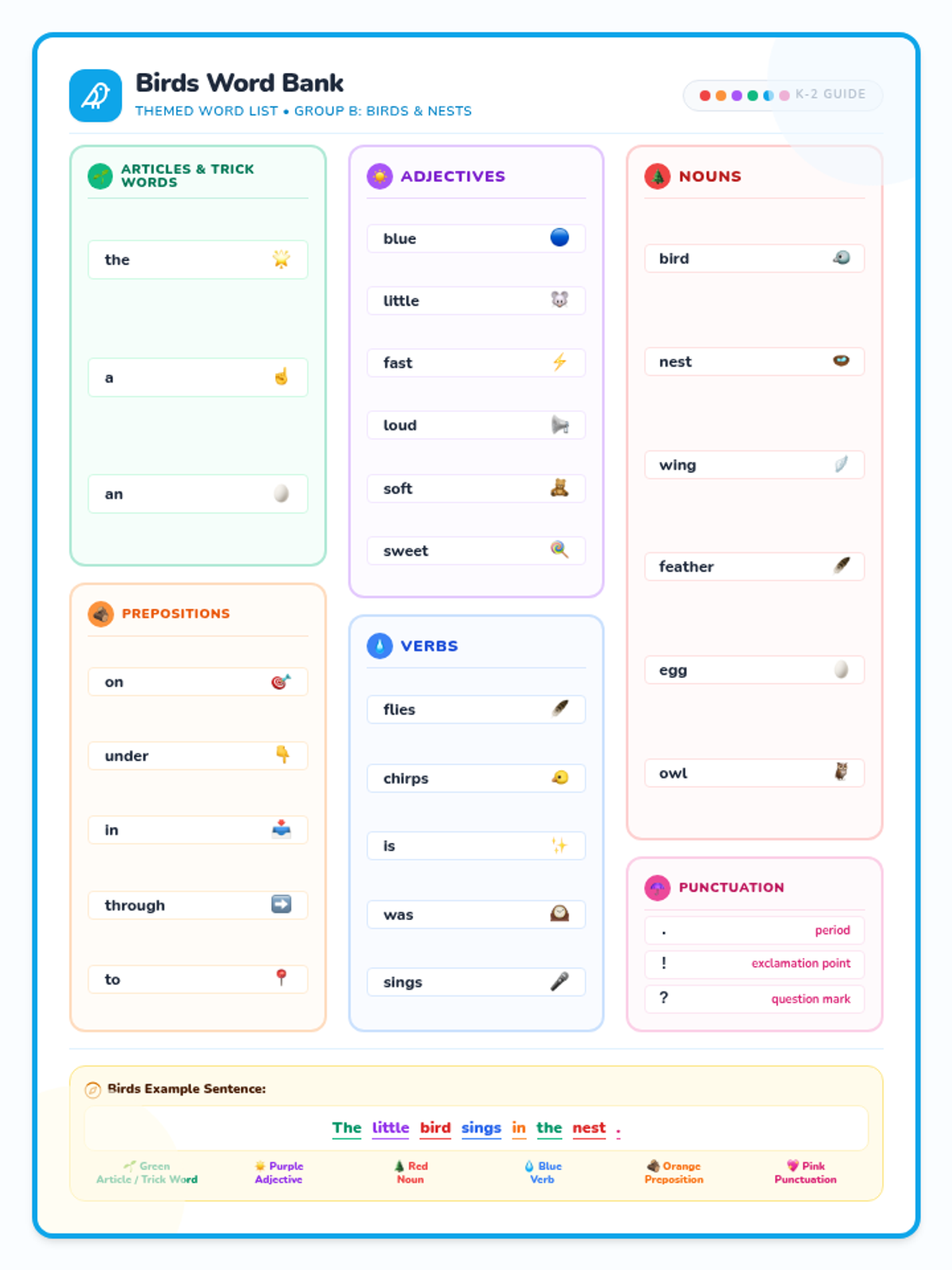
A sentence-building lesson for K-2 students. Using a tree-themed word bank, students write sentences on primary handwriting lines and color-code parts of speech to build foundational grammar and reading skills.
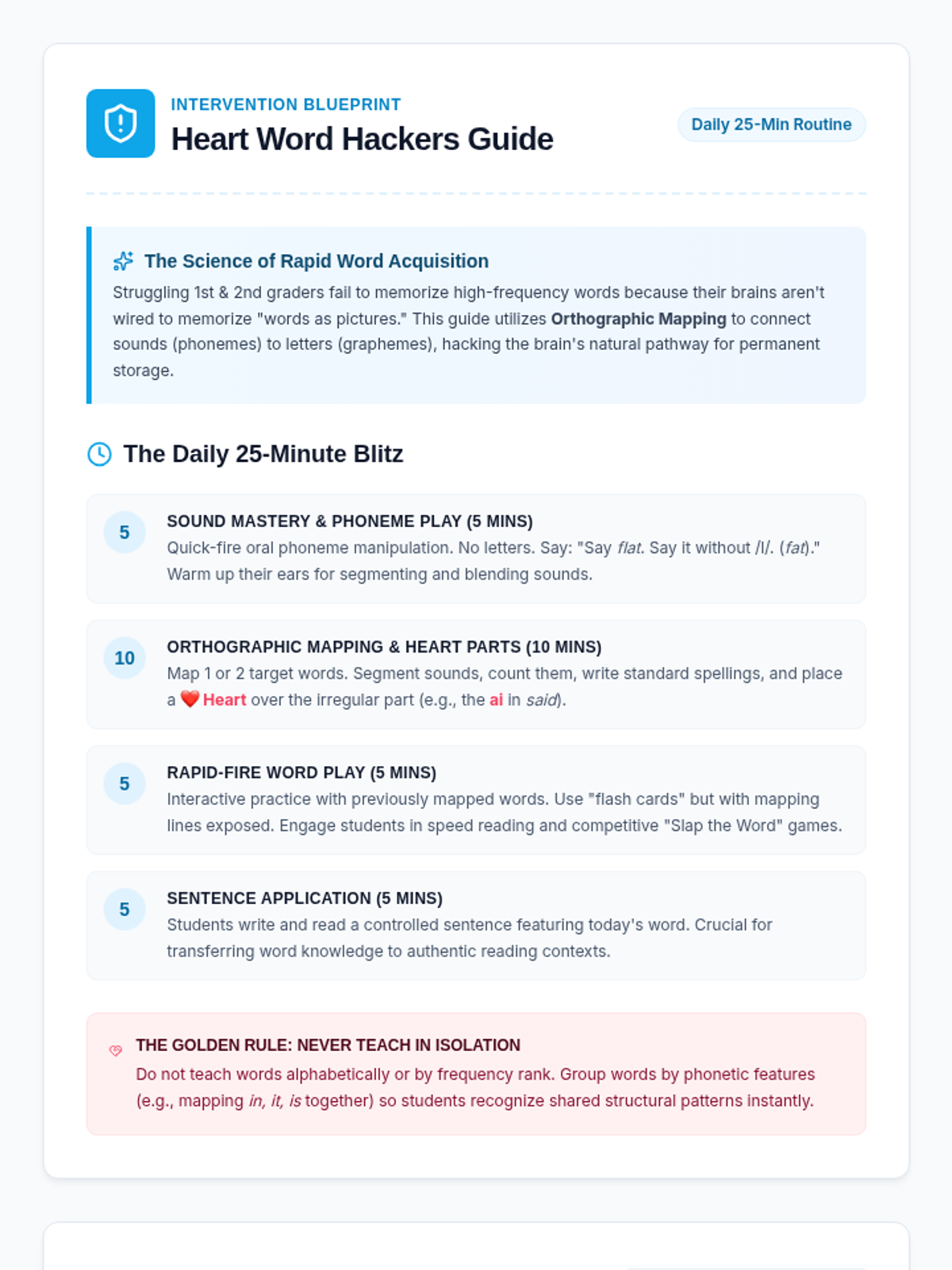
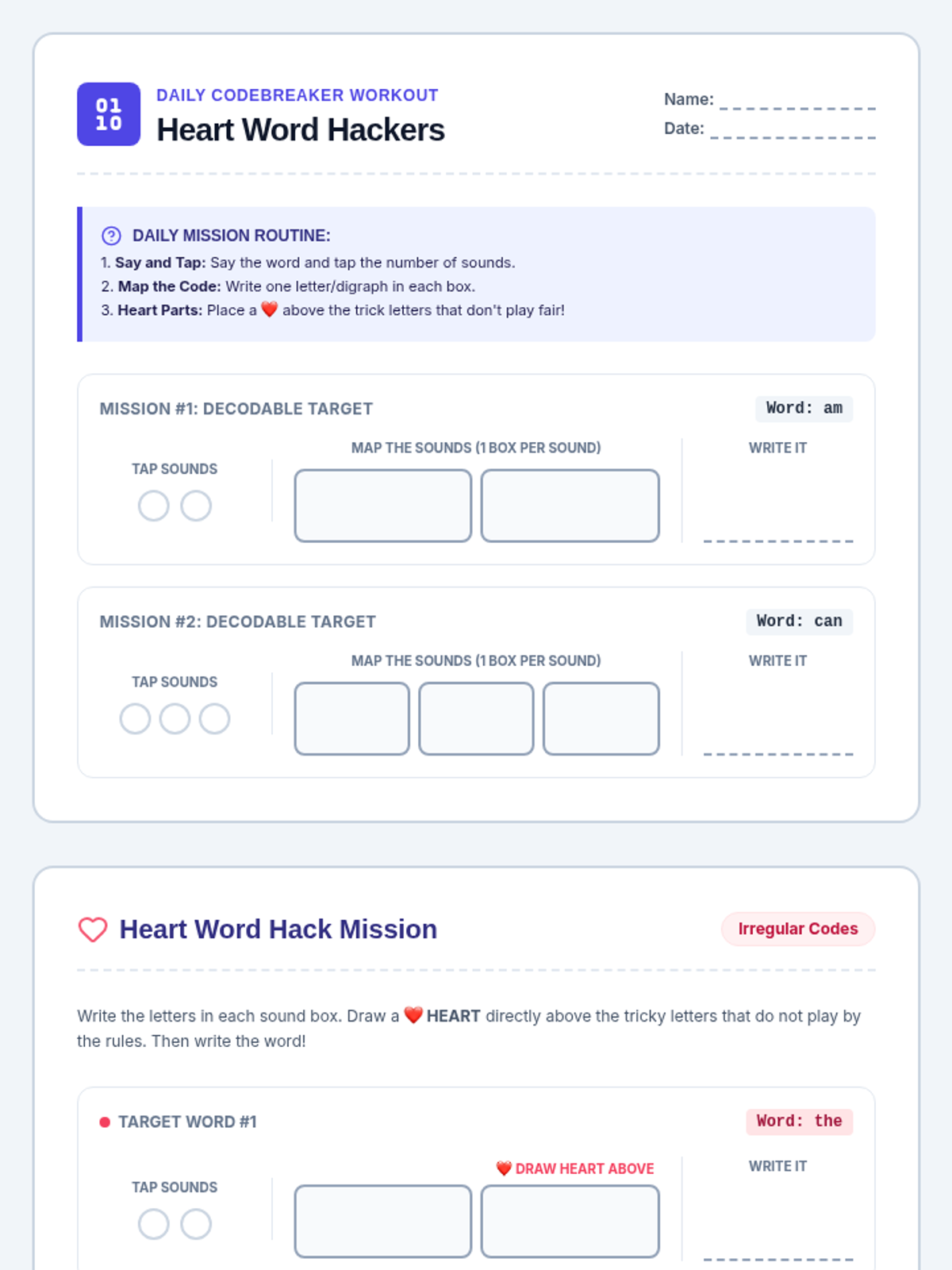
A high-intensity, evidence-based intervention lesson for rapidly teaching high-frequency words using orthographic mapping and phonetic grouping. Designed for daily 25-minute small group sessions with 1st and 2nd graders who have significant learning gaps.
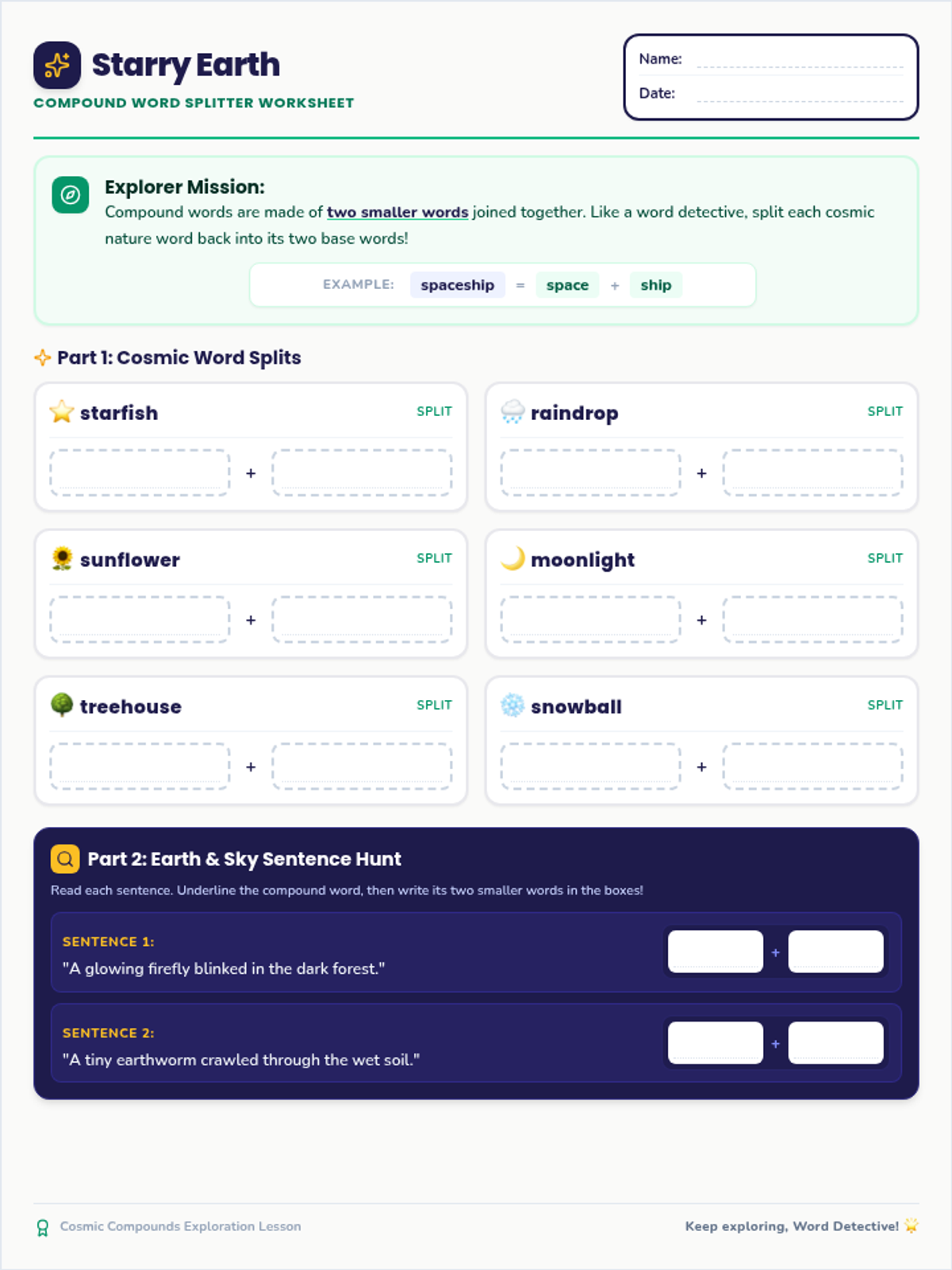
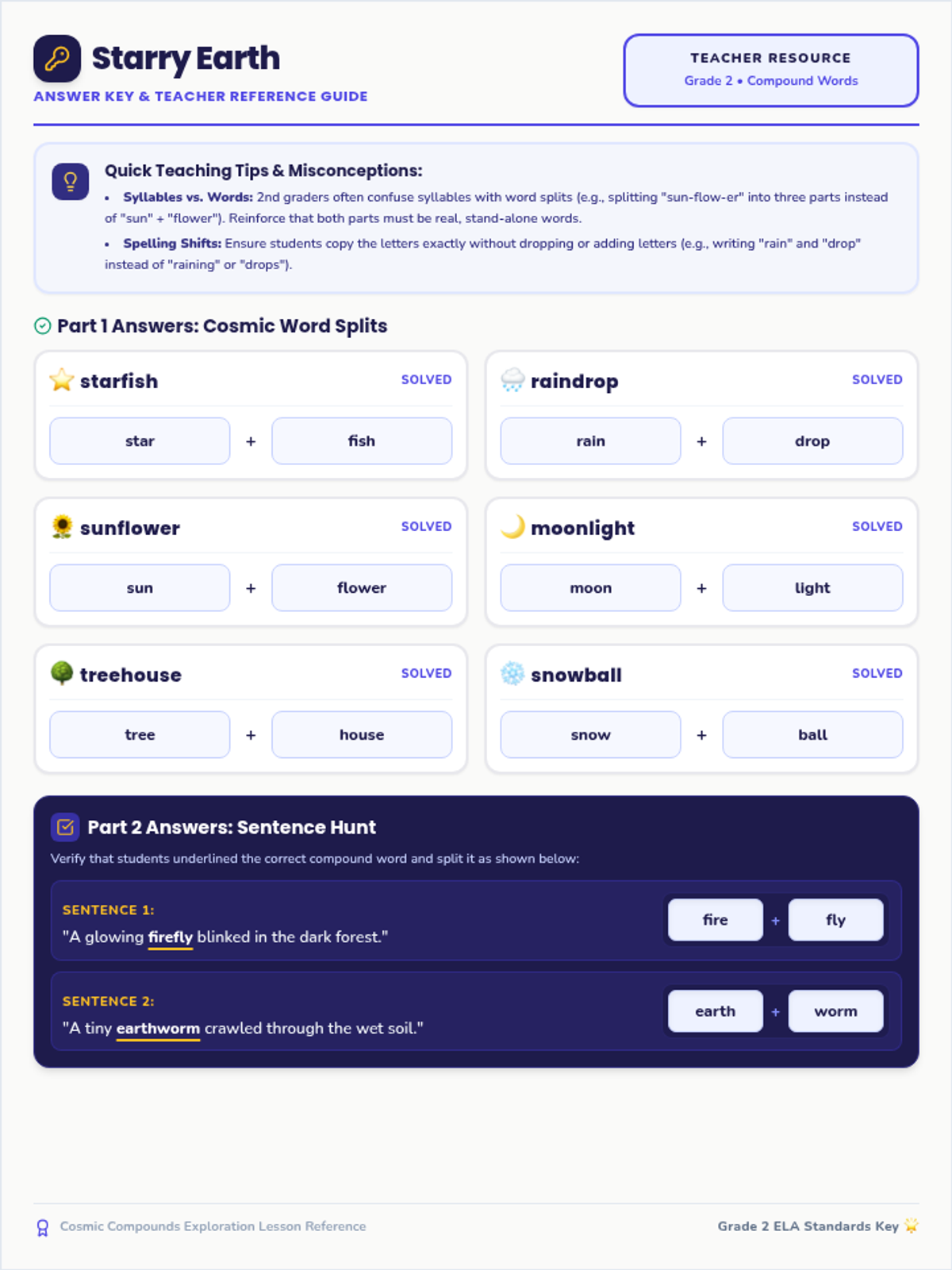
A second-grade English Language Arts lesson exploring compound words through a combined theme of space and nature. Students practice breaking compound words into their two constituent words.
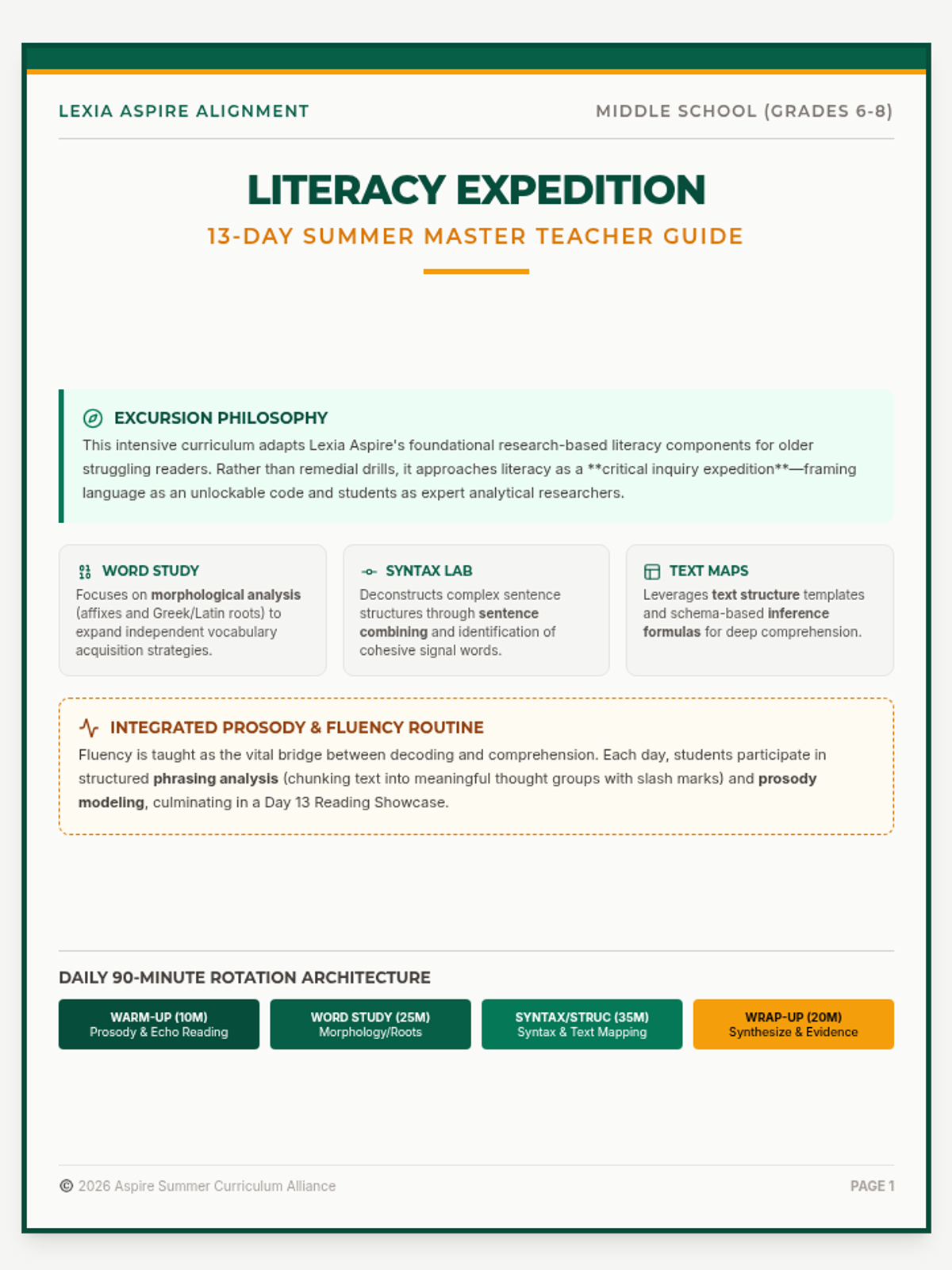
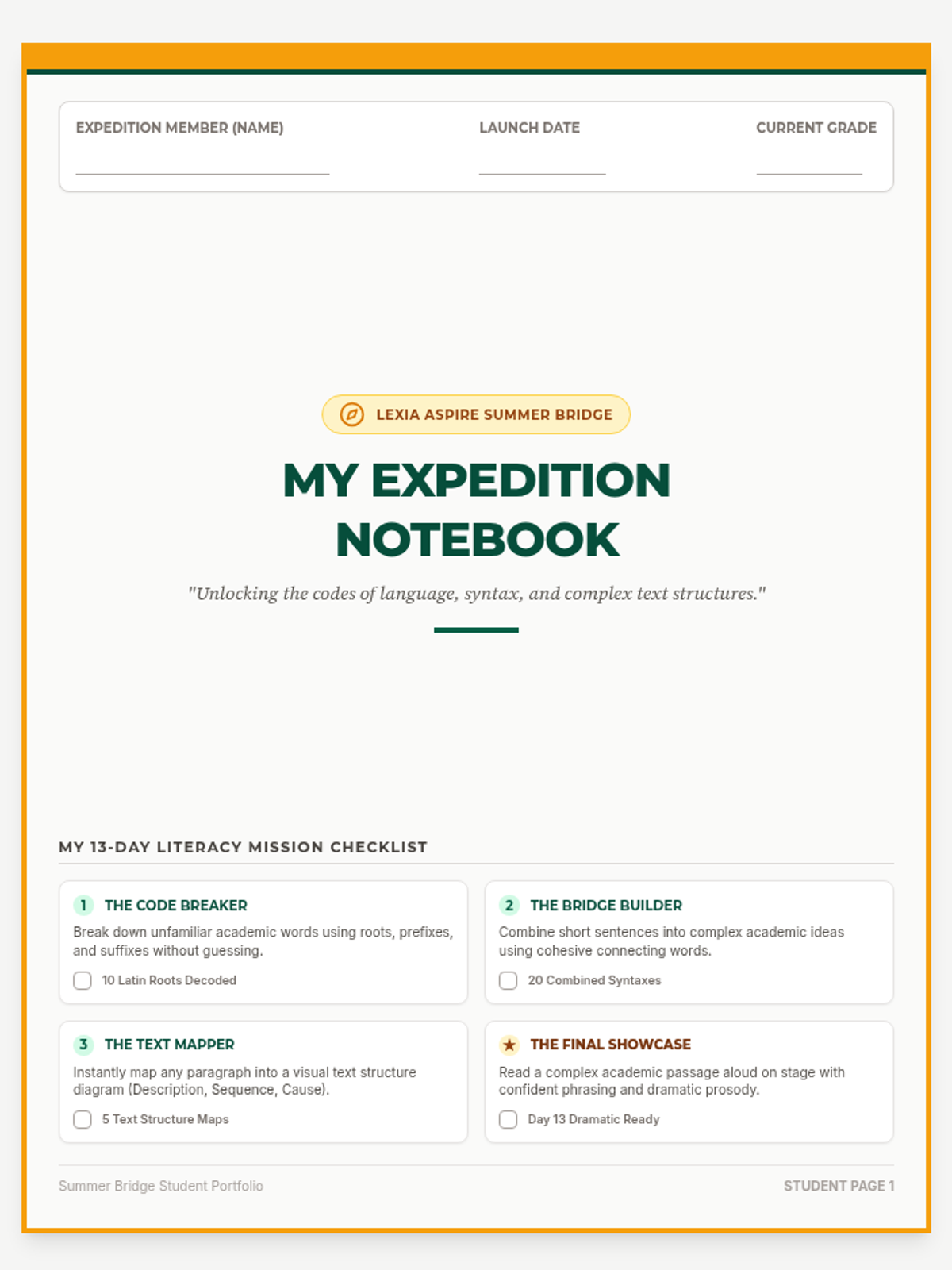
A comprehensive 13-day summer school curriculum framework for 6th-8th graders aligned with Lexia Aspire literacy principles. Focuses on word study (morphology), syntax, reading fluency (prosody and phrasing), and deep comprehension (text structure and text evidence-based inferences).