A comprehensive practice resource for Grade 2 students to master broad vowel sounds (a, o, u) and navigate the complexities of regular and irregular plural nouns through engaging safari-themed activities.
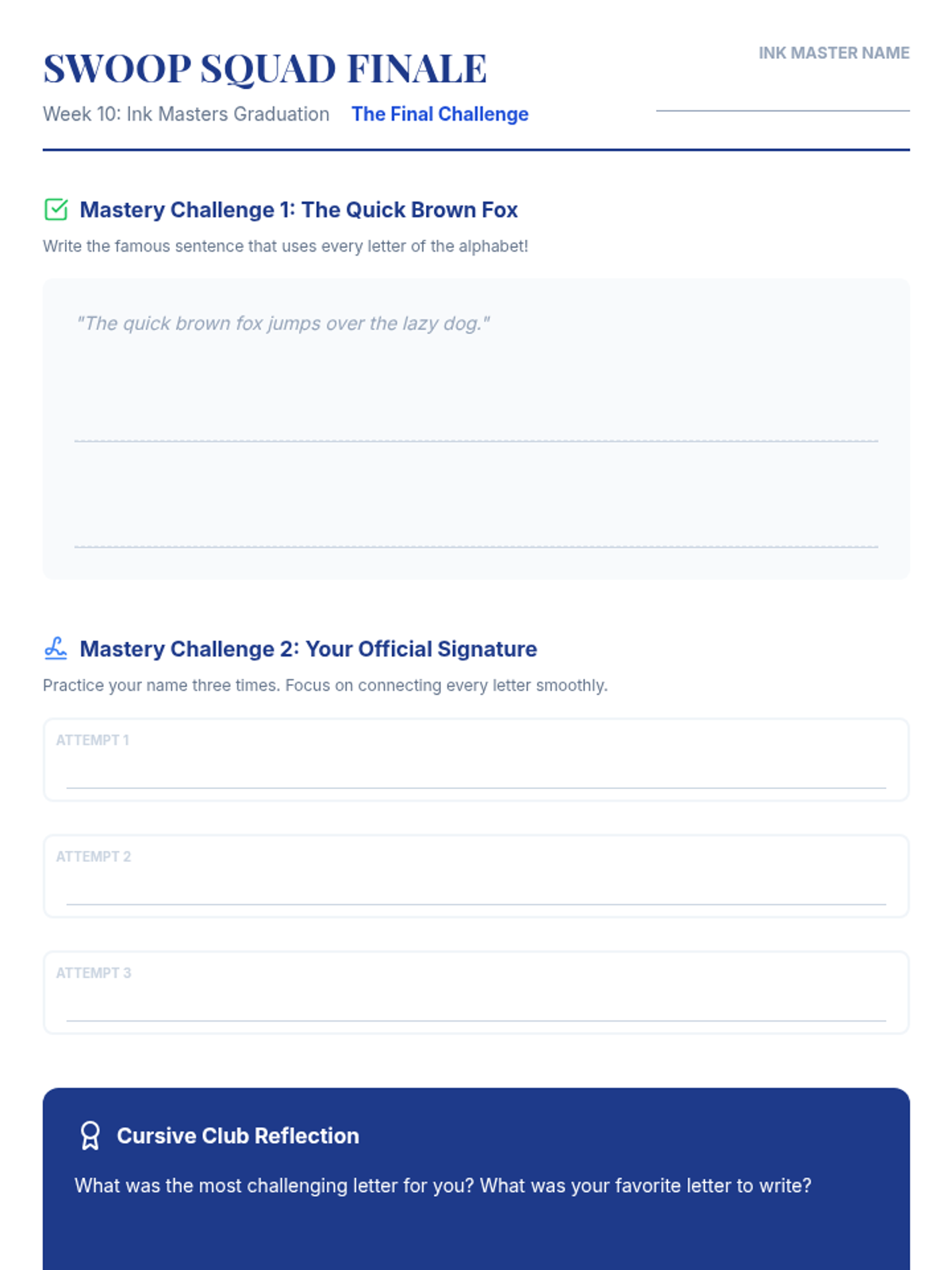
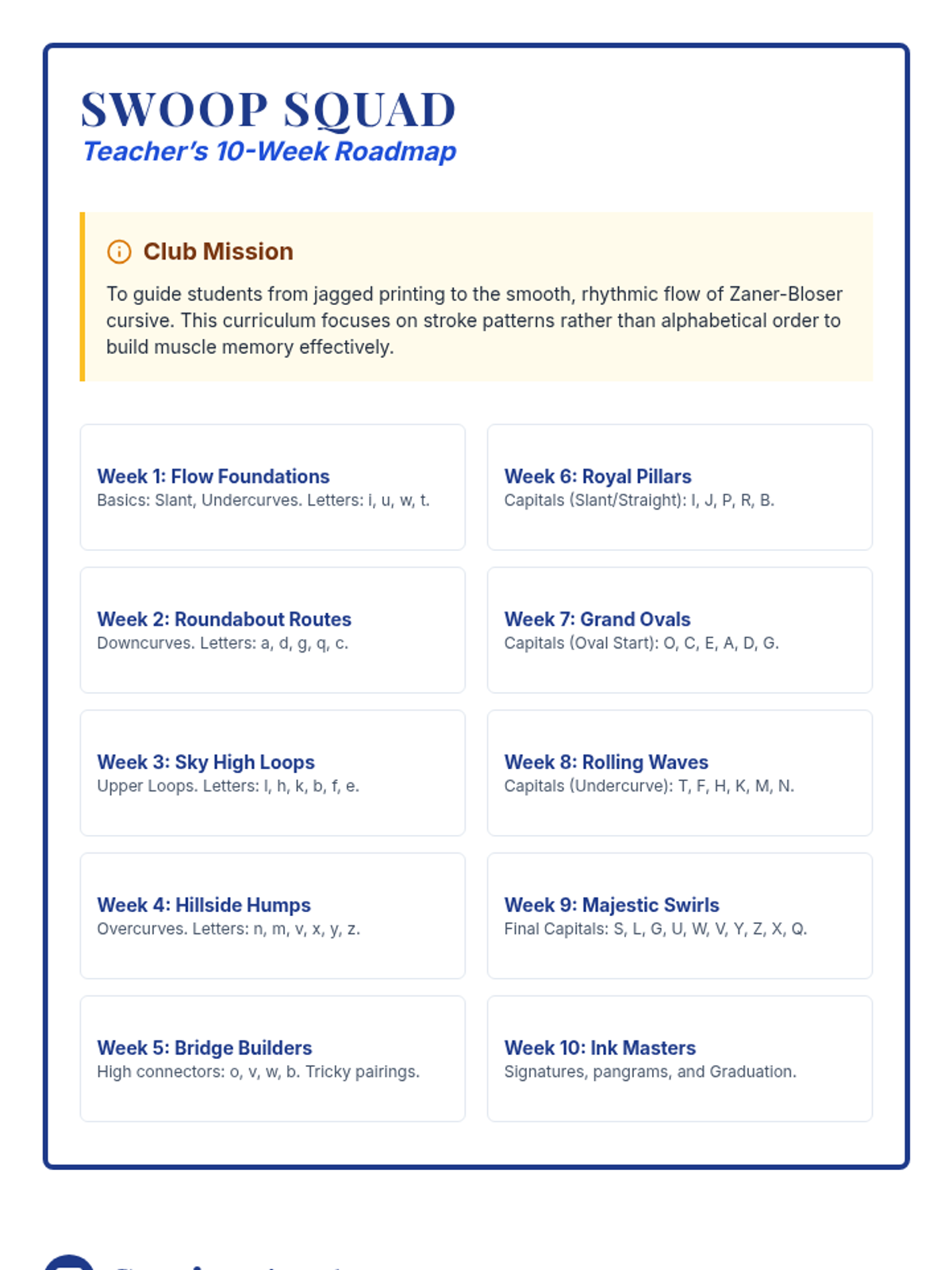
Final mastery session focusing on full sentences, signatures, and club graduation.
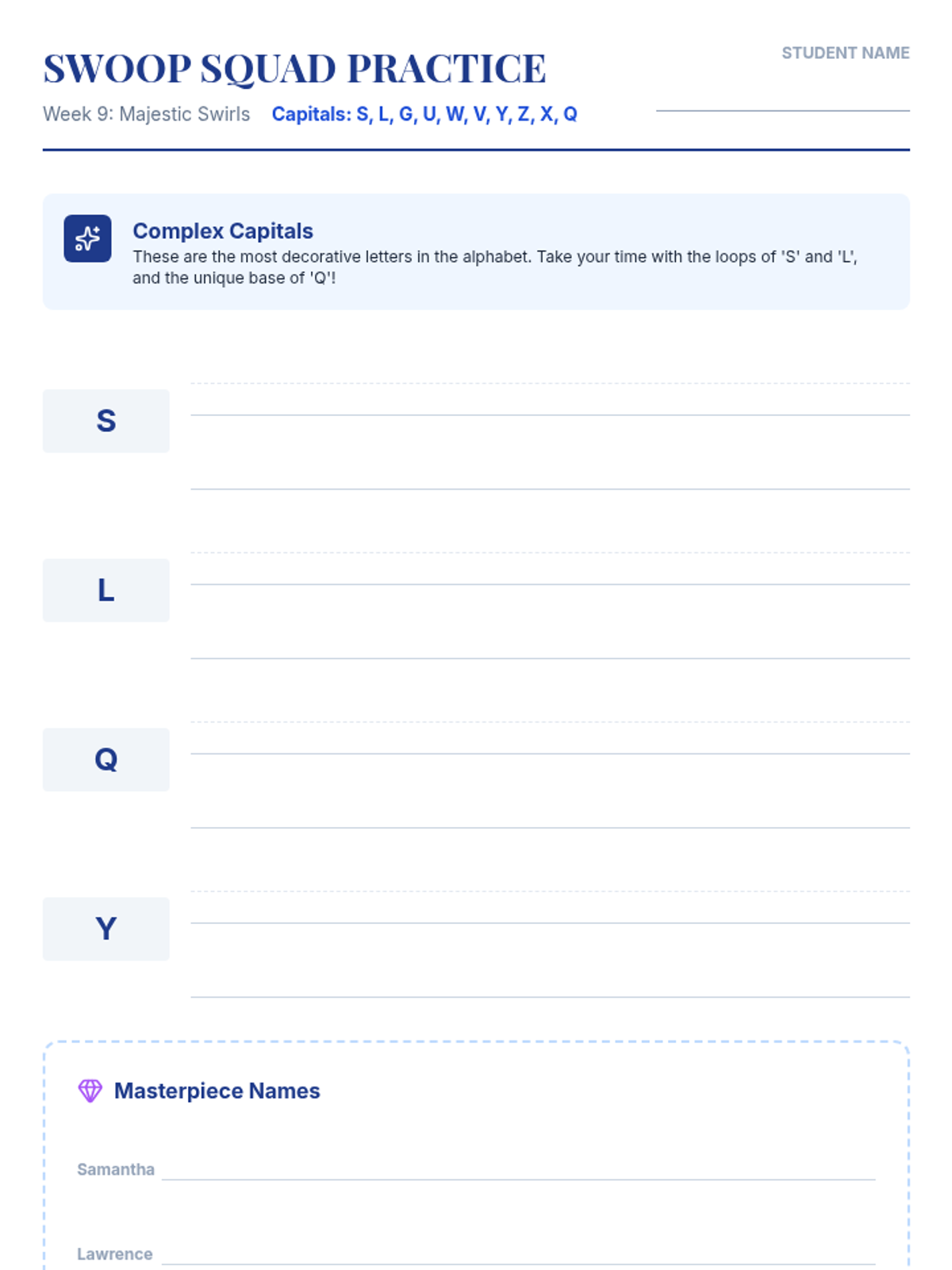
Completing the uppercase alphabet with complex strokes: S, L, U, W, V, Y, Z, X, and Q.
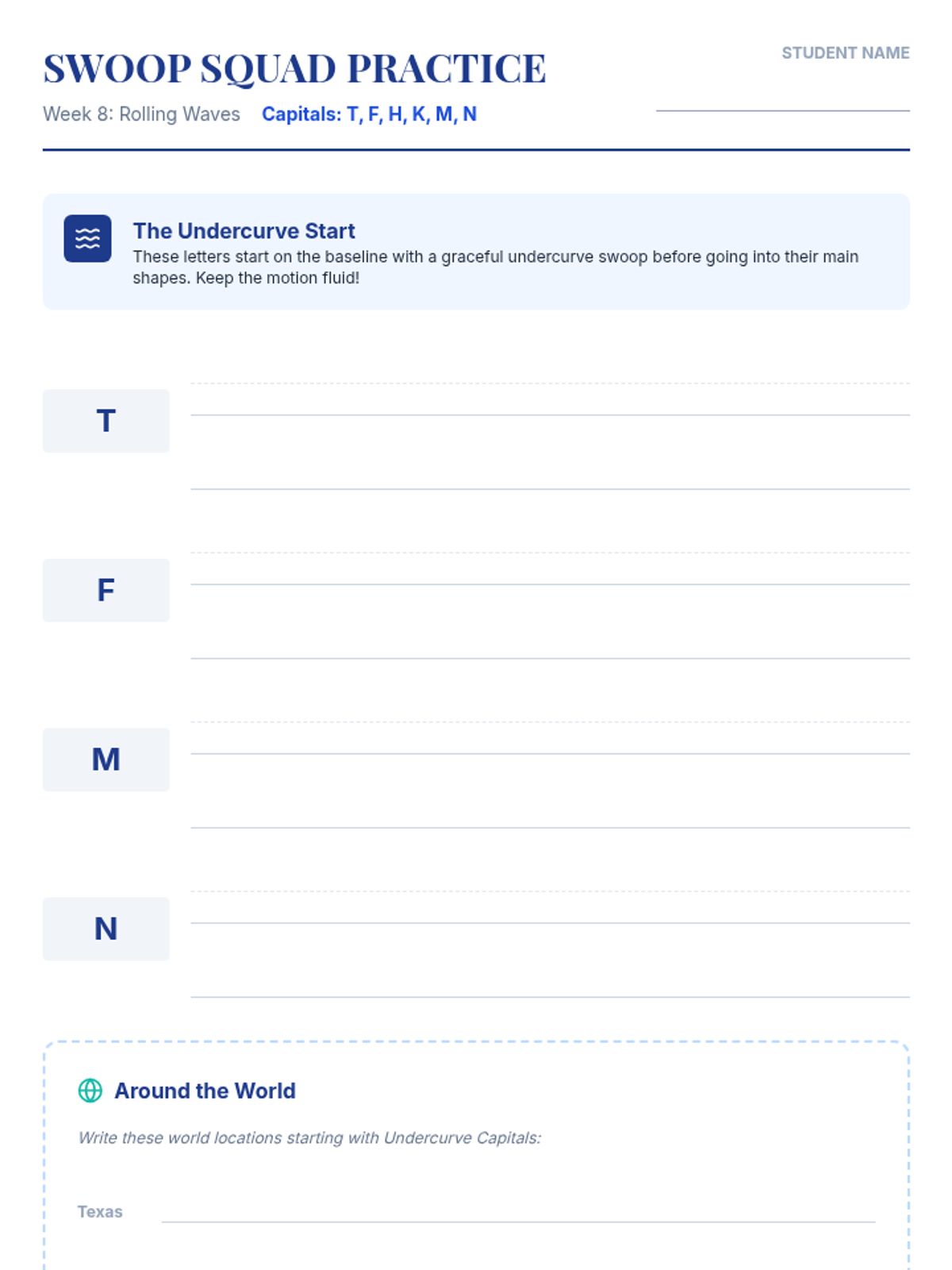
Practicing uppercase letters with undercurve starts: T, F, H, K, M, and N.
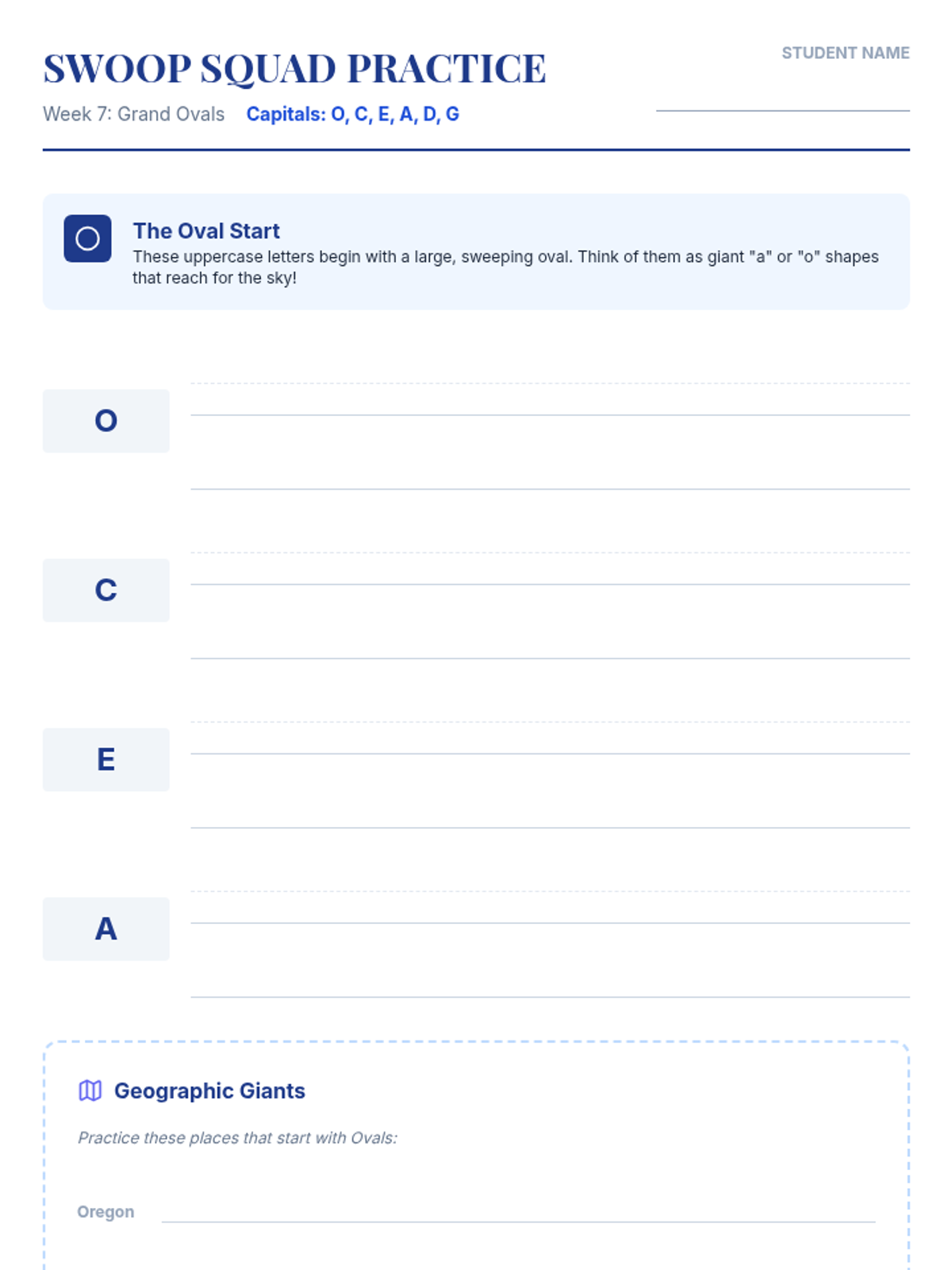
Focusing on uppercase letters with oval starts: O, C, E, A, D, and G.
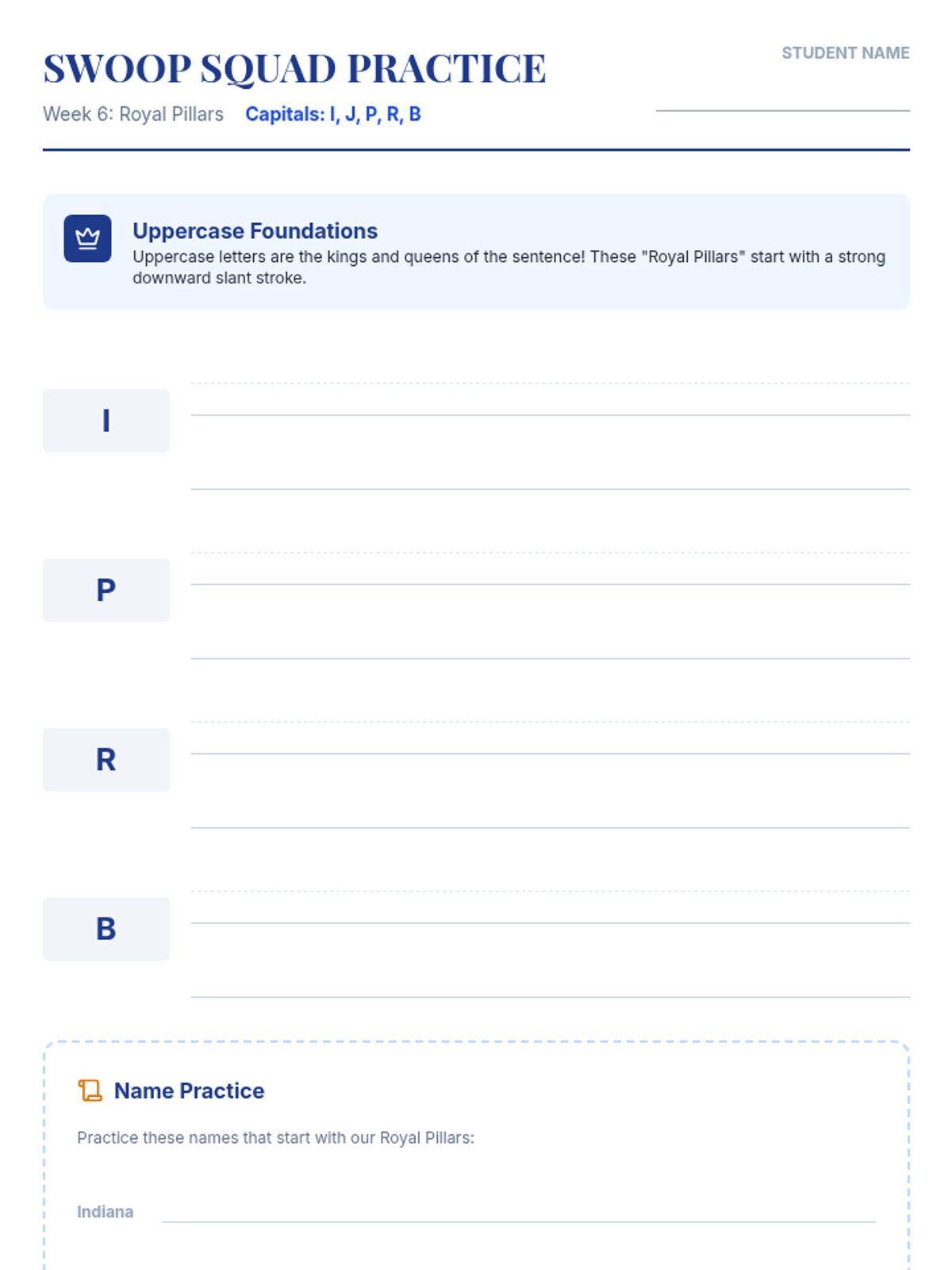
Beginning uppercase letters with straight and slant starts: I, J, P, R, and B.
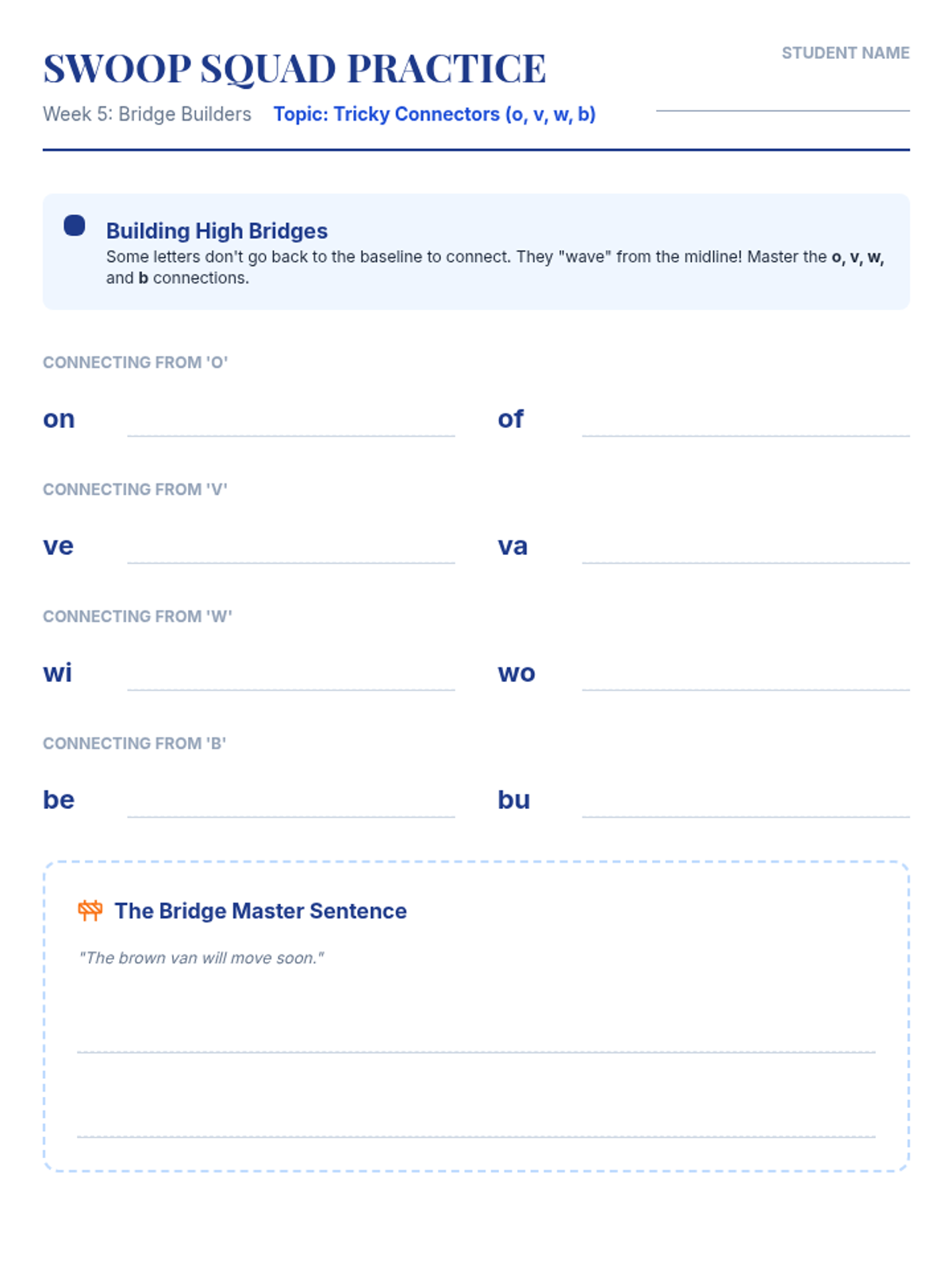
Mastering the tricky connections between letters like o, v, w, and b.
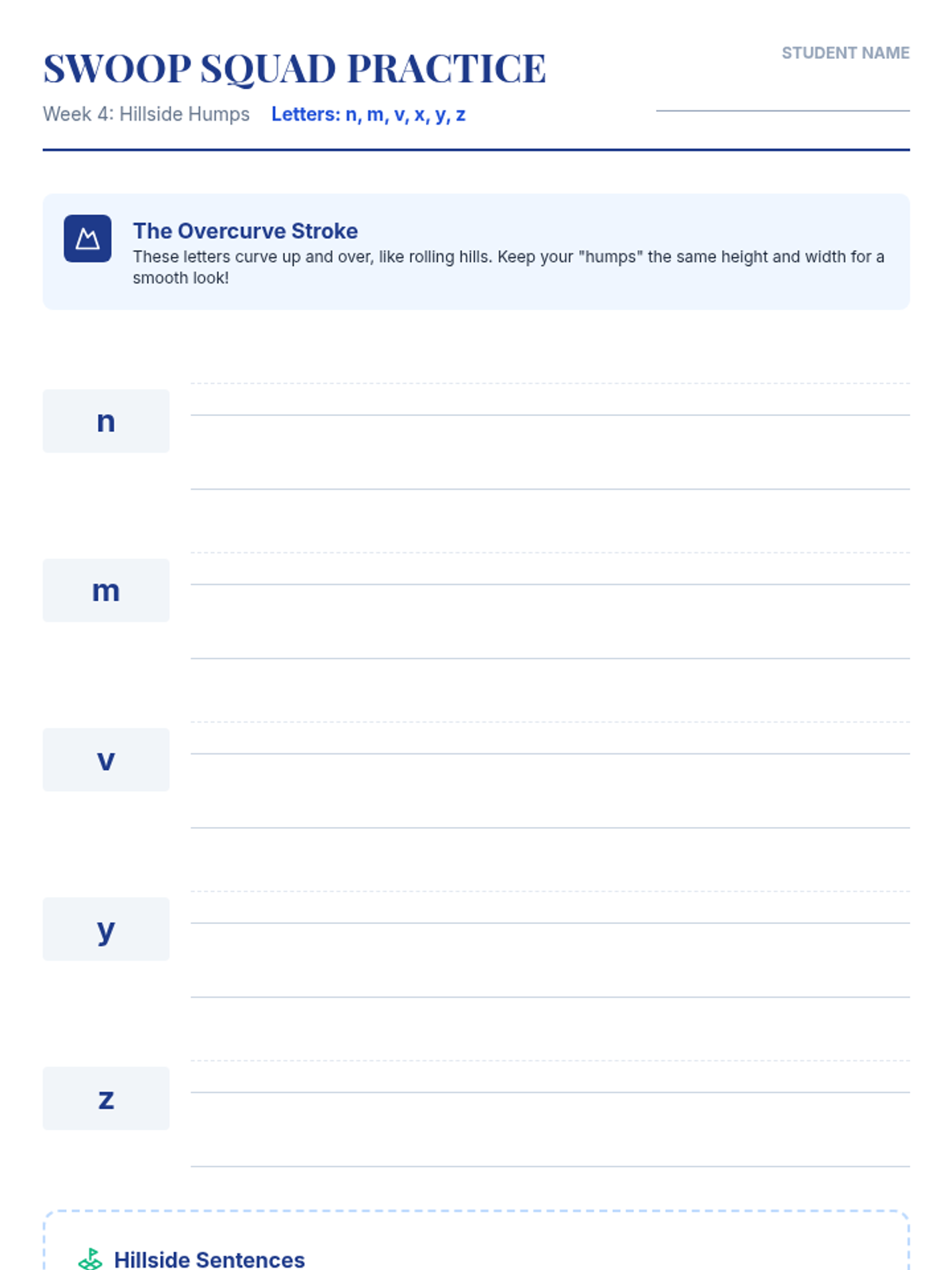
Practicing 'overcurve' letters and humps: n, m, v, x, y, and z.
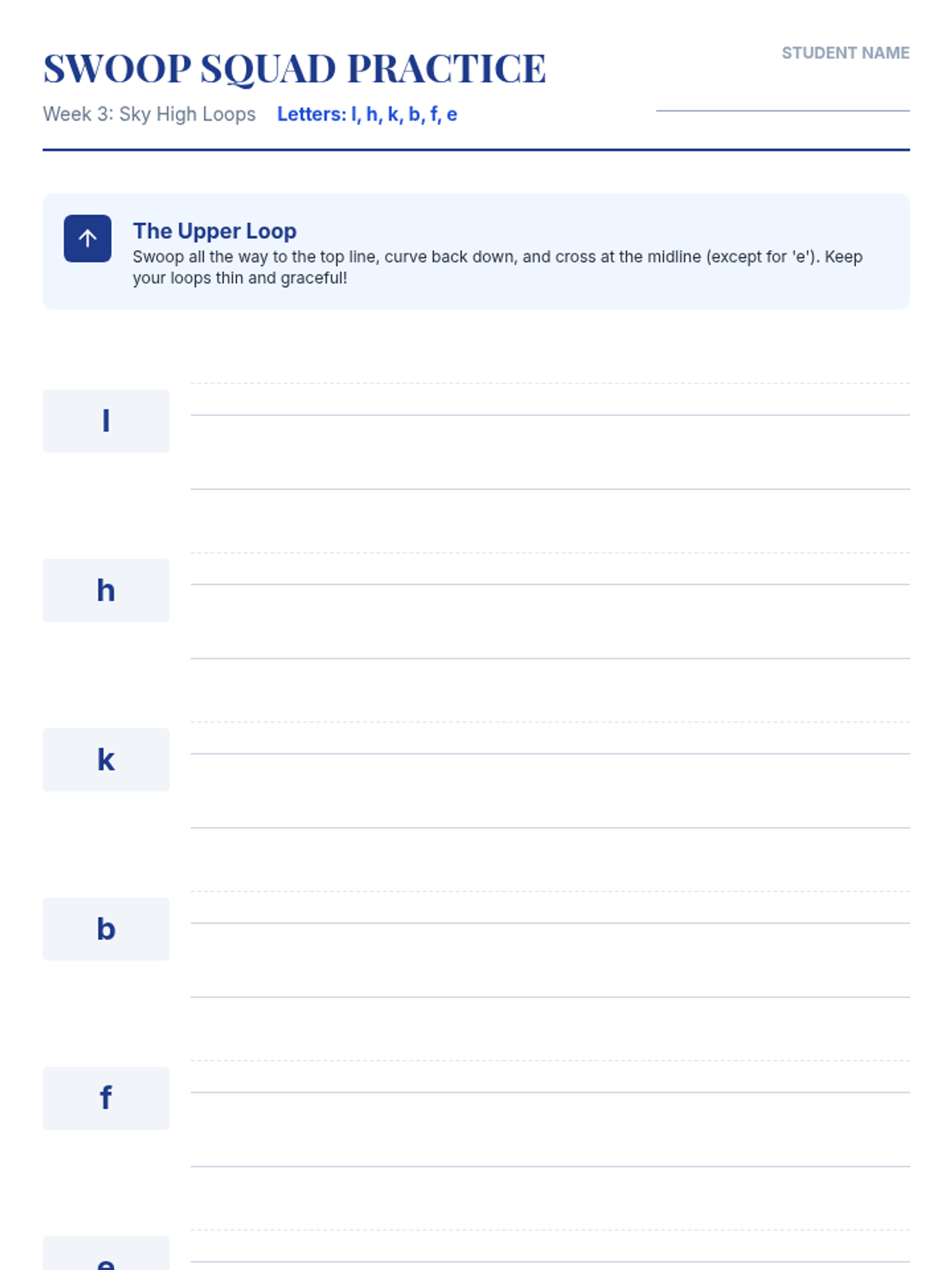
Introducing tall 'upper loop' letters such as l, h, k, b, f, and e.
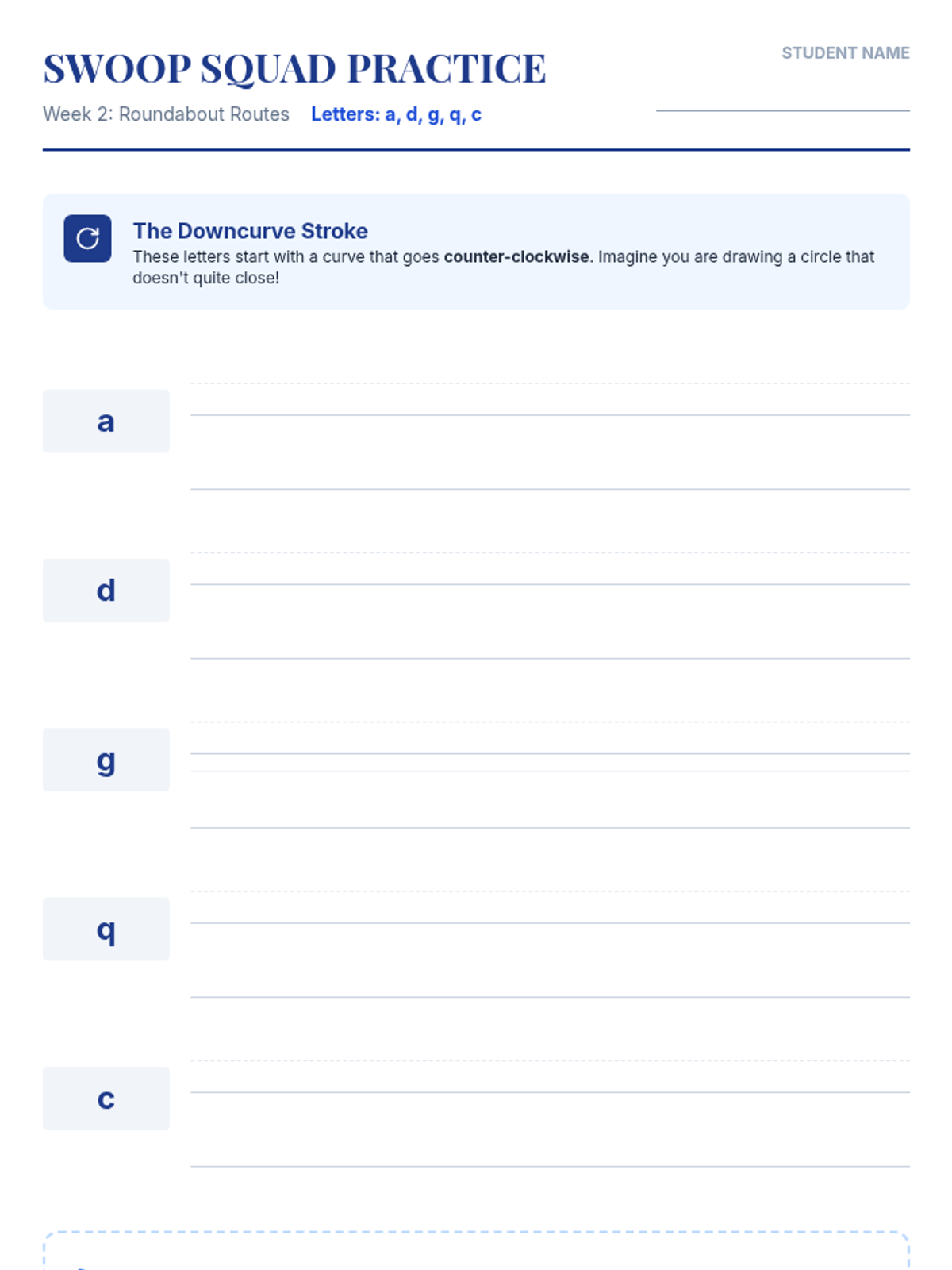
Focuses on 'downcurve' letters including a, d, g, q, and c.
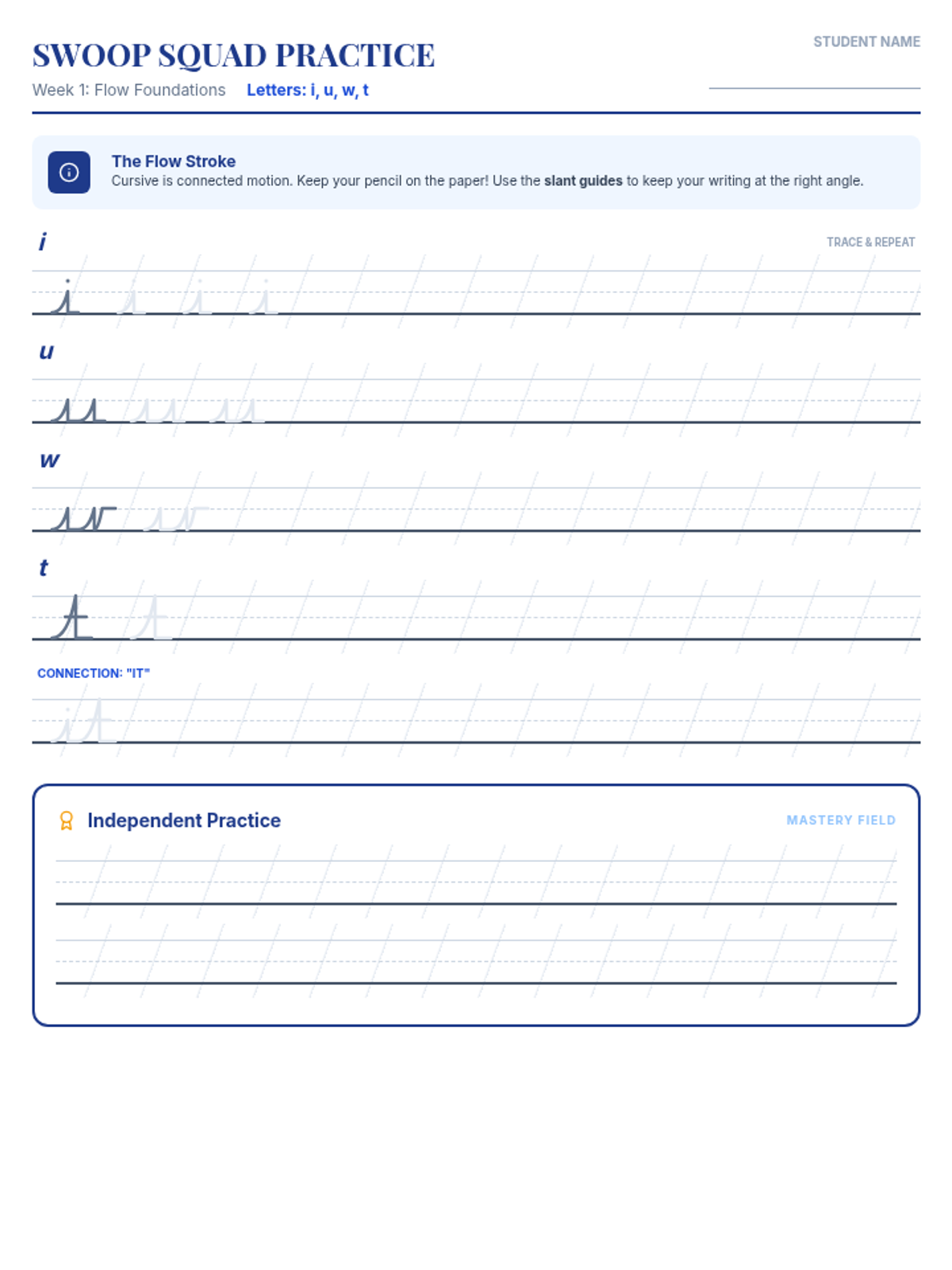
Introduction to cursive posture, grip, and the basic 'undercurve' strokes through letters i, u, w, and t.
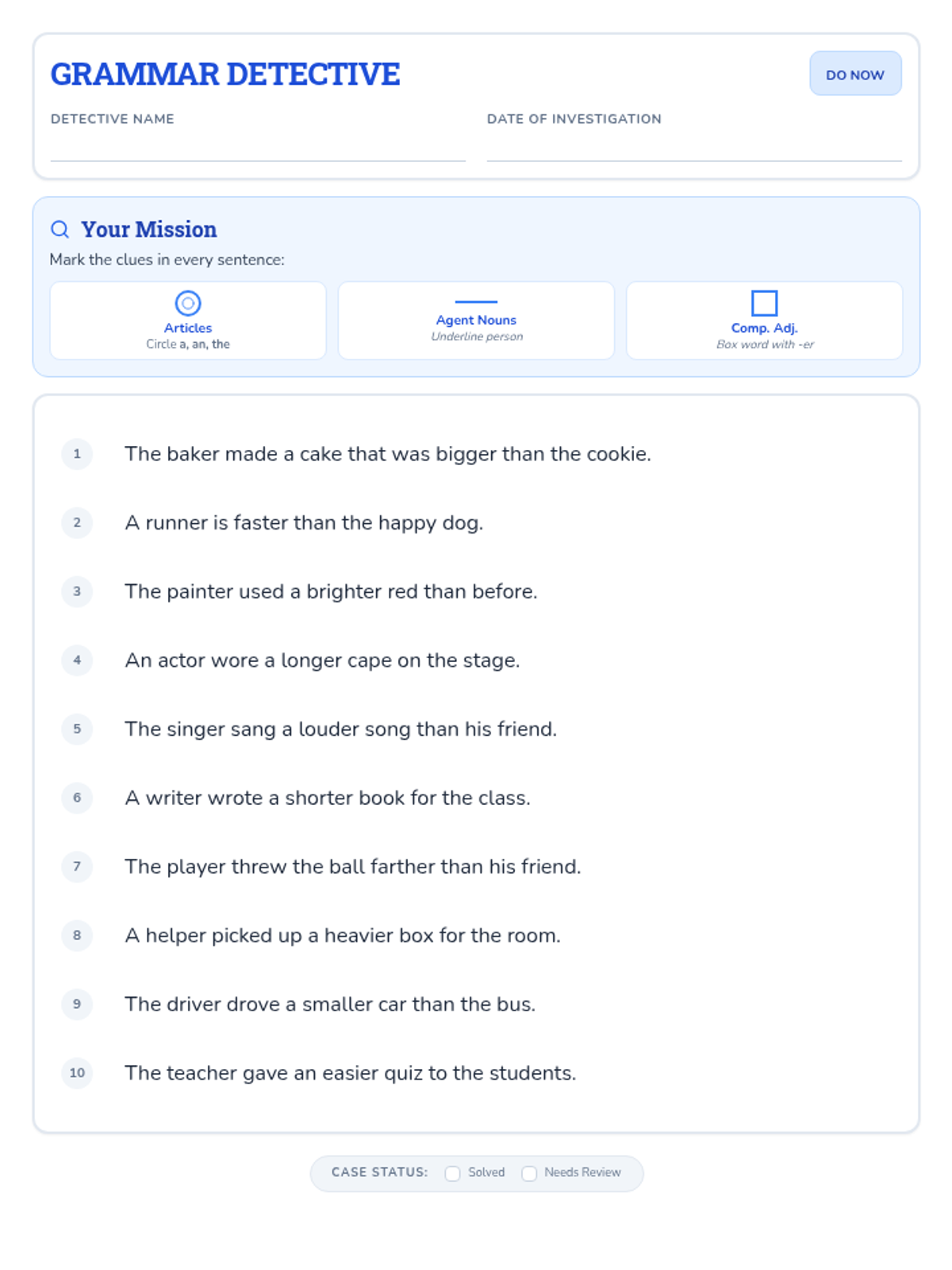
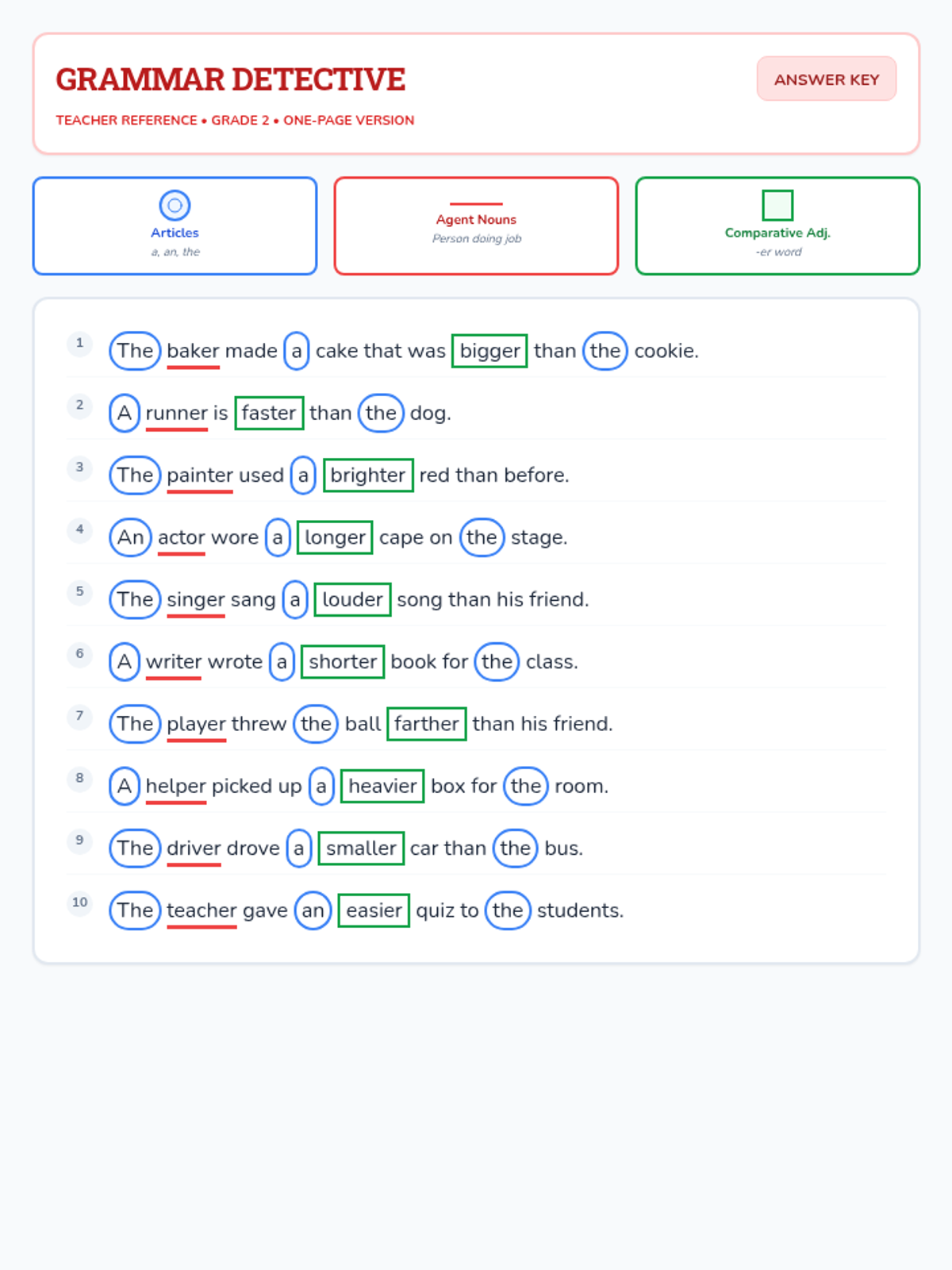
A grammar-focused lesson for 2nd graders to practice identifying articles, agent nouns, and comparative adjectives in sentences.
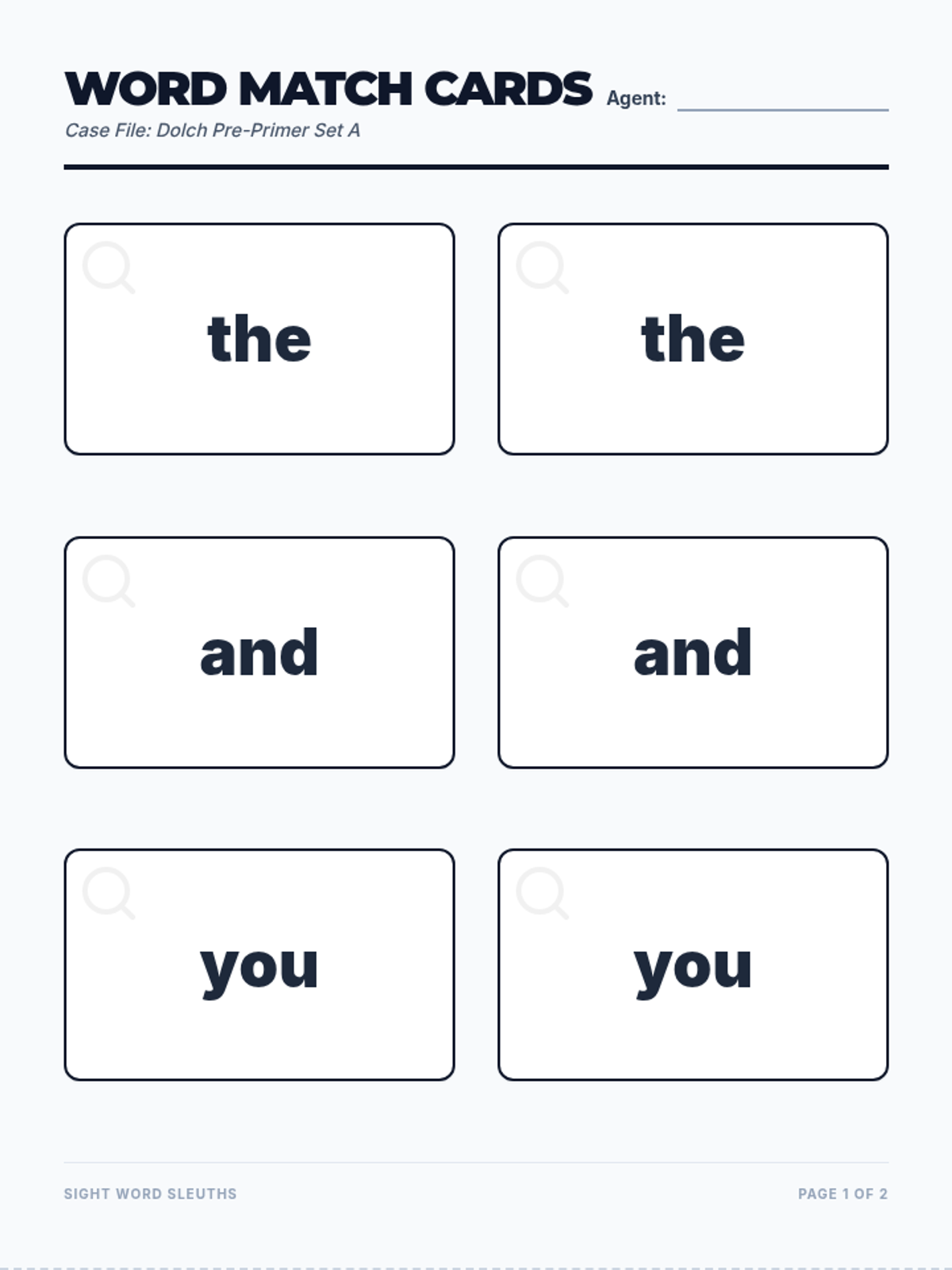
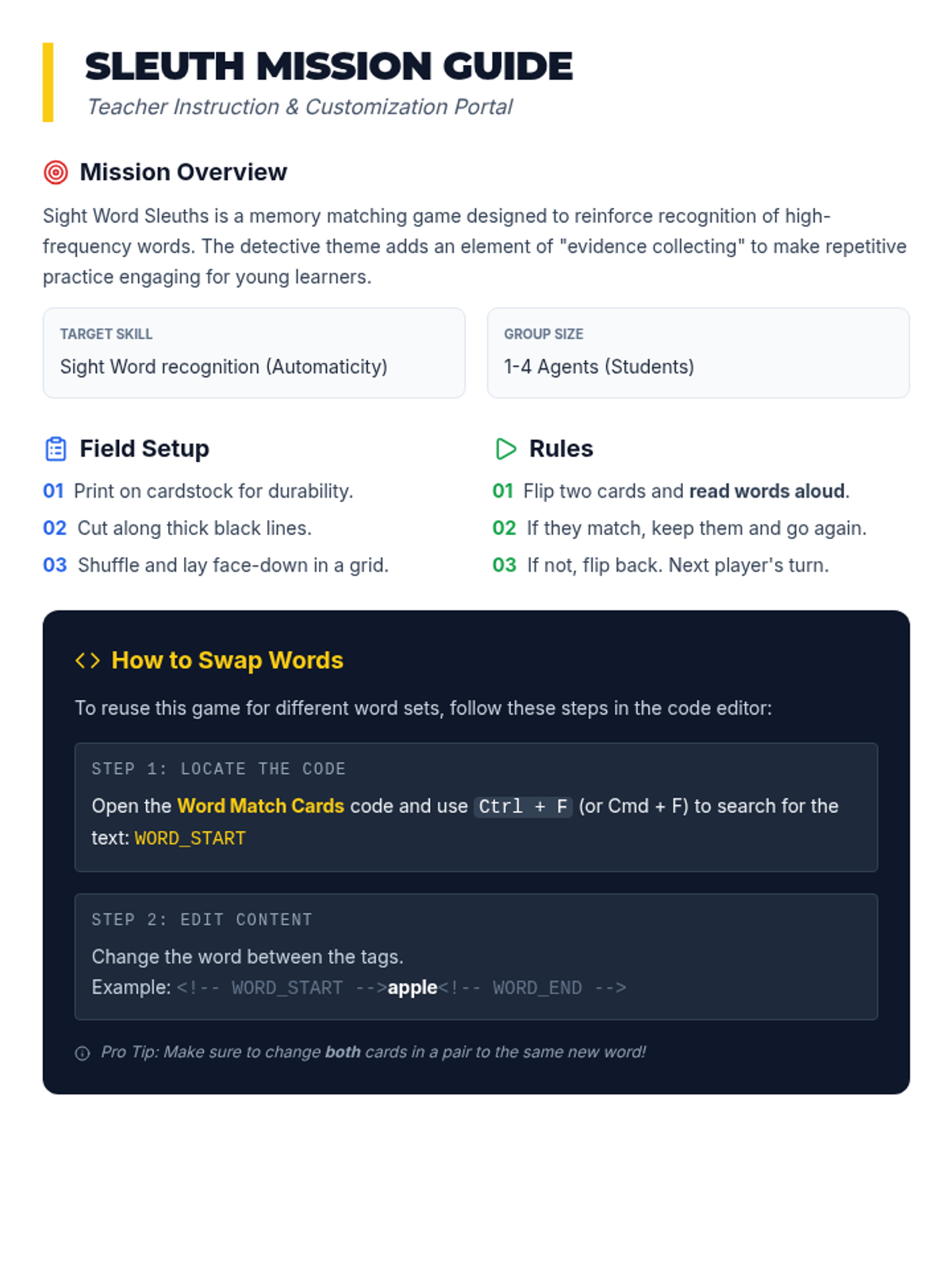
A high-engagement memory matching game designed to help students master Dolch sight words through a fun detective-themed activity.
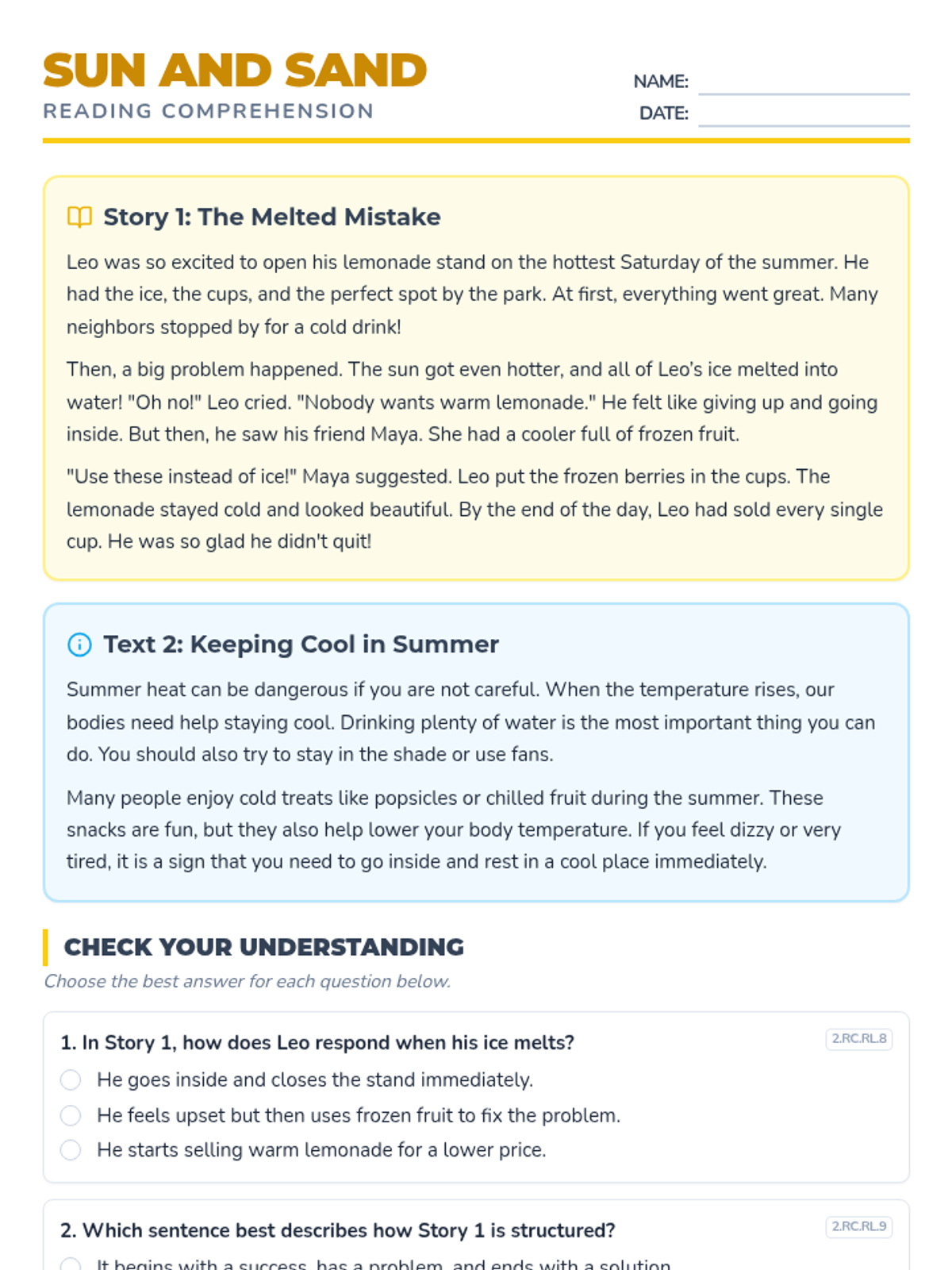
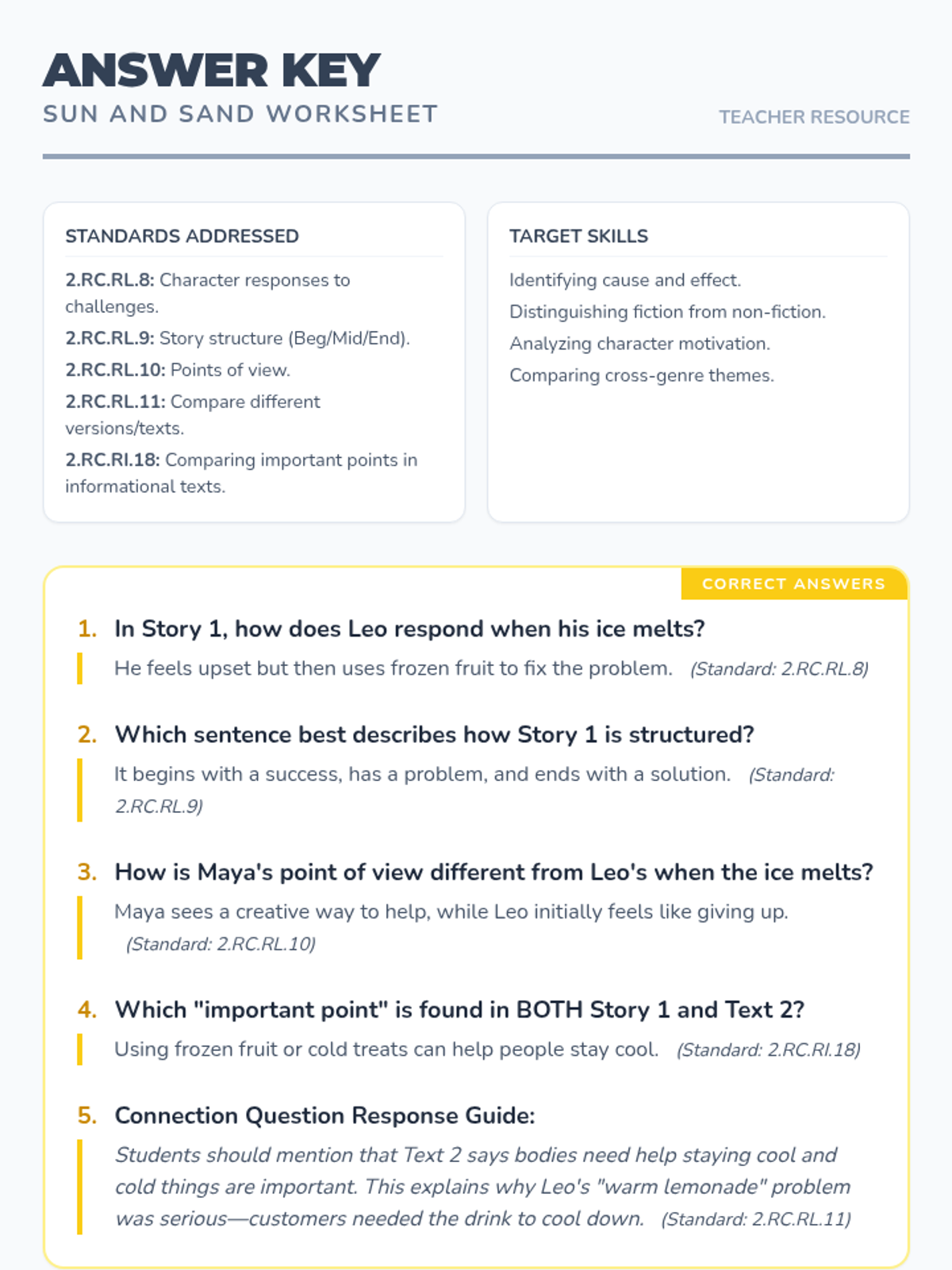
A reading comprehension lesson focused on summer-themed stories, addressing Arkansas second-grade standards for literary and informational texts, including character response, story structure, and point of view.
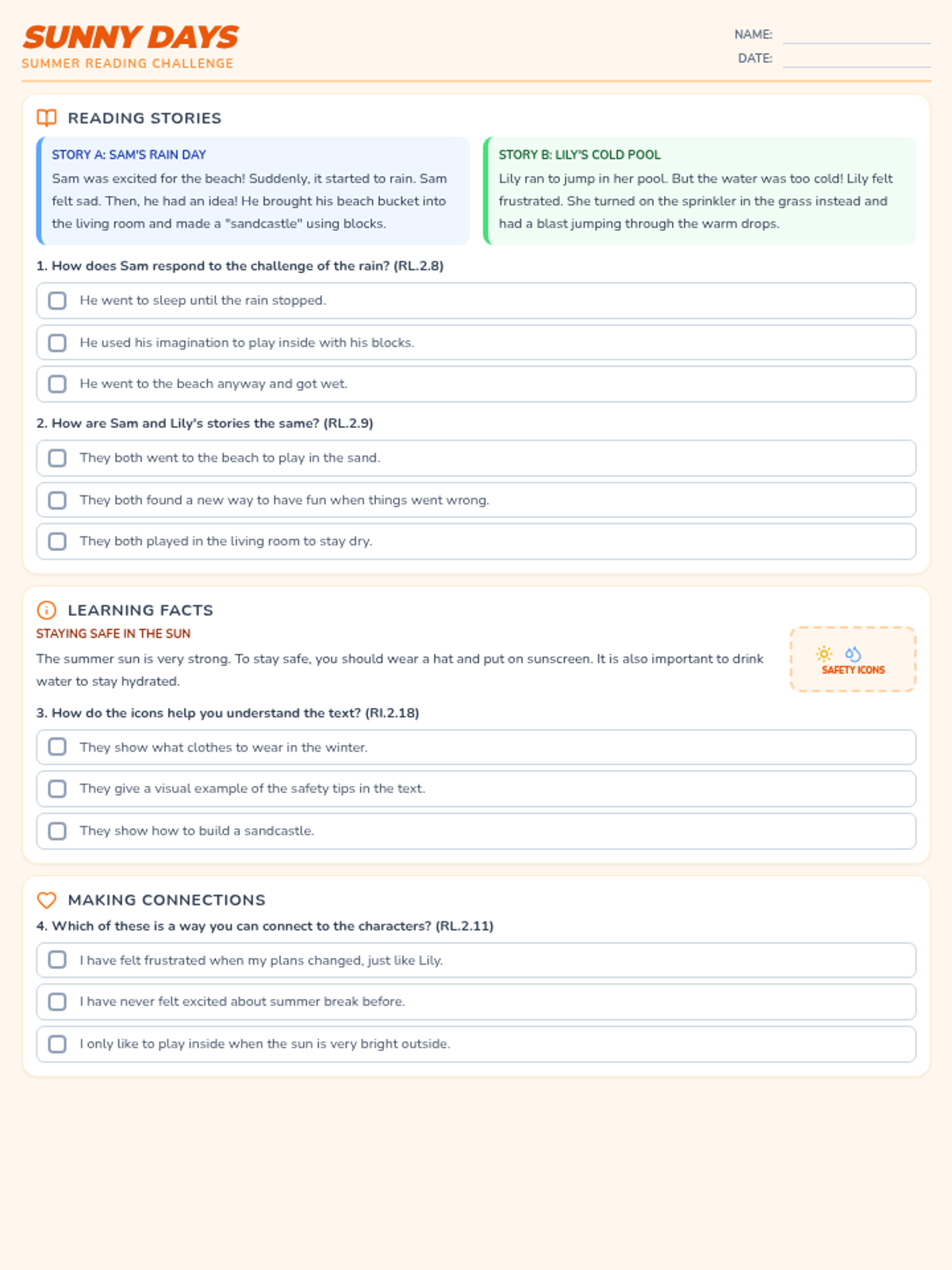
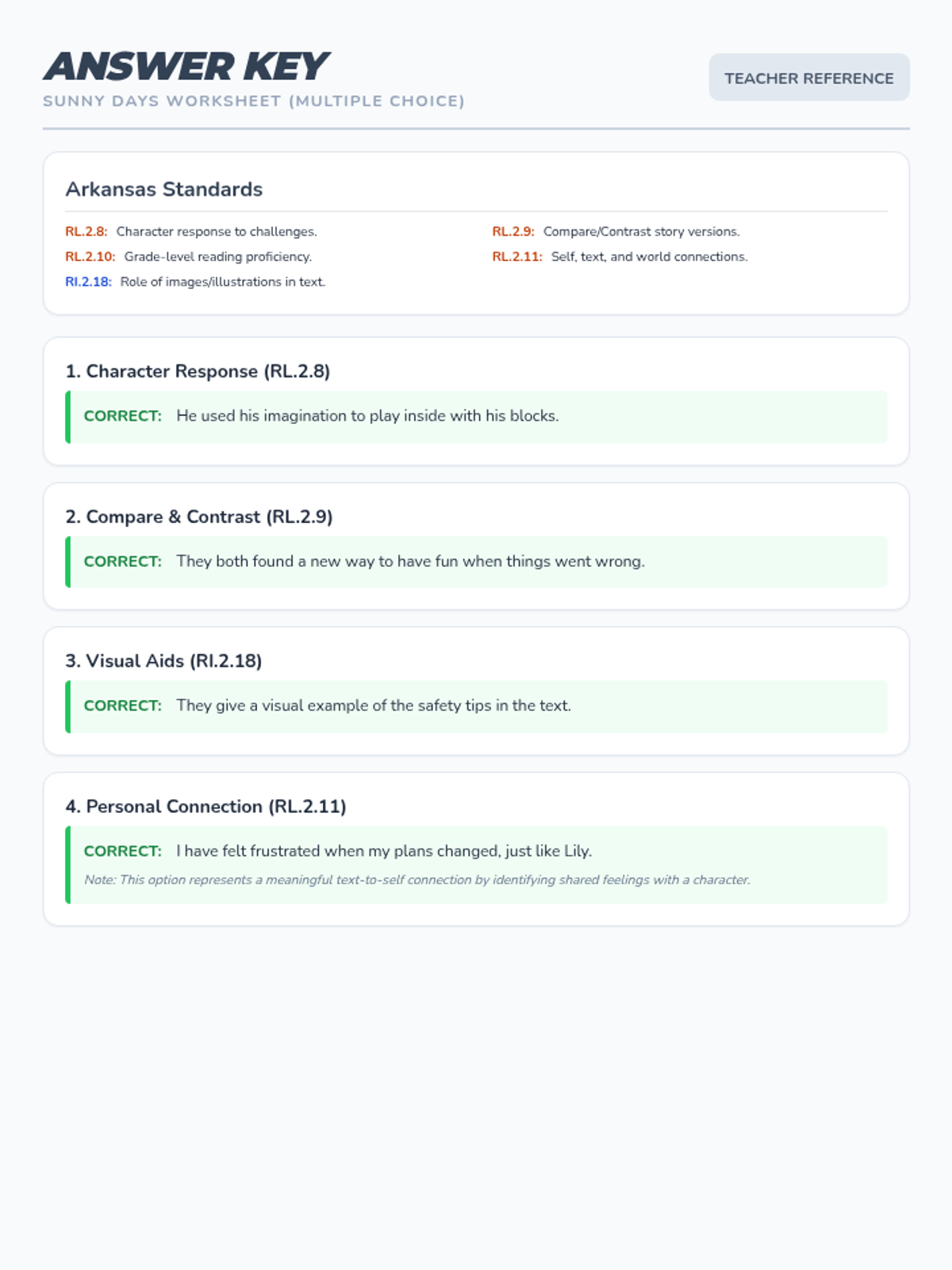
A short, simple ELA lesson focused on summer-themed reading comprehension and informational text analysis for 2nd grade students.
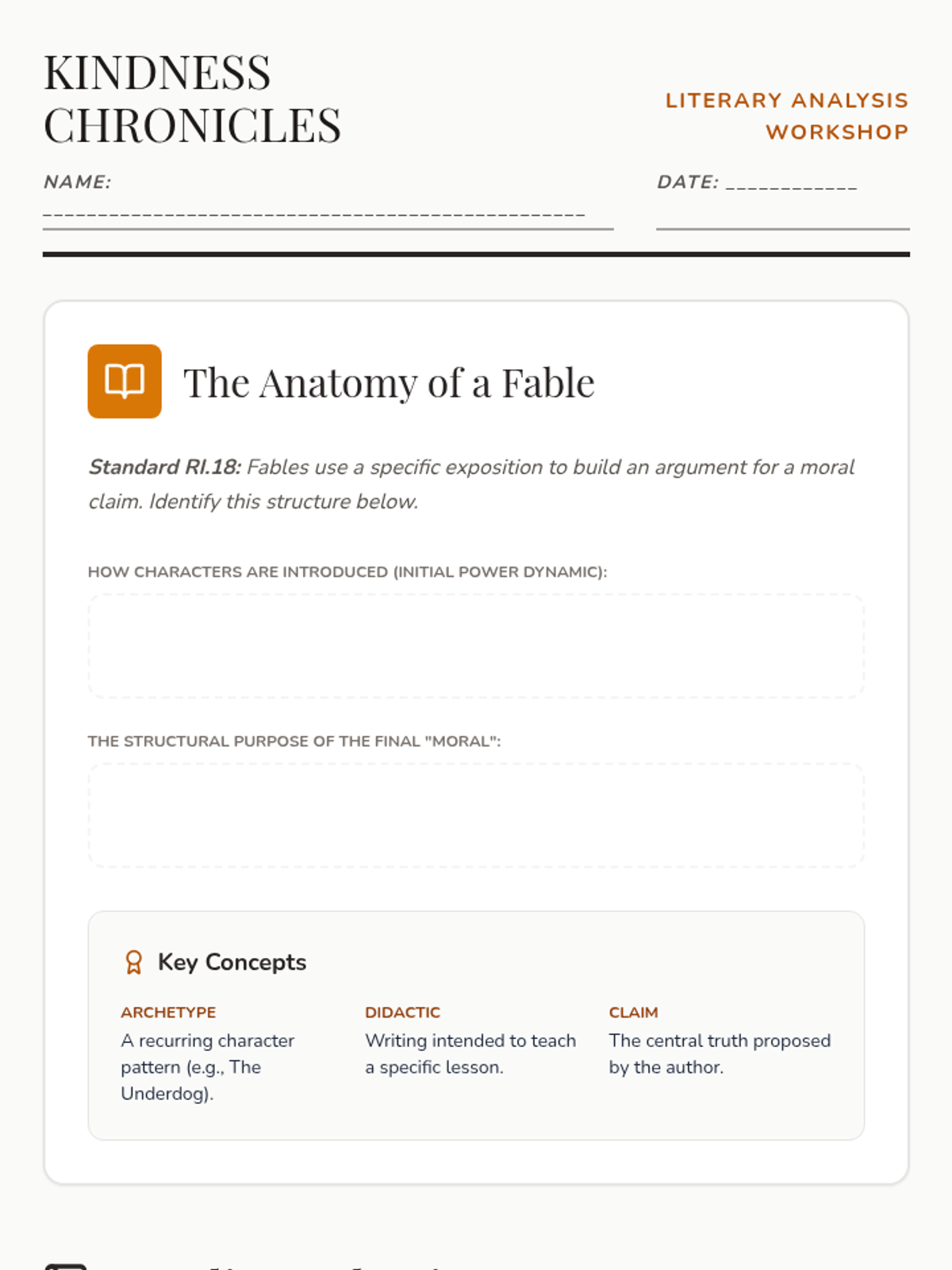
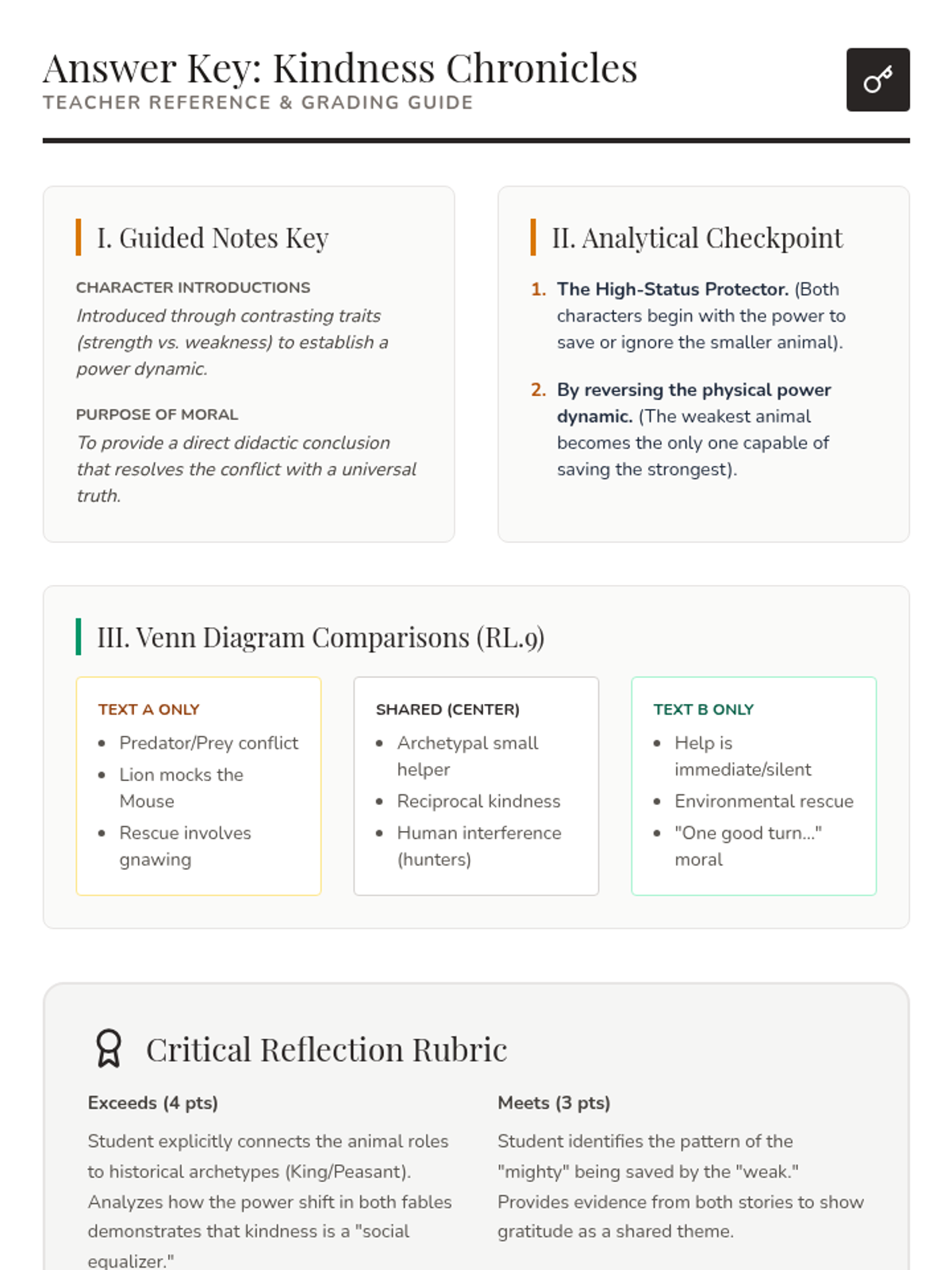
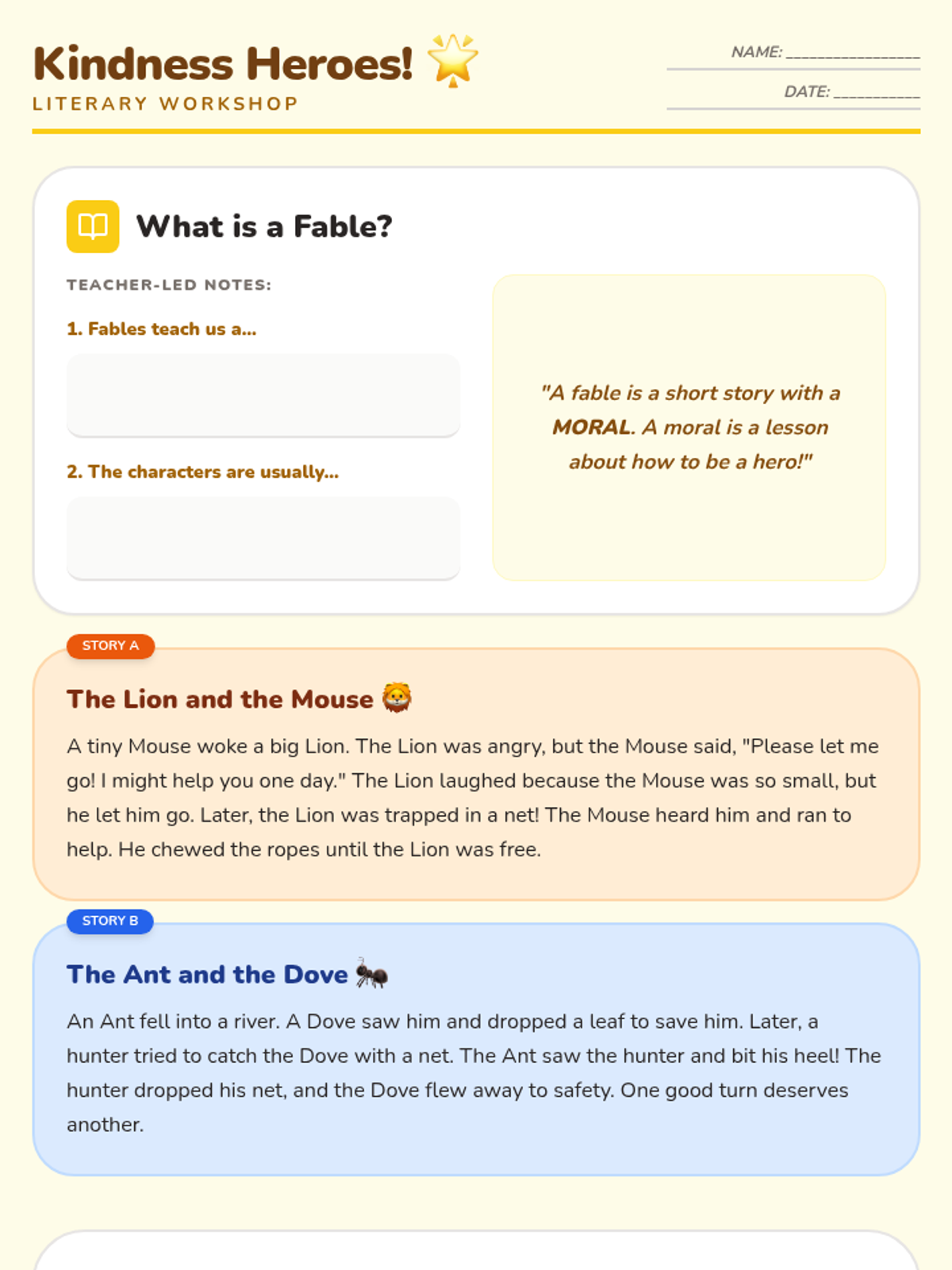
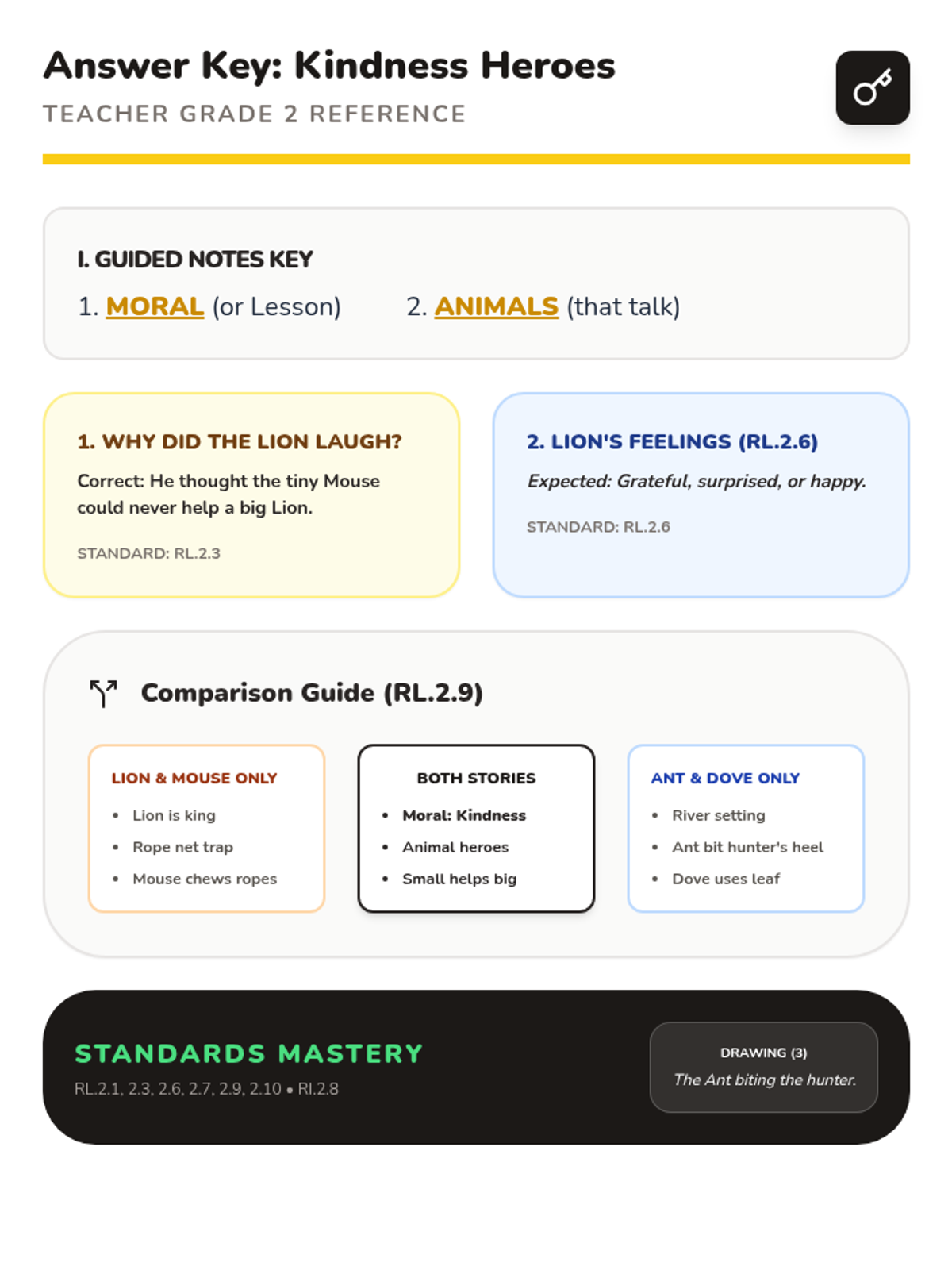
An introduction to fables for second graders, focusing on how characters help each other and the lessons we can learn about kindness.
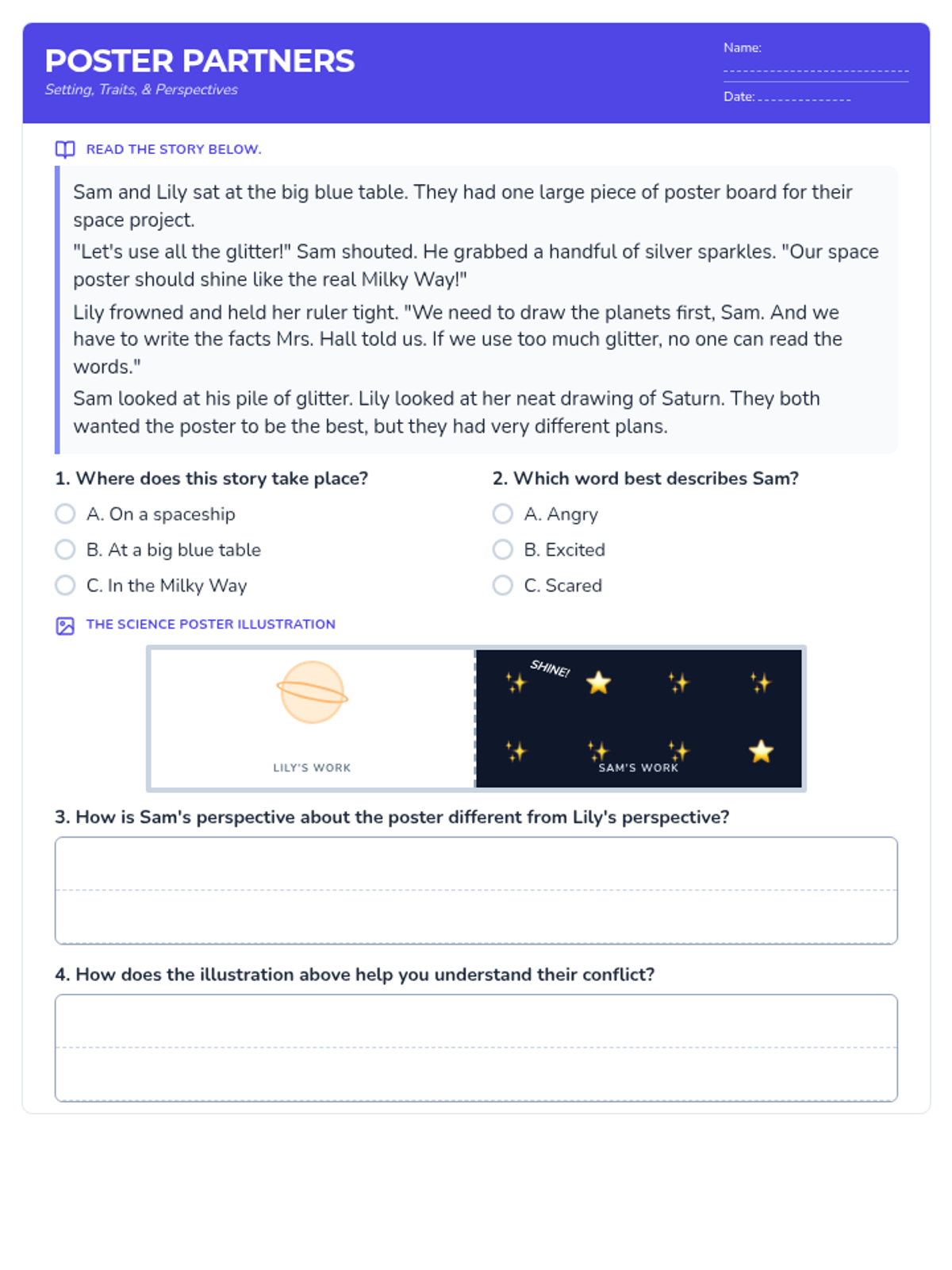
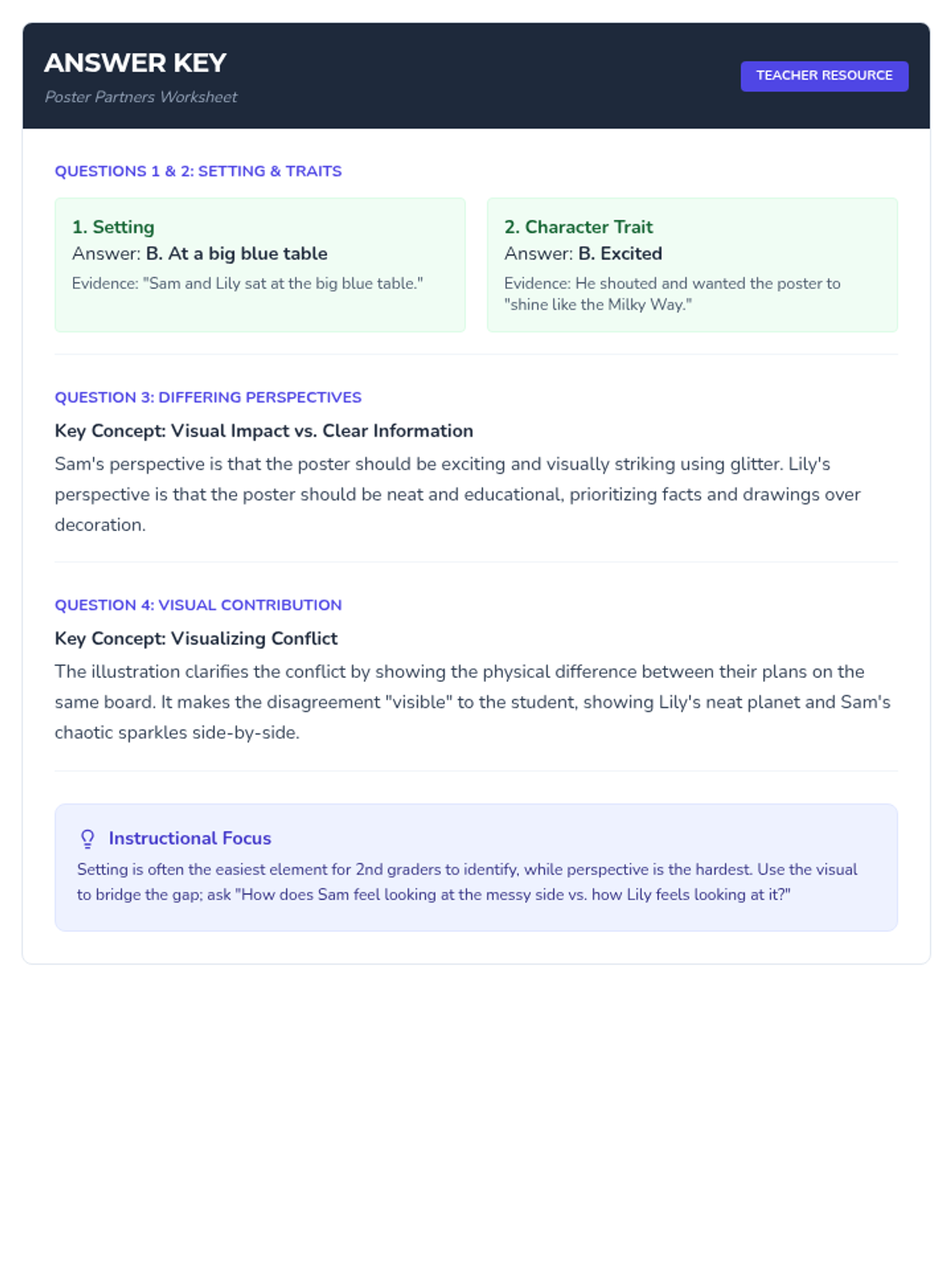
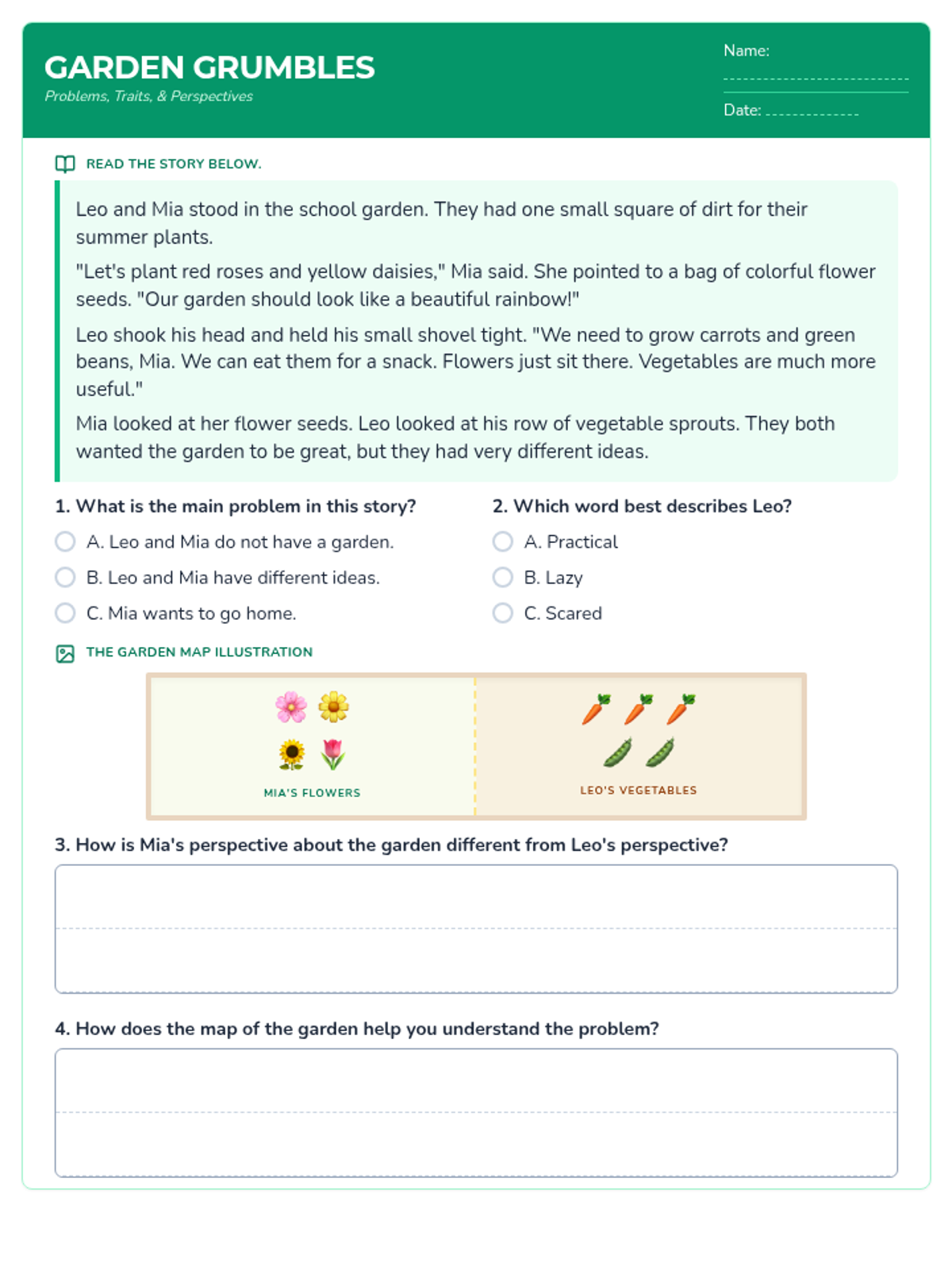
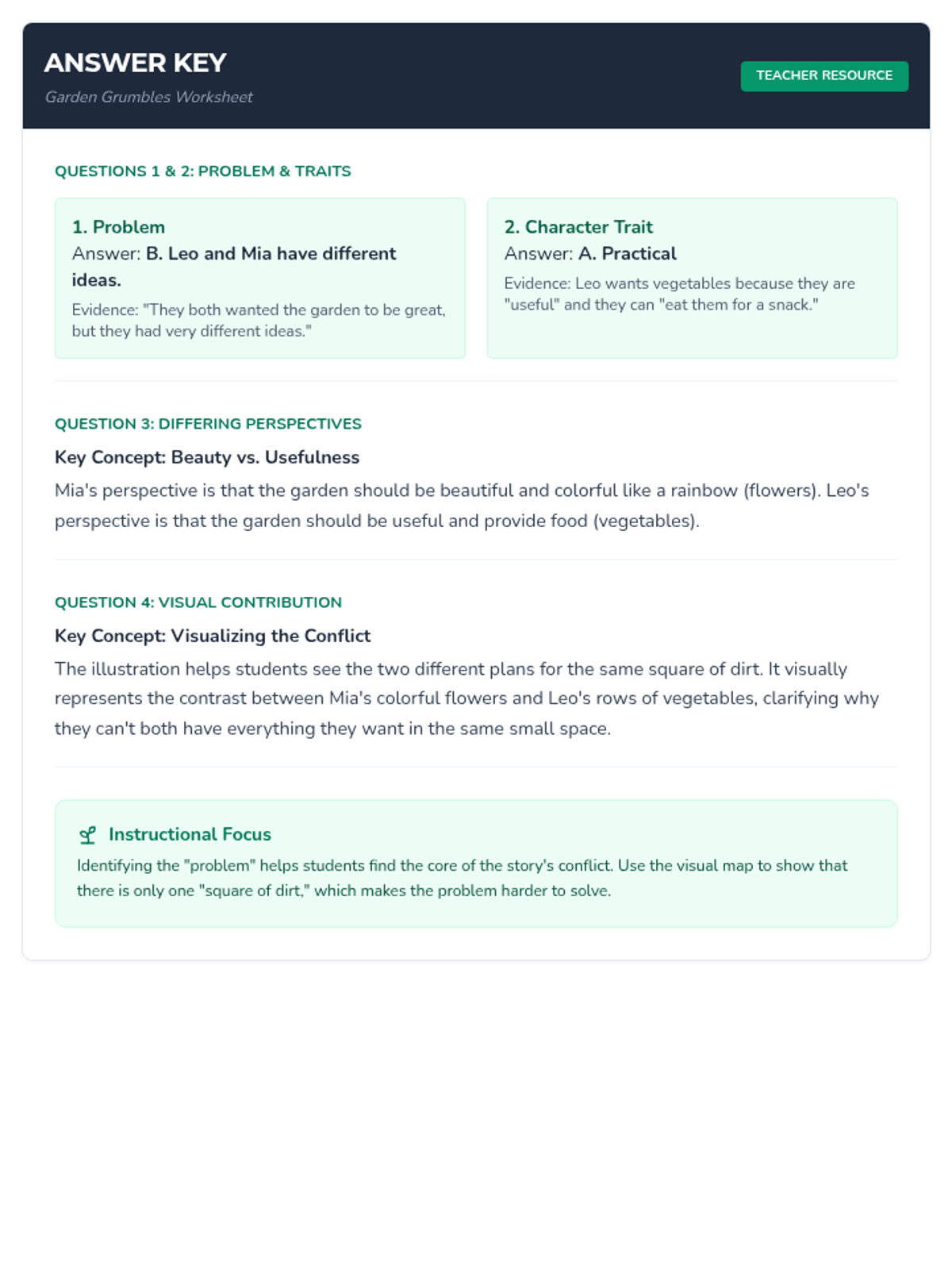
A 2nd-grade reading comprehension lesson focusing on character traits, varying perspectives, and the role of illustrations in storytelling. Students read a short passage about two classmates with different artistic visions and analyze their interactions.
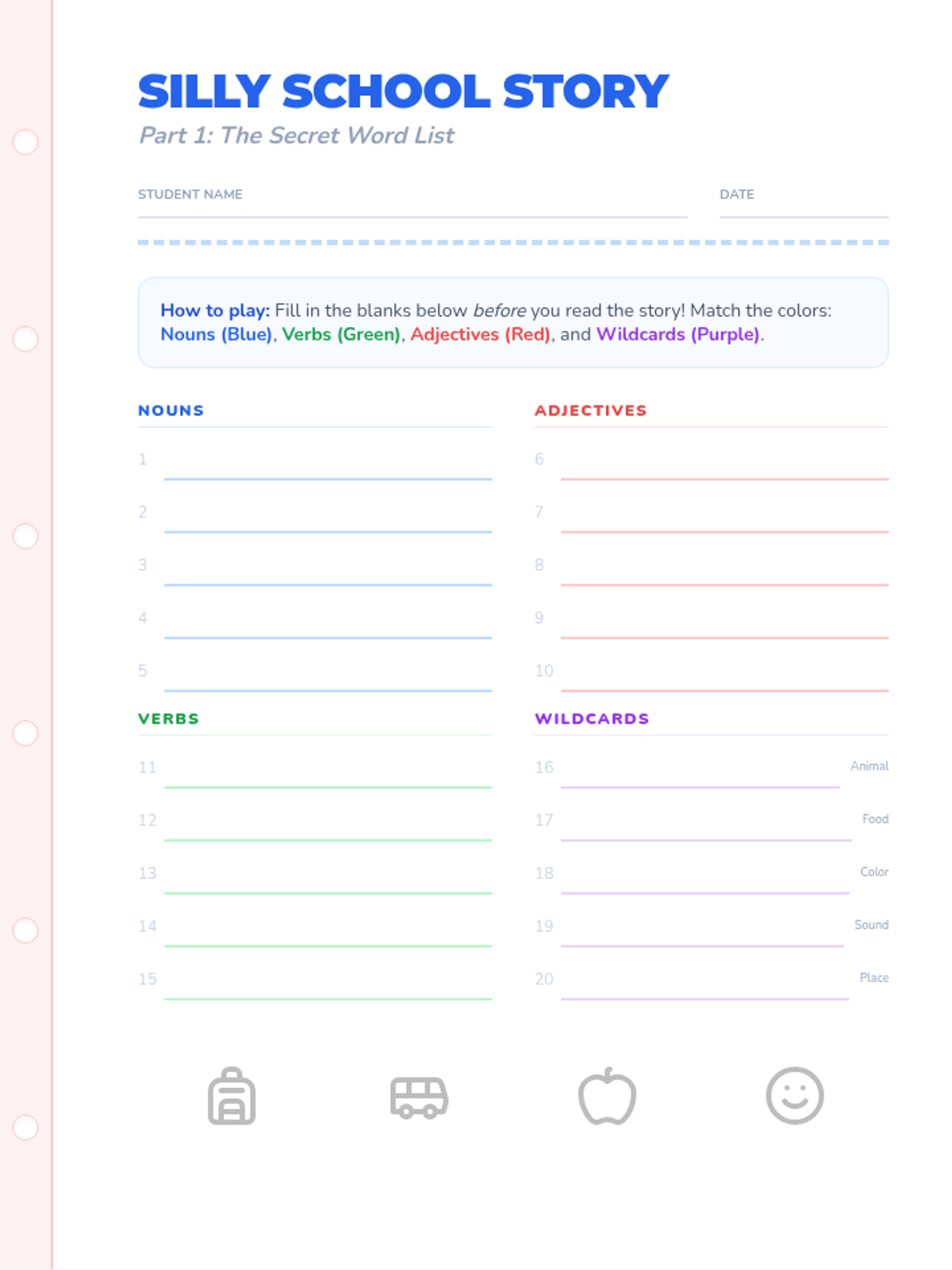
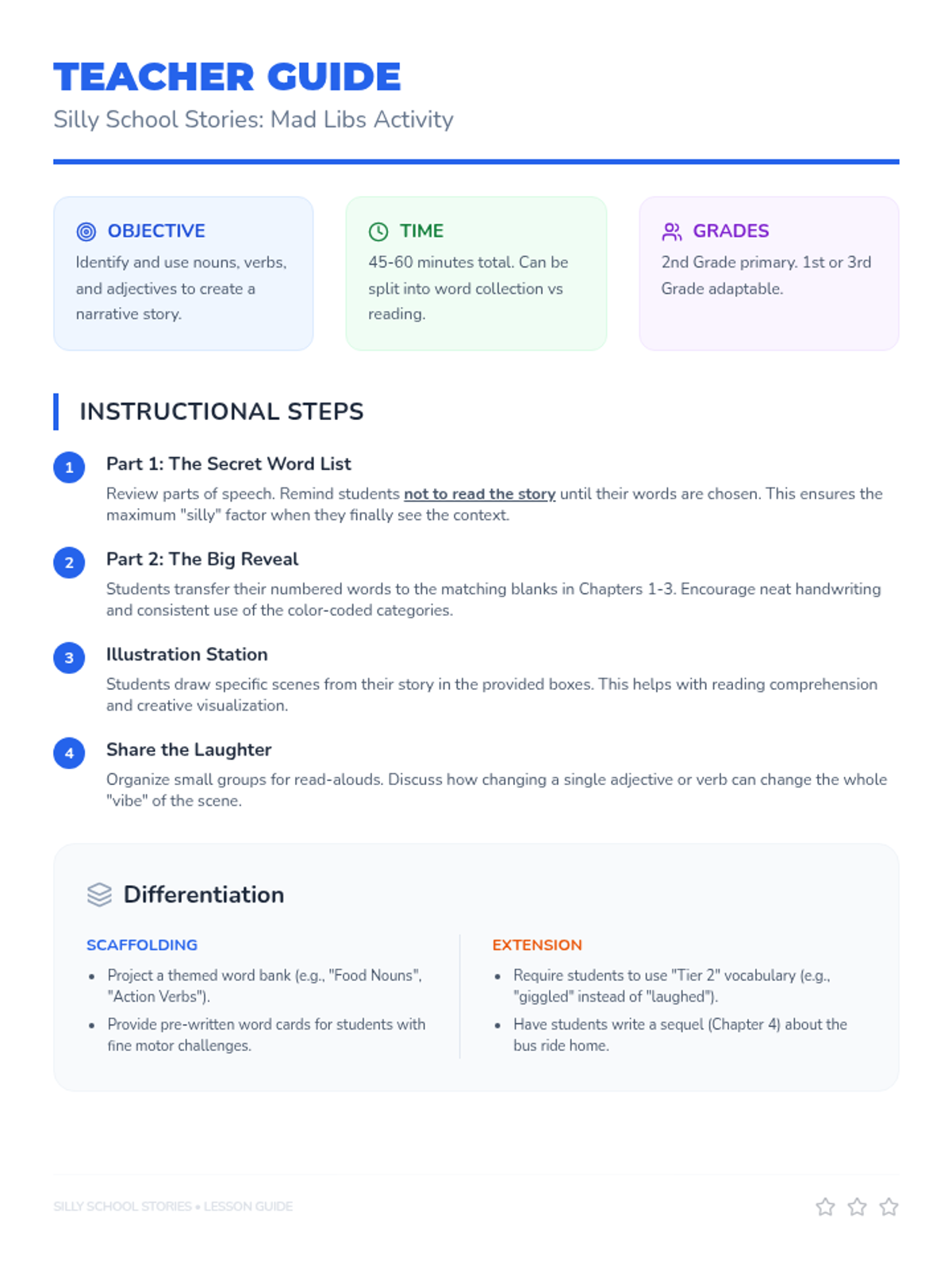
A creative writing activity where 2nd grade students use nouns, verbs, and adjectives to complete a hilarious 4-page story about a chaotic day at school.
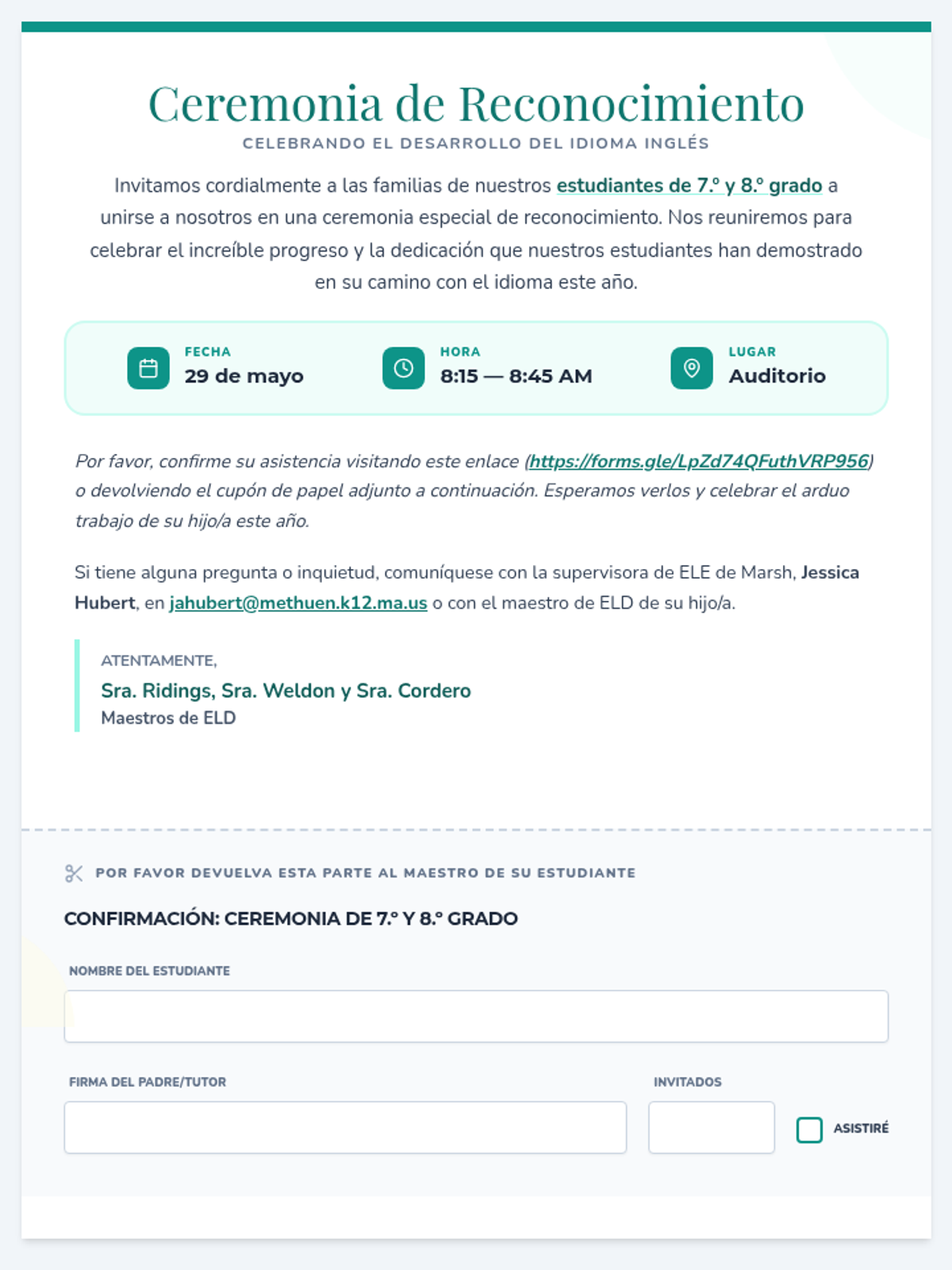
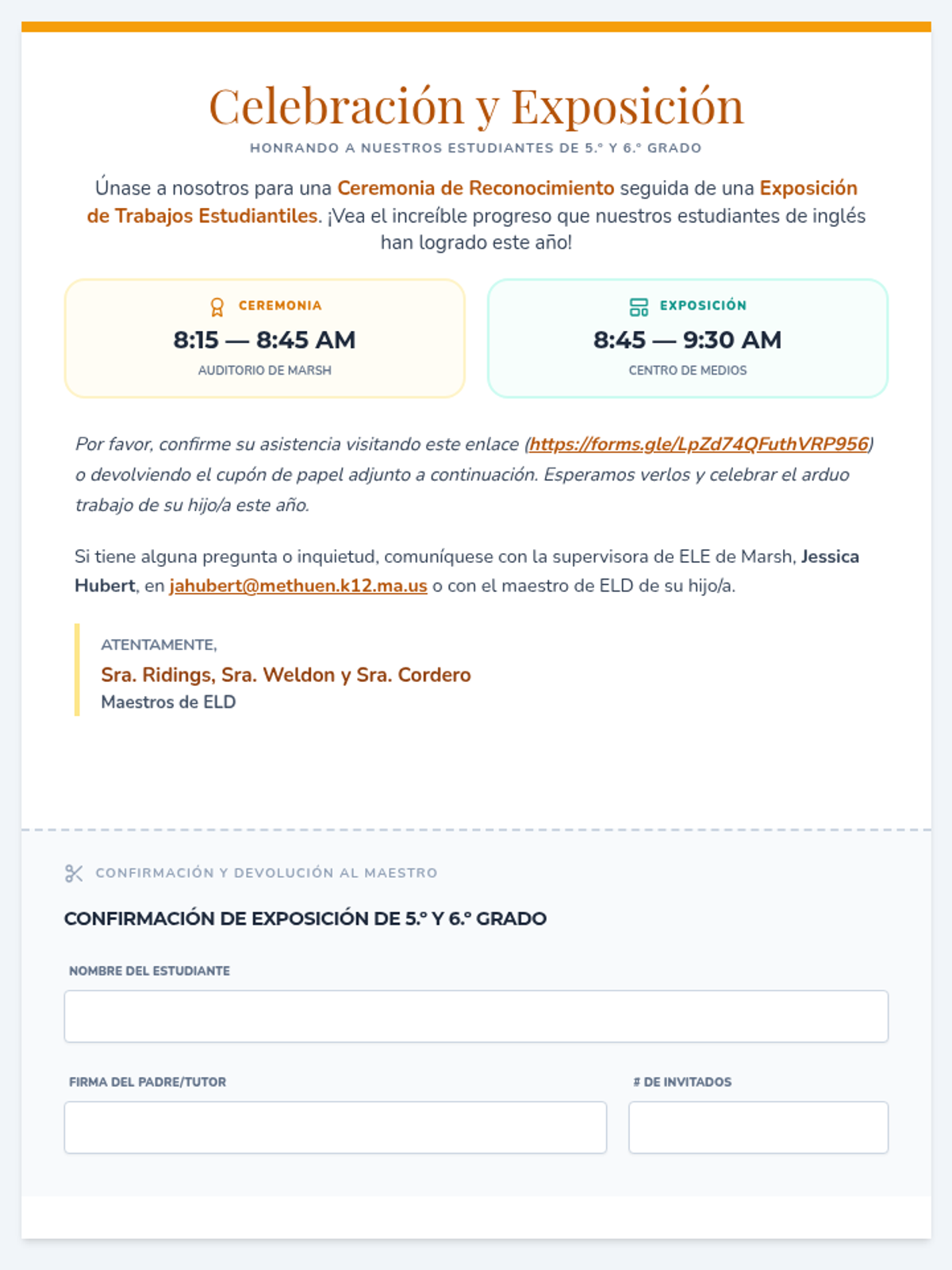
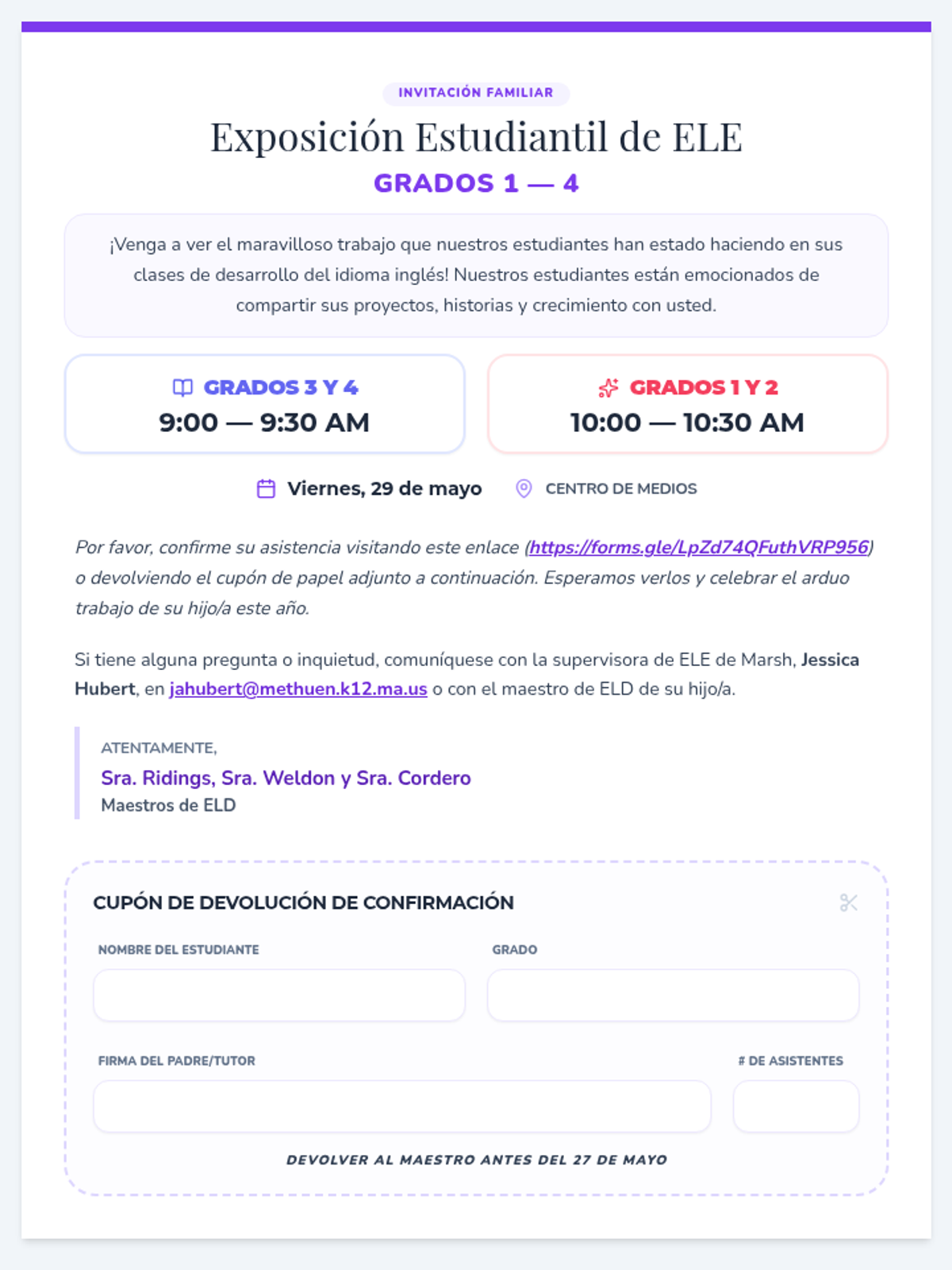
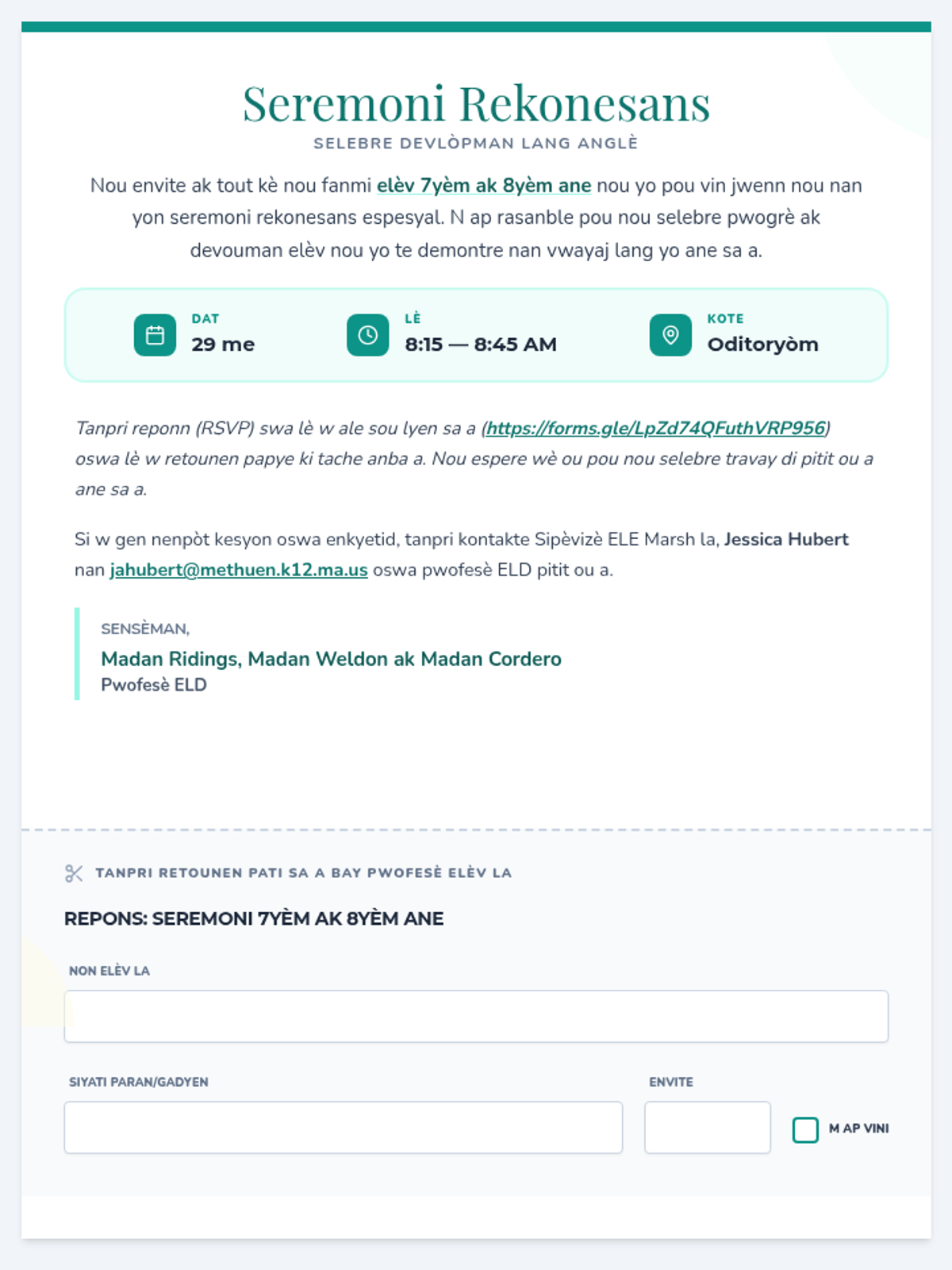
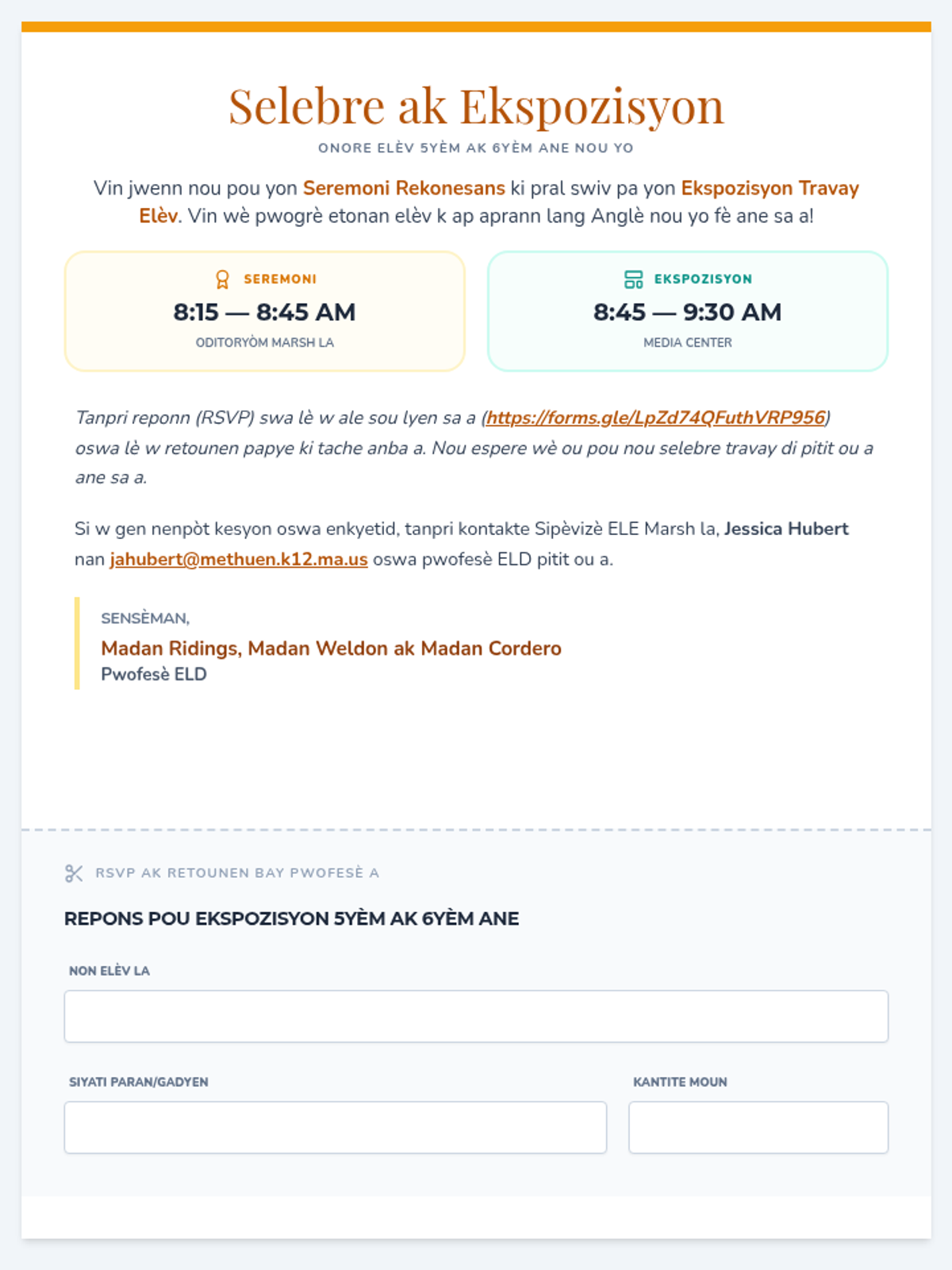
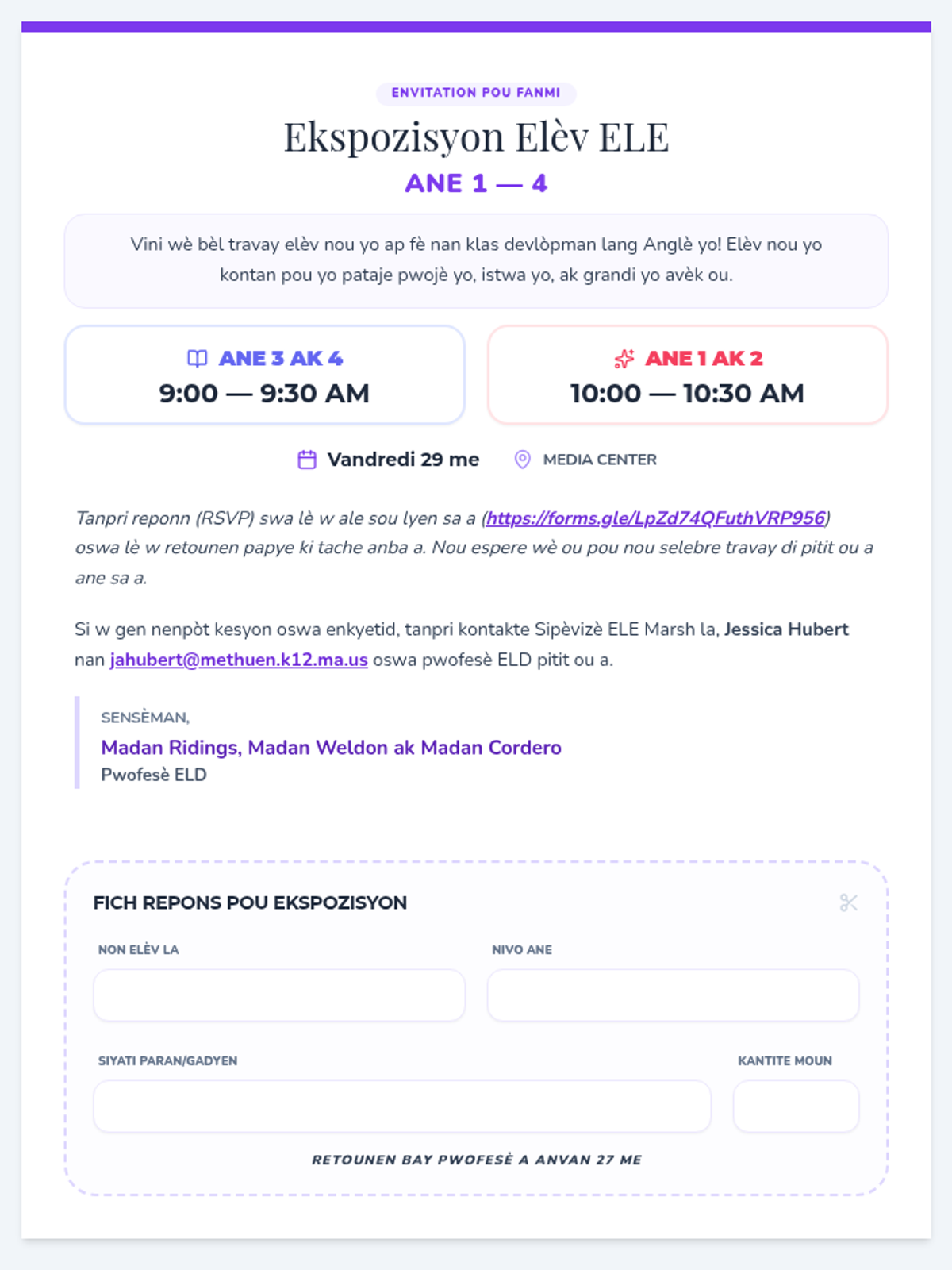
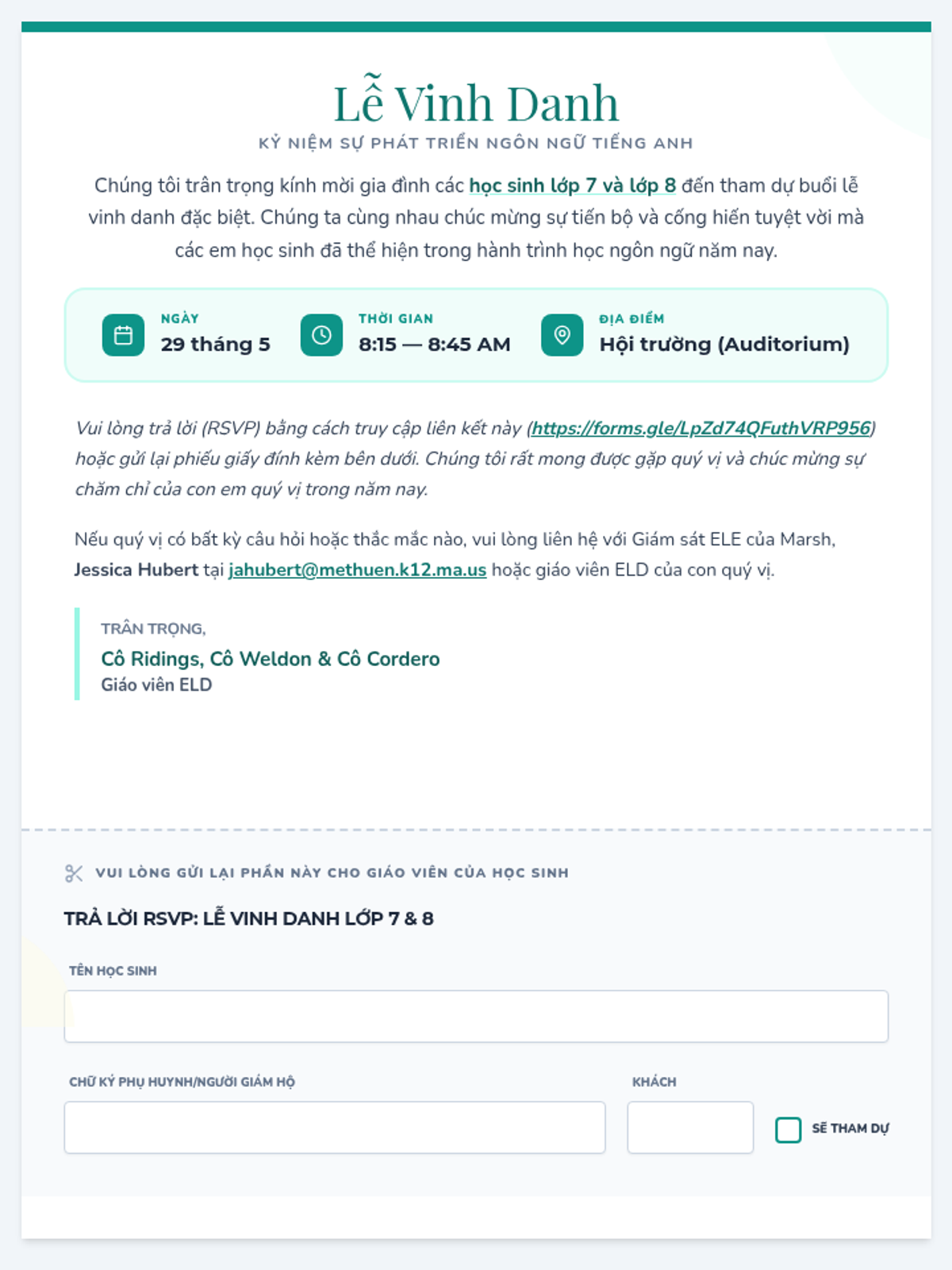
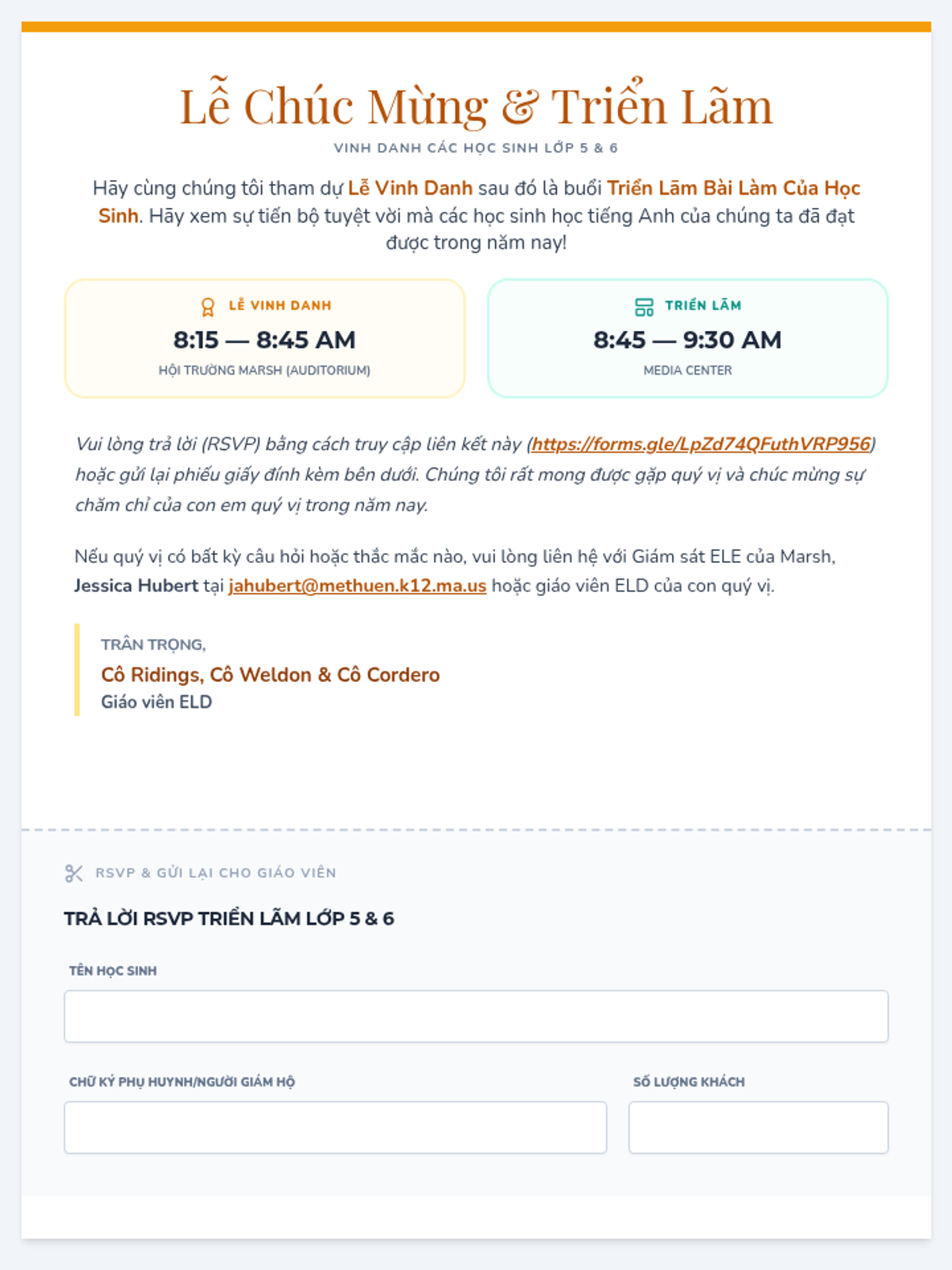
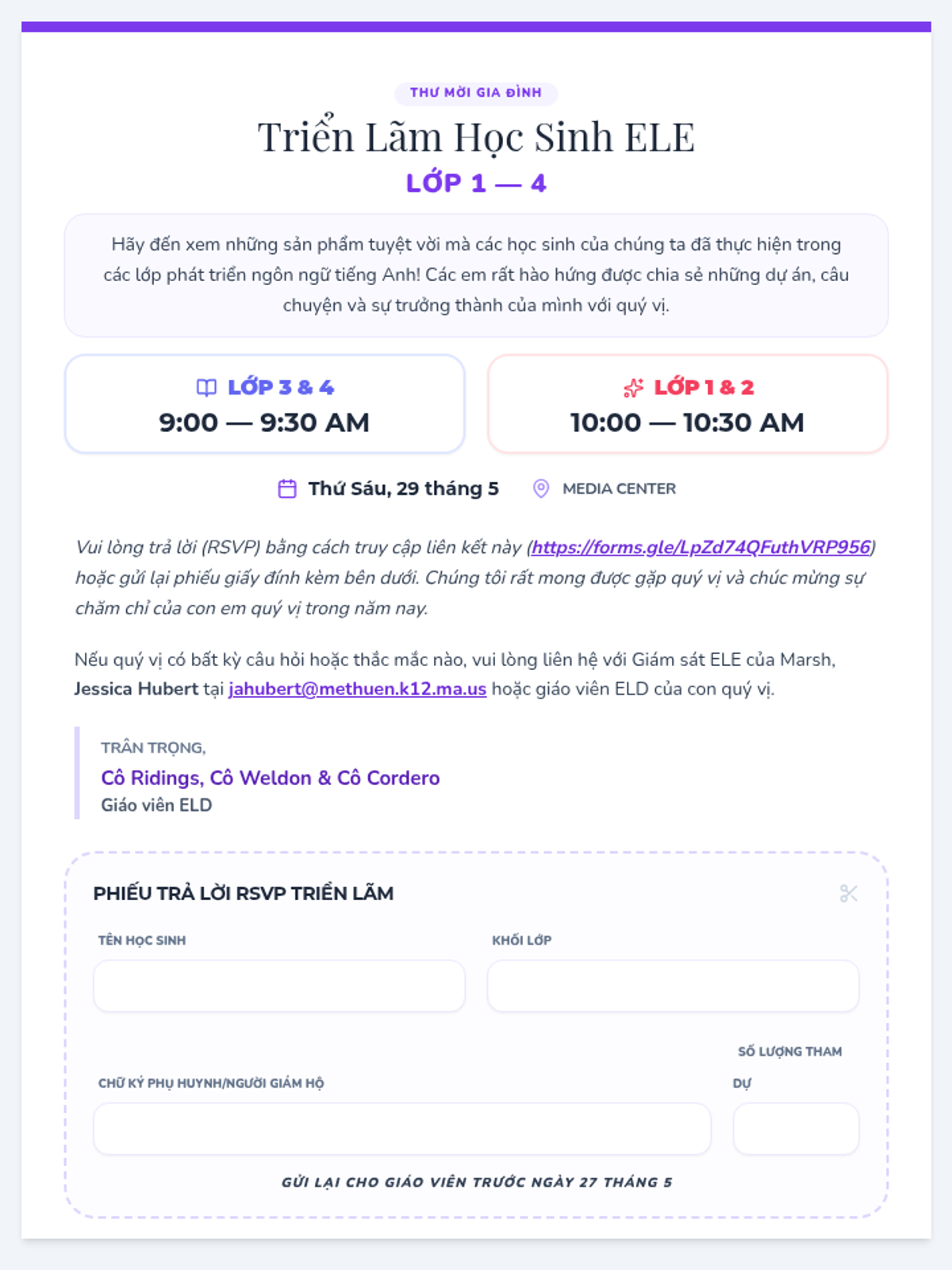
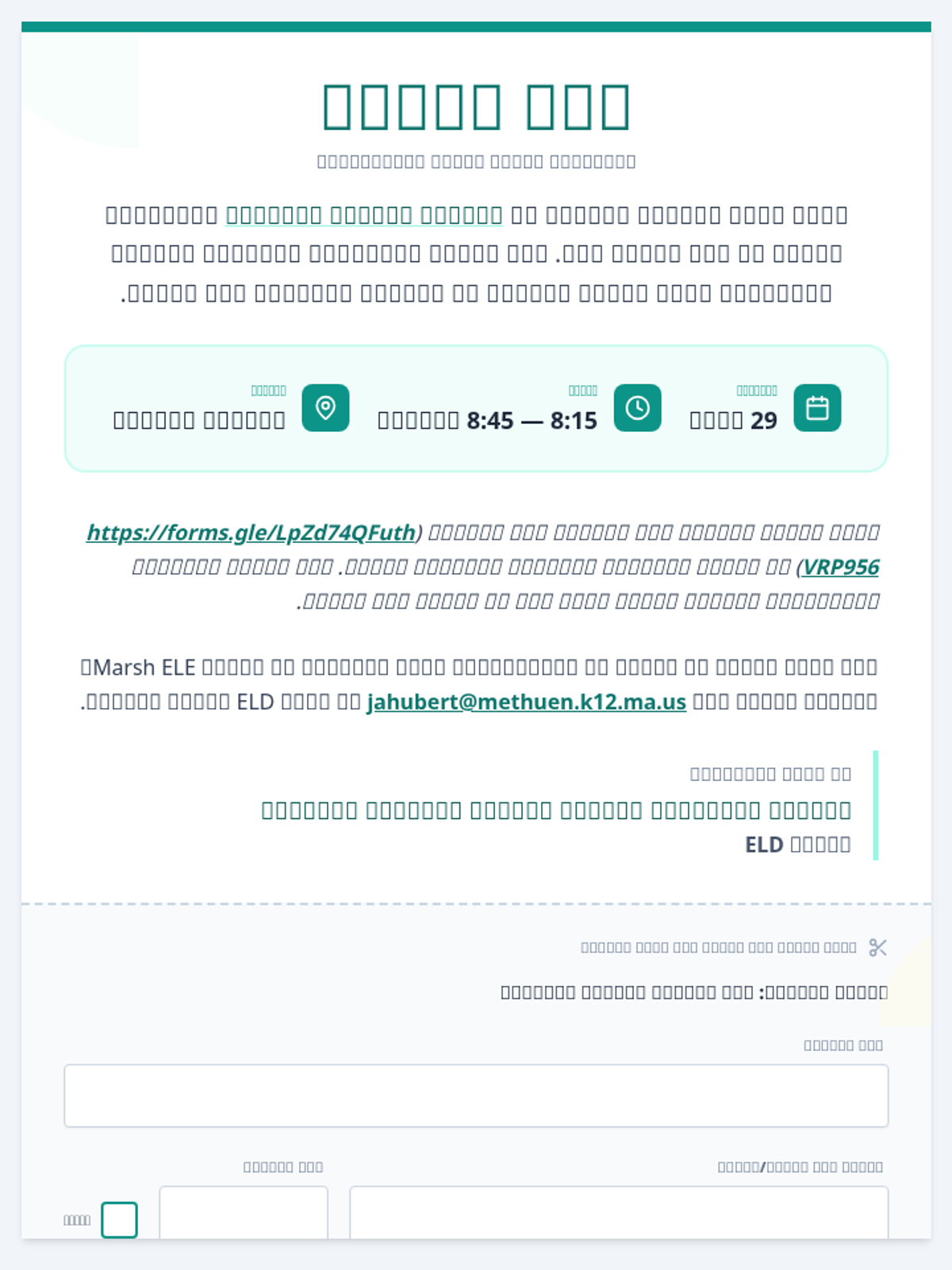
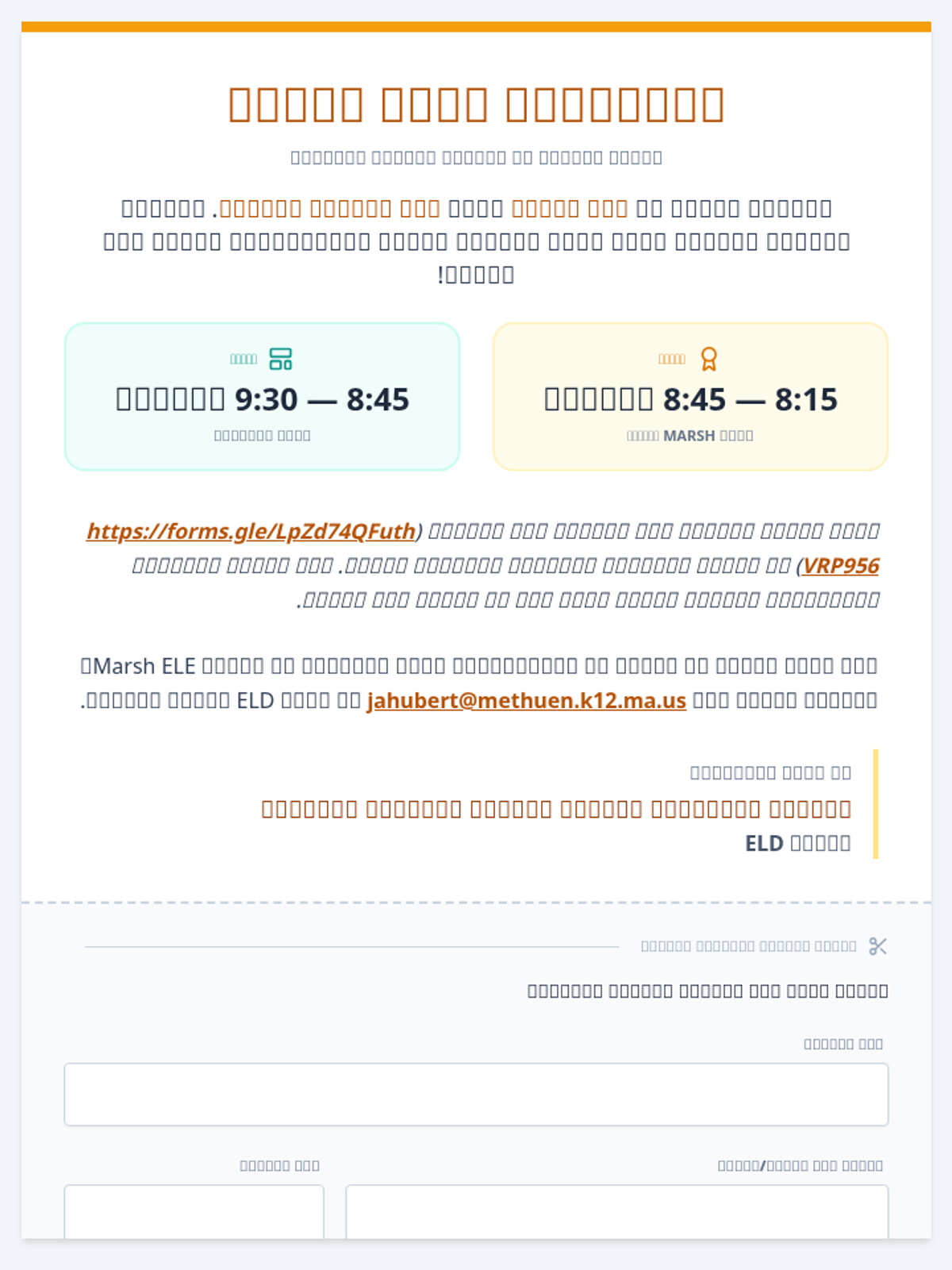
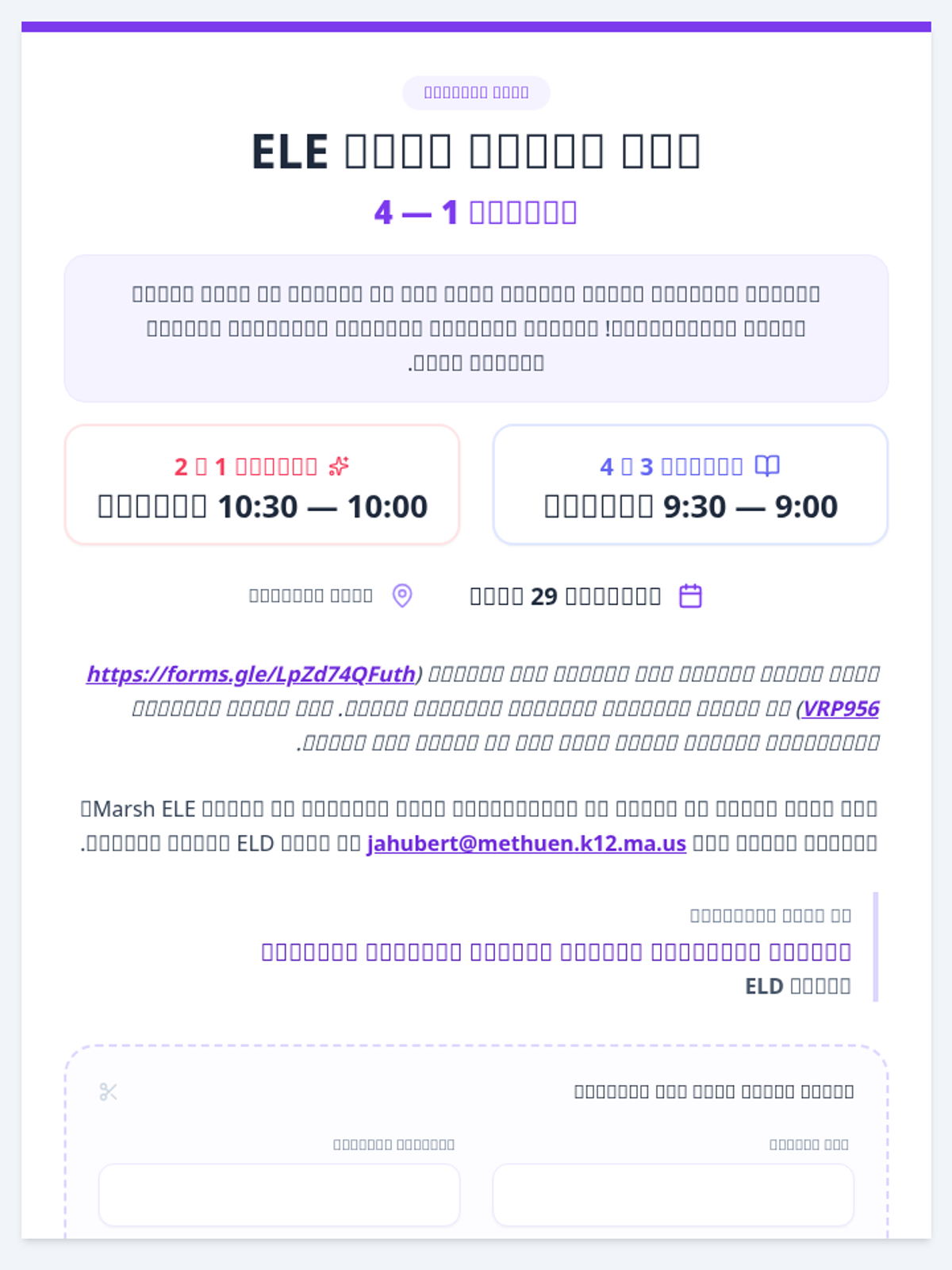
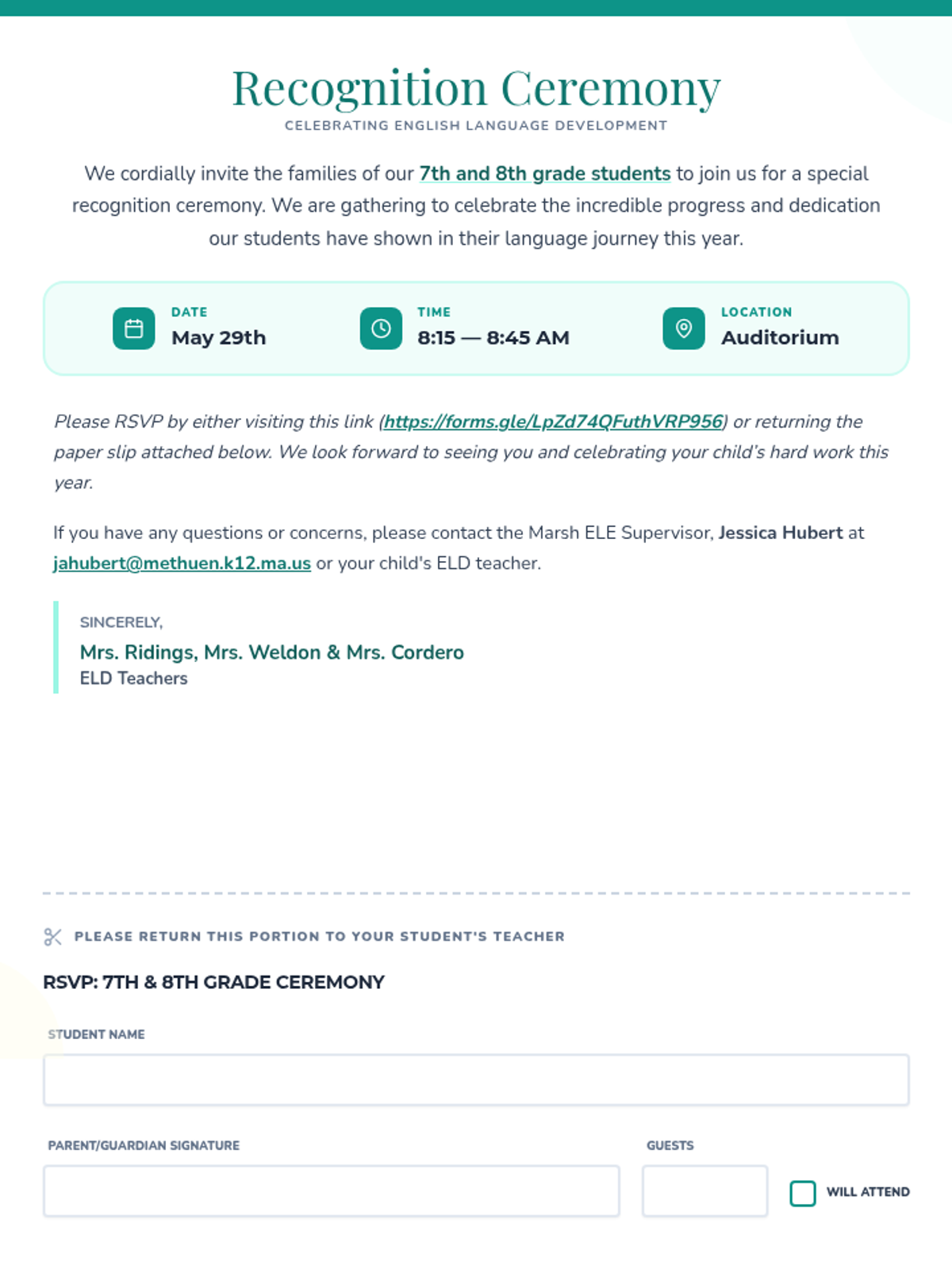
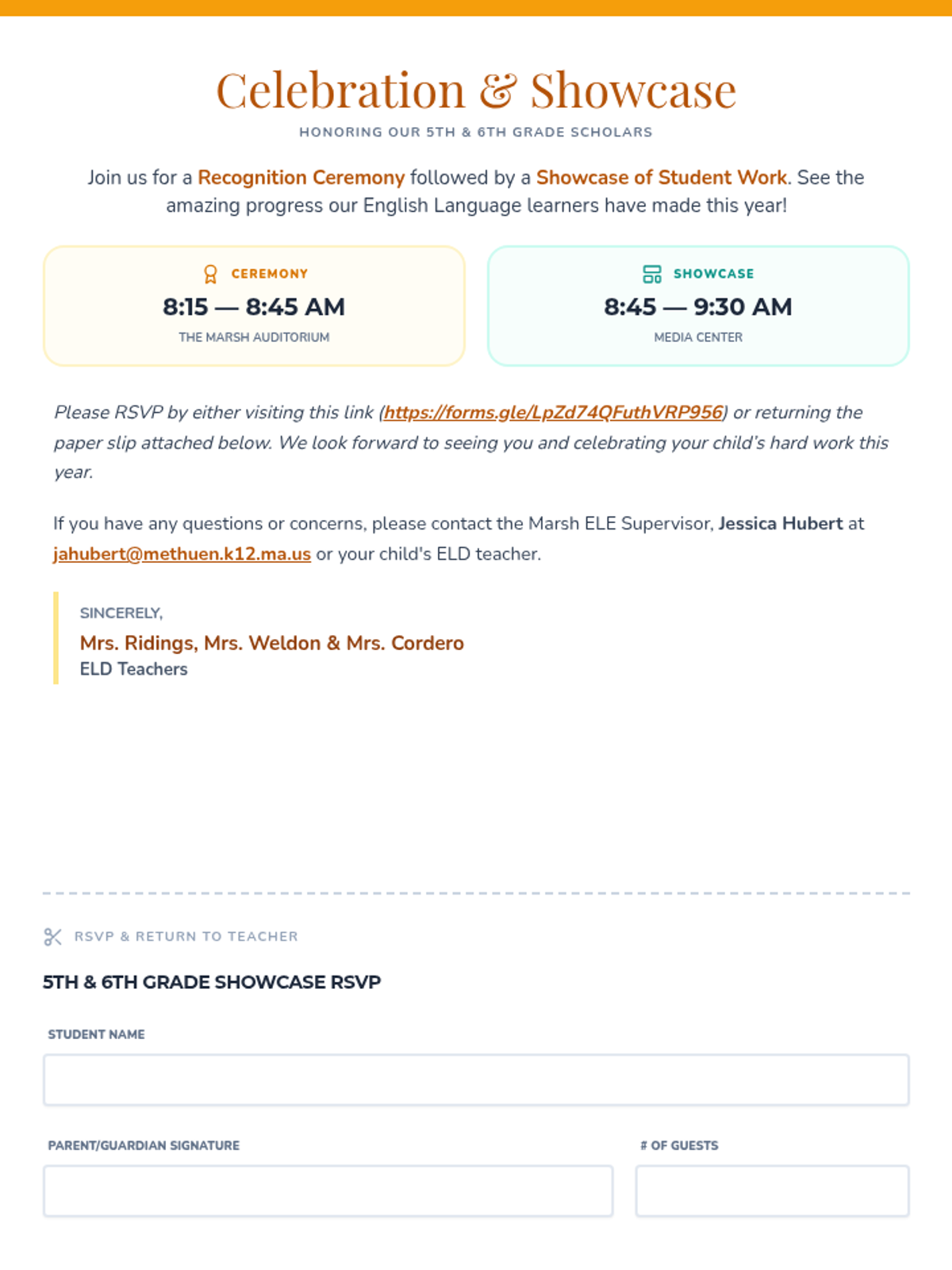
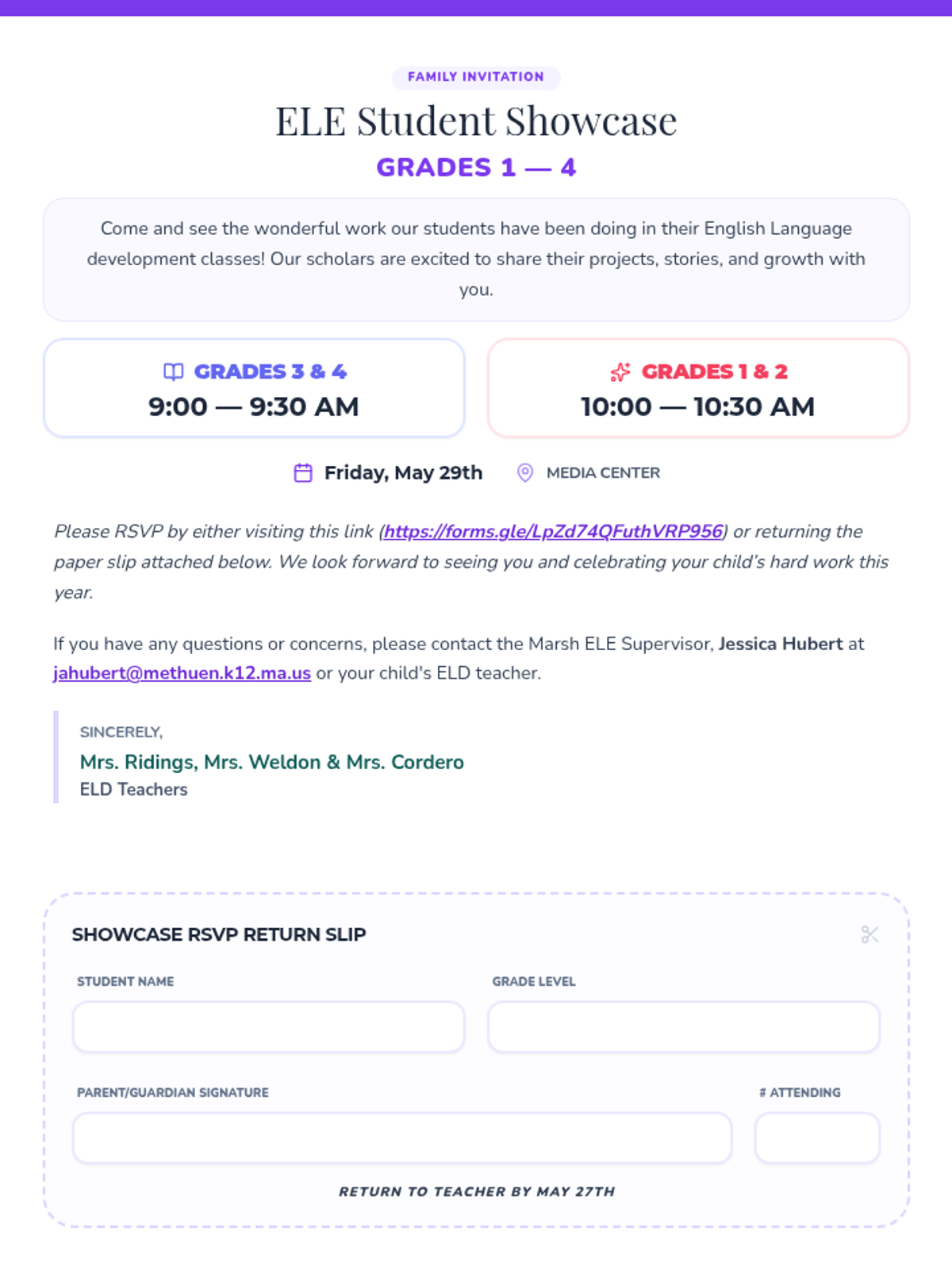
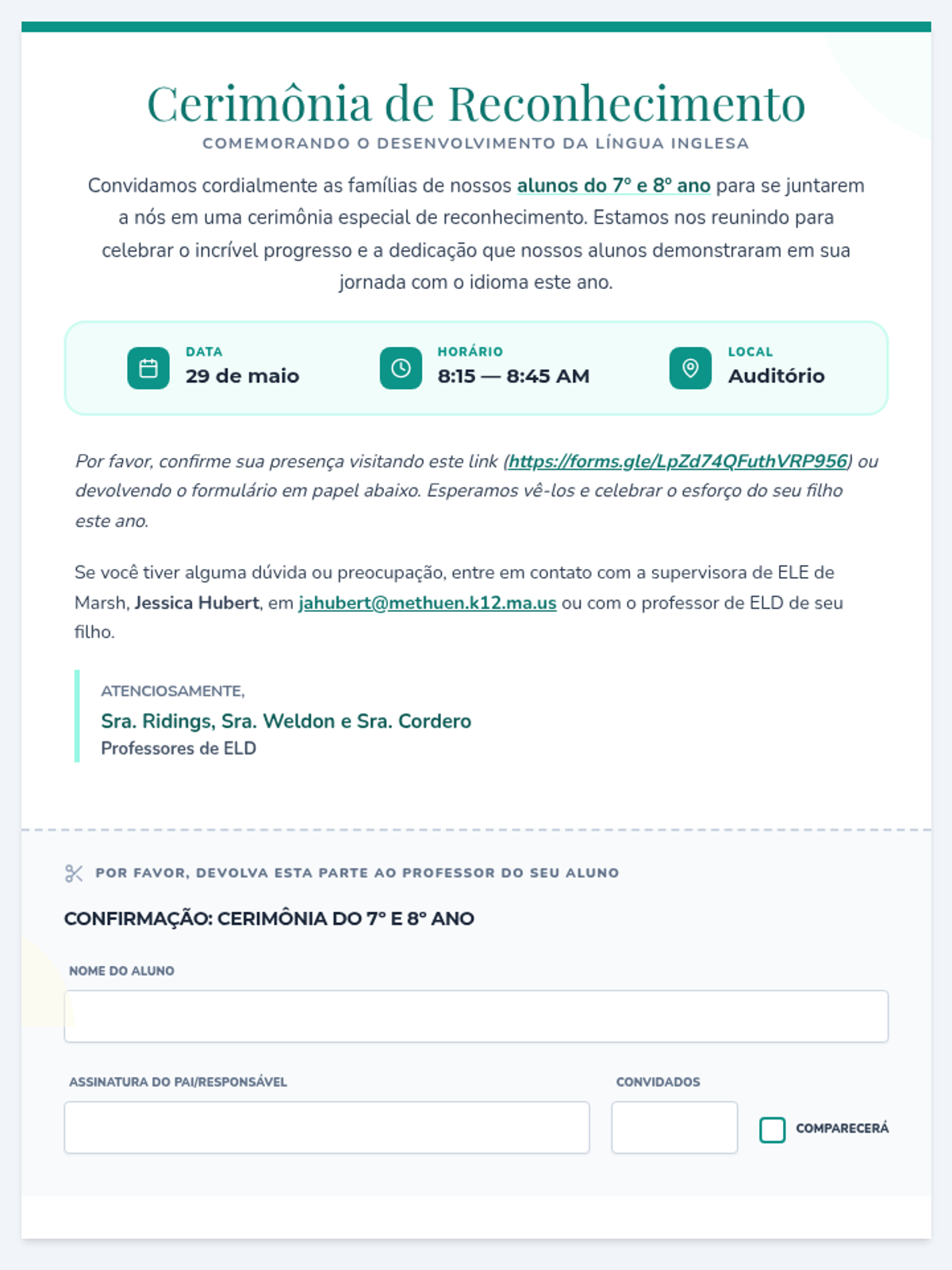
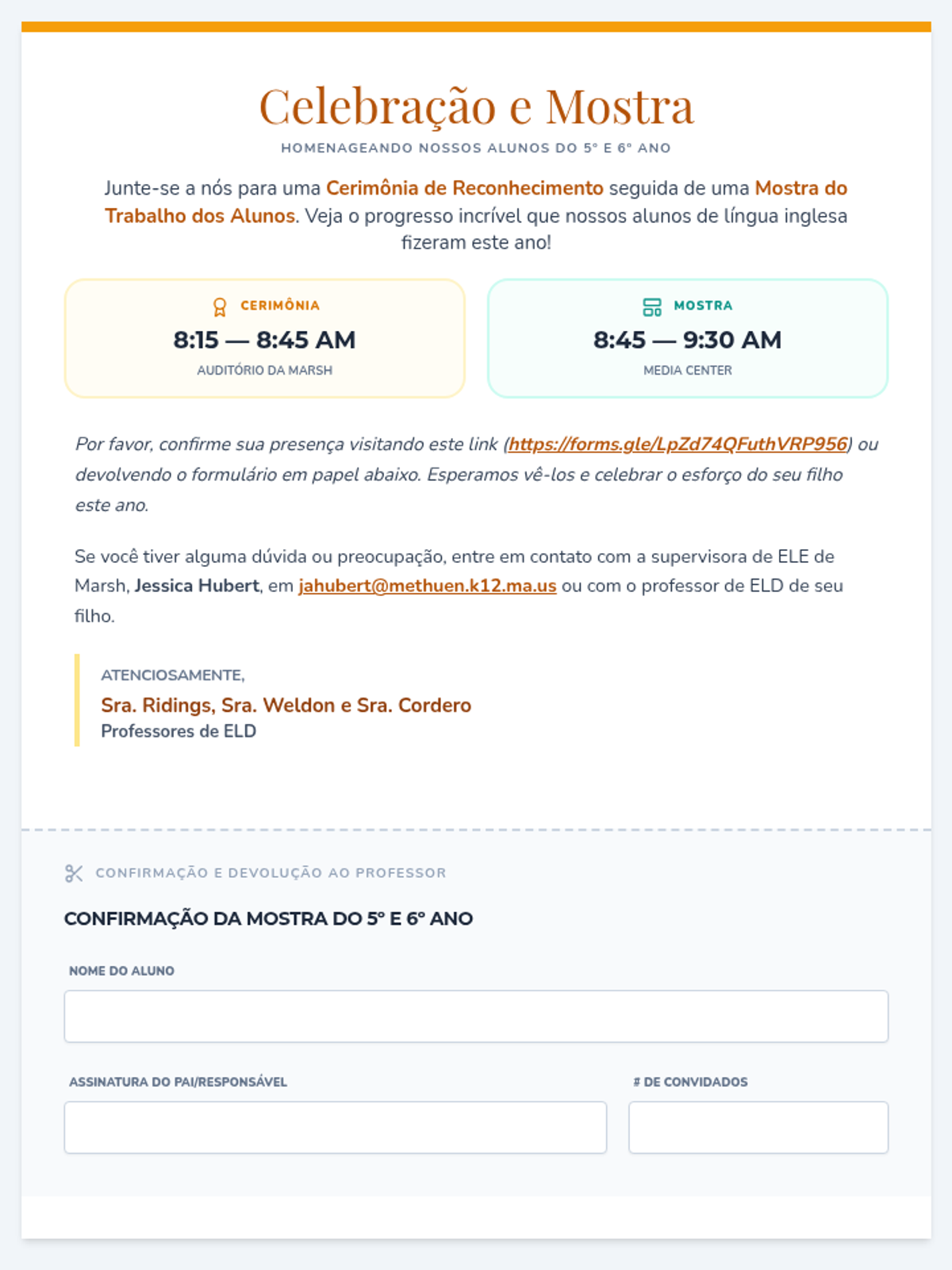
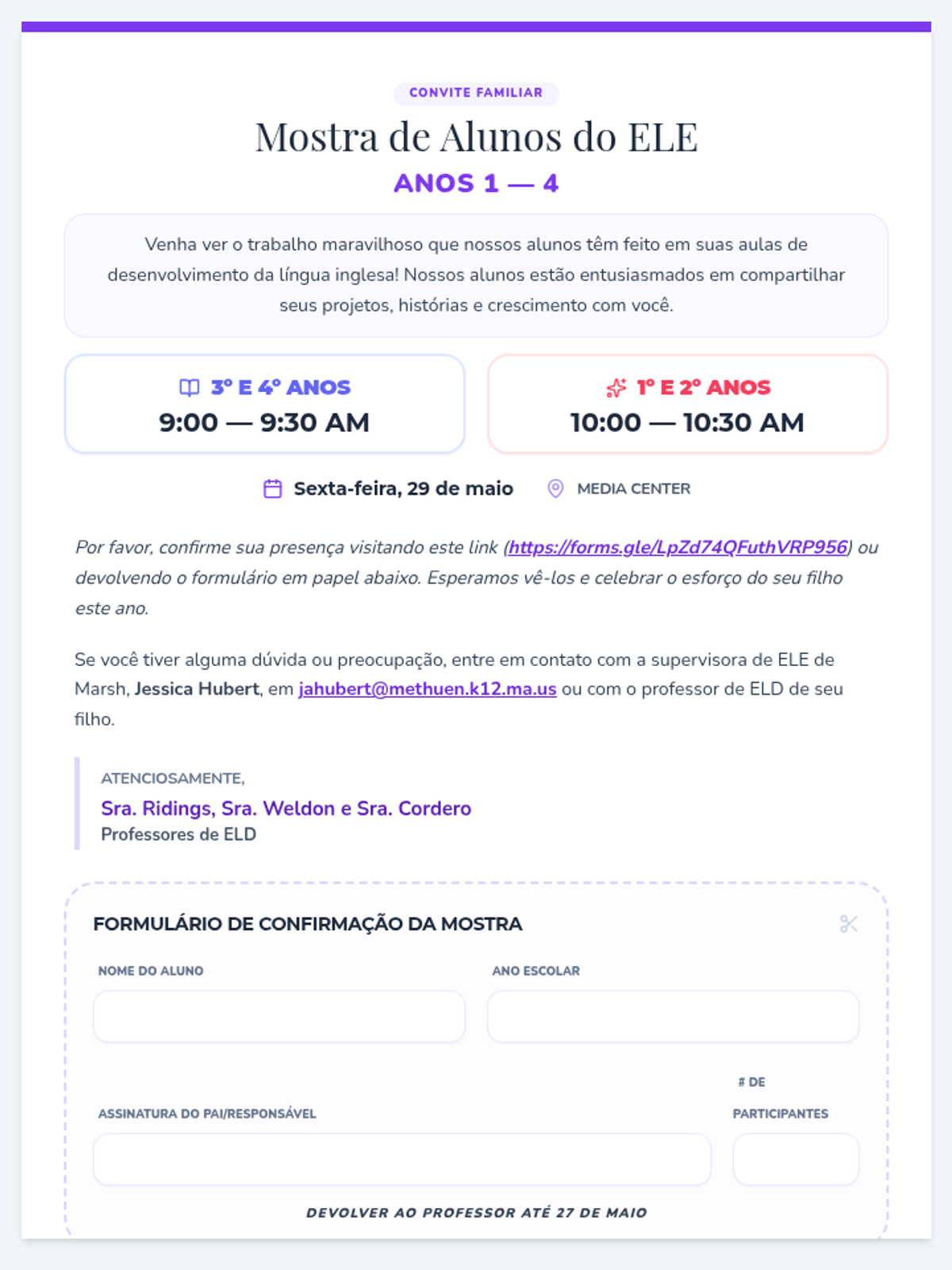
A collection of family invitation flyers for the English Language Education (ELE) showcase and recognition ceremonies across various grade levels. Each flyer includes specific timing, location details, and a return slip for RSVPs.
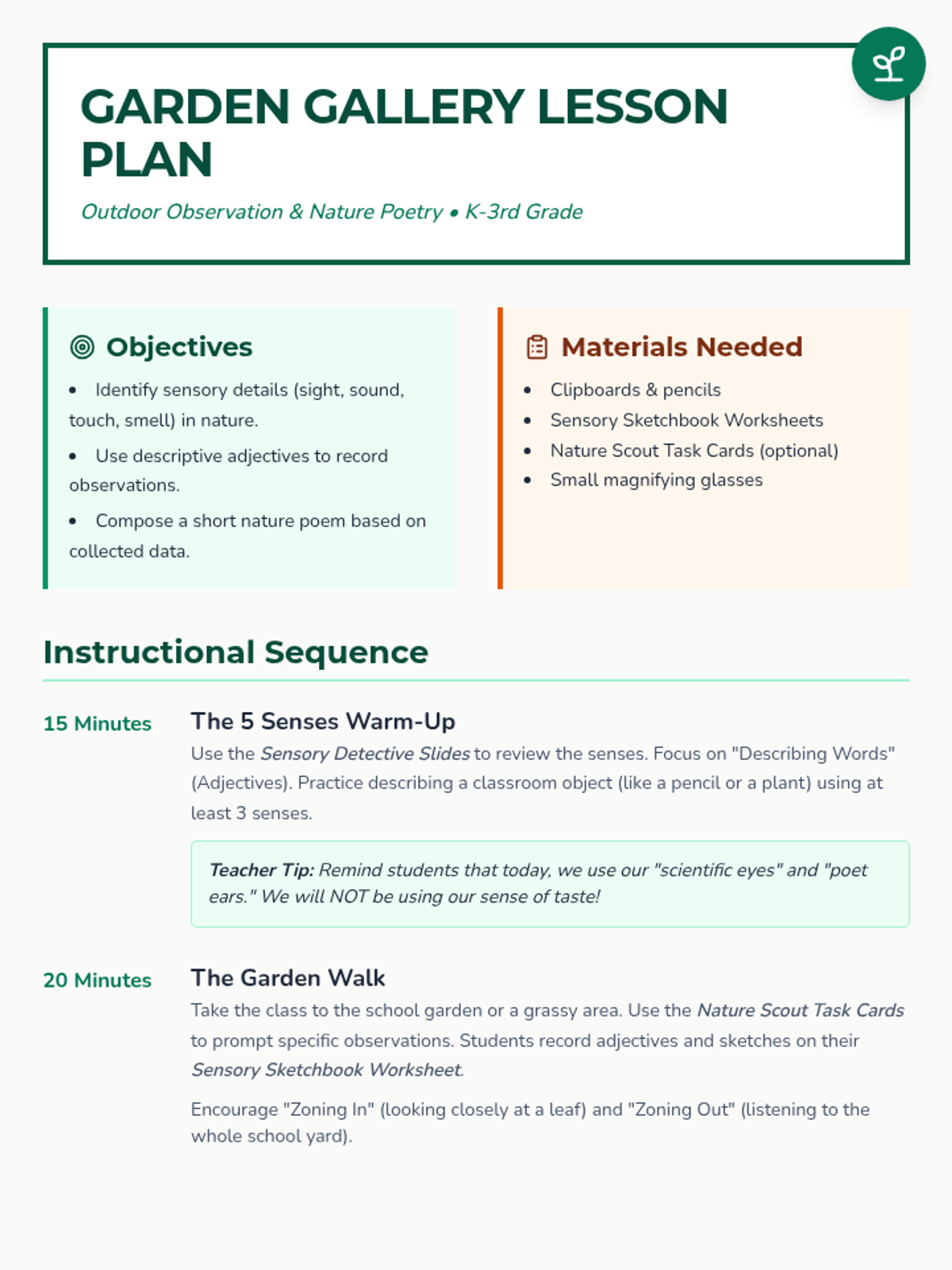
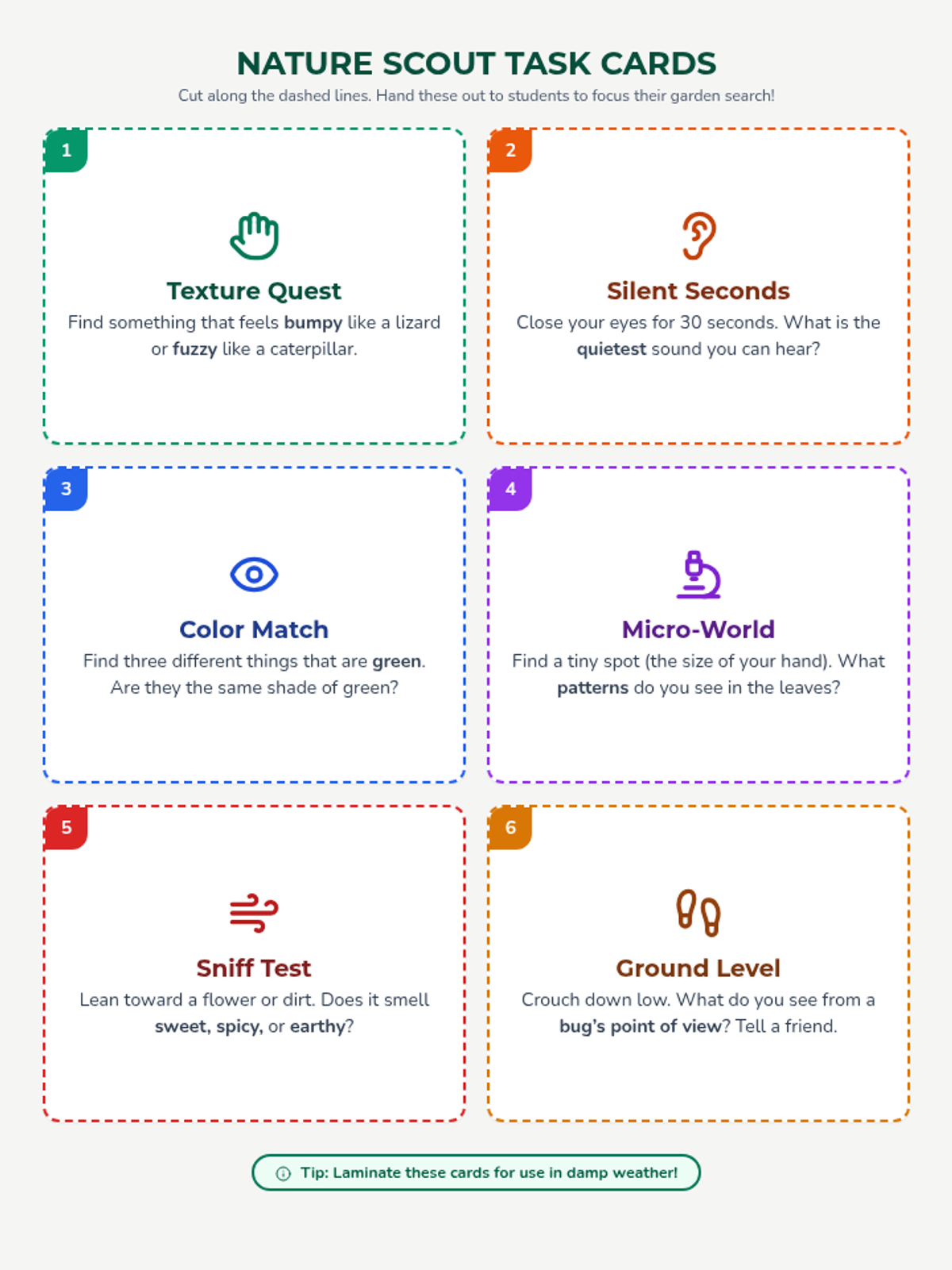
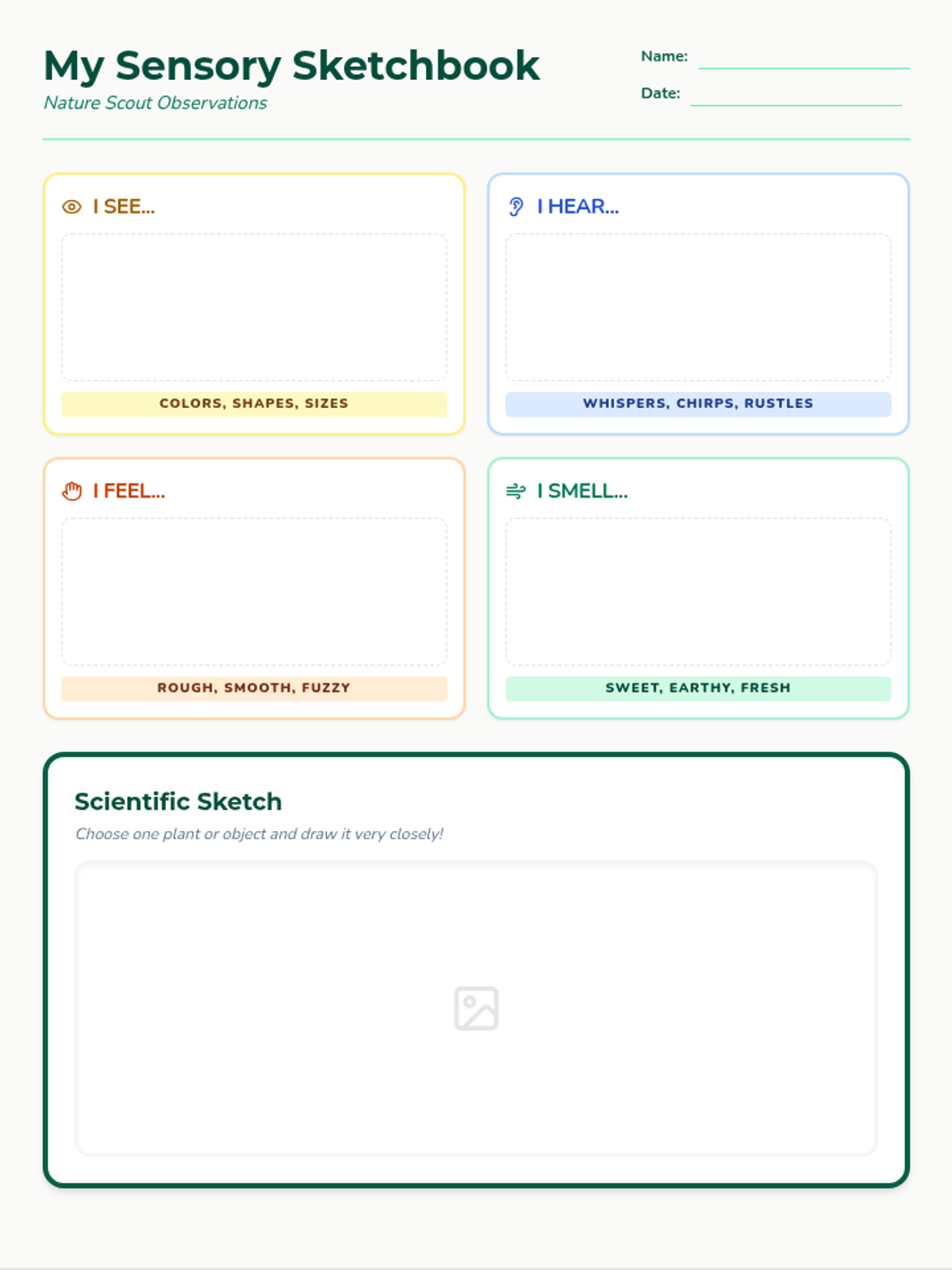
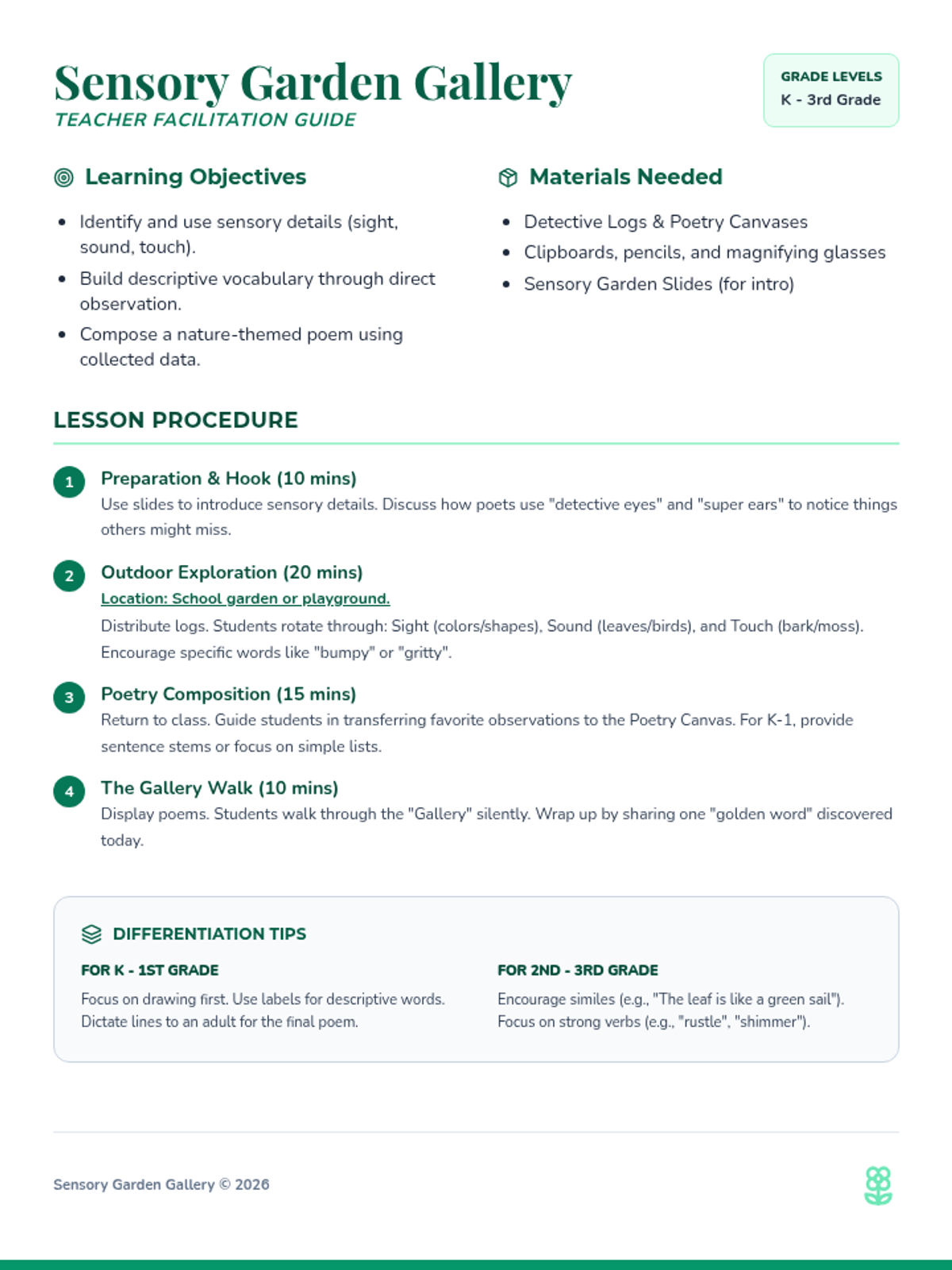
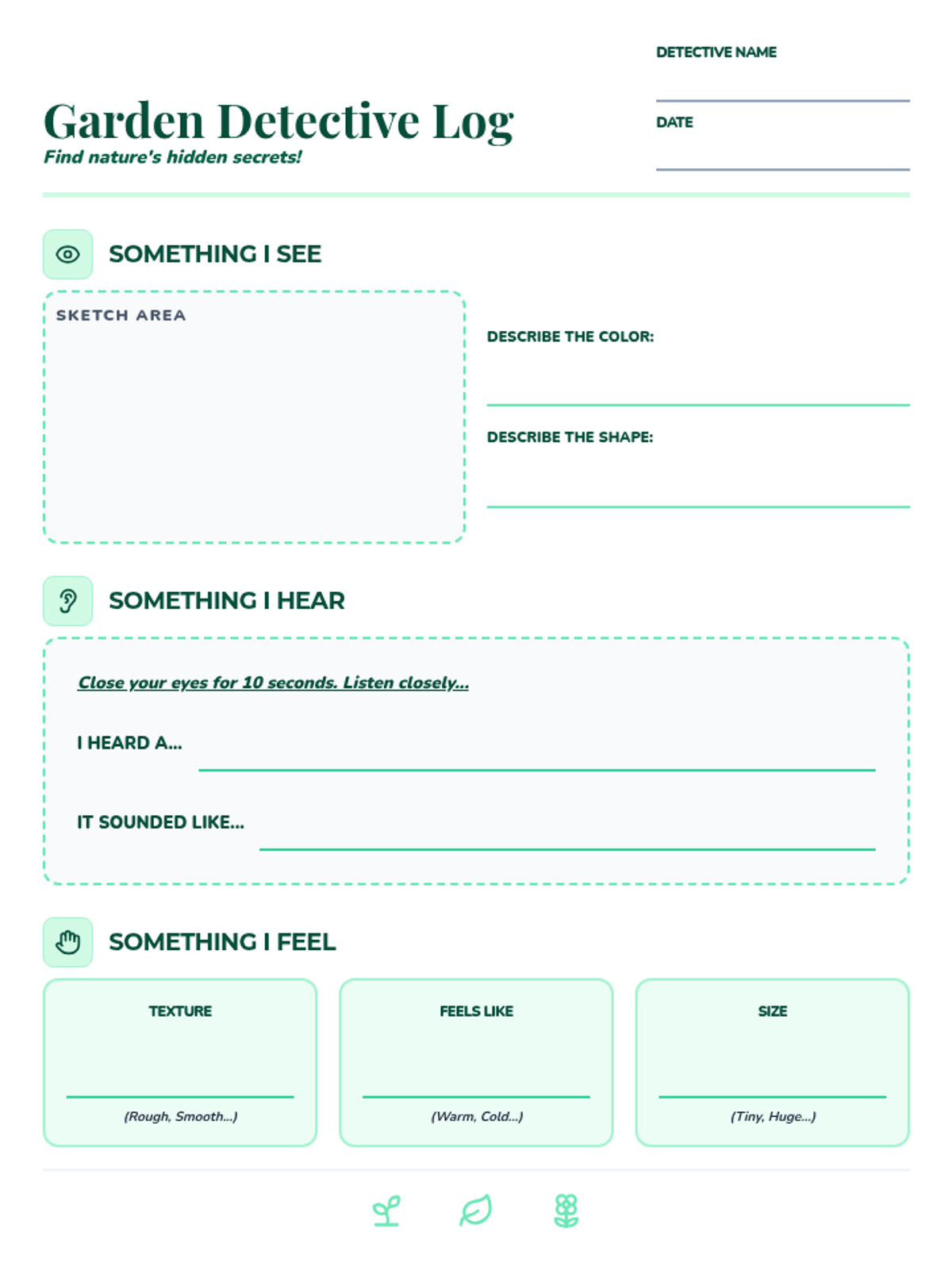
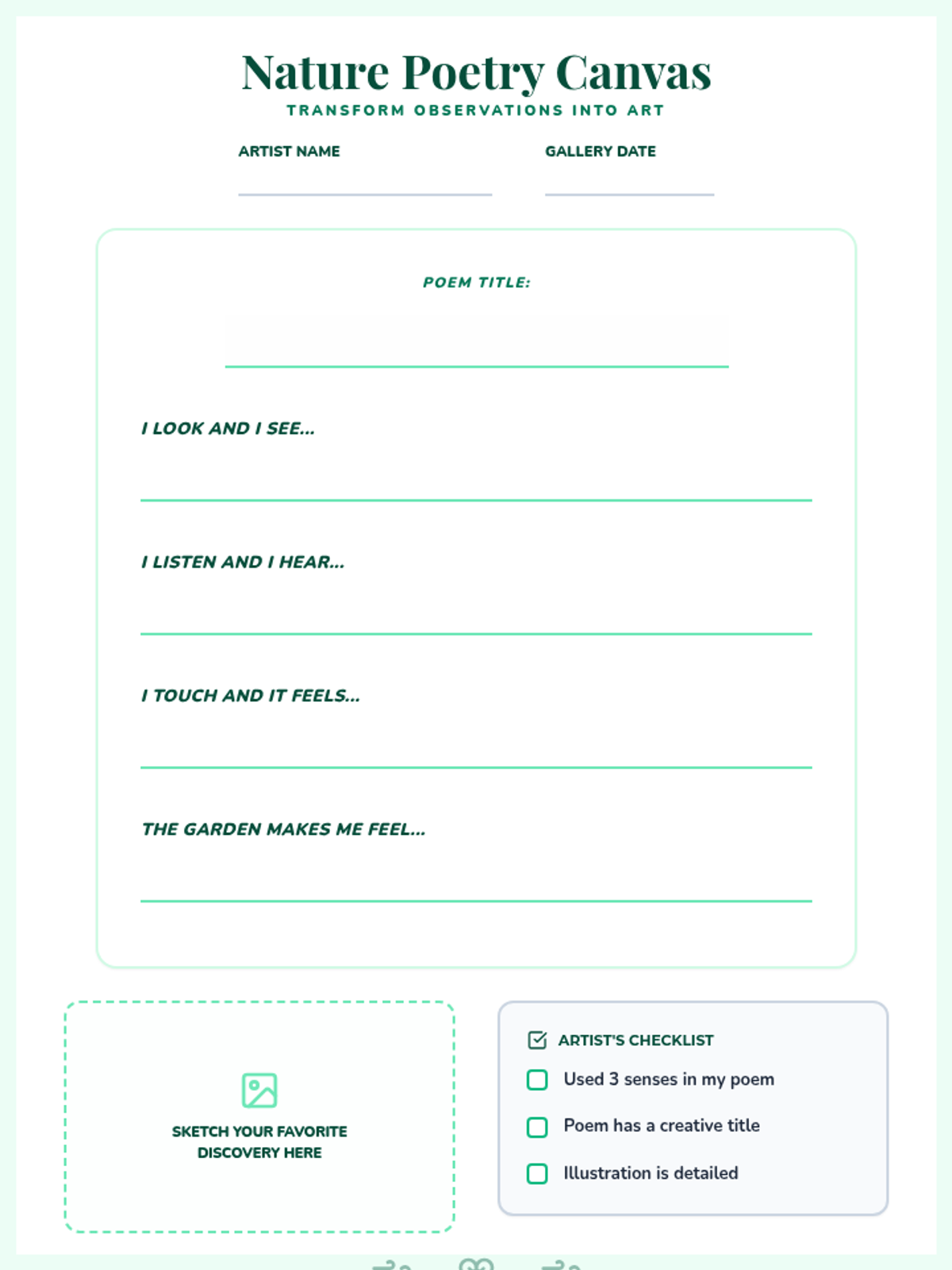
Students explore the school grounds to collect sensory details—sights, sounds, and textures—to compose nature poems. This outdoor activity builds descriptive vocabulary and observational skills for Kindergarten through third-grade learners.
Students transform into nature detectives to explore the sensory wonders of their environment. Through guided outdoor exploration, they collect descriptive details using sight, sound, and touch to compose original nature poems for a class 'gallery' display.
A pirate-themed word building center where students master r-controlled vowels (ar, or, er, ir, ur) by constructing words on treasure map mats and logging their loot.
A hands-on lesson focusing on identifying and forming contractions by matching word pairs to their shortened versions through interactive card games.
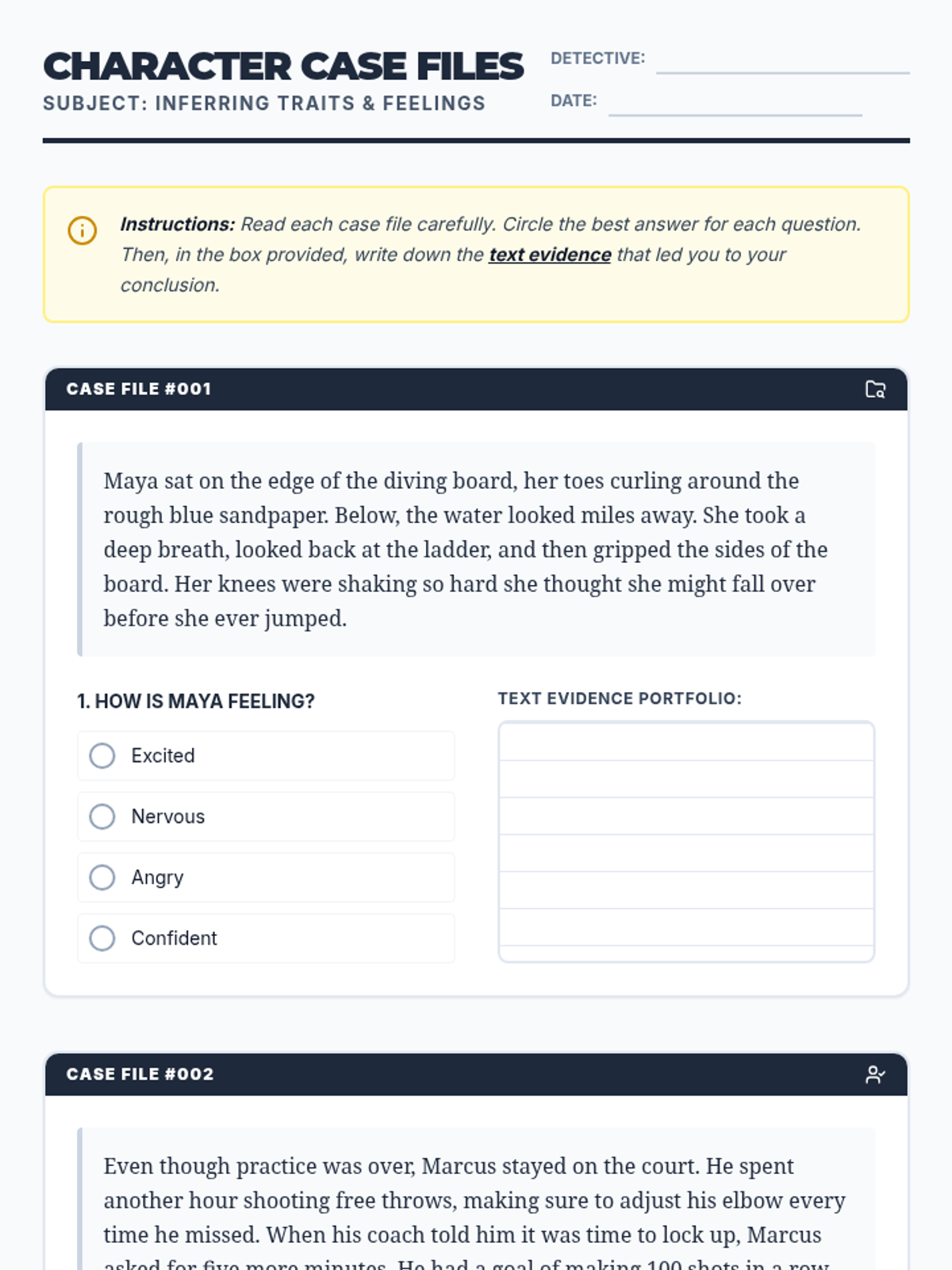
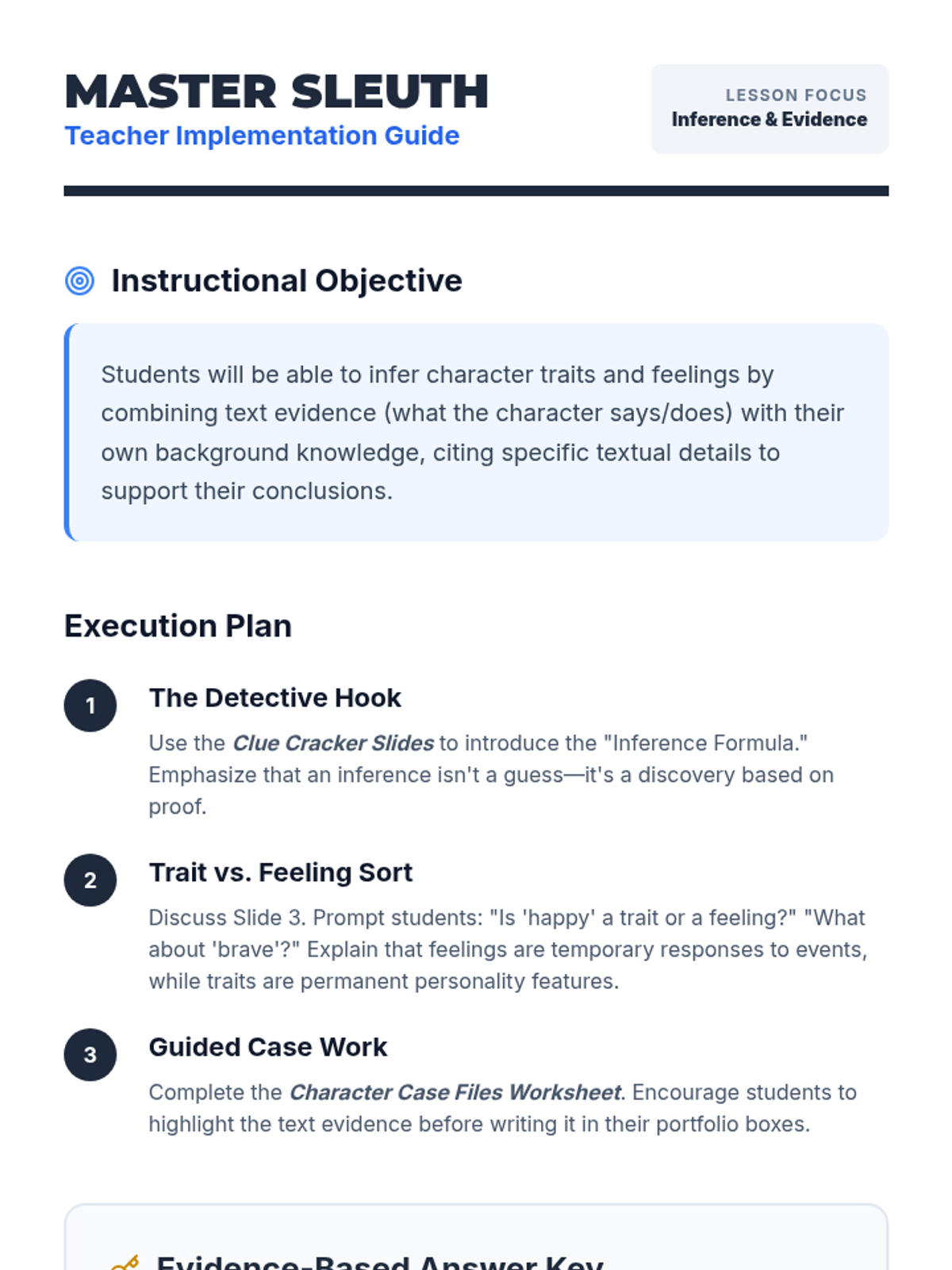
A lesson focused on teaching students how to use text evidence to infer character traits and feelings through a 'detective' lens.
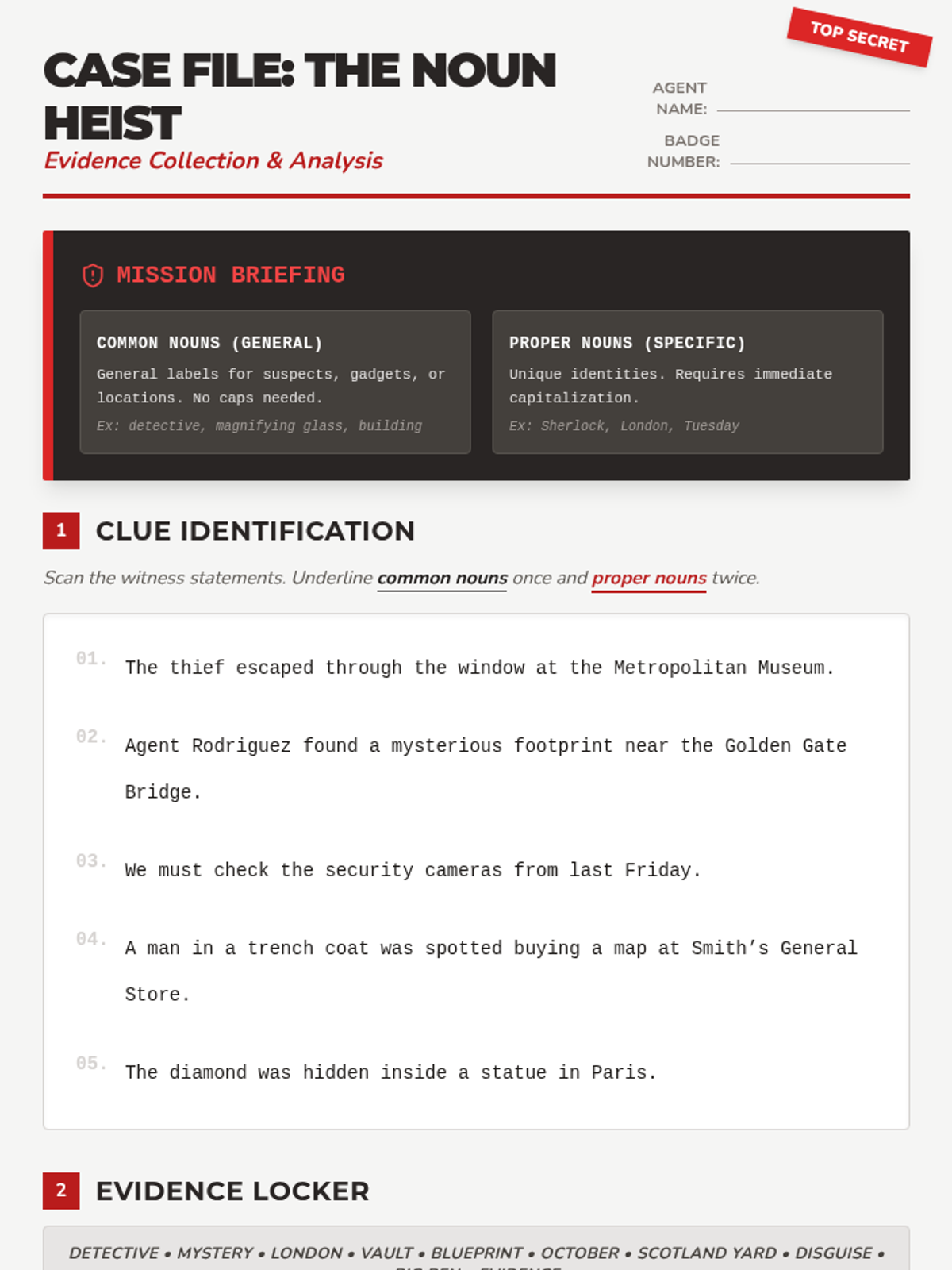
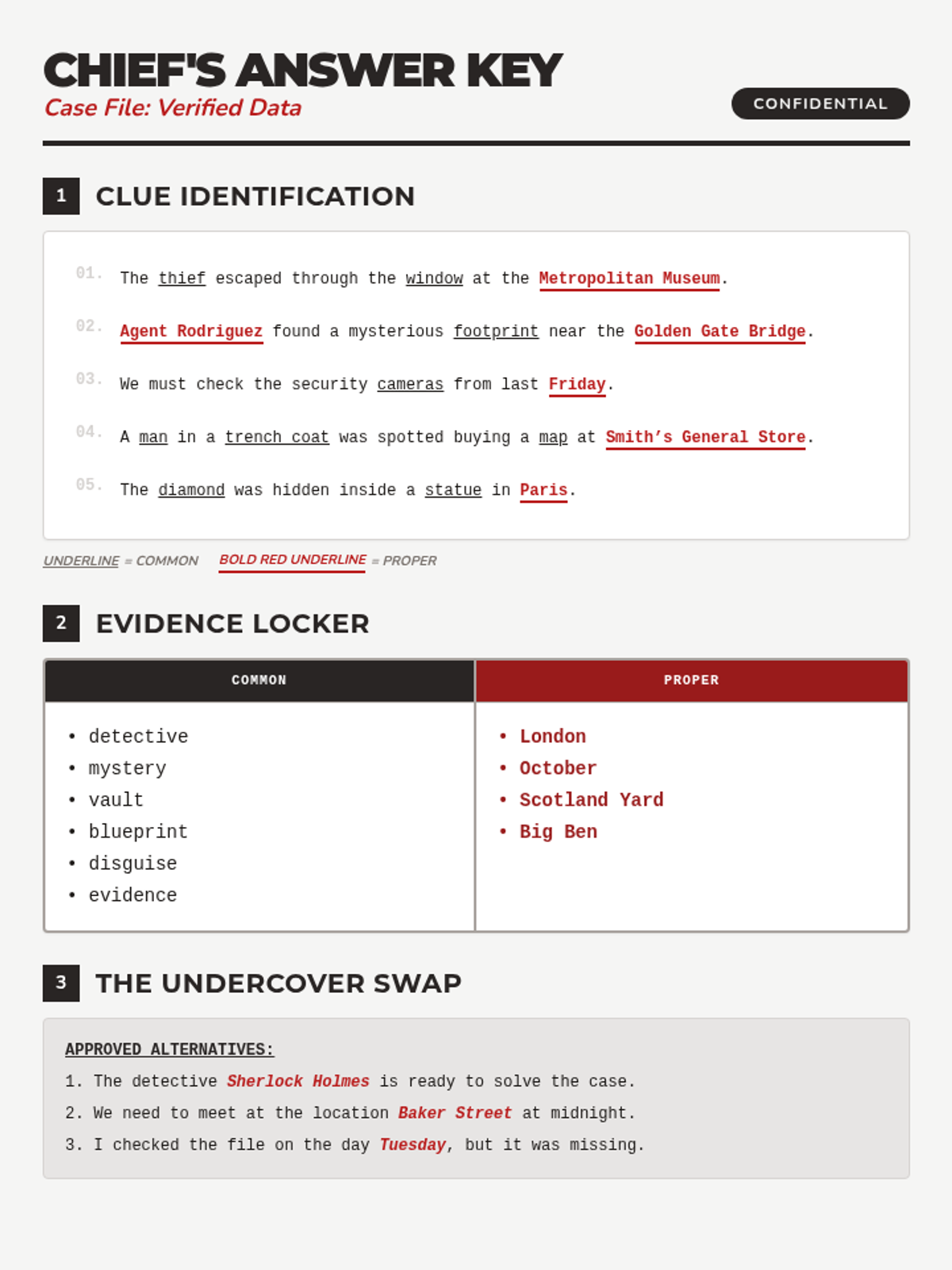
A mystery-themed lesson where students act as "Noun Detectives" to track down common and proper nouns across various case files.
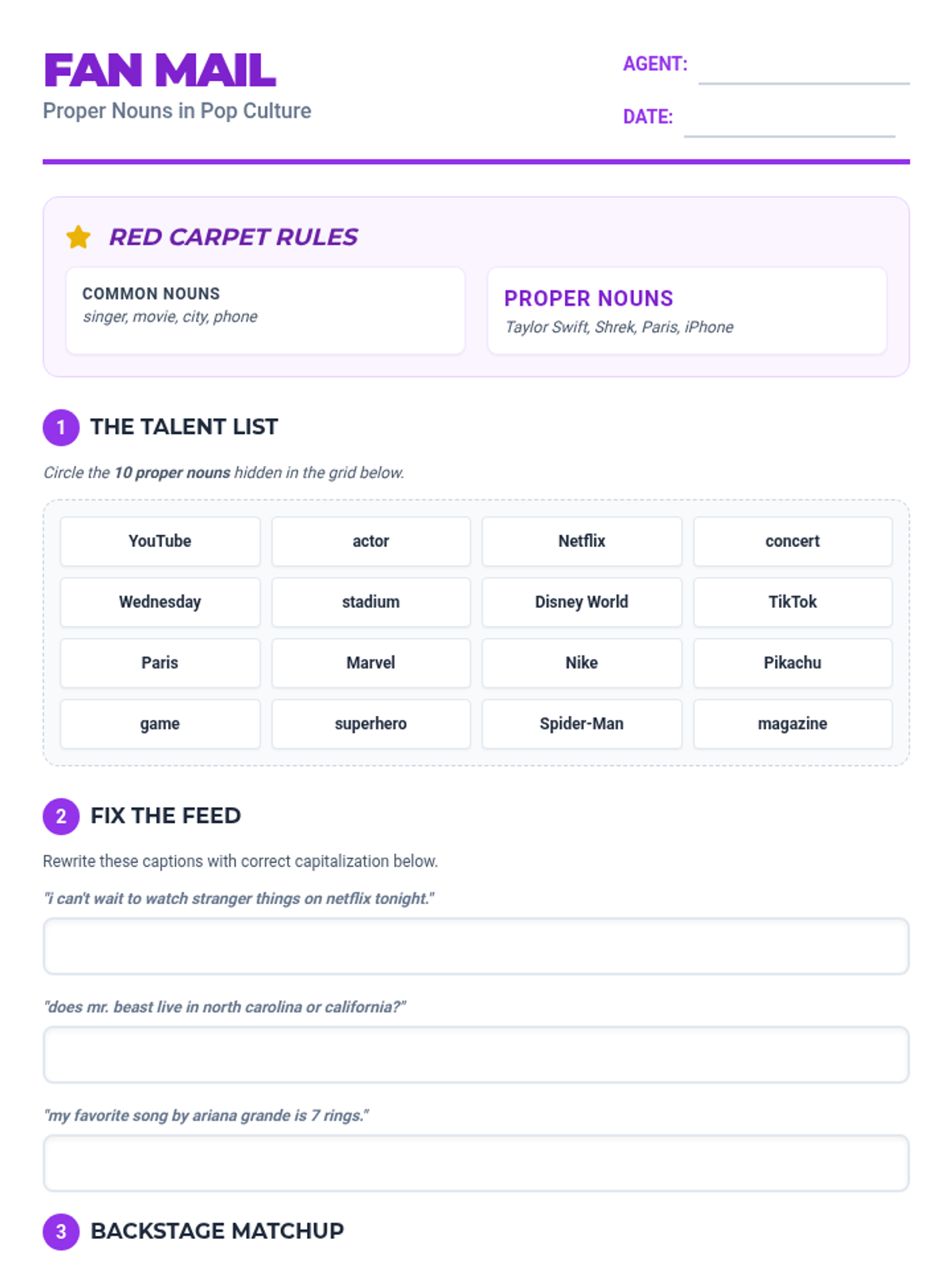
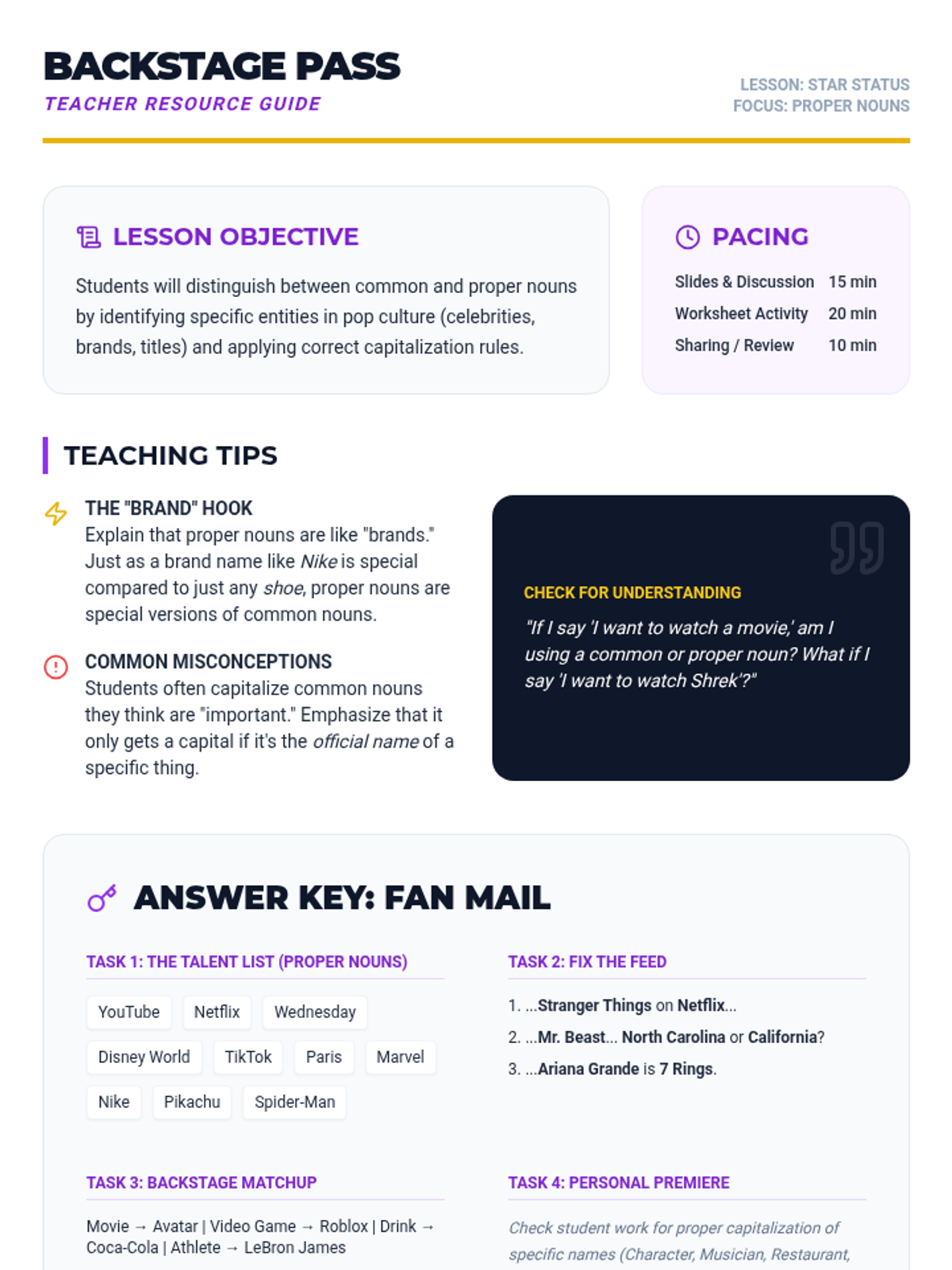
A high-energy lesson on proper nouns through the lens of celebrities, movies, and media brands, helping students distinguish between general categories and specific stars.
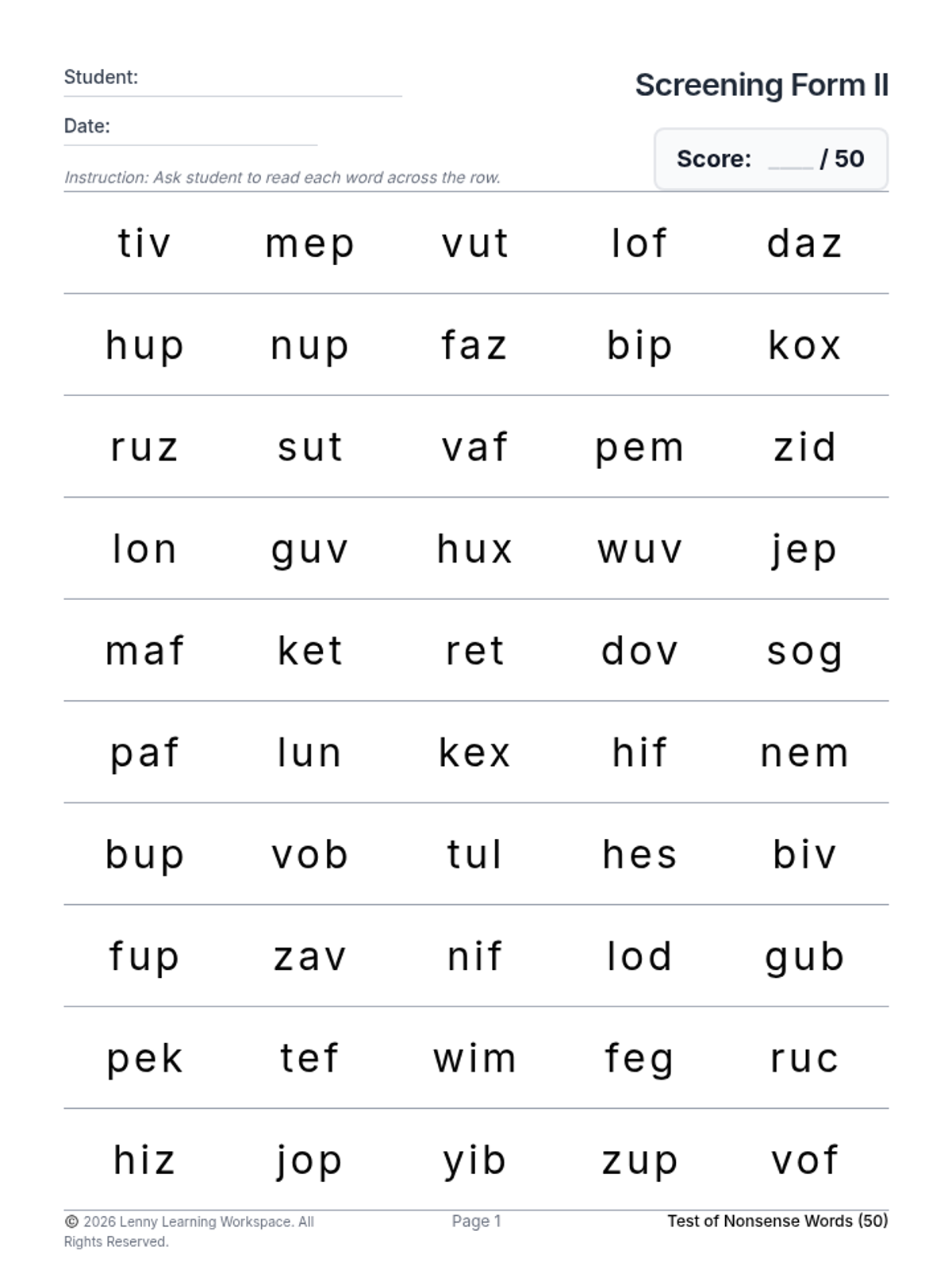
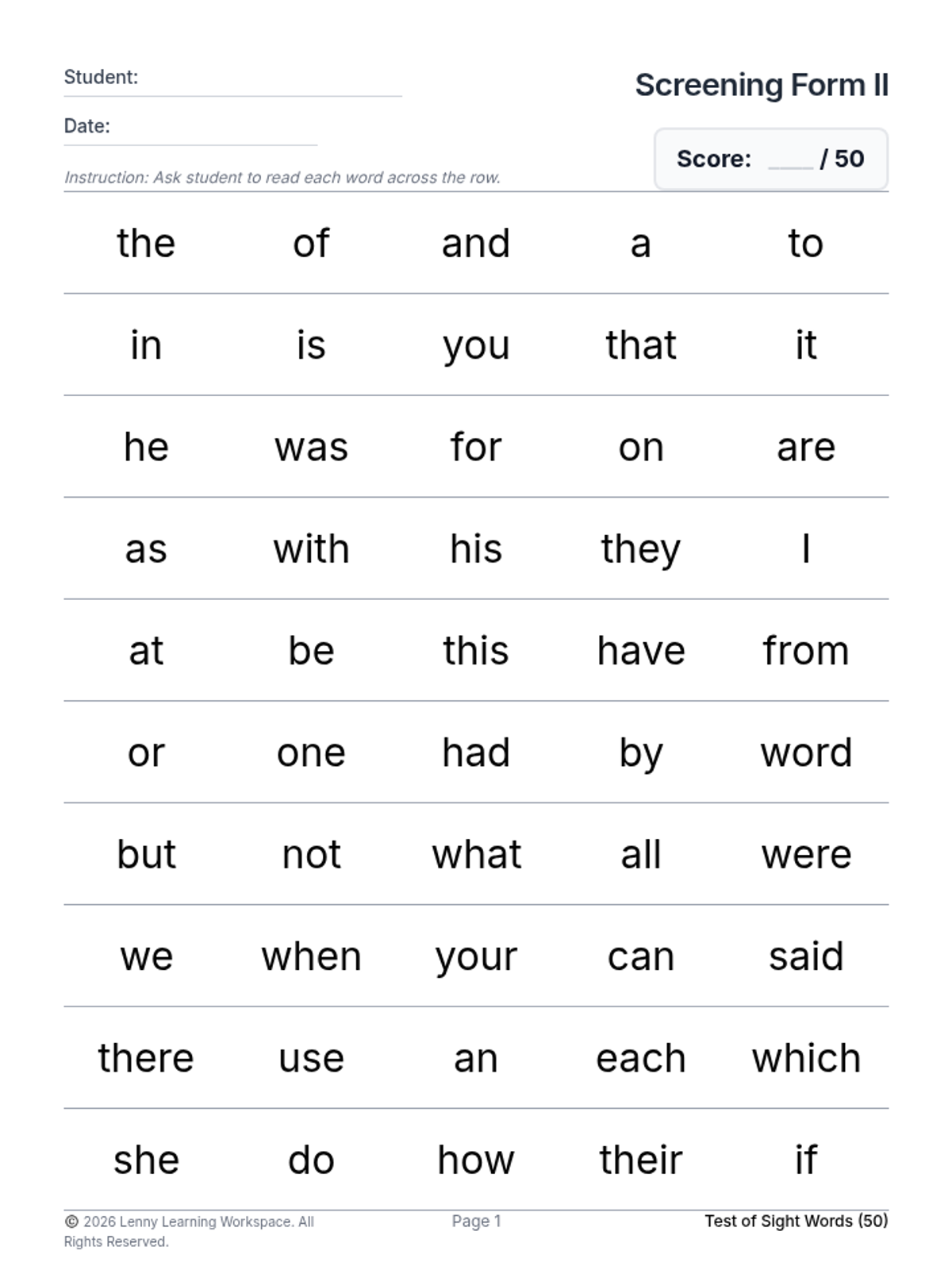
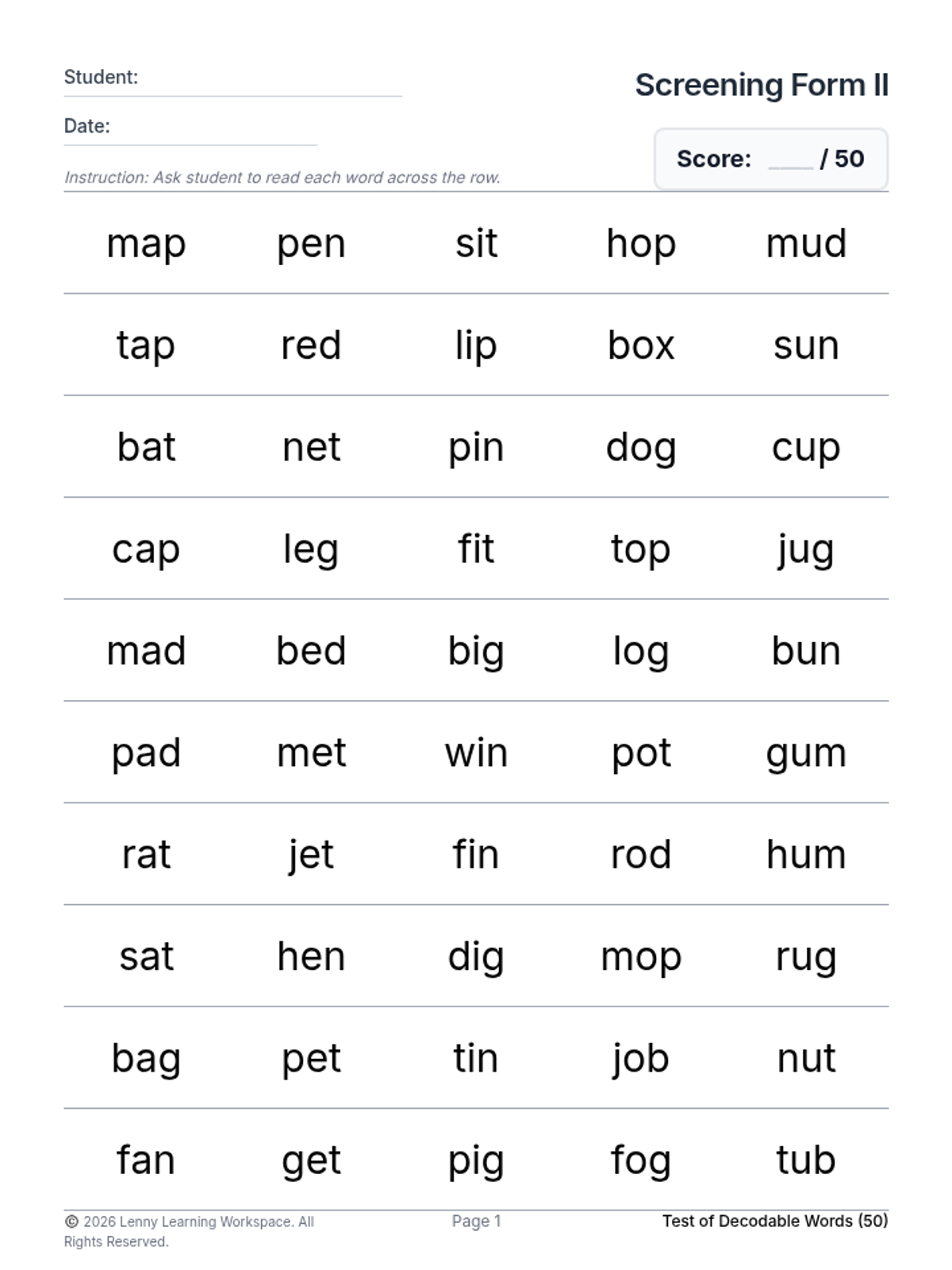
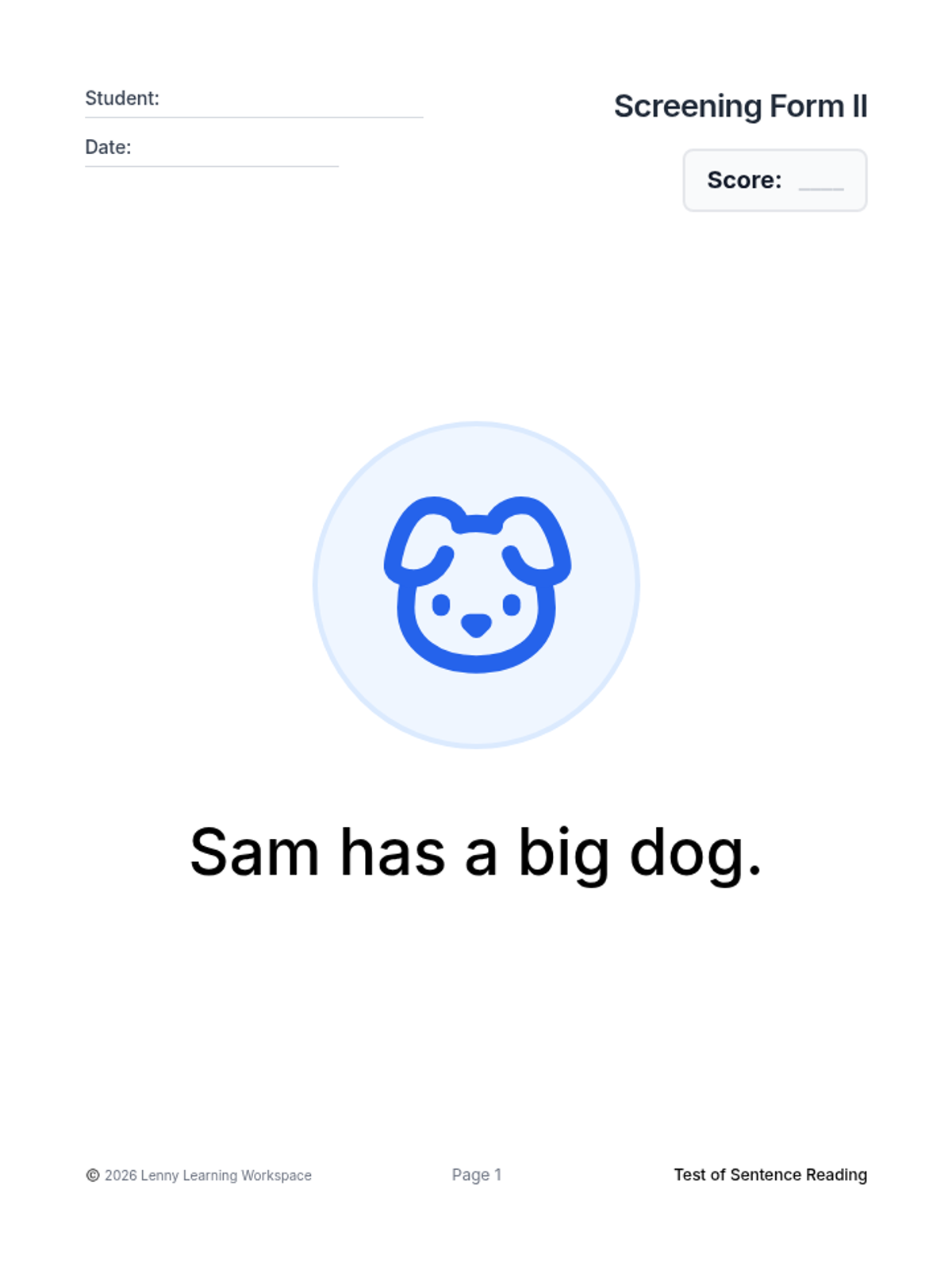
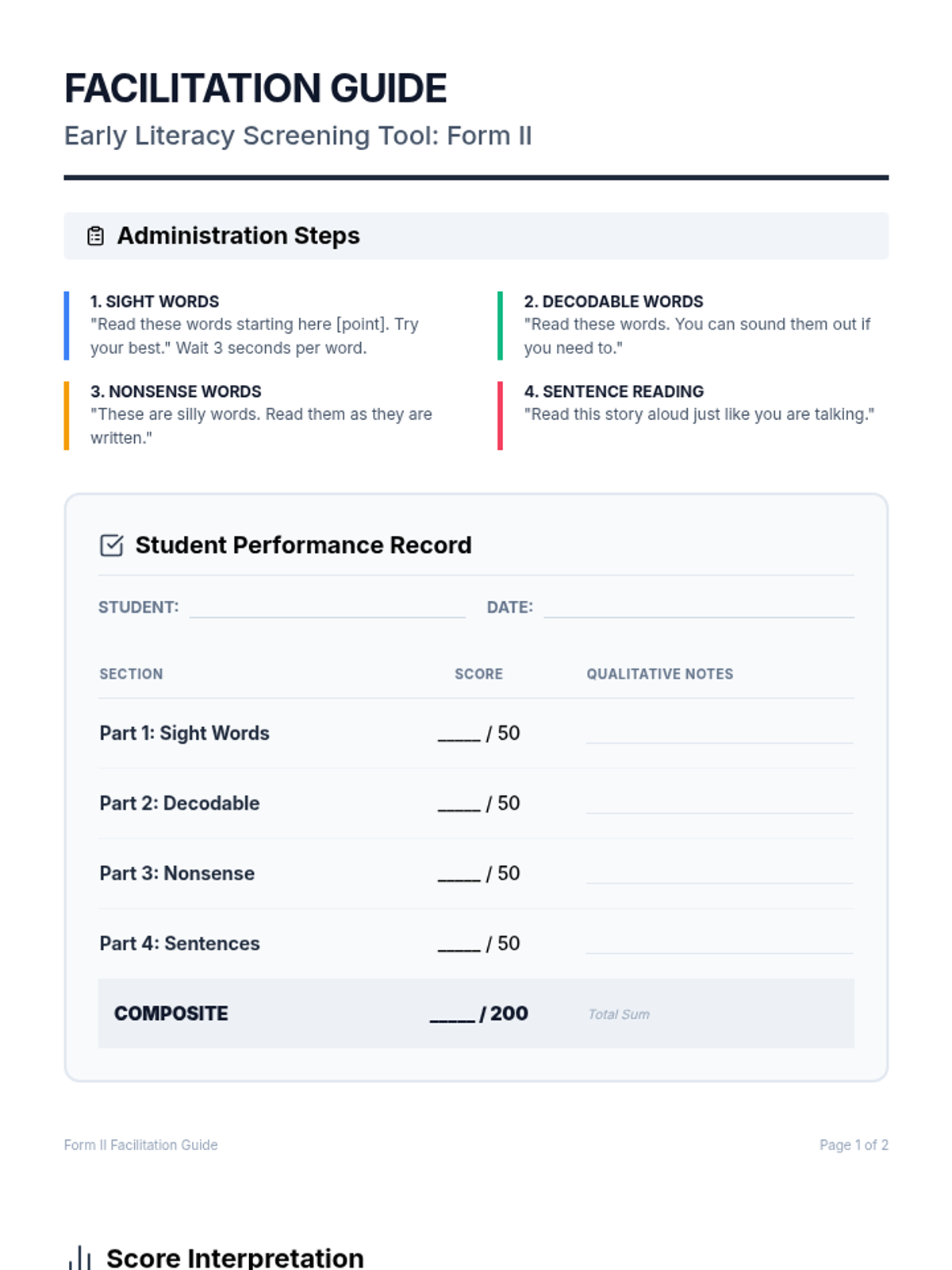
A set of early literacy screening tools for assessing sight word recognition and decoding skills using nonsense words.
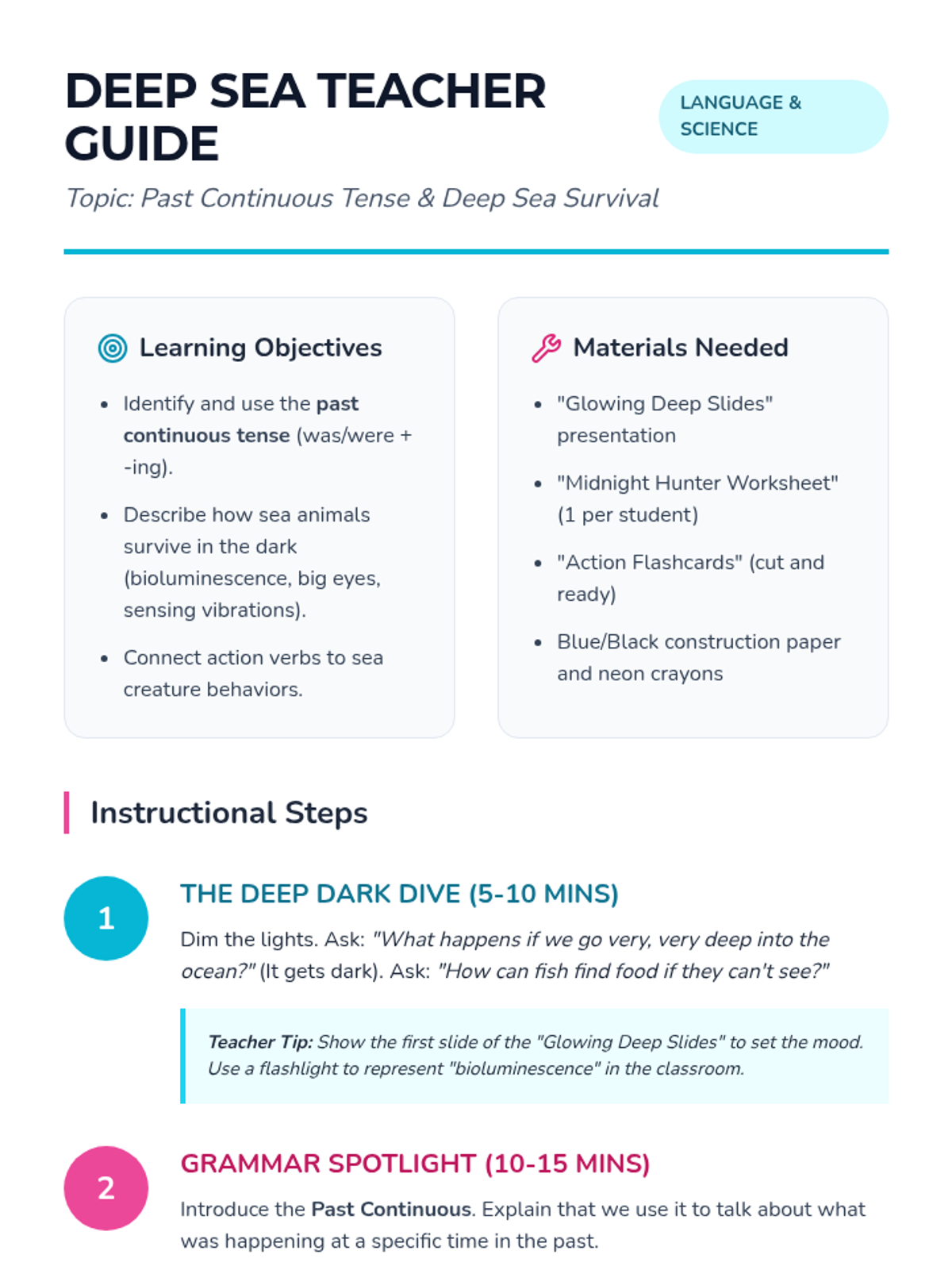
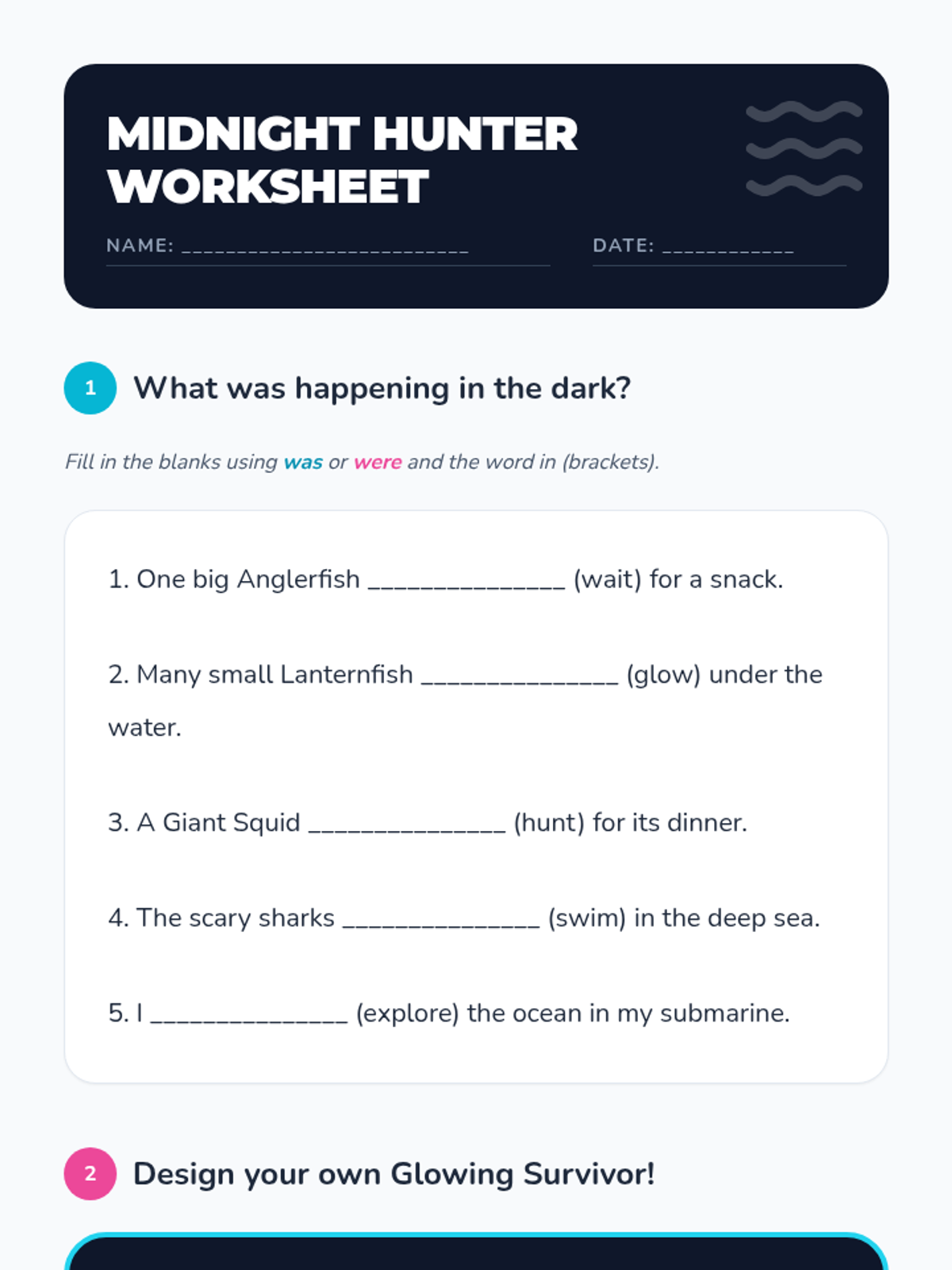
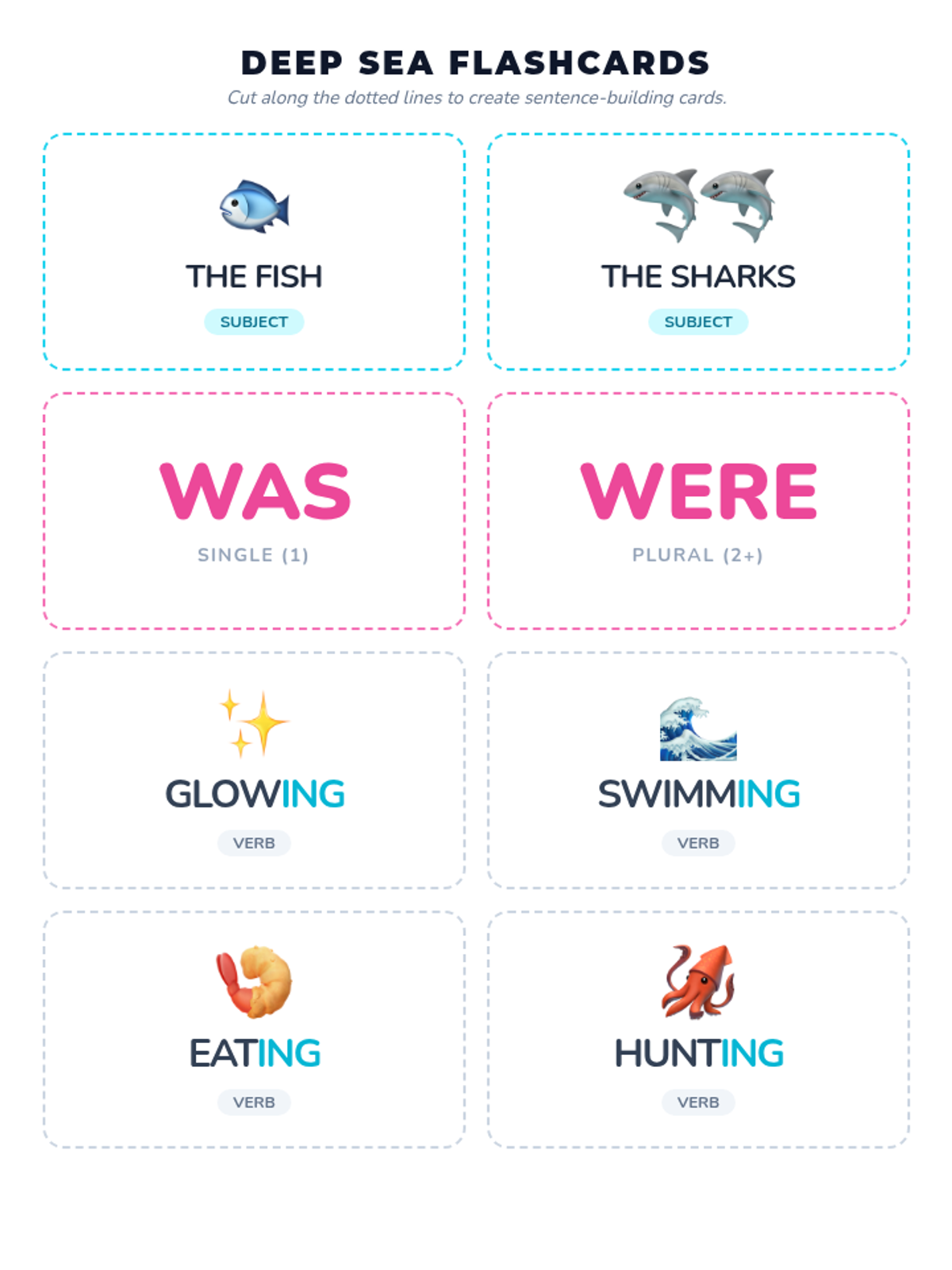
A language lesson for young learners that introduces the past continuous tense through the lens of deep-sea survival. Students explore how creatures use bioluminescence and special senses while practicing describing actions in the past.