A simulation of the 1550 Valladolid Debate, where students analyze the moral and legal arguments regarding the rights of Indigenous peoples.
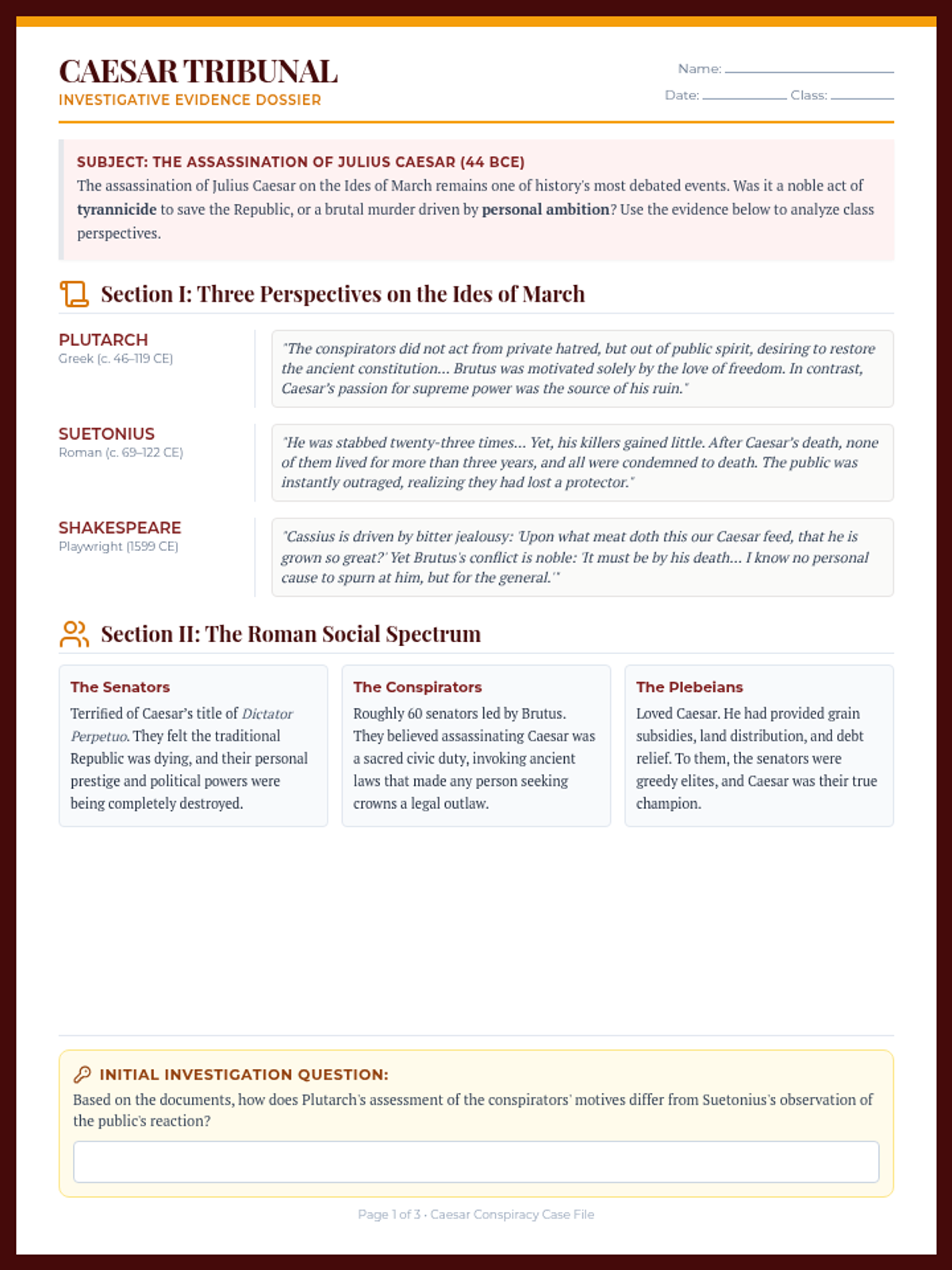
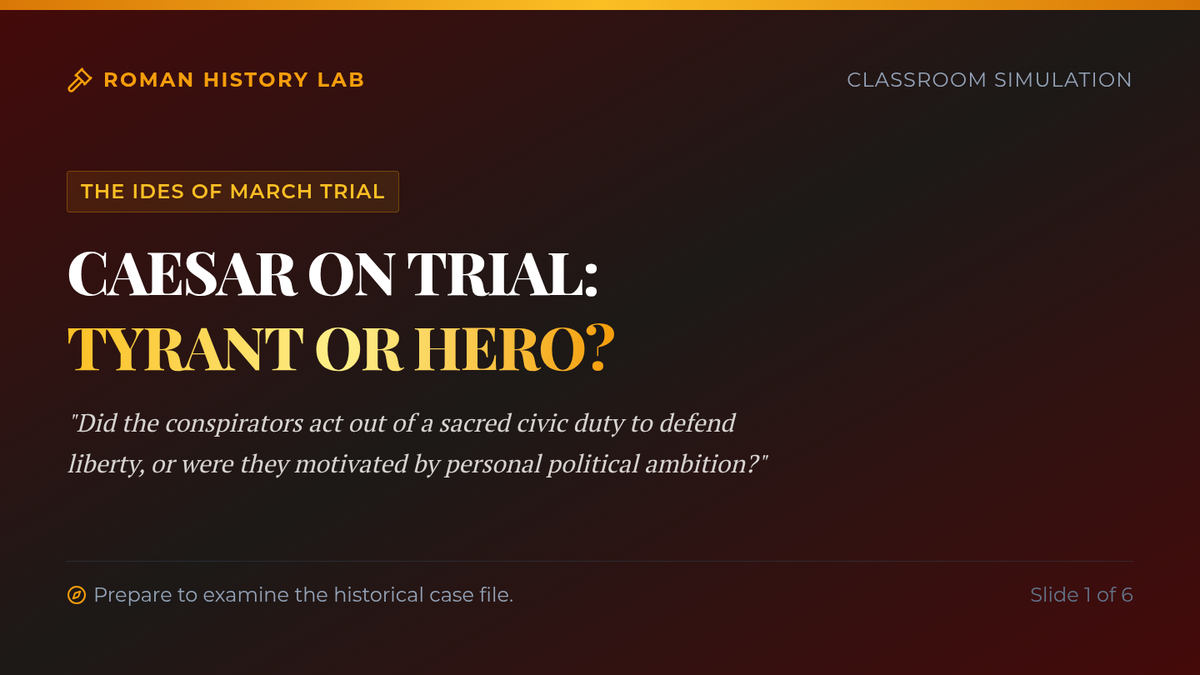
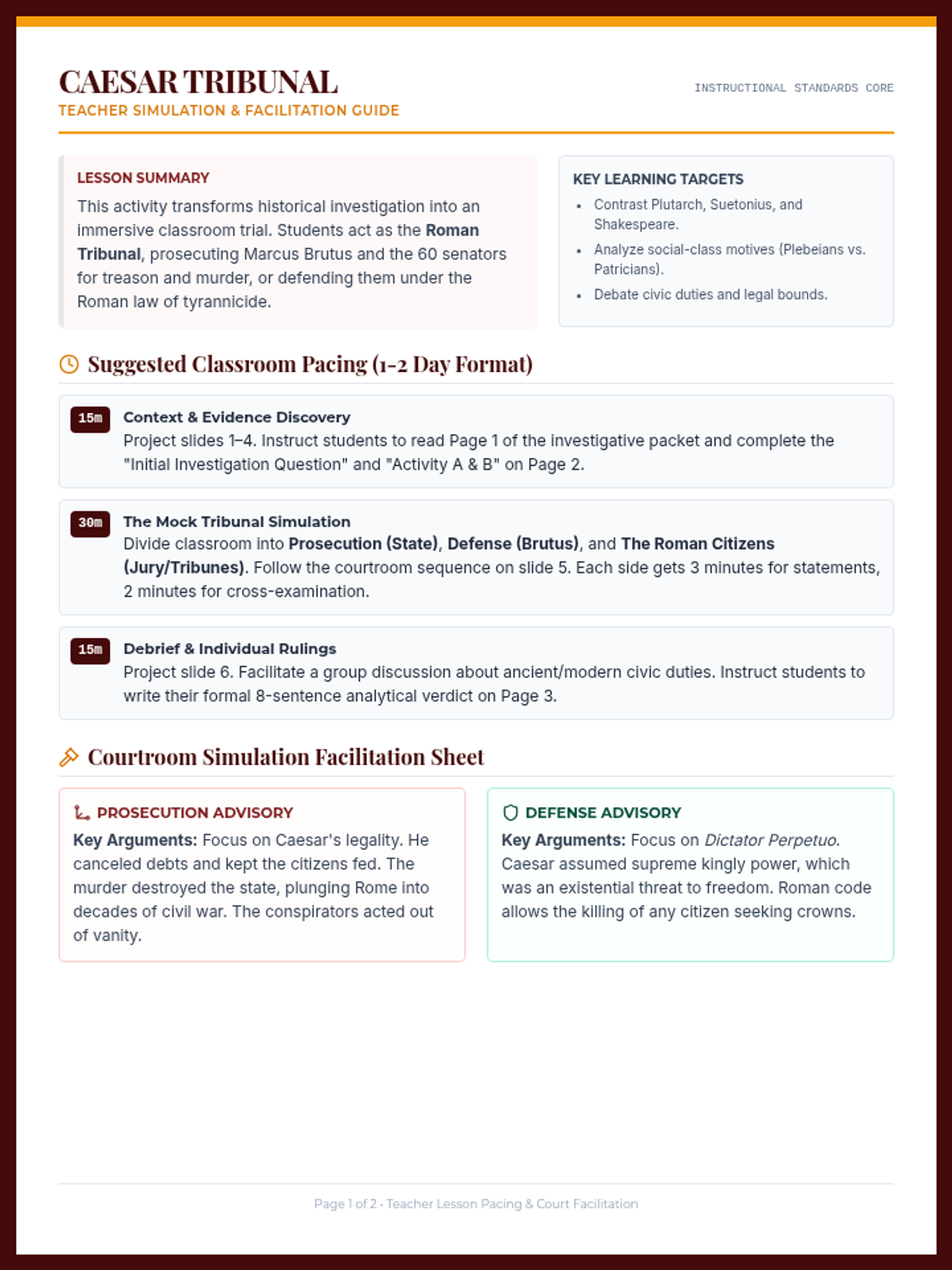
A comprehensive classroom simulation and analysis lesson about the assassination of Julius Caesar. Students examine historical perspectives, engage with primary sources, and debate civic duty through a mock trial and a three-page investigative document.
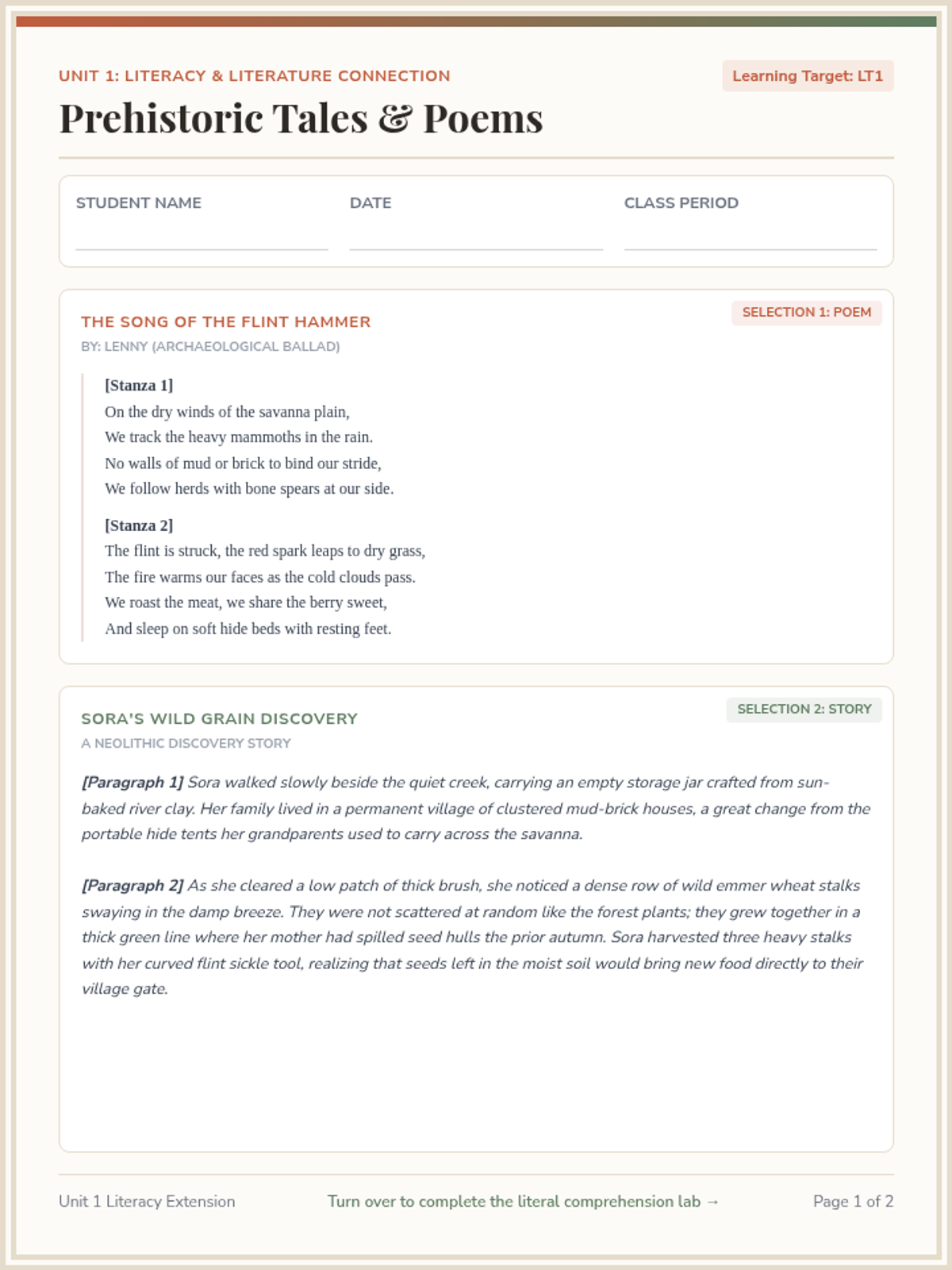
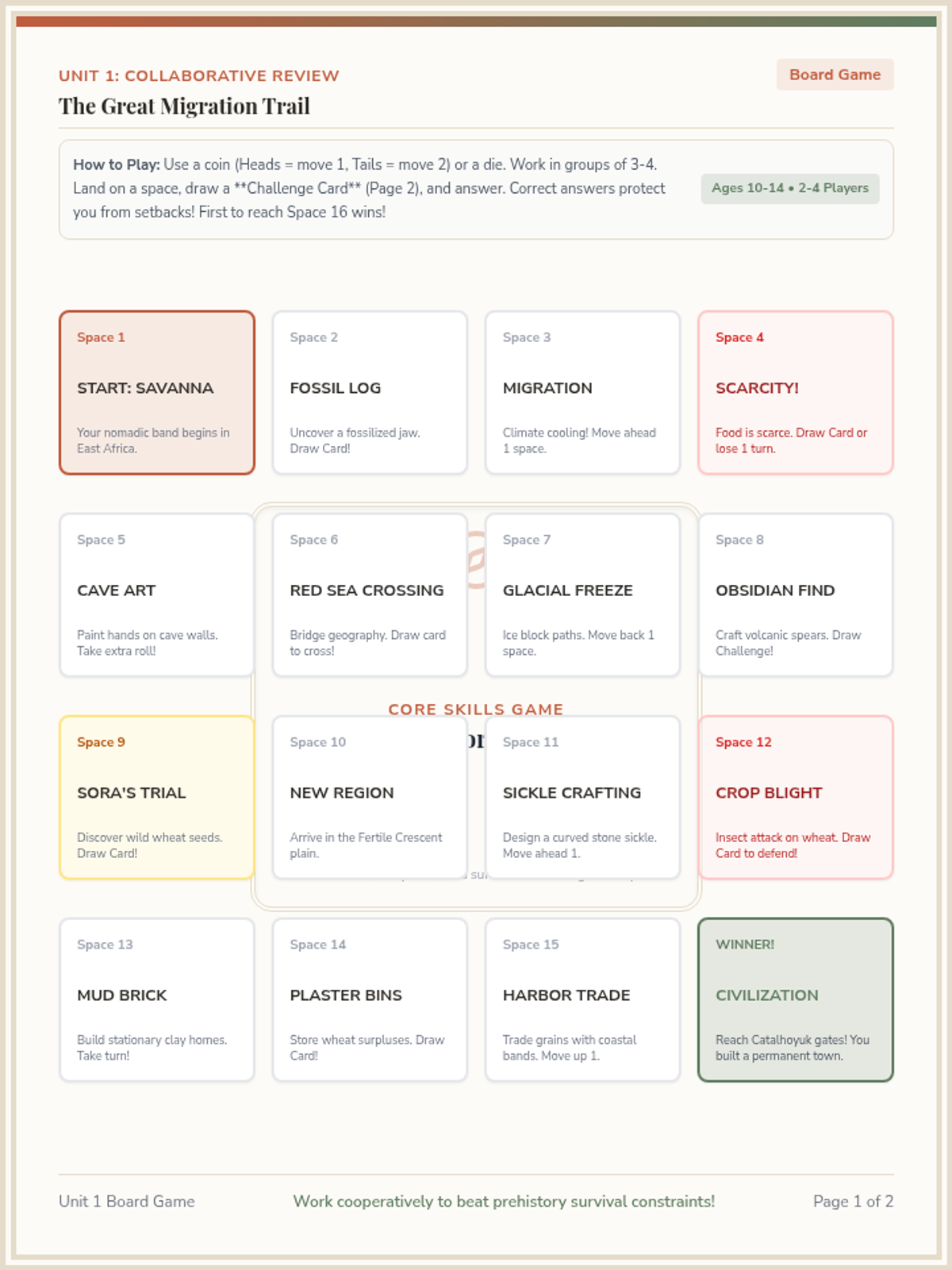
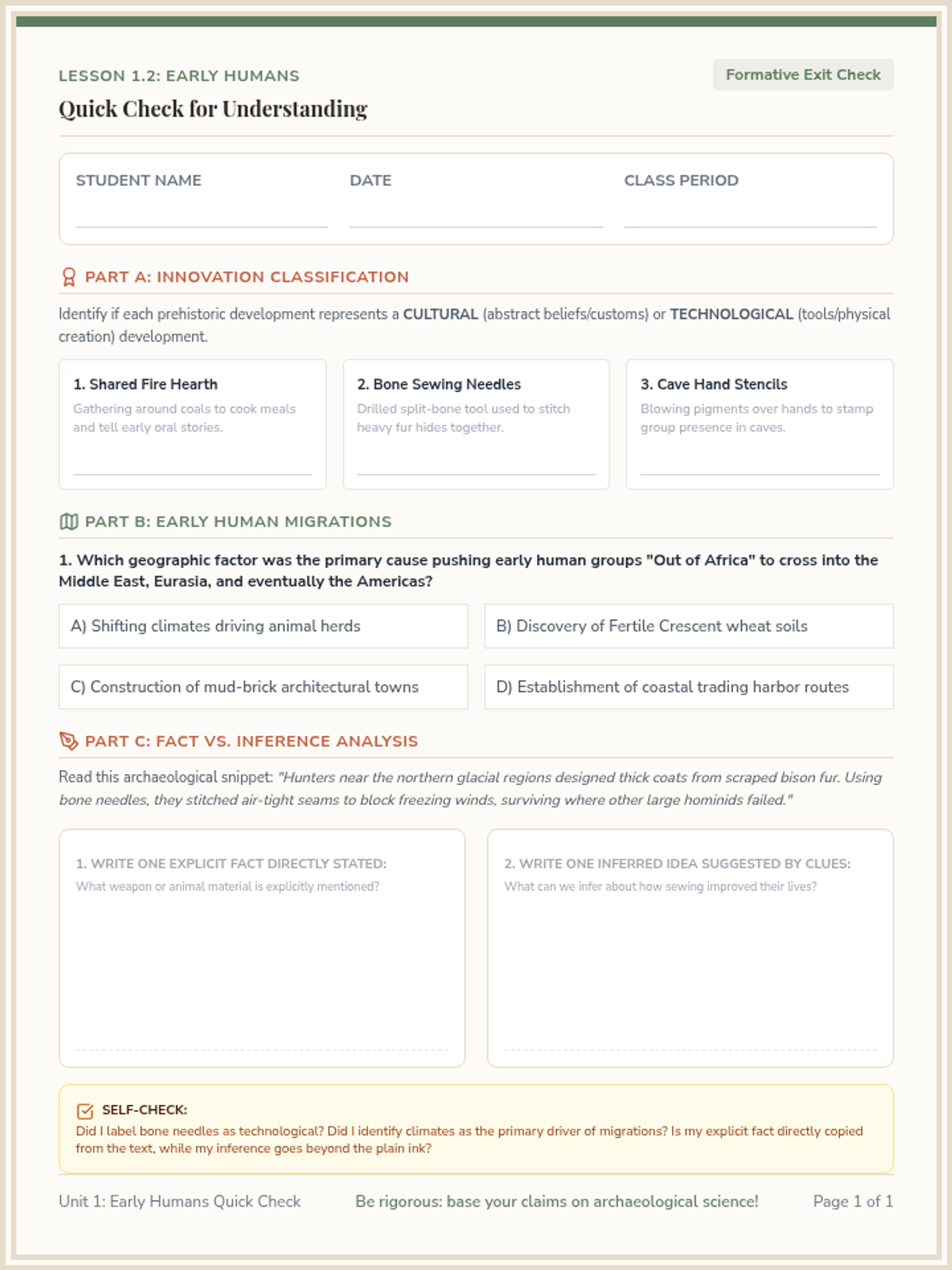
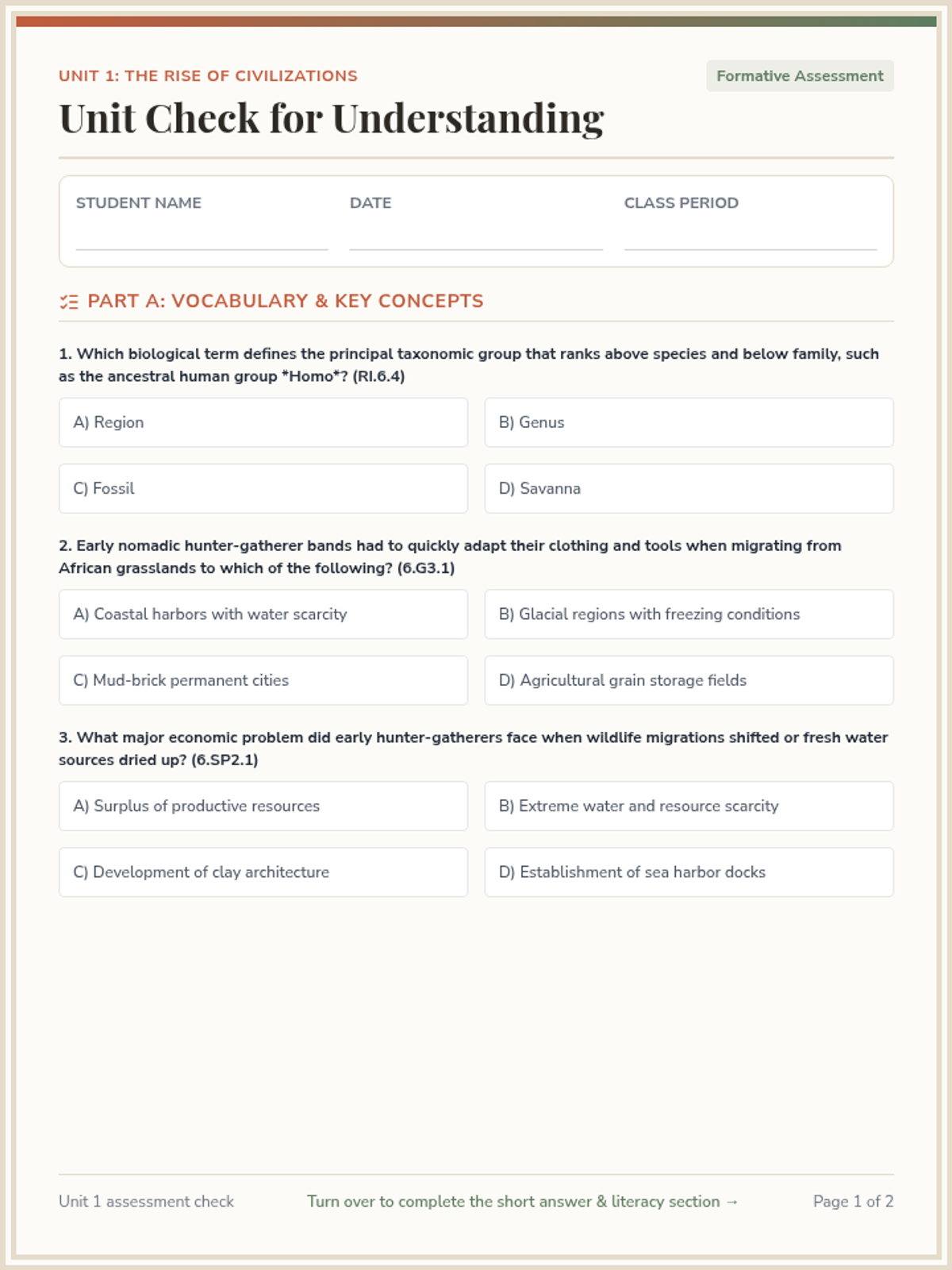
An intermediate lesson examining how early humans migrated out of Africa, adapted to different global climates, and used cultural and technological innovations to improve their lives.
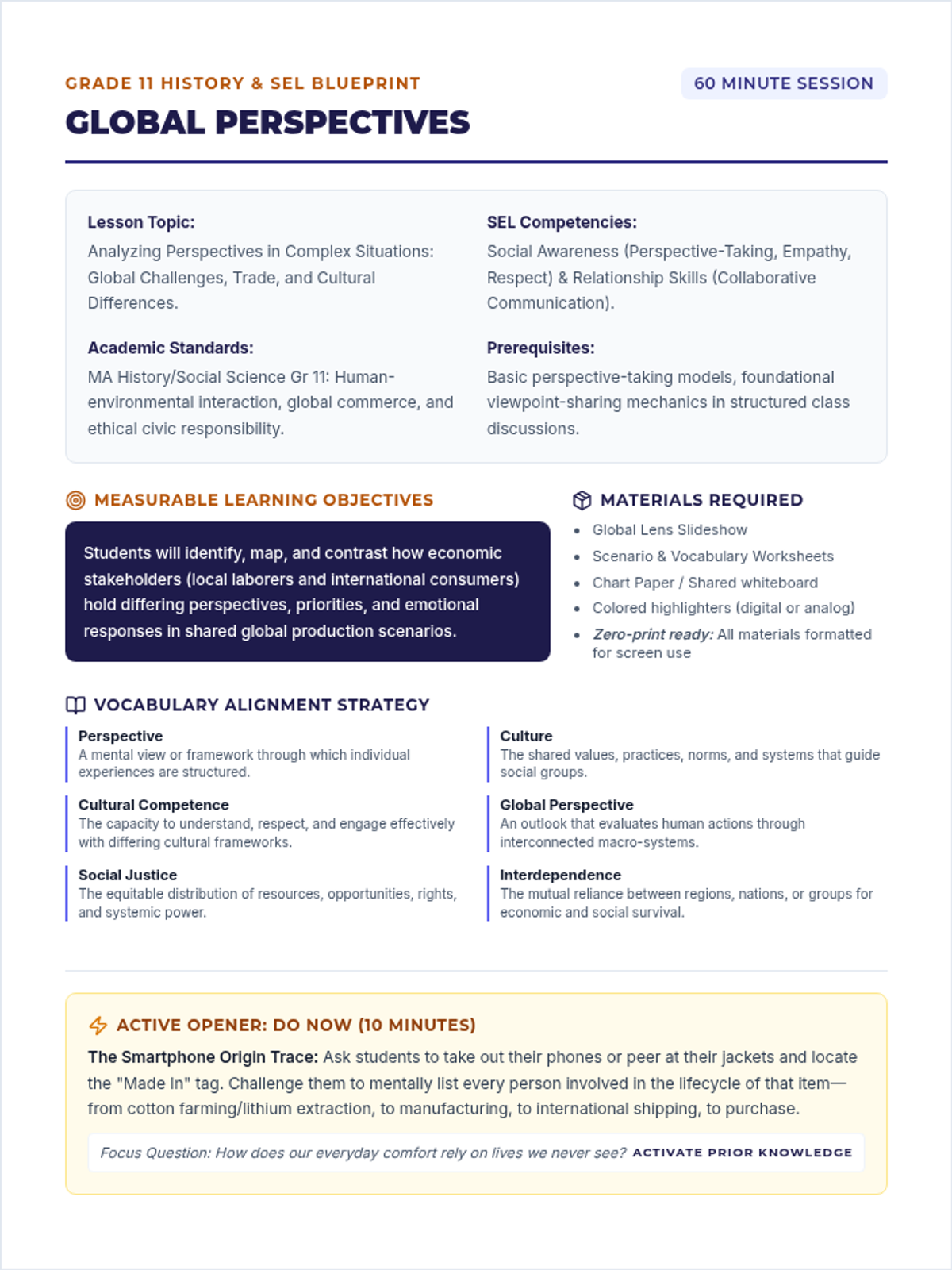
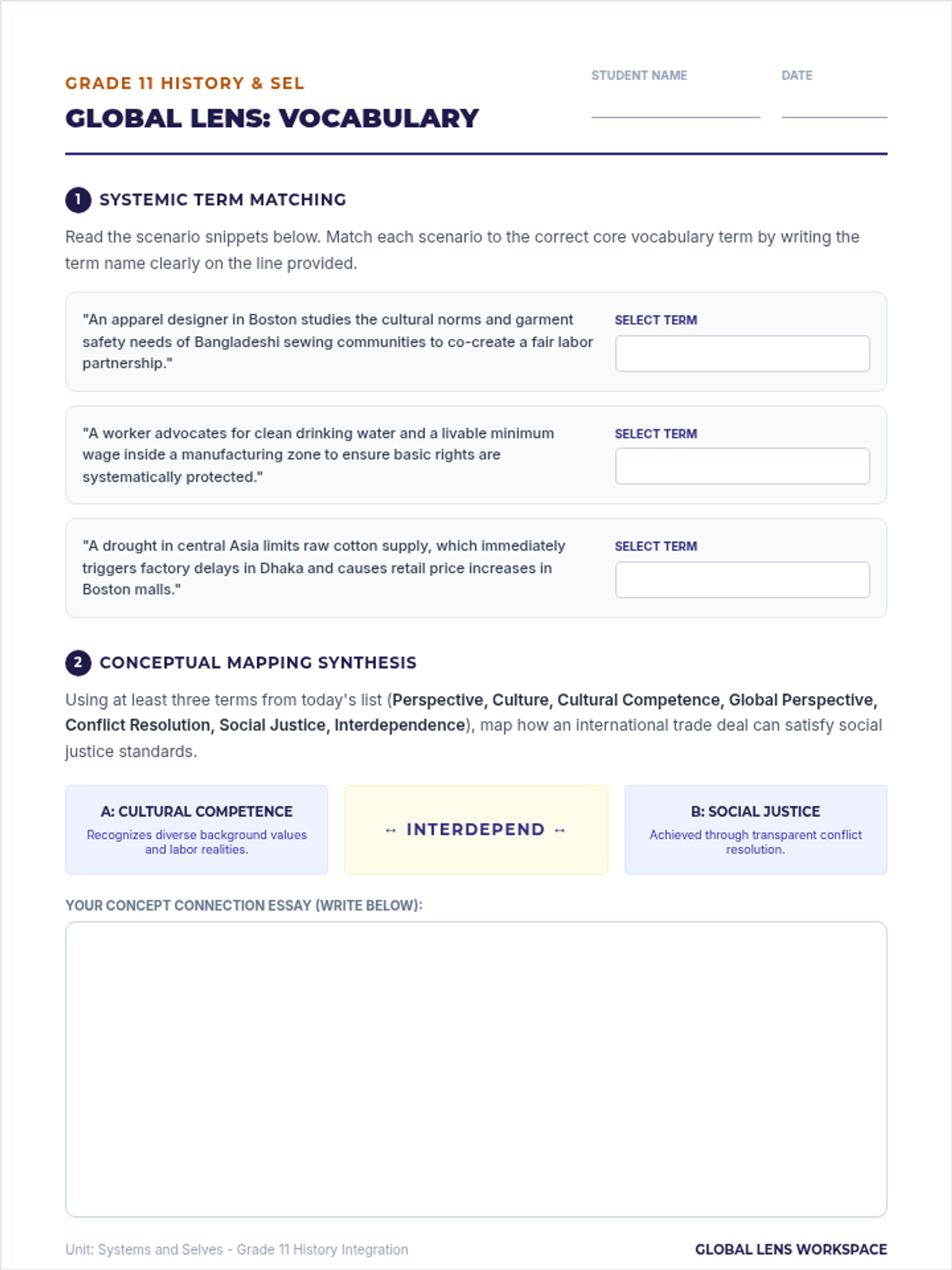
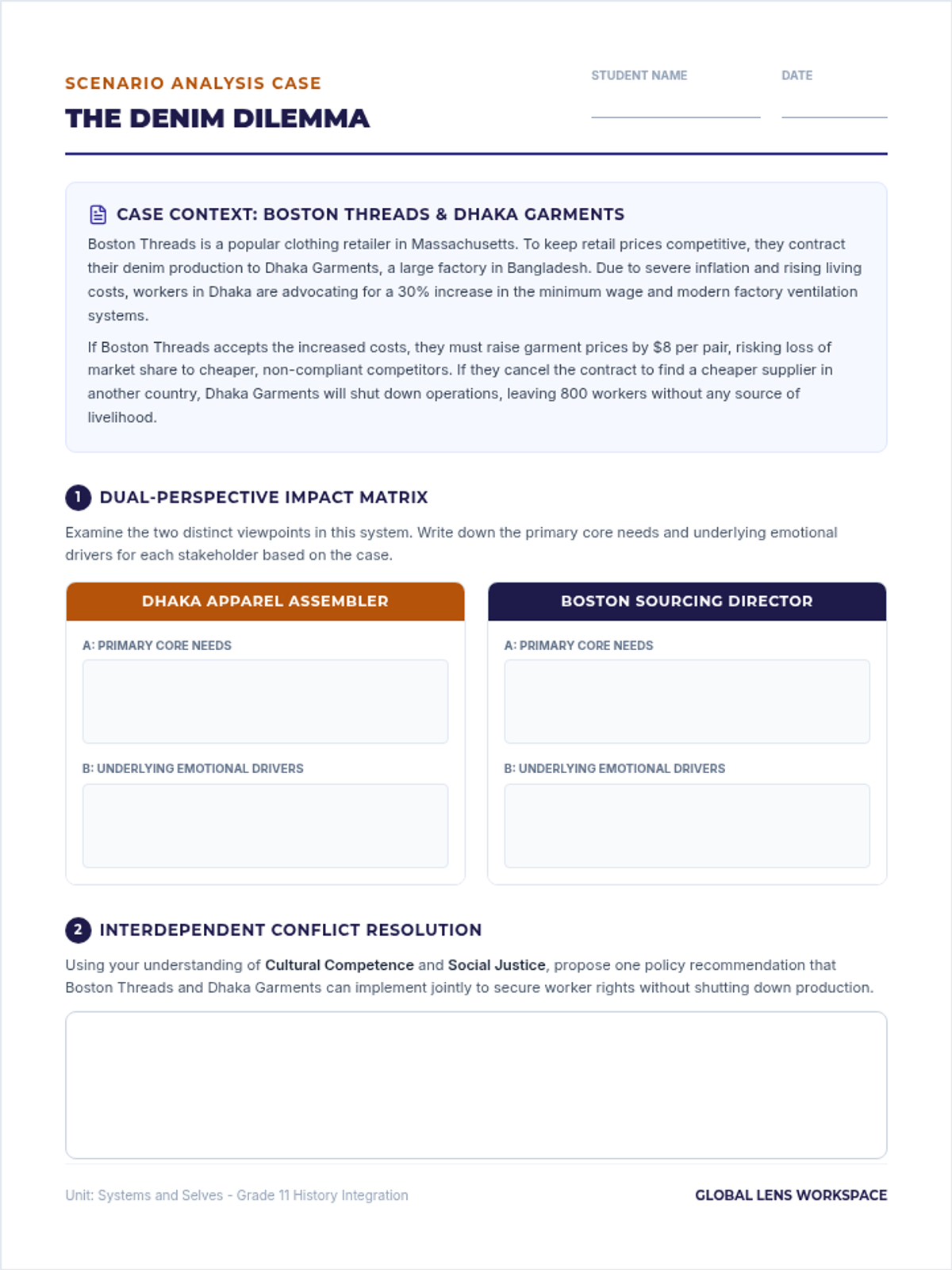
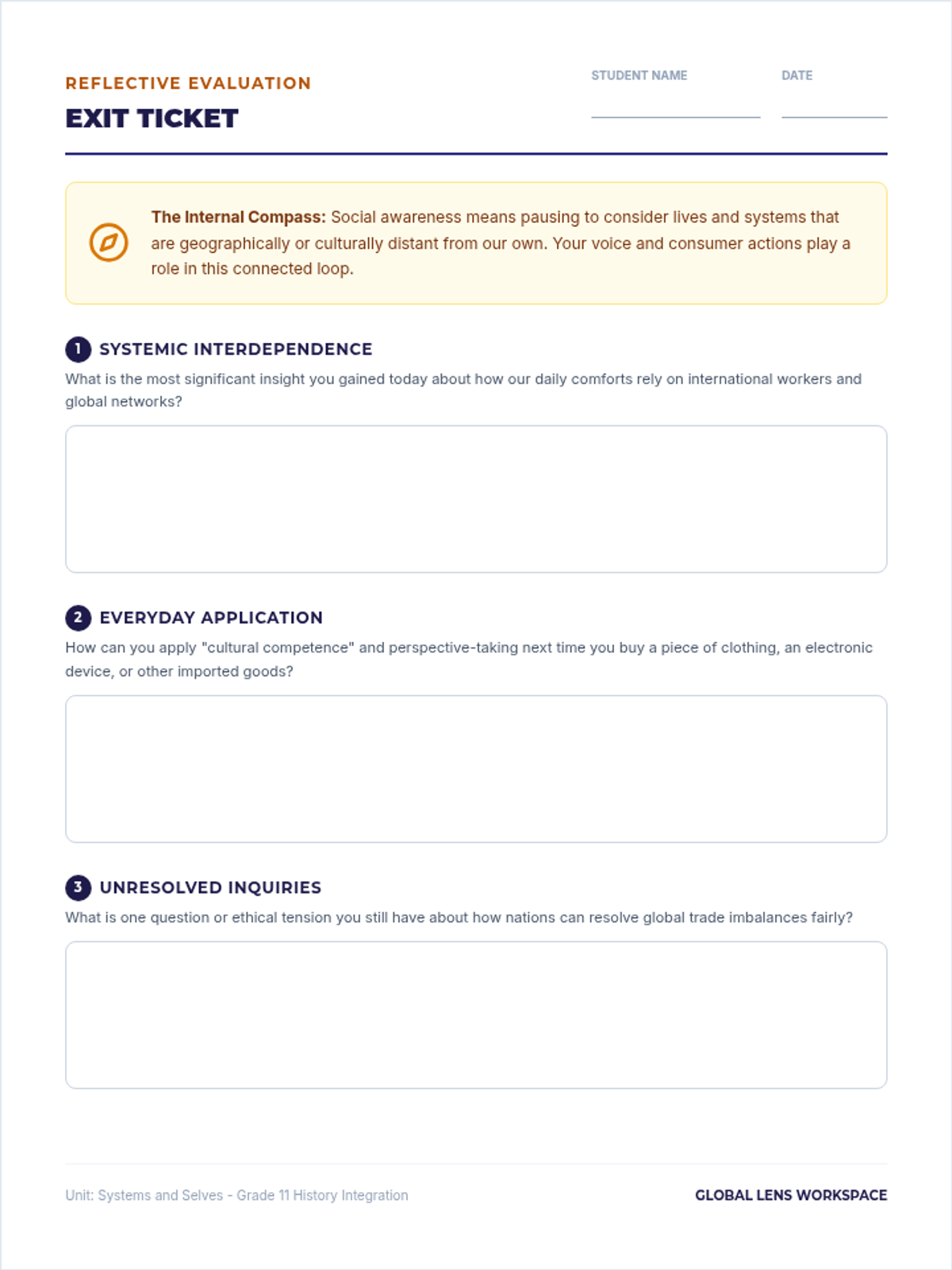
A grade 11 history and SEL lesson examining global trade, local labor, and economic interdependence. Students analyze complex global scenarios using multi-perspective lenses and cultural competence.
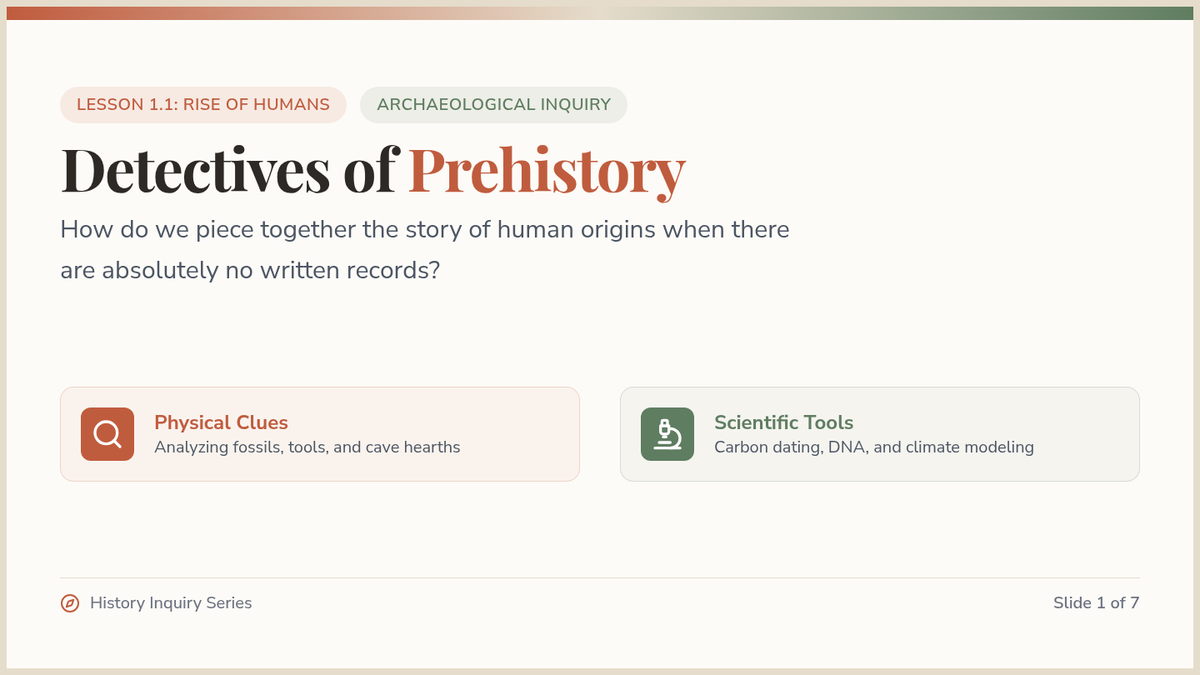
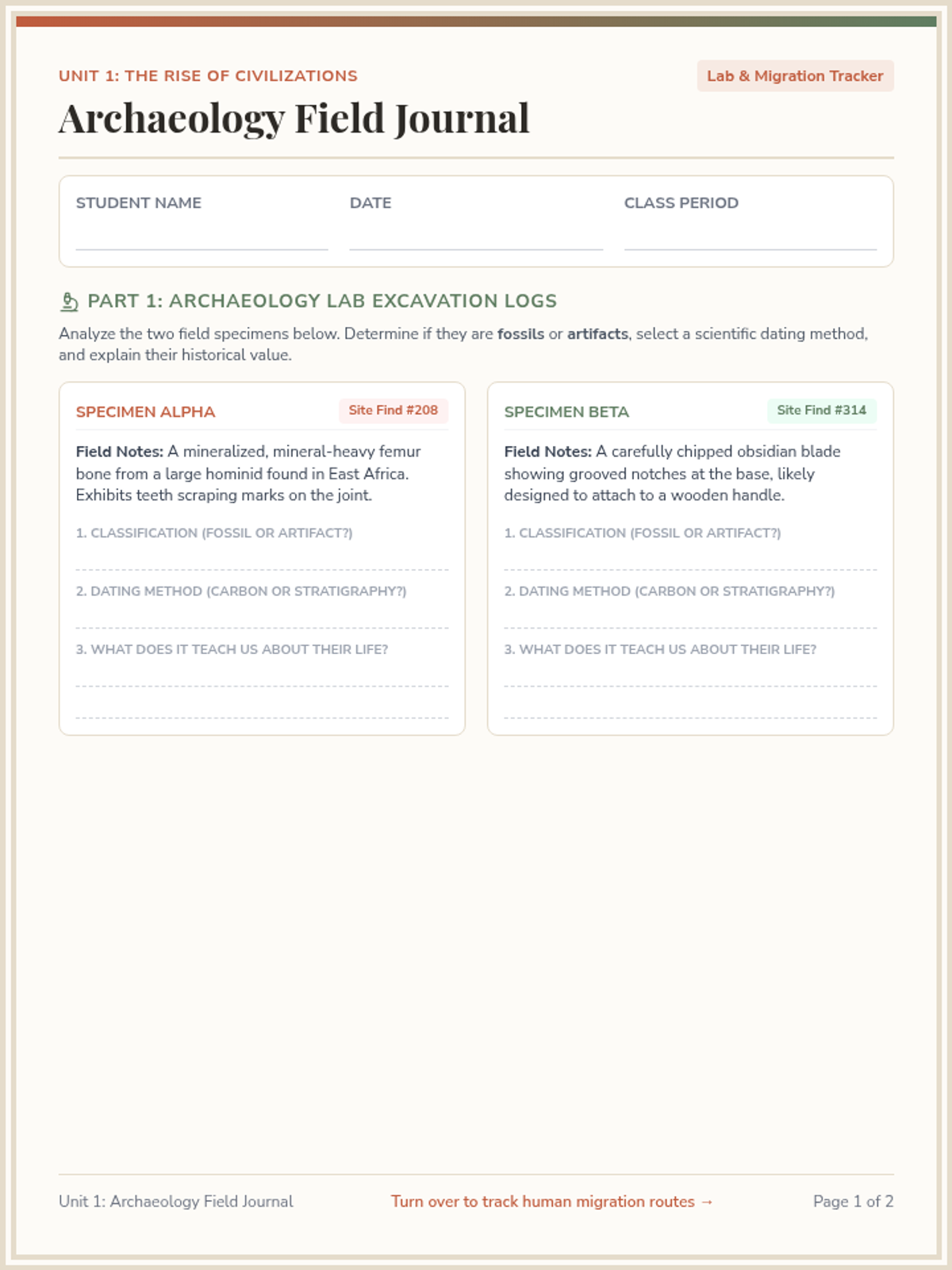
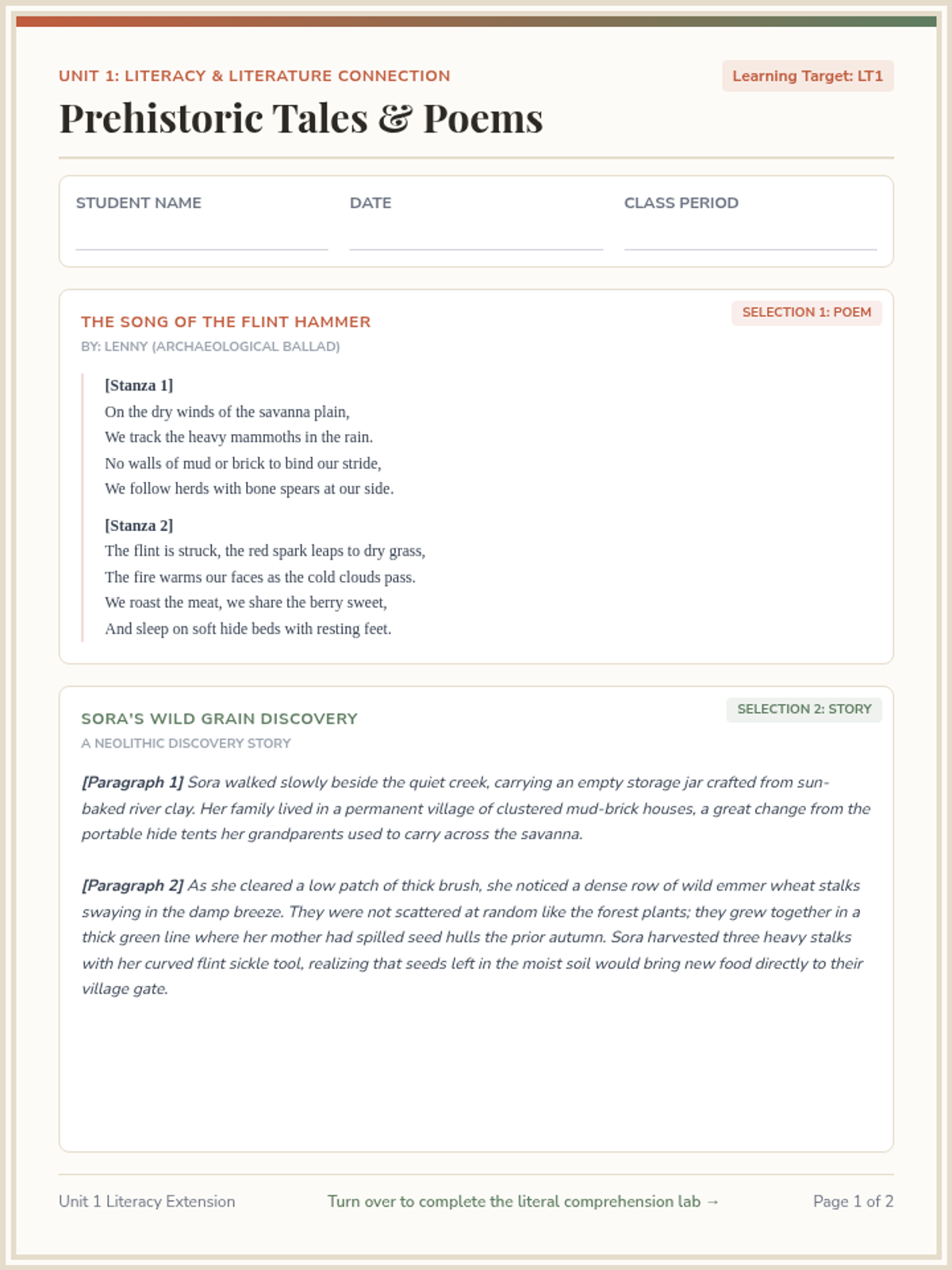
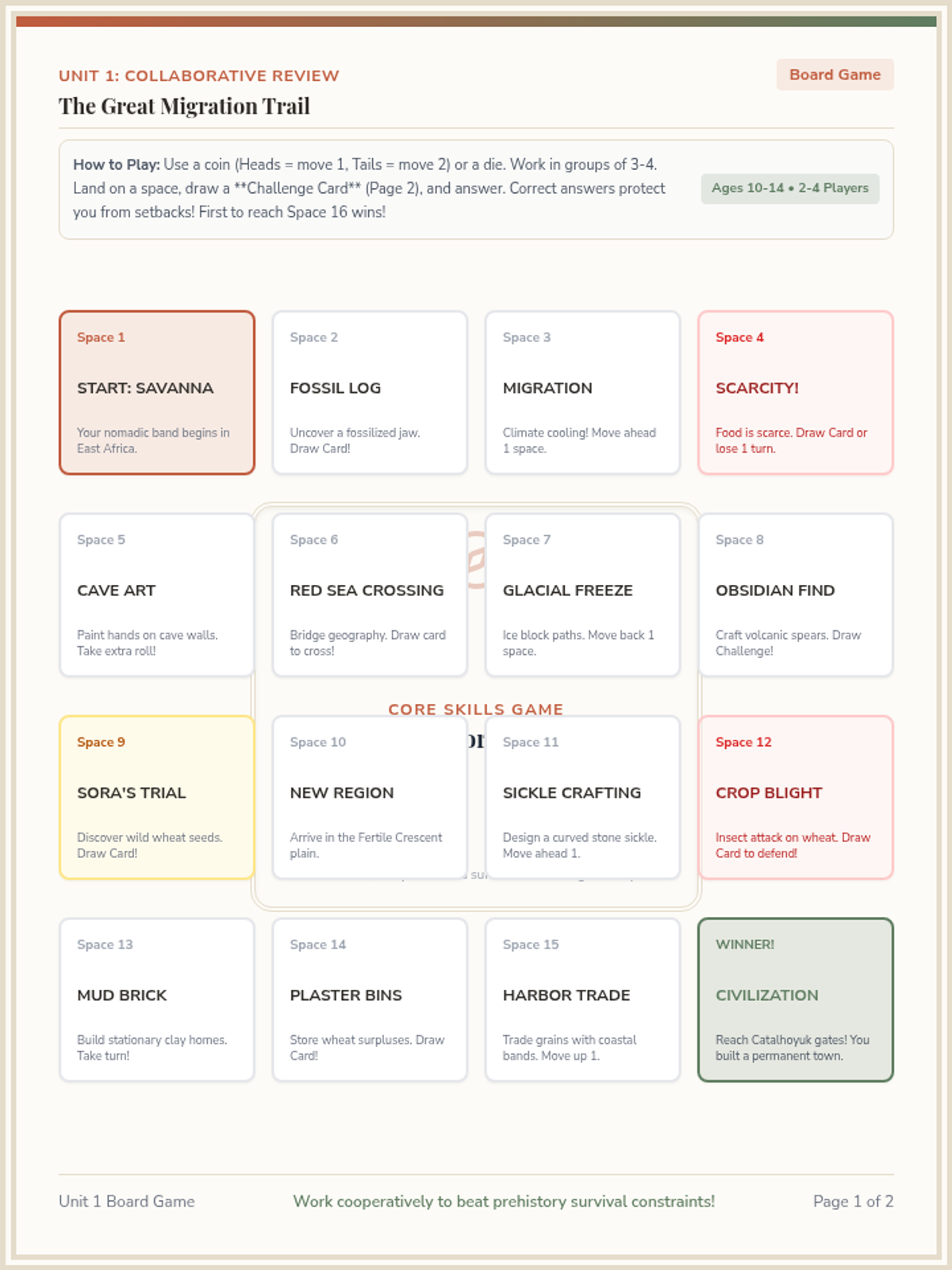
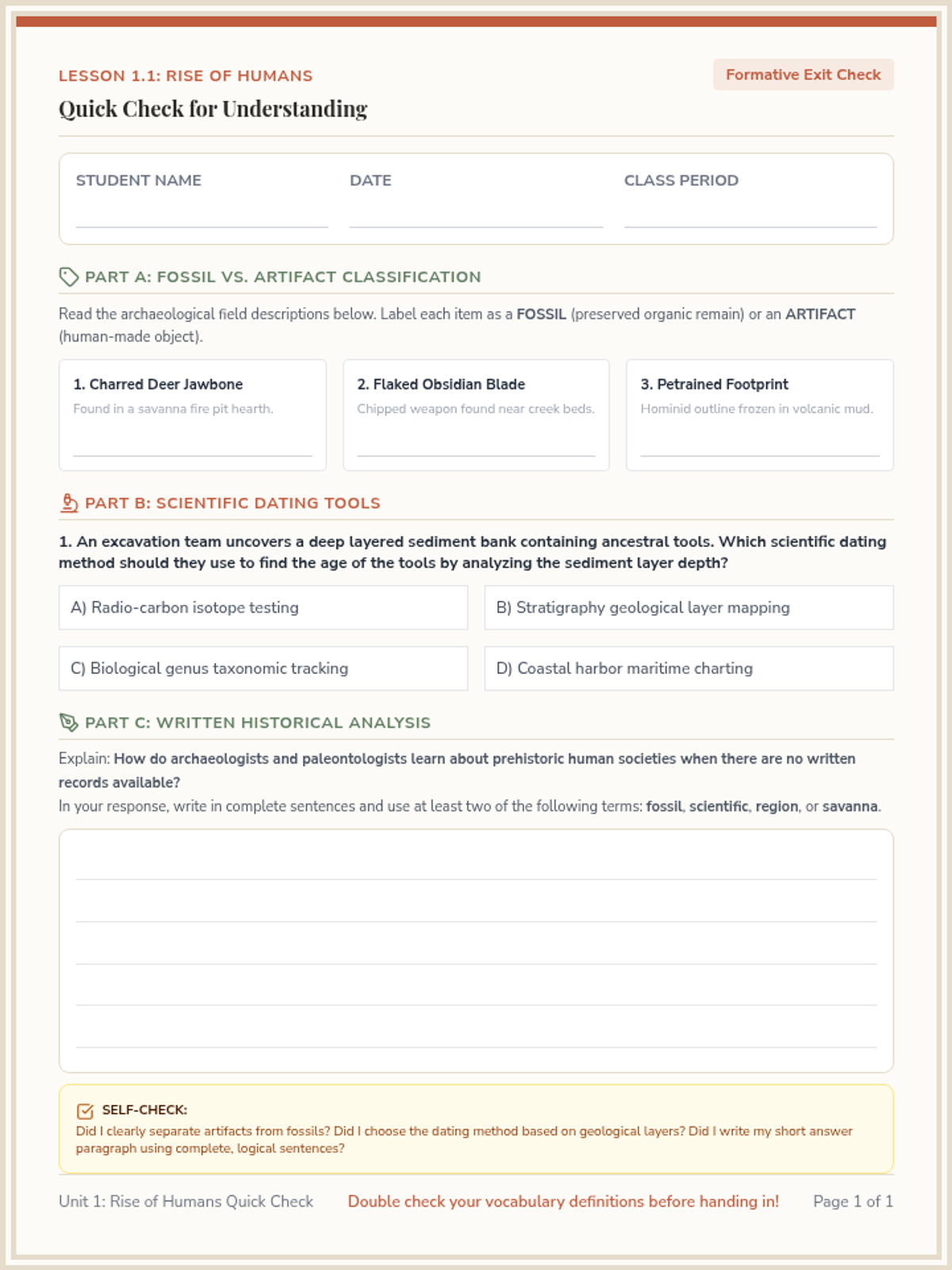
An introductory lesson exploring how archaeologists, paleontologists, and scientists reconstruct prehistoric human society using fossils, scientific testing, and geographical migration tracks.
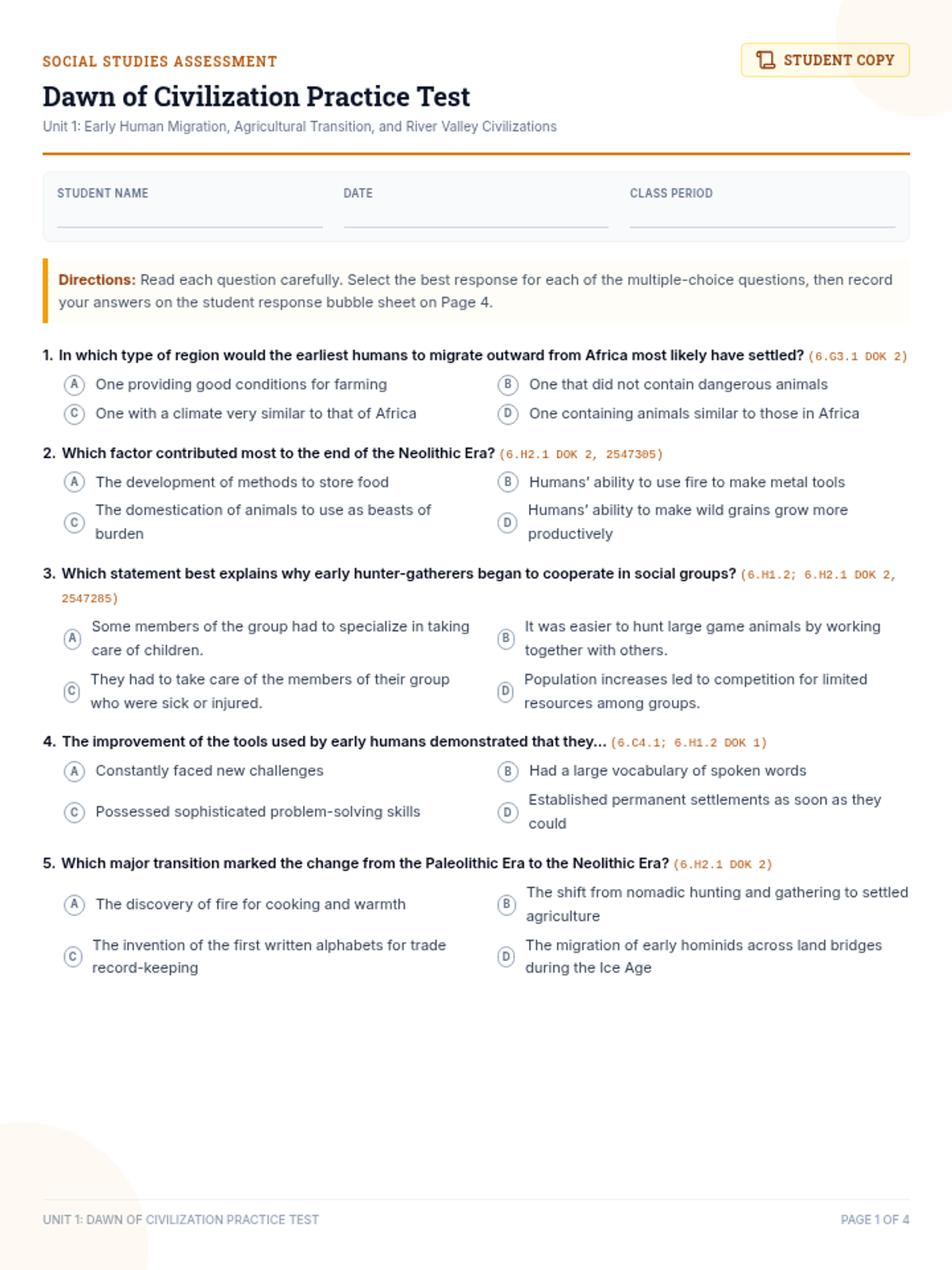
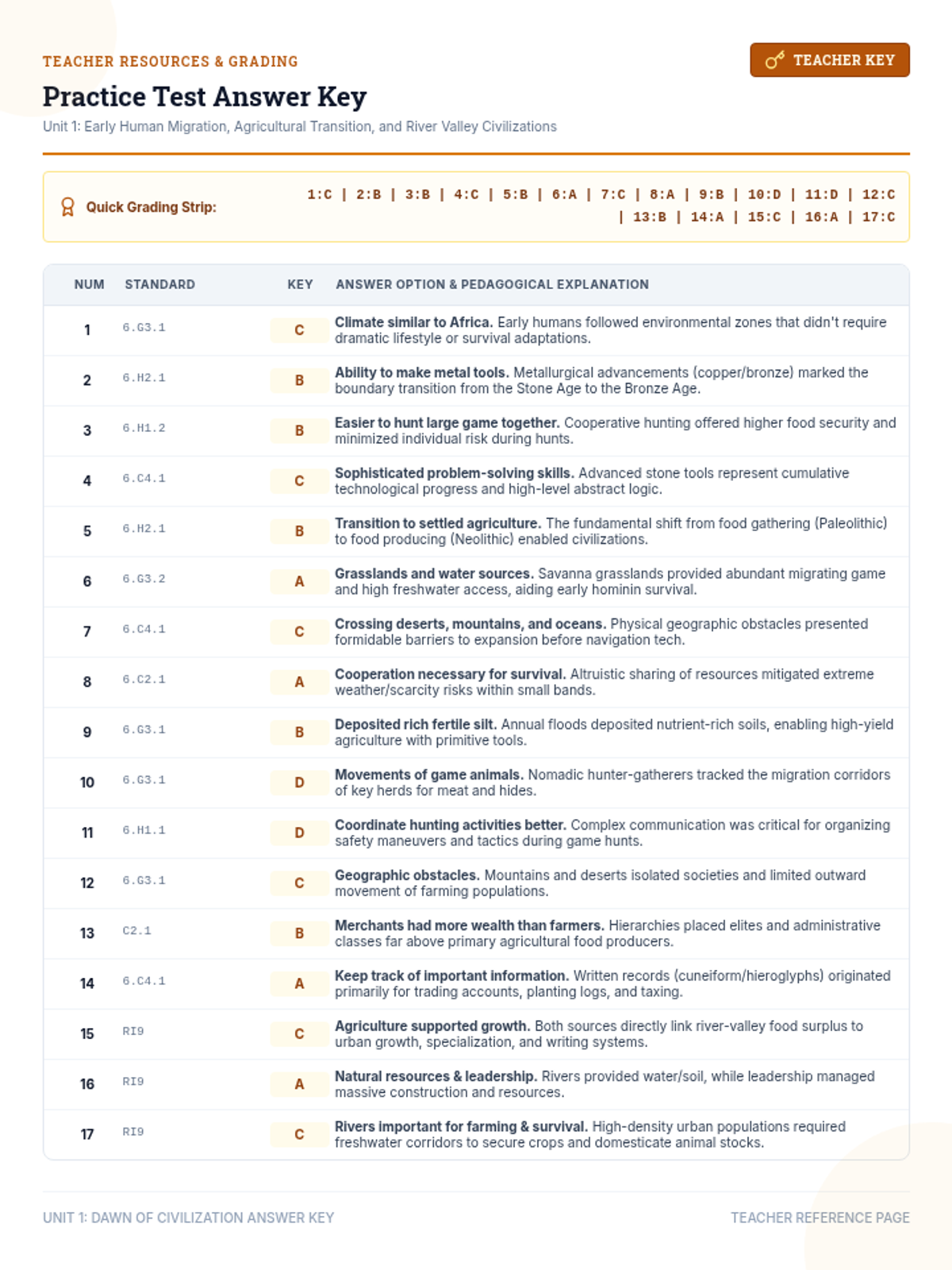
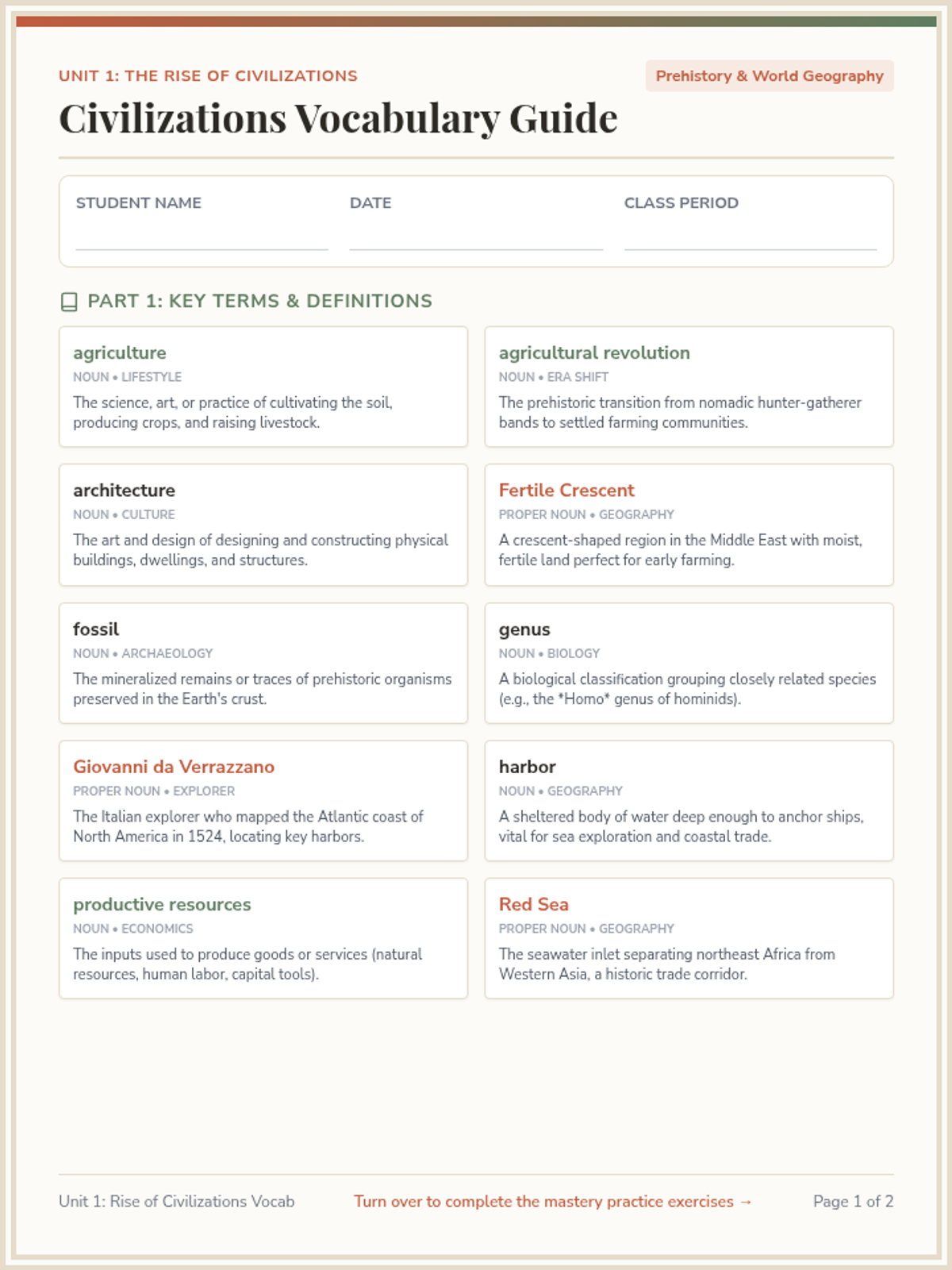
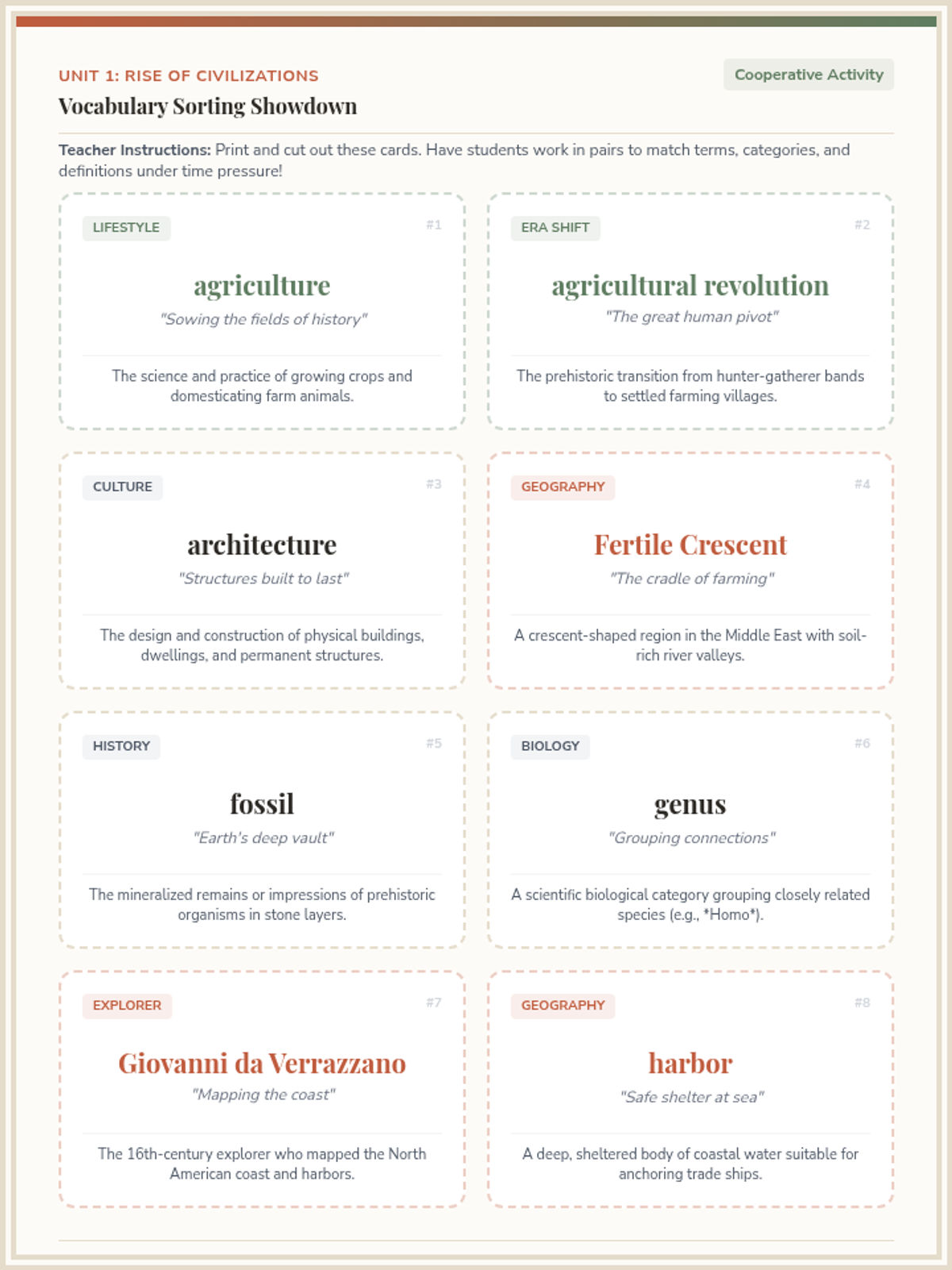
An exploration of early human migration, the transition from hunter-gatherers to agrarian societies, and the rise of the first river valley civilizations in Mesopotamia and ancient Egypt.
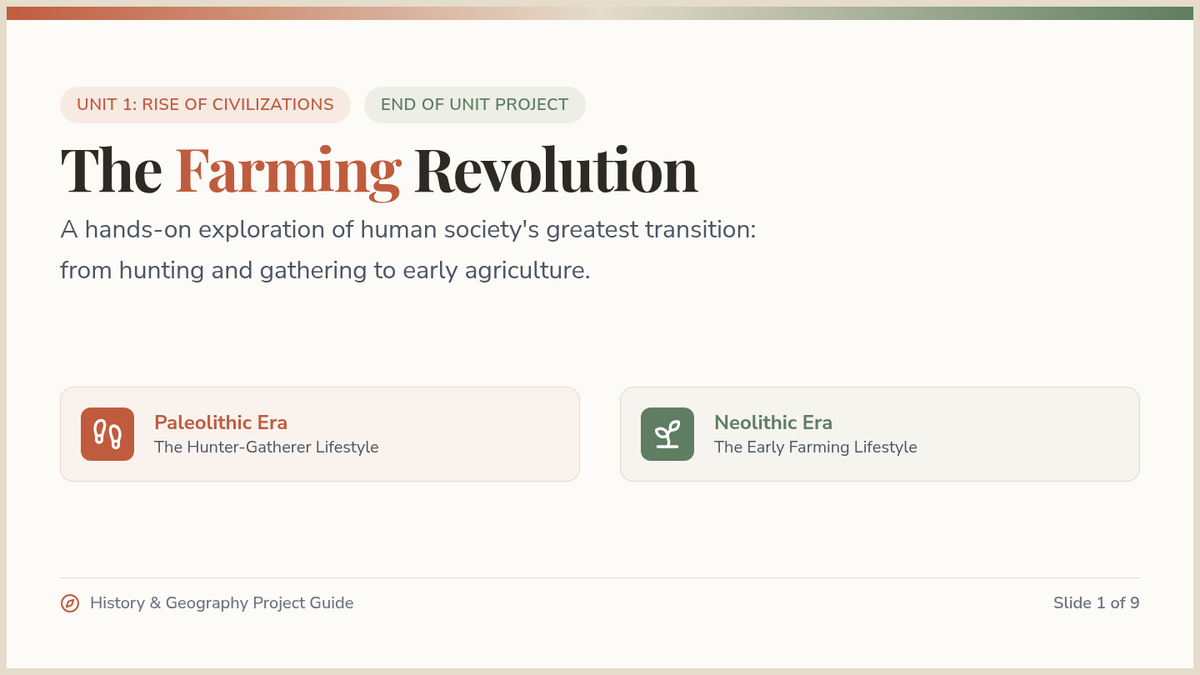
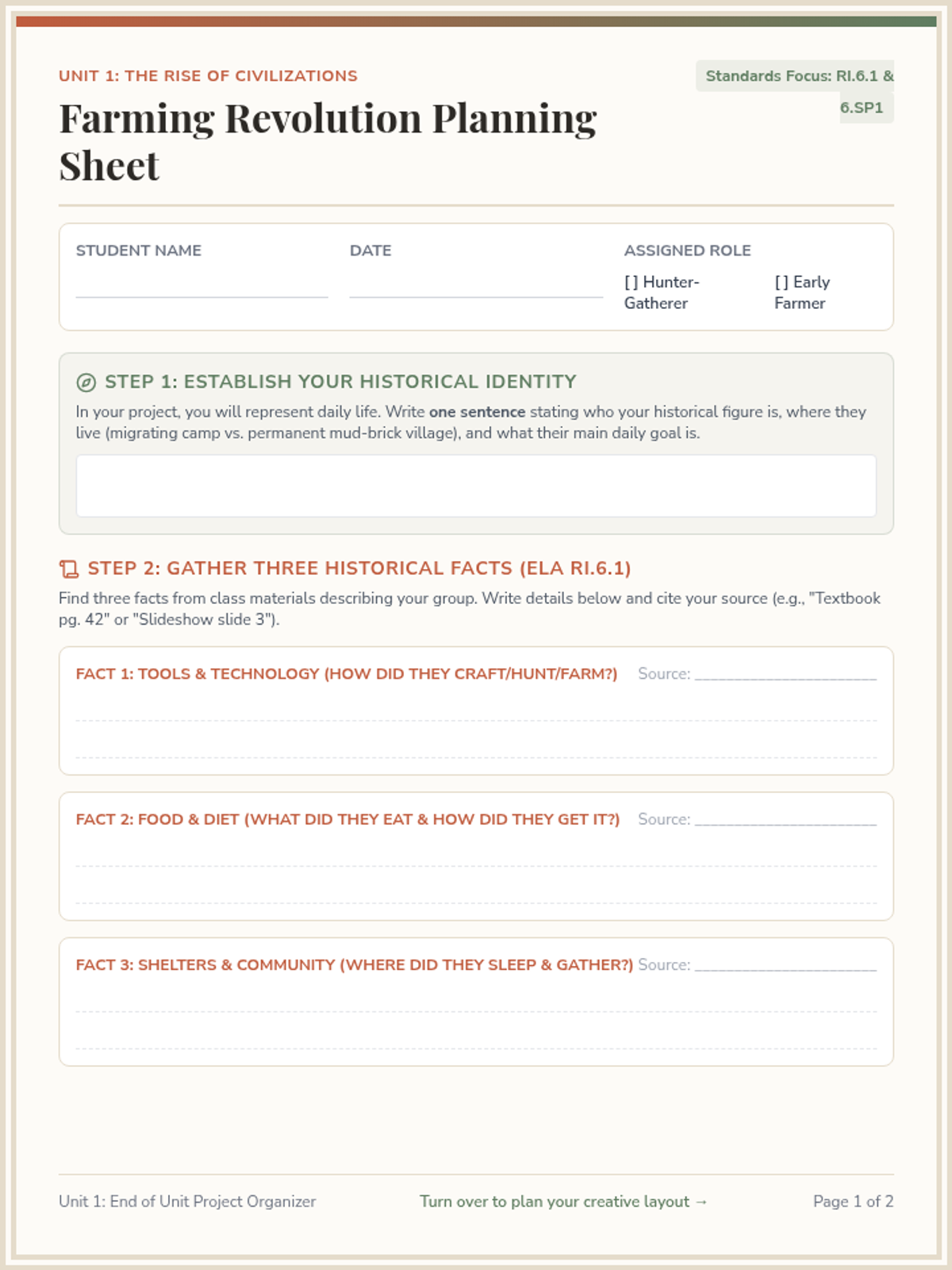
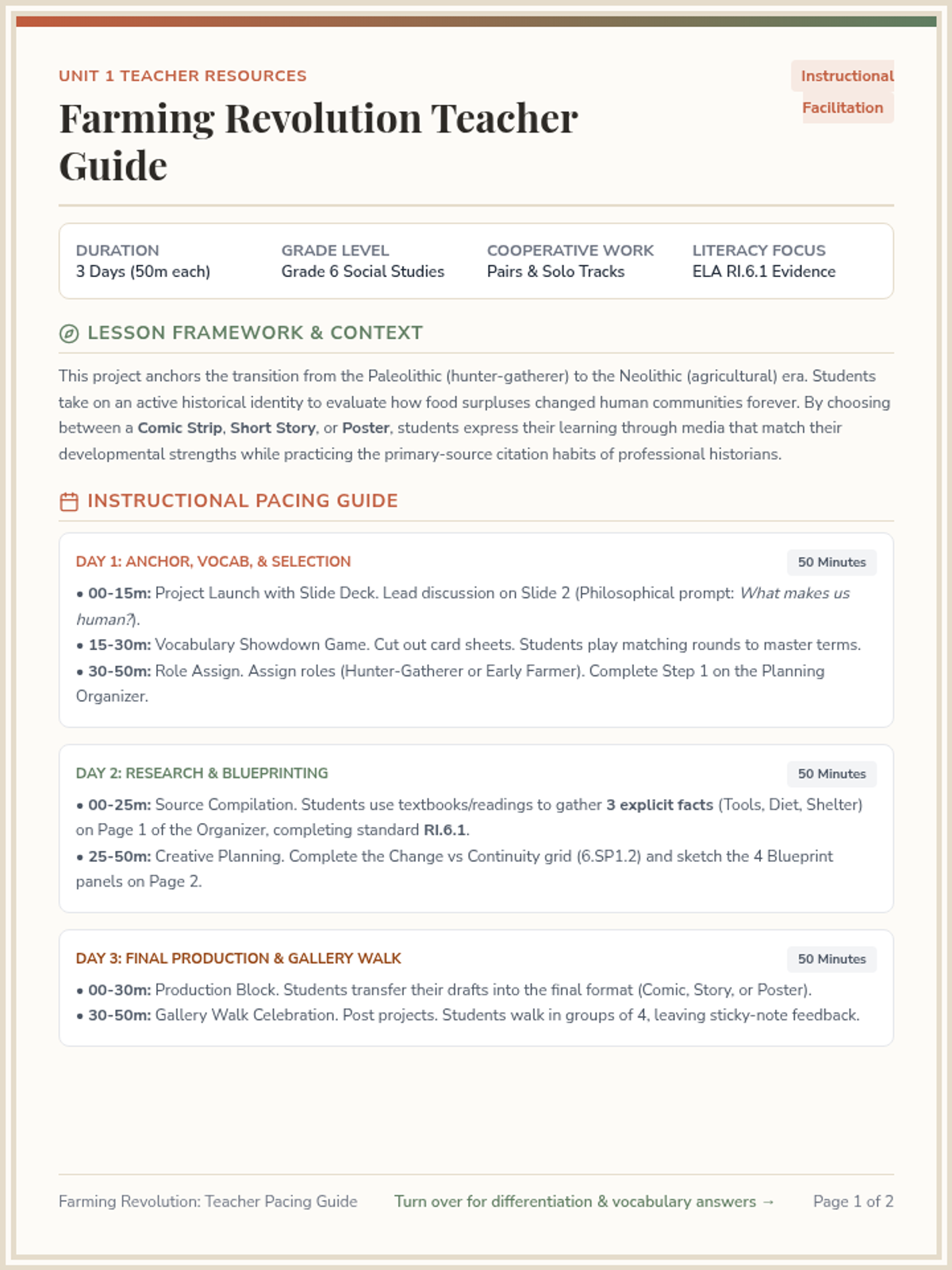
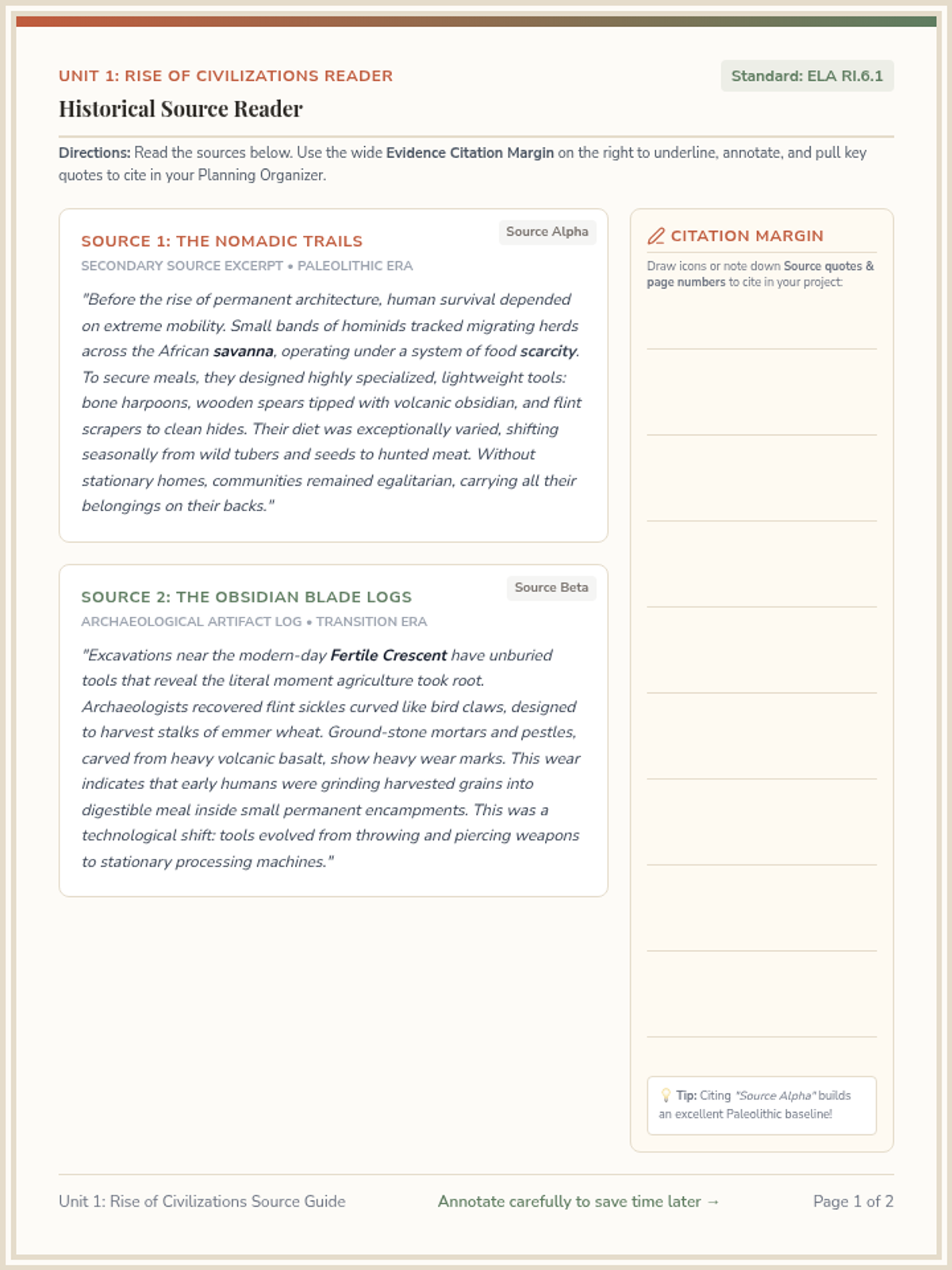
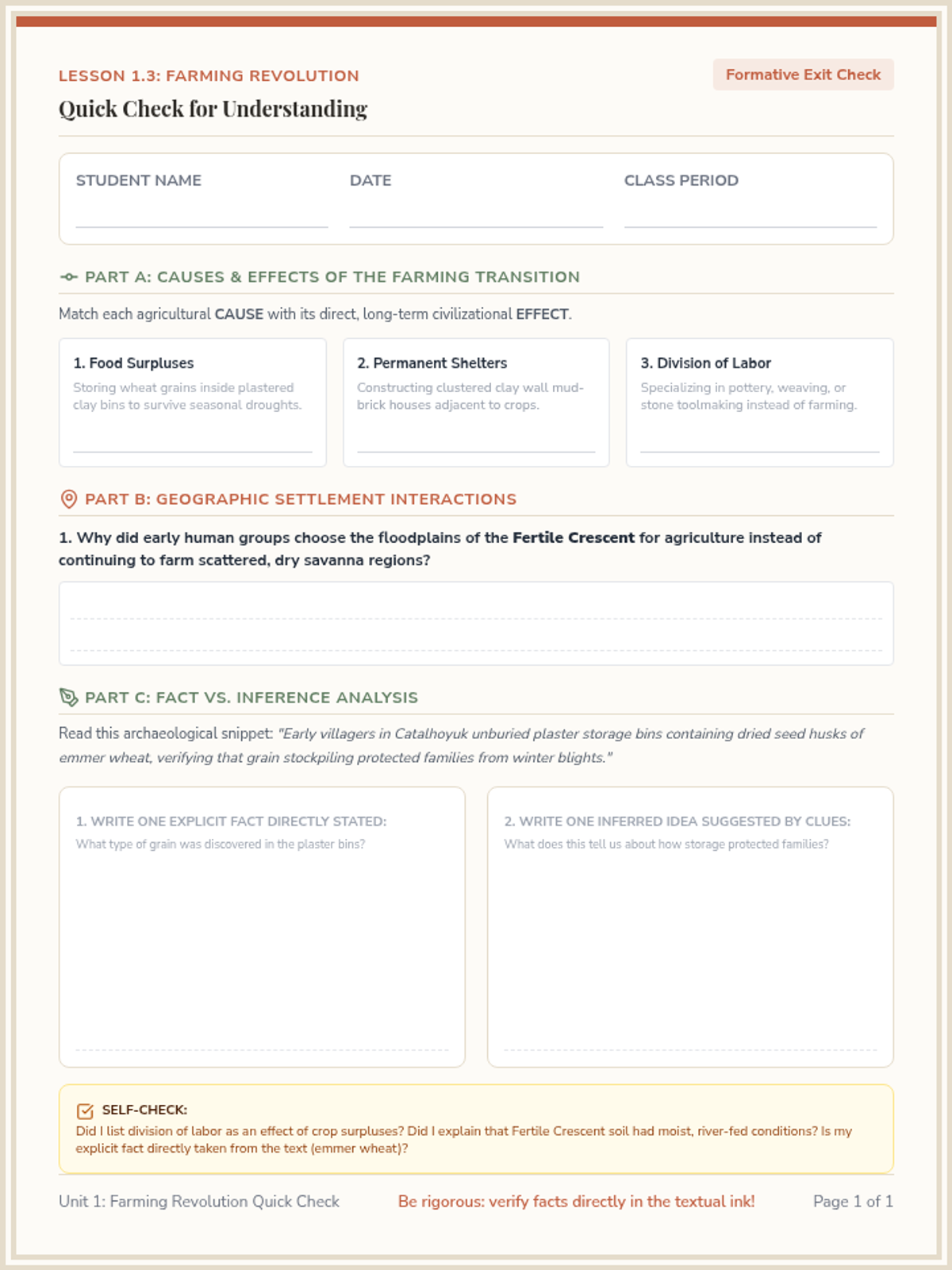
A project-based lesson where students explore the dramatic transition from hunter-gatherer societies to early agricultural communities. Students analyze historical evidence to create a comic, short story, or poster detailing daily life in their assigned era.
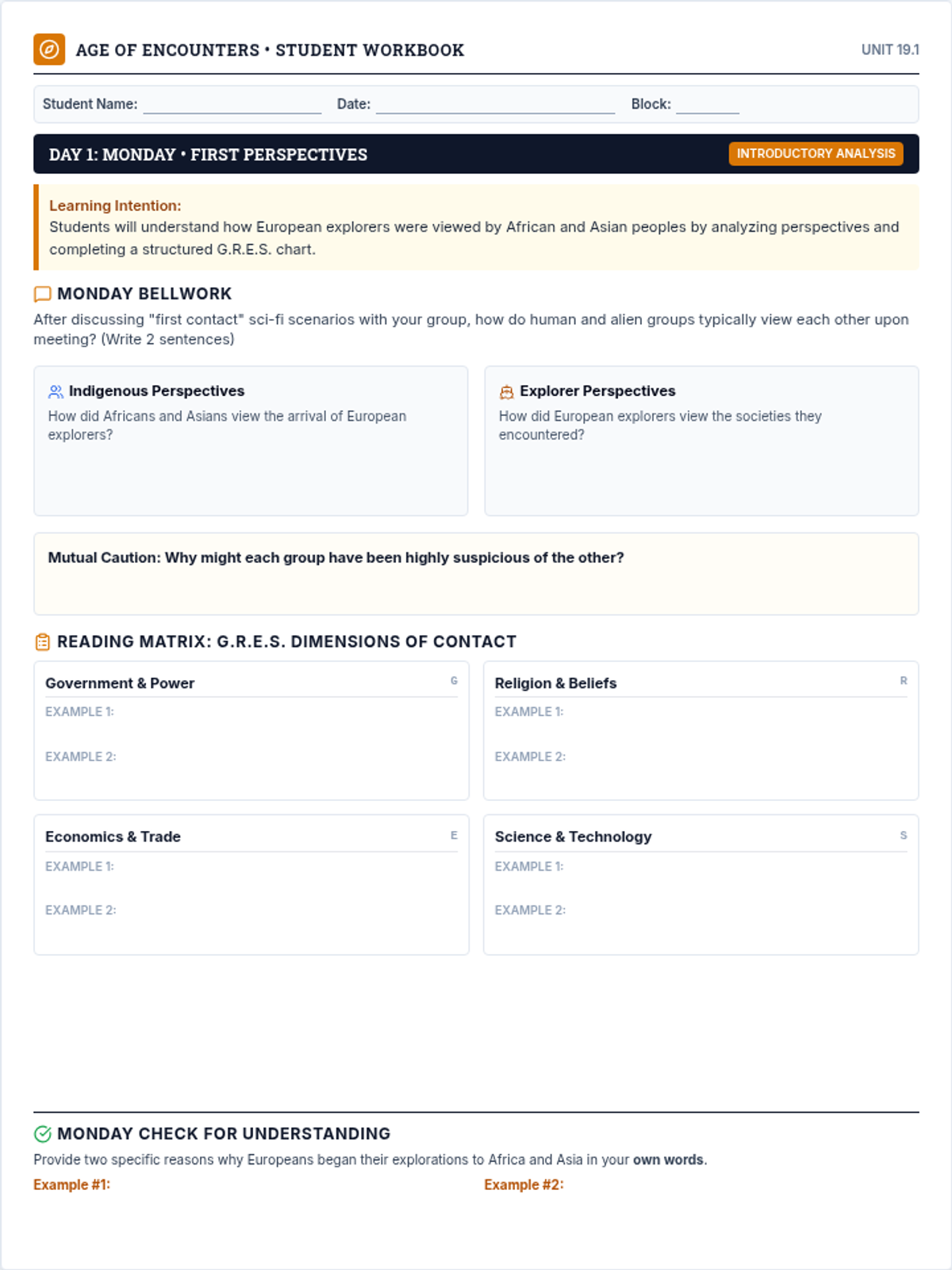
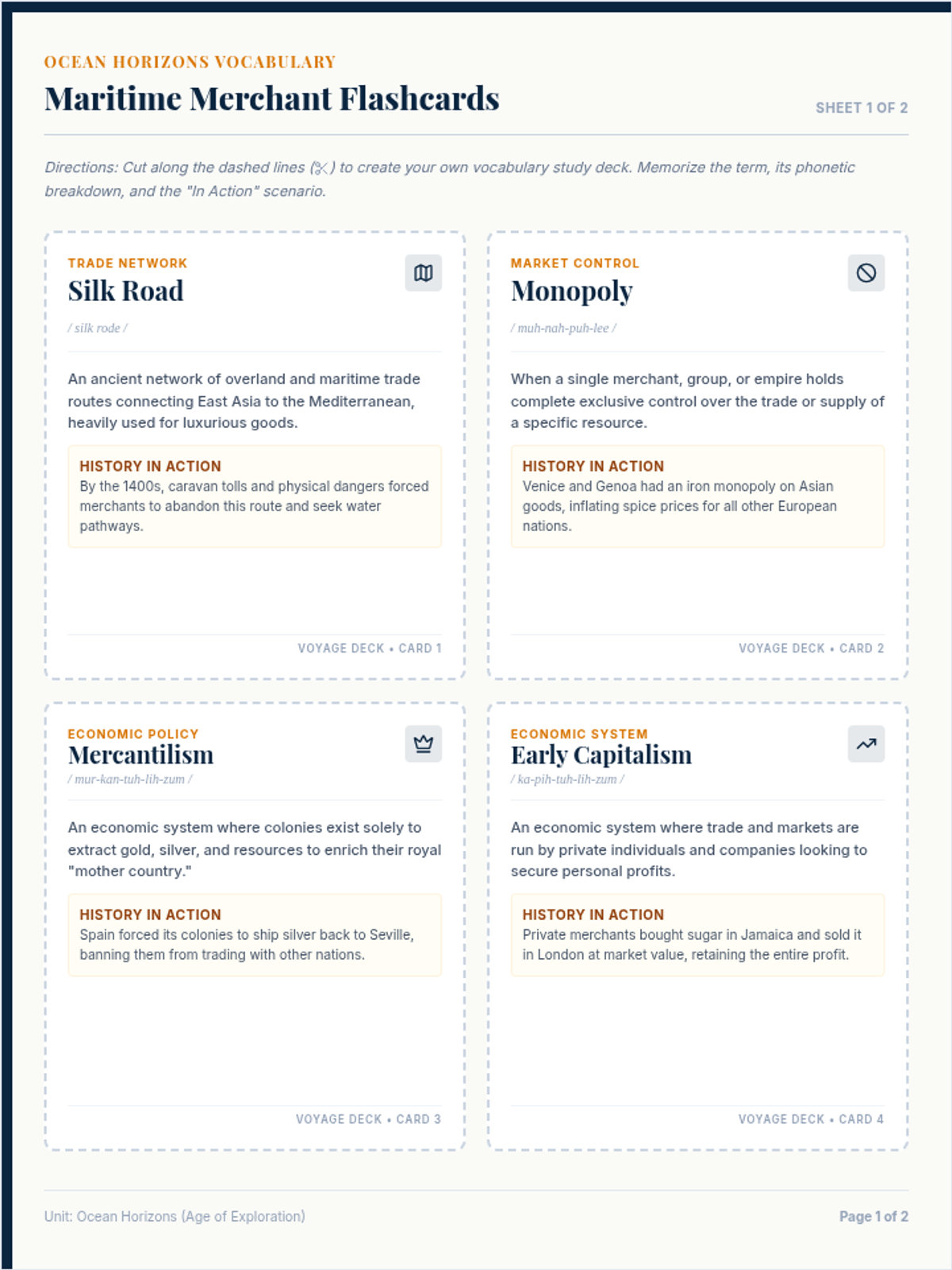
A comprehensive 5-day history unit exploring the Age of Exploration, cultural exchanges, technological innovations in navigation, the Transatlantic Slave Trade, and encounters with East Asian empires.
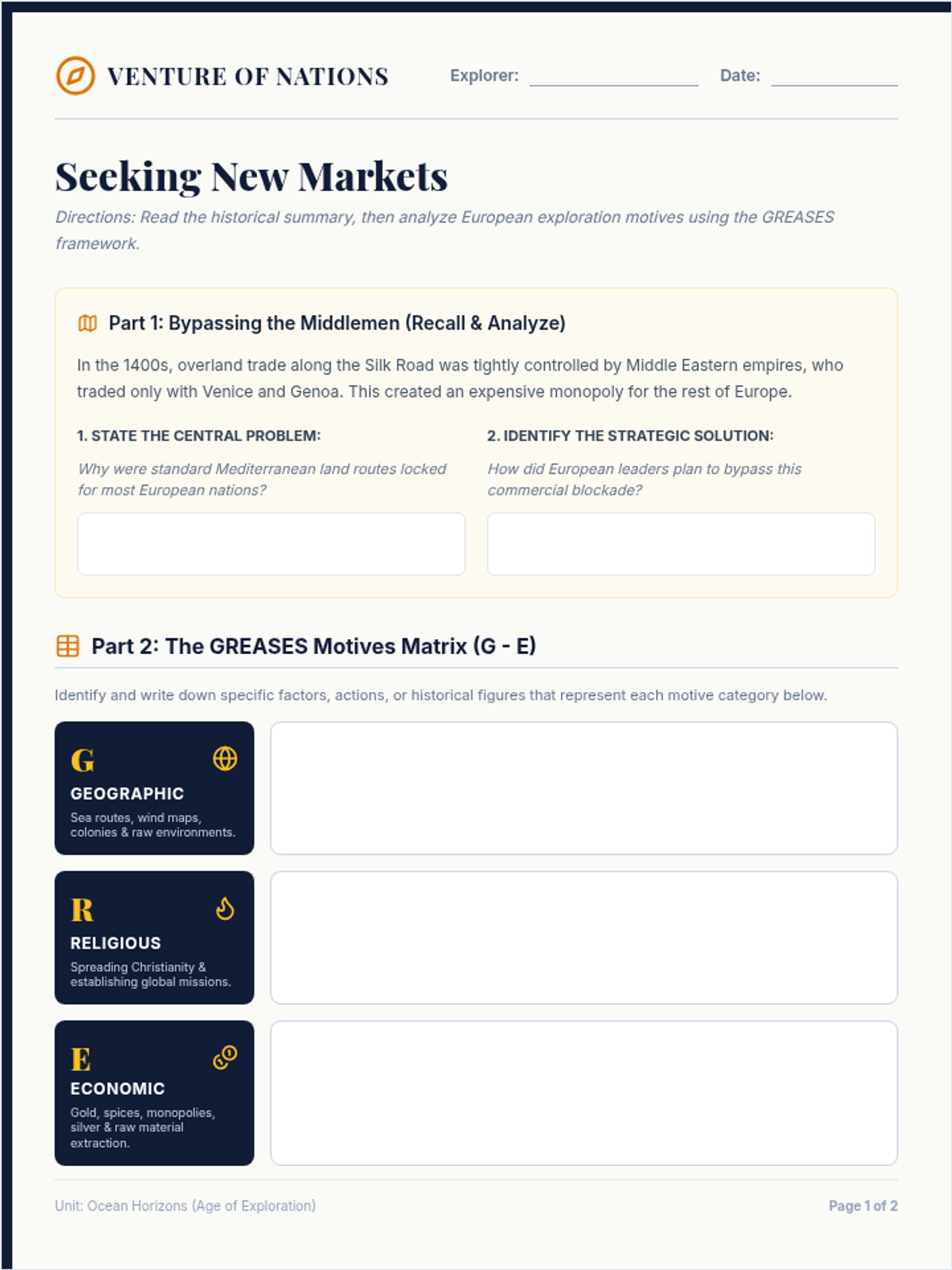
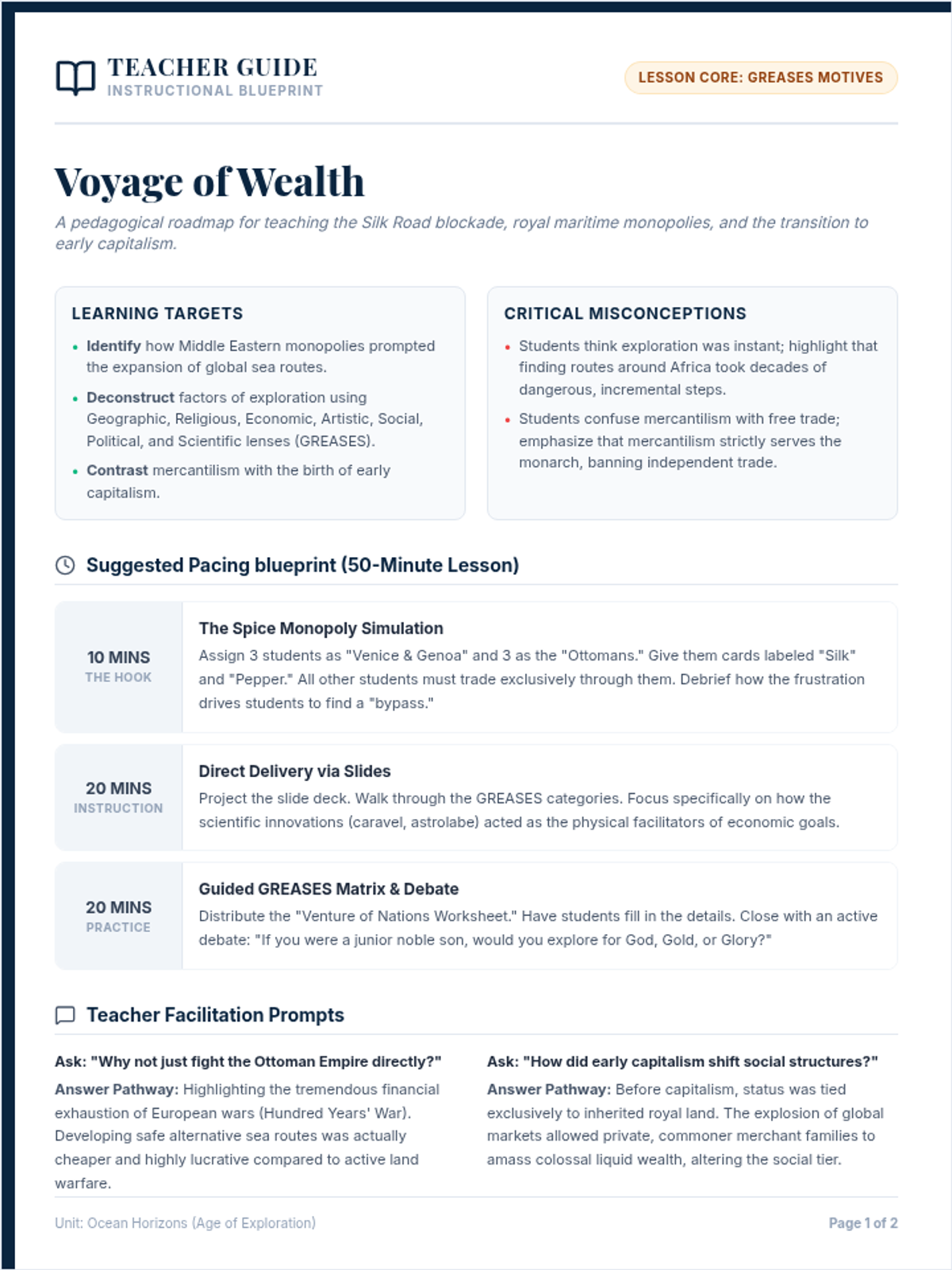
An in-depth exploration of the factors that drove European powers to seek new trade routes, introducing the GREASES framework for historical analysis of global expansion.