A reading comprehension lesson based on an article about Minnesota teens who developed 'TogetherIV', an app designed to support patients receiving medical infusions.
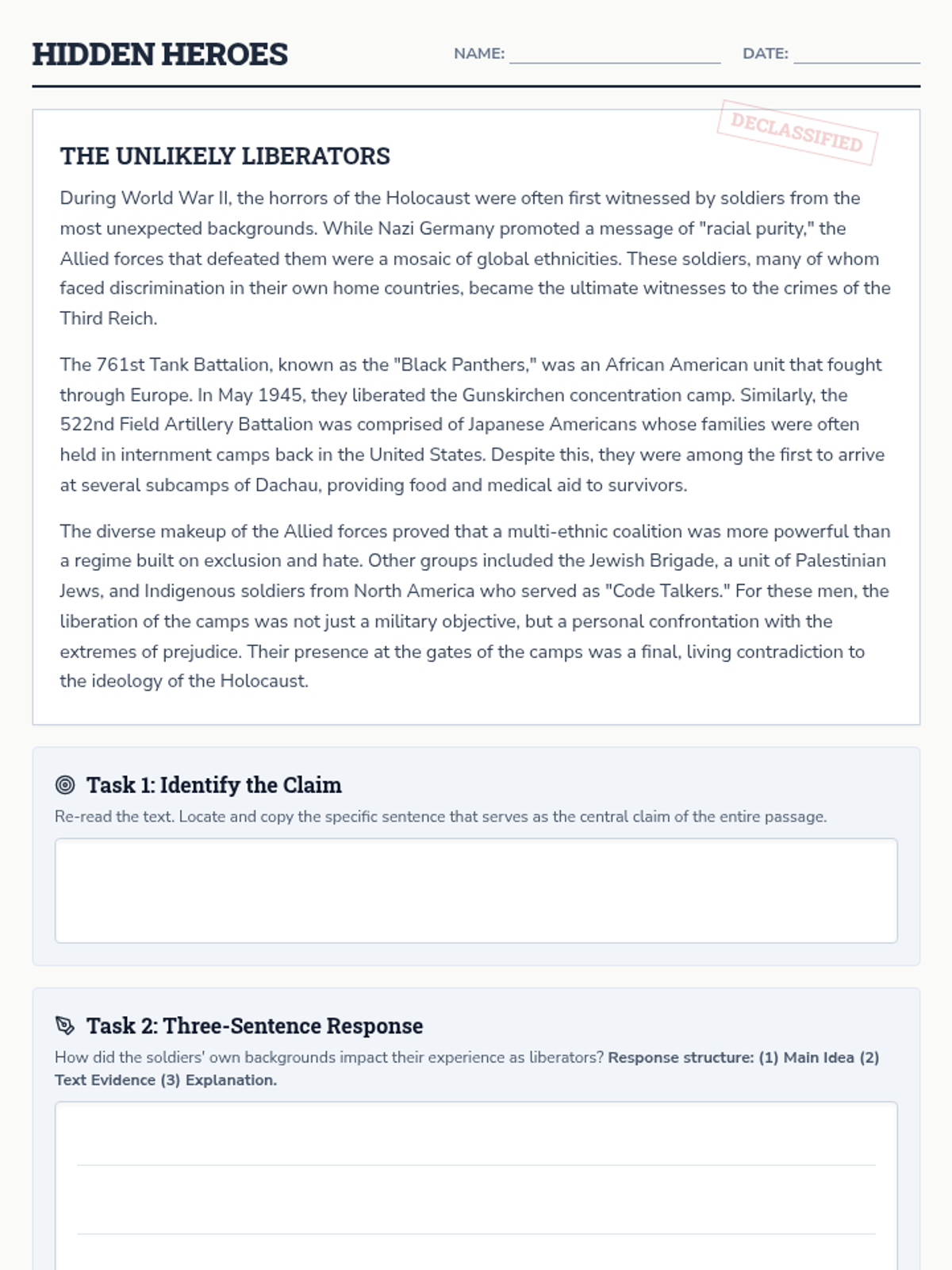
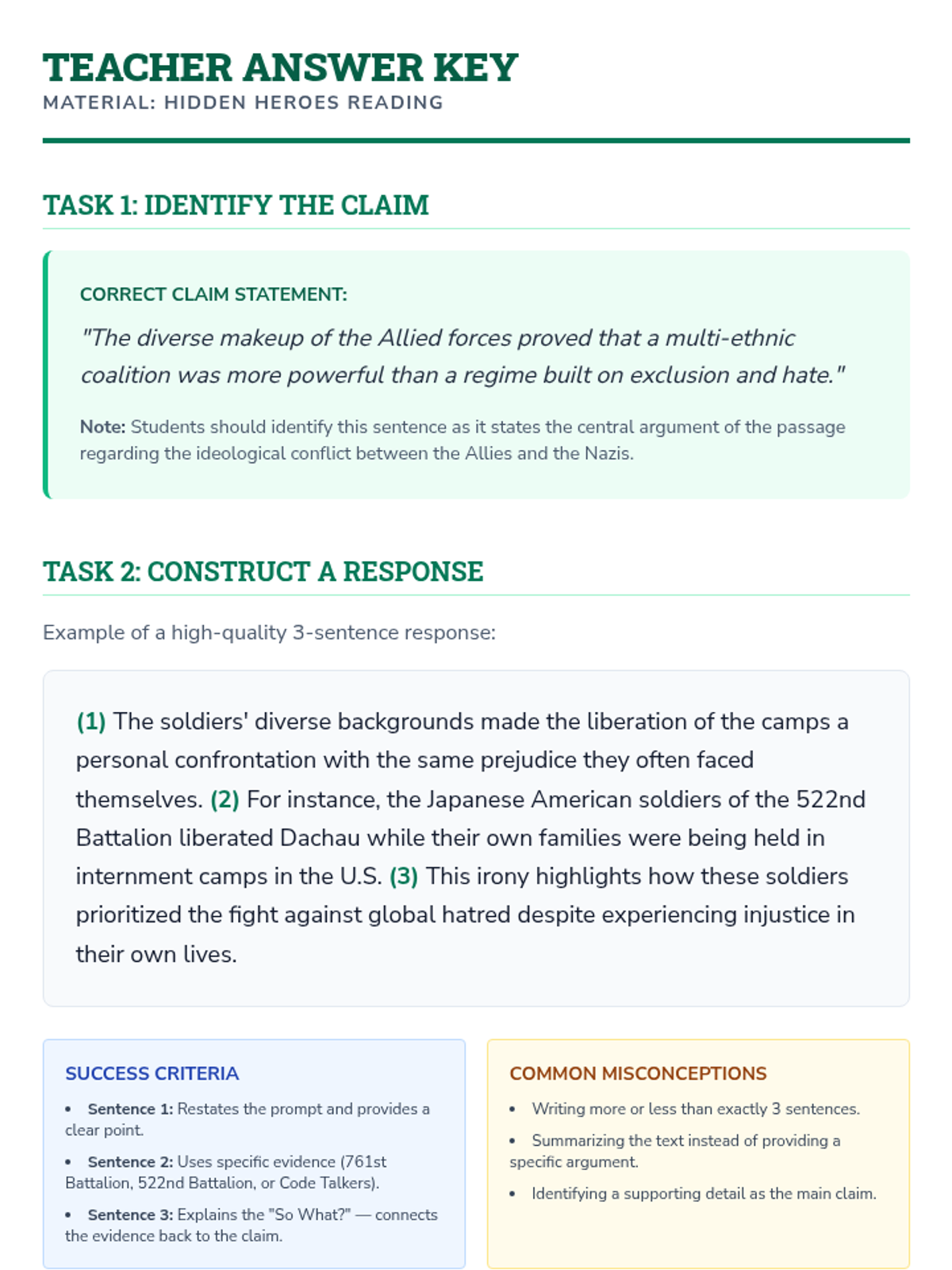
A lesson exploring the diverse backgrounds of Allied soldiers who fought in WWII and witnessed the Holocaust, focusing on claim identification and evidence-based writing.
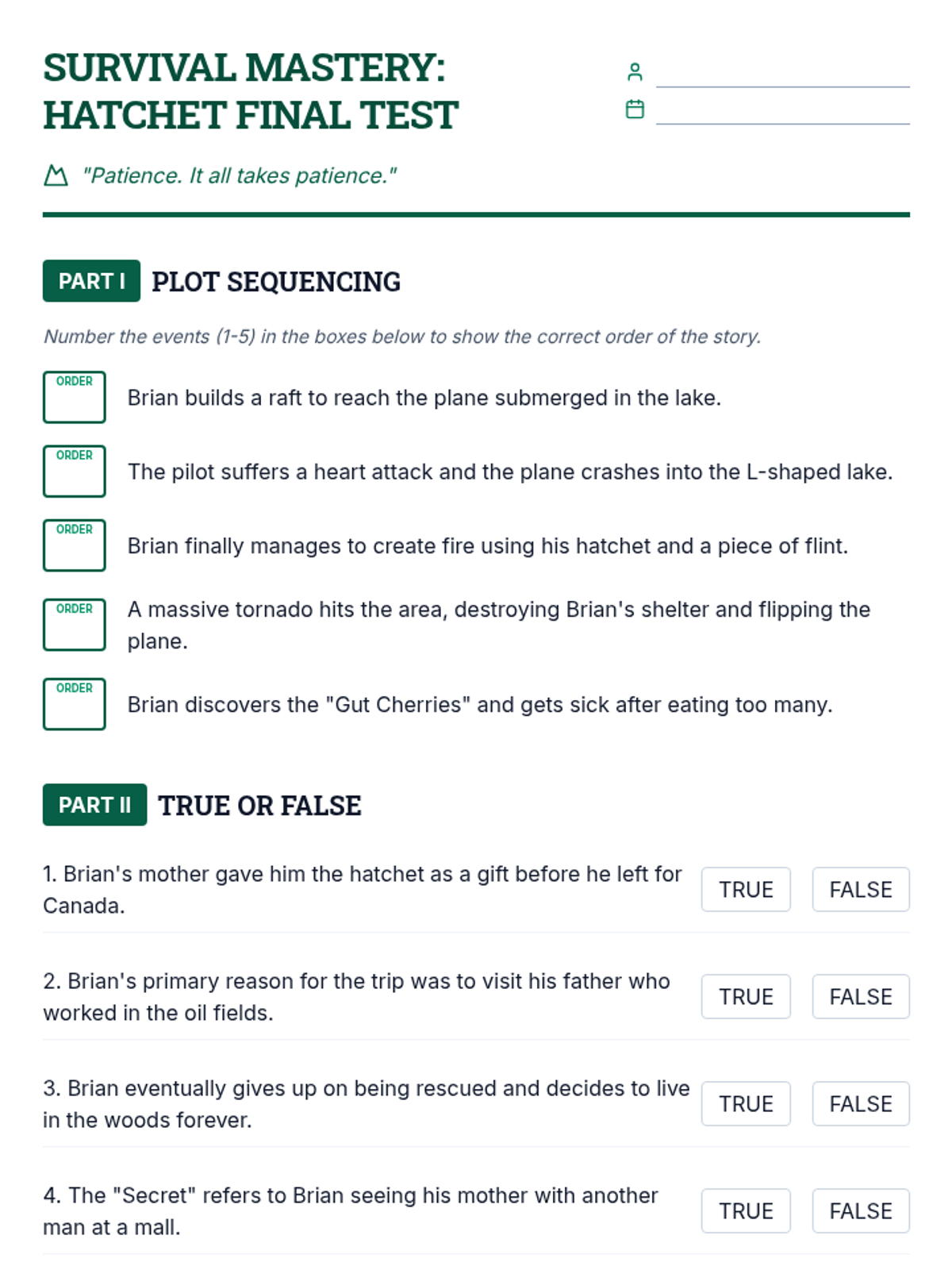
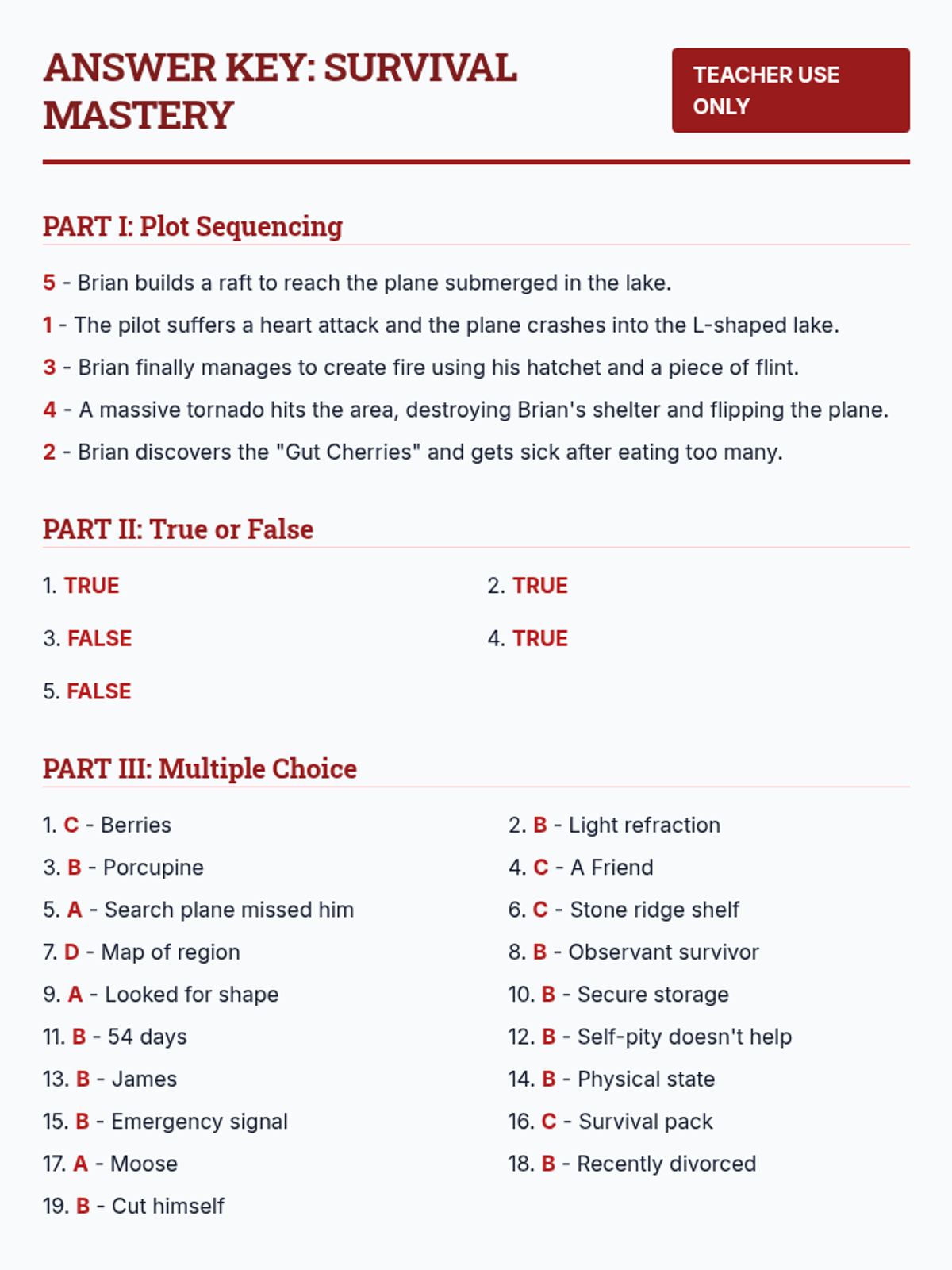
A comprehensive final assessment and review for Gary Paulsen's Hatchet, focusing on Brian's survival journey, character growth, and the novel's core themes.
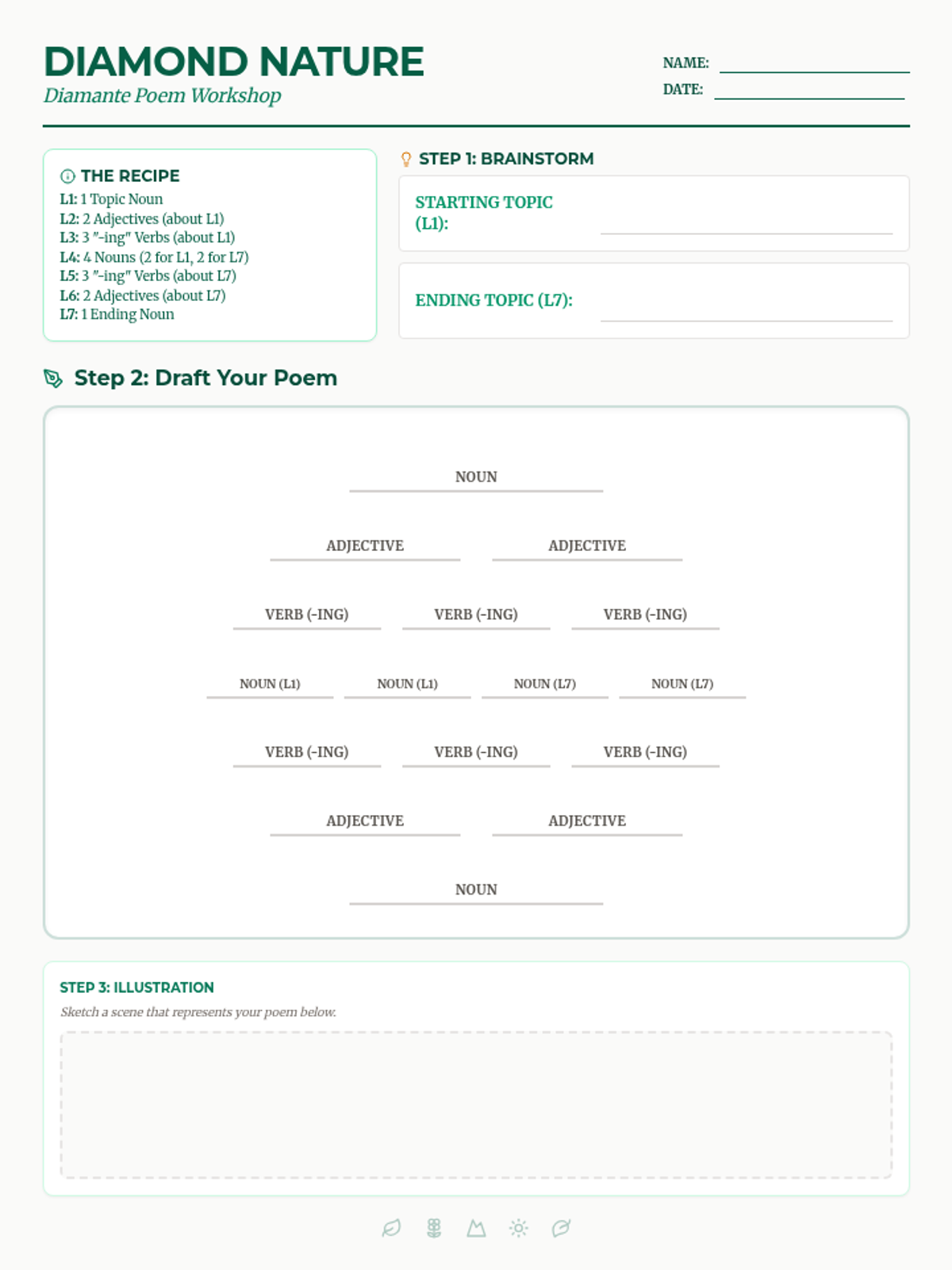
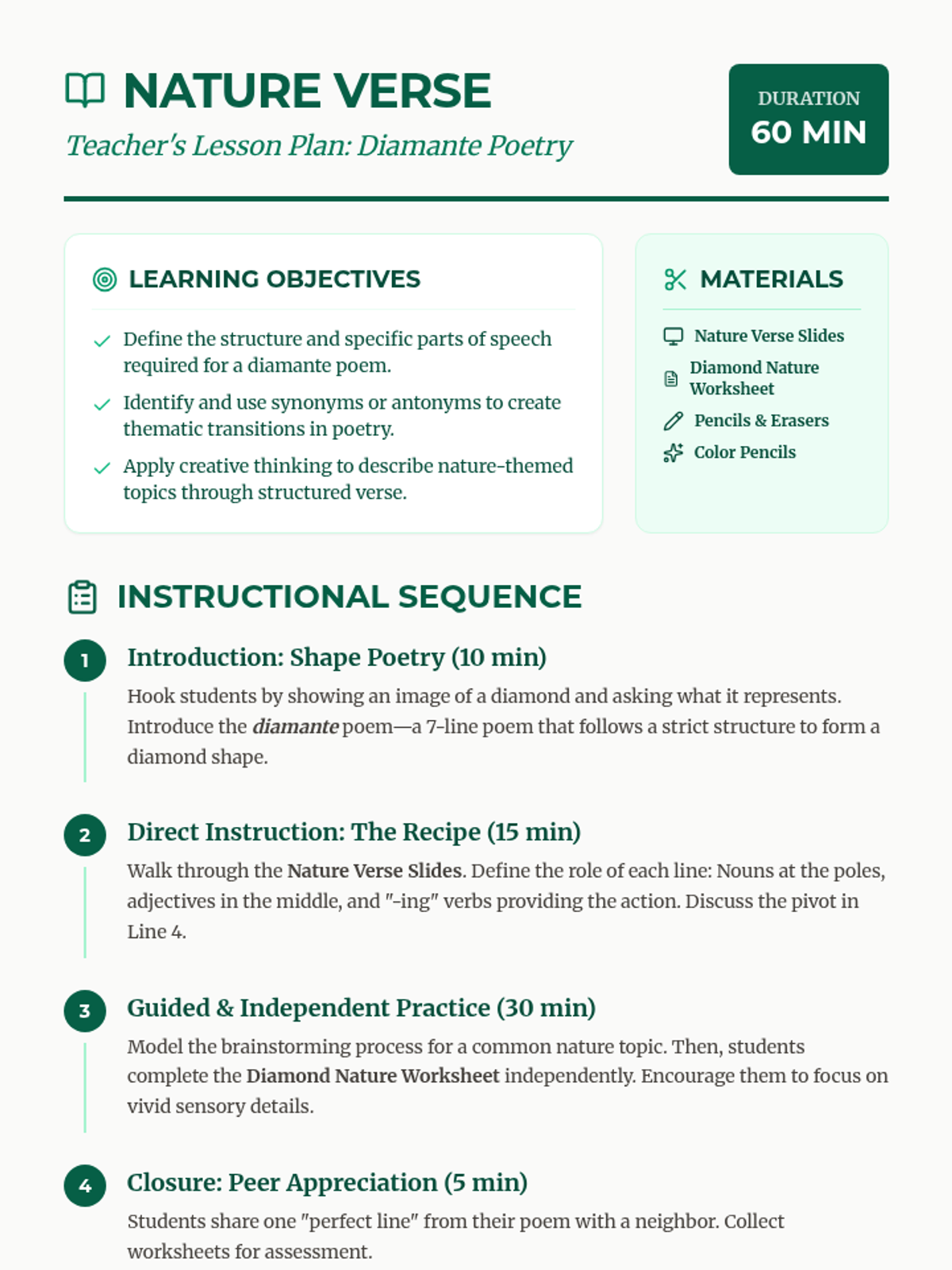
A lesson on writing diamante poems with a focus on nature, covering structure, parts of speech, and creative expression.
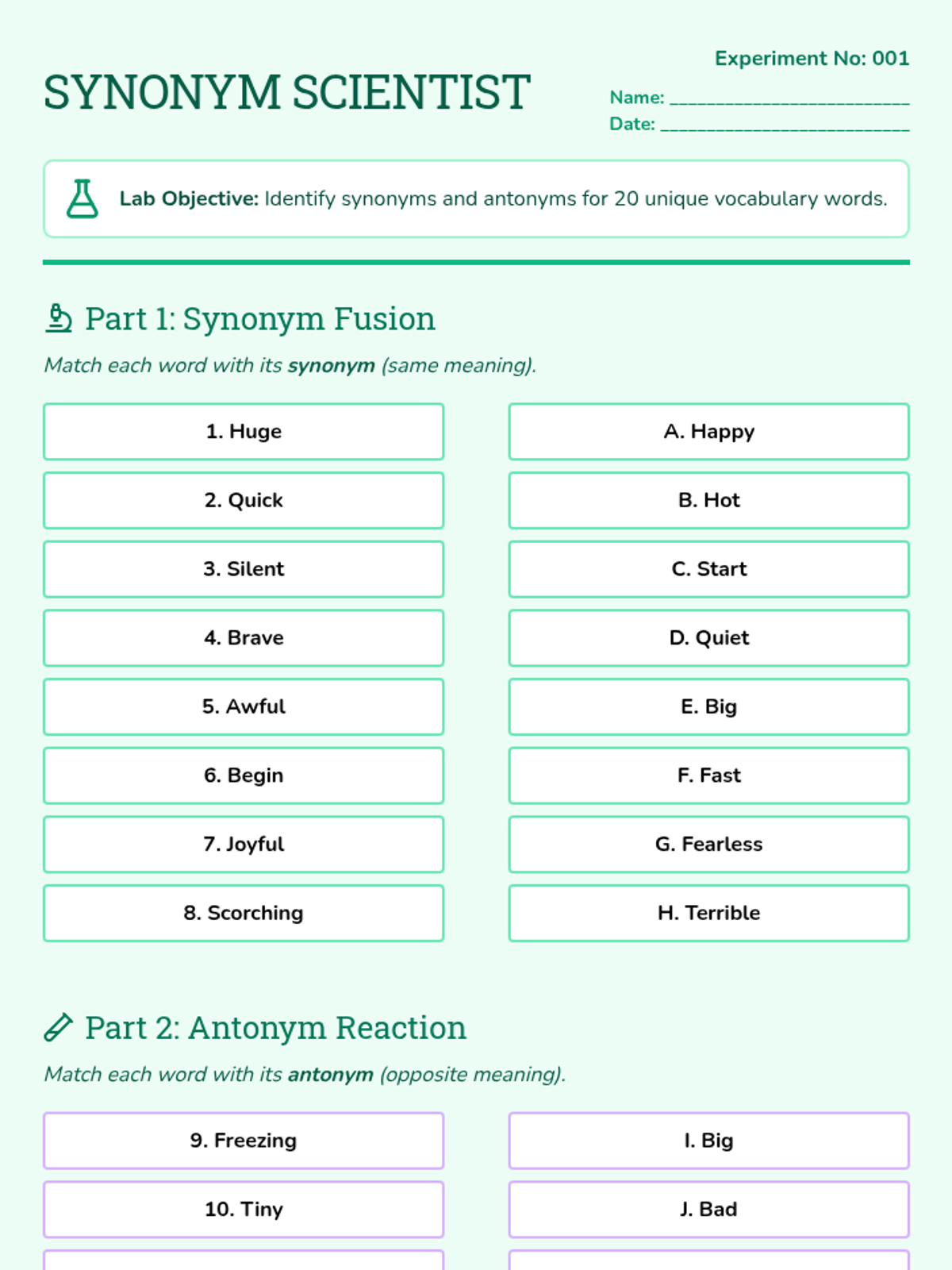
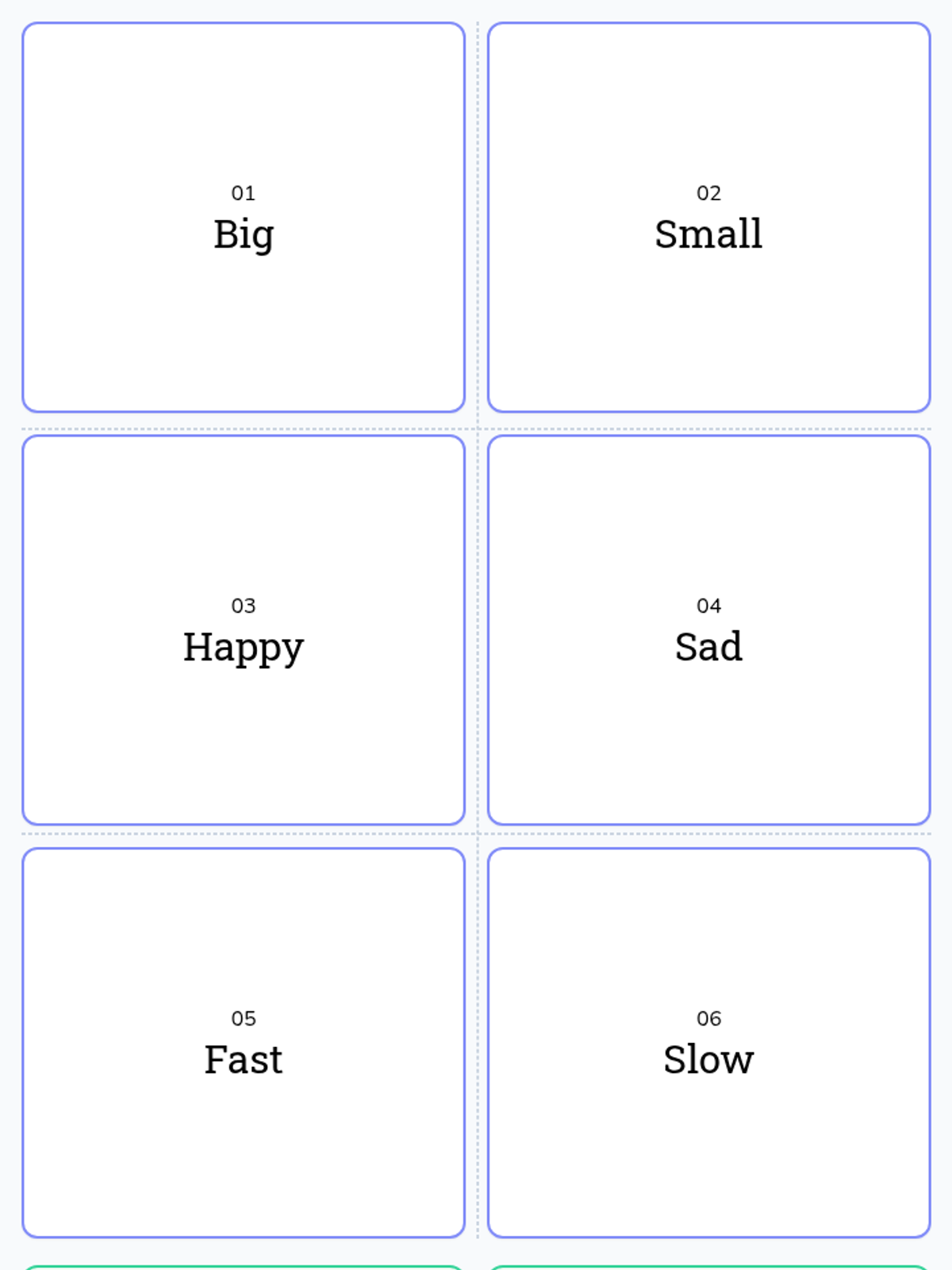
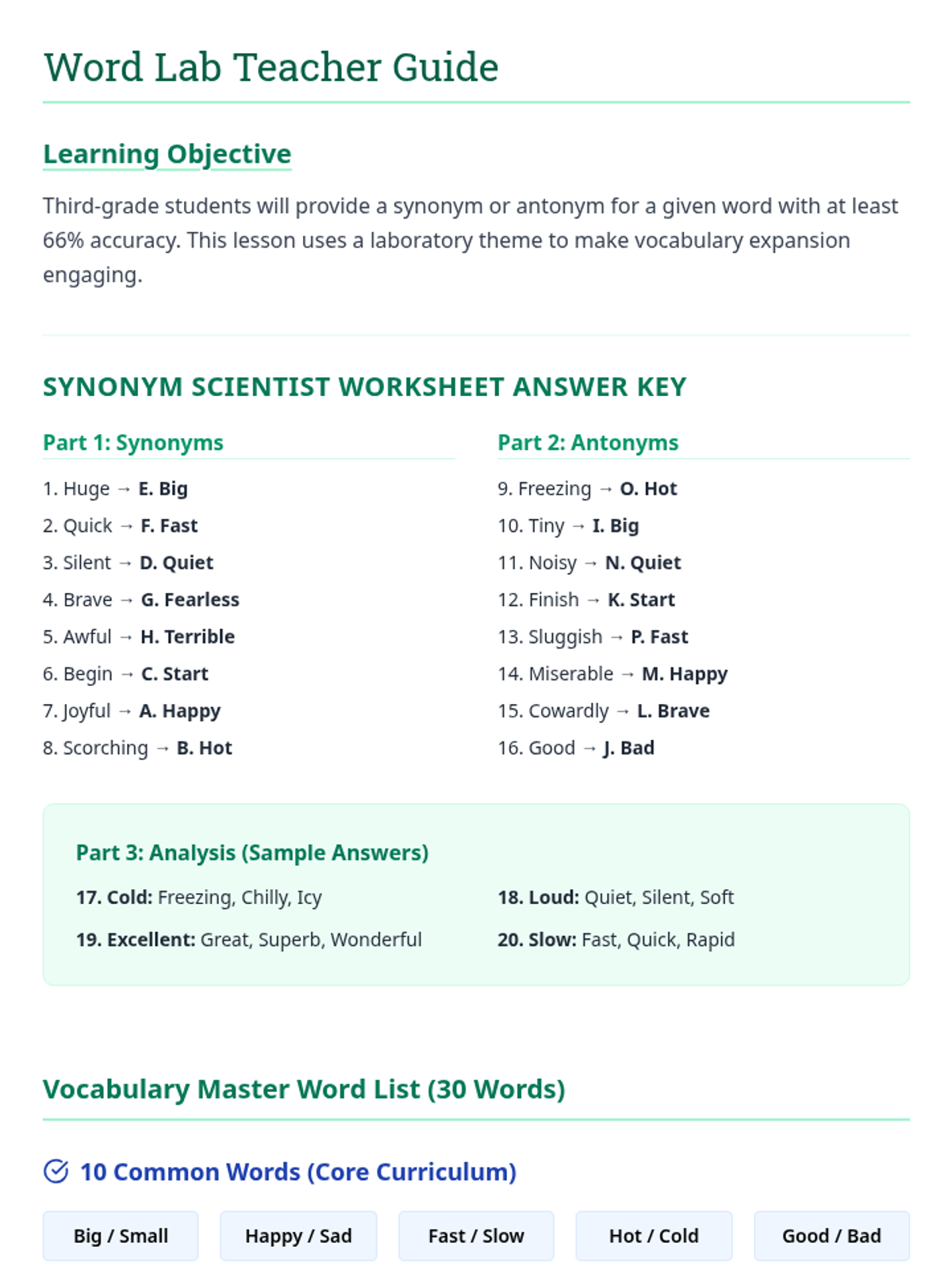
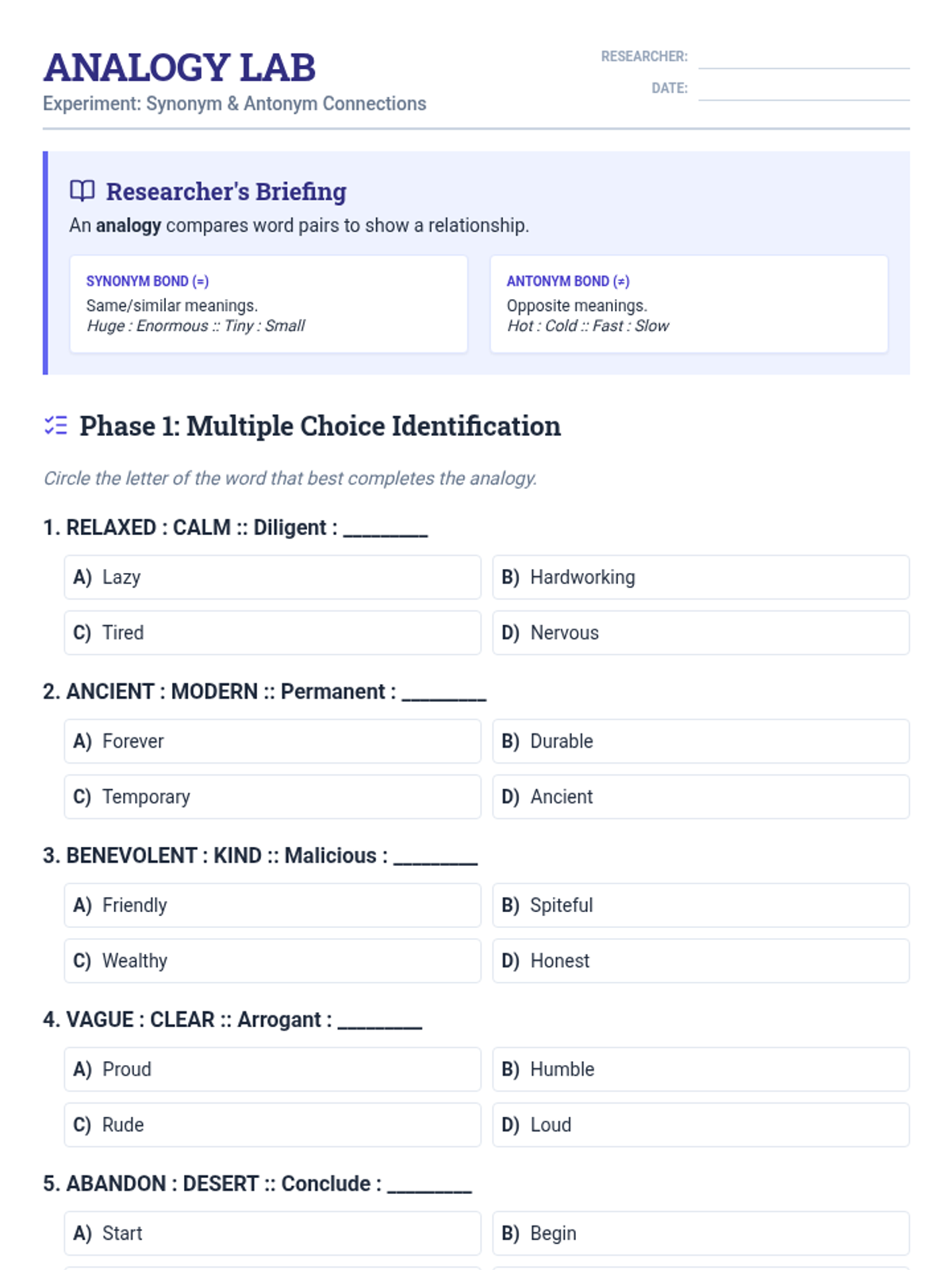
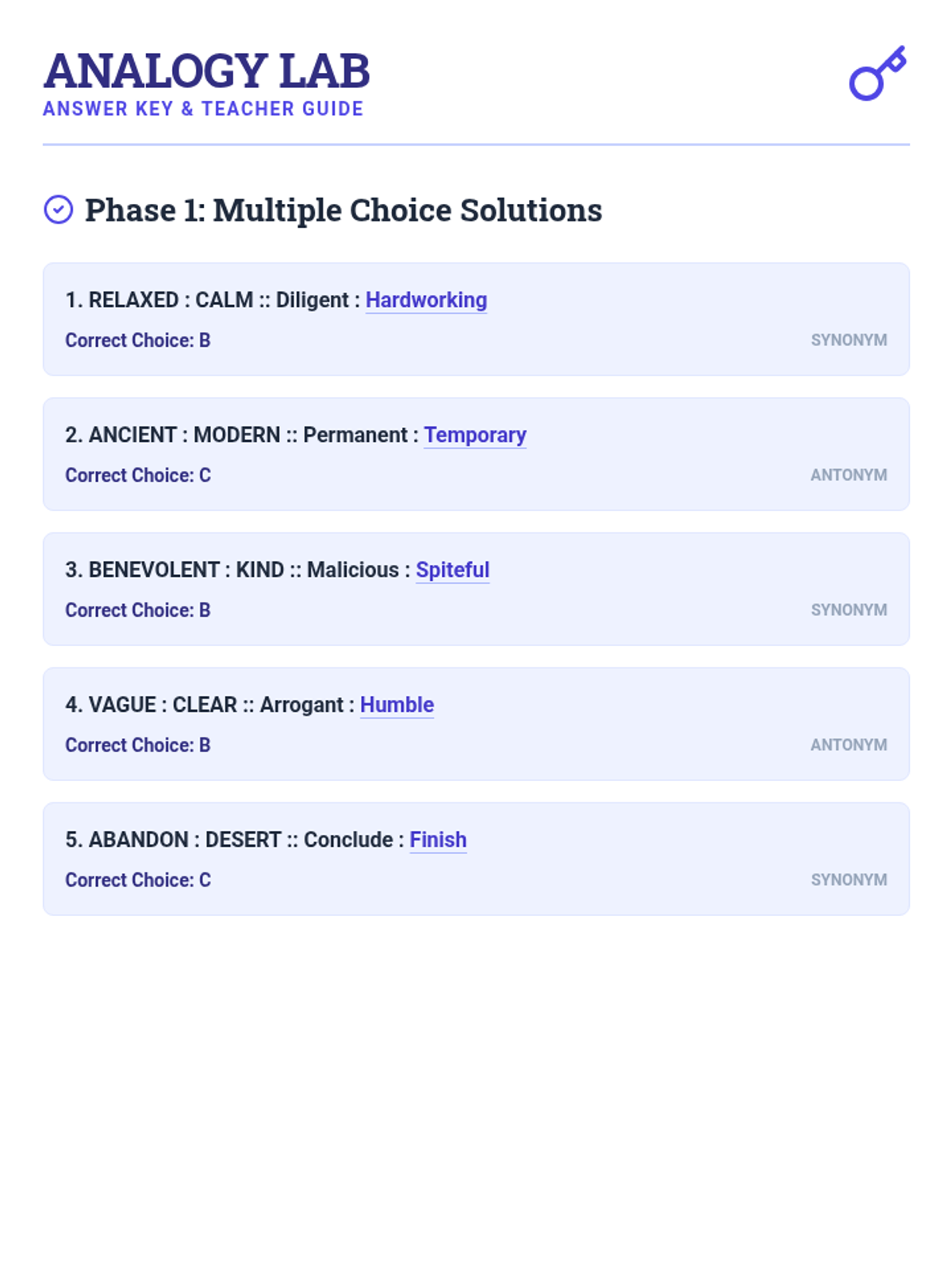
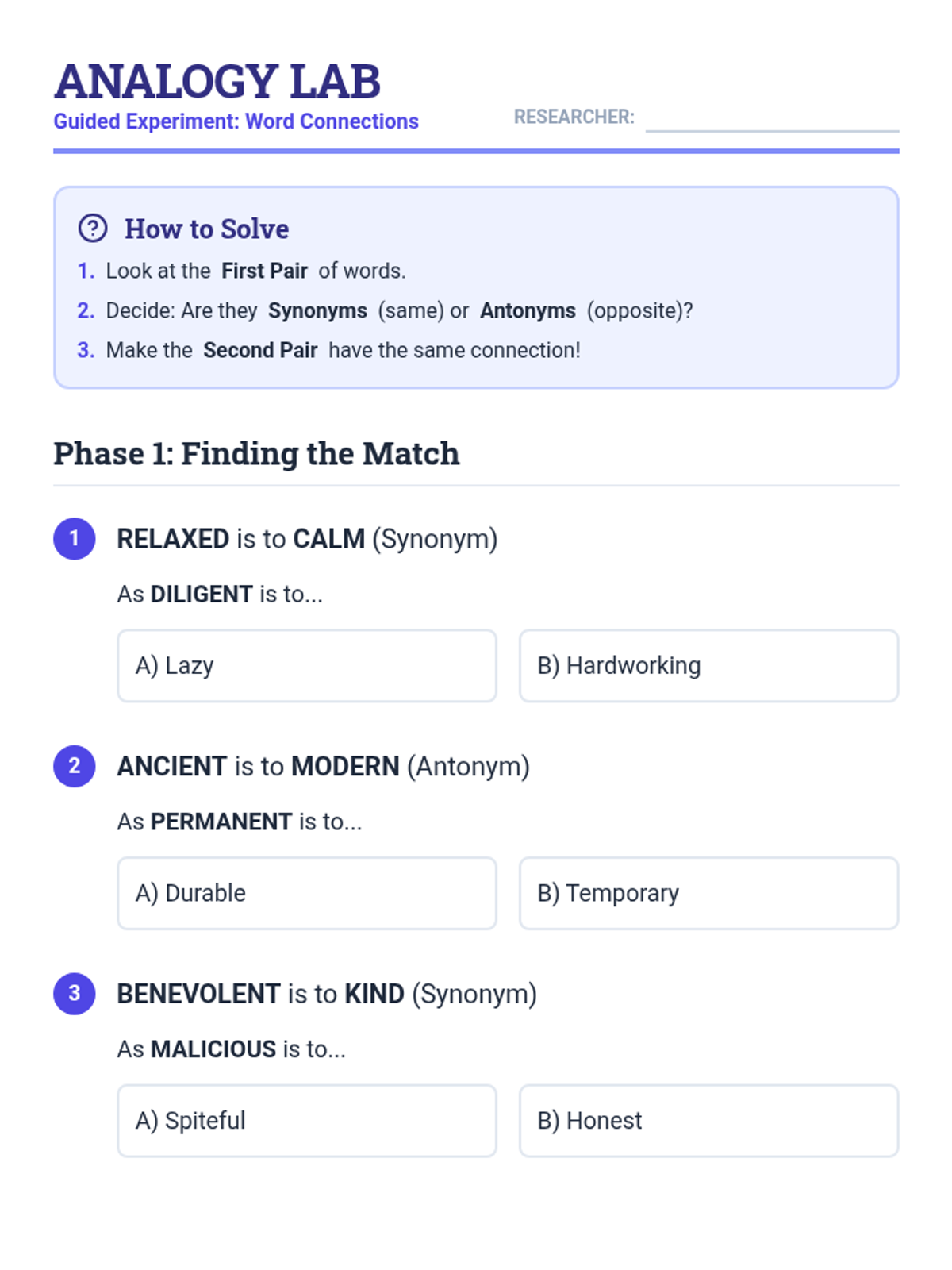
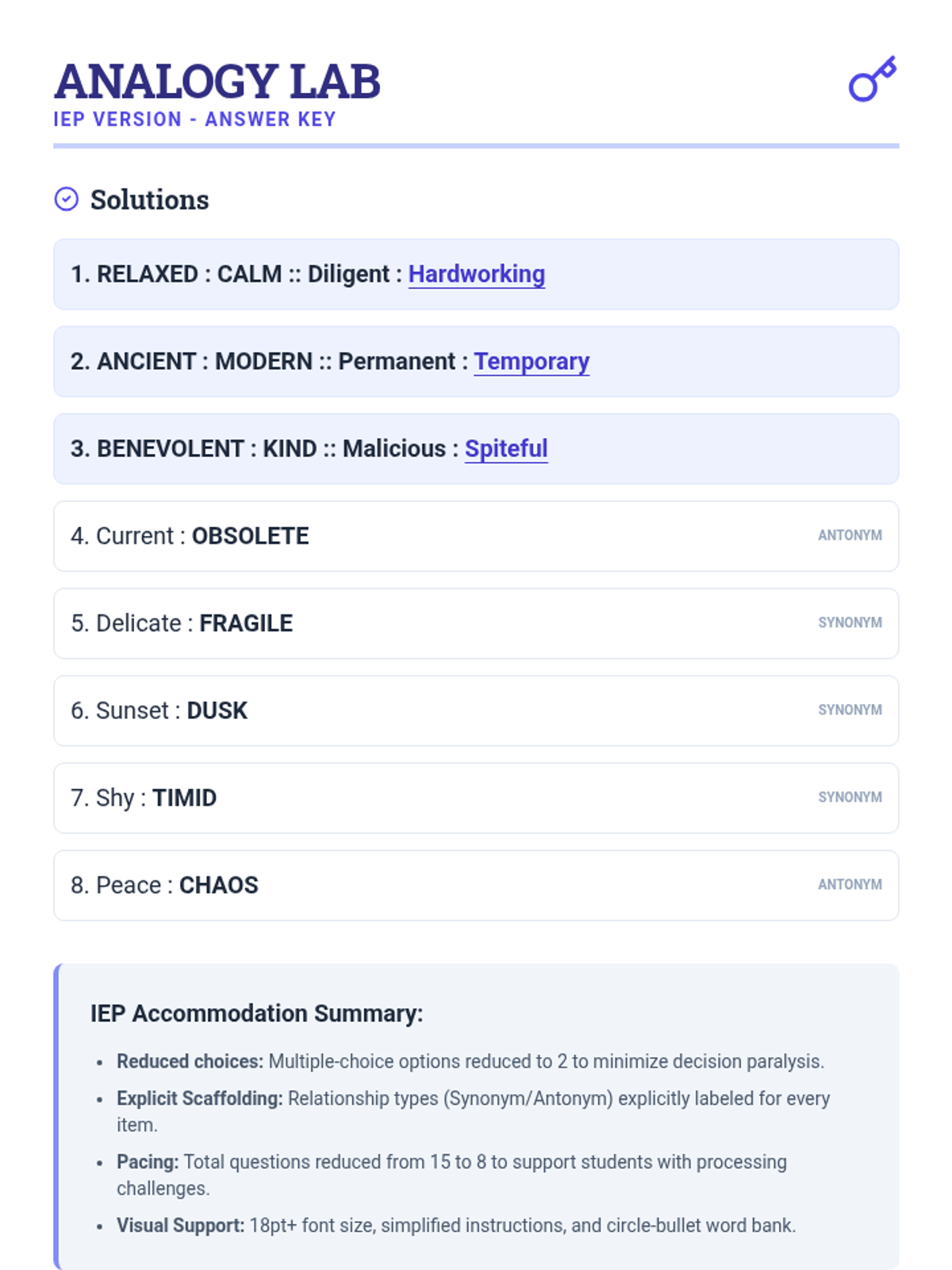
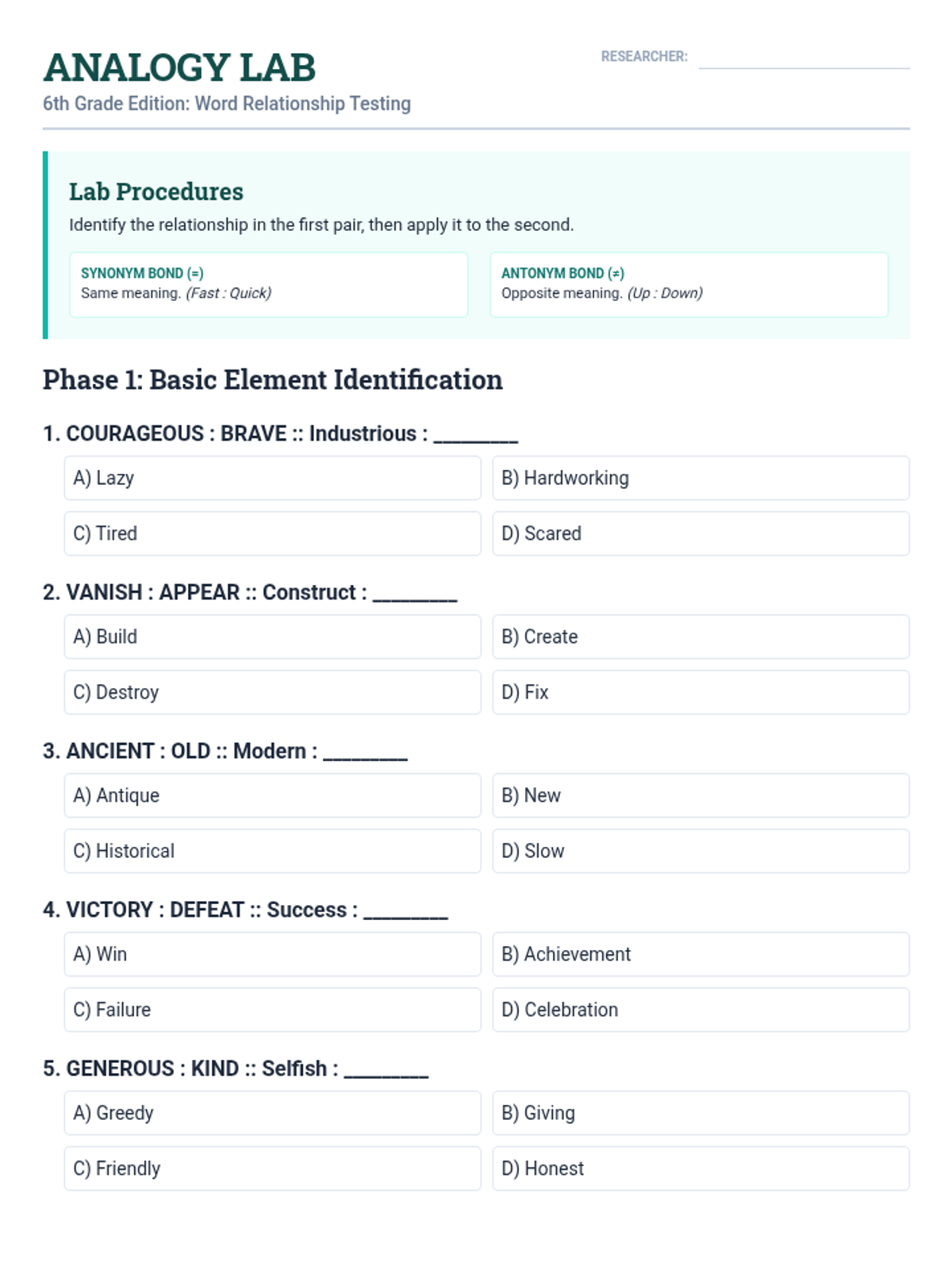
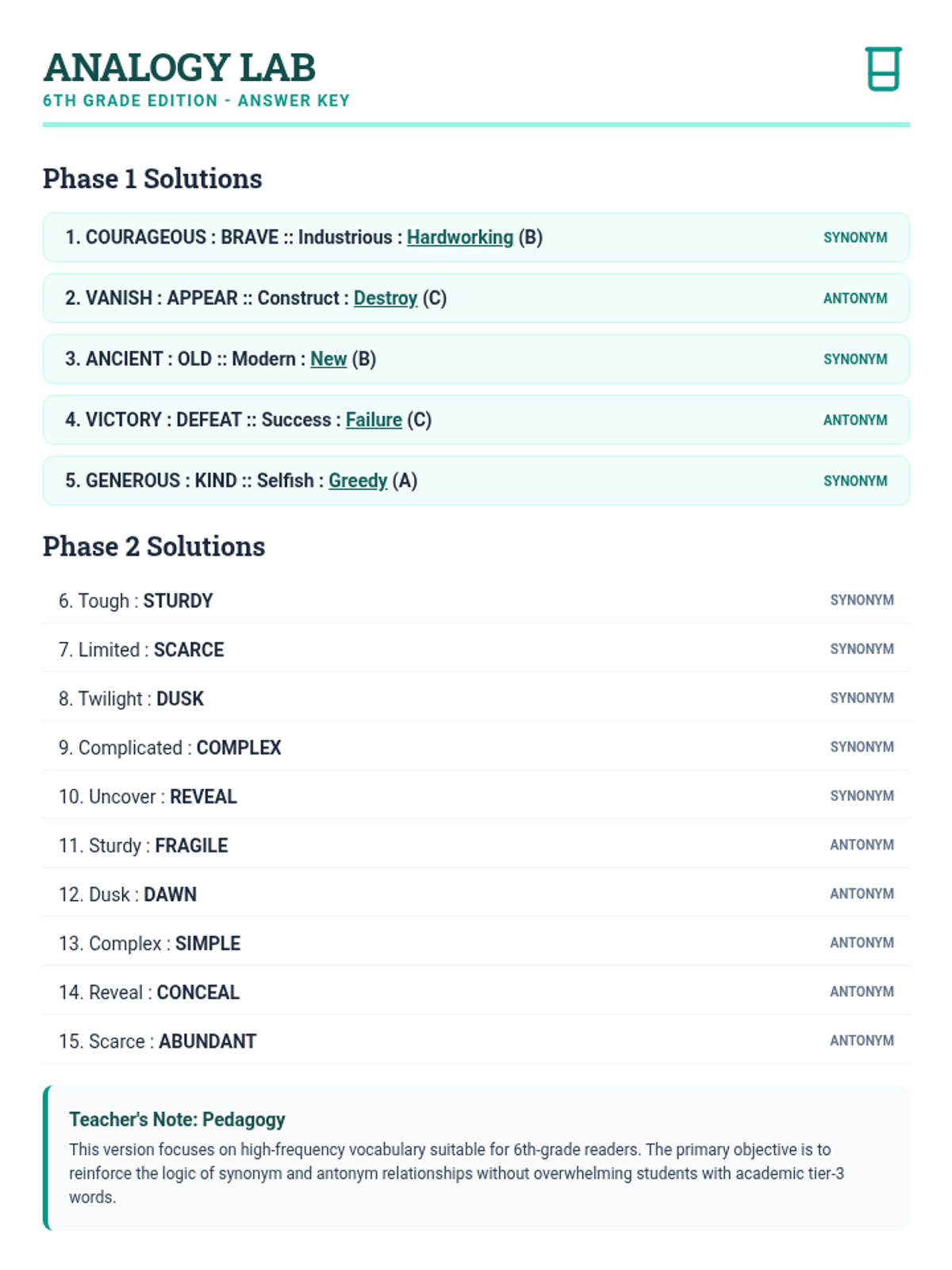
A chemistry-themed lesson where students experiment with synonyms and antonyms to expand their vocabulary. Students will identify and match related and opposite words through a laboratory lens.
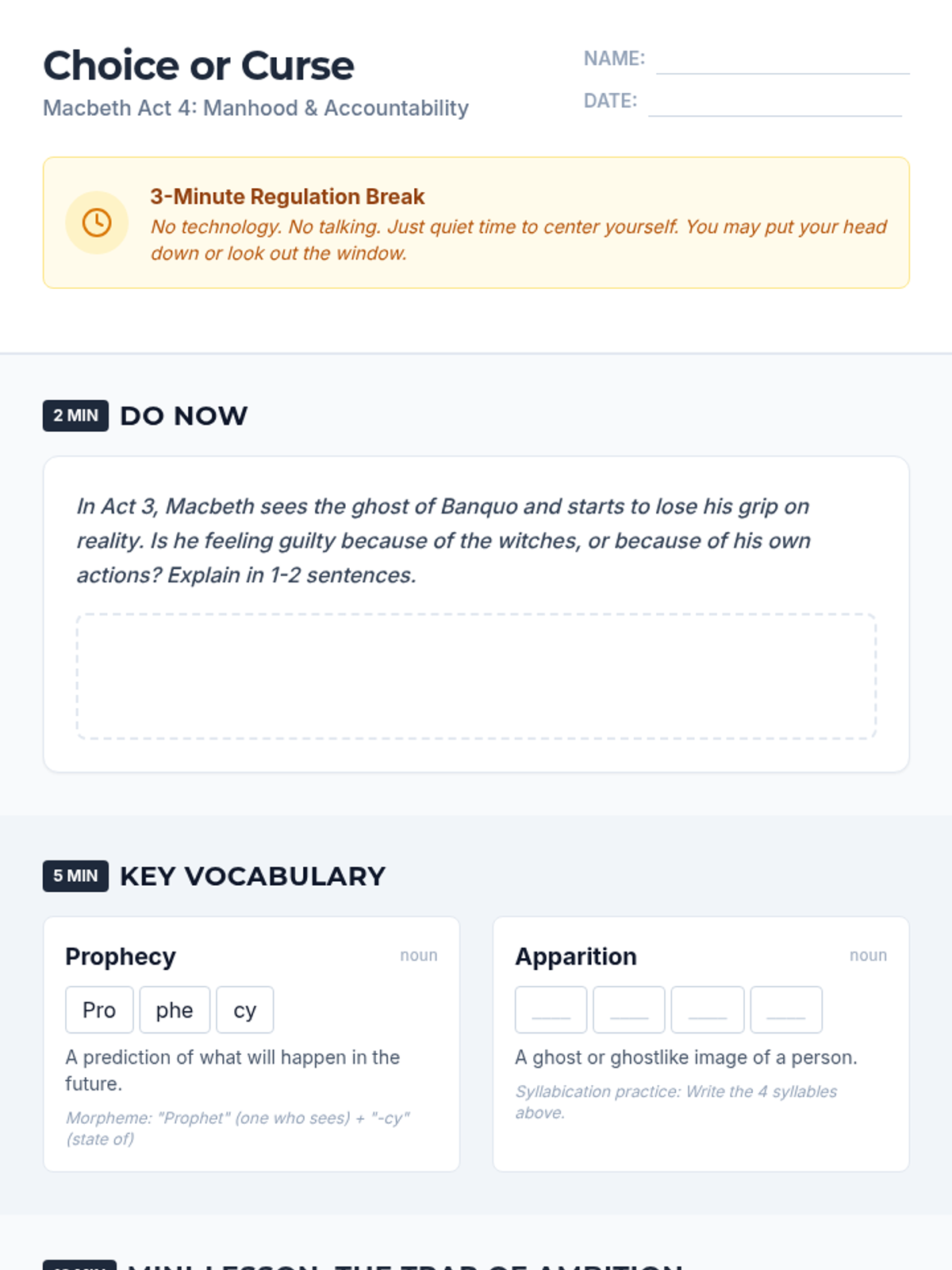
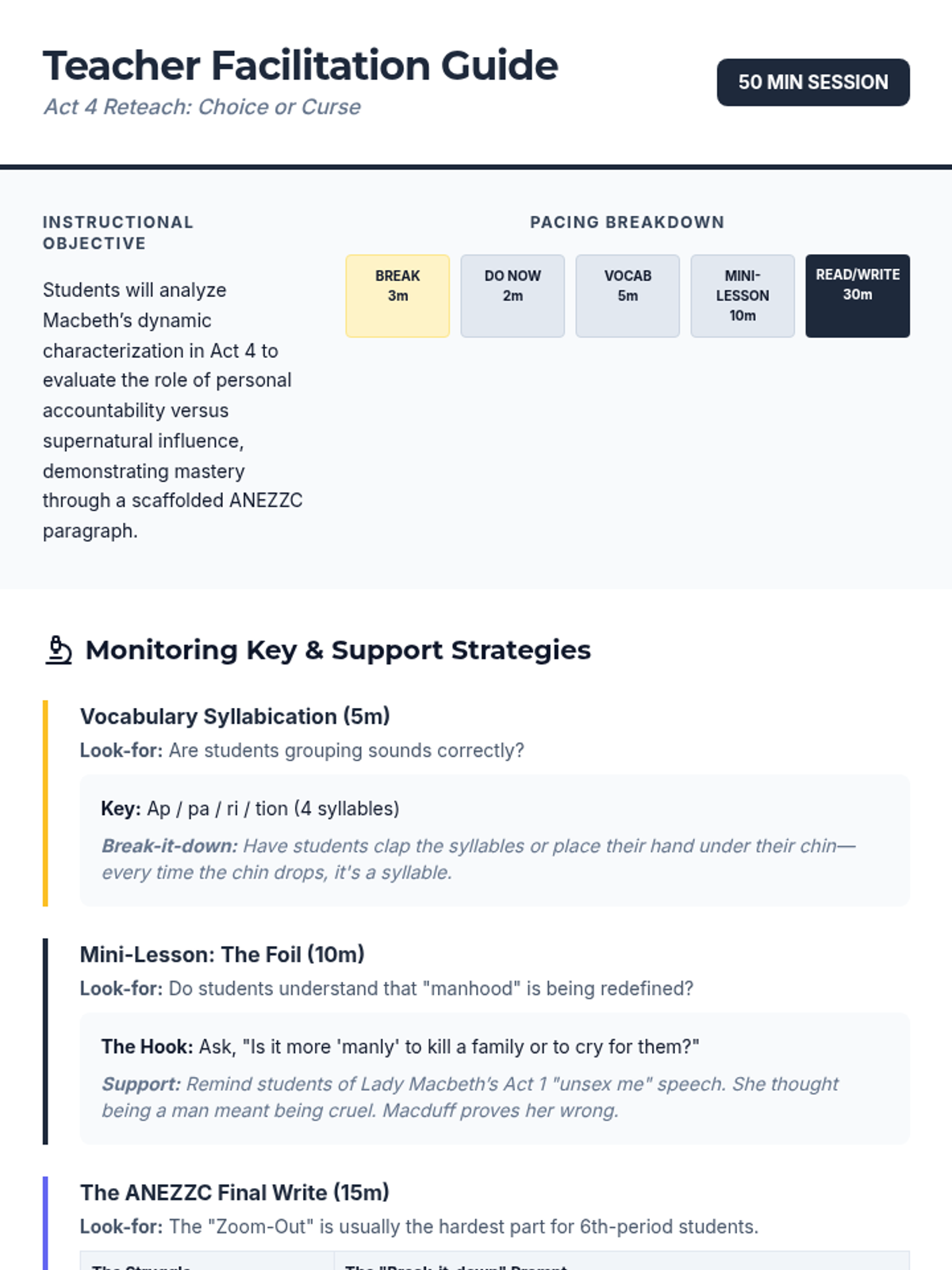
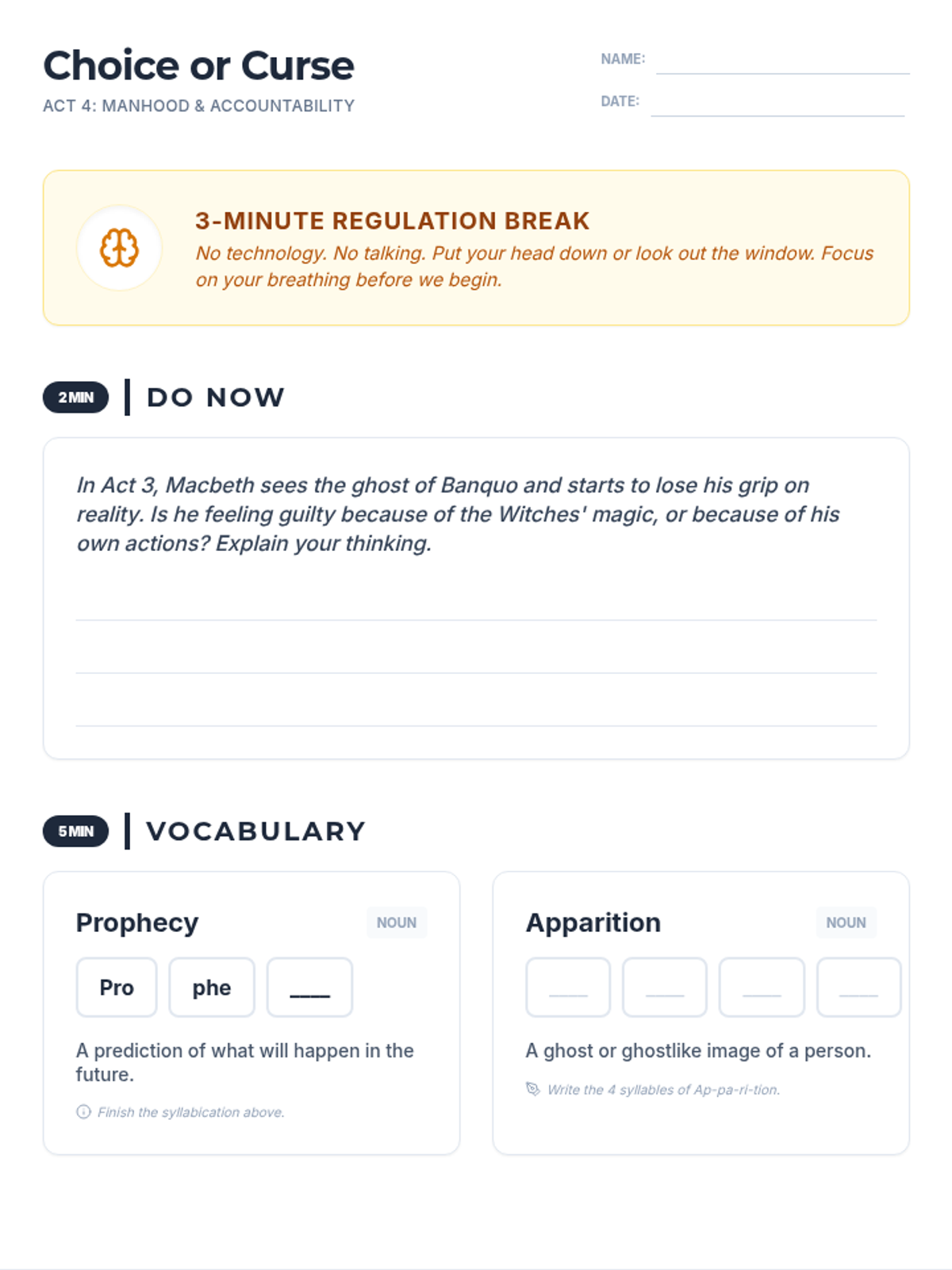
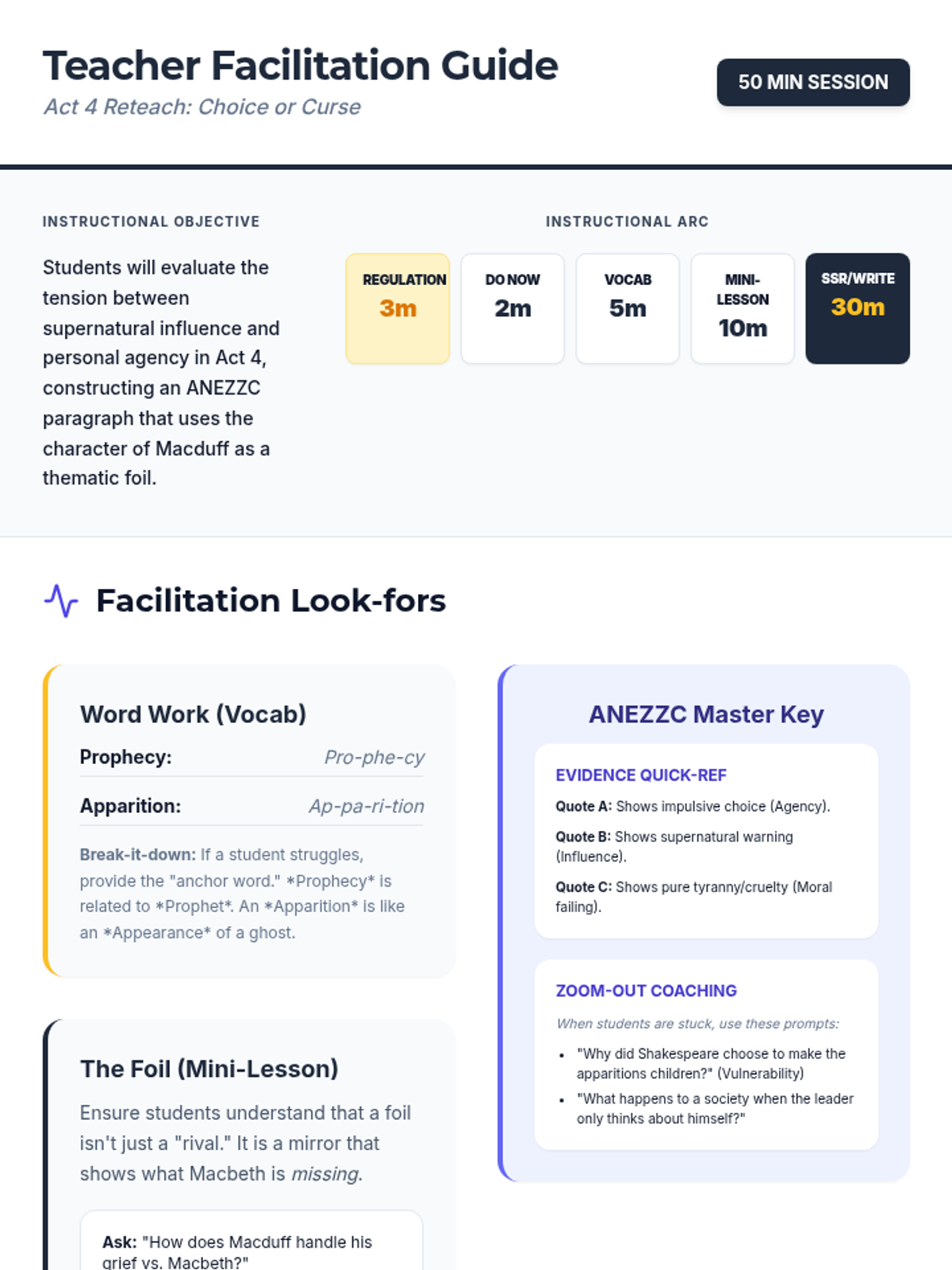
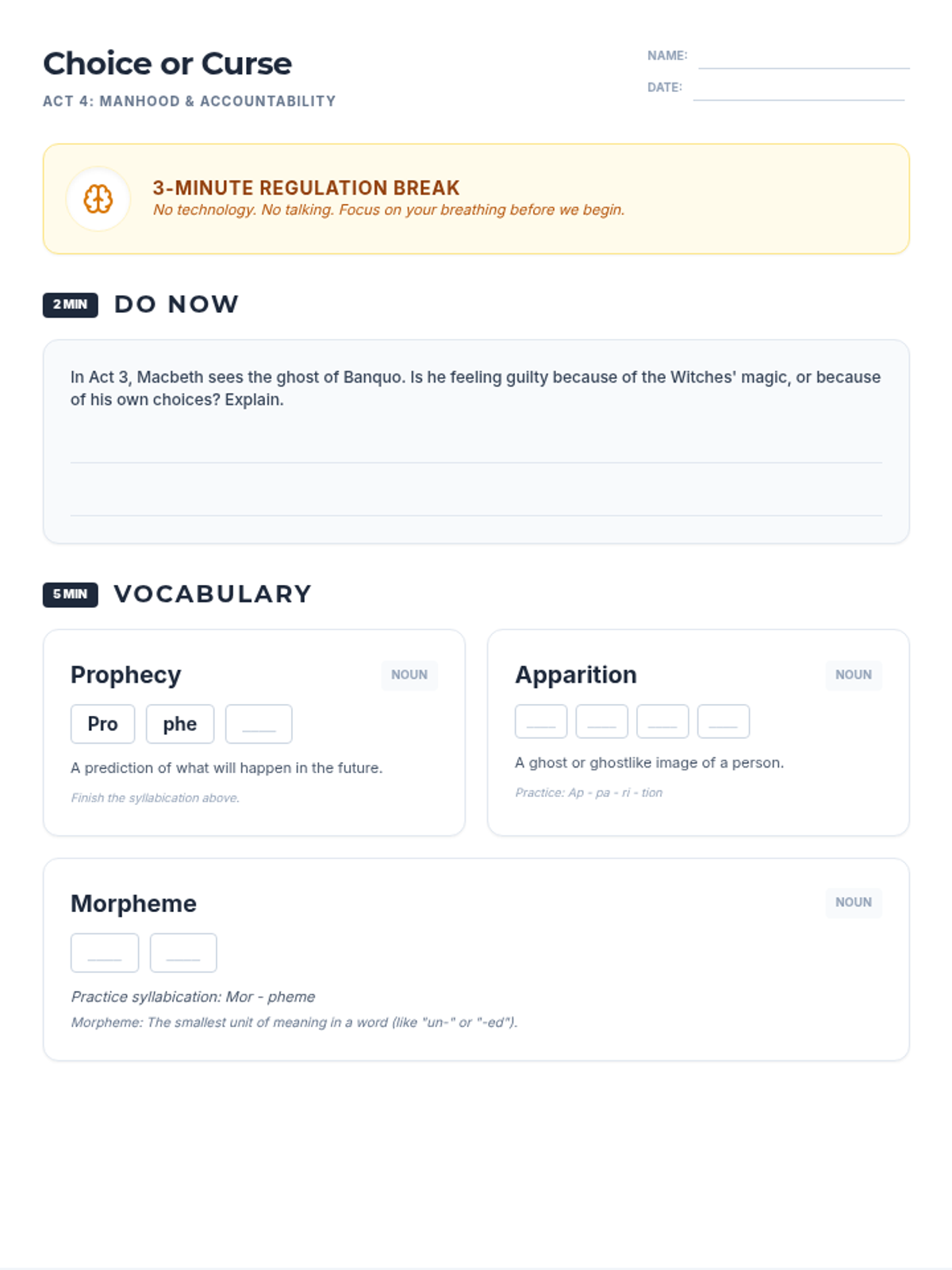
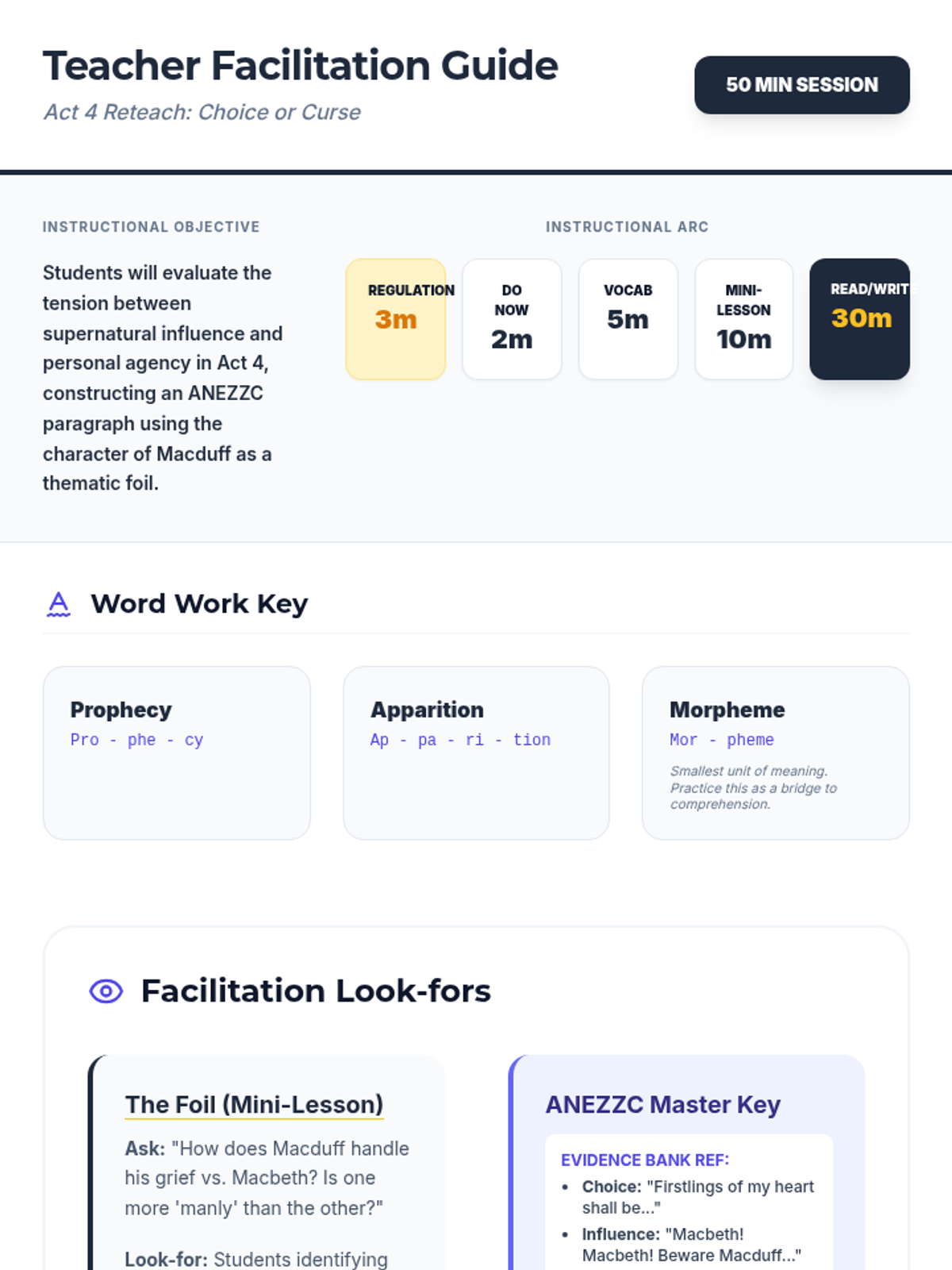
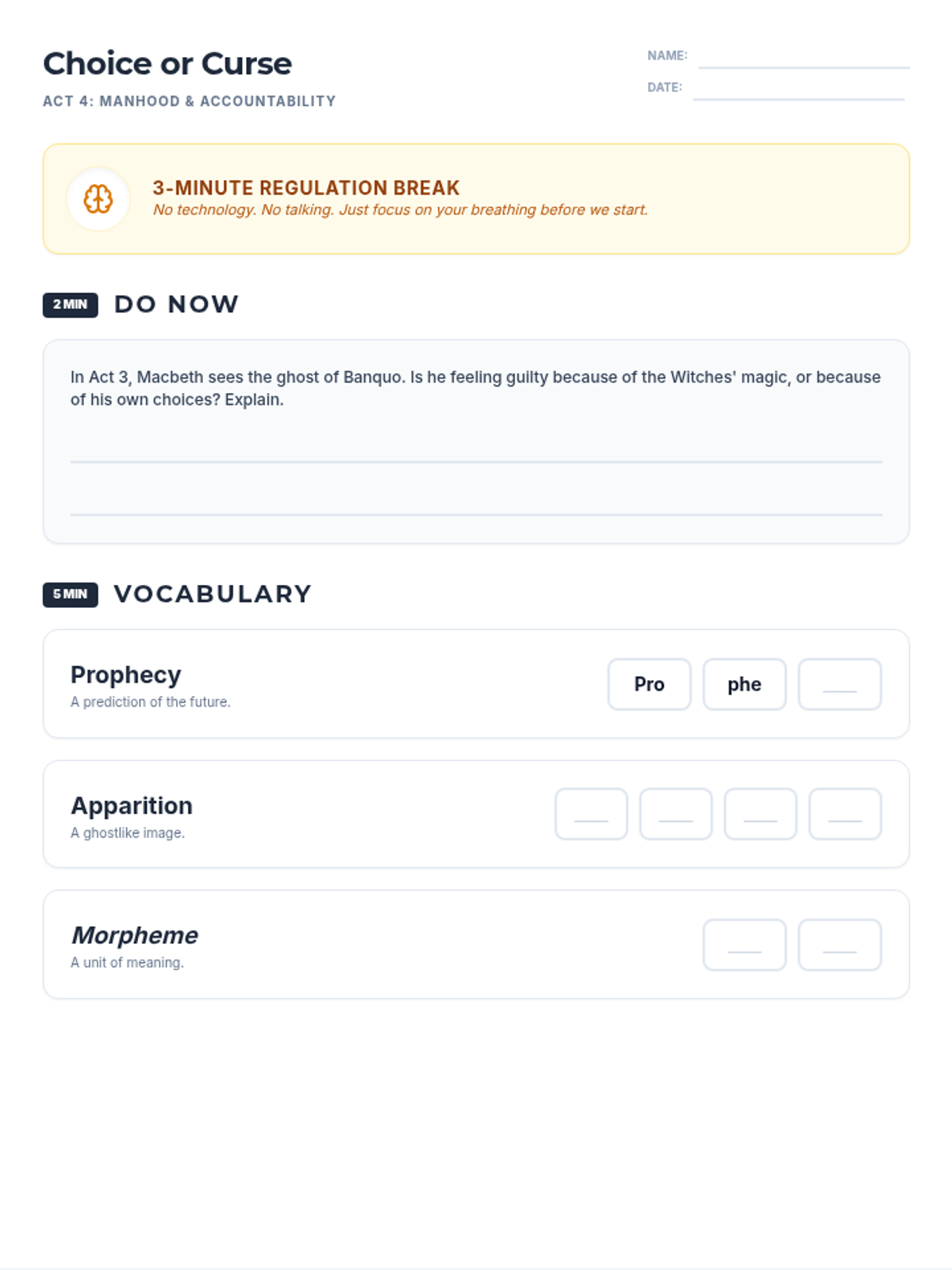
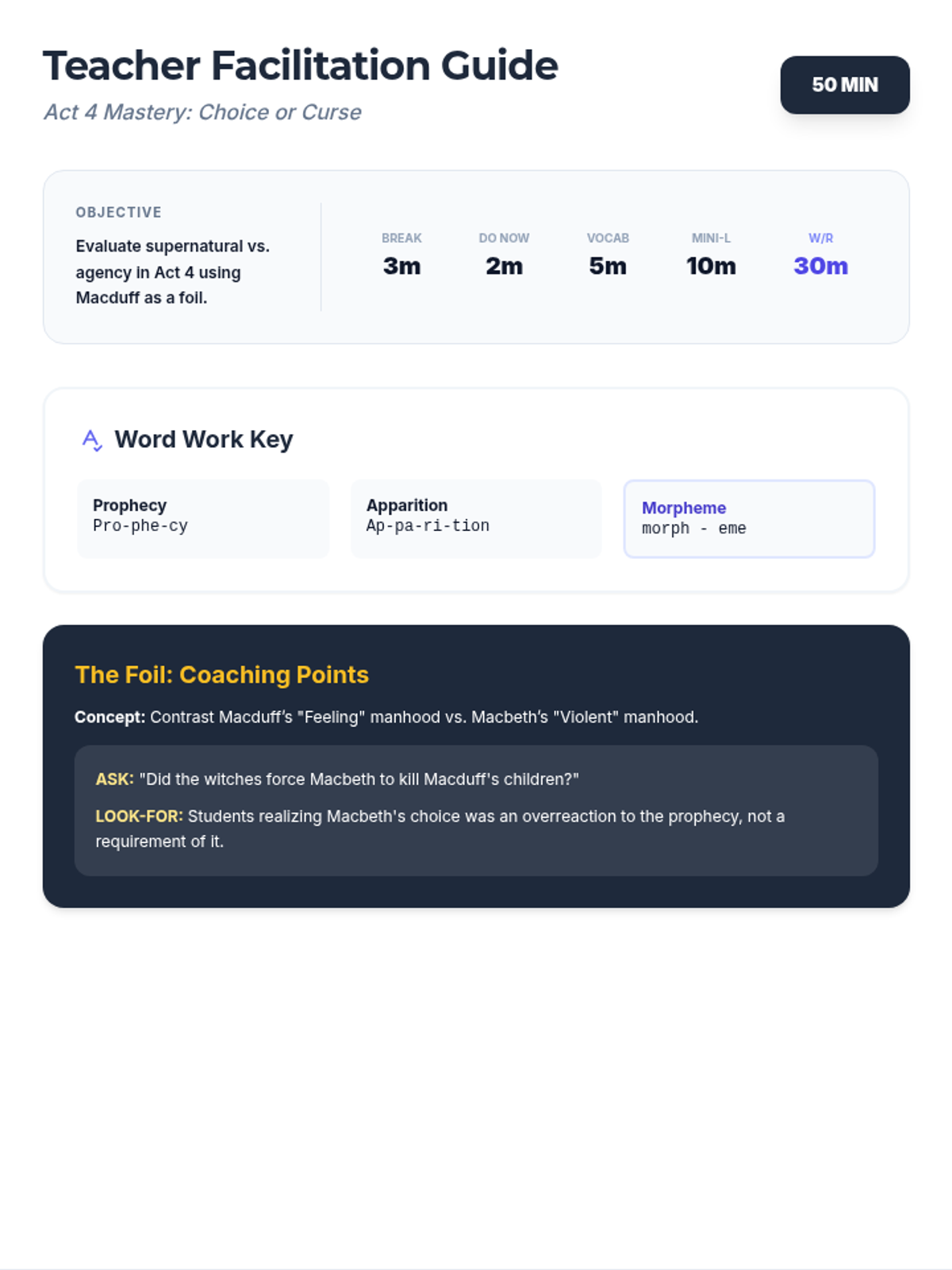
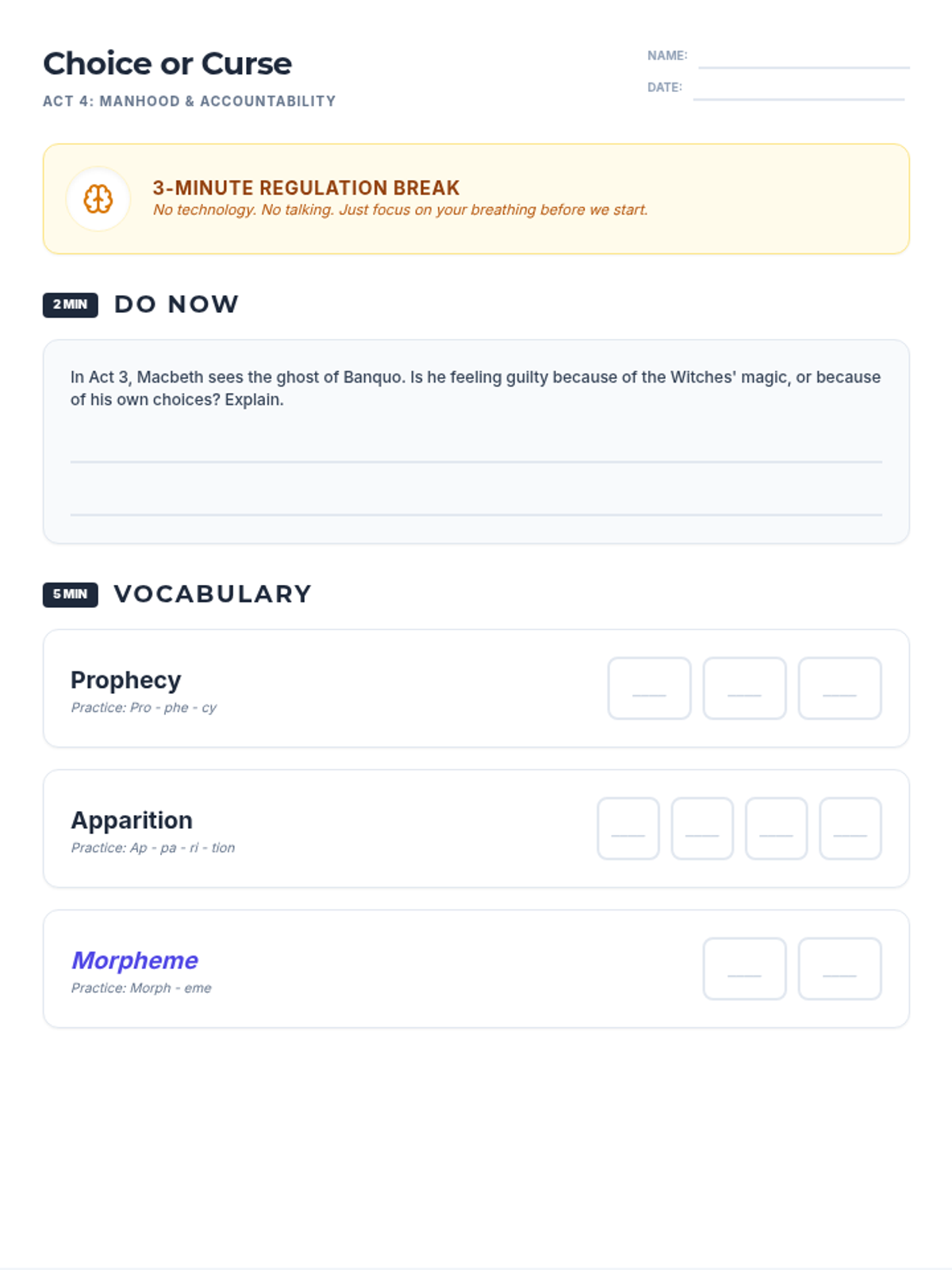
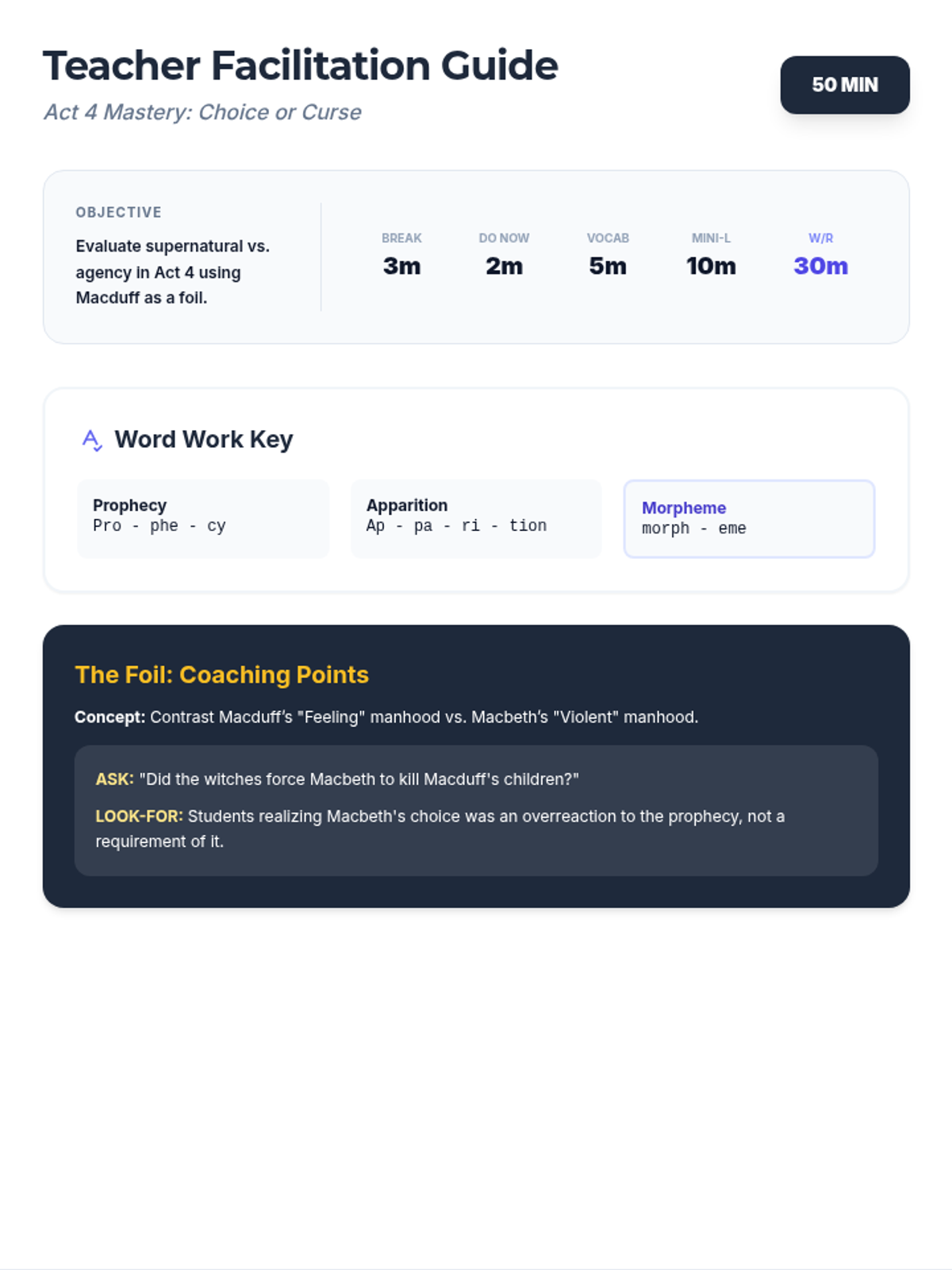
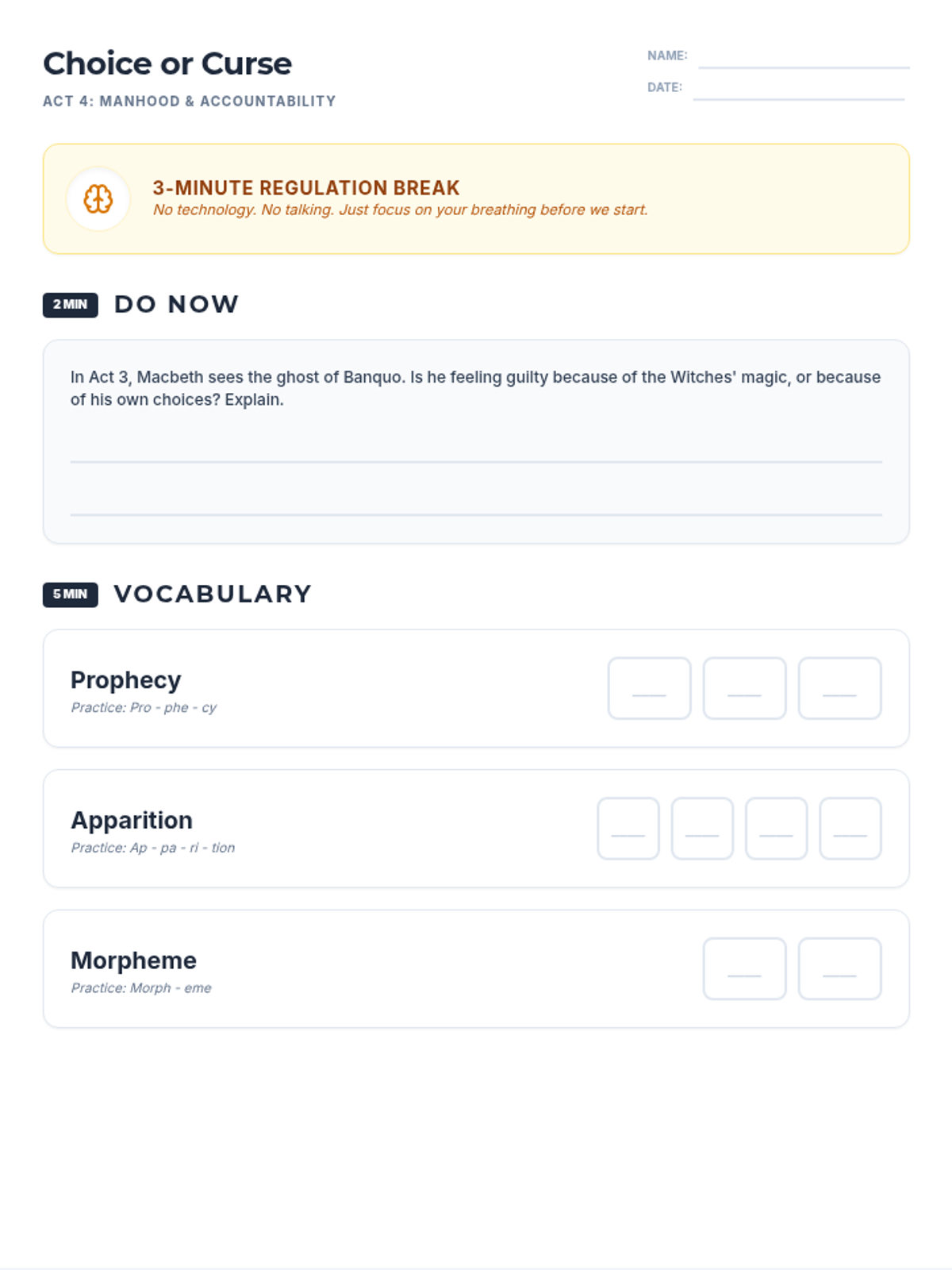
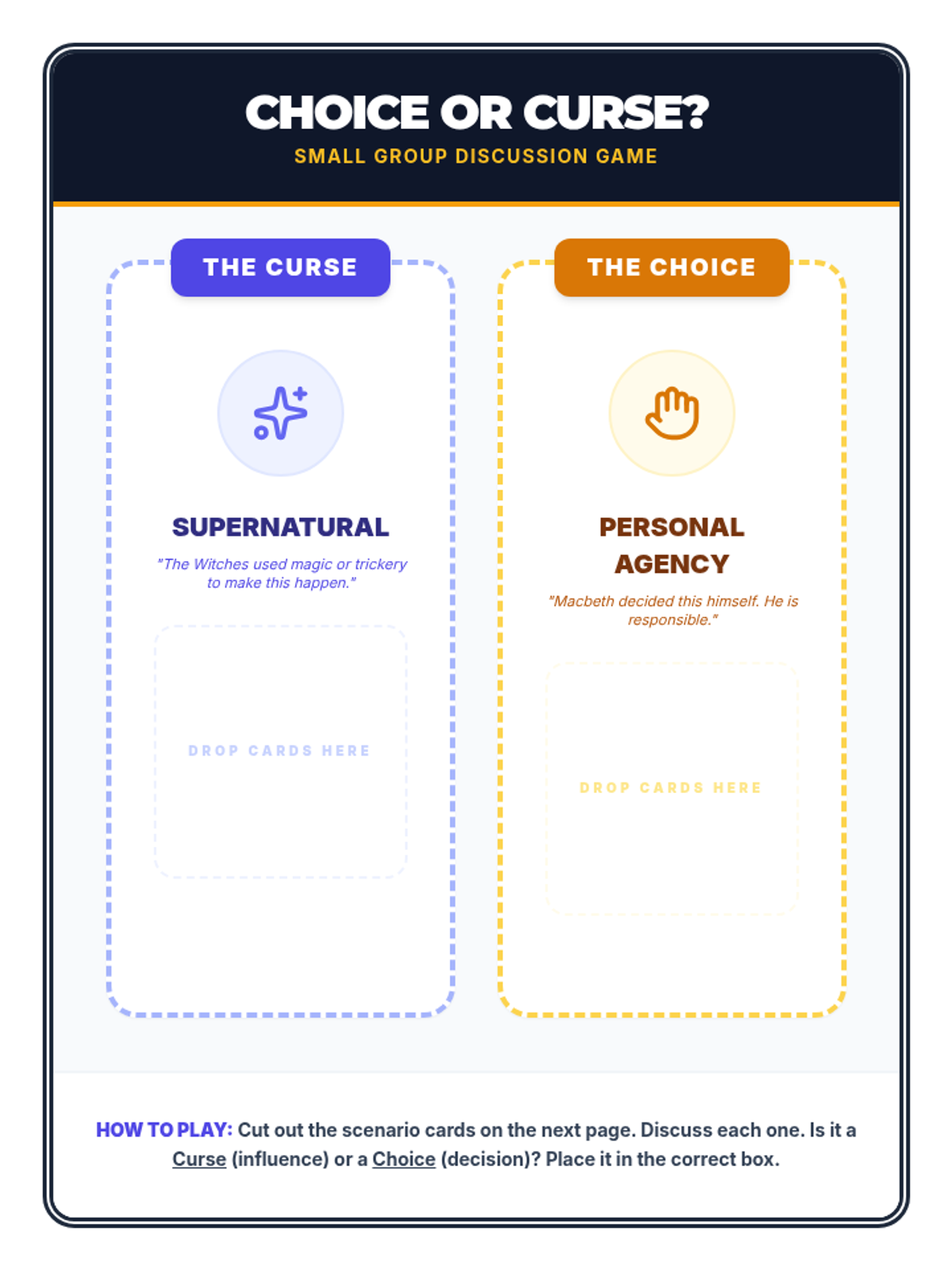
A 50-minute resource room lesson for 11th-grade students covering Macbeth Act 4. Focuses on the interplay of manhood, ambition, and accountability through a literacy-heavy scaffolded approach including syllabication, reading comprehension, and ANEZZC-structured paragraph writing.
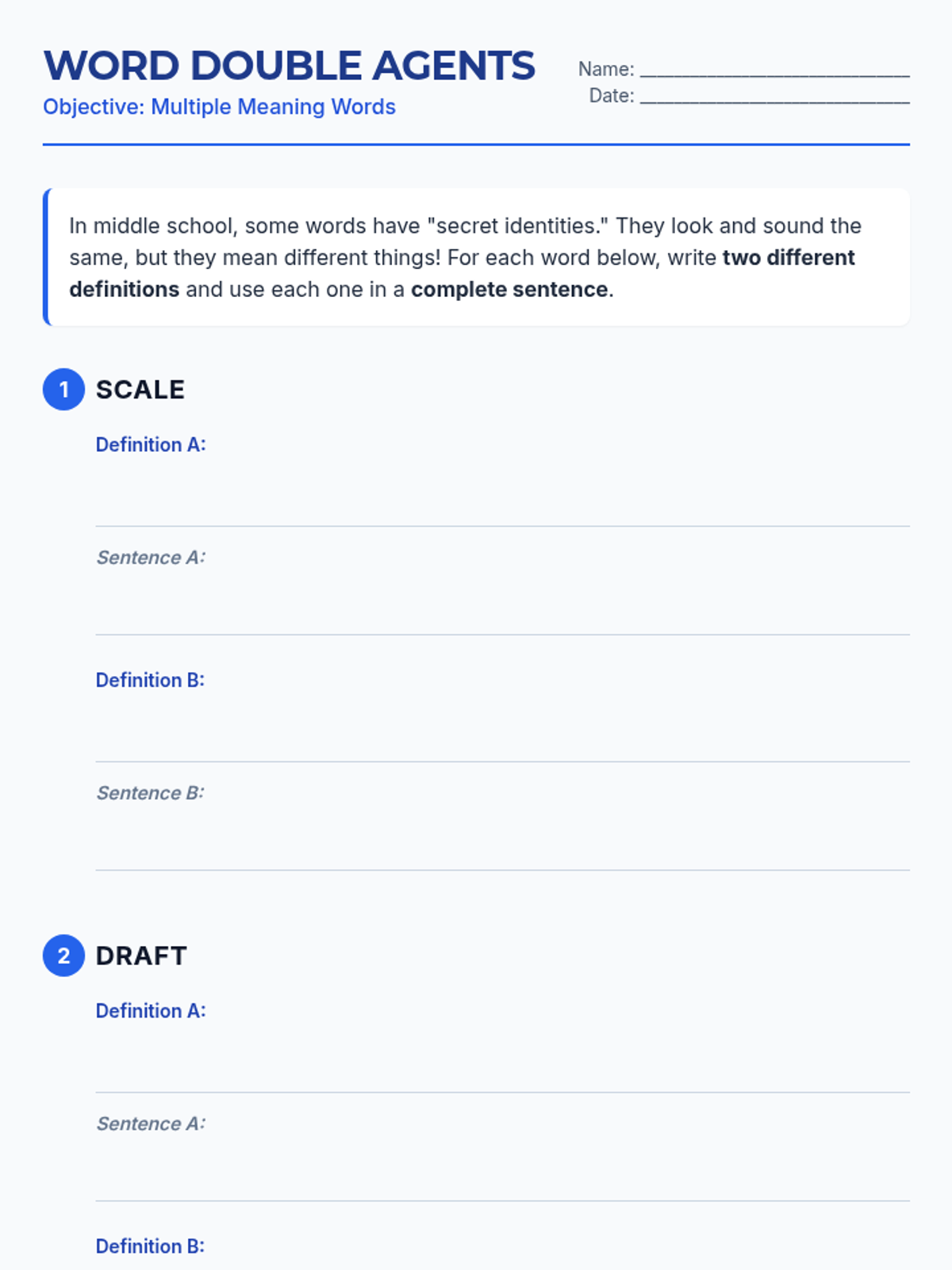
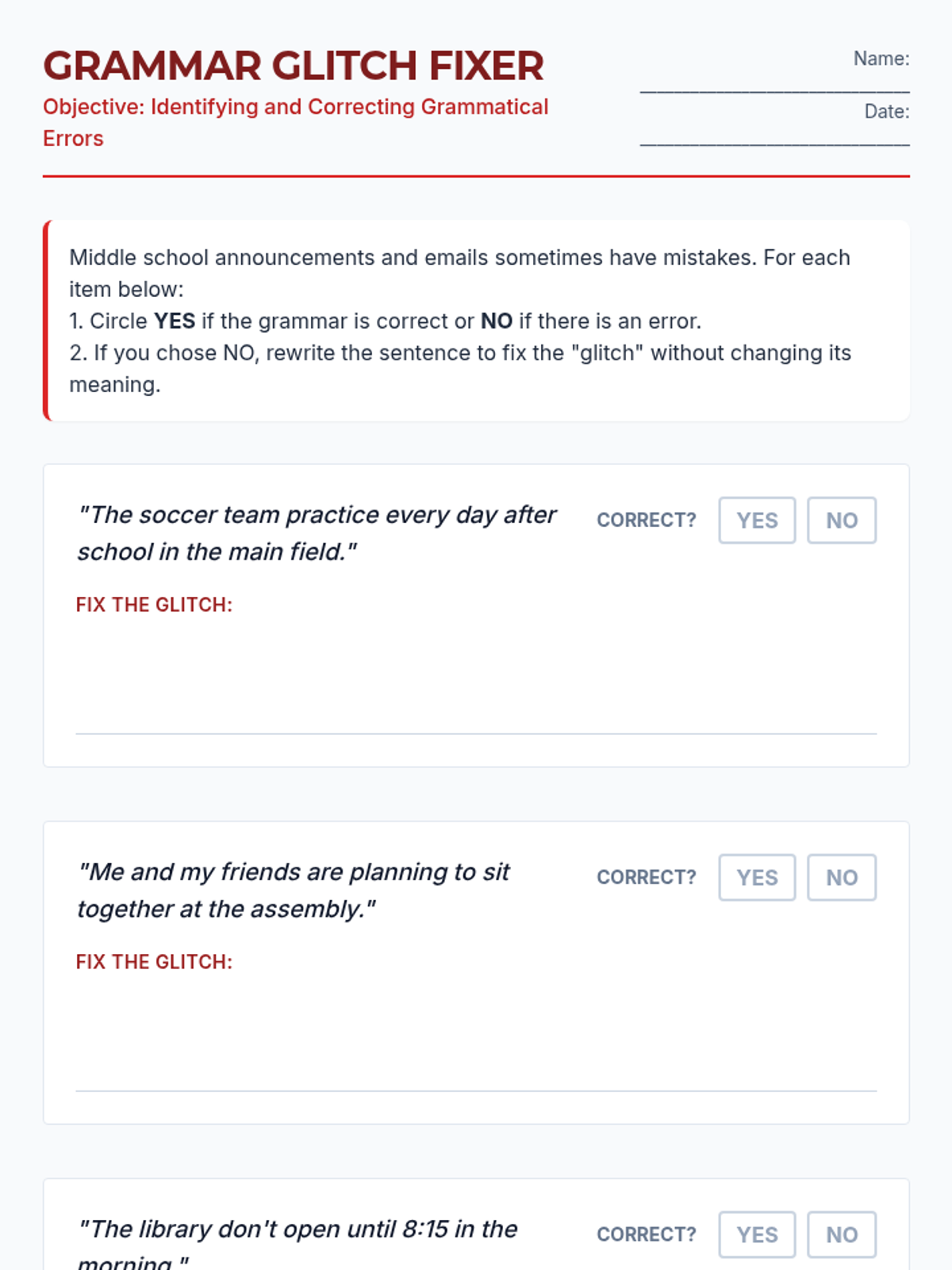
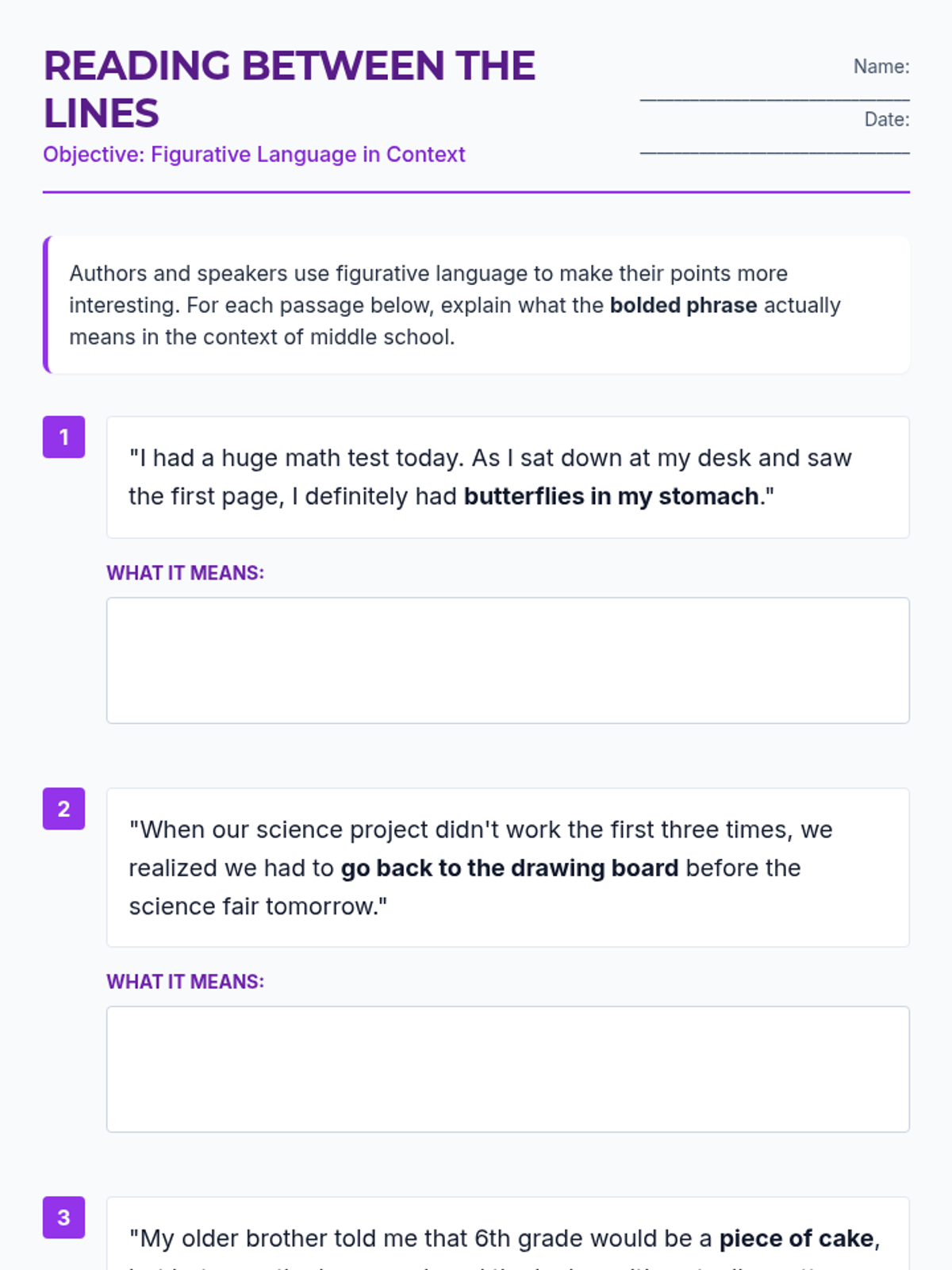
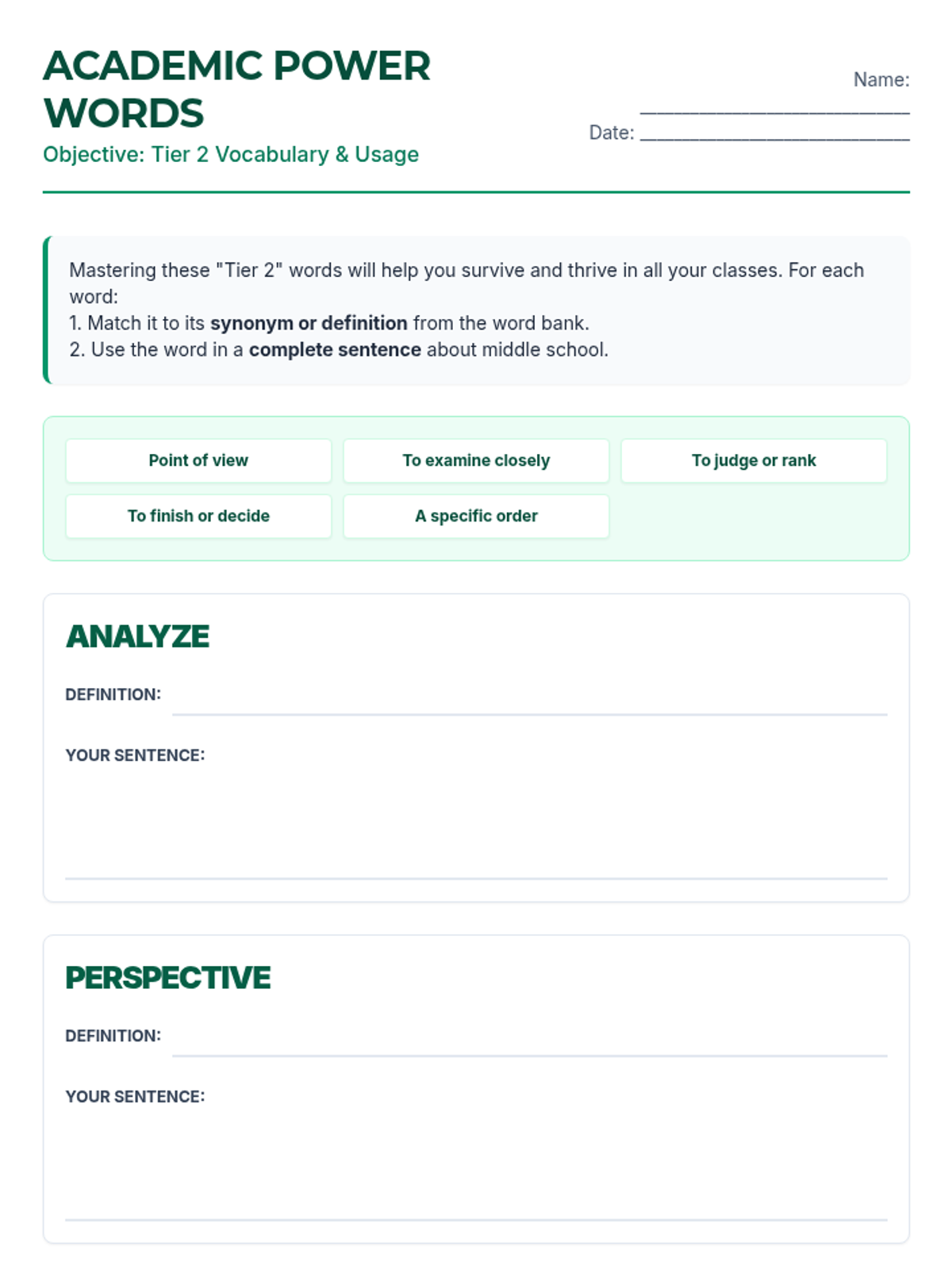
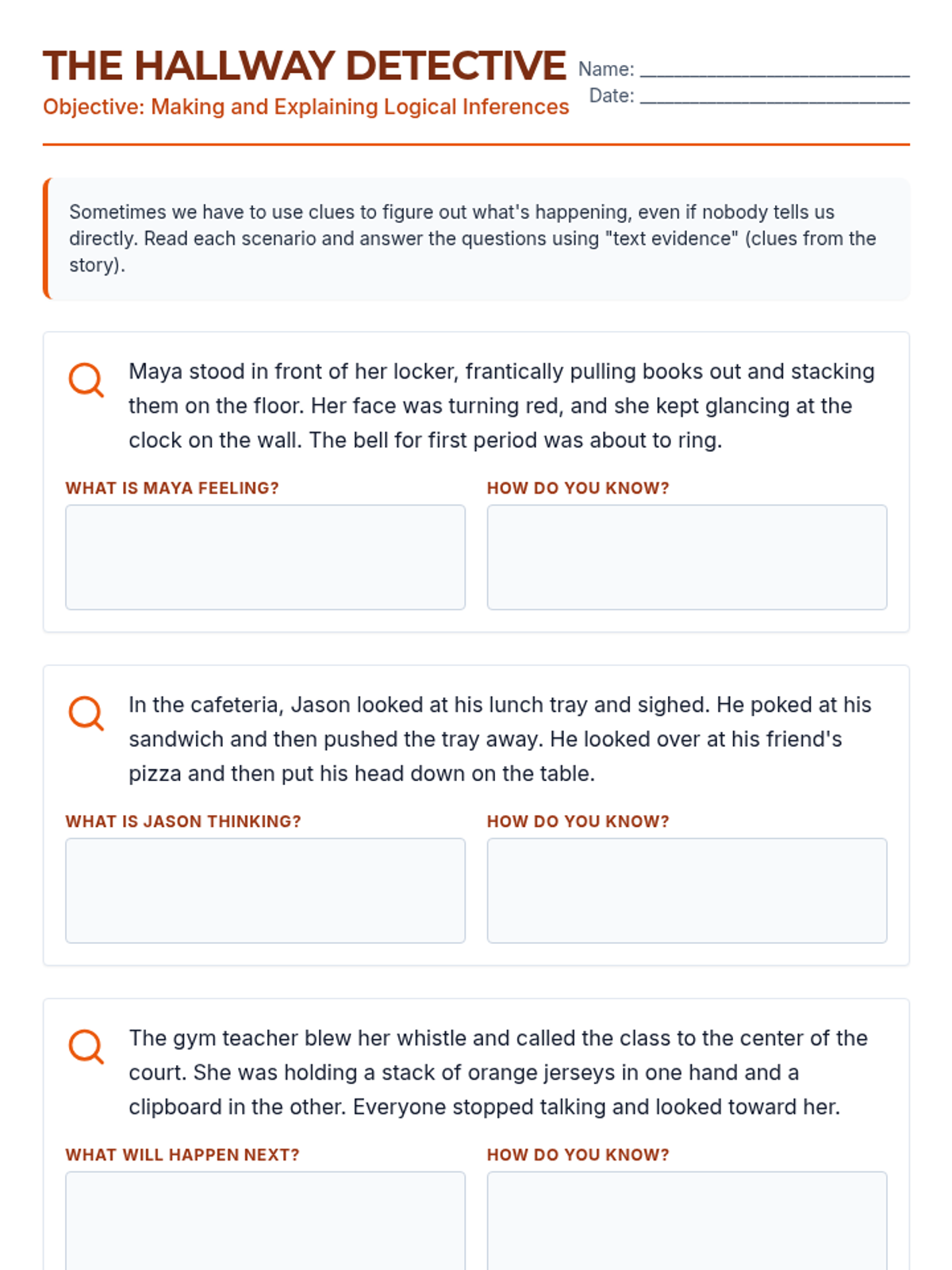
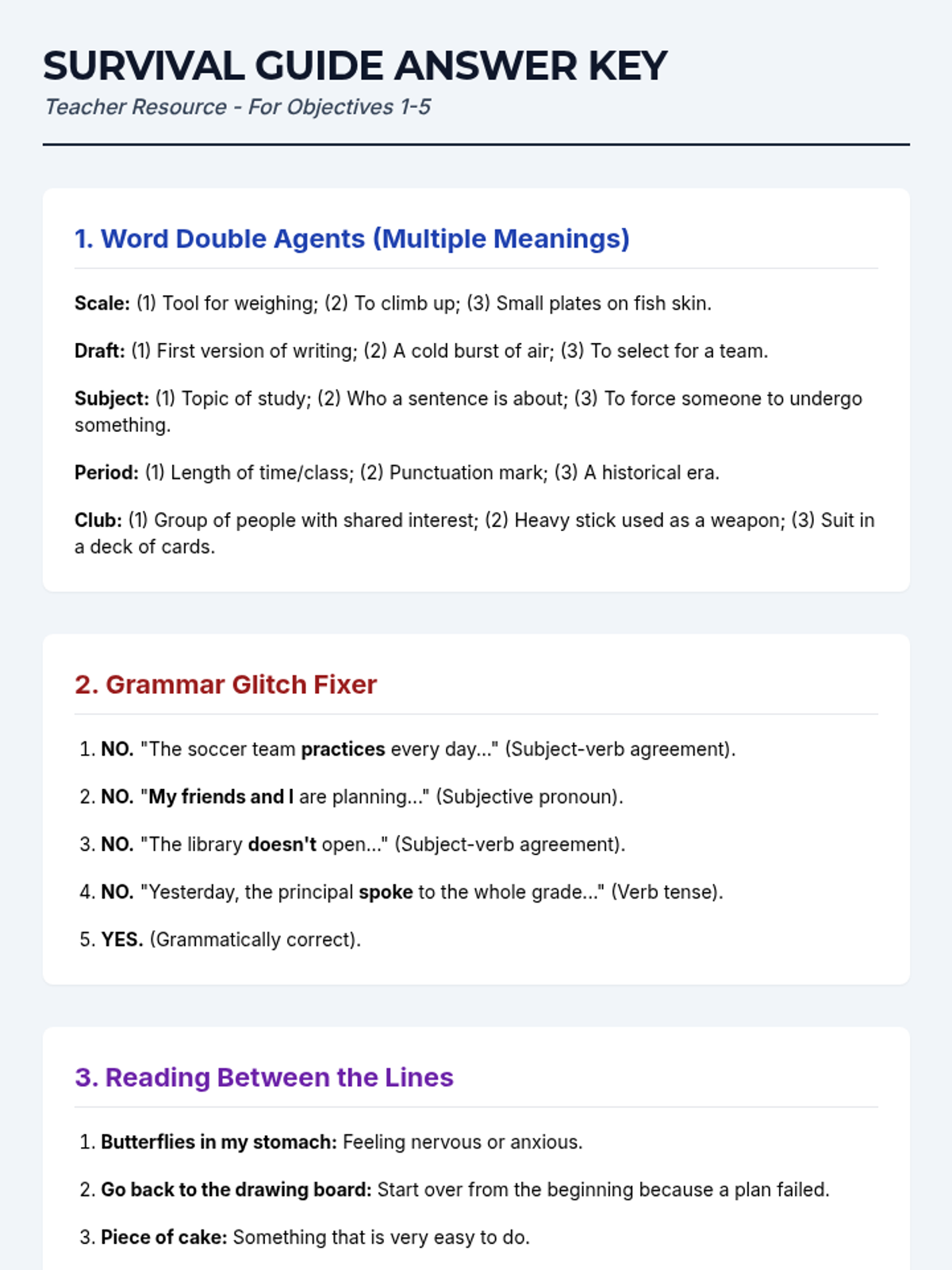
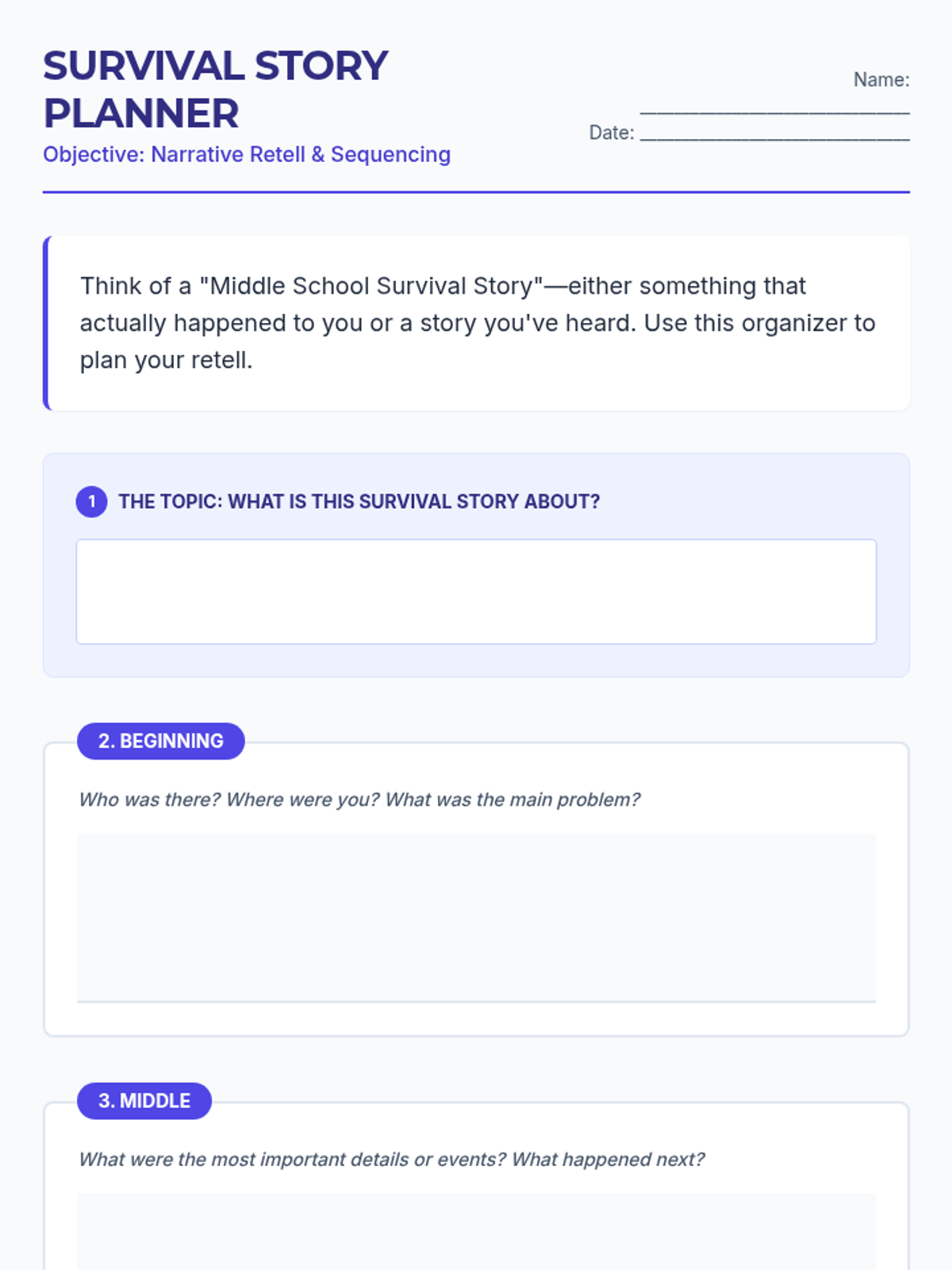
A series of speech-language activities themed around navigating middle school, targeting multiple meanings, grammar, figurative language, vocabulary, inference, and narrative skills.
A lesson focused on identifying and completing analogies based on synonym and antonym relationships, designed for 7th-grade students.
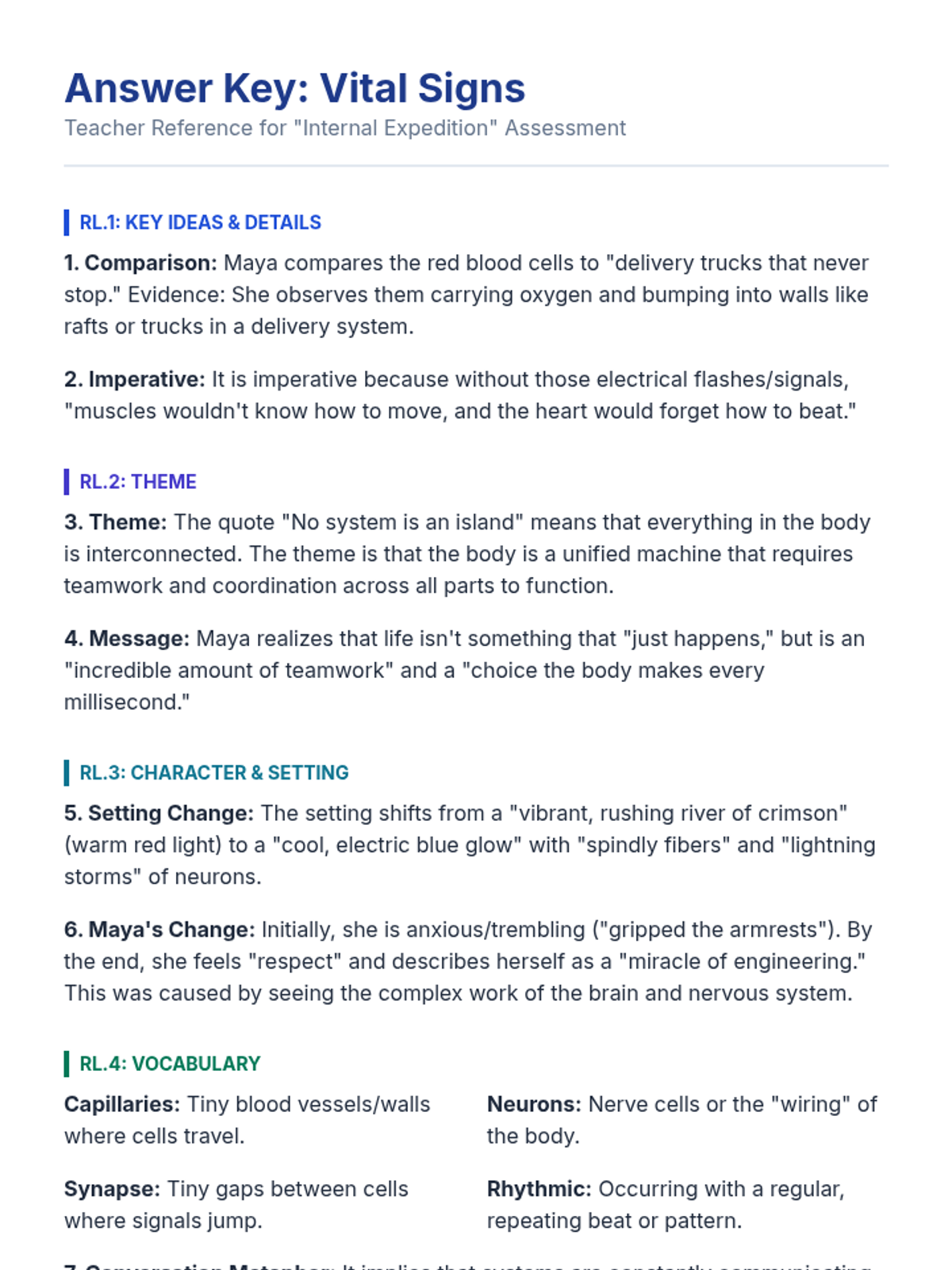
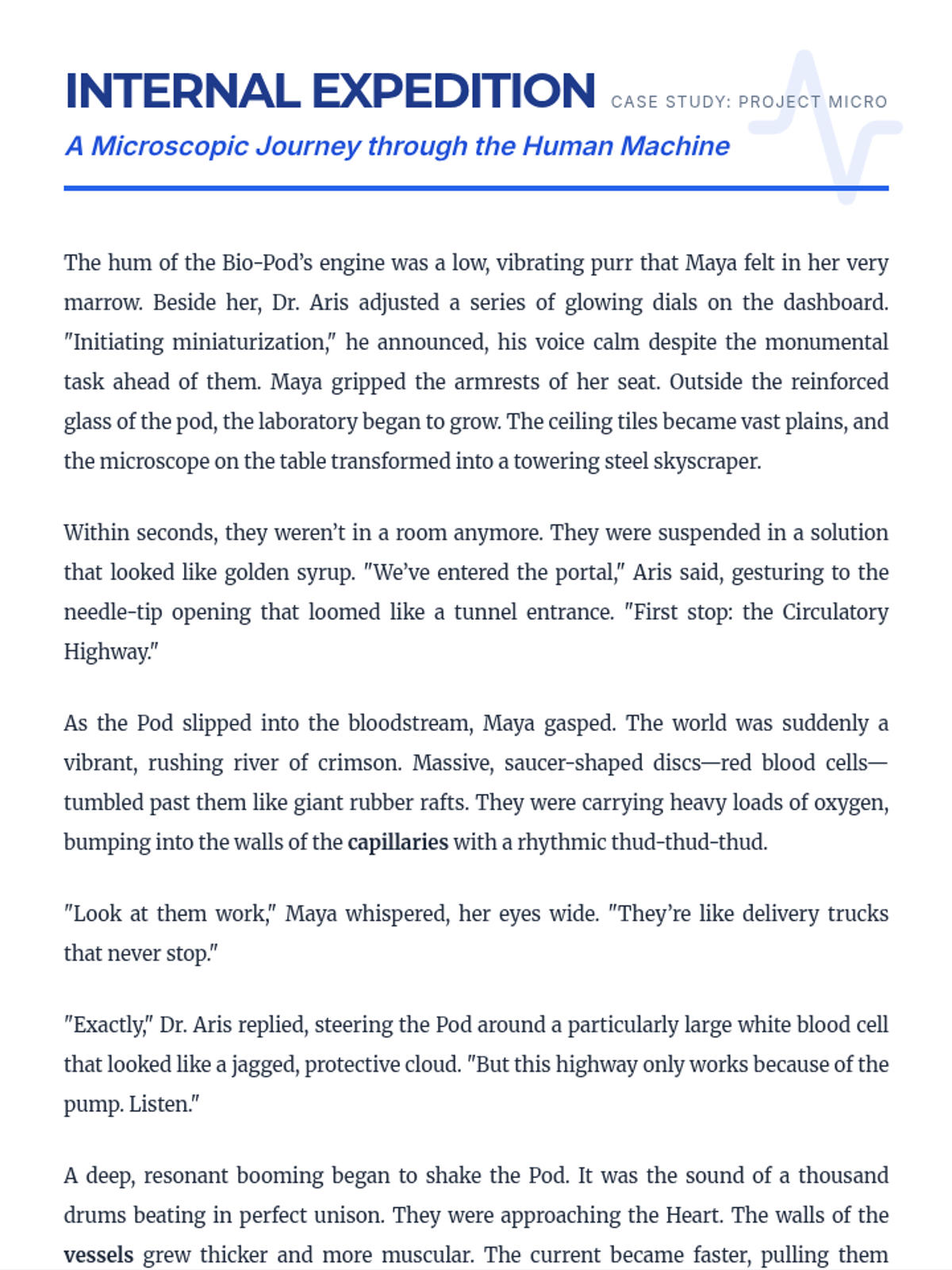
A narrative-driven exploration of the human body's systems, designed to practice literary analysis standards (RL) through a science-fiction lens. Students read a 2-page story about a microscopic journey and analyze characters, themes, and vocabulary.
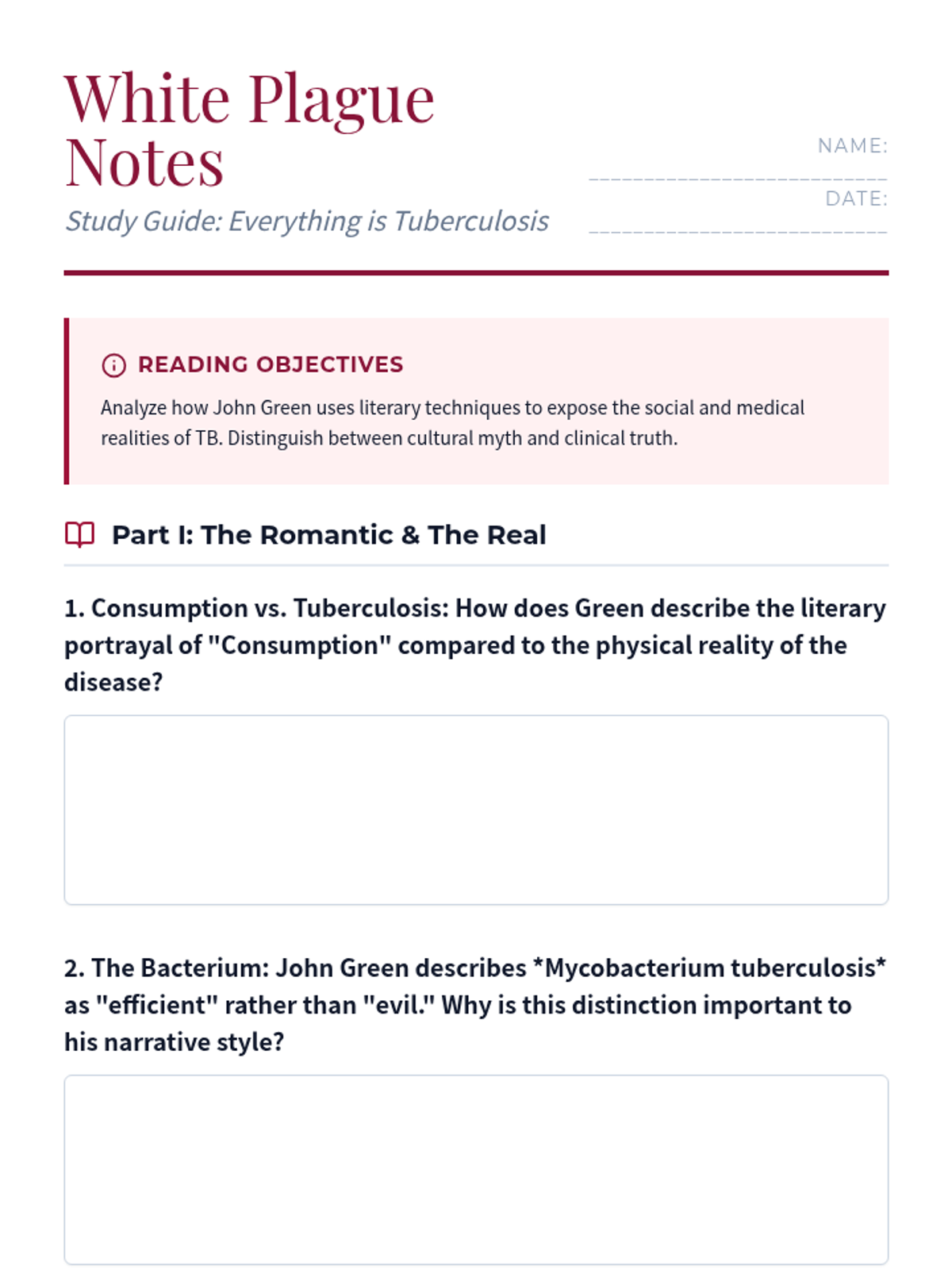
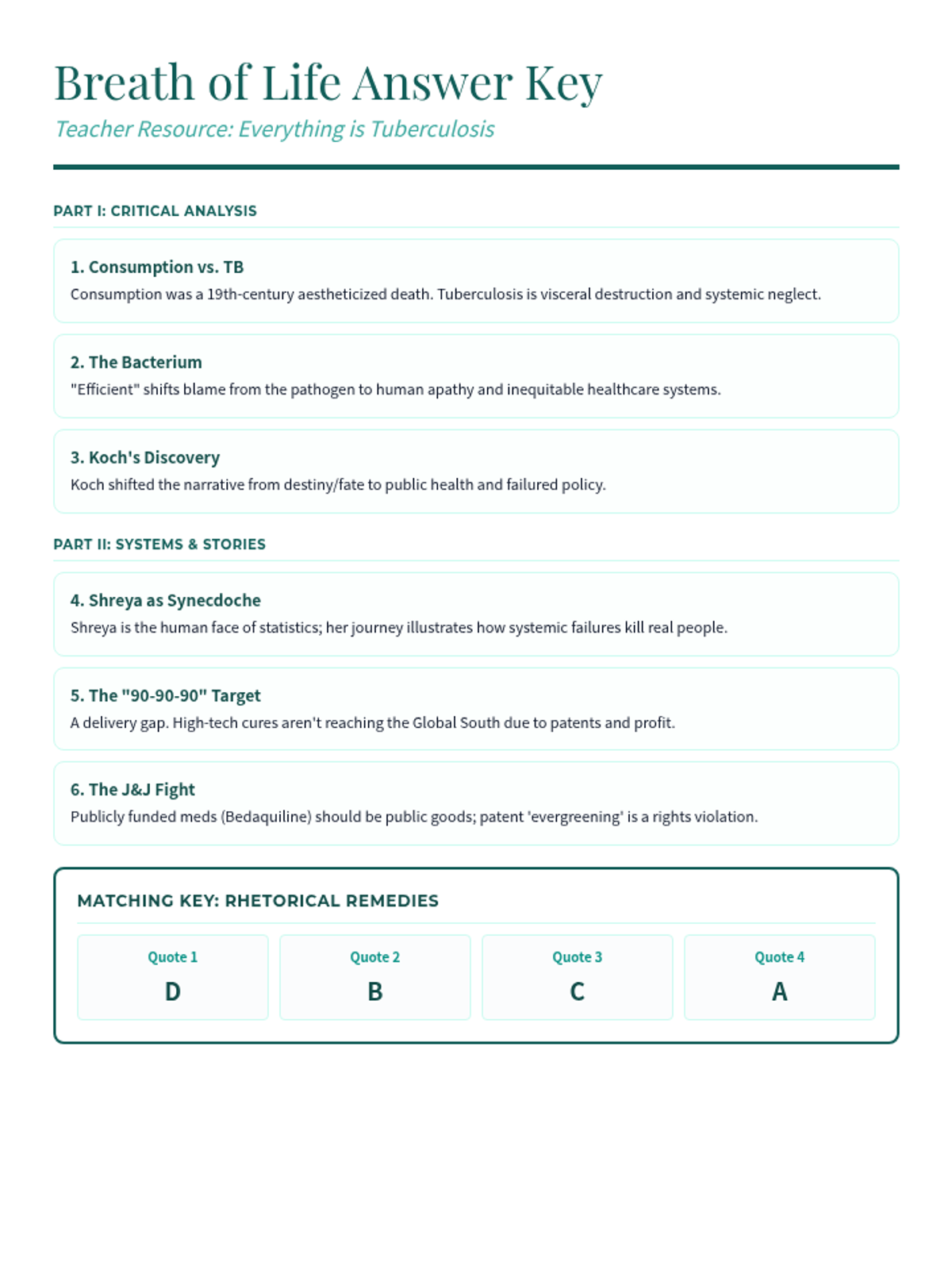
A comprehensive study of John Green's 'Everything is Tuberculosis', focusing on the history of the disease, its impact on human history, and the literary techniques used to convey its devastating reality.
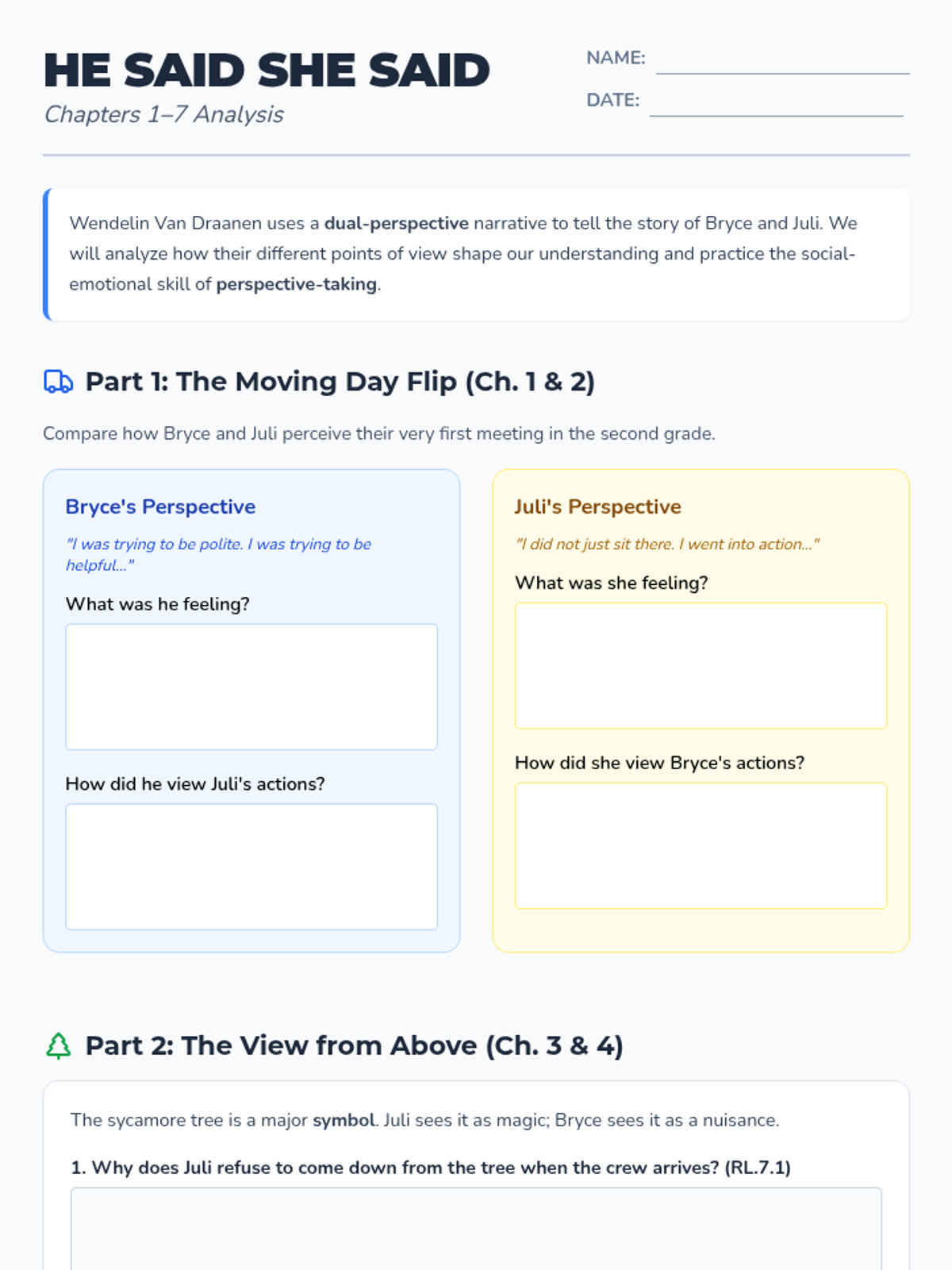
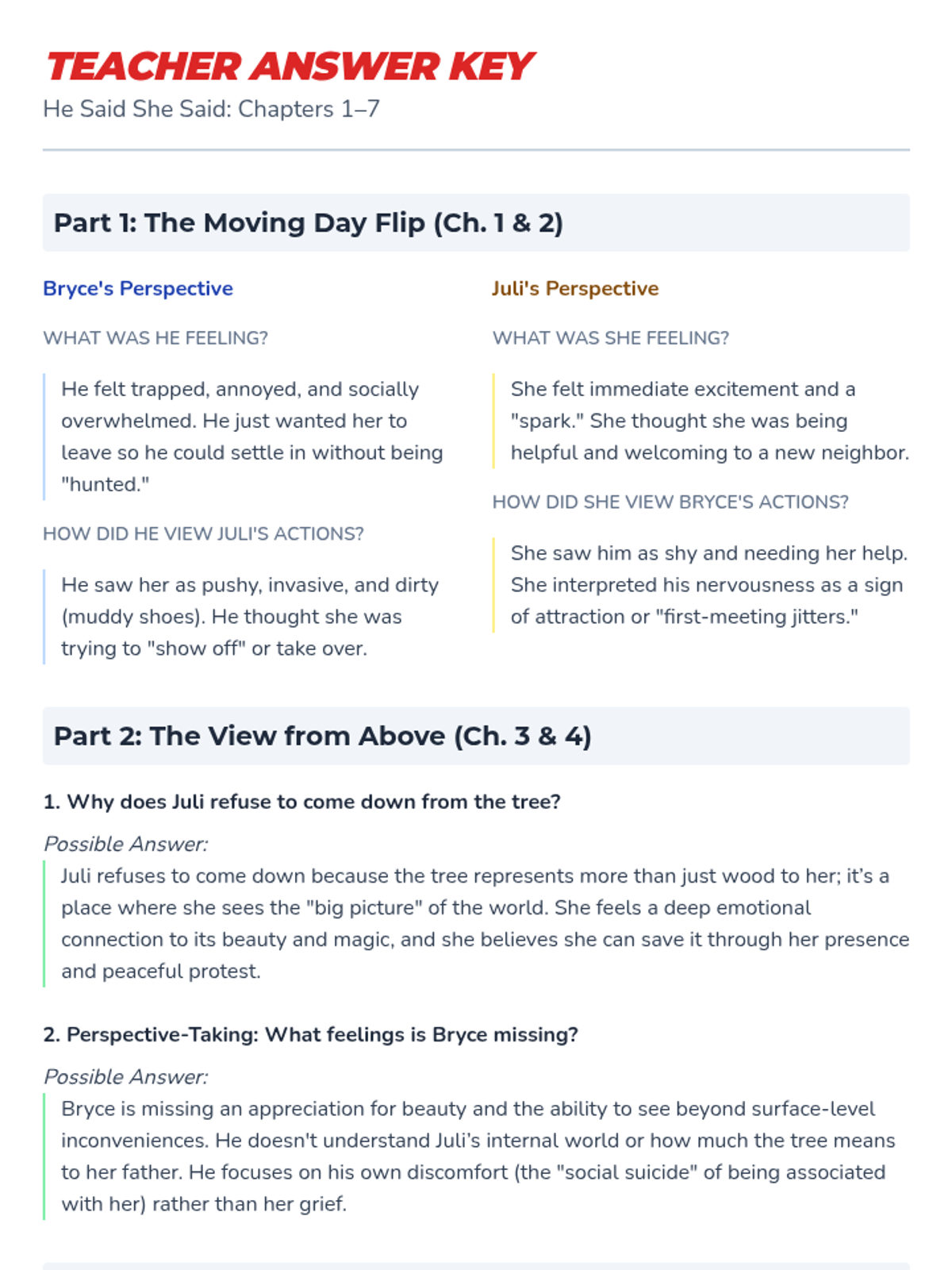
A deep dive into the first seven chapters of 'Flipped', focusing on contrasting points of view, character development, and social-emotional skills like empathy and perspective-taking.
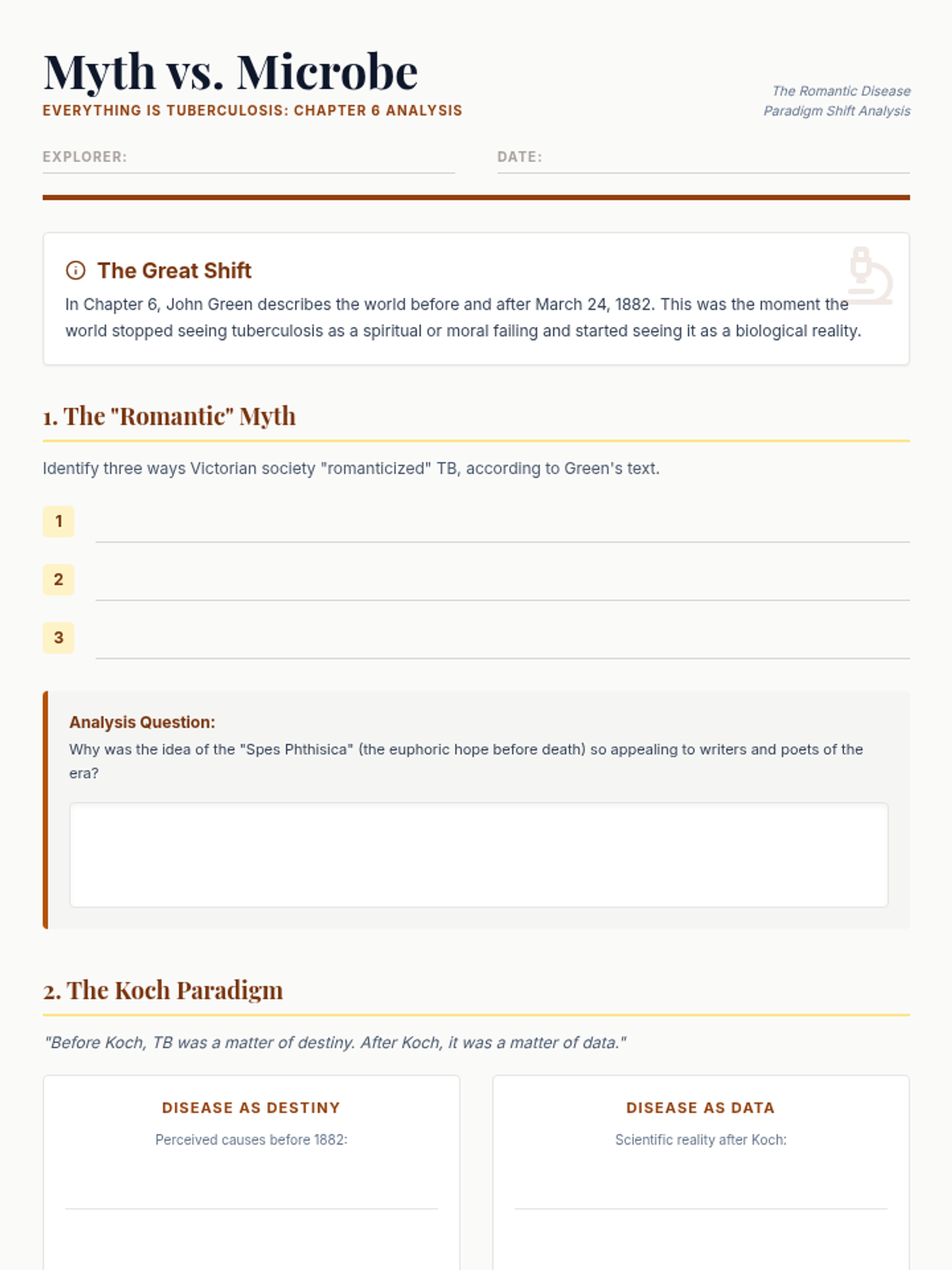
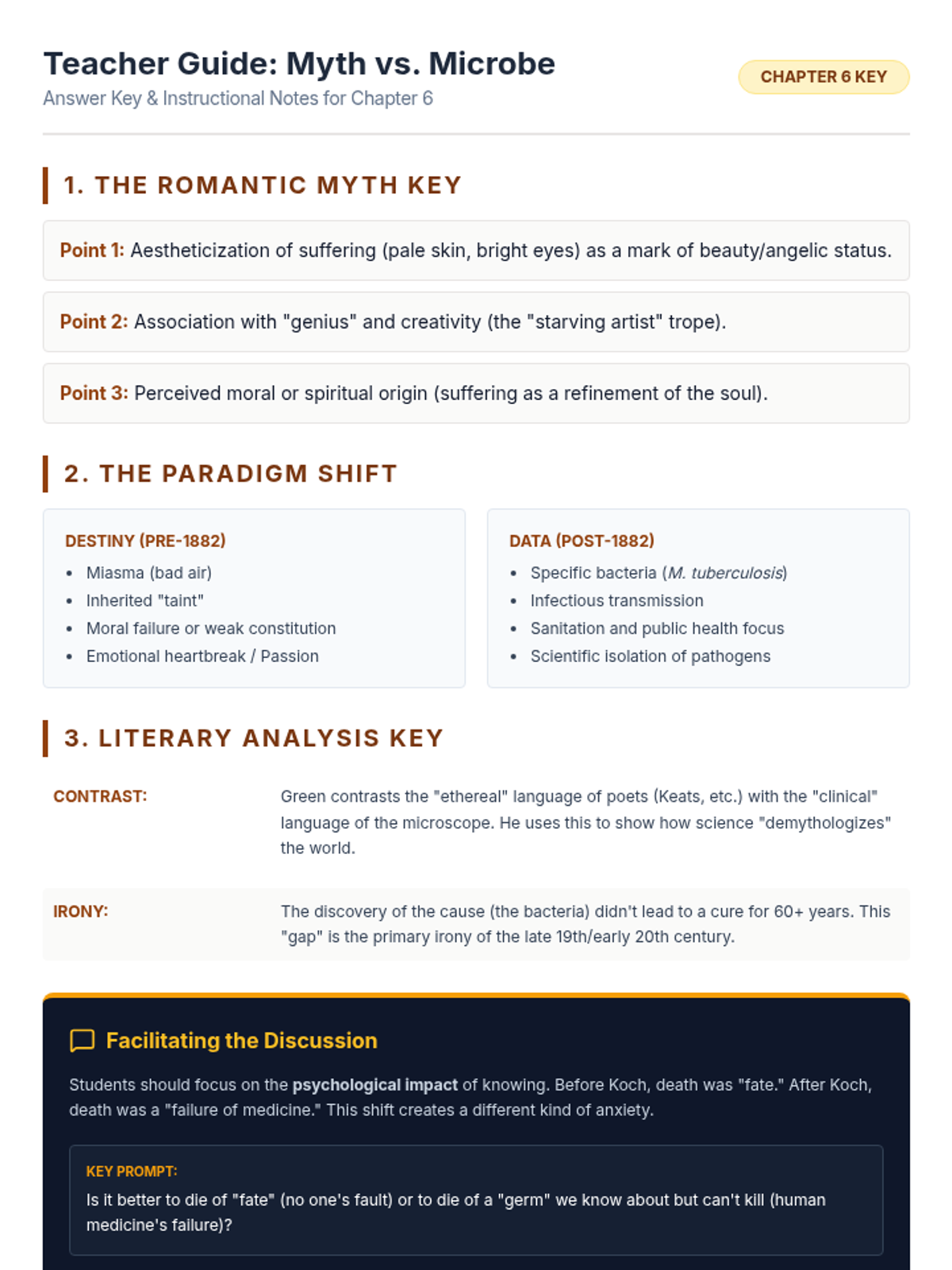
An analysis of Chapter 6, exploring the Victorian romanticization of tuberculosis as a 'beautiful death' and the paradigm-shifting scientific discovery of the bacteria by Robert Koch.
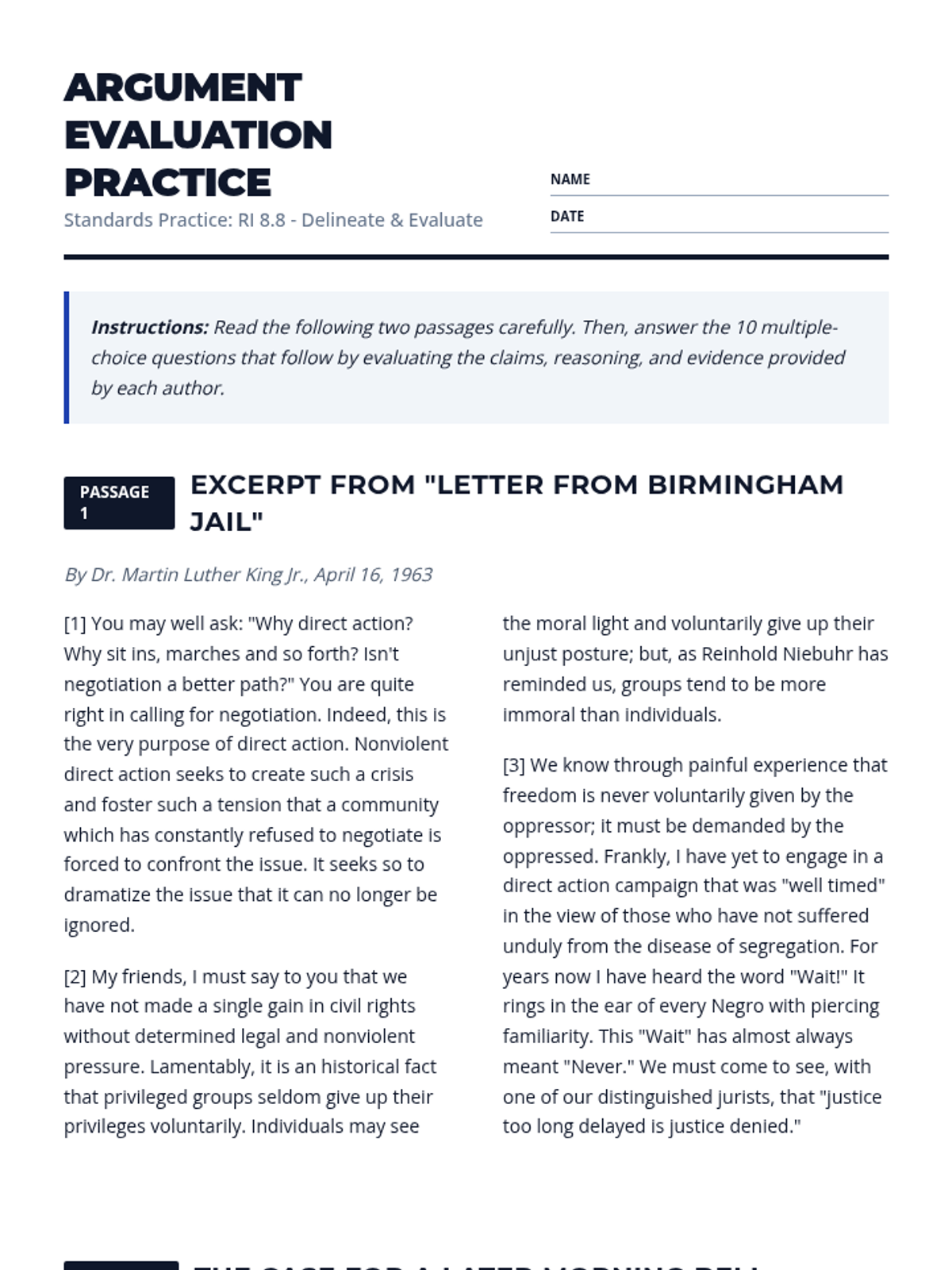
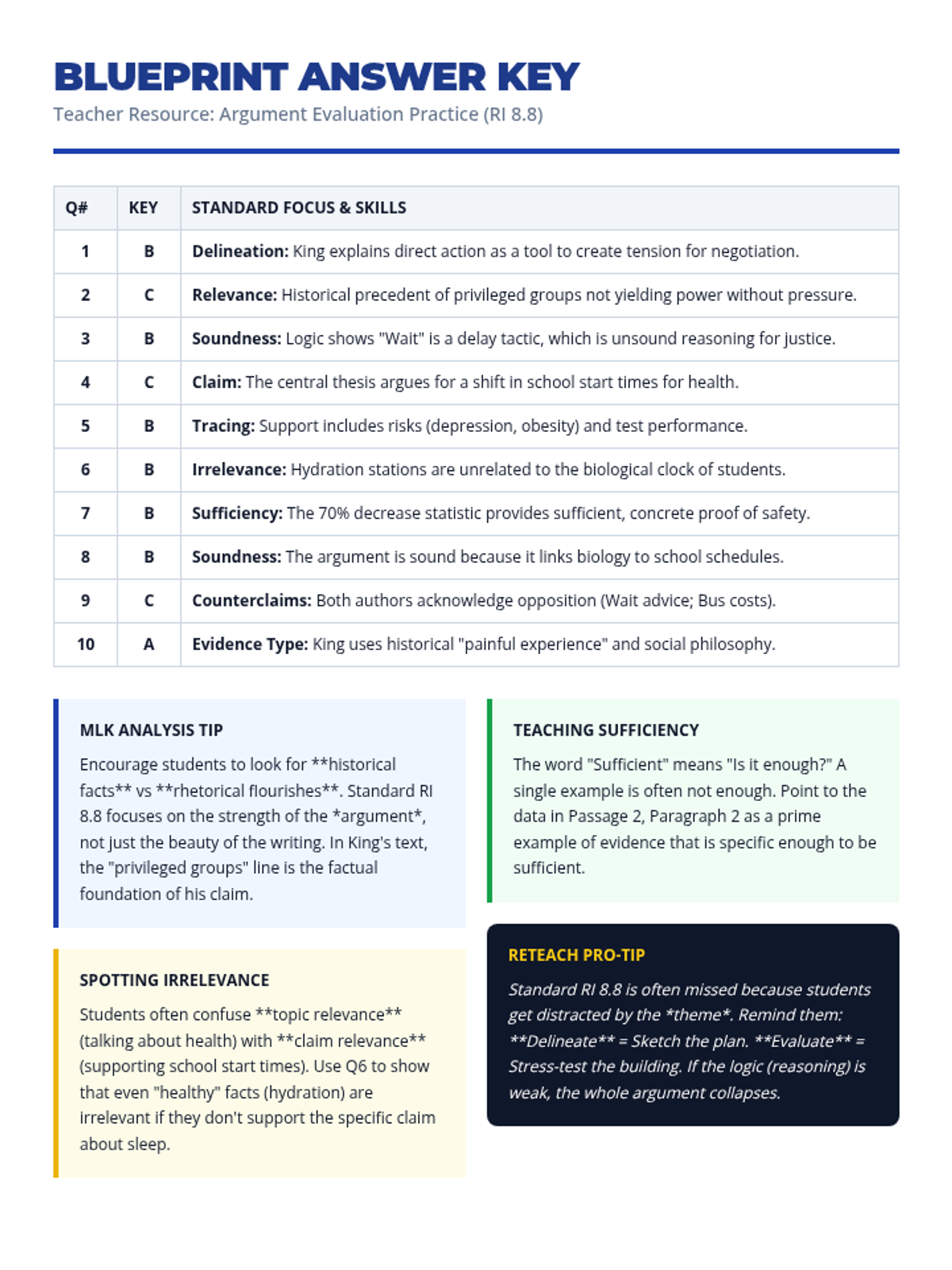
A intensive reteach lesson on RI 8.8, focusing on delineating and evaluating arguments using MLK Jr.'s 'Letter from Birmingham Jail' and a modern editorial on school start times. Students will assess claims, reasoning, and evidence relevance and sufficiency.
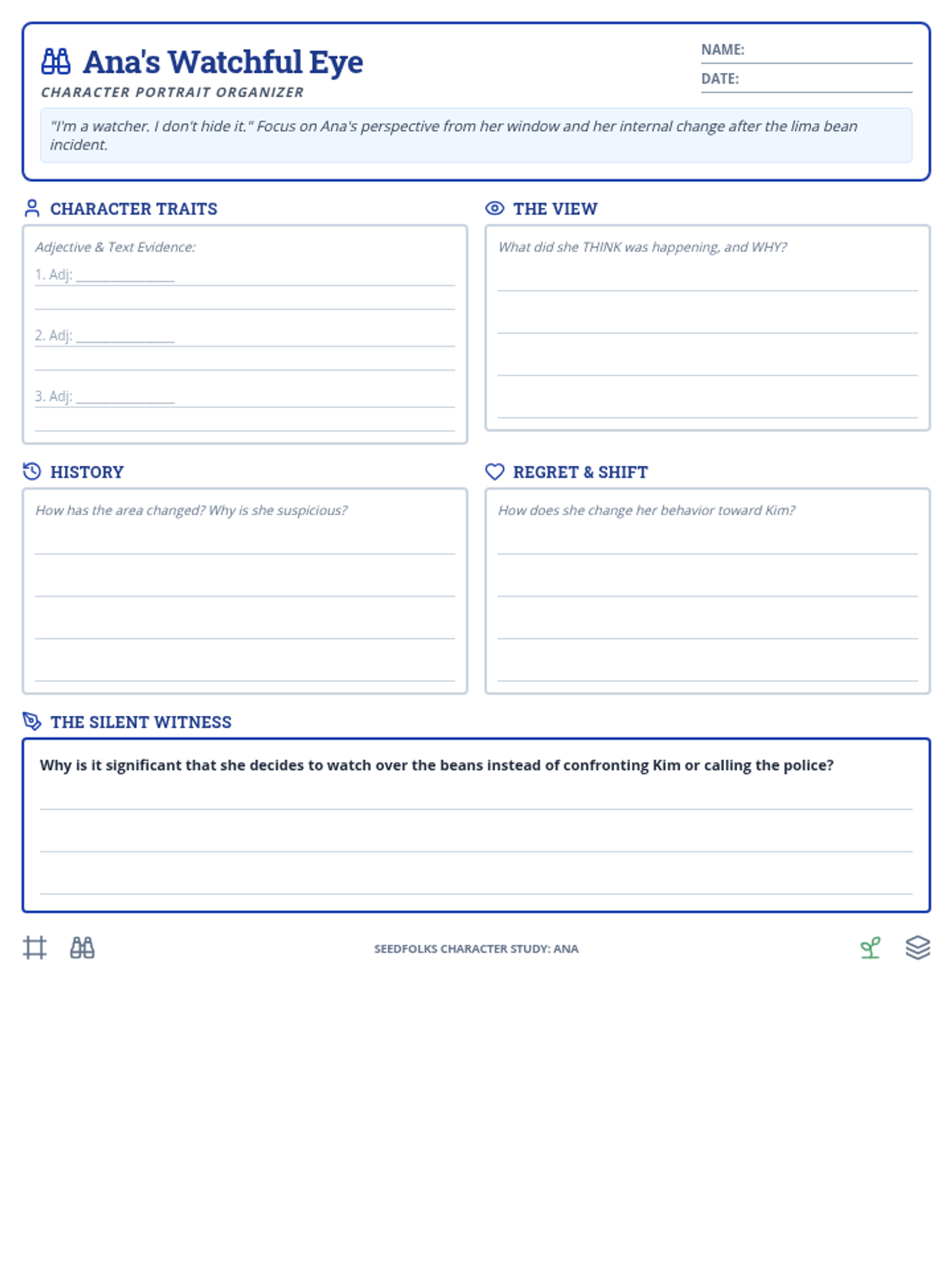
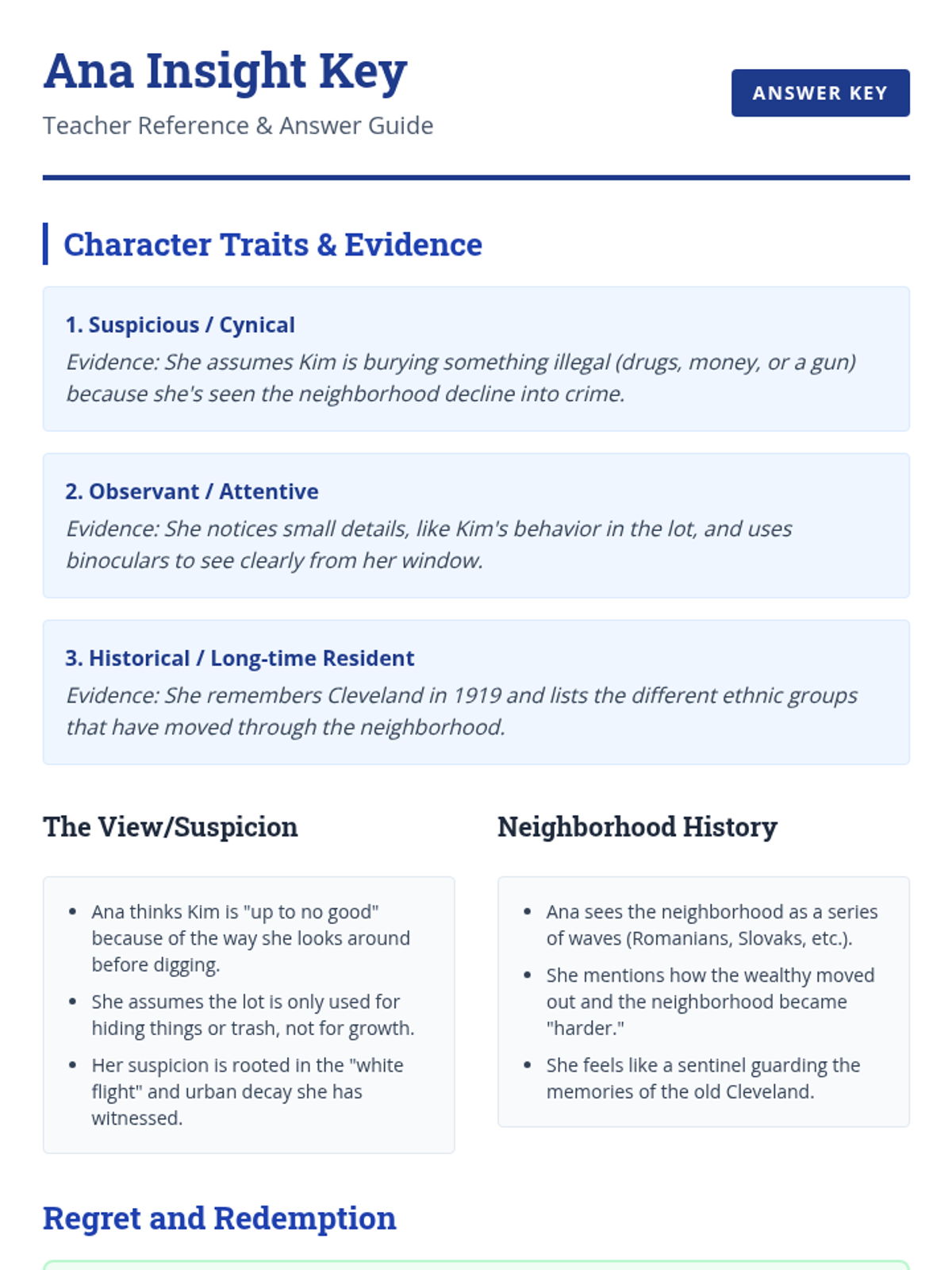
A focused study on Ana, the suspicious yet observant neighbor from Seedfolks. Students explore her perspective on the changing neighborhood and her initial reaction to Kim's garden.
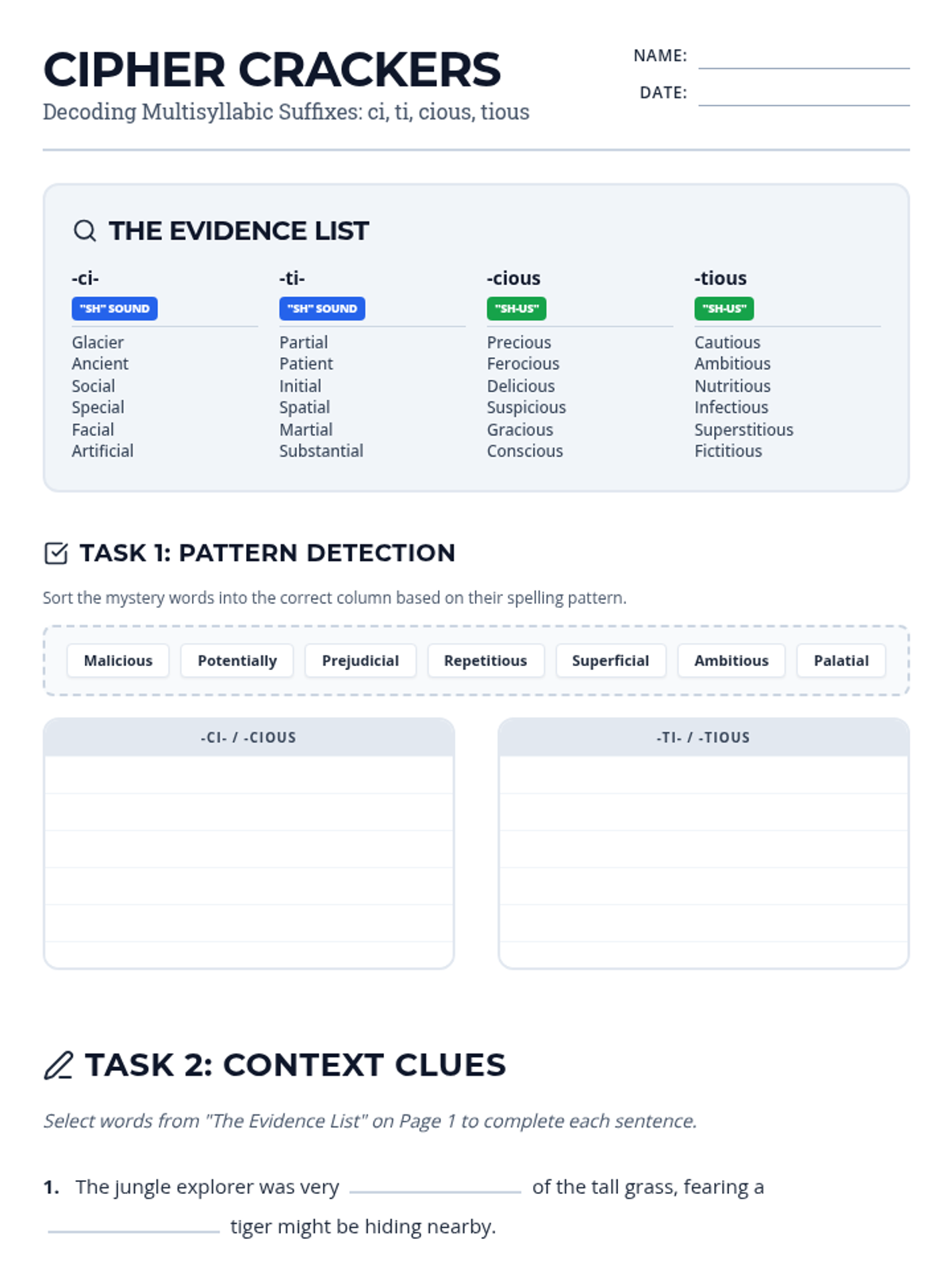
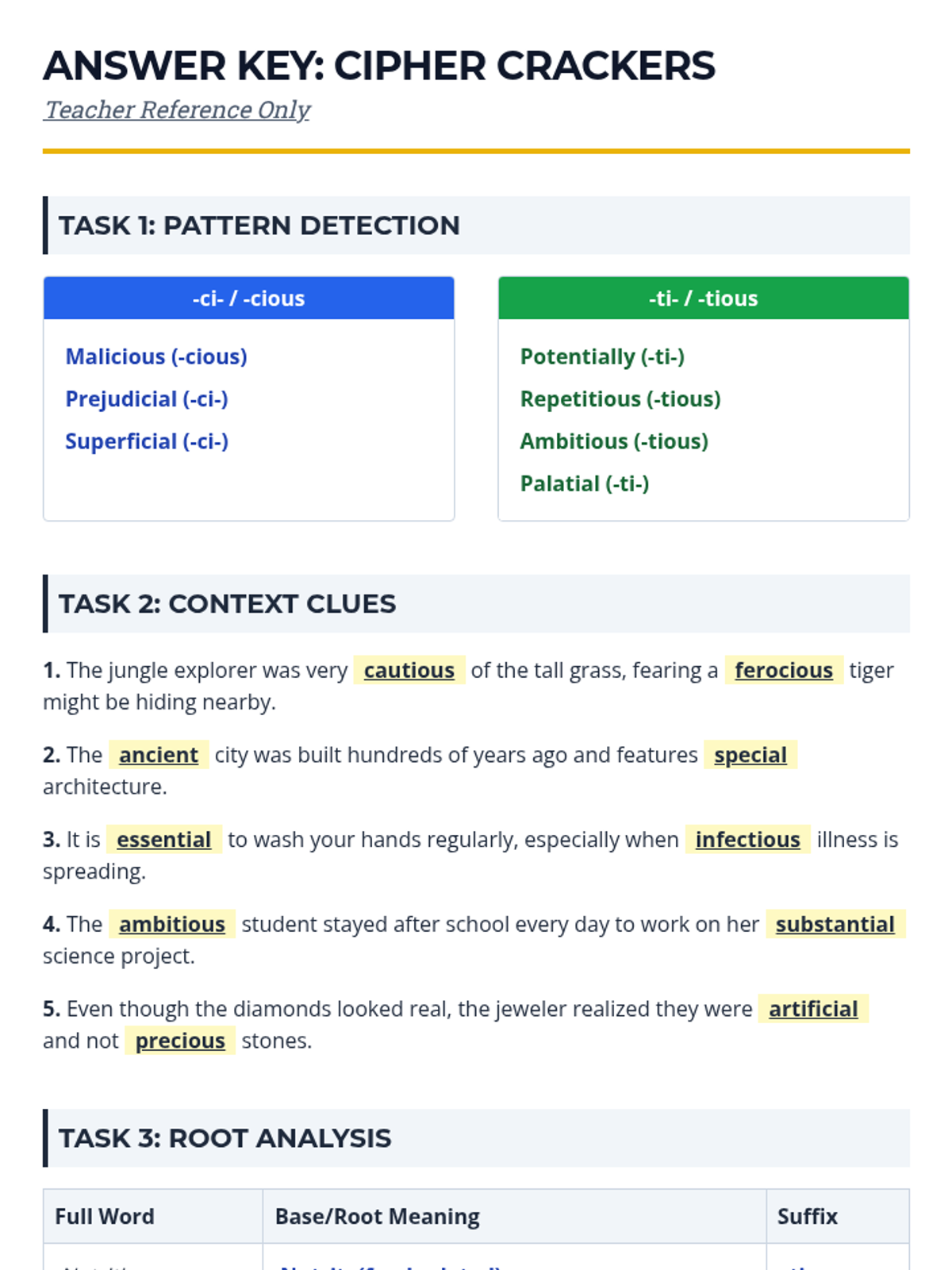
A lesson focused on identifying and using multisyllabic words with the 'sh' sound spelled as 'ci', 'ti', 'cious', and 'tious'. Students will analyze word patterns and apply their knowledge through vocabulary exercises.
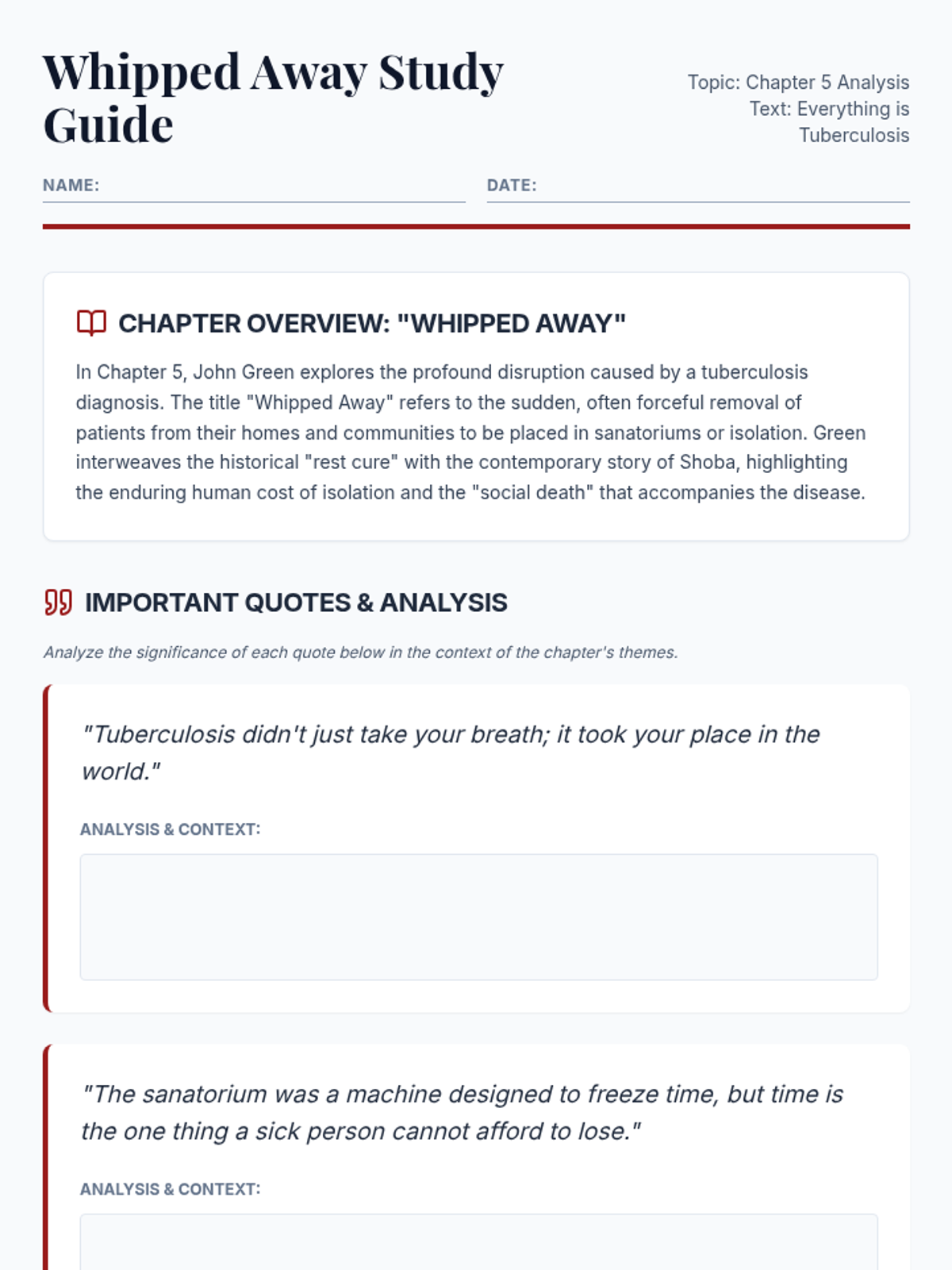
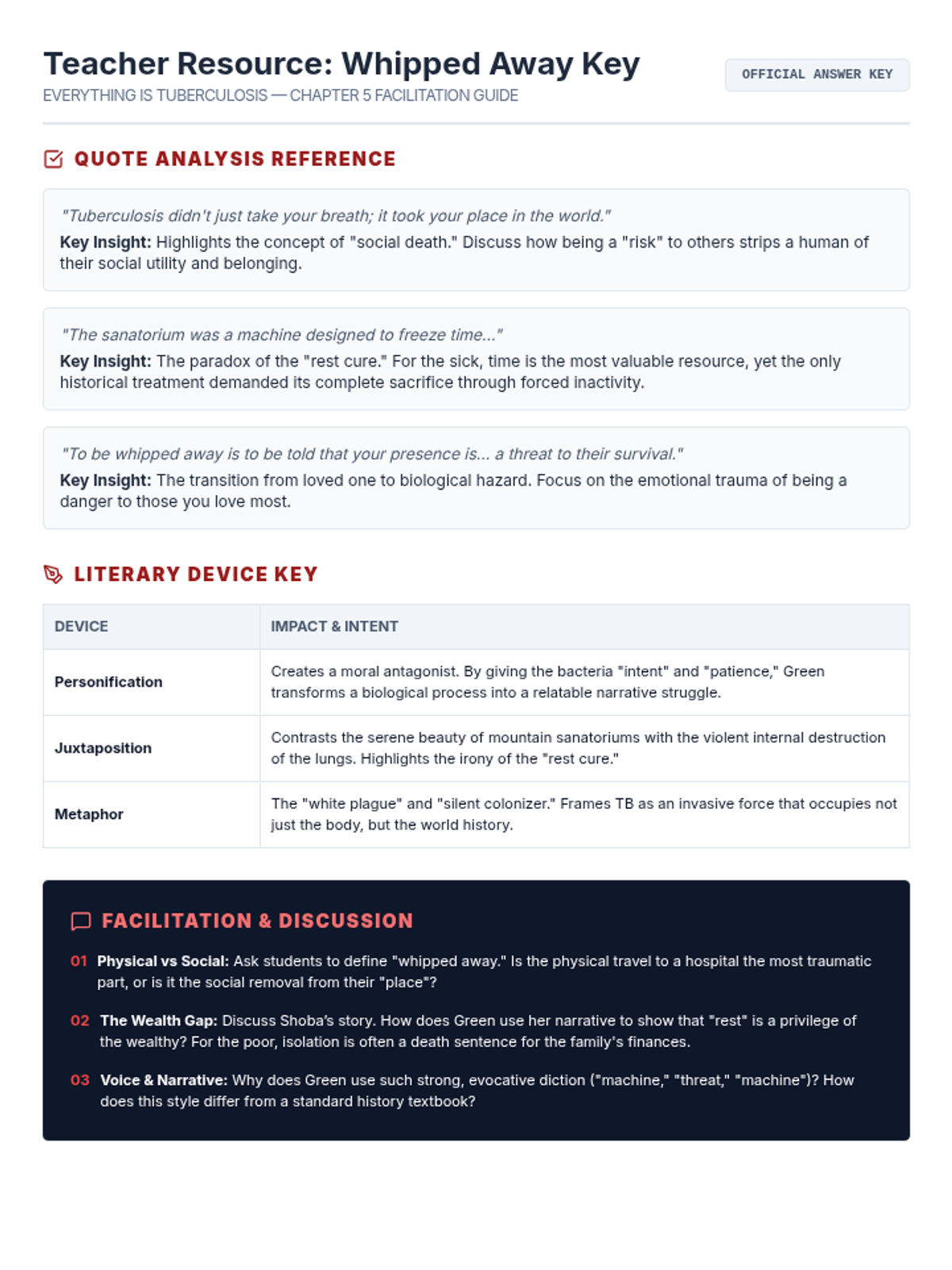
A deep dive into Chapter 5 of John Green's 'Everything is Tuberculosis', focusing on the sudden isolation of patients and the narrative techniques used to convey historical and personal trauma.
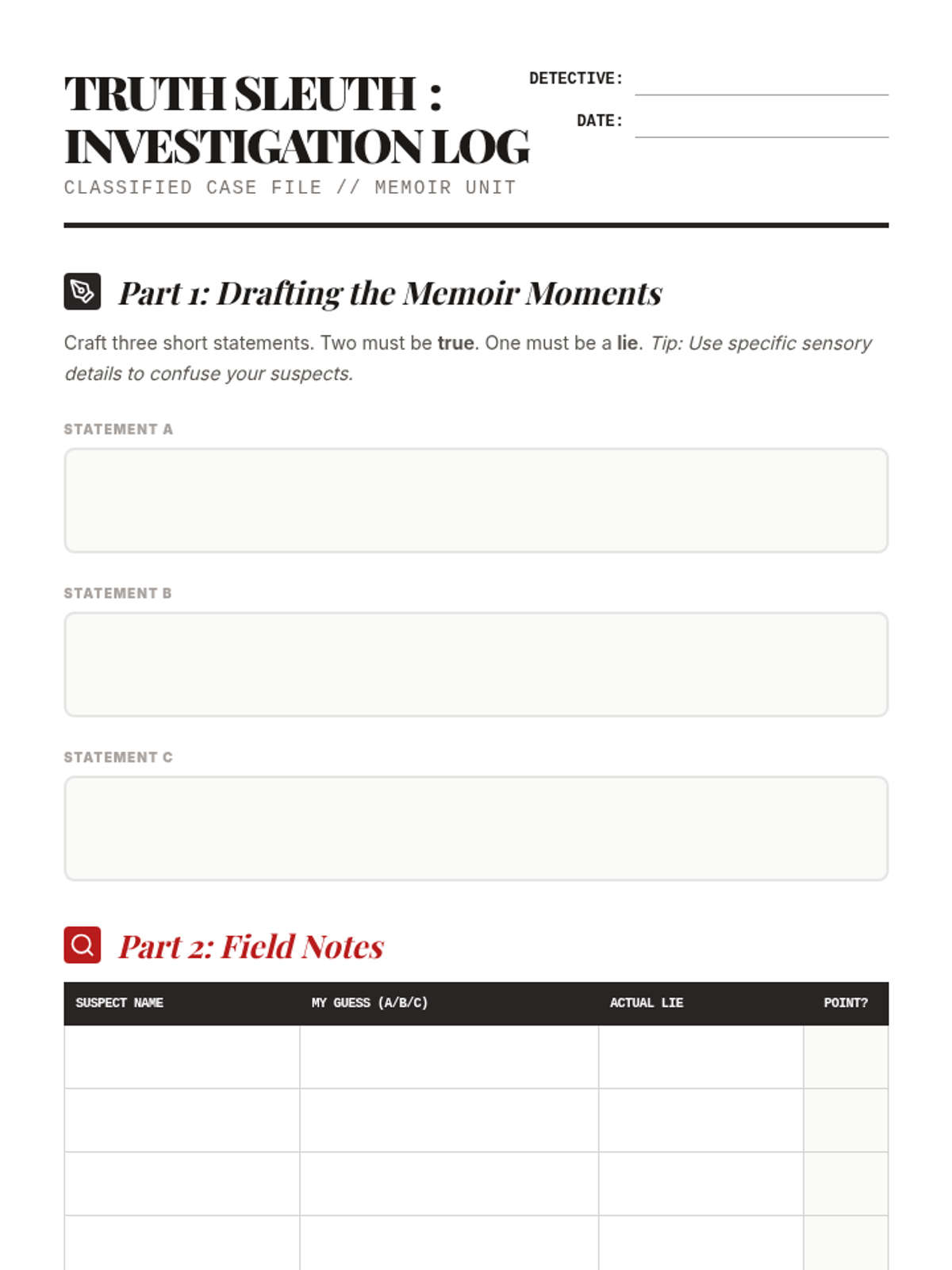
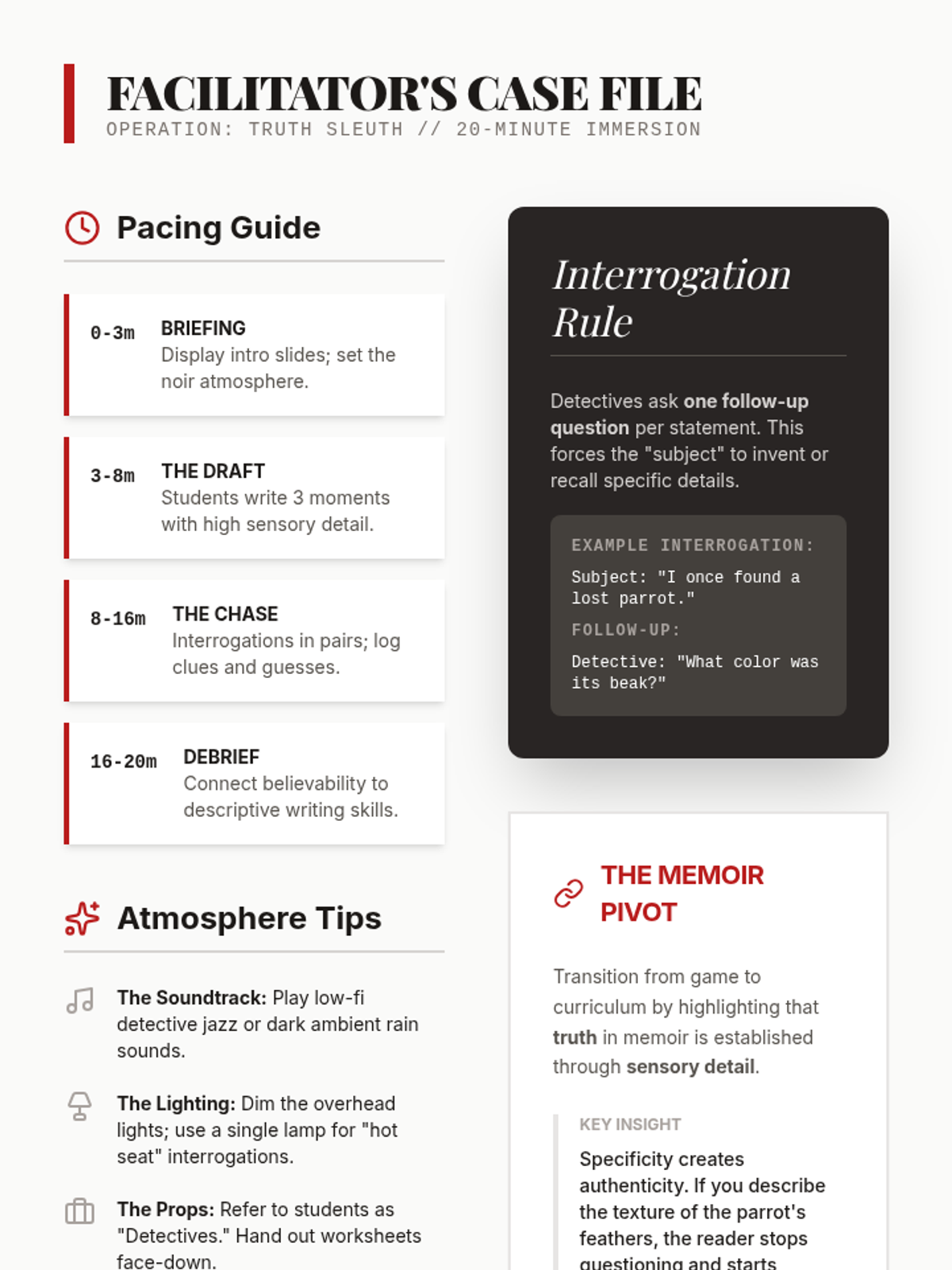
A high-energy, immersive opening game for a memoir unit where students play a detective-themed version of Two Truths and a Lie to explore the boundaries of memory and narrative truth.
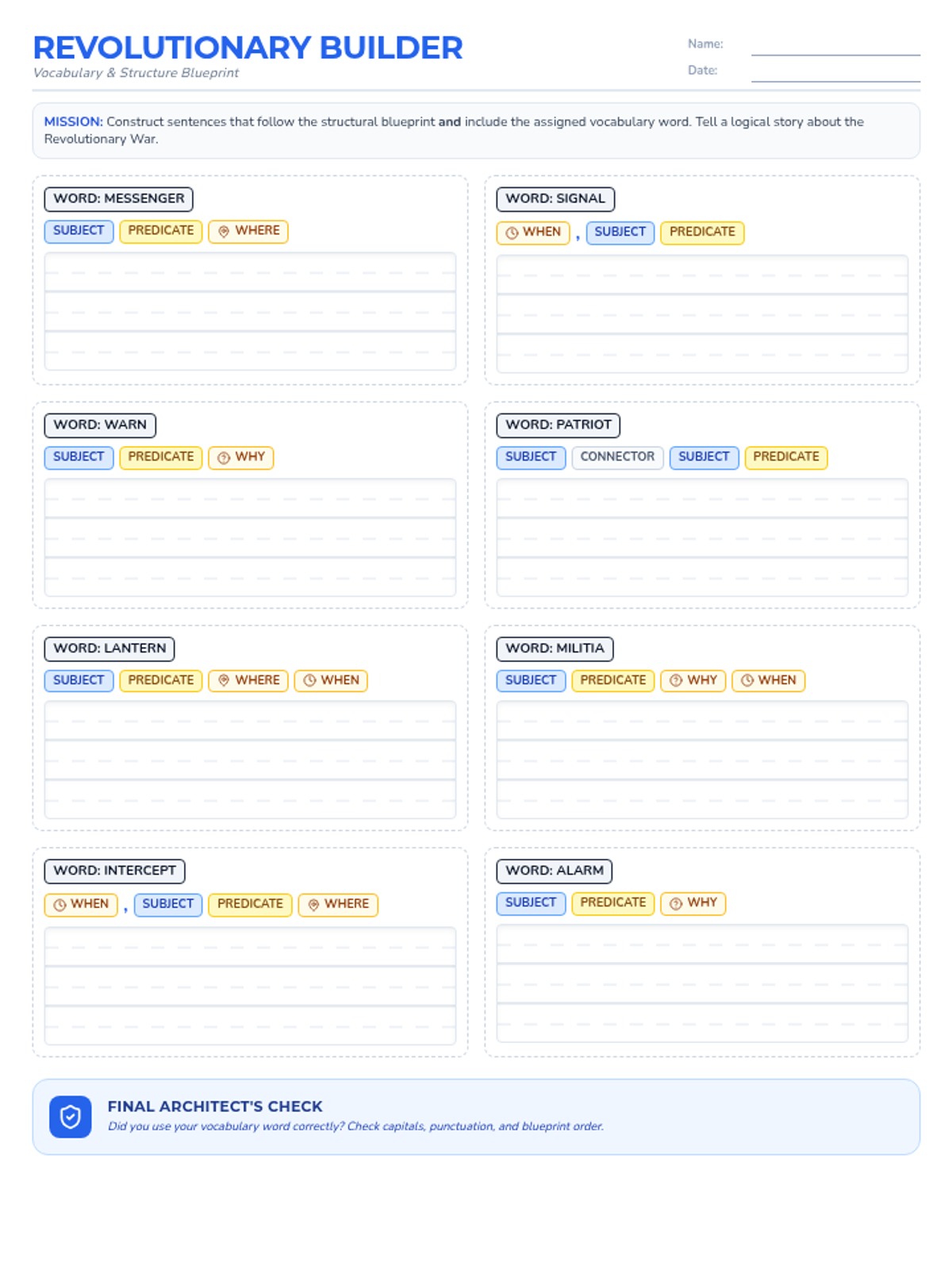
A hands-on lesson for mastering sentence structure using visual blueprint cards to label parts of speech and build complex sentences.
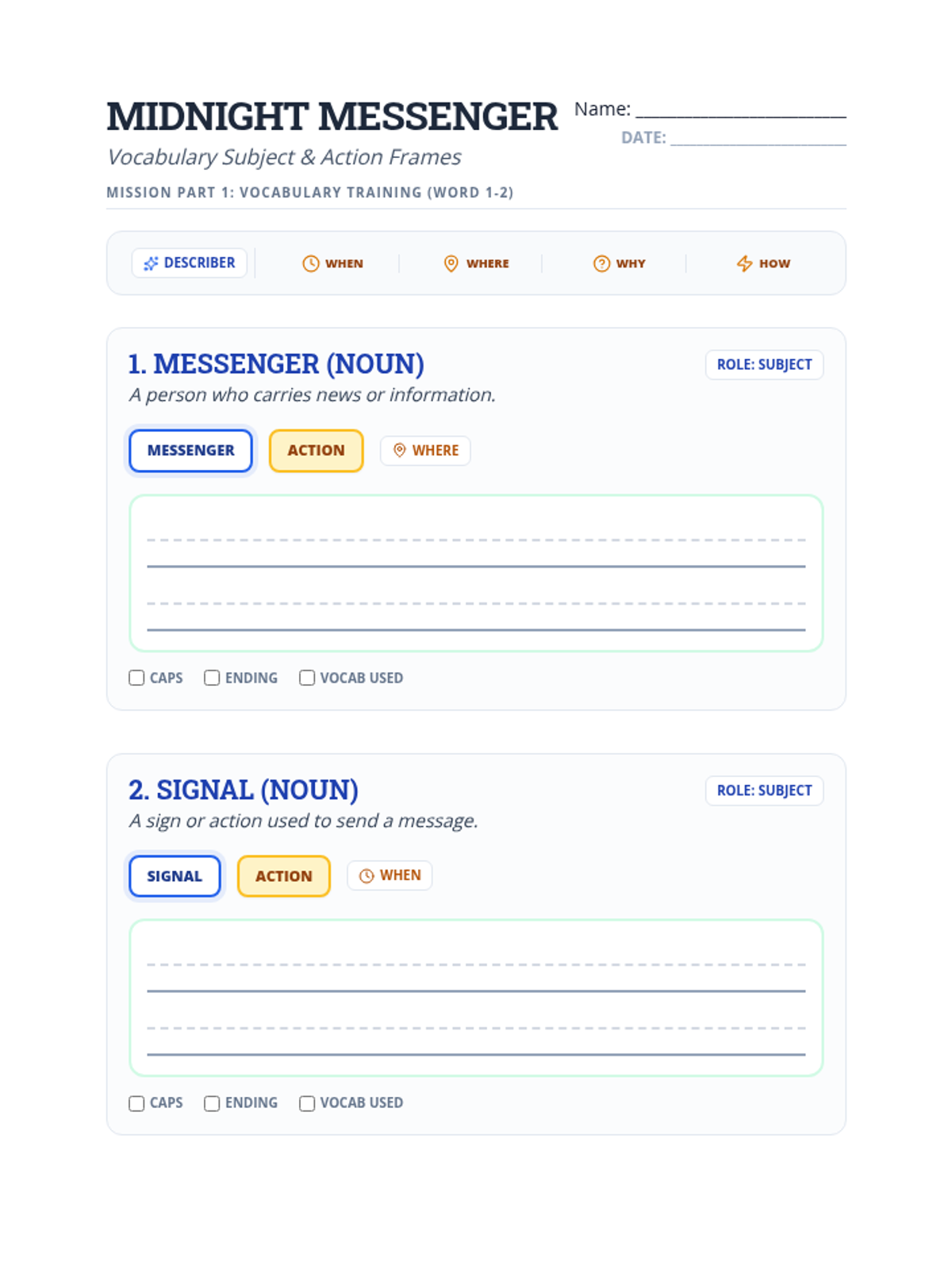
A lesson focused on vocabulary acquisition and sentence refinement through the lens of colonial messengers and historical context. Students master key terms like 'messenger' and 'militia' while practicing sentence structure and editing.
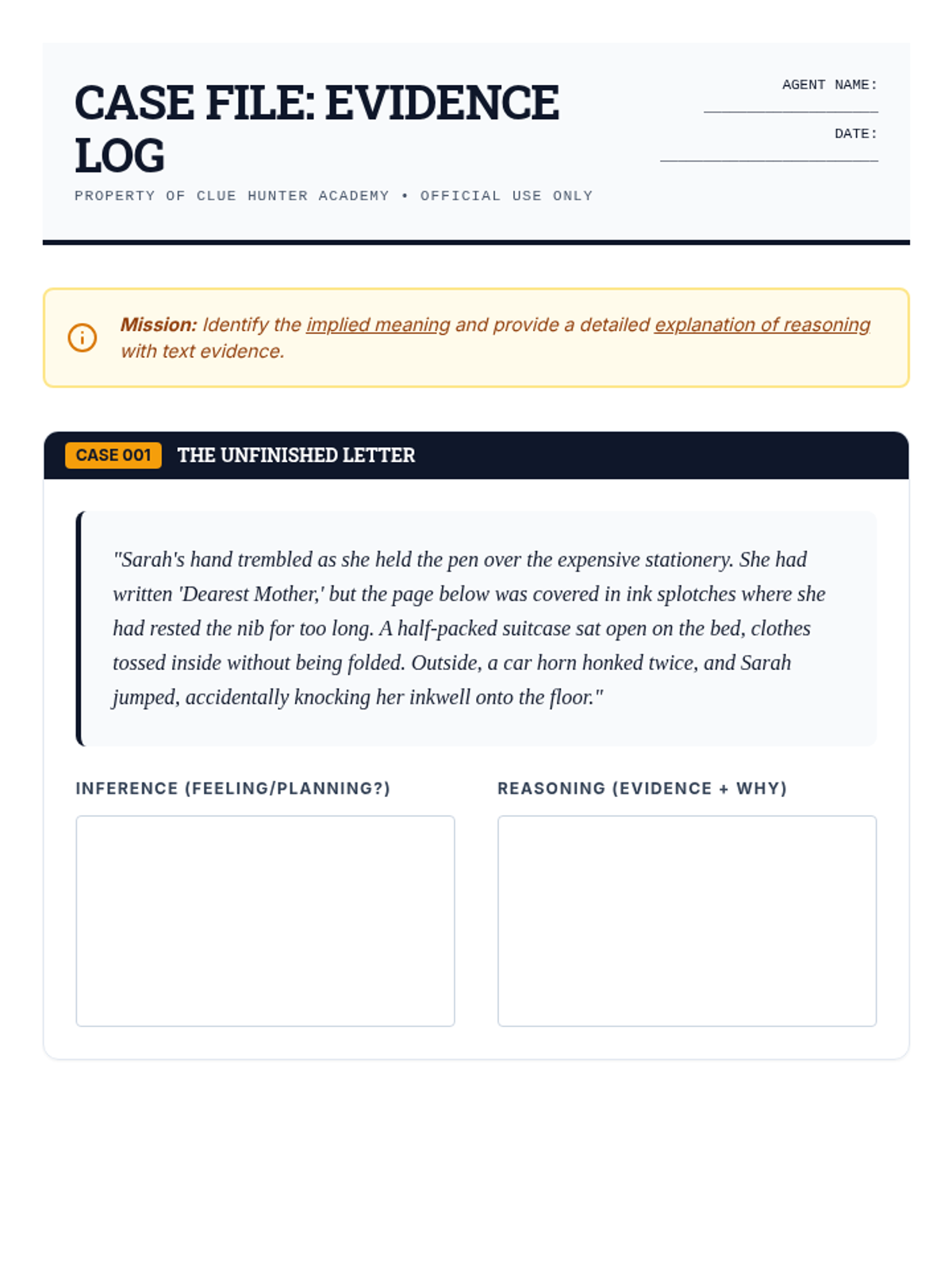
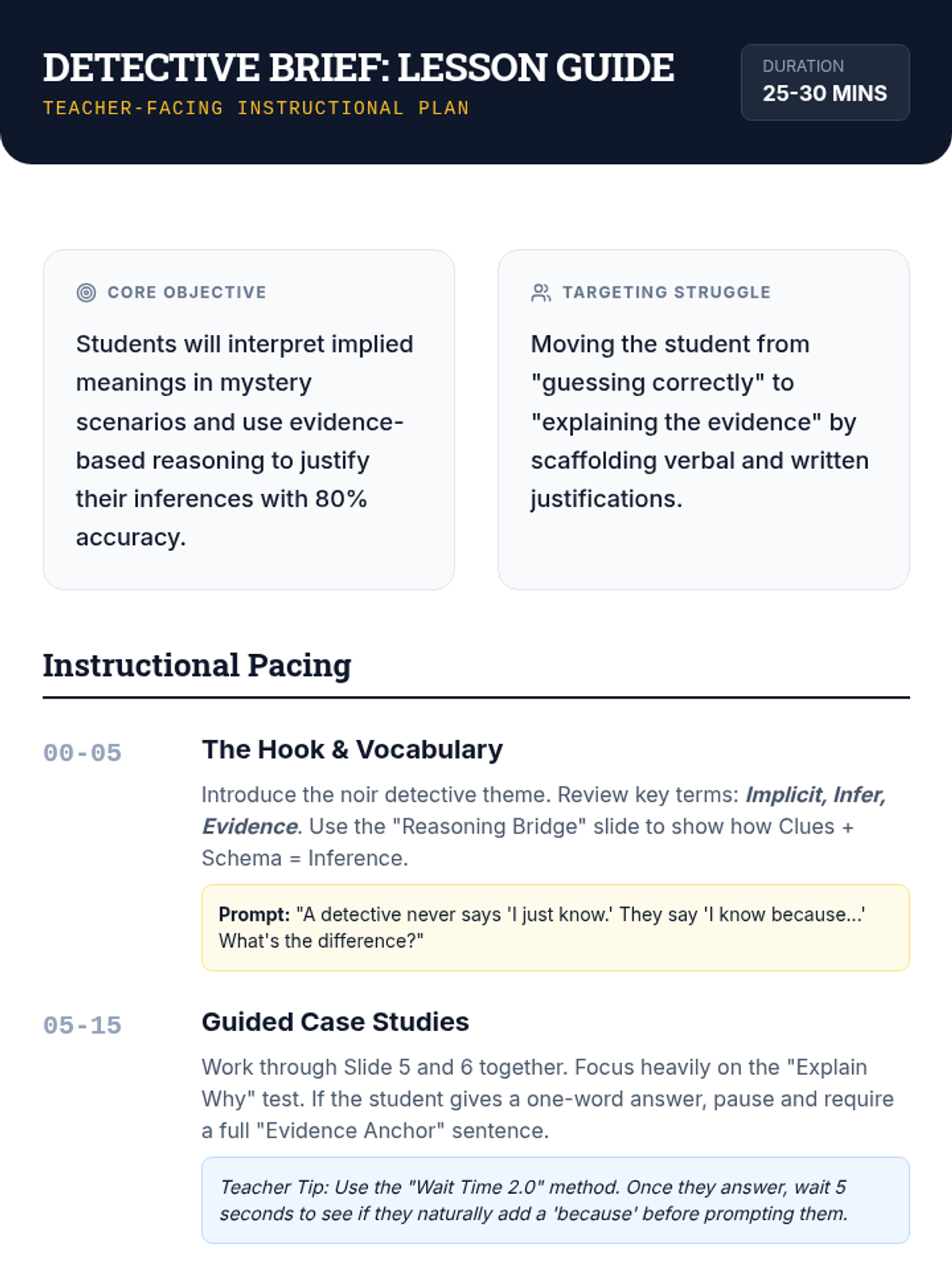
A targeted 1:1 intervention lesson focused on inferential reasoning and evidence-based explanations using a noir mystery theme. Students will practice identifying implied meanings in short scenarios and using specific sentence frames to justify their conclusions.
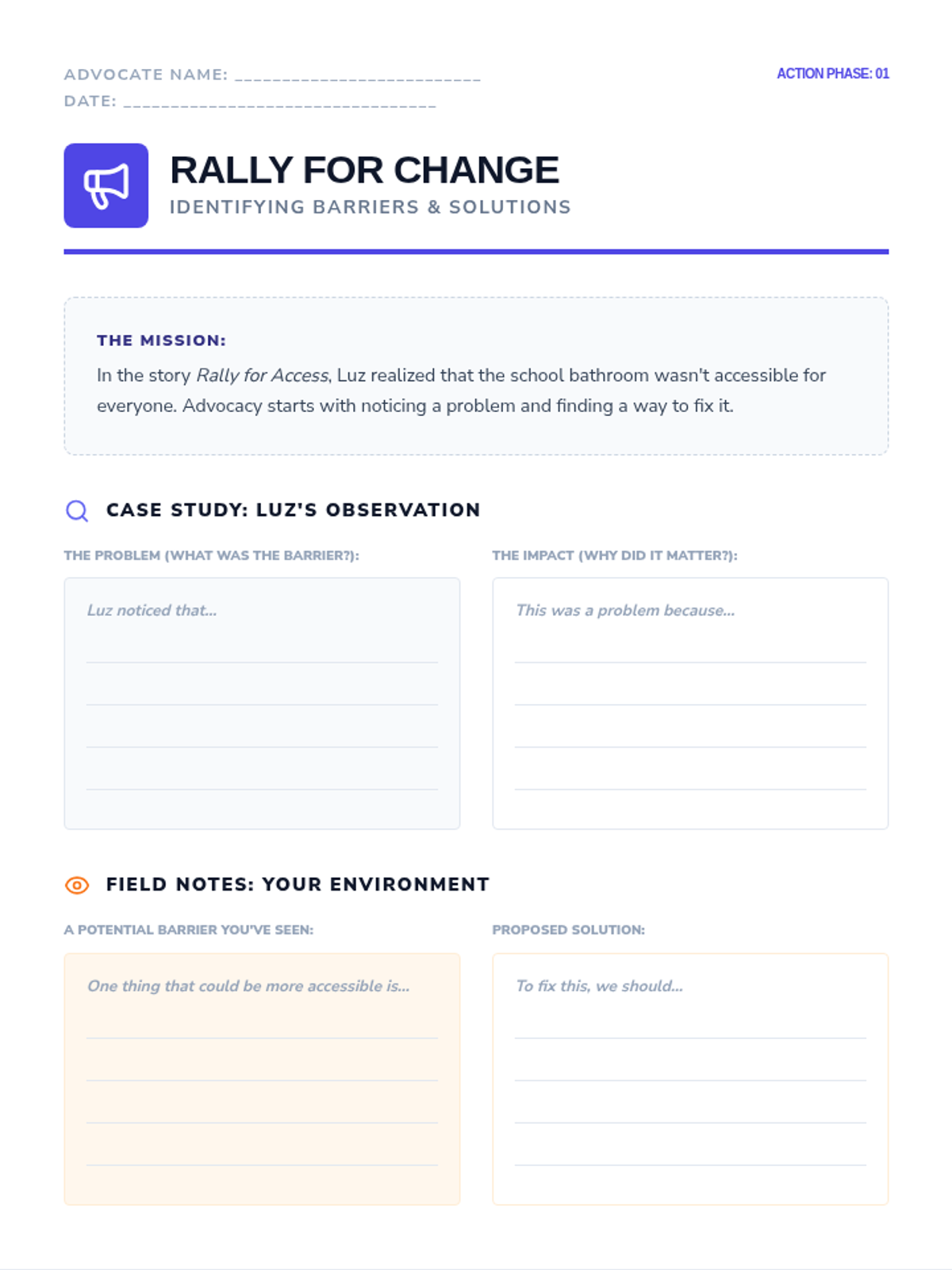
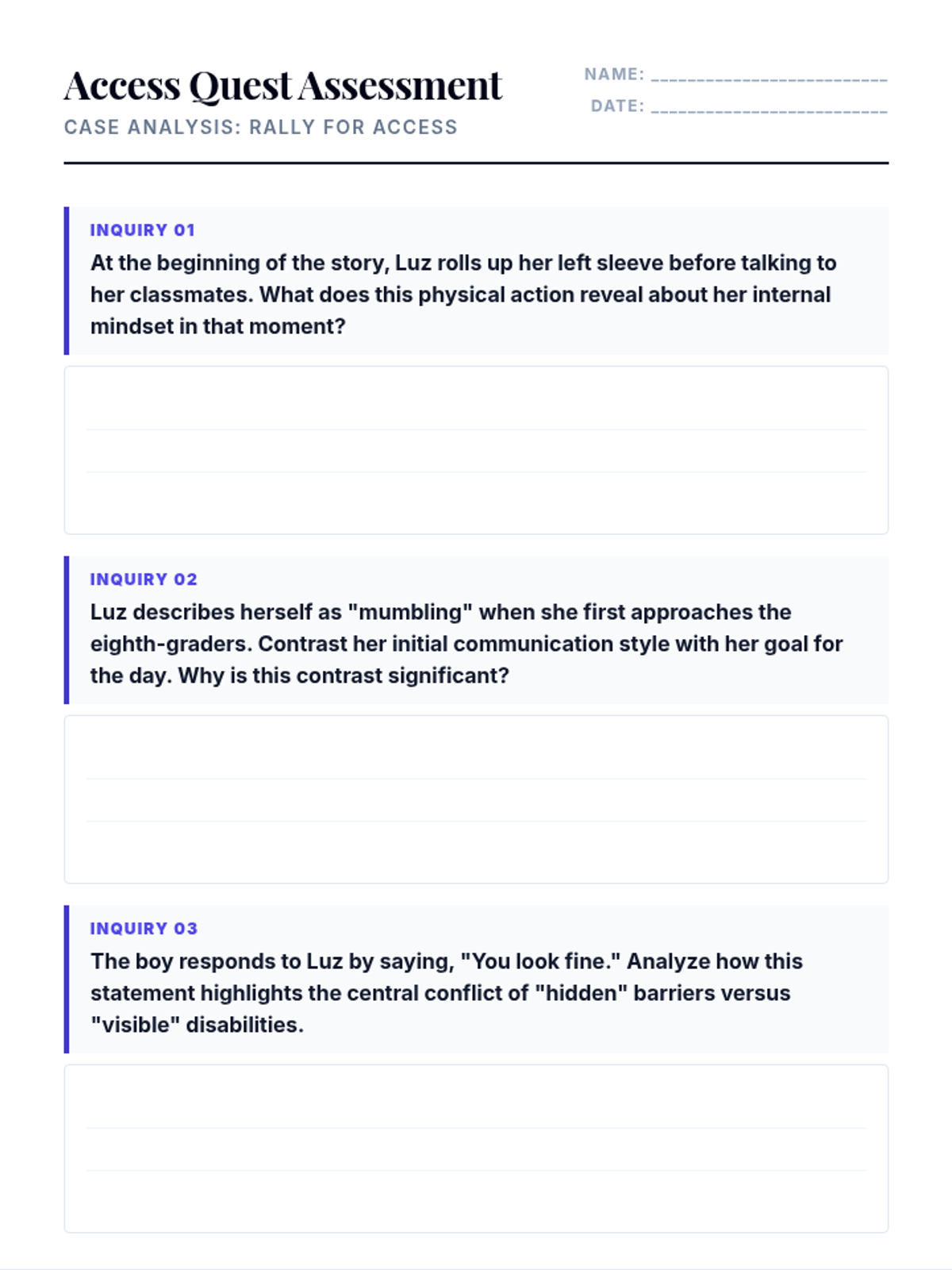
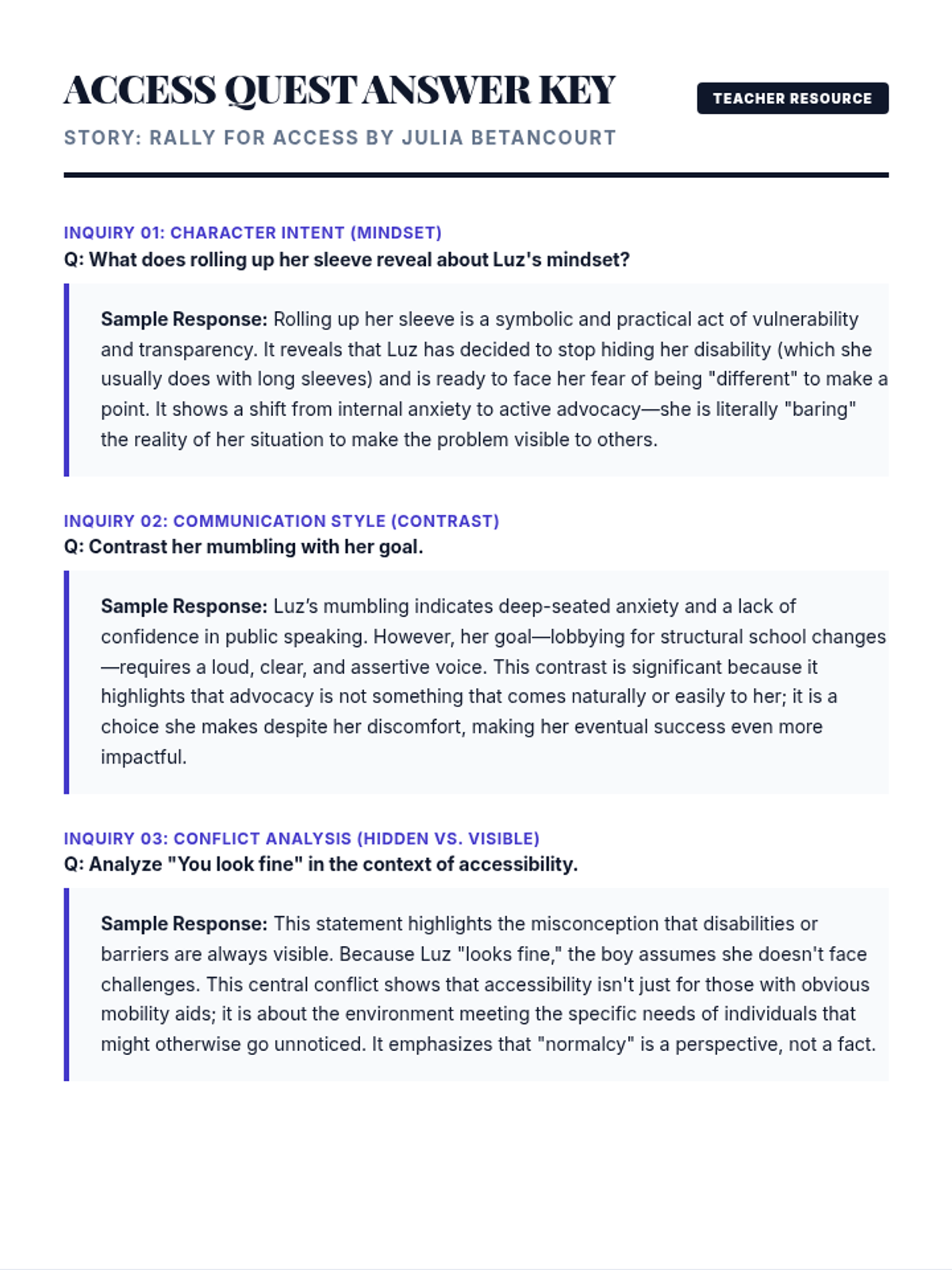
A lesson based on the story 'Rally for Access', focusing on advocacy, accessibility, and the power of community support. Students analyze Luz's journey from anxiety to activism and reflect on barriers in their own environments.