A project-based challenge where students design a tiny house floor plan, optimizing for area while minimizing perimeter and cost.
A hands-on lesson focusing on practical money skills: identifying the next dollar up for purchases and calculating change from $5 and $10 bills using a fun snack shack theme.
Students synthesize their knowledge of central tendency and probability to complete a final laboratory assessment.
Students use station rotations to explore probability and frequency through lab beaker measurements and control panel button analysis.
Students collect data on DeeDee's disruptions to learn and calculate the mean, median, and mode of a dataset.
A comprehensive evaluation tool for 7th-grade teachers to determine student readiness for 8th-grade Algebra 1 based on MCAS and iReady data.
A quick practice session for students to master area and perimeter of simple rectangles using a drafting-themed layout.
Students take on the role of landscape architects to design a community garden, applying their knowledge of area, perimeter, and symmetry with fractional dimensions.
In this lesson, students become packaging engineers for a modern logistics company. They apply 3D geometry concepts—specifically surface area and volume of rectangular prisms—to design efficient shipping containers that minimize material waste and maximize storage capacity.
A colorful, interactive introduction to basic statistics using the theme of a gumball machine. Students learn to collect data, calculate measures of central tendency, and determine probability through guided and independent practice.
Students explore dividing unit fractions by whole numbers and vice versa by portioning dough and serving individual slices.
Students apply multiplication strategies to determine ingredient amounts and calculate the area of rectangular baking sheets.
Students learn to interpret fractions as division by sharing pizzas and loaves of bread equally among friends and customers.
A lesson on reasoning with shapes, focusing on identifying sides, vertices, and attributes in both English and Japanese.
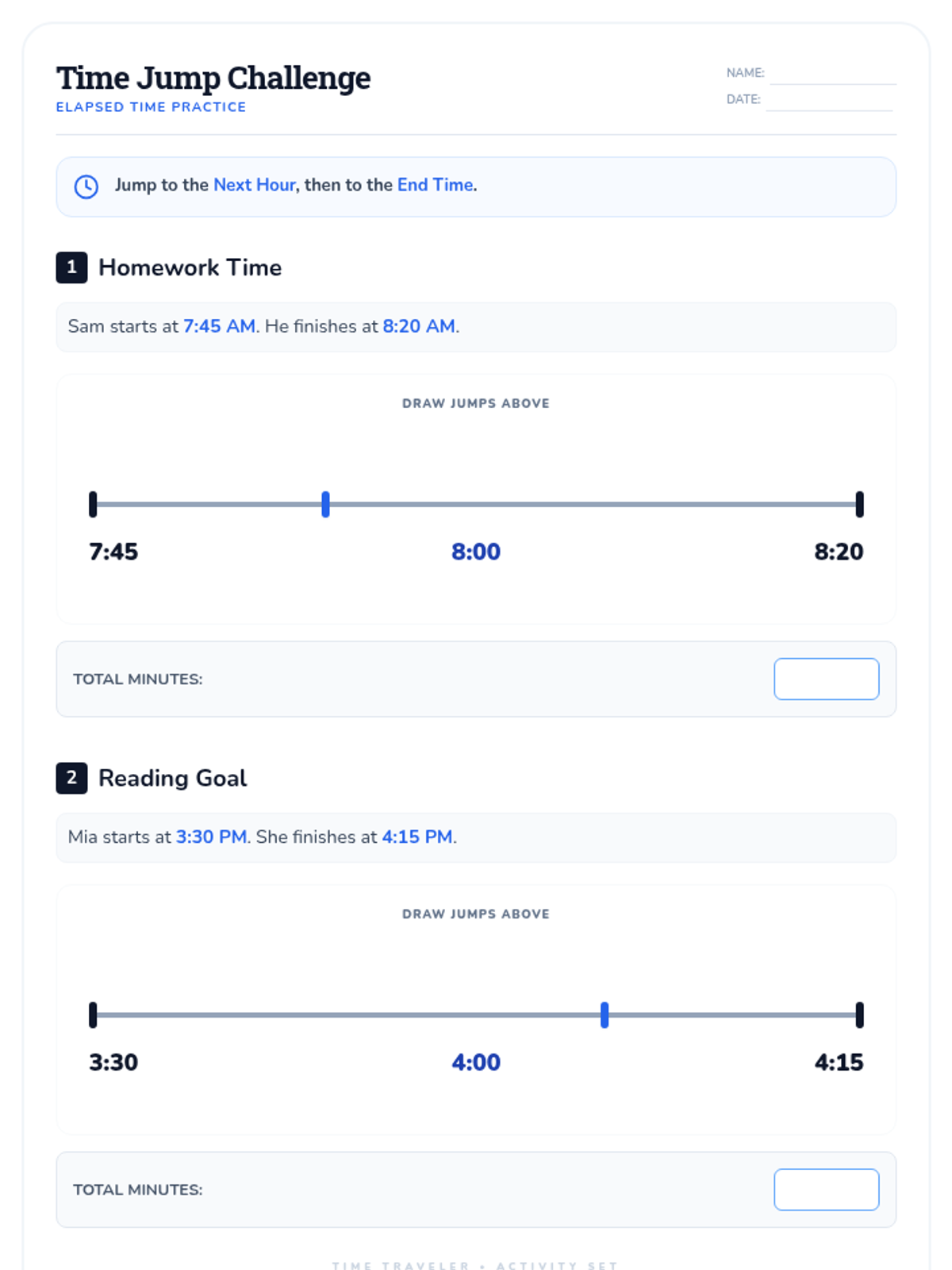
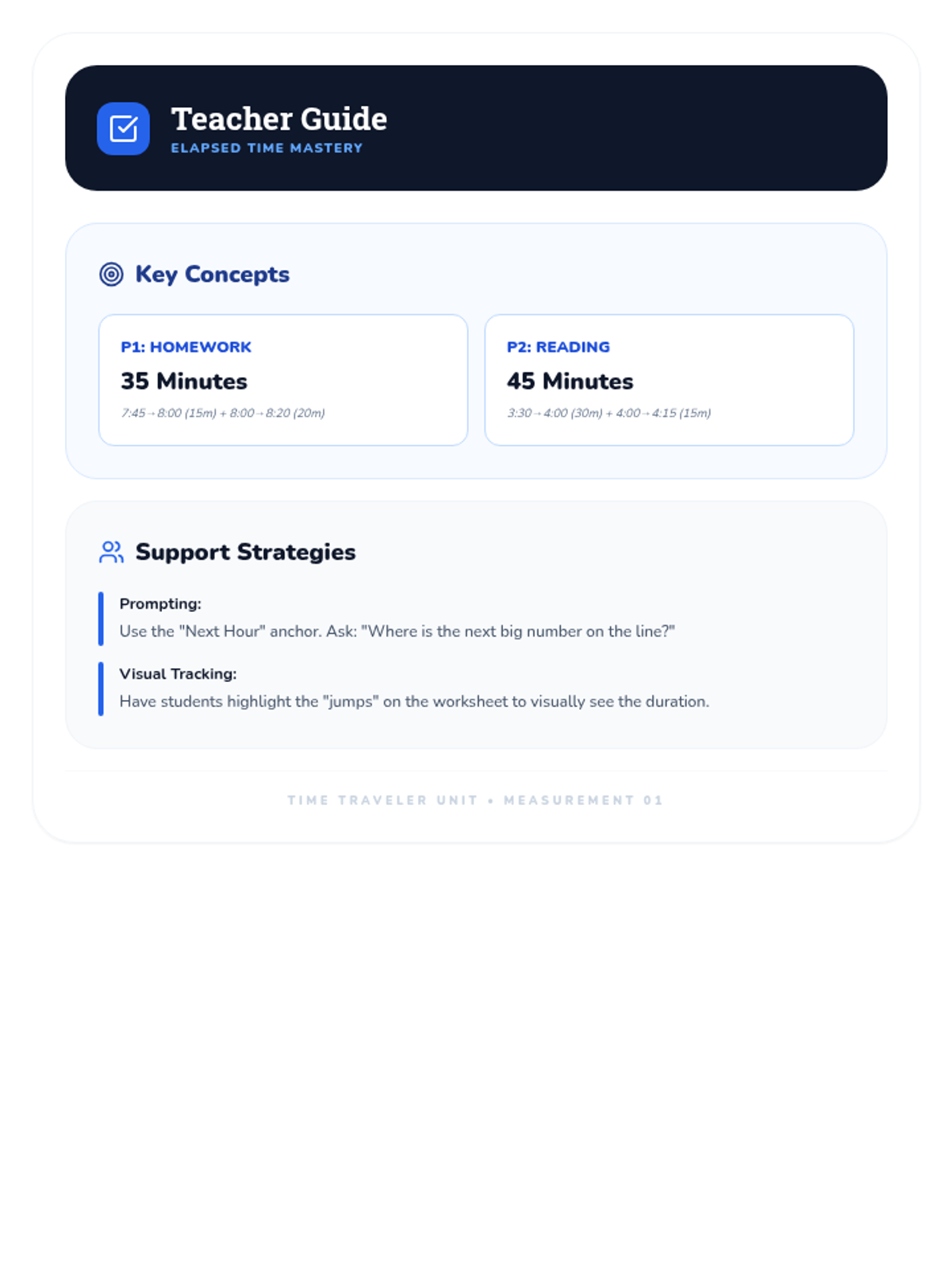
A lesson focused on solving multi-step real-world elapsed time problems using visual number lines, specifically designed for students requiring visual supports.
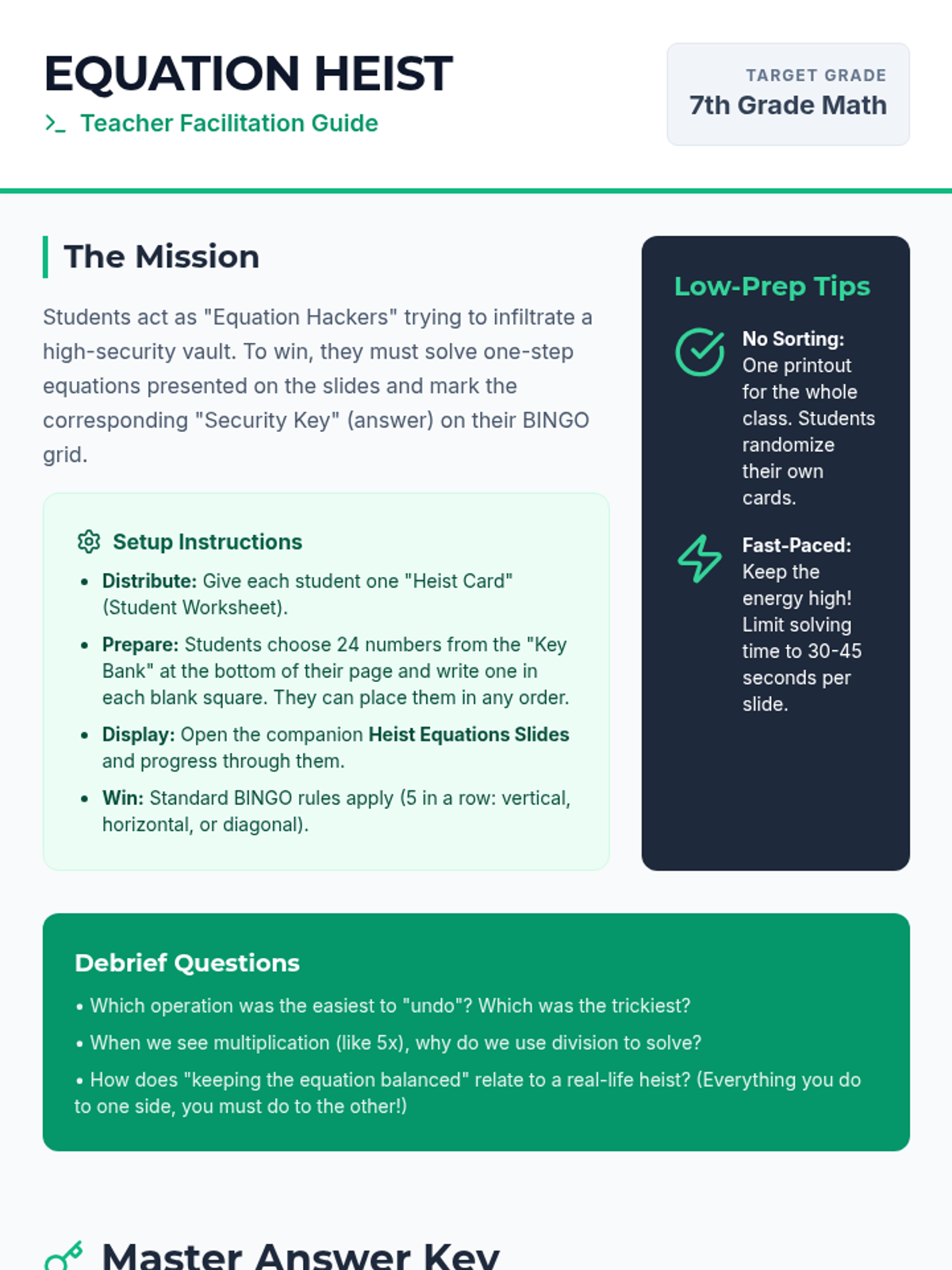
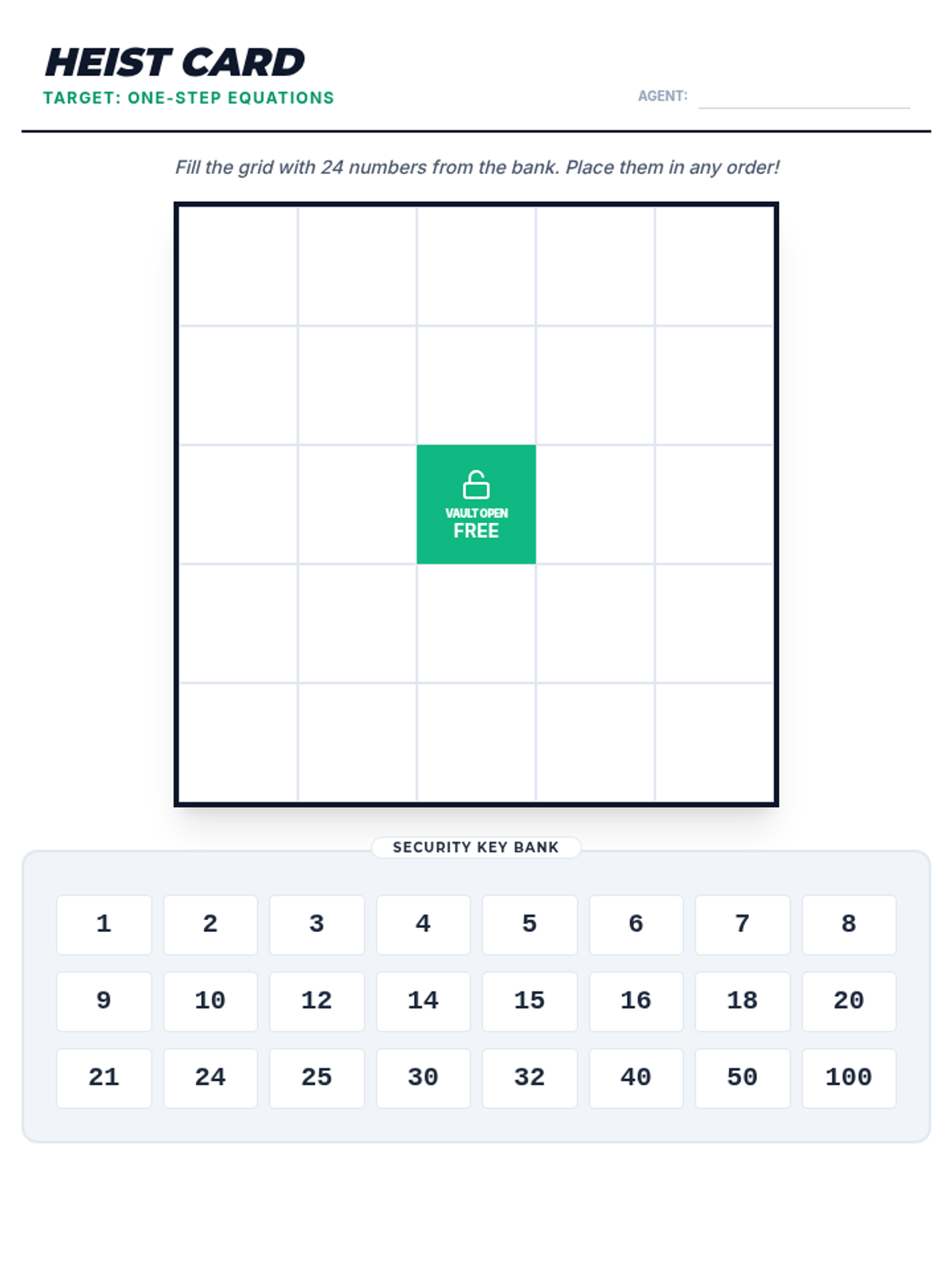
A high-energy, low-prep Math BINGO game where students solve one-step equations to crack codes and win. Includes a slide presentation for game delivery, a student bingo sheet with answer bank, and a teacher answer key.
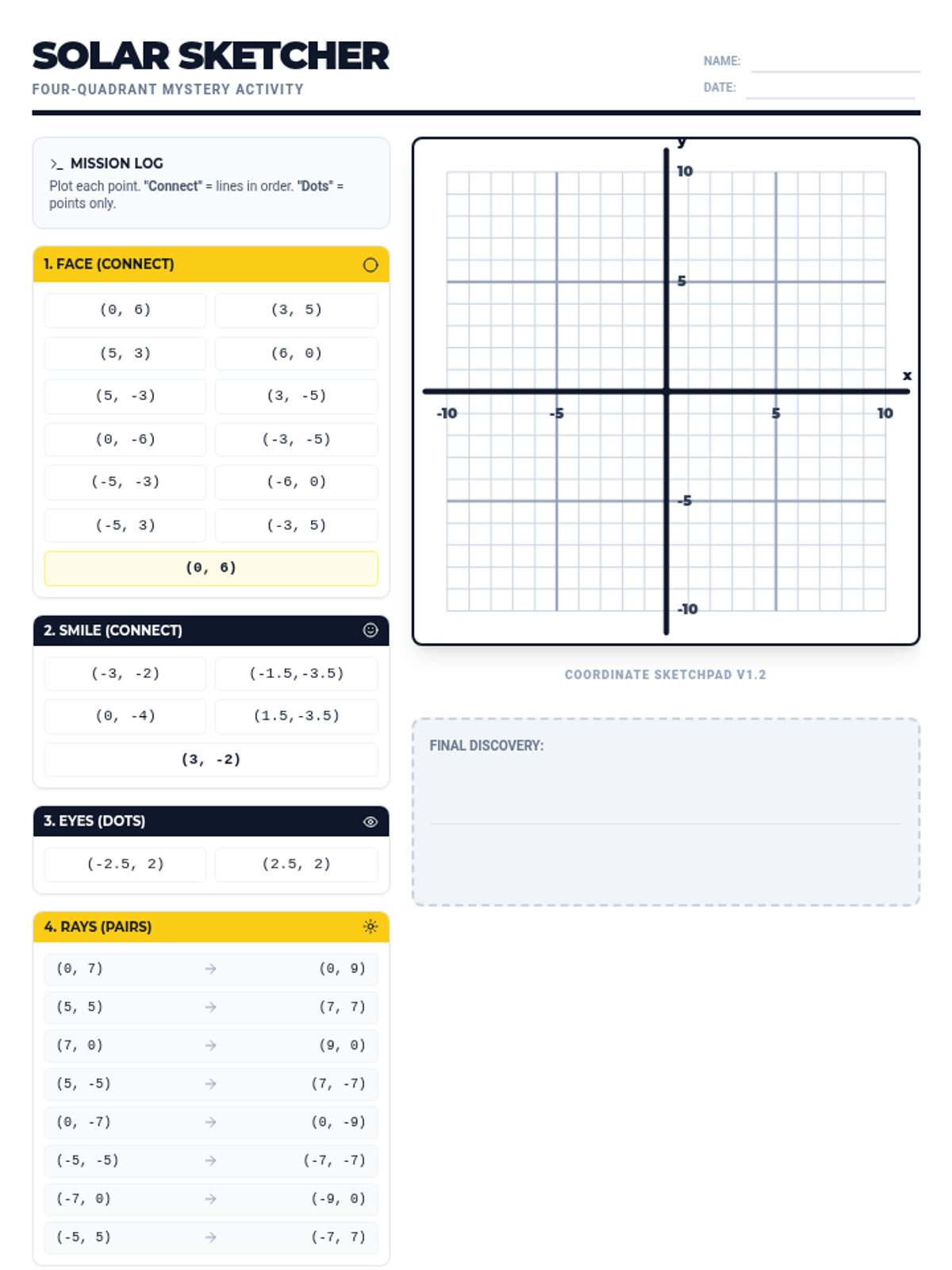
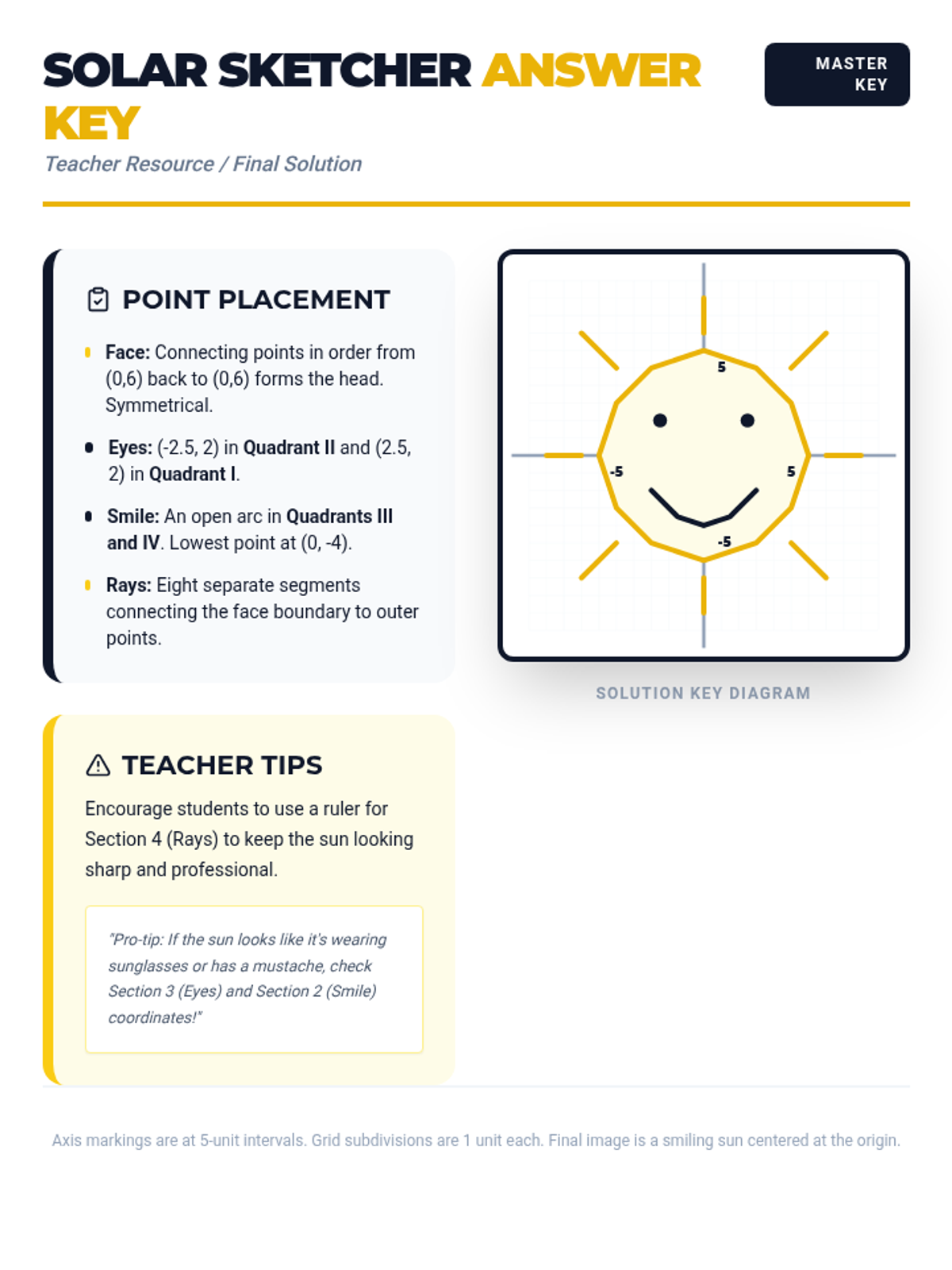
A math lesson focused on graphing ordered pairs in all four quadrants of the coordinate plane to reveal a hidden picture of a smiling sun.