A mini-lesson for second graders on telling time to the nearest five minutes, including the concepts of AM and PM, featuring a whimsical 'Time Traveler' theme.
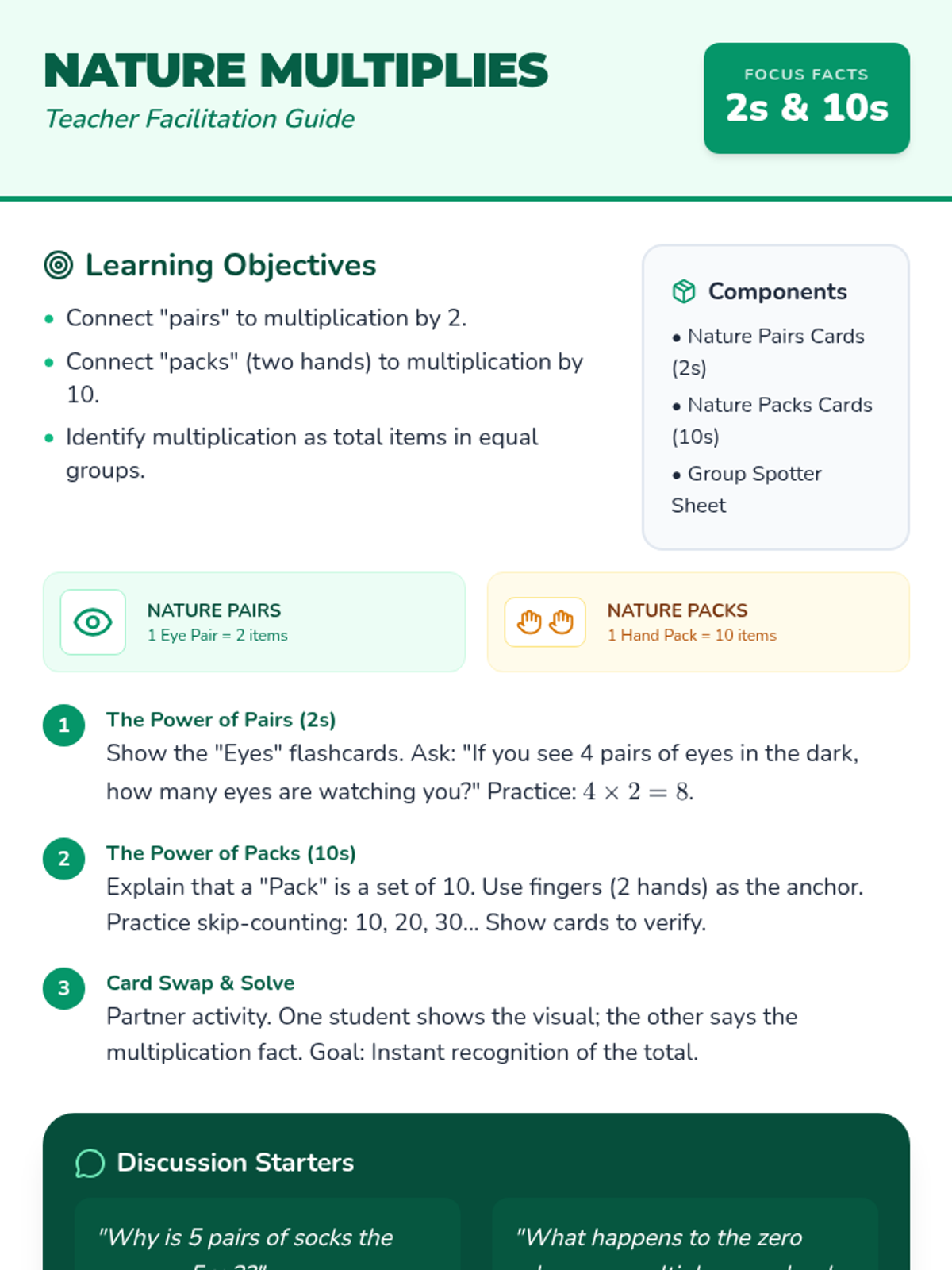
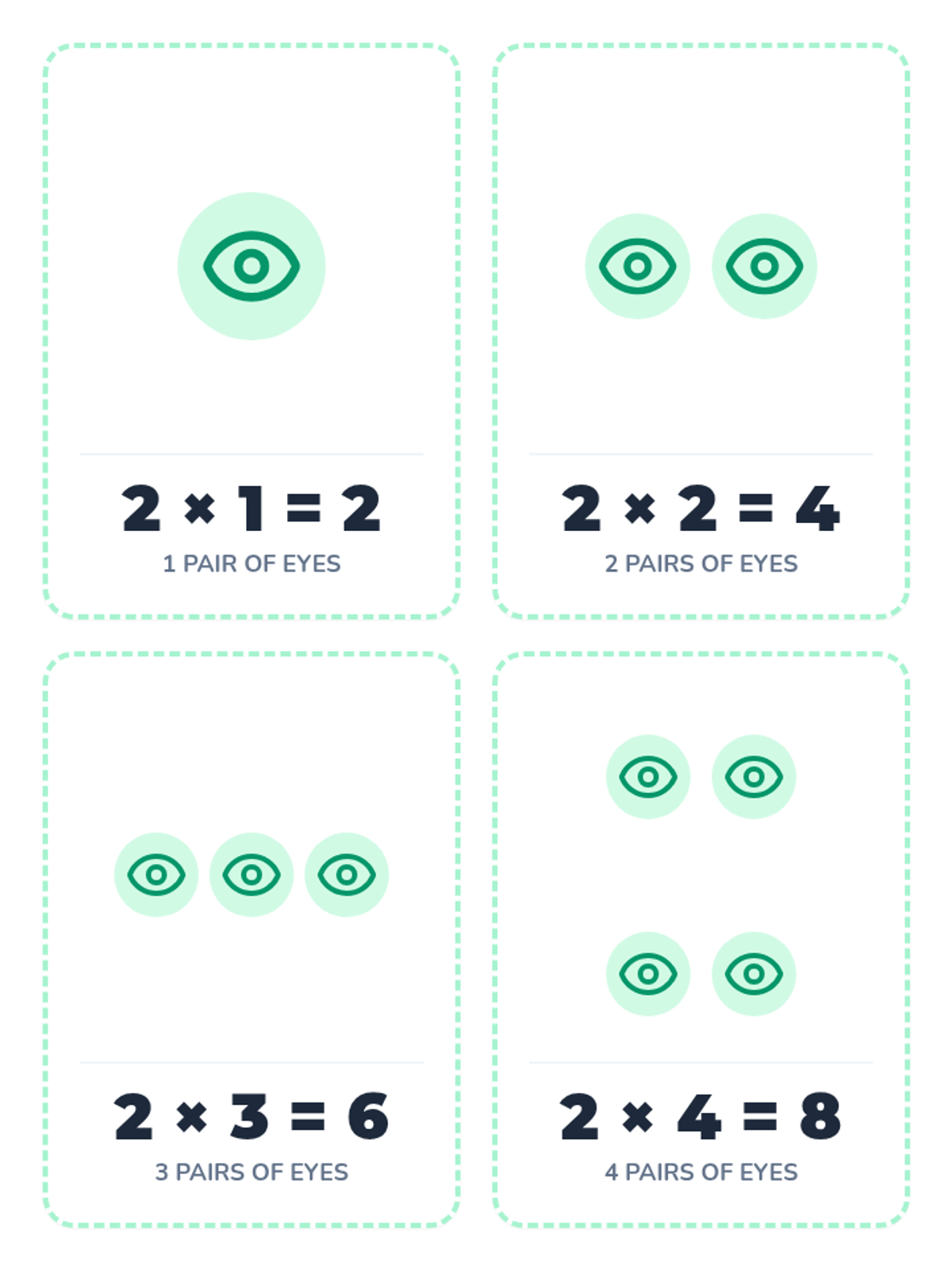
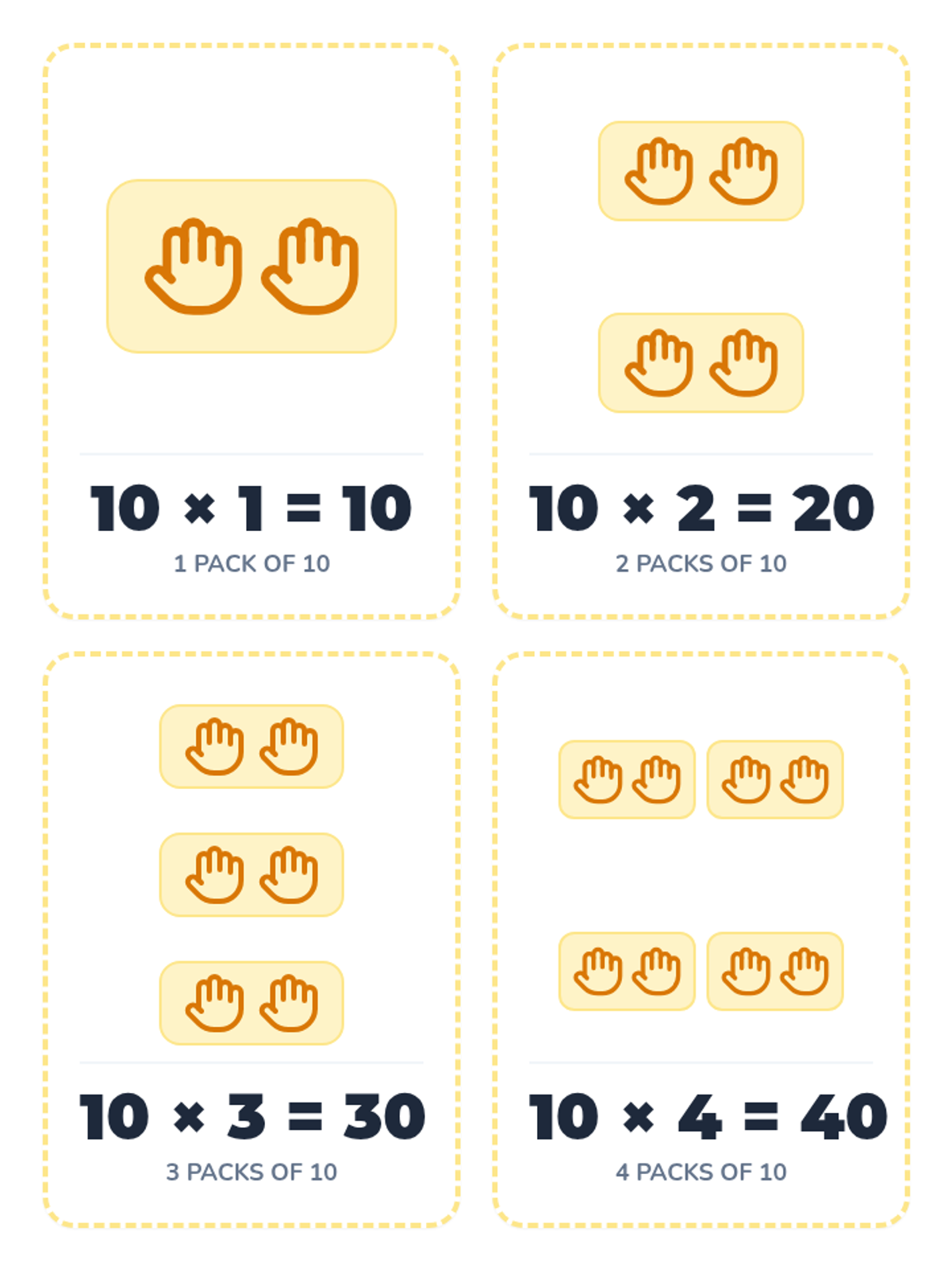
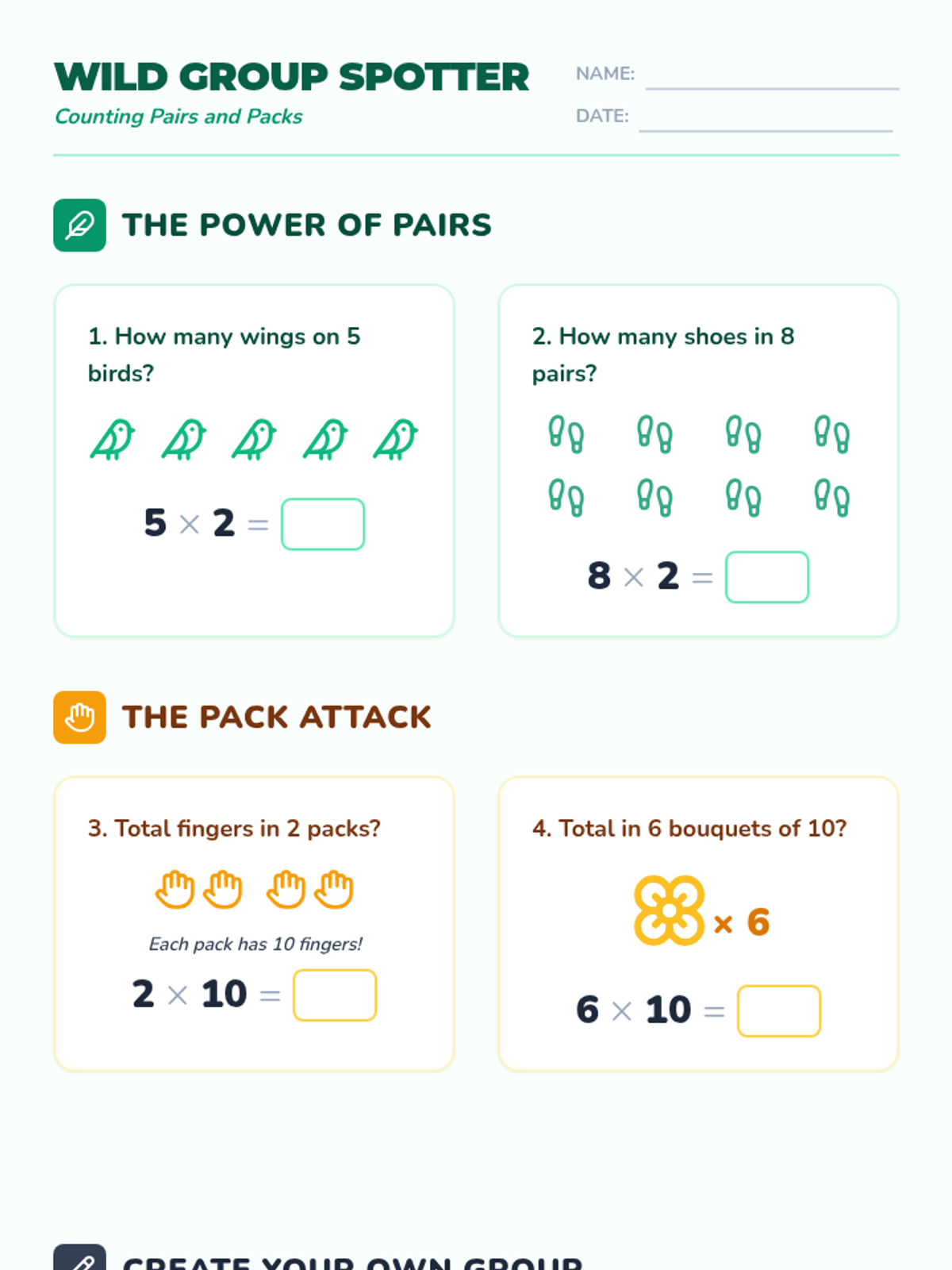
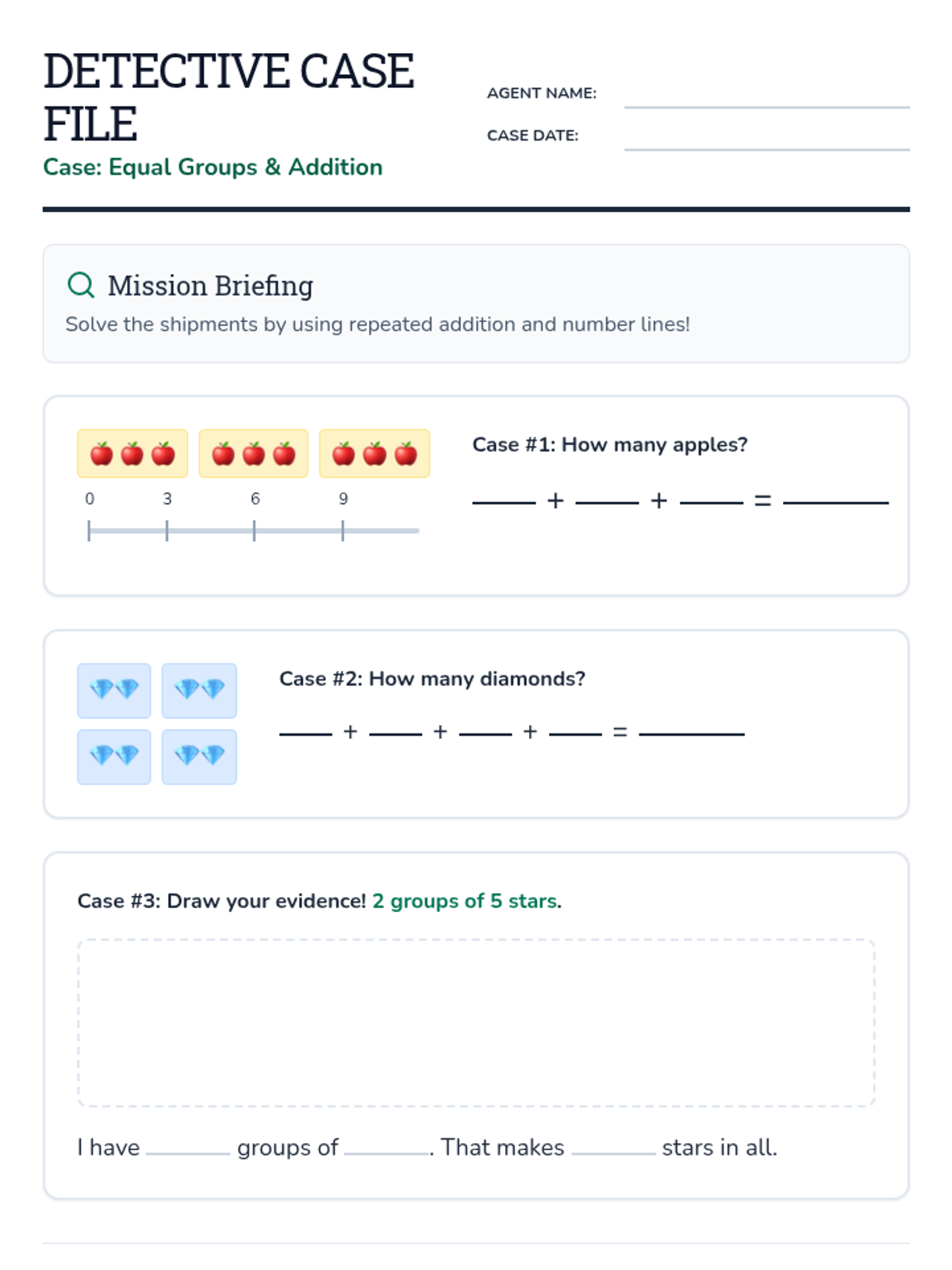
A foundation-level lesson introducing multiplication as equal groups, focusing on the numbers 2 and 10 through visual aids and hands-on flashcard practice.
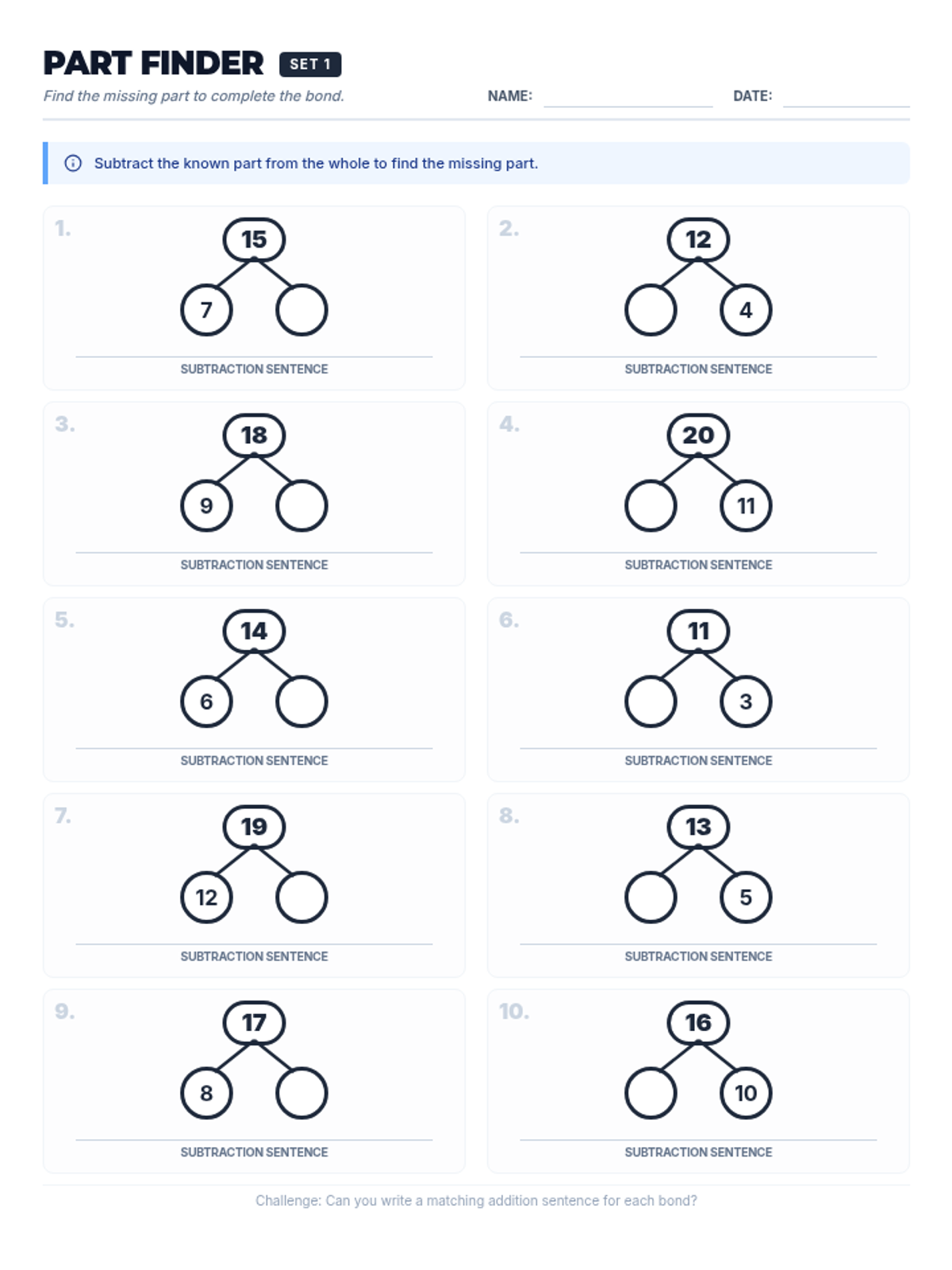
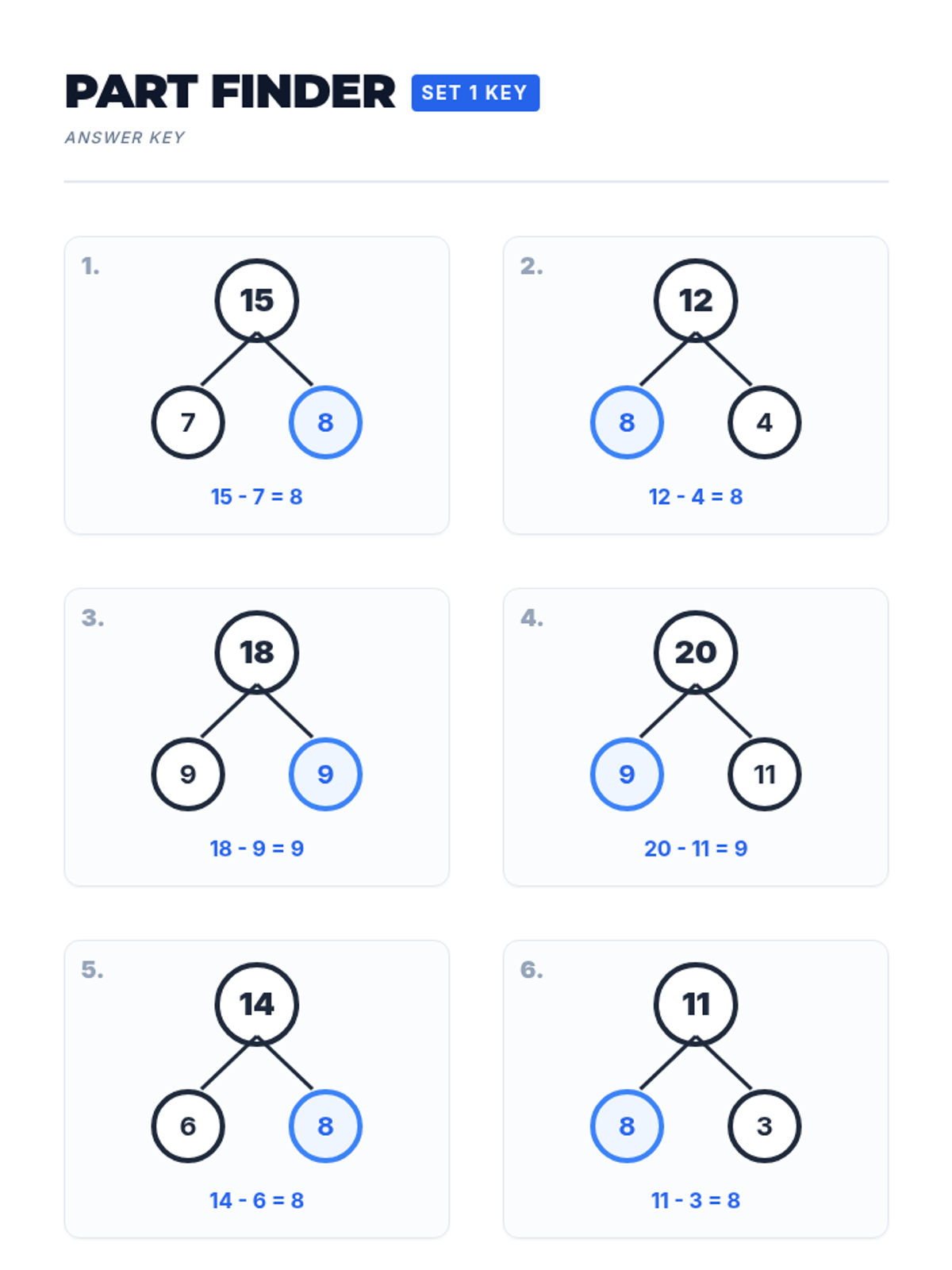
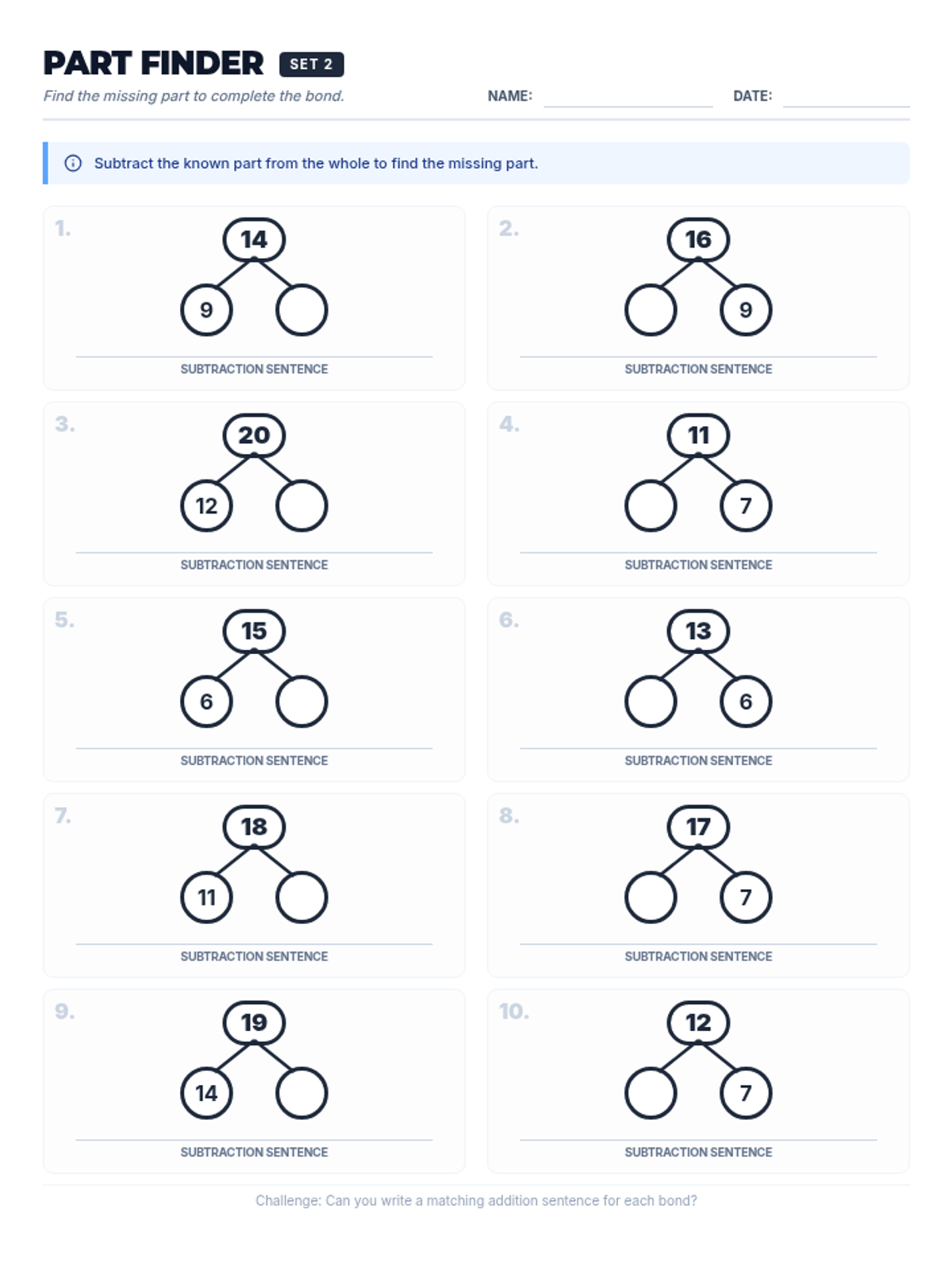
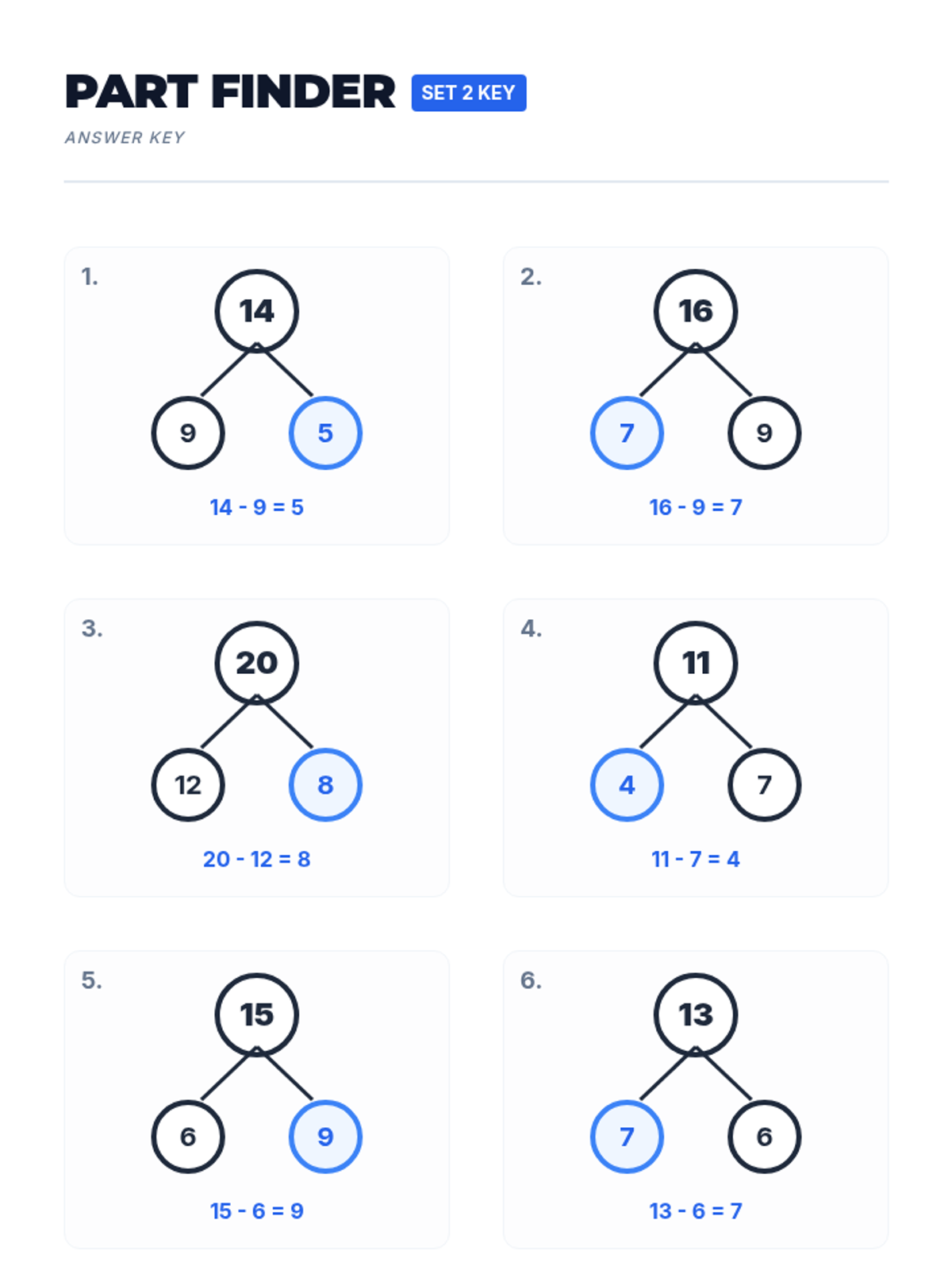
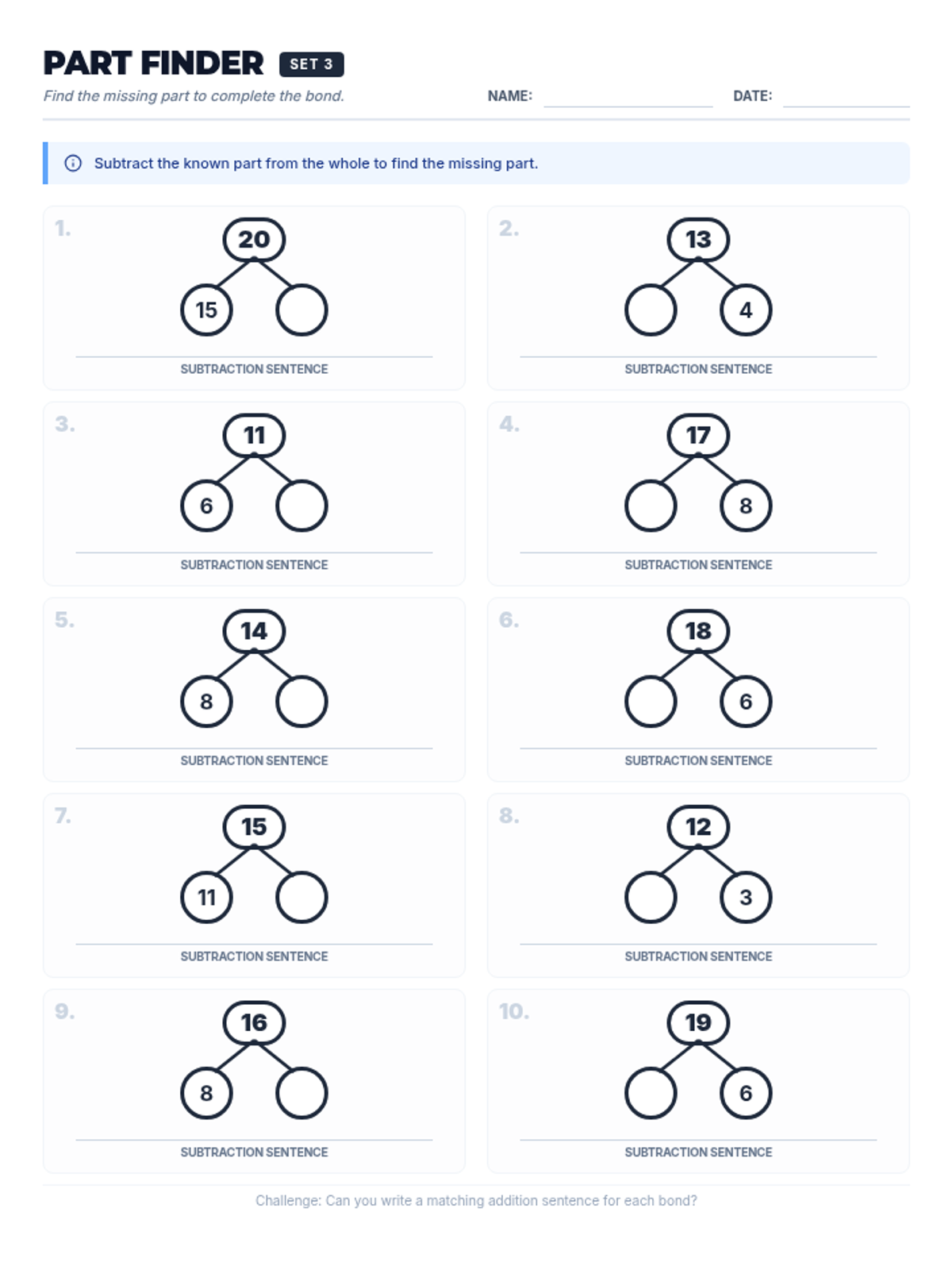
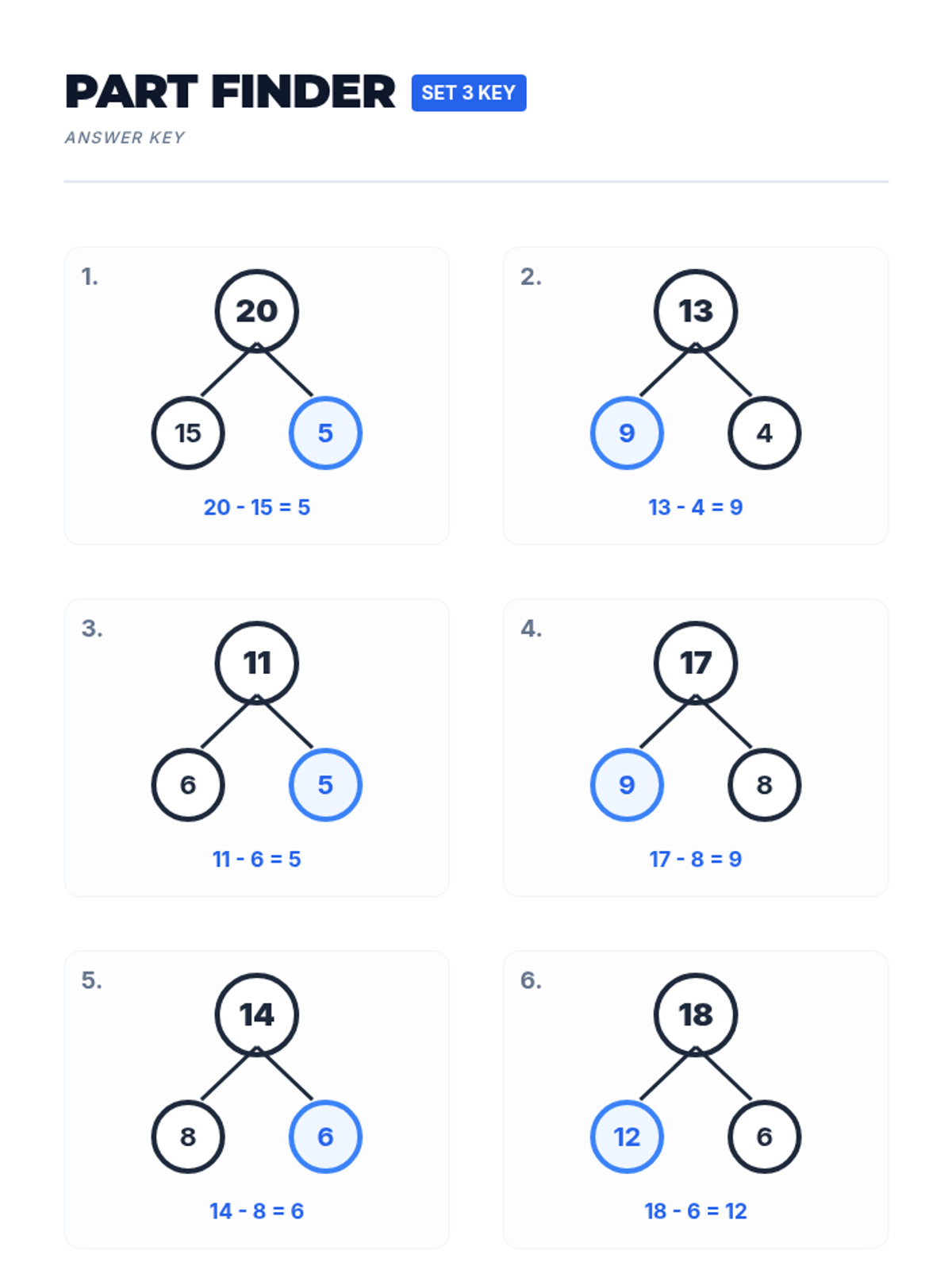
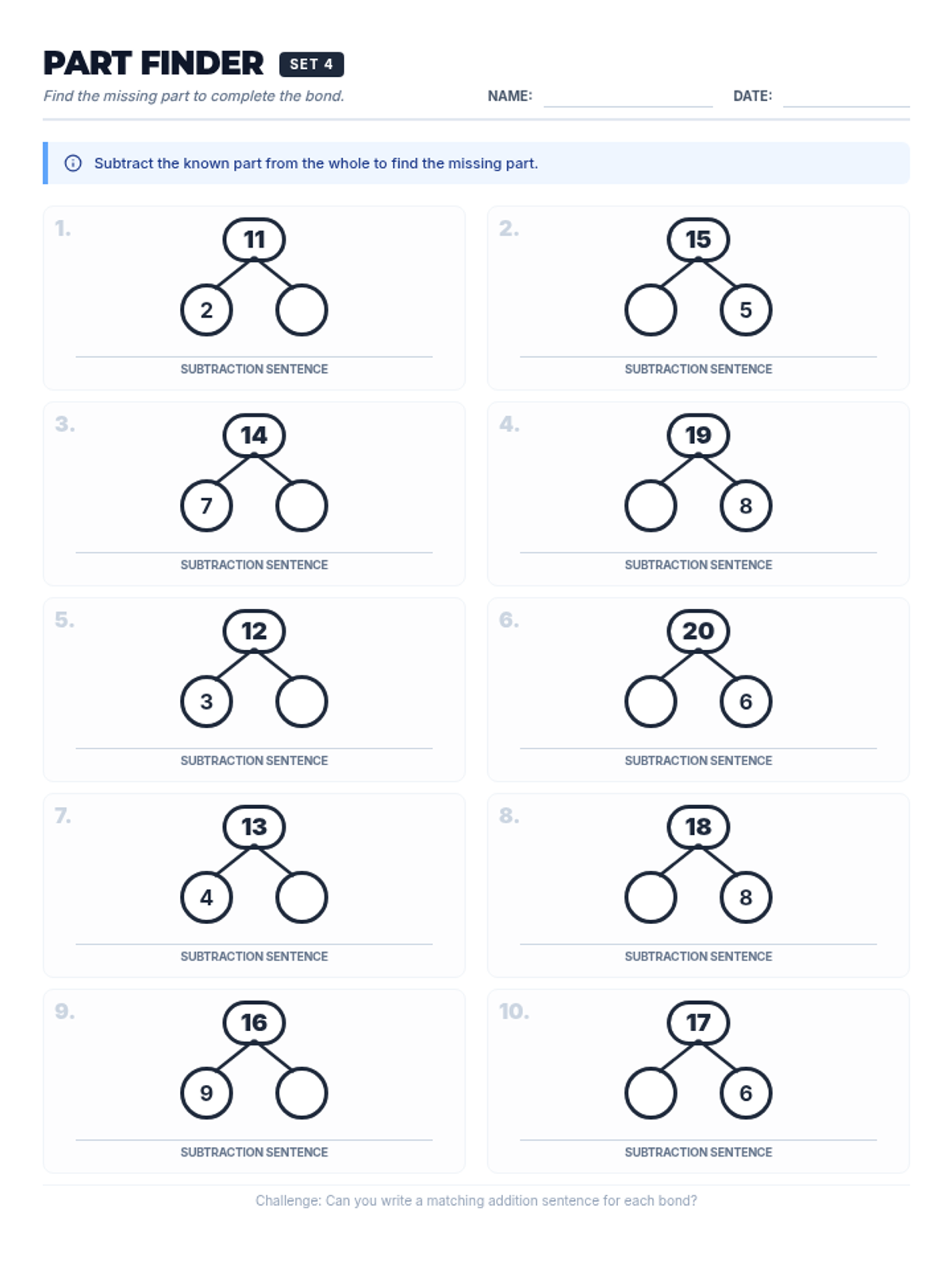
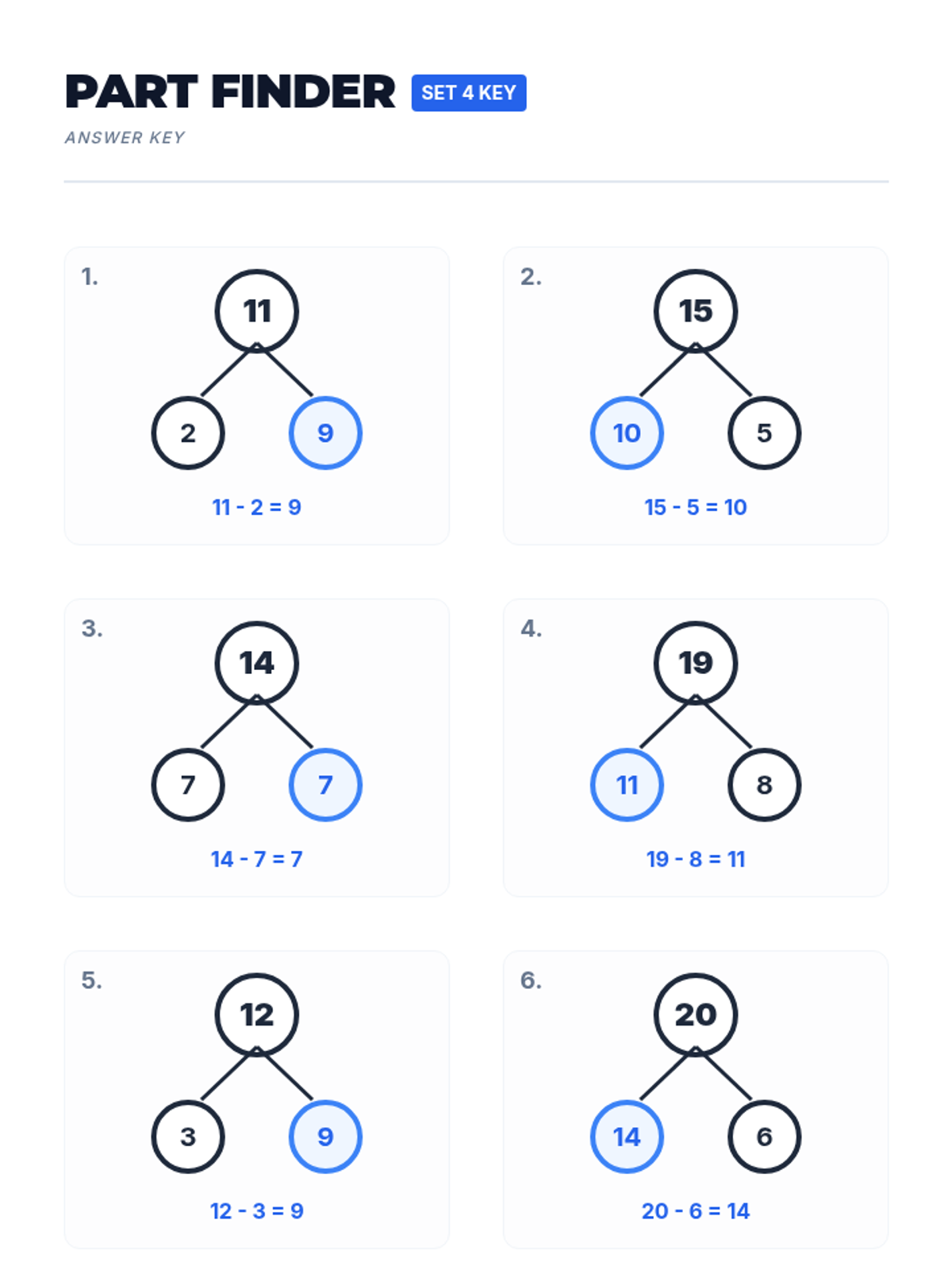
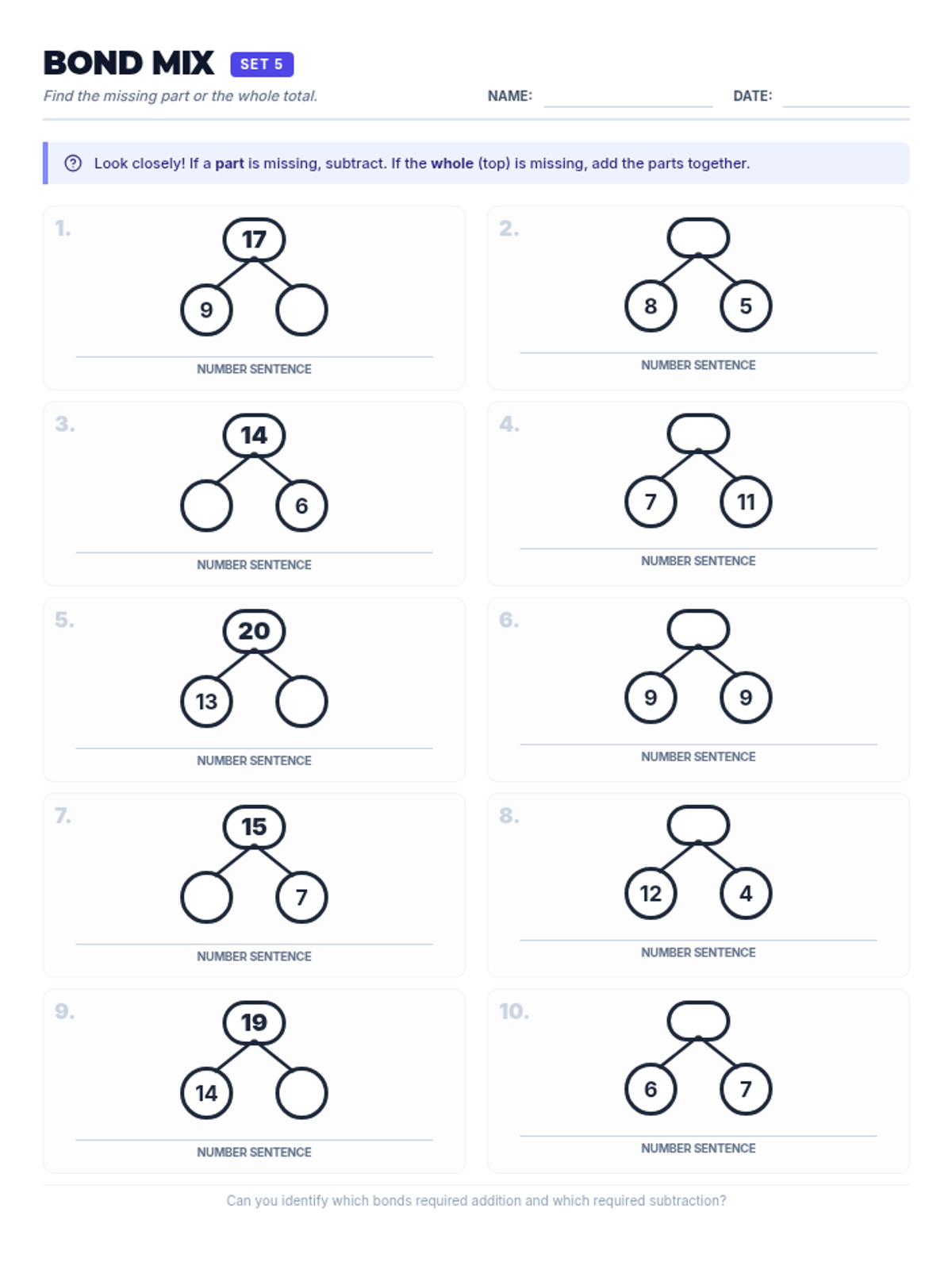
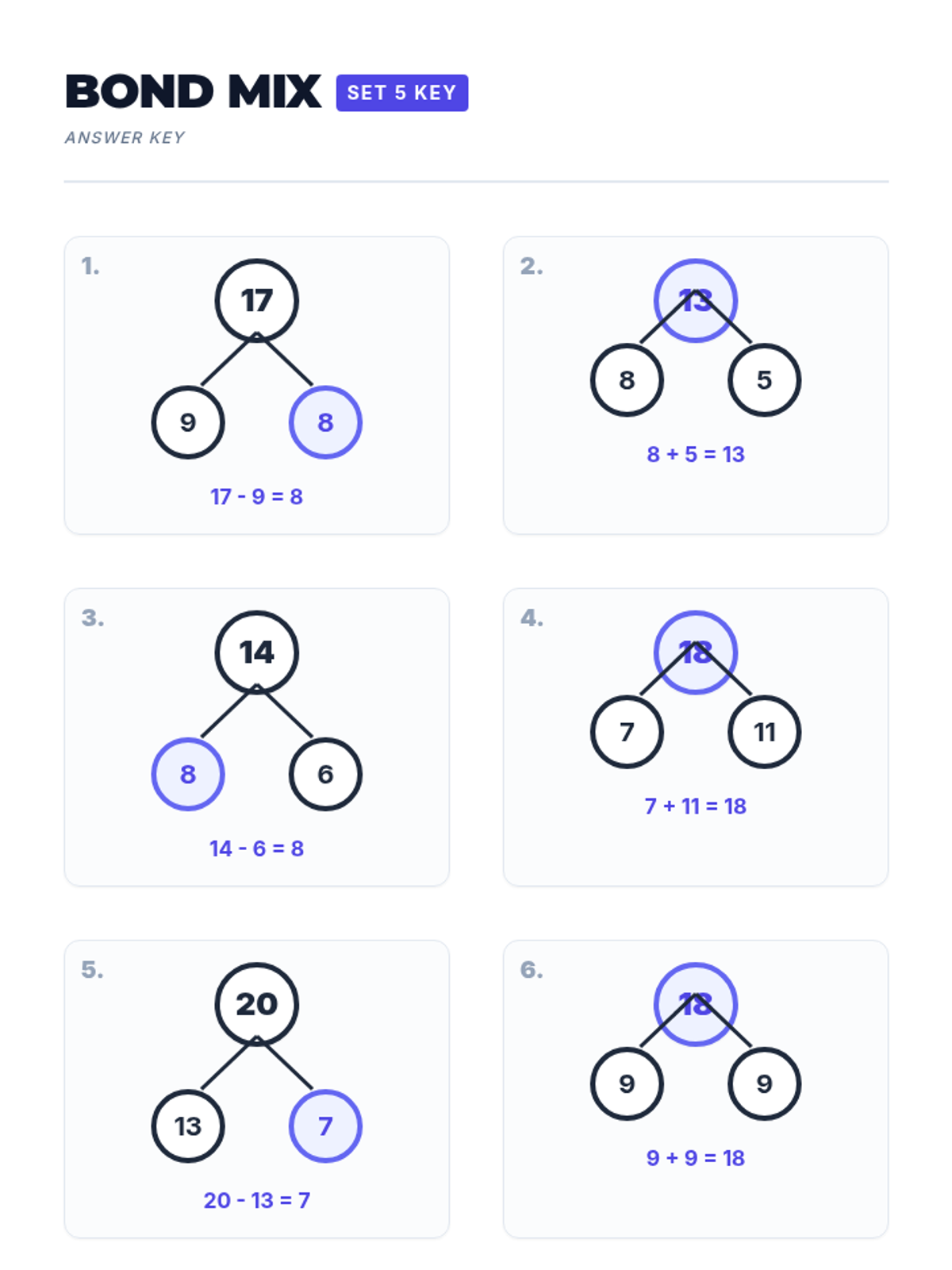
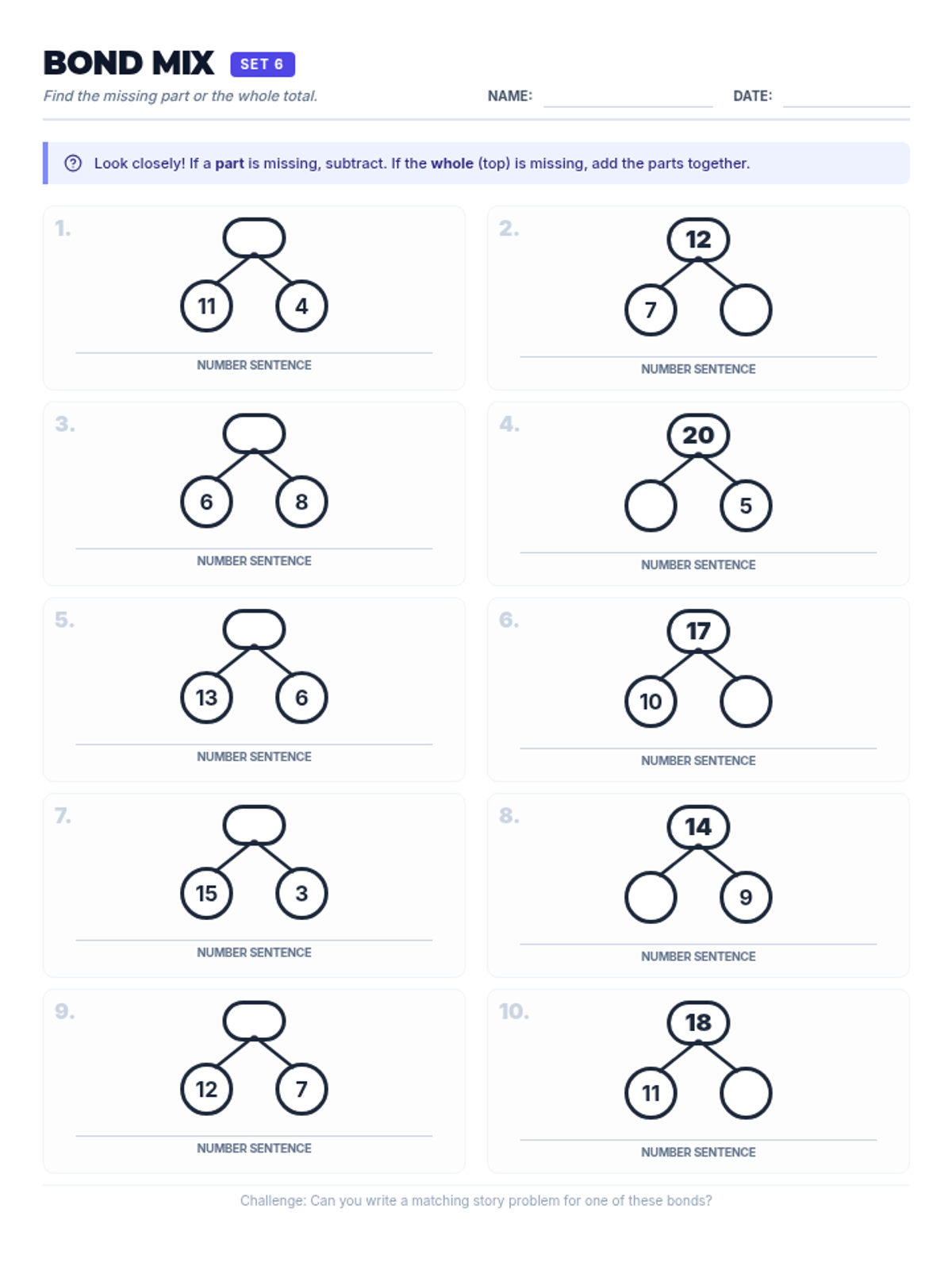
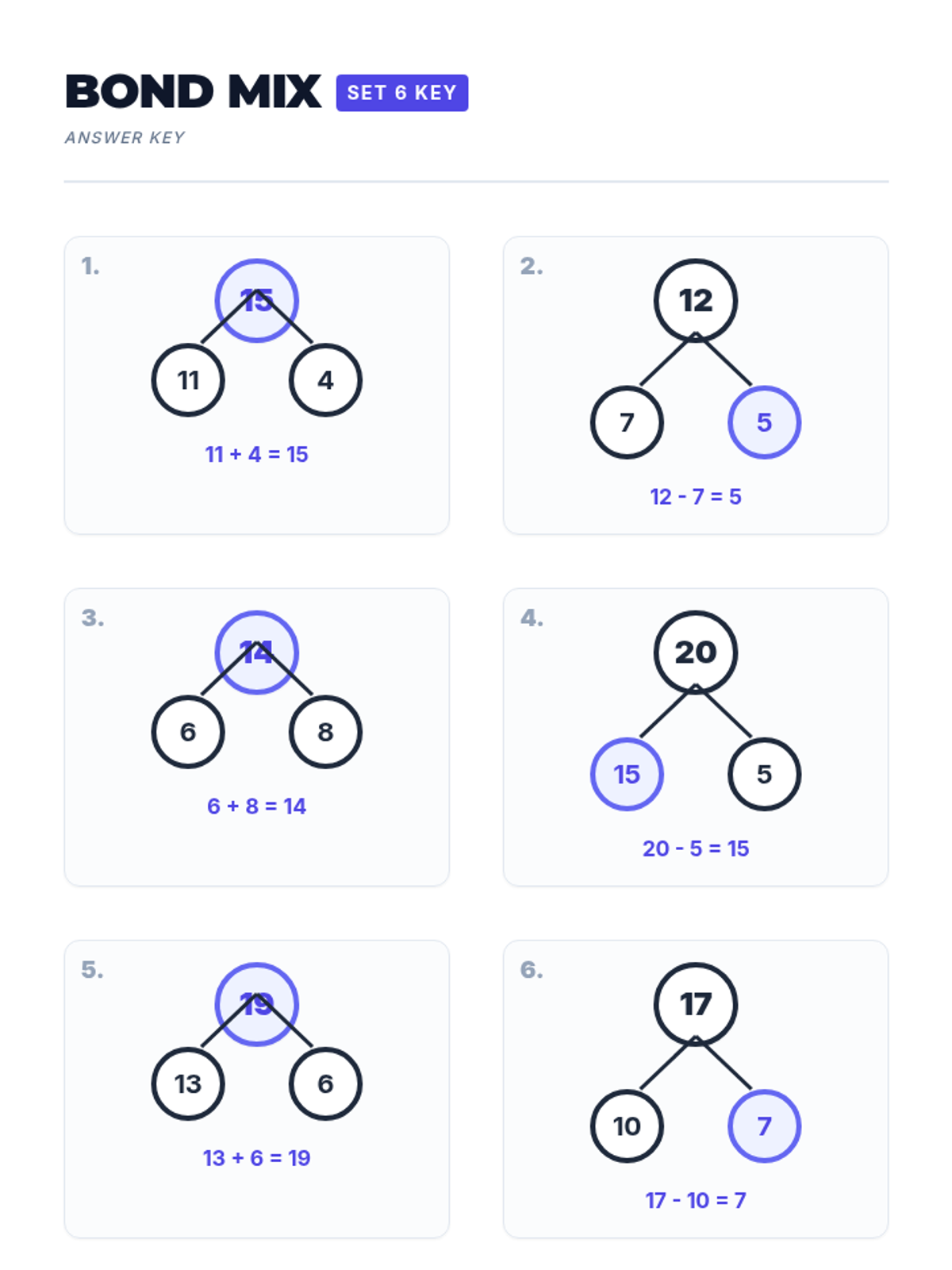
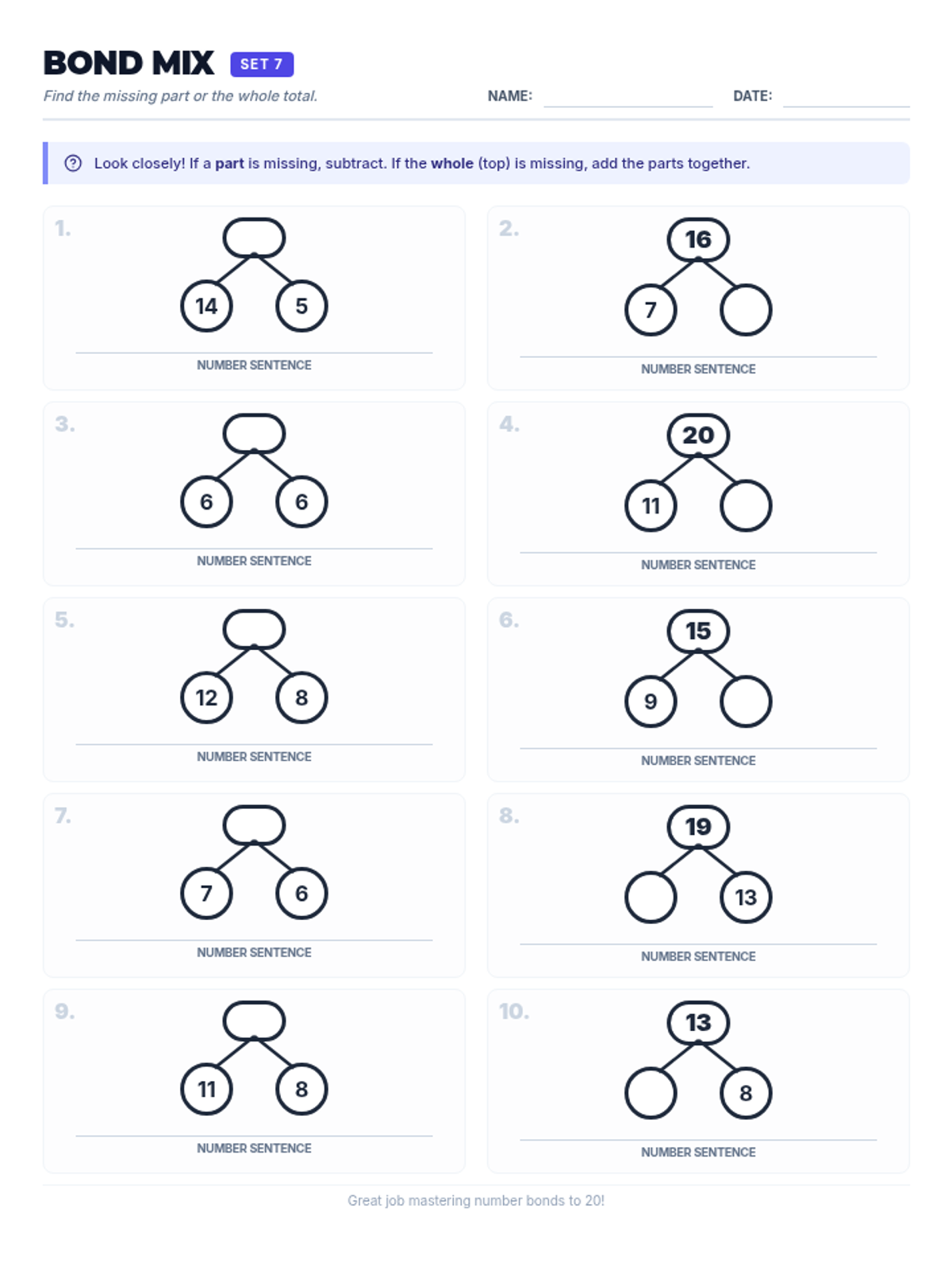
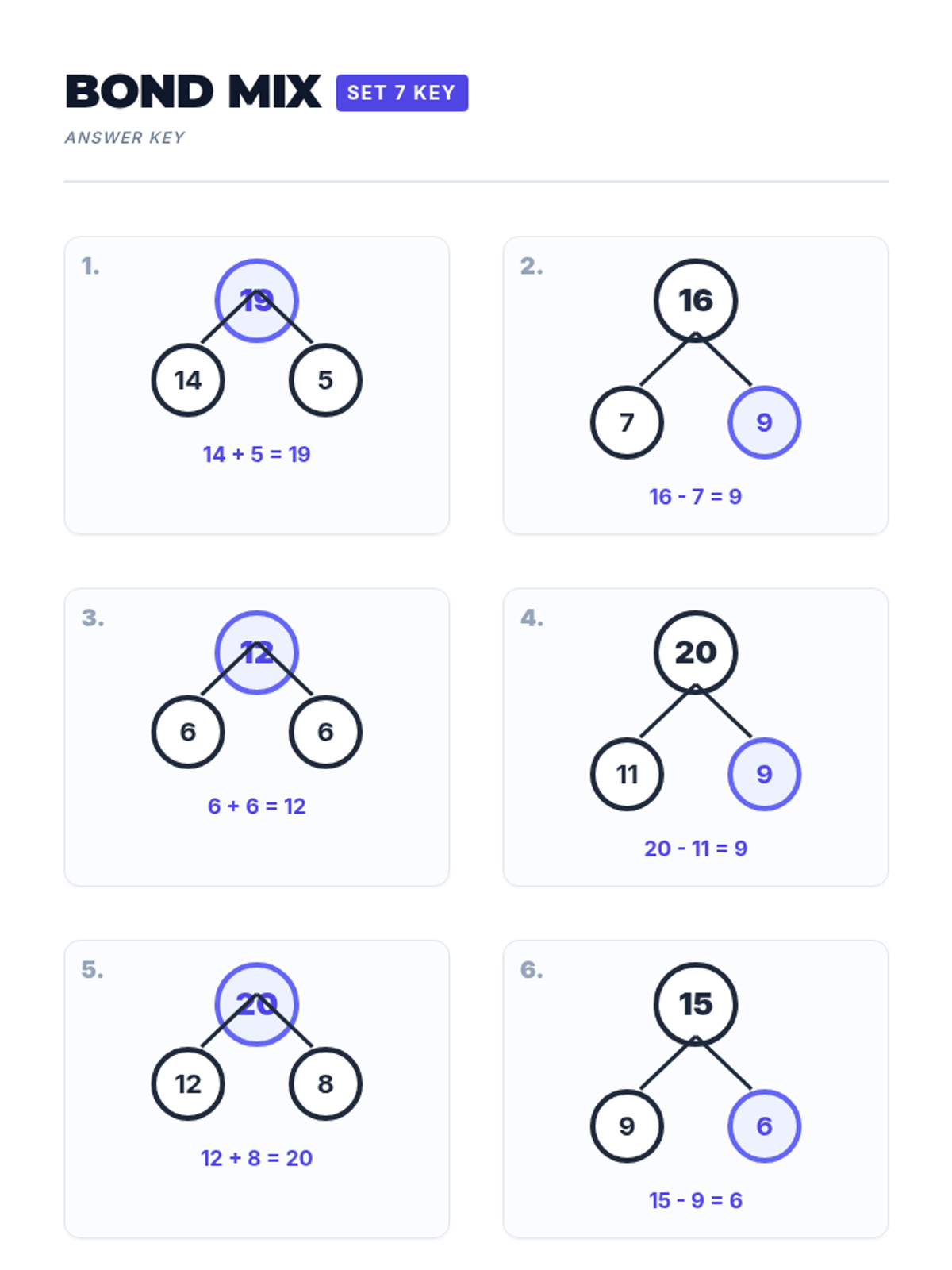
A focused lesson on identifying missing addends within 20 using number bond visual representations to build algebraic thinking and fluency.
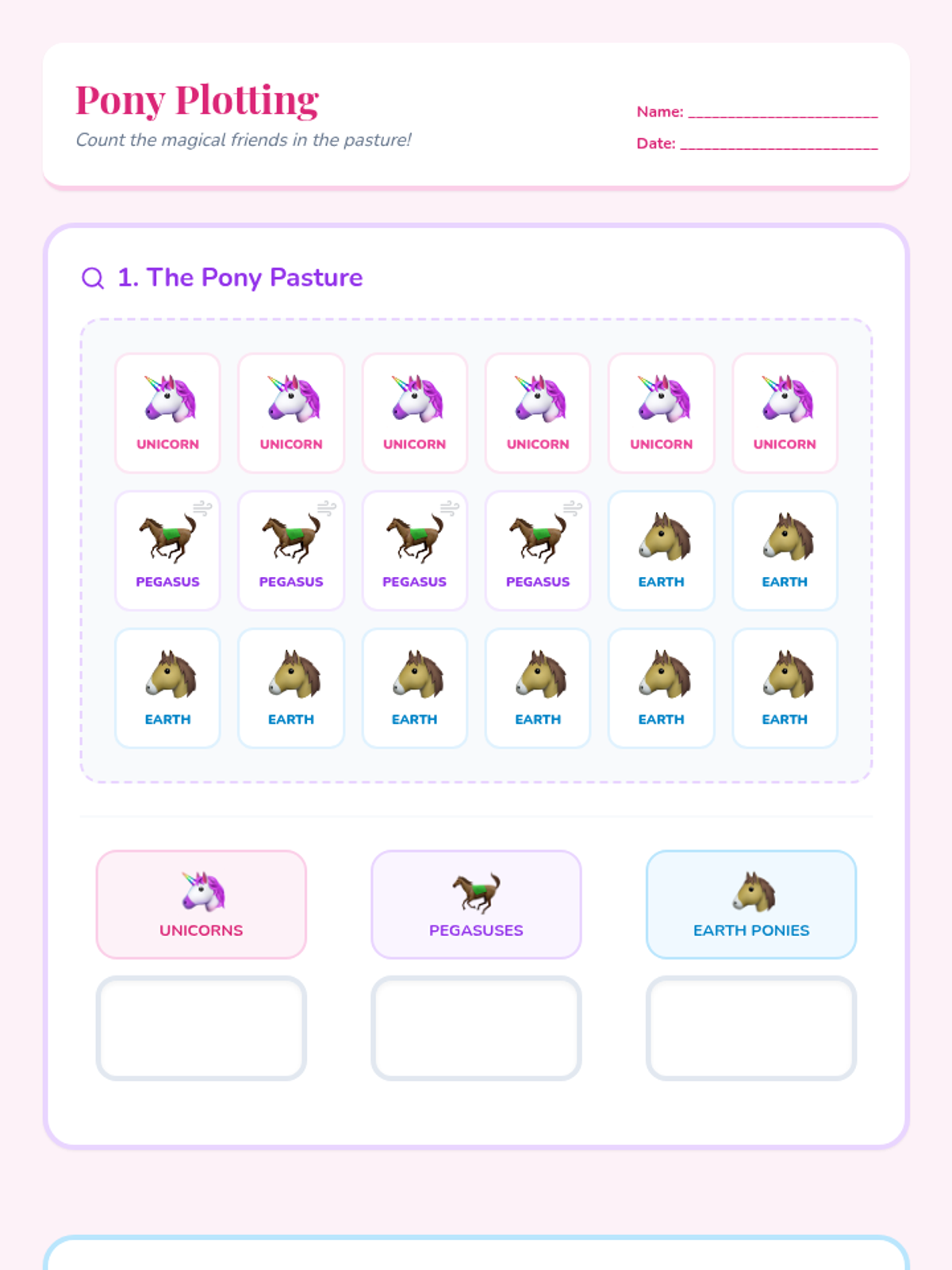
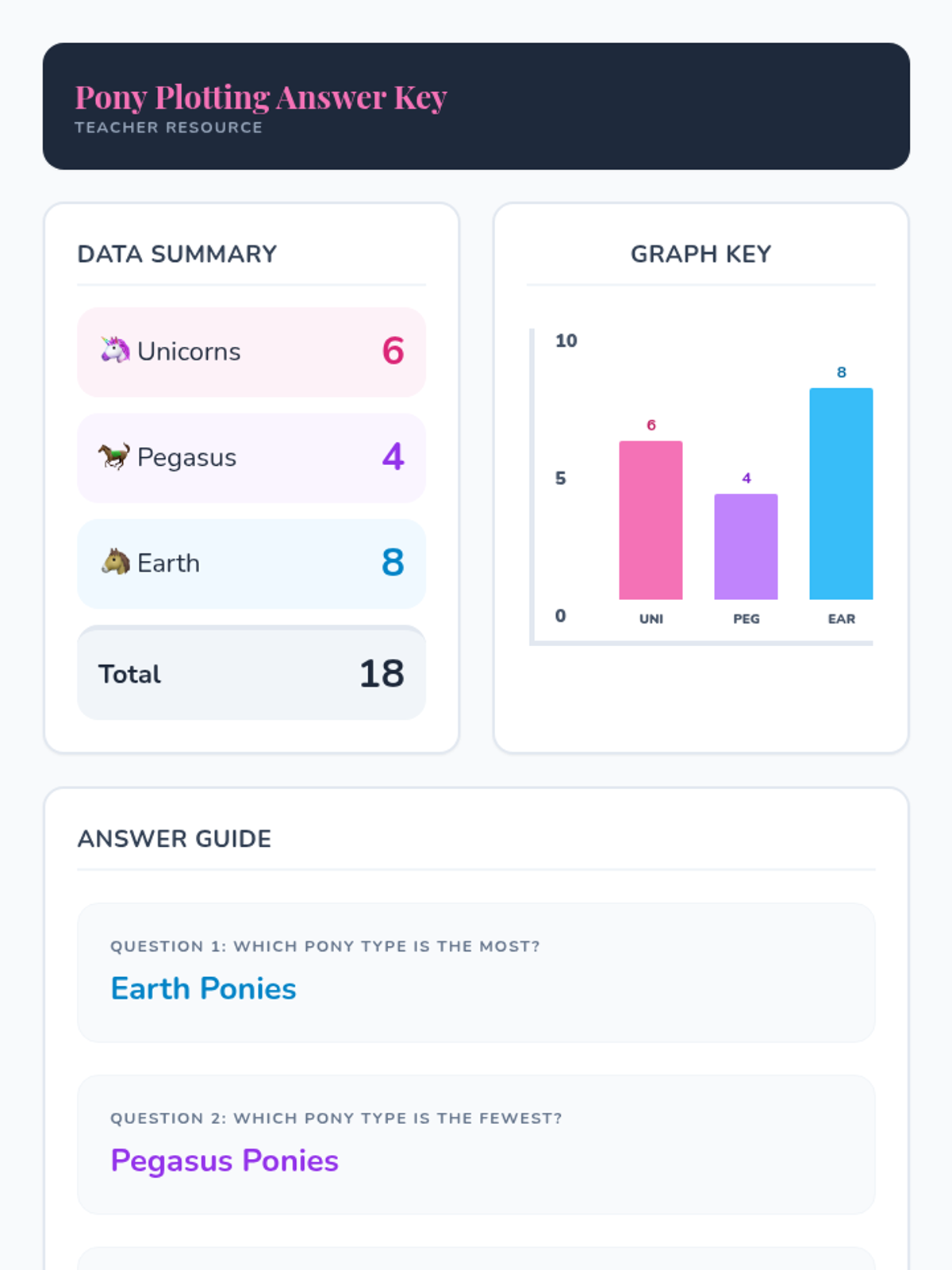
A magical math lesson where students count, sort, and graph different types of ponies to practice data representation and comparison skills.
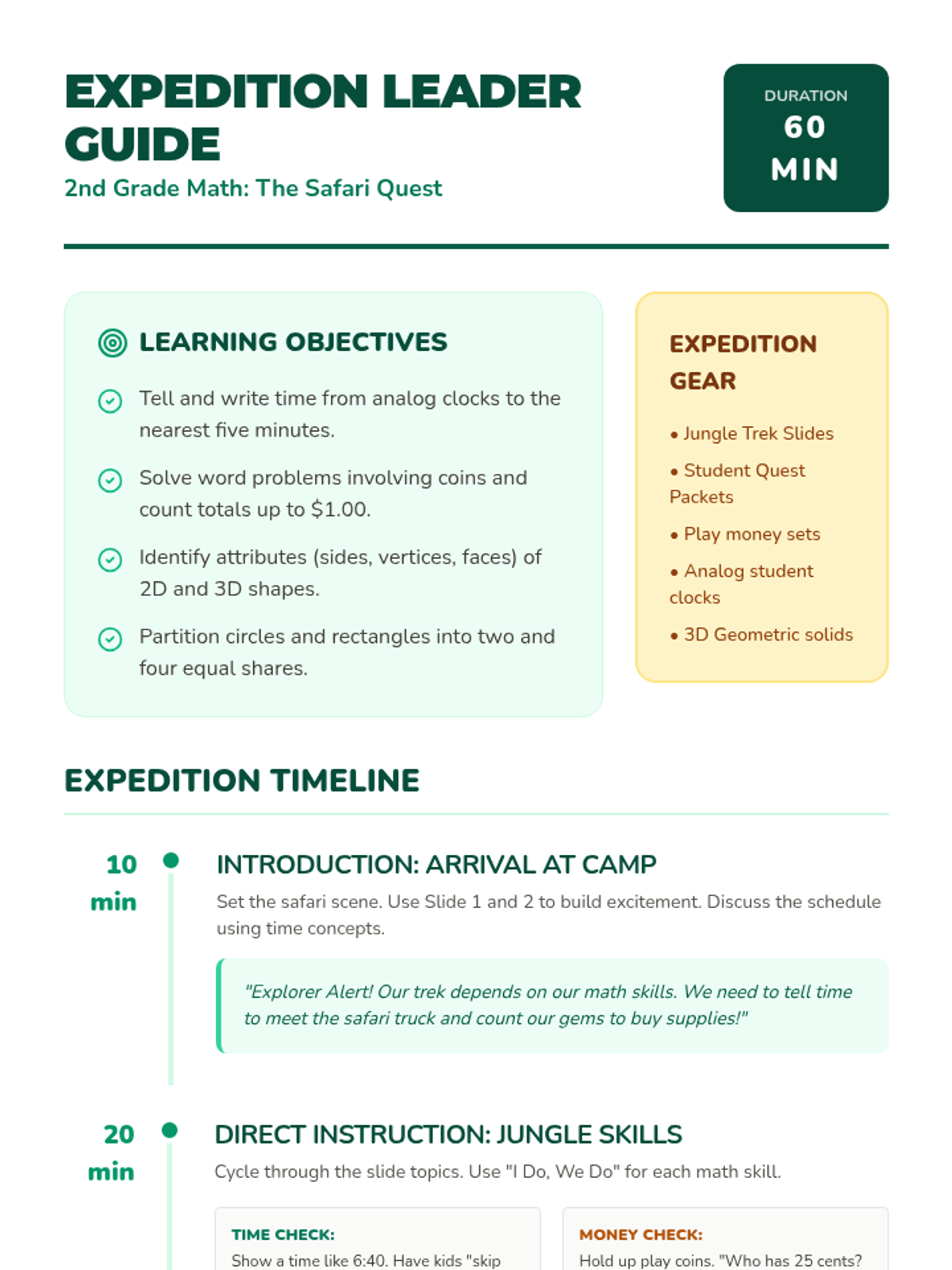
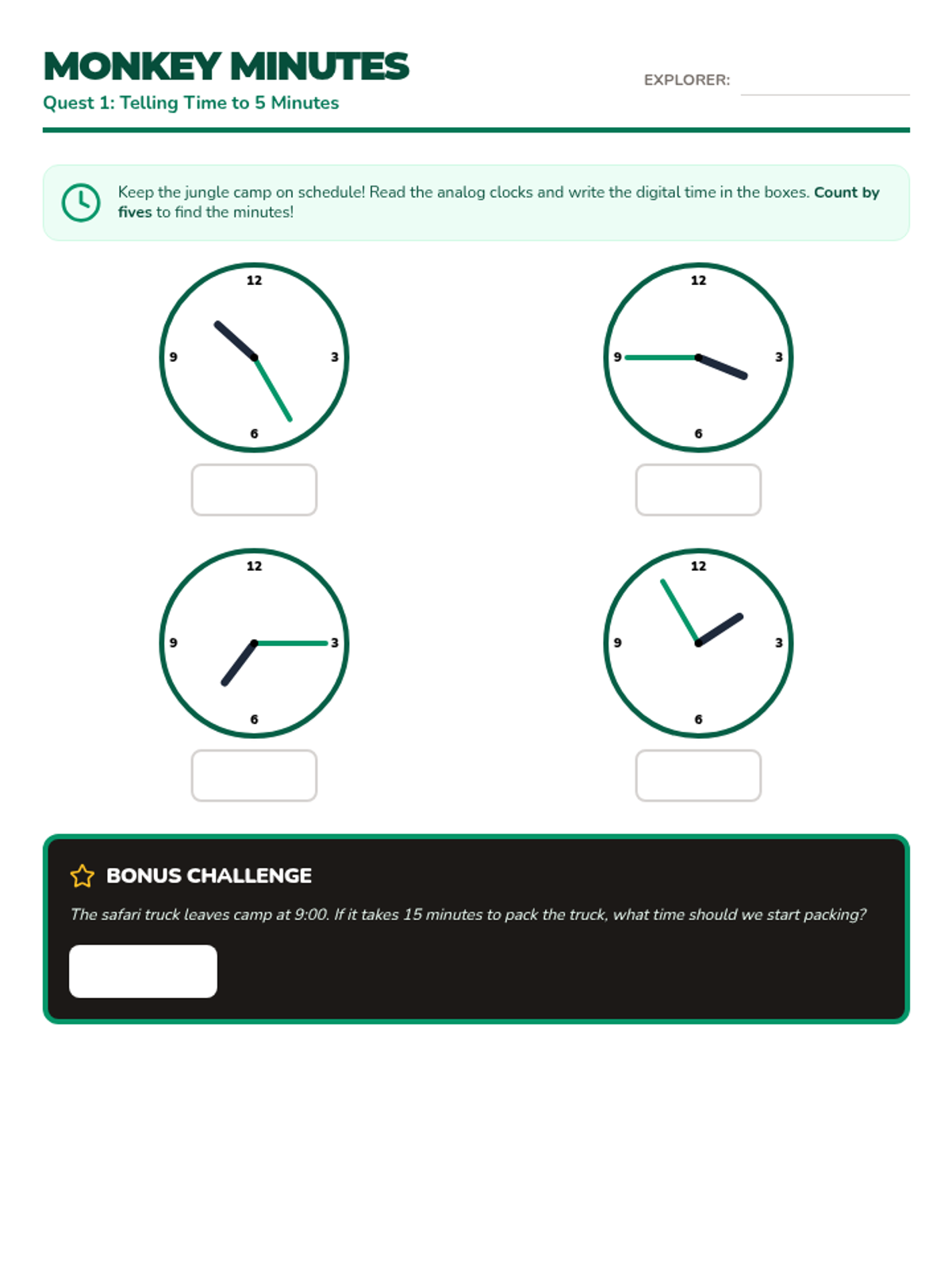
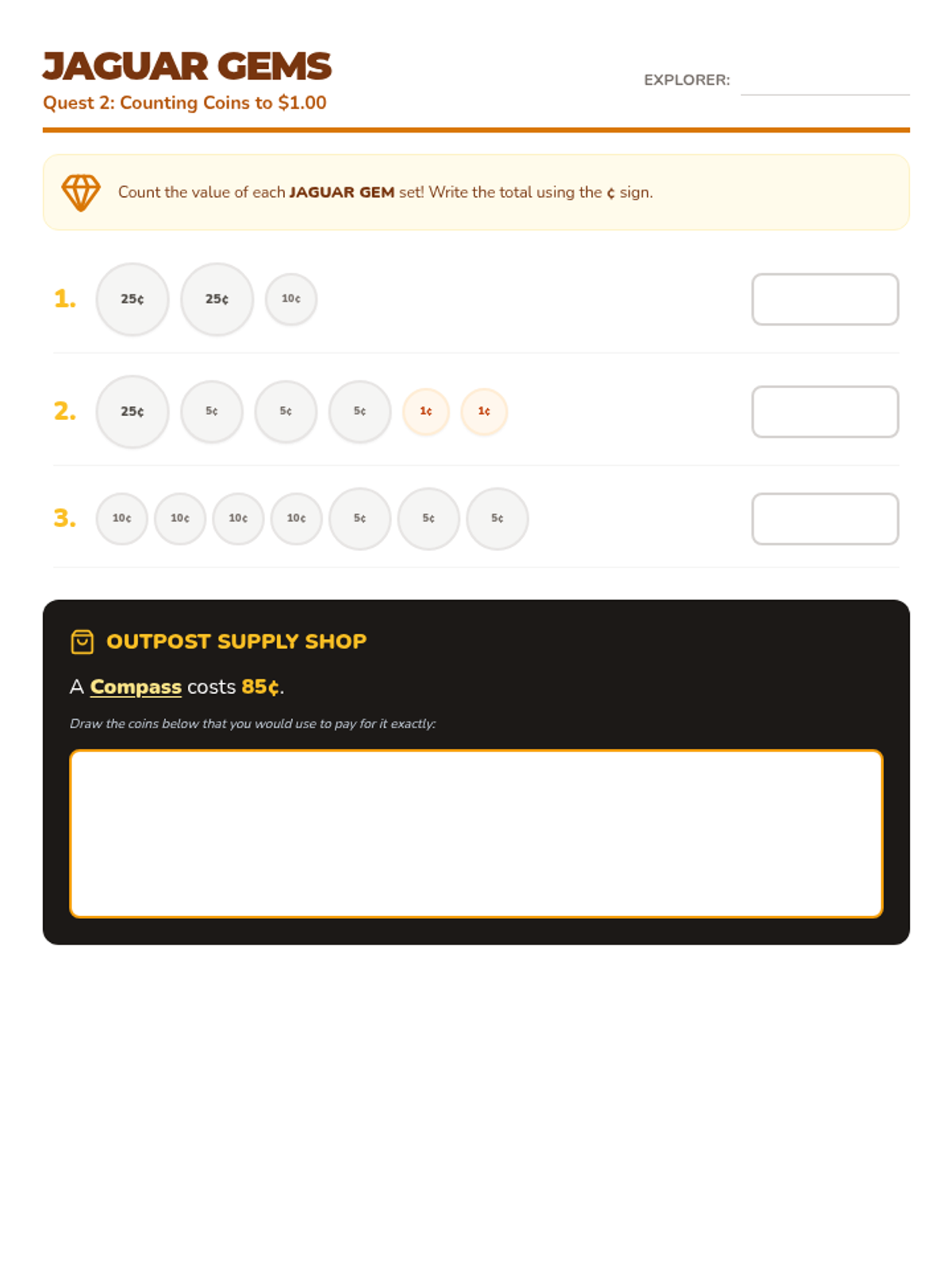
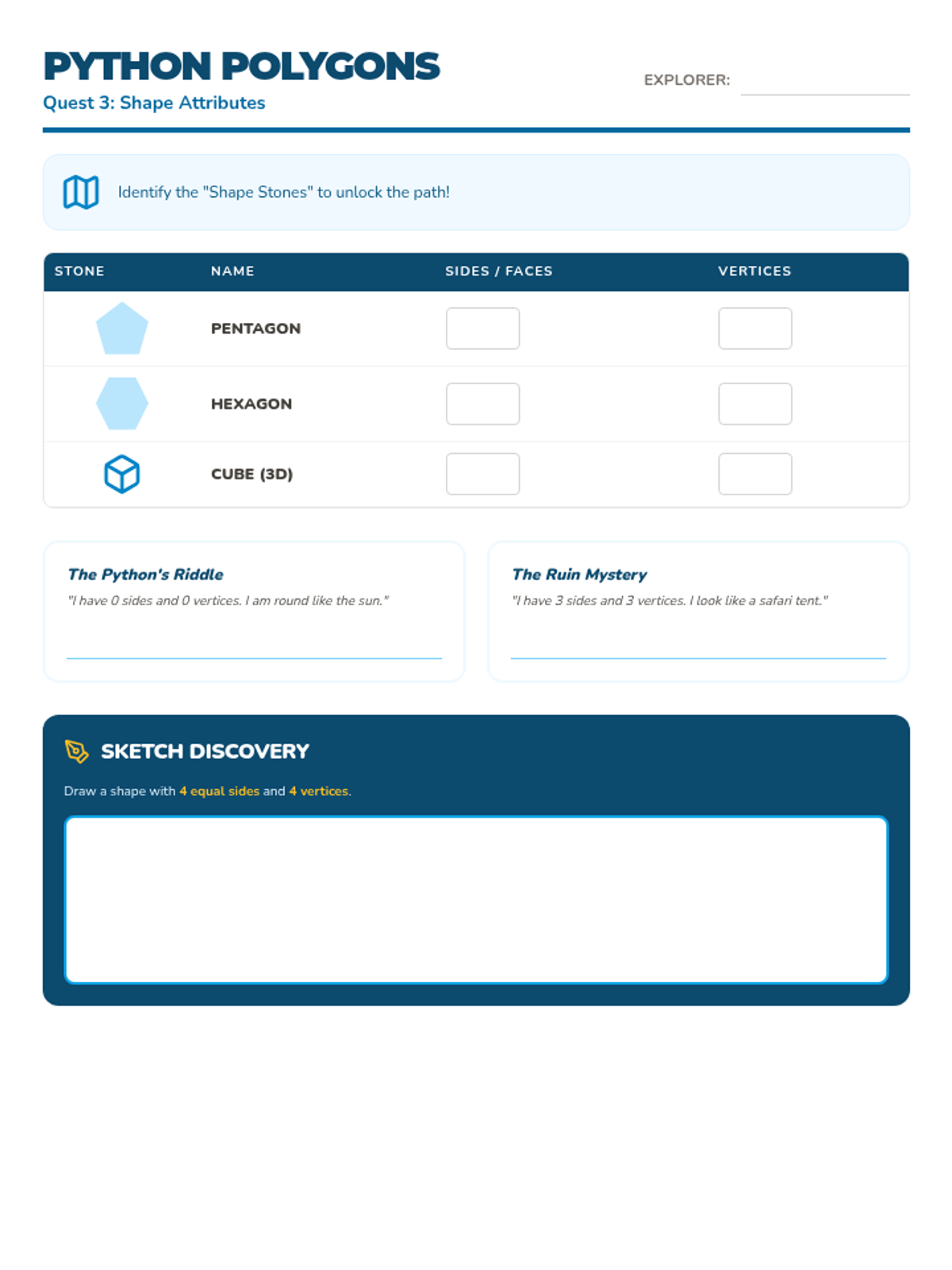
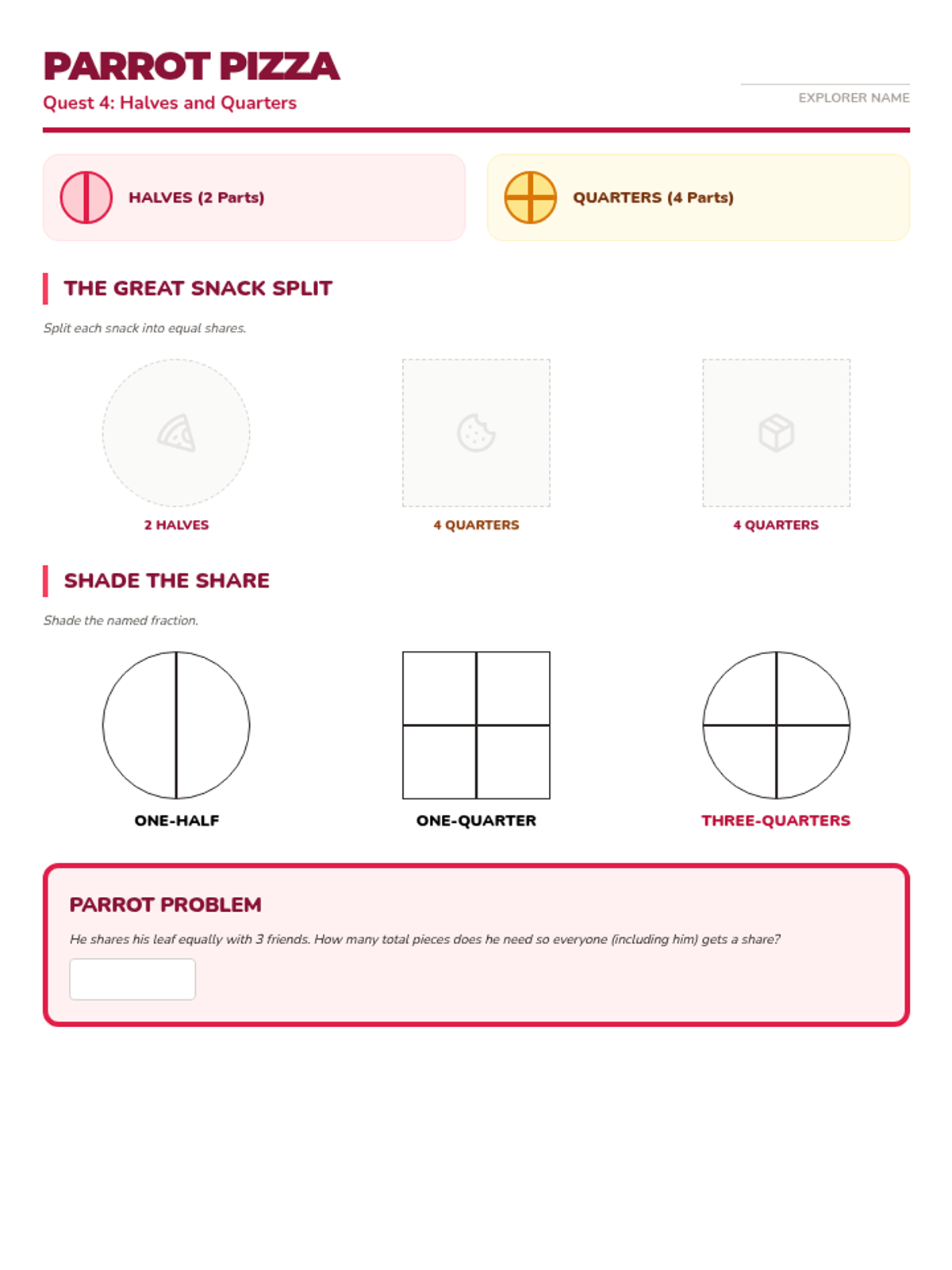
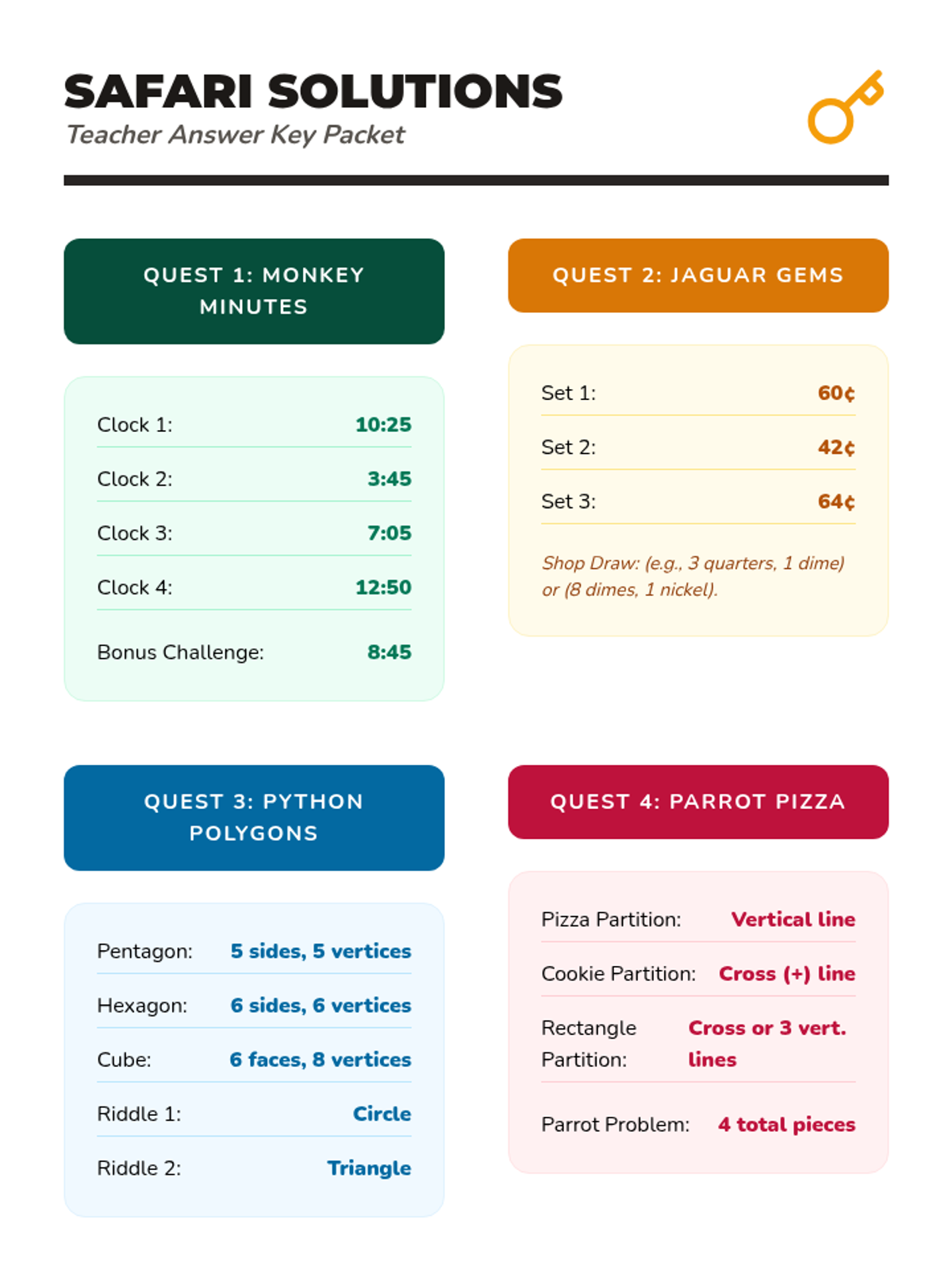
A high-energy math expedition where students master time, money, shapes, and fractions through a jungle-themed safari adventure. This lesson includes interactive slides, a comprehensive teacher guide, and skill-specific practice pages.
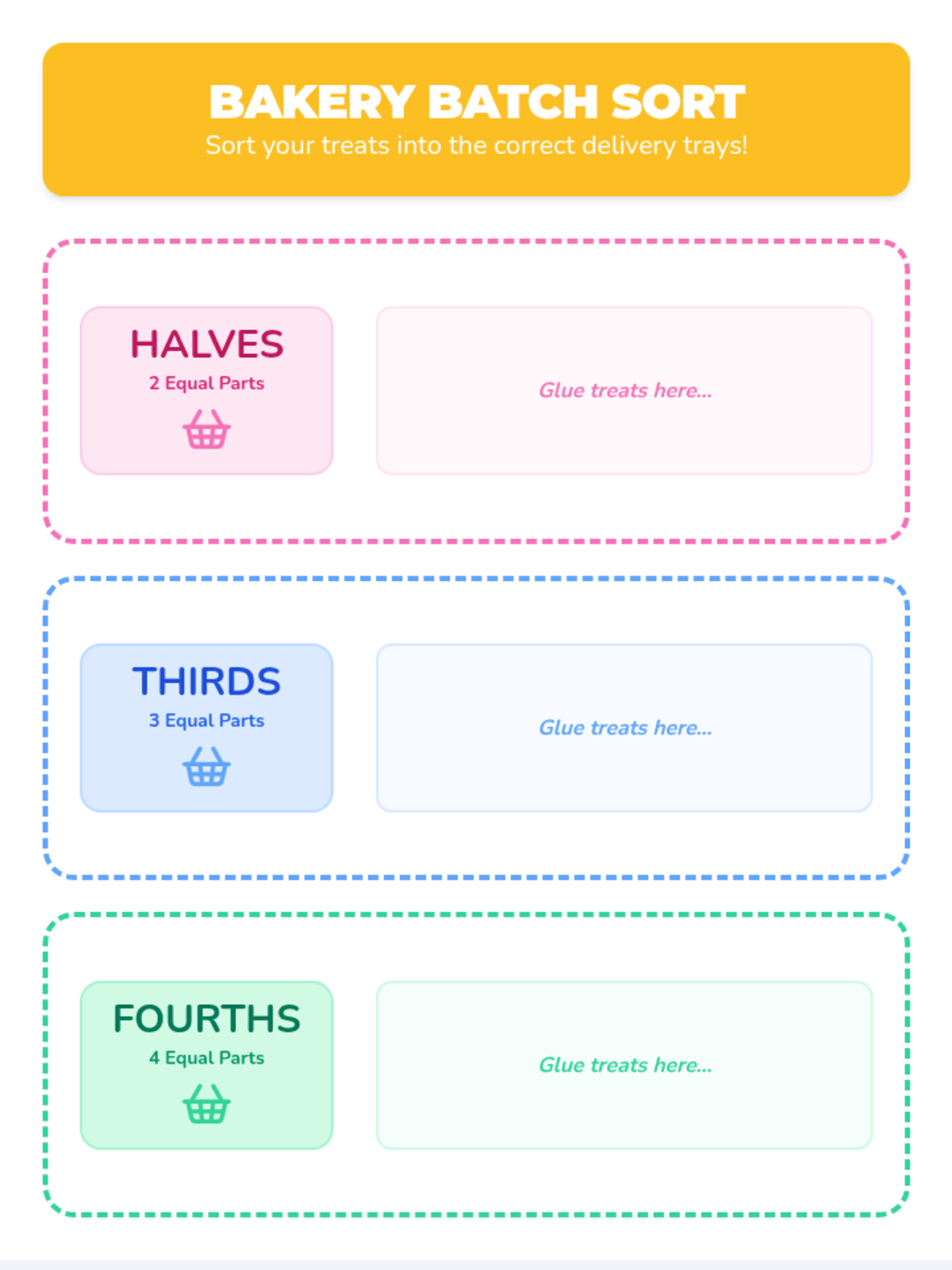
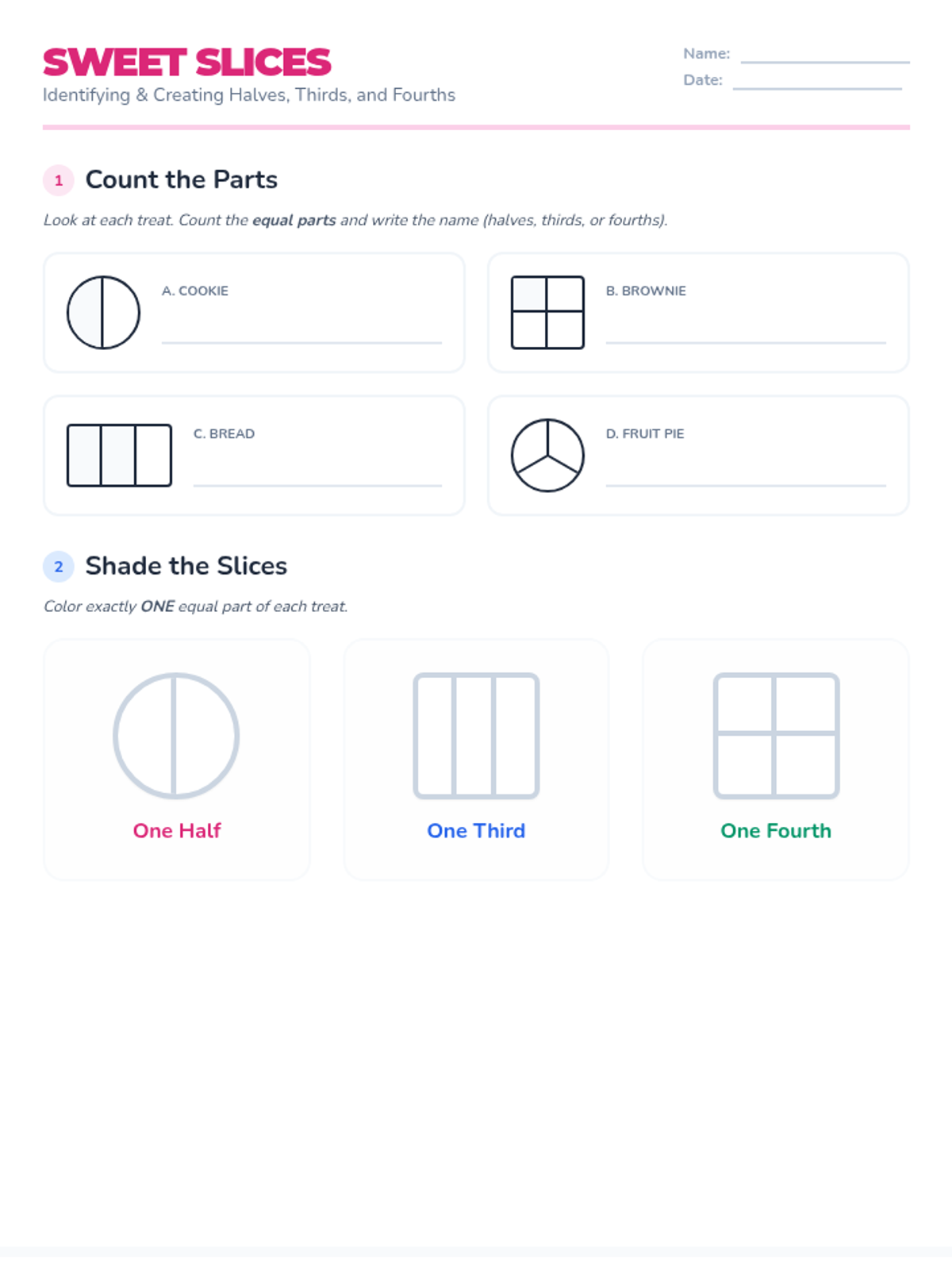
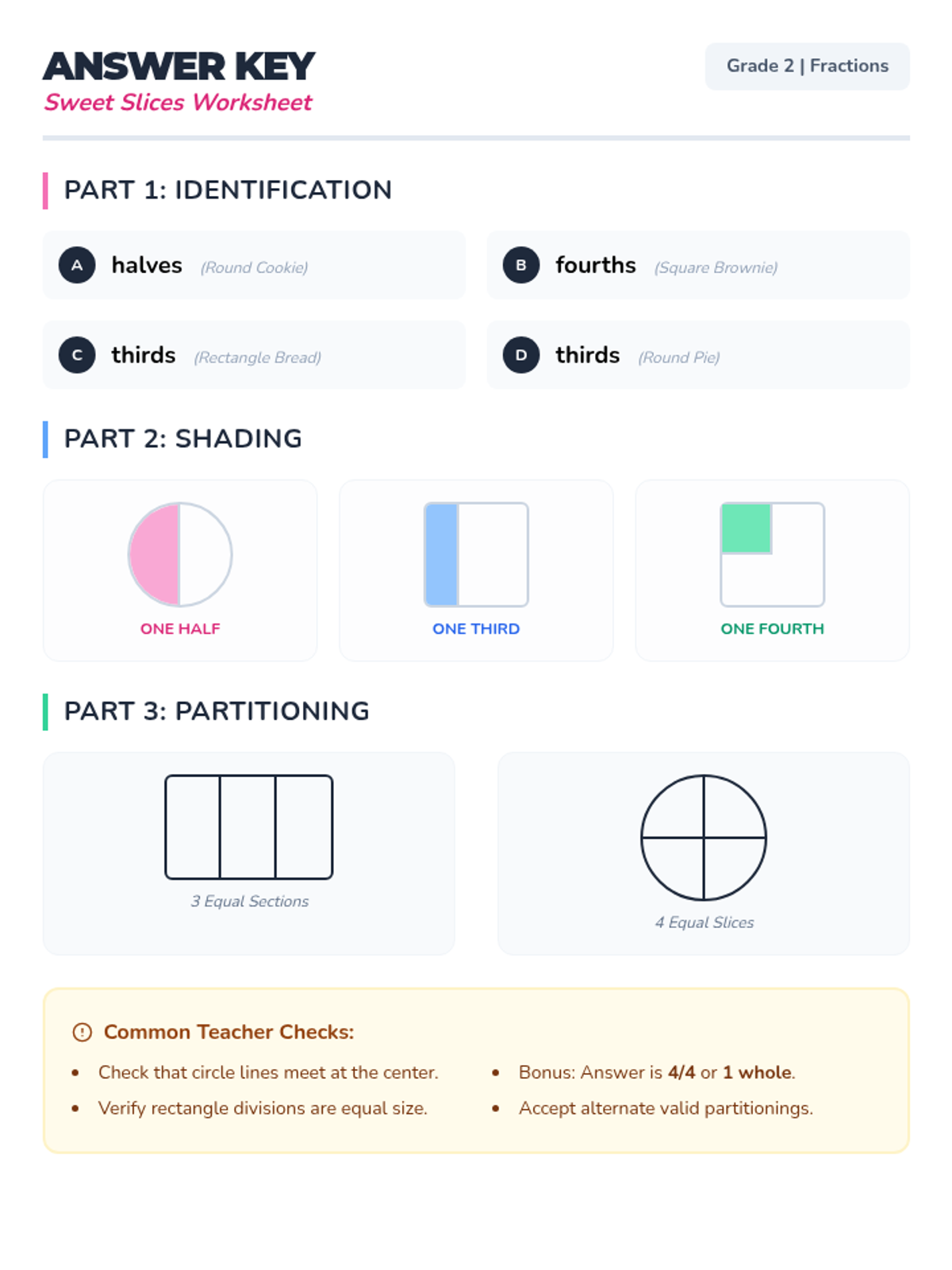
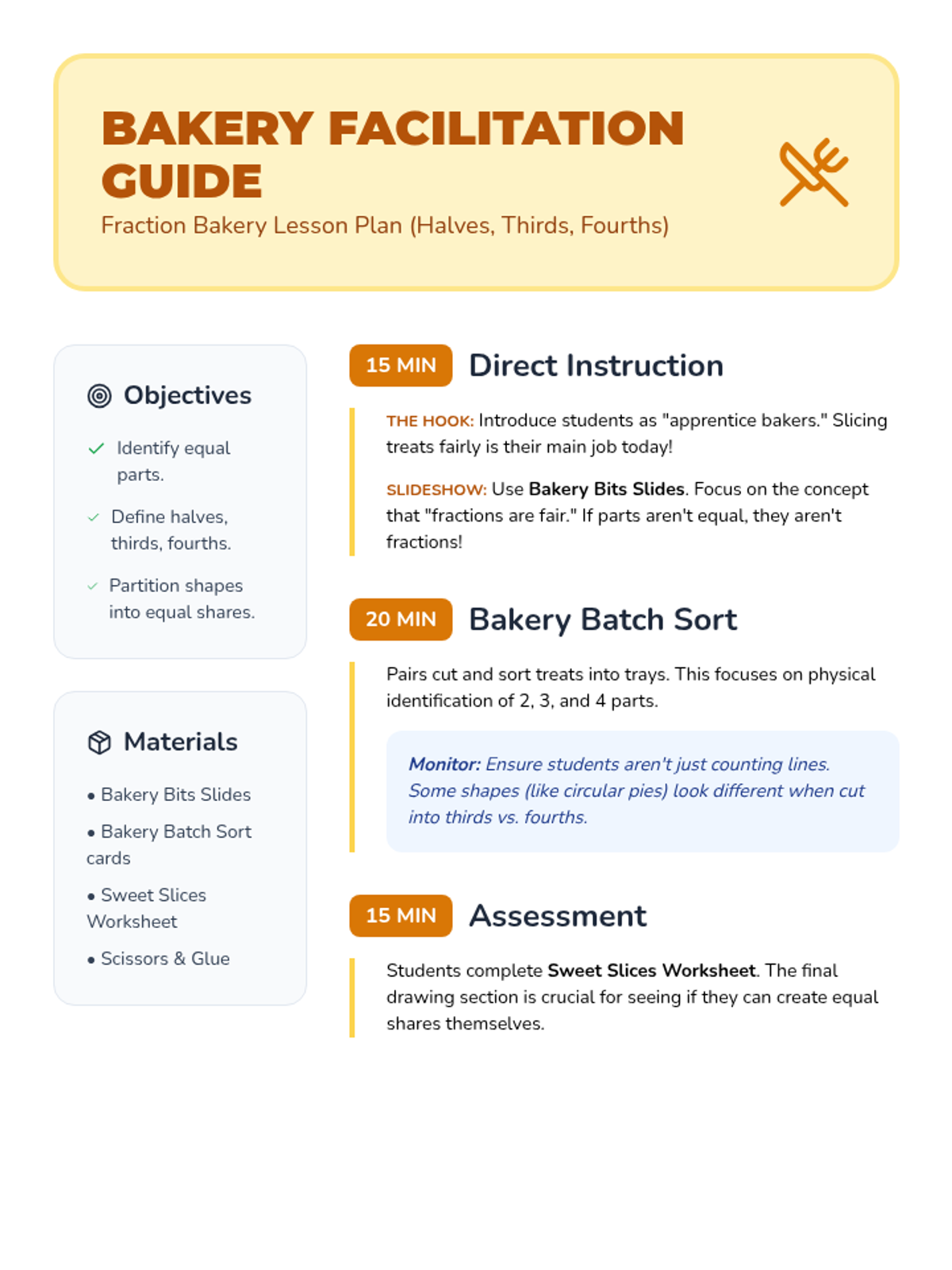
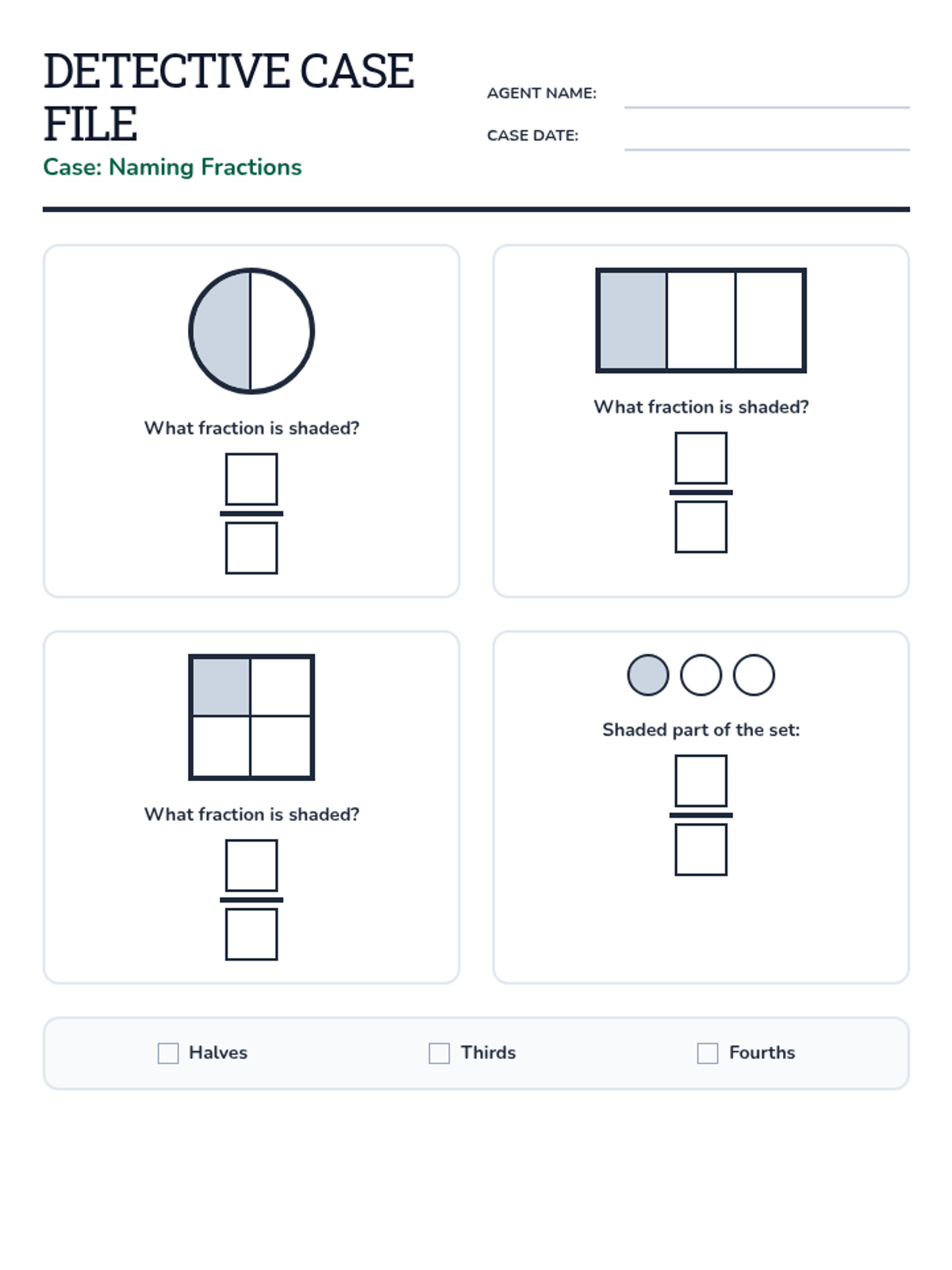
A hands-on introduction to fractions (halves, thirds, and fourths) using a bakery theme. Students will identify equal parts and sort shapes based on their fractional divisions.

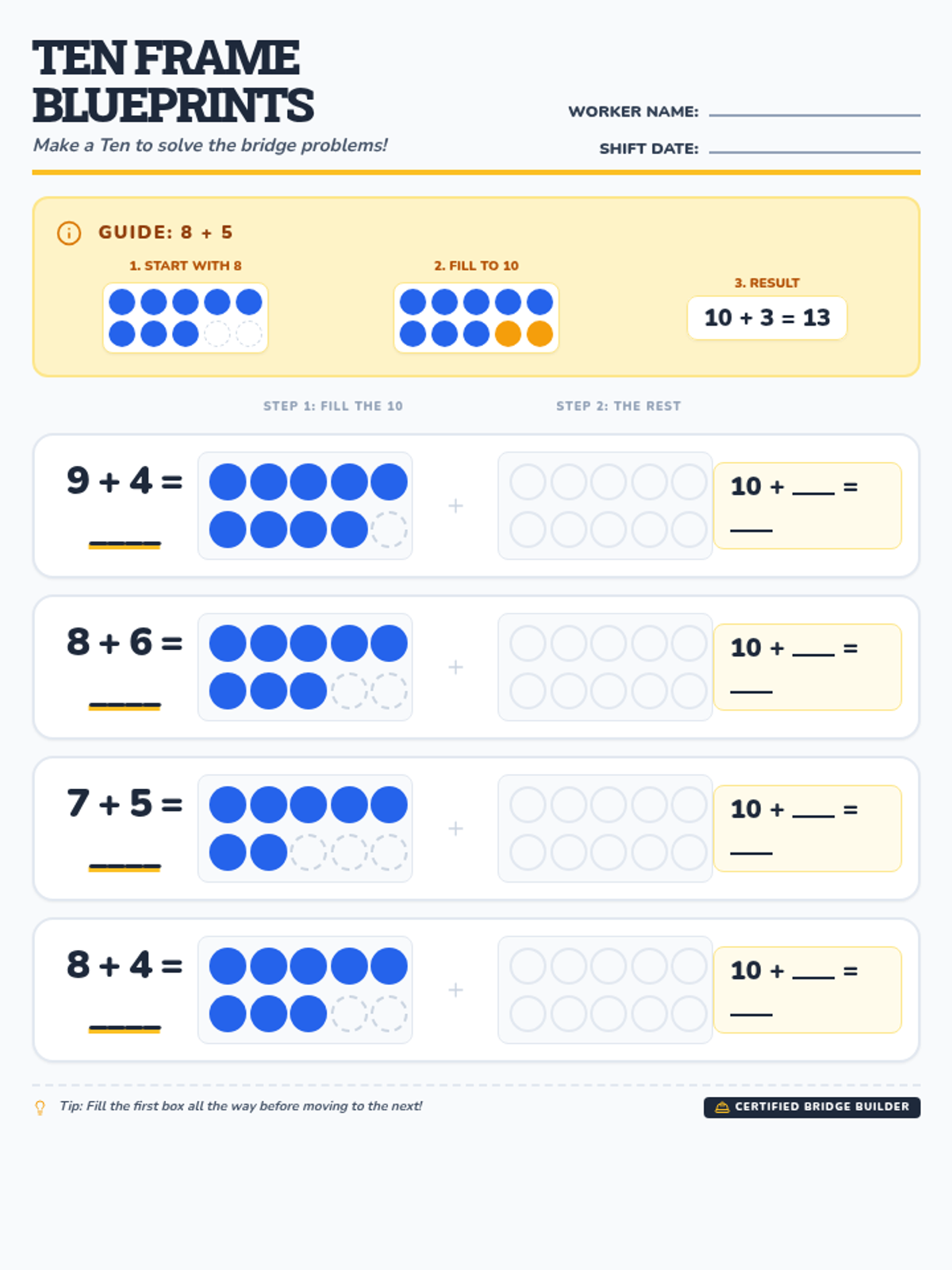
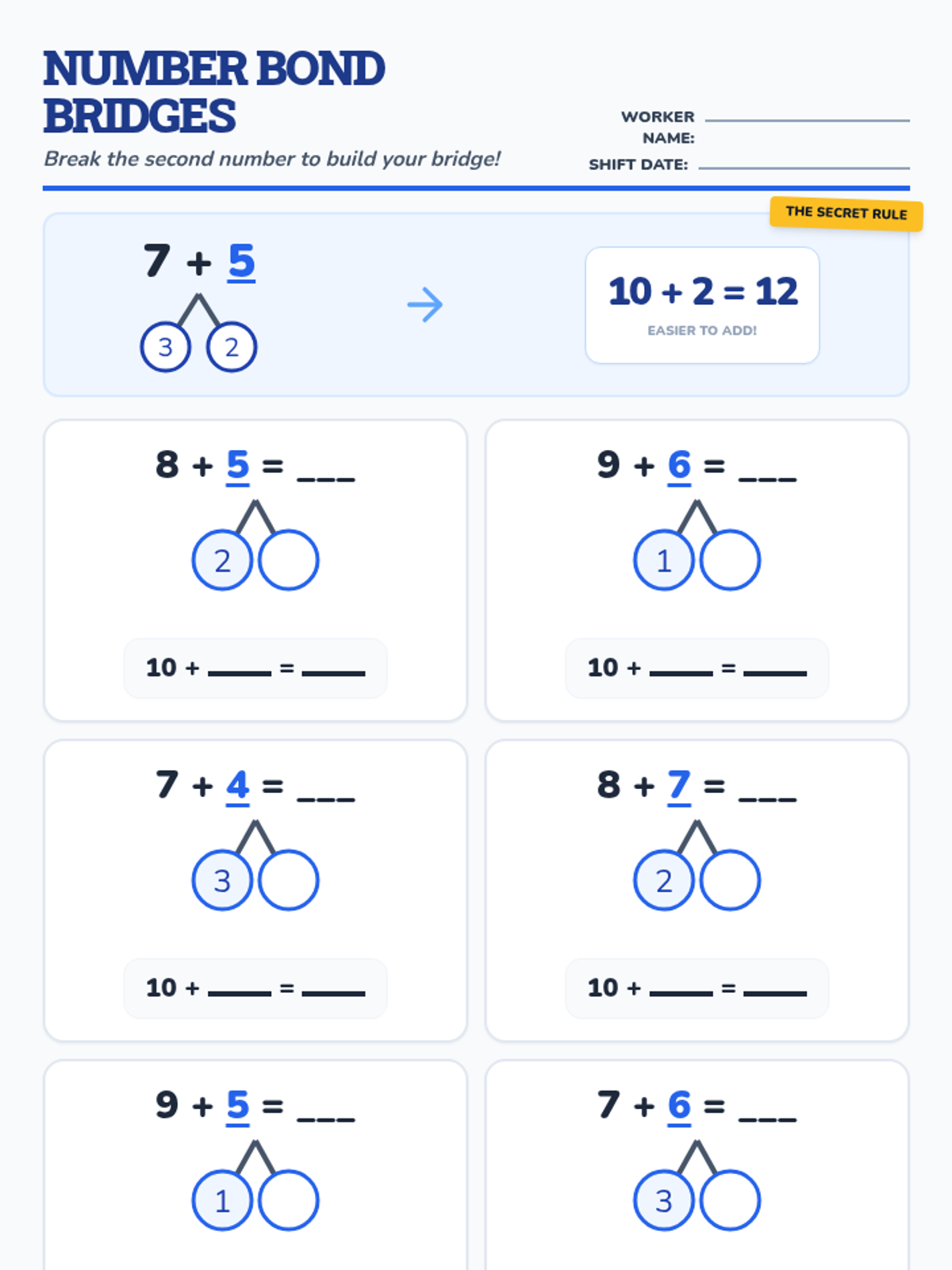
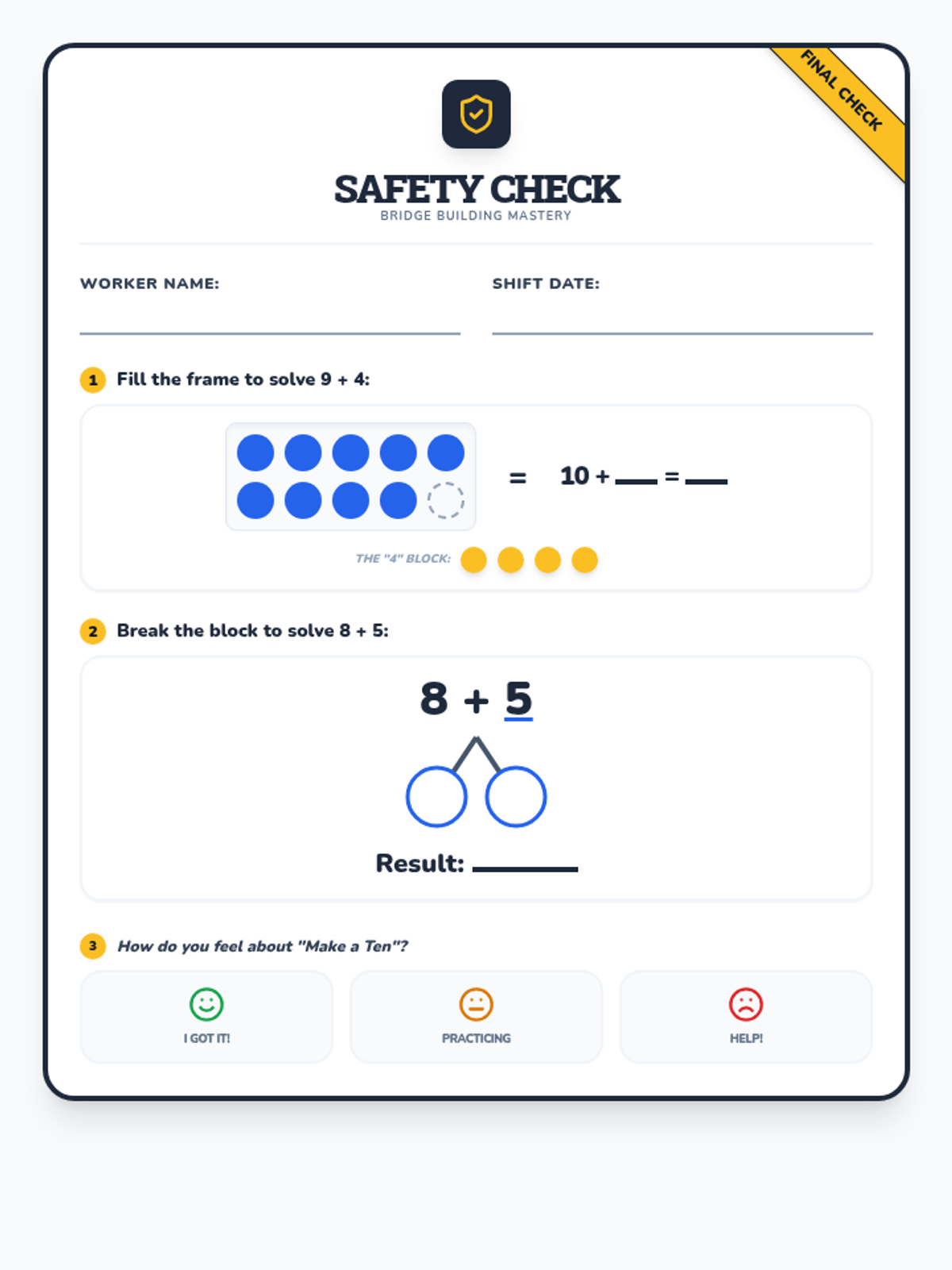
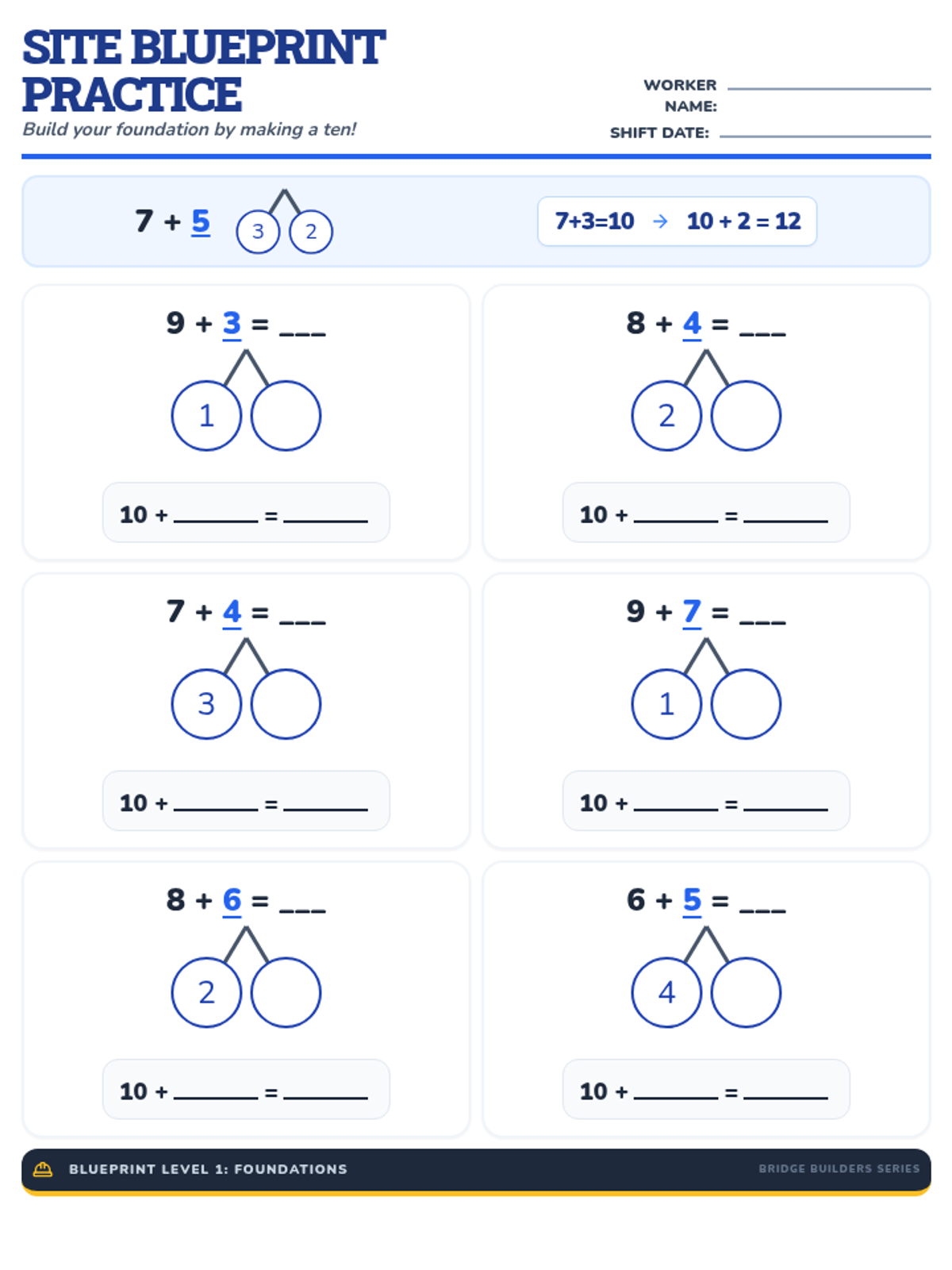
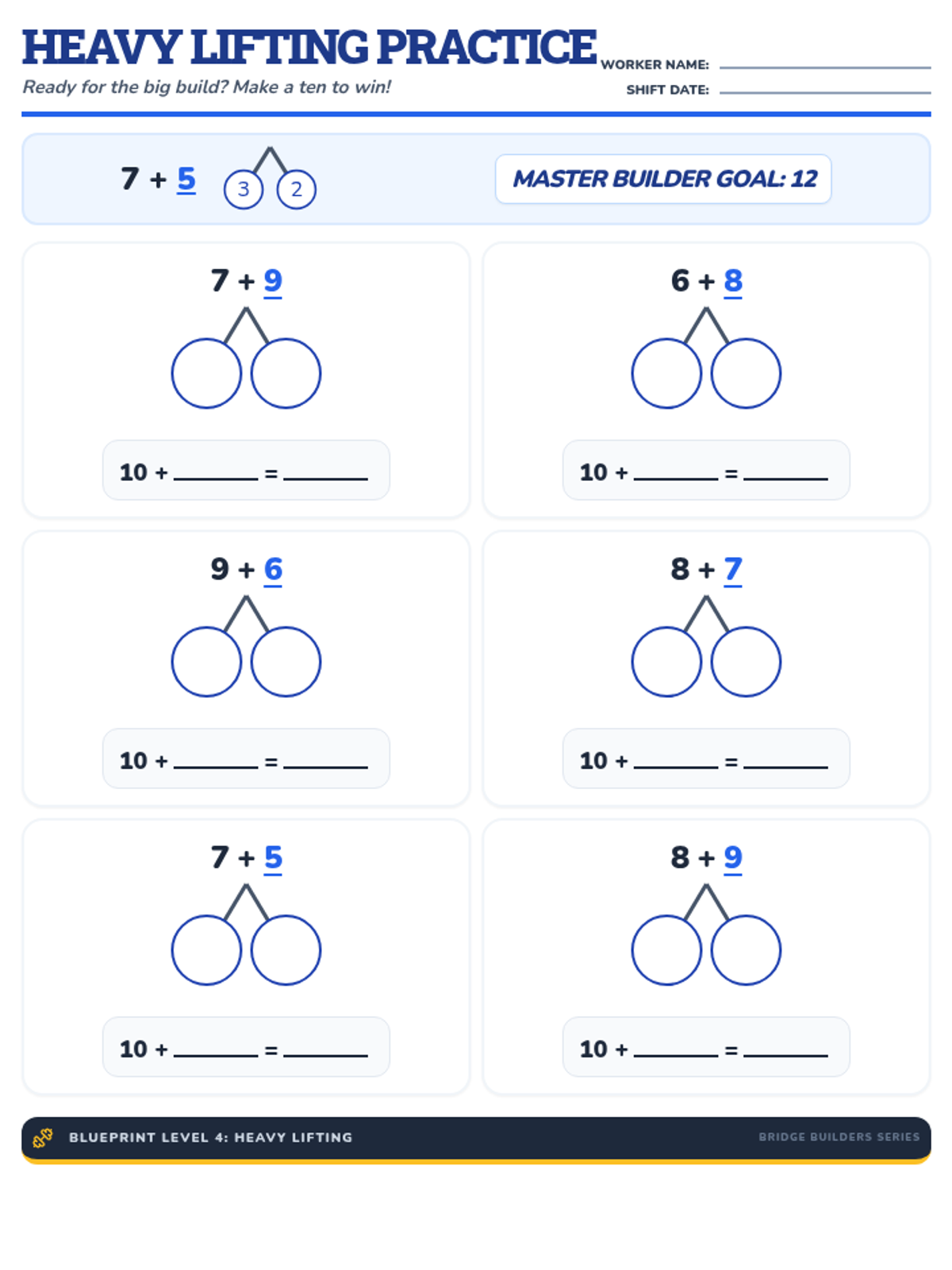
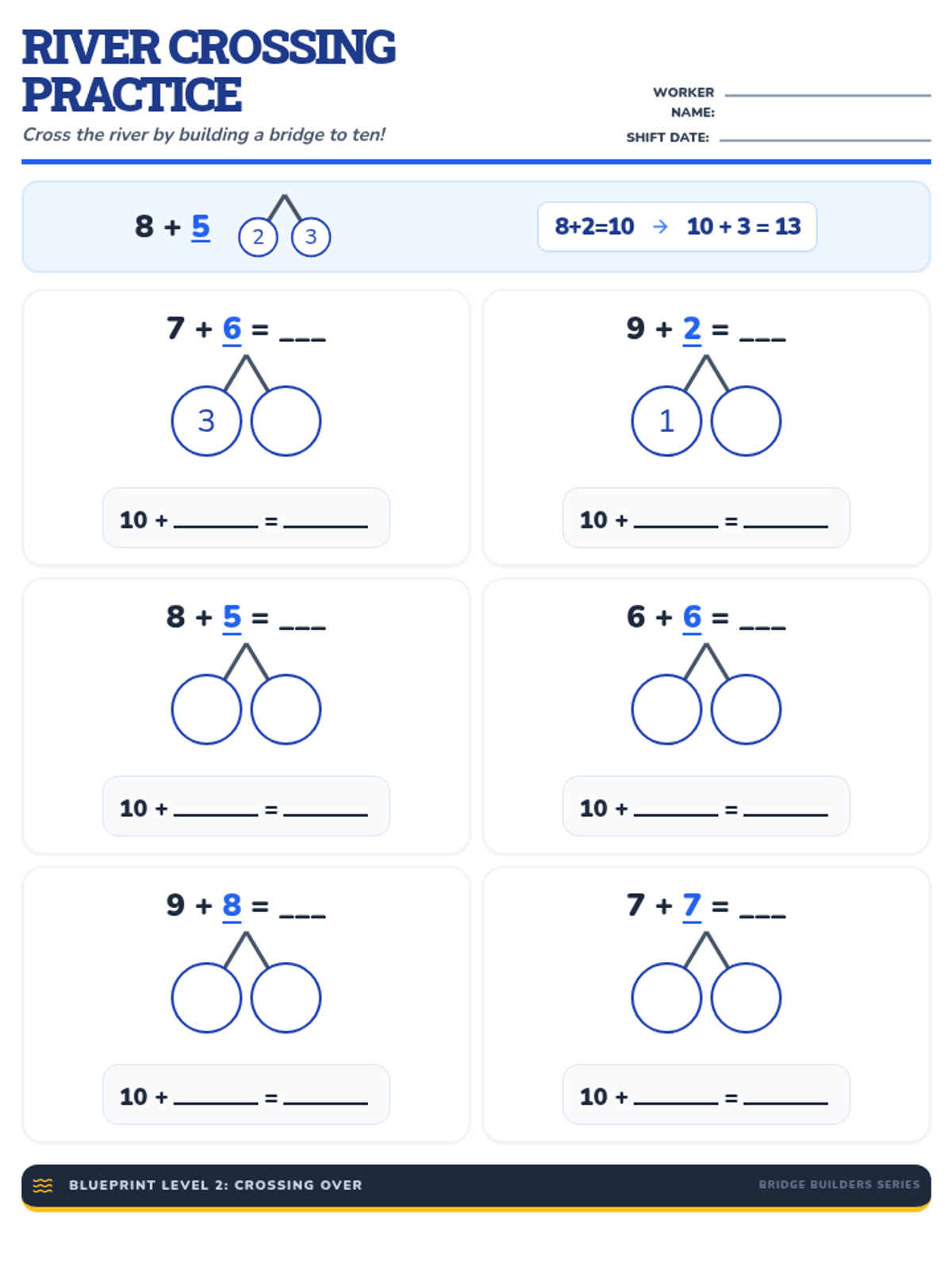
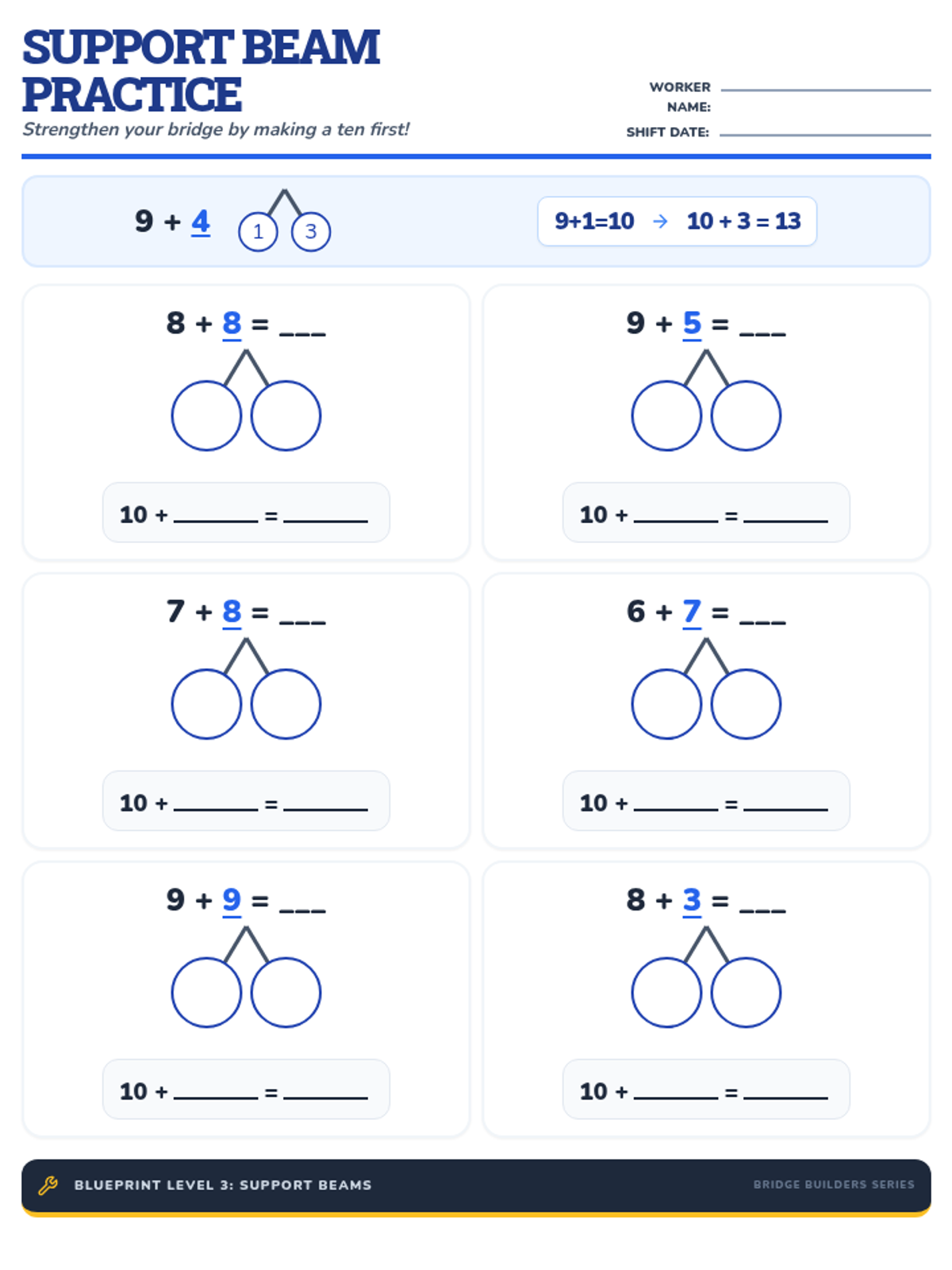
A strategy-focused lesson teaching students how to 'make a ten' to solve addition problems within 20. Using a 'Bridge Builders' theme, students learn to decompose addends to reach the benchmark of ten before adding the remainder.
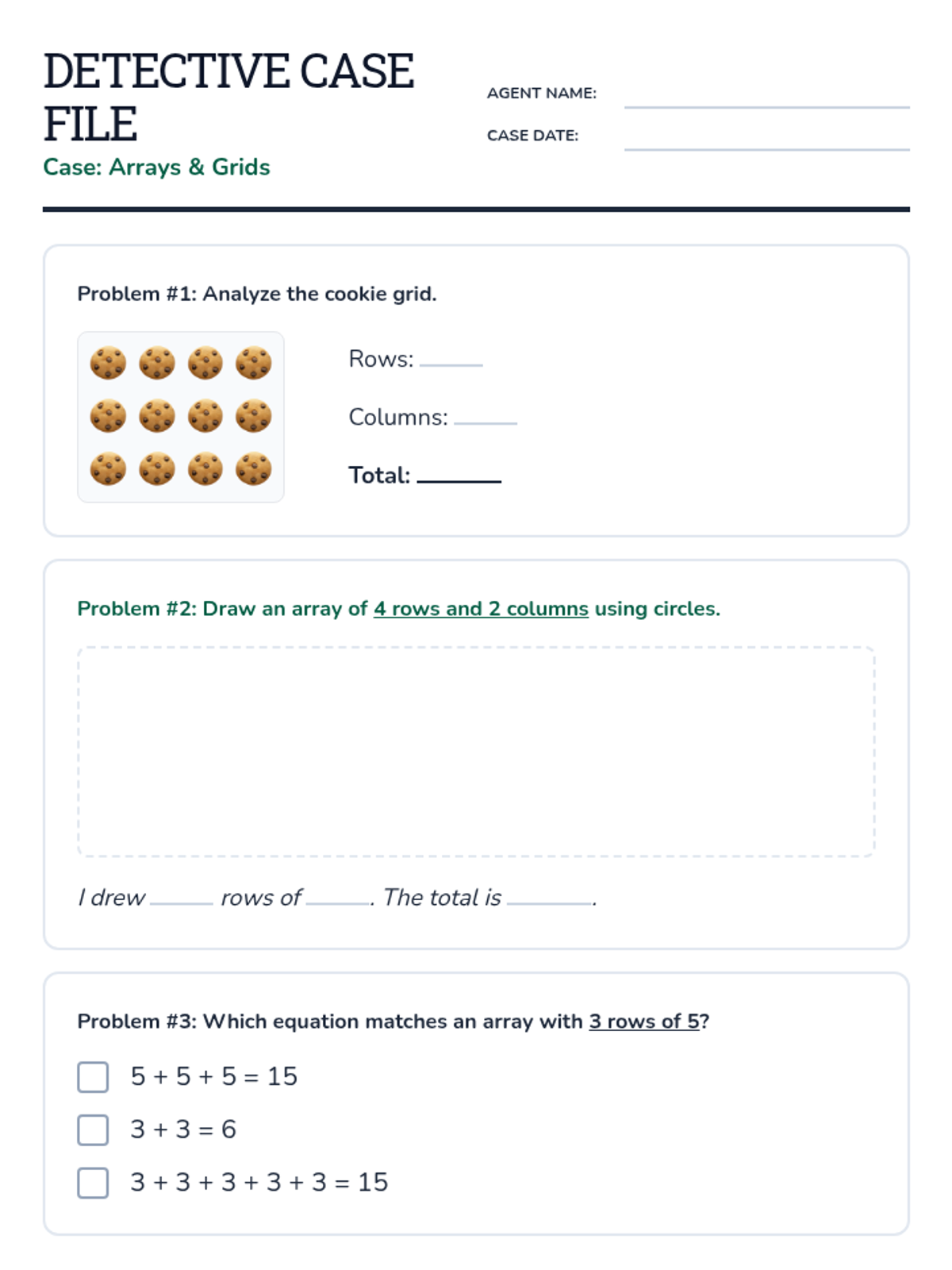
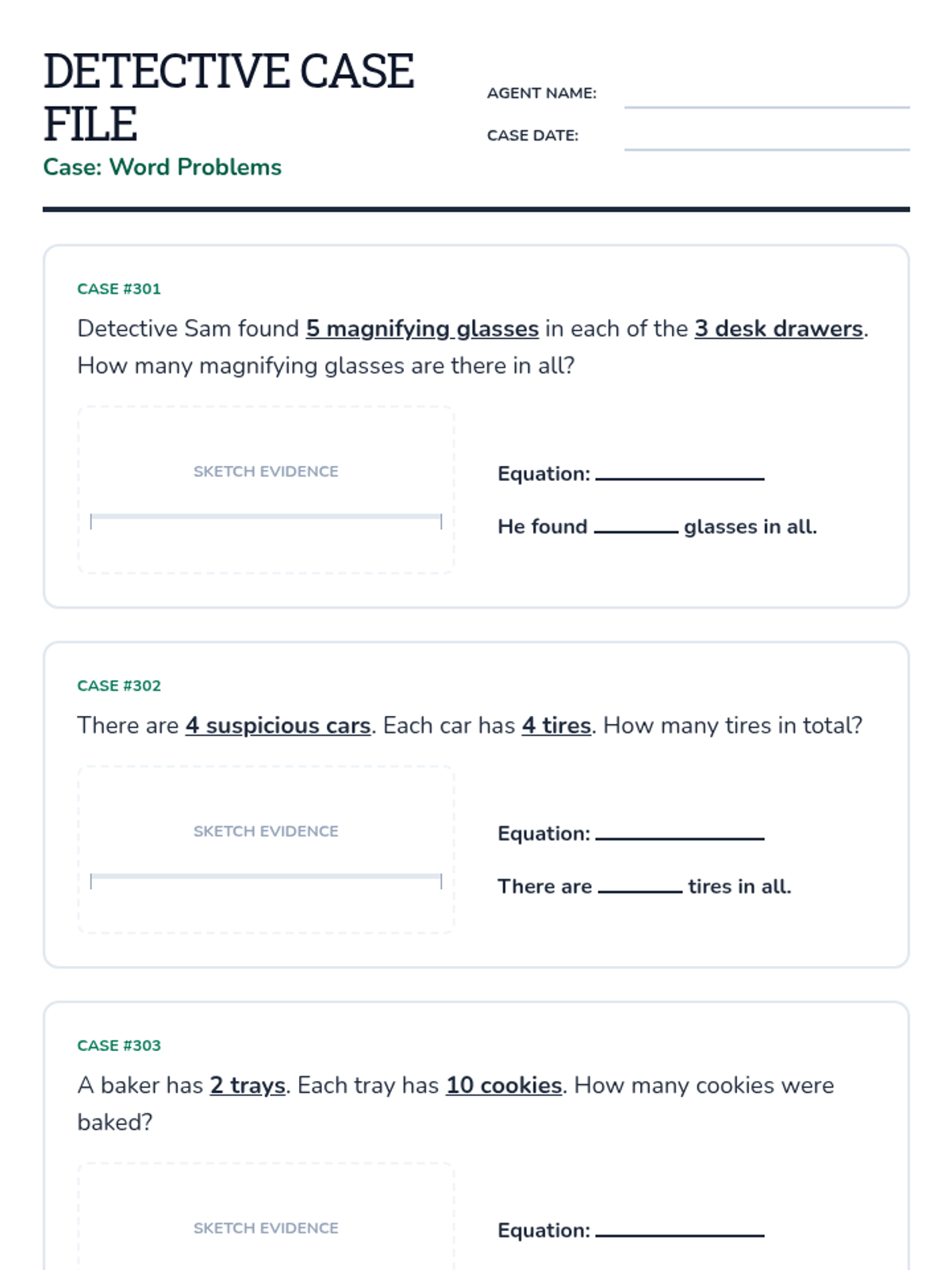
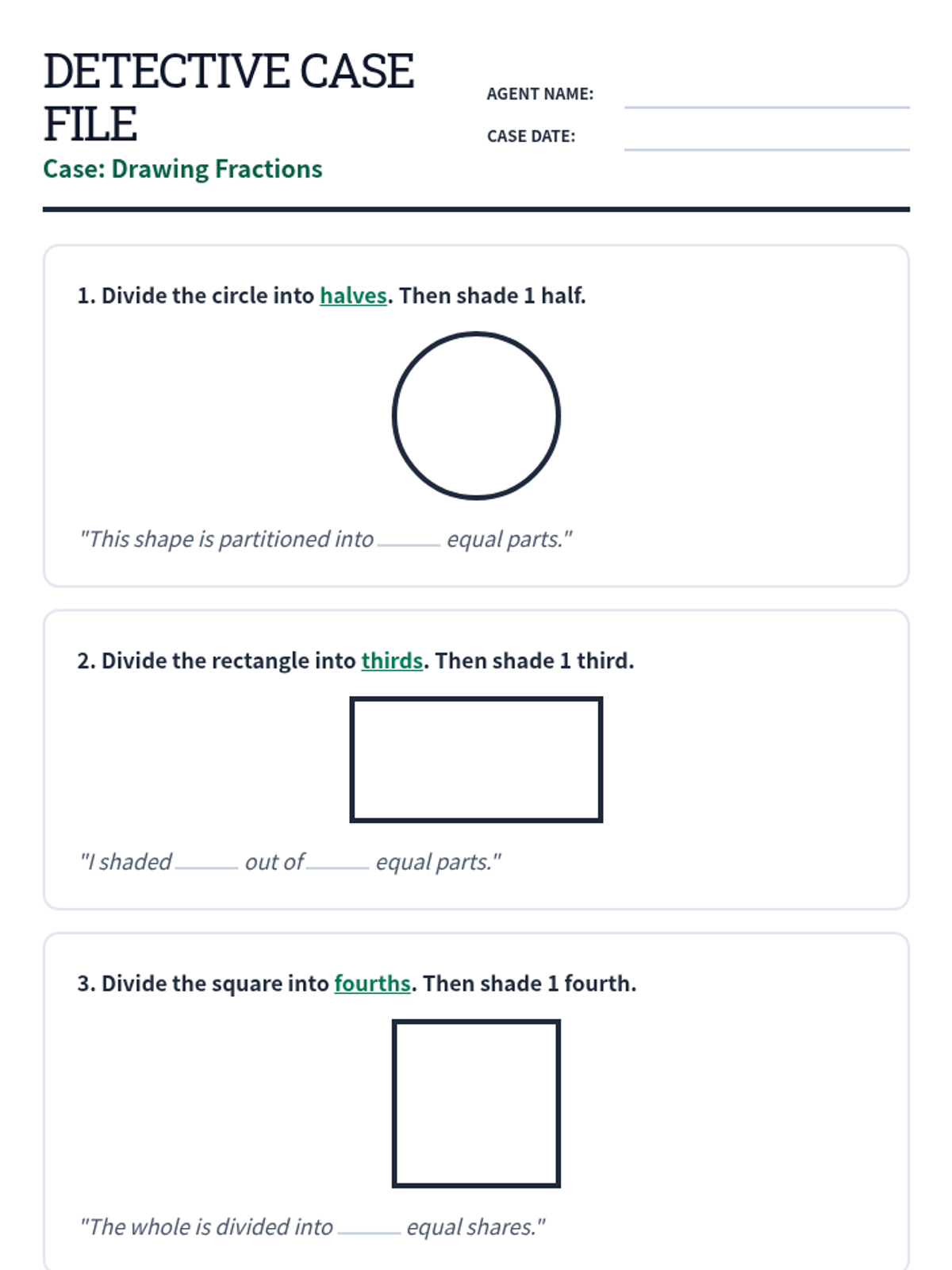
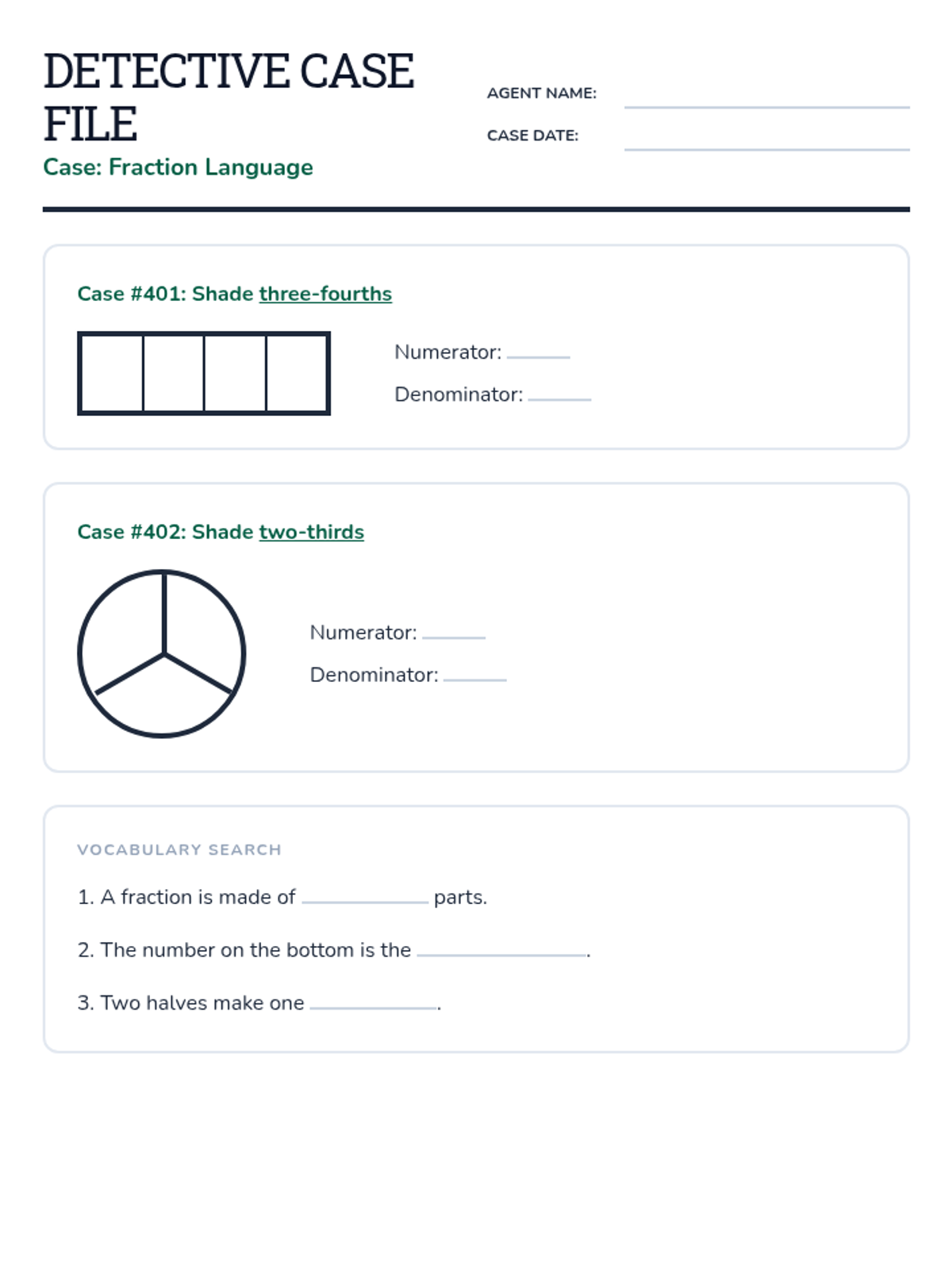
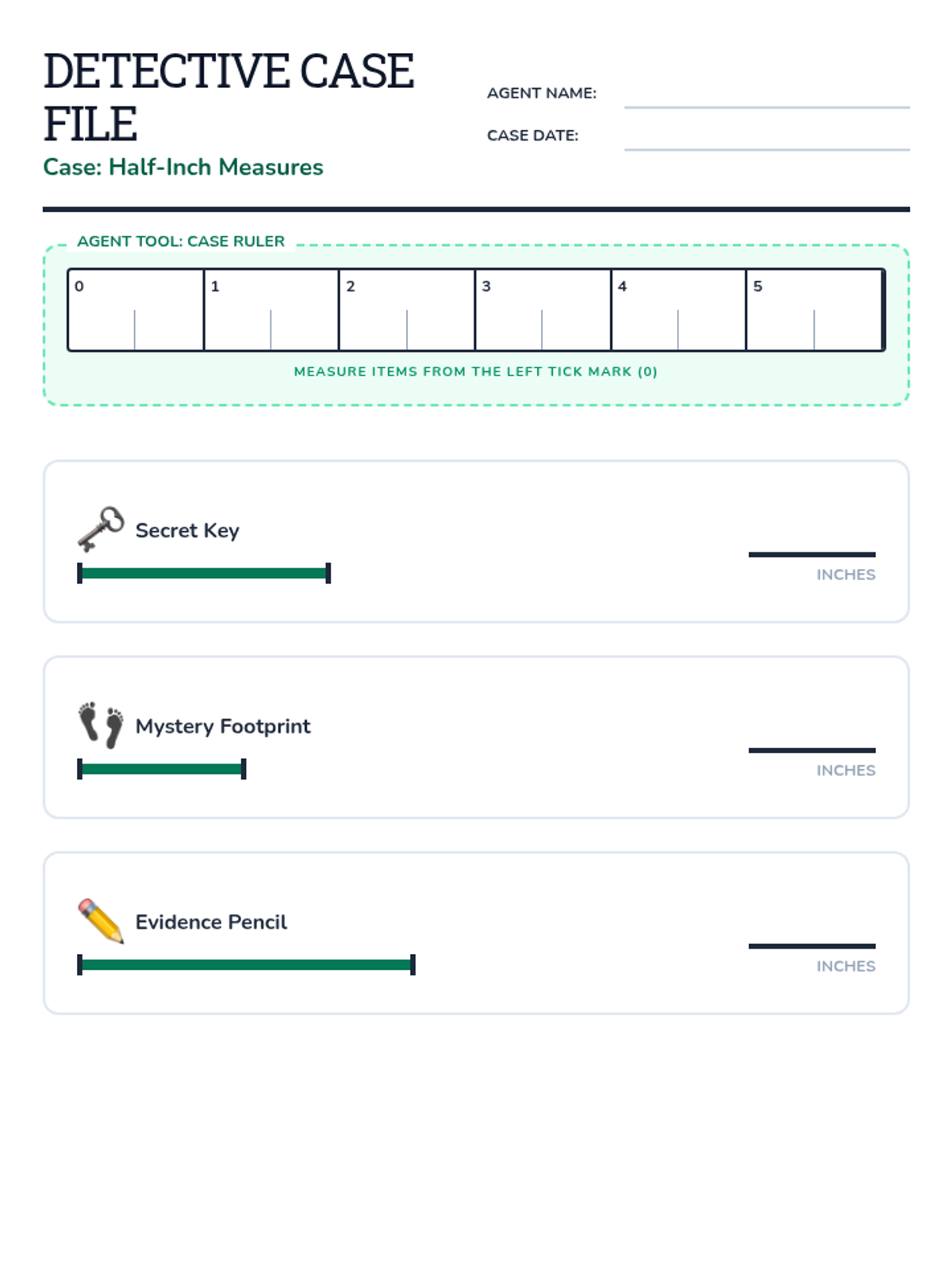
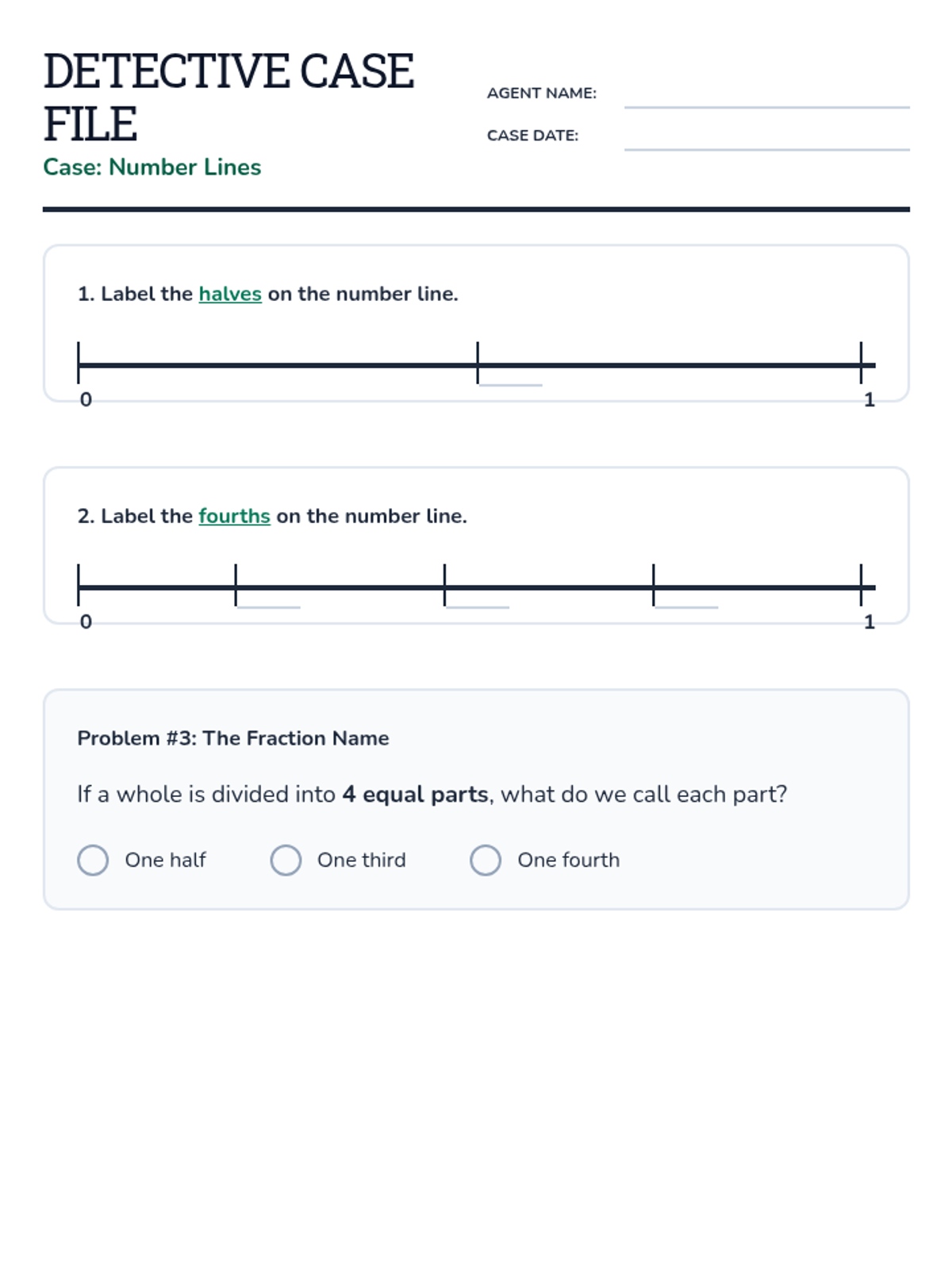
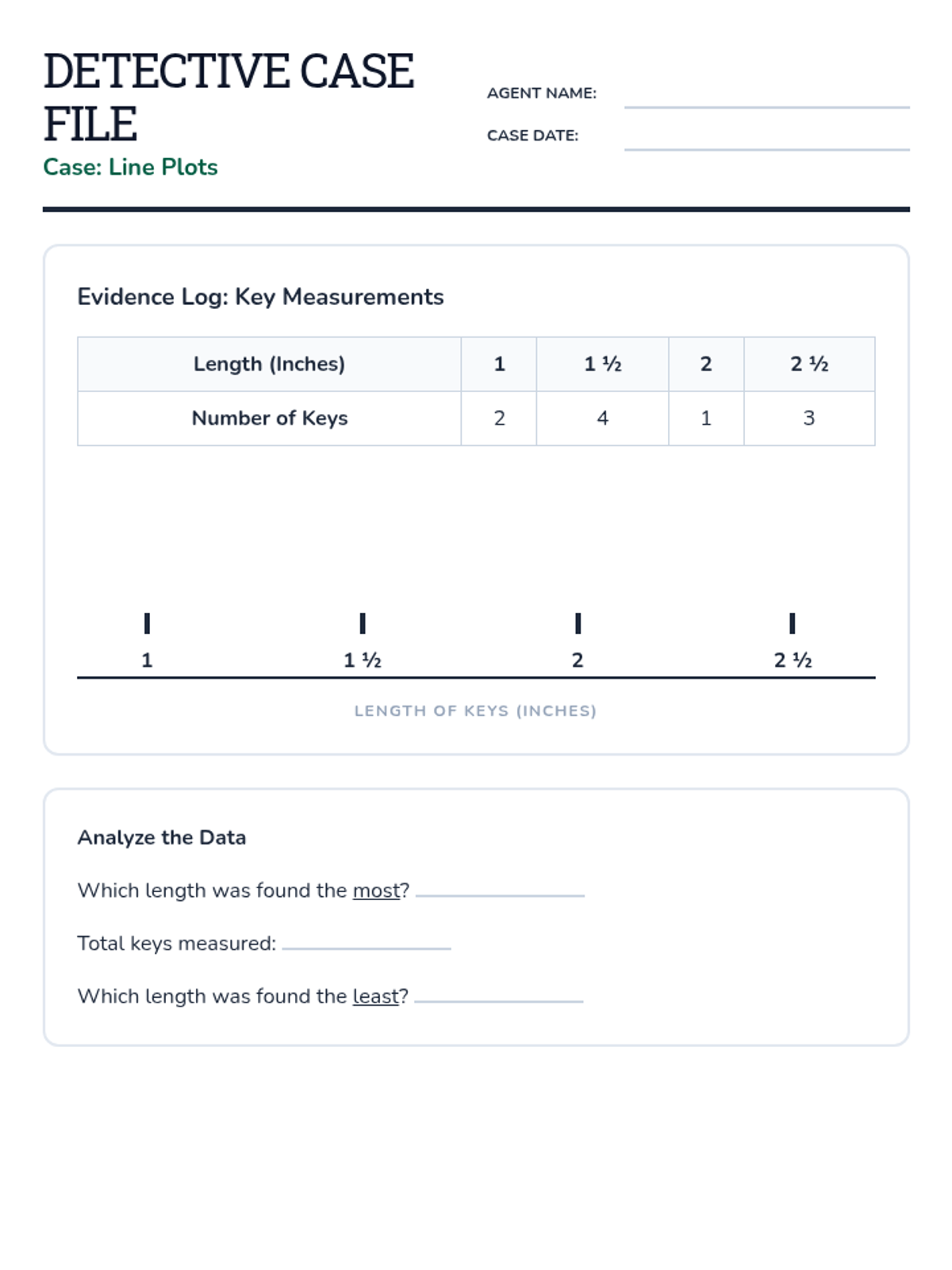
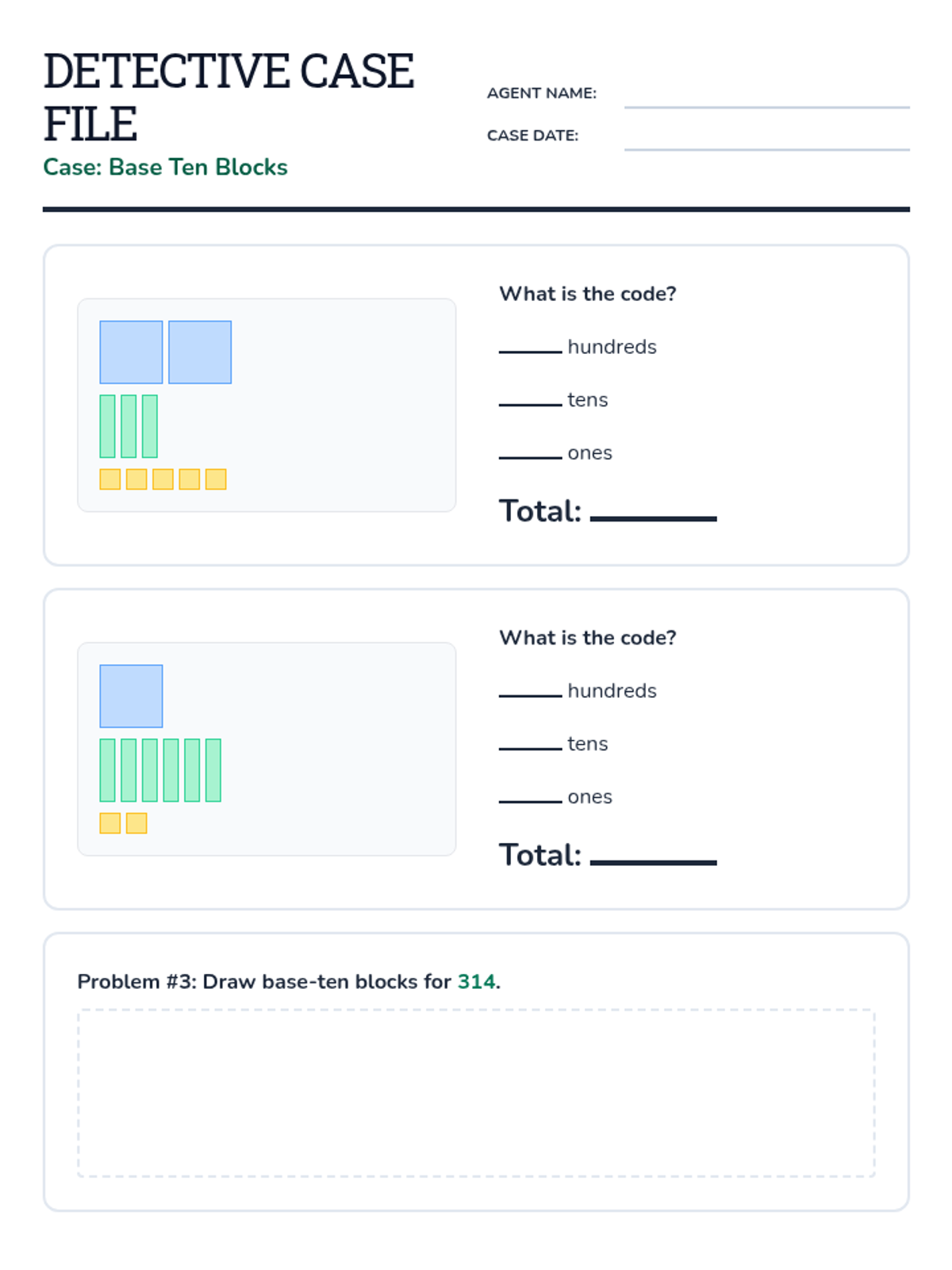
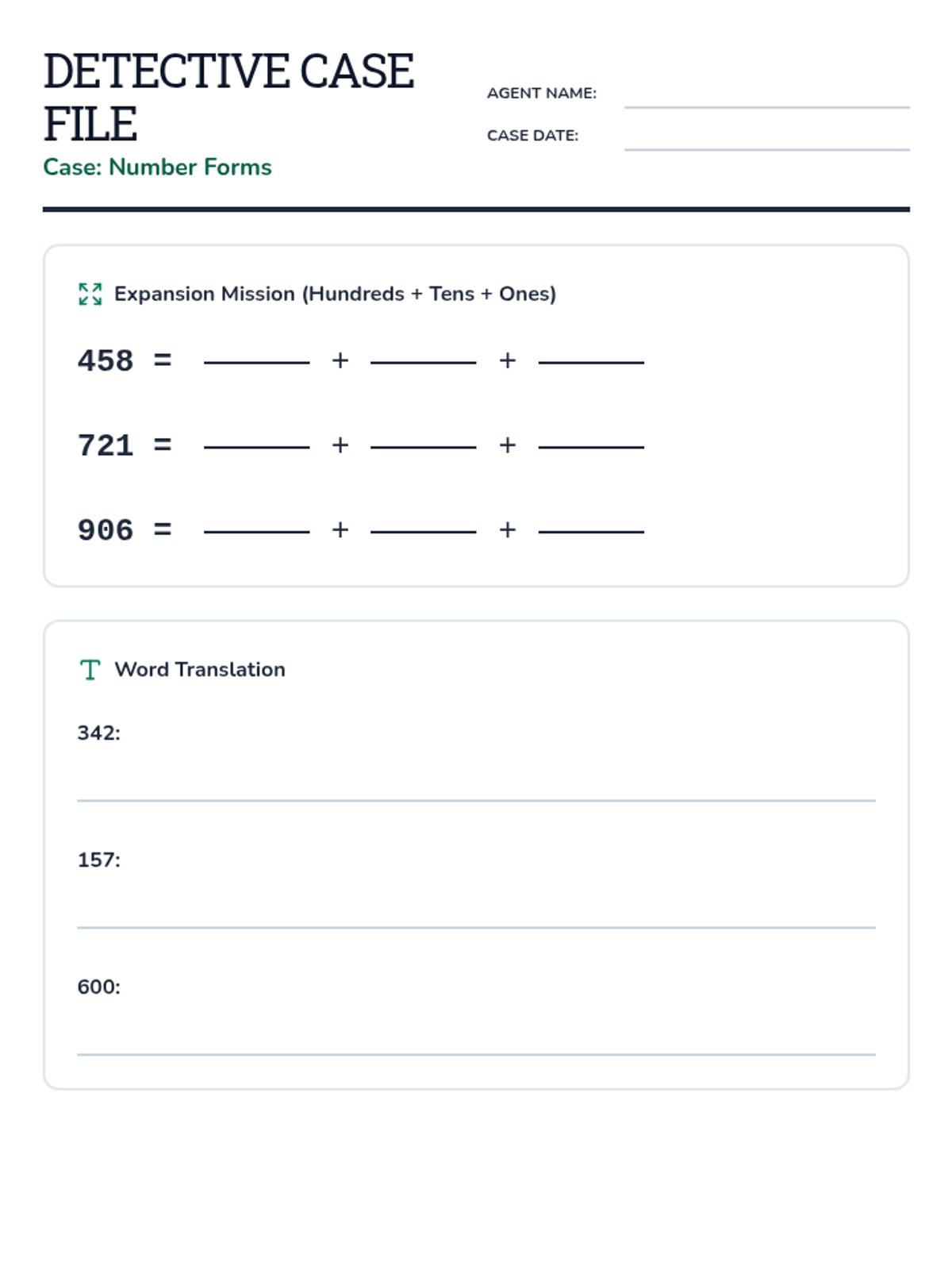
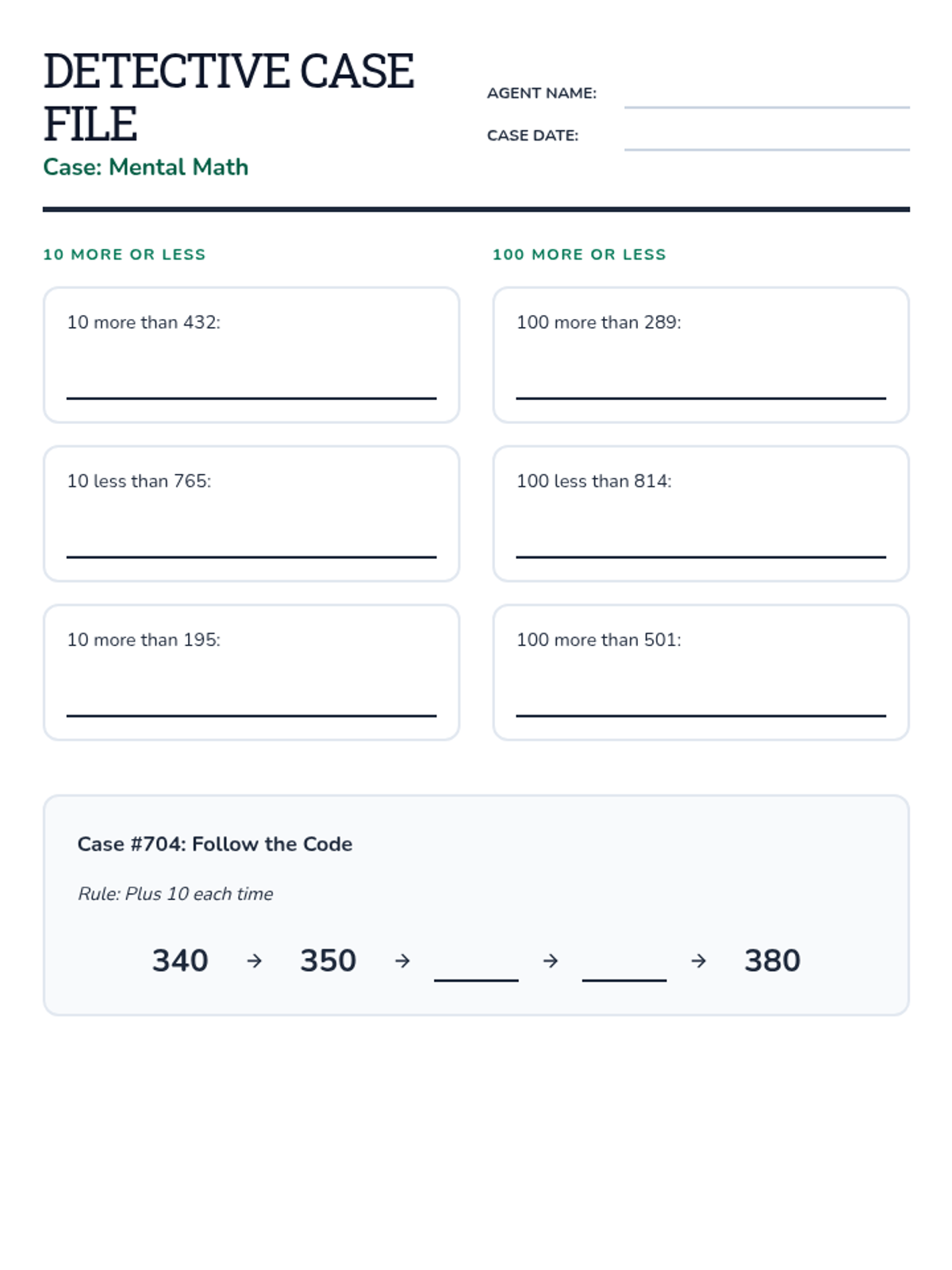
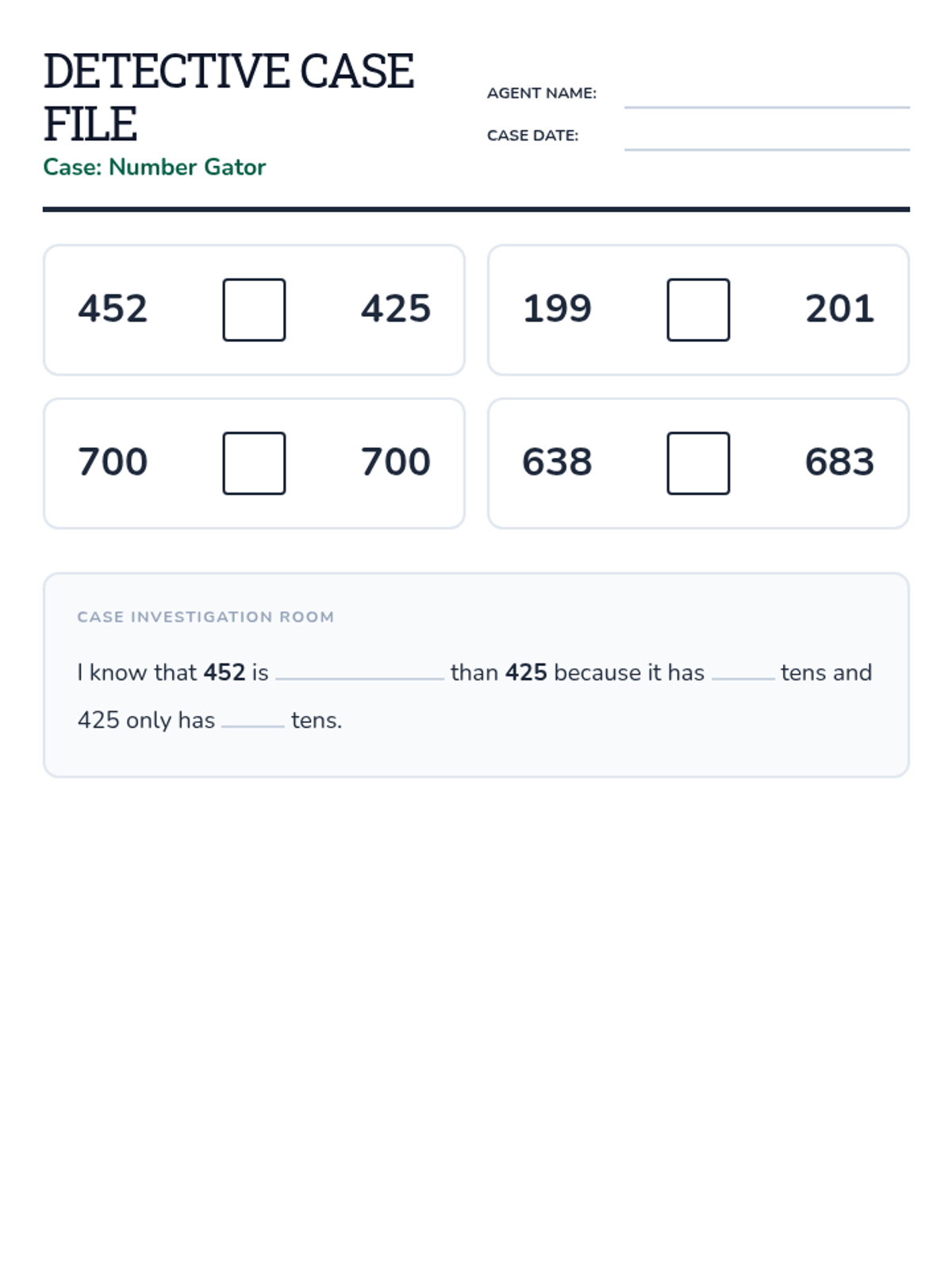
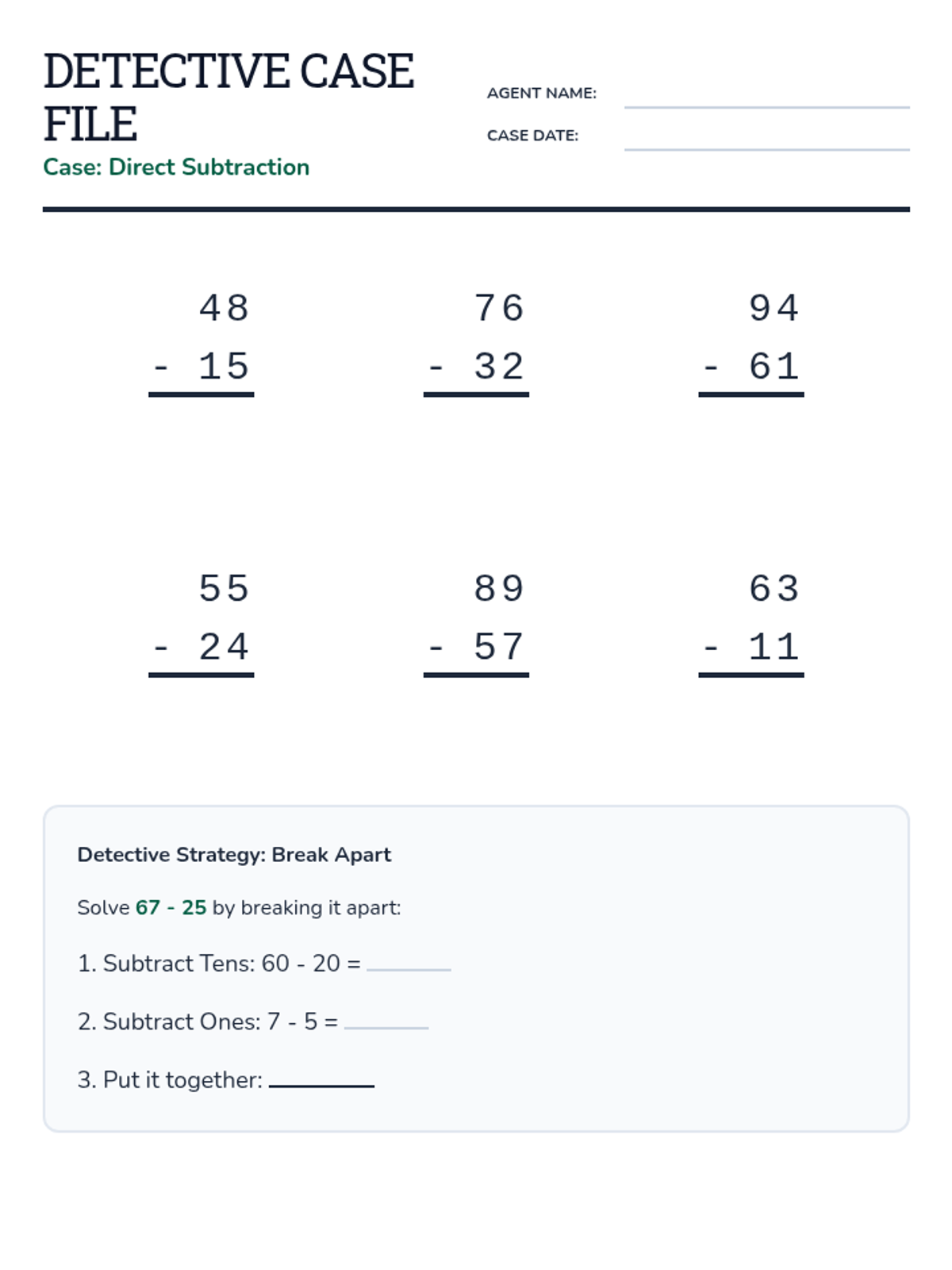
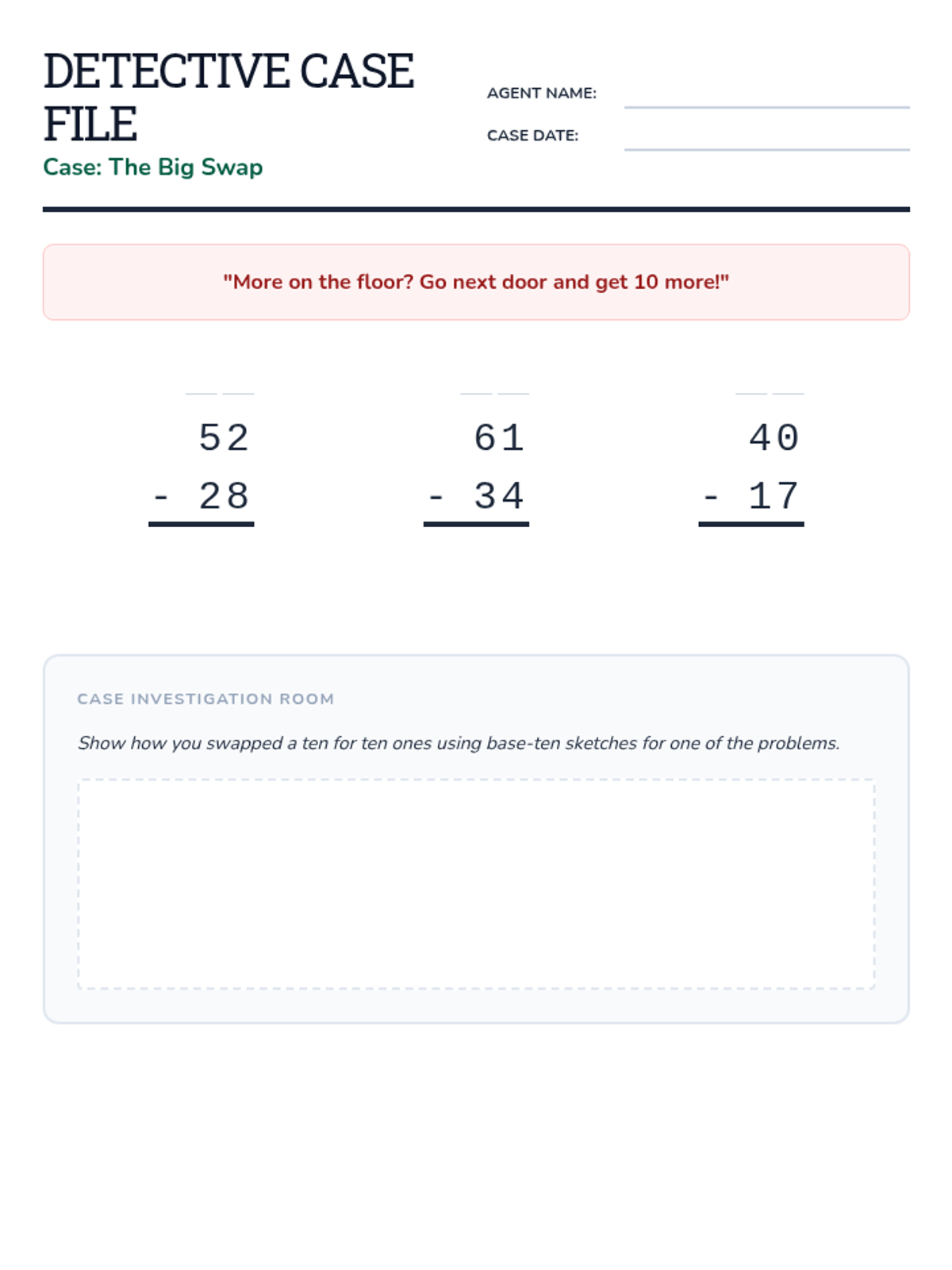
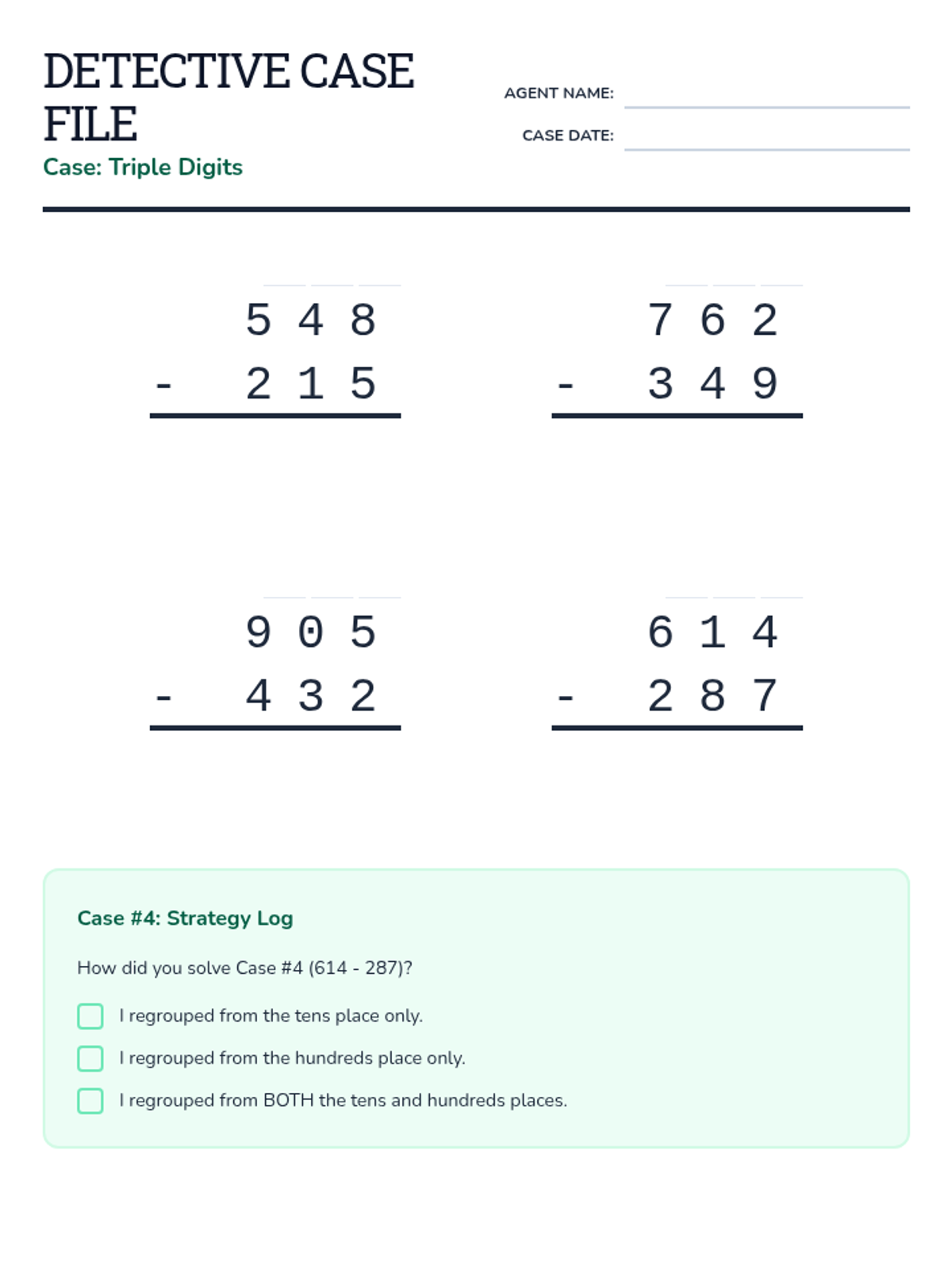
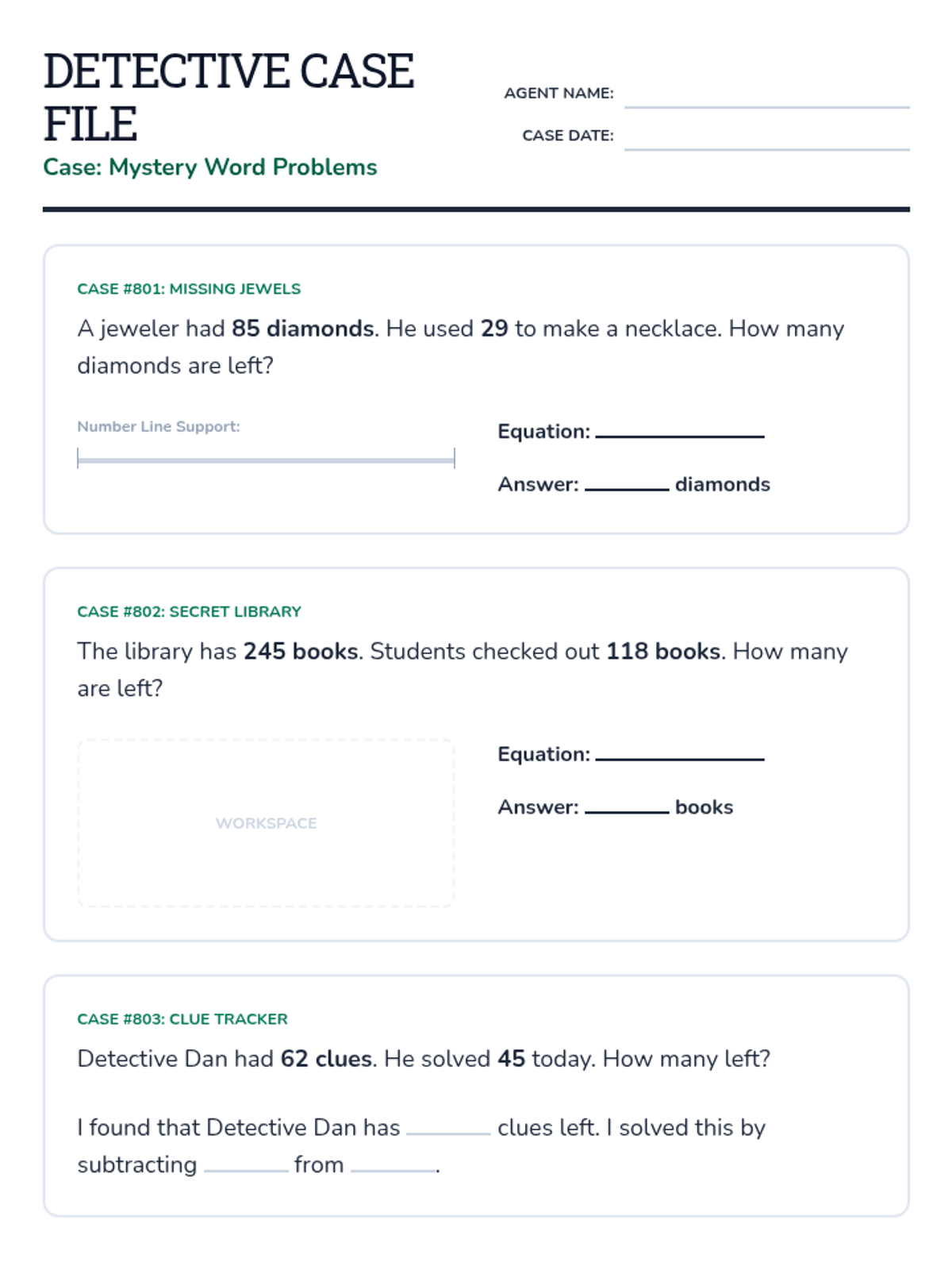
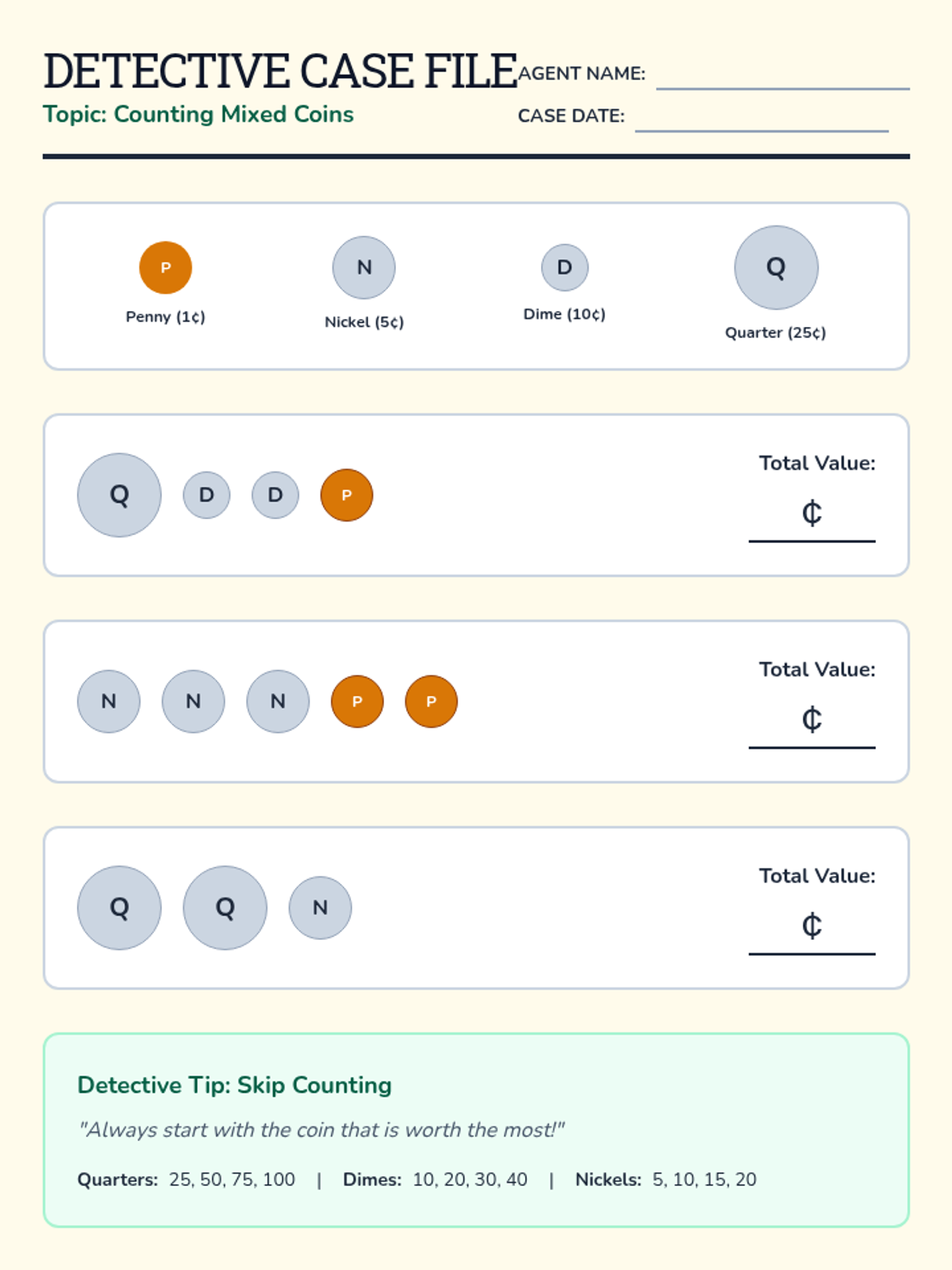
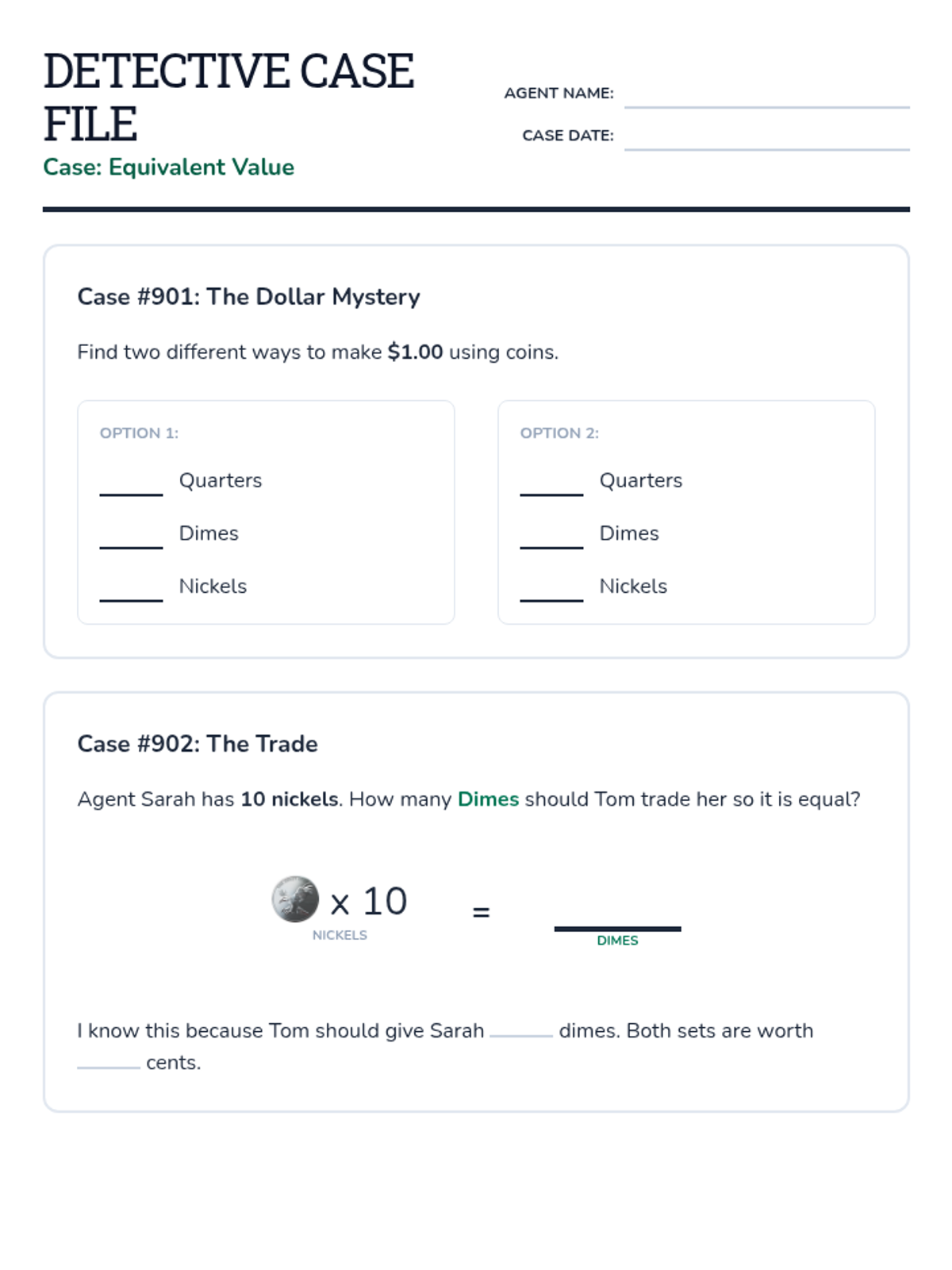
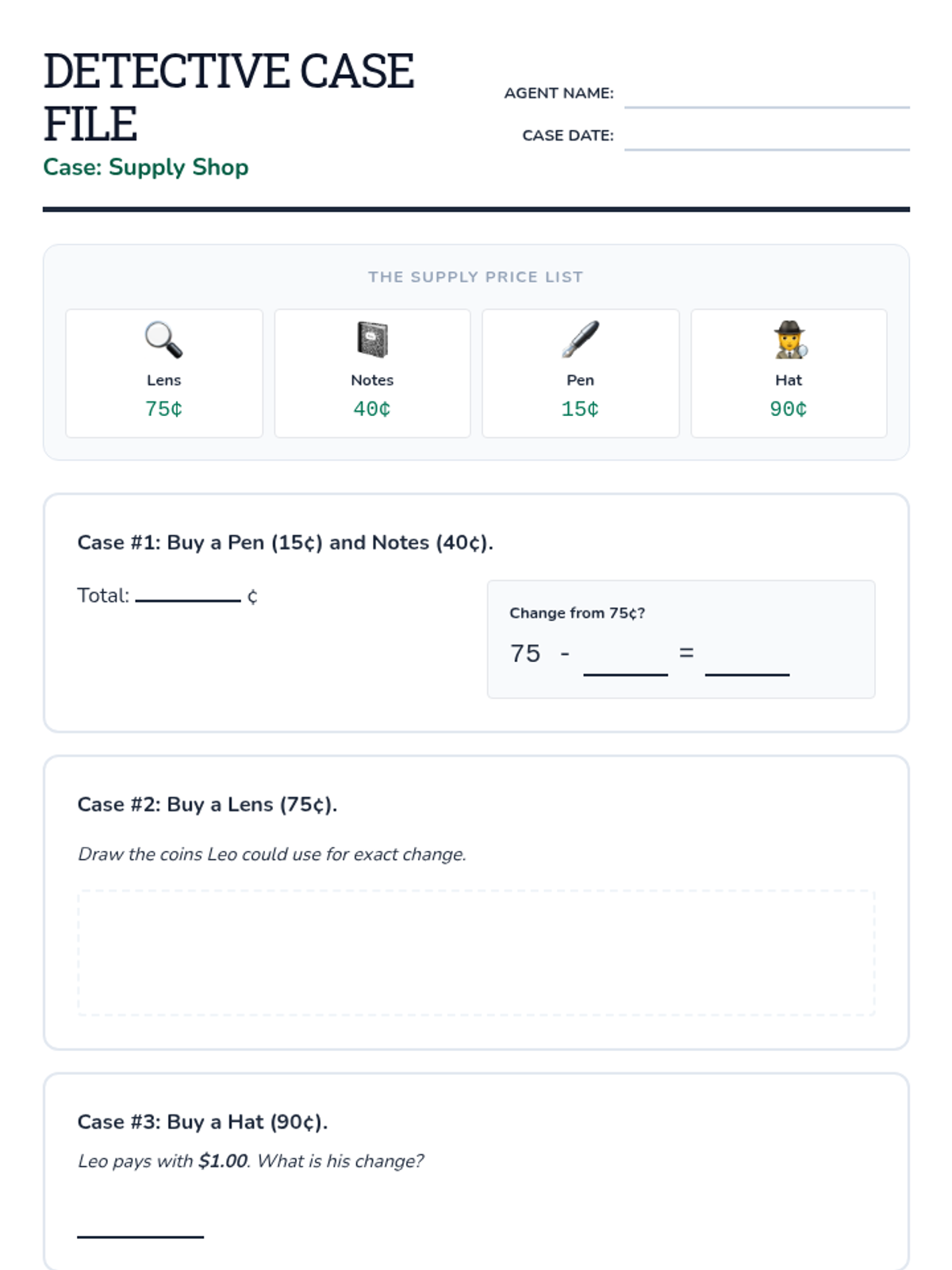
A comprehensive 20-worksheet review packet for 2nd grade math concepts including equal groups, fractions, measurement, place value, subtraction, and money, all themed as a 'Math Detective' case file.
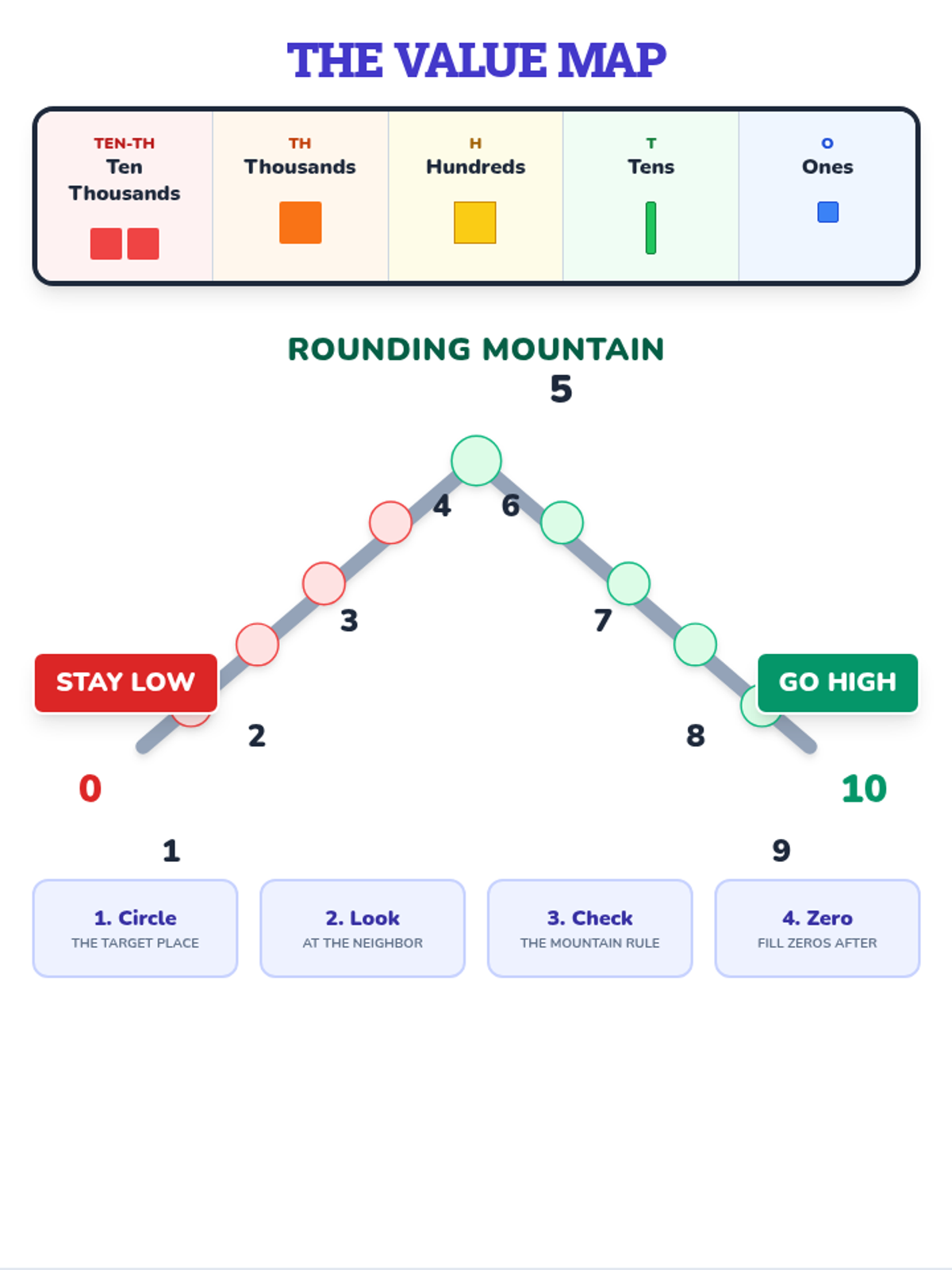
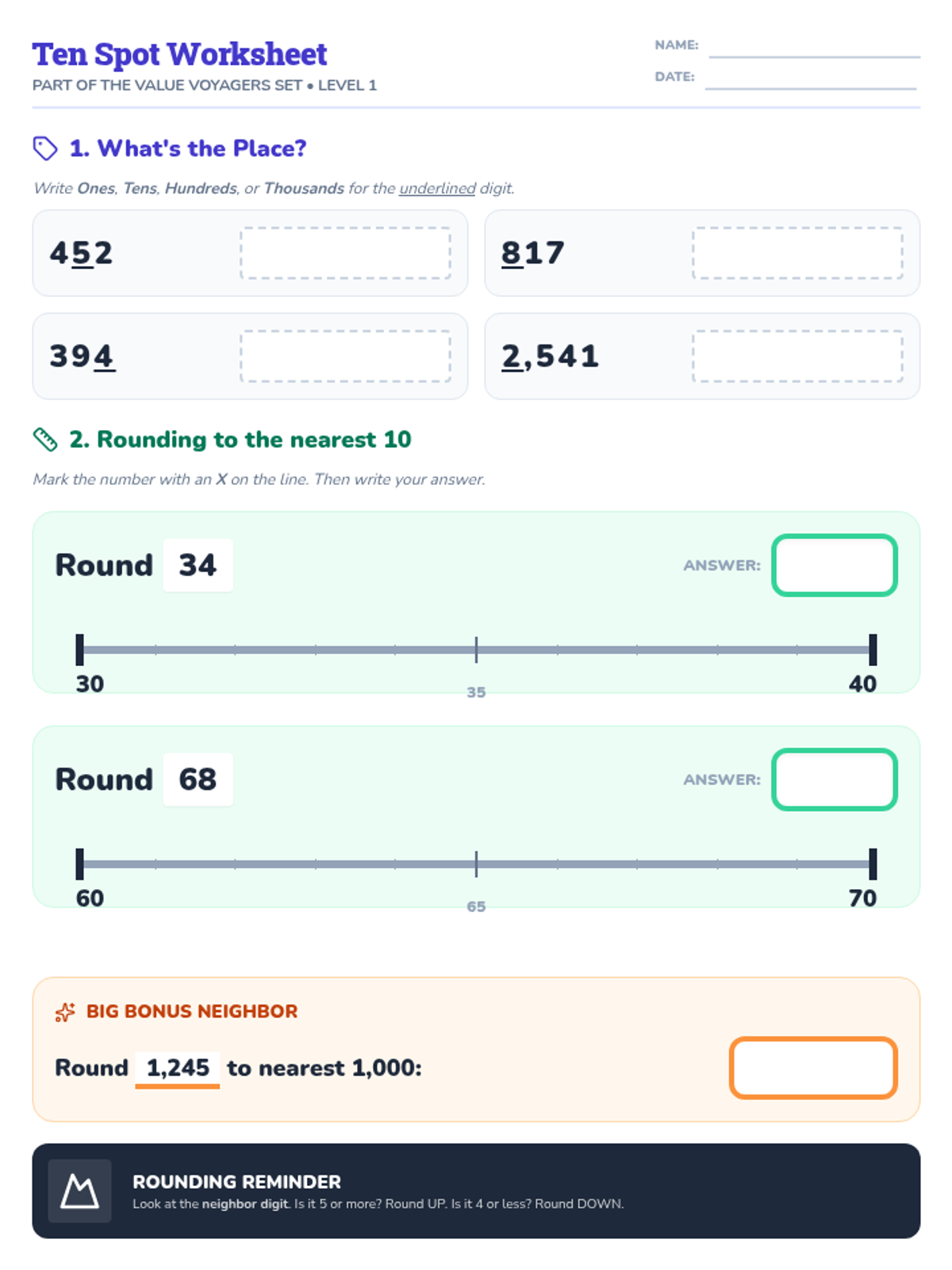
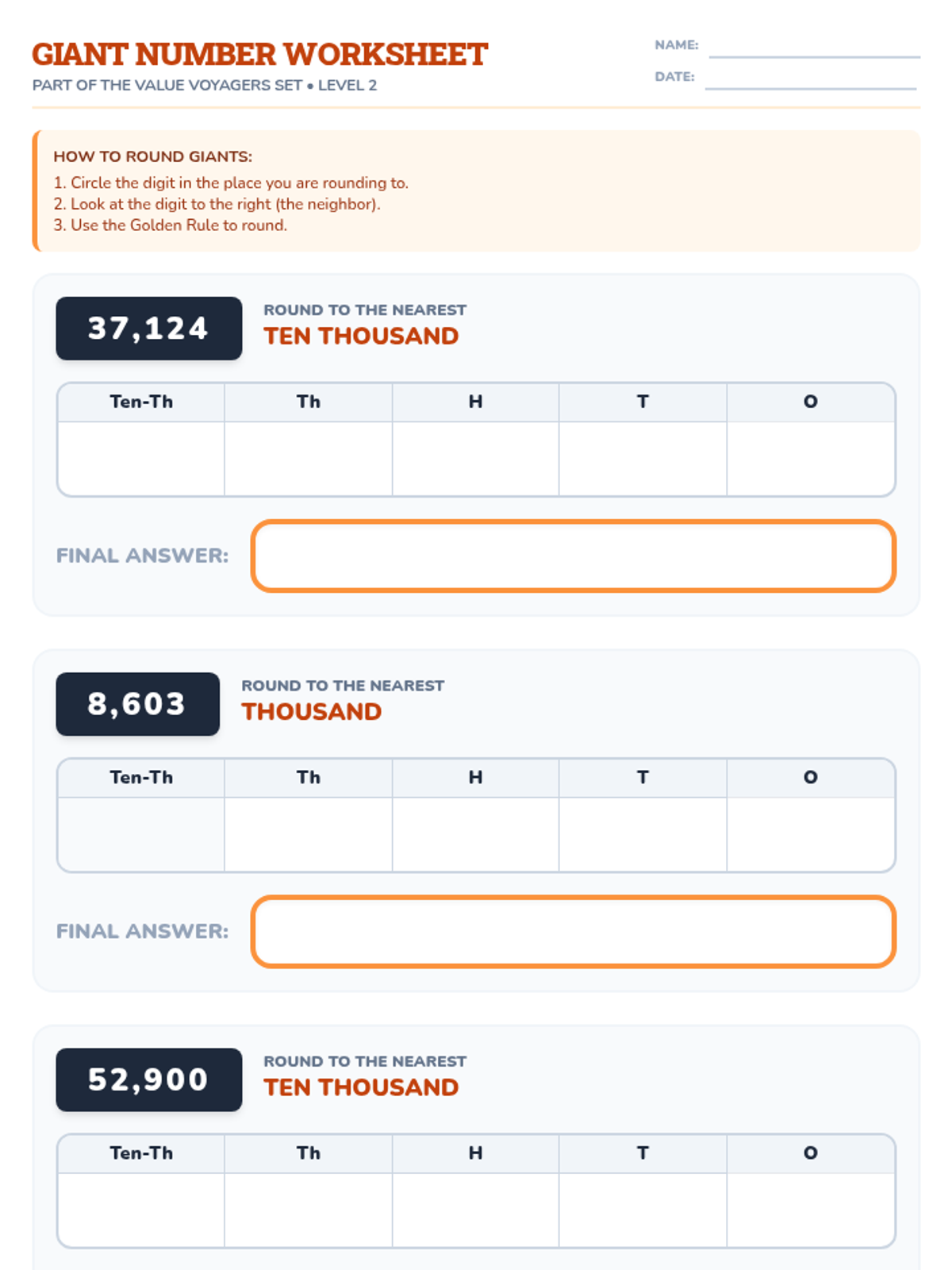
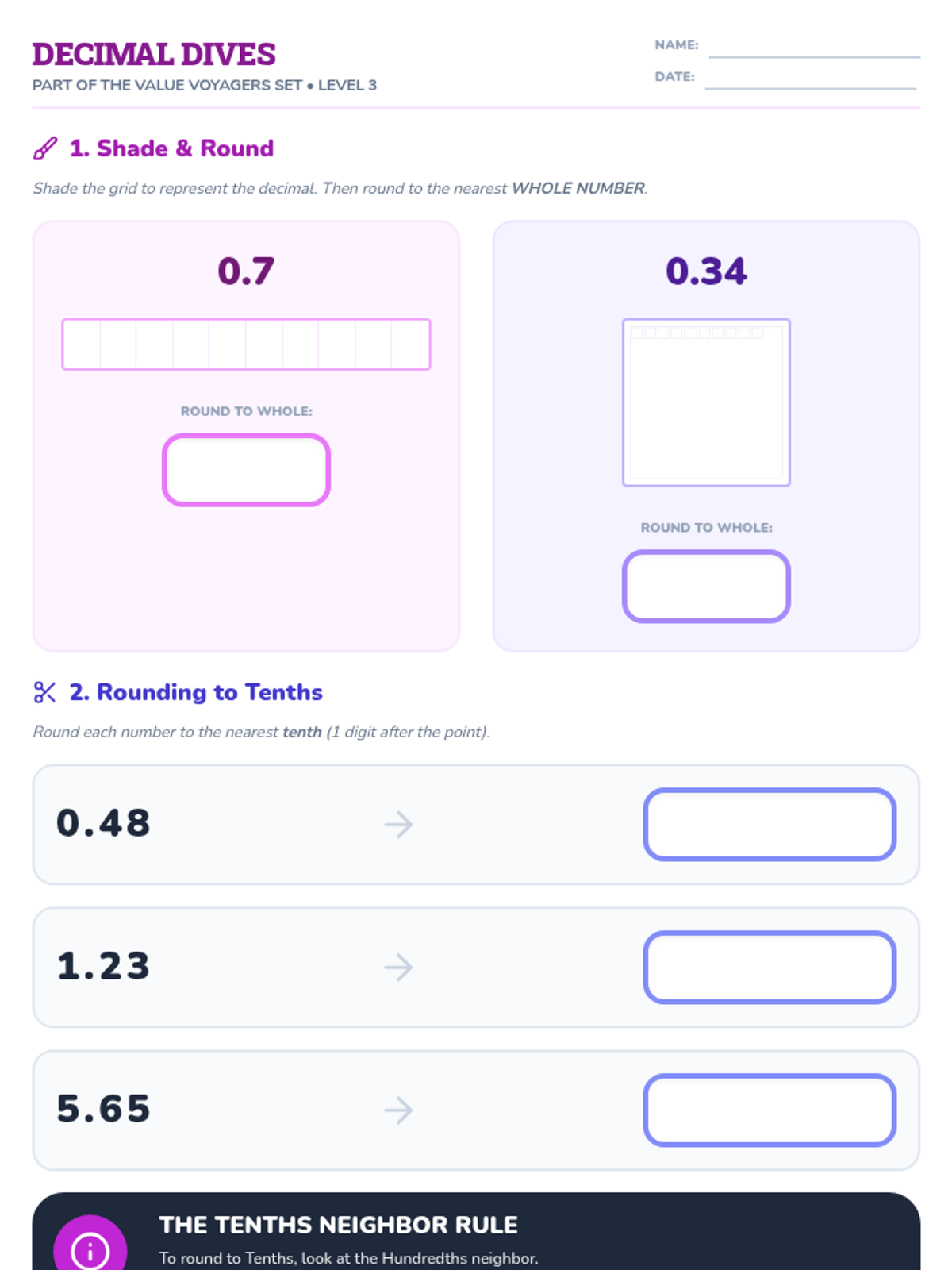
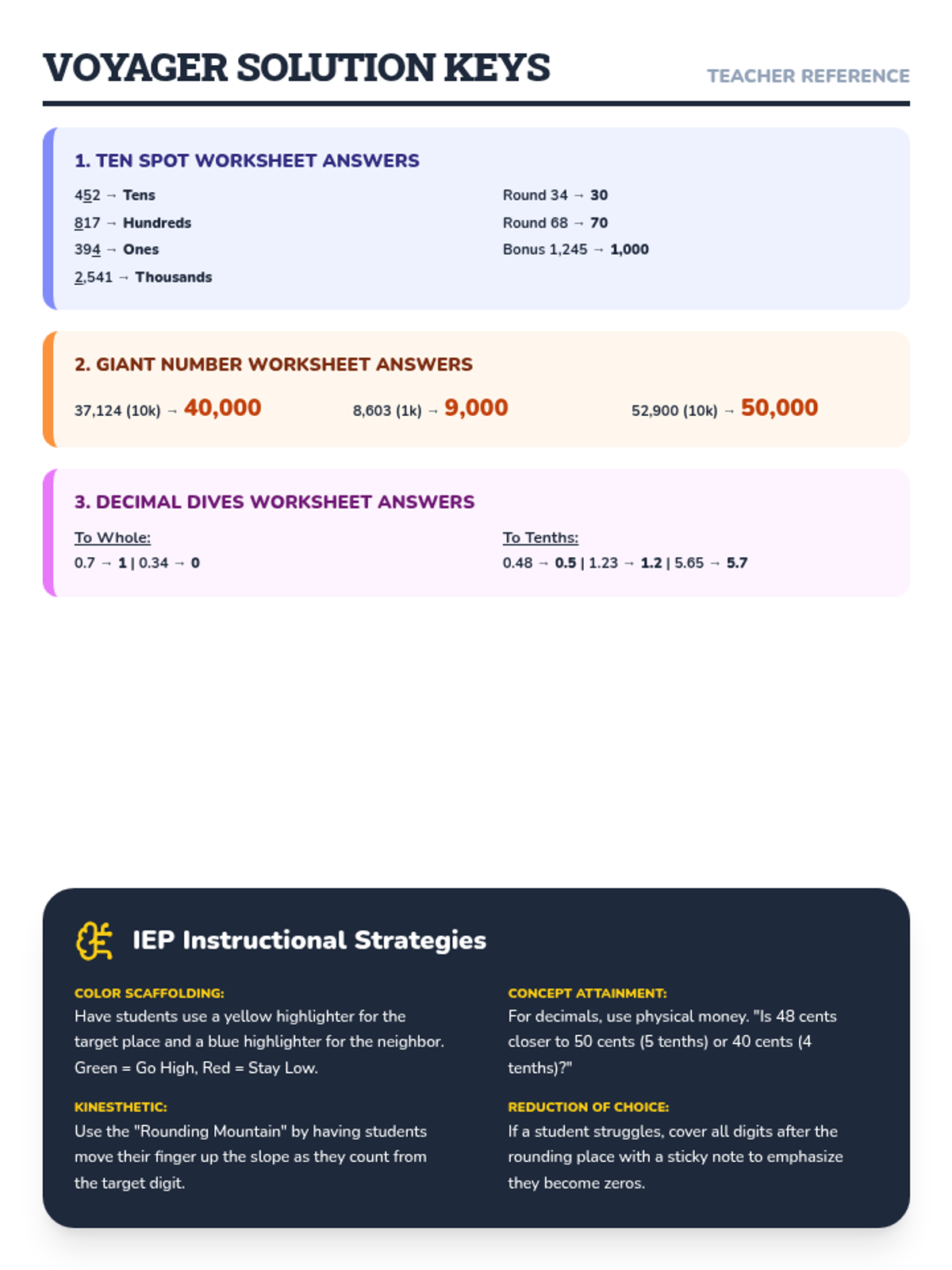
A comprehensive guide to understanding place value from single digits to ten-thousands and decimals, featuring visual scaffolding for rounding.
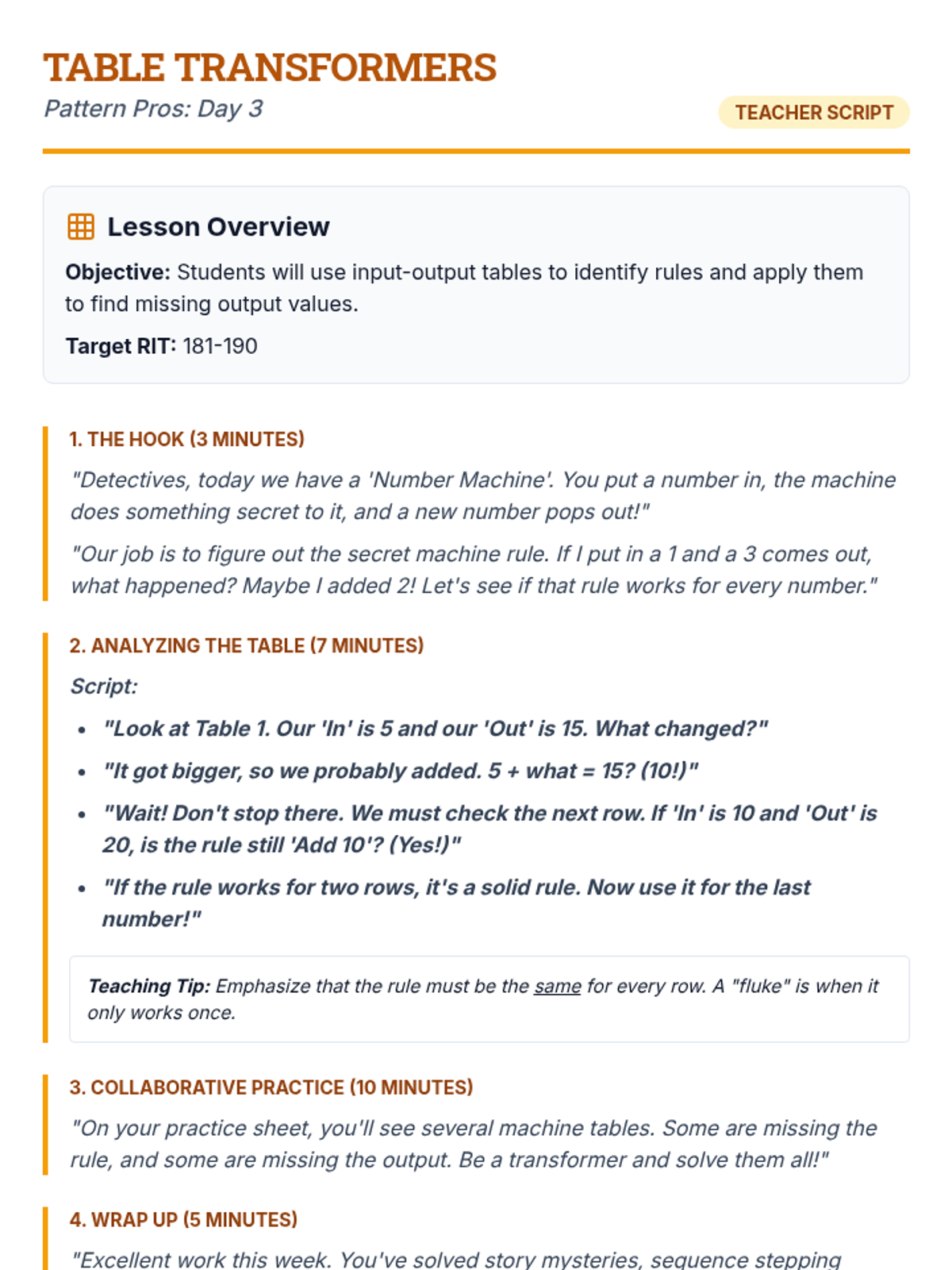
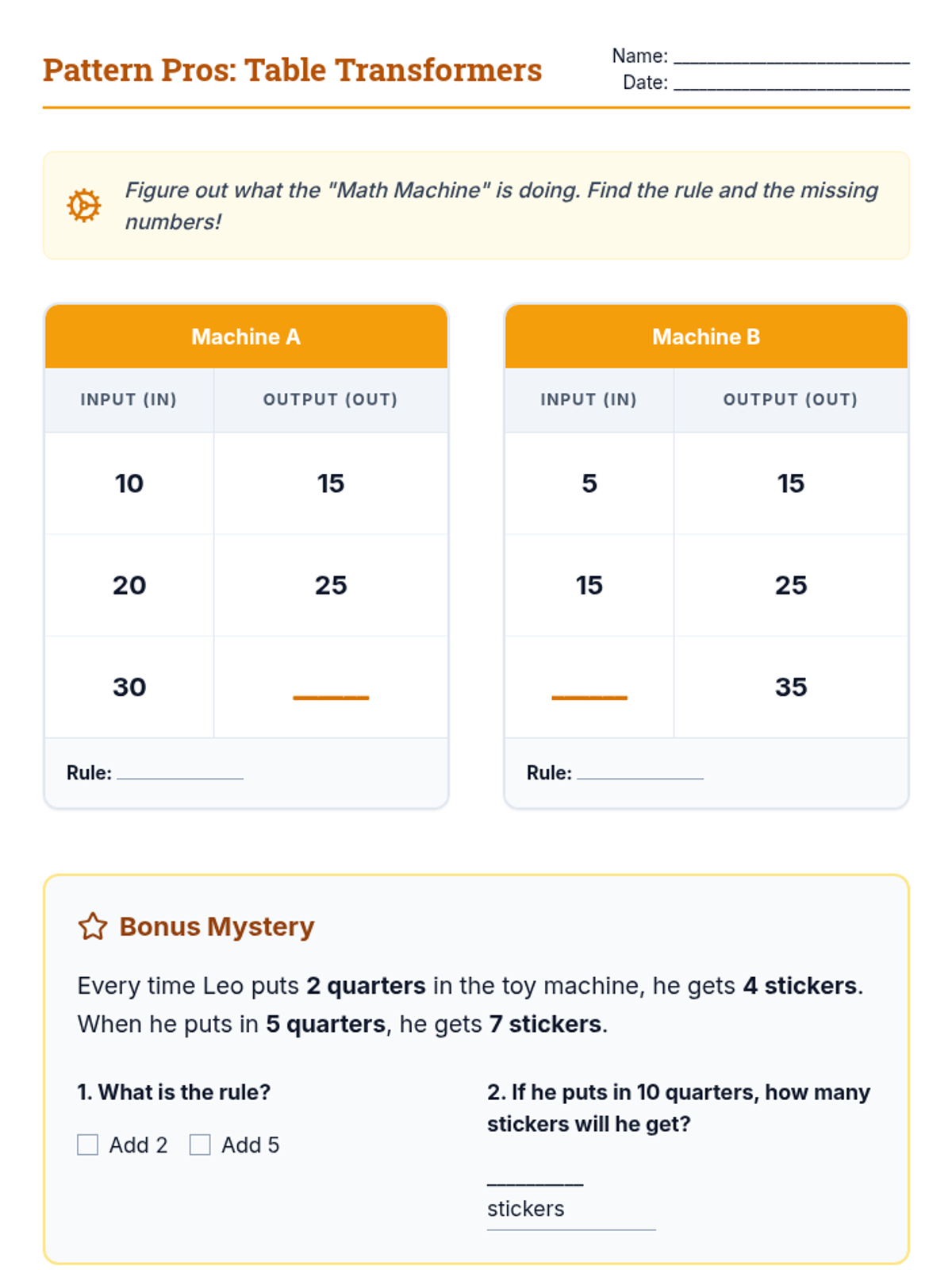
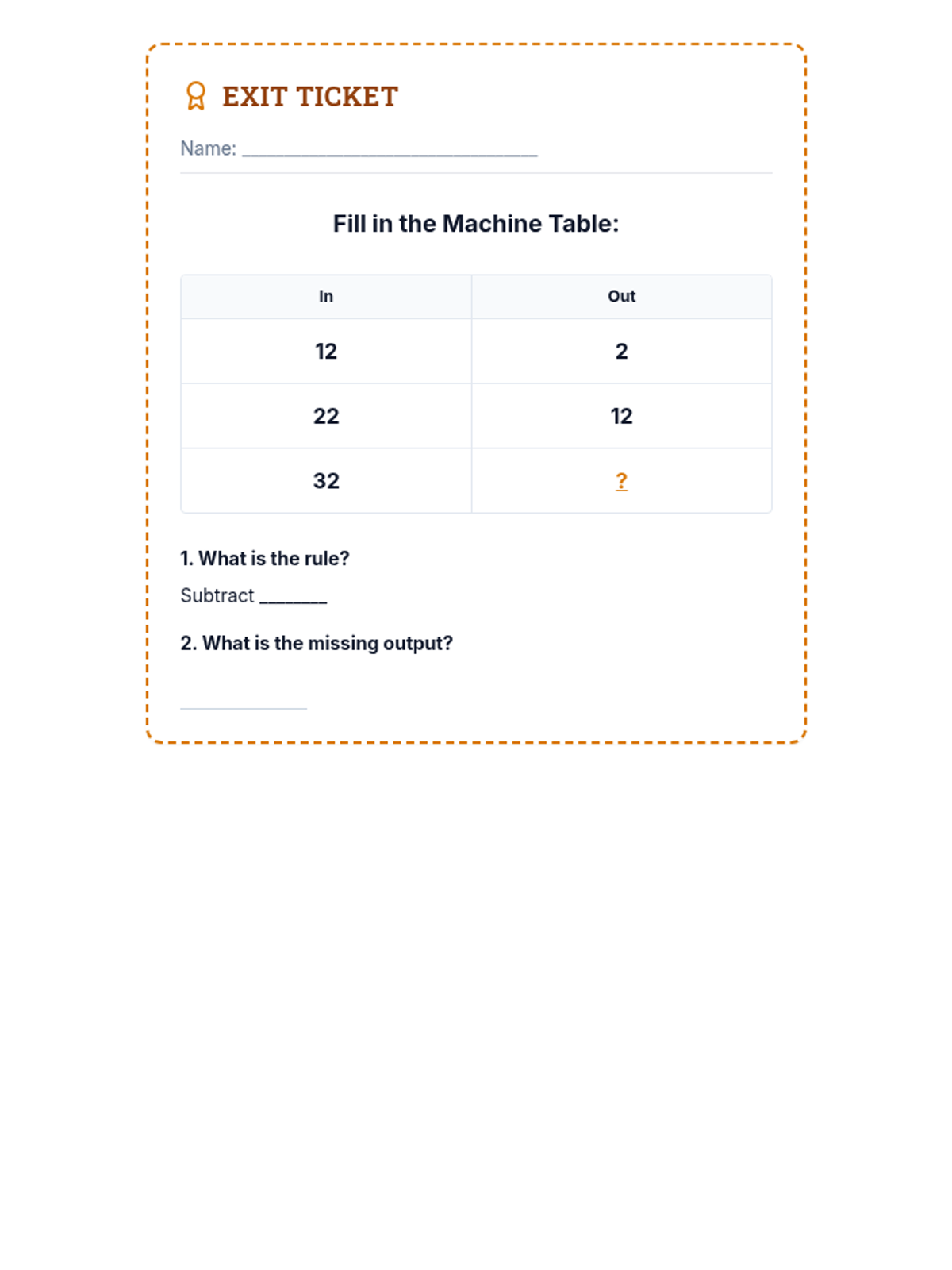
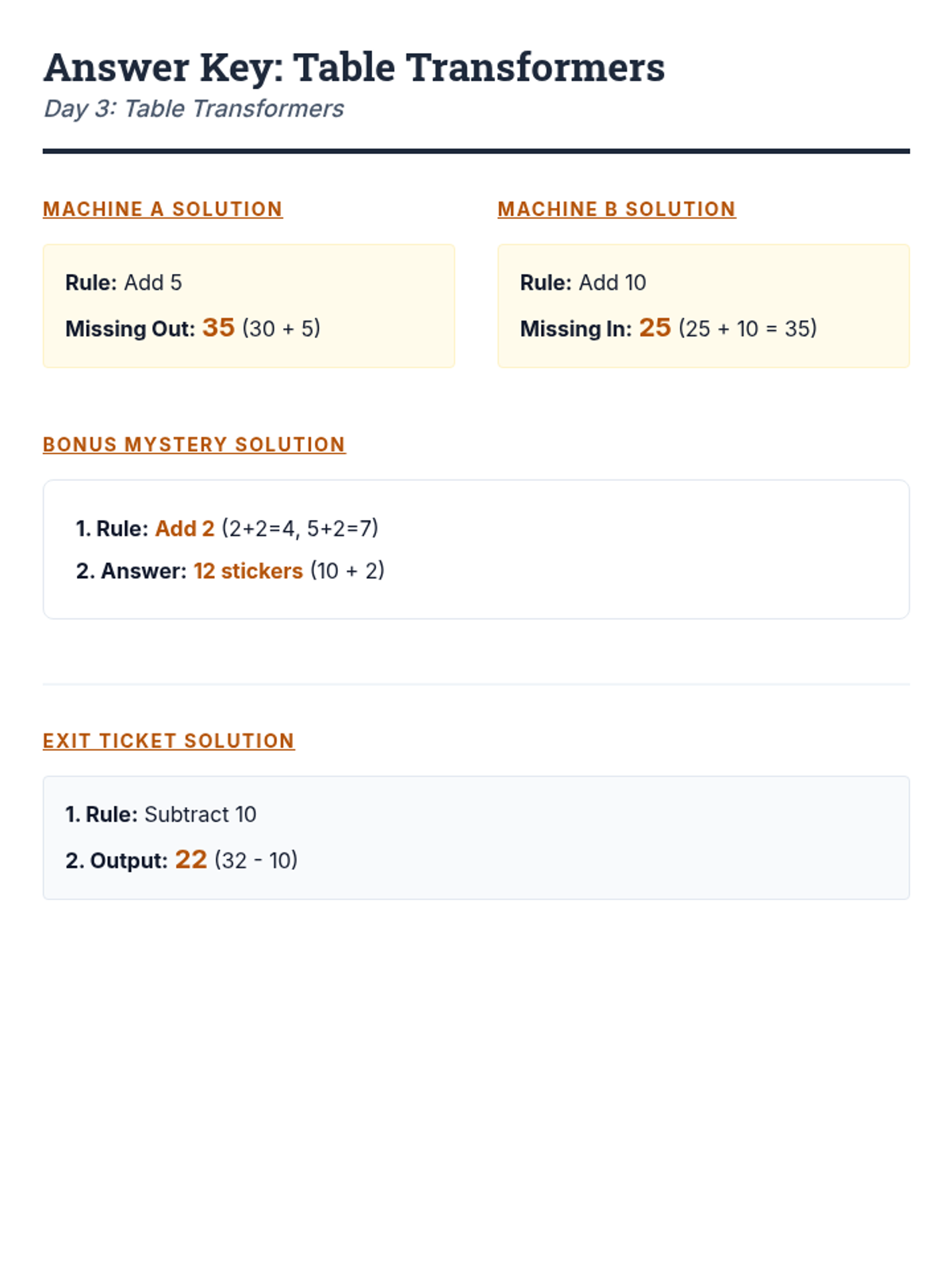
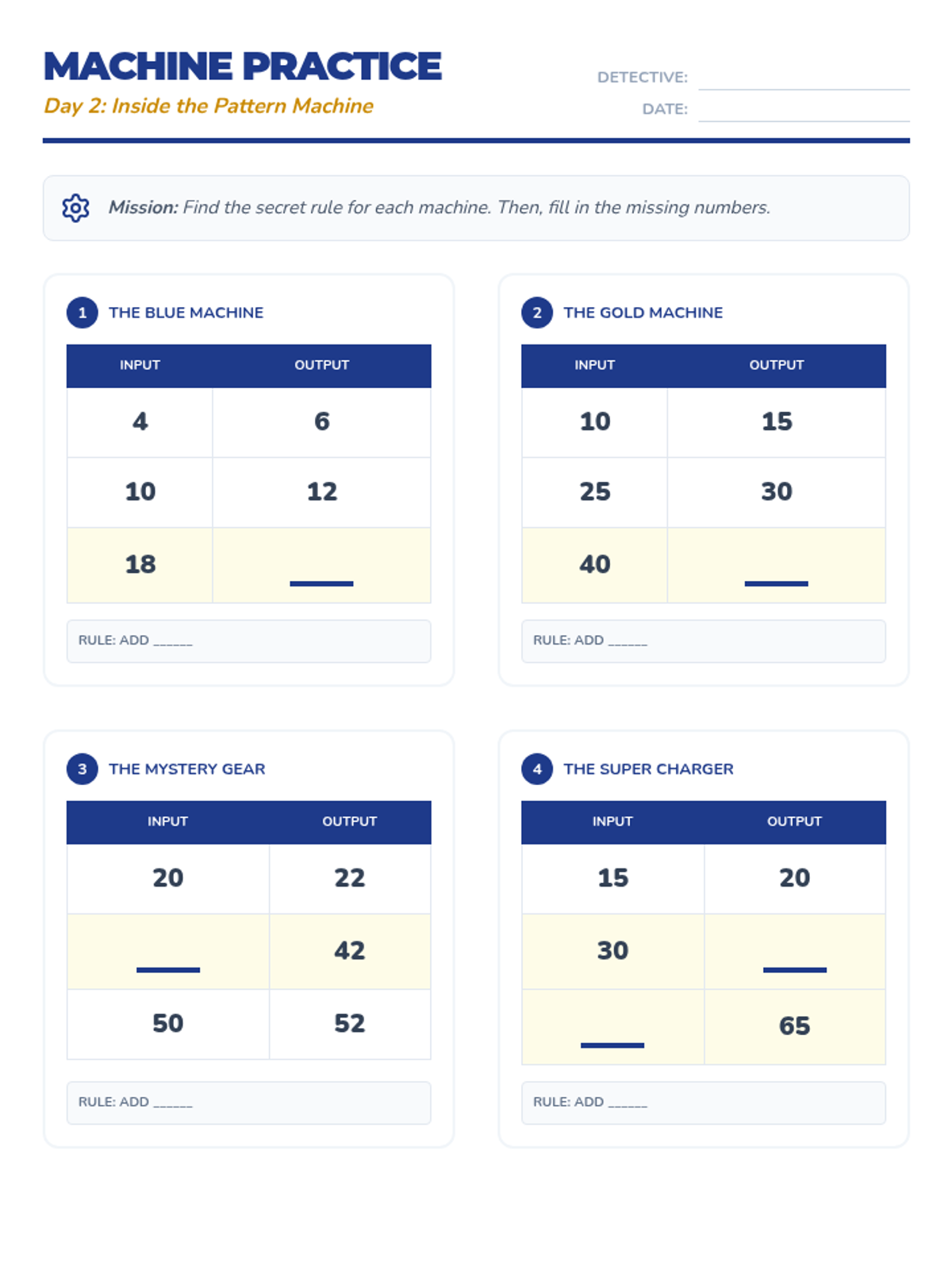
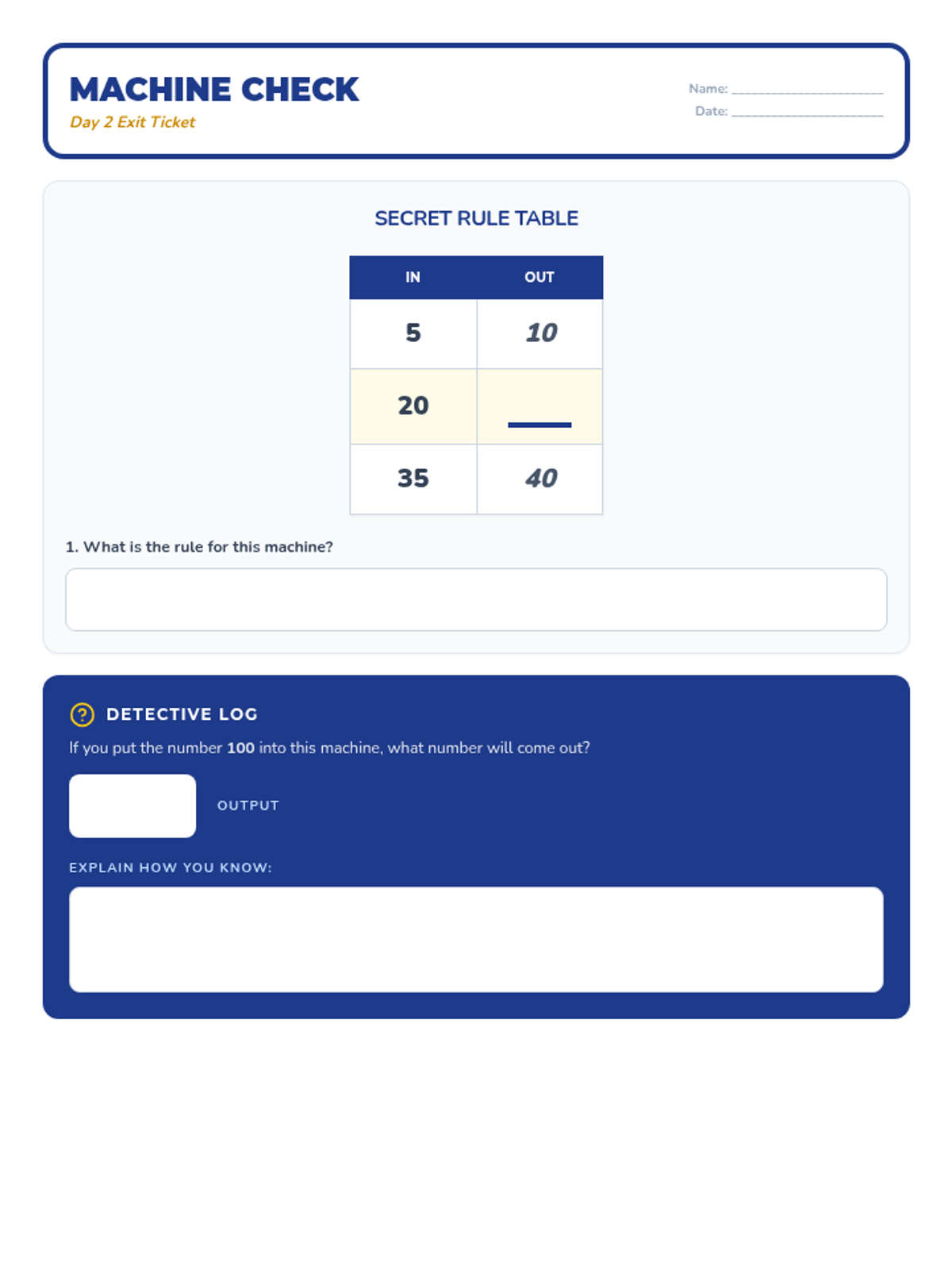
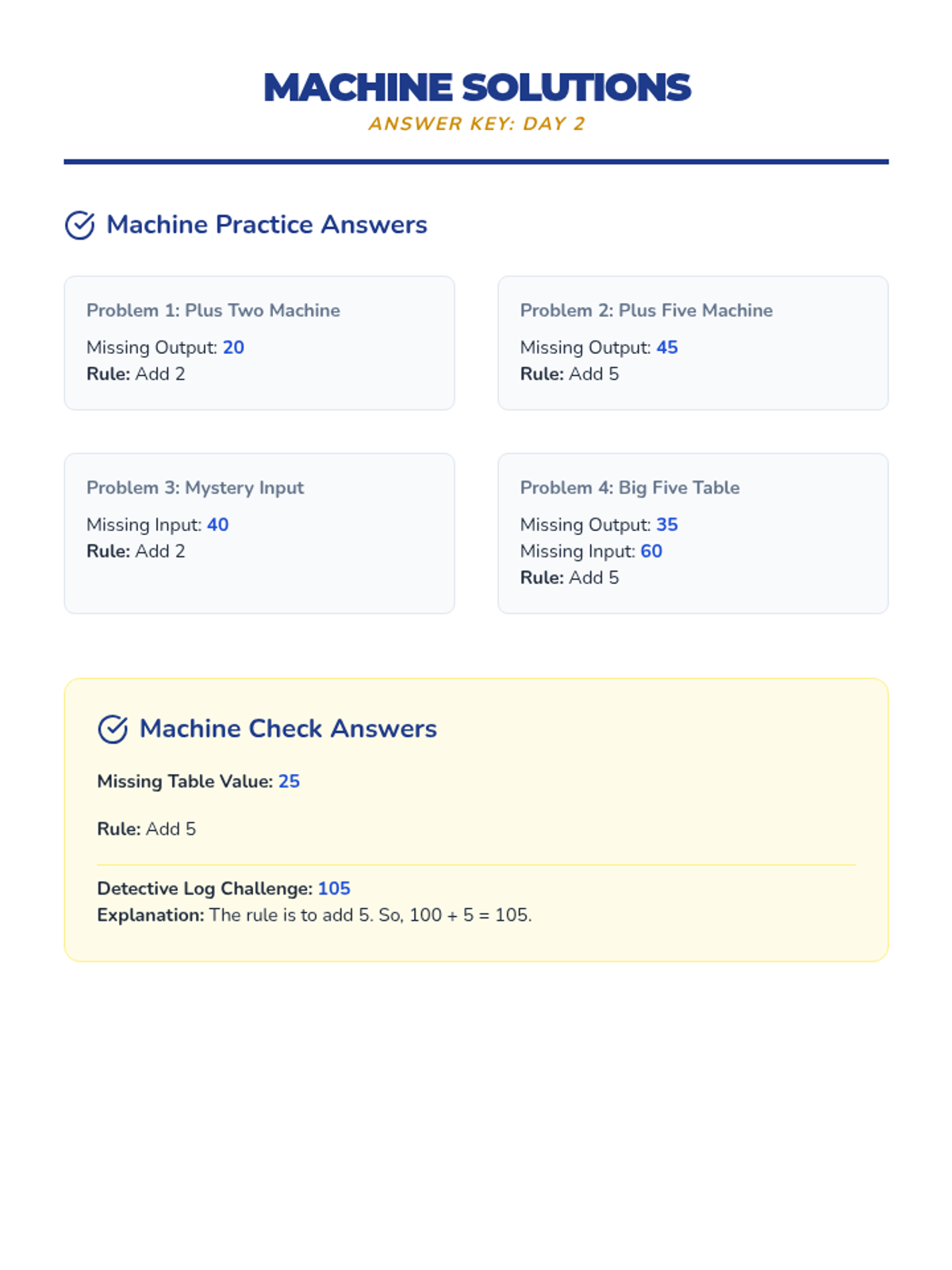
Students analyze input-output tables to identify constant addition or subtraction rules and apply those rules to find missing values.
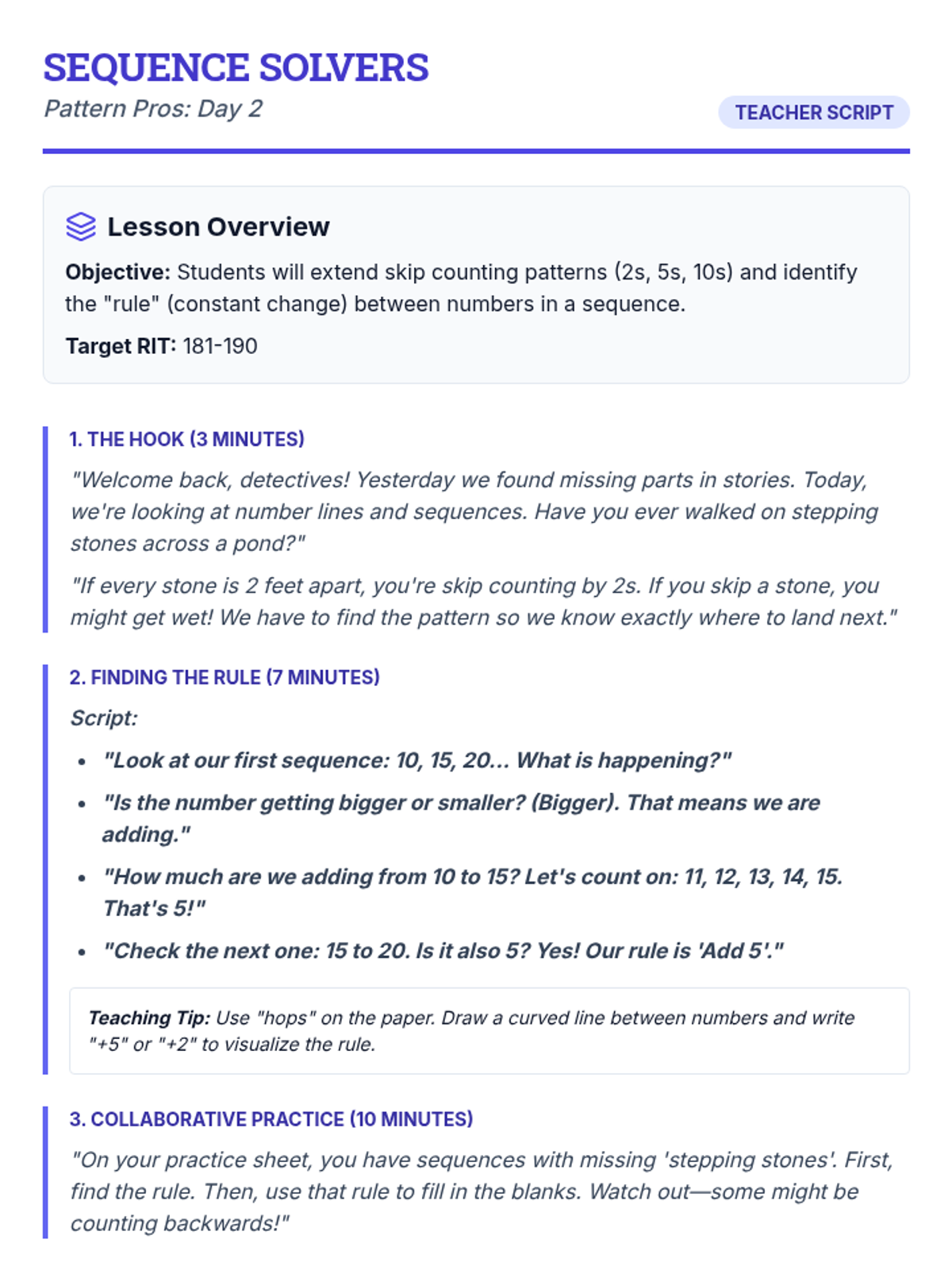
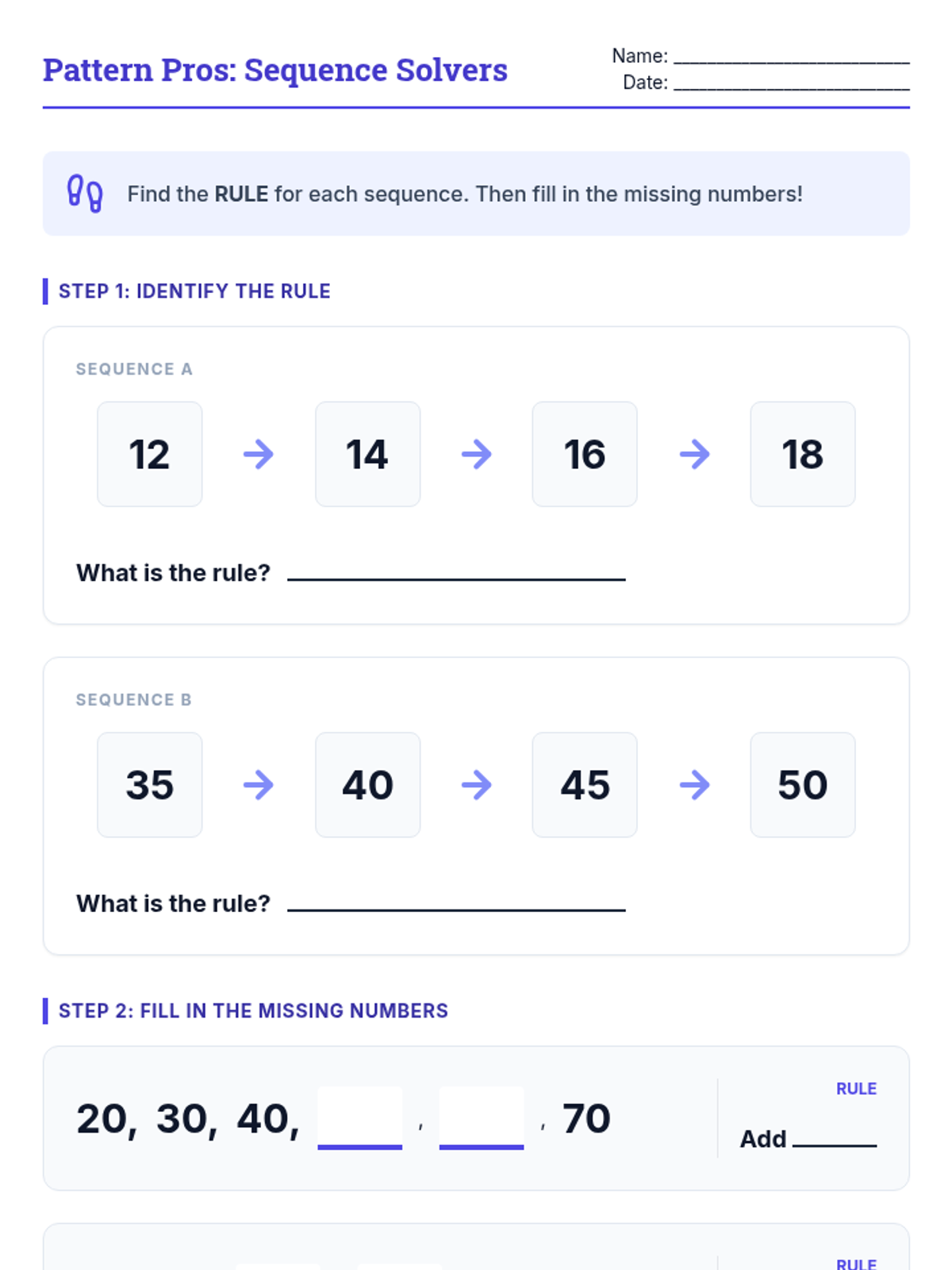
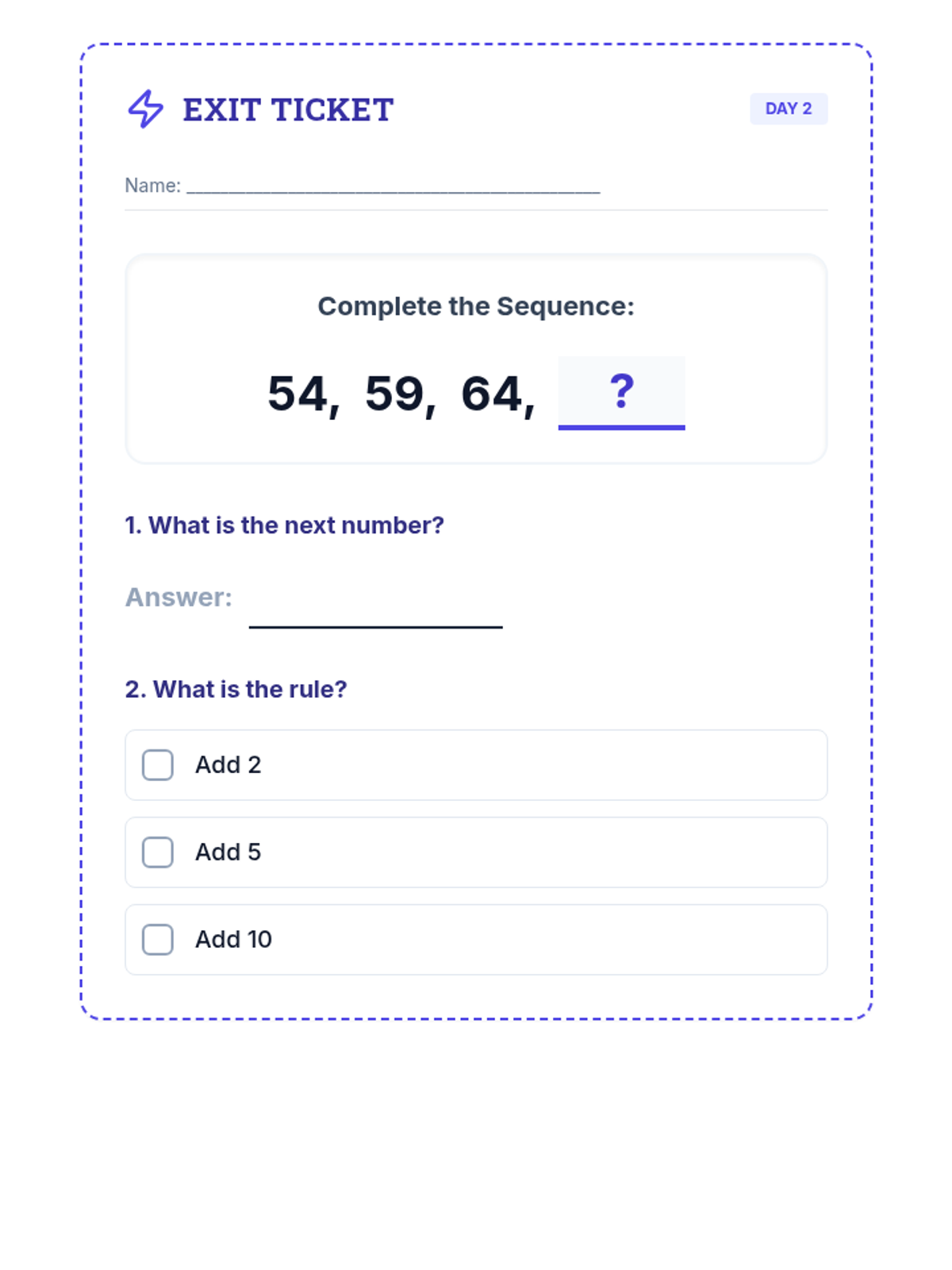
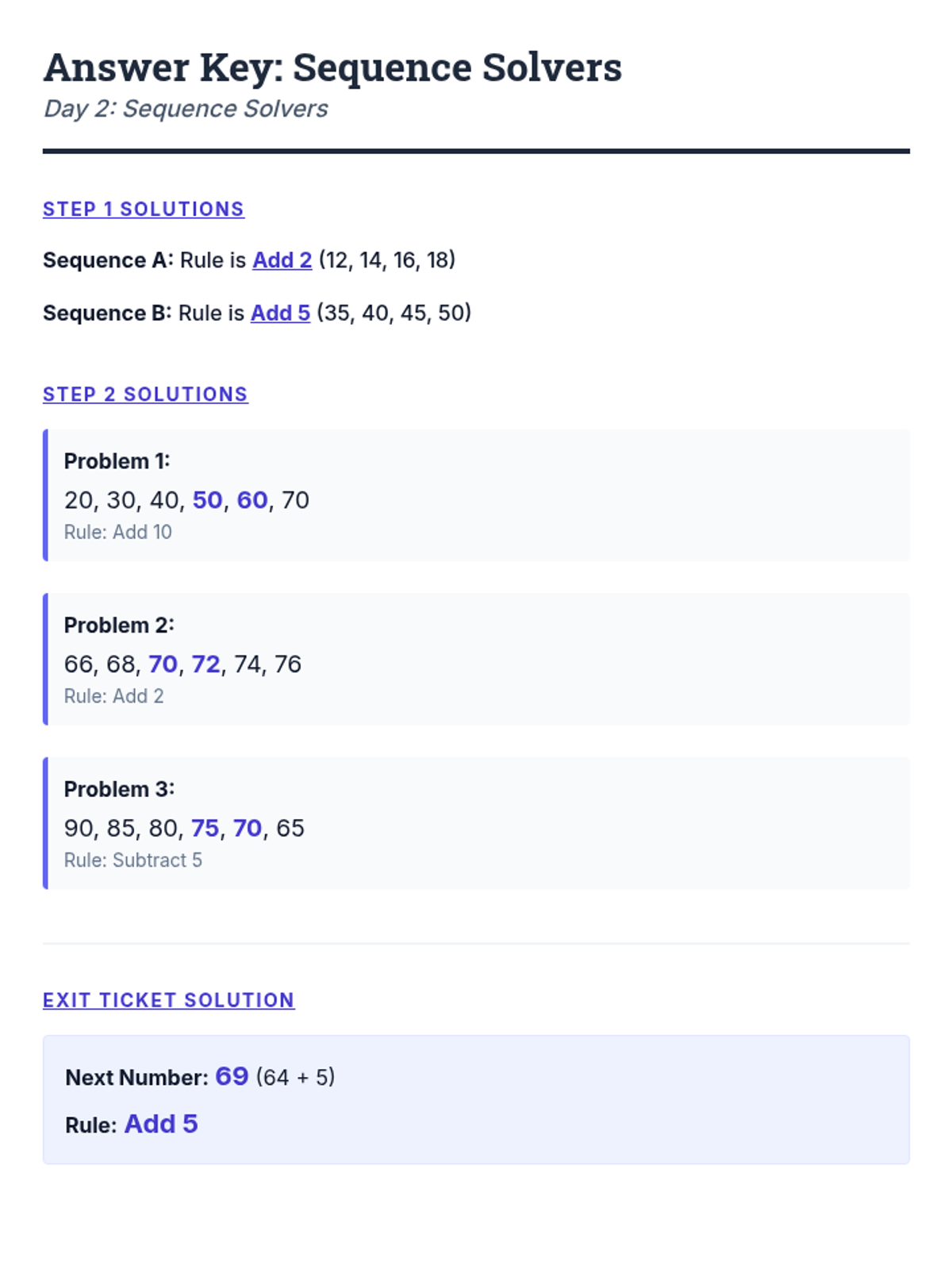
Students identify and extend skip counting patterns by 2s, 5s, and 10s, and practice finding the underlying rule for various number sequences.
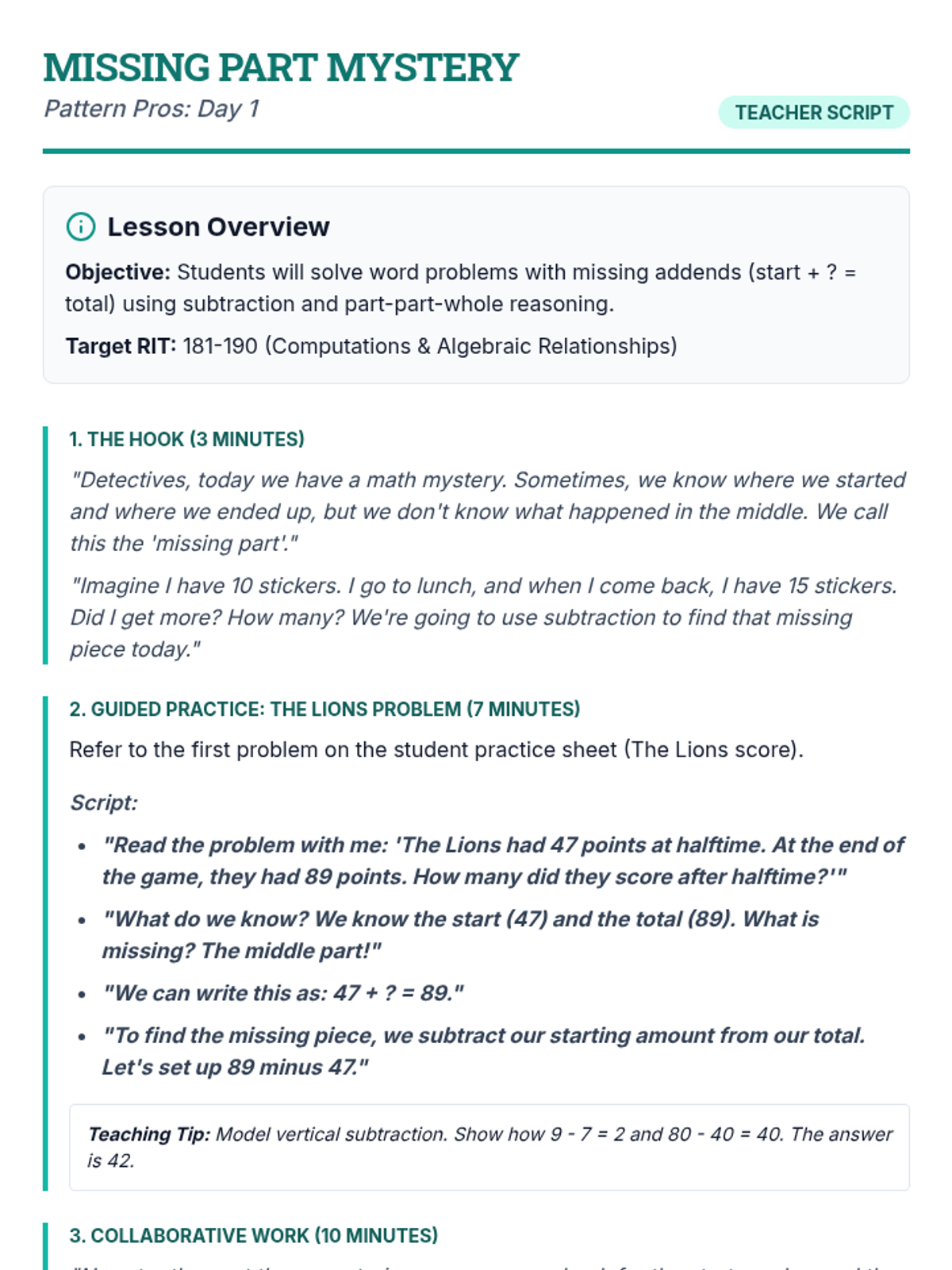
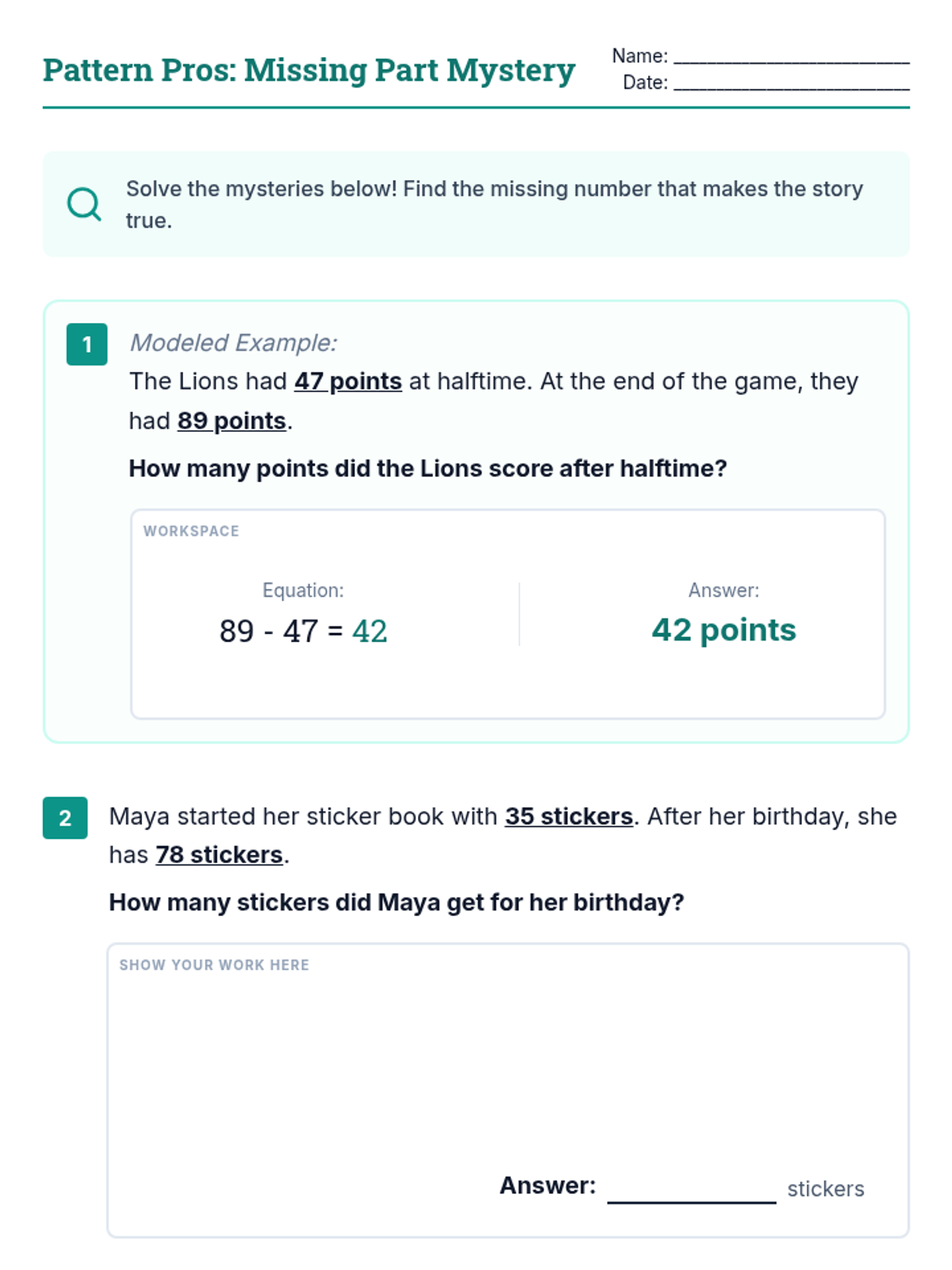
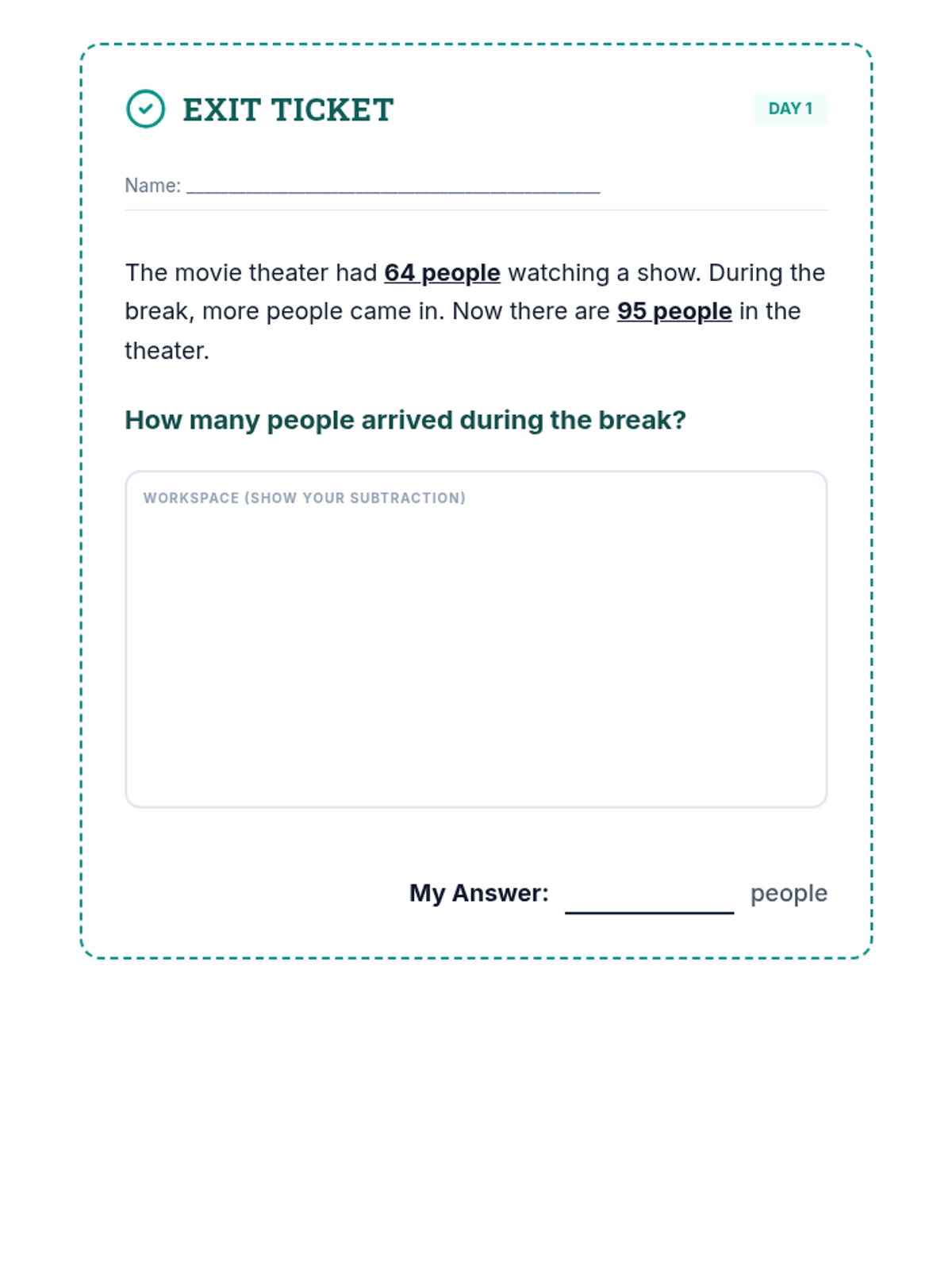
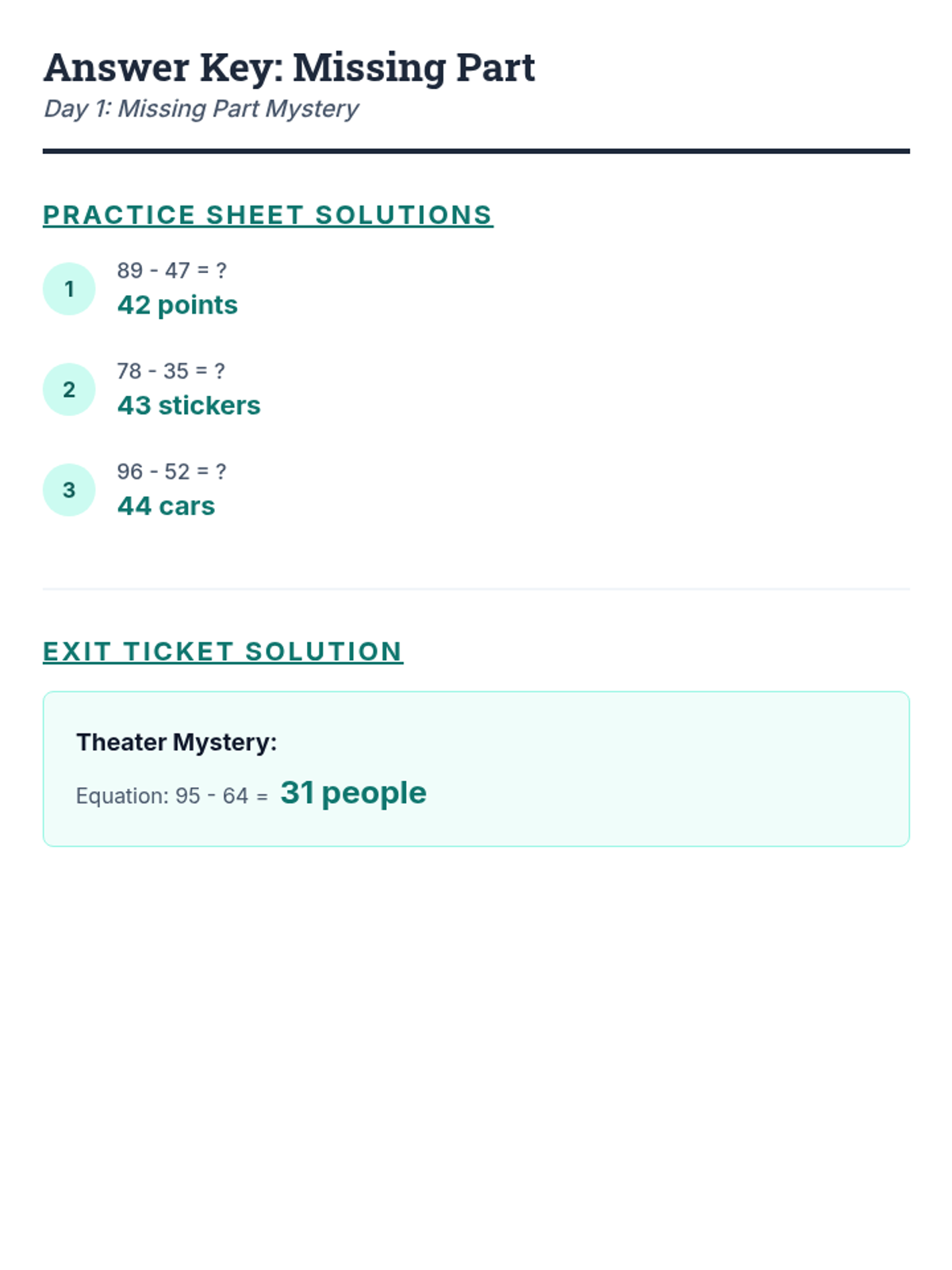
Students solve missing addend word problems within 100, focusing on finding the 'change' in a story context using subtraction strategies.
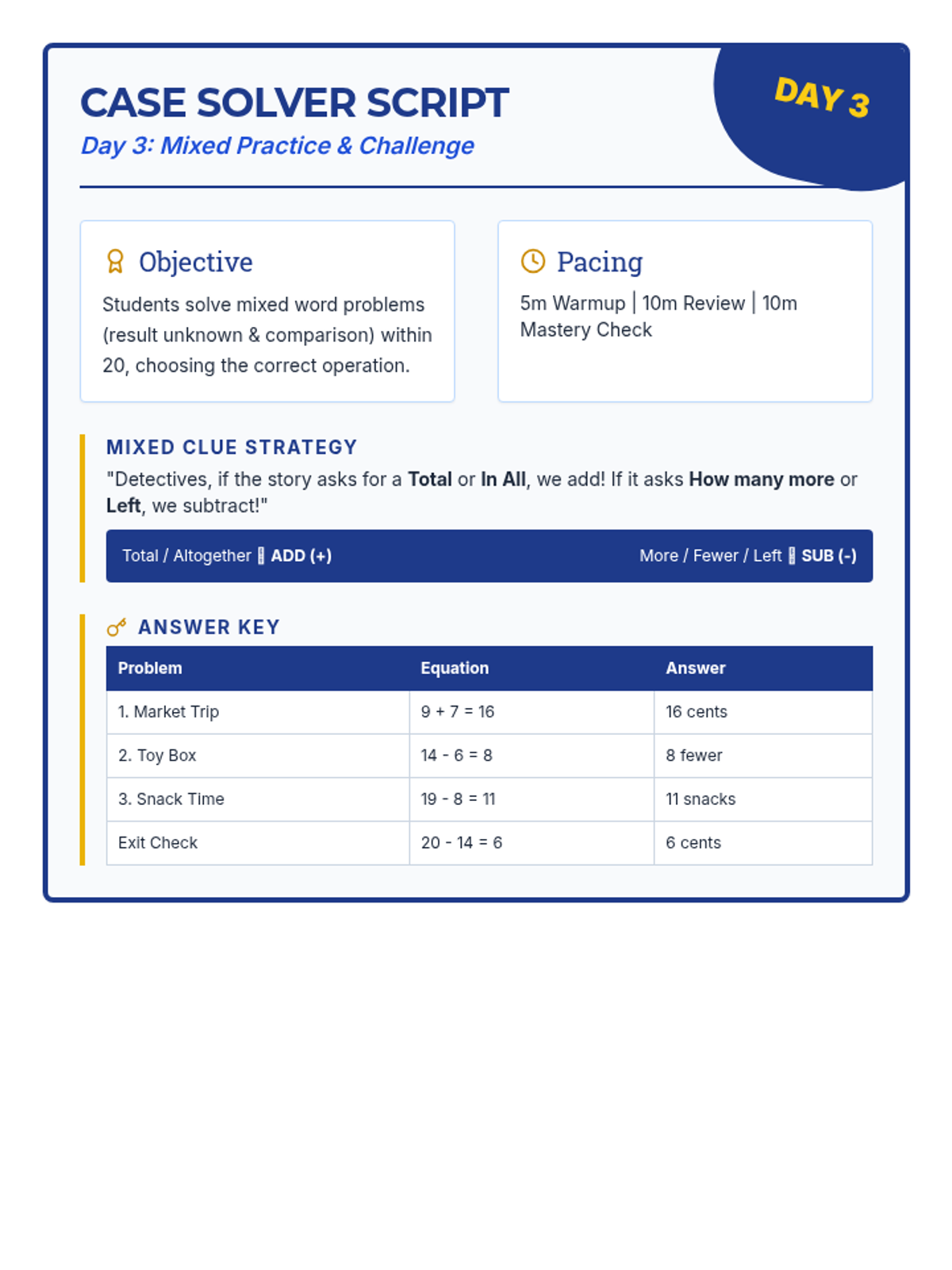
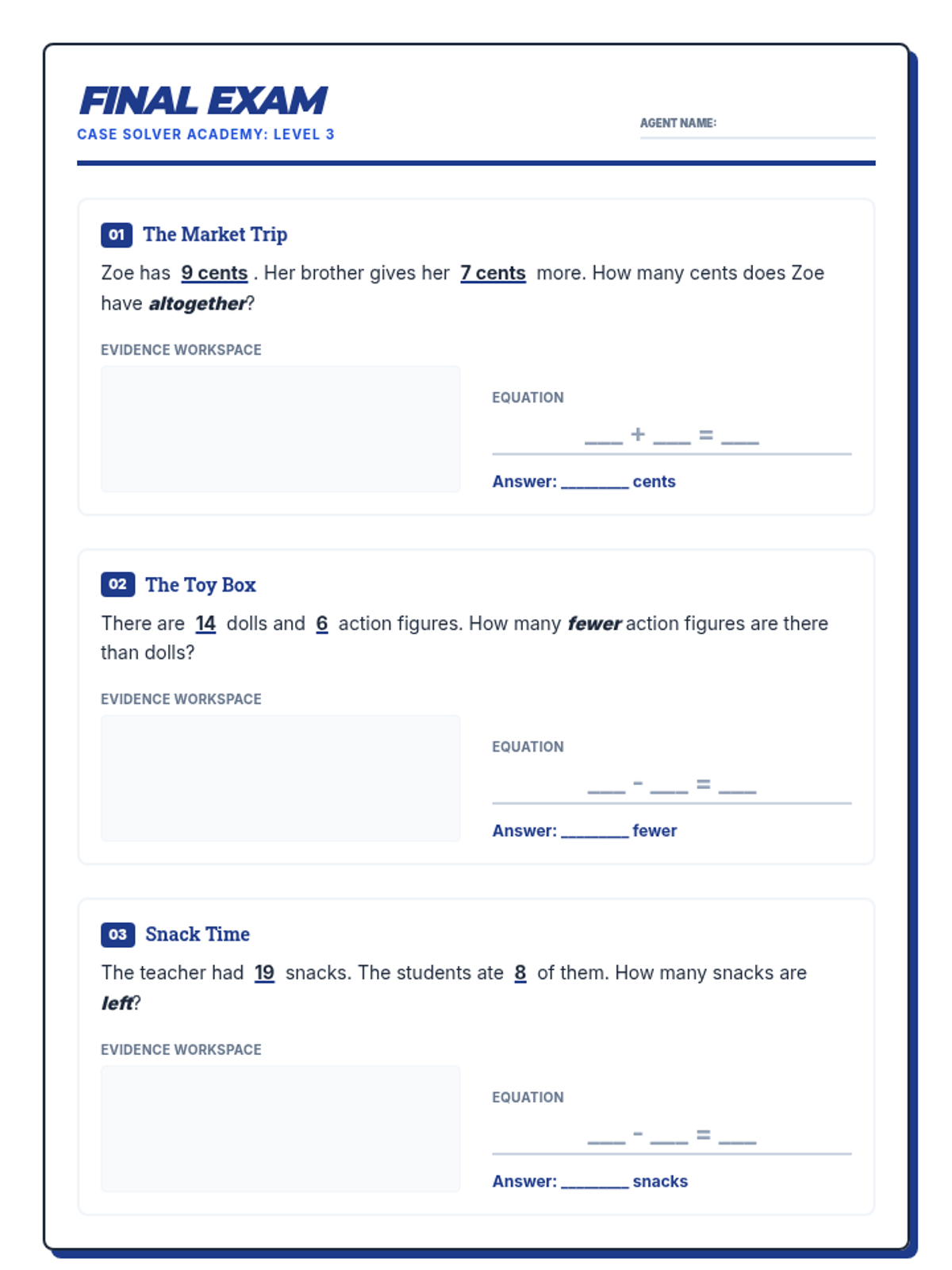
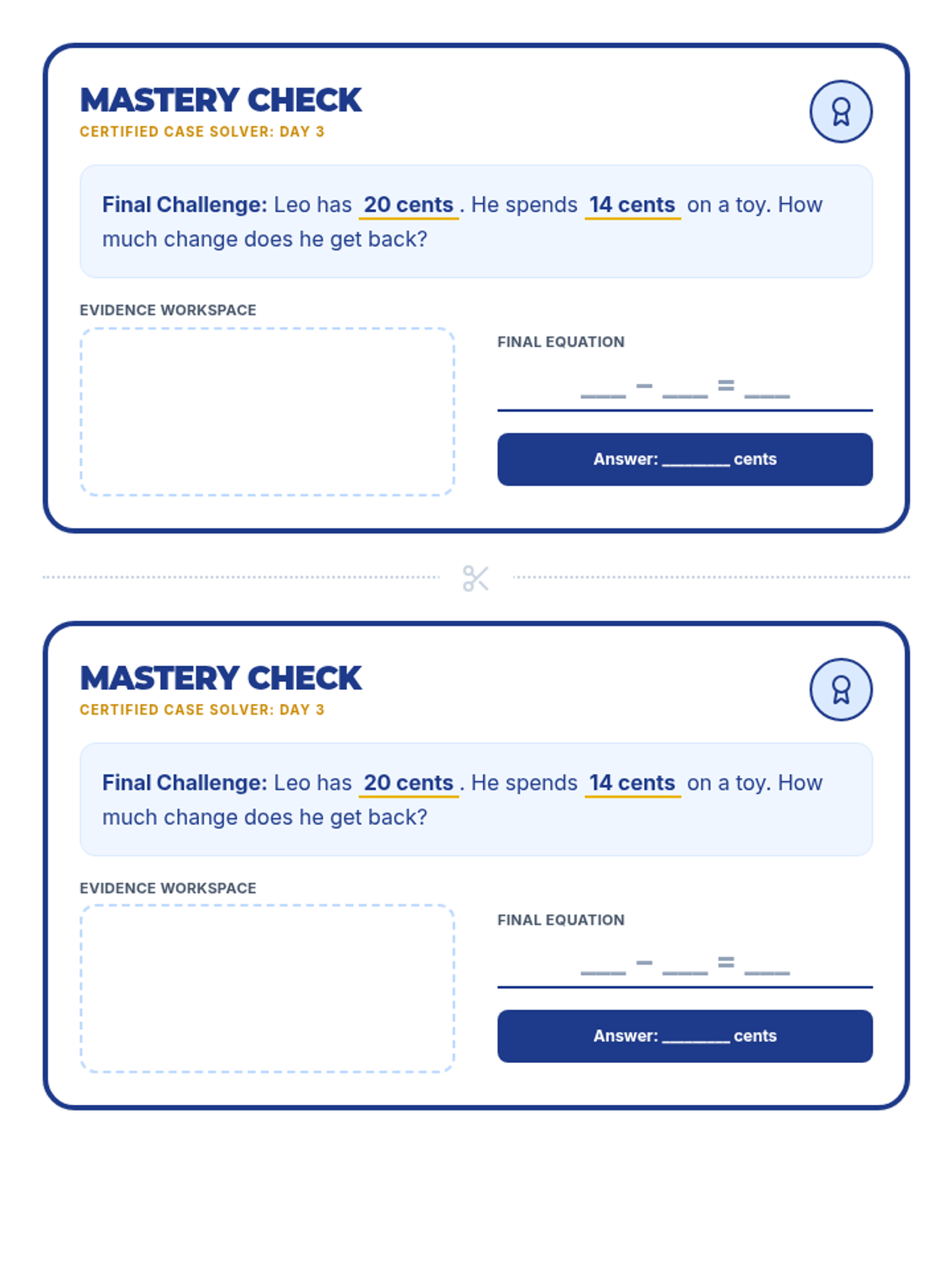
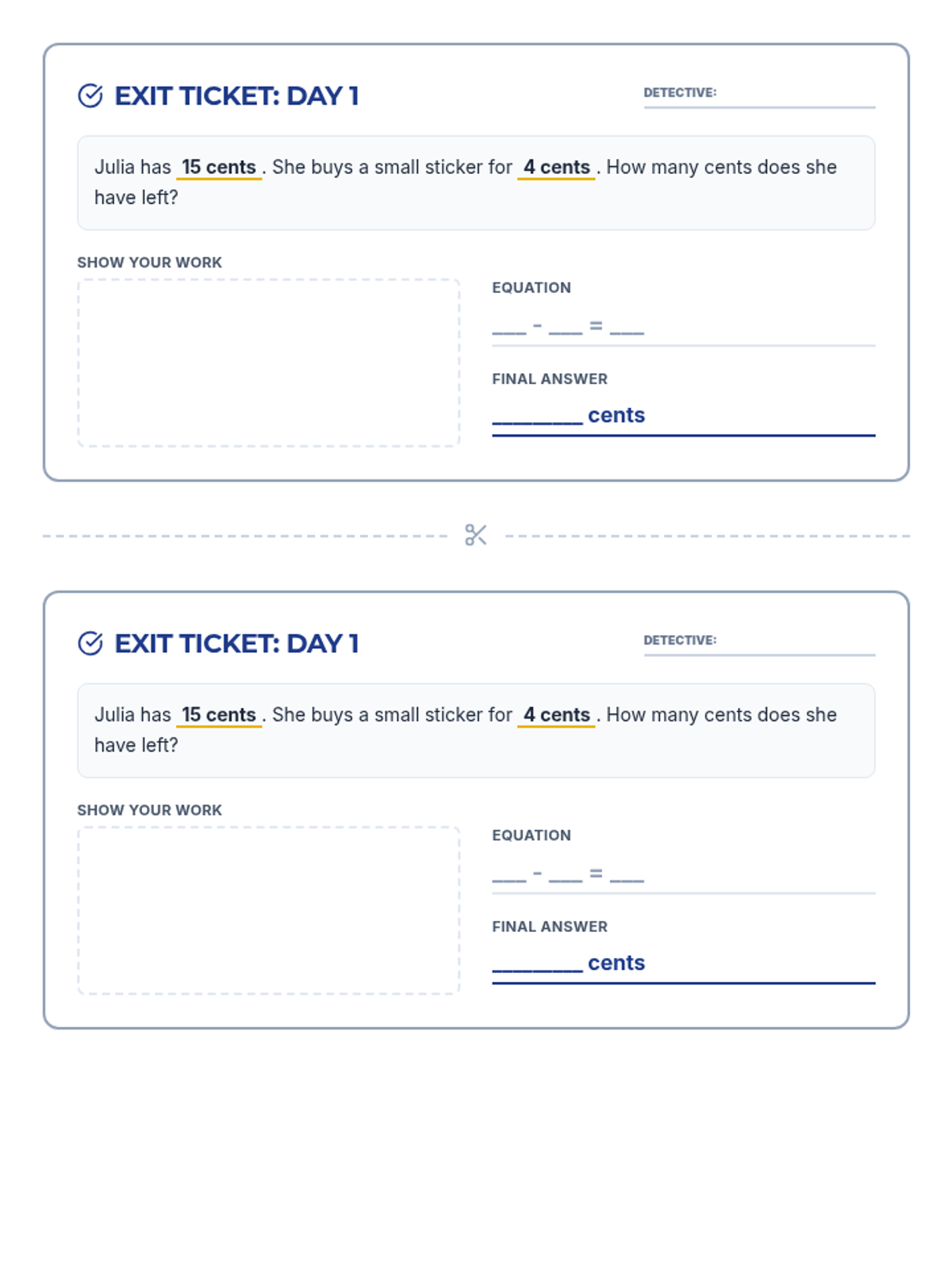
Students apply their knowledge to mixed word problems and real-world money scenarios within 20, demonstrating mastery of result unknown and comparison types.
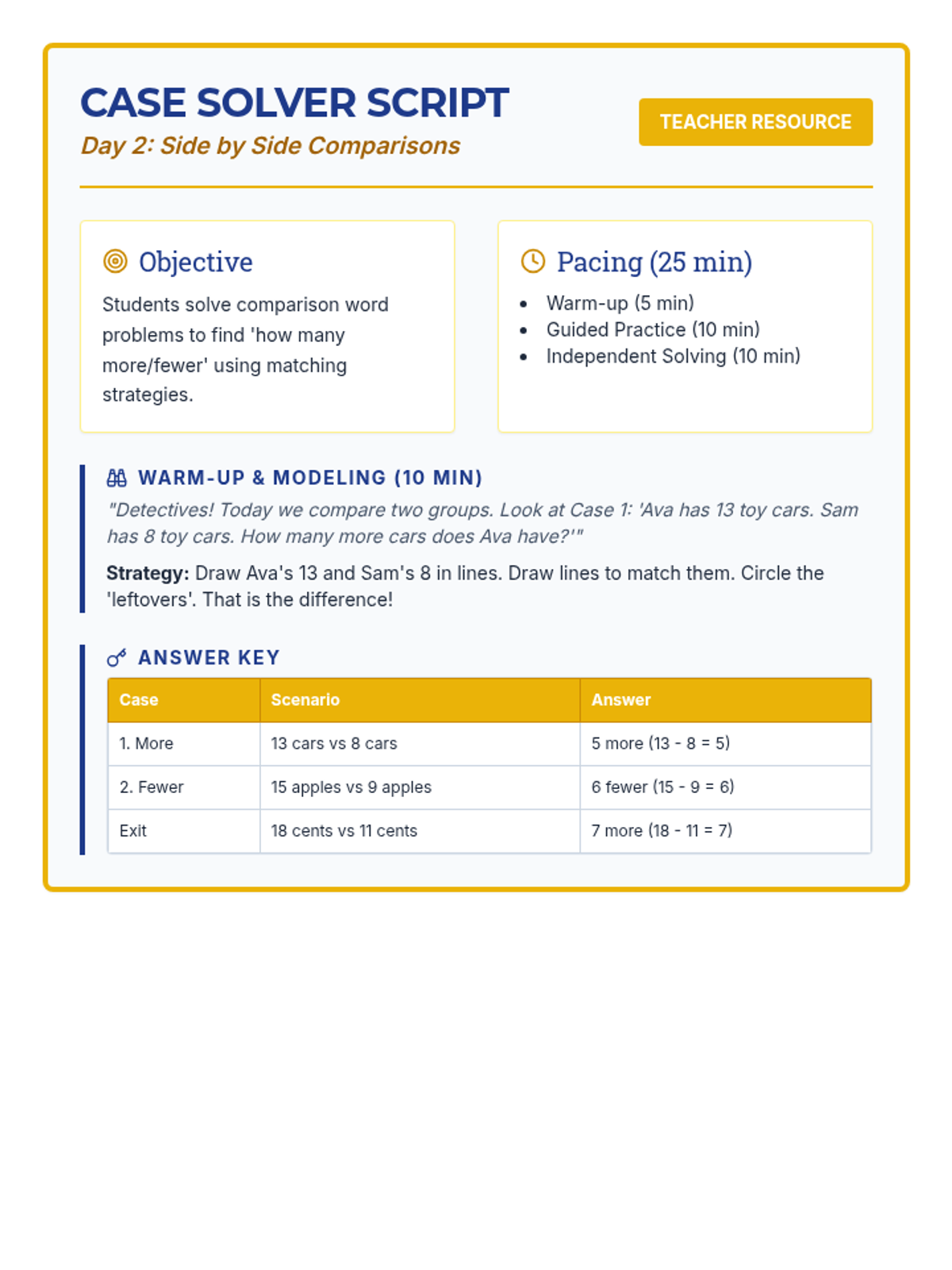
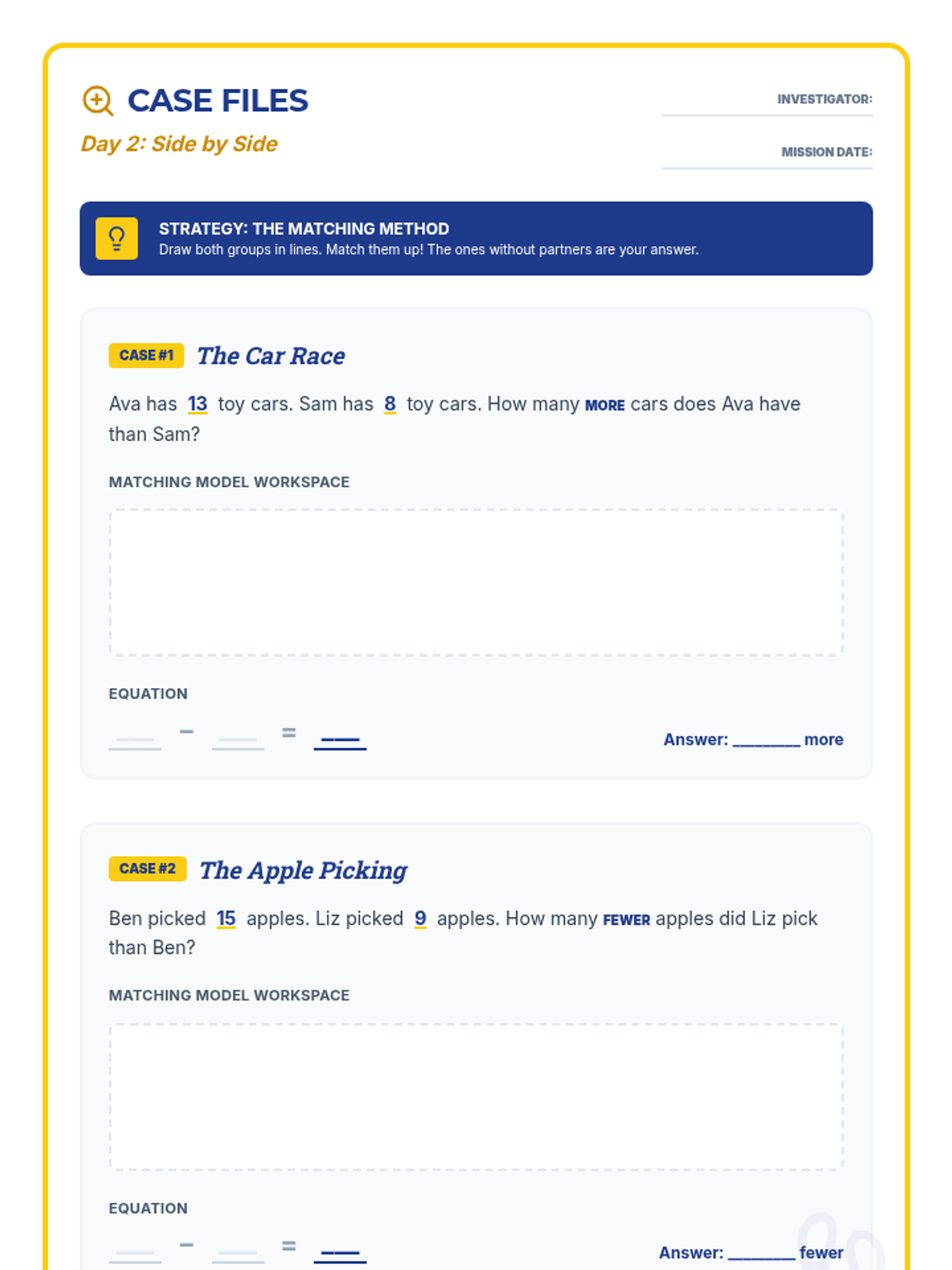
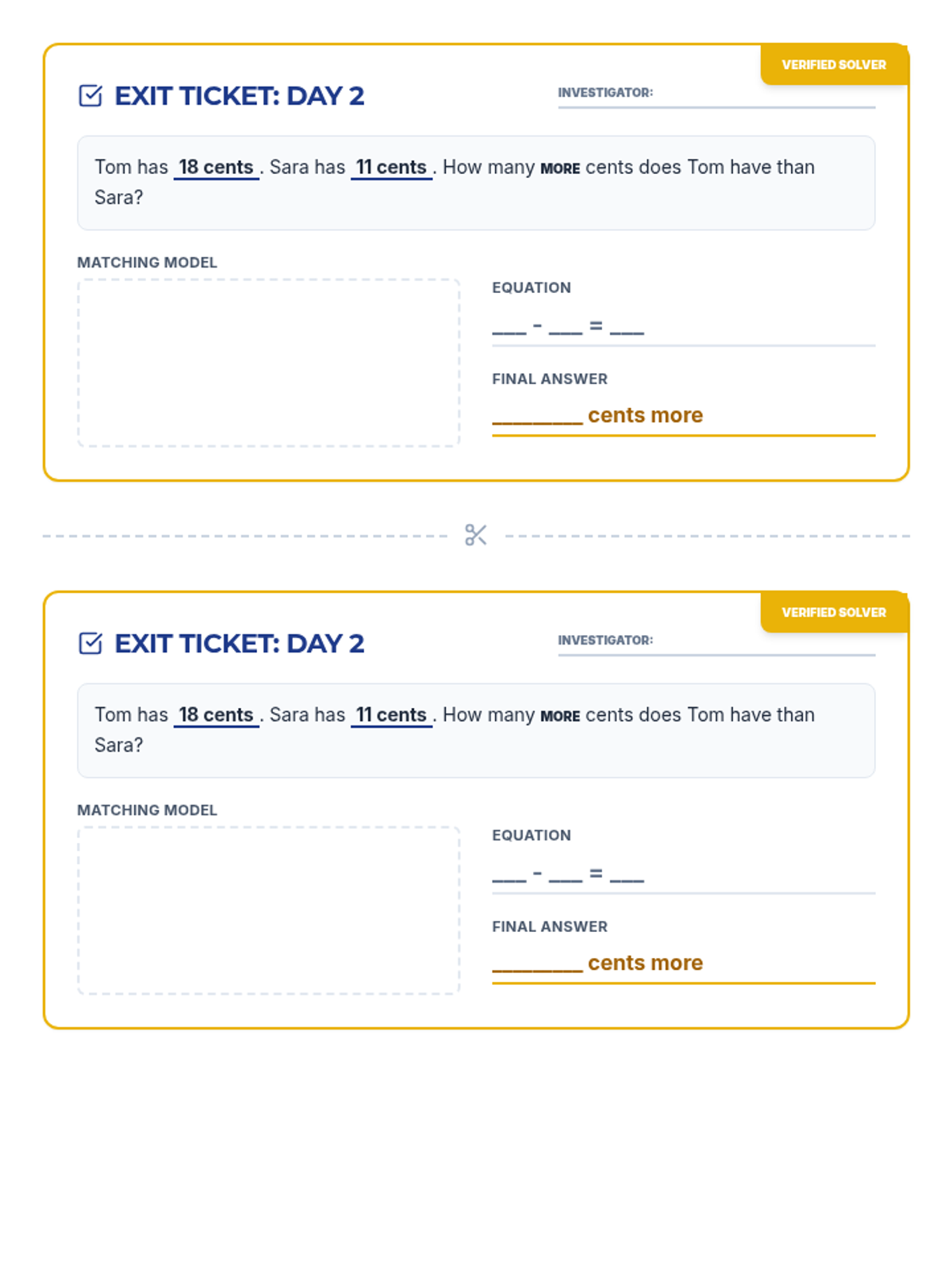
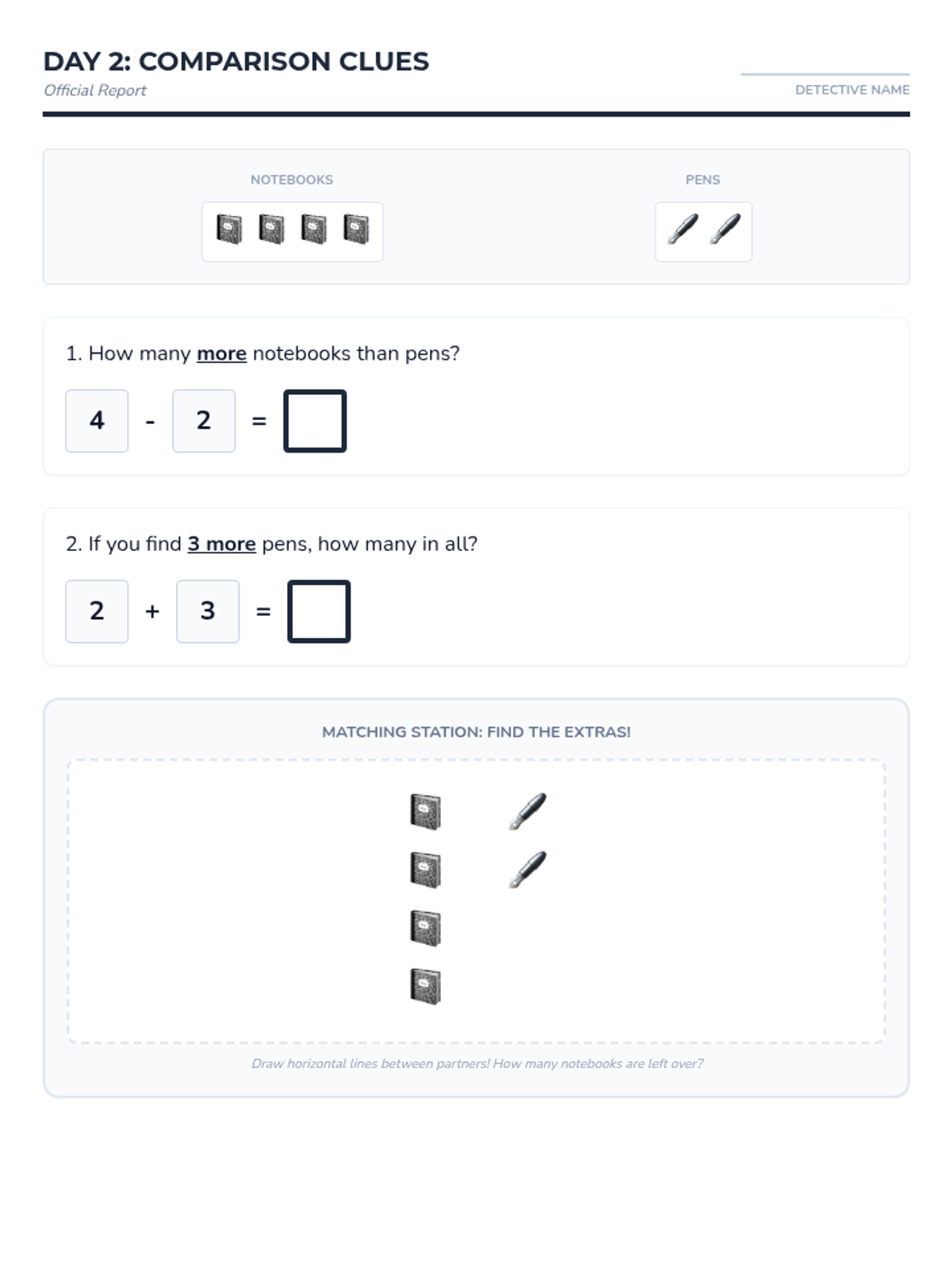
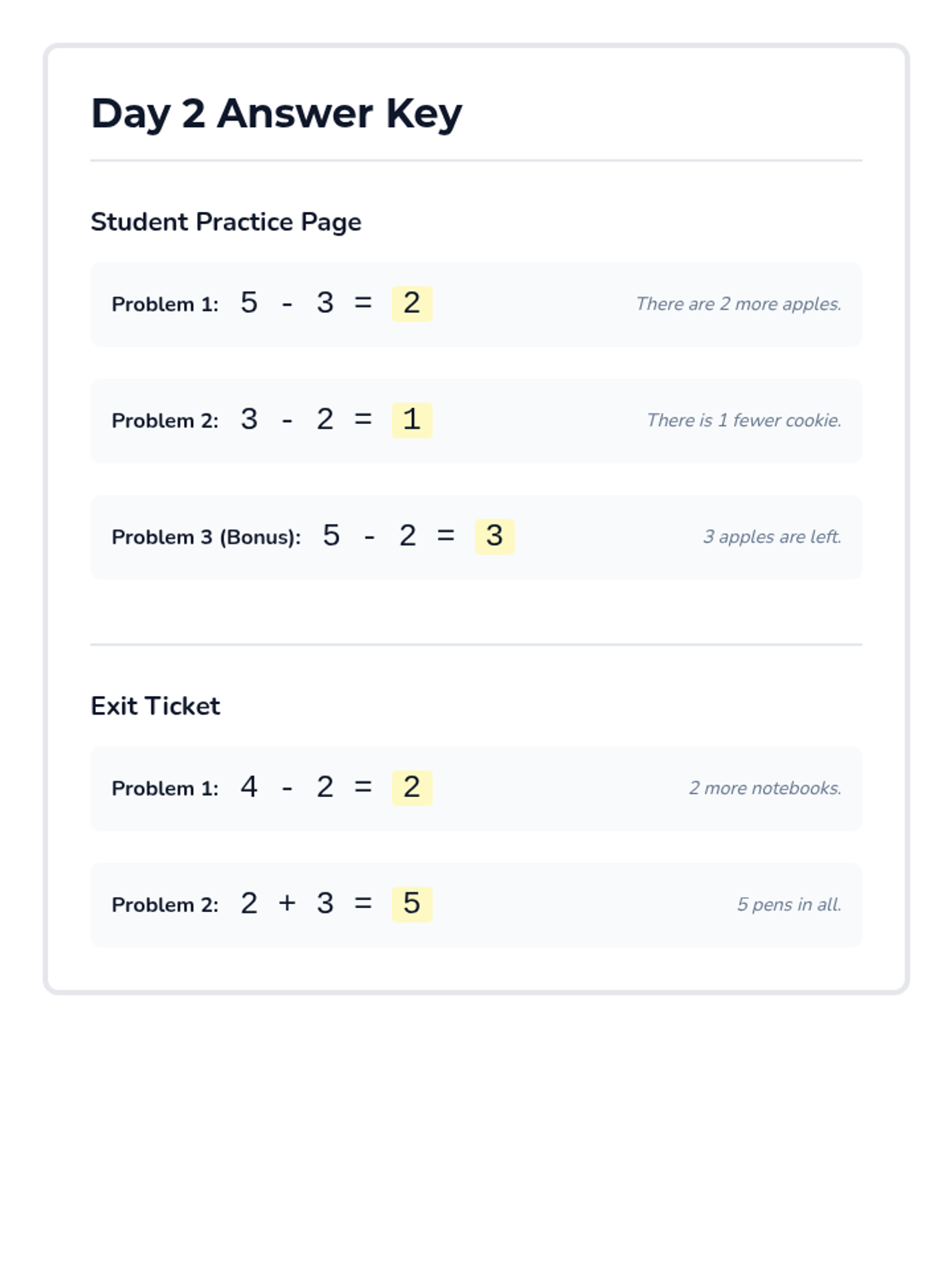
Students solve comparison word problems to find 'how many more' or 'how many fewer' using visual models.
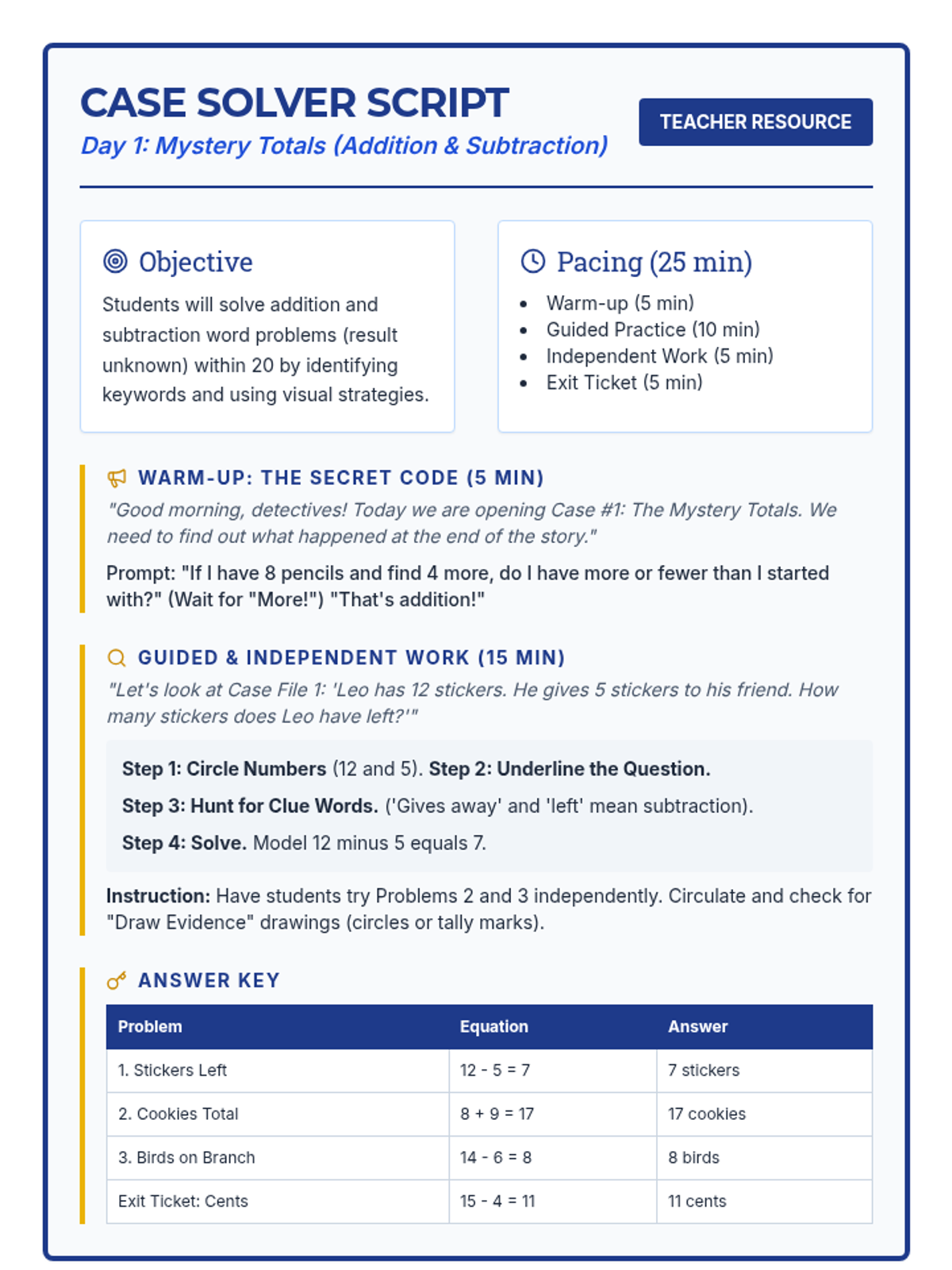
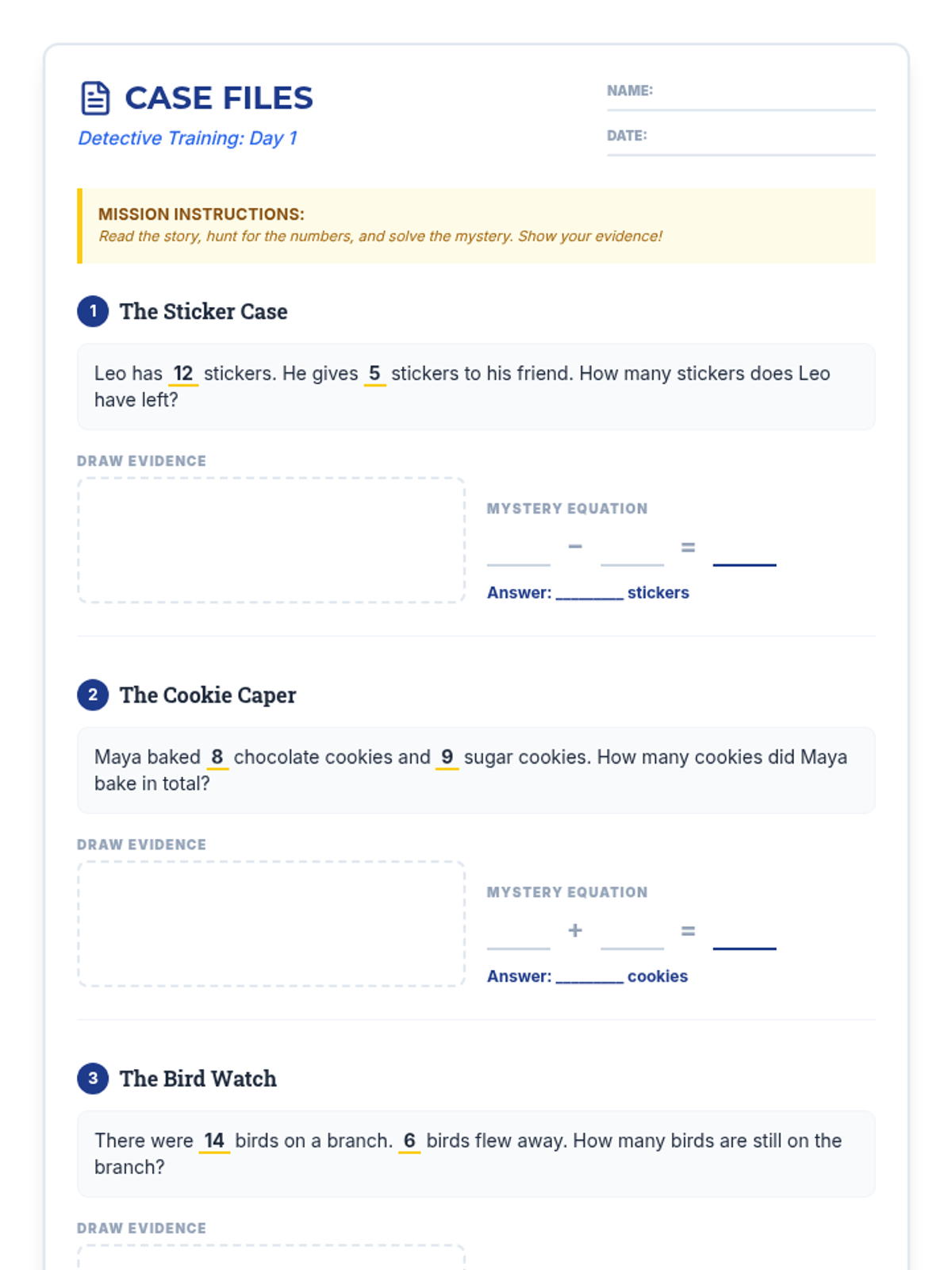
Students solve result unknown addition and subtraction word problems within 20 using strategies like drawing and number lines.
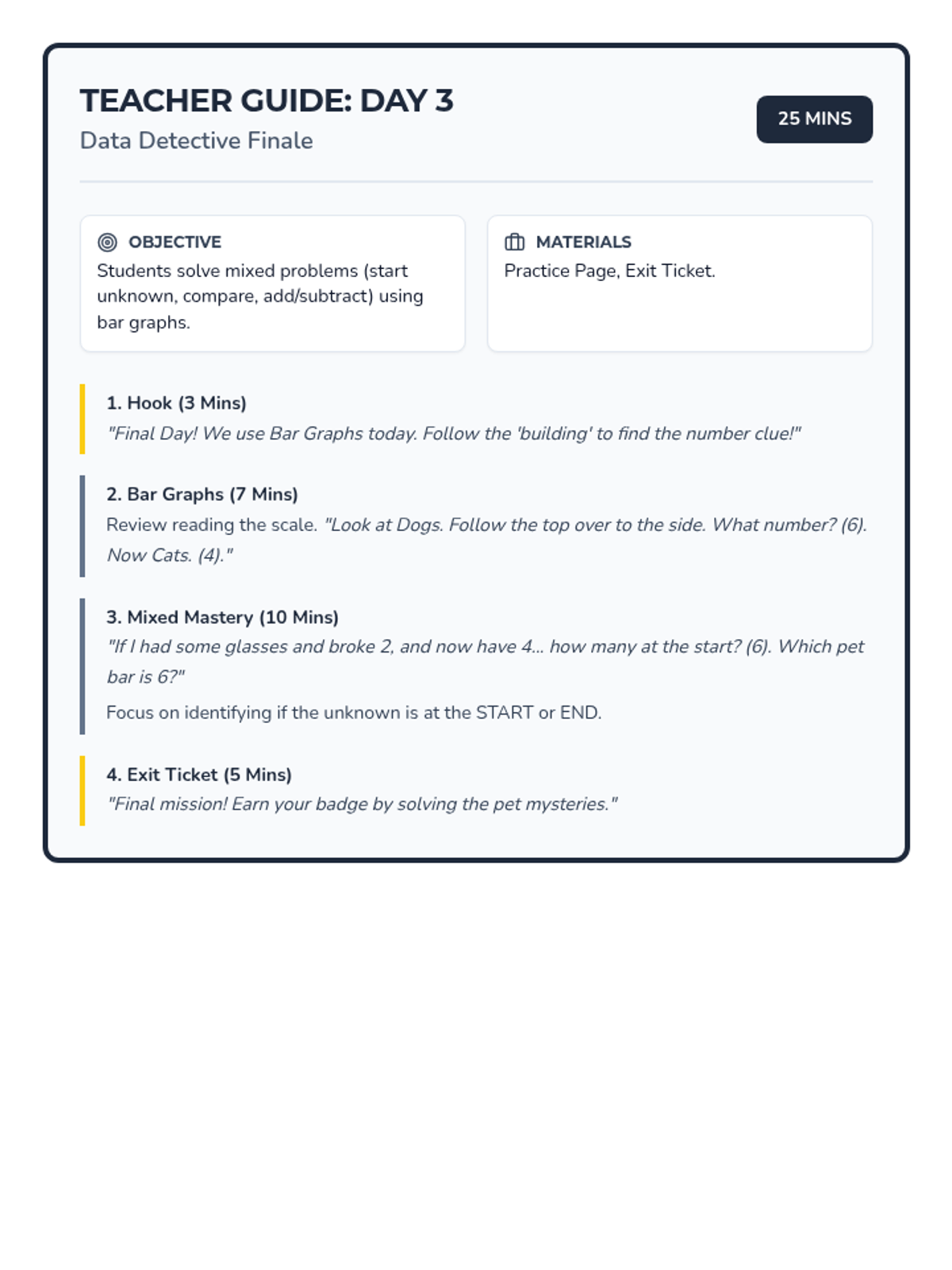
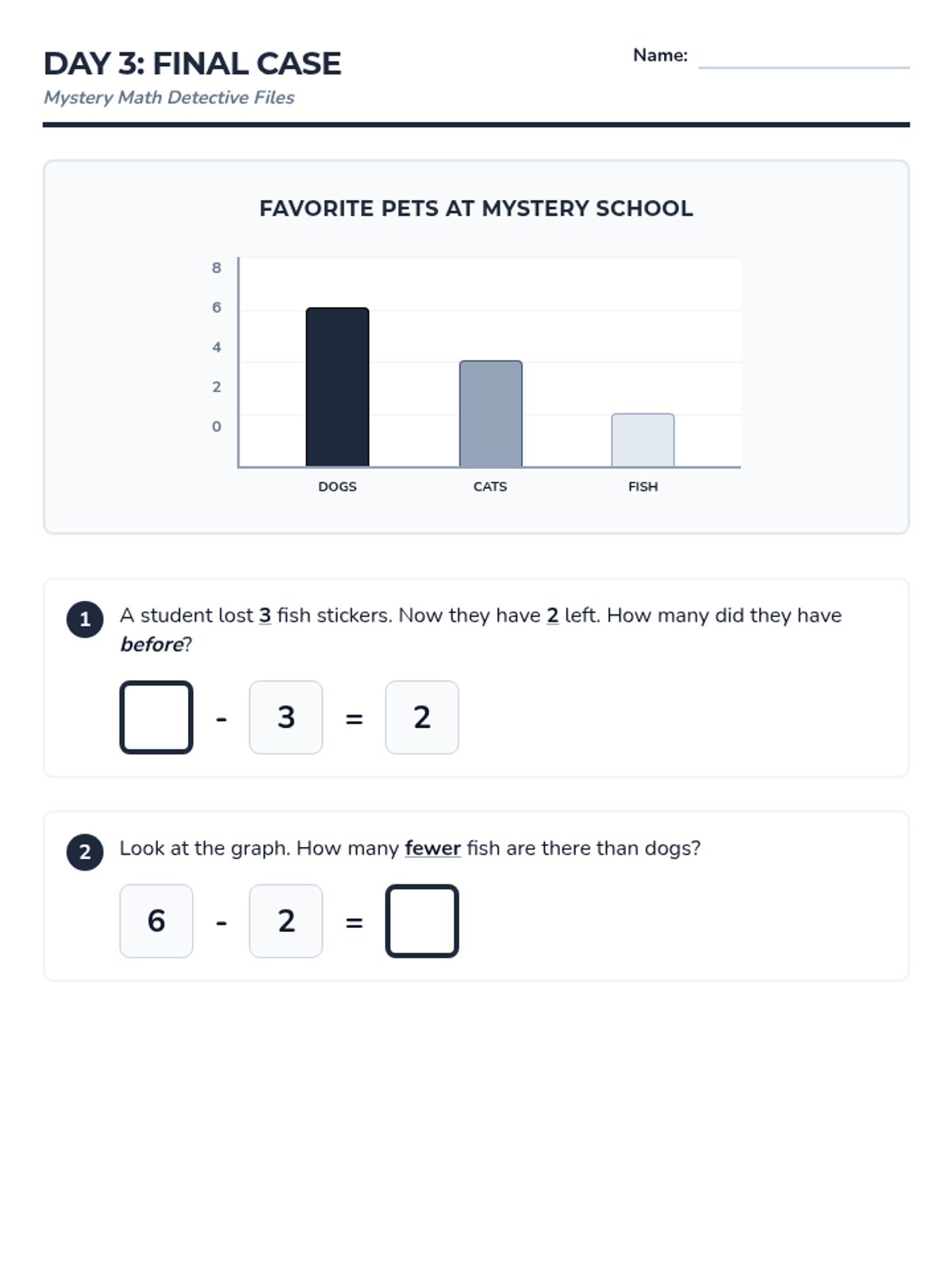
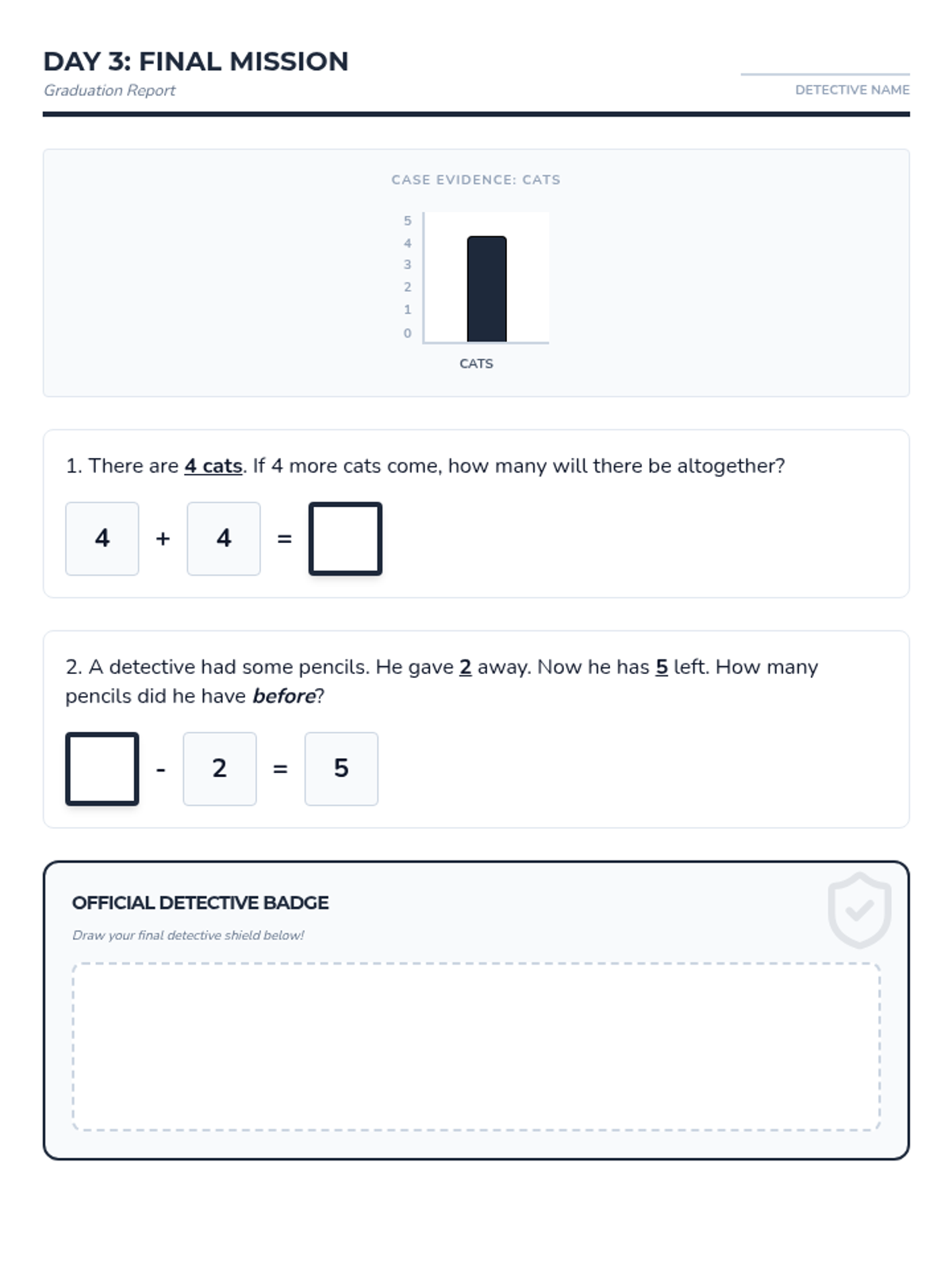
Integrates all previous word problem types (start-unknown, compare, and mix) using simple bar graphs.
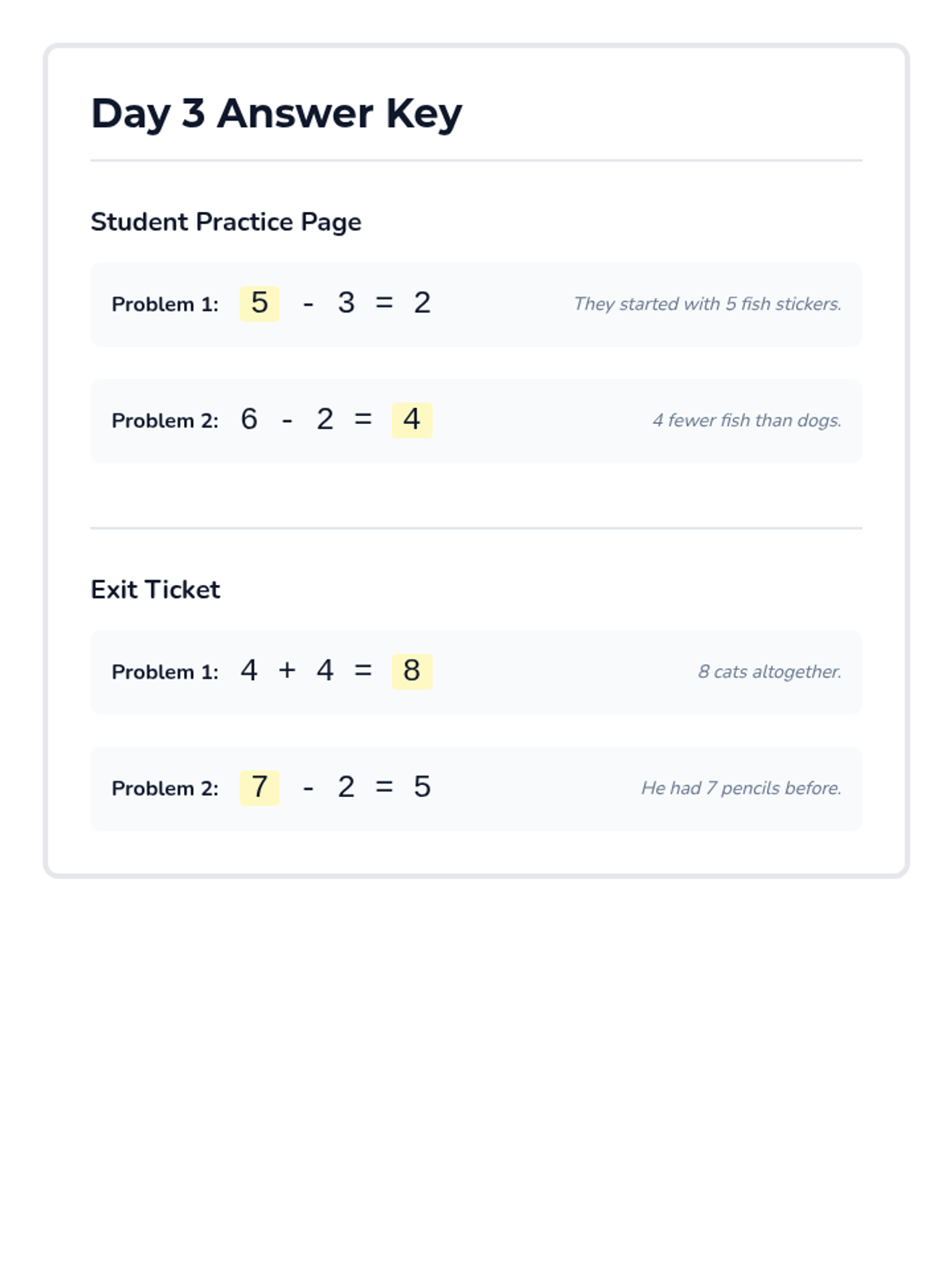
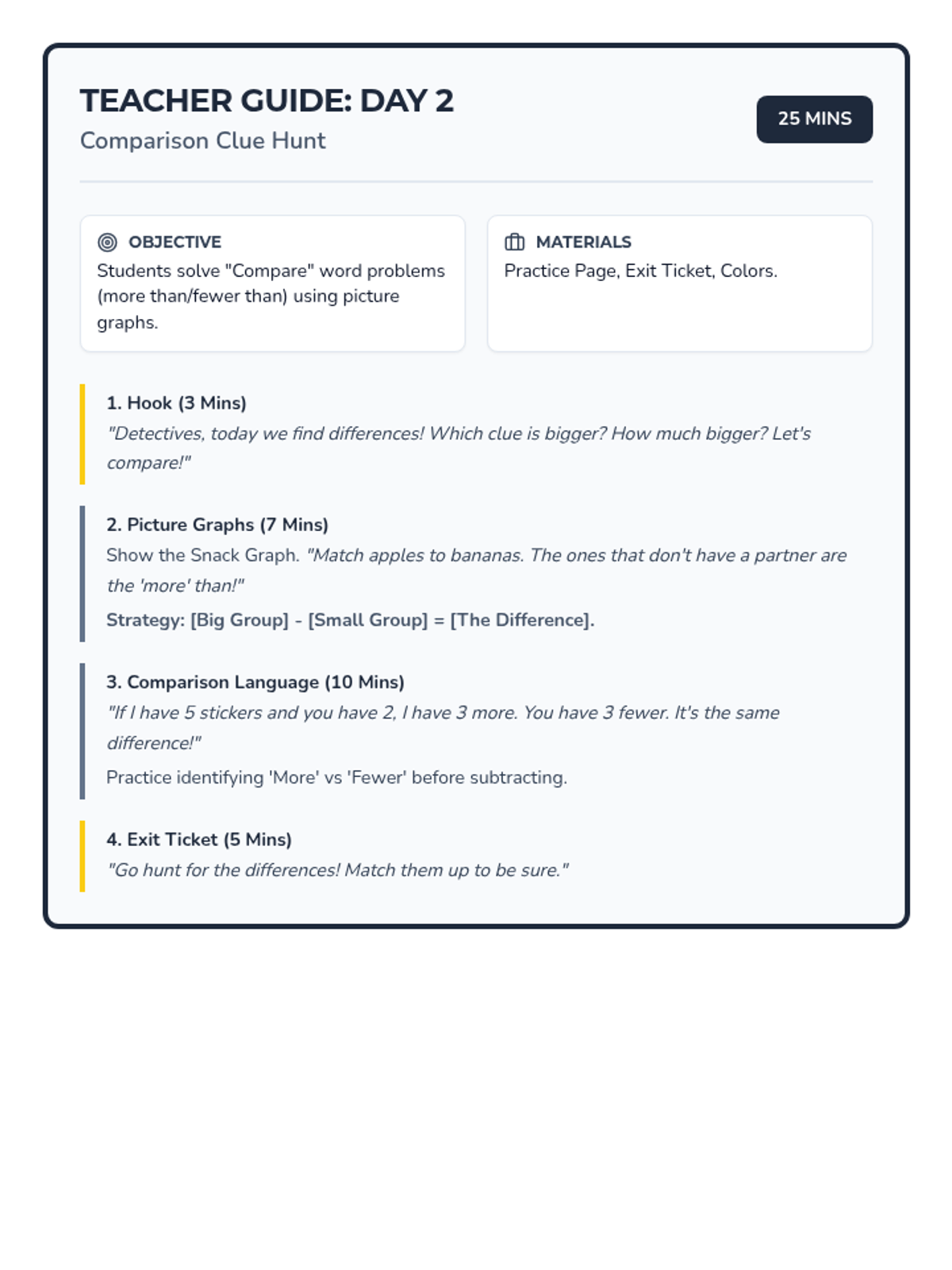
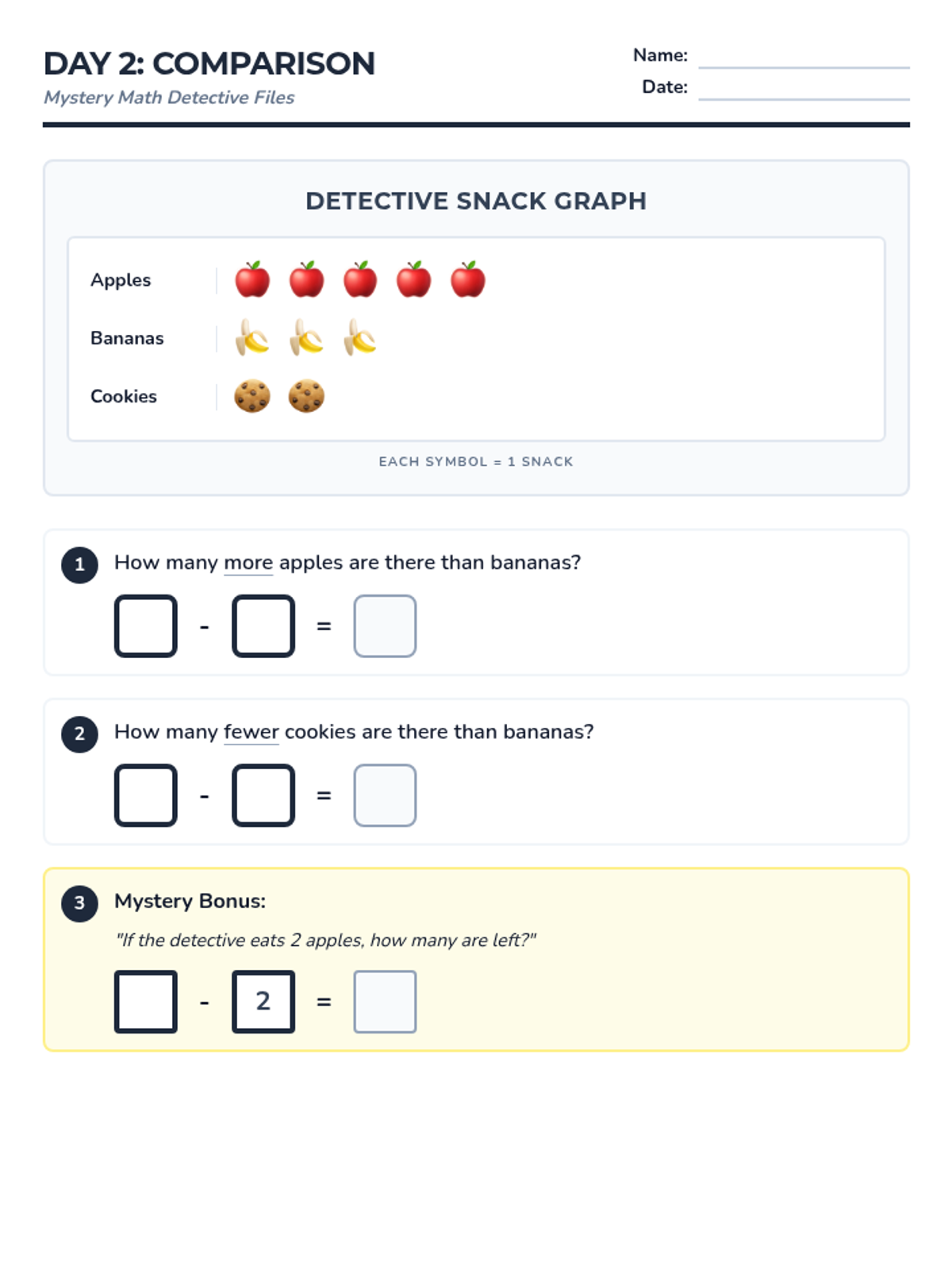
Focuses on comparison word problems (more than/fewer than) and mixed operations using picture graphs.
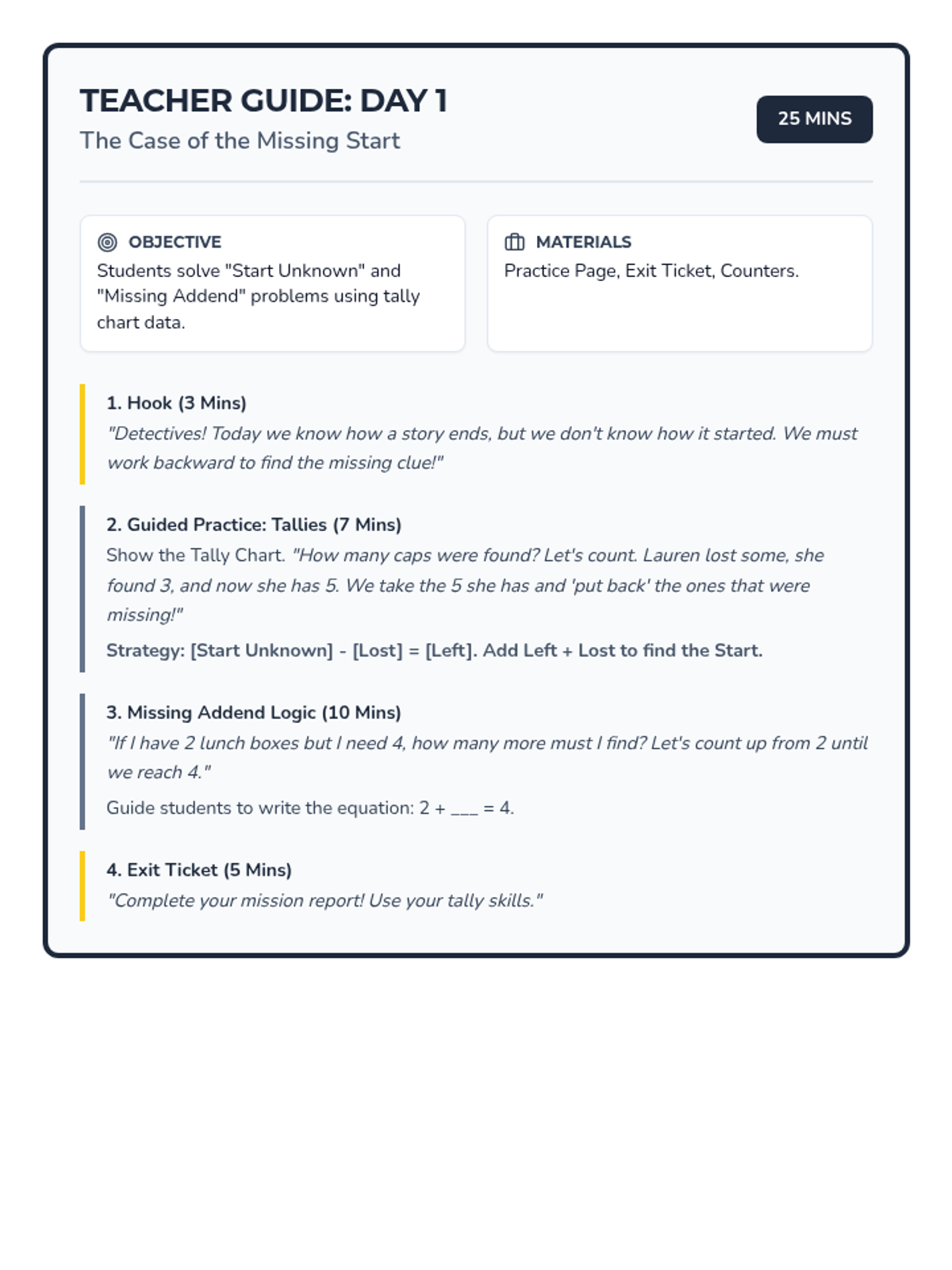
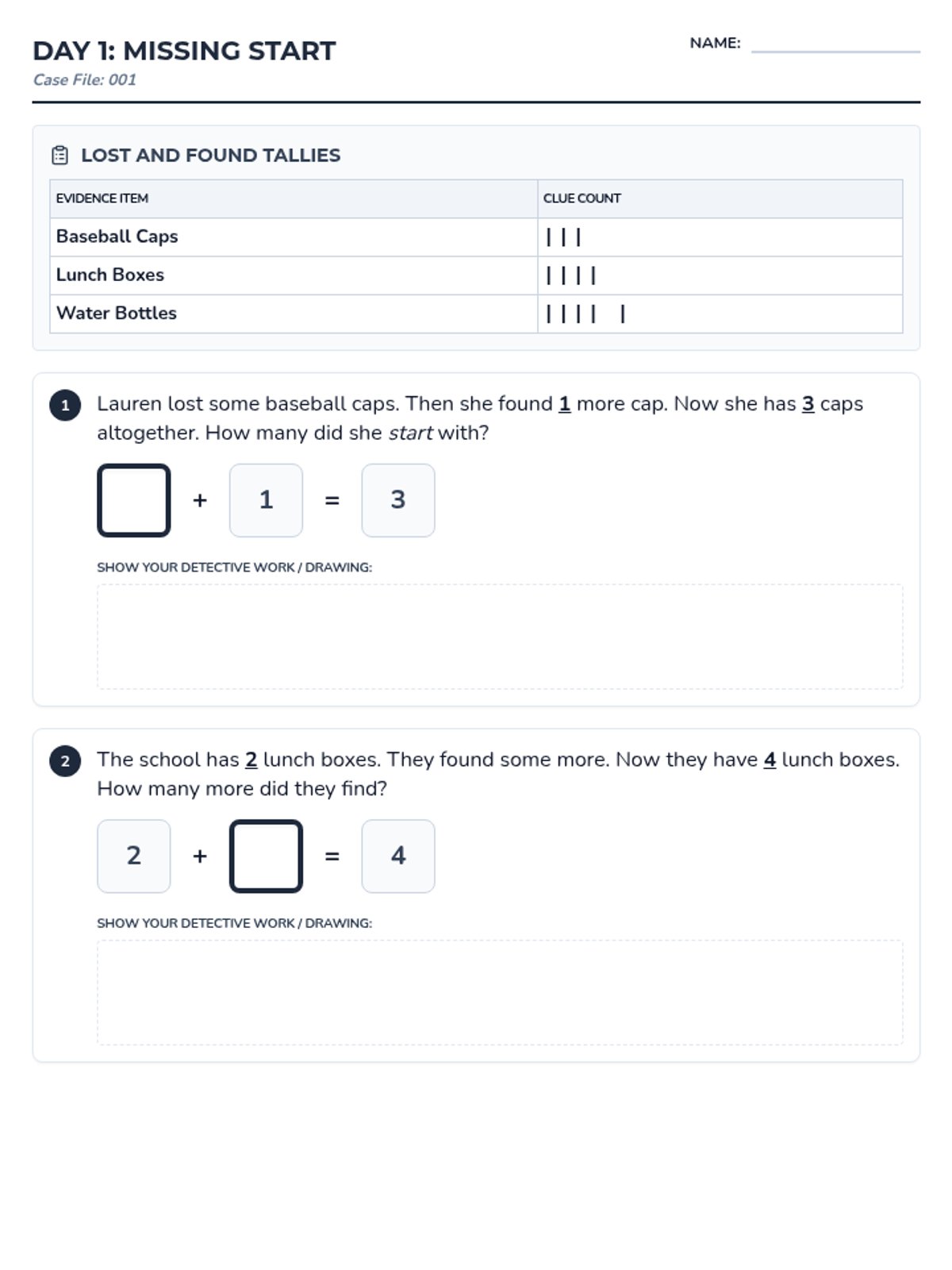
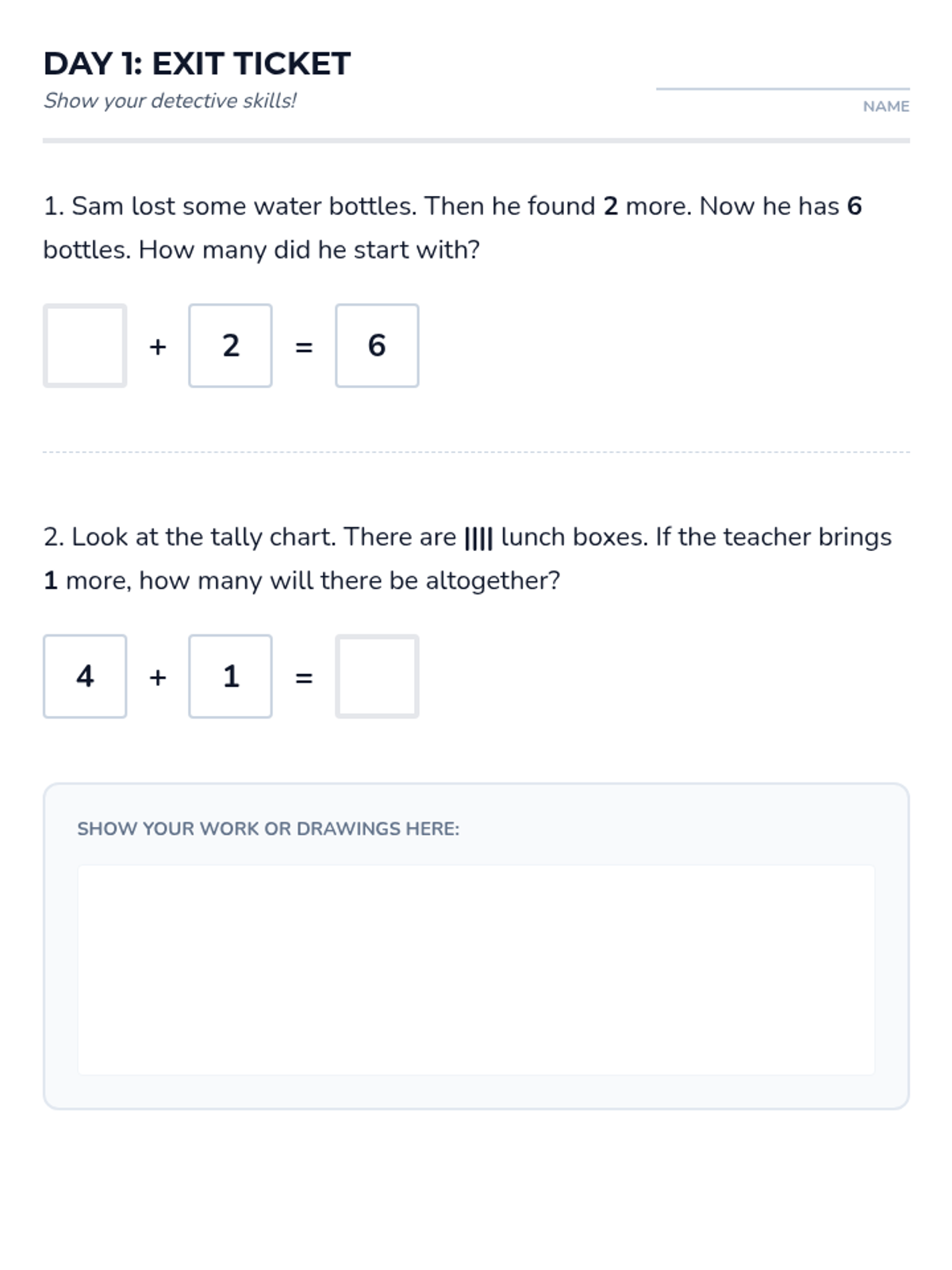
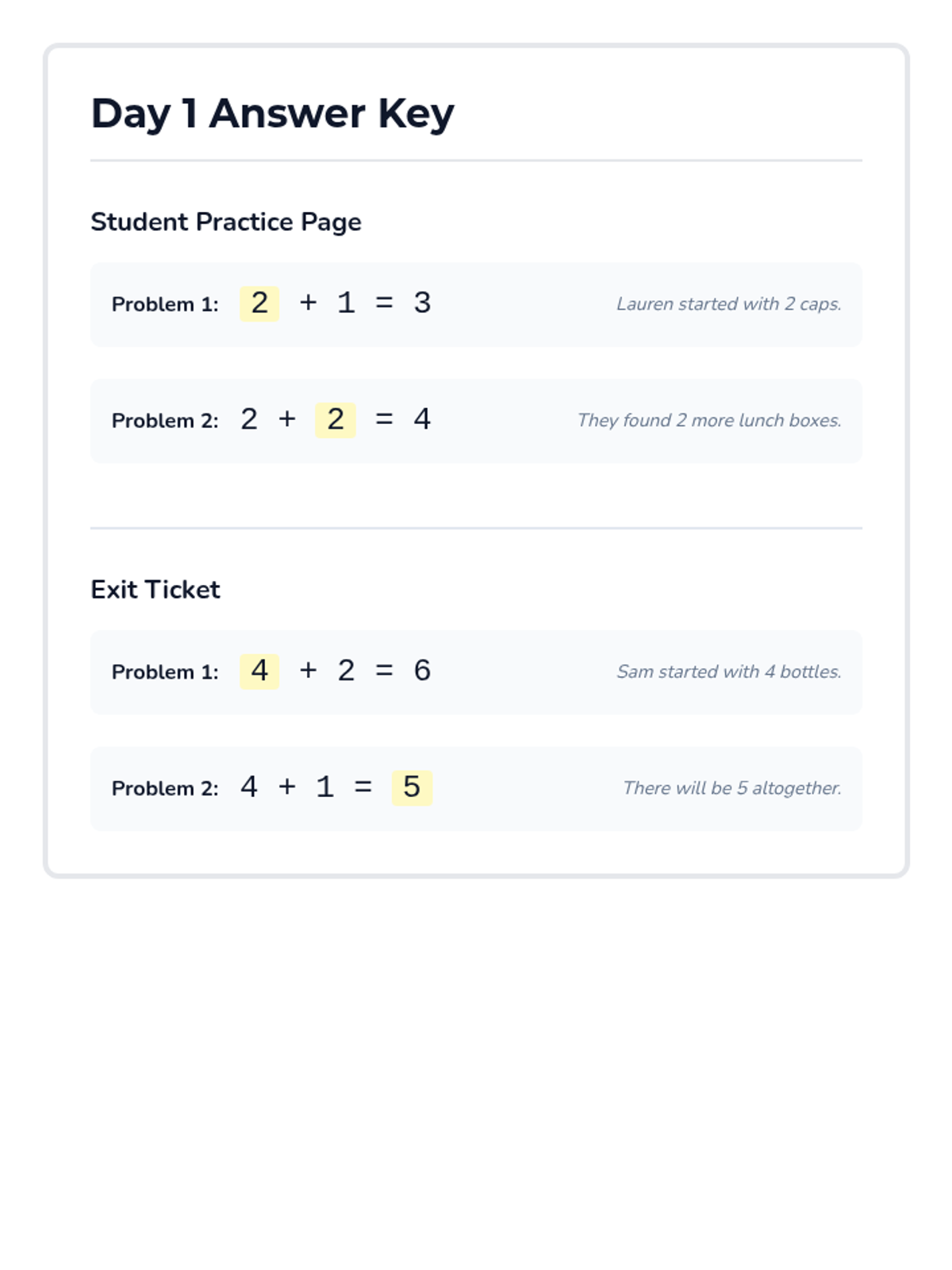
Focuses on solving start-unknown subtraction and missing addend addition problems using tally mark data.
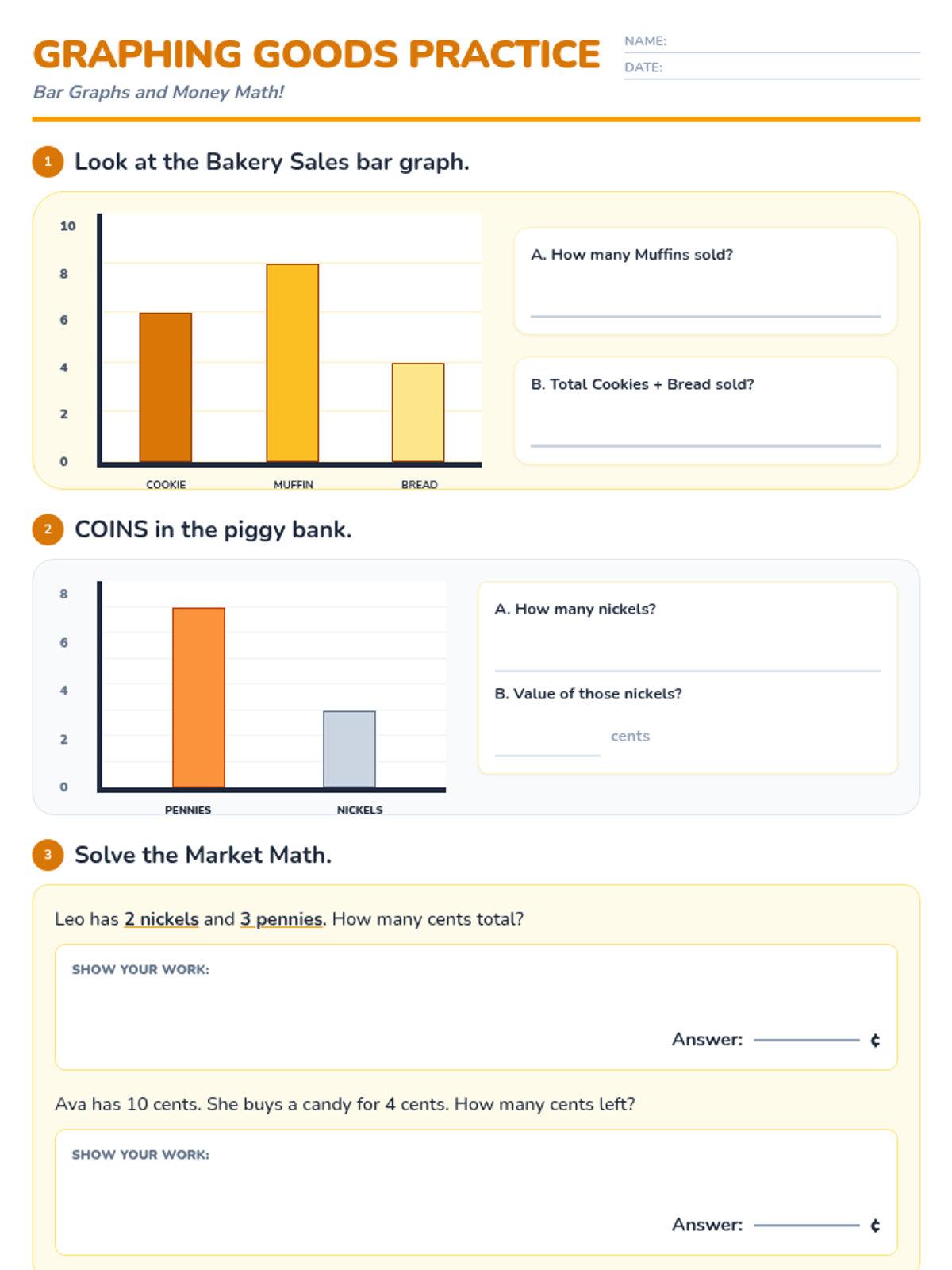
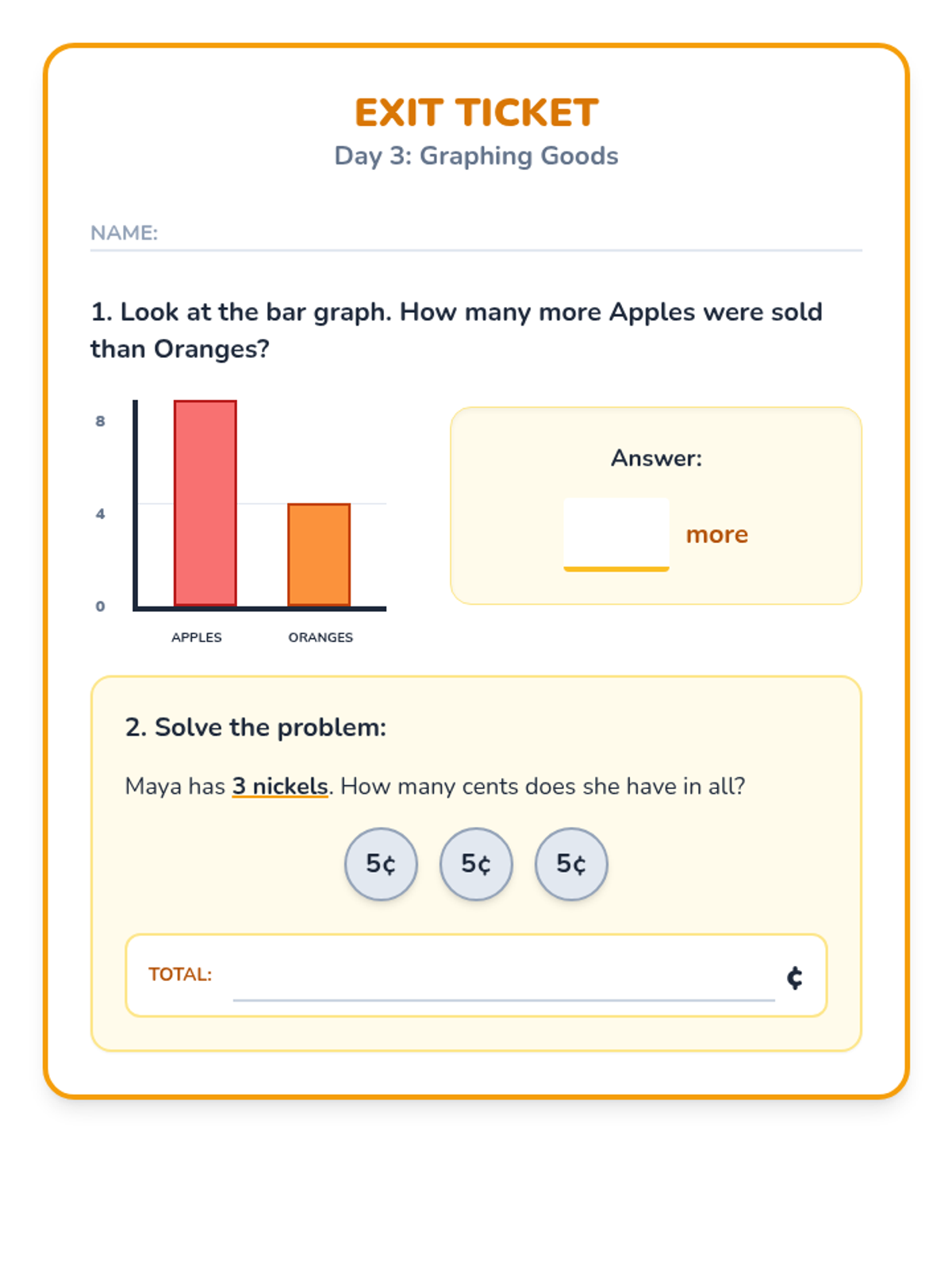
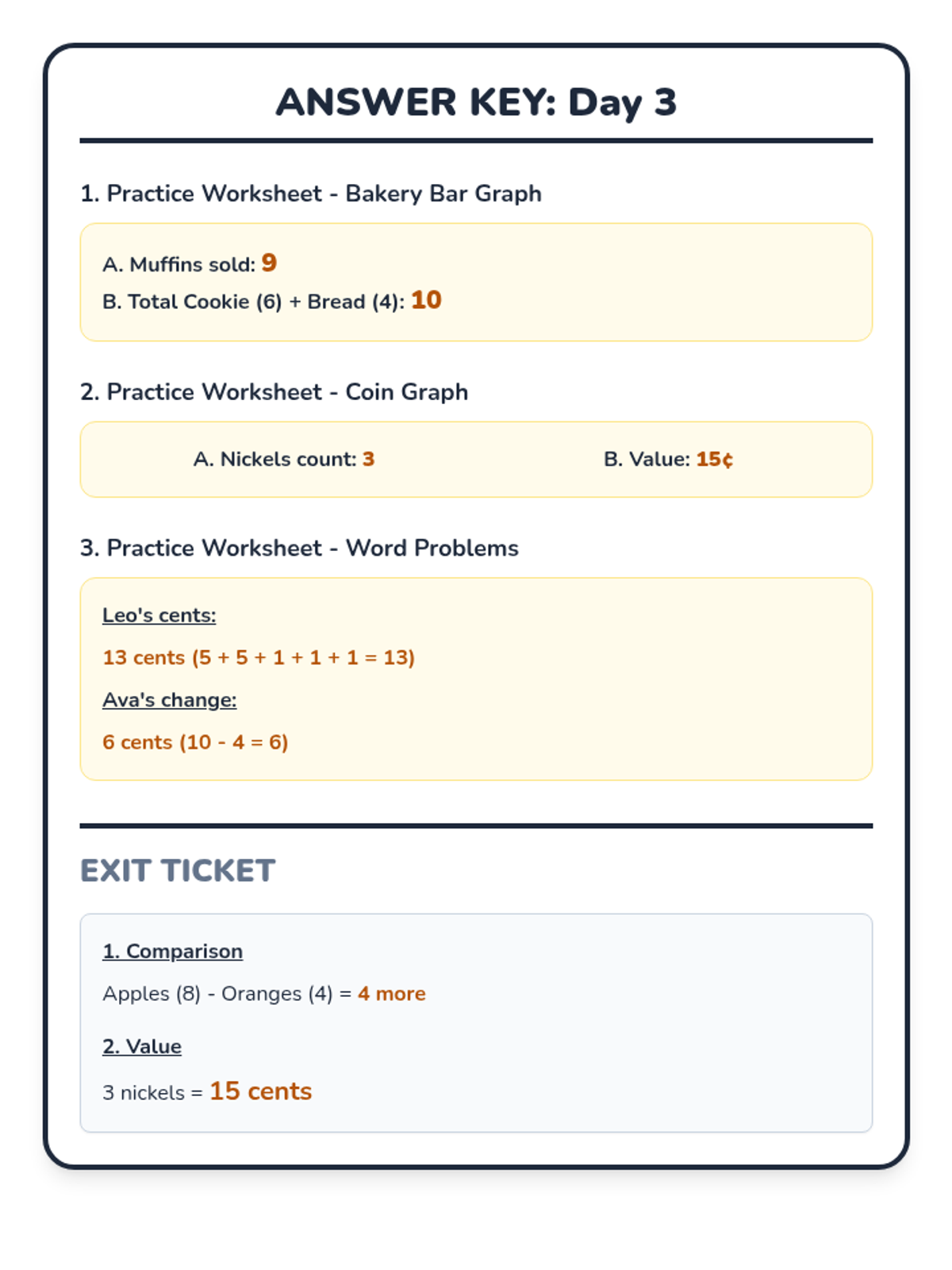
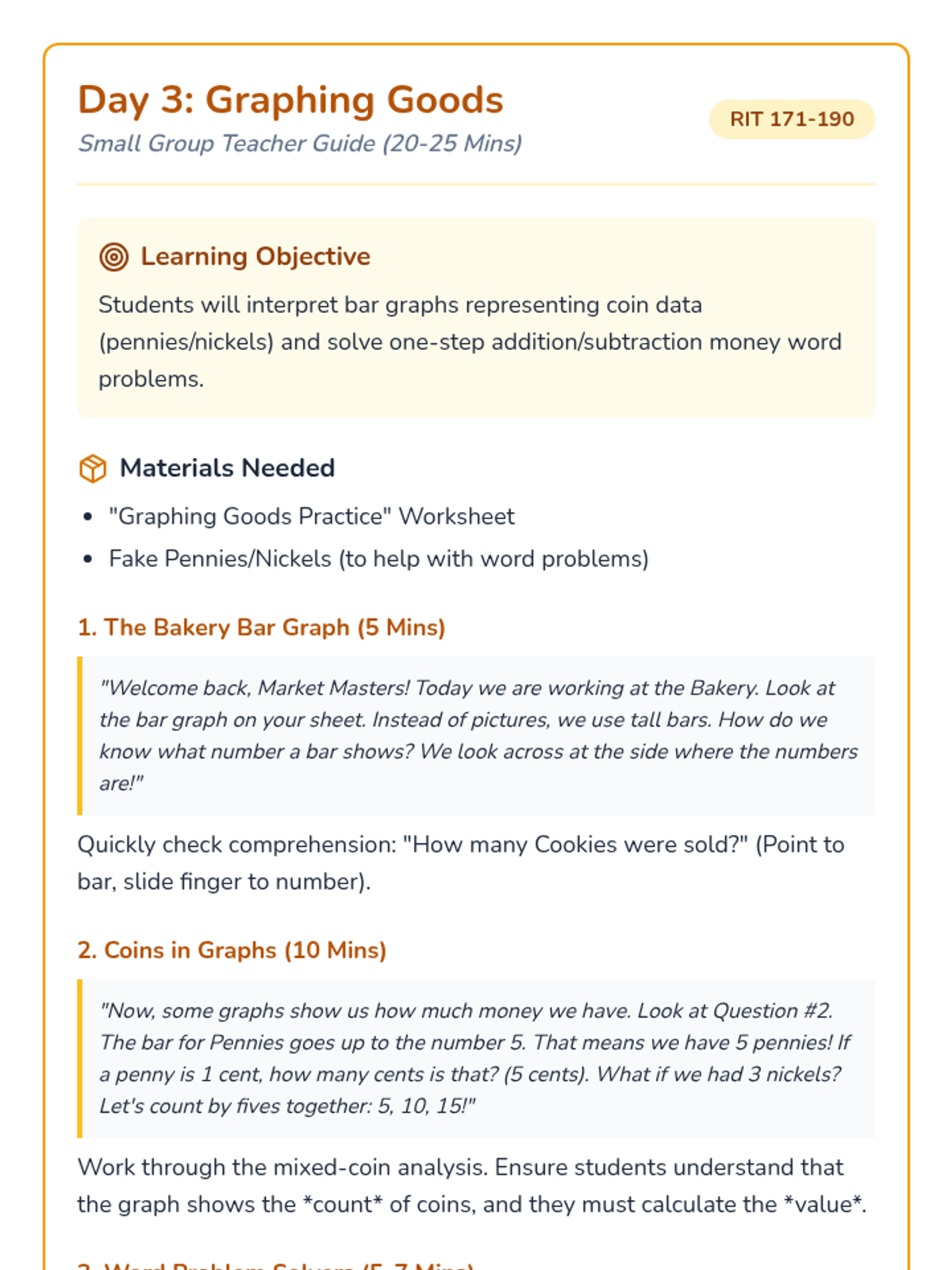
Students analyze bar graphs representing money values (pennies and nickels) and solve one-step word problems. This lesson integrates money counting with data interpretation to reach higher RIT band objectives.
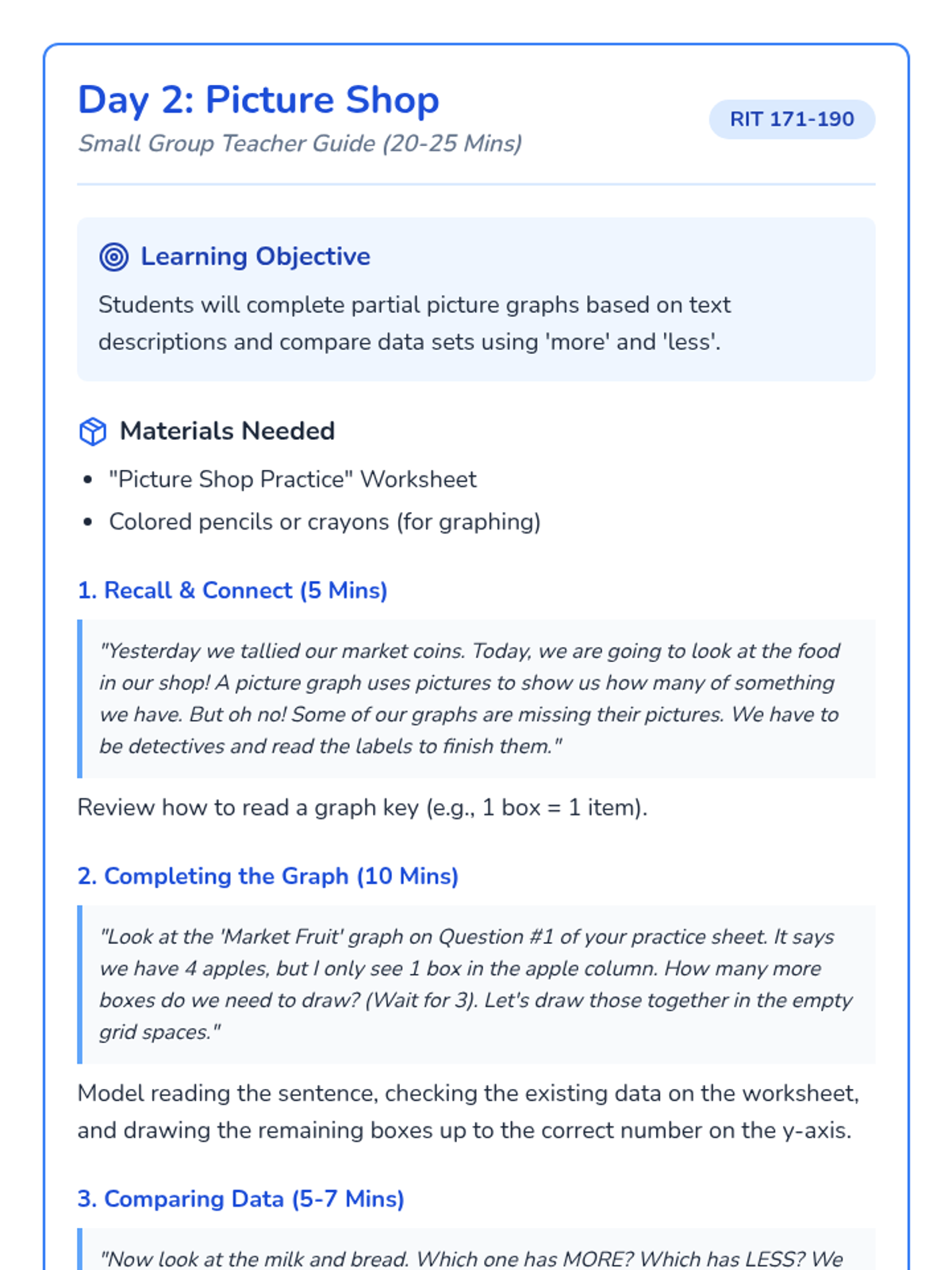
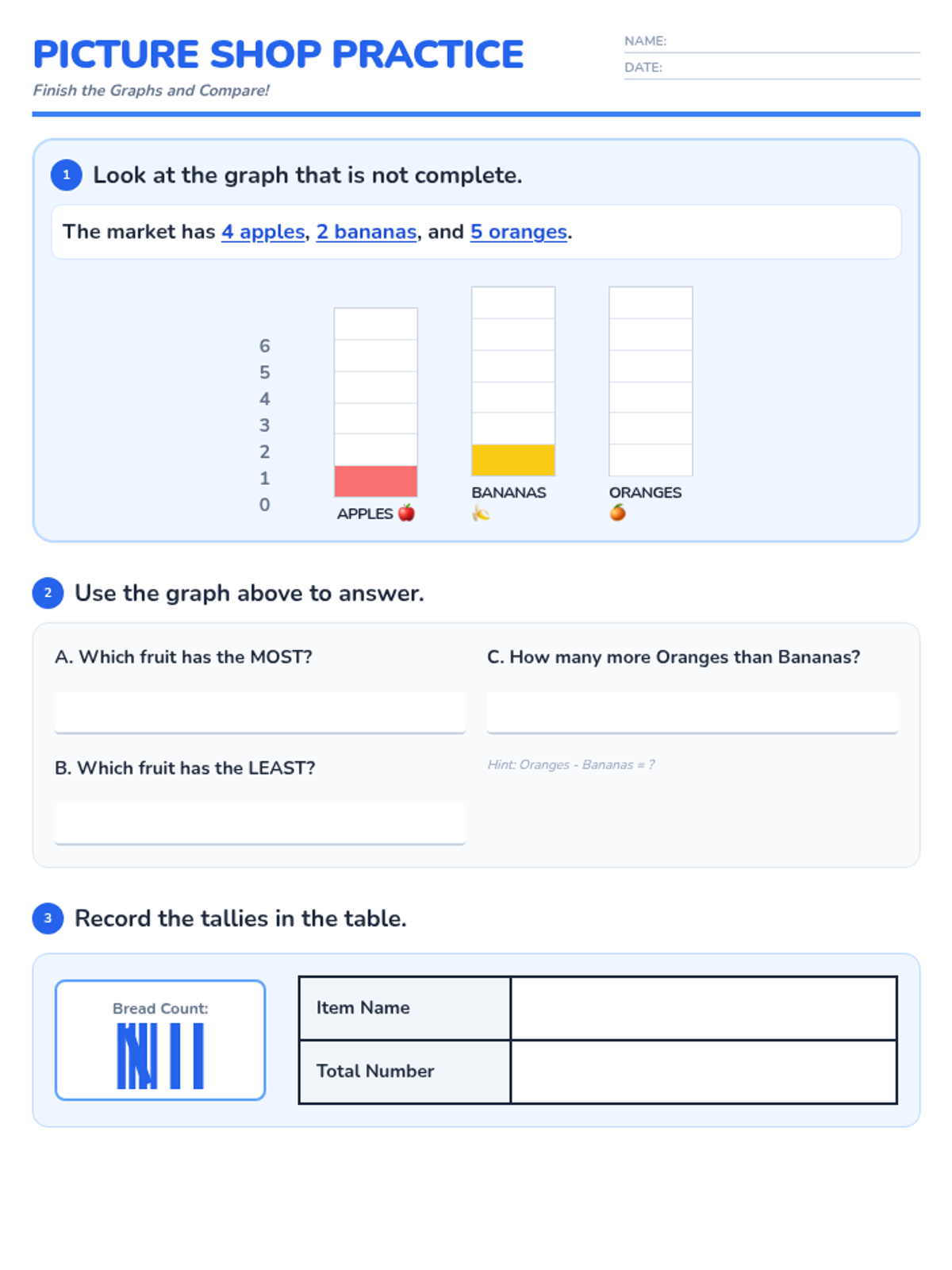
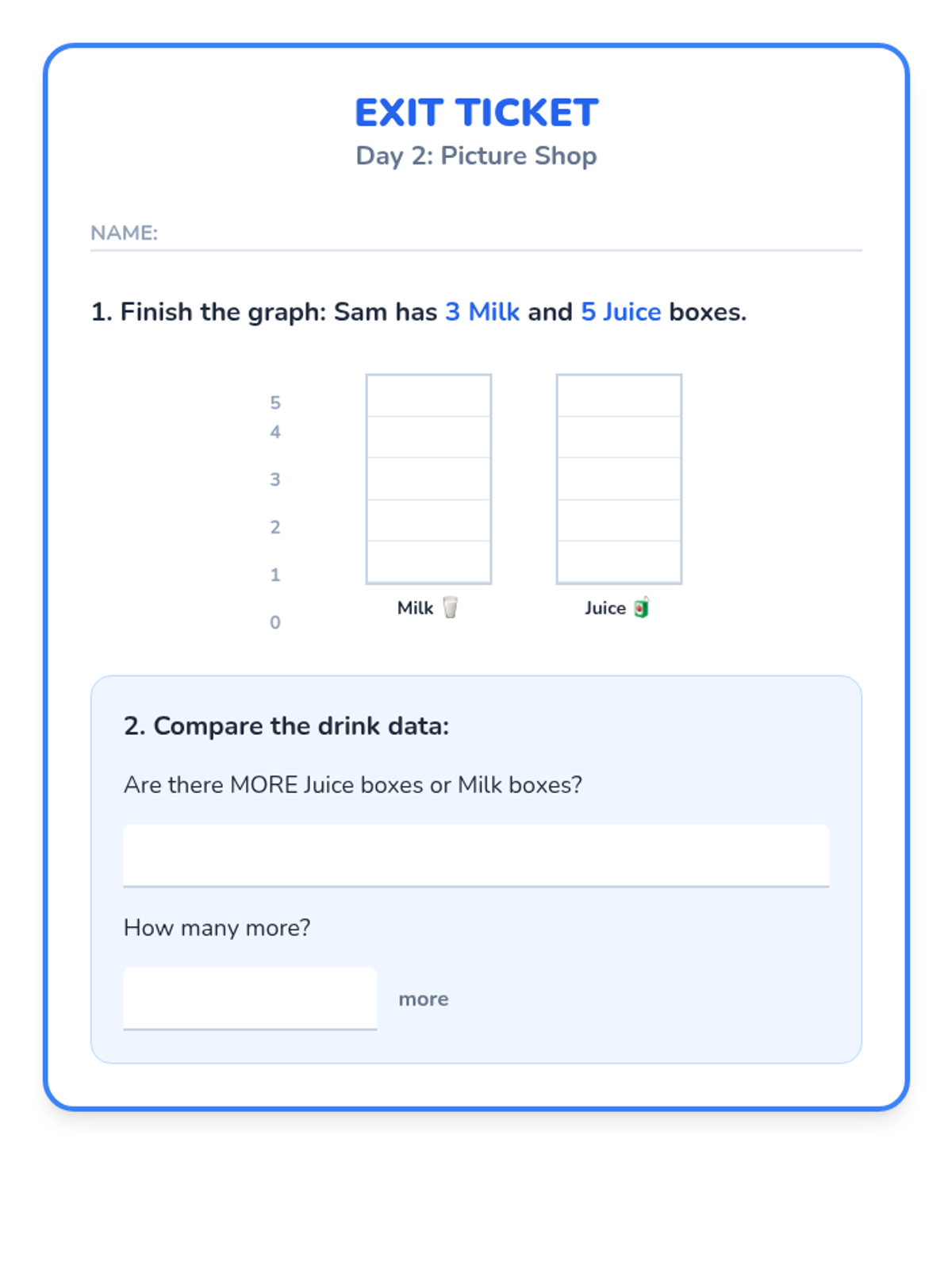
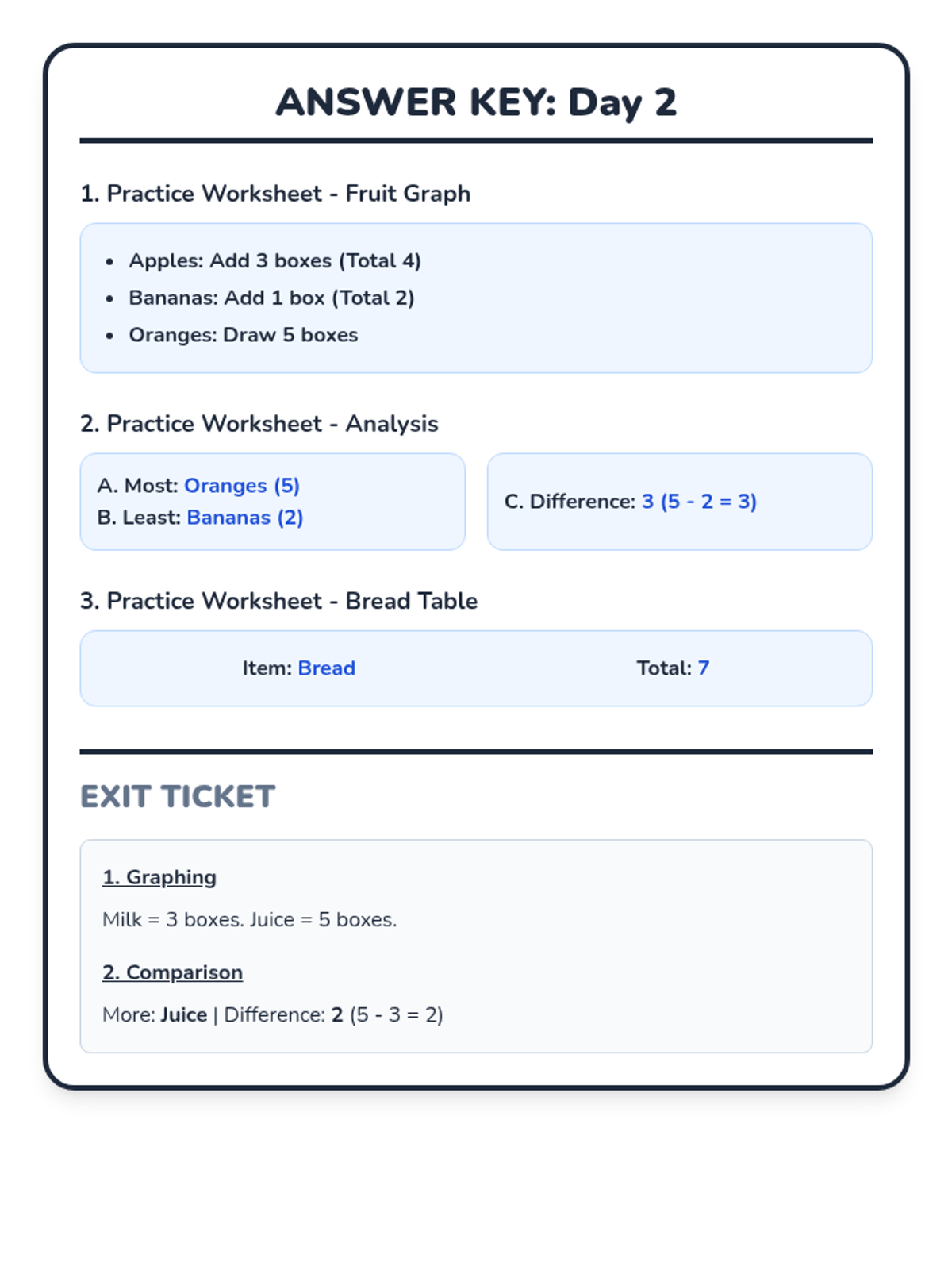
Students complete picture graphs based on text descriptions and compare data to find 'more' or 'less'. This lesson directly targets the NWEA skill of completing partial graphs and interpreting visual data.
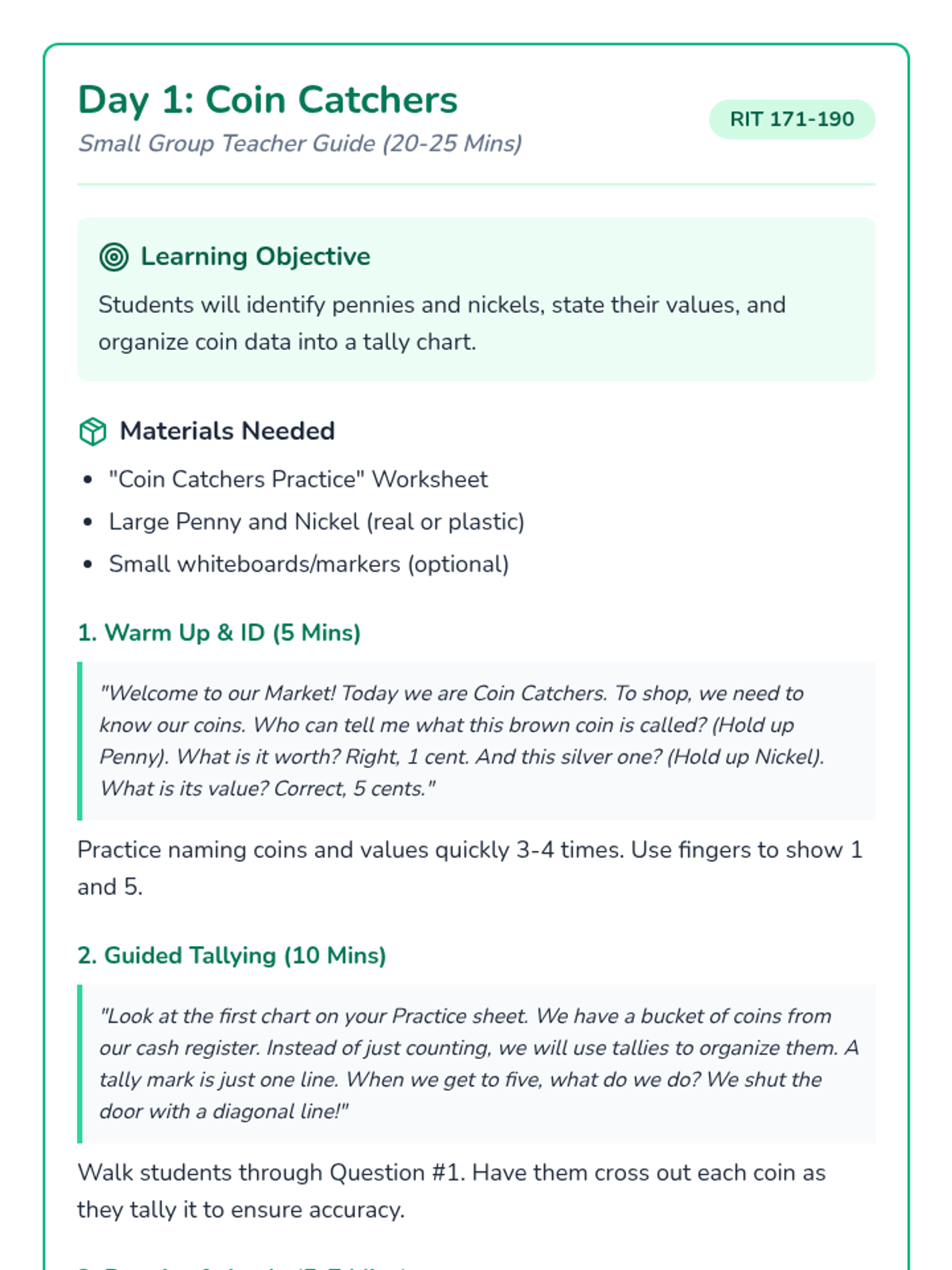
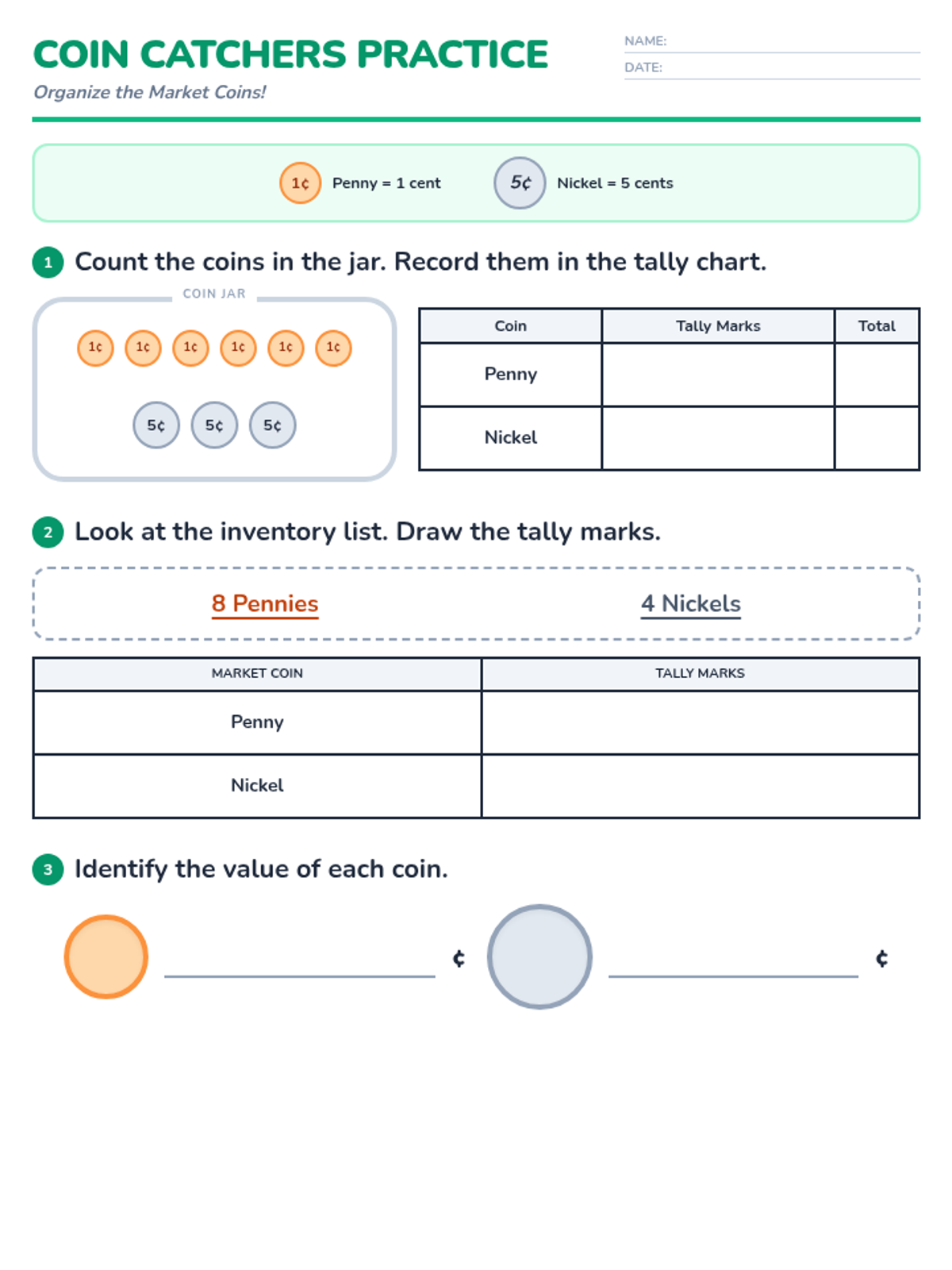
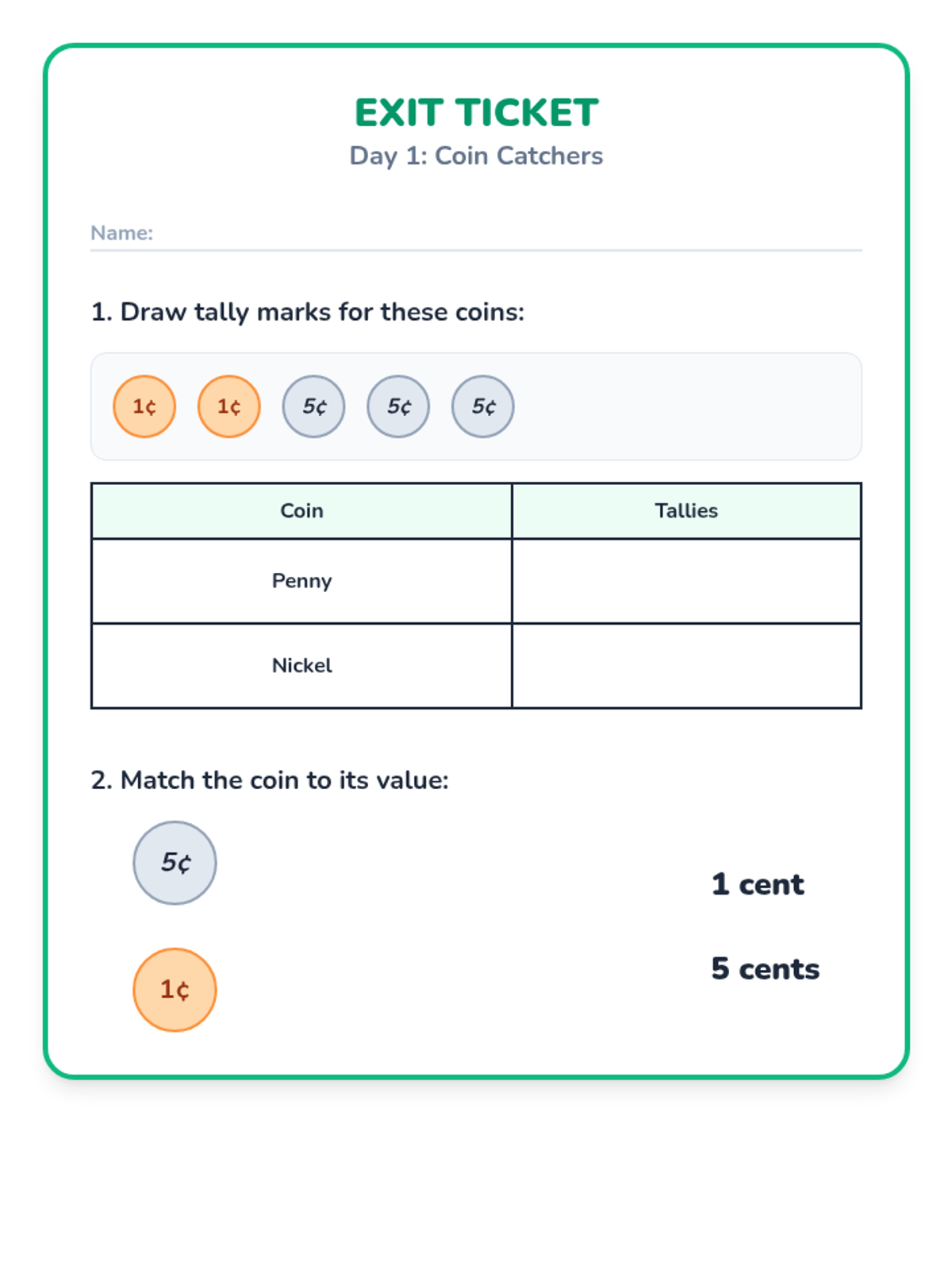
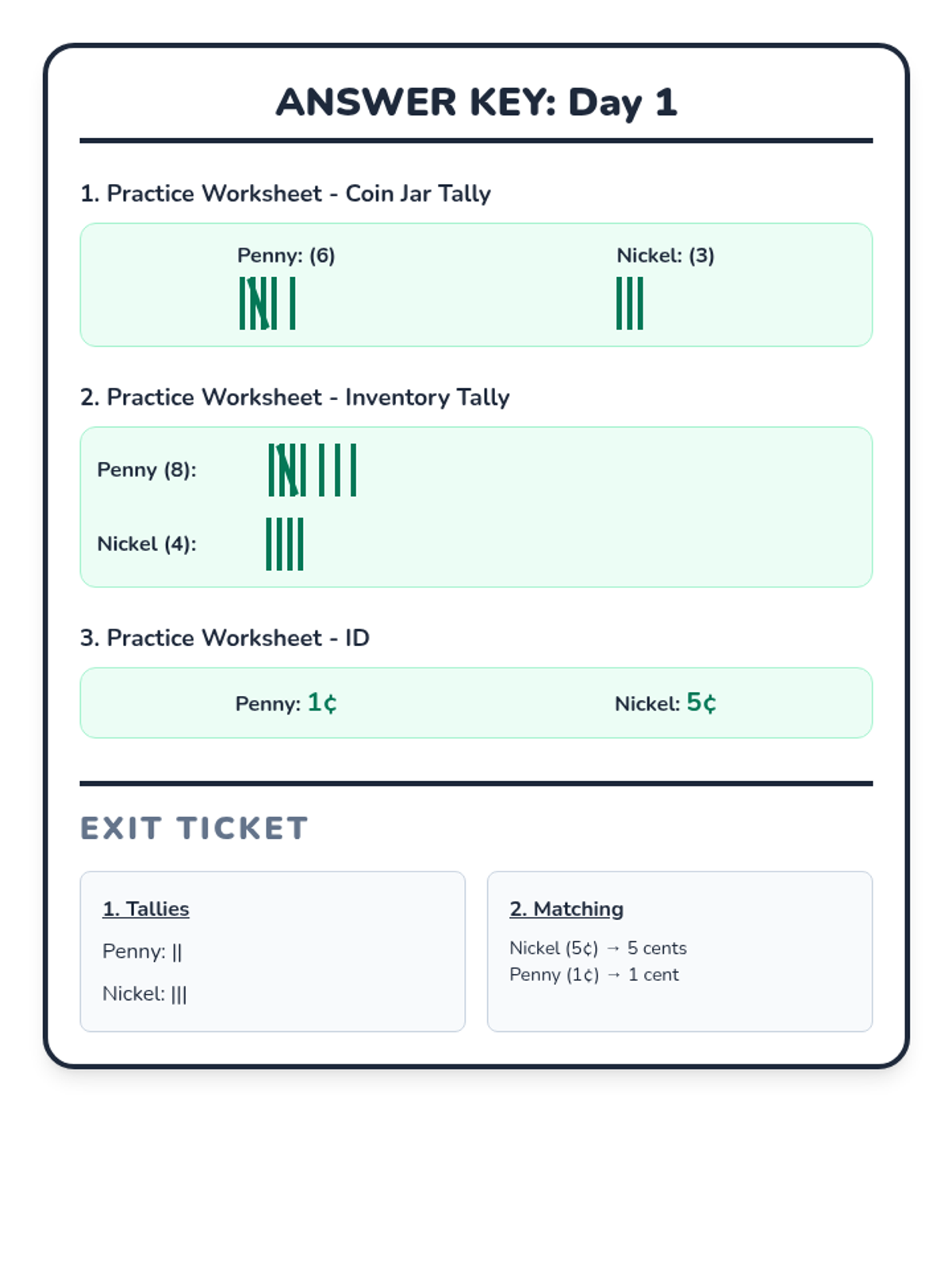
Students identify pennies and nickels, determine their values, and use tally charts to record inventory in a mock market setting. This lesson focuses on the transition from simple identification to organizing data.
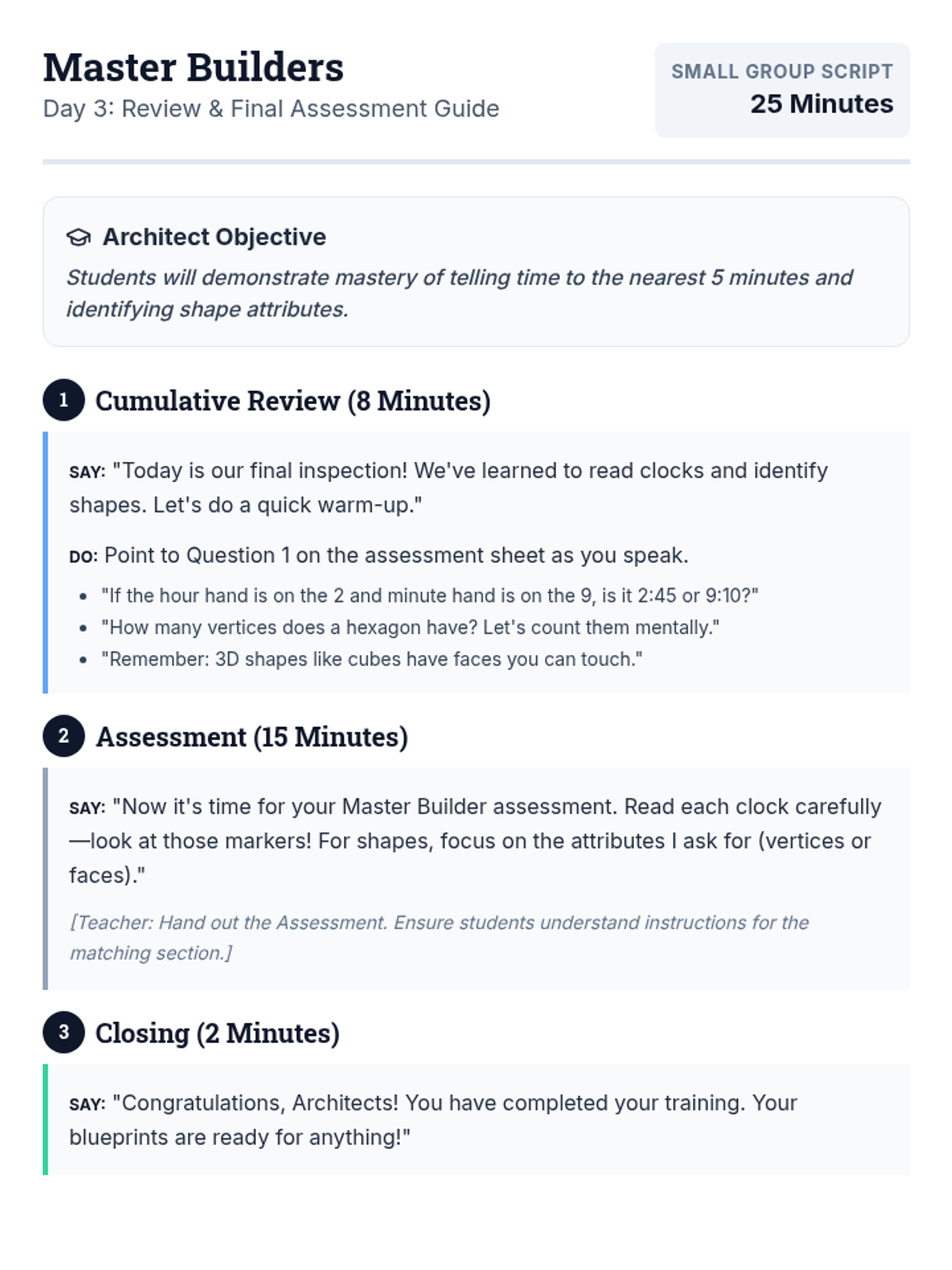
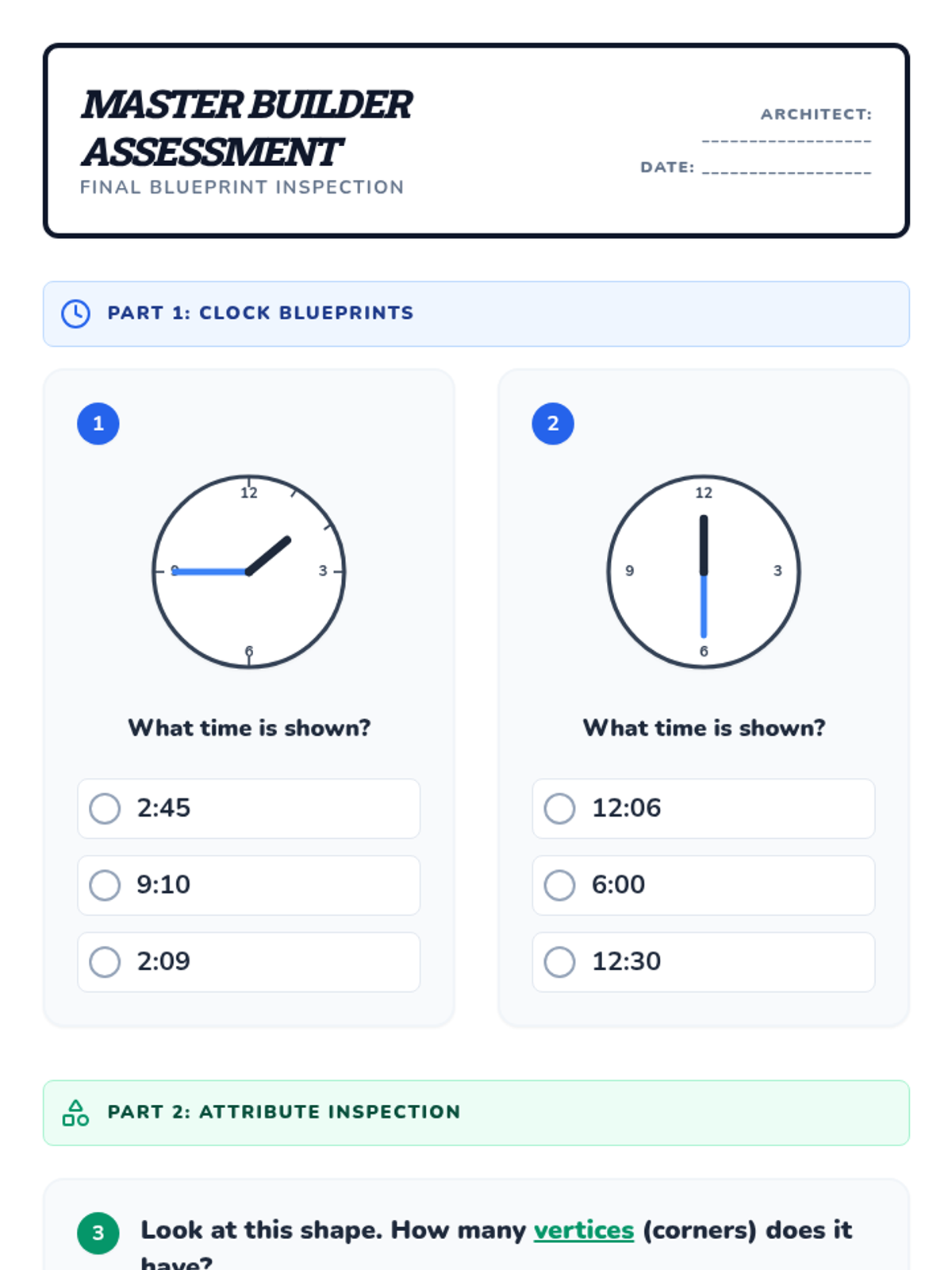
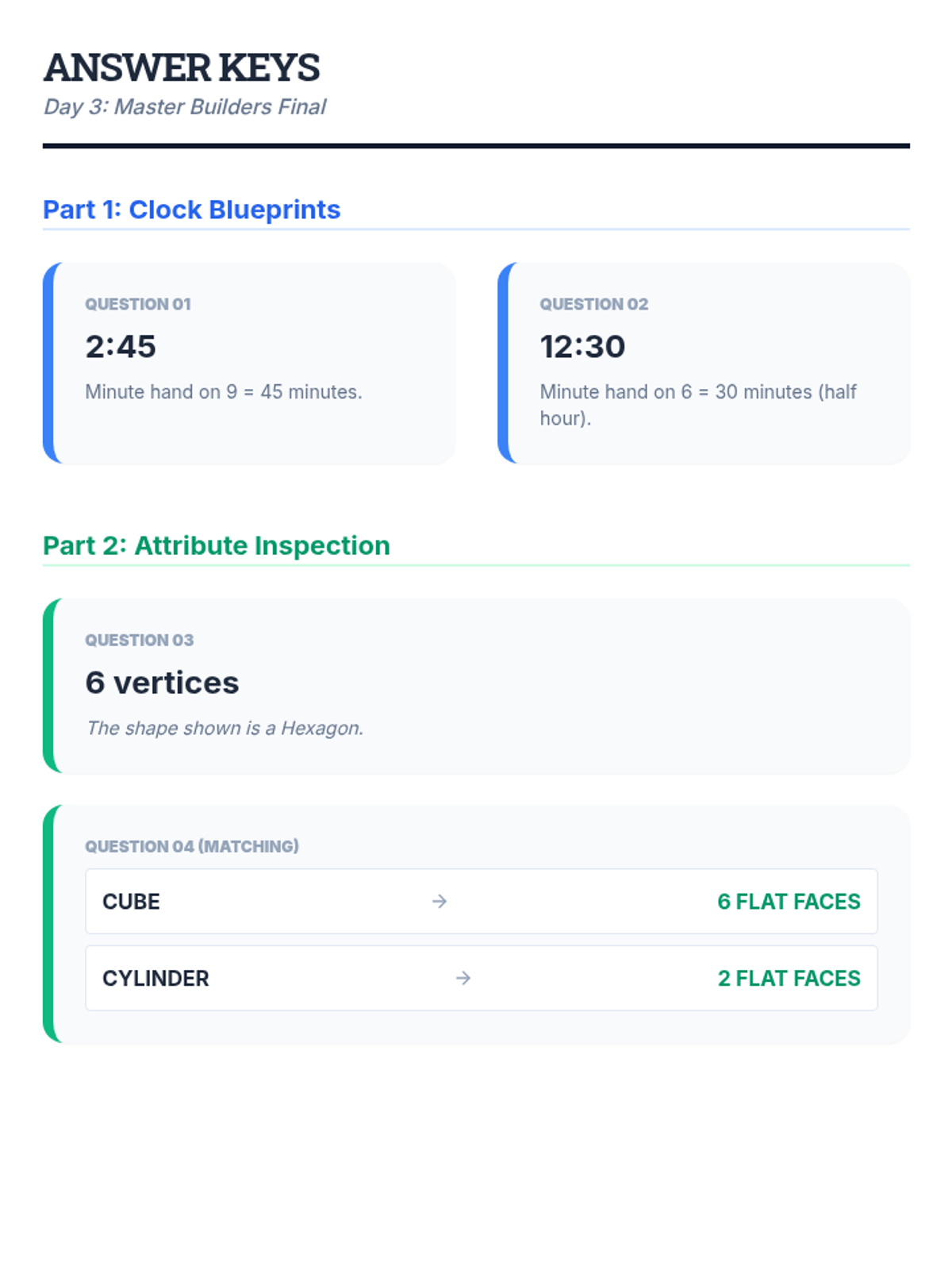
A cumulative review of time and shape attributes followed by a formal assessment to track student growth toward RIT 180 goals.
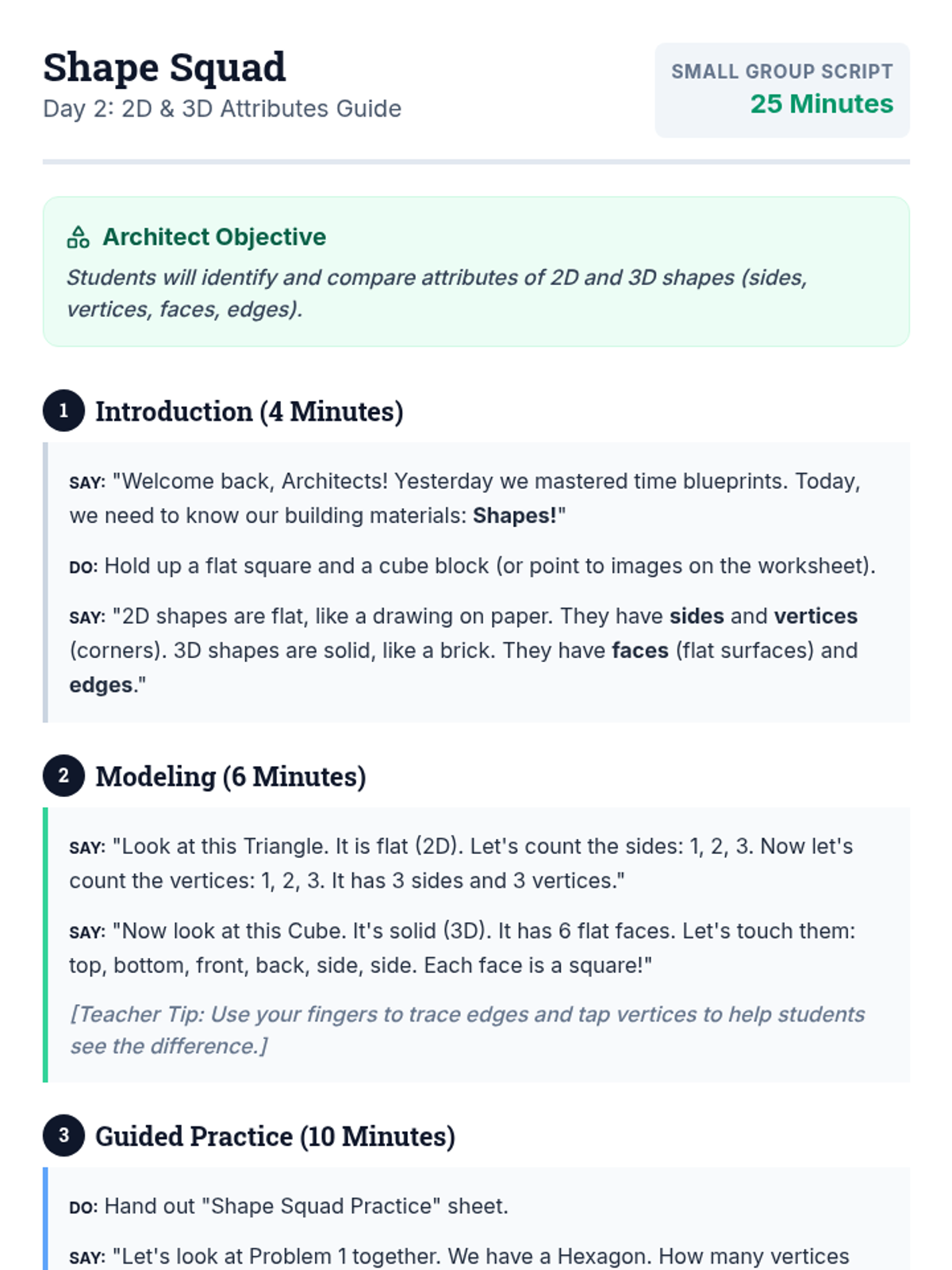
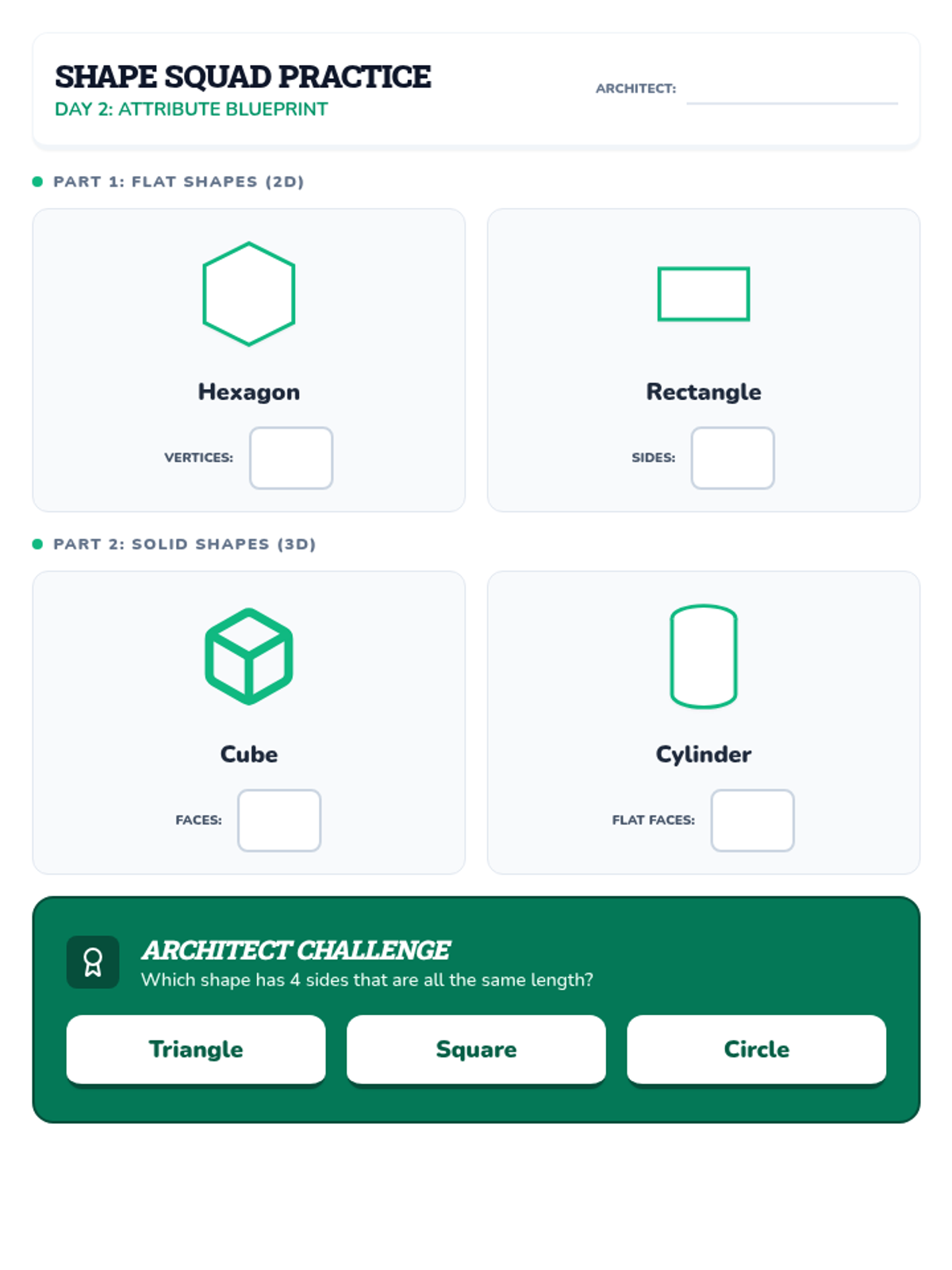
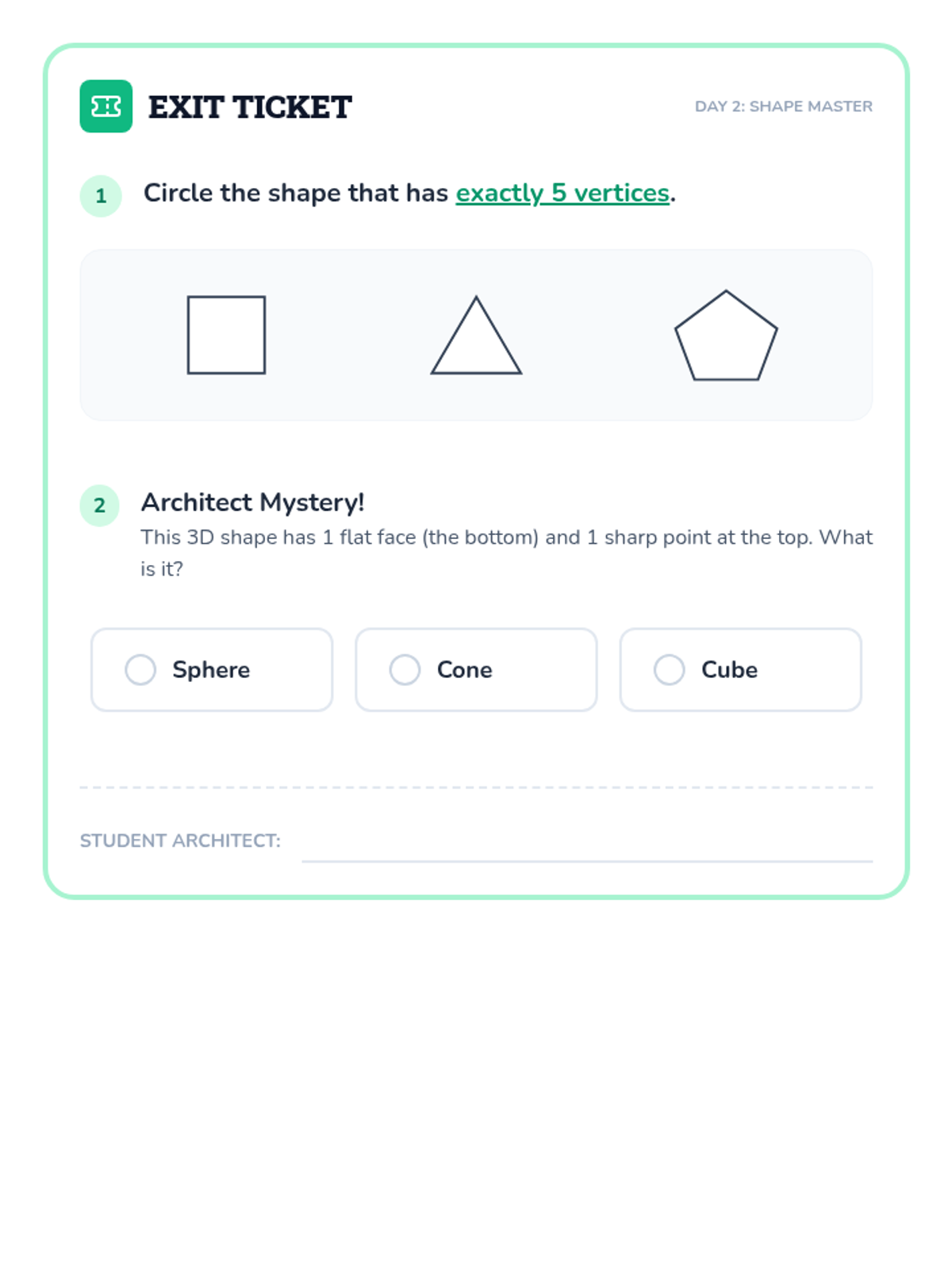
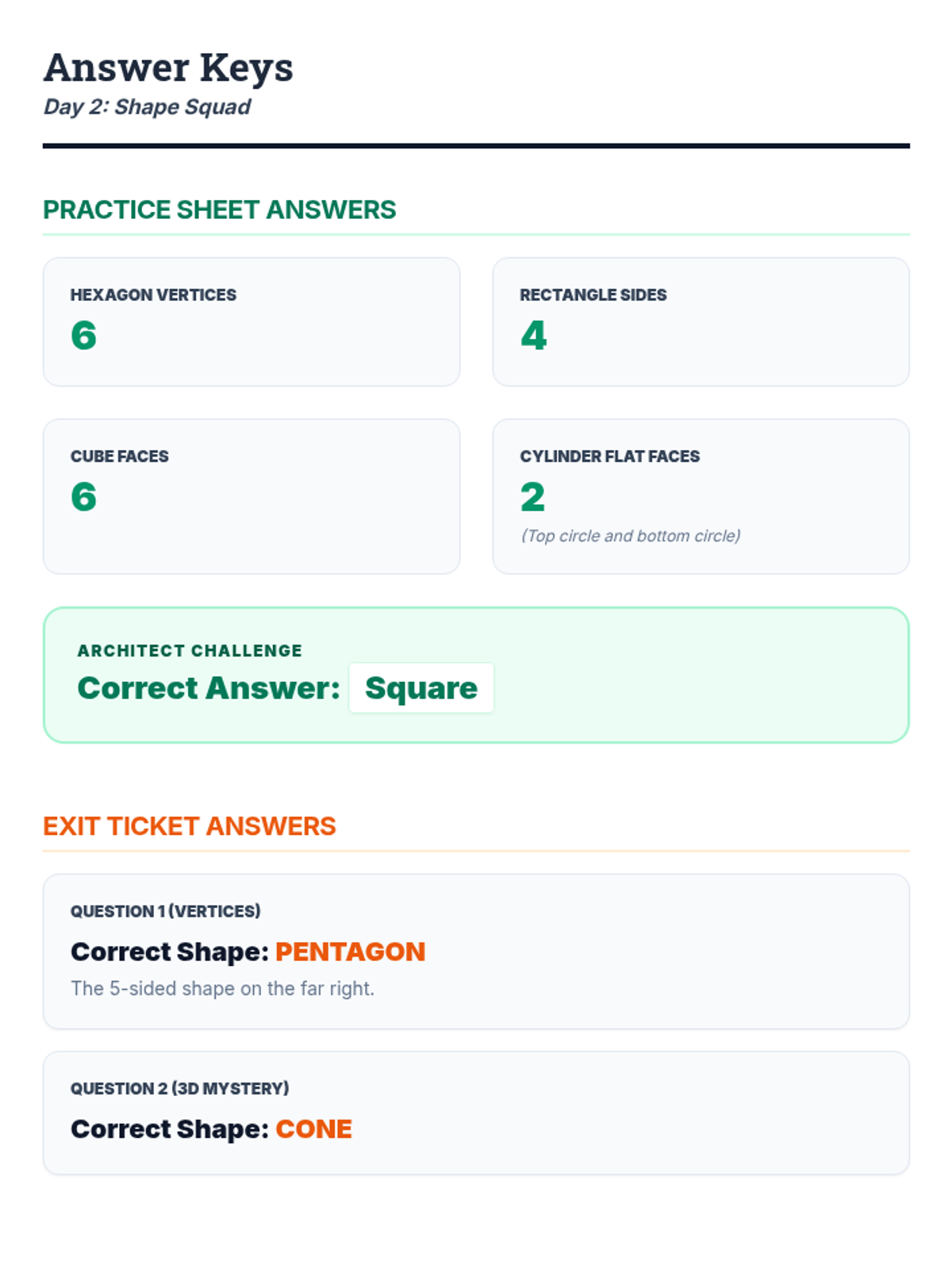
Identifying and describing defining attributes of 2D and 3D shapes, including sides, vertices, faces, and edges.
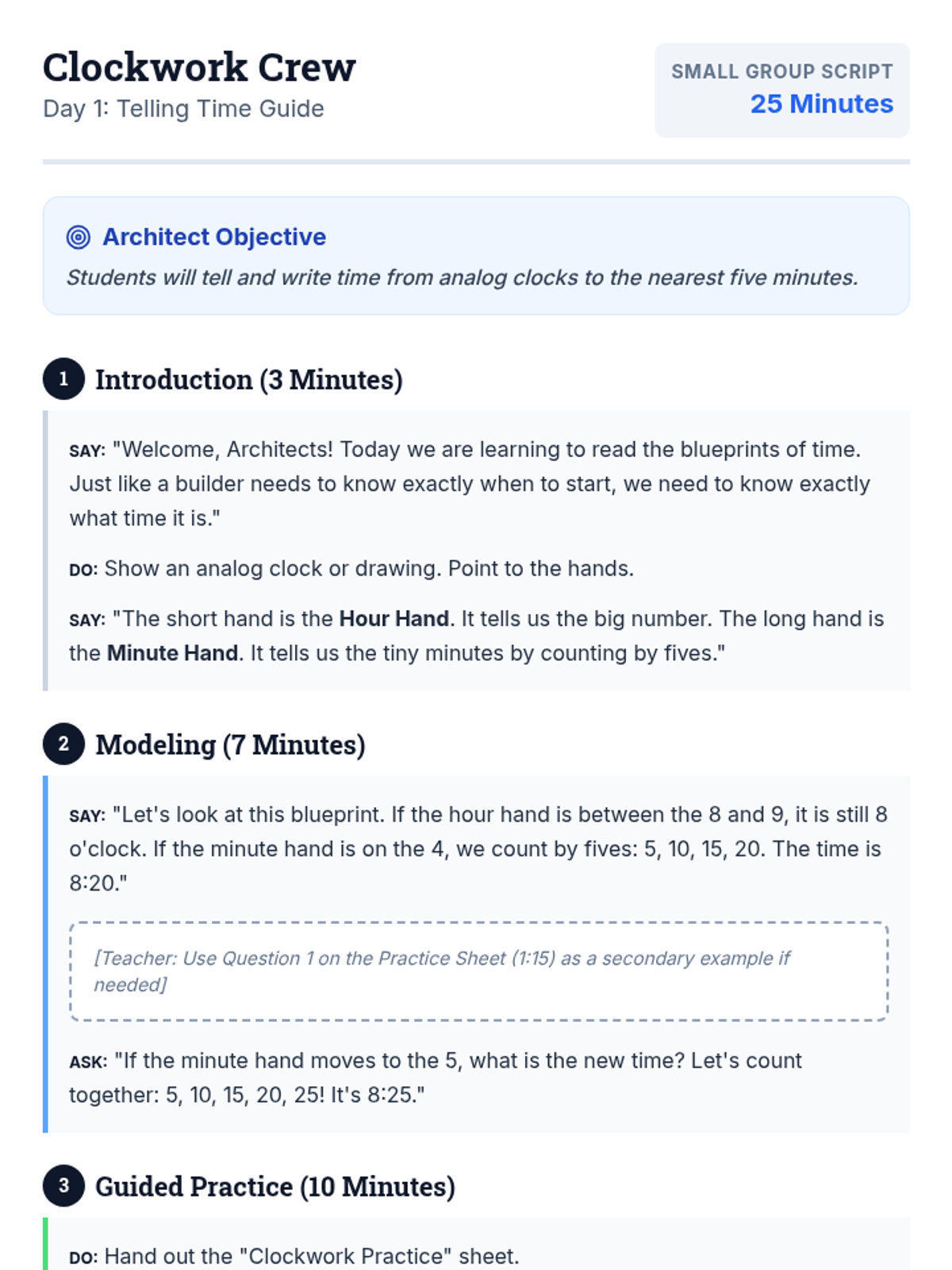
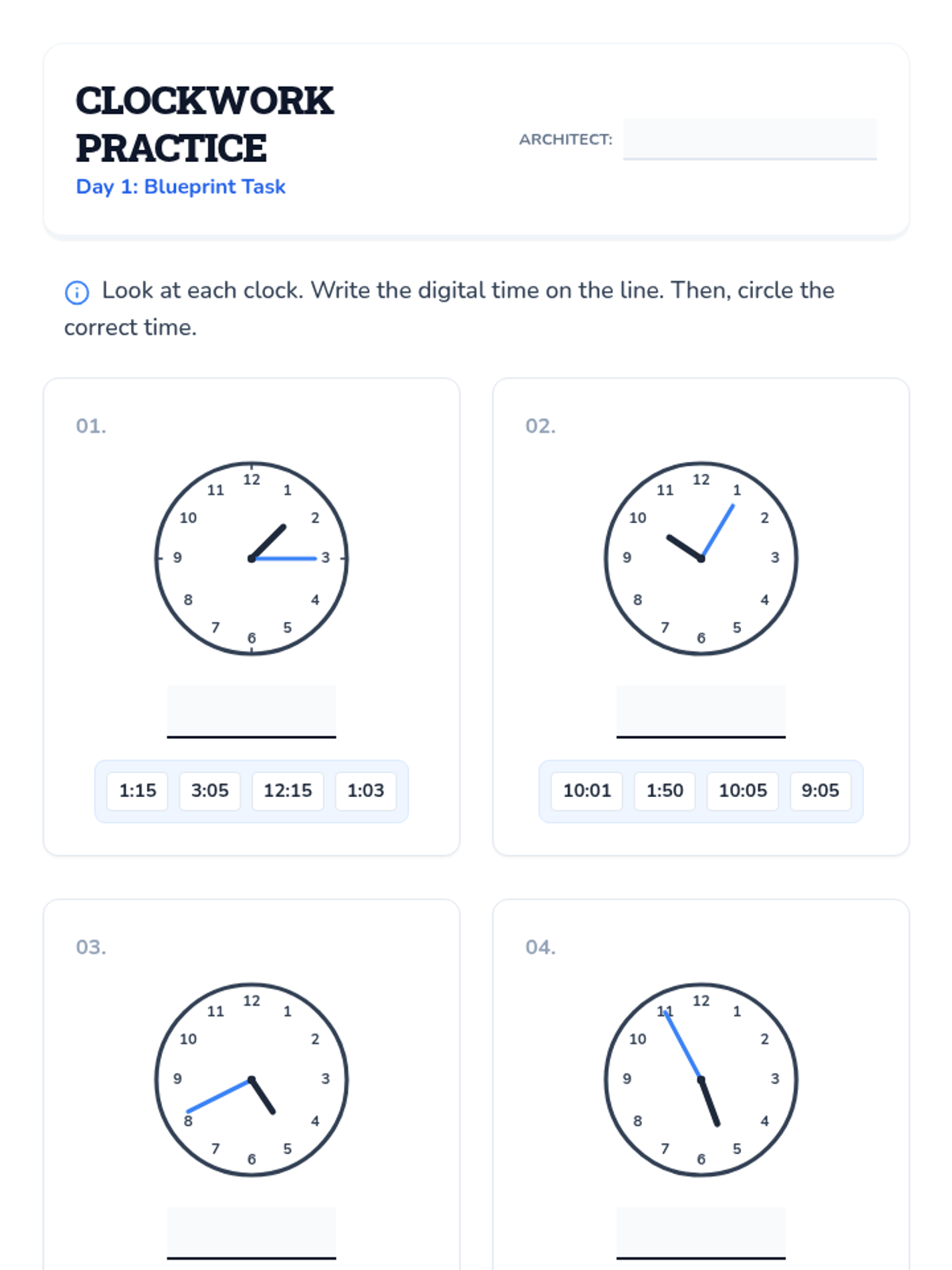
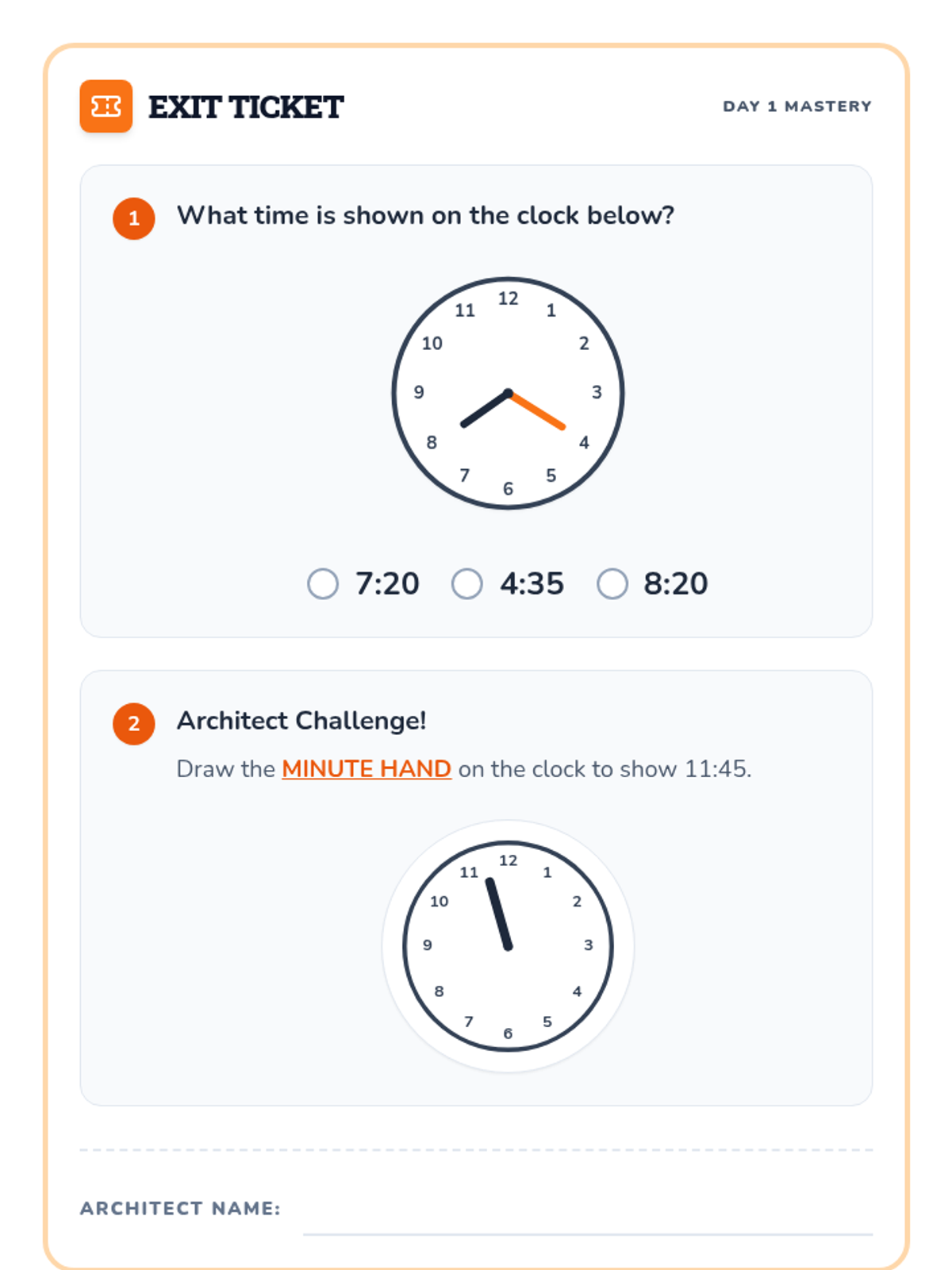
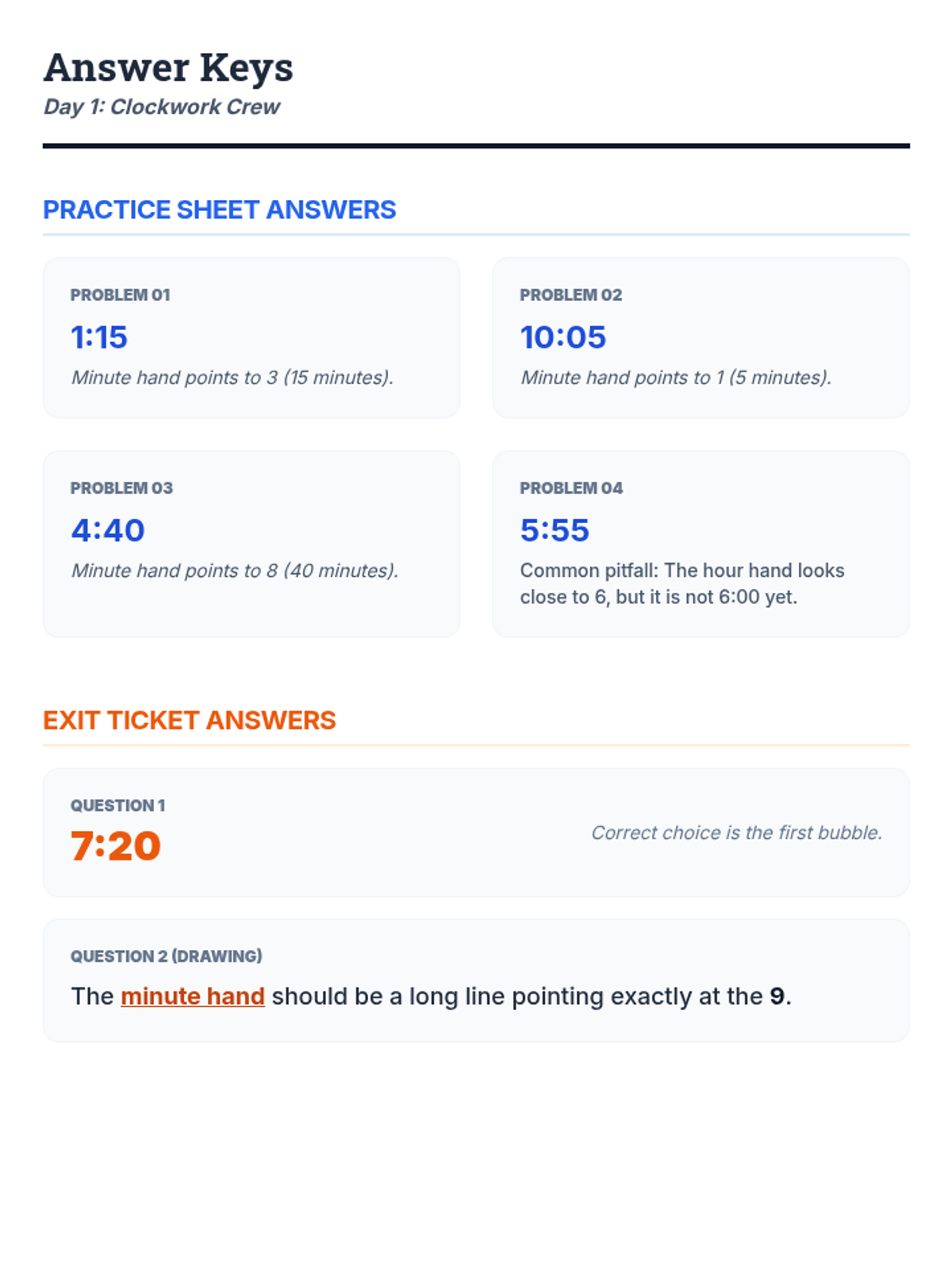
Mastering telling time to the nearest 5 minutes on an analog clock through guided practice and independent application.
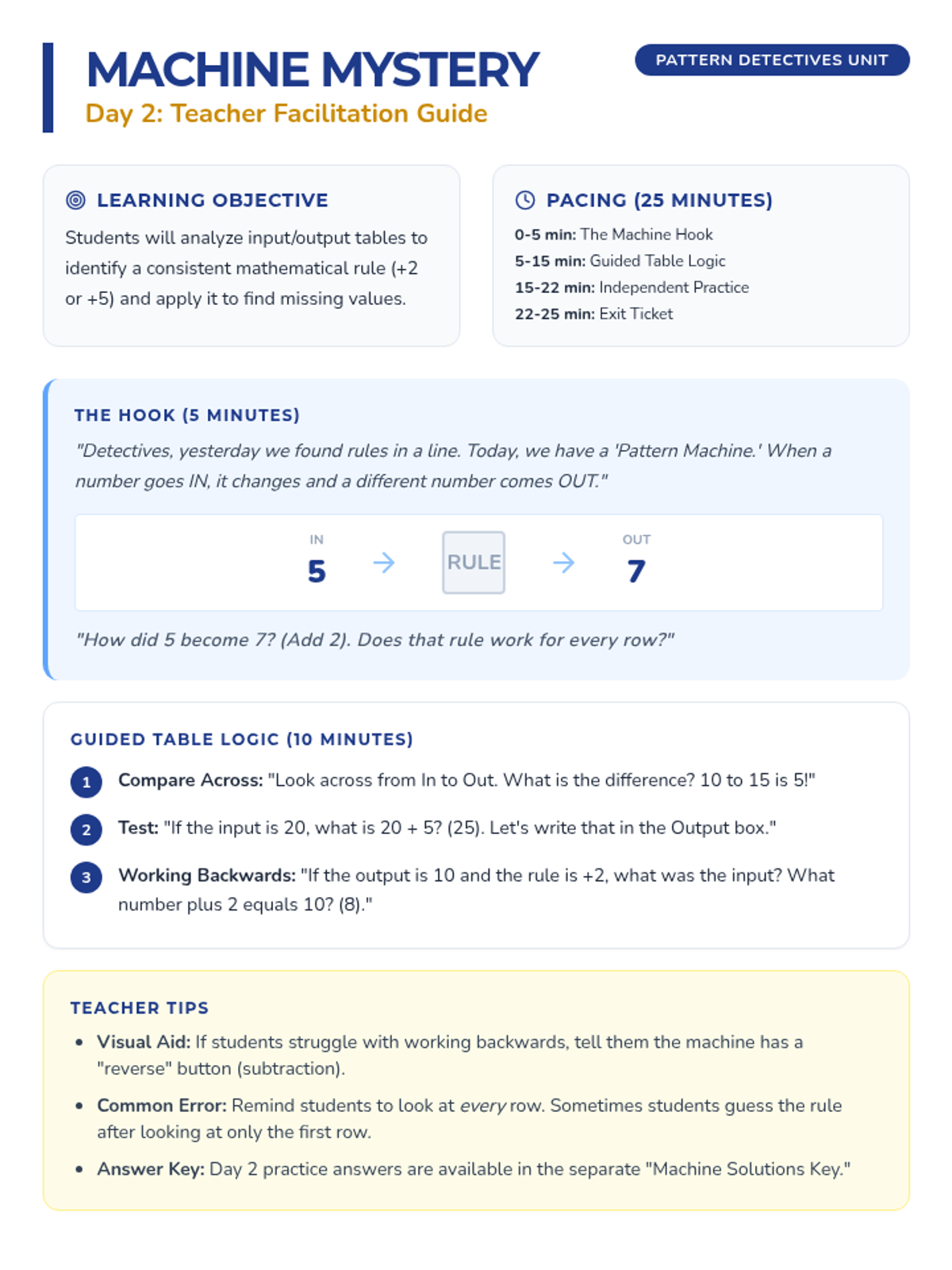
Introduces input/output tables as 'pattern machines,' teaching students to identify the operational rule and apply it to find missing values.
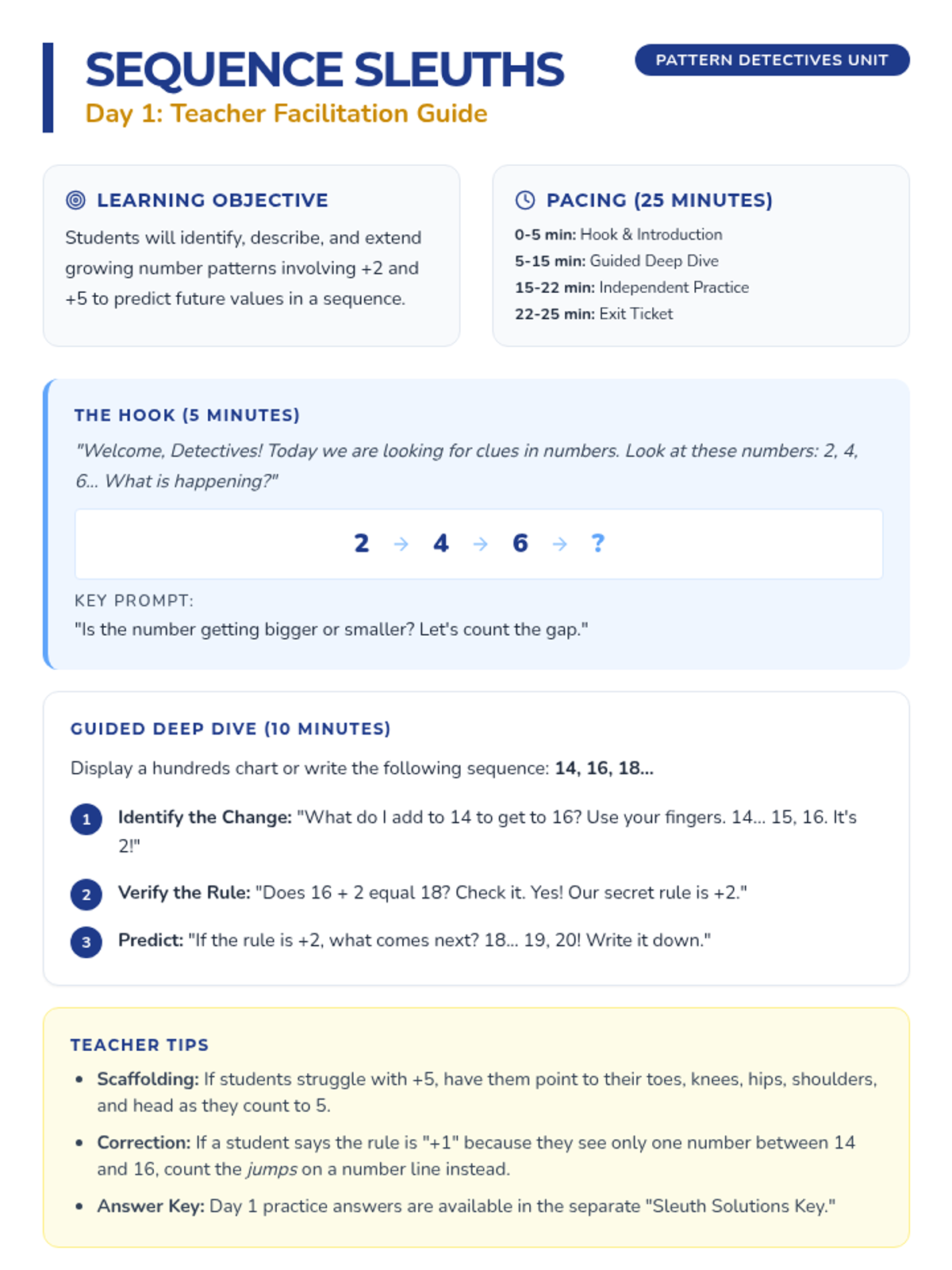
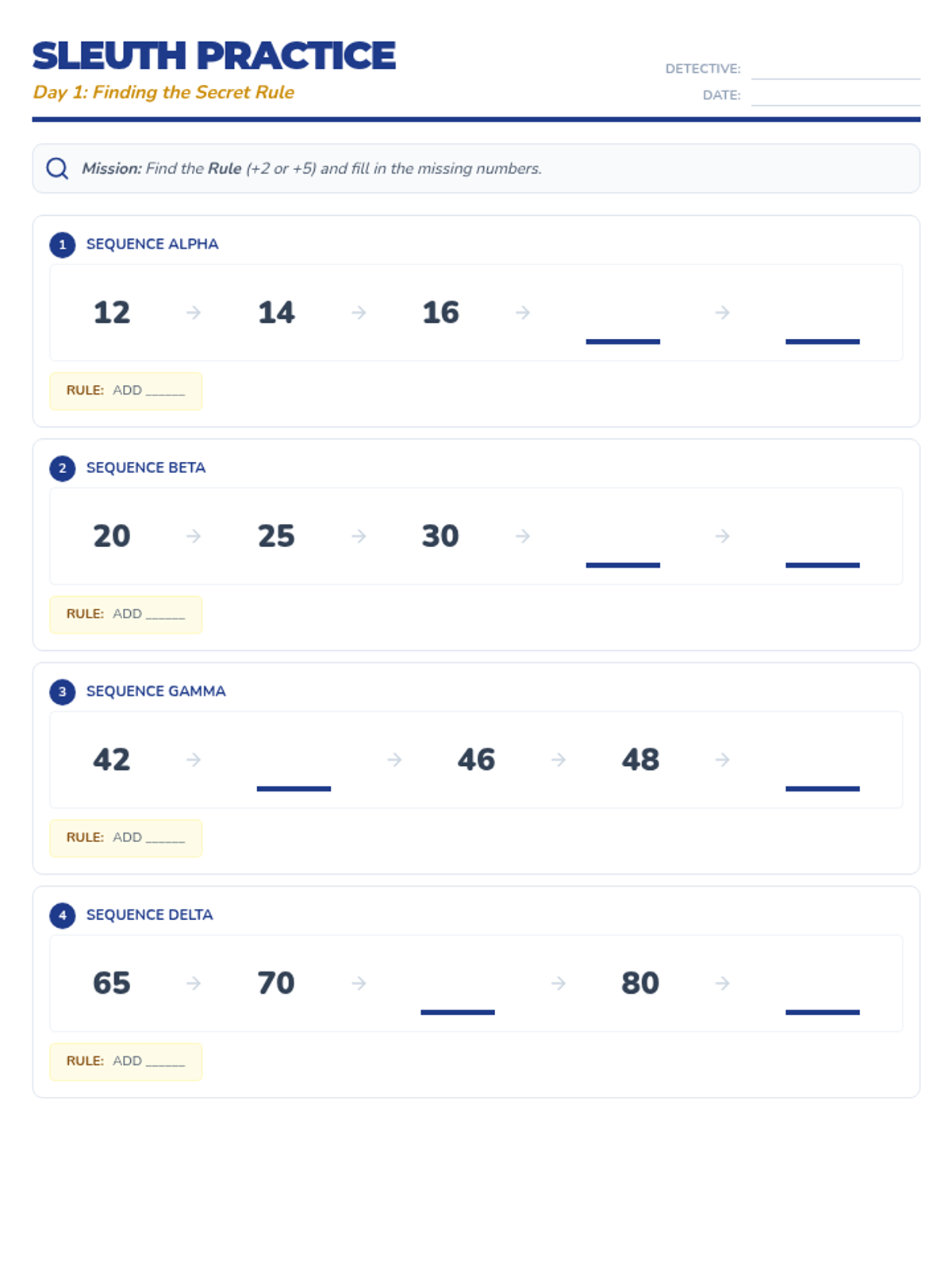
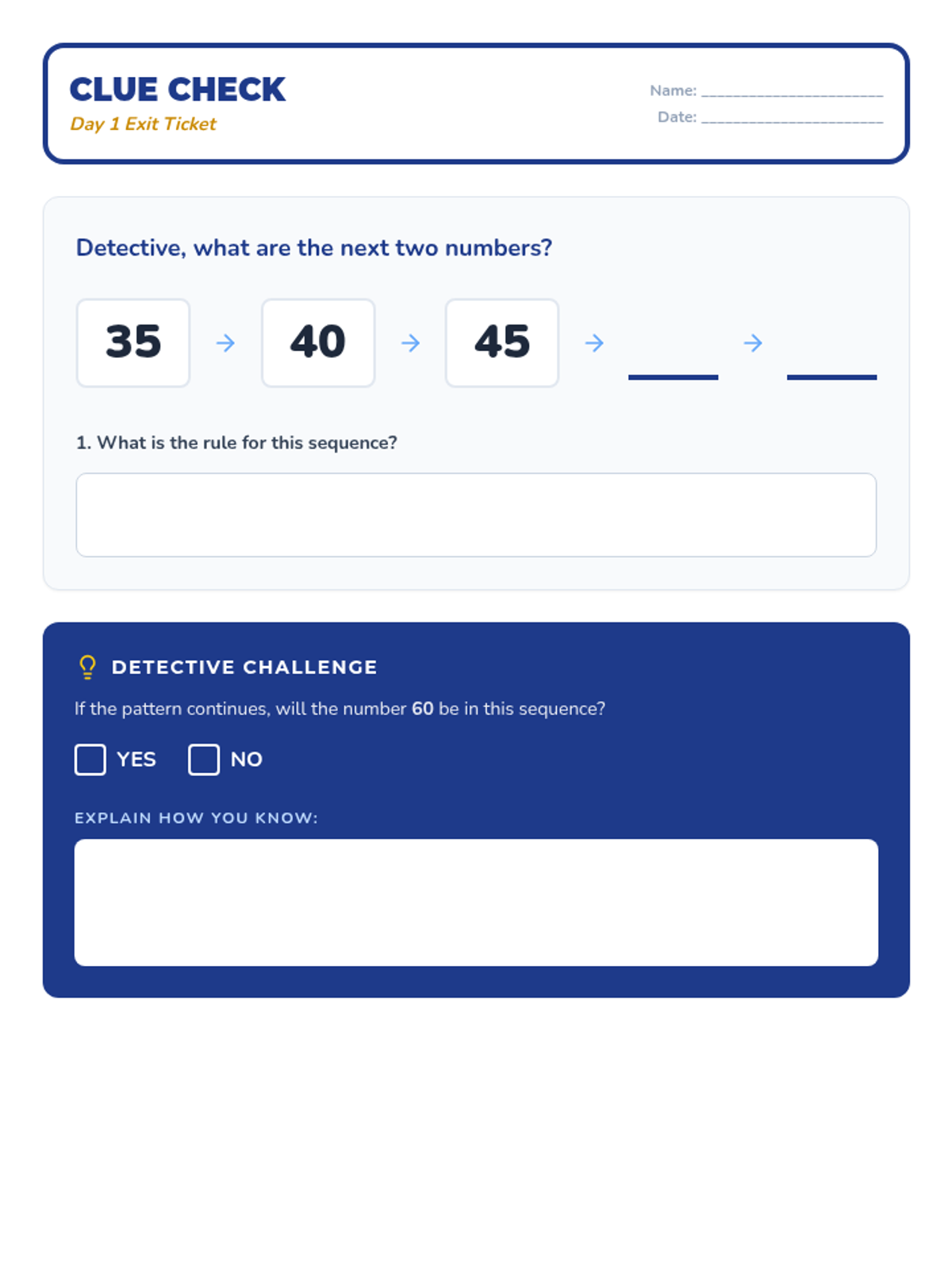
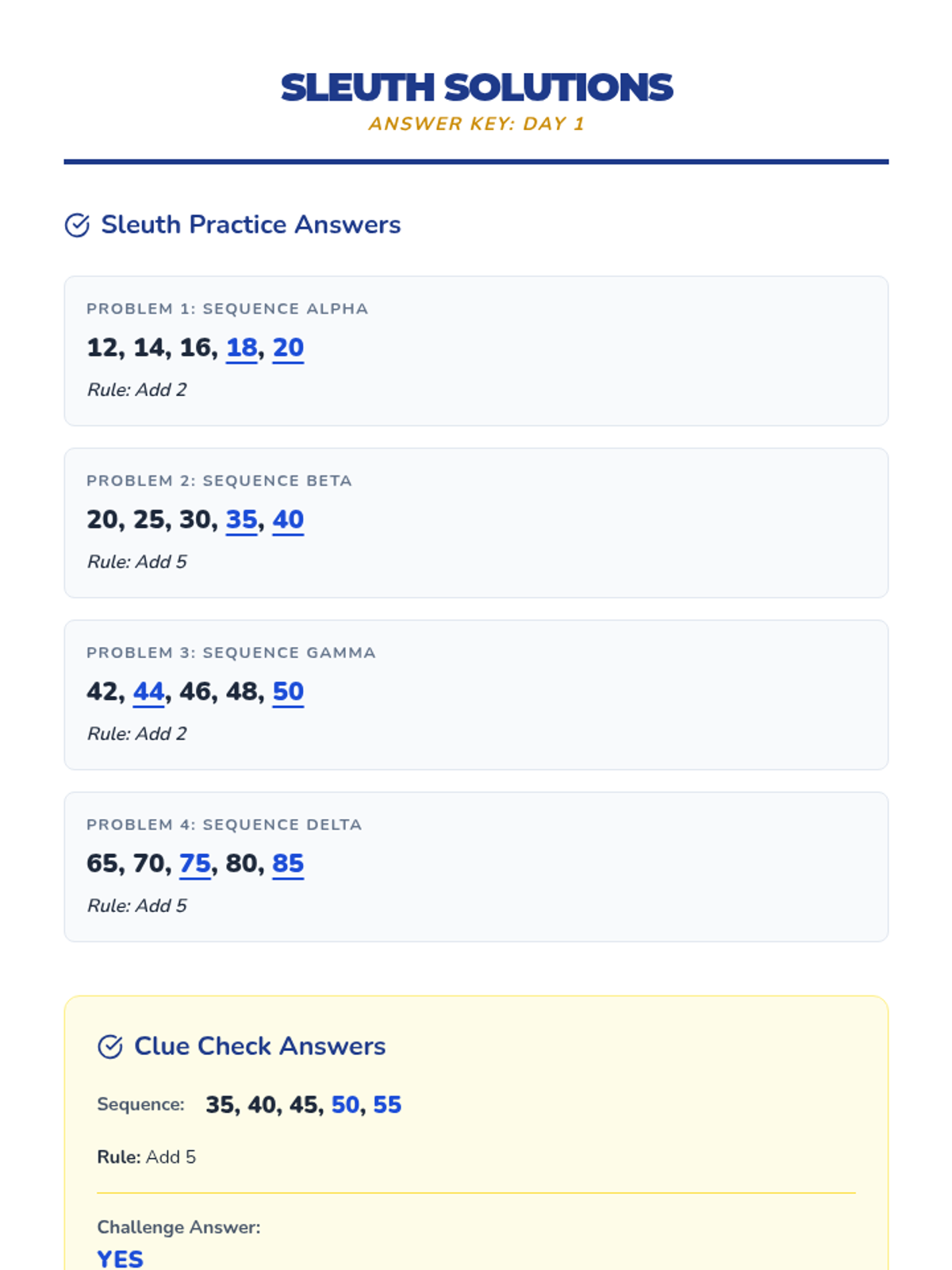
Focuses on identifying and extending growing number patterns, specifically rules involving adding 2 and 5, to build foundational algebraic thinking.
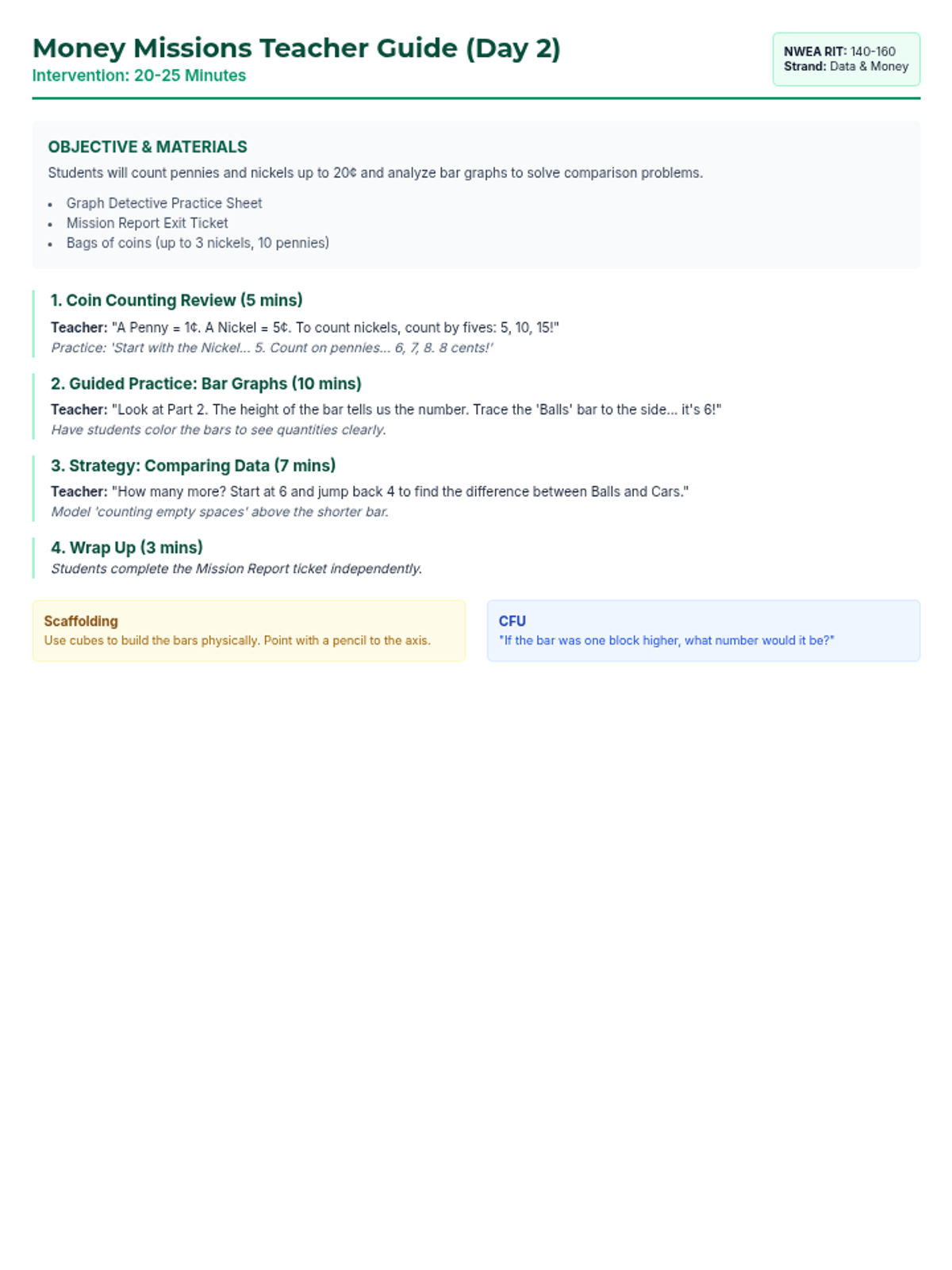
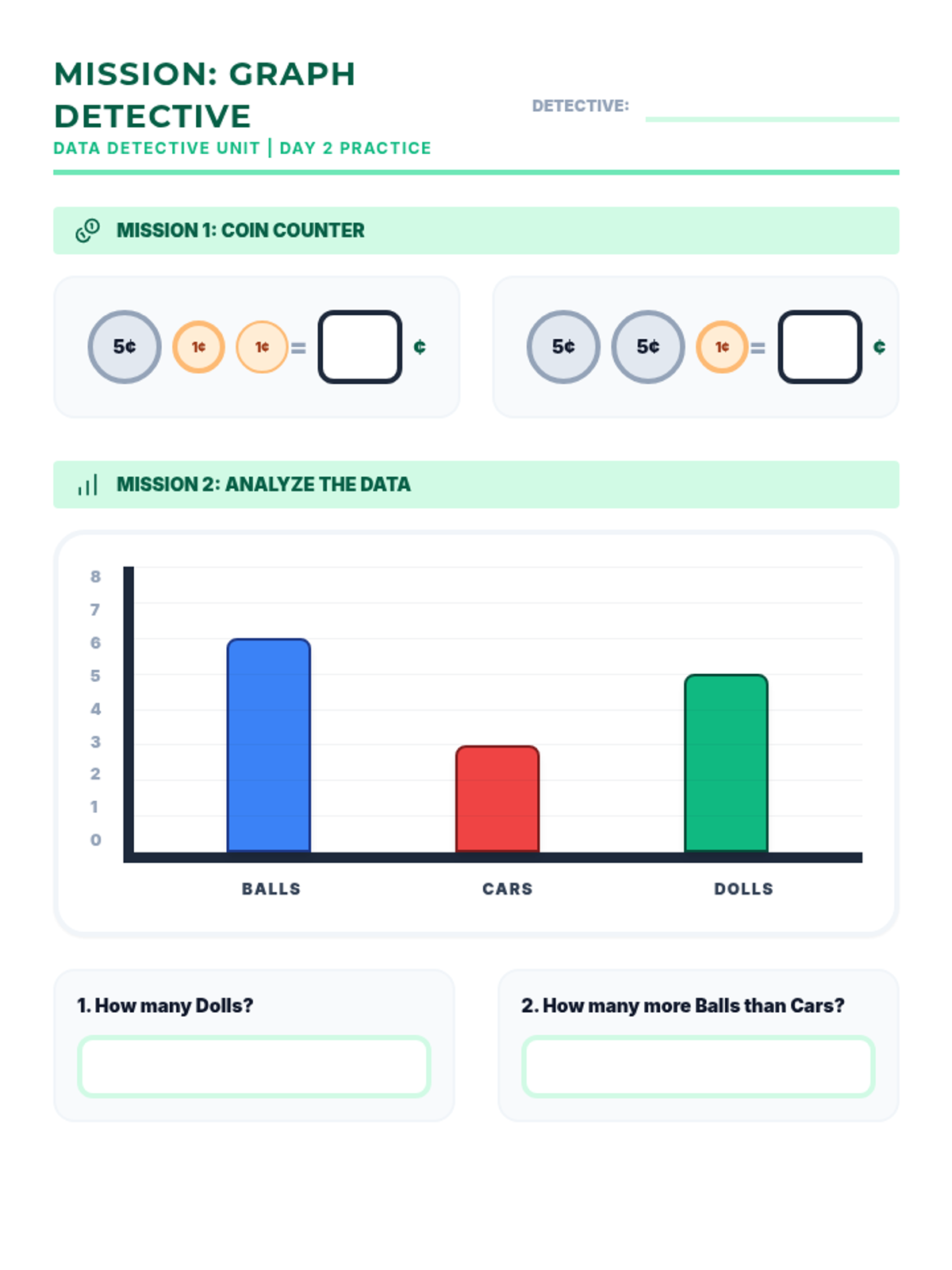
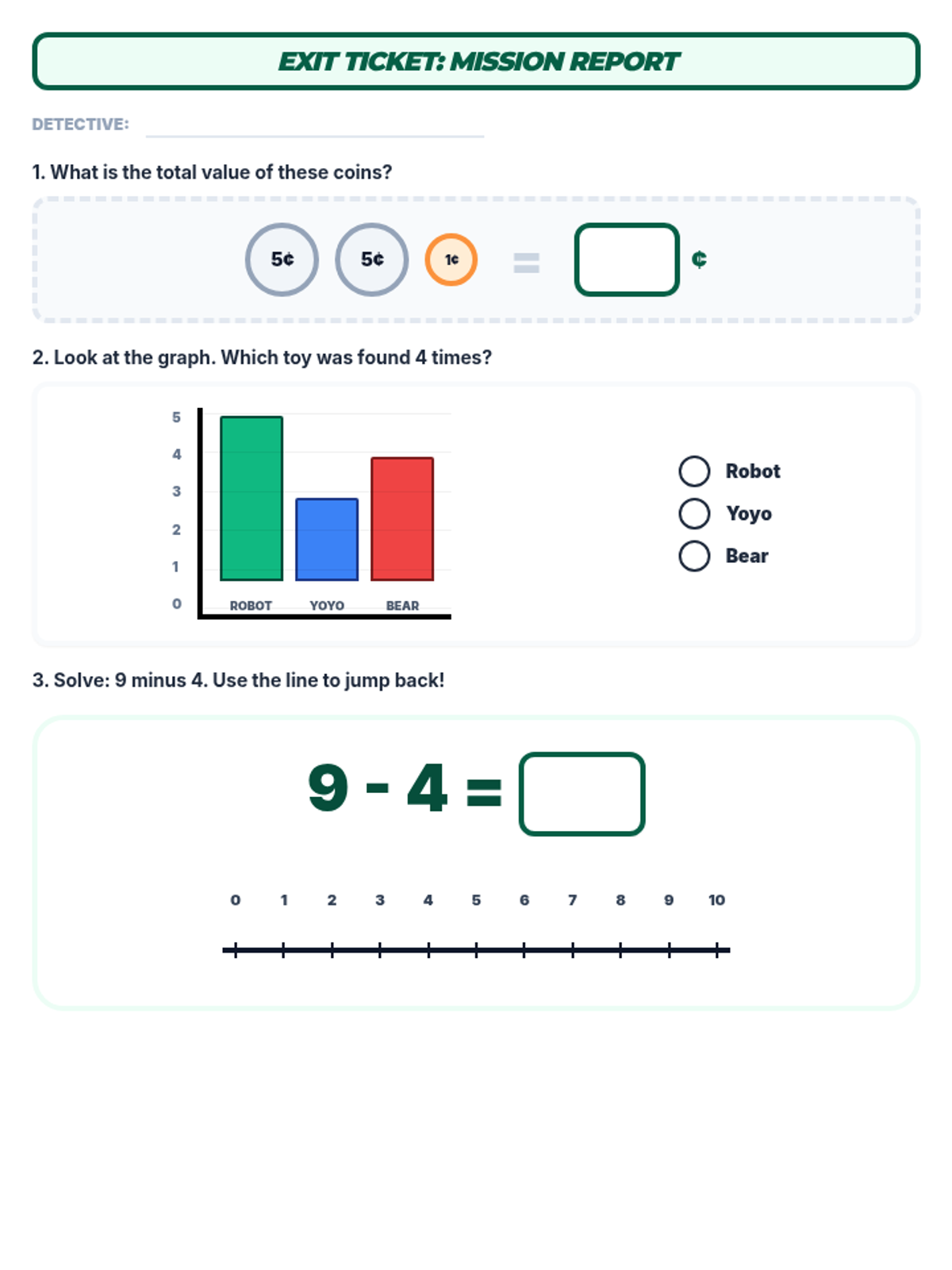
Students count sets of pennies and nickels and analyze data from bar graphs to solve comparison problems. Subtraction skills are reinforced through data-based word problems.
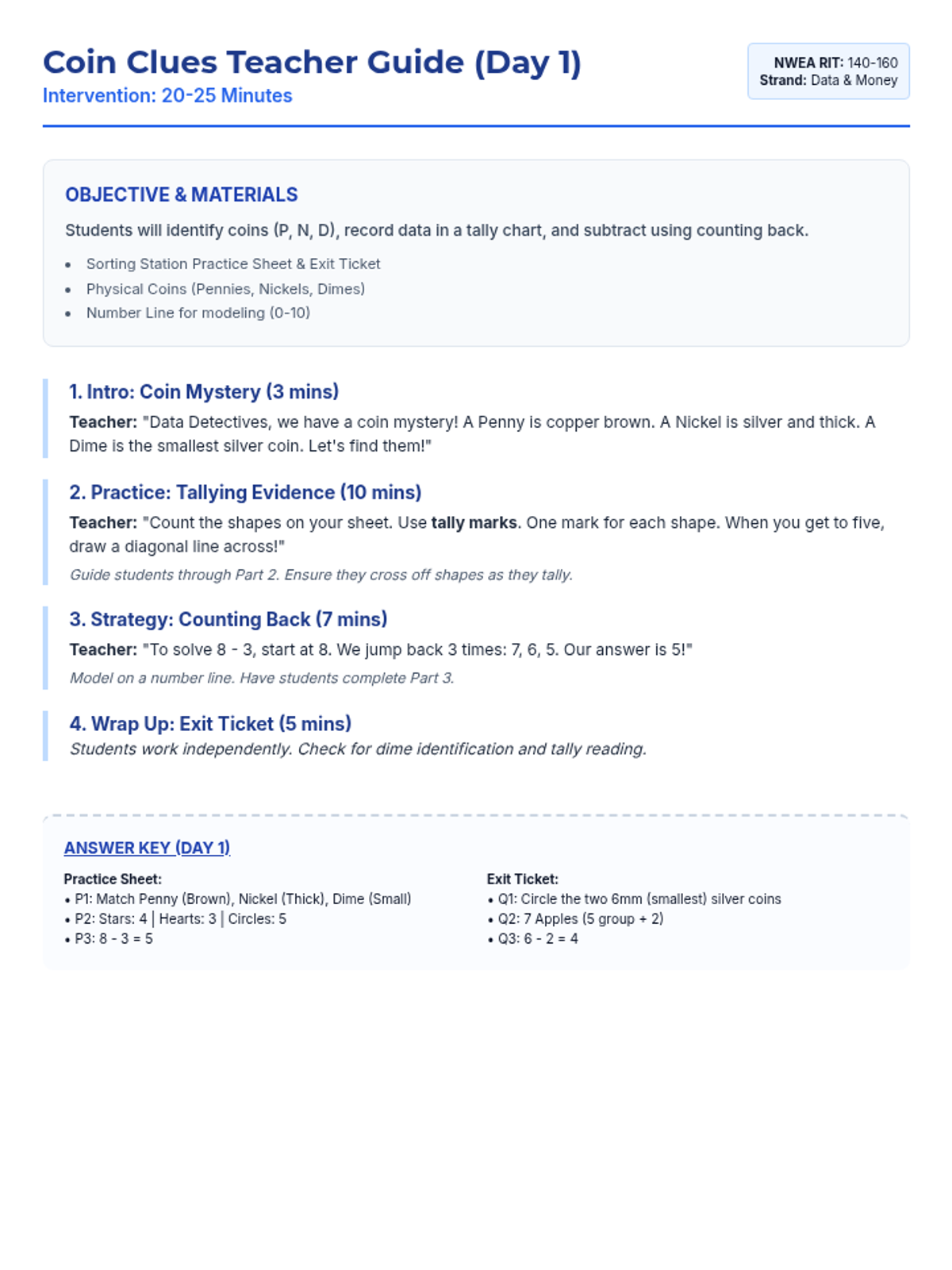
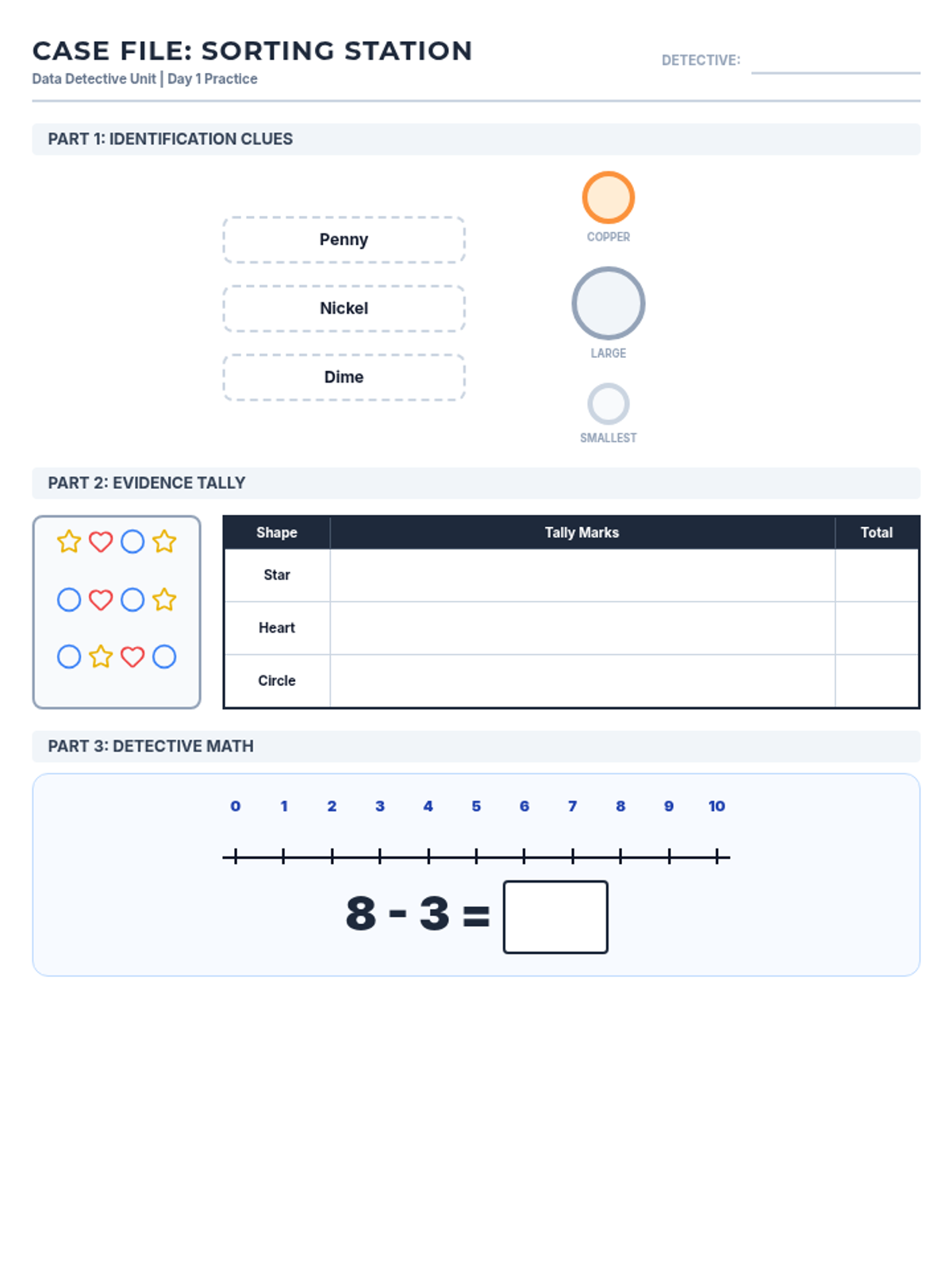
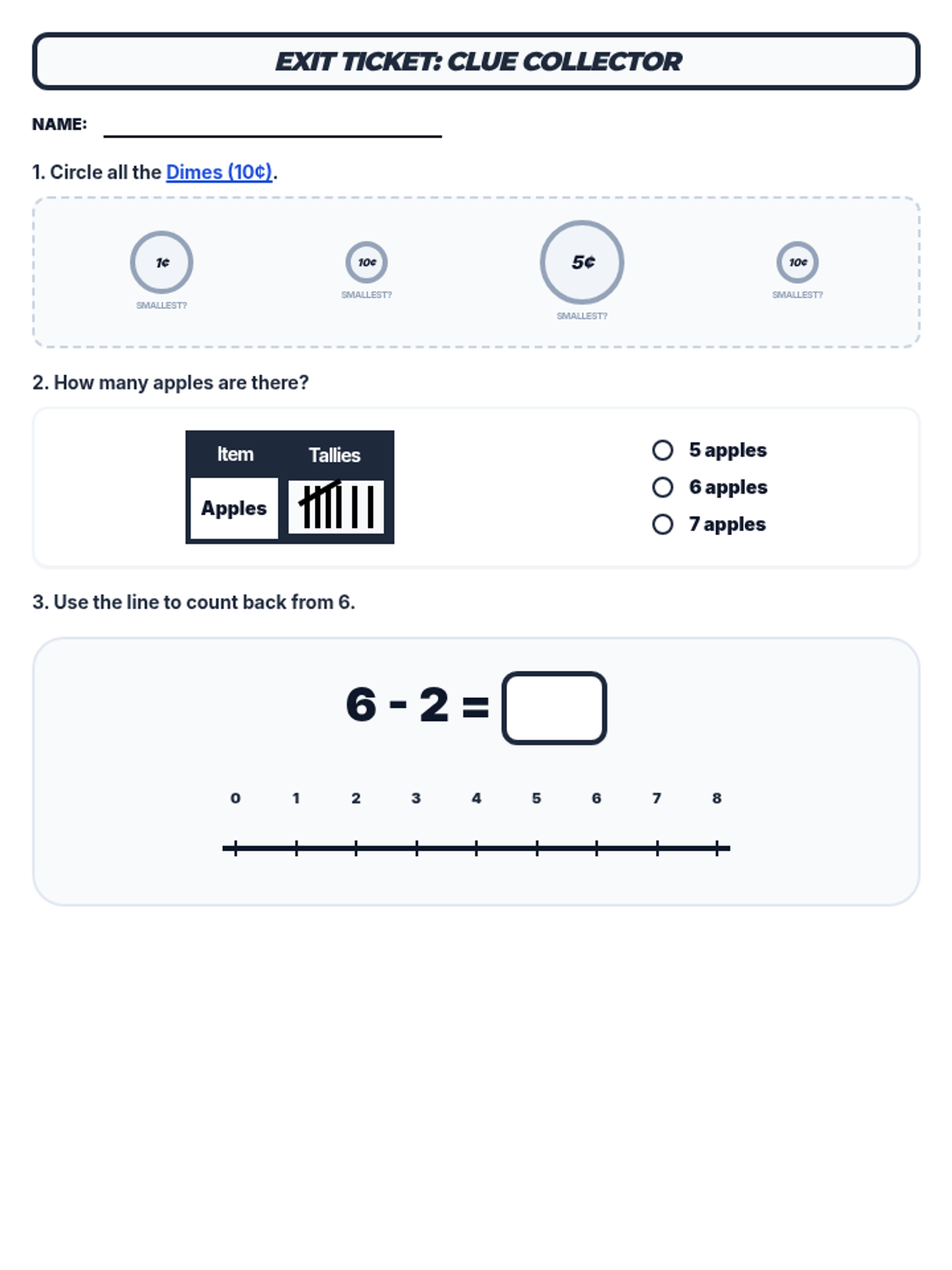
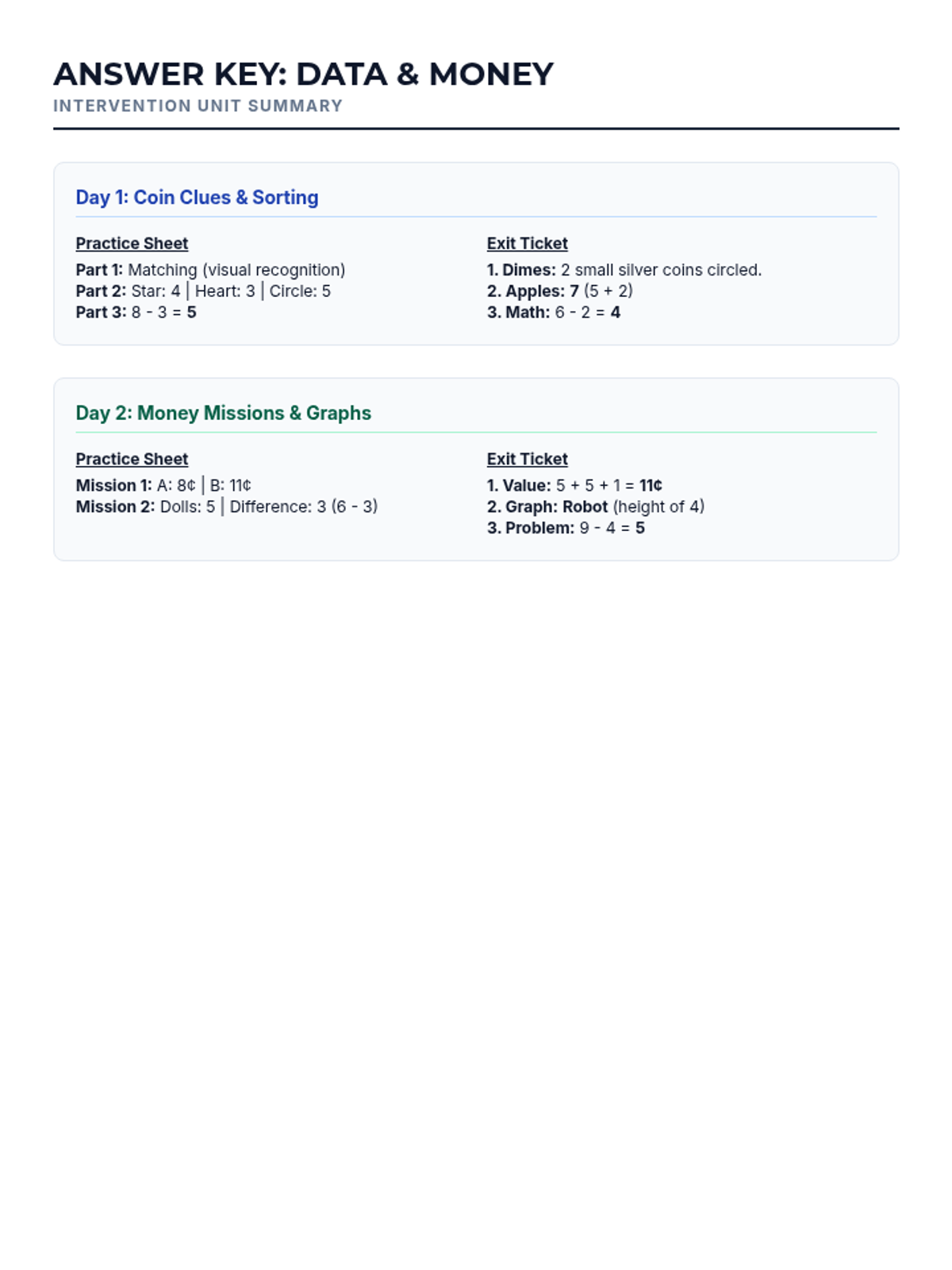
Students identify pennies, nickels, and dimes, sort objects into categories, and record data using tally charts. The lesson also introduces subtraction by counting back on a number line.