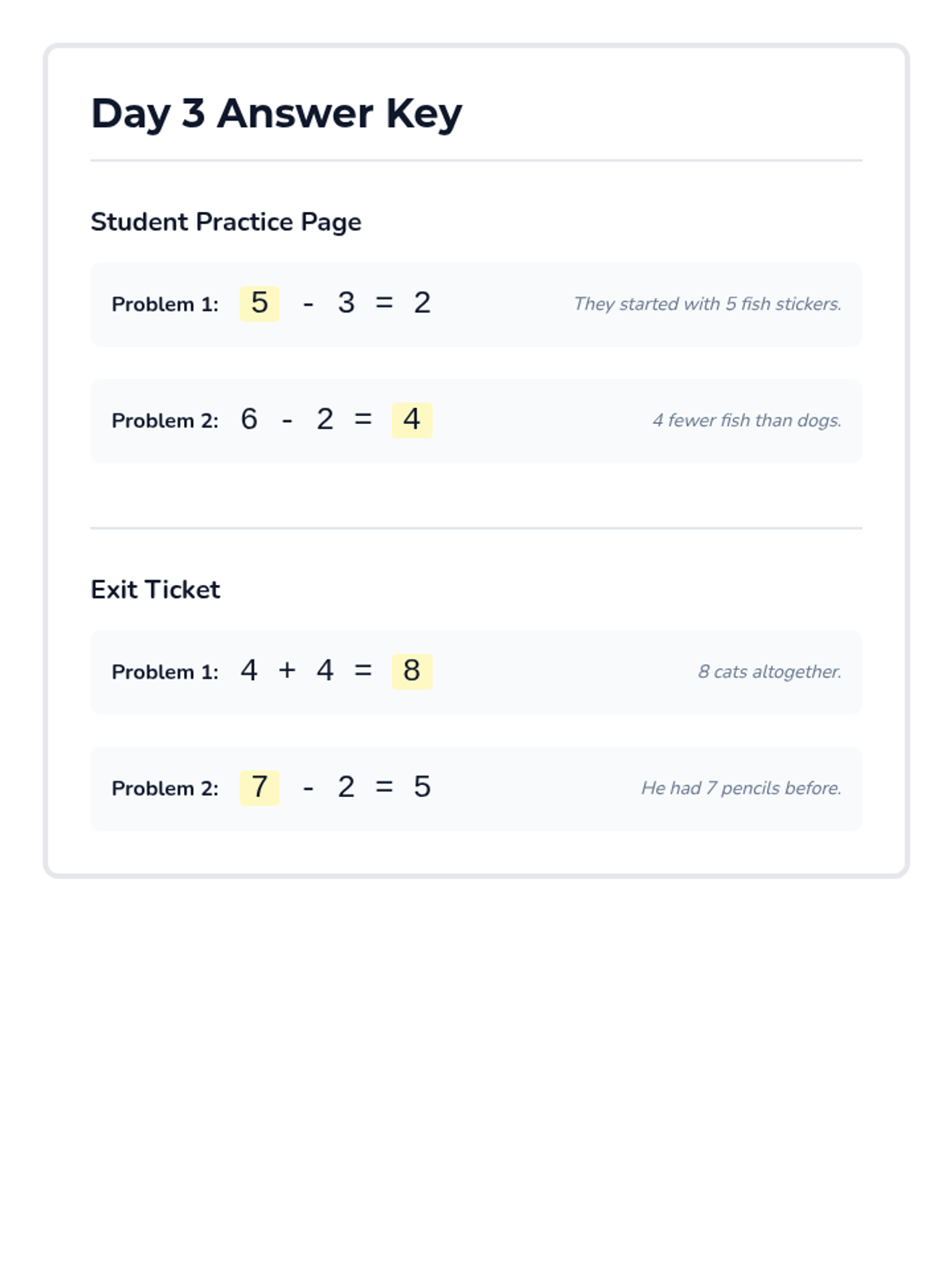
Focuses on comparison word problems (more than/fewer than) and mixed operations using picture graphs.
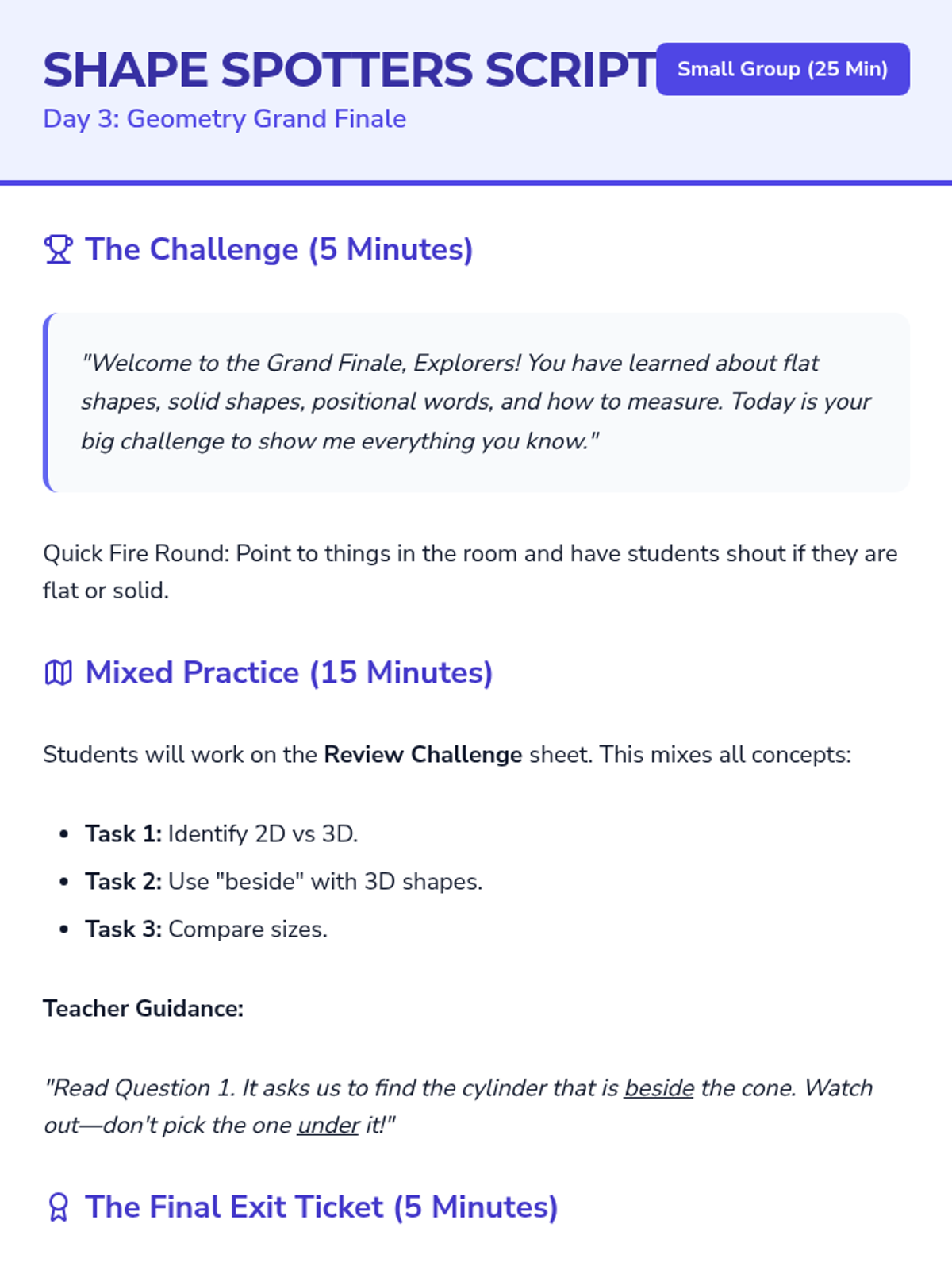
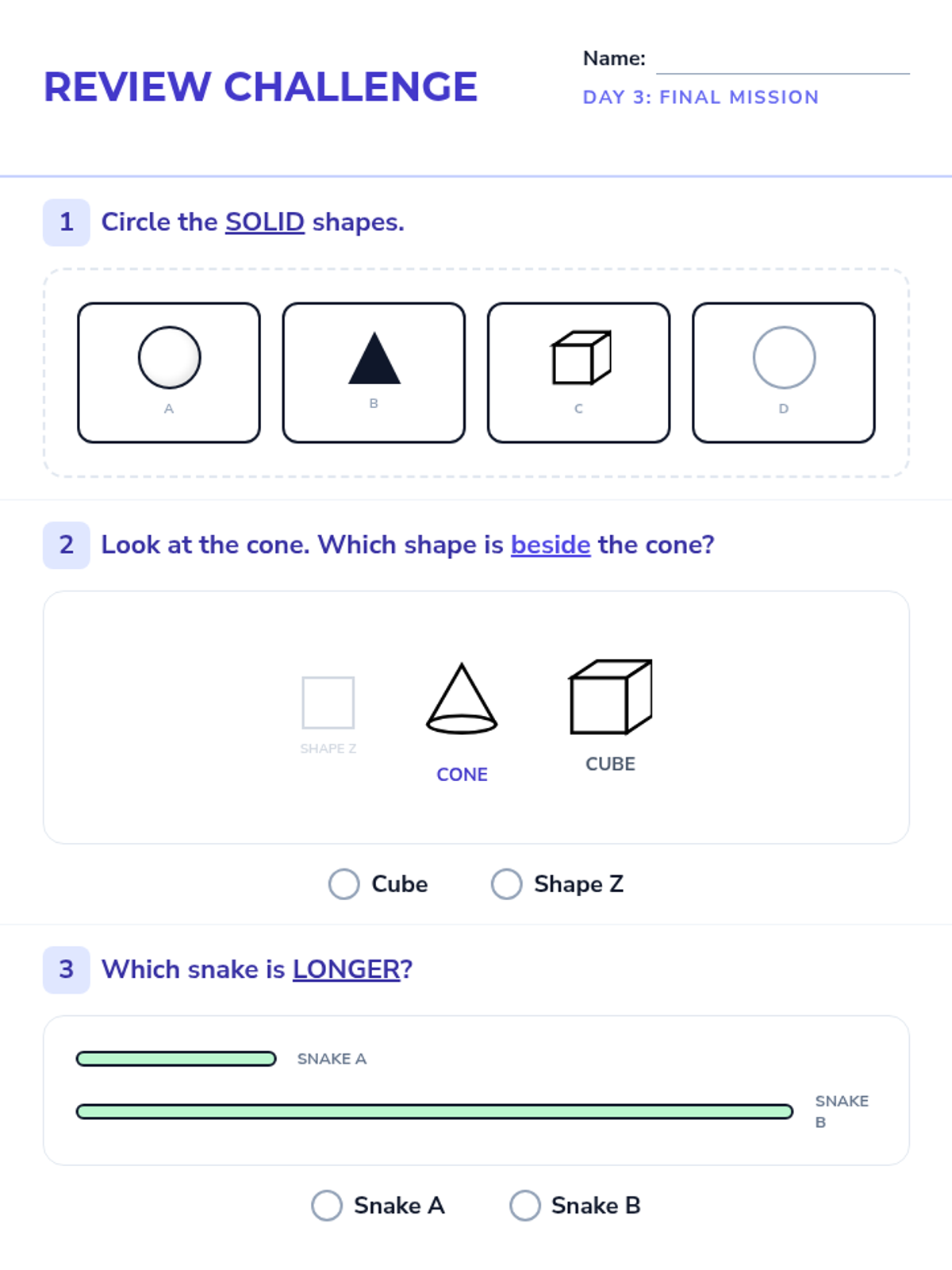
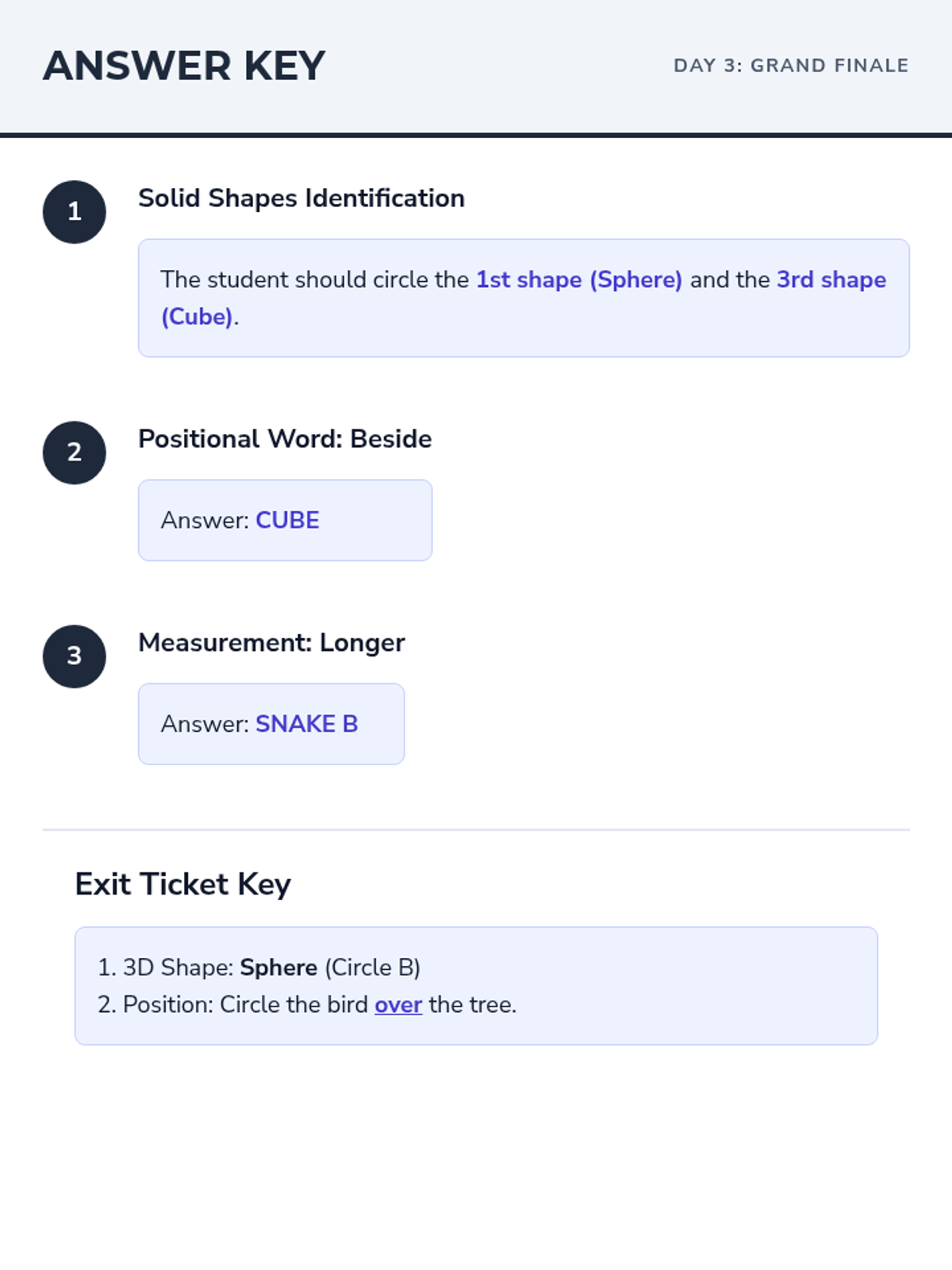
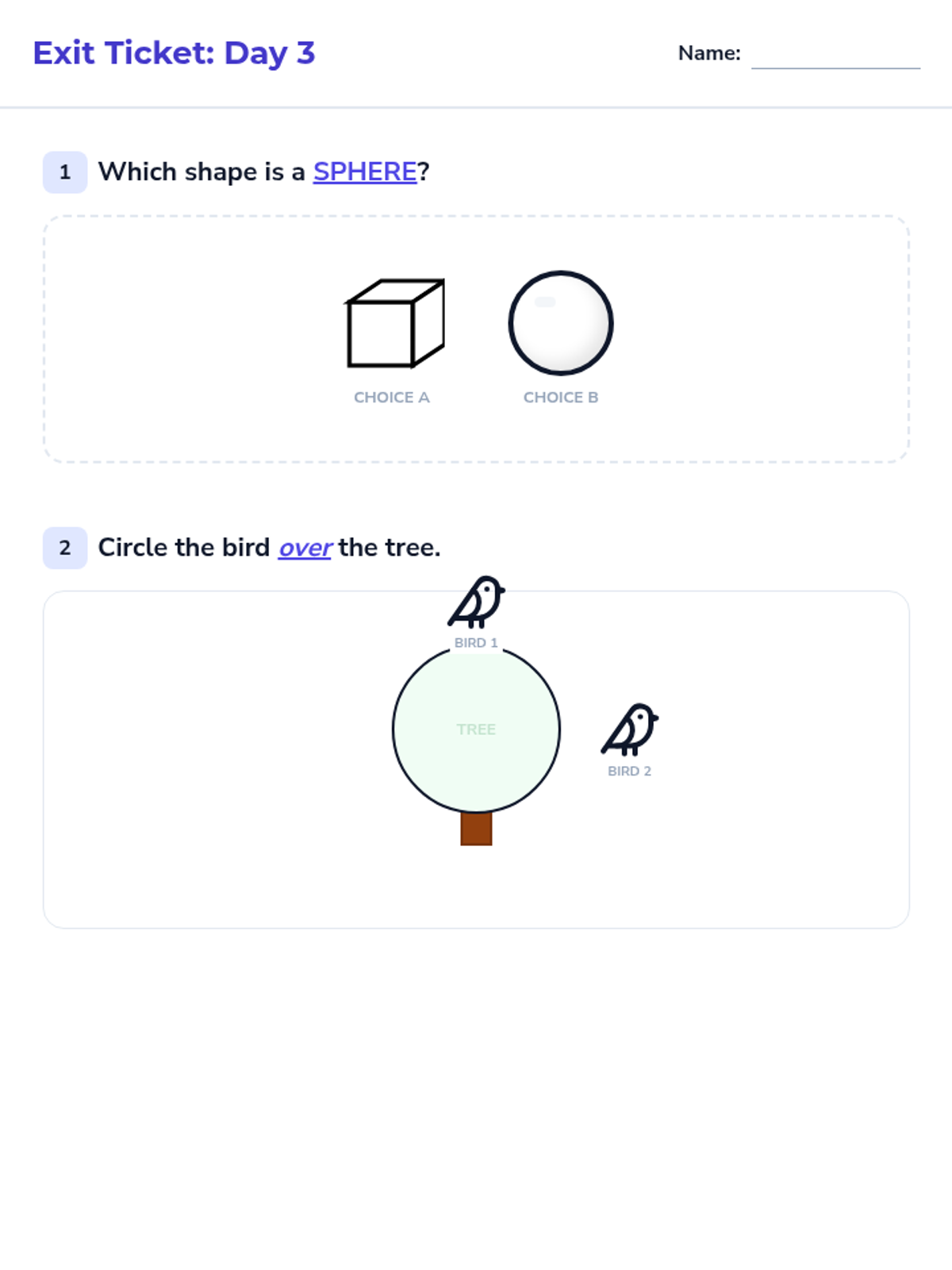
A cumulative review of 2D/3D shapes, positional words, and measurement comparisons to assess mastery.
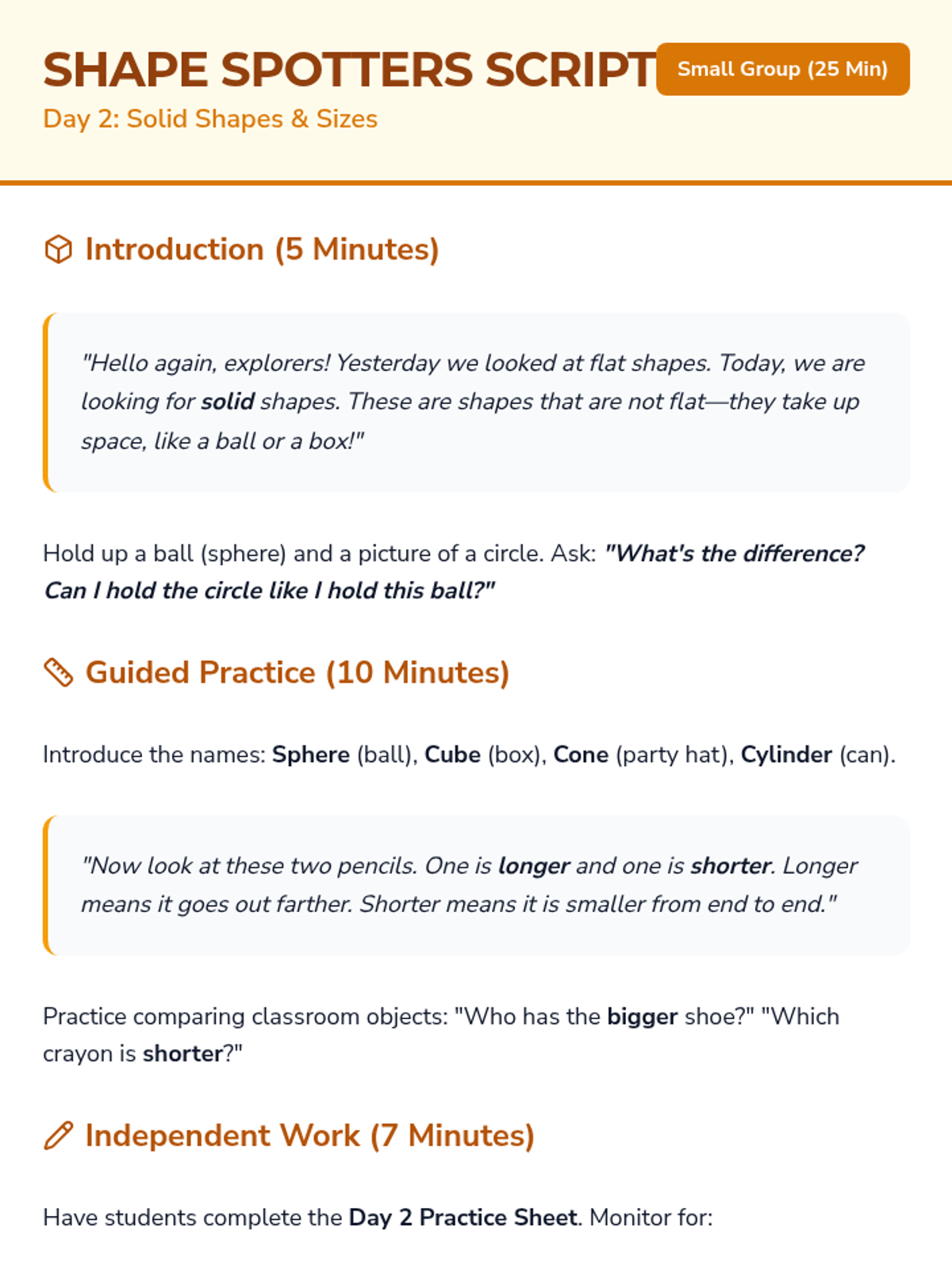
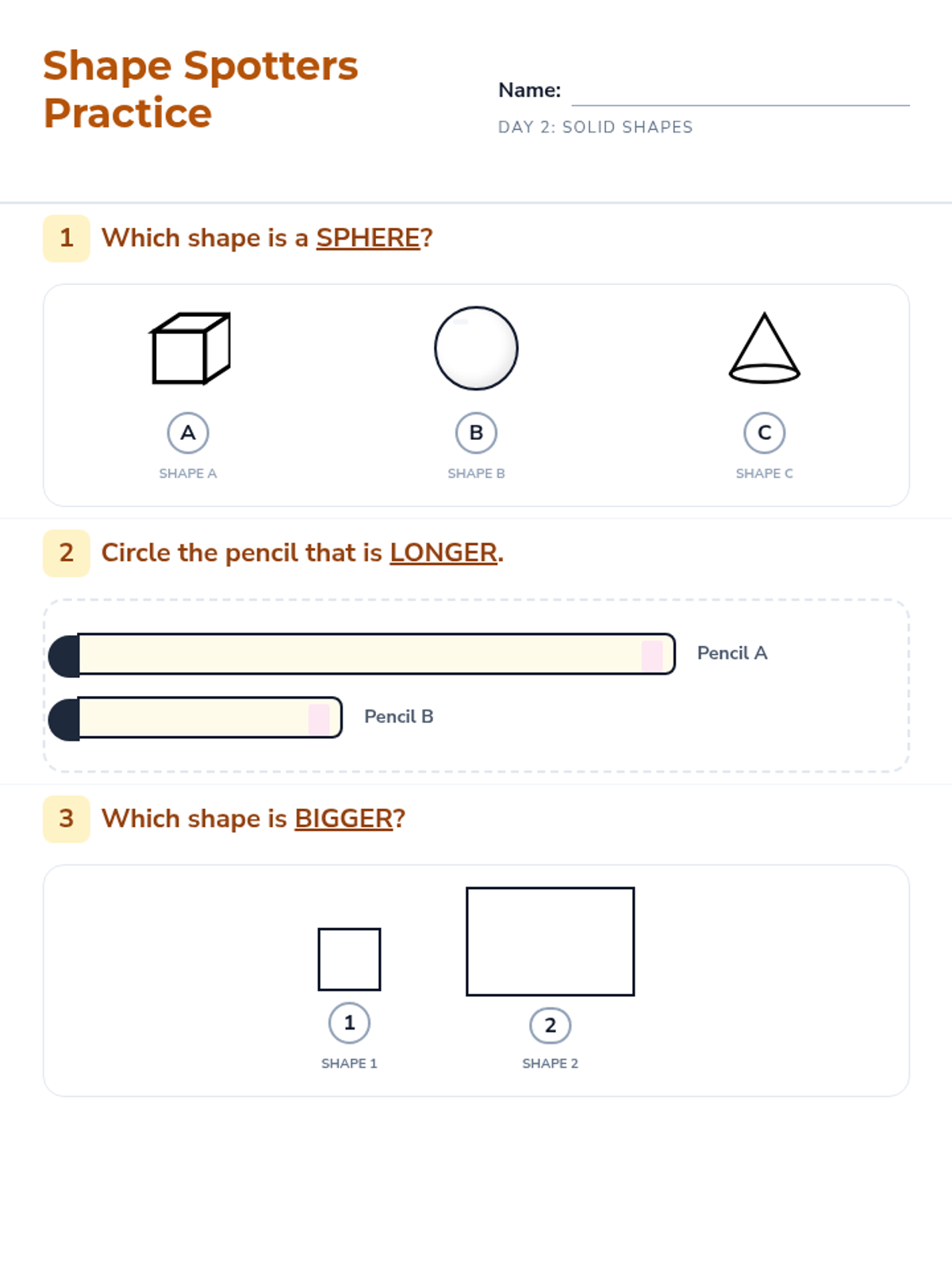
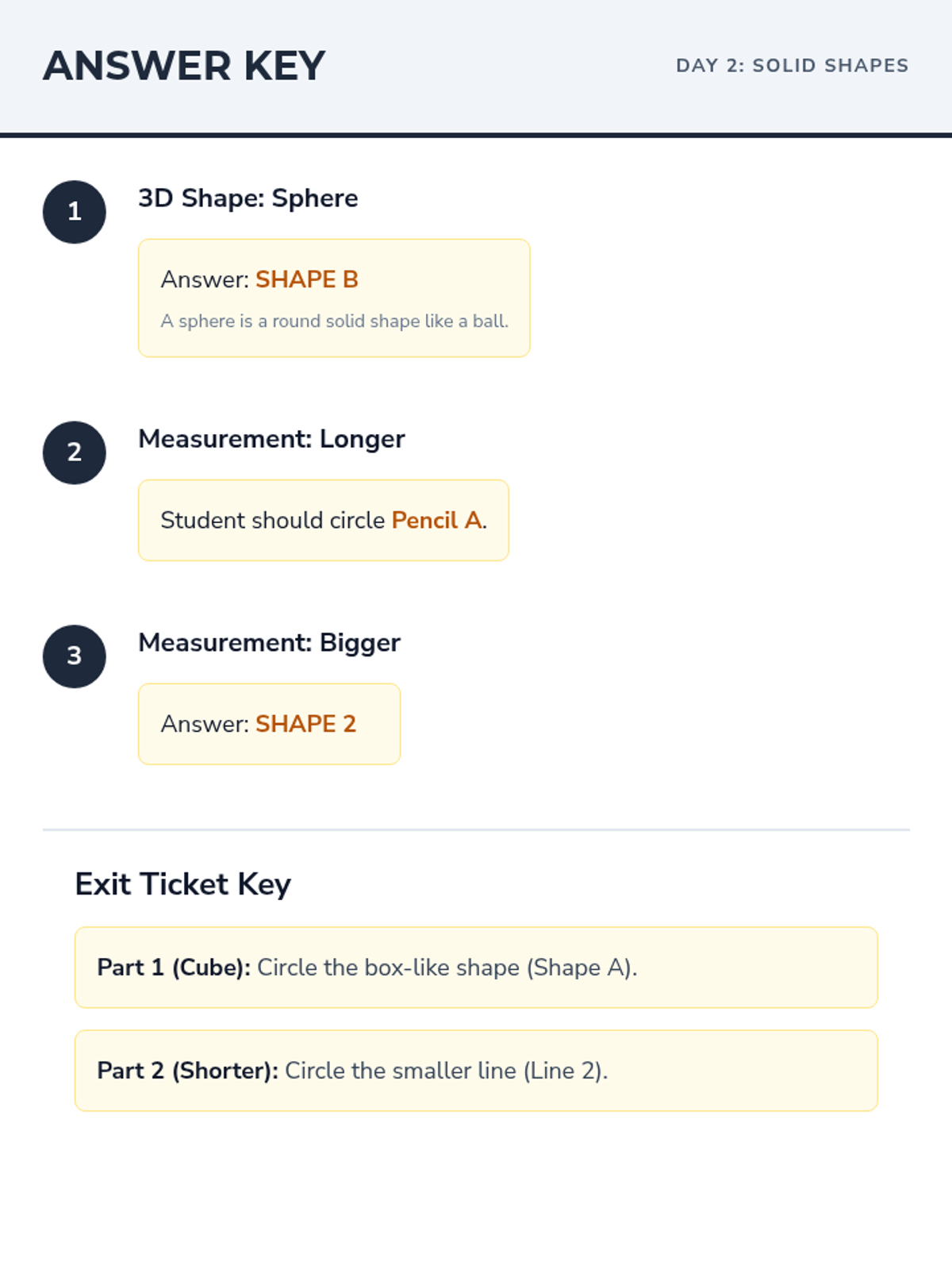
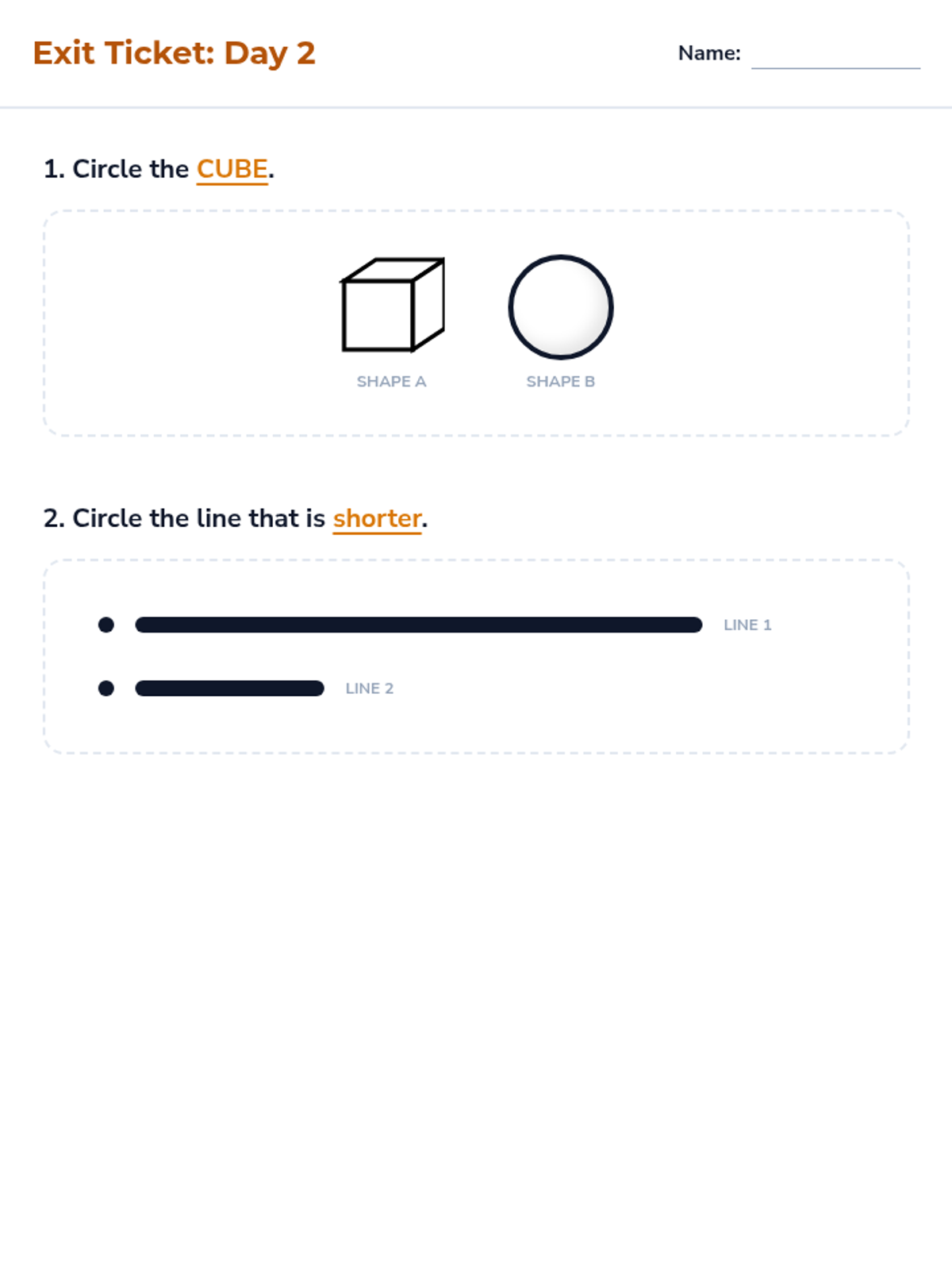
Students identify 3D shapes (cube, sphere, cone, cylinder) and compare objects based on size and length.
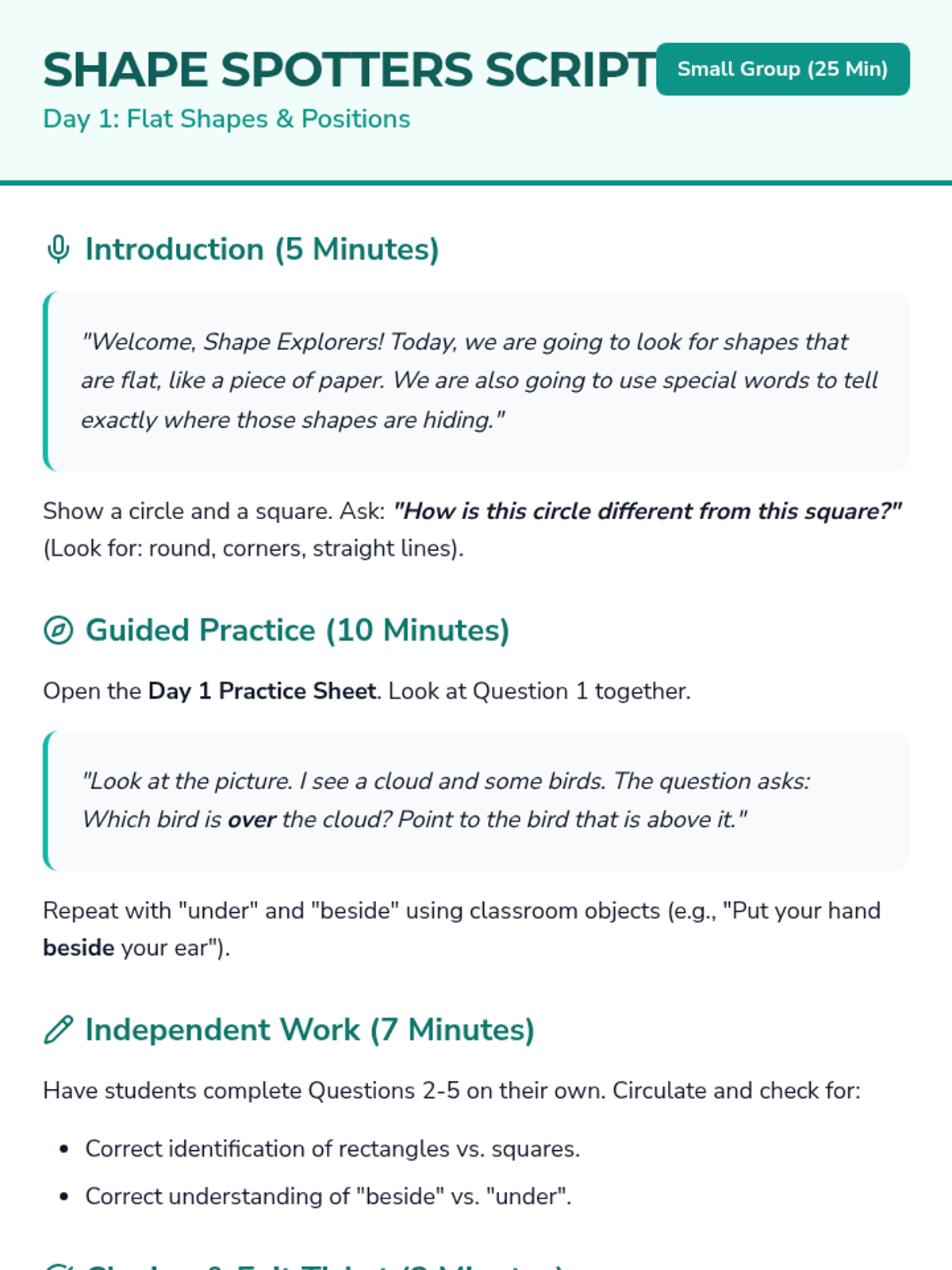
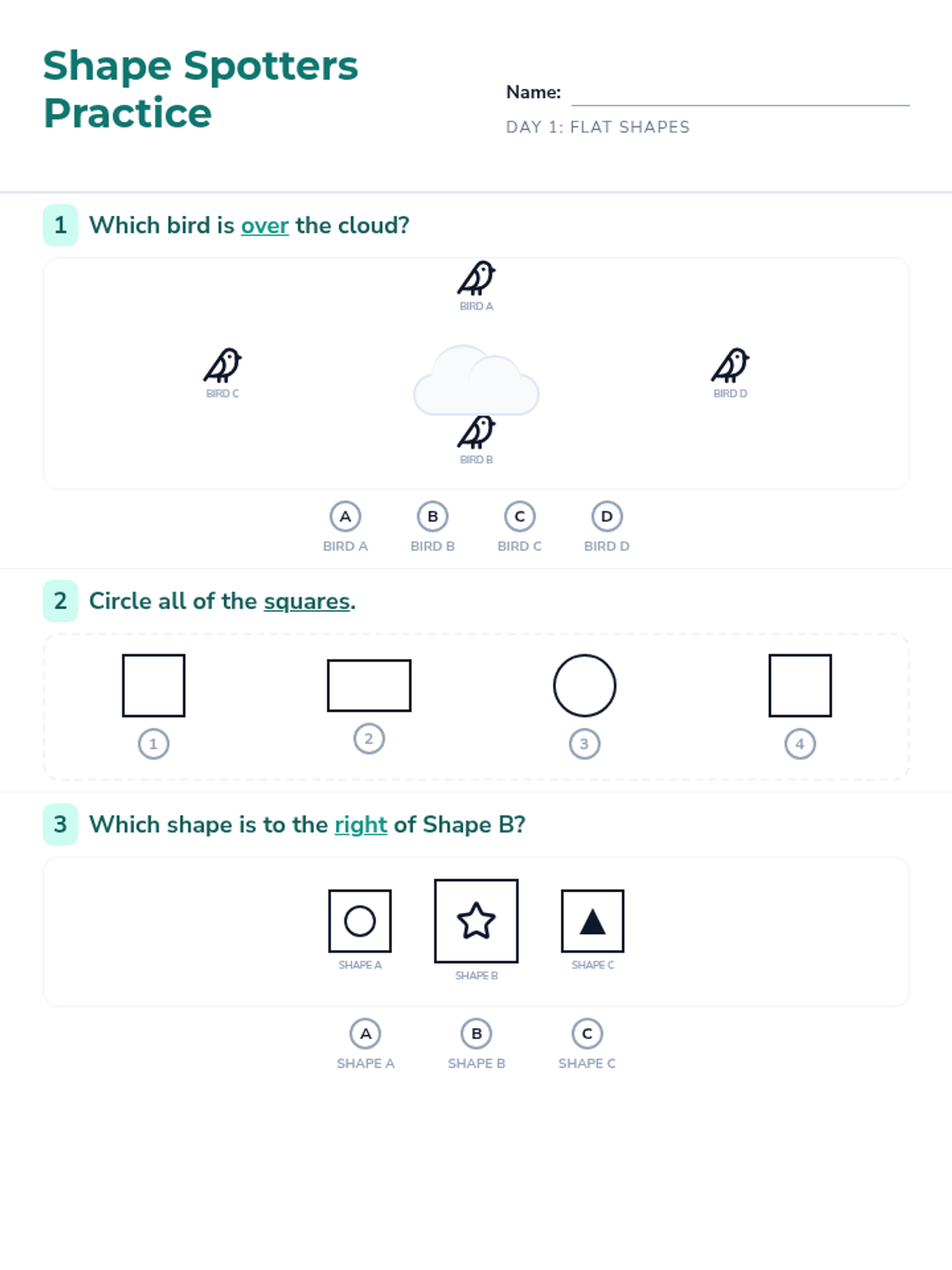
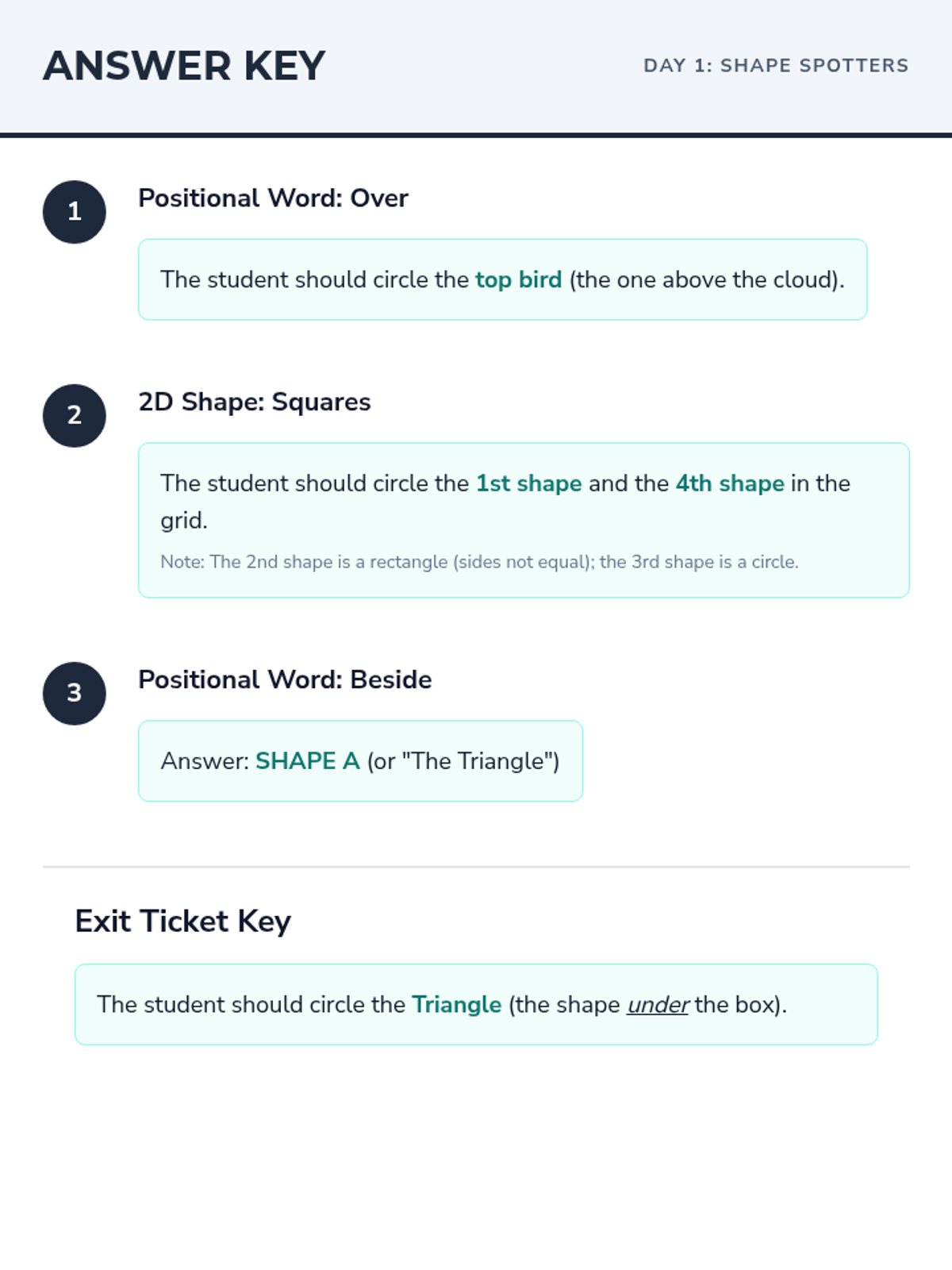
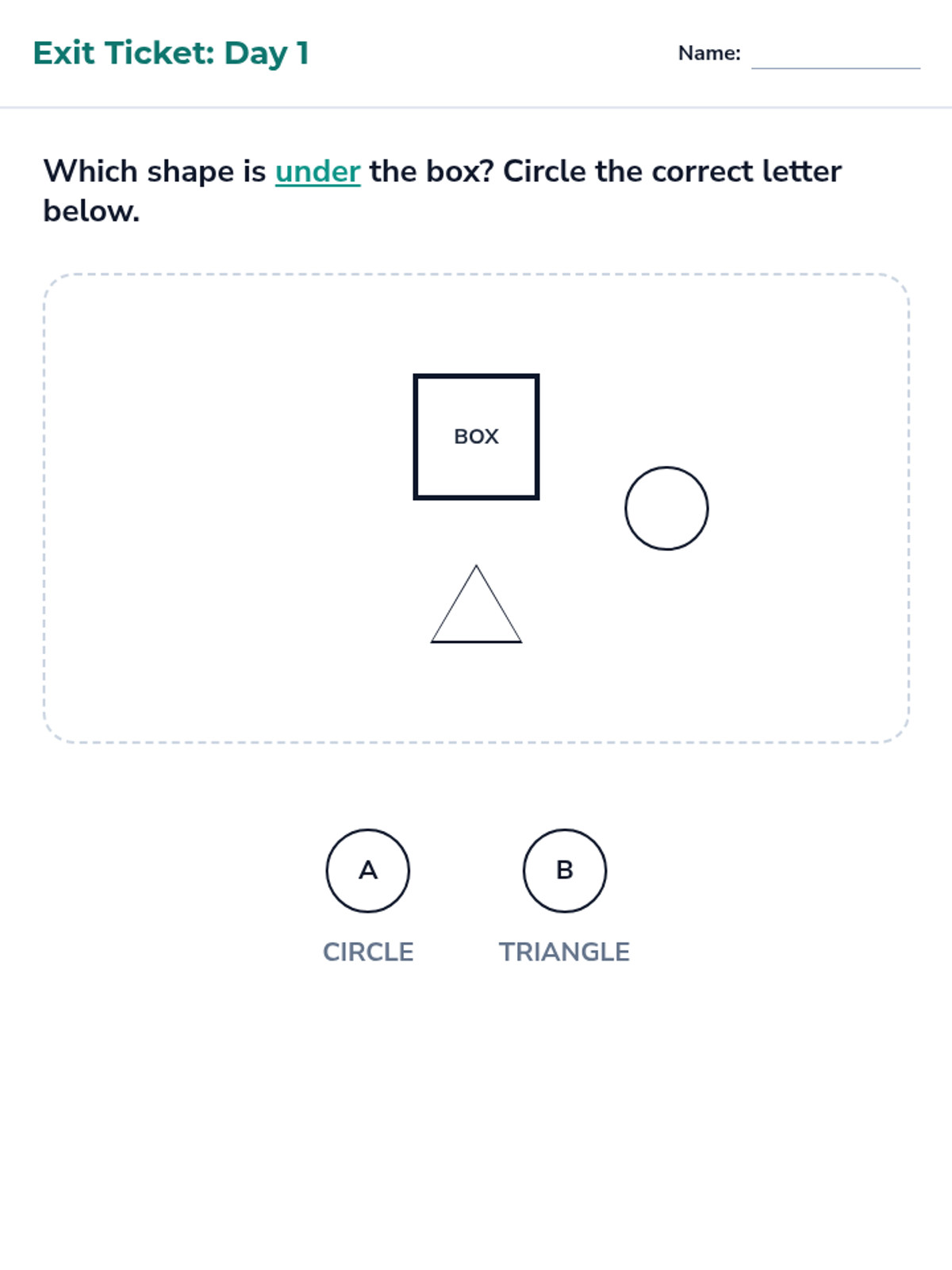
Students identify 2D shapes (circle, square, triangle, rectangle) and use positional language (over, under, beside) to describe location.
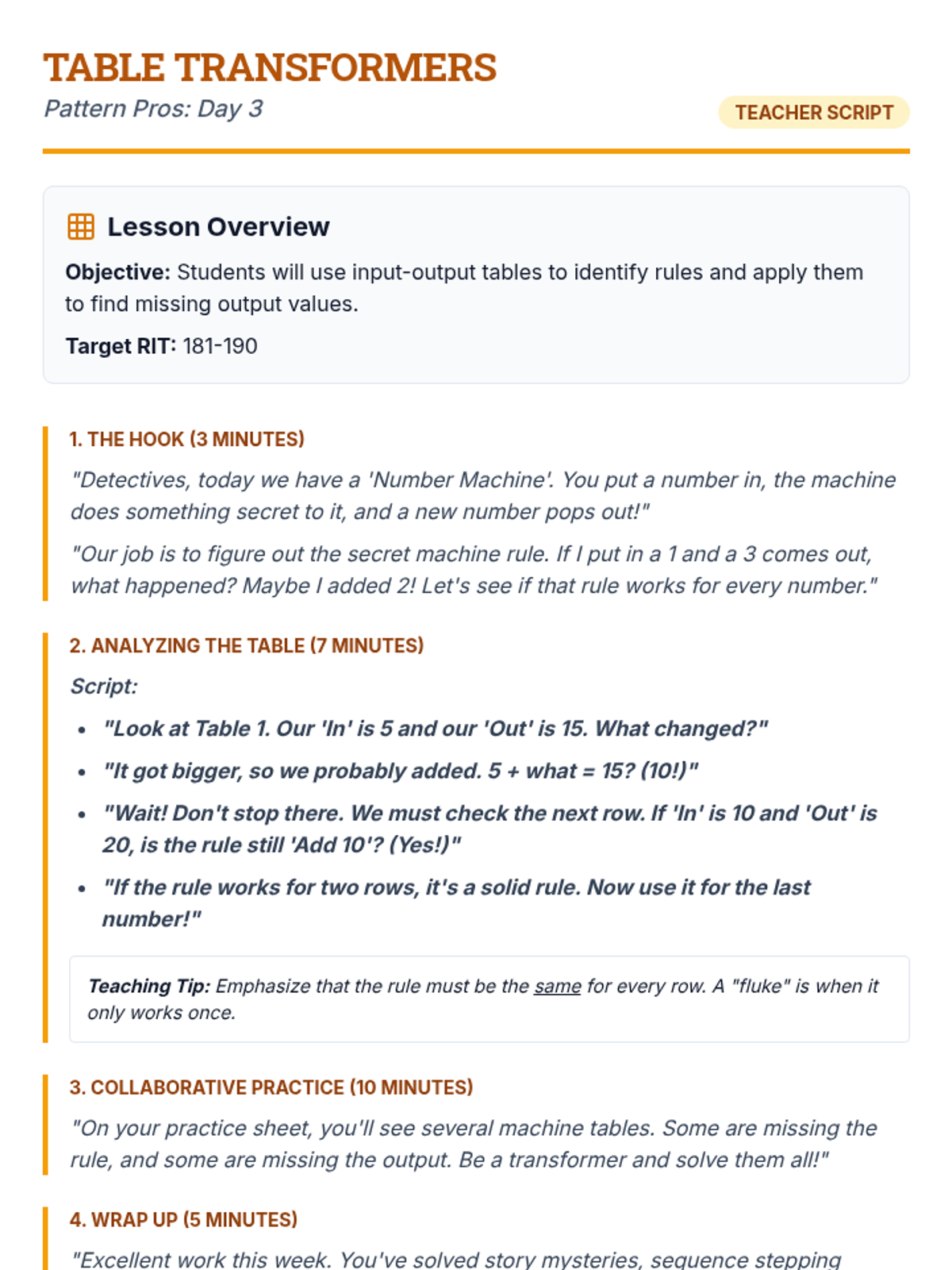
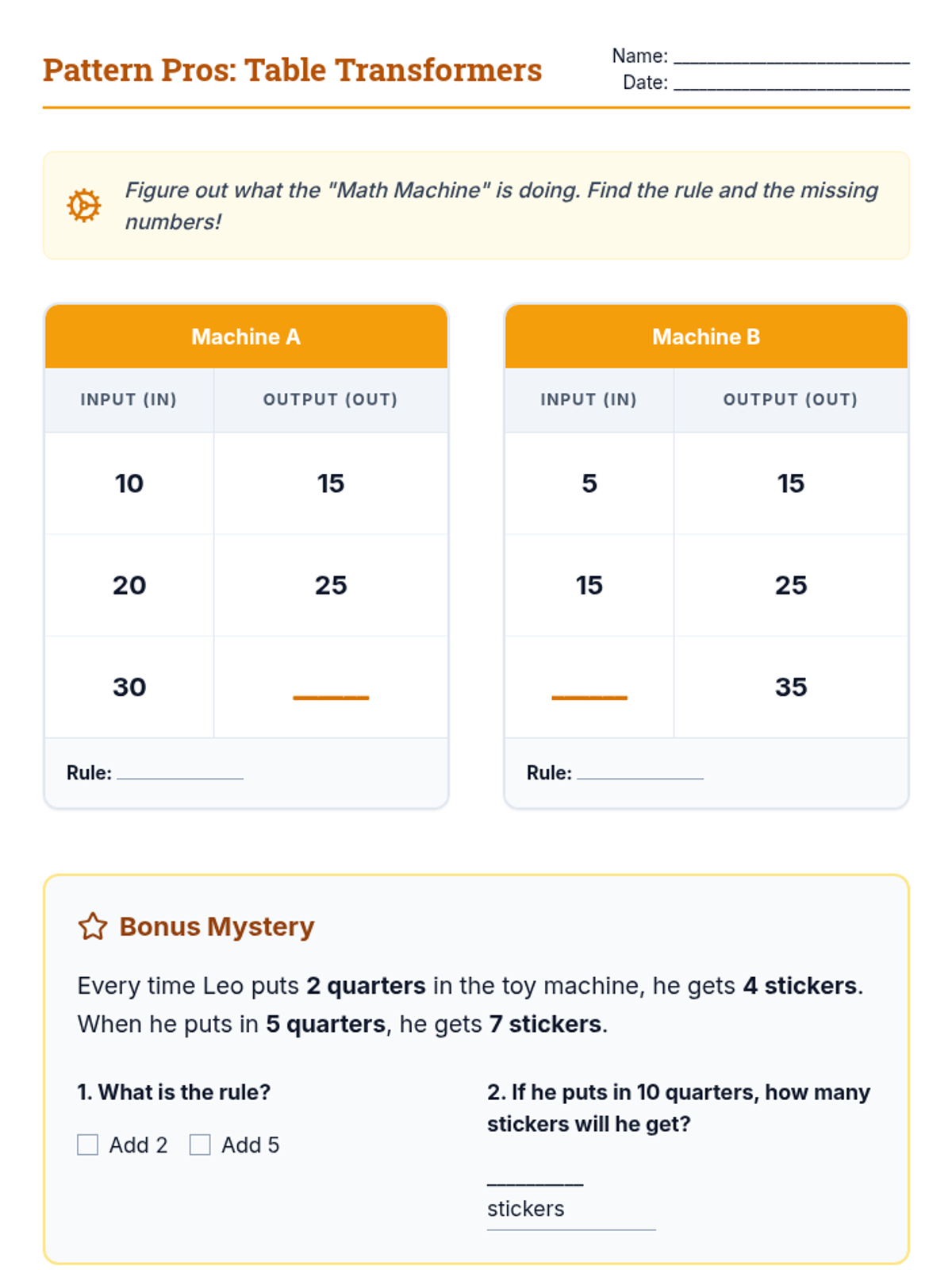
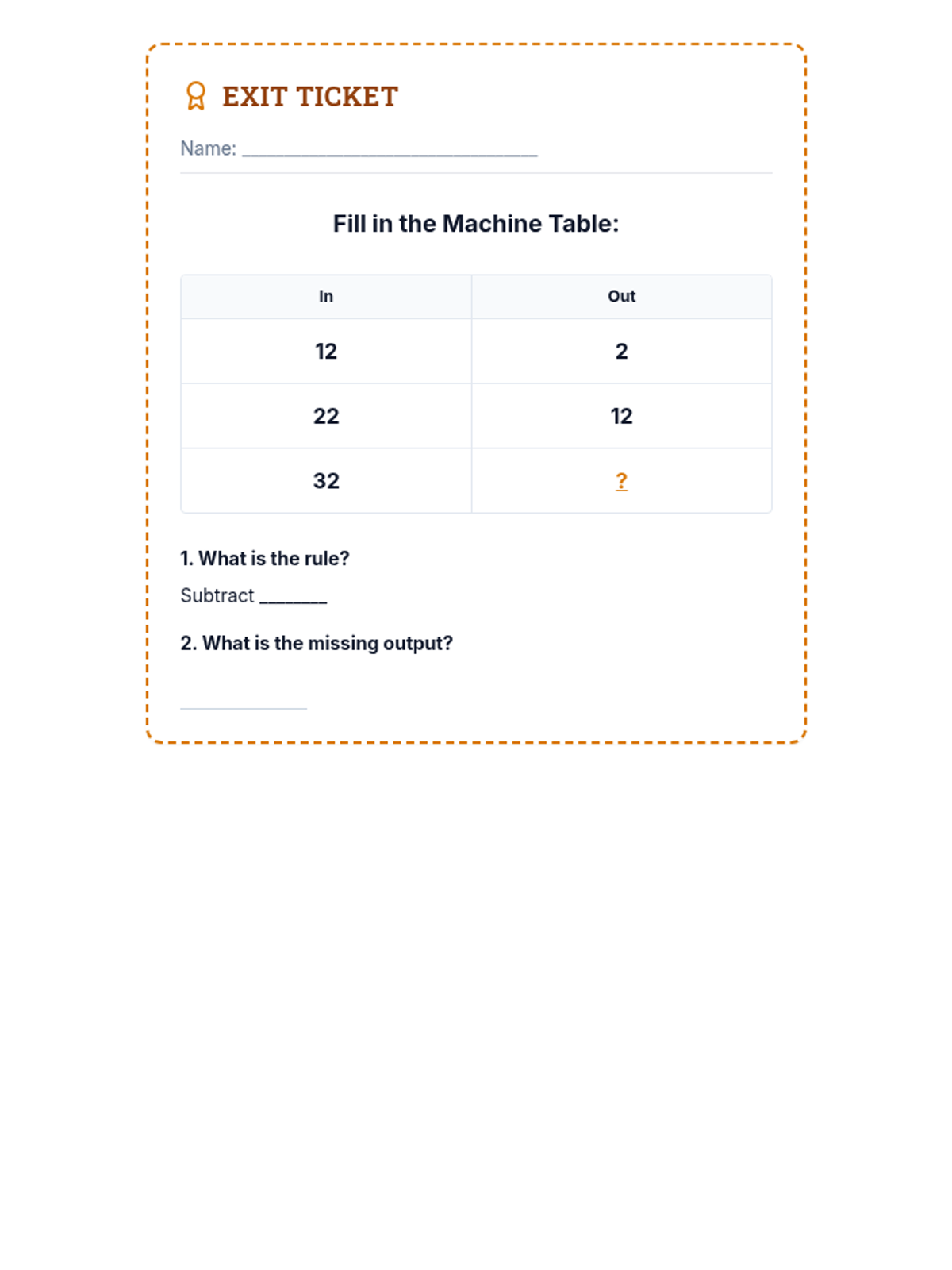
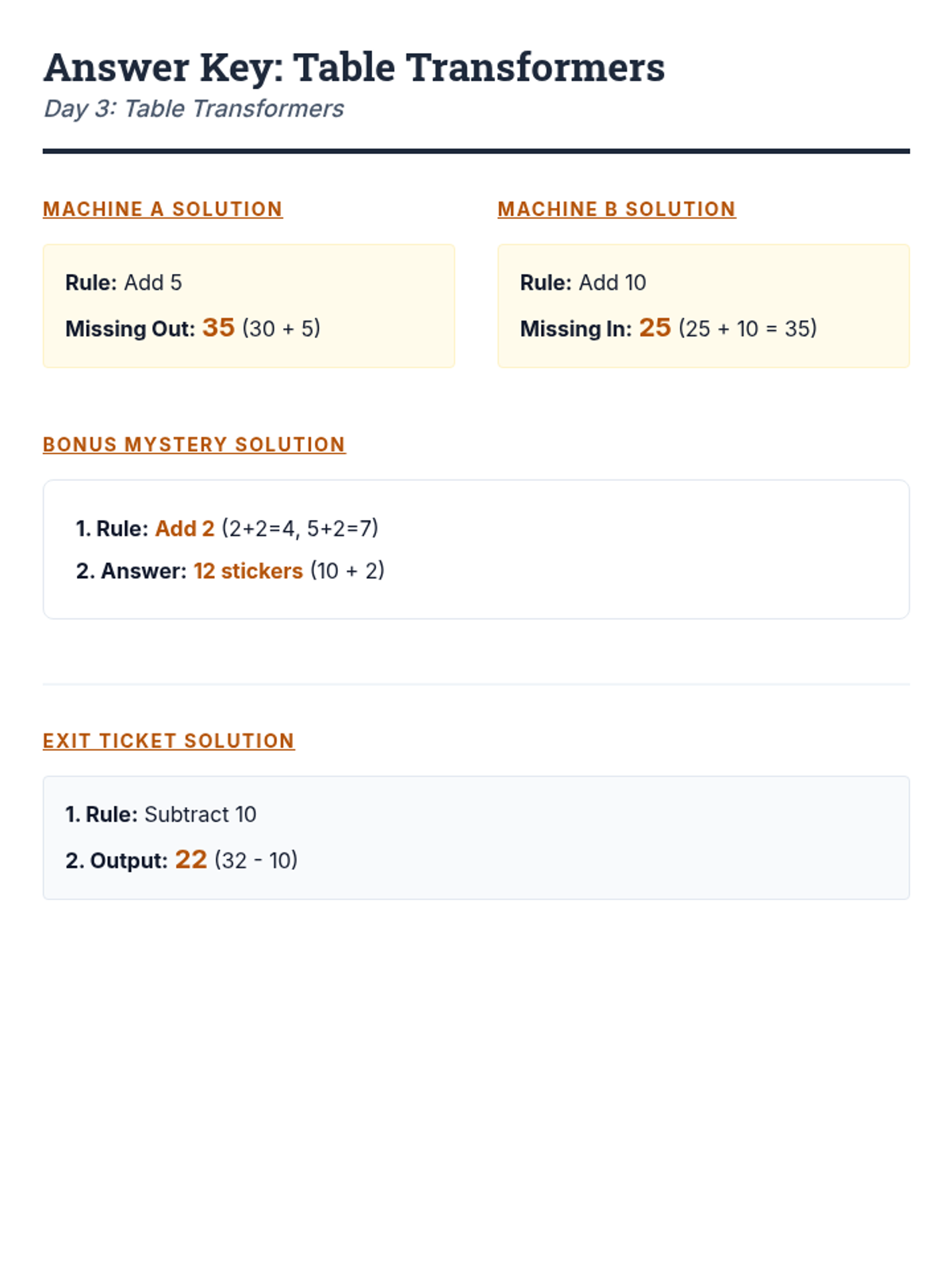
Students analyze input-output tables to identify constant addition or subtraction rules and apply those rules to find missing values.
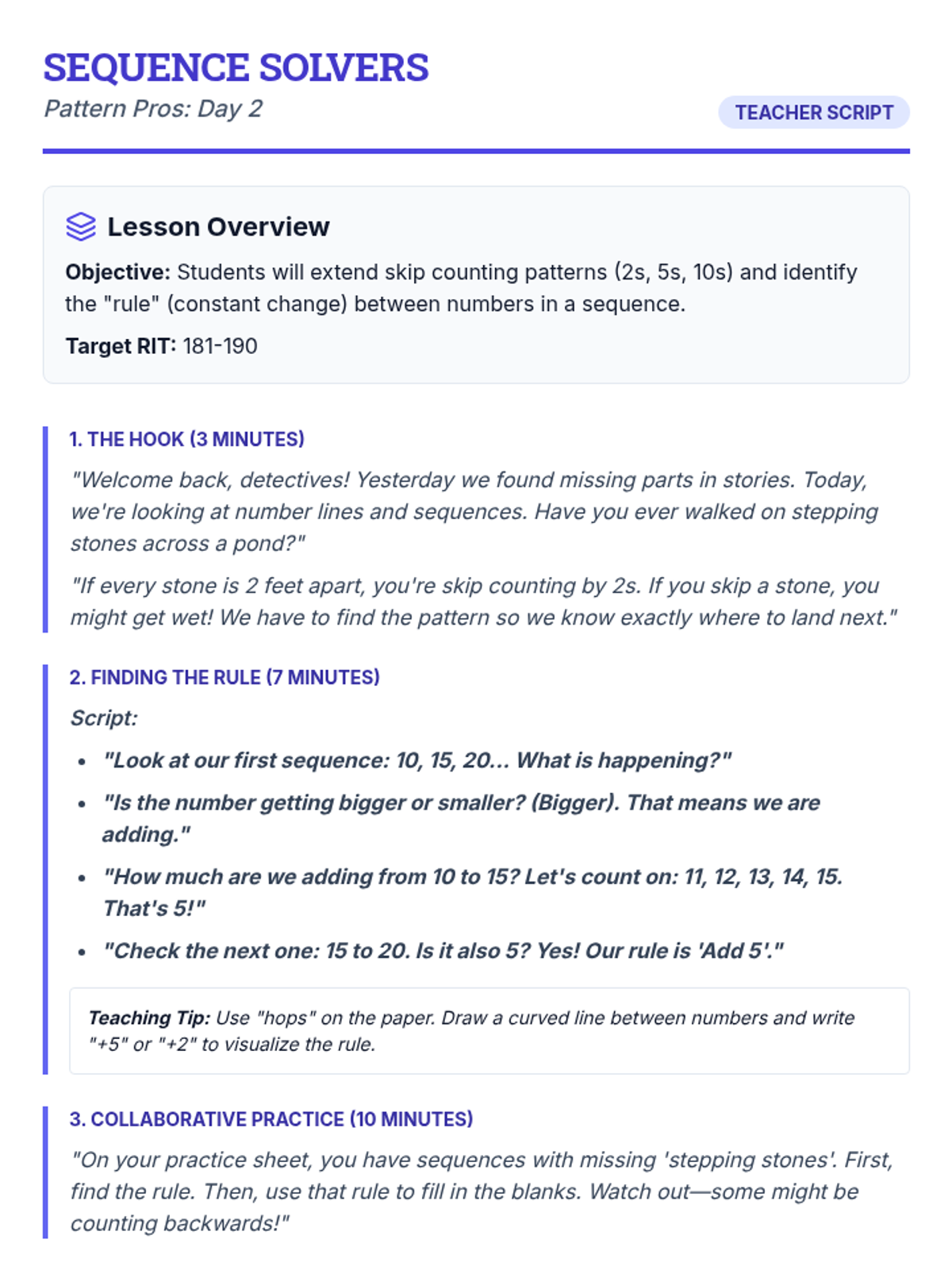
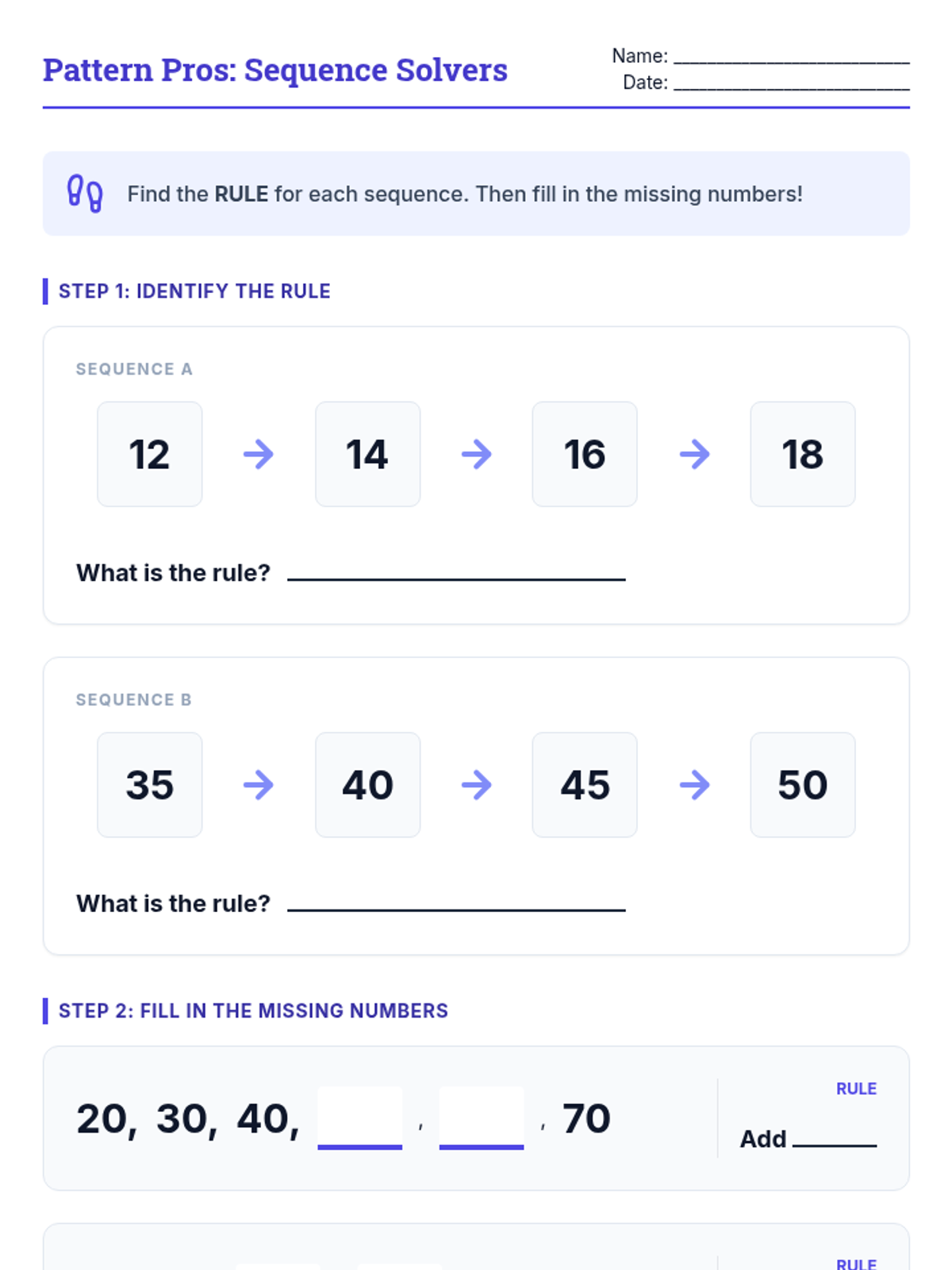
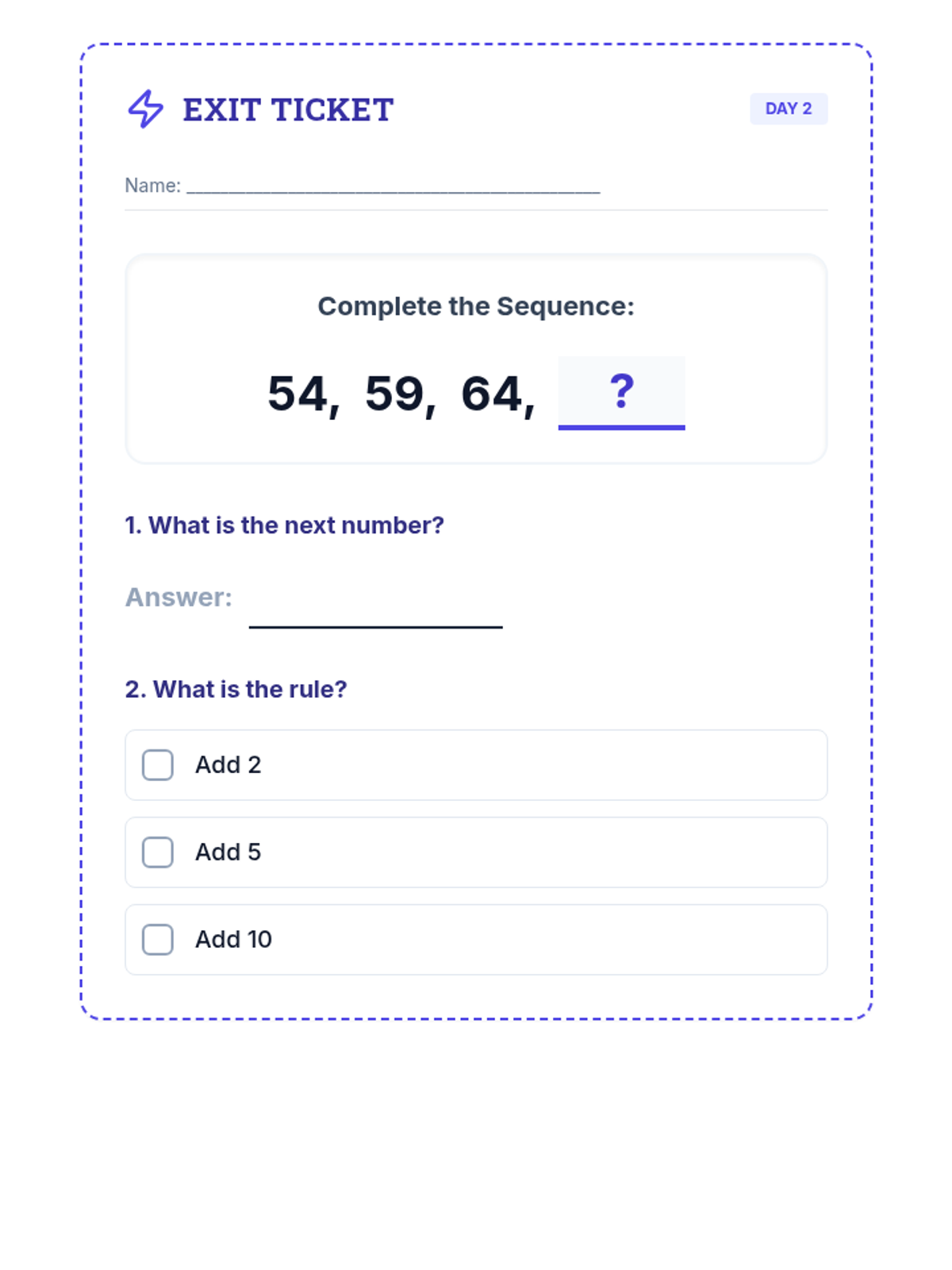
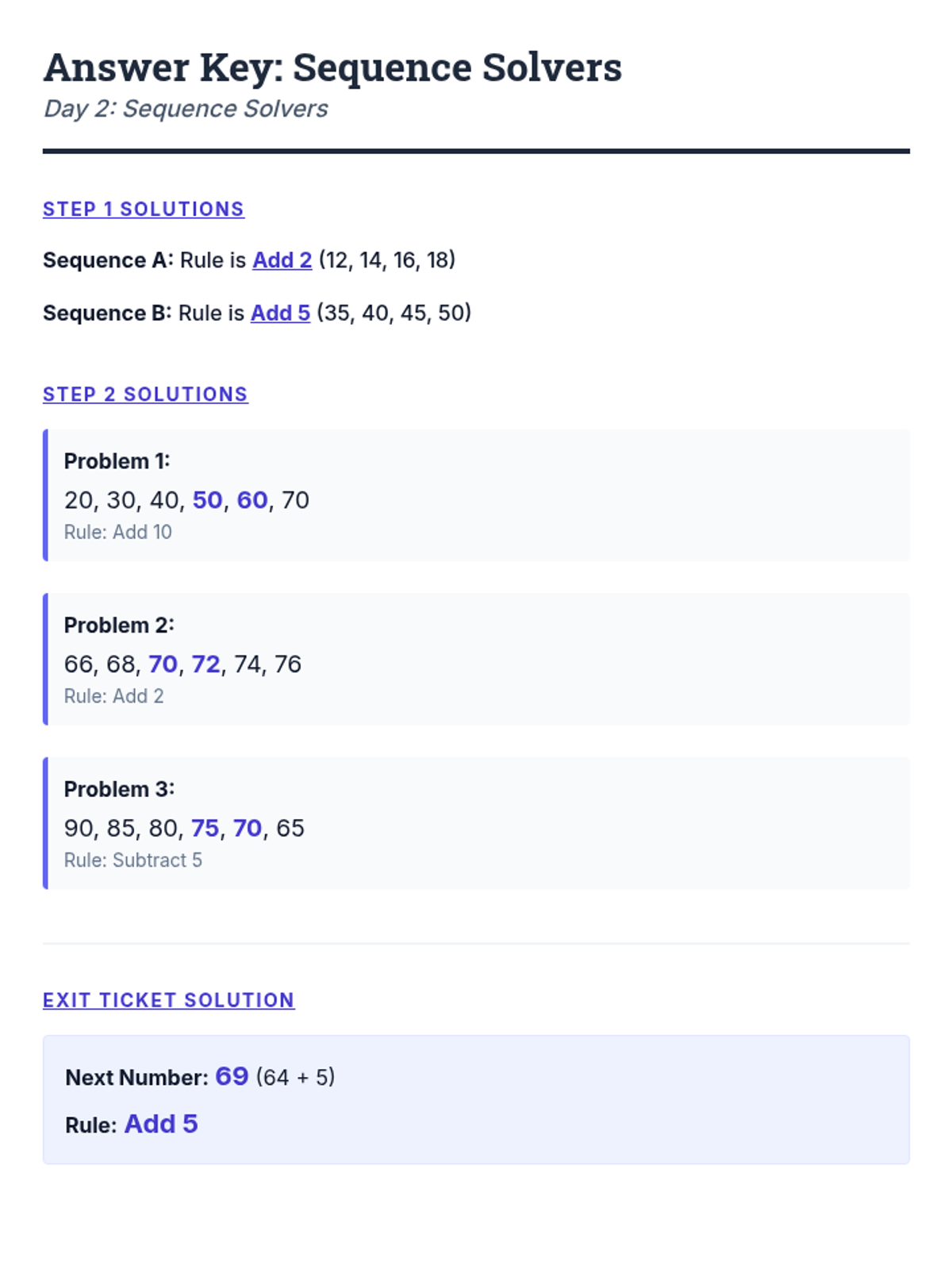
Students identify and extend skip counting patterns by 2s, 5s, and 10s, and practice finding the underlying rule for various number sequences.
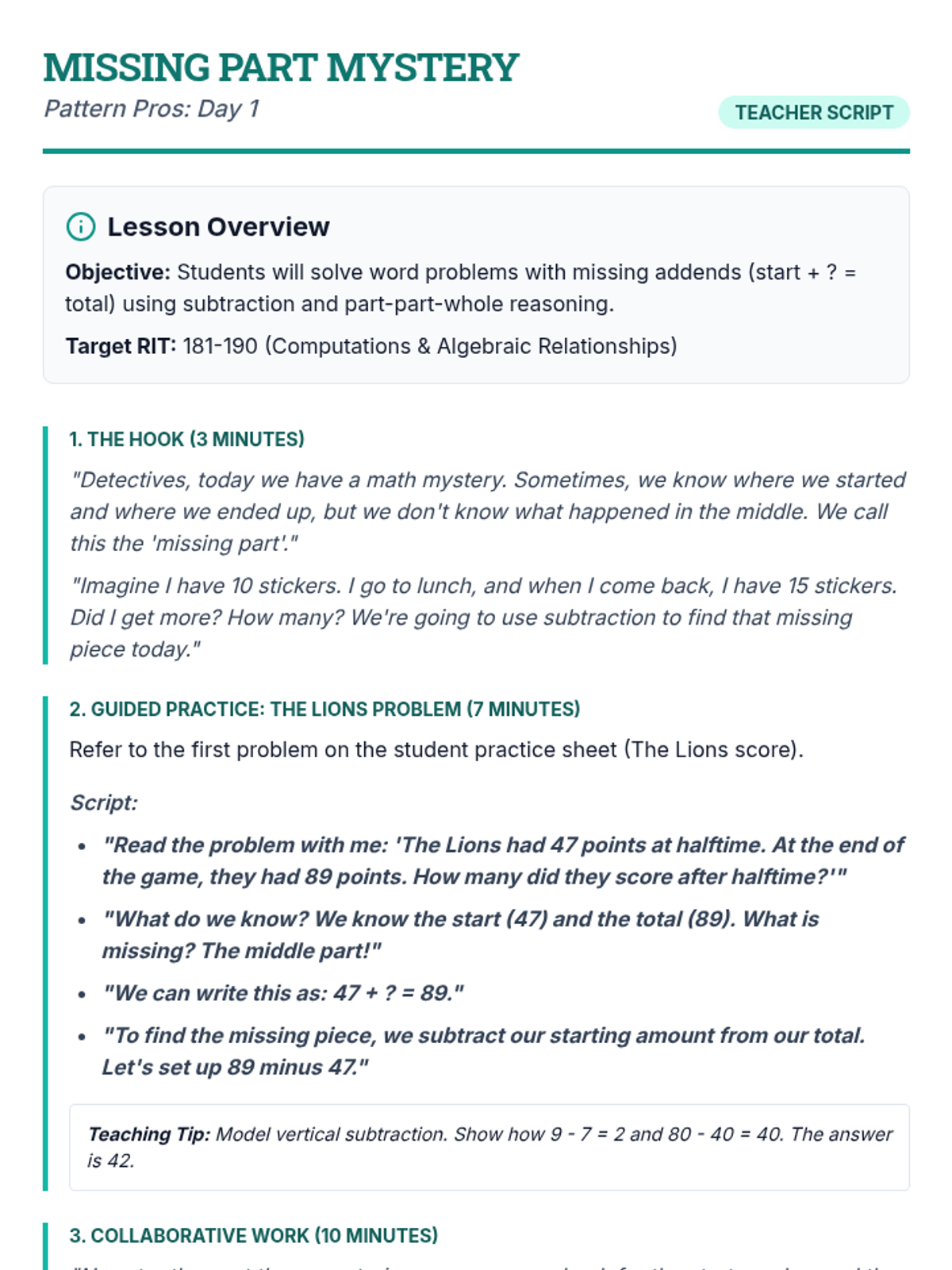
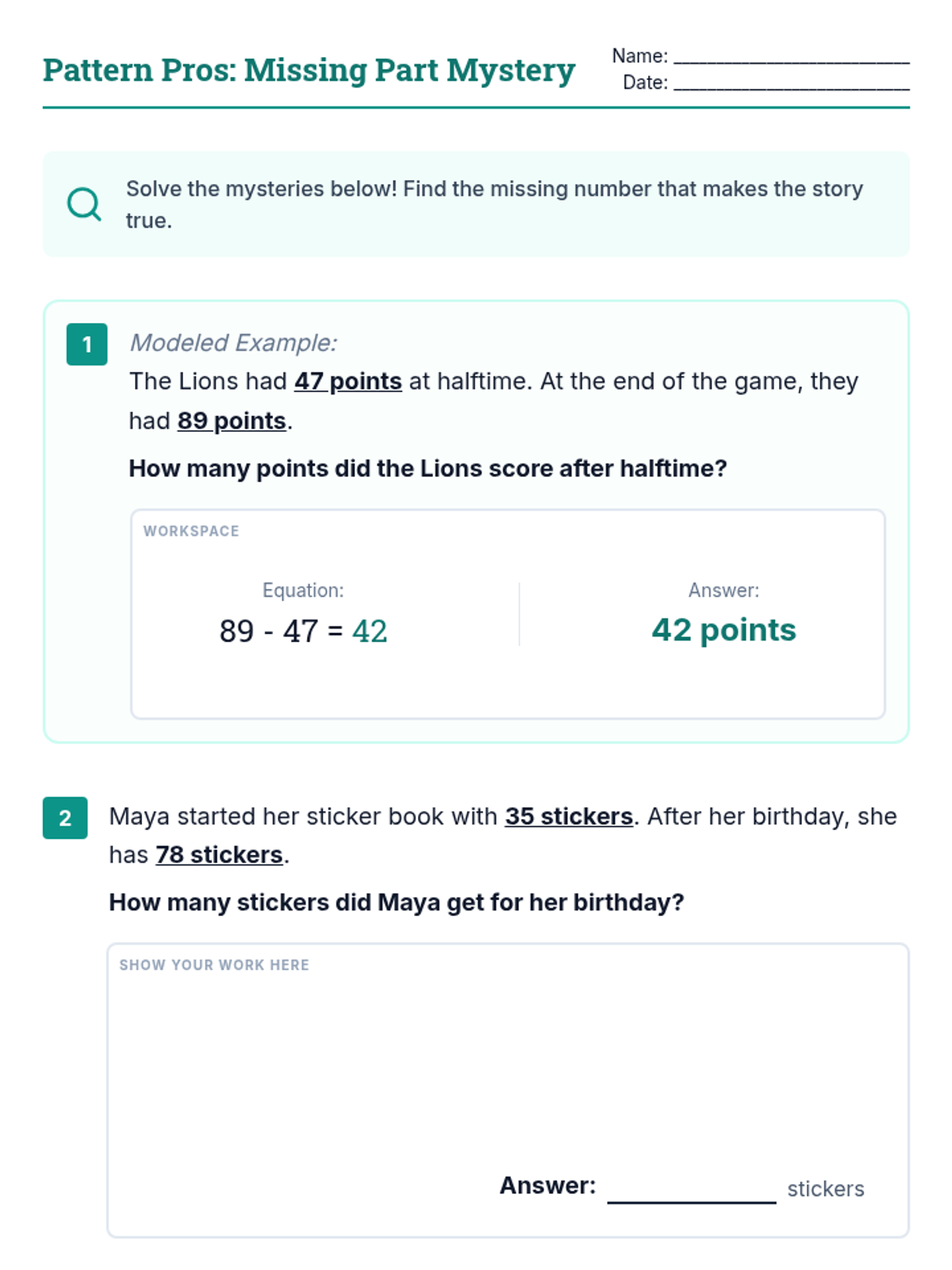
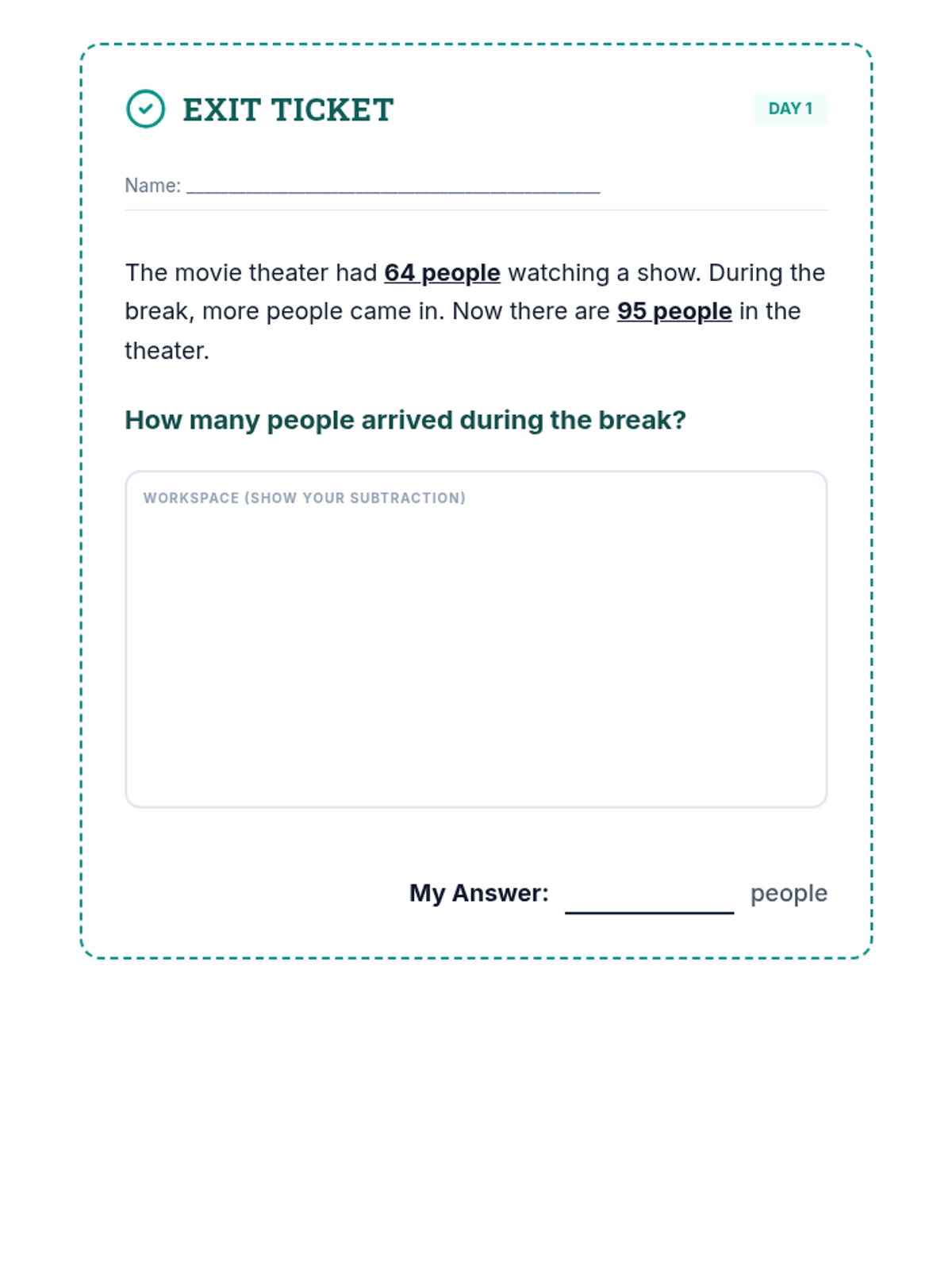
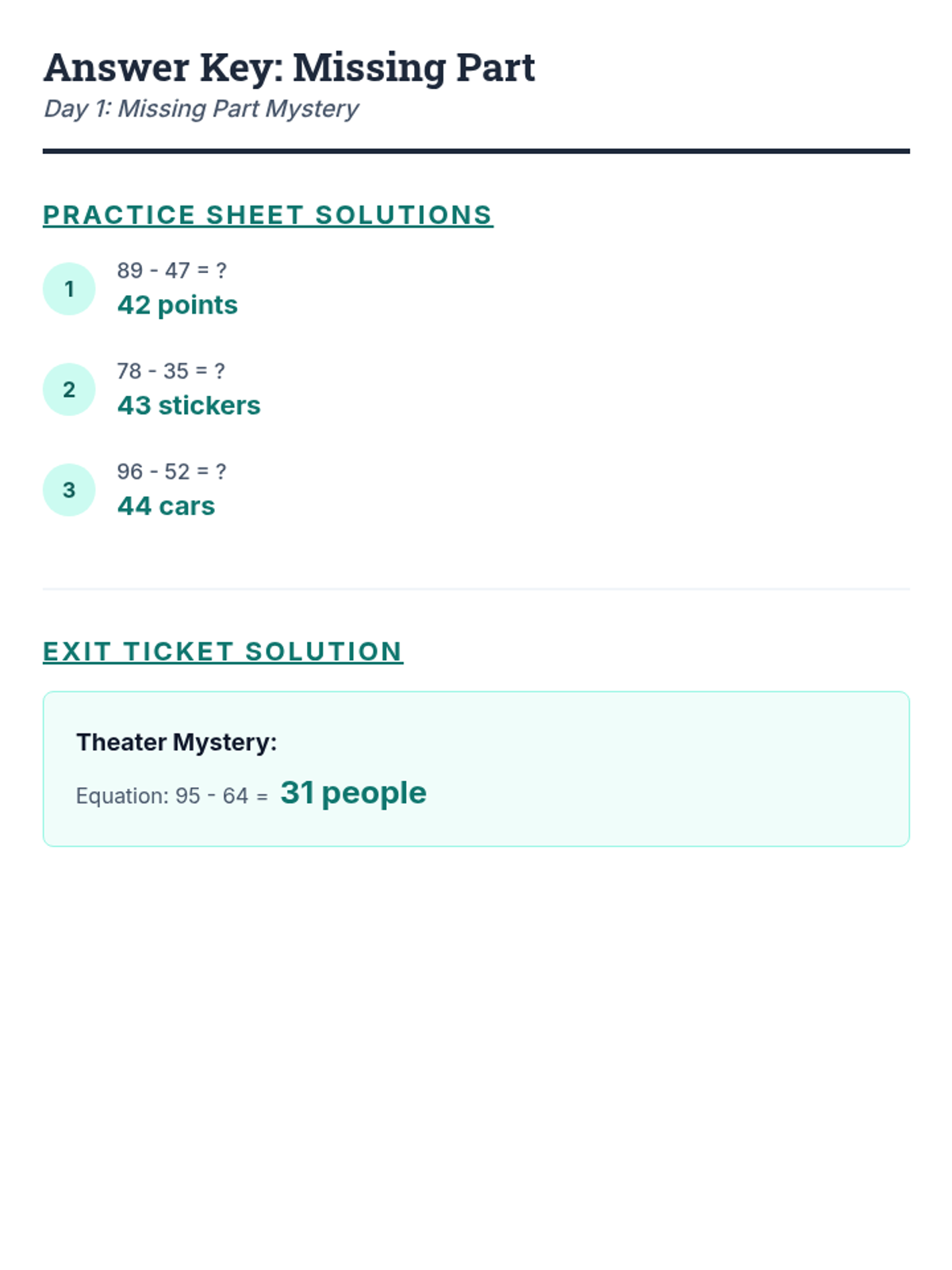
Students solve missing addend word problems within 100, focusing on finding the 'change' in a story context using subtraction strategies.
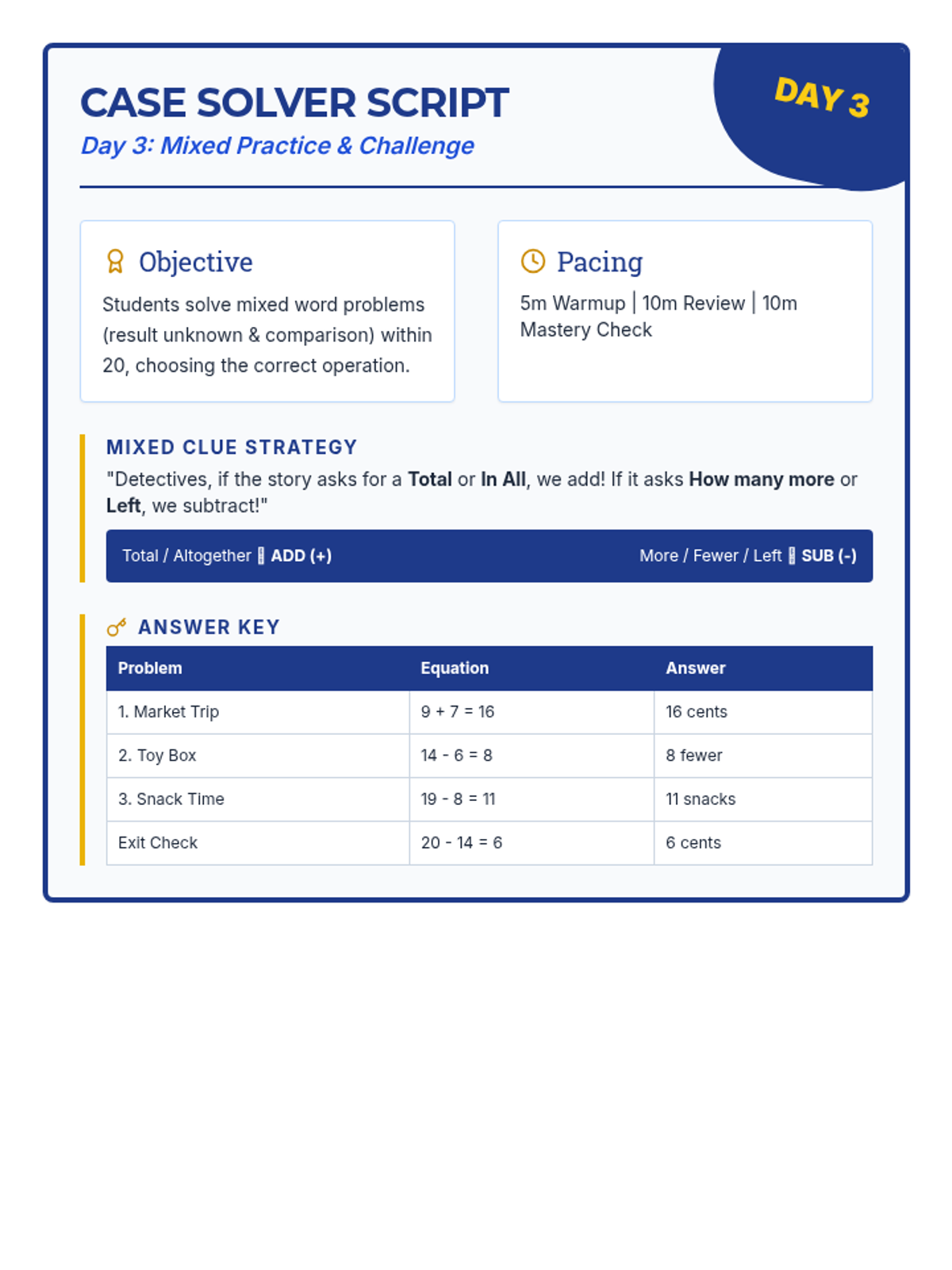
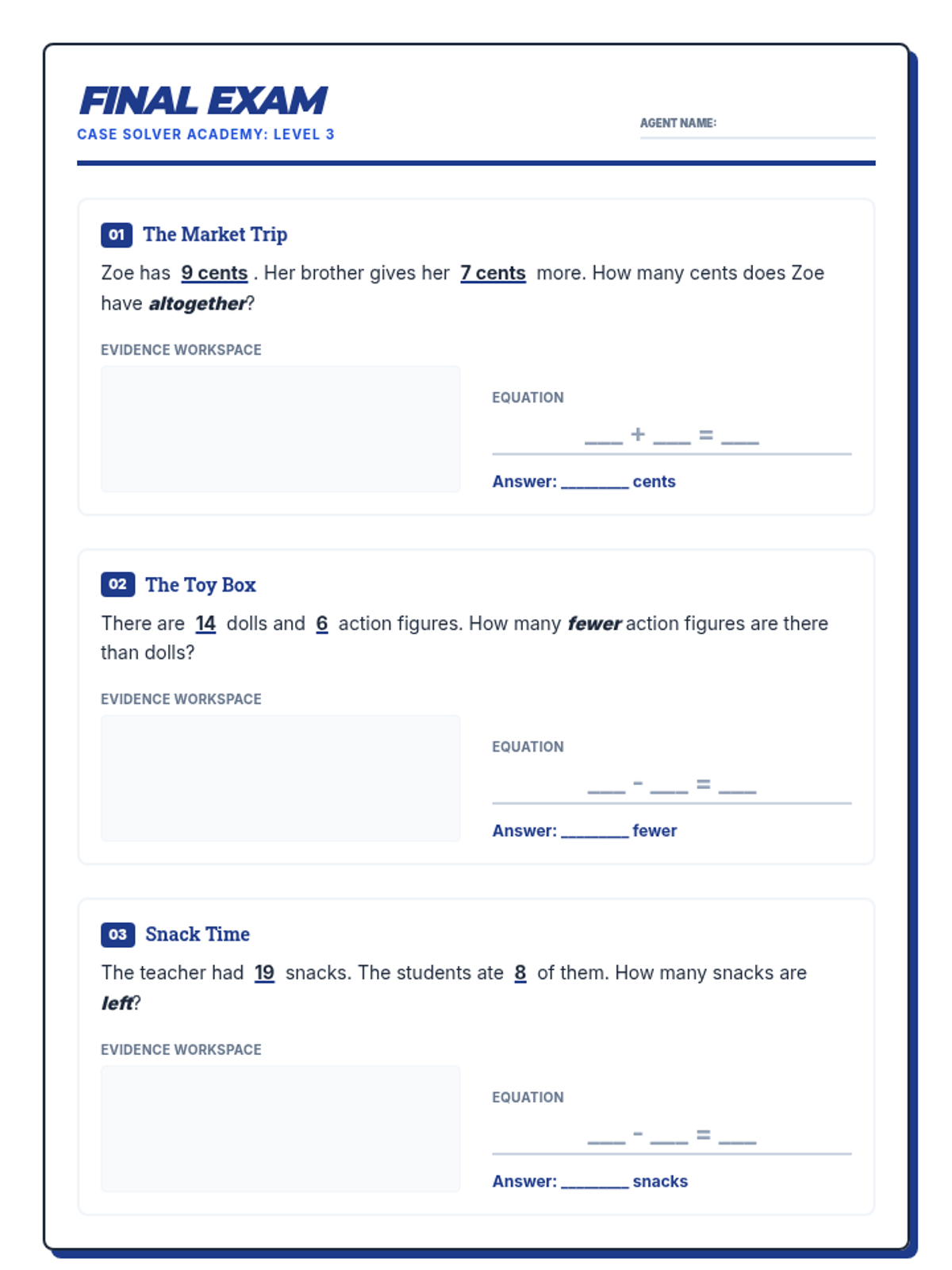
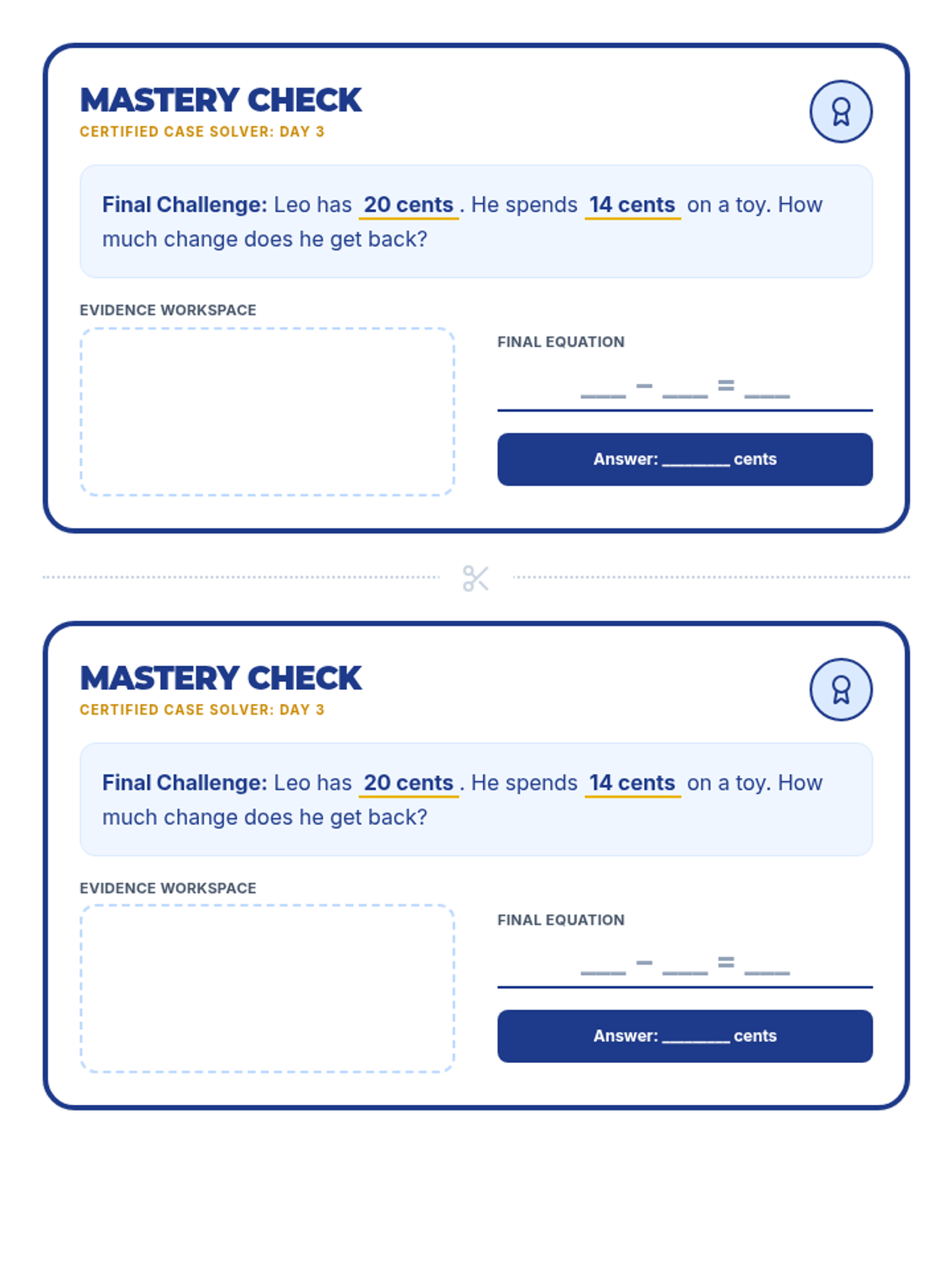
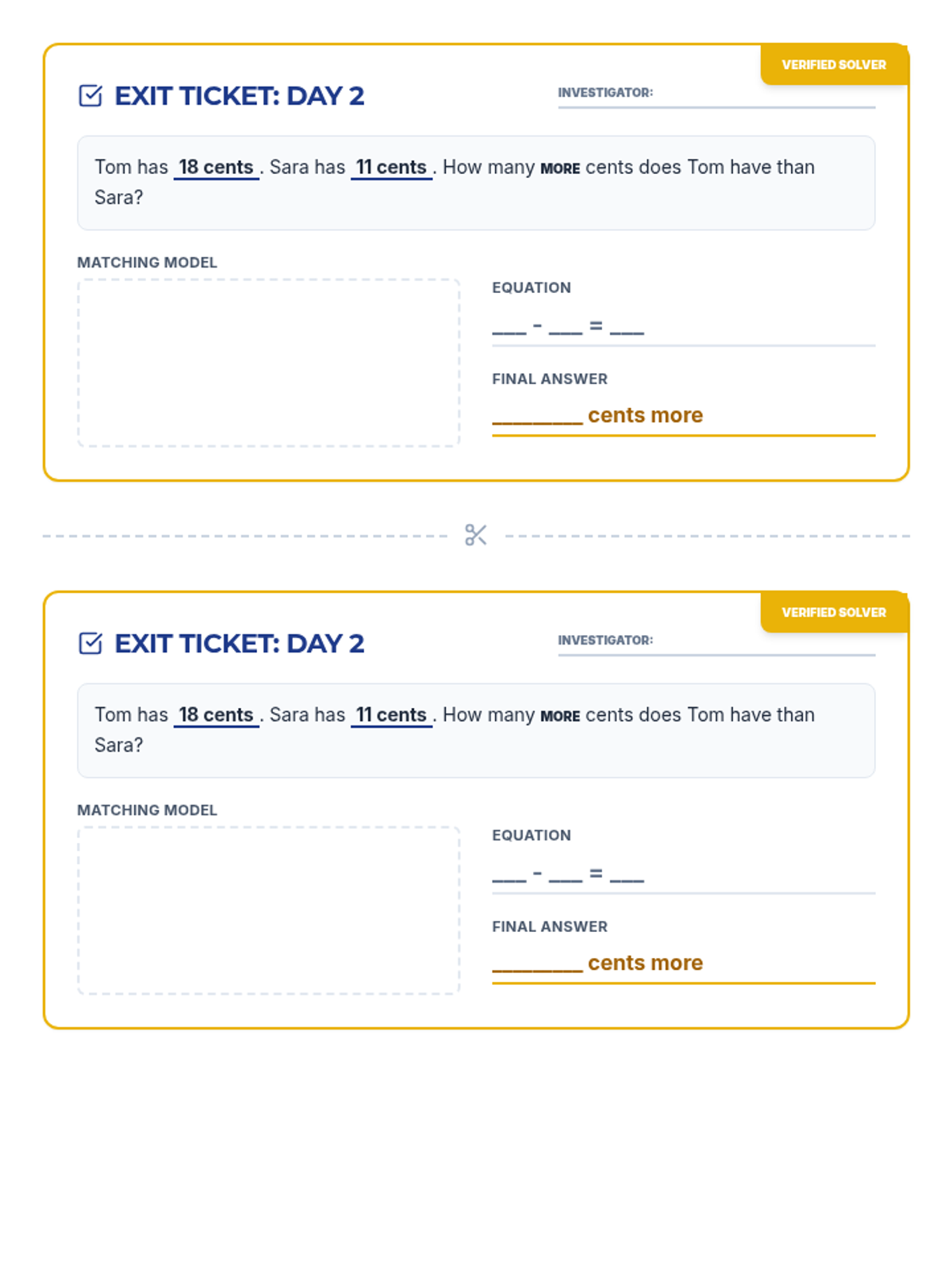
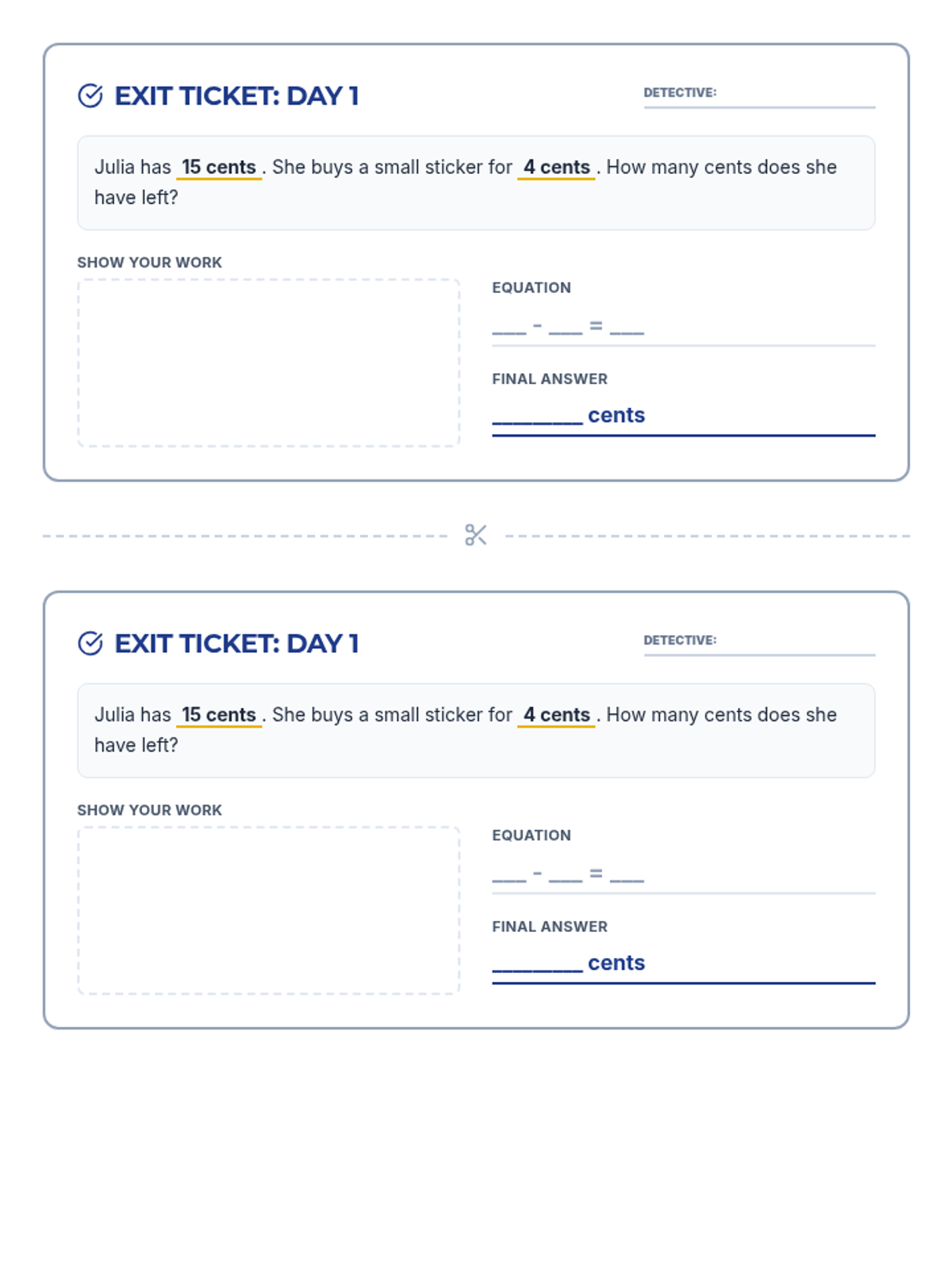
Students apply their knowledge to mixed word problems and real-world money scenarios within 20, demonstrating mastery of result unknown and comparison types.
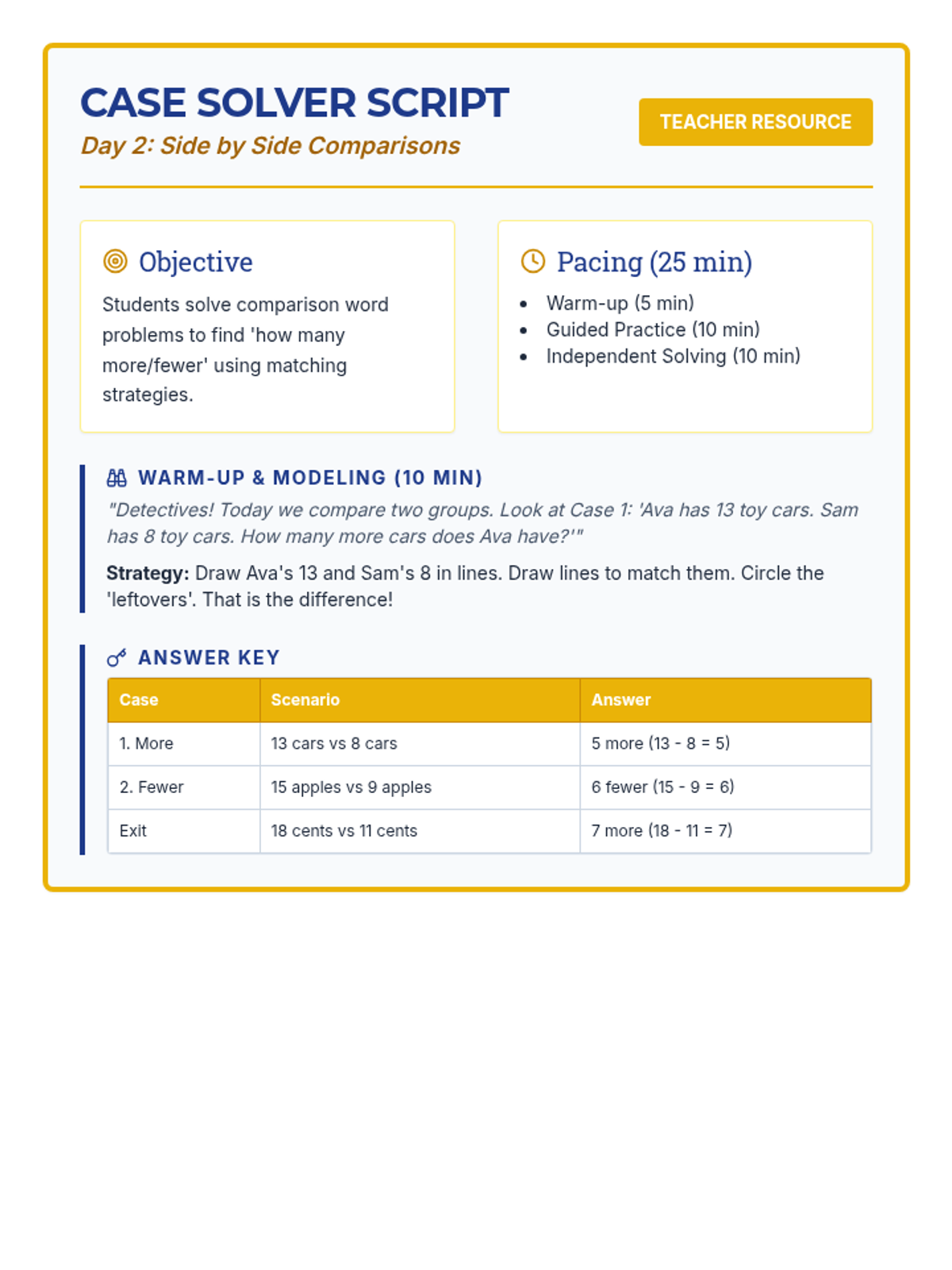
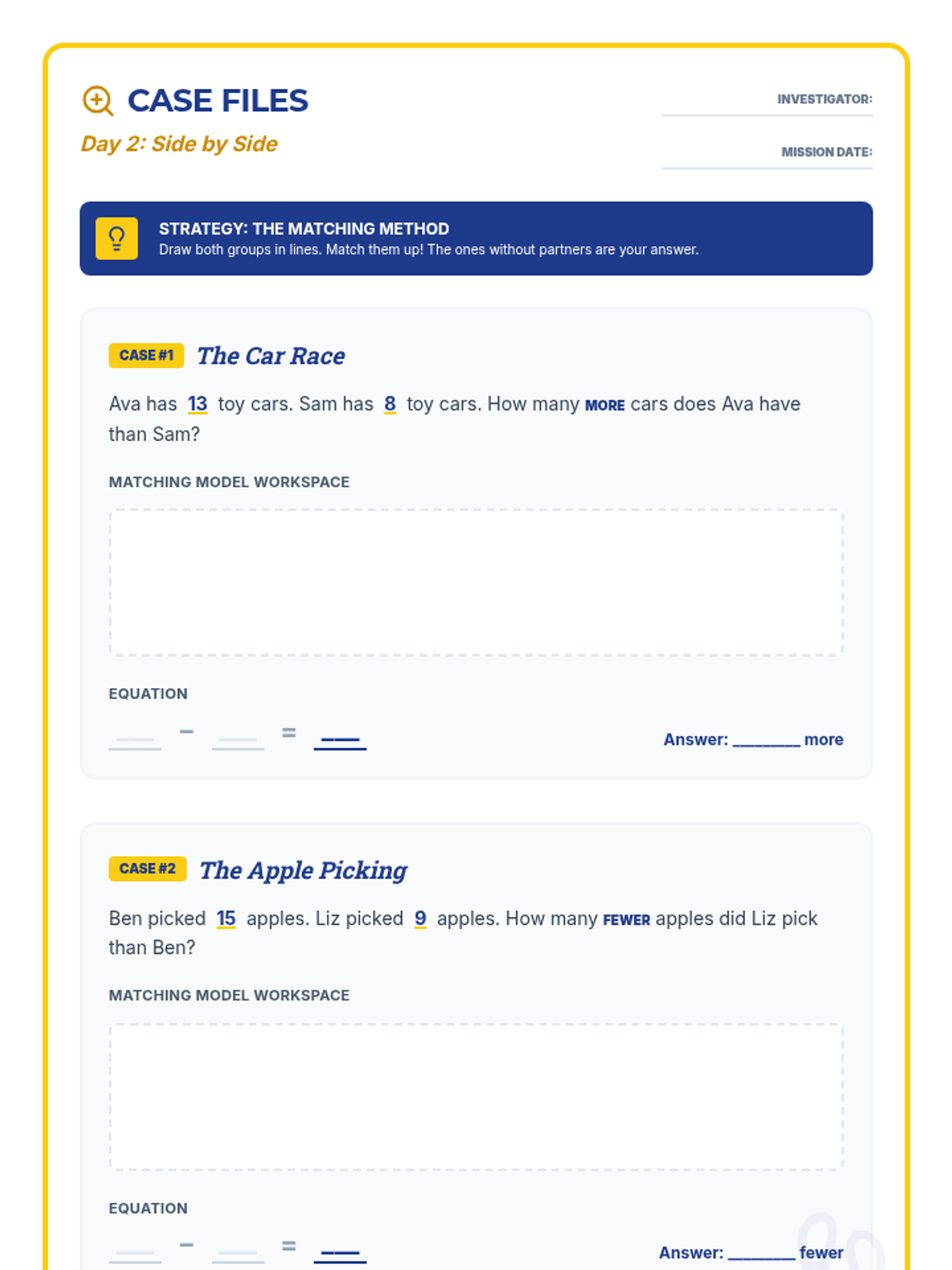
Students solve comparison word problems to find 'how many more' or 'how many fewer' using visual models.
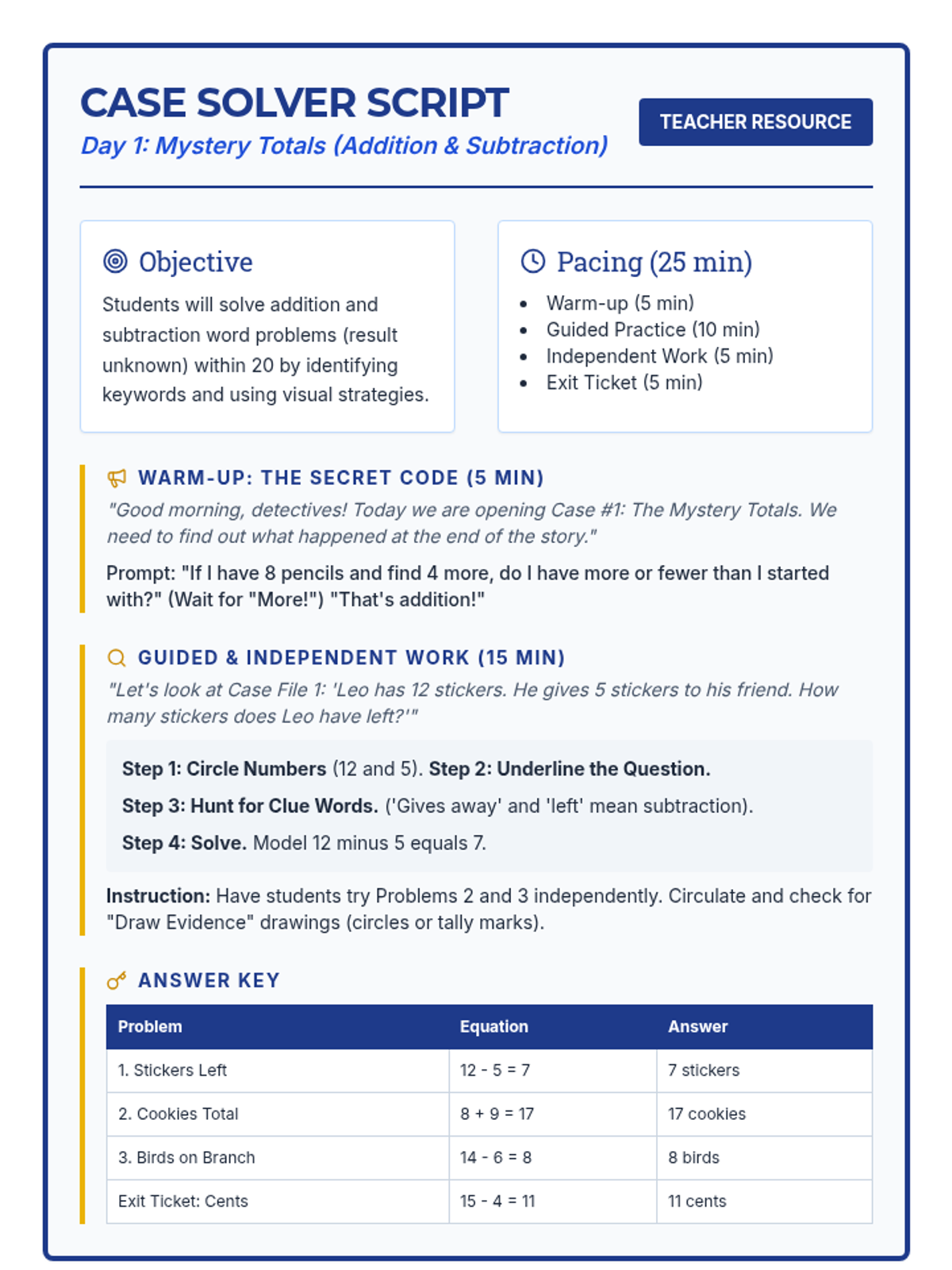
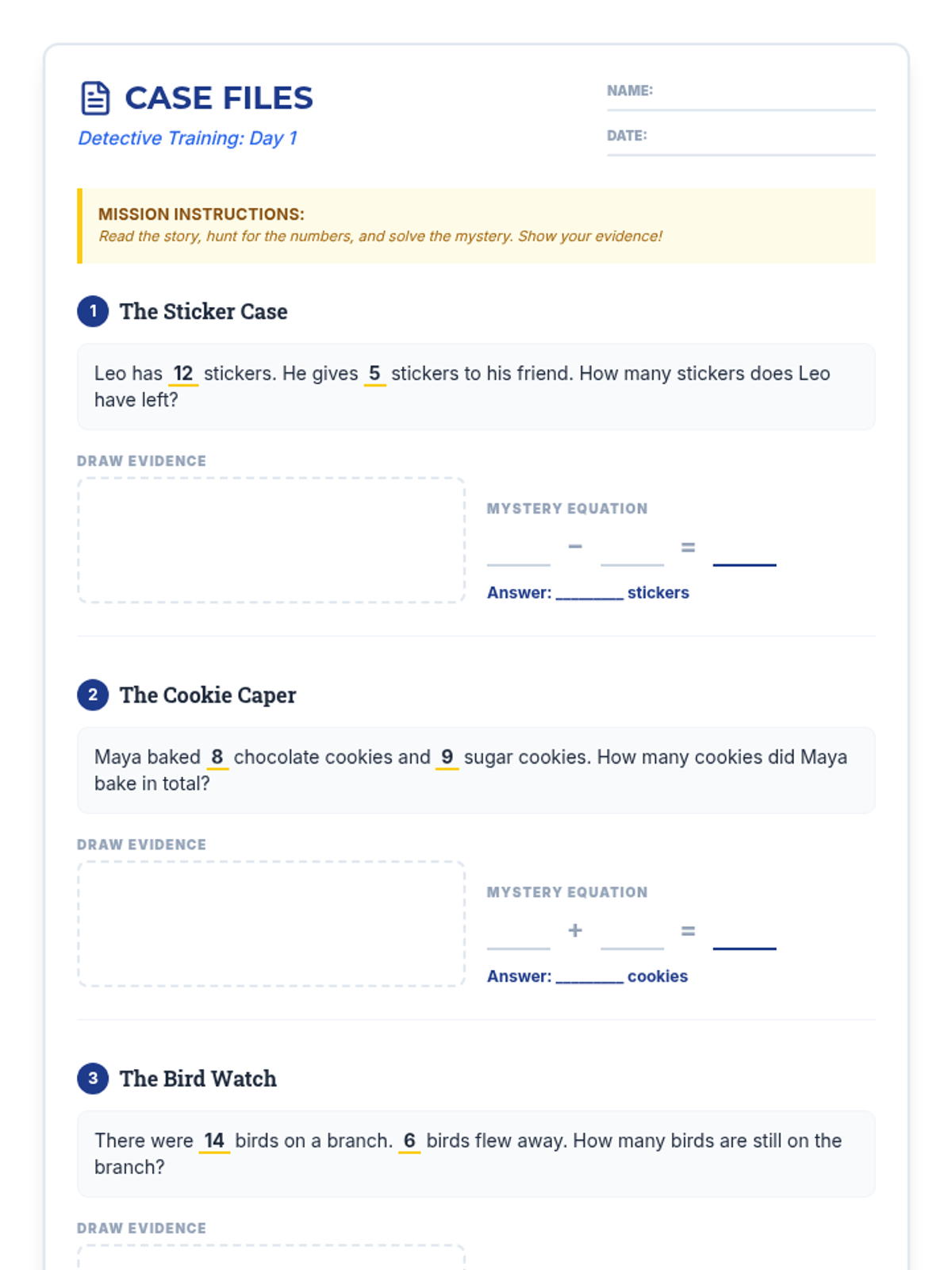
Students solve result unknown addition and subtraction word problems within 20 using strategies like drawing and number lines.
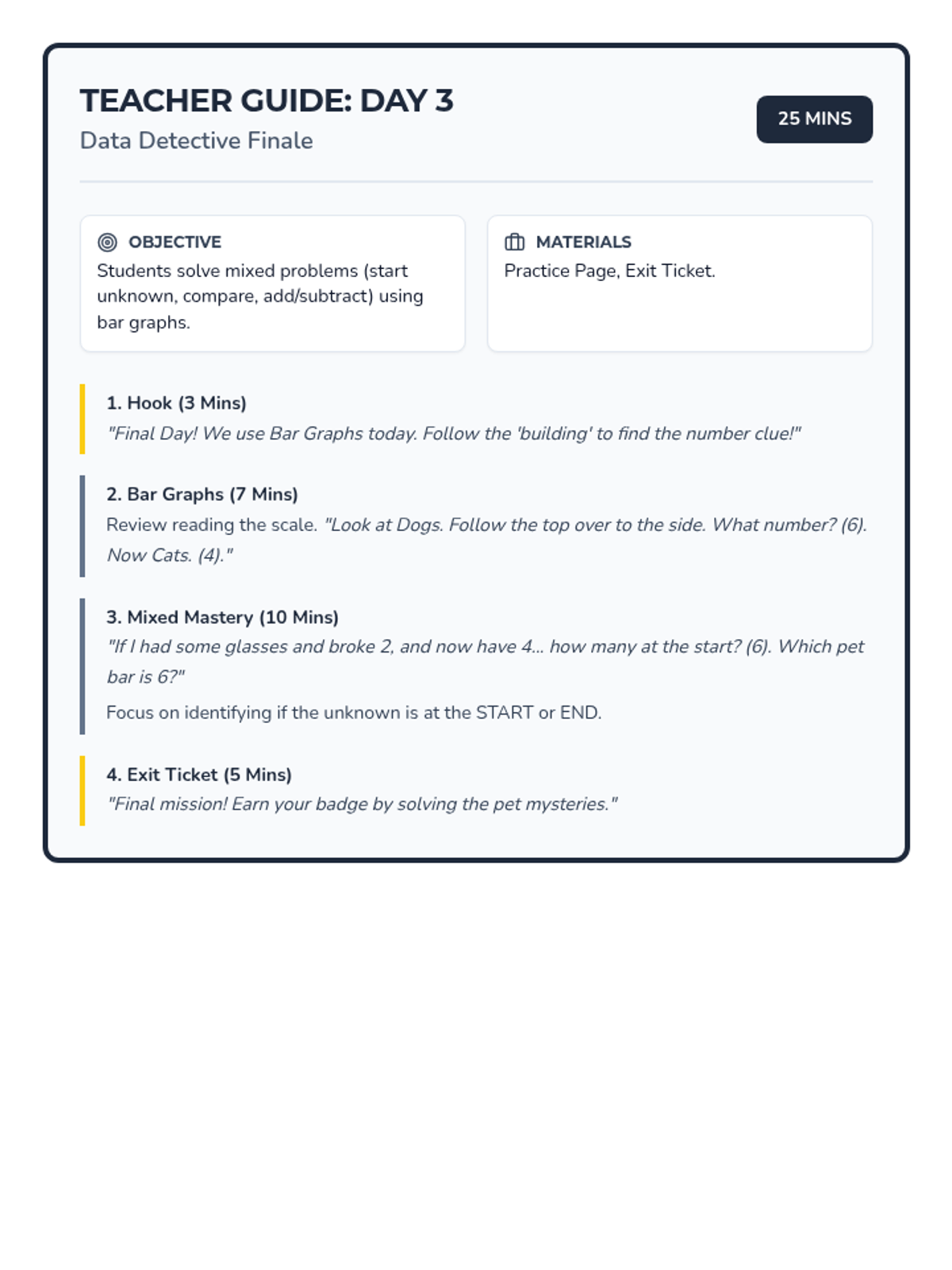
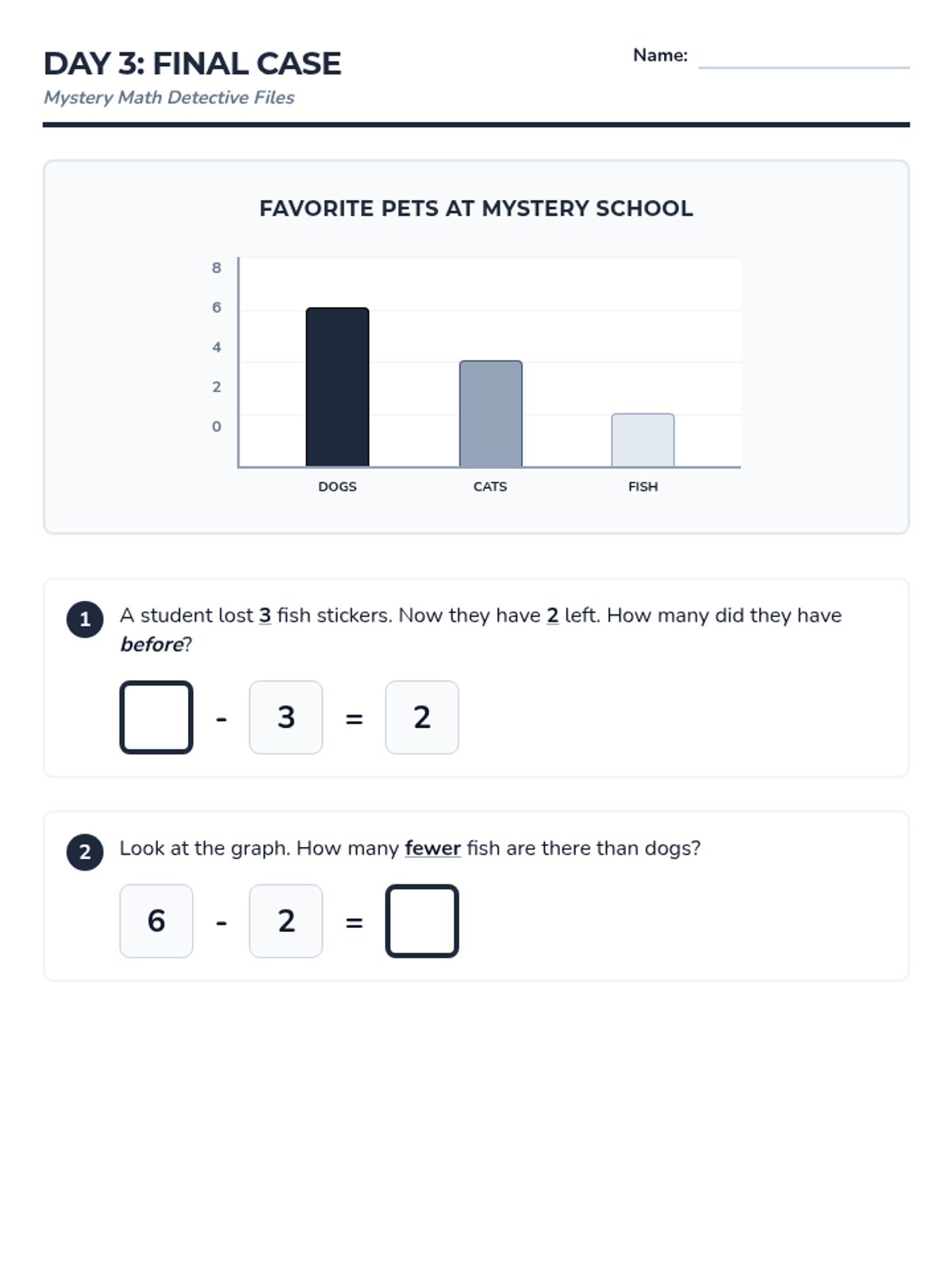
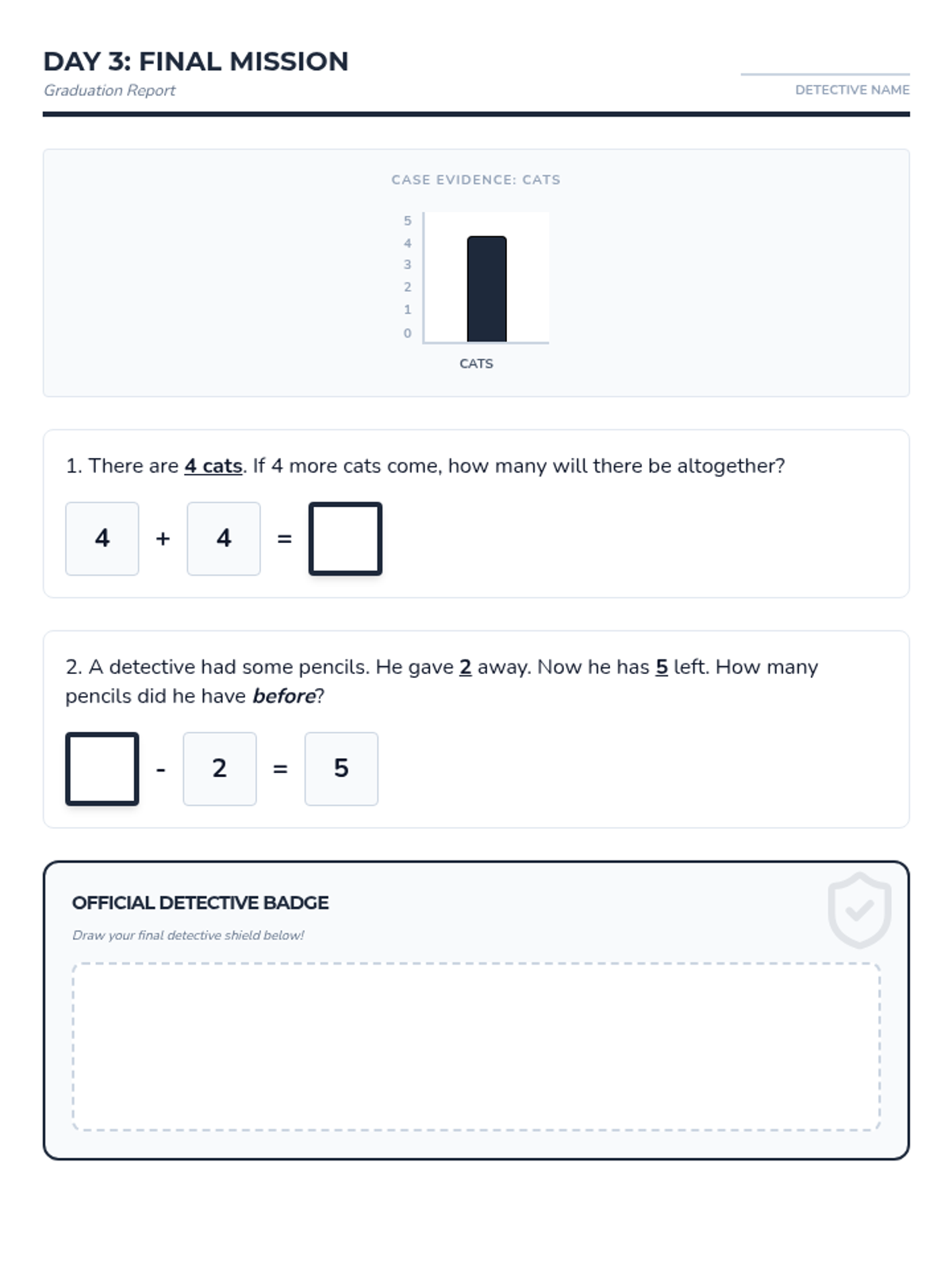
Integrates all previous word problem types (start-unknown, compare, and mix) using simple bar graphs.
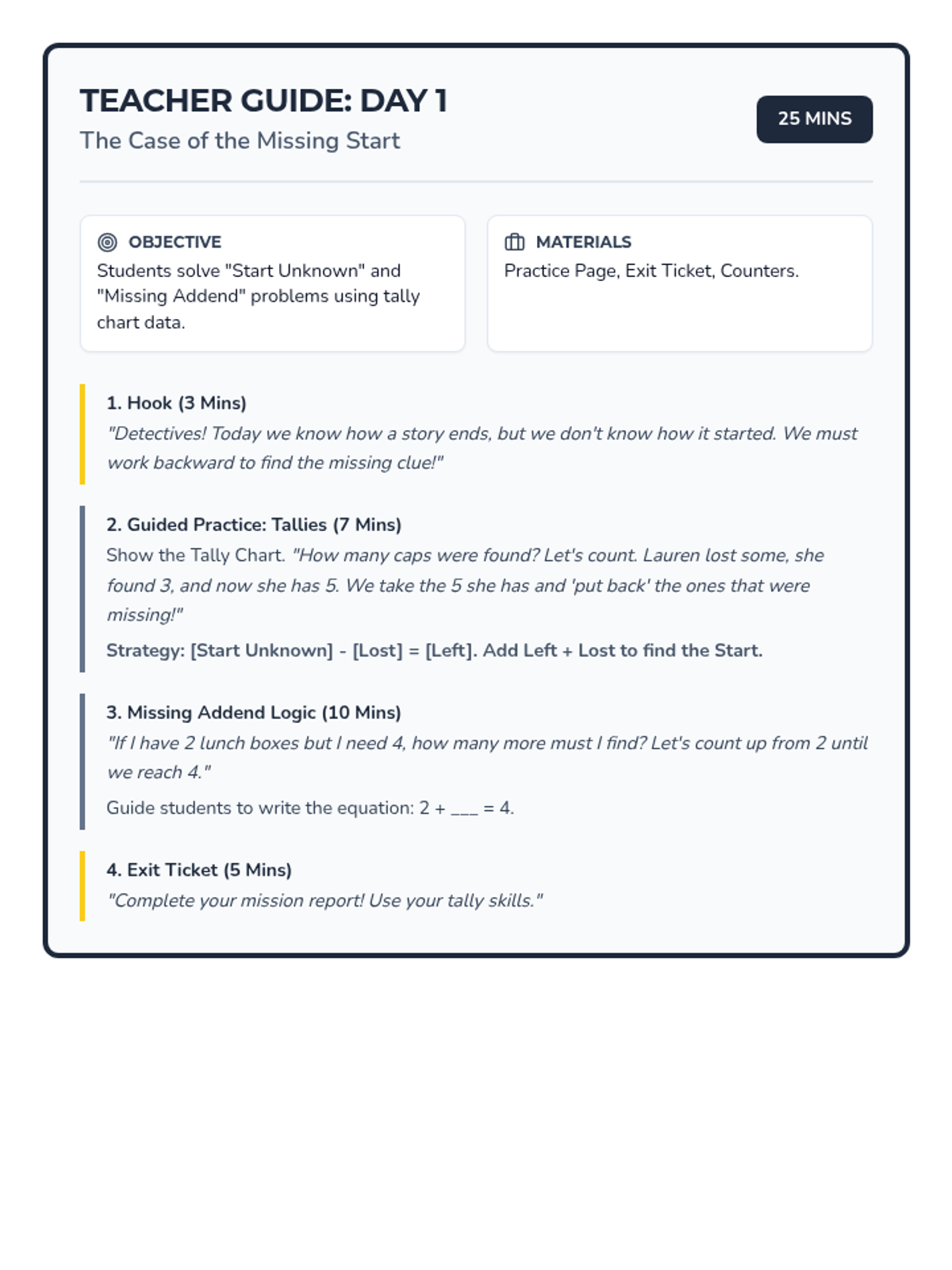
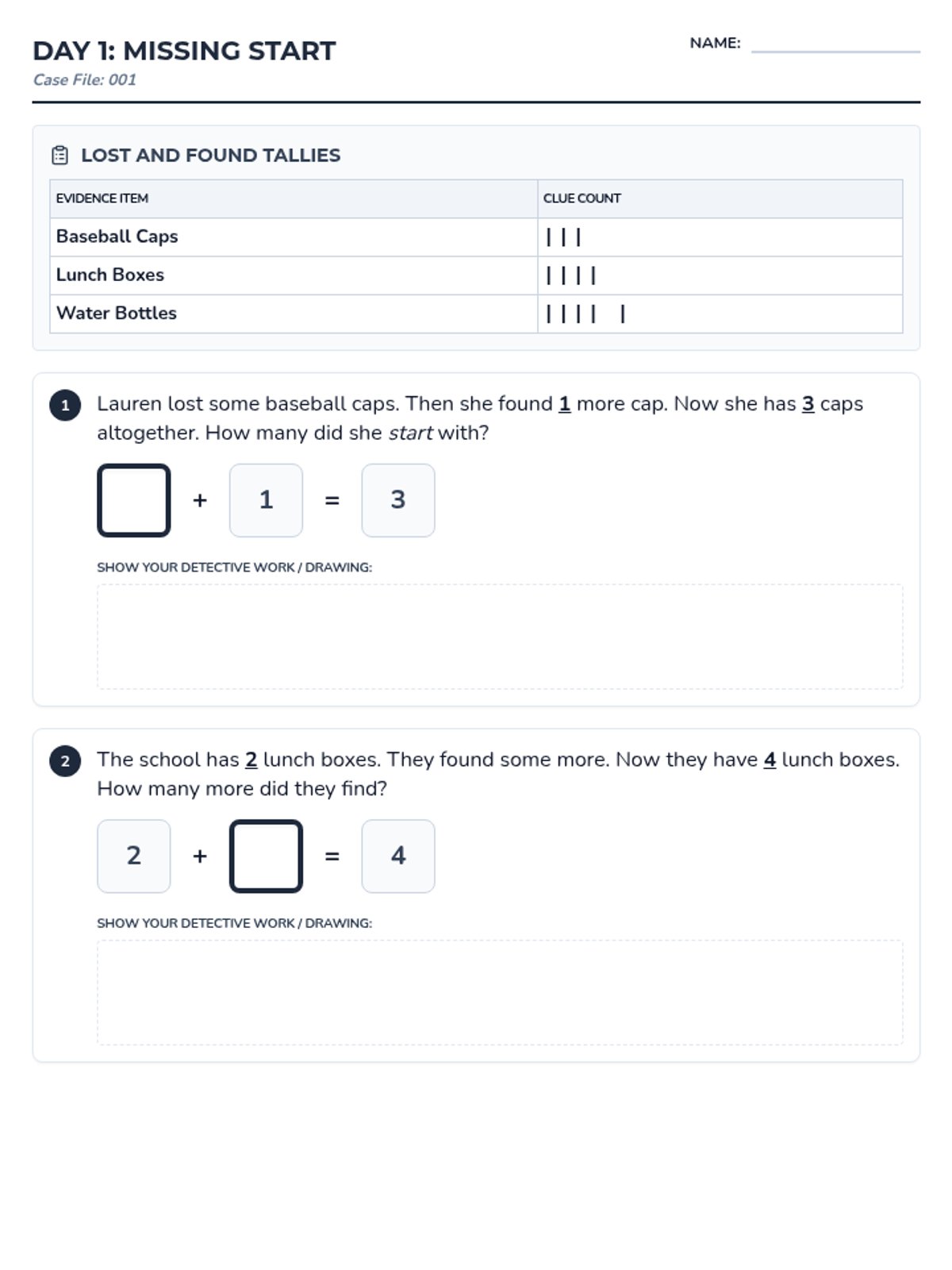
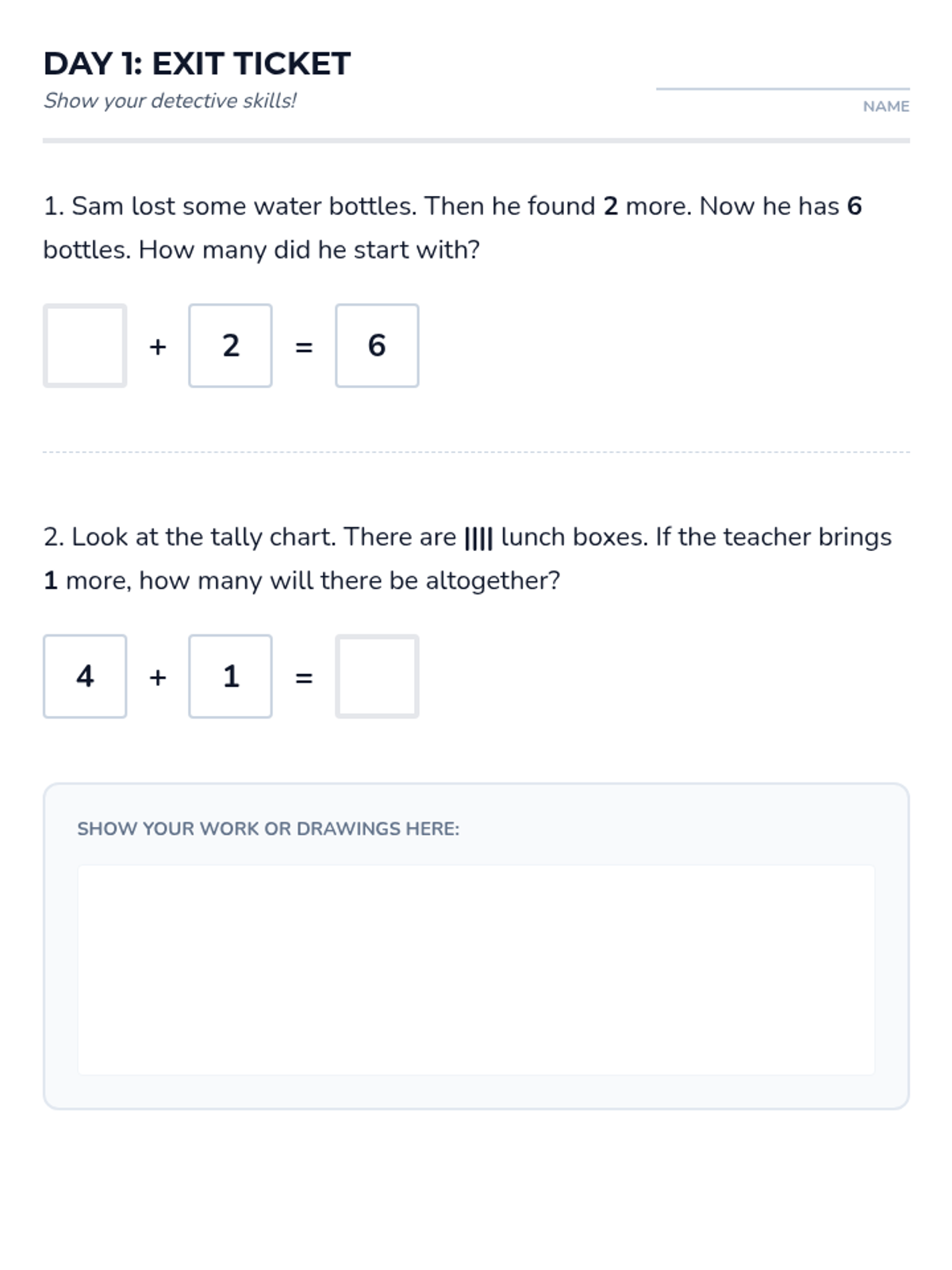
Focuses on solving start-unknown subtraction and missing addend addition problems using tally mark data.