Teaches students to push beyond simple facts by adding significance, answering the 'So what?' question for their readers.
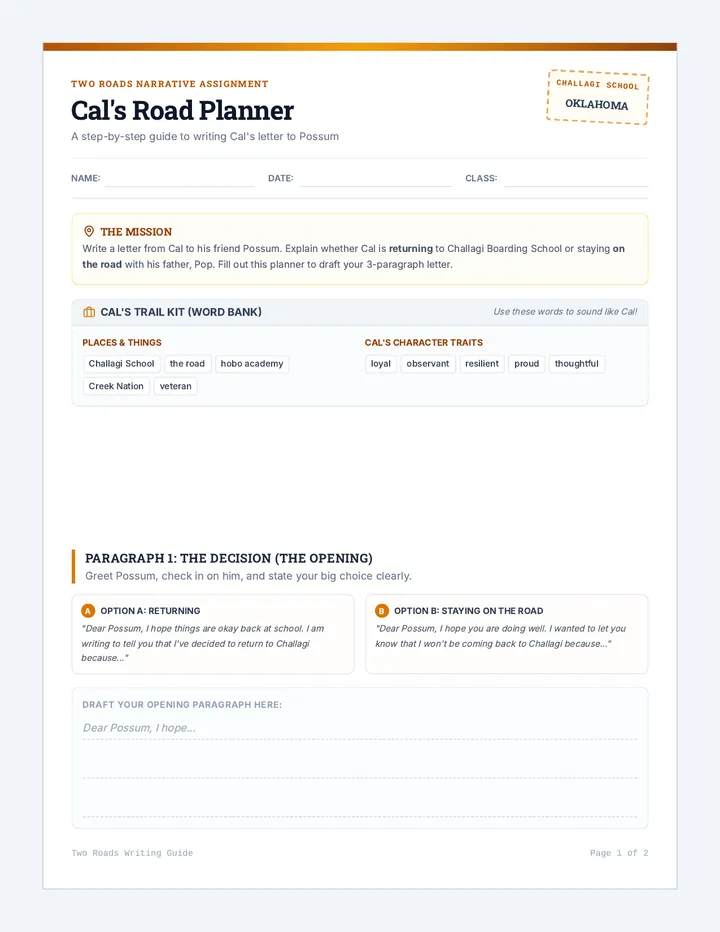
A planning and writing lesson centered around Joseph Bruchac's novel Two Roads, guiding students to write a structured narrative letter from Cal to Possum with differentiated scaffolding.
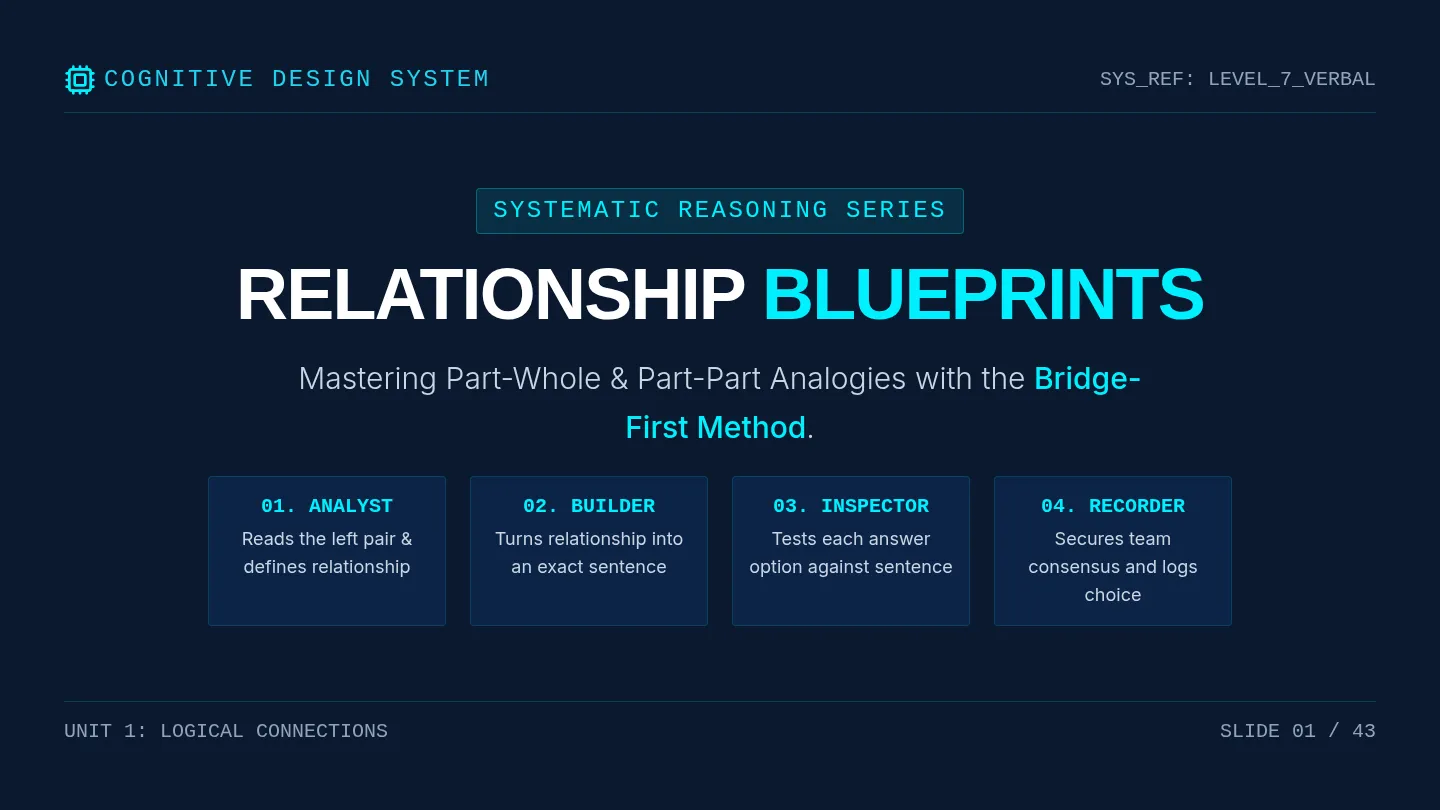
An interactive slide deck focusing on part-whole and part-part analogies for seventh graders, emphasizing the strategy of formulating the relationship before viewing multiple-choice options.
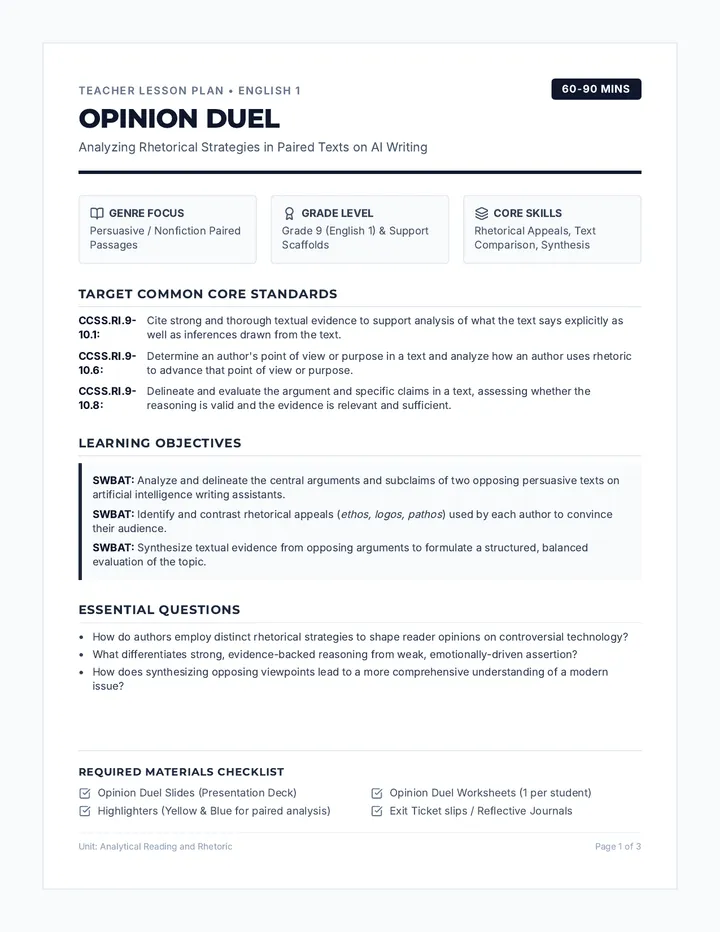
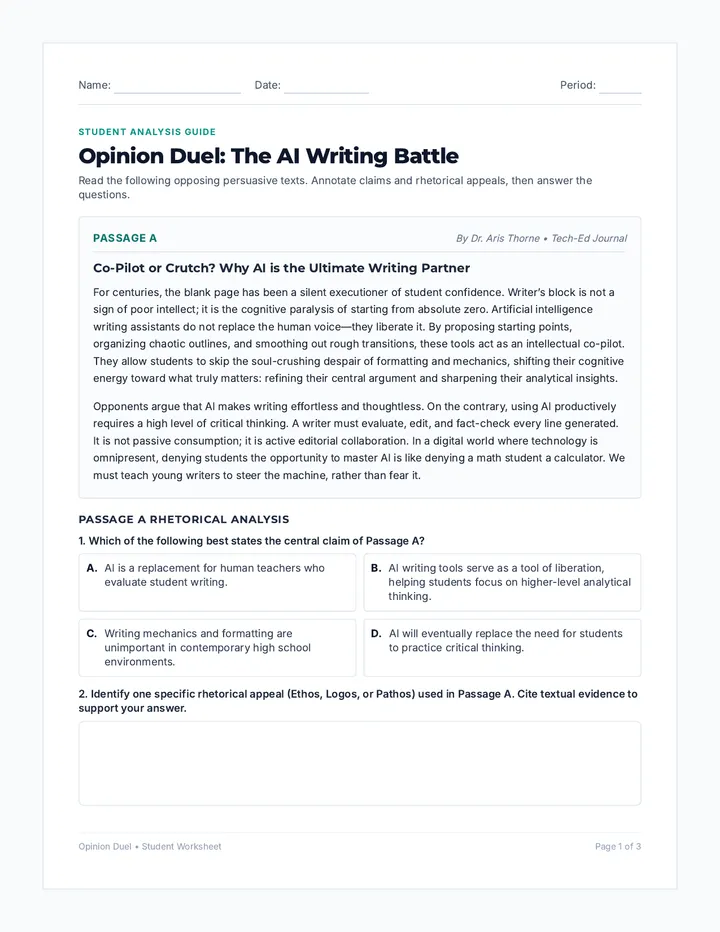
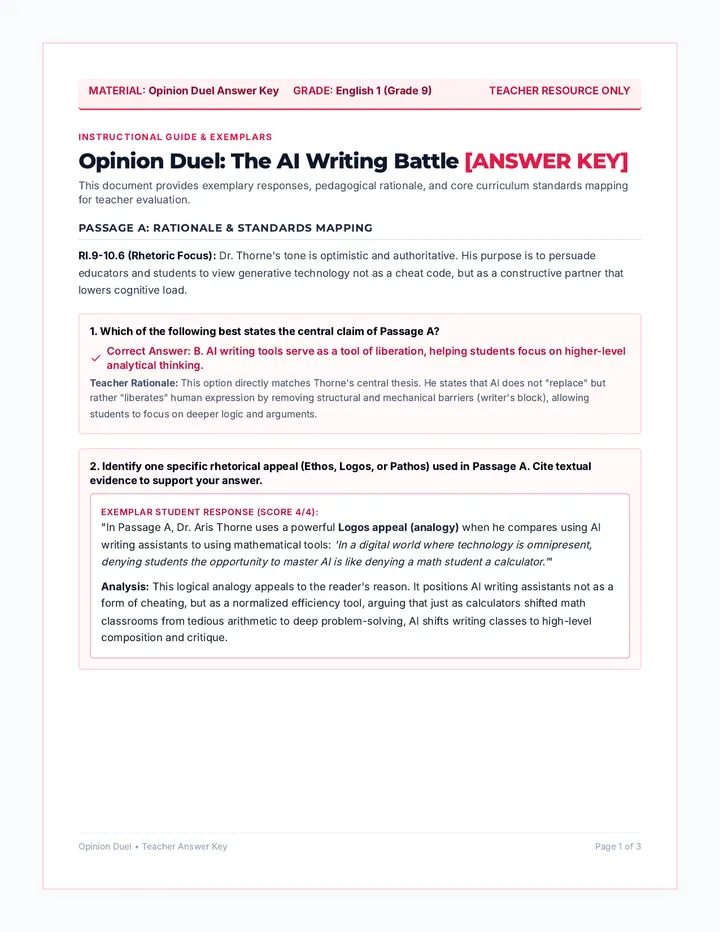
An English 1 lesson focused on comparing and analyzing paired persuasive texts about the use of AI writing assistants. Students learn to evaluate contrasting arguments, identify rhetorical devices, and synthesize opposing viewpoints using text-based evidence.
Students compile their four-sentence creative stories into a comic strip layout, add simple illustrations, and celebrate their storytelling accomplishments.
Students resolve their story's problem, writing their fourth sentence using "Then, ..." and selecting a happy resolution symbol.
Students introduce a simple conflict or surprise for their character, writing a sentence with "Suddenly..." and problem-based action icons.
Students choose a creative setting (such as outer space or a magic forest) and write a sentence using "They are in..." with visual setting prompt cards.
Students invent a fictional character (such as a superhero or friendly animal) and write a sentence describing them using "This is..." and physical descriptors with visual symbols.
Students present their informational posters to peers using verbal or non-verbal communication supports, celebrating their factual discoveries.
Students assemble their key fact, evidence sentence, and concluding statement into a coherent, illustrated informational poster.
Students conclude their informational piece by writing a third sentence that summarizes their topic using a "Now you know about..." sentence starter and visual symbols.
Students locate visual evidence or supporting clues (such as food or habitat icons) to back up their first key fact, writing a second sentence using "It has..." or "It lives..." frames.
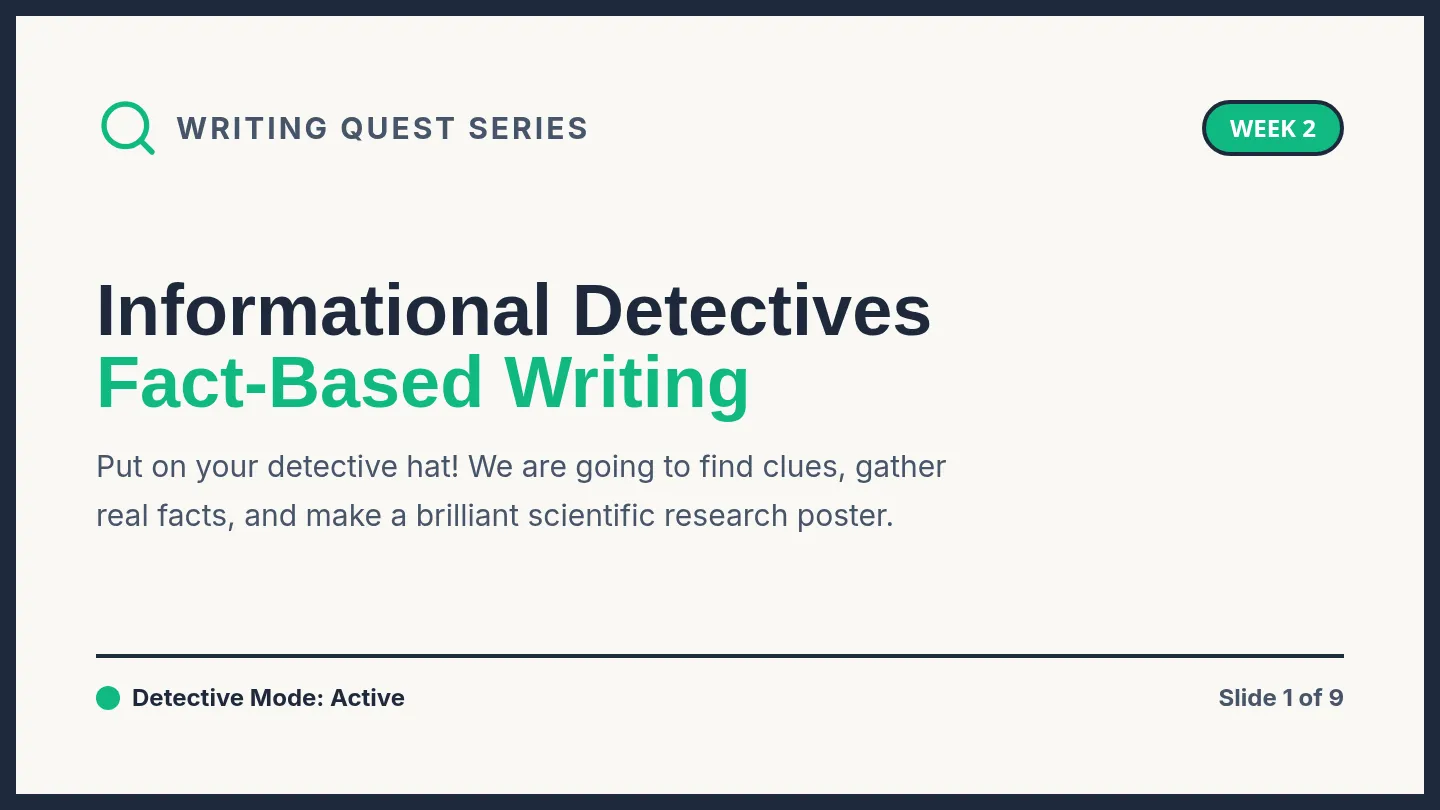
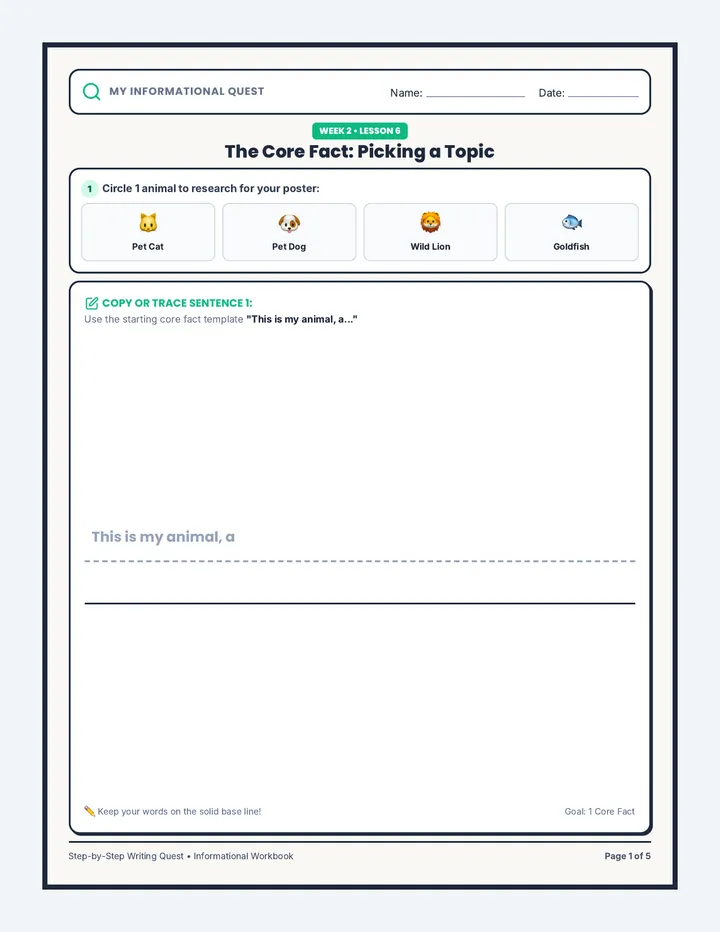
Students choose an informational topic (such as an animal or a local community job) and identify their first key fact using a visual matching organizer and "This is a..." sentence frame.
Students practice reading their three-sentence narratives to a peer or teacher, using visual communication boards as support, and celebrate their completed stories.
Students compile their first, middle, and ending sentences into a complete, logically sequenced three-sentence personal narrative, adding simple decorative illustrations.
Students conclude their personal narrative by writing about the final event using a "Last, I..." sentence starter, focusing on chronological closure and a simple emotion word.
Students continue their personal narrative by writing about the middle event using a "Next, I..." sentence starter and corresponding visual icons to show chronological order.