A comprehensive lesson exploring the differences between Simple Present (habits and facts) and Present Progressive (actions happening now). Includes visual aids, guided practice, and formal assessment.
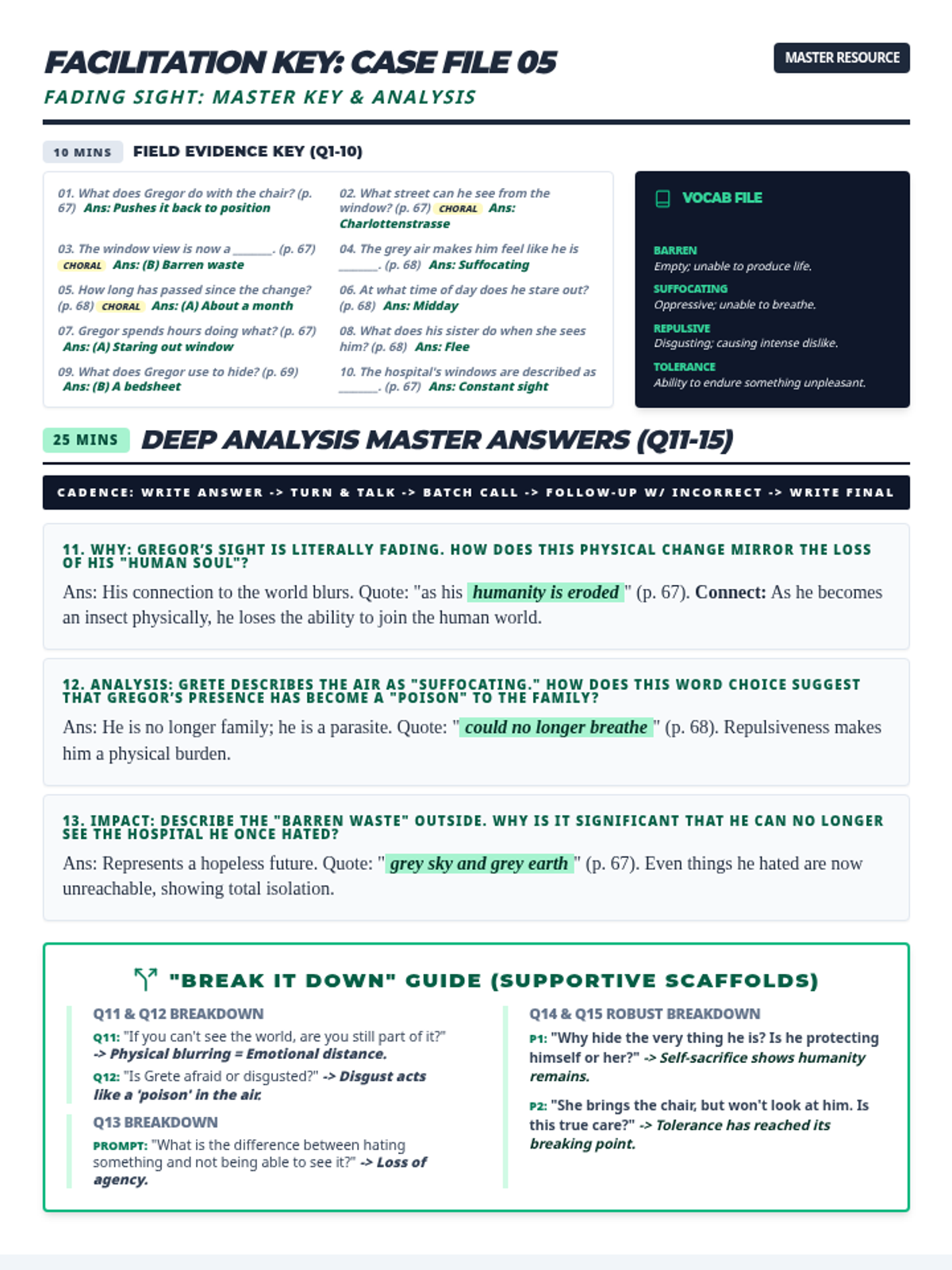
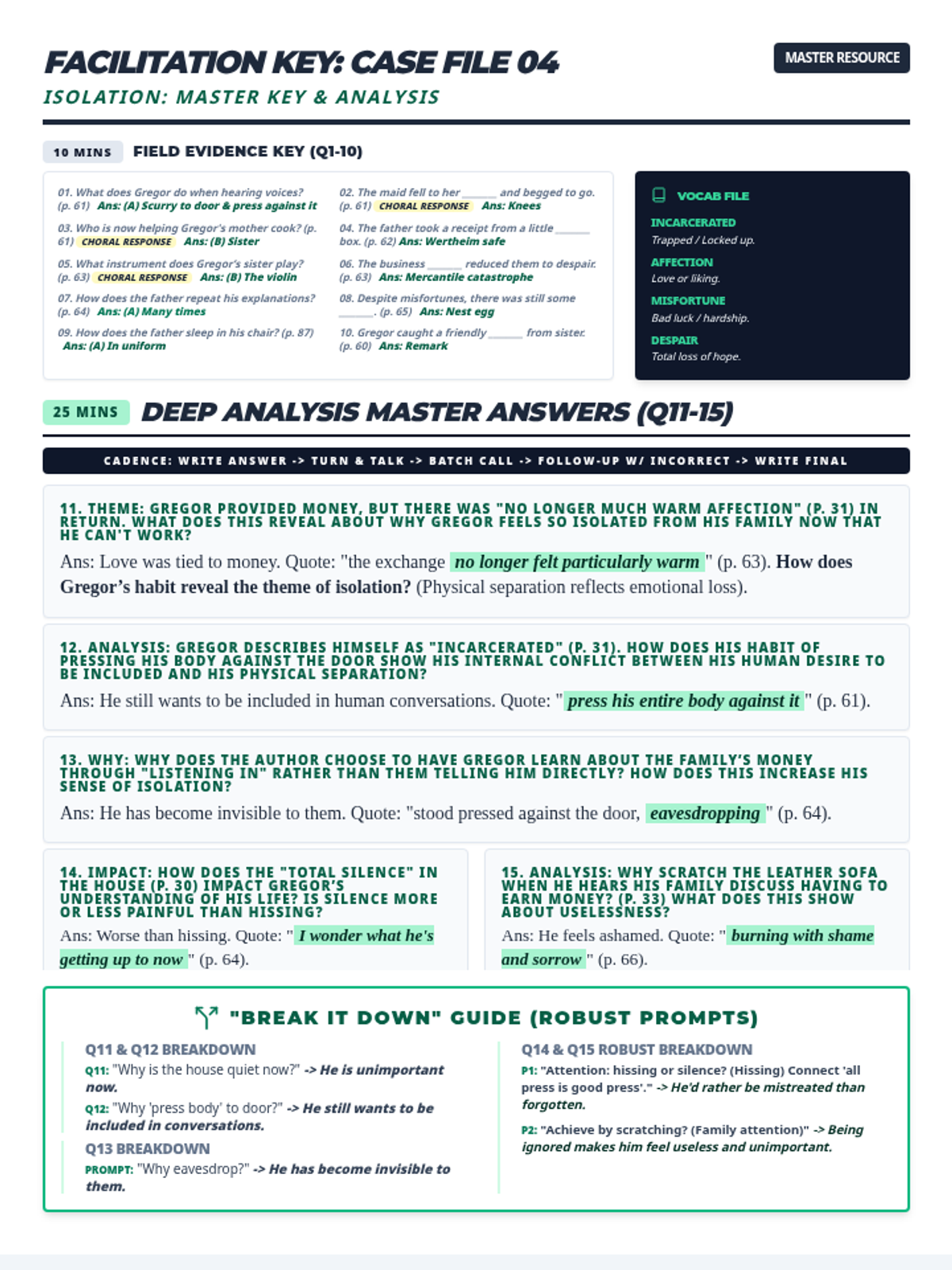
A lesson focusing on Gregor Samsa's physical and emotional decay, specifically his fading eyesight and the increasing conflict with his family as his humanity is further eroded. Students analyze symbols like the 'barren waste' and the 'suffocating' environment.
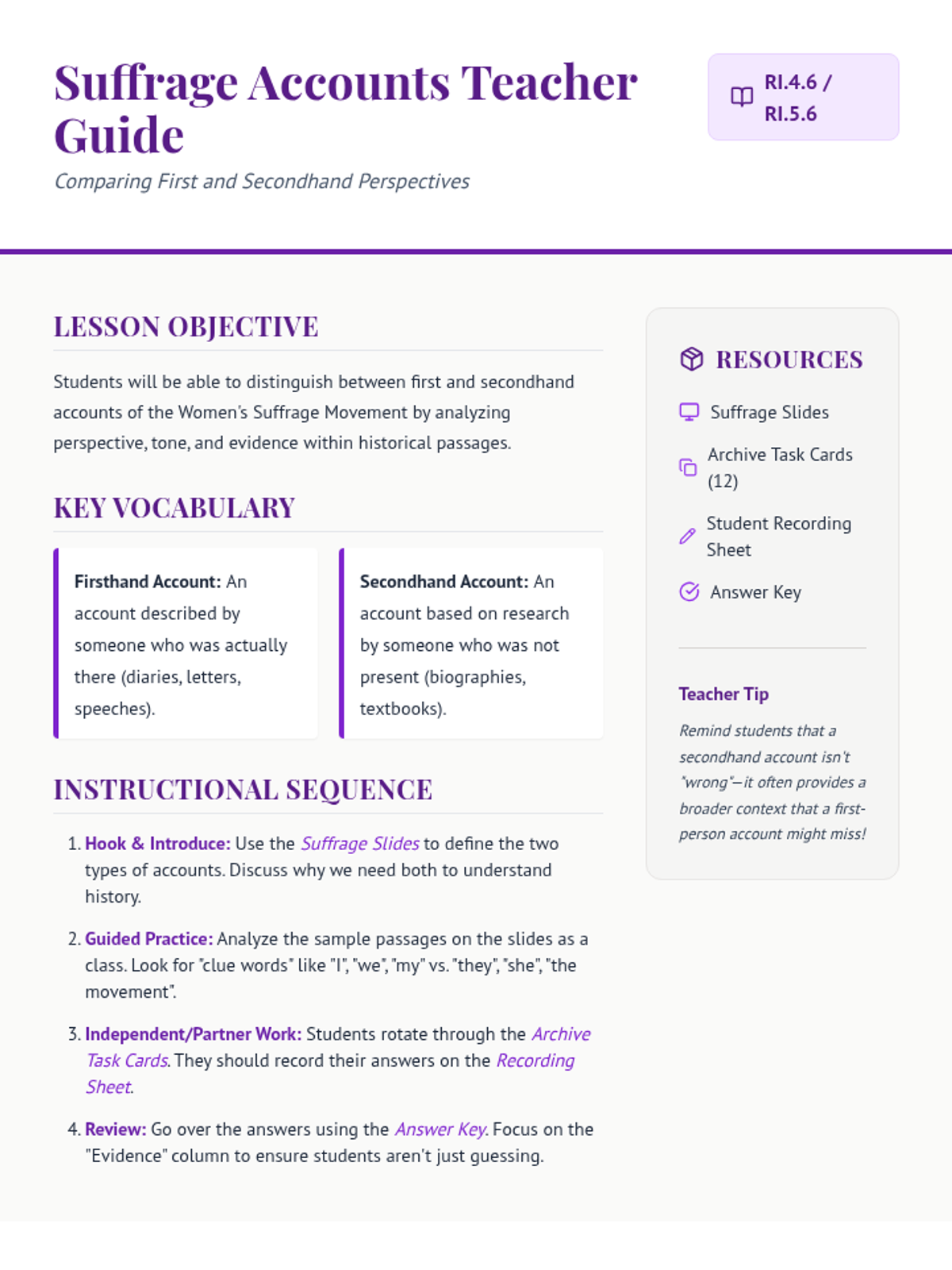
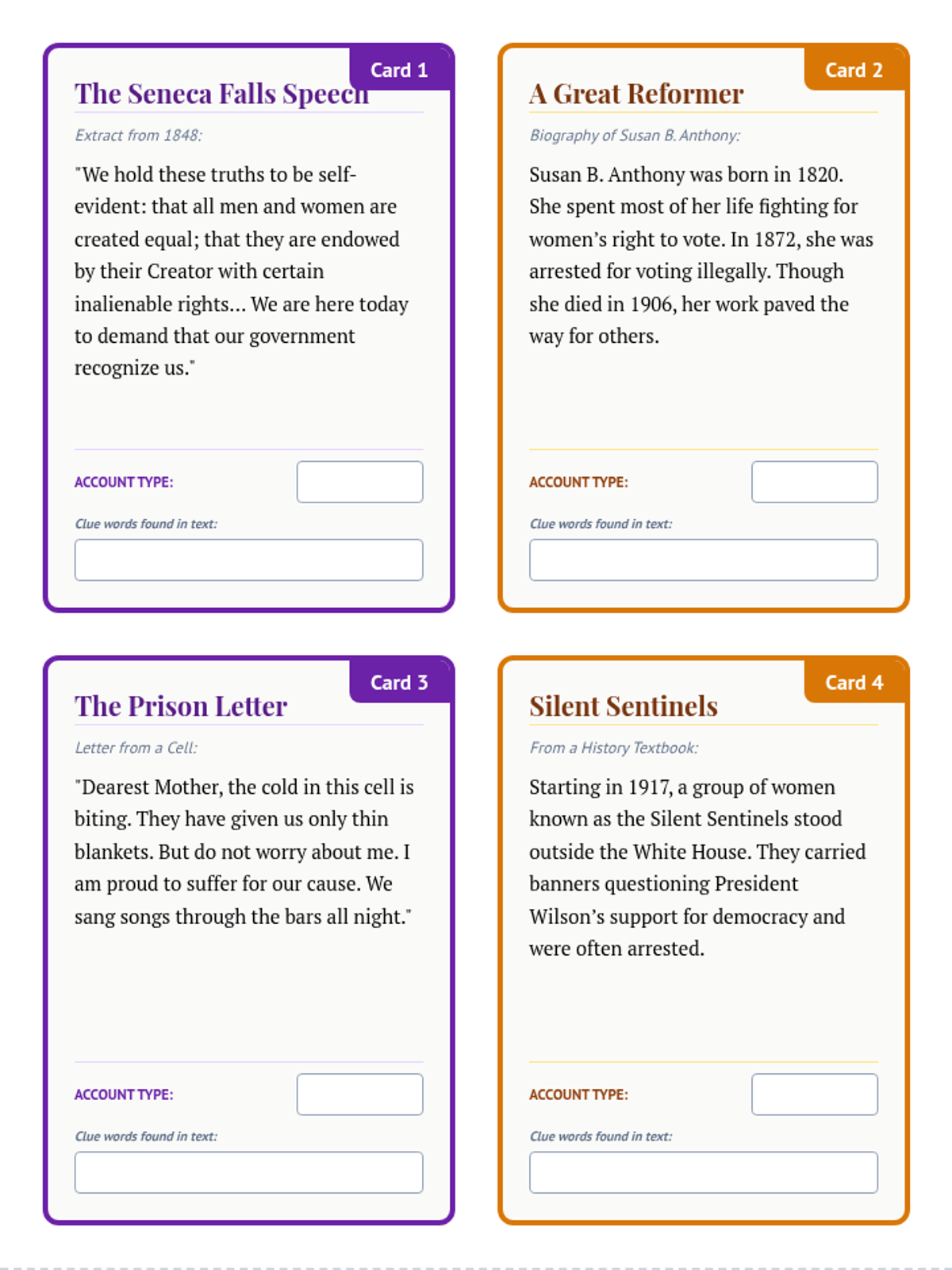
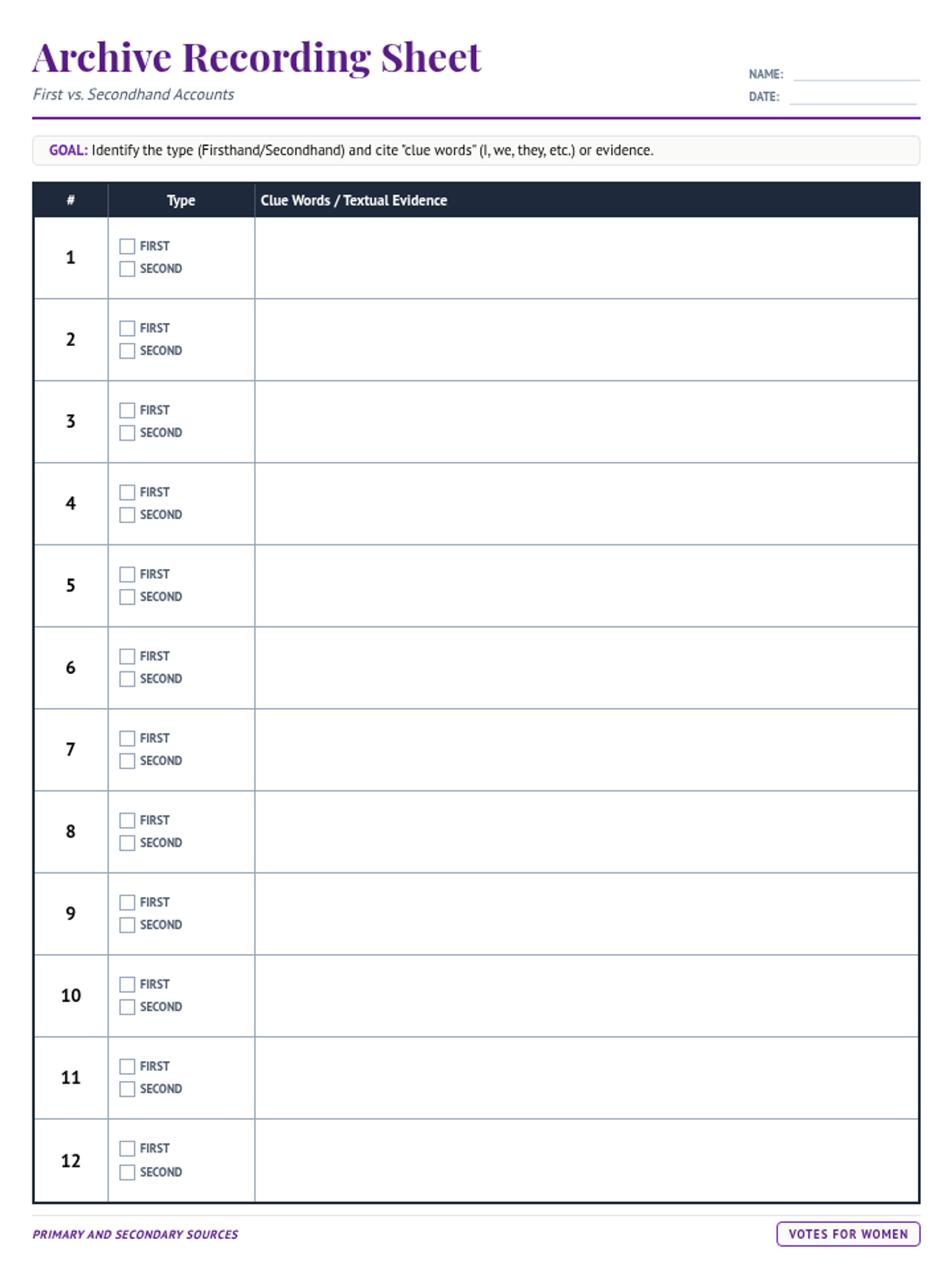
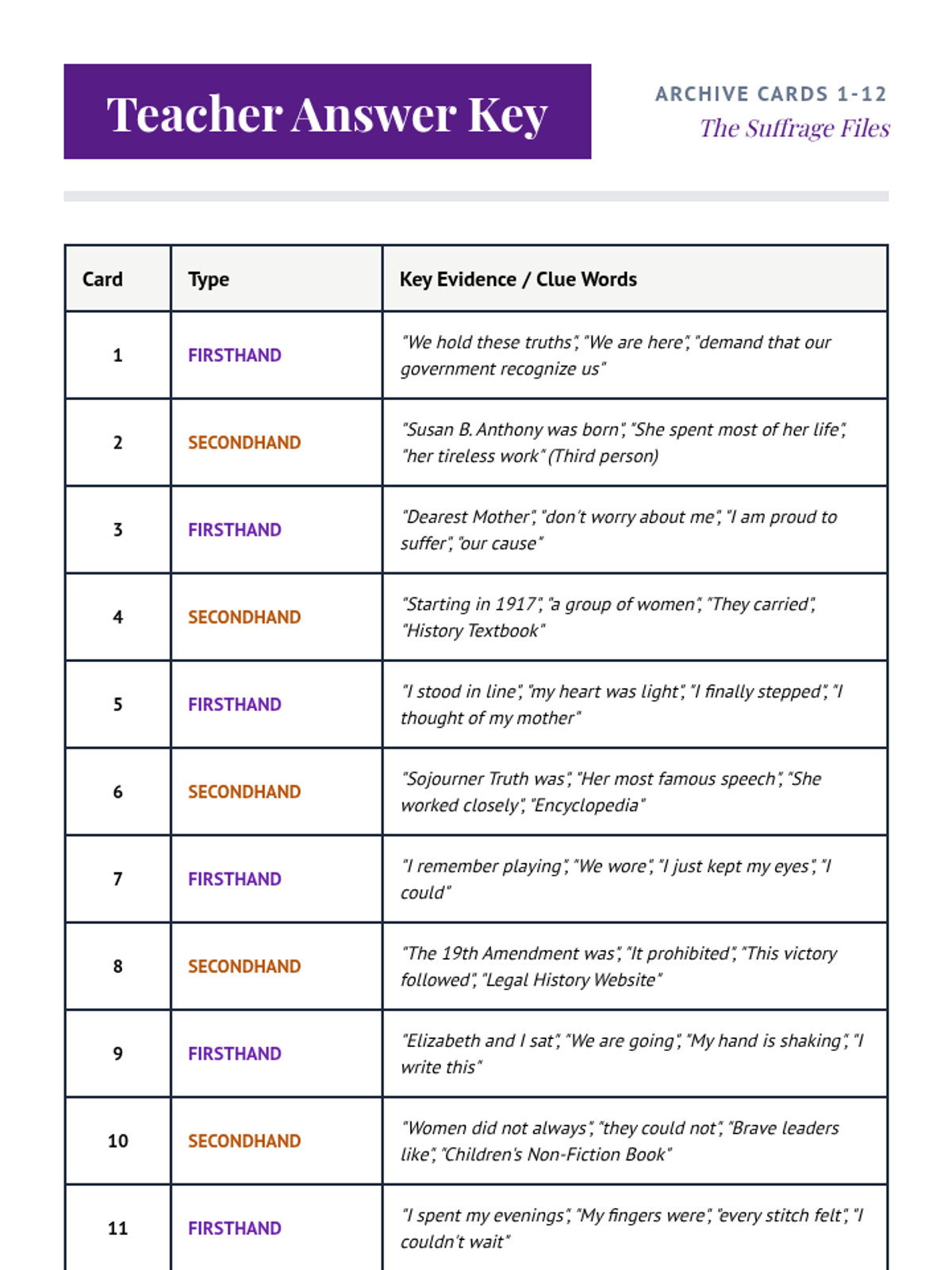
A comprehensive lesson comparing first and secondhand accounts using the historical lens of the Women's Suffrage Movement. Students will analyze primary and secondary sources to understand different perspectives and purposes.
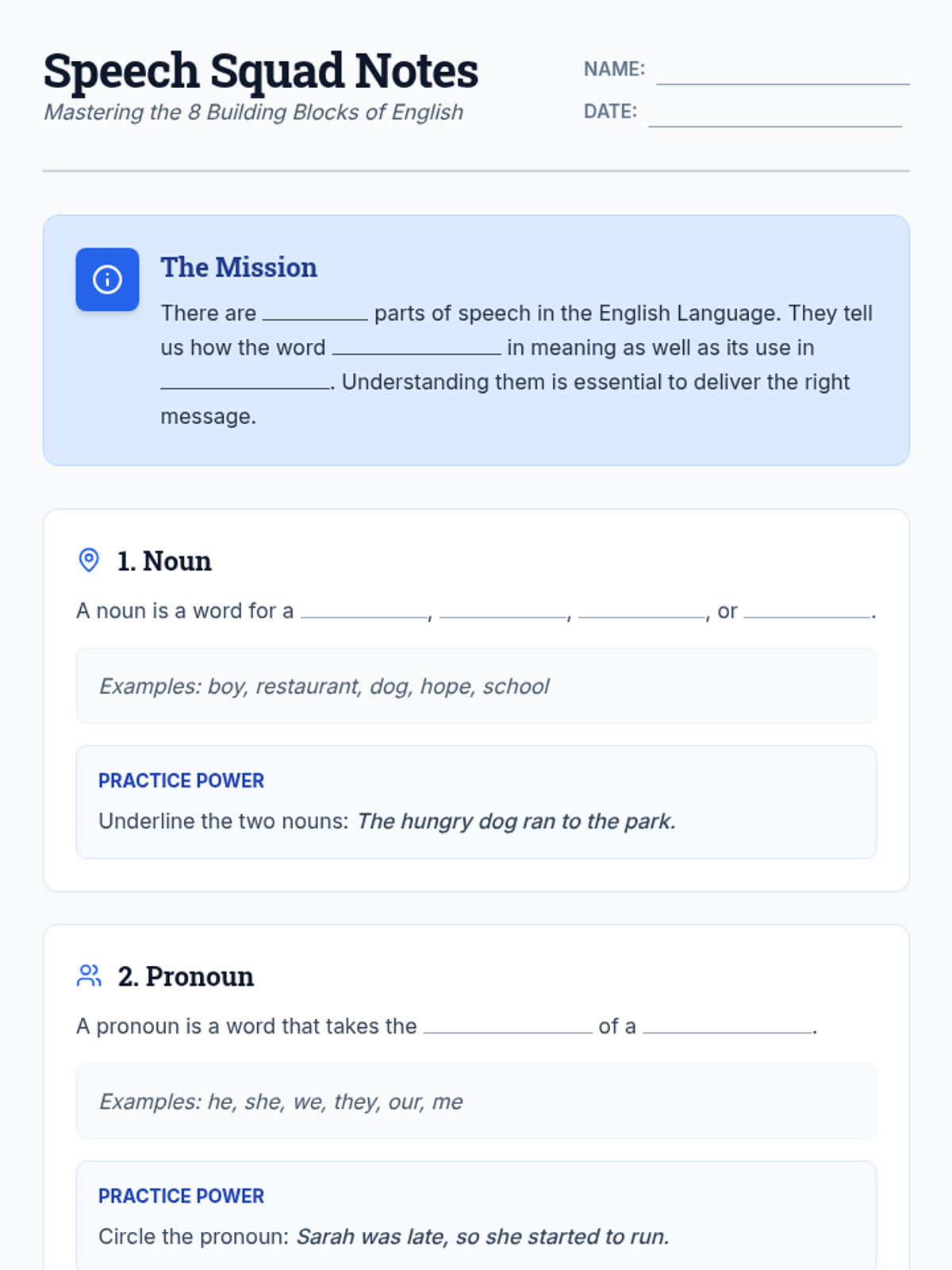
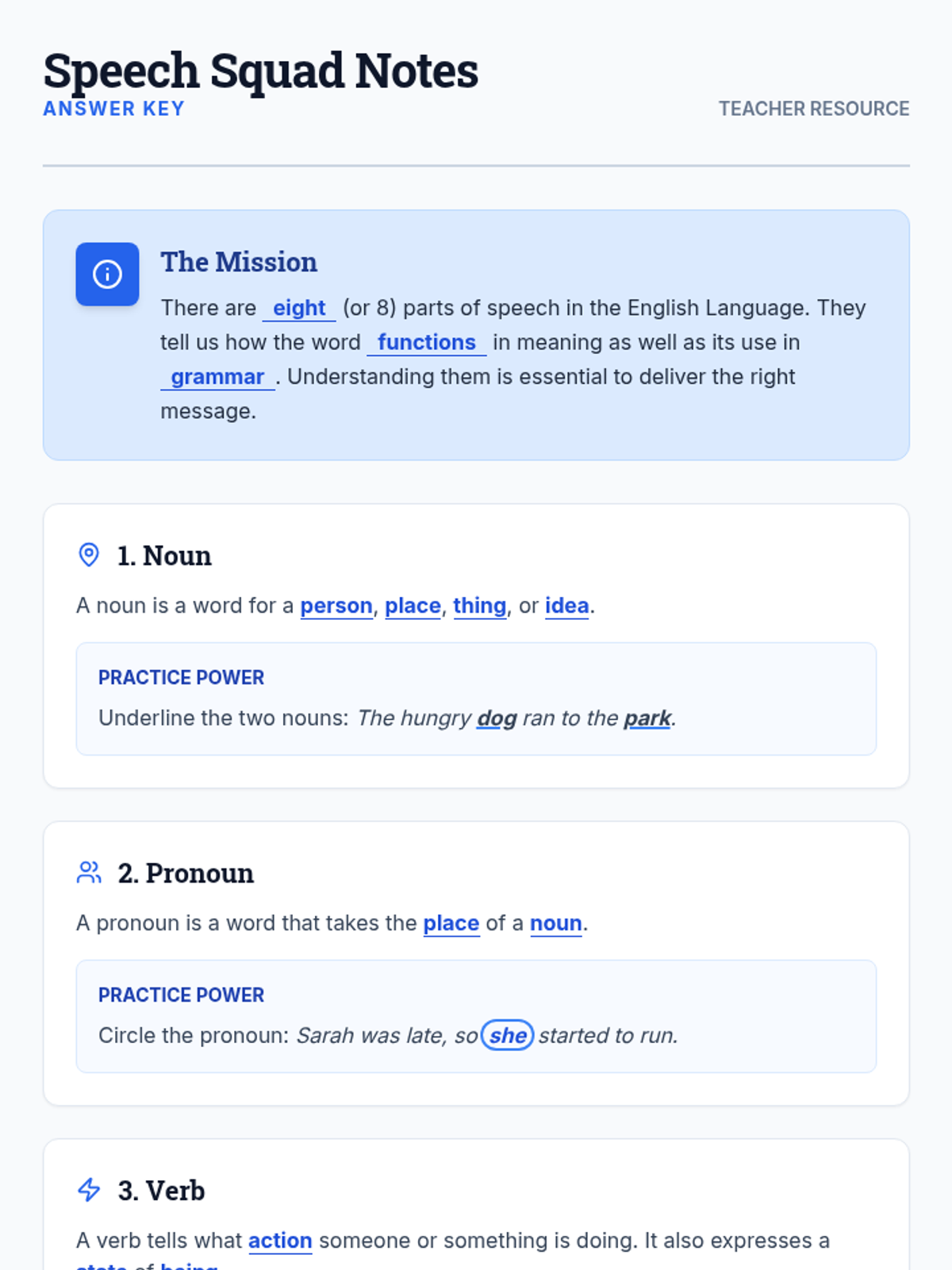
An introductory lesson on the eight parts of speech in the English language, focusing on their definitions, functions, and identification in sentences.
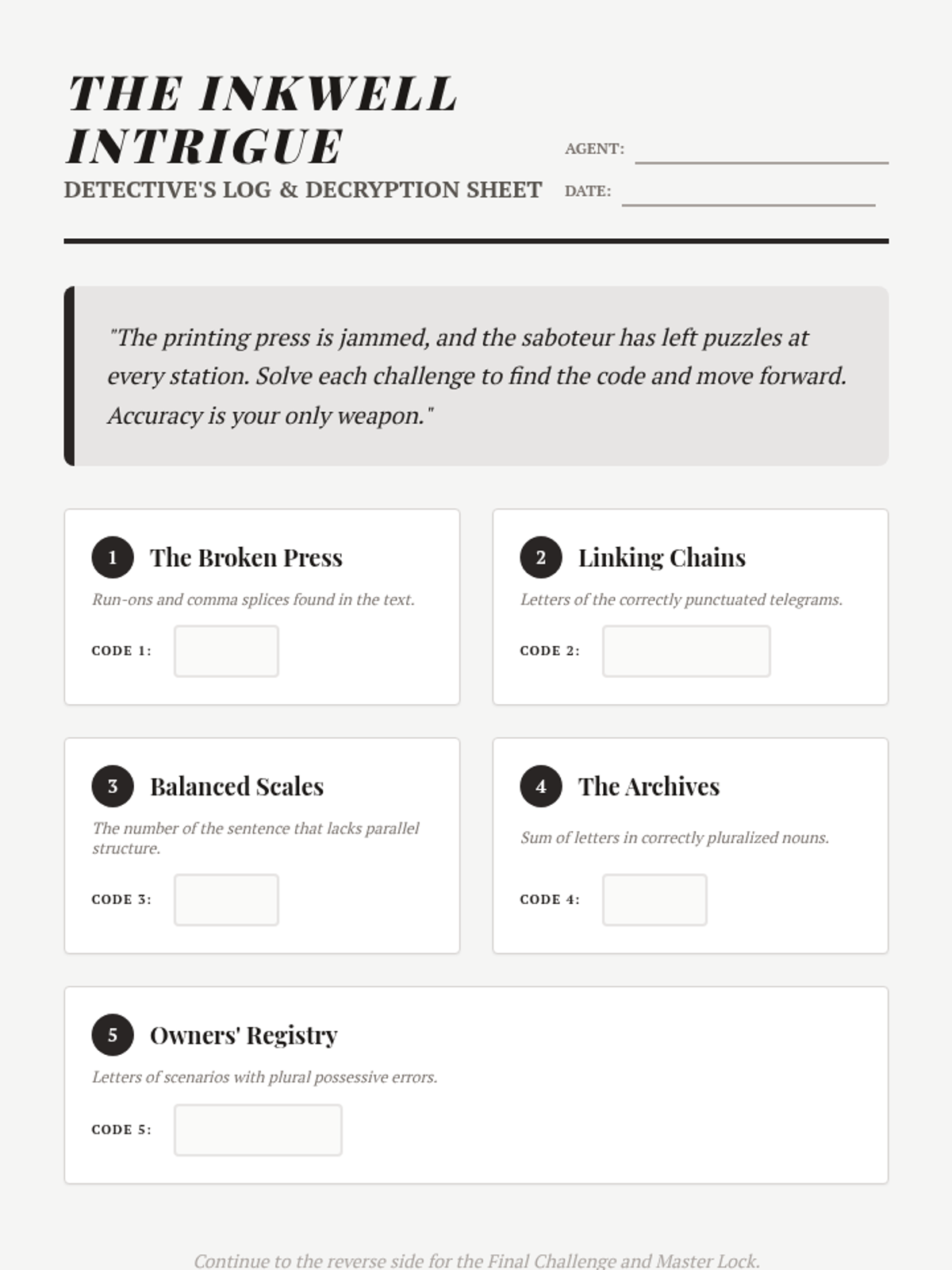
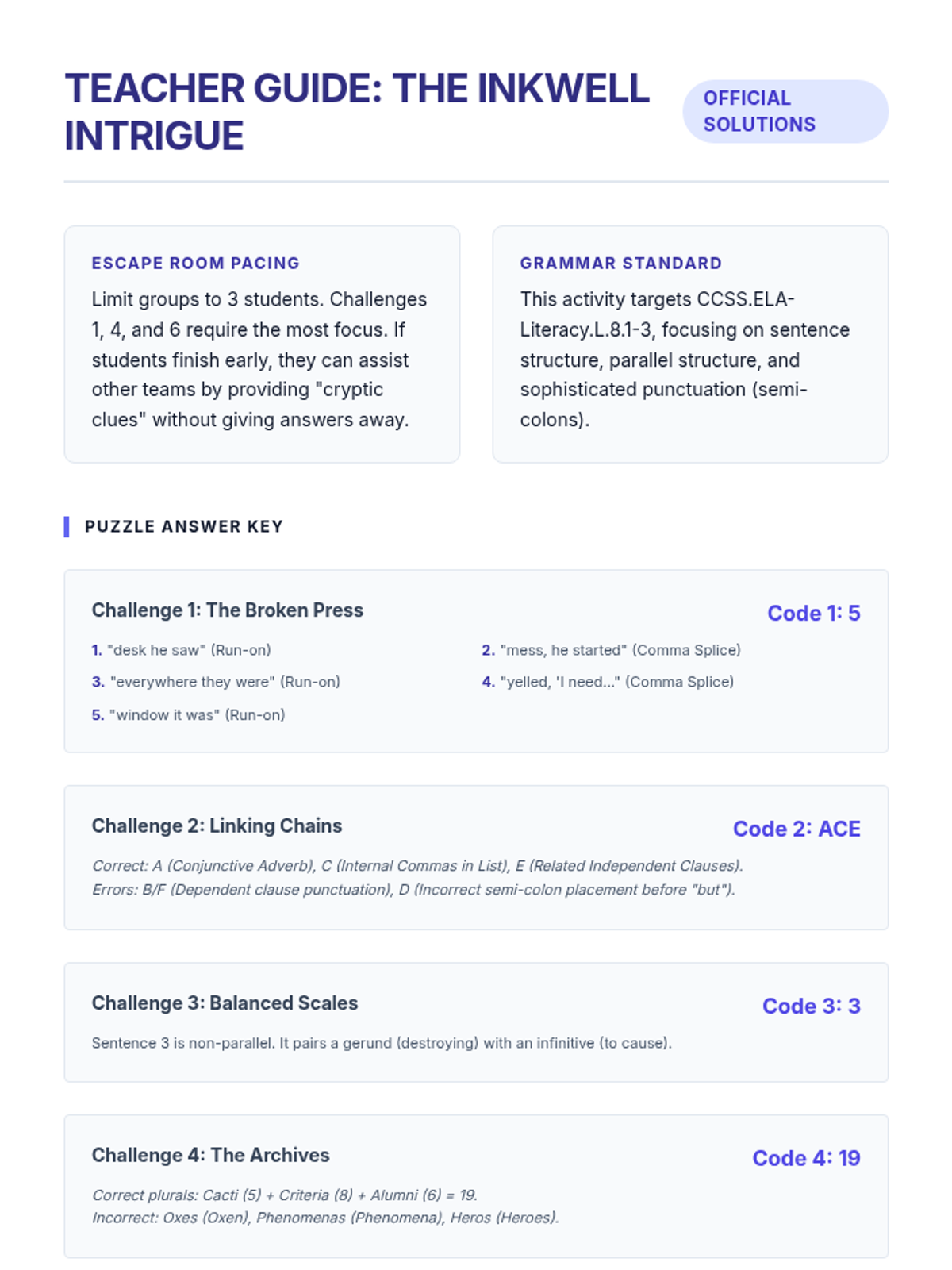
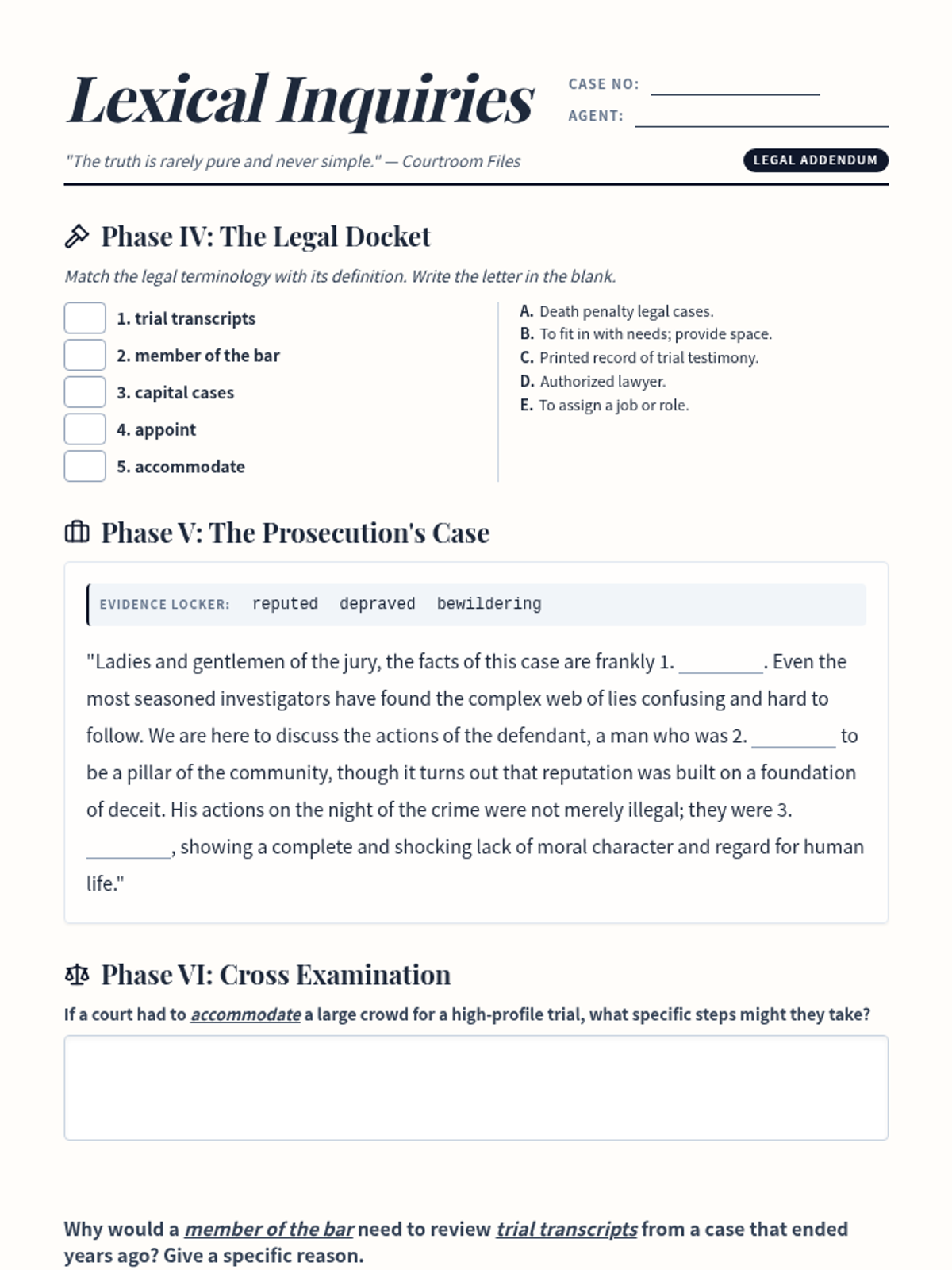
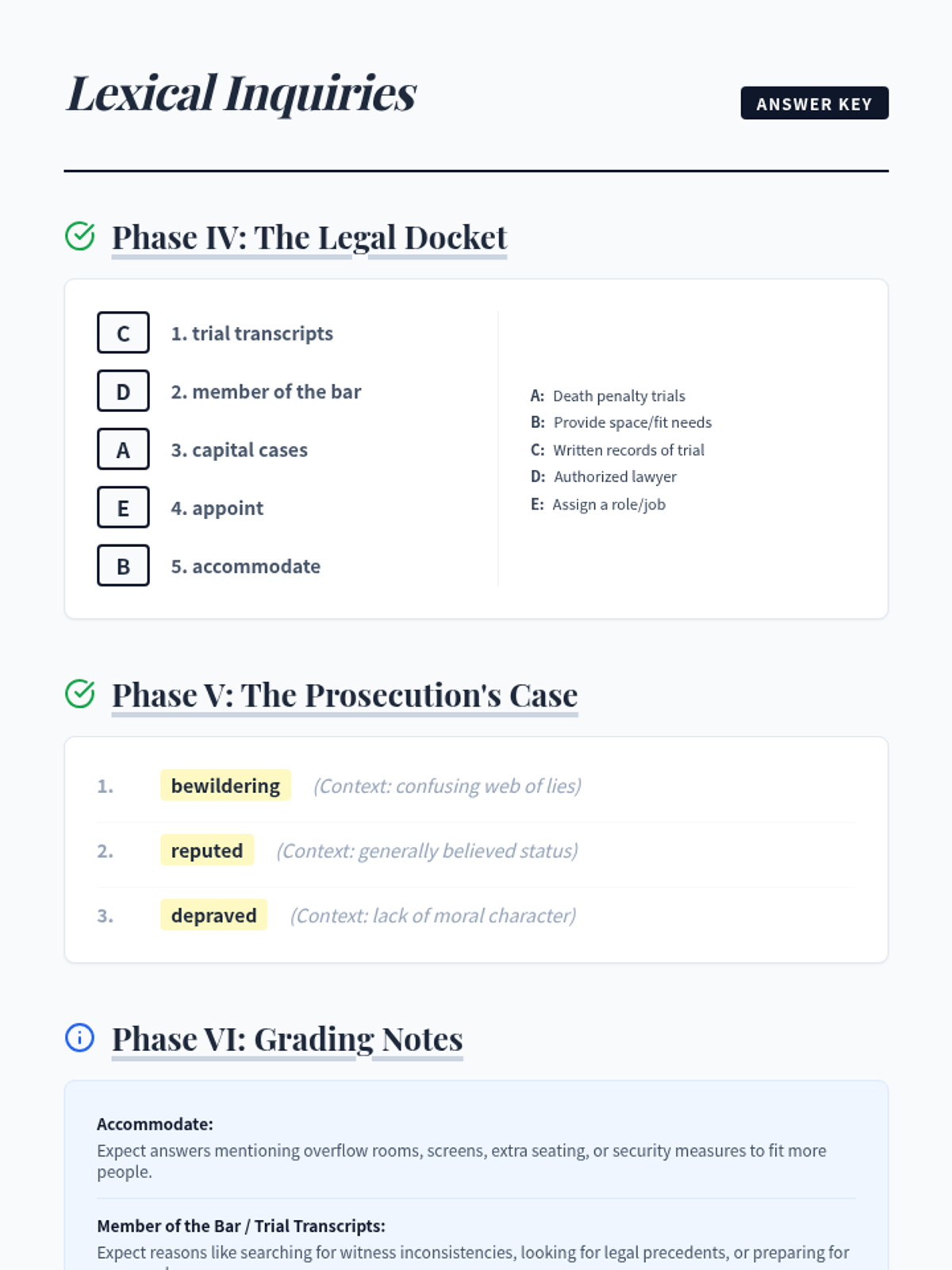
A high-stakes grammar escape room where 8th-grade students solve linguistic puzzles involving comma splices, semi-colons, parallel structure, and complex plurals to unlock the secrets of a mysterious Victorian printing house.
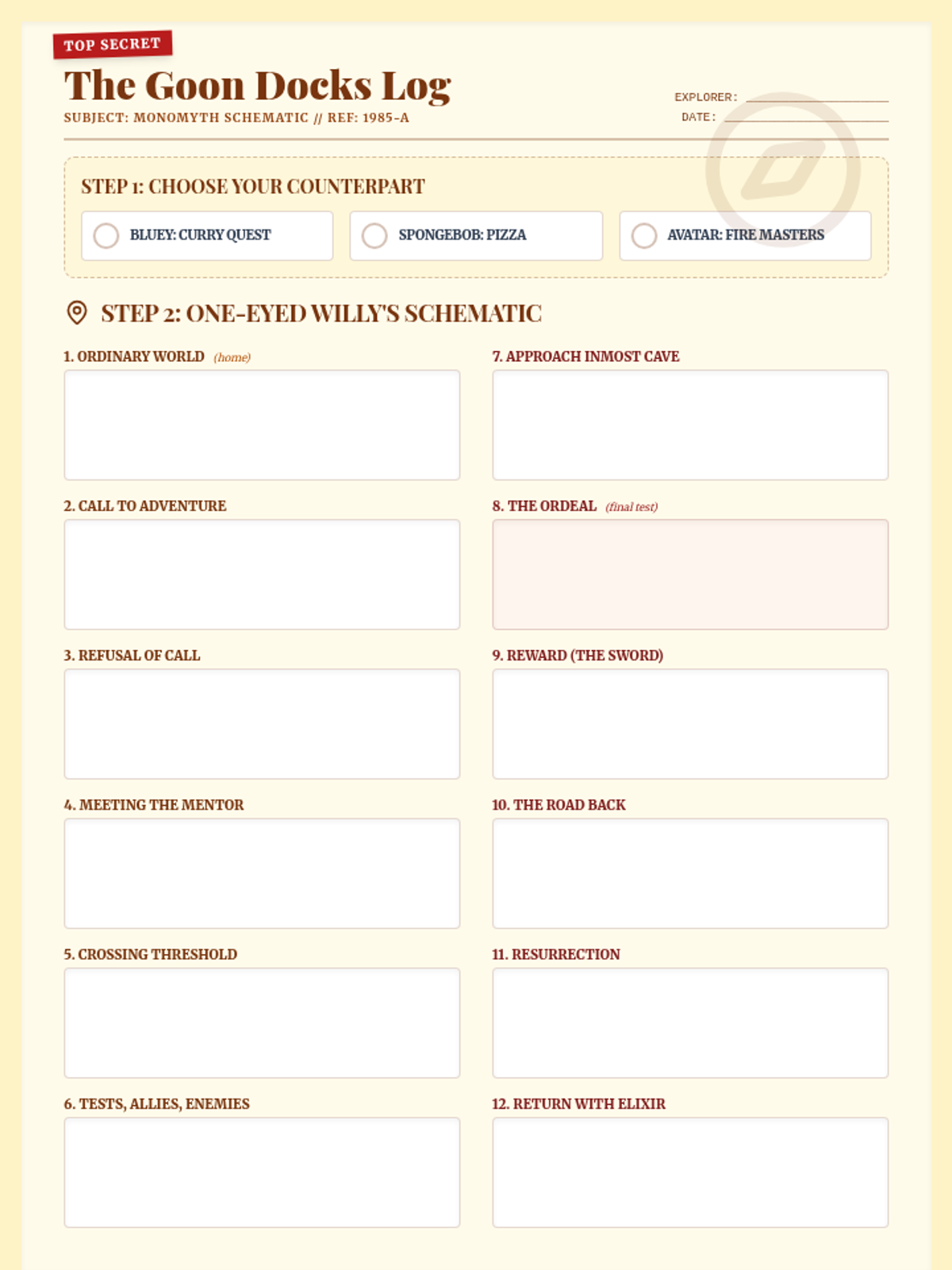
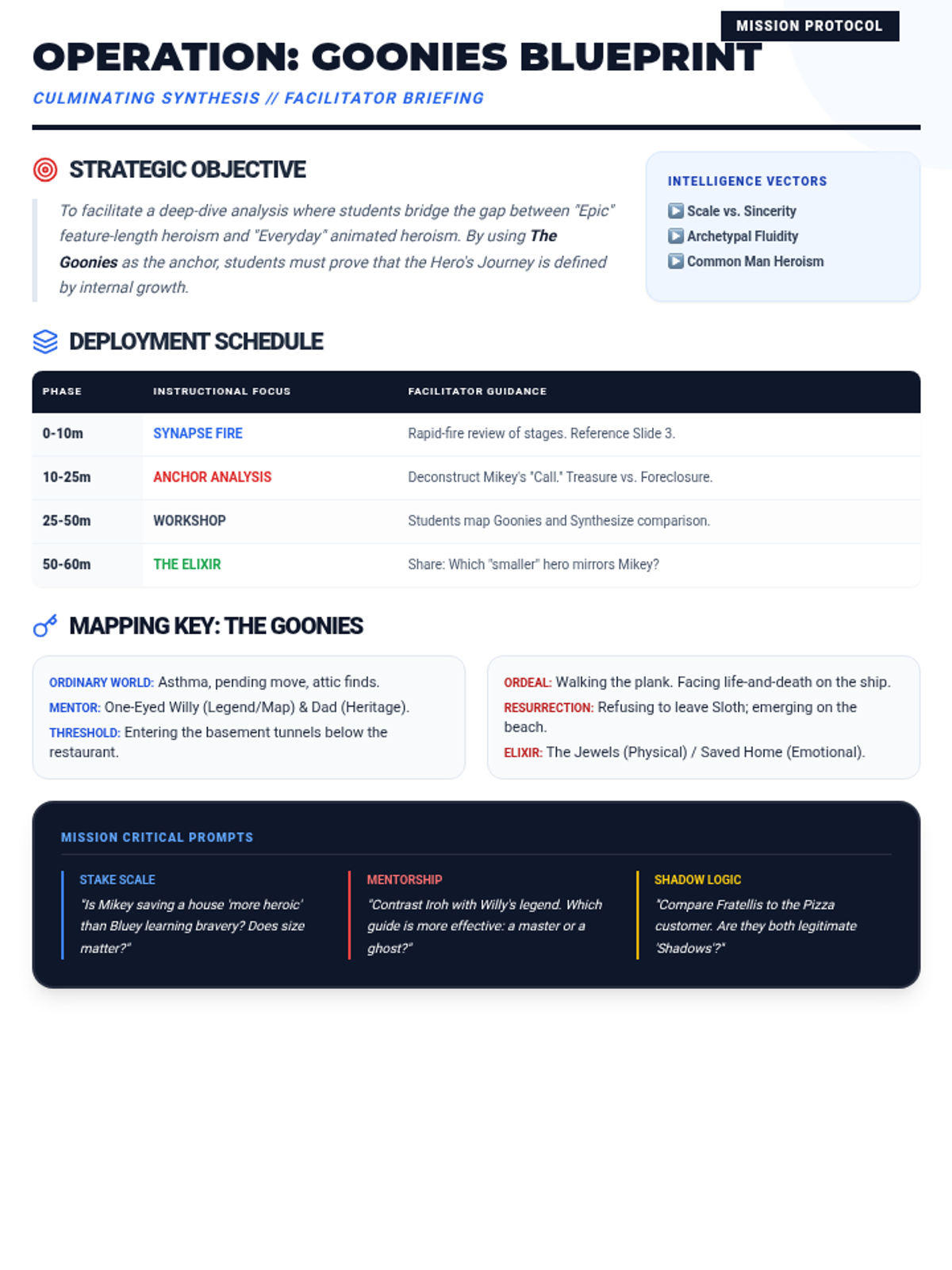
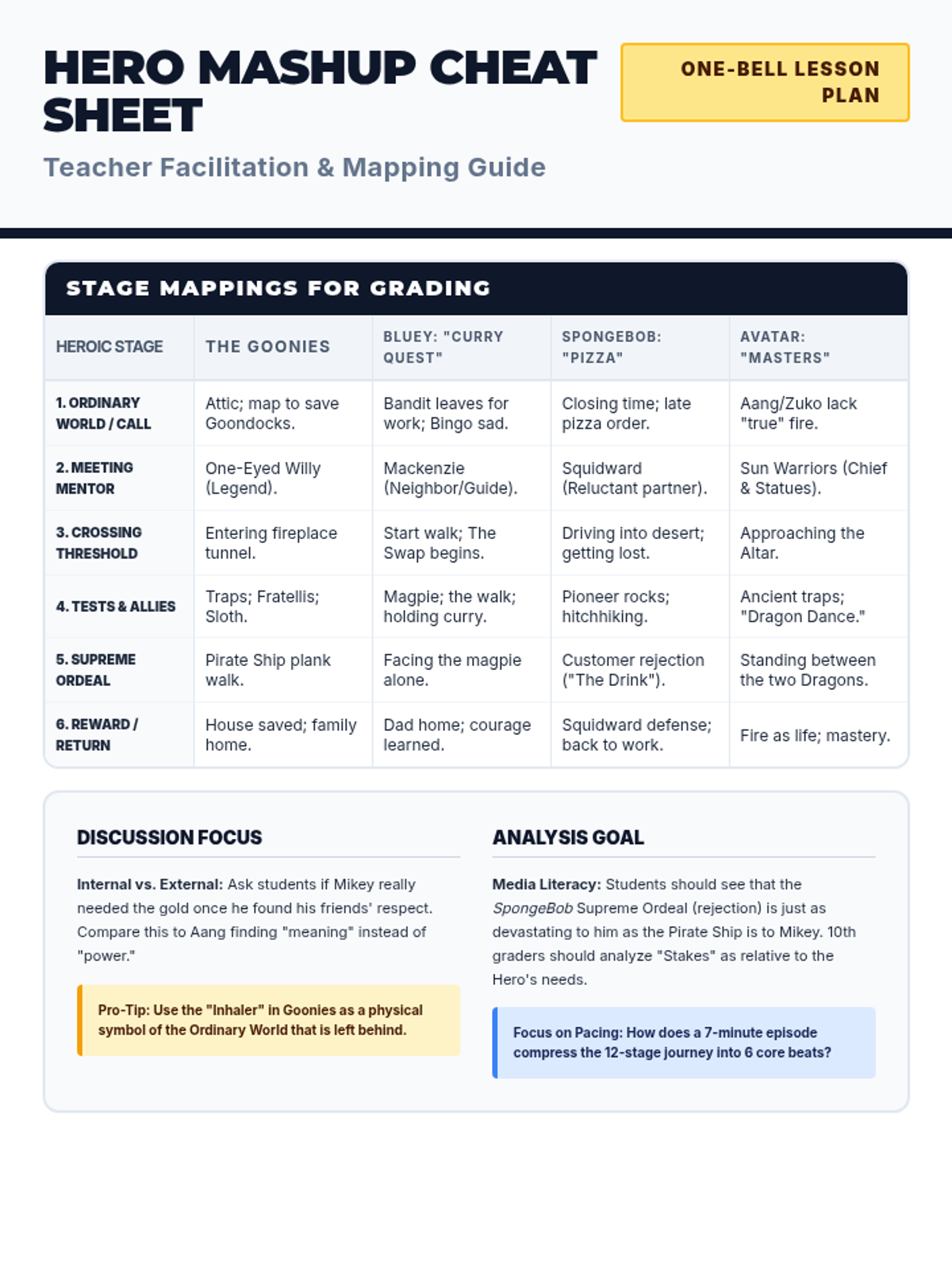
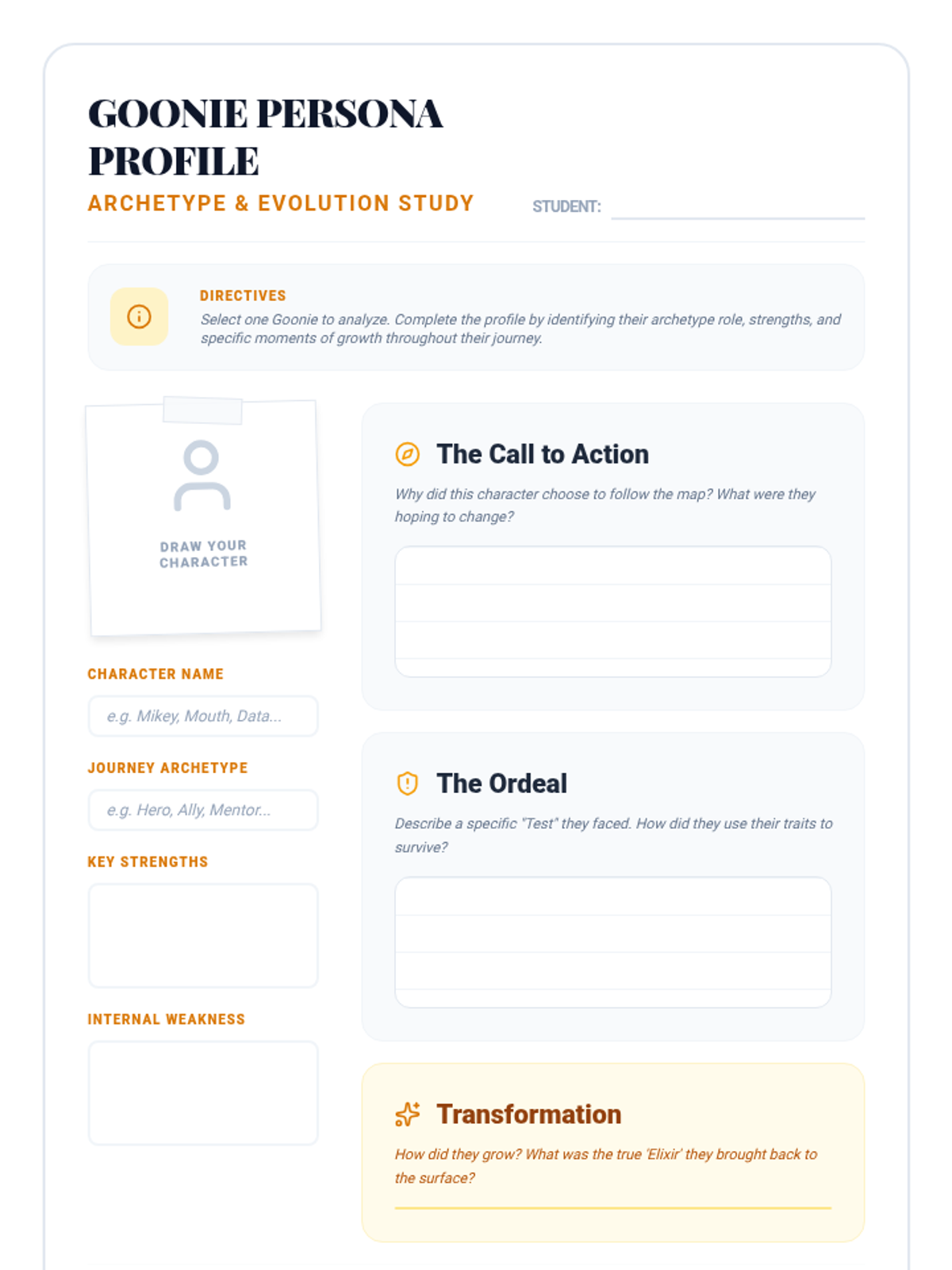
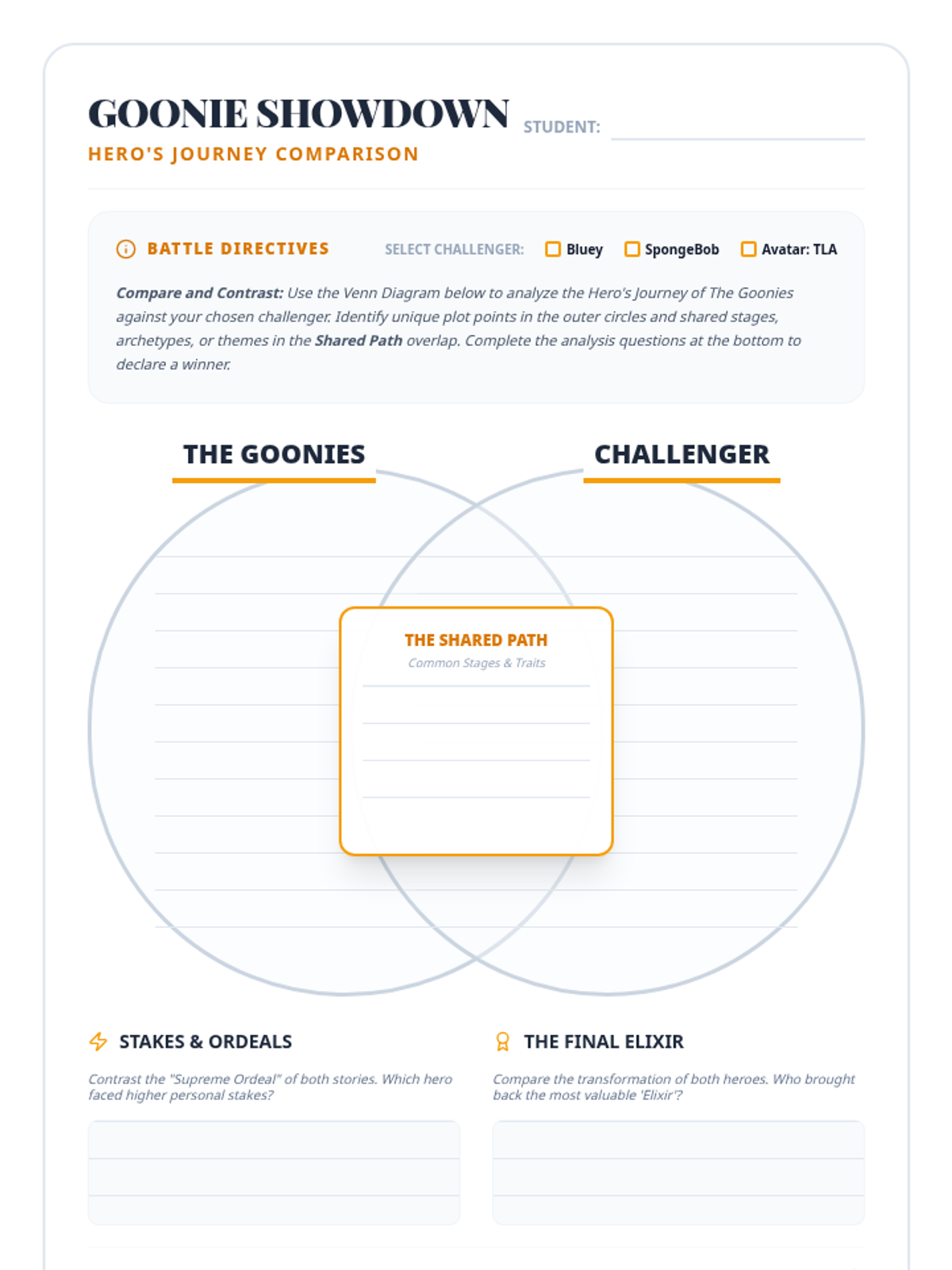
A dynamic exploration of the Hero's Journey stages and archetypes using popular media like Bluey, SpongeBob, Avatar, and The Goonies to deepen analytical skills.
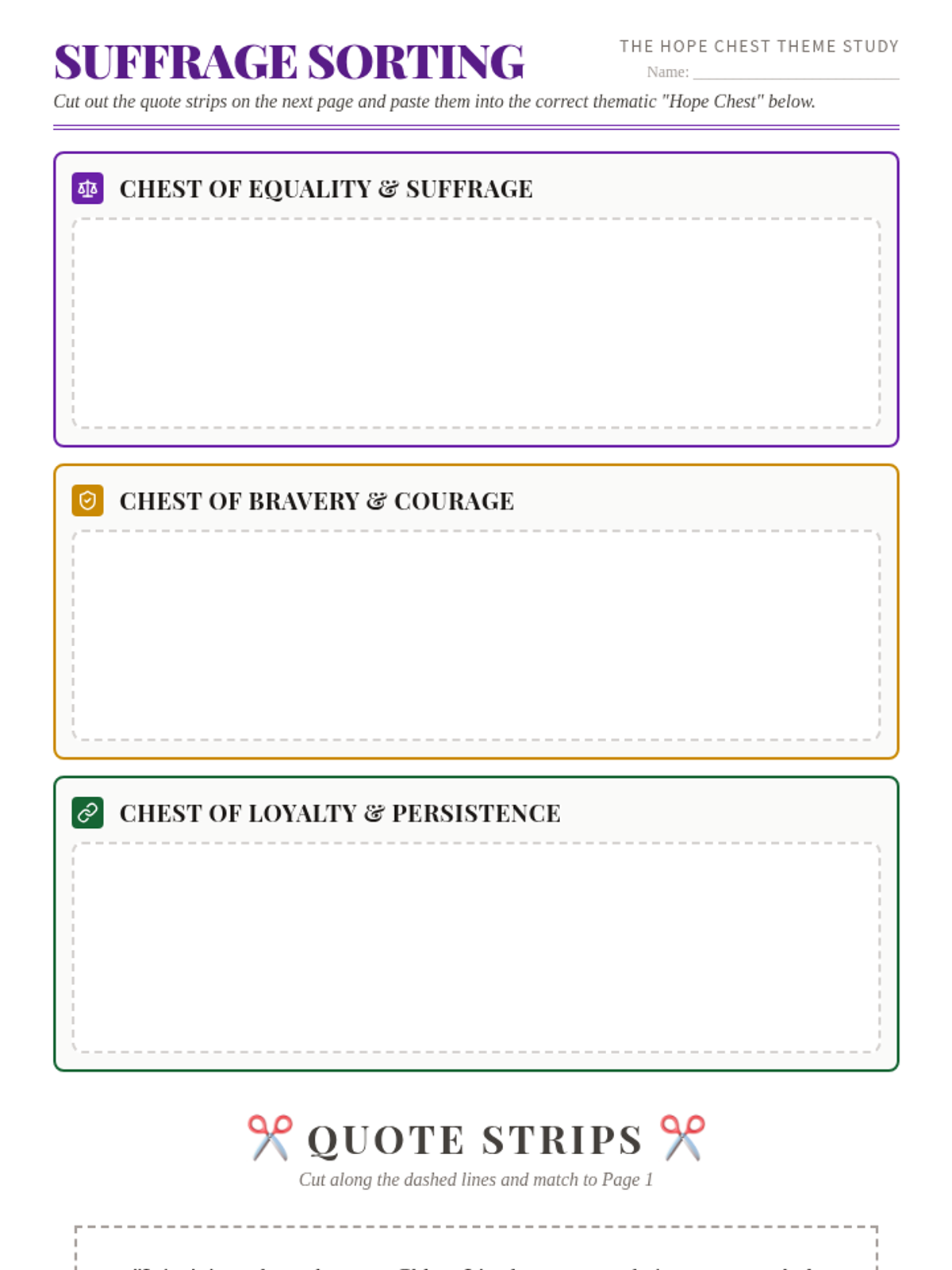
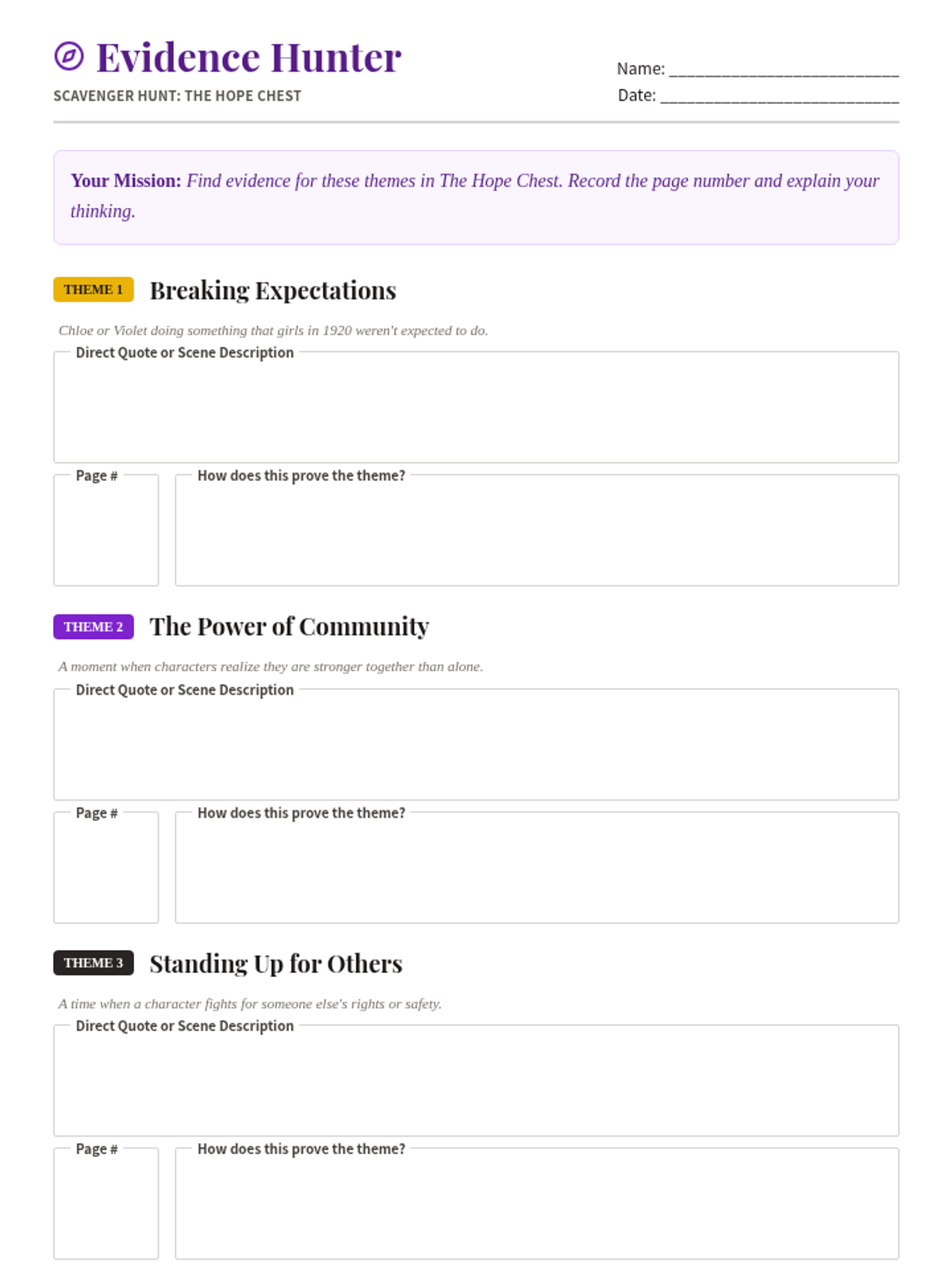
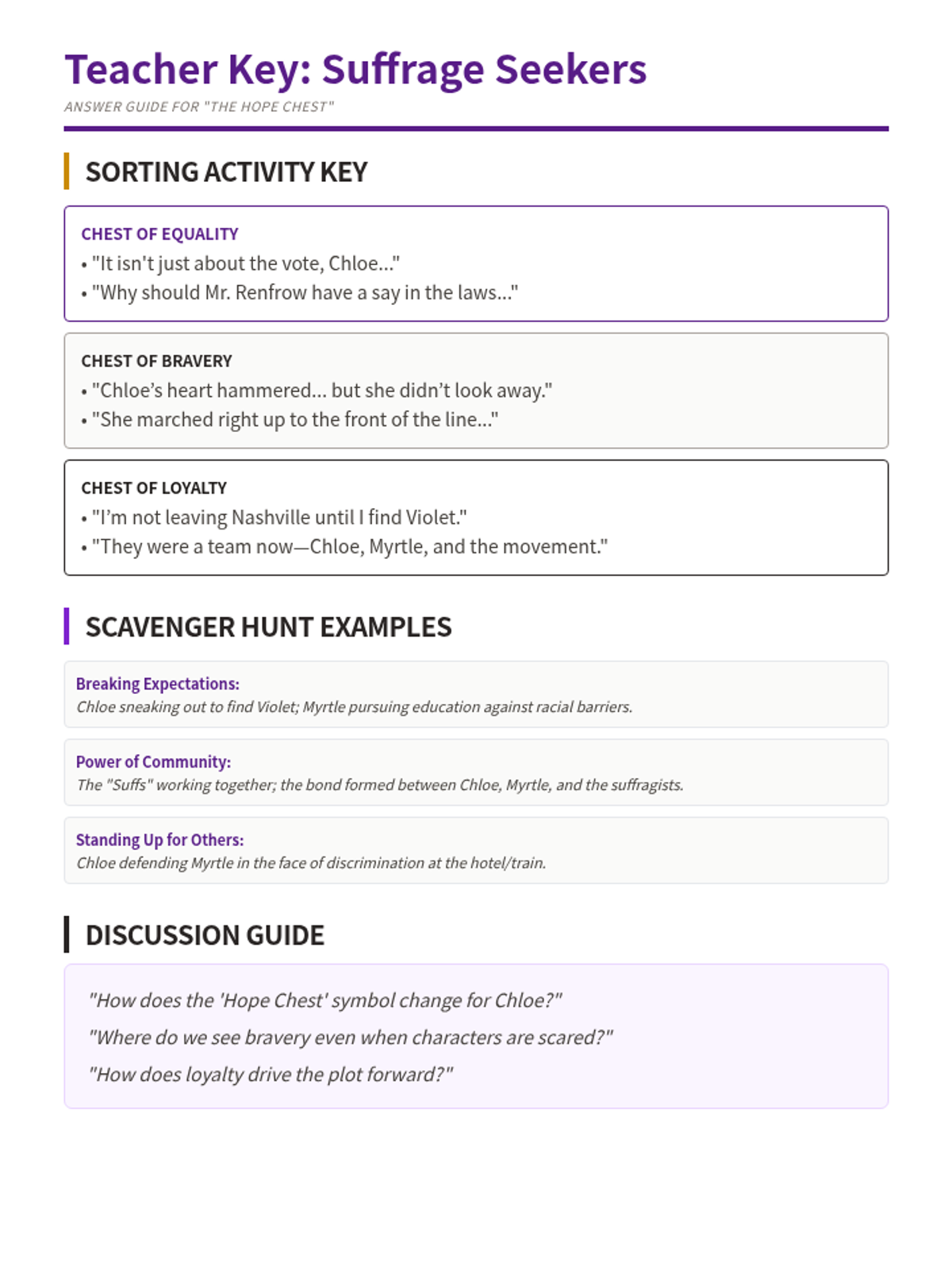
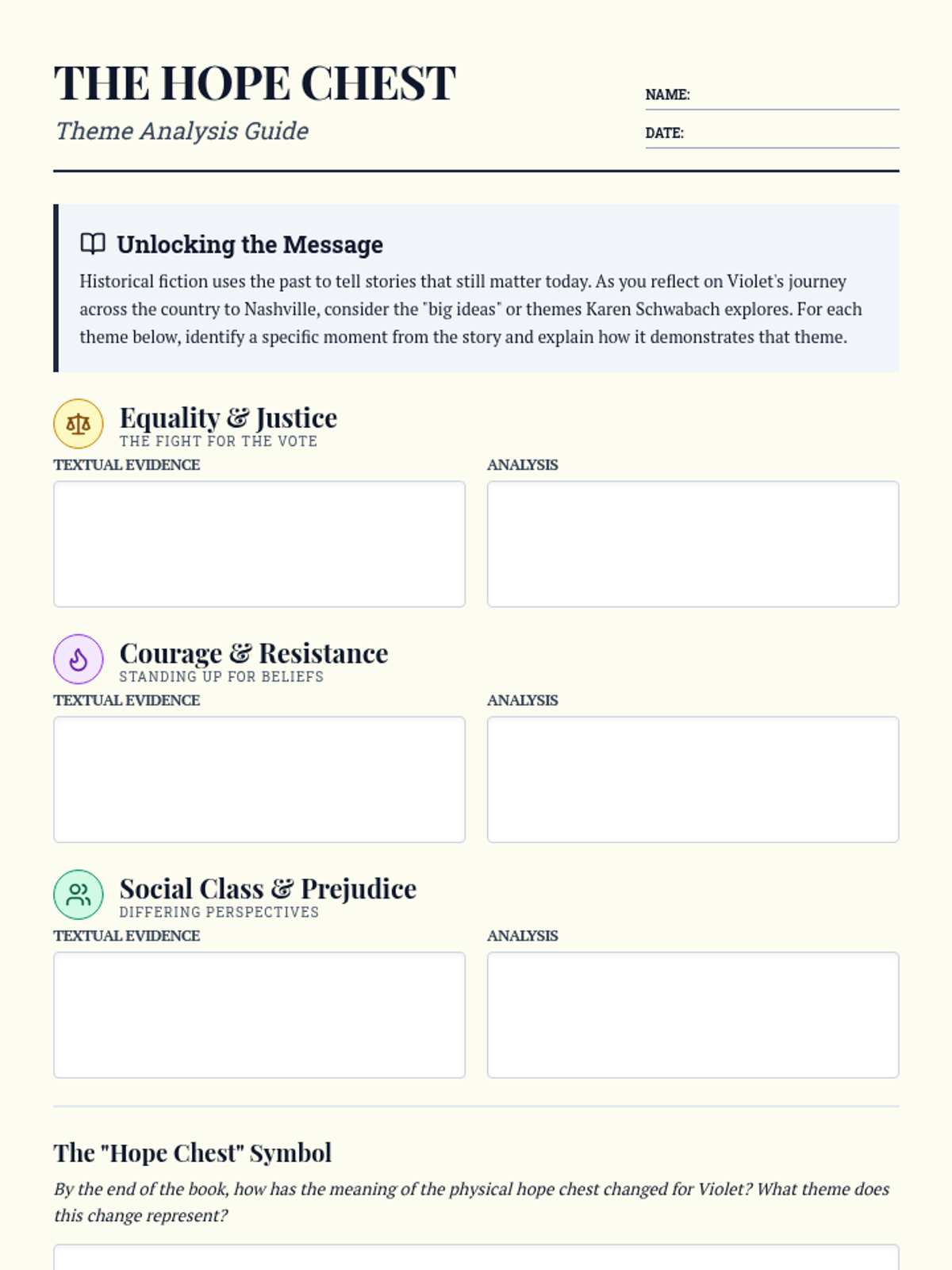
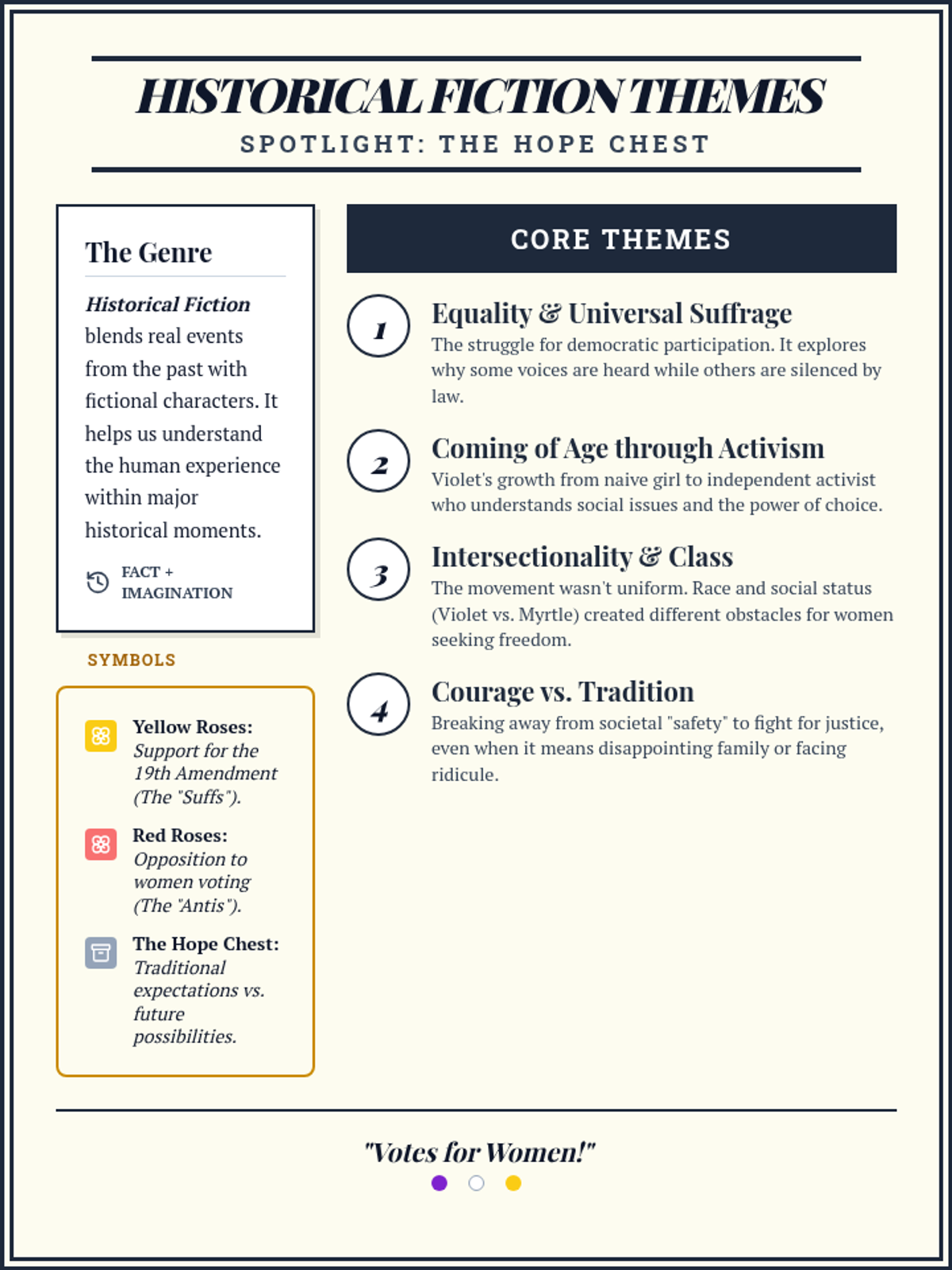
A lesson focused on identifying themes and citing textual evidence from The Hope Chest, centering on the suffrage movement and character growth.
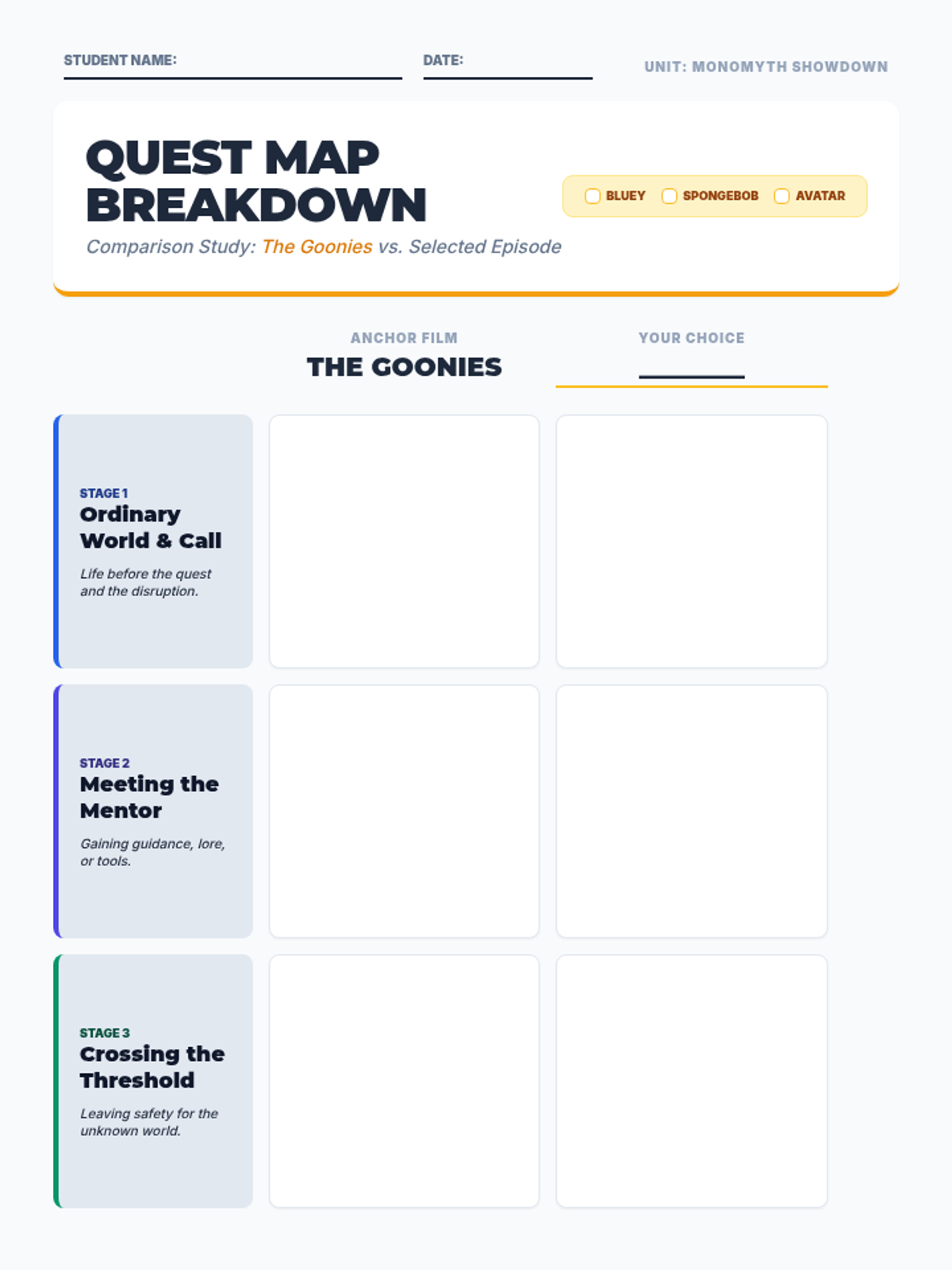
A one-period visual comparison activity where students map the Hero's Journey stages for The Goonies and one of three previously watched animated episodes. Students analyze how different genres and lengths of media interpret the monomyth structure.
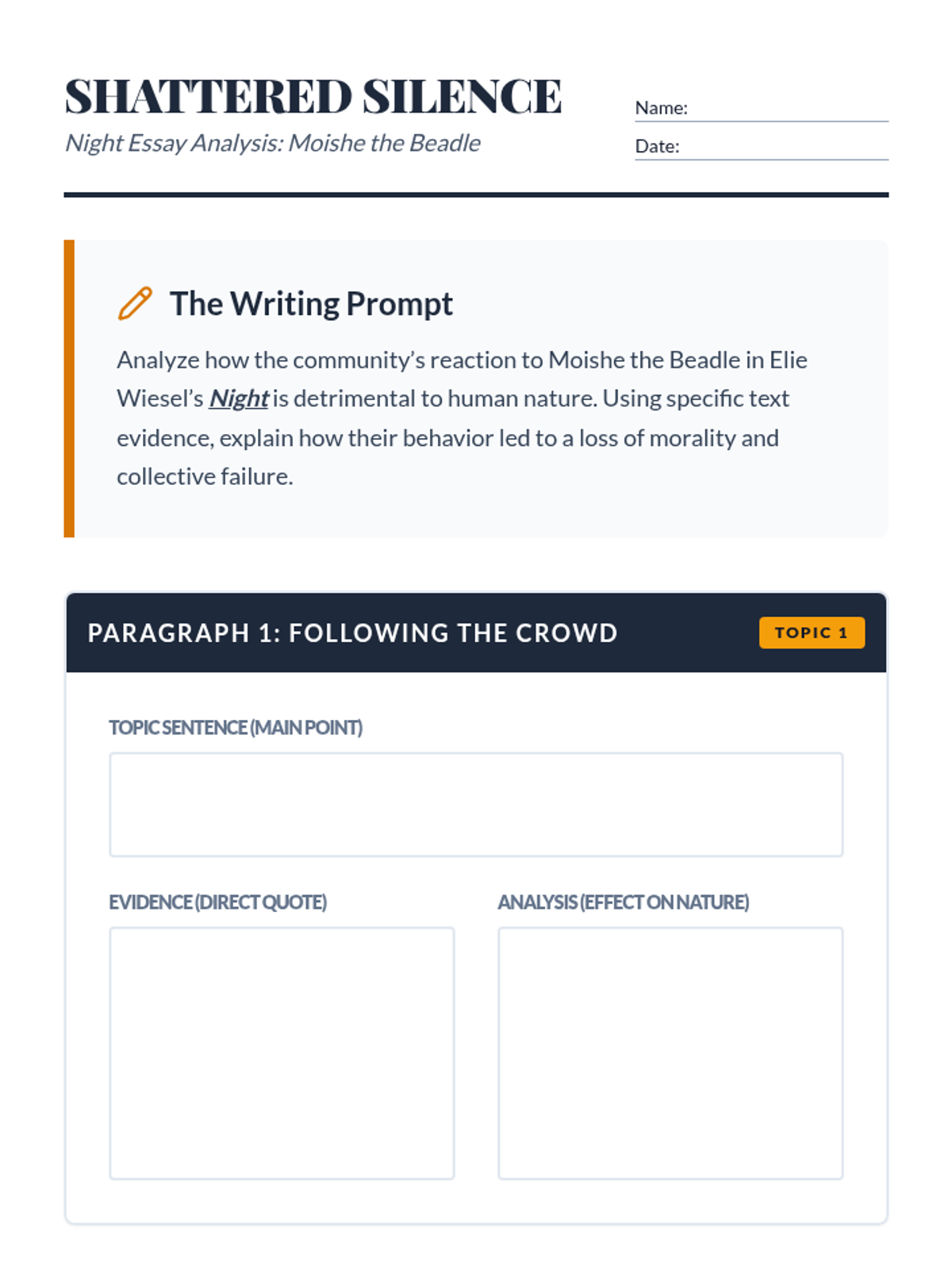
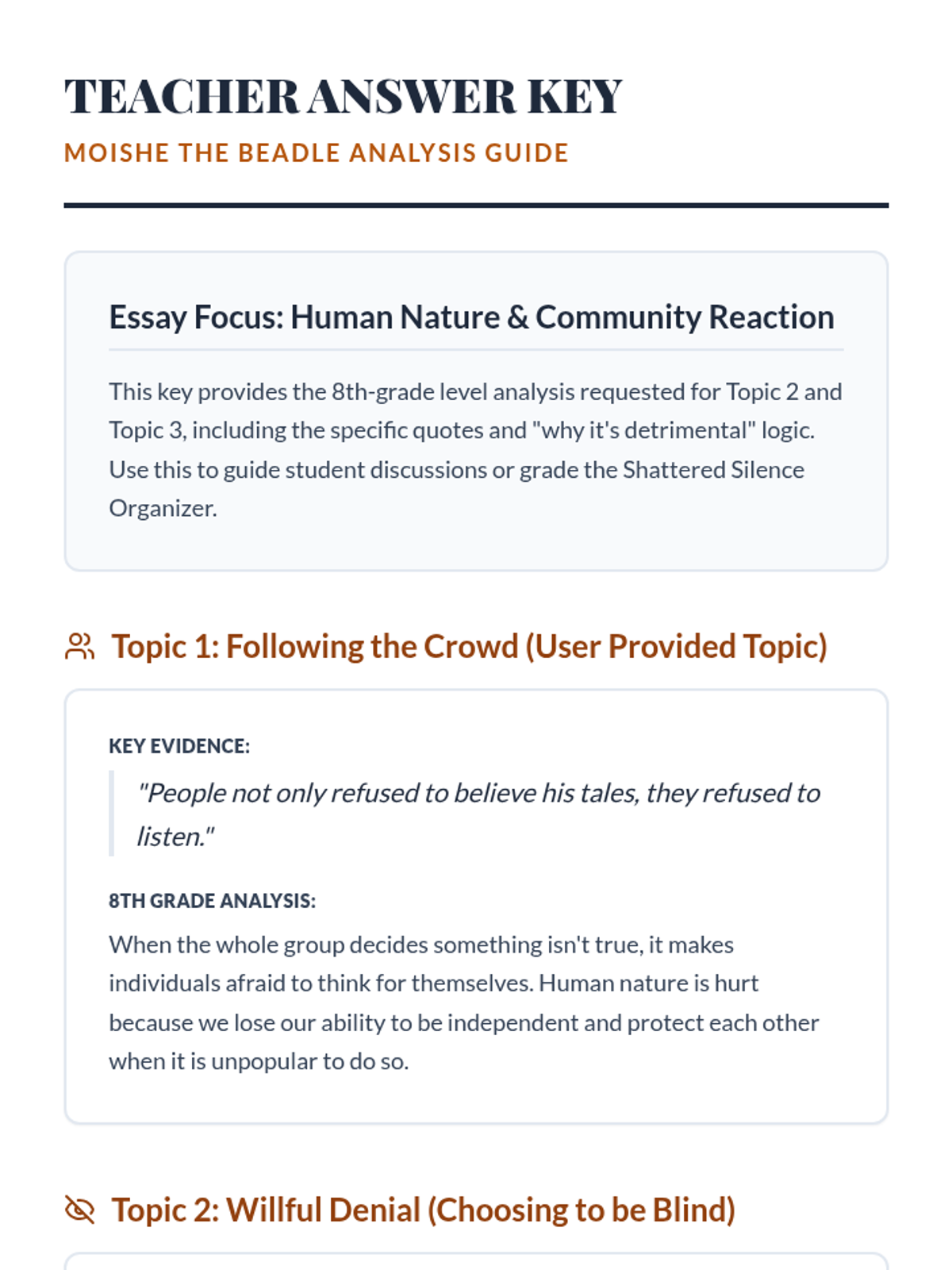
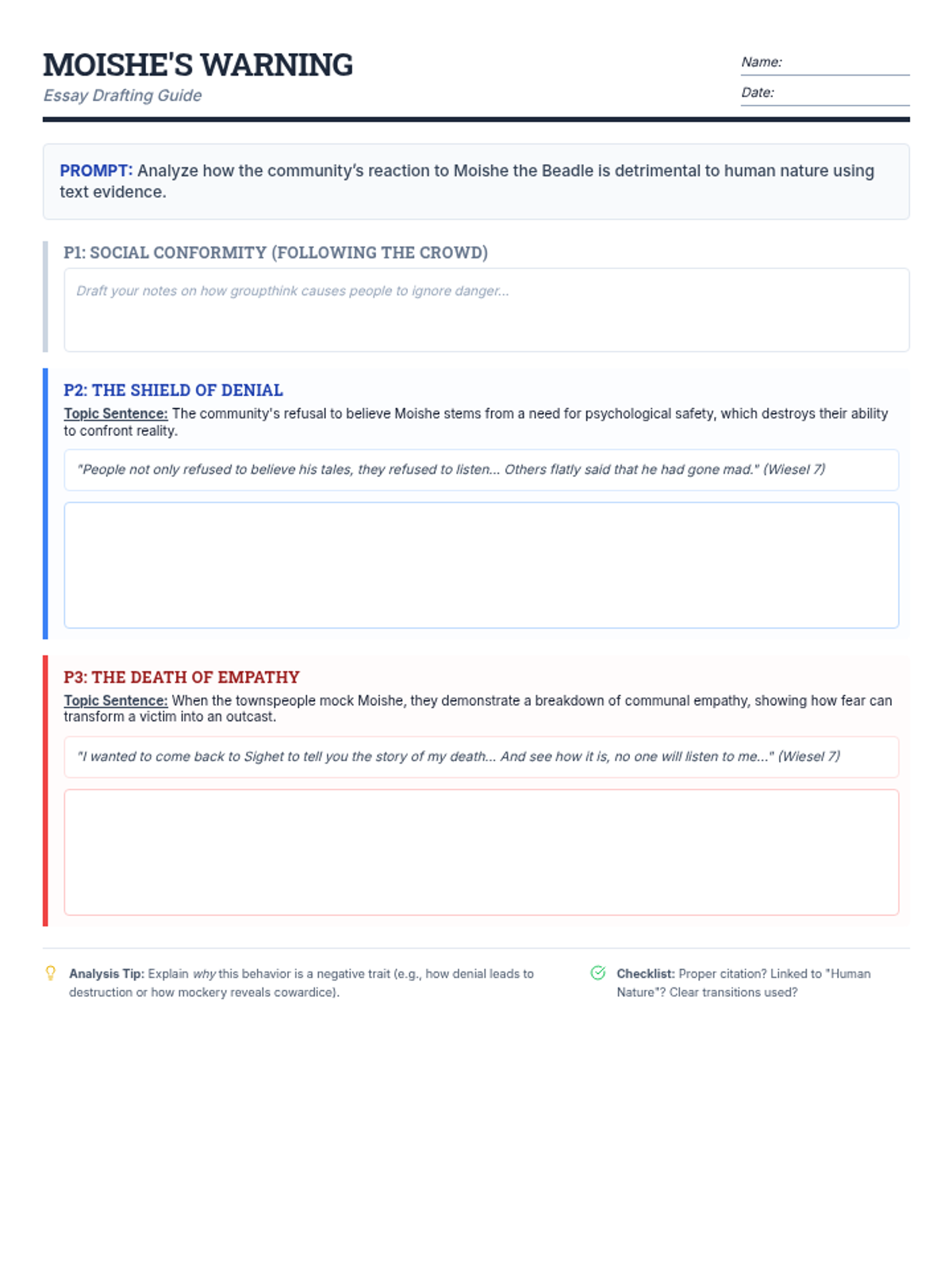
An analysis of the community's reaction to Moishe the Beadle in Elie Wiesel's 'Night', focusing on how their collective denial and apathy represent a failure of human nature.
A focused analysis of the community's reaction to Moishe the Beadle in Elie Wiesel's 'Night', exploring themes of denial and the breakdown of empathy.
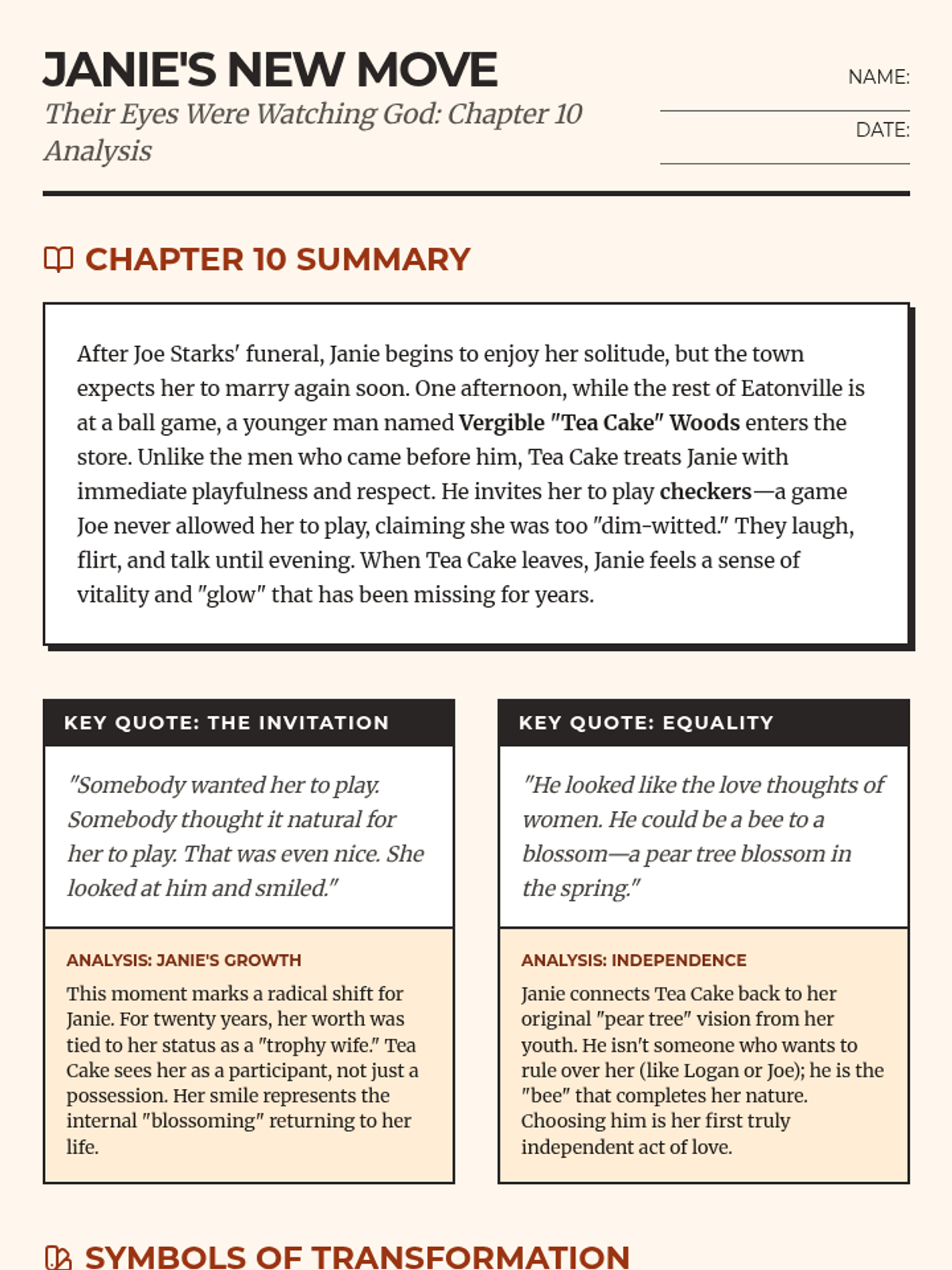
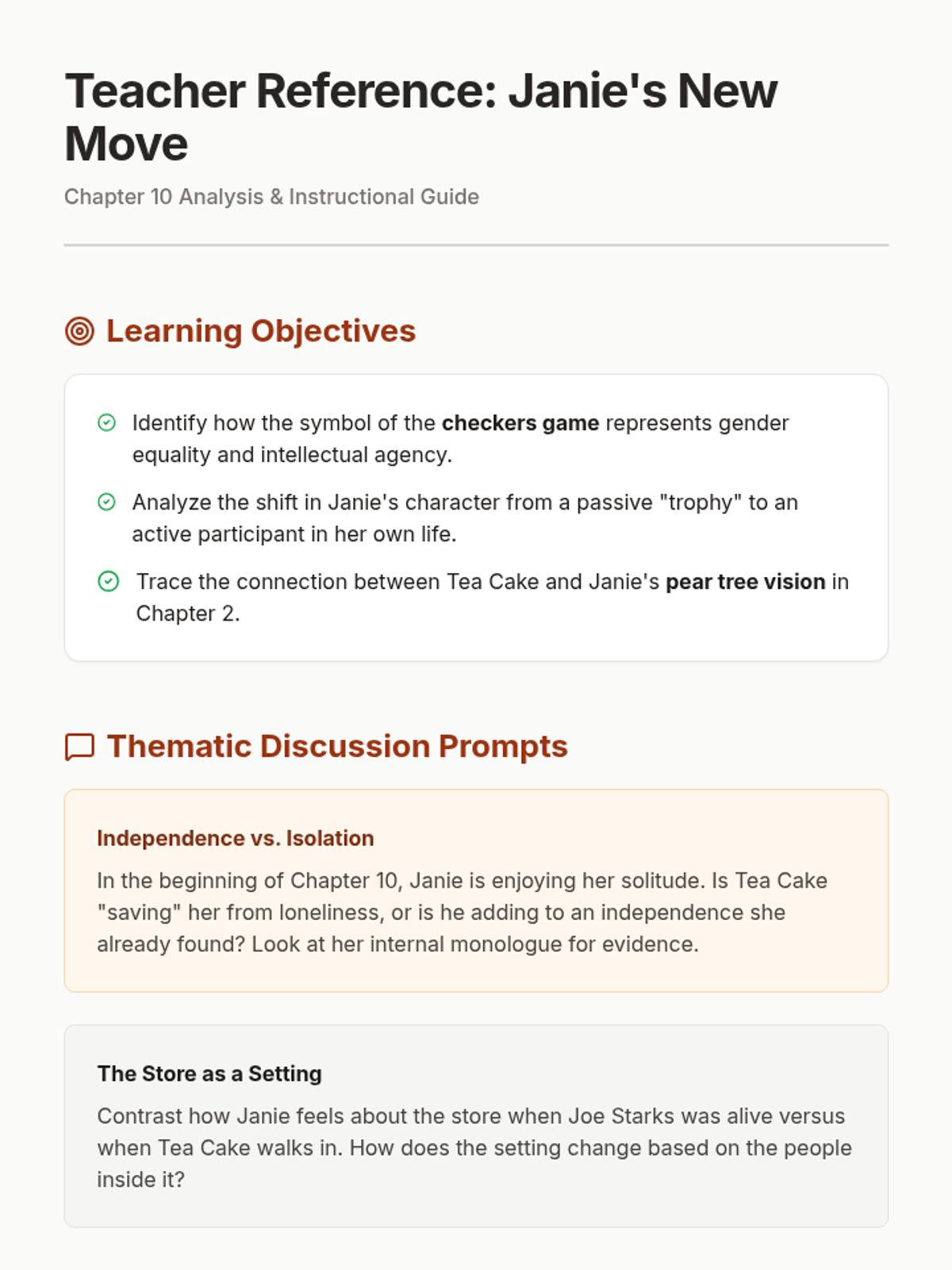
A focused study of Chapter 10 of 'Their Eyes Were Watching God', exploring Janie's first encounter with Tea Cake and the symbolism of their checkers game.
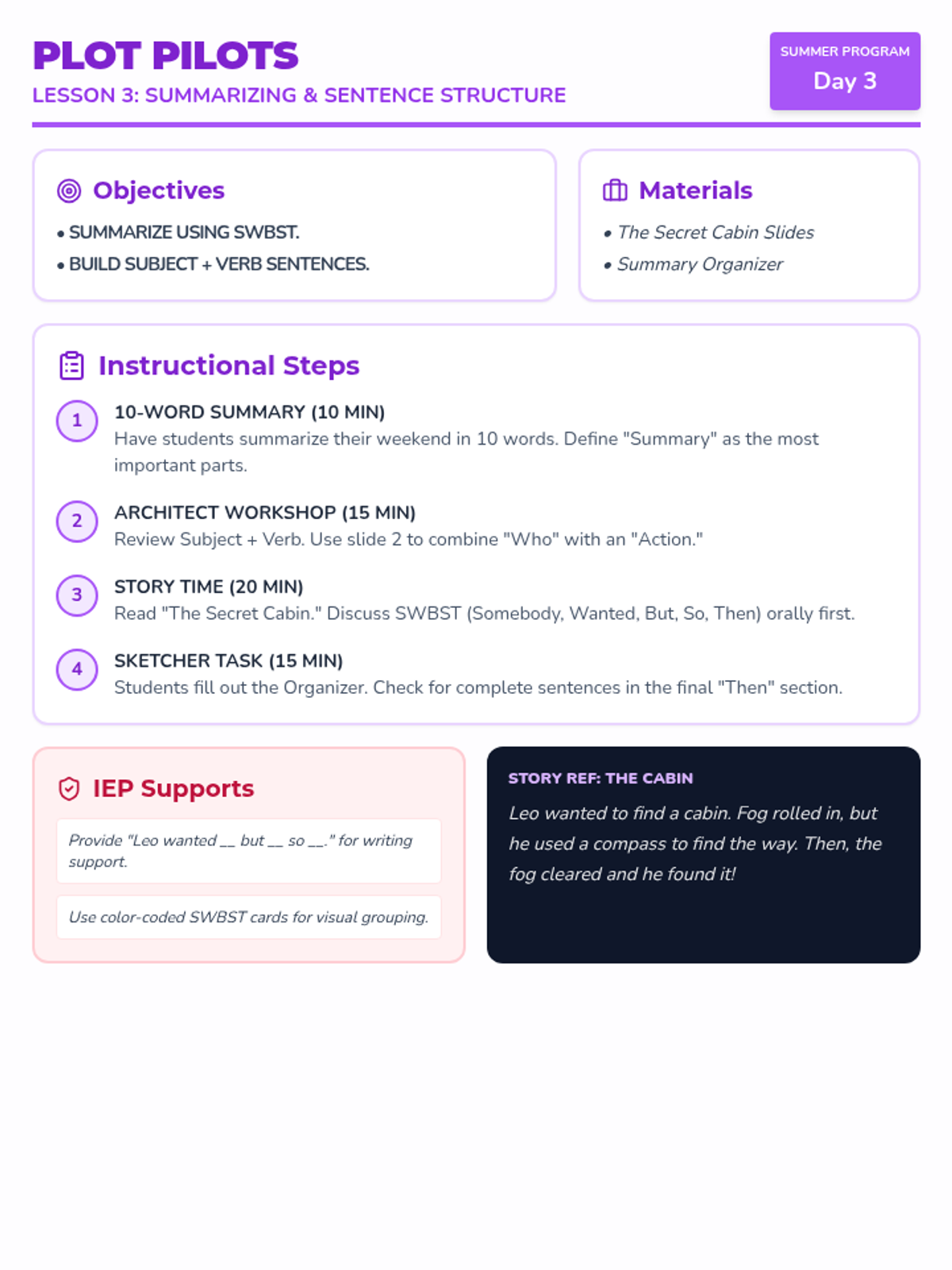
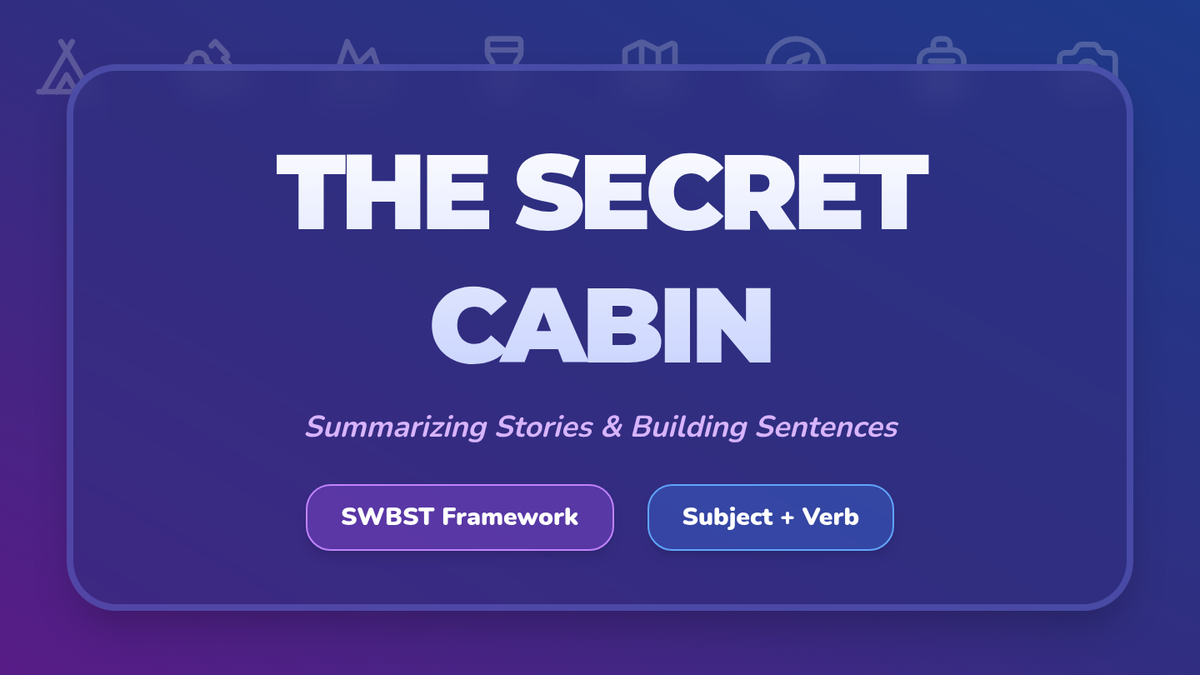
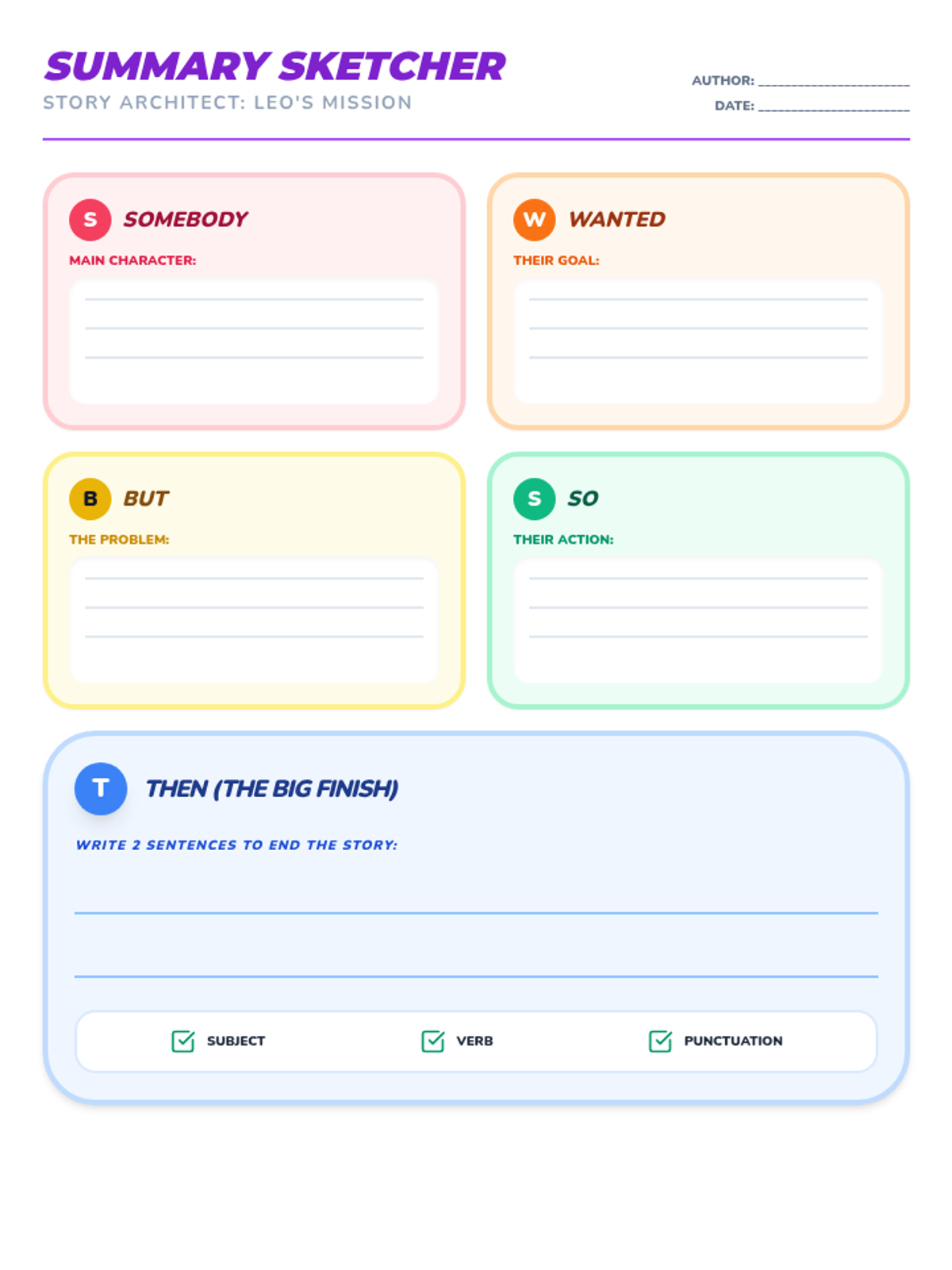
Students will summarize high-interest short stories and practice building complex sentences with proper structure.
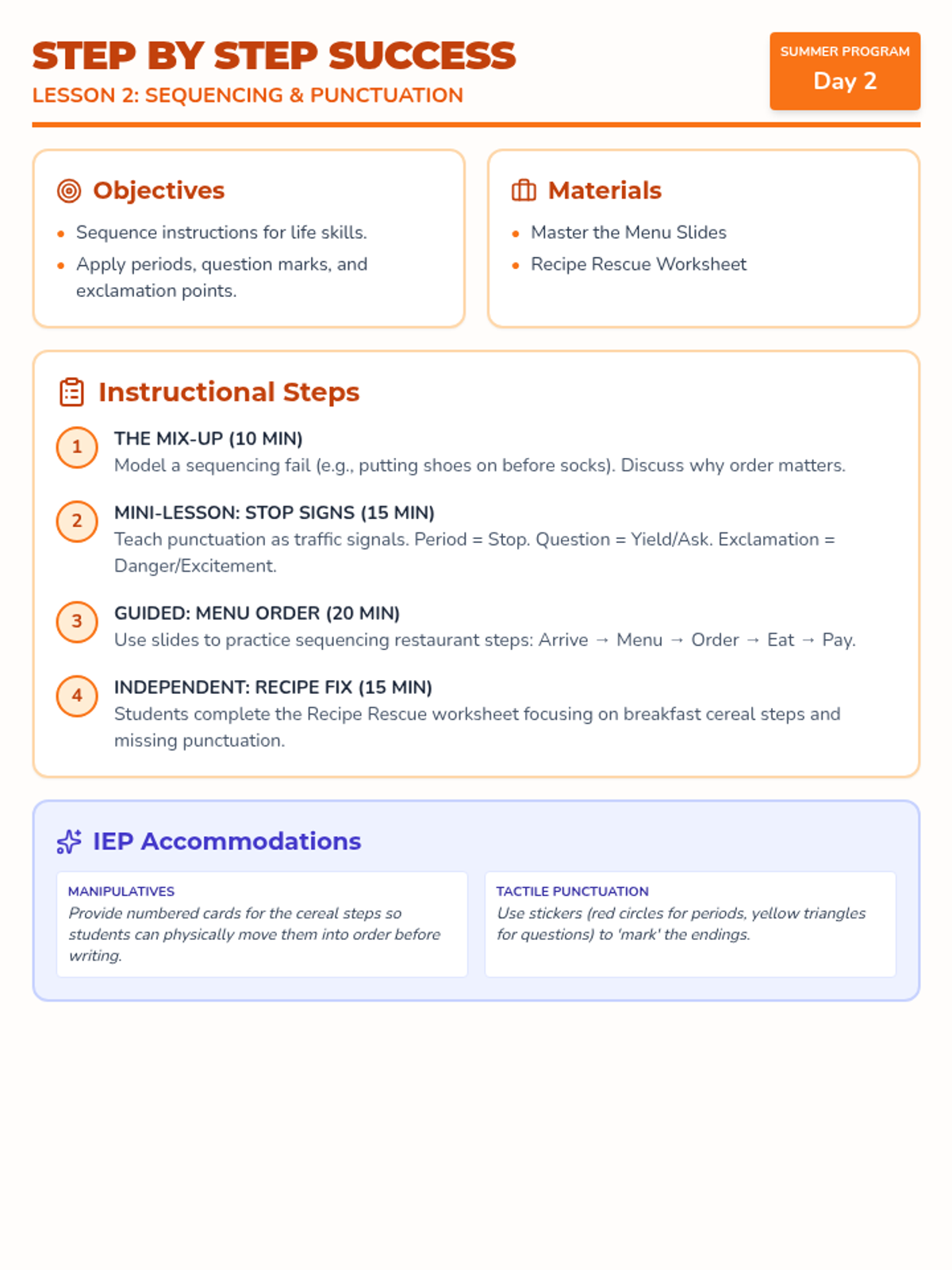
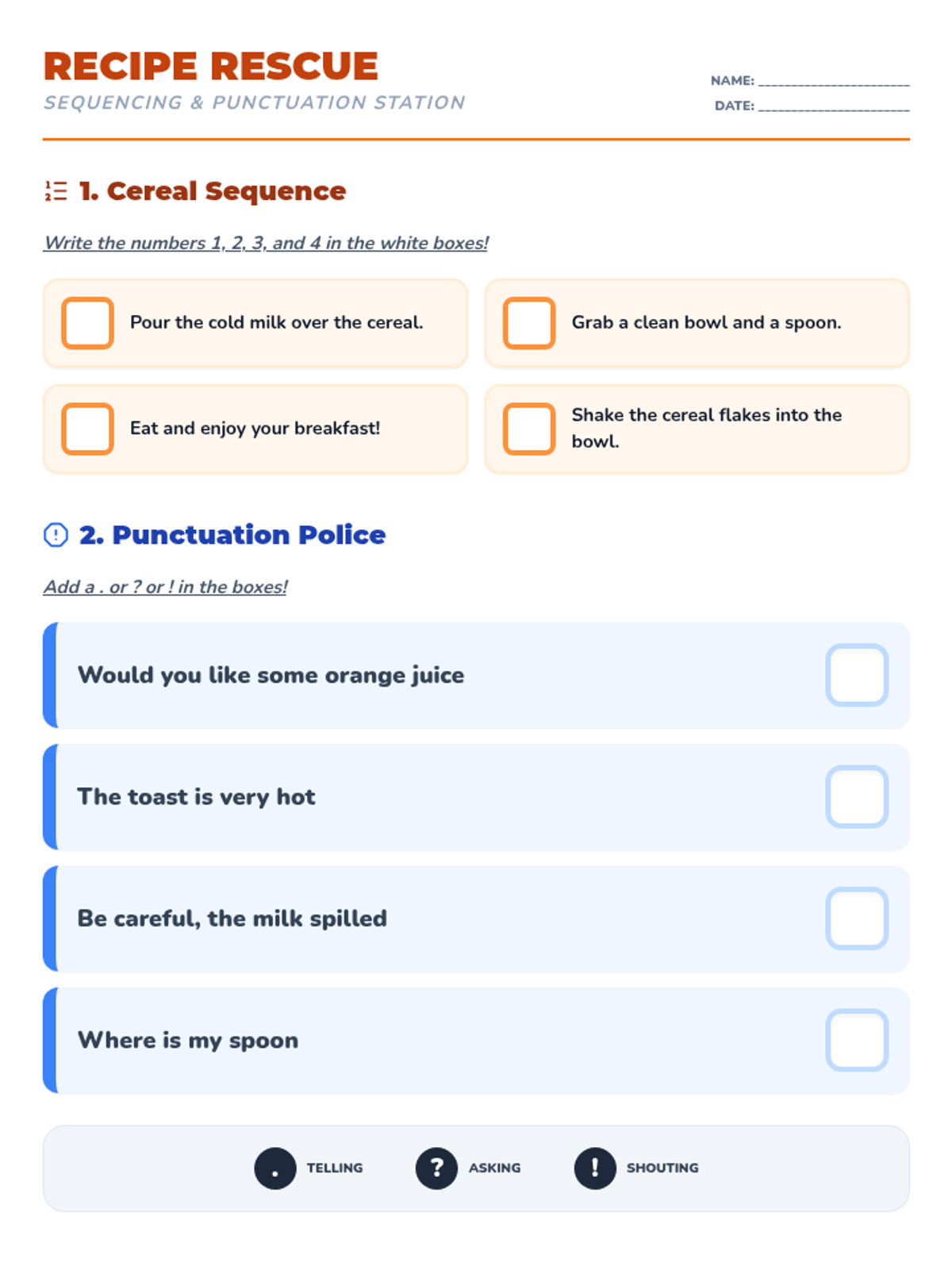
Focuses on sequencing events and using correct punctuation through functional life skills like reading menus and following instructions.
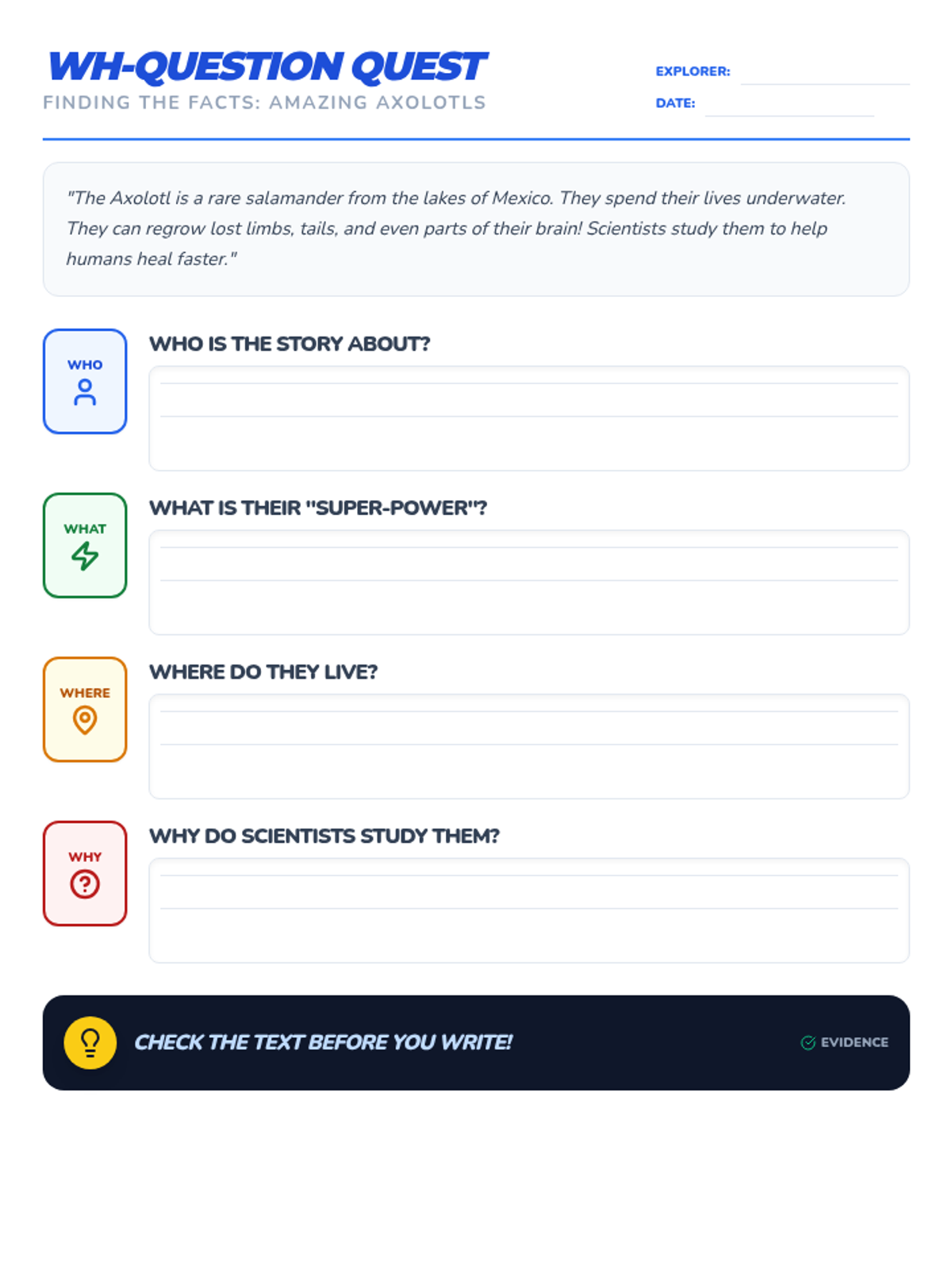
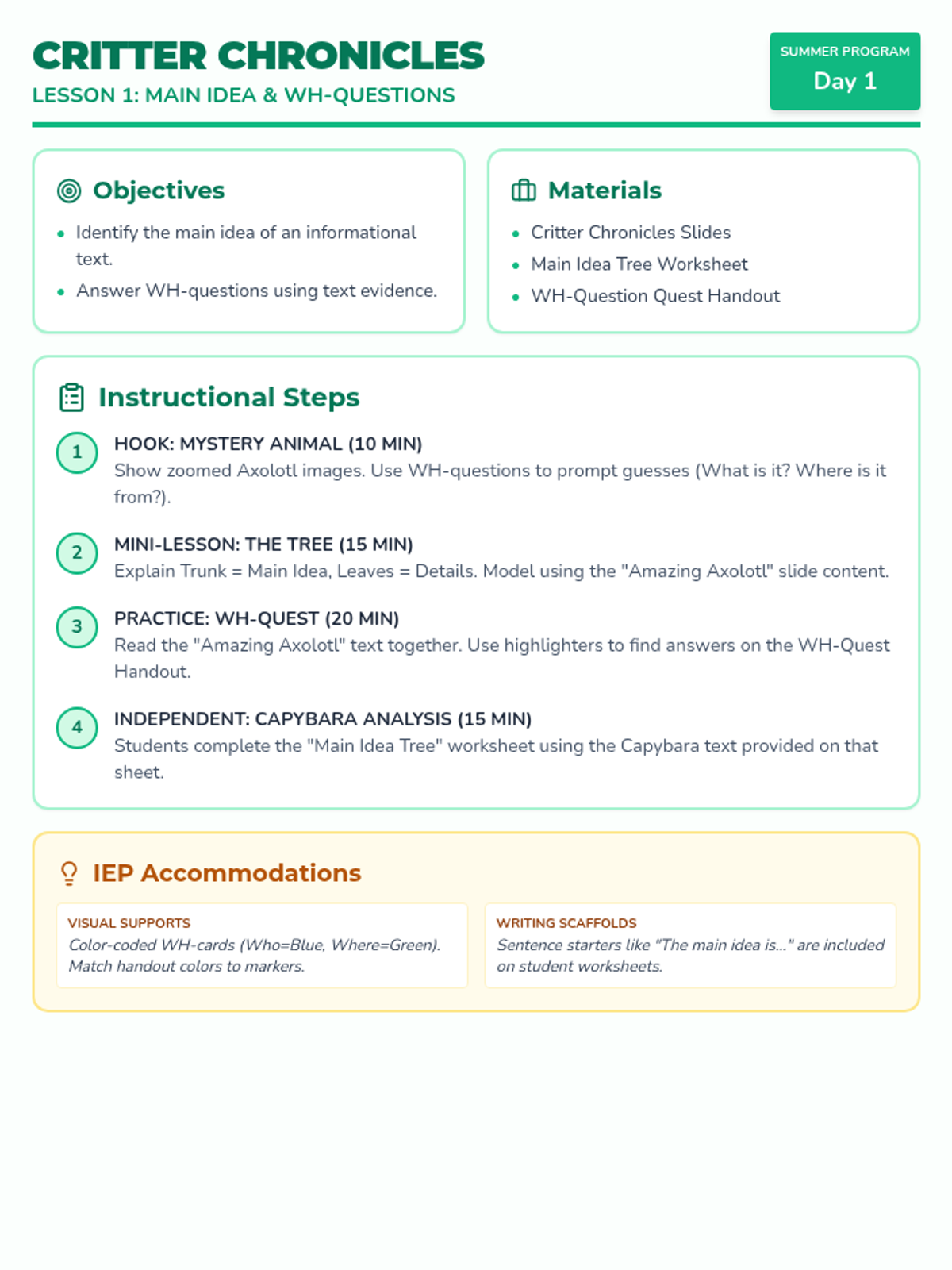
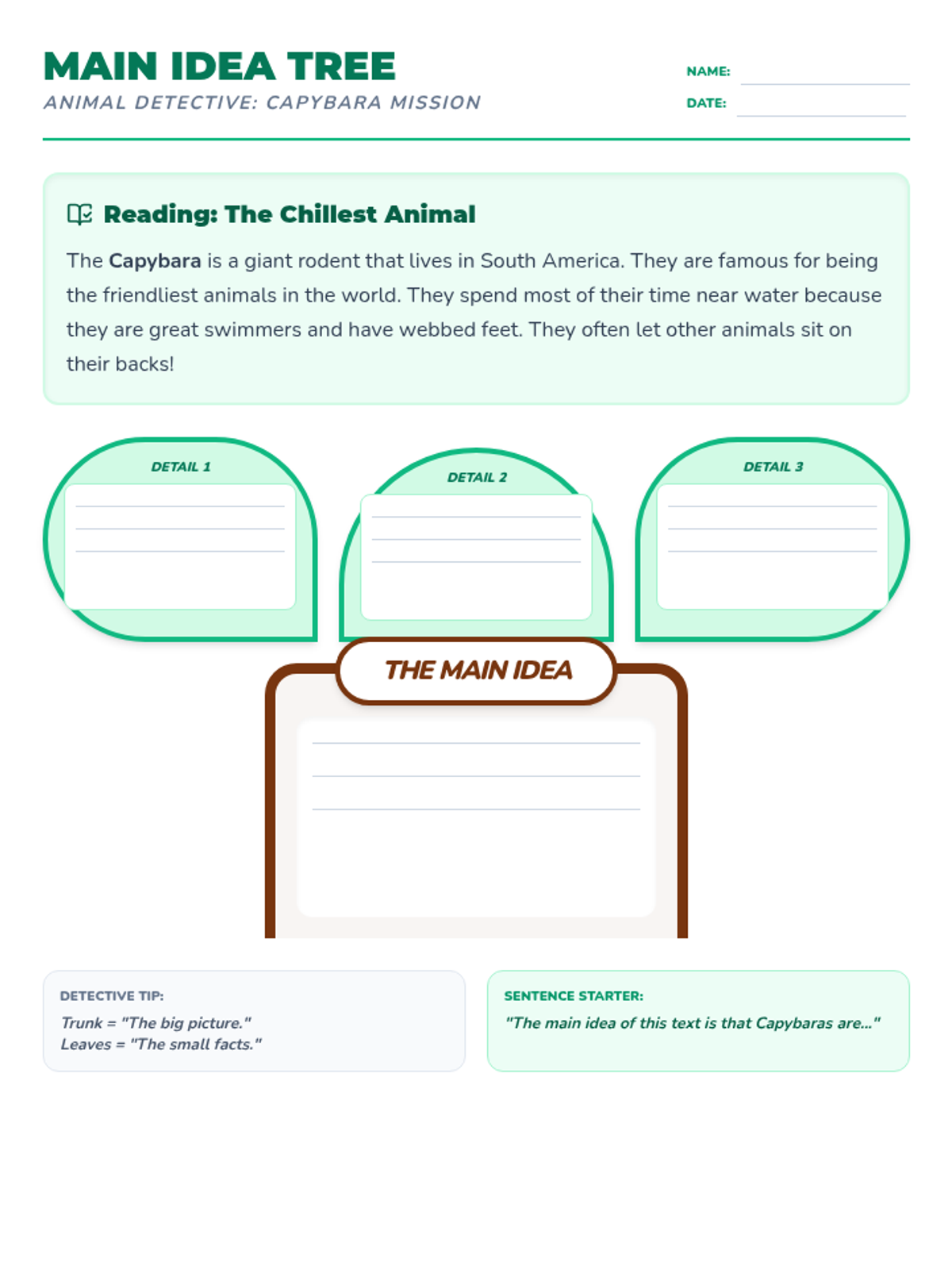
Students will identify the main idea and answer WH-questions using high-interest informational texts about unique animals.
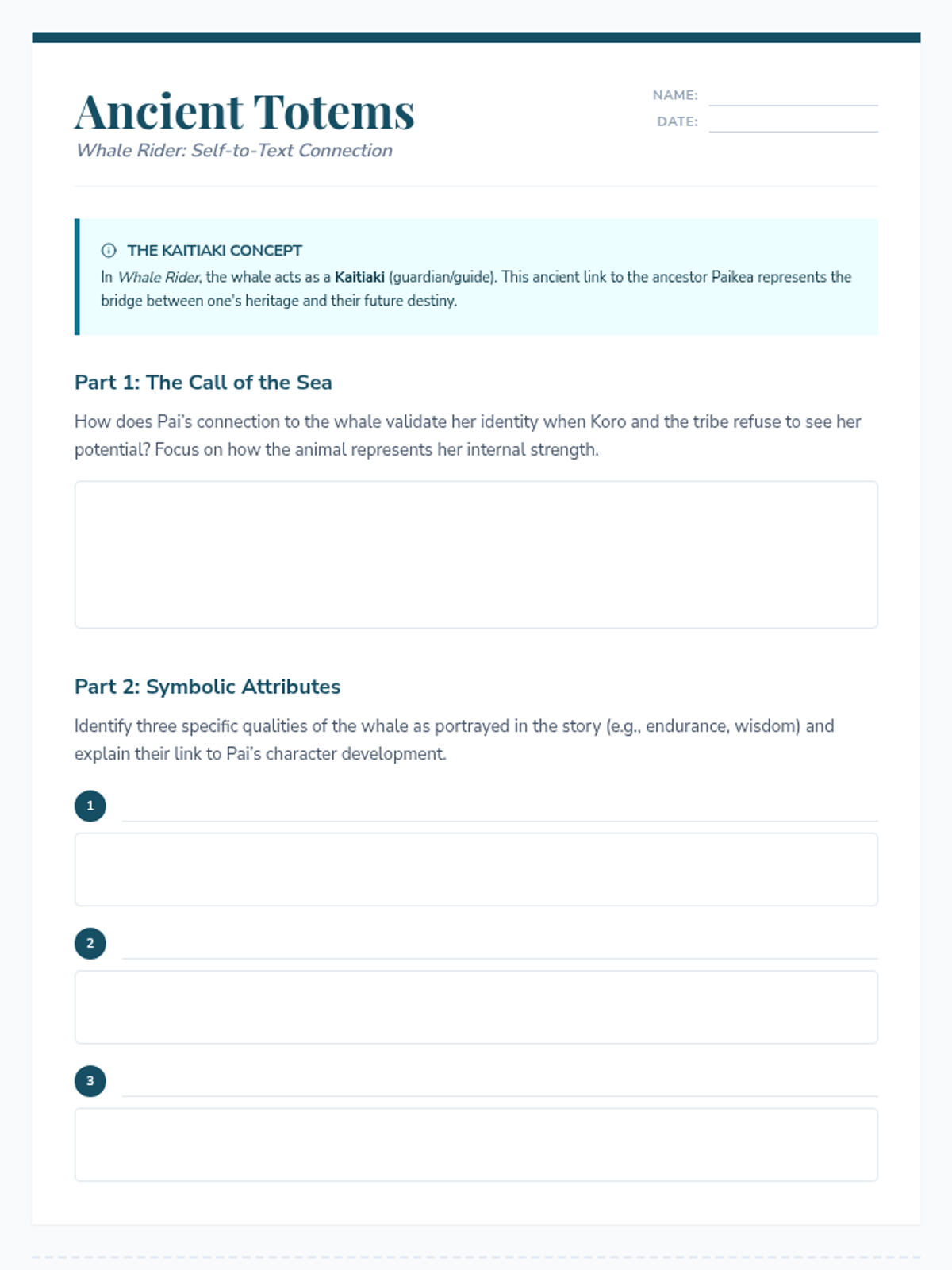
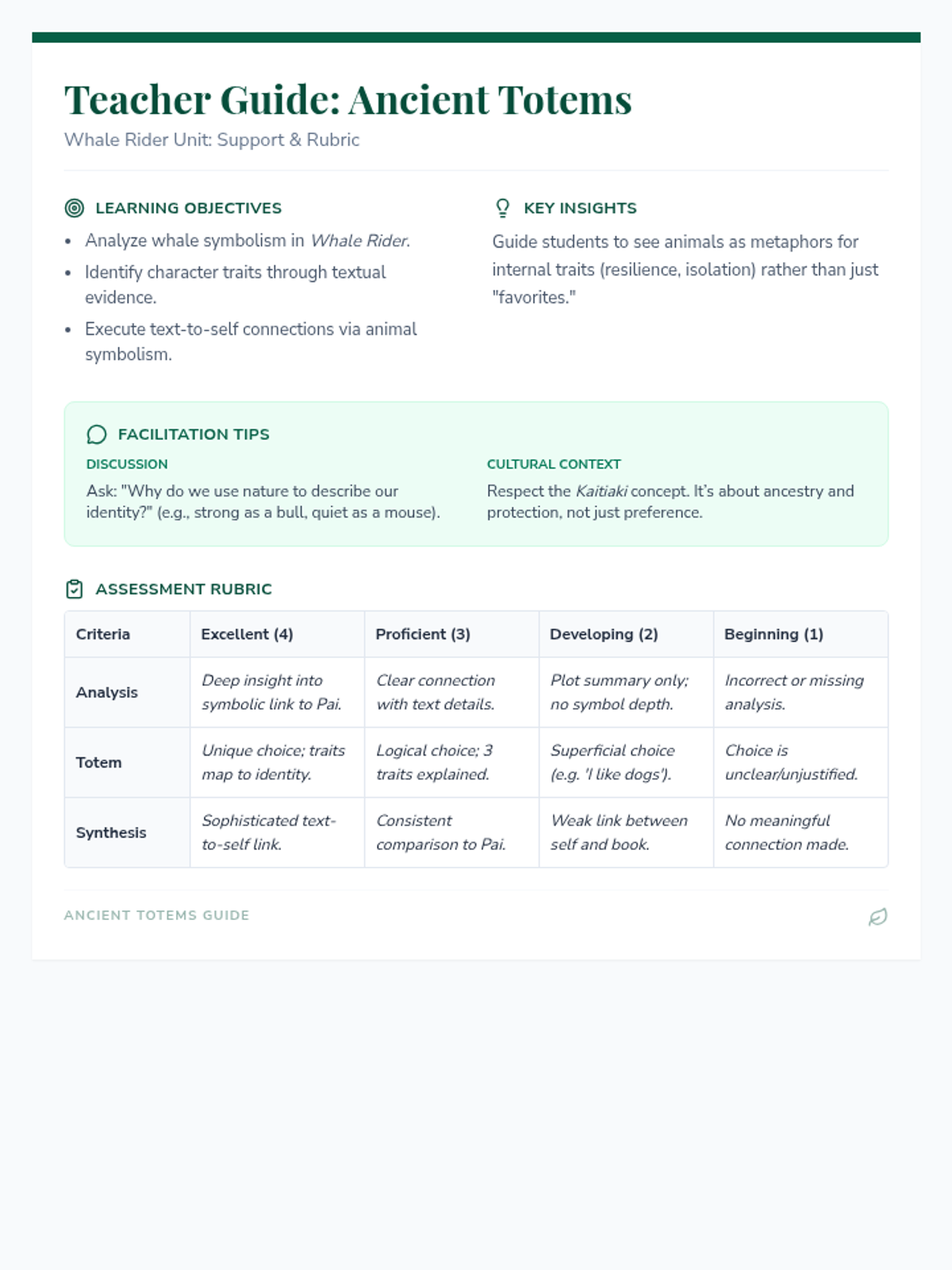
A high school English lesson exploring self-to-text connections through the symbolism of the whale in 'Whale Rider', culminating in a personal 'totem' reflection assignment.
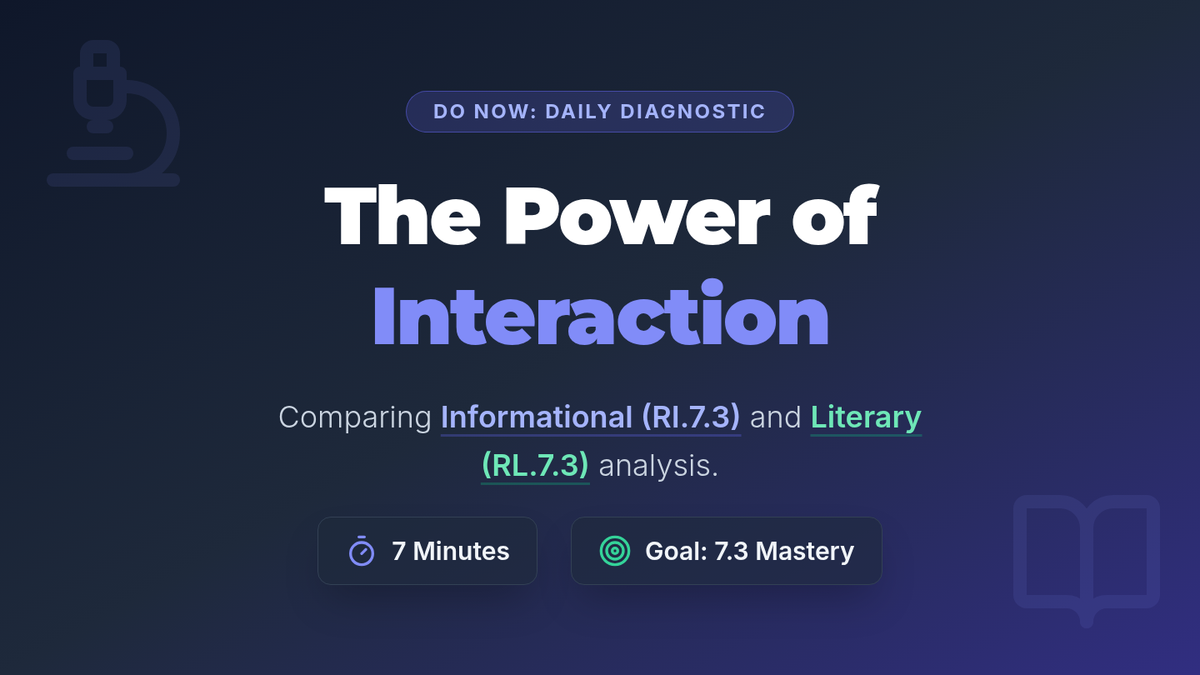
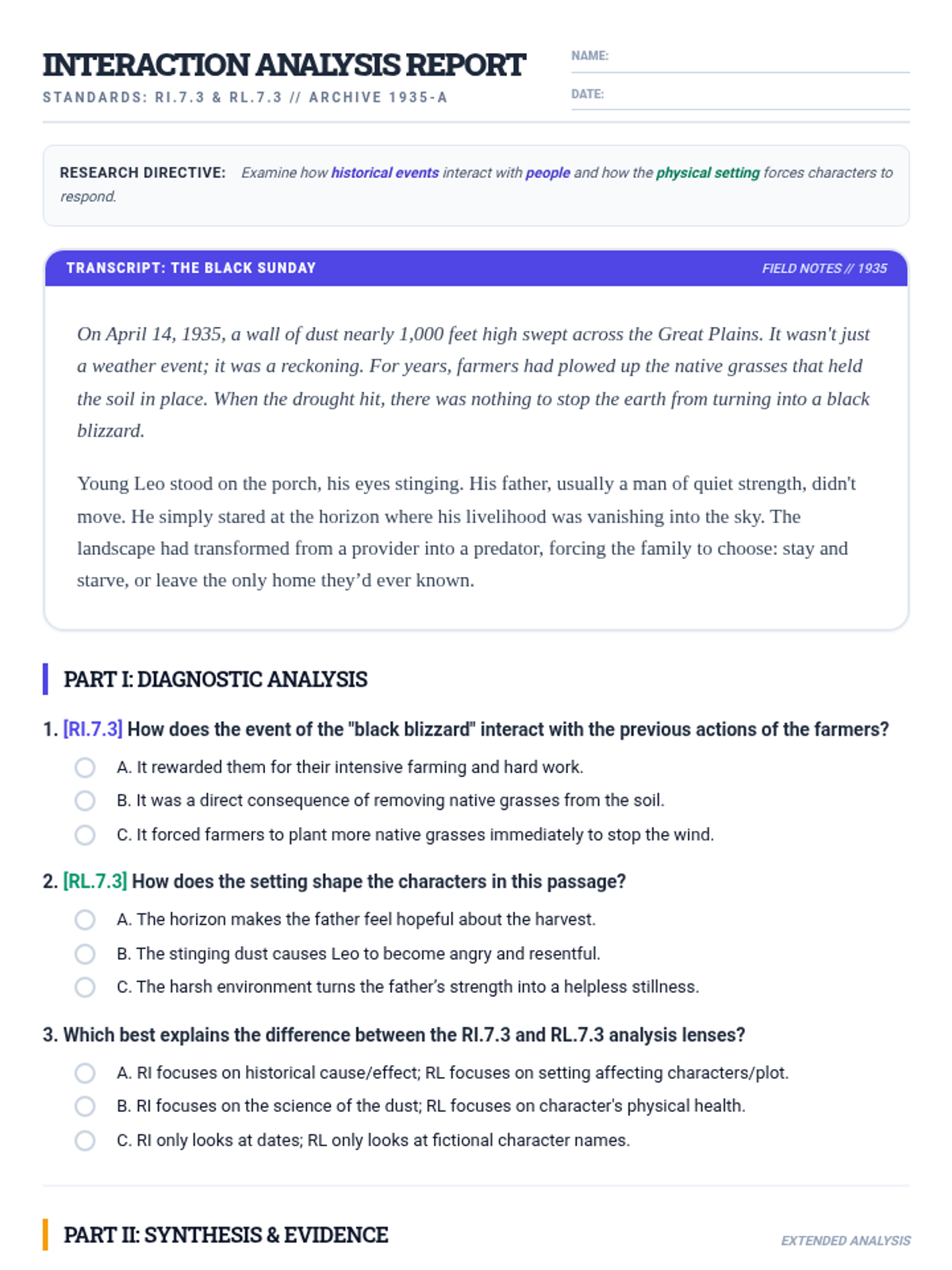
A focused lesson analyzing how individuals, events, and story elements interact in both informational and literary contexts, specifically targeting standard 7.3.
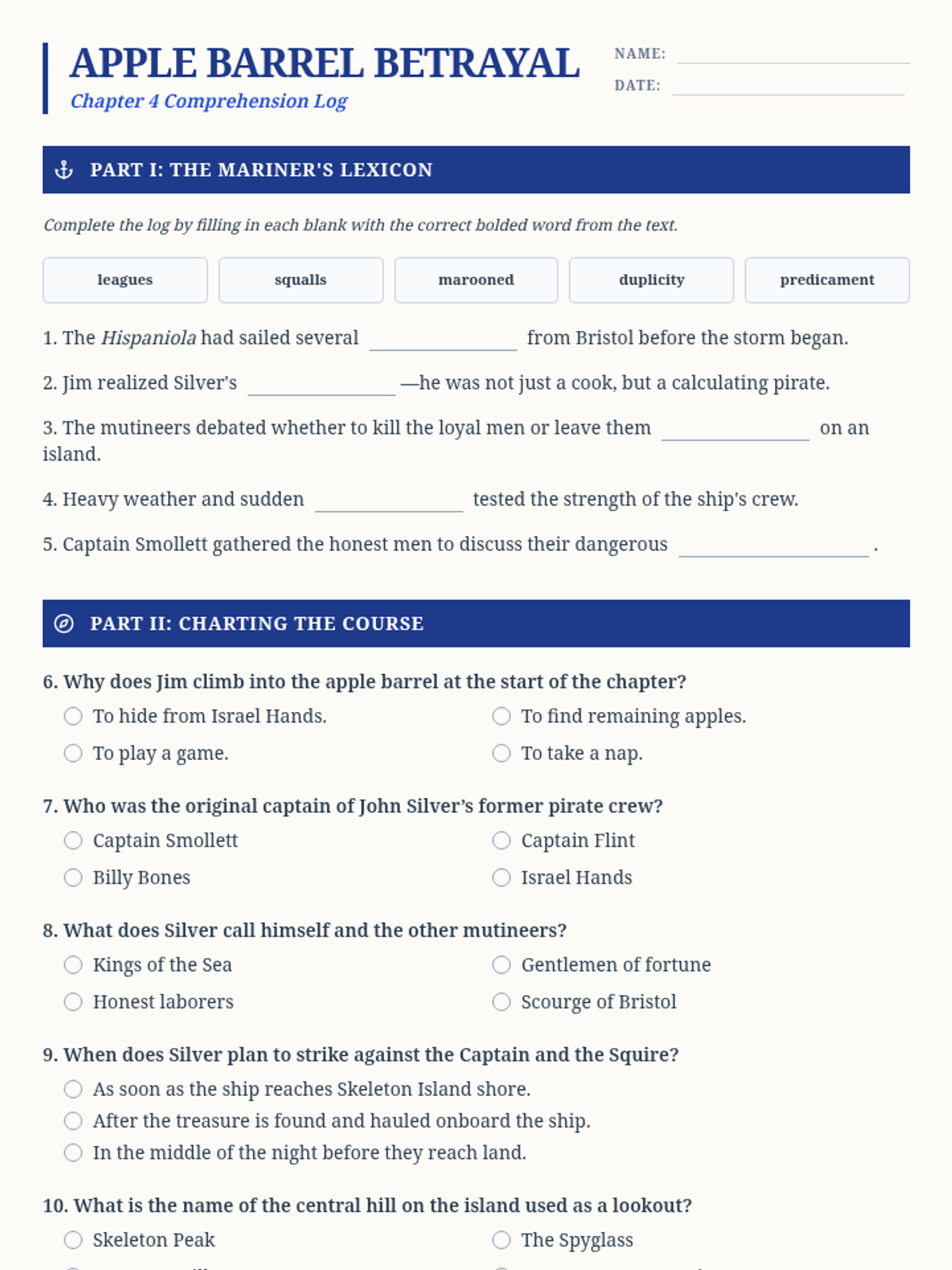
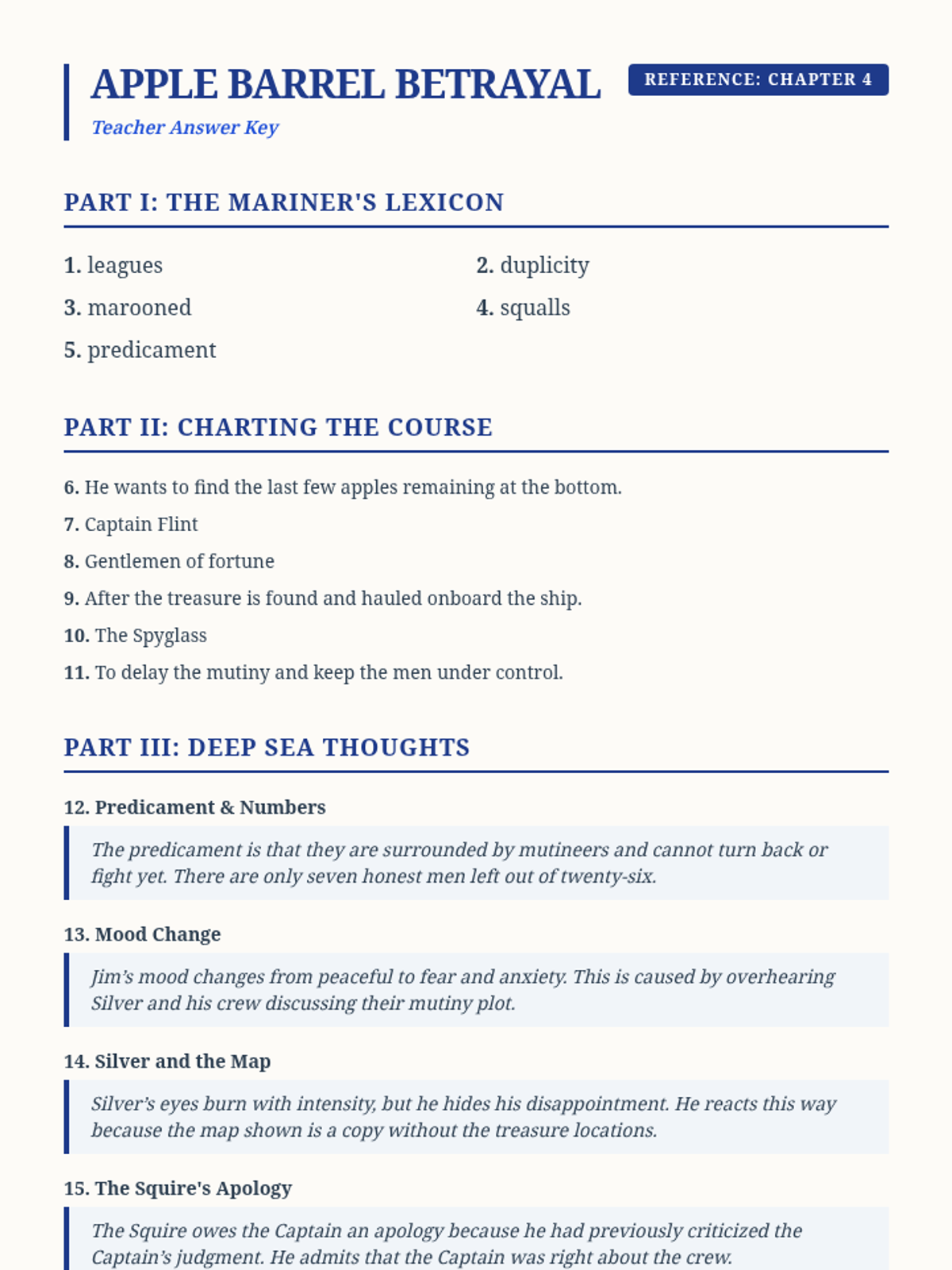
A deep dive into Chapter 4 of Treasure Island, focusing on Jim's discovery of John Silver's mutiny while hidden in an apple barrel. The lesson explores character duplicity, suspense, and the shift in power dynamics as the ship reaches Skeleton Island.
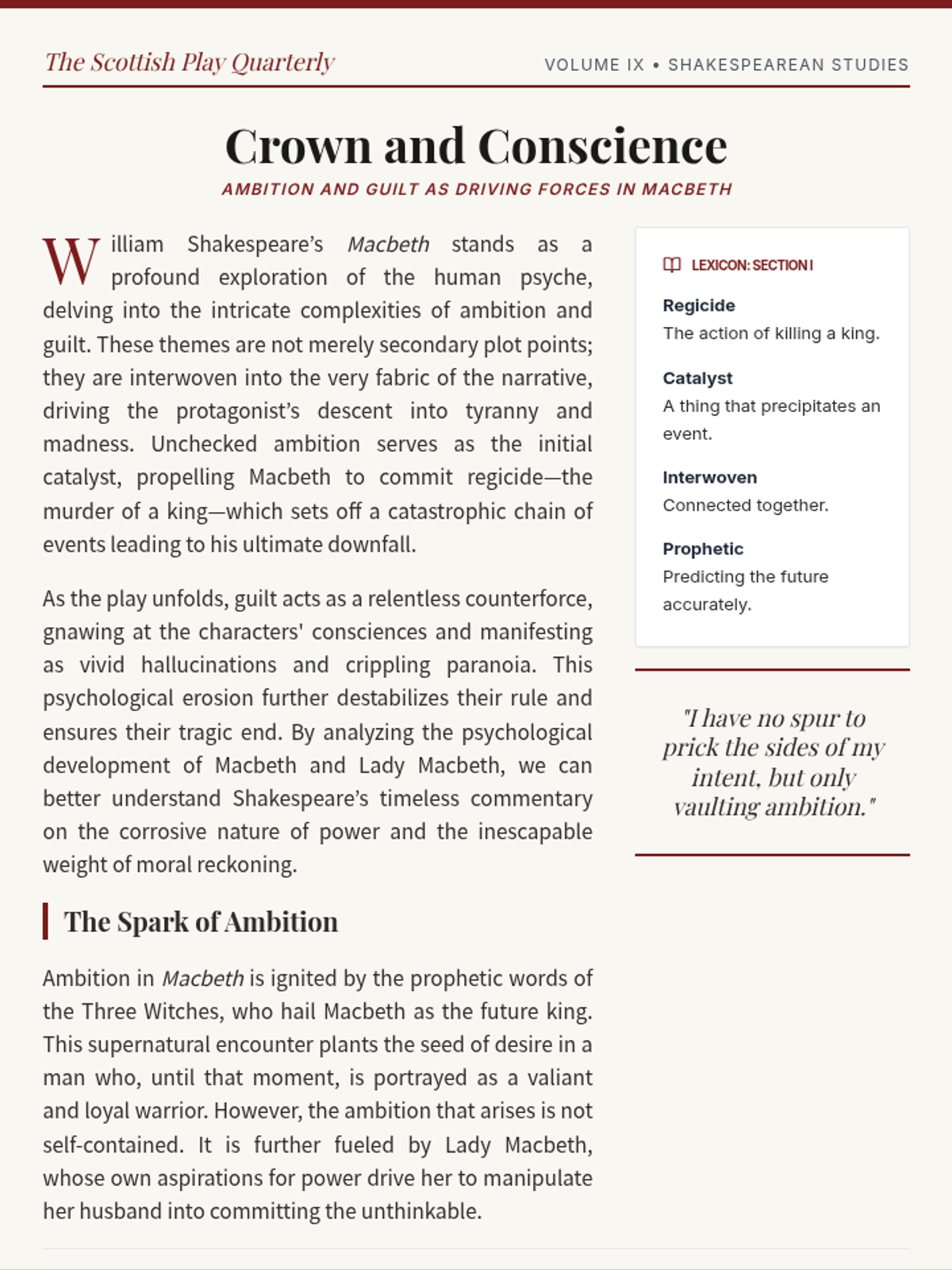
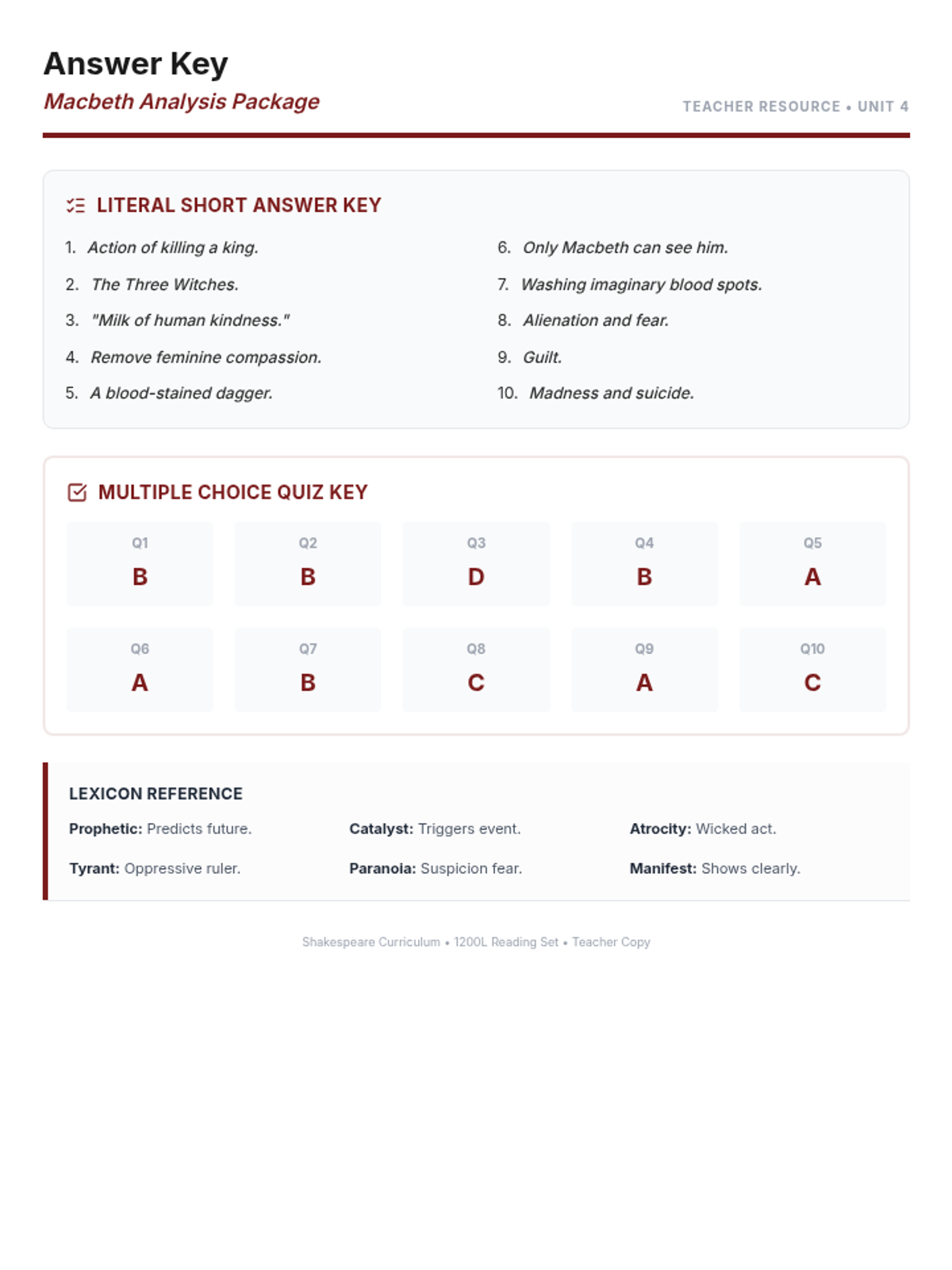
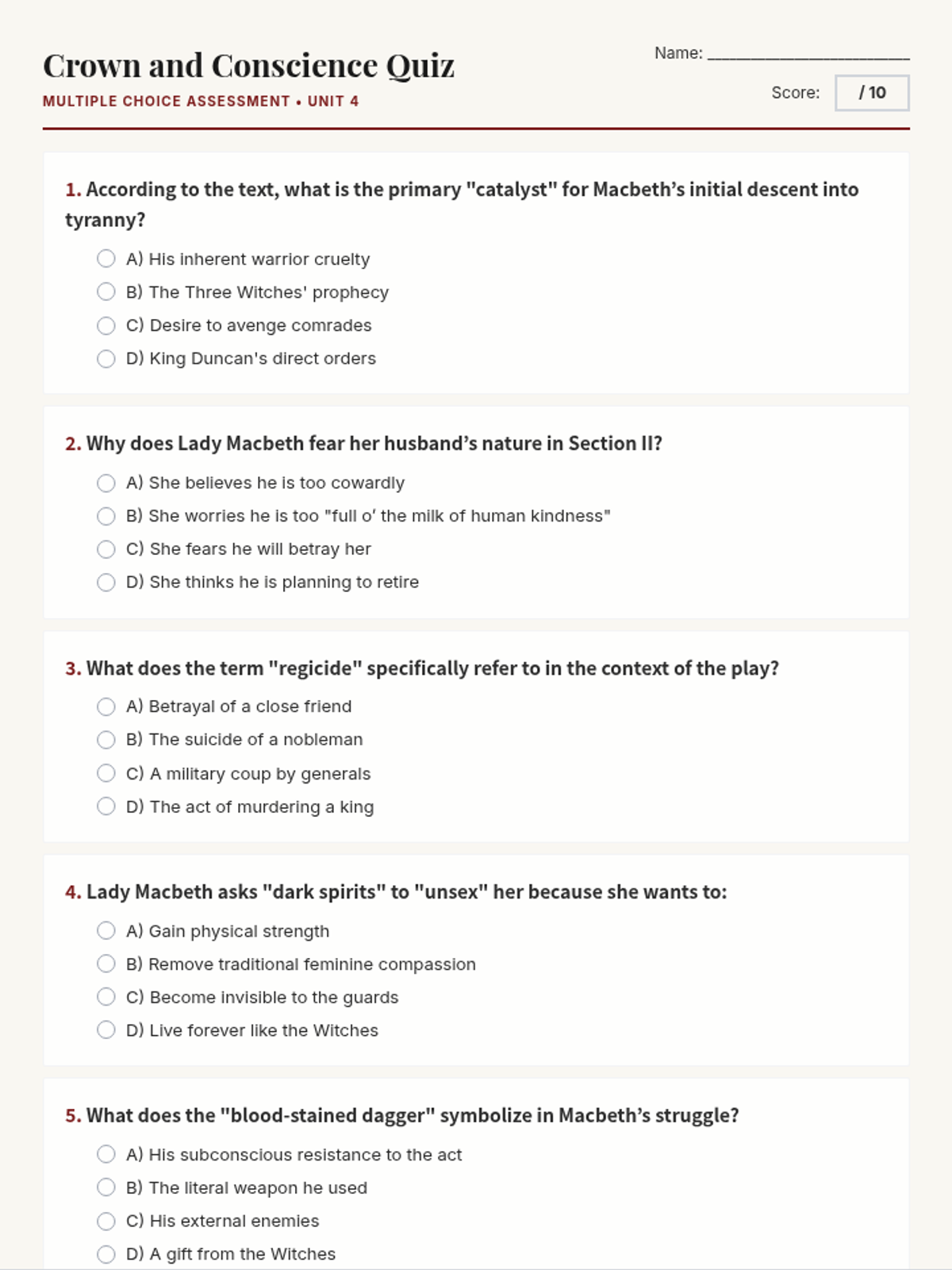
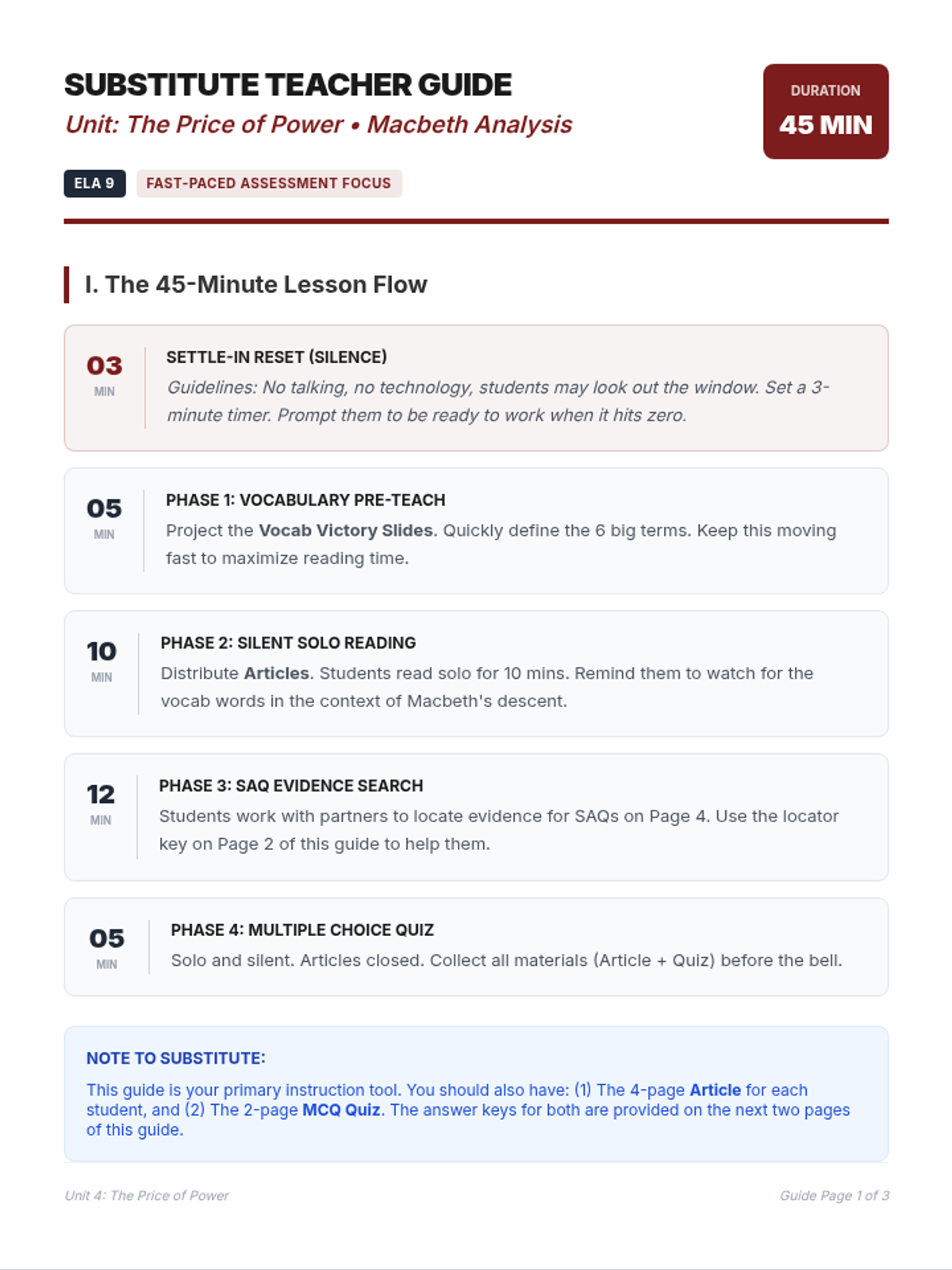
A deep dive into the psychological themes of Shakespeare's Macbeth, focusing on the destructive interplay between unchecked ambition and the weight of guilt.
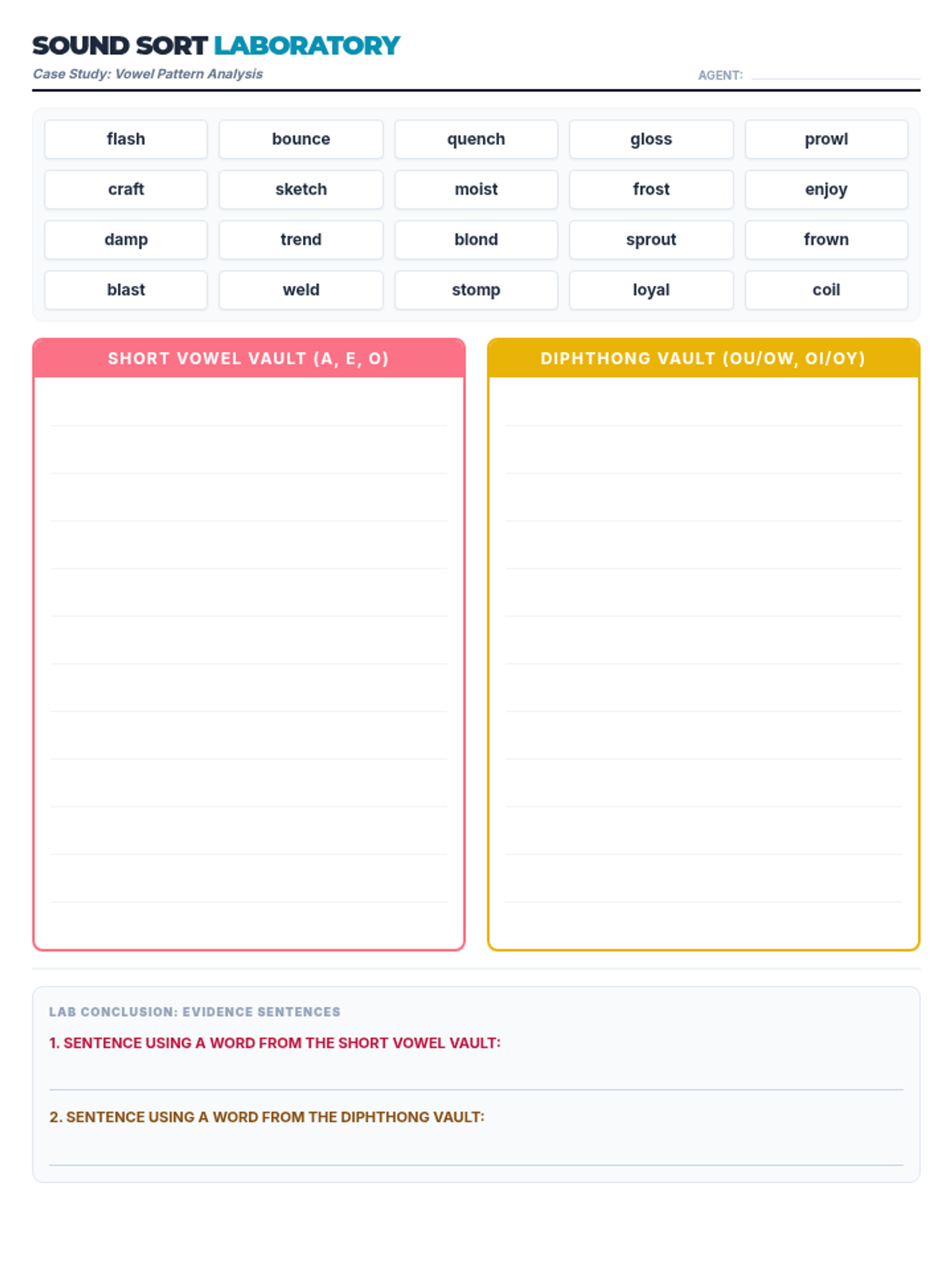
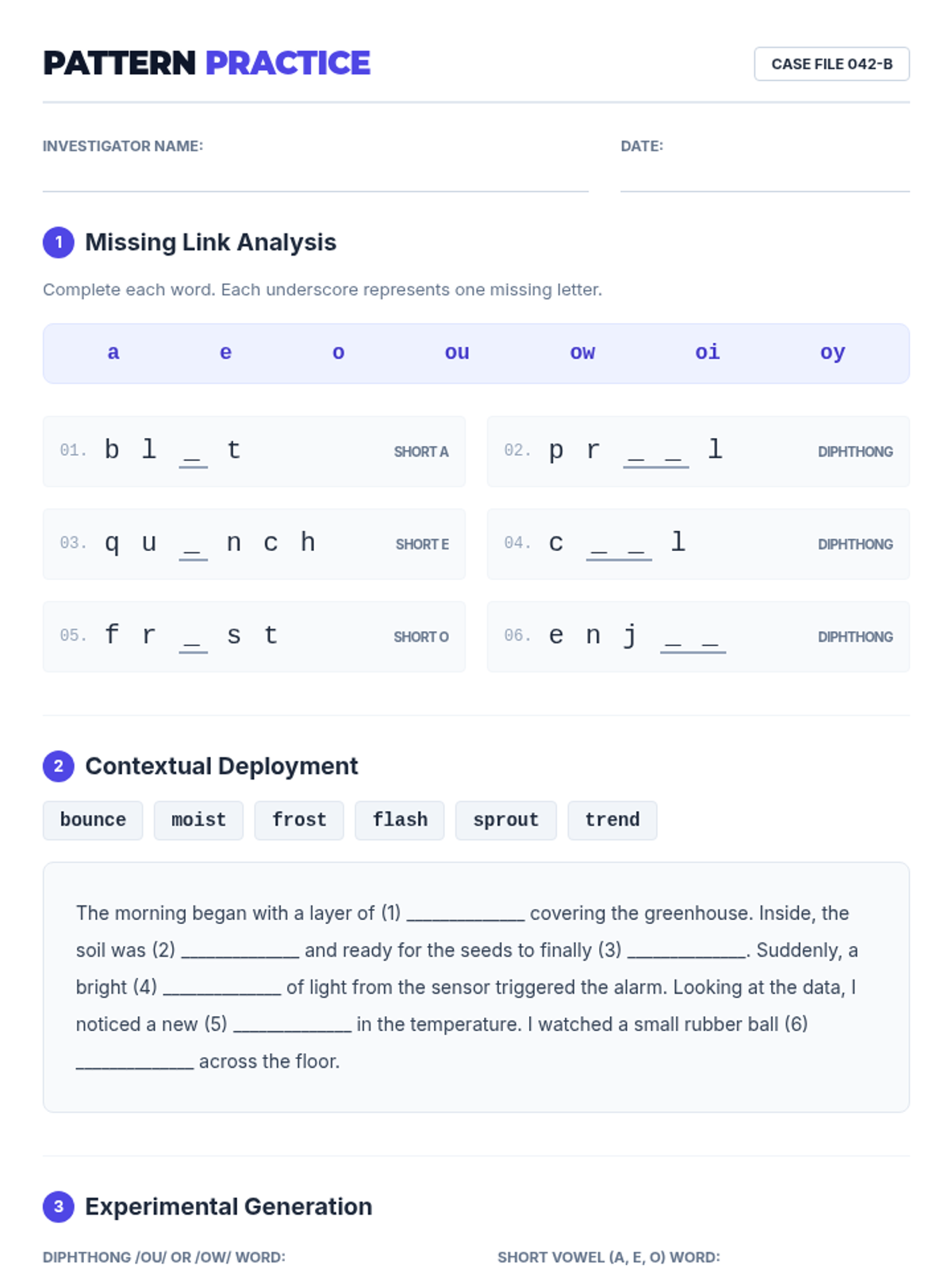
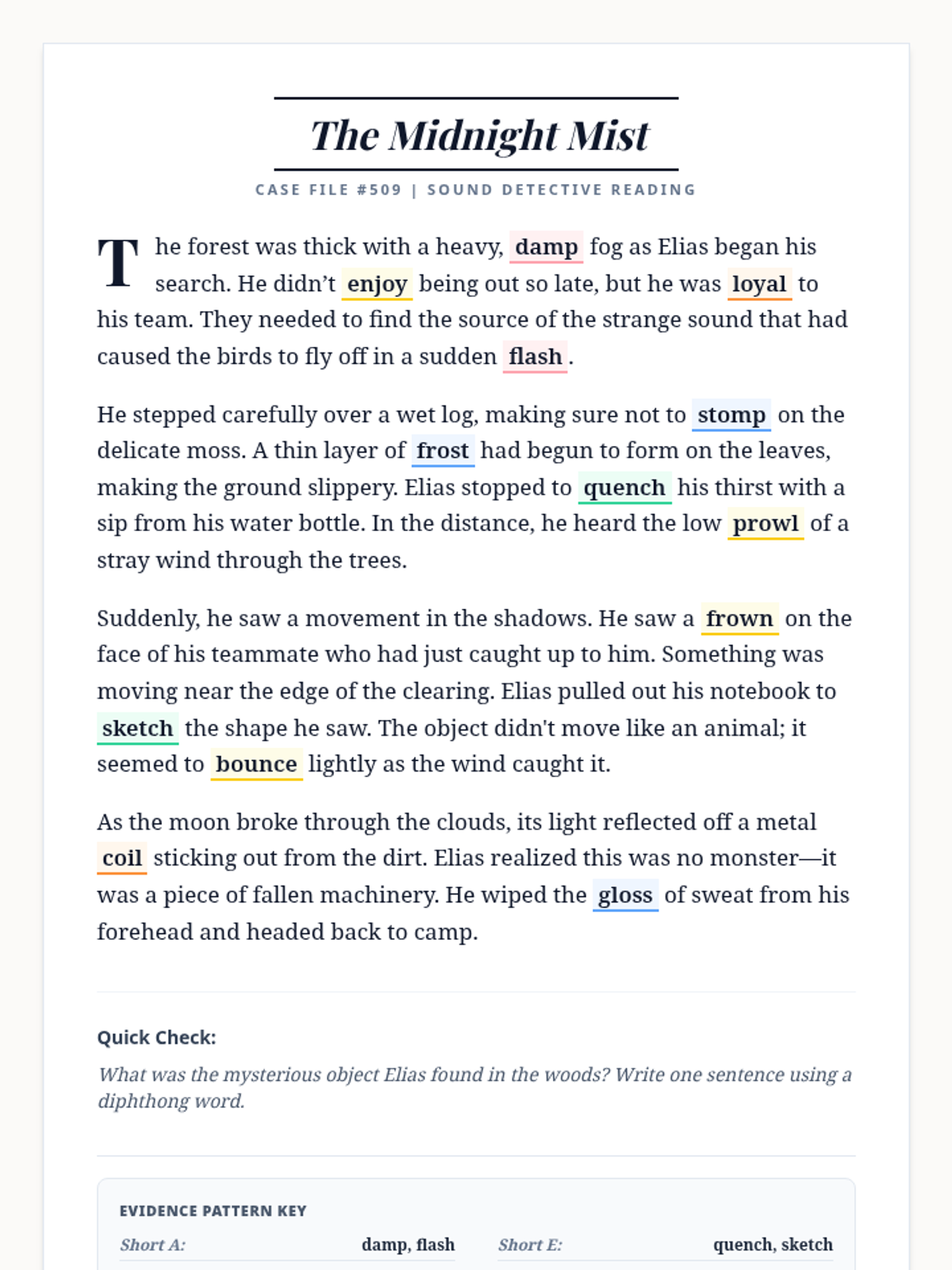
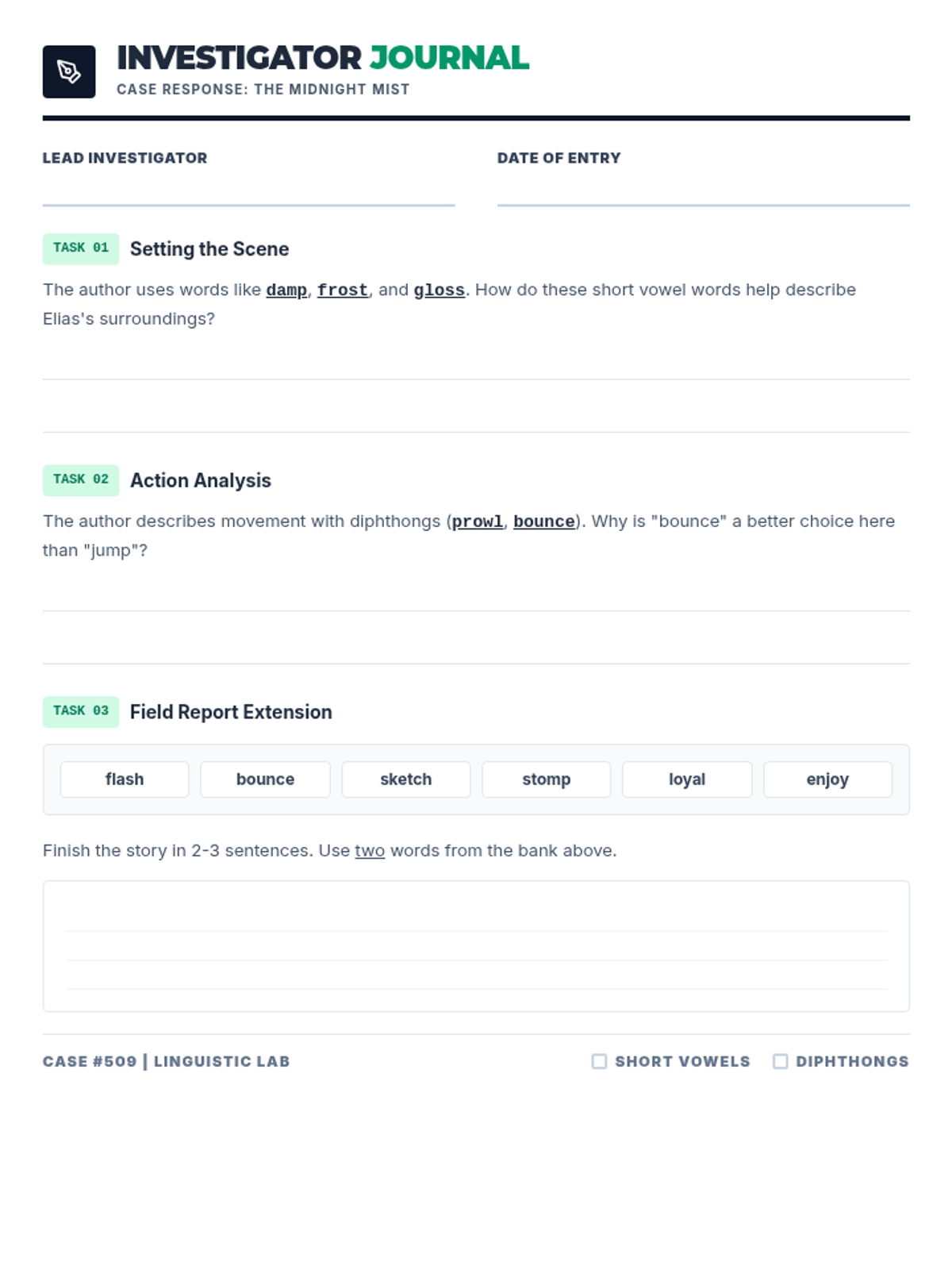
An interactive spelling lesson for 6th graders focusing on contrasting short vowel sounds (a, o, e) with complex diphthongs (ou, ow, oi, oy). Students act as 'Sound Detectives' to identify, sort, and apply these patterns in reading and writing.
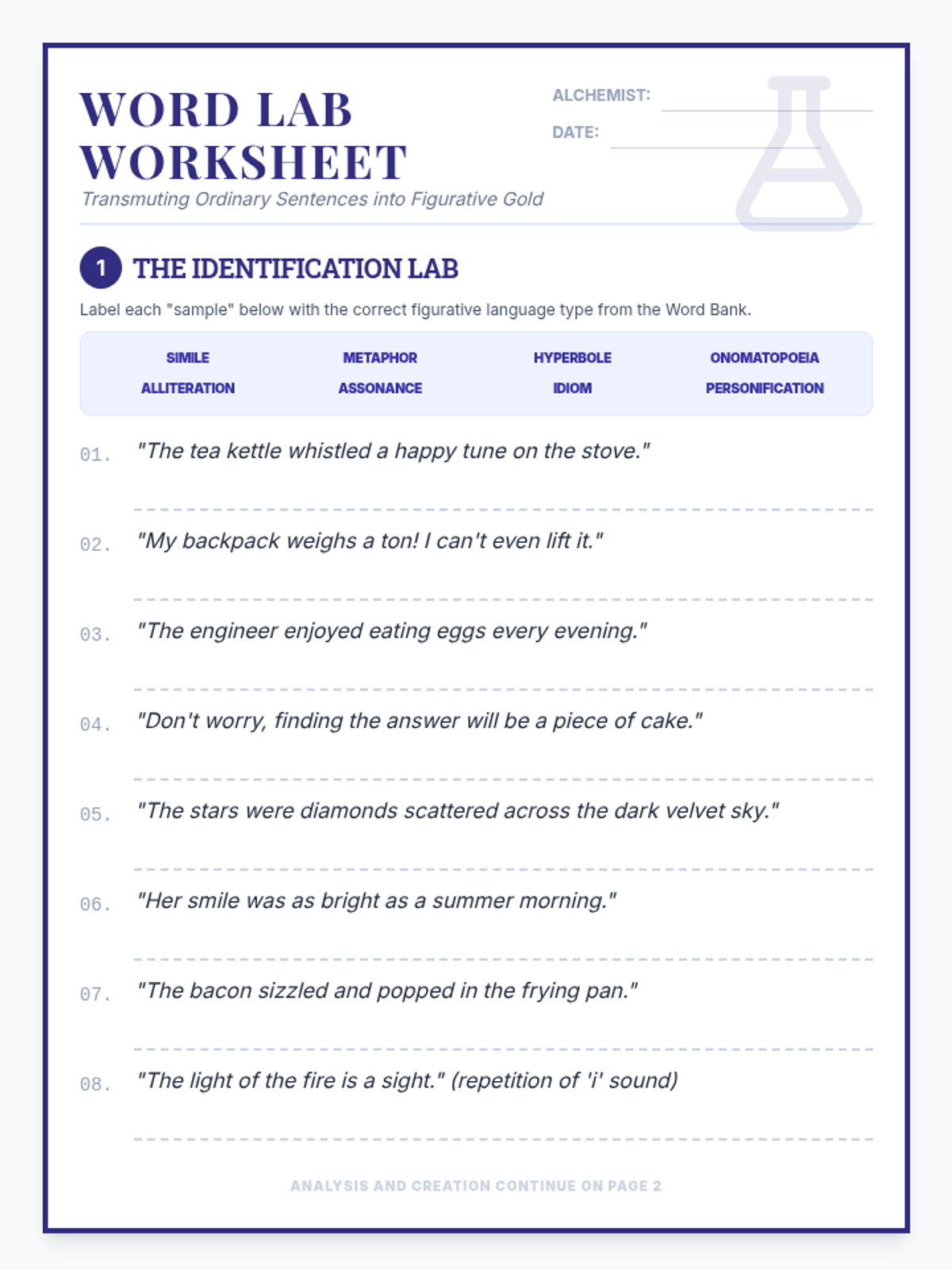
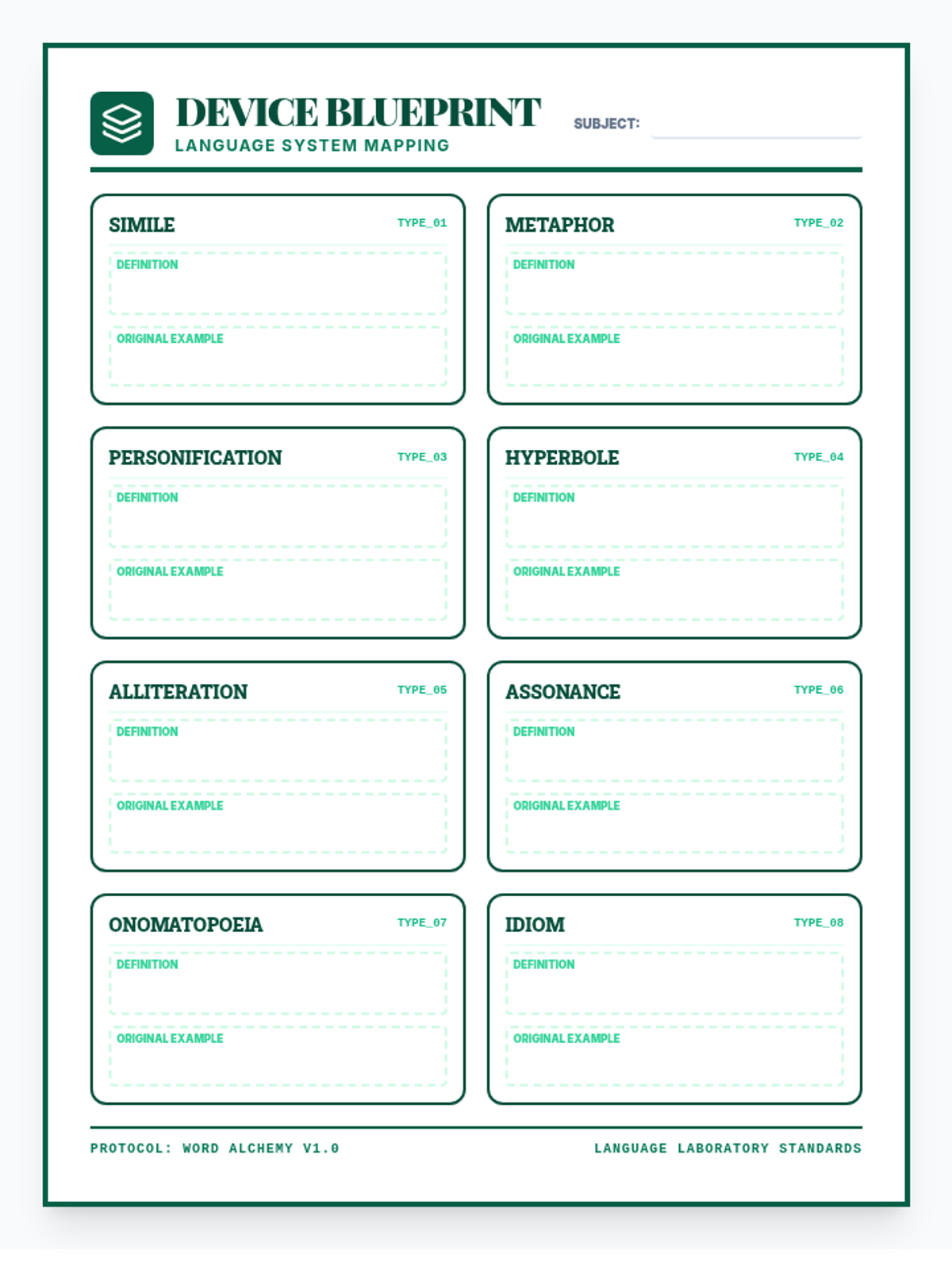
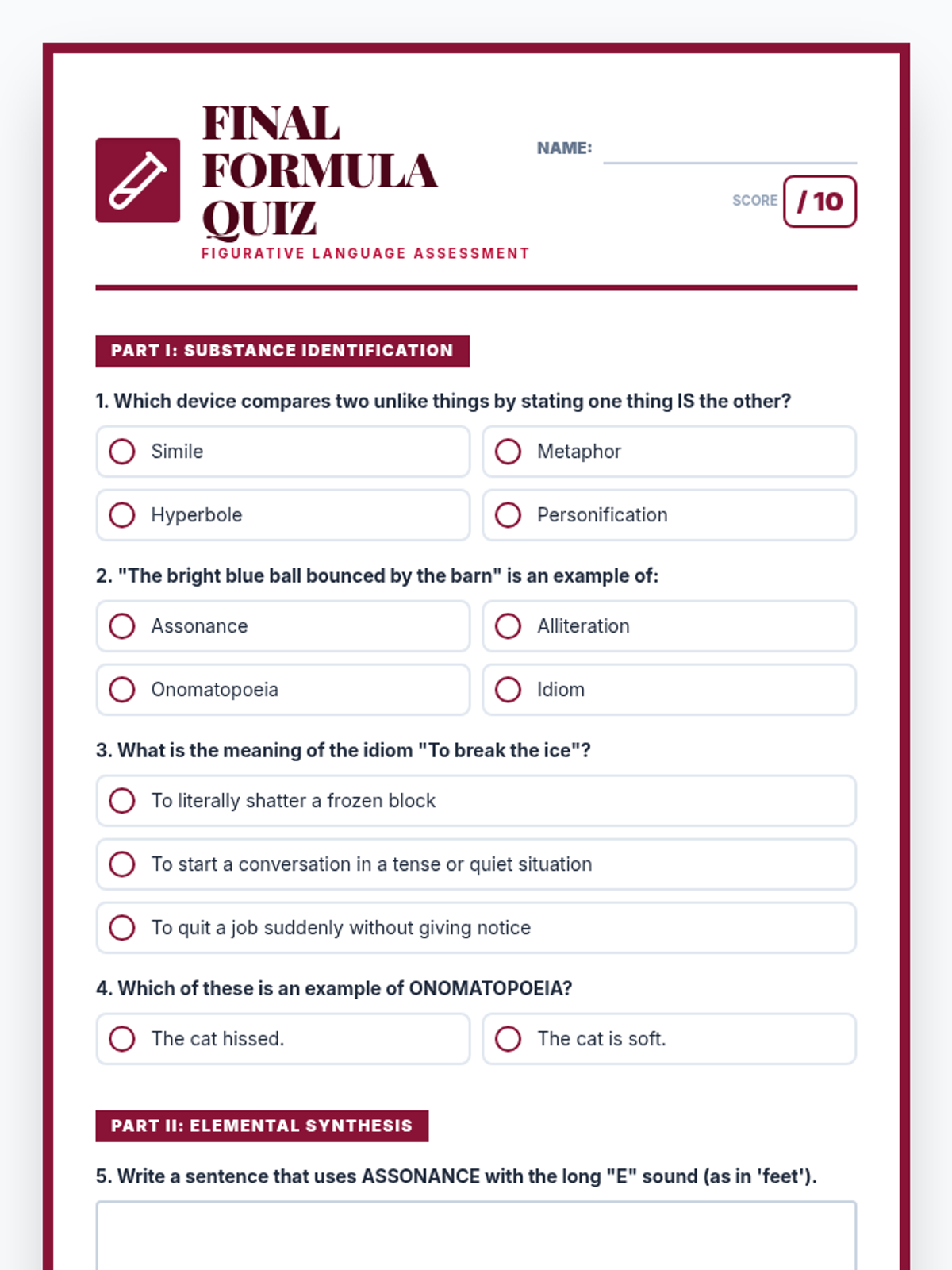
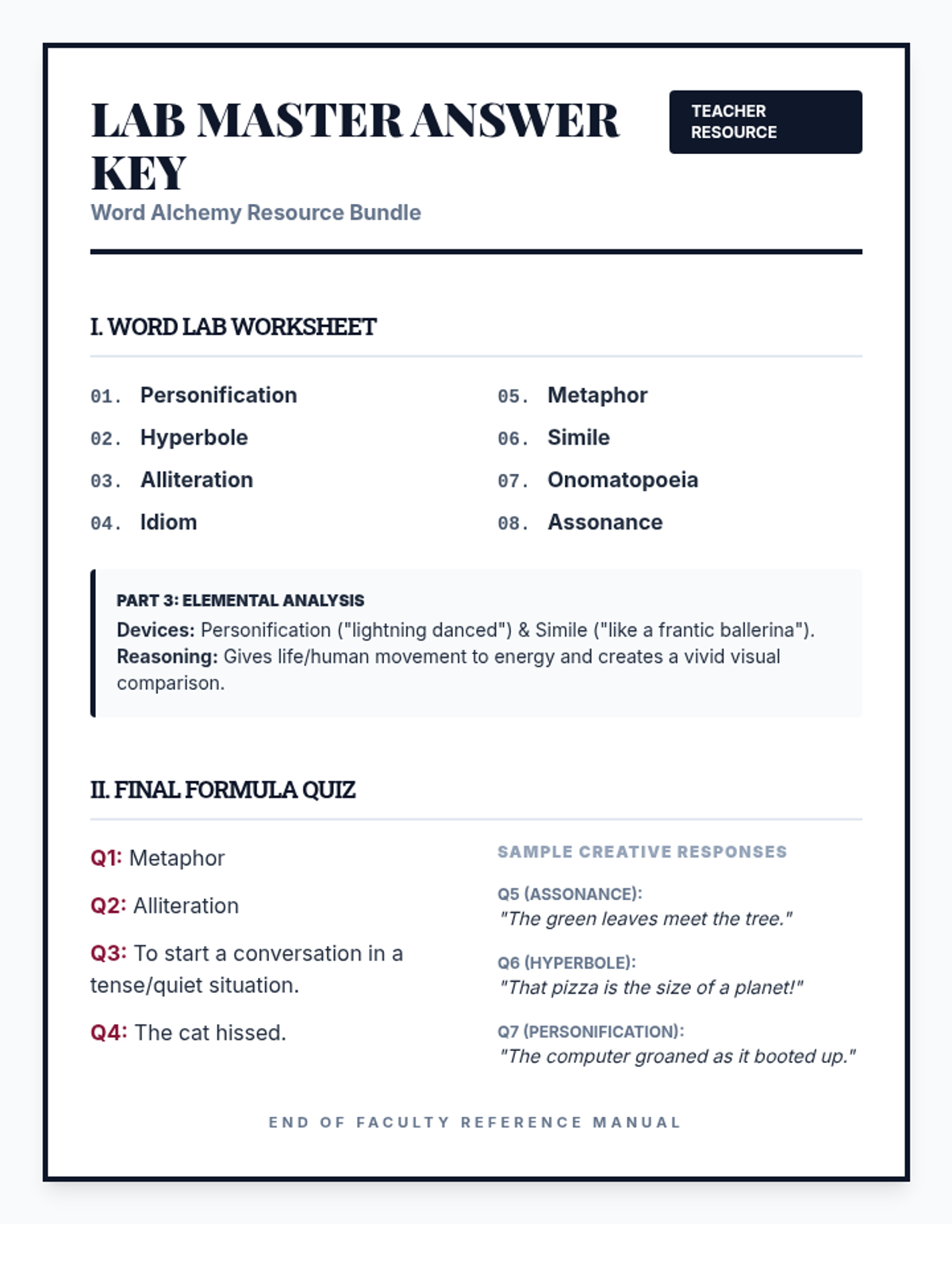
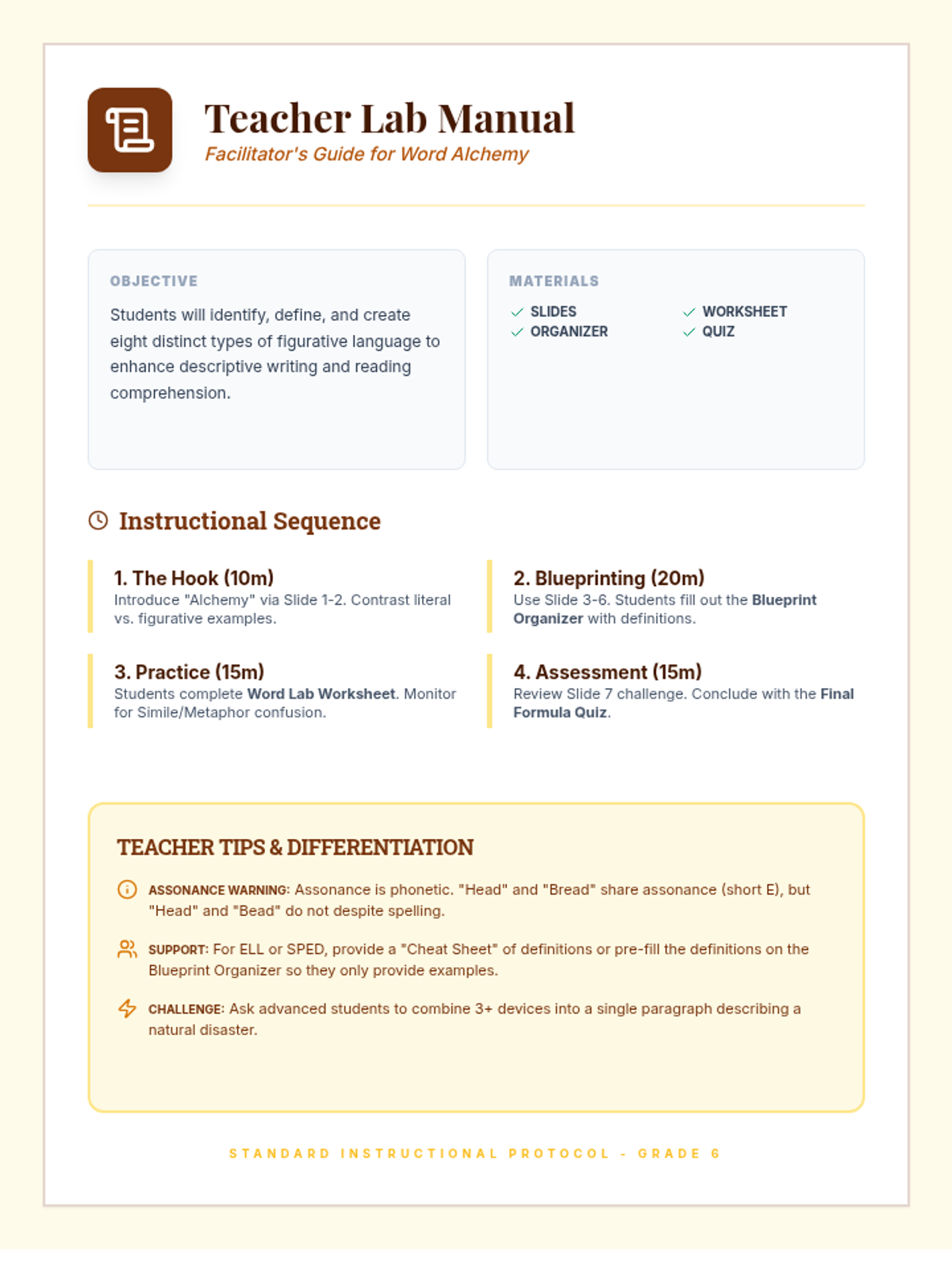
A comprehensive exploration of figurative language through the lens of 'Word Alchemy,' where students dissect and create similes, metaphors, hyperboles, and more.
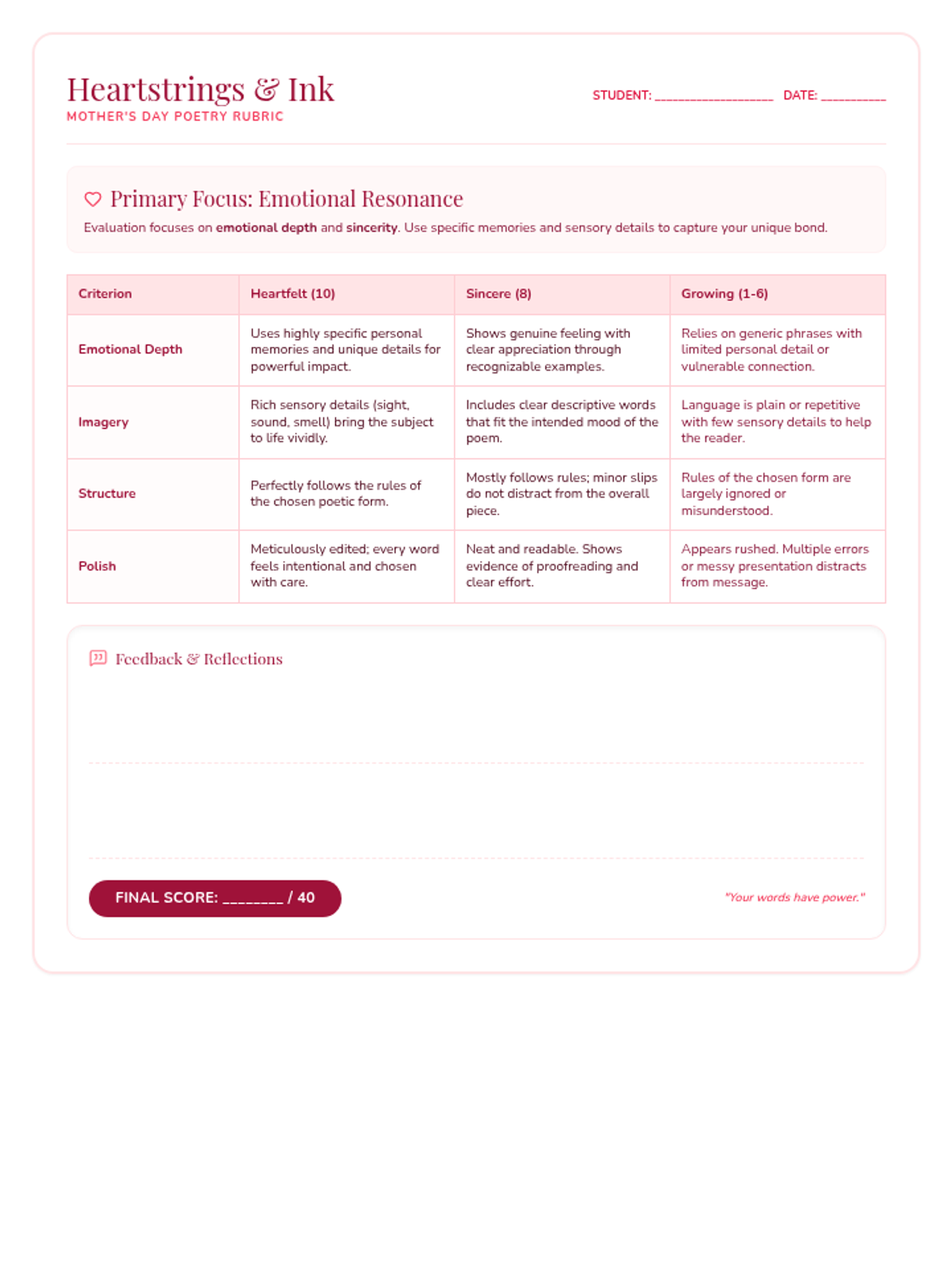
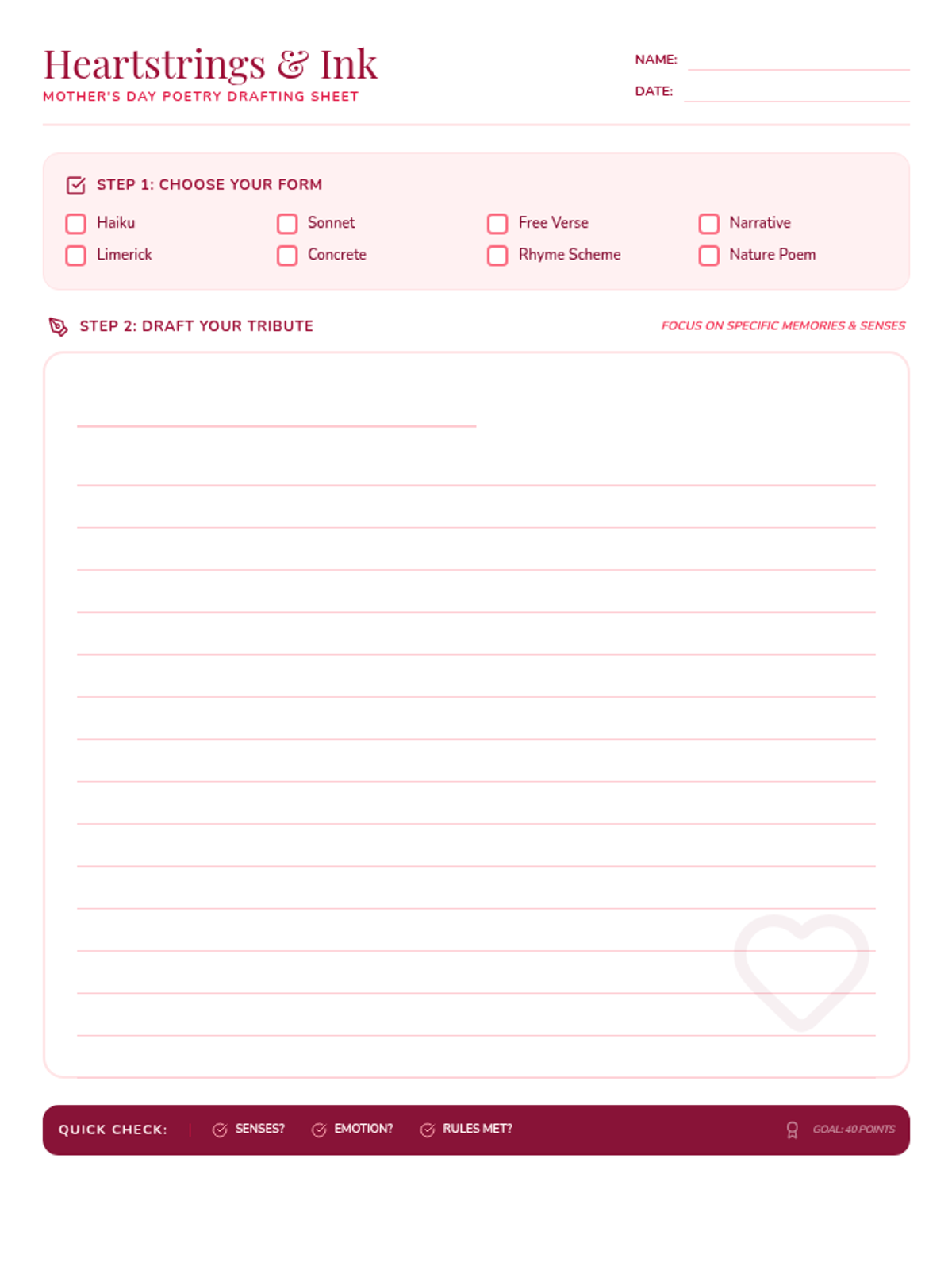
A 60-minute poetry workshop where students explore various poetic forms to create a heartfelt tribute for Mother's Day, focusing on emotional resonance and personal connection.
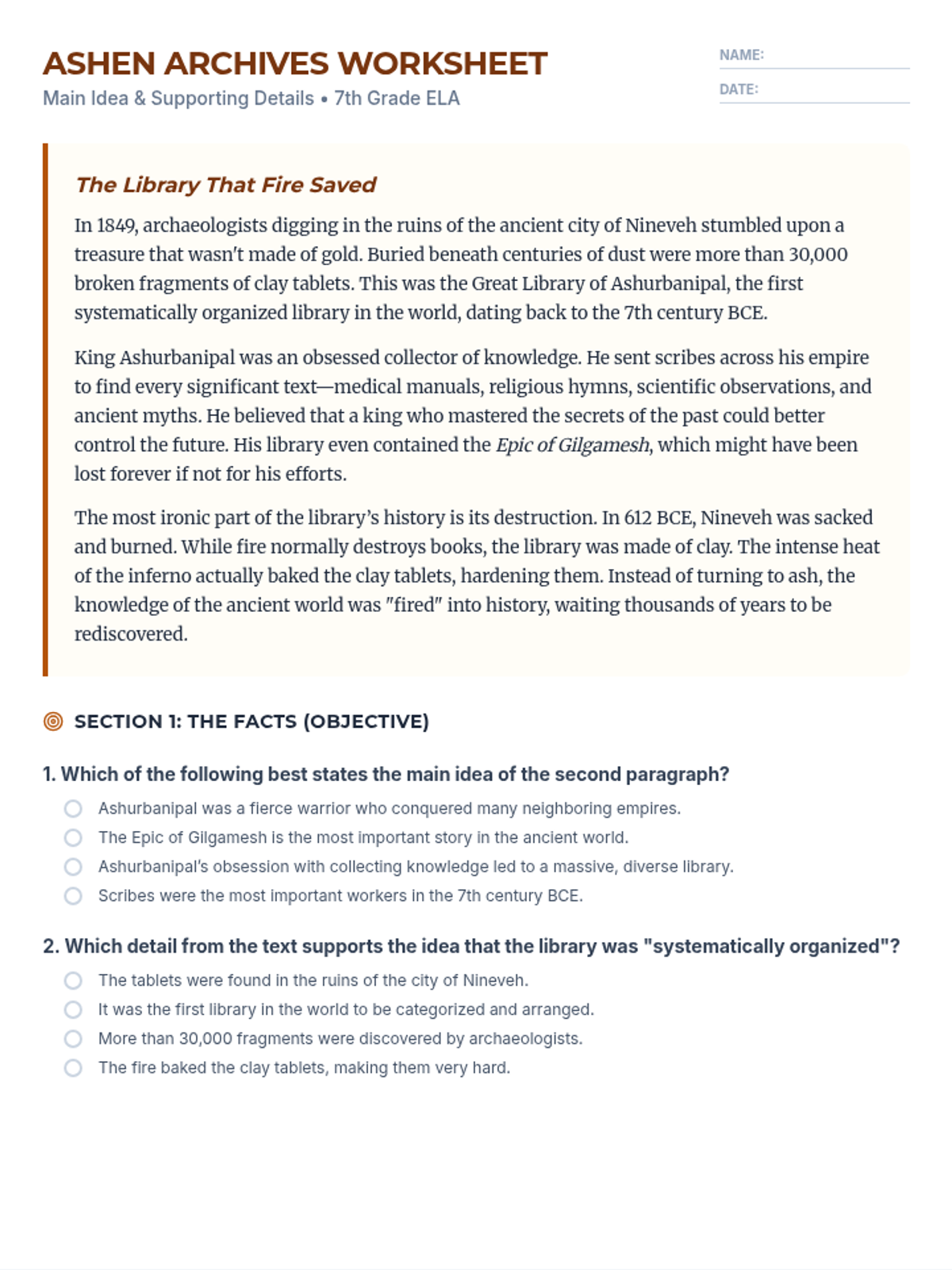
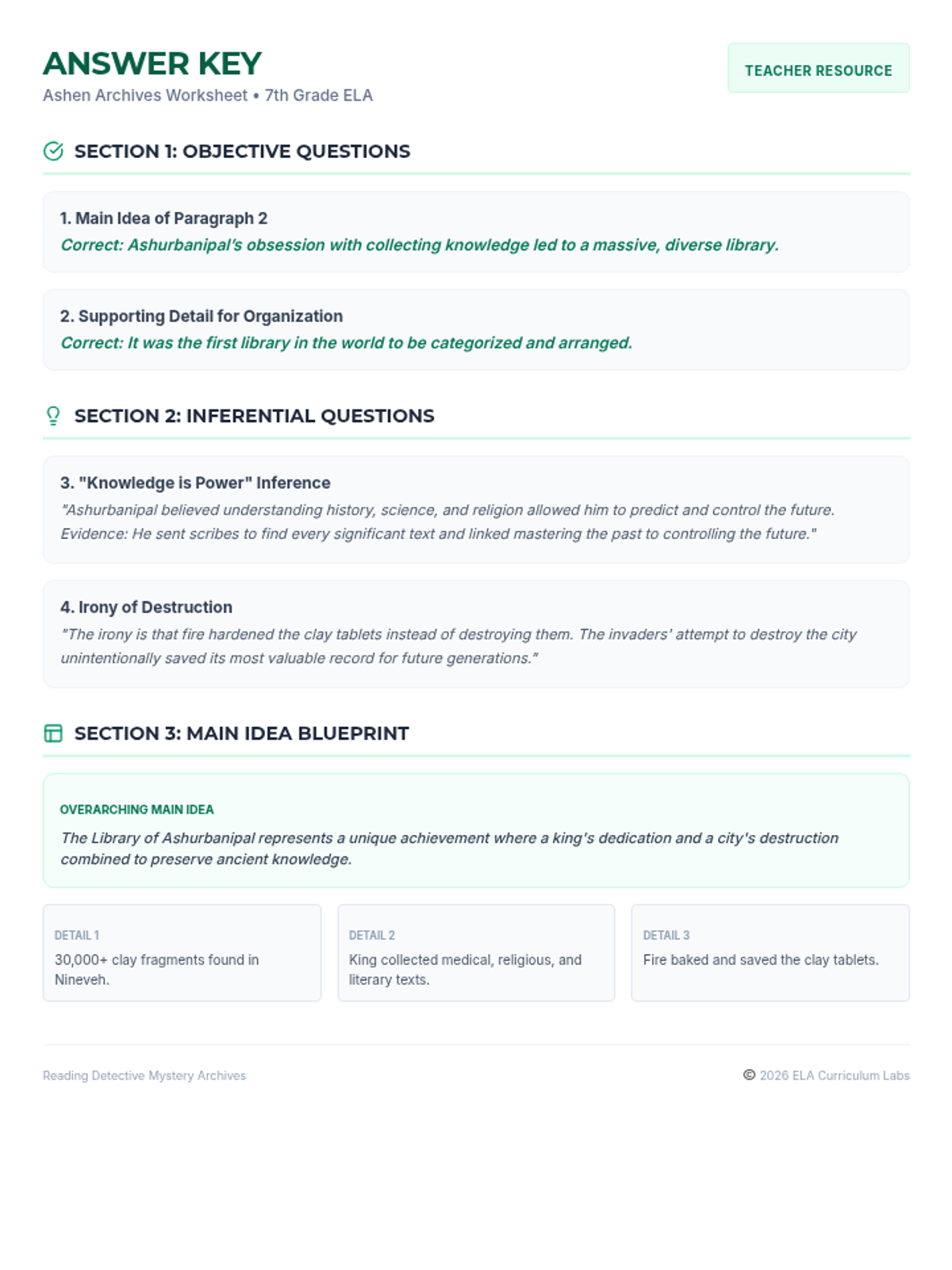
A lesson focused on mastering main idea and supporting details through the lens of ancient historical mysteries.
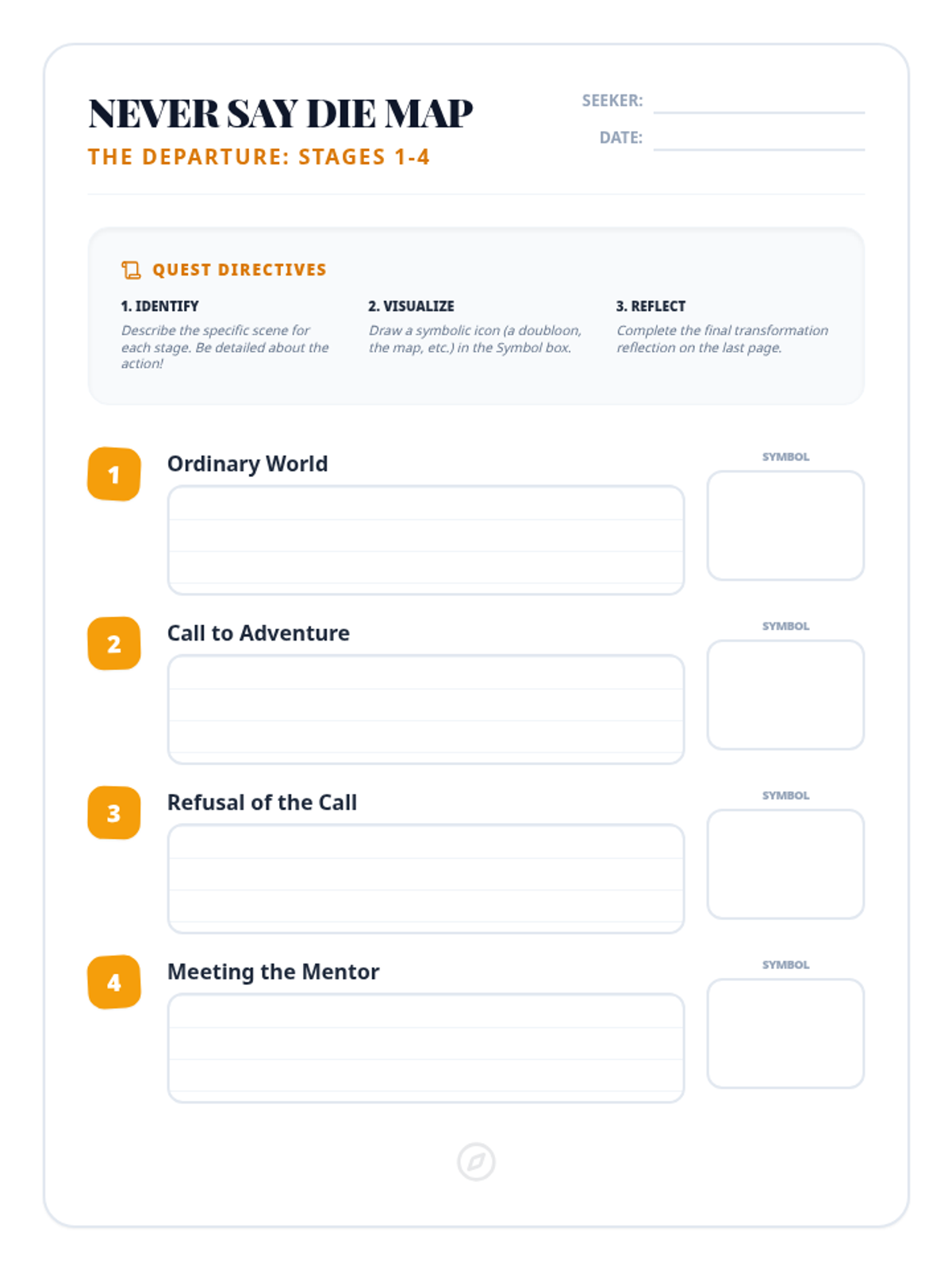
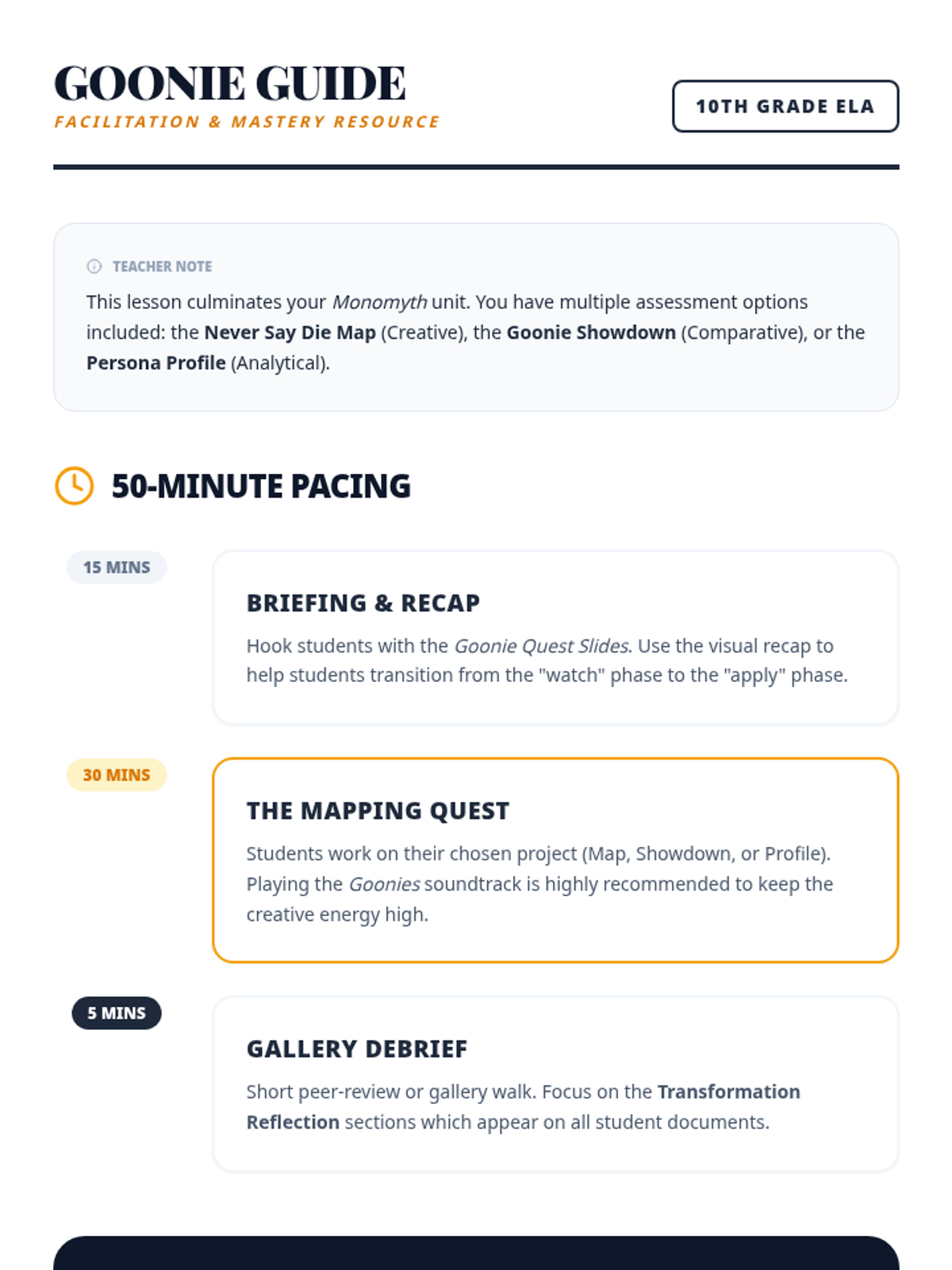
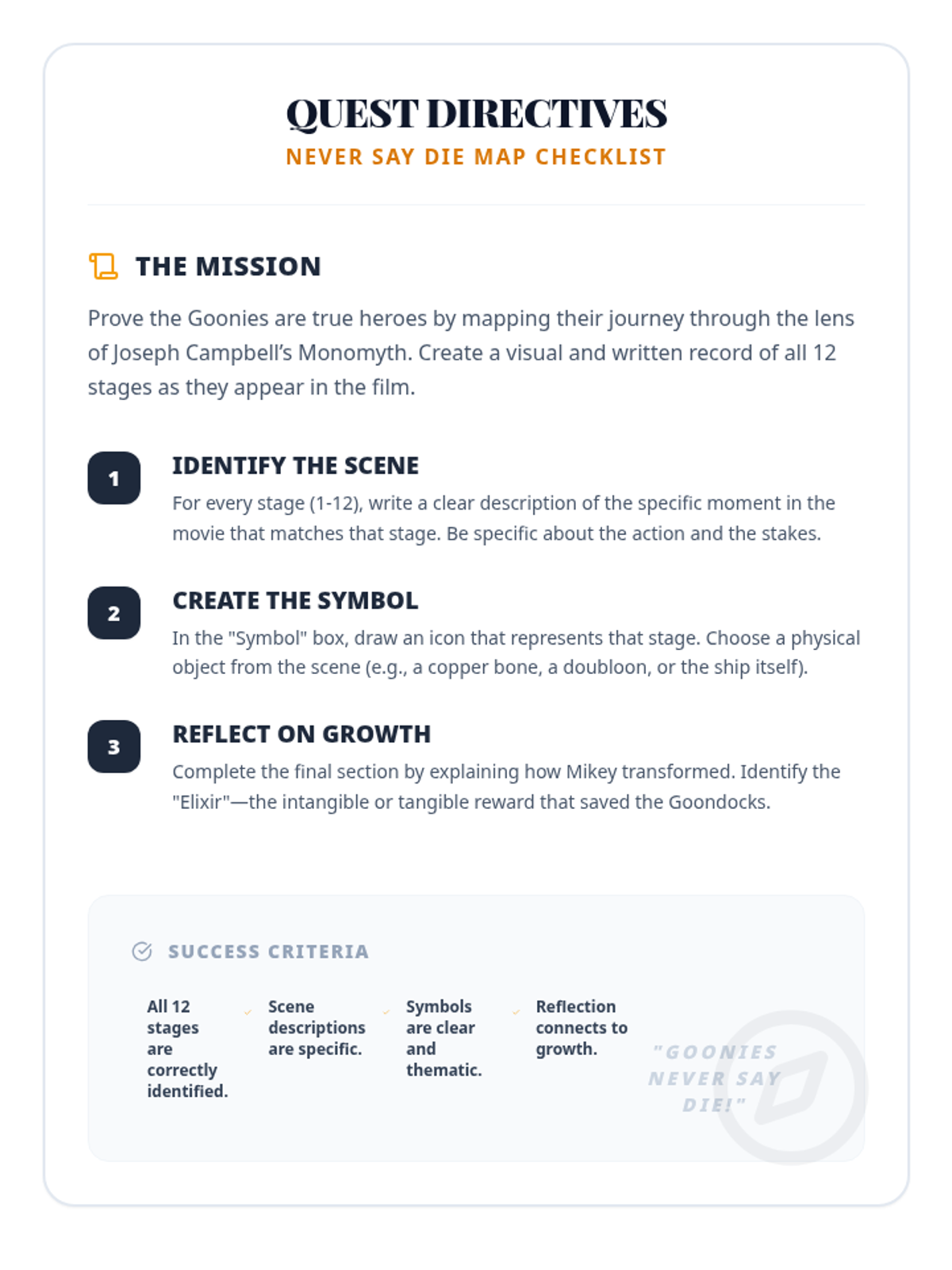
A fast-paced creative project where students map out the 12 stages of the Hero's Journey using the plot of The Goonies as their guide.
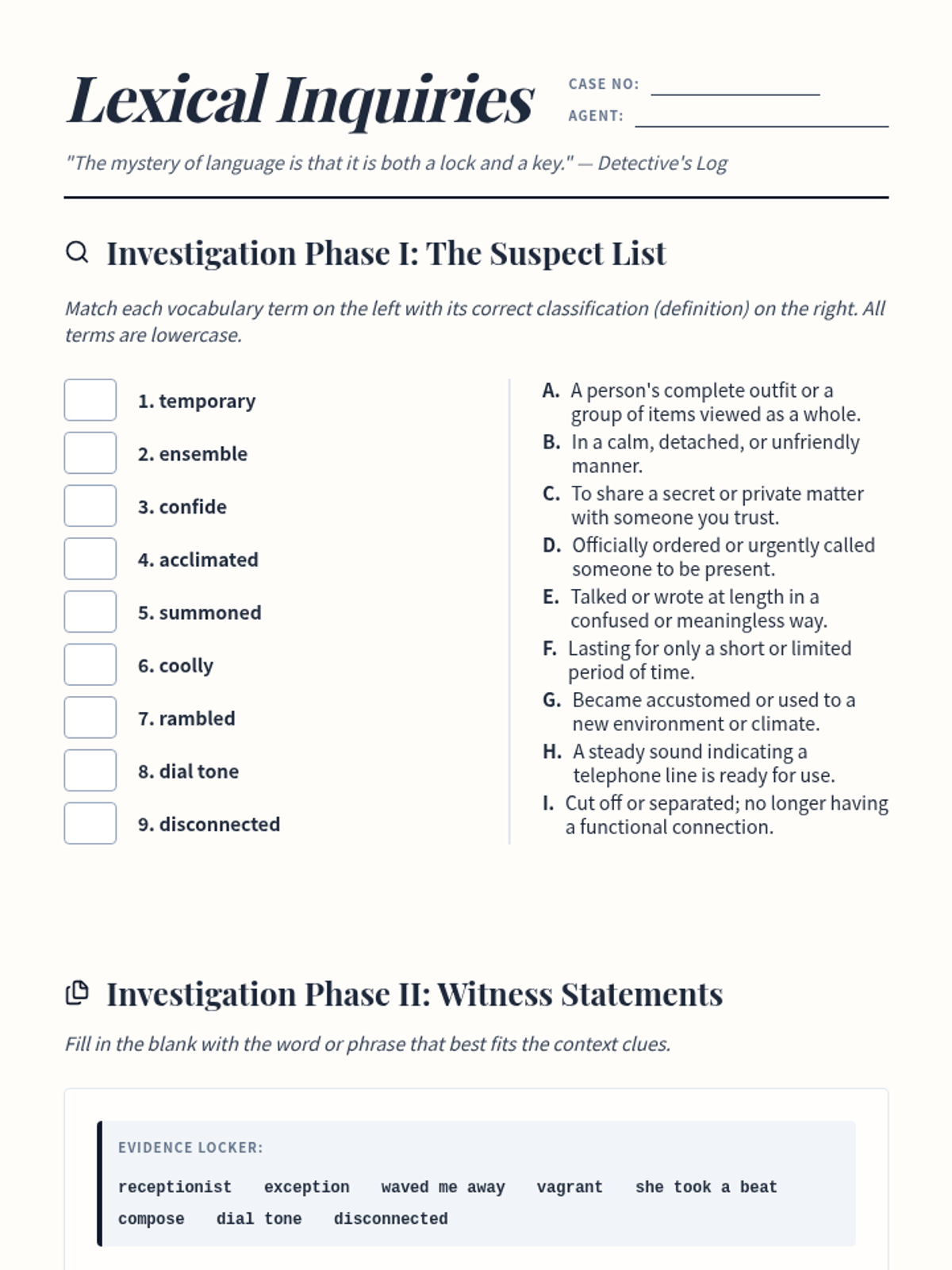
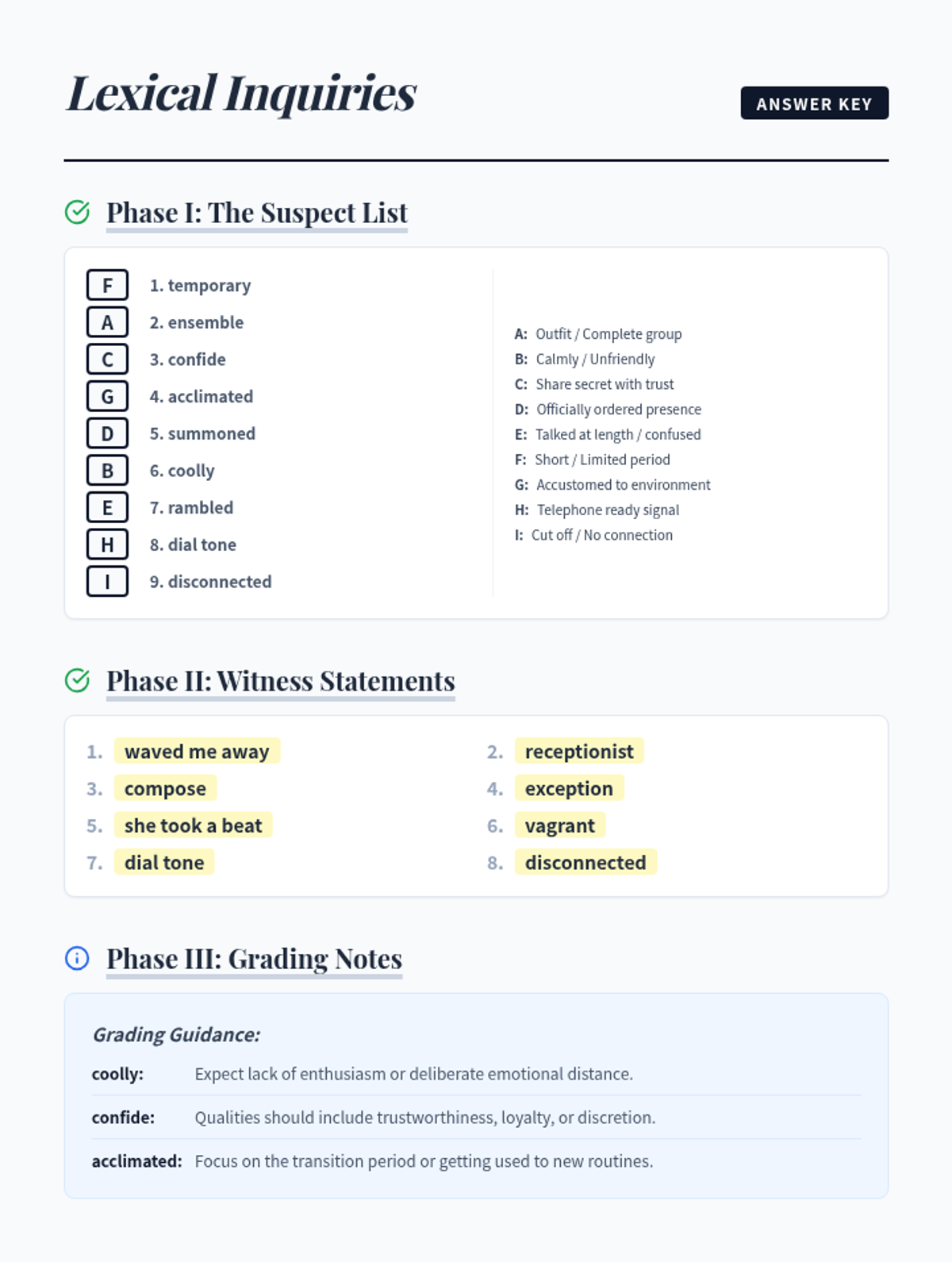
A vocabulary investigation focused on mastering nuanced words and idioms through context clues and creative application. Students analyze 'mystery' themed sentences to determine meanings and apply them to real-world scenarios.
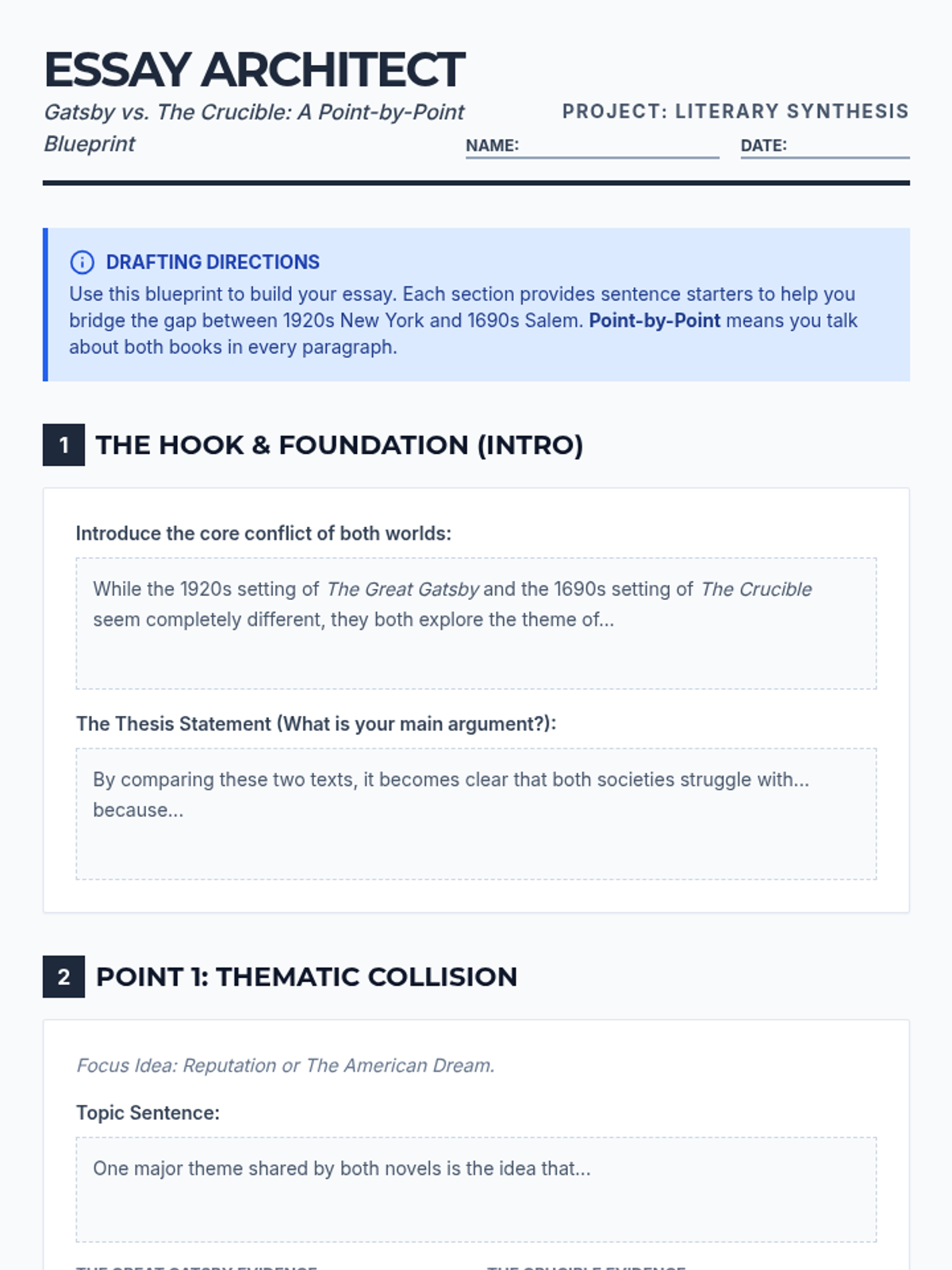
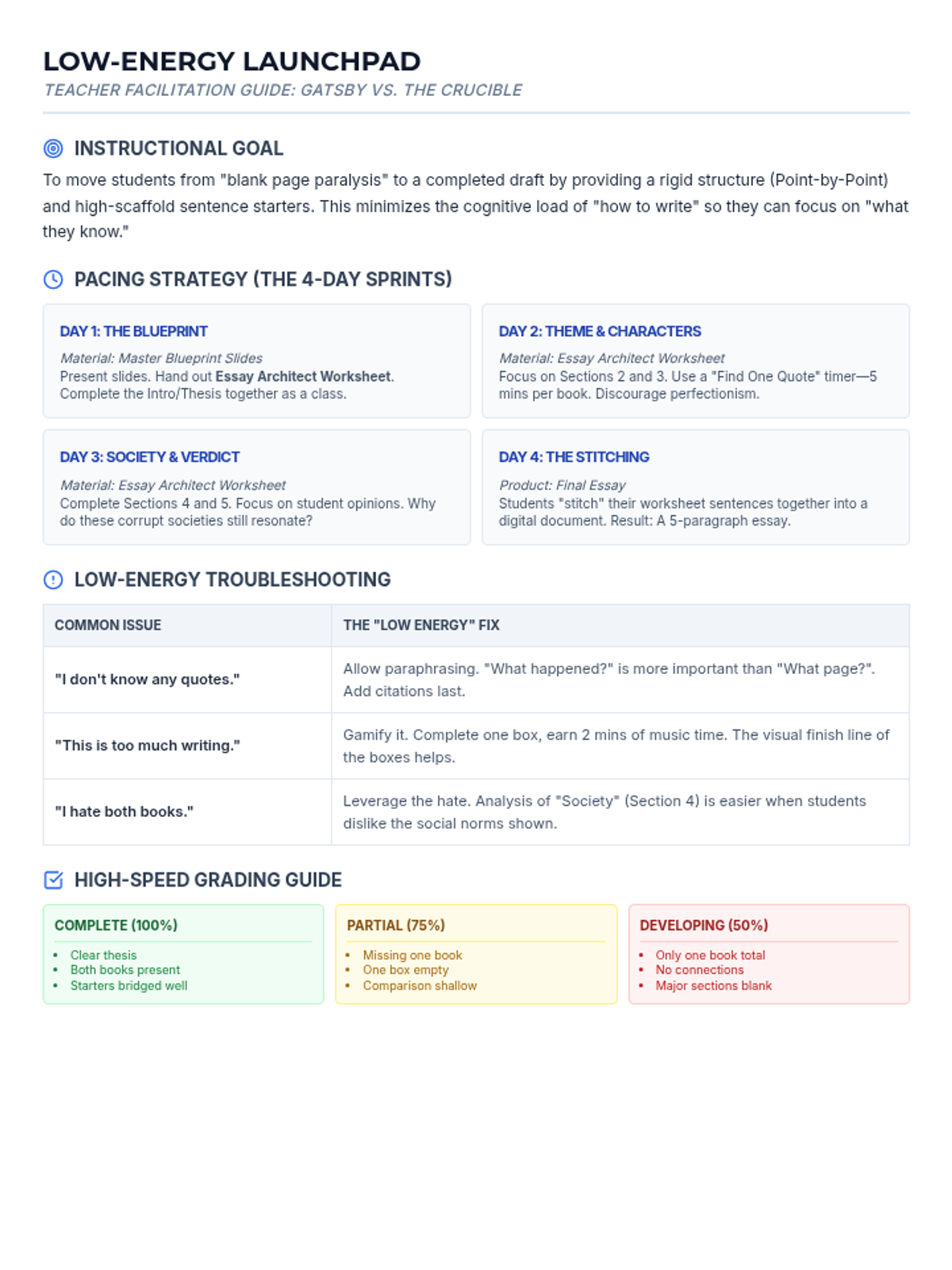
A structured guide for high school students to synthesize 'The Great Gatsby' and 'The Crucible' through a point-by-point compare and contrast essay, specifically designed with high-scaffold sentence starters for low-energy learners.
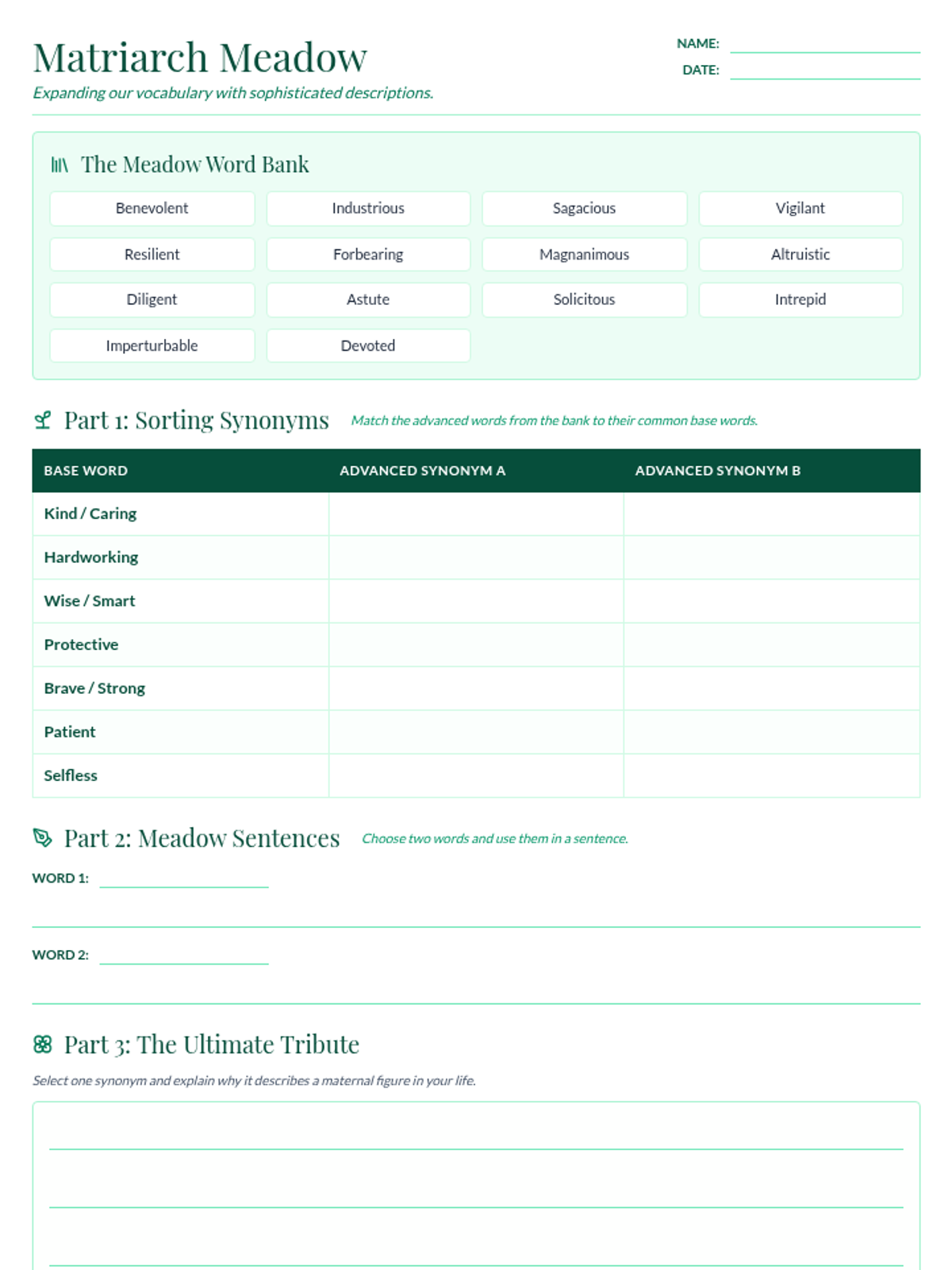
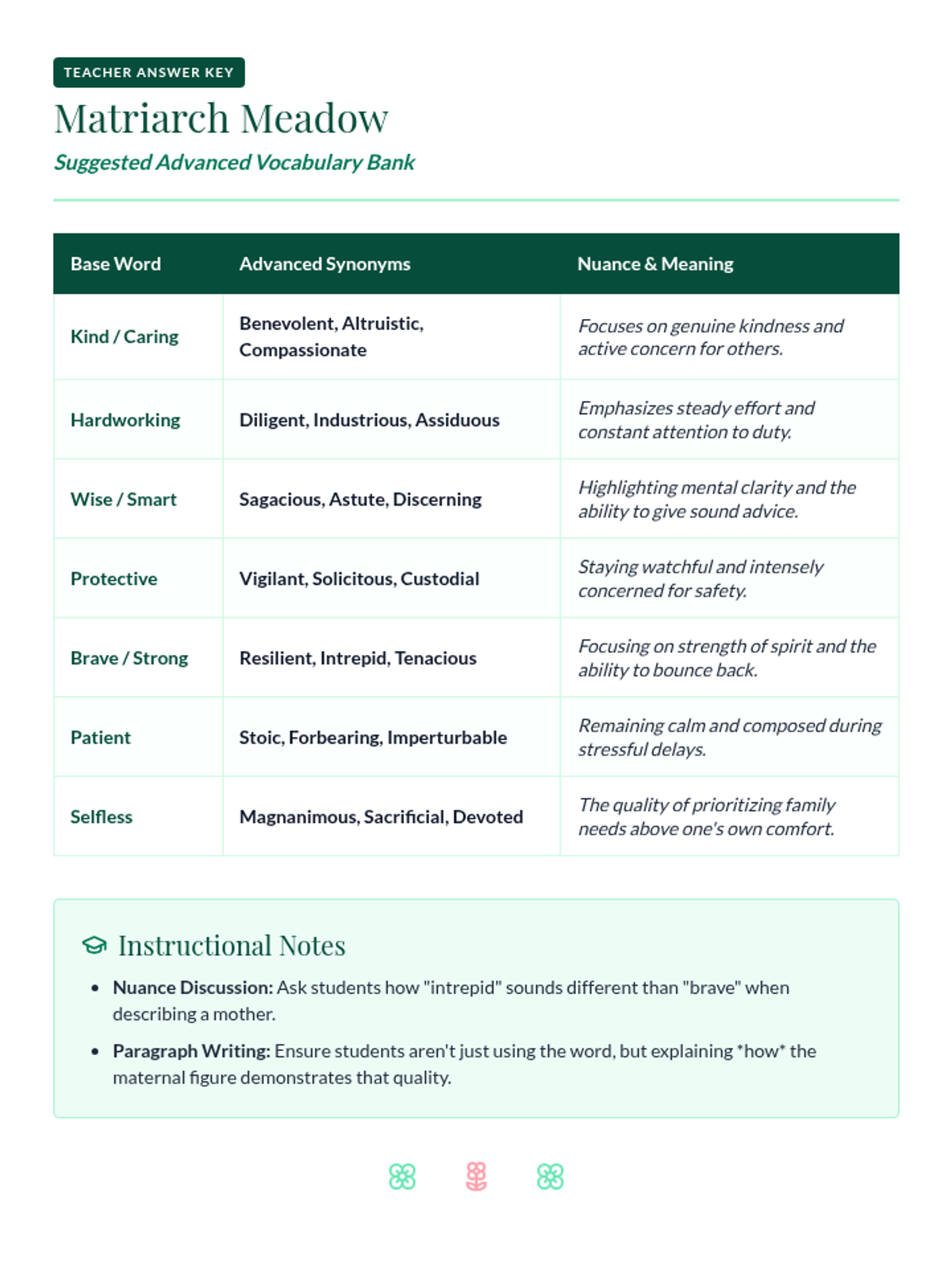
A lesson focused on expanding vocabulary through advanced synonyms describing mothers and maternal figures. Students explore nuanced adjectives to enhance their descriptive writing.
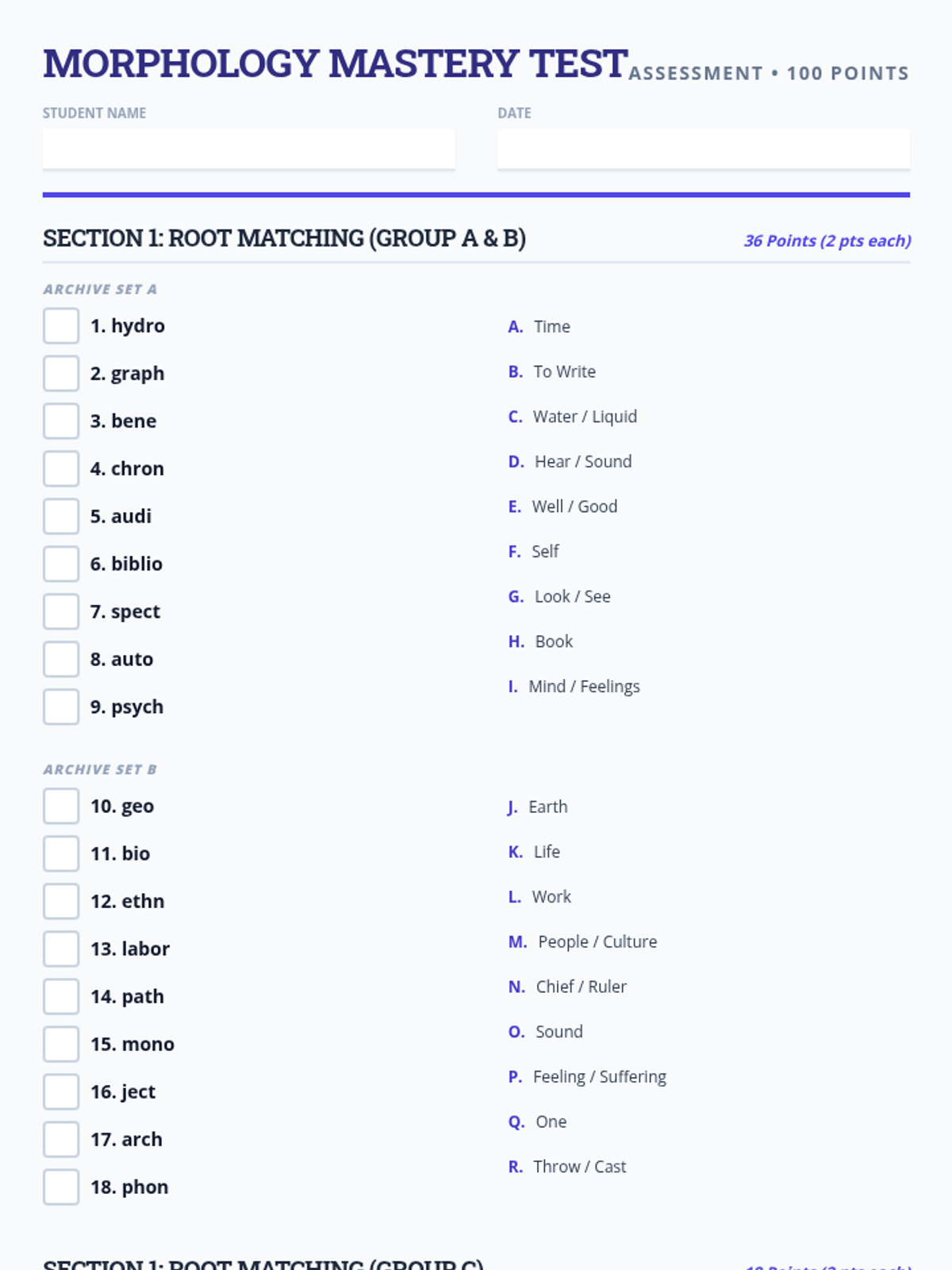
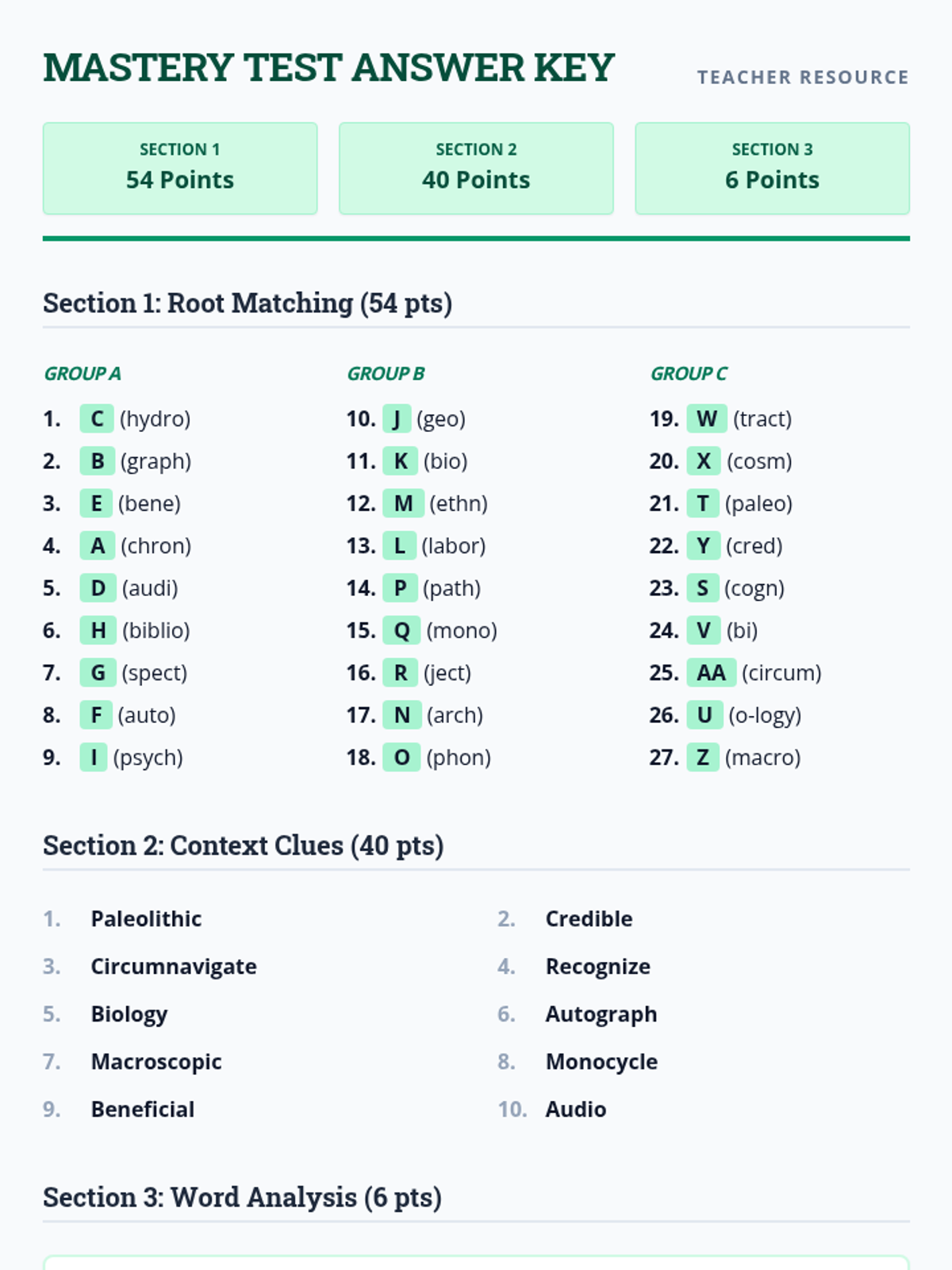
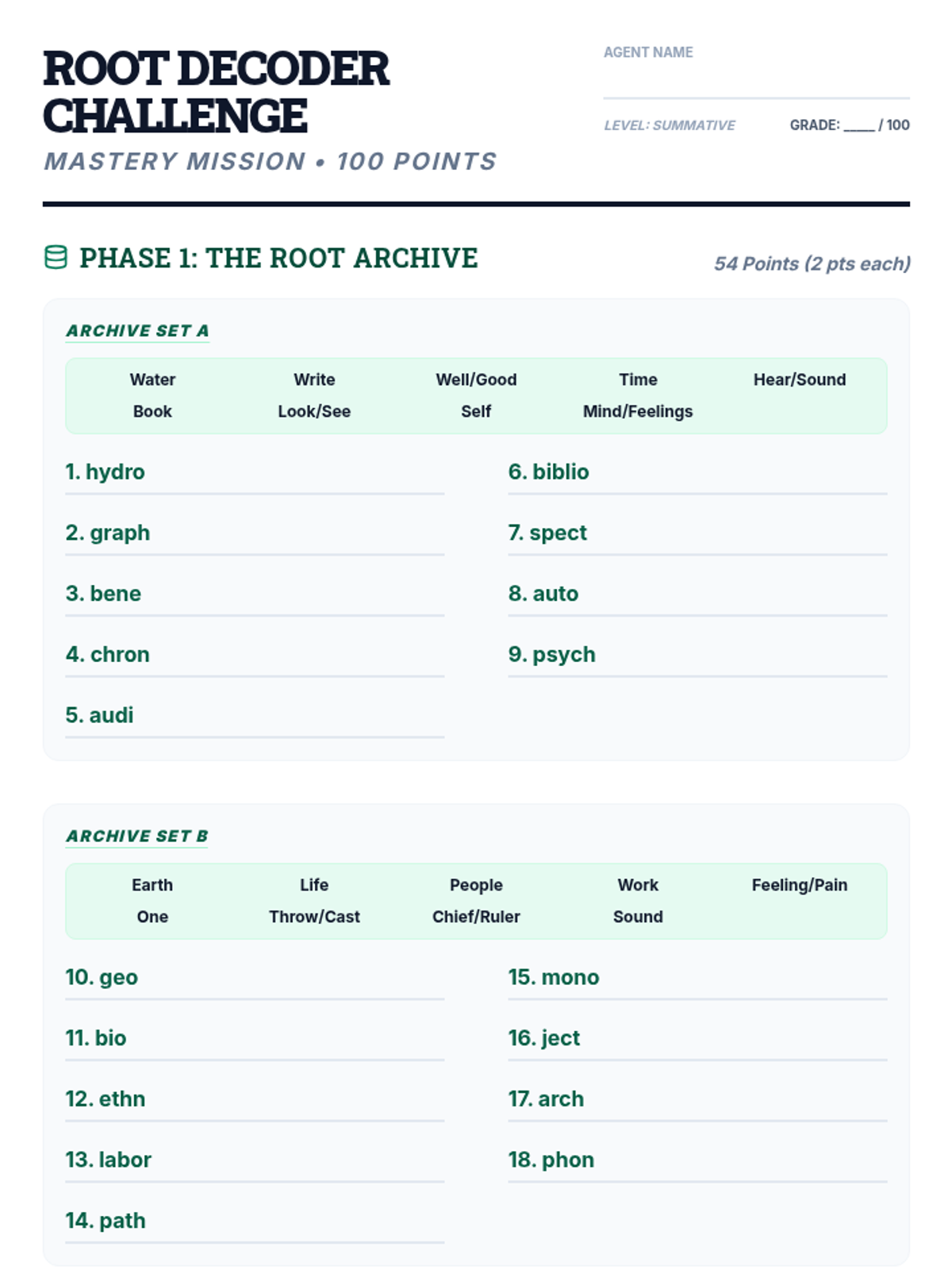
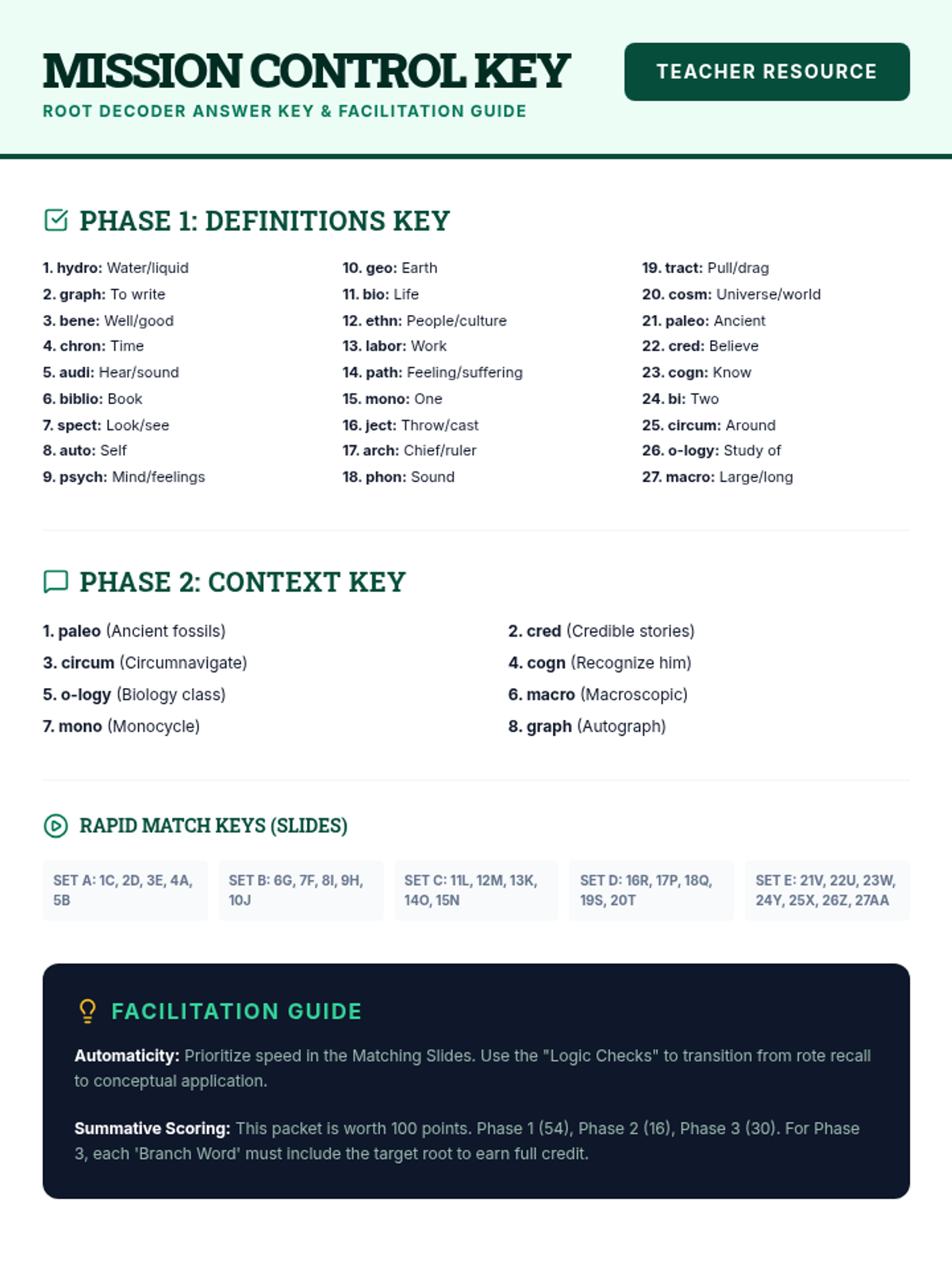
A comprehensive review lesson covering 27 Greek and Latin roots to help developmental reading students prepare for their morphology assessment through gamified slides and a decoding worksheet.
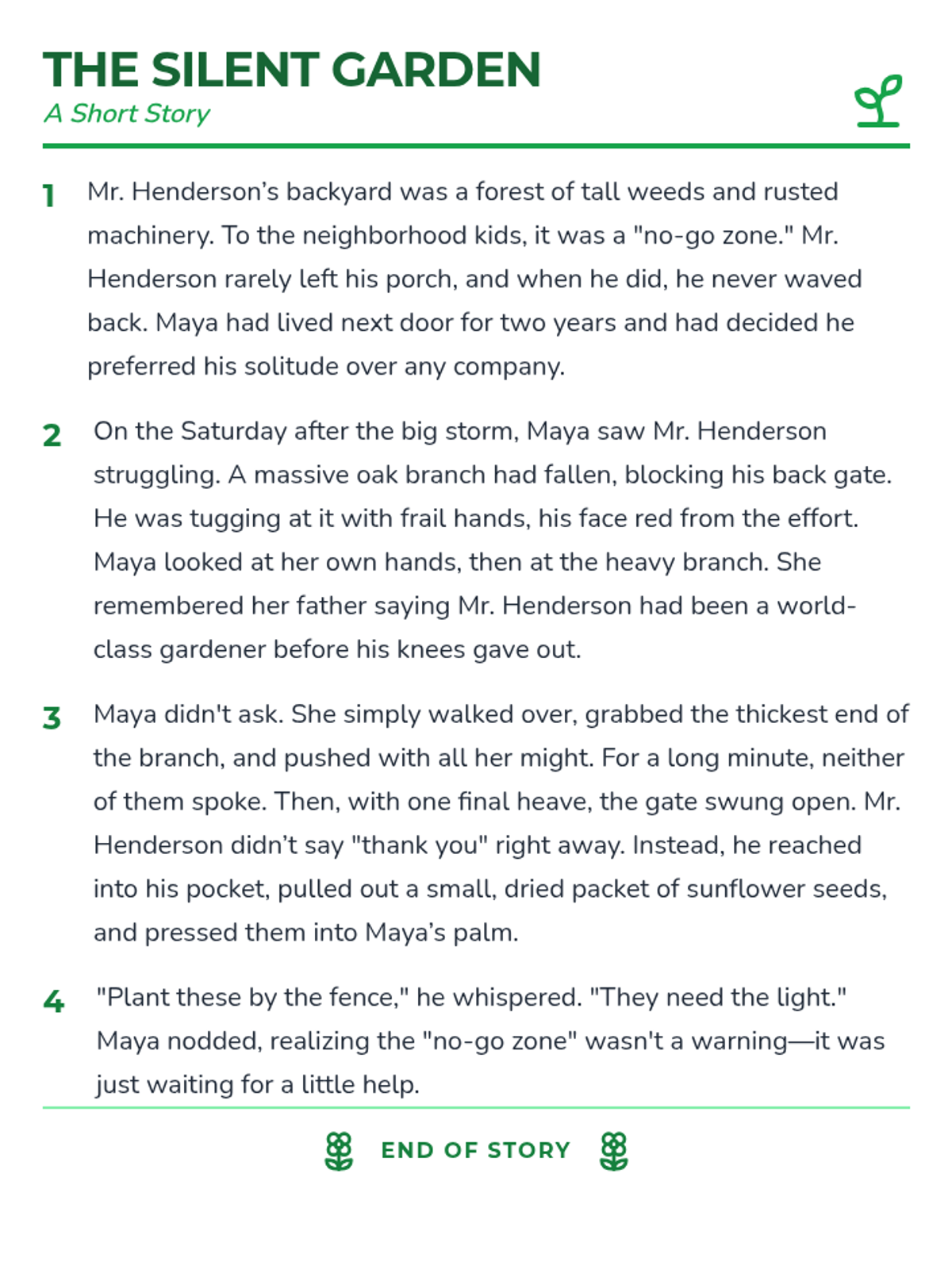
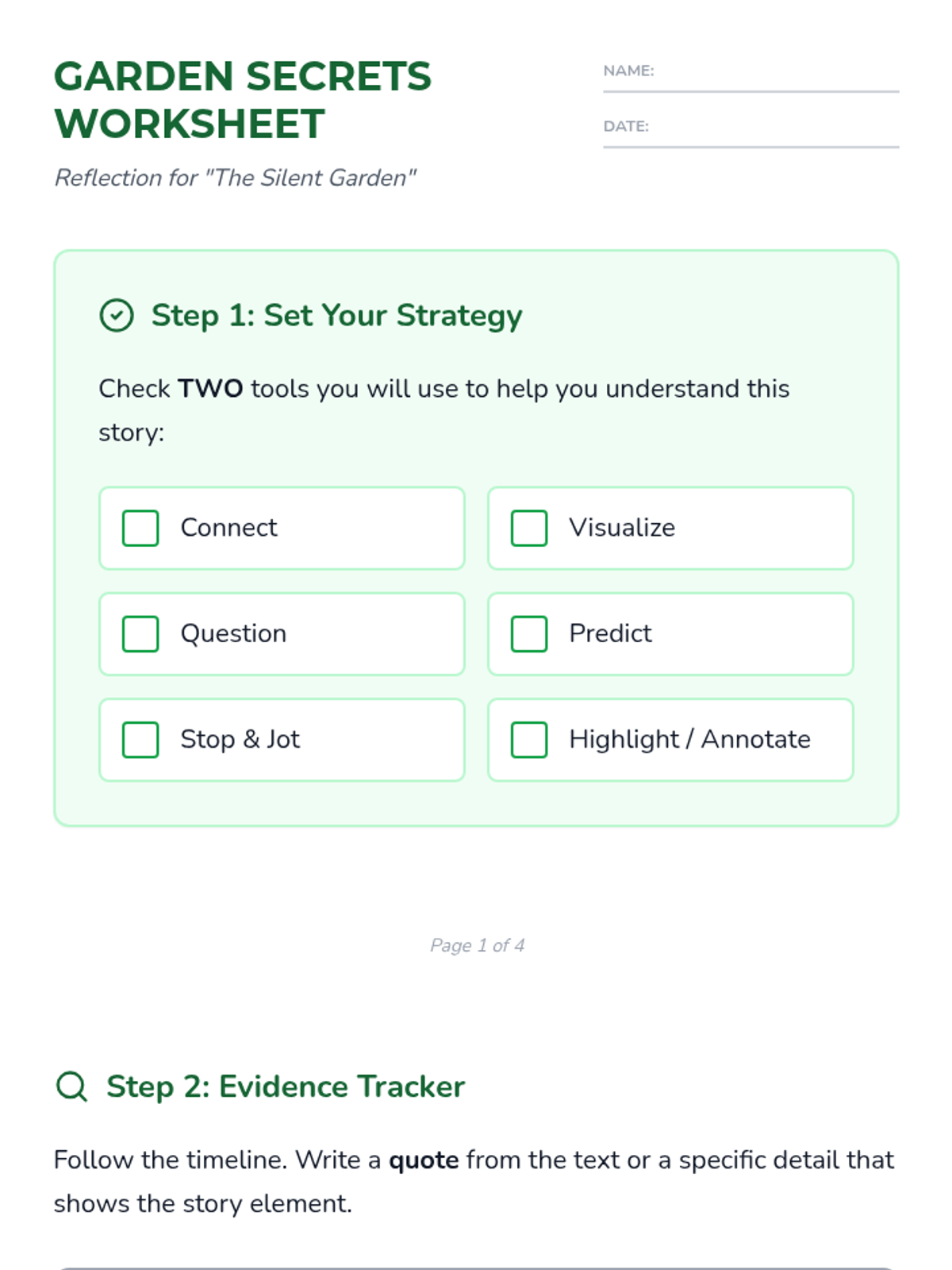
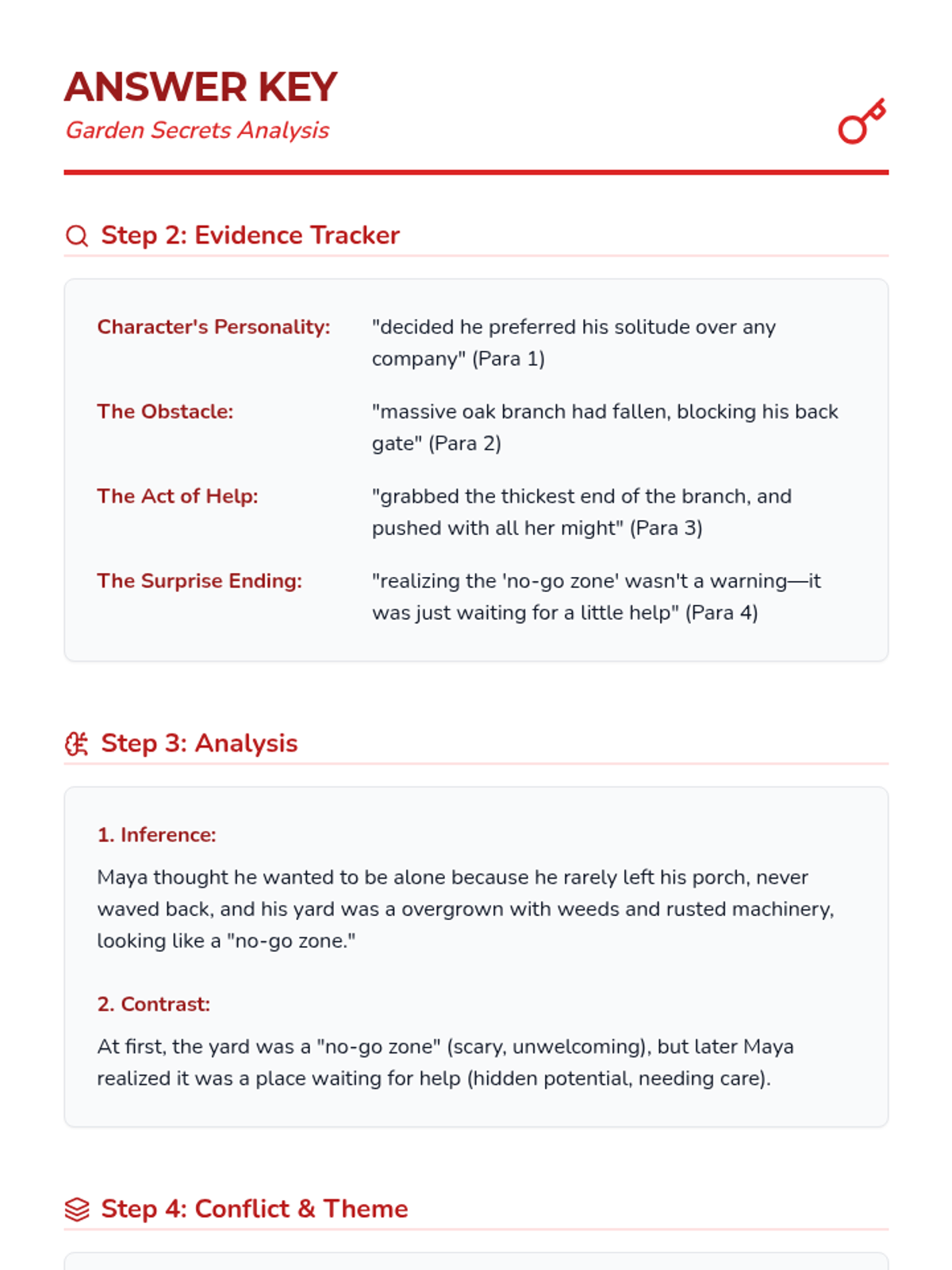
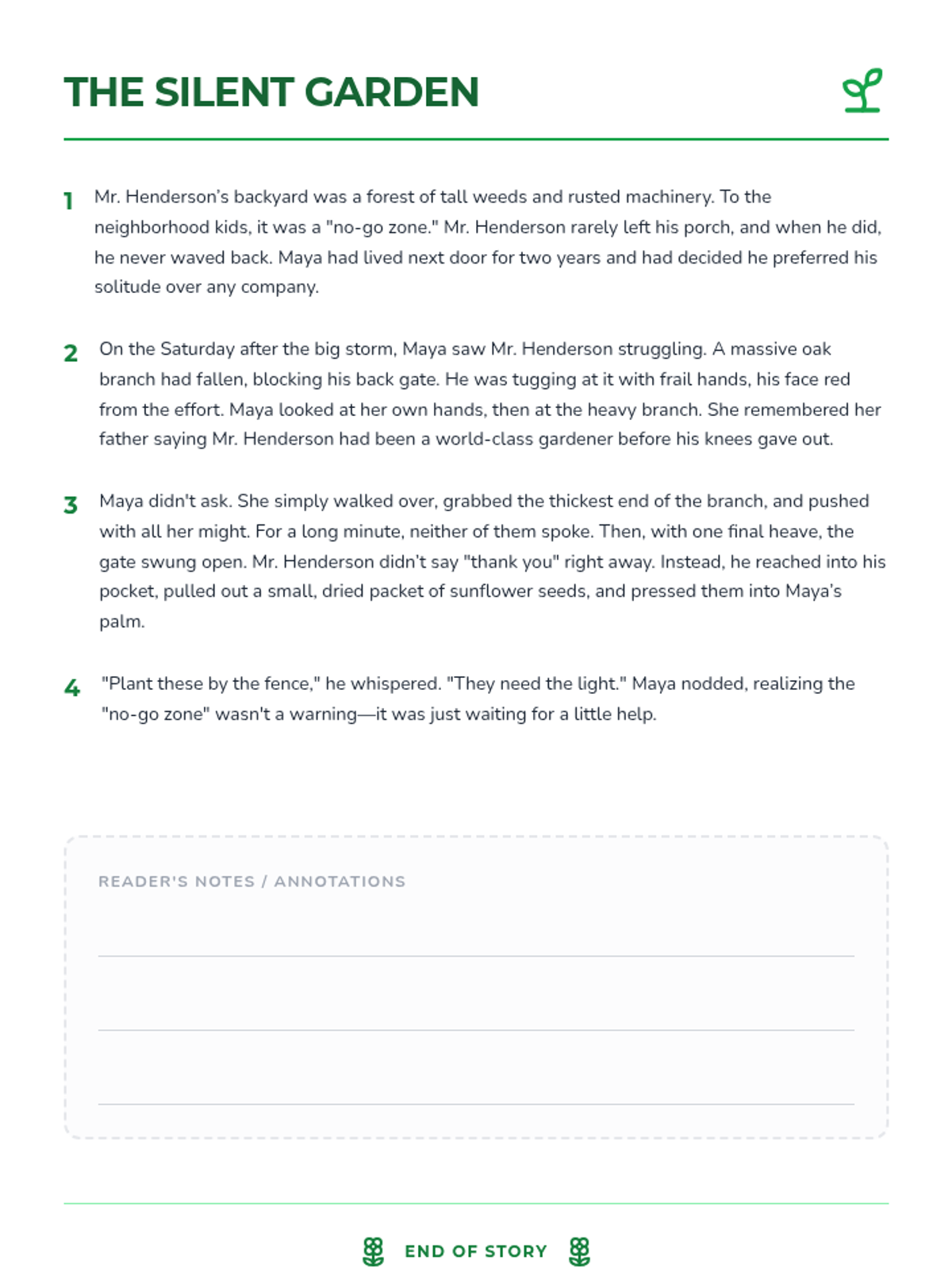
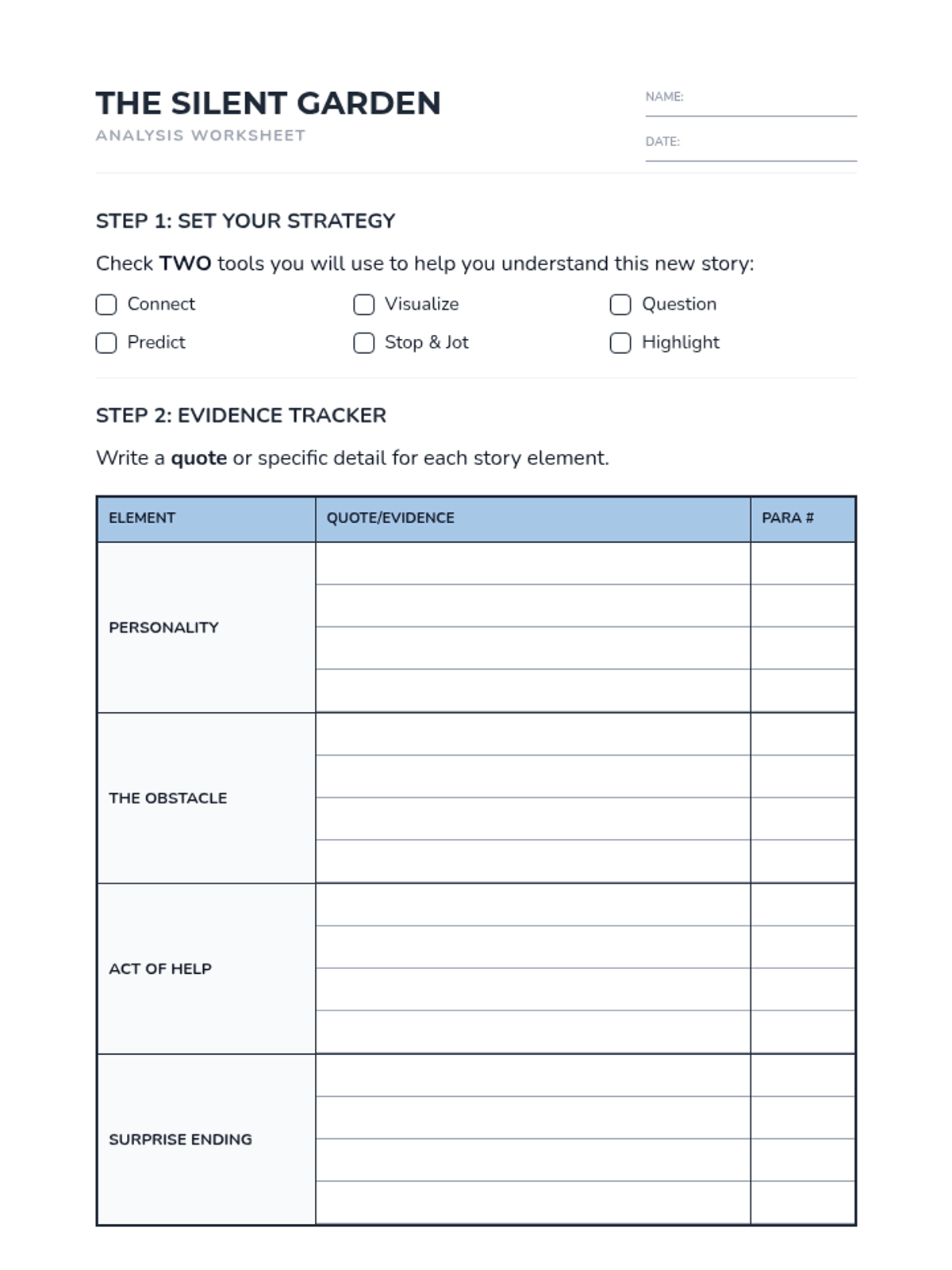
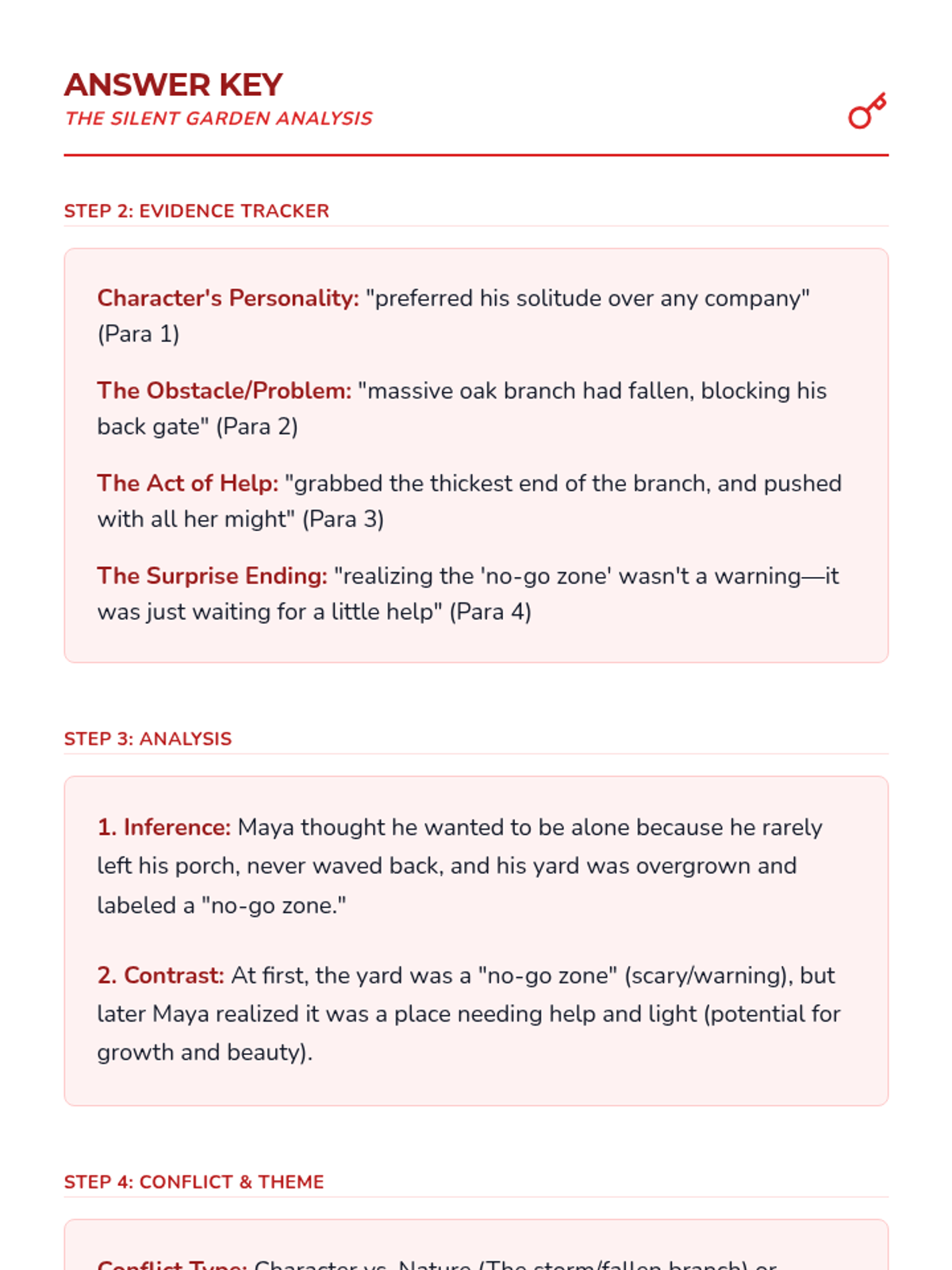
A reading comprehension lesson centered on 'The Silent Garden', focusing on character analysis, conflict types, and theme development with accommodations for special education needs.
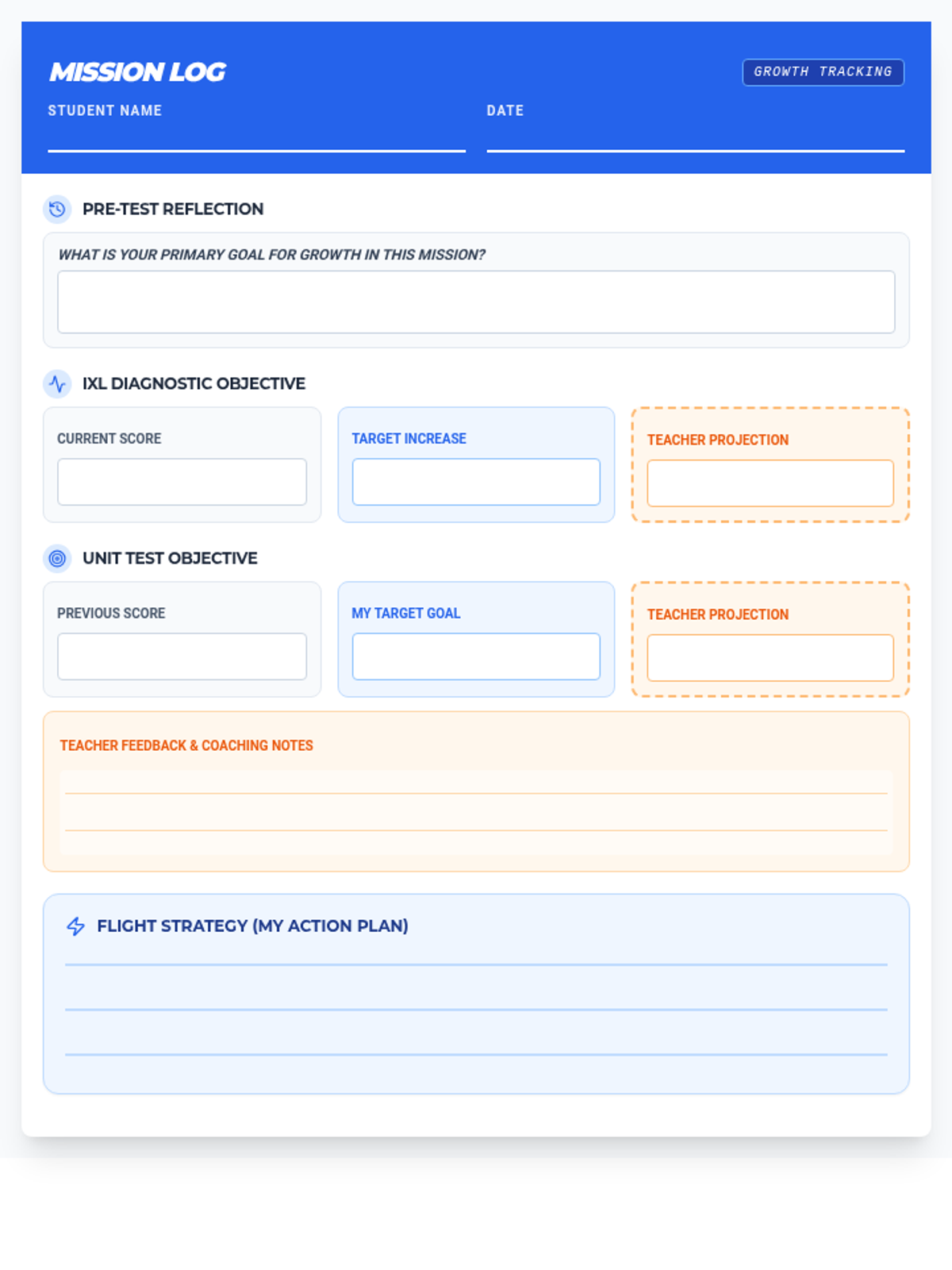
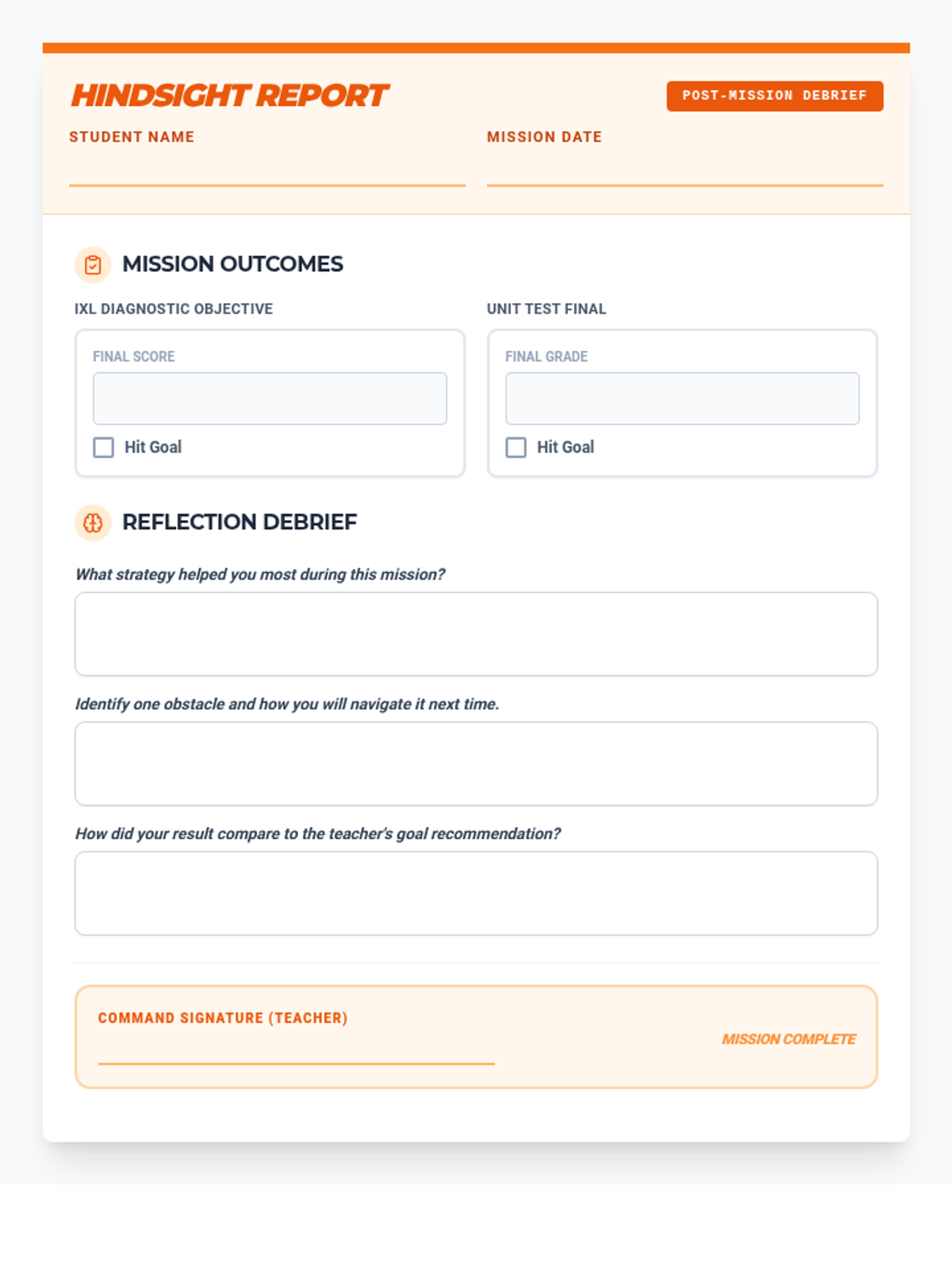
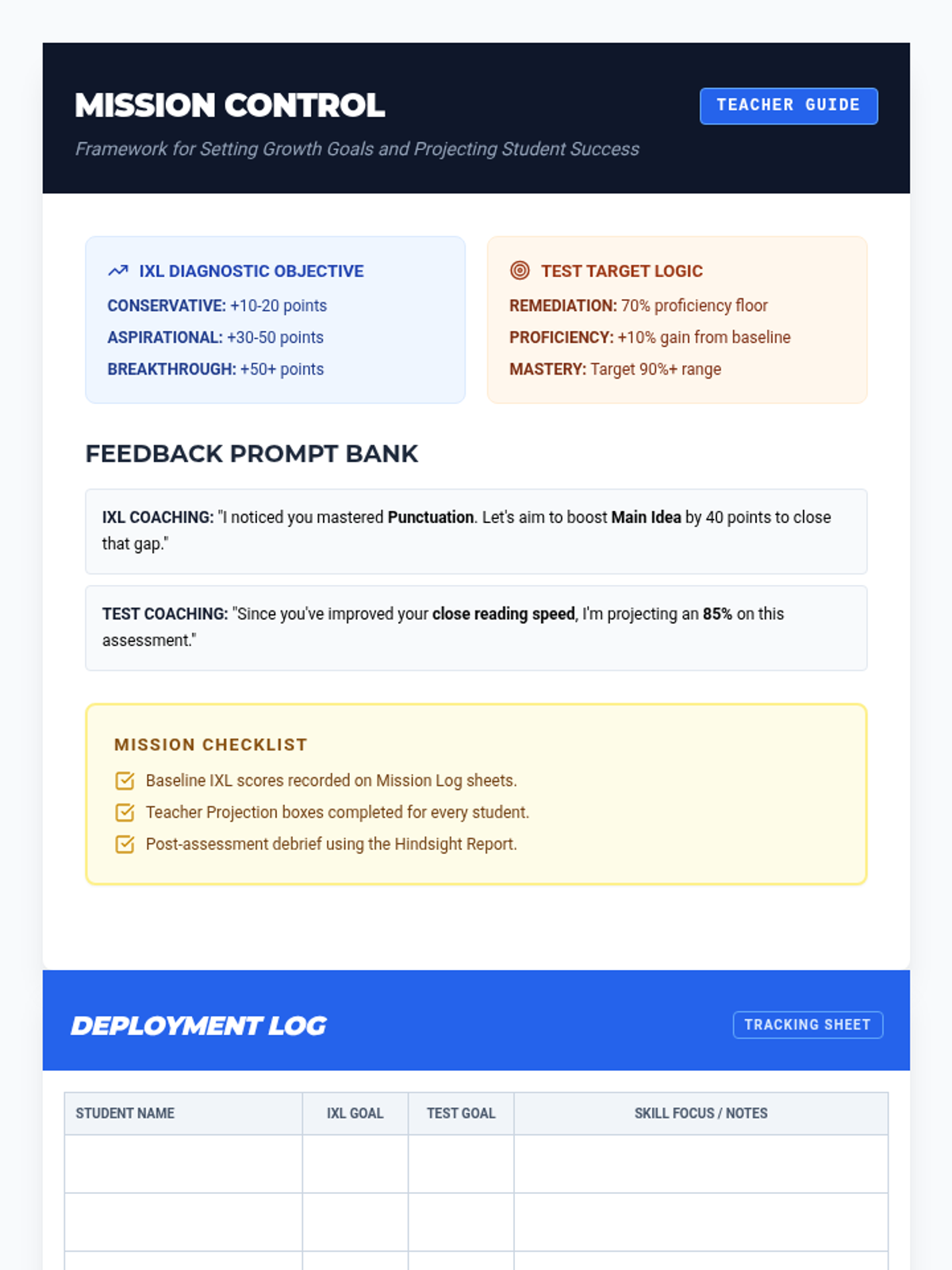
A comprehensive goal-setting and reflection system for ELA students to track their progress in IXL diagnostics and unit tests, featuring a collaborative teacher-student feedback loop.
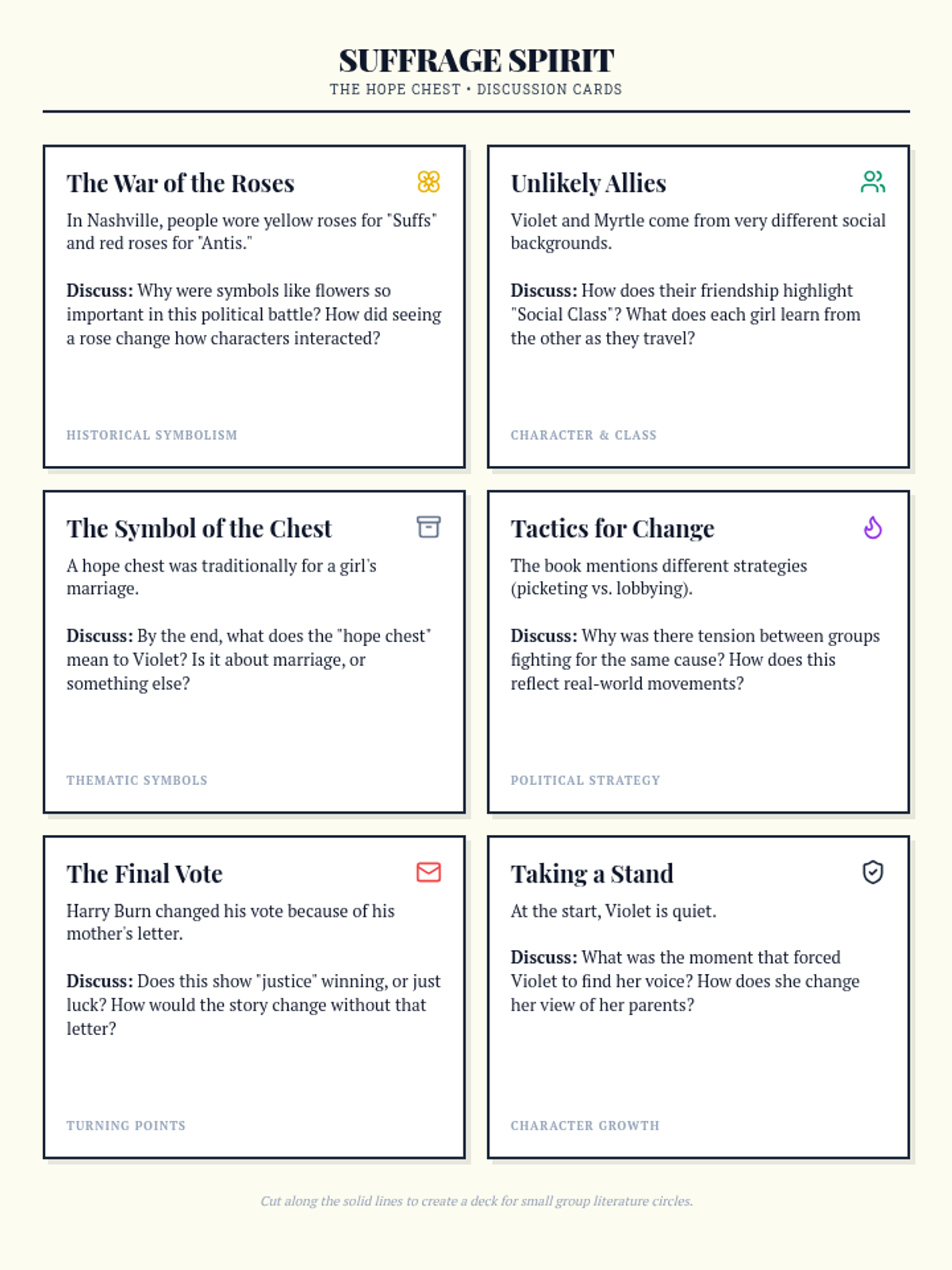
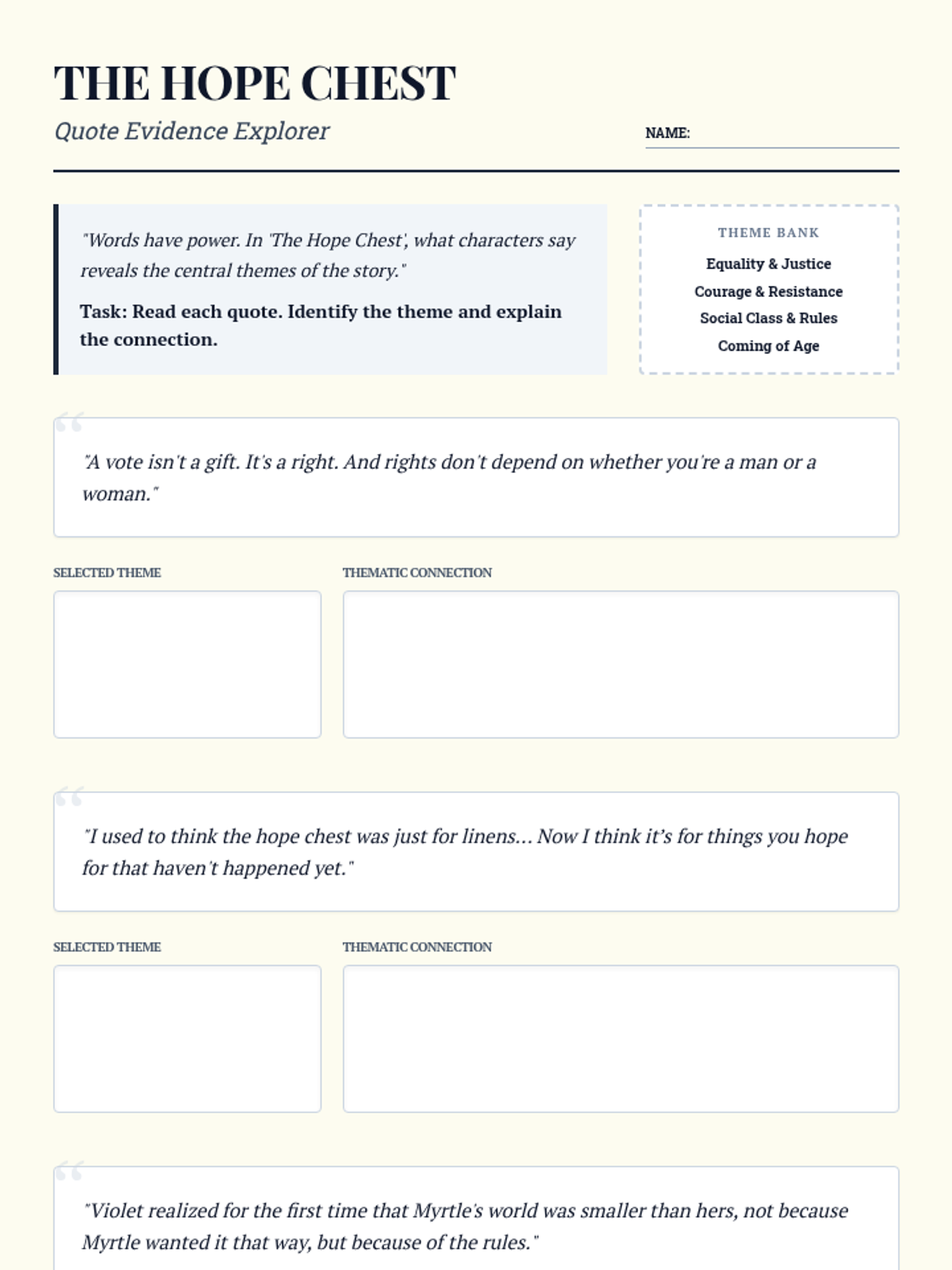
A deep dive into the themes of Karen Schwabach's 'The Hope Chest', exploring the historical context of the Women's Suffrage movement through literary analysis. Students will identify core themes and provide textual evidence.
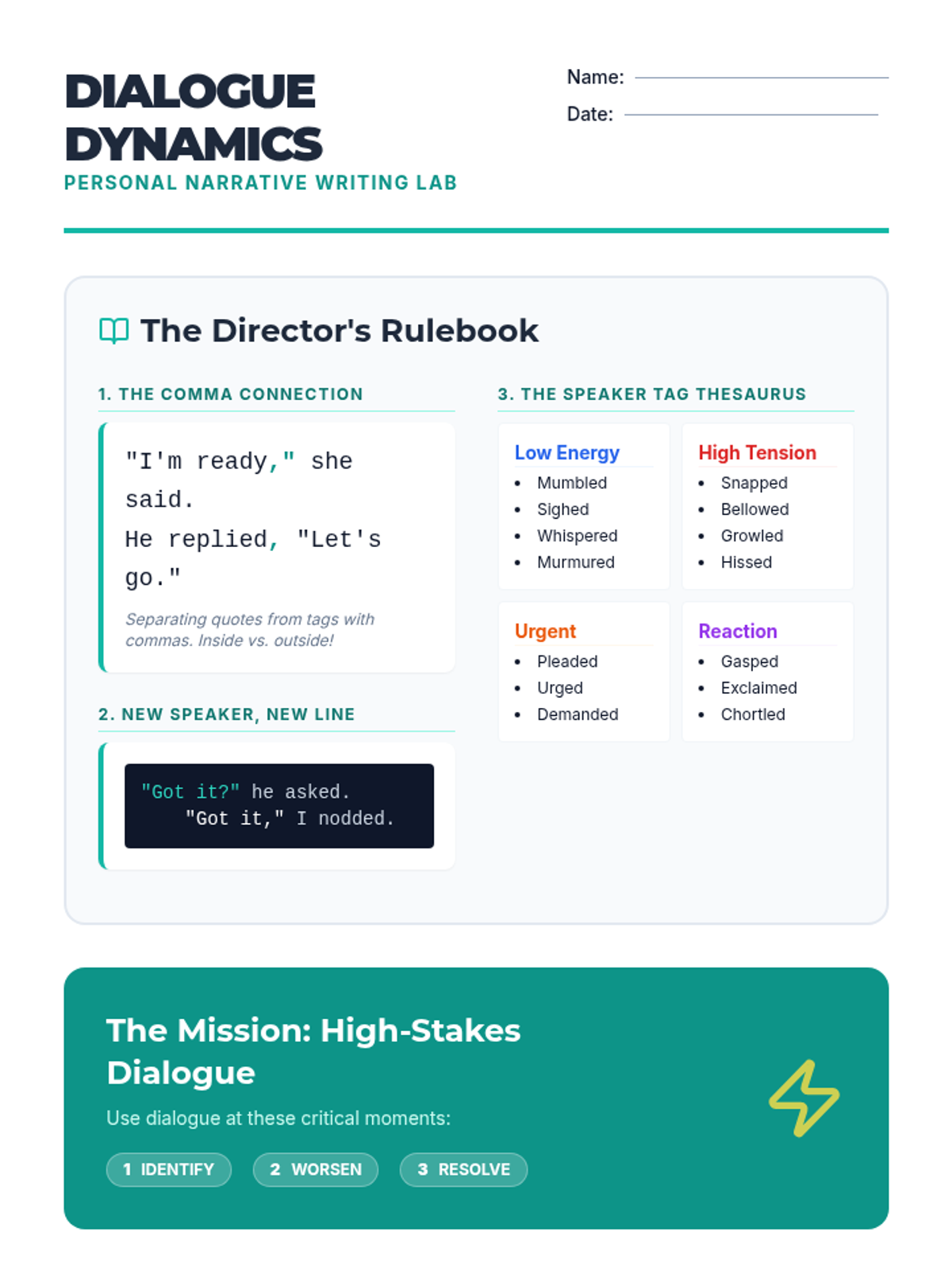
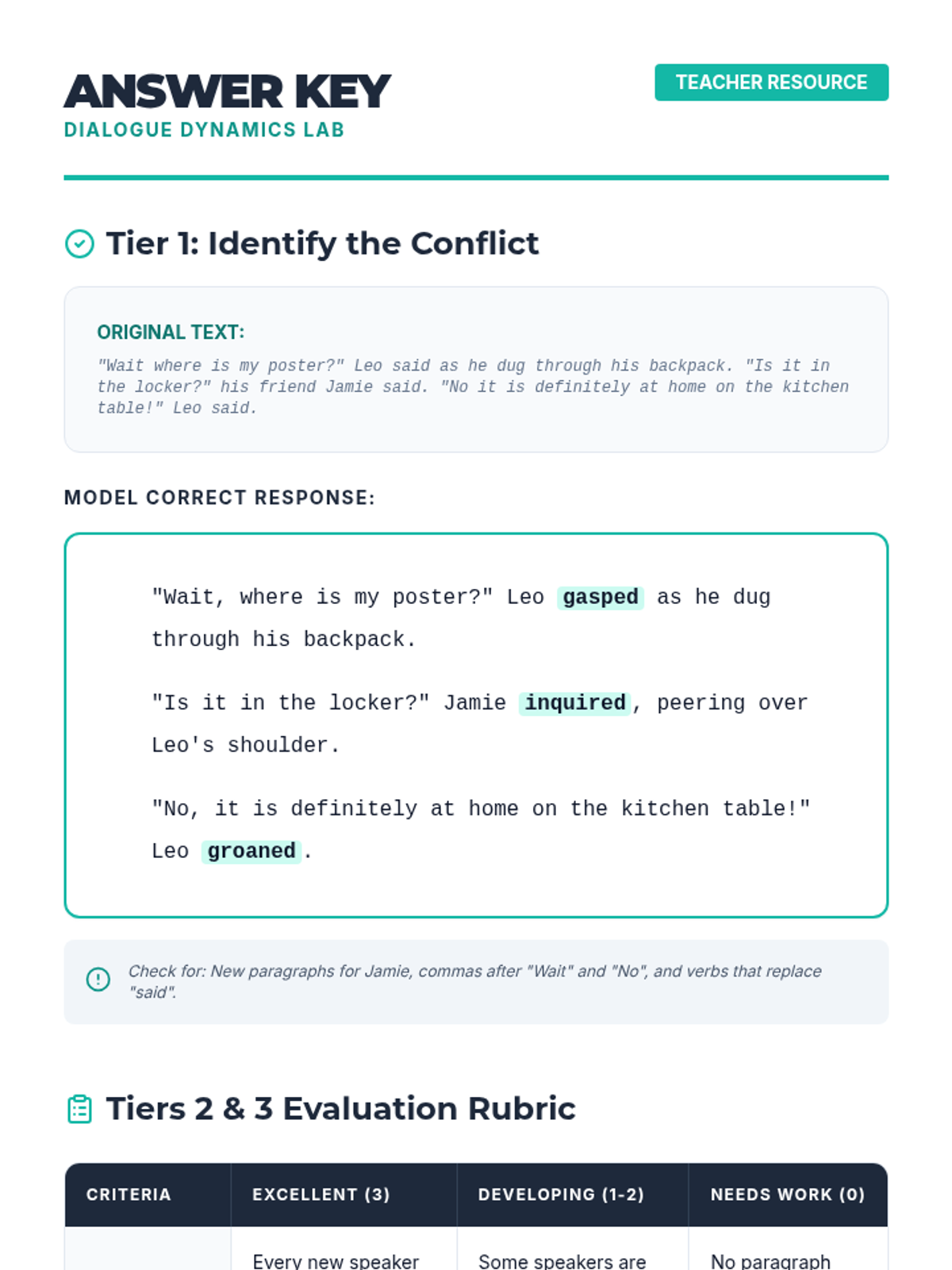
A comprehensive lesson on crafting impactful dialogue for personal narratives, focusing on high-stakes moments, proper formatting, and sophisticated speaker tags. Students learn to use dialogue to drive conflict and resolution while mastering the technical rules of punctuation and paragraphing.
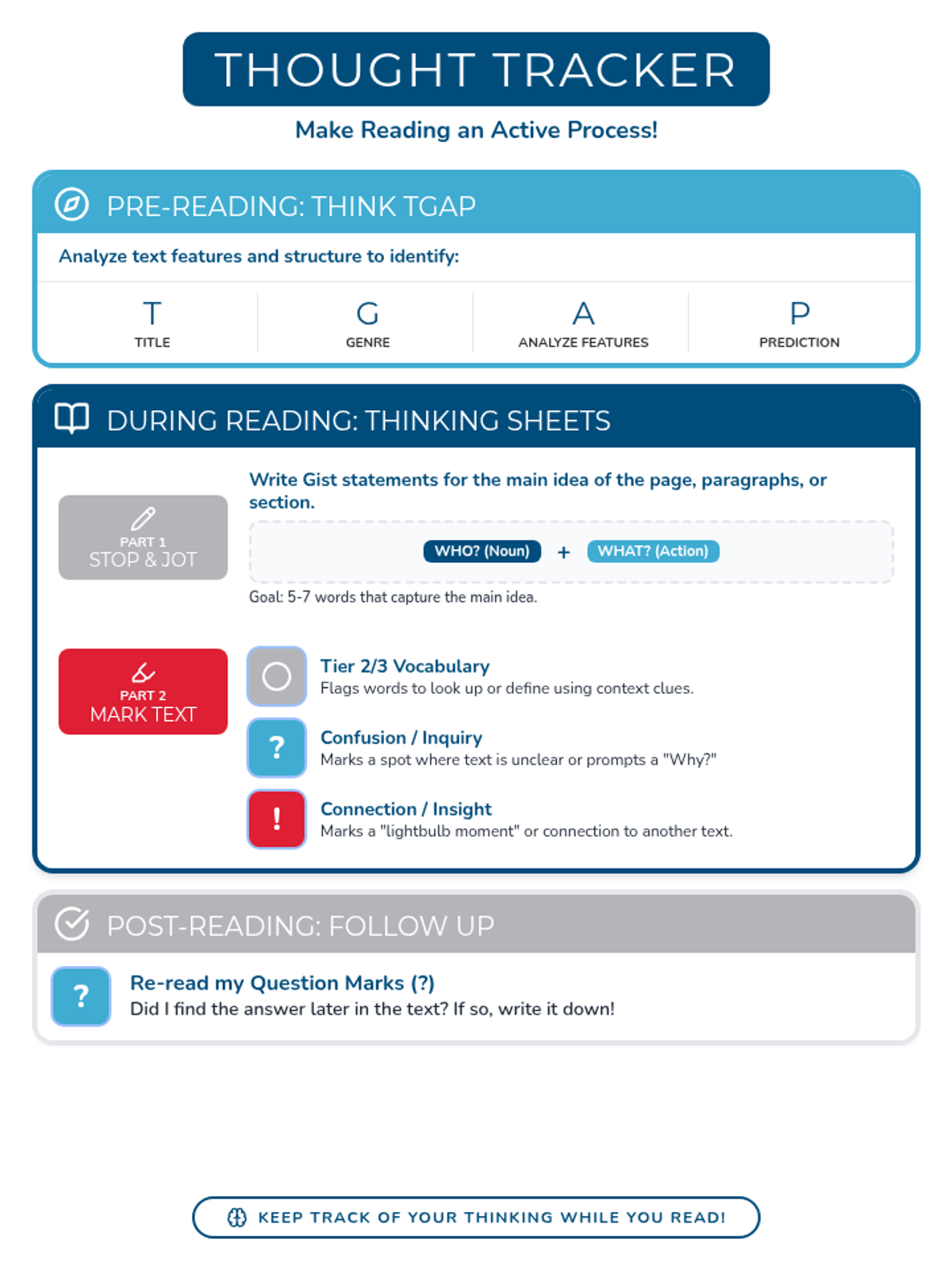
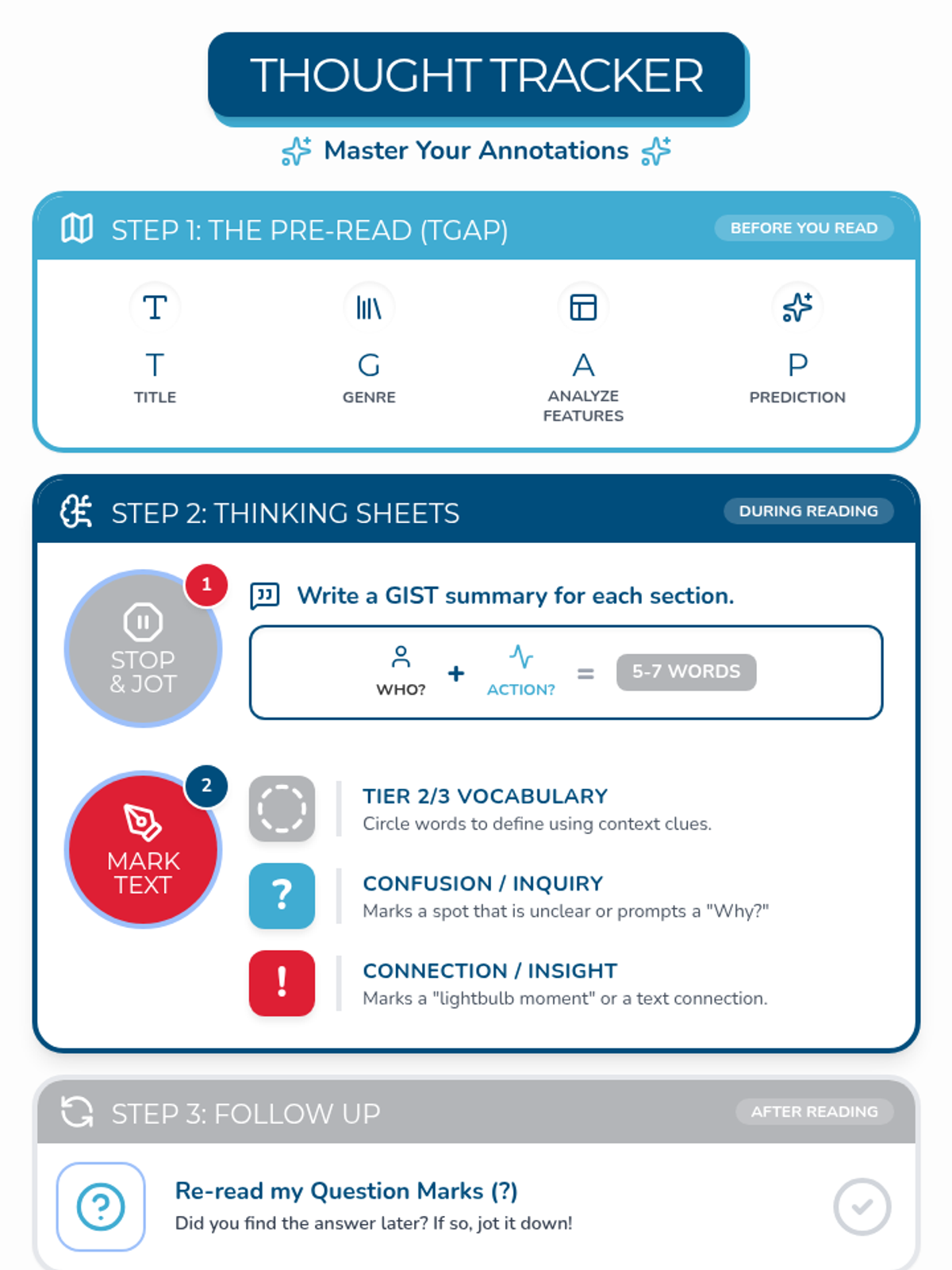
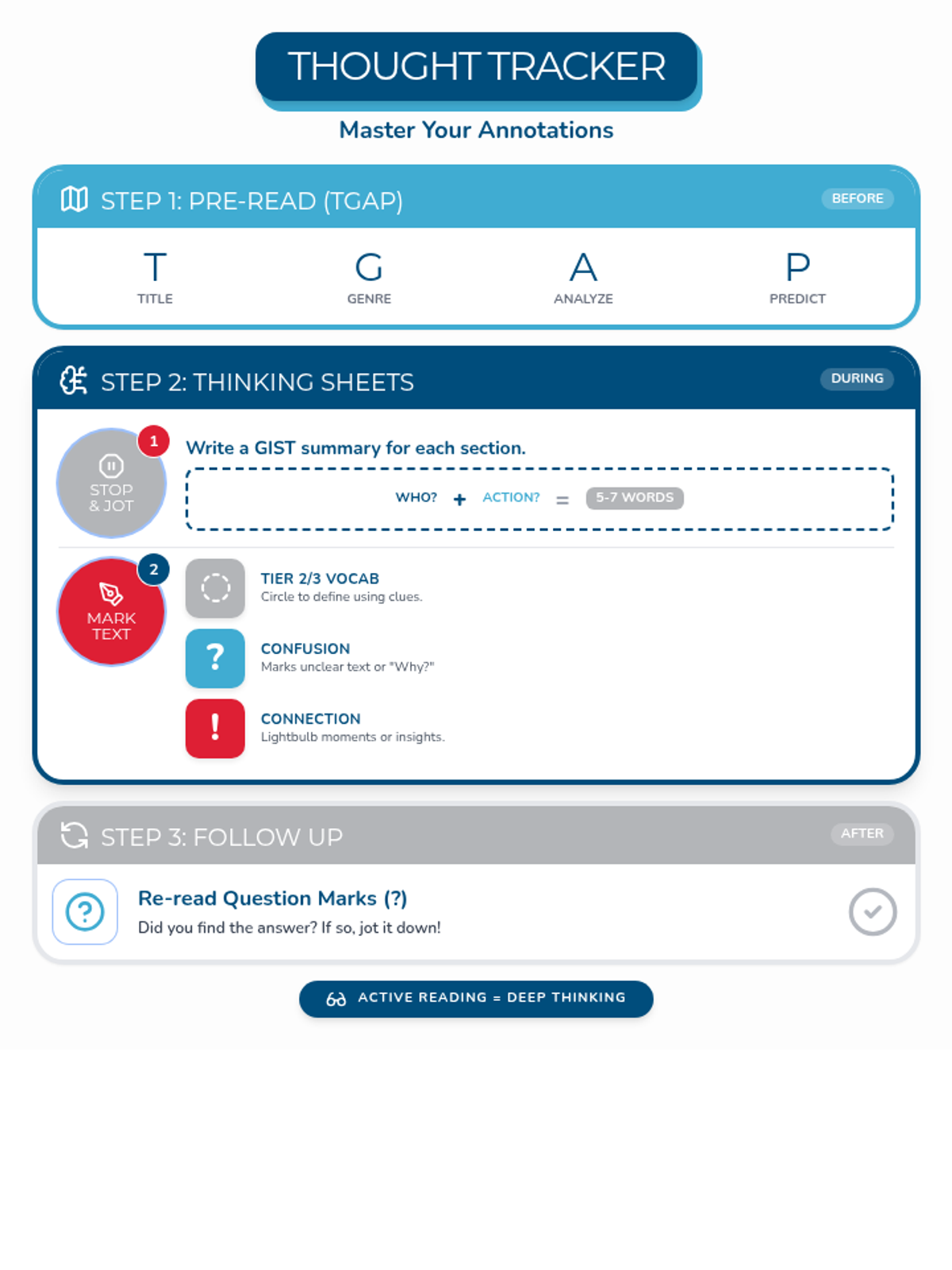
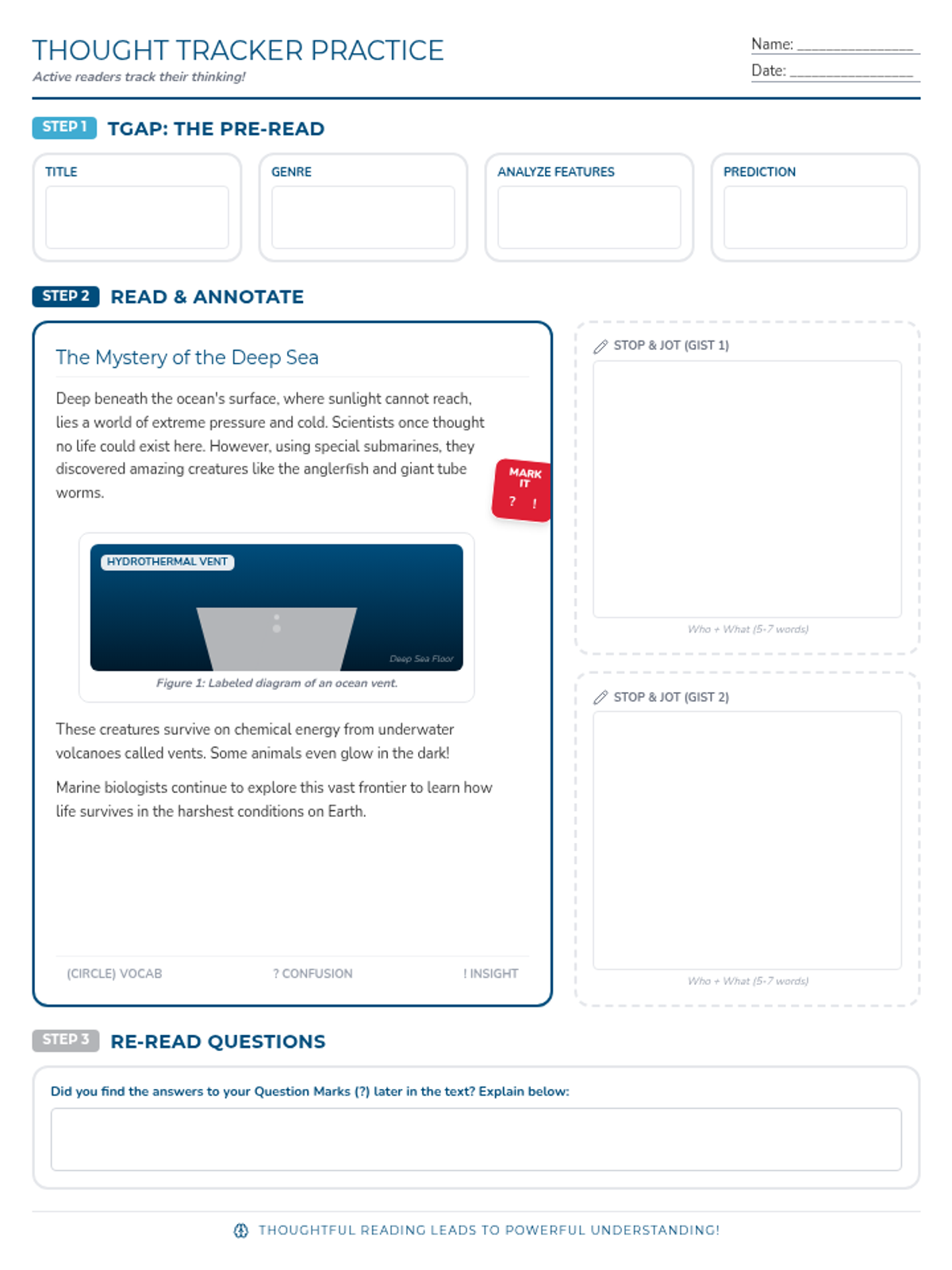
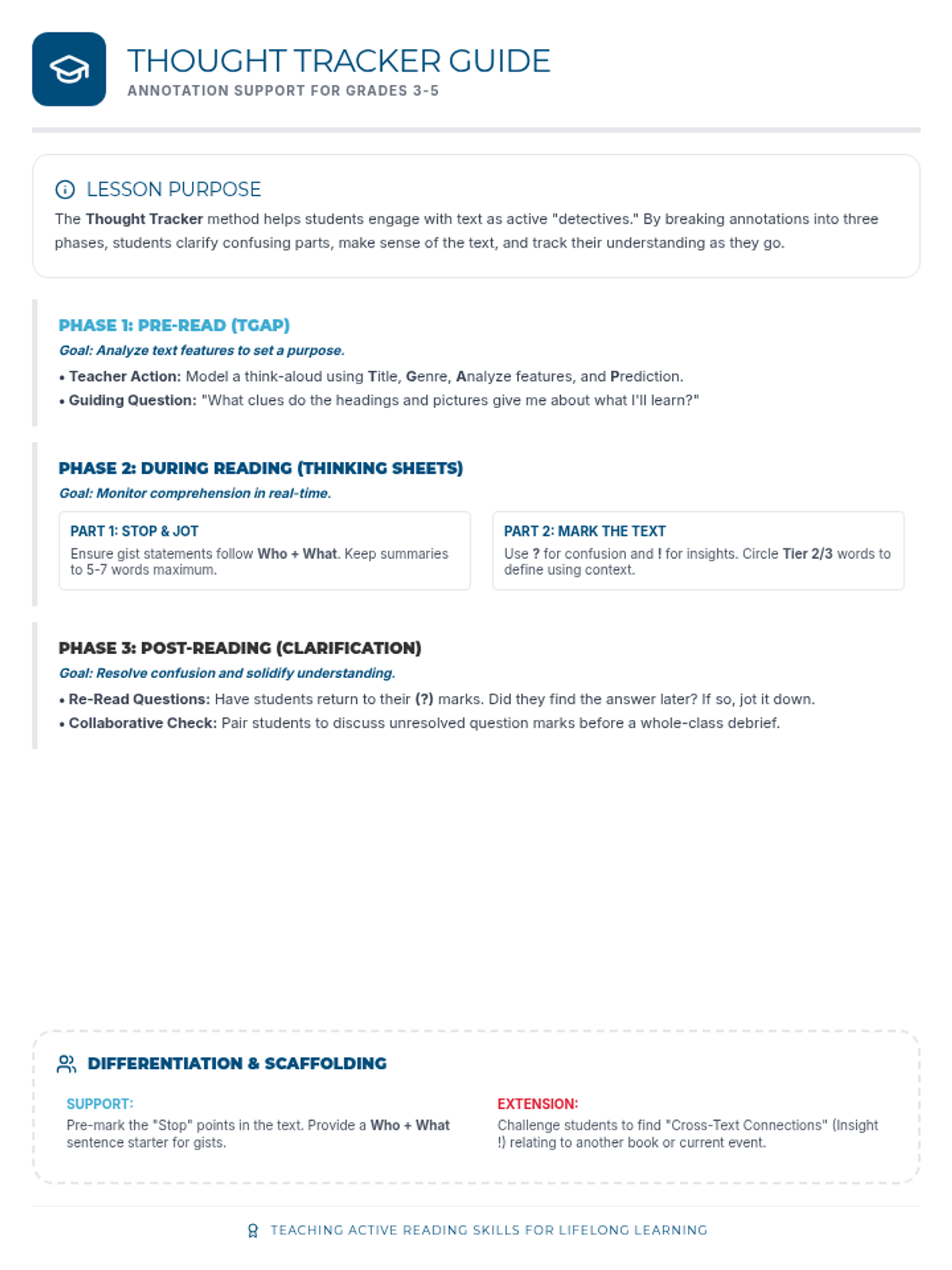
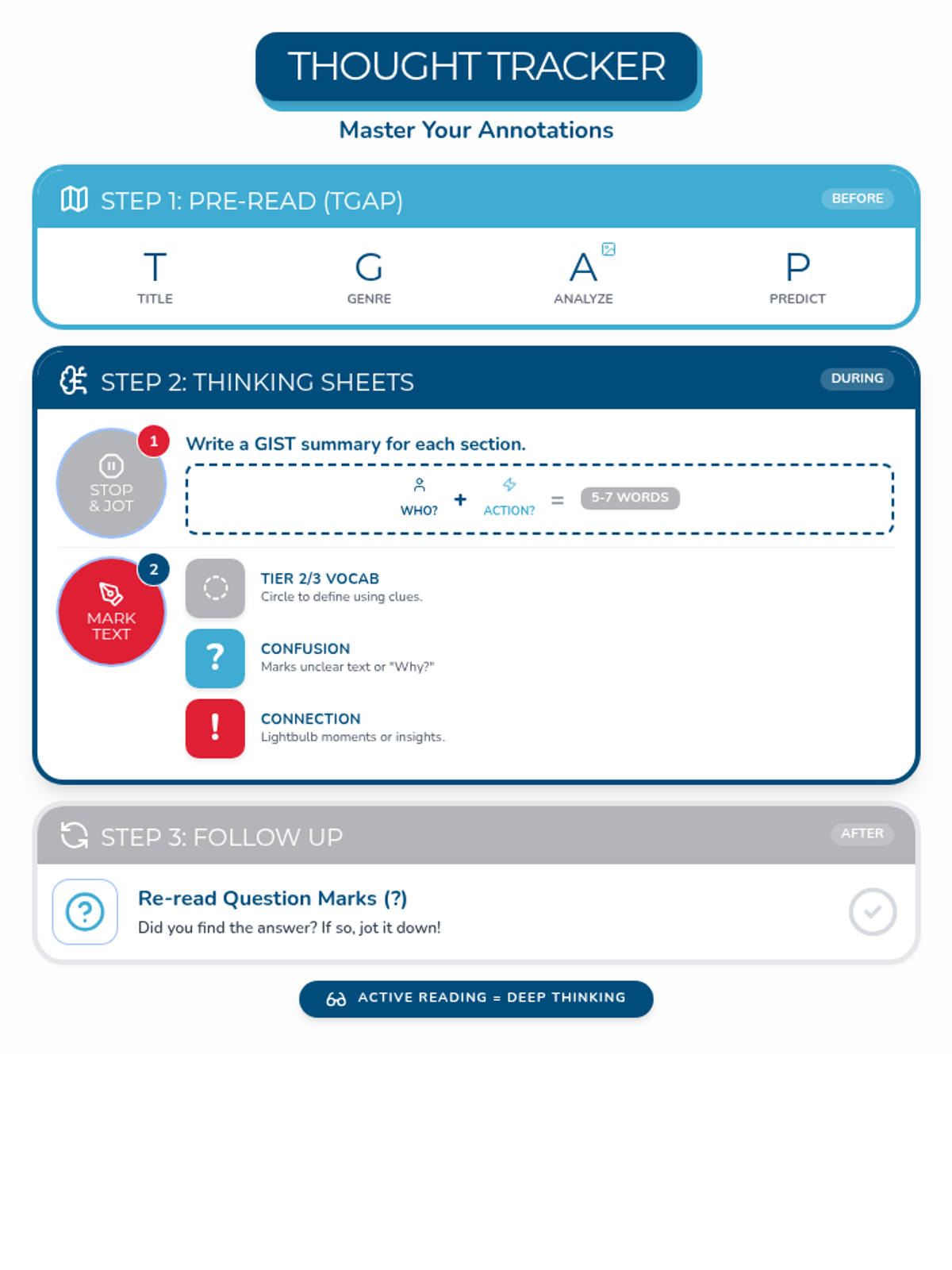
A collection of resources to help students master the 'Thought Tracker' annotation method, including anchor charts and practice guides.
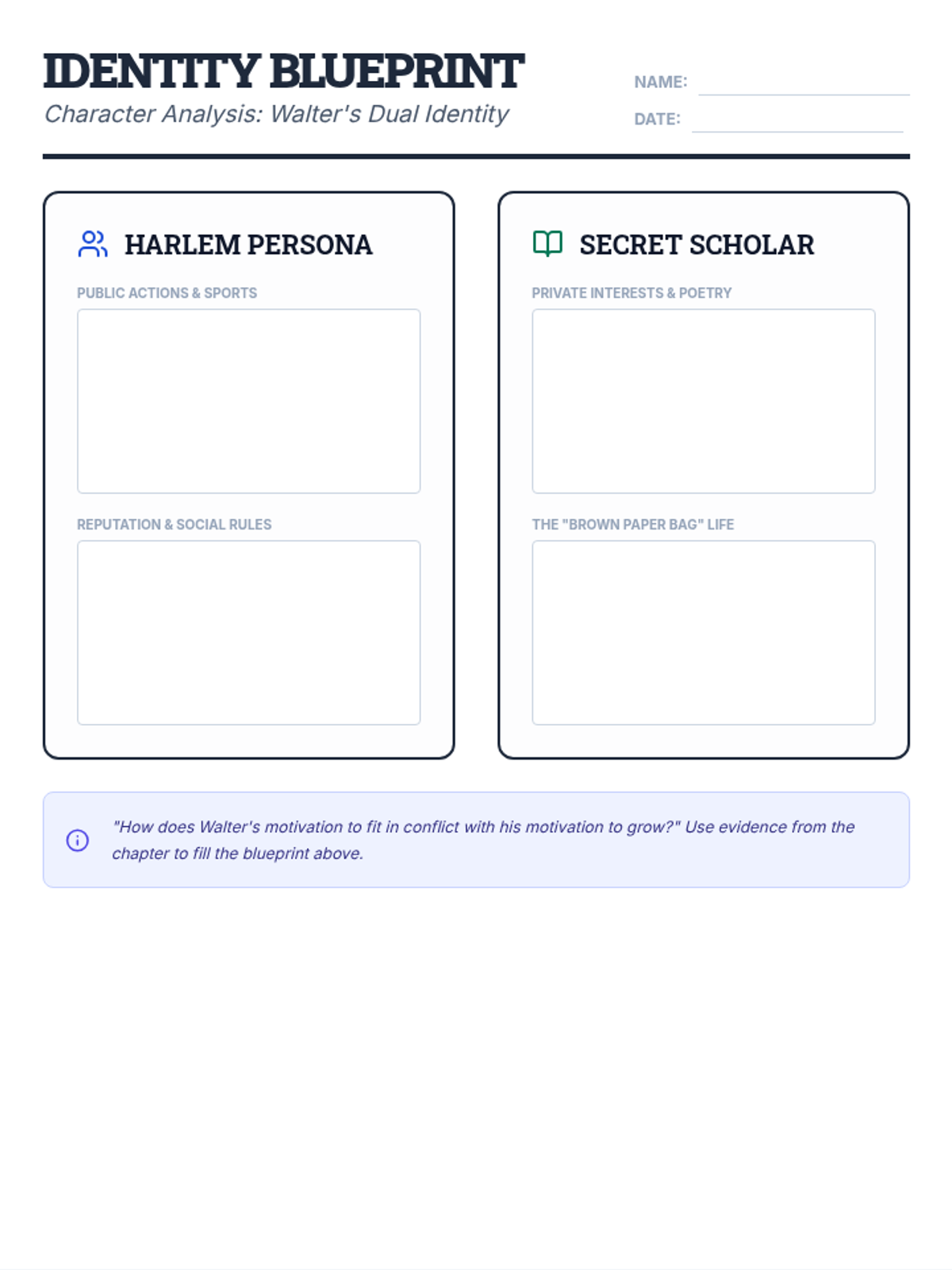
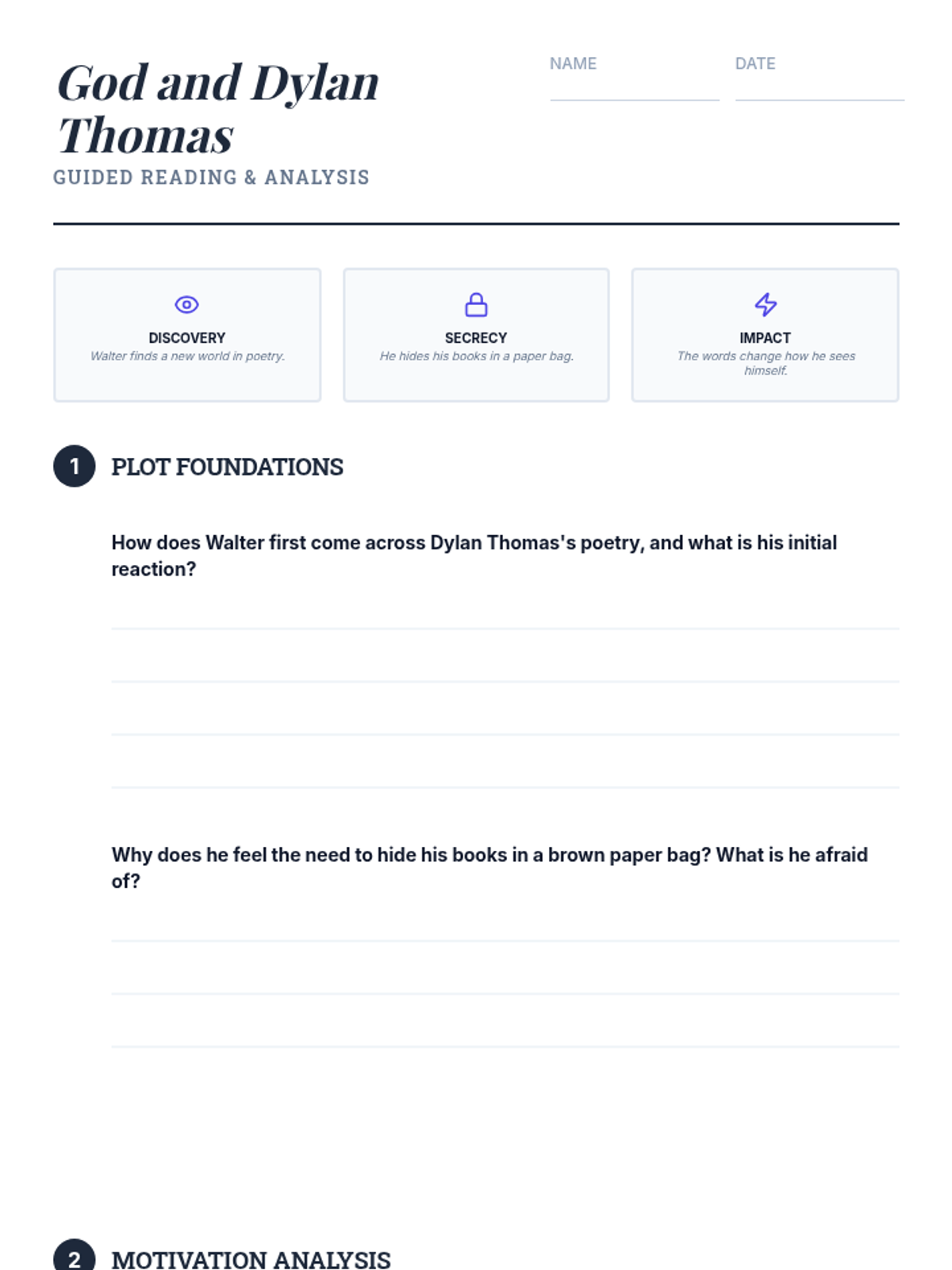
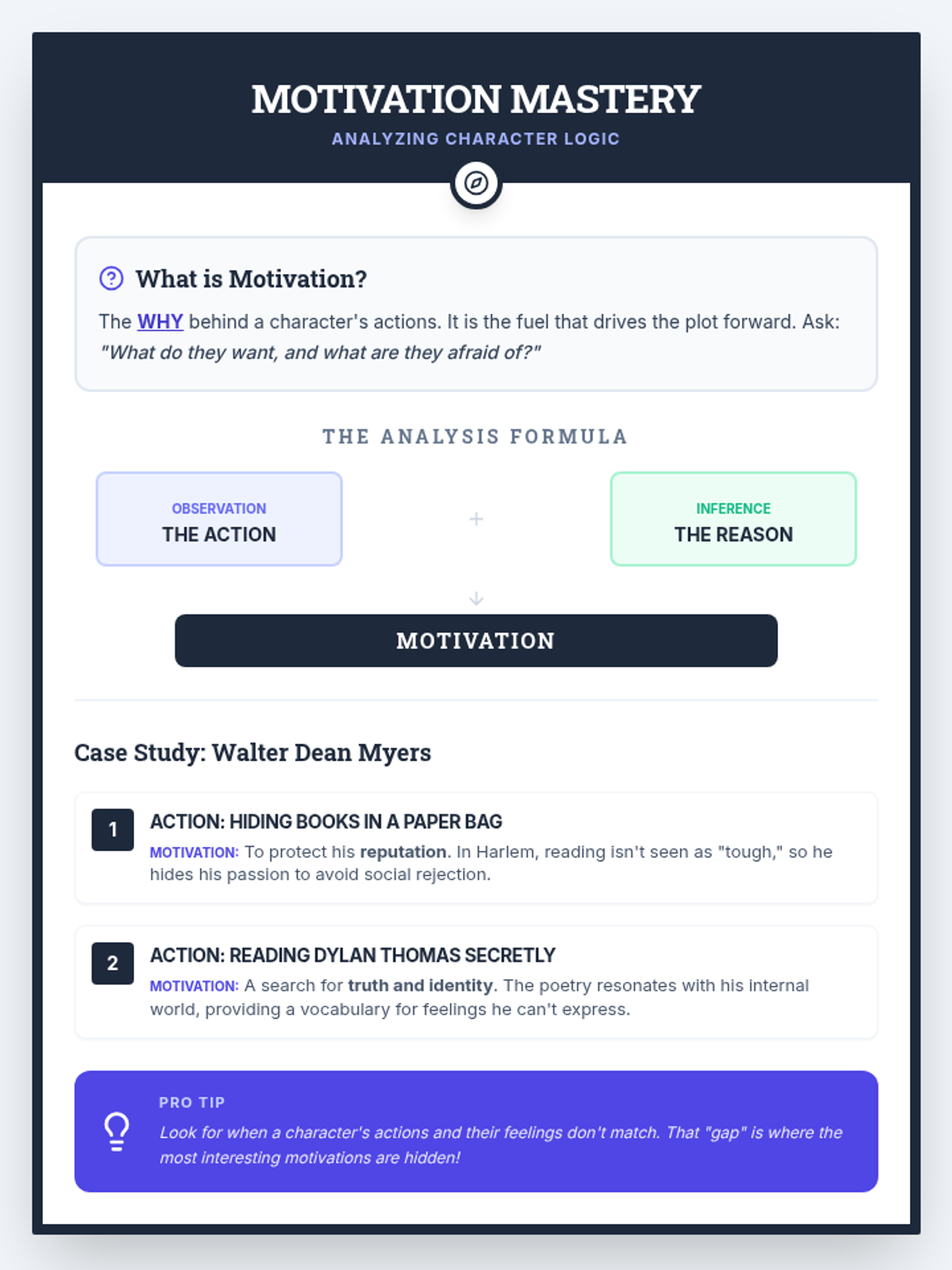
A deep dive into the chapter 'God and Dylan Thomas' from Walter Dean Myers' memoir, focusing on Walter's internal struggle with his identity as a reader and his place in Harlem. Students will analyze character motivations and summarize key events through visual and written exercises.
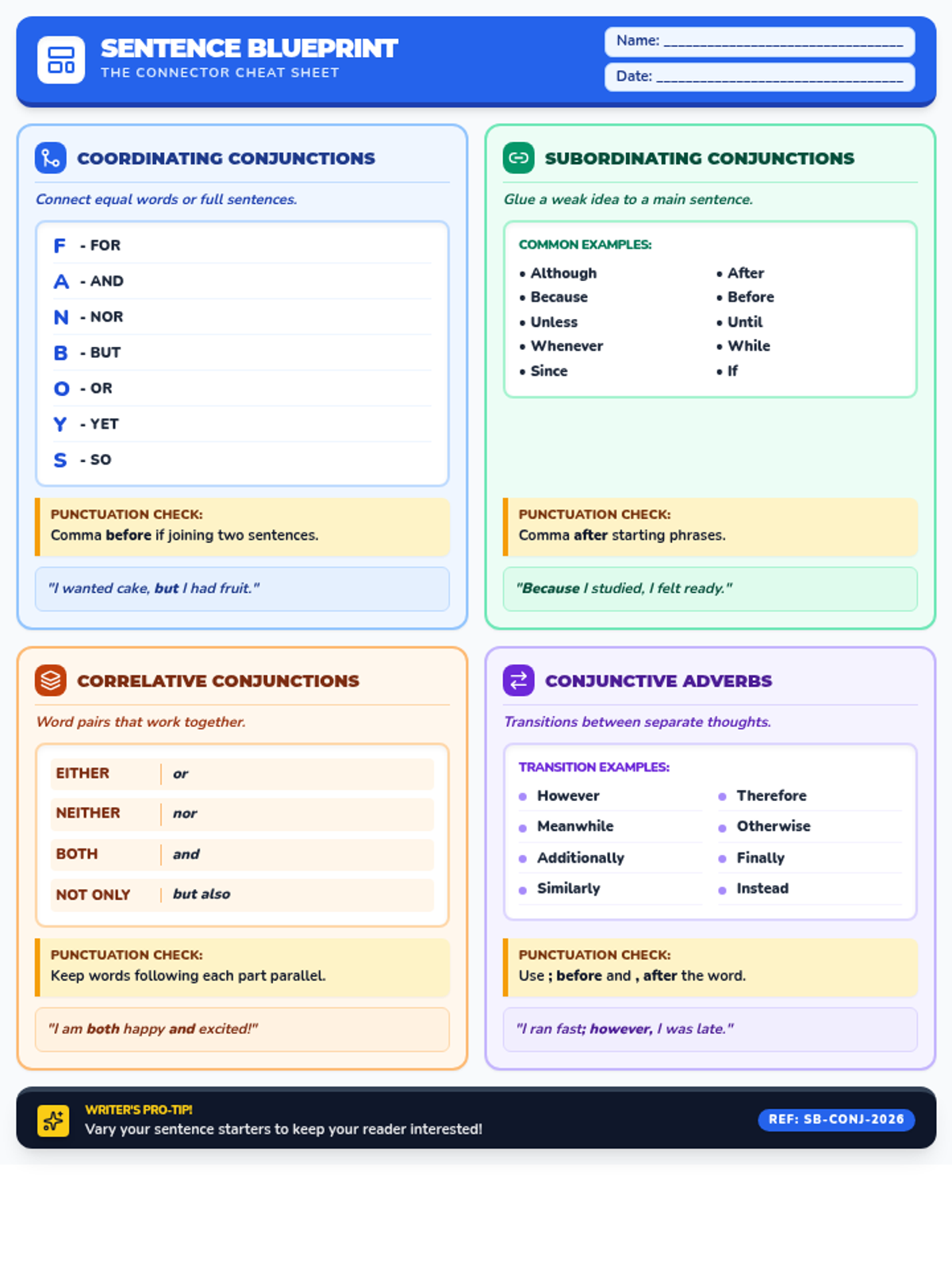
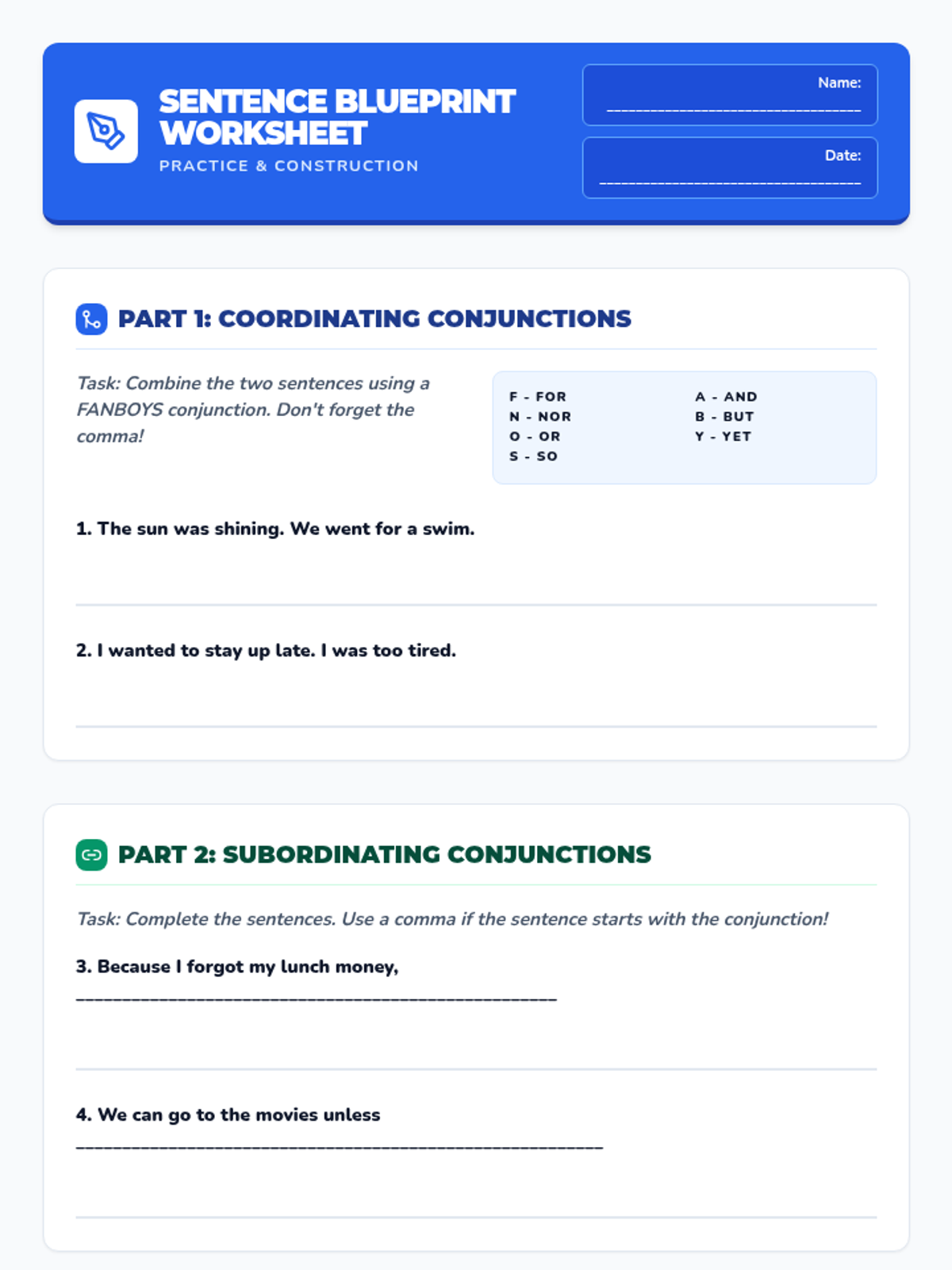
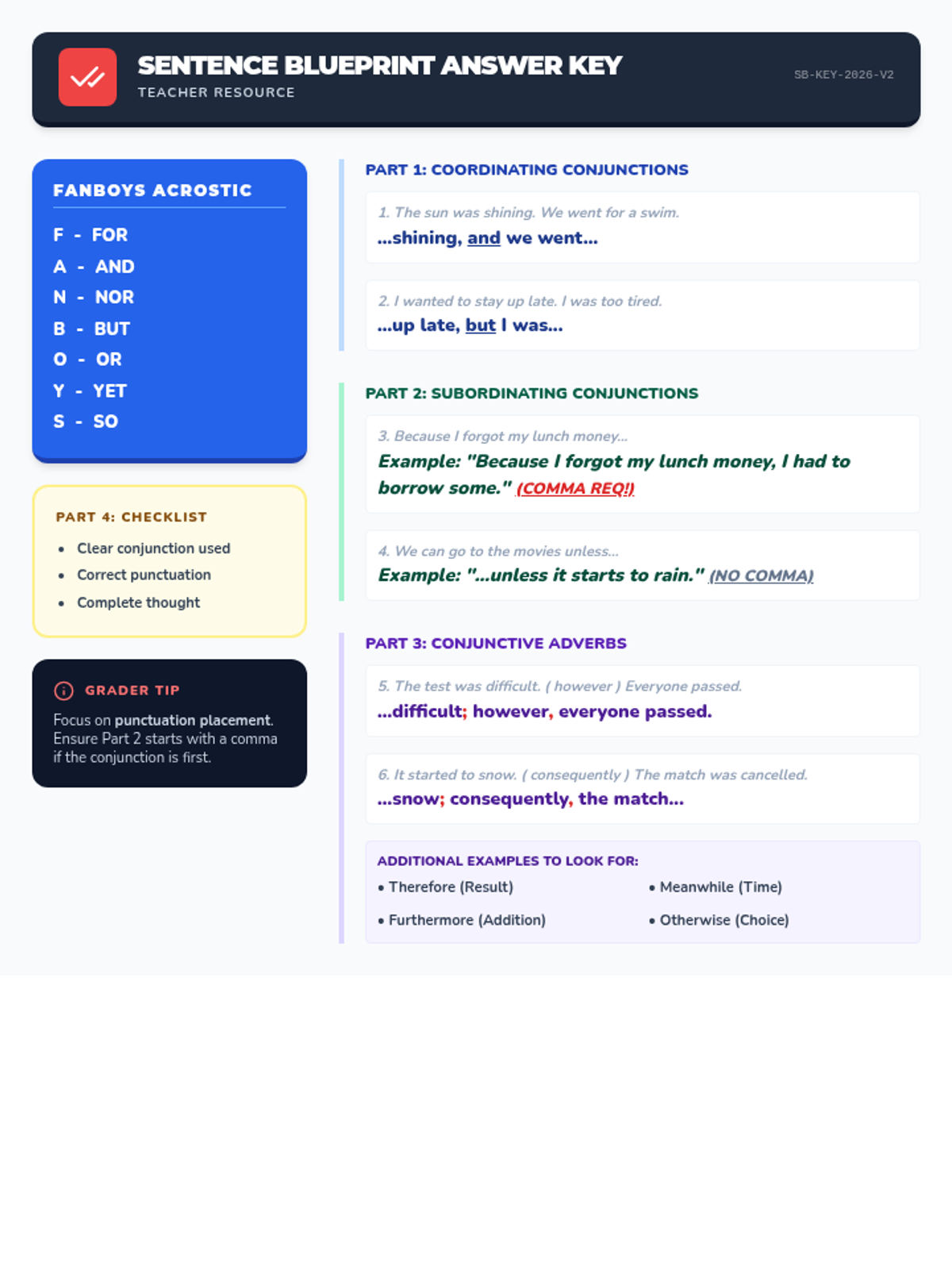
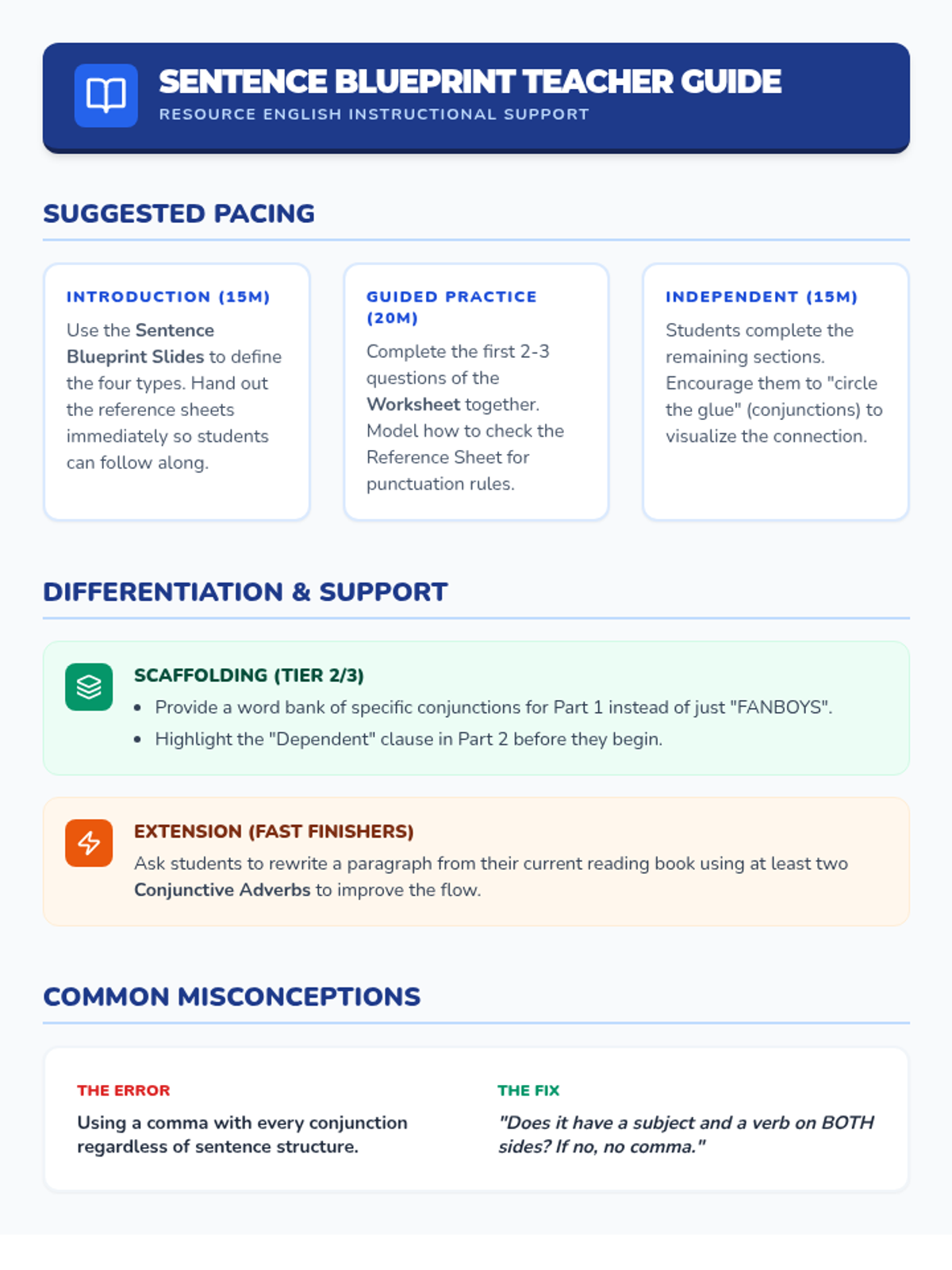
A comprehensive lesson introducing middle school students to the four main types of conjunctions: coordinating, subordinating, correlative, and conjunctive adverbs. Students will learn to identify these connectors and apply correct punctuation rules to build more complex and professional sentences.
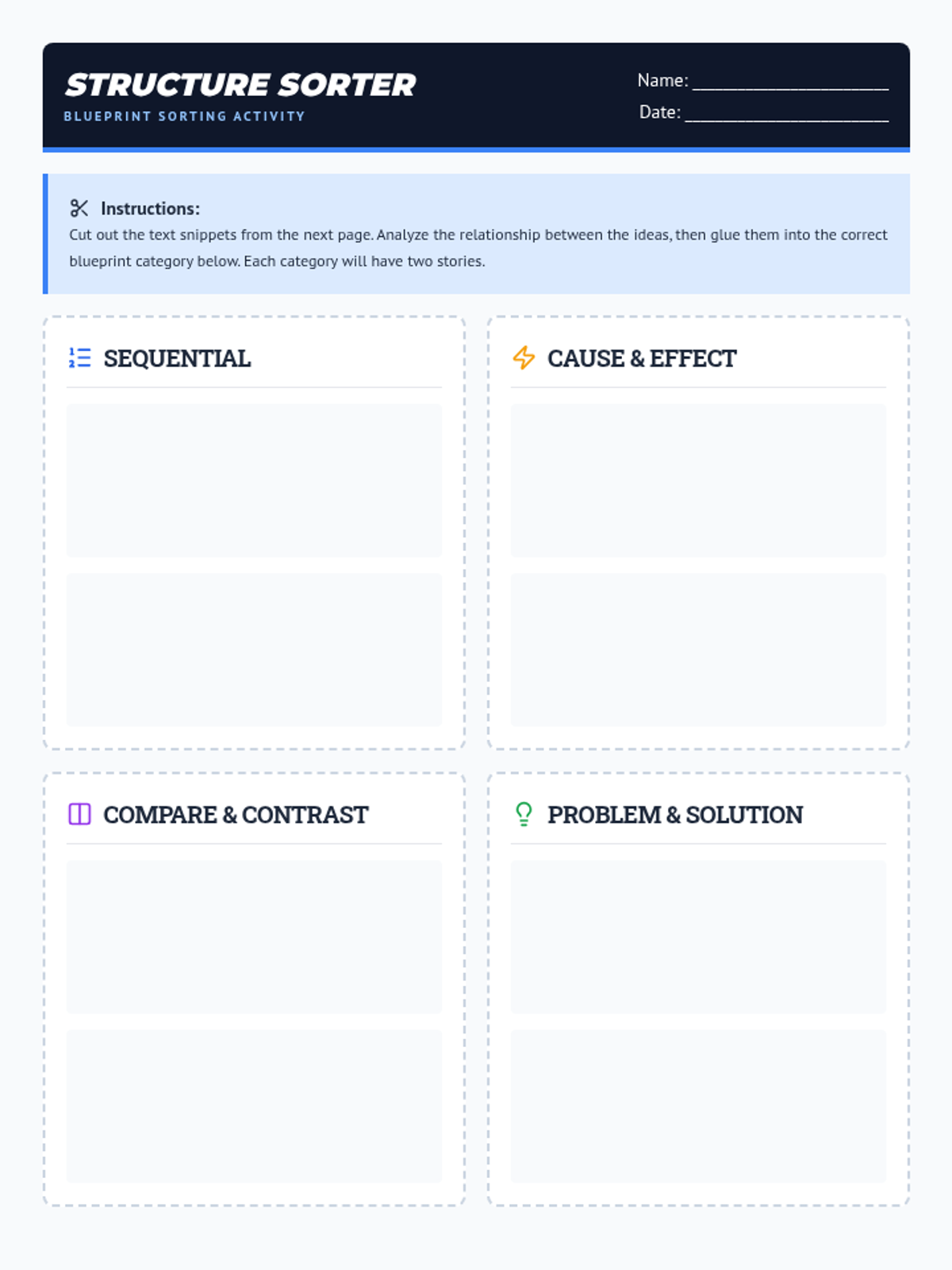
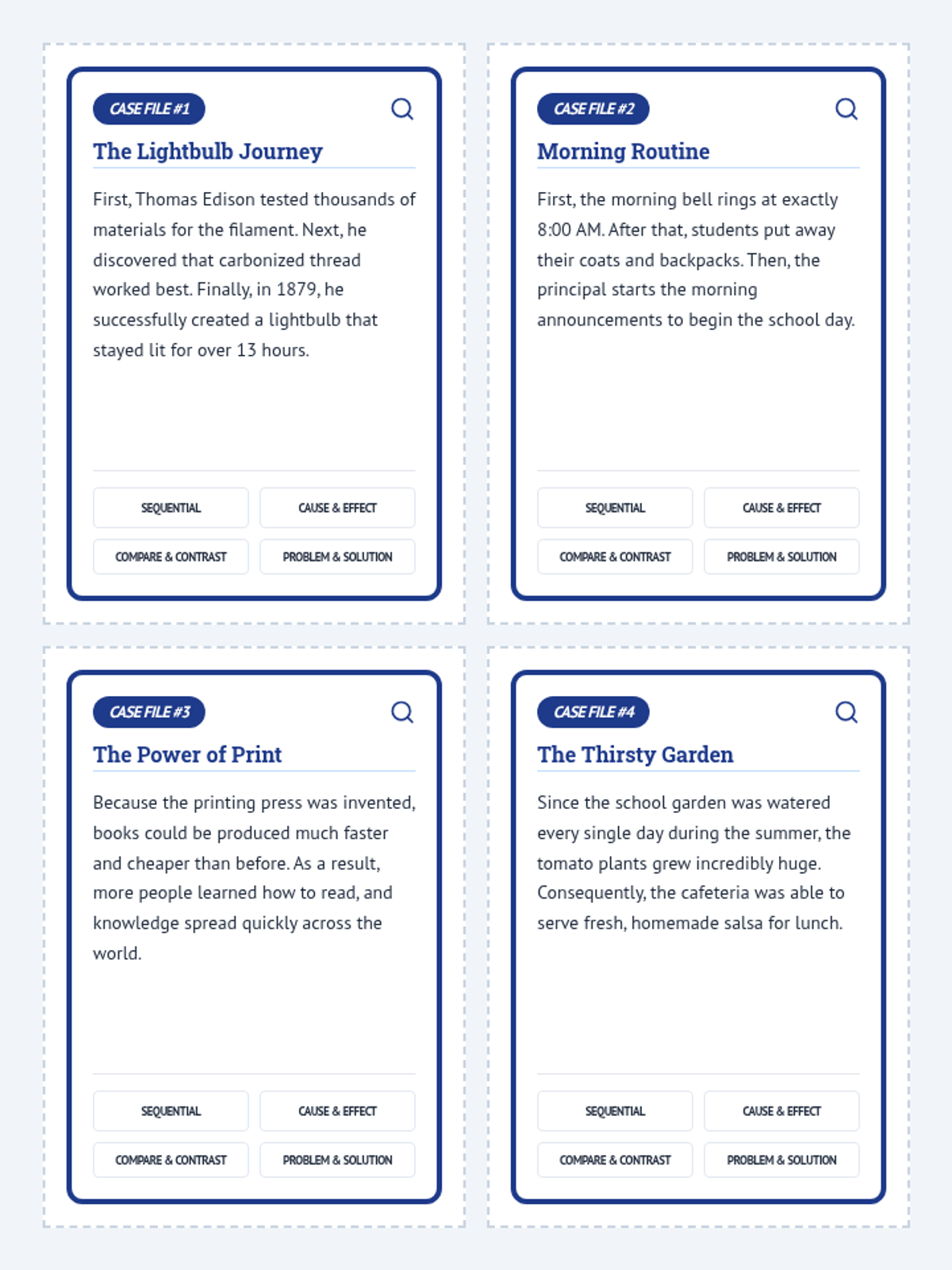
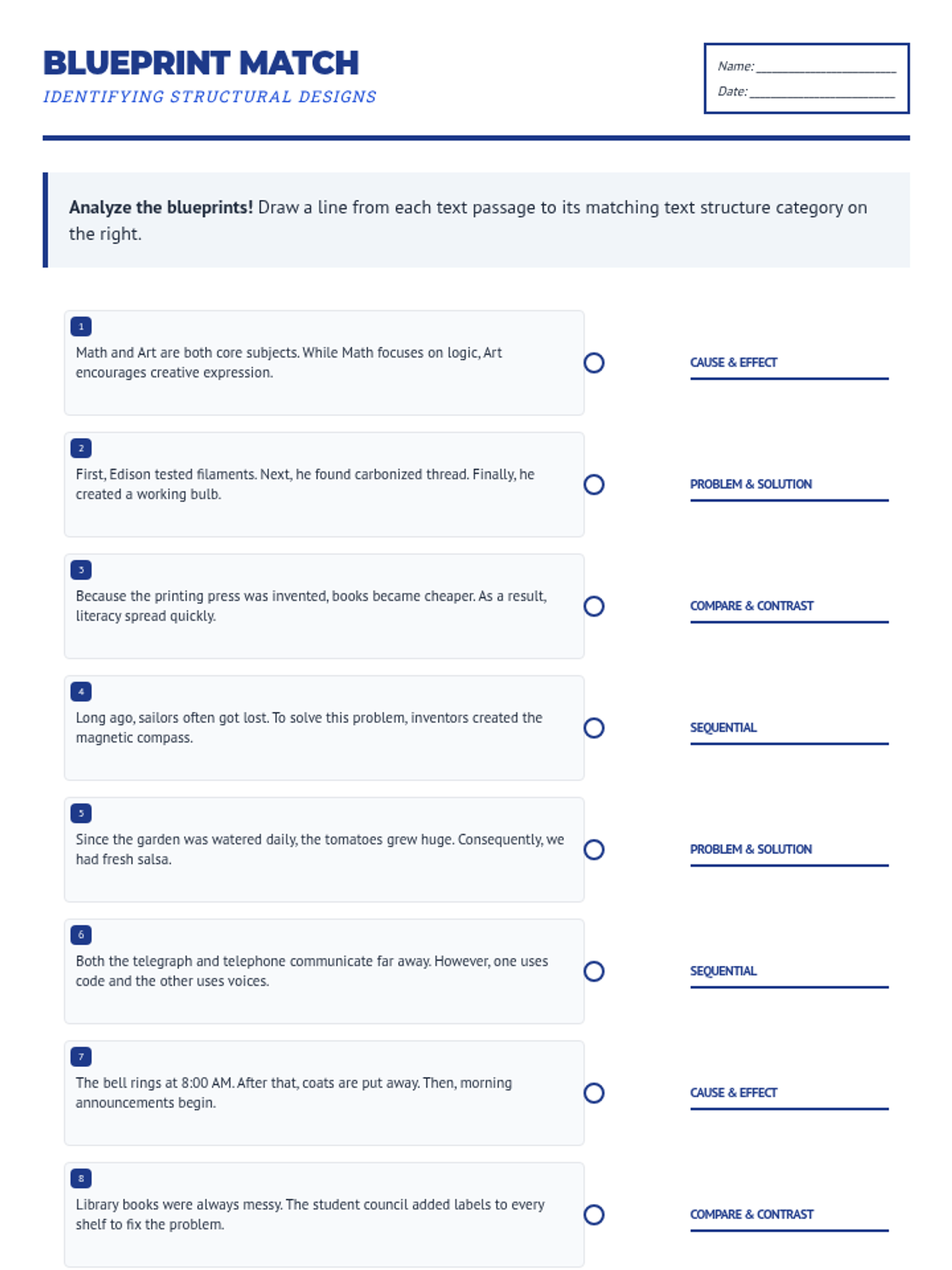
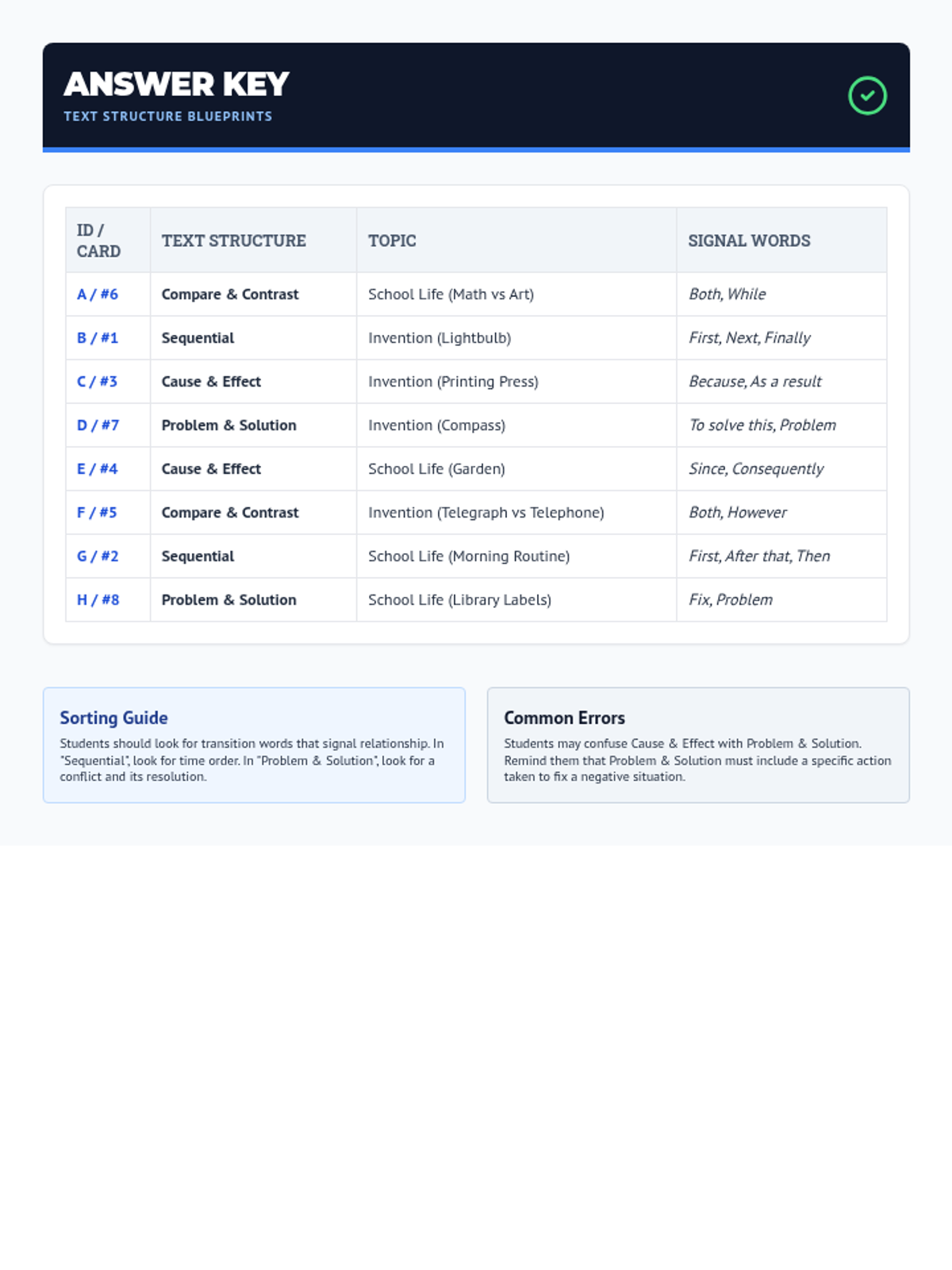
A lesson focused on identifying four common text structures (Sequential, Cause & Effect, Compare & Contrast, Problem & Solution) using stories about inventions and school life. Students will practice matching these structures through various formats like cut-and-paste, task cards, and line-matching.
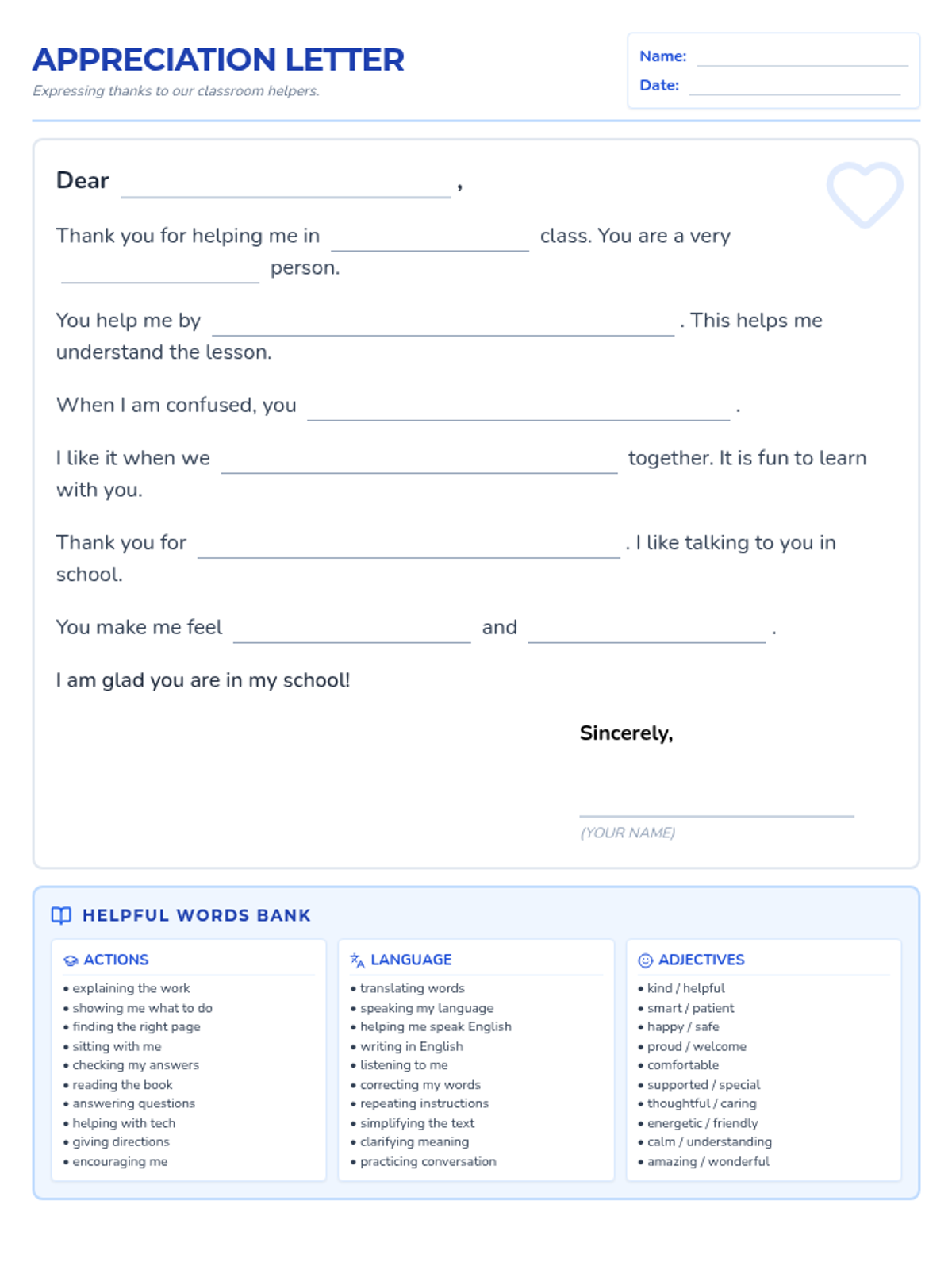
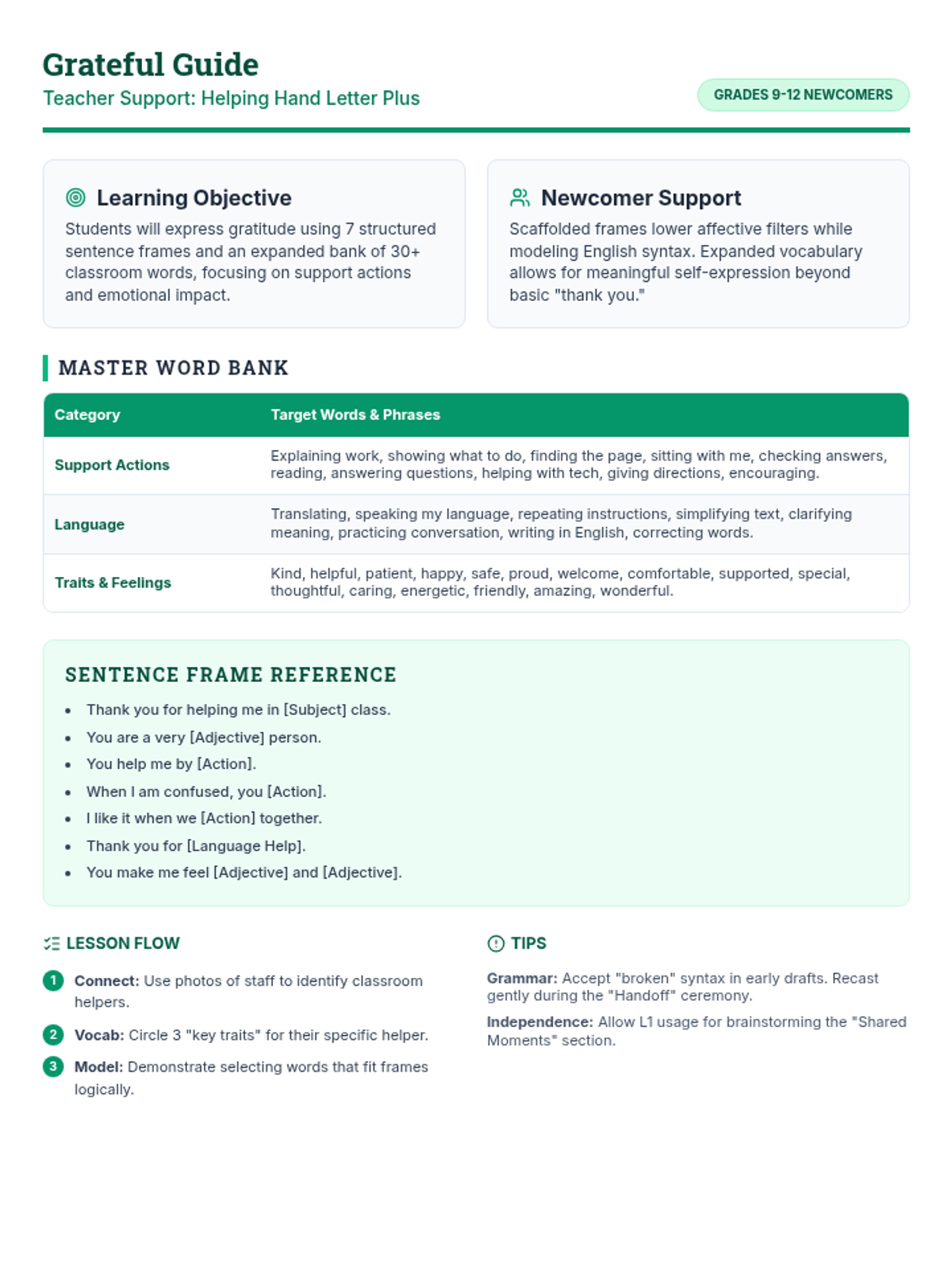
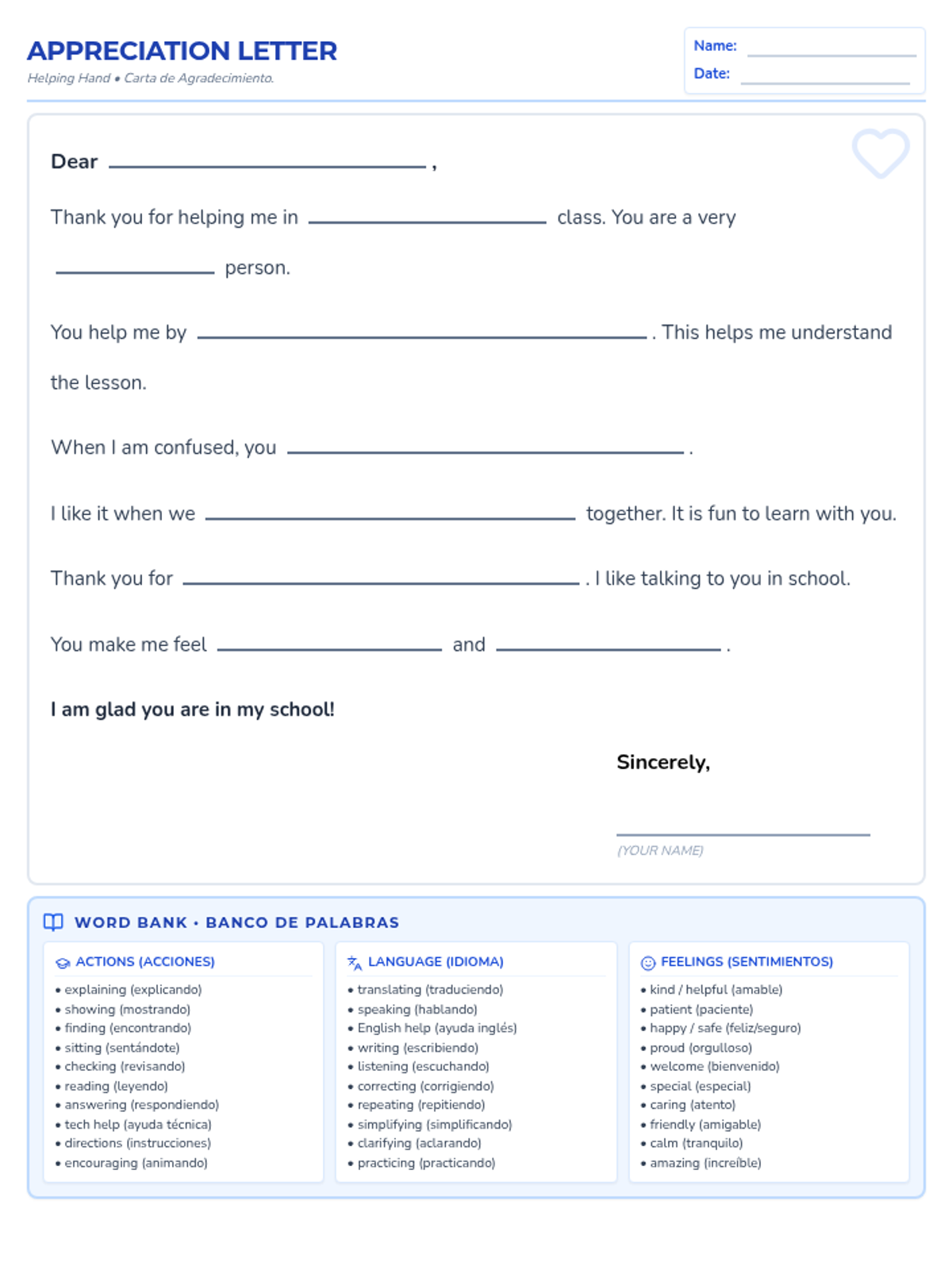
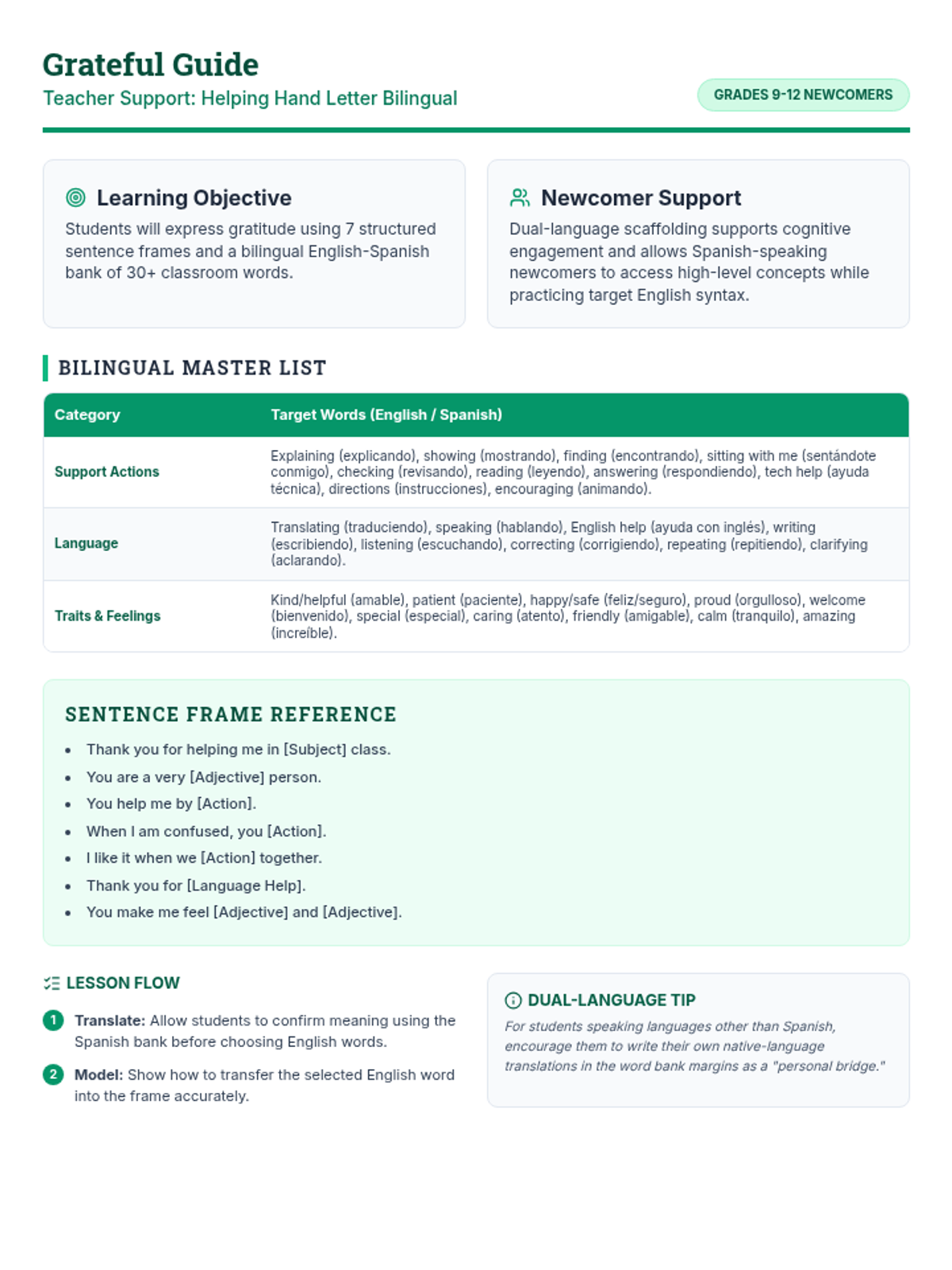
A lesson designed to help newcomer English learners express gratitude to paraprofessionals using structured sentence frames and targeted vocabulary.
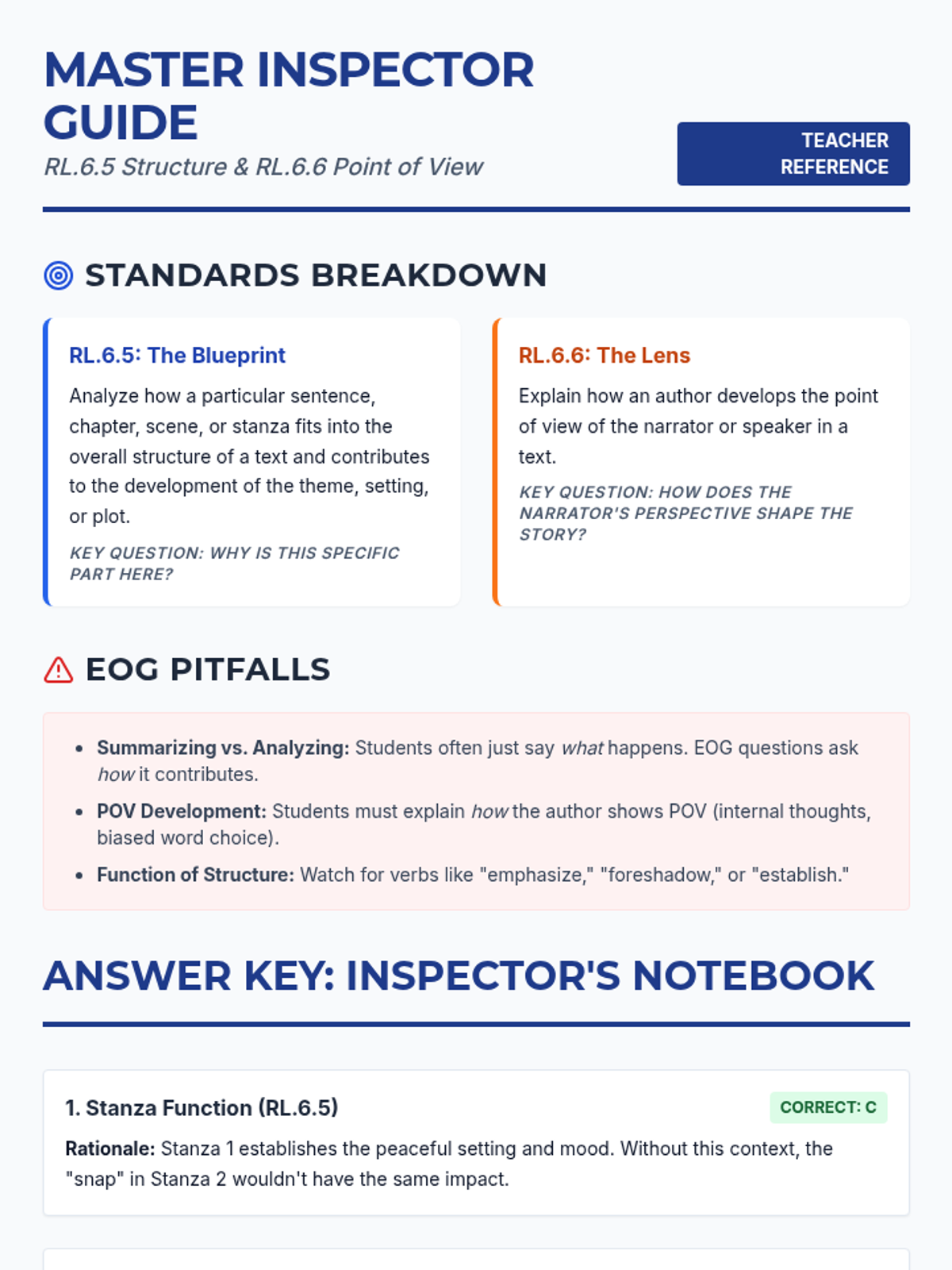
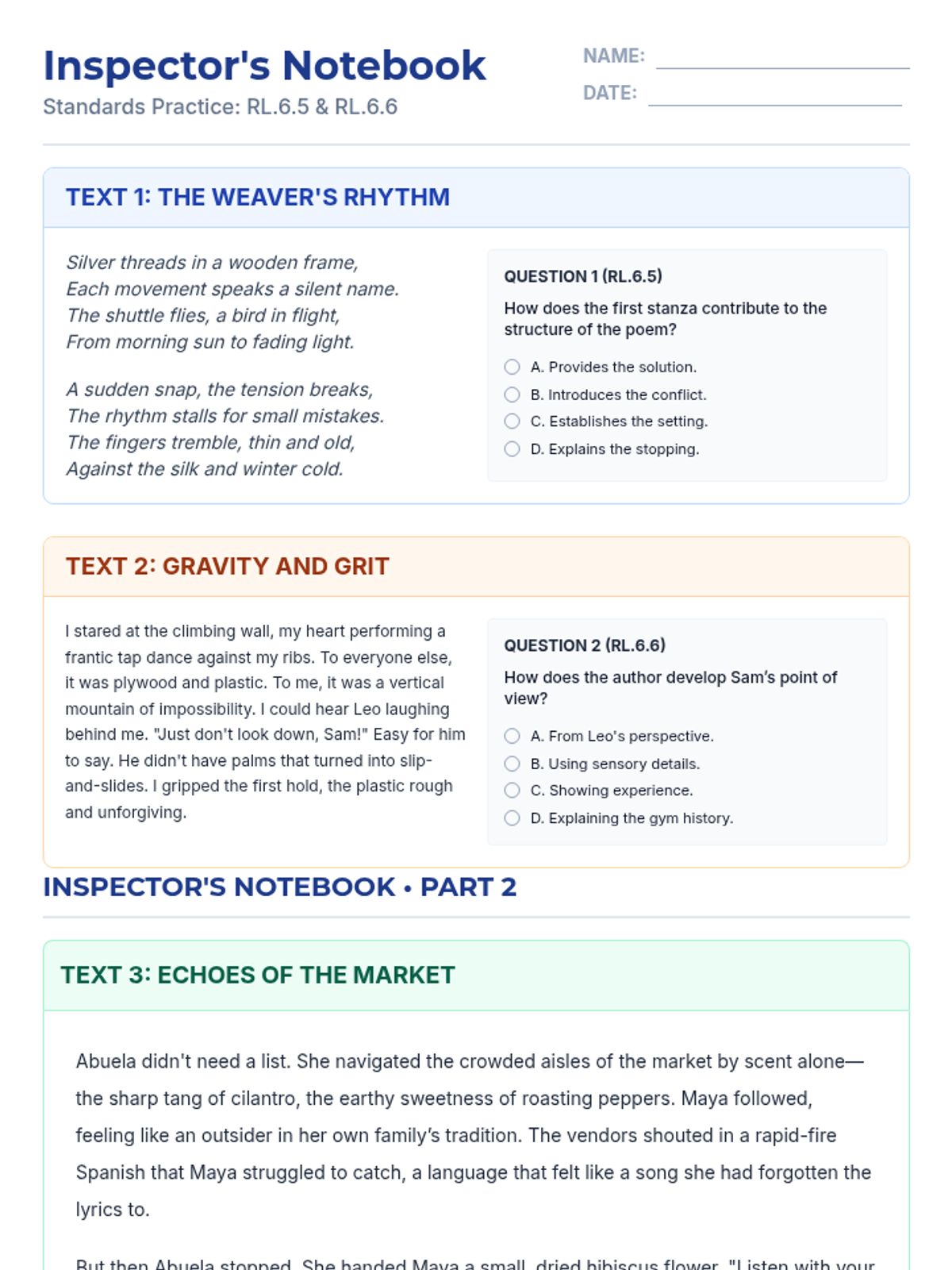
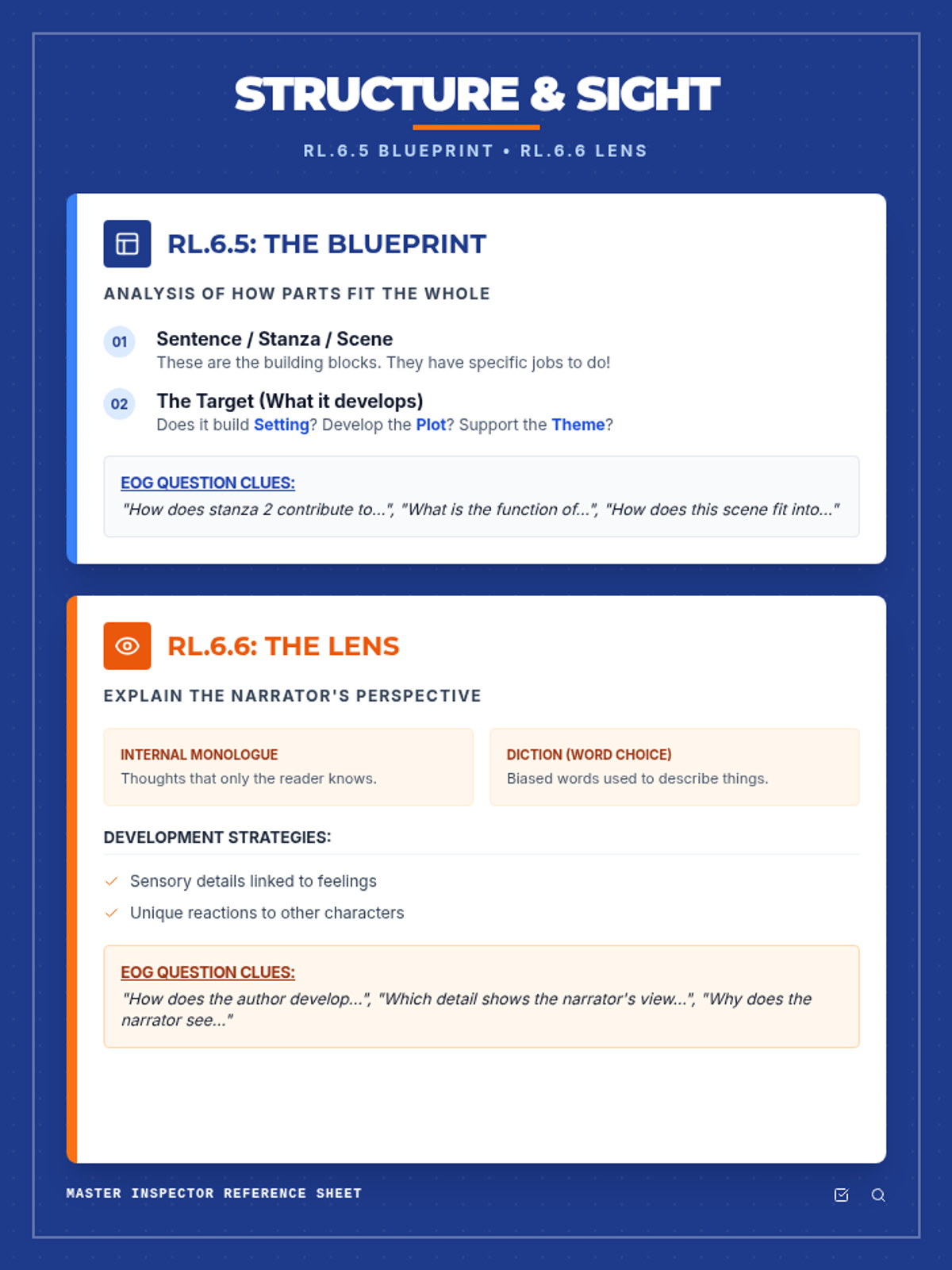
A comprehensive lesson focusing on RL.6.5 (Text Structure) and RL.6.6 (Point of View), using the 'Blueprint and Lens' theme to help students analyze how parts contribute to the whole and how narrators see the world.
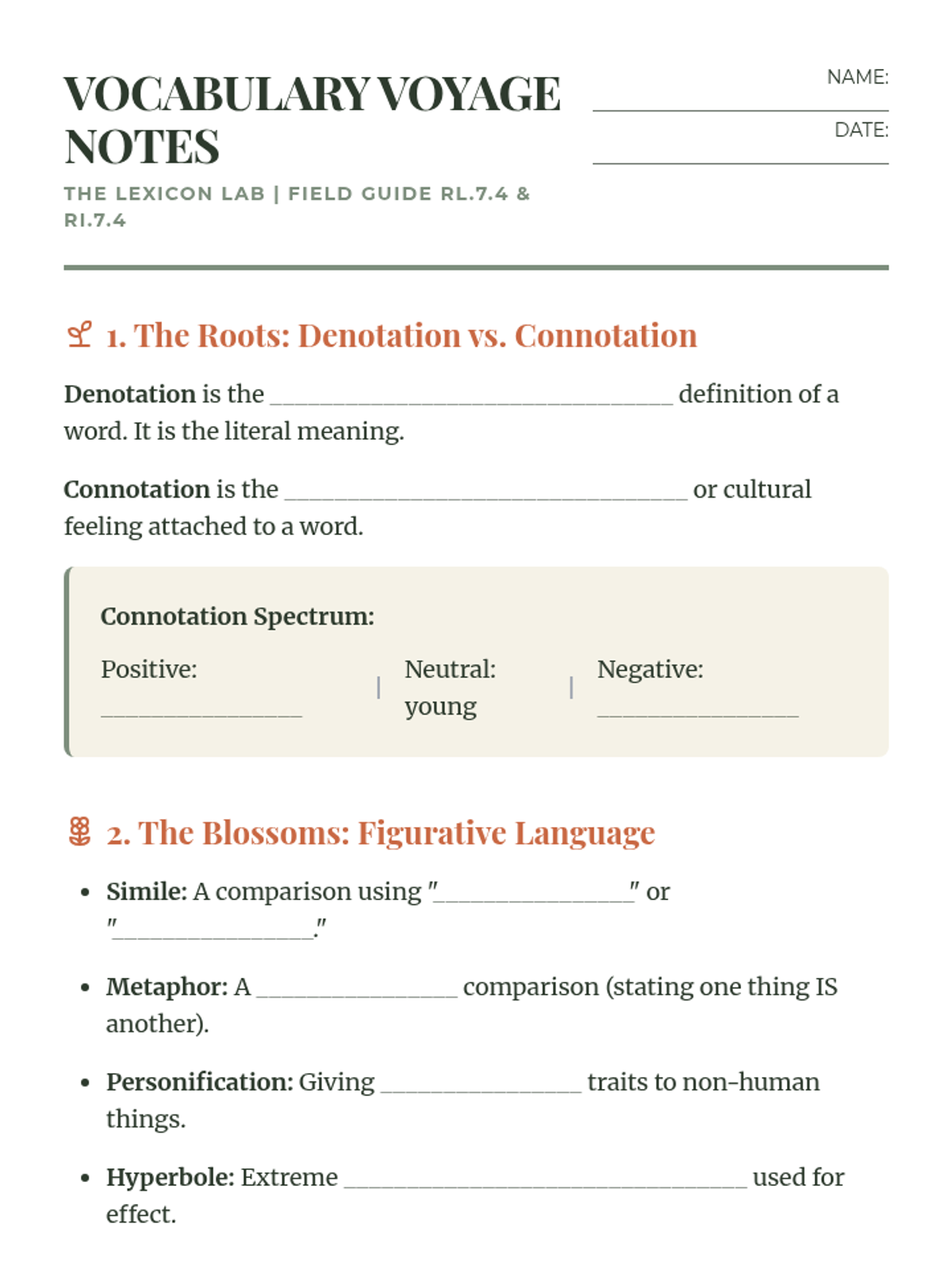
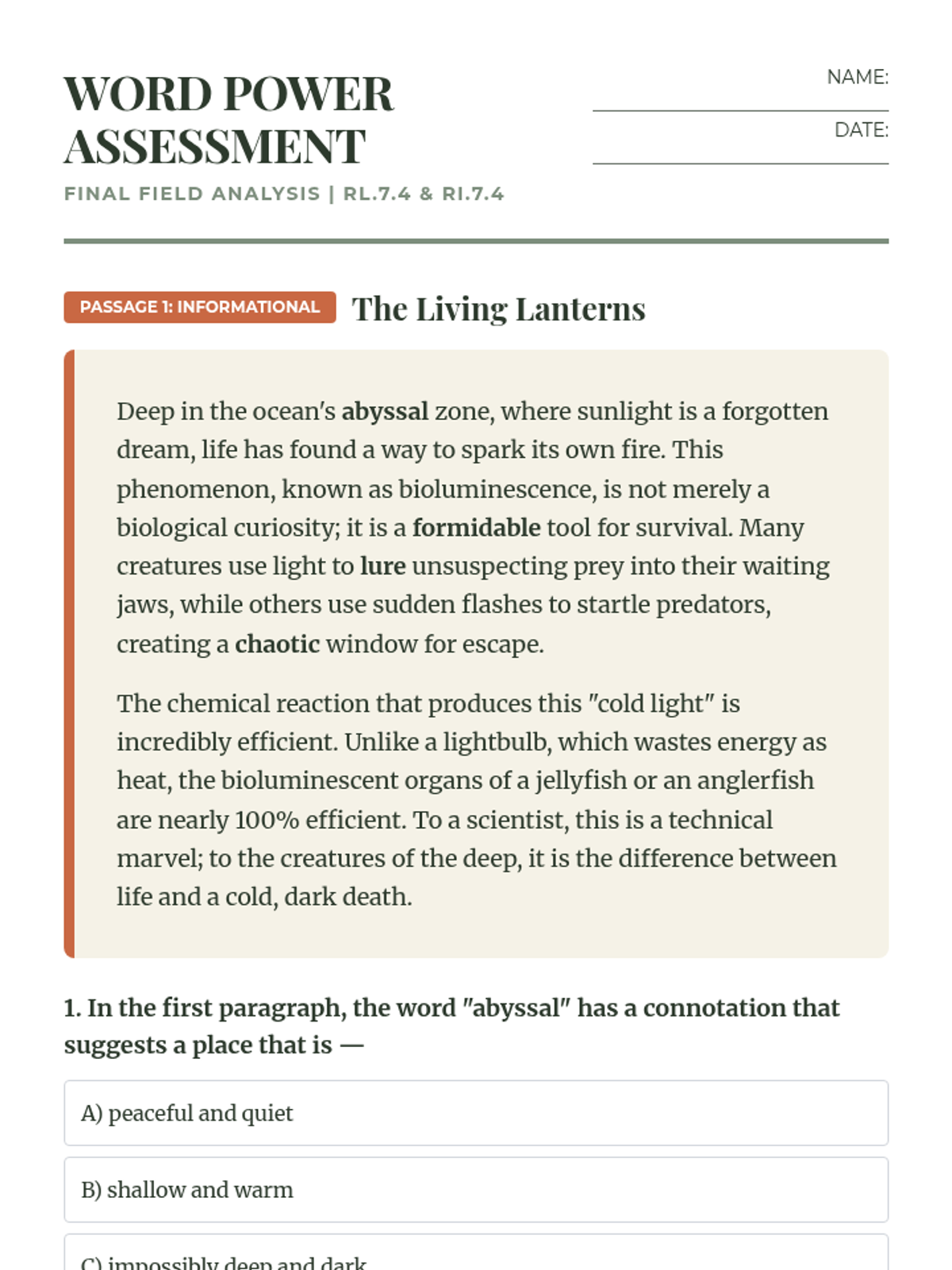
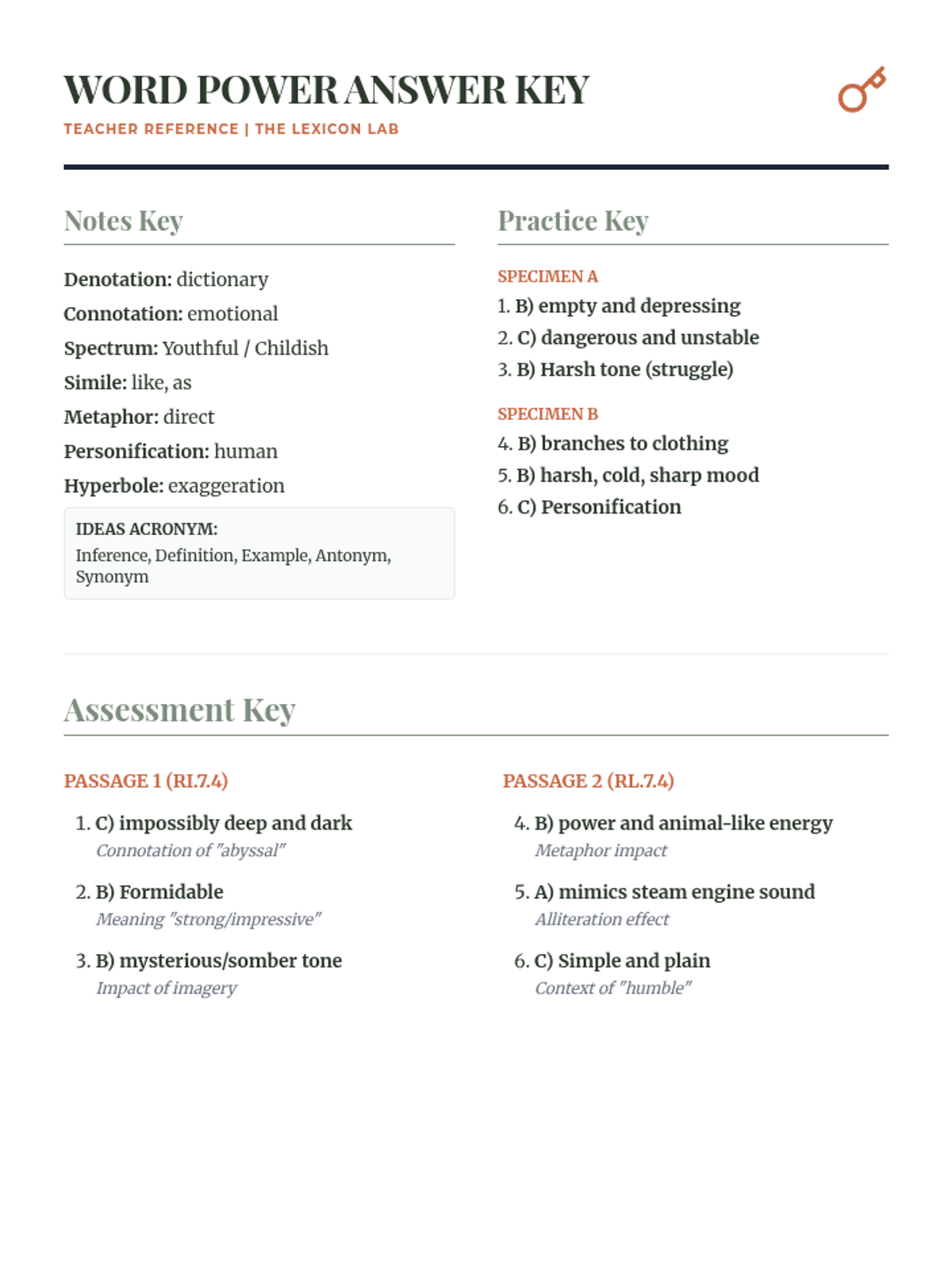
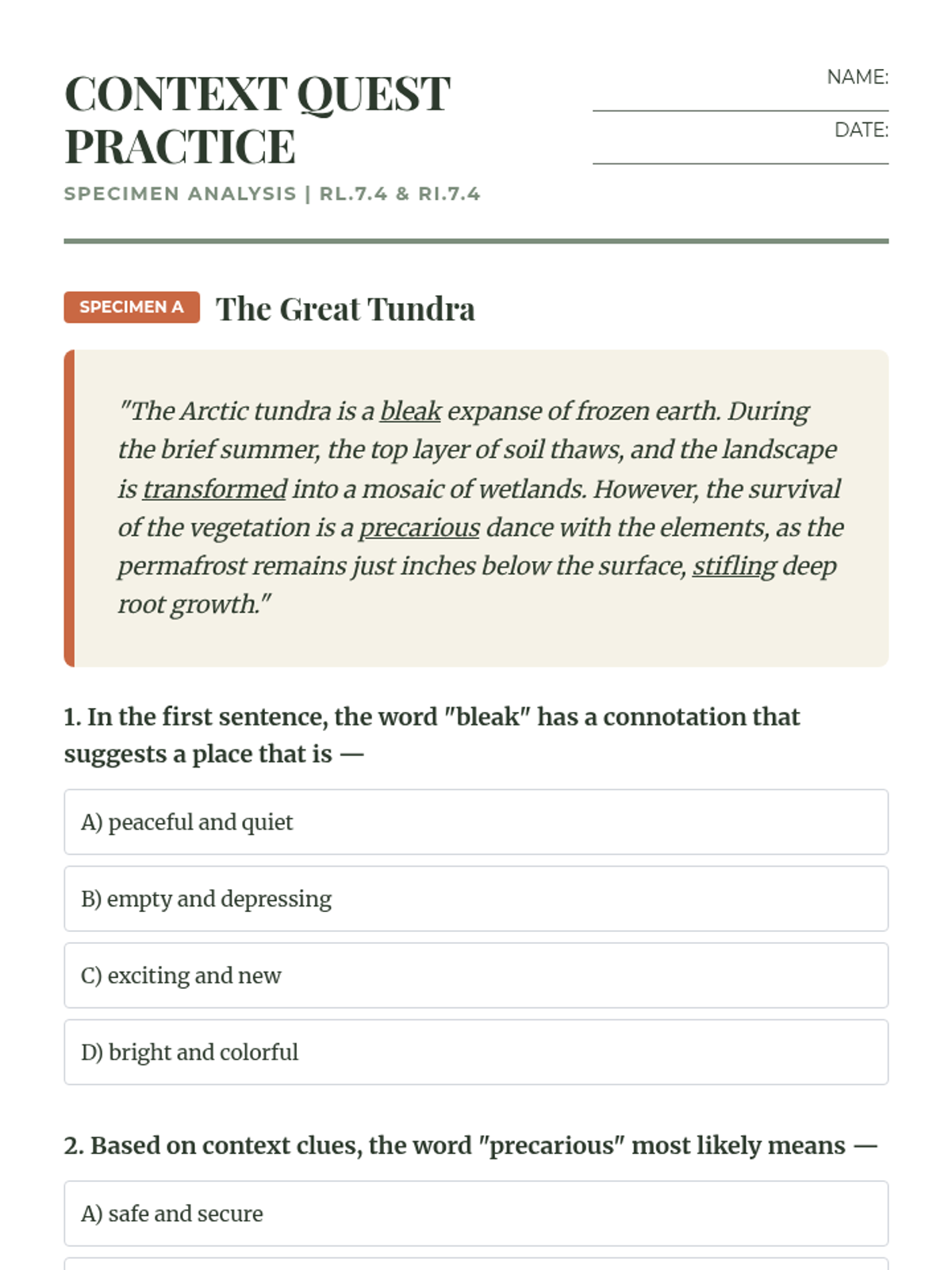
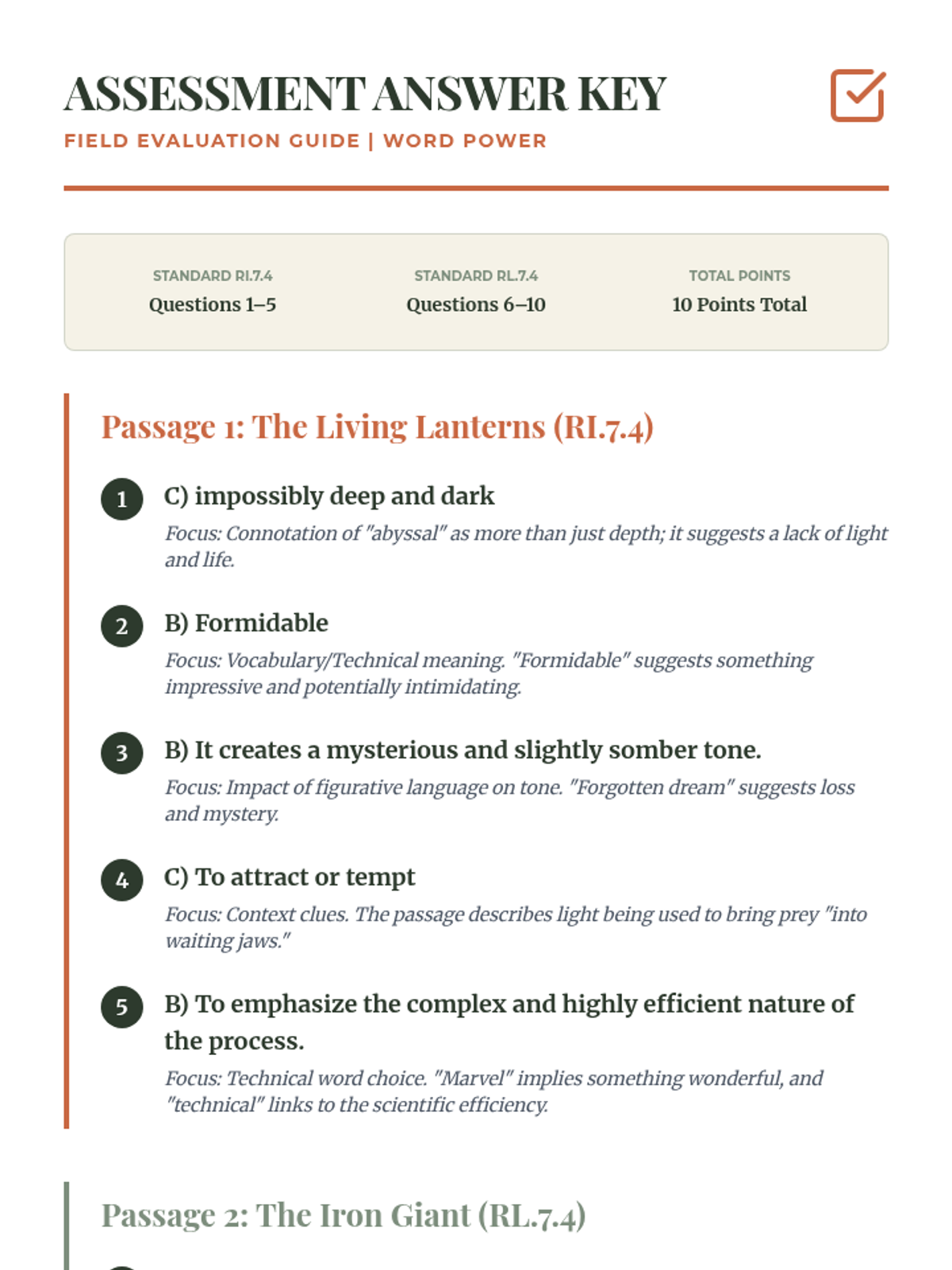
A lesson exploring RL.7.4 and RI.7.4 standards, focusing on word choice, connotation, figurative language, and their impact on tone and meaning in both literary and informational texts.
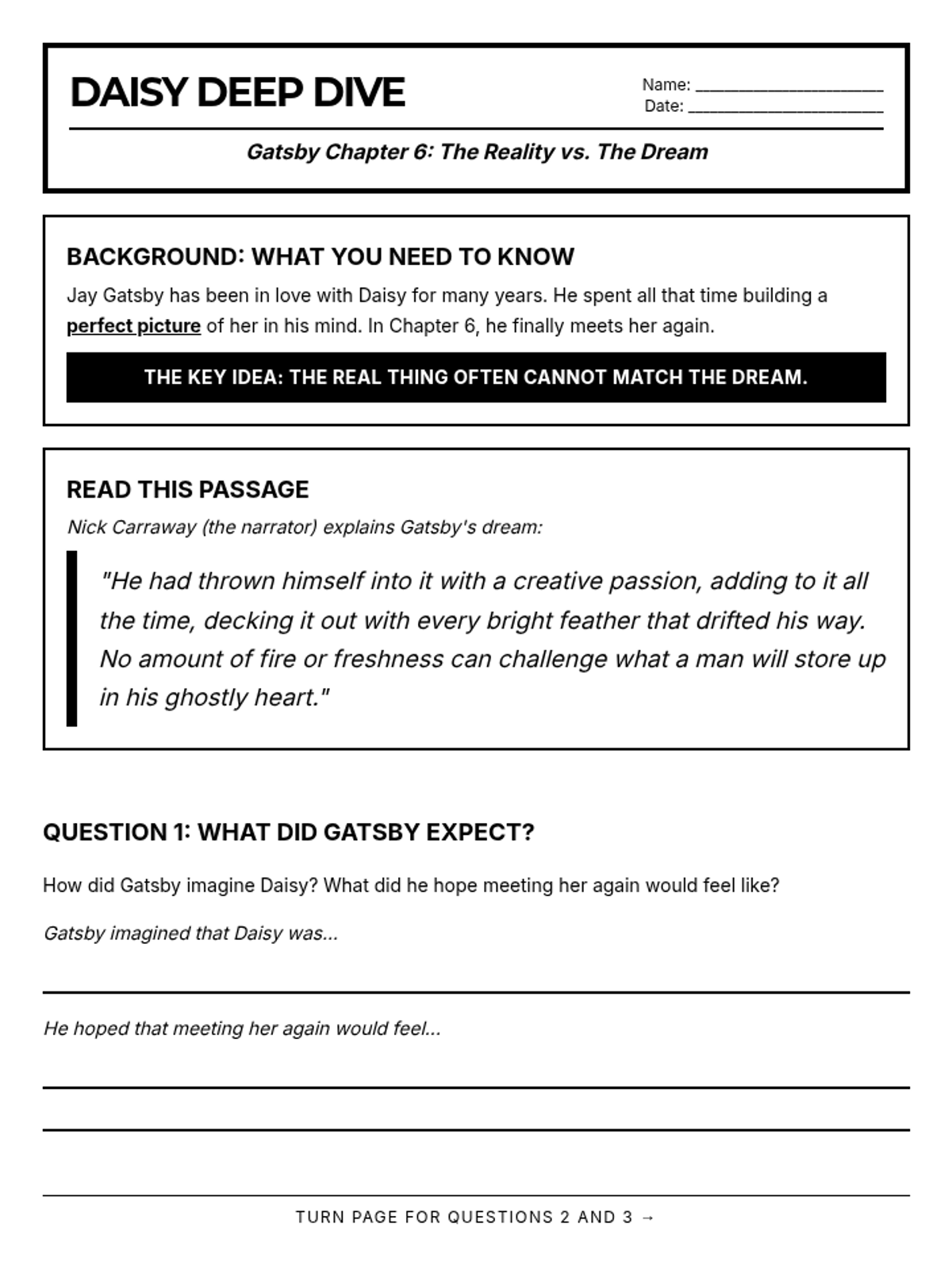
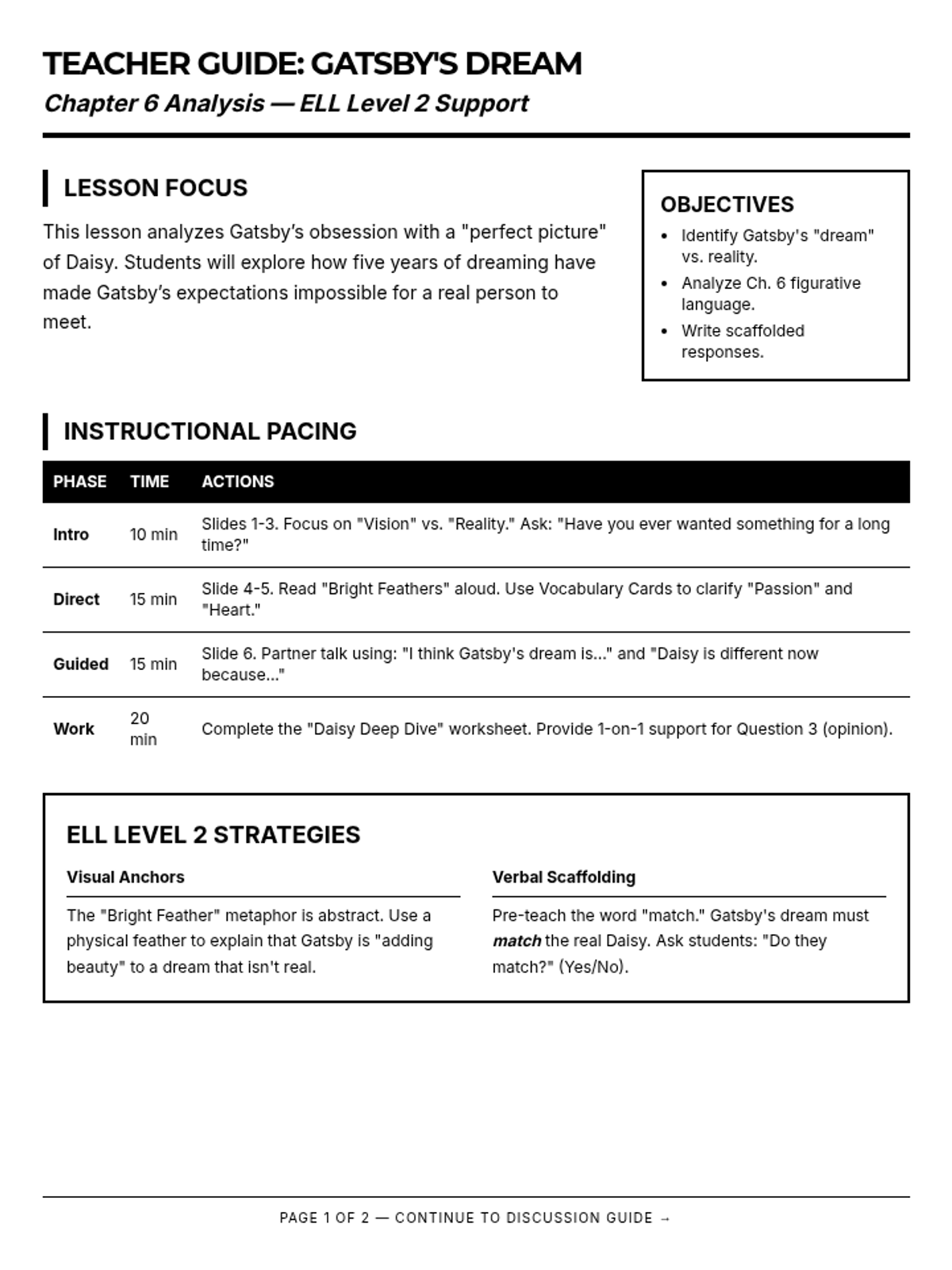
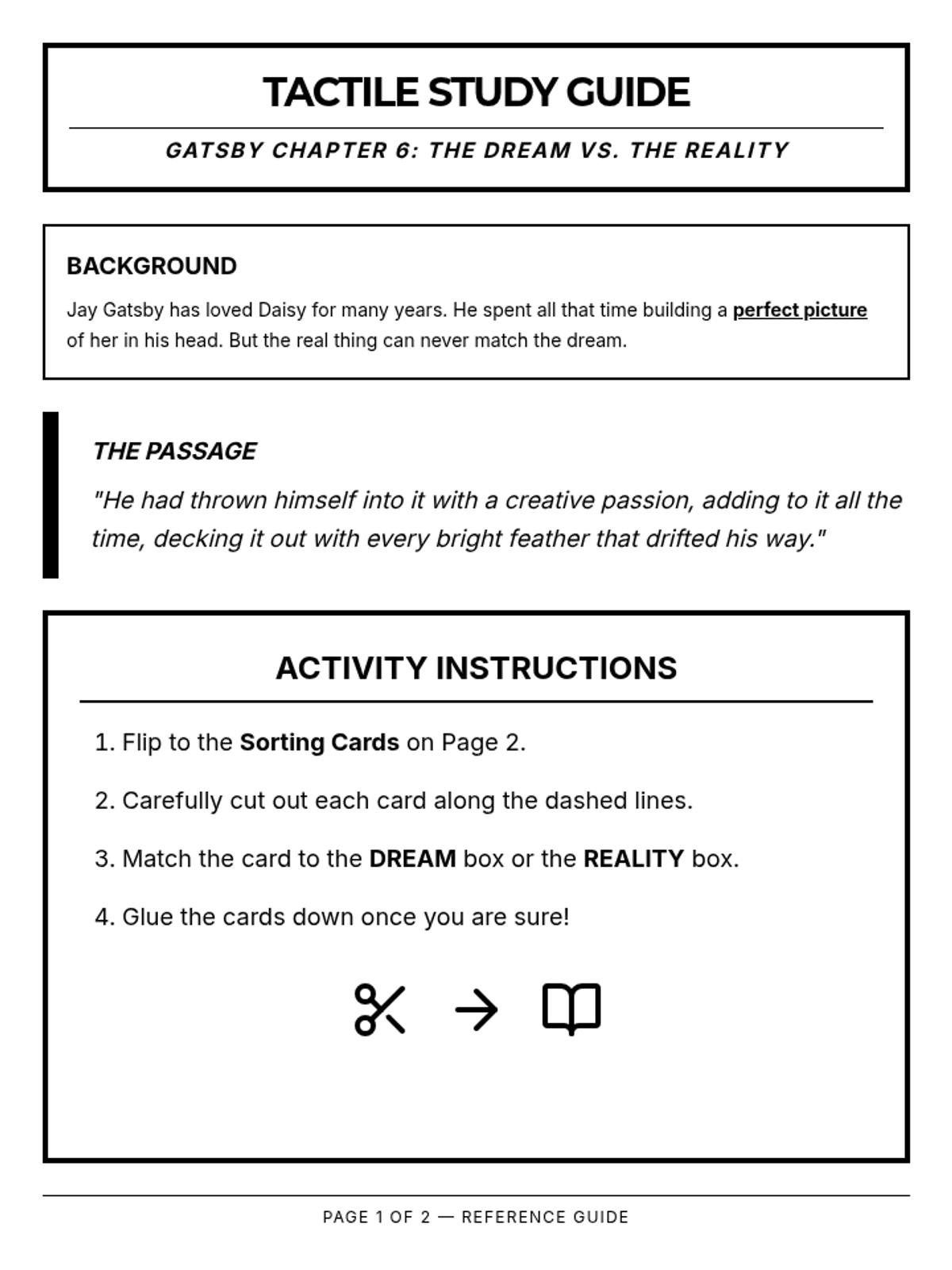
A Chapter 6 analysis focusing on Gatsby's idealized vision of Daisy and the conflict between his dreams and reality. Tailored for ELL Level 2 students with visual support and scaffolded writing tasks.
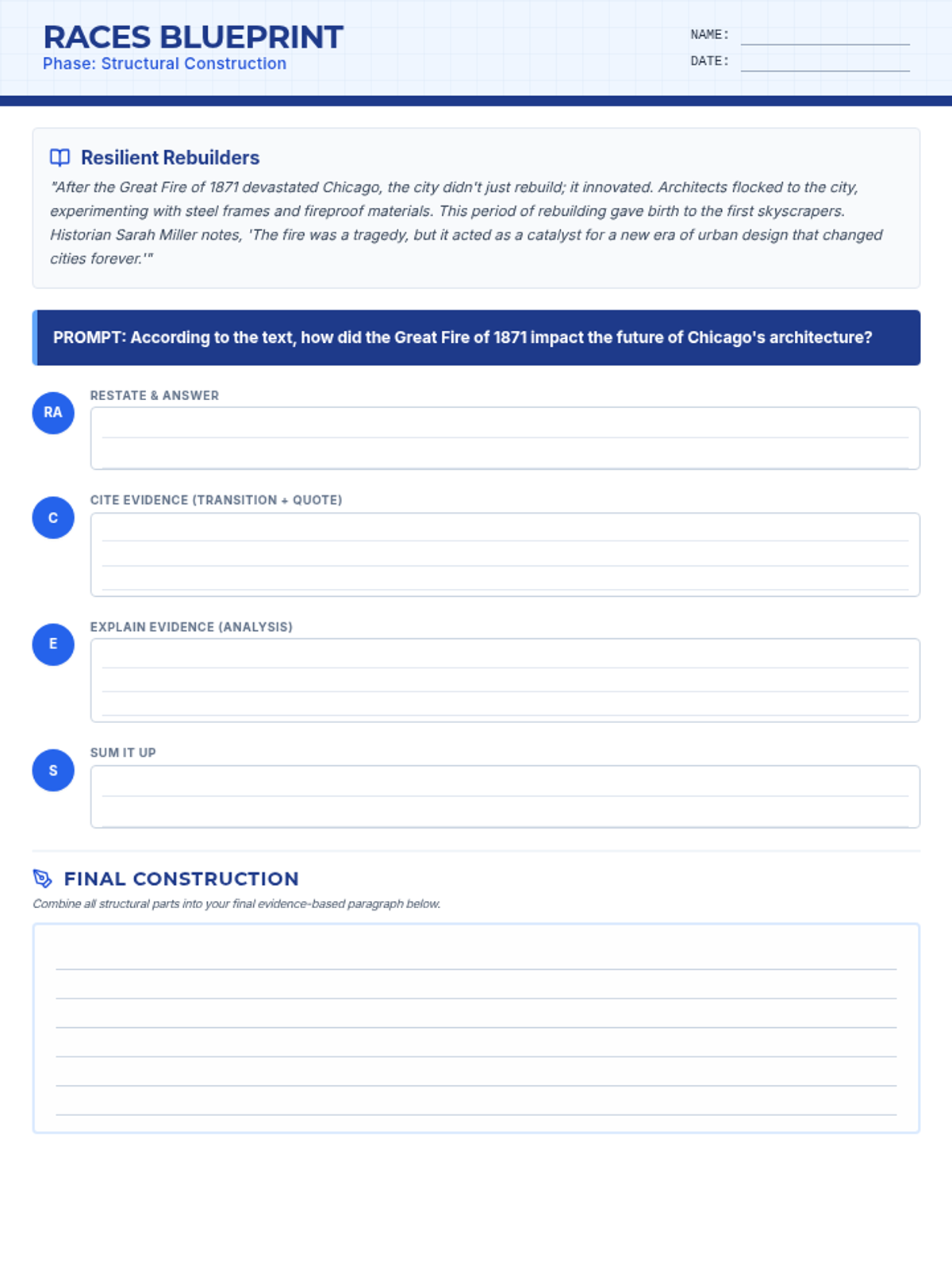
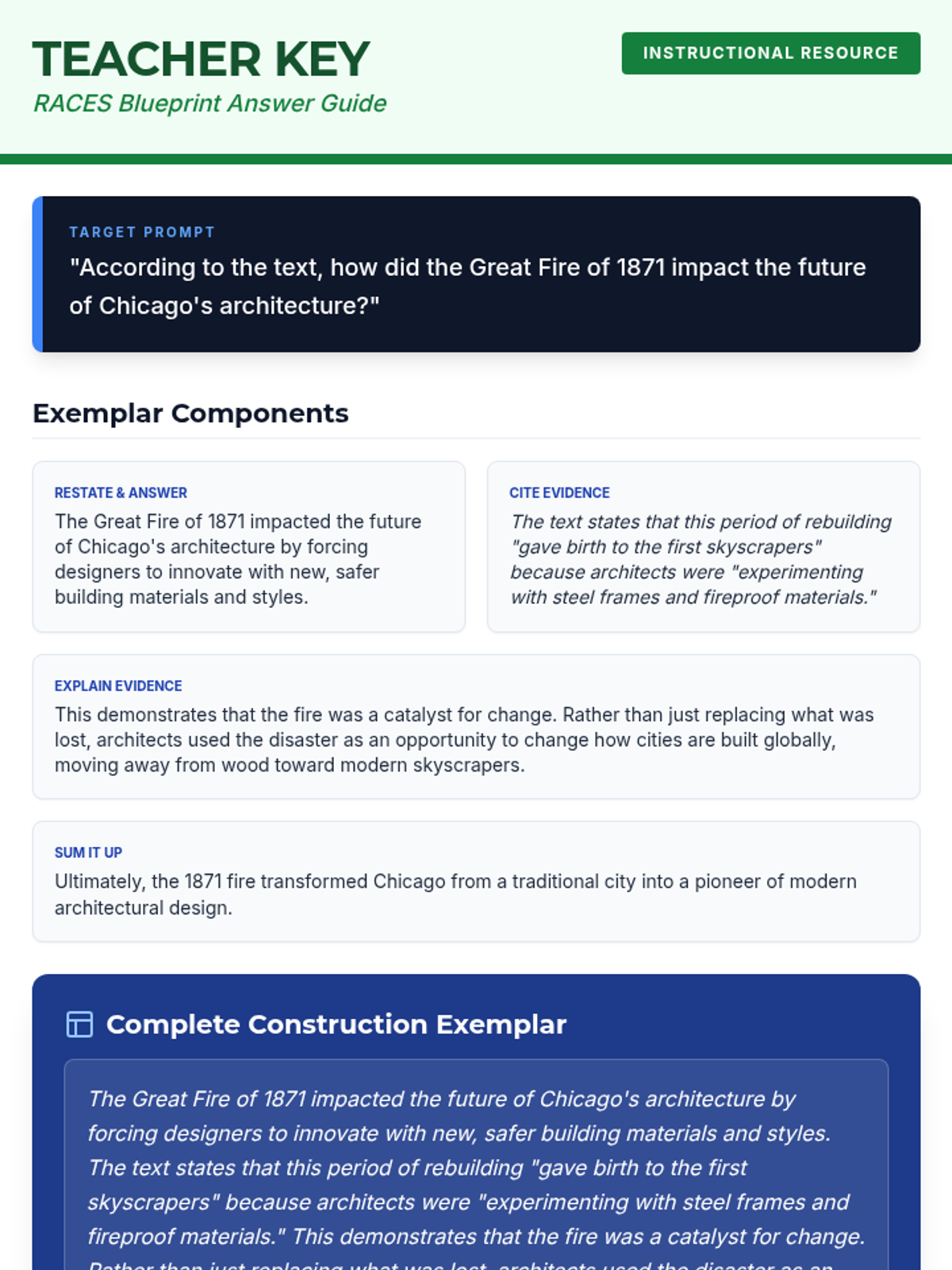
A lesson focused on mastering the RACES writing strategy through structured practice and architectural-themed guided writing.
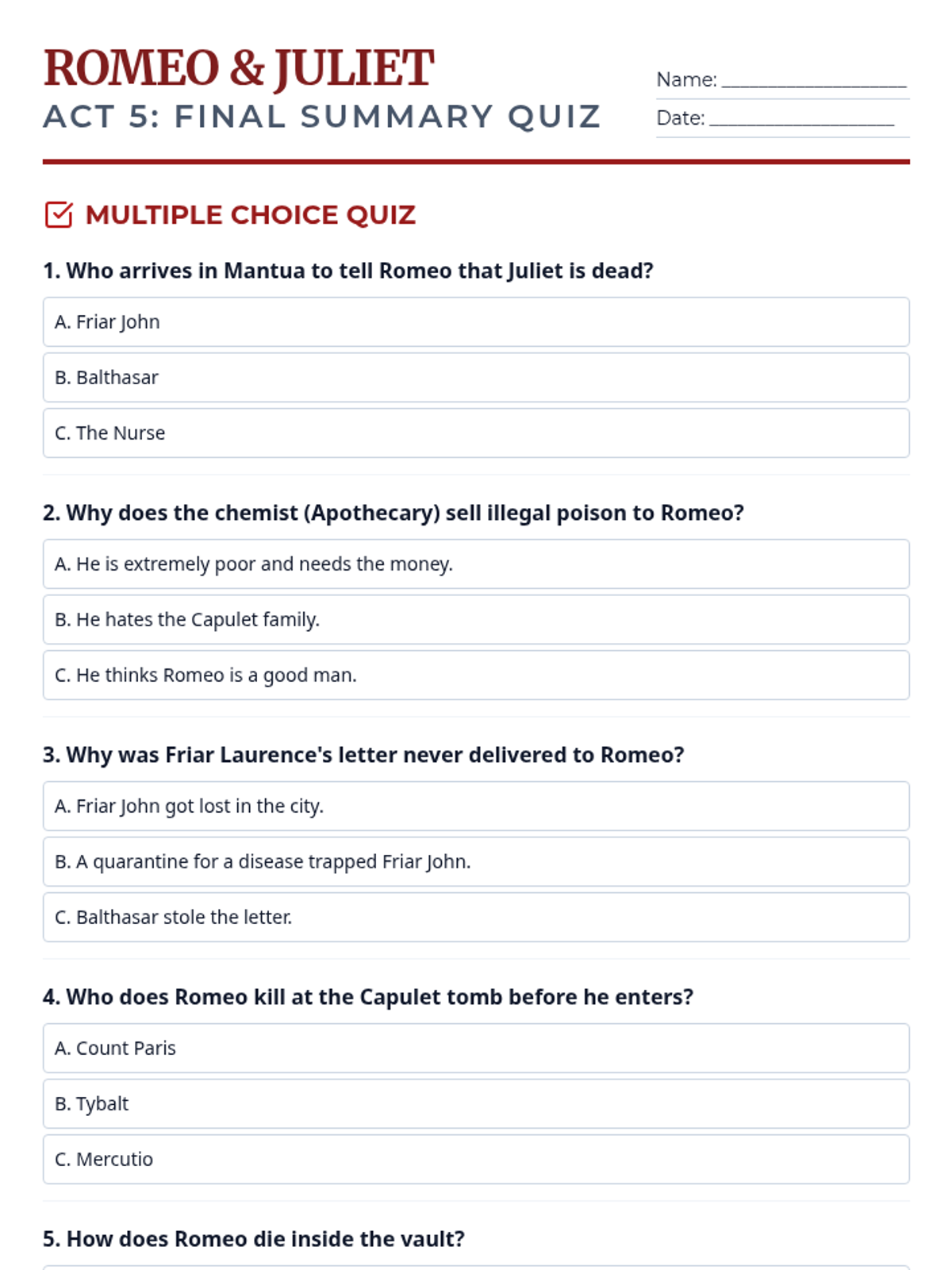
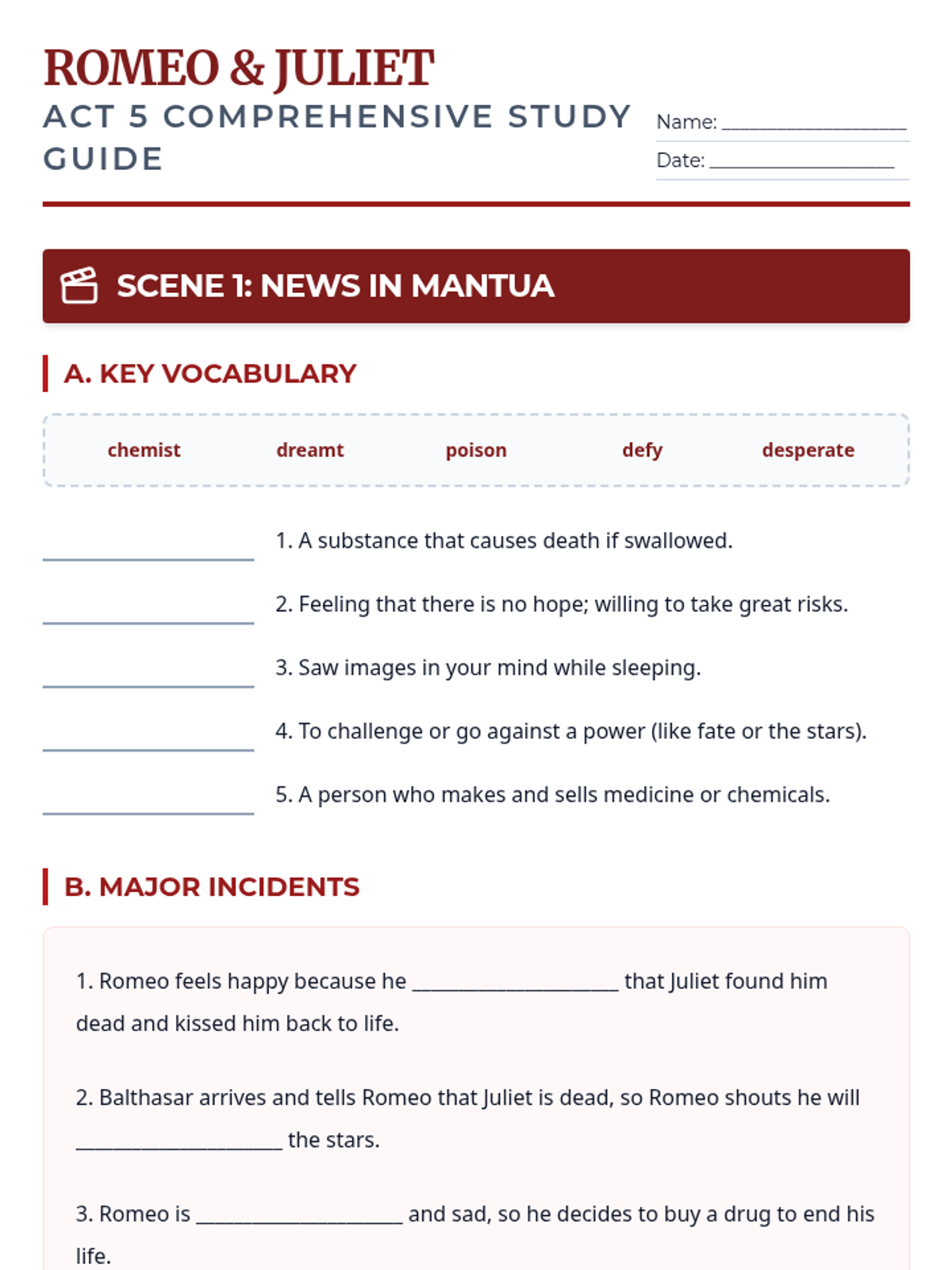
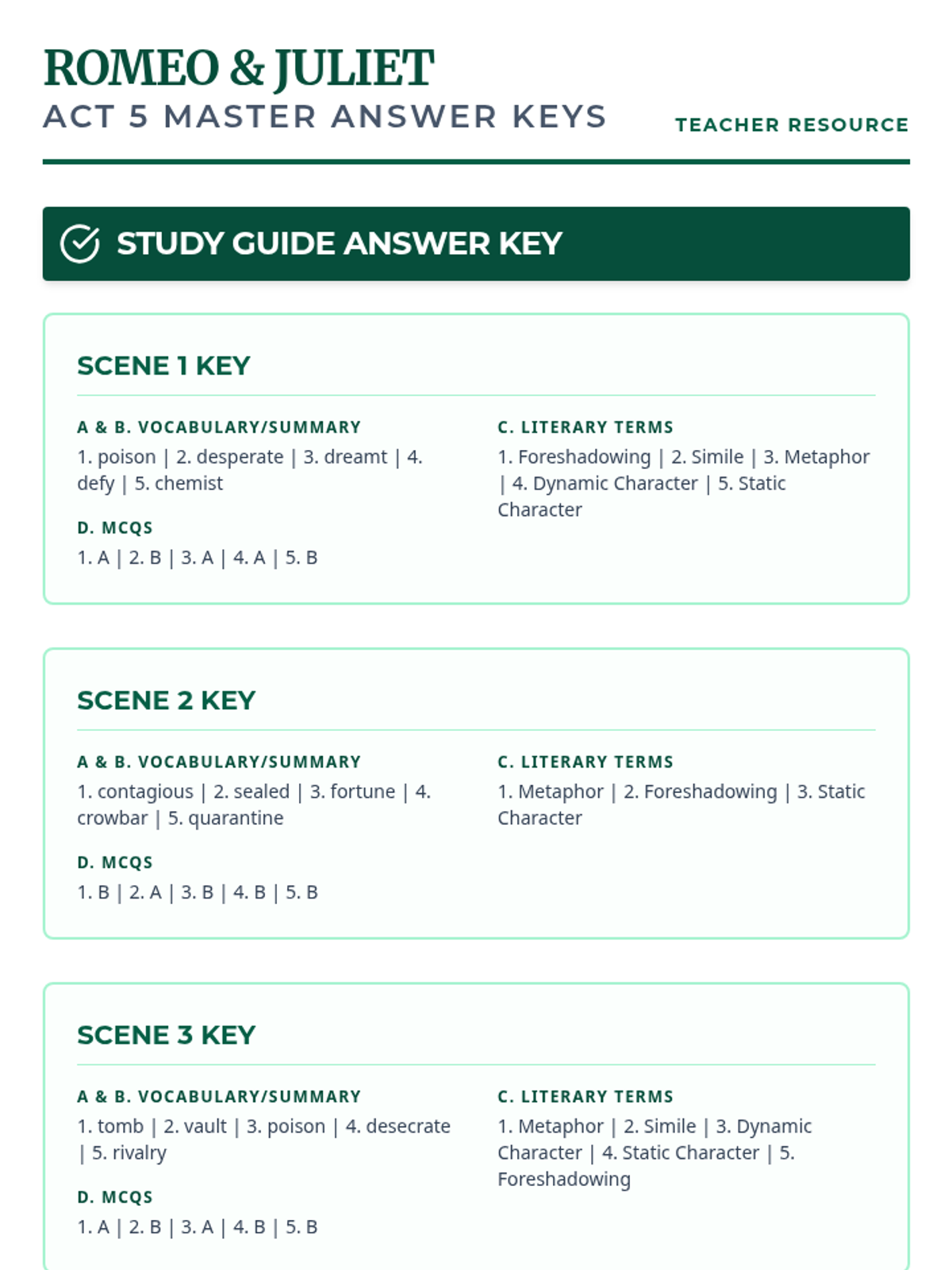
A comprehensive study guide for Act 5 of Shakespeare's Romeo and Juliet, designed for WIDA level 3 English language learners. Includes vocabulary, summary completion, literary term analysis, and event sequencing.