A comprehensive lesson focusing on RL.6.5 (Text Structure) and RL.6.6 (Point of View), using the 'Blueprint and Lens' theme to help students analyze how parts contribute to the whole and how narrators see the world.
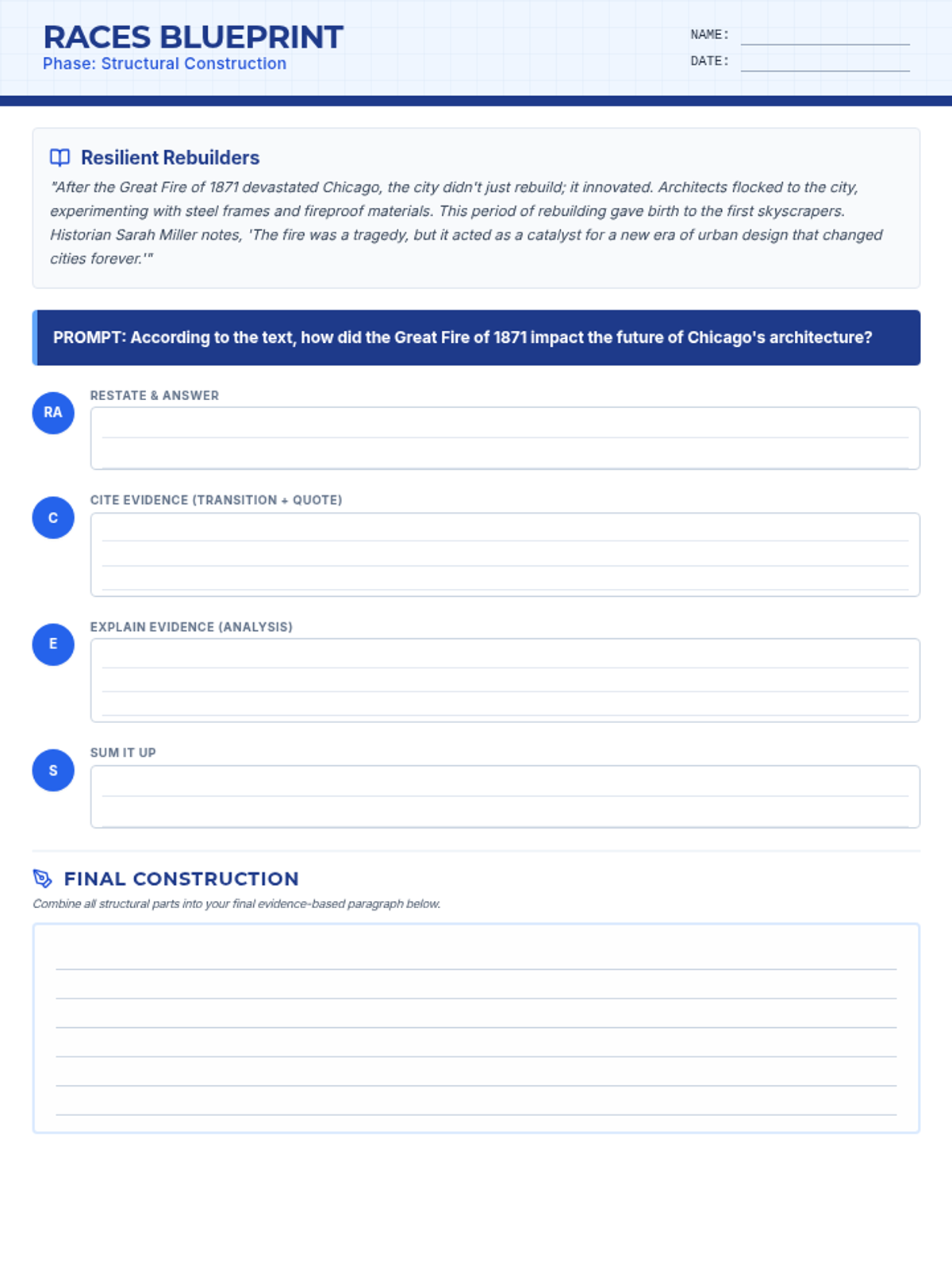
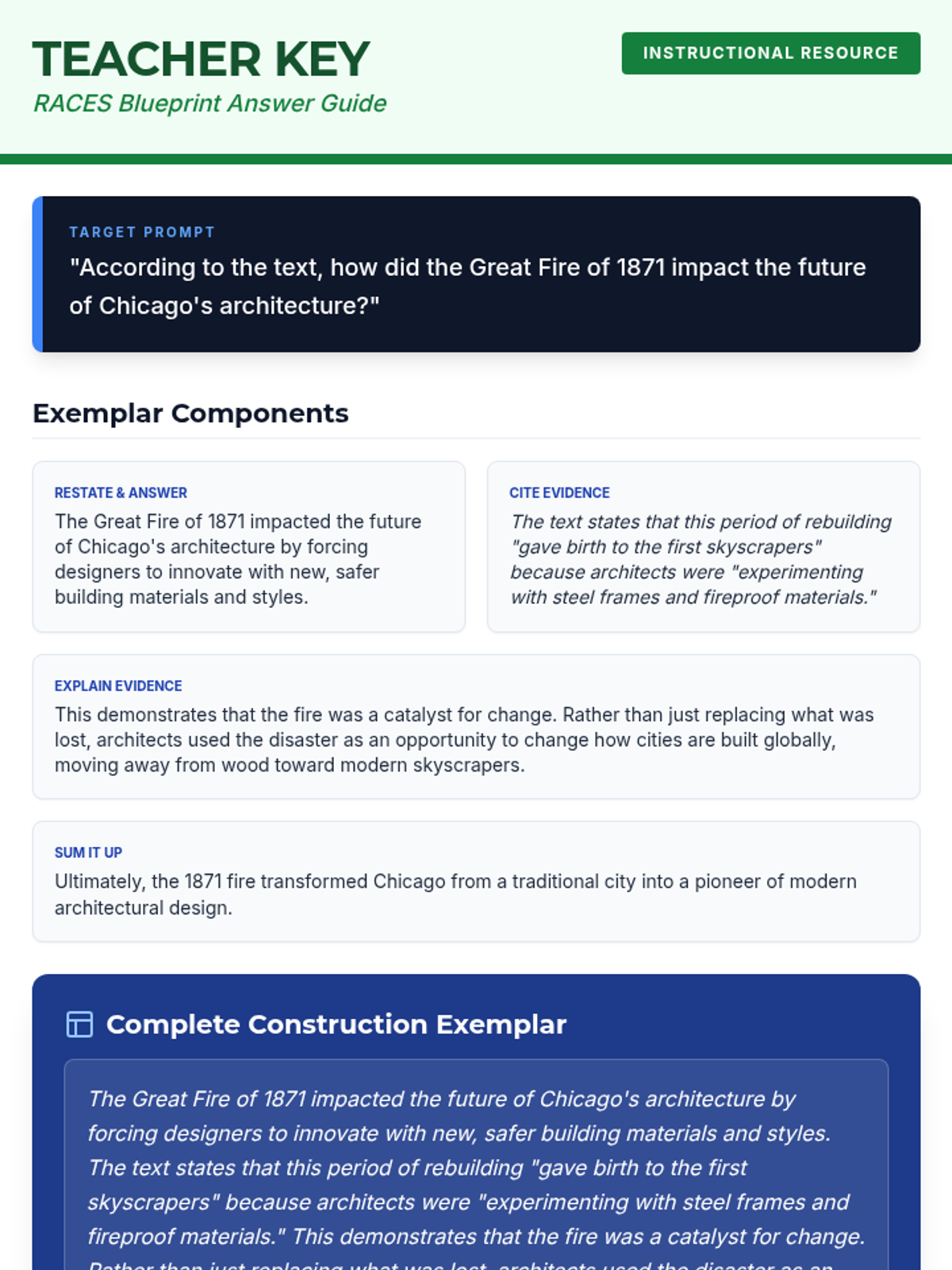
A lesson focused on mastering the RACES writing strategy through structured practice and architectural-themed guided writing.
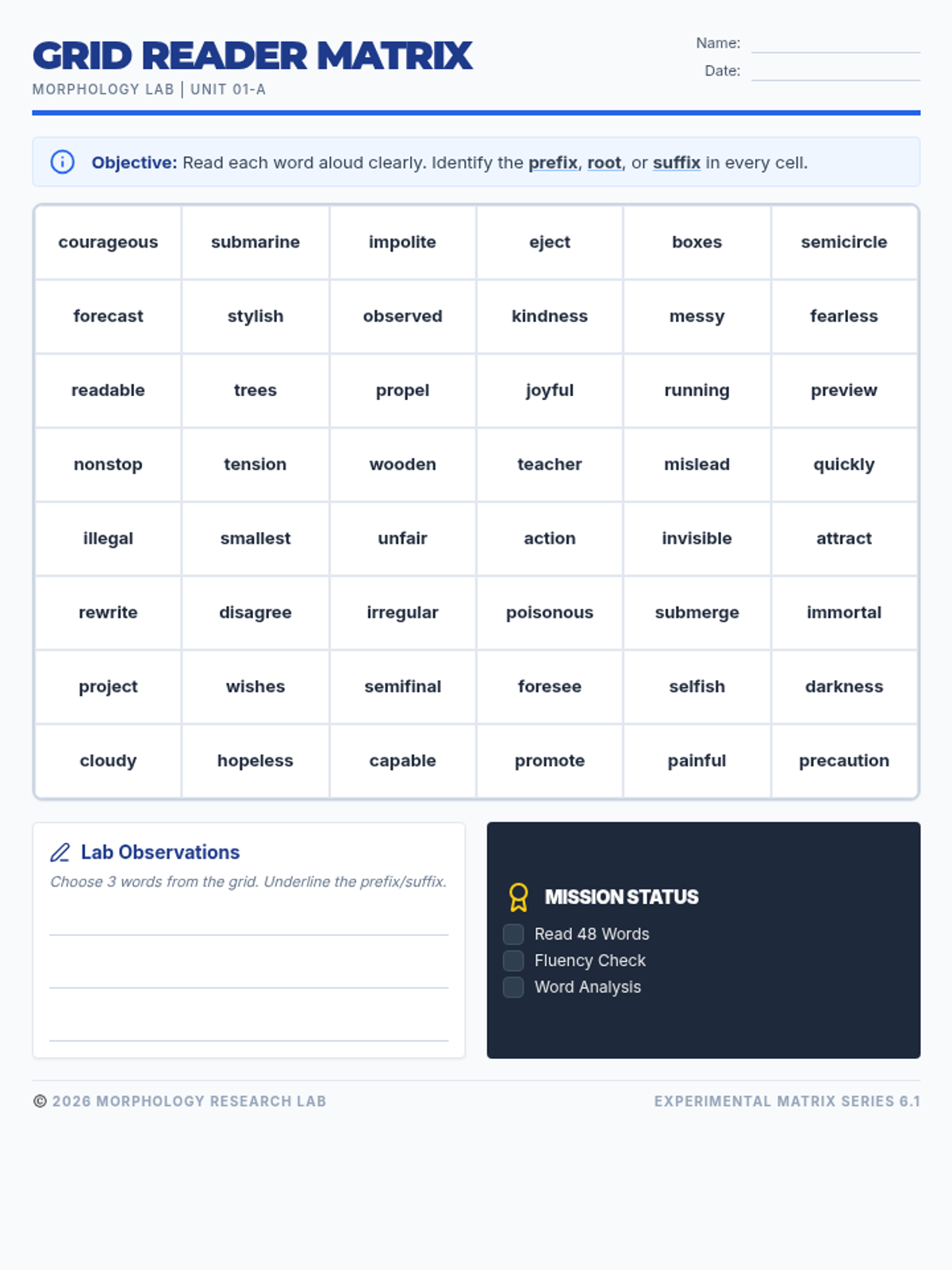
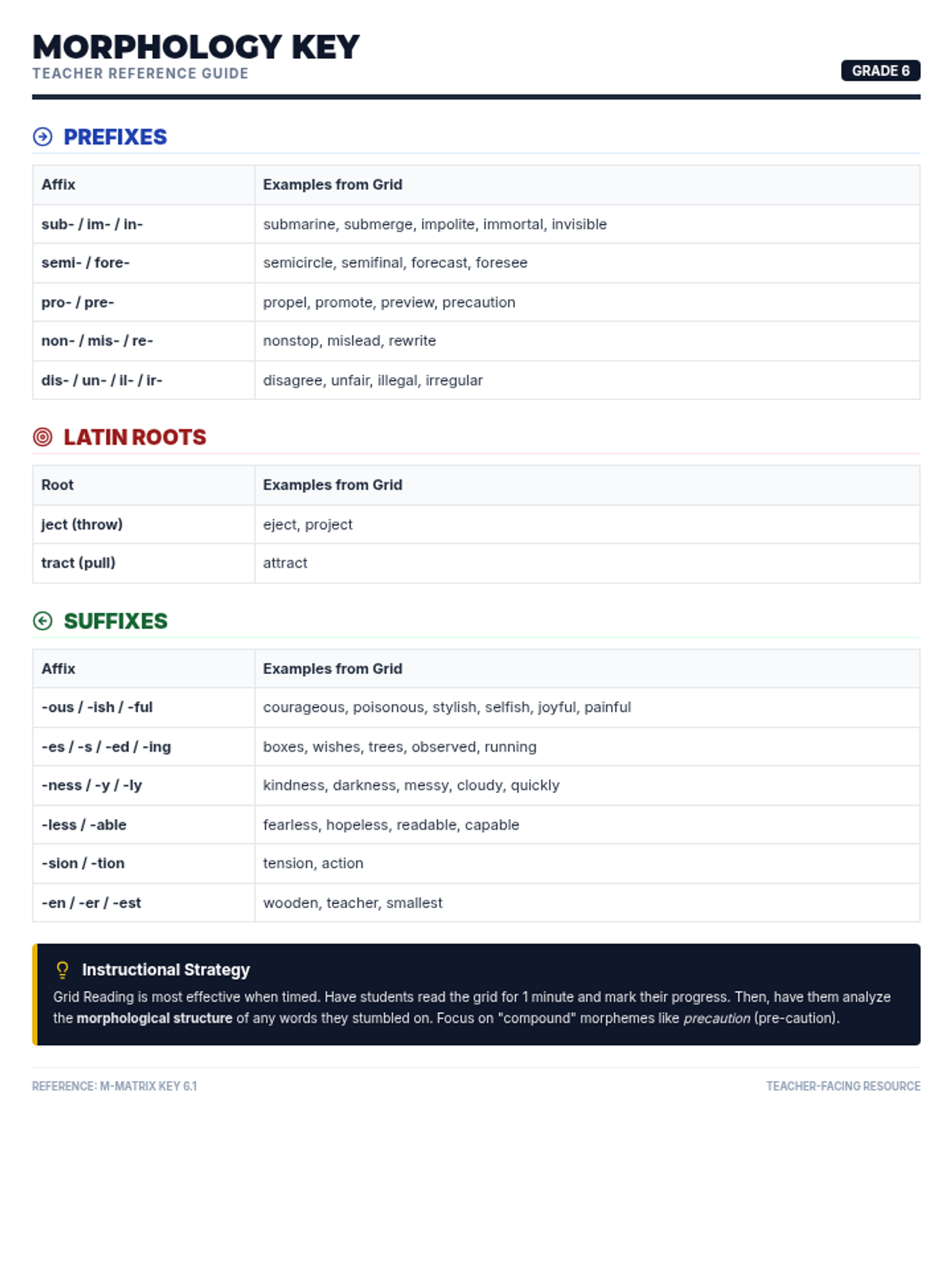
A lesson focused on building and decoding words using common prefixes, suffixes, and Latin roots (ject, tract) through a randomized grid reading activity.
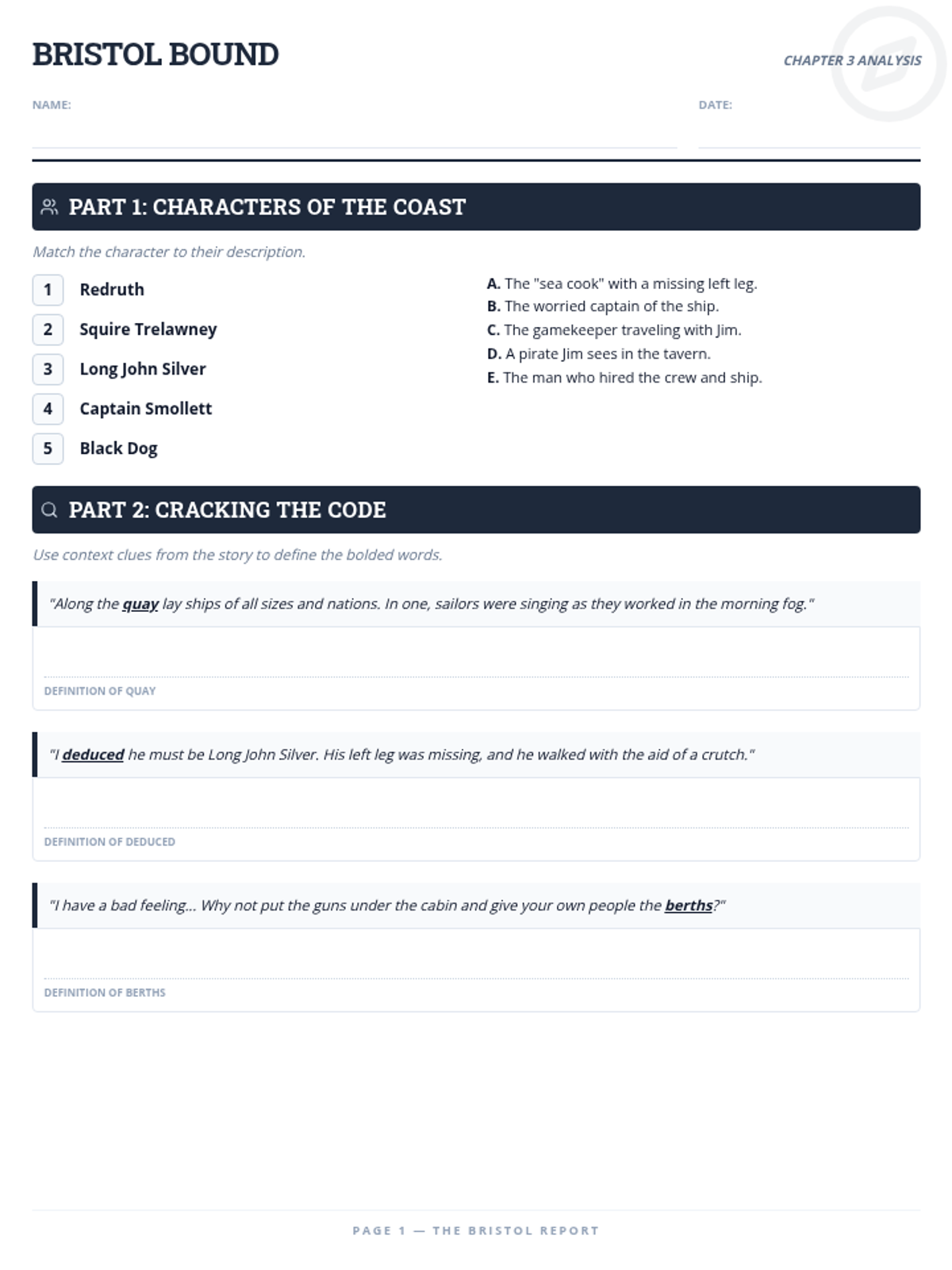
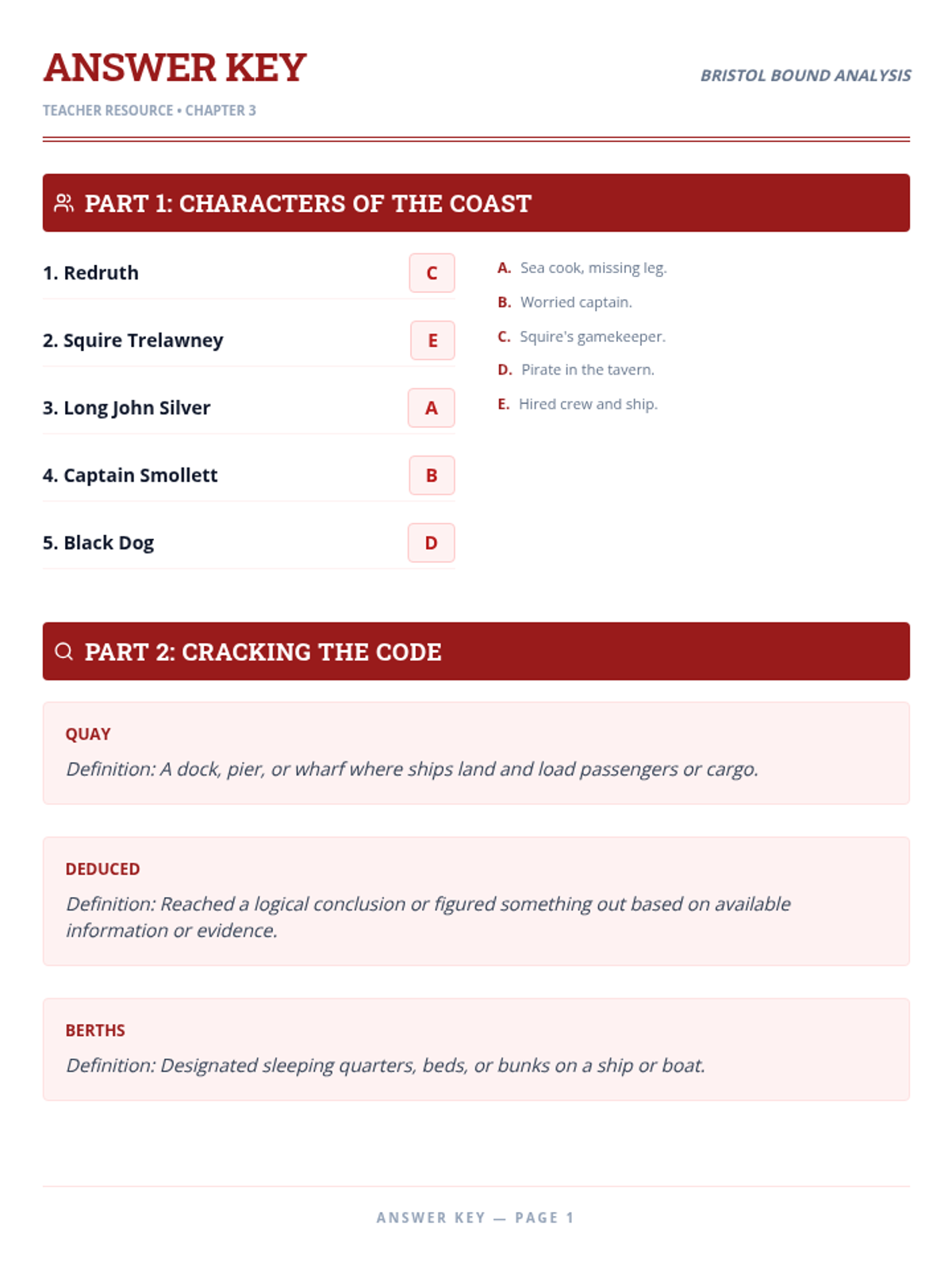
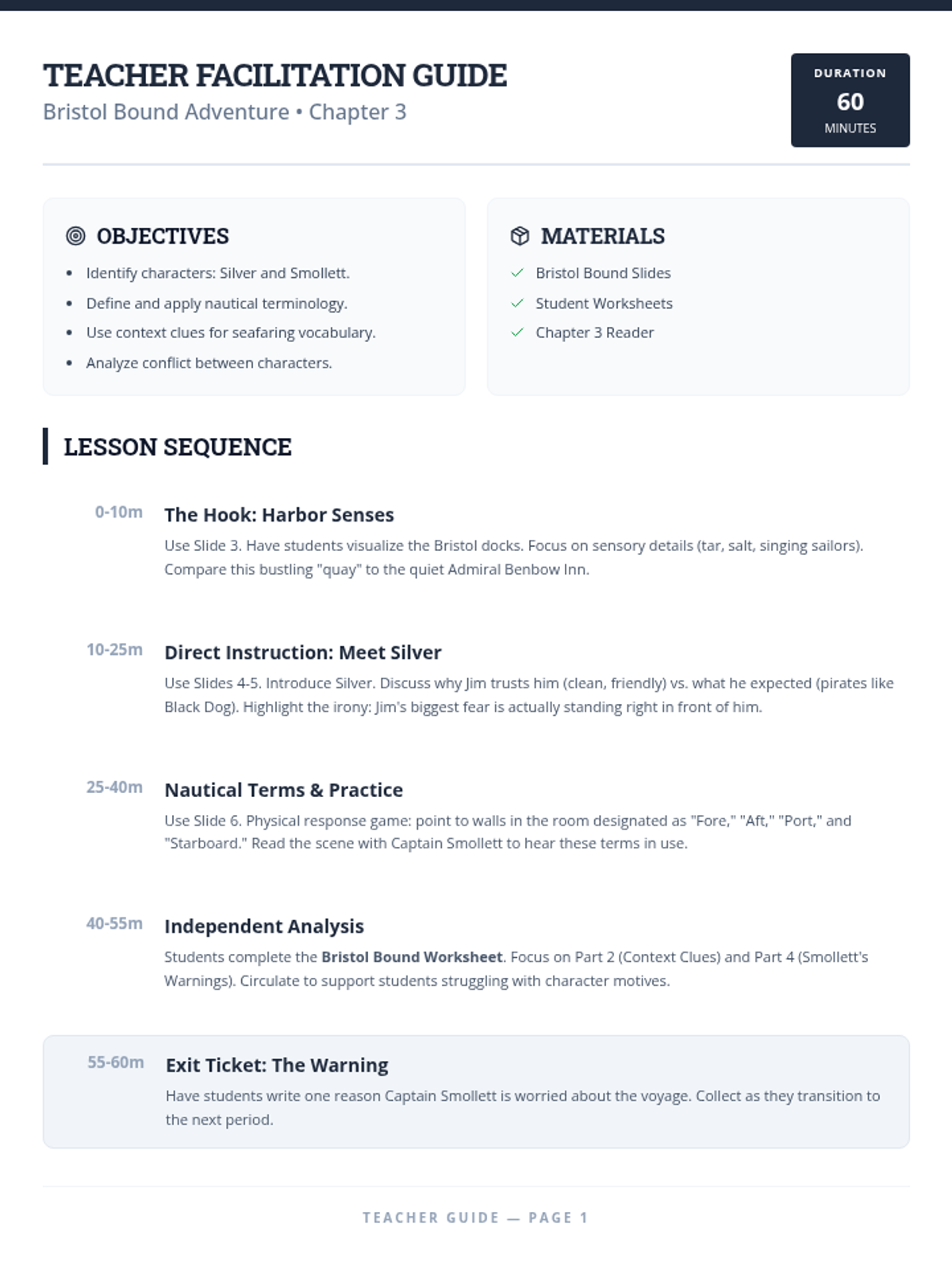
A lesson covering Chapter 3 of Treasure Island, where Jim travels to Bristol, meets Long John Silver, and prepares to set sail on the Hispaniola. Focuses on character introduction, nautical vocabulary, and analyzing the early signs of conflict.
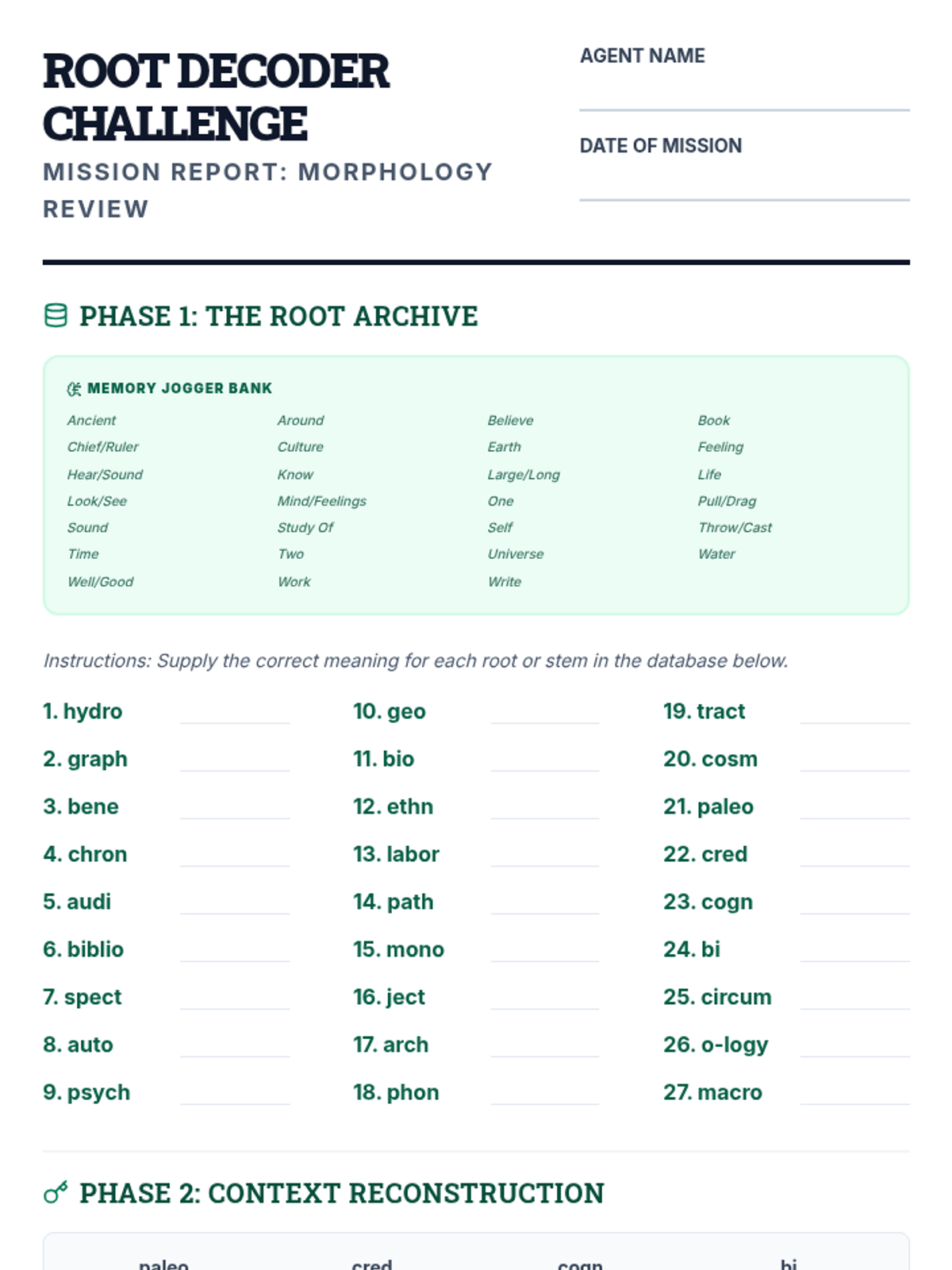
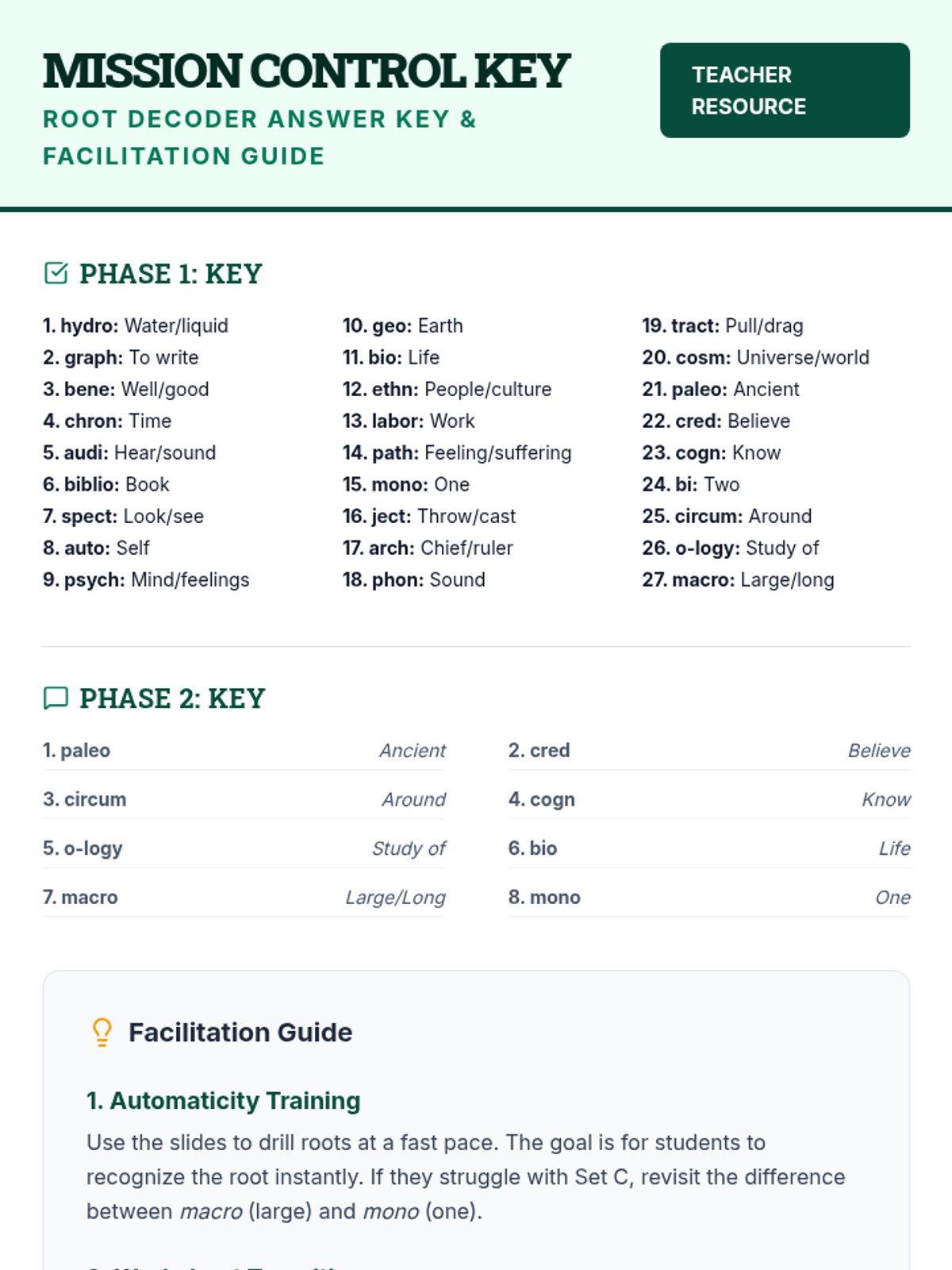
A comprehensive review lesson covering 27 Greek and Latin roots to help developmental reading students prepare for their morphology assessment through gamified slides and a decoding worksheet.
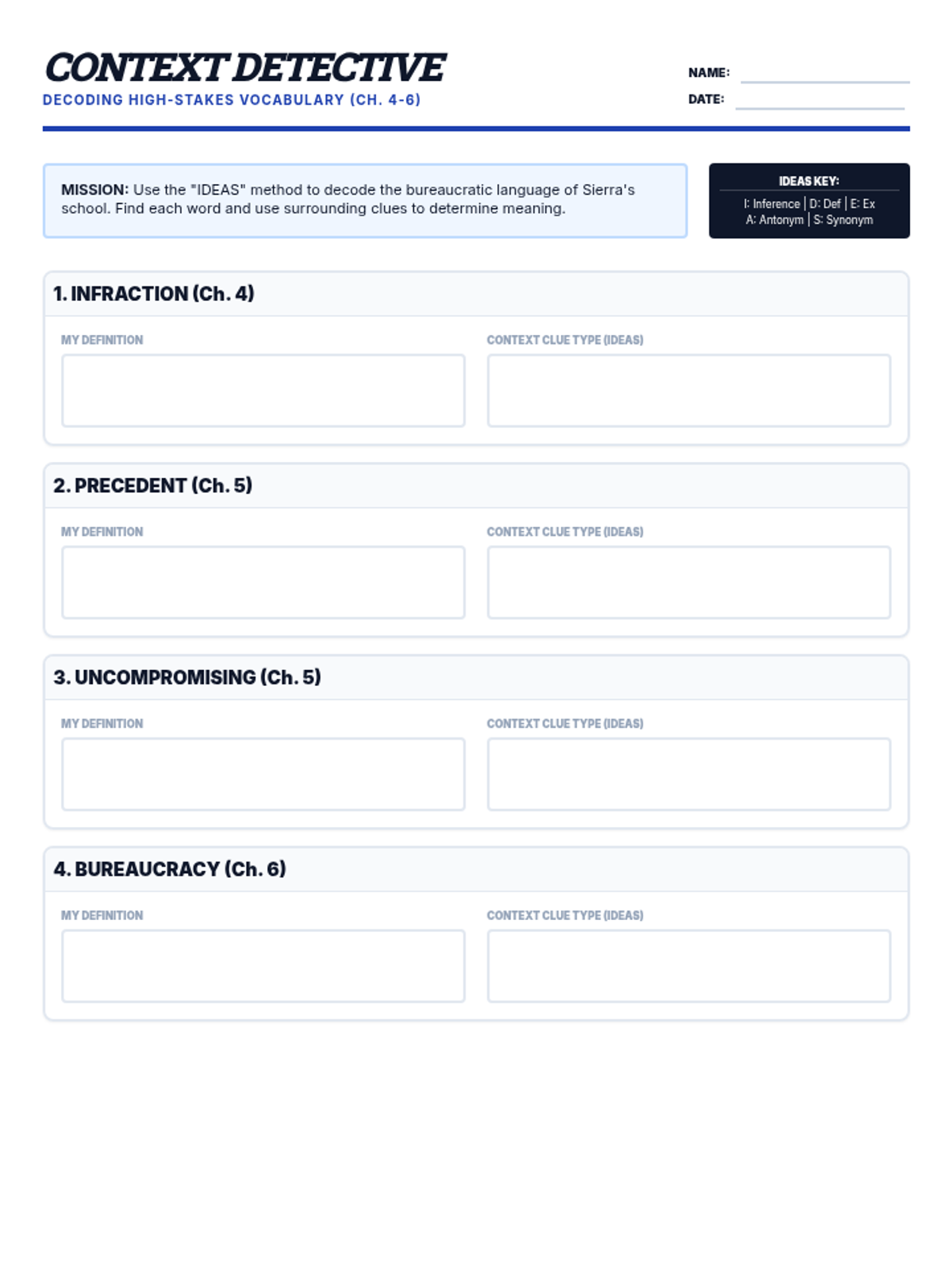
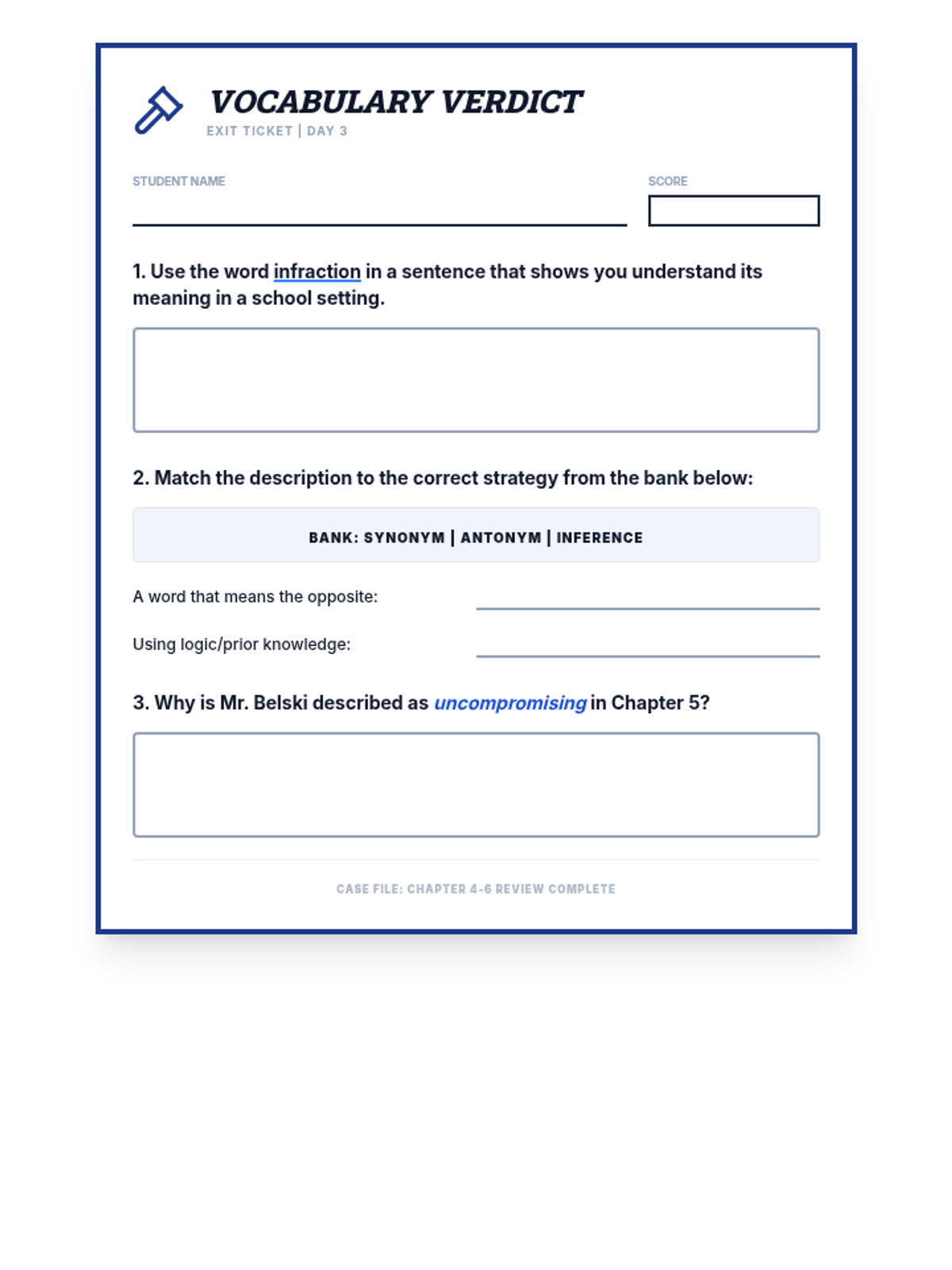
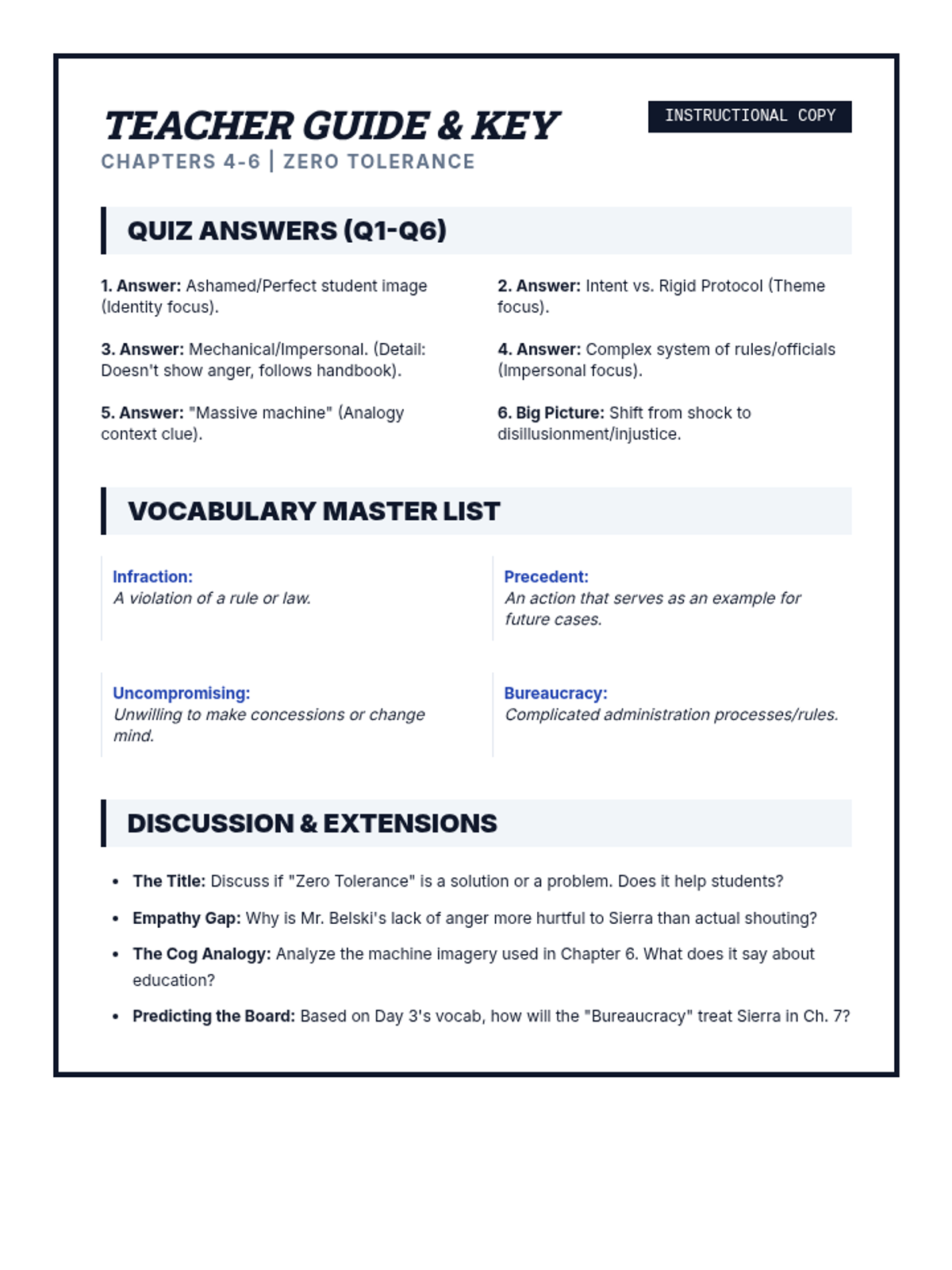
Develops context clue strategies using the specific academic and legalistic vocabulary found in Sierra's disciplinary hearing and school policy.
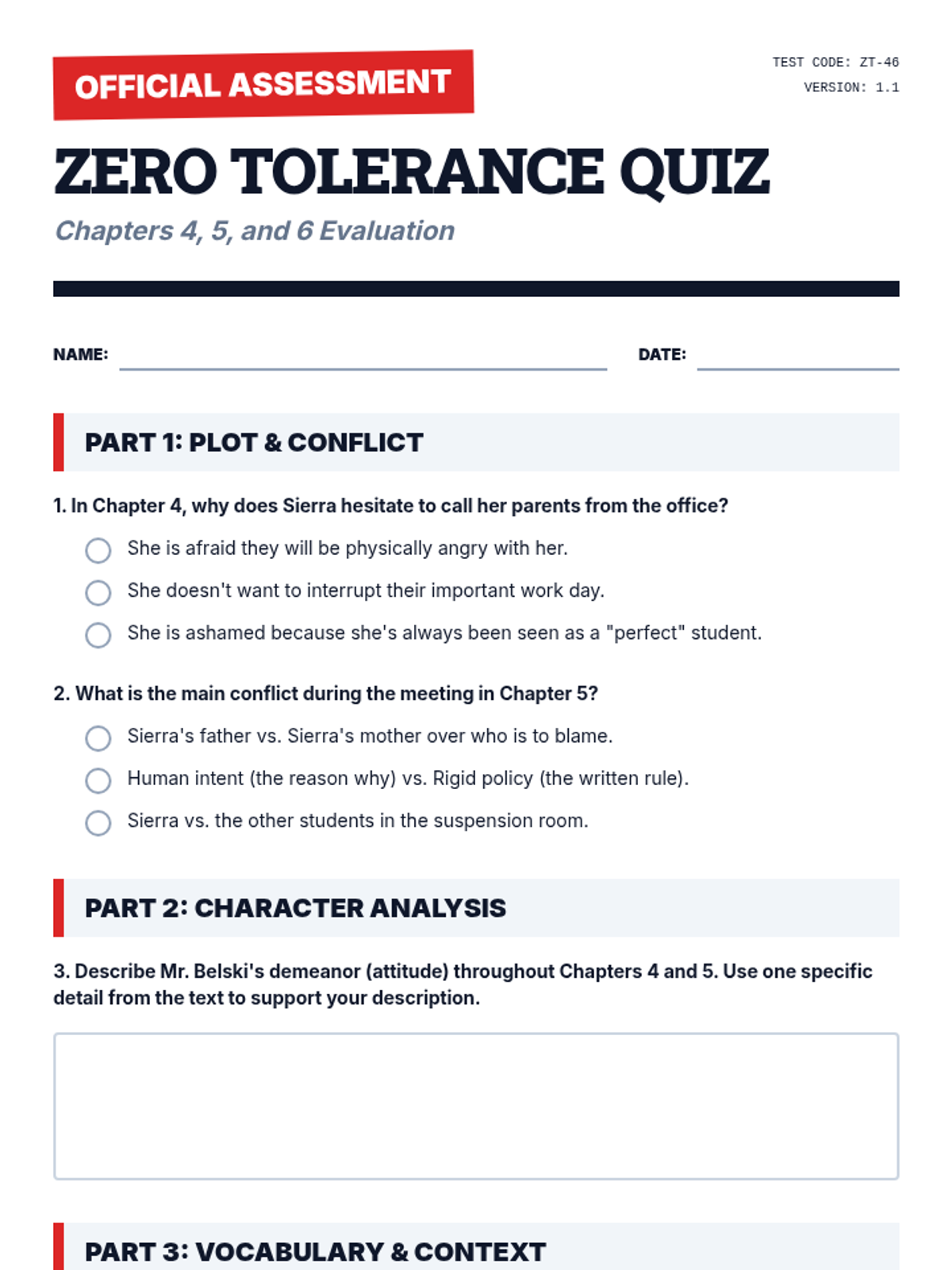
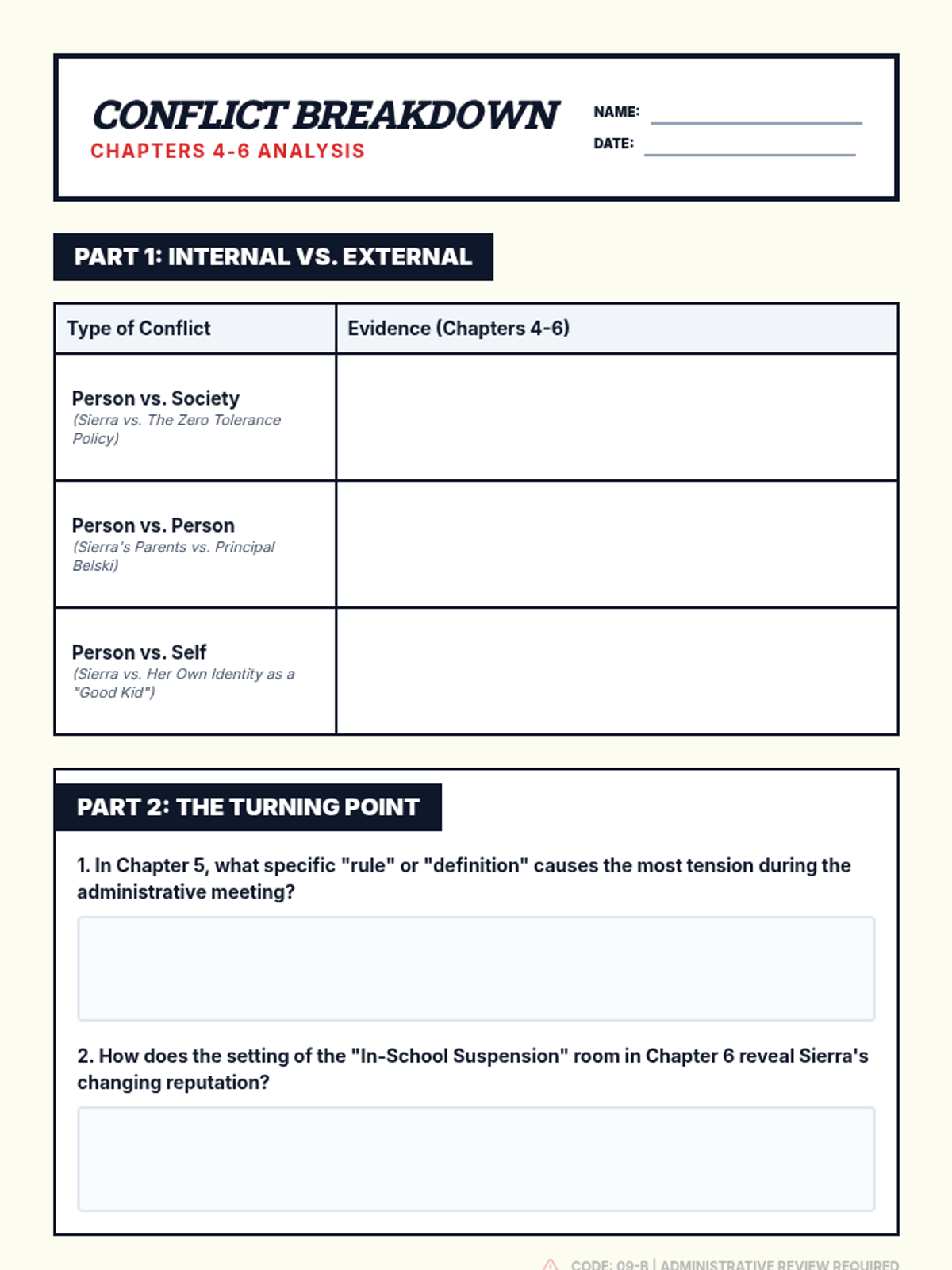
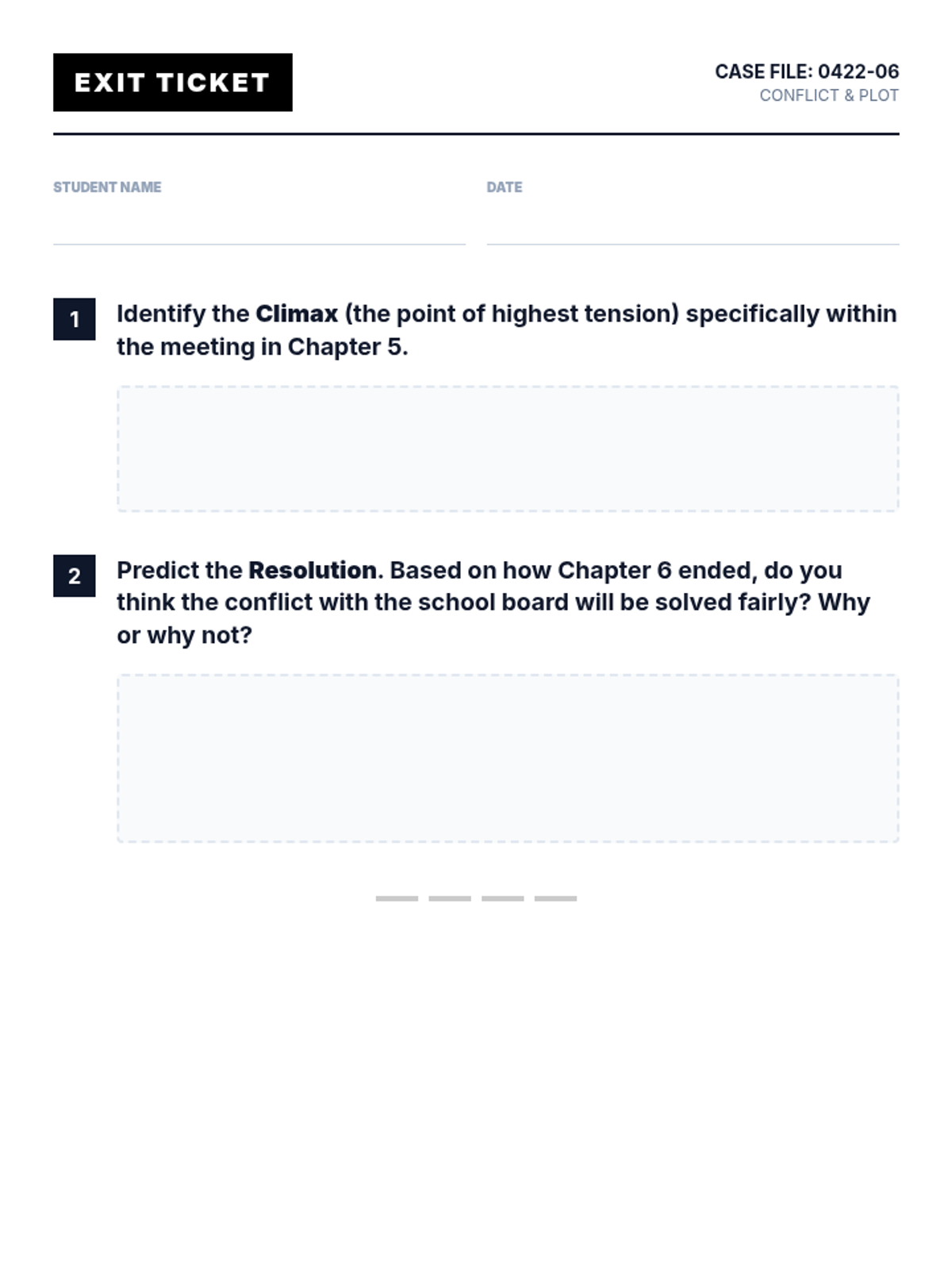
Analyzes the types of conflict (Person vs. Society) and the plot progression as Sierra's mistake turns into a full-scale disciplinary crisis.
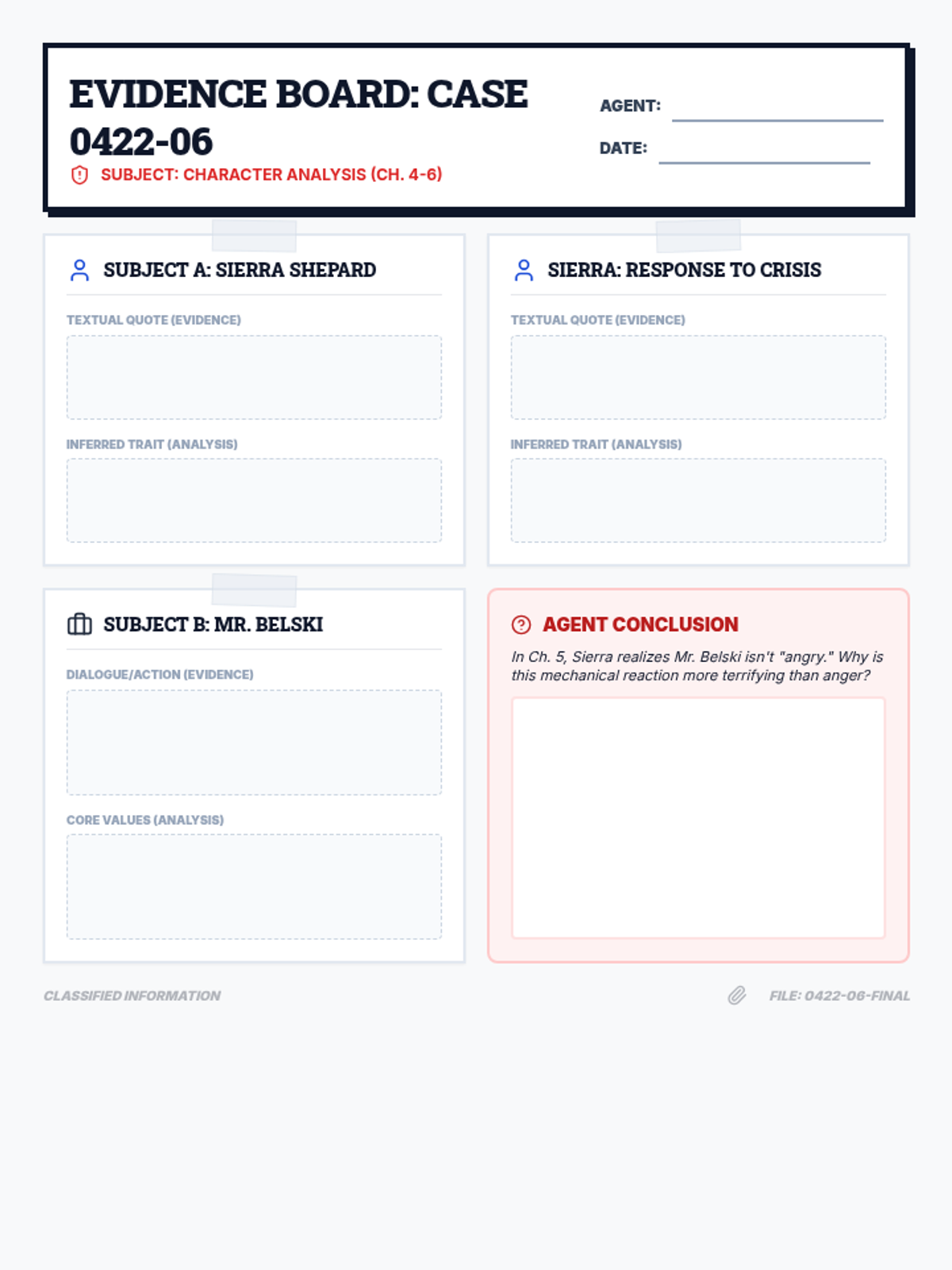
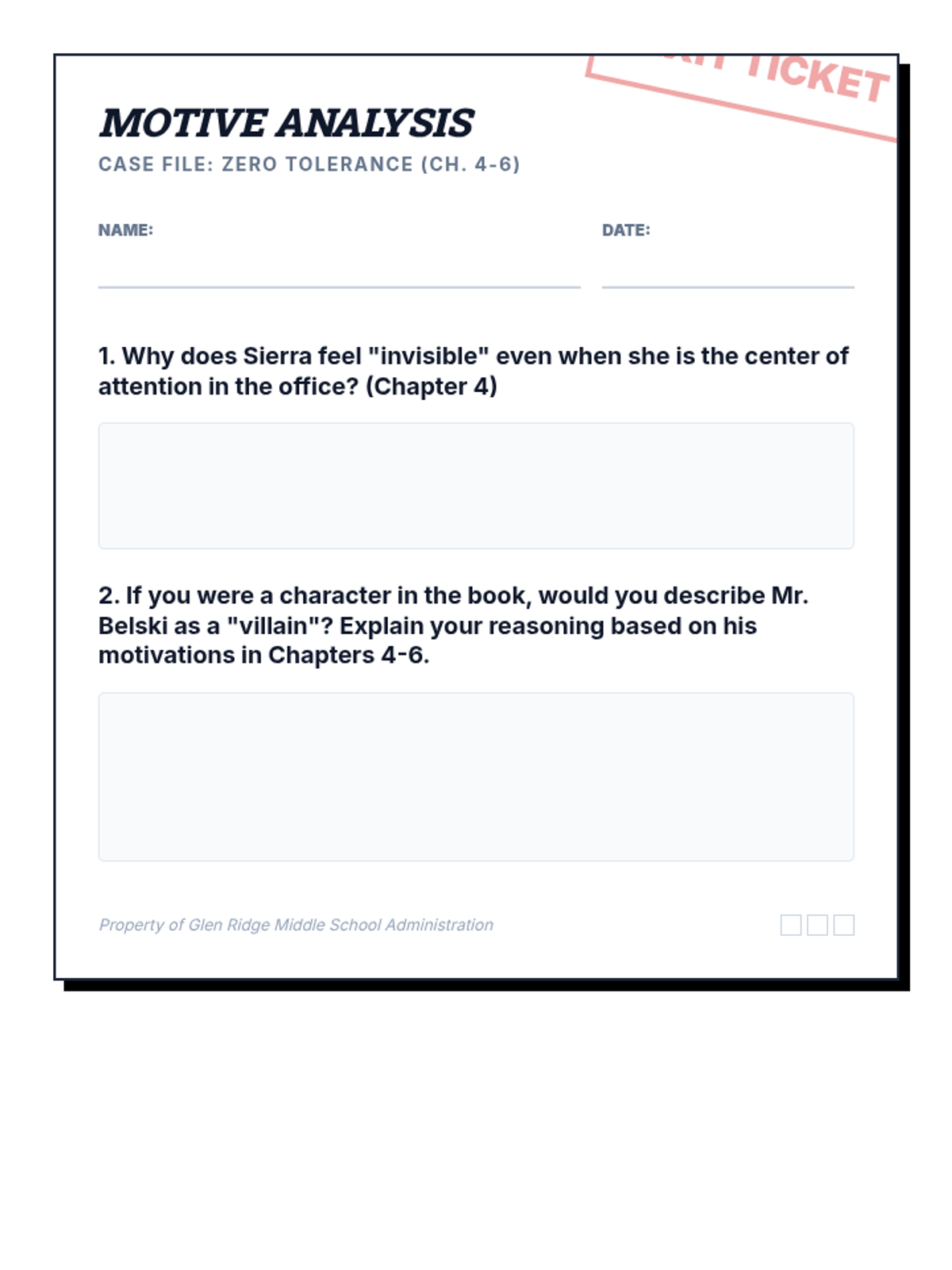
Focuses on character analysis of Sierra and the school administration, using an 'Evidence Board' approach to track traits and motivations.
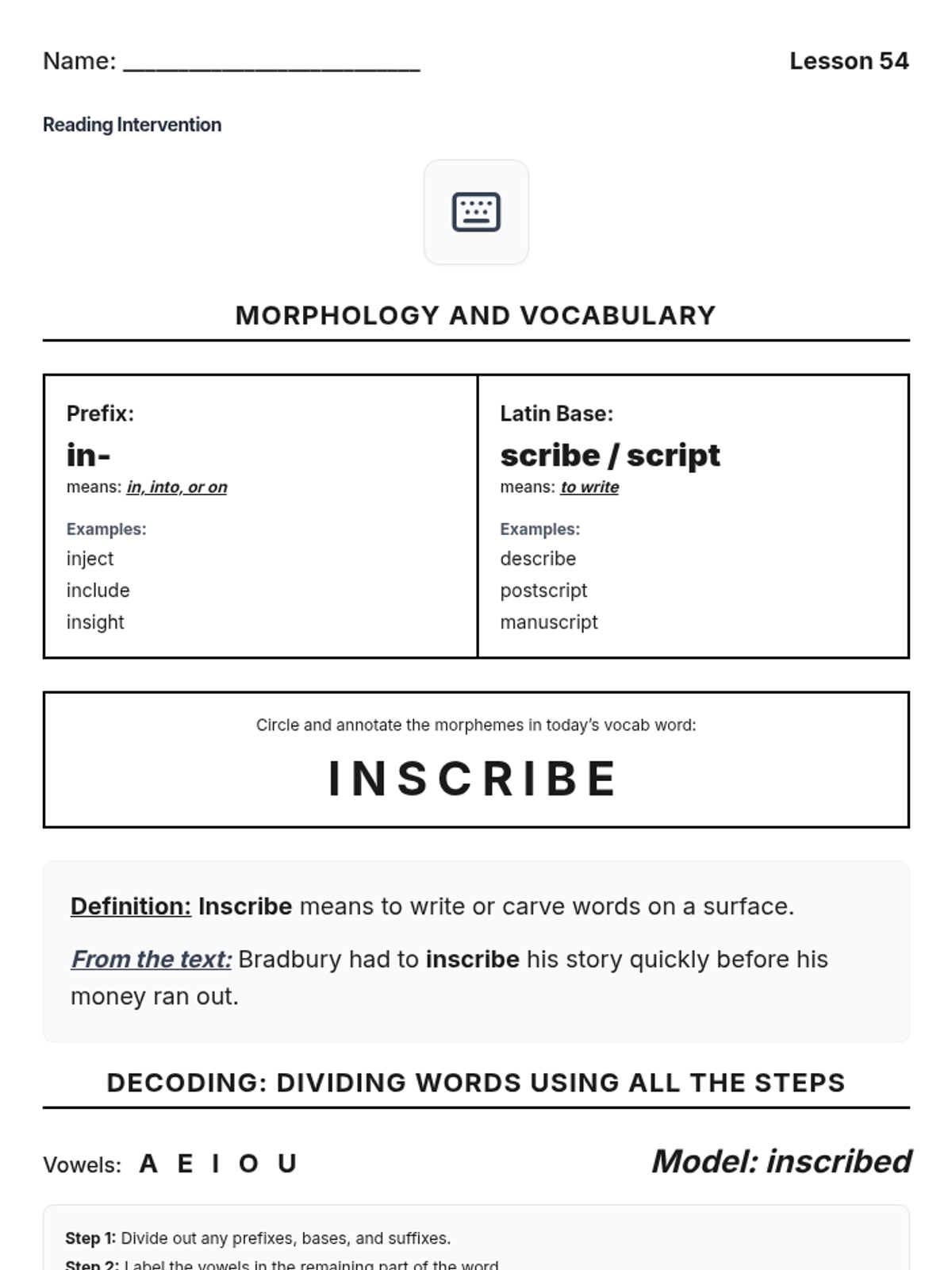
A series of three reading intervention lessons focusing on Ray Bradbury's writing process, the conclusion of Fahrenheit 451, and the origin of Frankenstein, teaching advanced morphology and decoding strategies.
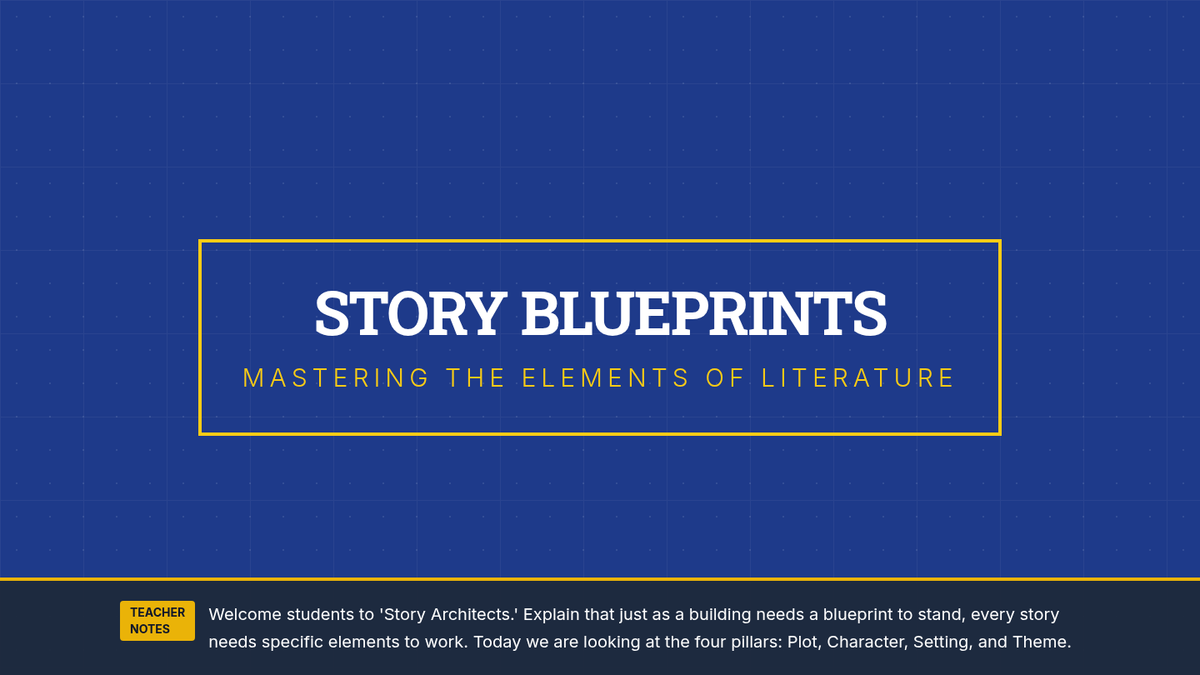
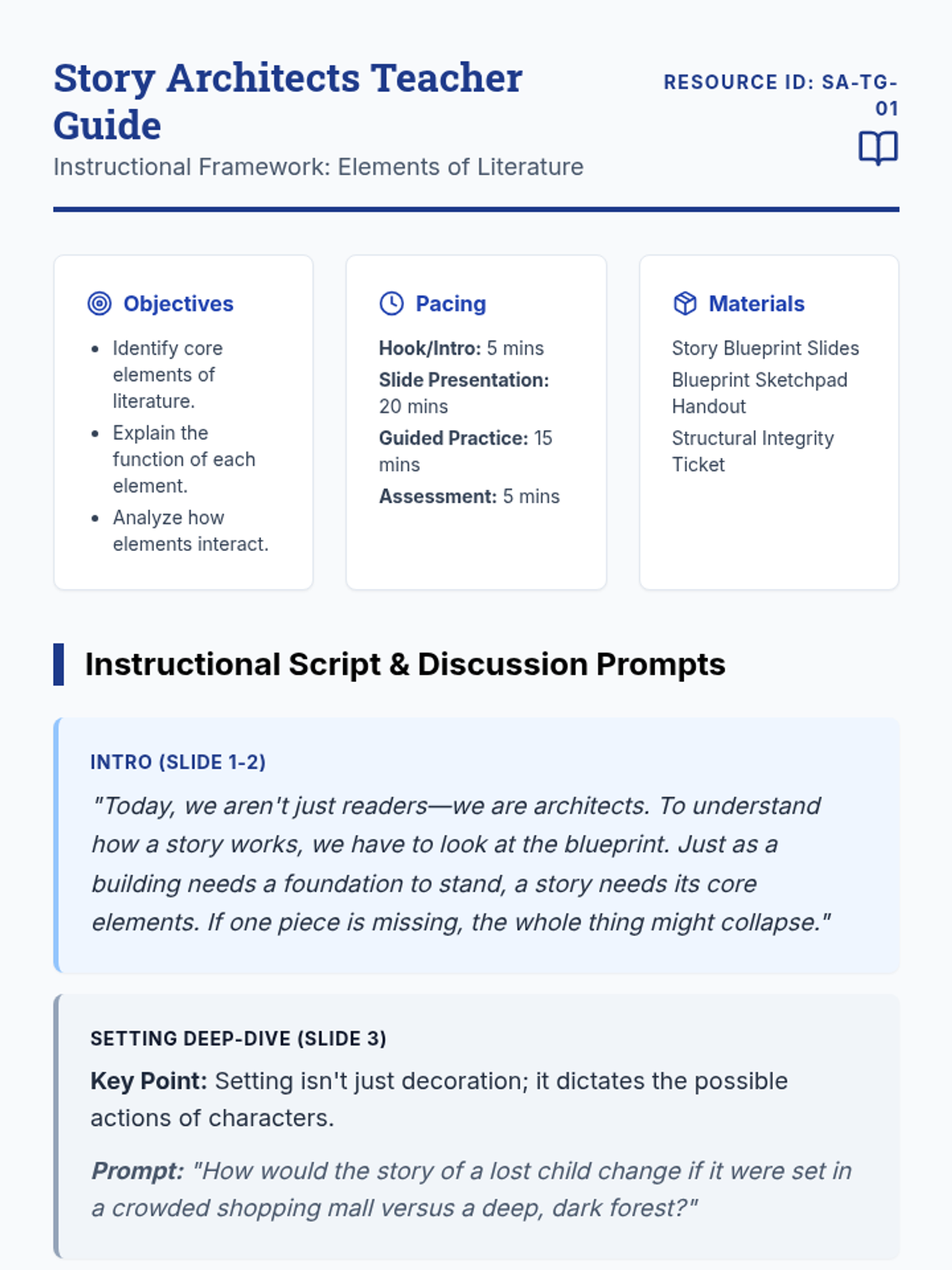
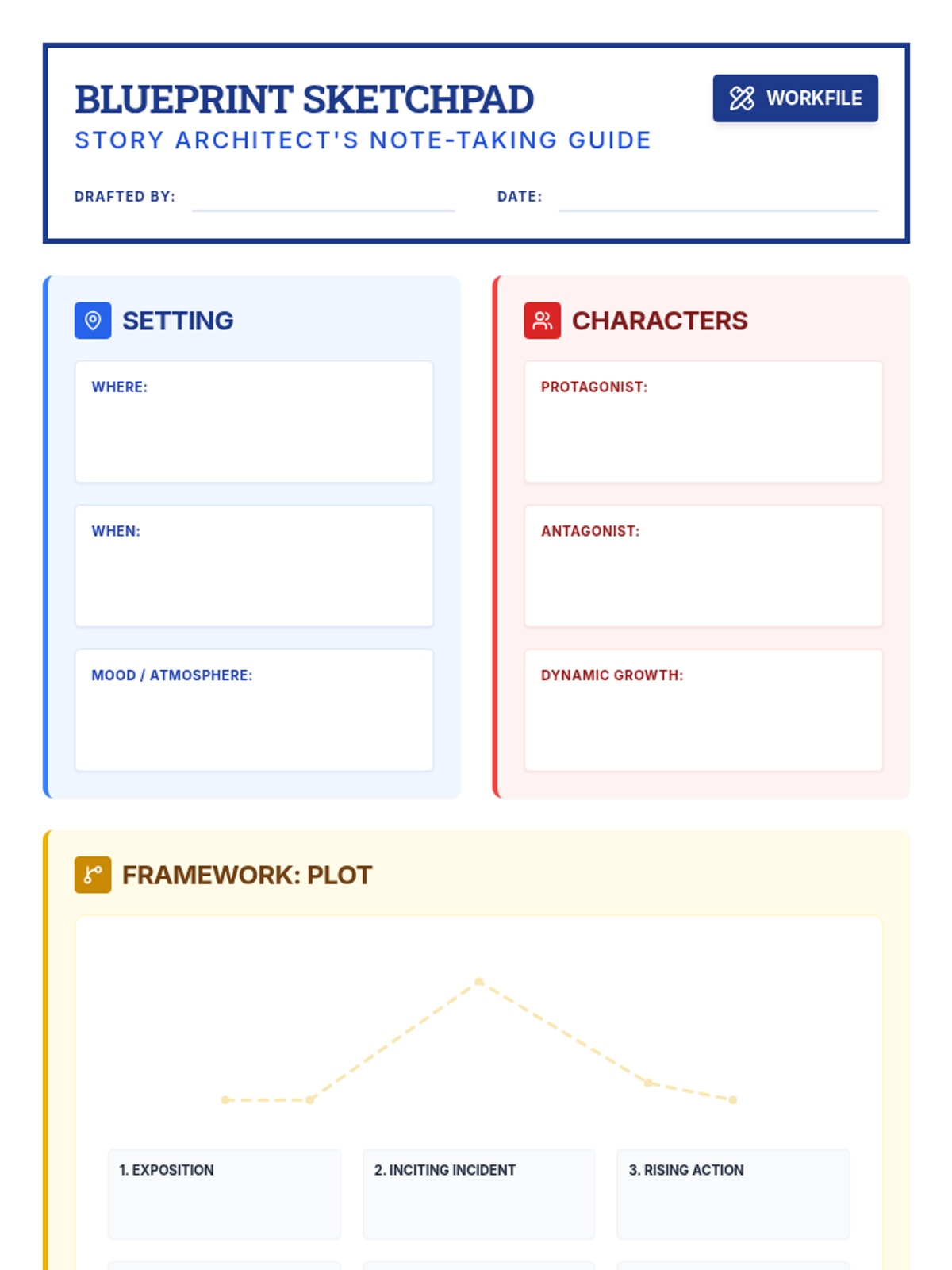
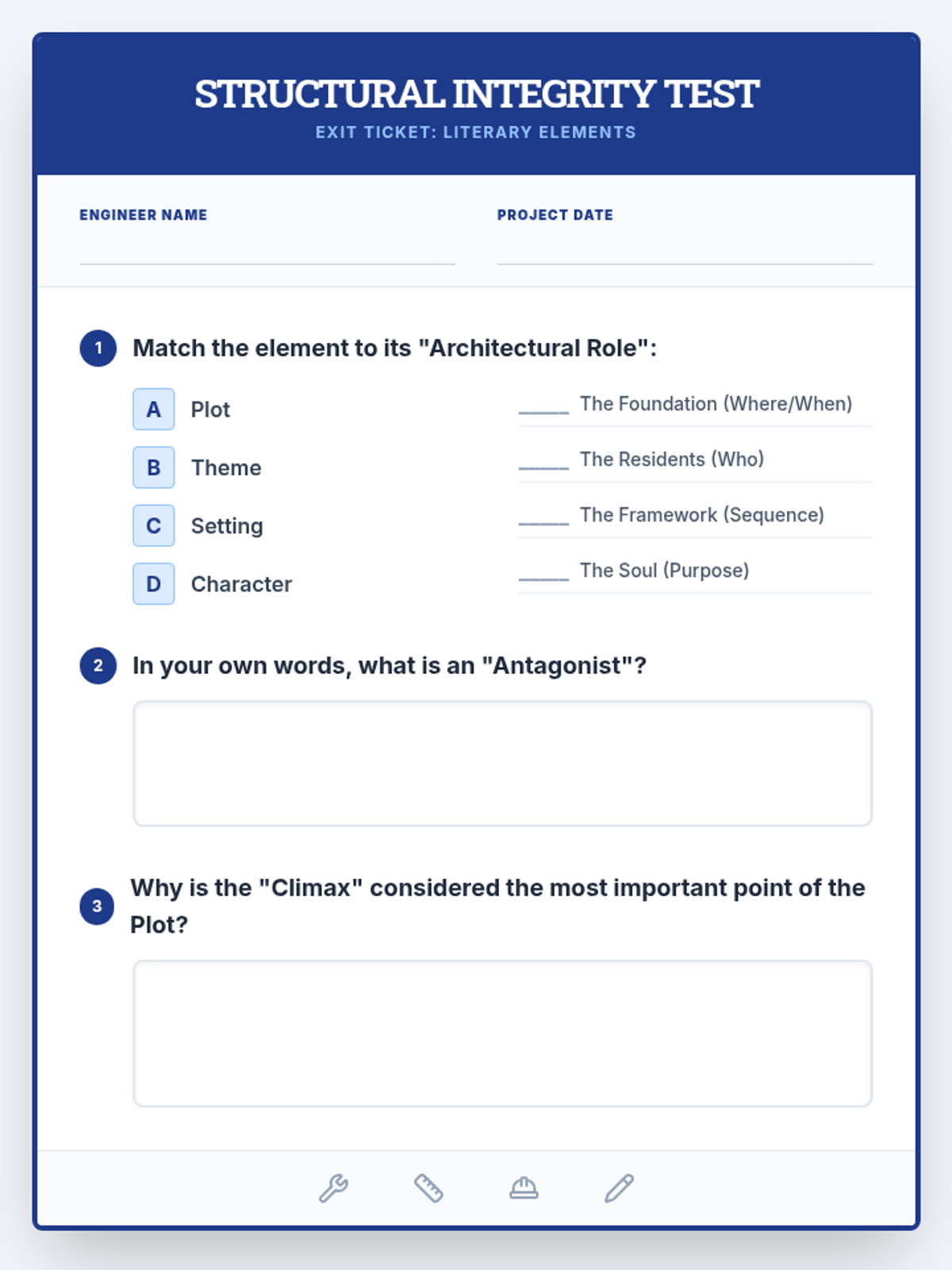
A comprehensive introduction to the core elements of literature—plot, character, setting, and theme—using an architectural blueprint metaphor to help students visualize story structure.
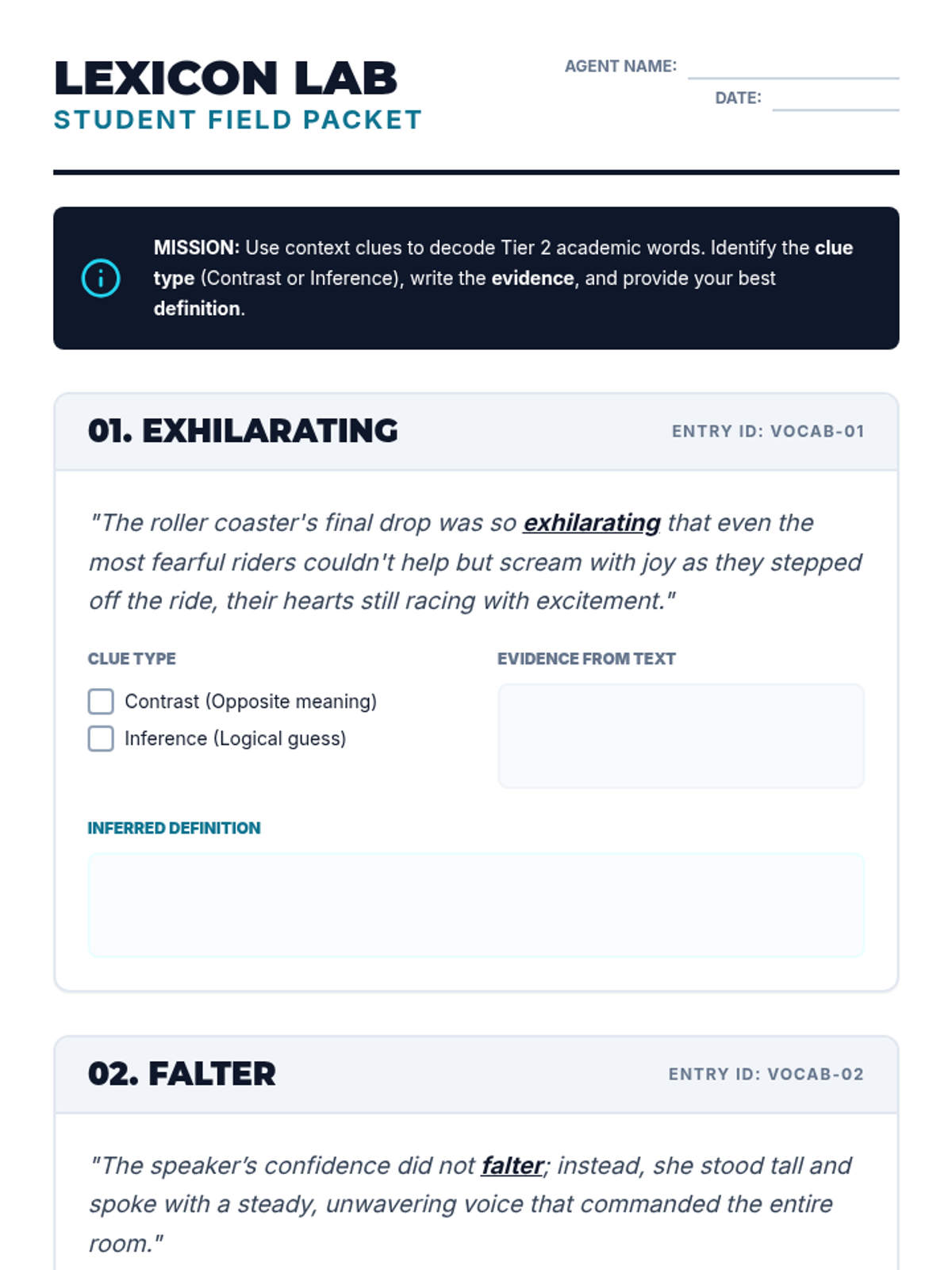
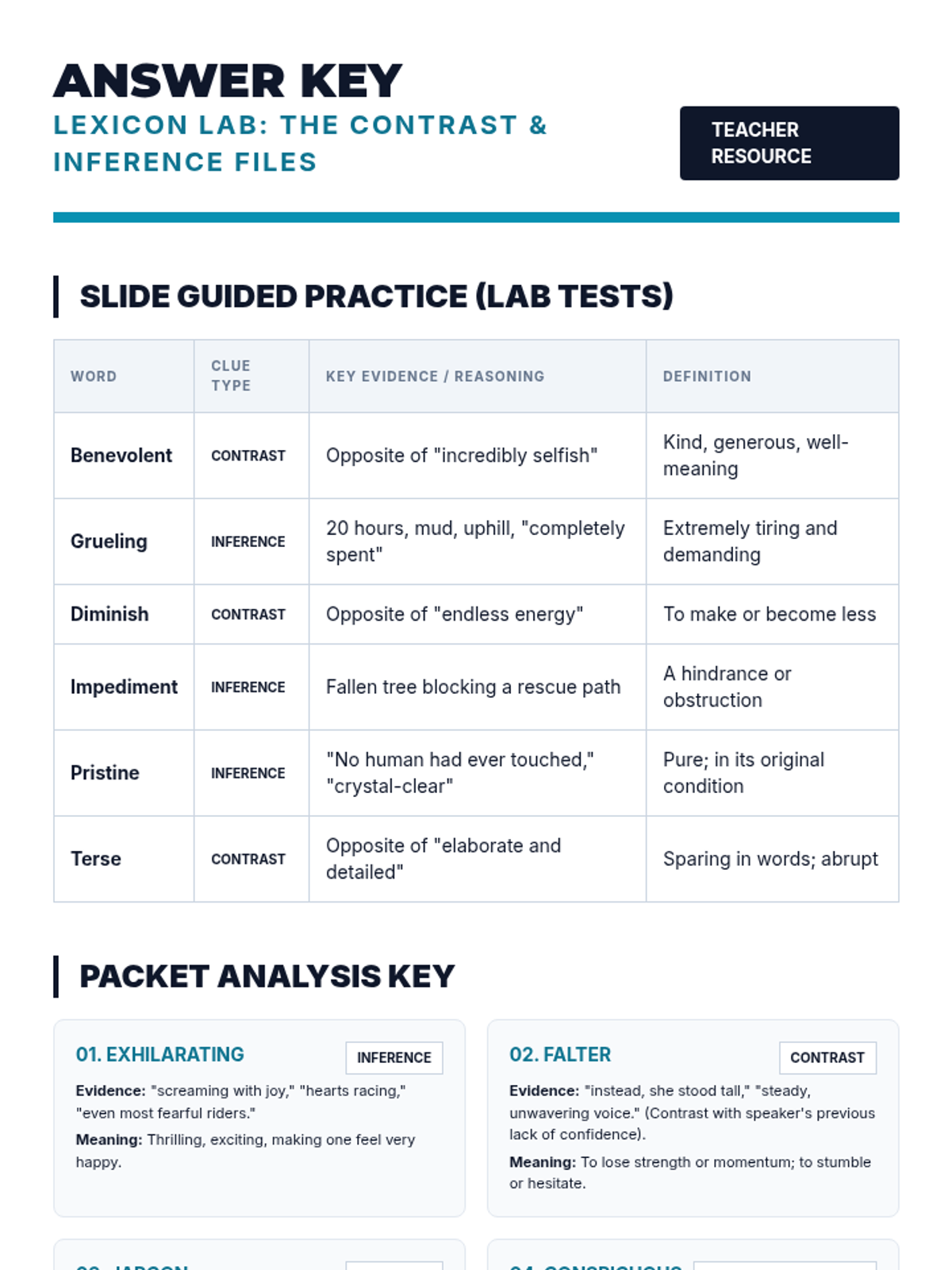
A high-challenge lesson for 7th graders focusing on using contrast and inference context clues to decode Tier 2 academic vocabulary. Students act as 'Lexicon Analysts' to solve linguistic puzzles.
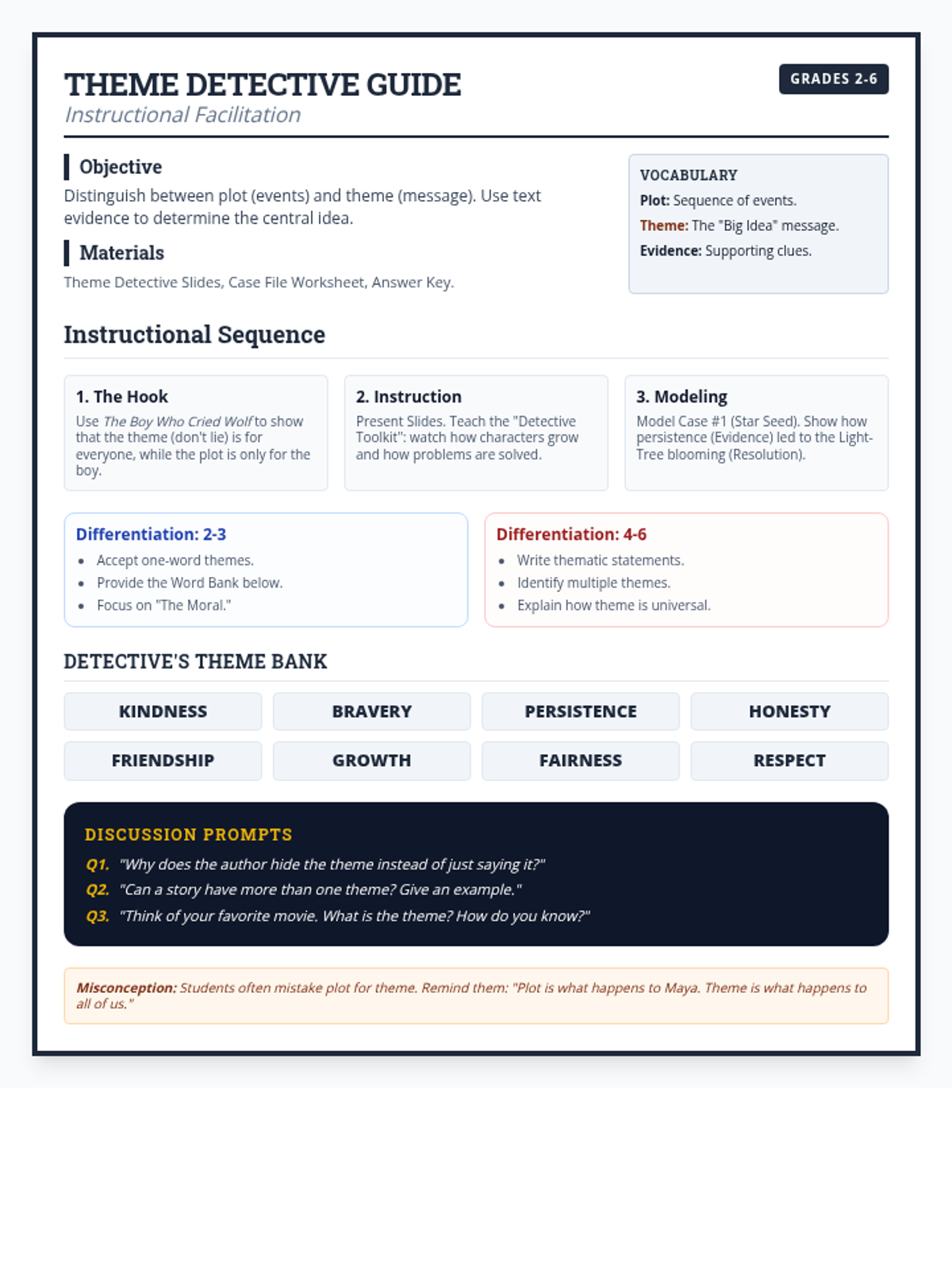
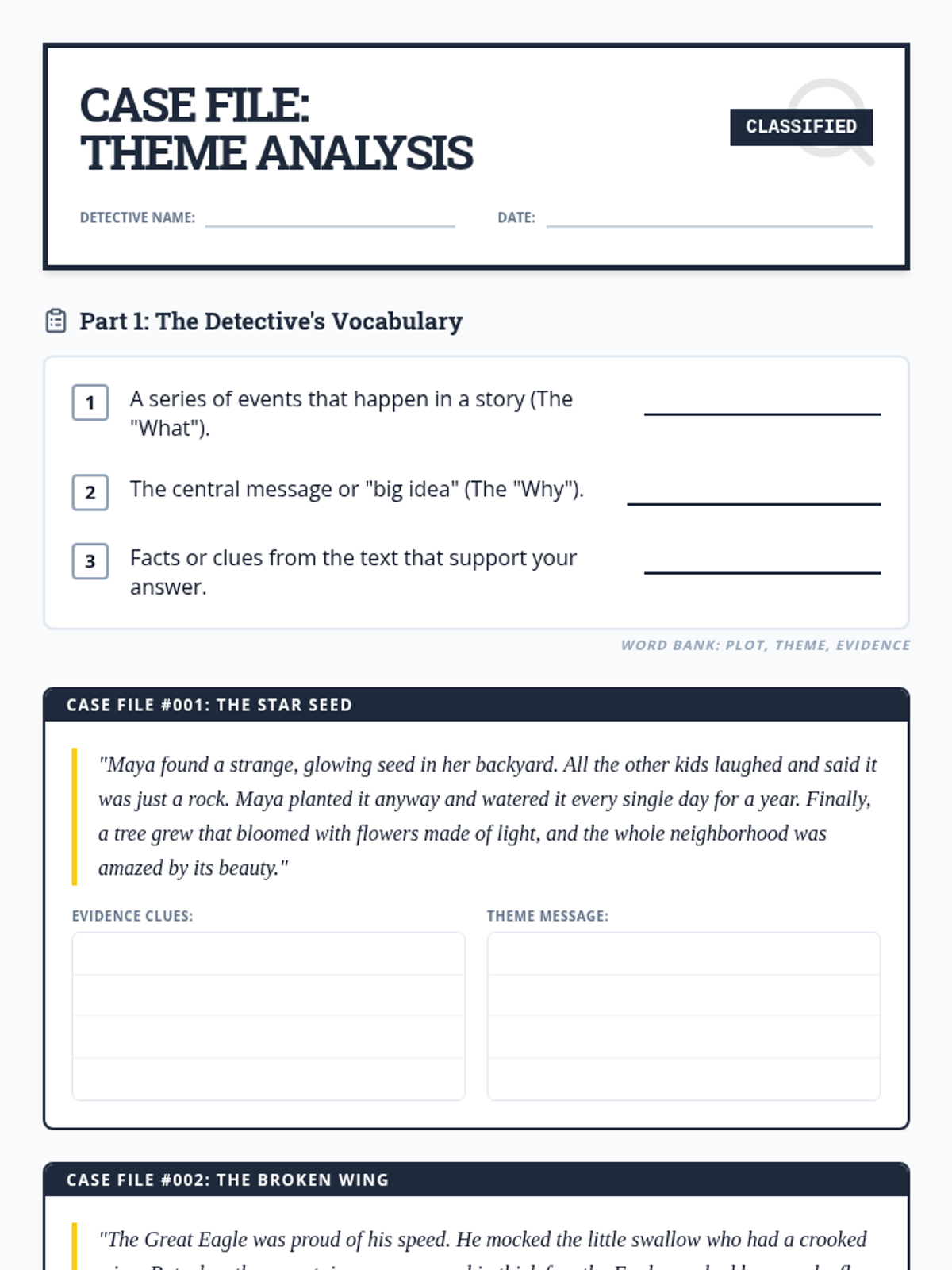
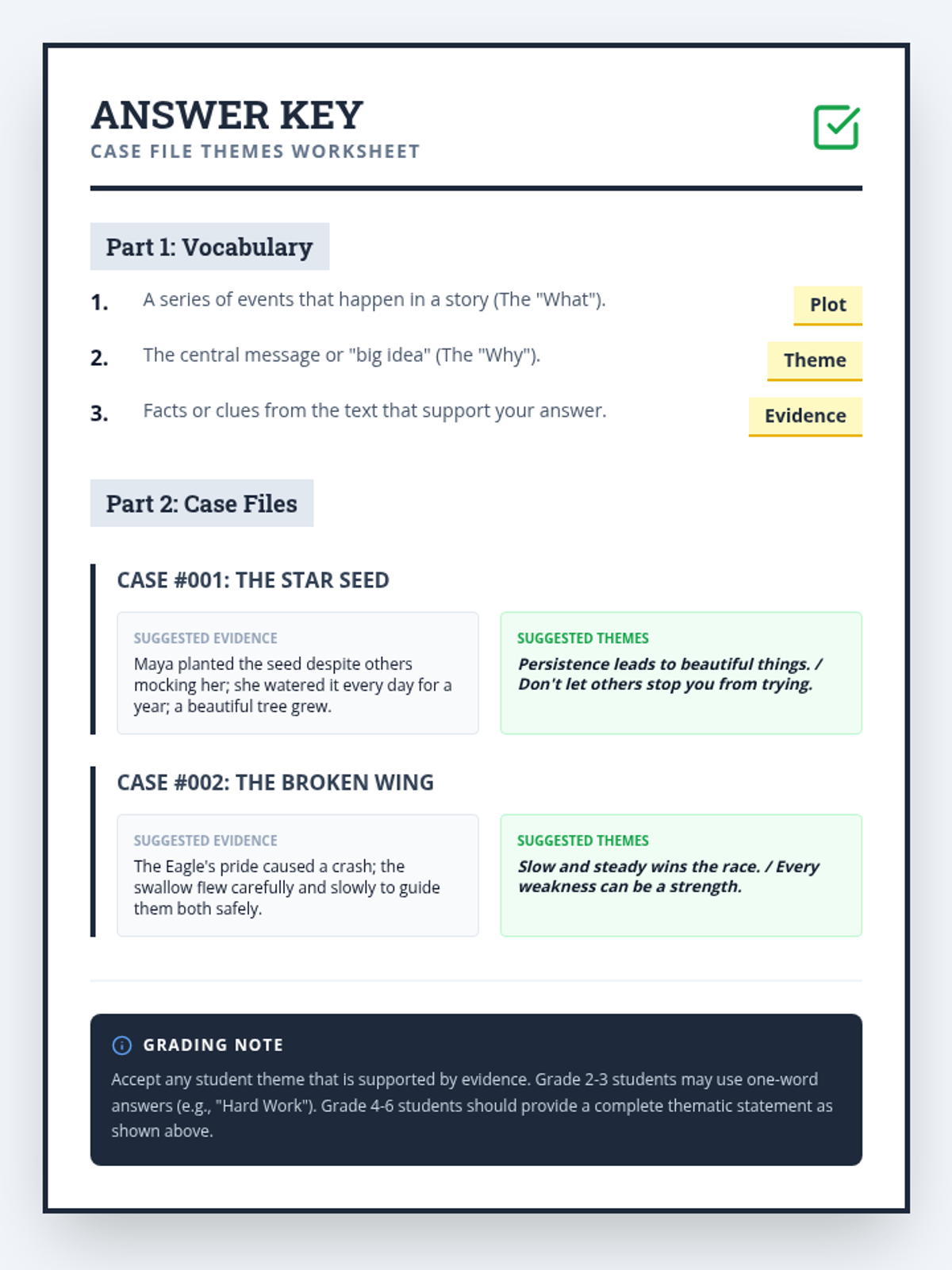
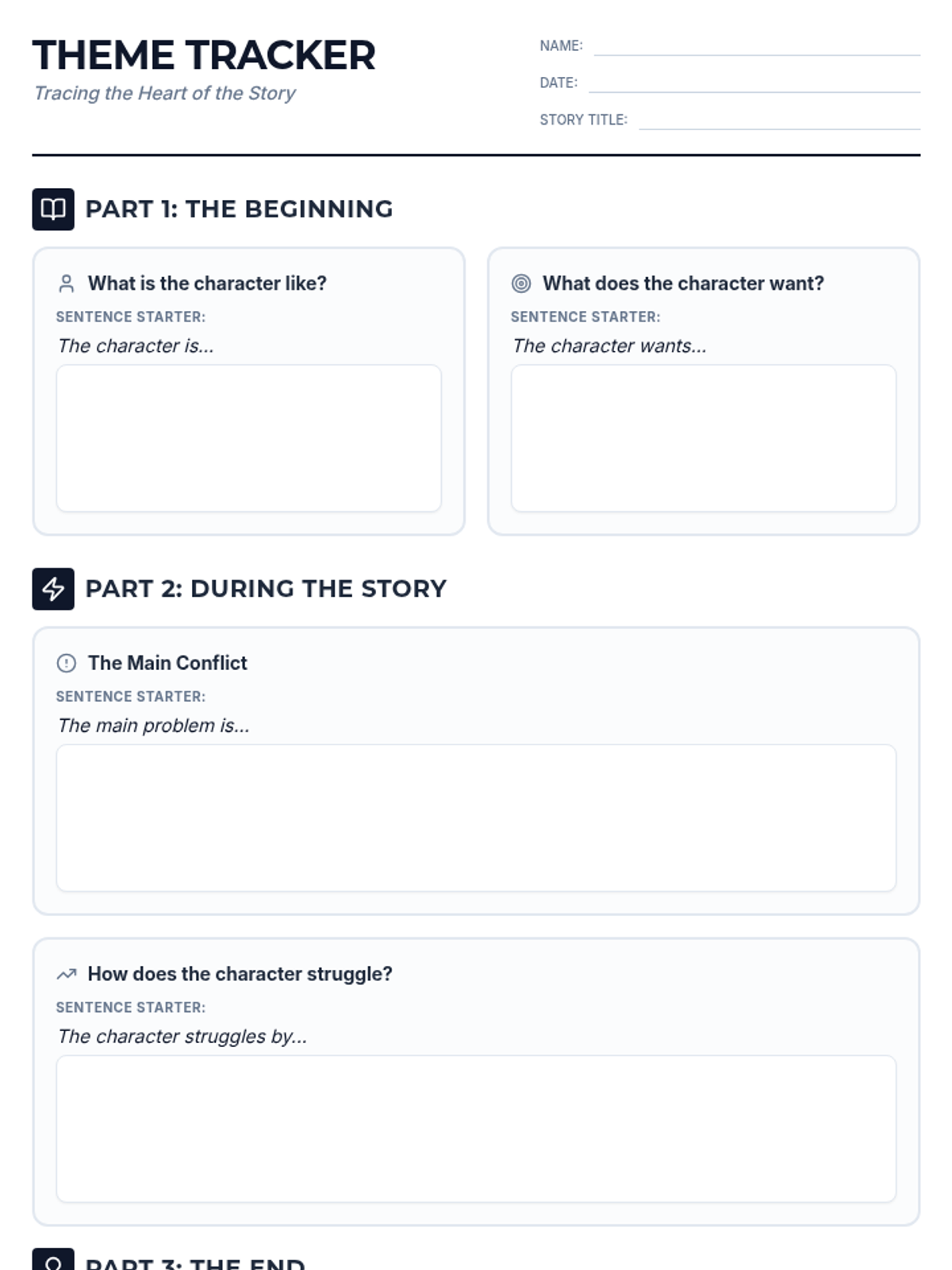
A comprehensive lesson on identifying and analyzing themes in literature, using a 'detective' metaphor to help students find the 'big idea' within stories. Includes differentiated strategies for grades 2-6.
Students will identify the development of a story's theme by tracking character traits, motivations, conflicts, and resolutions. This lesson provides a structured framework for analyzing how a message emerges from narrative elements.
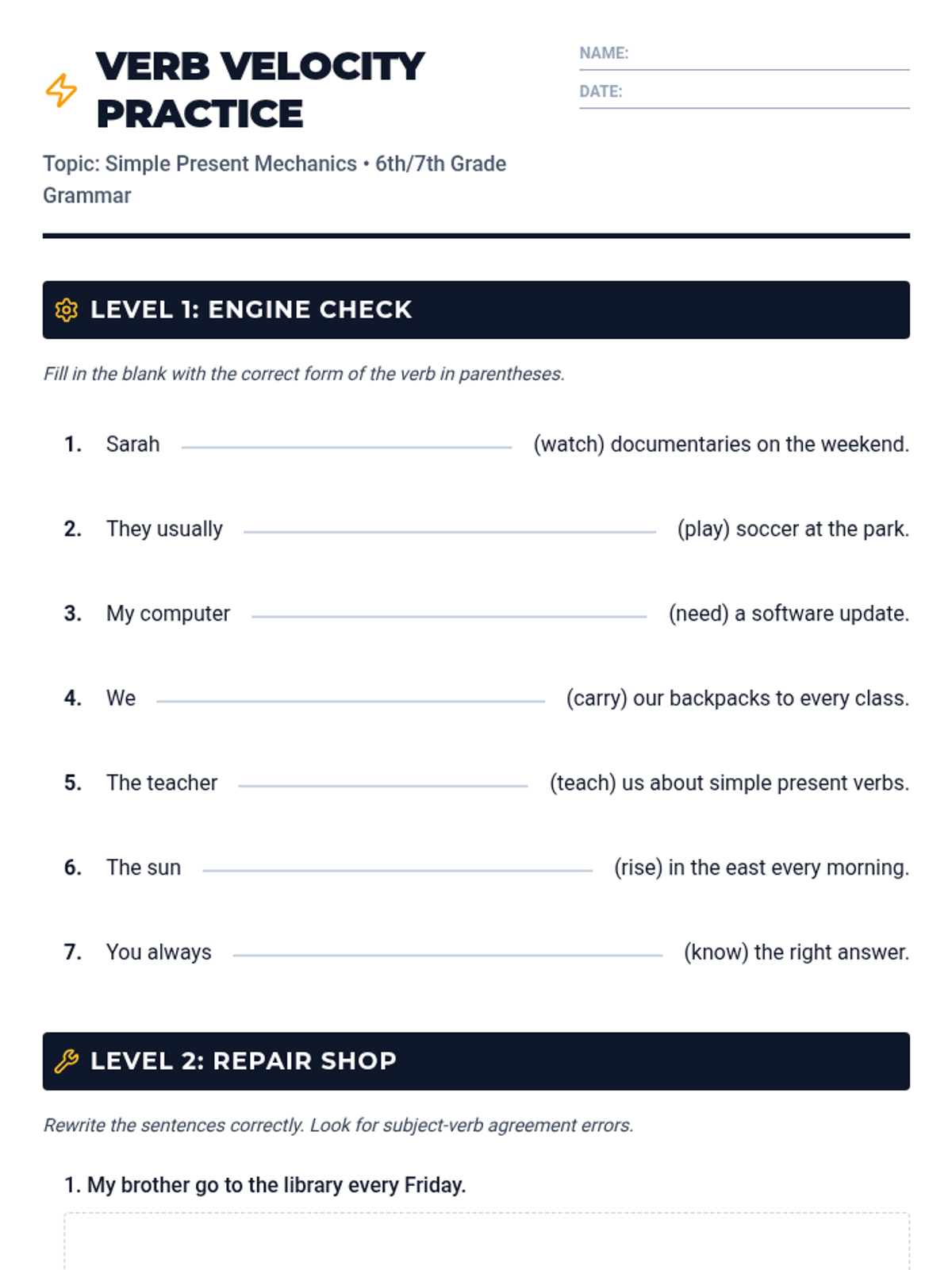
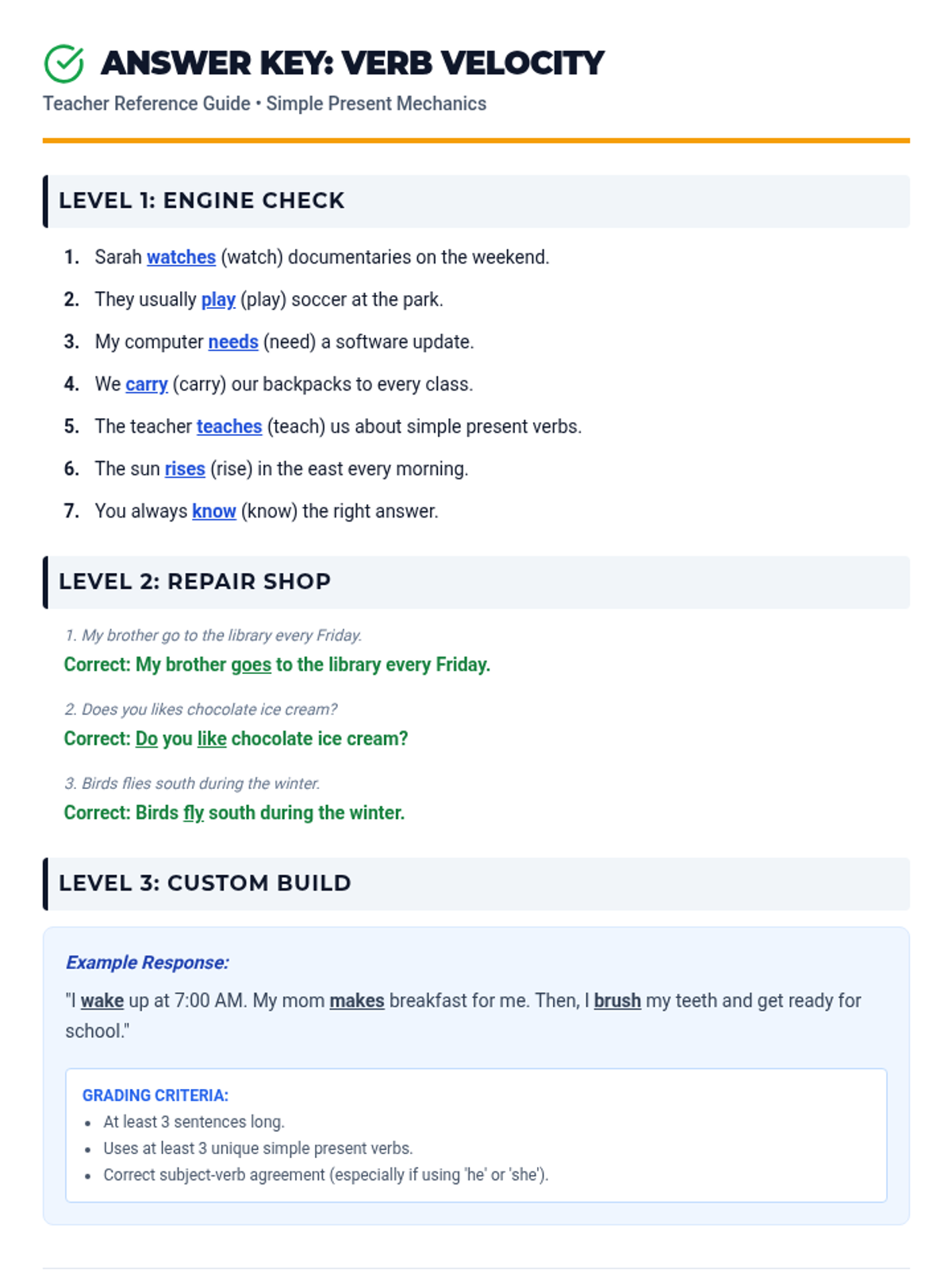
Master the mechanics of simple present verbs, focusing on subject-verb agreement, daily routines, and general truths for 6th/7th grade students.
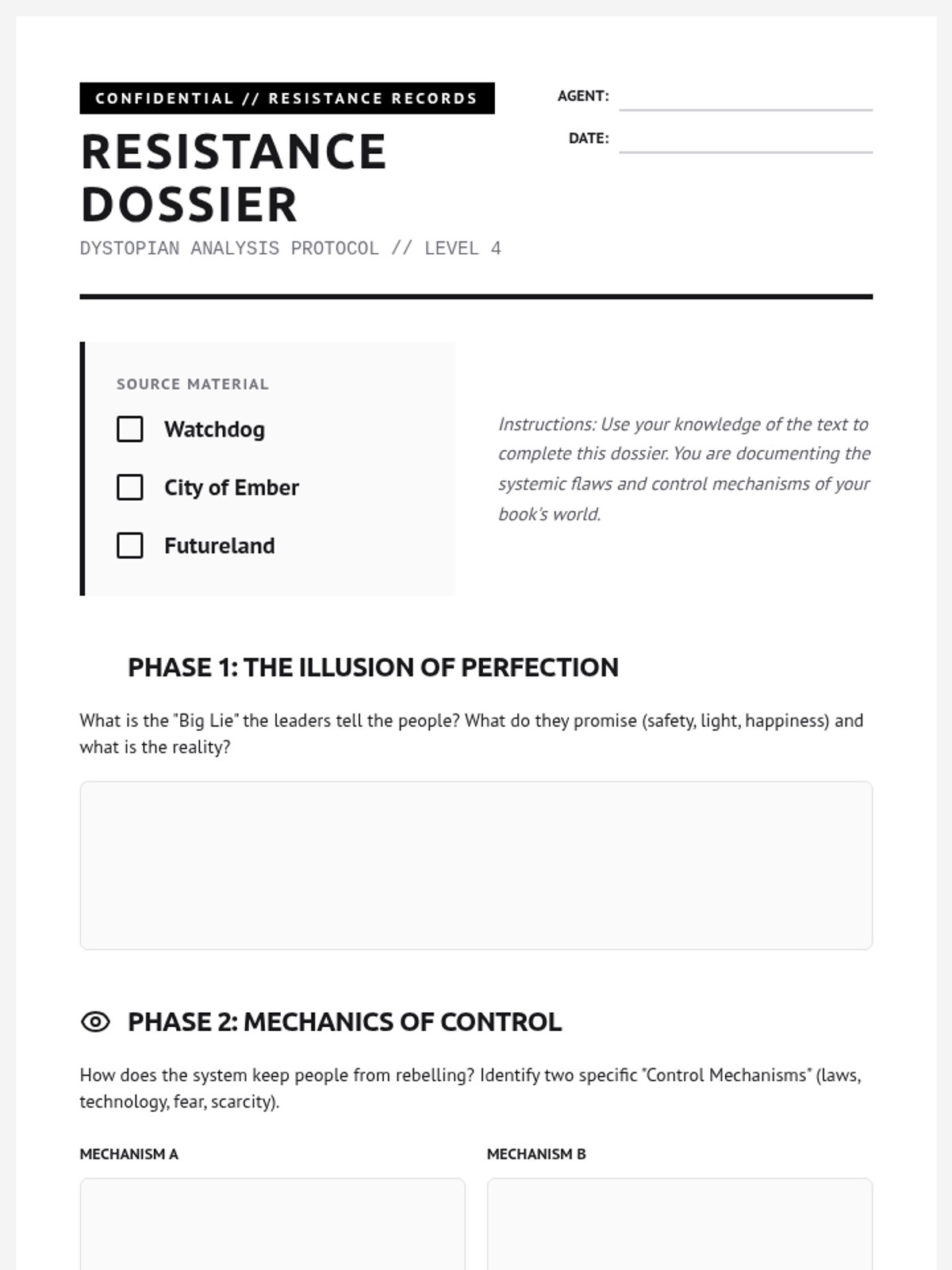
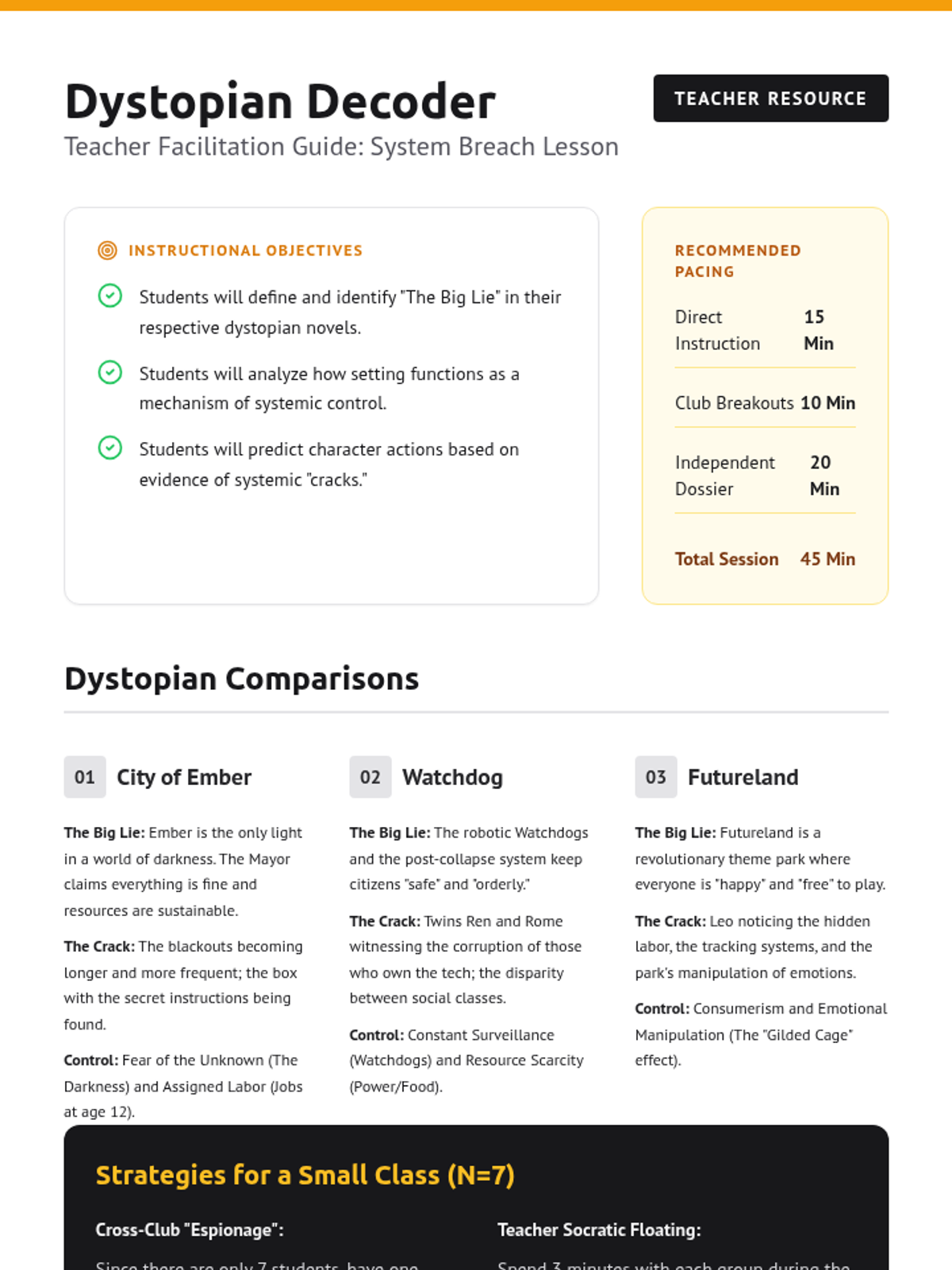
A lesson focused on analyzing systemic control and the 'big lie' in dystopian literature, specifically tailored for students reading Watchdog, City of Ember, and Futureland. Students explore how settings function as characters and how protagonists begin to challenge the status quo.