A foundational lesson for kindergarteners to identify the 'who' (characters) and 'where' (setting) of a story through reading and drawing.
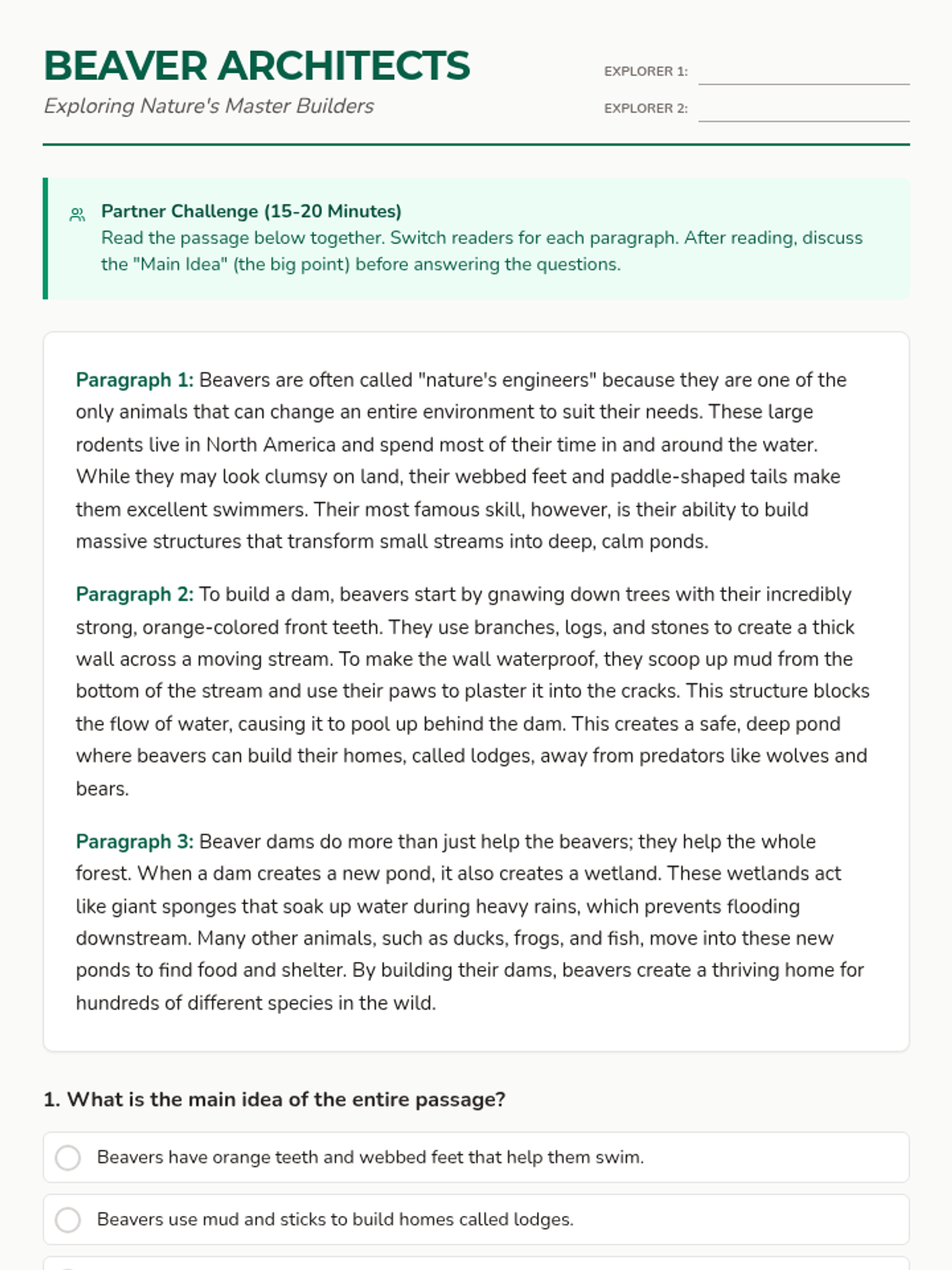
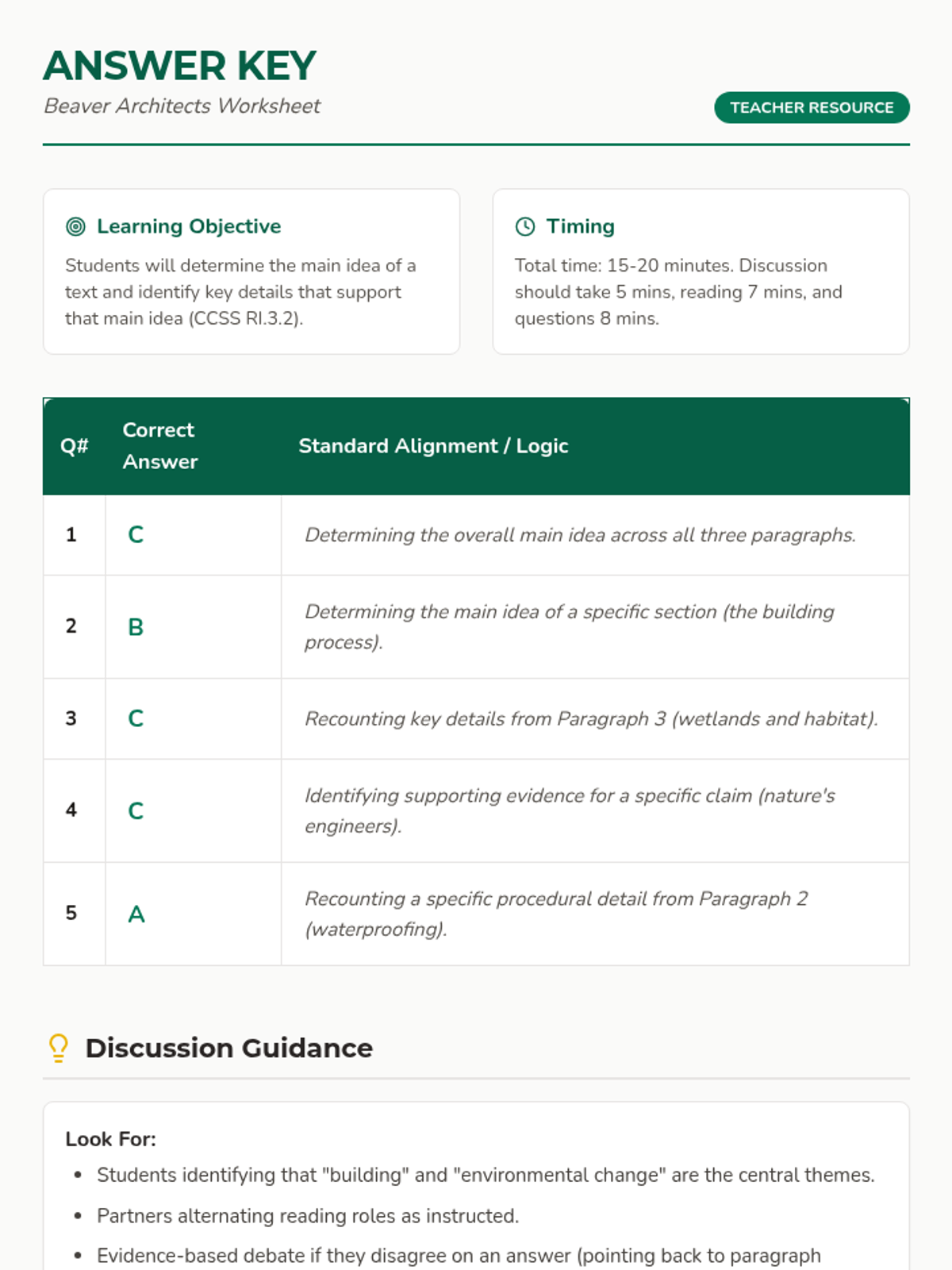
A lesson focused on determining the main idea and supporting details using a text about beavers as nature's engineers. Includes a reading passage and multiple-choice comprehension questions.
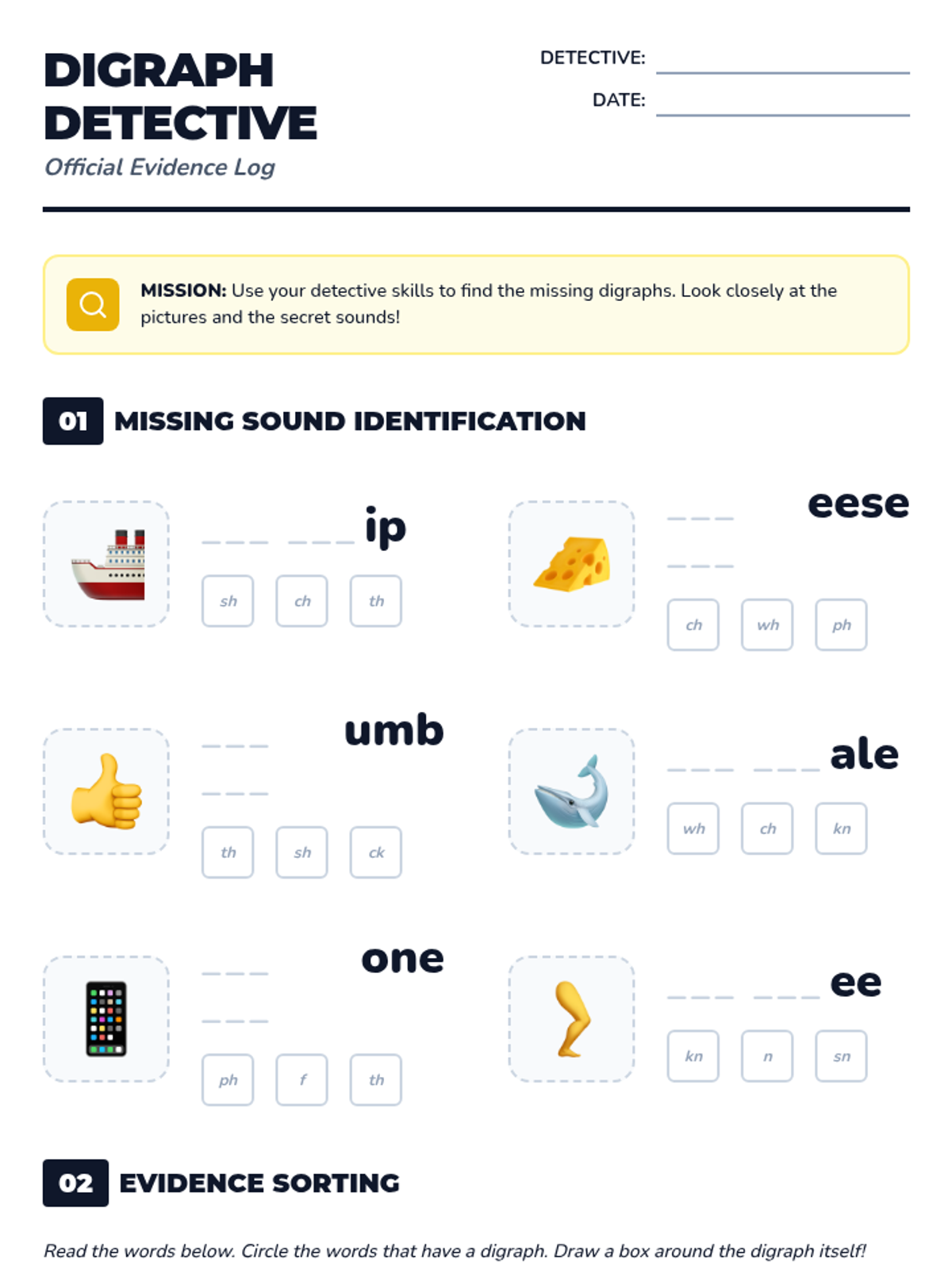
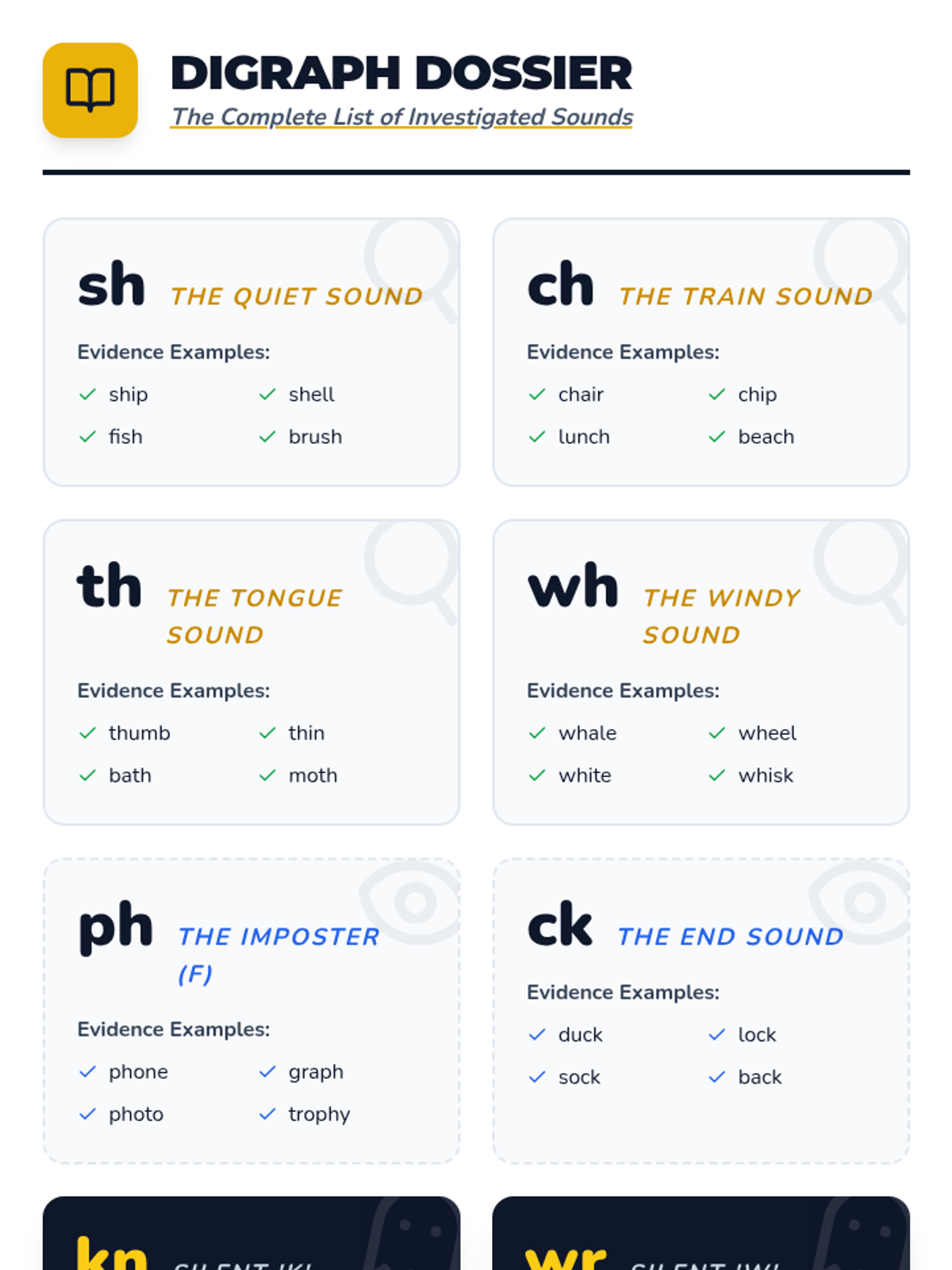
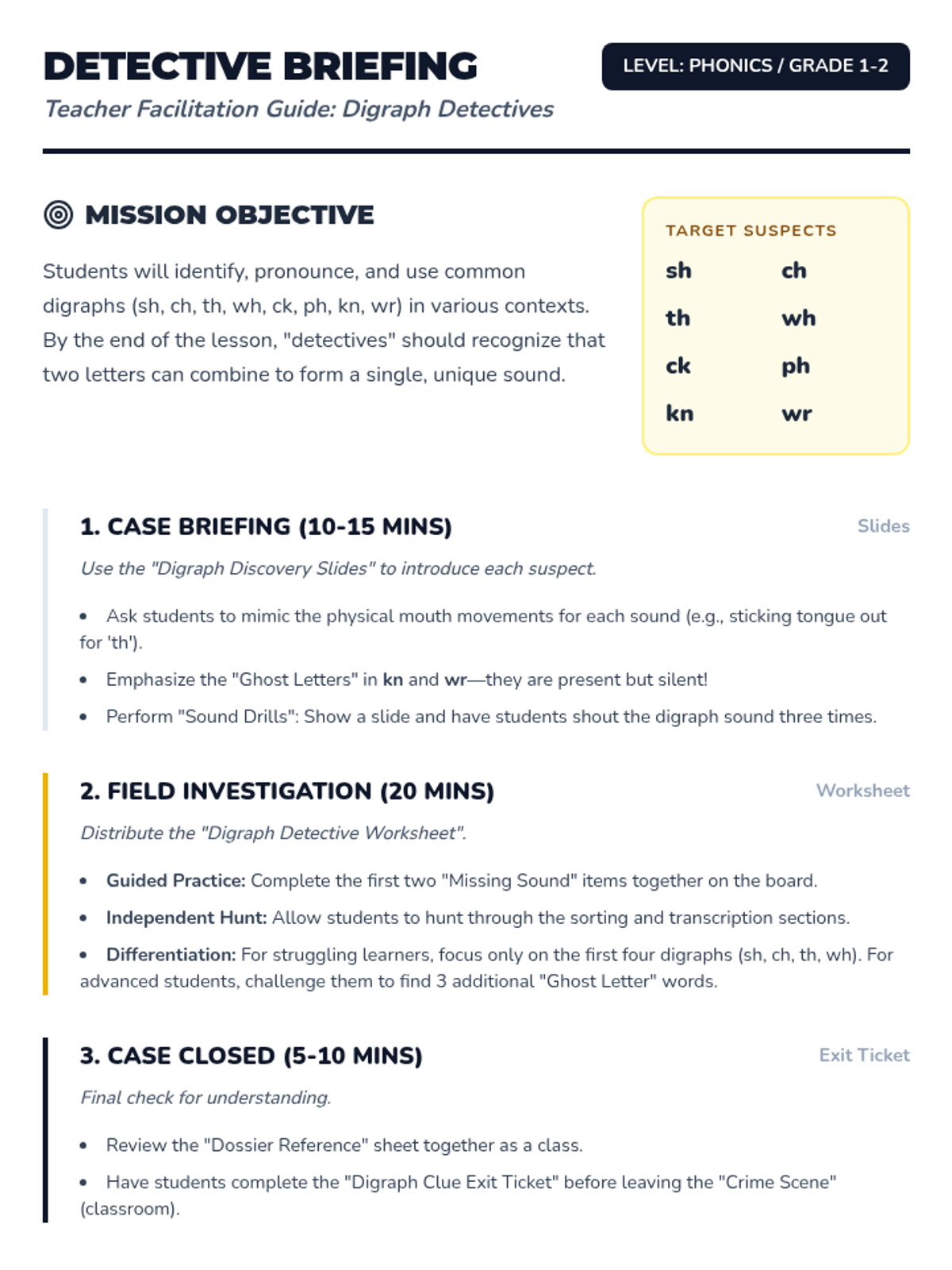
A foundational phonics lesson focused on identifying and using common digraphs (sh, ch, th, wh, ck, ph, kn, wr) through a fun detective-themed exploration.
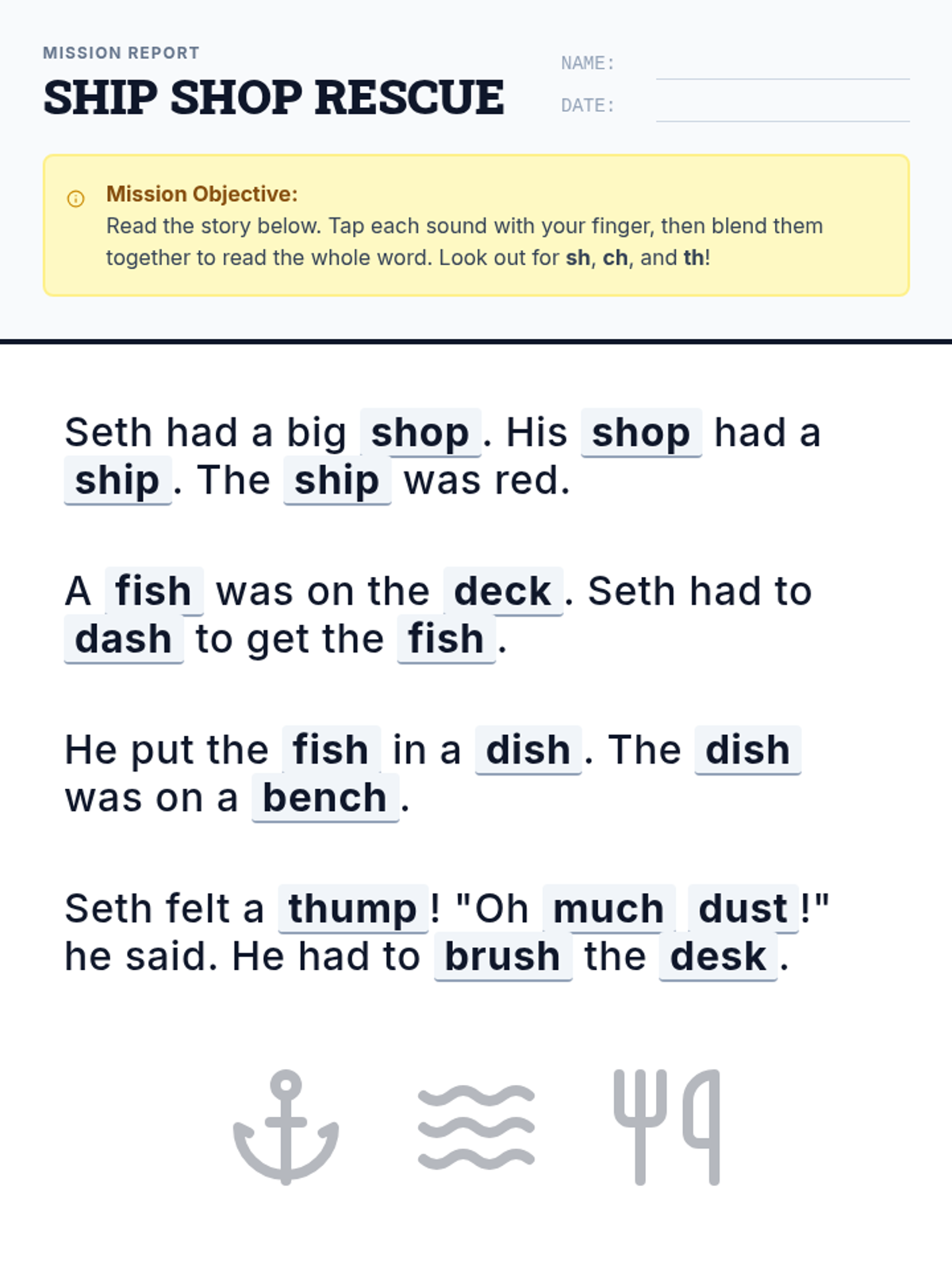
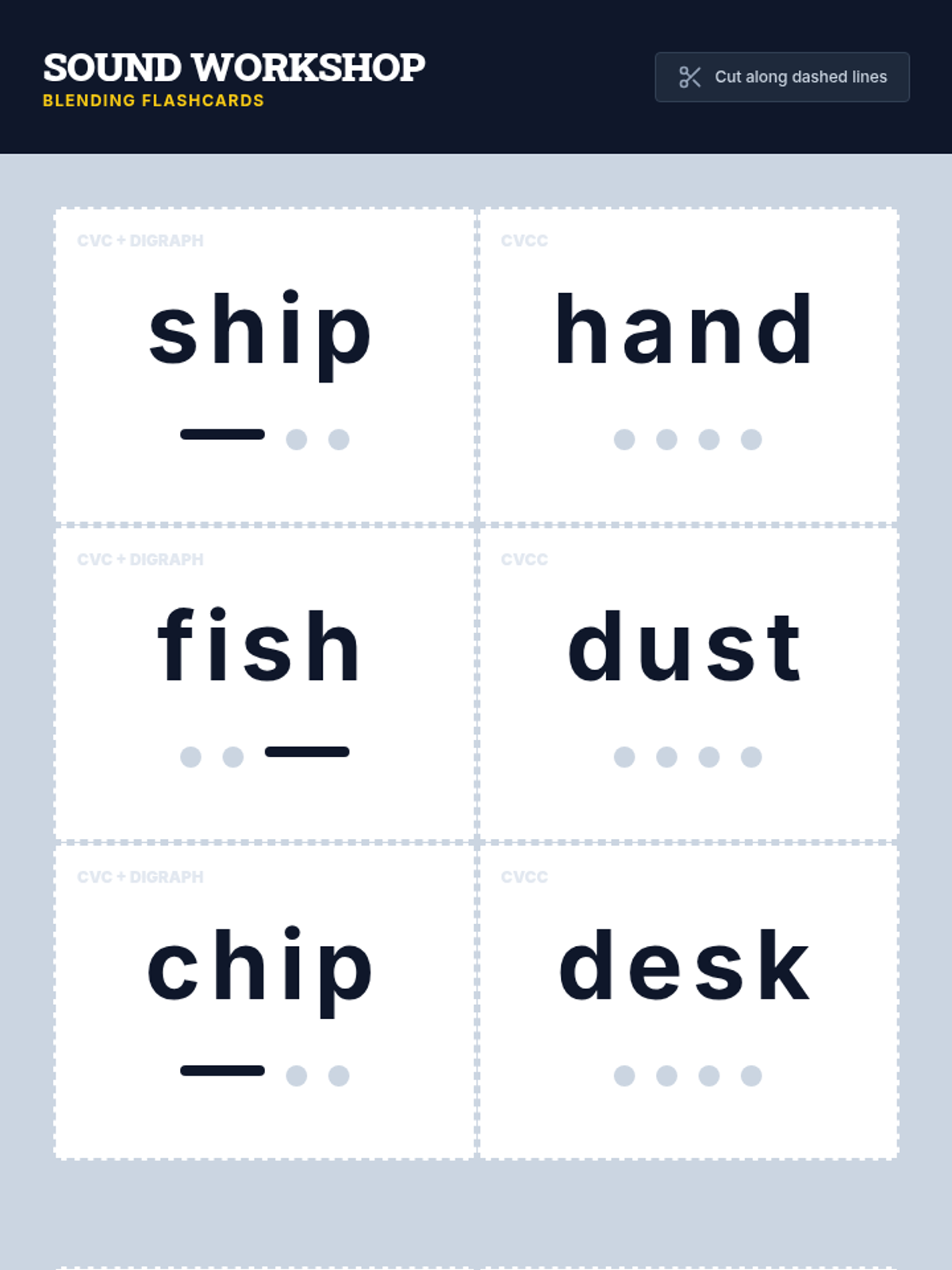
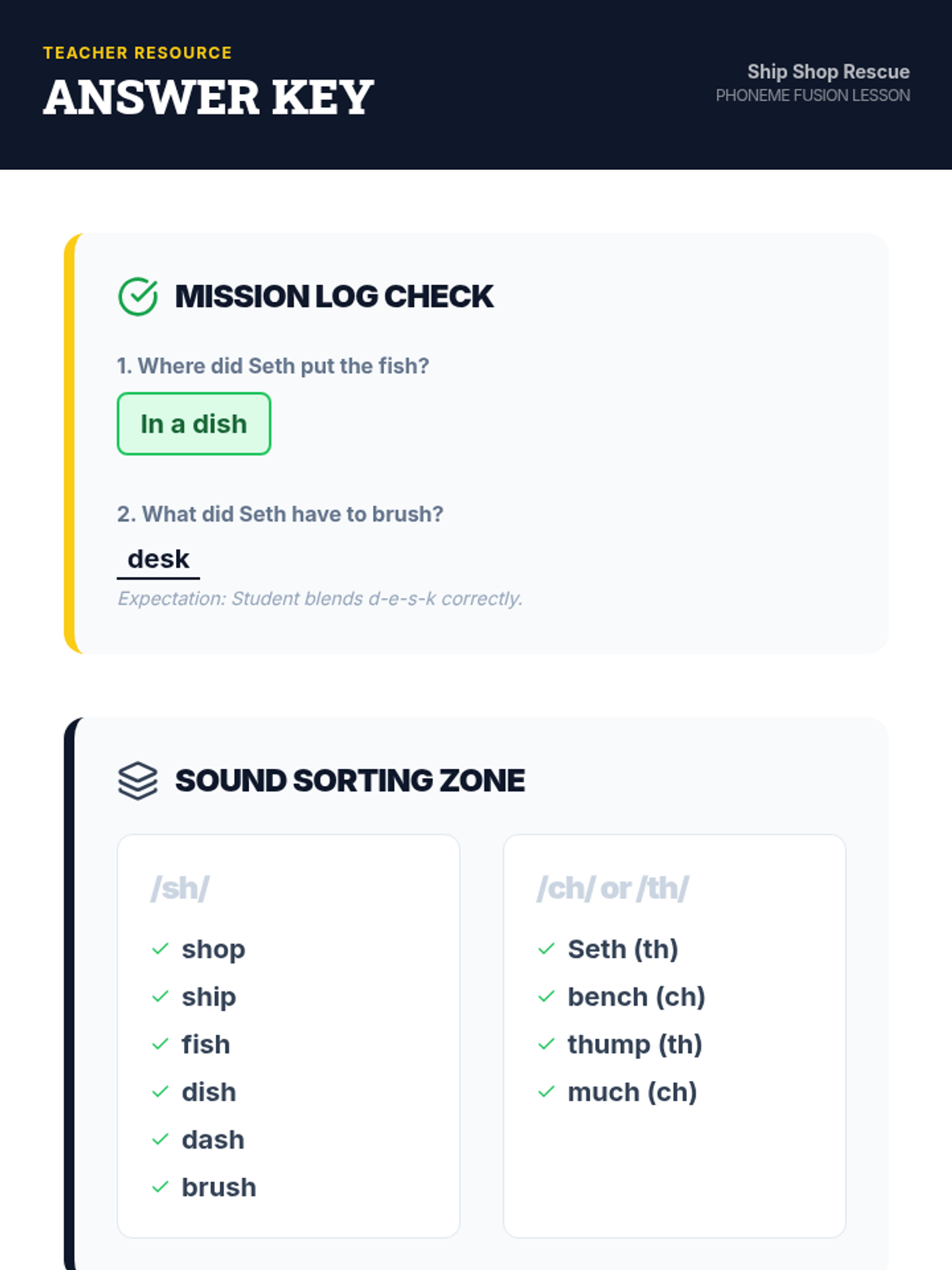
A foundational lesson on blending phonemes to read CVC and CVCC words, featuring short vowels and common digraphs (sh, ch, th). This lesson includes a guided slide deck, a targeted reading passage, and interactive flashcards.
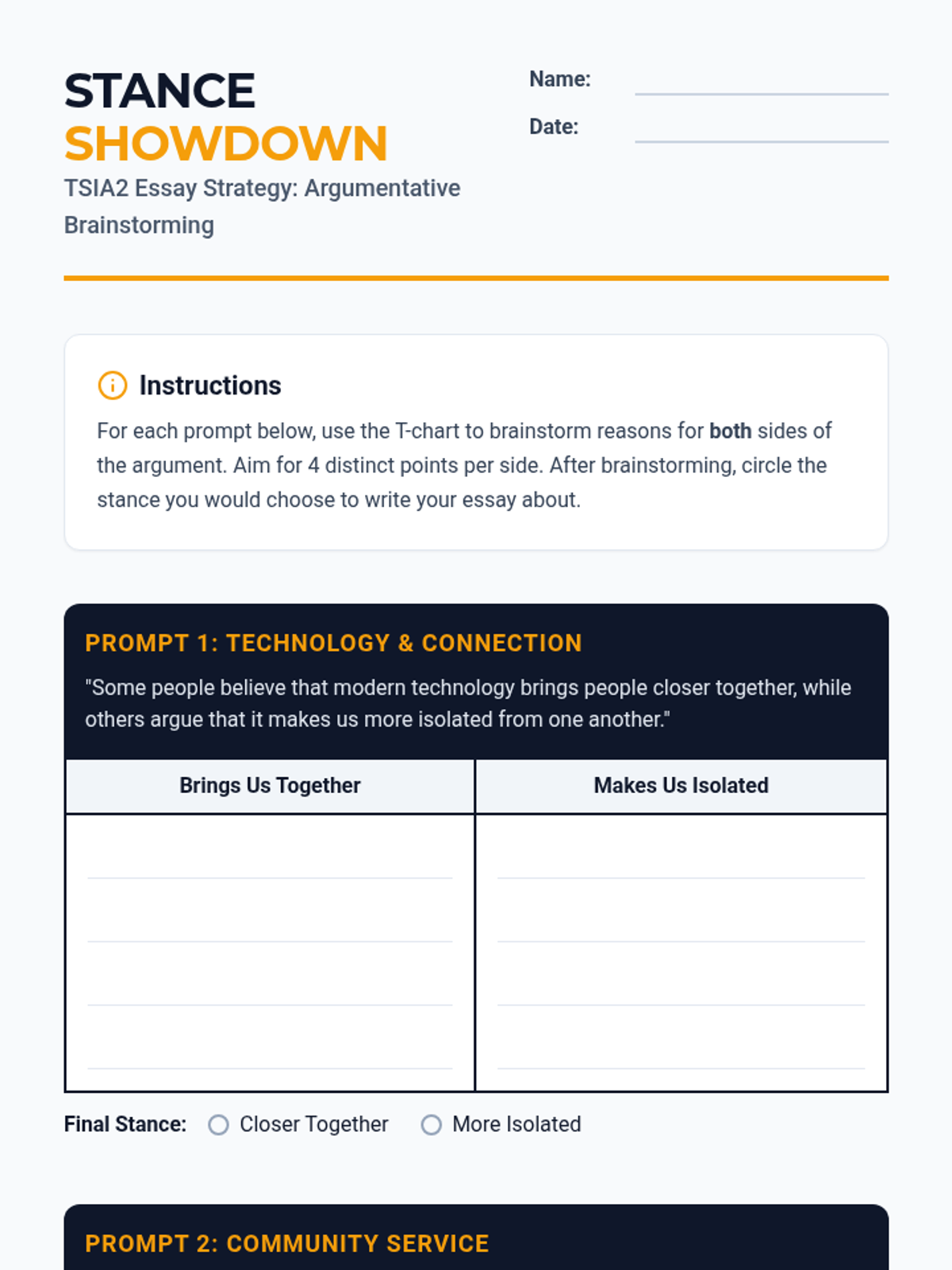
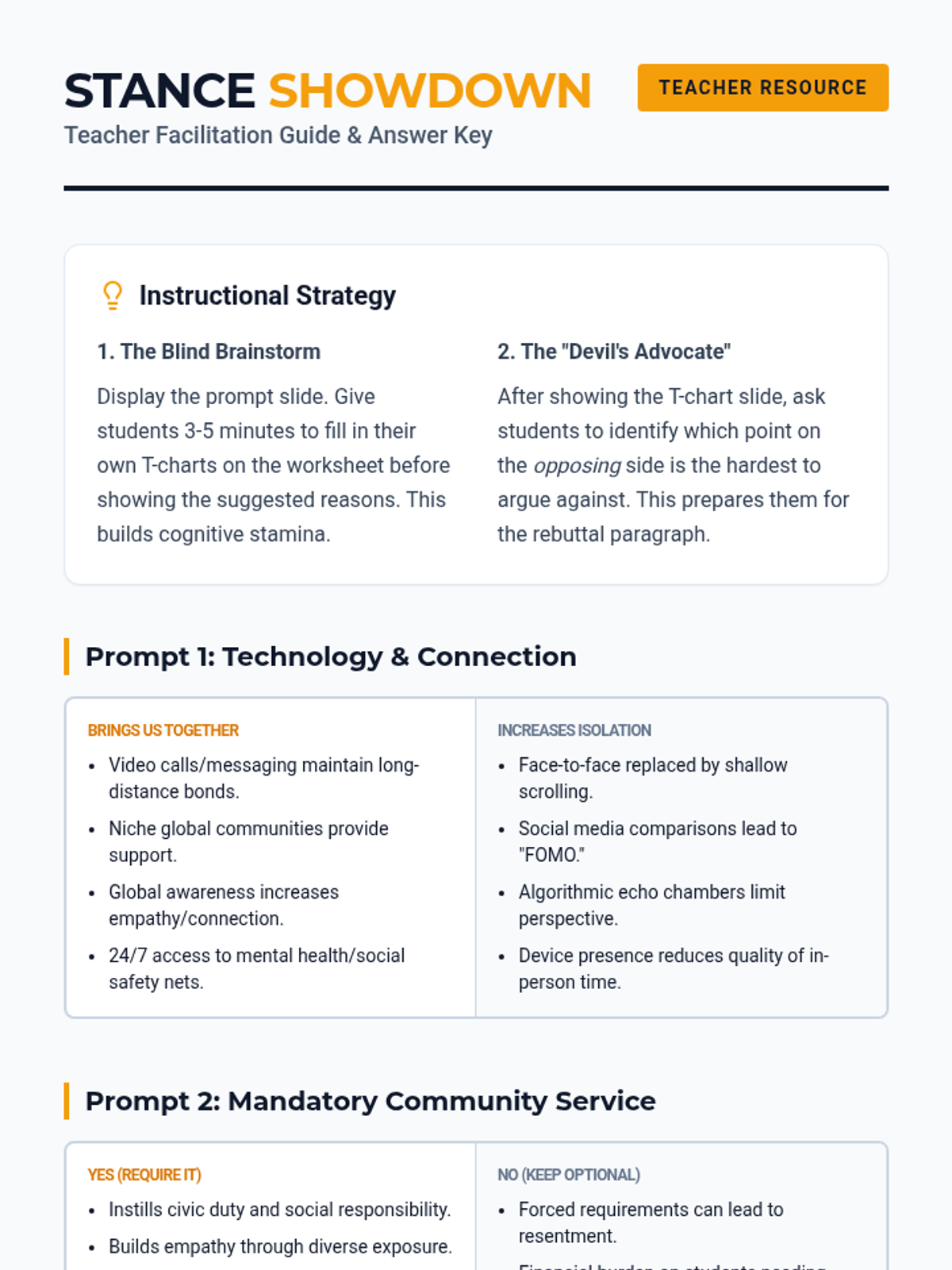
A focused practice session for the TSIA2 English essay, teaching students how to brainstorm and organize opposing viewpoints using T-charts for high-scoring argumentative writing.
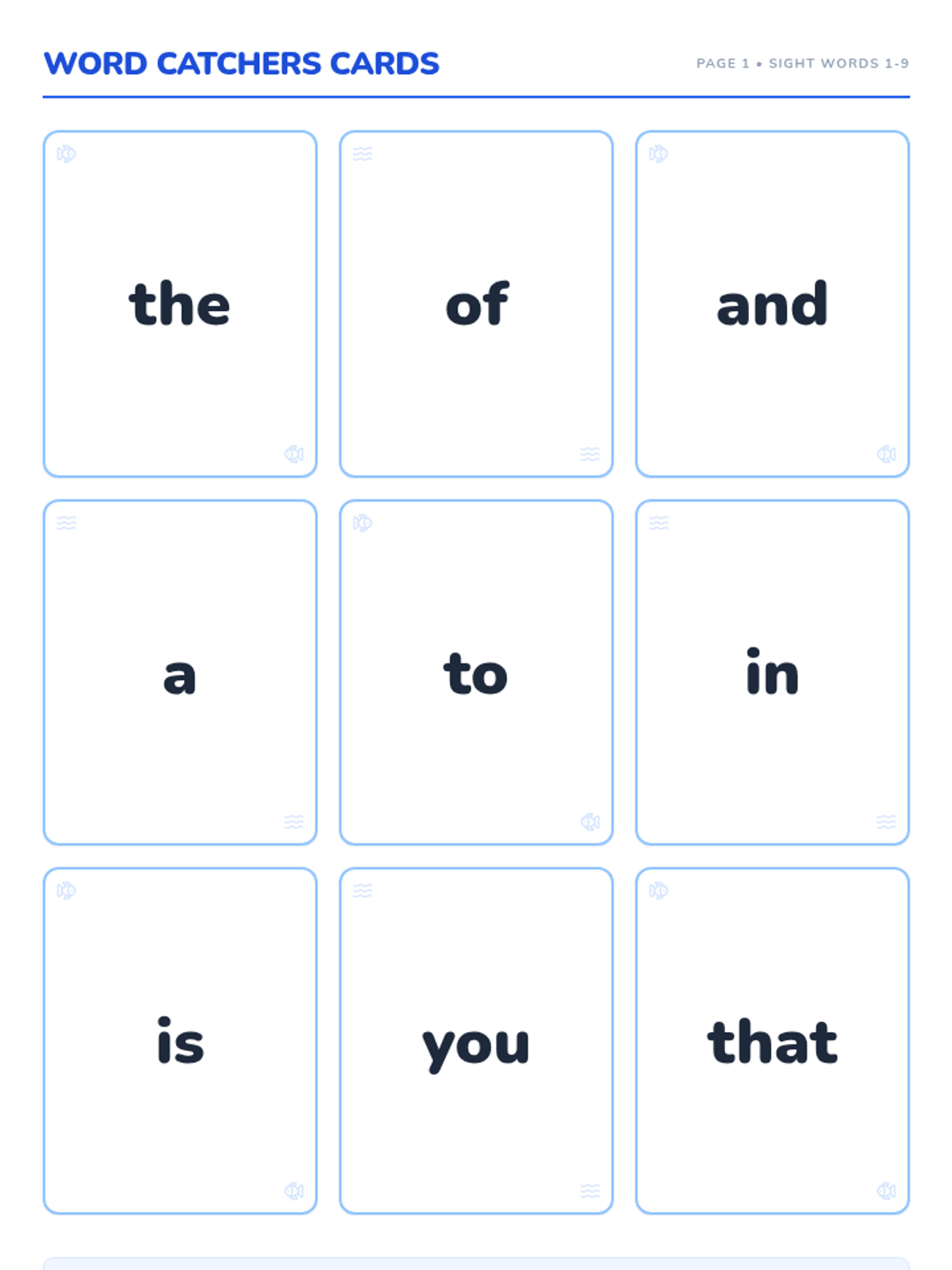
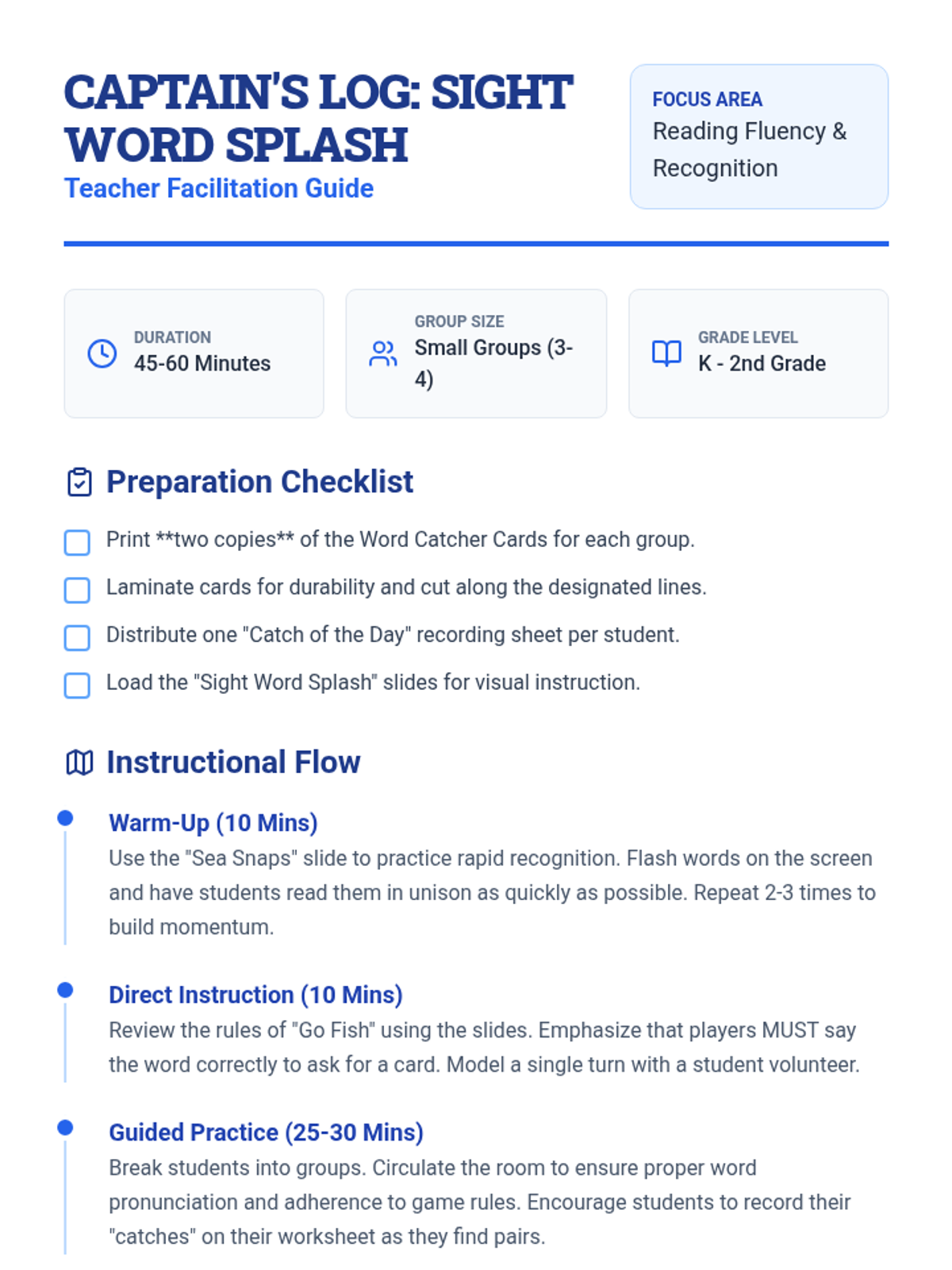
A playful, ocean-themed lesson focused on mastering high-frequency sight words through interactive gameplay and card-based activities. Students build recognition speed and fluency using custom 'Word Catchers' cards.
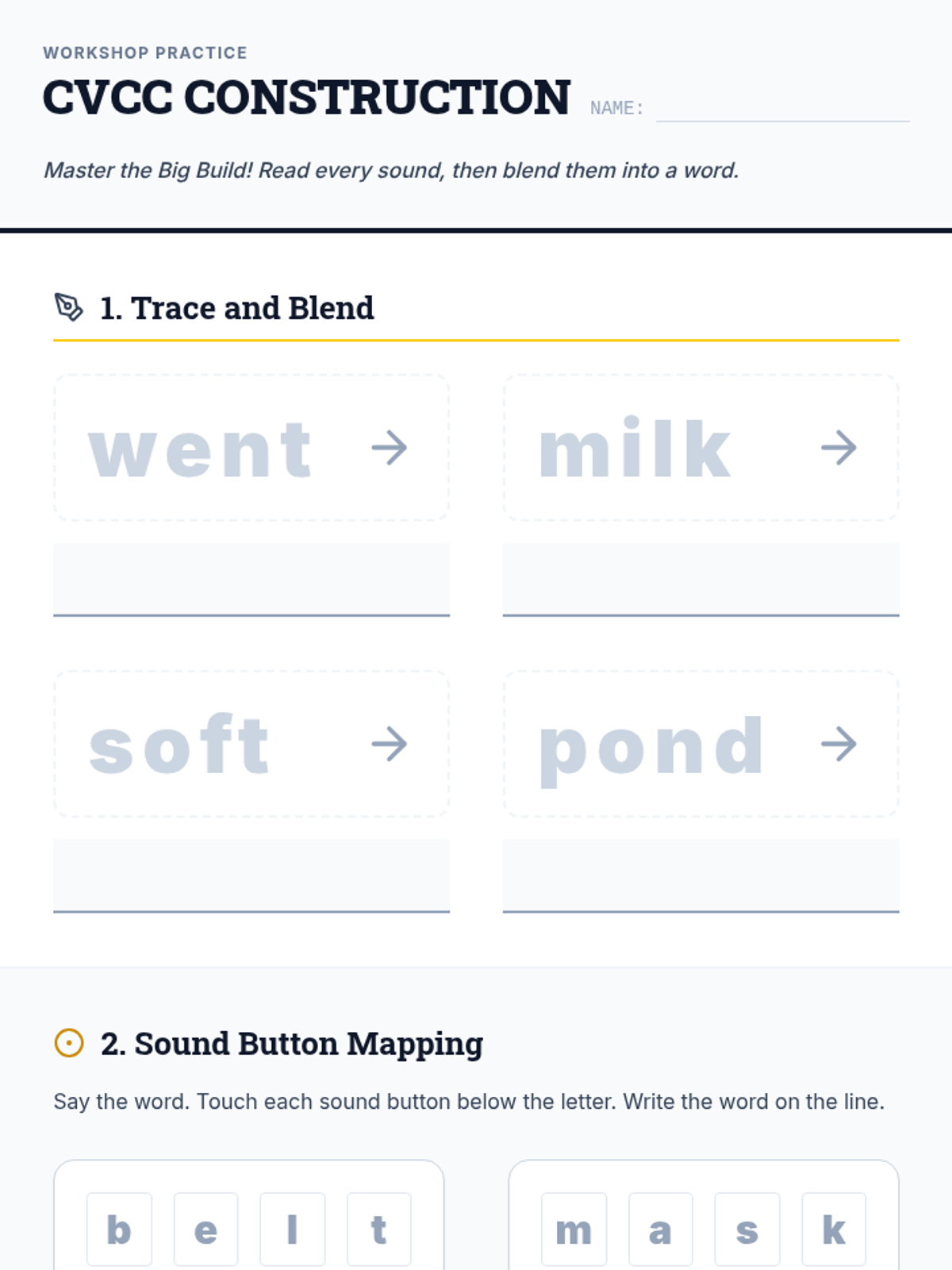
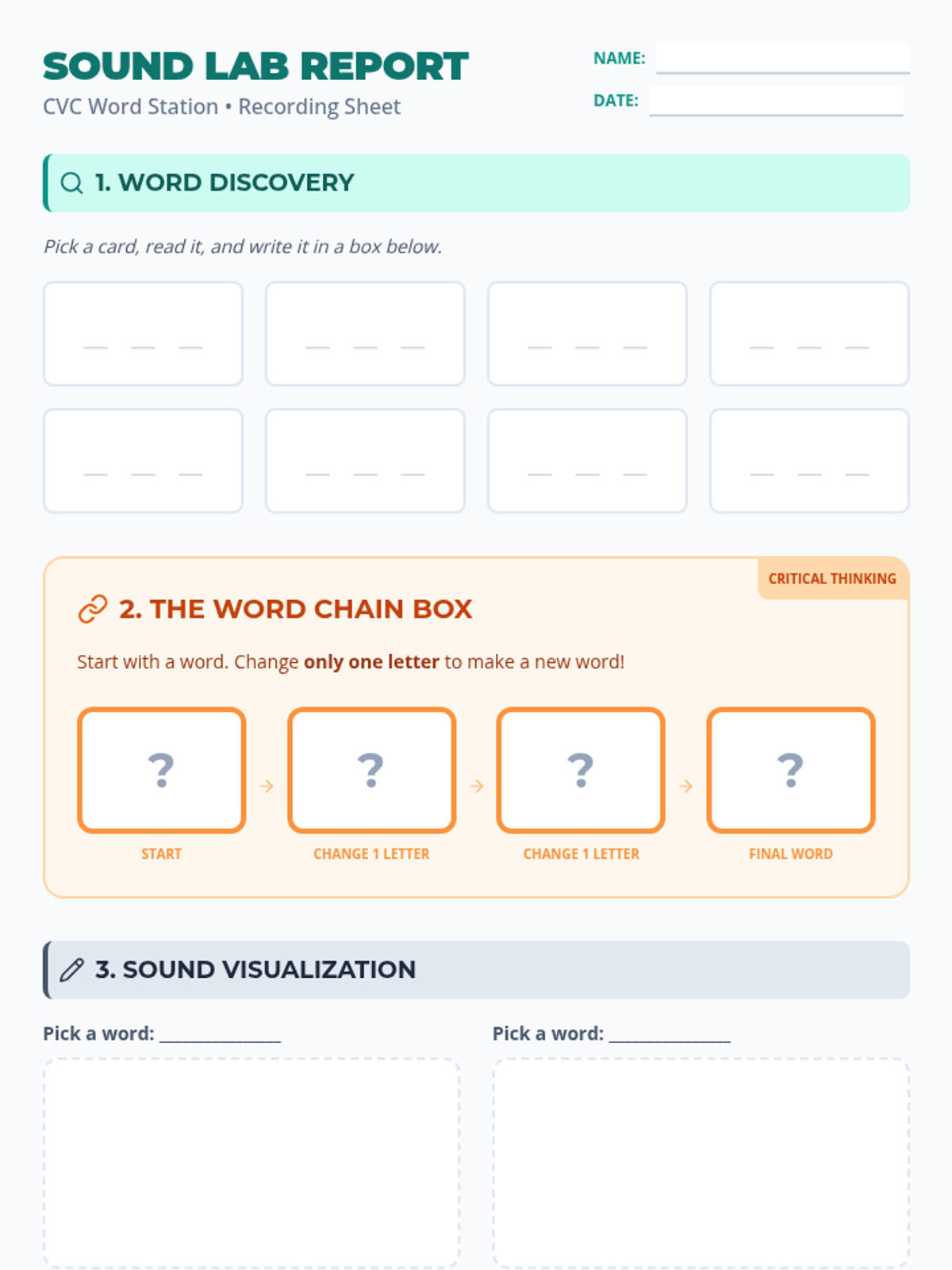
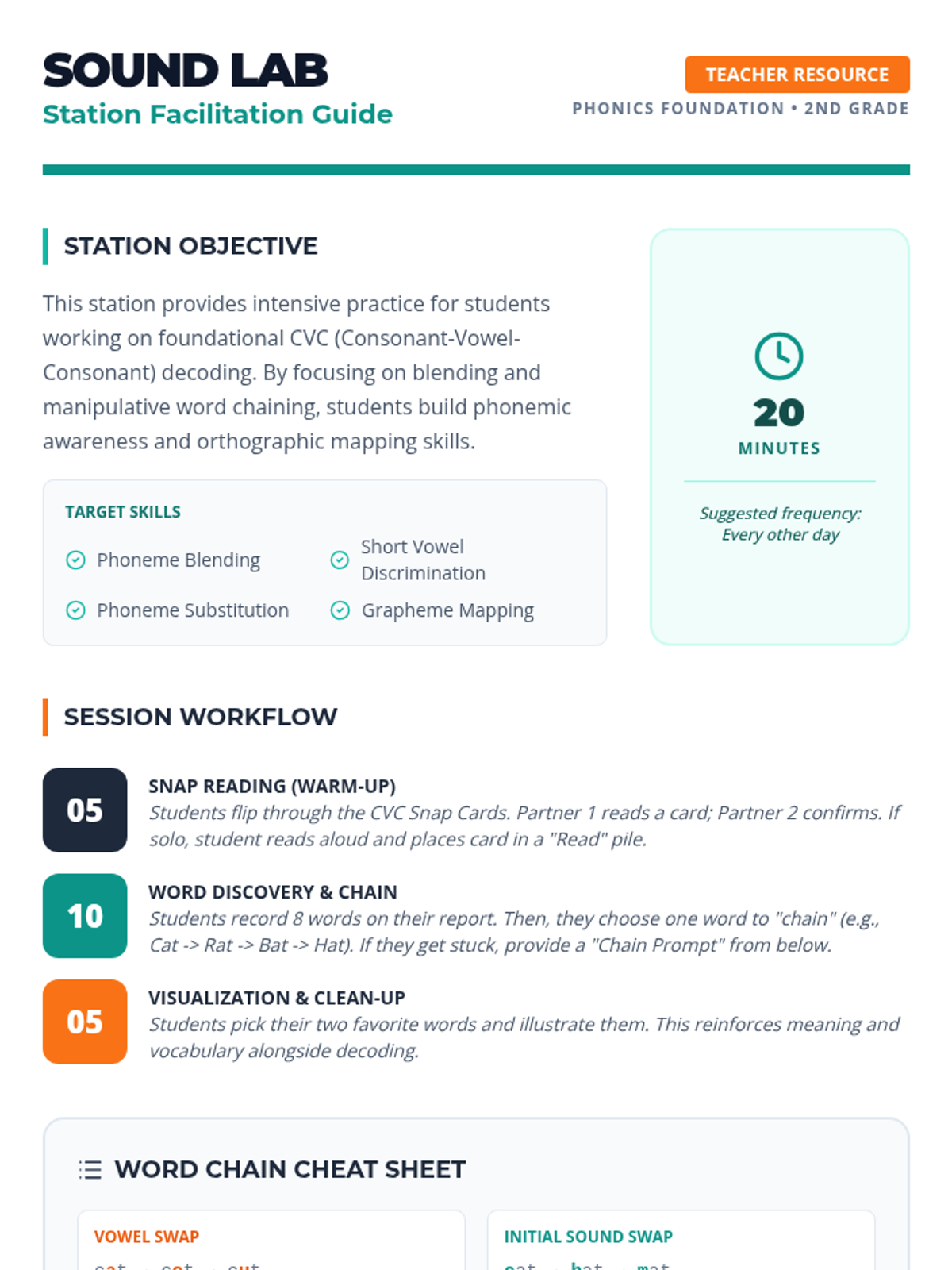
A foundational phonics station focused on CVC word decoding, blending, and word chaining to support 2nd-grade students working on early literacy skills.
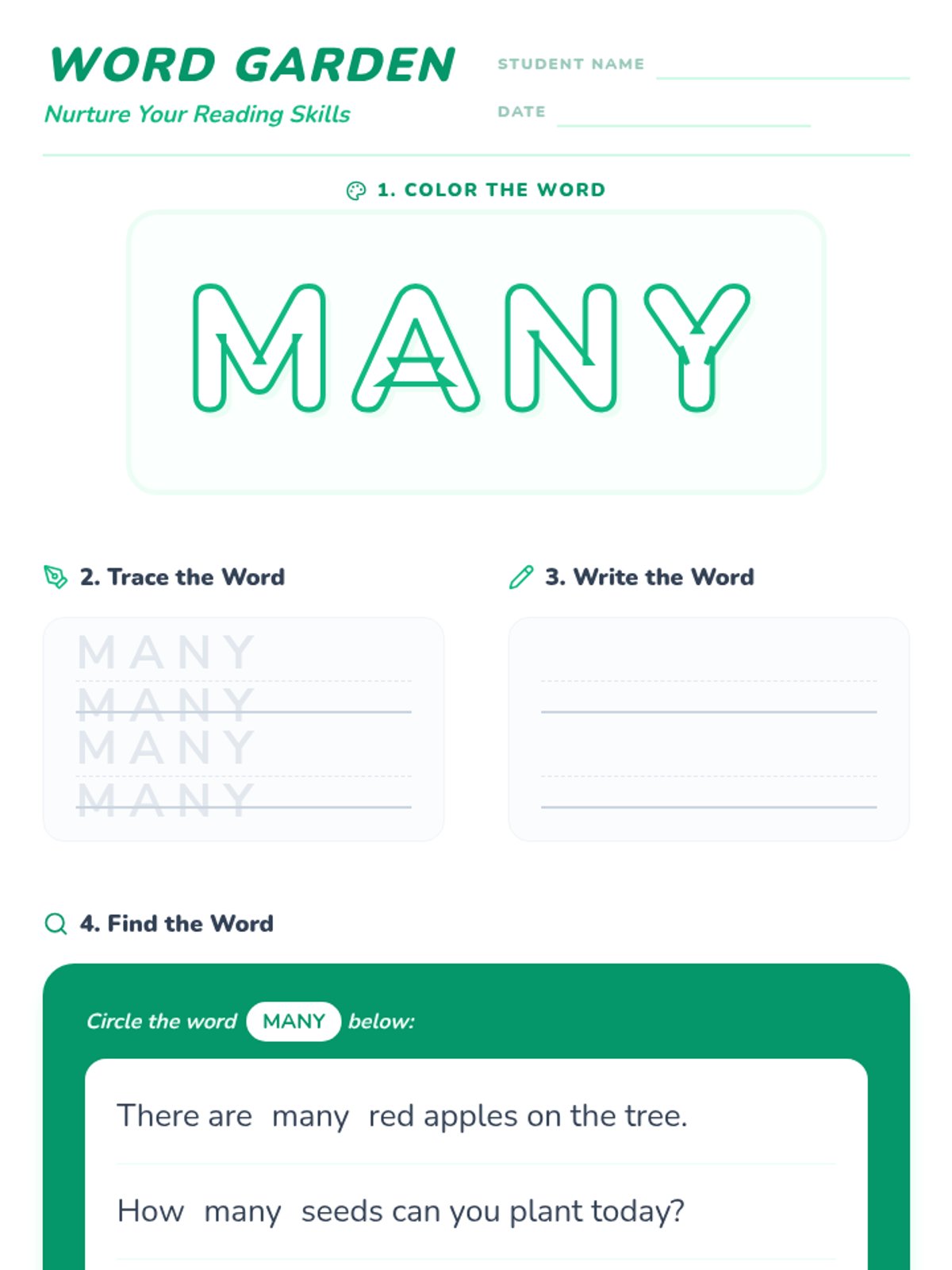
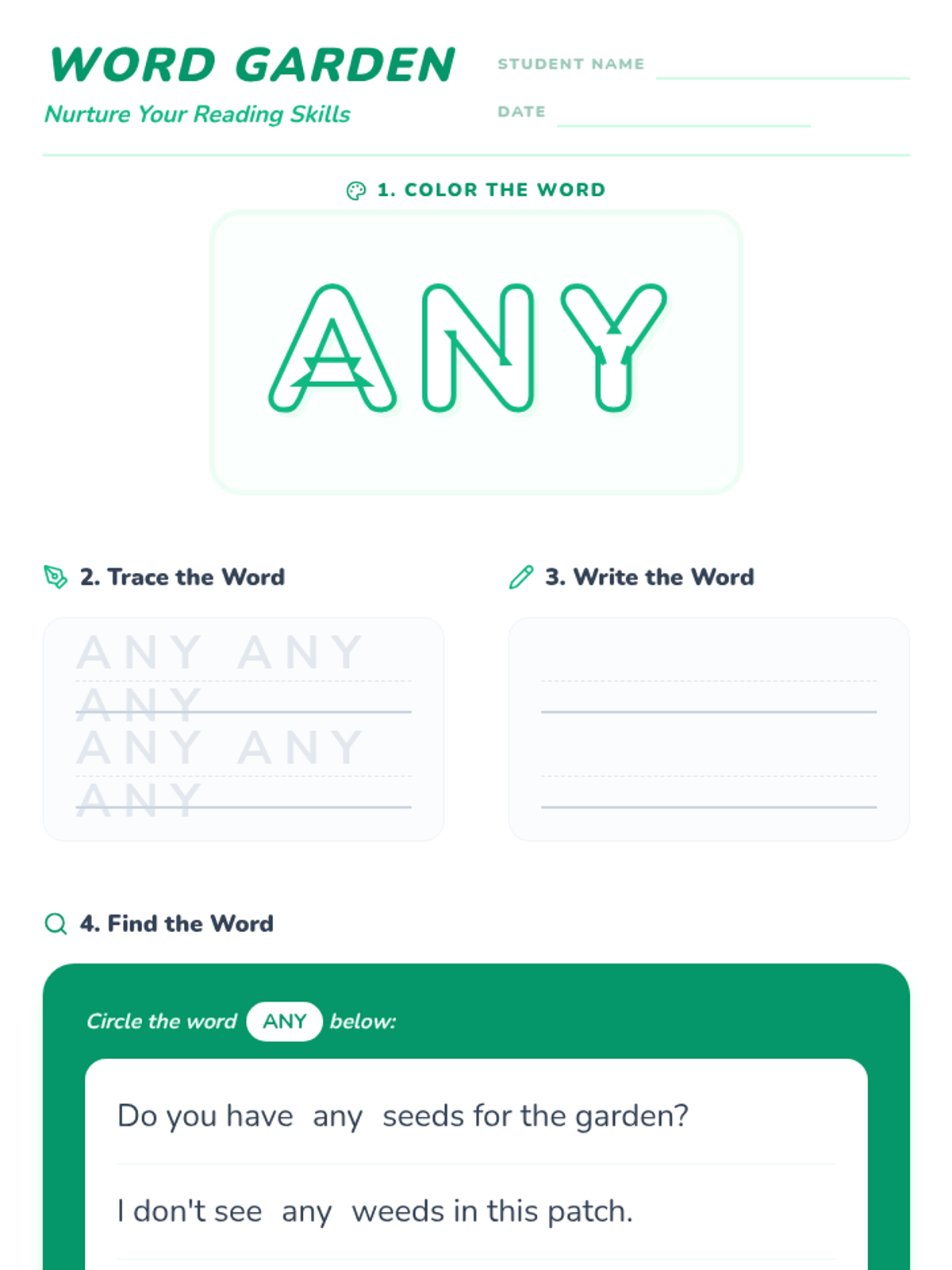
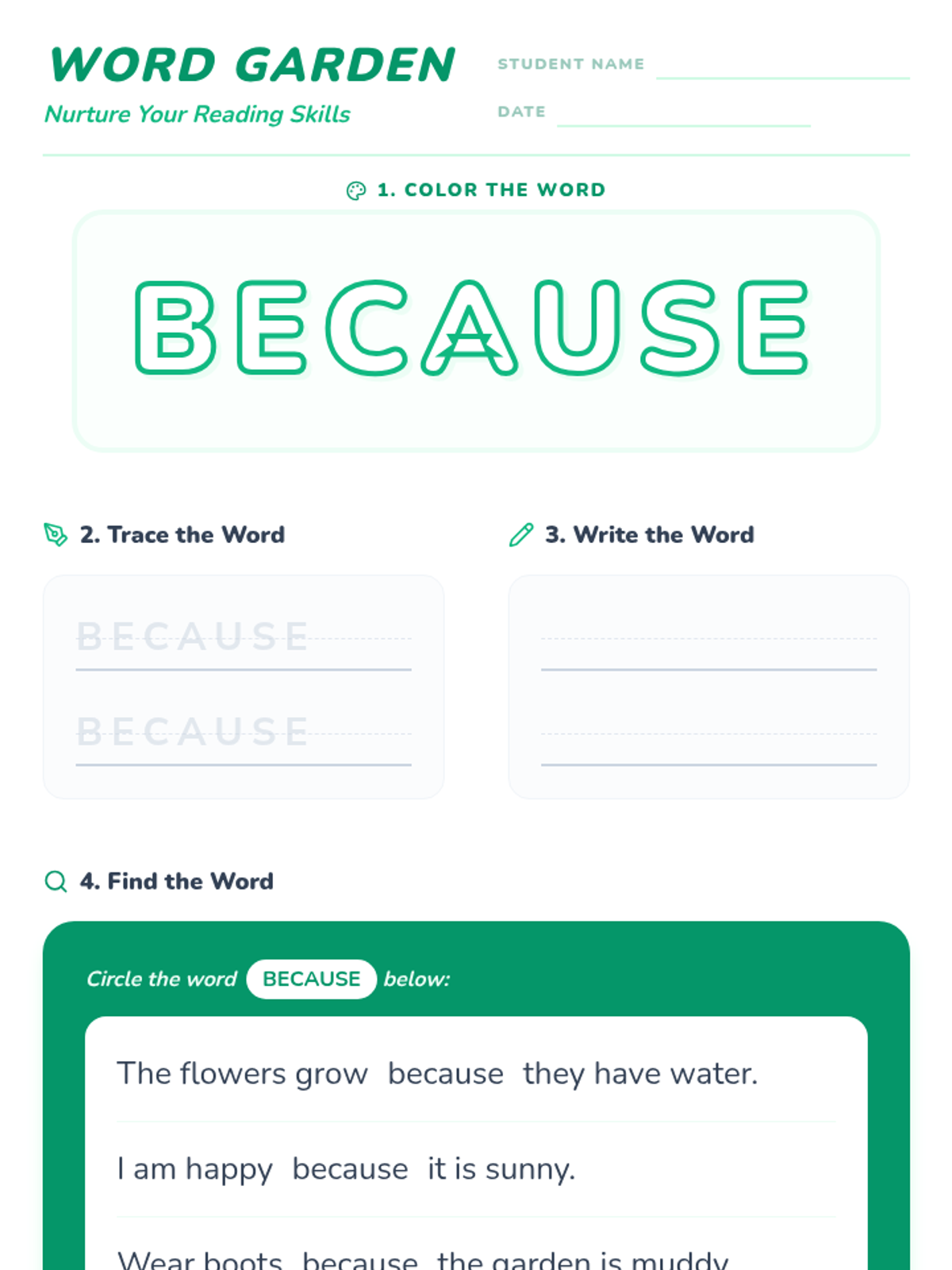
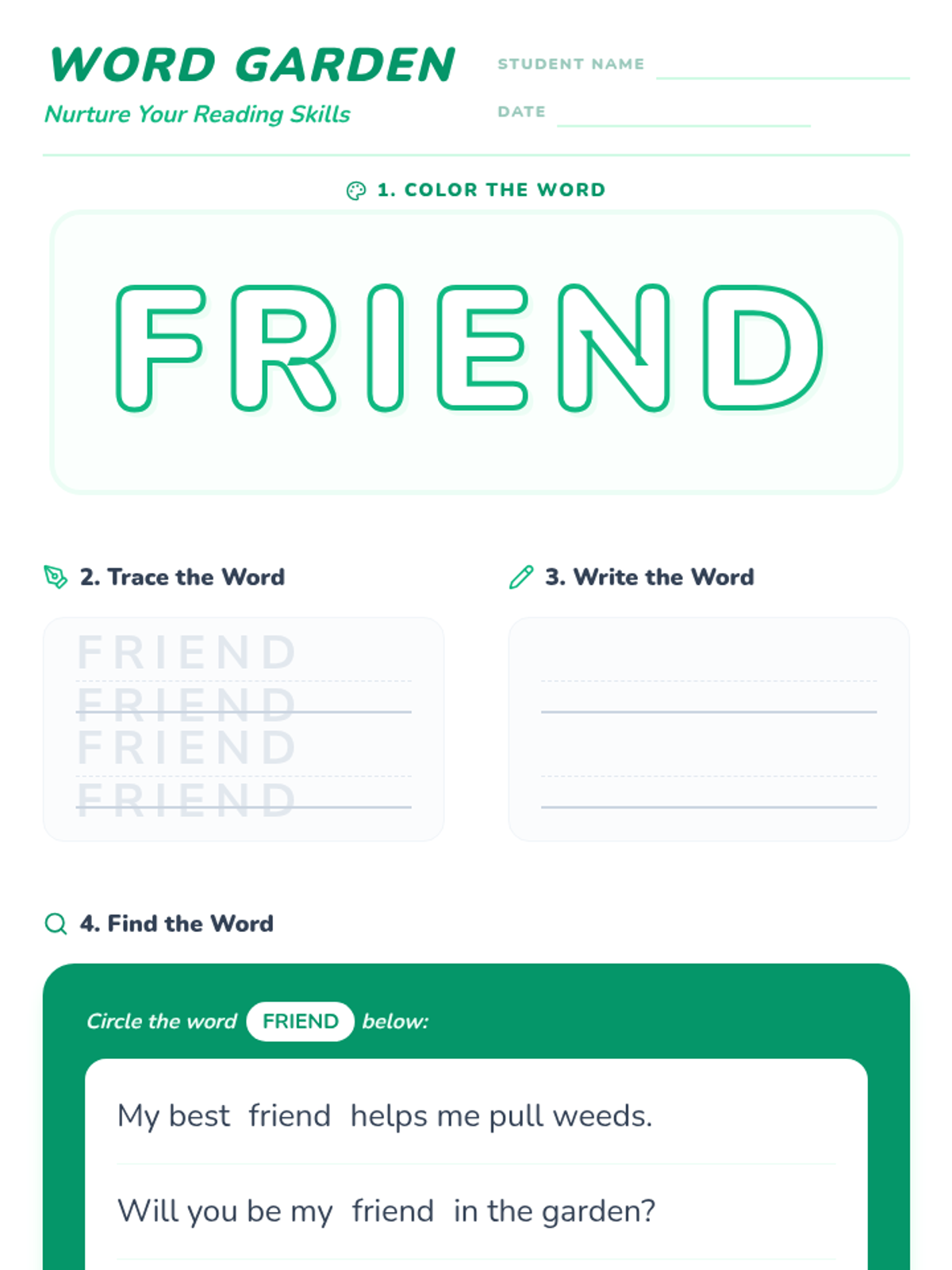
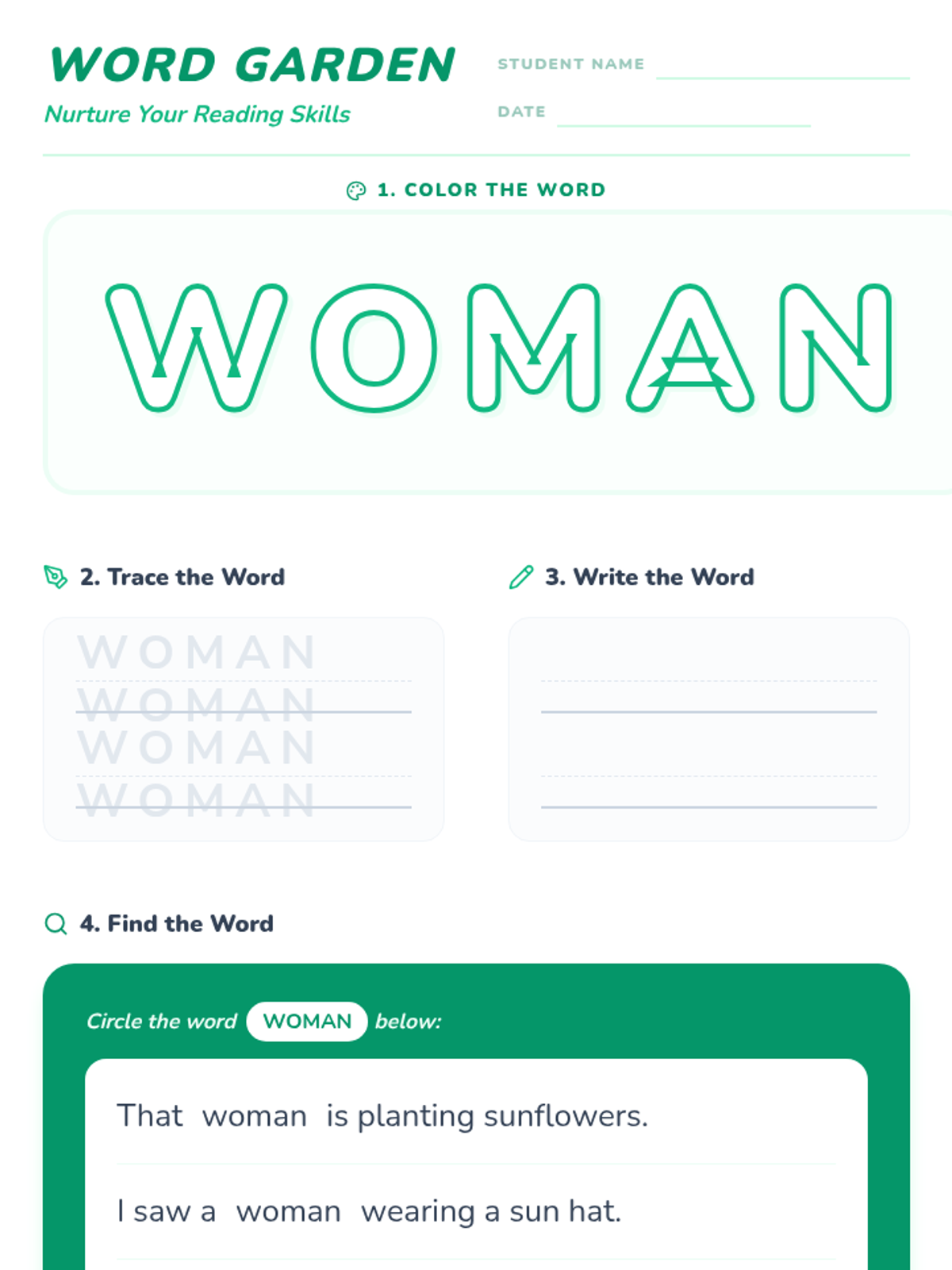
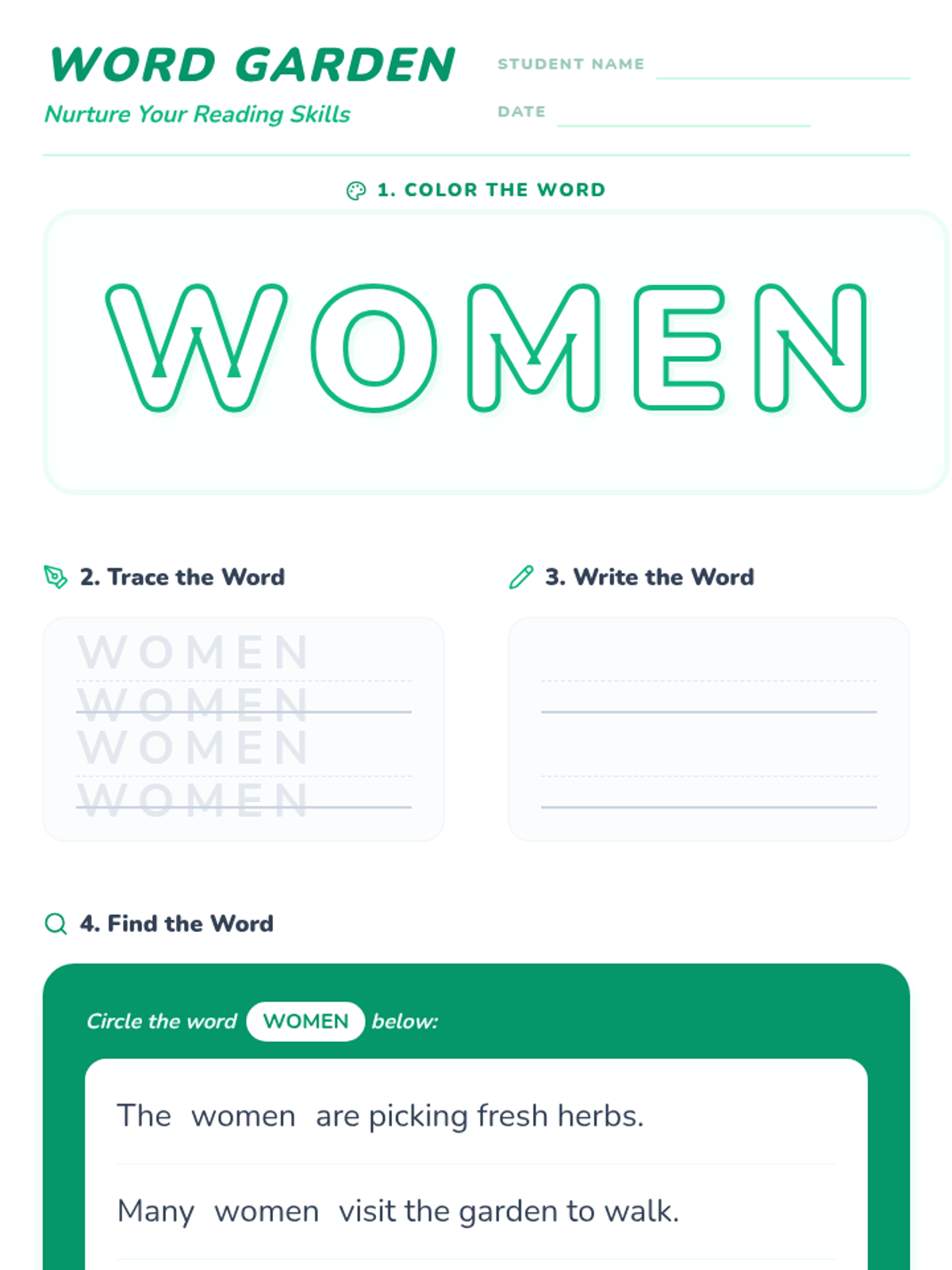
A collection of engaging practice pages for high-frequency sight words, featuring tracing, writing, and sentence-based recognition activities with a cheerful garden theme.
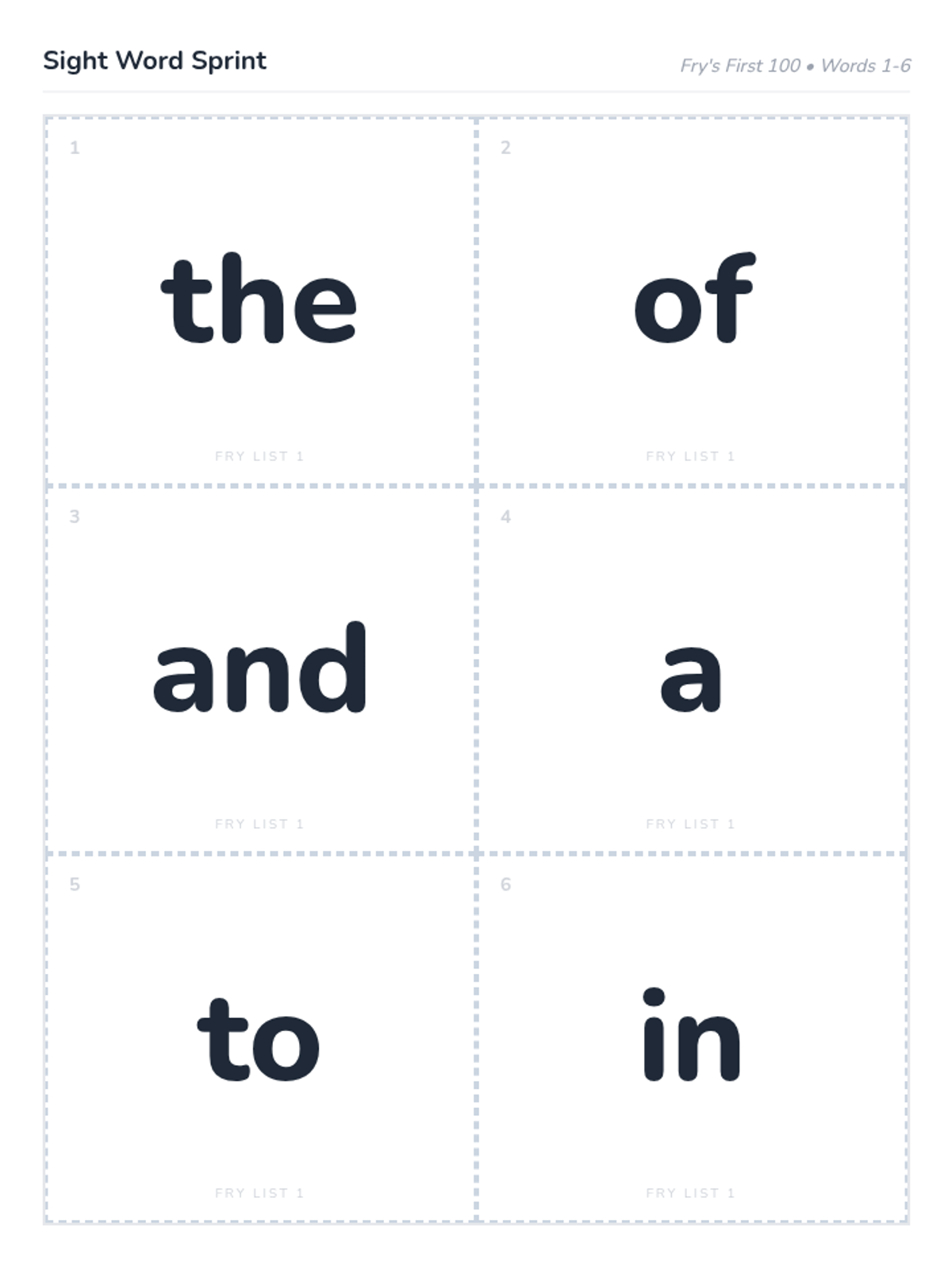
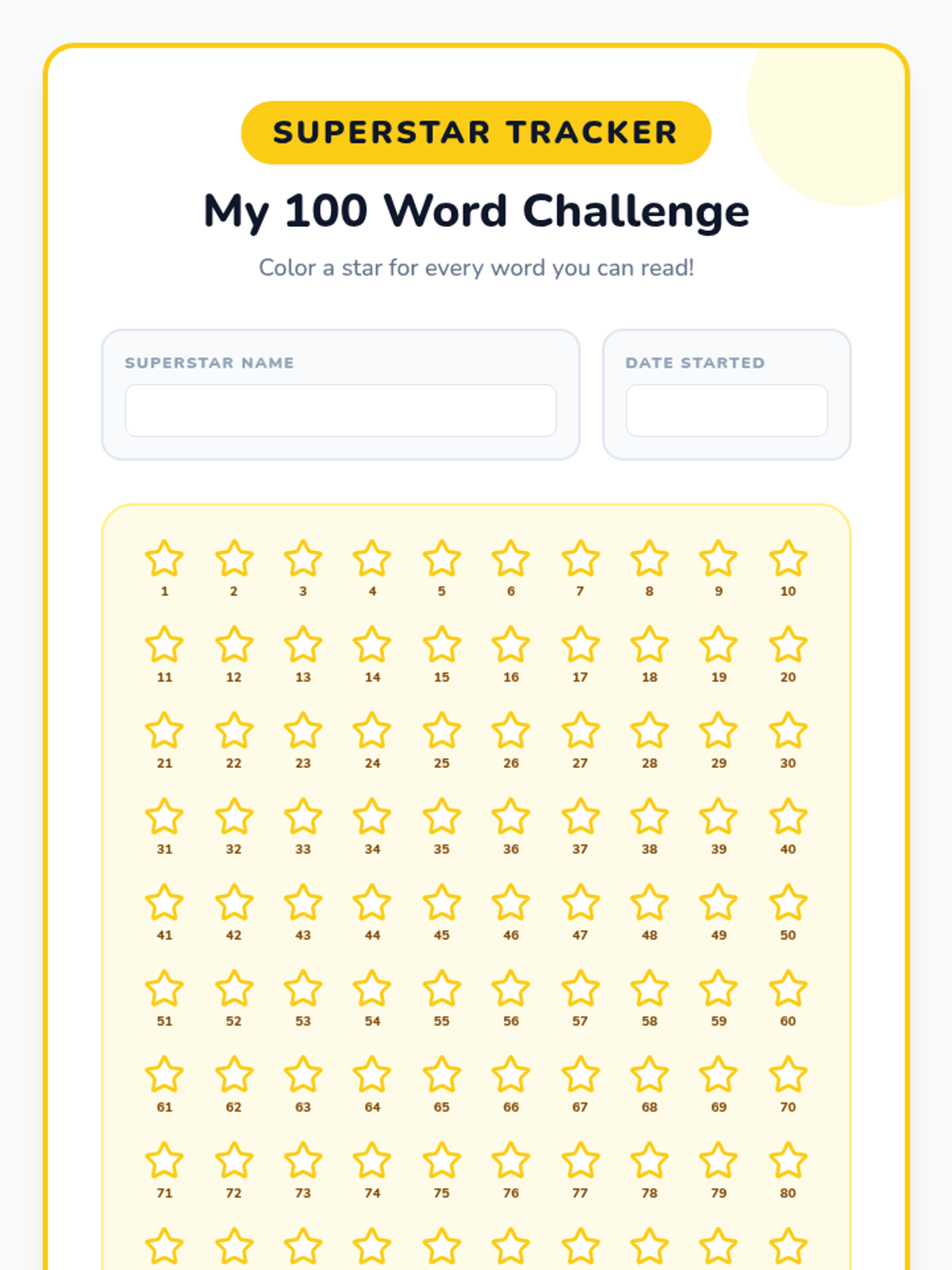
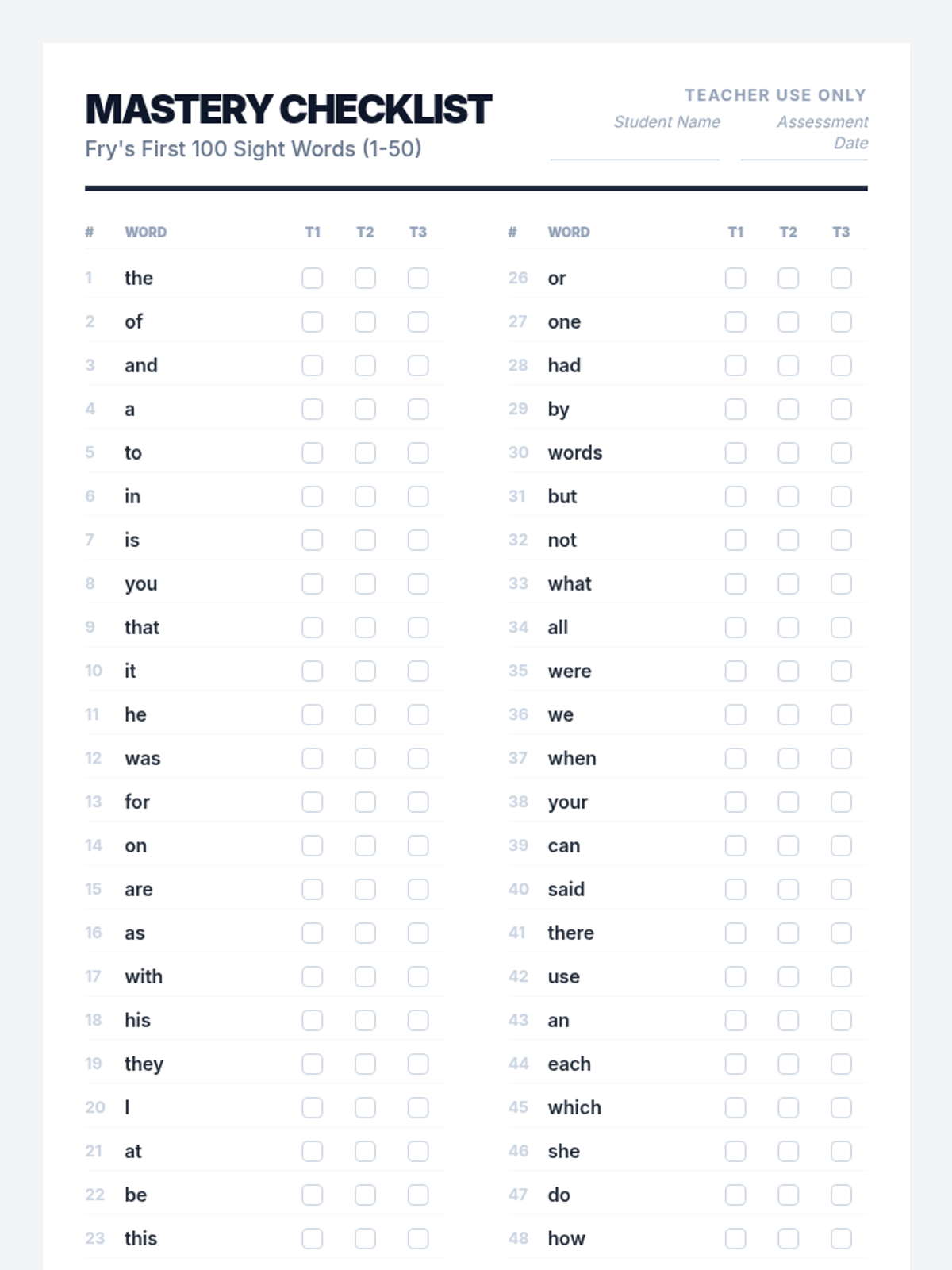
A comprehensive collection of flashcards and tracking tools for mastering Fry's First 100 sight words, designed specifically for Kindergarten learners with high-contrast, easy-to-read typography.
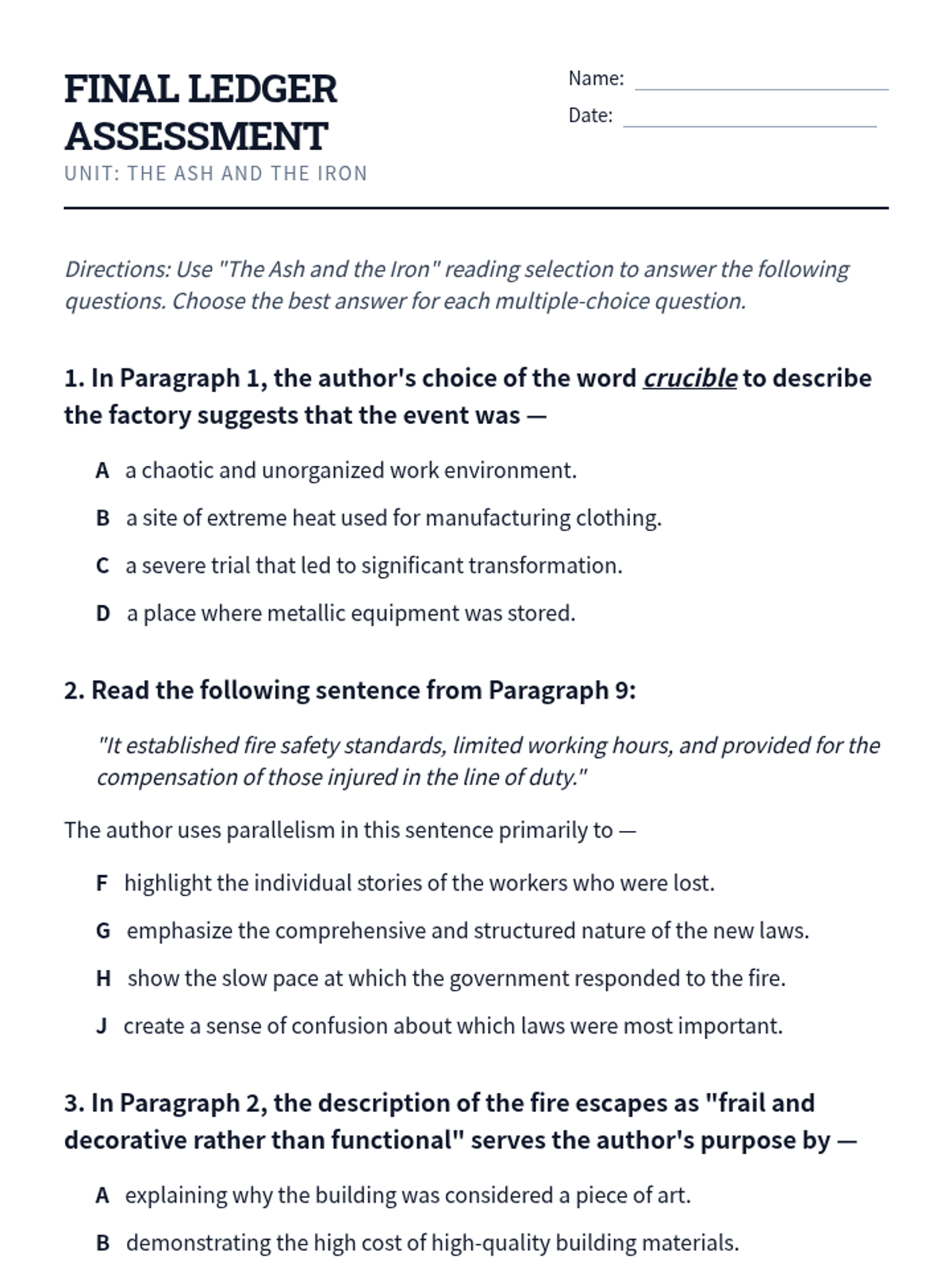
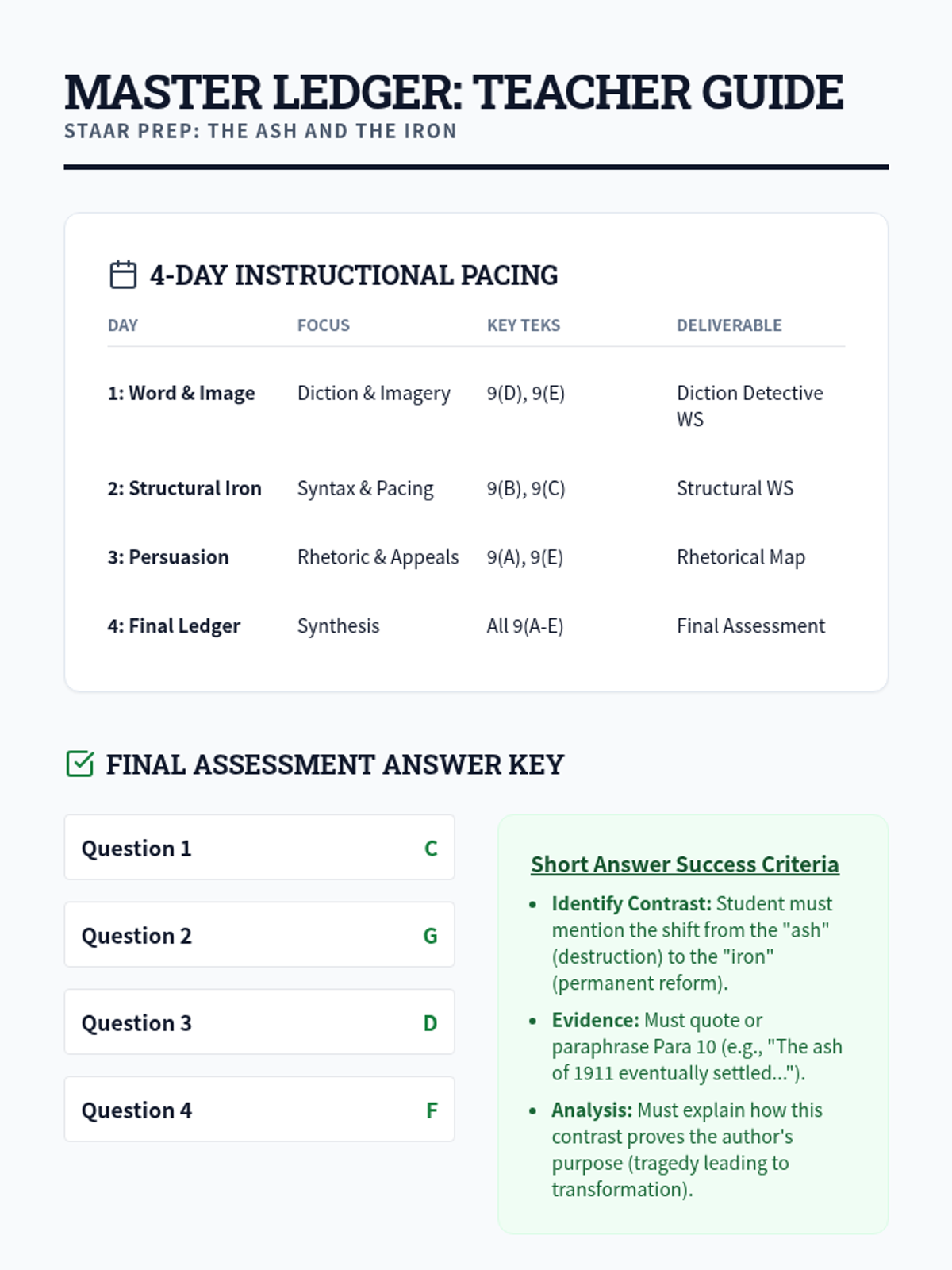
A cumulative assessment and synthesis lesson where students apply all previous skills to STAAR-aligned multiple-choice questions.
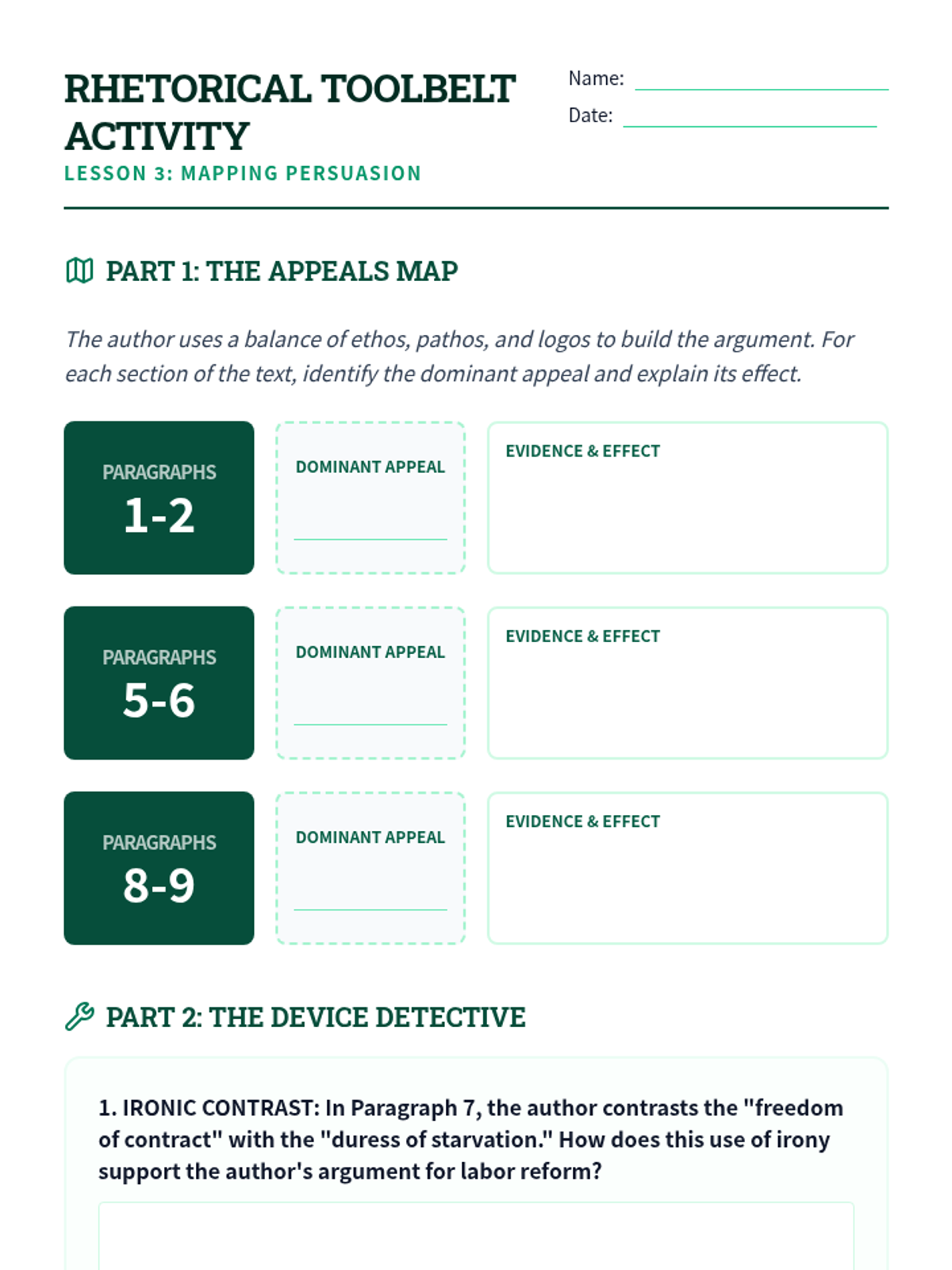
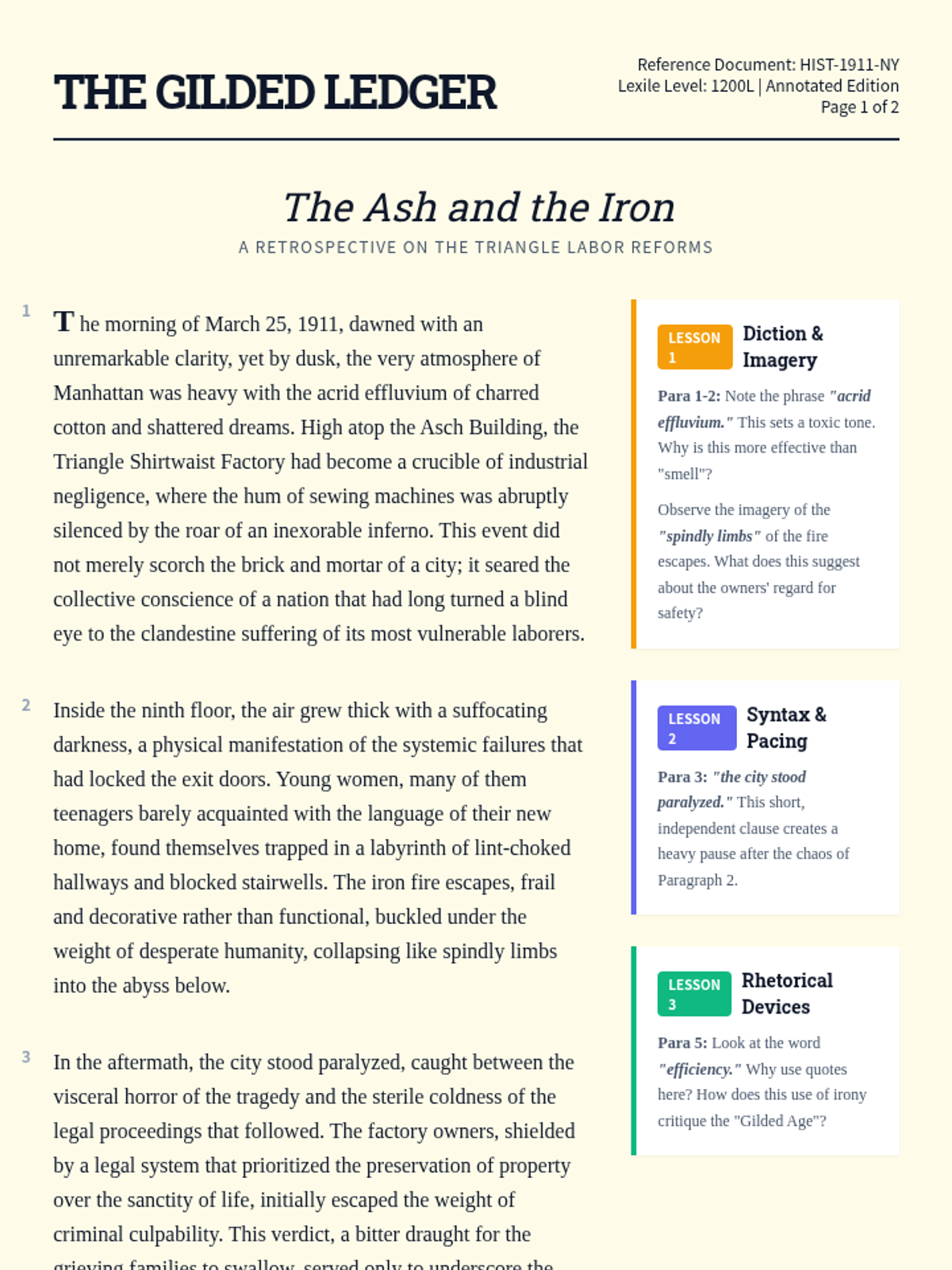
Students identify and evaluate the effectiveness of rhetorical devices and appeals used to advocate for social change.
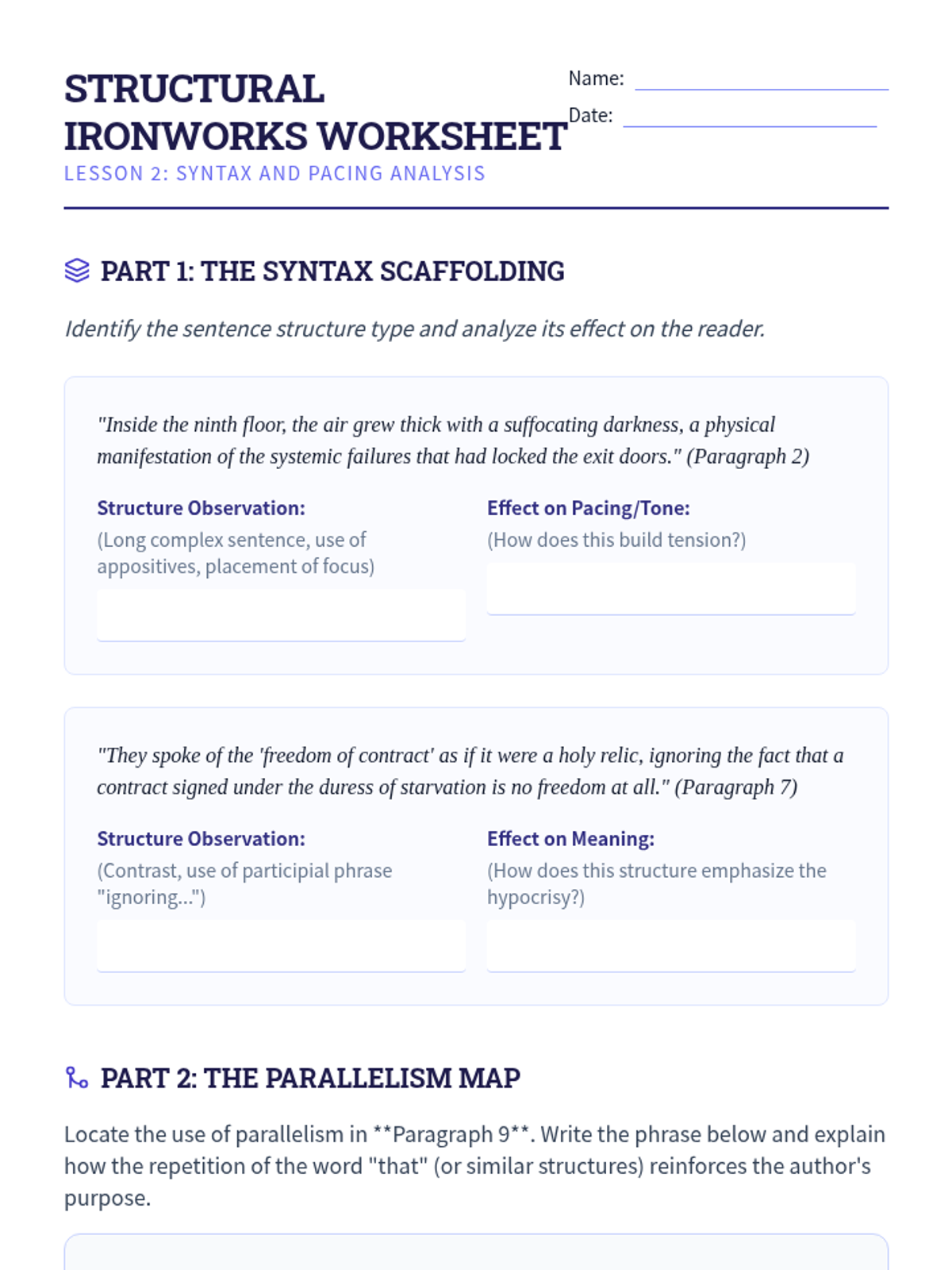
An examination of how sentence structure, variety, and pacing contribute to the emotional weight and persuasive power of a historical text.
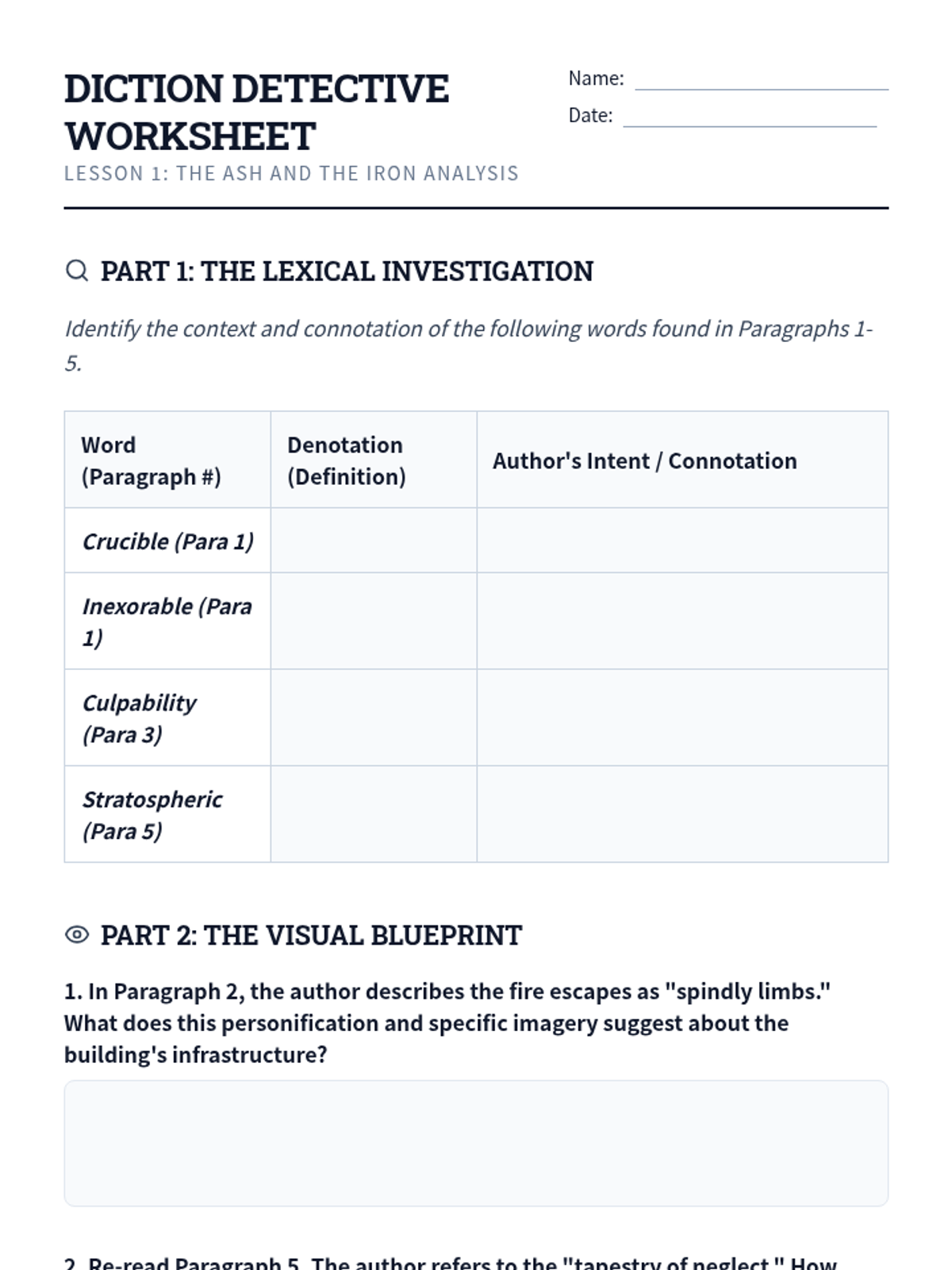
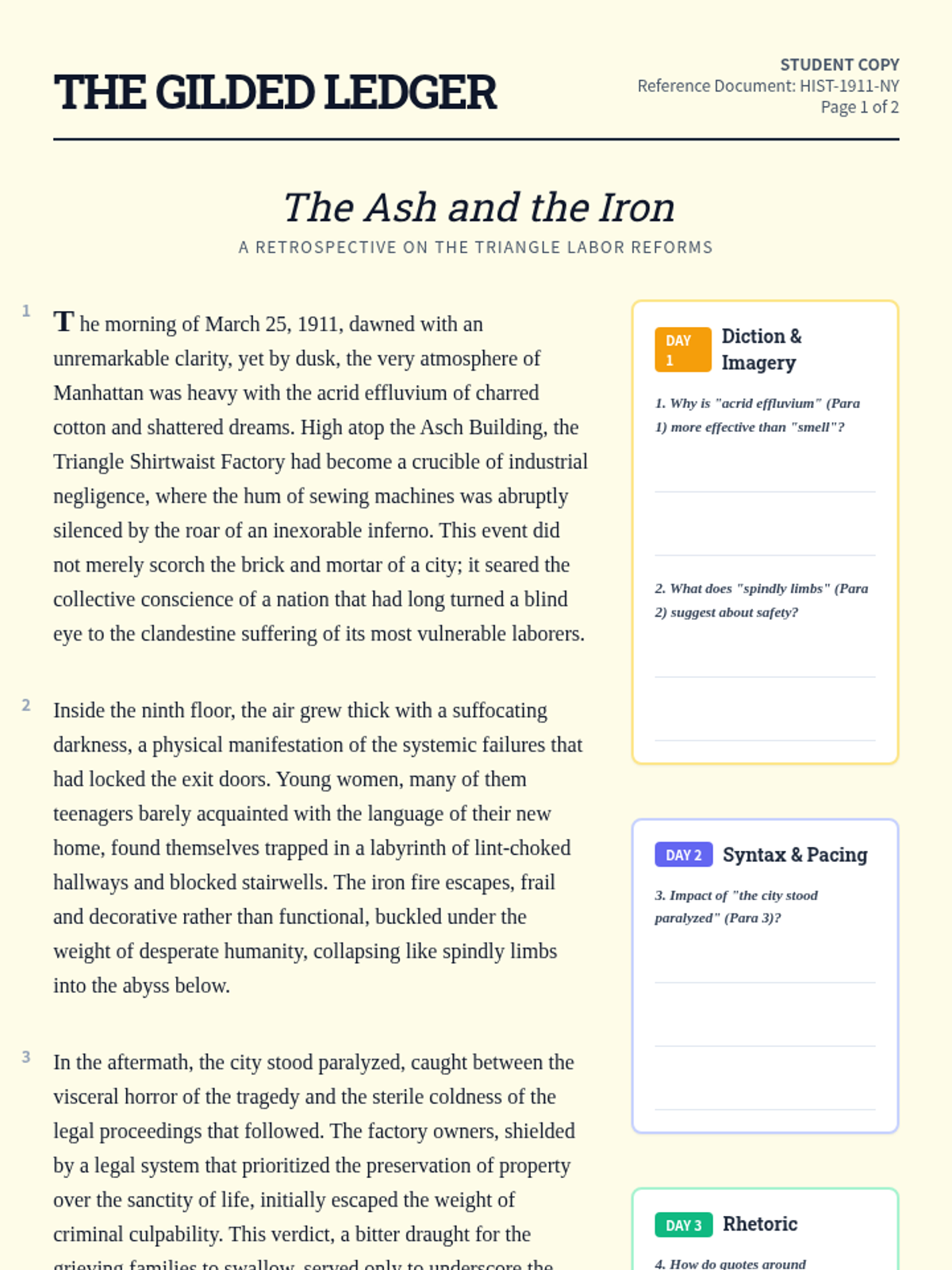
Students explore how precise diction and vivid imagery establish the tone and reveal the author's purpose in 'The Ash and the Iron.'
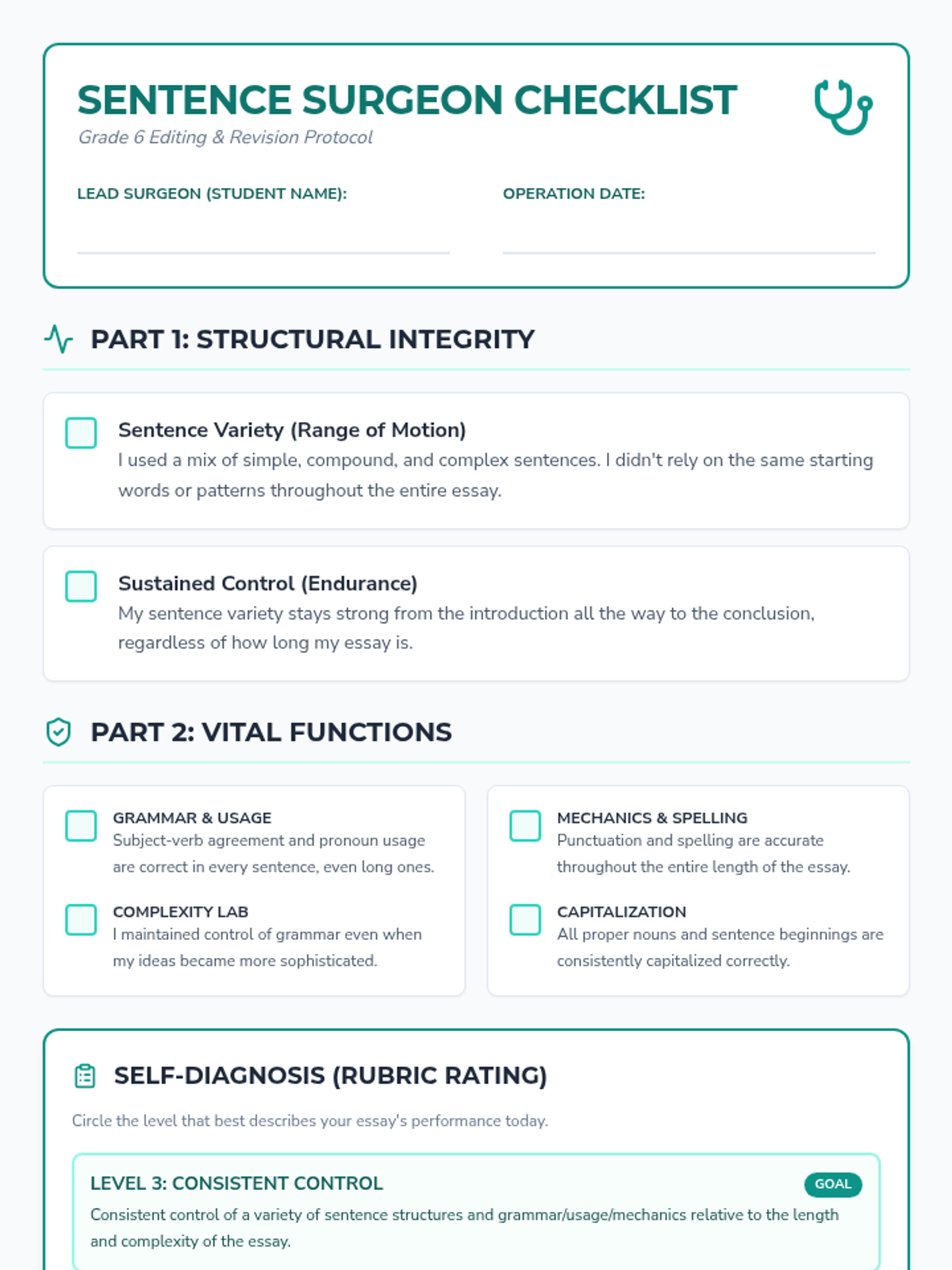
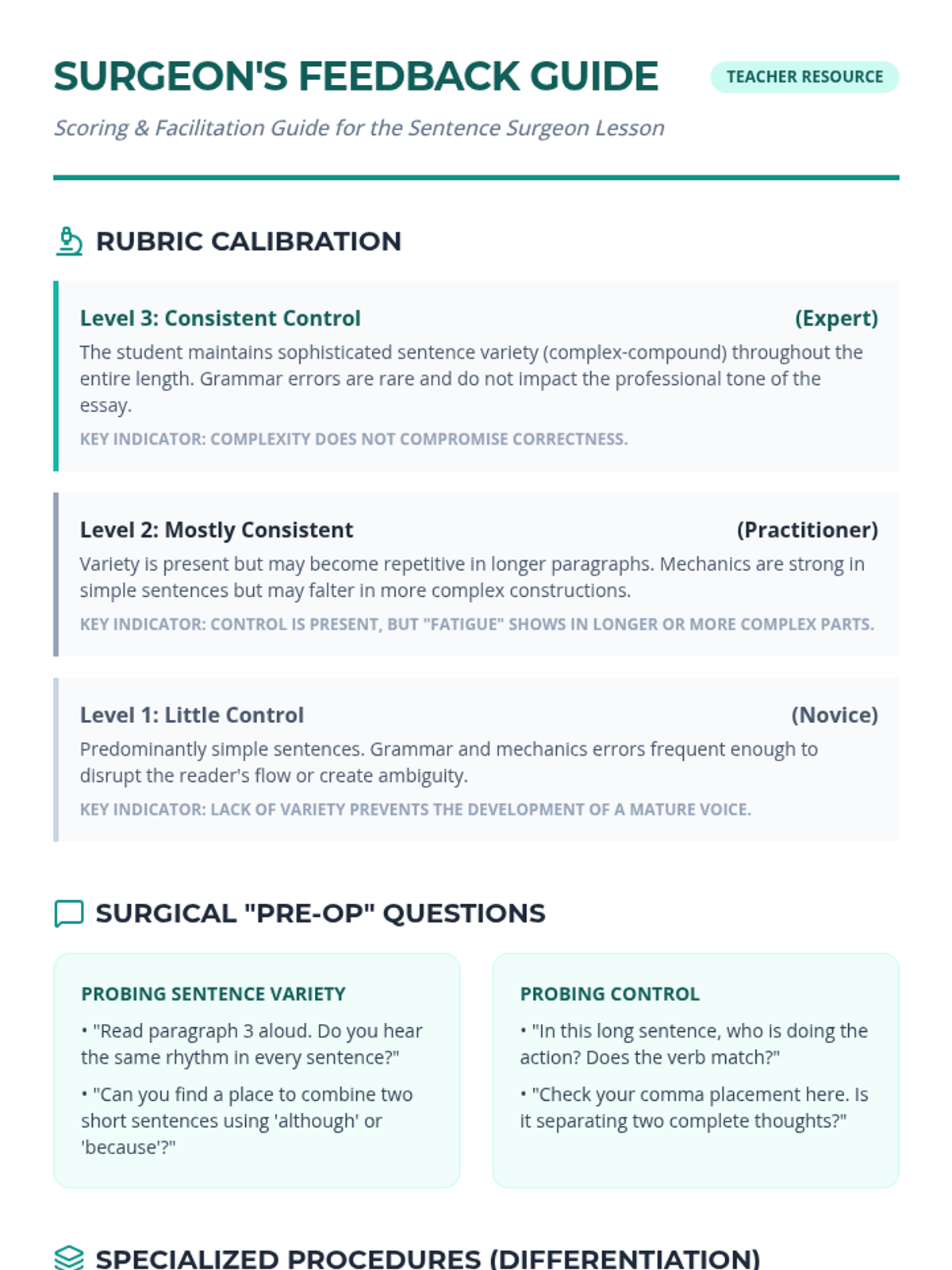
A lesson focused on self-editing and peer-reviewing using a rubric-aligned checklist to improve sentence variety, grammar, and mechanics.
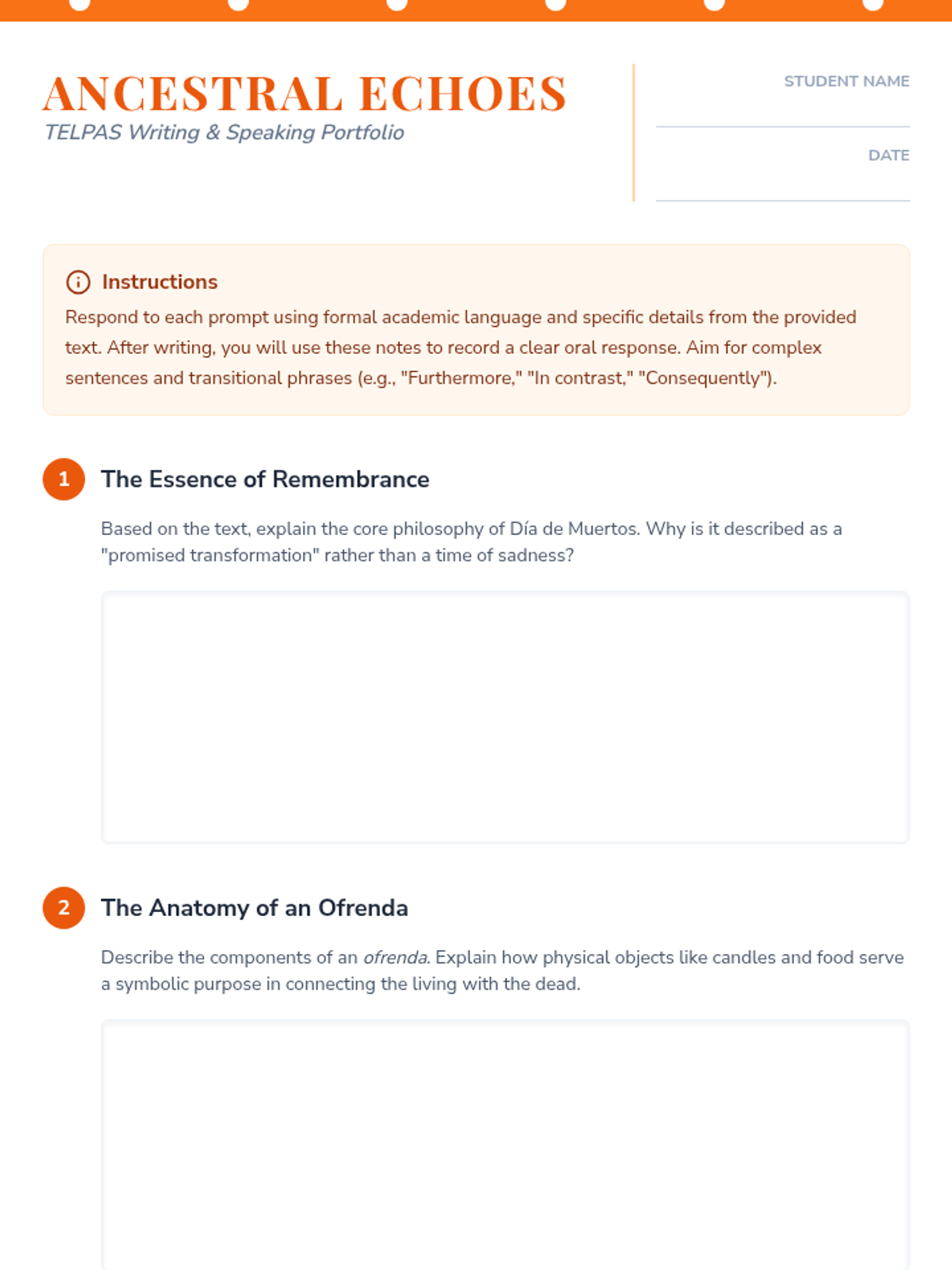
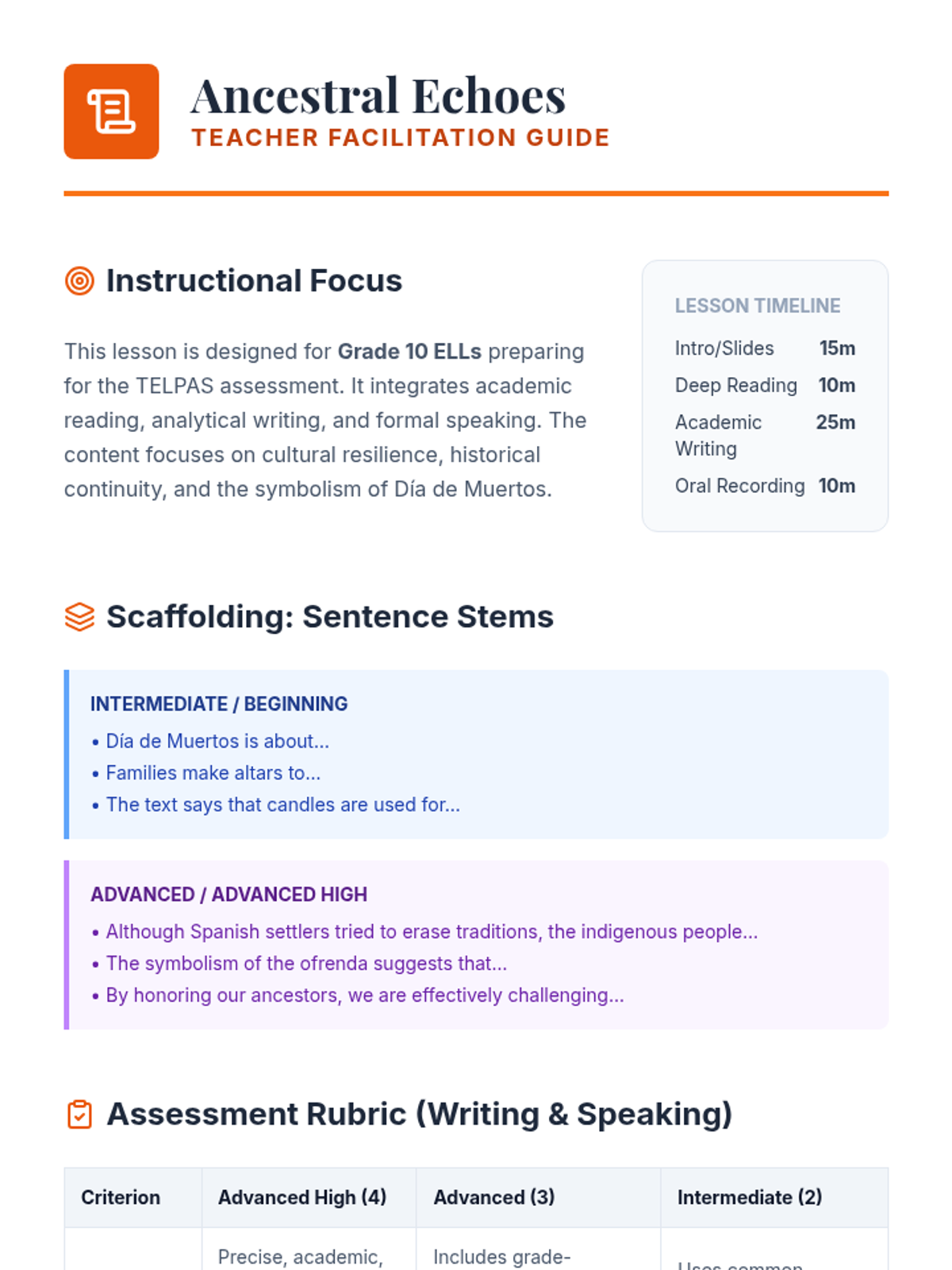
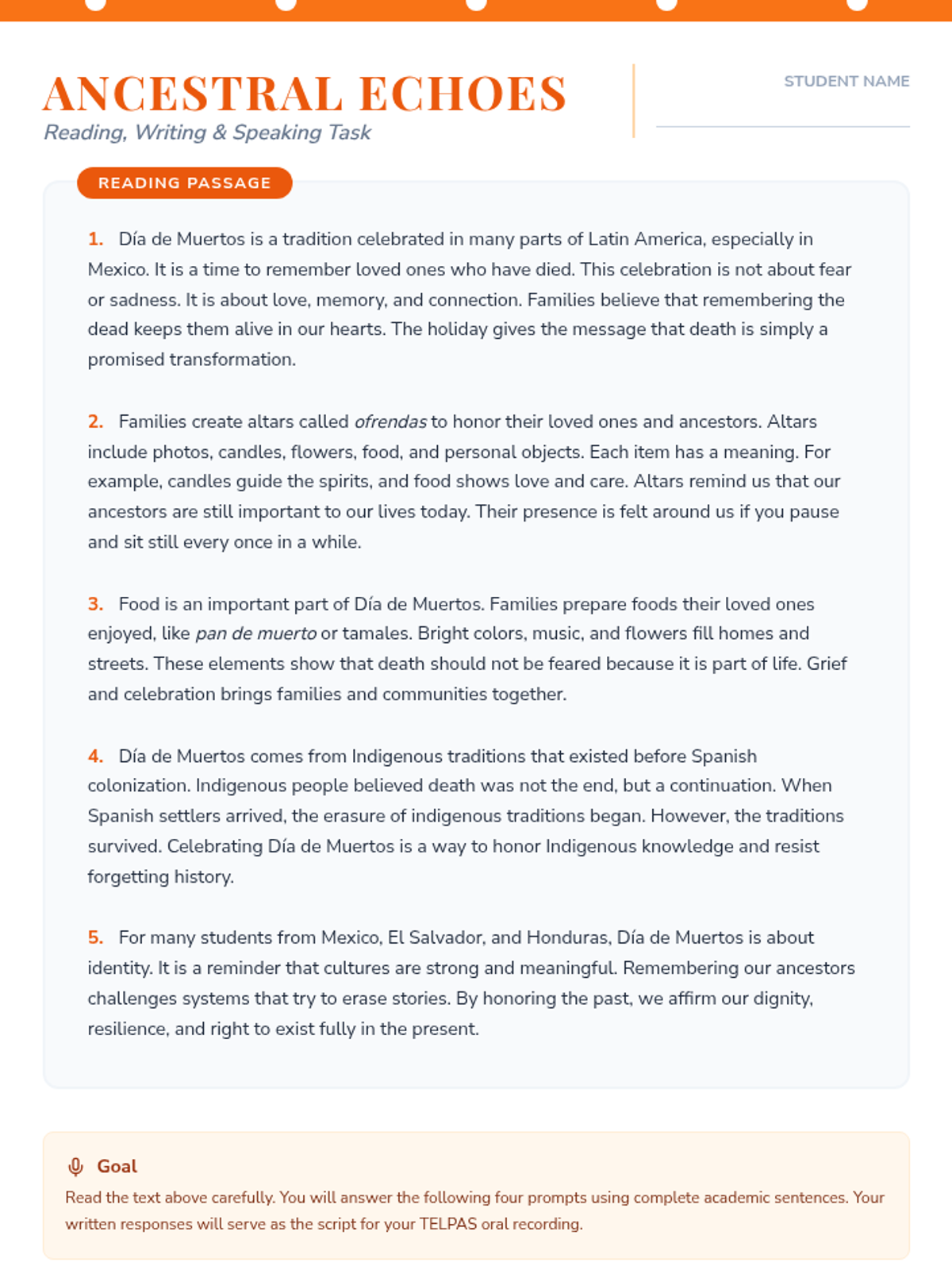
A TELPAS-aligned writing and speaking workshop focused on the cultural significance, history, and resilience of Día de Muertos. Students analyze complex text to produce academic writing pieces that they will later record as oral presentations.
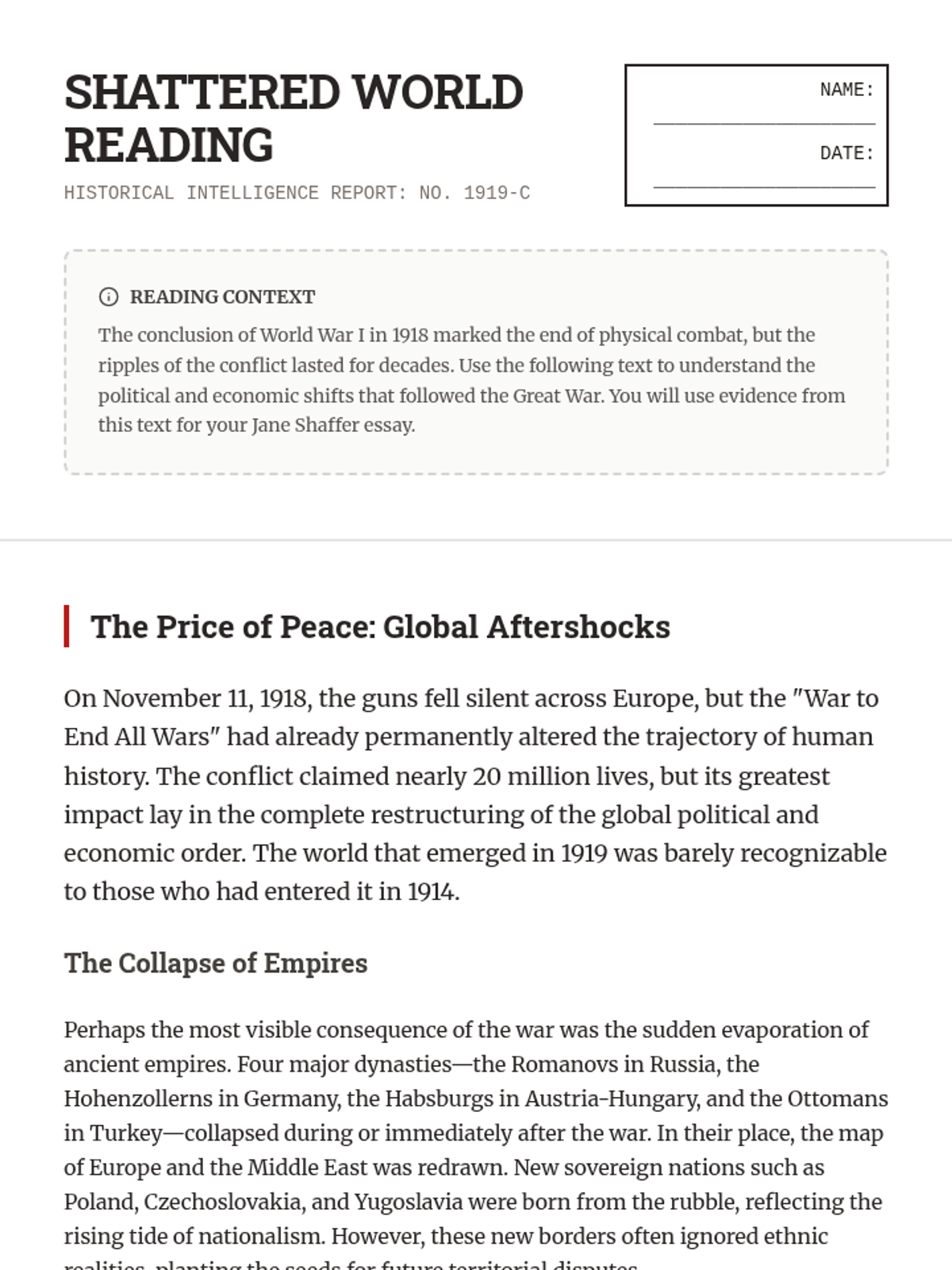
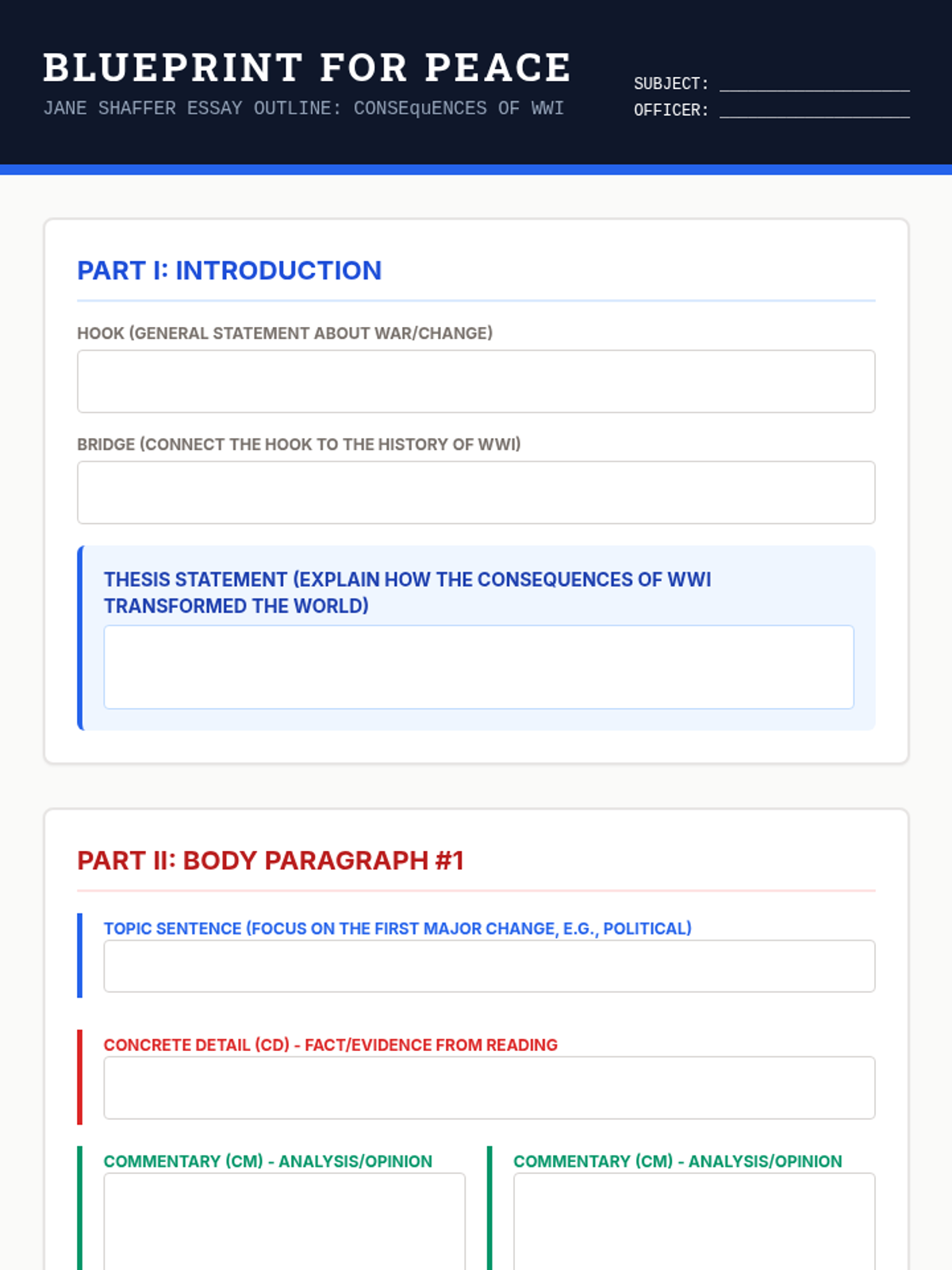
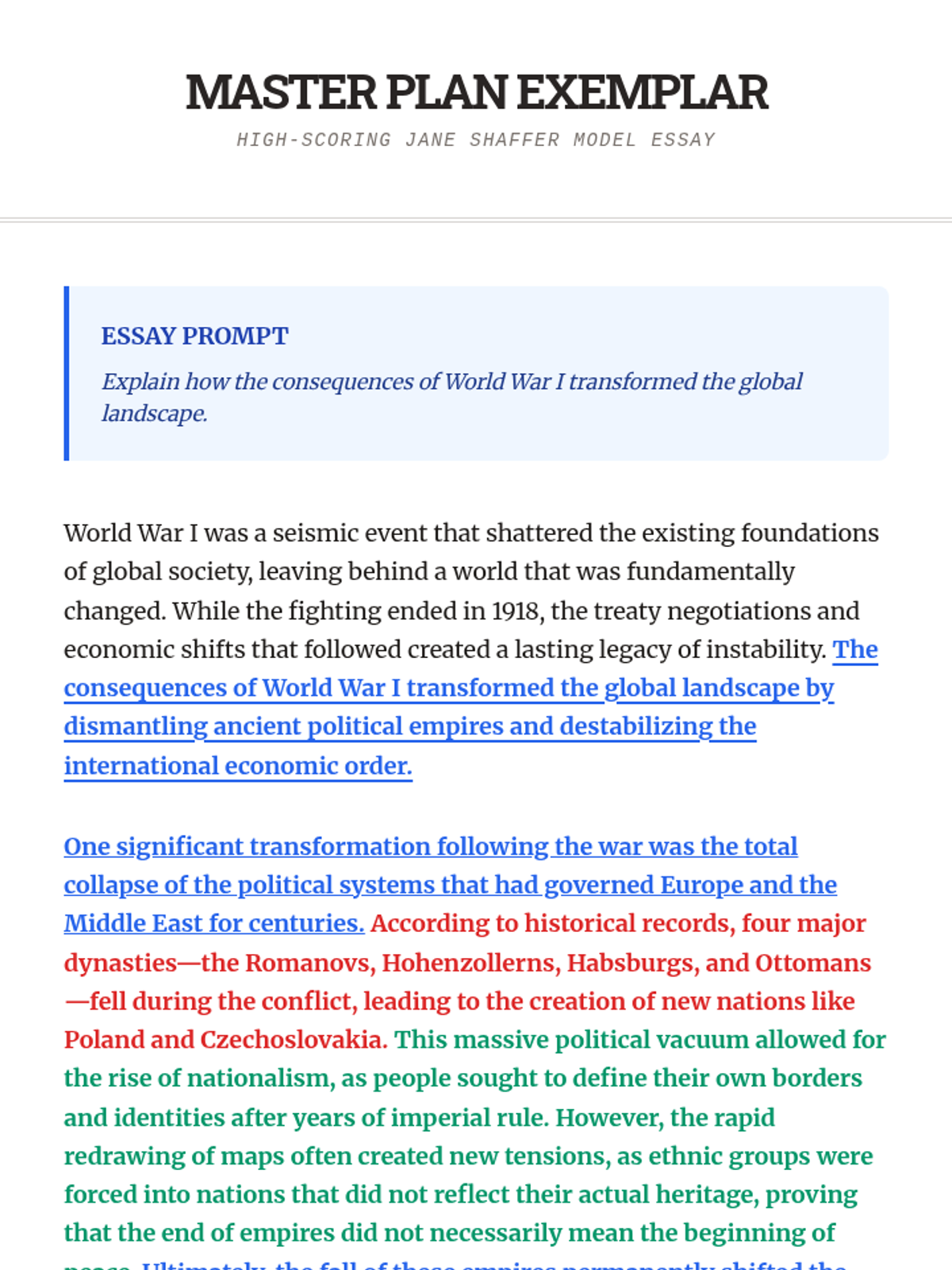
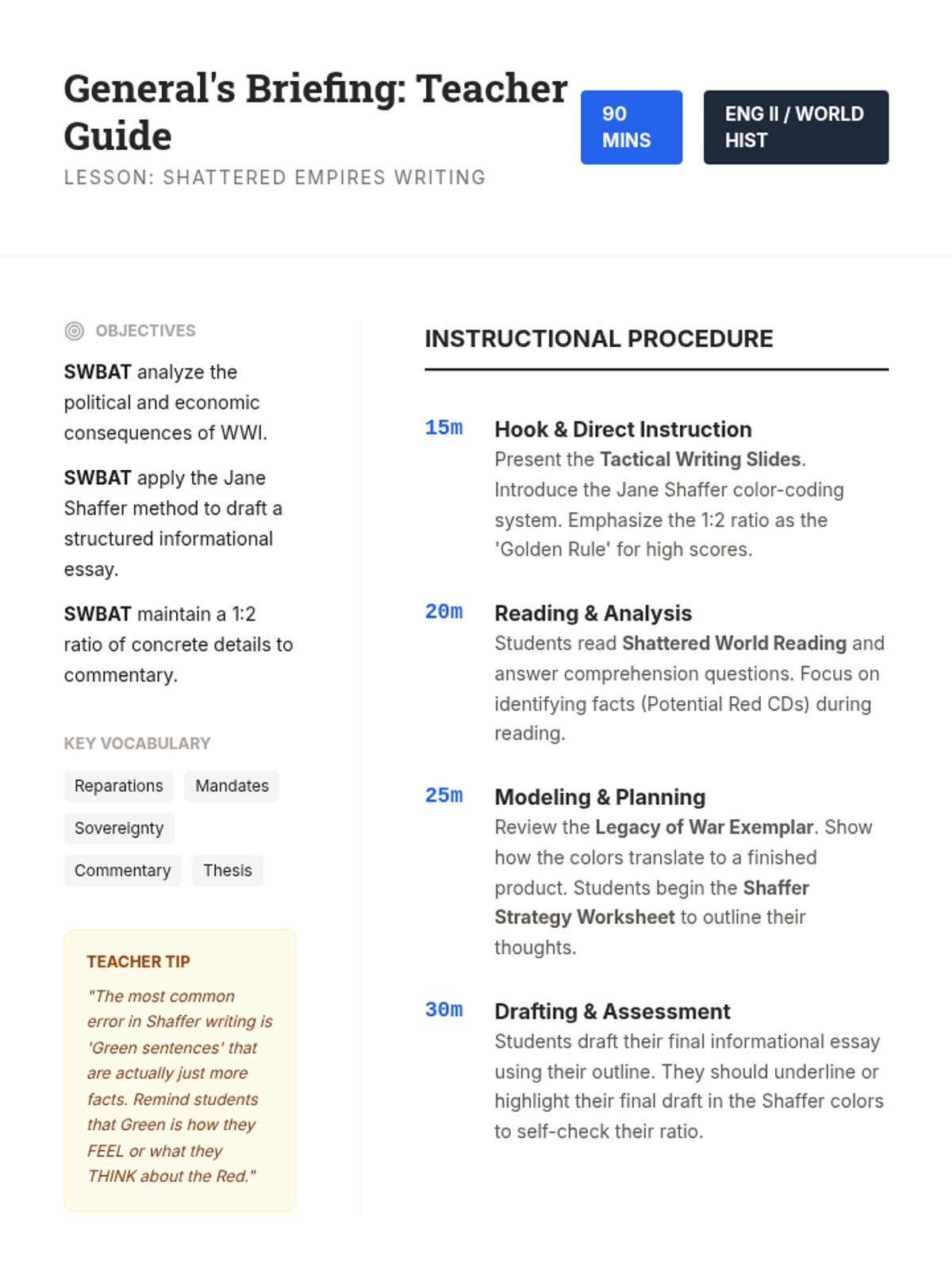
A comprehensive lesson on crafting a Jane Shaffer informational essay regarding the consequences of World War I, modeled after the Texas English 2 EOC exam format.
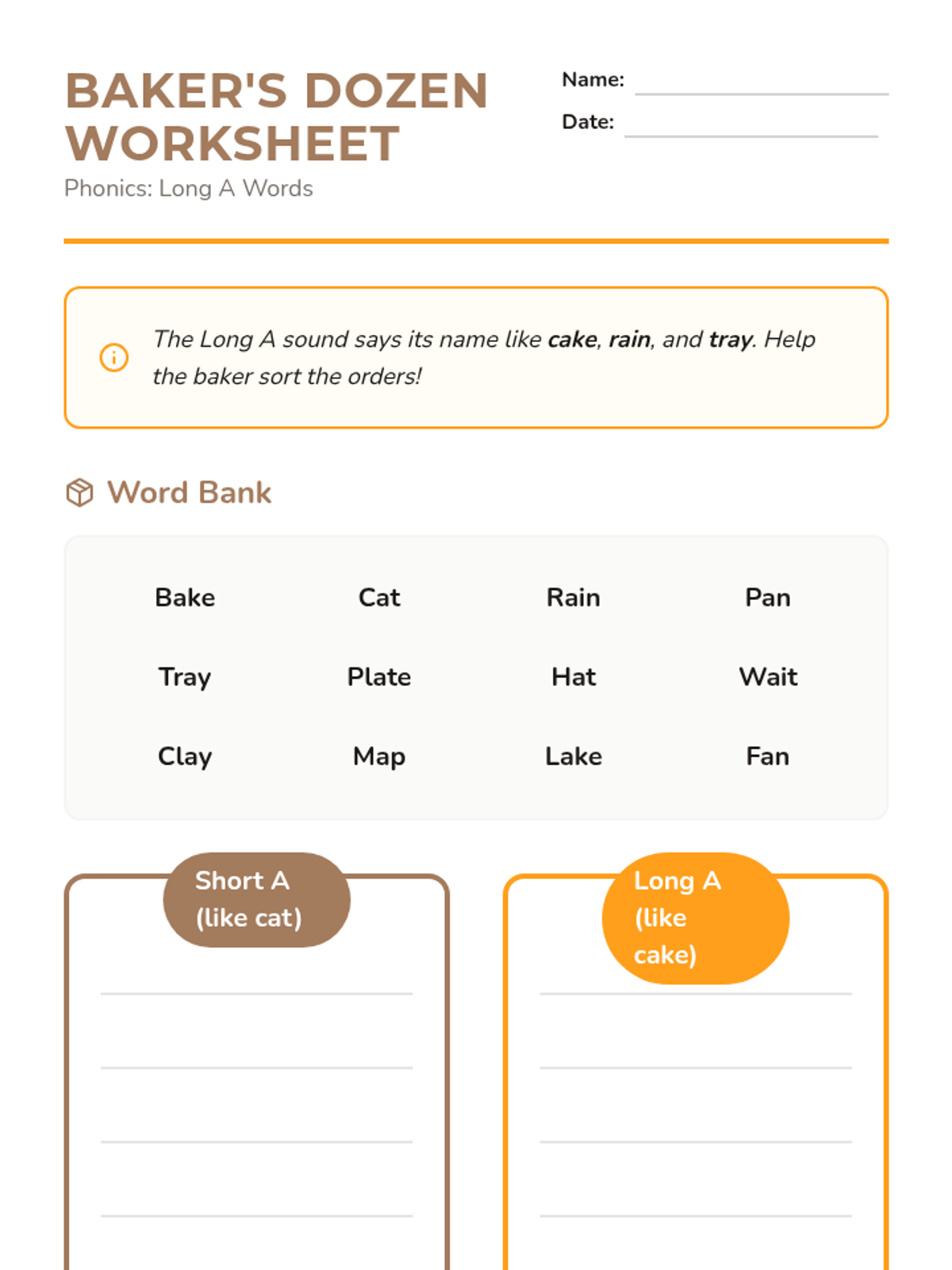
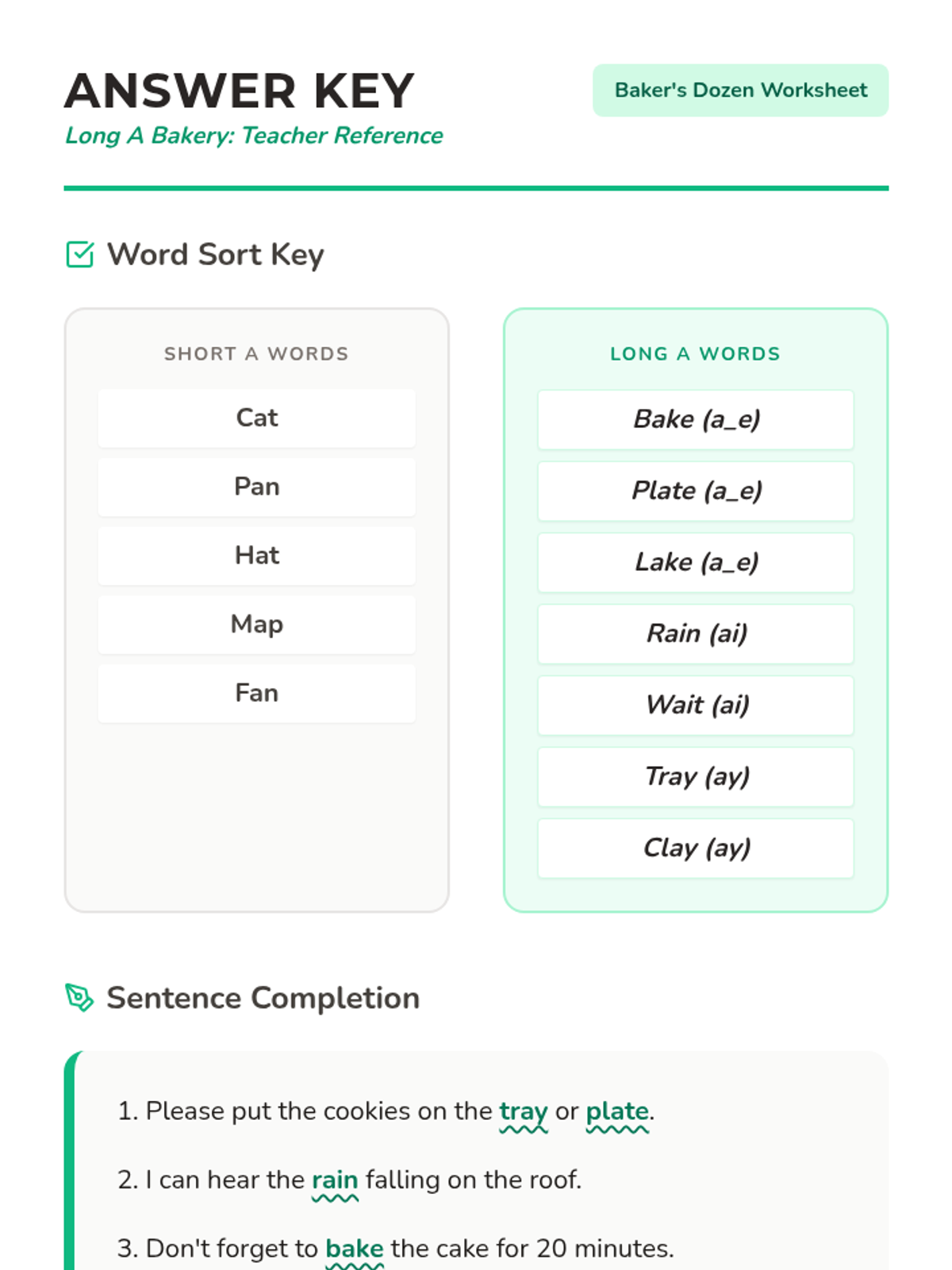
A sweet introduction to the 'long a' vowel sound using a bakery theme to explore magic e and vowel teams. Students will practice reading and identifying long a words through interactive slides and guided practice.
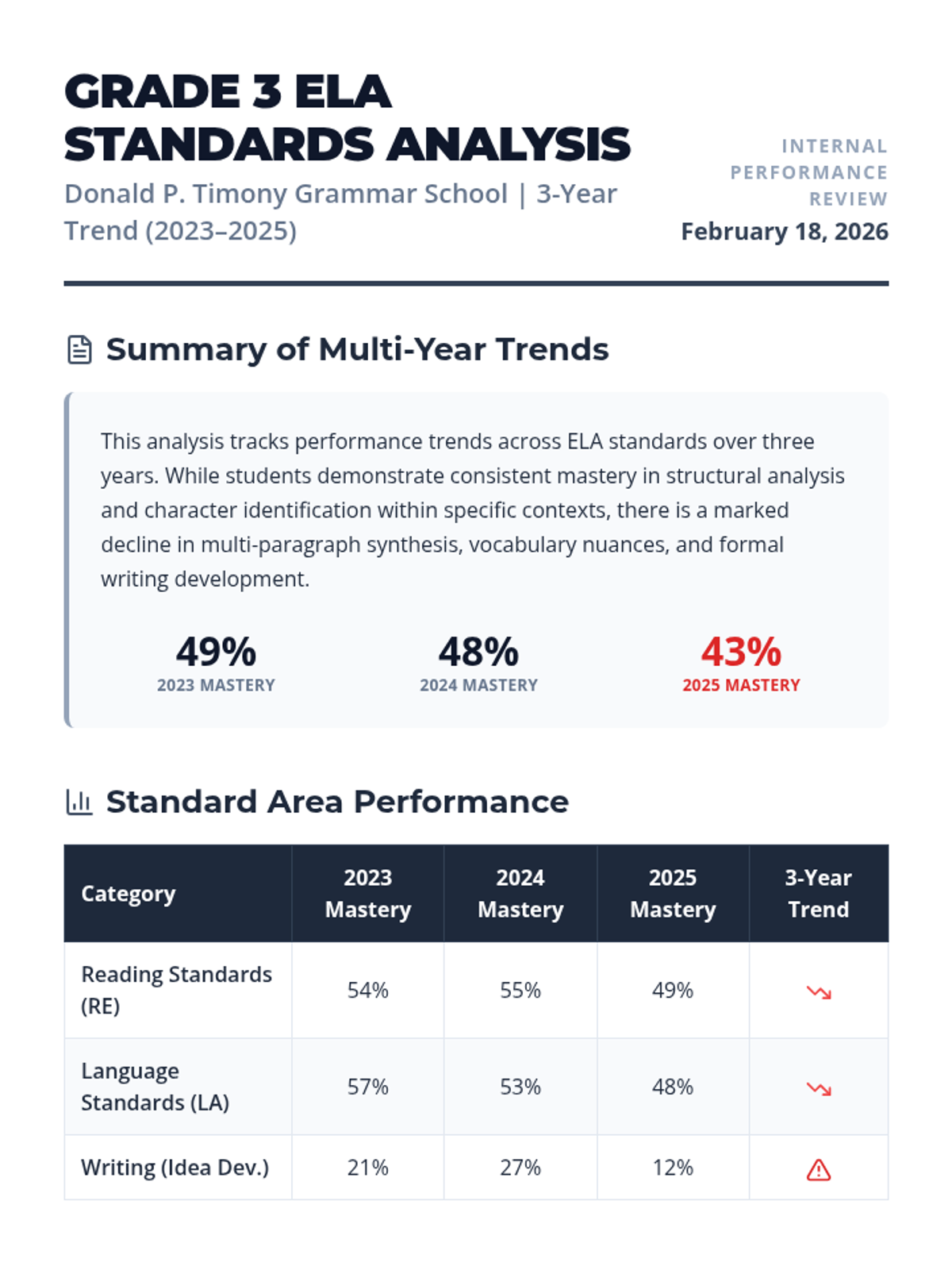
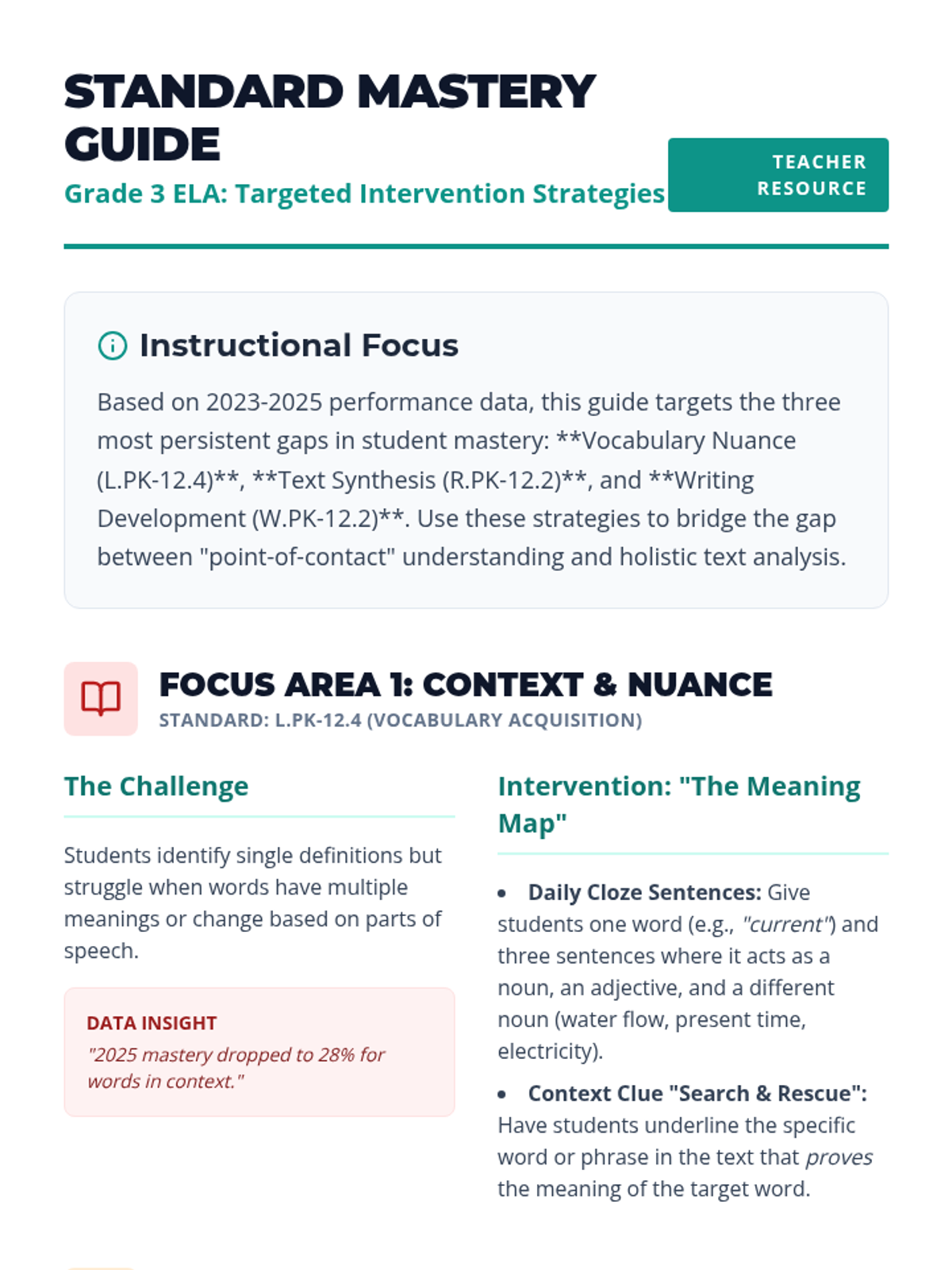
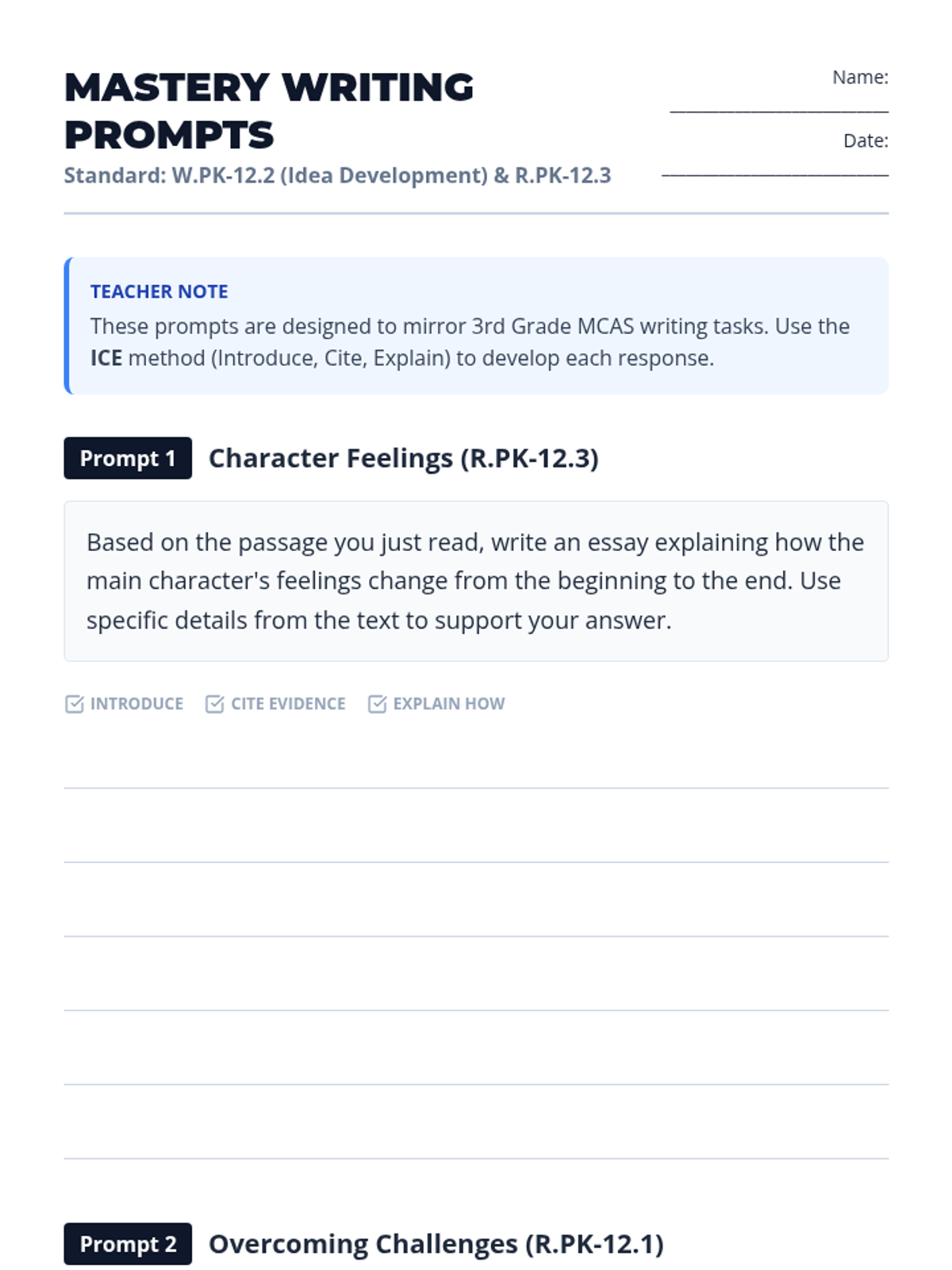
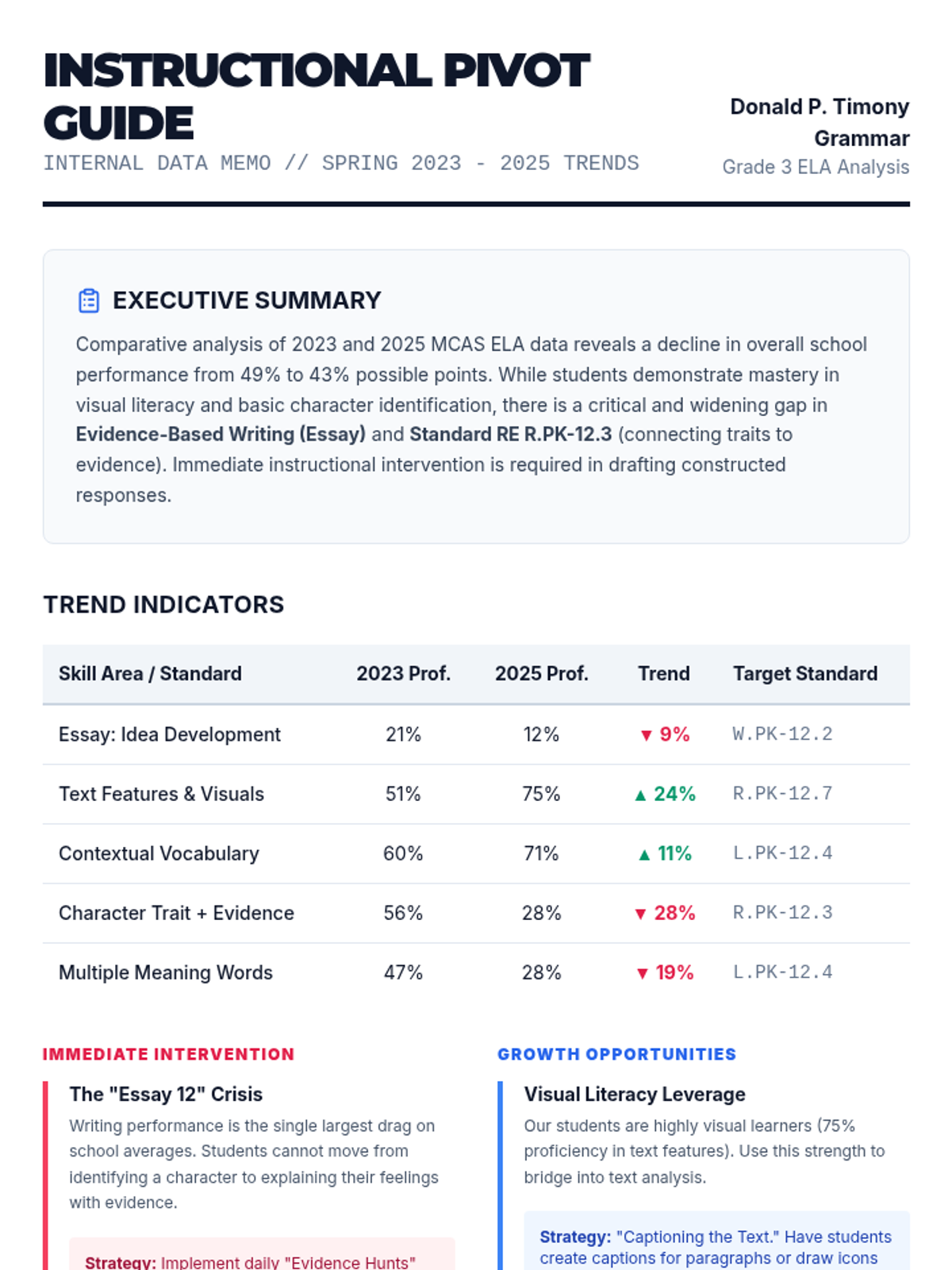
A comprehensive analysis of Grade 3 ELA MCAS data from 2023-2025, highlighting multi-year trends in student performance, strengths, and target areas for improvement.
A comprehensive analysis of Grade 3 ELA performance over three years, identifying critical trends in writing, reading comprehension, and language standards to inform instructional shifts.
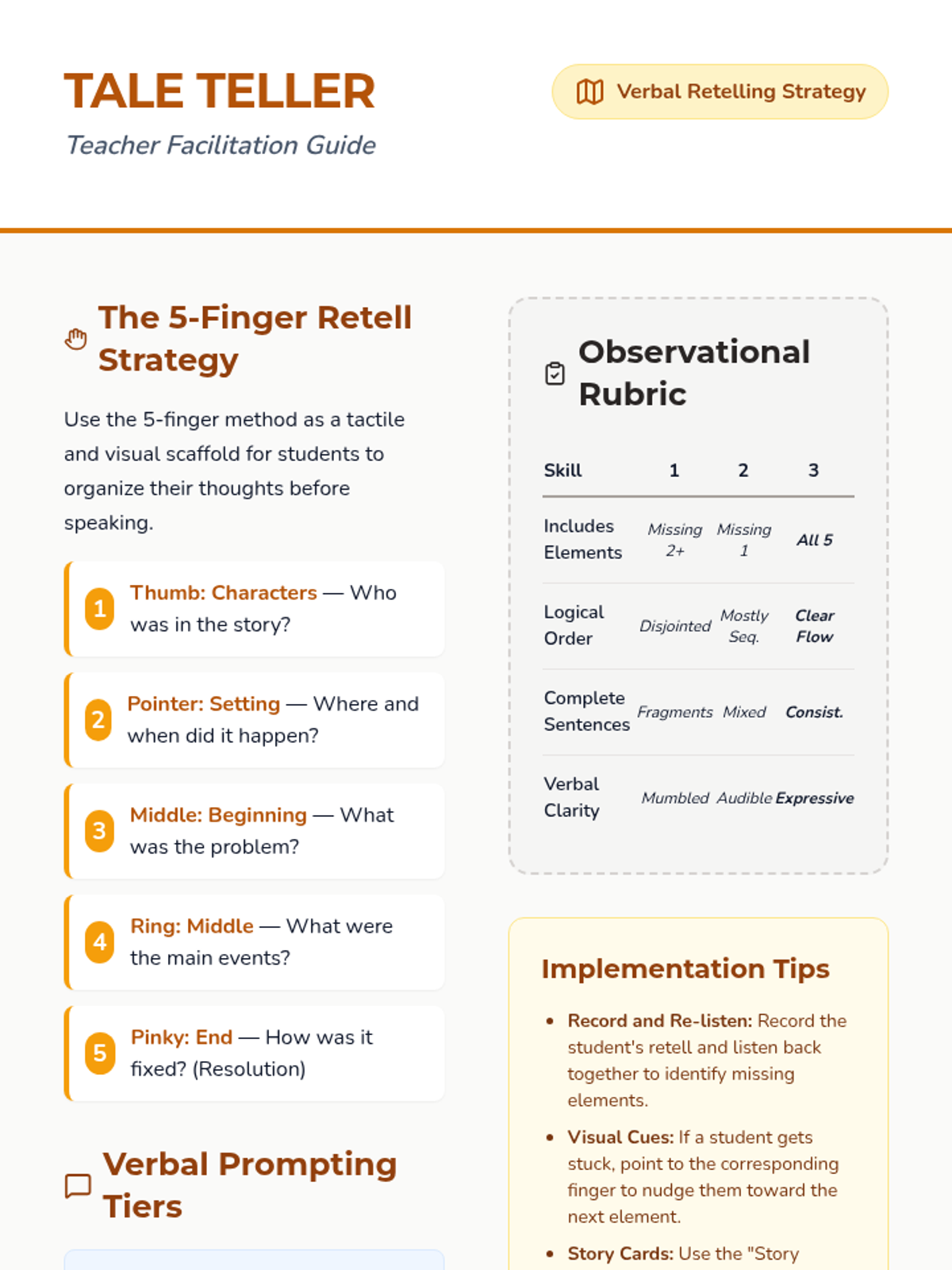
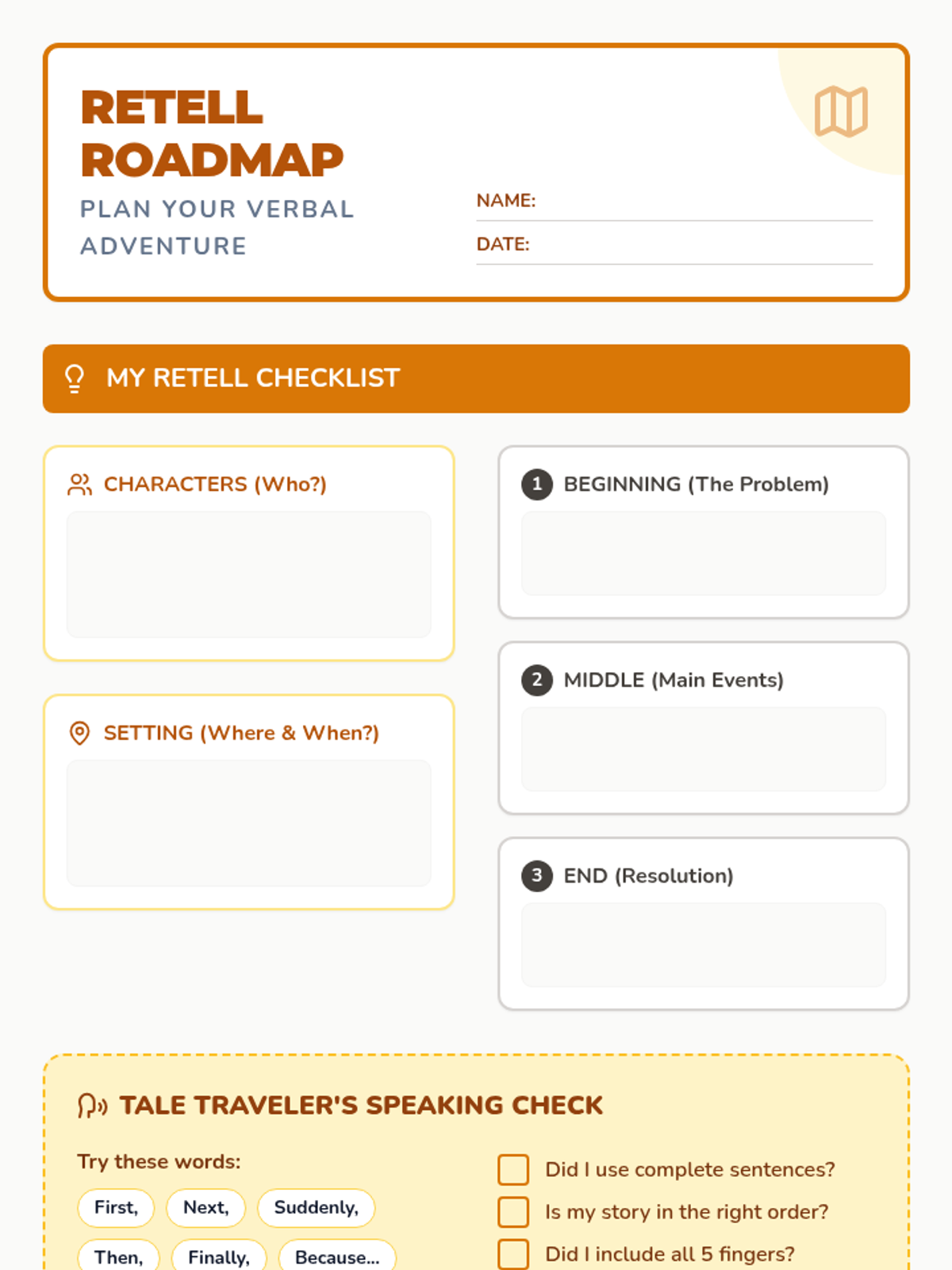
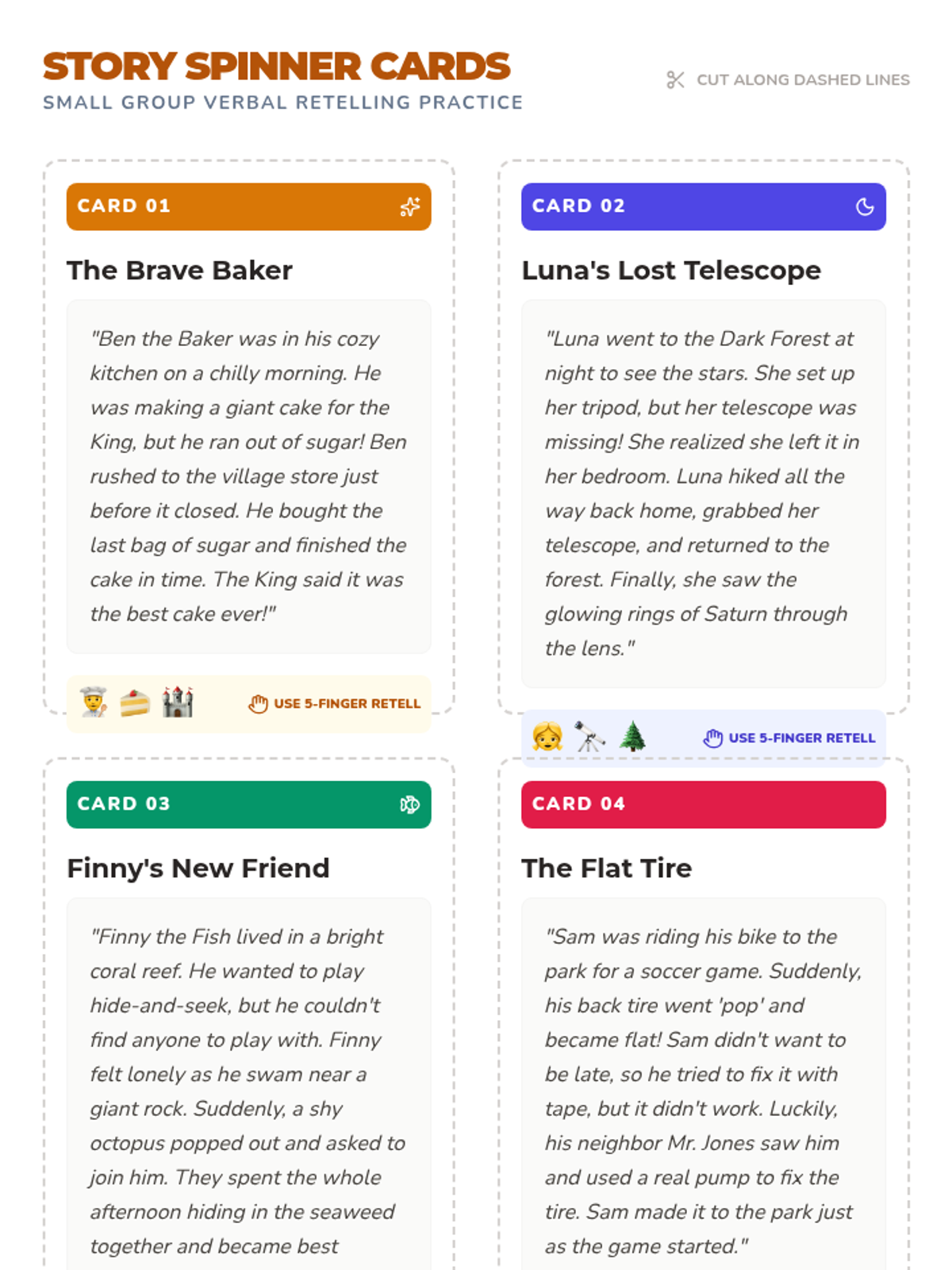
A lesson focused on developing verbal storytelling skills by teaching students to identify and retell key narrative elements in a logical sequence. Students use visual prompts and short stories to practice using complete sentences and clear structure.
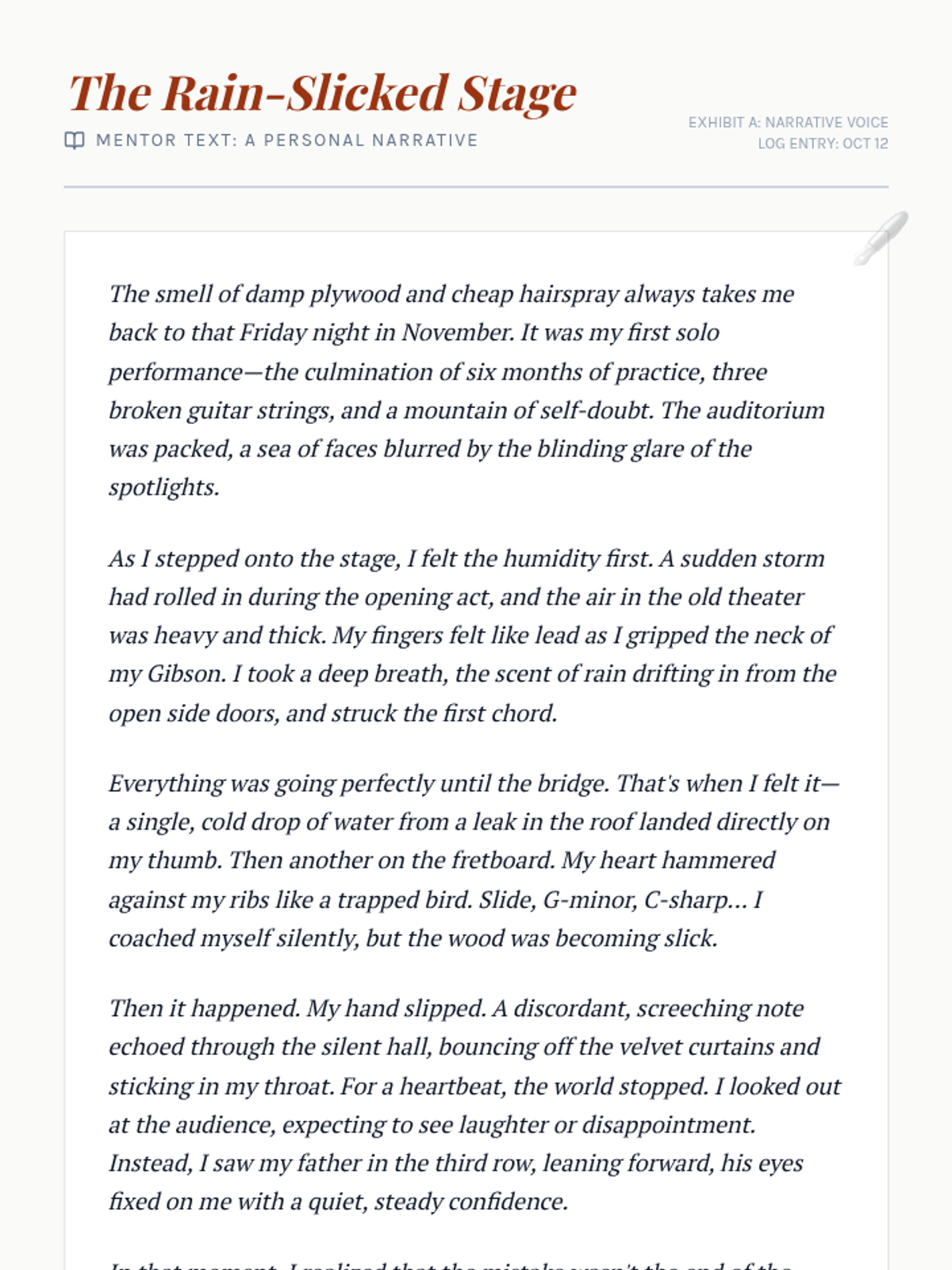
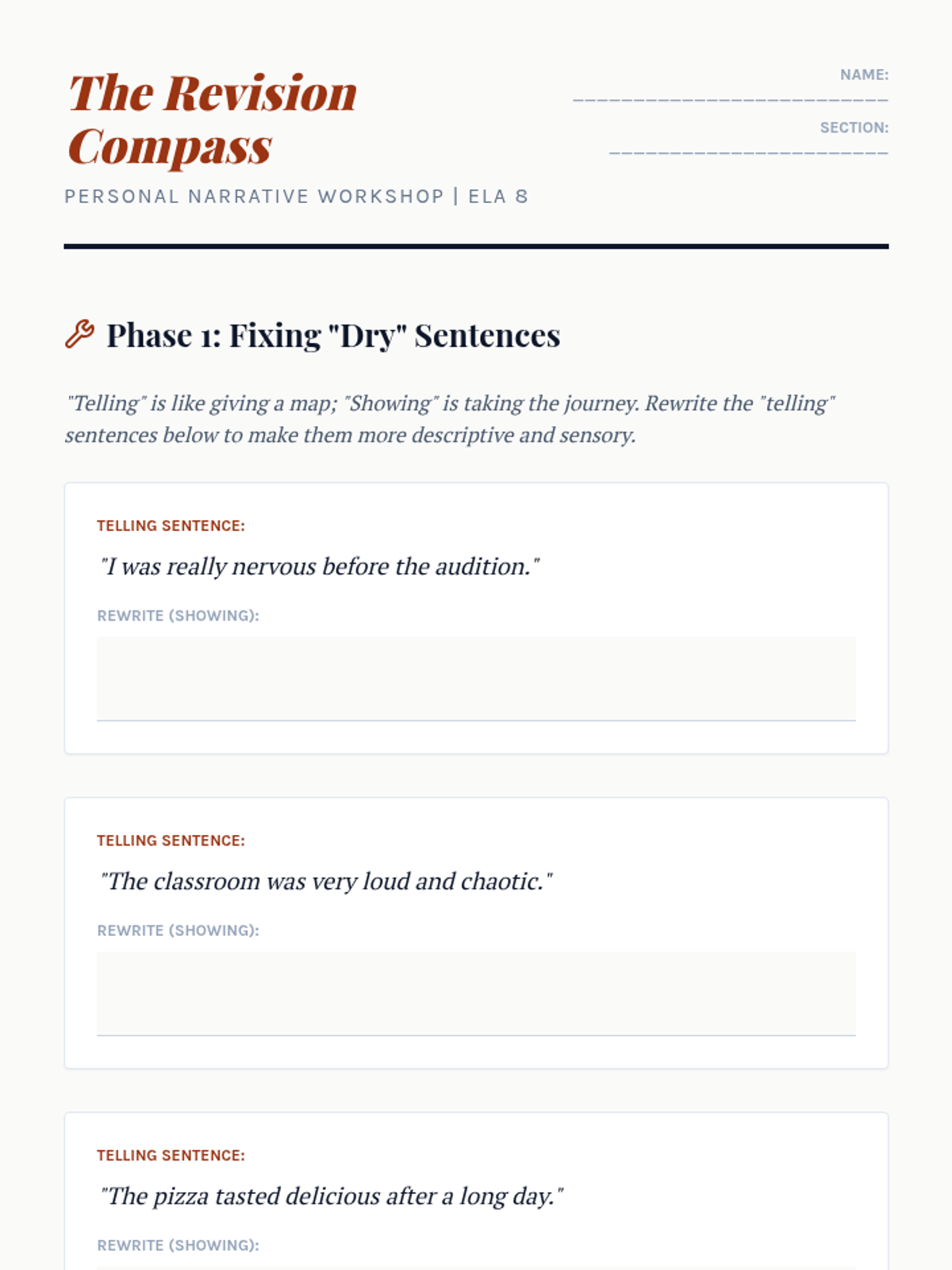
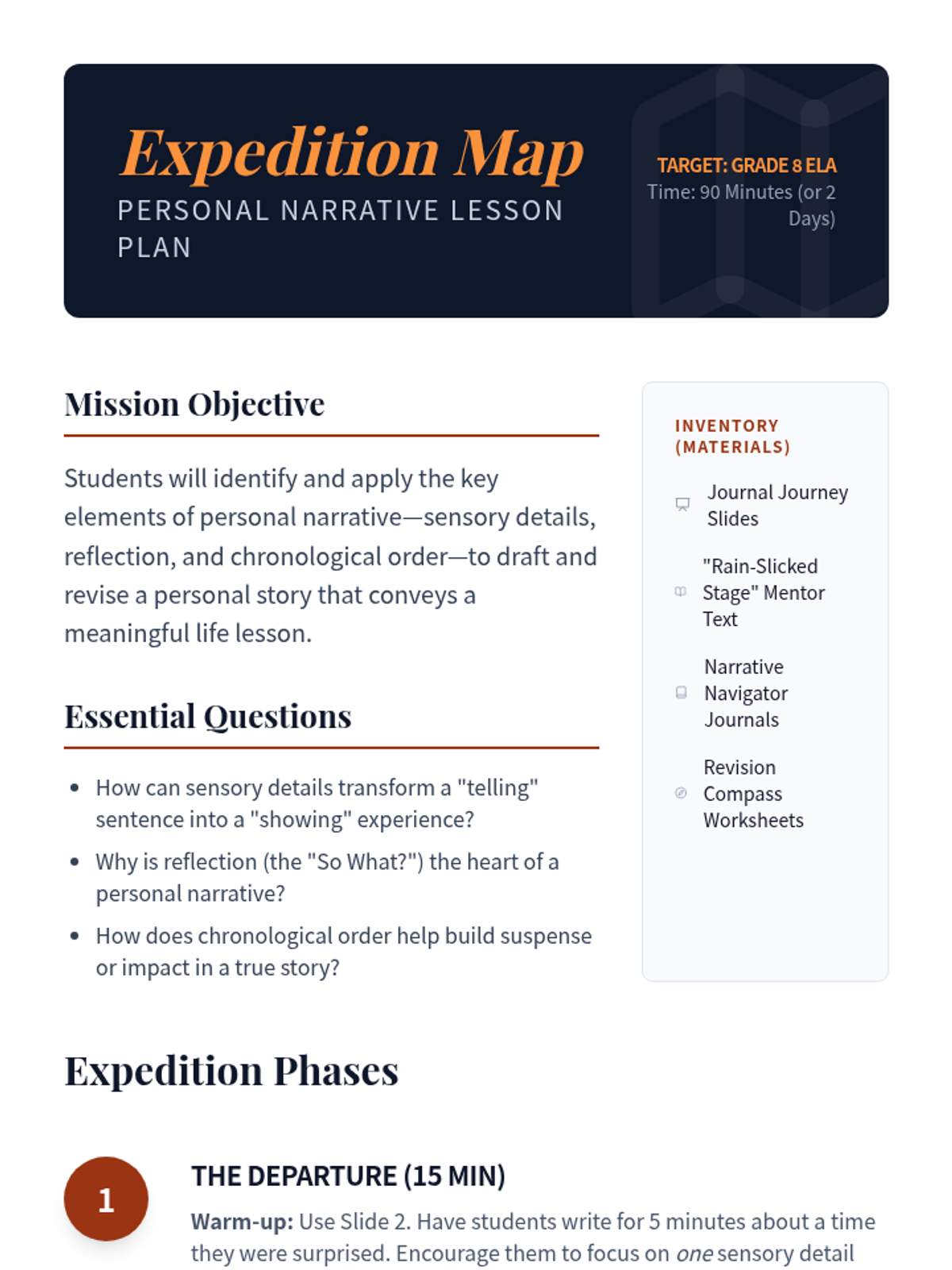
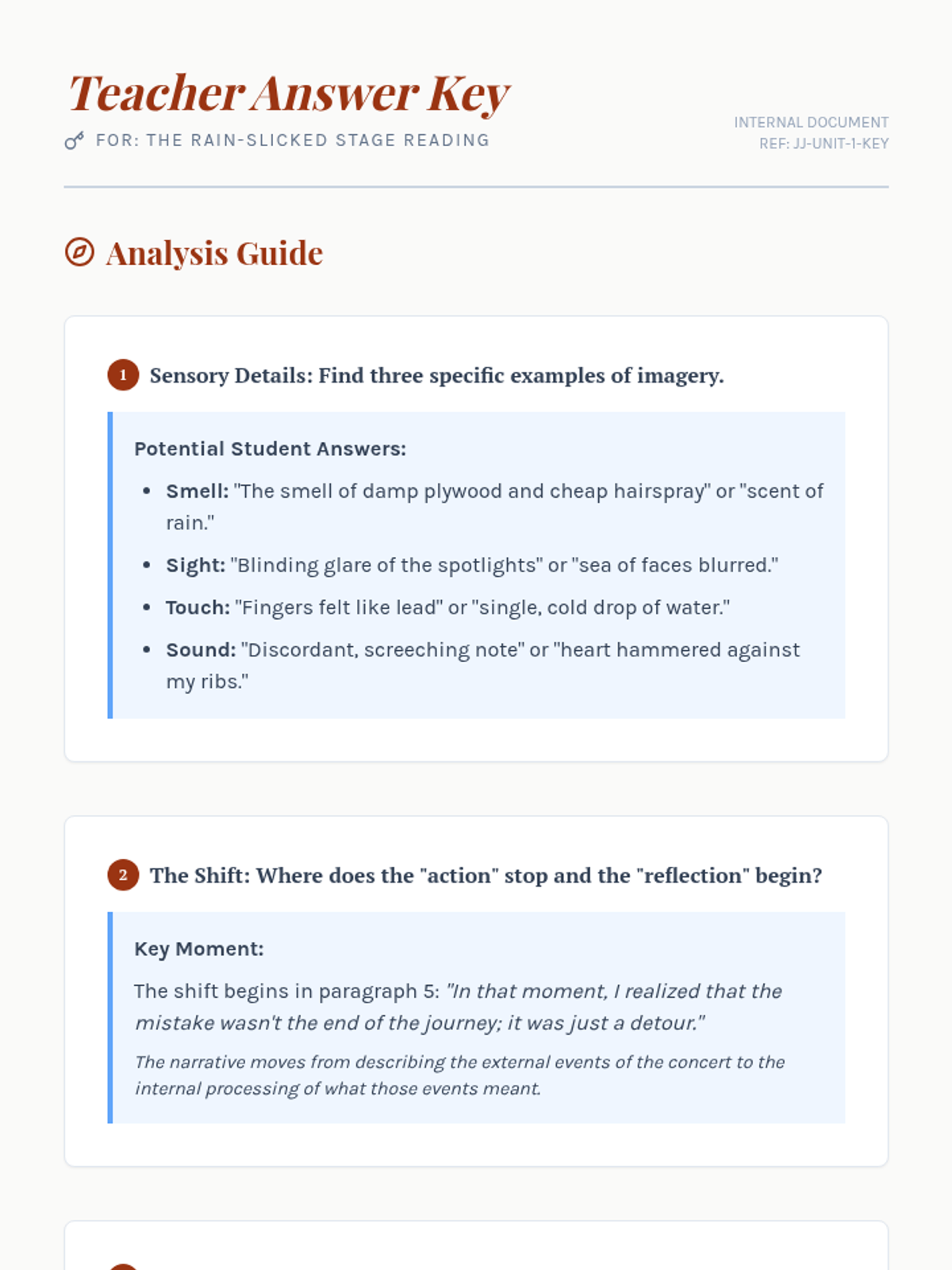
An 8th-grade ELA lesson on personal narratives, focusing on sensory details, reflection, and chronological order through a 'journey' theme. Students analyze mentor texts and draft their own expressive stories.
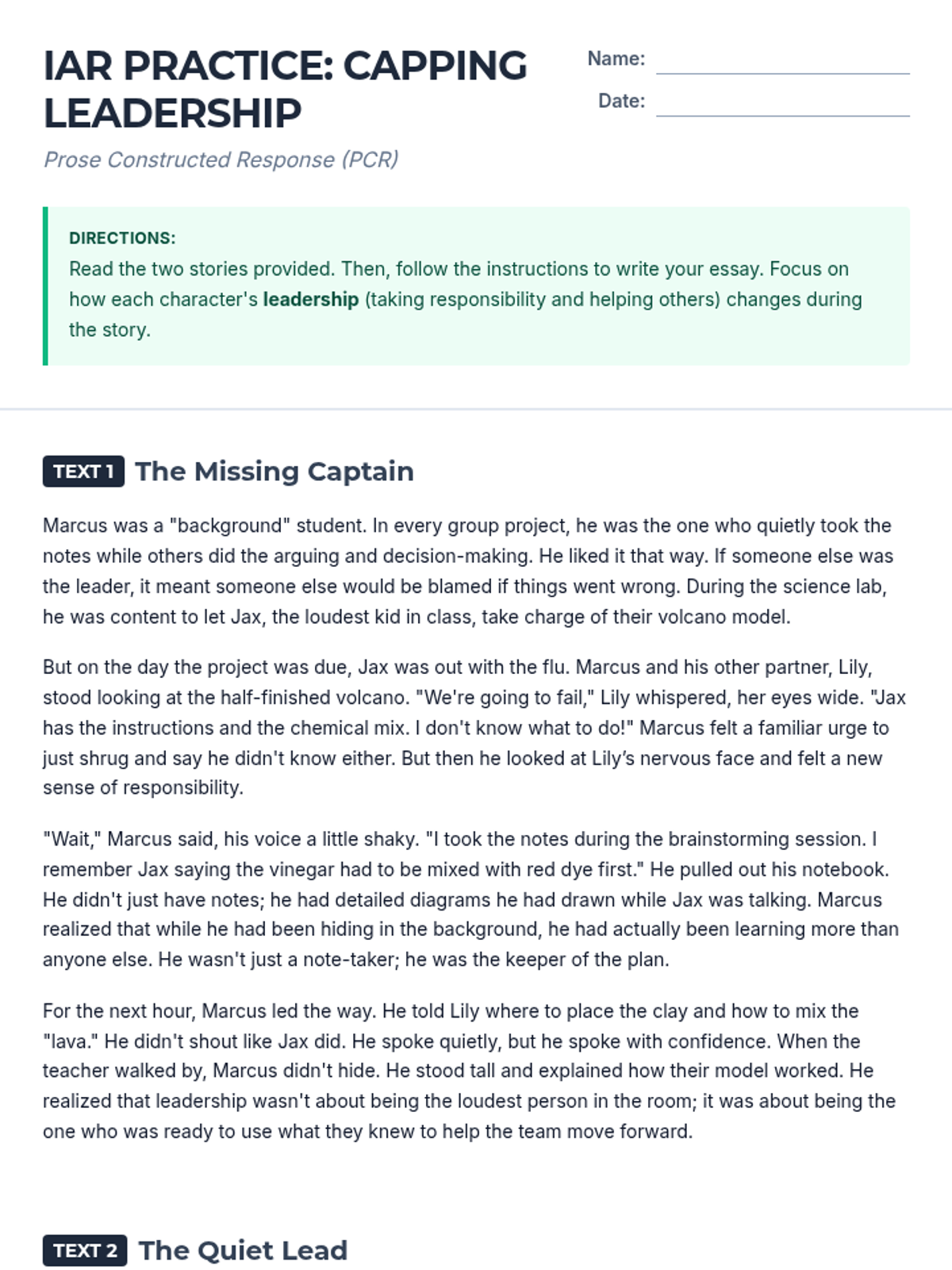
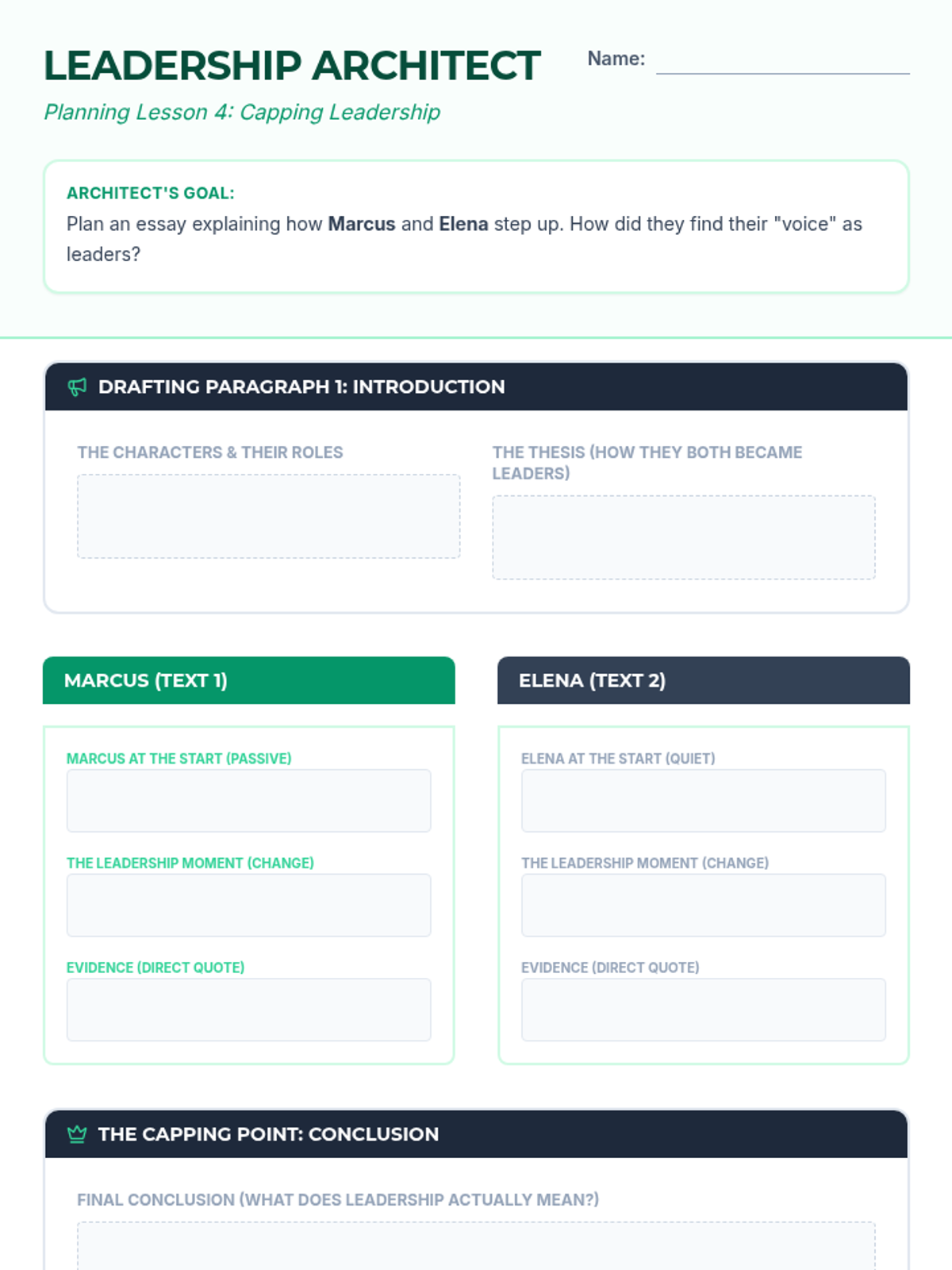
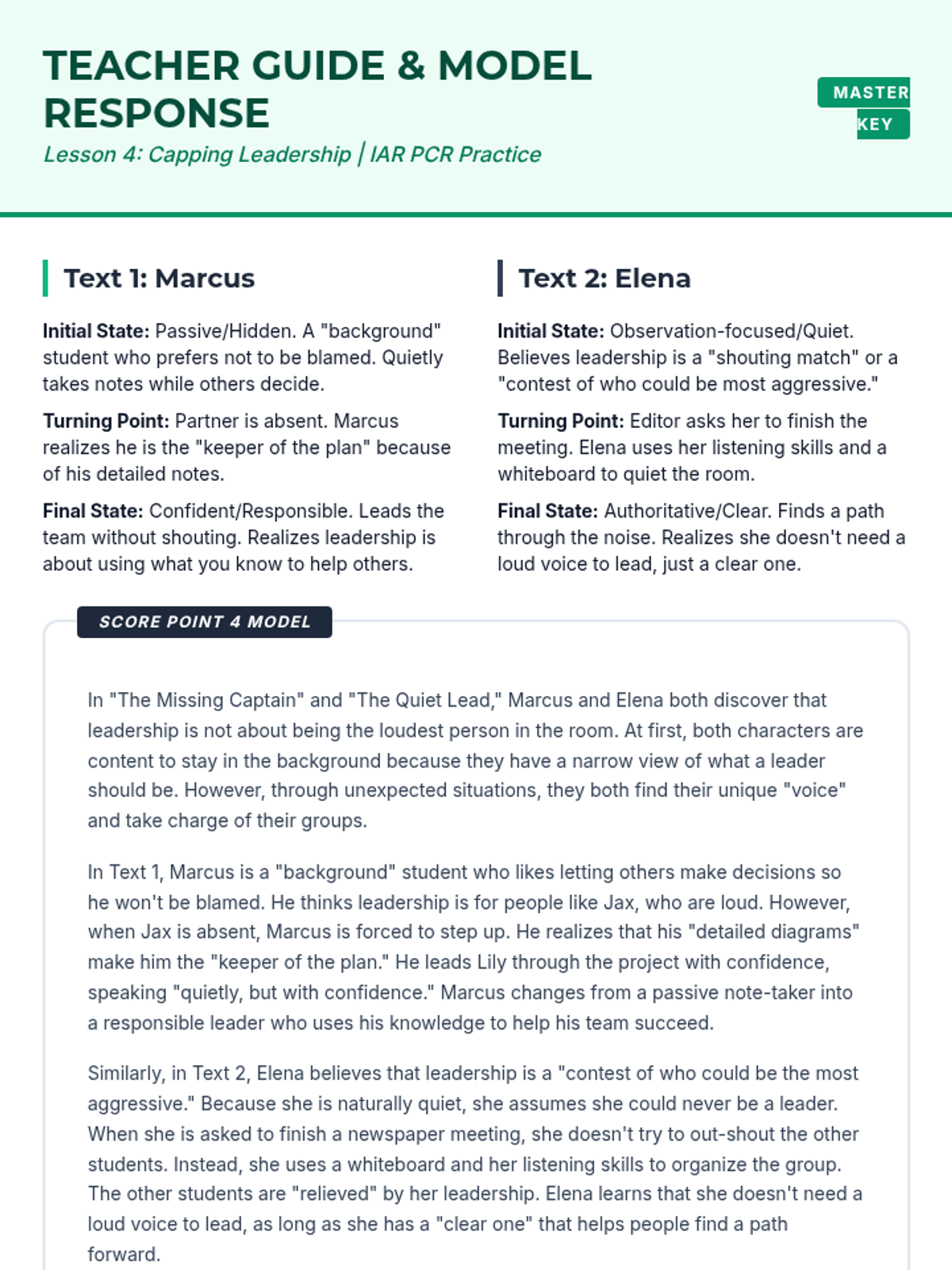
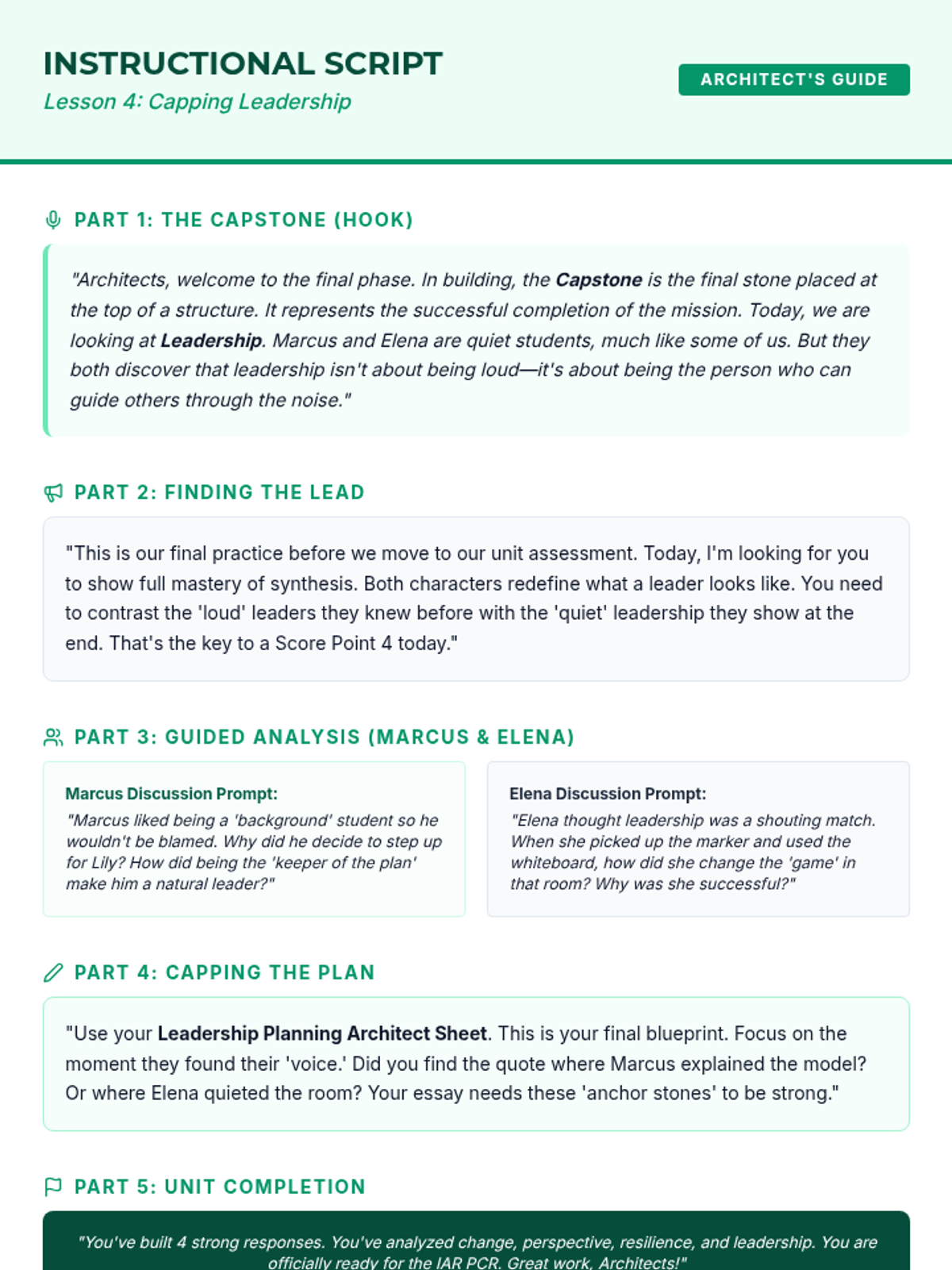
Students analyze how characters take on leadership roles and gain confidence. They compare two stories where characters move from being followers to taking active responsibility.
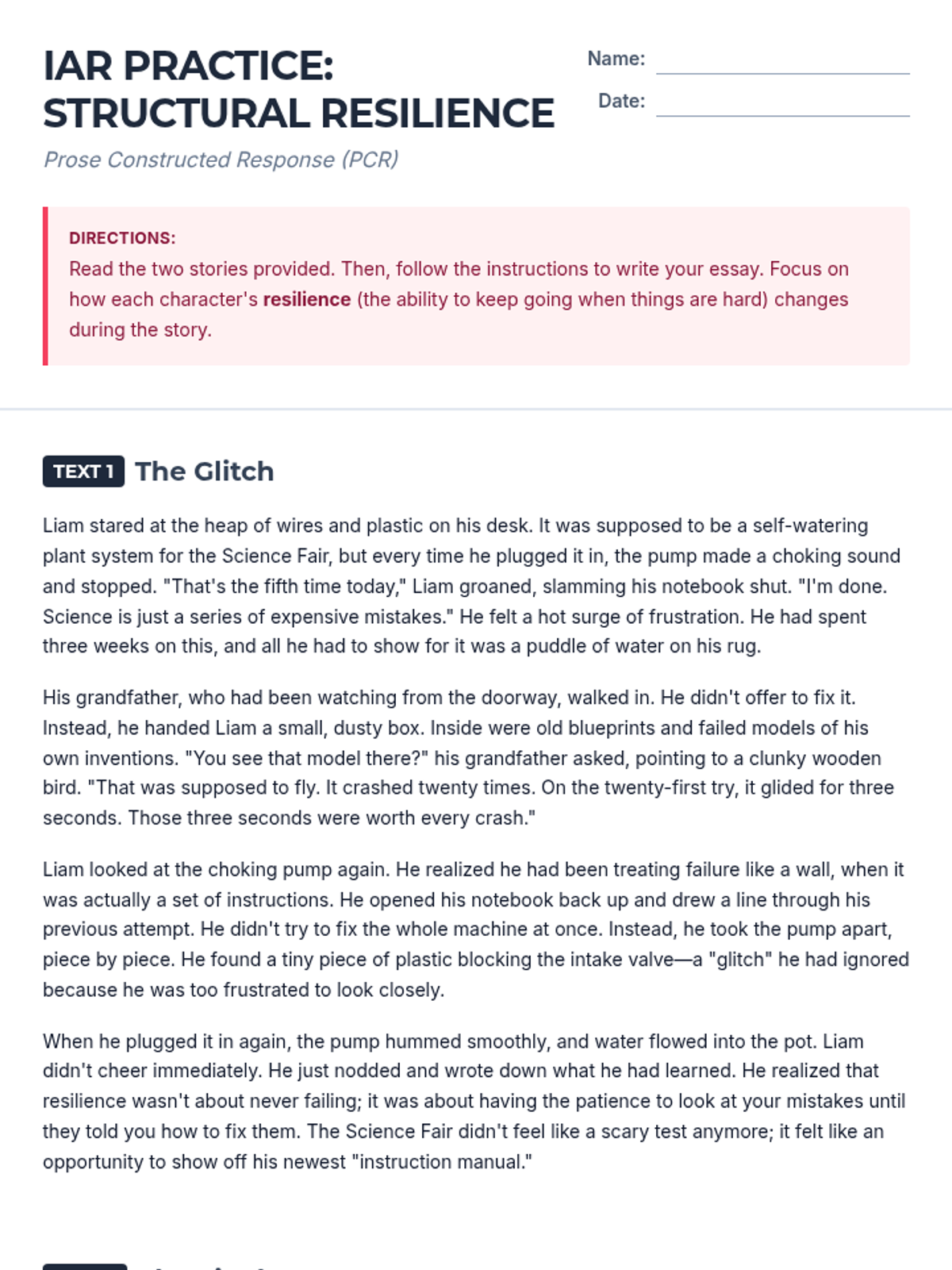
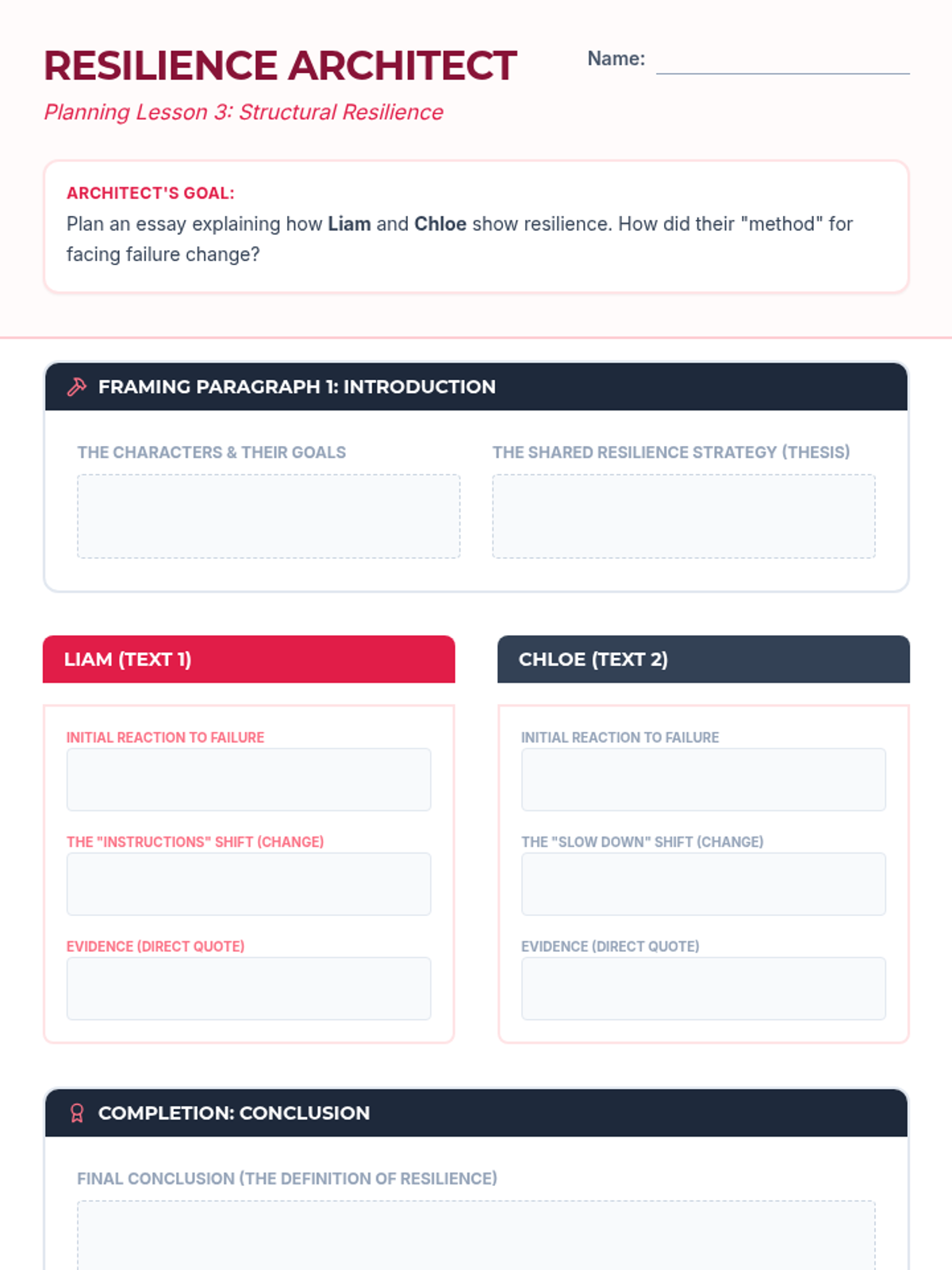
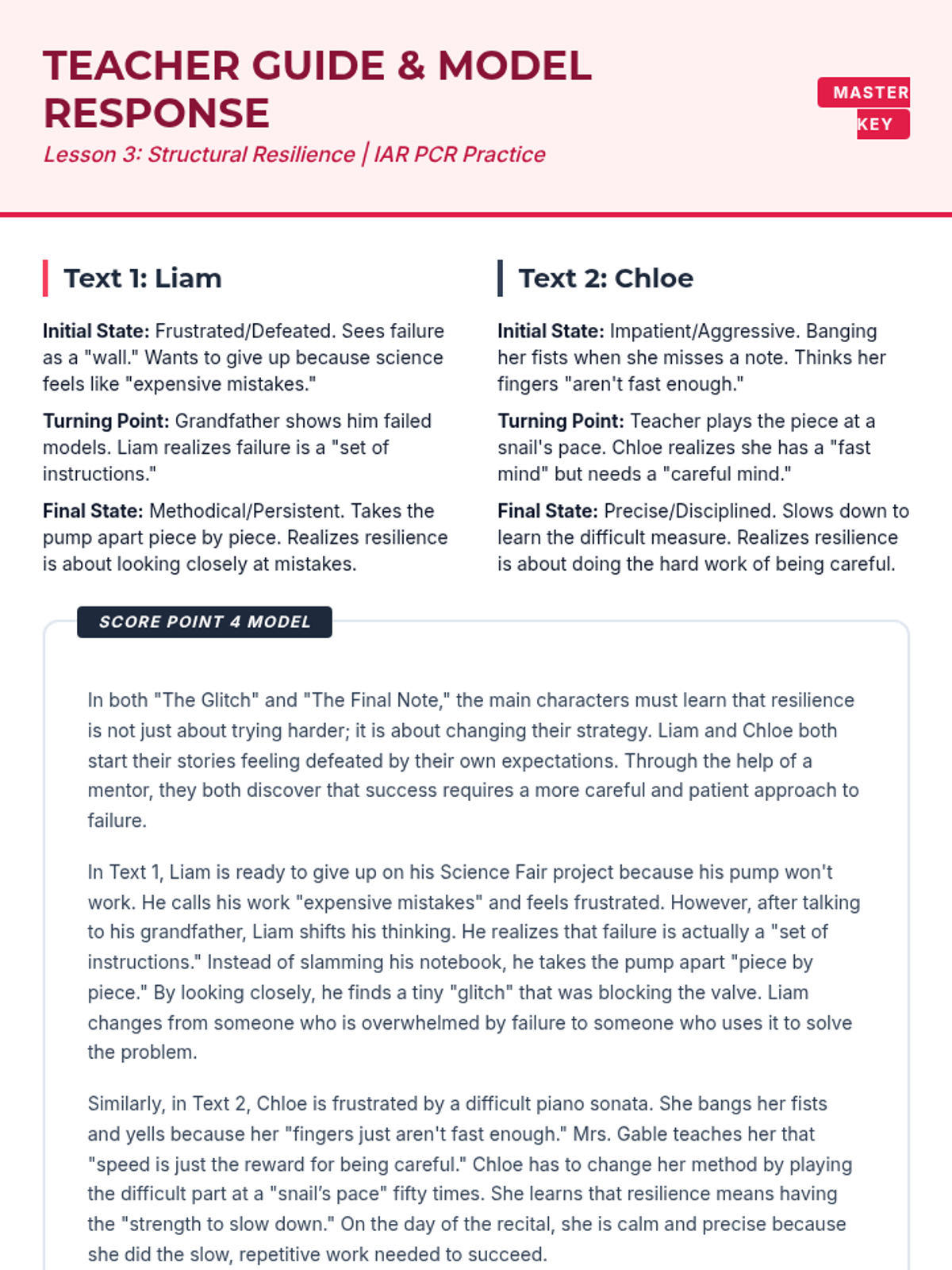
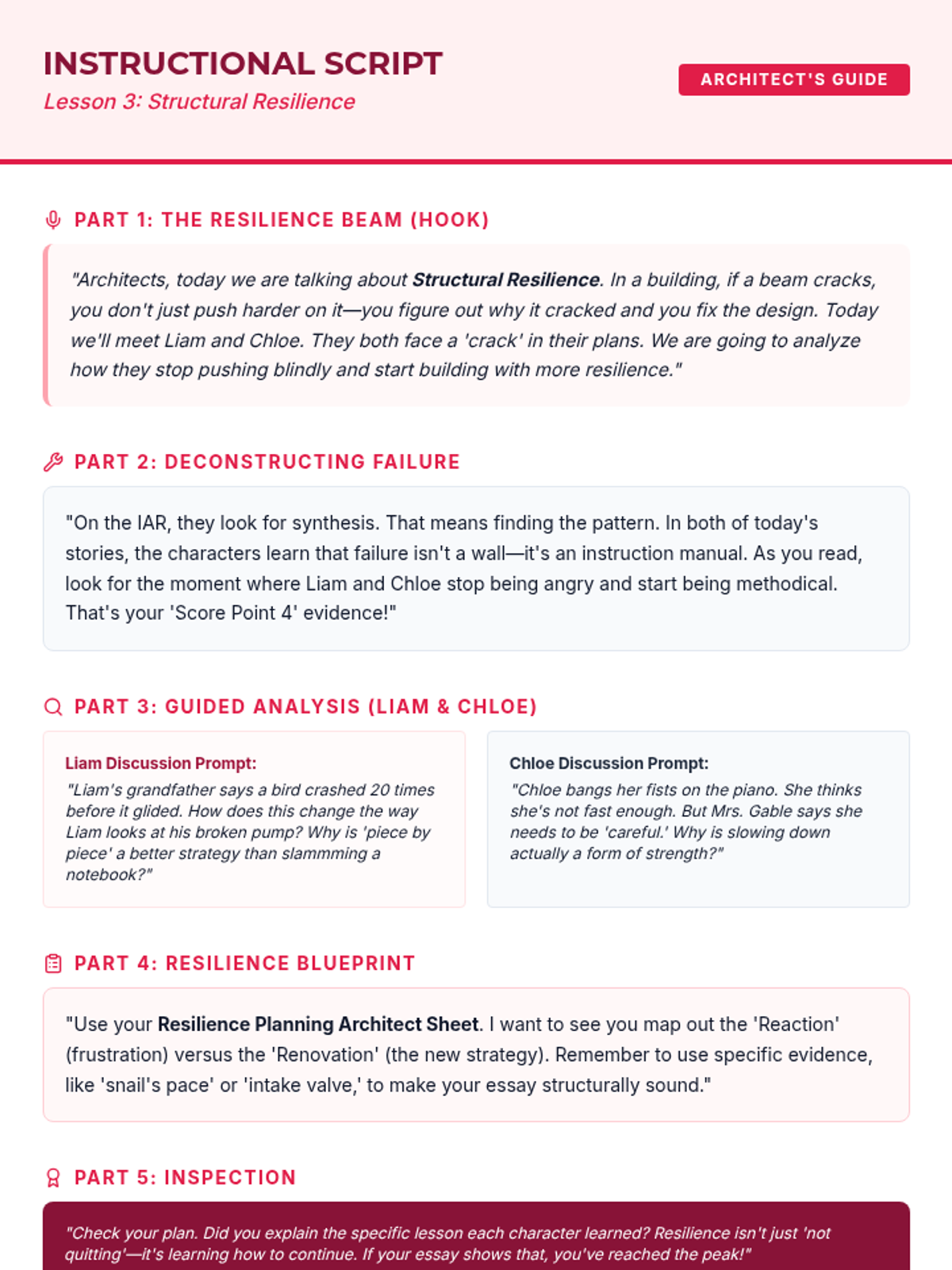
Students explore how characters develop resilience and persistence. They analyze two stories where characters face repeated failure before finding a new path to success.
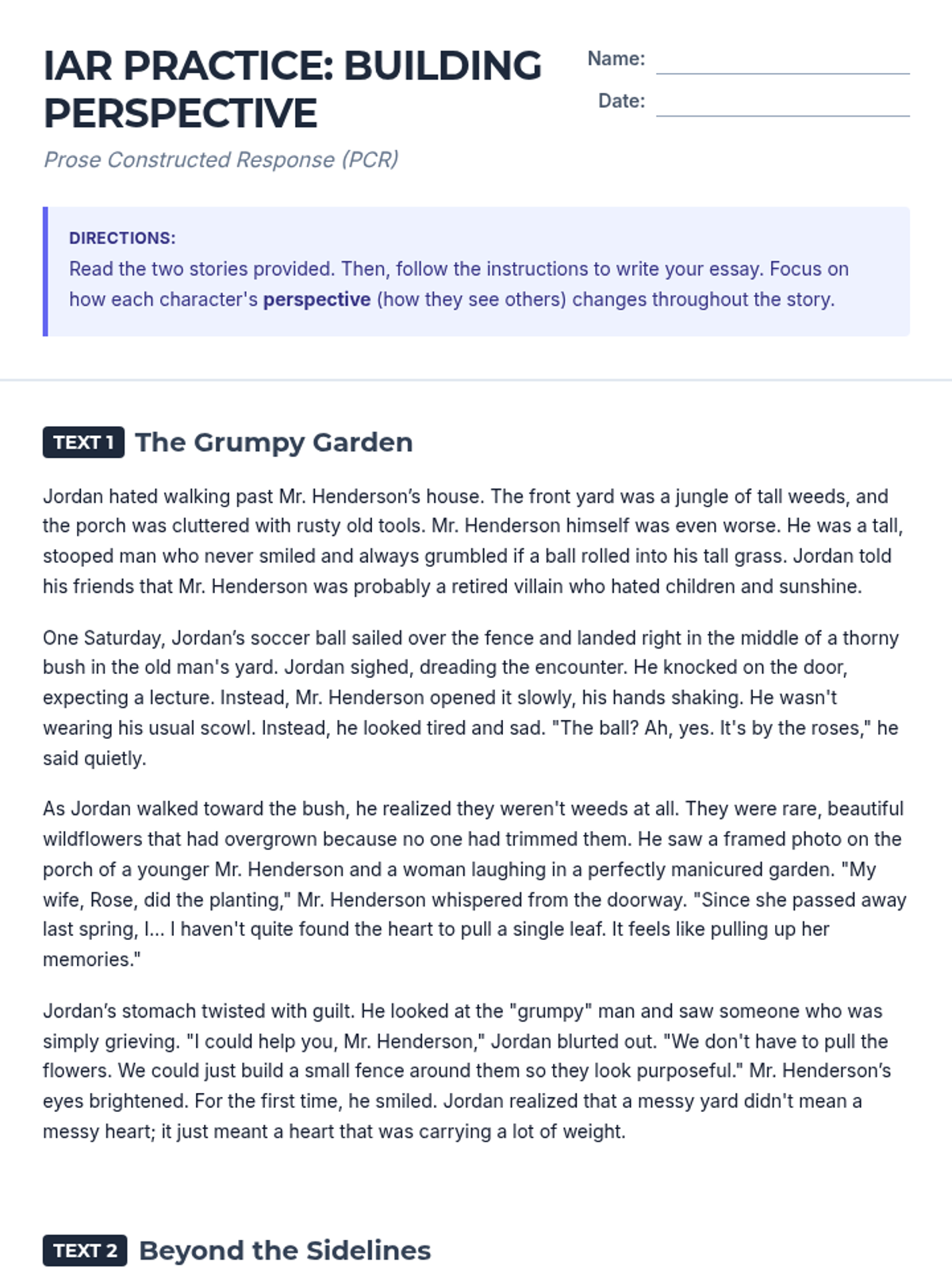
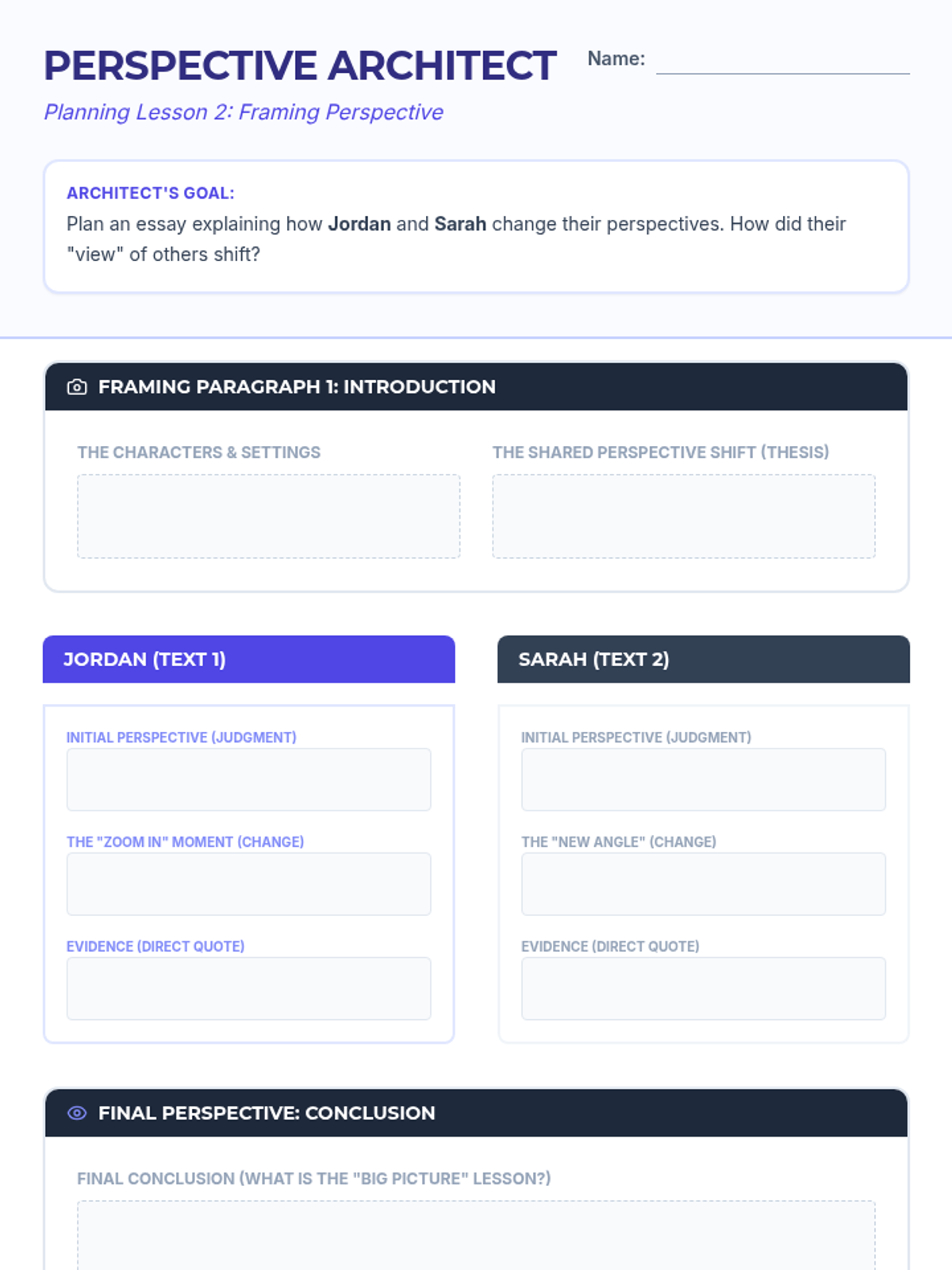
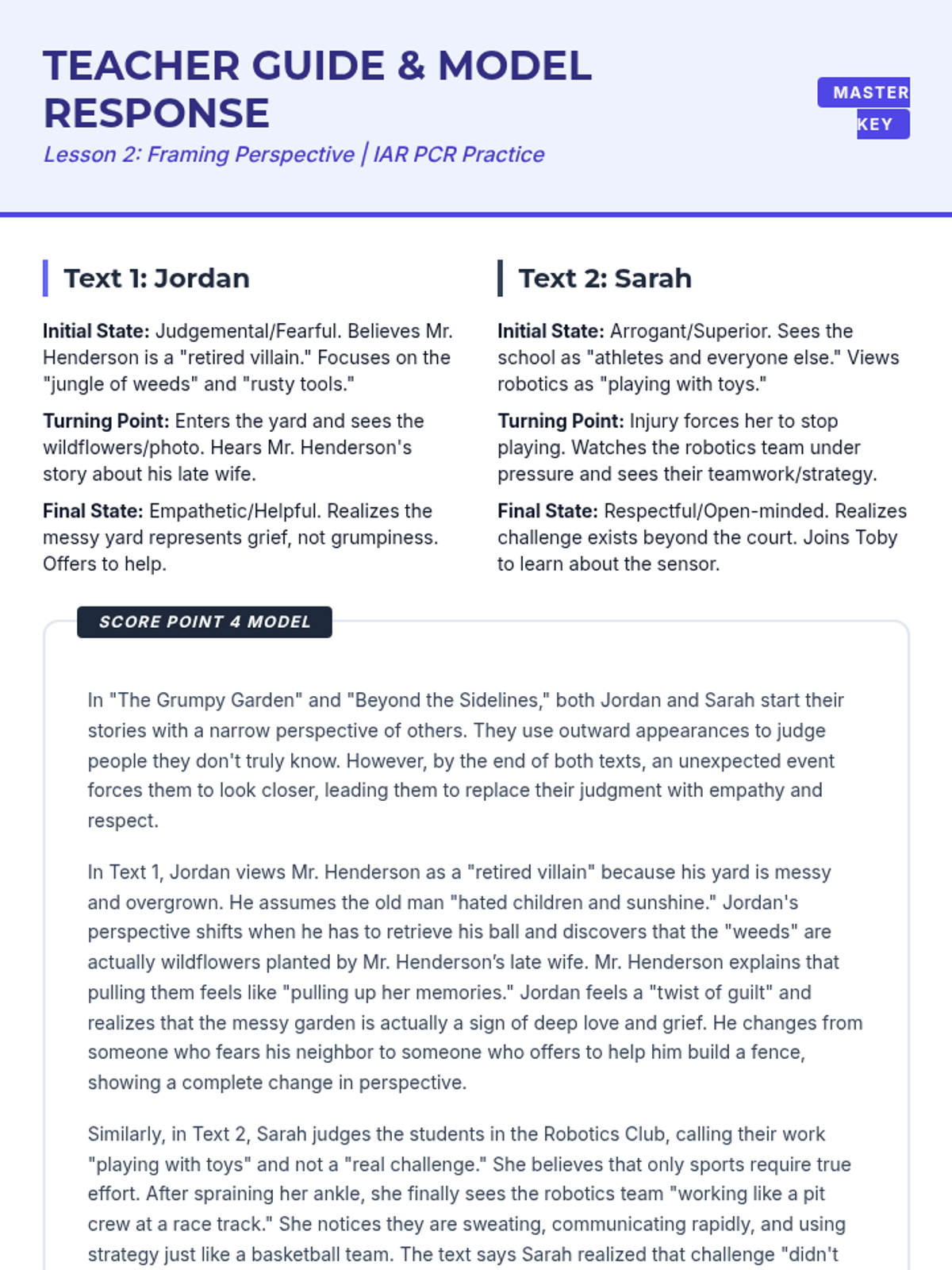
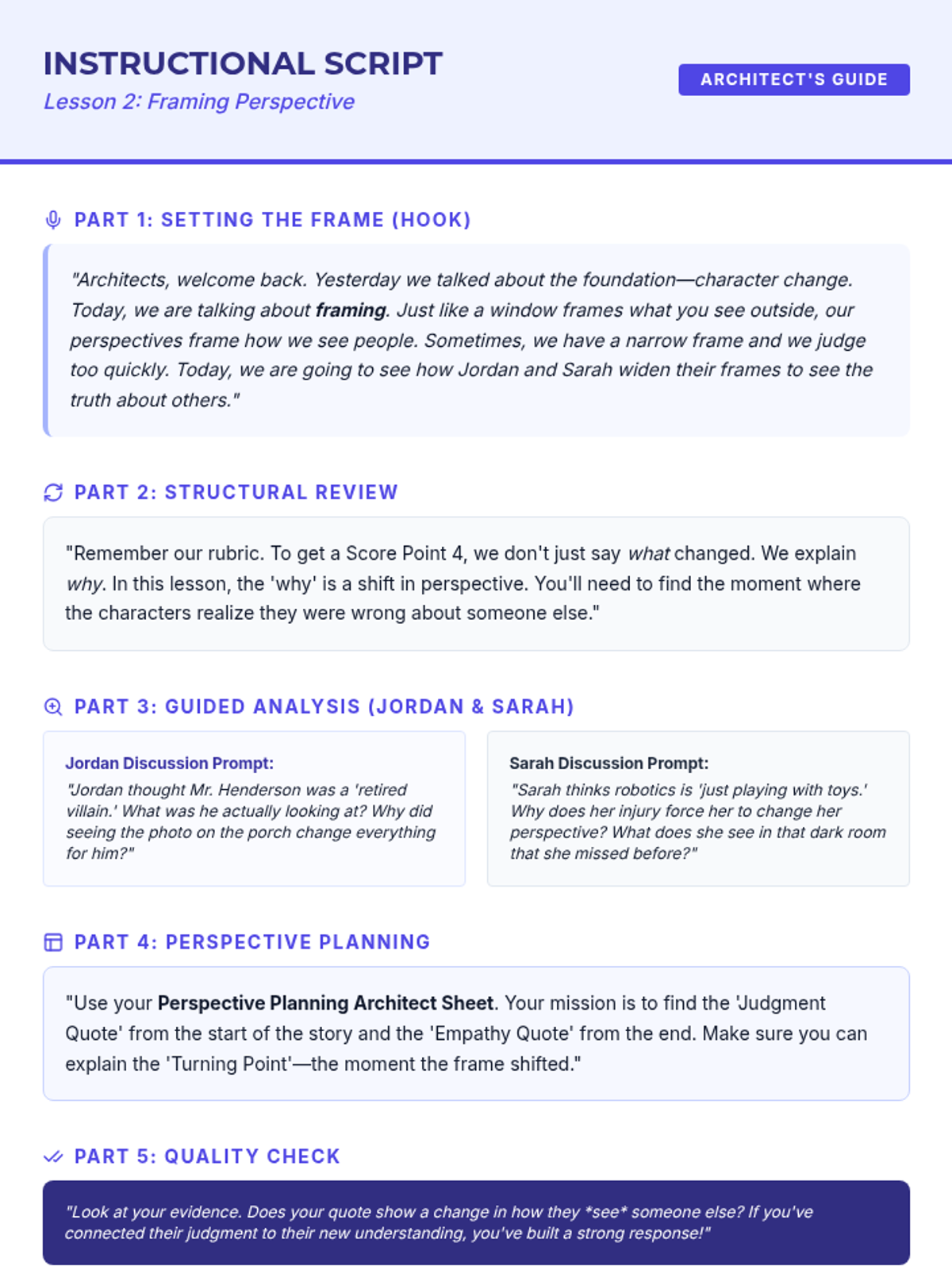
Students focus on how characters' perspectives shift from judgment to empathy. They analyze two stories where characters overcome initial biases to form new understandings.