A lesson focused on teaching eighth-grade students how to synthesize information from paired fiction and nonfiction texts. It includes a structured student worksheet with graphic organizers, guided note-taking, and step-by-step scaffolding.
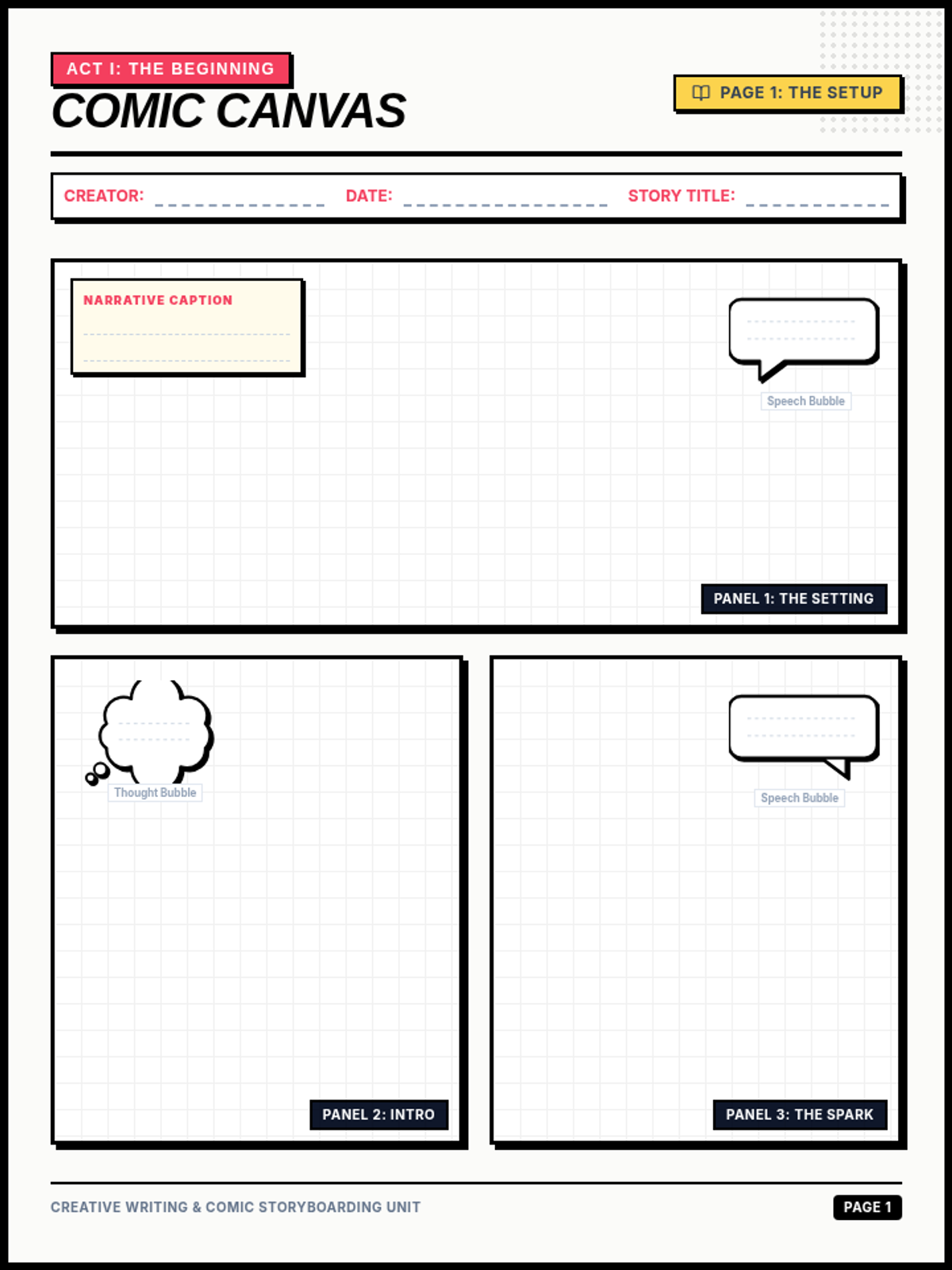
A creative narrative writing lesson that guides students through structural comic book creation, character design, and panel-by-panel storytelling using visual templates.
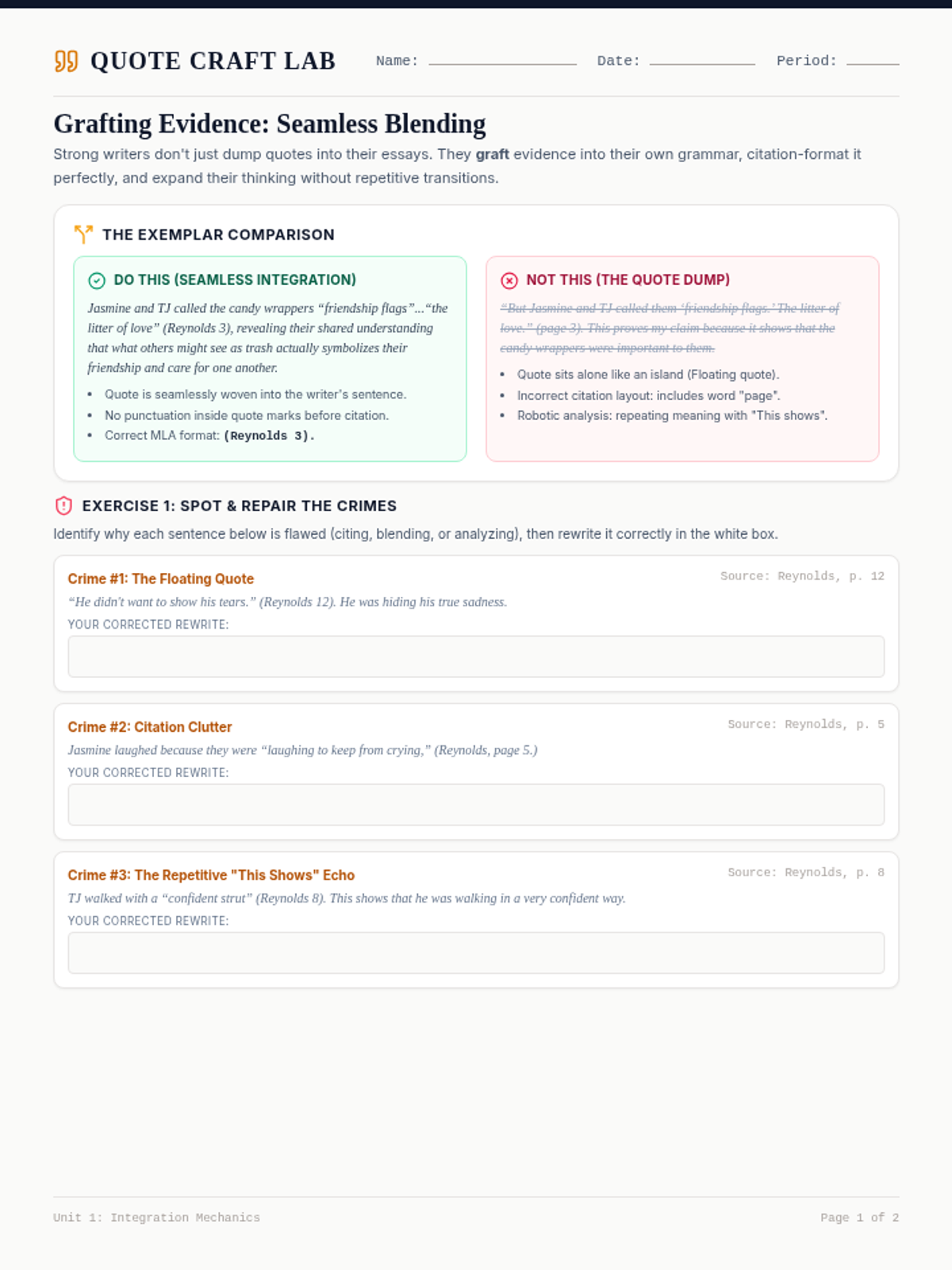
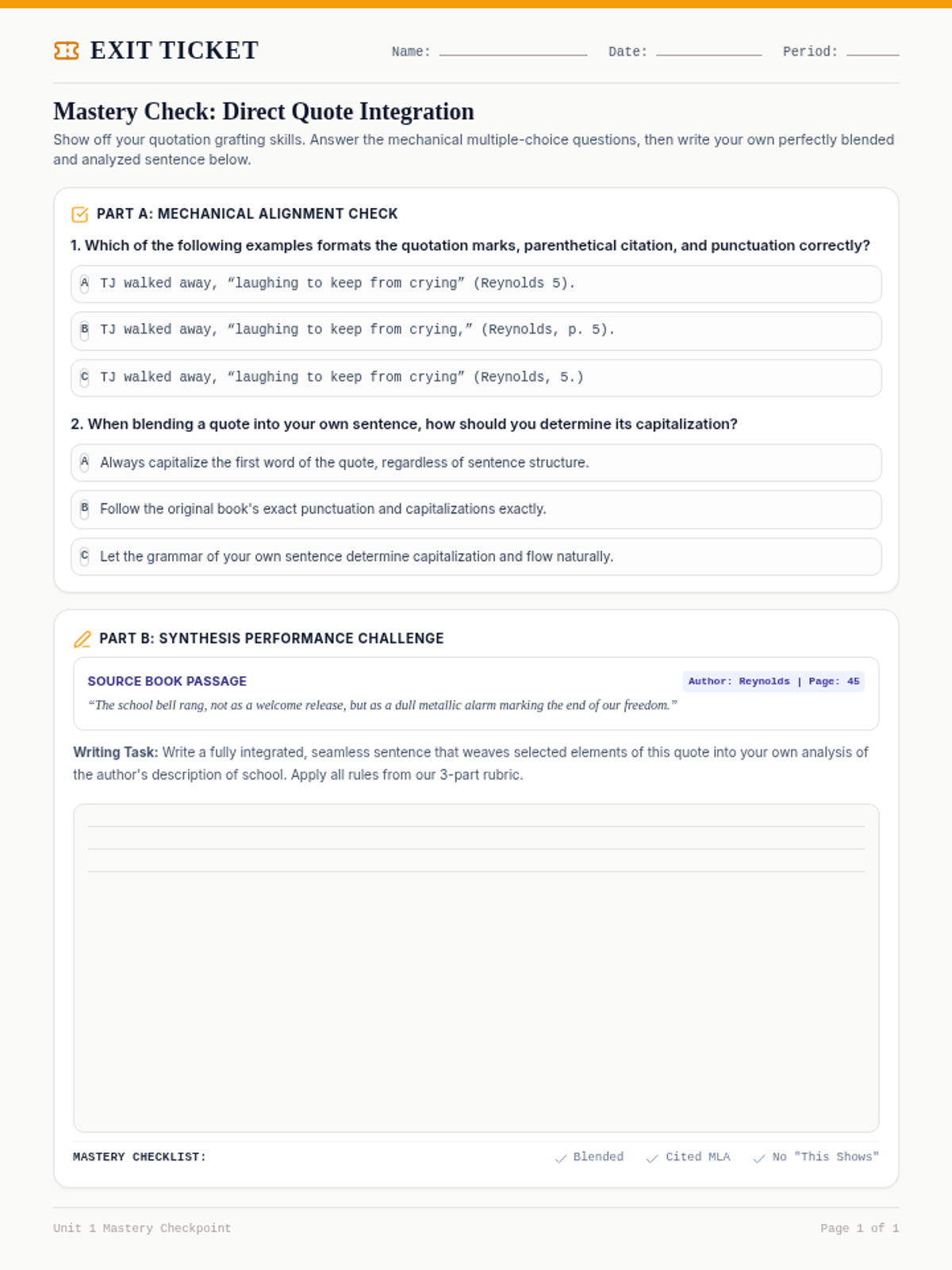
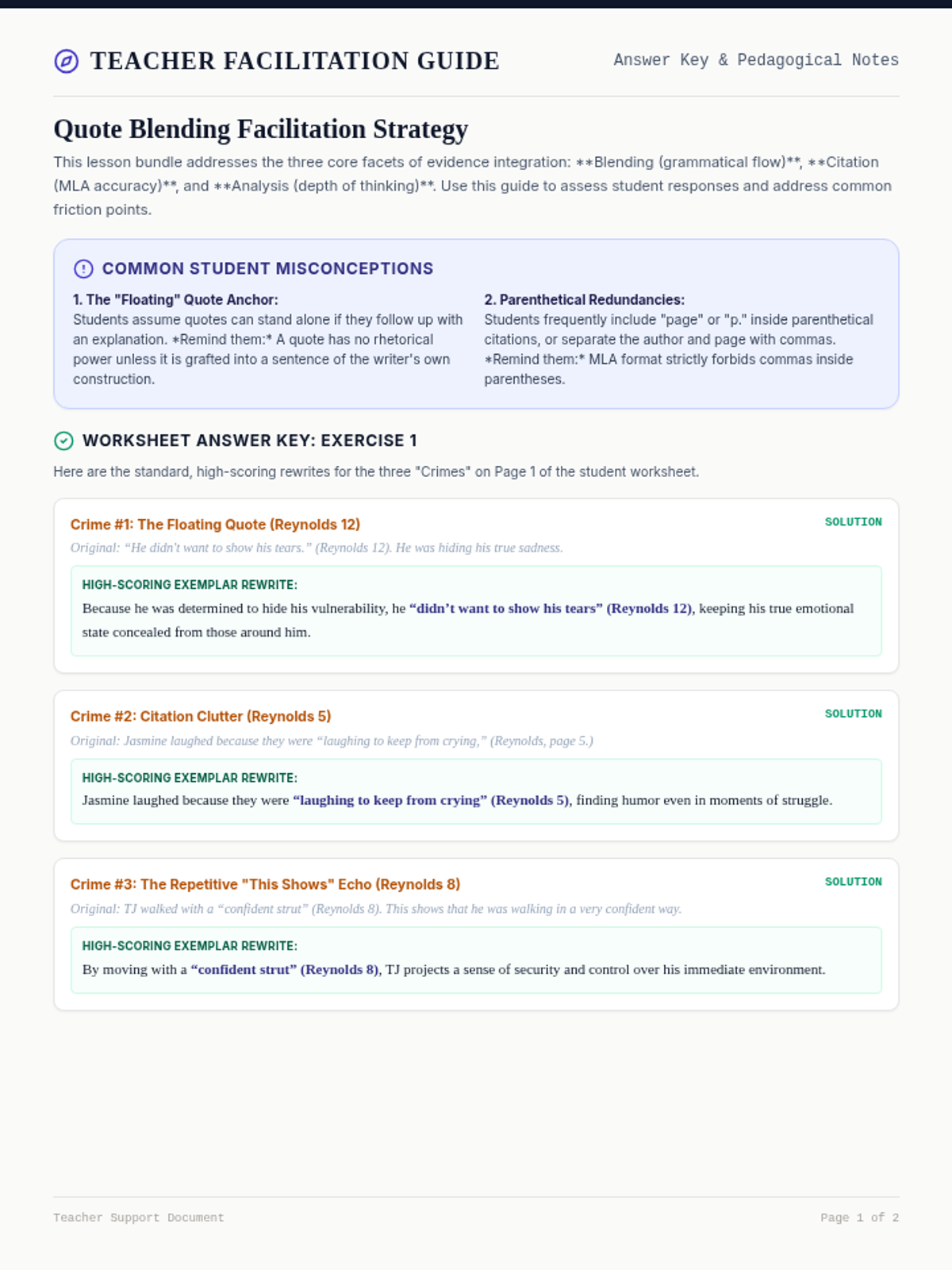
A complete lesson bundle focusing on the mechanics and analysis of direct quotations. Students learn to seamlessly blend quotes, apply correct MLA citations, and write sophisticated analysis using a structured rubric.
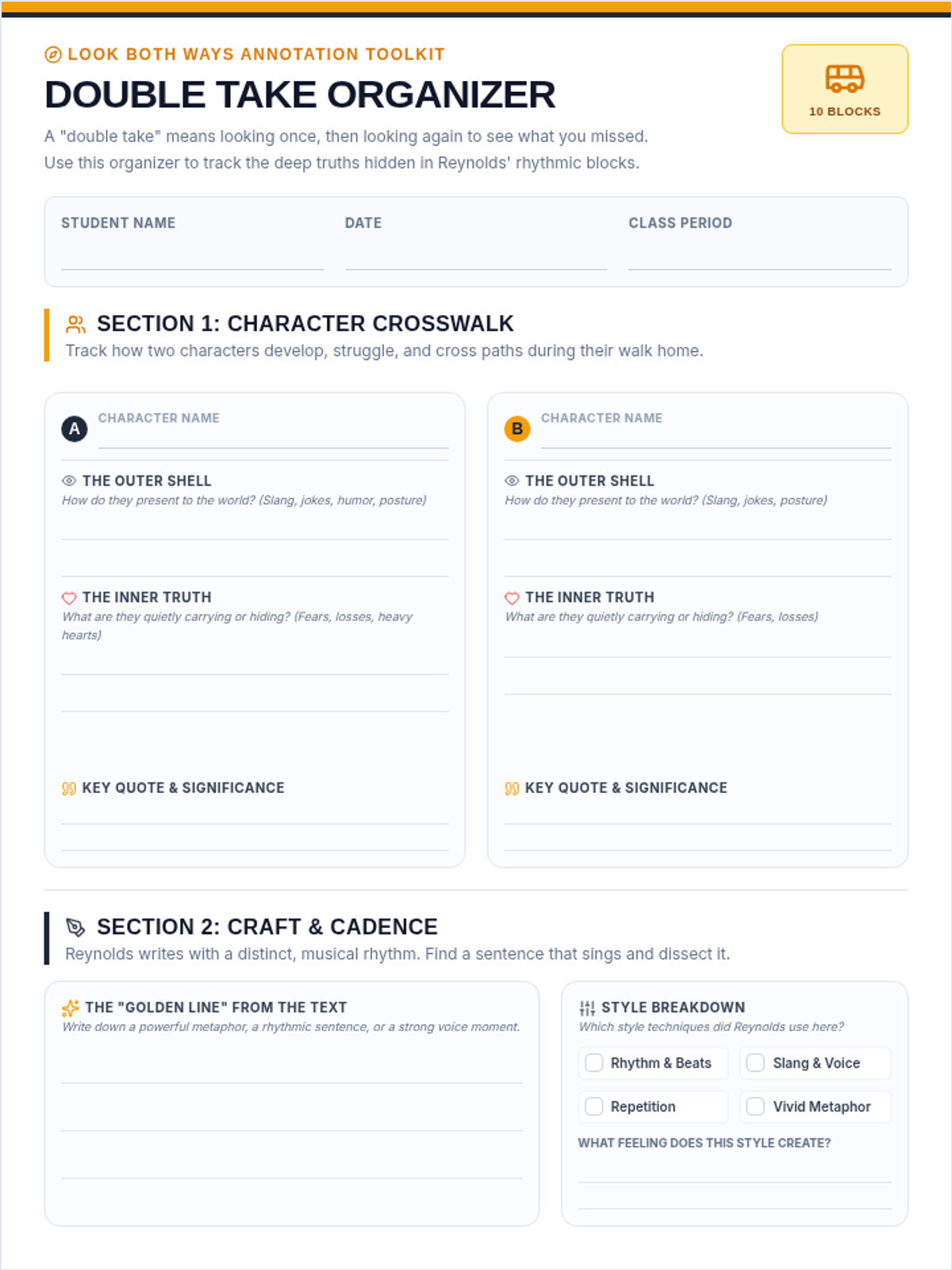
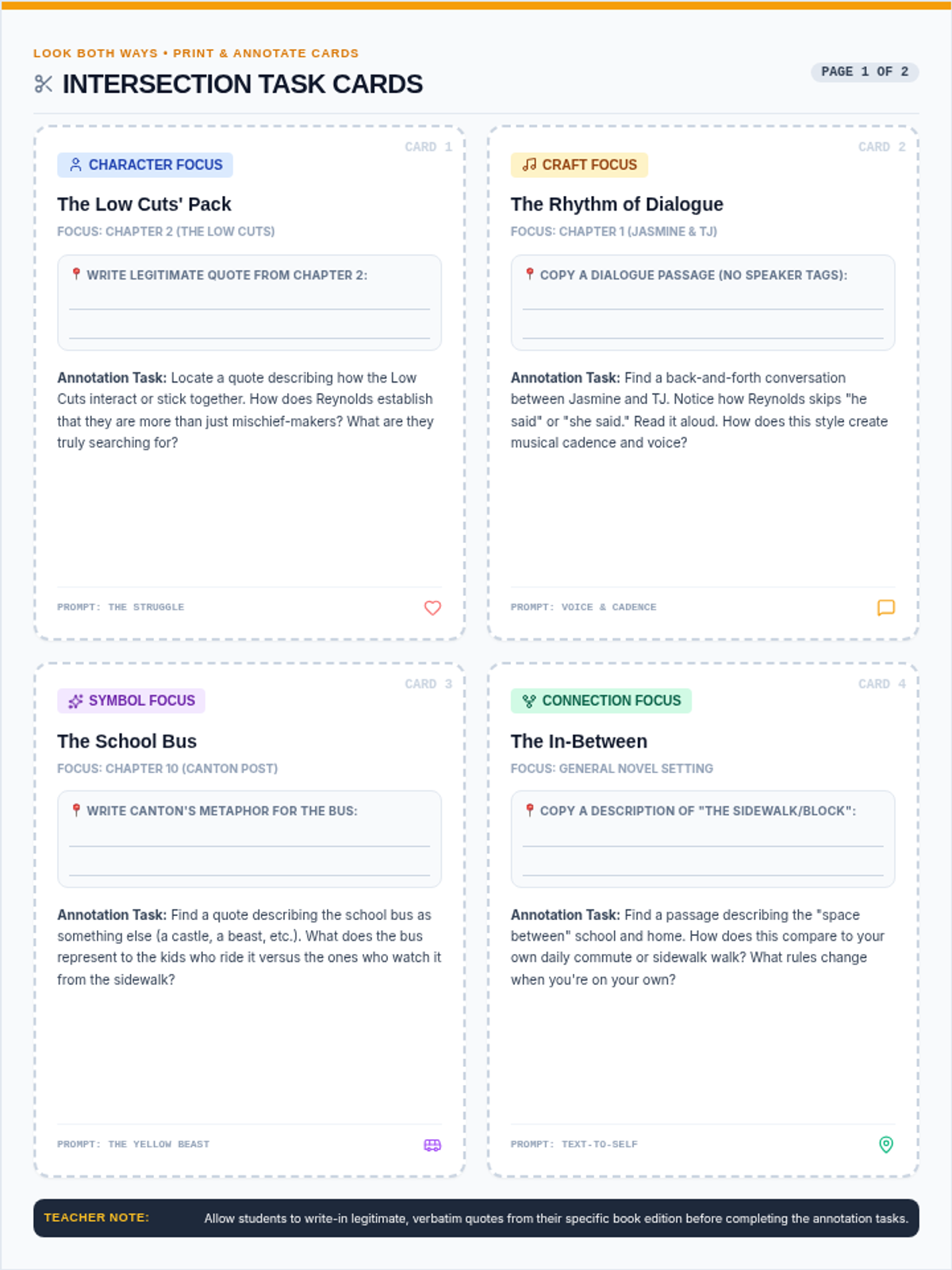
A comprehensive annotation toolkit based on Jason Reynolds' novel Look Both Ways. Students analyze character development, author's craft, thematic motifs, and make active reading connections as they explore the spaces between school and home.
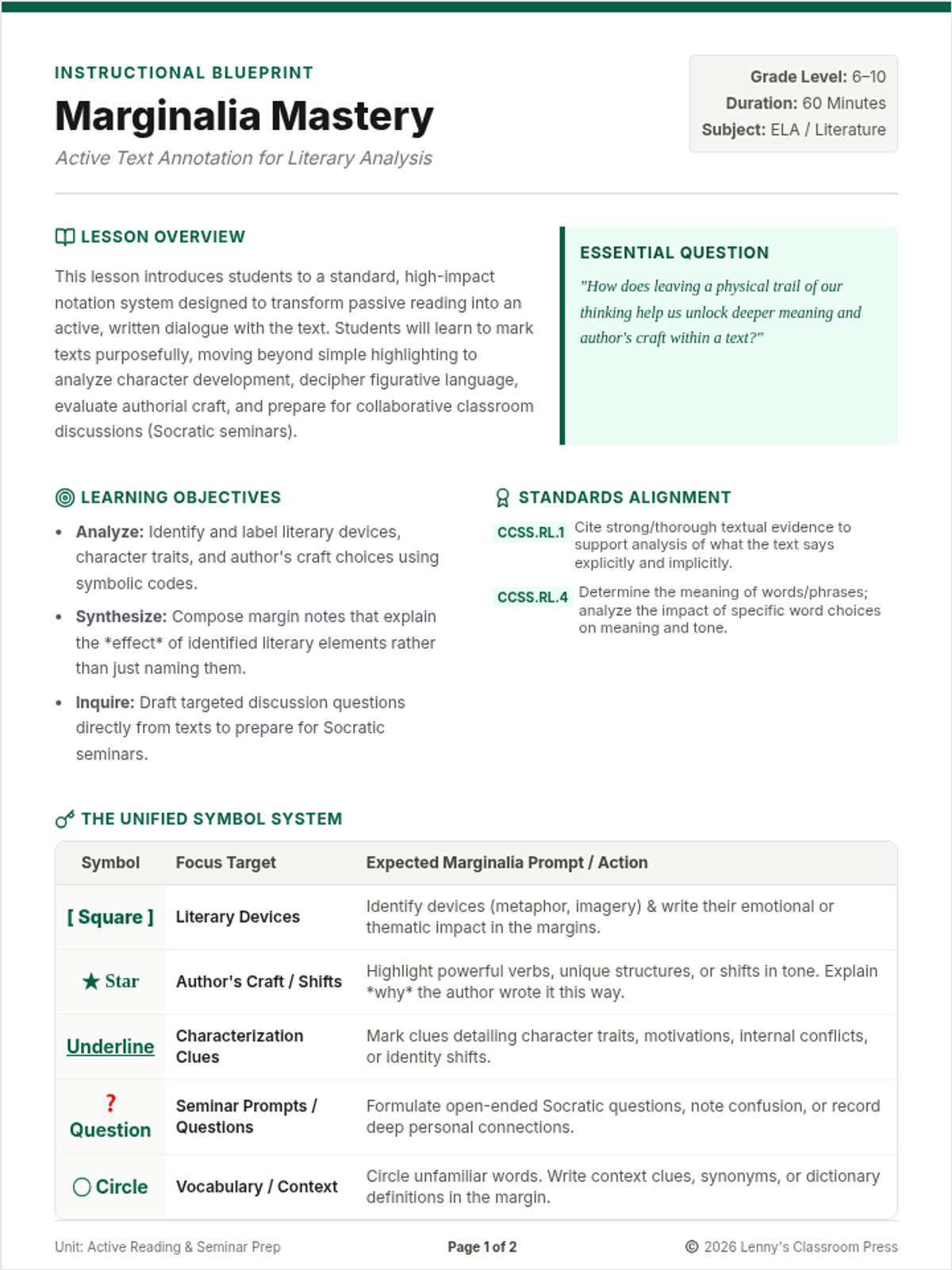
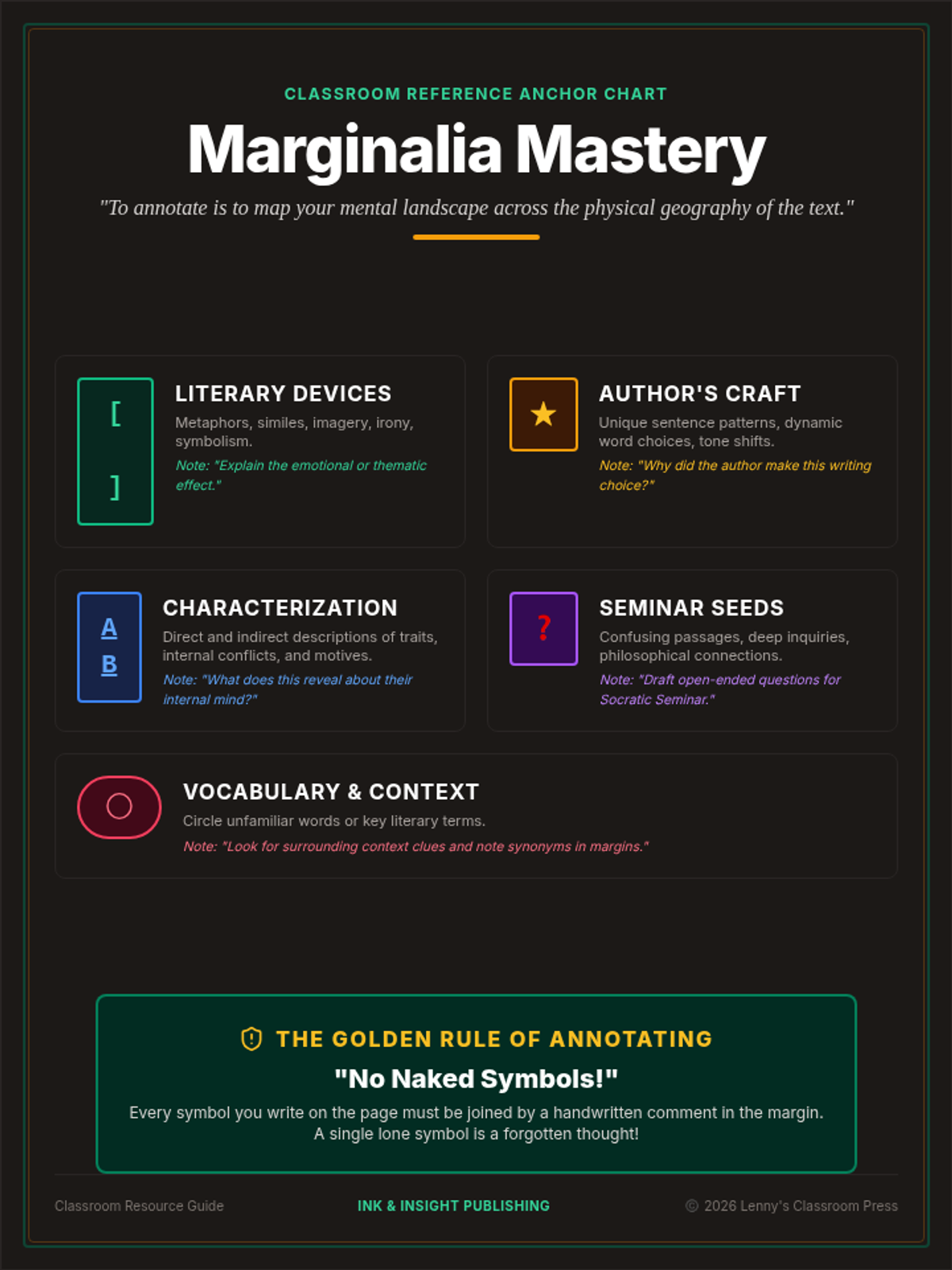
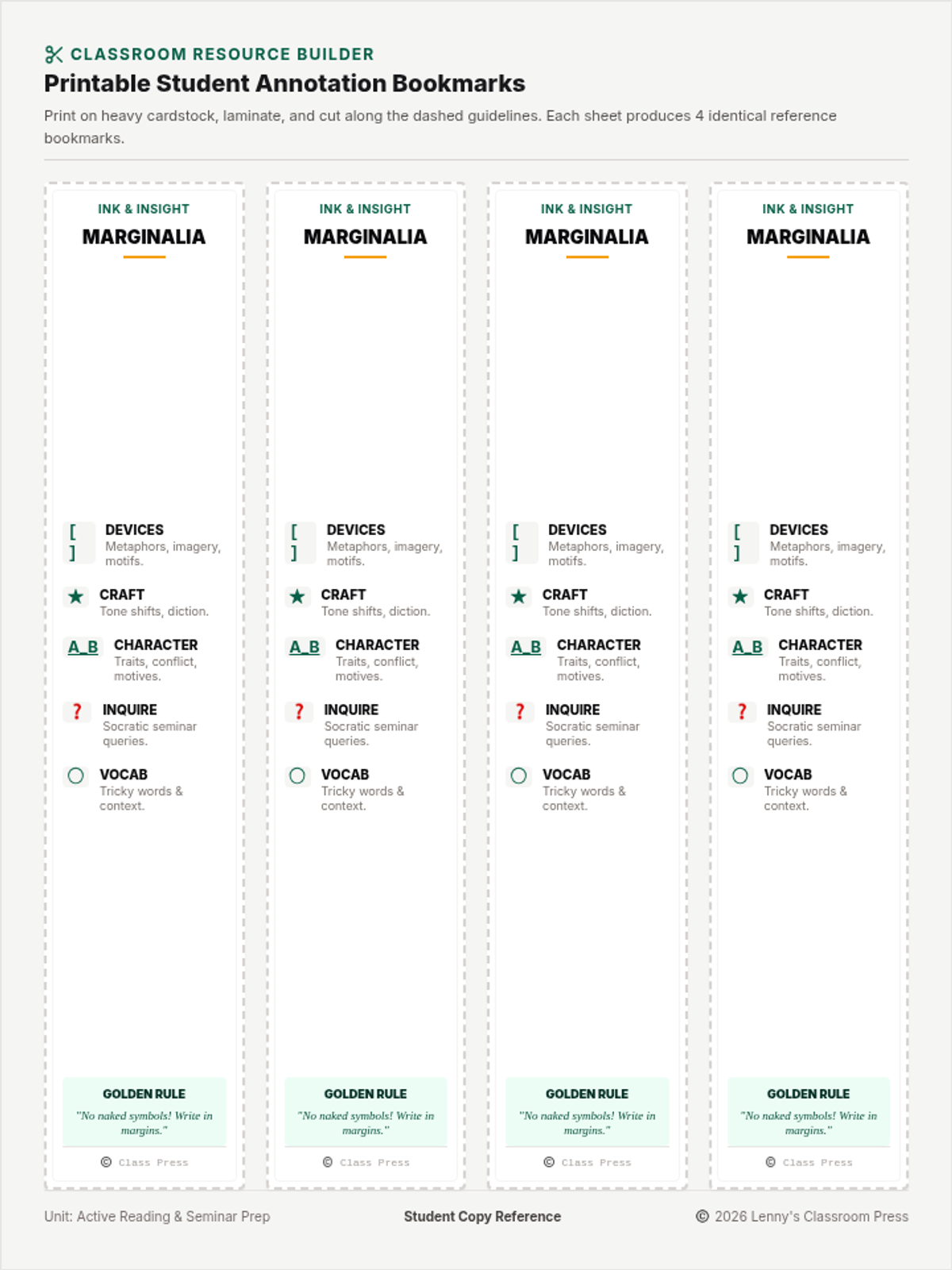
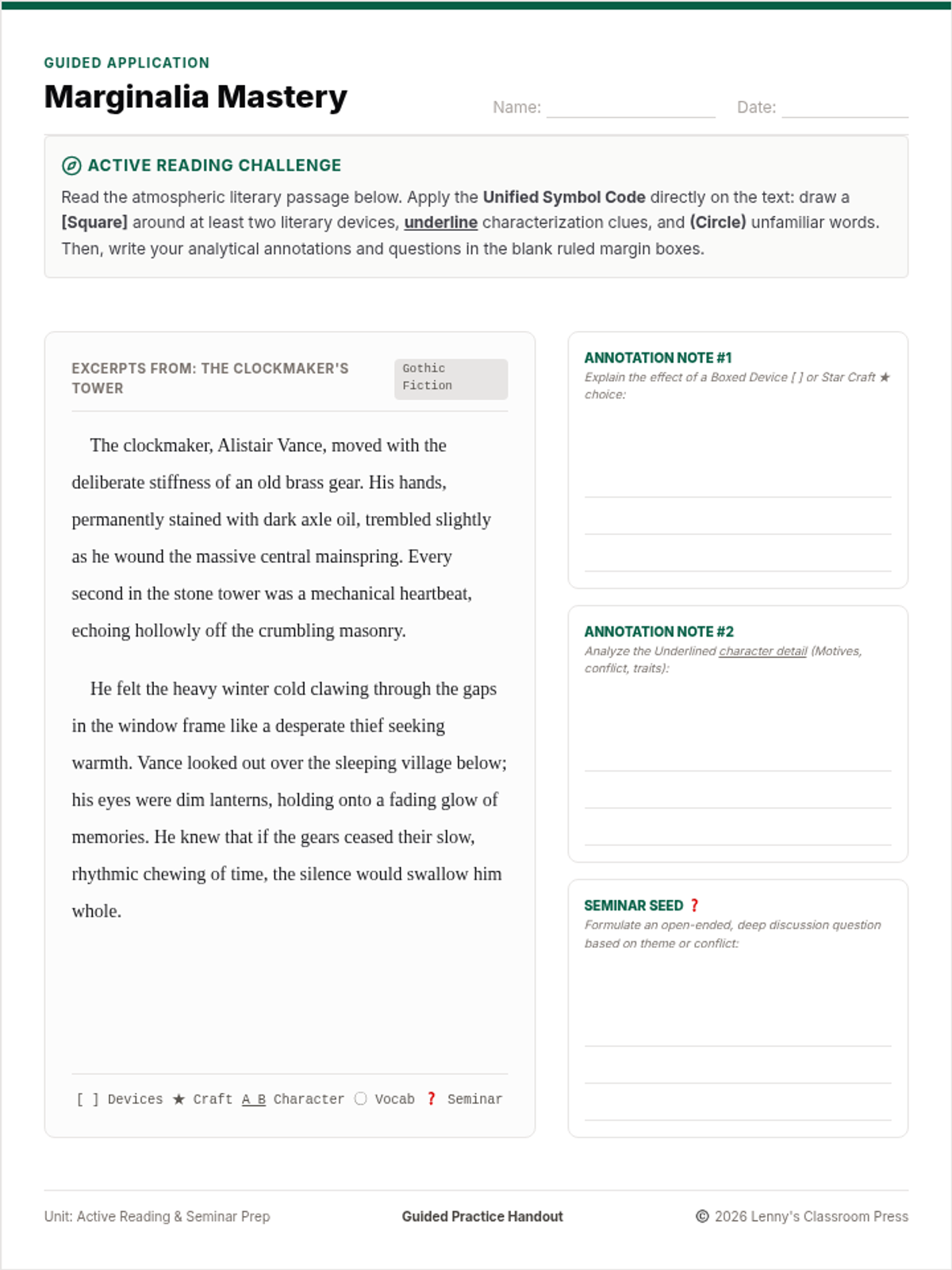
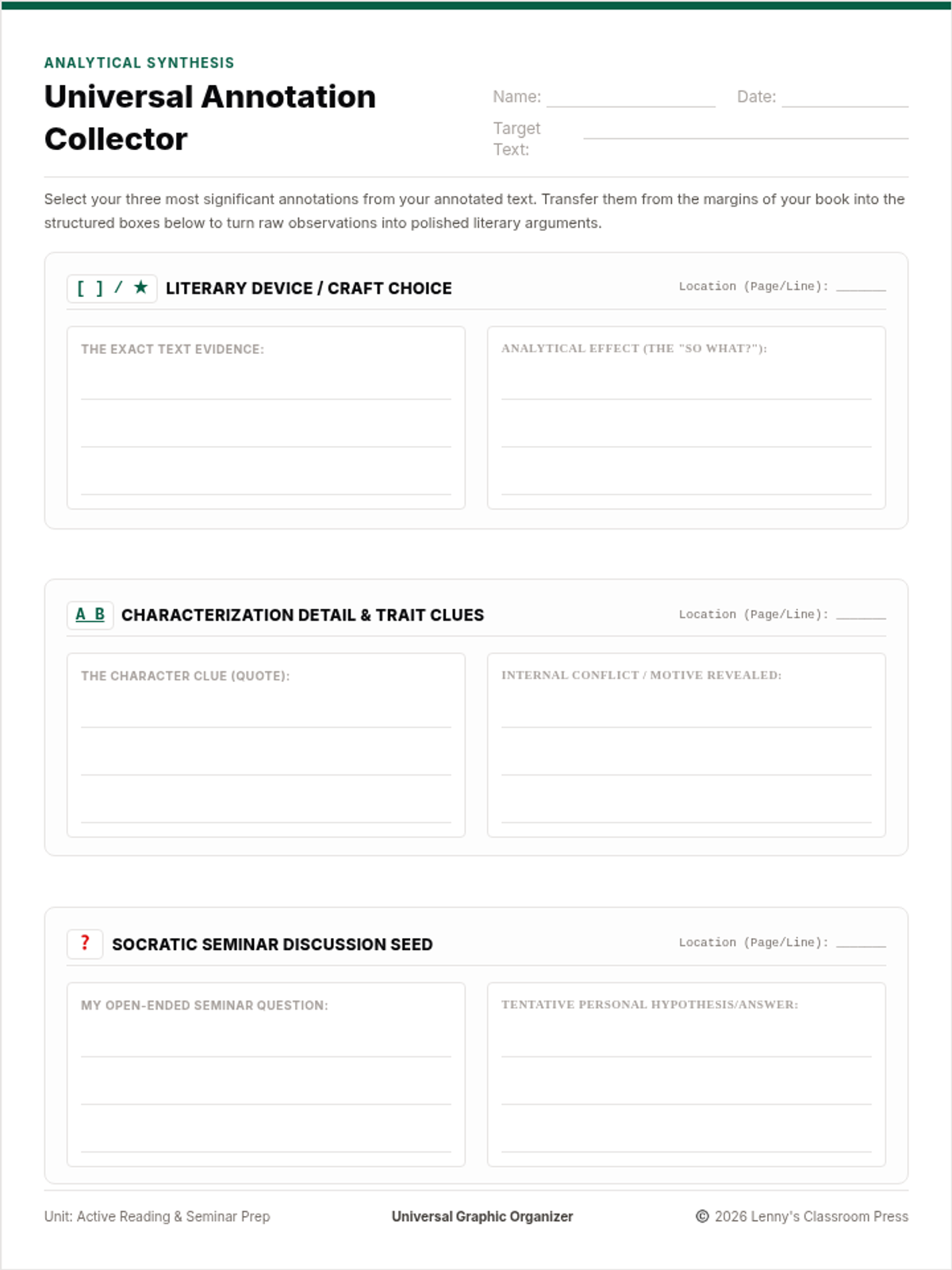
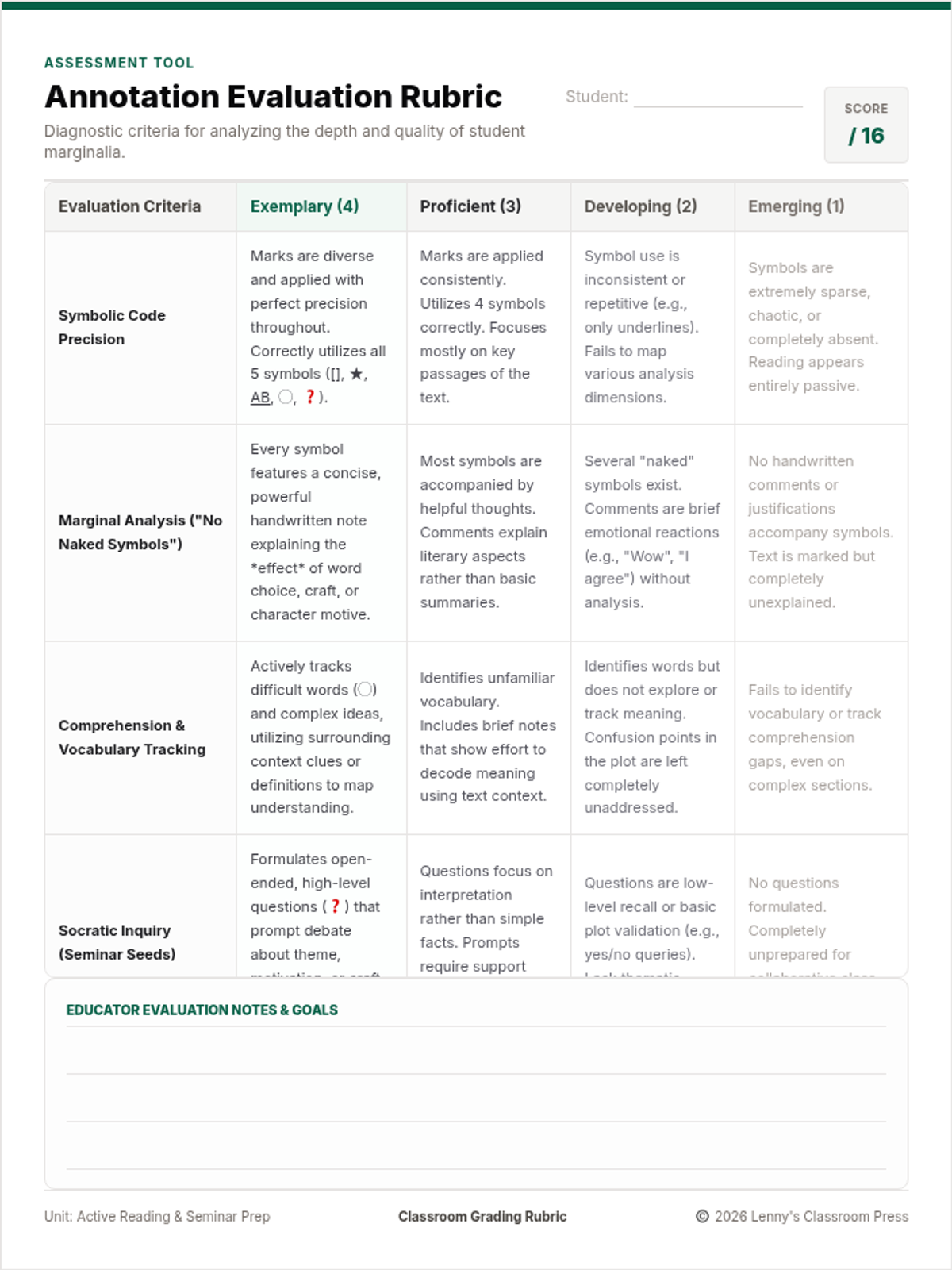
An immersive introductory lesson on active text annotation, focusing on identifying literary devices, analyzing author's craft, and tracking characterization. Students learn to use a unified code of symbols to turn reading from a passive activity into an active dialogue with the text.
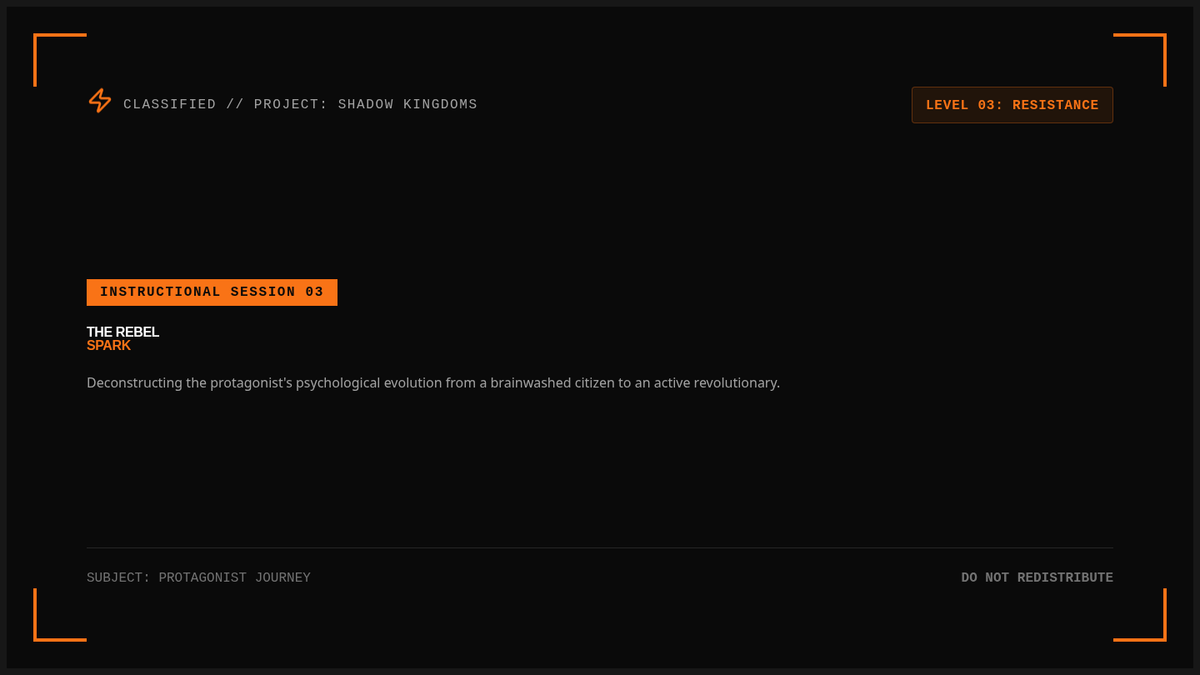
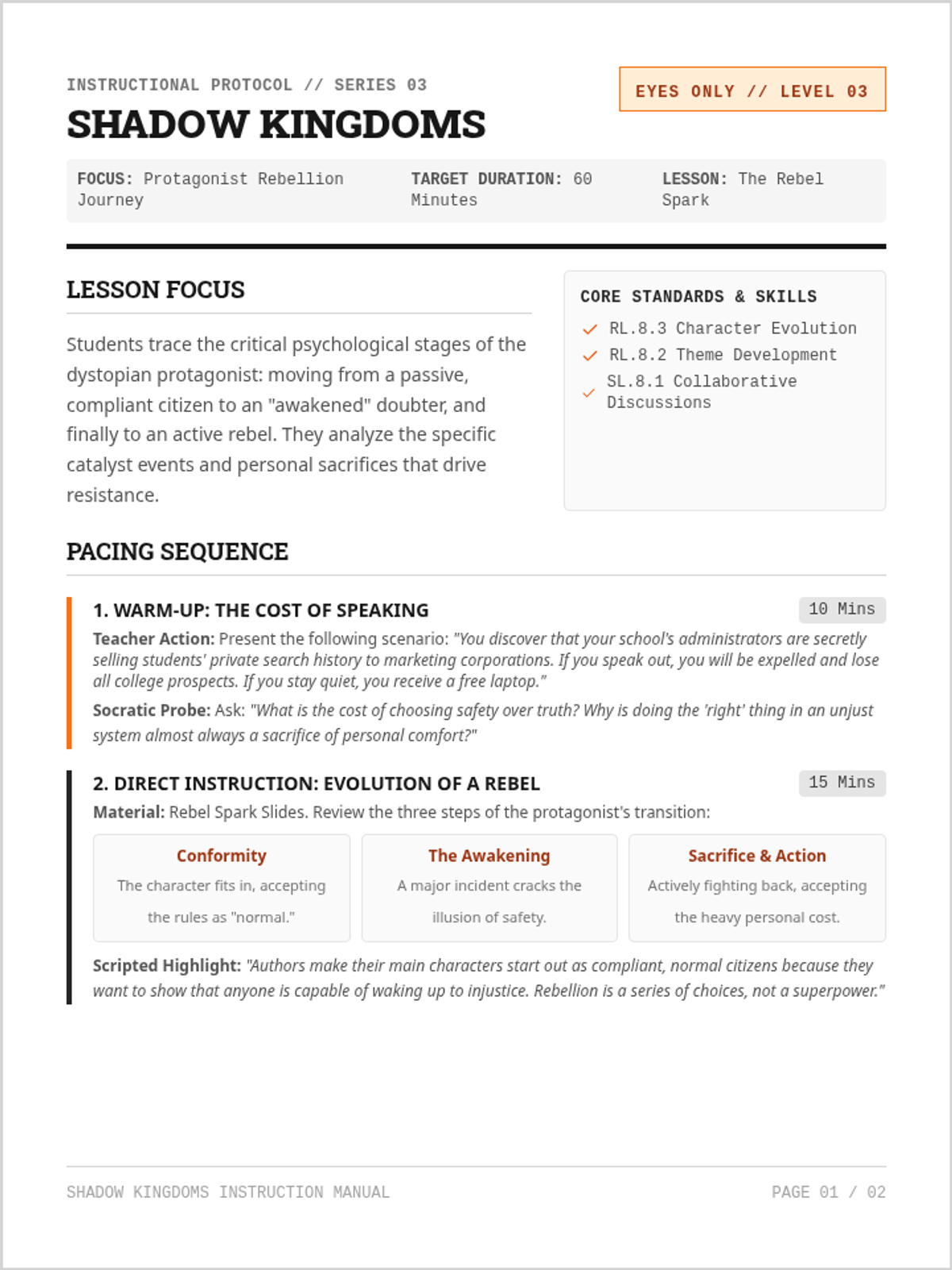
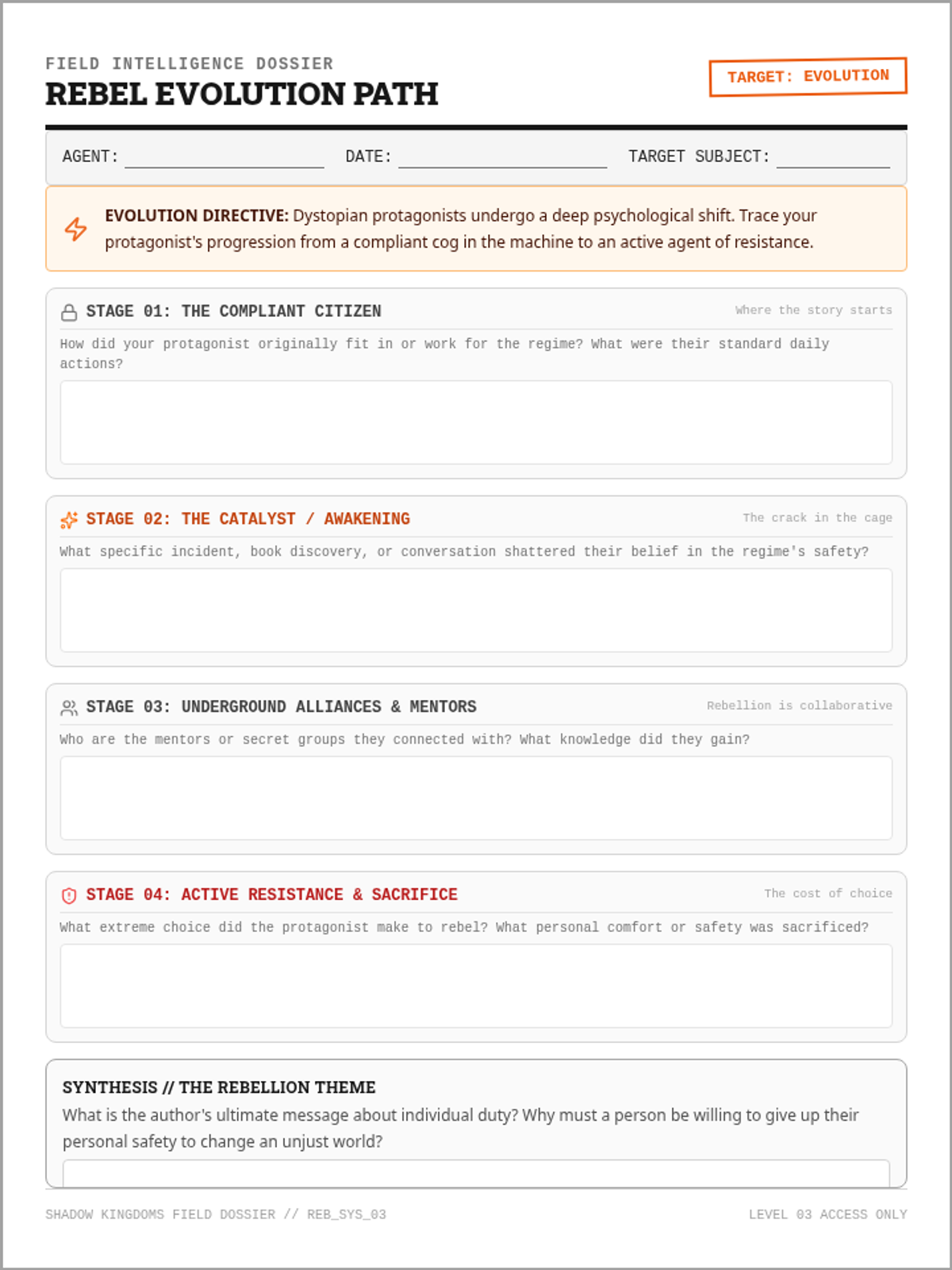
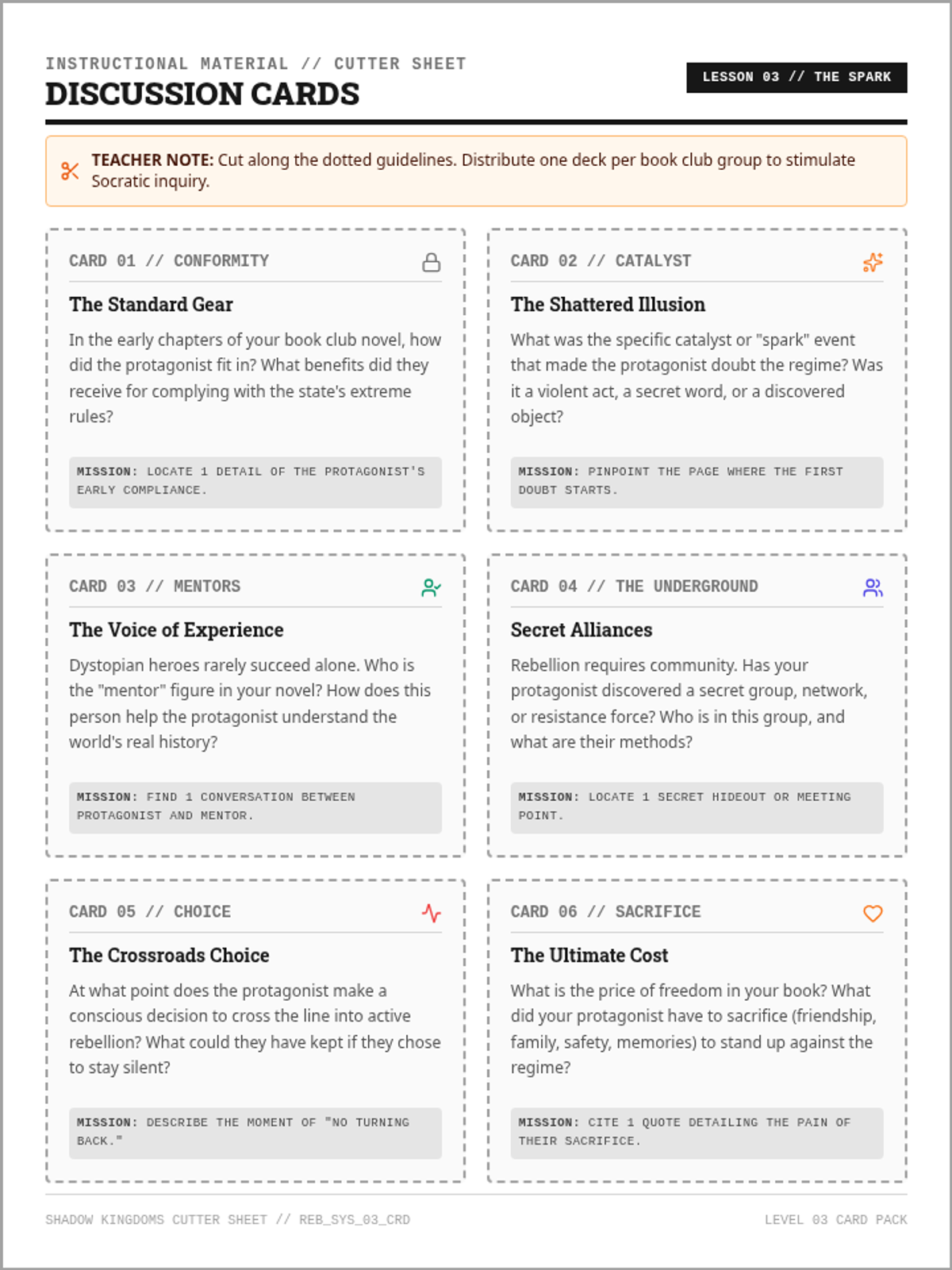
Trace the protagonist's development from a compliant citizen to an awakened rebel. Students map the critical turning points, alliances, and sacrifices that drive resistance against the regime, applying these insights to their book club novels.
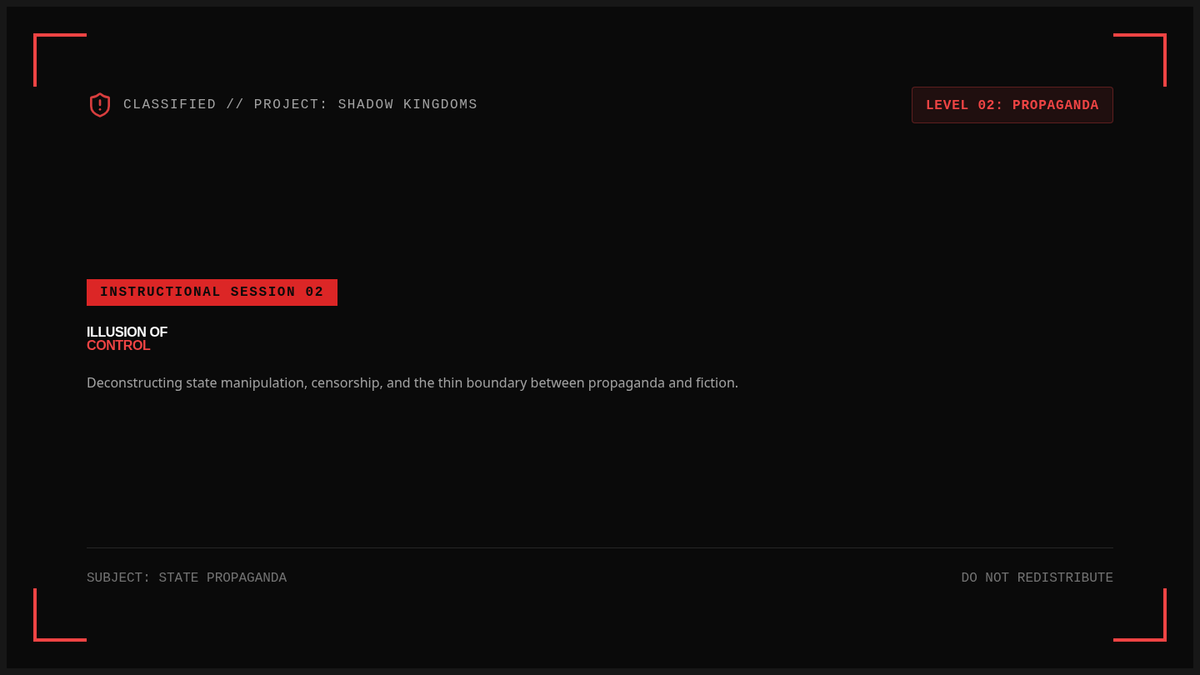
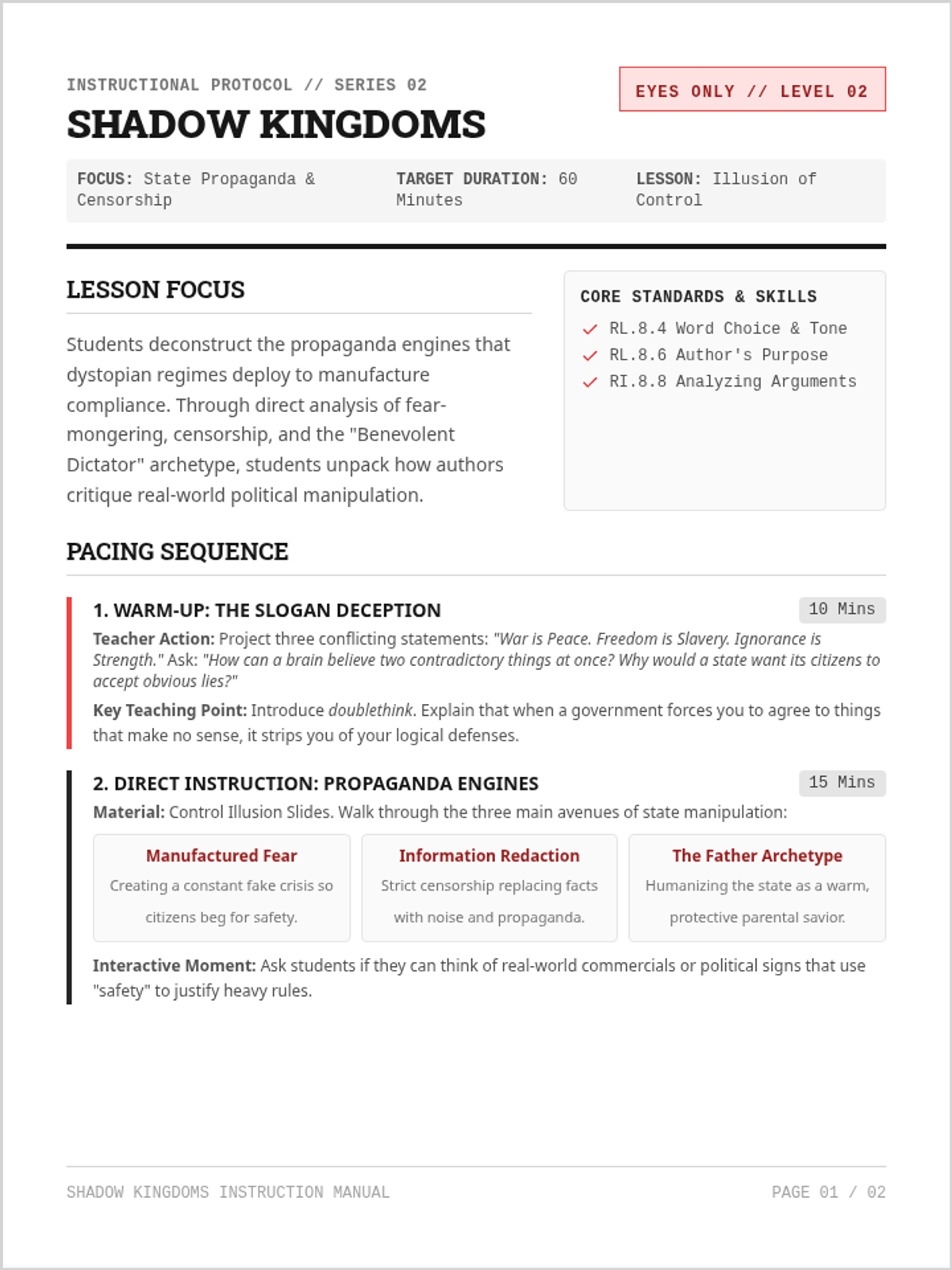
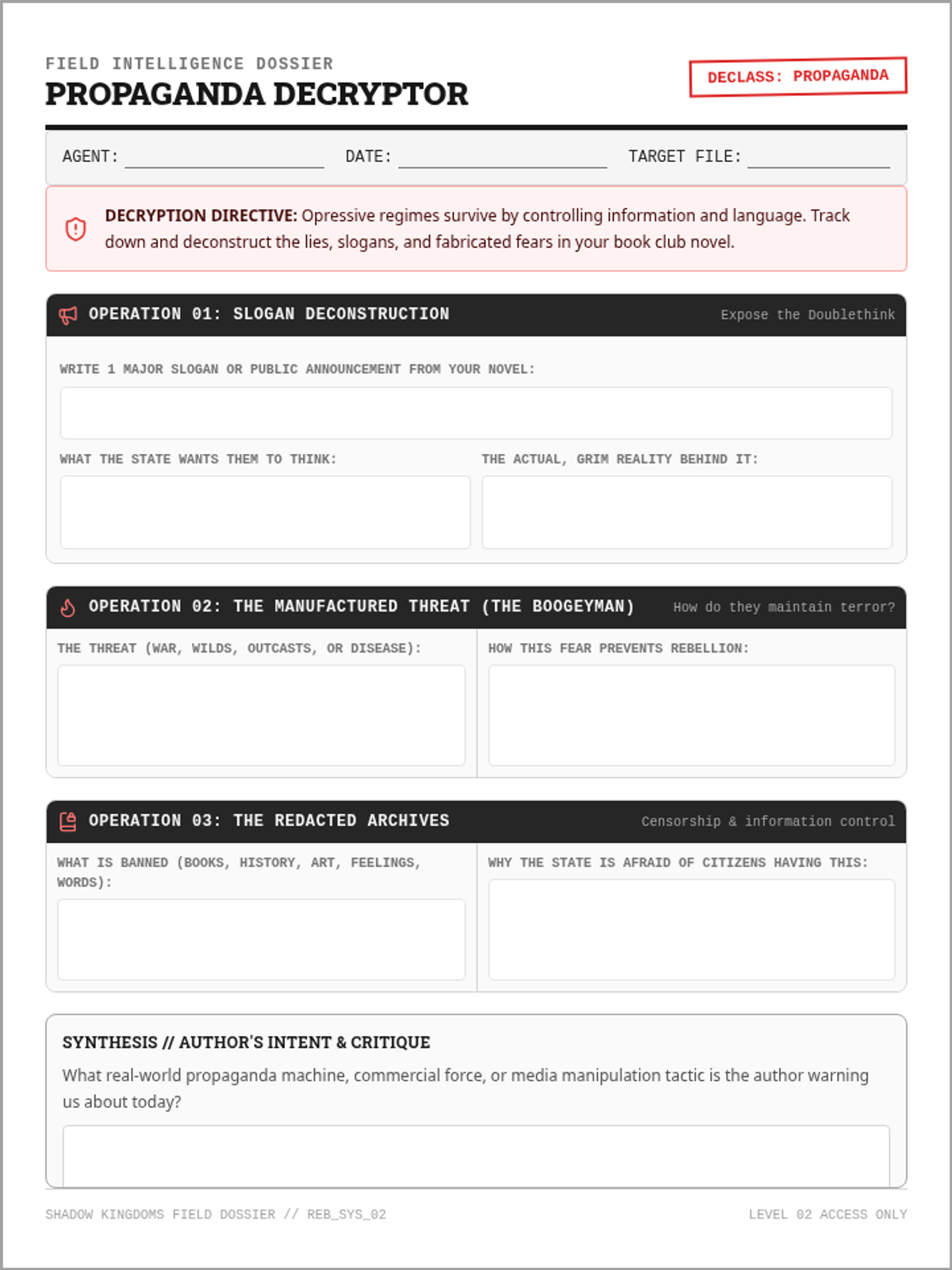
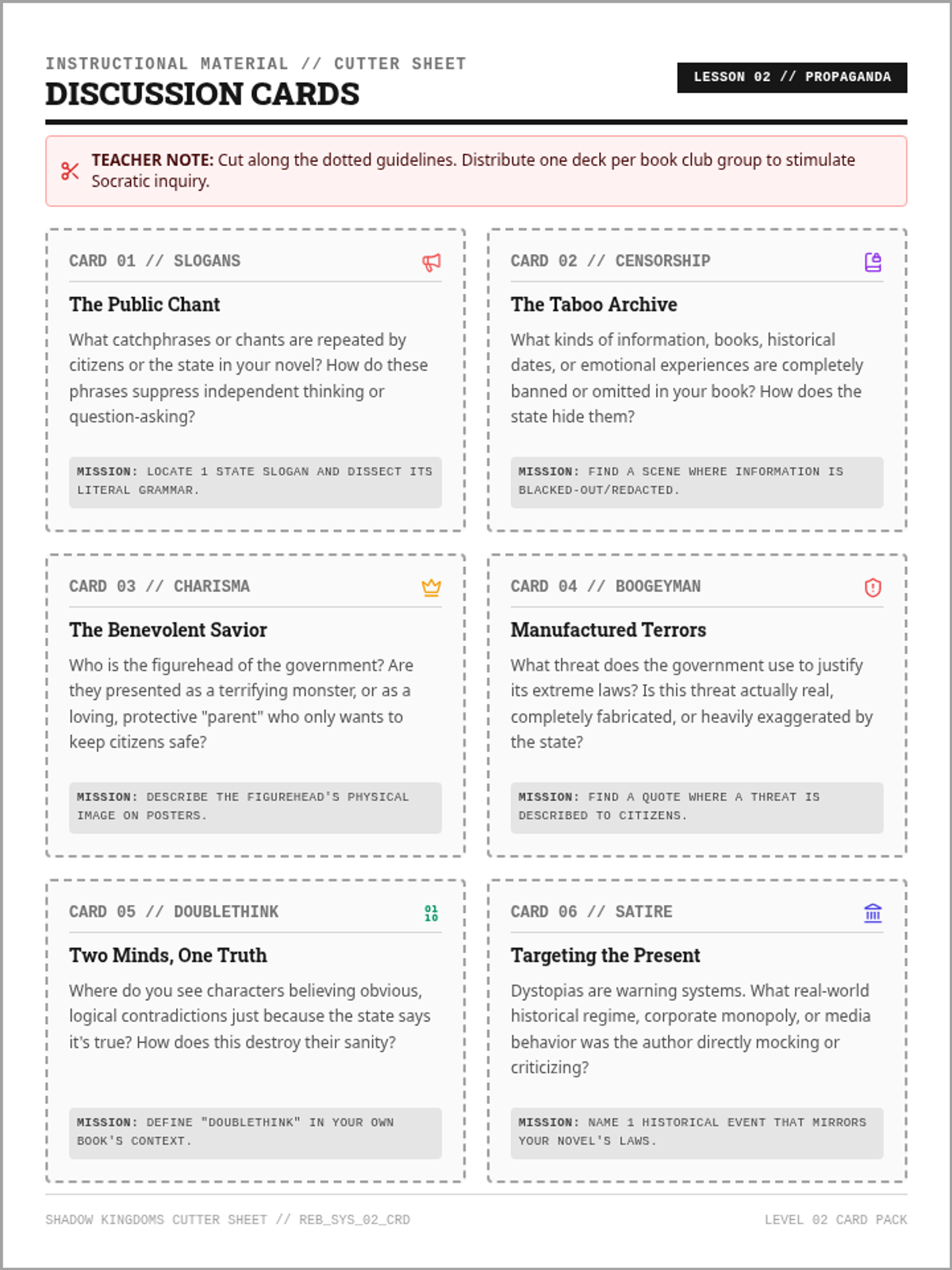
Analyze how dystopian regimes maintain authority through propaganda, censorship, and manufactured fear. Students contrast real propaganda techniques with fictional manifestations in their novels to decode the author's underlying real-world critiques.
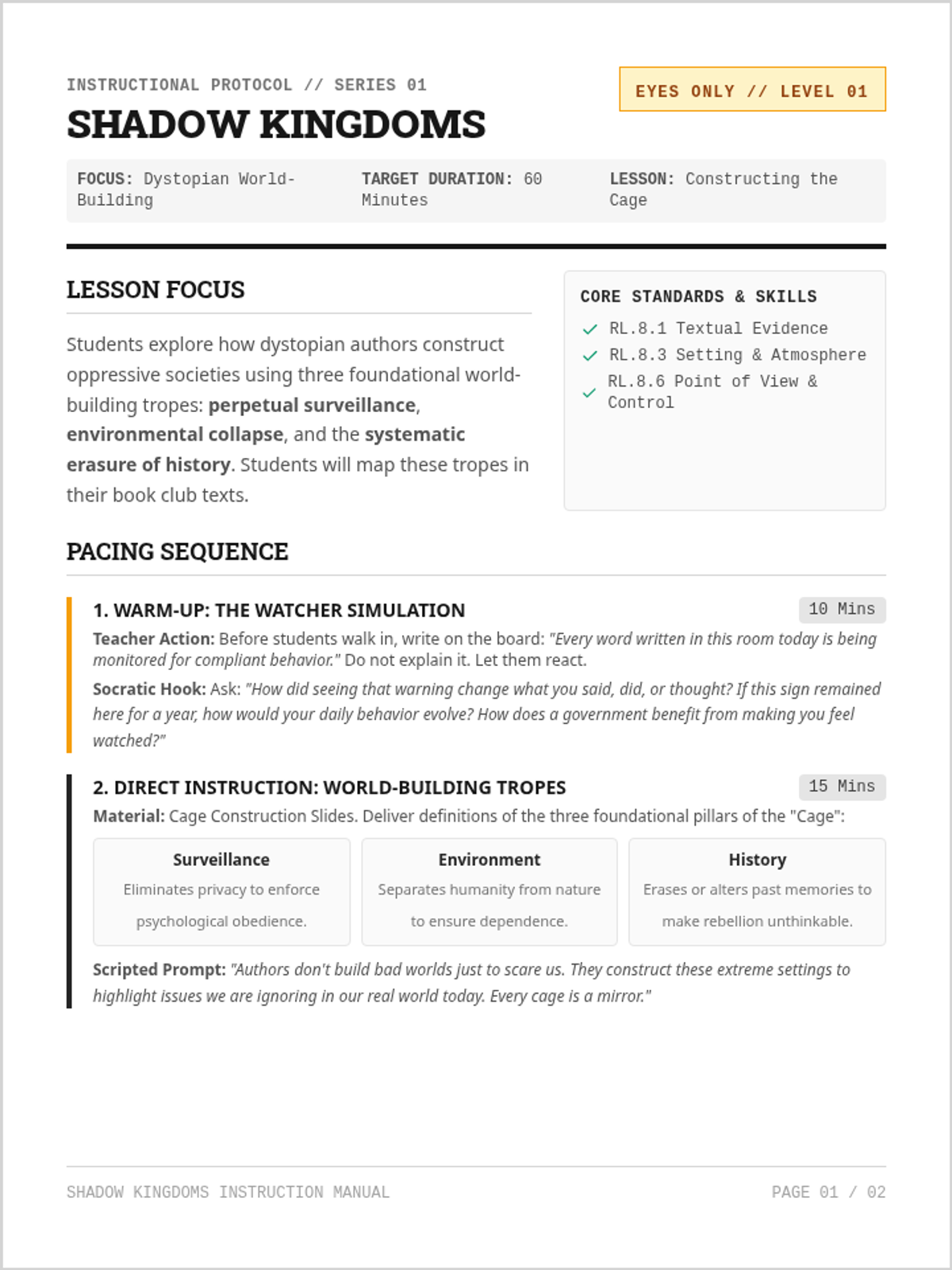
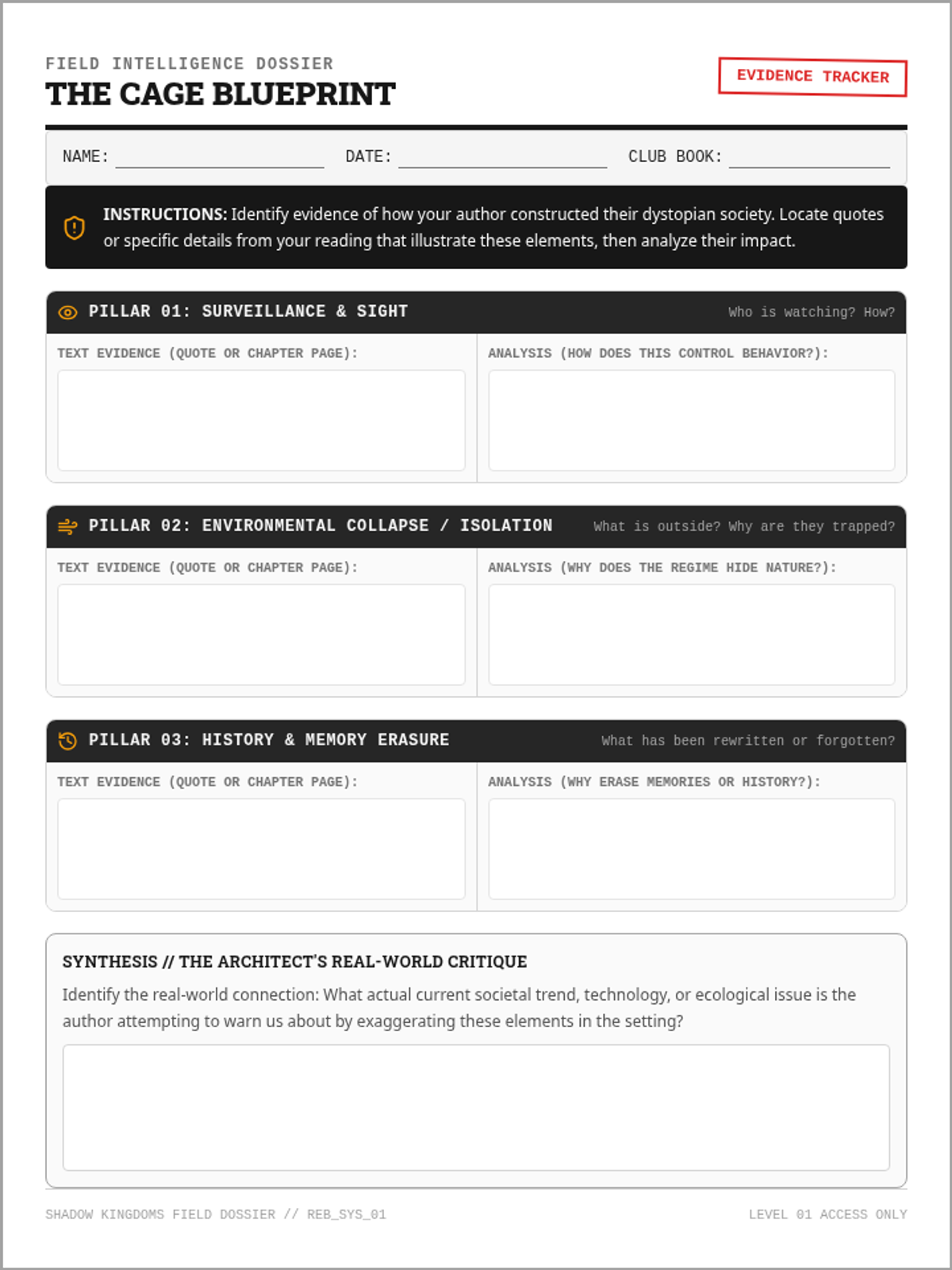
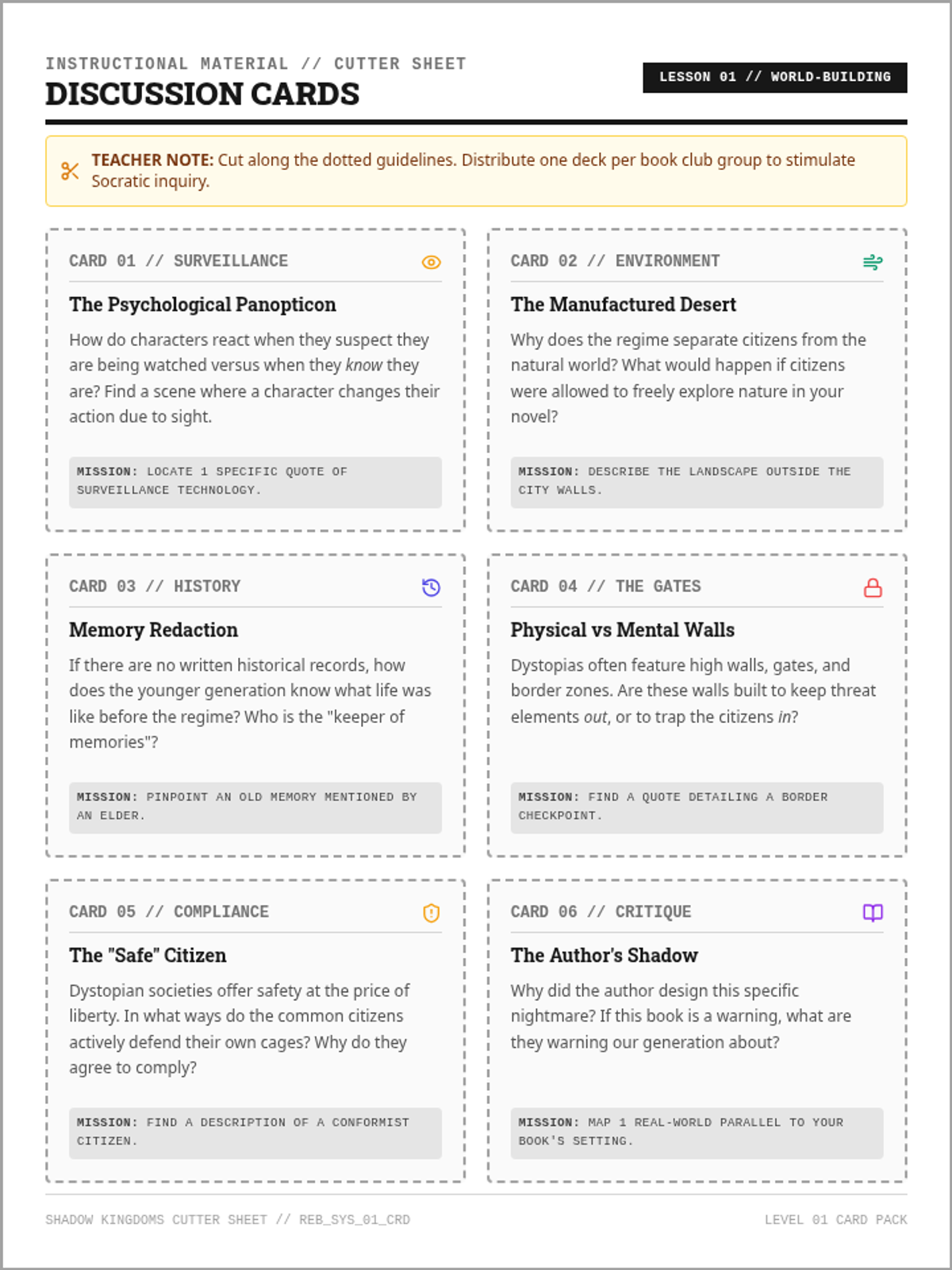
Explore how dystopian authors build oppressive societies using key tropes such as environmental collapse, intense surveillance, and the systematic erasure of history. Students analyze their book club novels to map these elements.
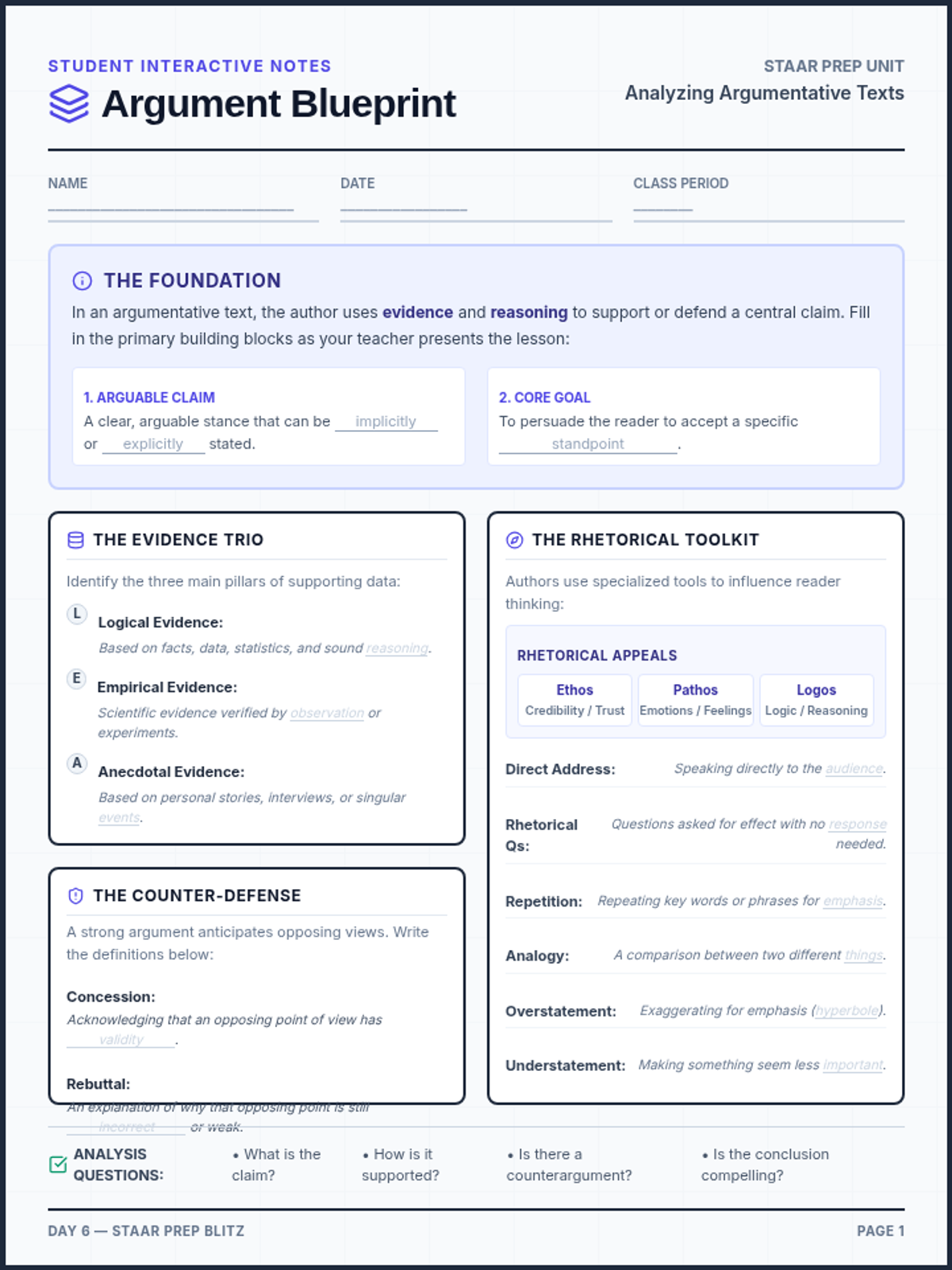
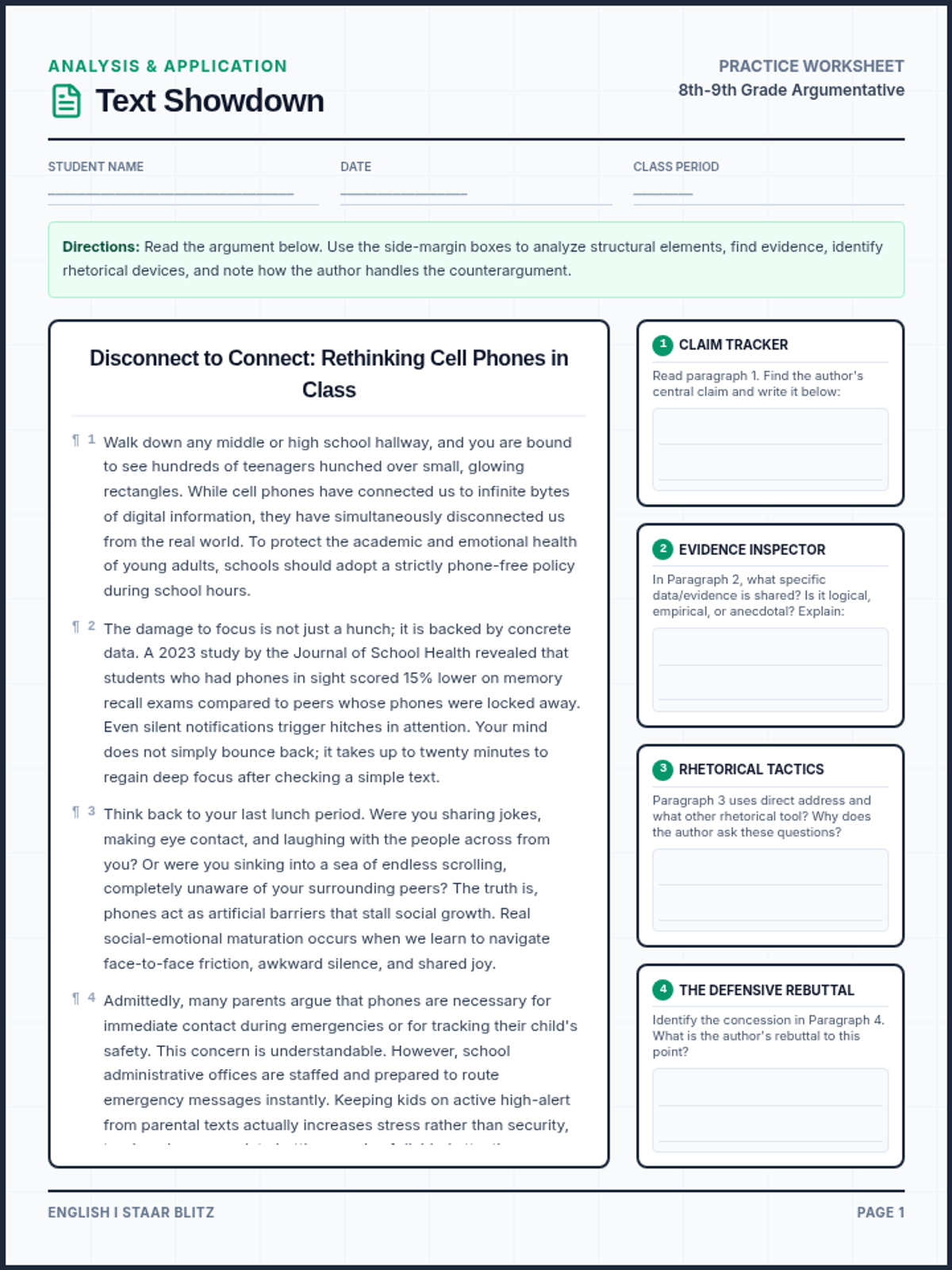
A complete 9th-grade English Language Arts STAAR prep lesson focused on analyzing the characteristics and structural elements of argumentative texts. It includes high-impact graphic organizers for concept mapping and target-text analysis alongside a high-interest practice passage with margin-notated questions.
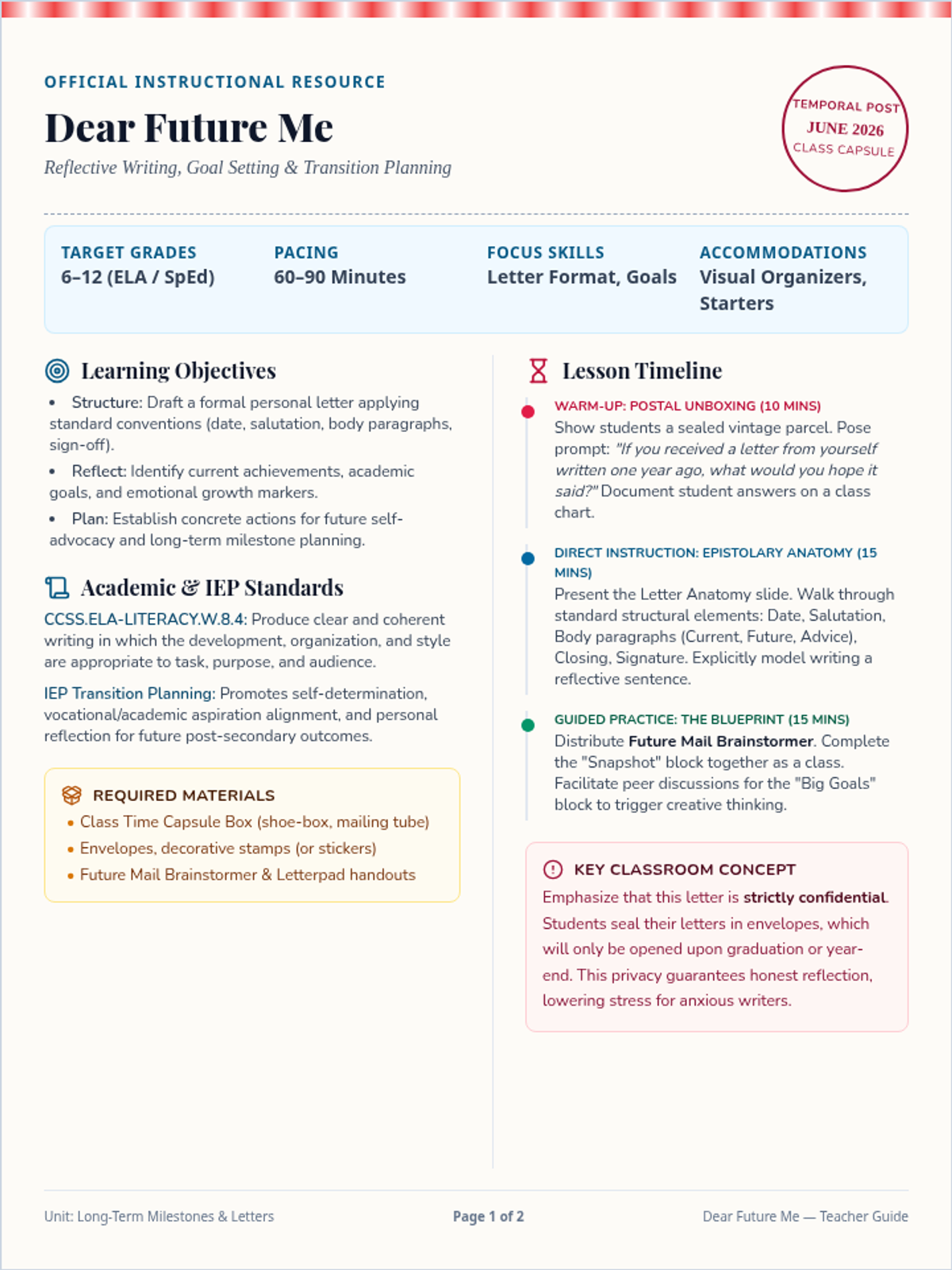
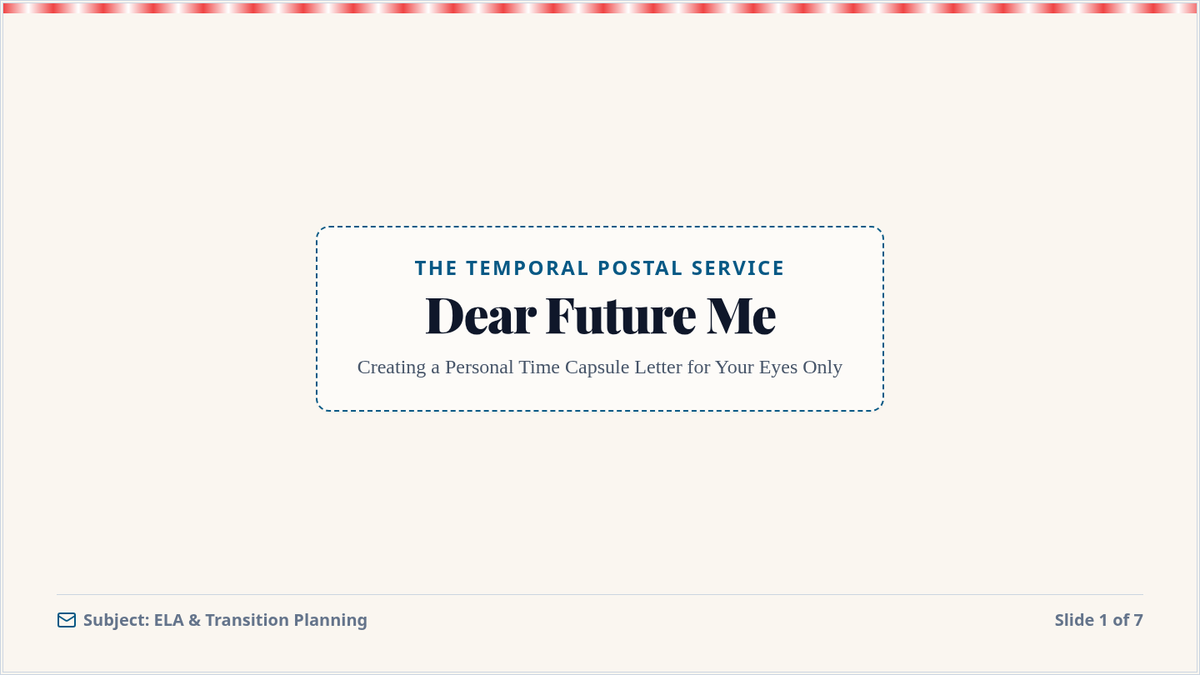
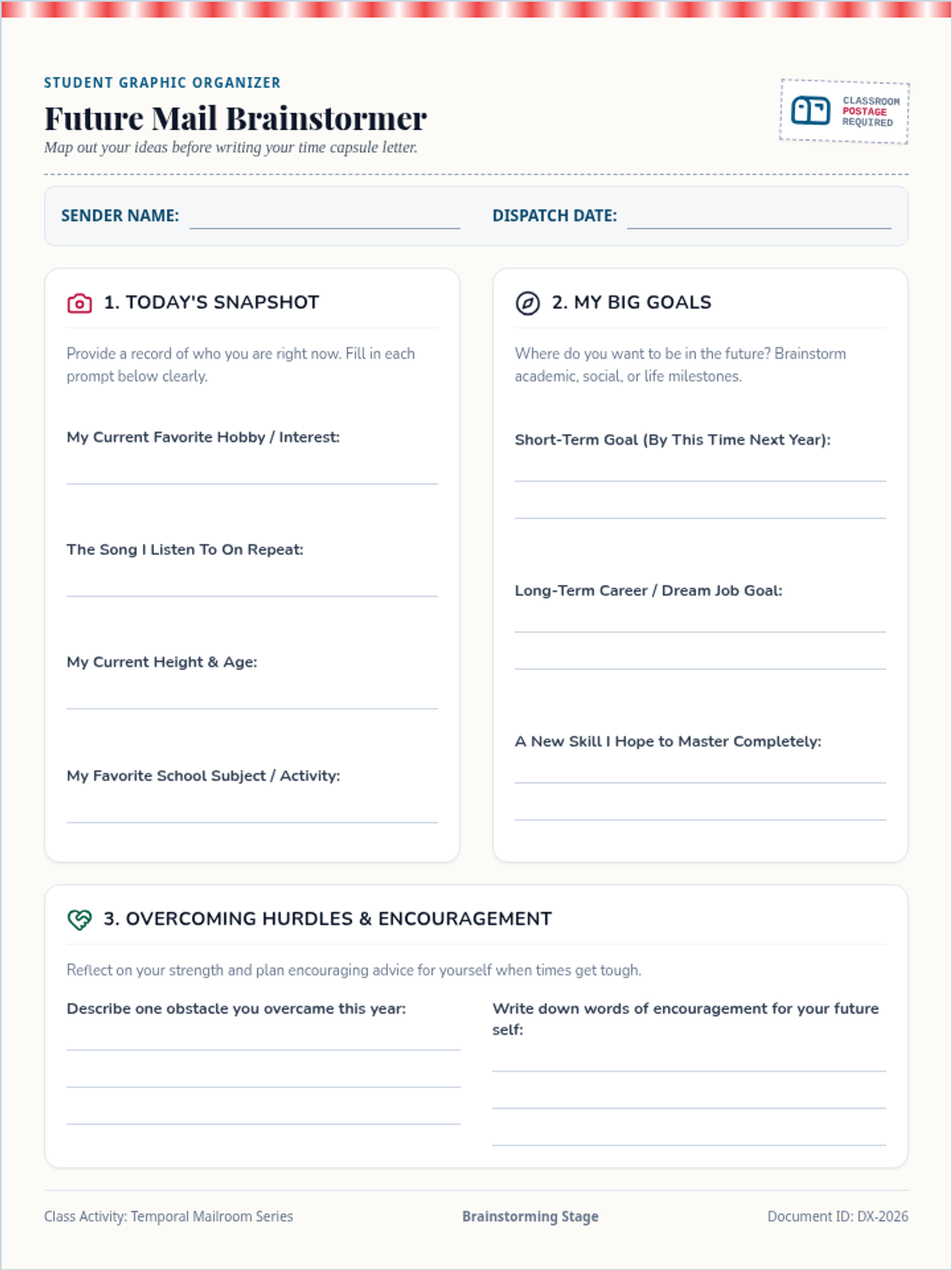
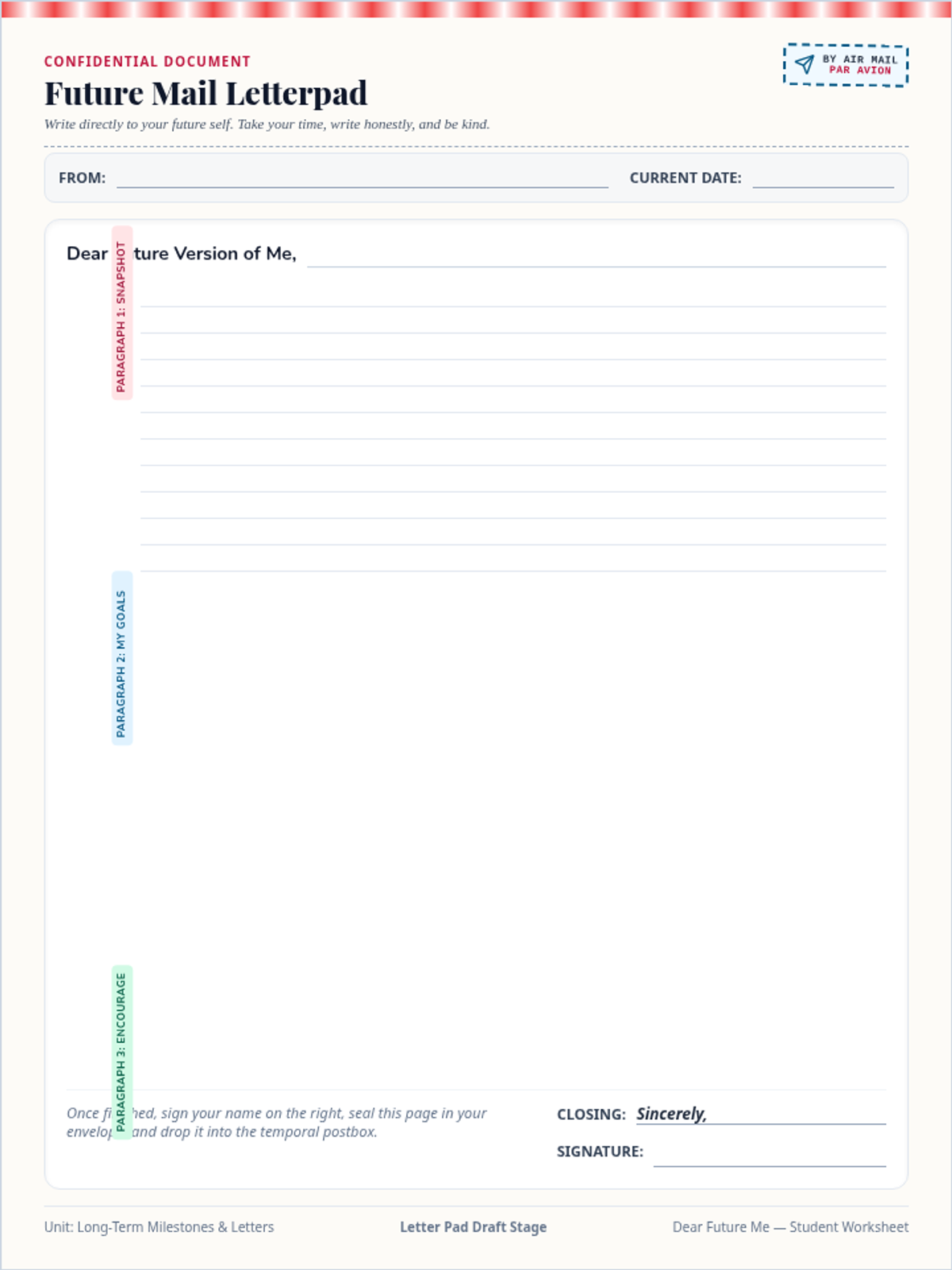
An ELA and Special Education lesson plan that guides students in brainstorming, planning, and drafting a meaningful time capsule letter to their future selves, designed with vintage postal aesthetics, strong accommodations, and scaffolded structures.
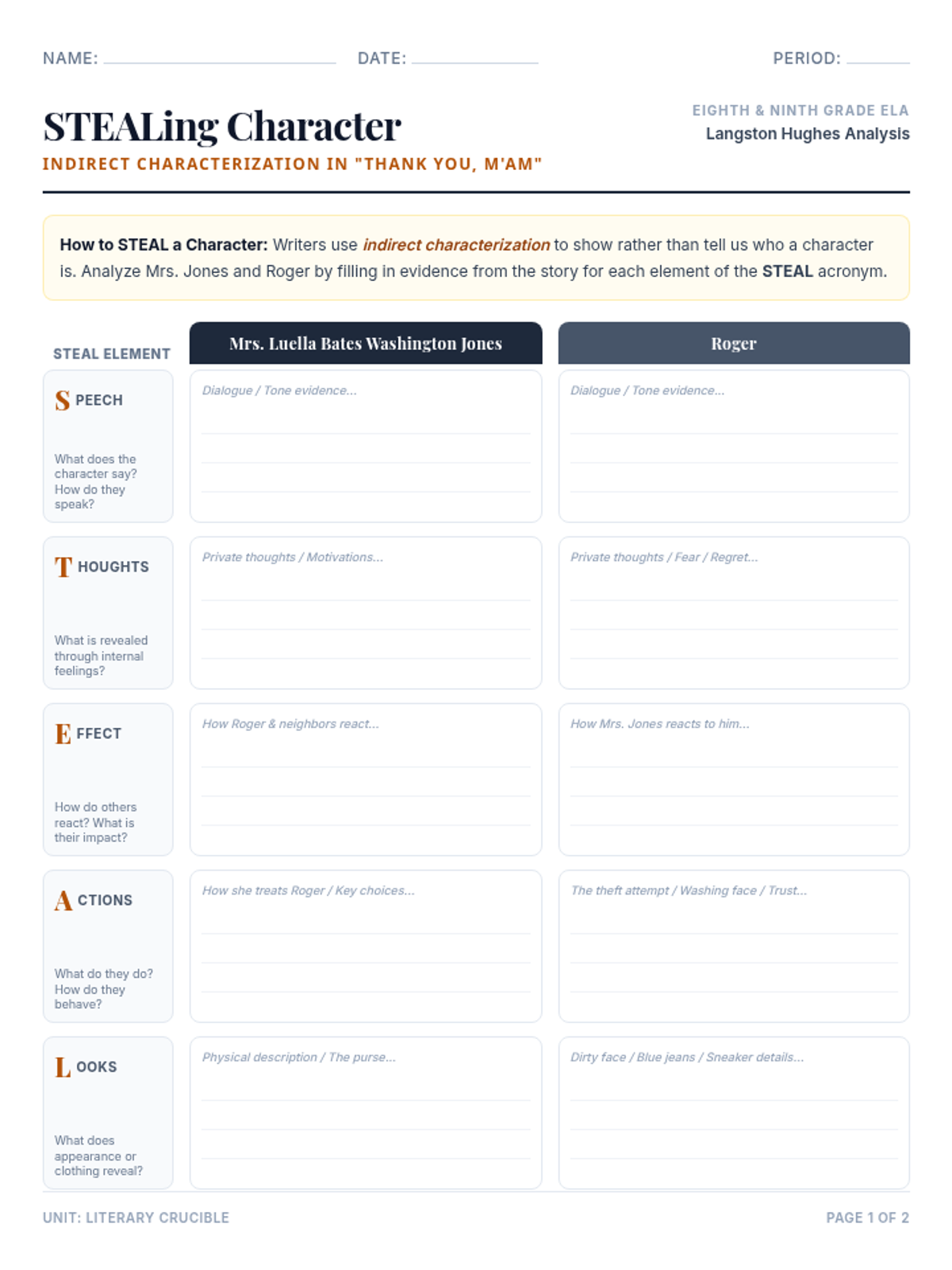
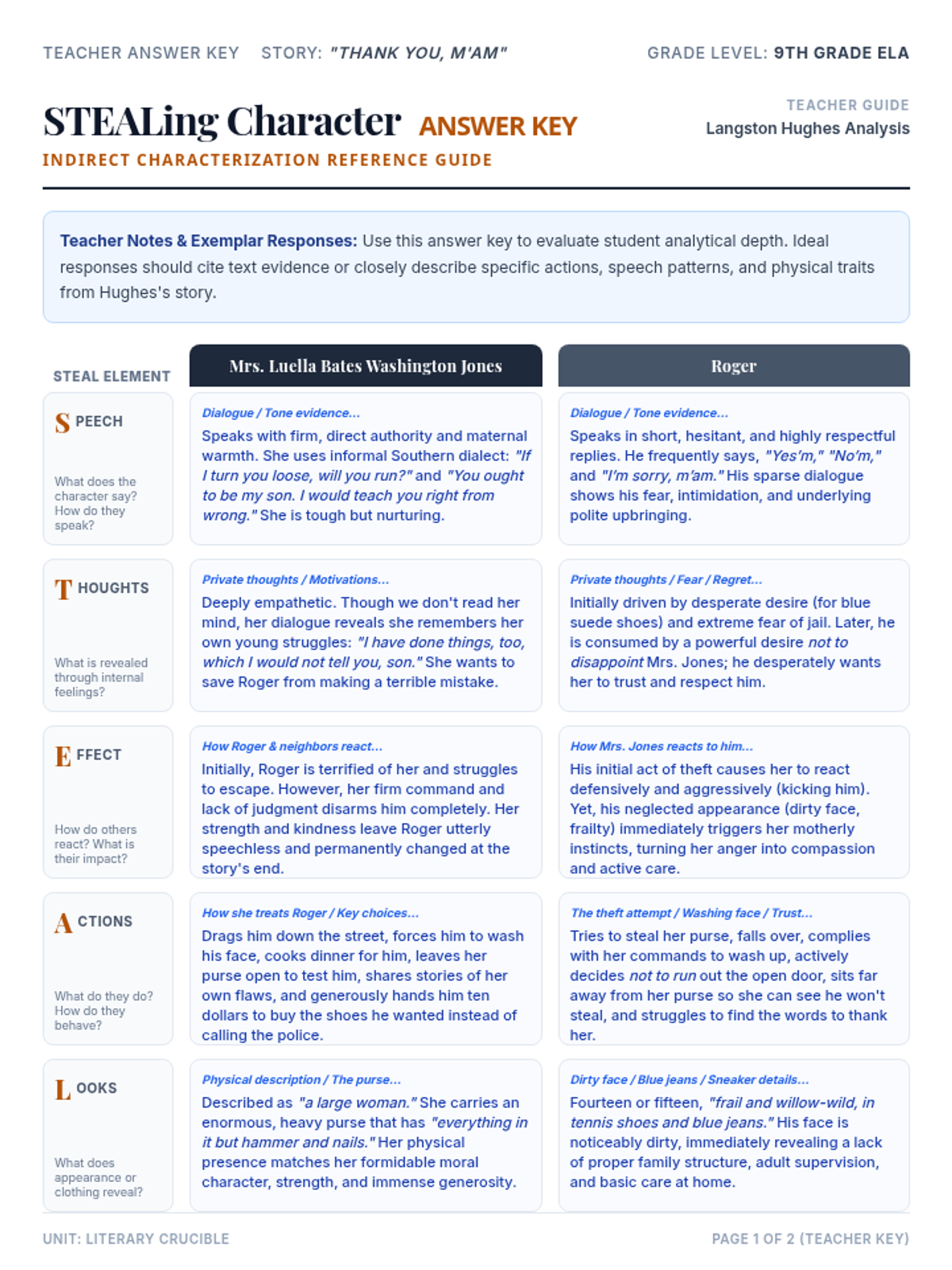
A close reading lesson exploring characterization and theme in Langston Hughes's classic short story 'Thank You, M'am'. Students analyze indirect characterization using the STEAL method and investigate direct characterization through evidence collection.
A bilingual English-Japanese lesson exploring fronted adverbials, how to classify them using the ISPACE acronym, and how to punctuate them correctly using commas.
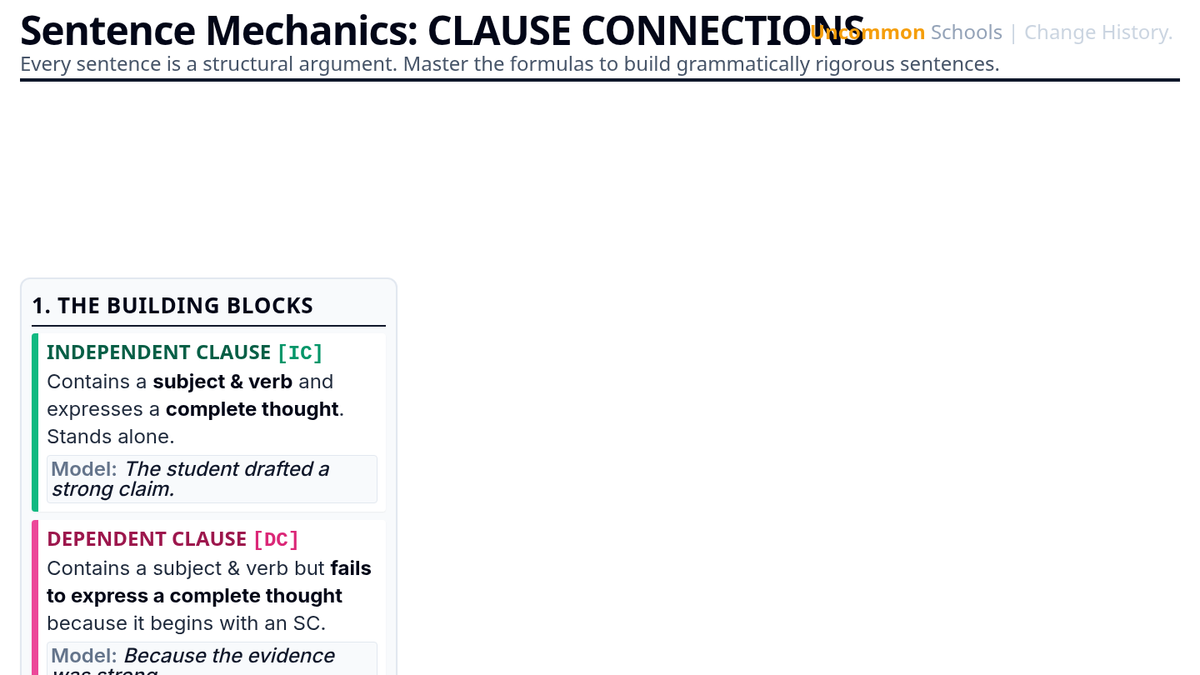
A masterclass introducing students to sentence structure and the mechanics of joining independent and dependent clauses using coordinating and subordinating conjunctions.
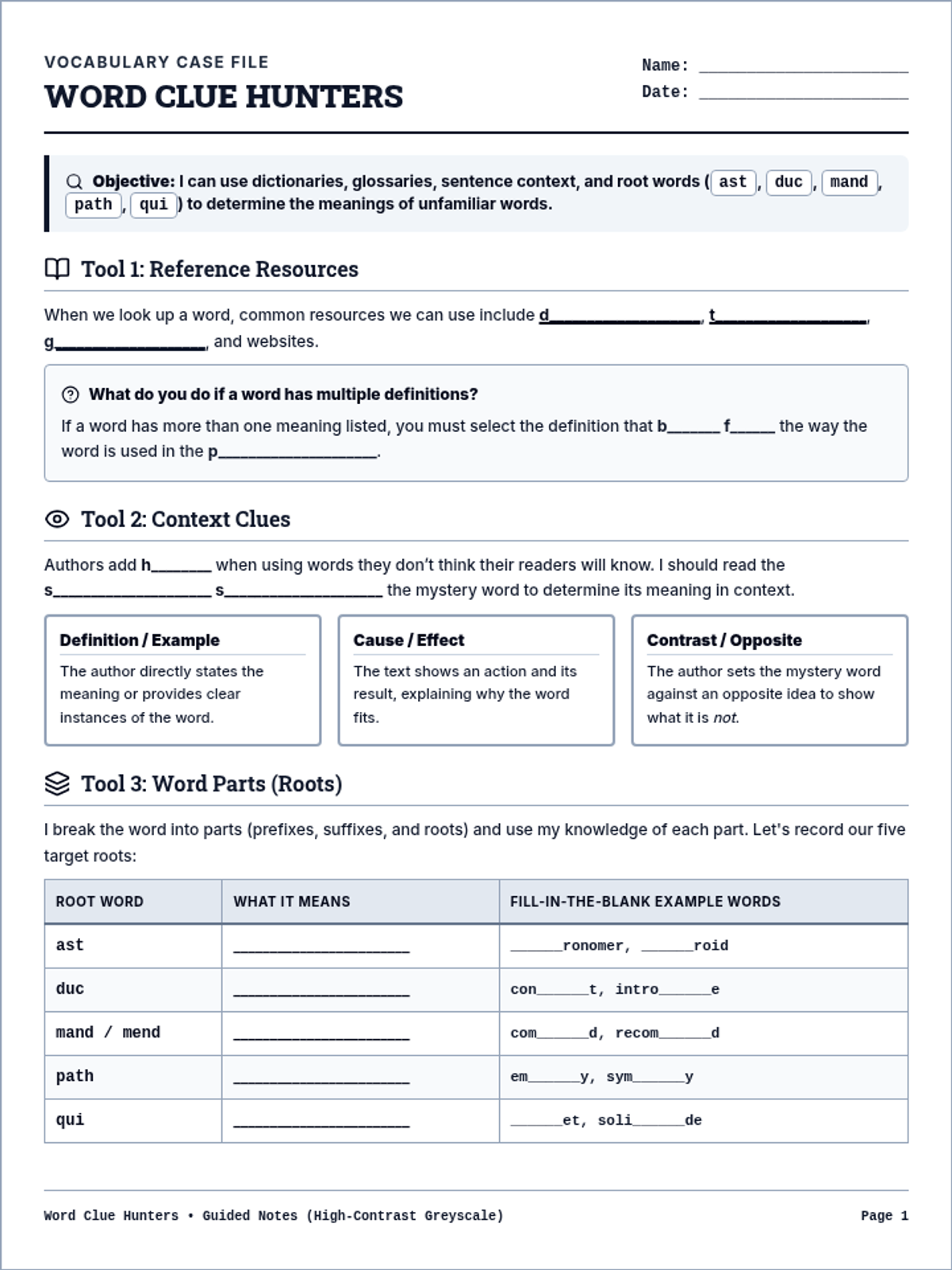
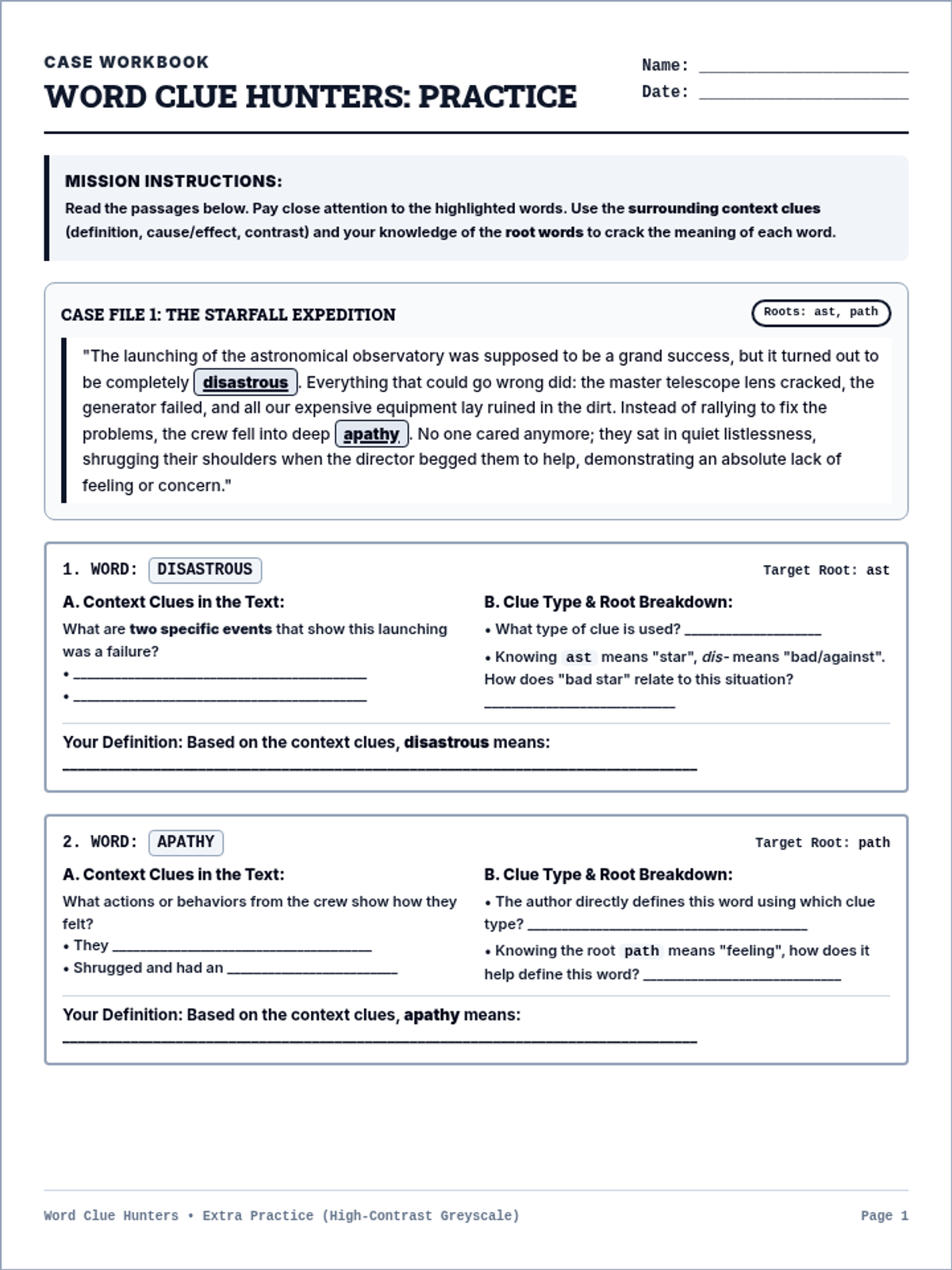
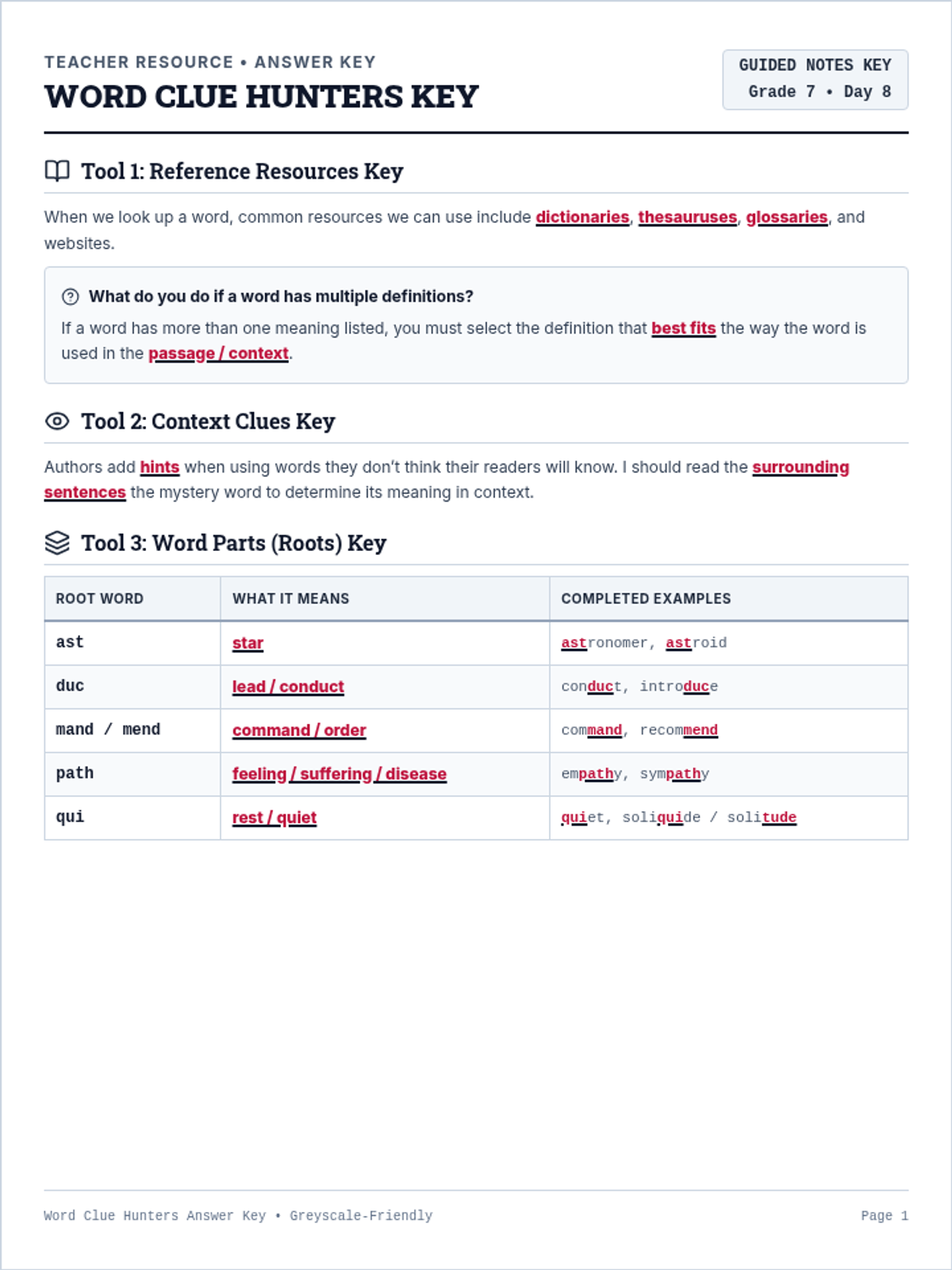
A comprehensive vocabulary lesson targeting context clues, resource usage, and five core root words (ast, duc, mand, path, qui) with interactive guided notes and rigorous practice worksheets.
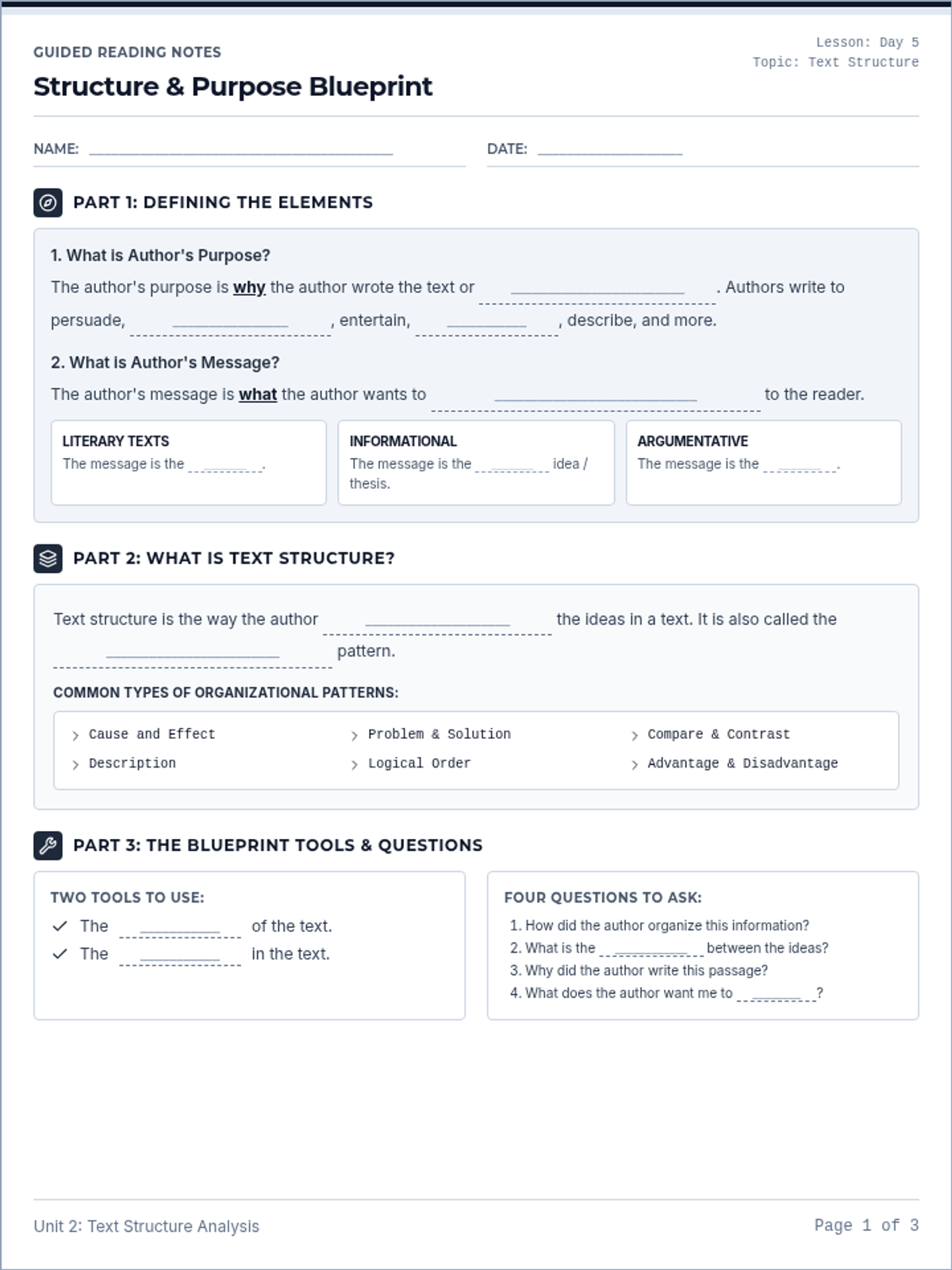
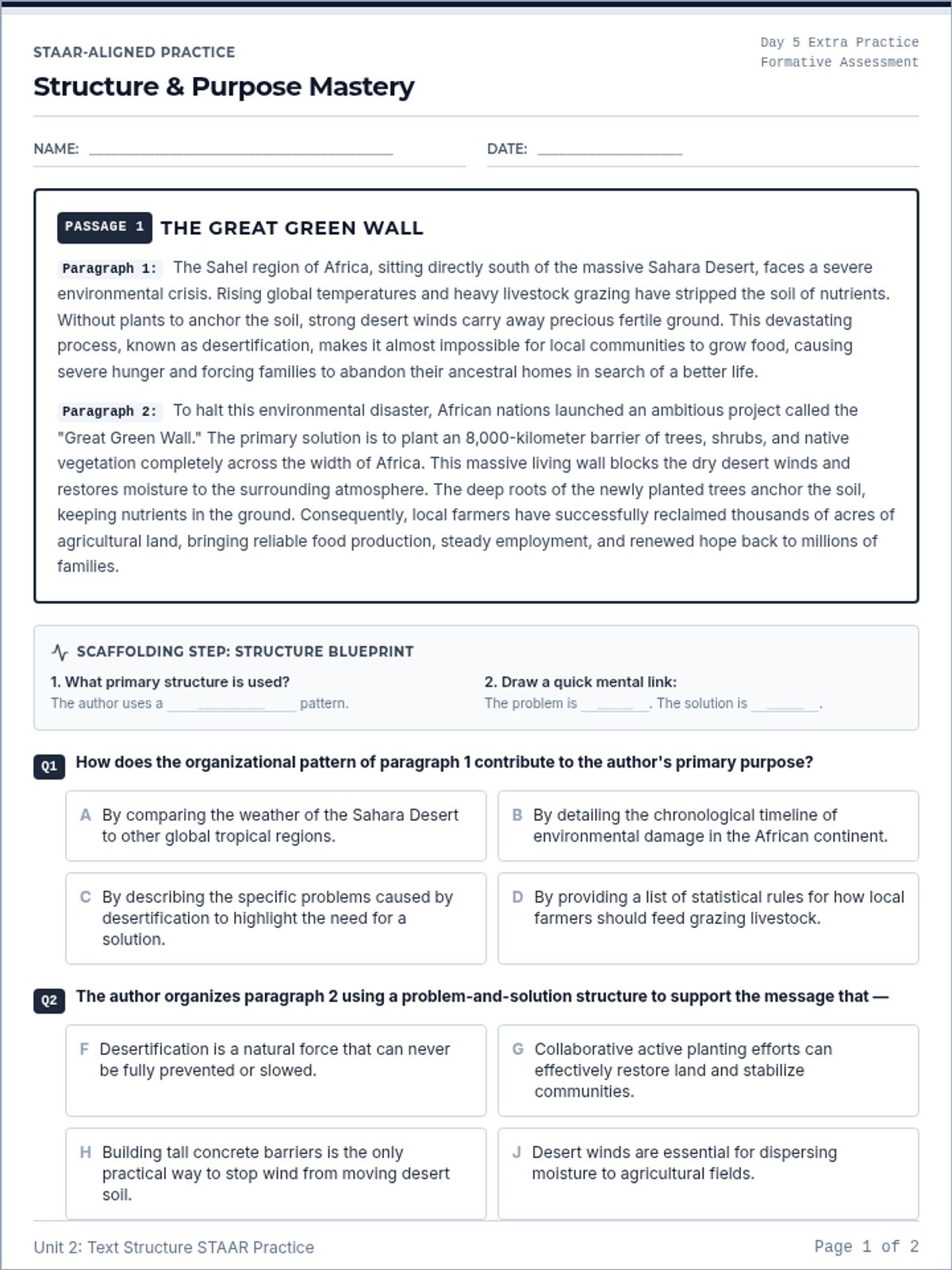
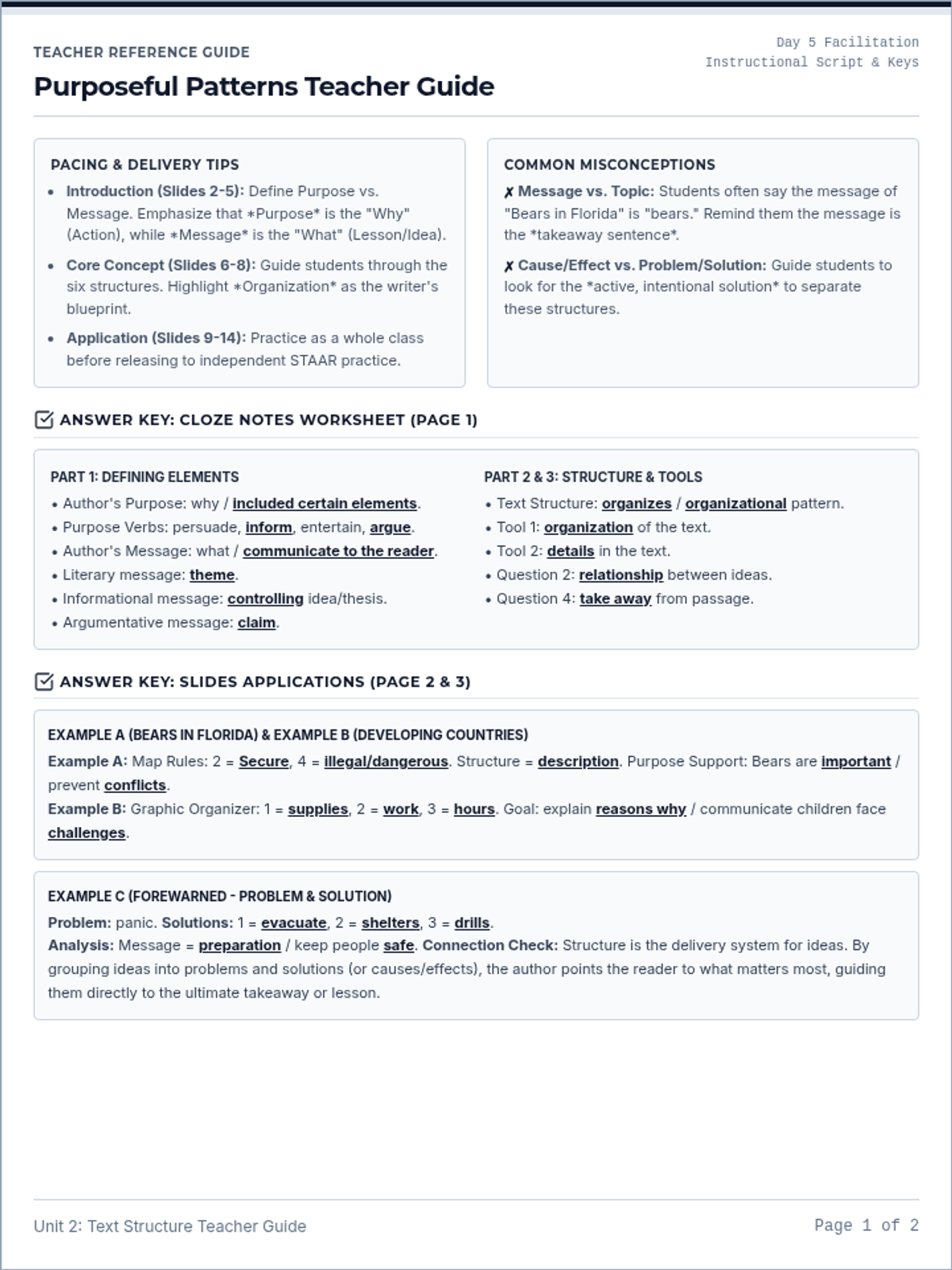
A comprehensive lesson exploring how text structures (description, cause/effect, problem/solution) contribute to an author's purpose and message, complete with interactive cloze notes and STAAR-aligned practice.
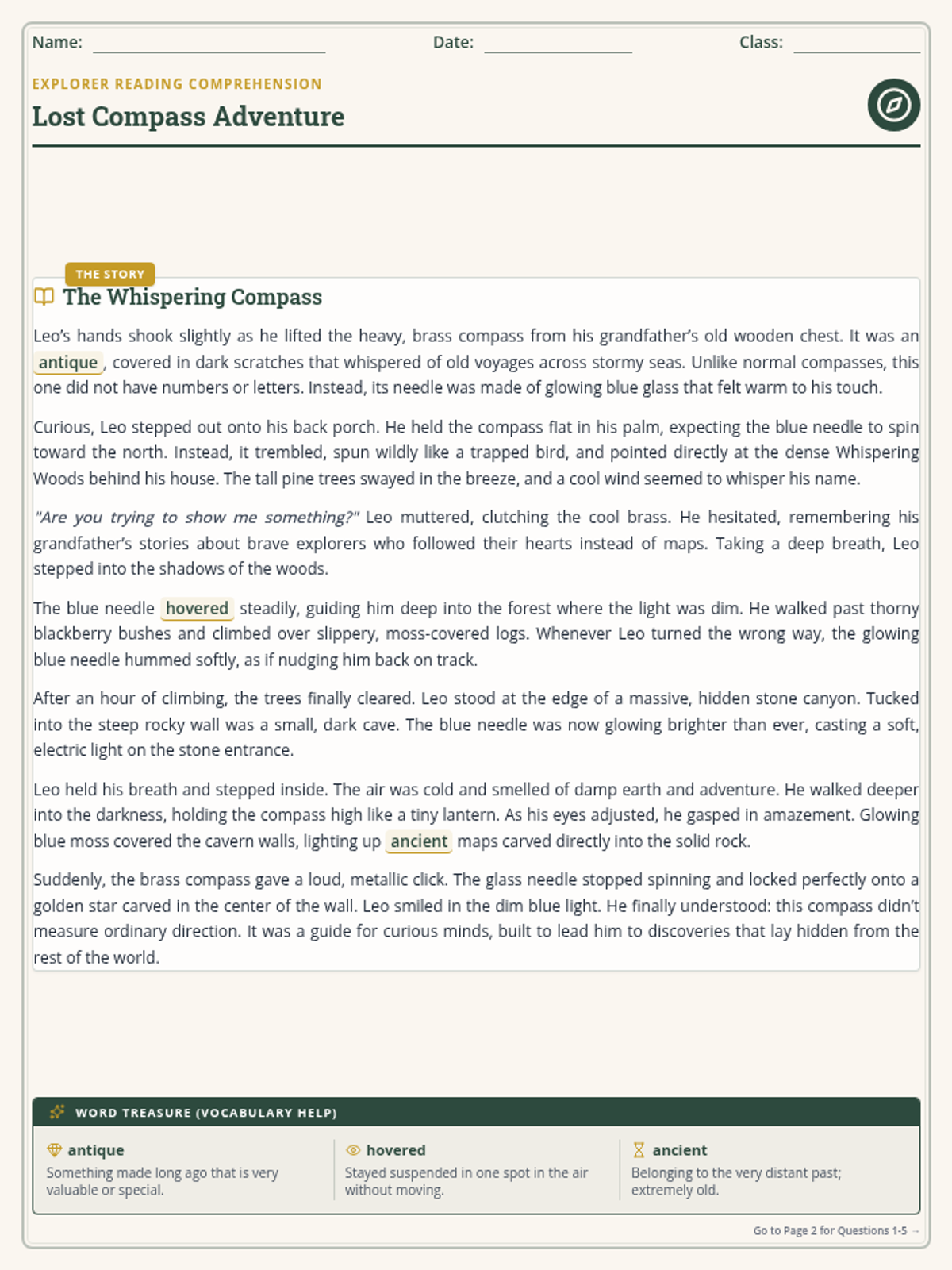
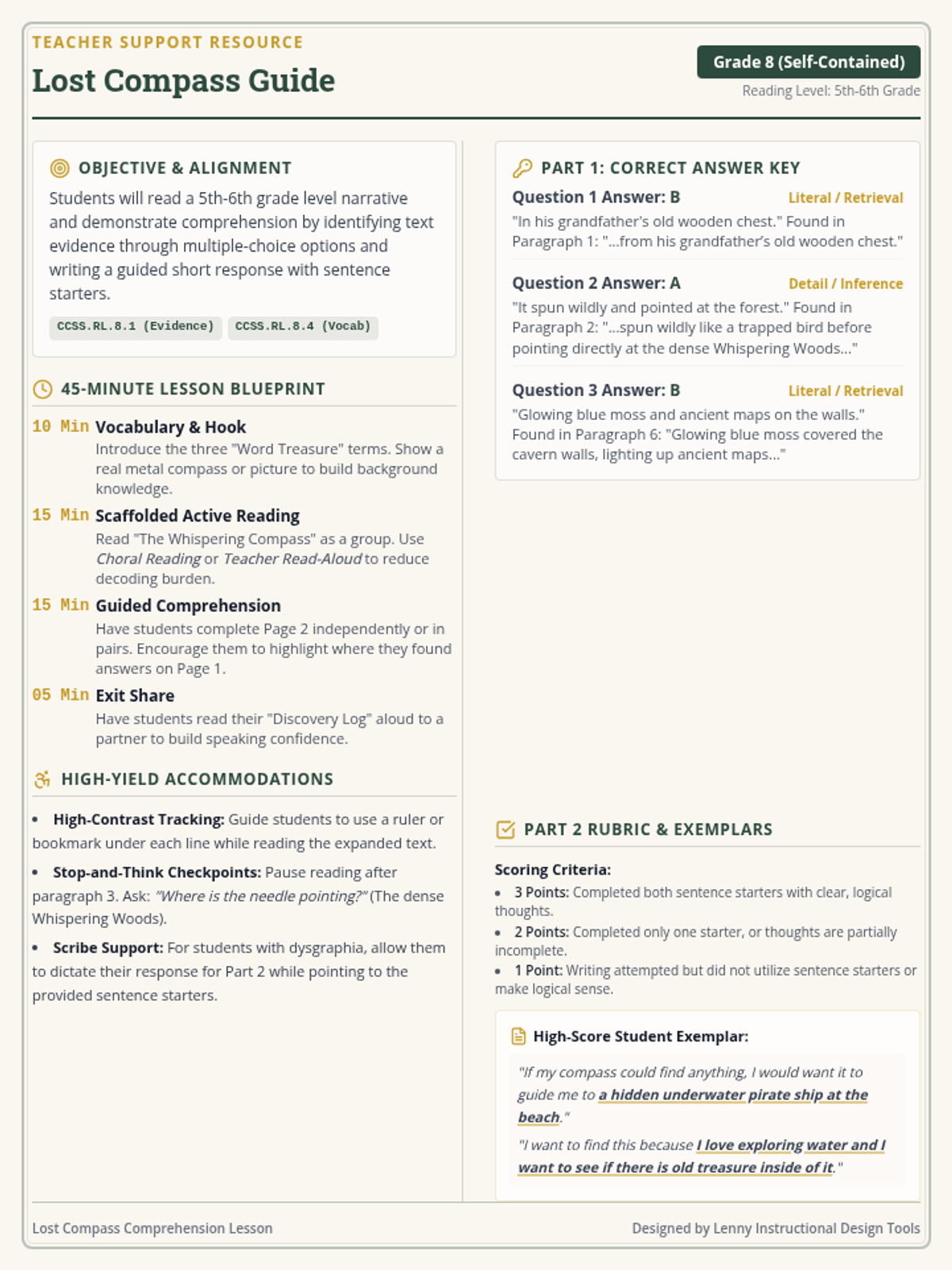
A reading comprehension lesson designed for 8th-grade self-contained ELA students reading at a 5th-6th grade level. It includes a scaffolded student worksheet with visual multiple-choice options and a teacher guide with pacing and strategies.
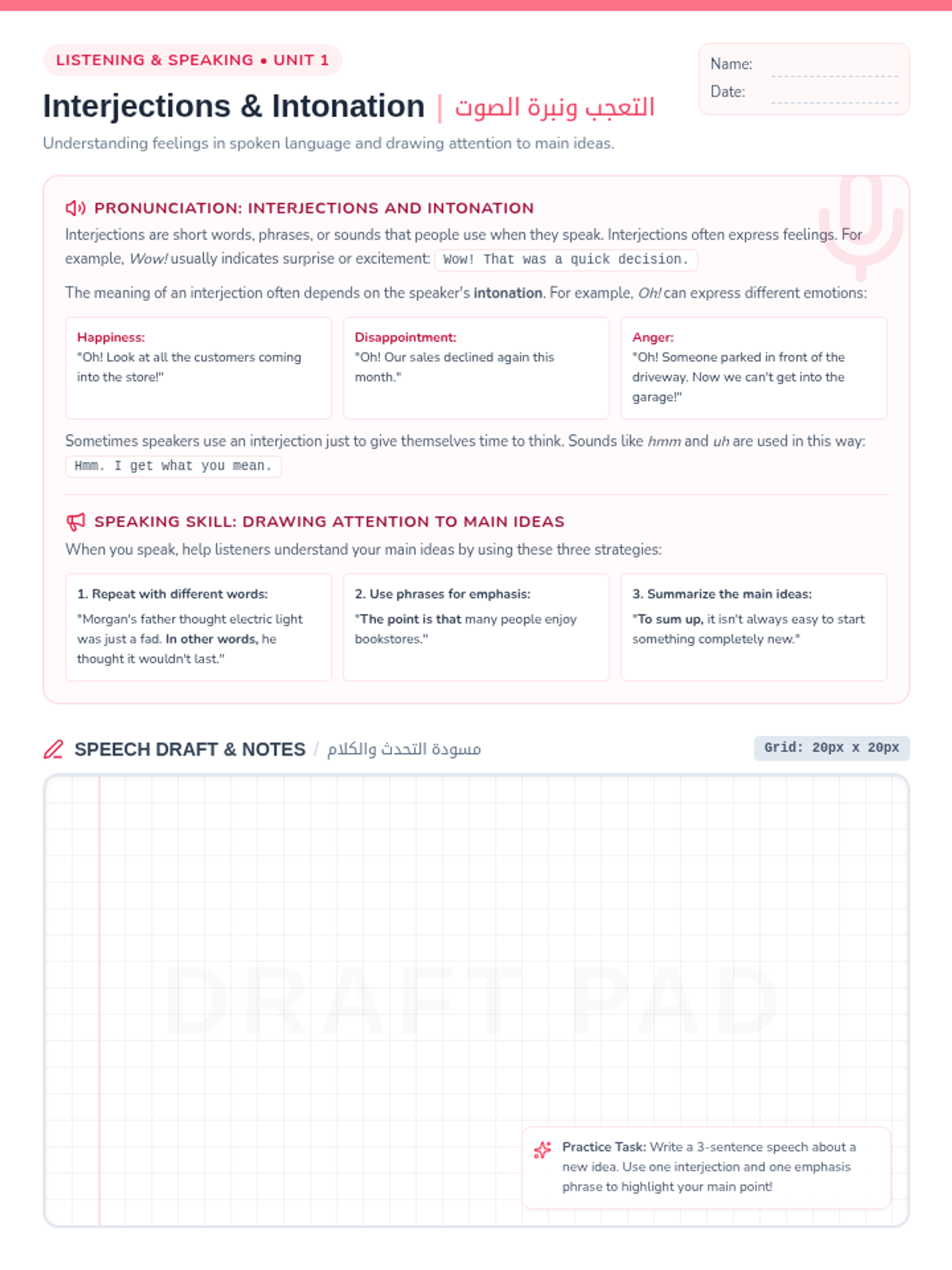
A premium, student-facing draft and rule booklet for English Listening and Speaking (L&S) across 8 core units of pronunciation and speech skills.
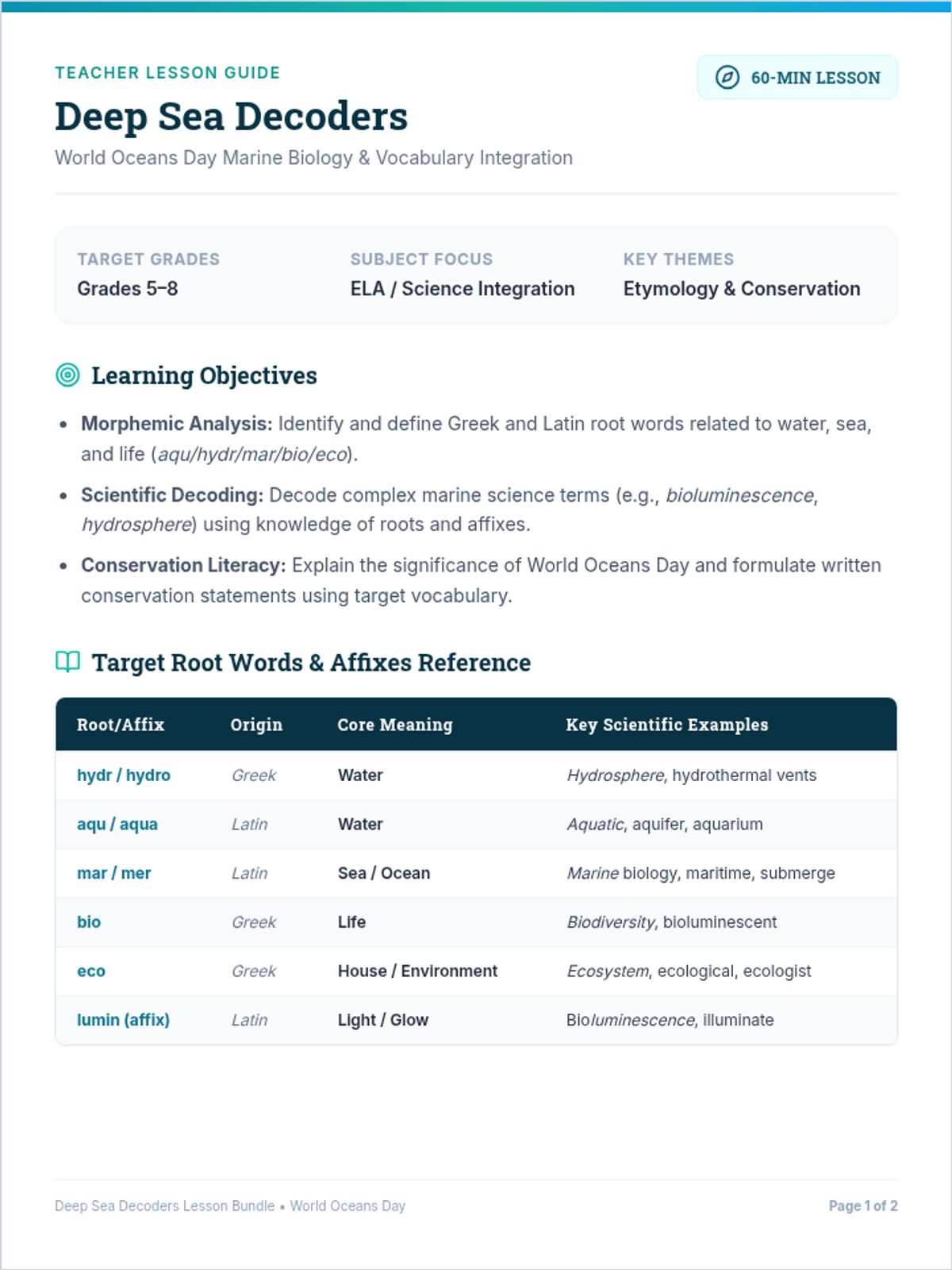
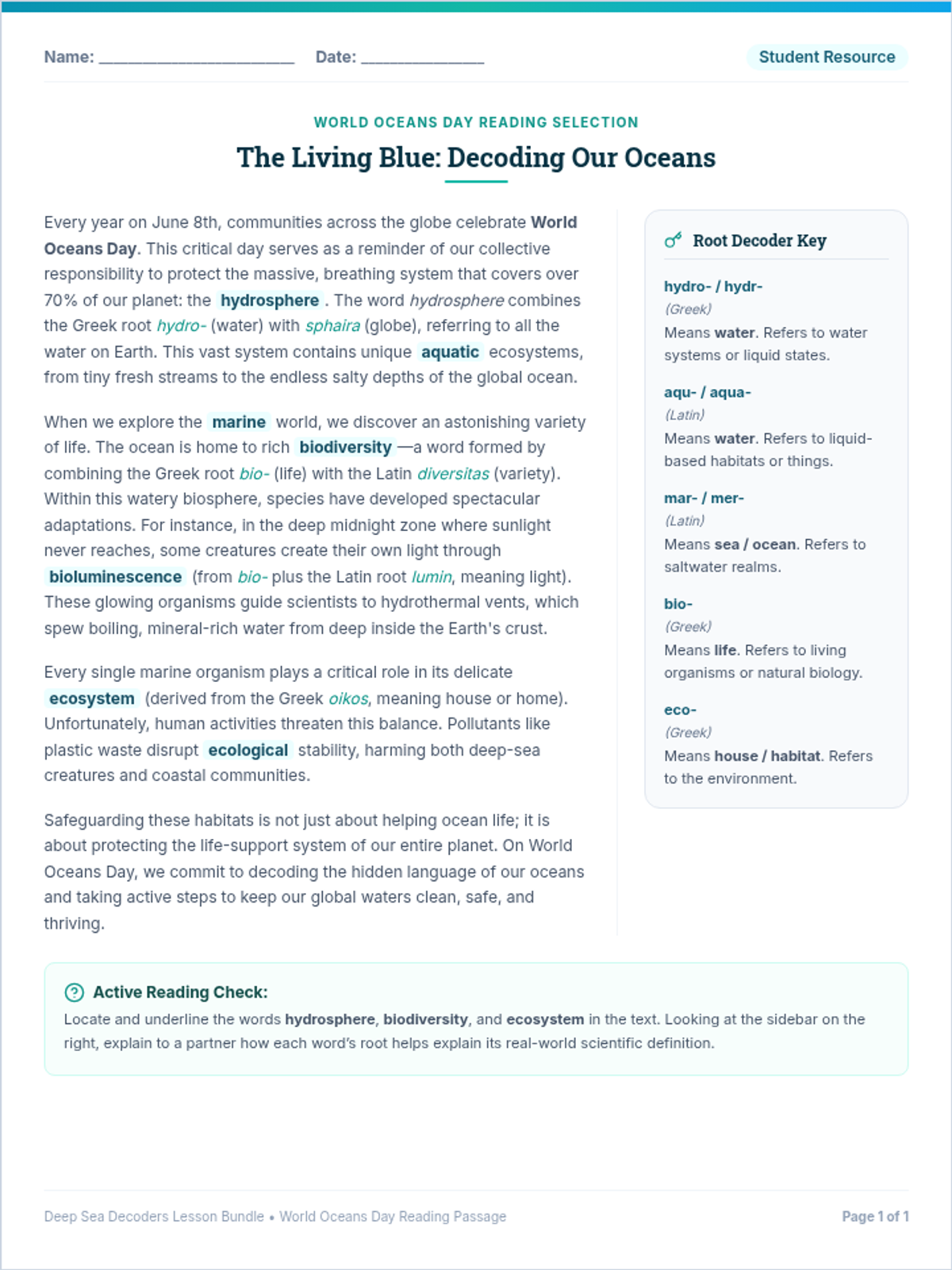
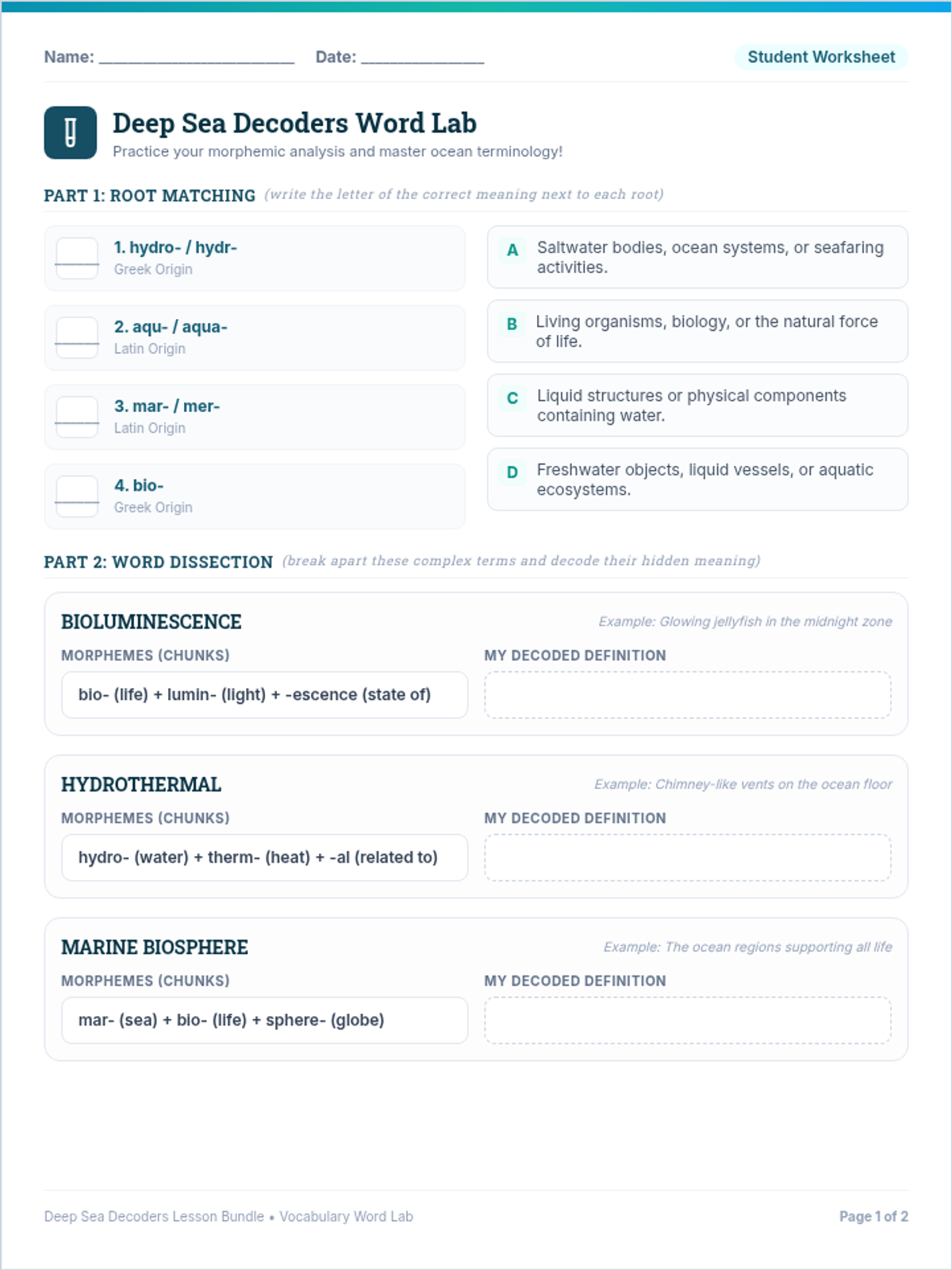
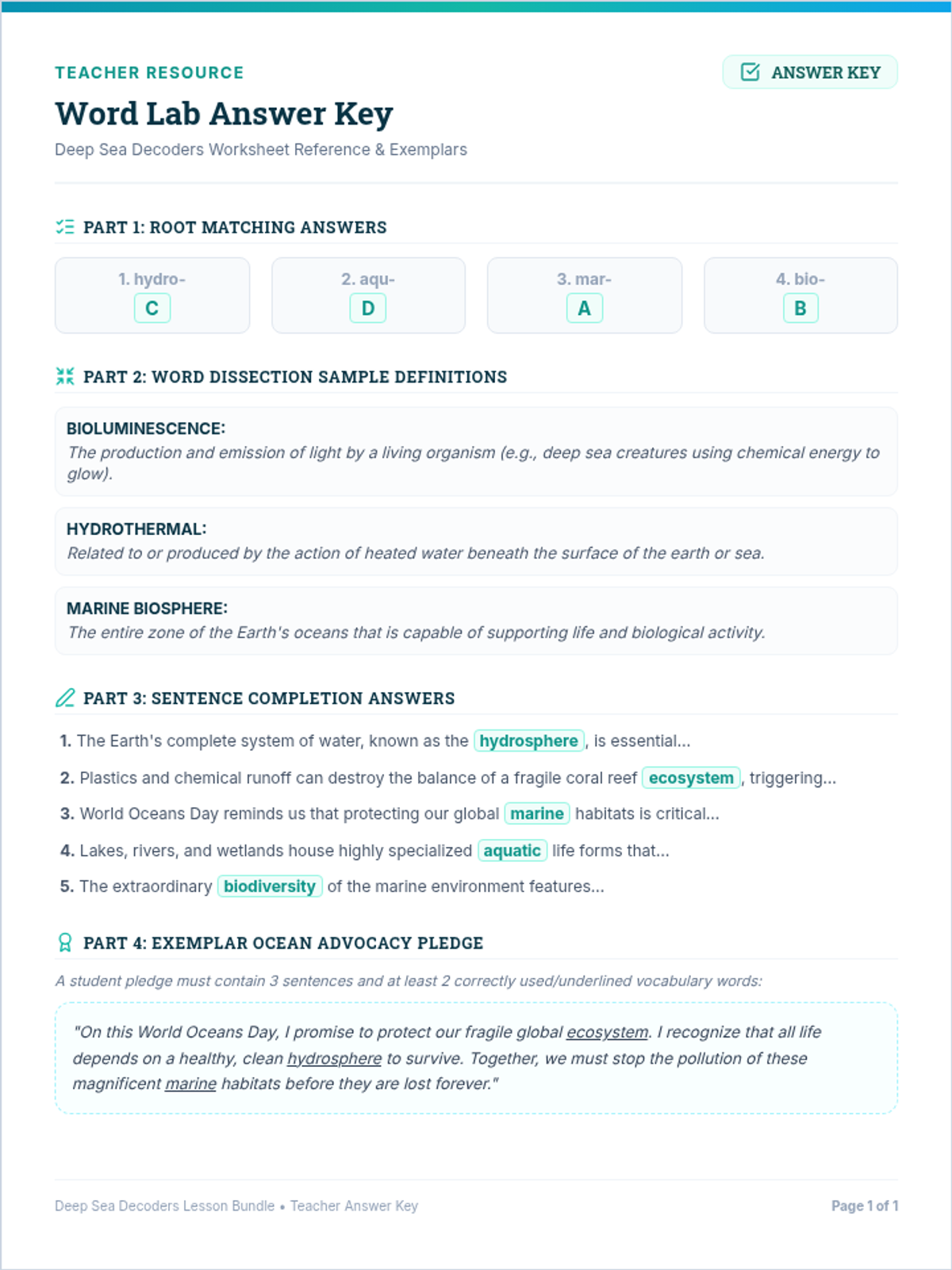
An immersive World Oceans Day lesson exploring marine biology and conservation through the lens of Greek and Latin roots. Students decode scientific terms to understand ocean ecosystems and human impacts.
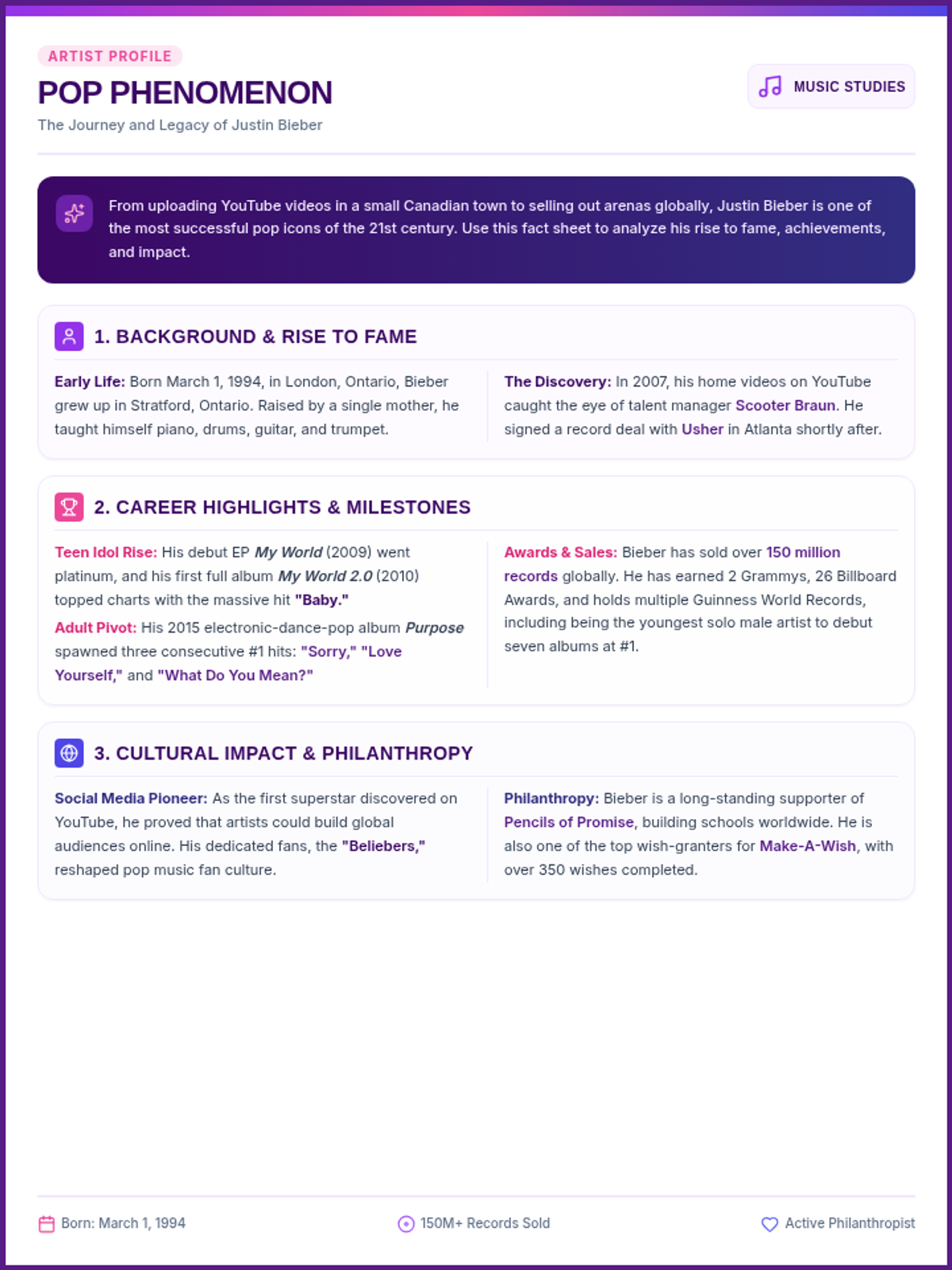
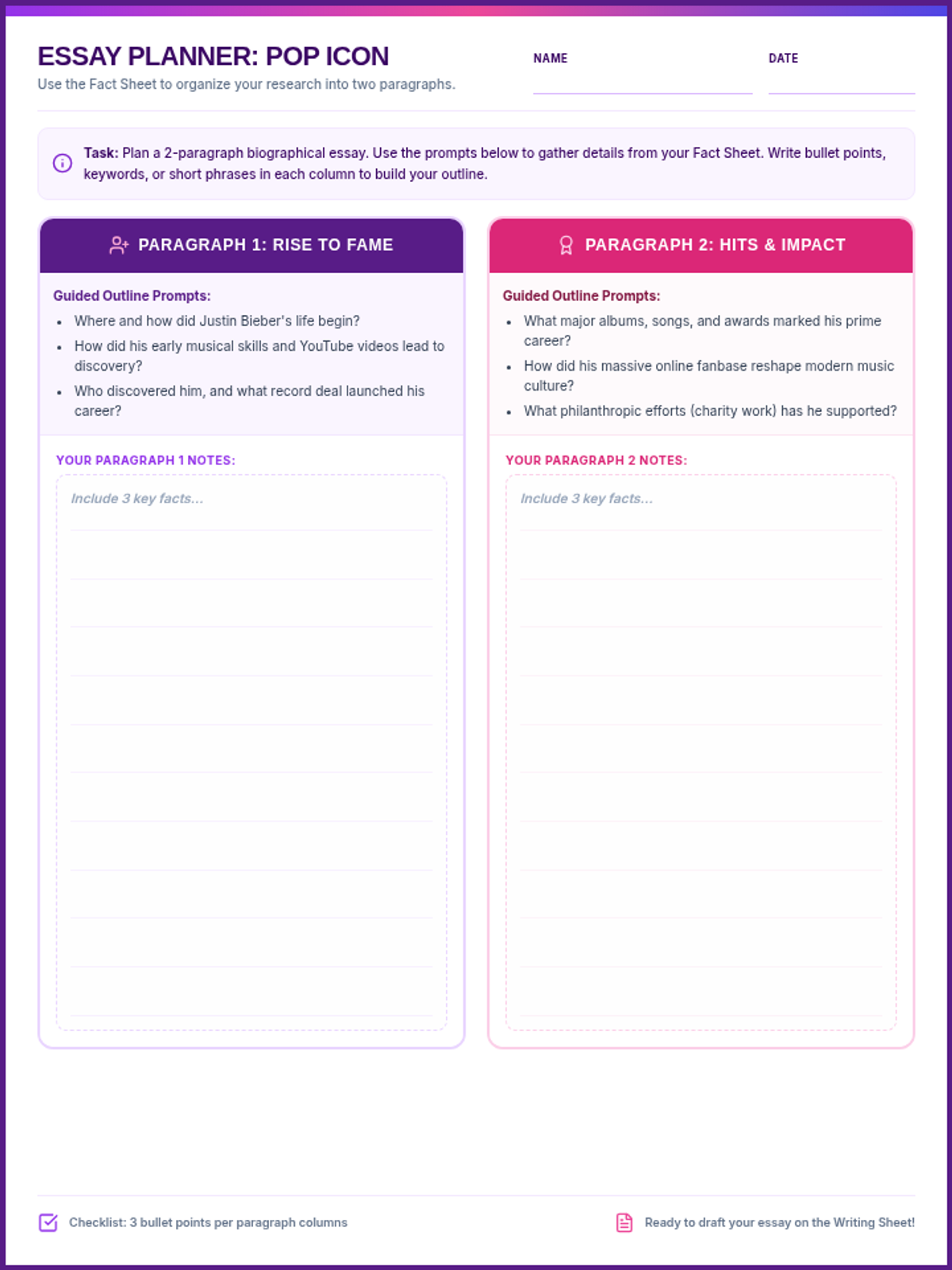
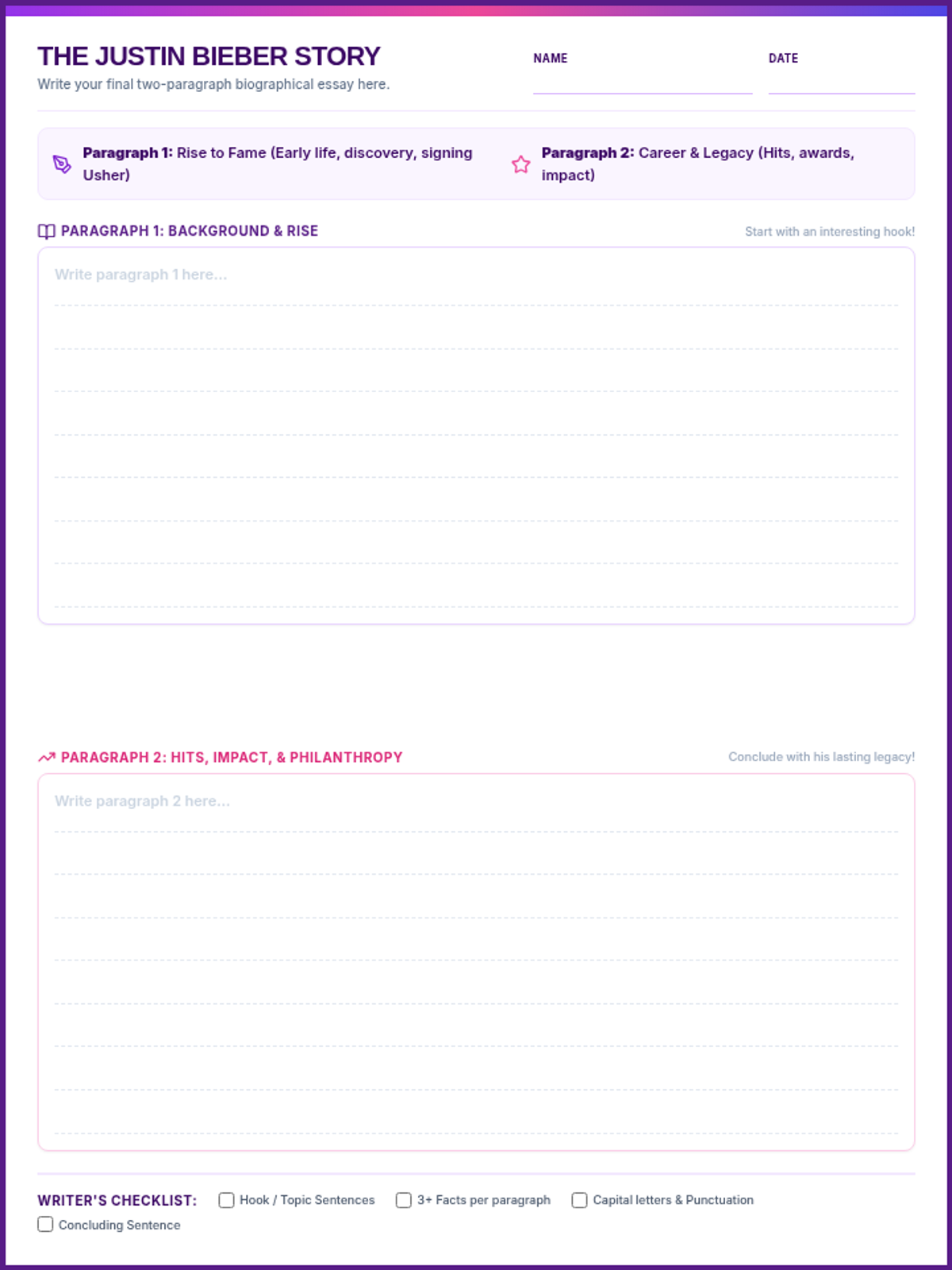
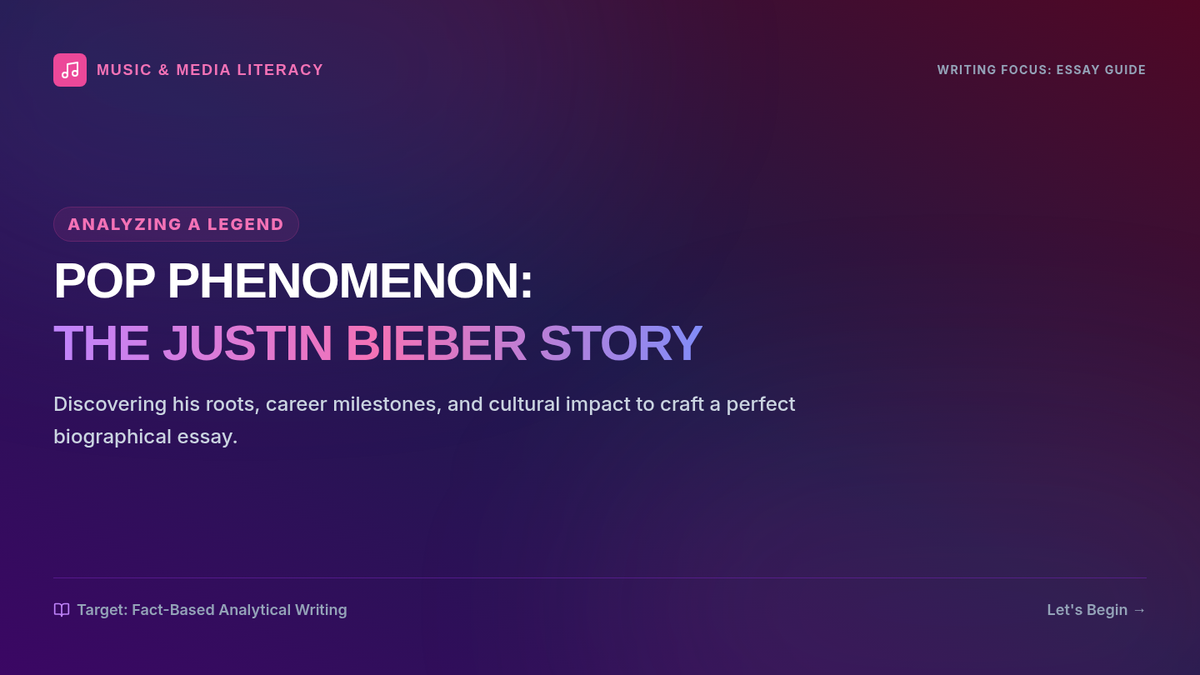
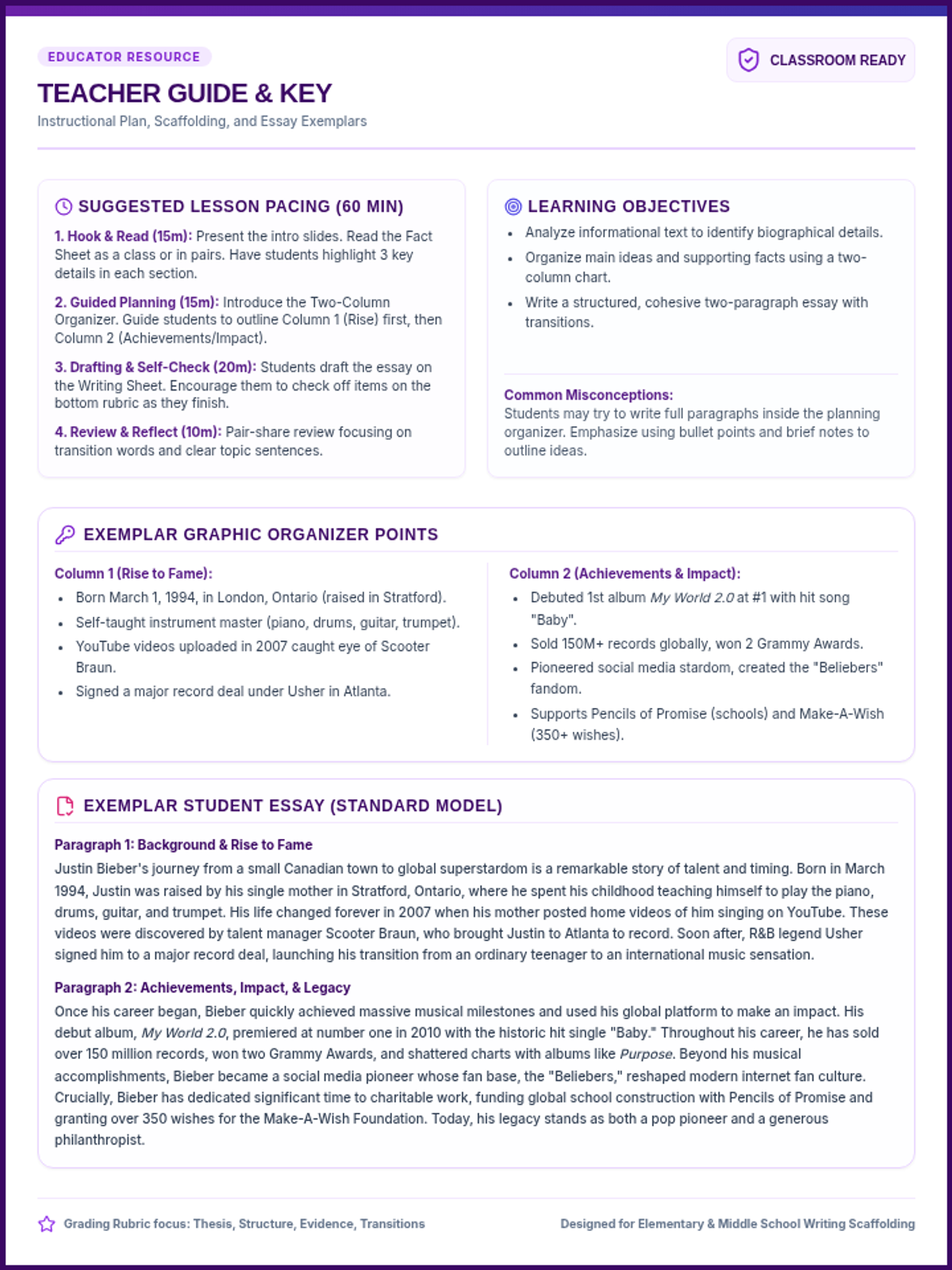
A writing-focused lesson exploring the life, career, and cultural impact of pop star Justin Bieber. Students analyze a structured fact sheet, plan their ideas using a two-column guided graphic organizer, and write a cohesive two-paragraph essay with integrated scaffolding.