A fast-paced 10-minute workshop on mastering the synthesis introduction and thematic body organization, designed for 10th grade students bridging the gap to AP Language.
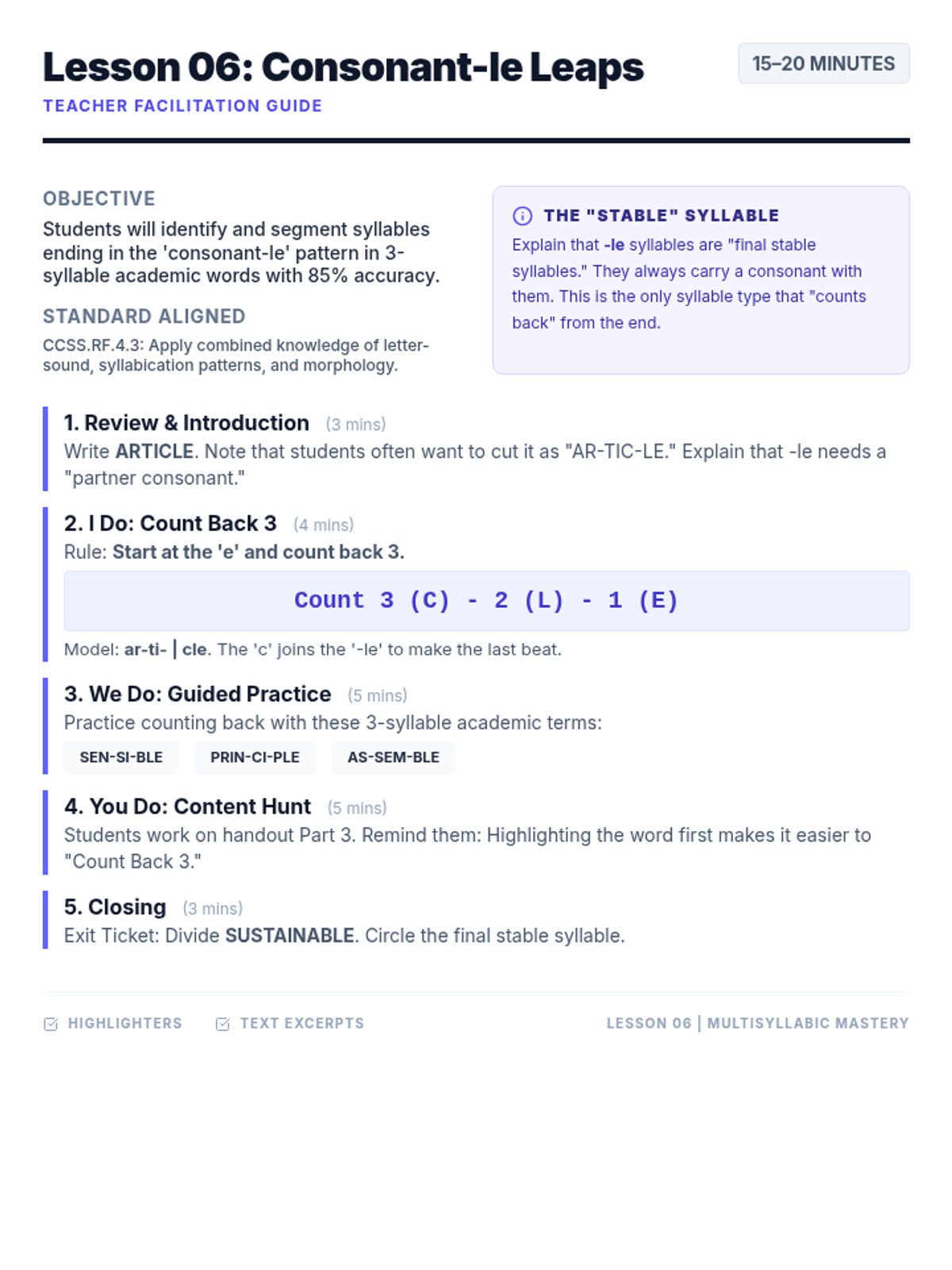
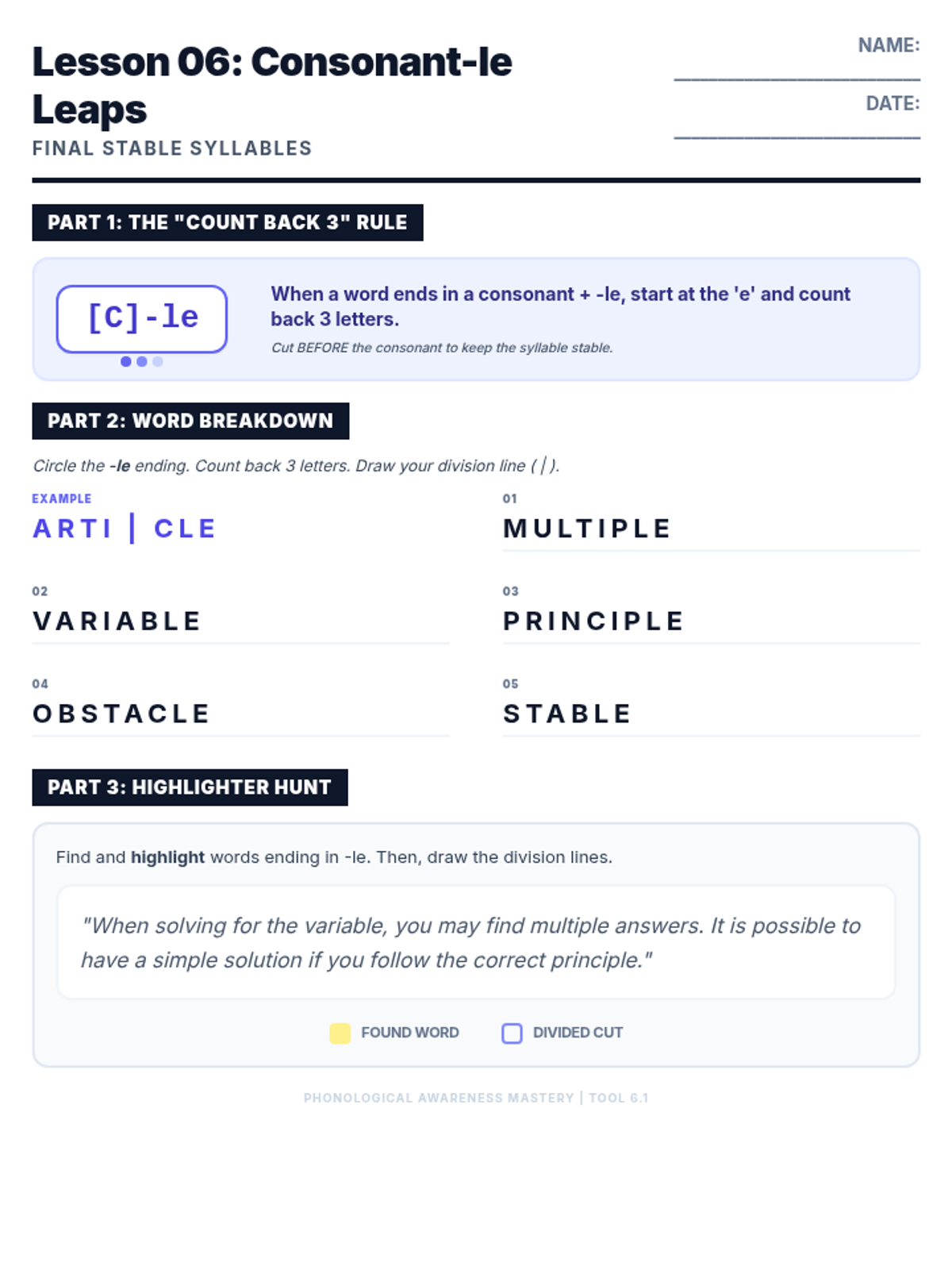
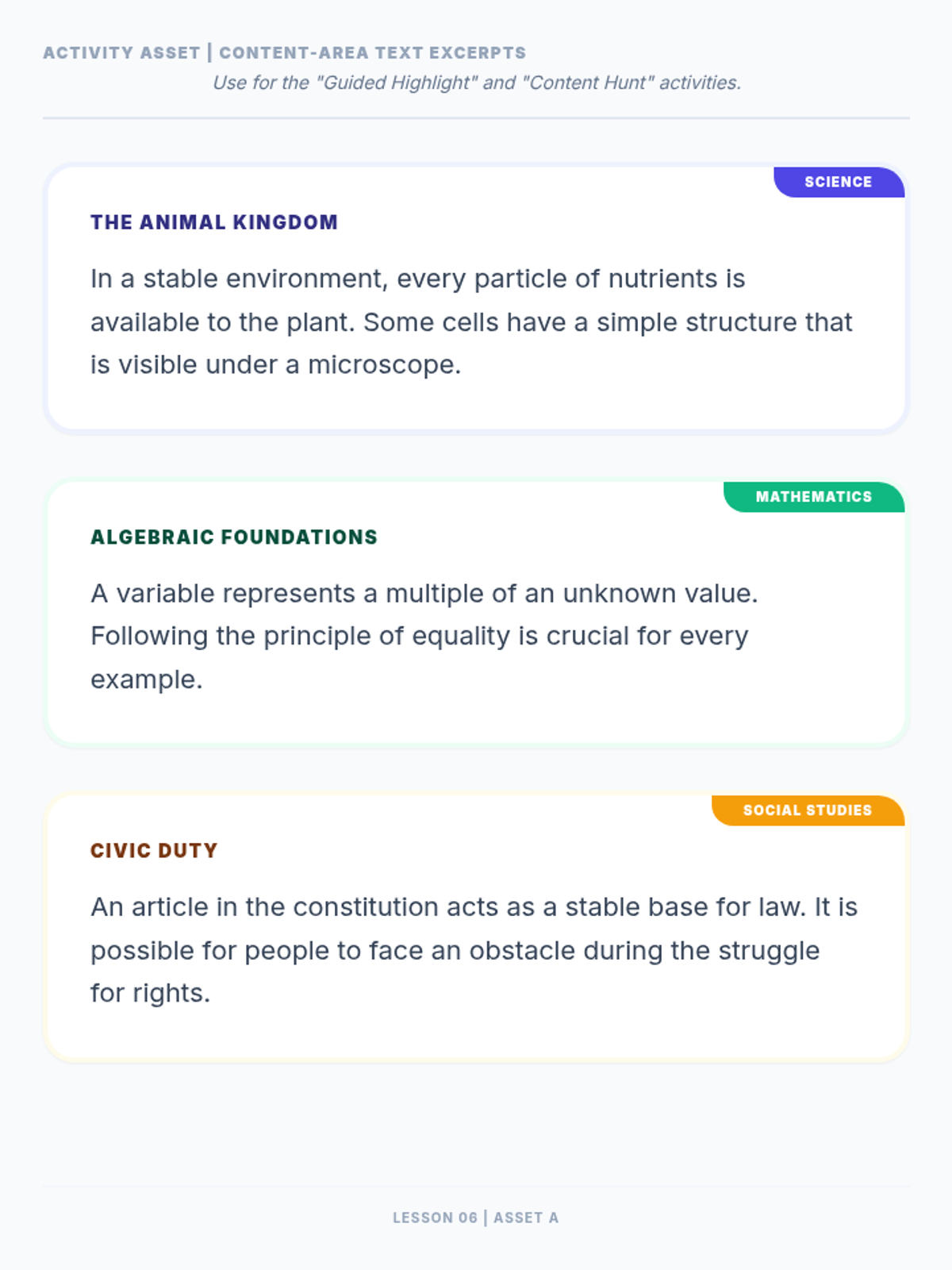
Sixth lesson in the sequence, focusing on identifying and dividing syllables ending in the 'consonant-le' pattern in academic vocabulary.
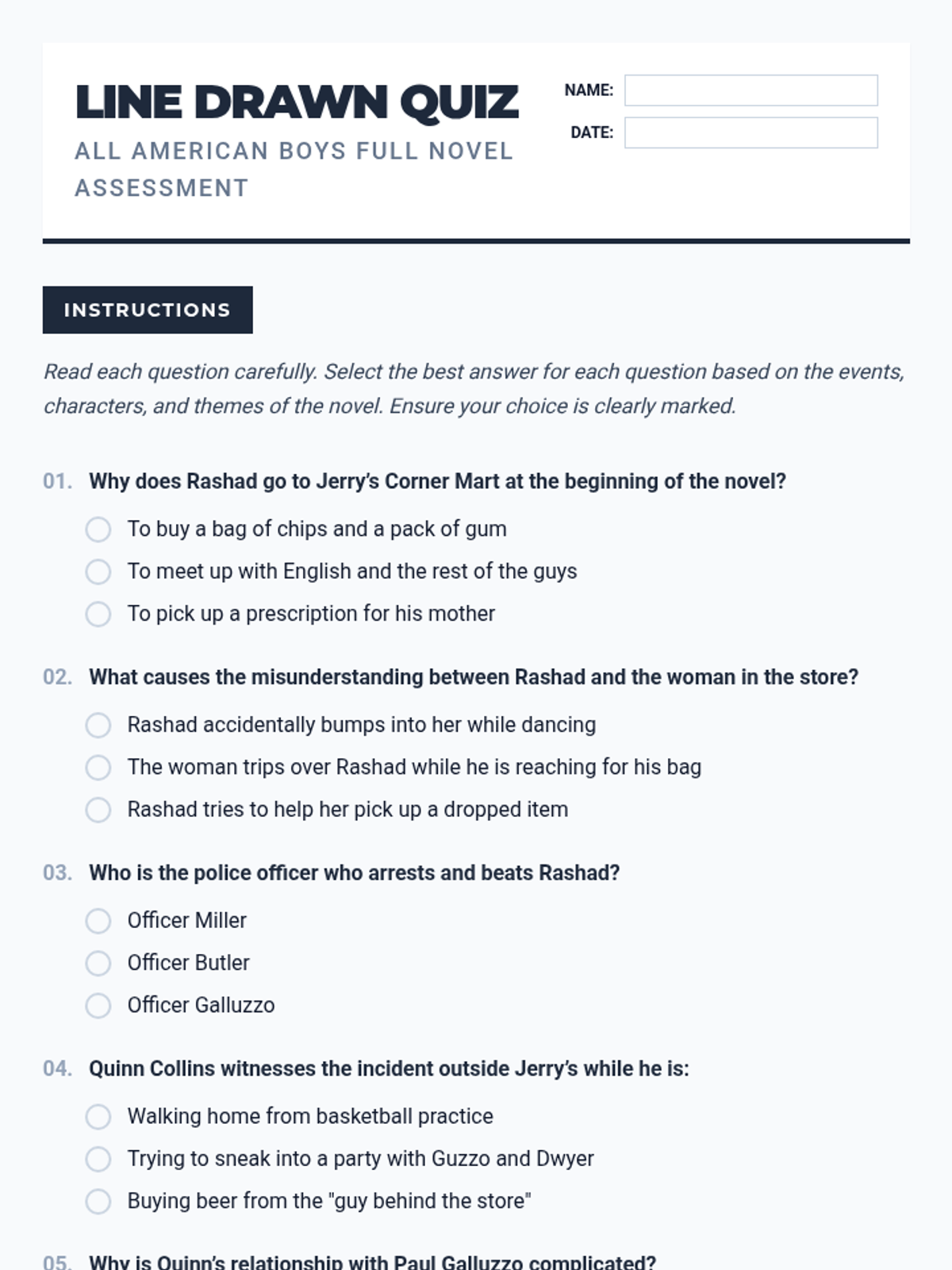
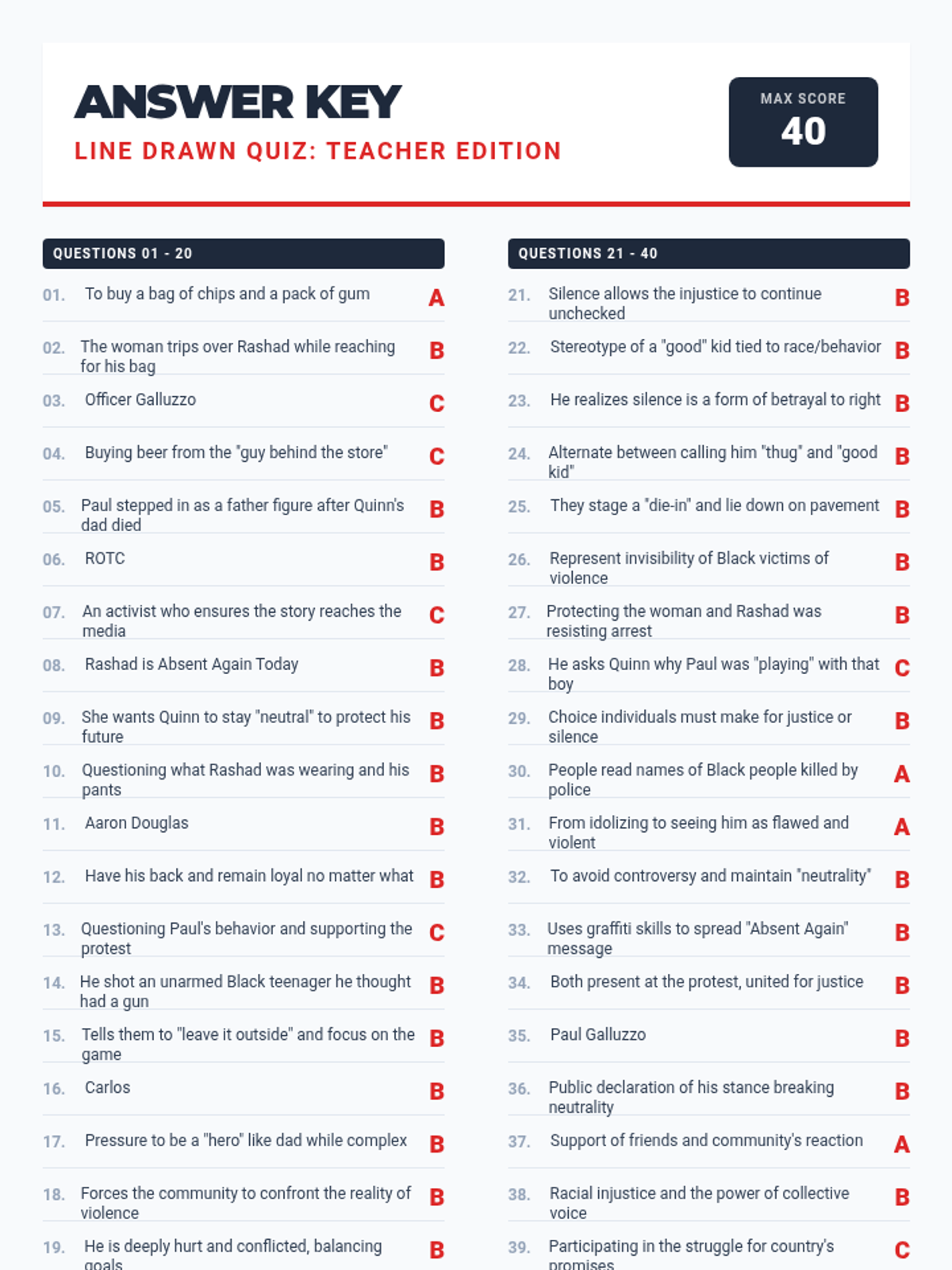
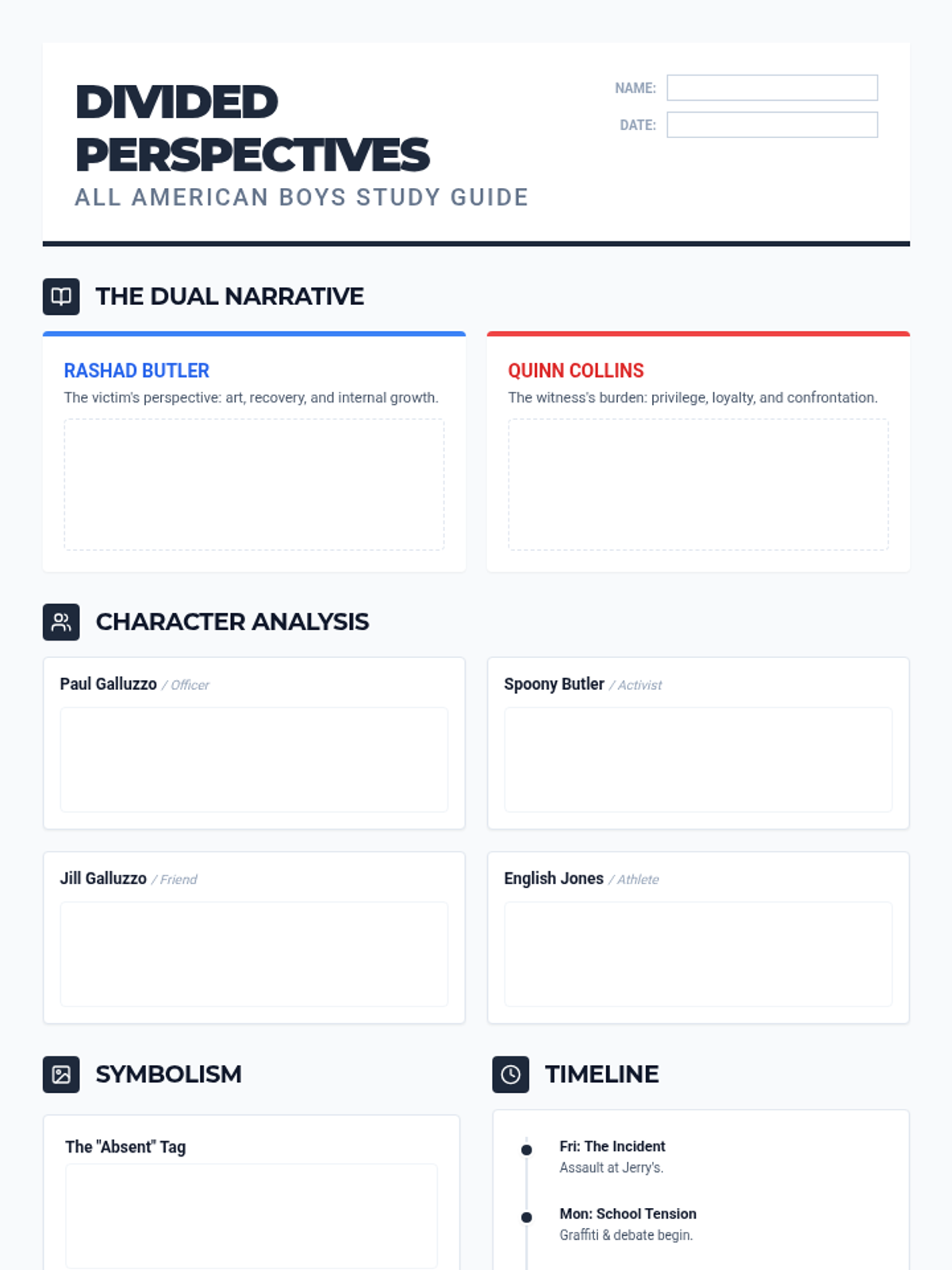
A comprehensive assessment and teaching guide for Jason Reynolds and Brendan Kiely's novel *All American Boys*, focusing on its dual-perspective narrative and themes of social justice.
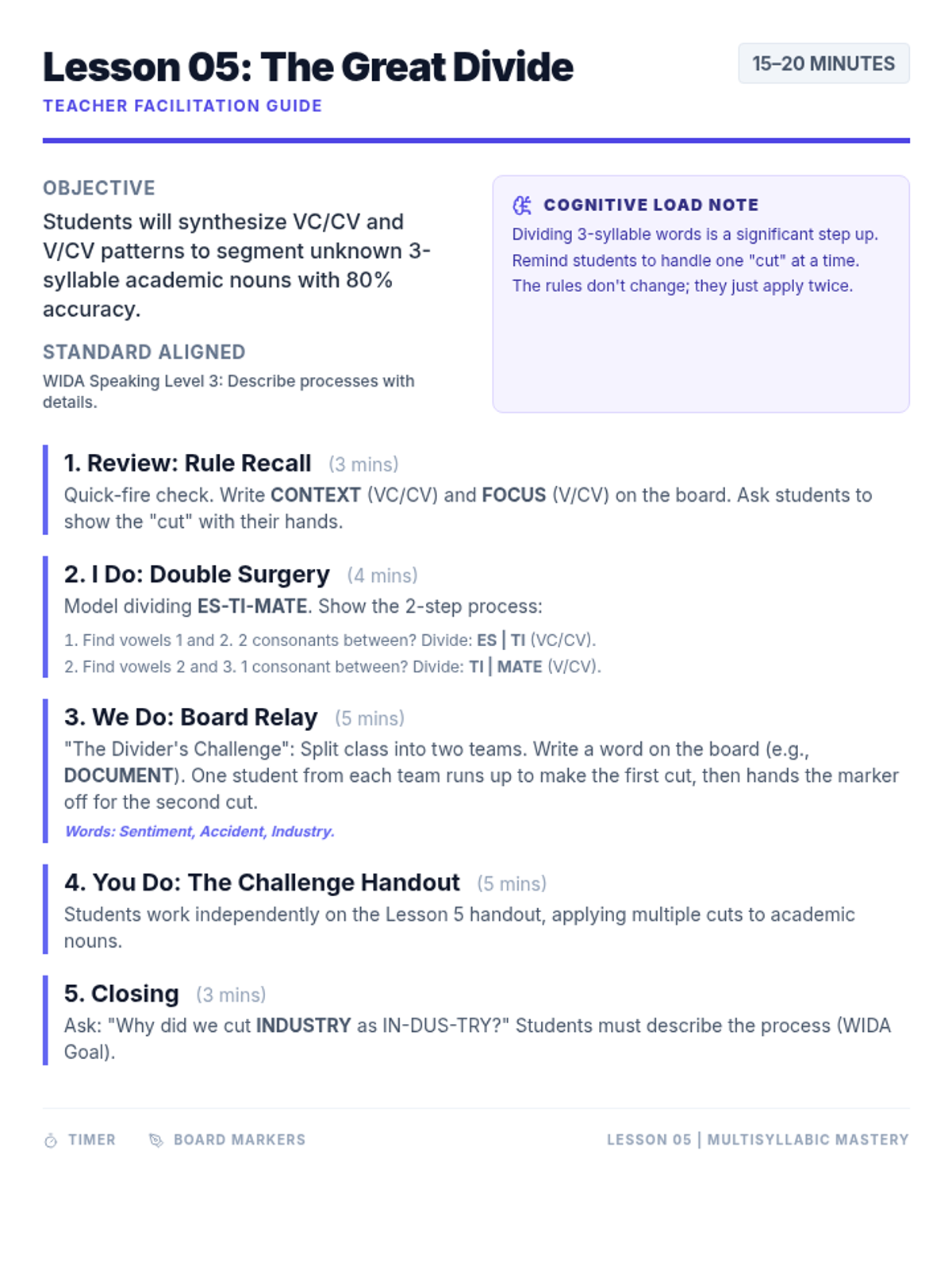
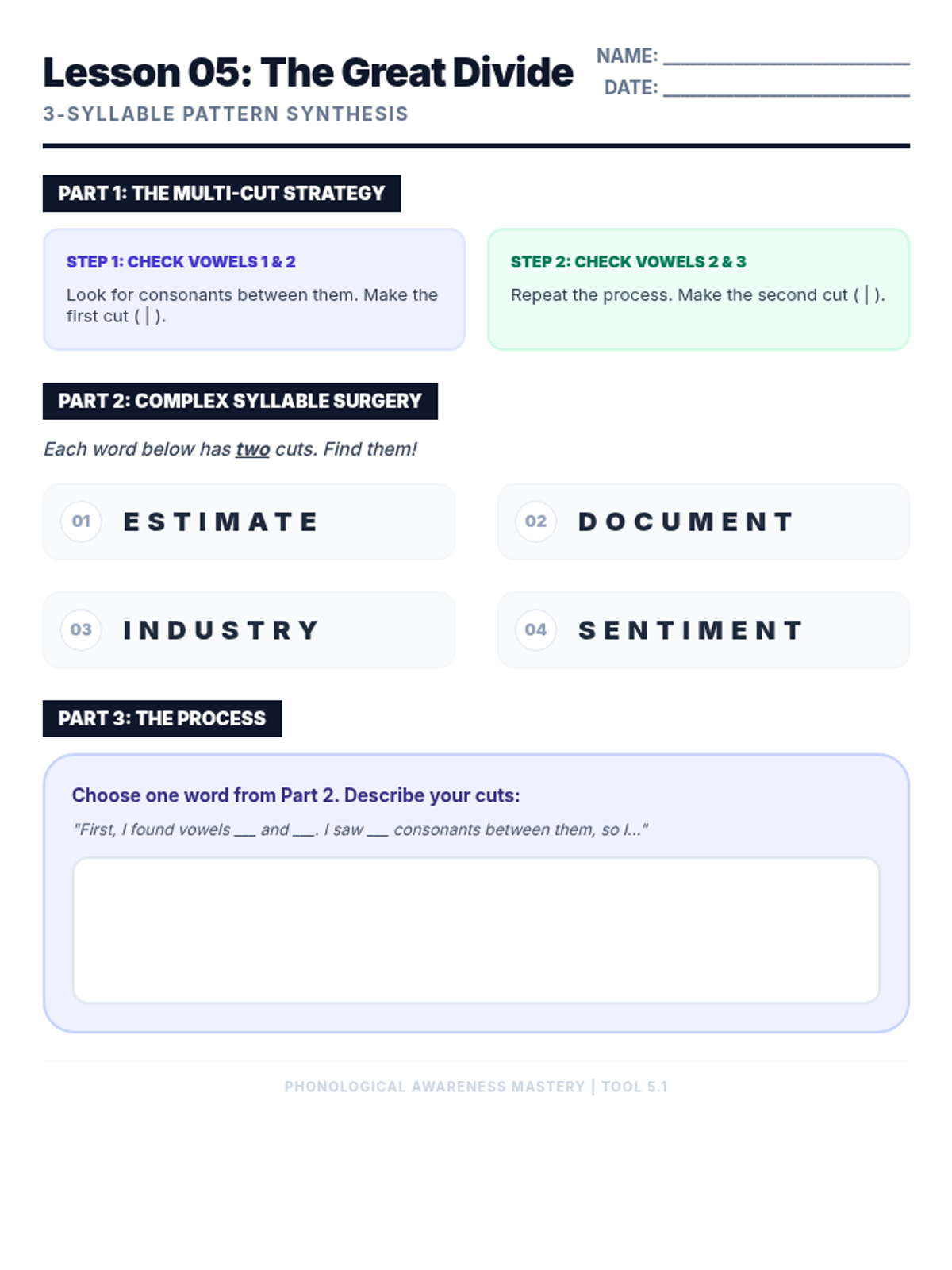
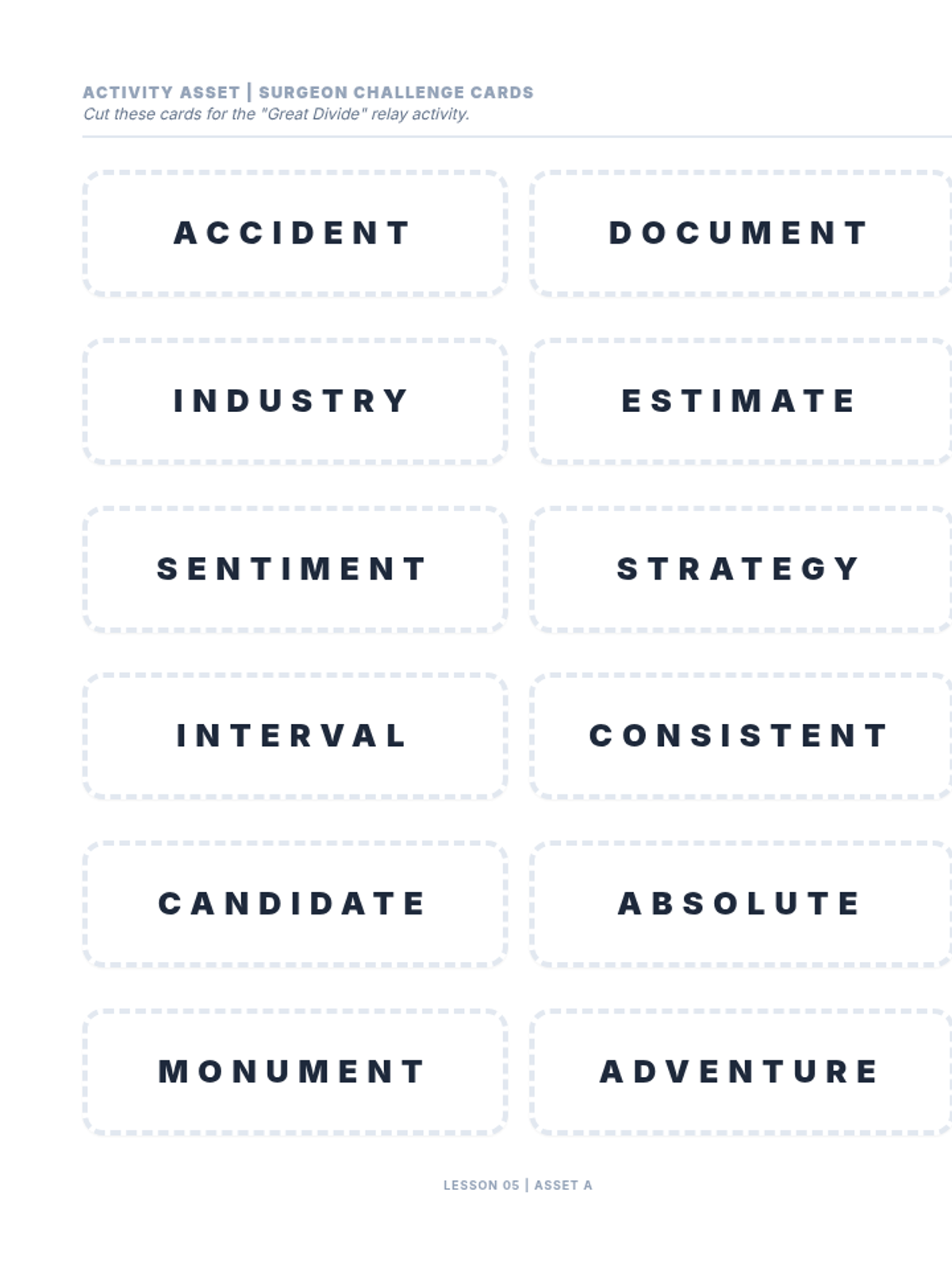
Fifth lesson in the sequence, focusing on synthesizing VC/CV and V/CV patterns to divide 3-syllable academic vocabulary.
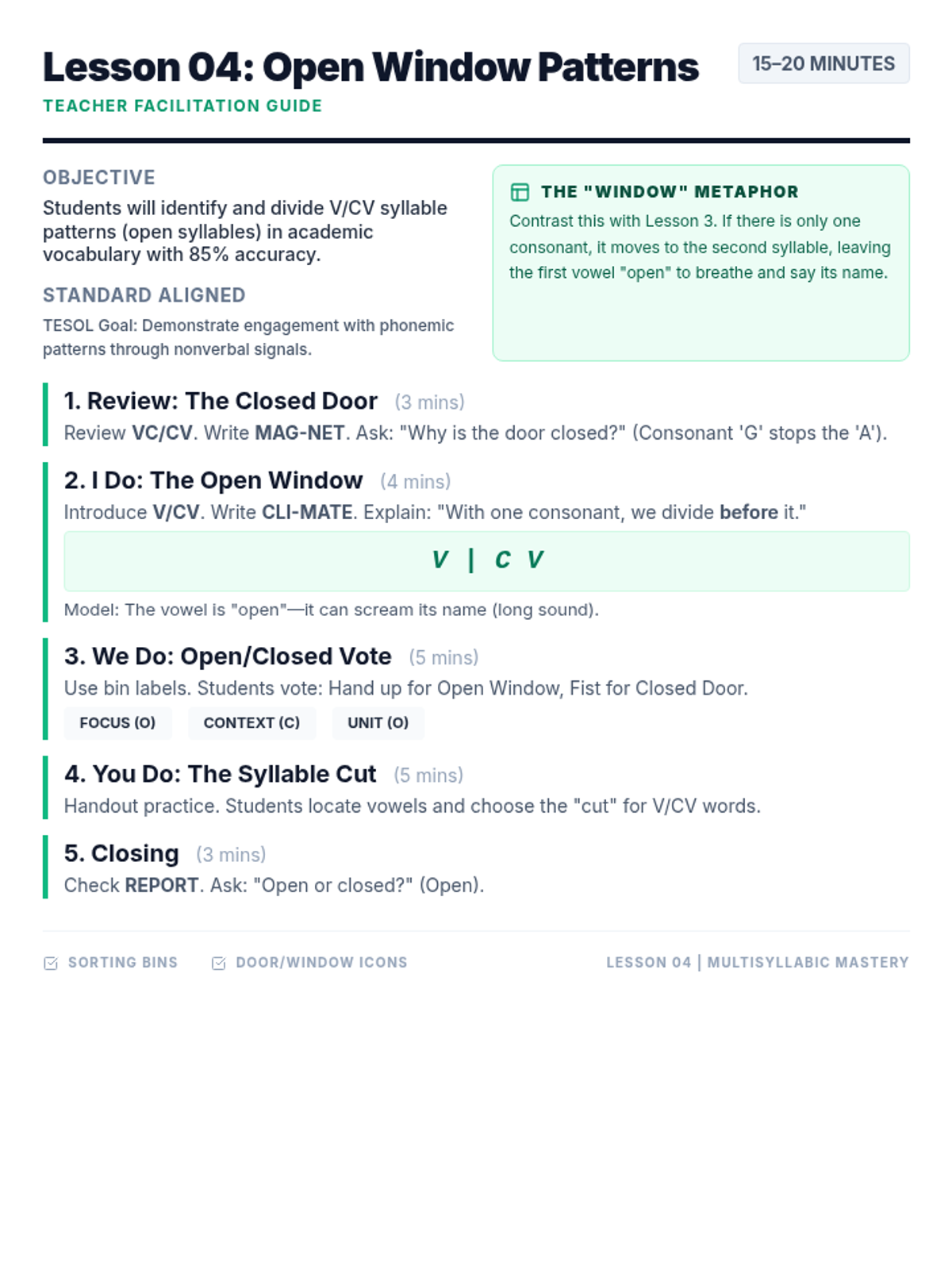
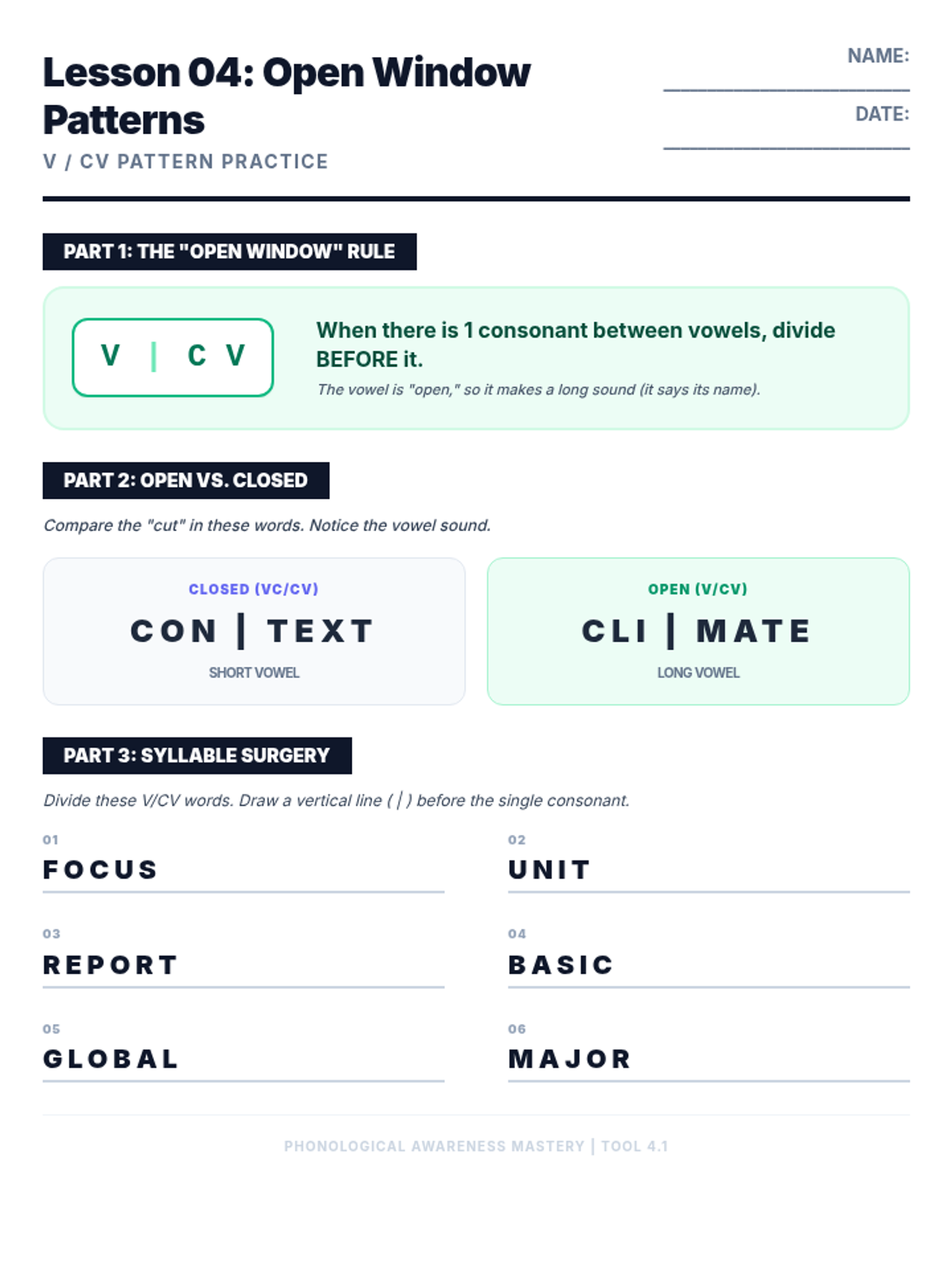
Fourth lesson in the sequence, focusing on identifying and dividing the V/CV (open syllable) pattern in academic vocabulary.
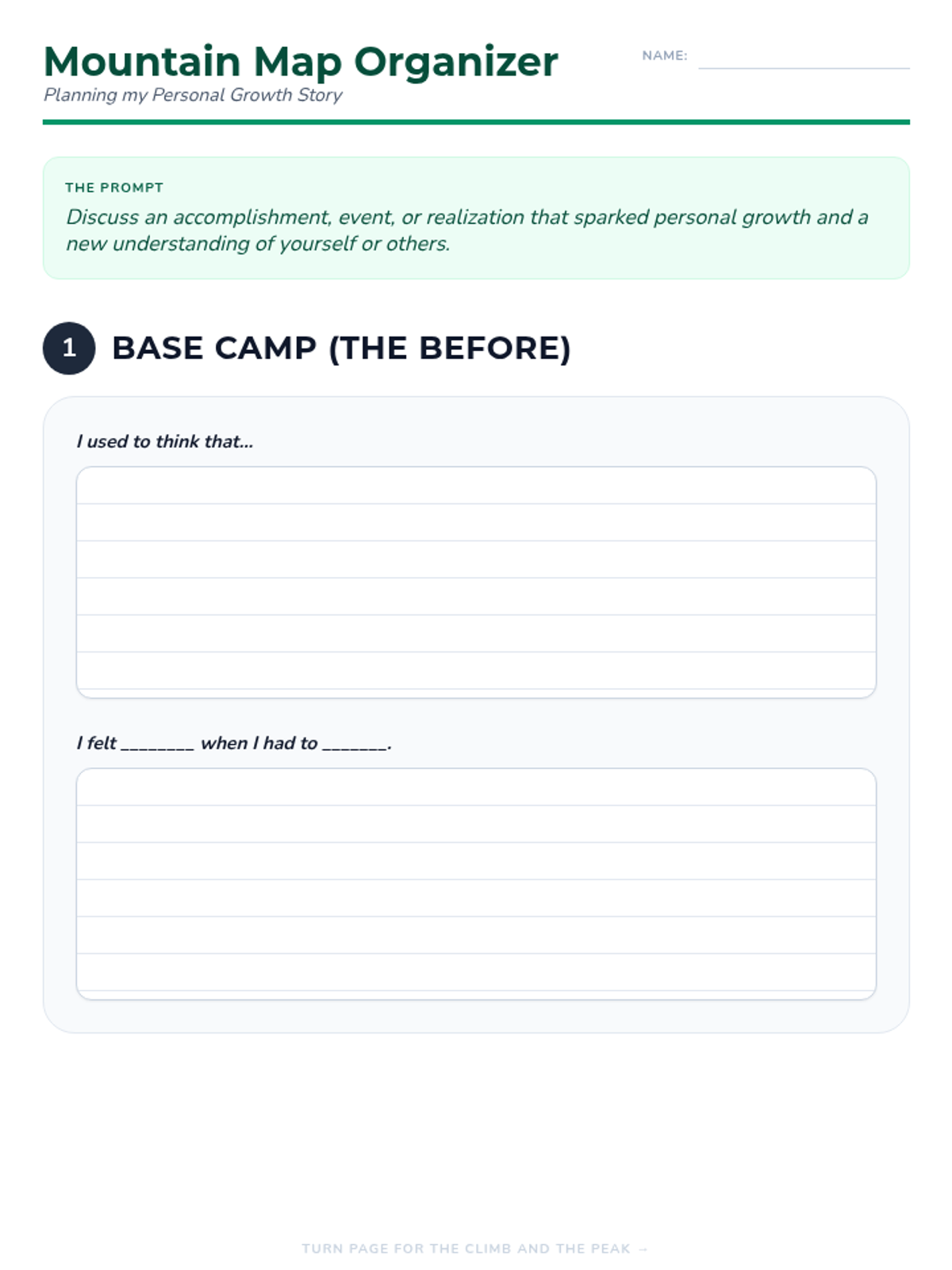
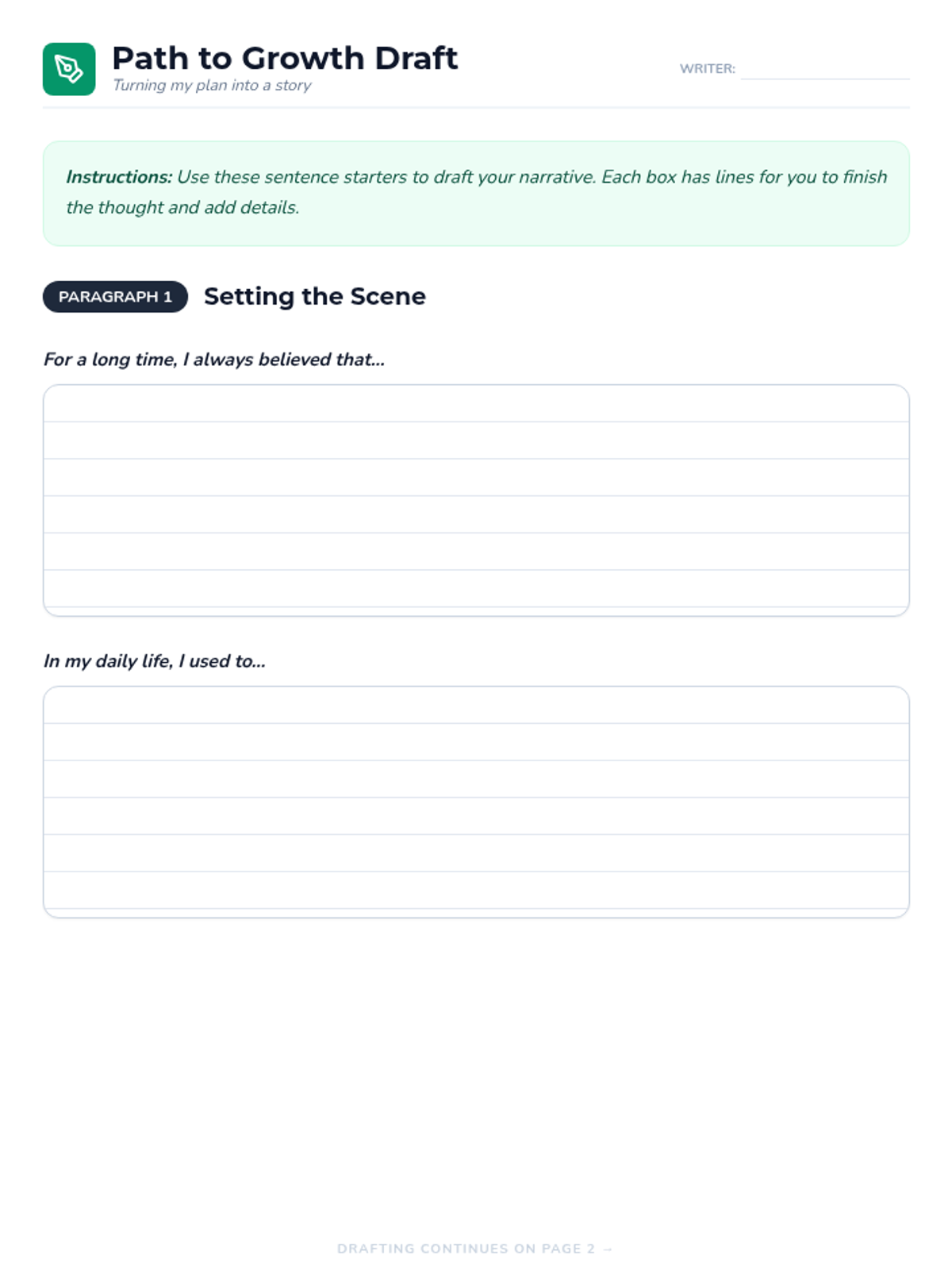
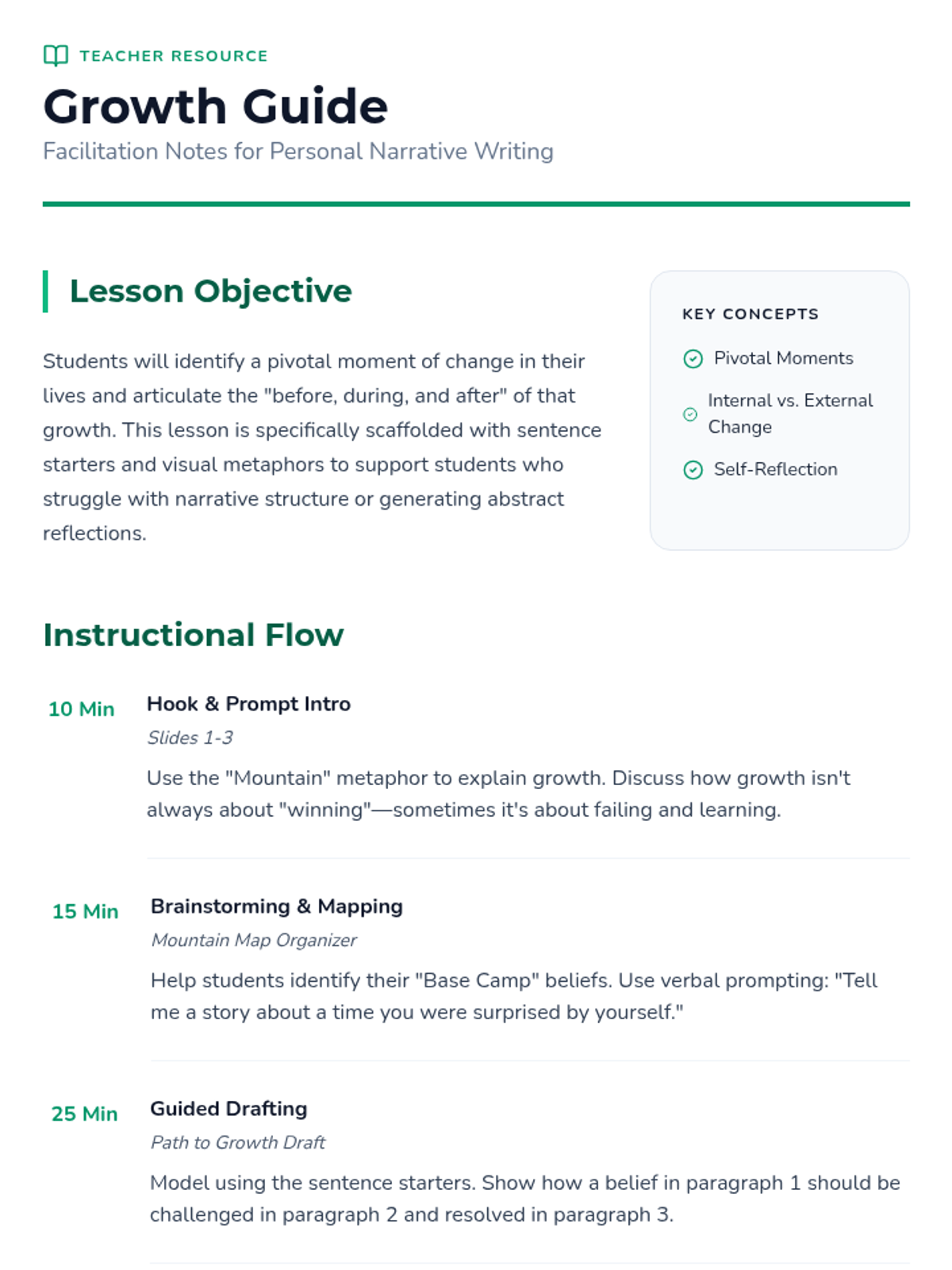
A scaffolded lesson designed to help students reflect on a pivotal moment of change. It includes a graphic organizer and a drafting sheet with heavy sentence starters to support narrative writing.
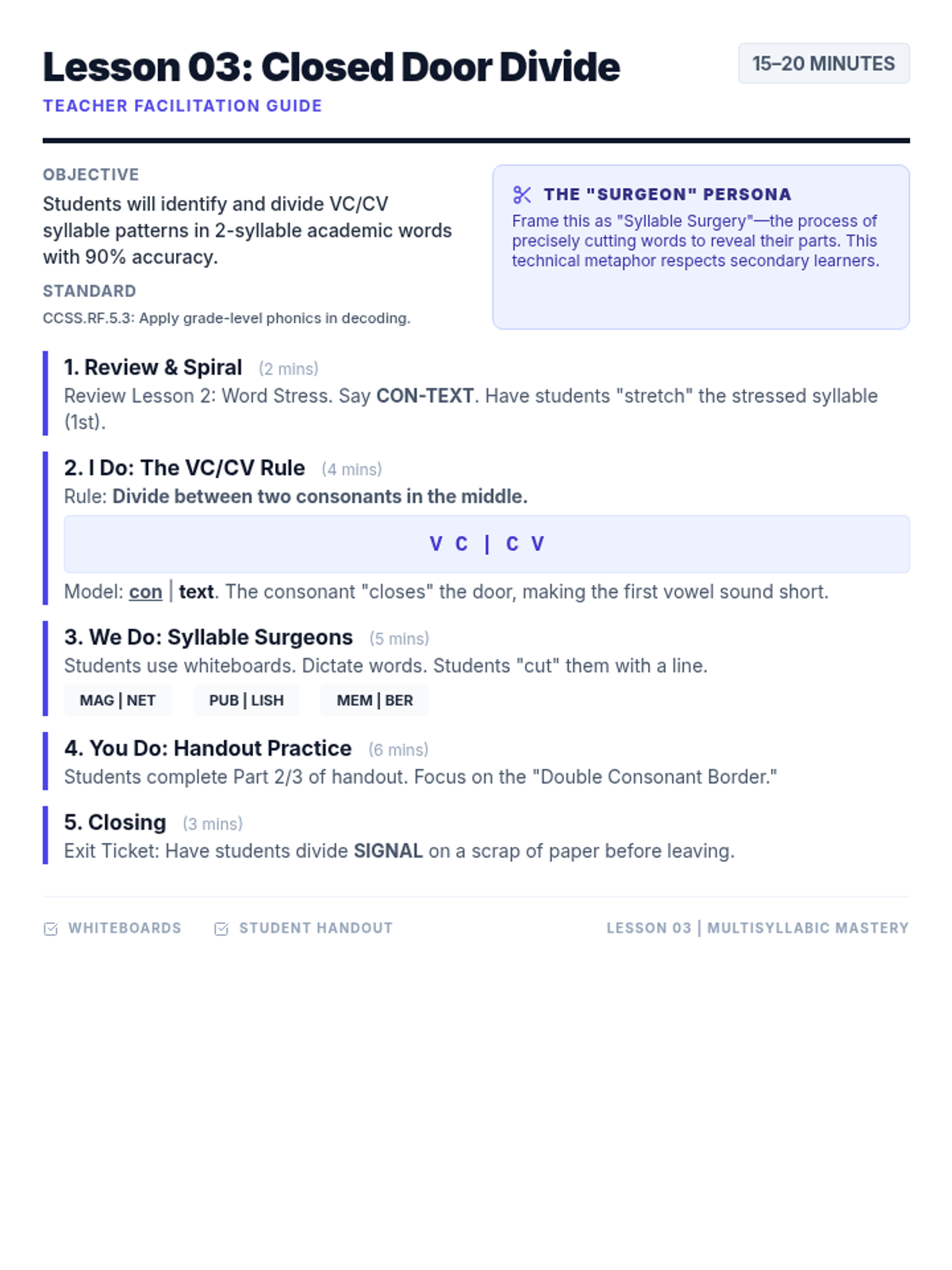
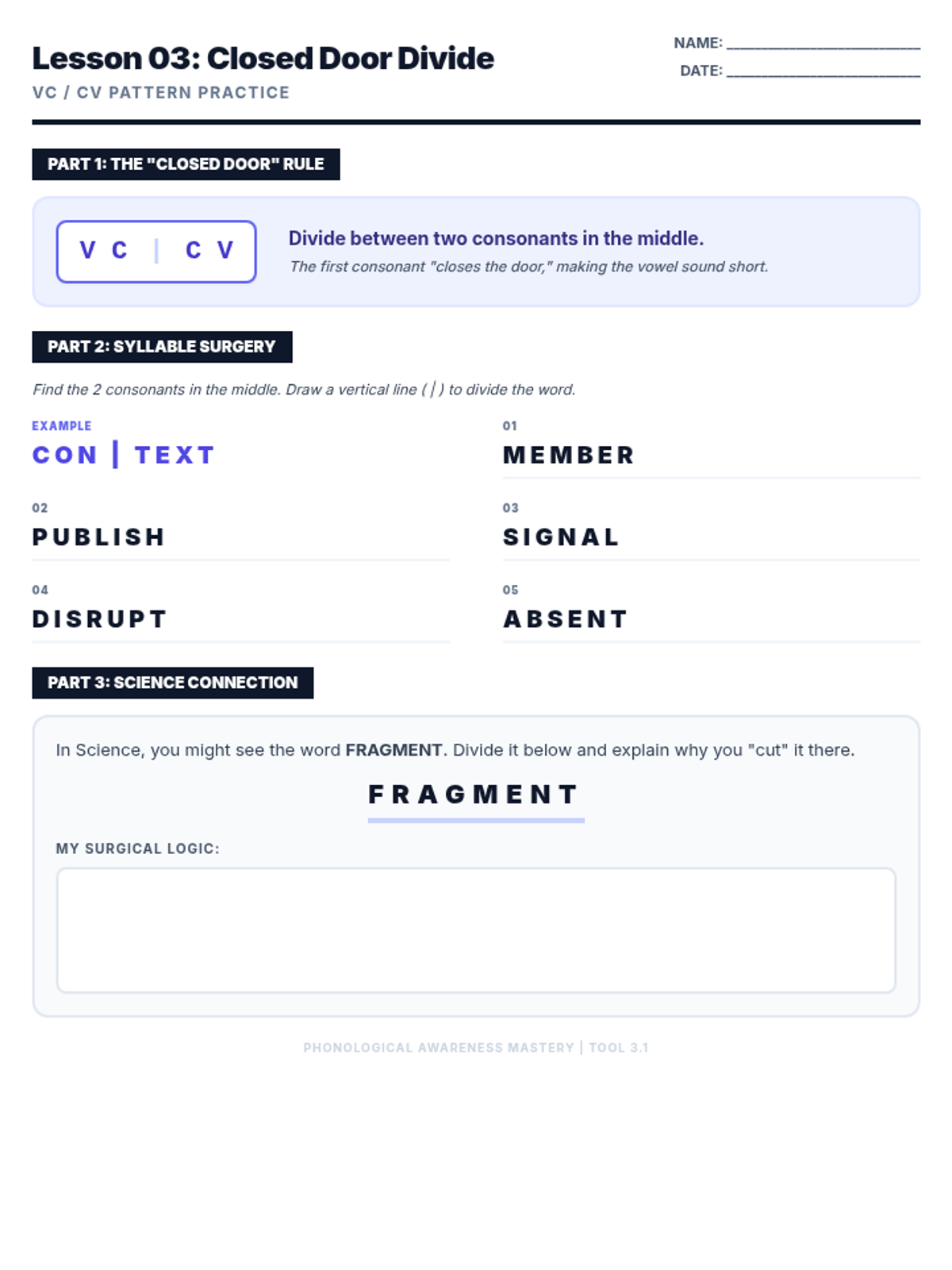
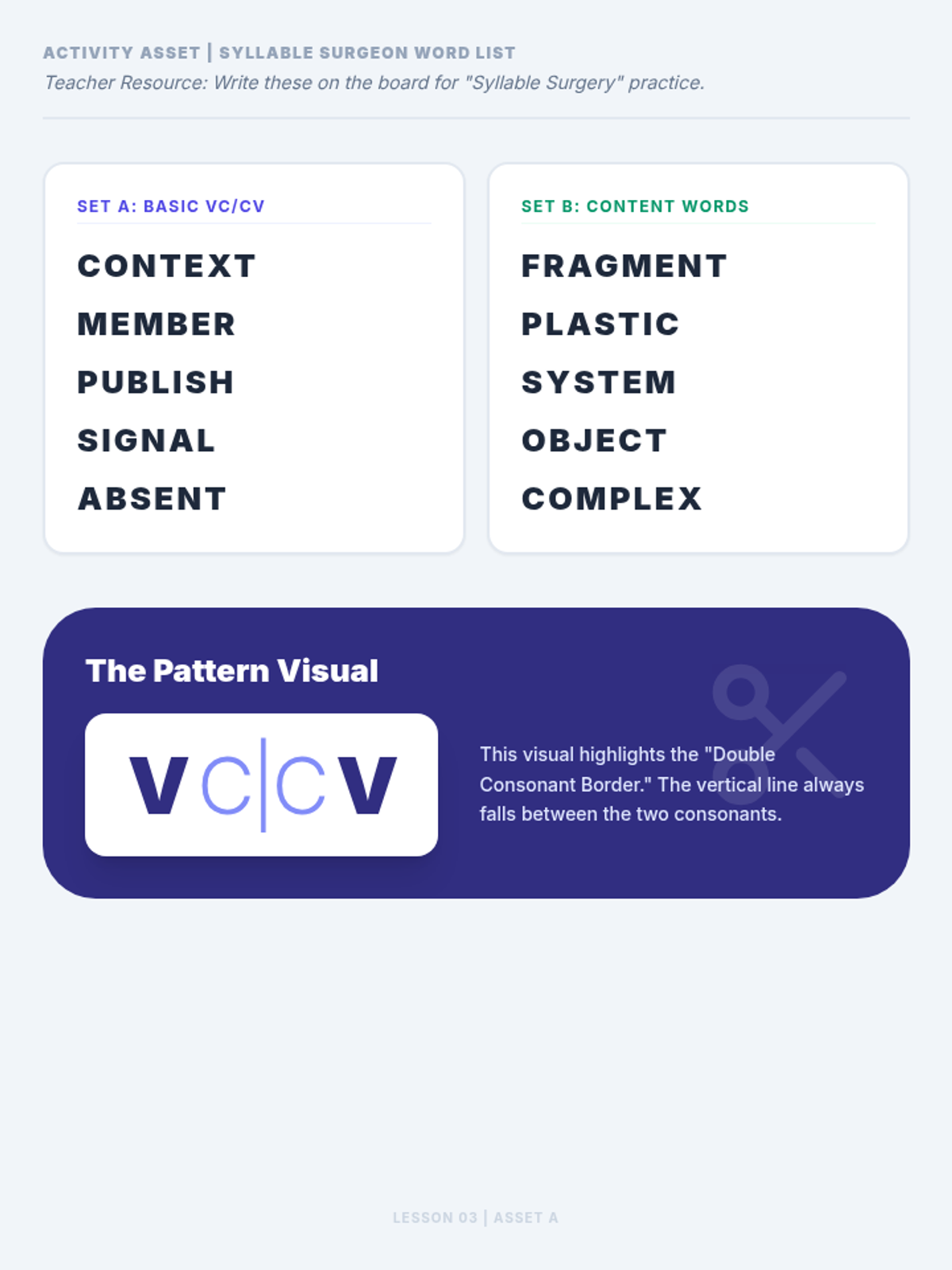
Third lesson in the sequence, focusing on identifying and dividing the VC/CV (closed syllable) pattern in academic vocabulary.
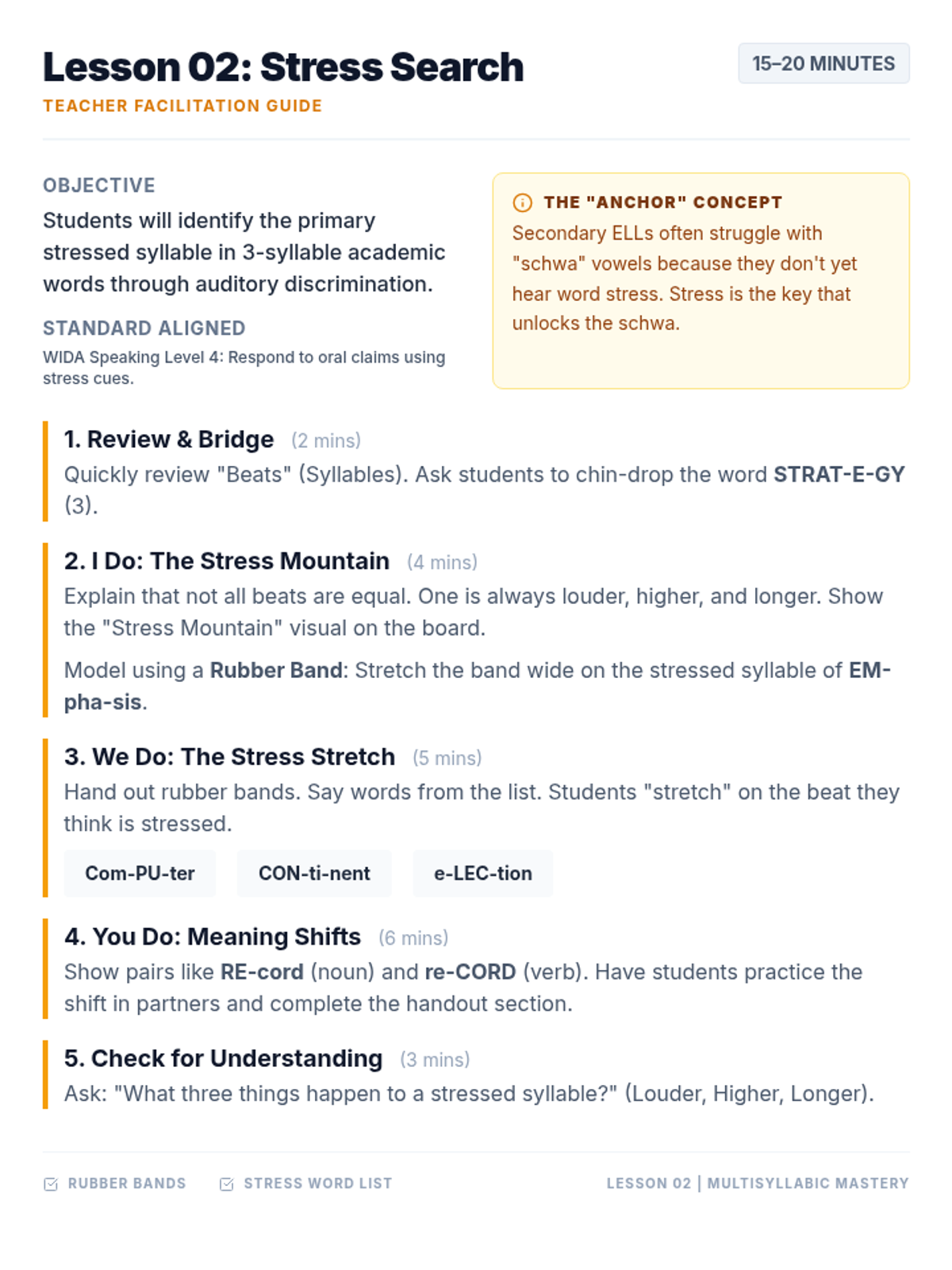
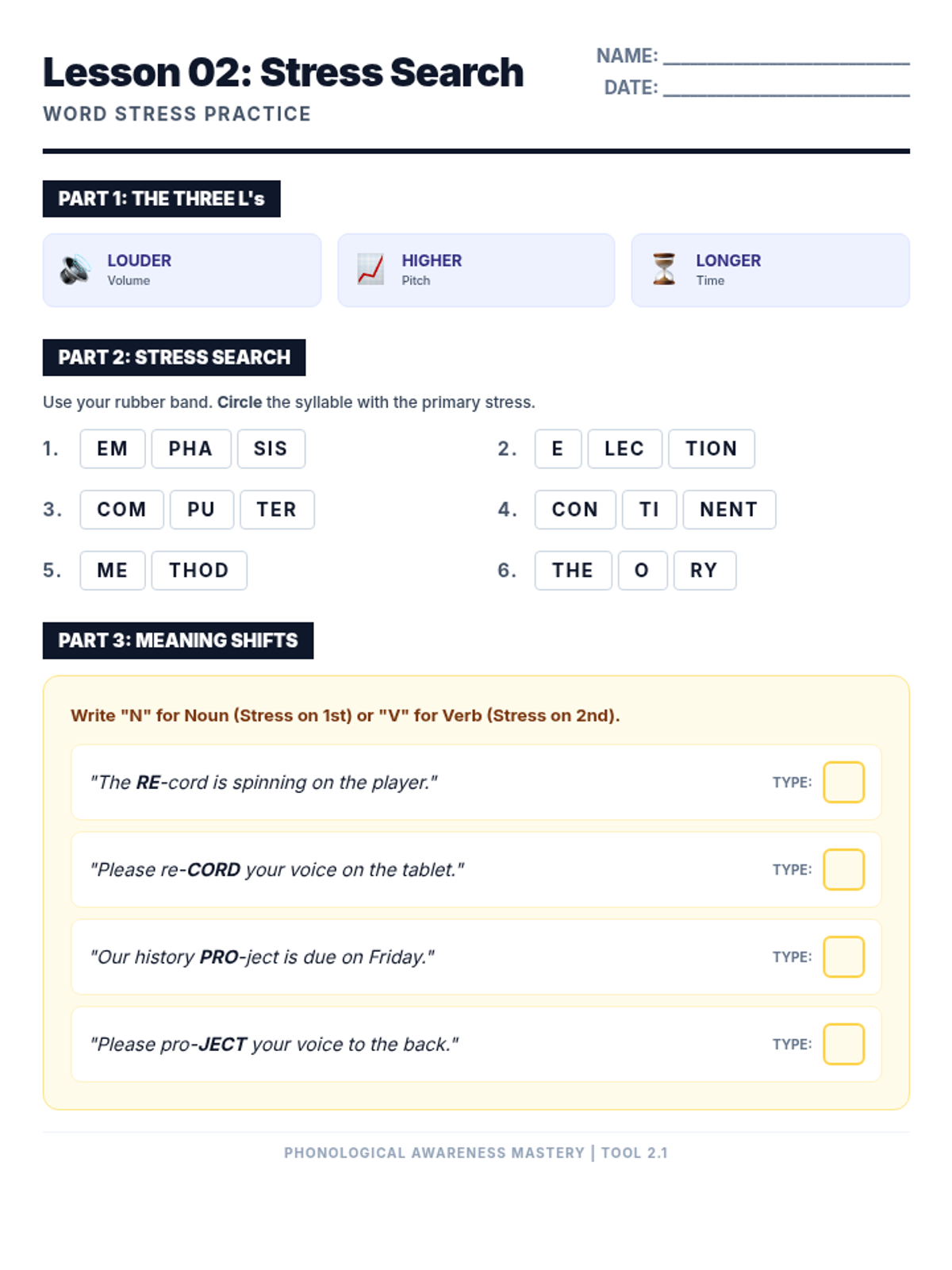
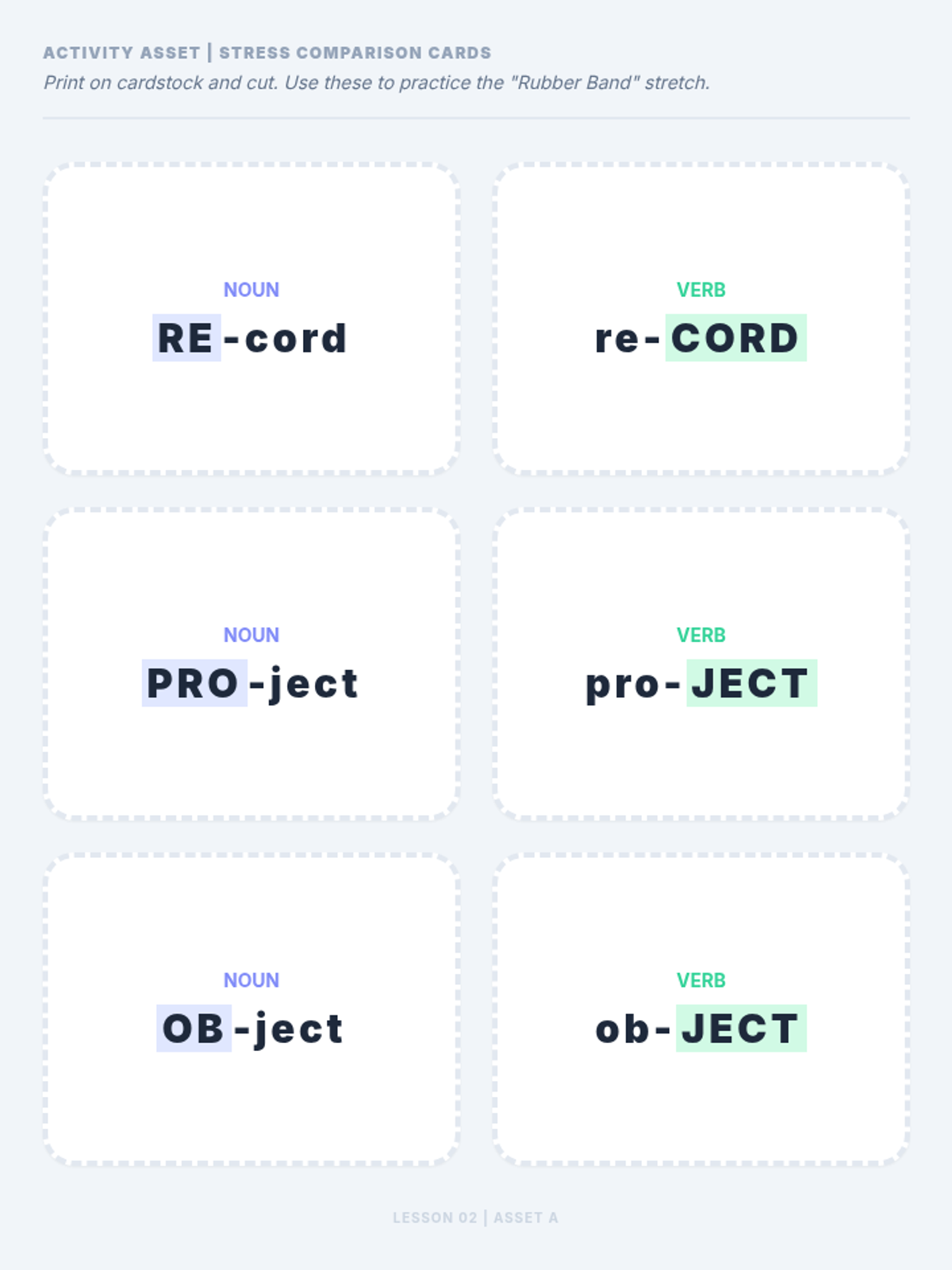
Second lesson in the sequence, focusing on identifying and manipulating primary word stress in academic vocabulary.
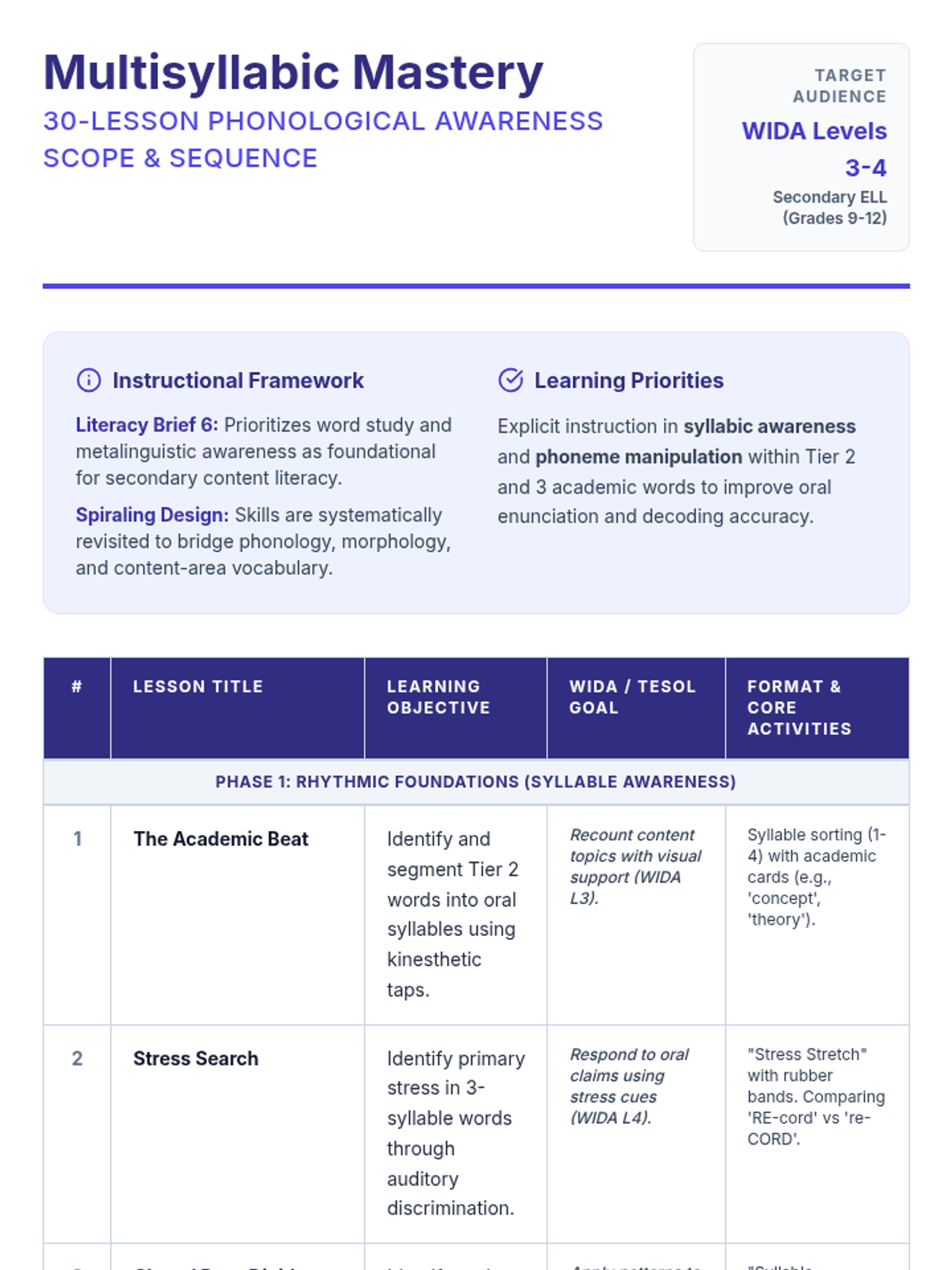
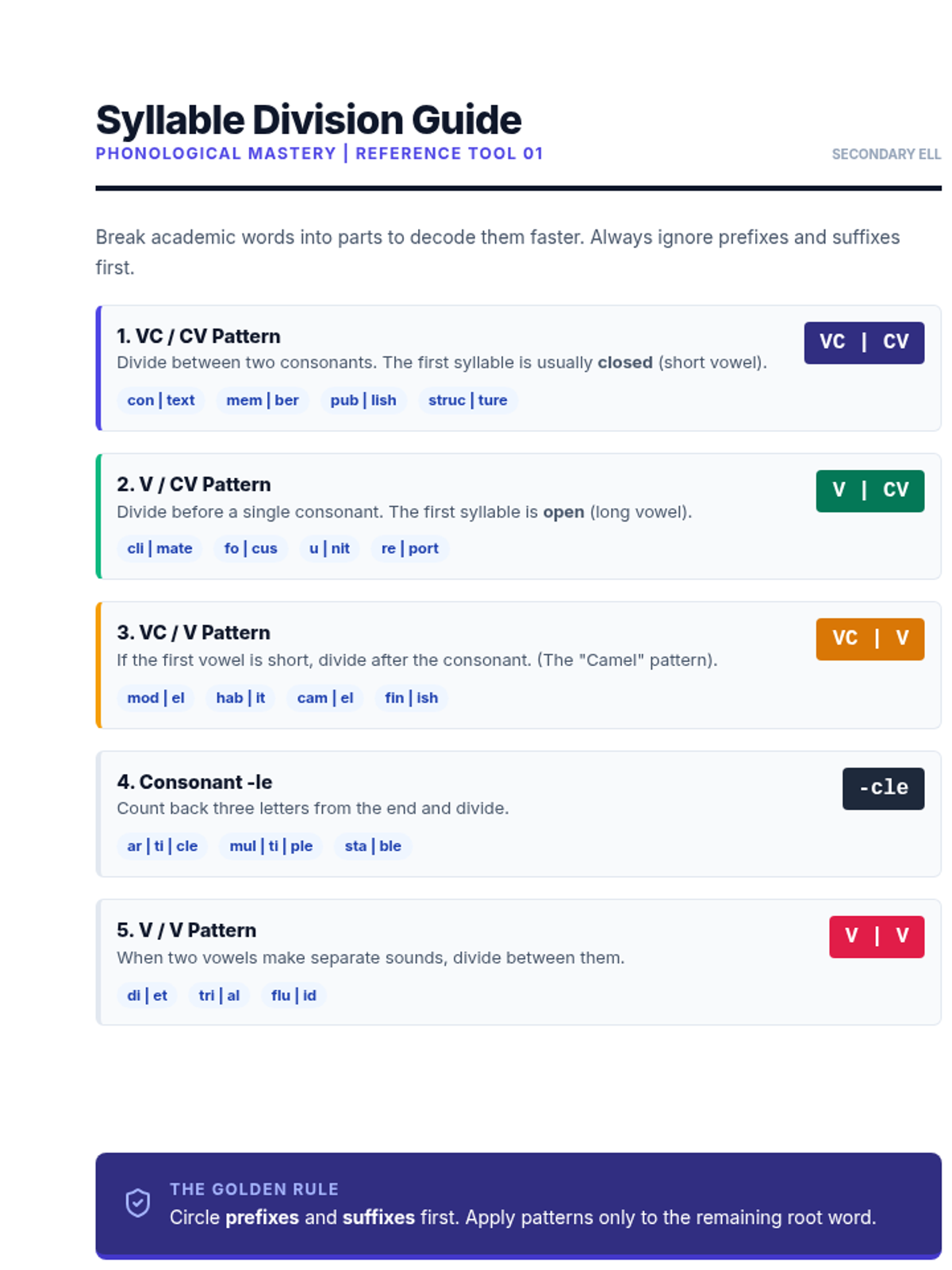
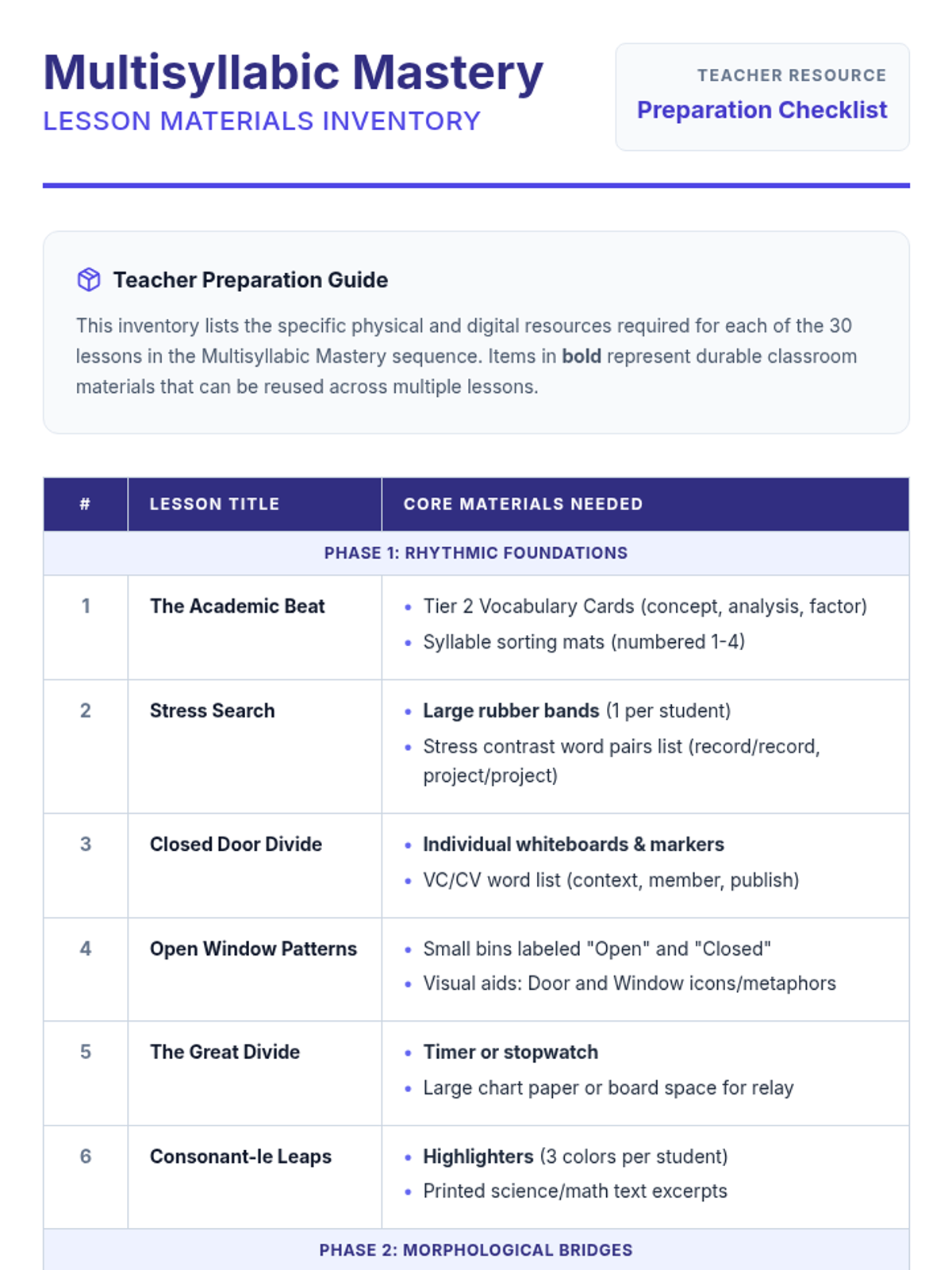
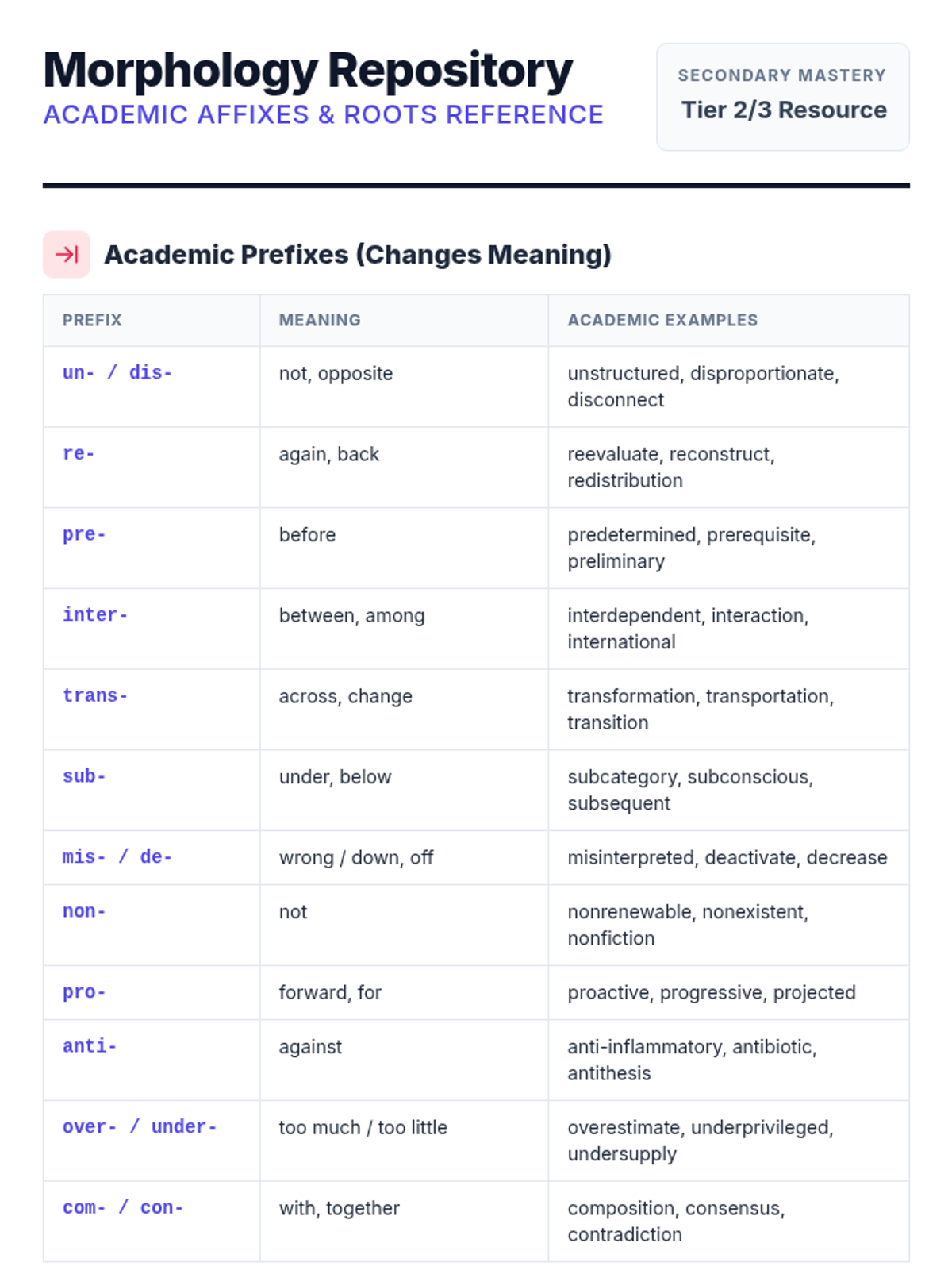
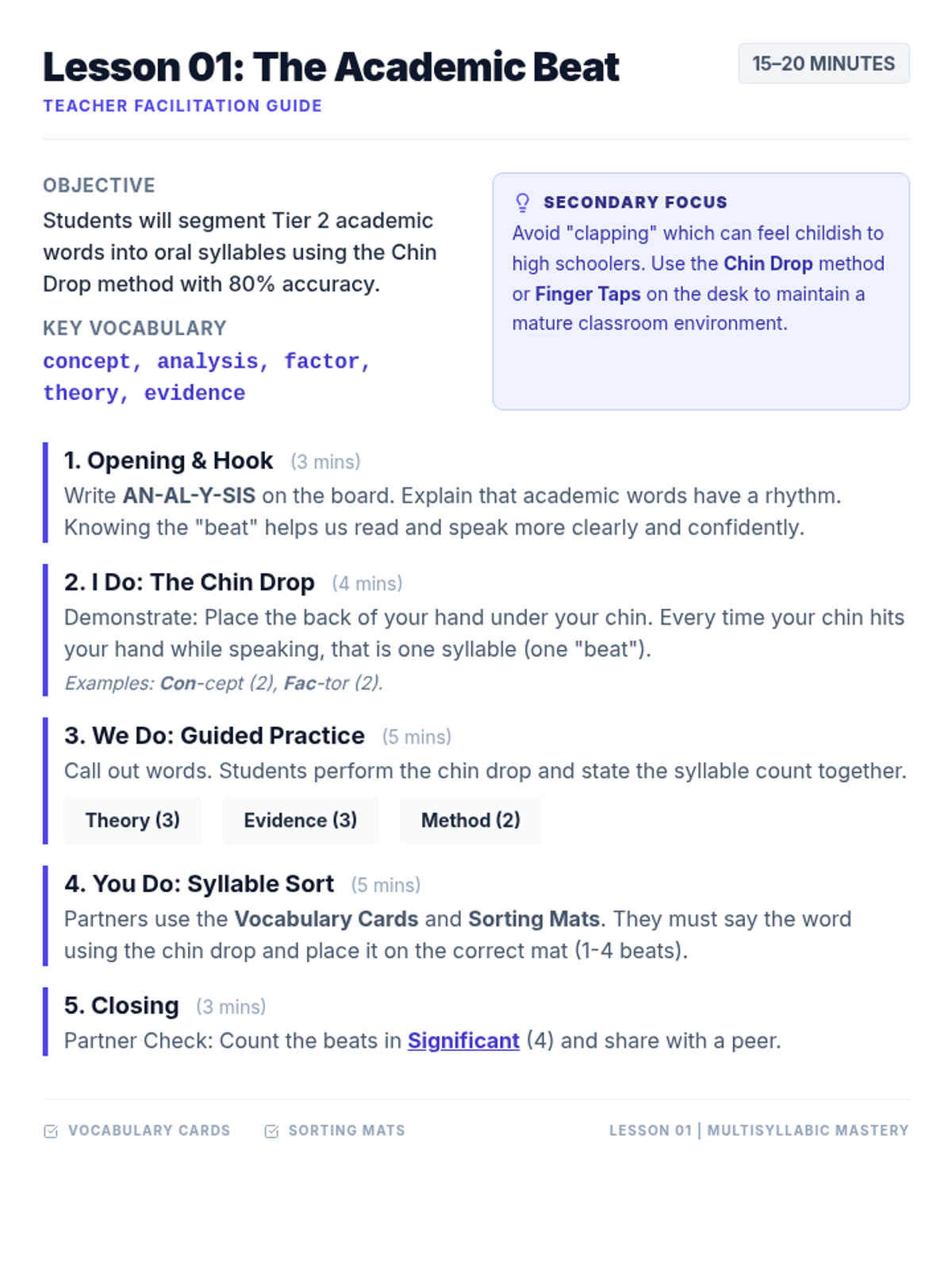
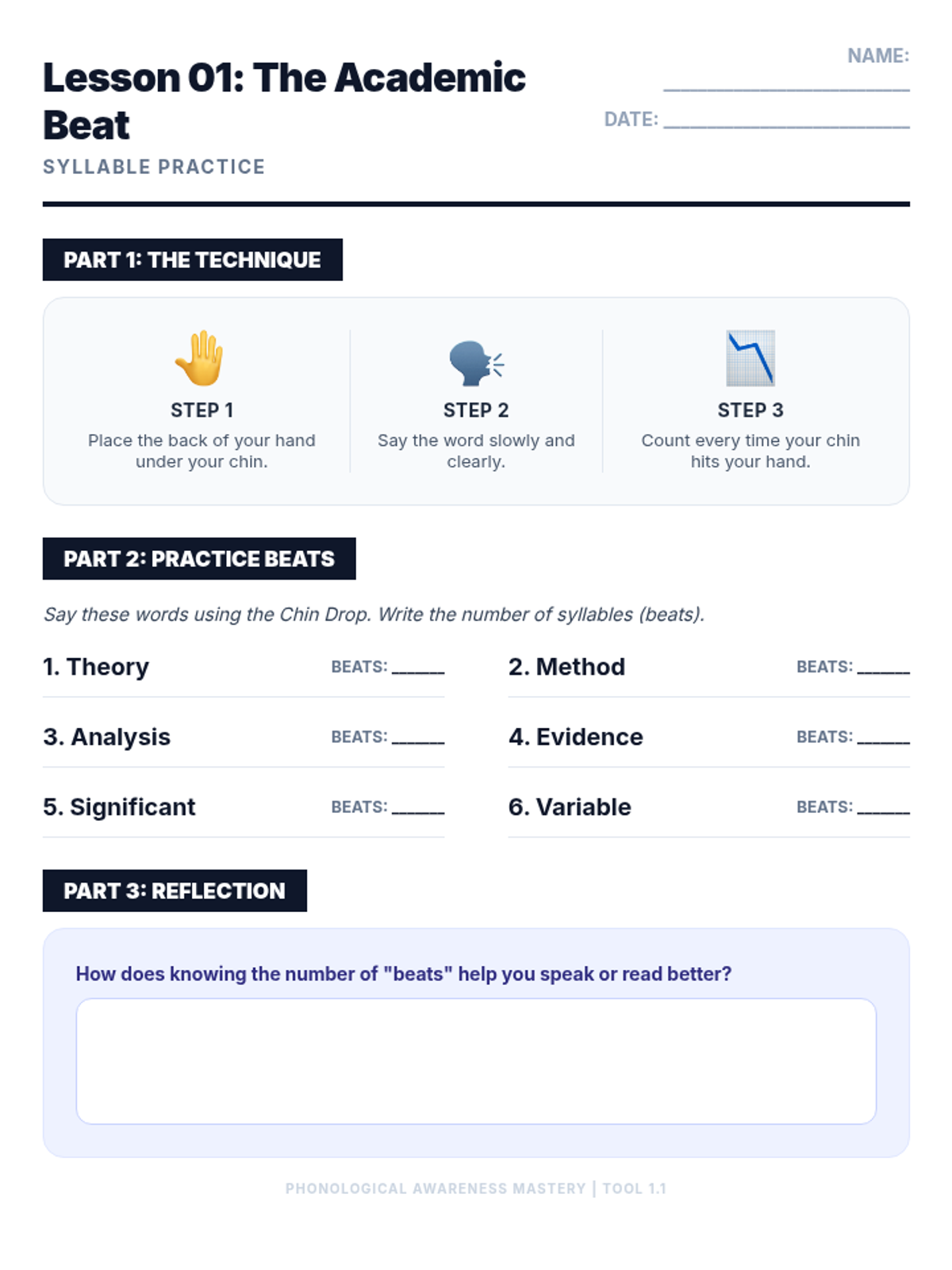
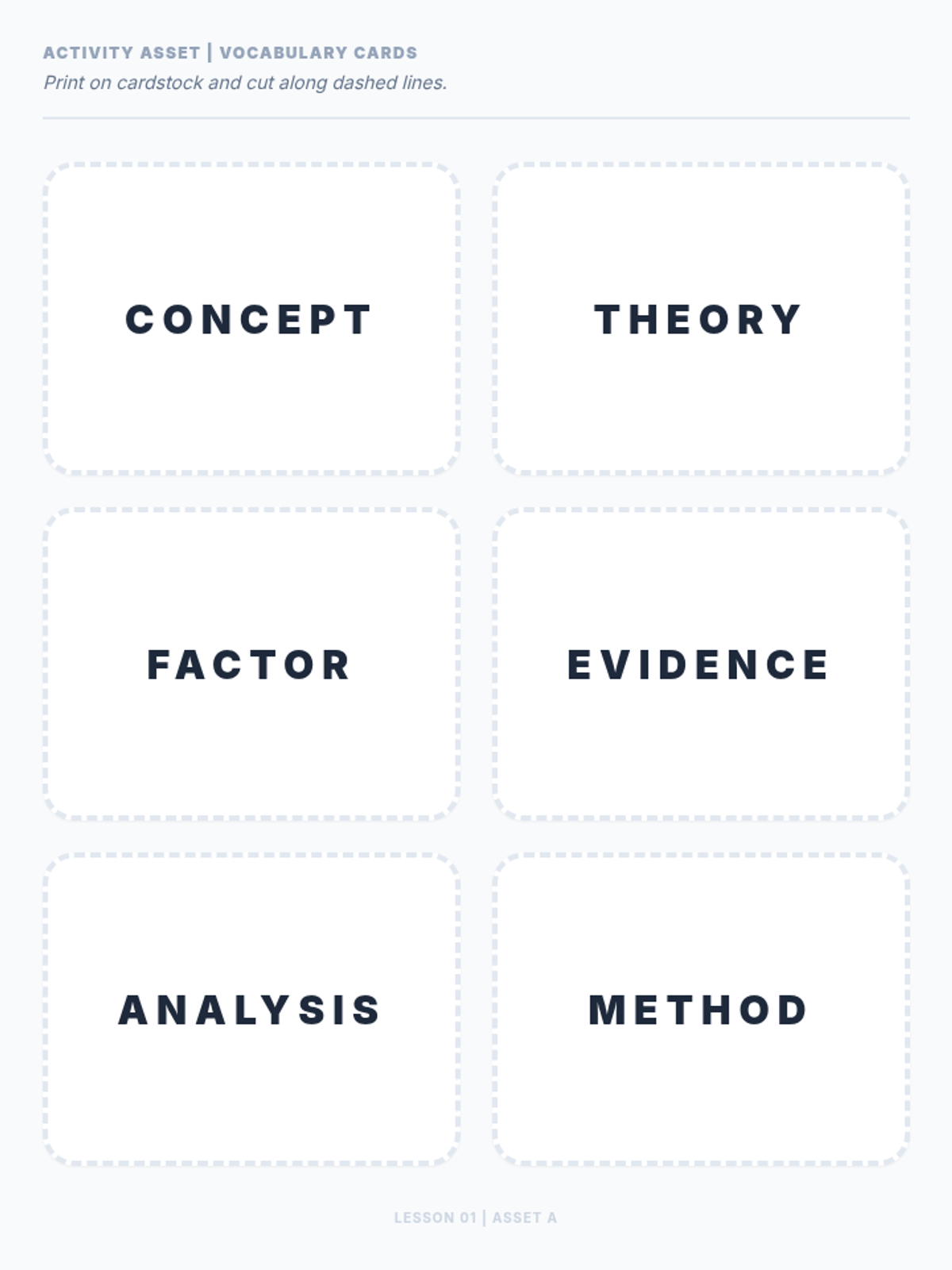
A comprehensive scope and sequence for teaching phonological awareness to secondary ELLs, focusing on multisyllabic academic vocabulary and phoneme manipulation.
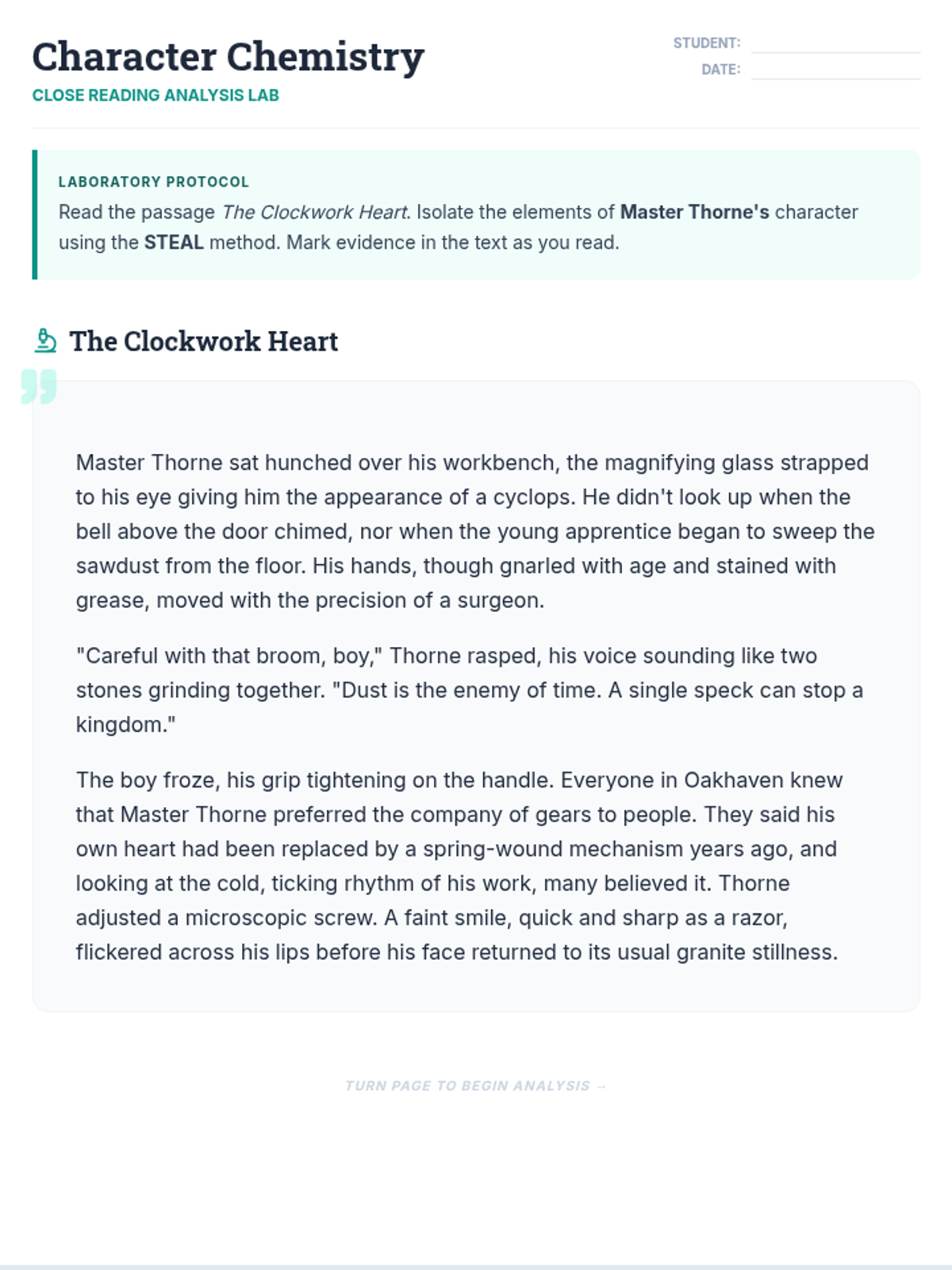
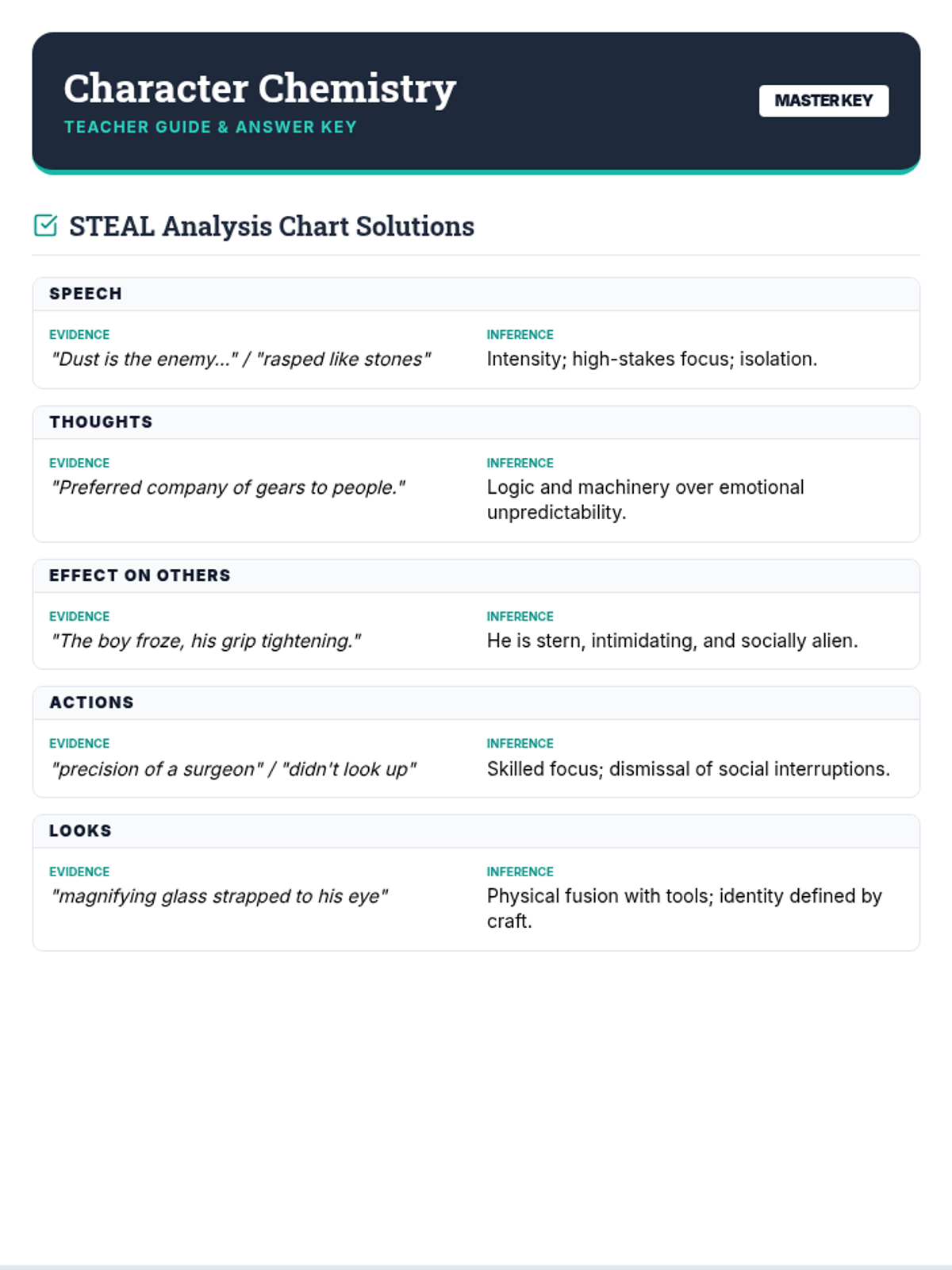
A lesson focused on analyzing characterization using the STEAL method through close reading of a complex text. Students will identify text evidence and infer character traits.
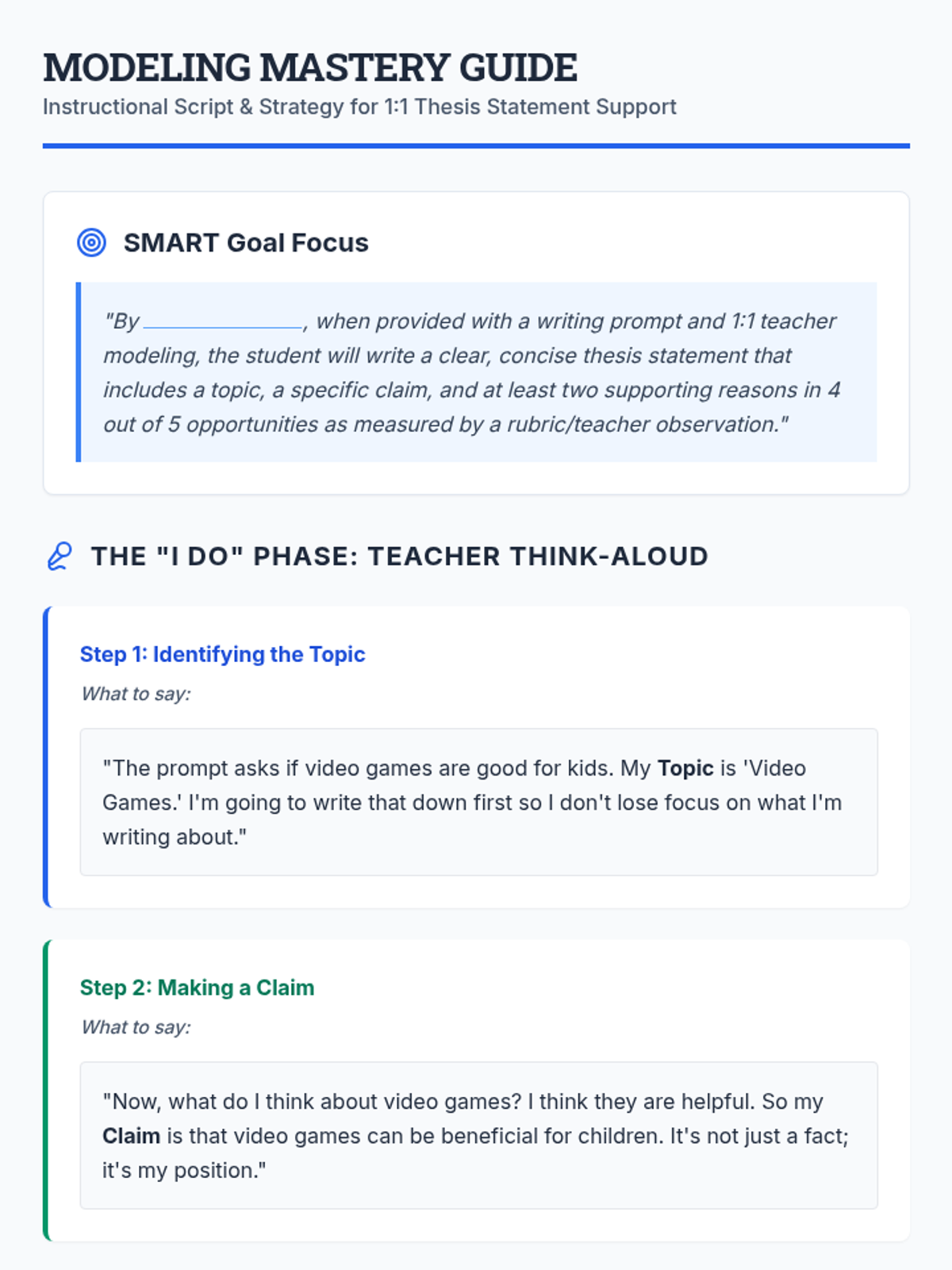
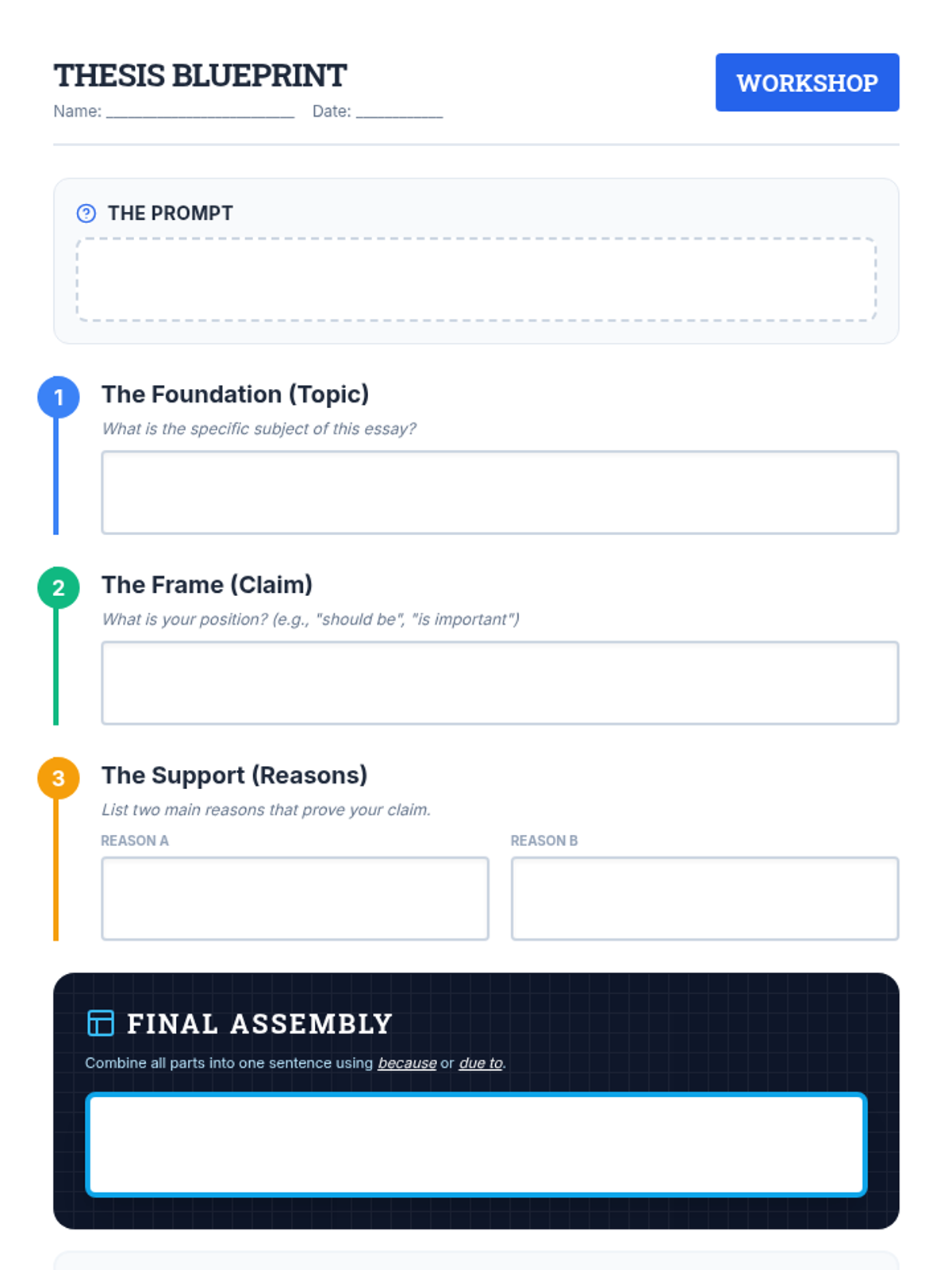
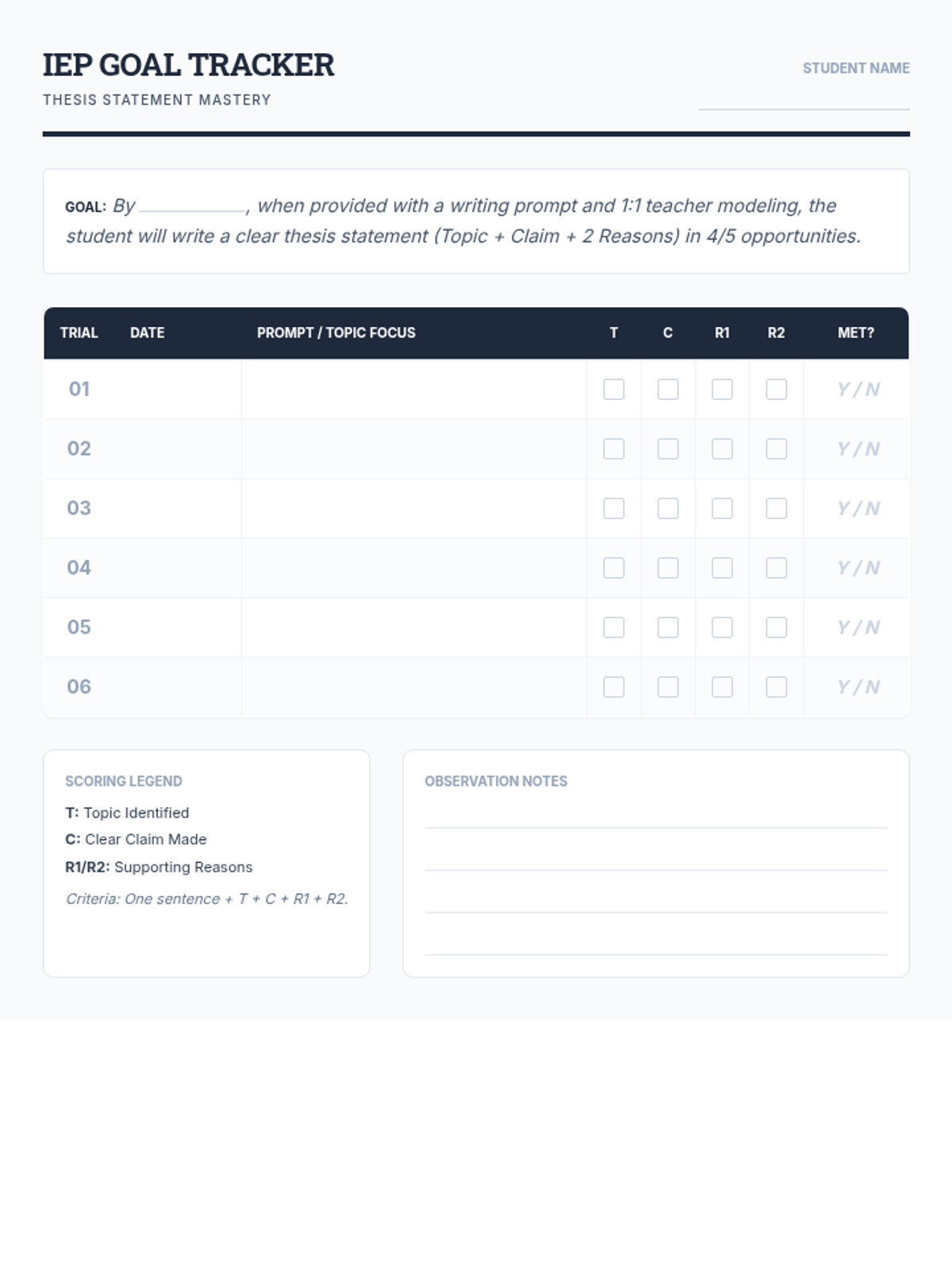
A focused lesson on building thesis statements using the Topic + Claim + Reasons formula, specifically designed for 1:1 instructional settings.
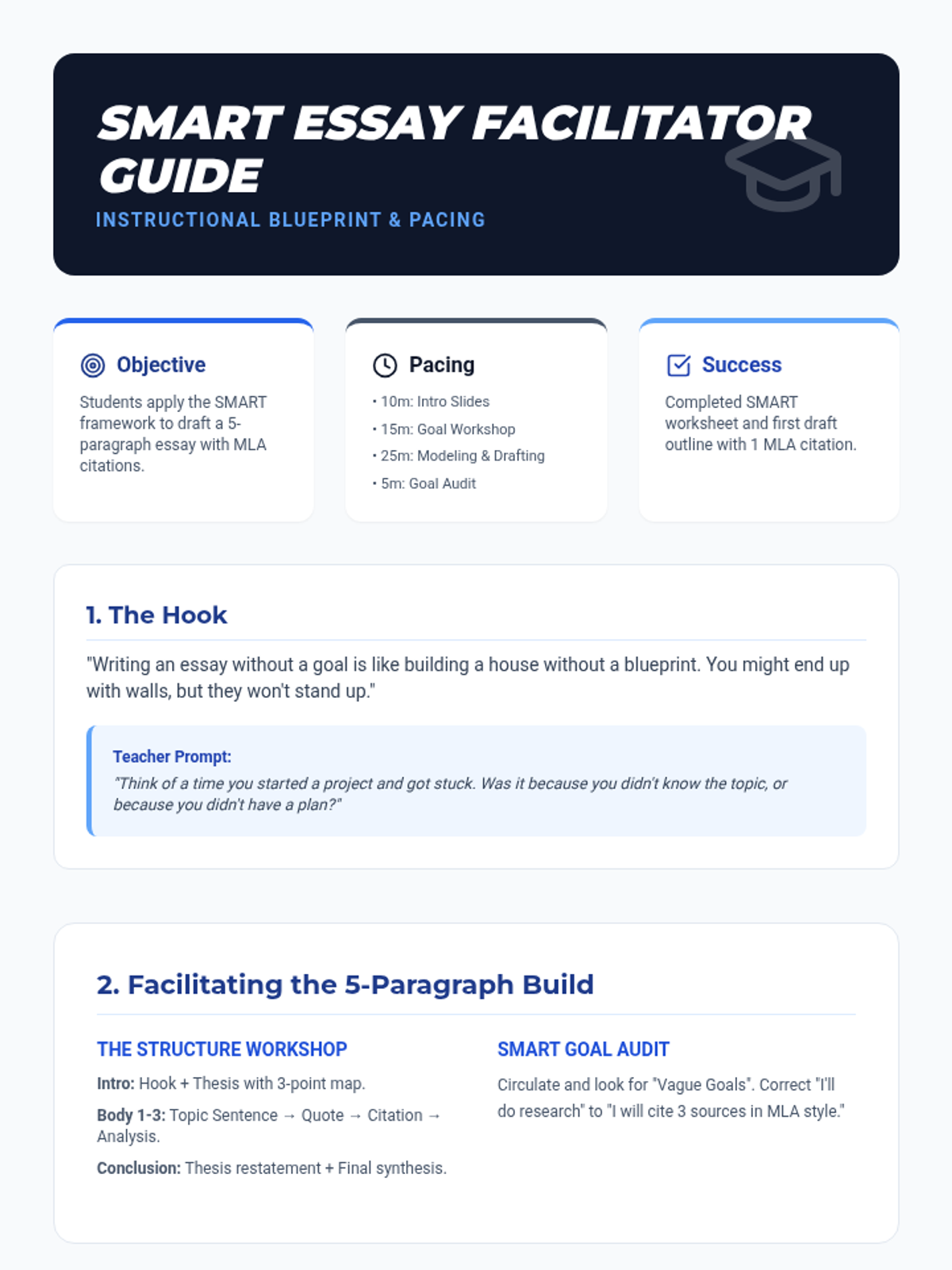
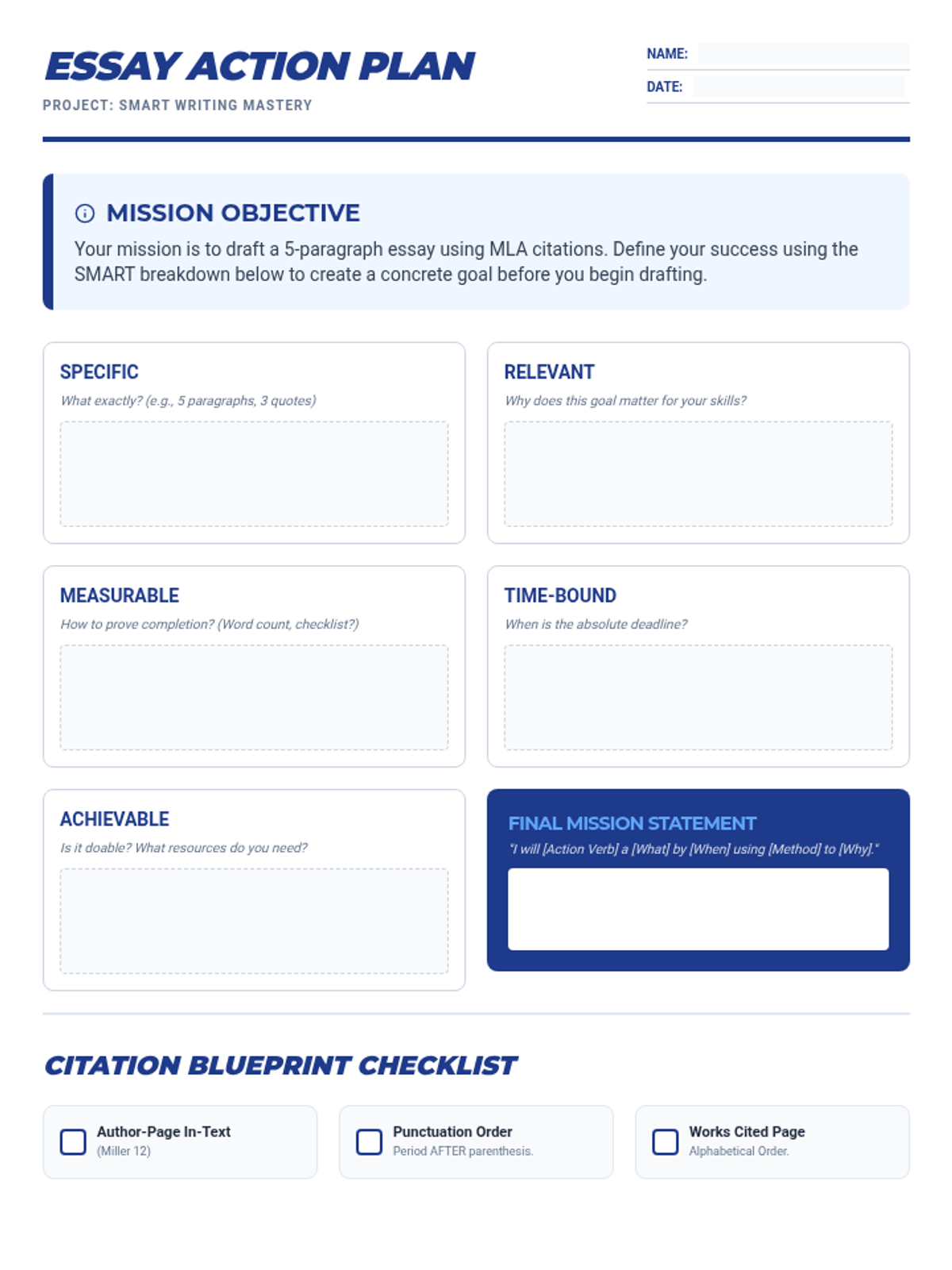
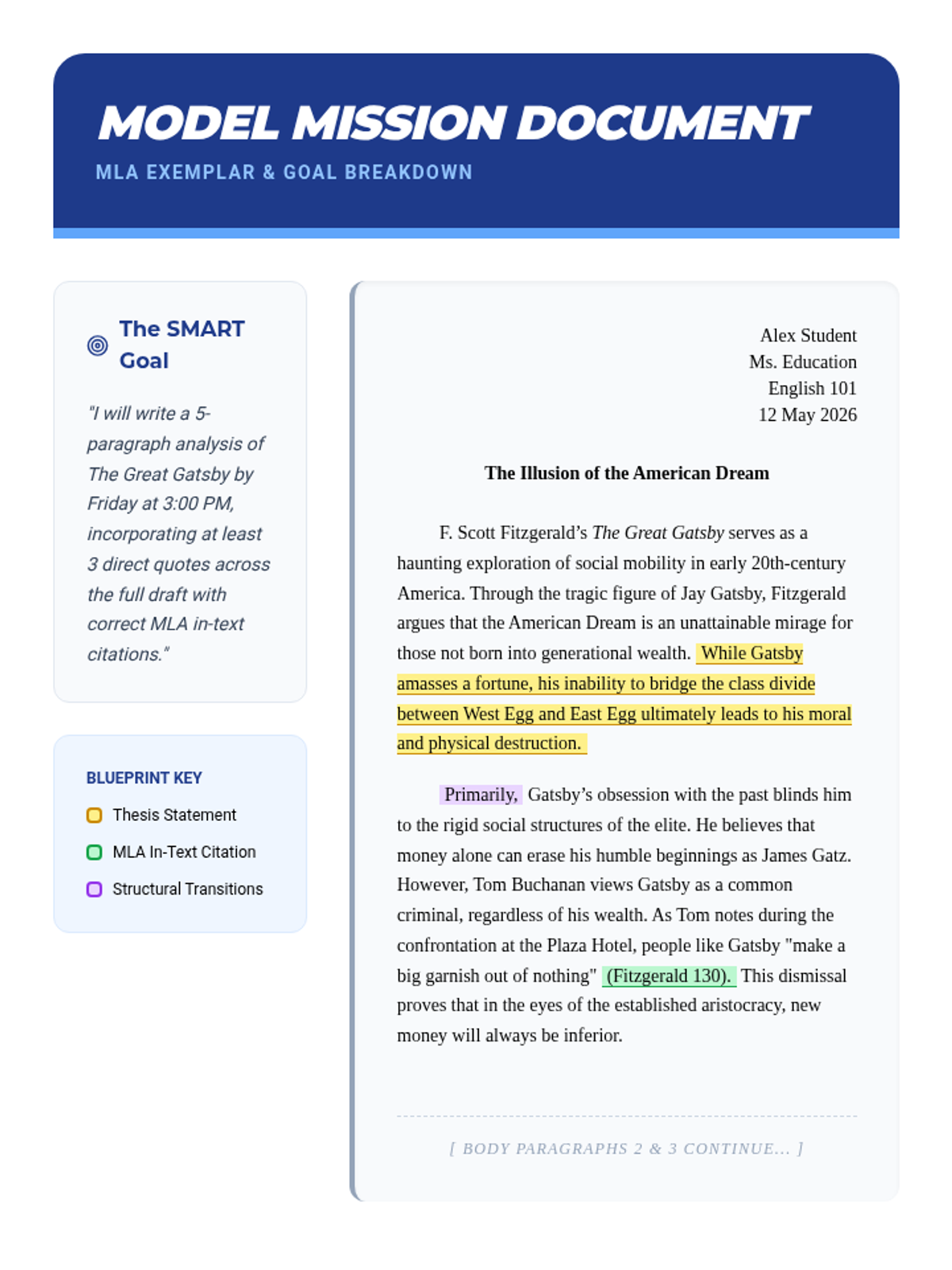
In this lesson, students will define specific, measurable, achievable, relevant, and time-bound goals for their essay writing process, specifically focusing on the 5-paragraph structure and MLA citation requirements.
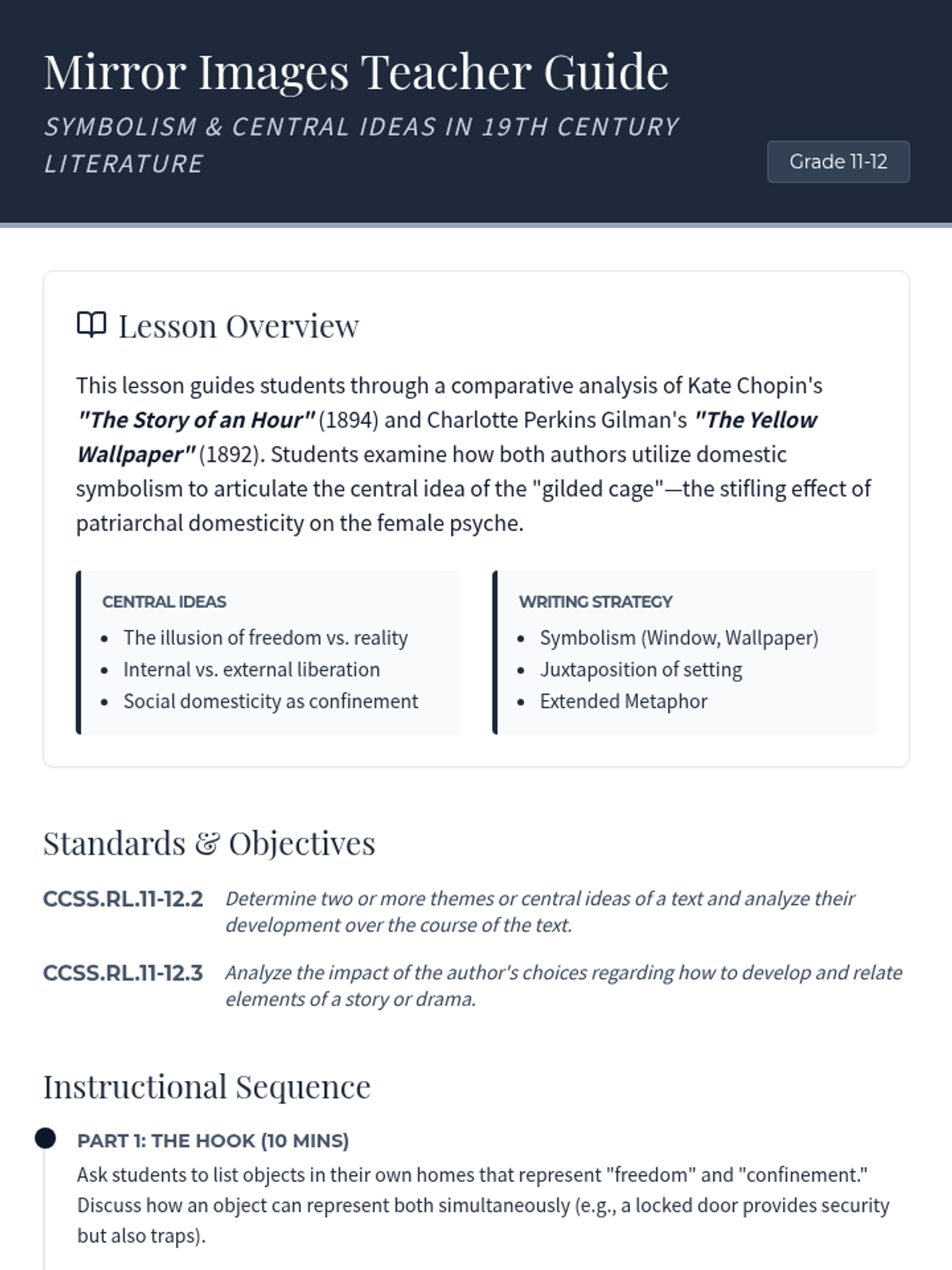
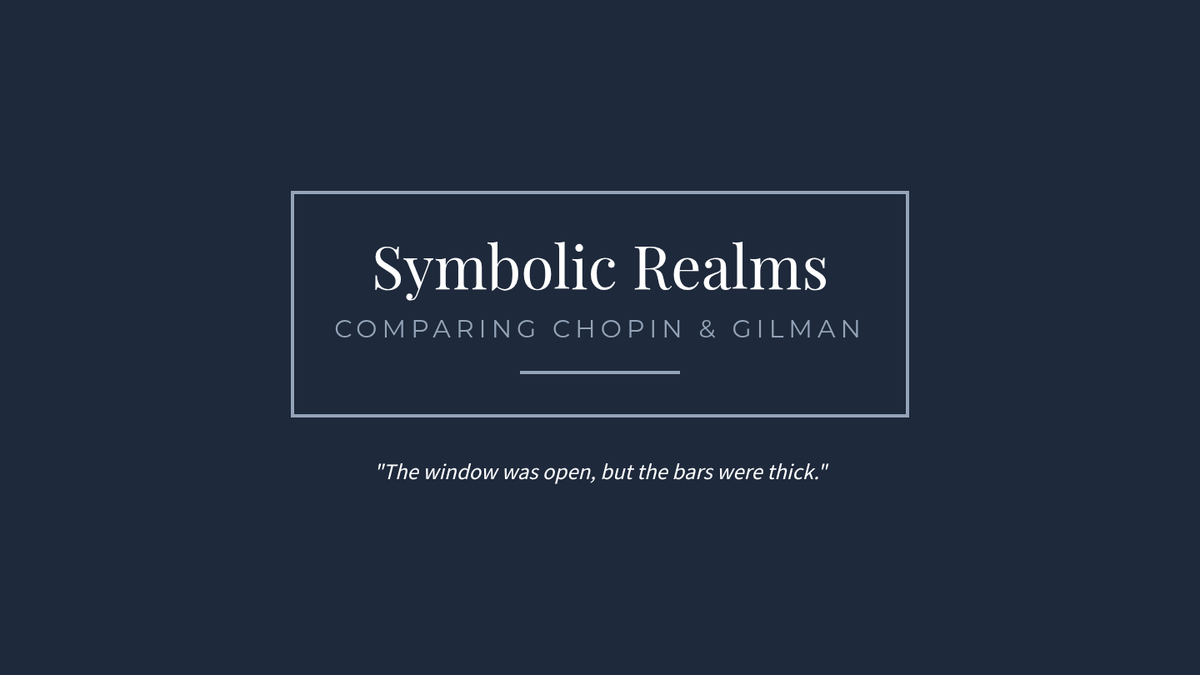
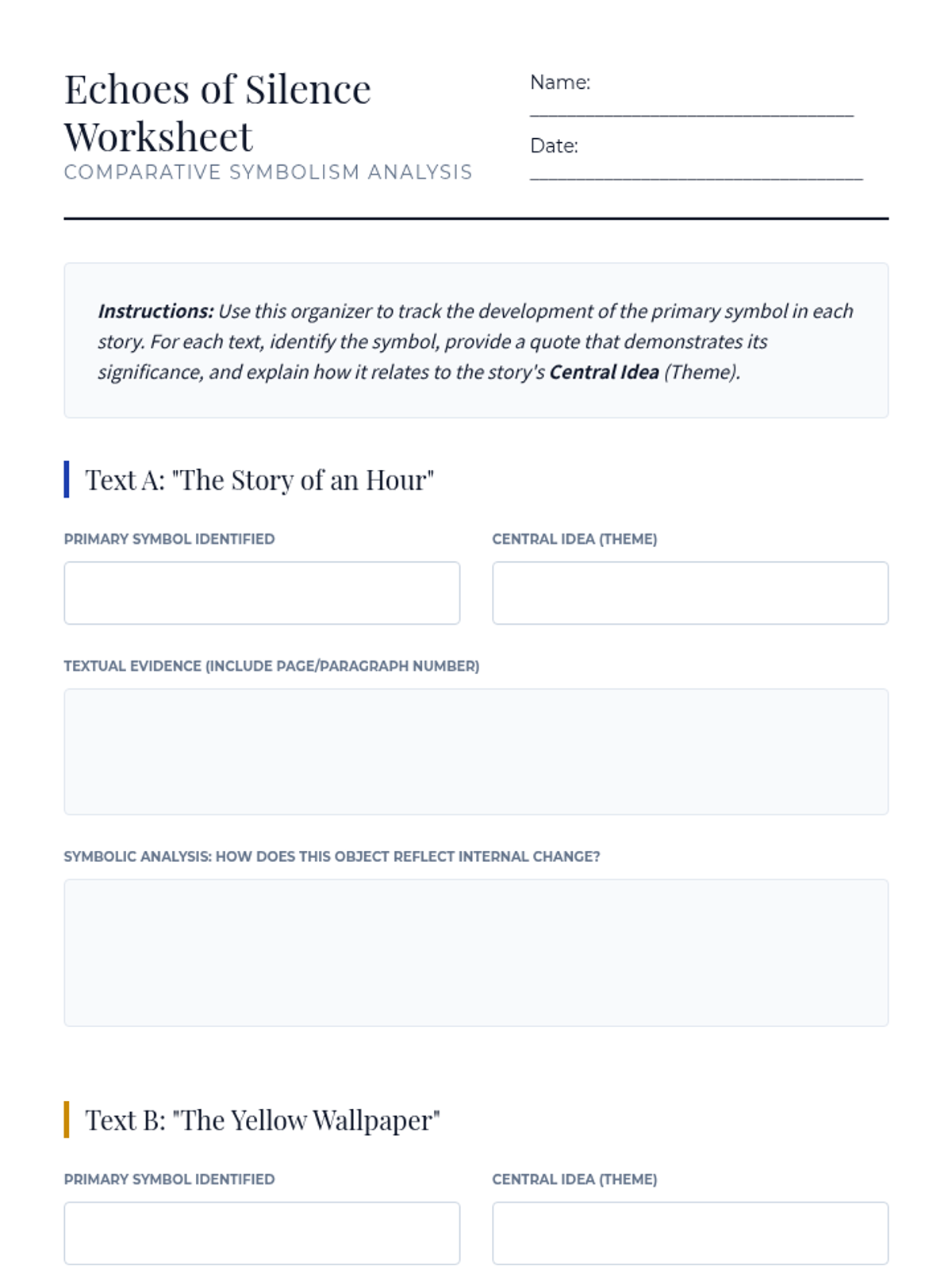
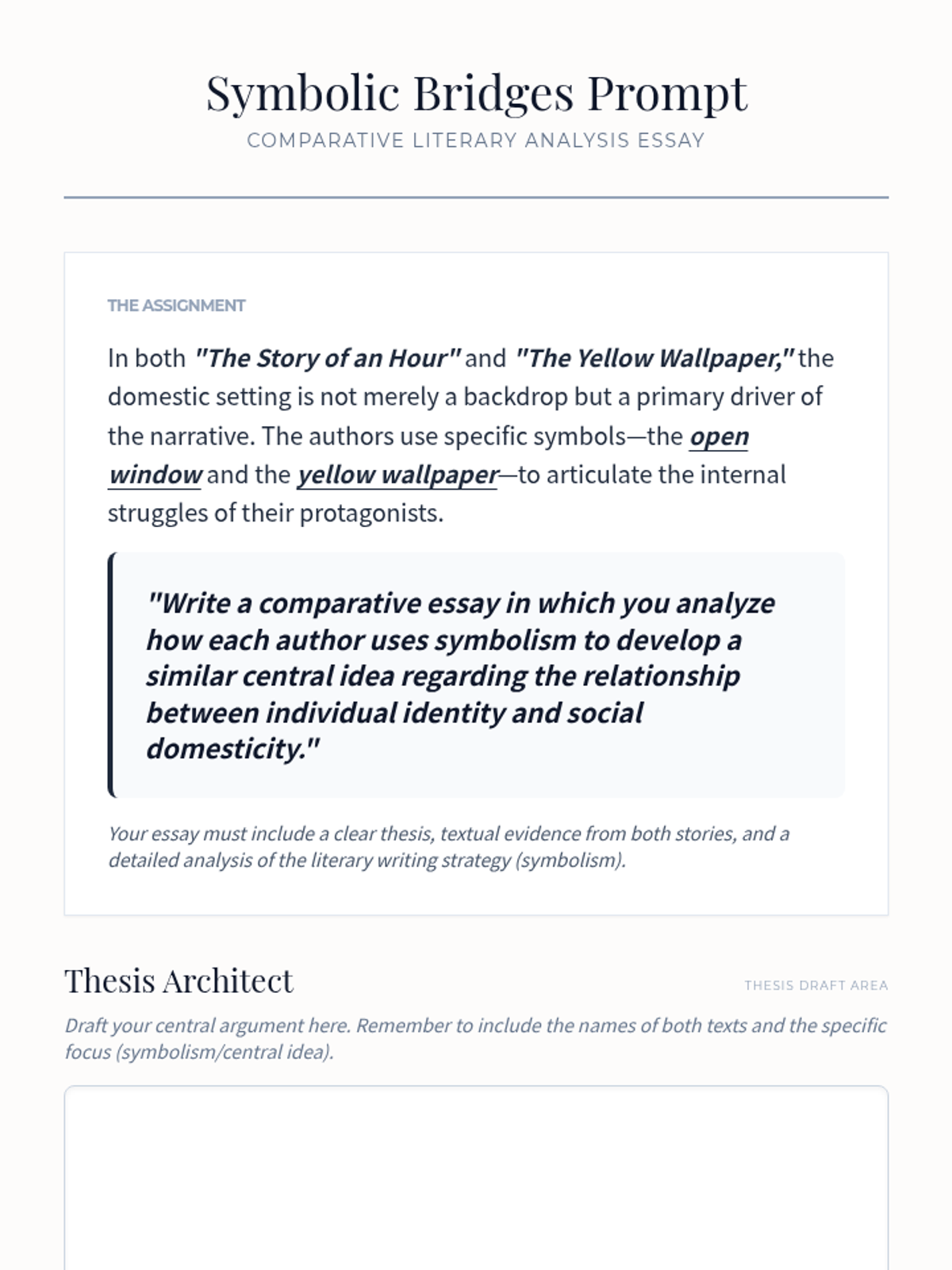
A rigorous Grade 11-12 literature lesson comparing 'The Story of an Hour' and 'The Yellow Wallpaper' through the lens of central ideas and the strategic use of symbolism. Students analyze how both authors use domestic symbols to convey themes of female autonomy and social constraint.
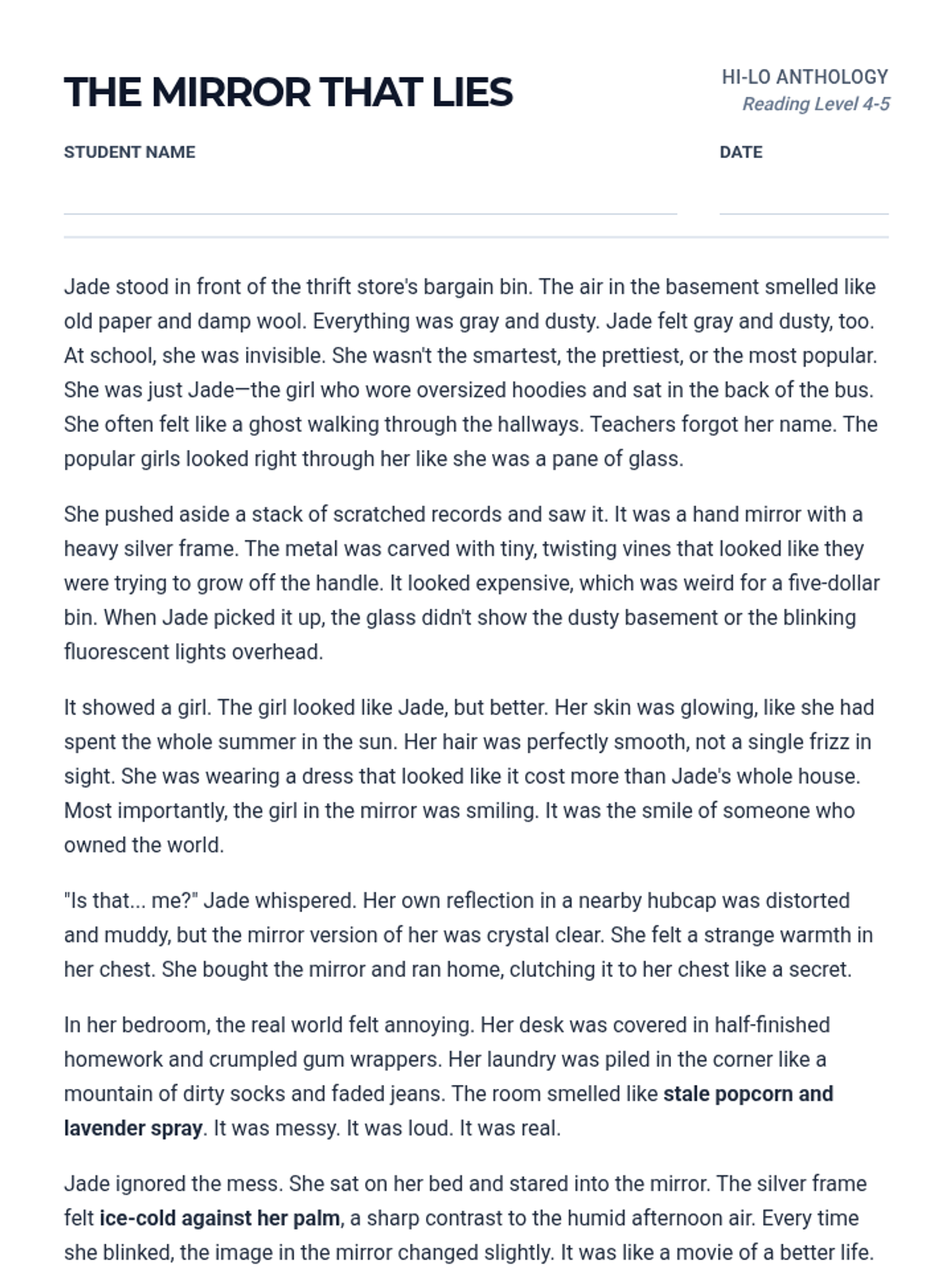
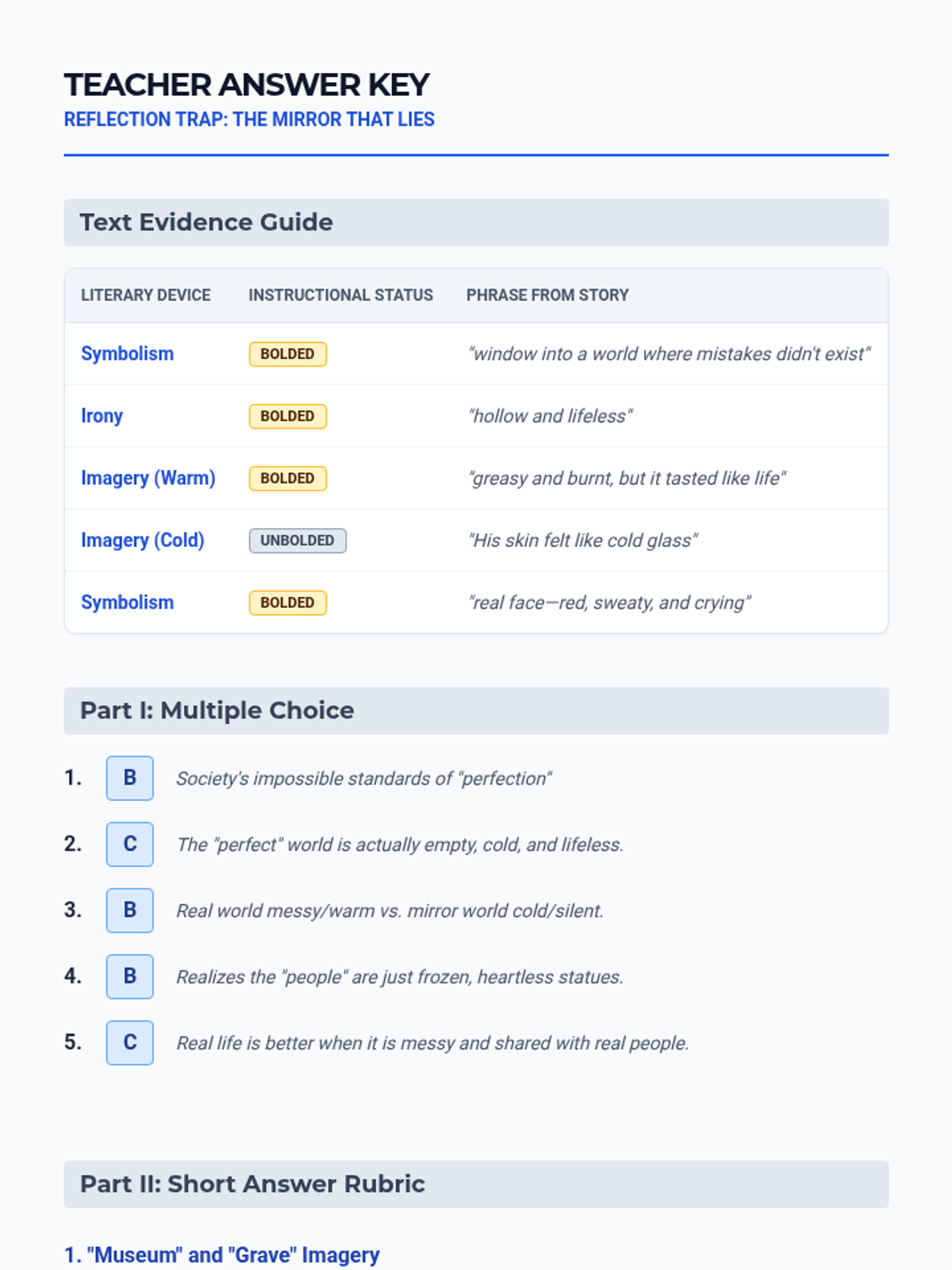
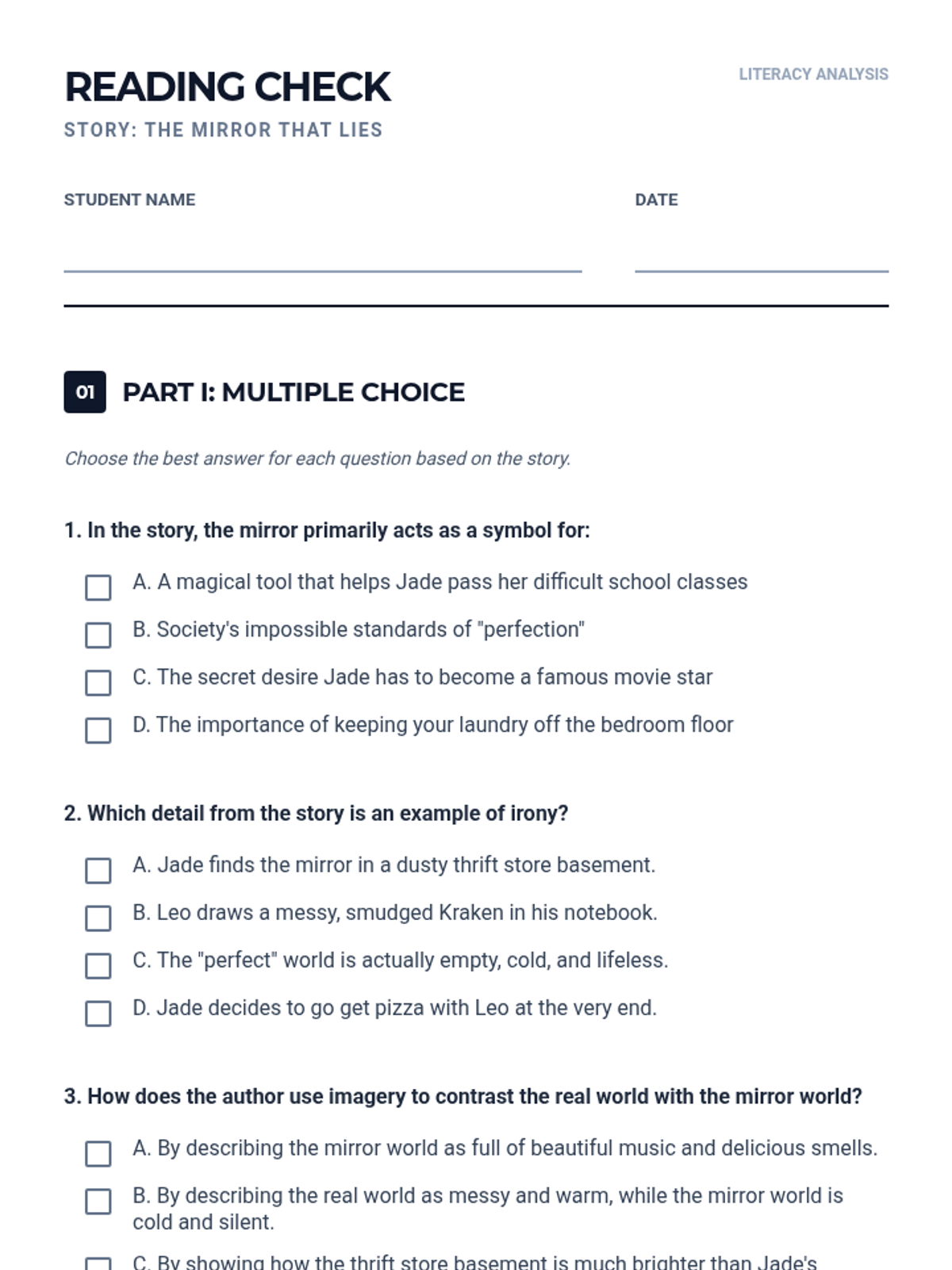
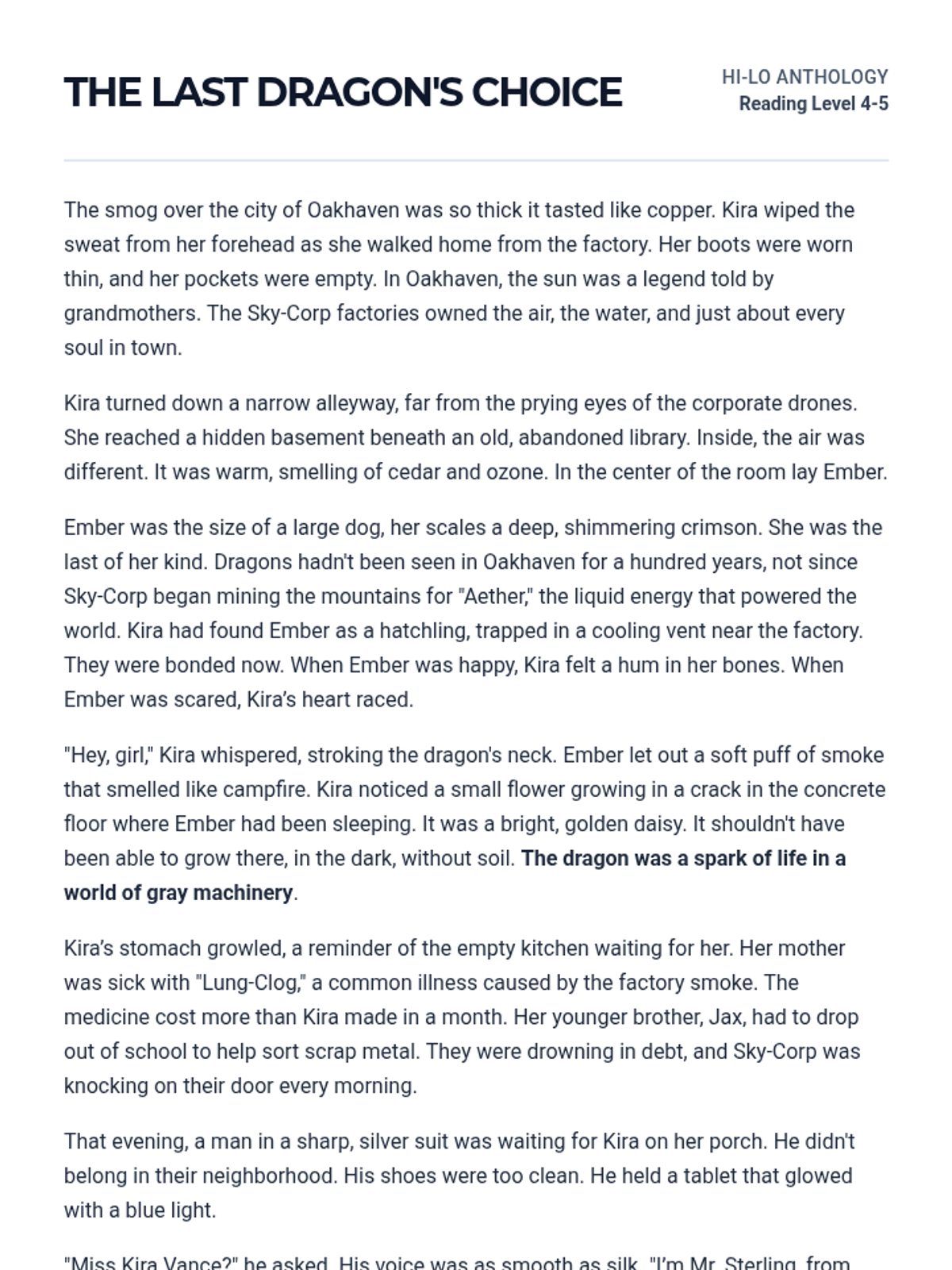
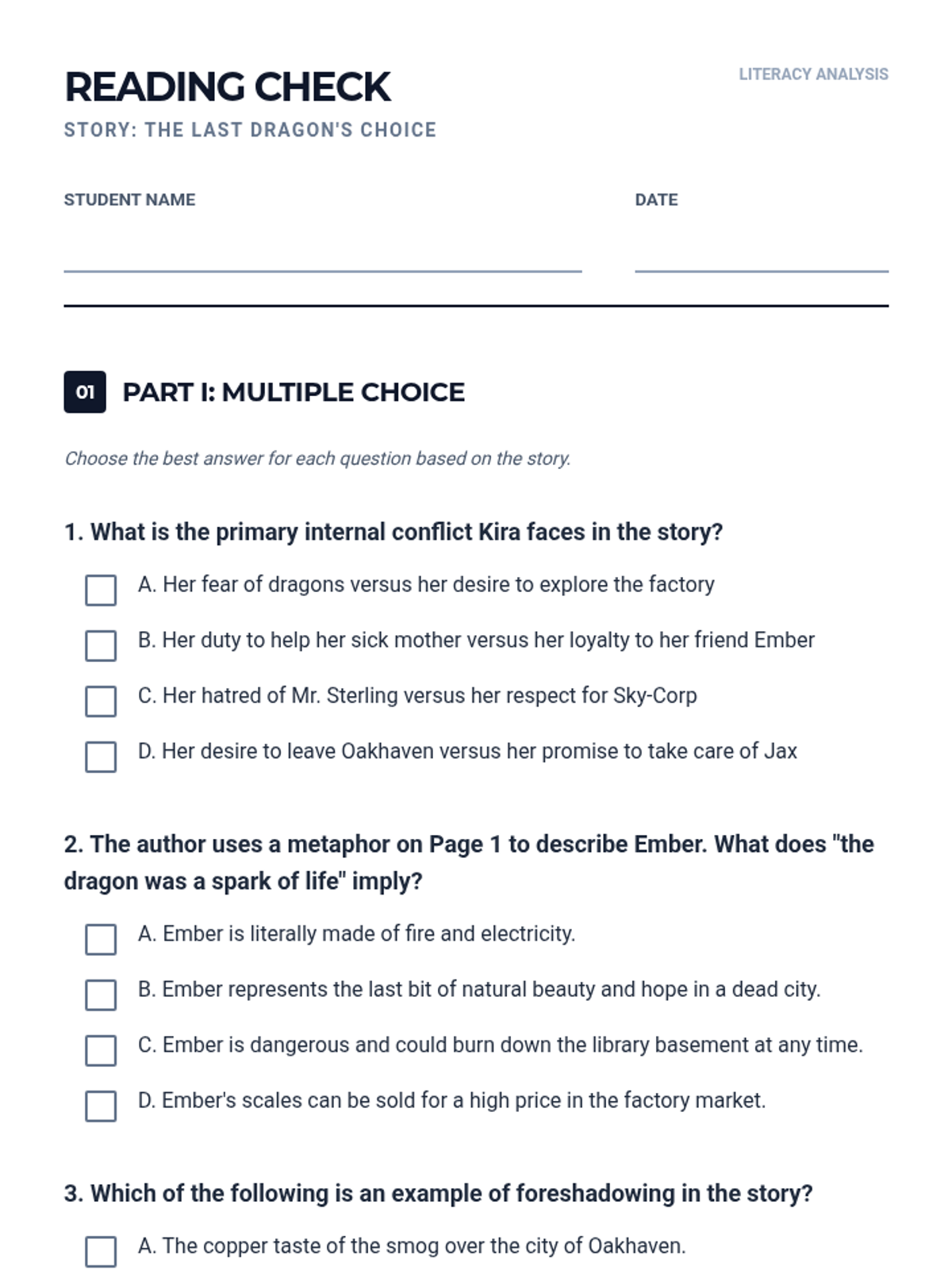
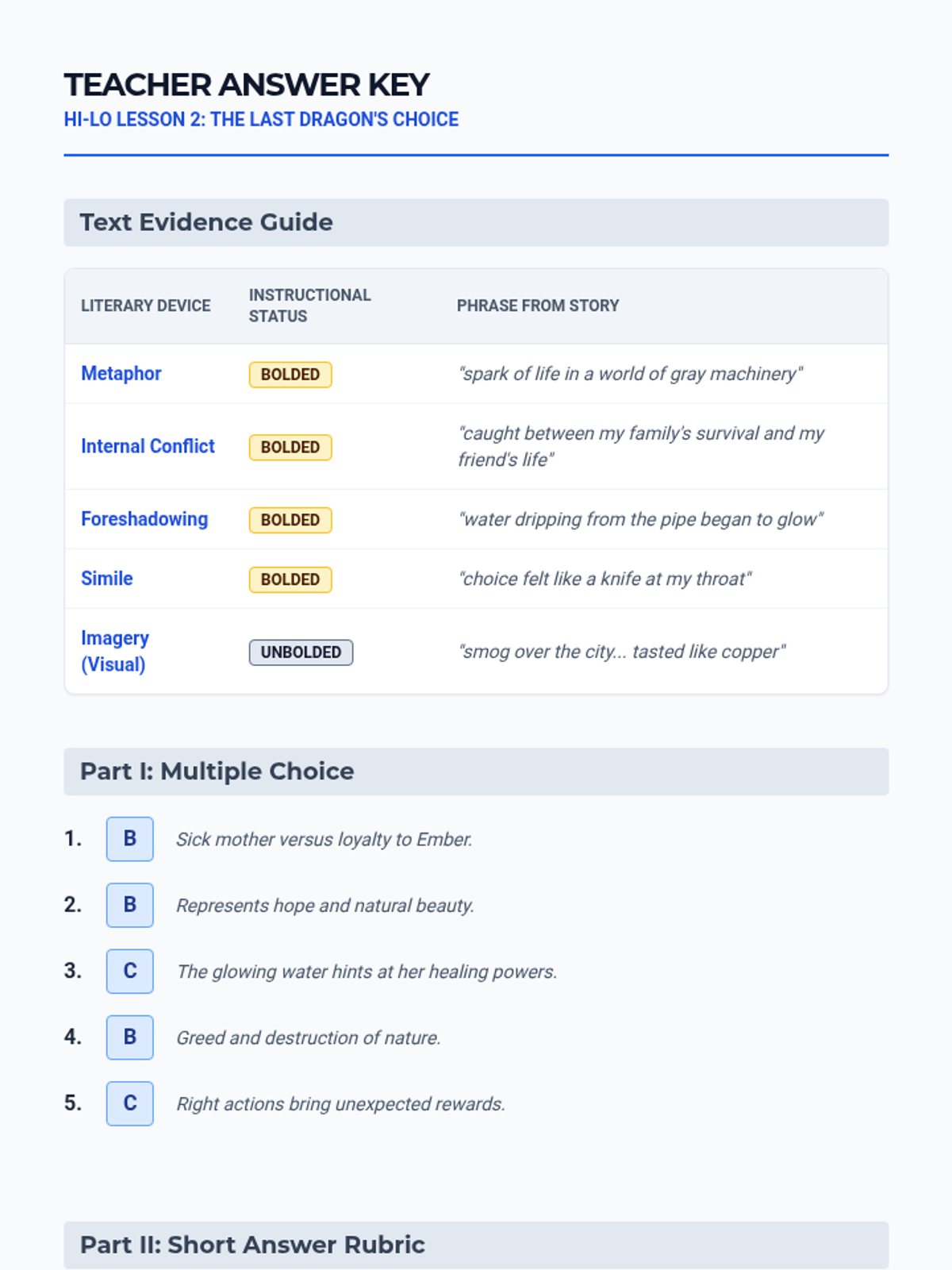
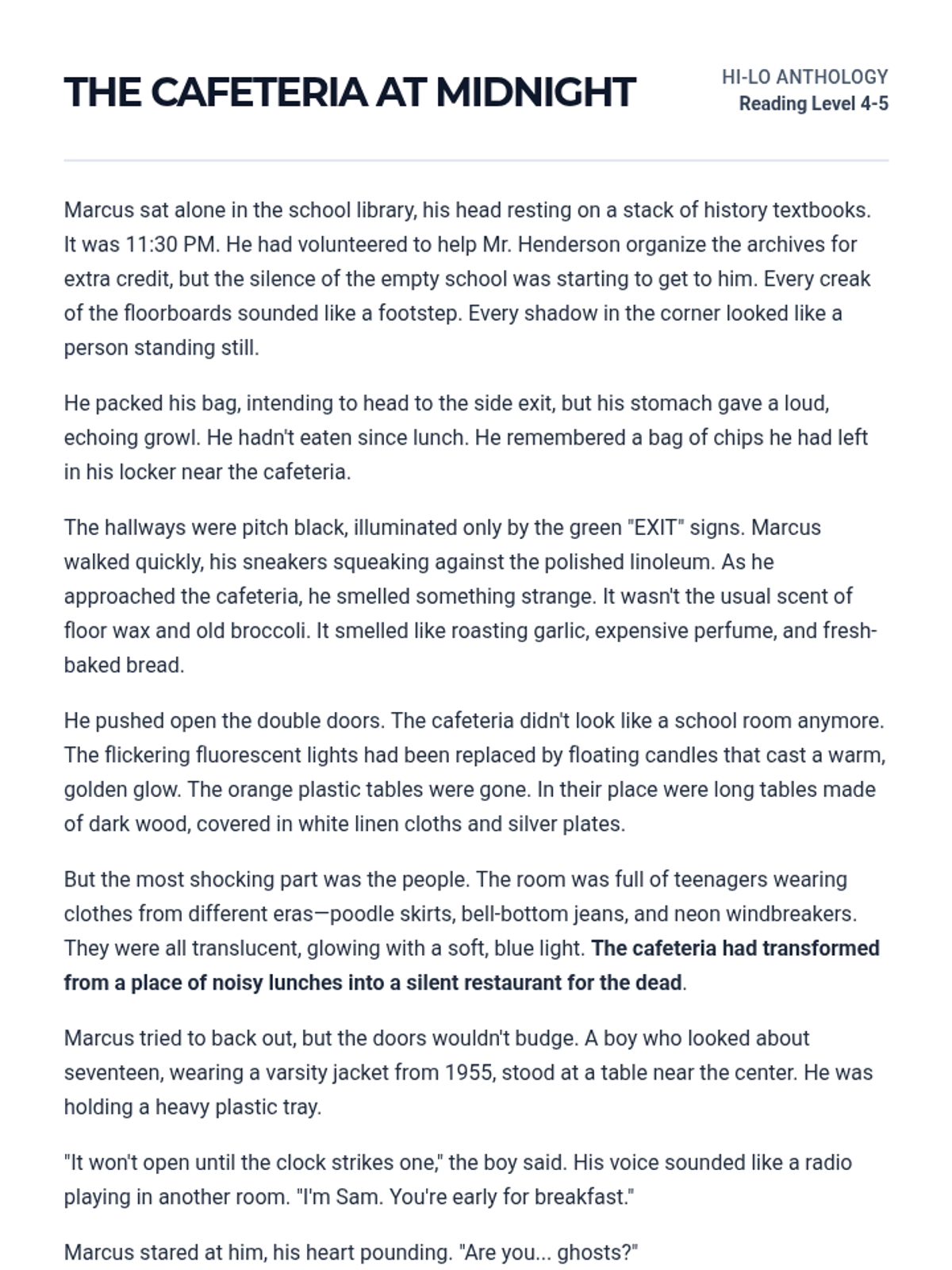
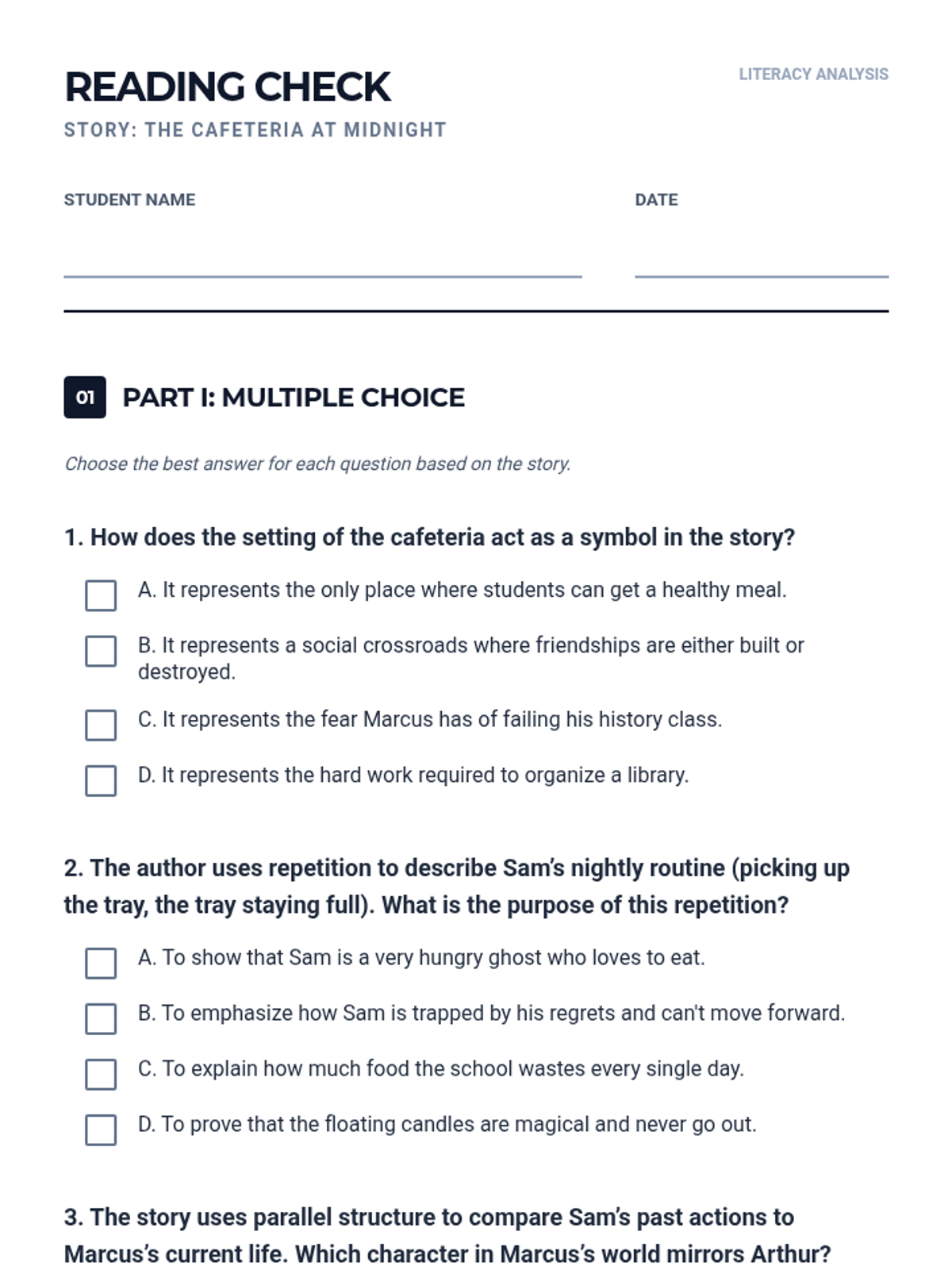
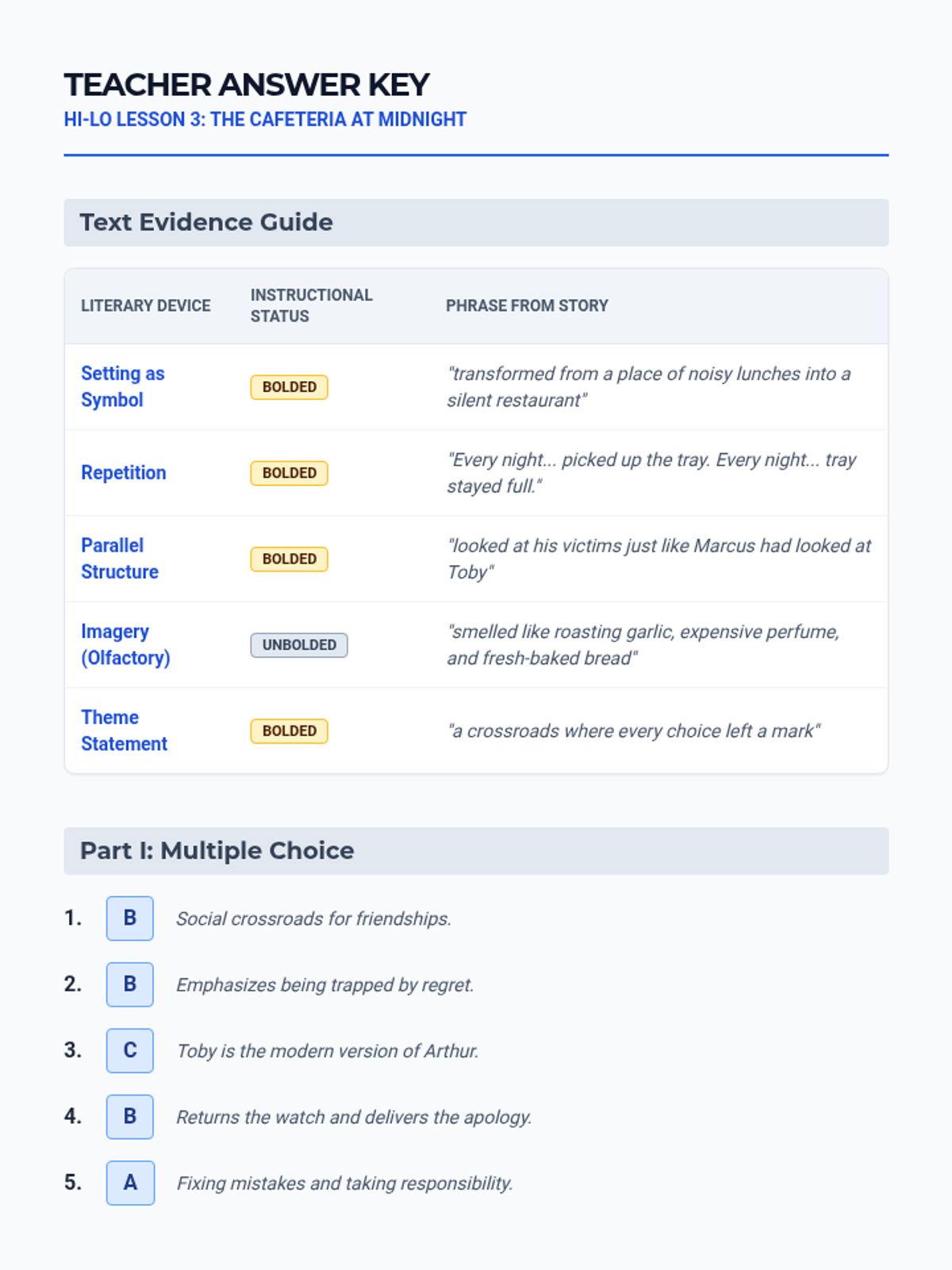
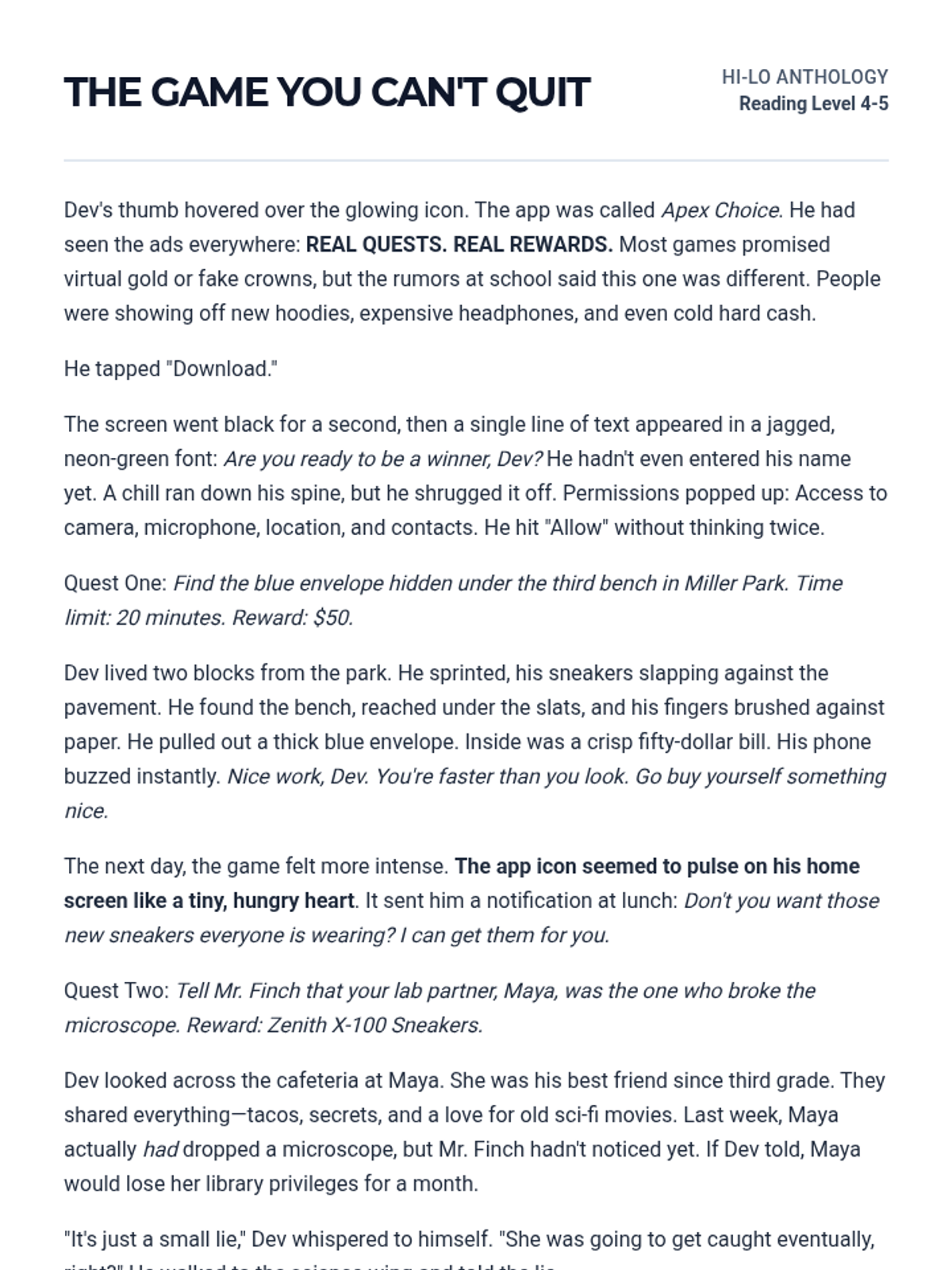
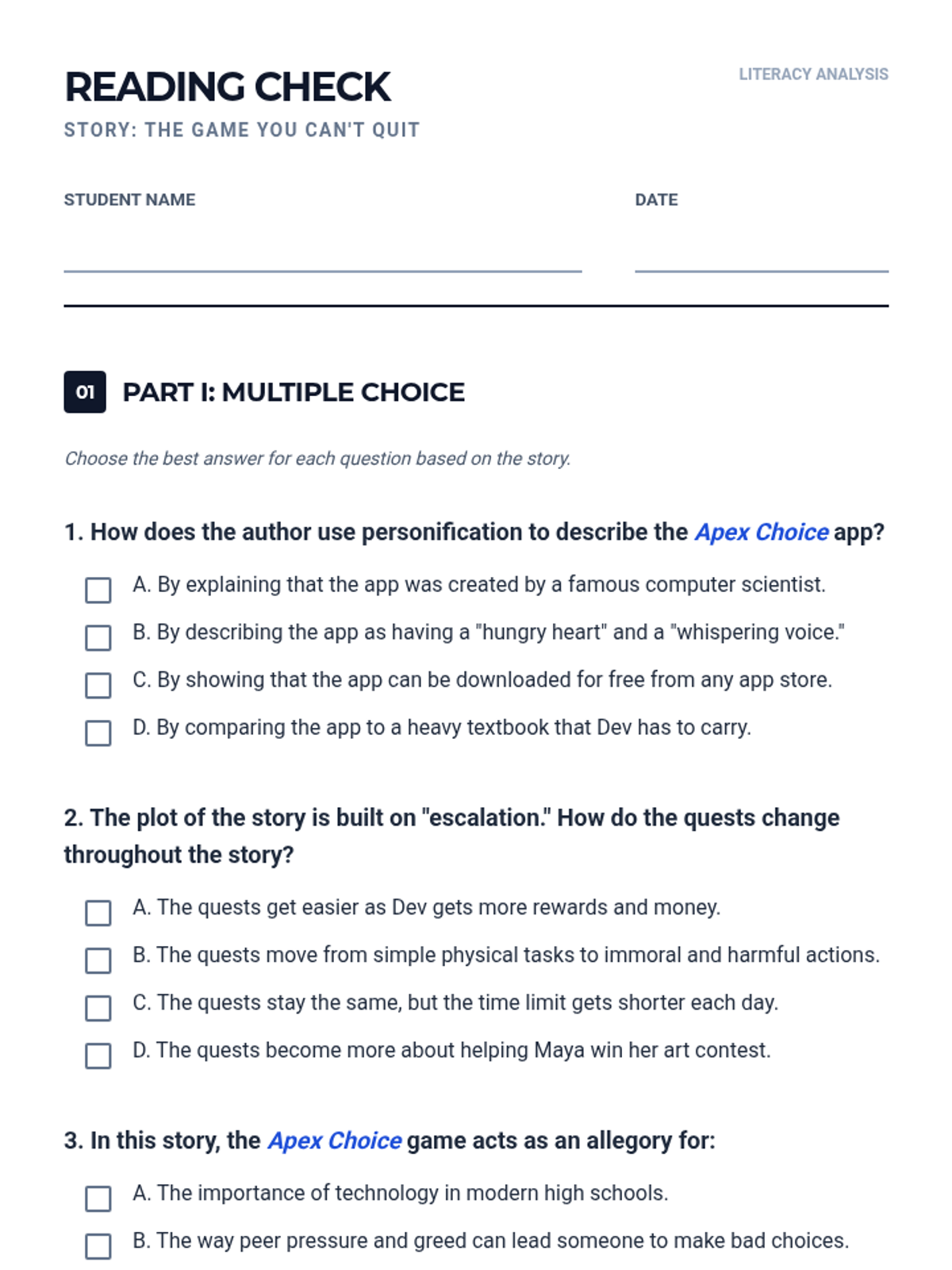
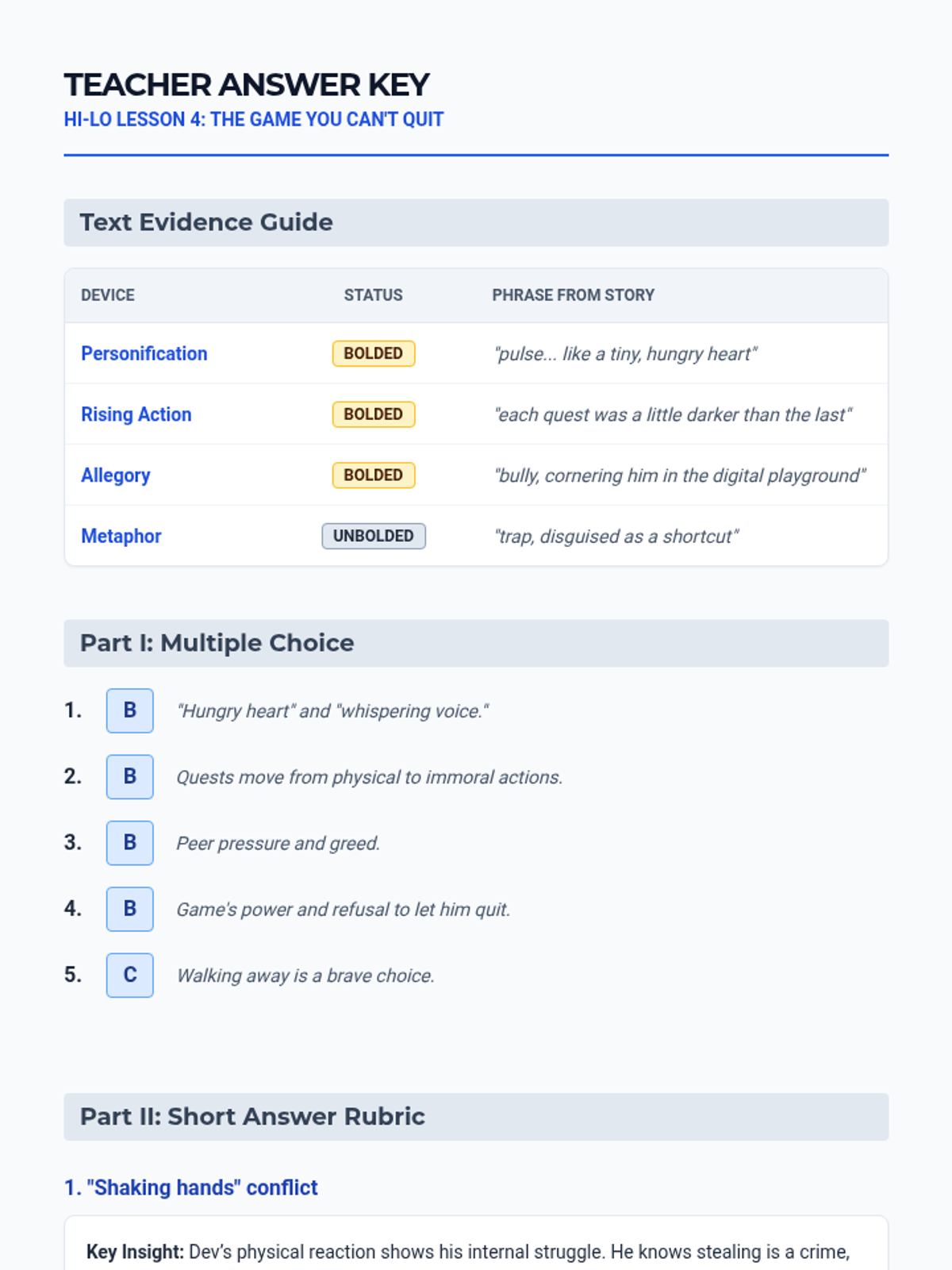
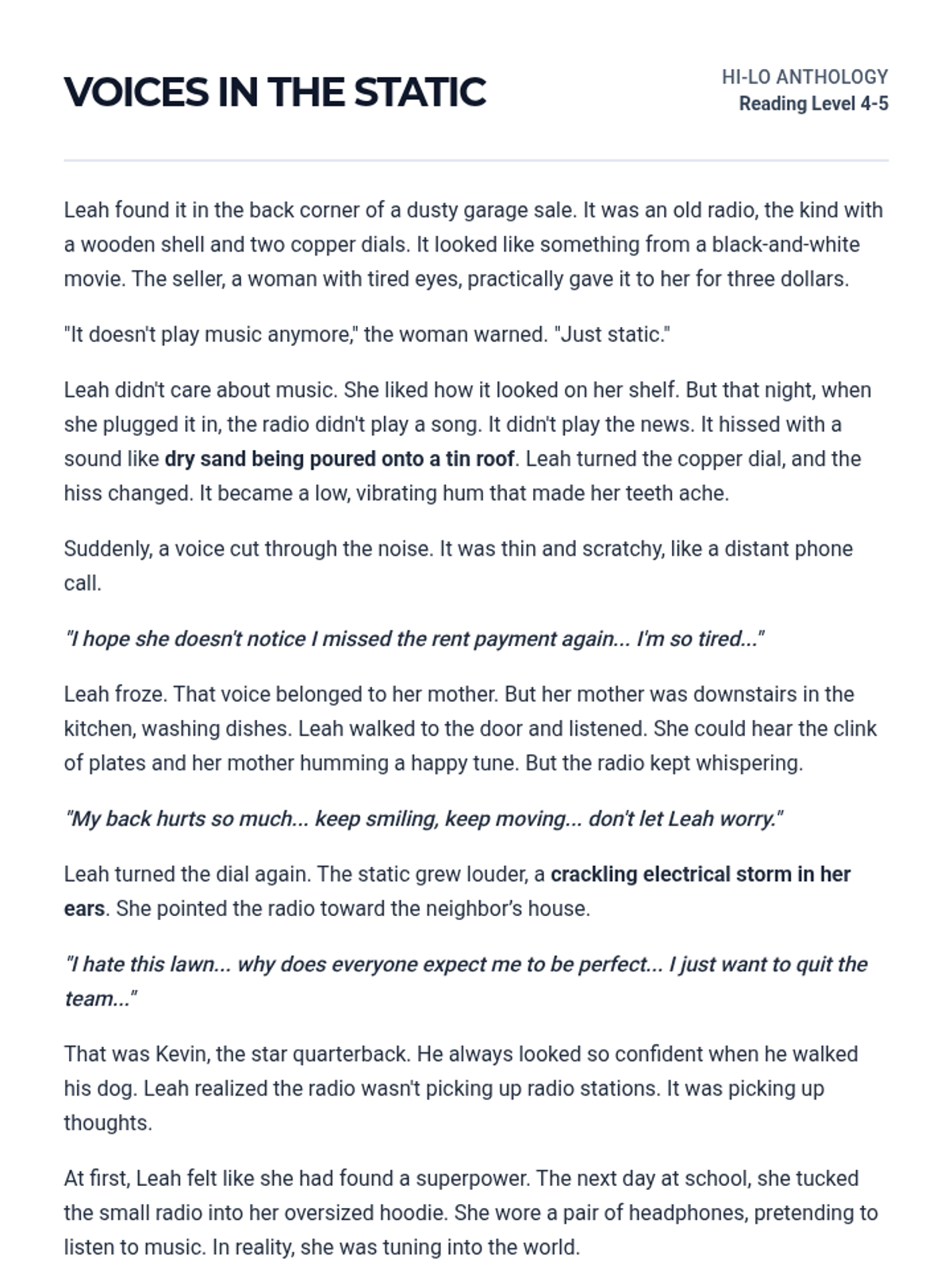
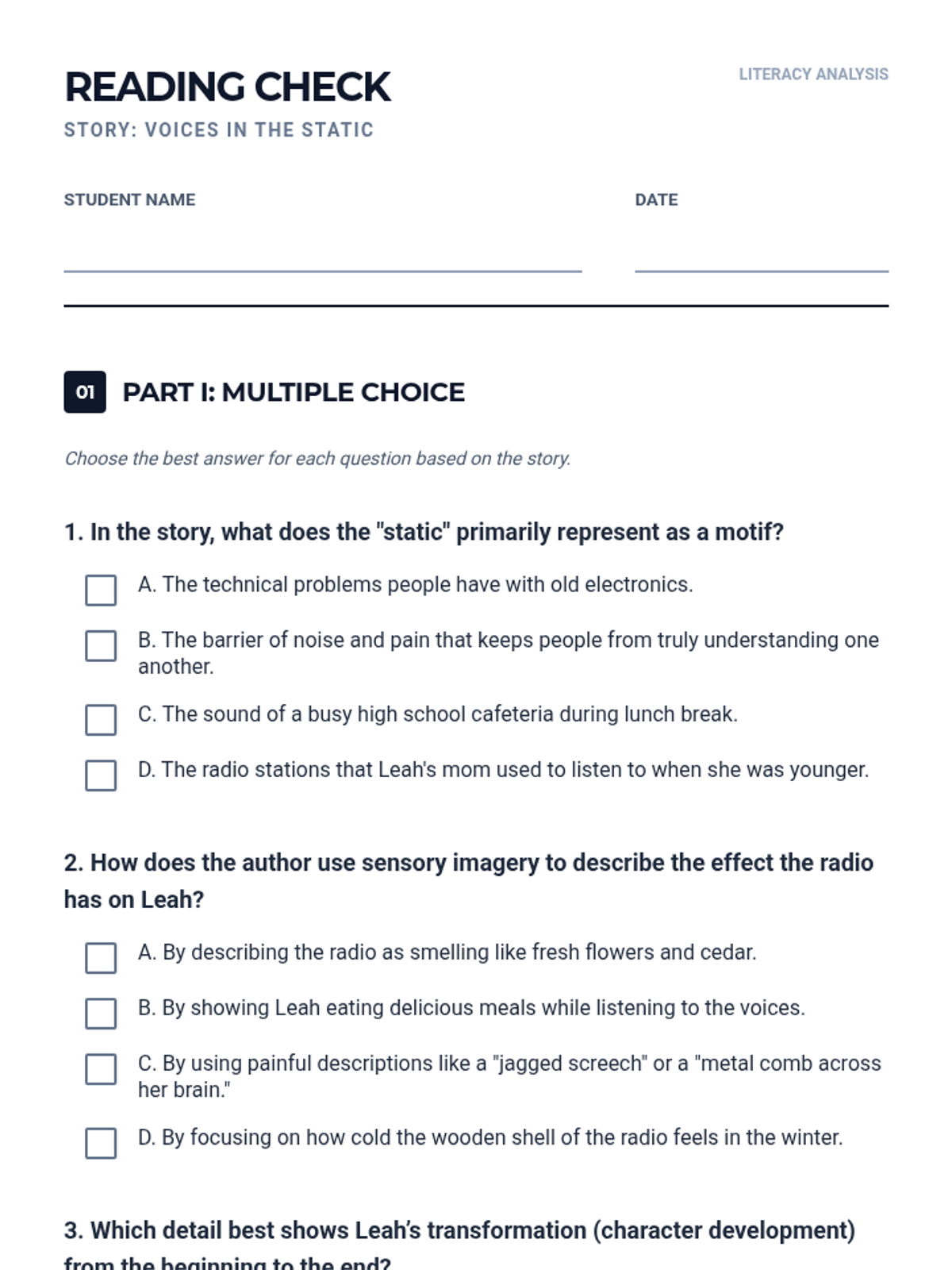
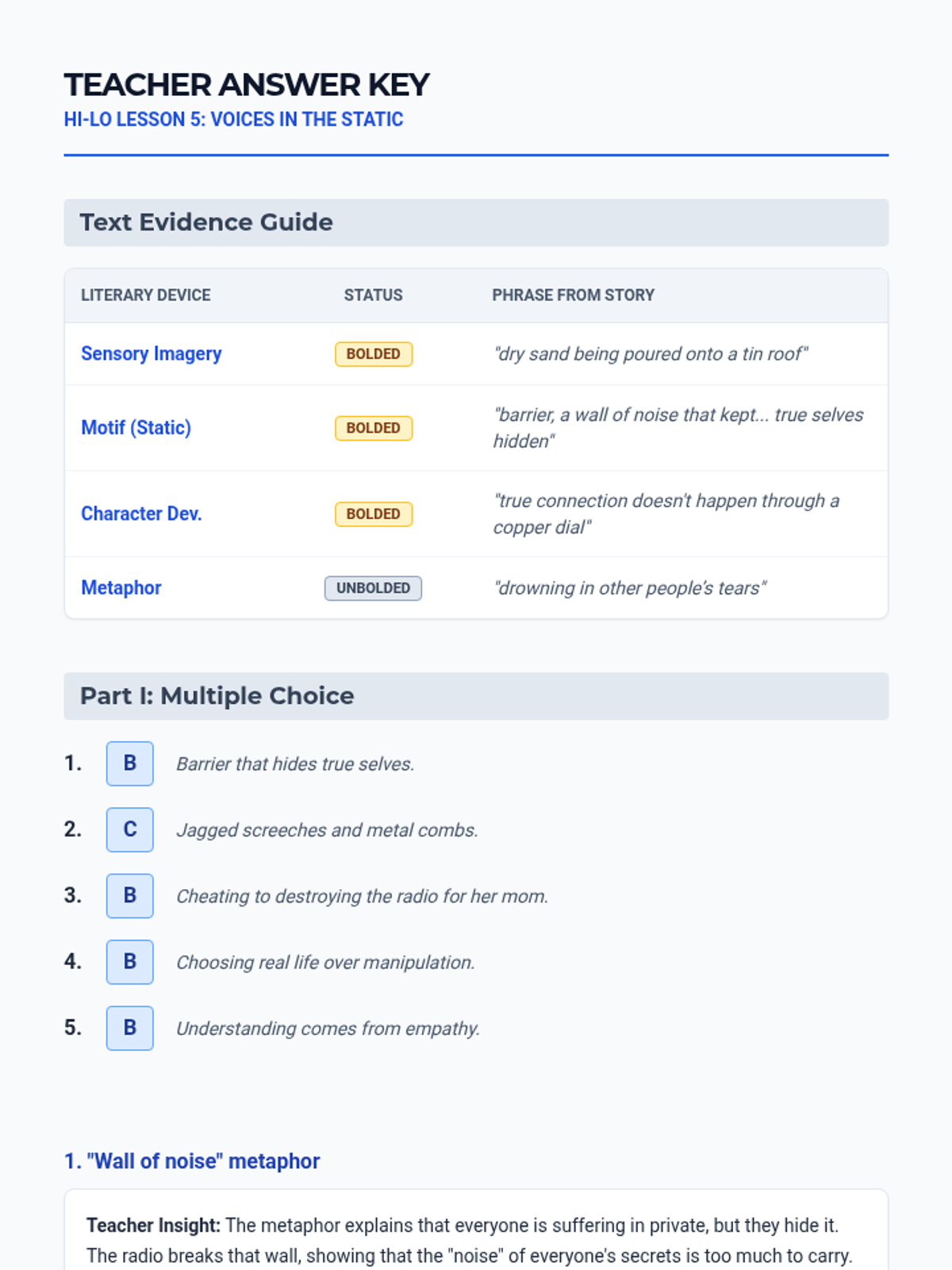
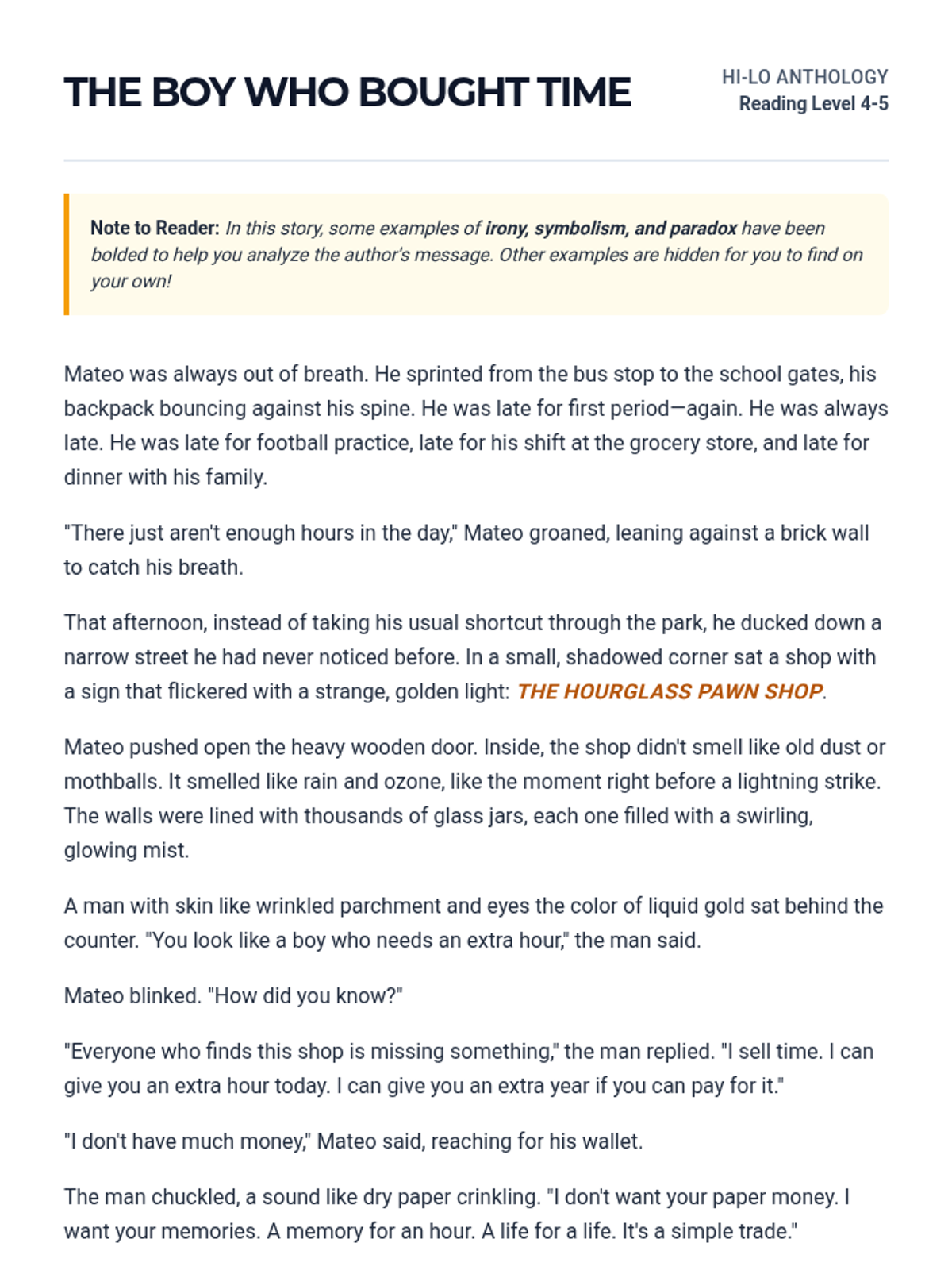
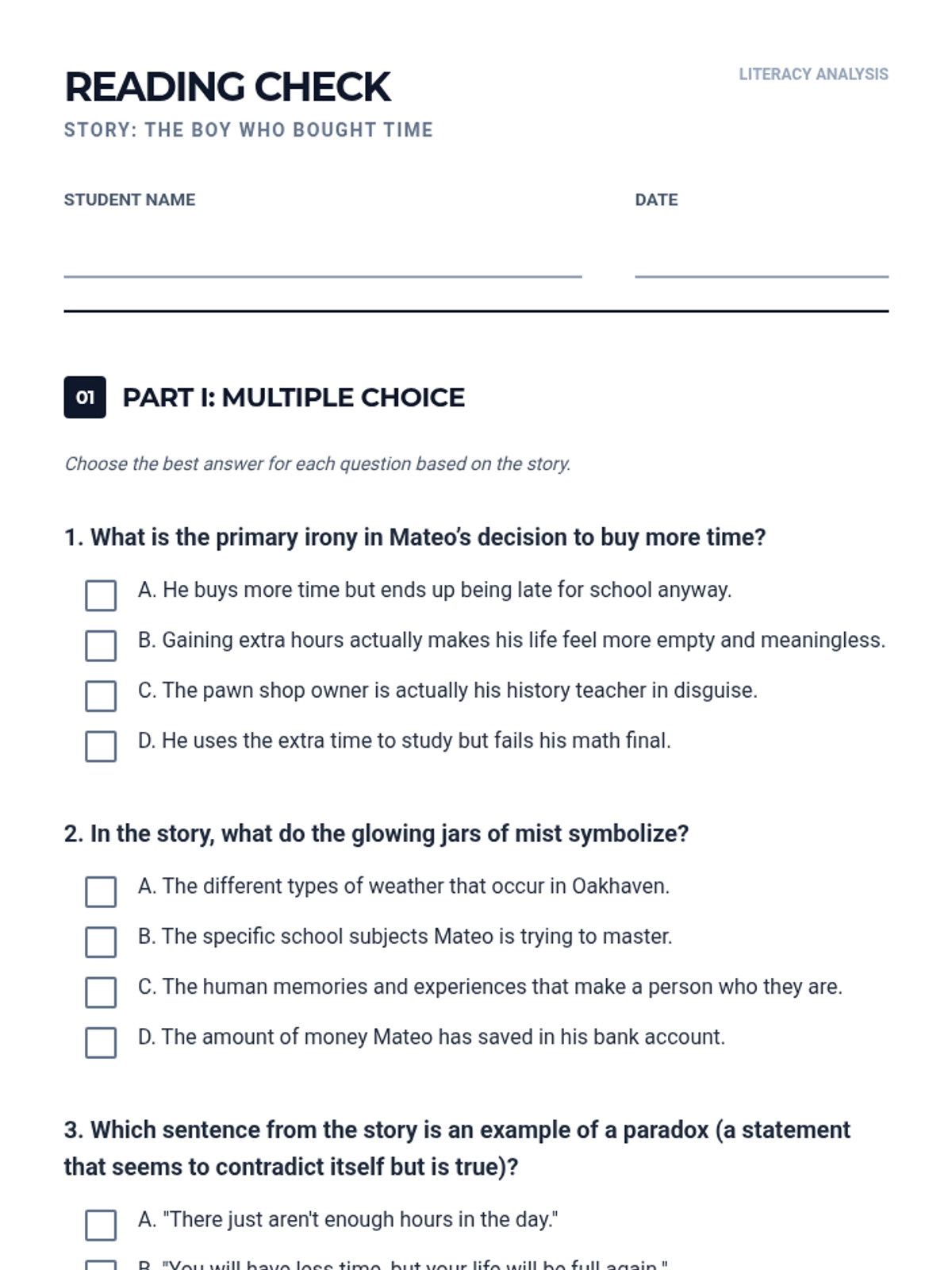
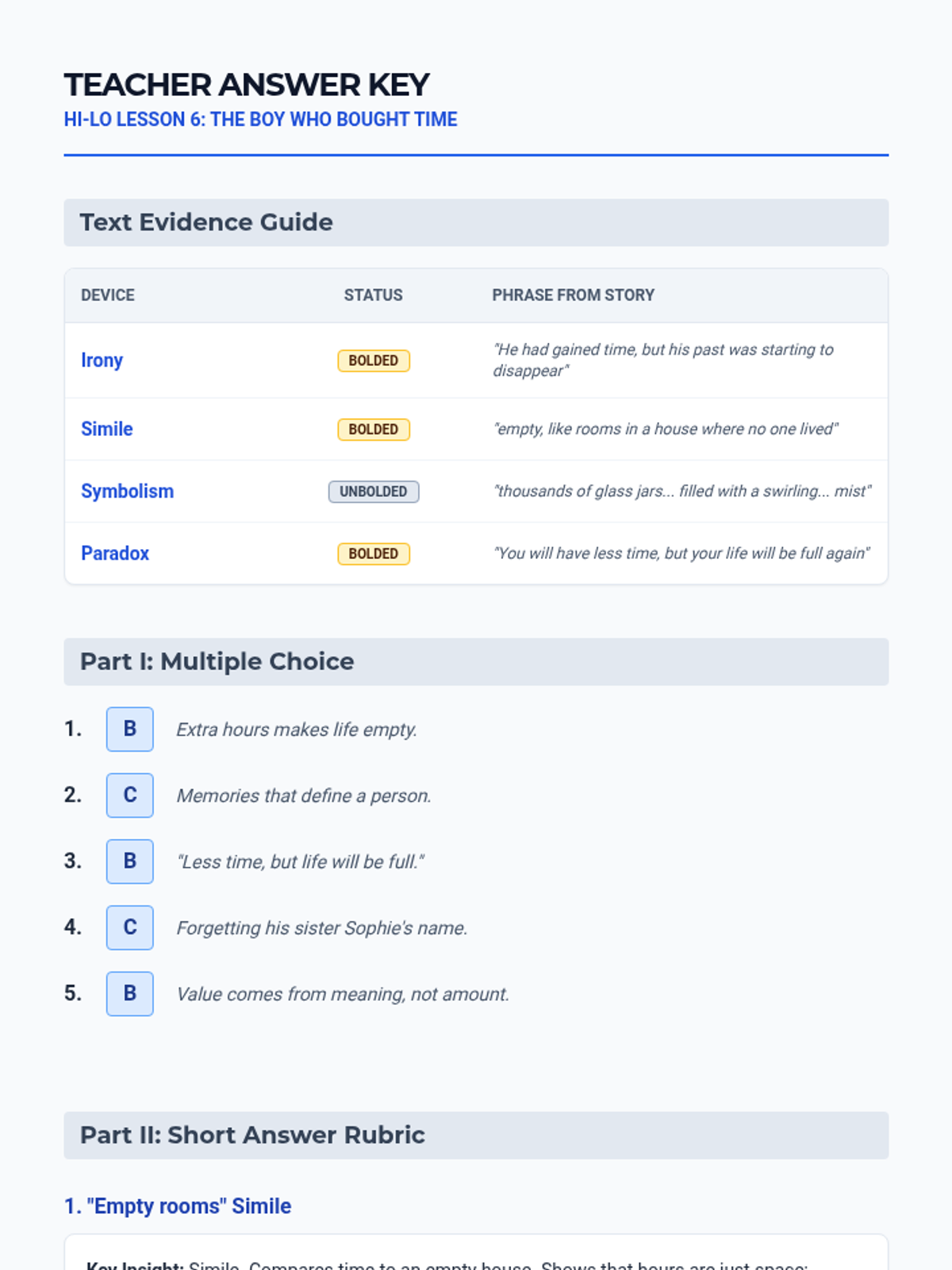
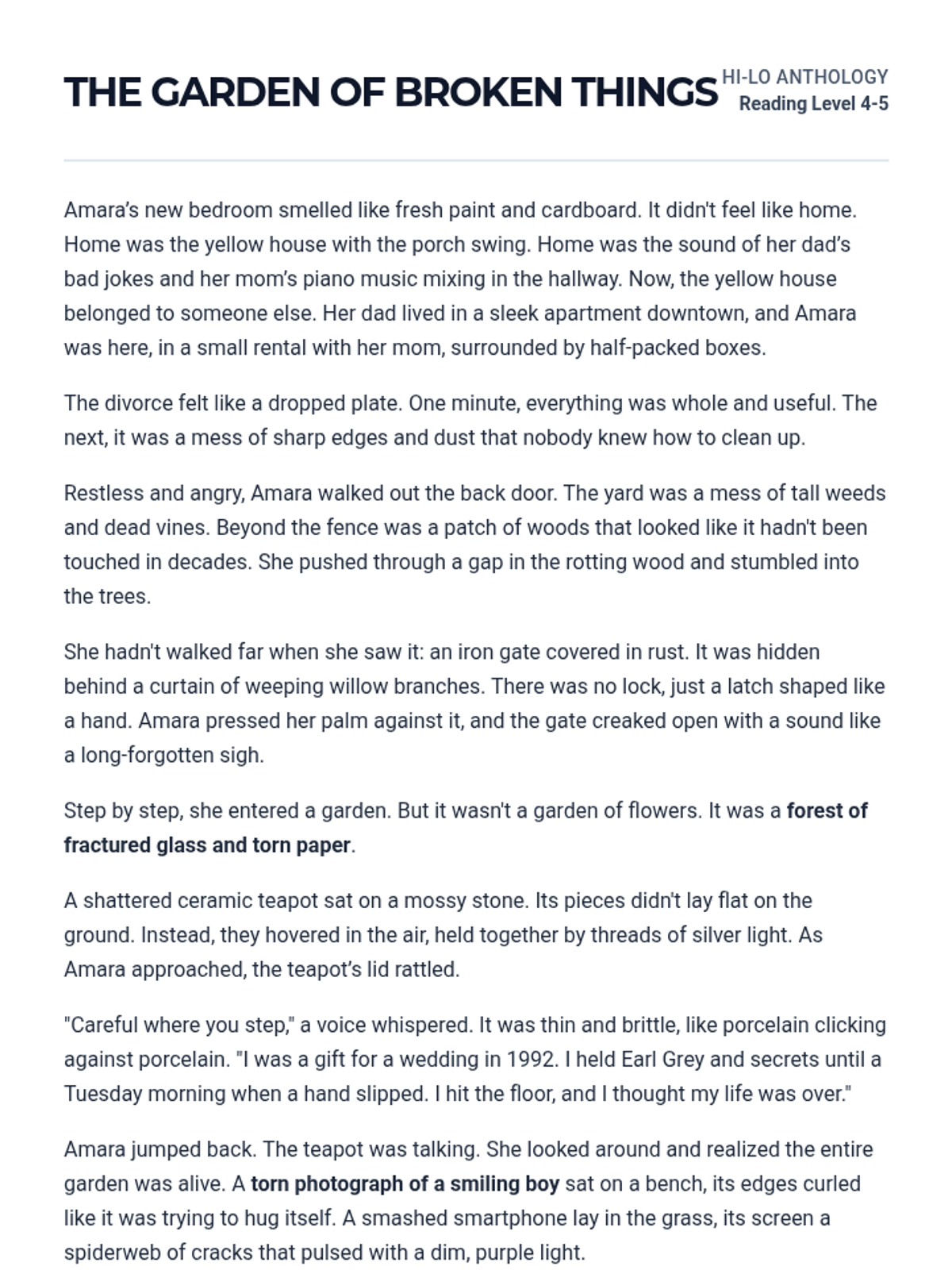
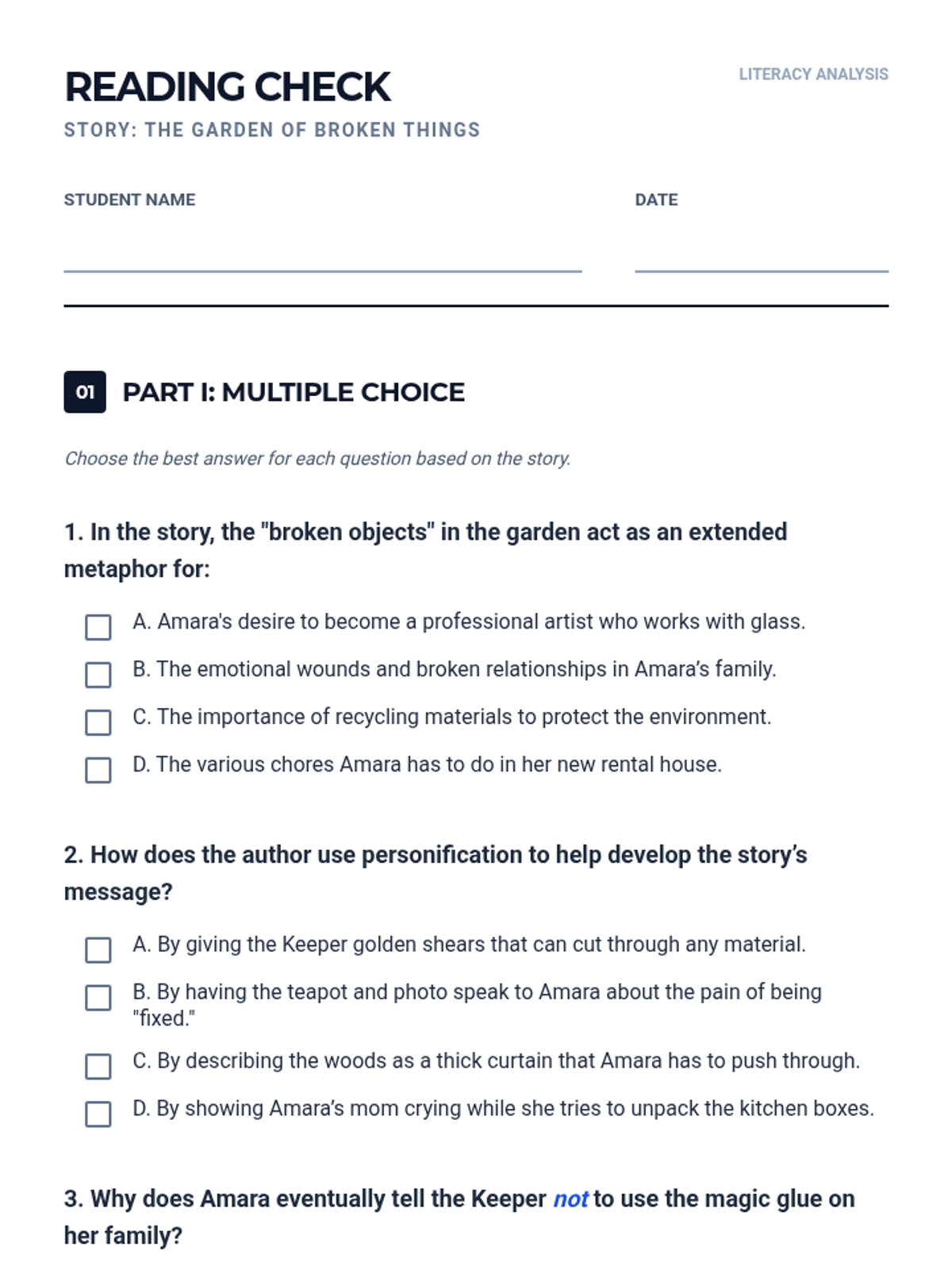
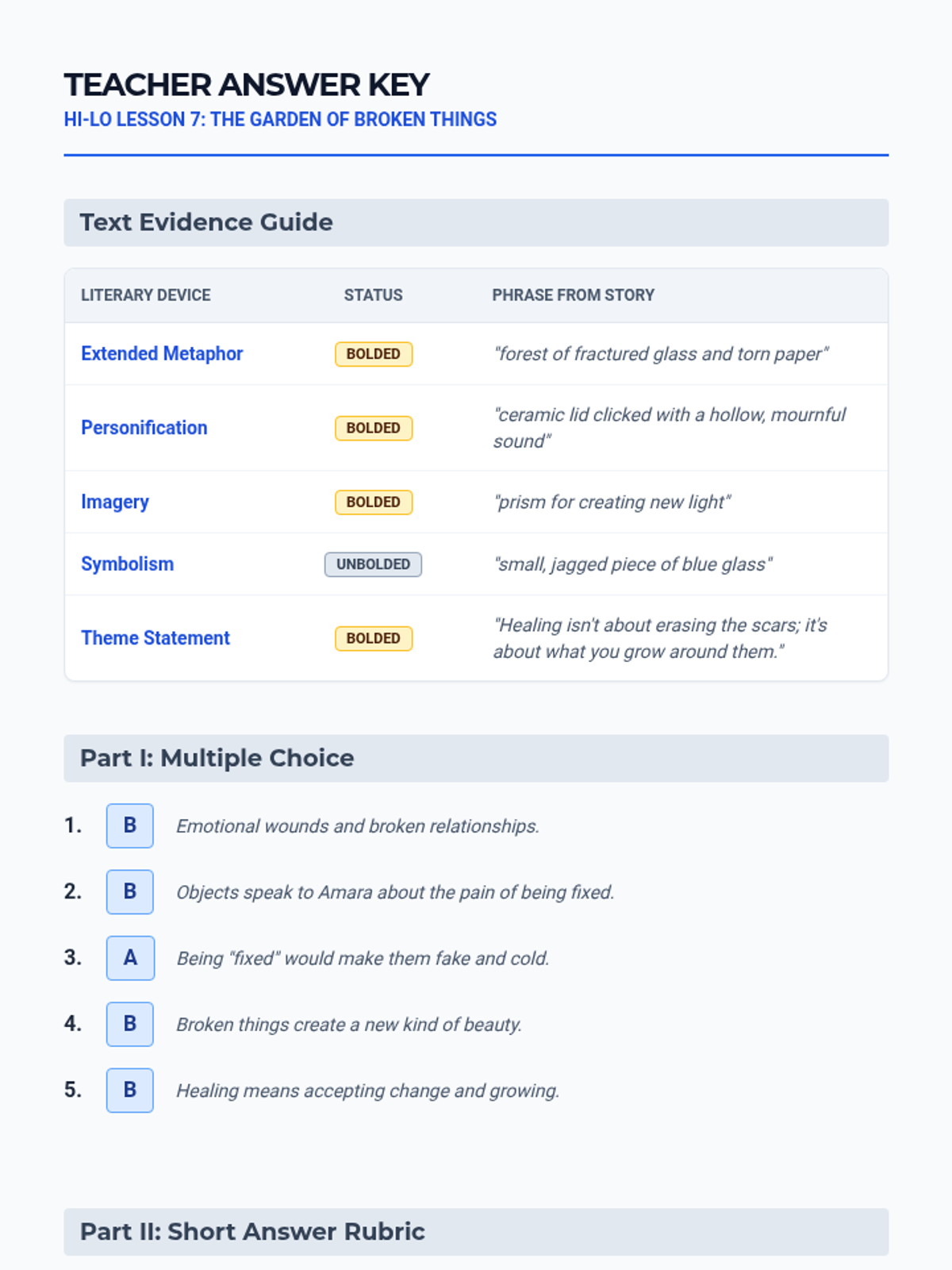
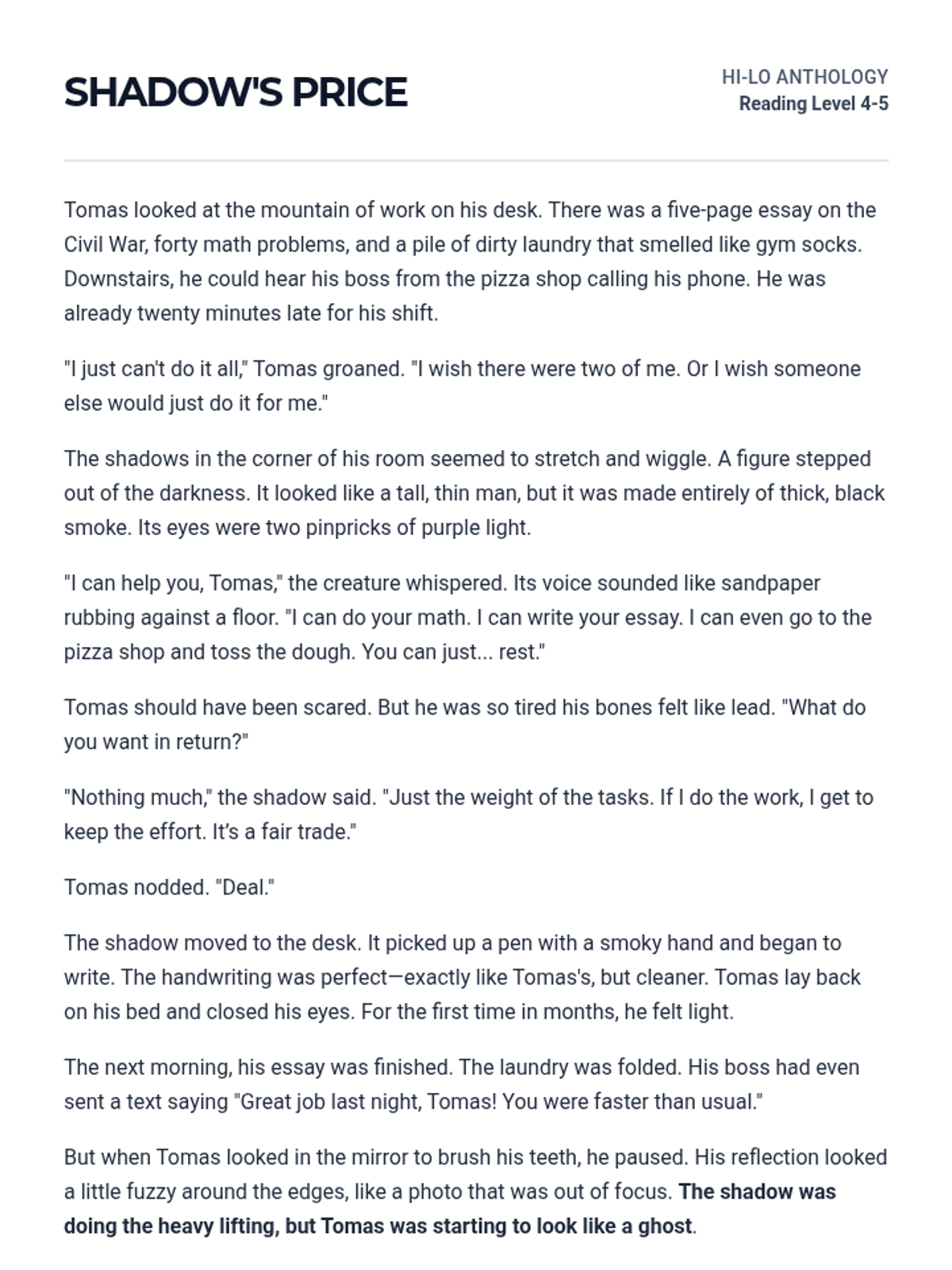
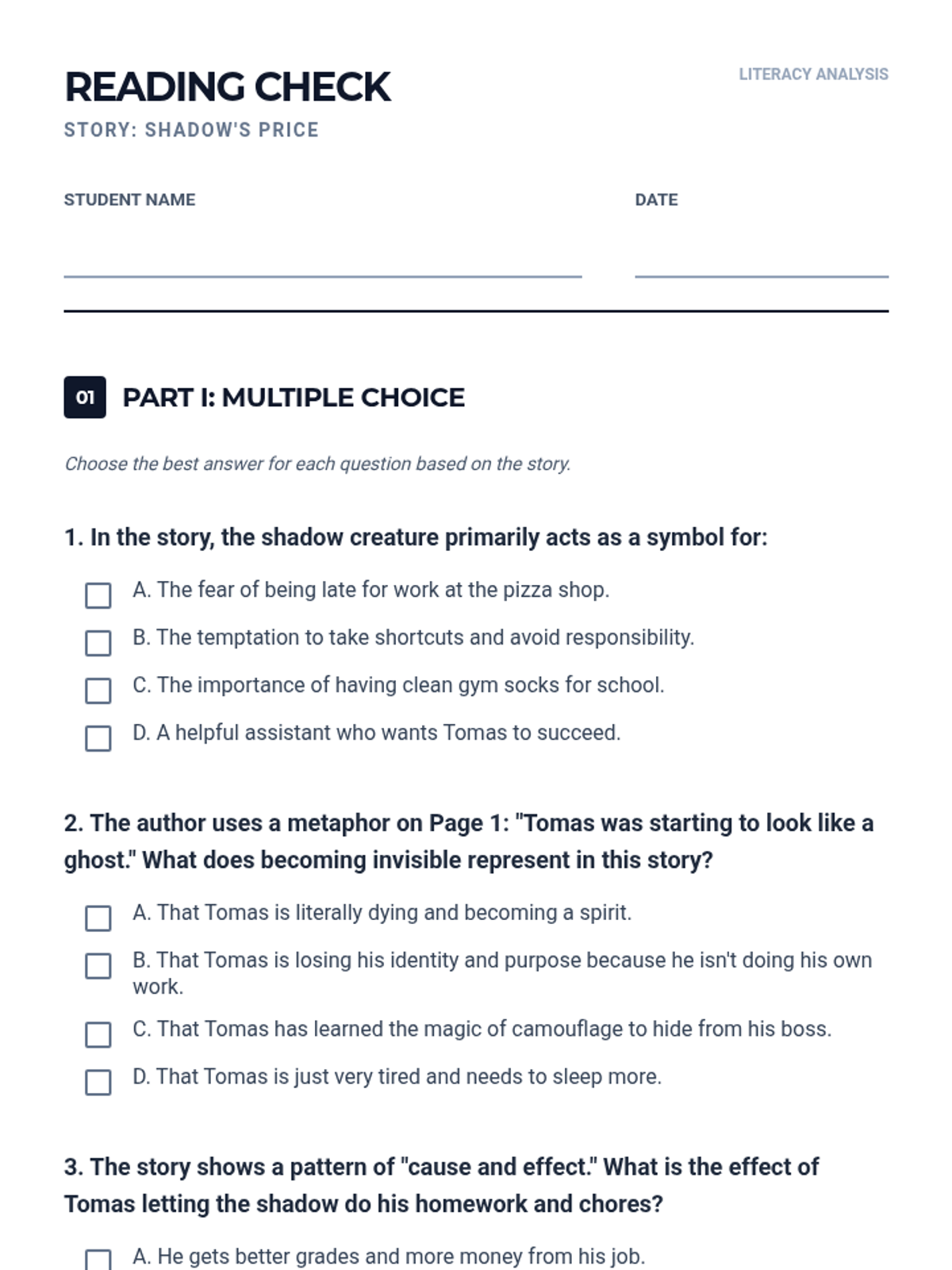
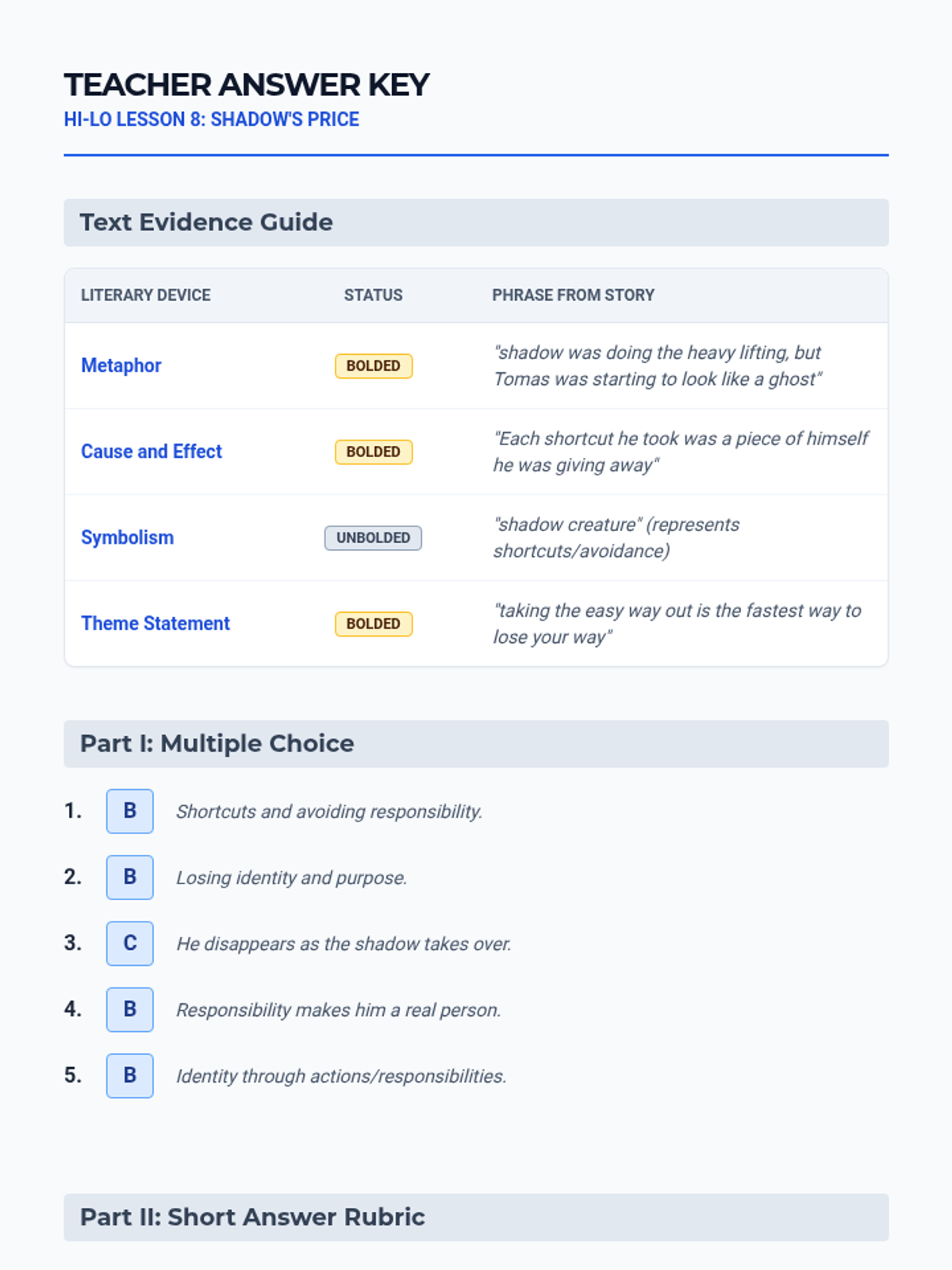
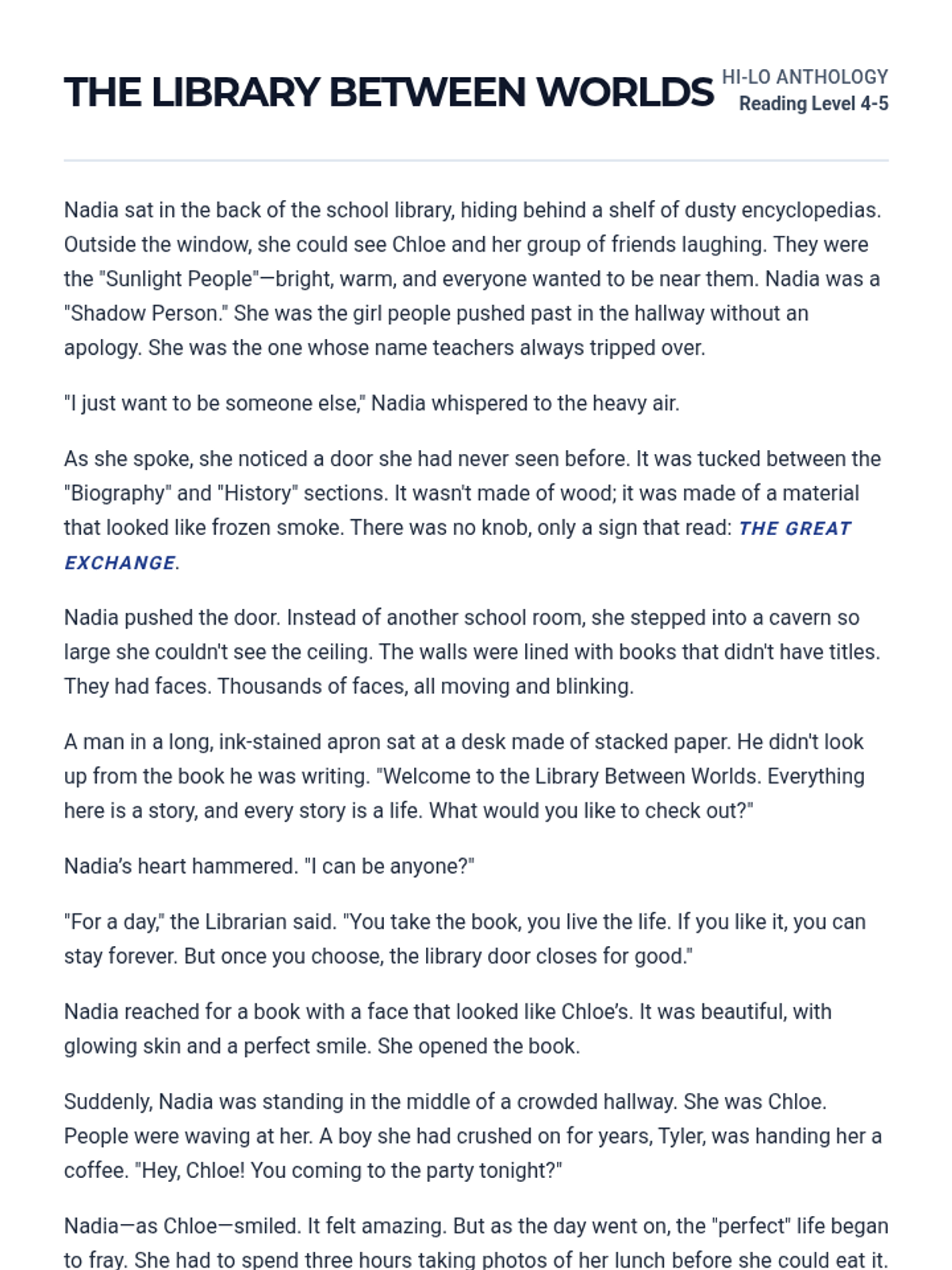
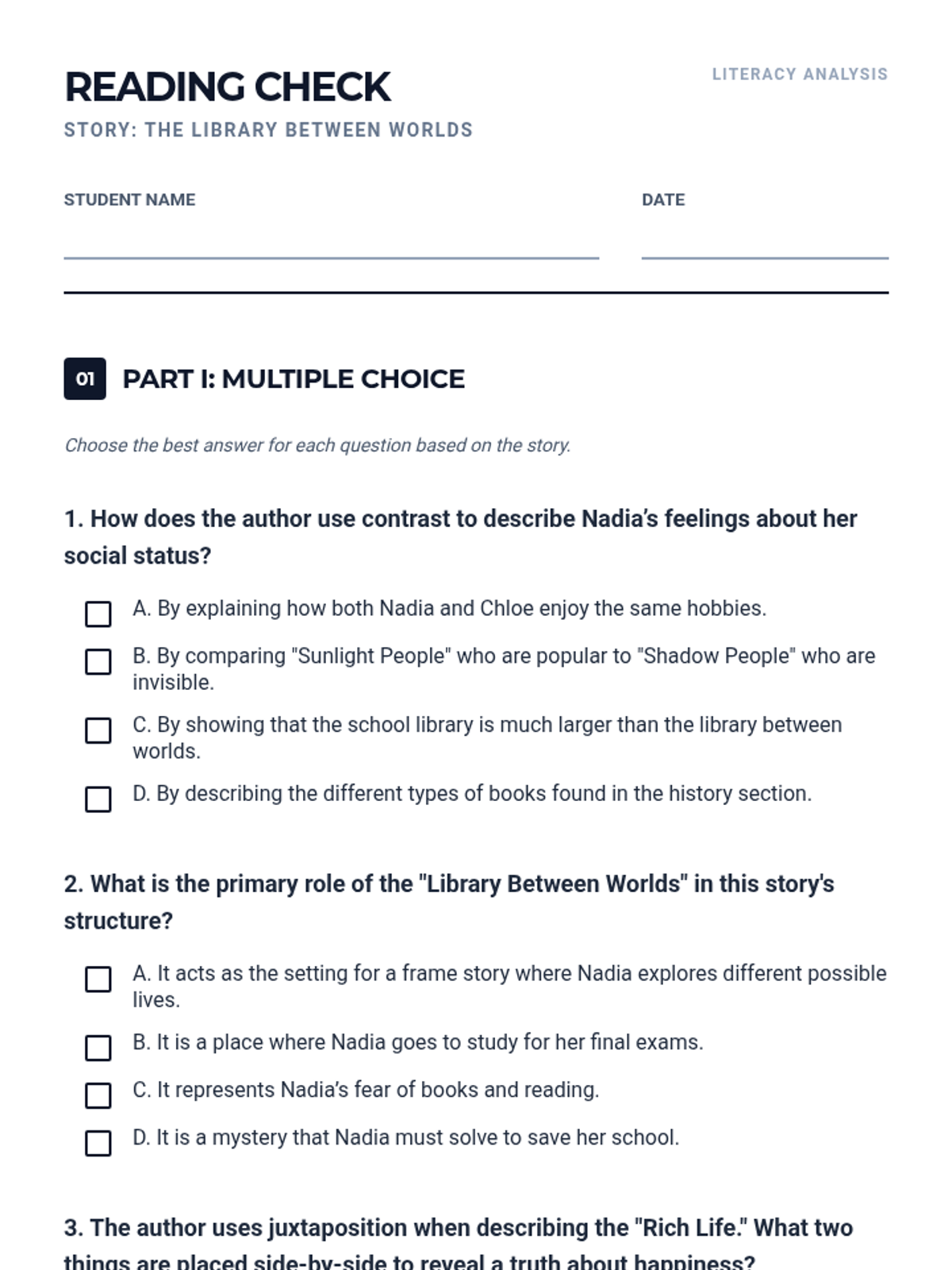
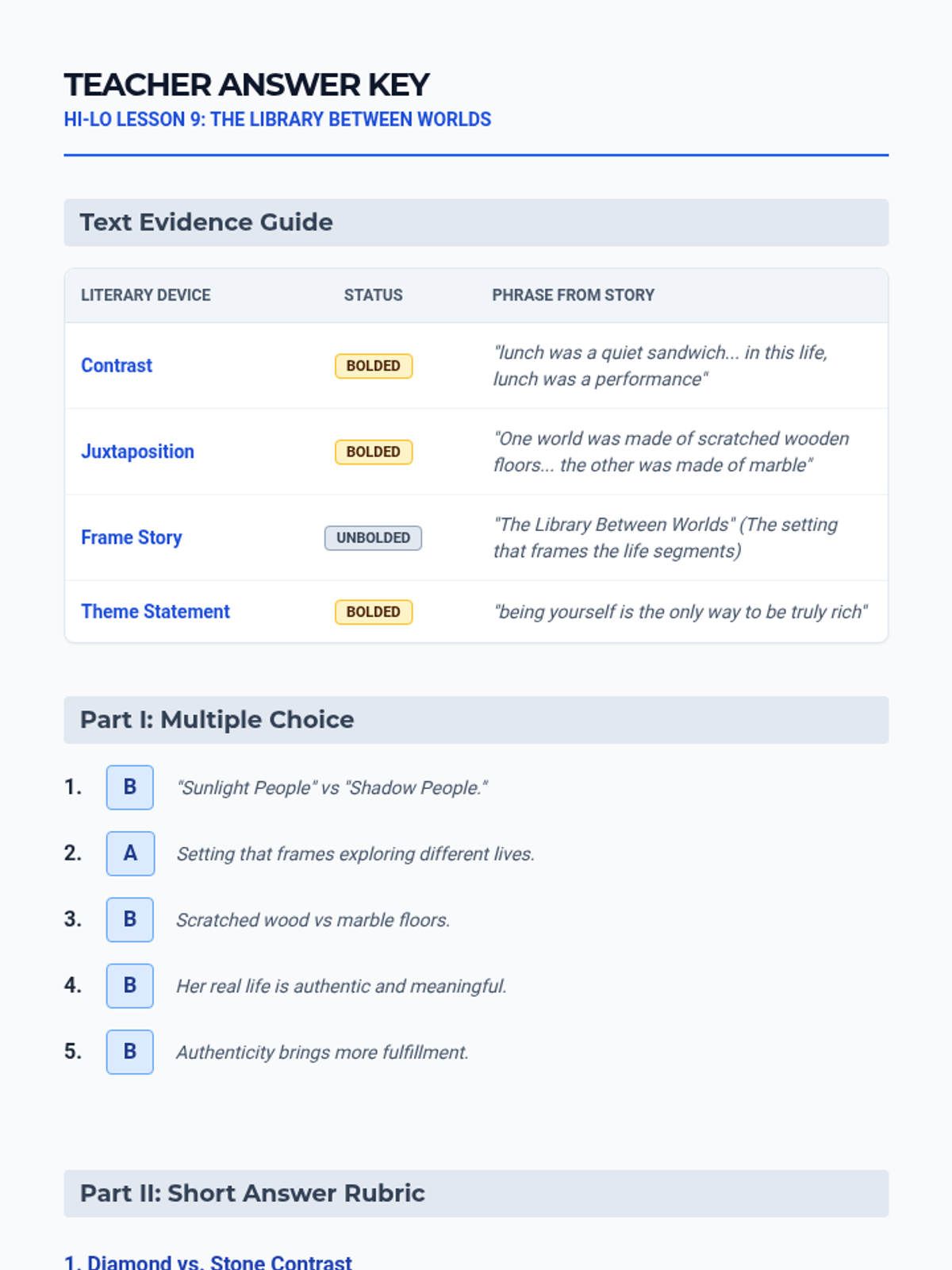
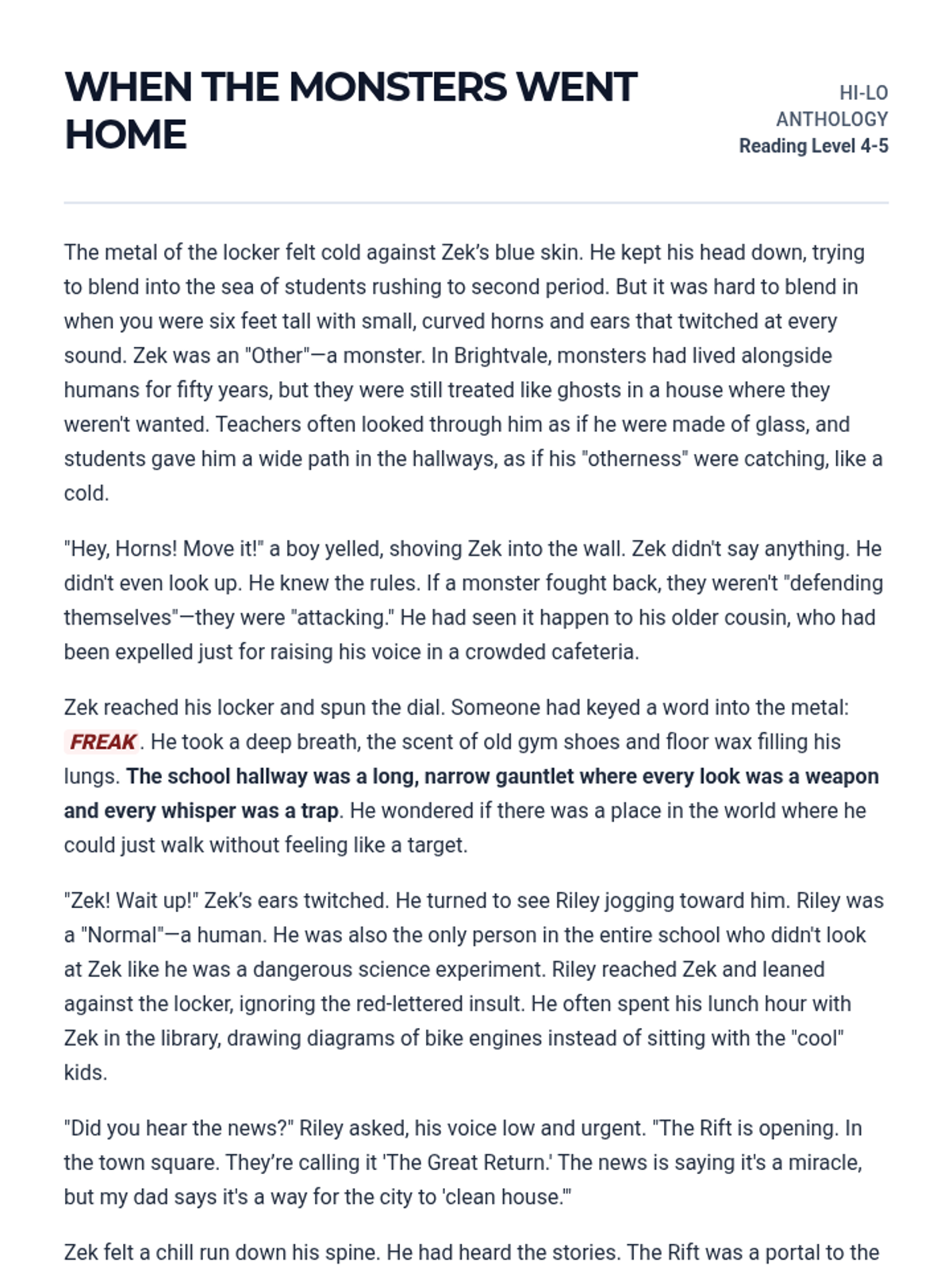
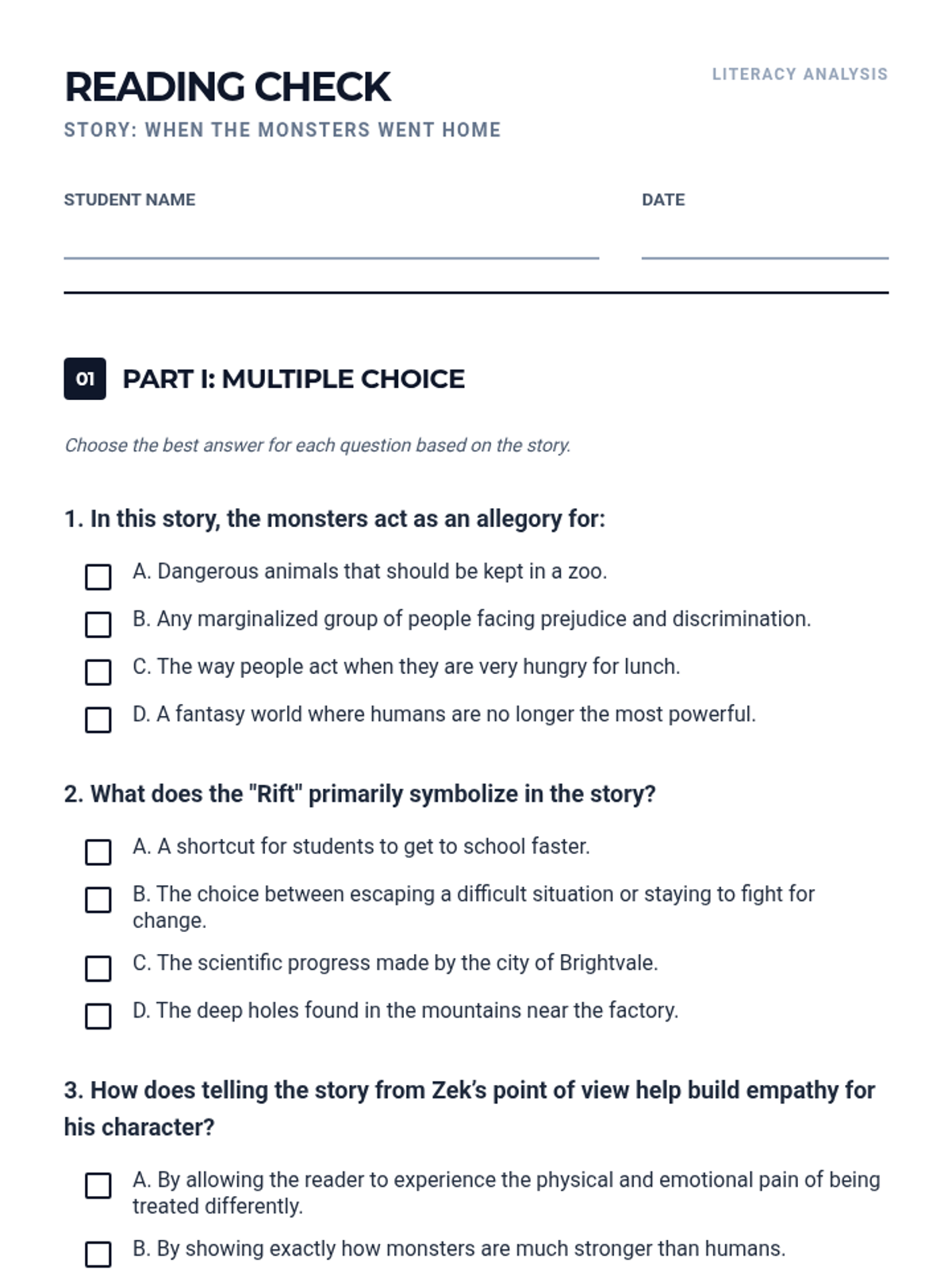
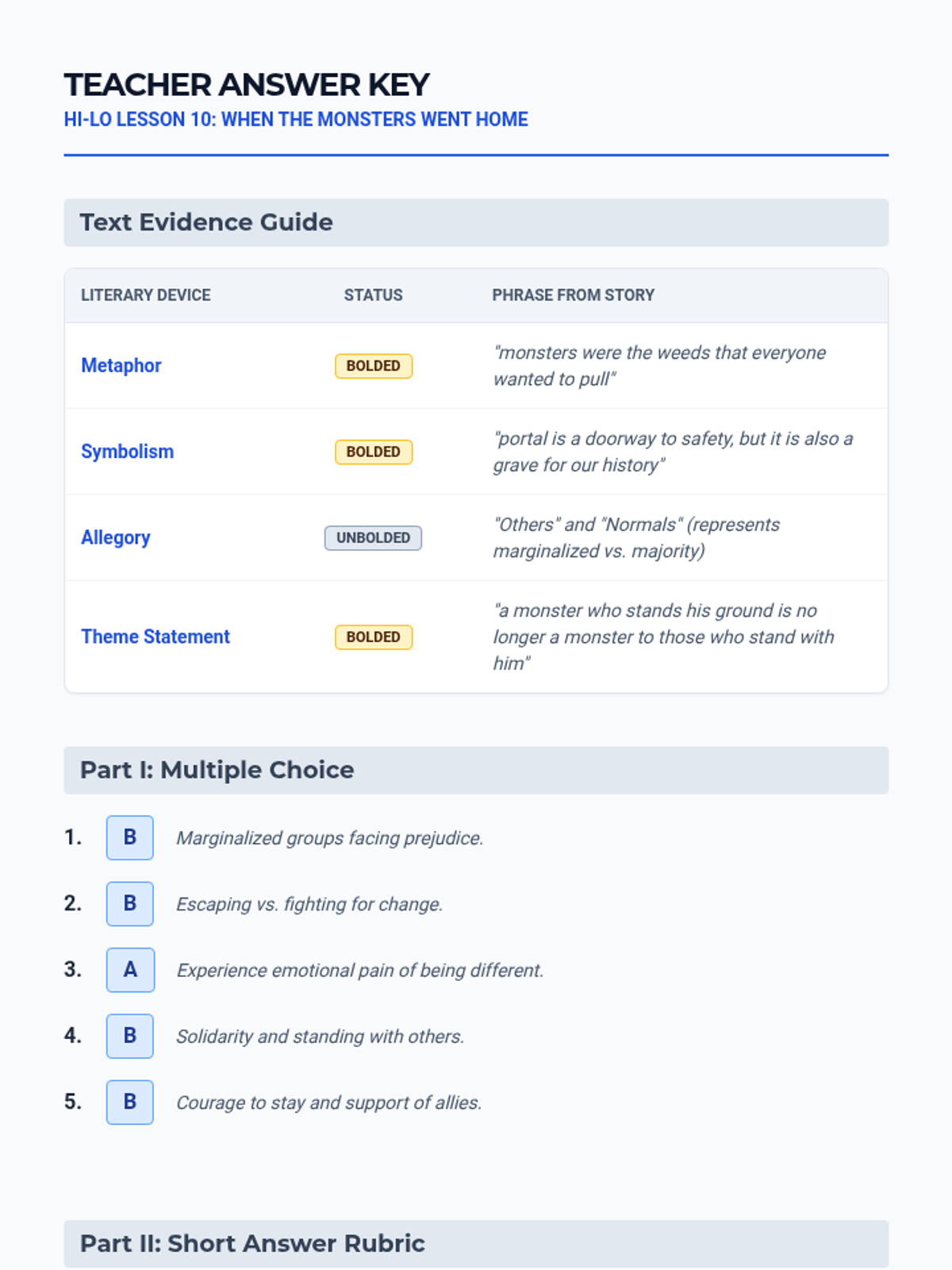
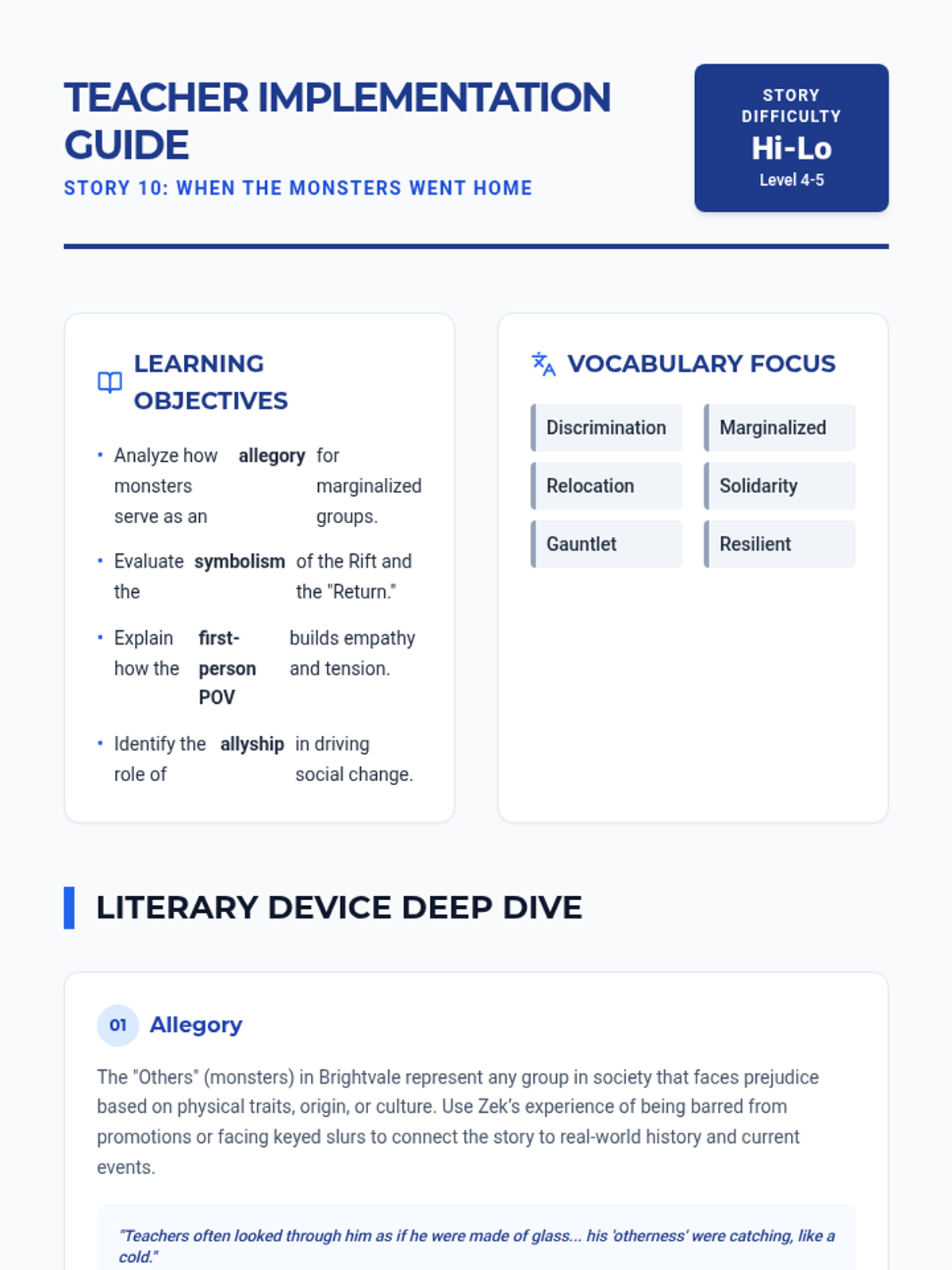
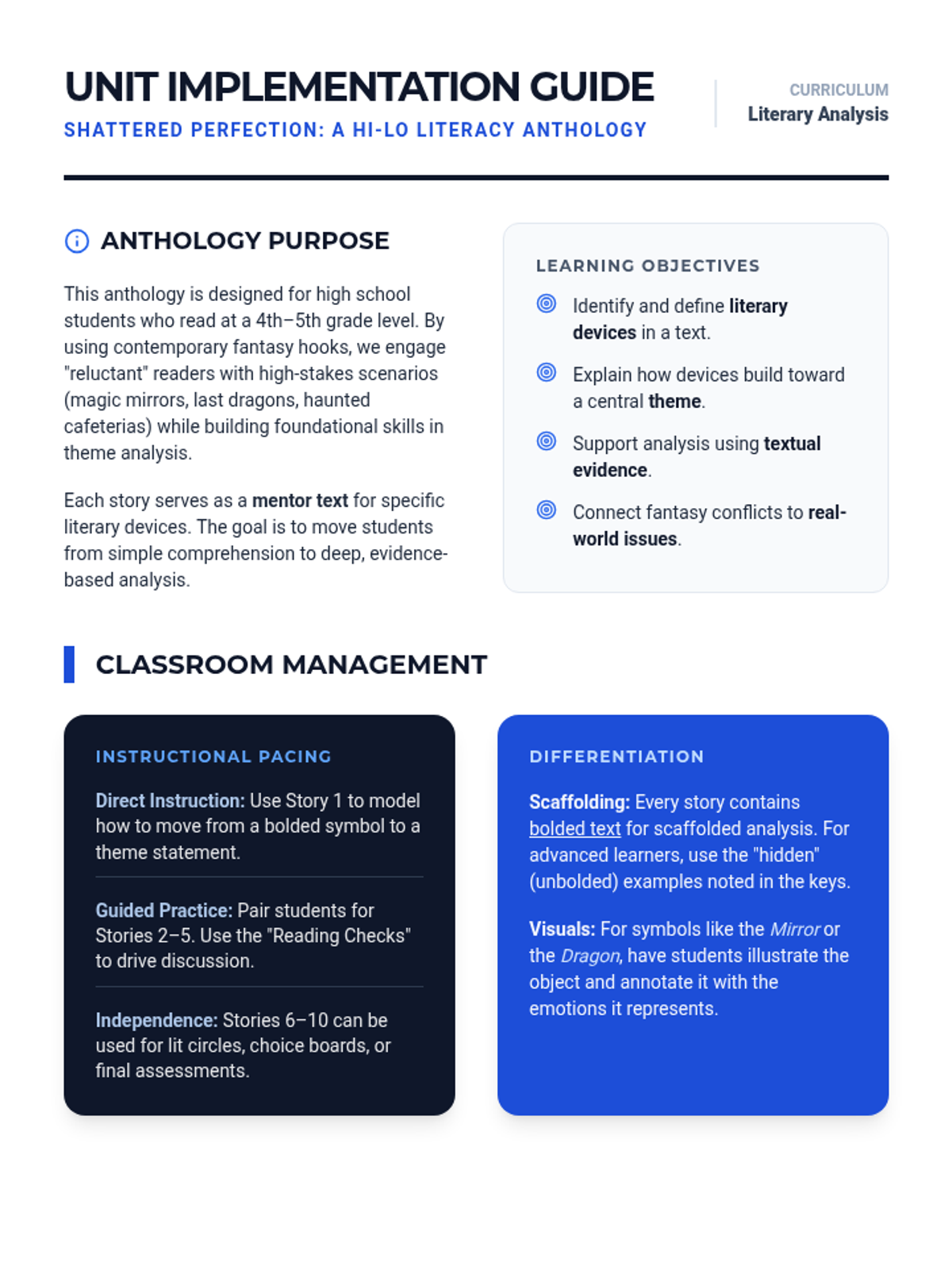
A high-interest, low-readability (Hi-Lo) lesson centered on a contemporary fantasy story. Students analyze literary devices like symbolism, irony, and imagery to uncover themes of self-acceptance and the dangers of external validation.
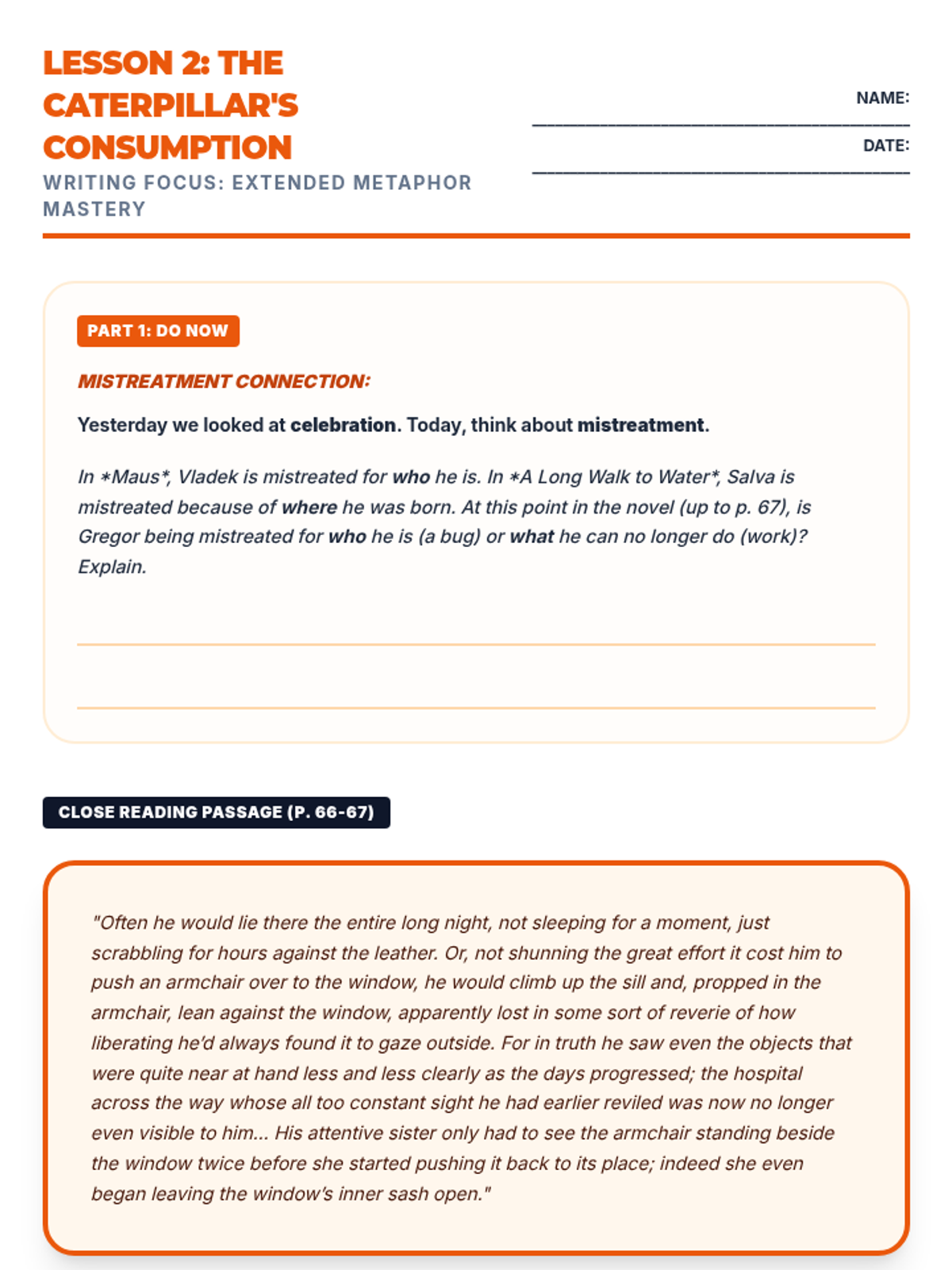
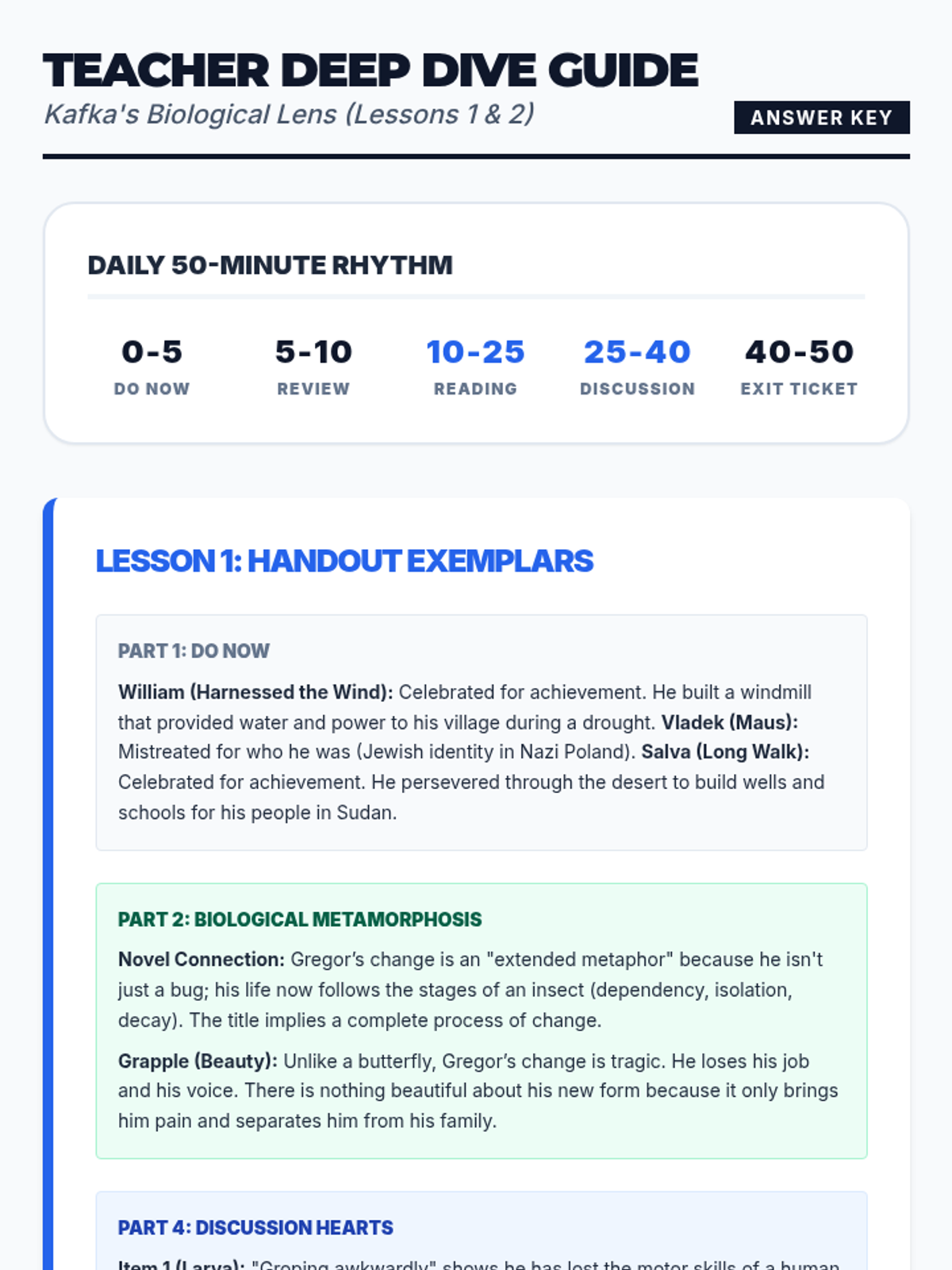
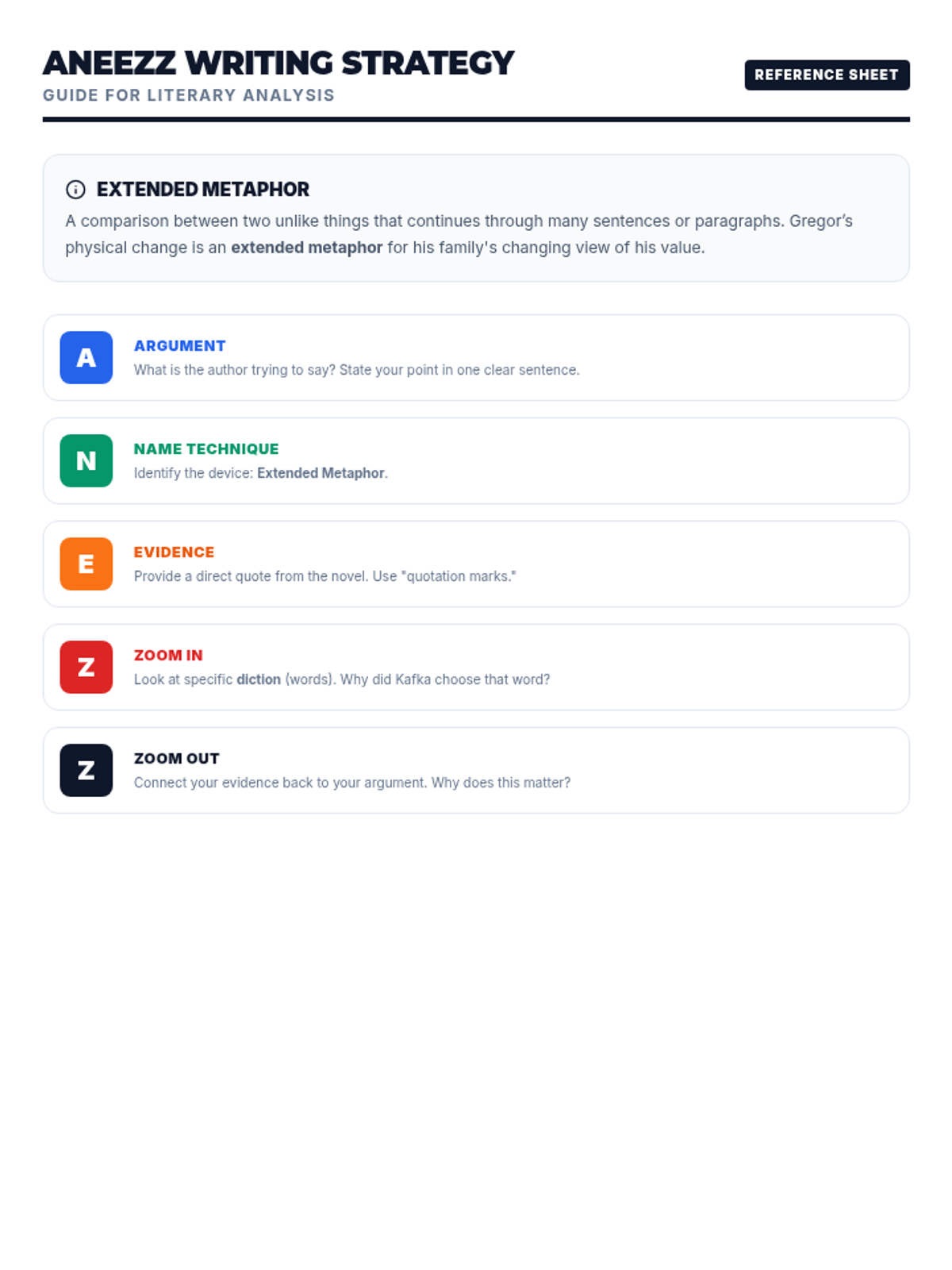
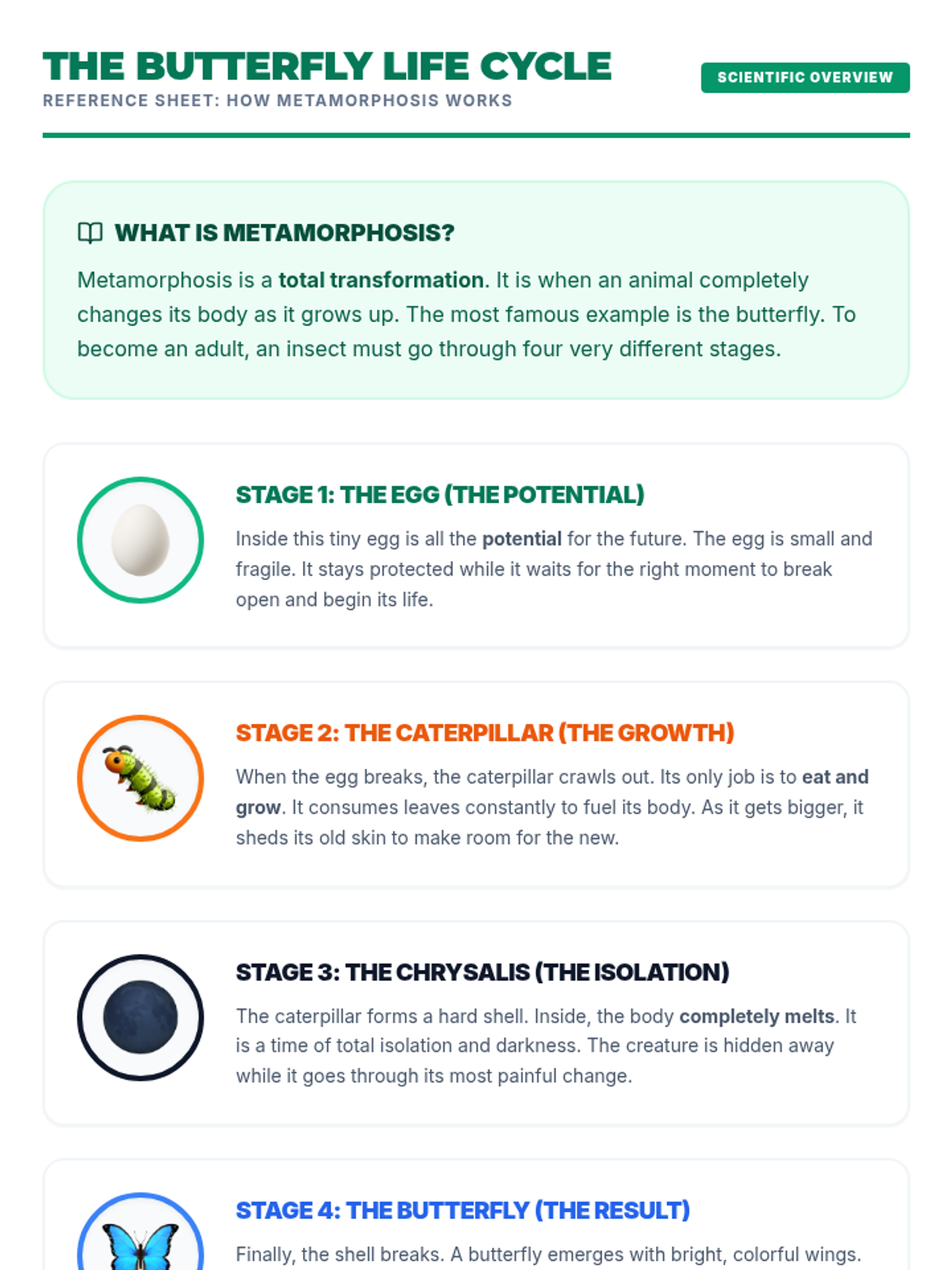
Students analyze pages 66-67, focusing on the 'Caterpillar' stage of consumption and shame. Focus is on writing high-quality ANEEZZ paragraphs that analyze Kafka's use of extended metaphor.
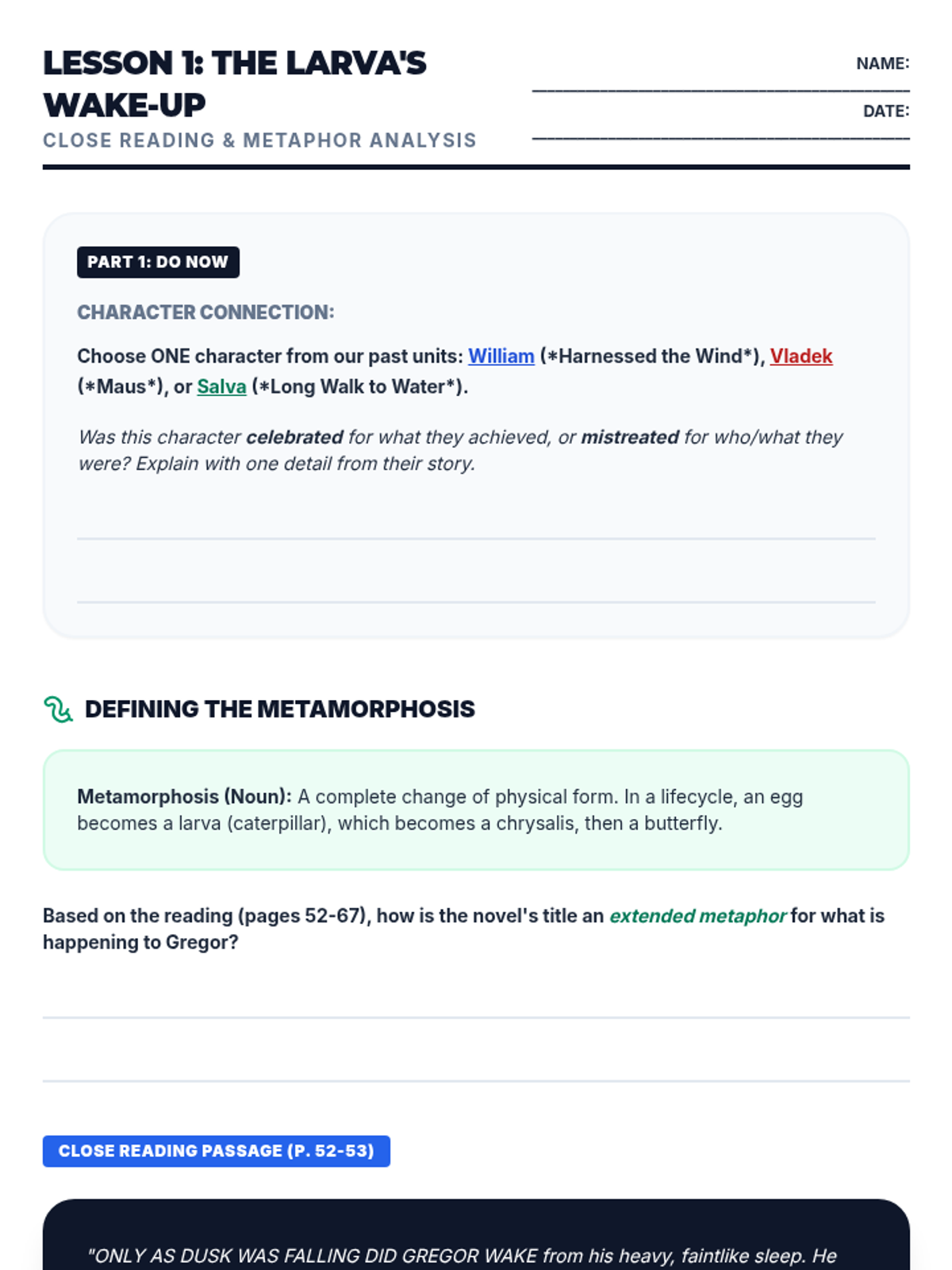
Students analyze pages 52-53 to explore the 'Egg/Larva' stage of metamorphosis. Focus is on reading comprehension and identifying the extended metaphor of biological change in Gregor's initial transformation.