Using coordinate geometry to design station modules as specific polygons, calculating dimensions, and identifying geometric properties on the grid.
A 45-minute ESL lesson for 5th graders focused on evaluating how quantitative data supports oral claims, themed around video game popularity trends. Students act as 'Data Detectives' to verify gaming claims using charts and graphs.
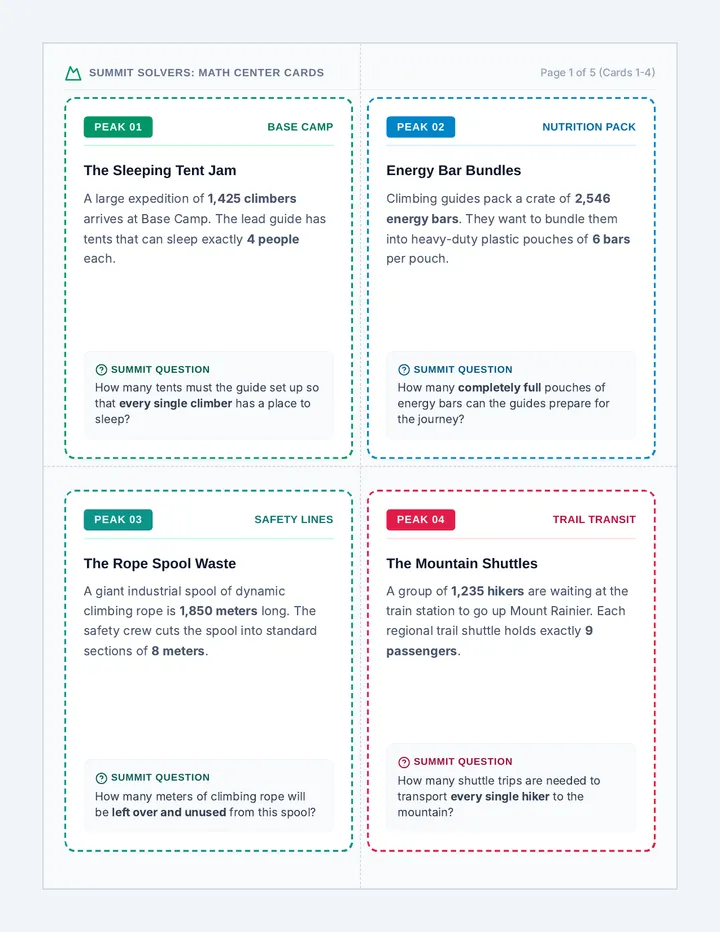
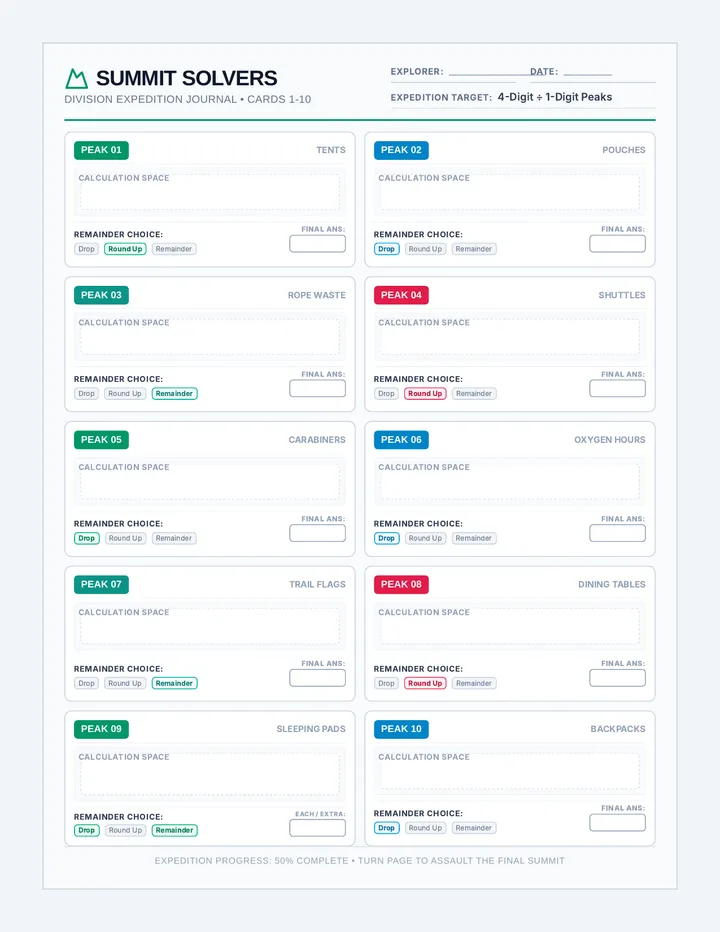
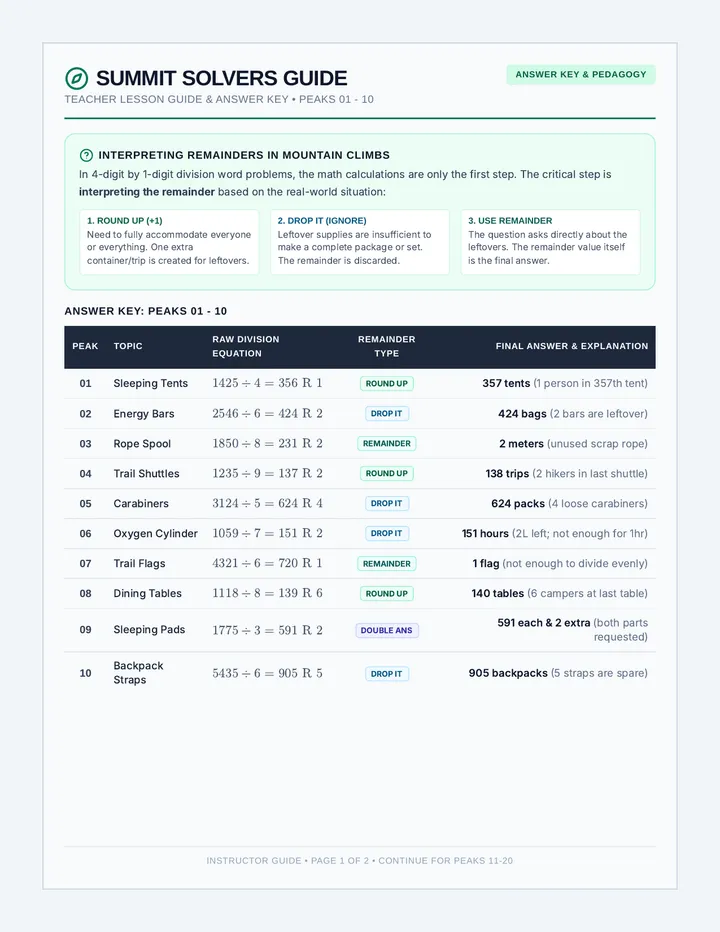
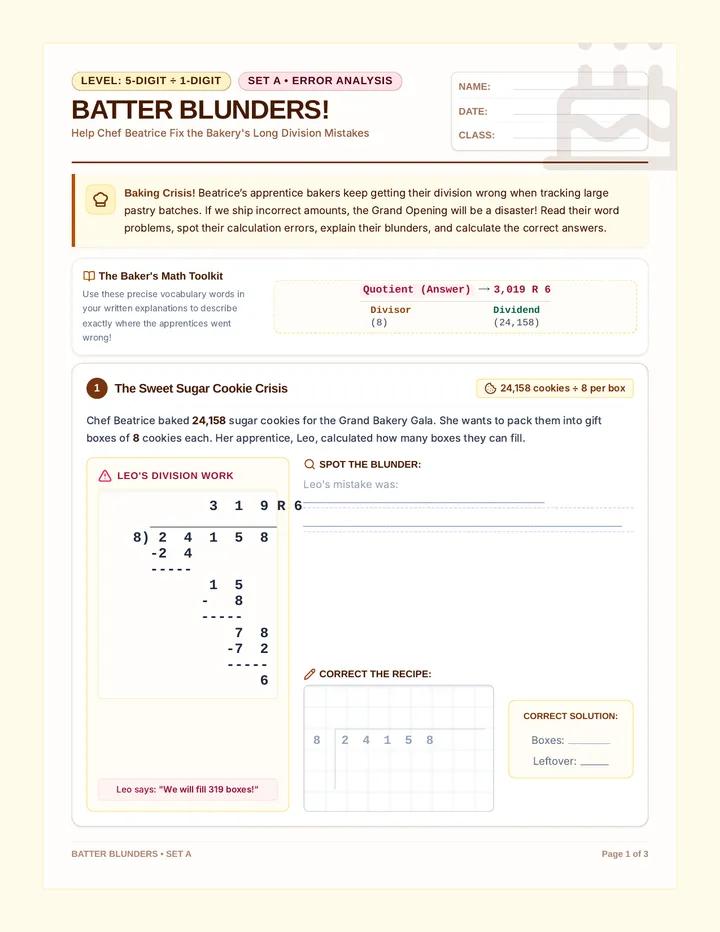
Advanced operations and algebraic thinking for the RIT 211-220 range, covering factors, multiples, prime/composite numbers, and multi-step word problems with remainders.
A targeted practice session focusing on Operations and Algebraic Thinking for students in the RIT 201-210 range, featuring multi-step word problems, patterns, and algebraic properties.
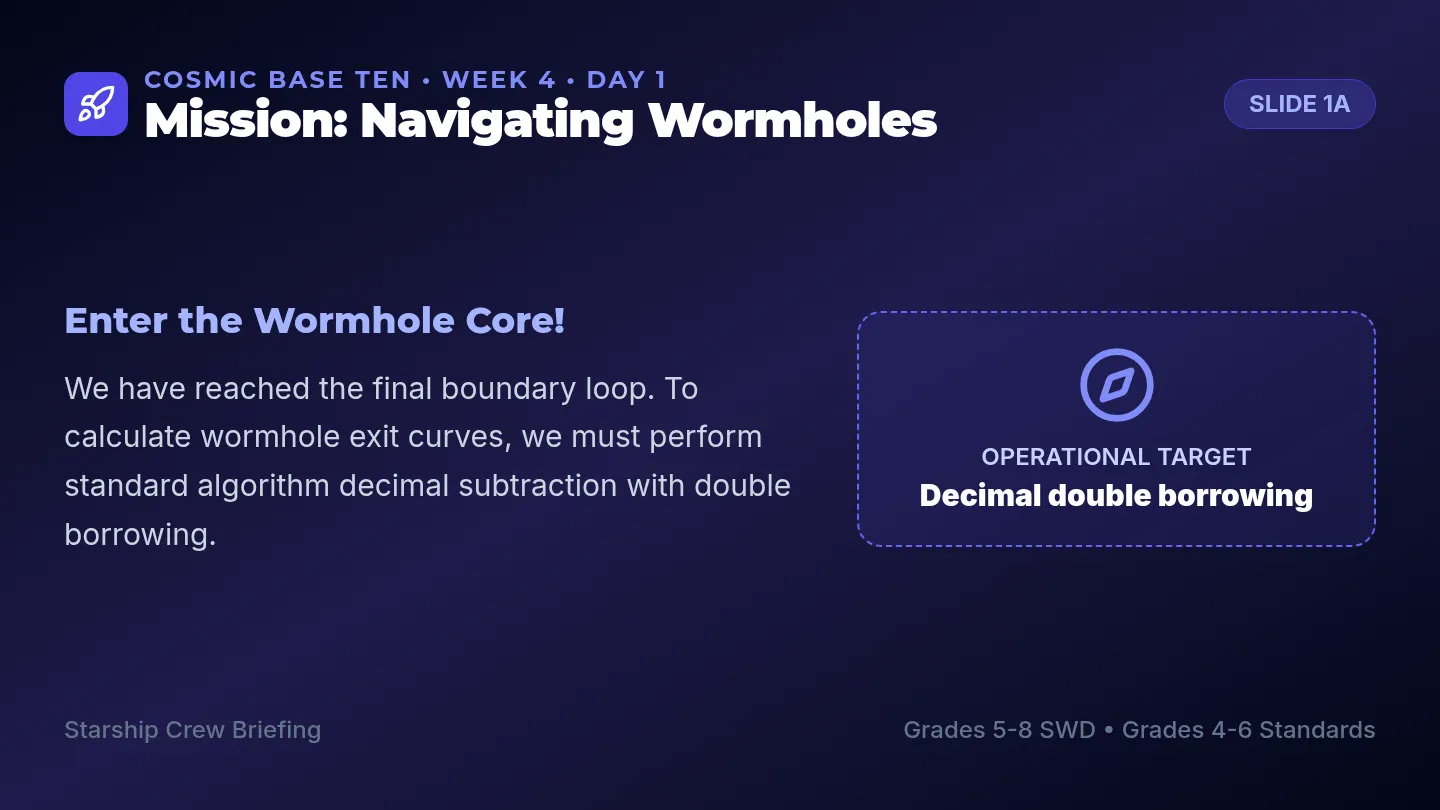
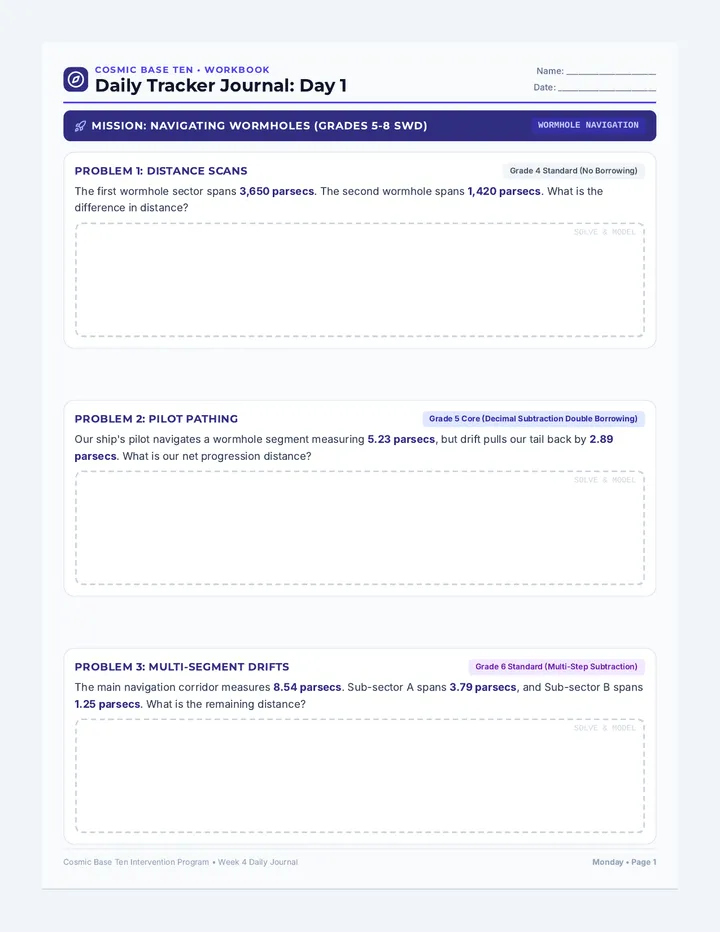
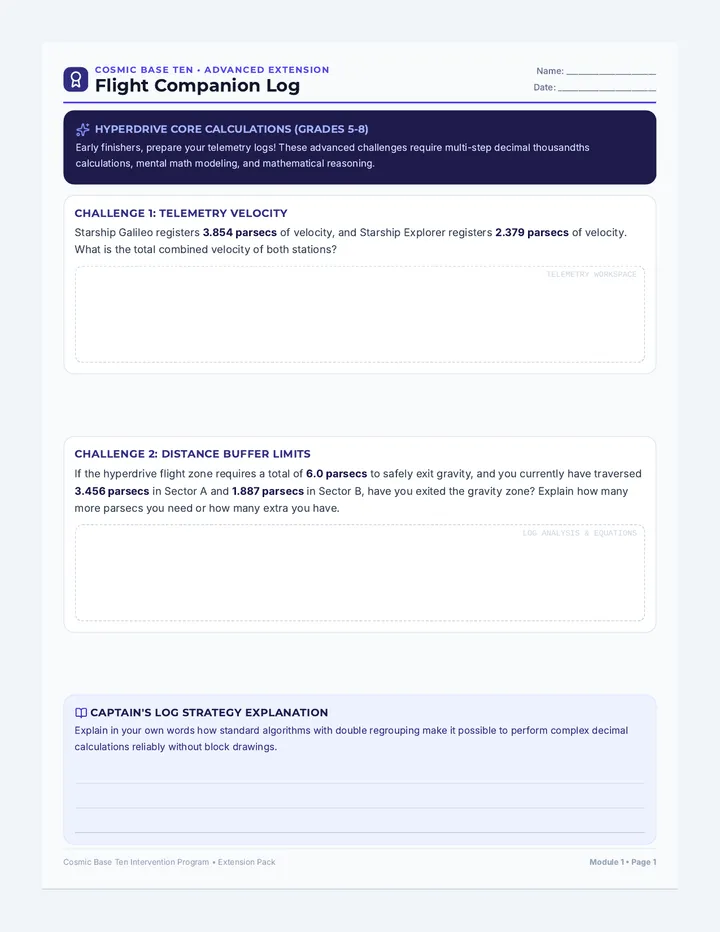
A lesson focused on bridging the conceptual understanding of decimal division with the standard algorithm, covering three key scenarios: decimal by whole number, whole number by decimal, and decimal by decimal.
A hands-on exploration of geometry and spatial reasoning using tangrams, featuring puzzles across four diverse themes with varying difficulty levels.
A lesson focused on understanding and converting between fractions and decimals using visual models and step-by-step procedures. Designed for students needing scaffolded support and reduced visual clutter.
A lesson focused on developing a foundational understanding of volume by counting unit cubes within rectangular prisms, designed for students needing repetitive skill practice and clear visual support.
A 15-minute collaborative activity where students work in teams to measure acute, obtuse, and right angles with degree-level precision using a protractor.
A collaborative escape room activity where students solve elapsed time puzzles themed around air travel and flight schedules to 'unlock' their grounded plane.
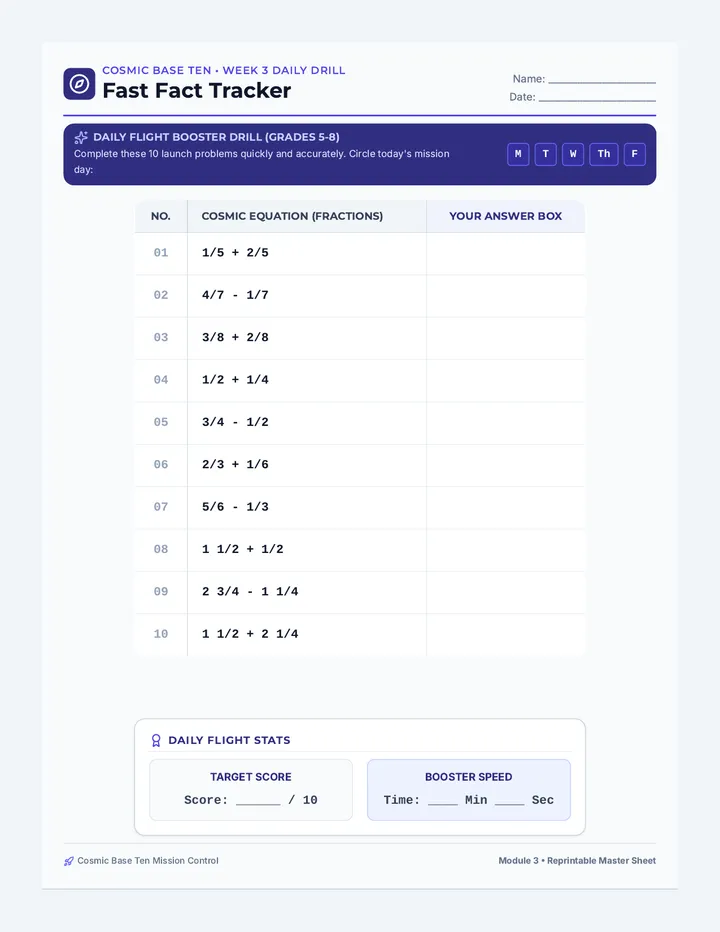
A 3-minute curriculum-based measure designed for 5th-grade students to assess fluency and accuracy when adding fractions with common denominators, including computation and word problems.
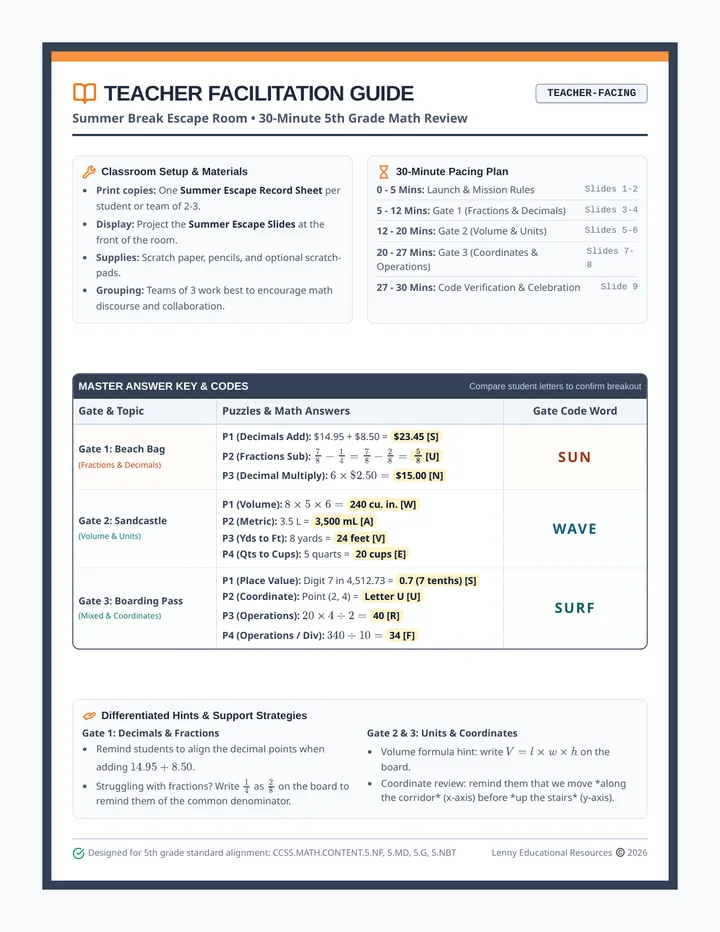
Students explore elapsed time by calculating start and end times through collaborative partner tasks. Using a time travel agency theme, they practice mental math and number line strategies to solve real-world duration problems.