Students learn specific annotation strategies to interact with texts, distinguishing between highlighting and meaningful marginalia. They practice identifying thesis statements and key evidence in a scholarly article.
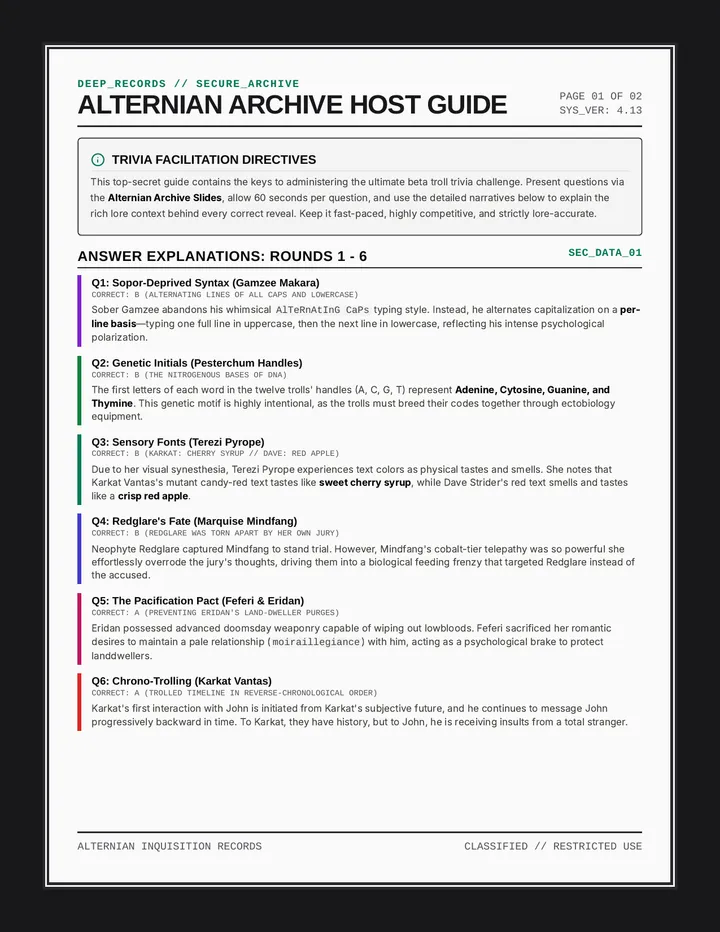
A high-intensity, visually striking trivia showdown centered on the deep-cut lore of the Homestuck Beta Trolls. Designed specifically for dedicated fans, this lesson challenges students with complex questions on relationships, quirks, and Alternian history.
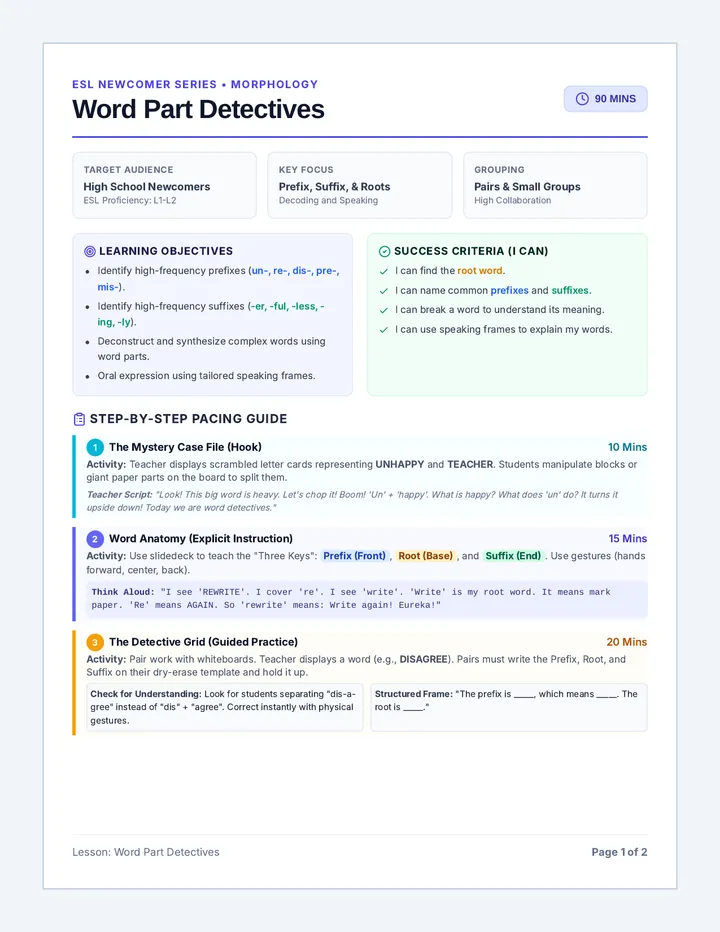
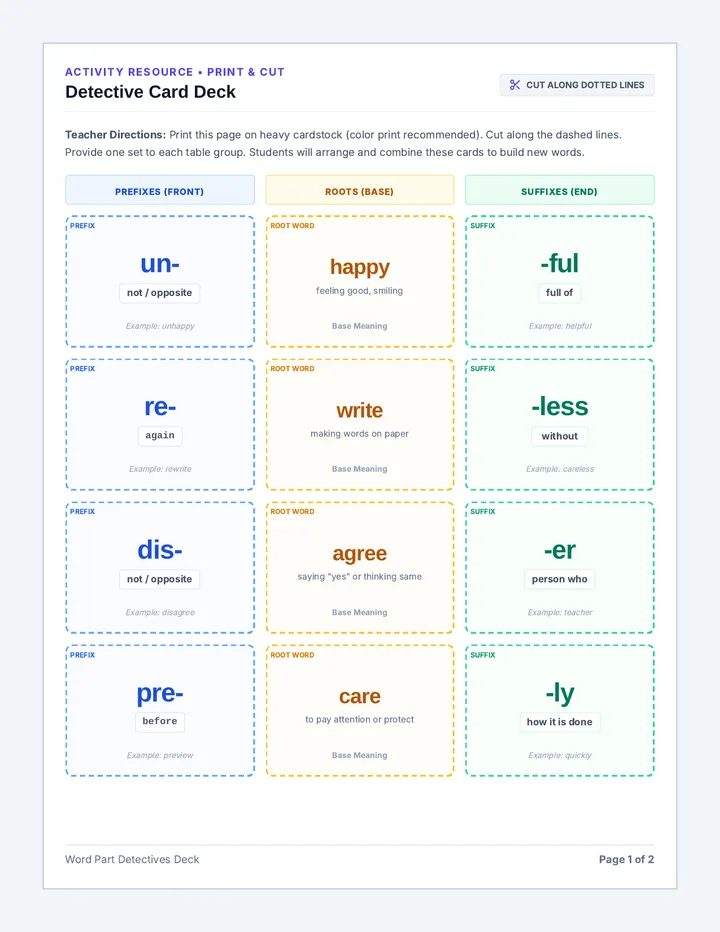
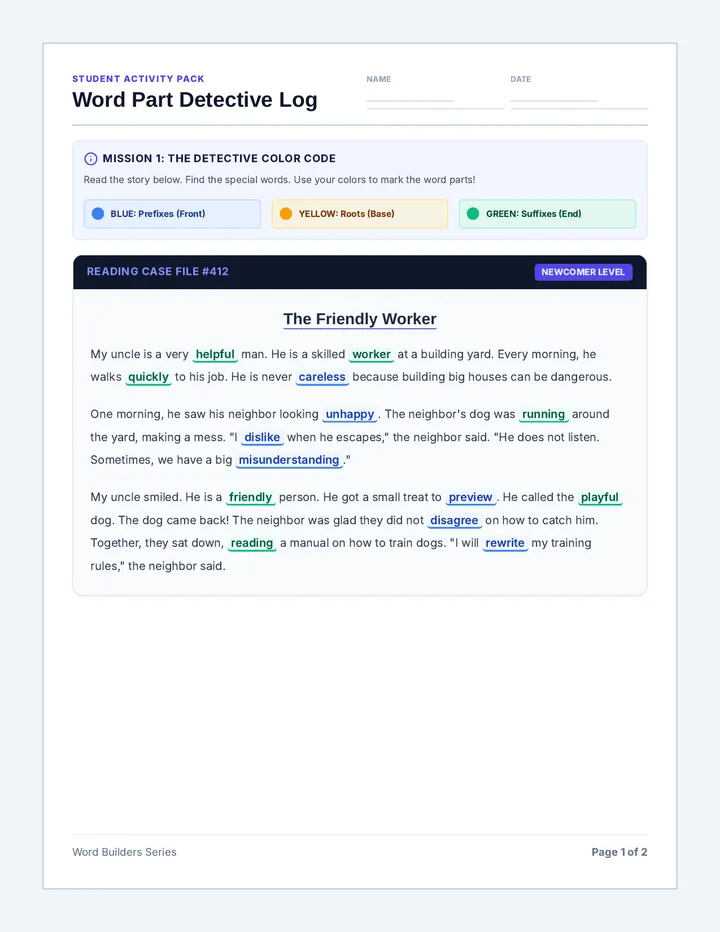
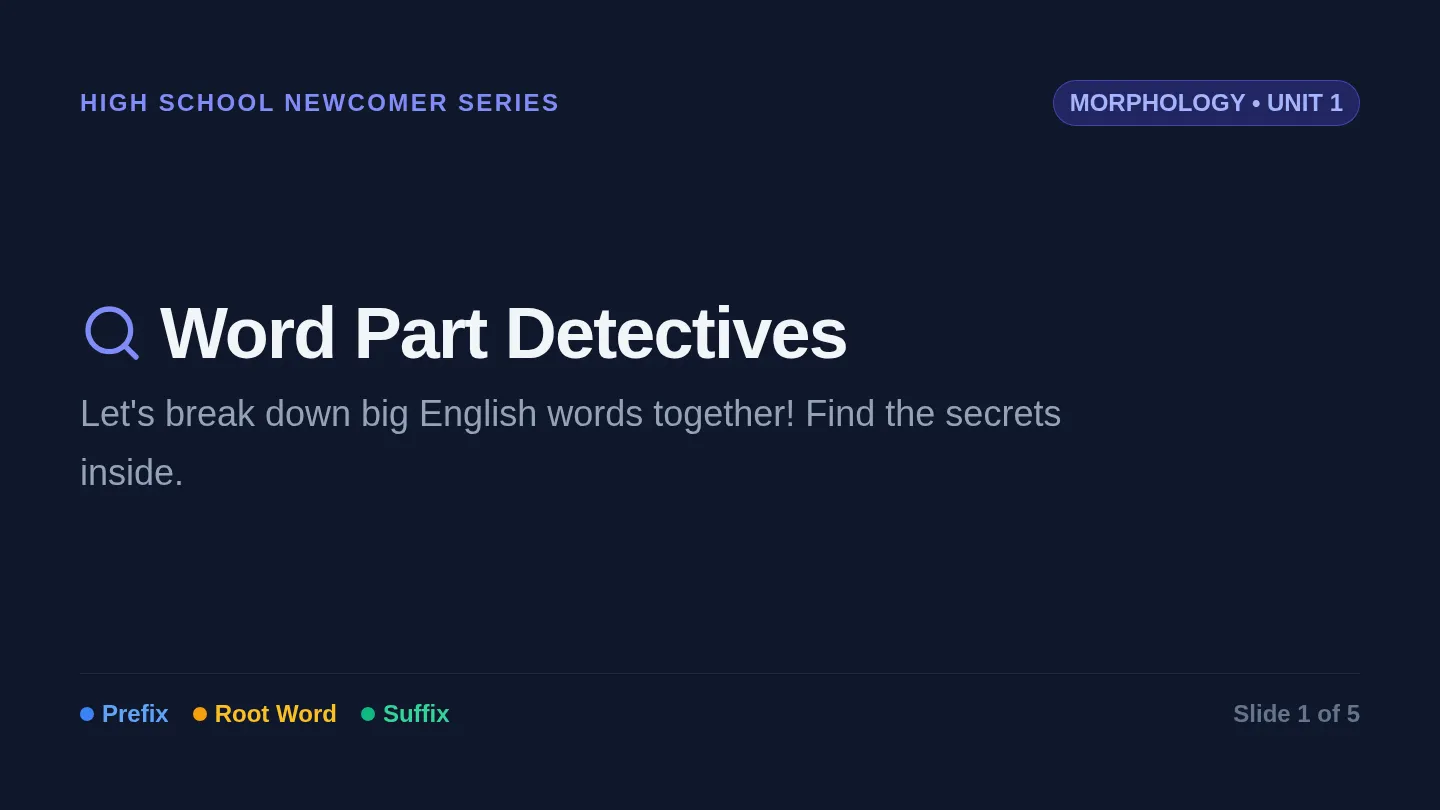
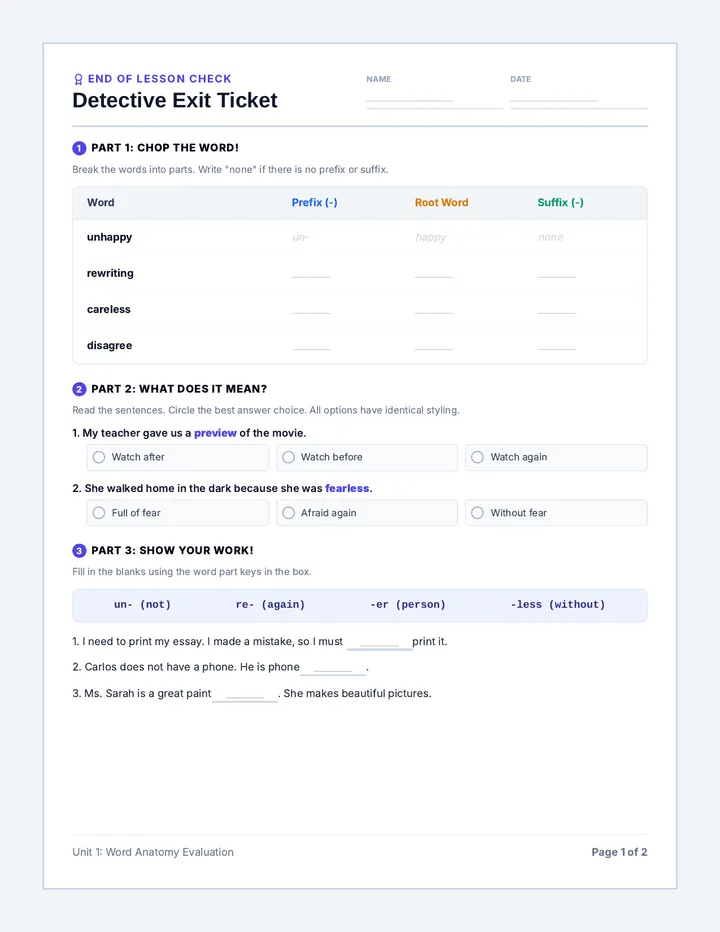
A dynamic 90-minute lesson where newcomers learn to identify root words, prefixes, and suffixes. Through color-coded physical cards, collaborative games, and visual anchor charts, students practice decoding unfamiliar words and speaking with structured sentence frames.
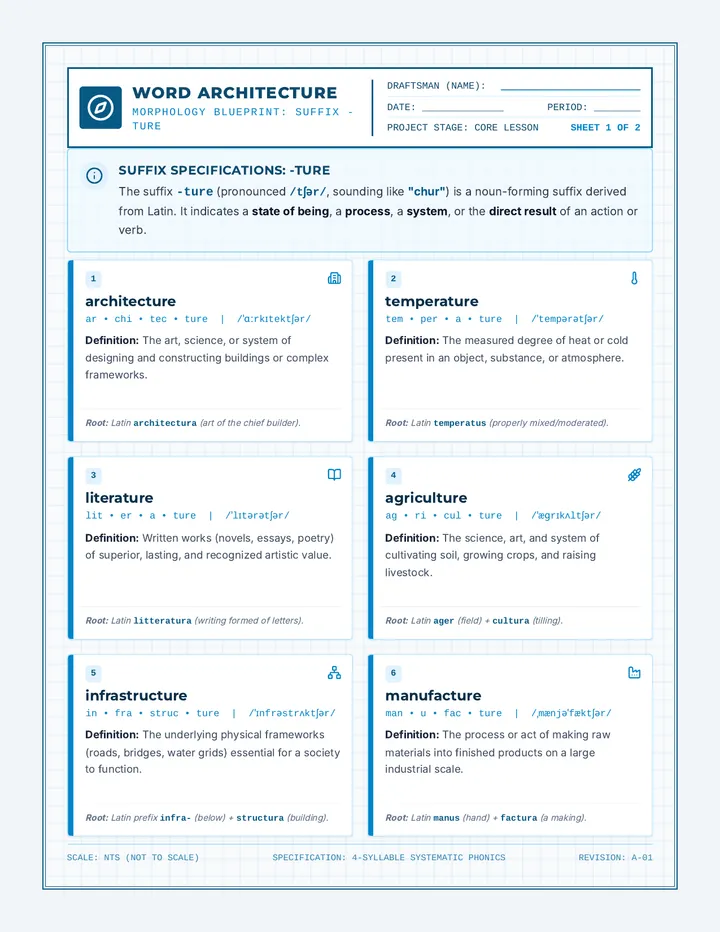
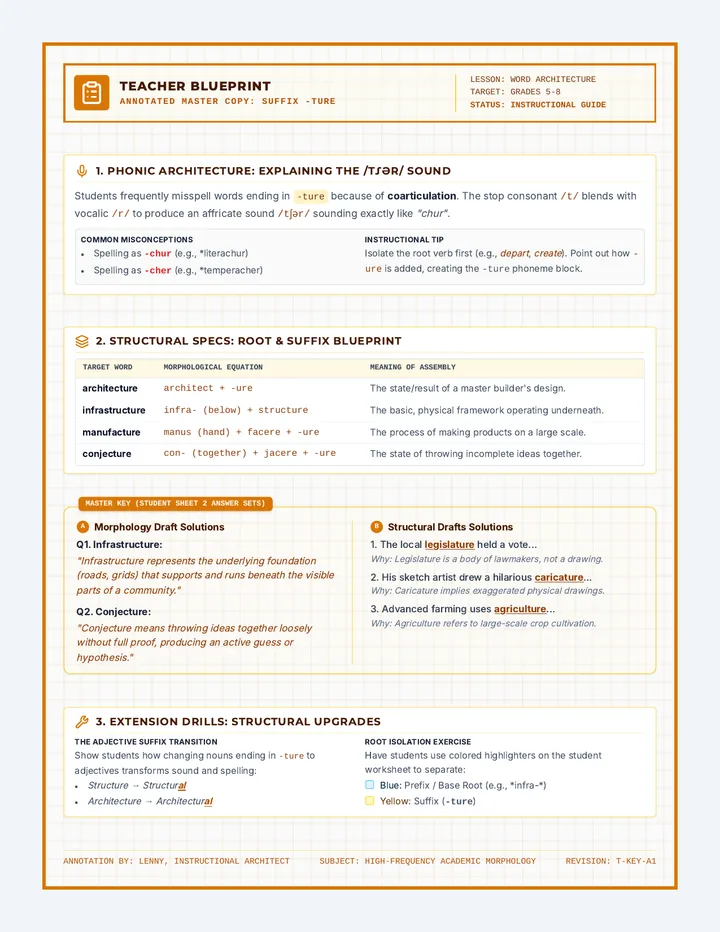
A middle school vocabulary lesson exploring 3-to-4 syllable academic words ending in the suffix -ture. Students examine pronunciation, morphological structure, definitions, and applications through a technical drafting/blueprint theme.
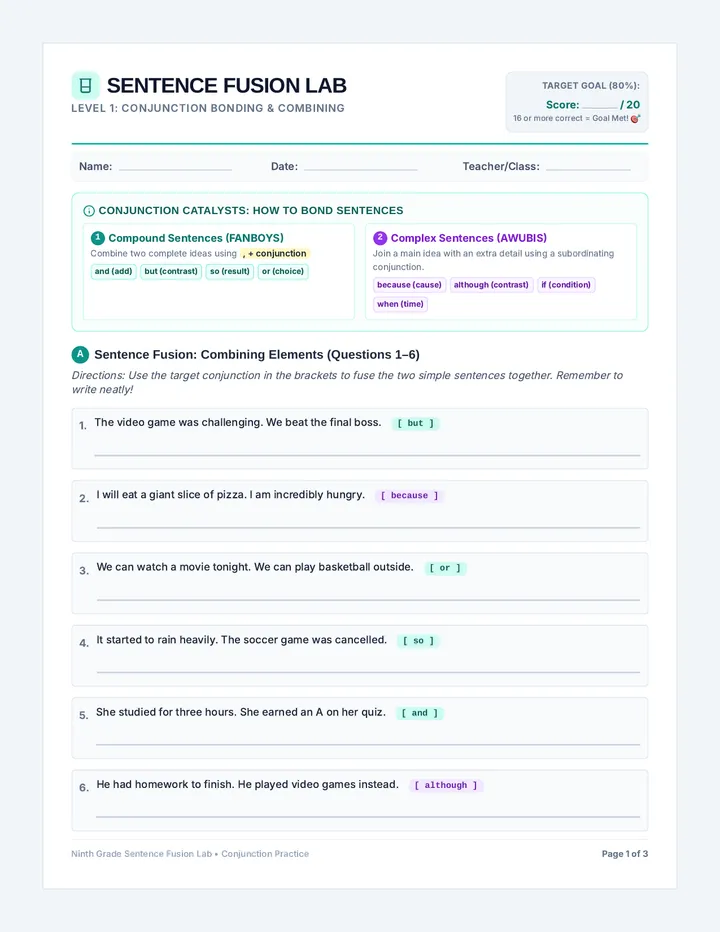
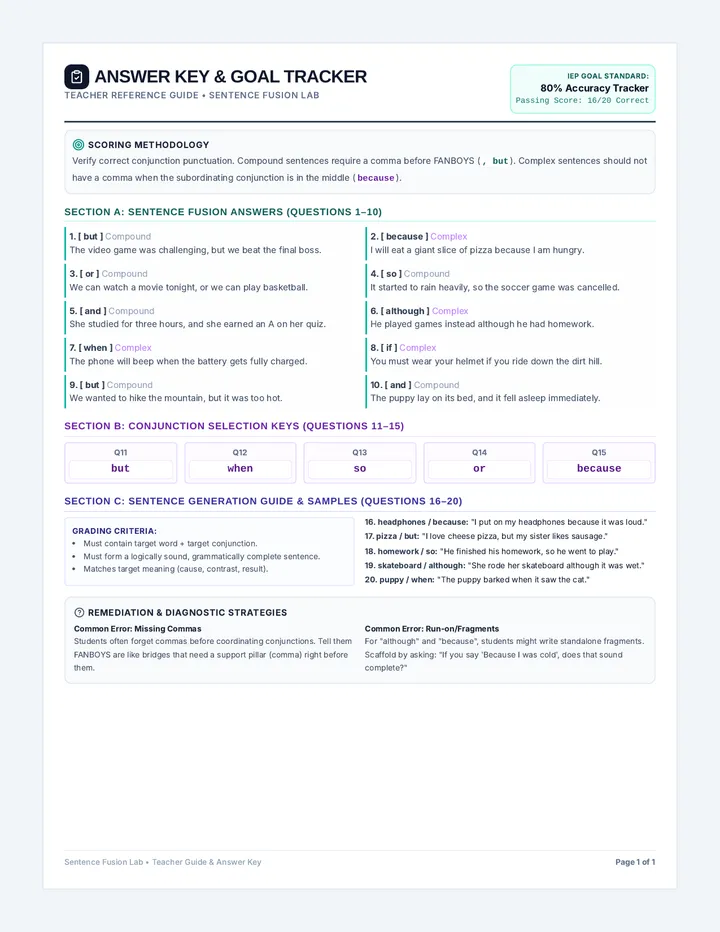
A highly scaffolded grammar and sentence-combining lesson designed for 9th-grade special education. Students learn to use coordinating and subordinating conjunctions to combine and generate compound and complex sentences.
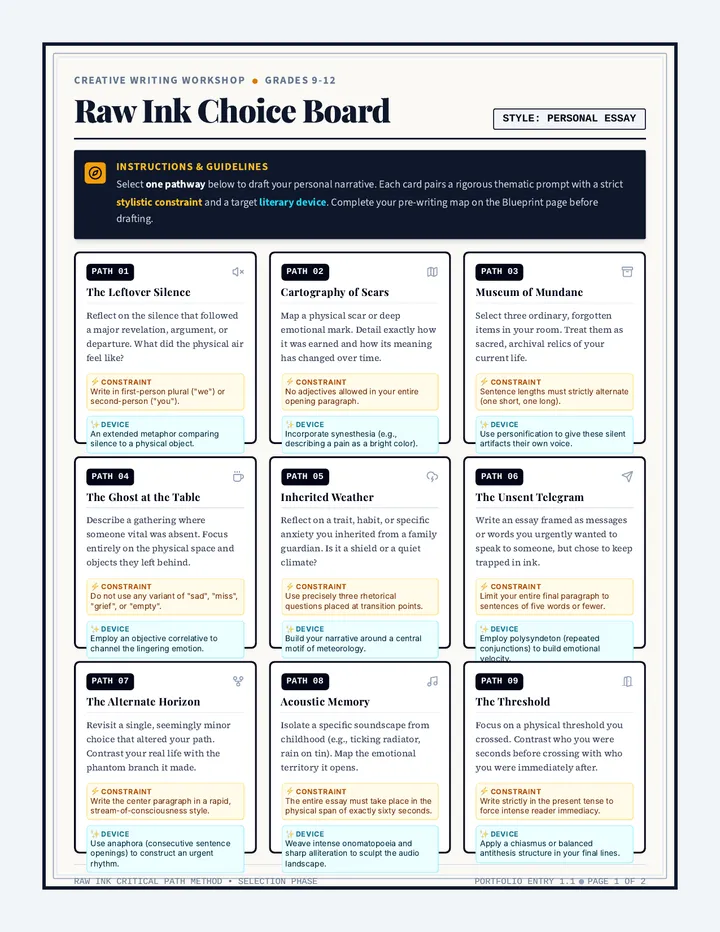
A high school creative writing workshop focusing on personal narrative, journaling, and reflective essays. Students are challenged with complex personal themes, stylistic constraints, and literary devices.
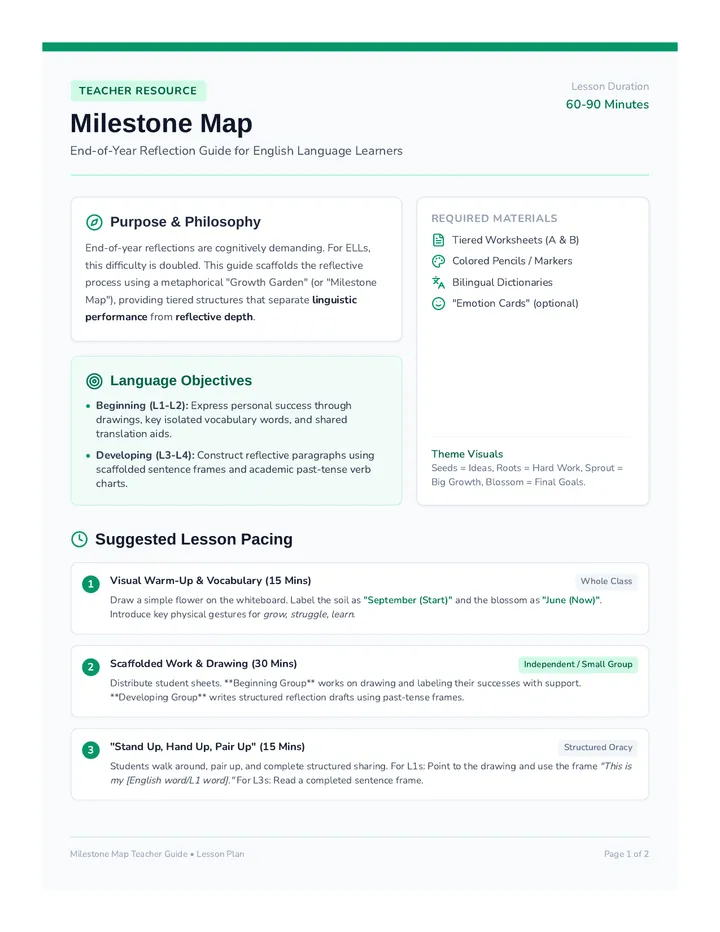
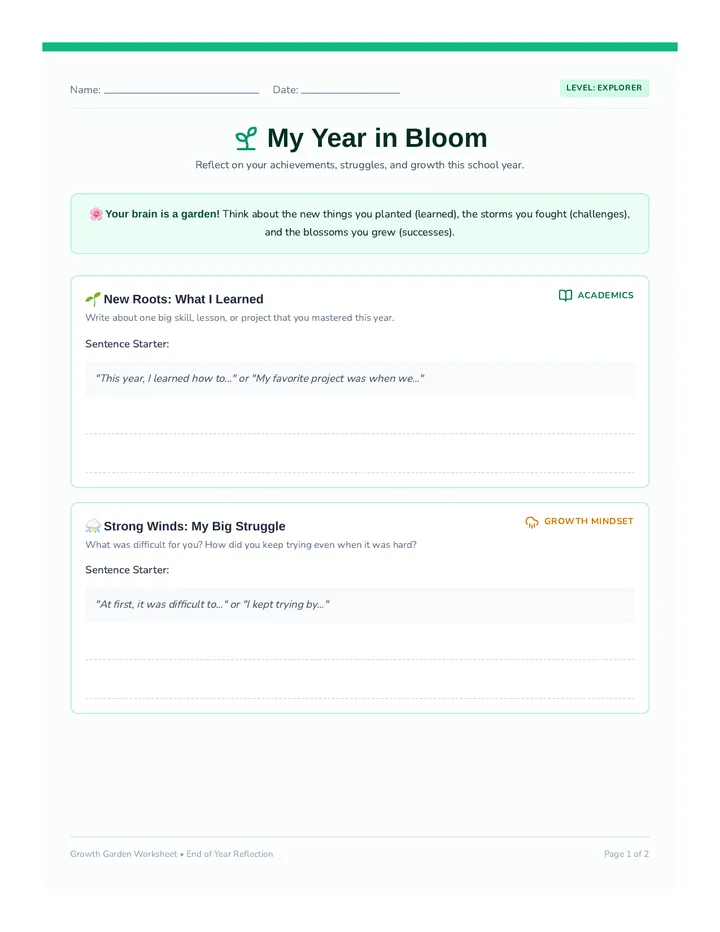
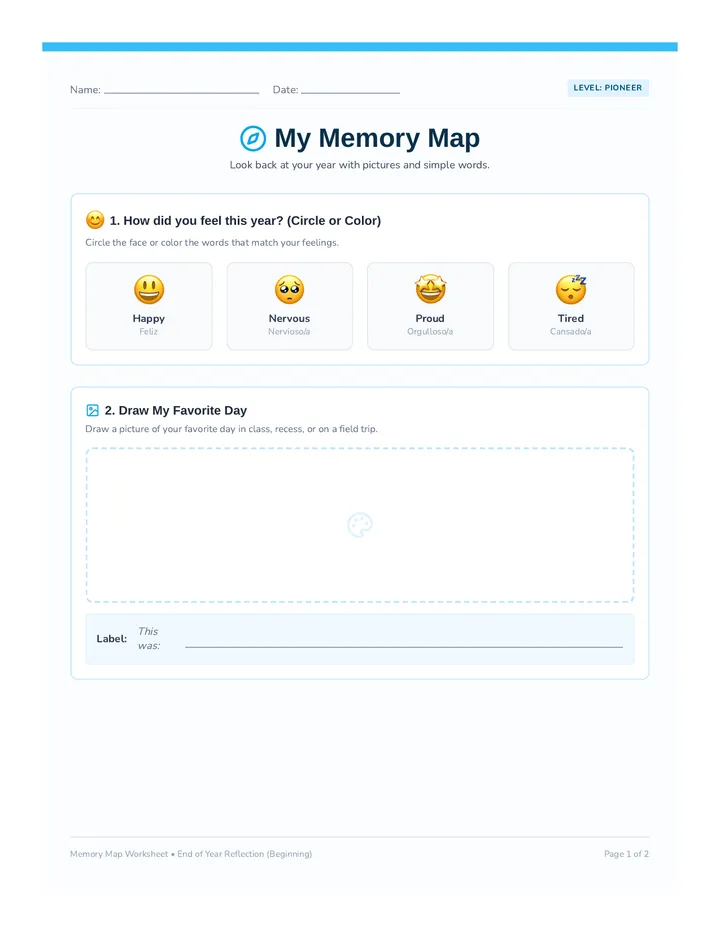
An end-of-year reflection lesson designed specifically for English Language Learners, featuring tiered worksheets for Beginning/Entering and Developing/Expanding levels, supported by a detailed facilitator guide.
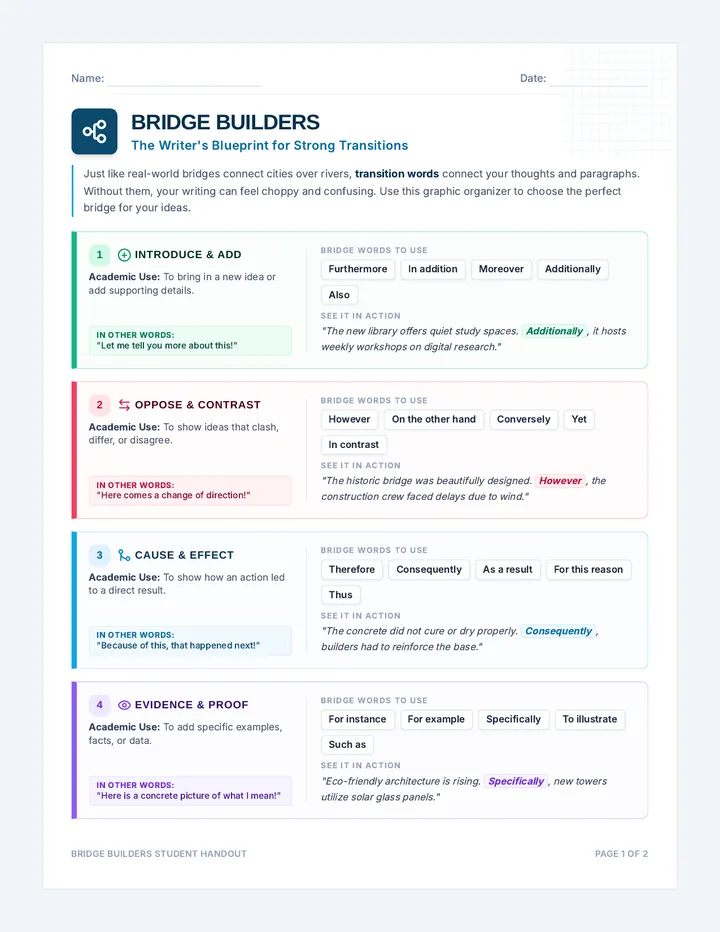
A comprehensive lesson focused on understanding and applying transition words to build logical, smooth connections between ideas in writing.
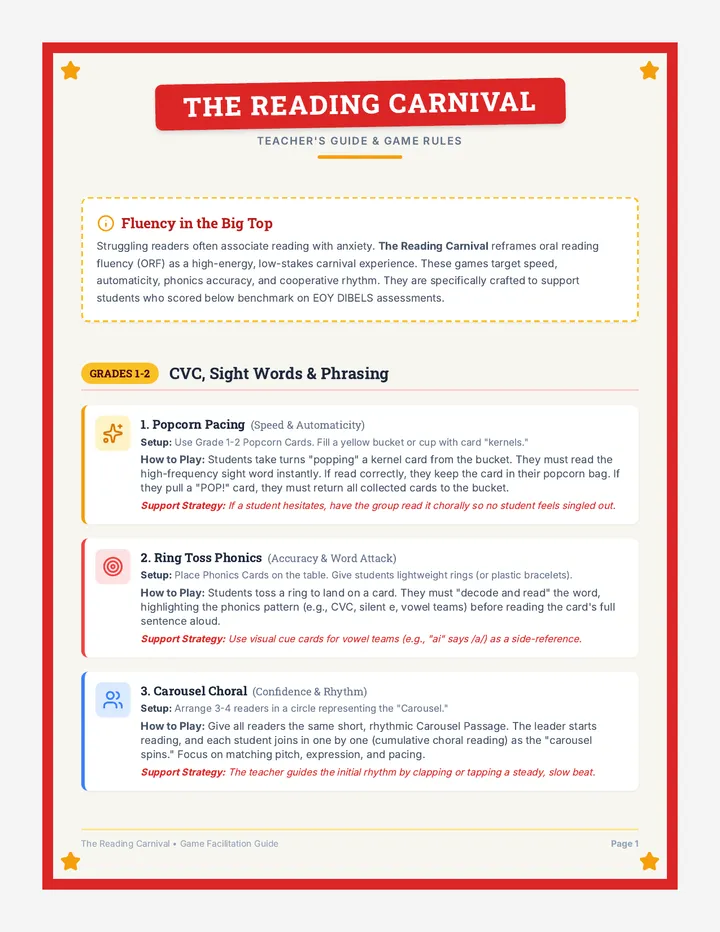
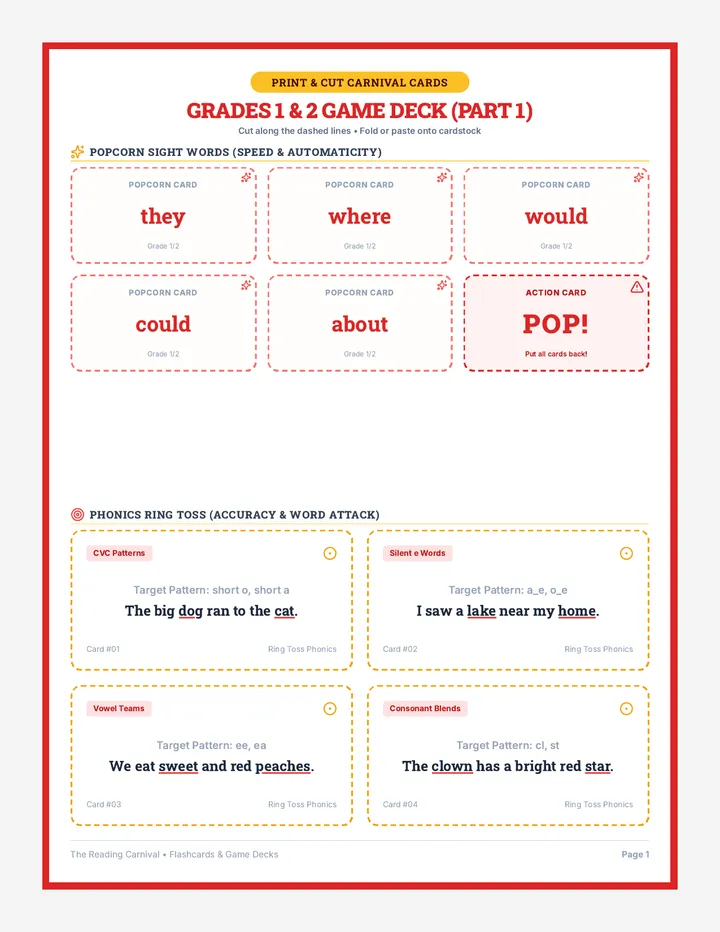
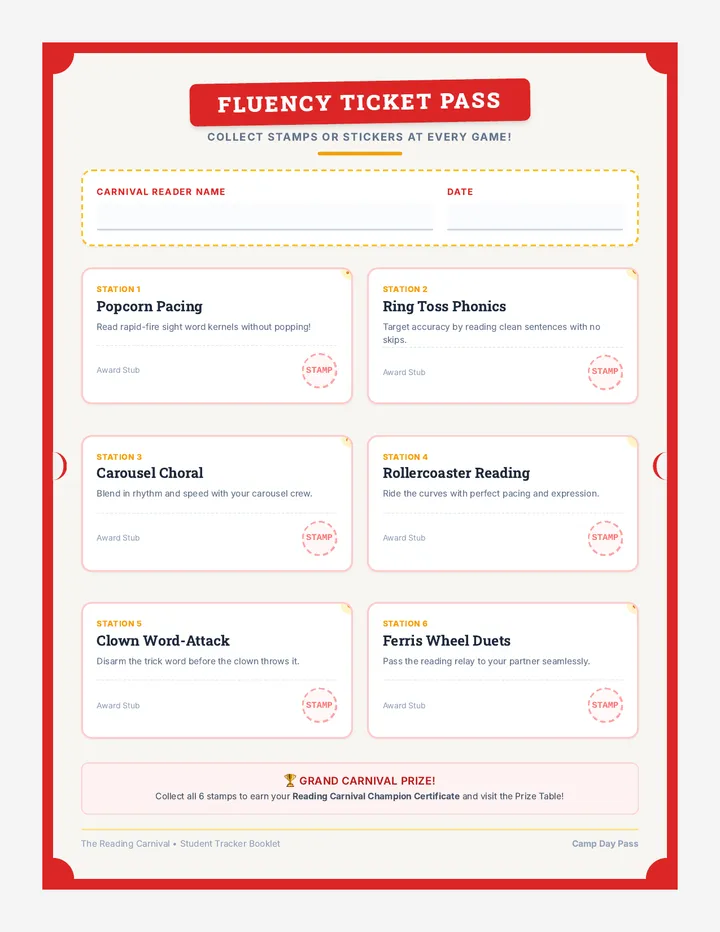
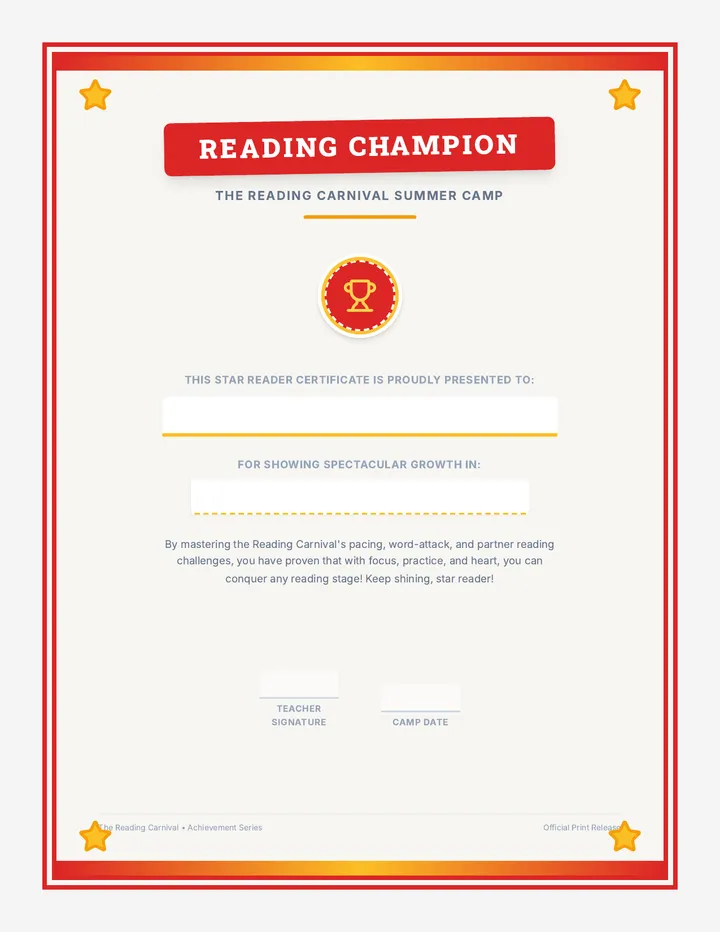
A comprehensive oral reading fluency bundle themed around 'The Reading Carnival'. It includes game guides, differentiated reading cards, progress trackers, and achievement awards designed specifically for struggling 1st-4th grade readers to build speed, accuracy, and confidence in a high-energy summer camp environment.
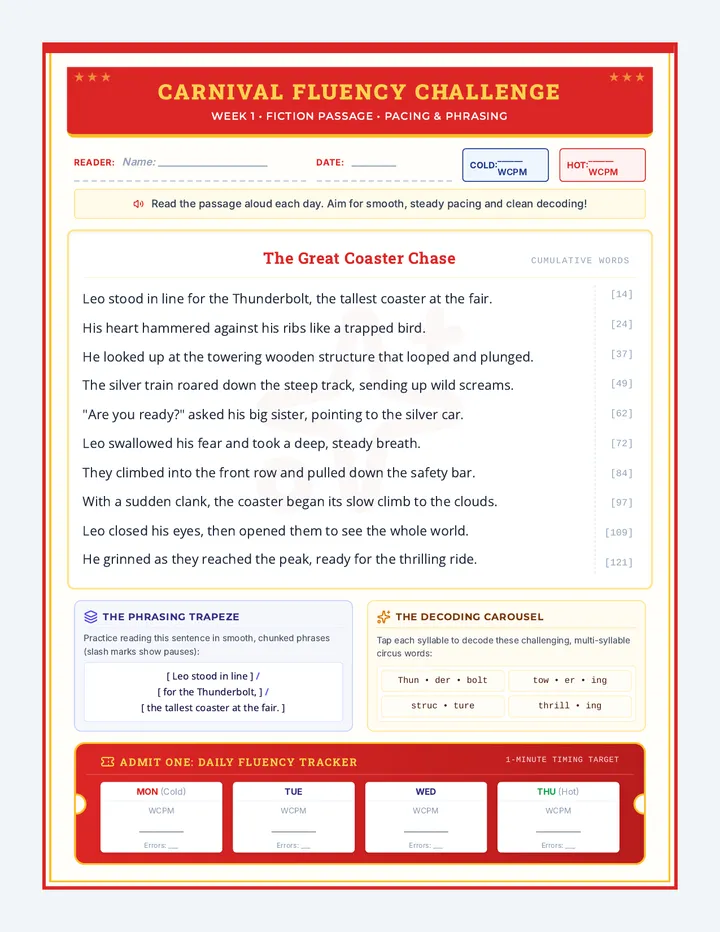
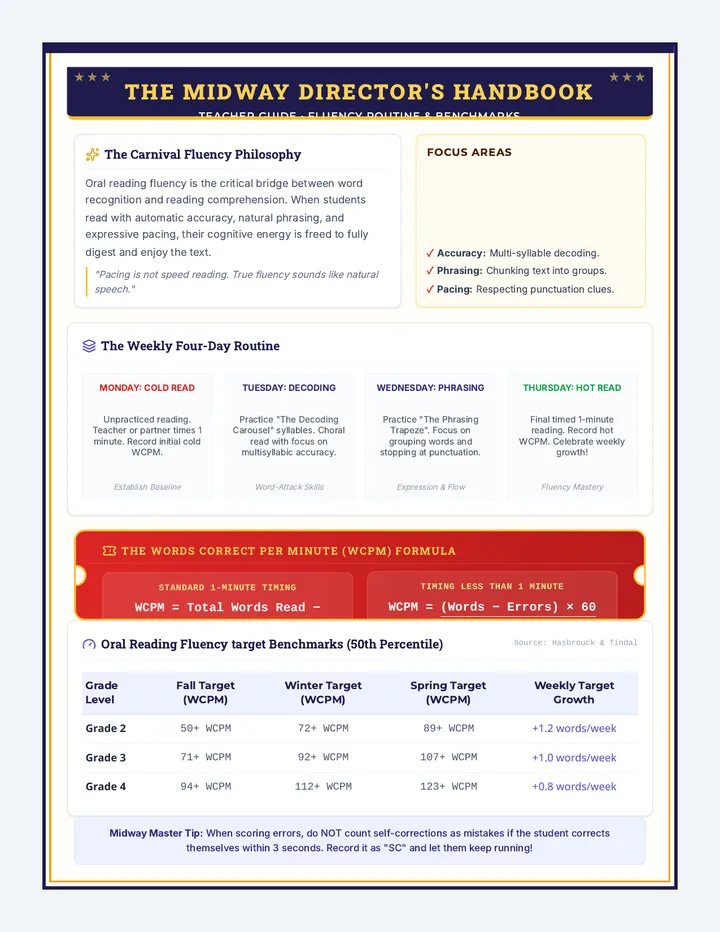
A weekly oral reading fluency program themed around a vintage carnival. It focuses on pacing, phrasing, and decoding multi-syllable words through engaging fiction and non-fiction passages with built-in trackers.
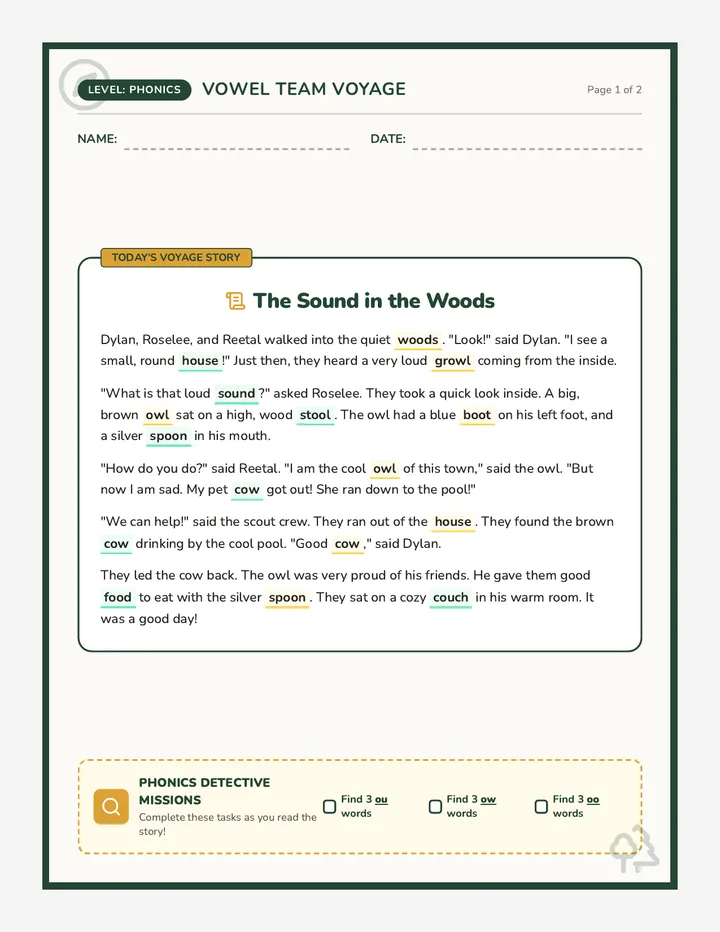
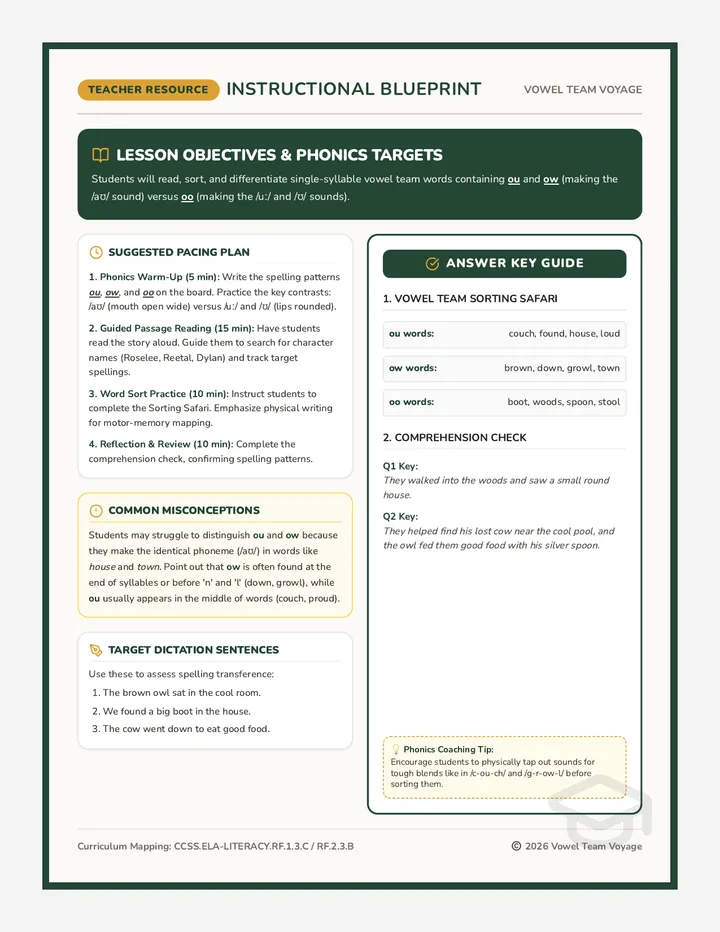
A targeted phonics lesson focused on contrasting single-syllable words containing 'ou', 'ow', and 'oo' vowel teams. Students read an engaging phonics story featuring Roselee, Reetal, and Dylan, and complete structured word-sorting and reading comprehension exercises.
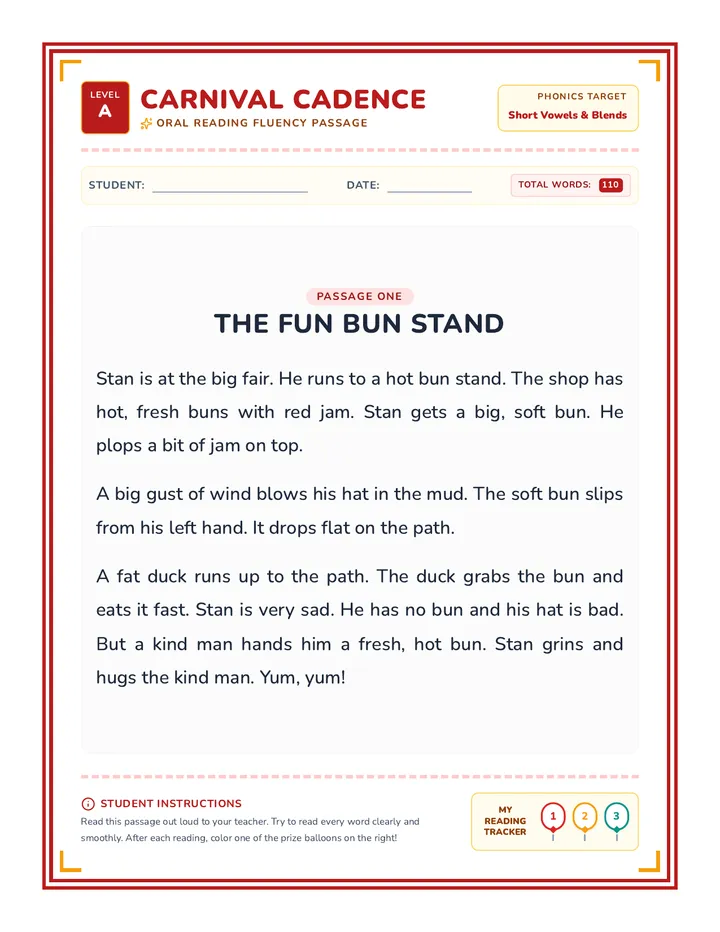
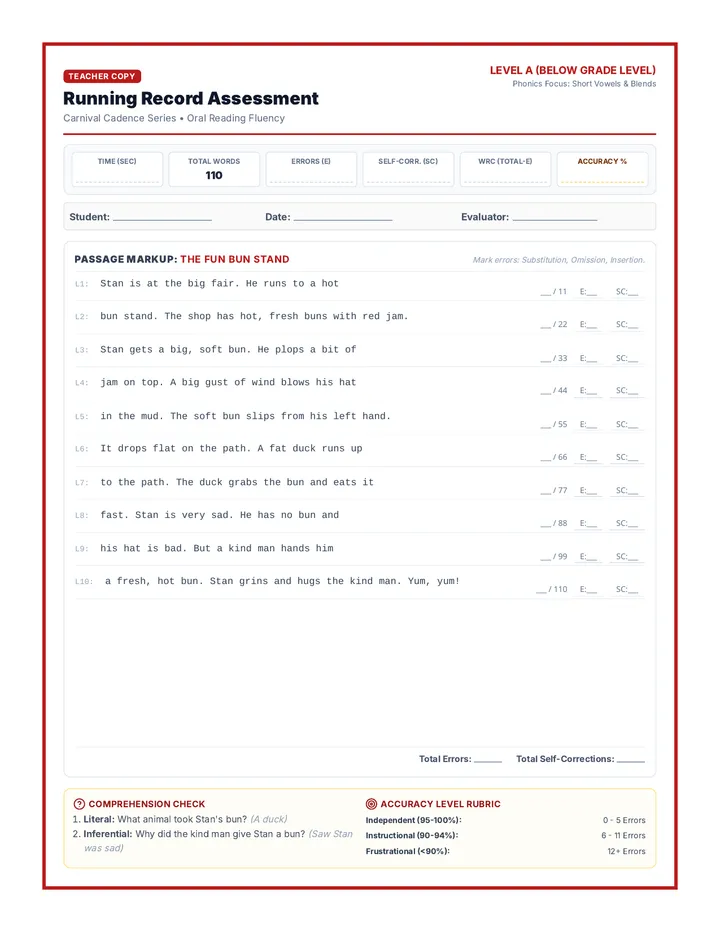
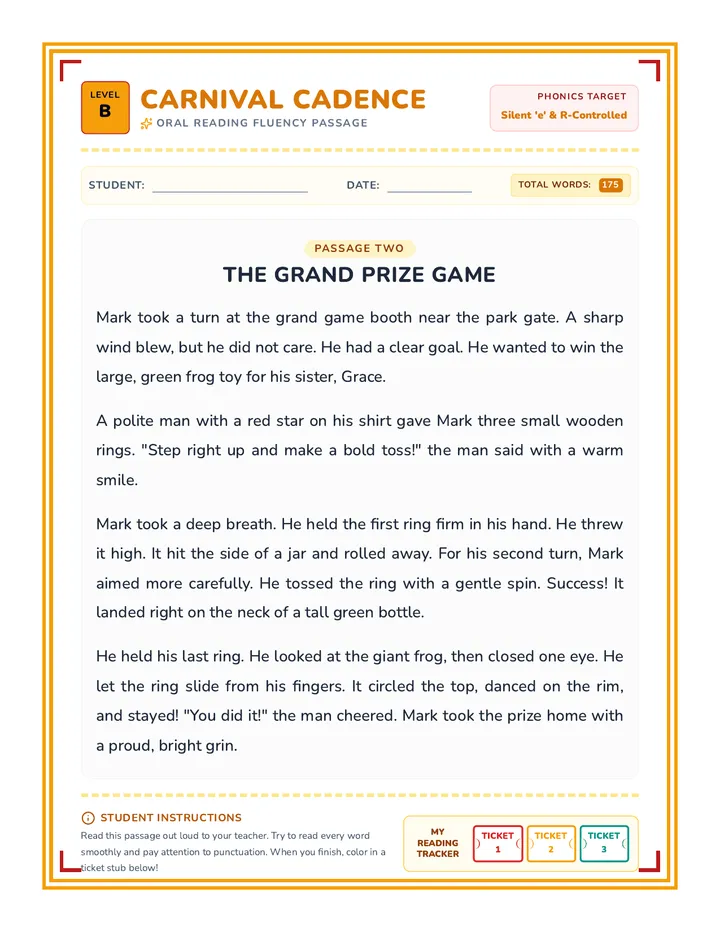
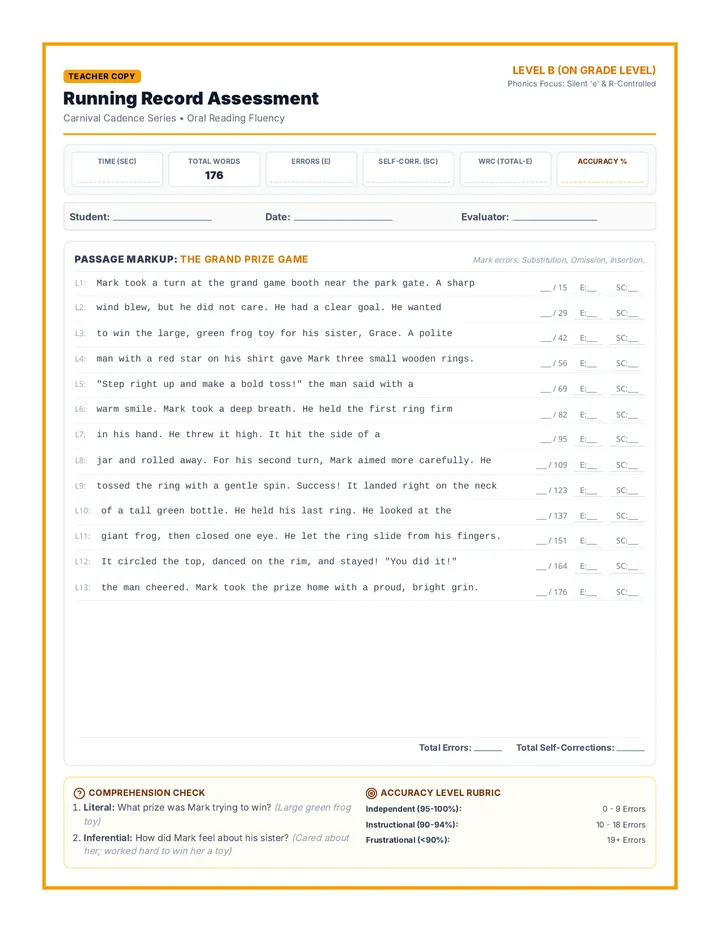
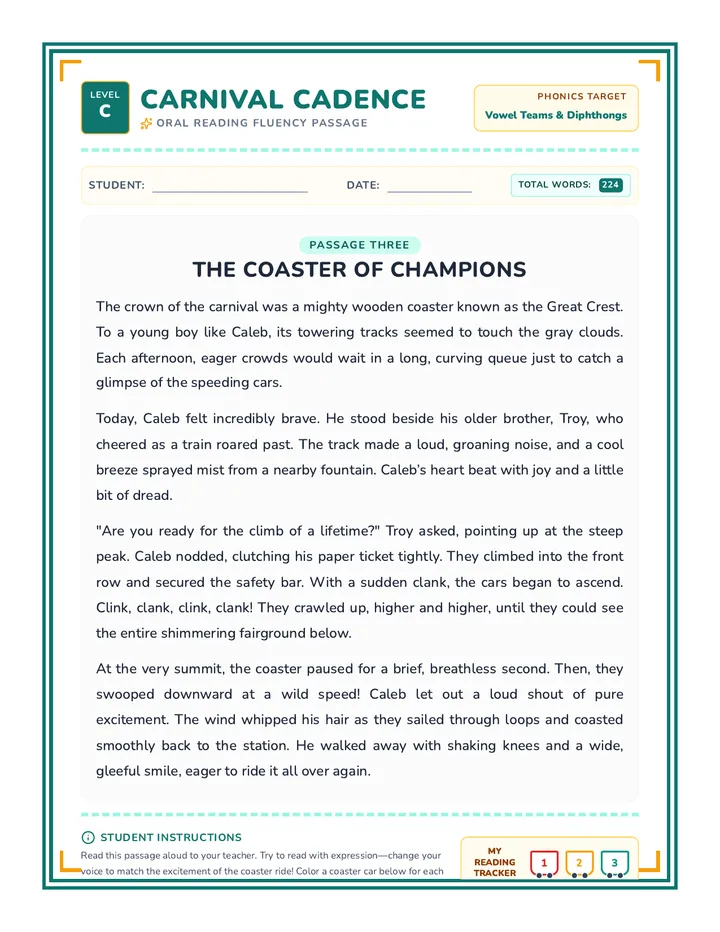
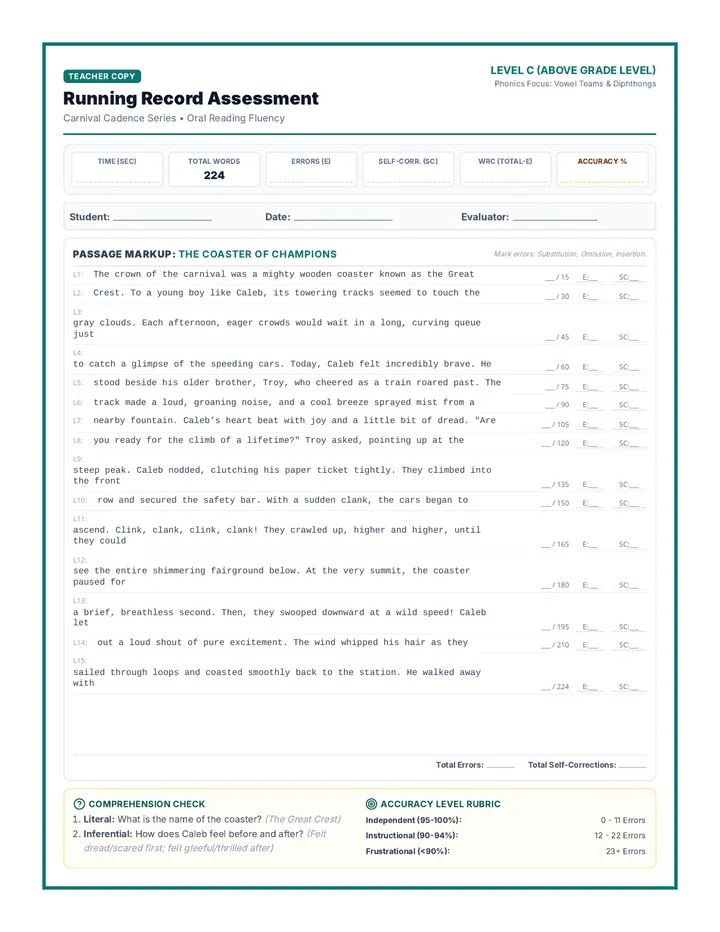
Differentiated carnival-themed reading passages and matching teacher running record forms designed to boost oral reading fluency and target specific phonics patterns.
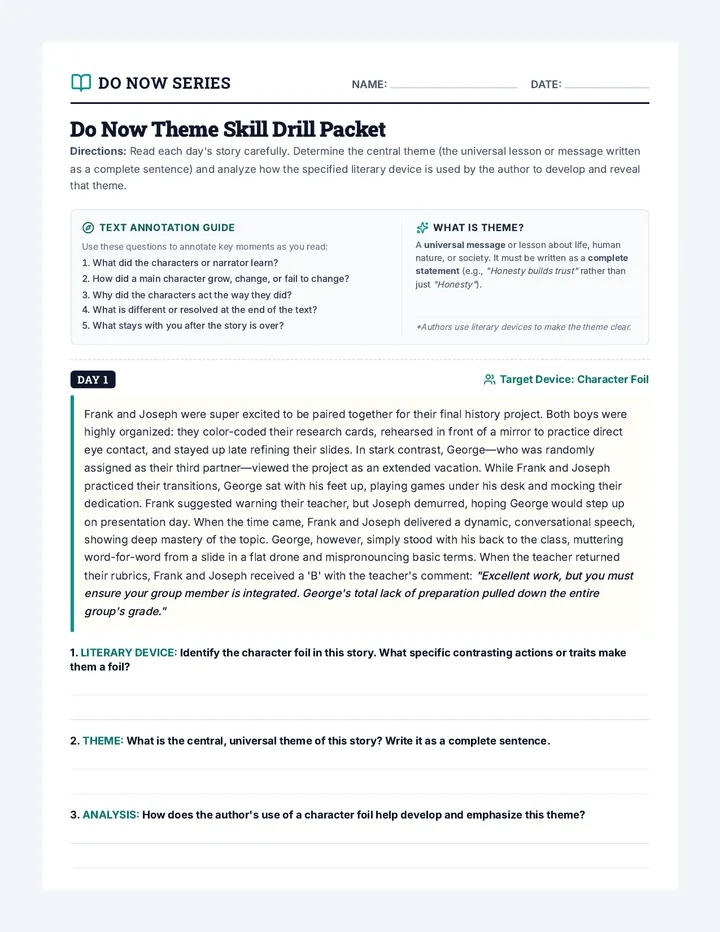
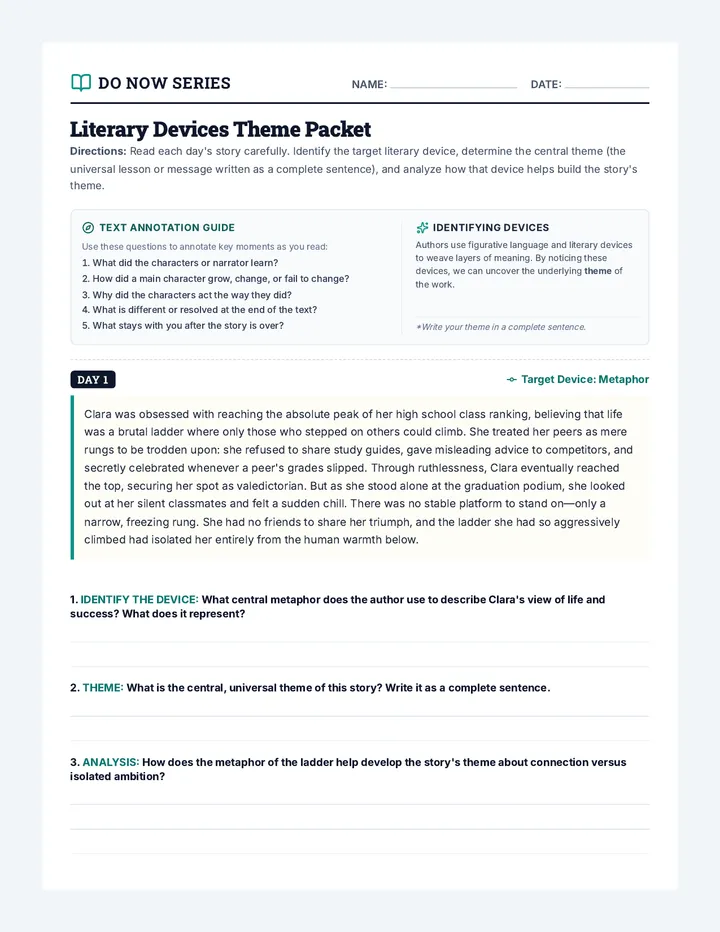
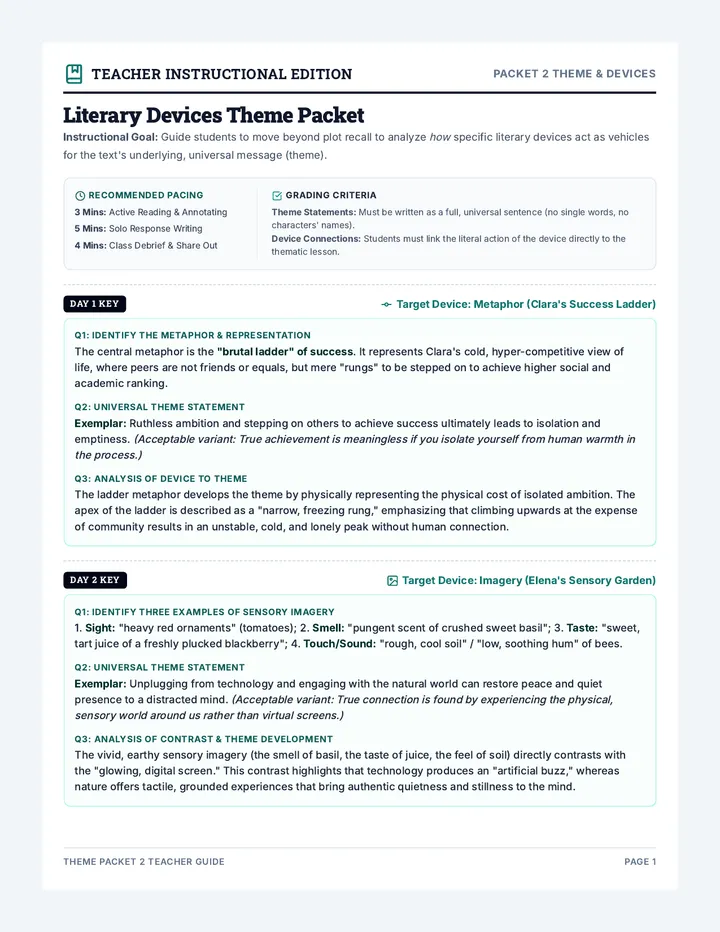
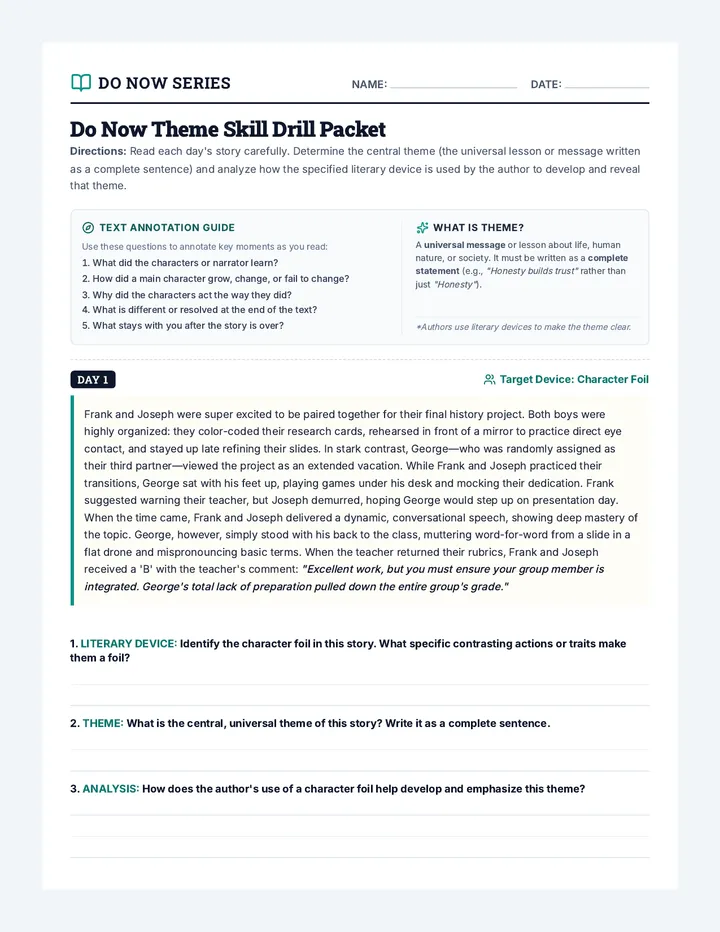
A cohesive lesson and drill series designed to help students master the connection between explicit literary devices and the central themes of literary texts.
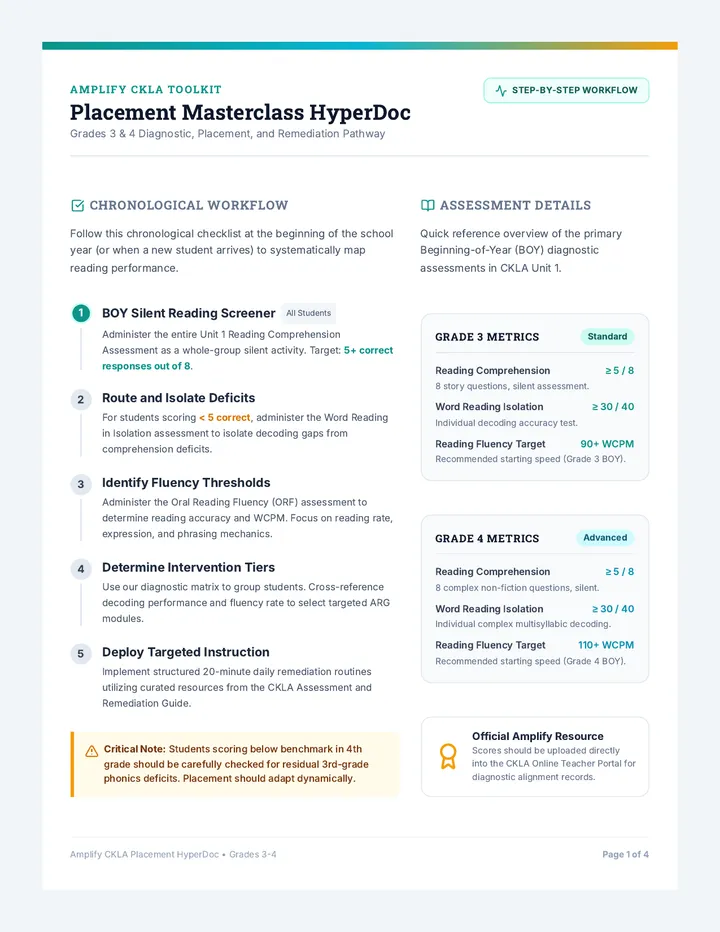
A specialized lesson designed for third and fourth-grade educators to master the CKLA placement, diagnostic, and remediation pathways. This lesson contains professional guides, visual flowcharts, and student grouping trackers to streamline the intervention process.
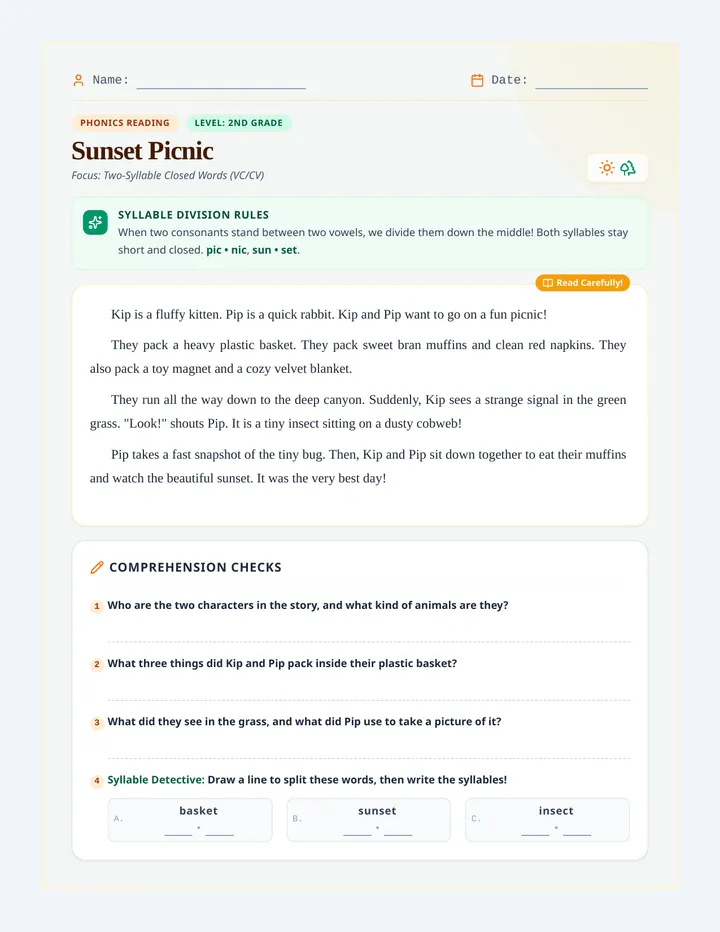
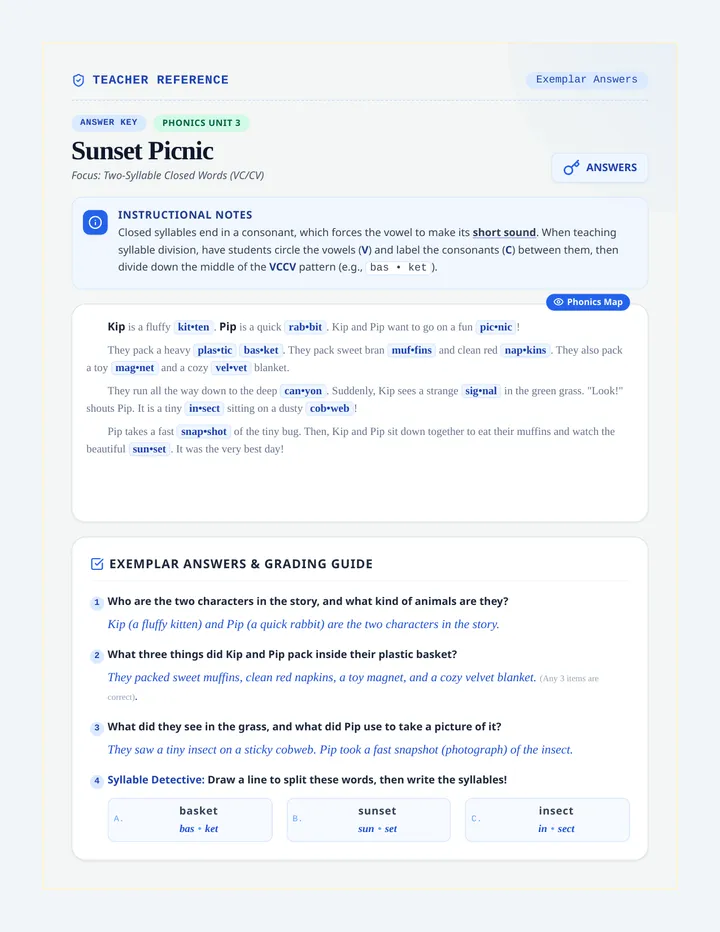
A primary phonics lesson focusing on decoding and understanding two-syllable words with closed syllables. Students practice syllable division, read a decodable story, and answer reading comprehension questions.
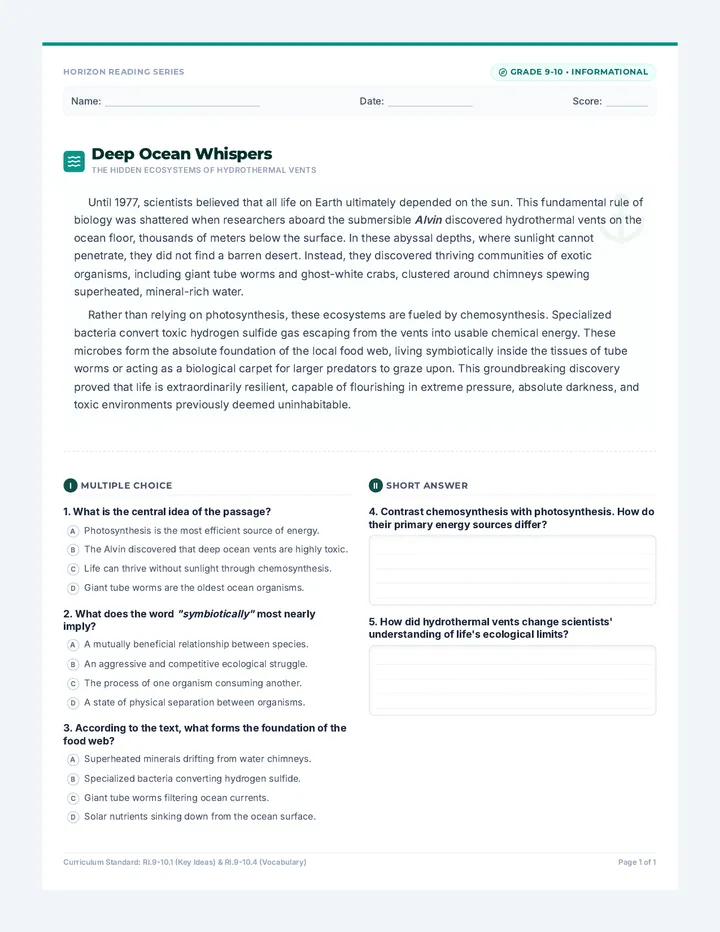
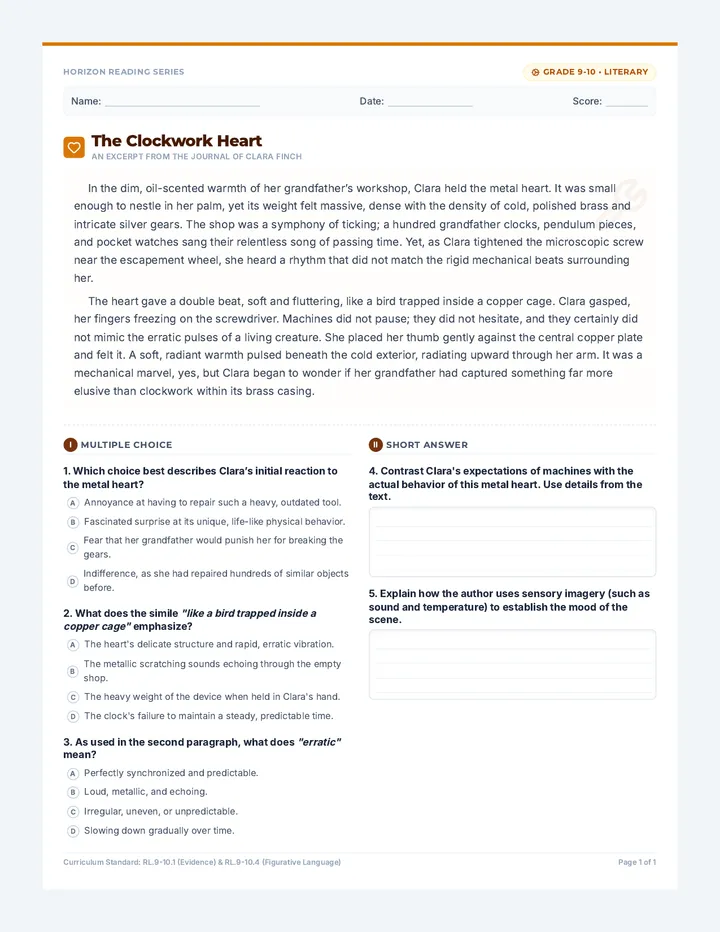
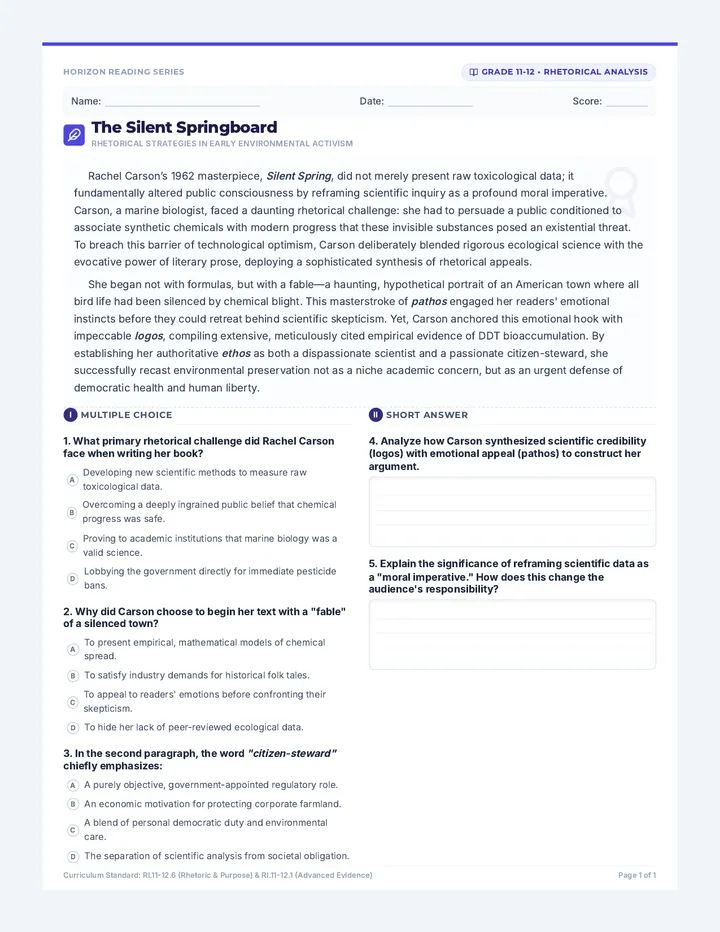
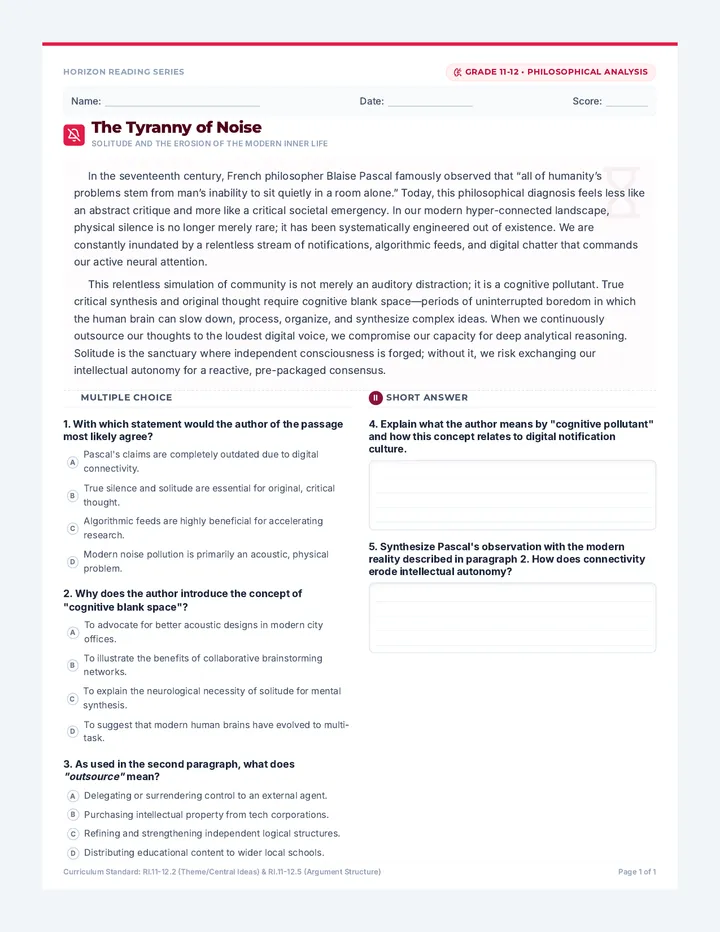
A foundational set of four reading comprehension sheets, split between Grade 9-10 (focusing on core inference and vocabulary) and Grade 11-12 (emphasizing rhetorical analysis and synthesis).
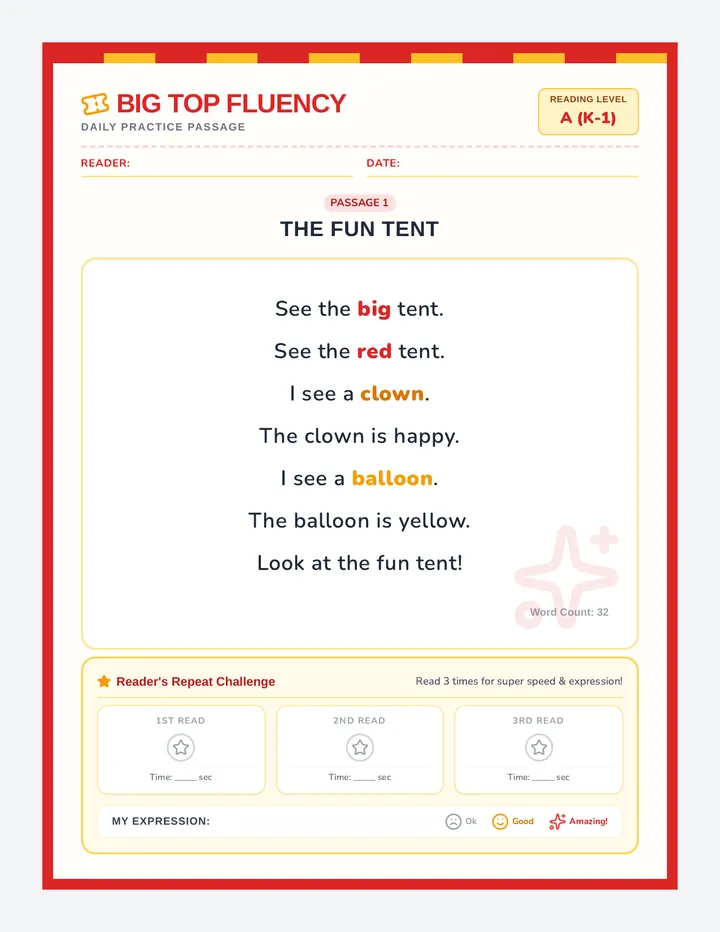
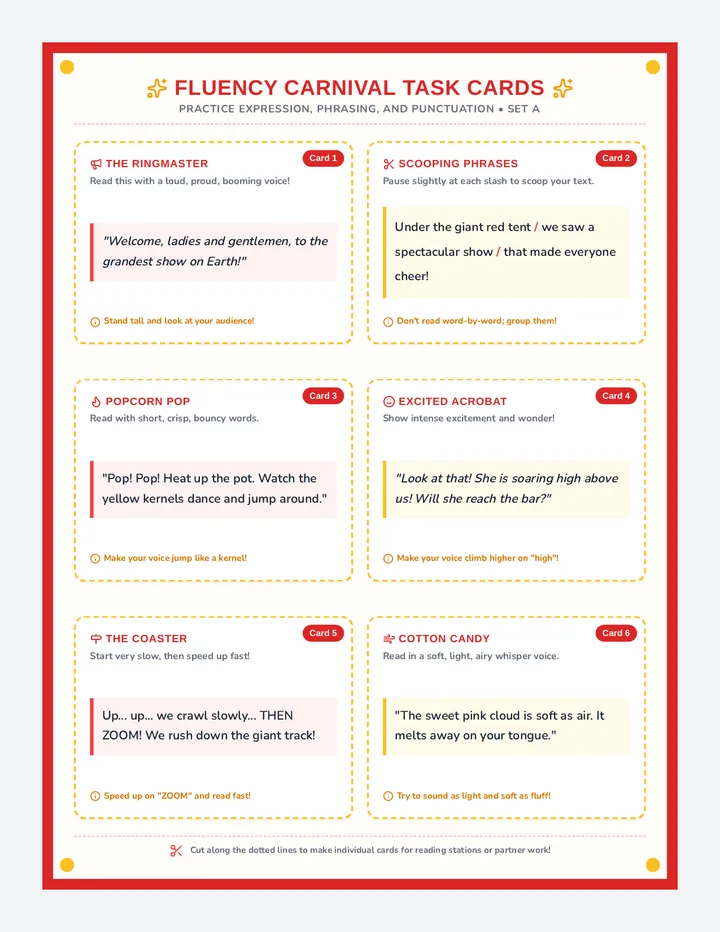
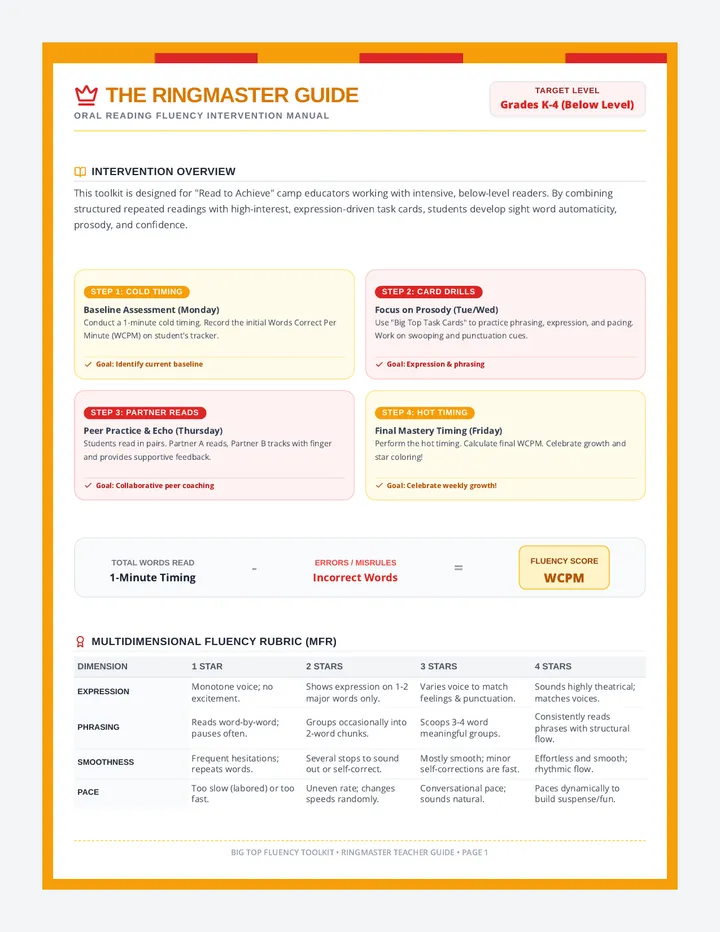
A carnival-themed oral reading fluency toolkit designed for Read to Achieve summer camps. Features differentiated reading passages (levels K-3) with repeated reading trackers, expression-focused task cards, and a teacher scoring and implementation guide.
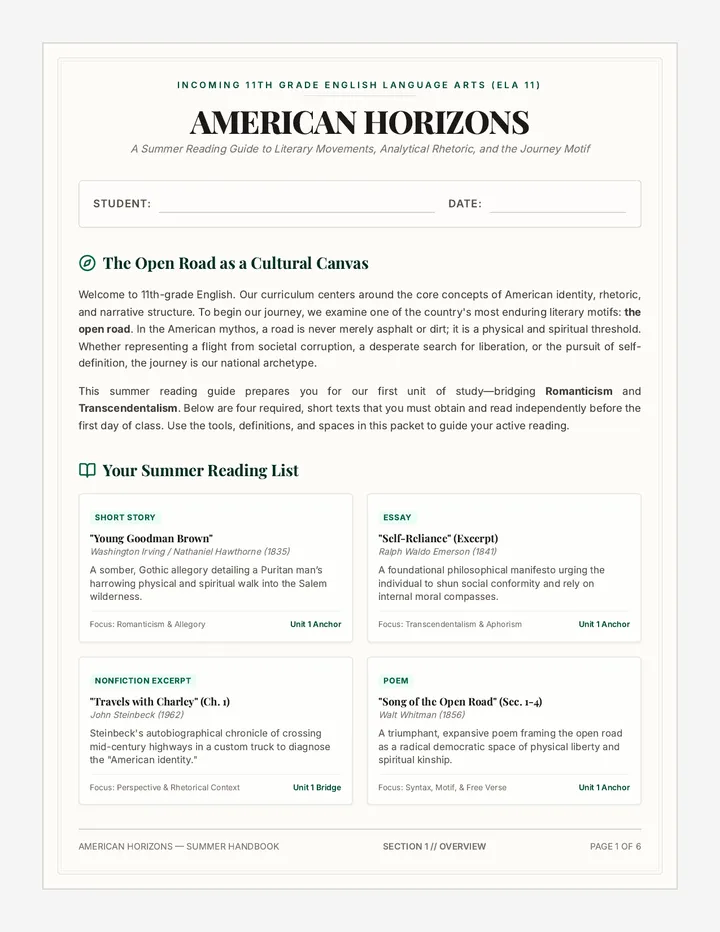
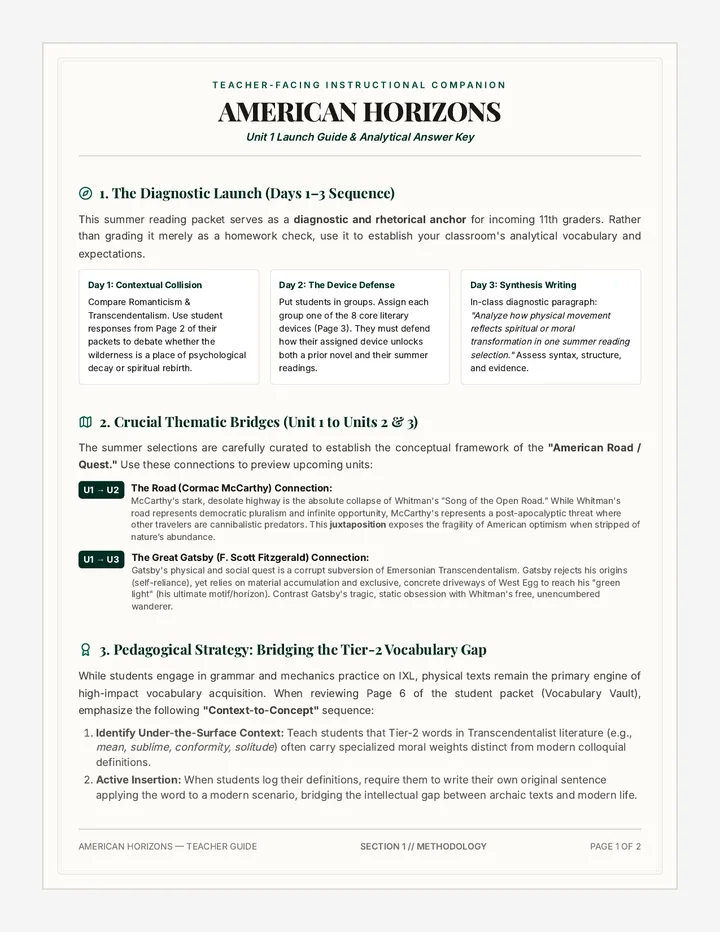
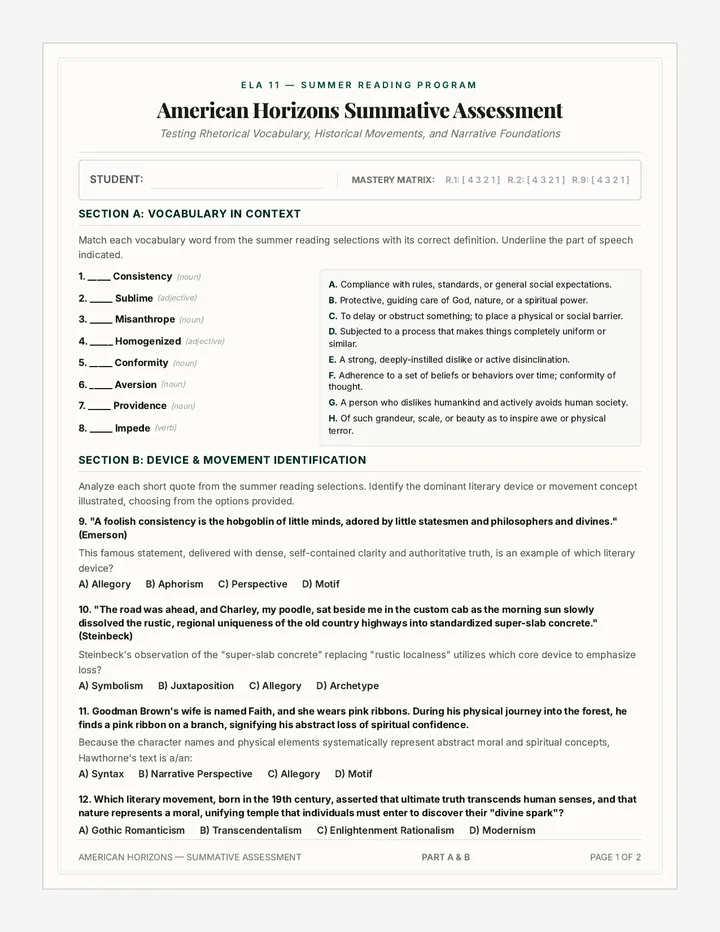
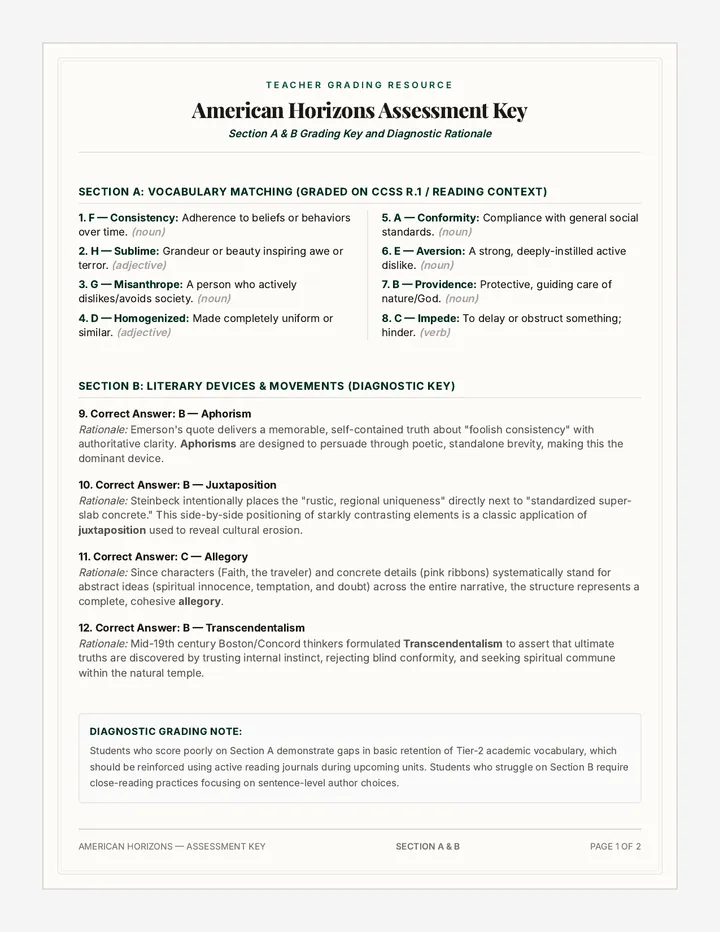
A preparatory summer reading curriculum designed to bridge historical literary movements, analytical vocabulary, and journey-themed texts for incoming 11th graders.
Students compile their four-sentence creative stories into a comic strip layout, add simple illustrations, and celebrate their storytelling accomplishments.
Students resolve their story's problem, writing their fourth sentence using "Then, ..." and selecting a happy resolution symbol.
Students introduce a simple conflict or surprise for their character, writing a sentence with "Suddenly..." and problem-based action icons.