A lesson for second graders to master sequencing fiction stories using the signal words first, next, and last. Includes a presentation, a short story worksheet, and a teaching guide.
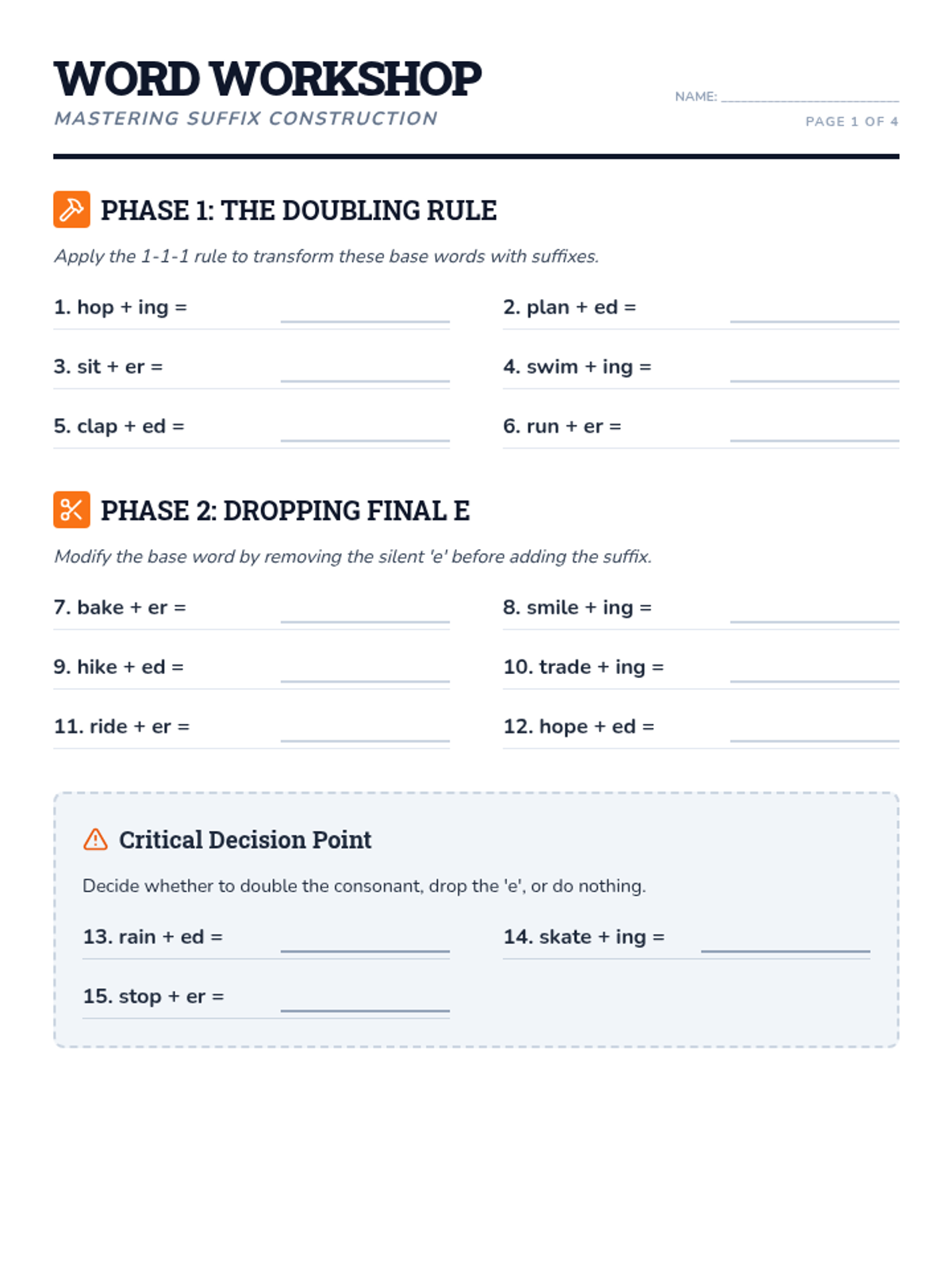
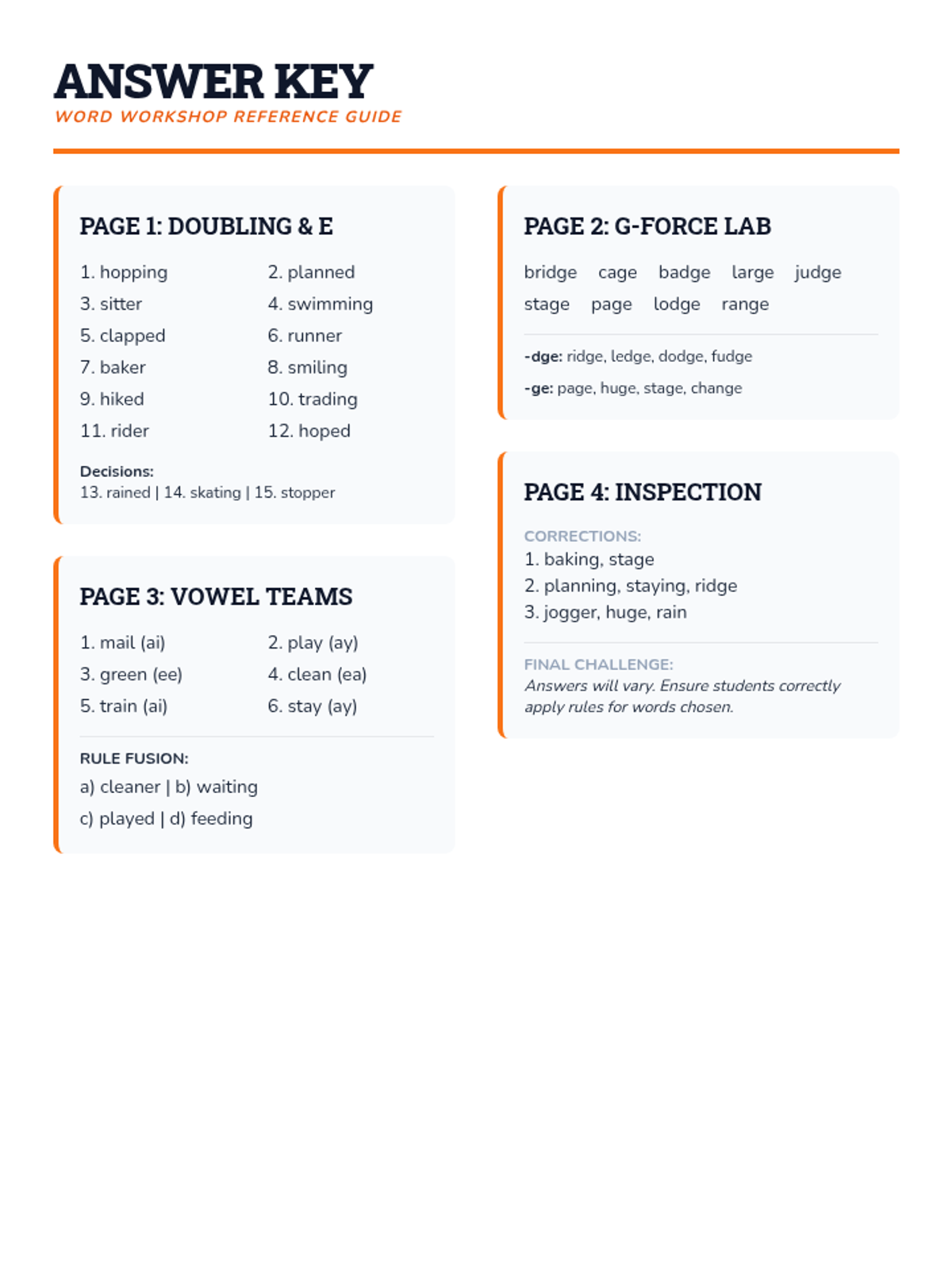
A comprehensive practice packet focusing on core spelling rules: doubling consonants, dropping final 'e', and the dge/ge distinction, integrated with vowel team mastery.
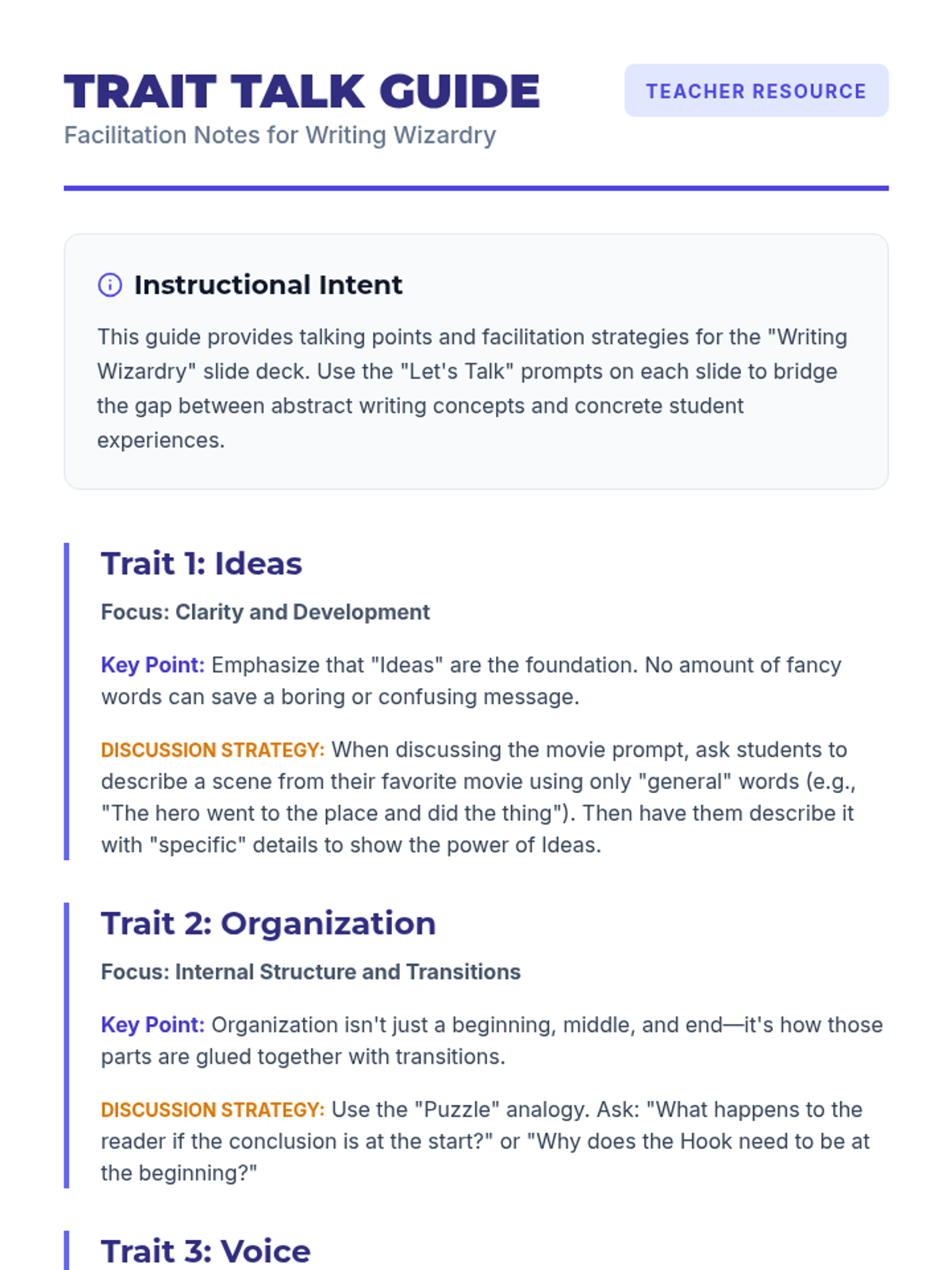
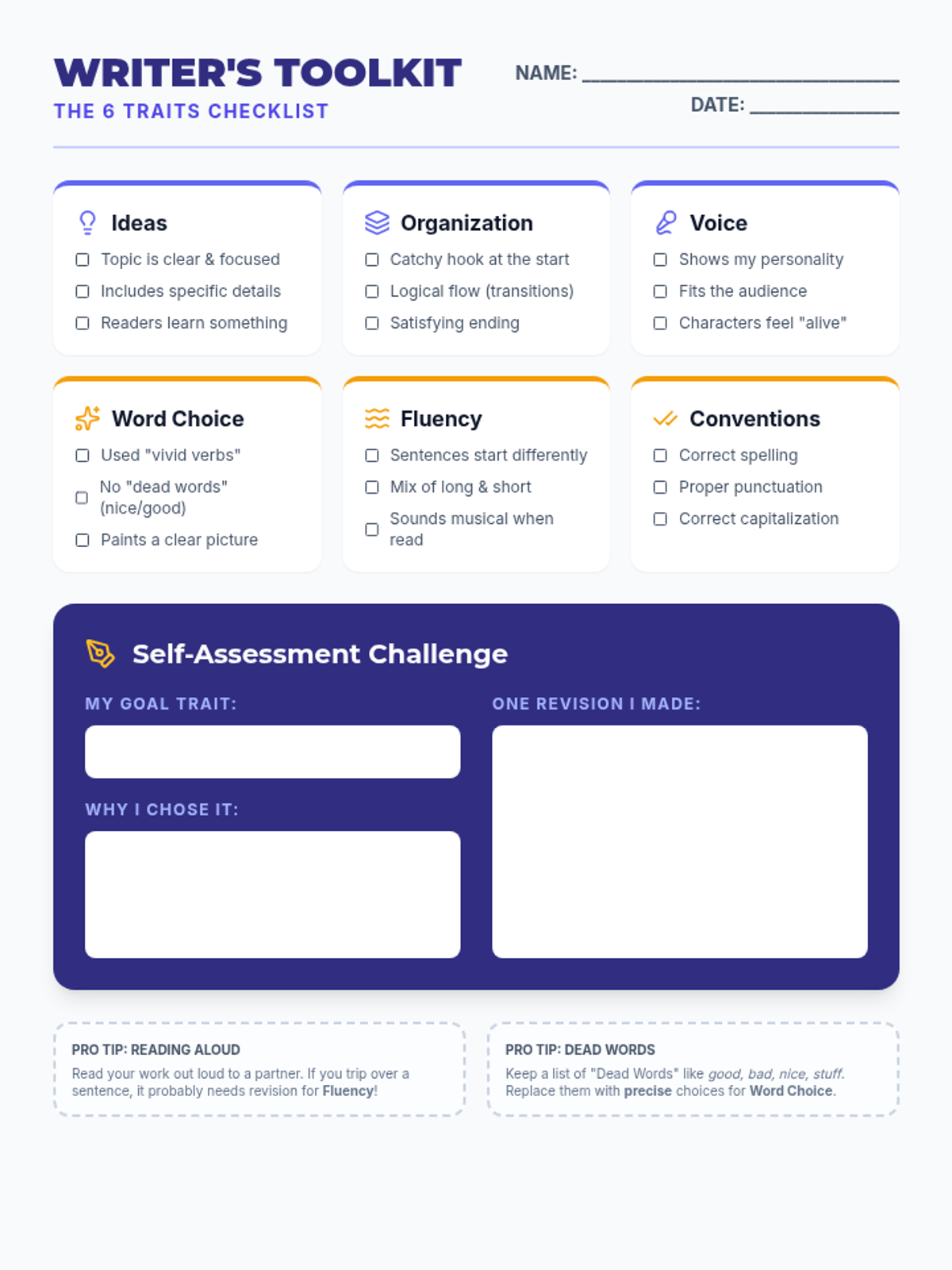
An interactive exploration of the 6 Traits of Effective Writing, designed to help students identify and apply key elements of strong prose through discussion and analysis.
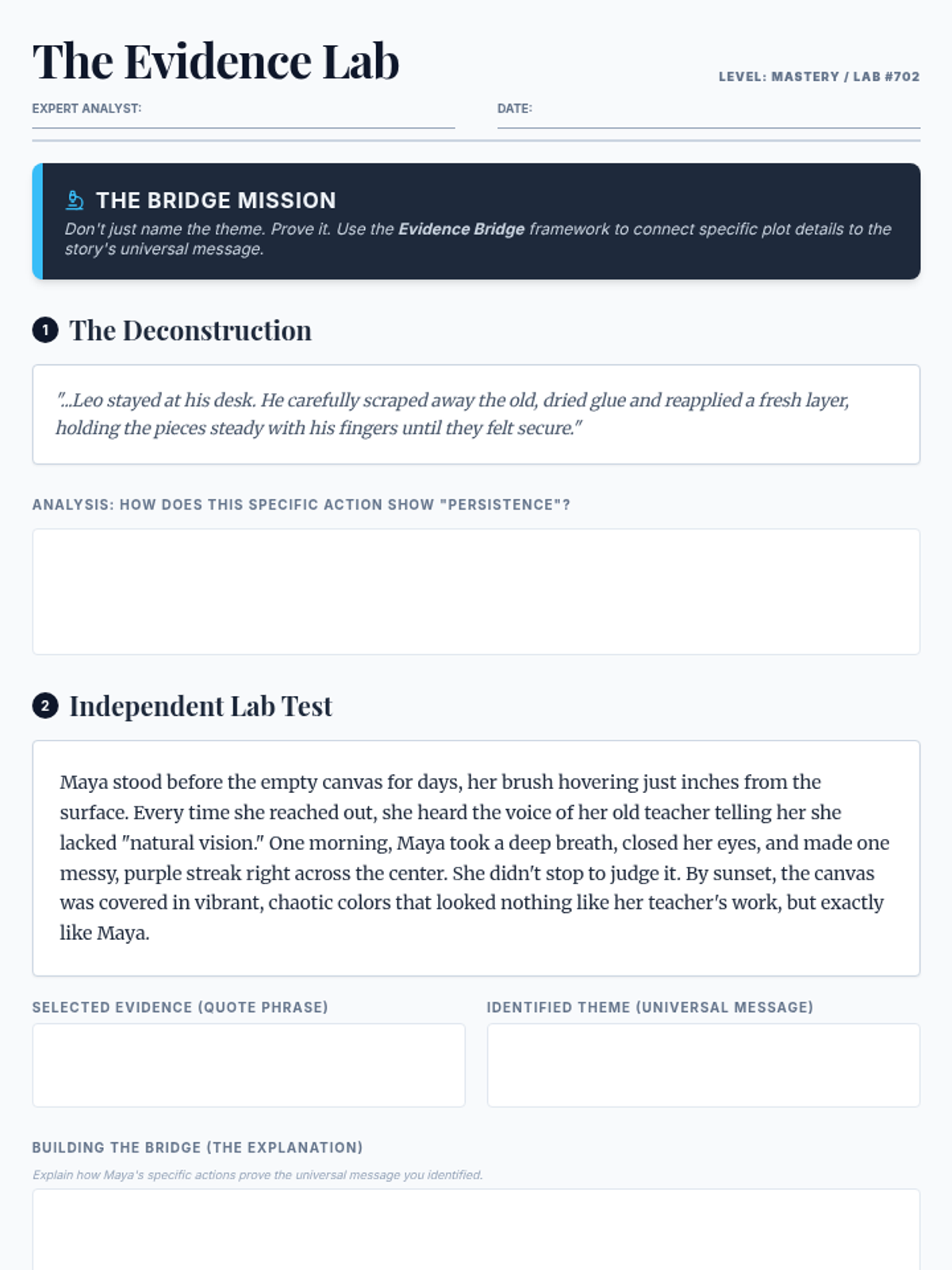
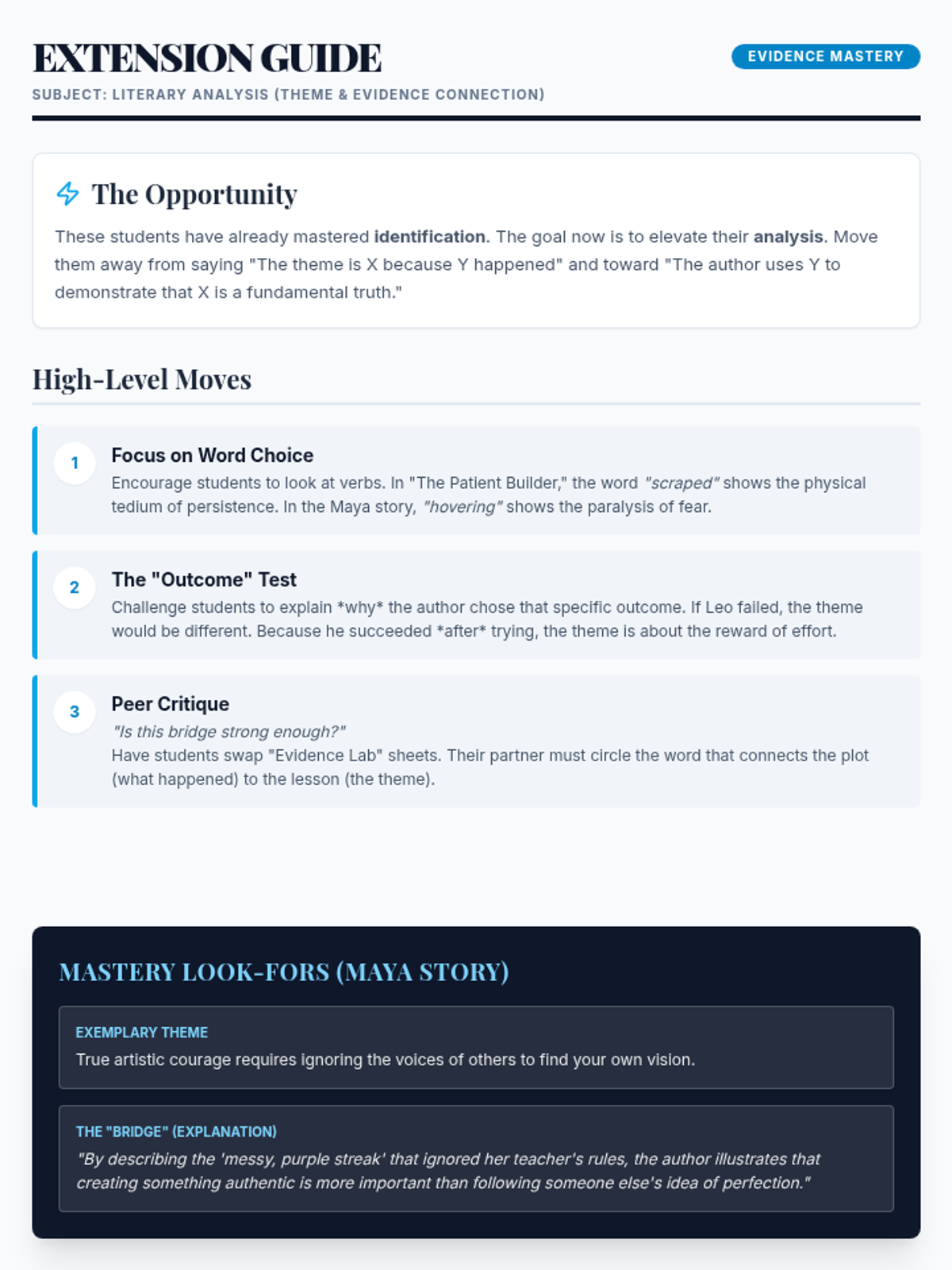
A high-level extension lesson for students who correctly identified the theme, focusing on the sophisticated skill of explaining how specific textual evidence supports a theme. Introduces the 'Evidence Bridge' framework to connect plot details to universal messages.
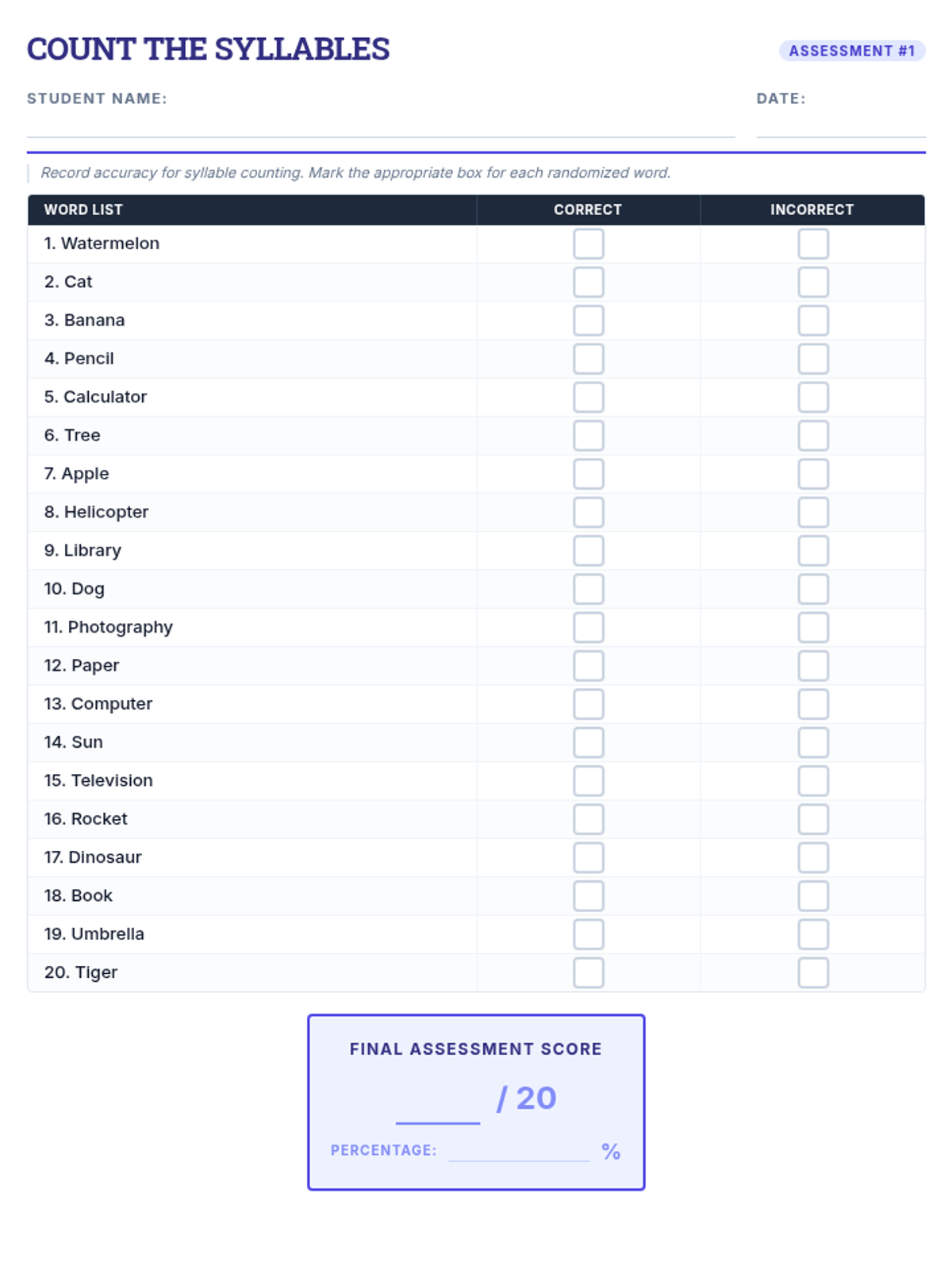
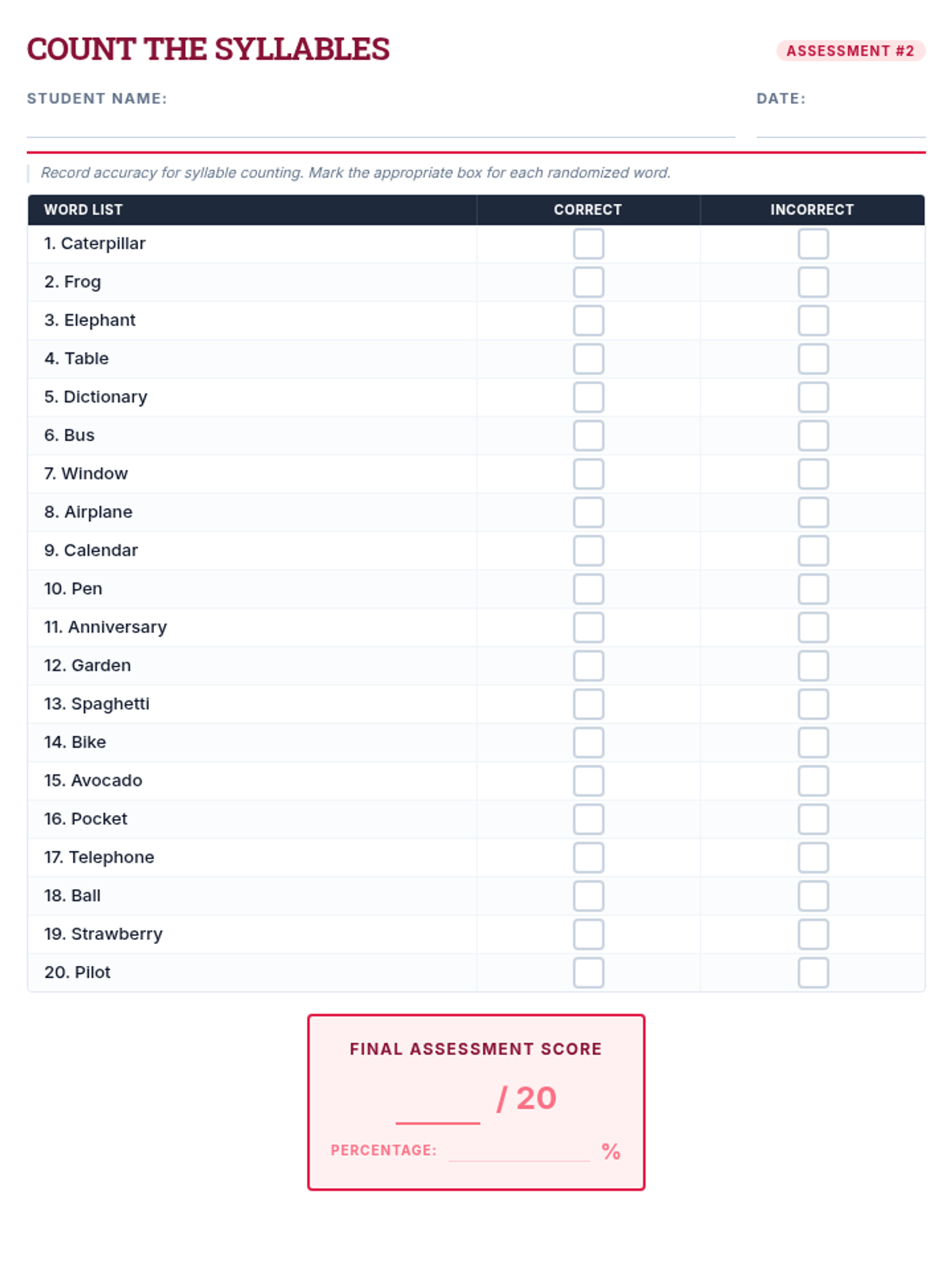
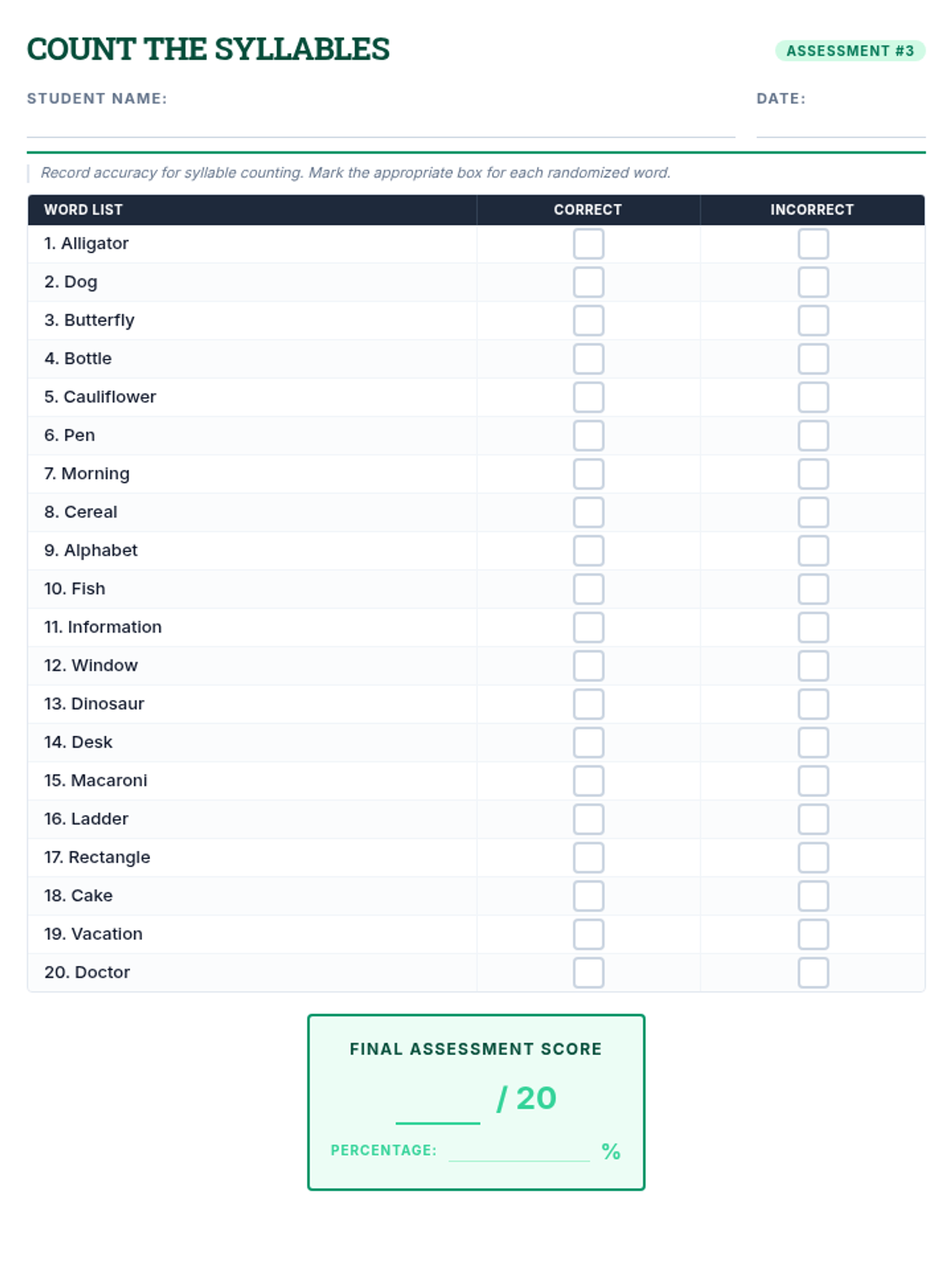
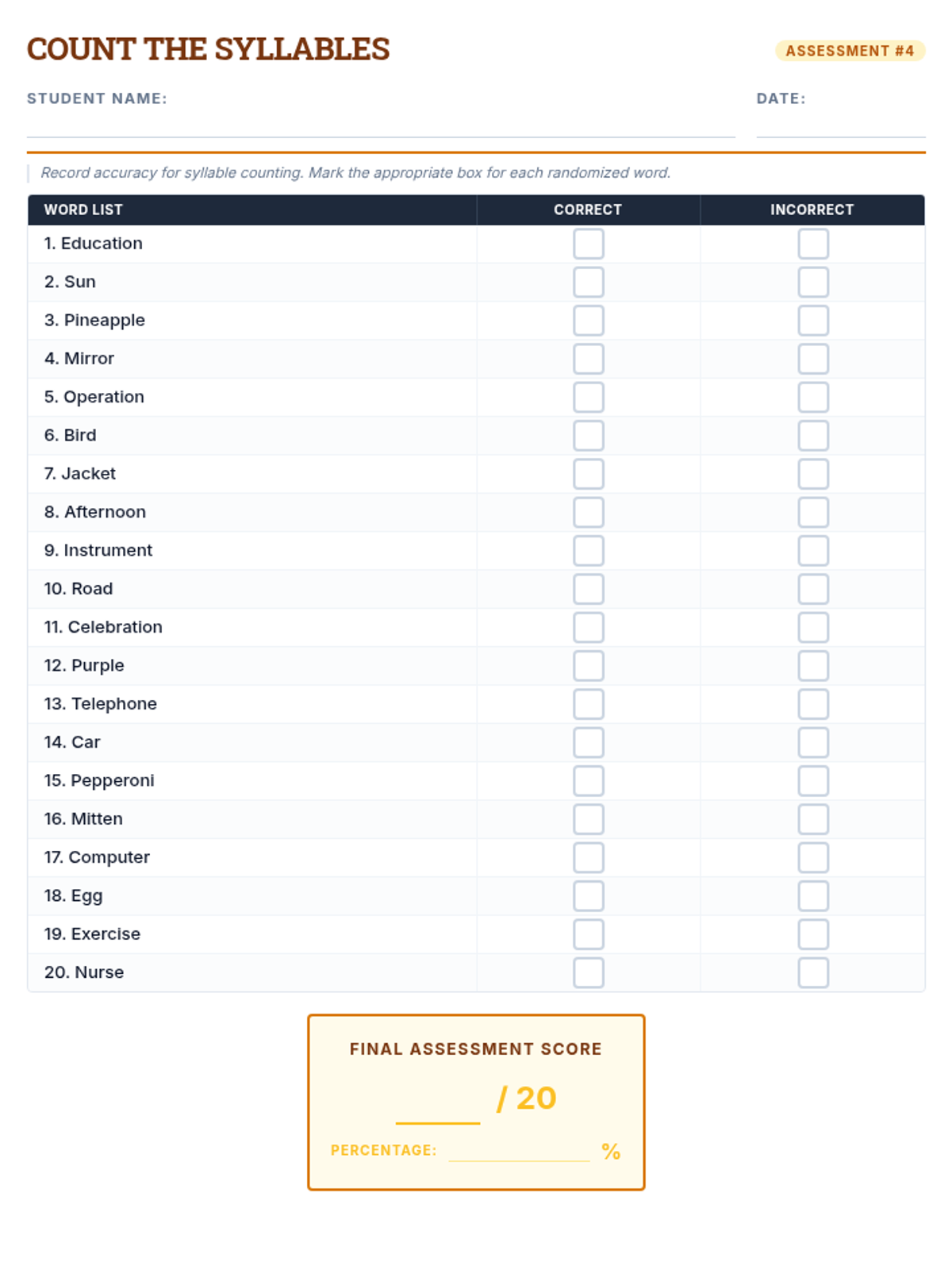
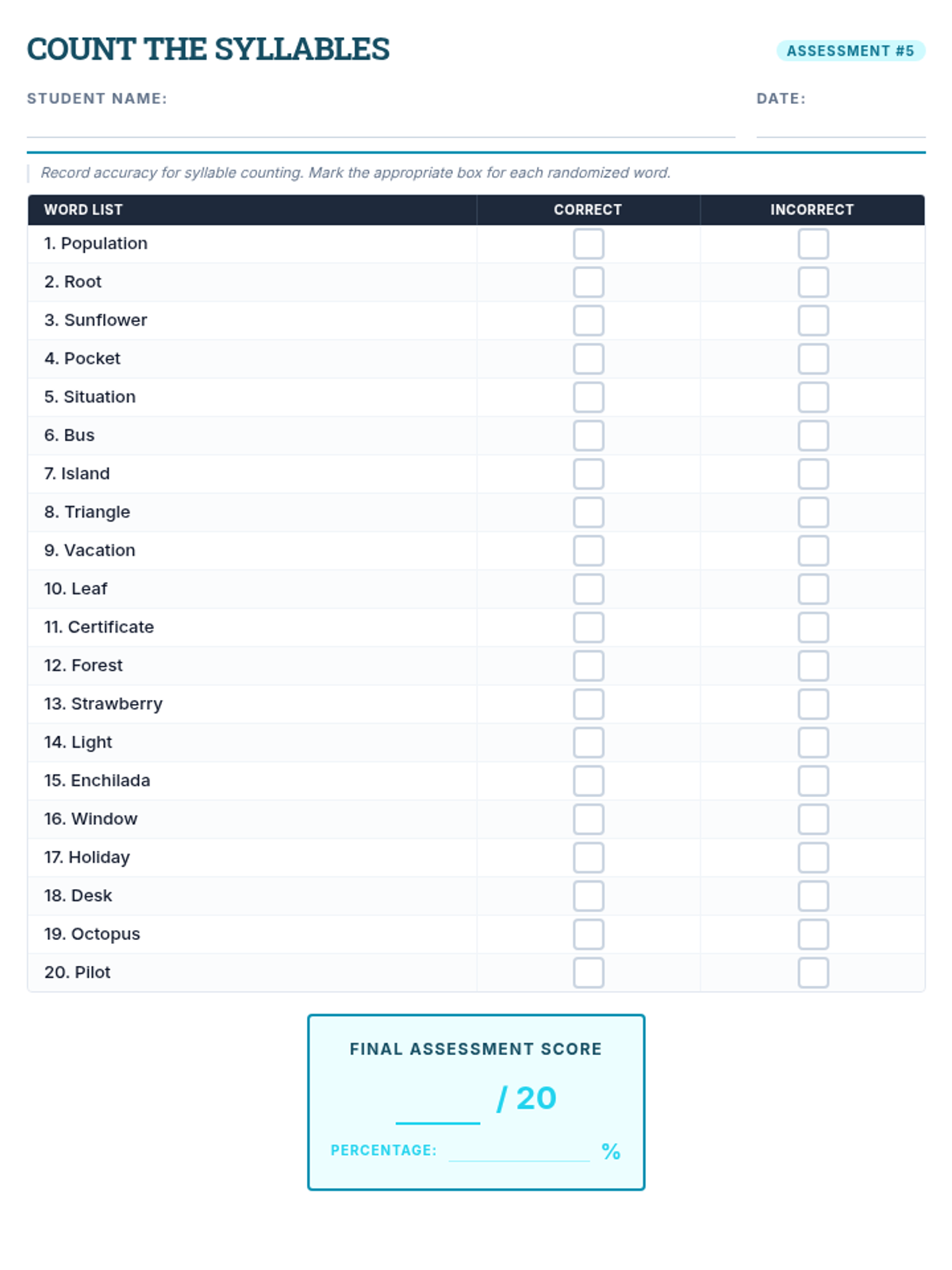
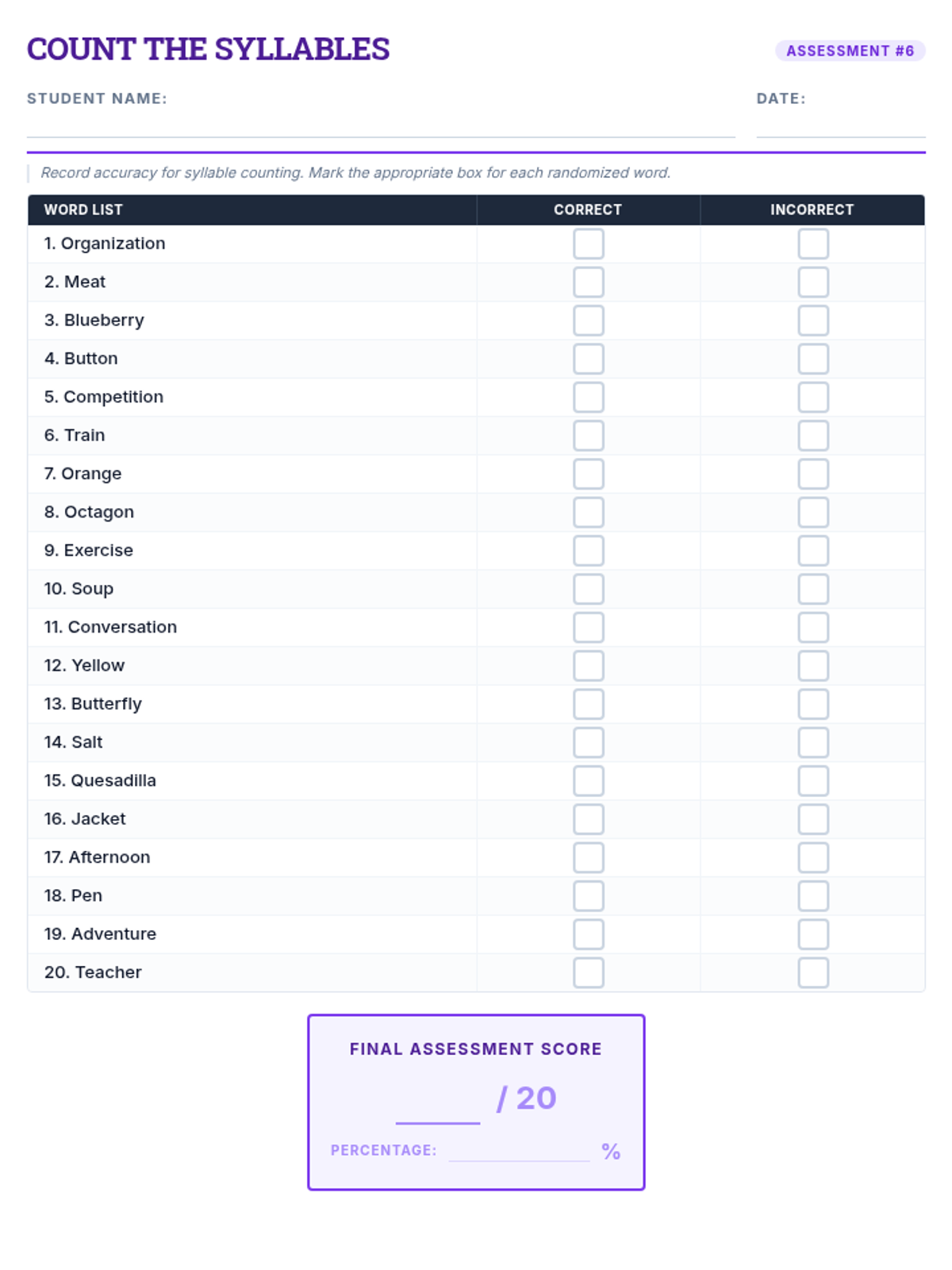
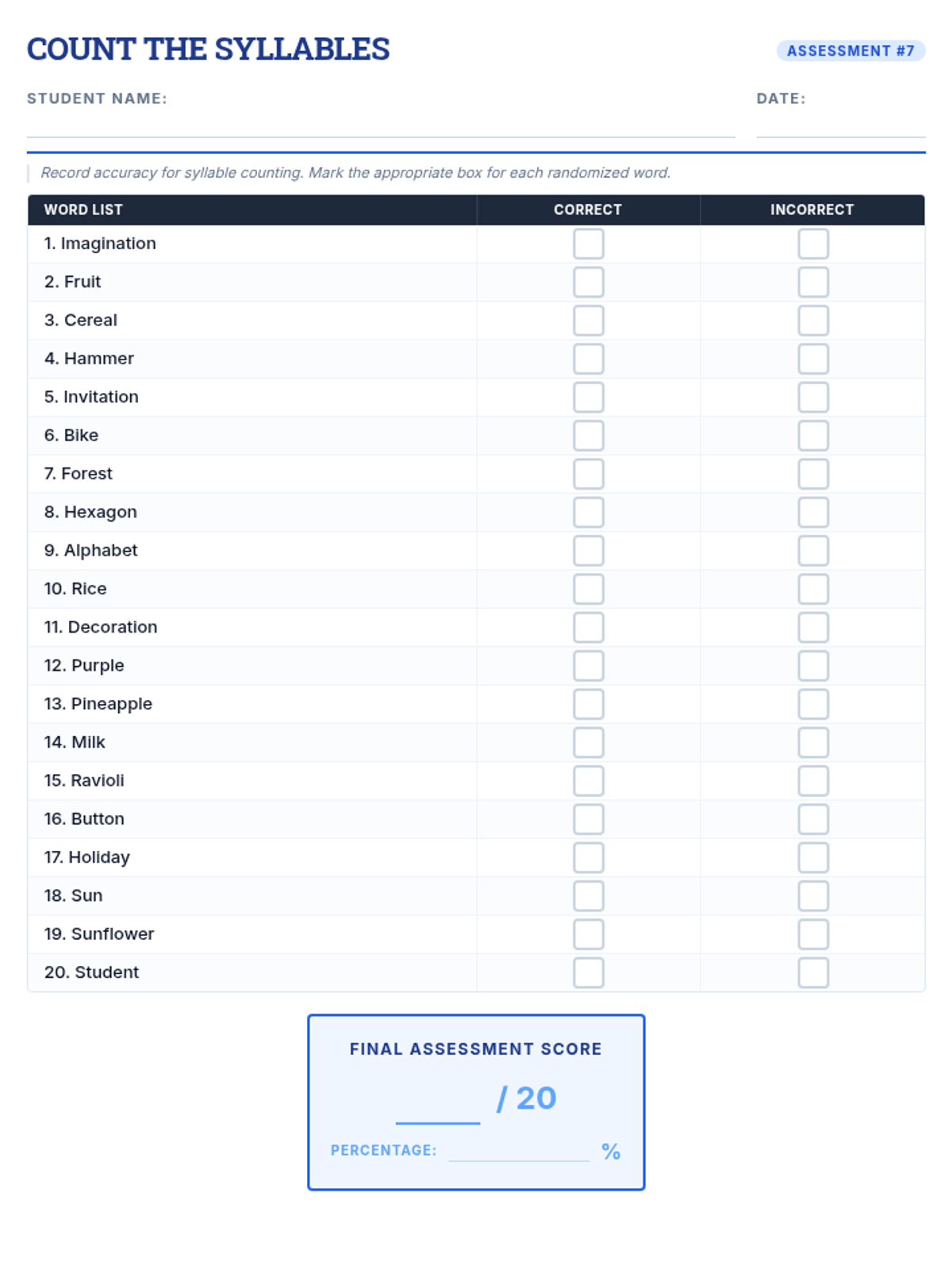
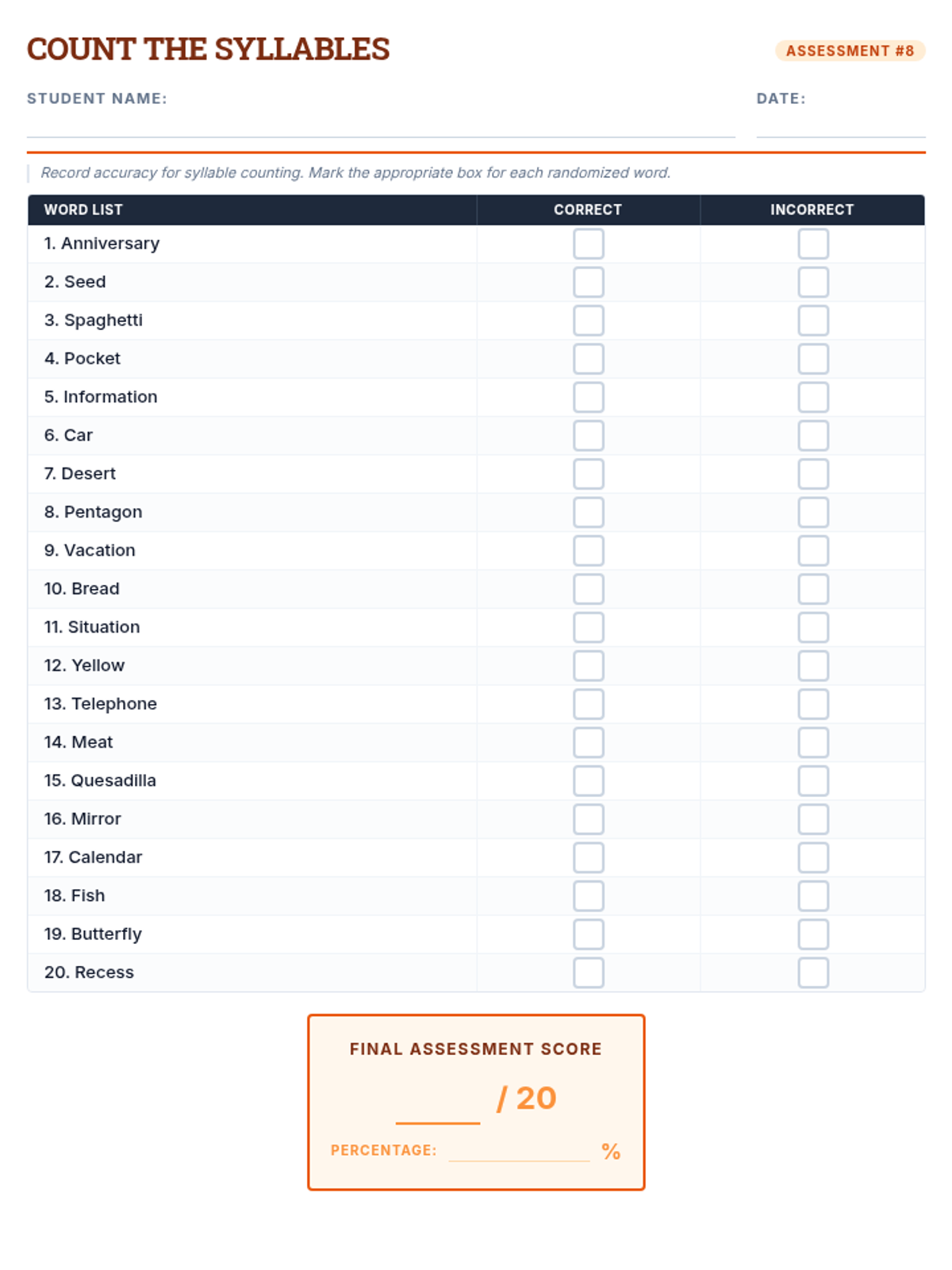
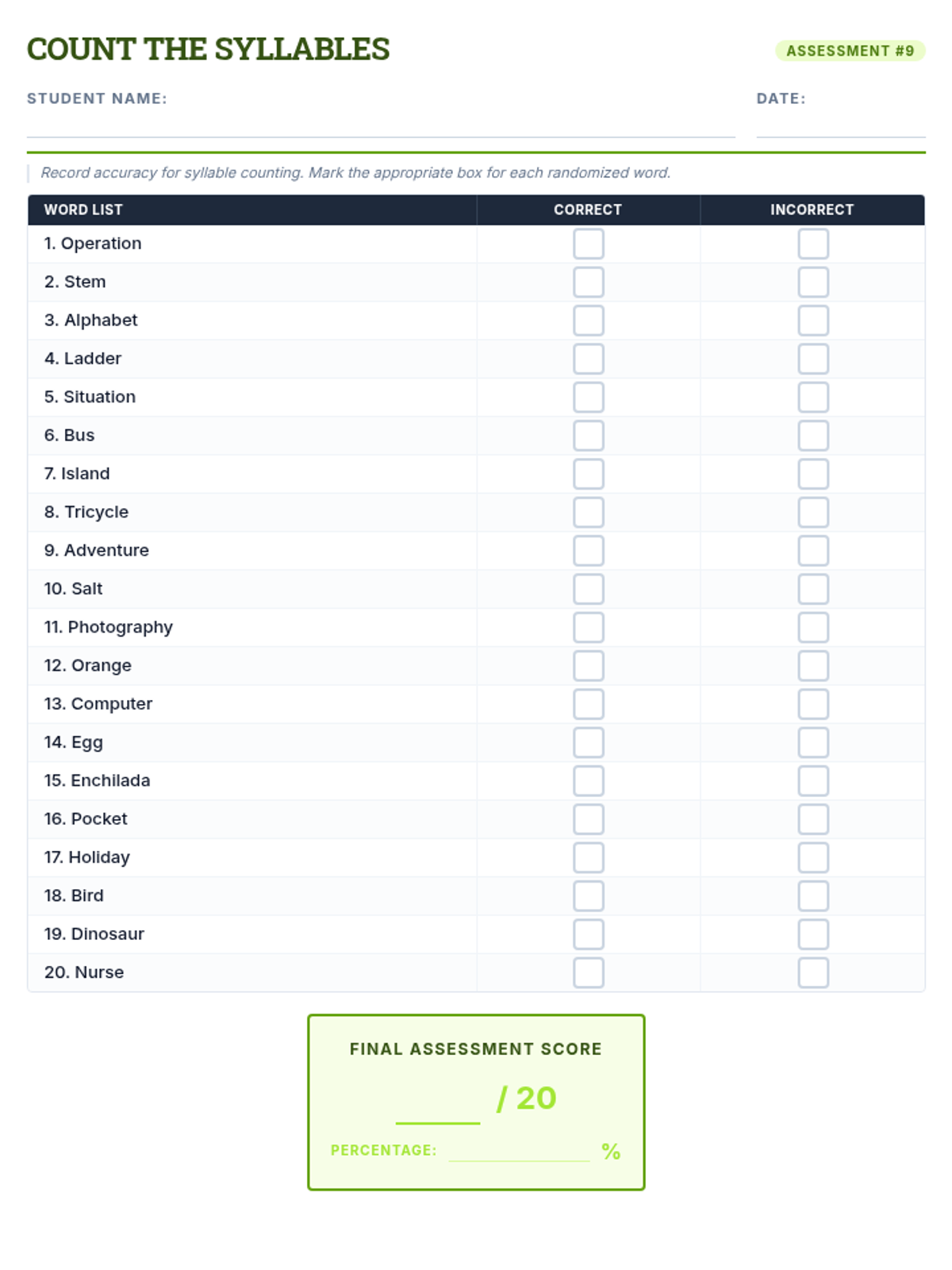
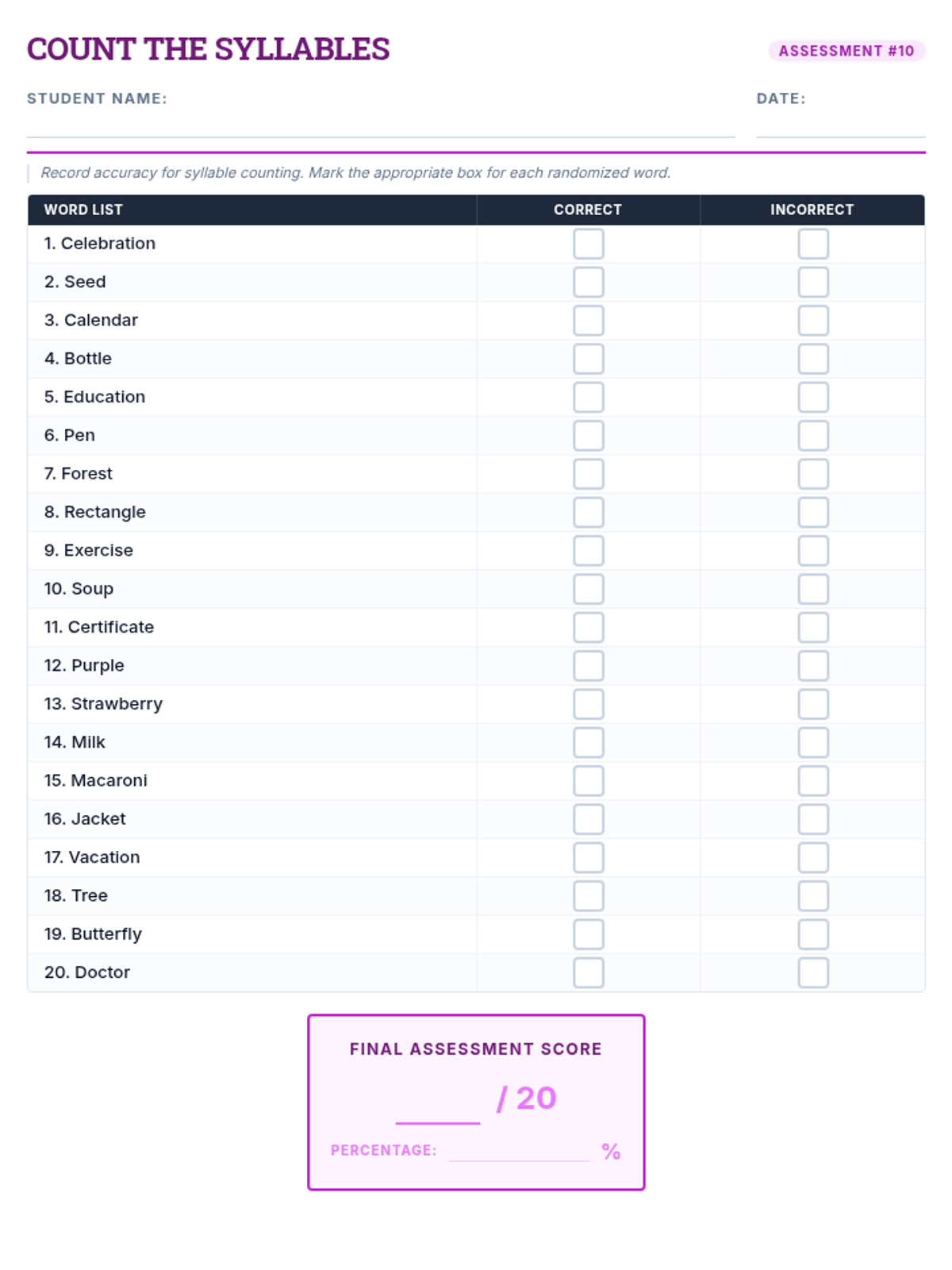
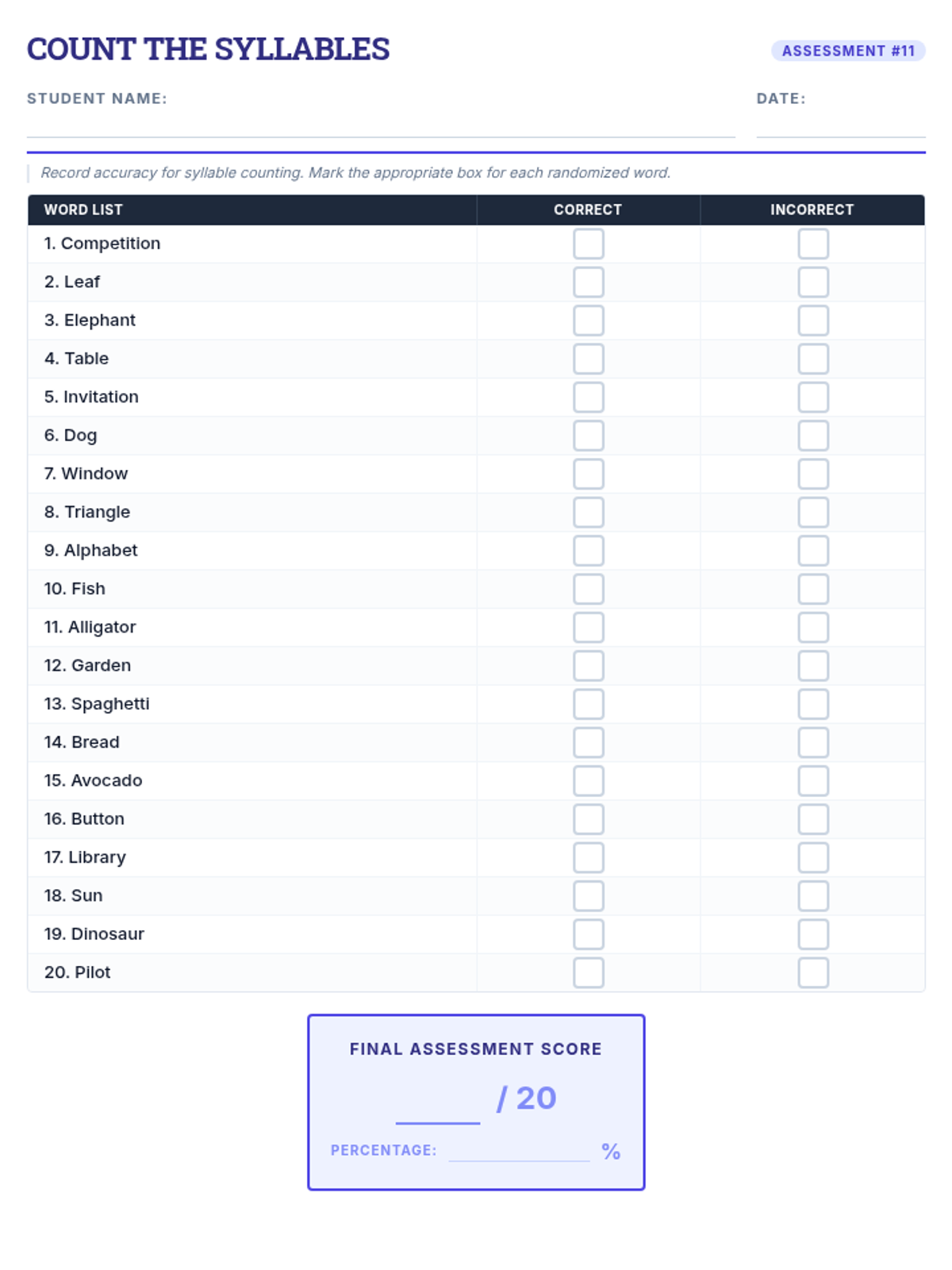
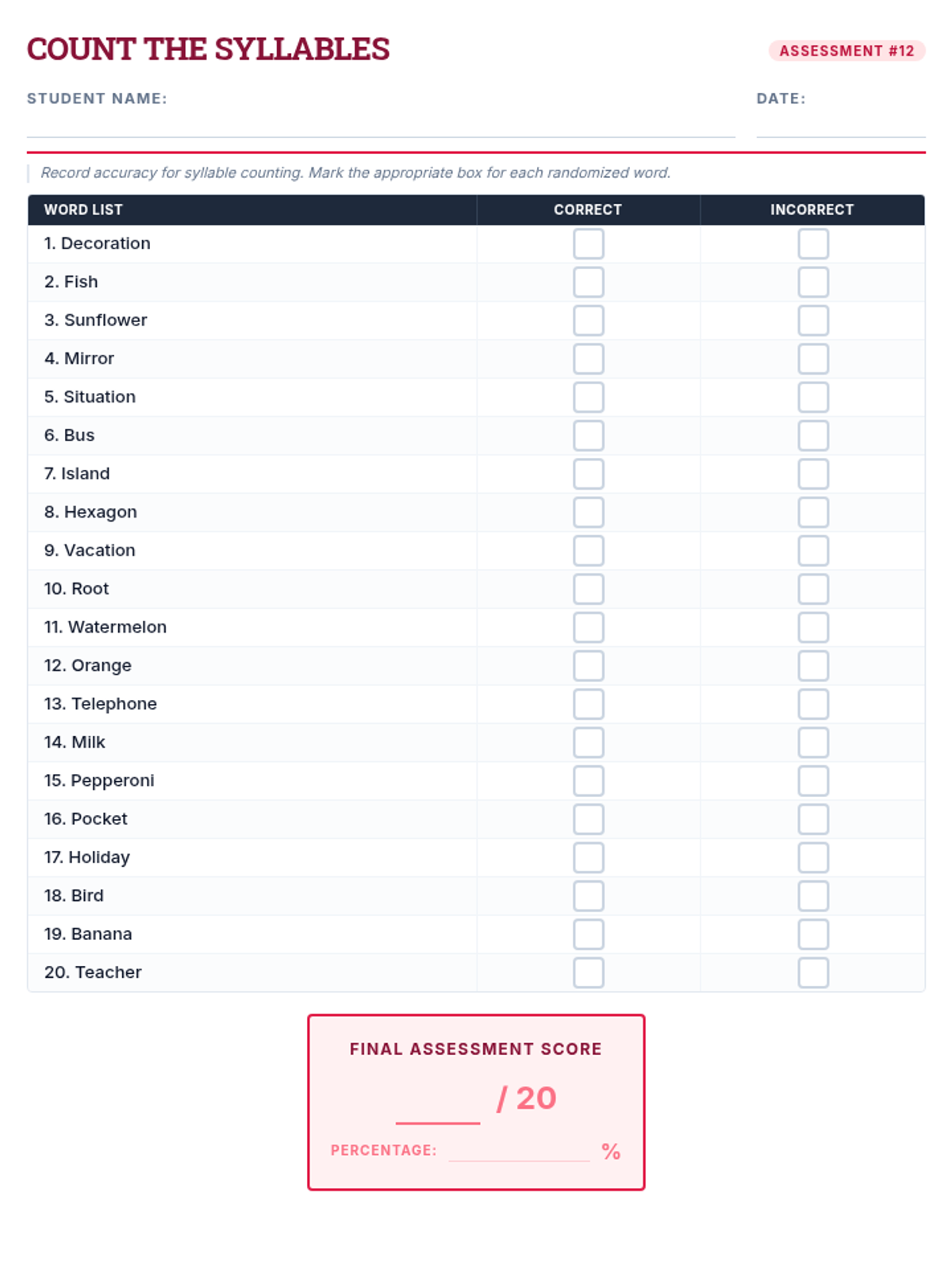
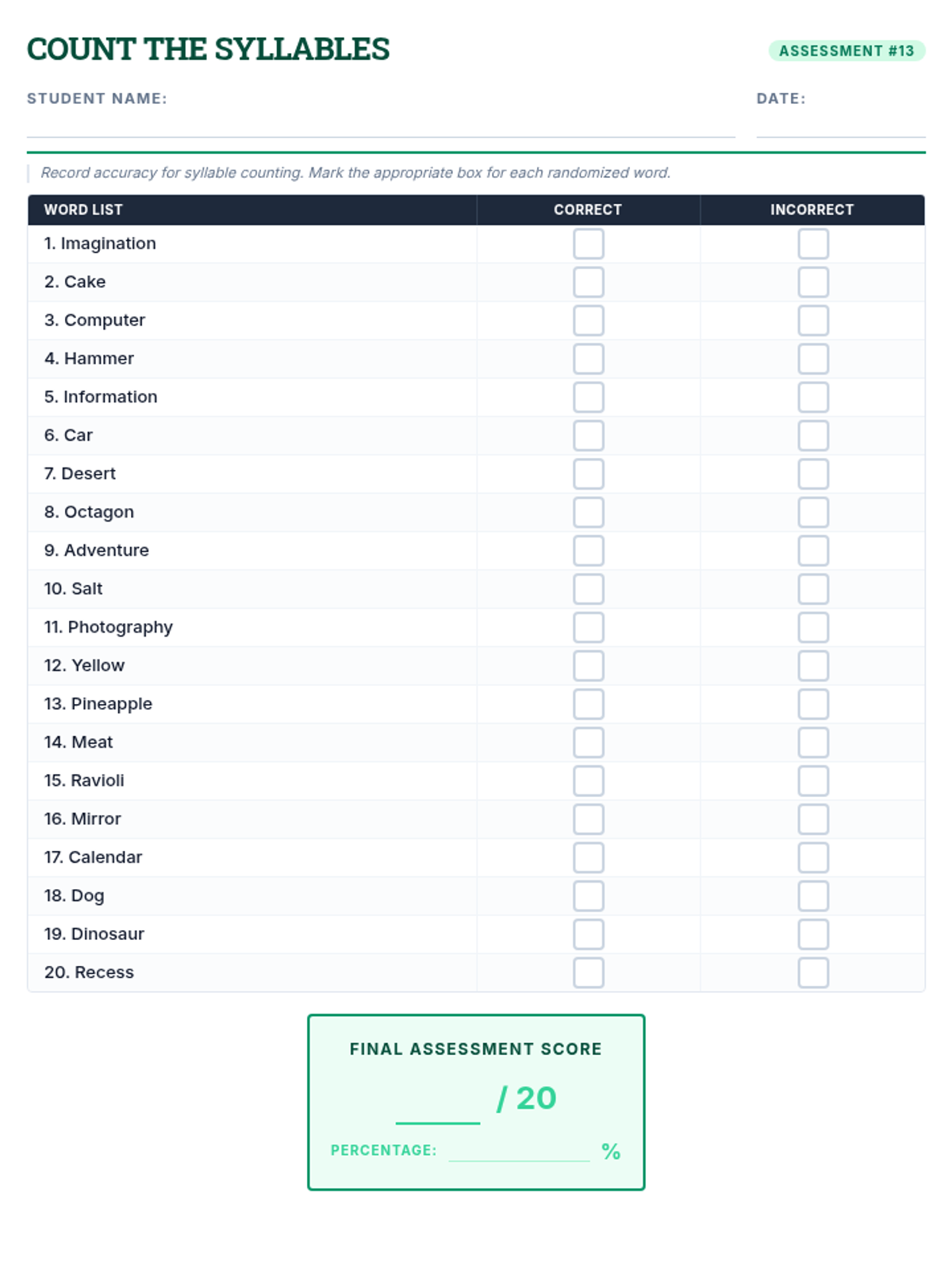
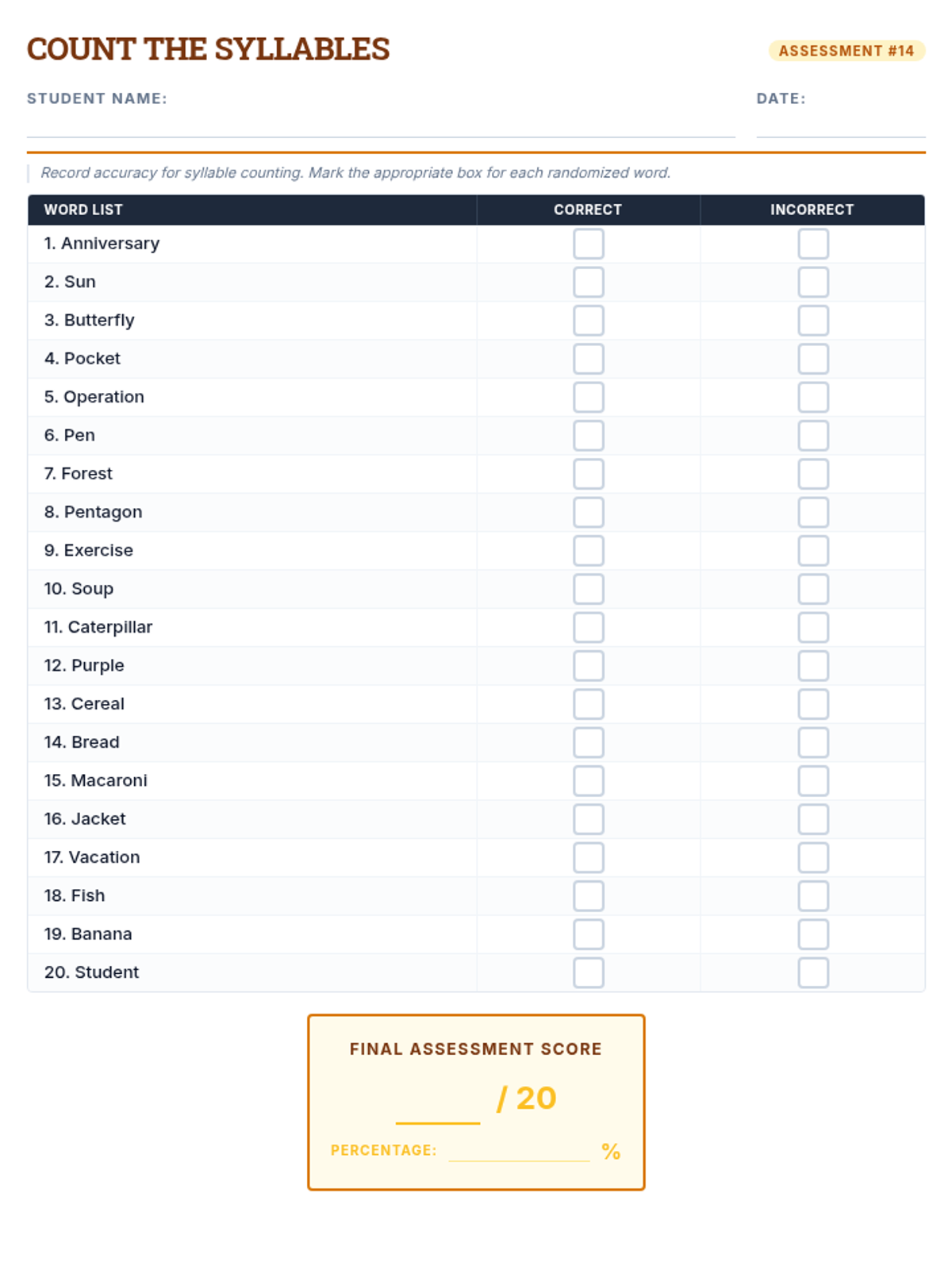
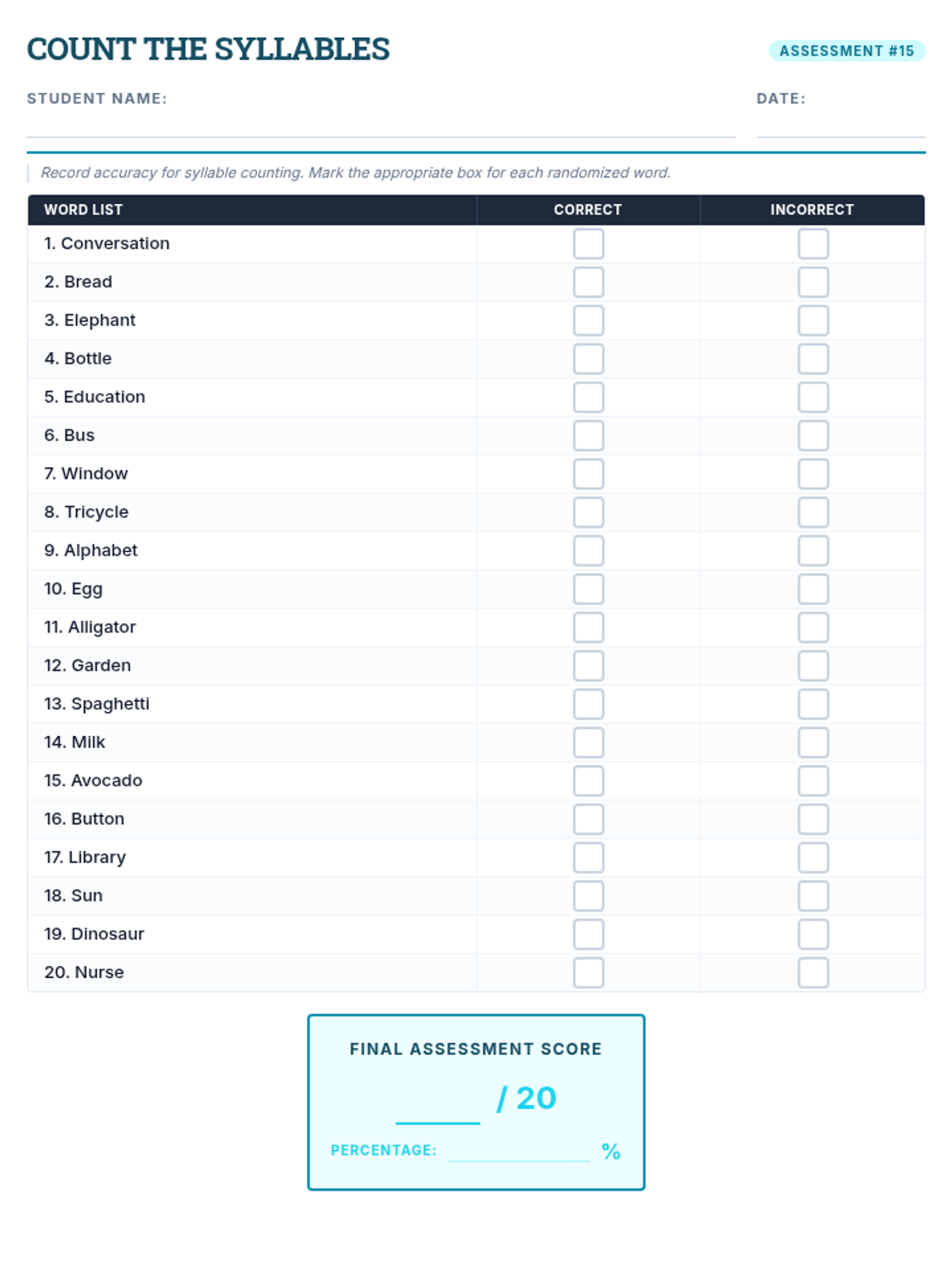
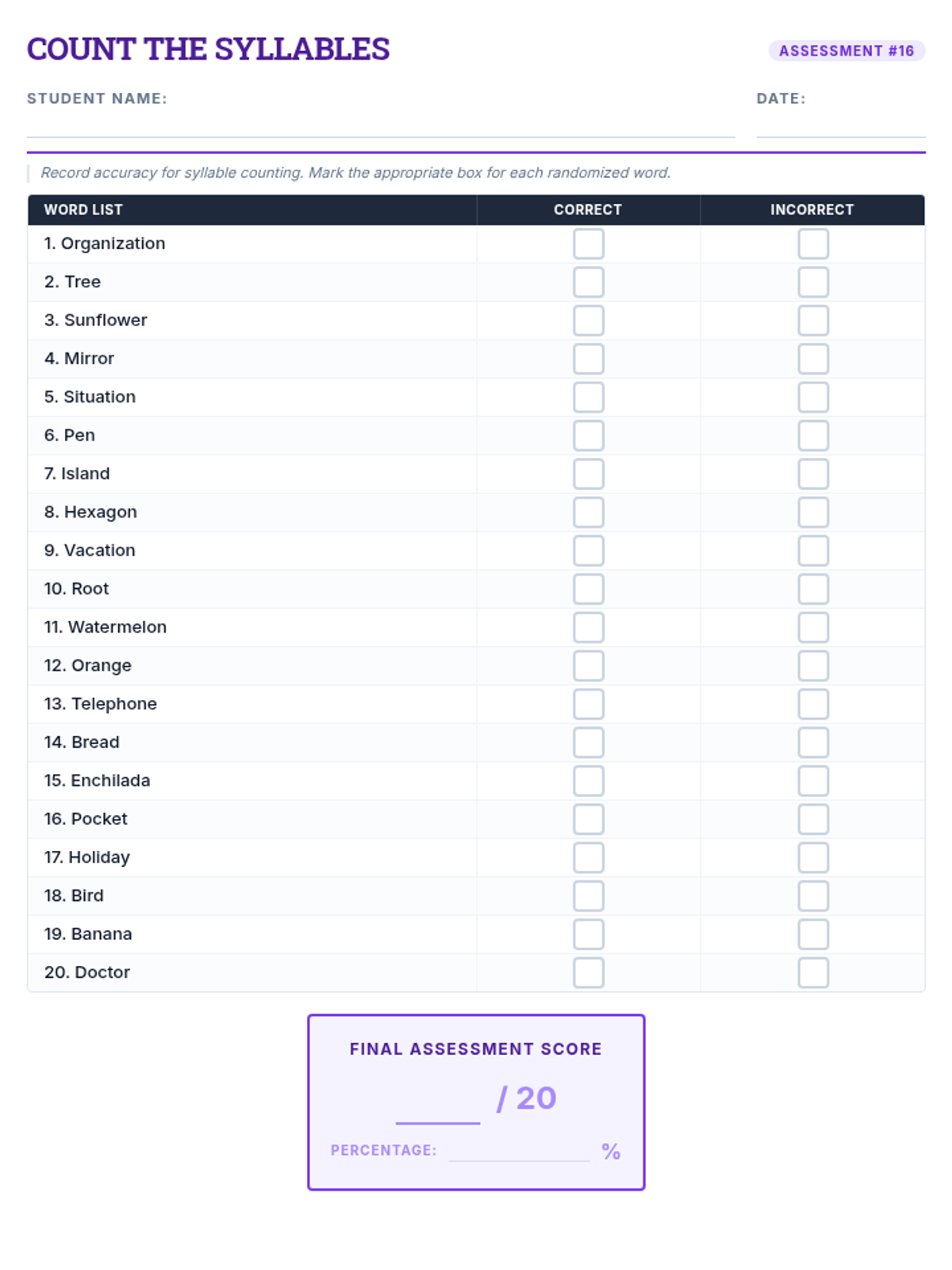
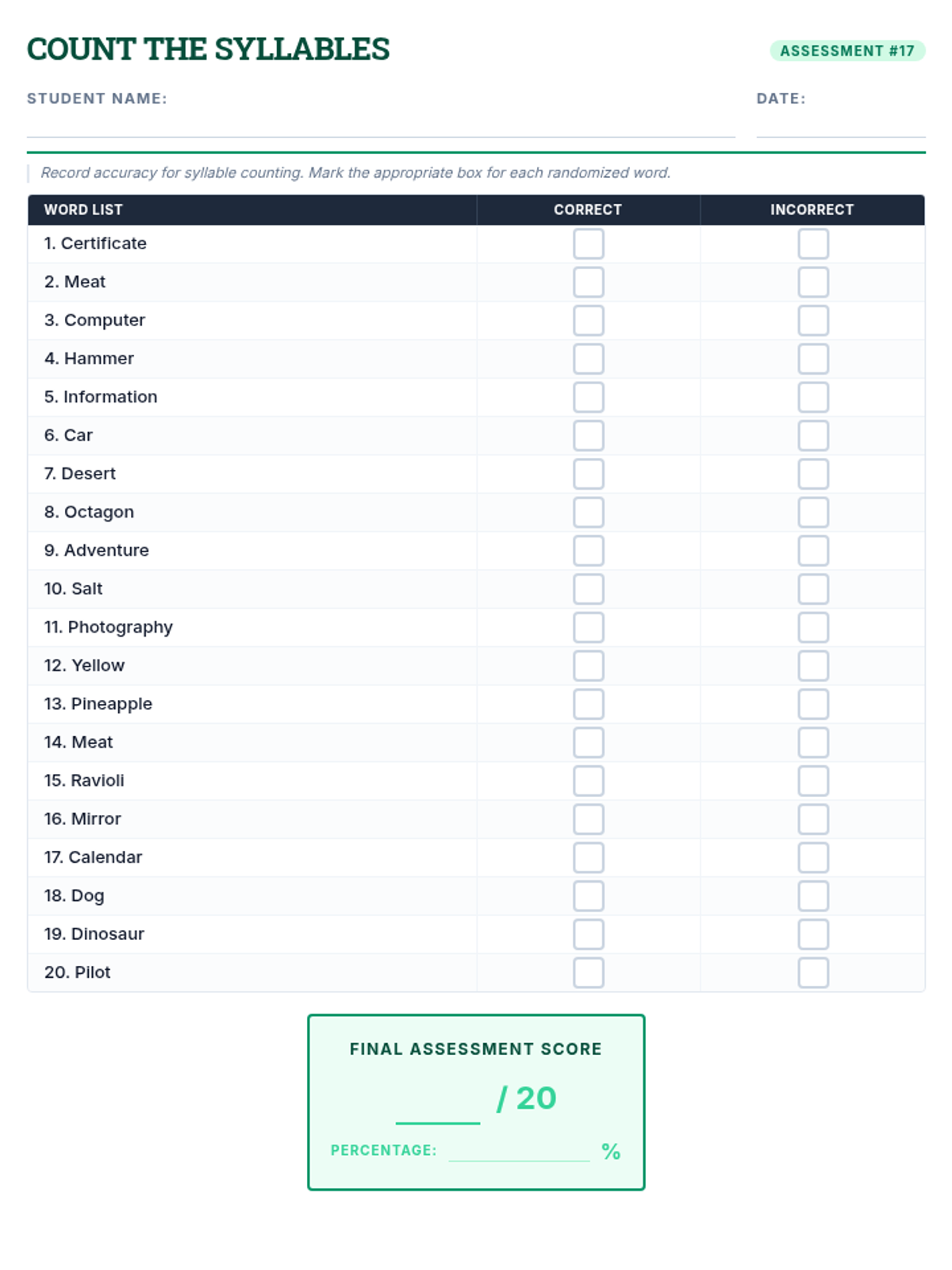
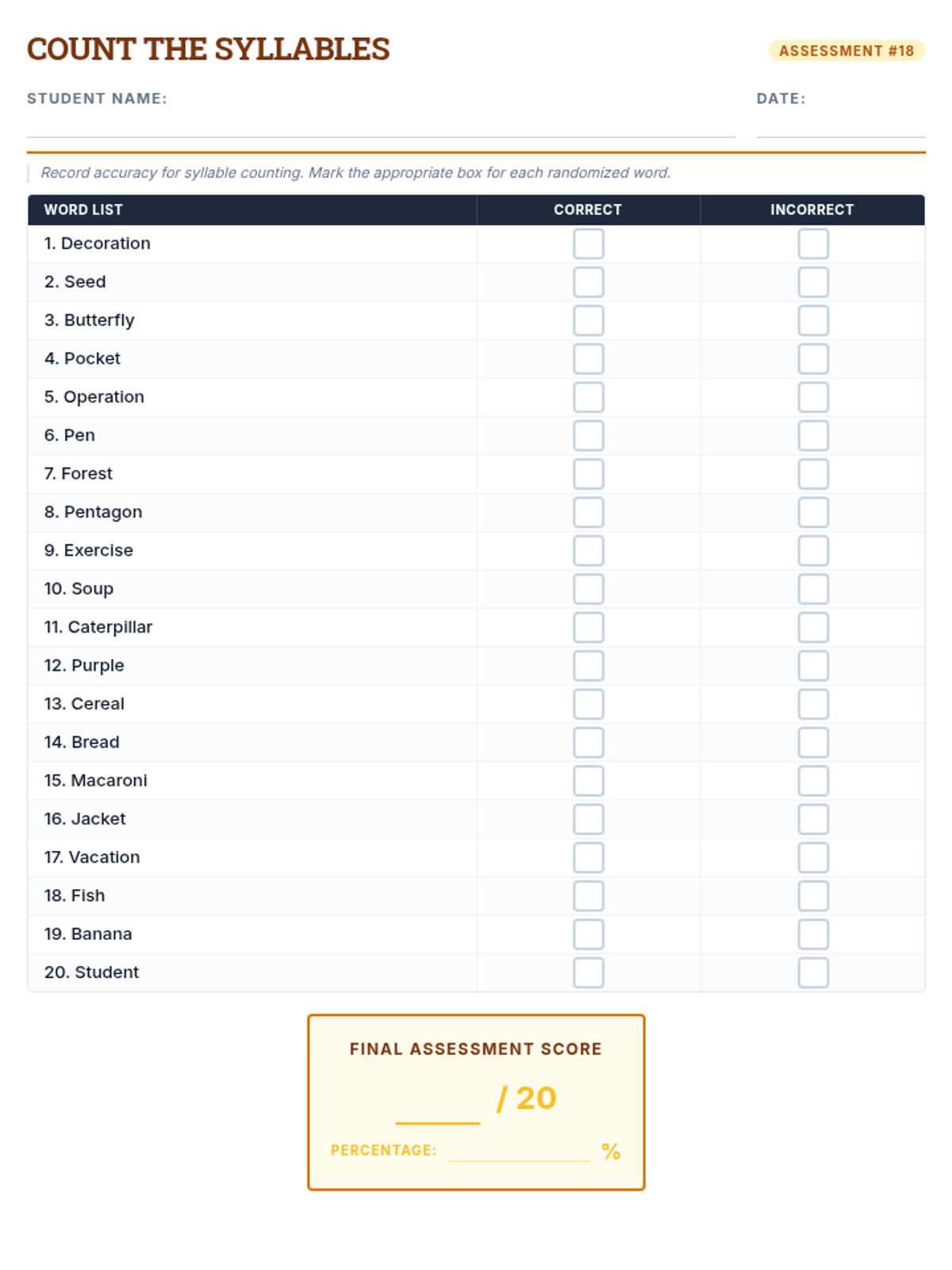
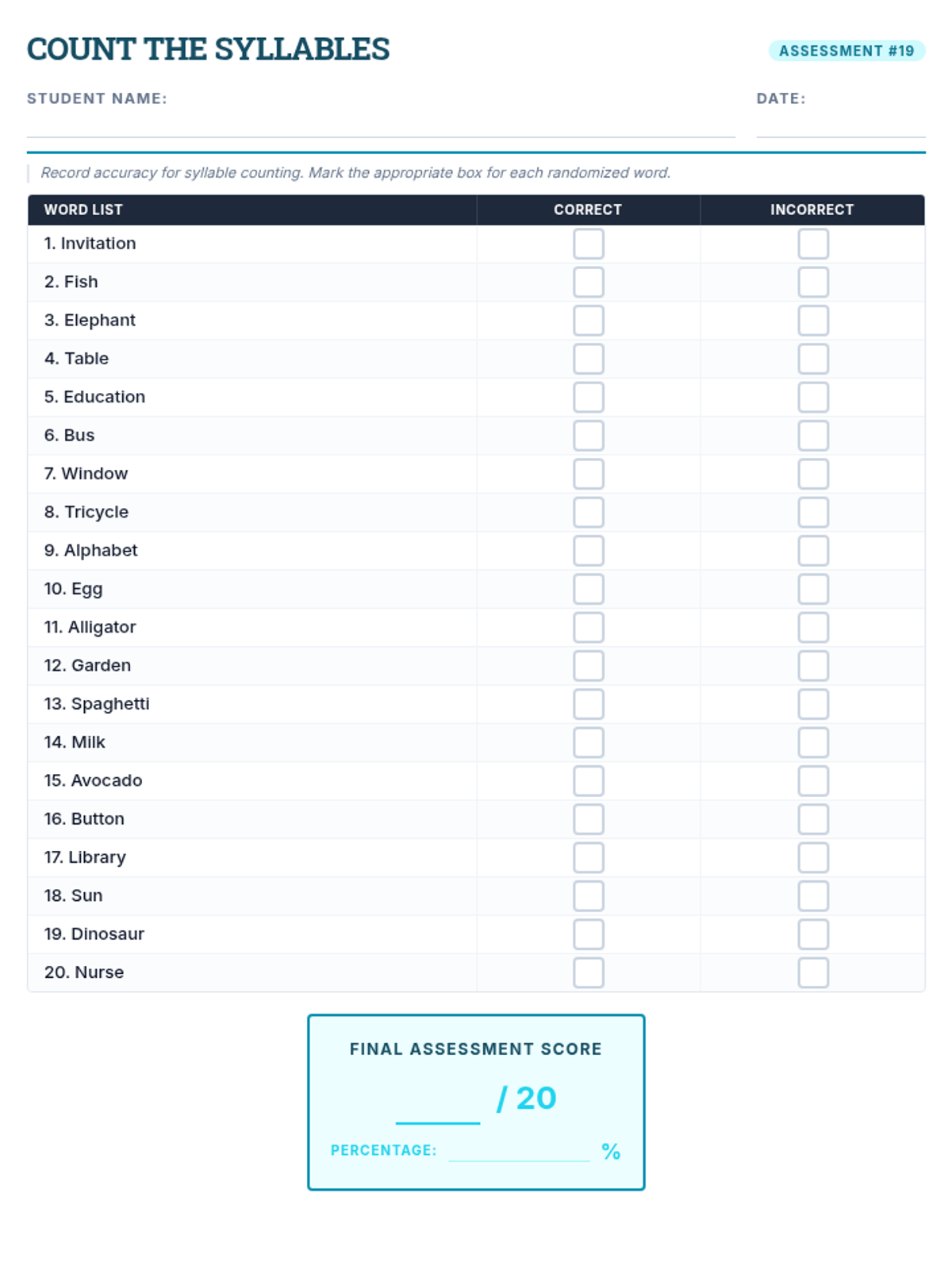
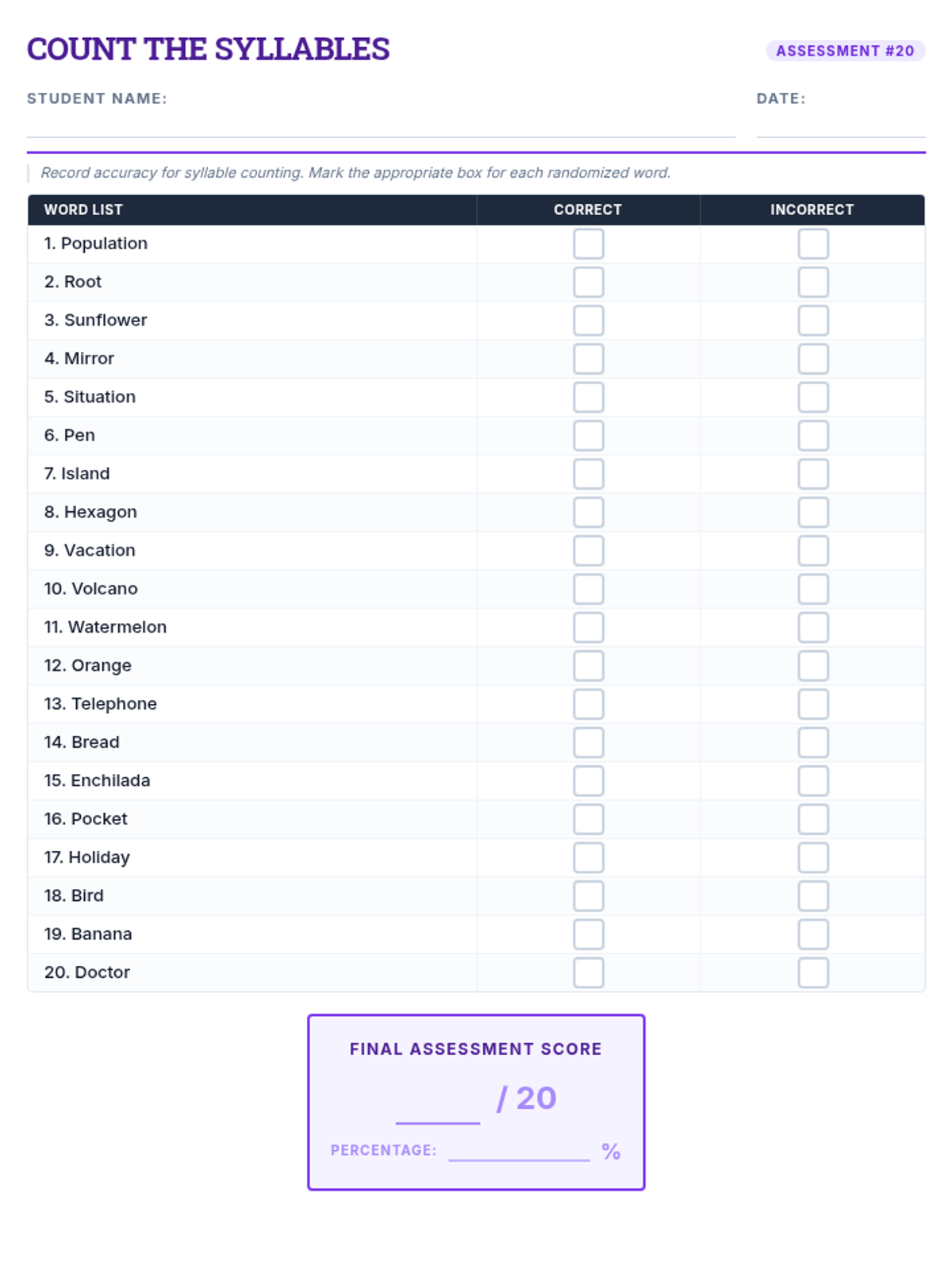
A comprehensive suite of 20 unique syllable assessment trackers for teachers to monitor student progress in phonological awareness. Each sheet features a randomized list of words ranging from 1 to 4 syllables.
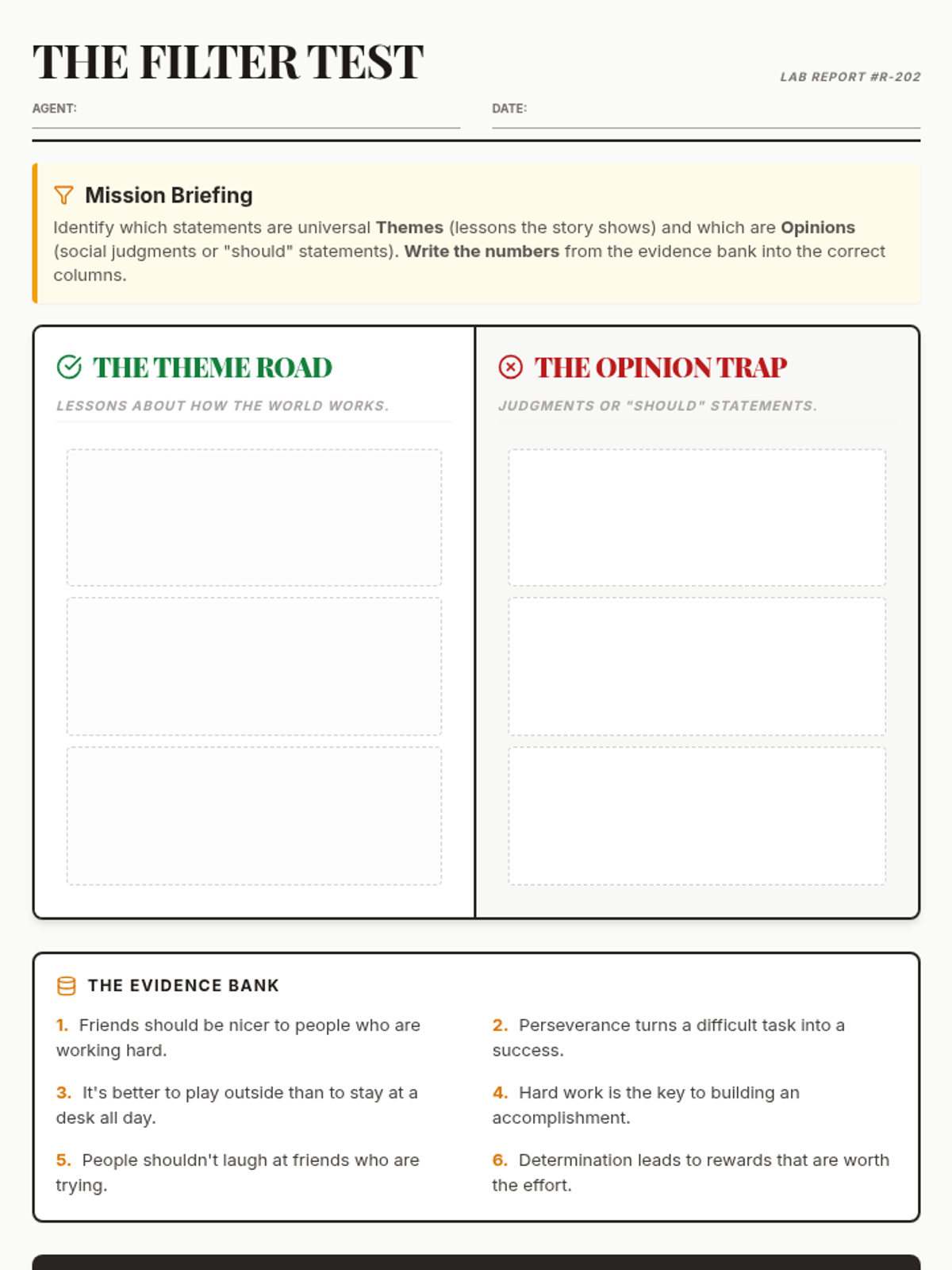
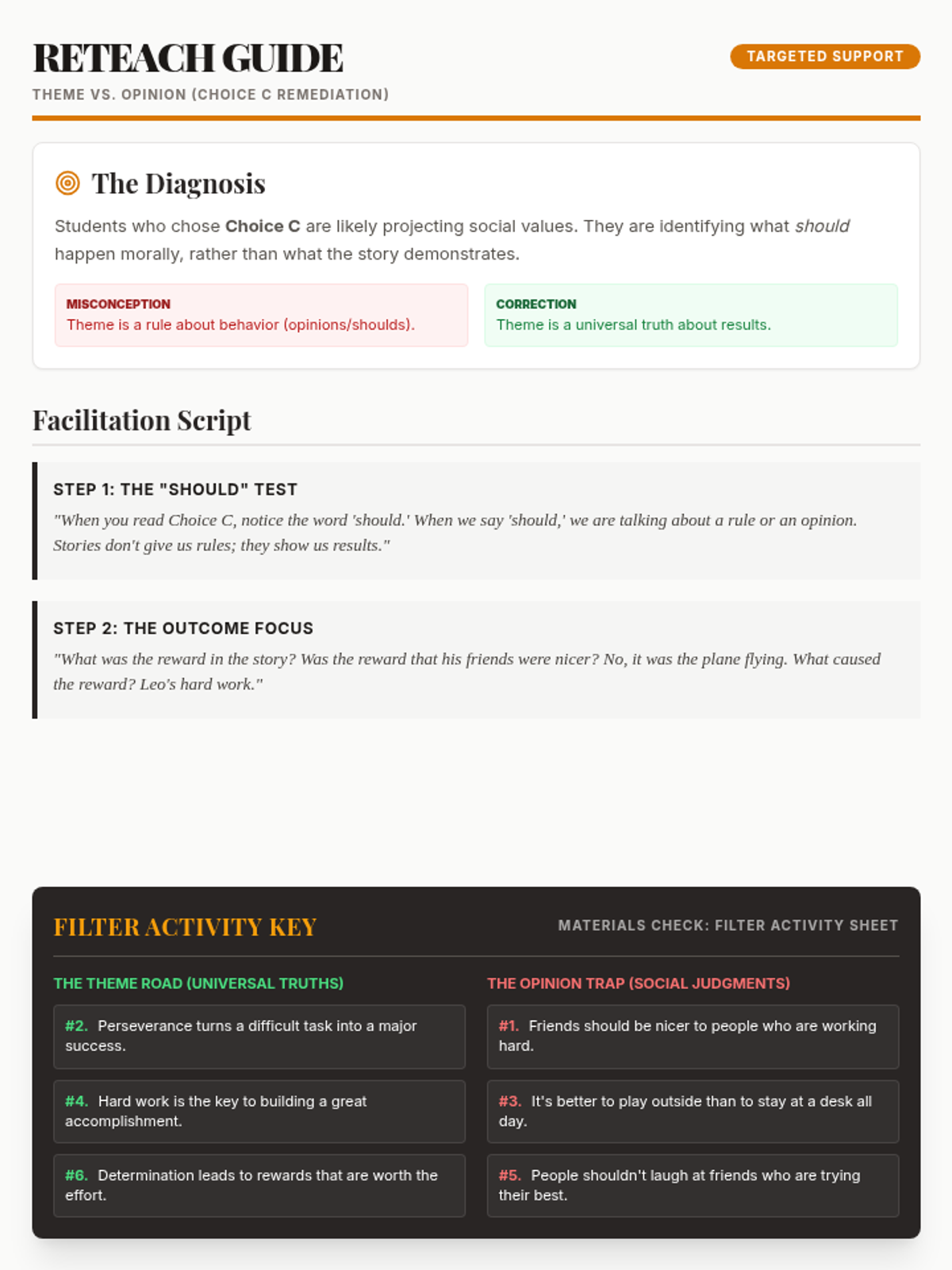
A targeted reteach lesson for students who confuse universal themes with subjective opinions or social judgments about characters. Focuses on the "Filter Test" to separate opinions from evidence-based themes.
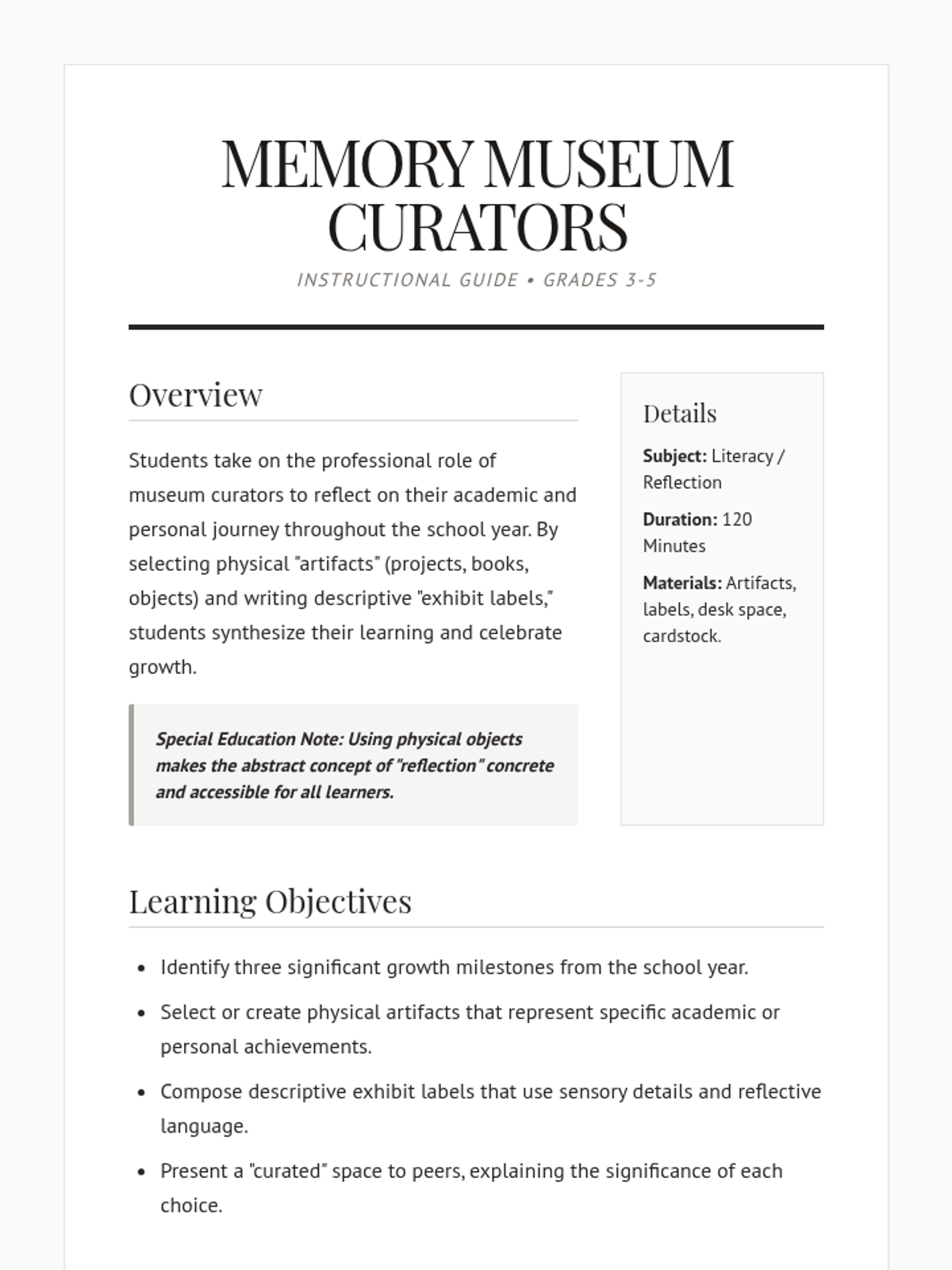
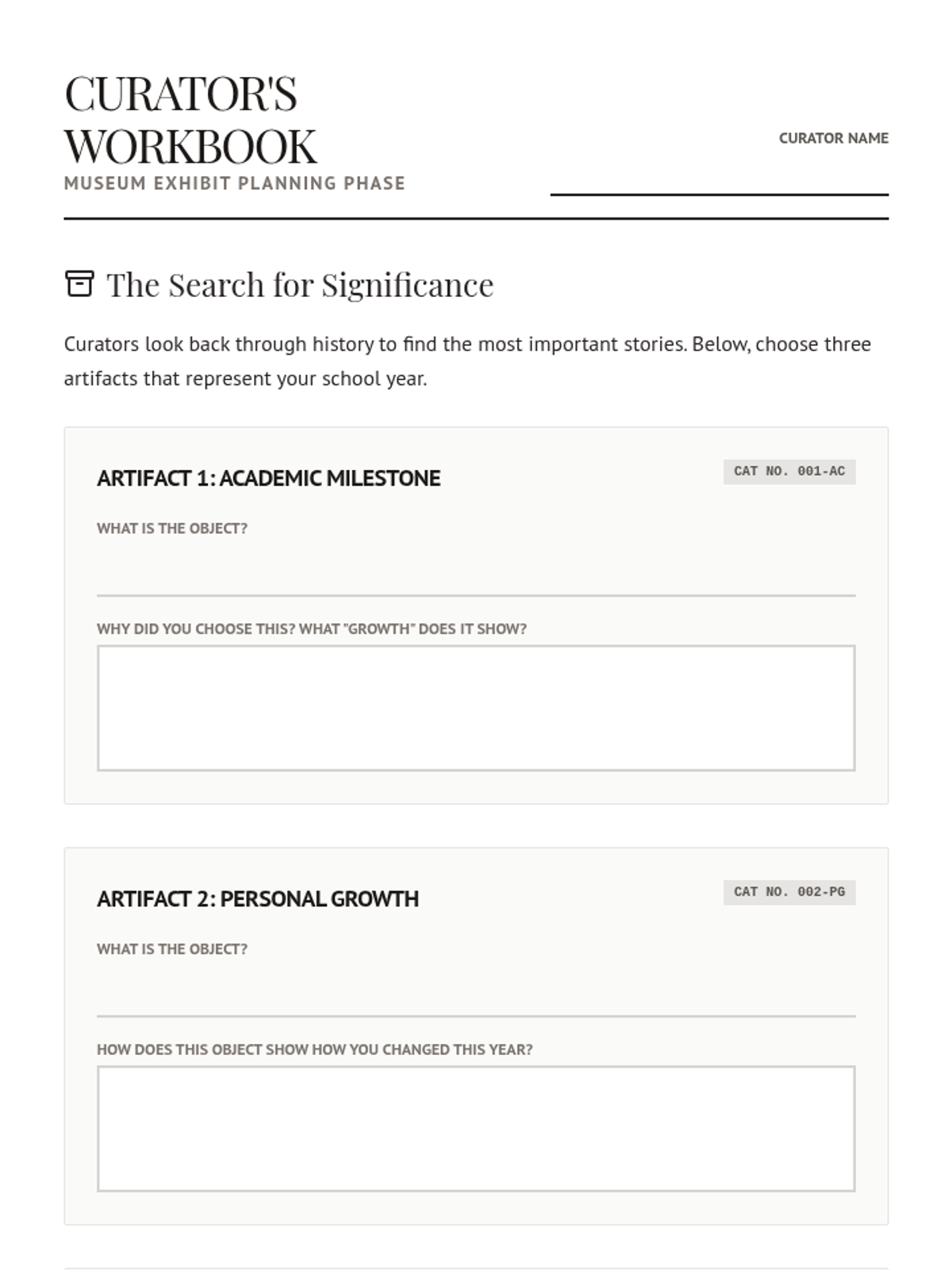
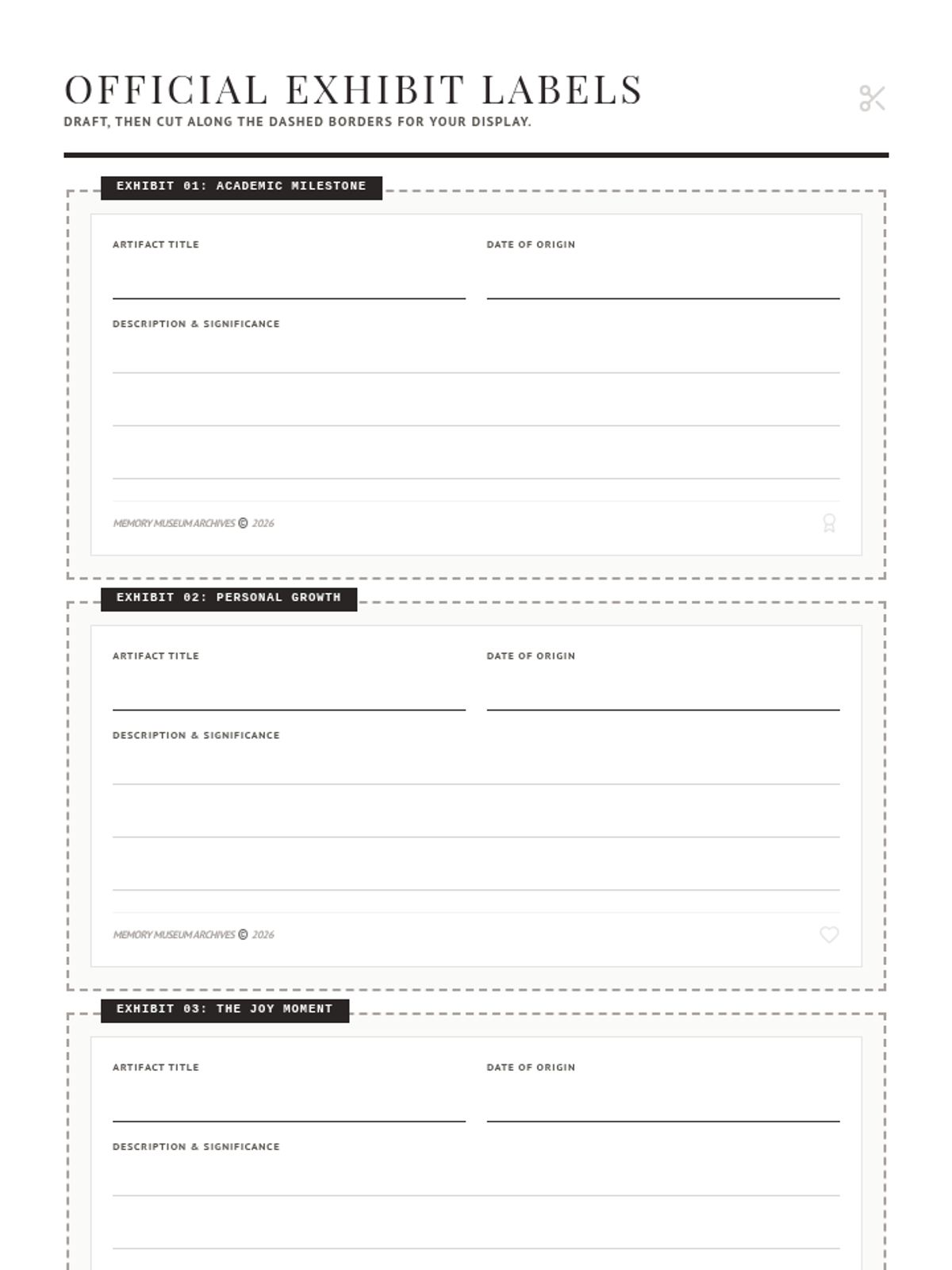
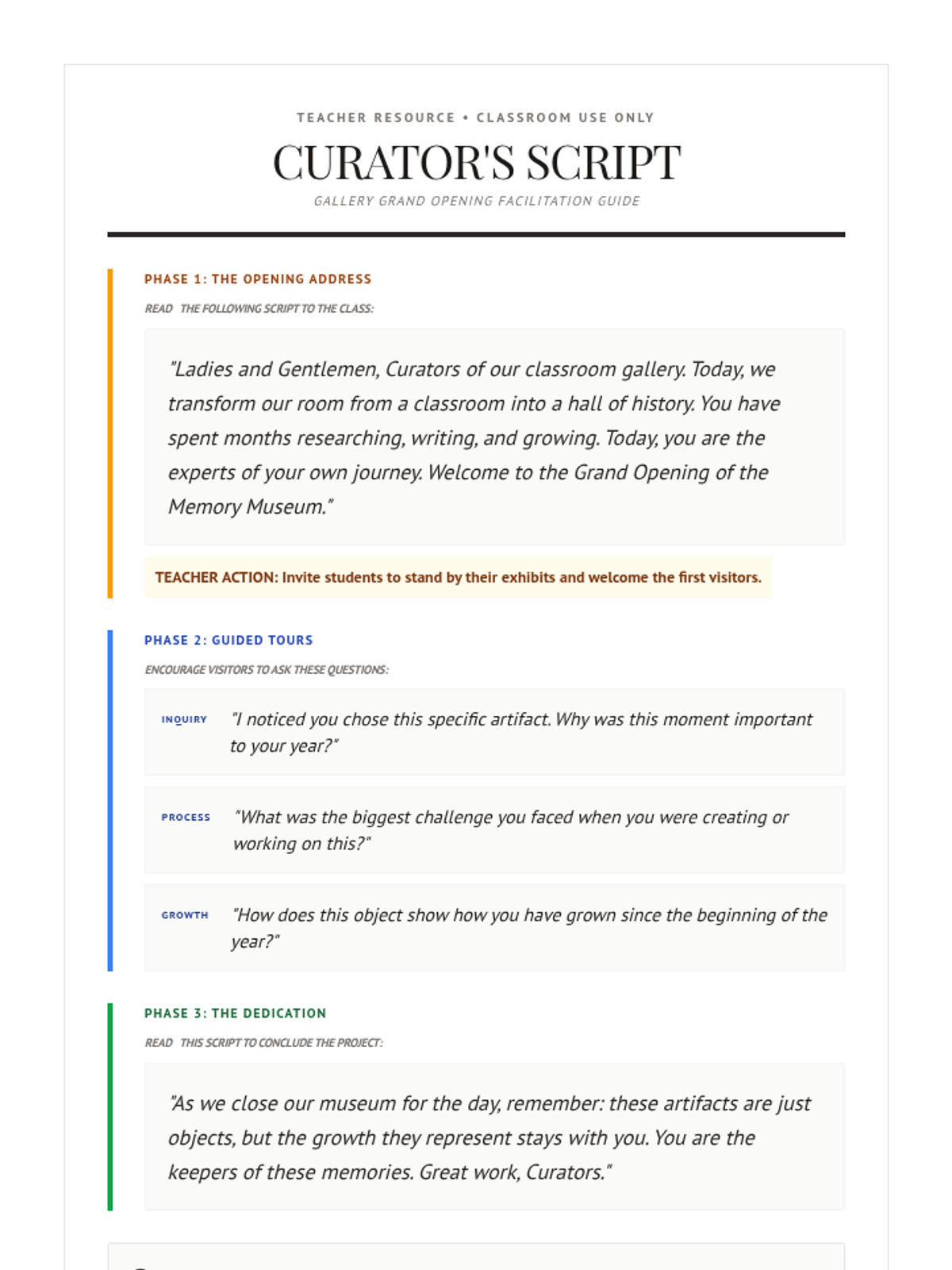
A reflective end-of-year literacy project where students act as museum curators to showcase their academic growth and personal milestones through physical artifacts and descriptive writing.
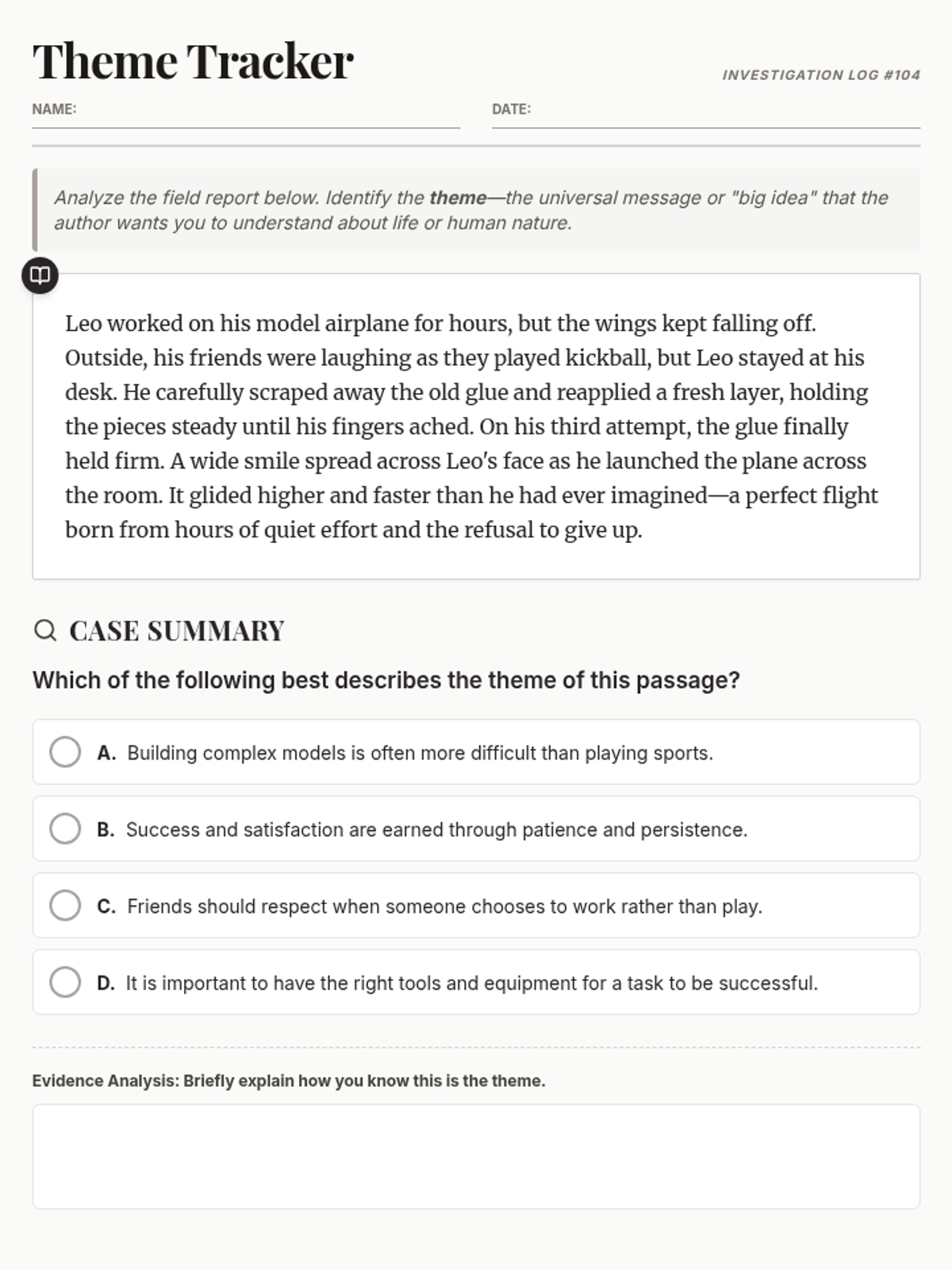
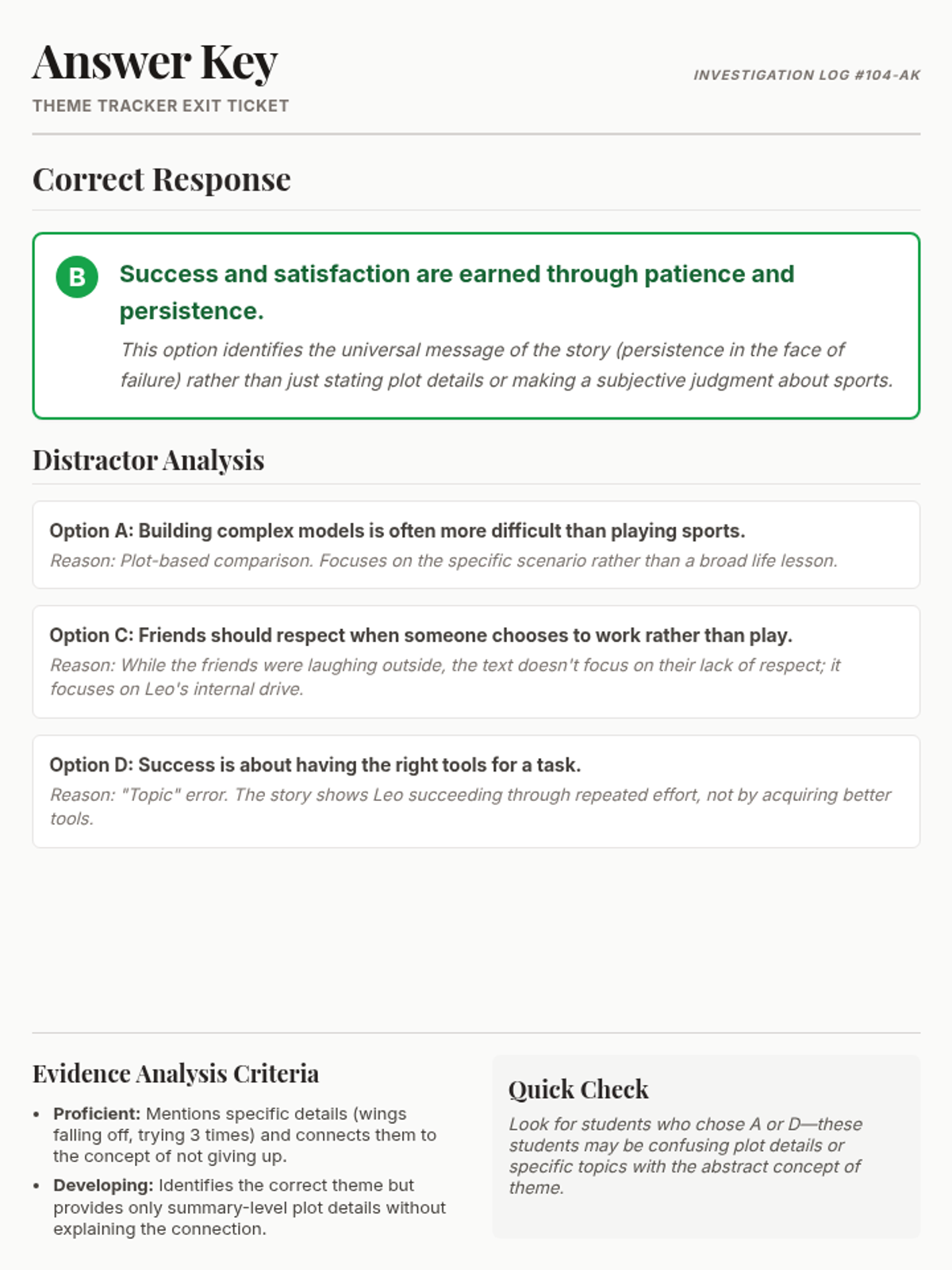
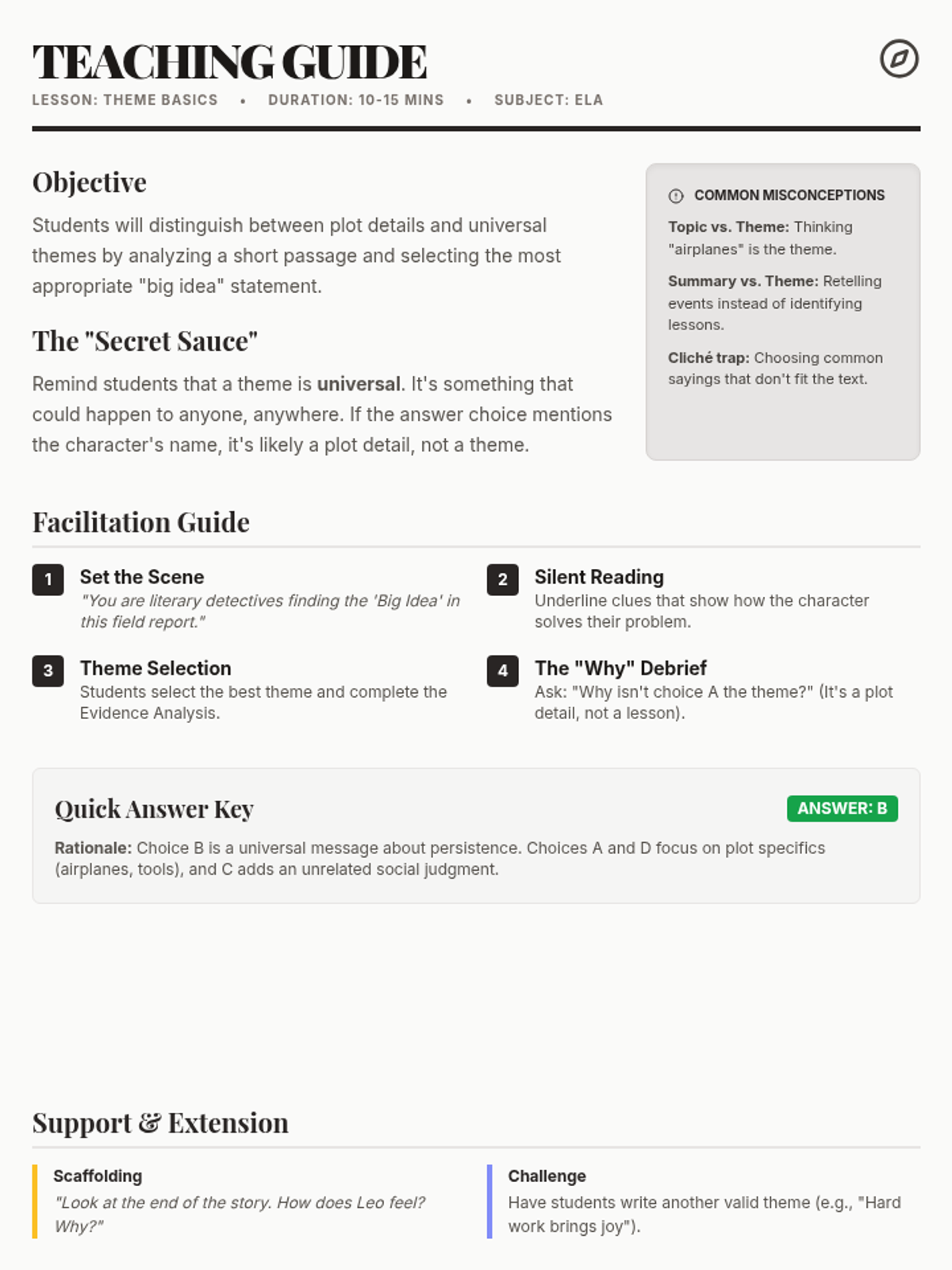
A short, focused lesson on identifying themes in literature using short fictional passages. Students learn to distinguish between plot details and universal messages.
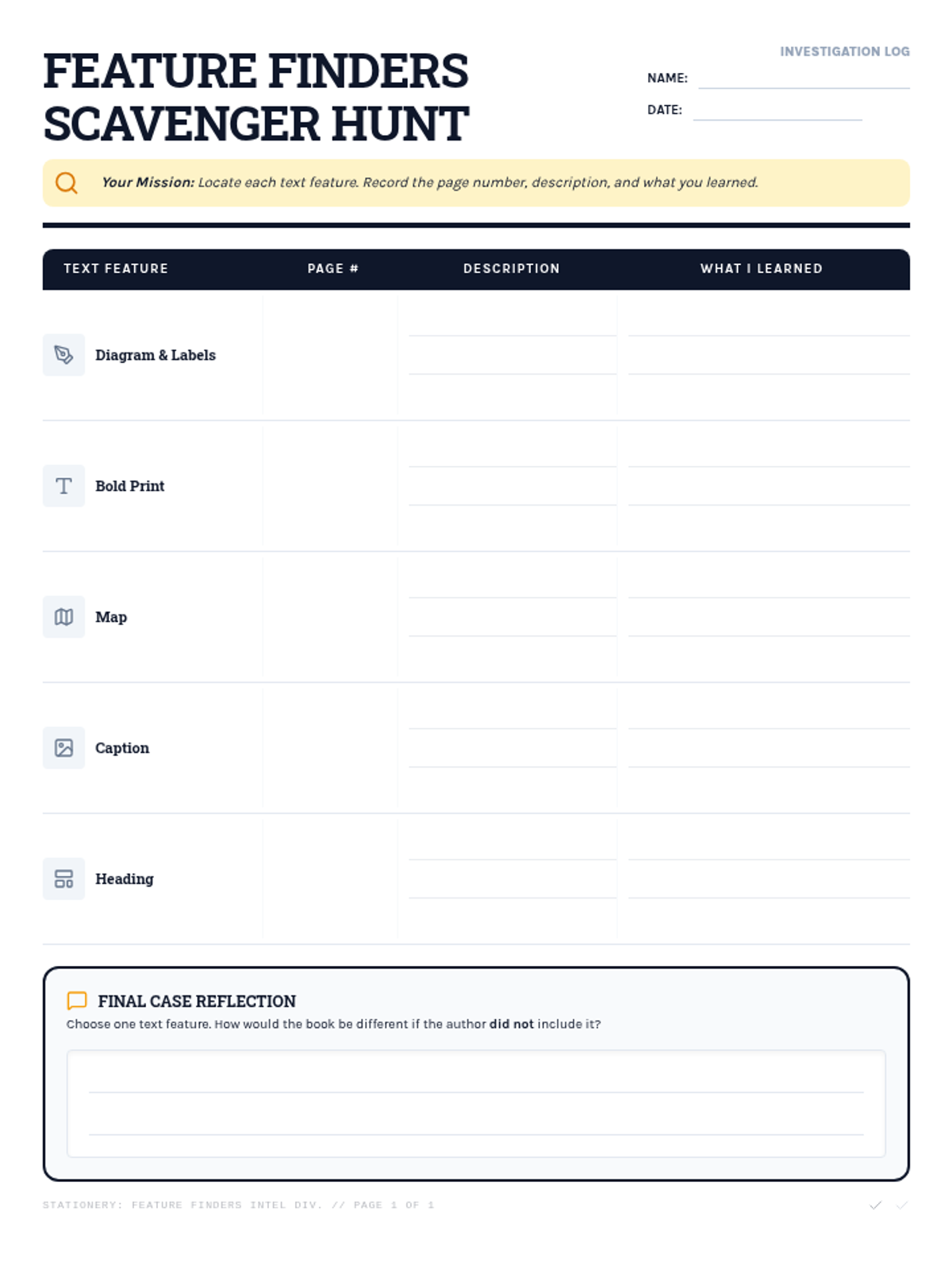
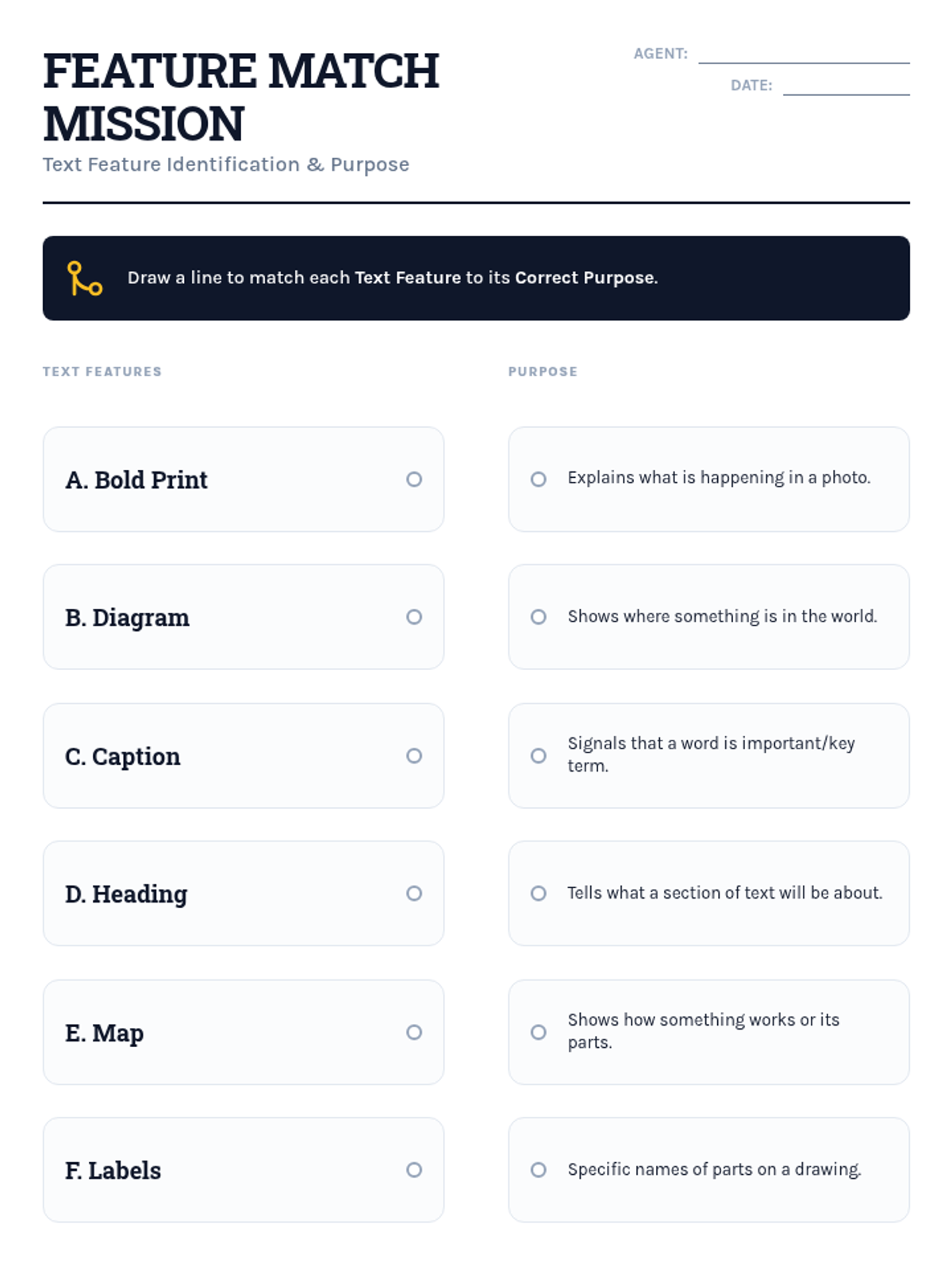
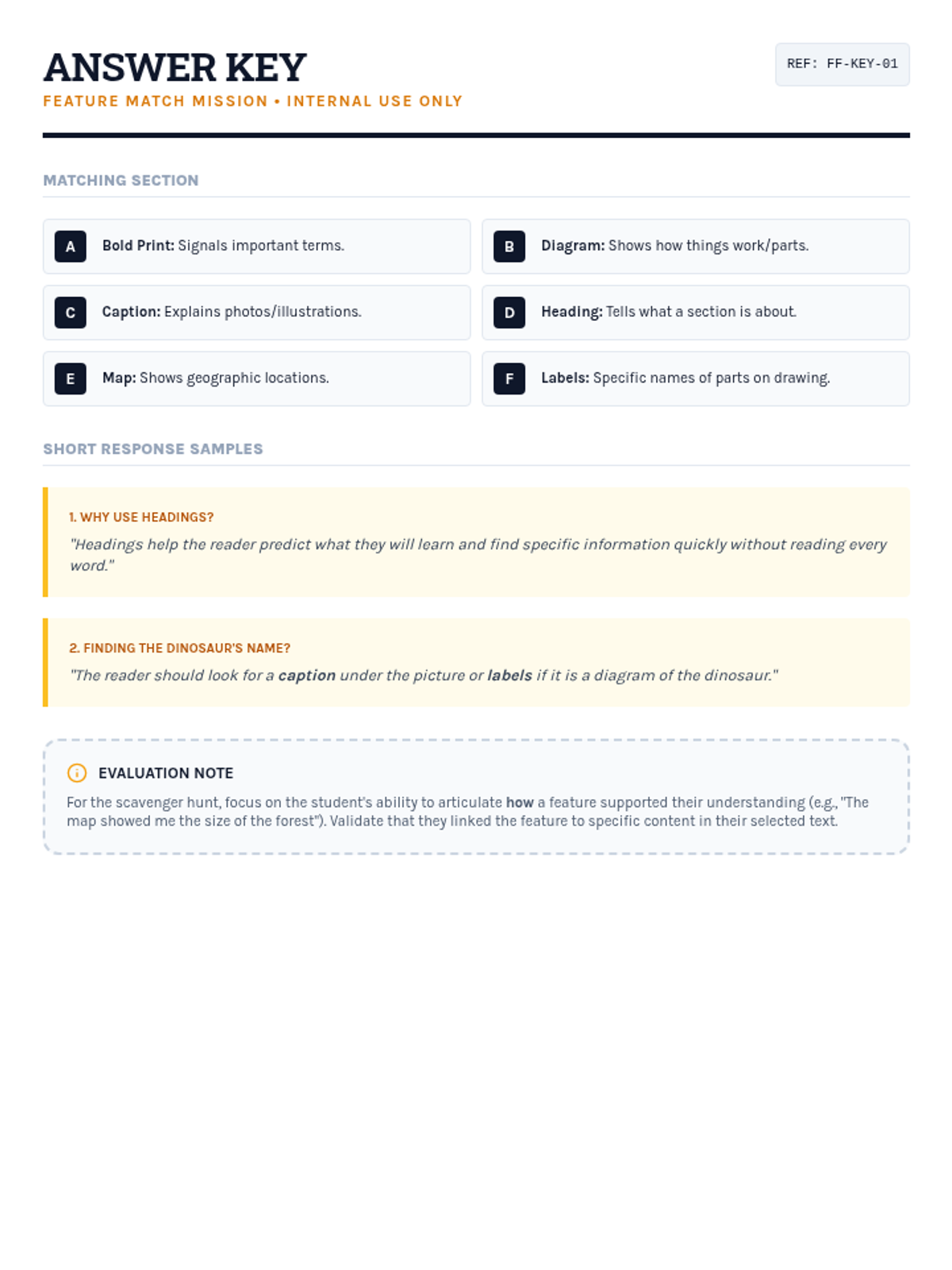
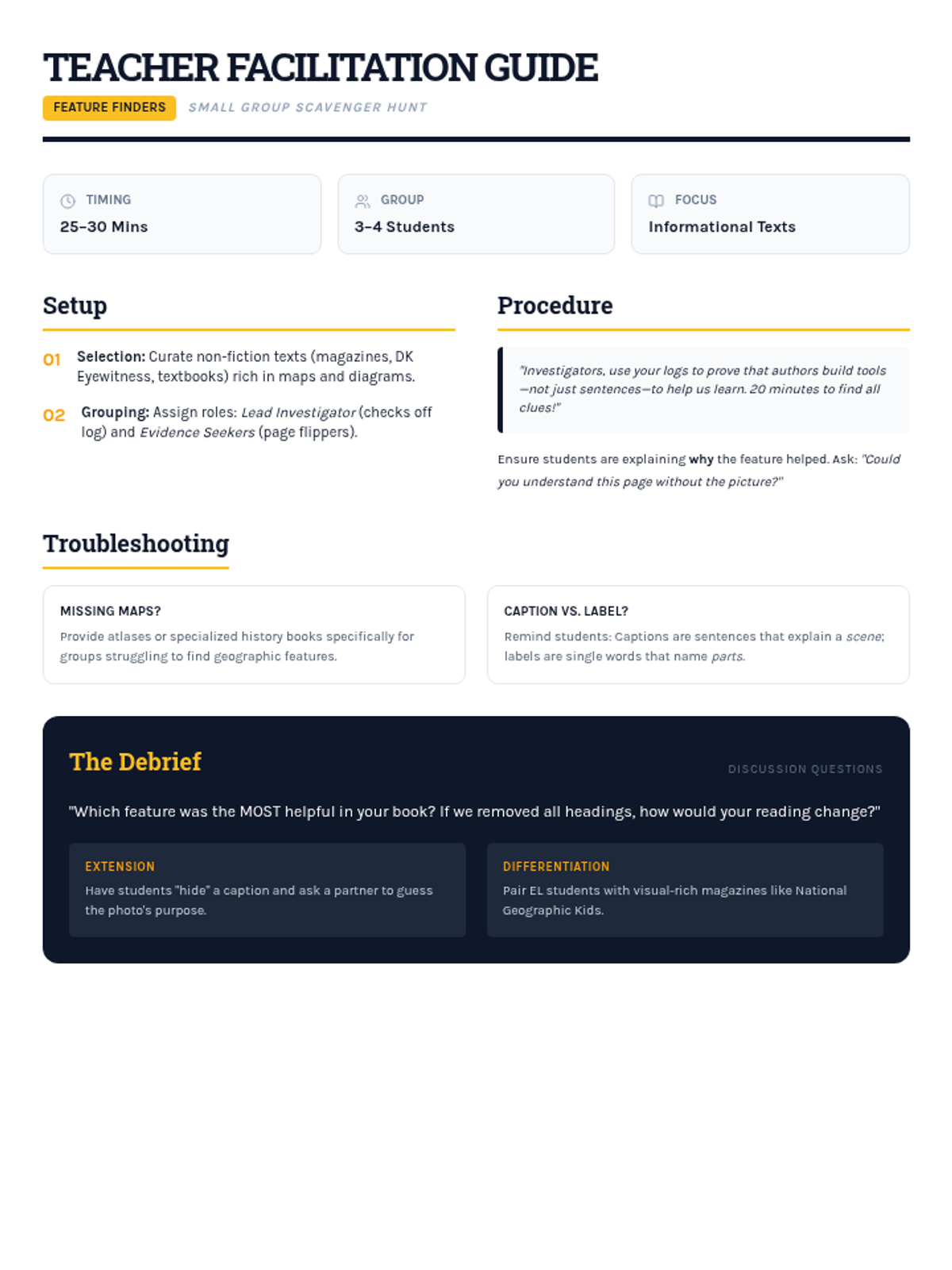
Students will investigate and identify the purpose of text features including diagrams, labels, bold print, maps, captions, and headings through an interactive presentation, a matching activity, and a hands-on scavenger hunt.
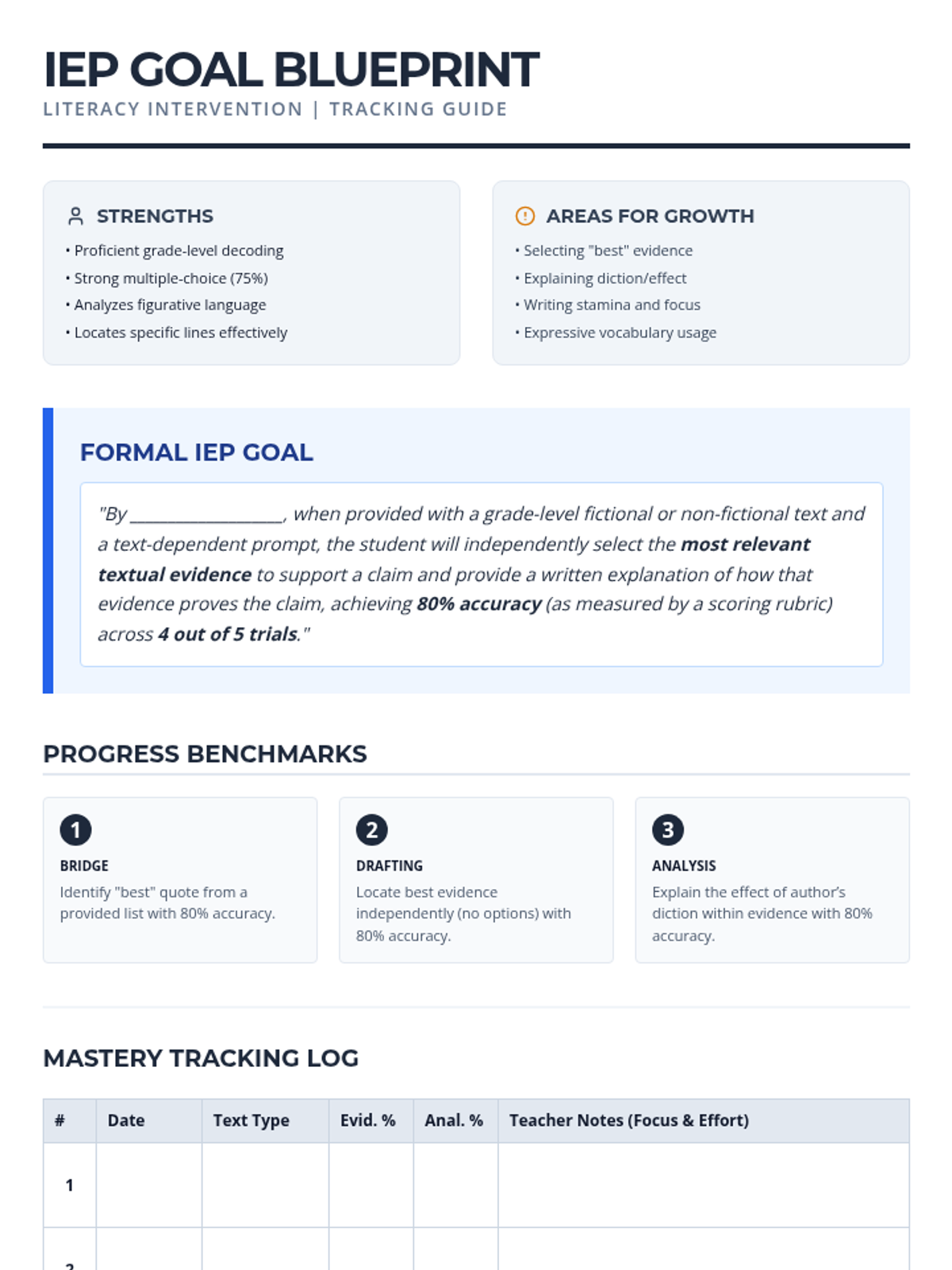
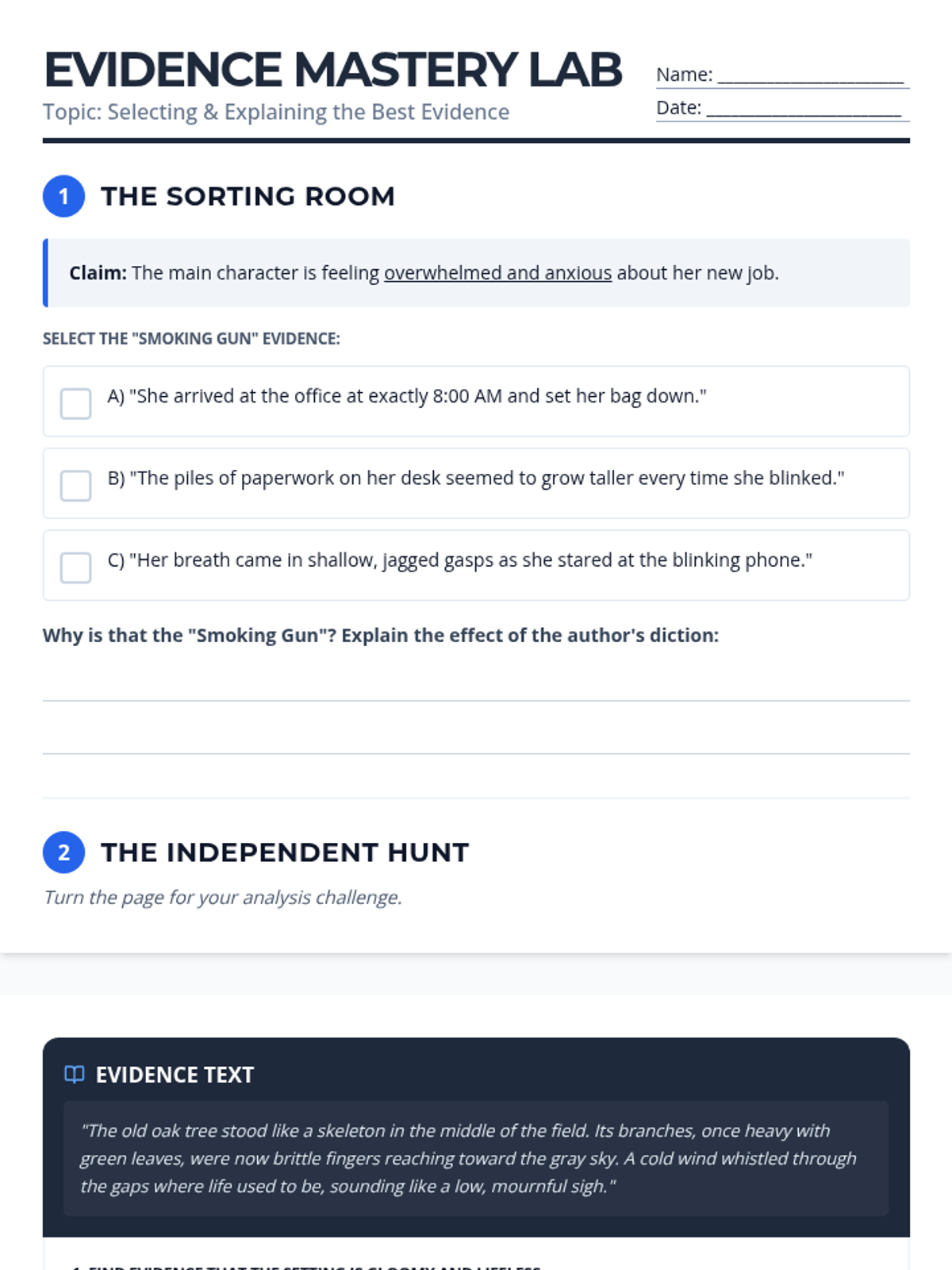
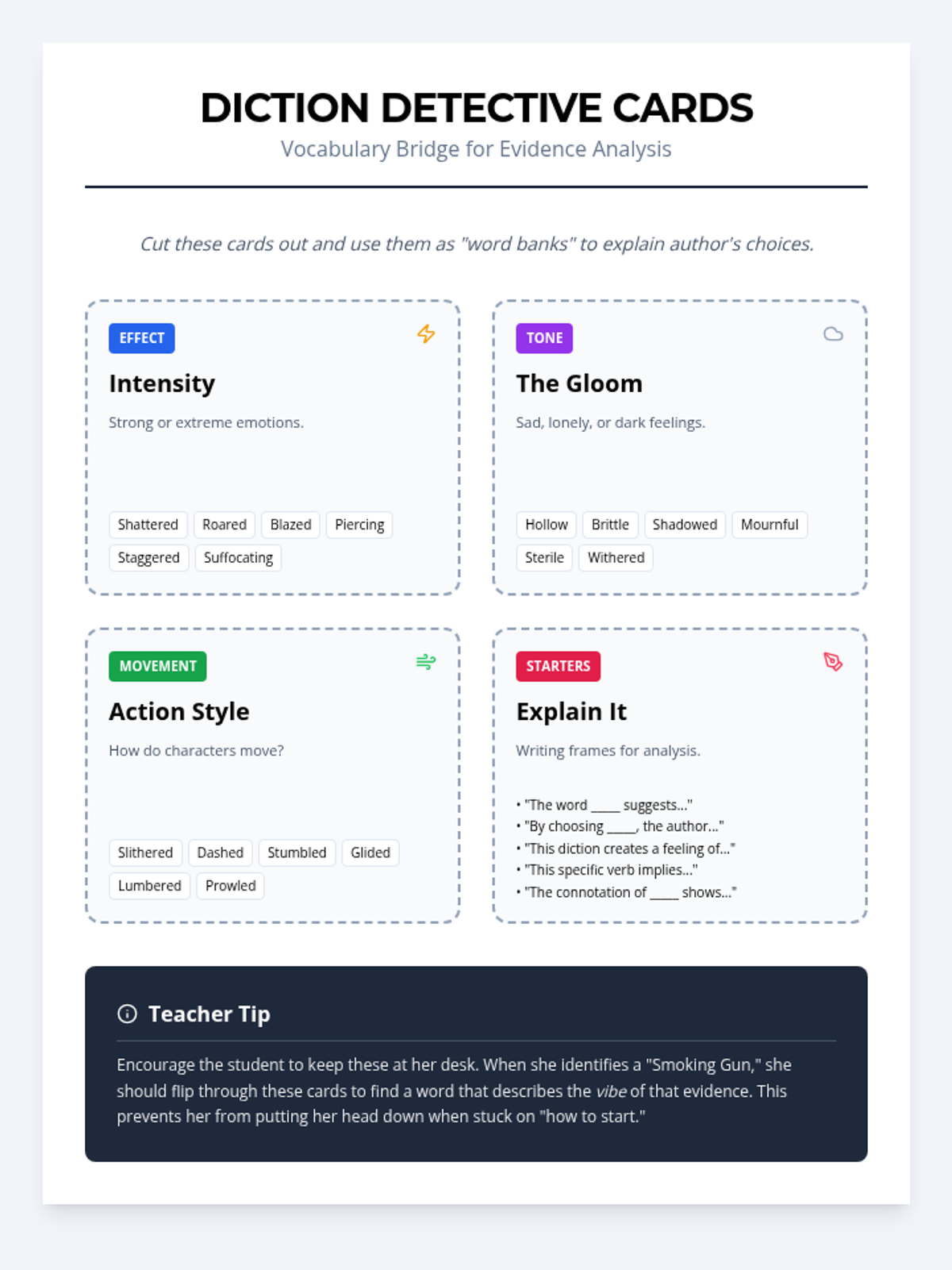
A comprehensive lesson focused on helping students master the skill of selecting and citing the 'best' textual evidence to support an argument, specifically designed to address gaps in writing and diction analysis.
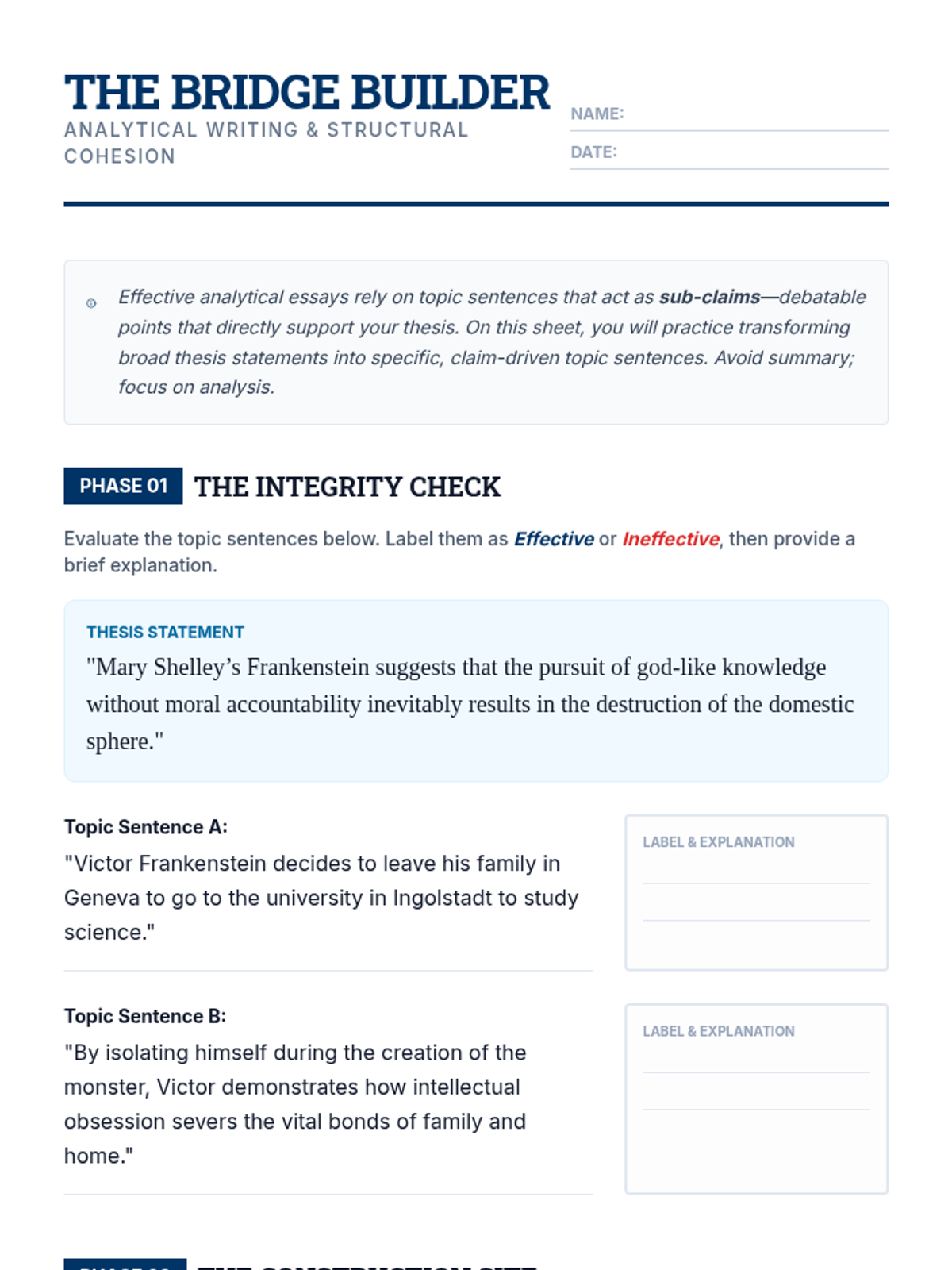
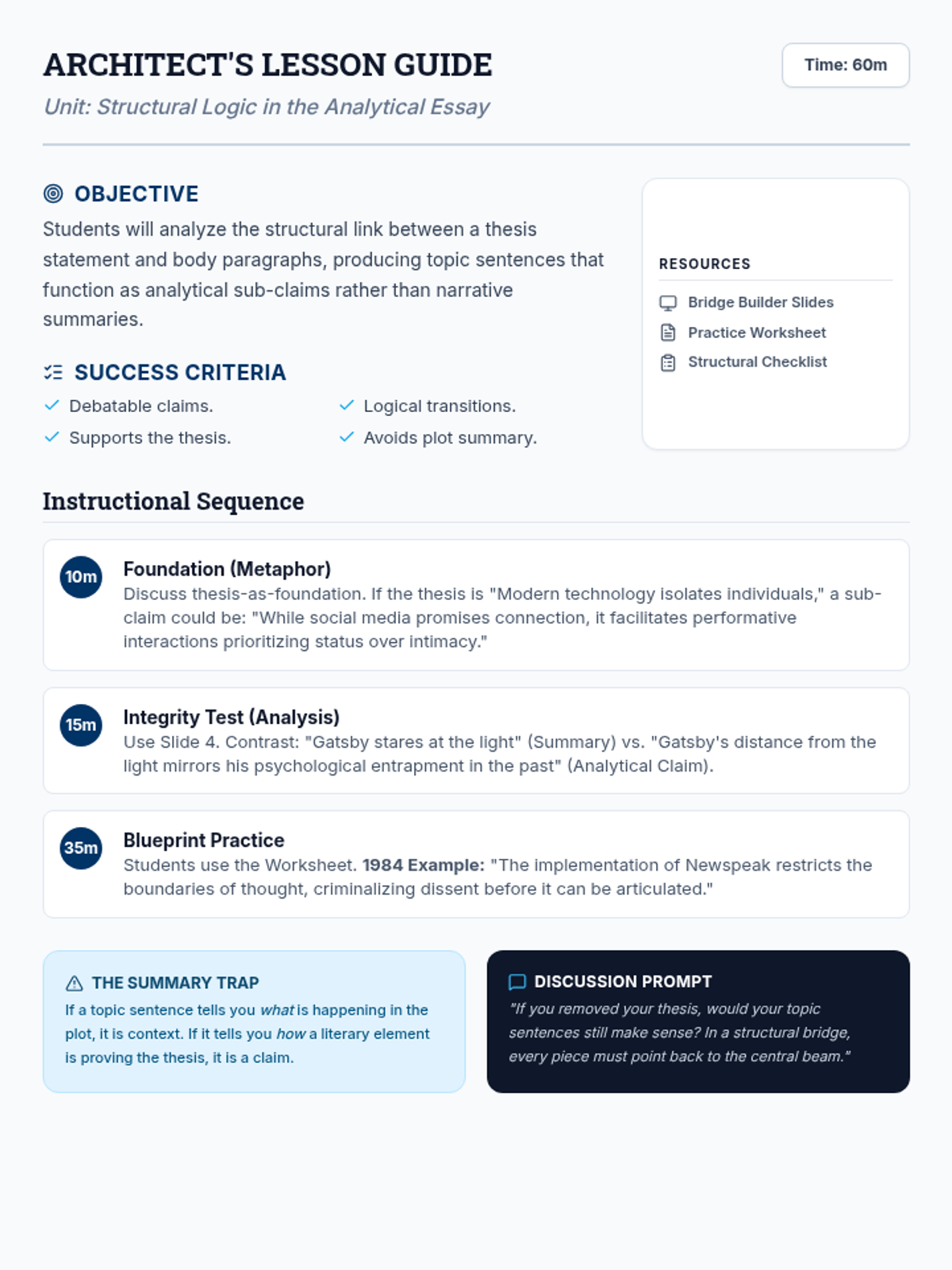
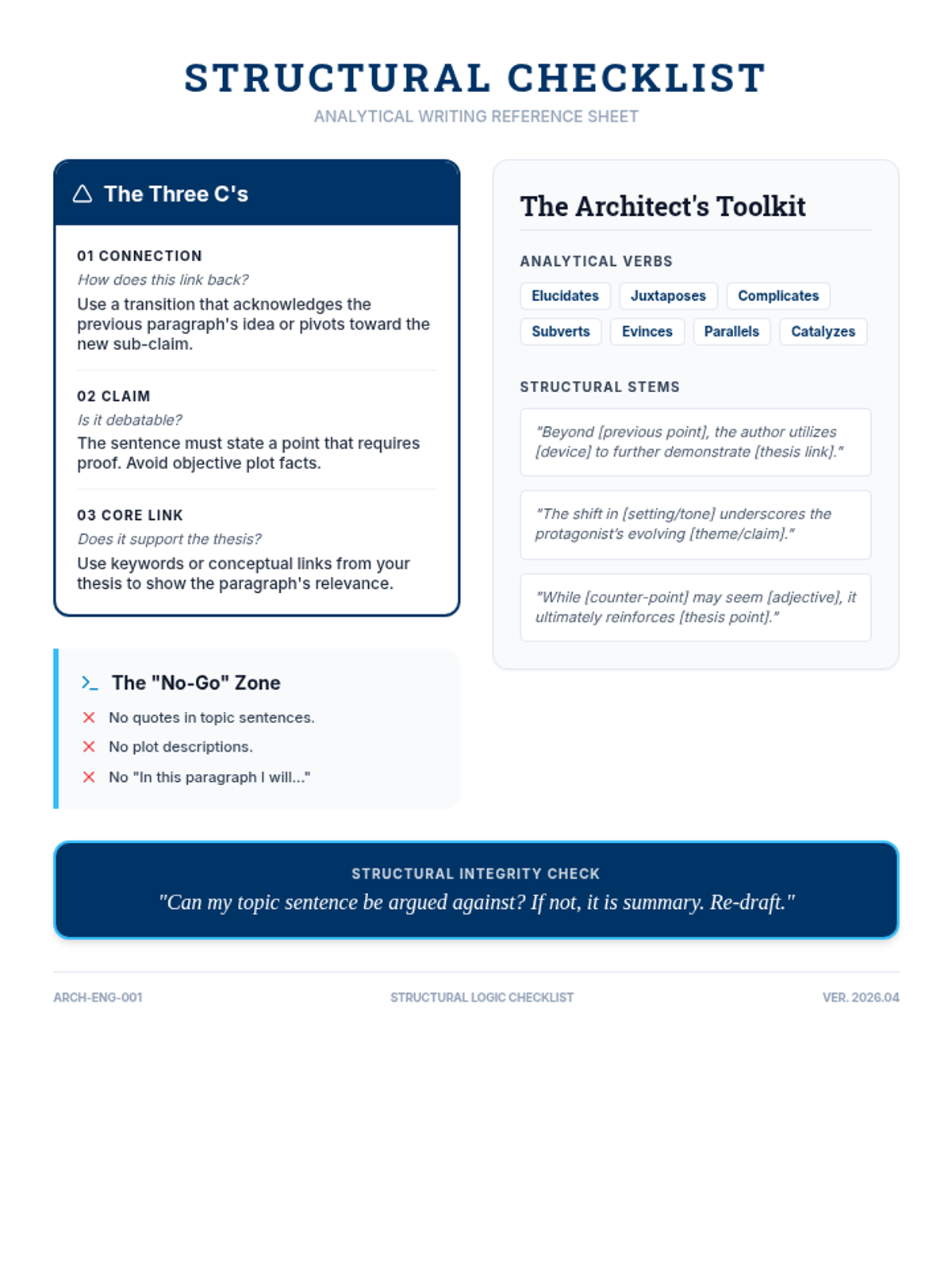
A rigorous lesson on bridging the gap between an analytical thesis statement and body paragraphs through logical, claim-driven topic sentences.
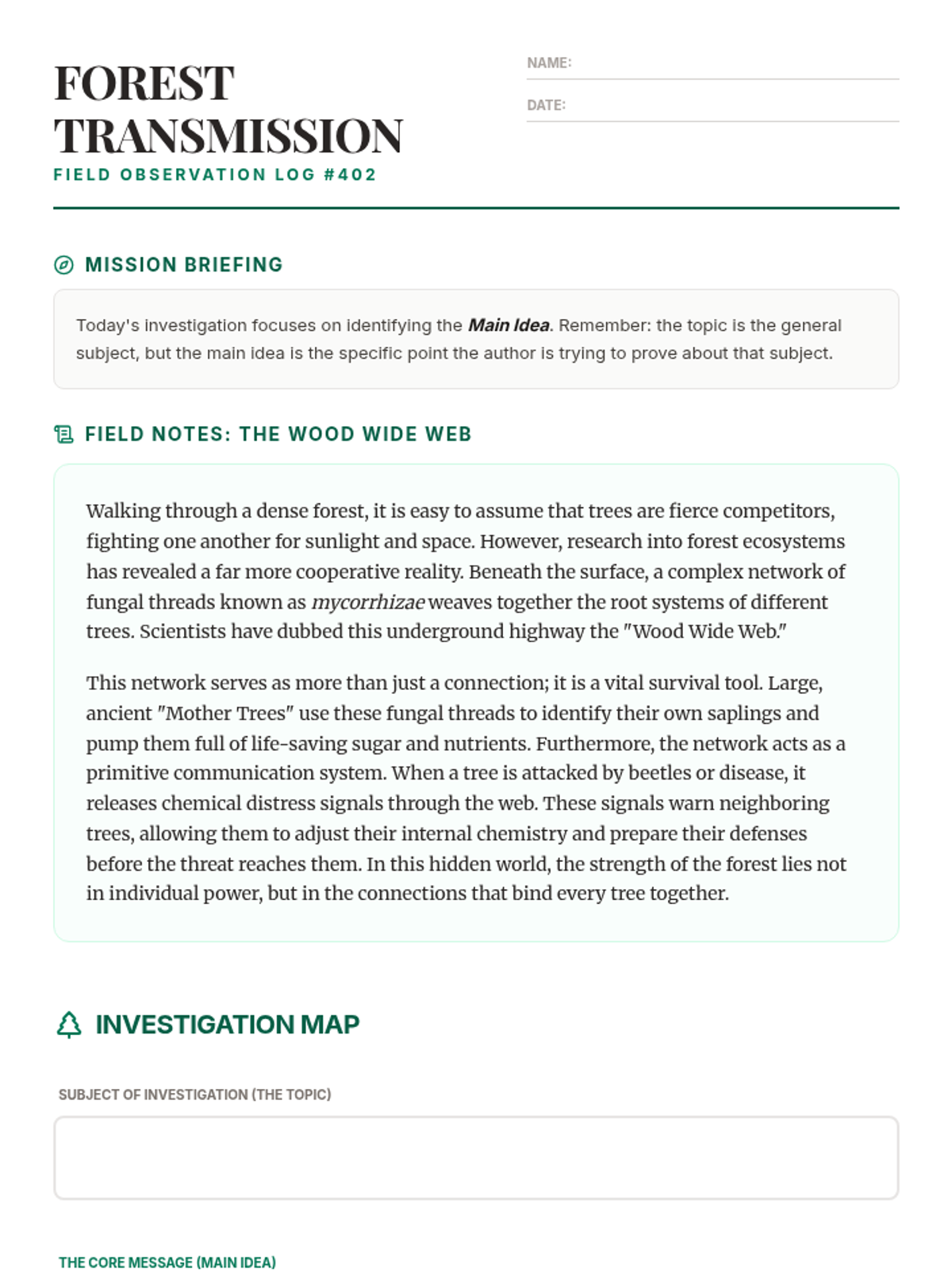
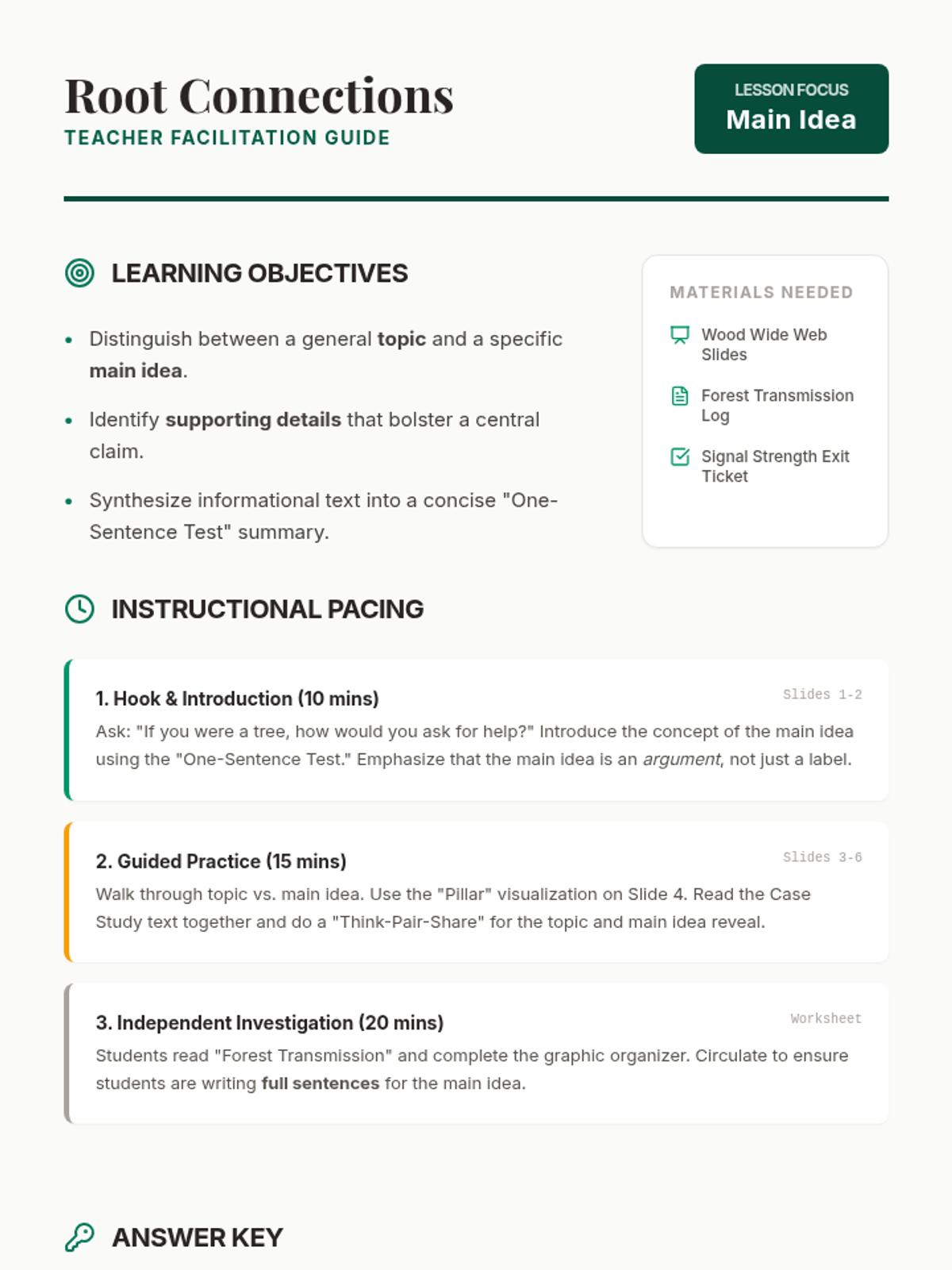
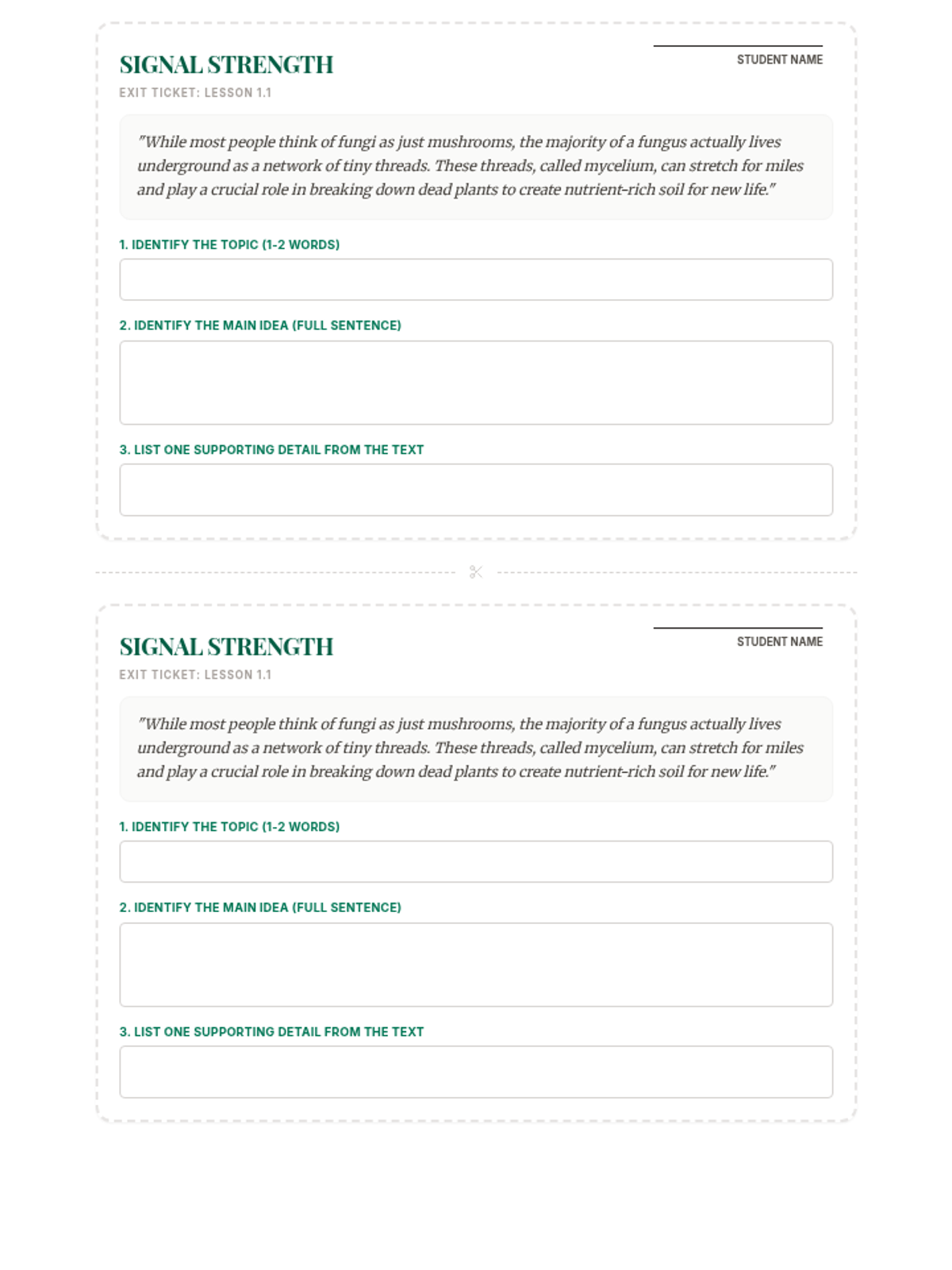
Students explore the 'Wood Wide Web'—the underground fungal network trees use to communicate—while learning strategies to identify the main idea and distinguish it from the topic and supporting details.
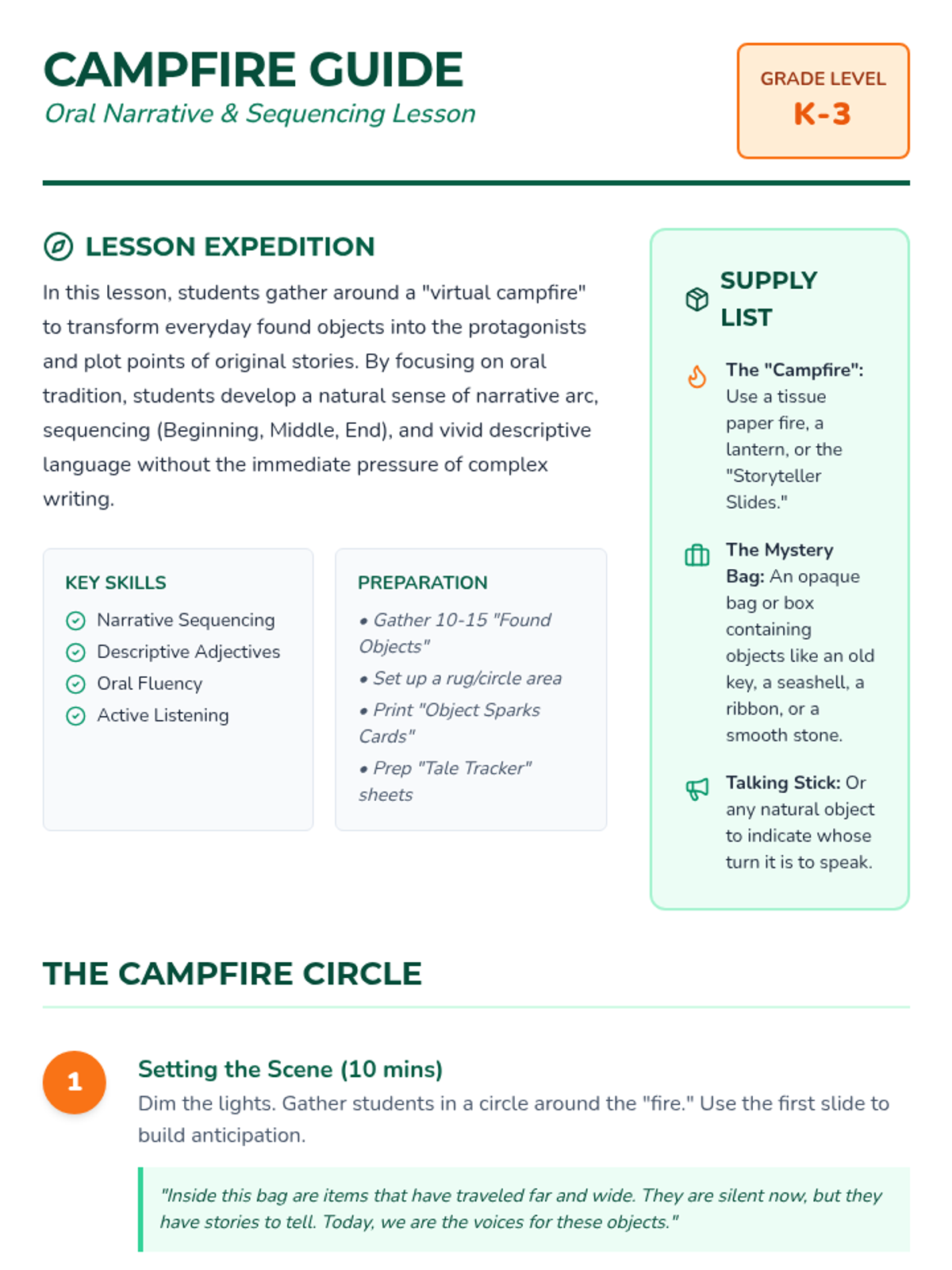
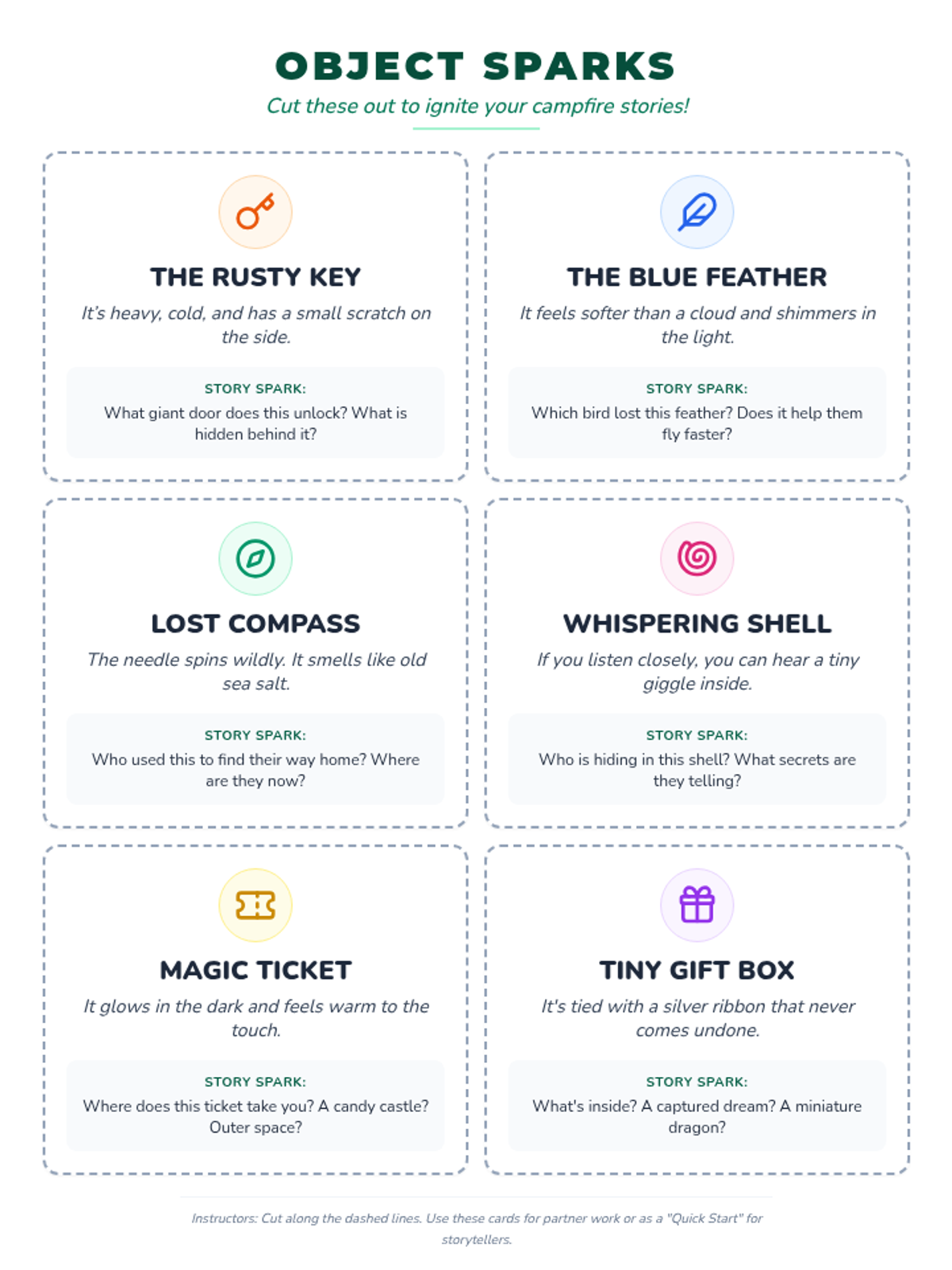
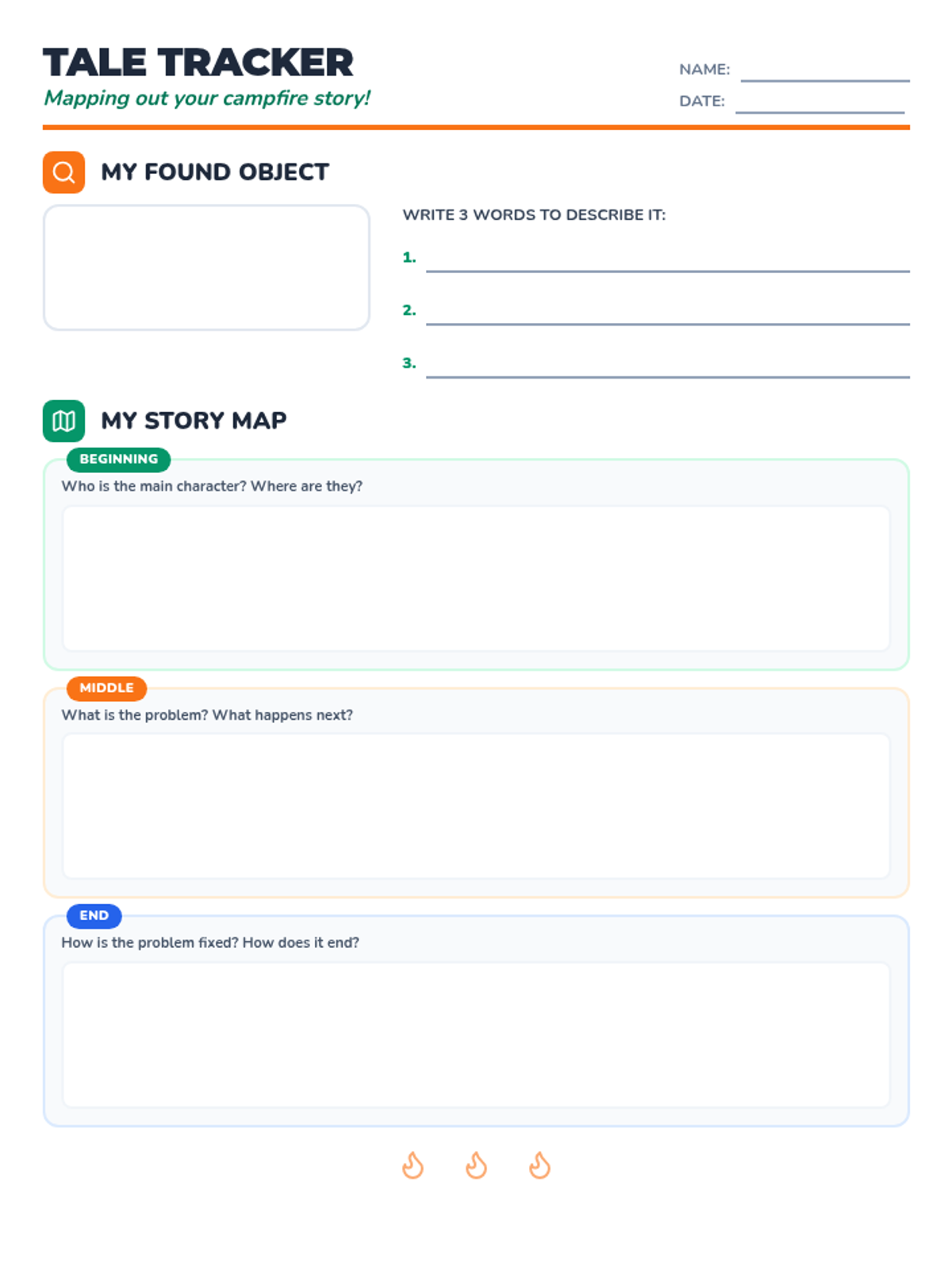
A creative storytelling lesson for K-3 students that uses found objects to develop oral narrative skills, sequencing, and descriptive language in a cozy campfire-themed setting.
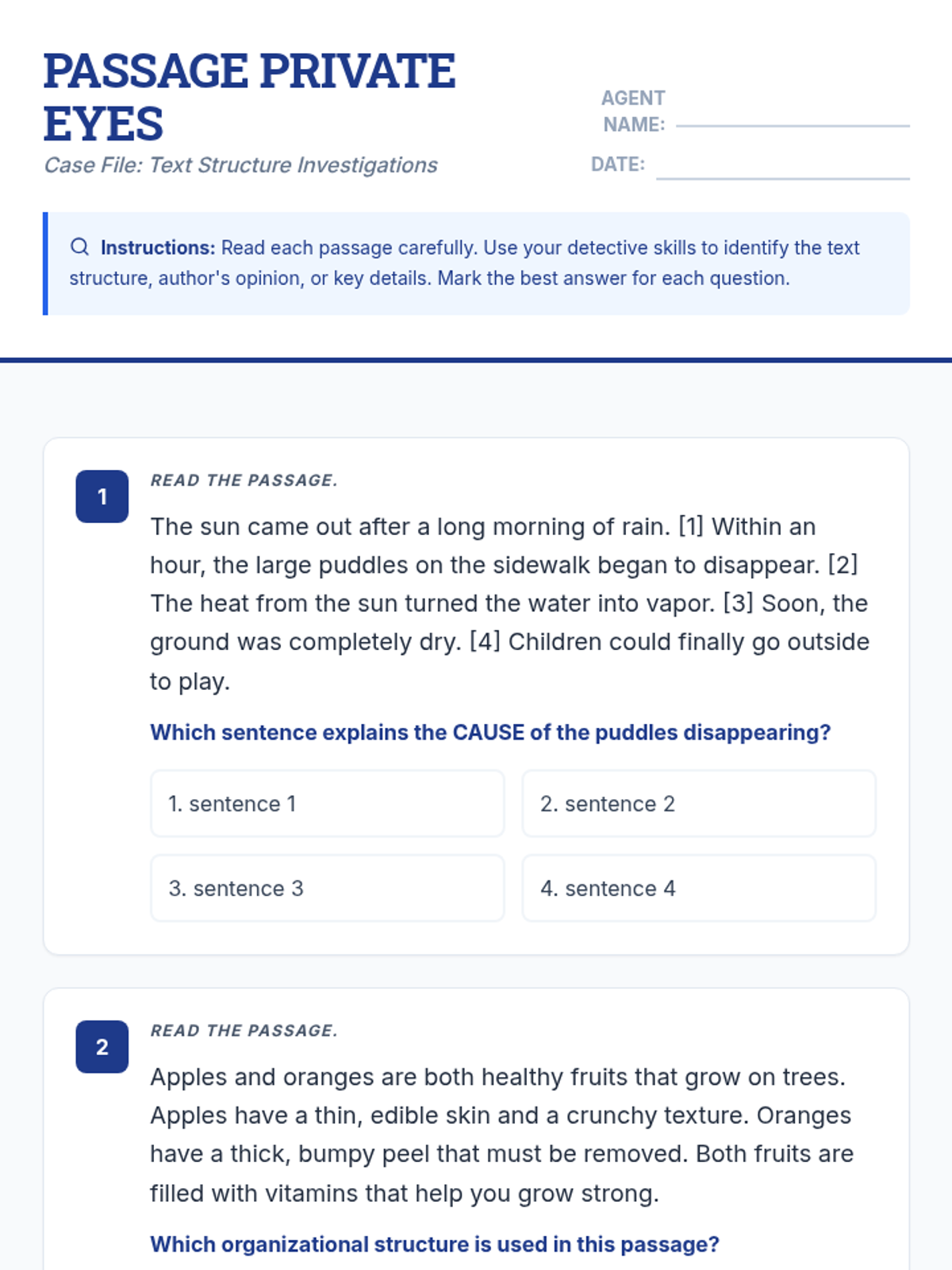
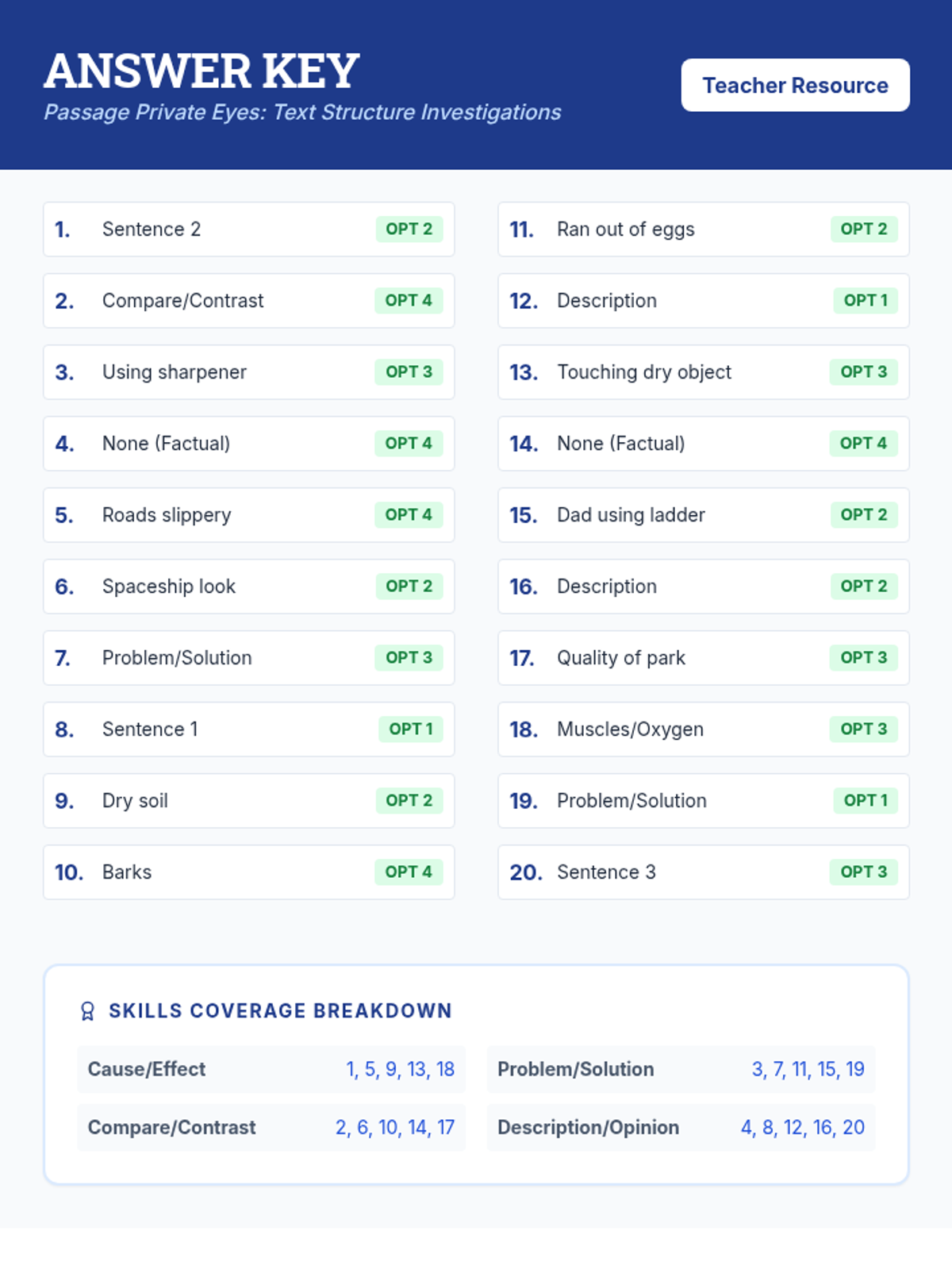
A reading comprehension lesson focused on identifying text structures and author's purpose across multiple genres for elementary students.