A 1st Grade geometry lesson focusing on the defining attributes of squares and non-square rectangles. Students use a 'Sorting Rule Factory' to categorize shapes and explore the relationship between these two quadrilaterals.

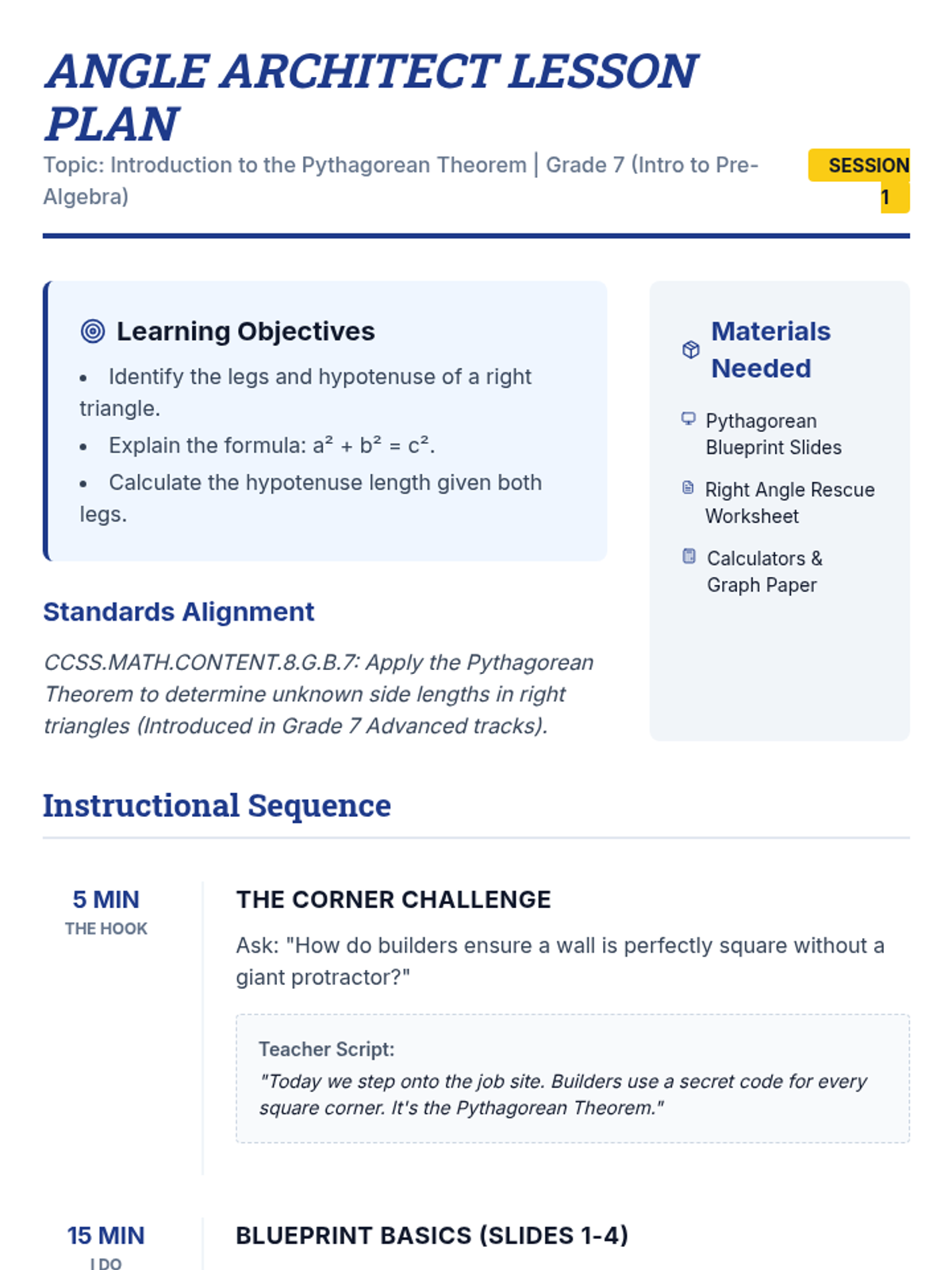
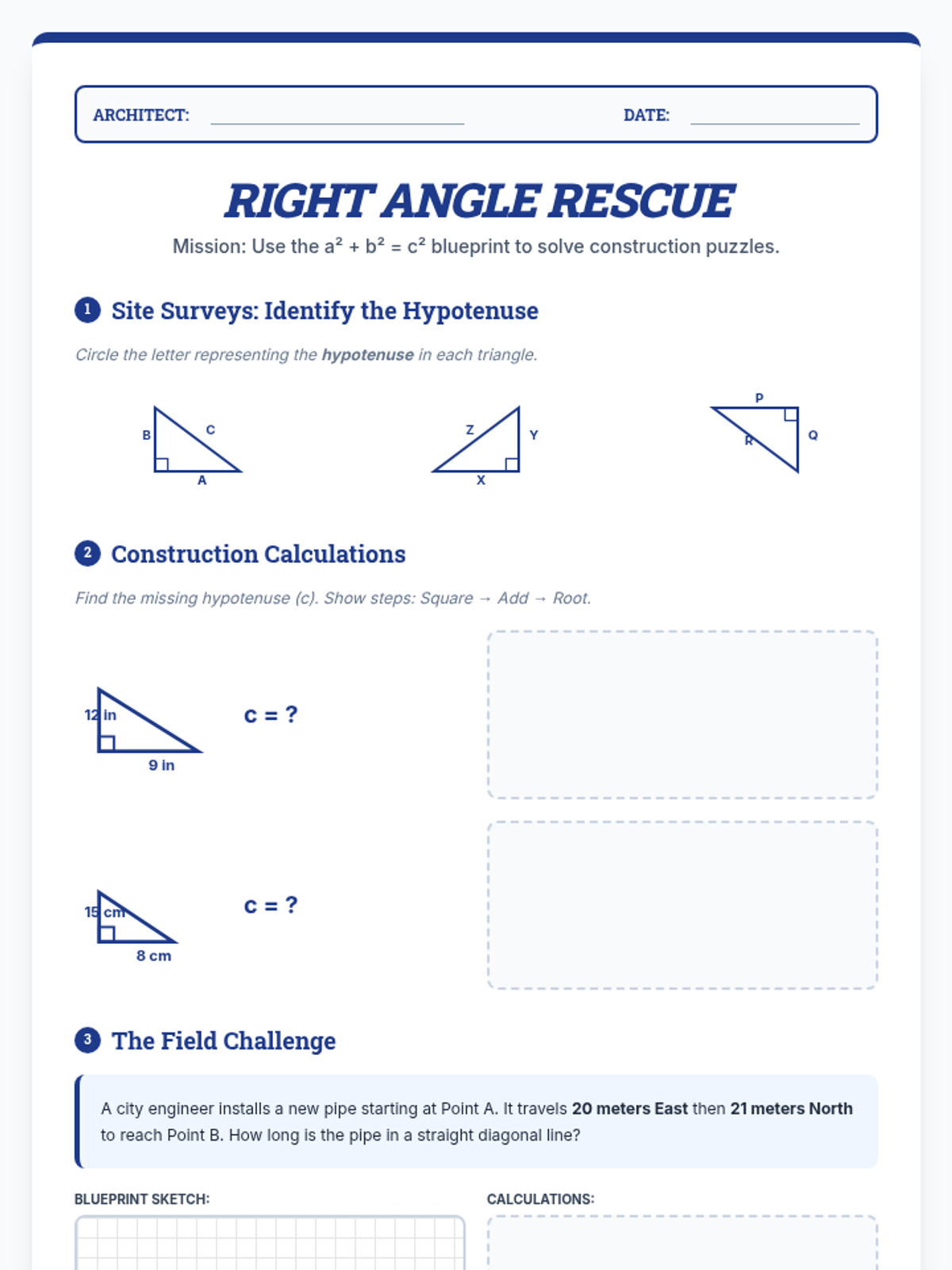
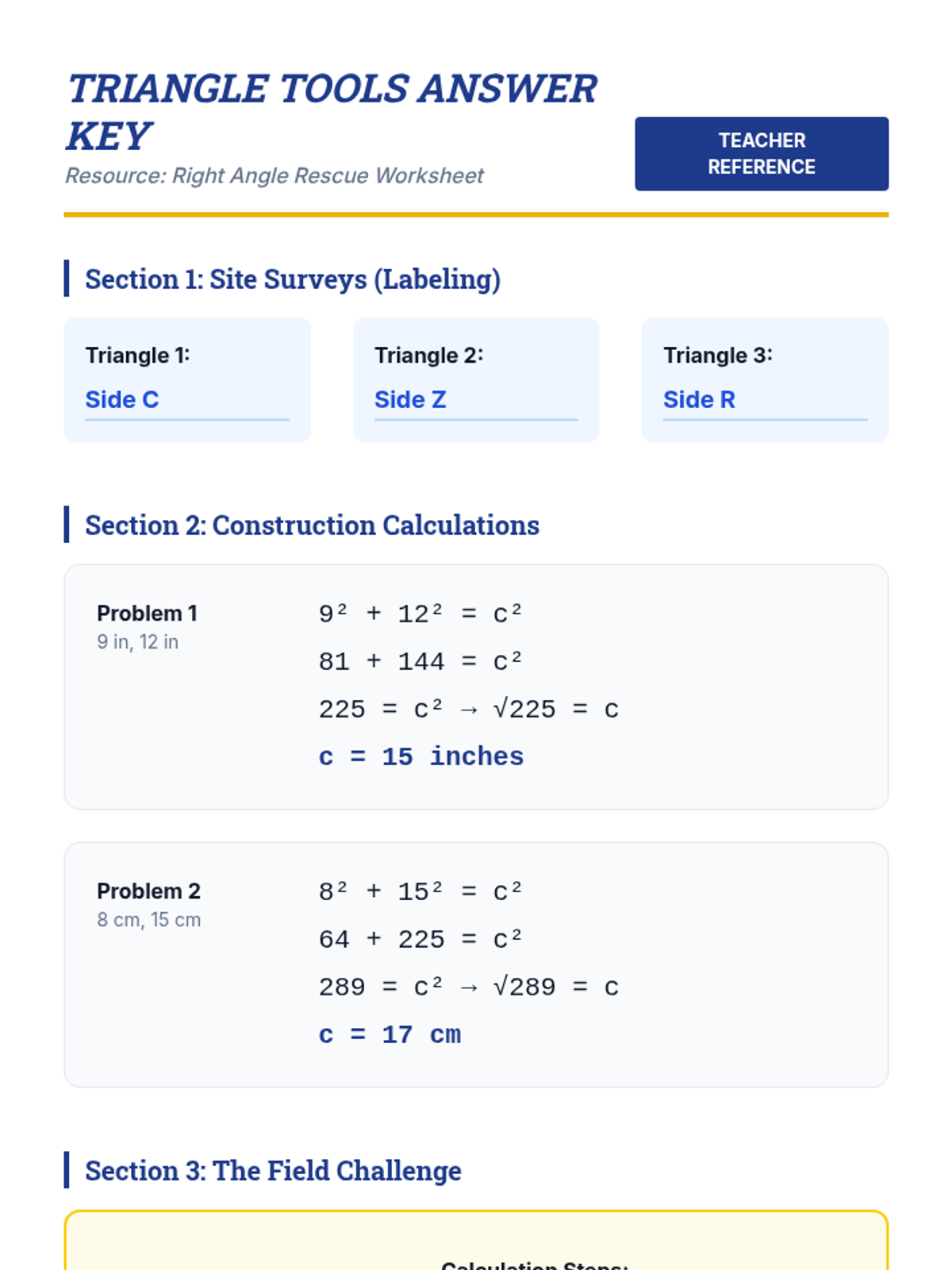
An introductory lesson on the Pythagorean Theorem, focusing on identifying right triangles, understanding the relationship between sides, and calculating the hypotenuse through a construction-themed lens.
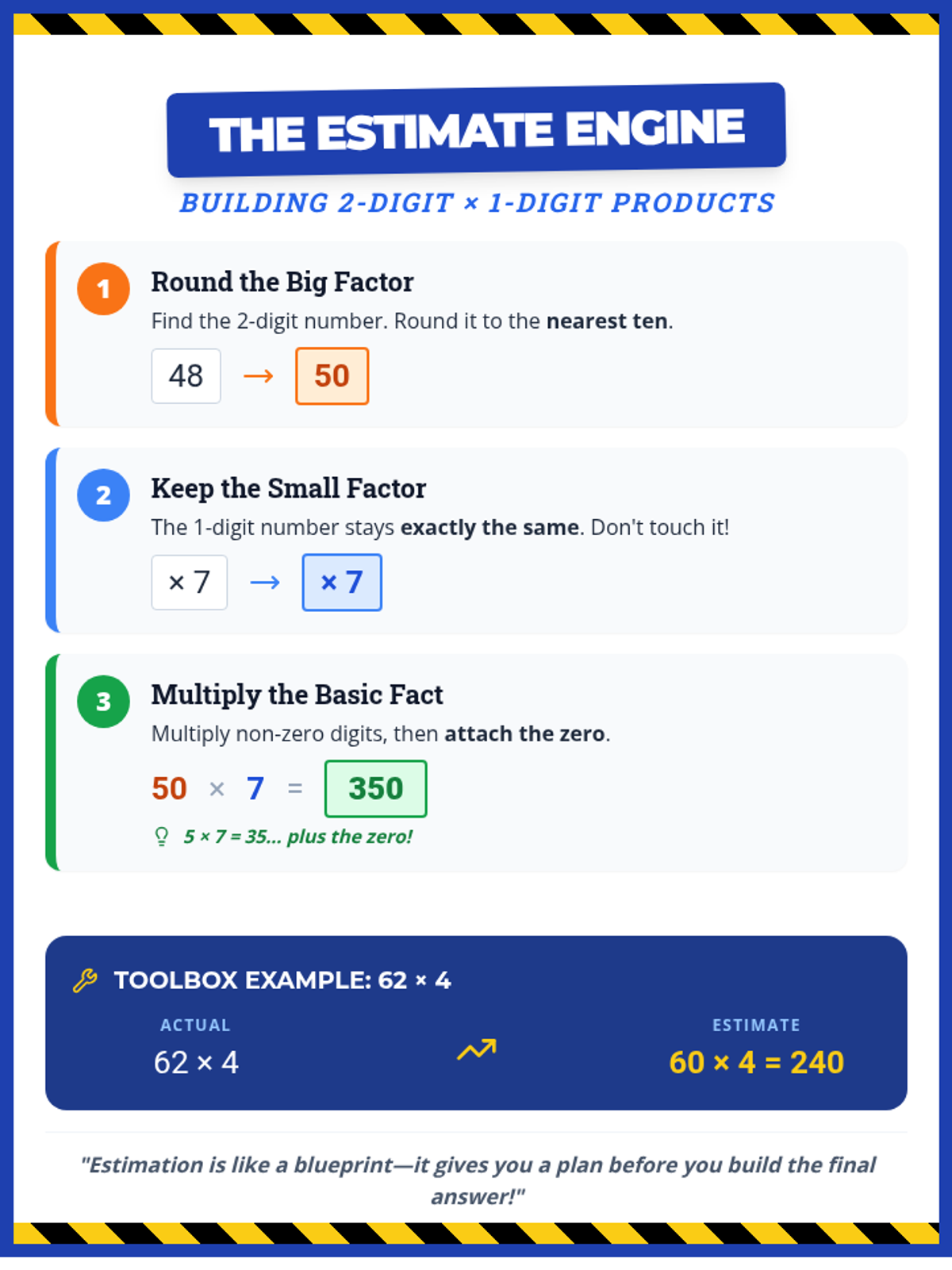
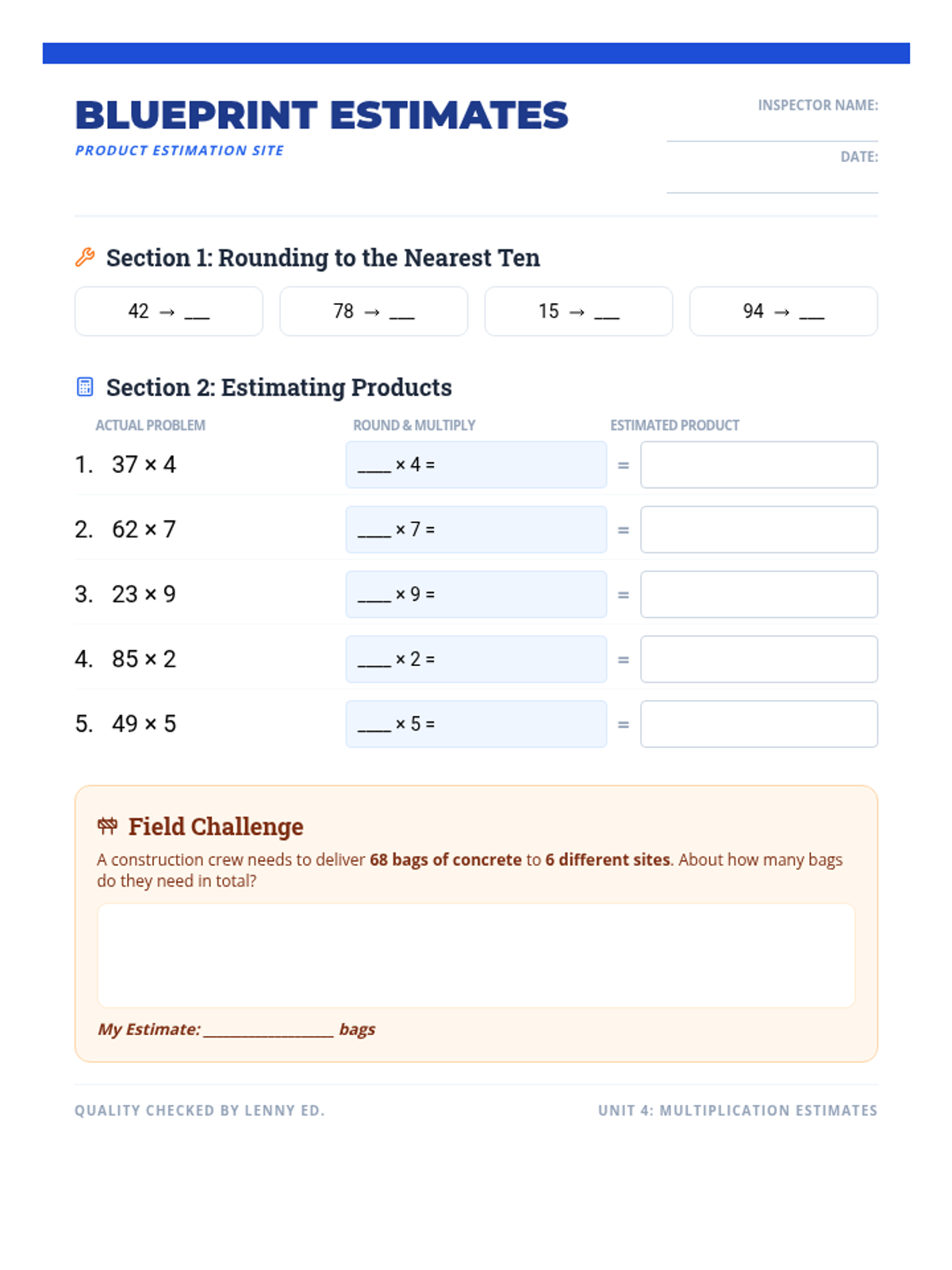
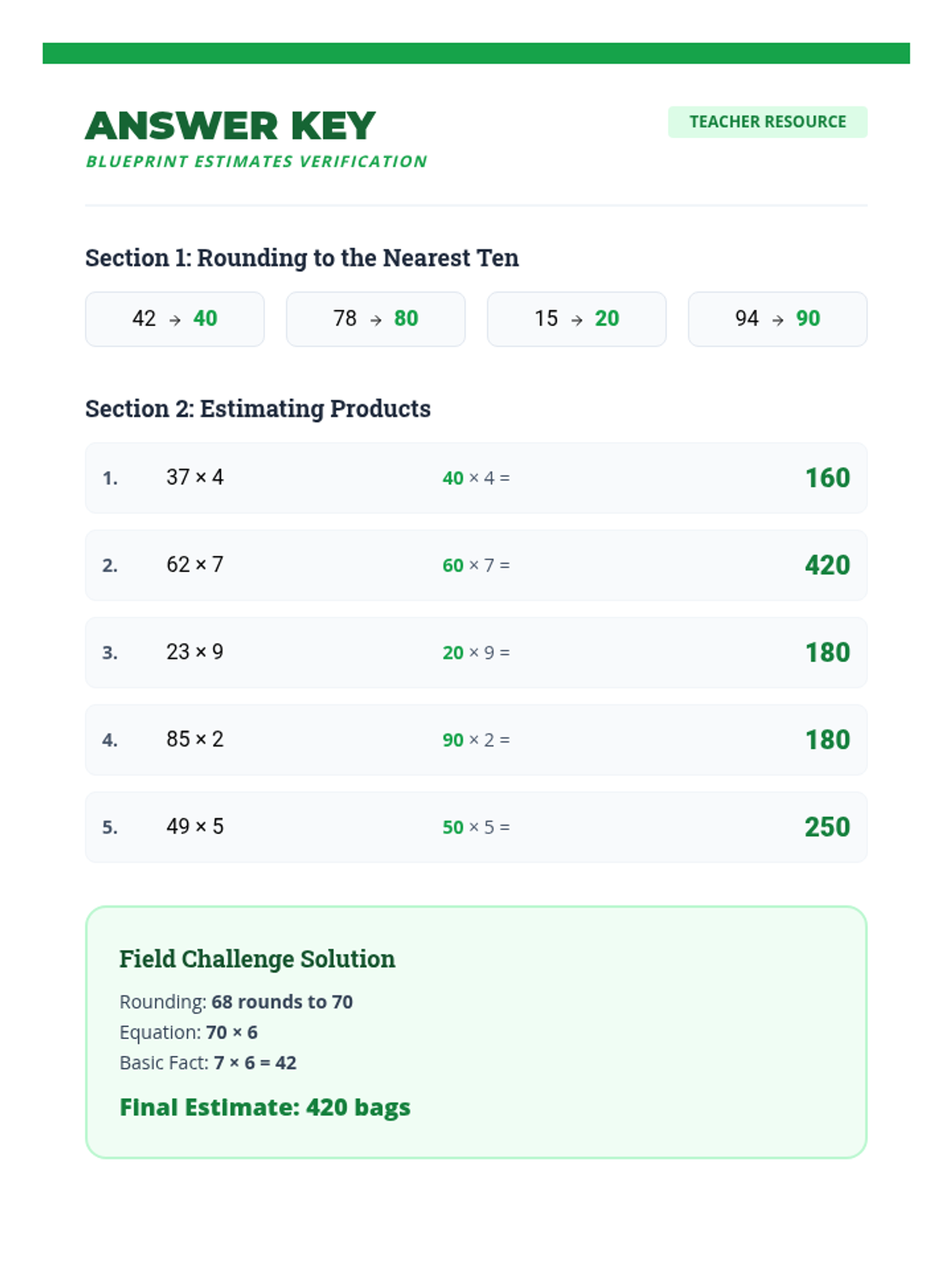
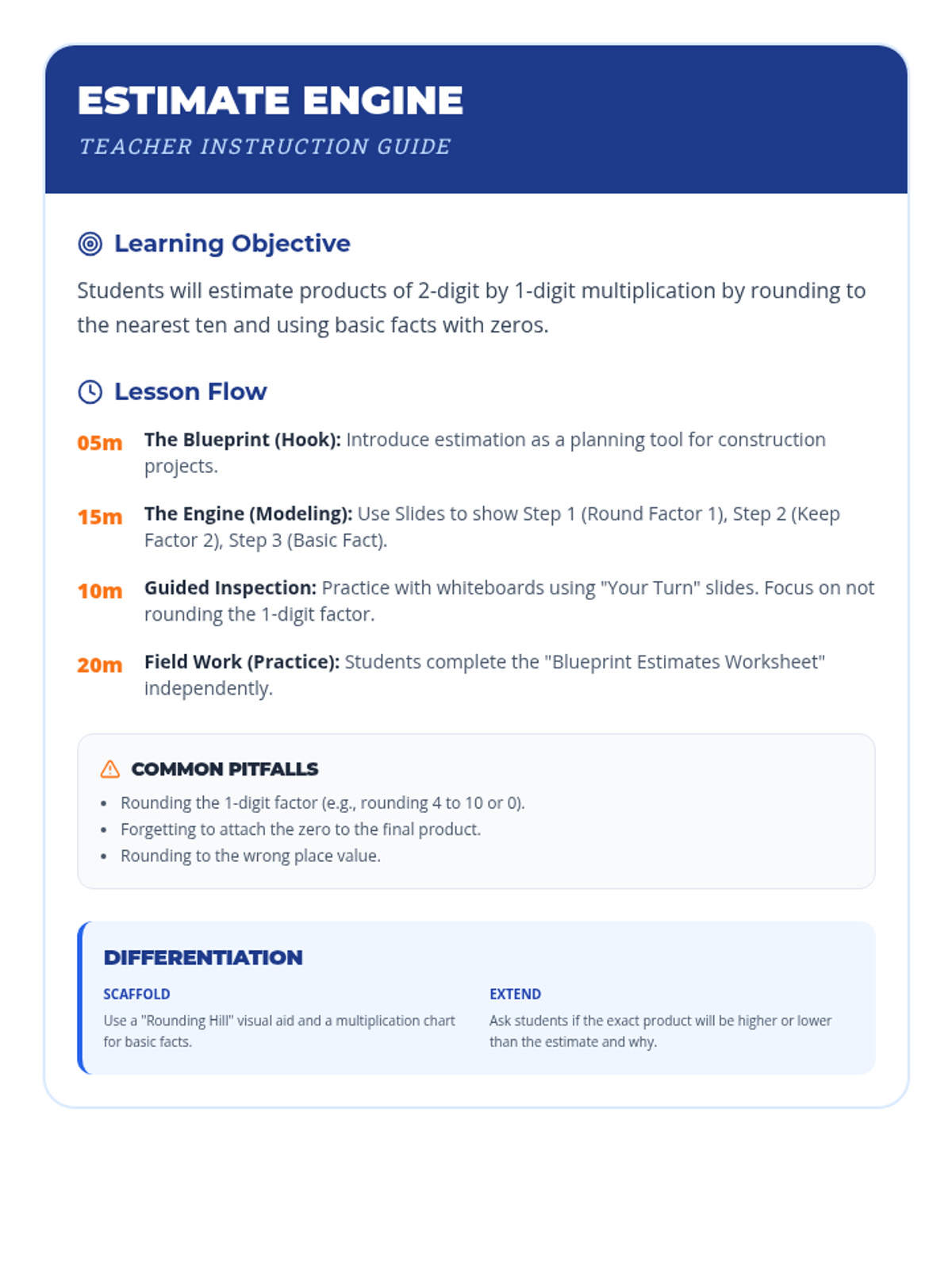
A comprehensive lesson on estimating products of 2-digit by 1-digit multiplication by rounding to the nearest ten, featuring a construction-themed approach to 'building' estimates.
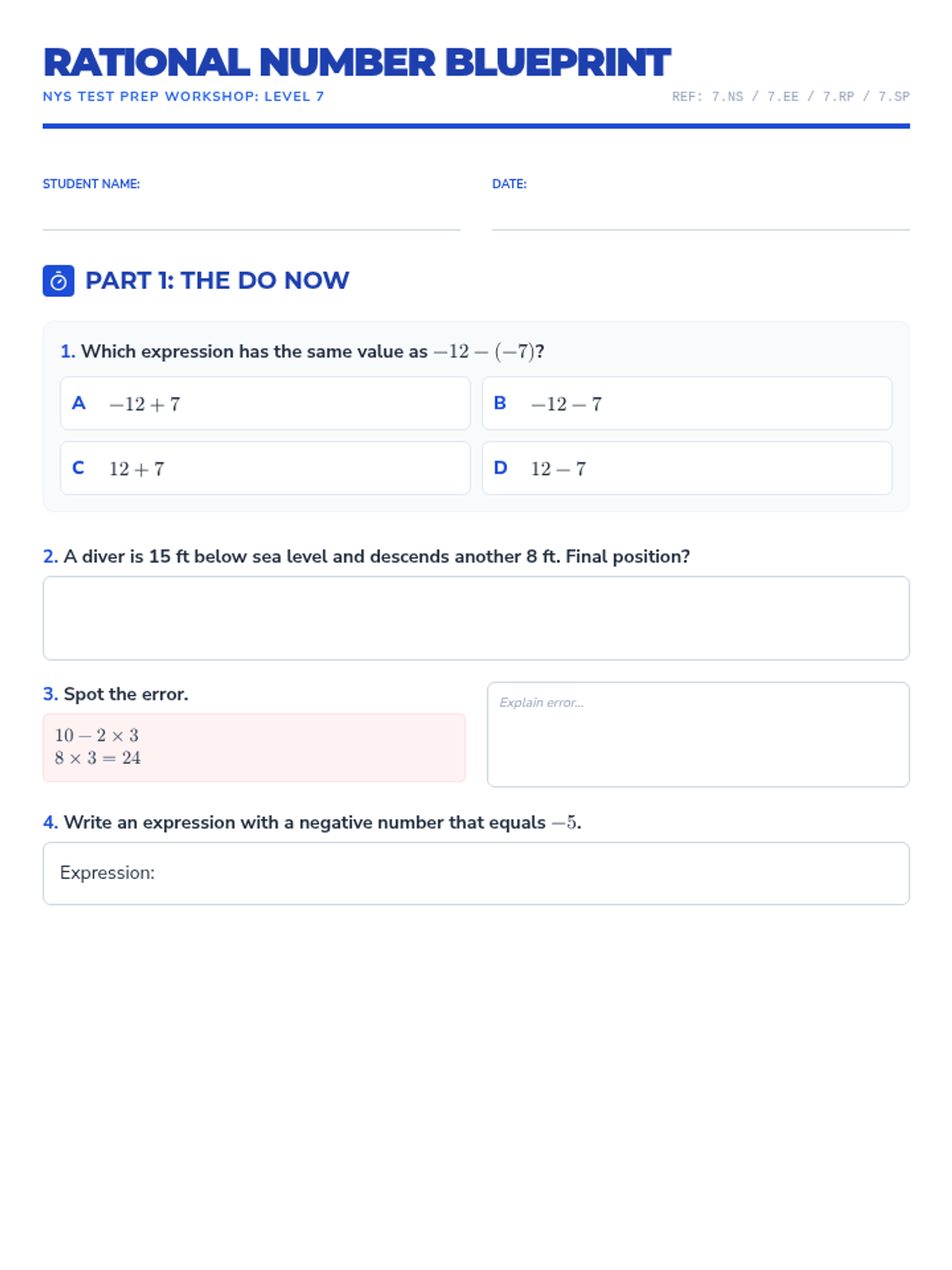
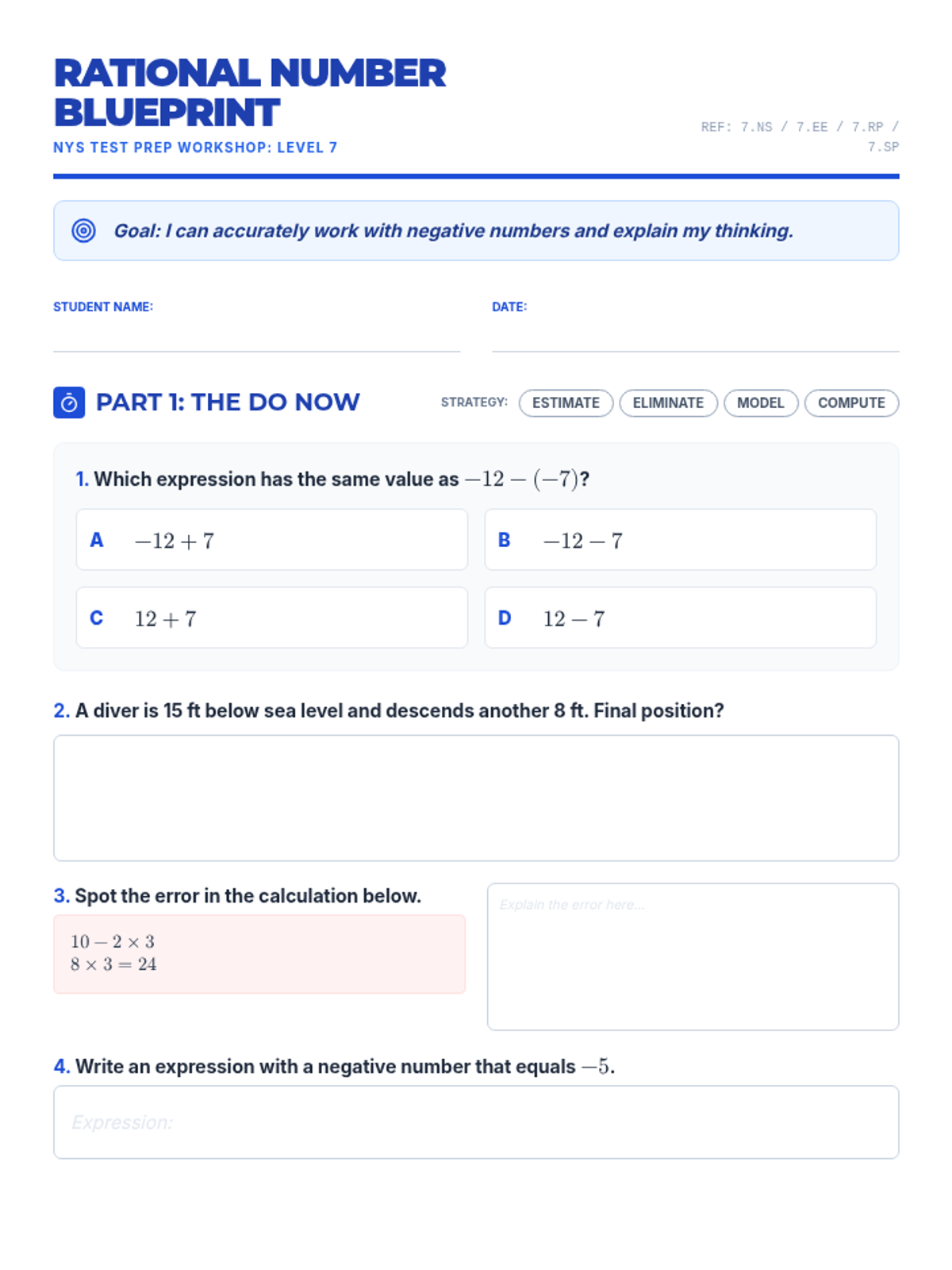
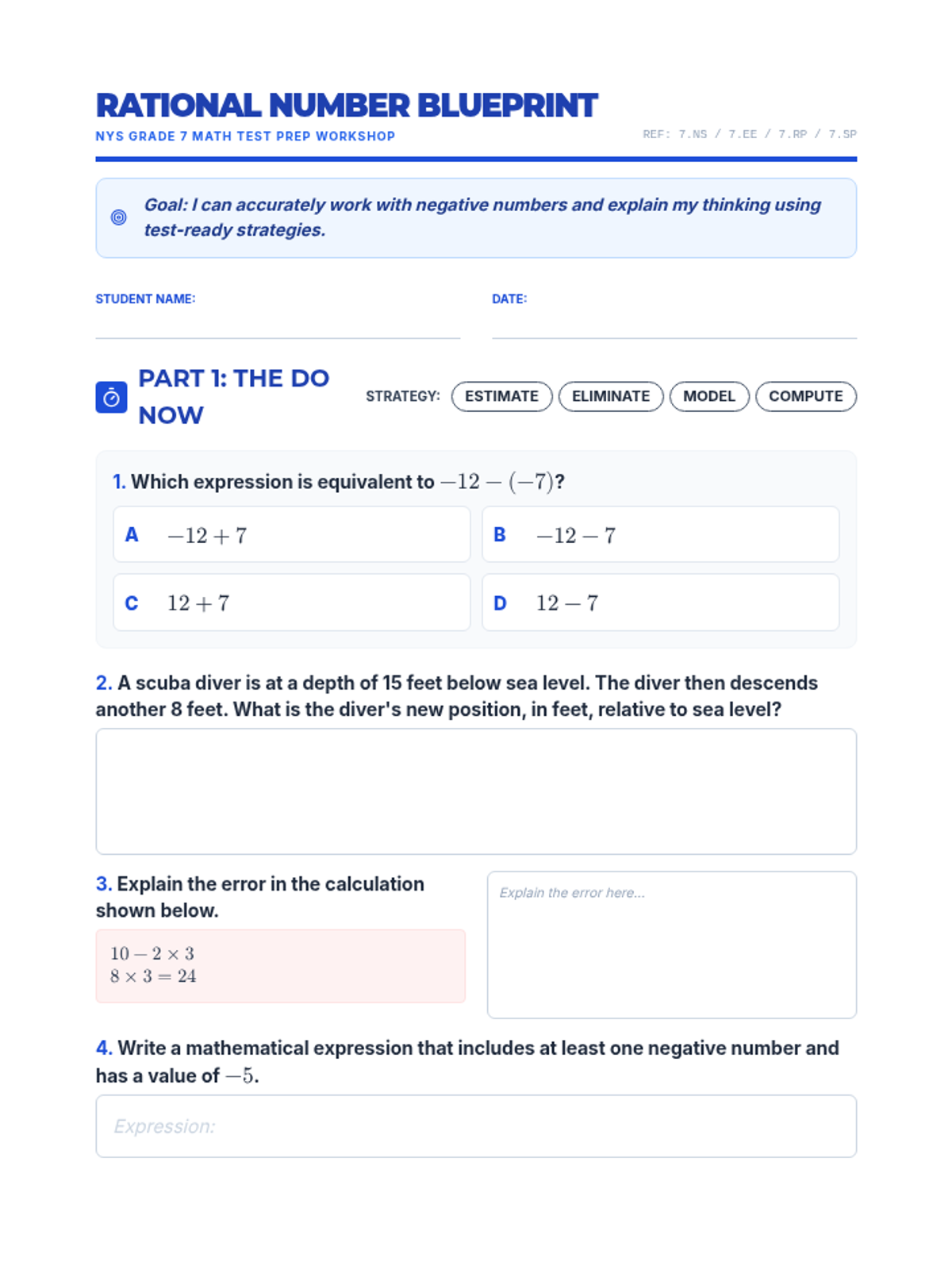
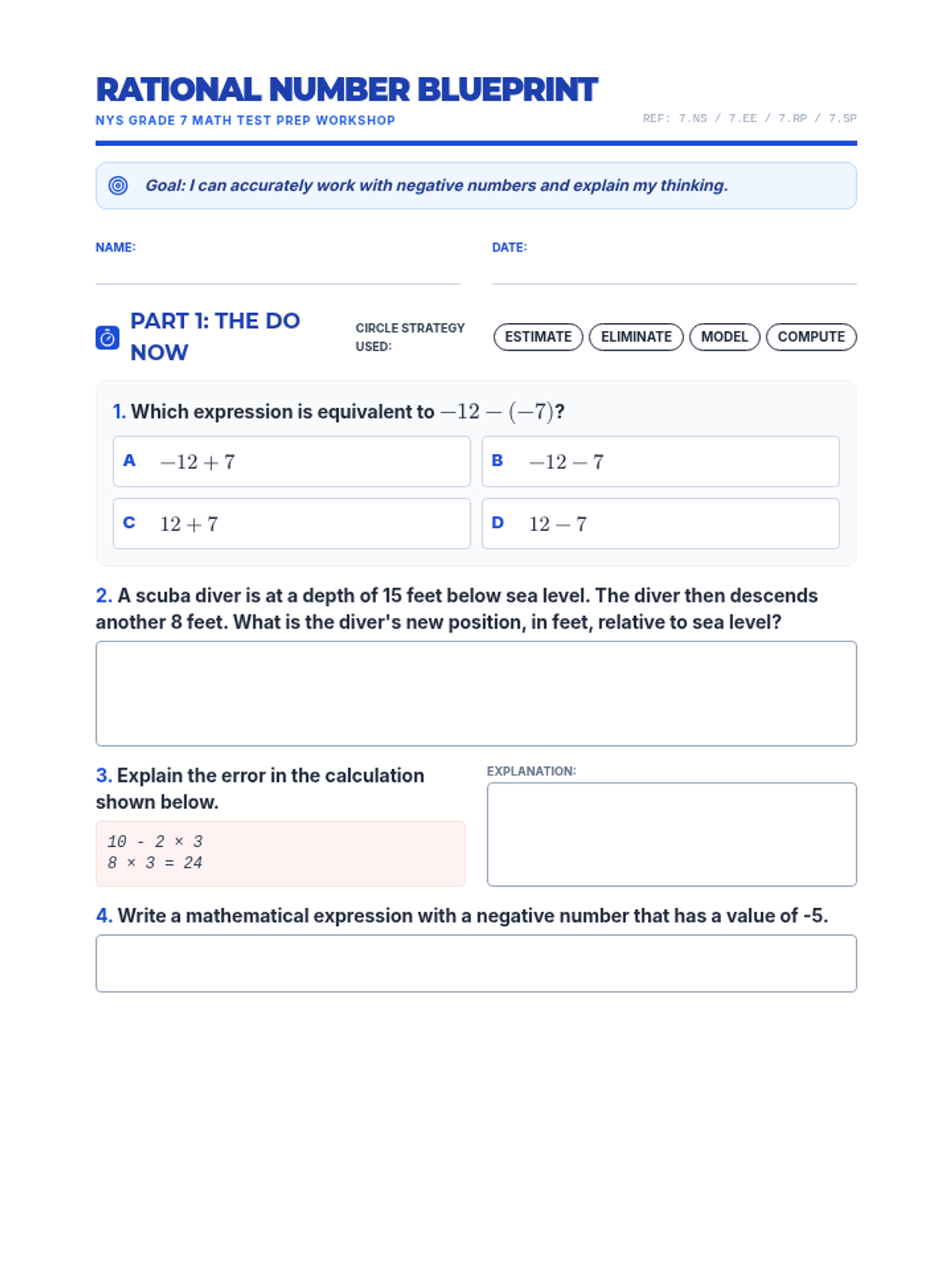
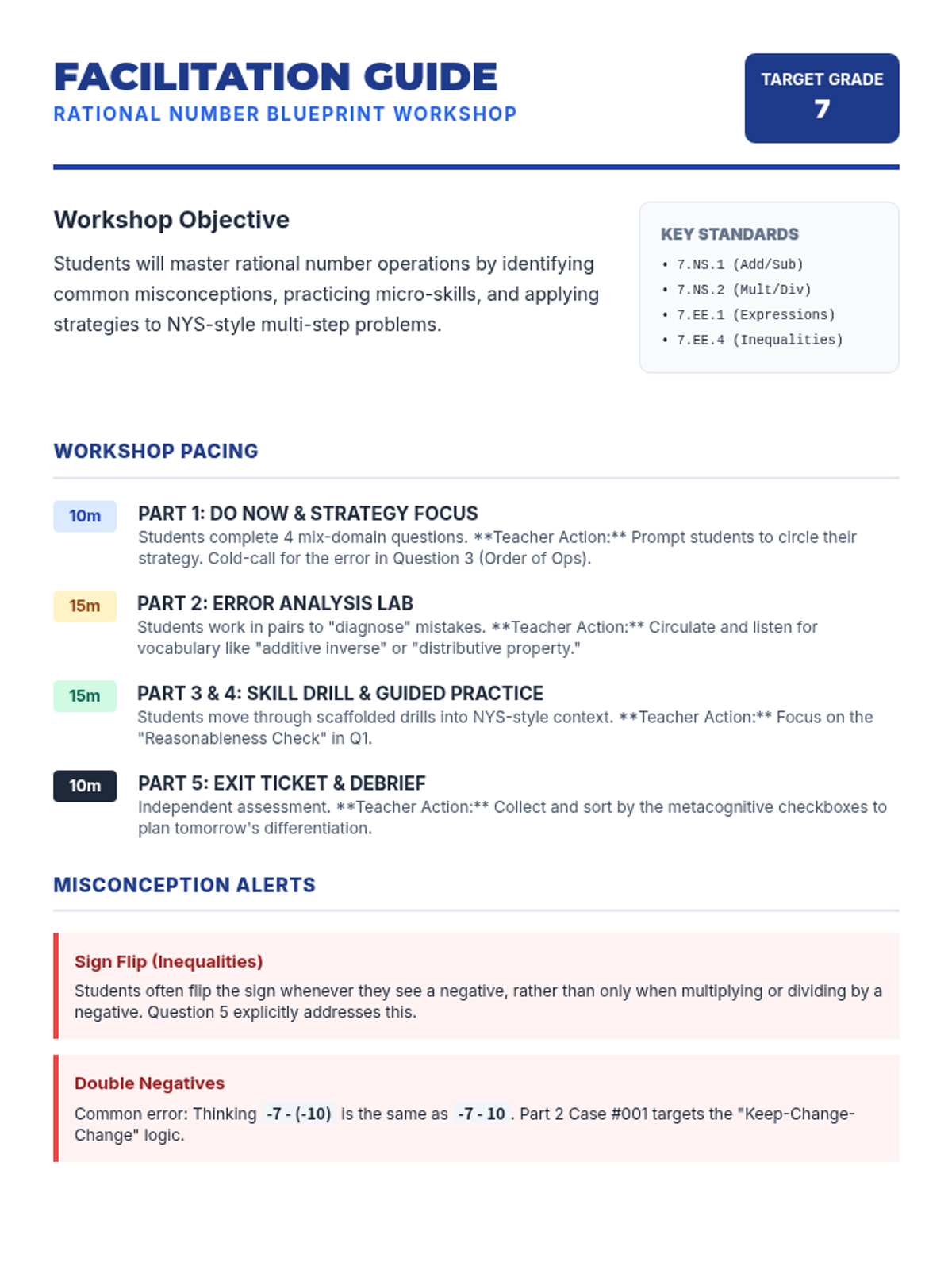
A comprehensive workshop focused on mastering rational number operations and common CCSS 7th grade math misconceptions in preparation for the NYS test.
Practice in estimating and measuring liquid volumes using liters and milliliters, with mental math exercises and scale reading.
Introduction to liquid volume and the liter as a standard metric unit, featuring container comparisons and visual estimations.
Introduction to weight, standard units (grams and kilograms), and estimation techniques using real-world objects and pets.
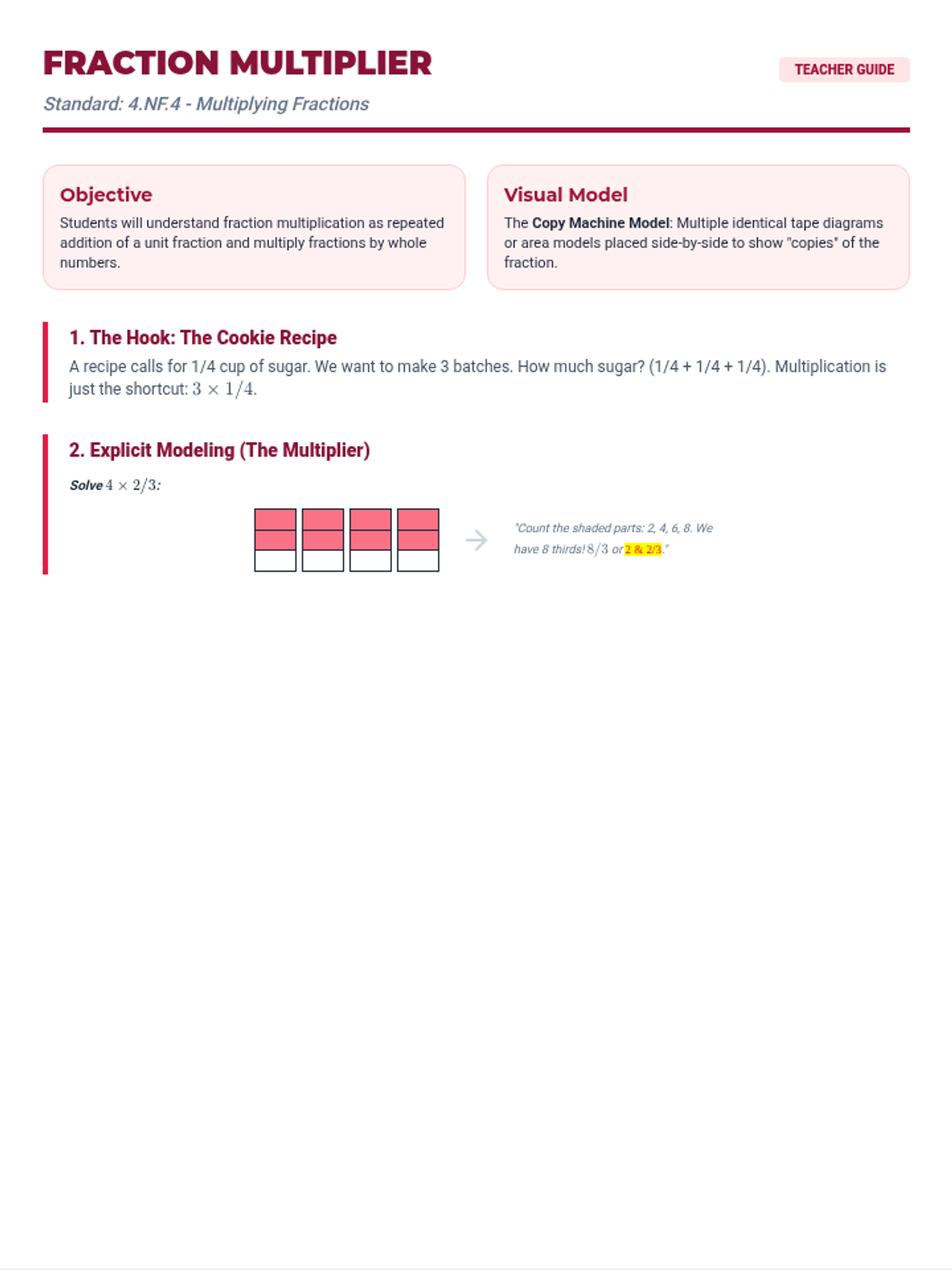
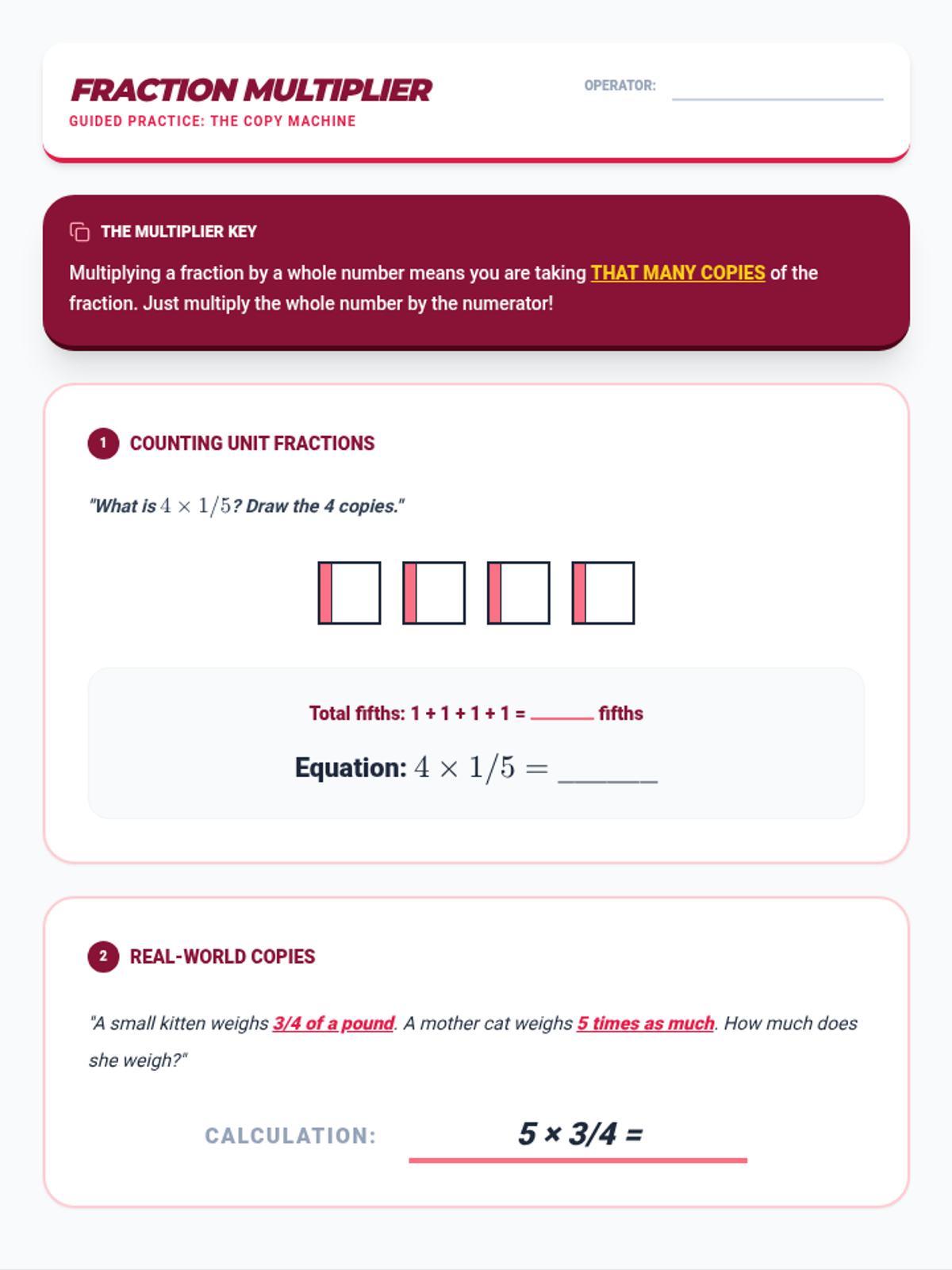
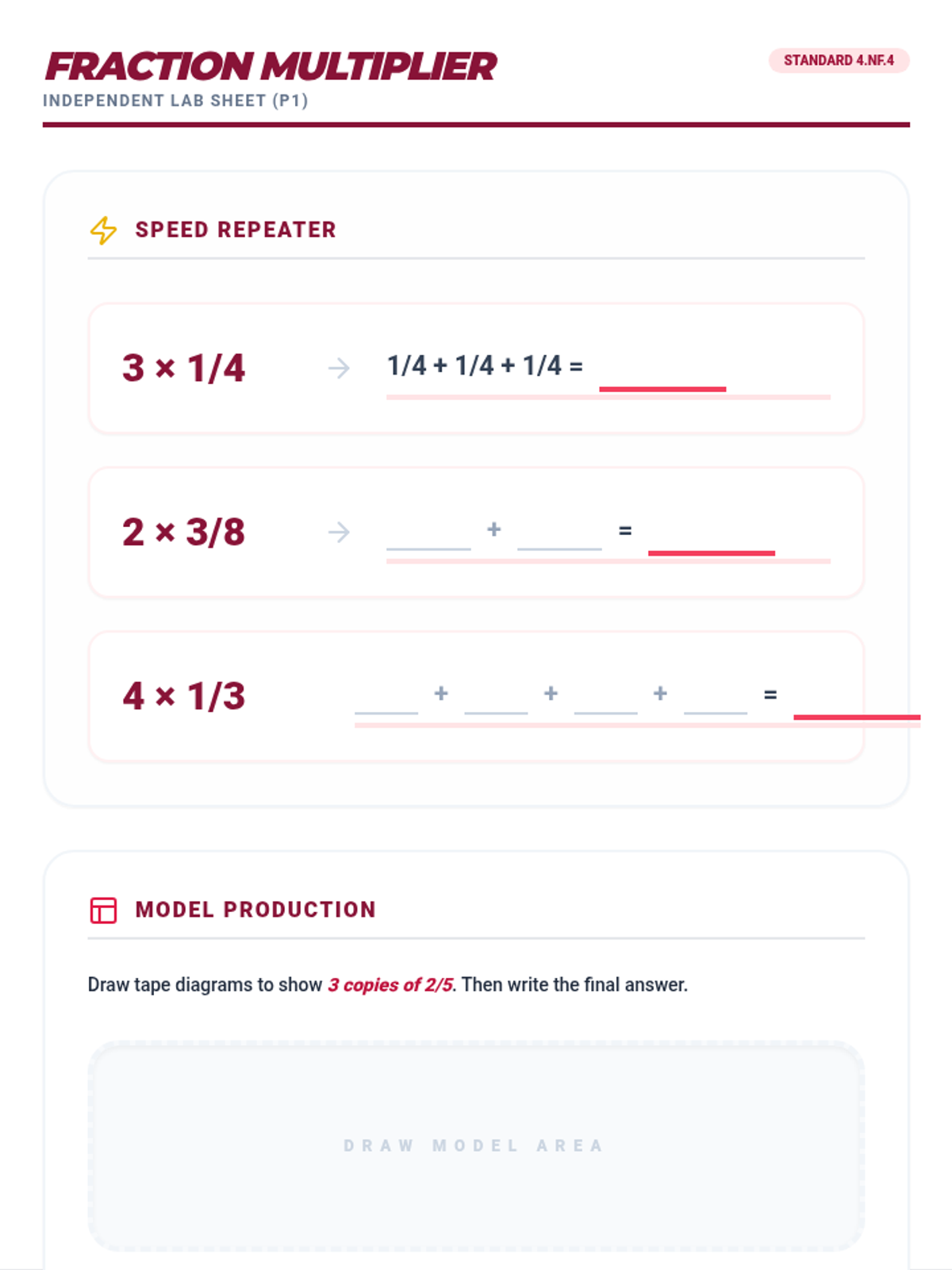
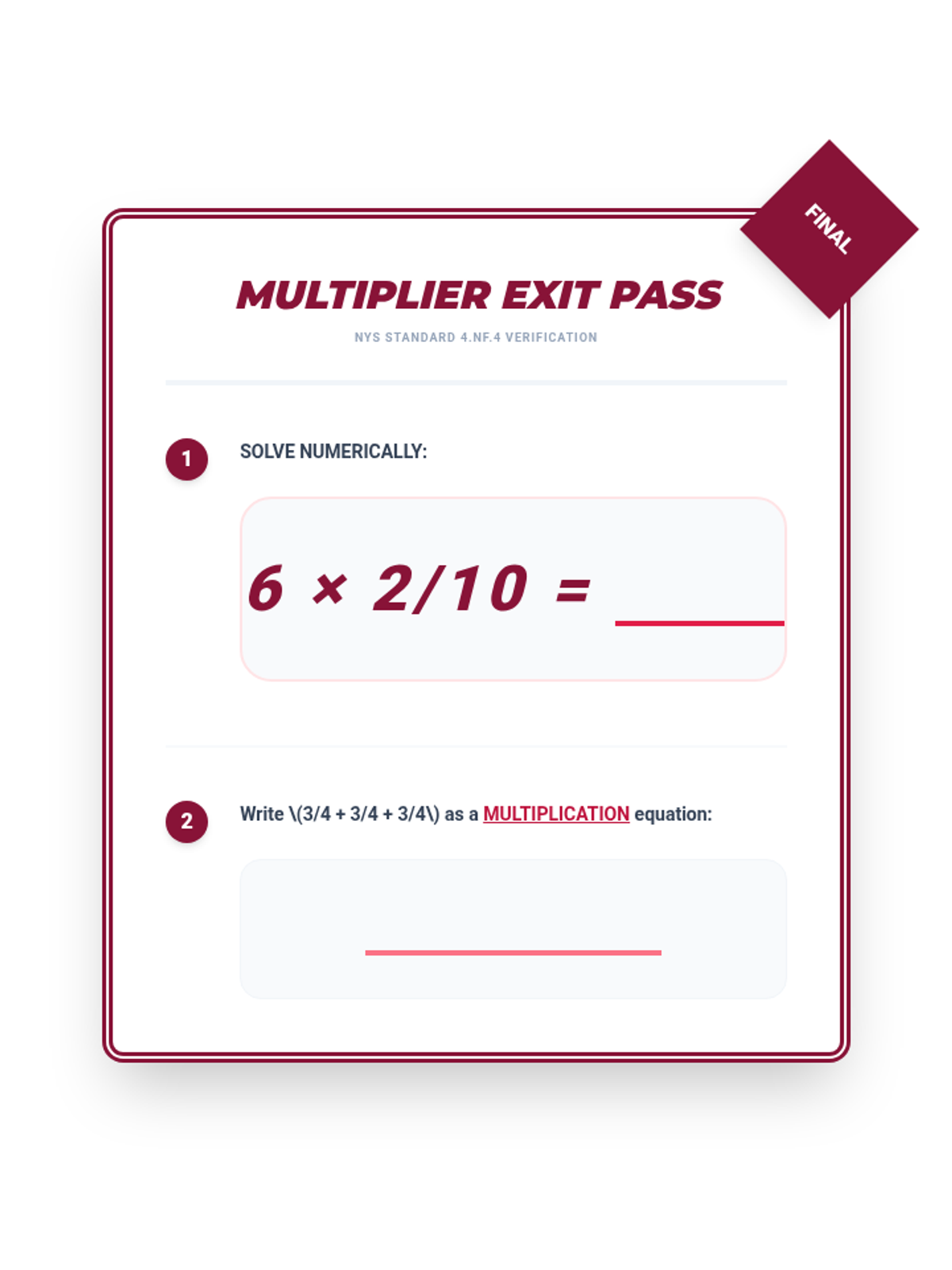
Tier 2 reteach for standard 4.NF.4: Apply and extend previous understandings of multiplication to multiply a fraction by a whole number.
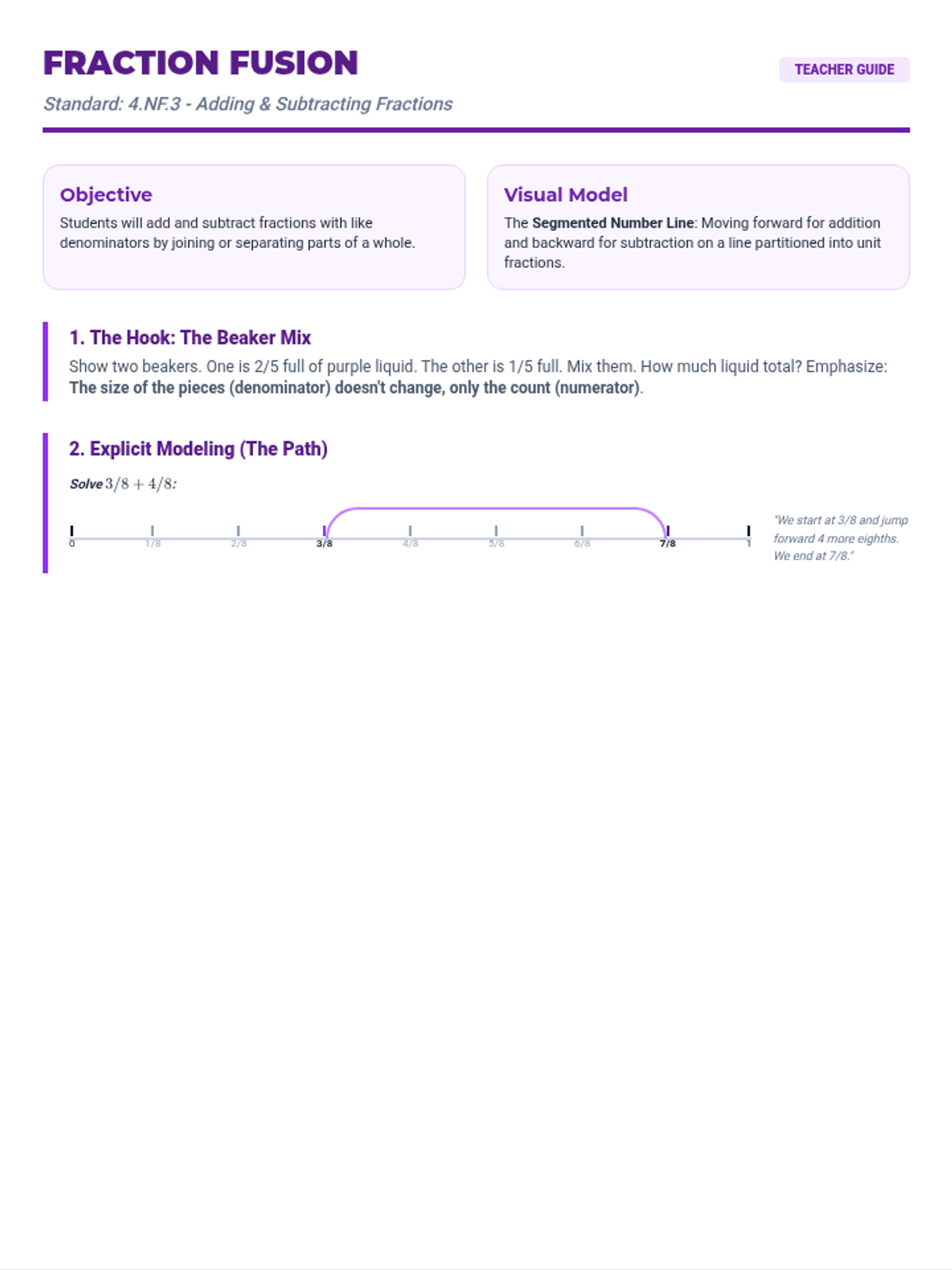
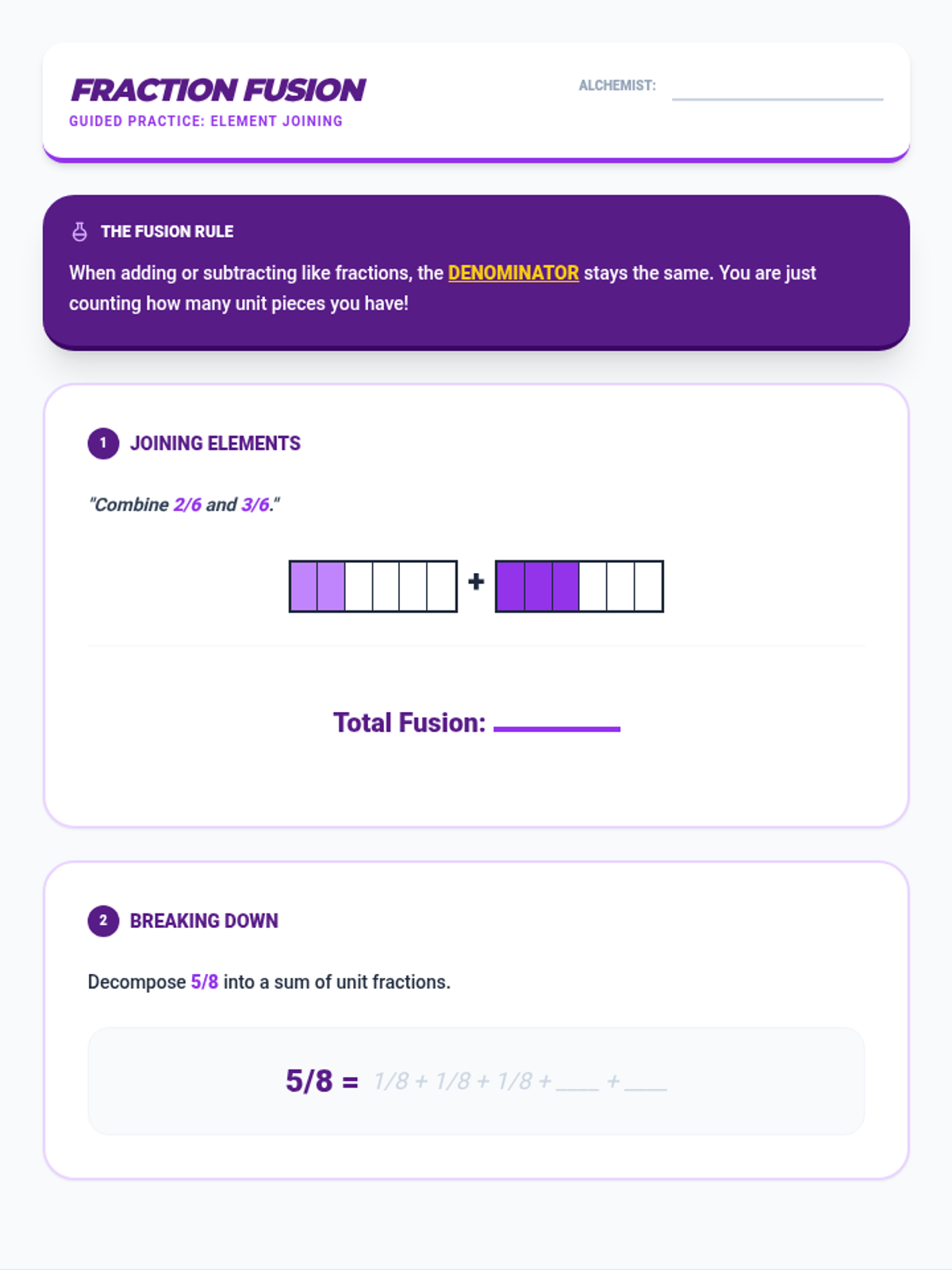
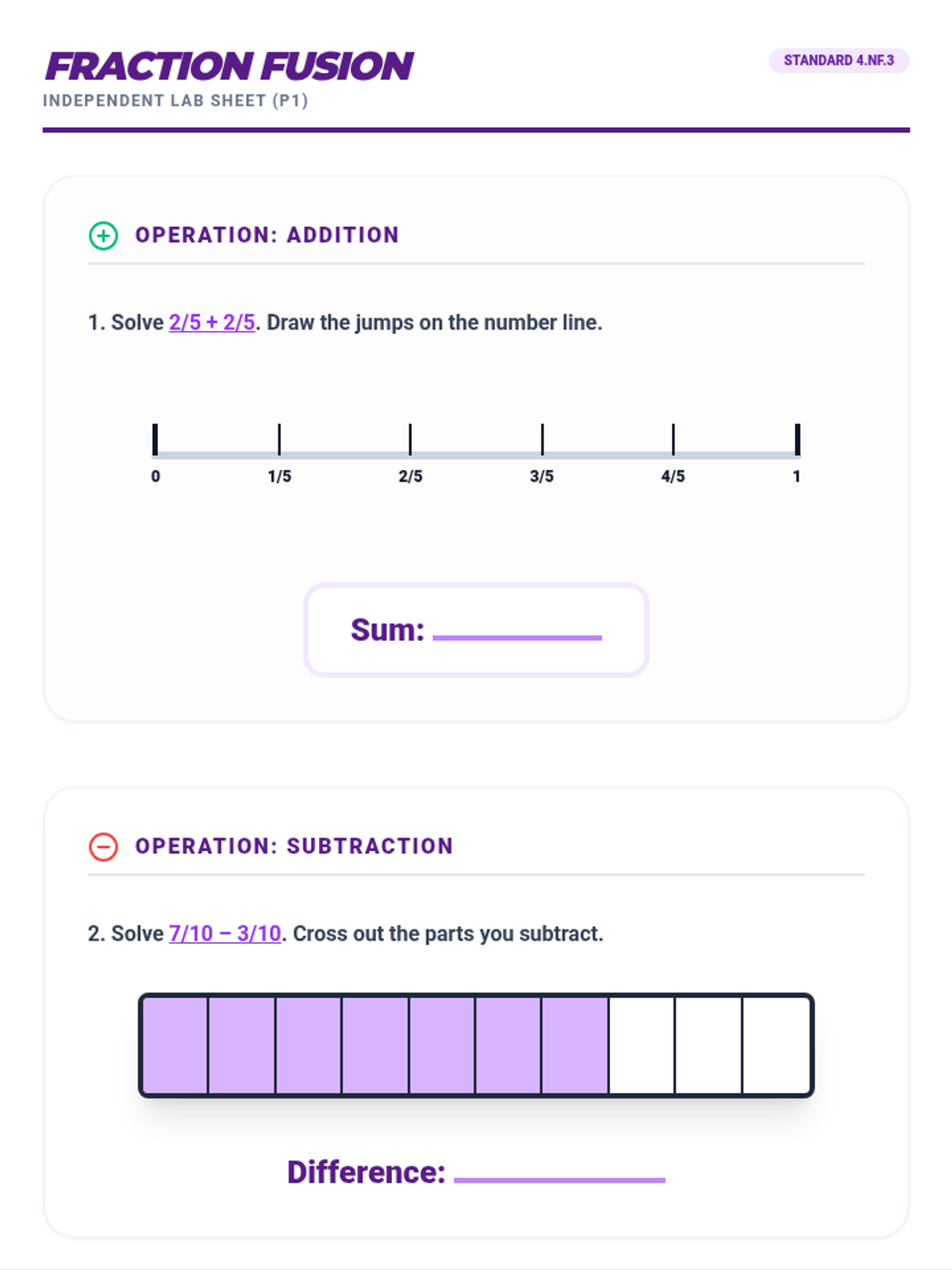
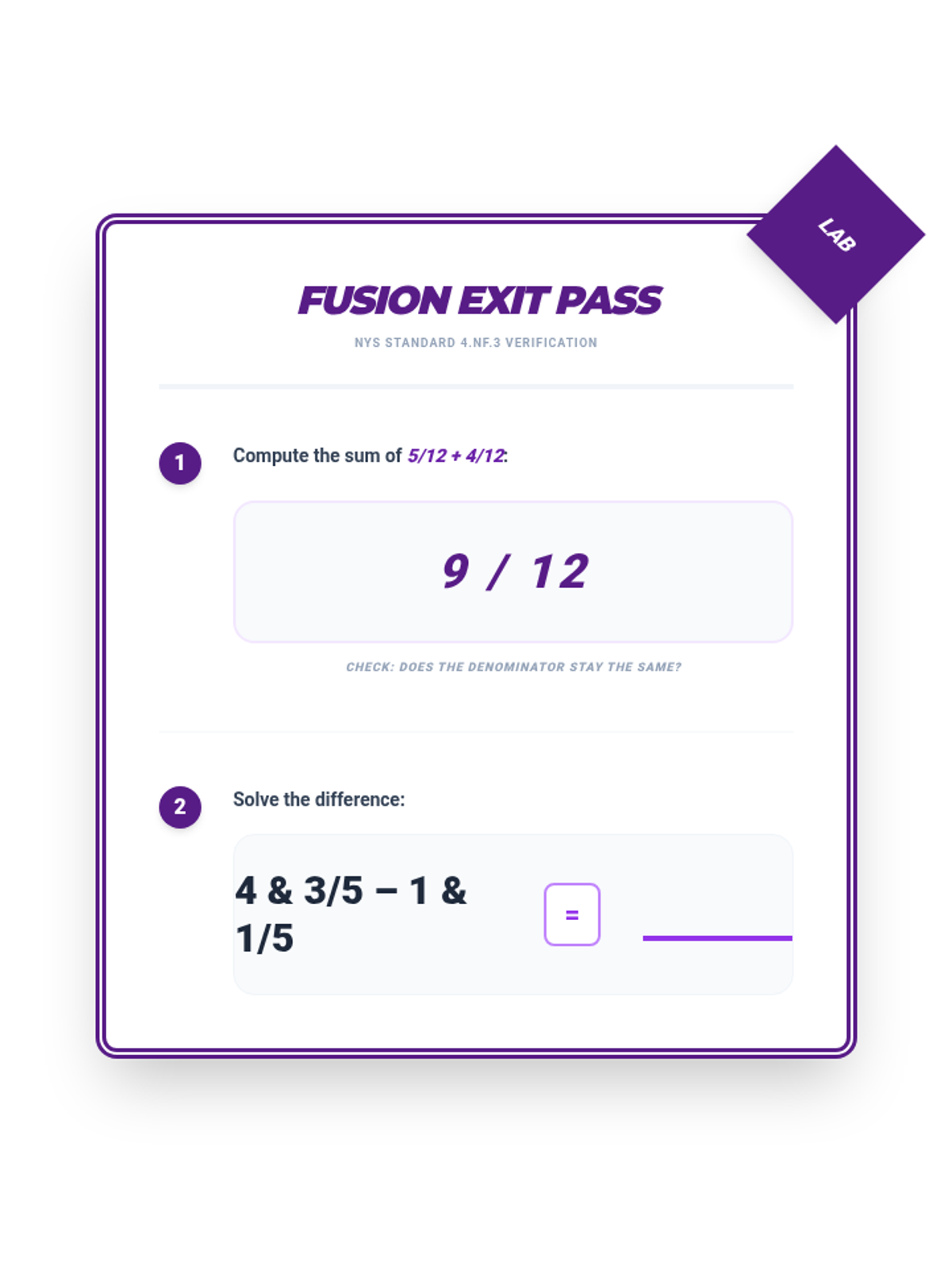
Tier 2 reteach for standard 4.NF.3: Understand addition and subtraction of fractions as joining and separating parts referring to the same whole. Focus on like denominators and mixed numbers.
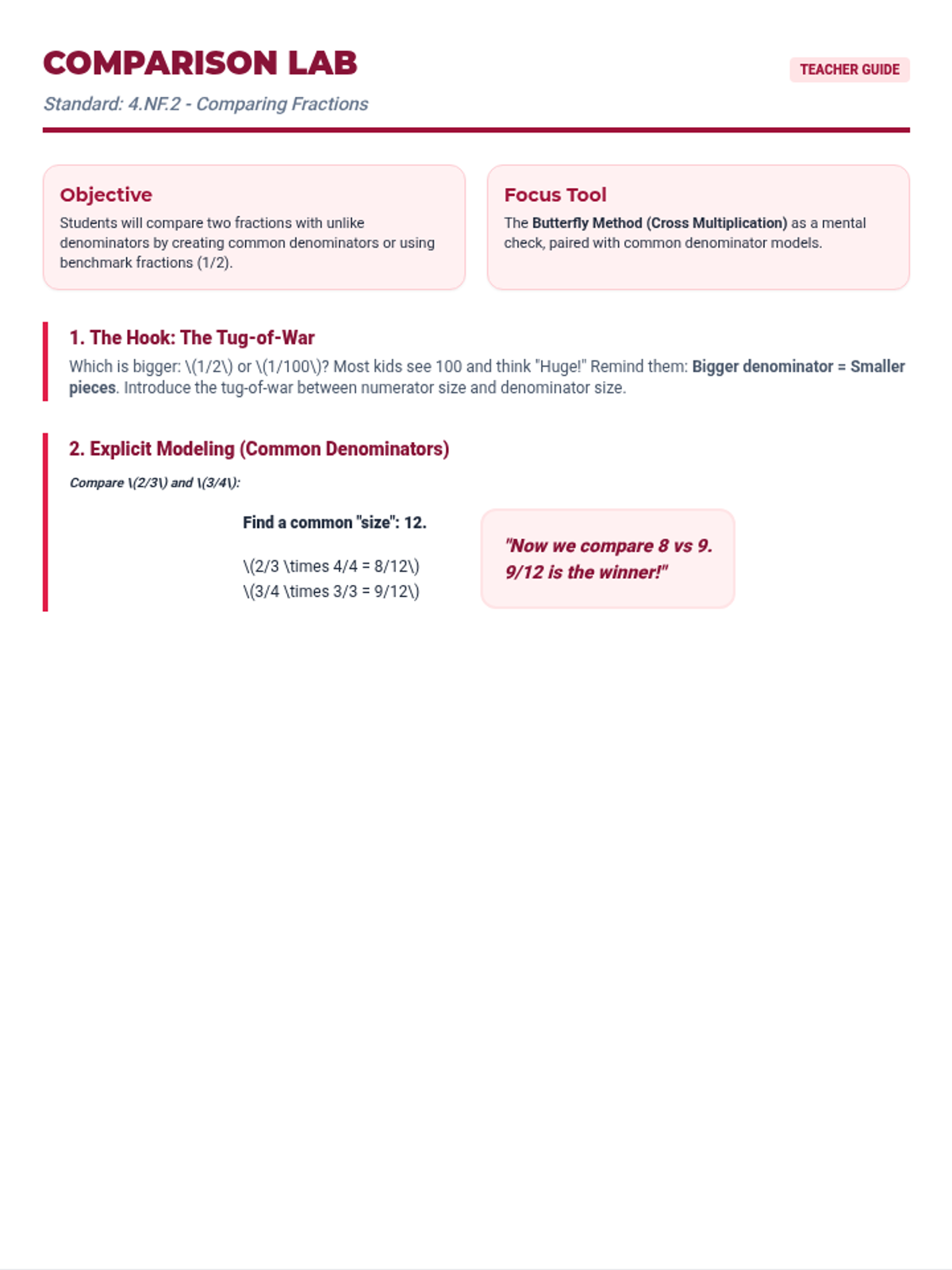
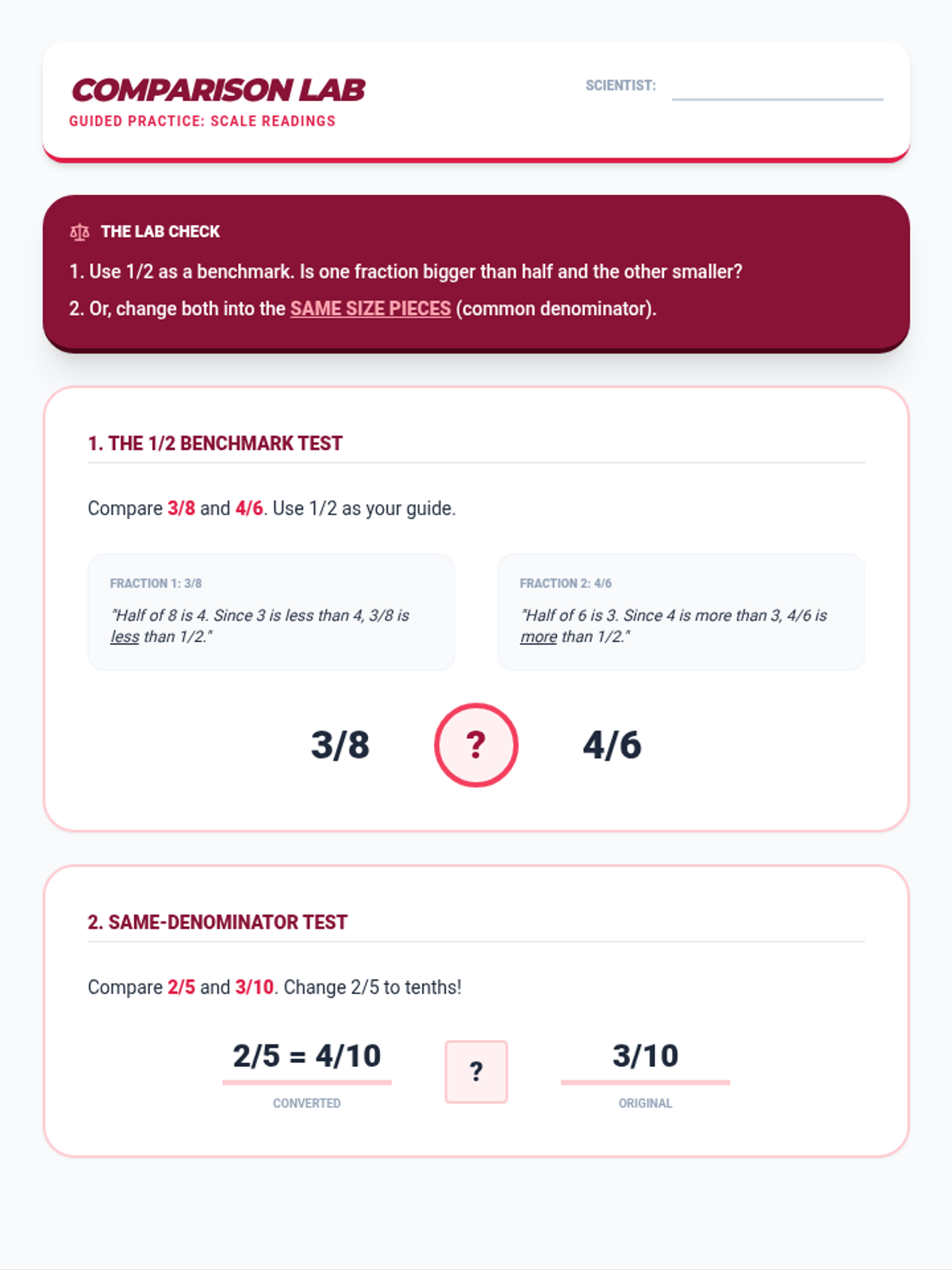
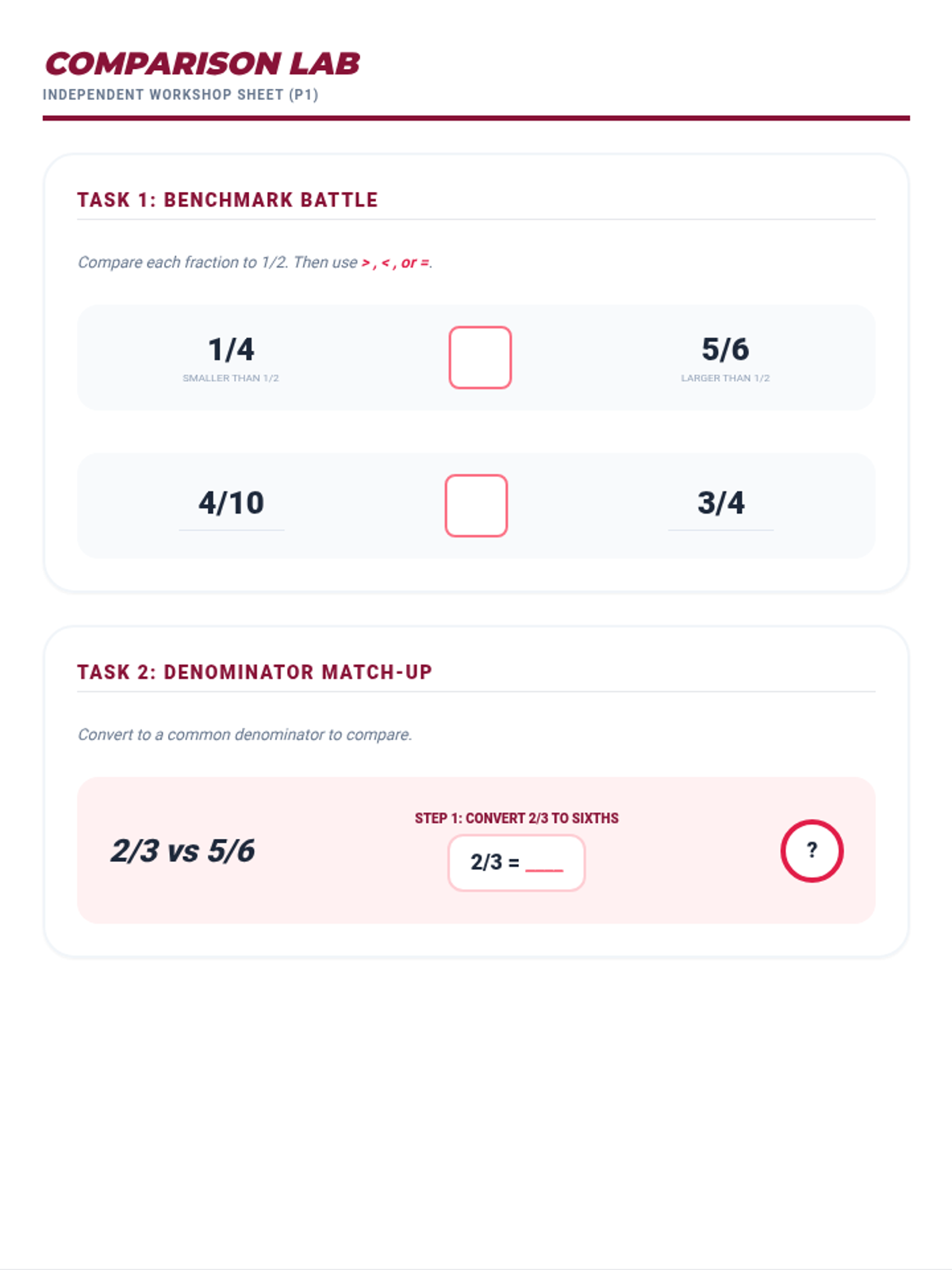
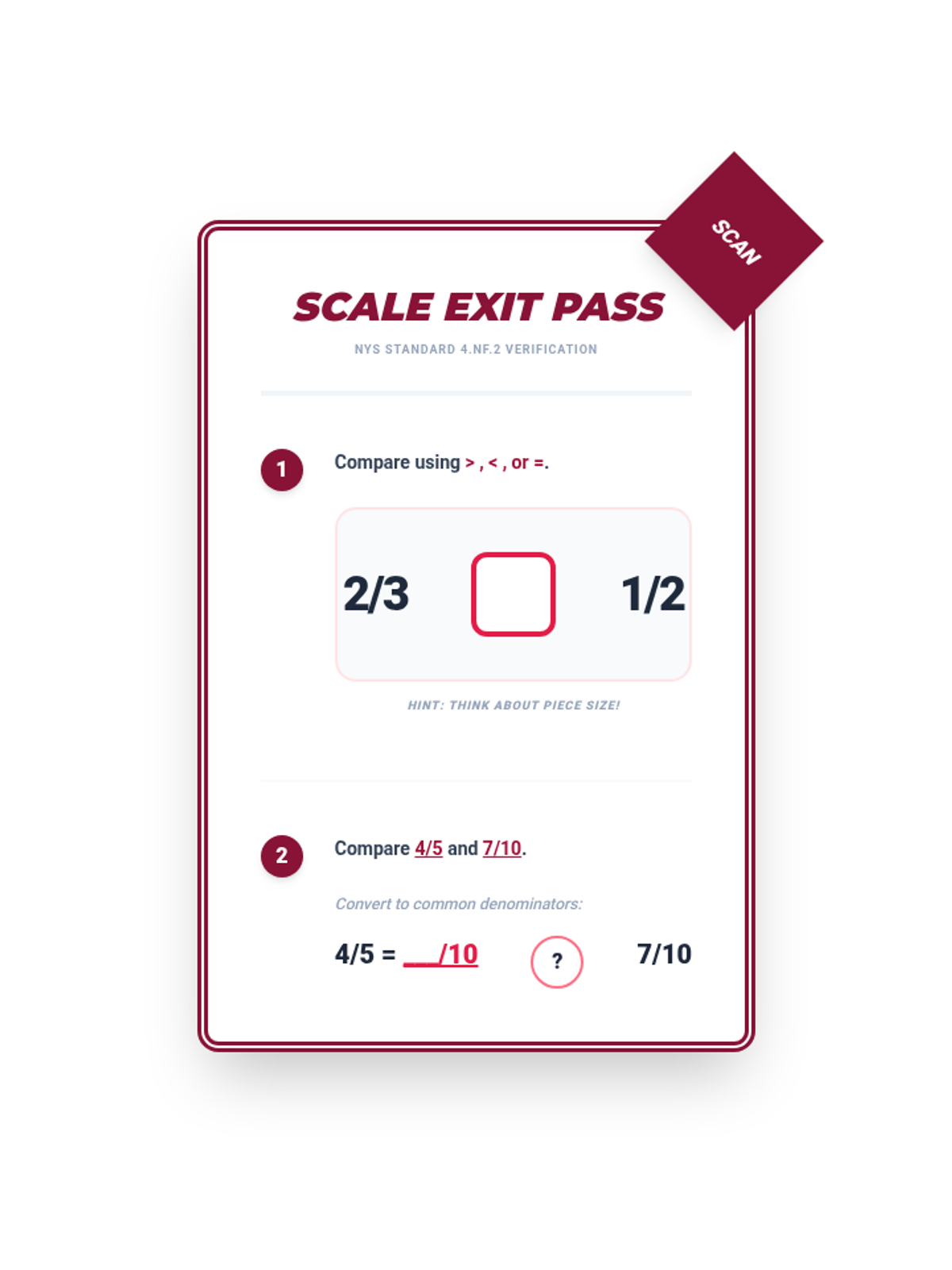
Tier 2 reteach for standard 4.NF.2: Compare two fractions with different numerators and different denominators. Focus on common denominators and benchmark fractions.
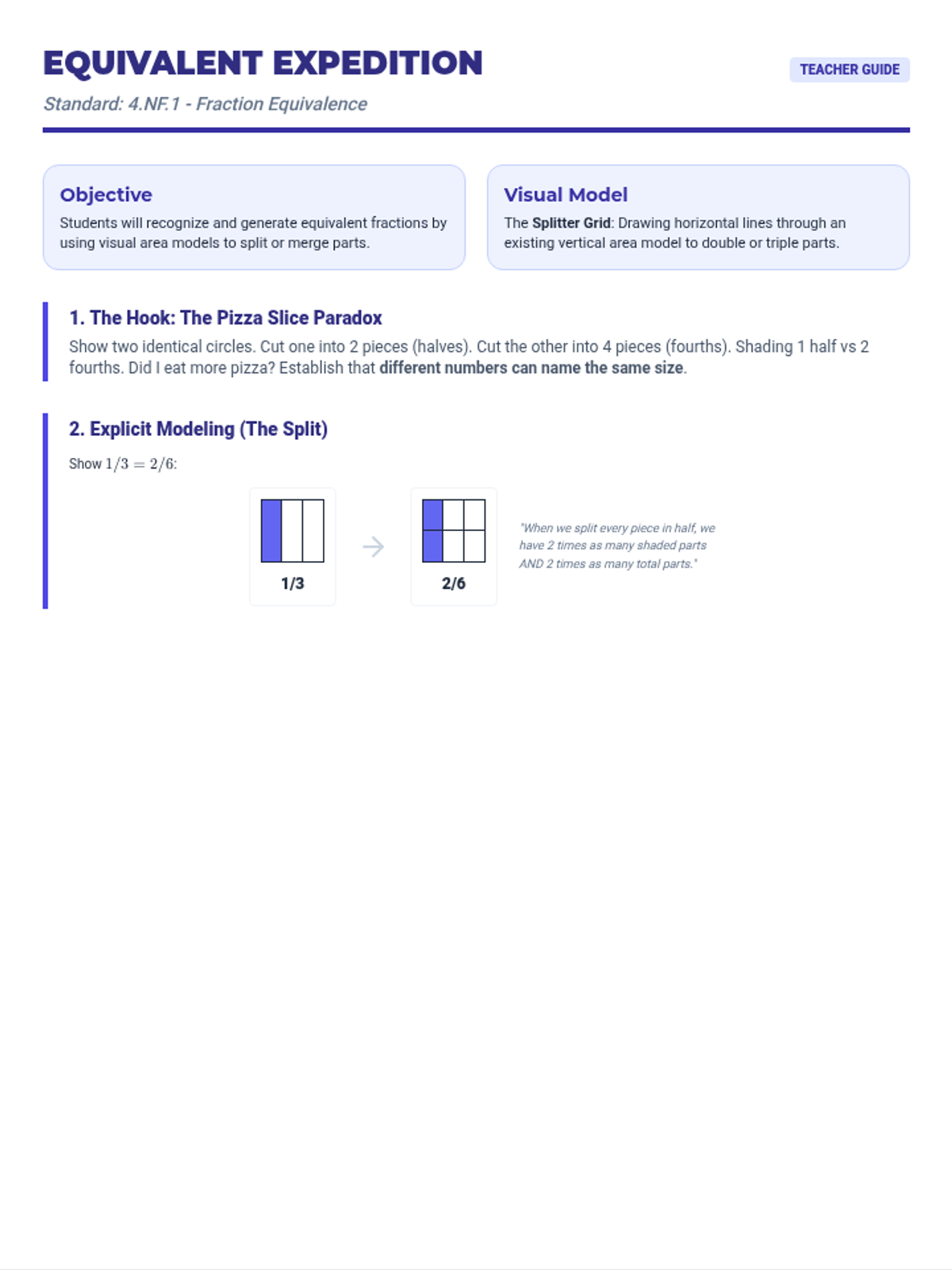
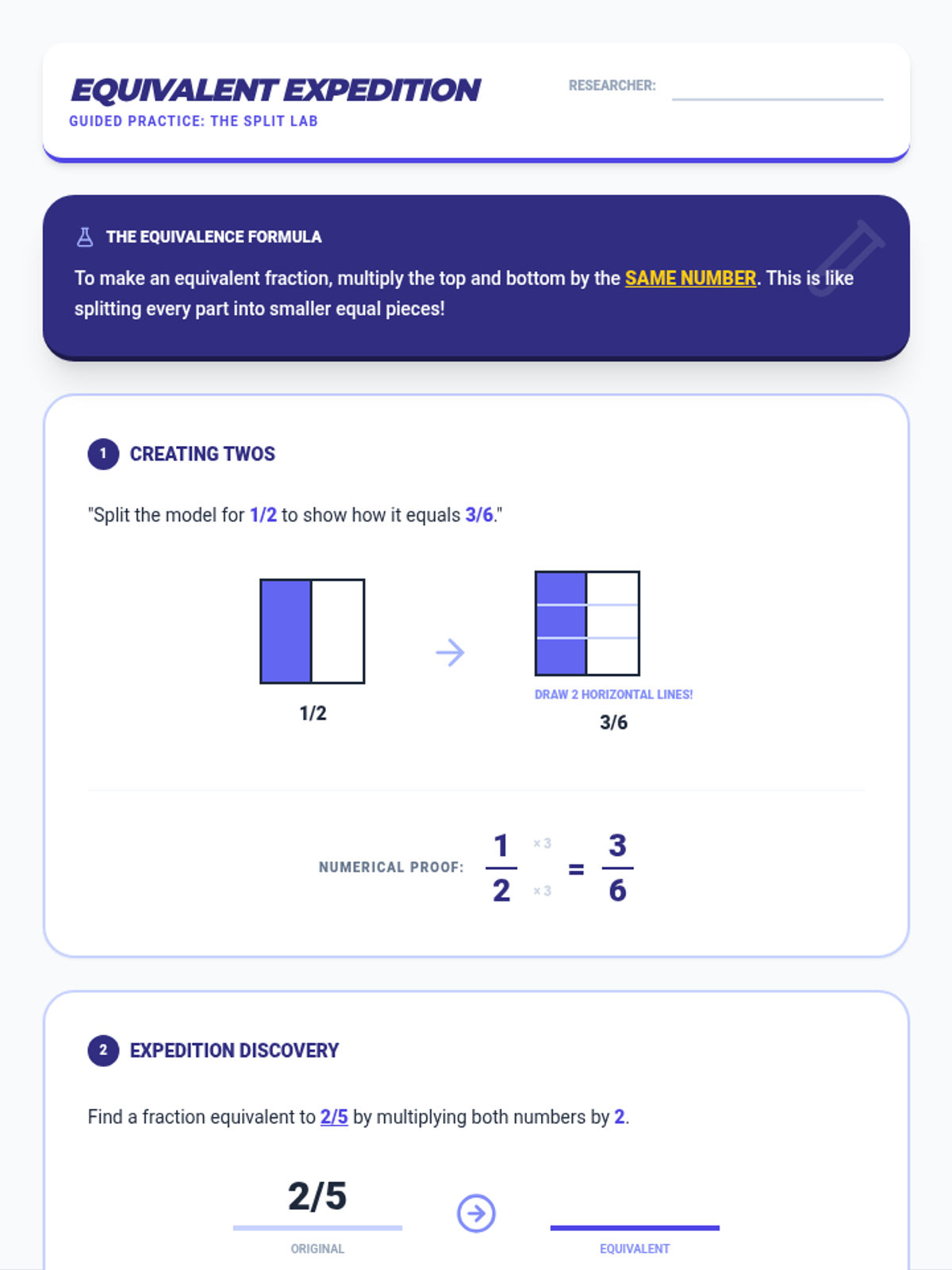
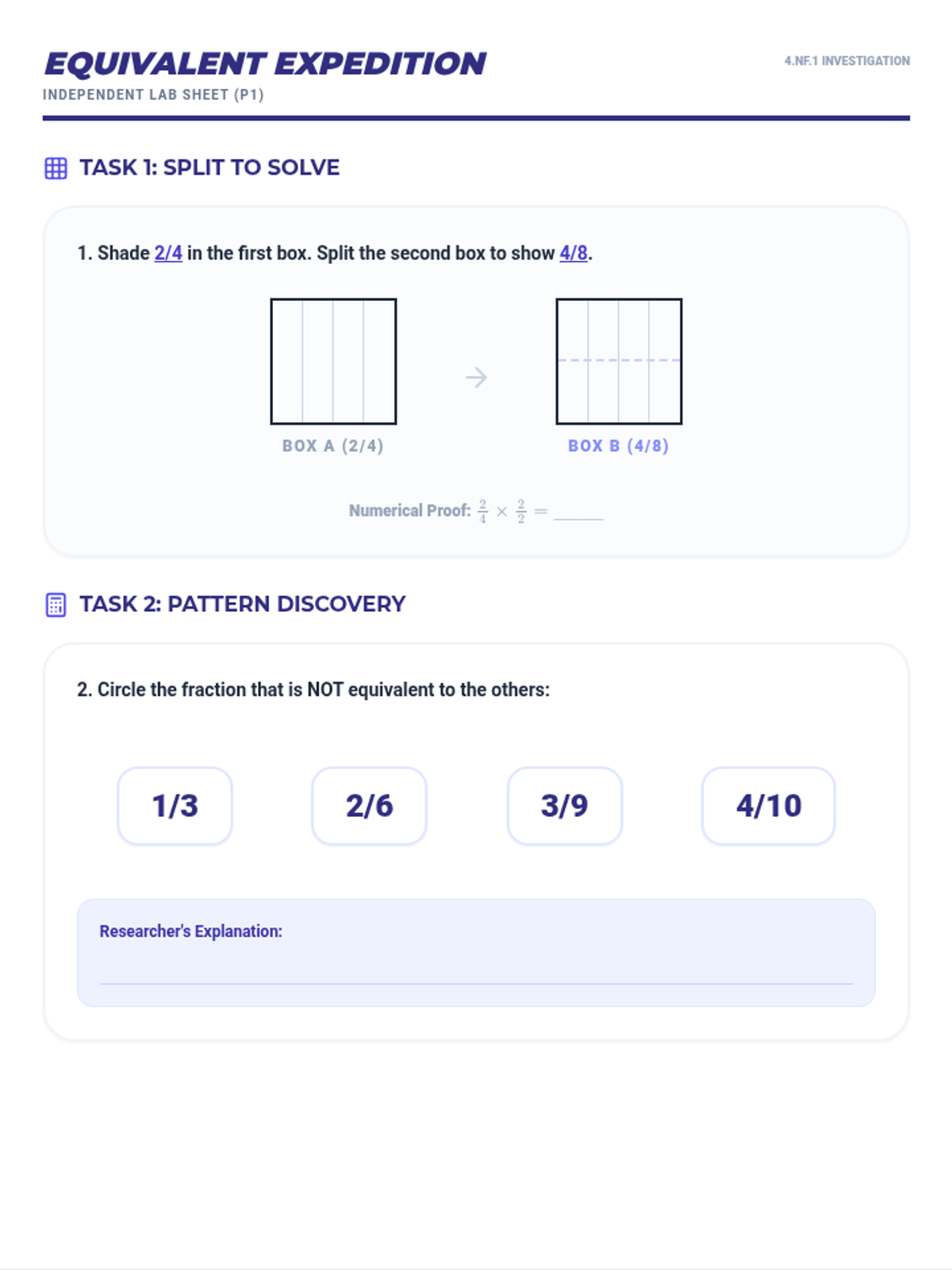
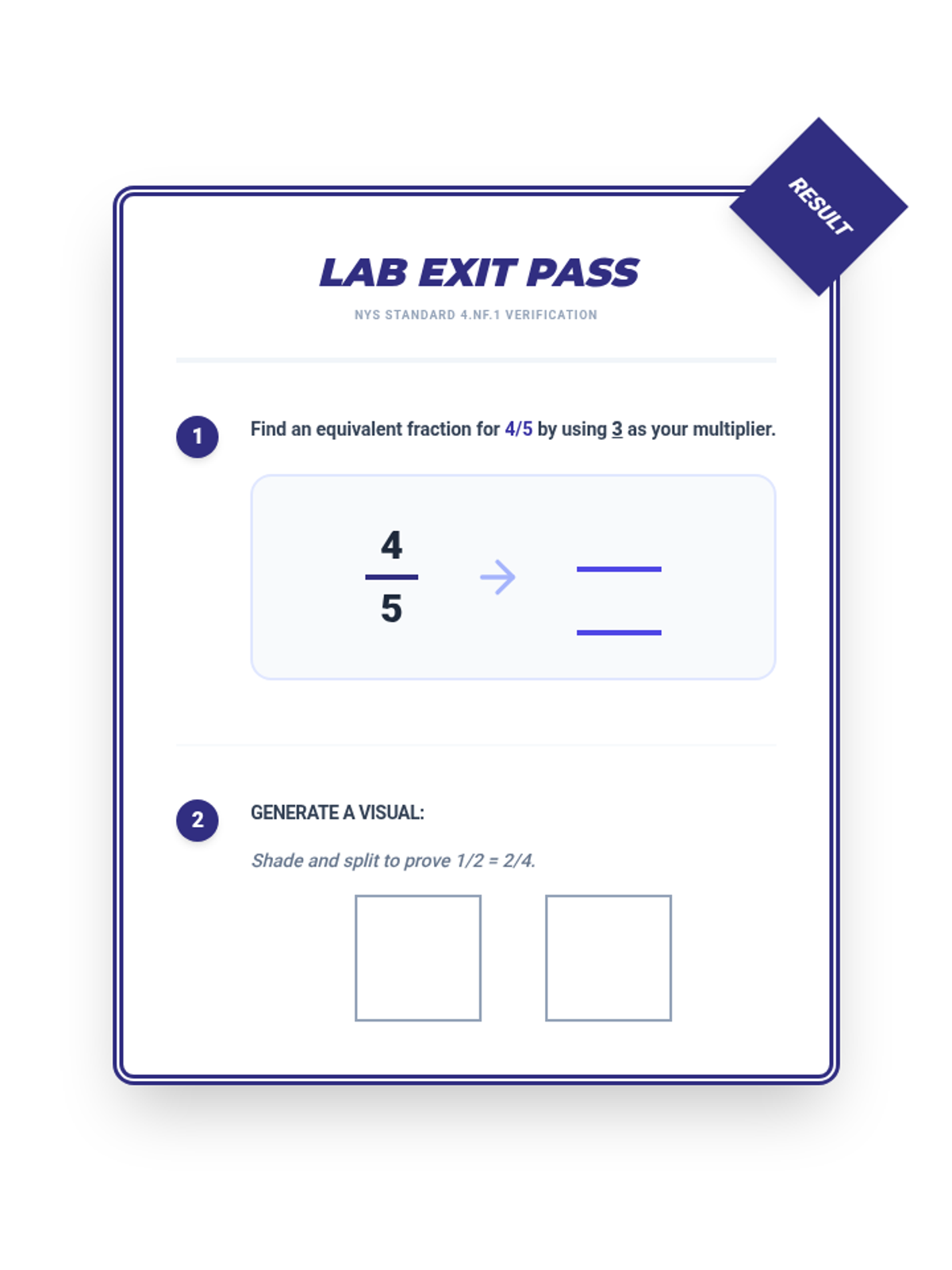
Tier 2 reteach for standard 4.NF.1: Explain why fractions are equivalent using visual fraction models. Focus on the "Splitting" and "Merging" strategies.
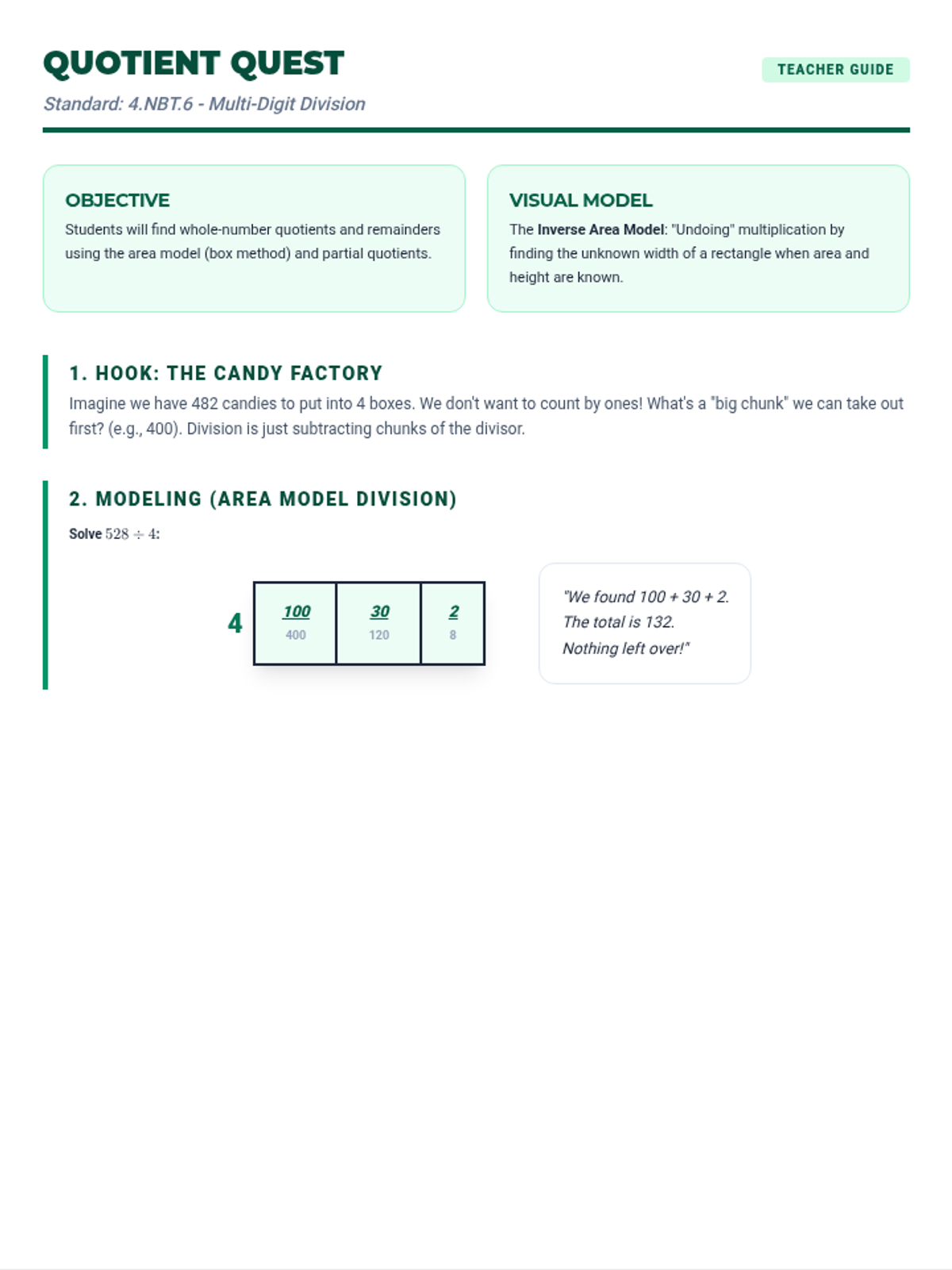
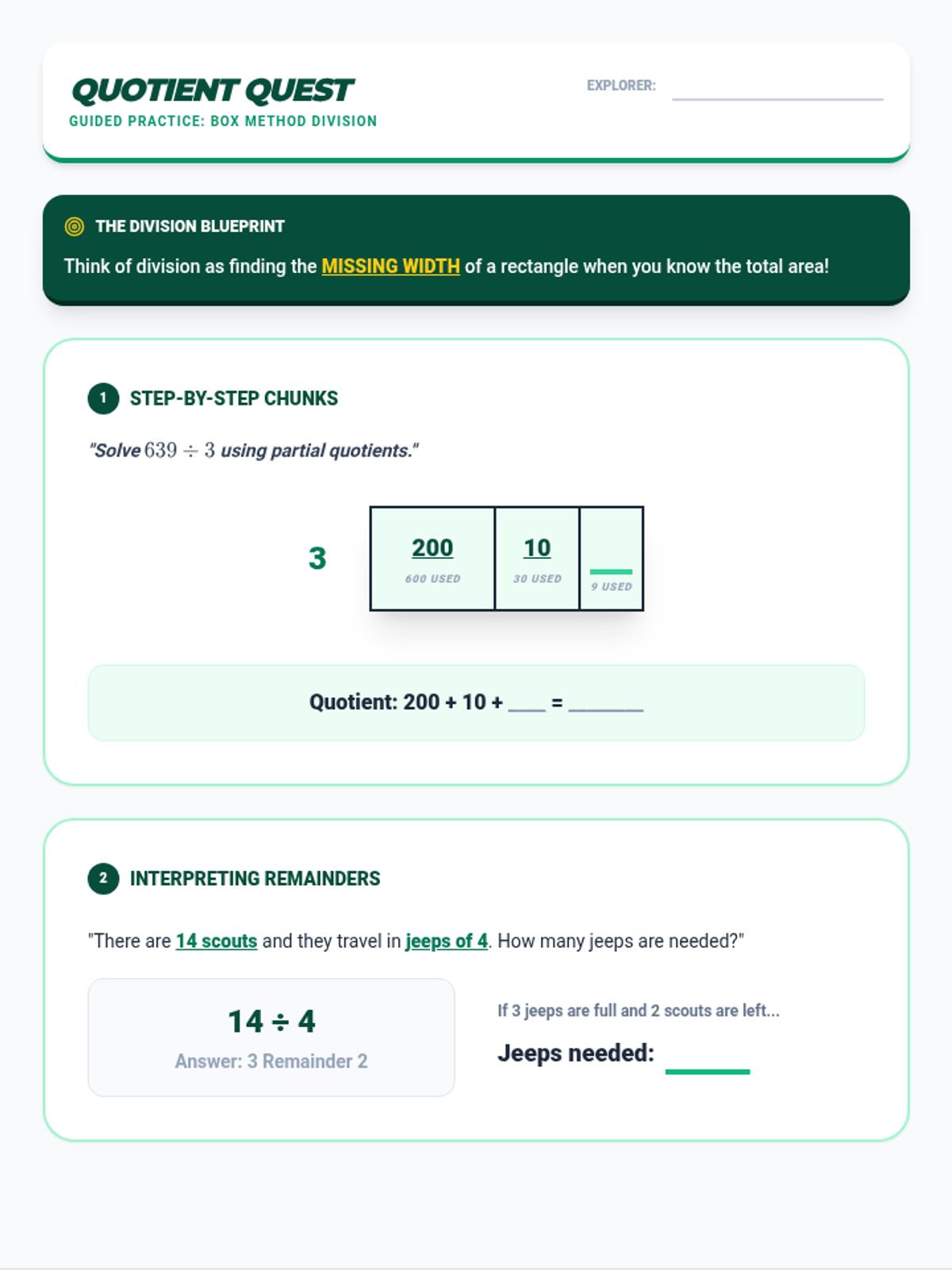
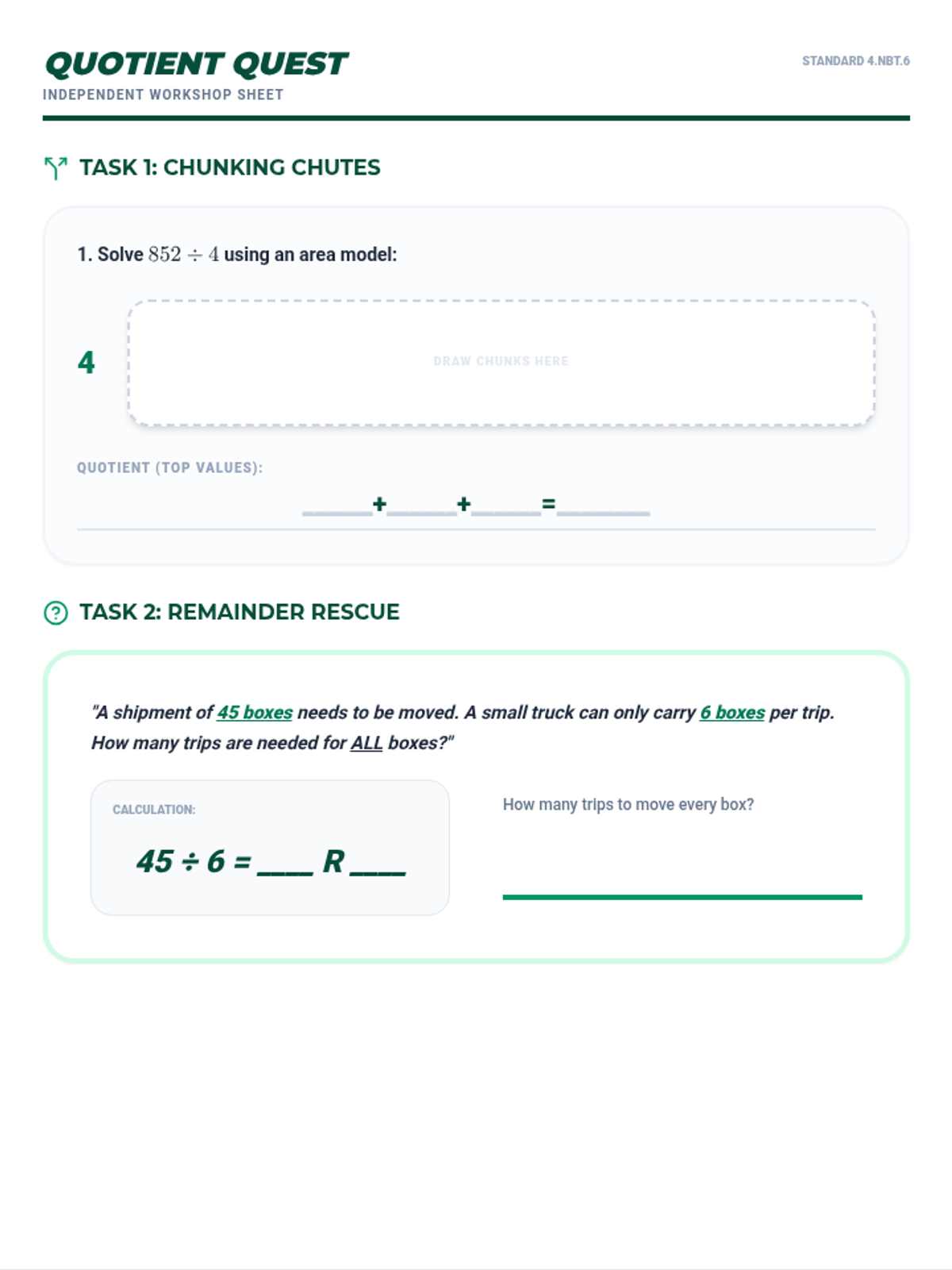
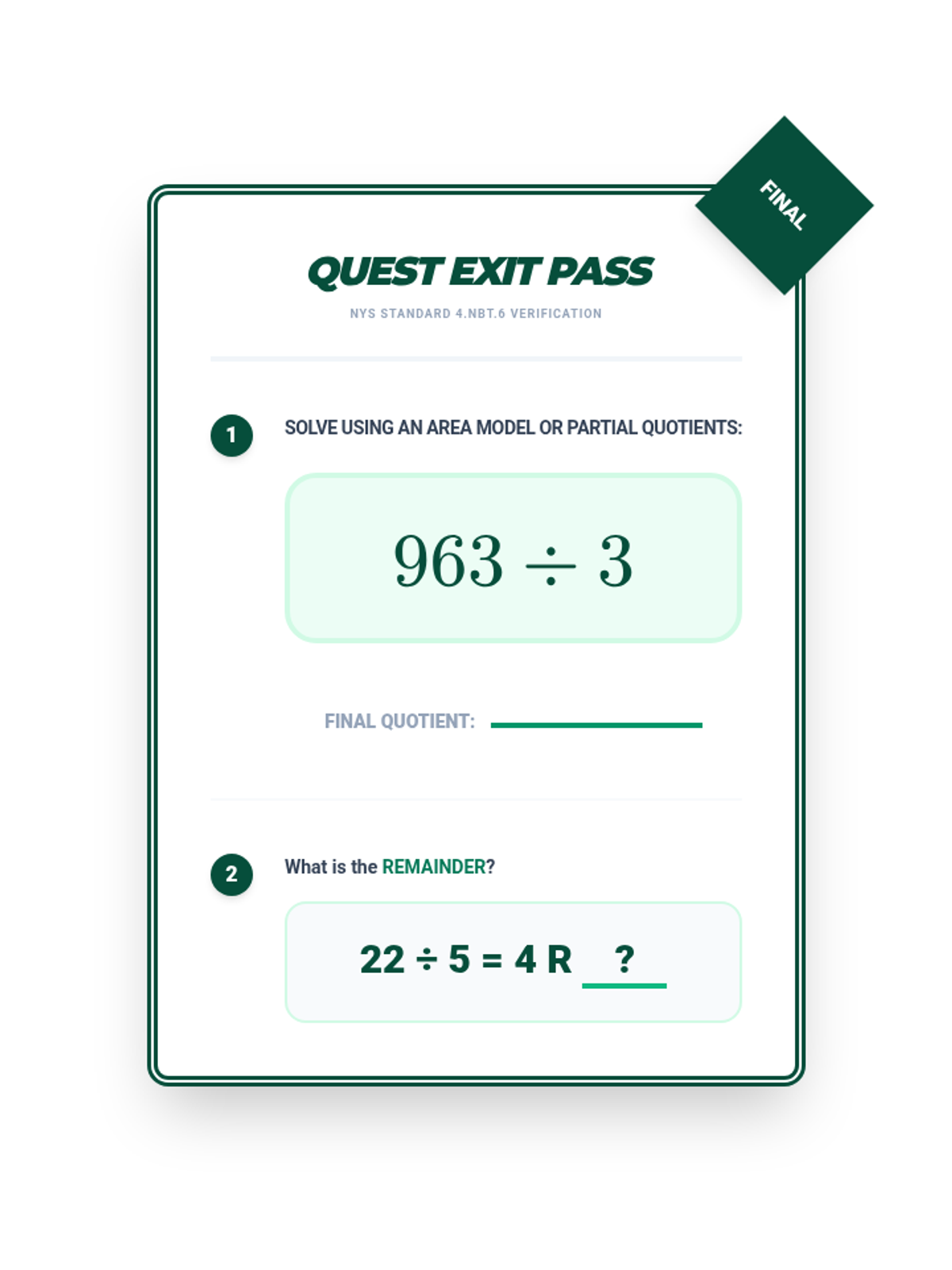
Tier 2 reteach for standard 4.NBT.6: Find whole-number quotients and remainders with up to four-digit dividends and one-digit divisors, using strategies based on place value.
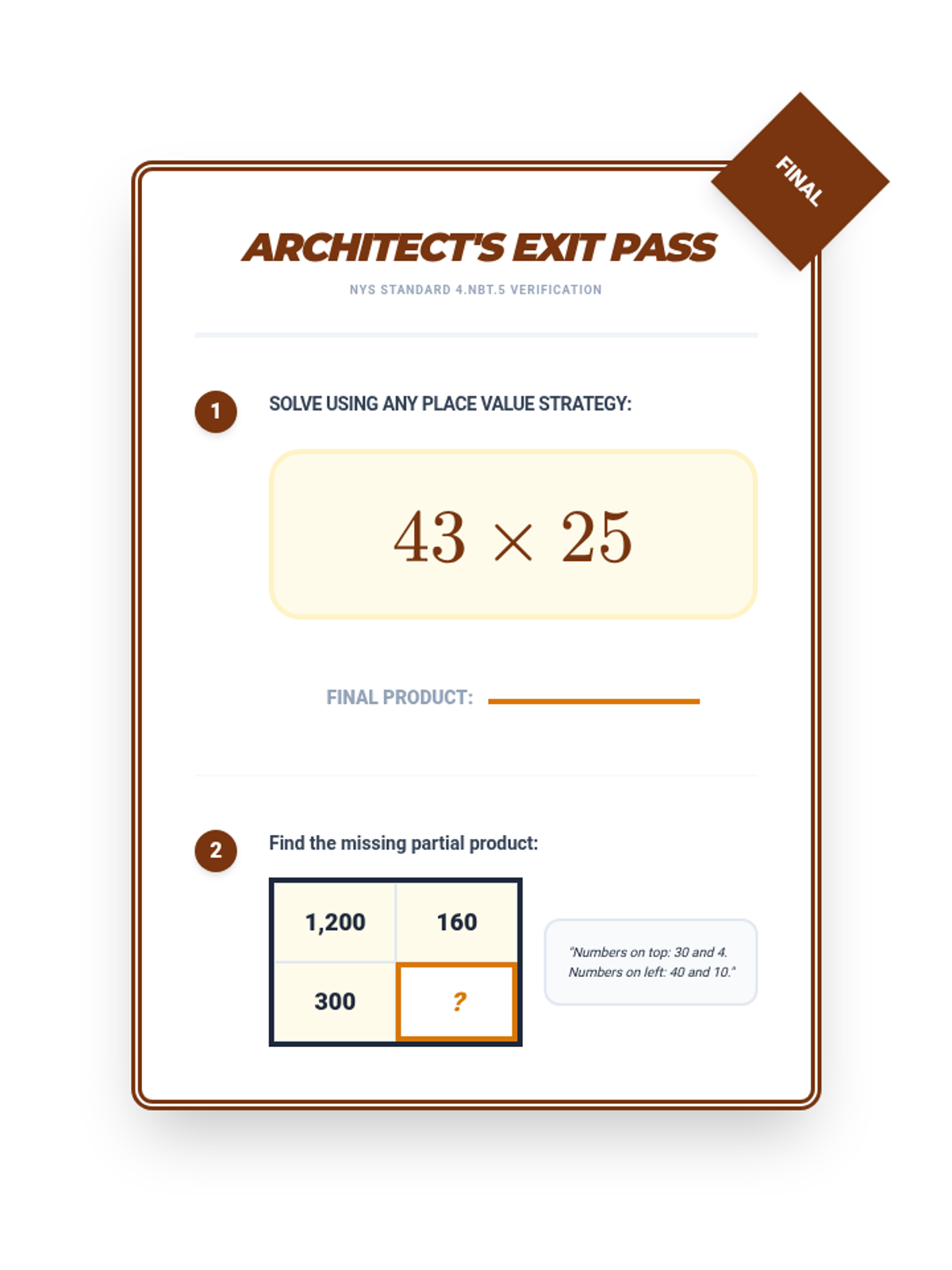
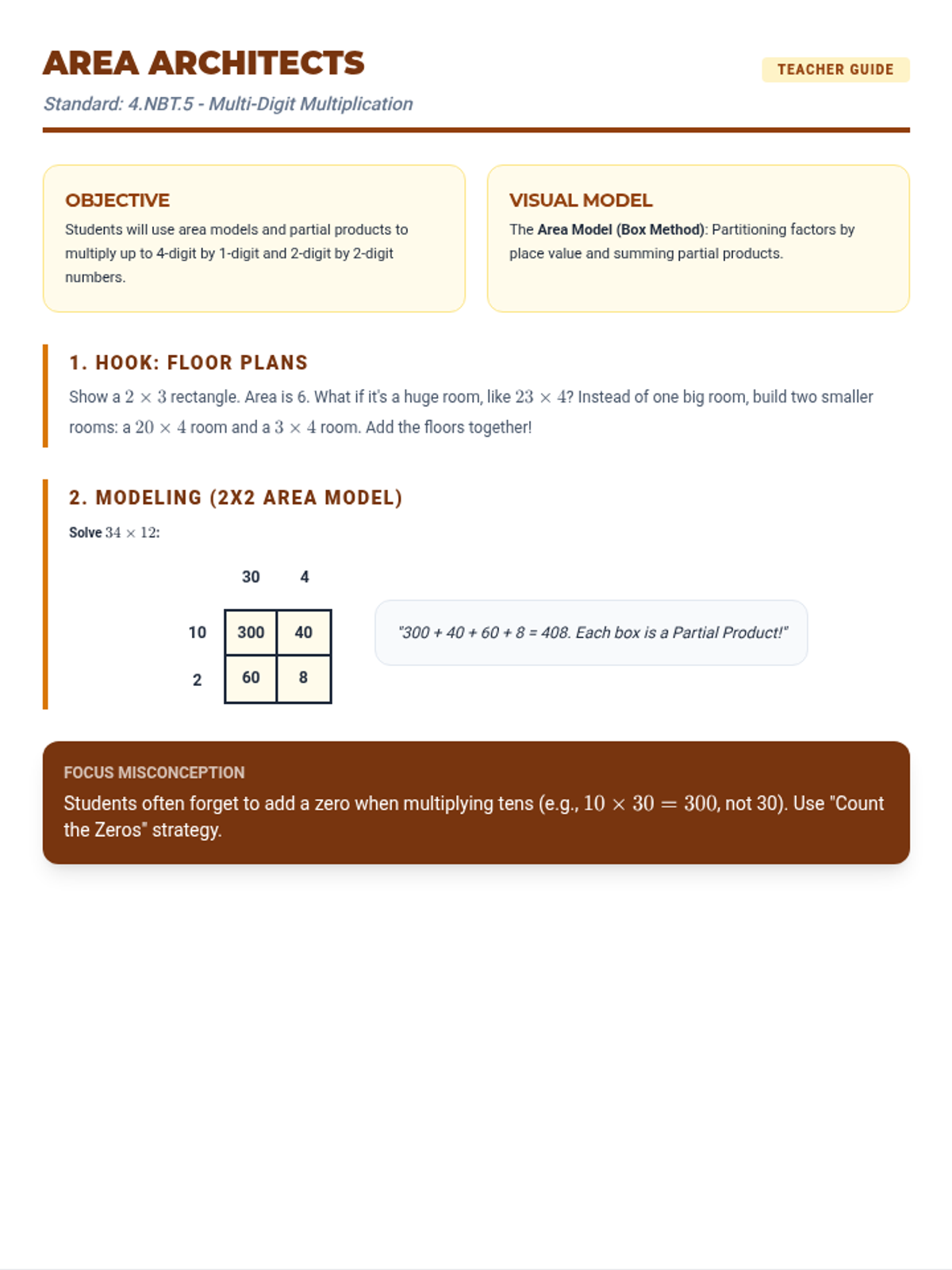
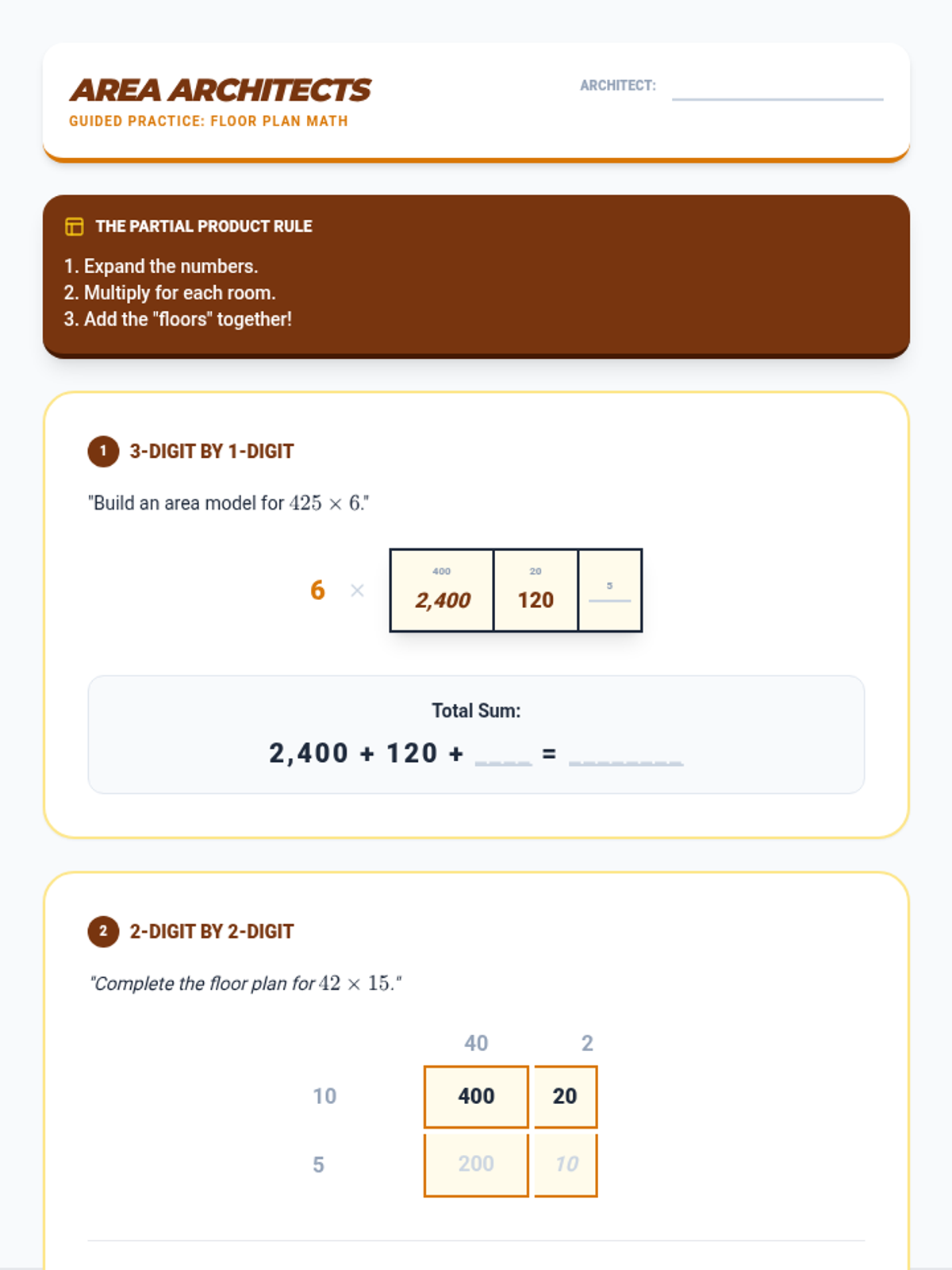
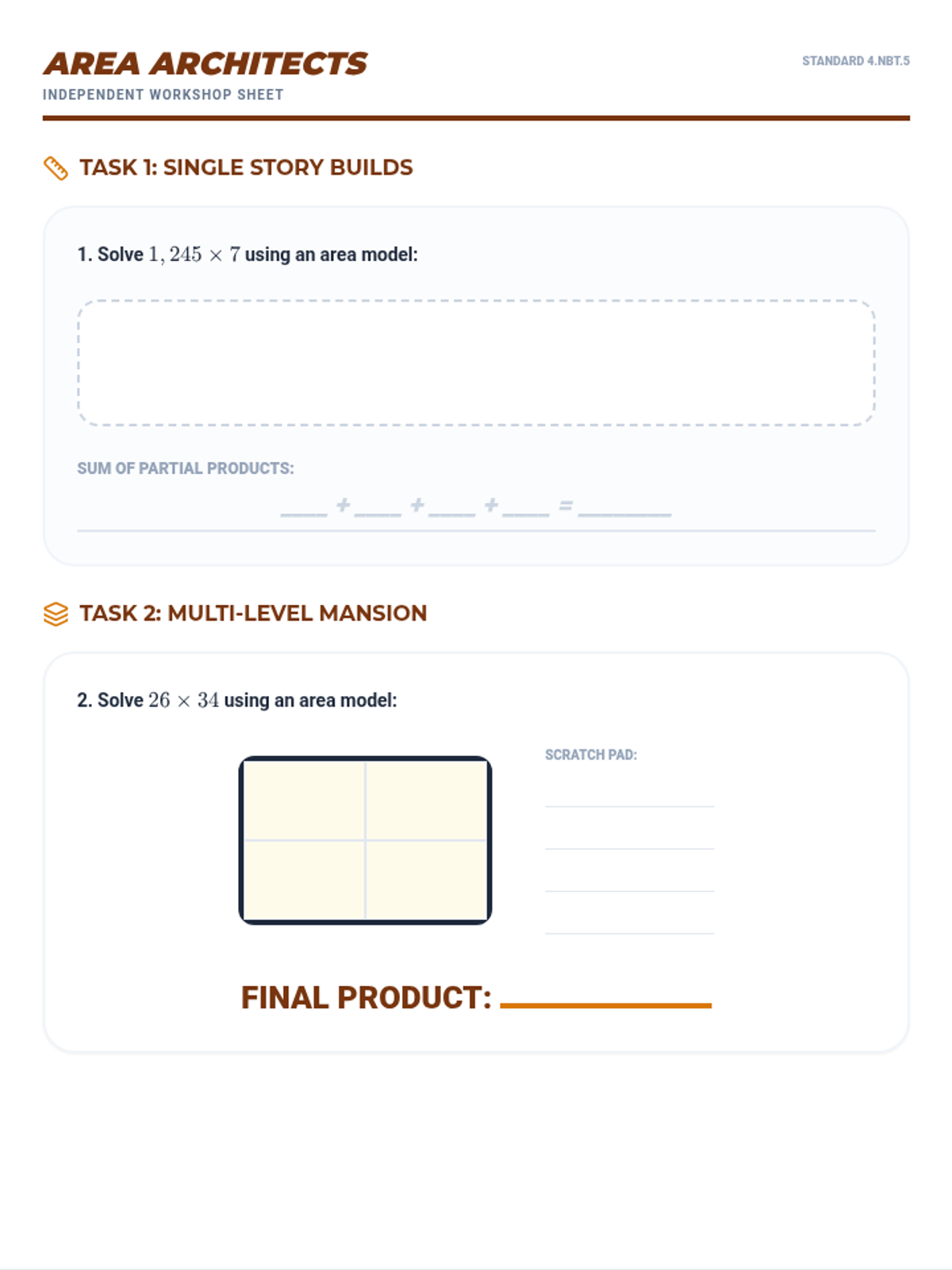
Tier 2 reteach for standard 4.NBT.5: Multiply a whole number of up to four digits by a one-digit whole number, and multiply two two-digit numbers, using strategies based on place value.
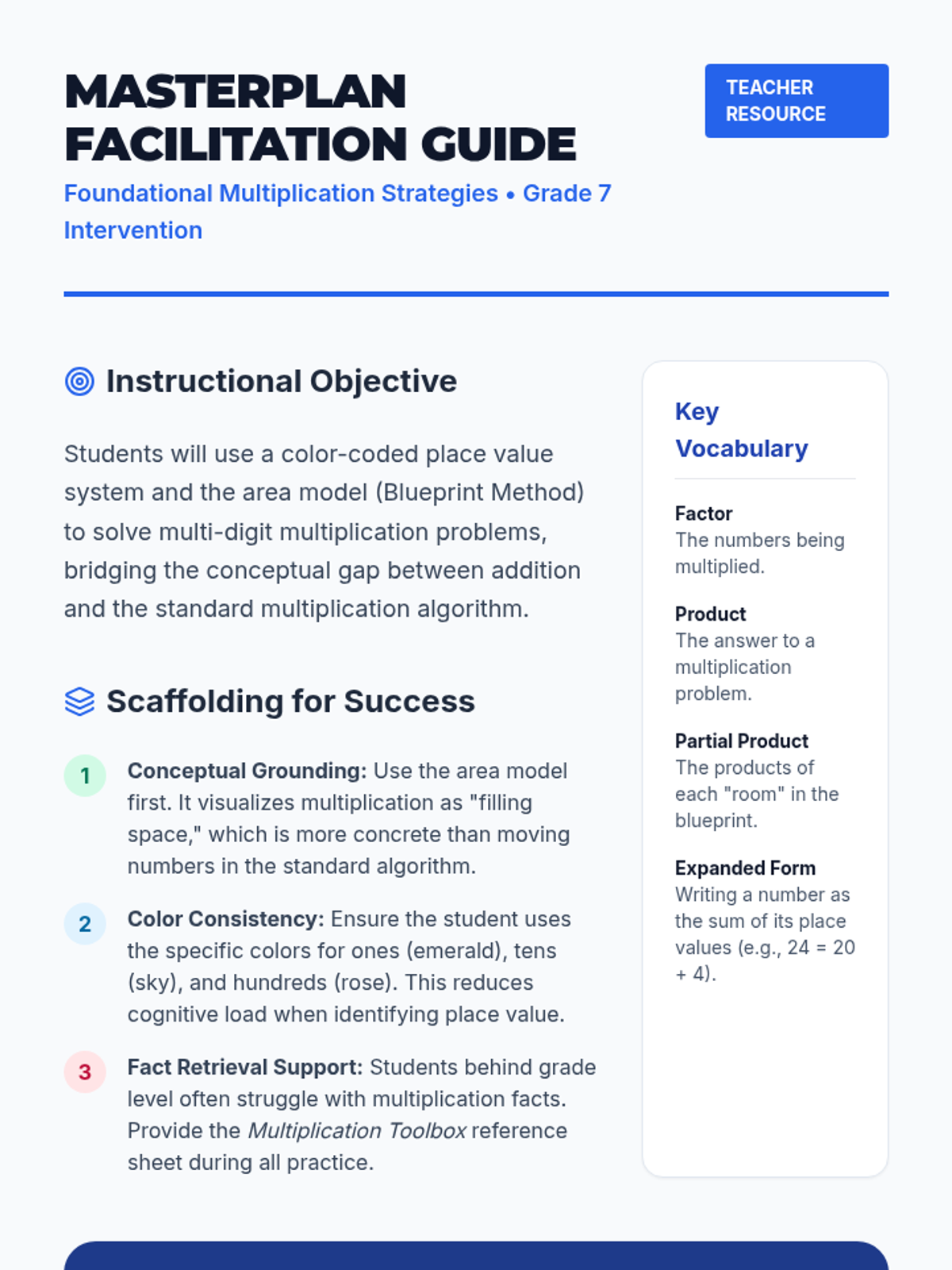
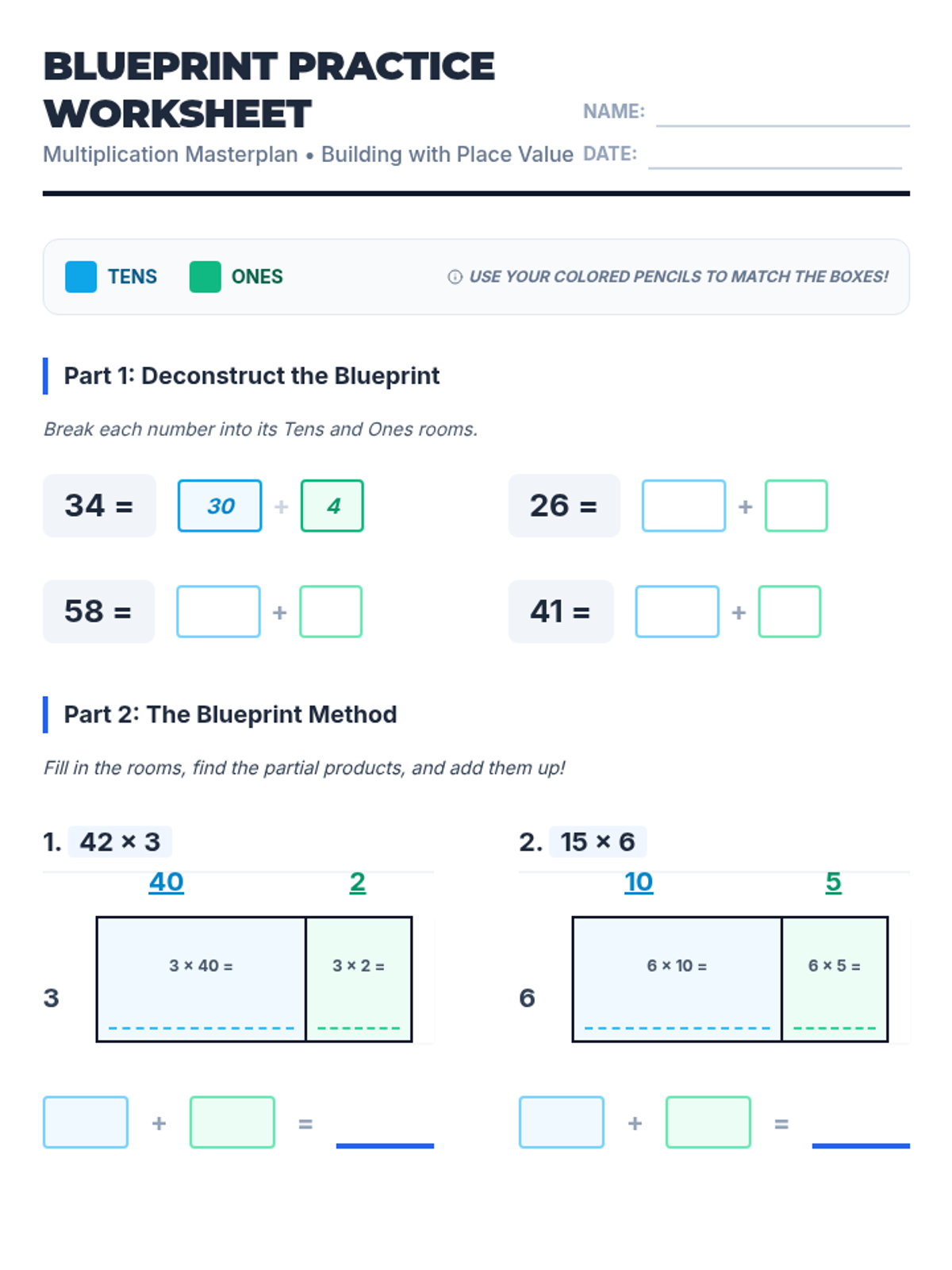
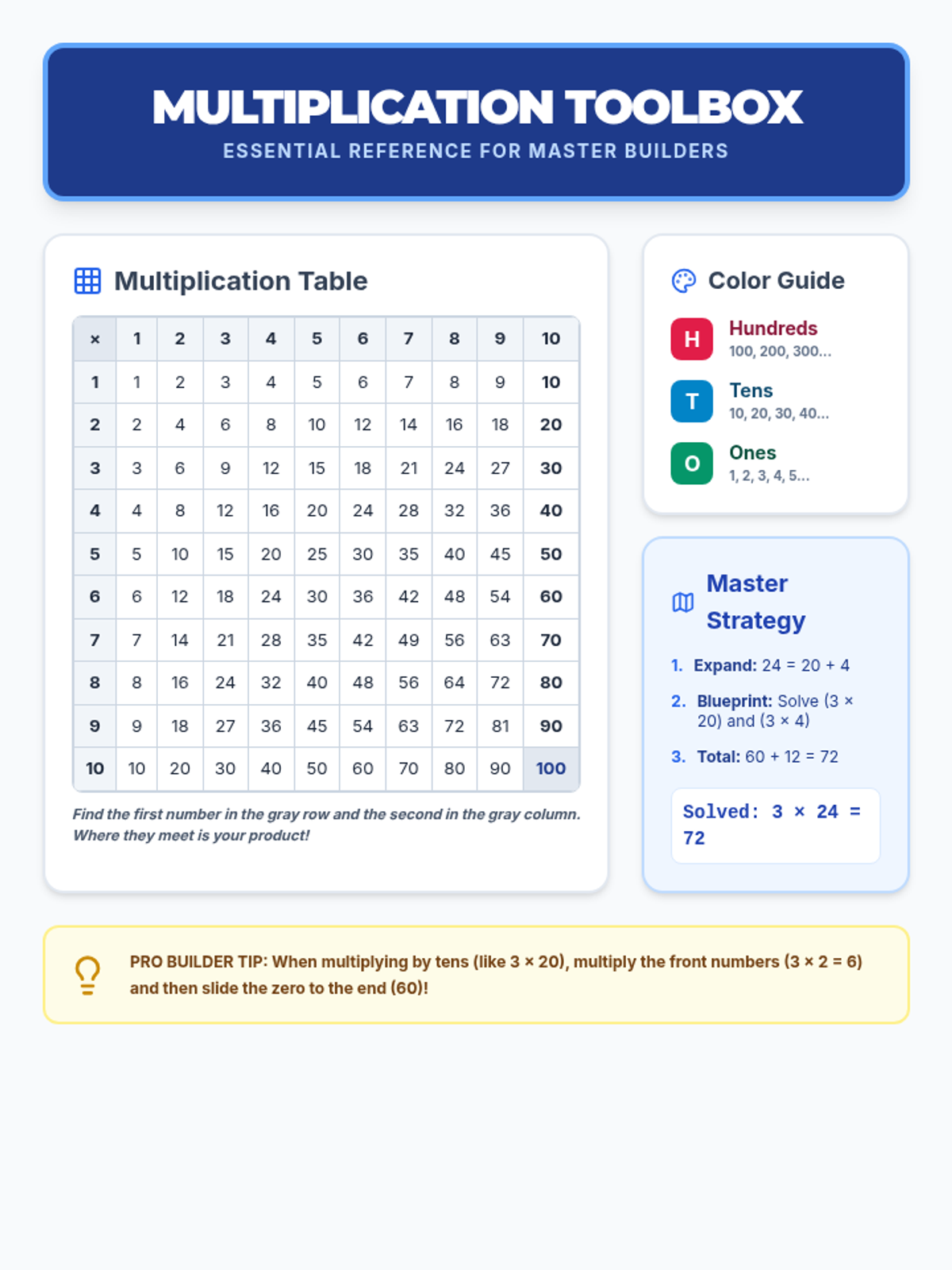
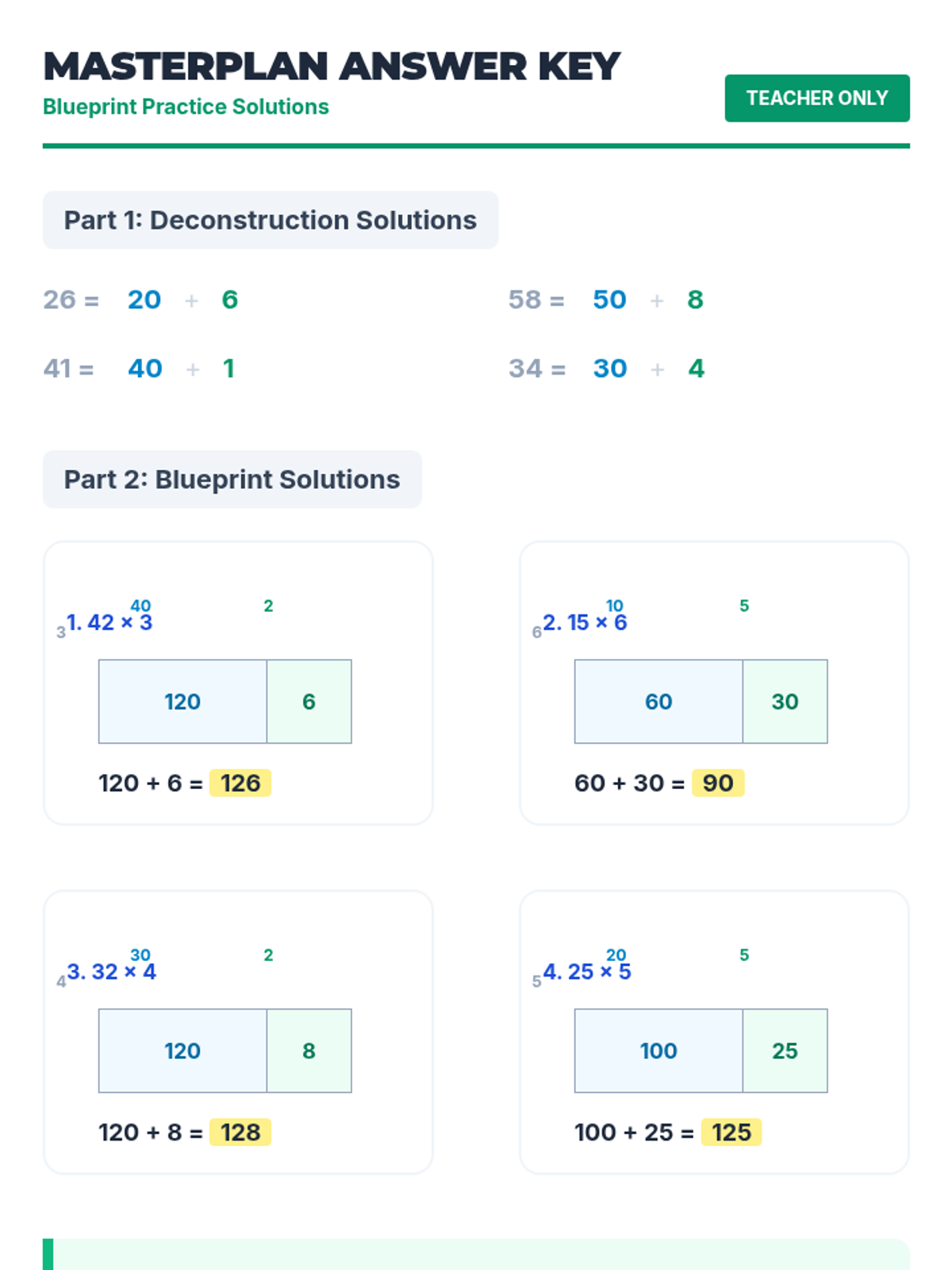
A foundational lesson on multi-digit multiplication using color-coded place value strategies and the area model to support students working significantly below grade level.
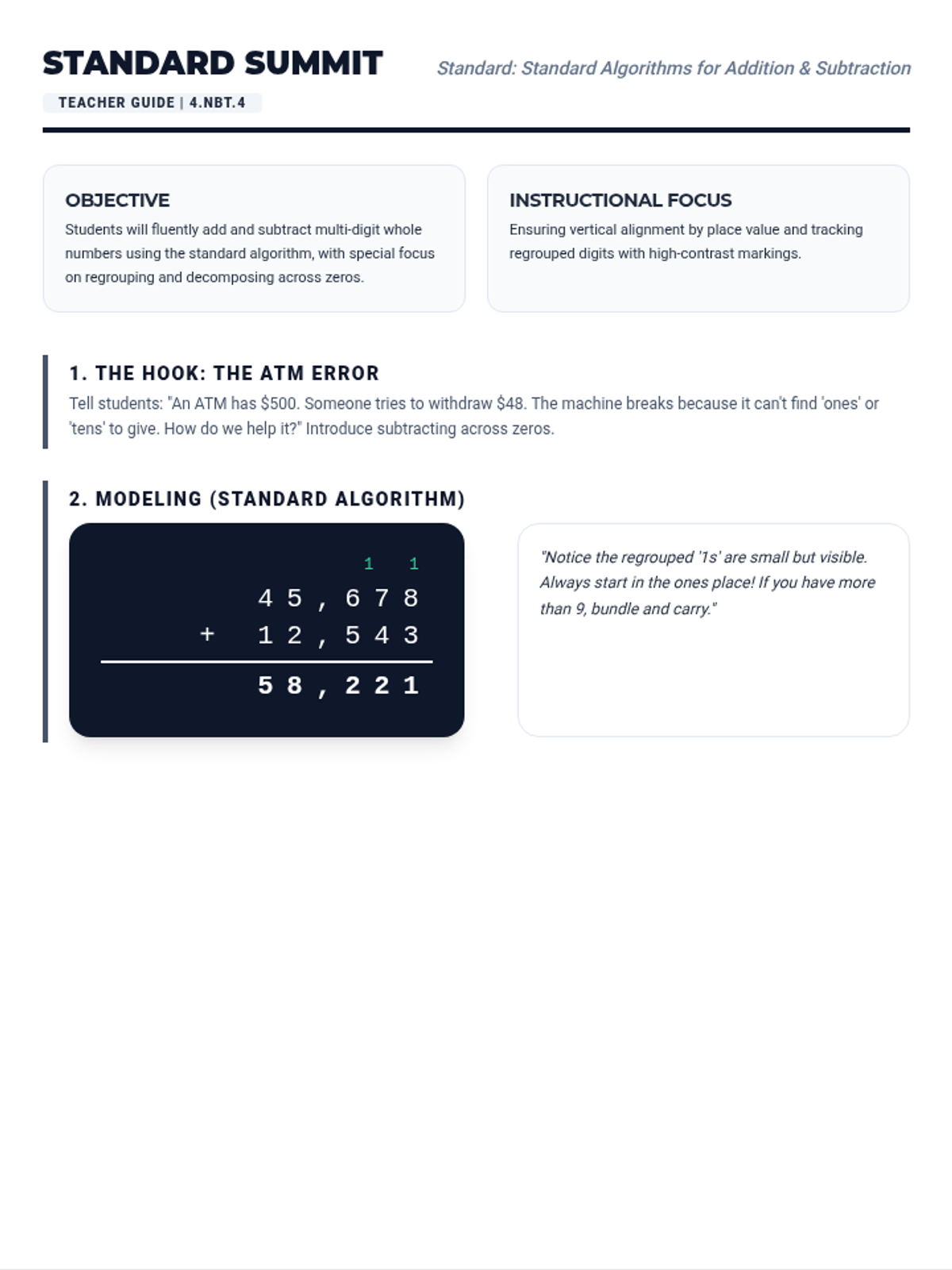
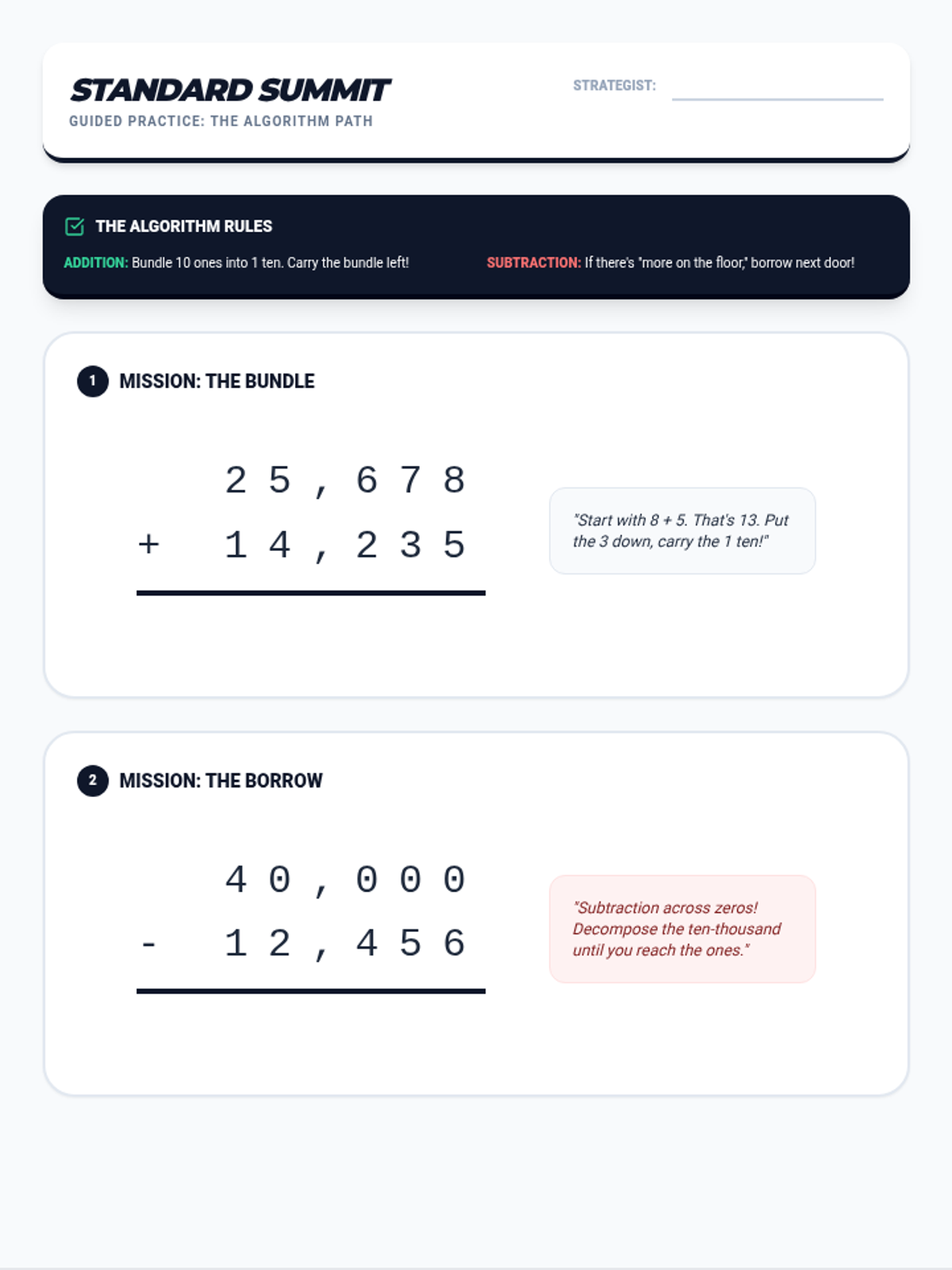
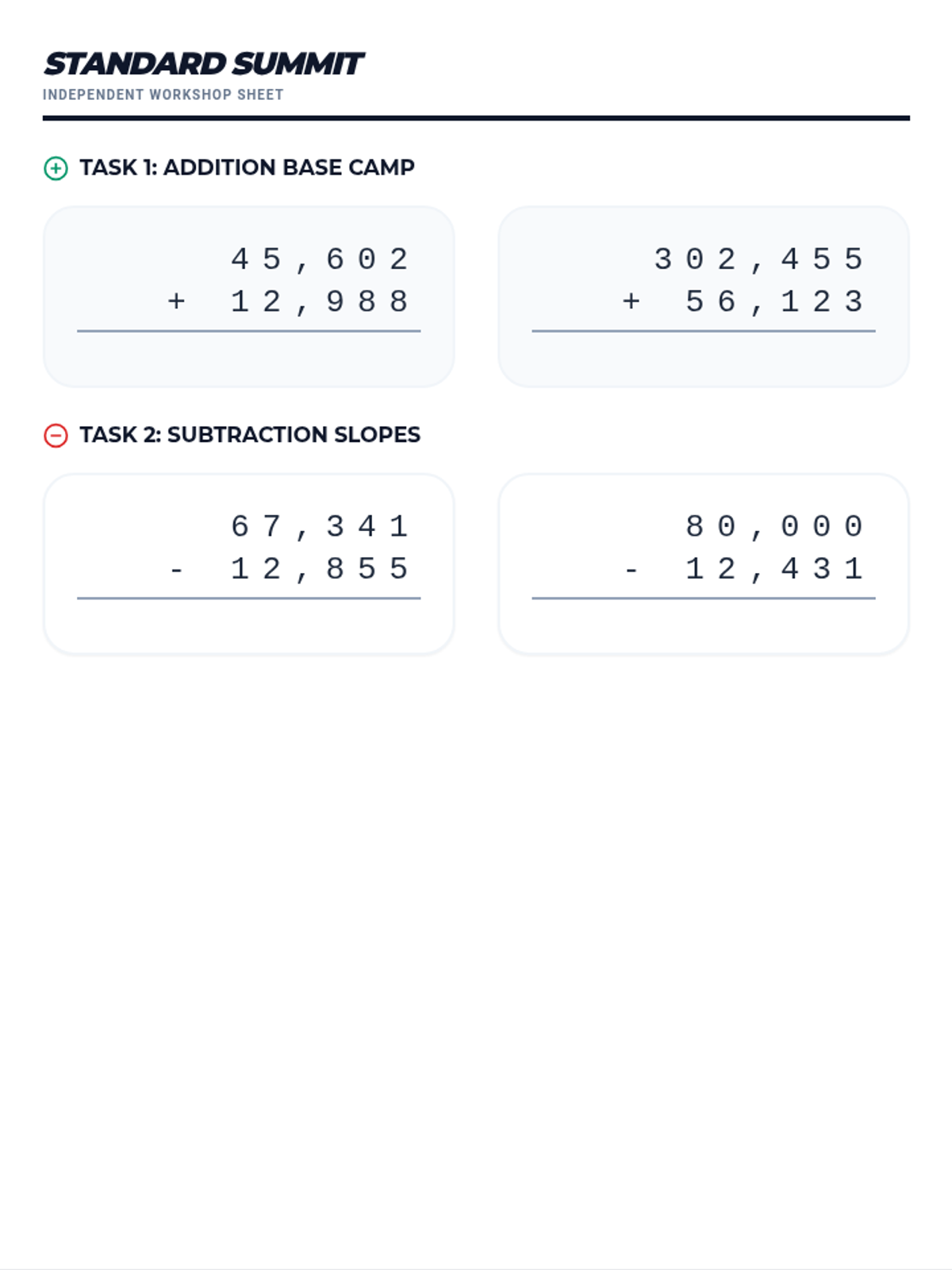
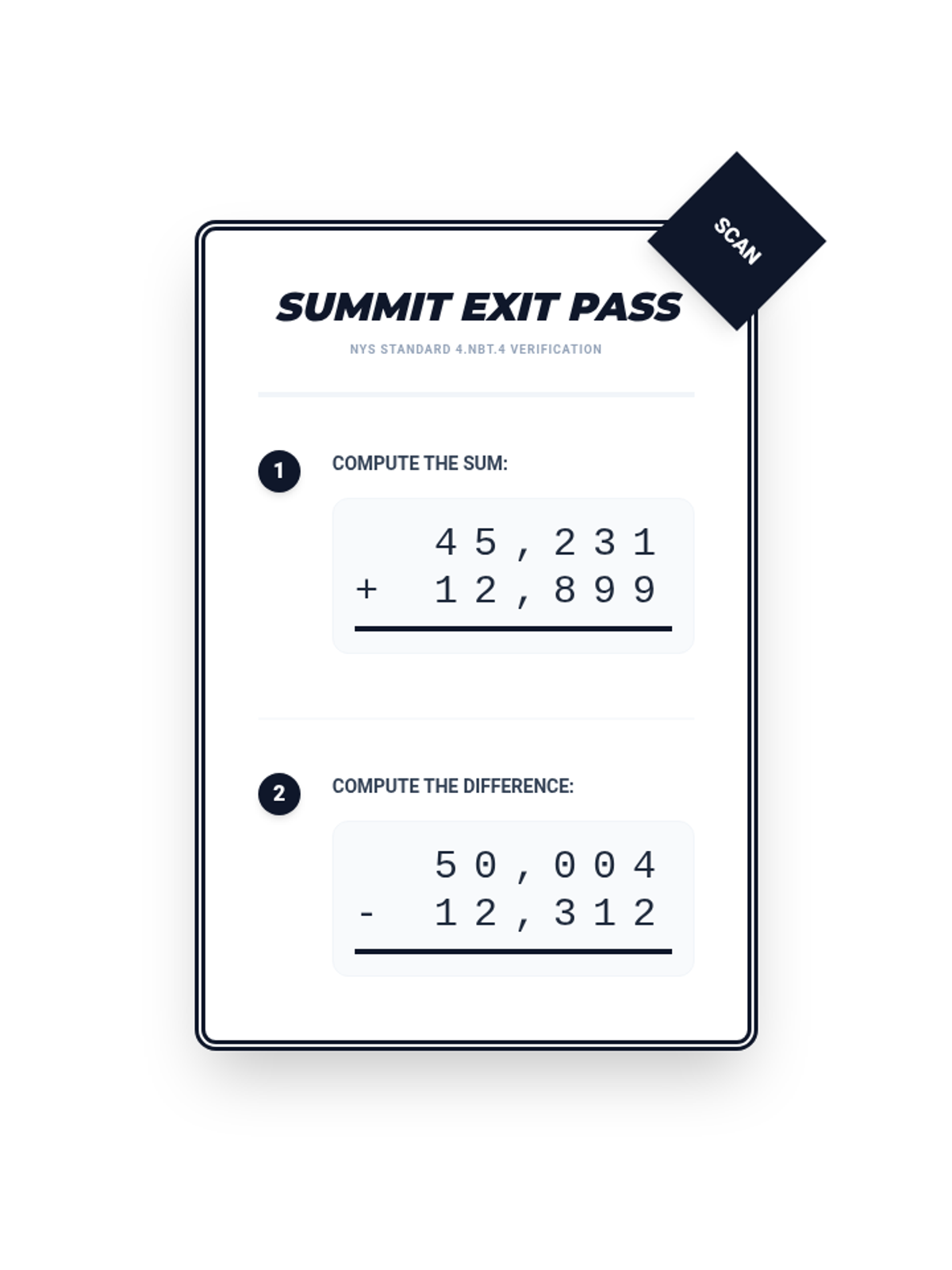
Tier 2 reteach for standard 4.NBT.4: Fluently add and subtract multi-digit whole numbers using the standard algorithm.
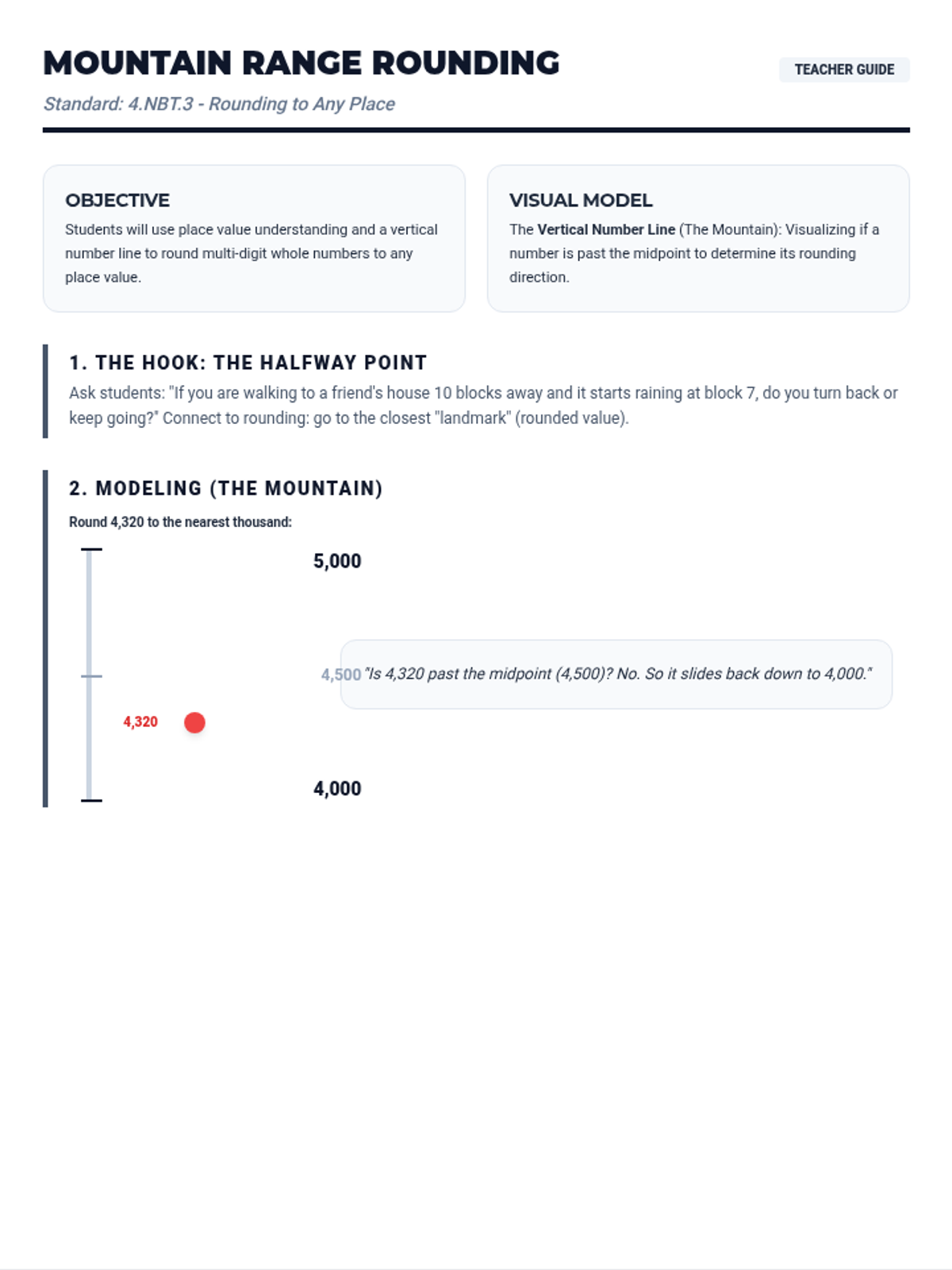
Tier 2 reteach for standard 4.NBT.3: Use place value understanding to round multi-digit whole numbers to any place.
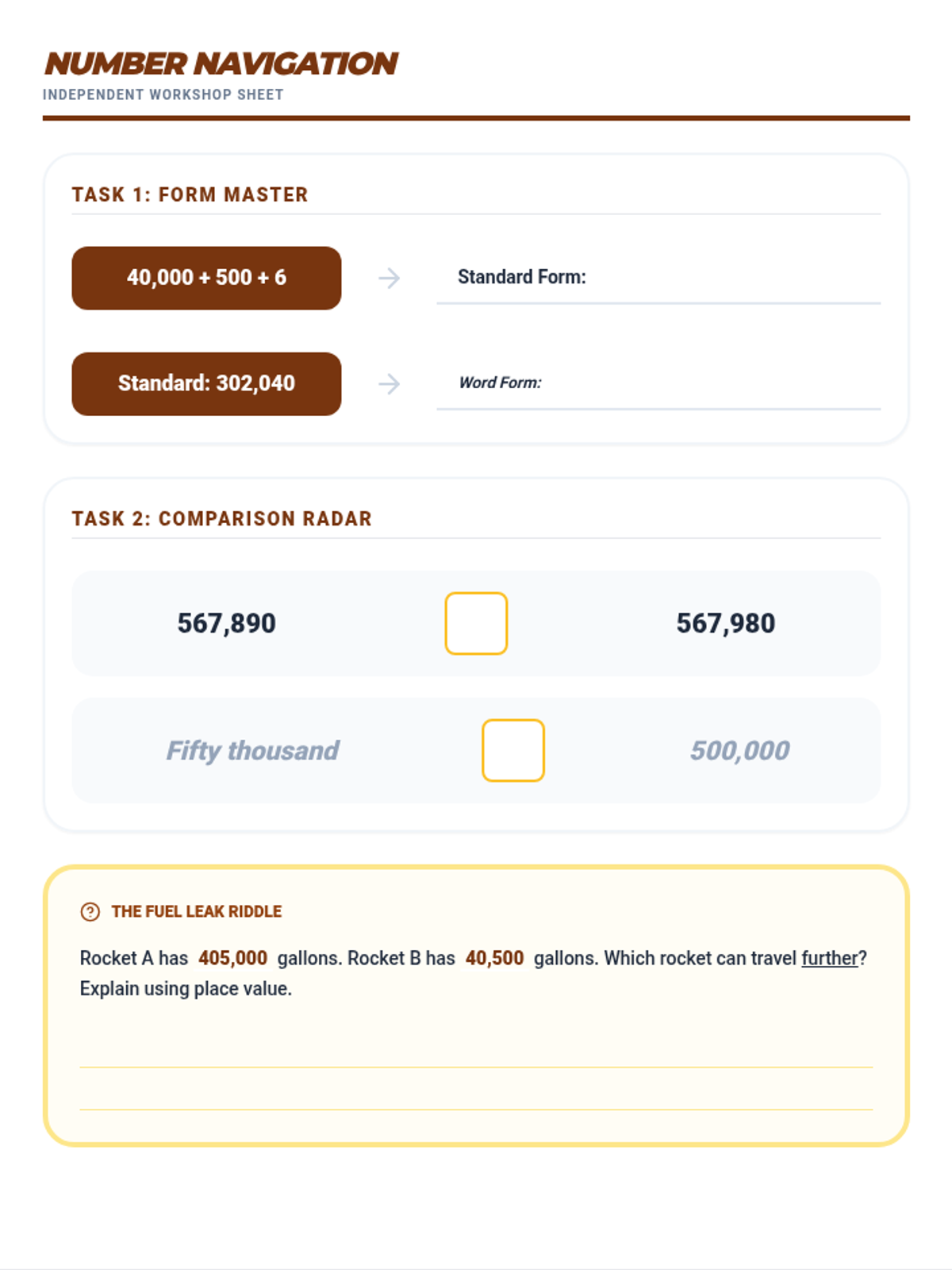
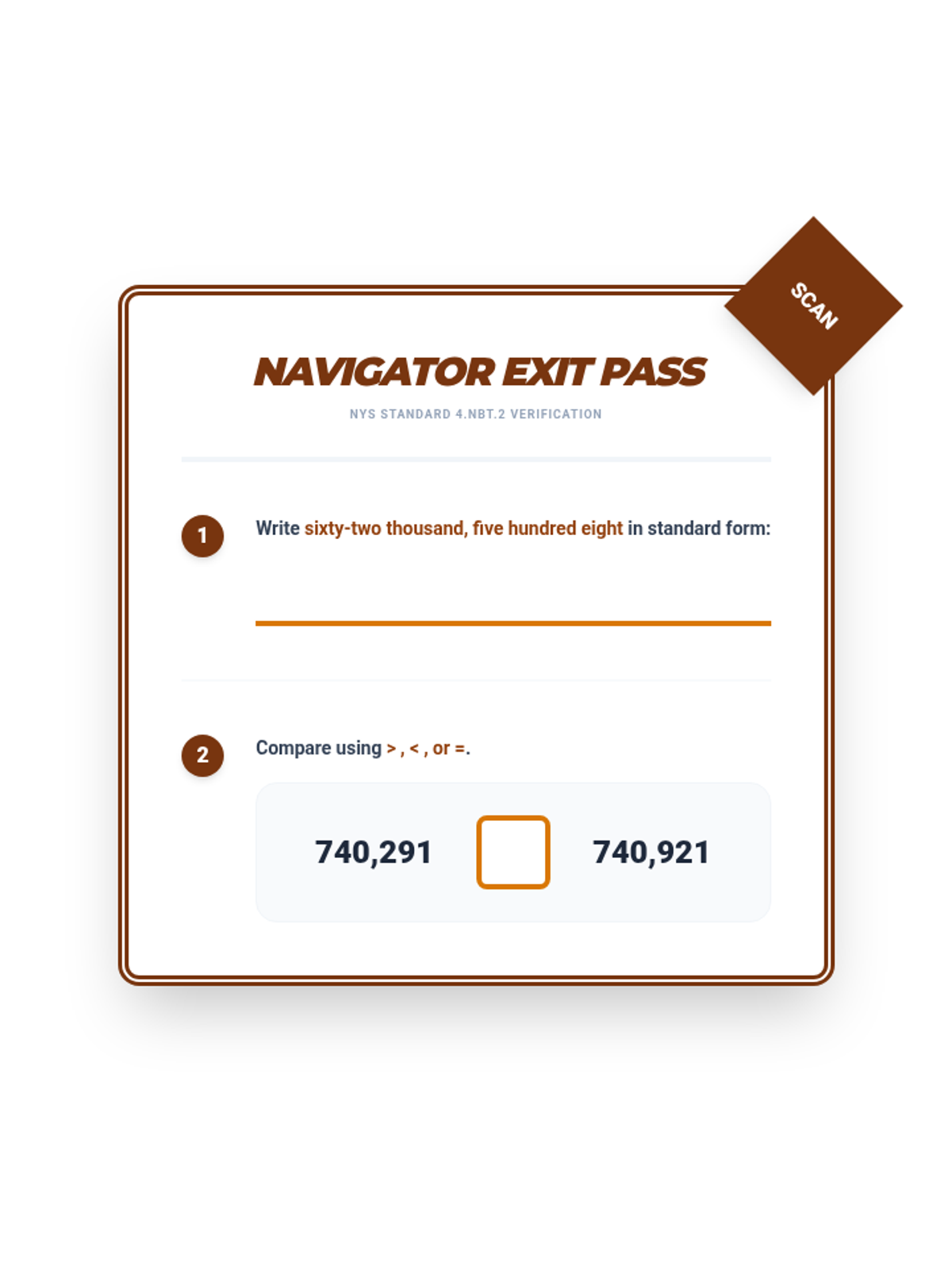
Tier 2 reteach for standard 4.NBT.2: Read and write multi-digit whole numbers using base-ten numerals, number names, and expanded form. Compare two multi-digit numbers based on meanings of the digits in each place.
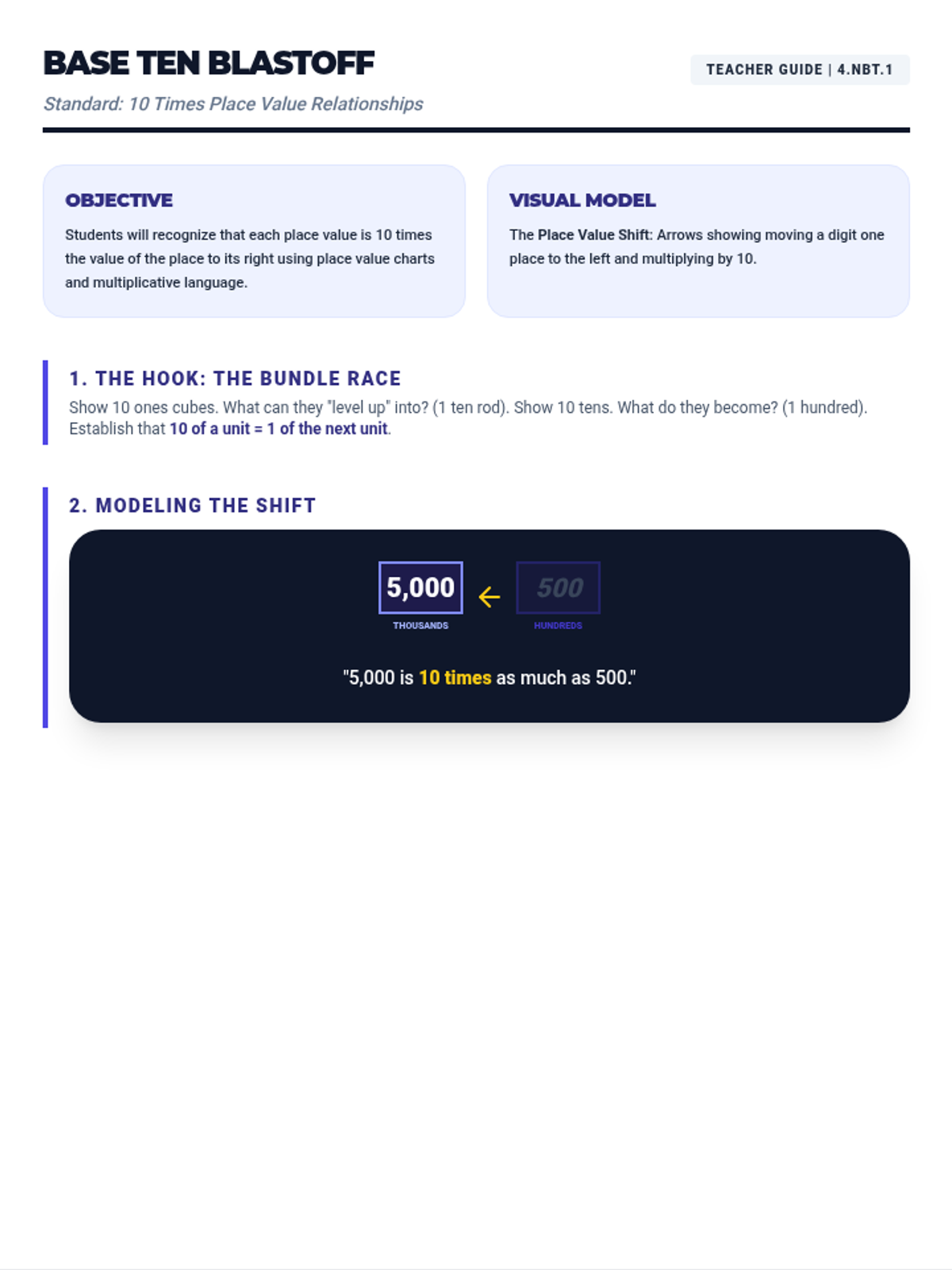
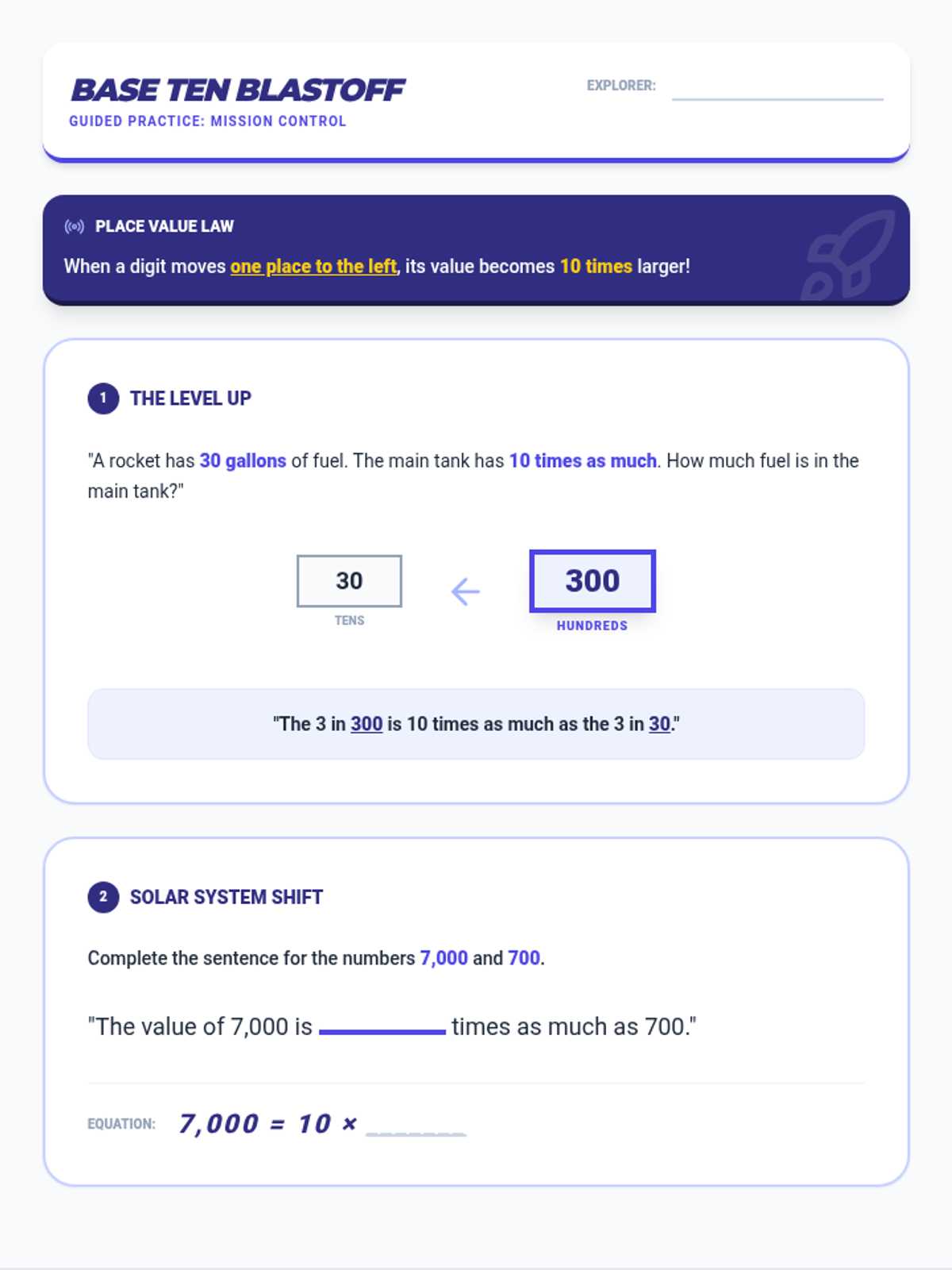
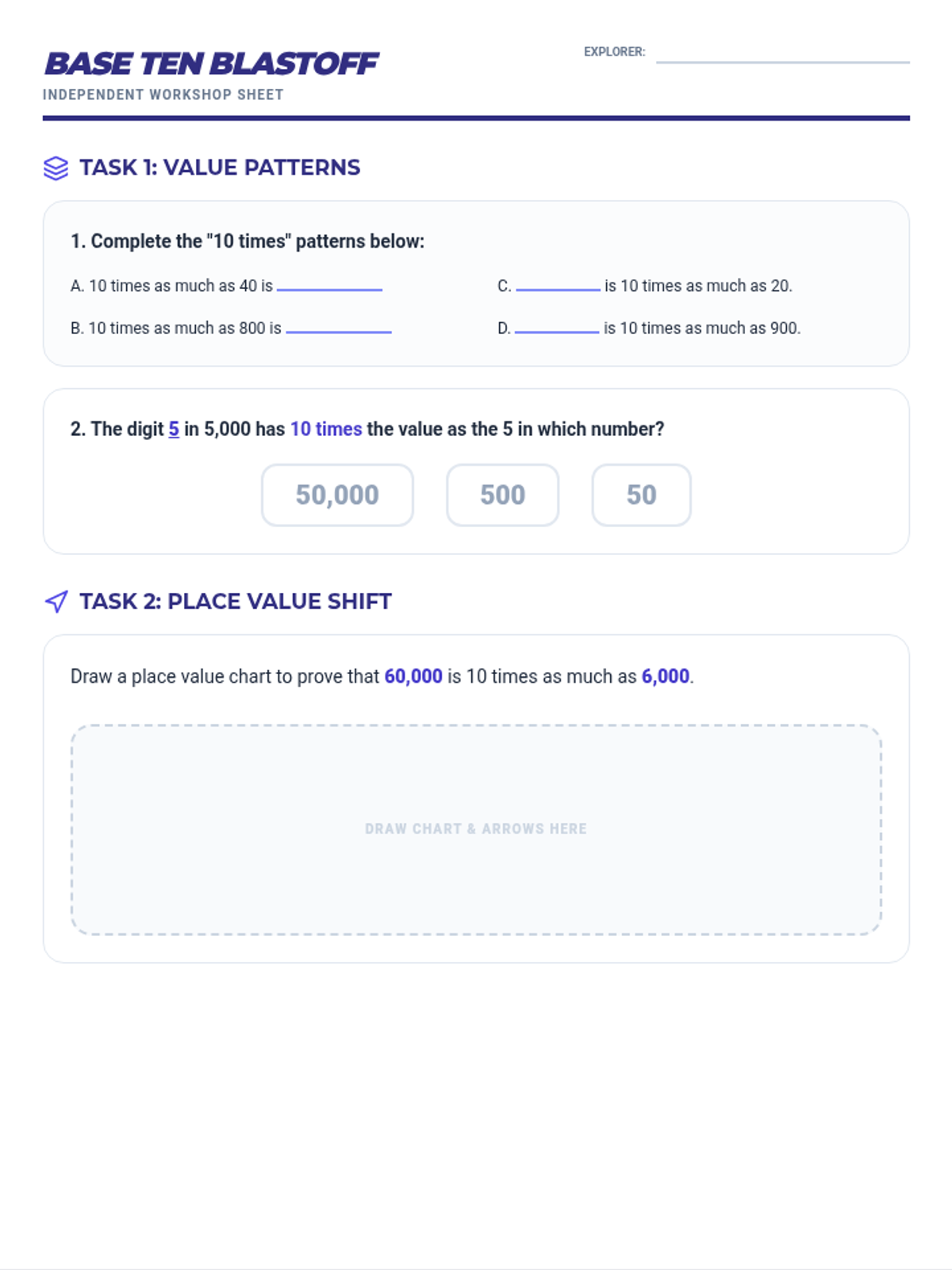
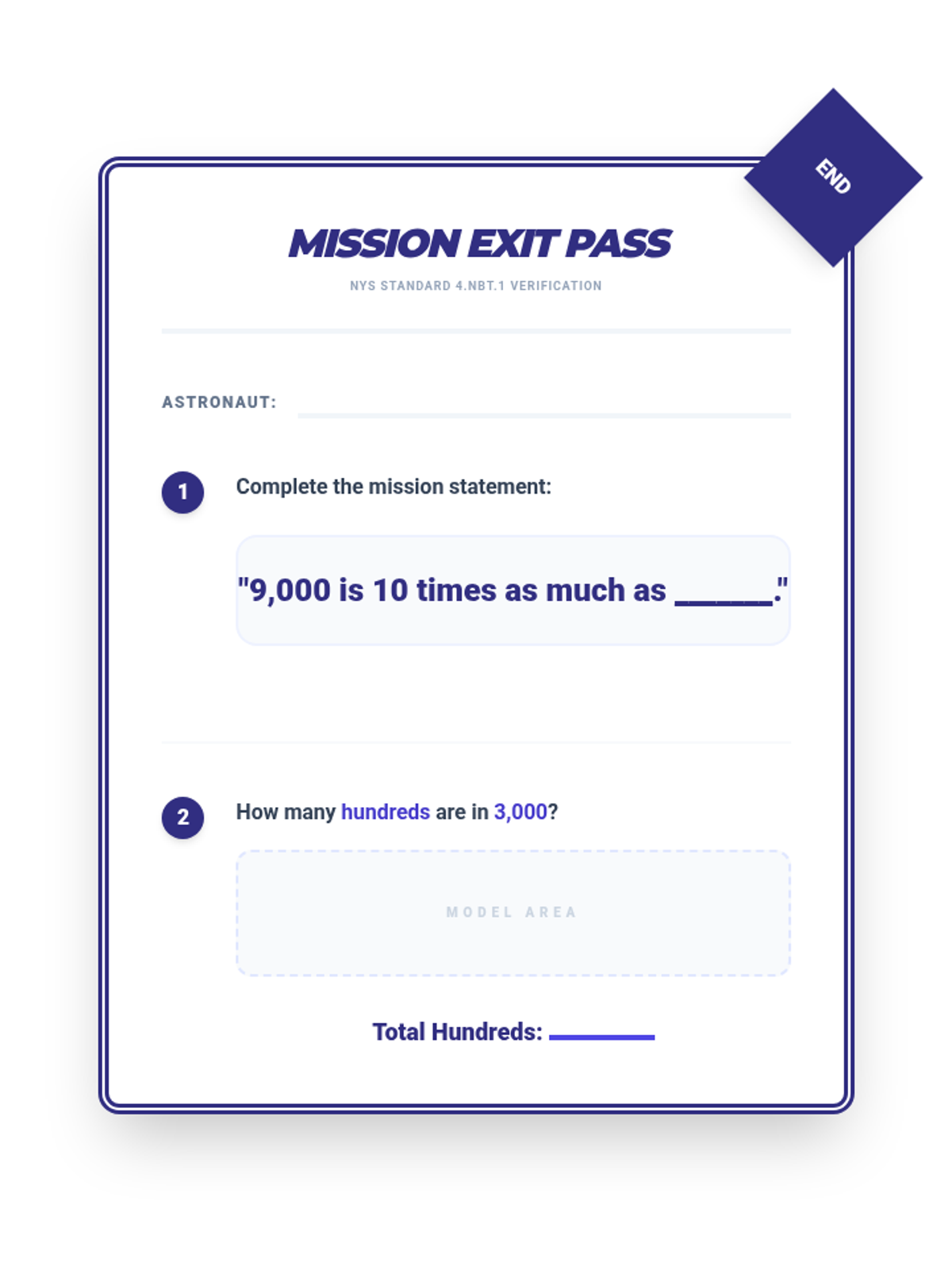
Tier 2 reteach for standard 4.NBT.1: Recognize that in a multi-digit whole number, a digit in one place represents ten times what it represents in the place to its right.
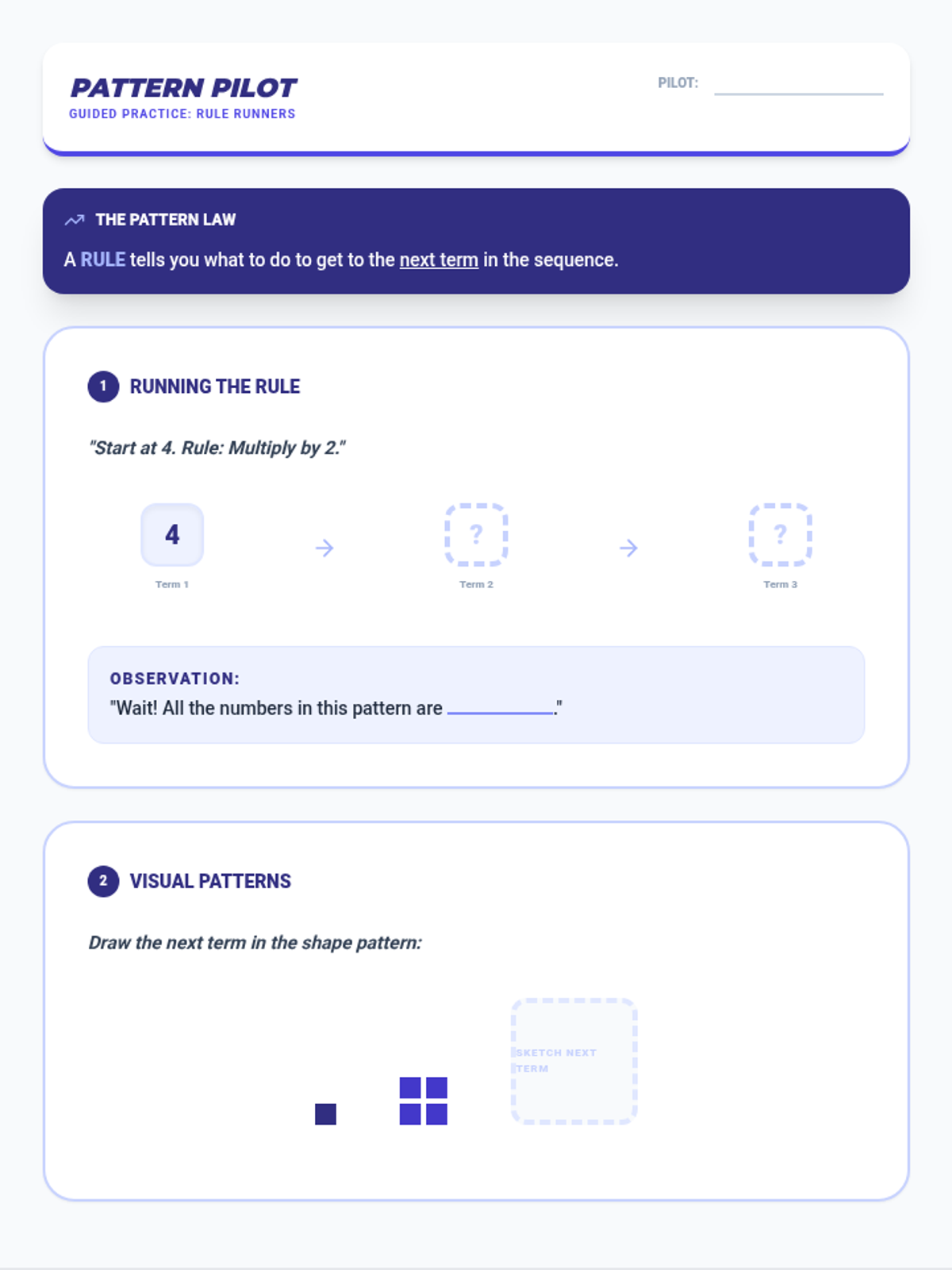
Tier 2 reteach for standard 4.OA.5: Generate a number or shape pattern that follows a given rule. Identify apparent features of the pattern that were not explicit in the rule itself.
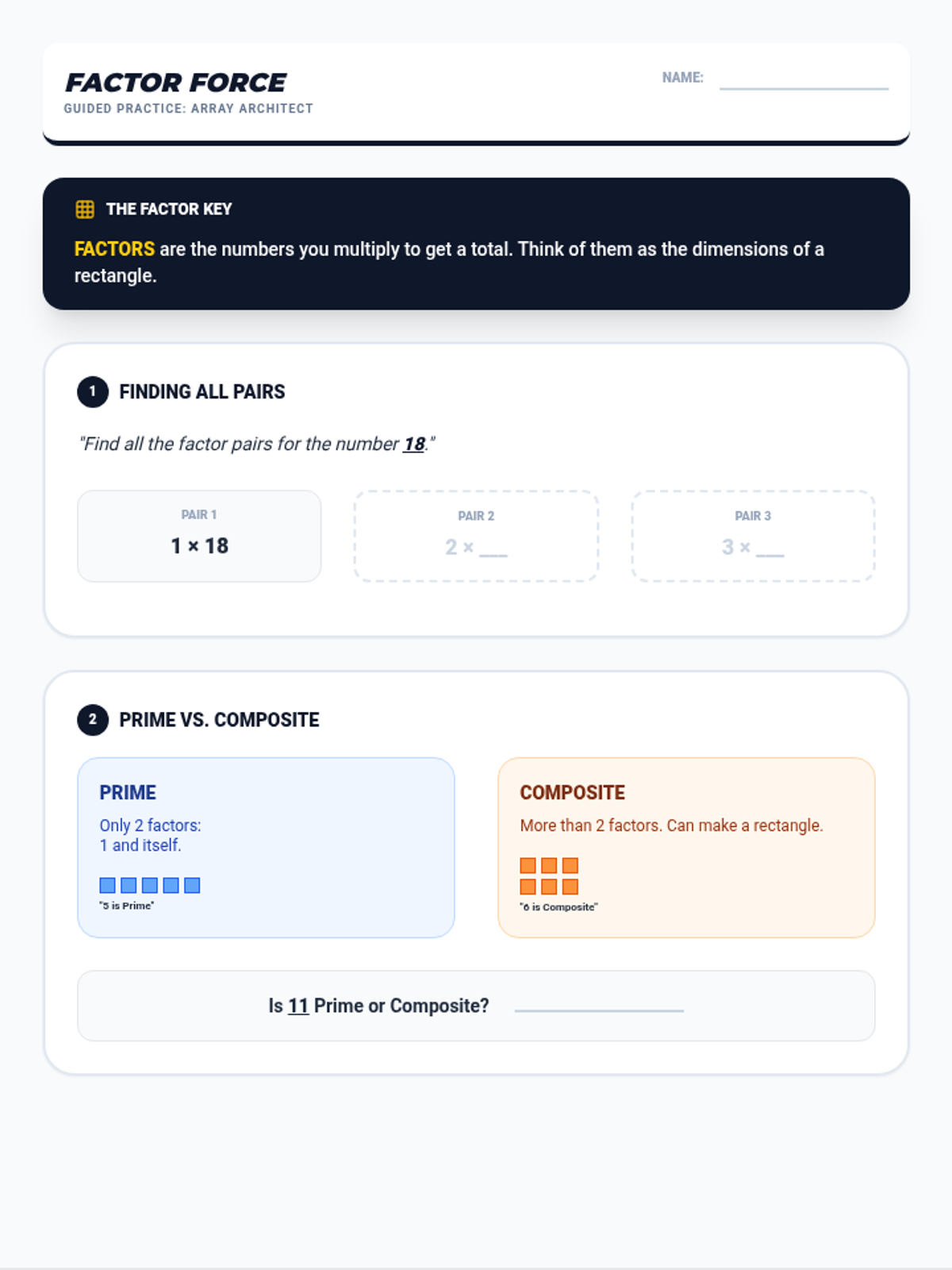
Tier 2 reteach for standard 4.OA.4: Find all factor pairs for a whole number in the range 1-100; recognize that a whole number is a multiple of each of its factors. Determine whether a given whole number in the range 1-100 is prime or composite.
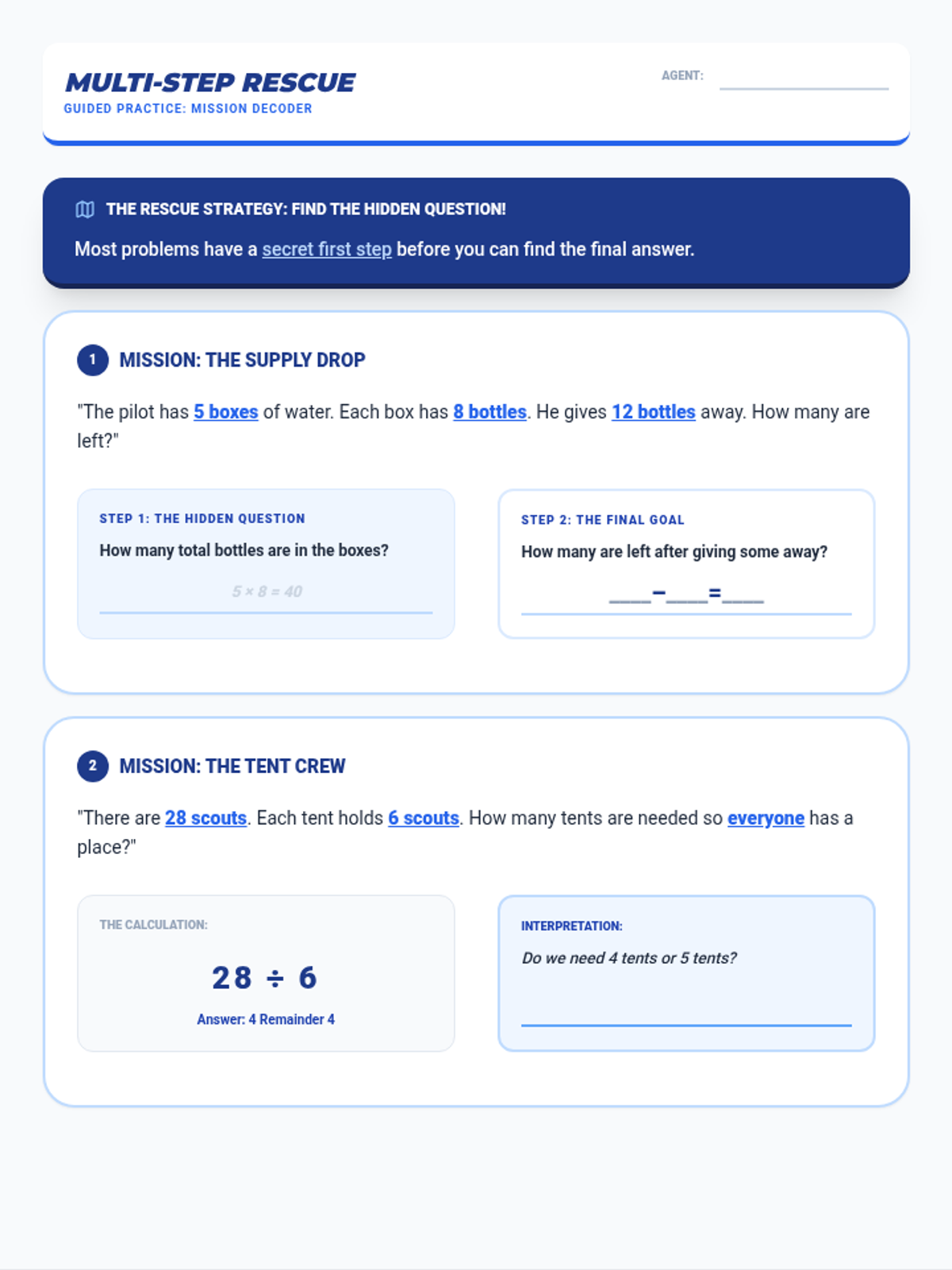
Tier 2 reteach for standard 4.OA.3: Solve multi-step word problems using the four operations, including problems where remainders must be interpreted.
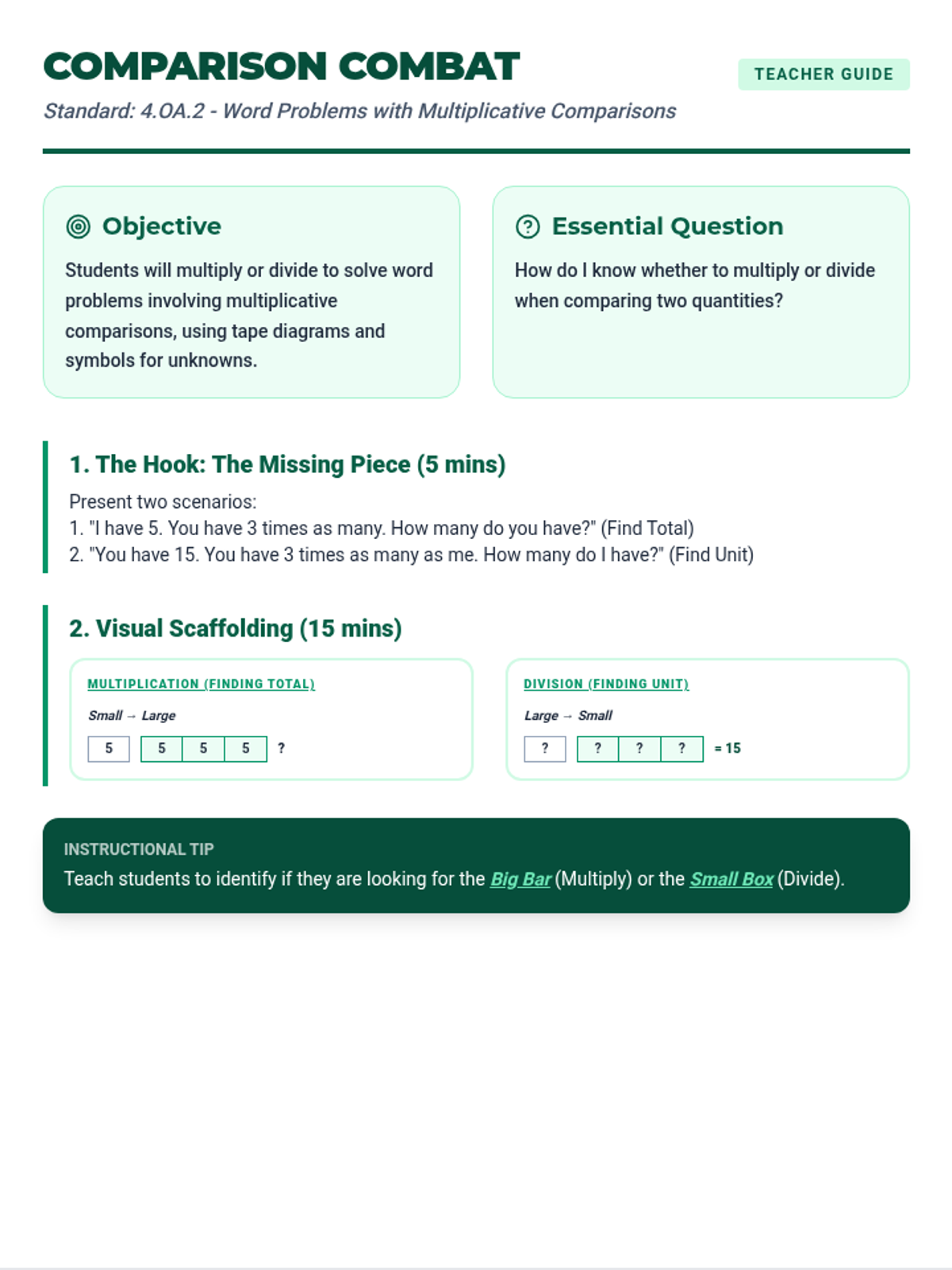
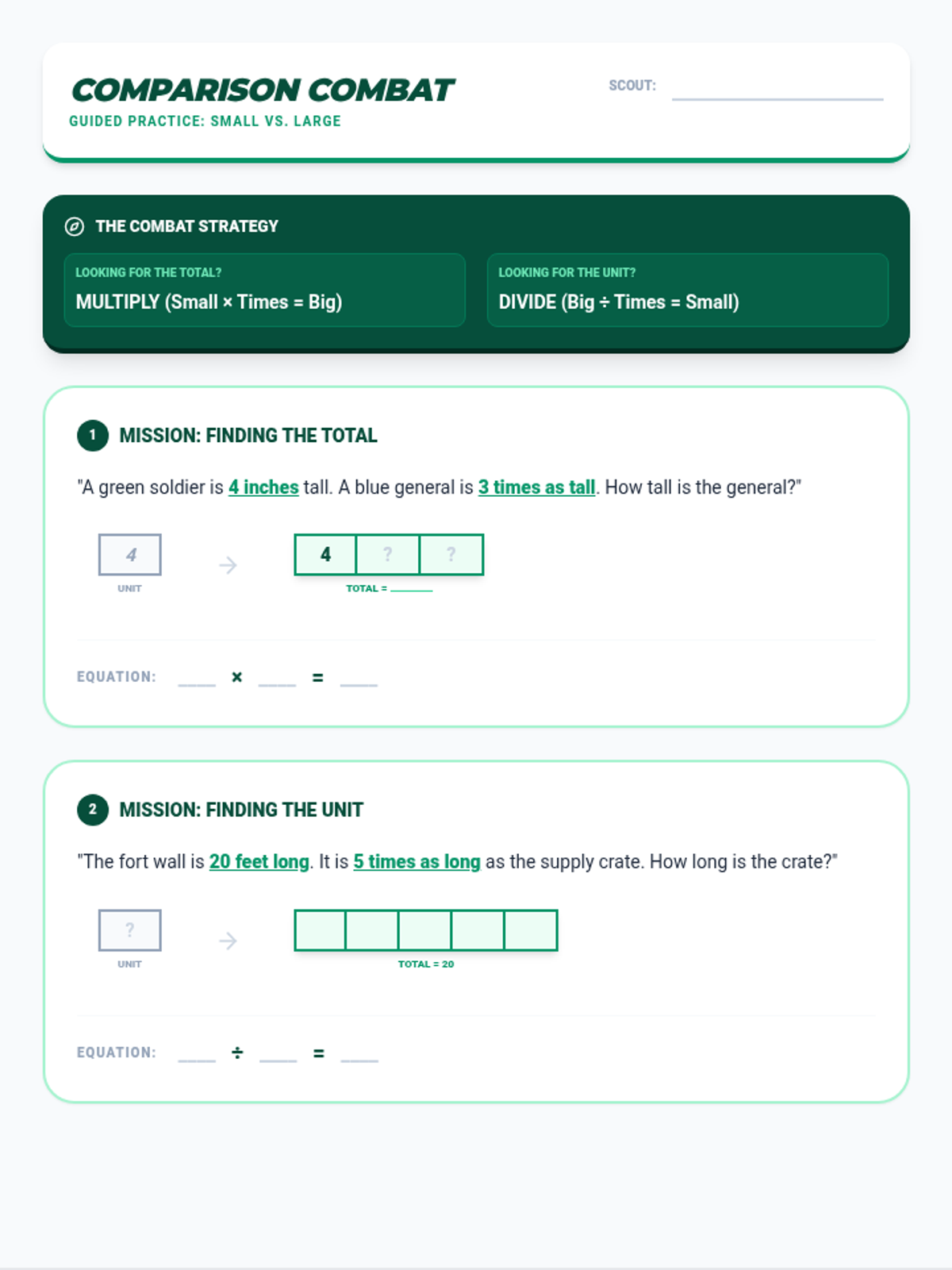
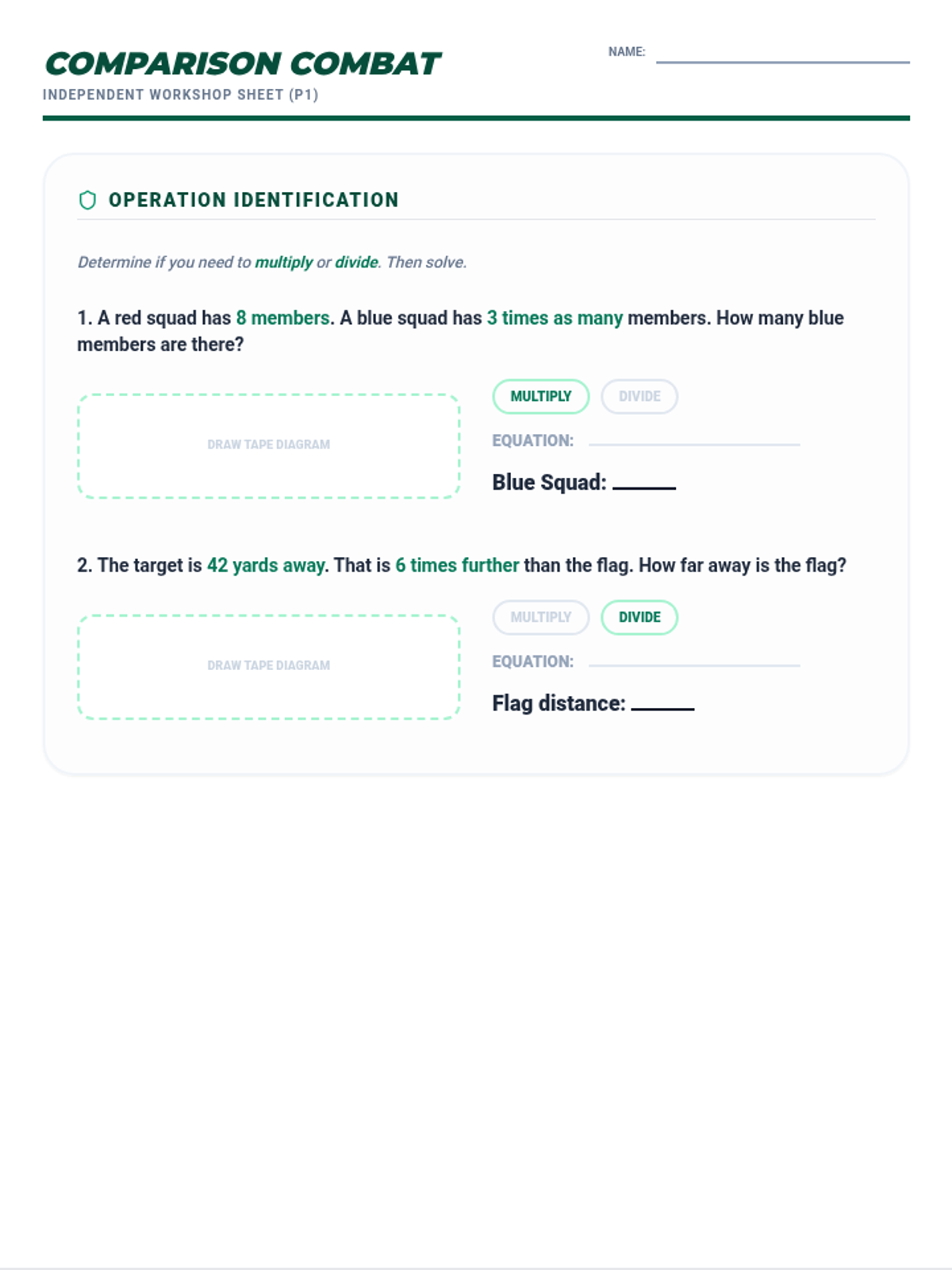
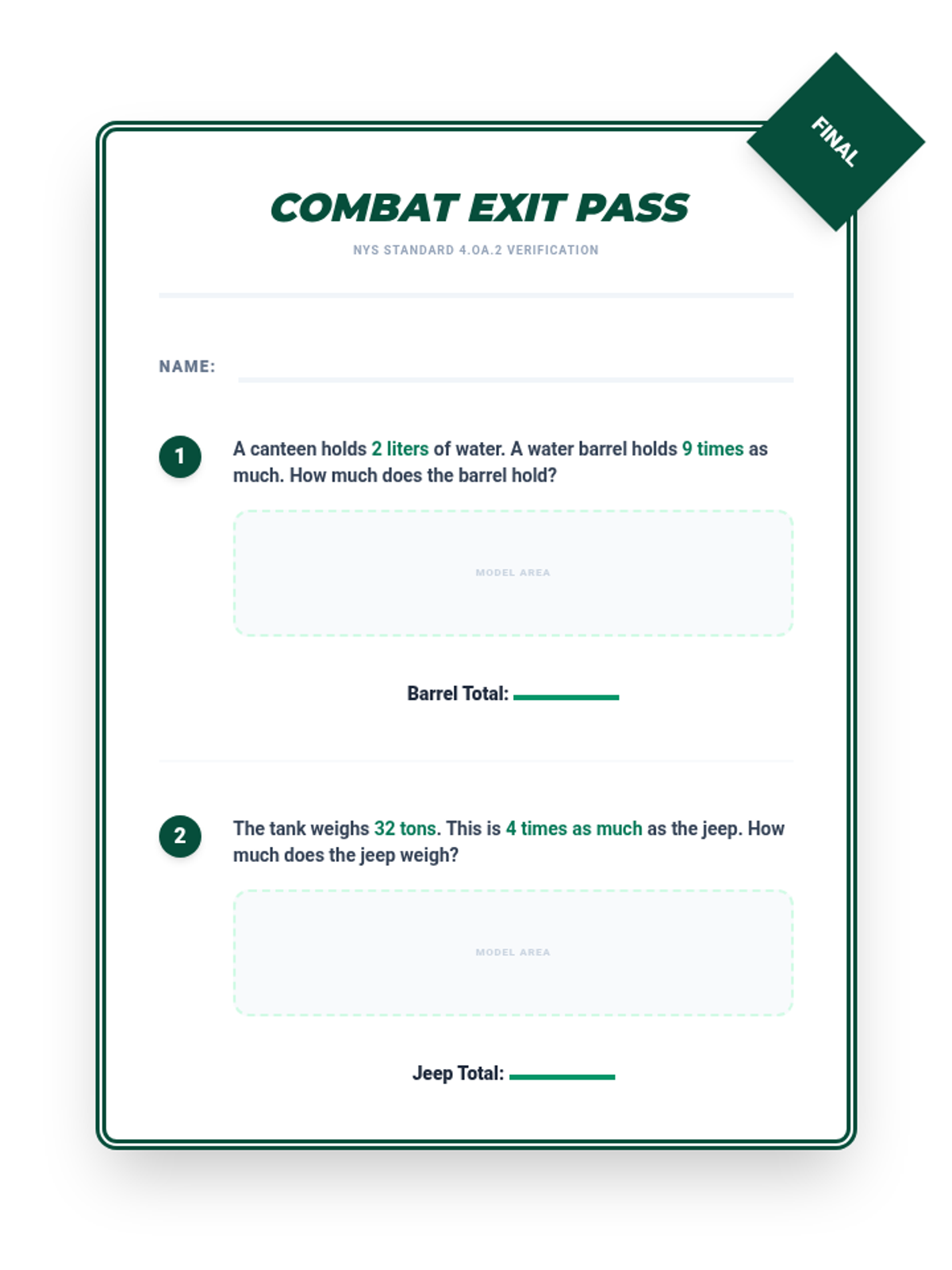
Tier 2 reteach for standard 4.OA.2: Solving word problems involving multiplicative comparisons using multiplication and division.
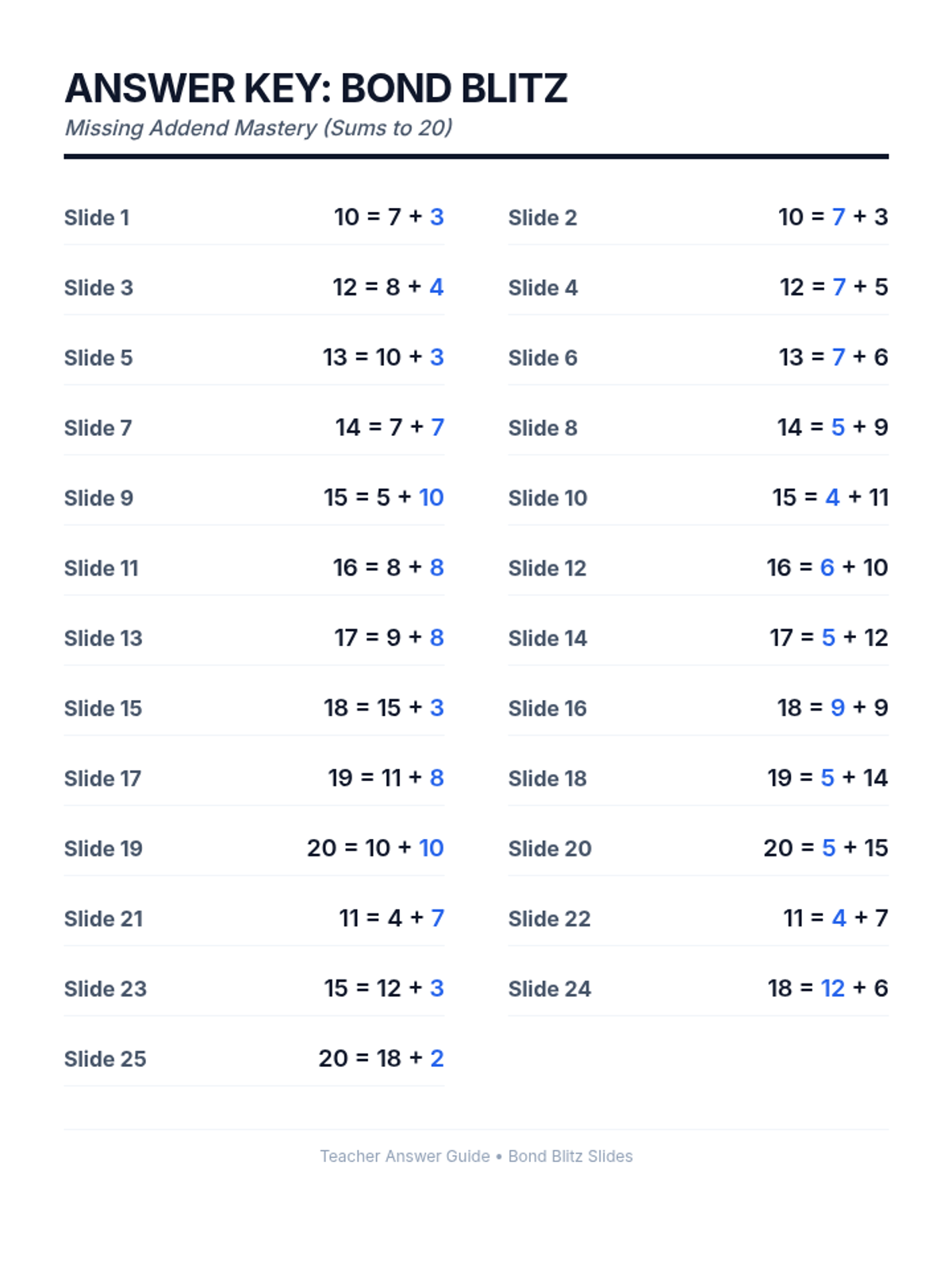
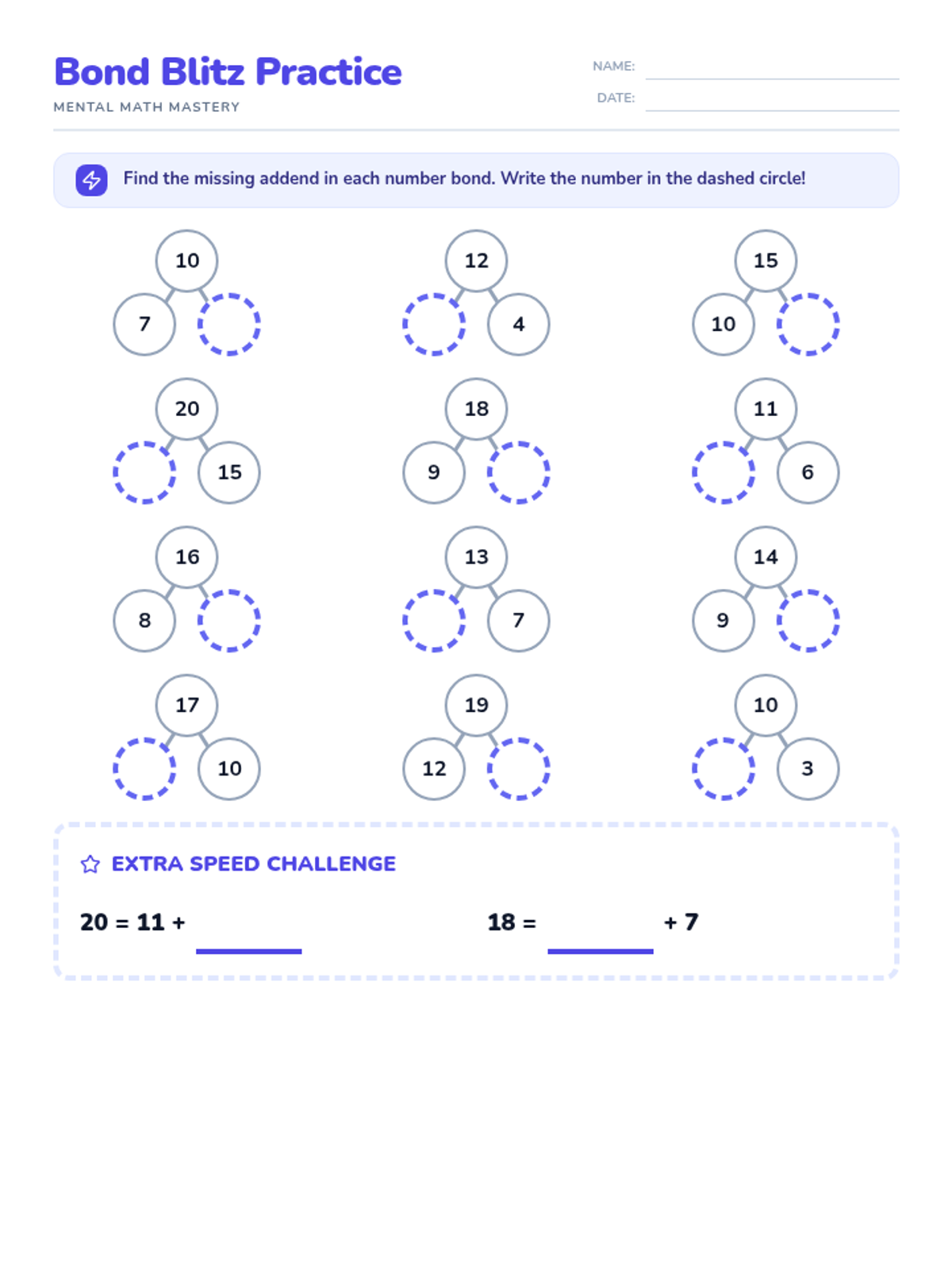
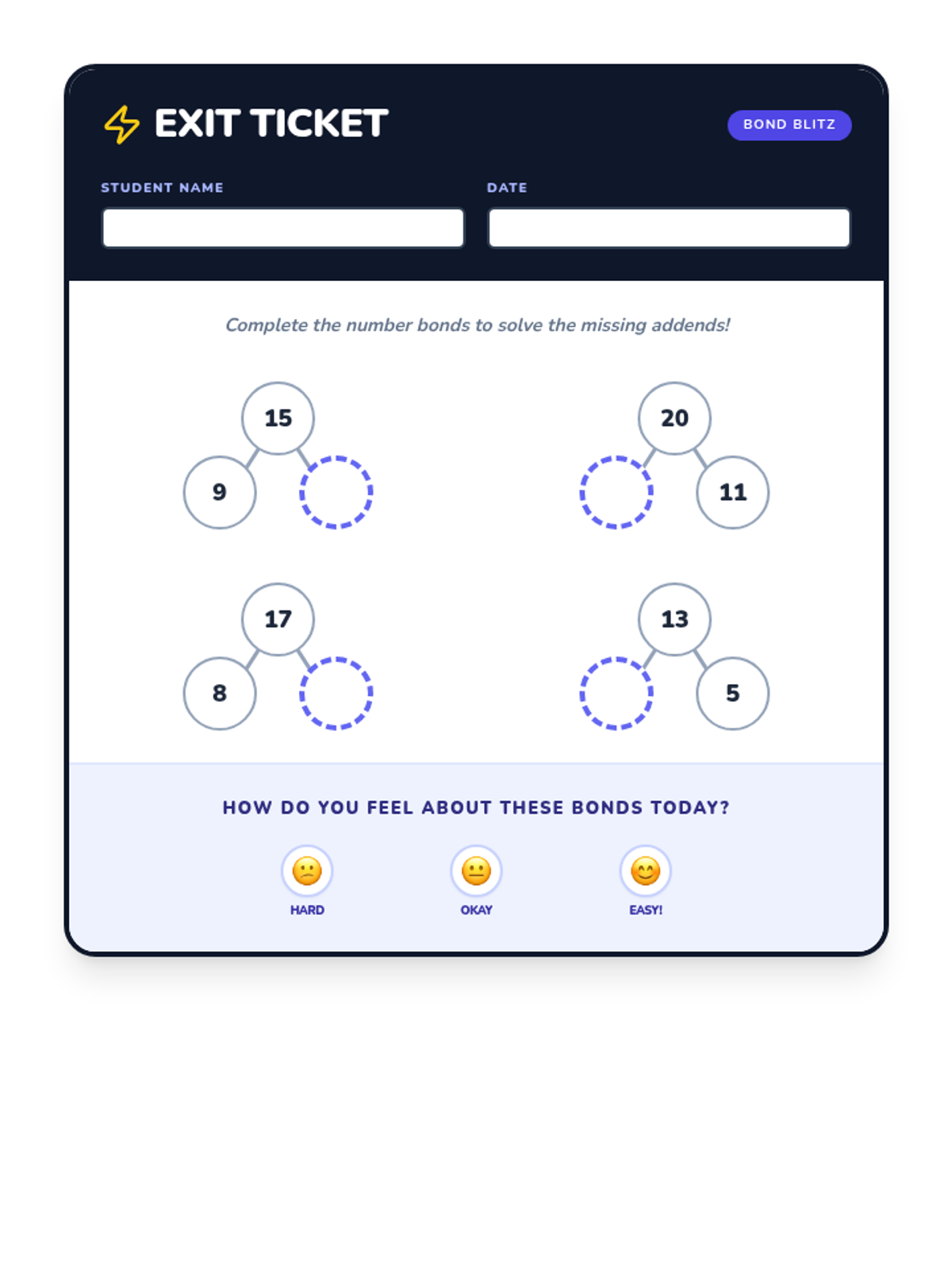
A fast-paced slide deck featuring number bonds with sums up to 20. Students must identify the missing addends in a variety of numerical bond configurations.
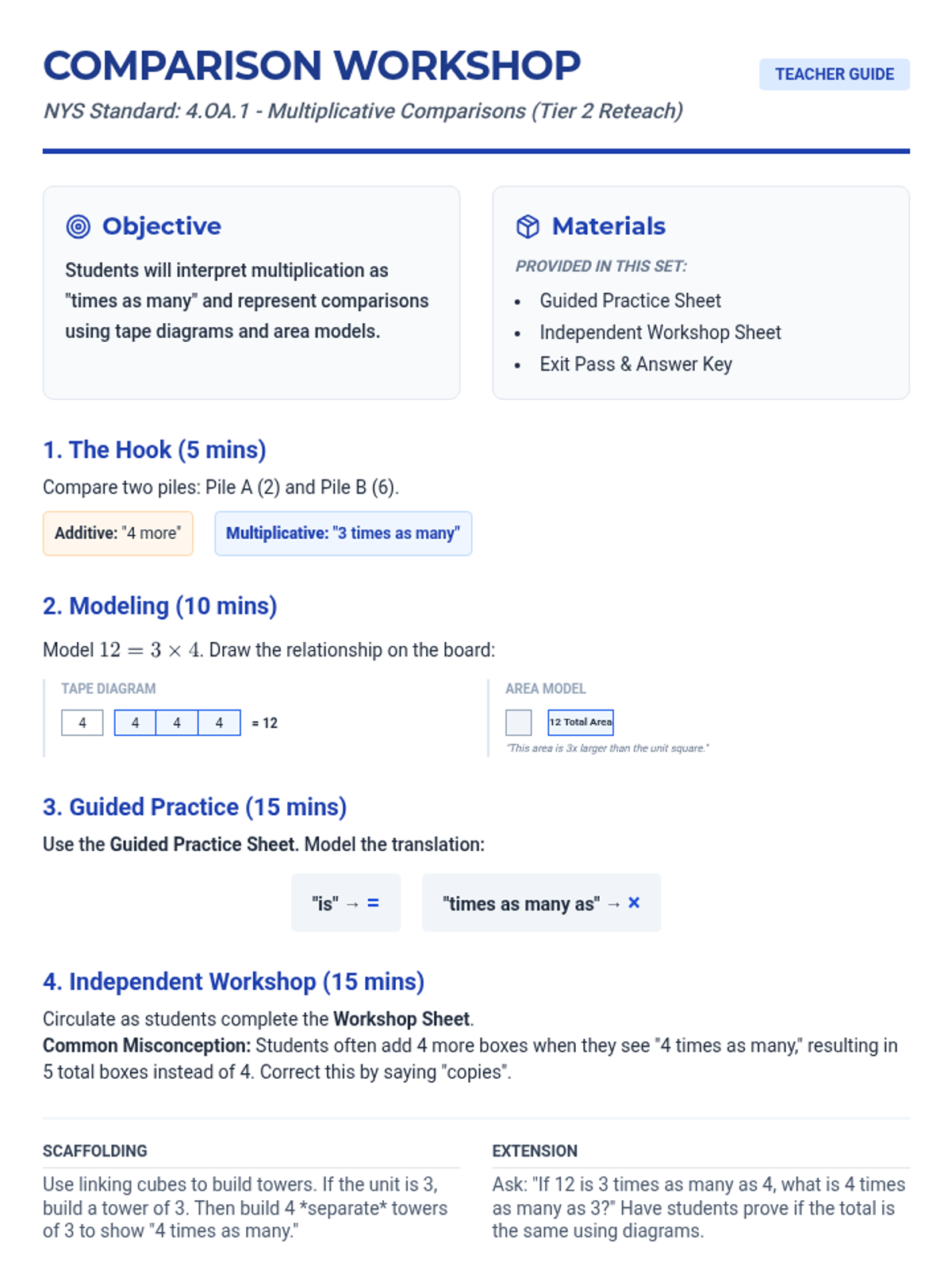
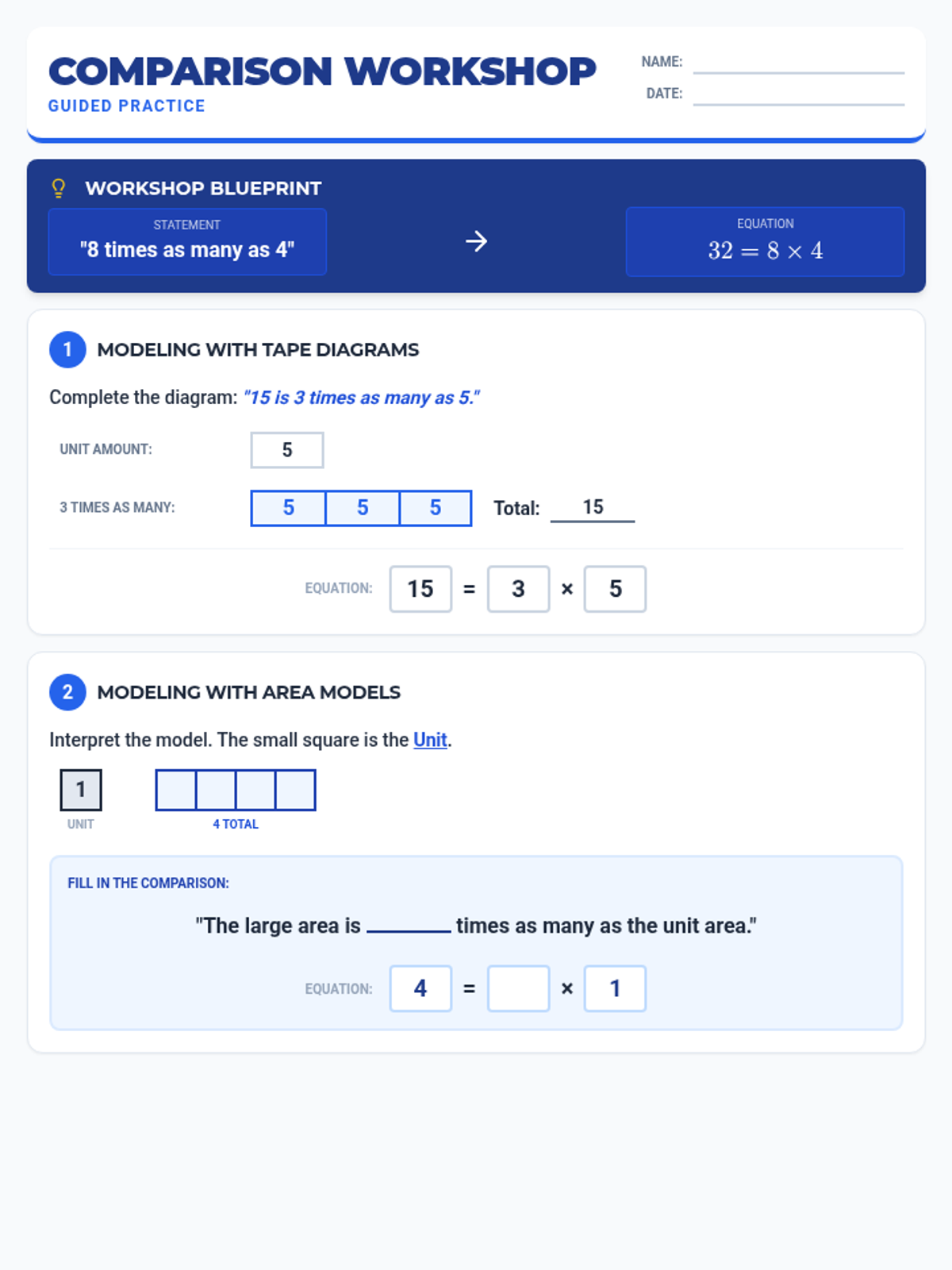
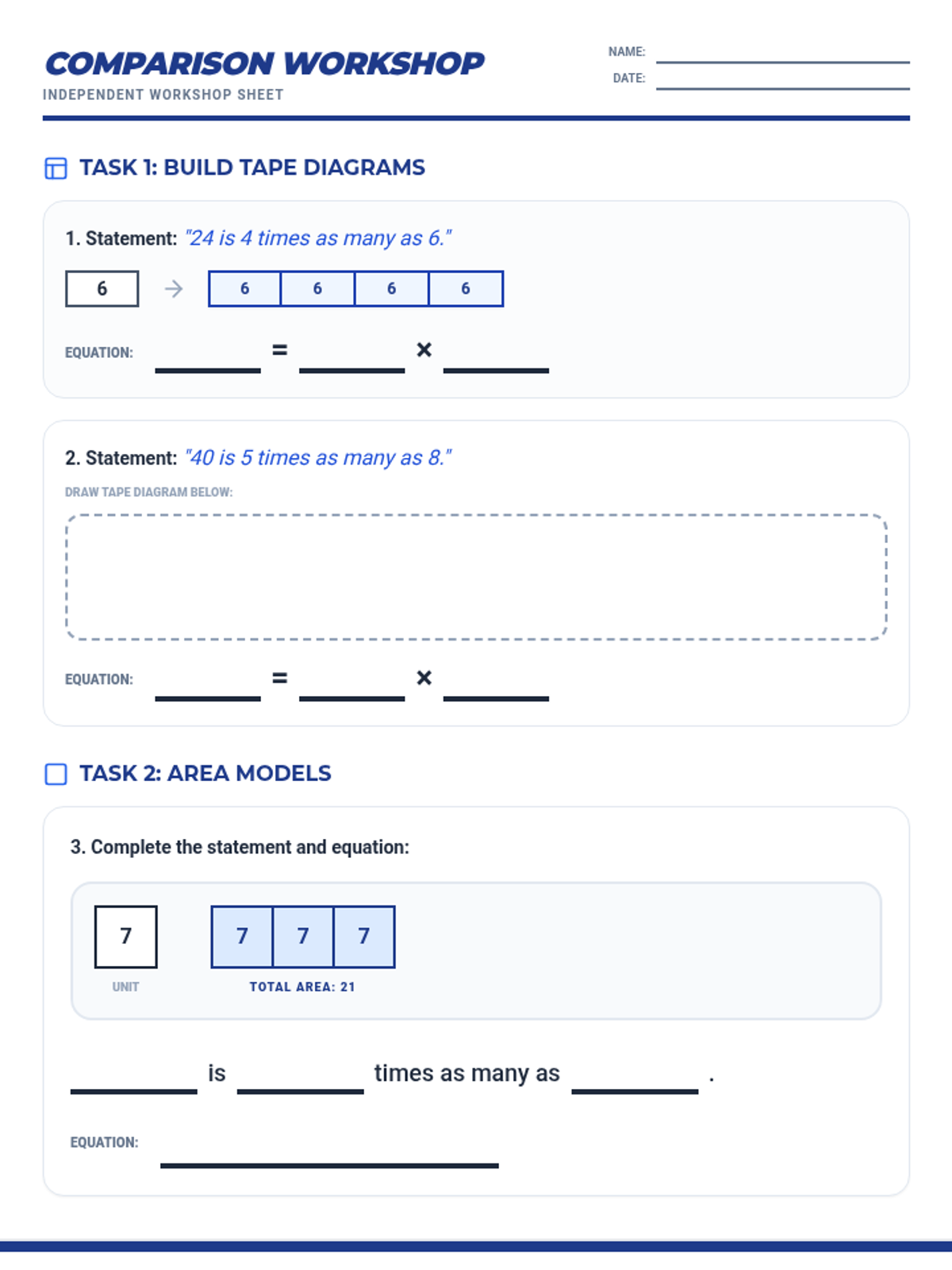
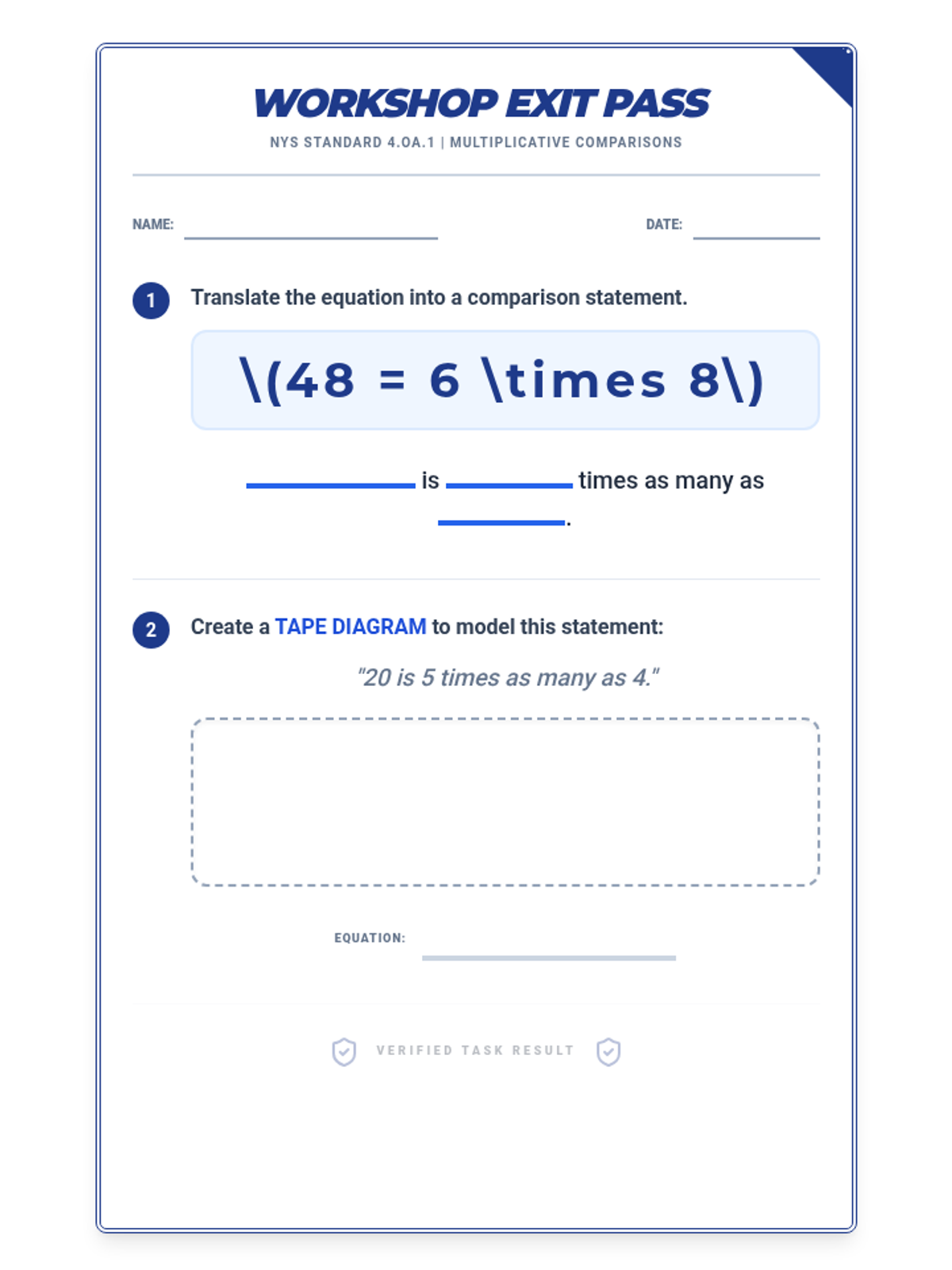
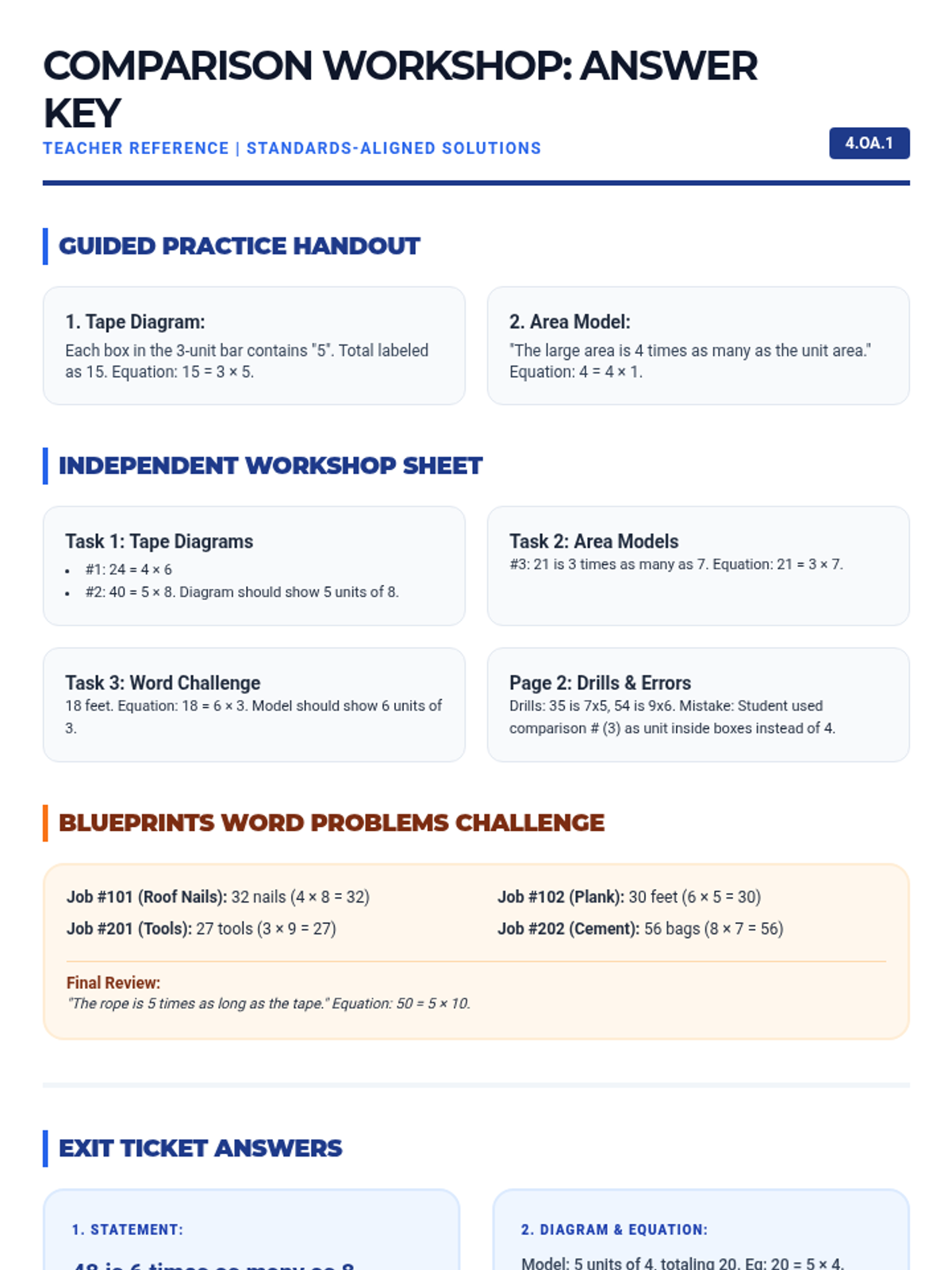
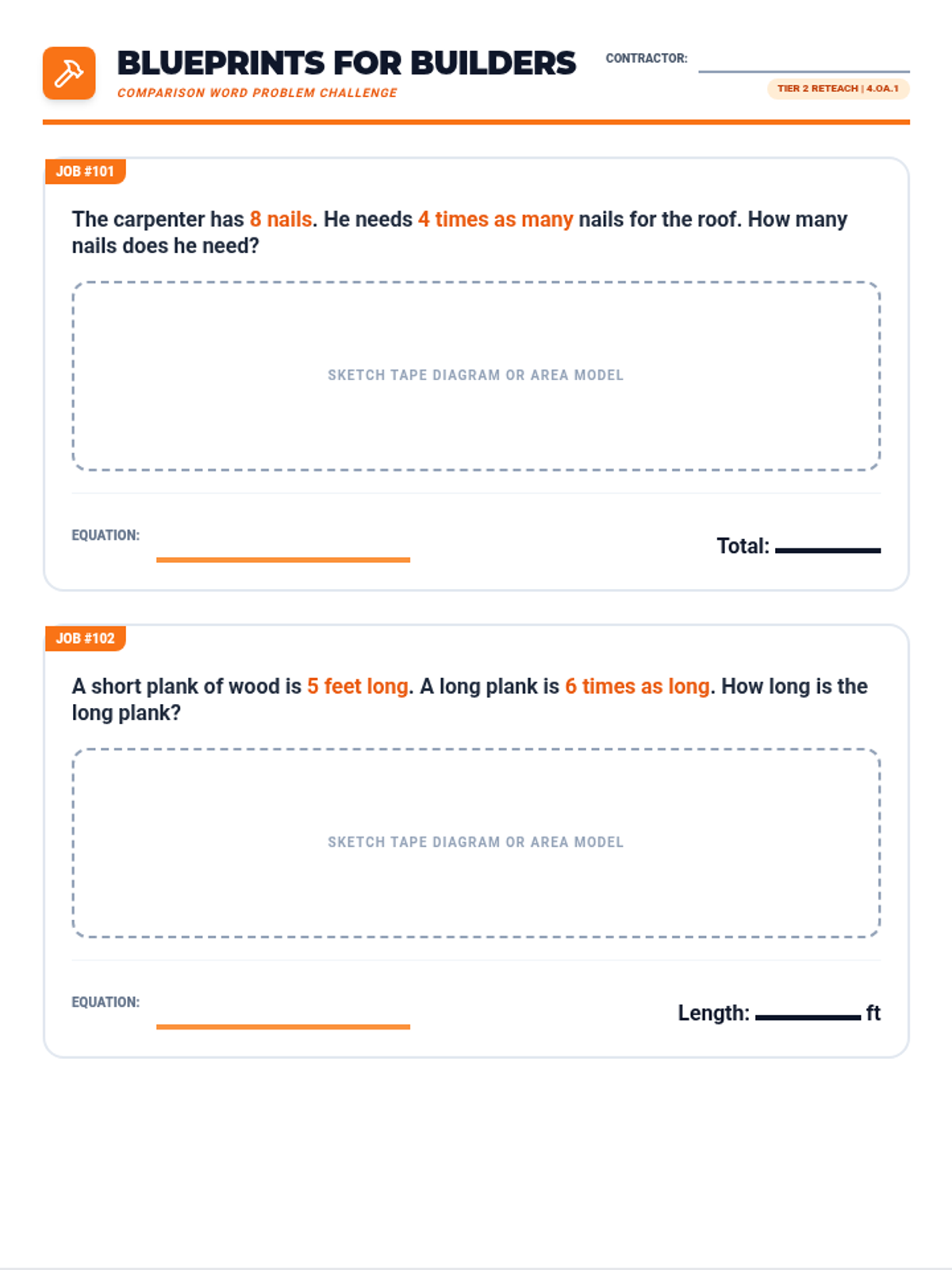
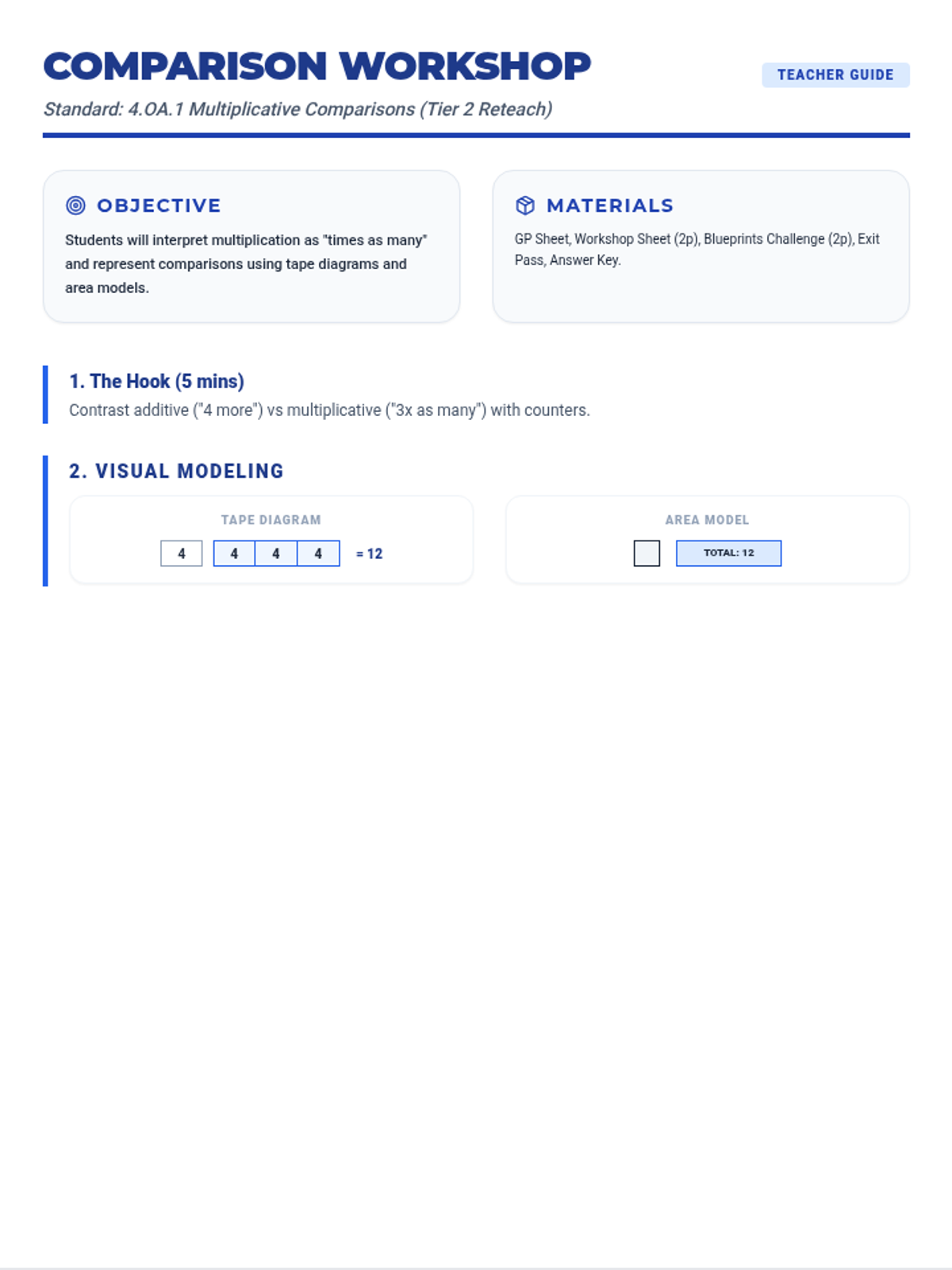
A Tier 2 reteach lesson focused on multiplicative comparisons using tape diagrams and area models to bridge the gap between additive and multiplicative thinking.
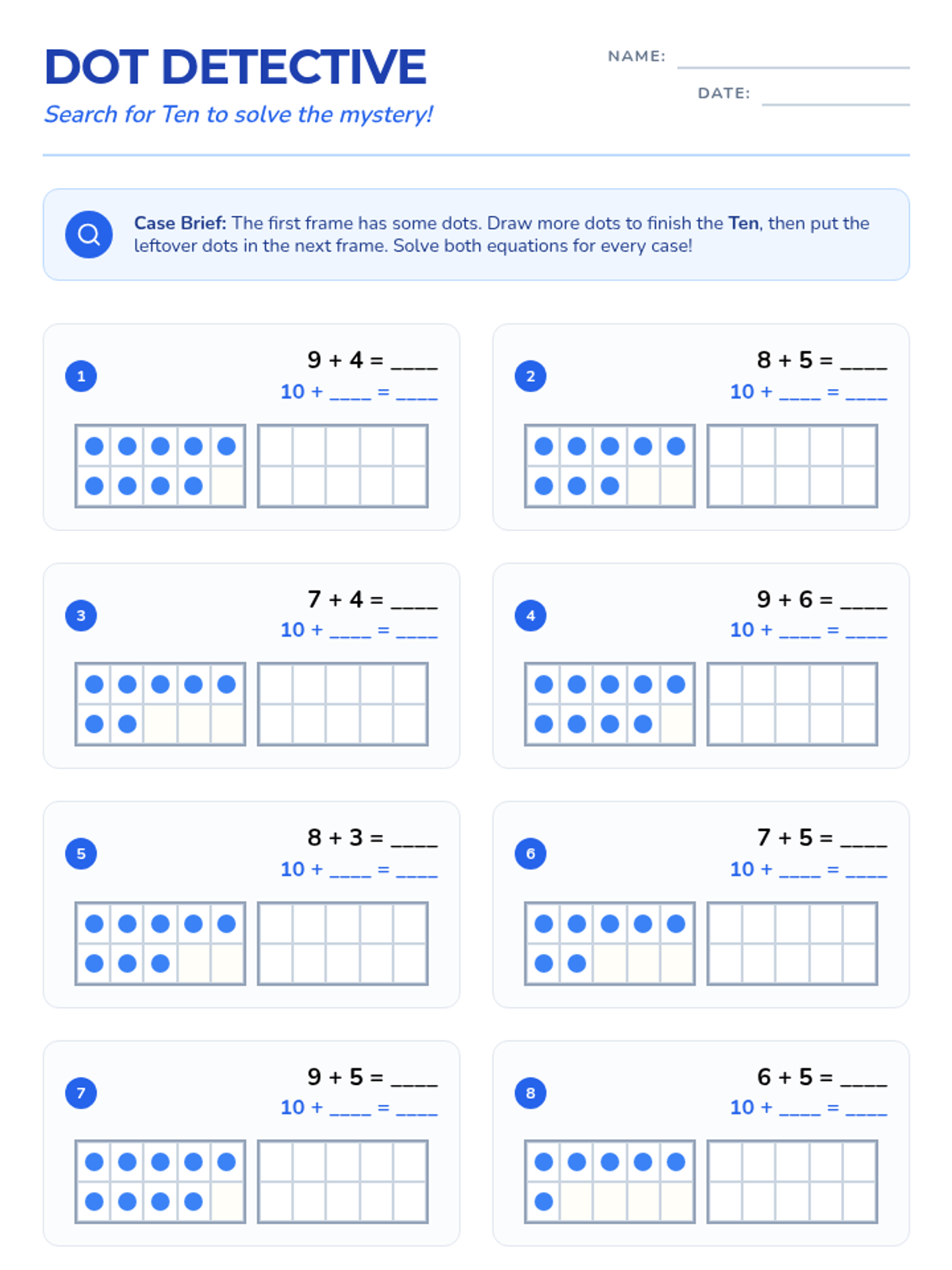
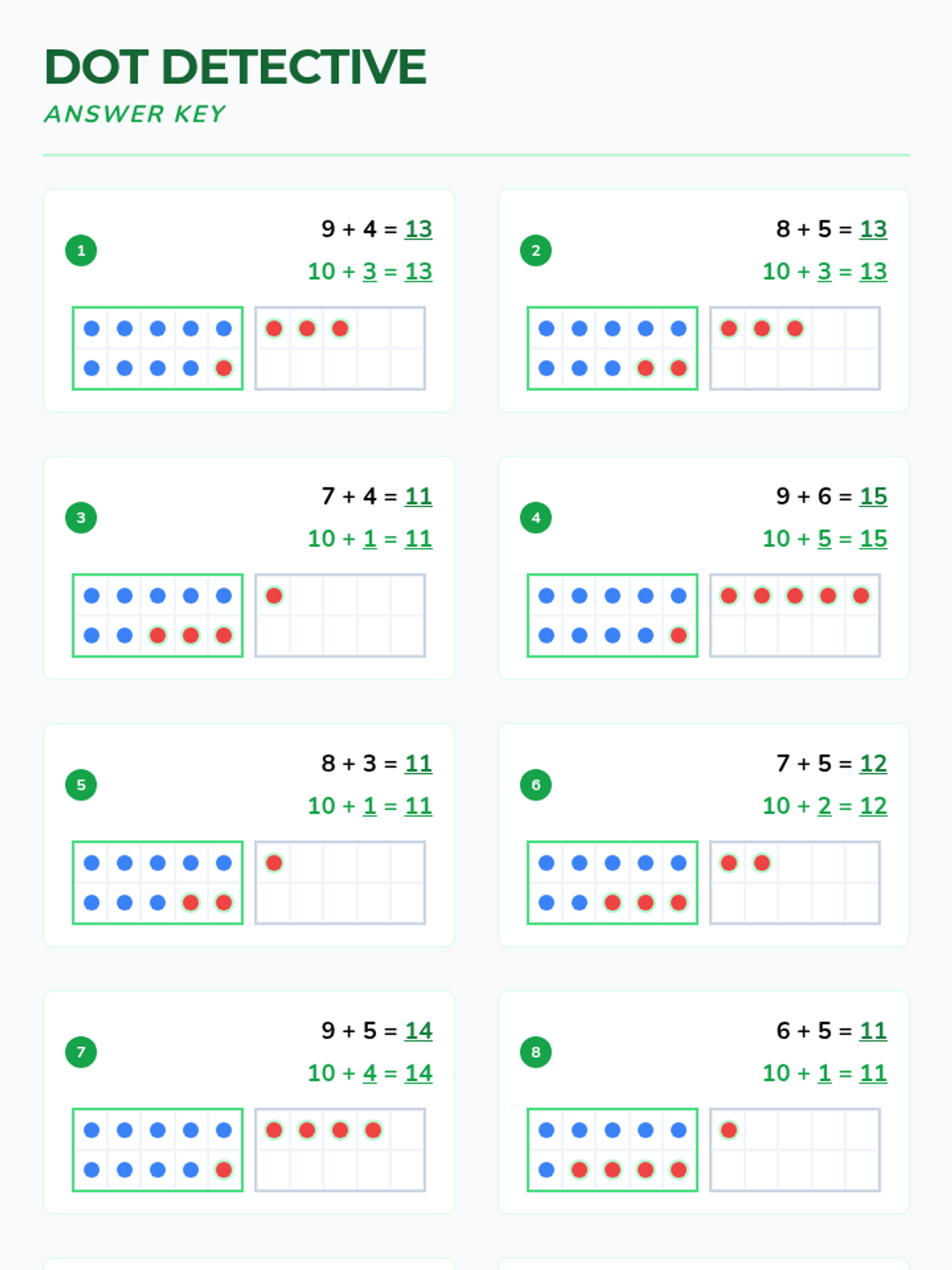
A foundational math lesson focusing on addition strategies using ten frames to help students visualize 'making ten' to solve addition problems beyond ten.
Lesson Day 21 of the Number Gym routine. Bonus round for numbers up to 40.
Lesson Day 20 of the Number Gym routine. Culminating review for numbers 0-40, identifying patterns across all taught decades.
Lesson Day 19 of the Number Gym routine. High-intensity review of number identification and writing across all four decades (0-40).
Lesson Day 18 of the Number Gym routine. Focused review of decade transitions and sequence pattern recognition for numbers up to 40.
Lesson Day 17 of the Number Gym routine. Building automaticity with numbers 0-40 through rapid-fire visual drills and sequence completion.
Lesson Day 16 of the Number Gym routine. Consolidating numbers 0-40 with a mix of visual cues and auditory writing prompts.
Lesson Day 15 of the Number Gym routine. Reaching the boundary of 40 with targeted identification and writing practice.
Lesson Day 14 of the Number Gym routine. Reinforcing numbers 0-40 with a focus on digit position and counting accuracy.
Lesson Day 13 of the Number Gym routine. Continued practice with numbers up to 40, focusing on teen/30 confusion and sequential counting.
Lesson Day 12 of the Number Gym routine. Expanding the range to numbers up to 40. Focus on identifying and writing numbers in the 30s.
Lesson Day 11 of the Number Gym routine. Bonus review day.
Lesson Day 10 of the Number Gym routine. Final practice of the 10-day circuit.
Lesson Day 9 of the Number Gym routine. Focus on visual automaticity.
Lesson Day 8 of the Number Gym routine. Intensive sequence drill practice.
Lesson Day 7 of the Number Gym routine. Practice across decades (0-30).
Lesson Day 6 of the Number Gym routine. Starting the second week with teen number focus.
Lesson Day 5 of the Number Gym routine. Reviewing the first week of numbers and sequences.
Lesson Day 4 of the Number Gym routine. Continued practice of 3-part drill with unique number combinations.
Lesson Day 3 of the Number Gym routine. Focuses on teen numbers and rounding out the first week's practice.
Lesson Day 2 of the Number Gym routine. Continued practice of the 3-part drill with new numbers.
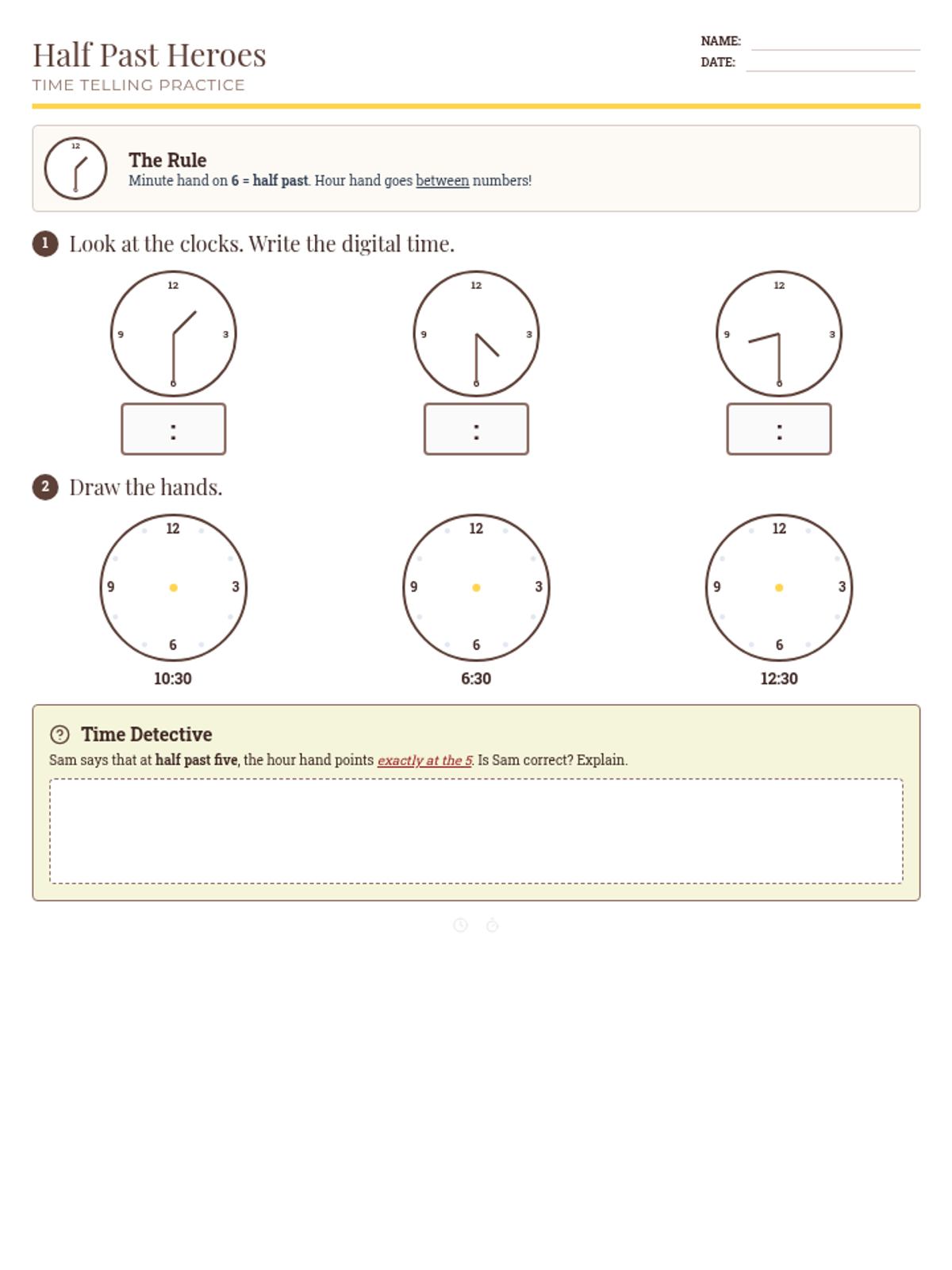
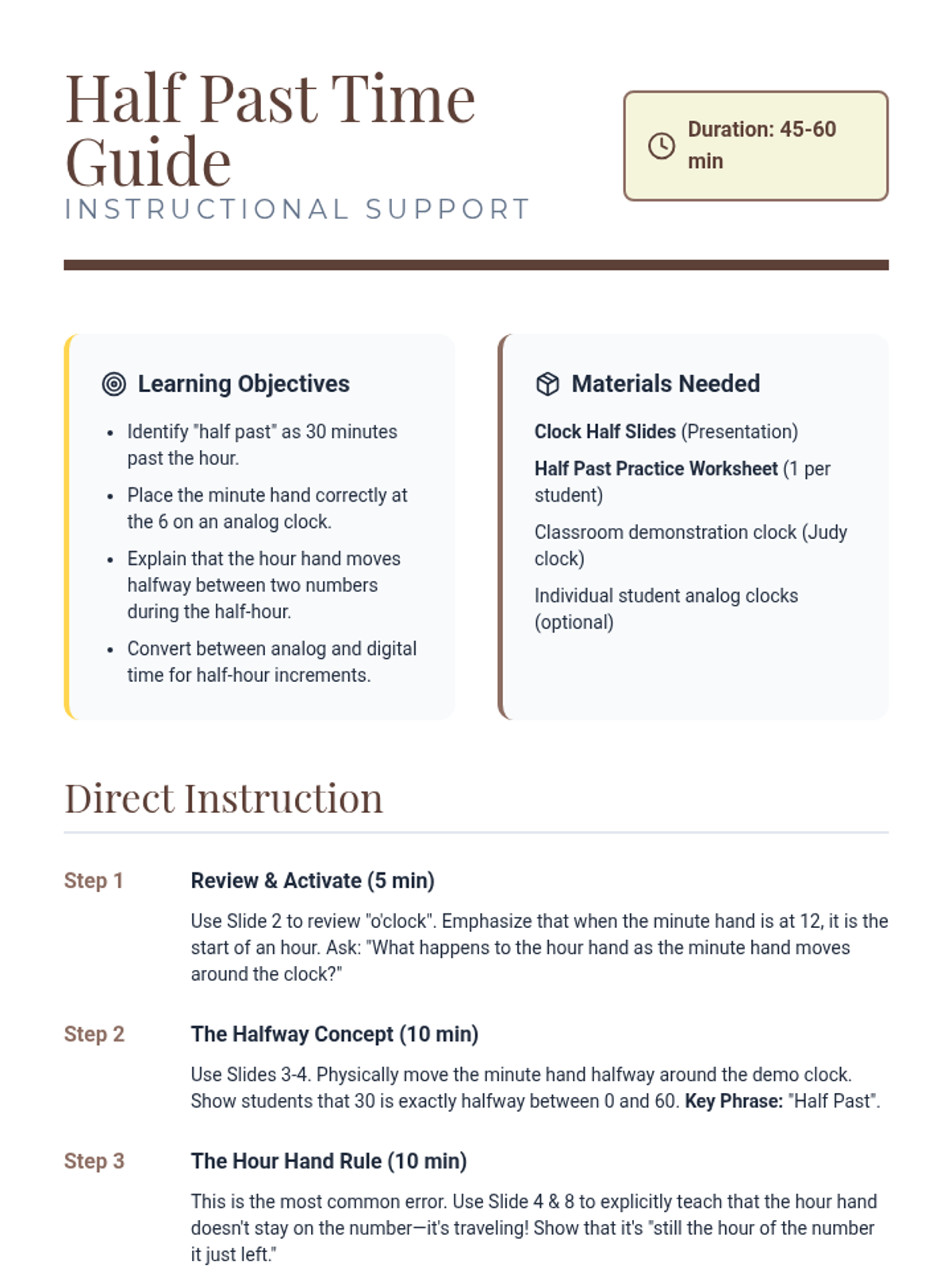
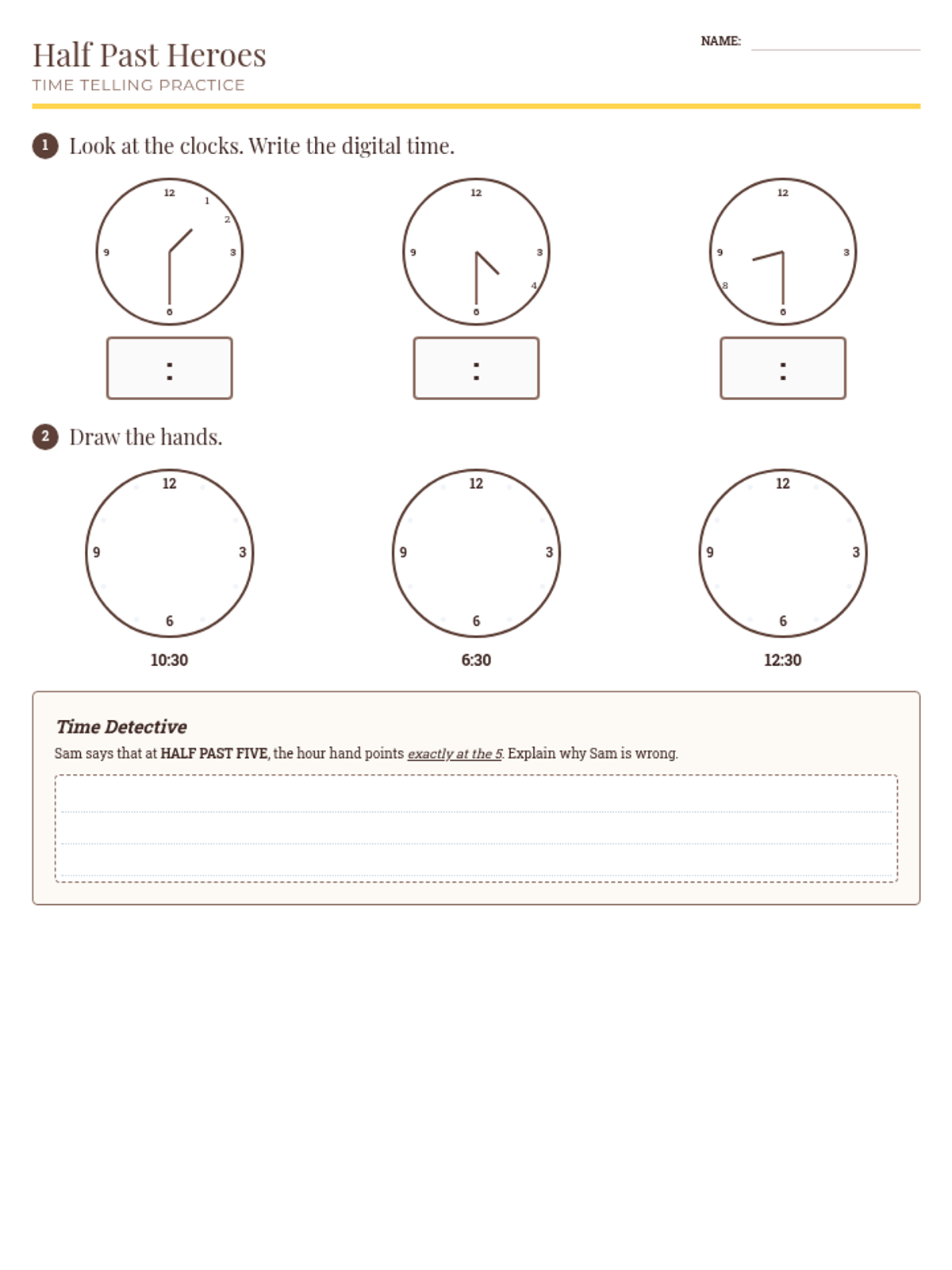
A lesson focused on introducing and practicing telling time to the half-hour, connecting analog and digital representations.
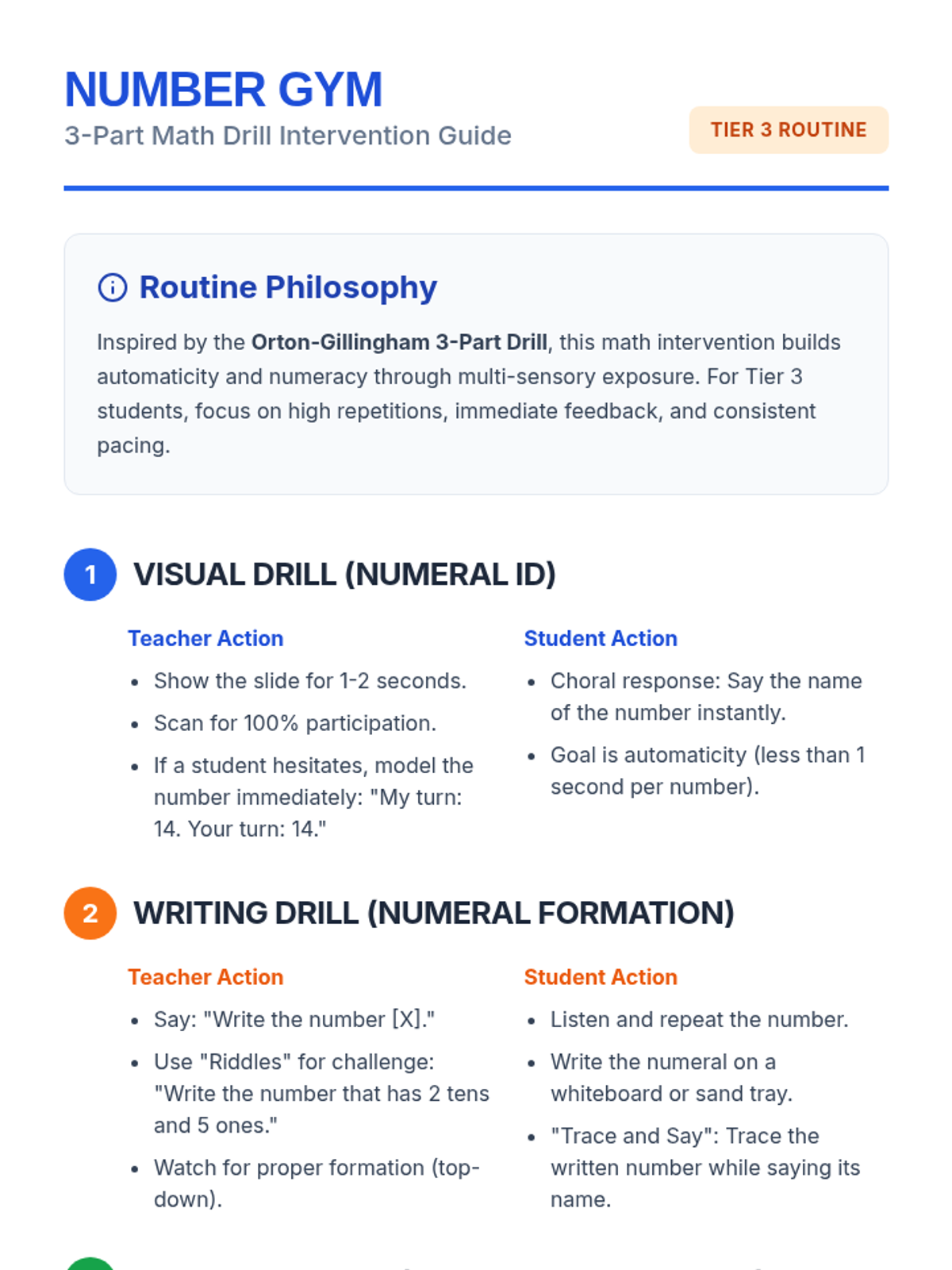
Lesson Day 1 of the Number Gym routine. Introduces the 3-part drill.
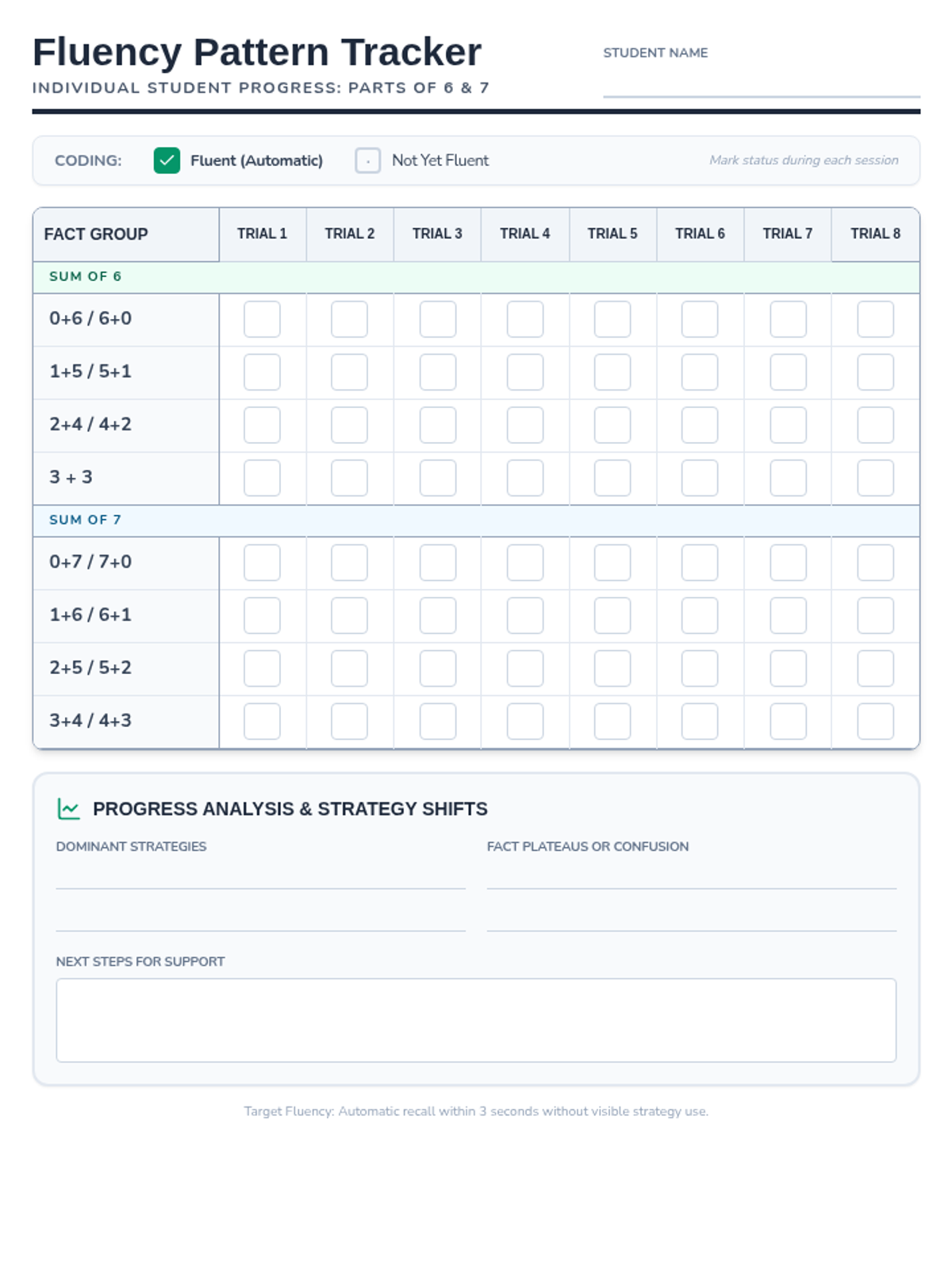
A collection of tools for tracking student progress in mastering number decompositions for 6 and 7.
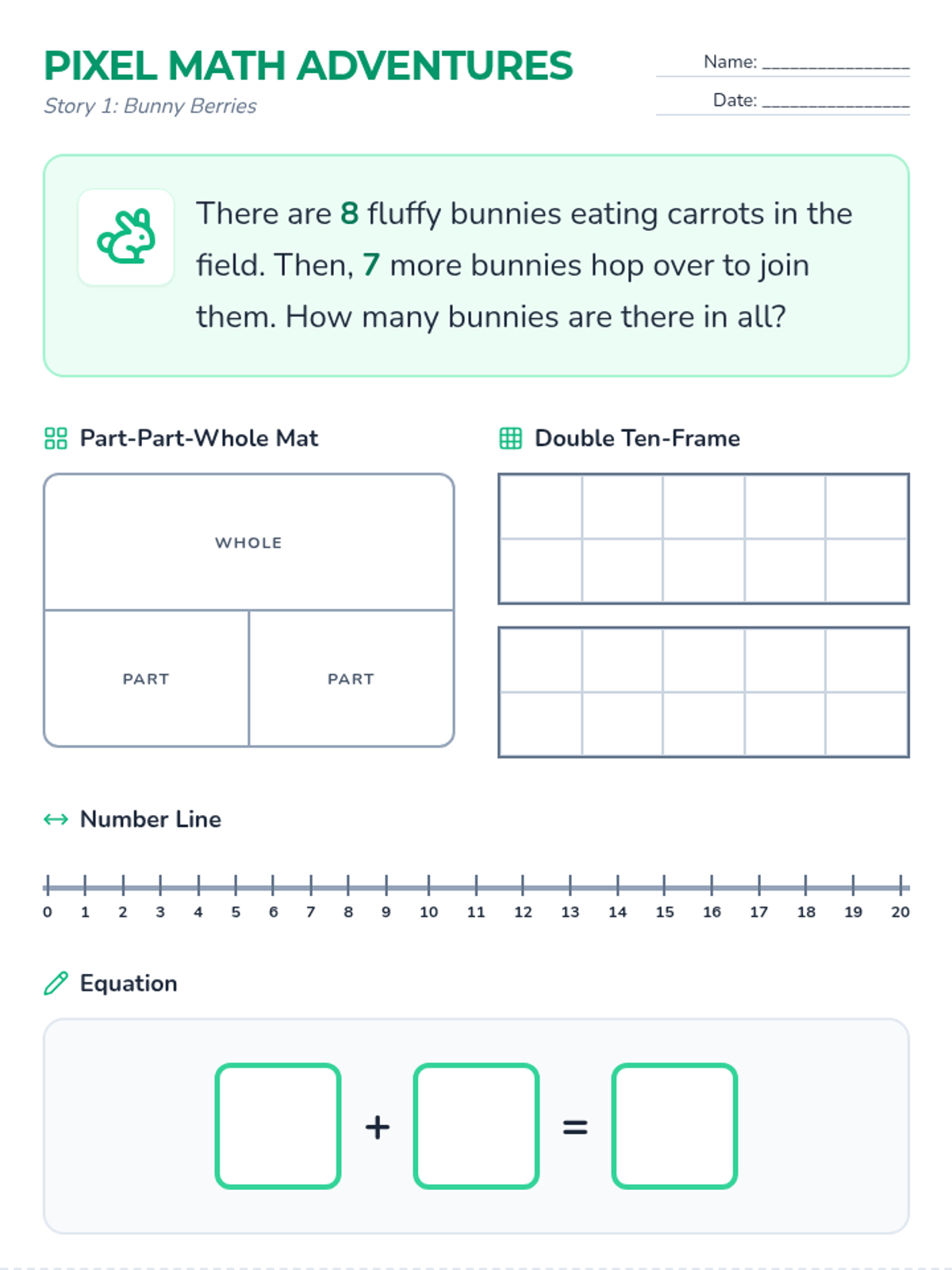
A series of interactive math story problems focused on addition and subtraction within 20, featuring themes of animals, snacks, and gaming.
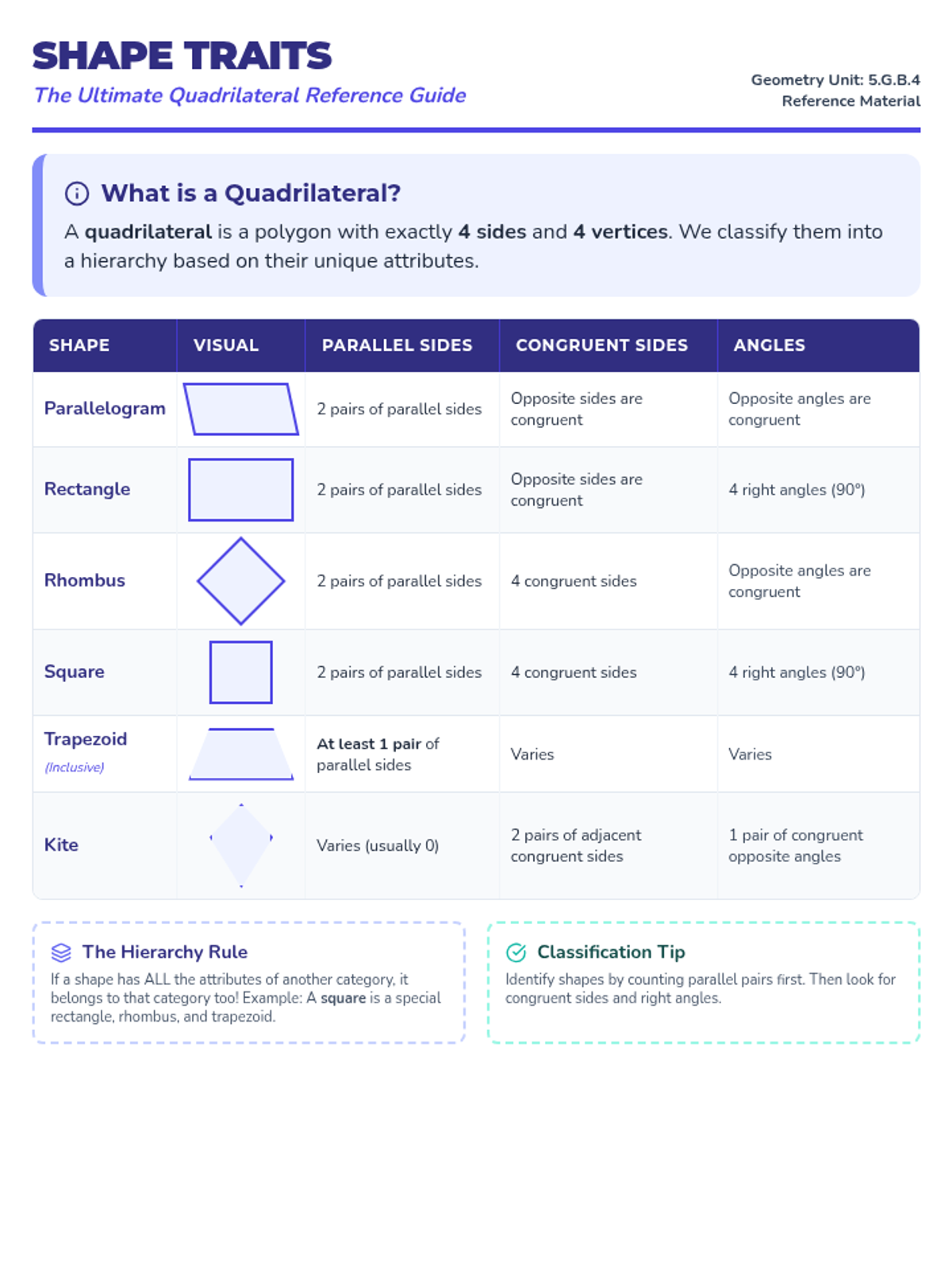
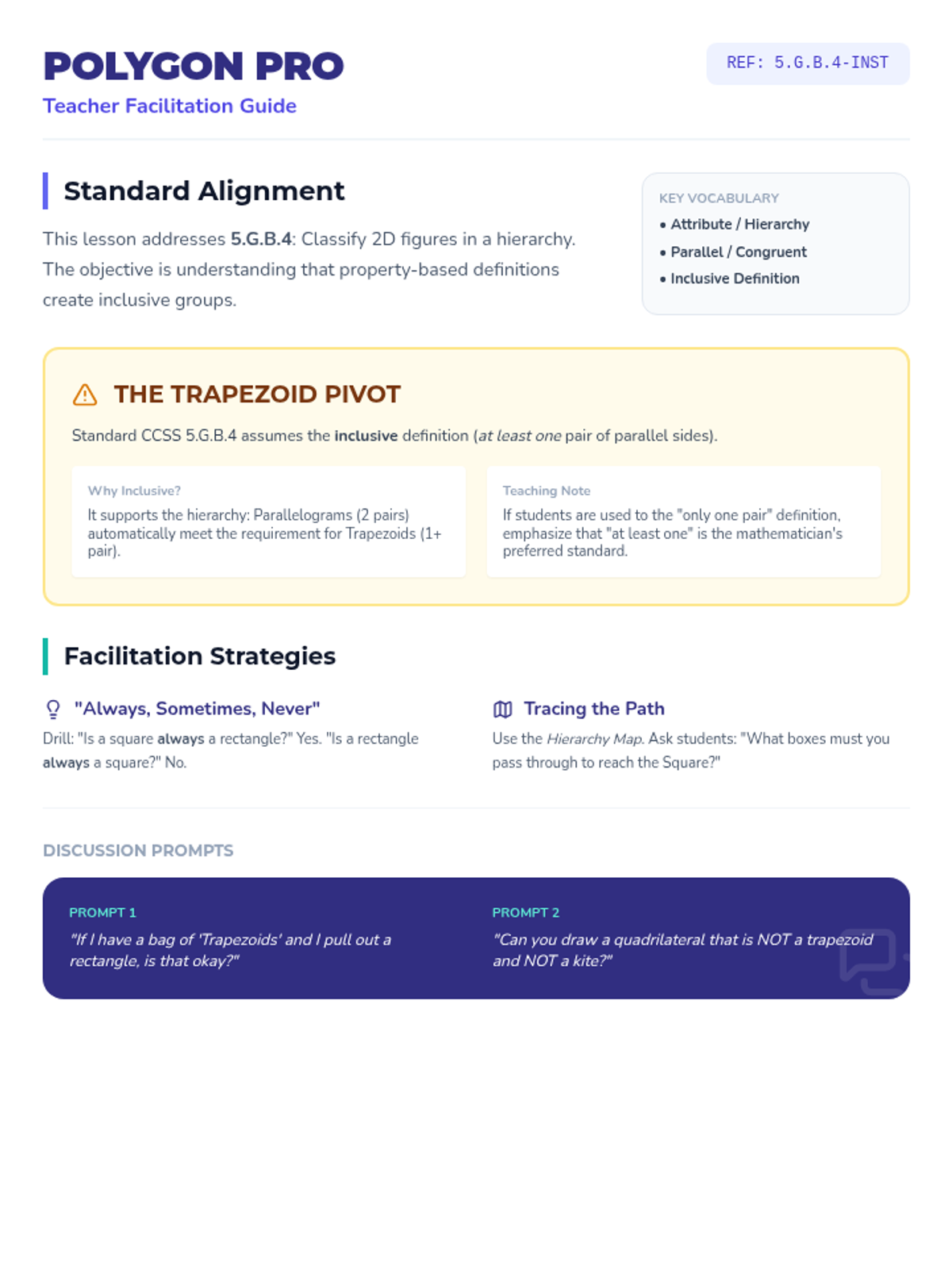
A comprehensive lesson on classifying quadrilaterals based on their properties, focusing on the hierarchy and inclusive definitions required for 5th-grade geometry.