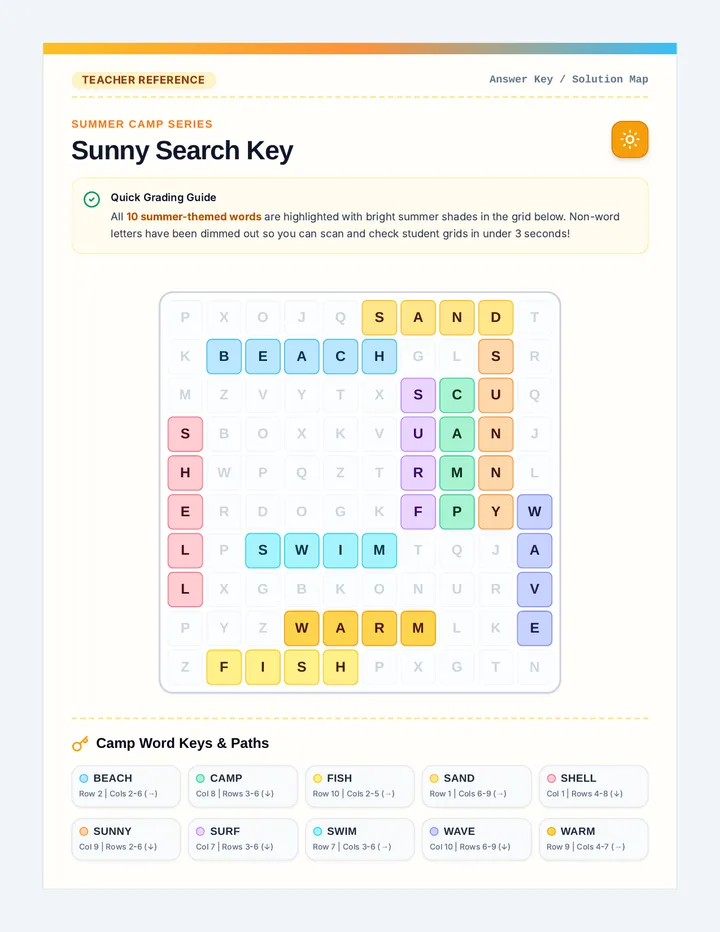
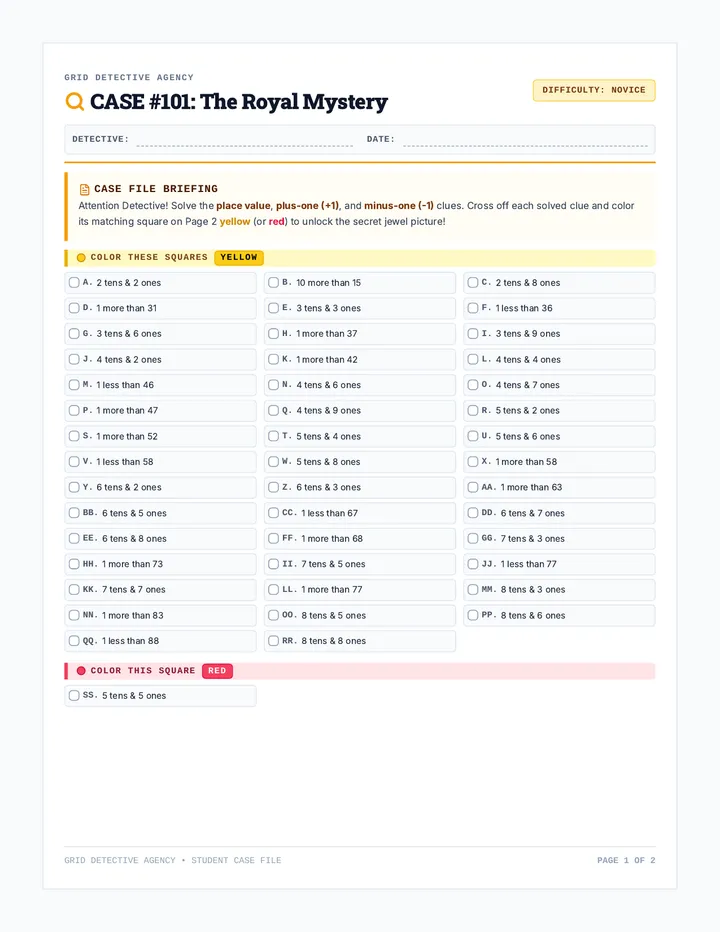
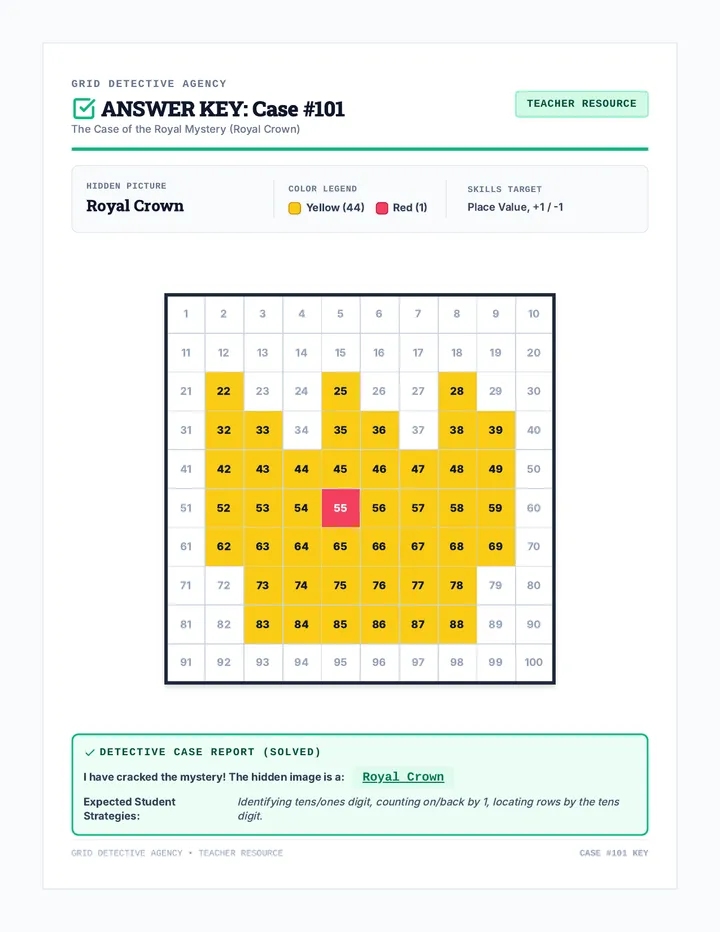
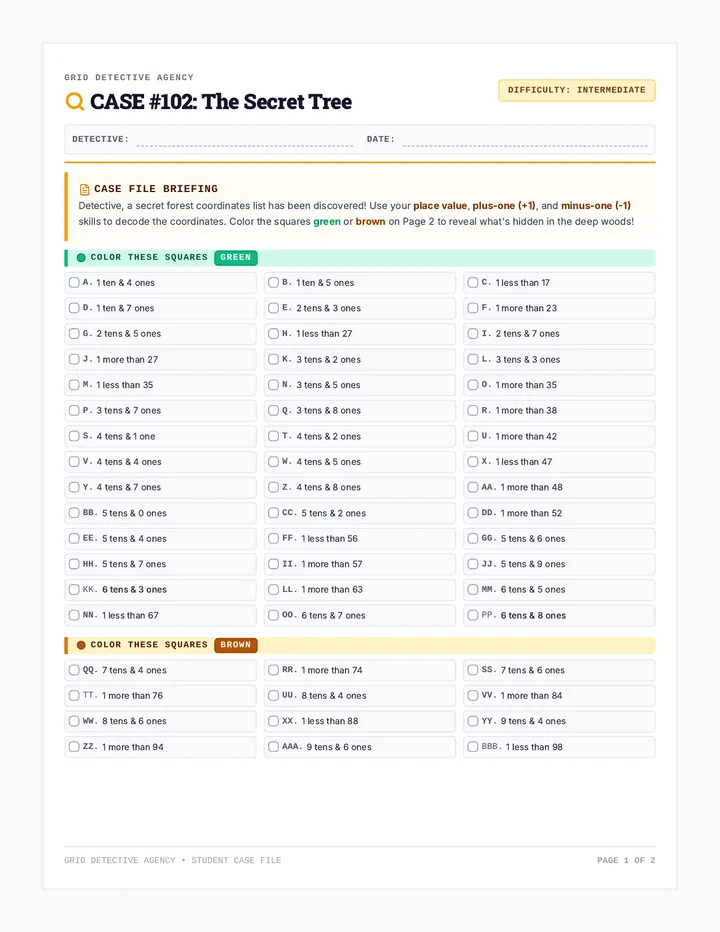
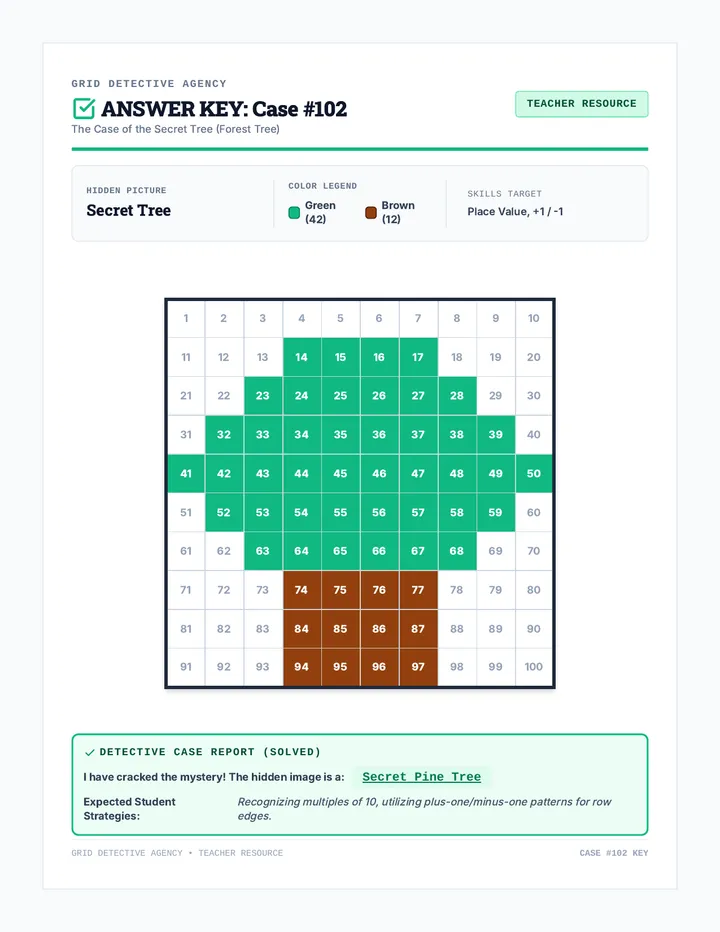
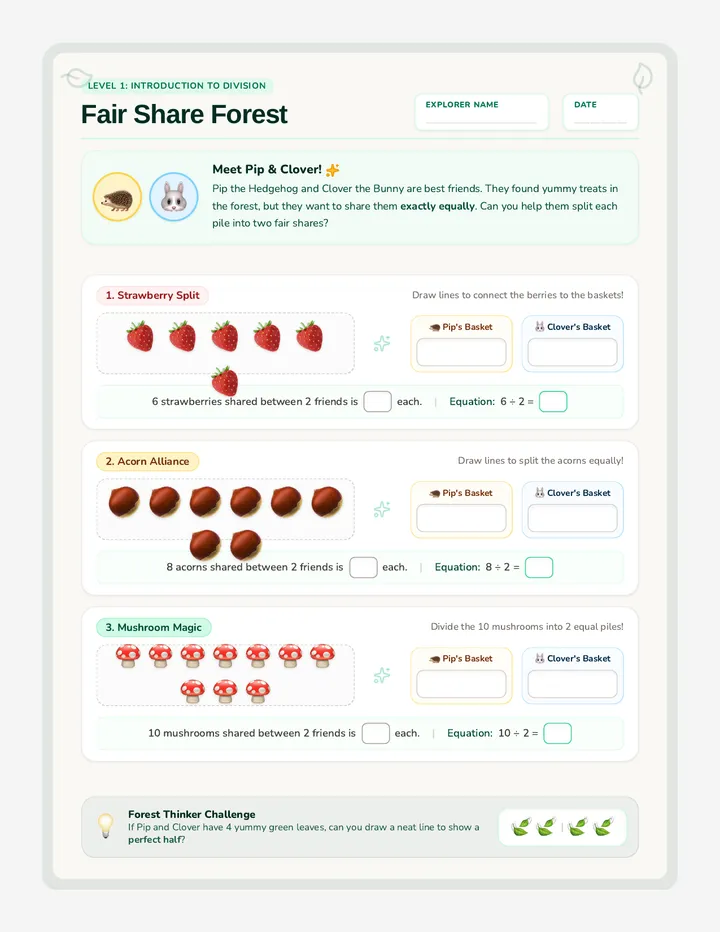
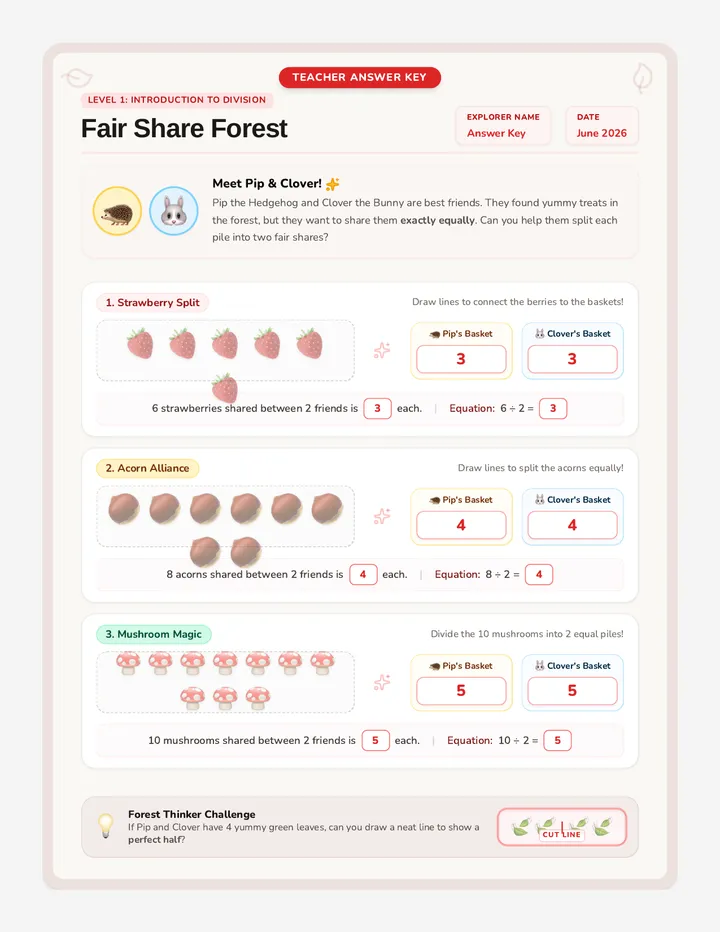
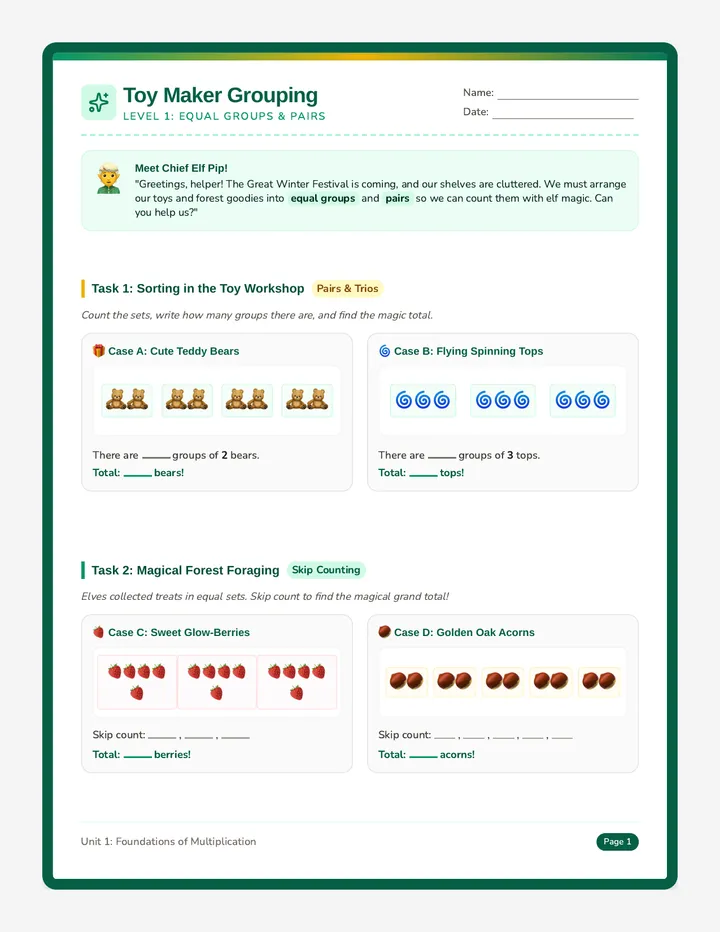
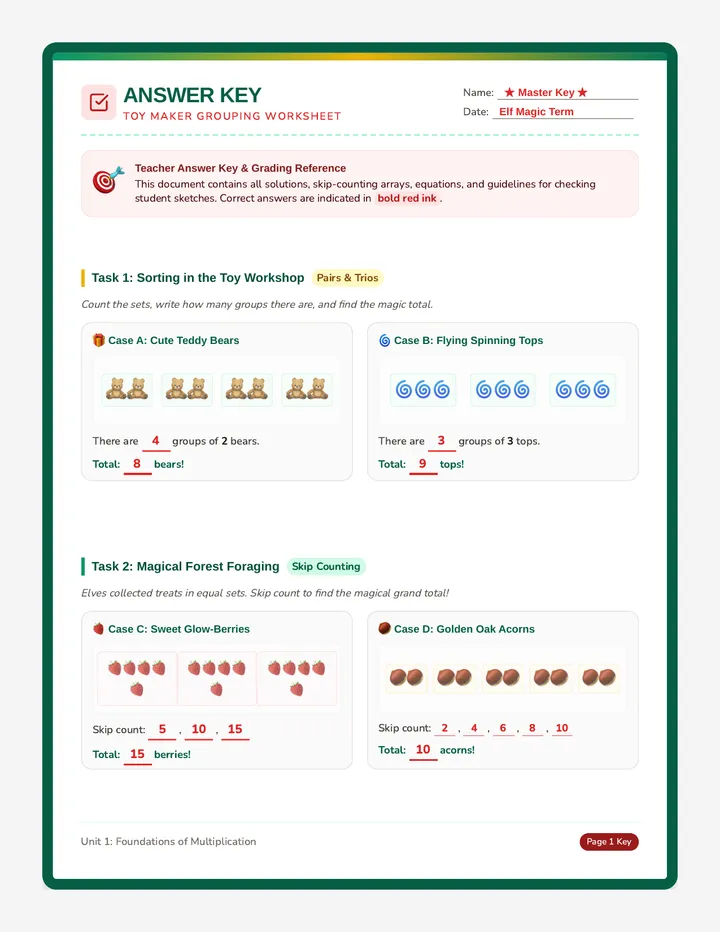
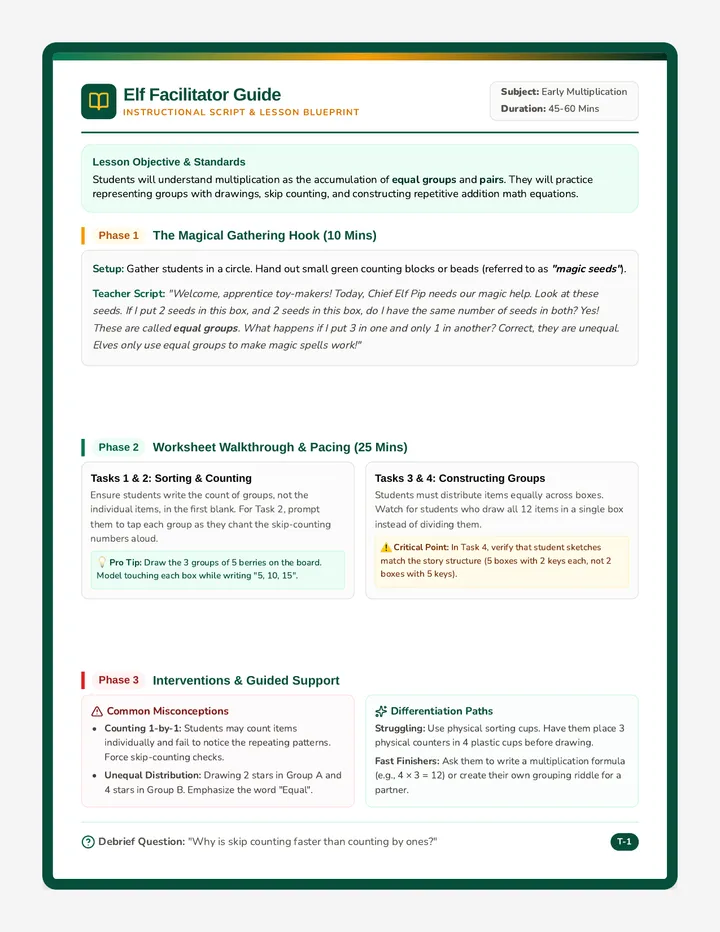
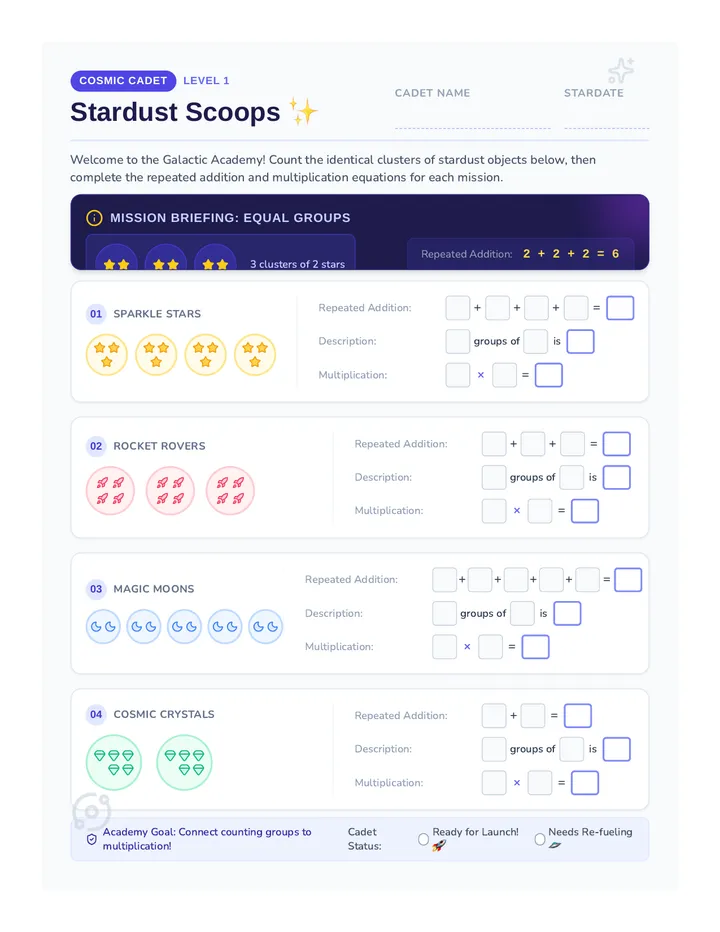
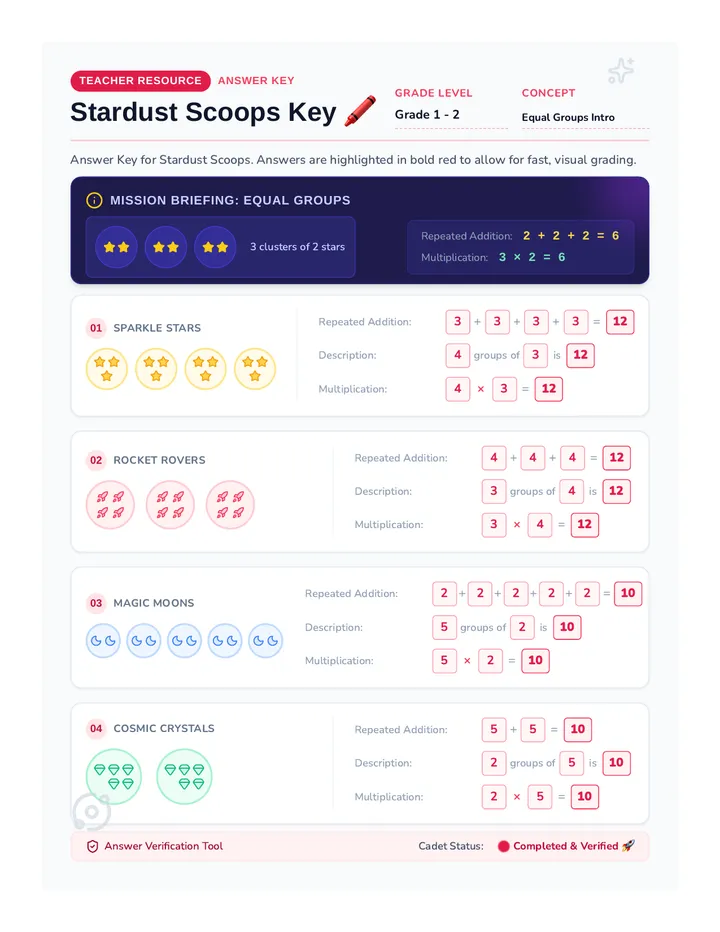
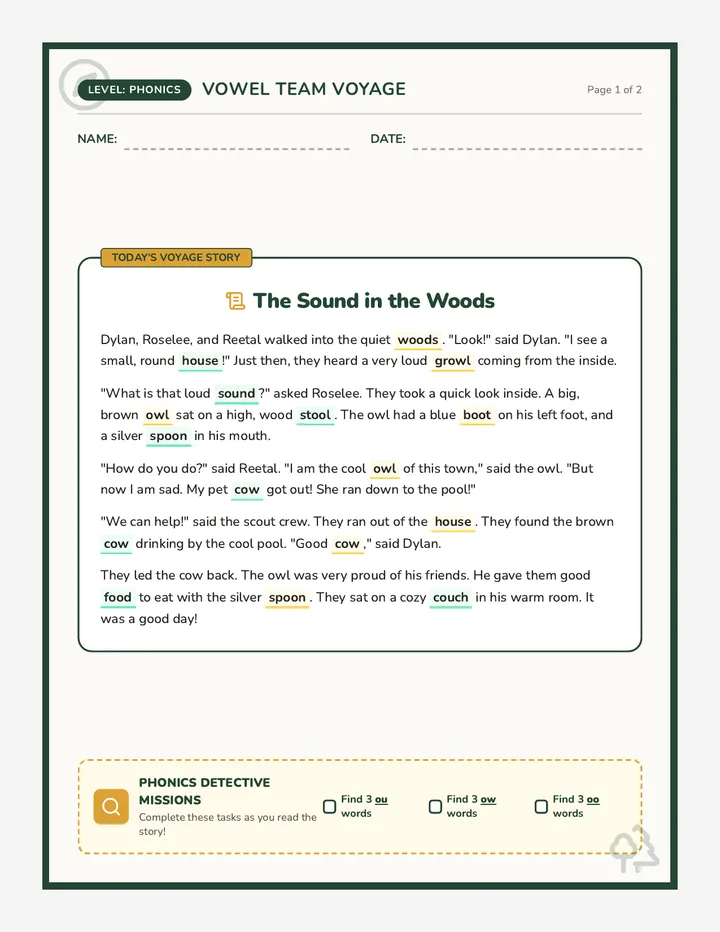
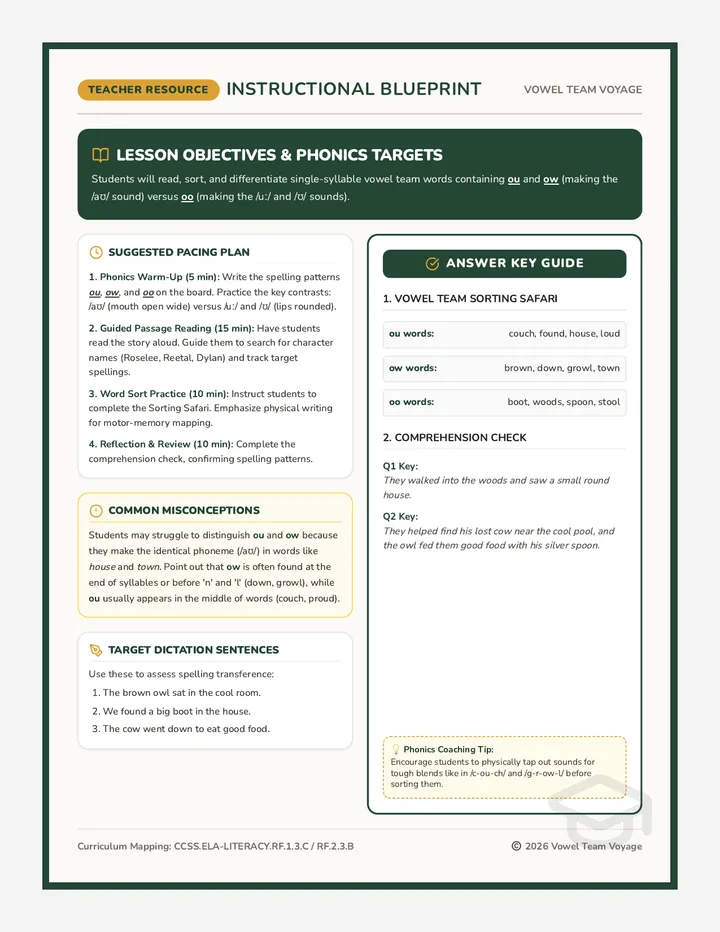
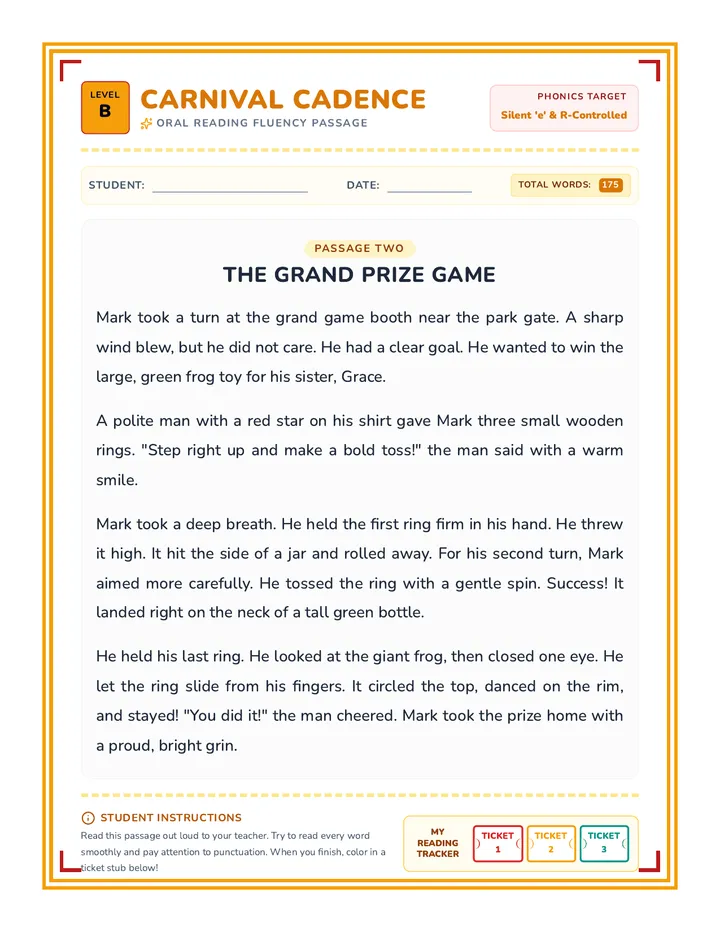
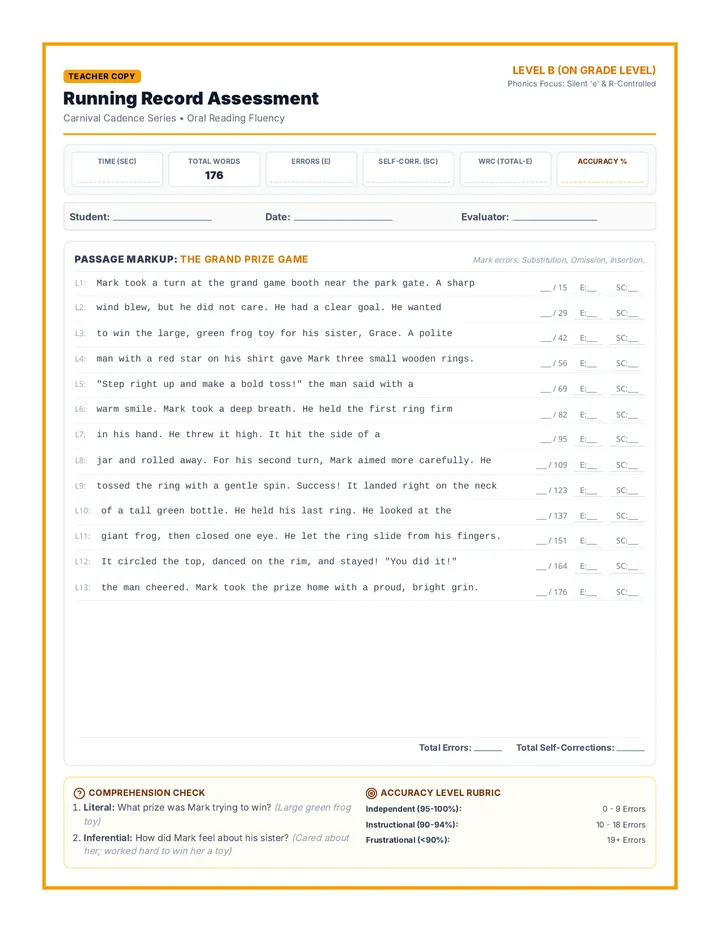
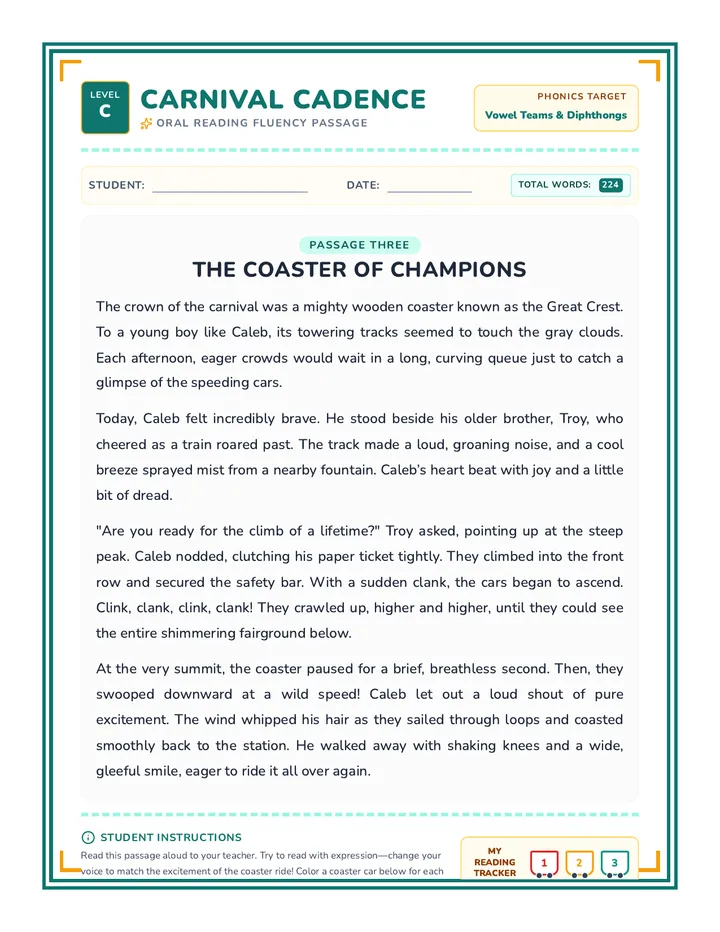
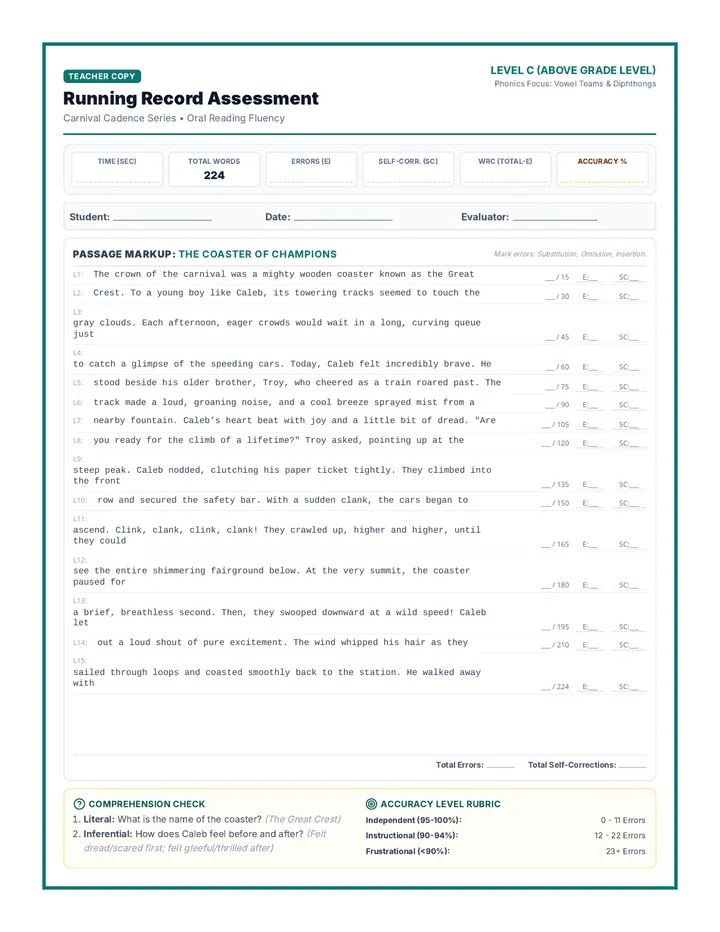
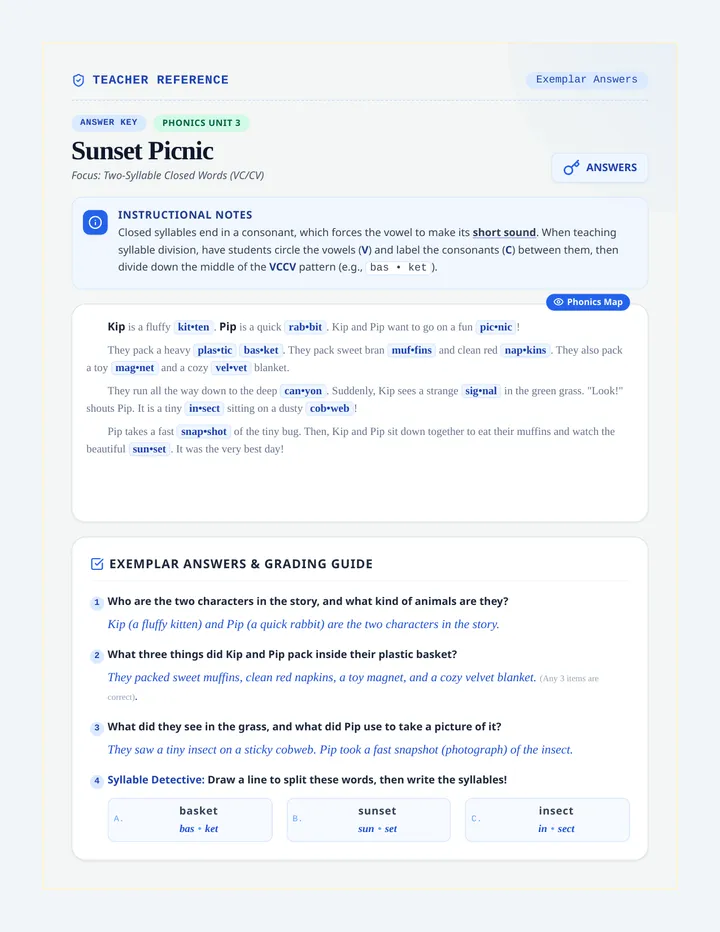
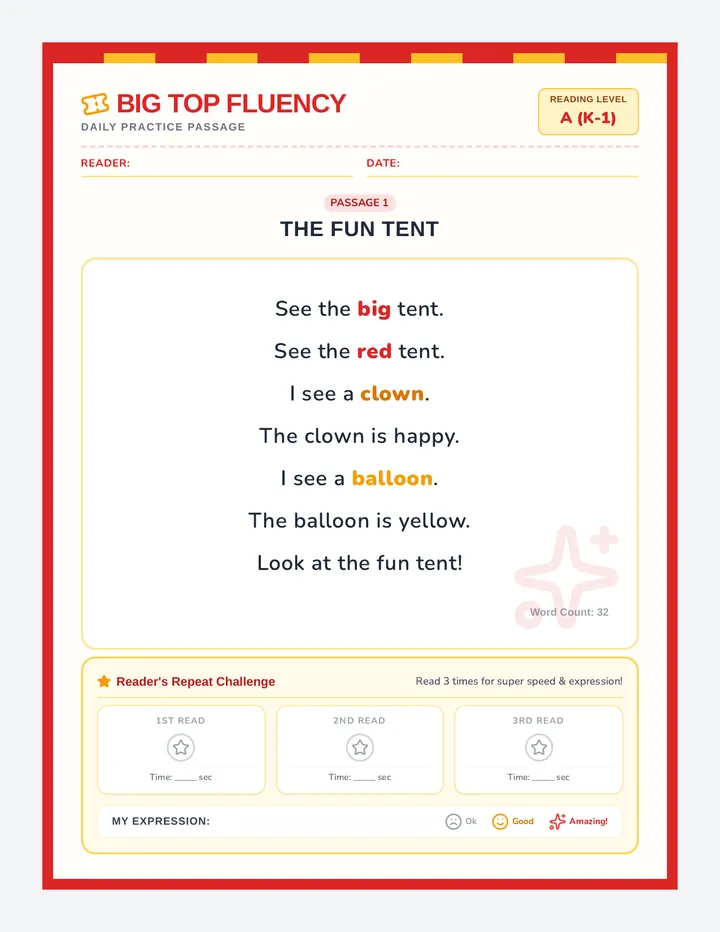
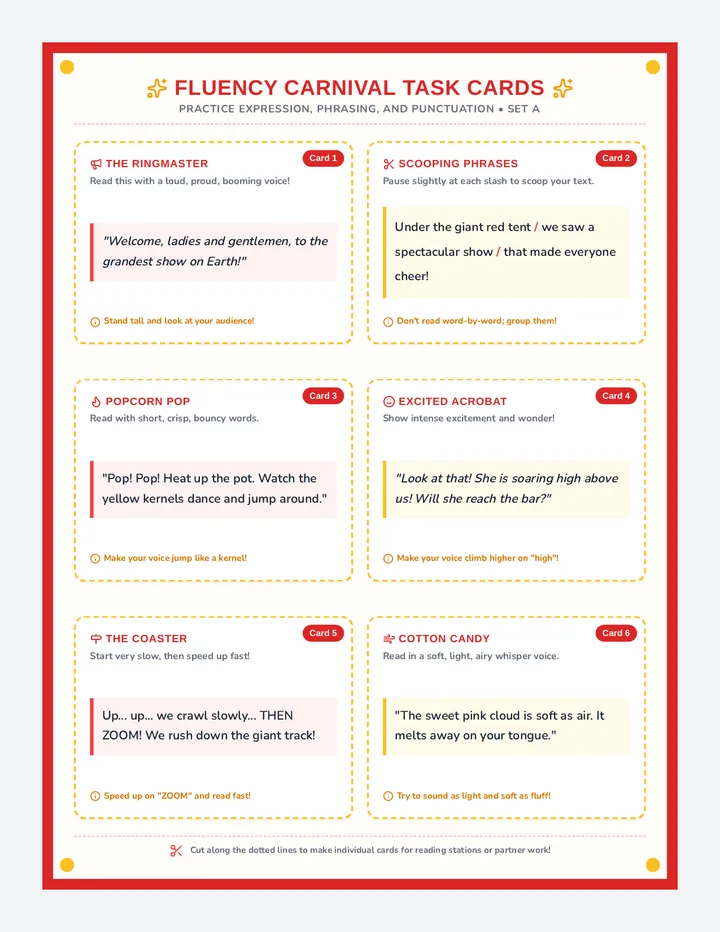
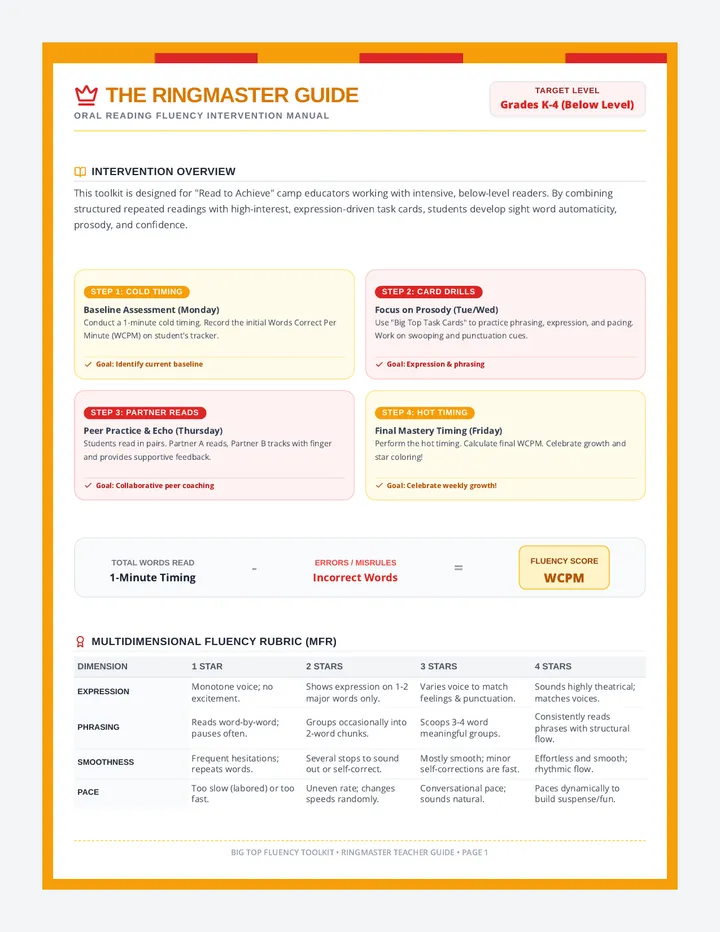
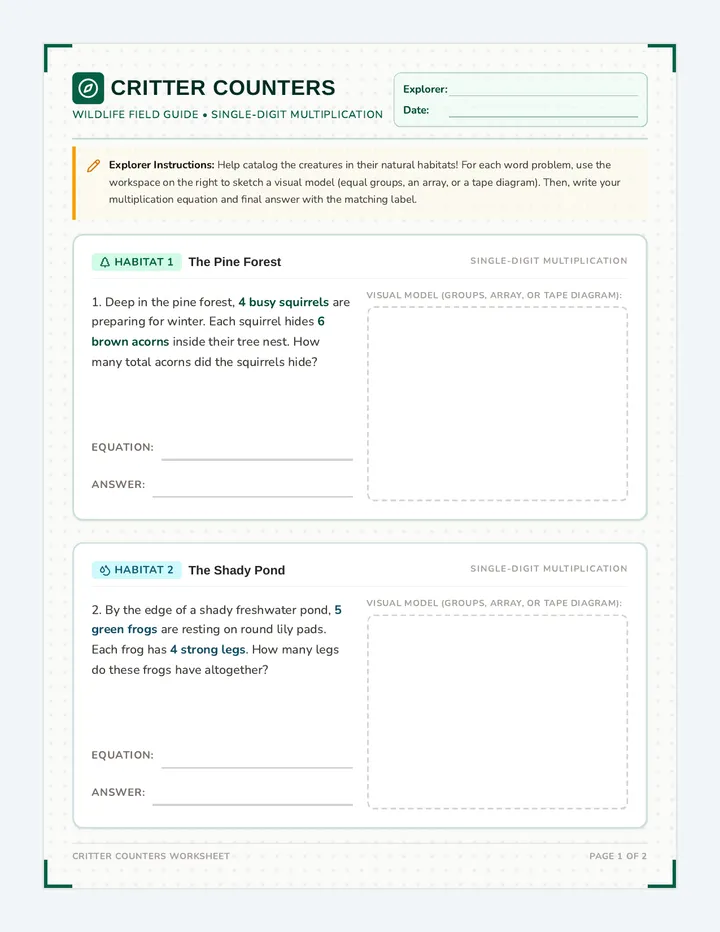
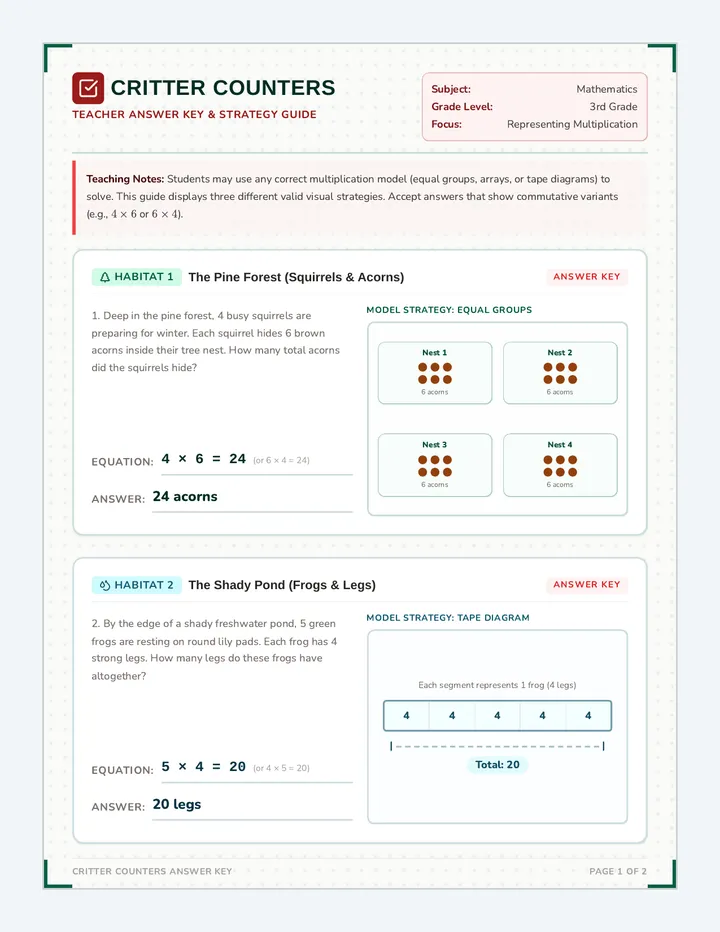
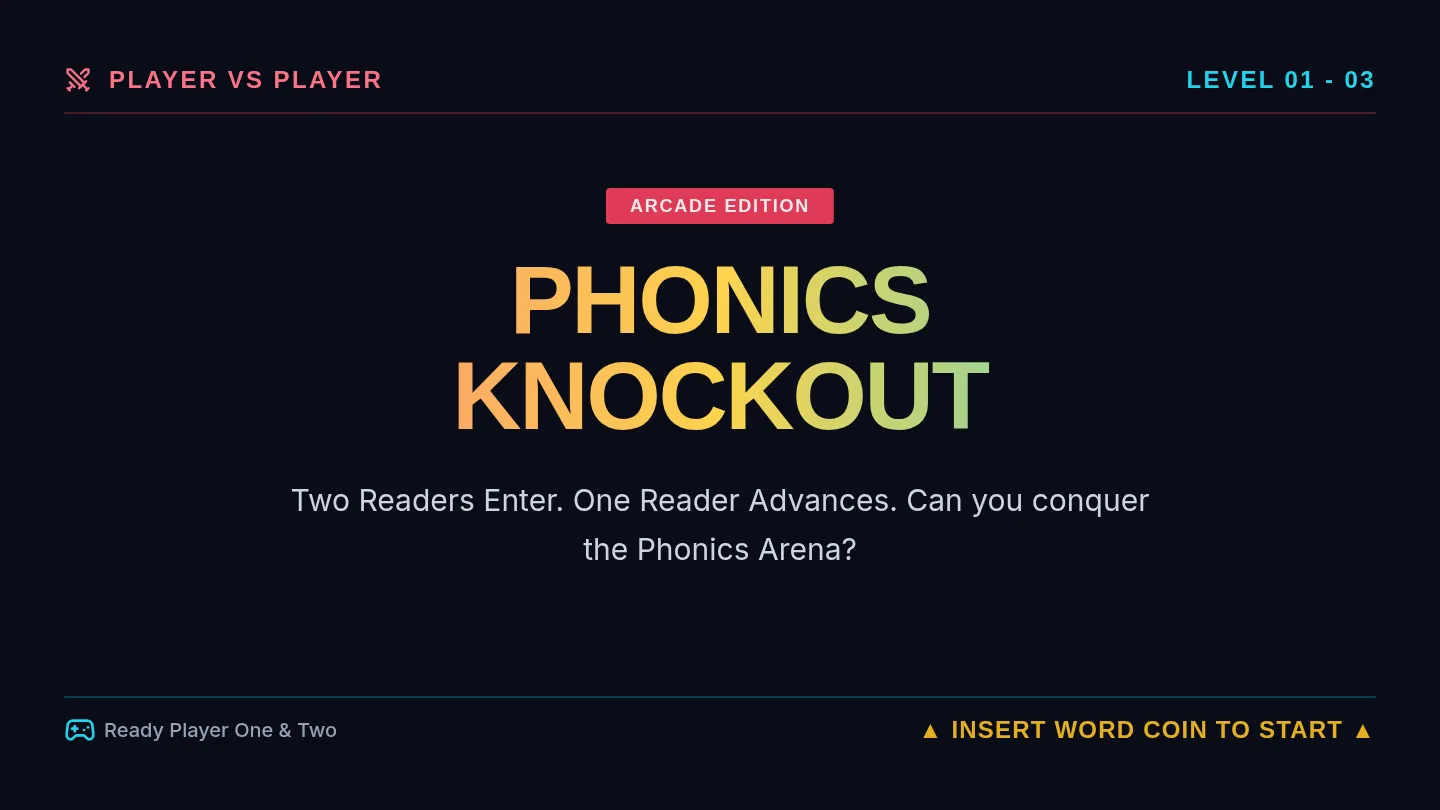
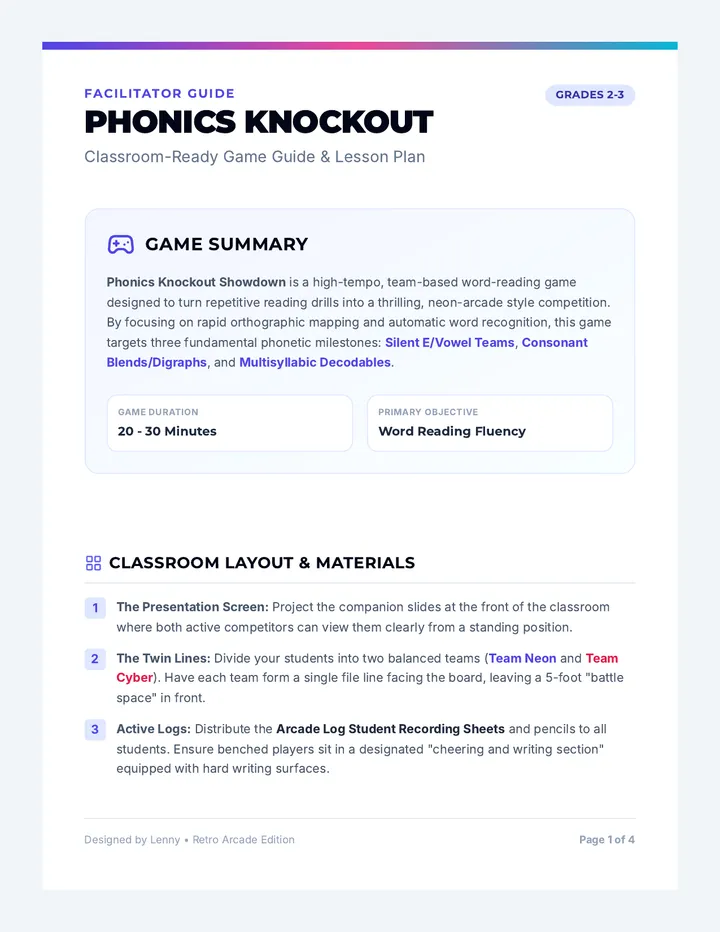
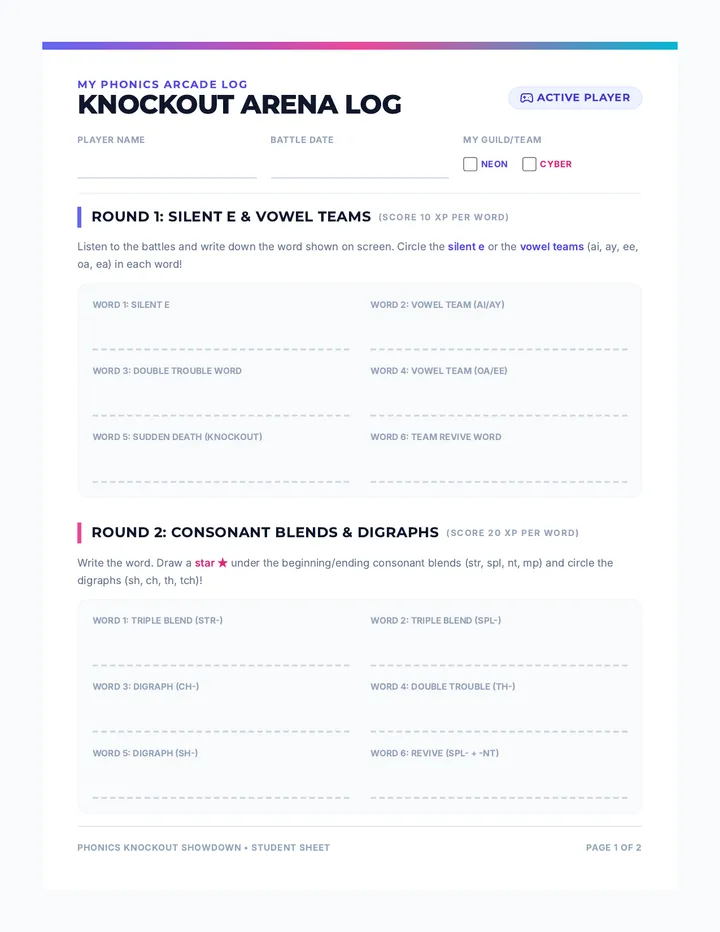
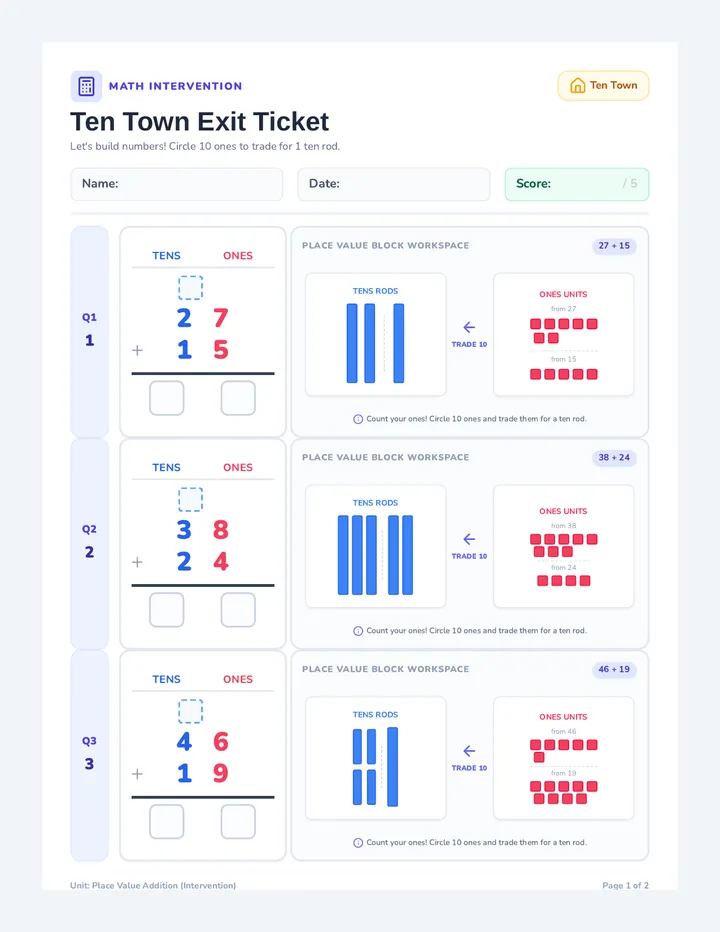
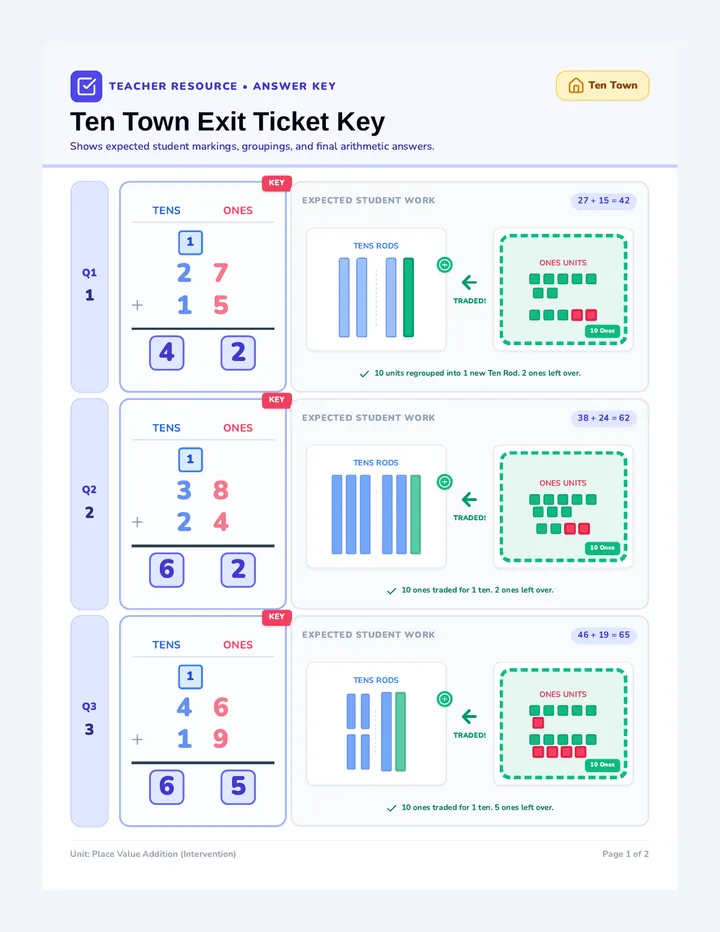
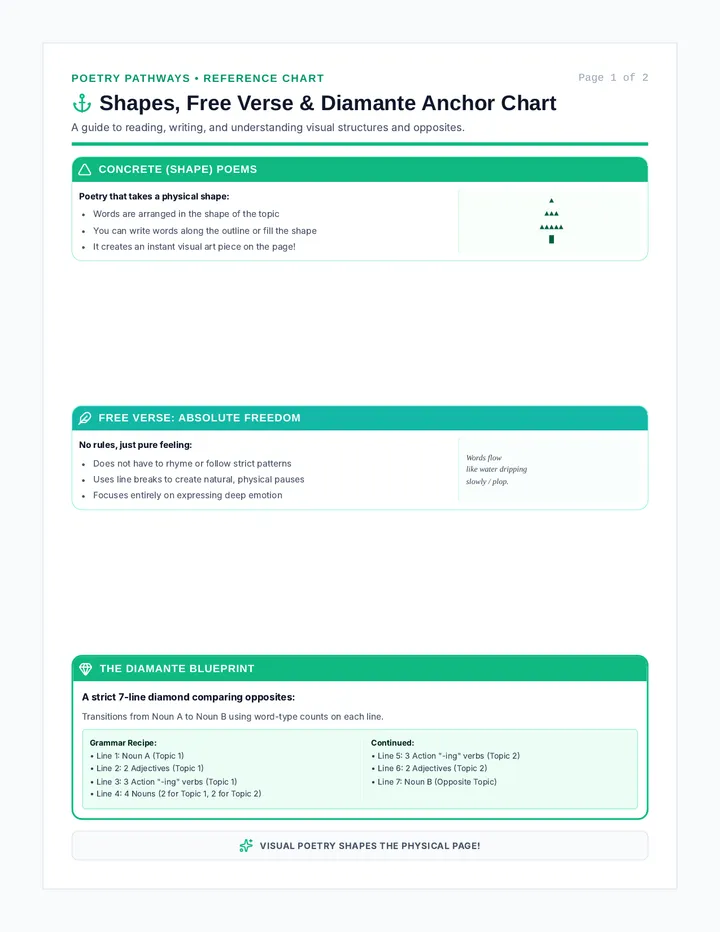
A collection of four diverse homework worksheets for 2nd-grade students, covering fractions, reading comprehension, multiplication basics, and phonics word sorting with a cohesive spring theme.
Students explore vocabulary from the picture book 'The Wombats Go Wild for Words' by identifying synonyms and antonyms using a graphic organizer. This lesson builds 2nd-grade language skills through character-driven word exploration.
This lesson introduces addition within 20 through the 'Make Ten' strategy and Number Bonds. Students progress from using physical counters to visual ten frames and finally to abstract equations.
Students practice reading comprehension and narrative sequencing by ordering sentences from Aesop's classic fable of the boy who cried wolf. The lesson includes a visual storytelling presentation, printable sentence strips for tactile learning, and a follow-up writing activity.
A focused lesson on 3-digit subtraction where students practice regrouping from the tens place to the ones place. includes a visual-heavy worksheet and an answer key.
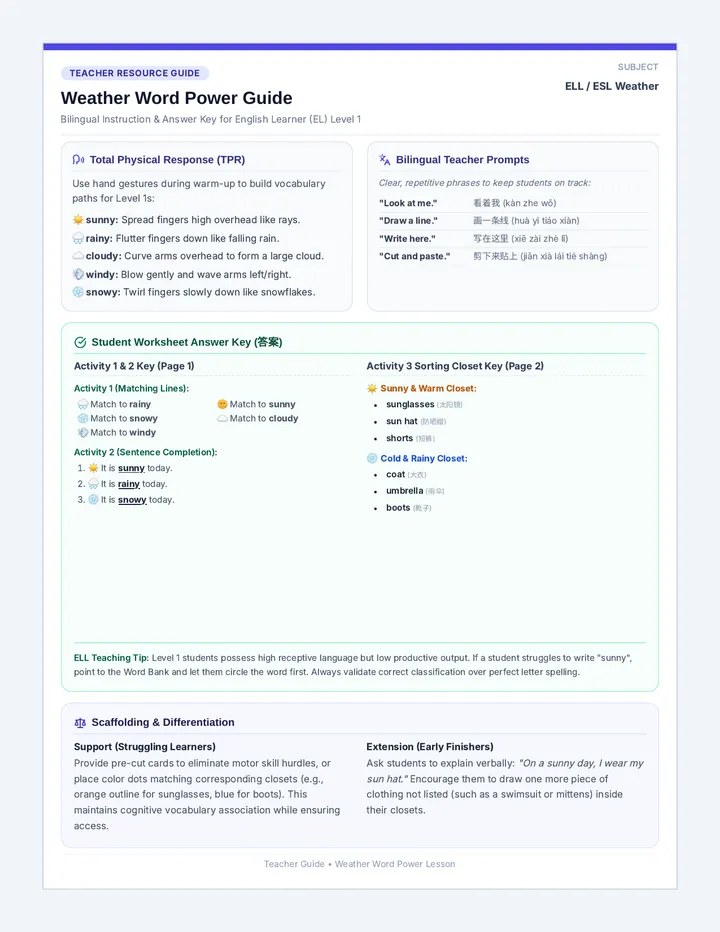
A comprehensive Grade 2 ESL lesson focused on the art of narration. Students develop academic language through sequencing words and transition phrases while practicing all four language domains (reading, writing, listening, and speaking) through a creative 'Story Lab' theme.
A cumulative review and formal assessment of dictionary navigation and entry analysis skills.
Focuses on the anatomy of a dictionary entry, specifically how to identify and choose between multiple definitions based on sentence context.
Introduction to the physical and digital structure of a dictionary, with a deep dive into using guide words for rapid word location.
A comprehensive introduction to 3D geometric shapes including cubes, spheres, rectangular prisms, cones, pyramids, and cylinders. Students will learn to identify these shapes, count their attributes (faces, edges, vertices), and find them in the real world.
A collection of worksheets designed to help students write structured biographical paragraphs about historical figures using mind maps and sentence starters. Each worksheet features a unique theme tailored to the figure's profession.
Students identify antonym clues to understand what a word is NOT, using contrasting pictures to solve the vocabulary puzzle.
Students use synonym clues to find words that mean the same thing as the unknown word, using pictures to match similar concepts.
Students explore example clues, where a sentence provides specific instances of a word to help reveal its meaning, paired with helpful visual supports.
Students learn to identify definition clues in sentences where the meaning of a tricky word is explained directly, using illustrations to confirm their findings.
A comprehensive math review lesson designed to reinforce key elementary math skills including logical ordering, 2-digit subtraction, geometric attributes, and equal parts/fractions. This lesson uses a repeated "at-bat" structure to build mastery through multiple variations of the same problem format.
A lesson focused on narrative sequencing and logical flow through the lens of mystery and suspense stories. Students analyze transition words, cause and effect, and character development to reorder scrambled narratives.
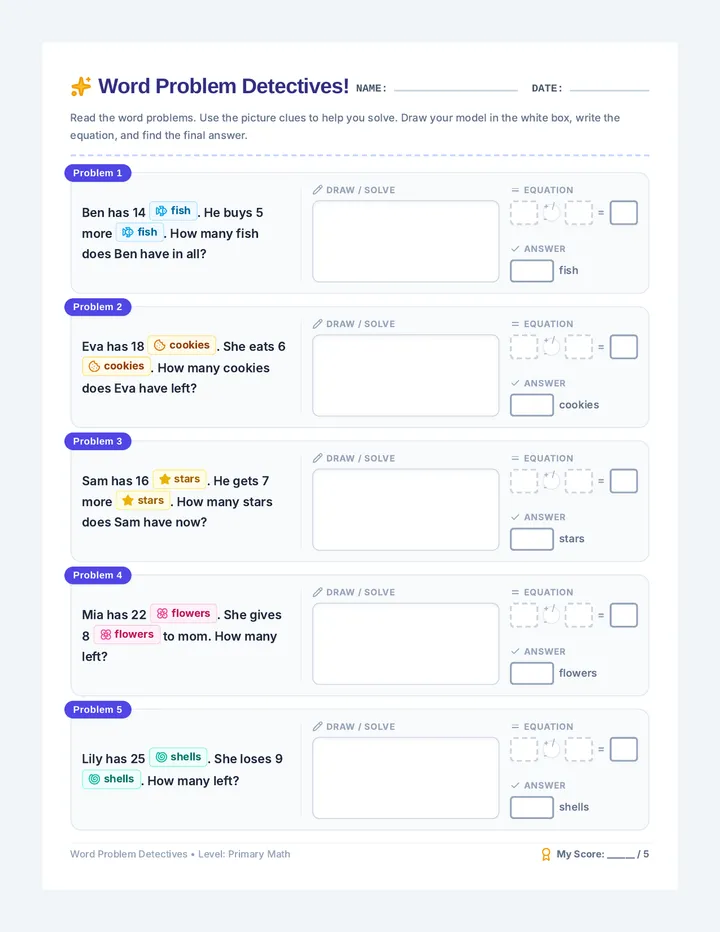
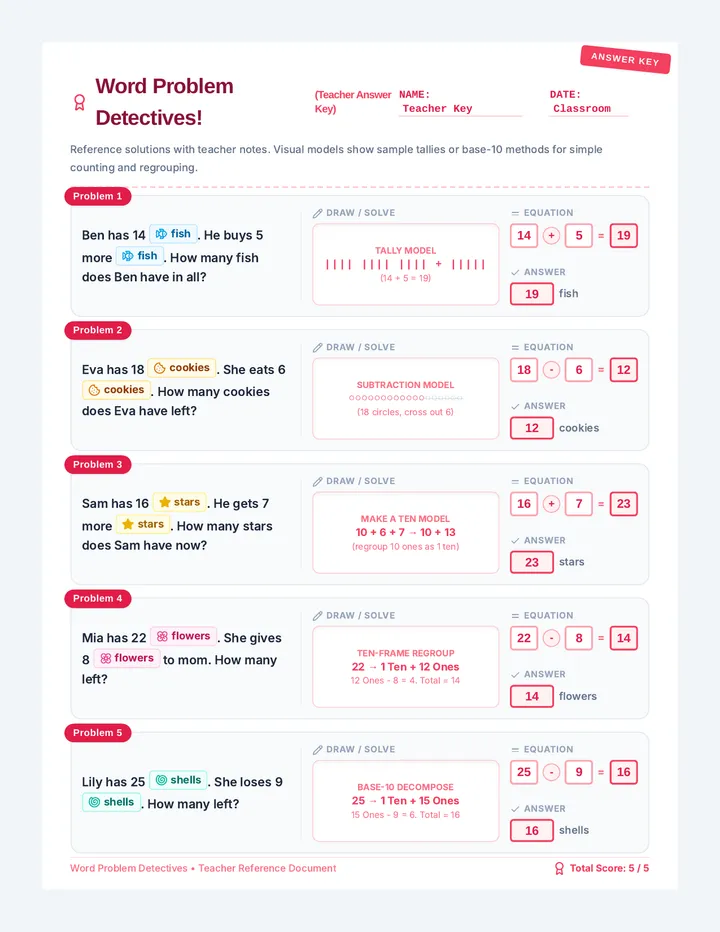
A cumulative review and formal assessment of perimeter and area concepts in a shortened Friday block.
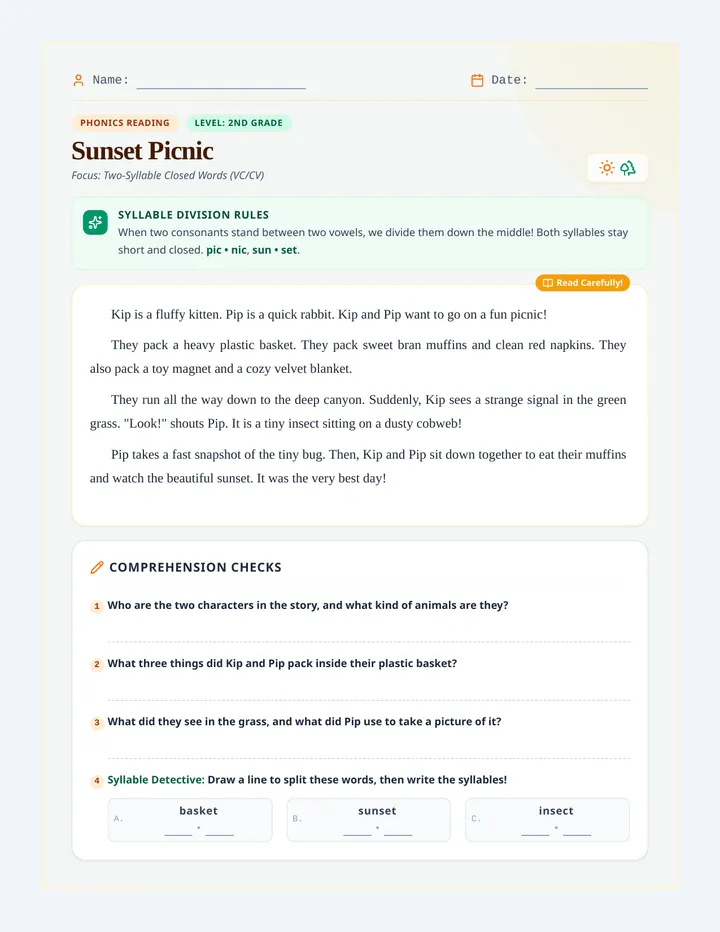
Reinforcing the concept of area through counting squares in arrays and understanding the relationship between rows, columns, and total area.
Introduction to area by partitioning rectangles into equal-sized rows and columns. Students will visualize area as the total number of squares inside a boundary.
Advanced perimeter practice including finding missing side lengths and solving real-world word problems involving fences and borders.
Introduction to perimeter as the distance around a shape. Students will learn to measure sides and add them together to find the total perimeter.
A math lesson focused on identifying the correct operation (addition, subtraction, multiplication, or division) to solve arcade-themed word problems using double-digit numbers without regrouping.