Clarifies the usage and spelling of homophones and commonly confused words, essential for professional and legal writing accuracy.
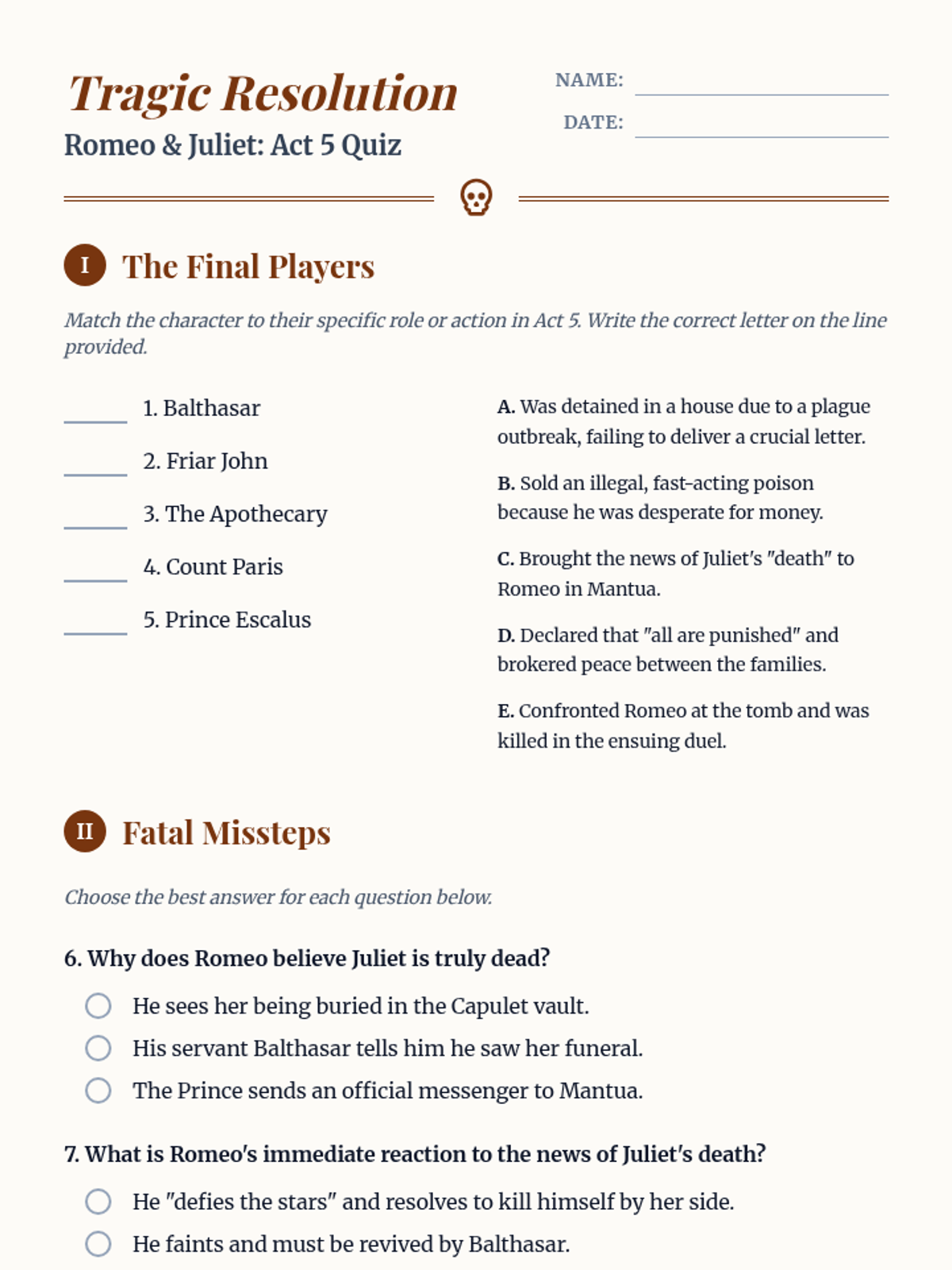
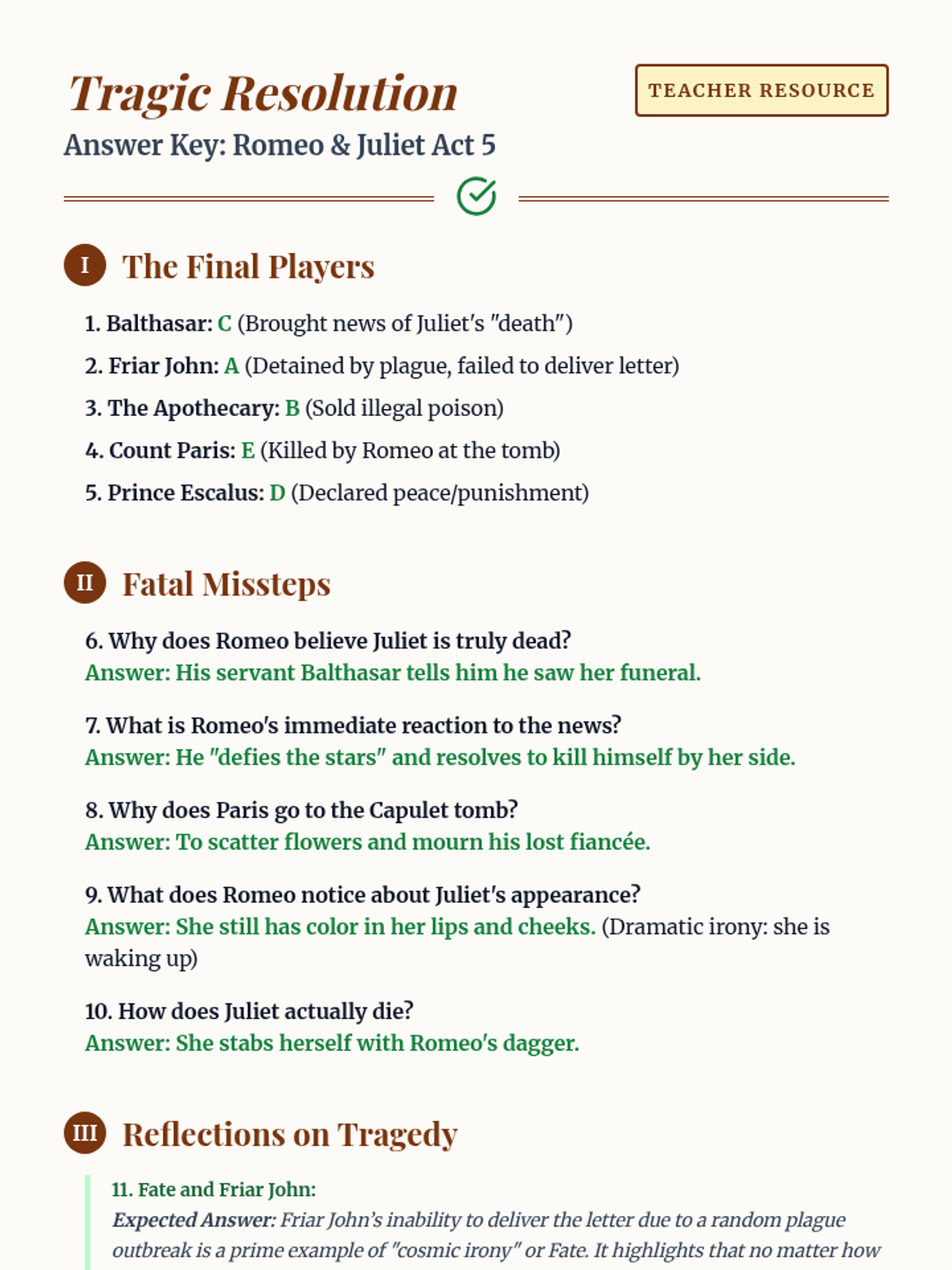
A comprehensive assessment for Act 5 of Shakespeare's Romeo and Juliet, focusing on the resolution of the plot, the role of fate, and the ultimate tragedy in the Capulet tomb.
A foundational skills lesson providing generic templates and strategies for summarizing social and personal narratives using the SWBST frame.
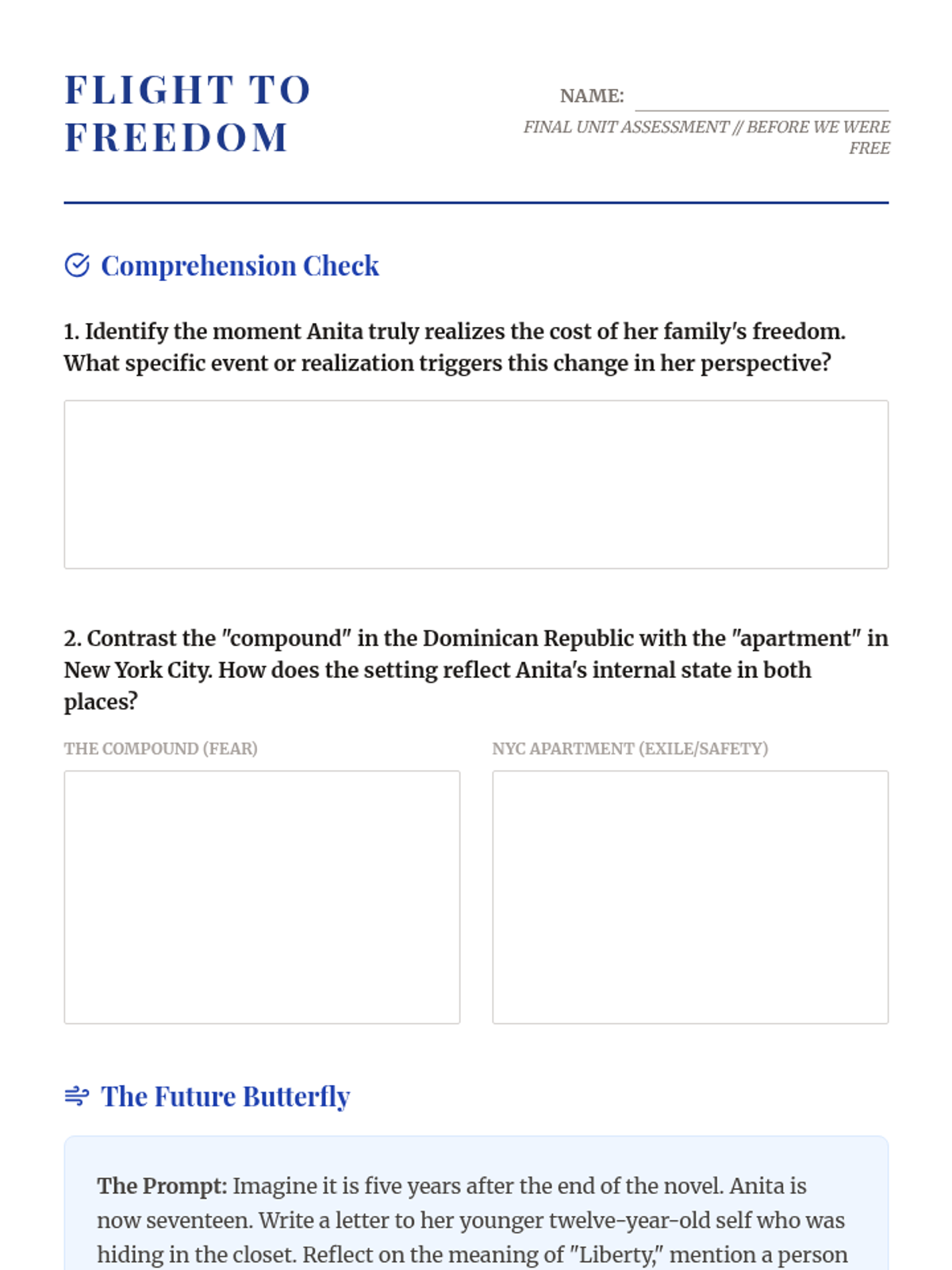
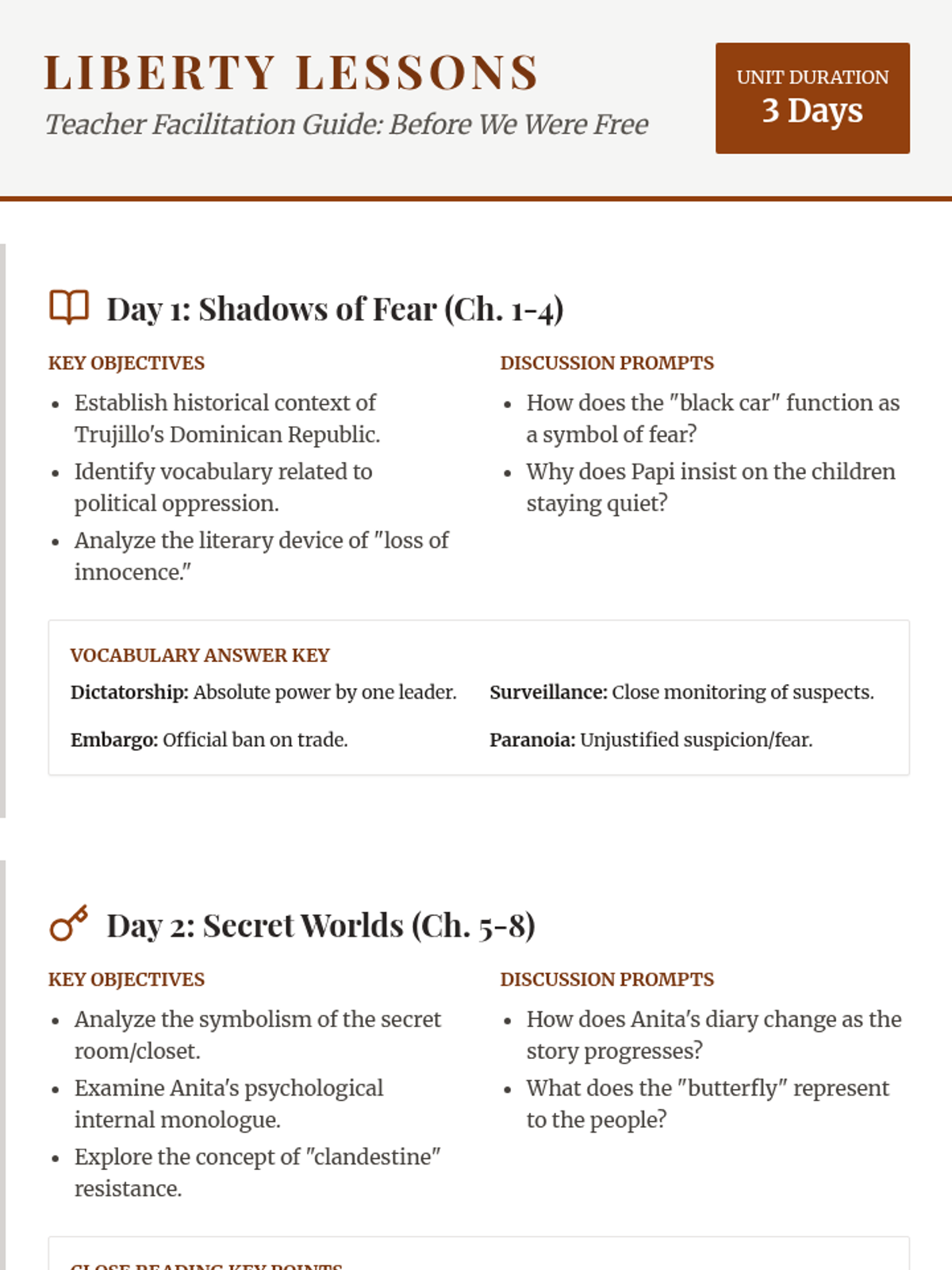
Concludes the unit by examining the climax and resolution of Anita's journey. Students reflect on the themes of sacrifice and exile, culminating in a creative writing project that bridges Anita's experience with the broader concept of liberty.
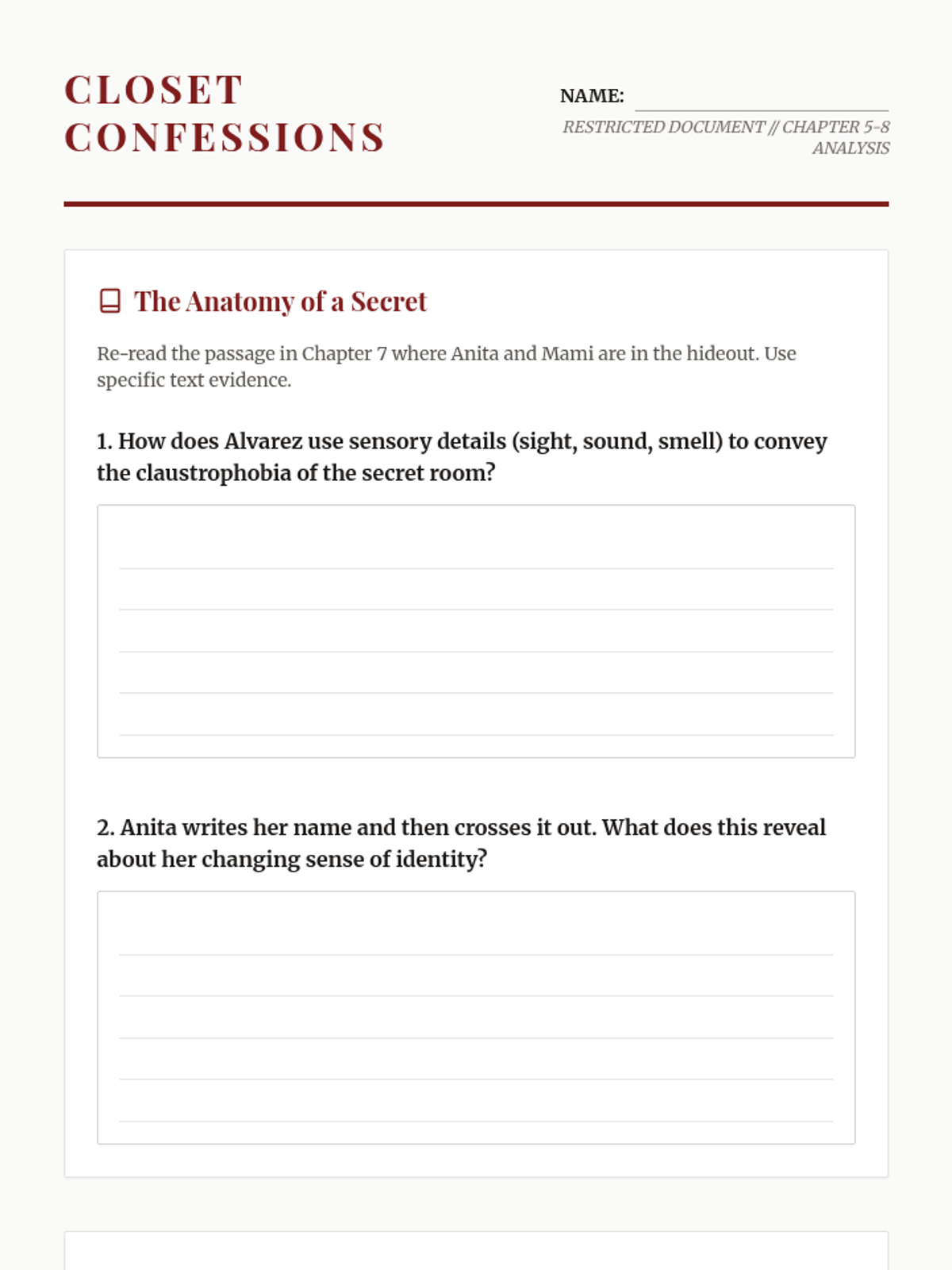
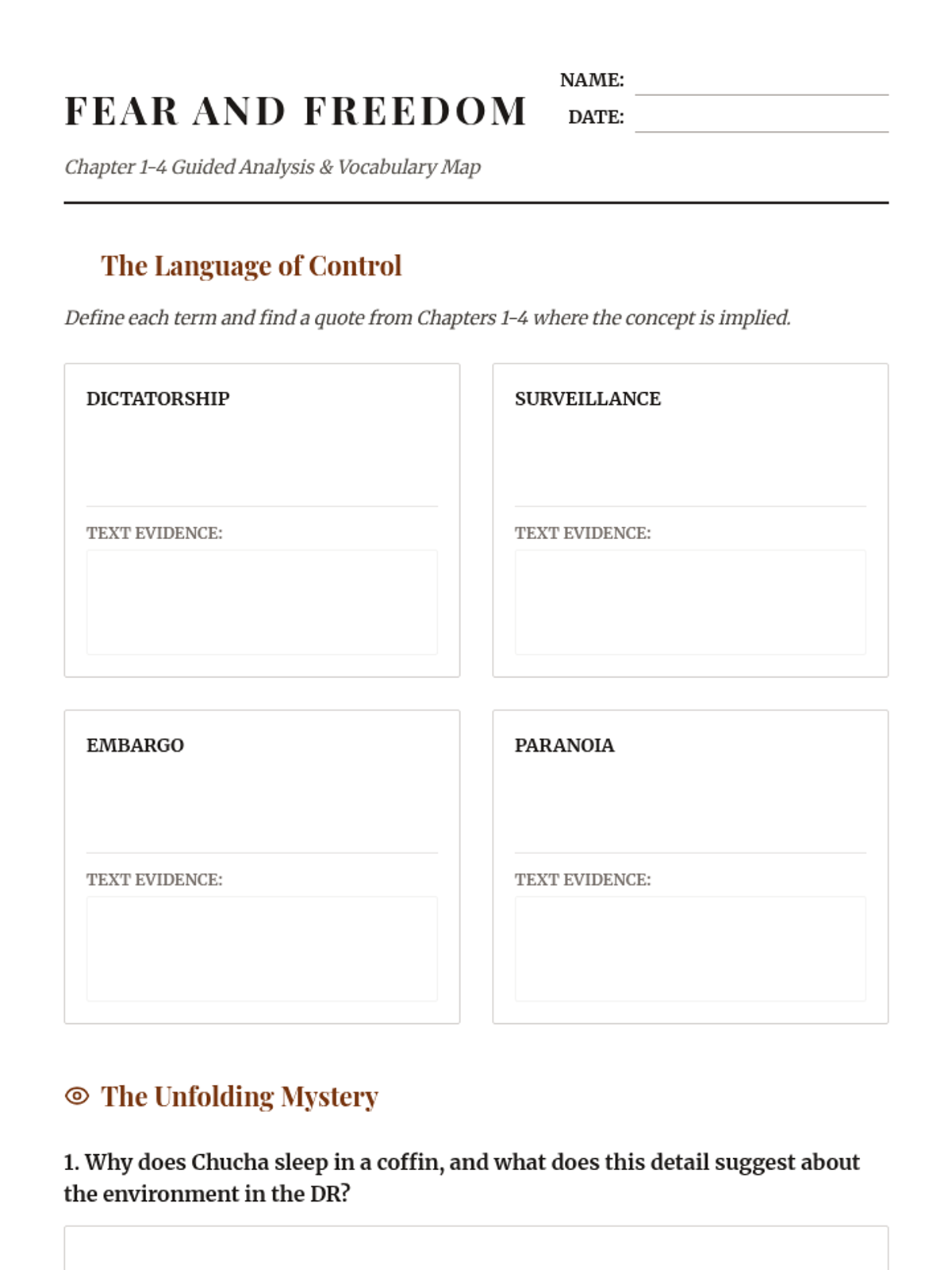
Explores the rising tension as Anita's family goes into hiding. Students will analyze the symbolism of the 'secret room' and the psychological toll of surveillance, using close reading to track Anita's maturing perspective.
Introduces students to the setting of the Dominican Republic under Trujillo's regime, focusing on the atmosphere of fear and the initial vocabulary of political oppression. Students will analyze the shift from Anita's childhood innocence to her growing awareness of danger.
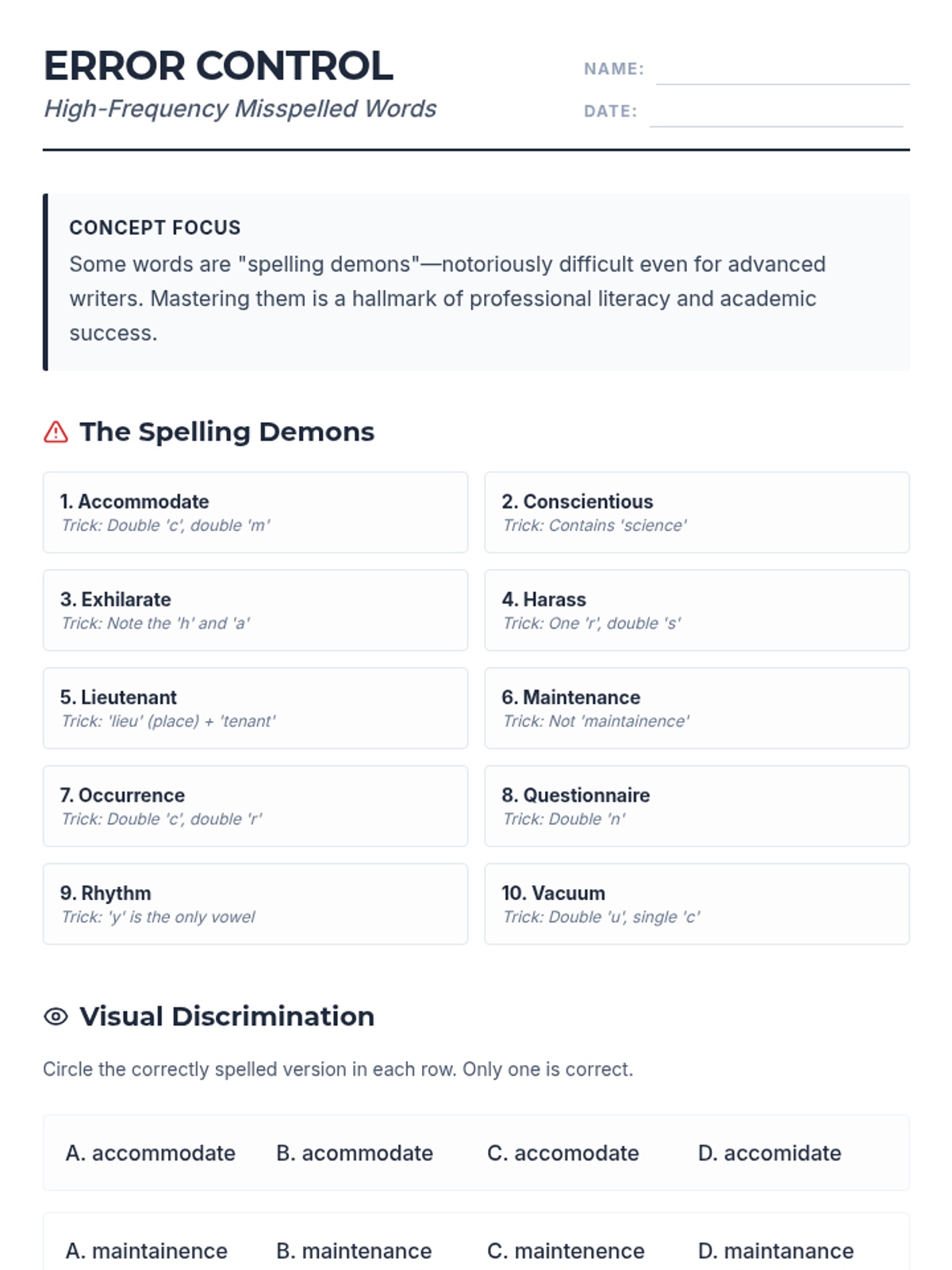
Targets high-frequency spelling errors and provides strategies for proofreading and self-correction in formal writing.
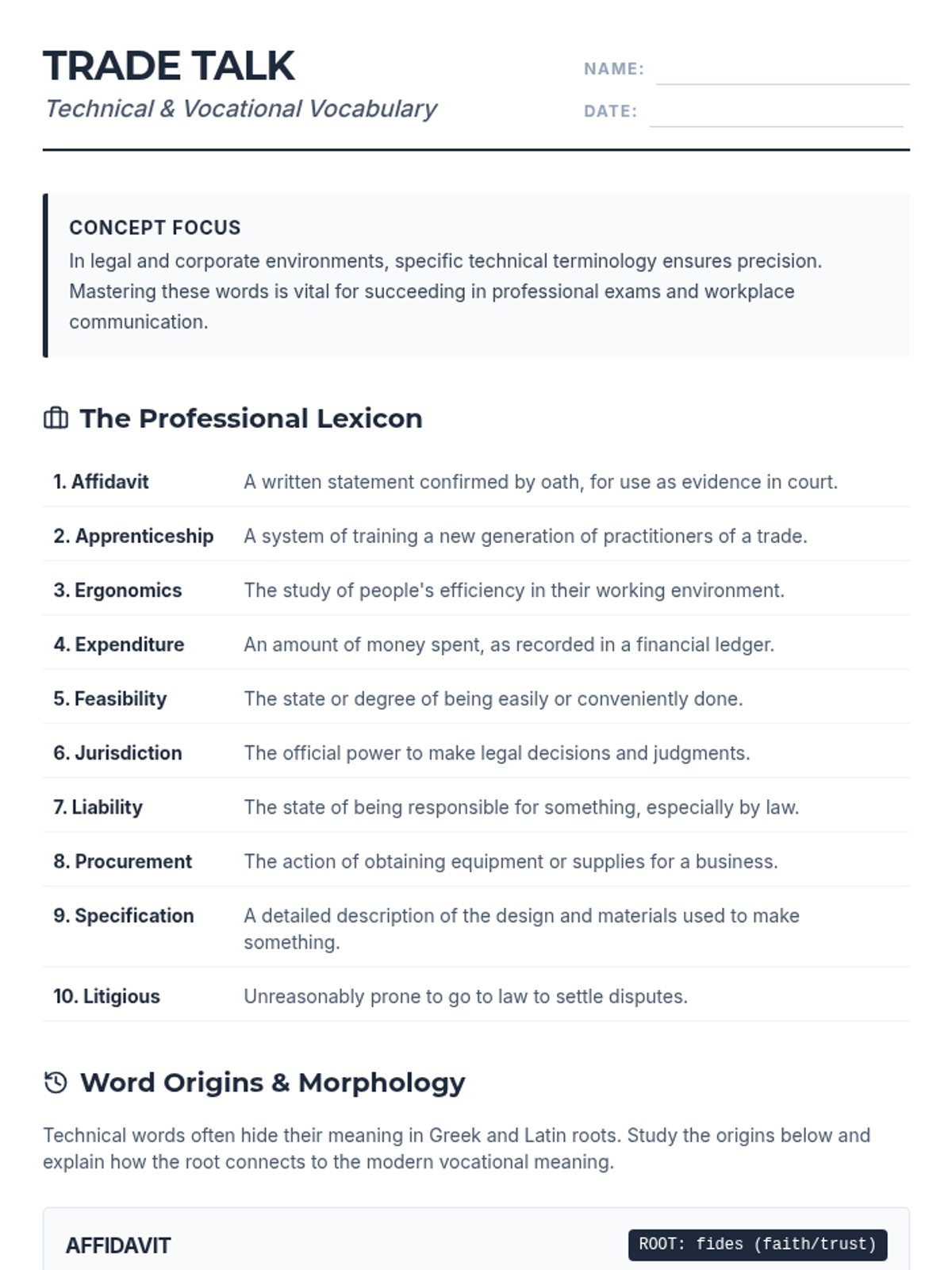
Introduces high-level technical and vocational vocabulary used in professional environments, legal proceedings, and trade sectors.
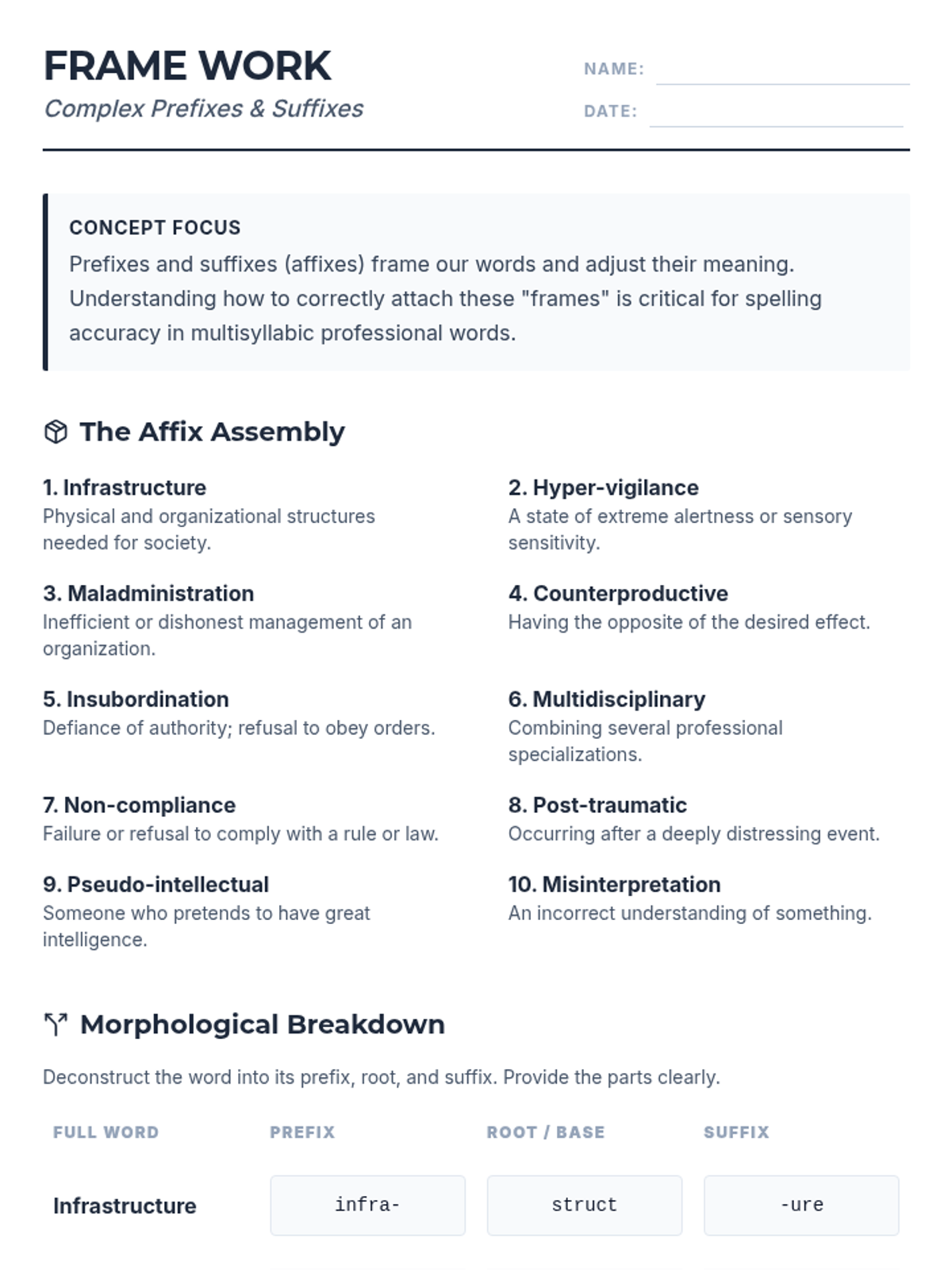
Focuses on the mechanics of prefixes and suffixes to expand vocabulary and understand the nuances of formal communication.
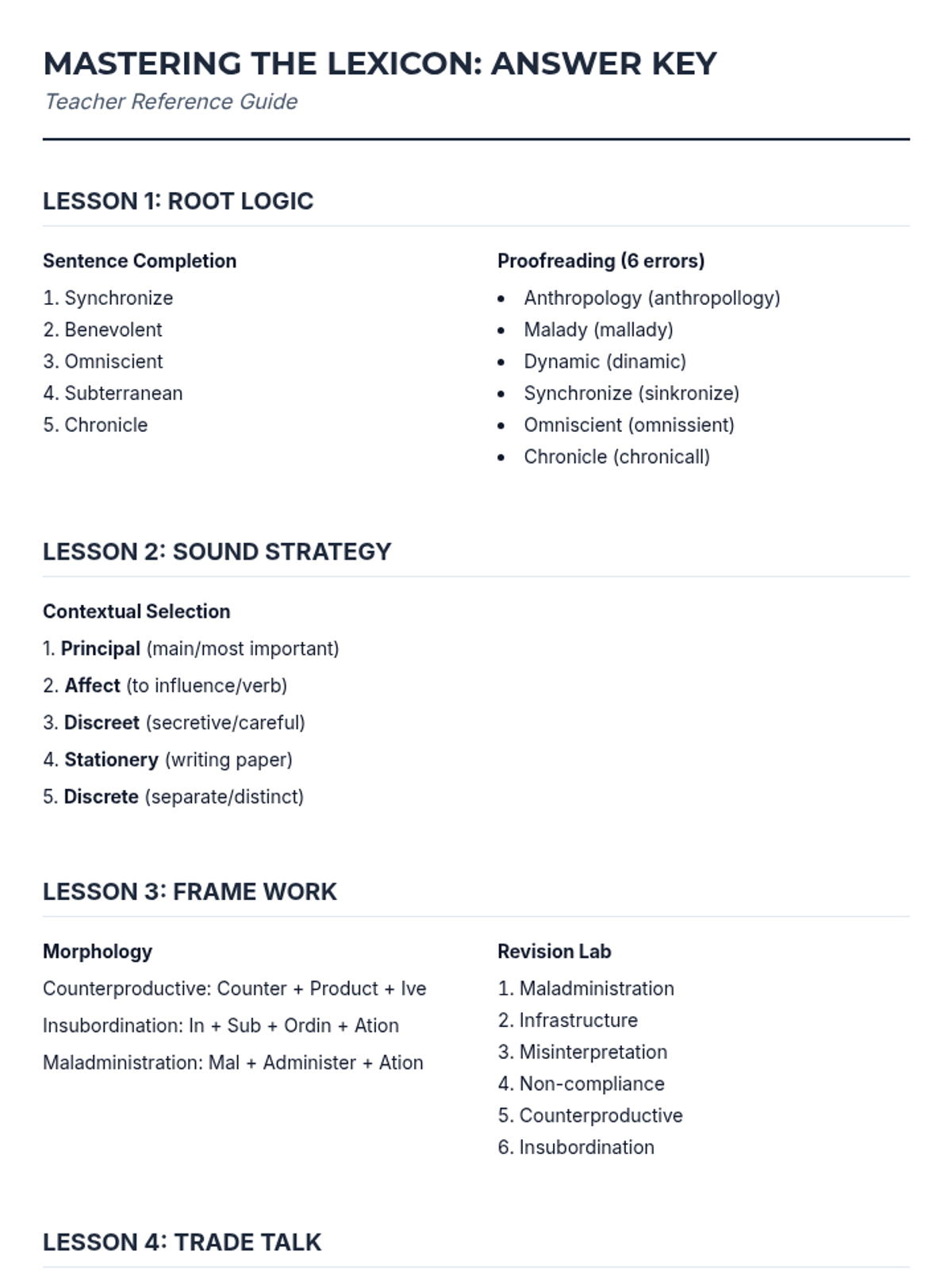
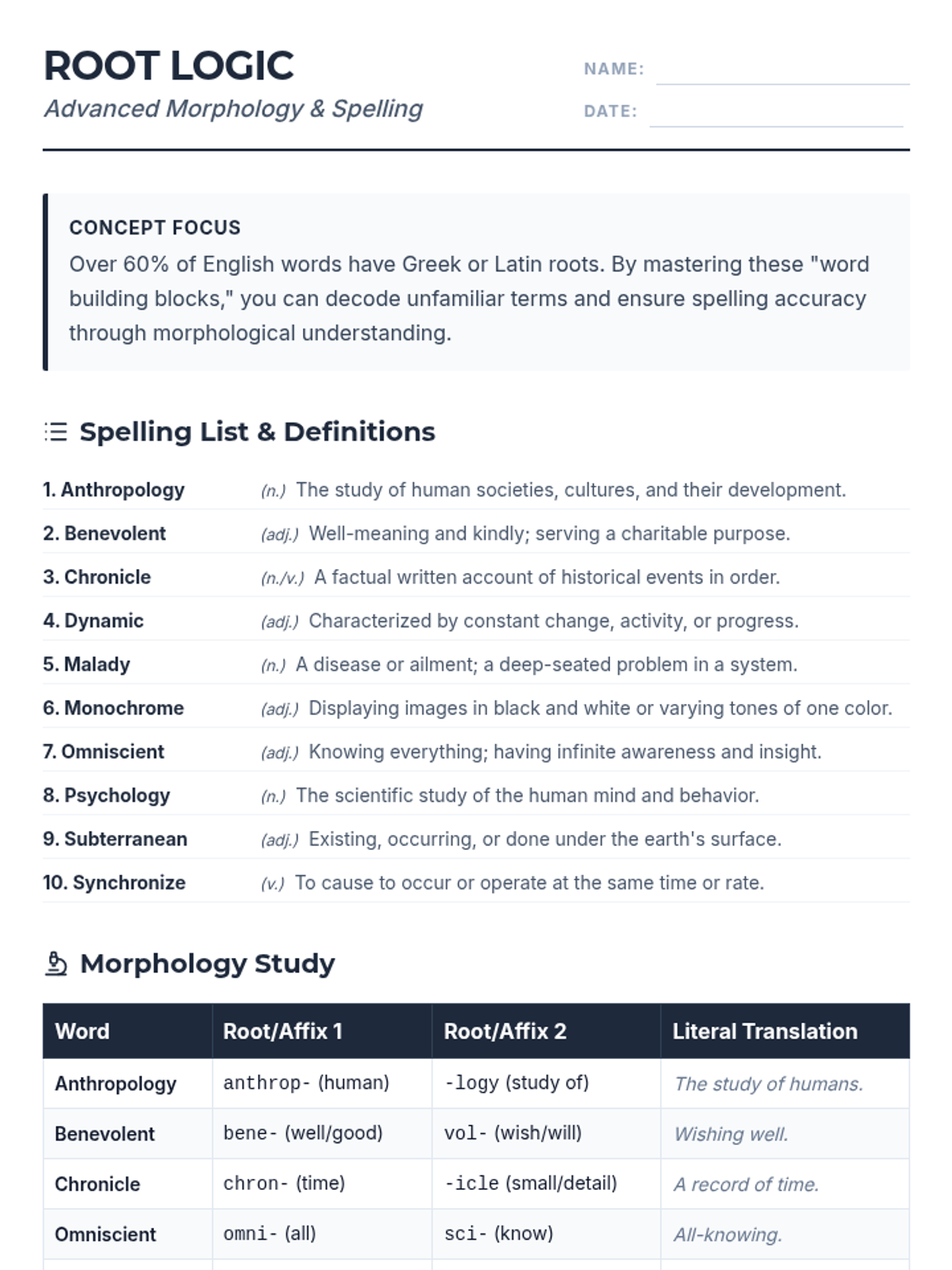
Explores the architectural foundations of English through Greek and Latin roots, helping students decode complex academic and professional language.
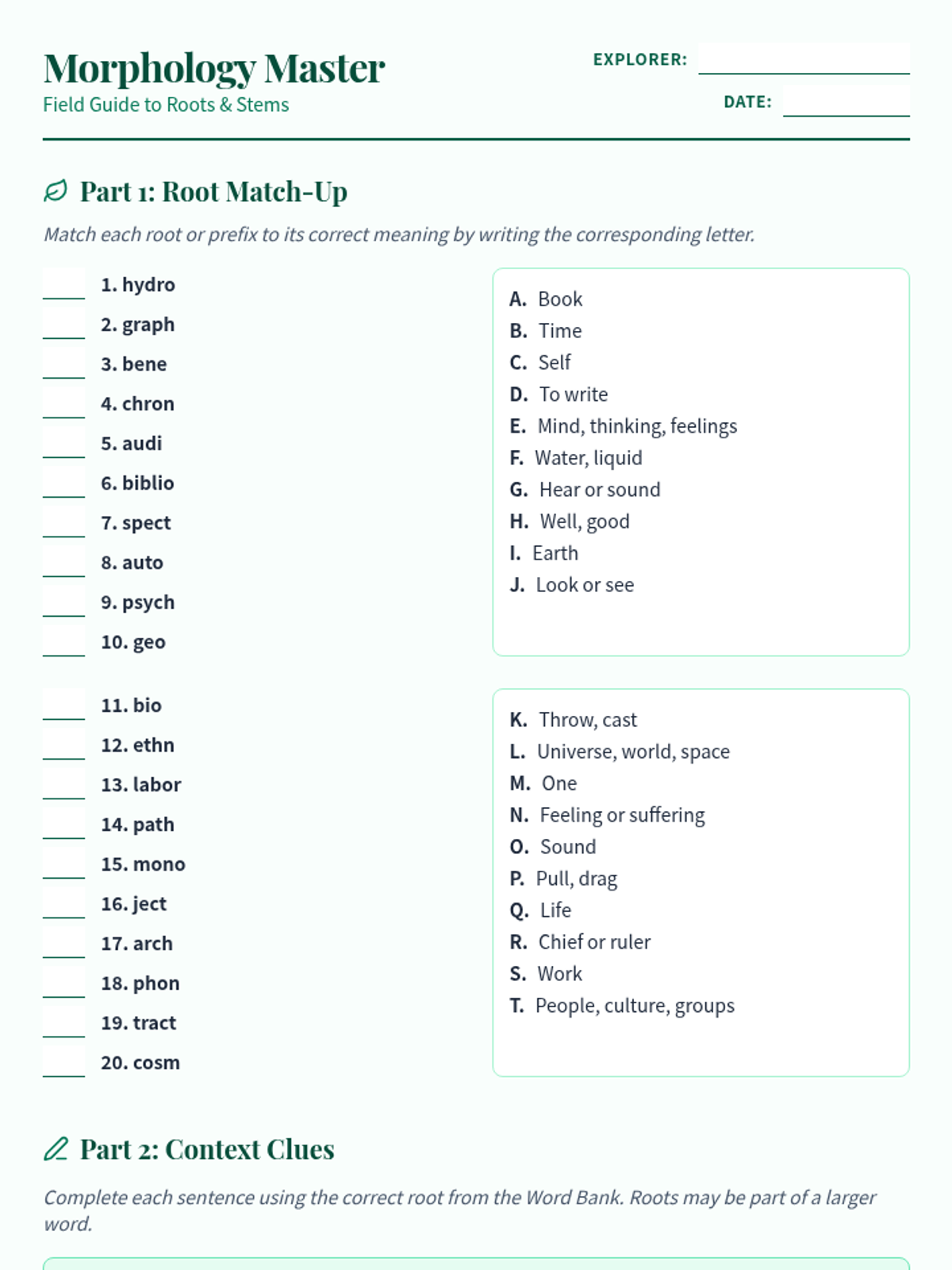
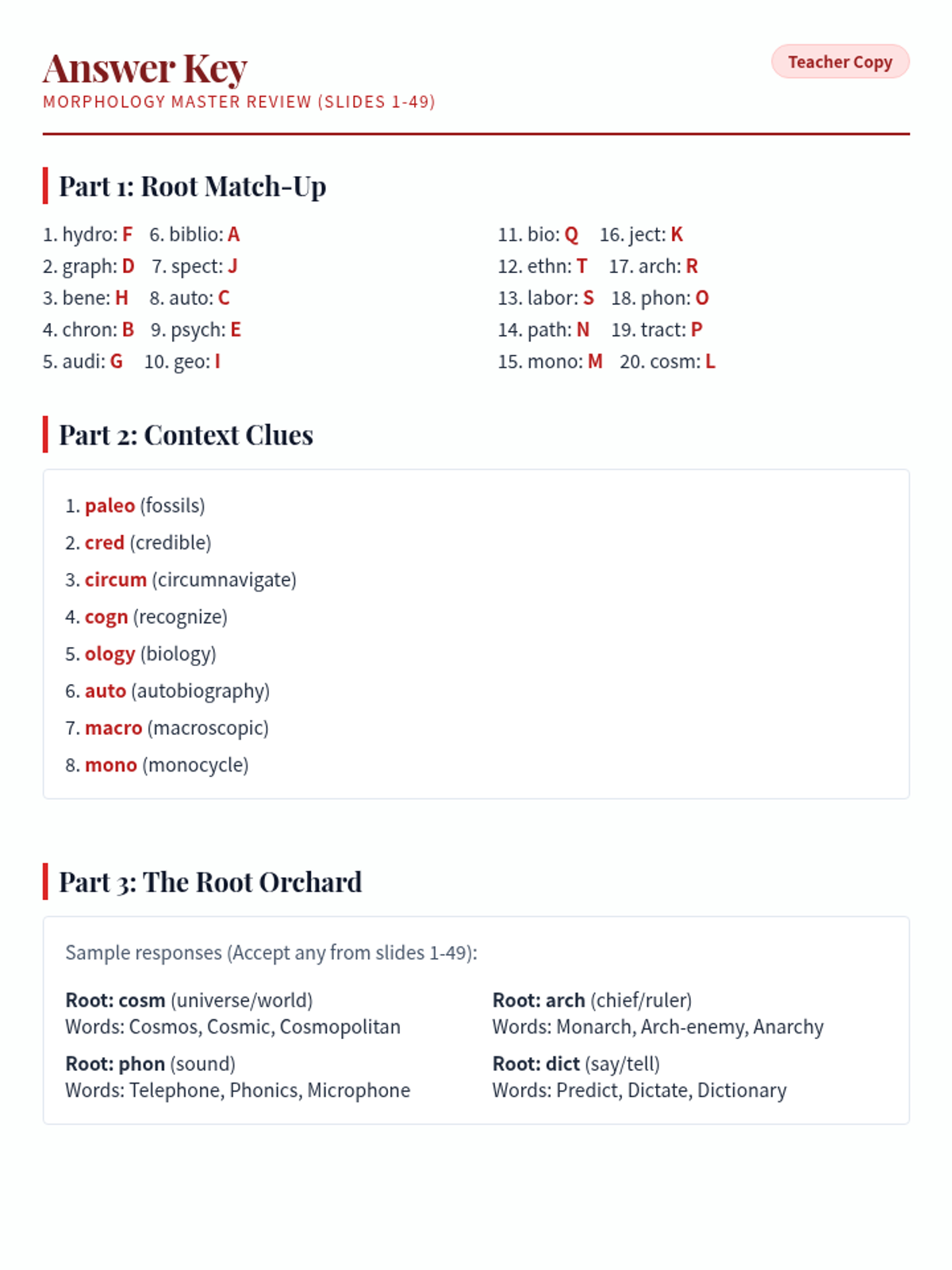
A comprehensive review of morphological roots, prefixes, and suffixes from slides 1-49, featuring matching, context-based fill-in-the-blank, and a graphic organizer for word building.
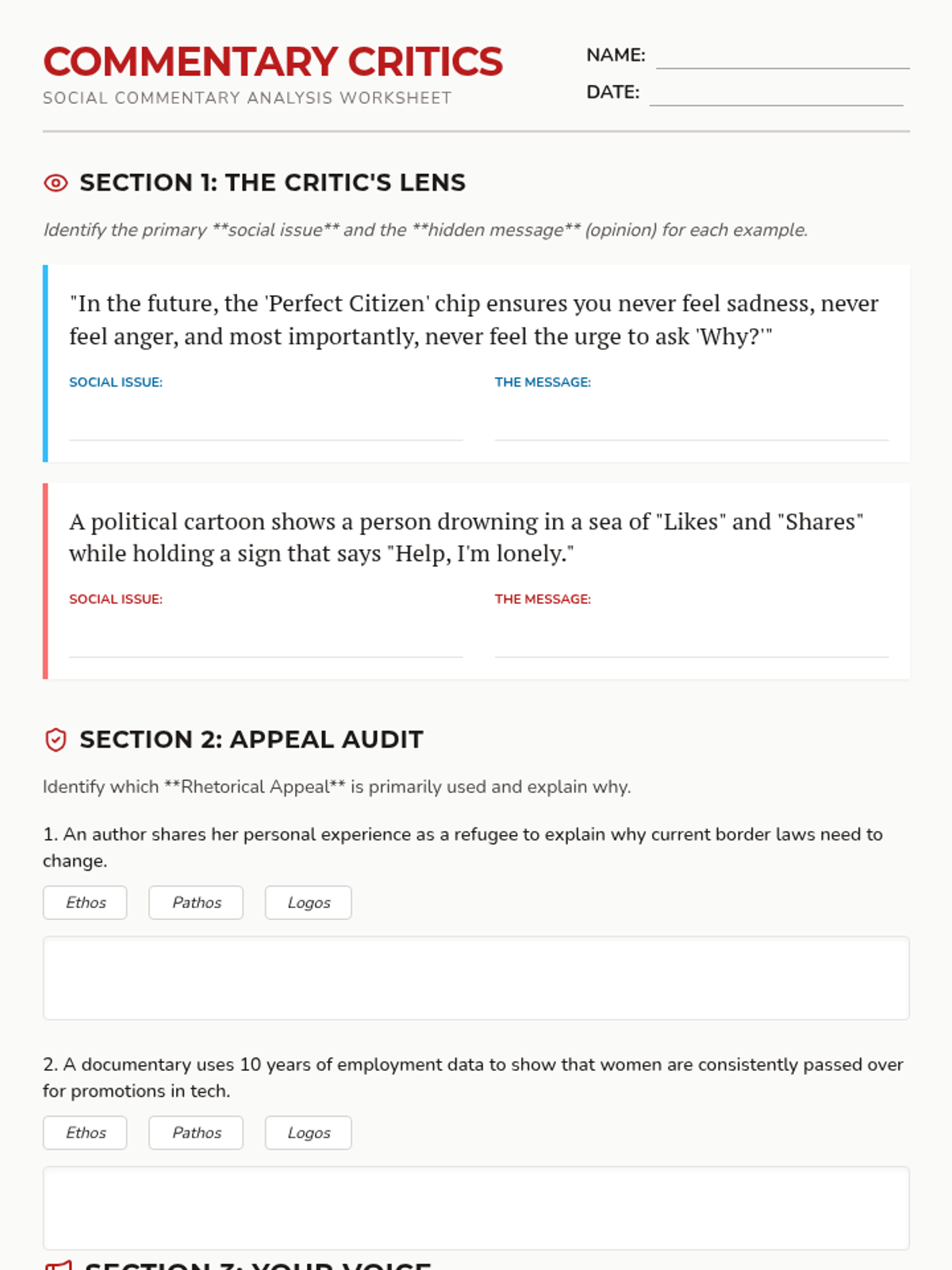
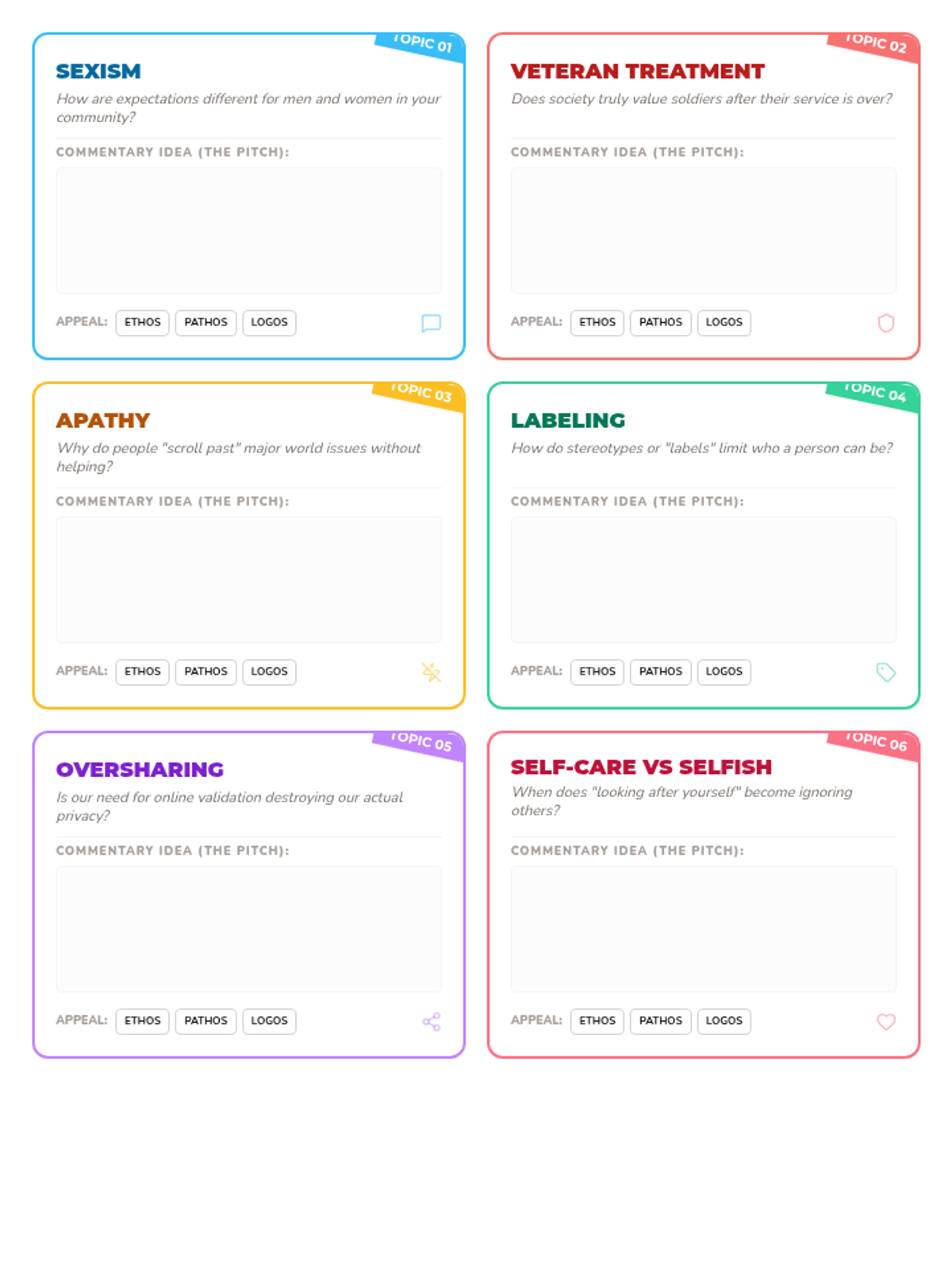
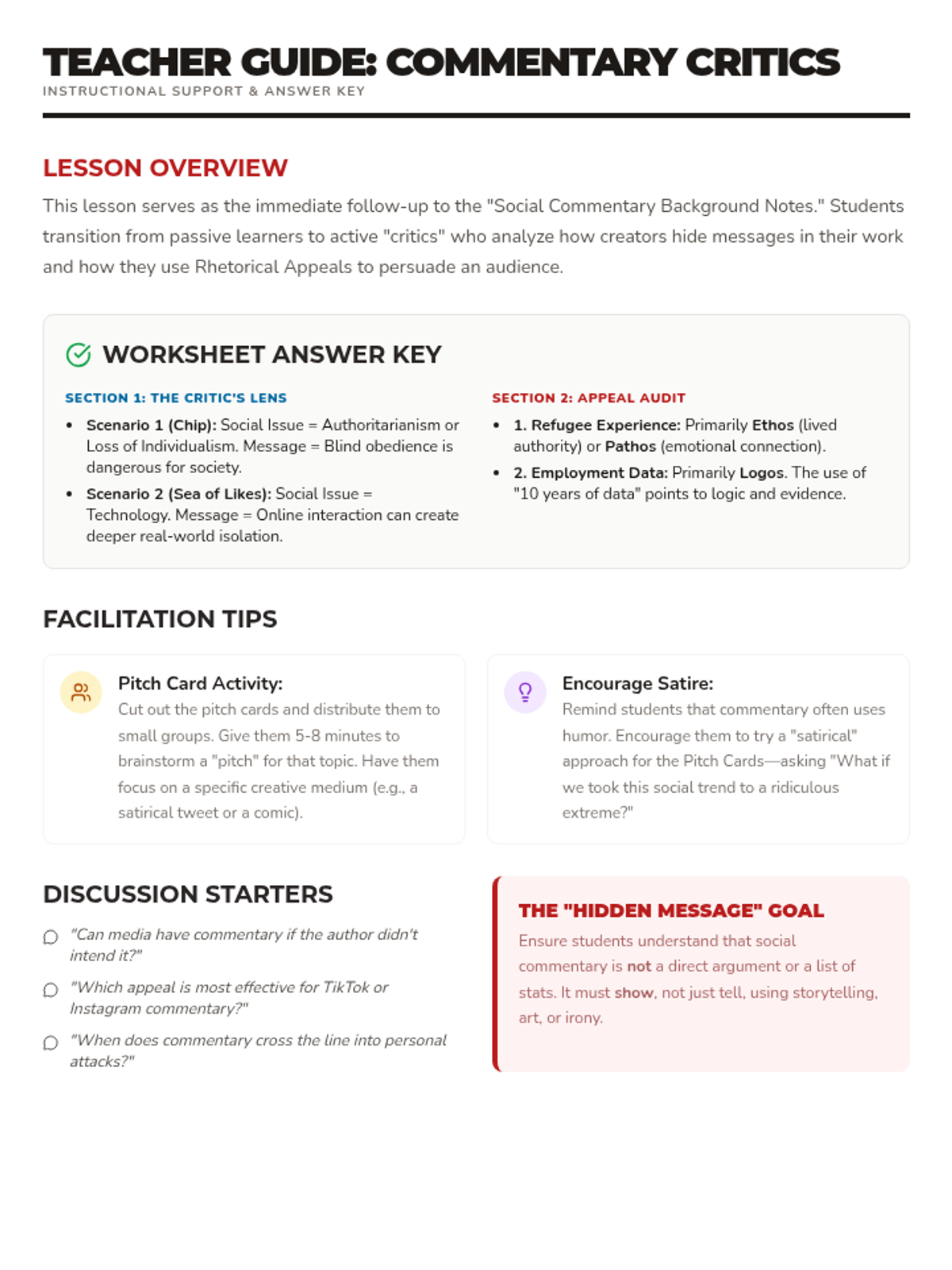
A follow-up lesson to 'Social Commentary Background Notes' where students analyze examples of social commentary and brainstorm their own creative messages using rhetorical appeals.
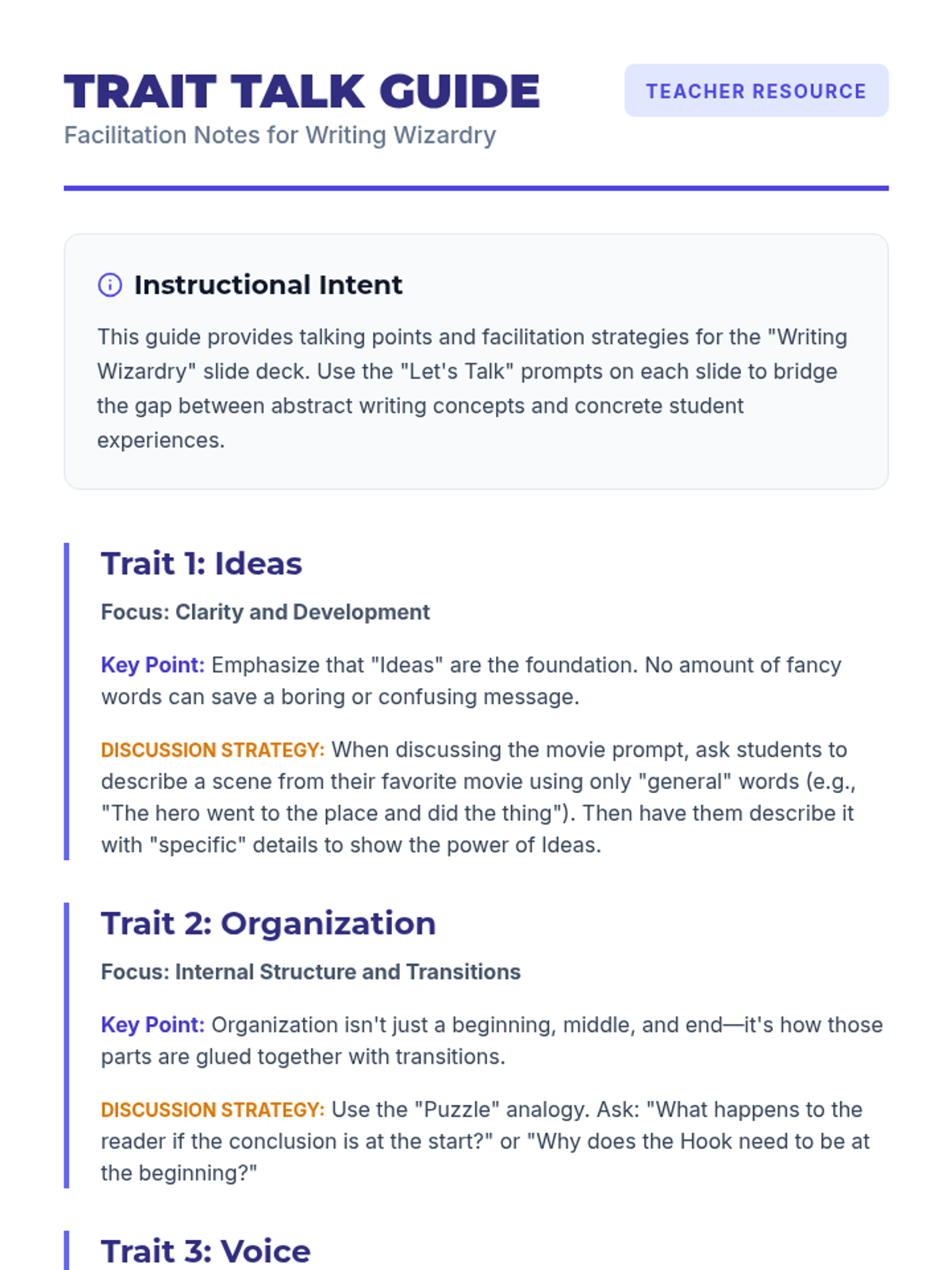
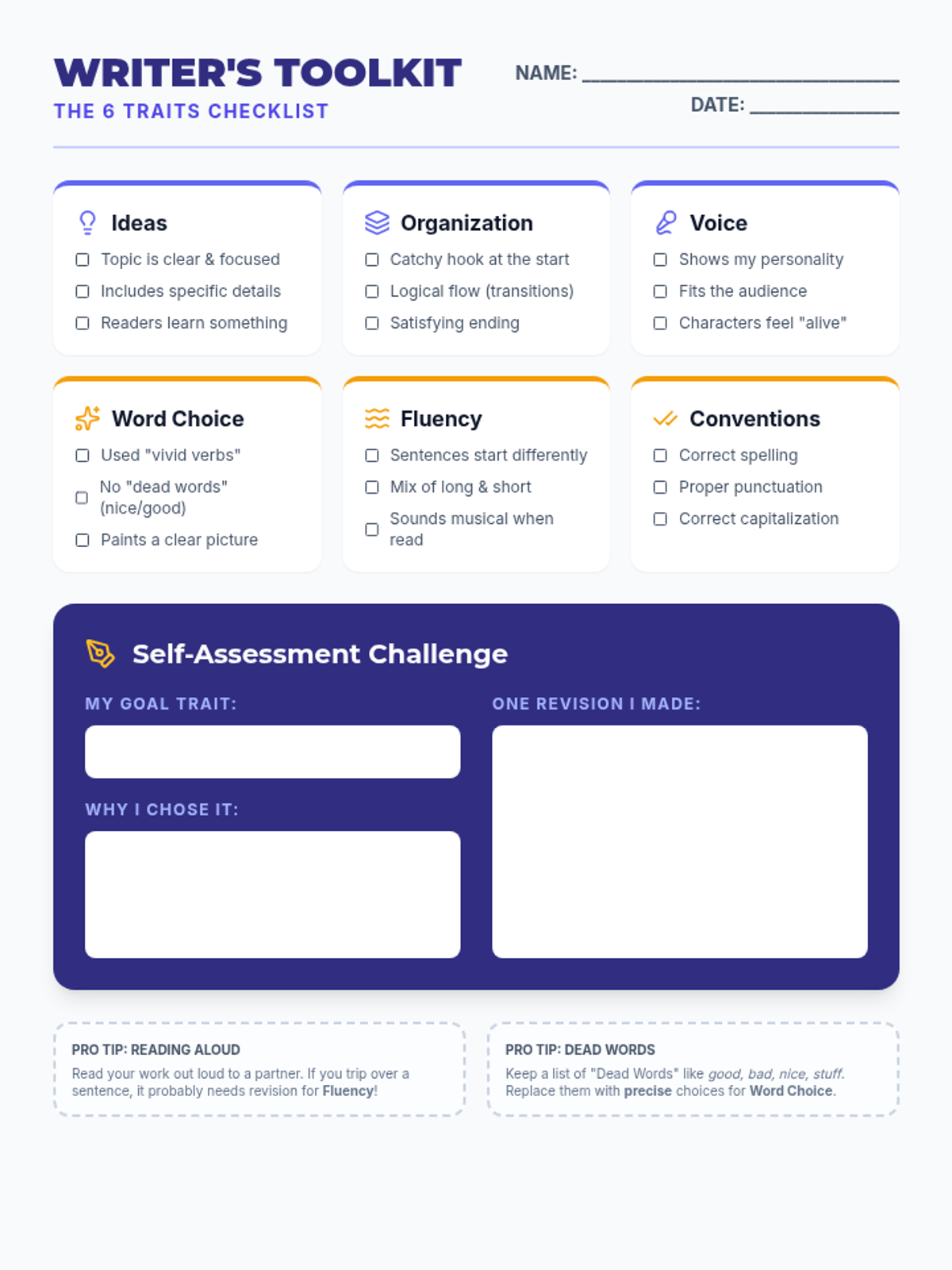
An interactive exploration of the 6 Traits of Effective Writing, designed to help students identify and apply key elements of strong prose through discussion and analysis.