A hands-on exploration of soil's physical components and its role as a vital habitat for living things, featuring an edible modeling activity.
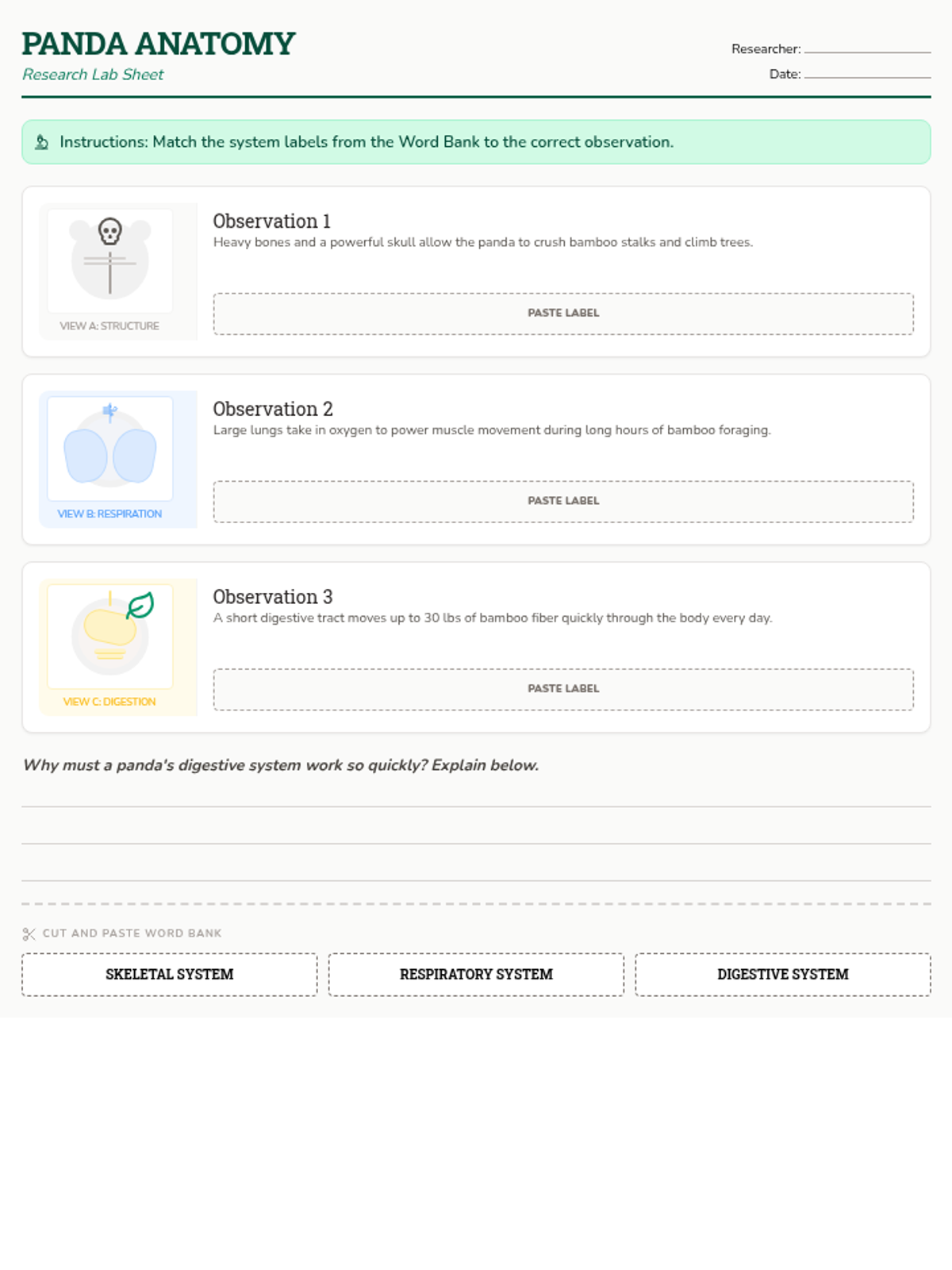
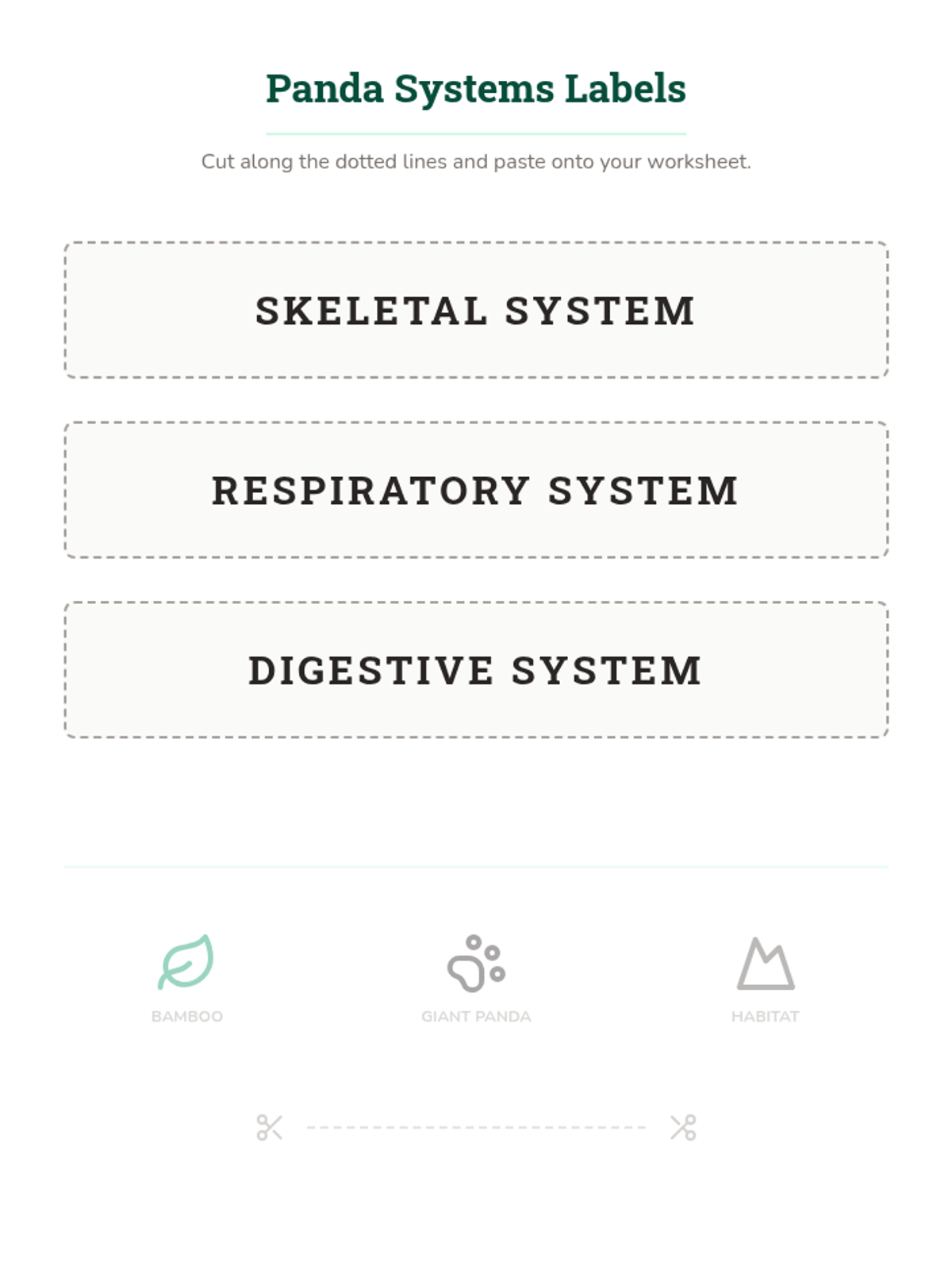
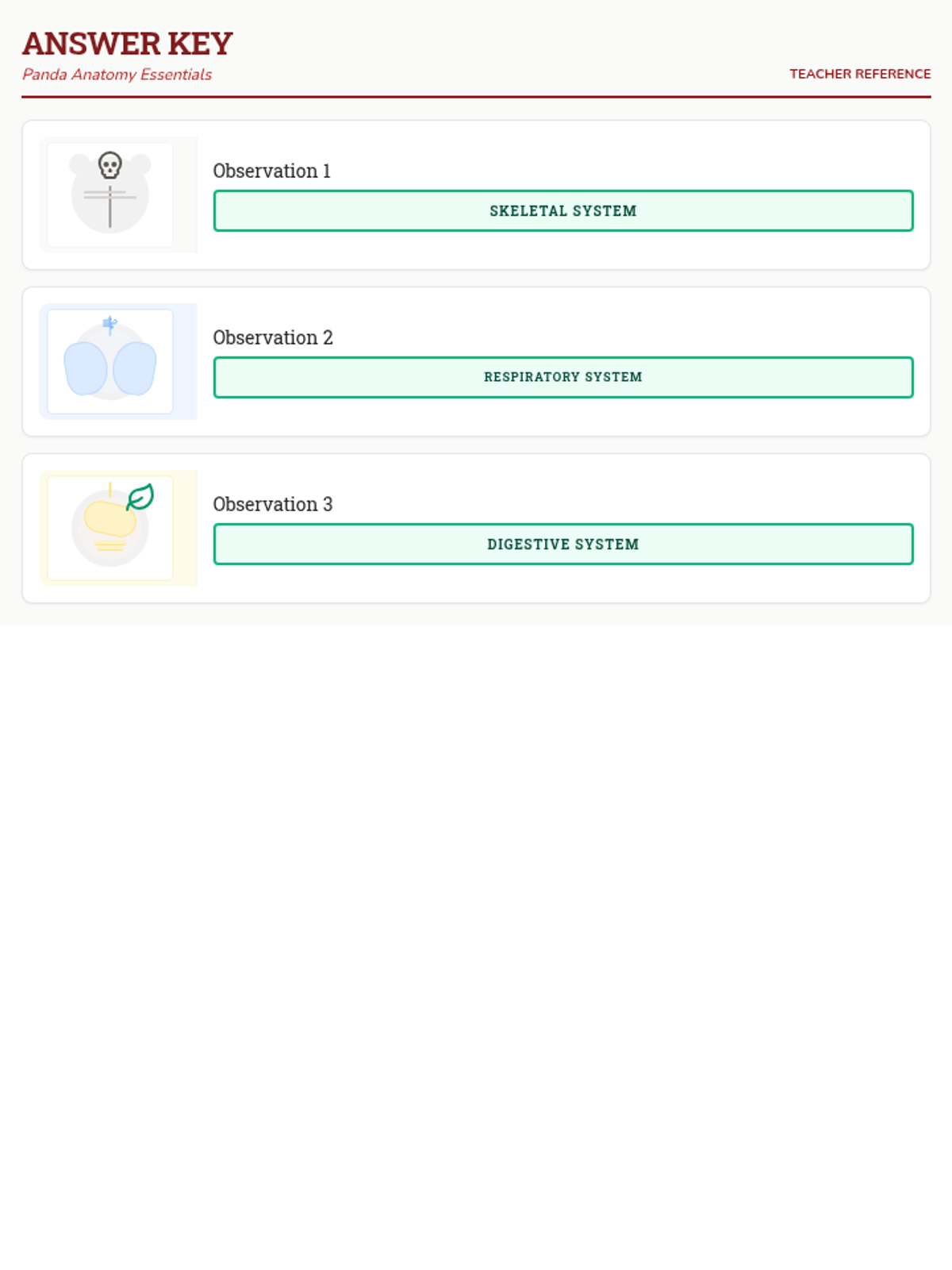
A hands-on lesson identifying the major internal systems of a Giant Panda, focusing on how their anatomy supports their unique bamboo-based diet and lifestyle.
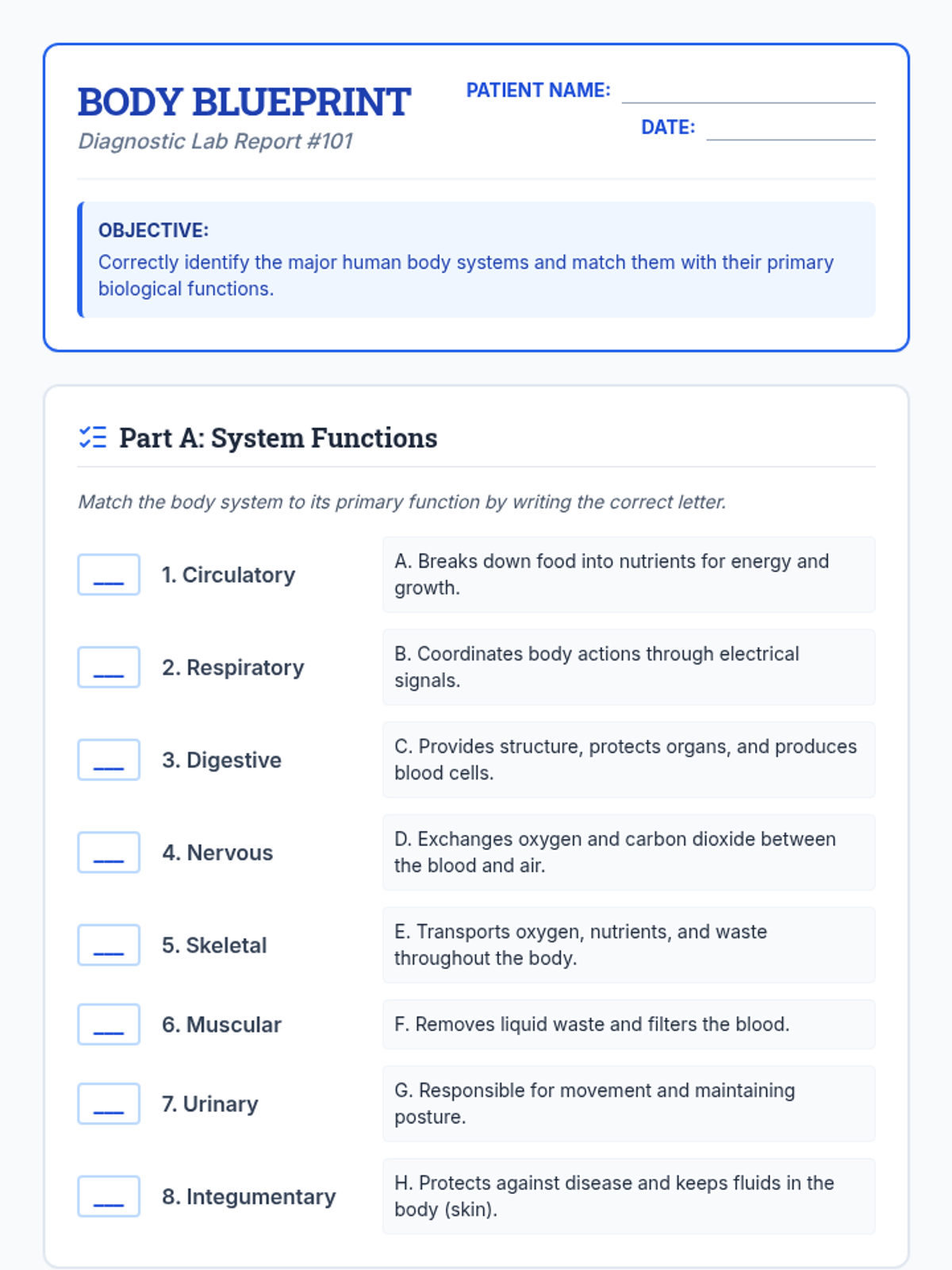
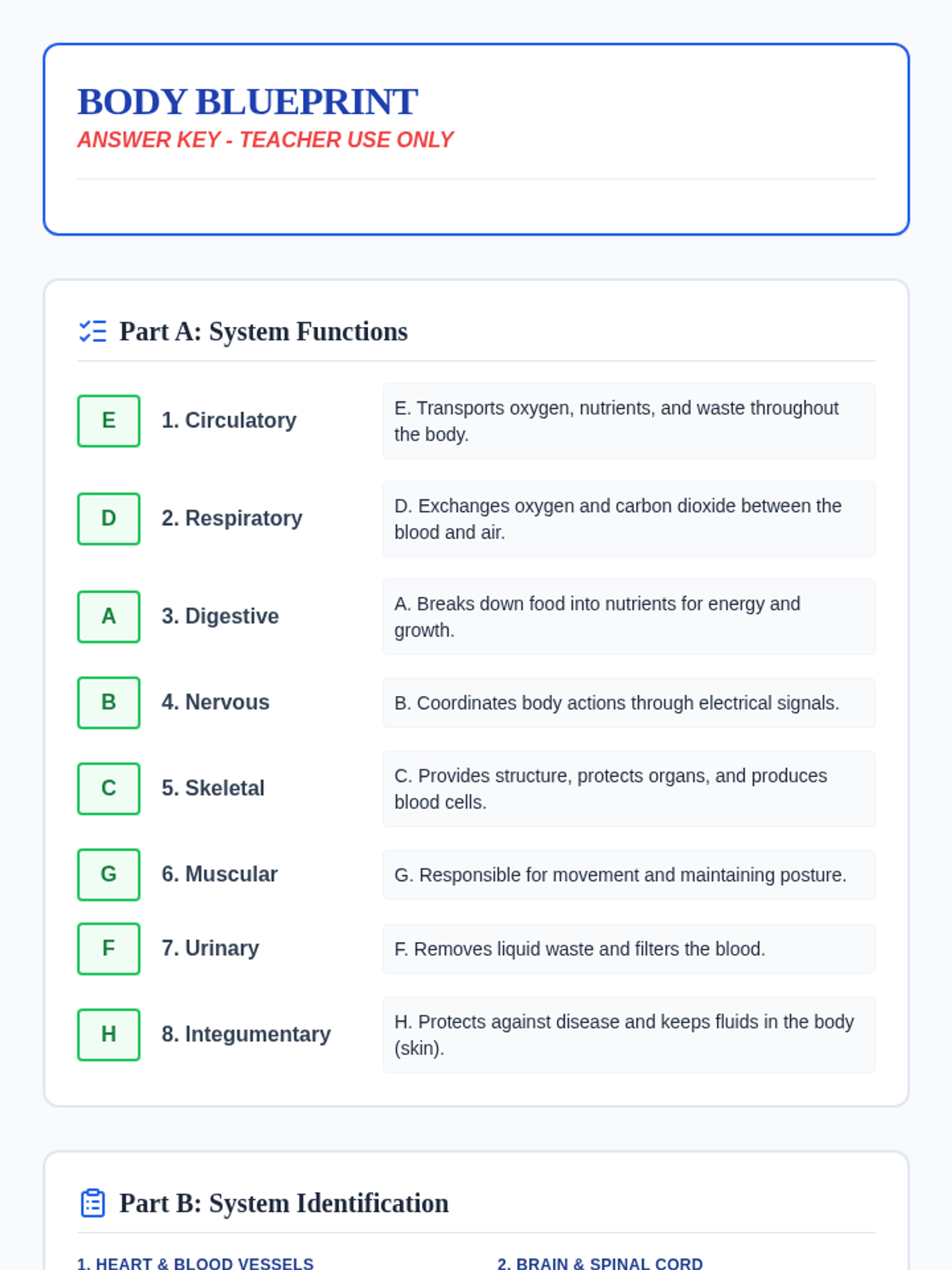
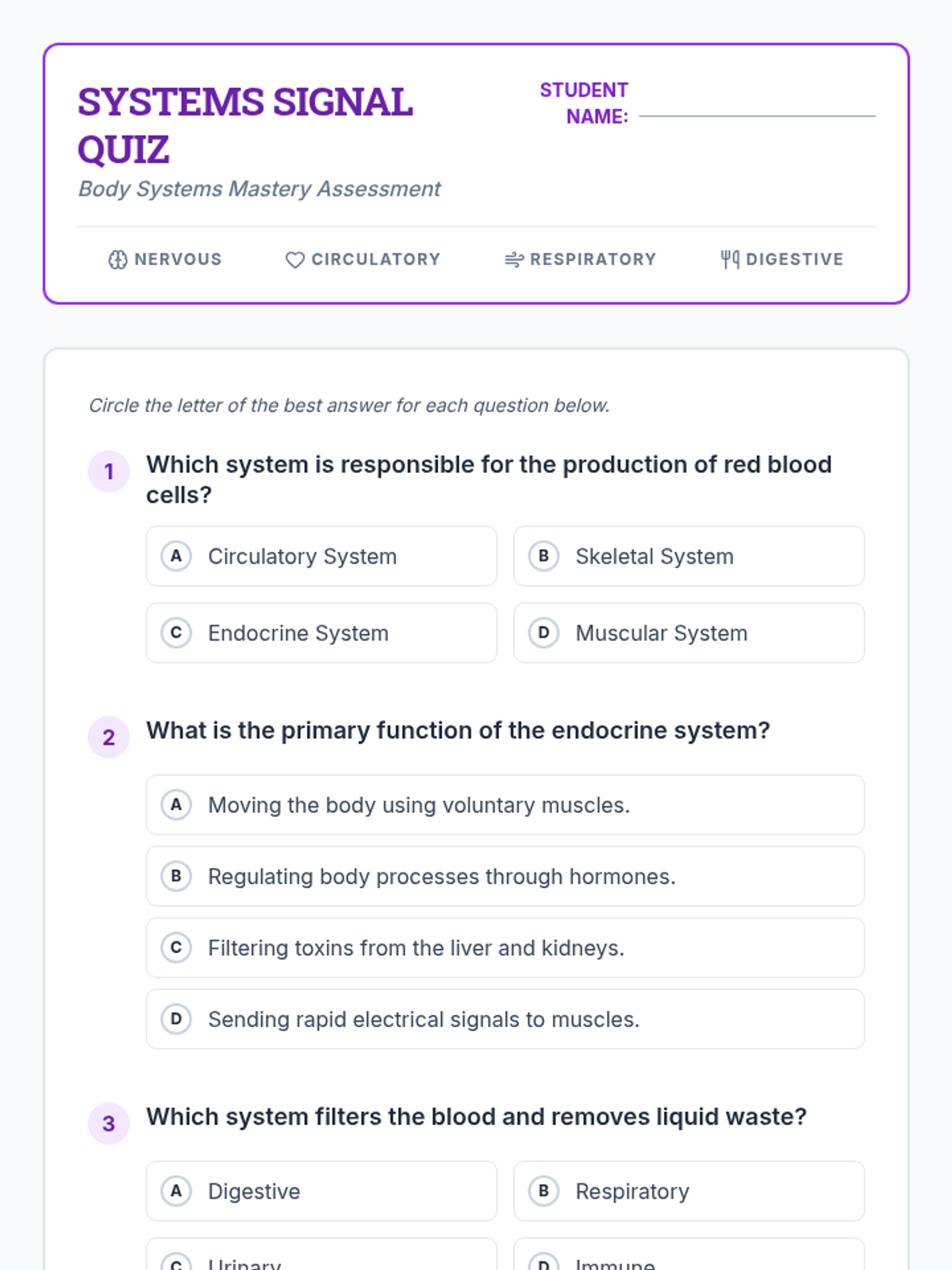
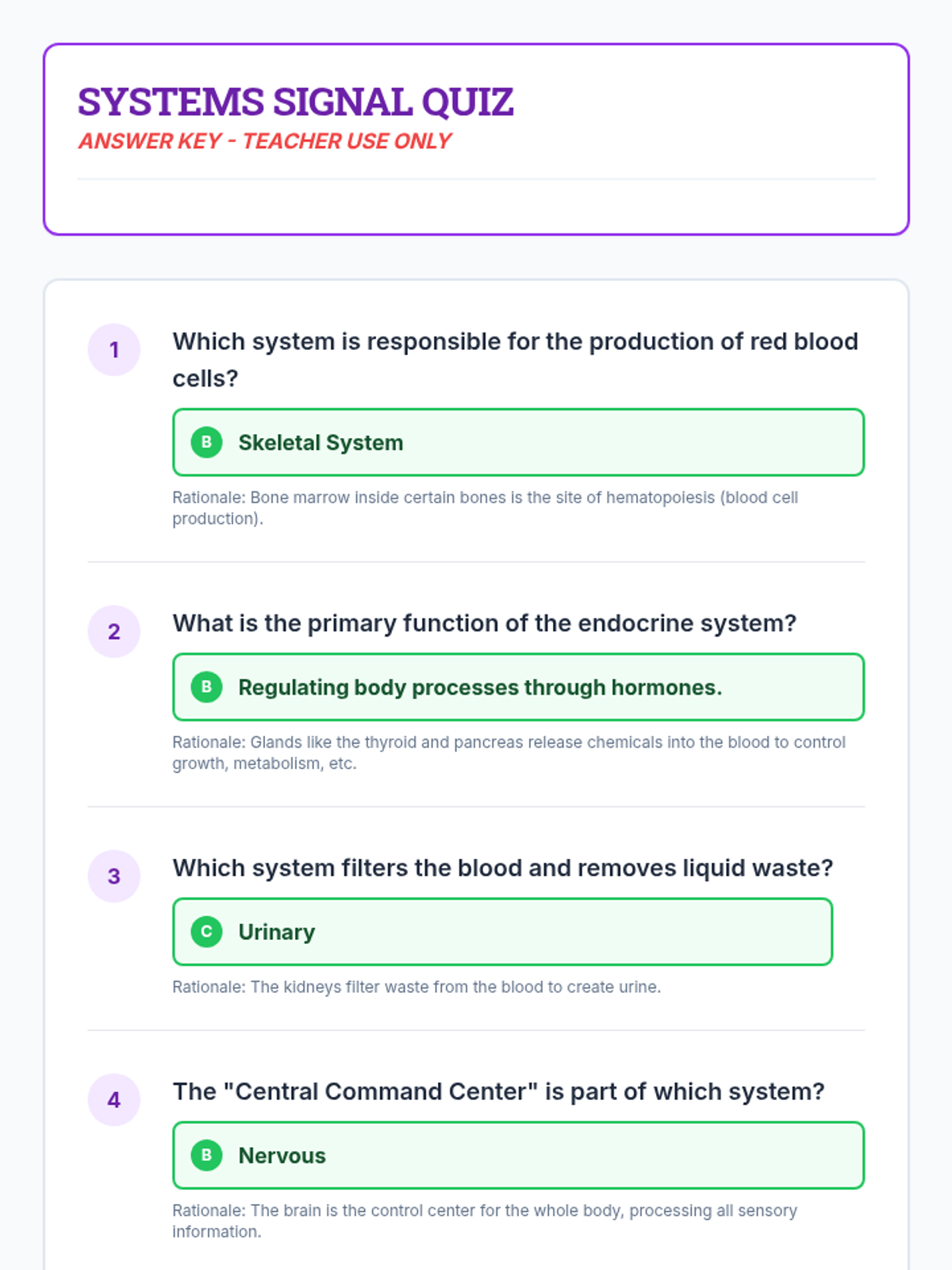
A comprehensive assessment suite to evaluate student understanding of the major human body systems, including their functions and key organs.
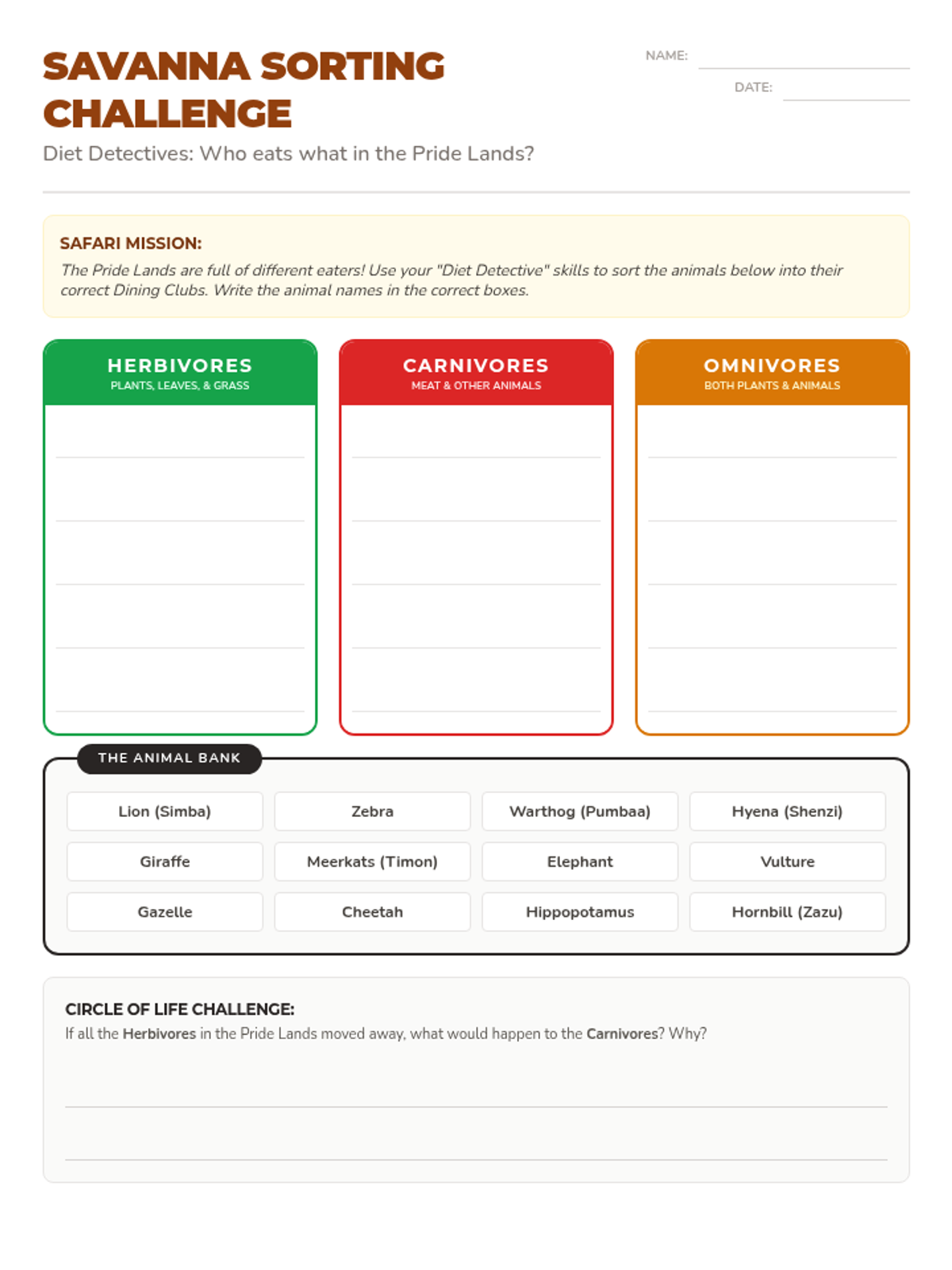
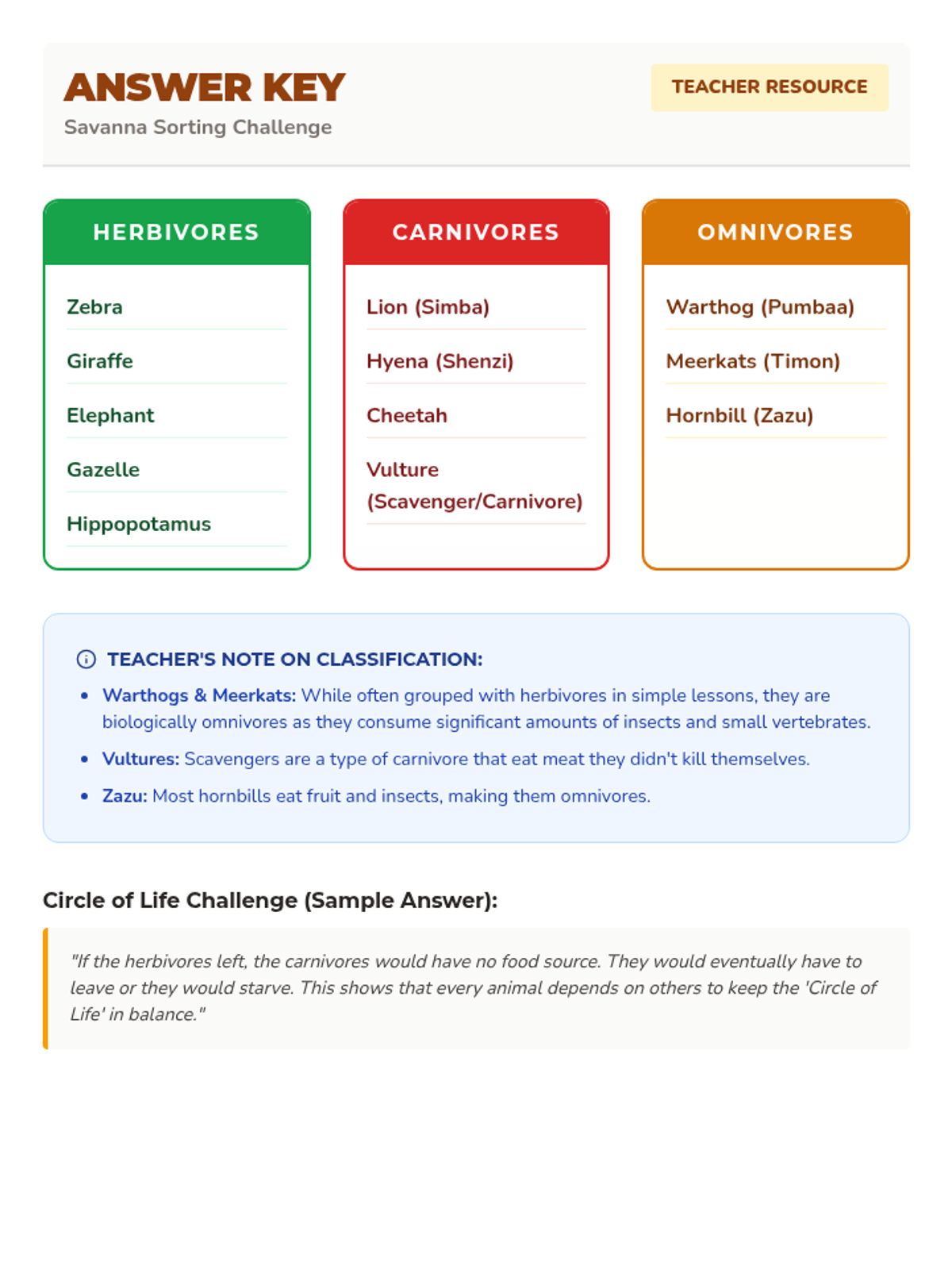
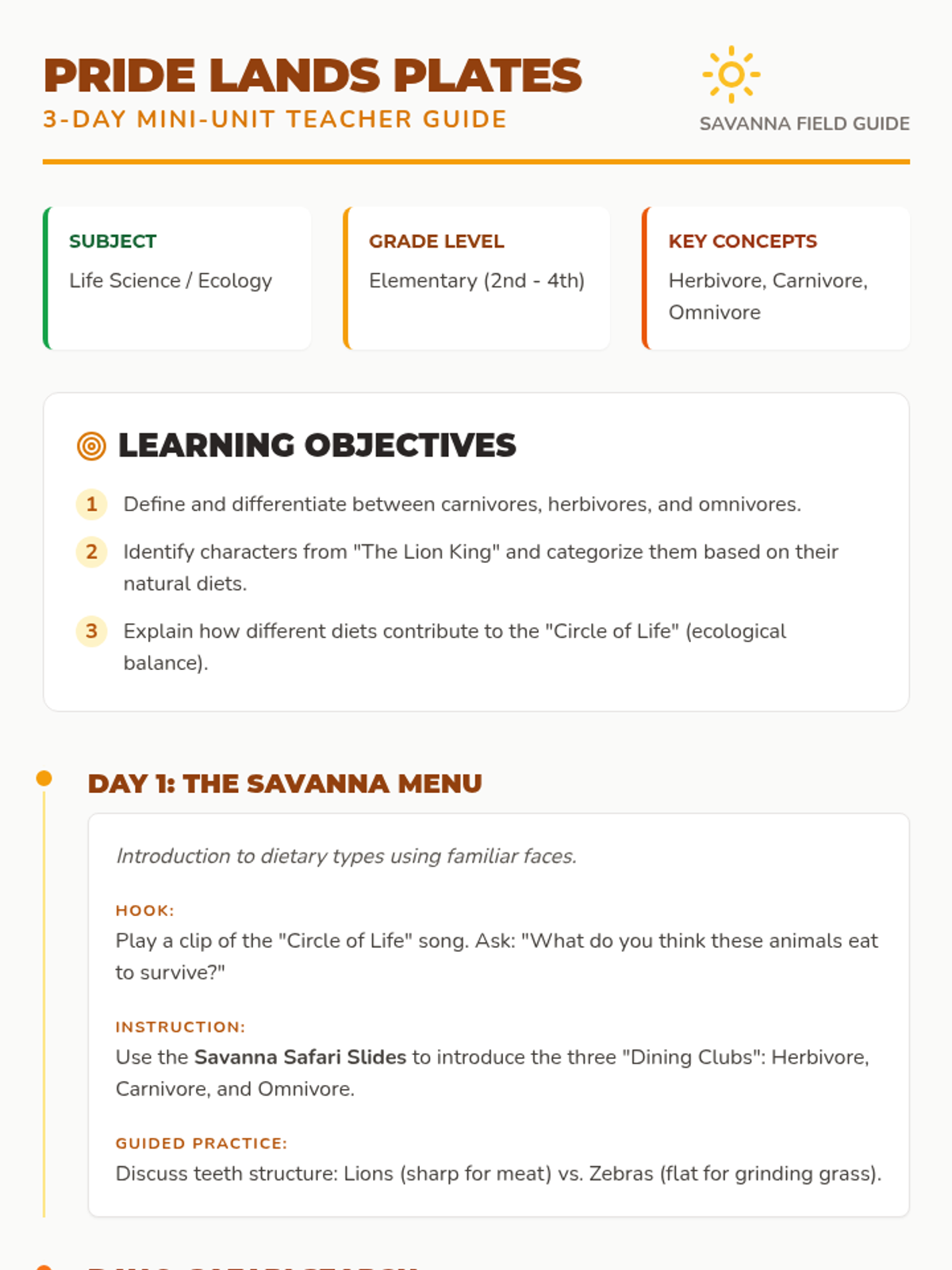
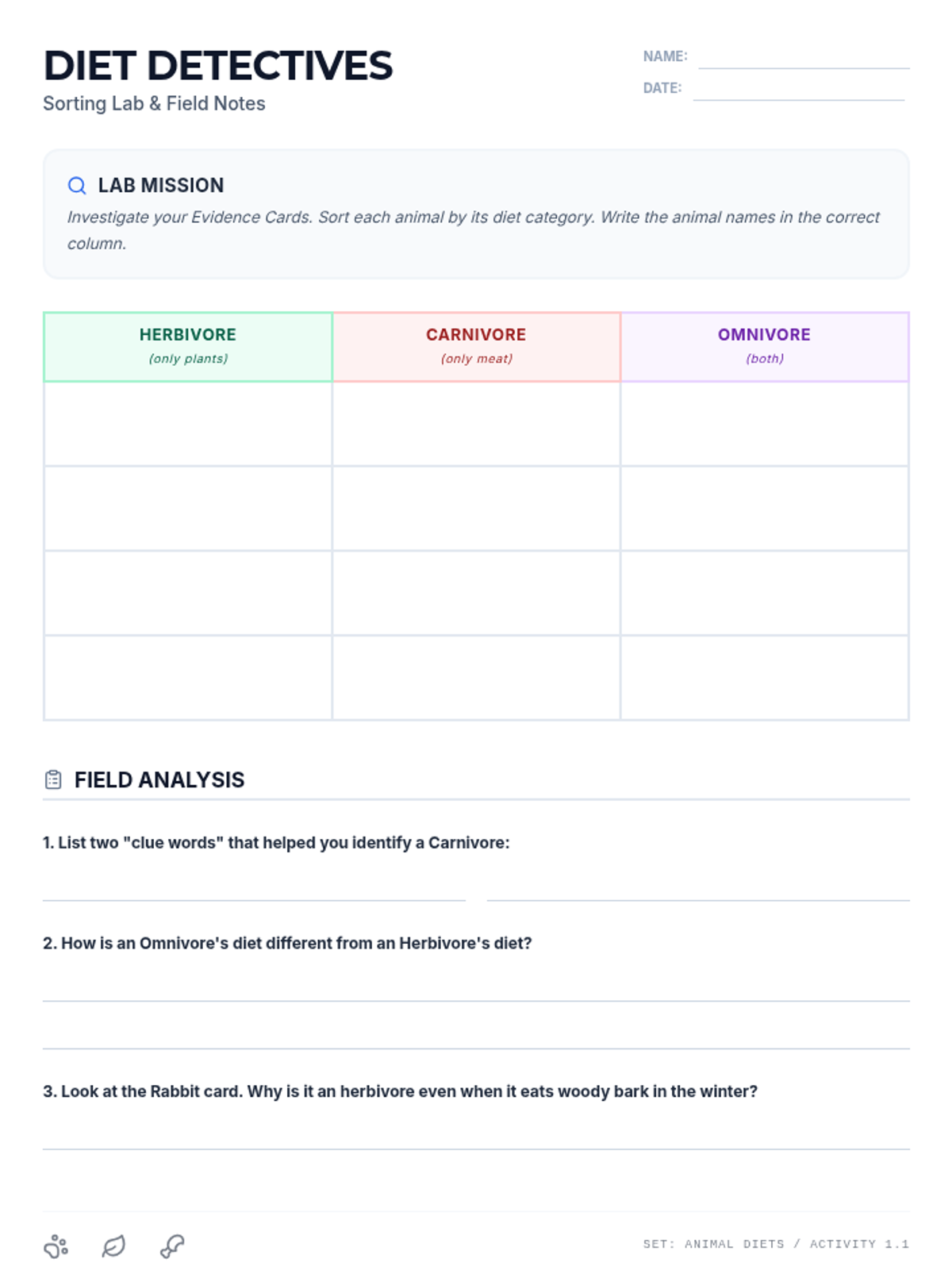
Culminating sorting activity where students categorize Lion King characters and other savanna animals by their diets, followed by a reflection on the 'Circle of Life'.
Students analyze the ecosystem of the Pride Lands, identifying various animals from the film and researching or discussing their real-world dietary habits.
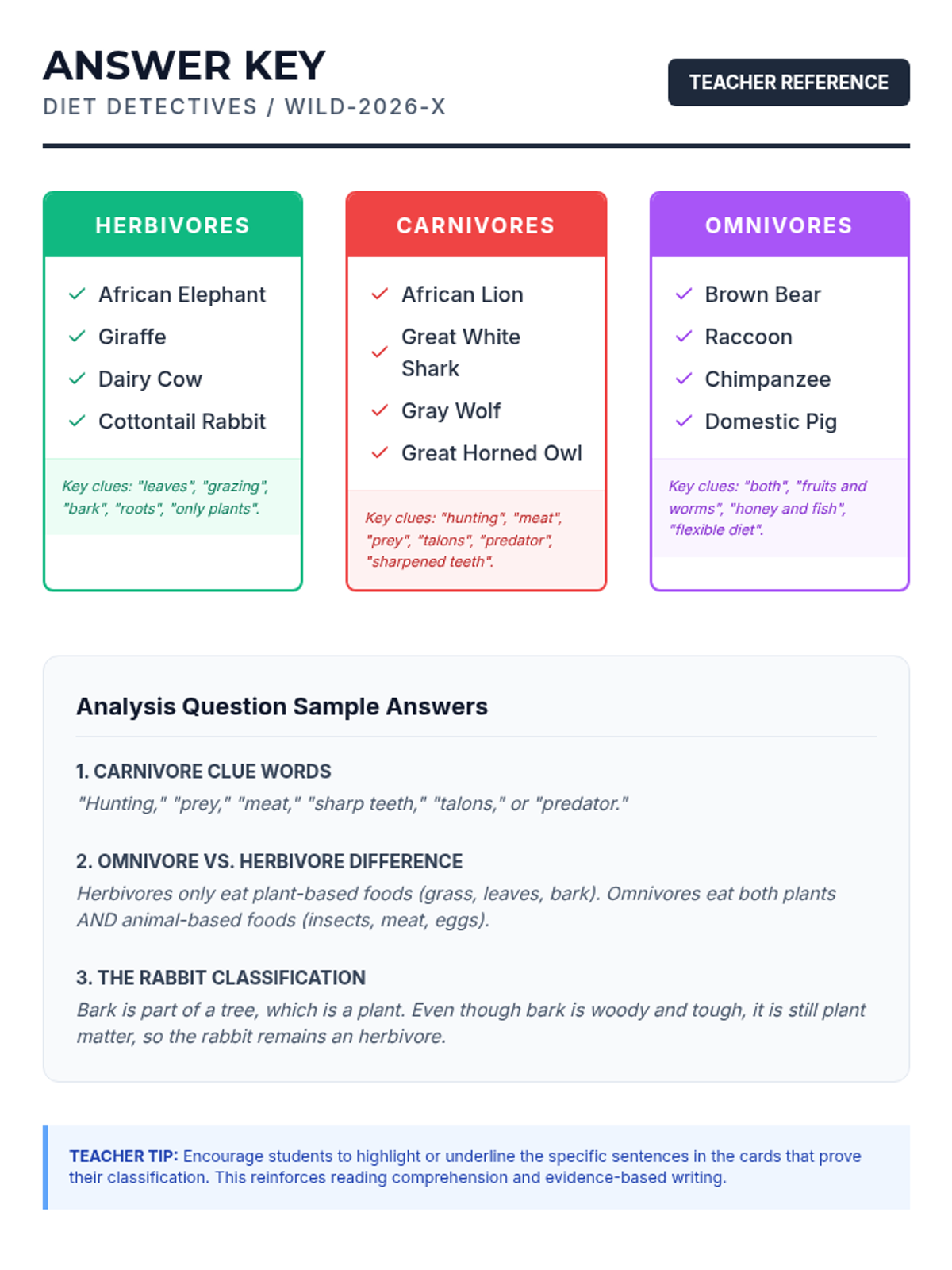
Introduction to herbivores, carnivores, and omnivores using Pride Lands characters as examples. students learn to identify dietary traits and basic dental structures associated with each group.
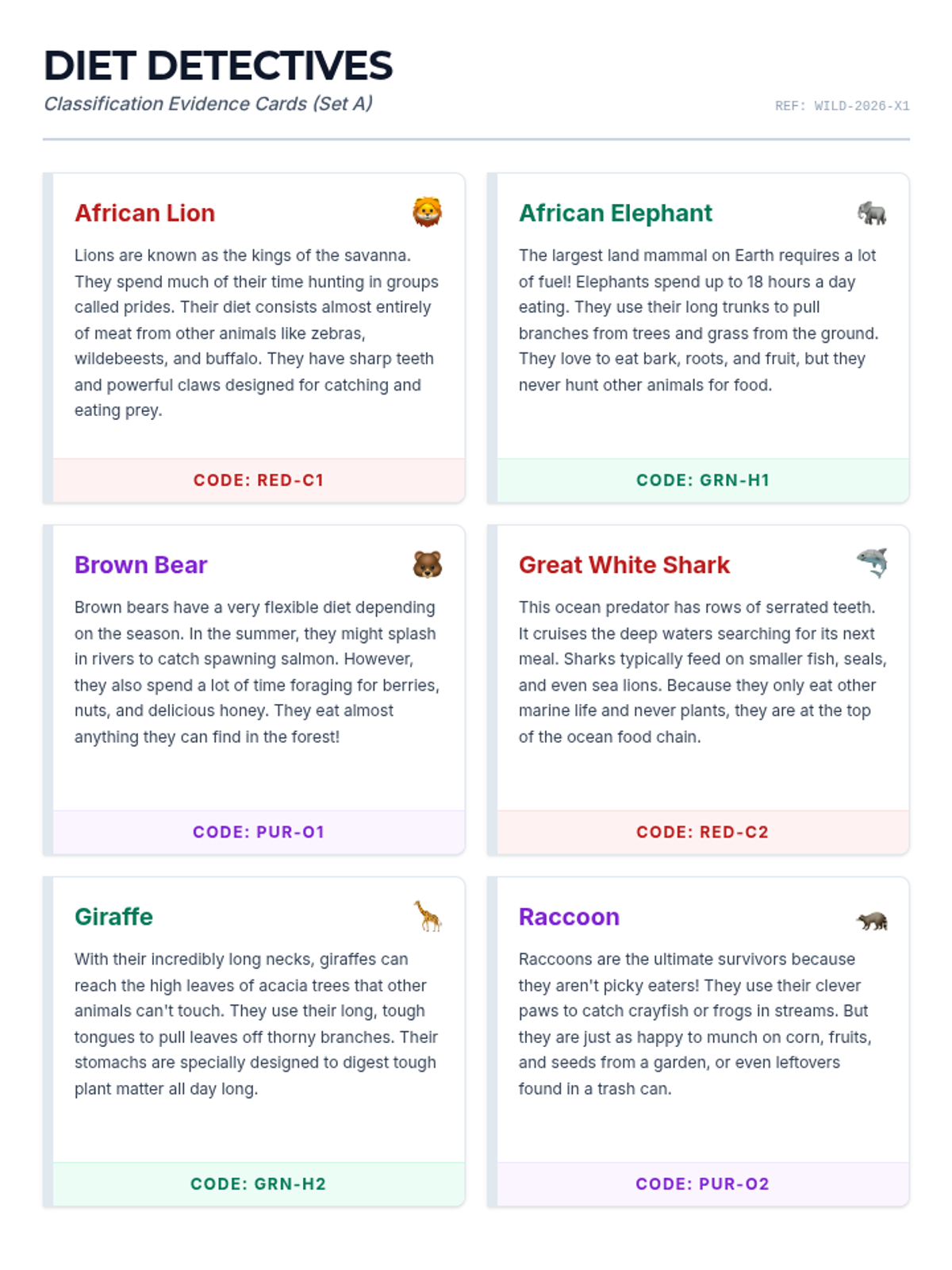
Students analyze short informational texts about various animals to classify them based on their diets using color-coded evidence cards.
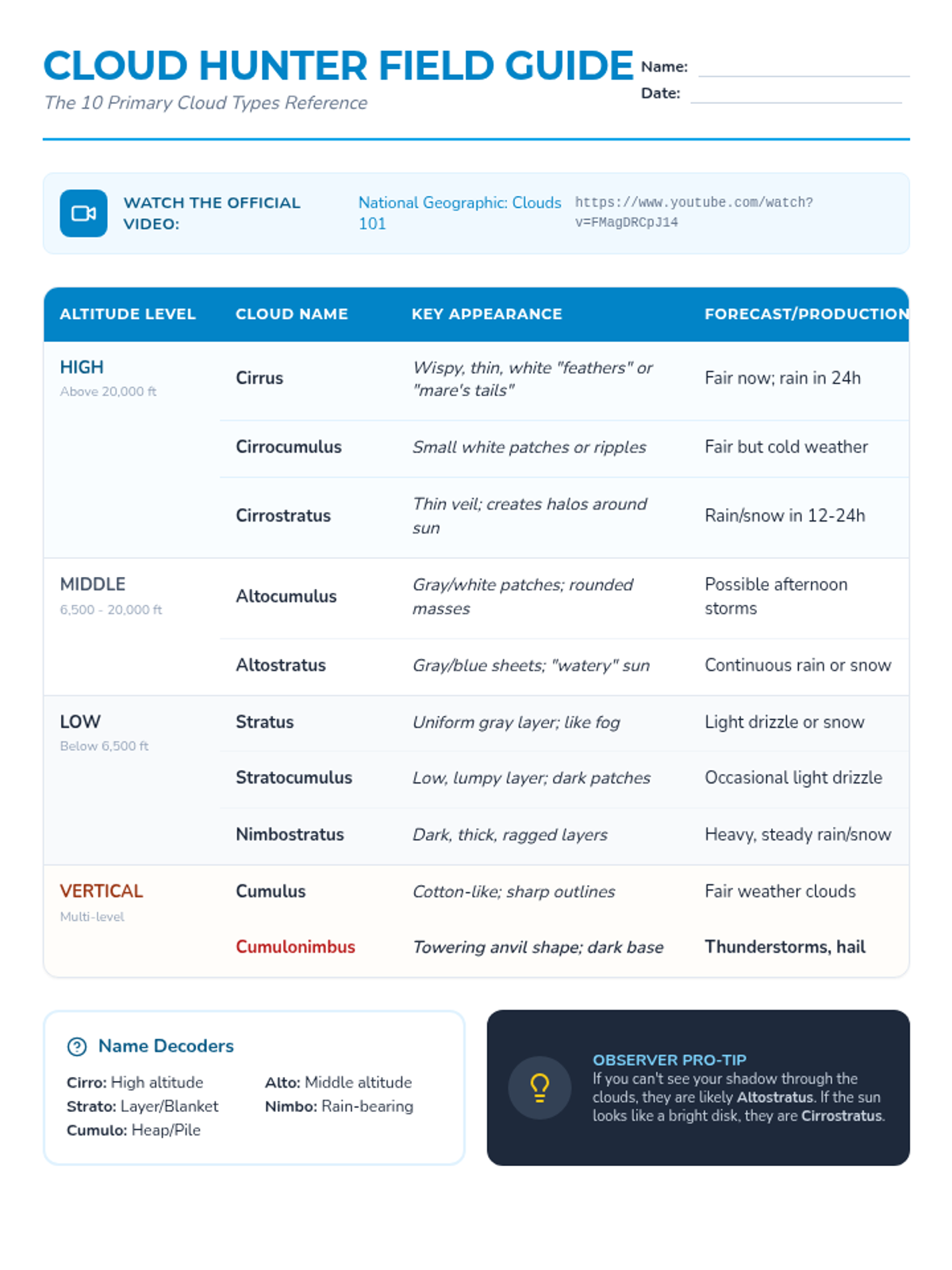
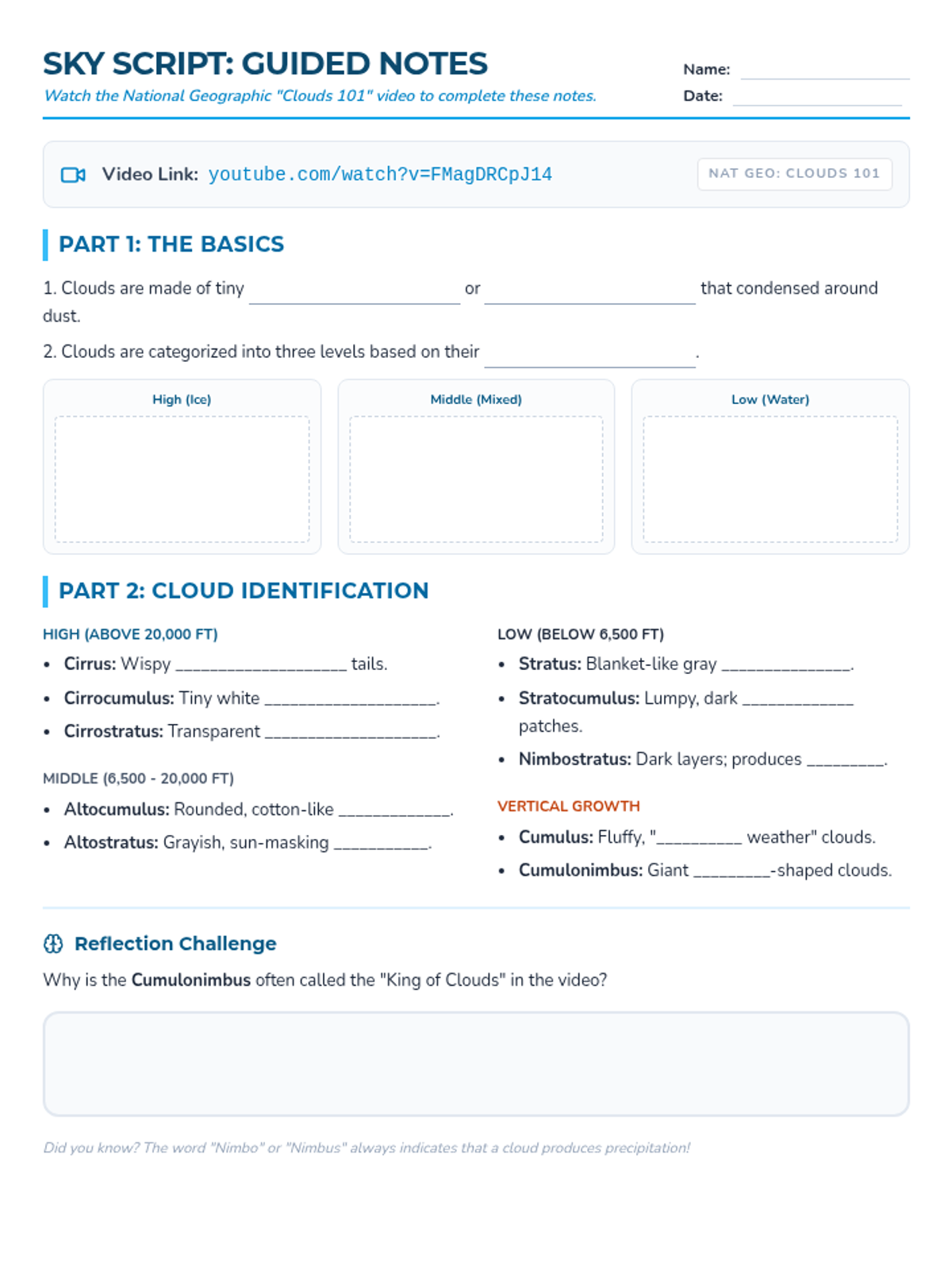
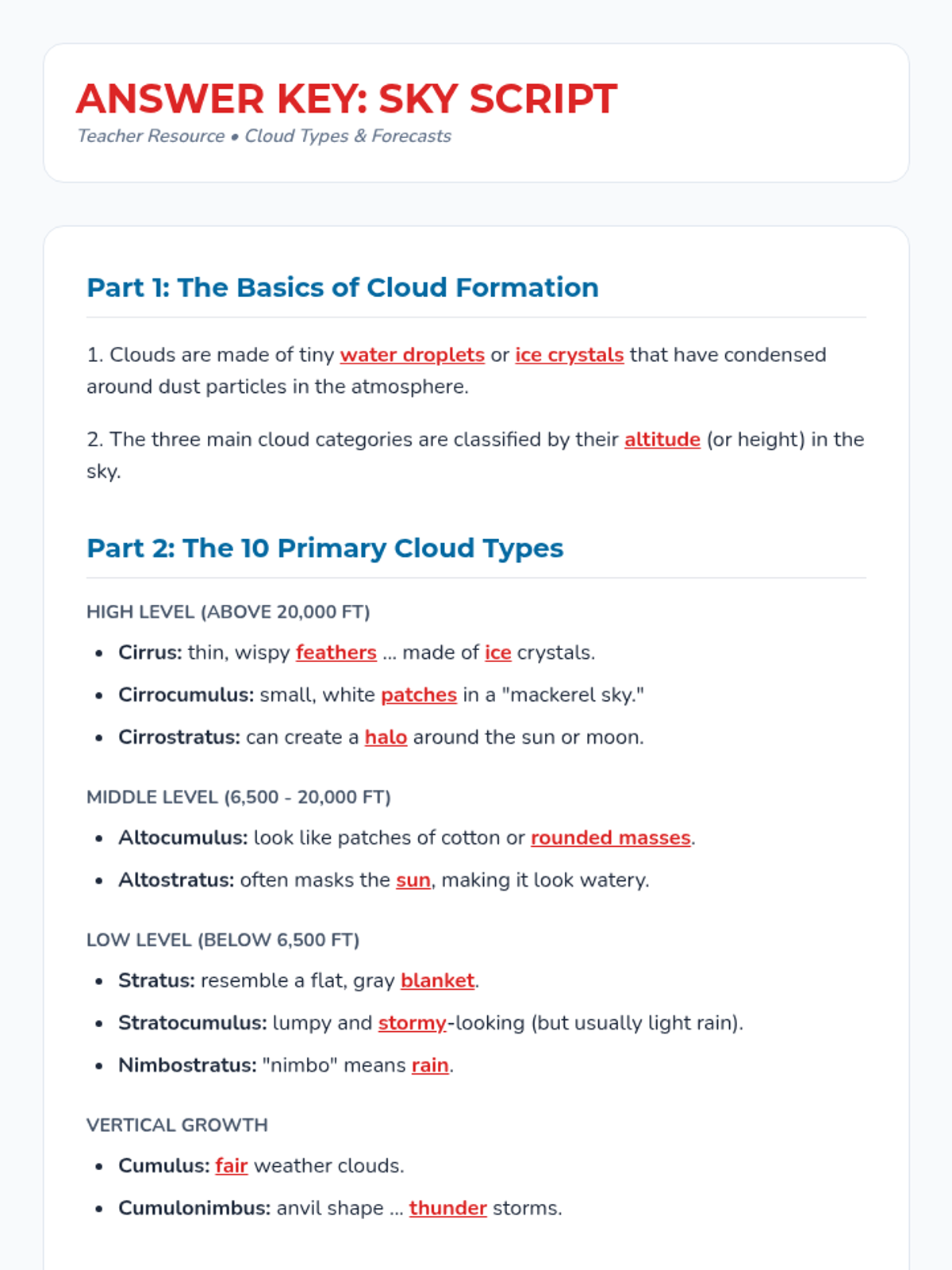
Students will learn to identify the ten primary cloud types, categorize them by altitude, and predict weather outcomes based on cloud formations.
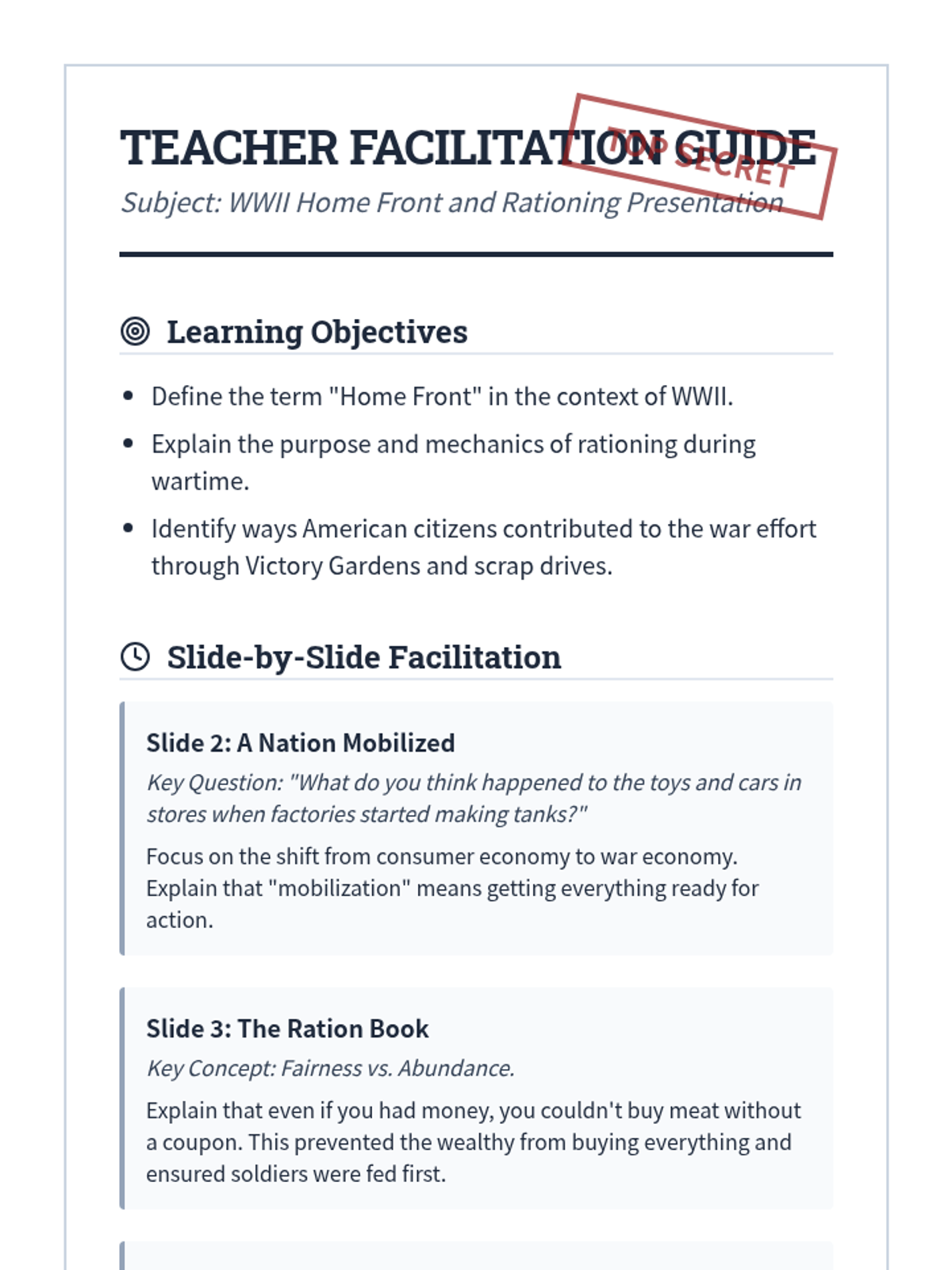
An exploration of life in America during World War II, focusing on how rationing, Victory Gardens, and community efforts supported the war from home.
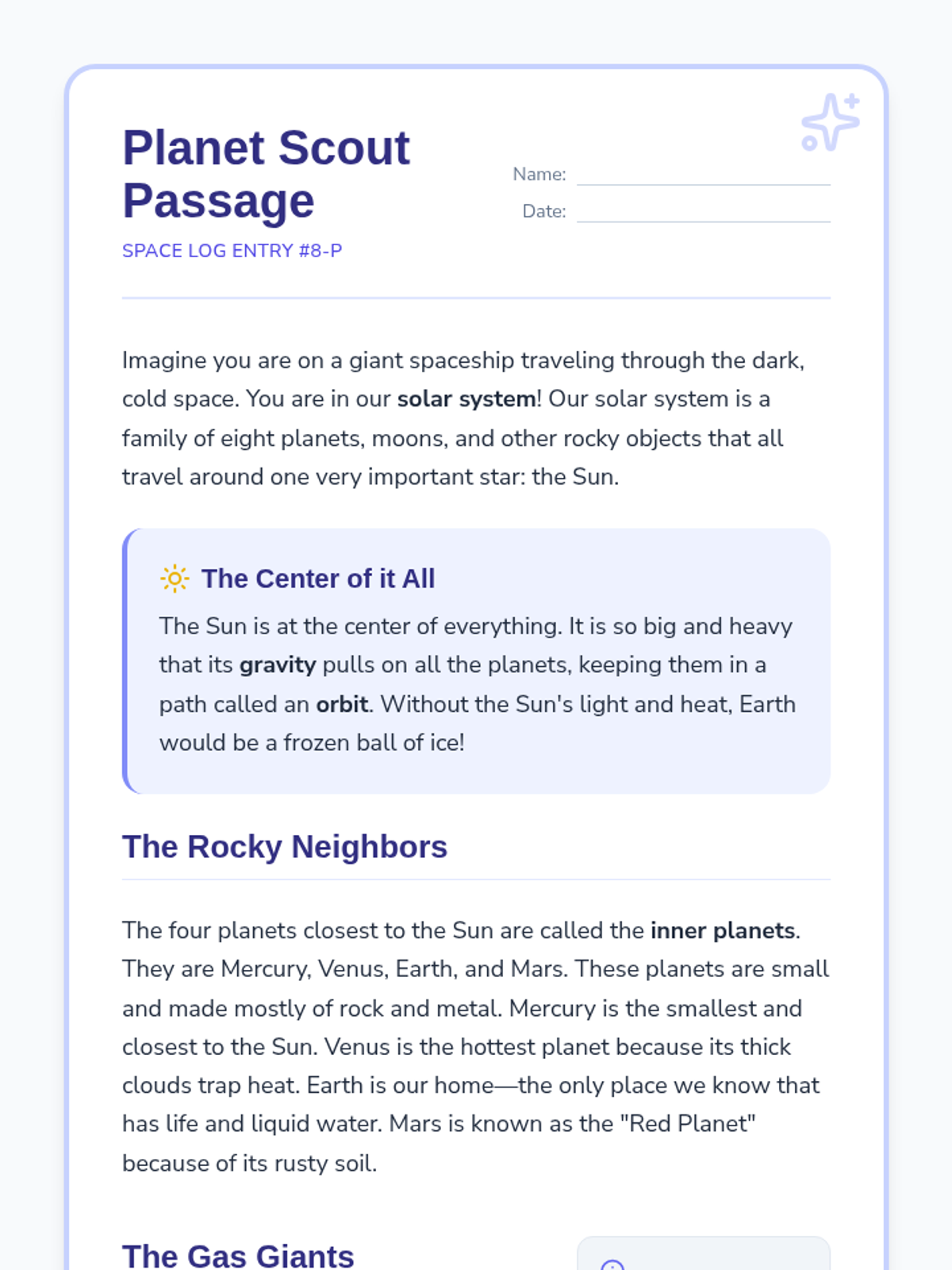
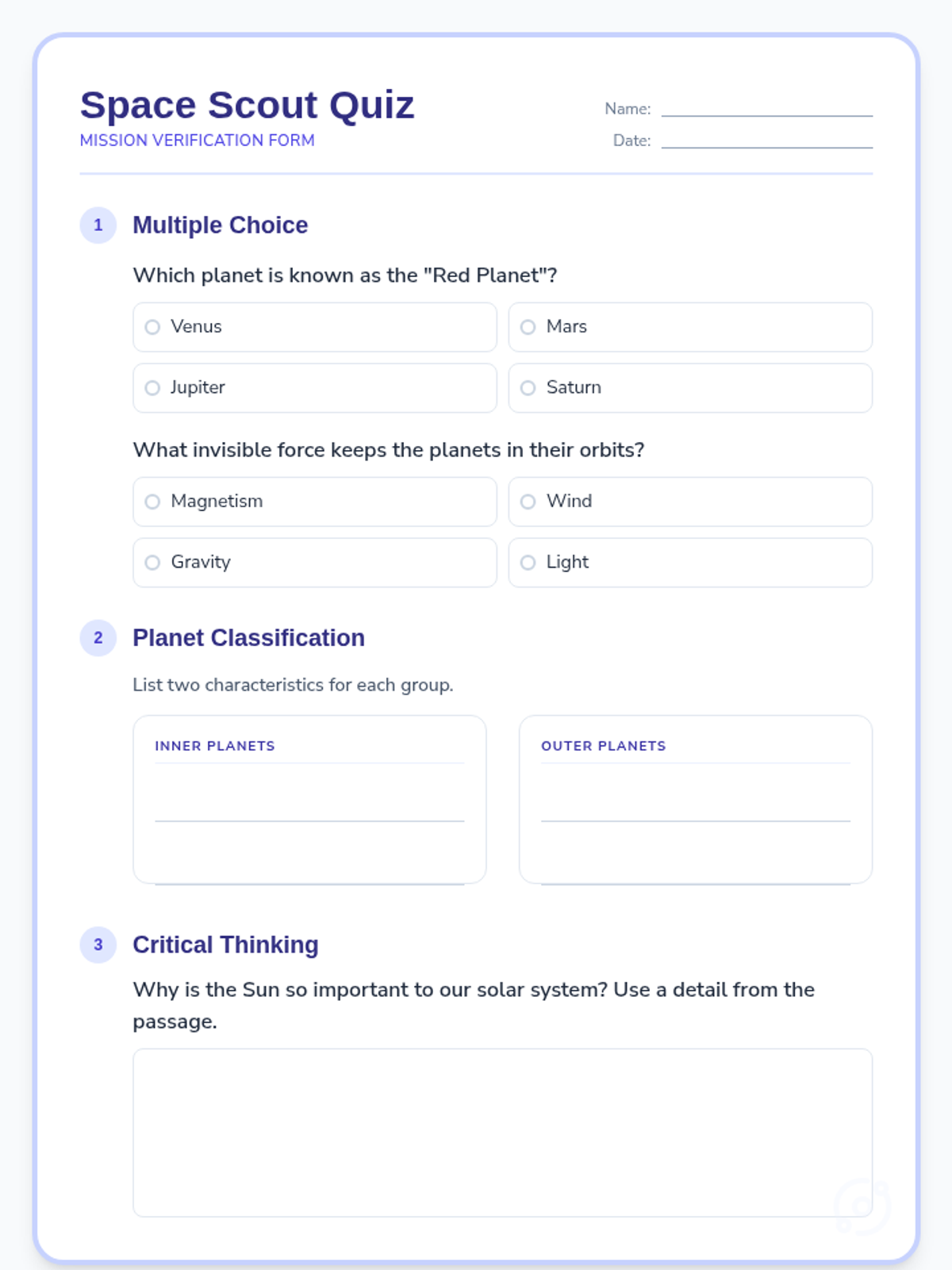
Students explore the eight planets of our solar system, learning about their unique characteristics and the forces that keep them in orbit.
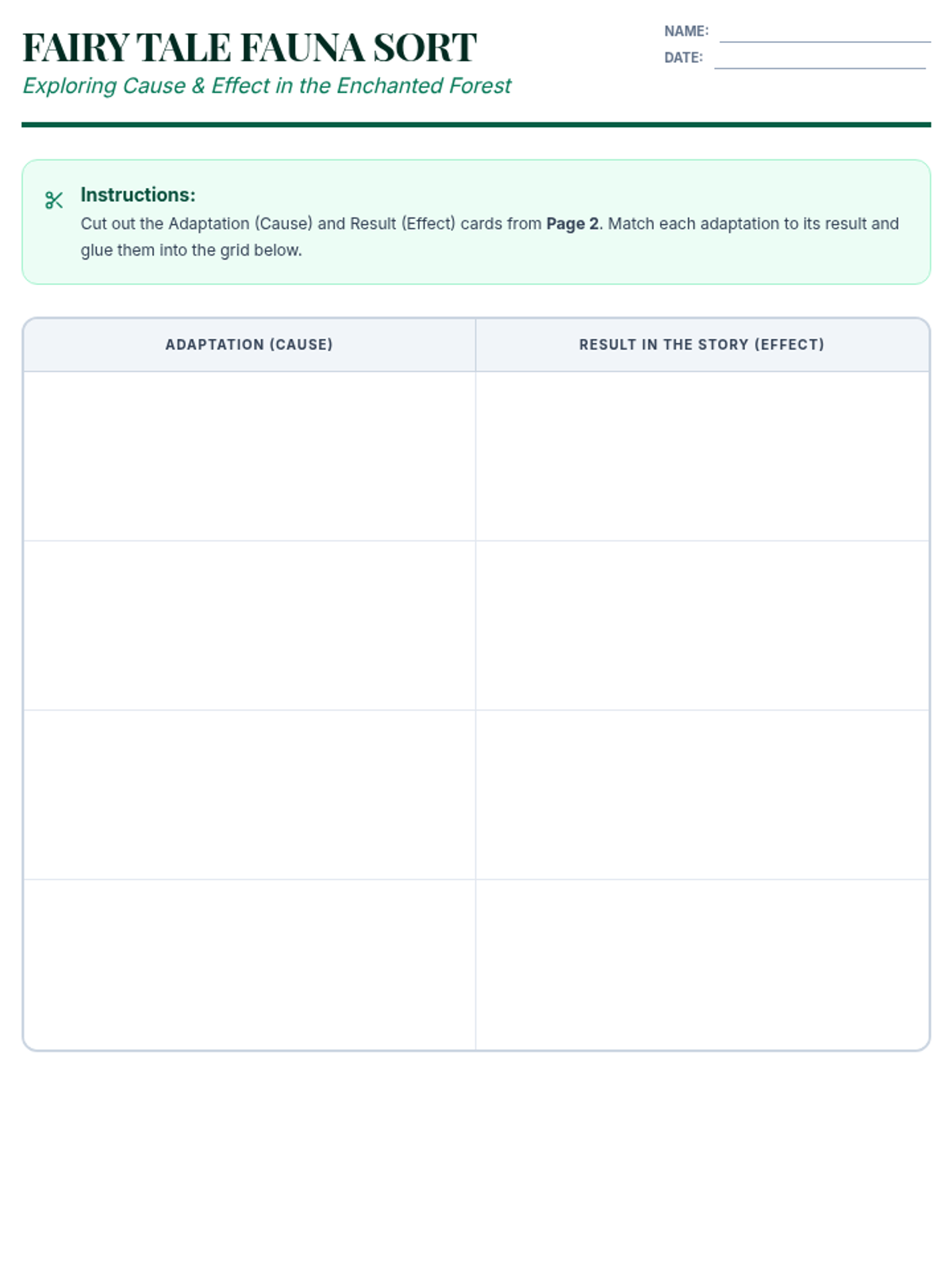
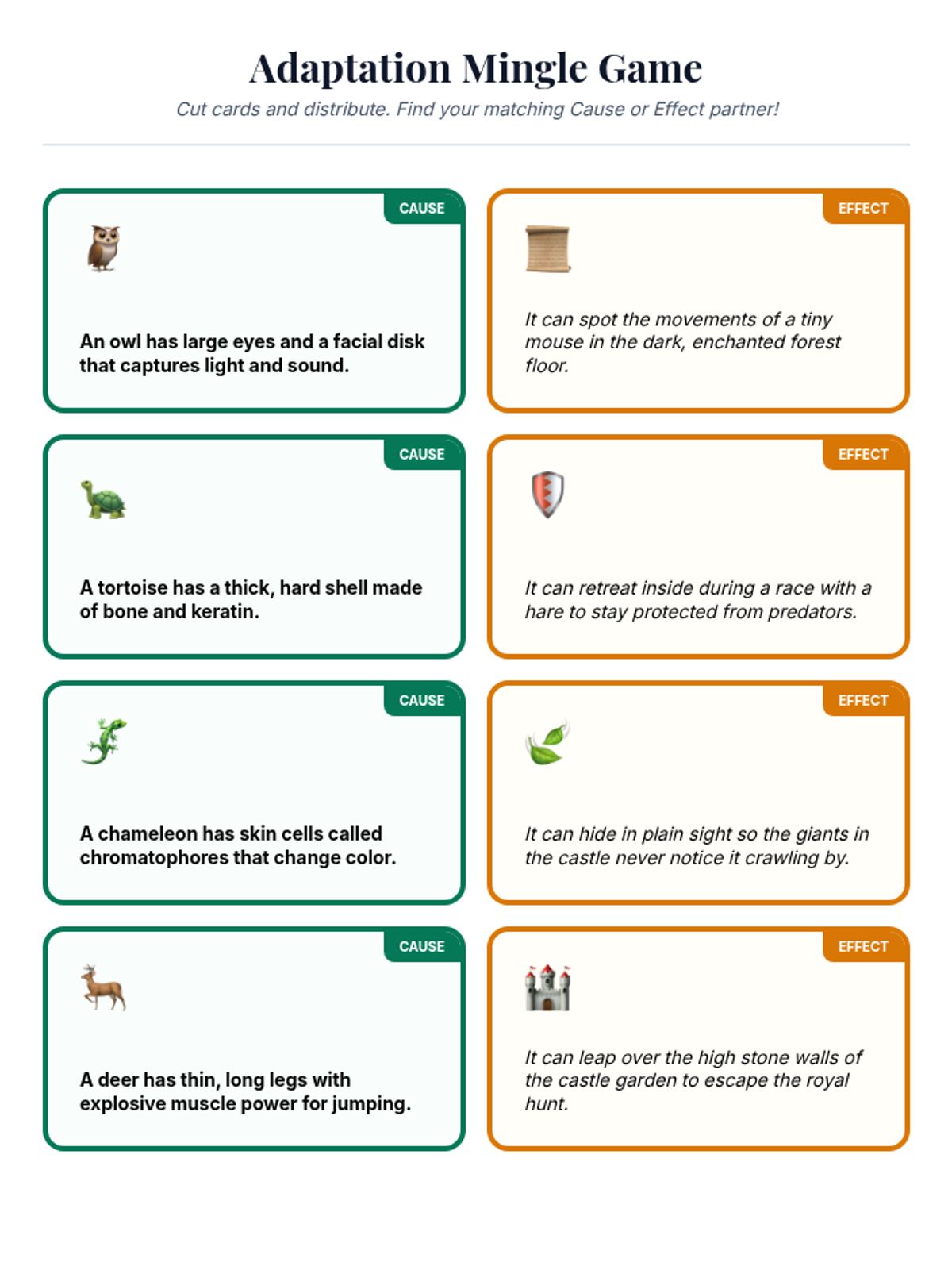
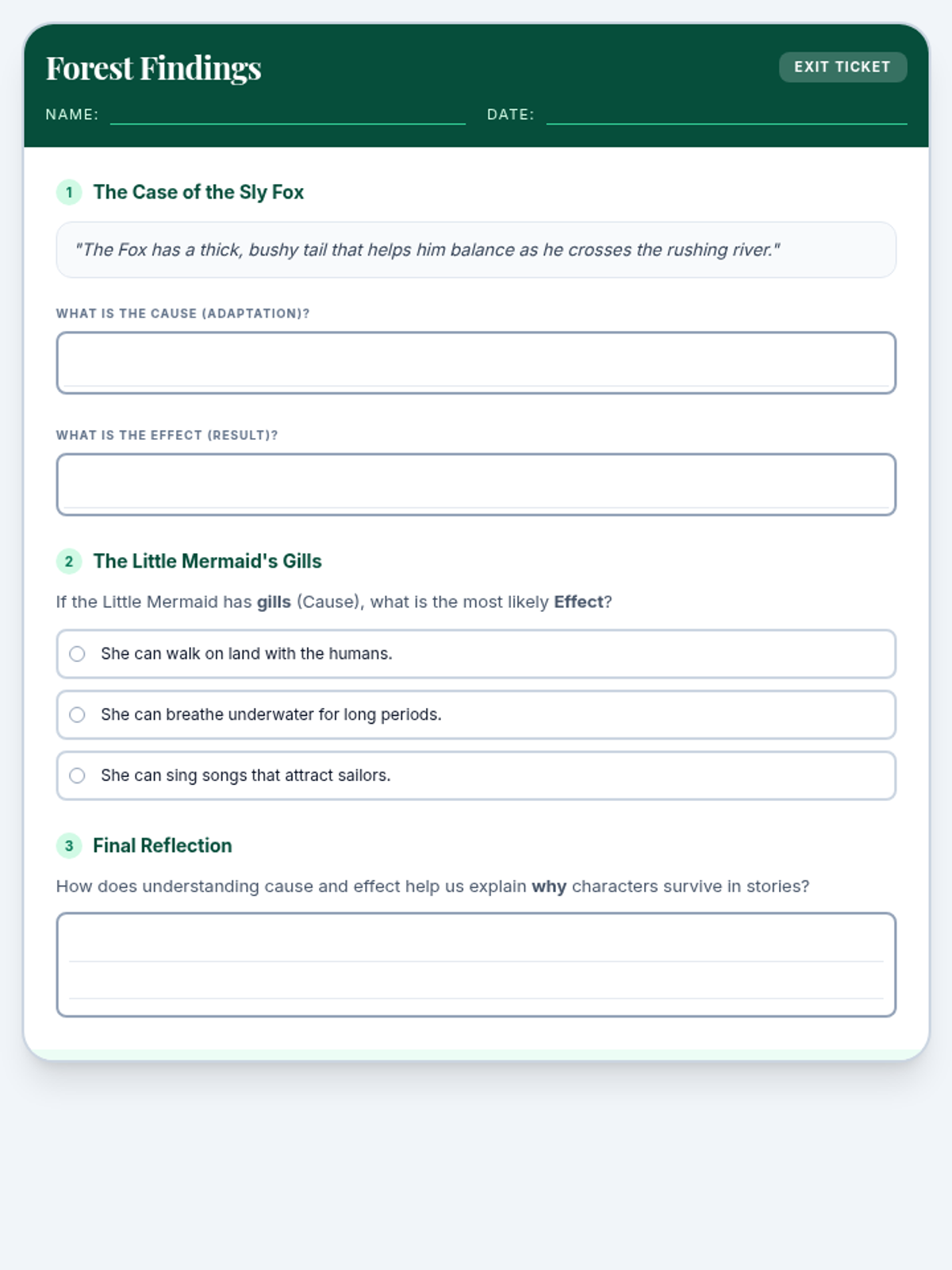
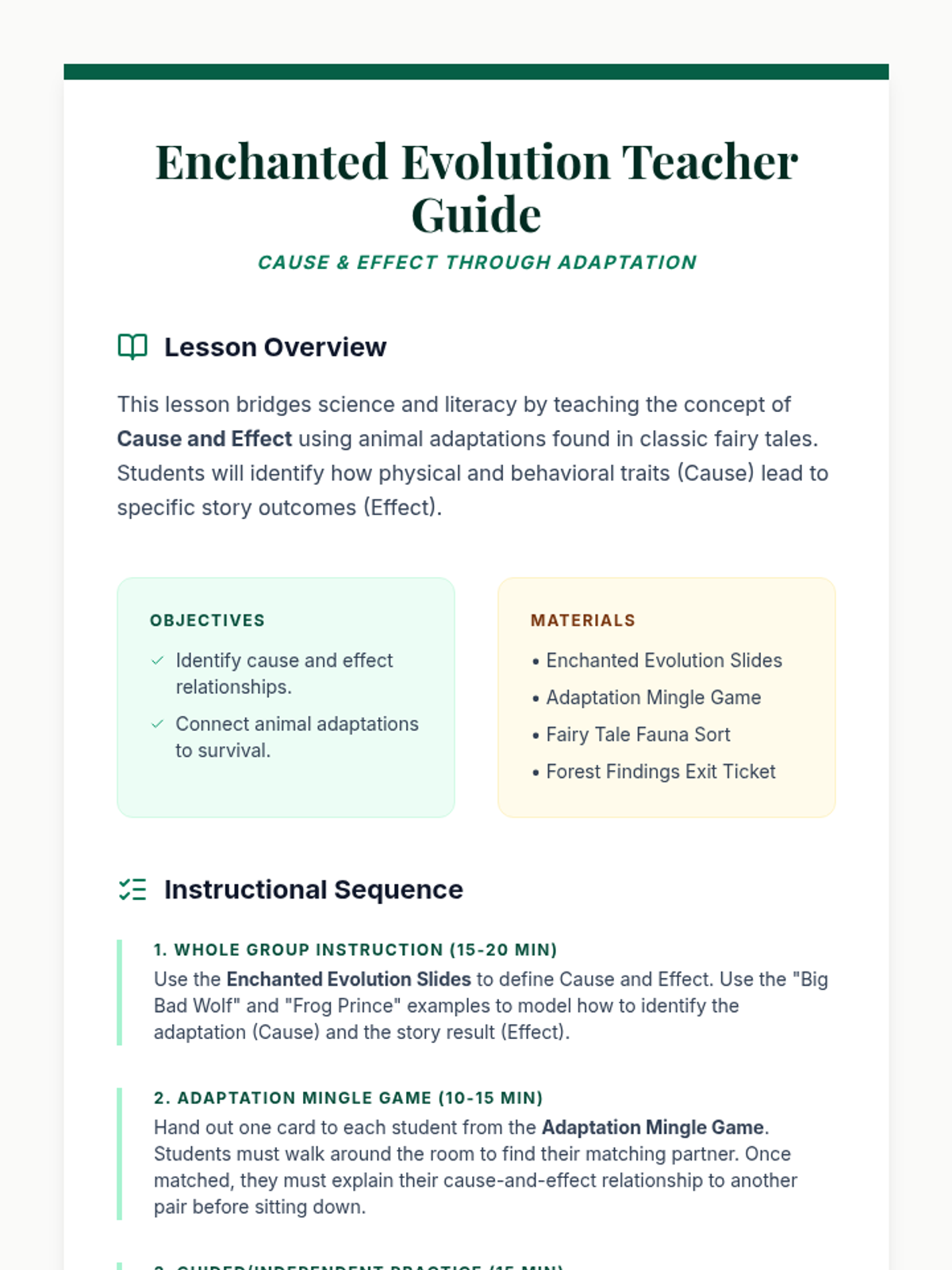
A whole-group lesson where students identify cause and effect relationships by analyzing how animal adaptations help fairy tale creatures survive their stories.
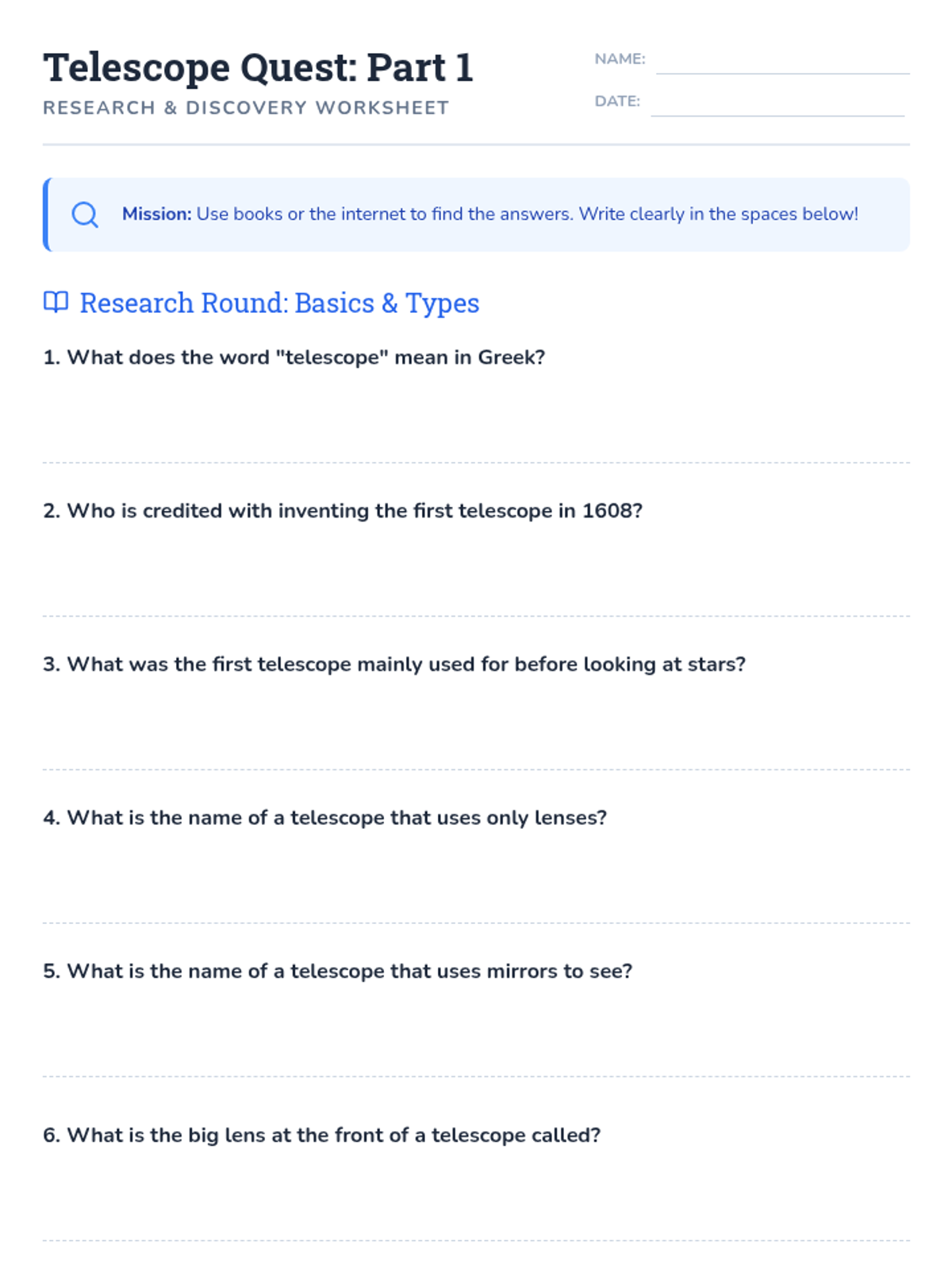
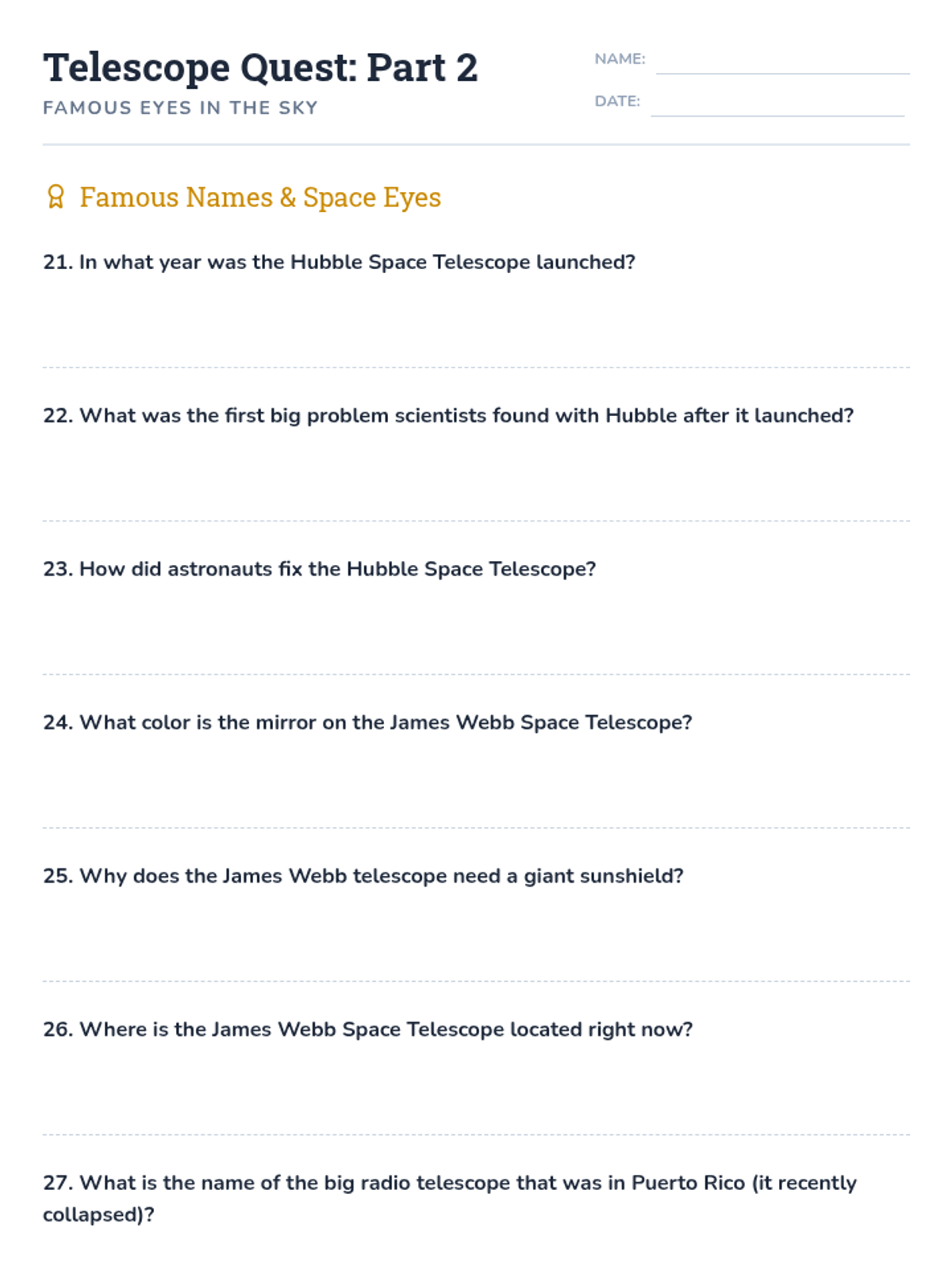
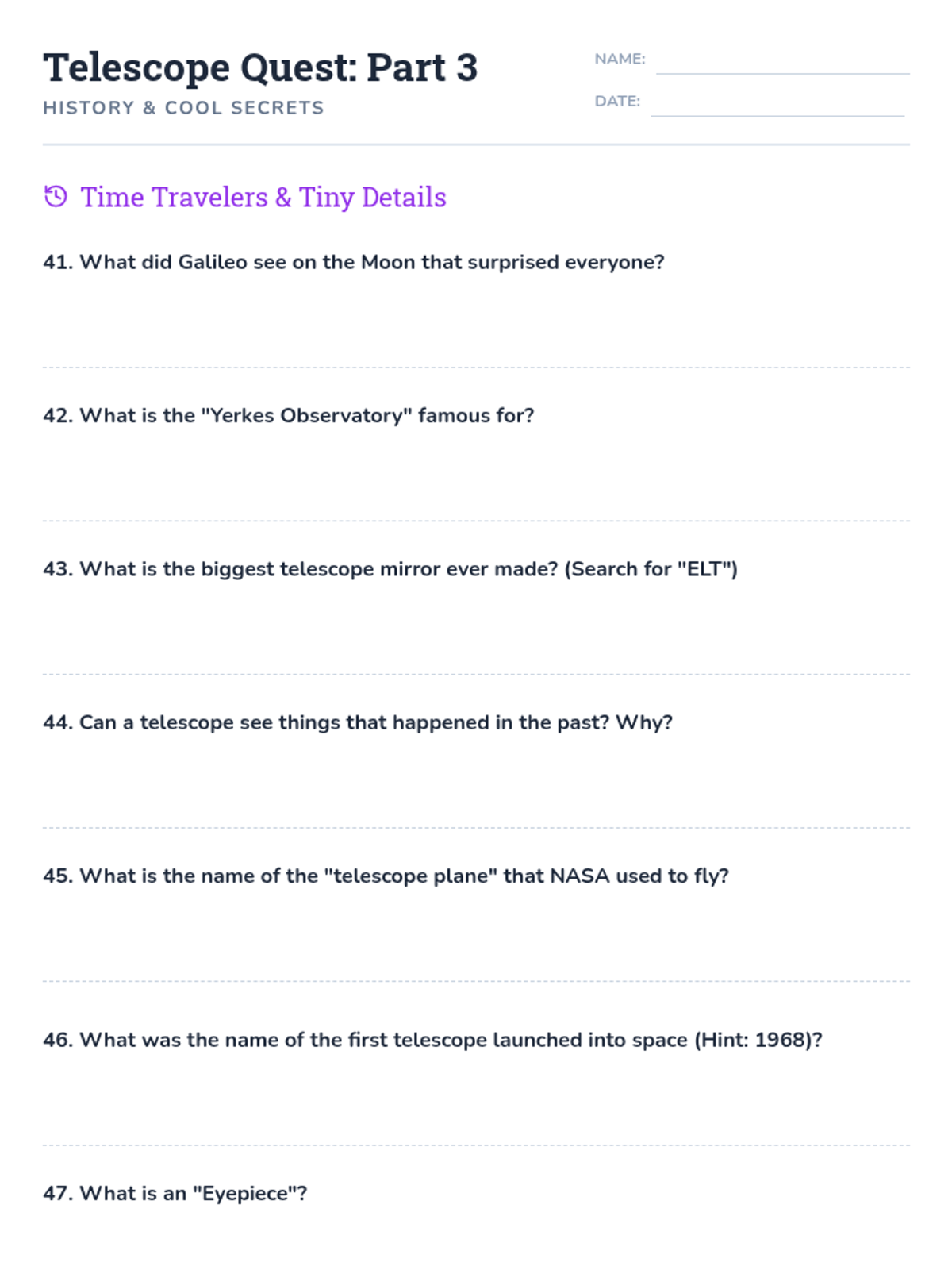
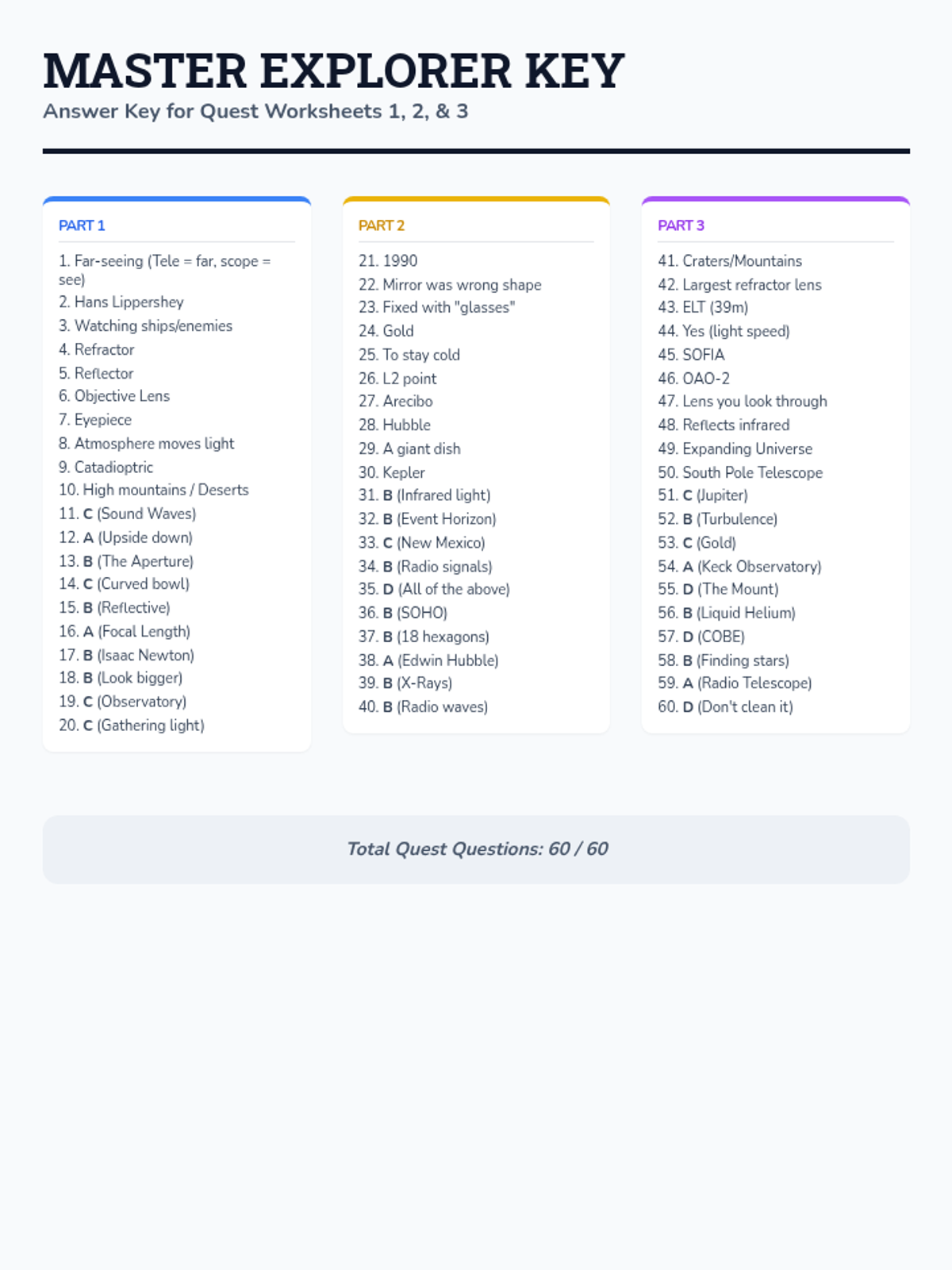
A comprehensive introduction to how telescopes work, their history, and the famous ones that help us see deep into space. Students will explore different types of telescopes through a massive research quest.
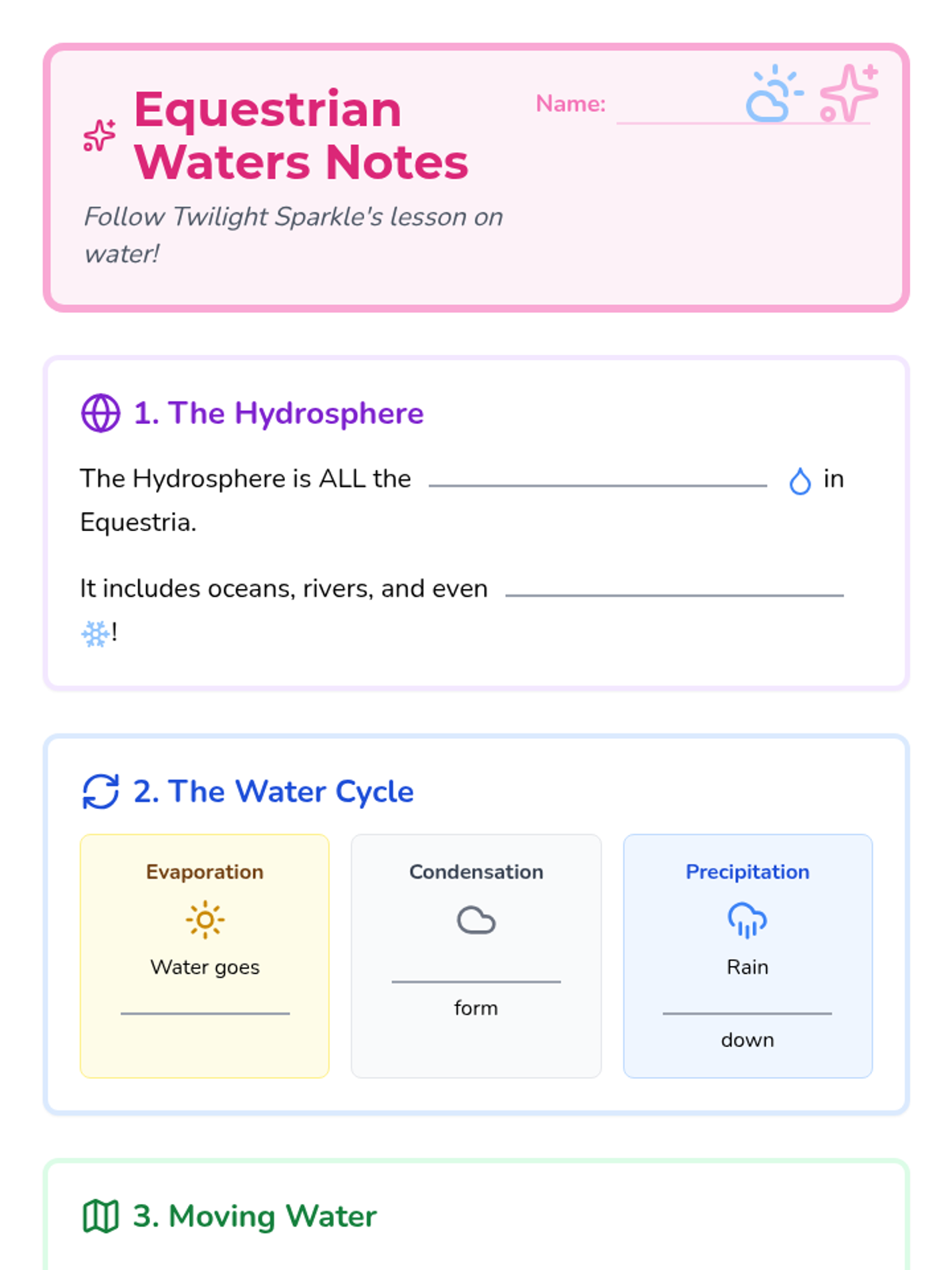
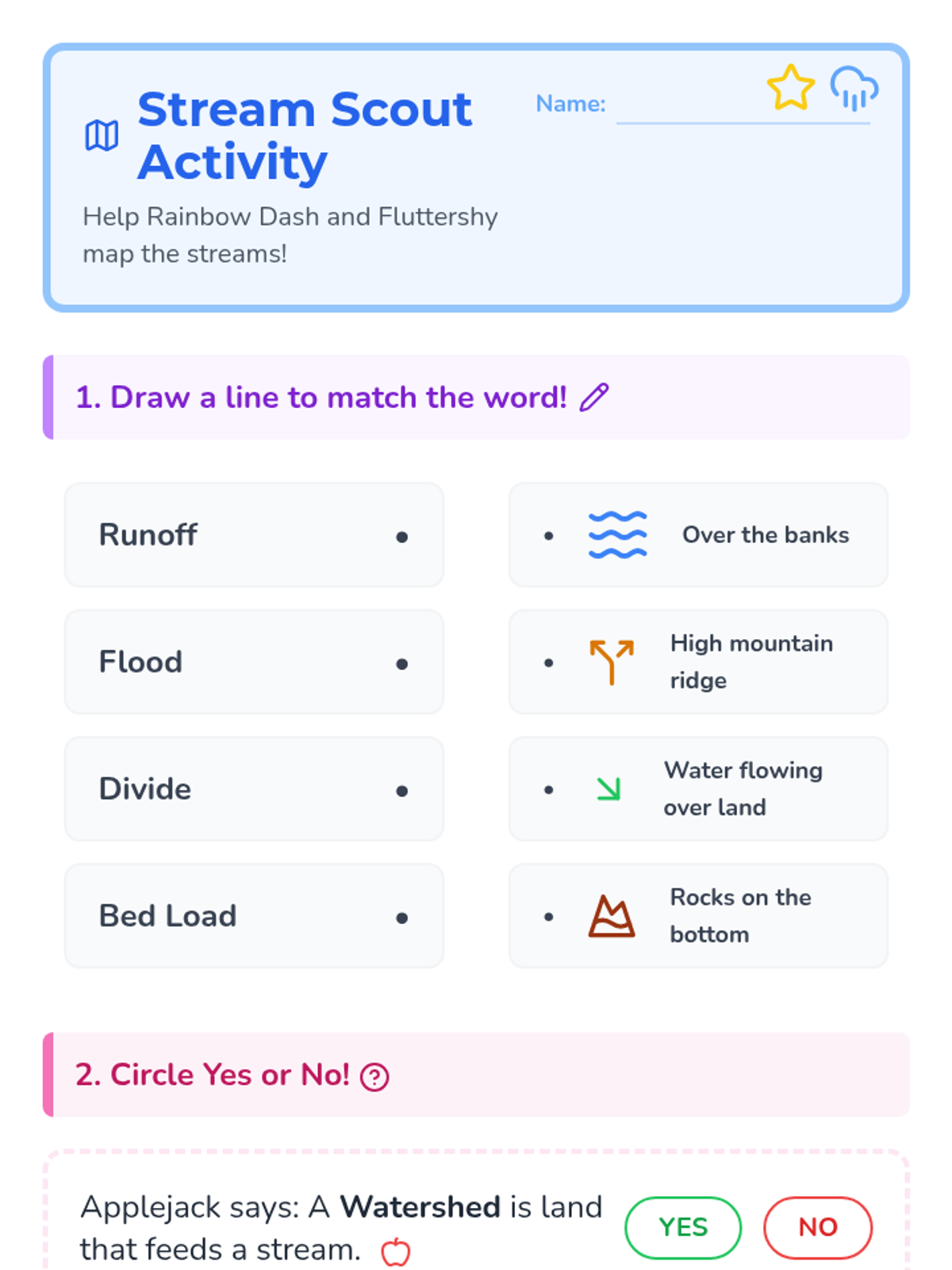
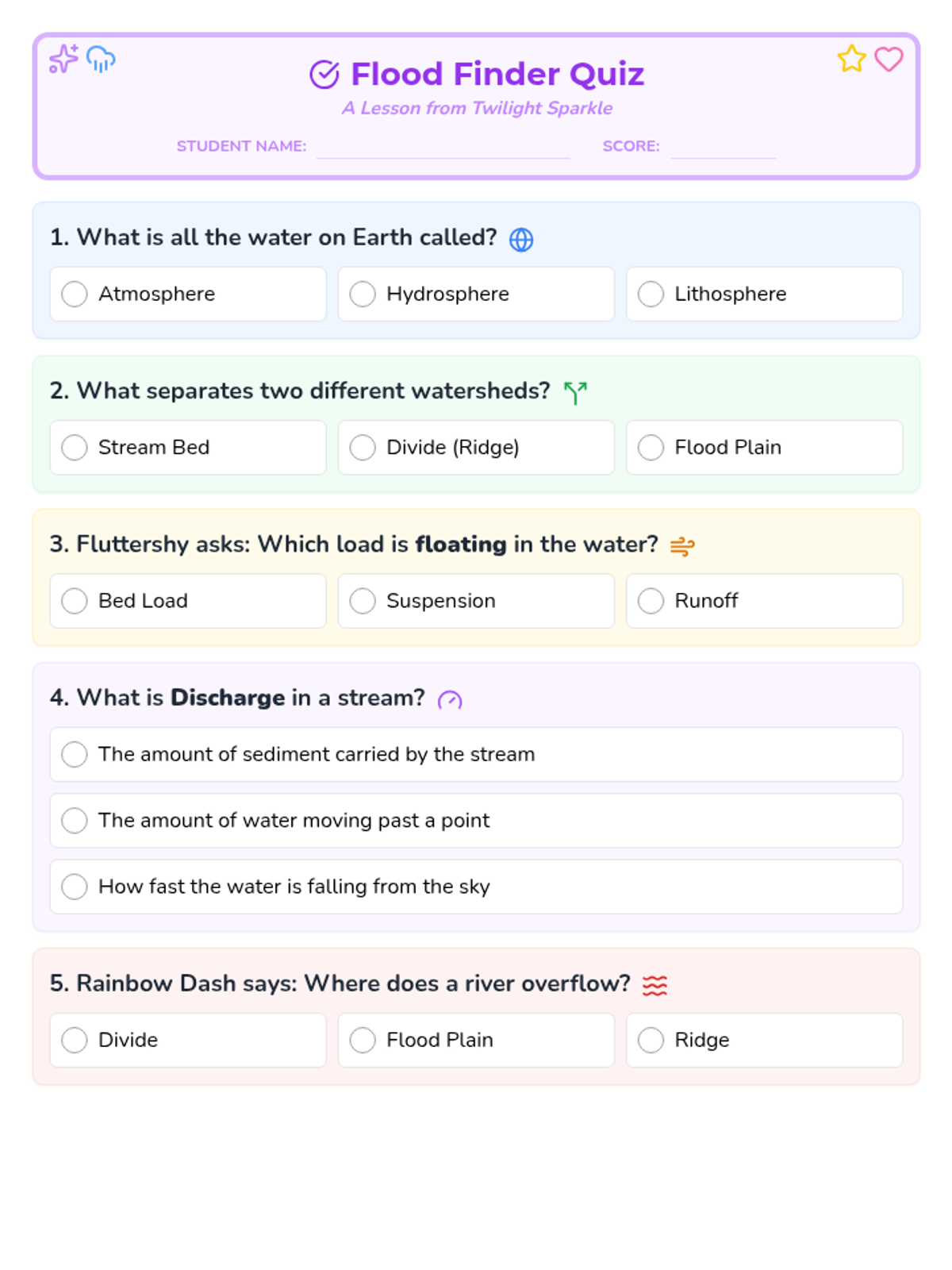
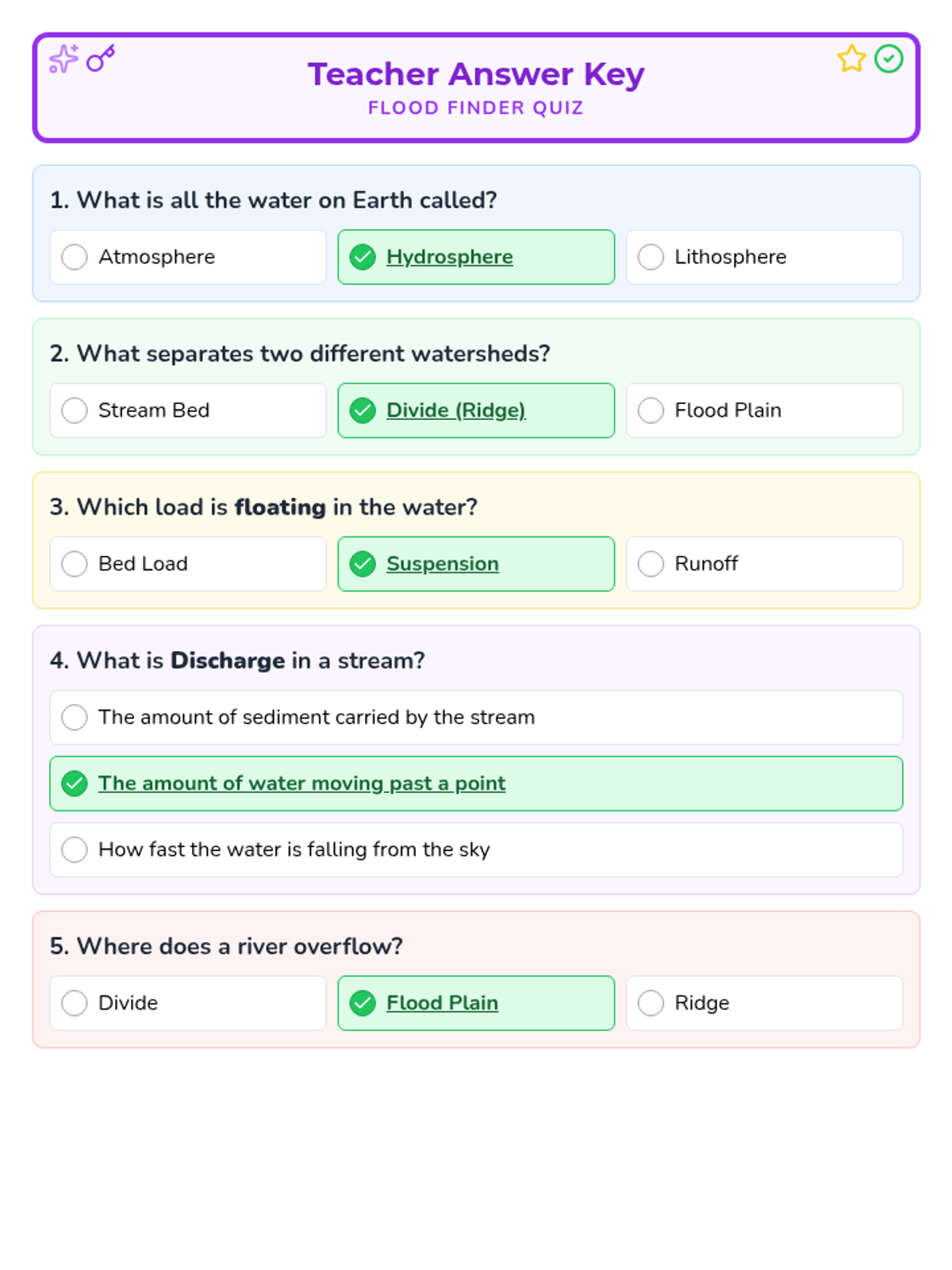
A simplified, symbol-supported lesson on surface water movement, covering watersheds, stream systems, and flood safety, themed around the world of Equestria.
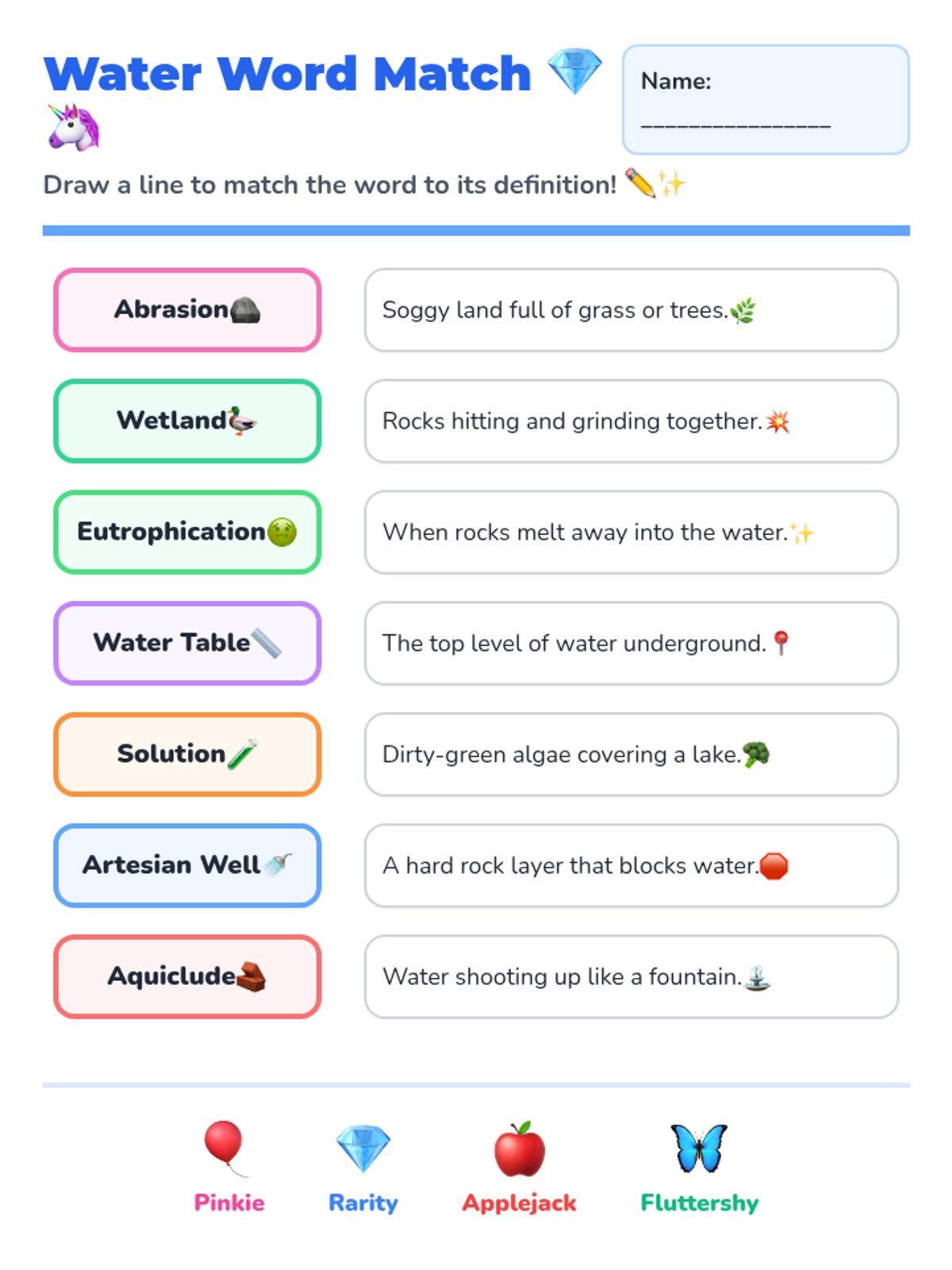
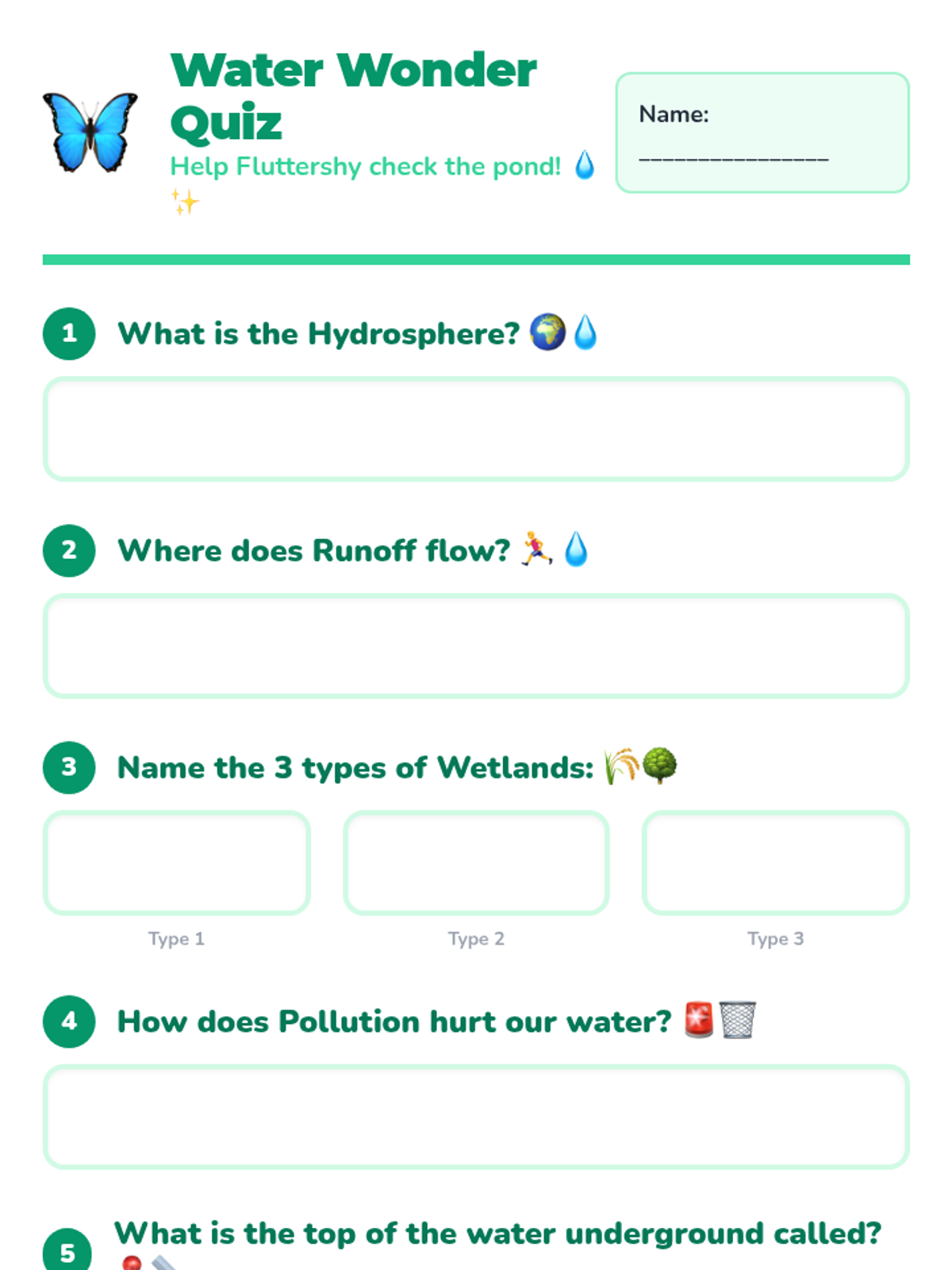
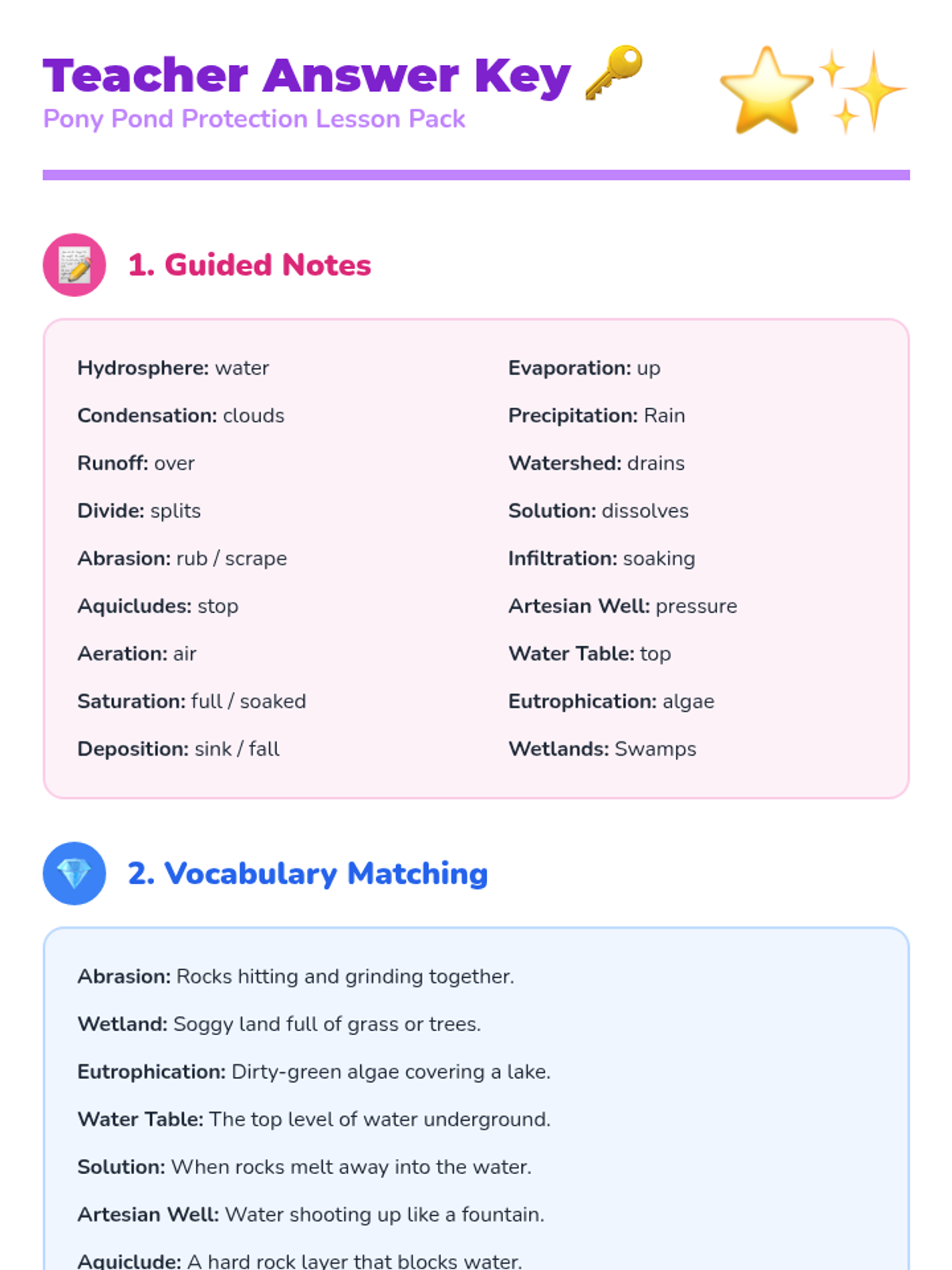
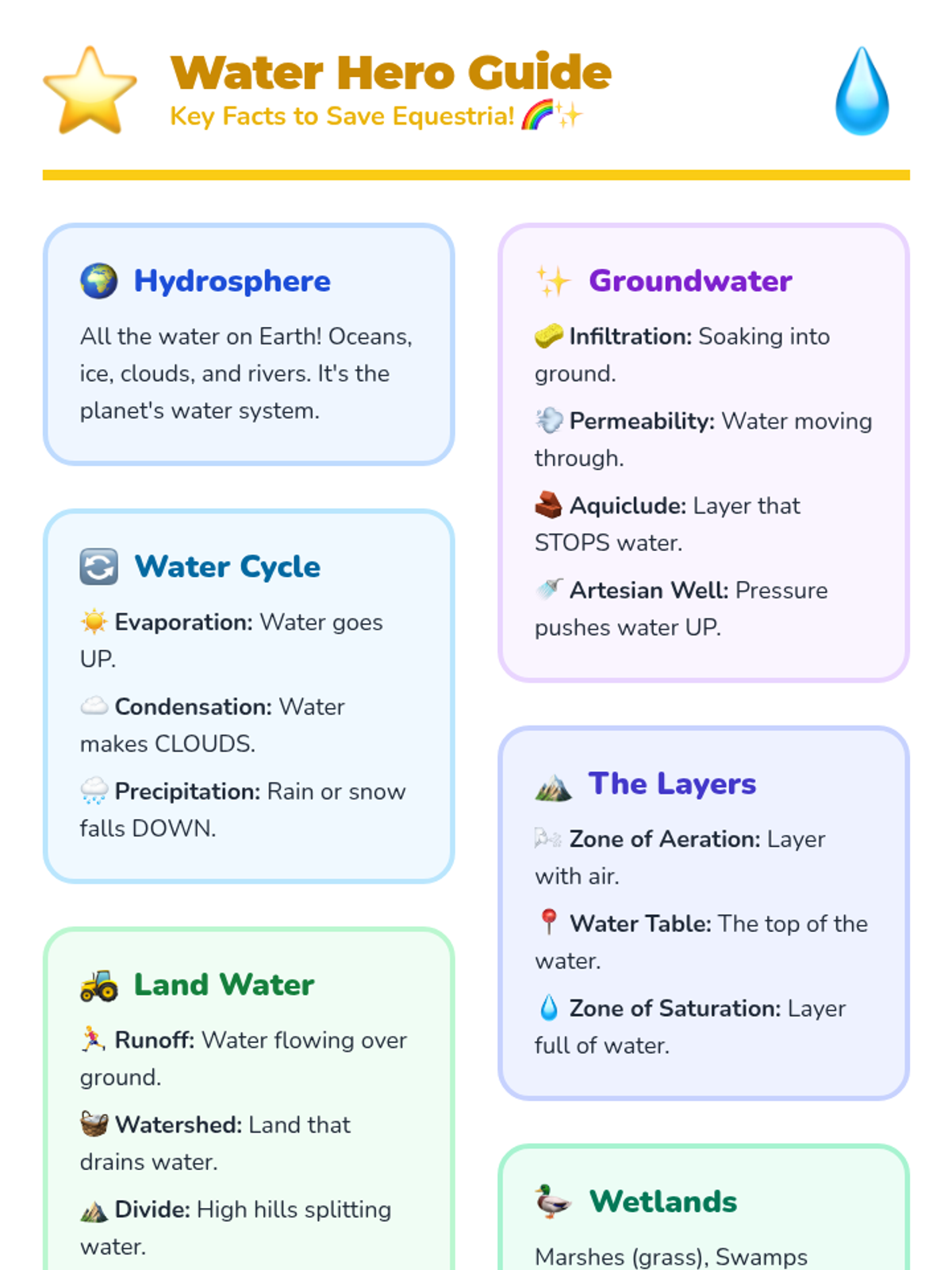
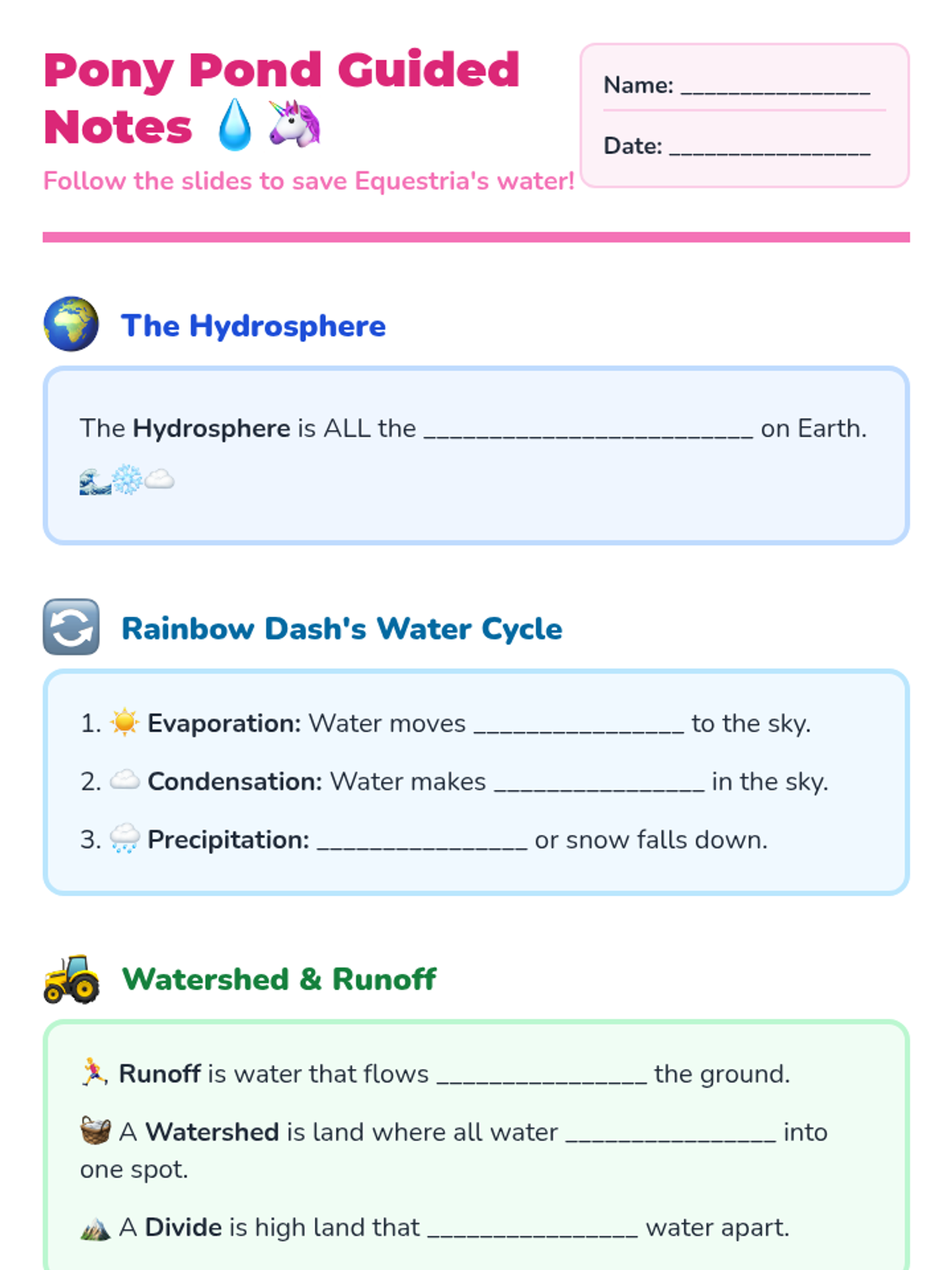
An introductory lesson on the hydrosphere and water systems featuring My Little Pony characters to explain complex concepts like groundwater, watersheds, and conservation through symbol-supported text.
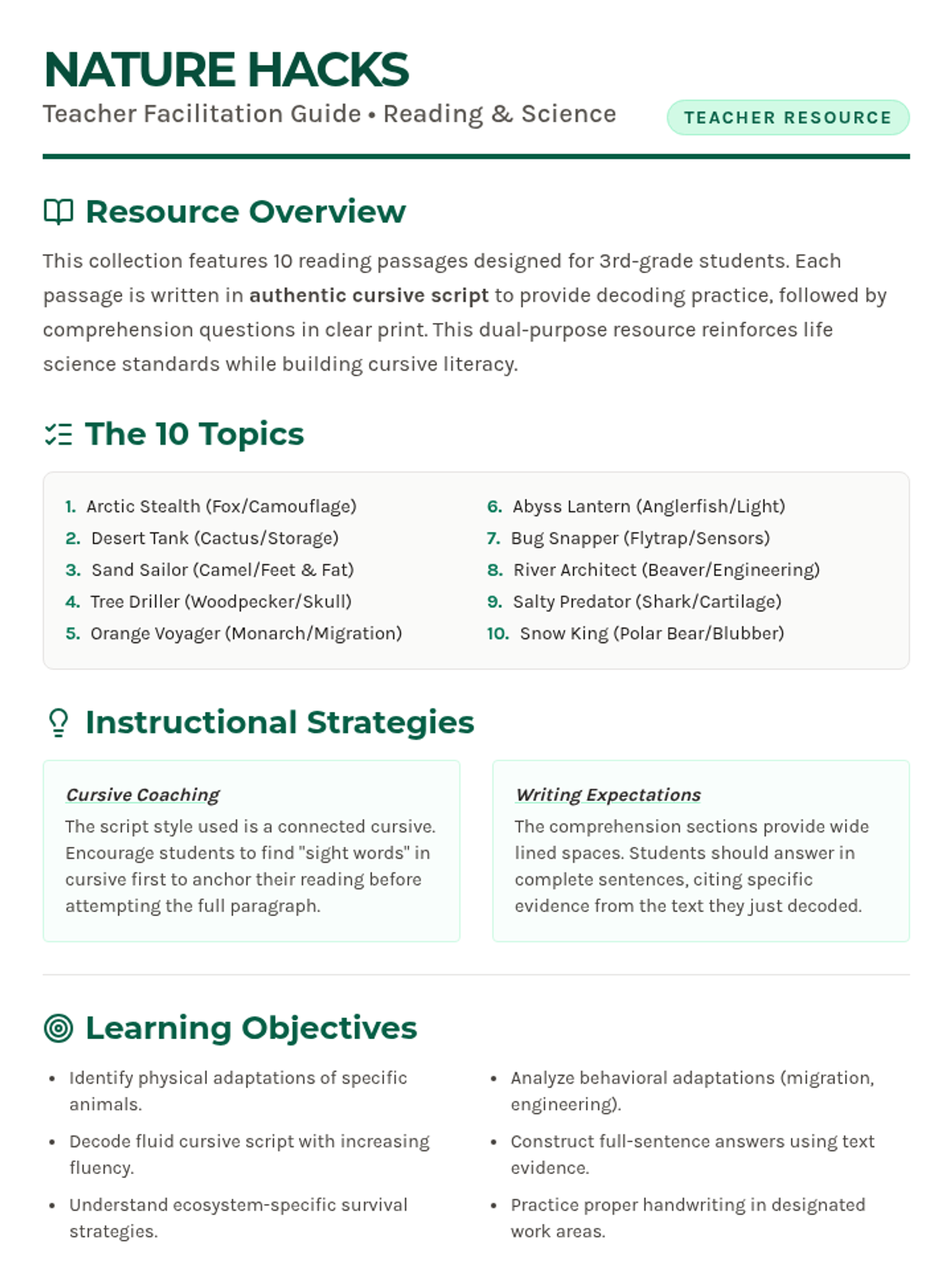
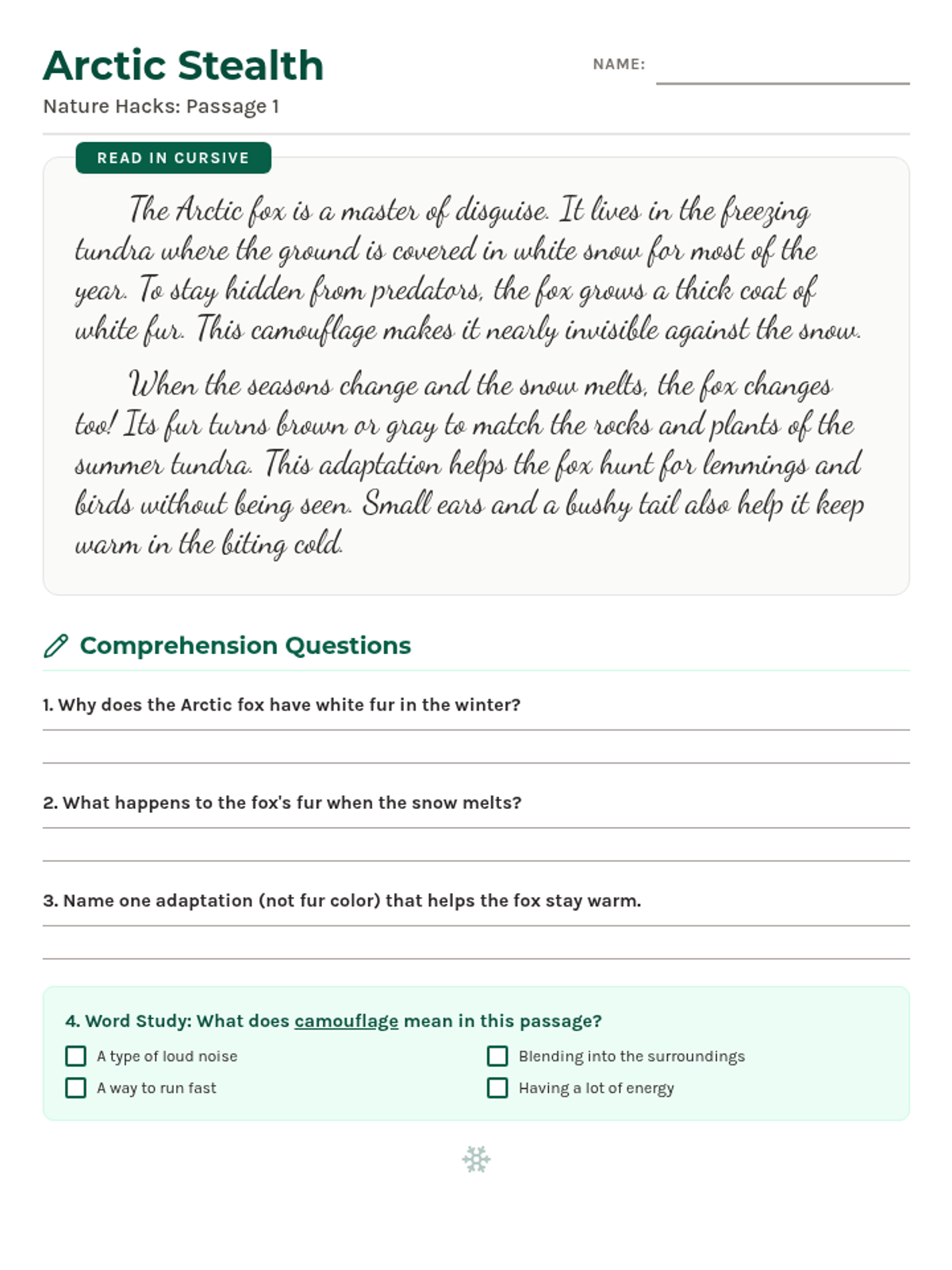
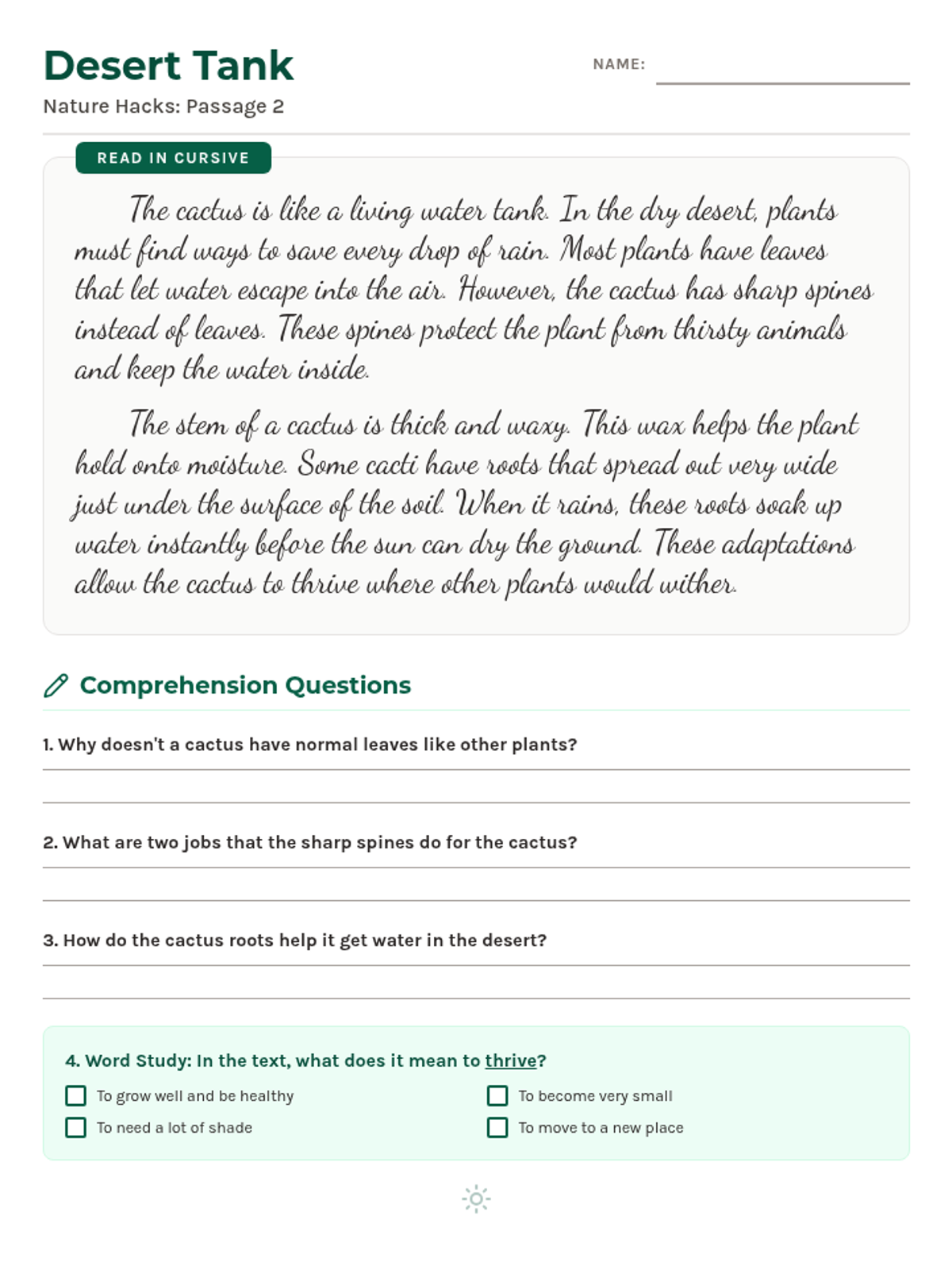
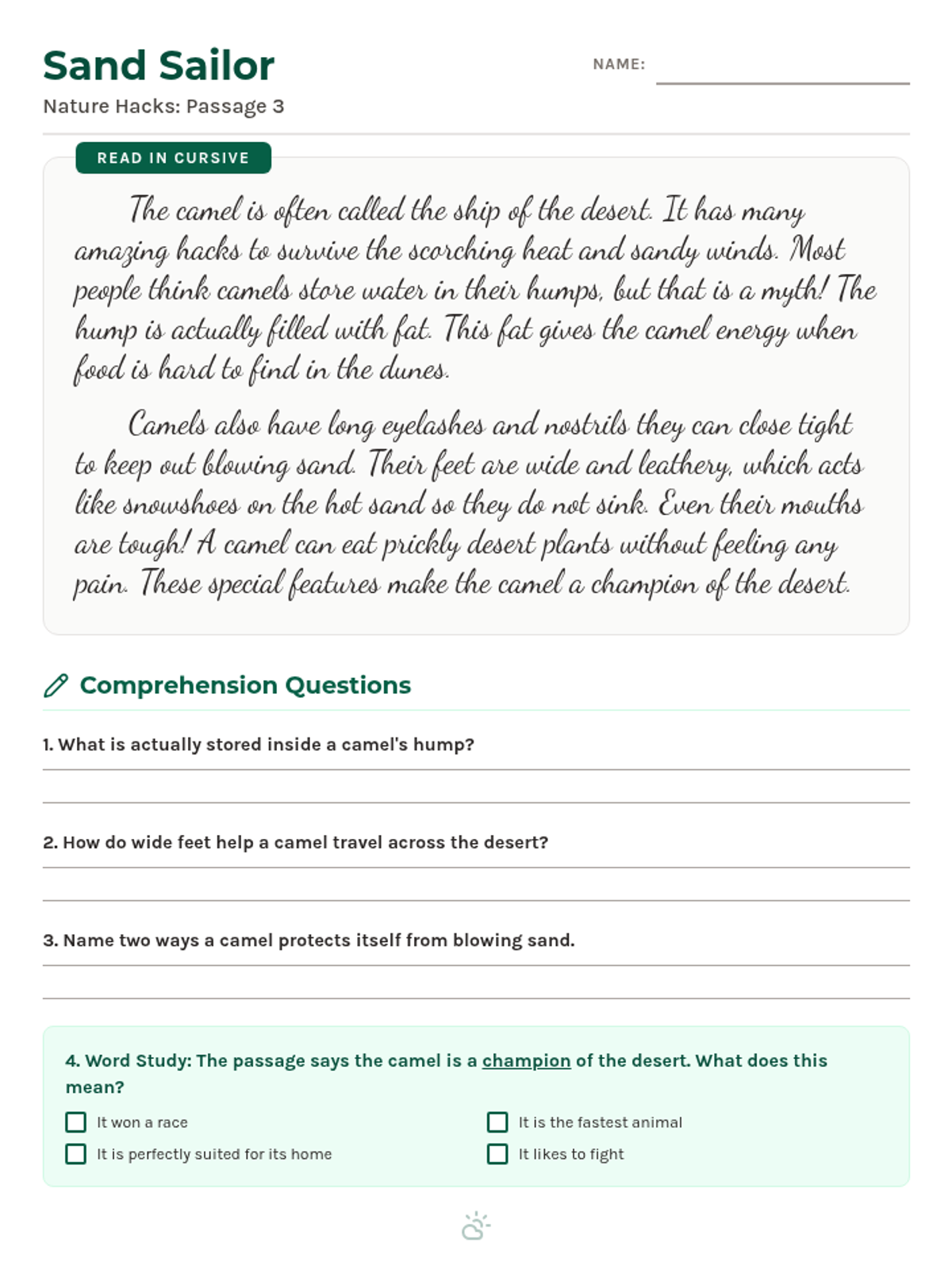
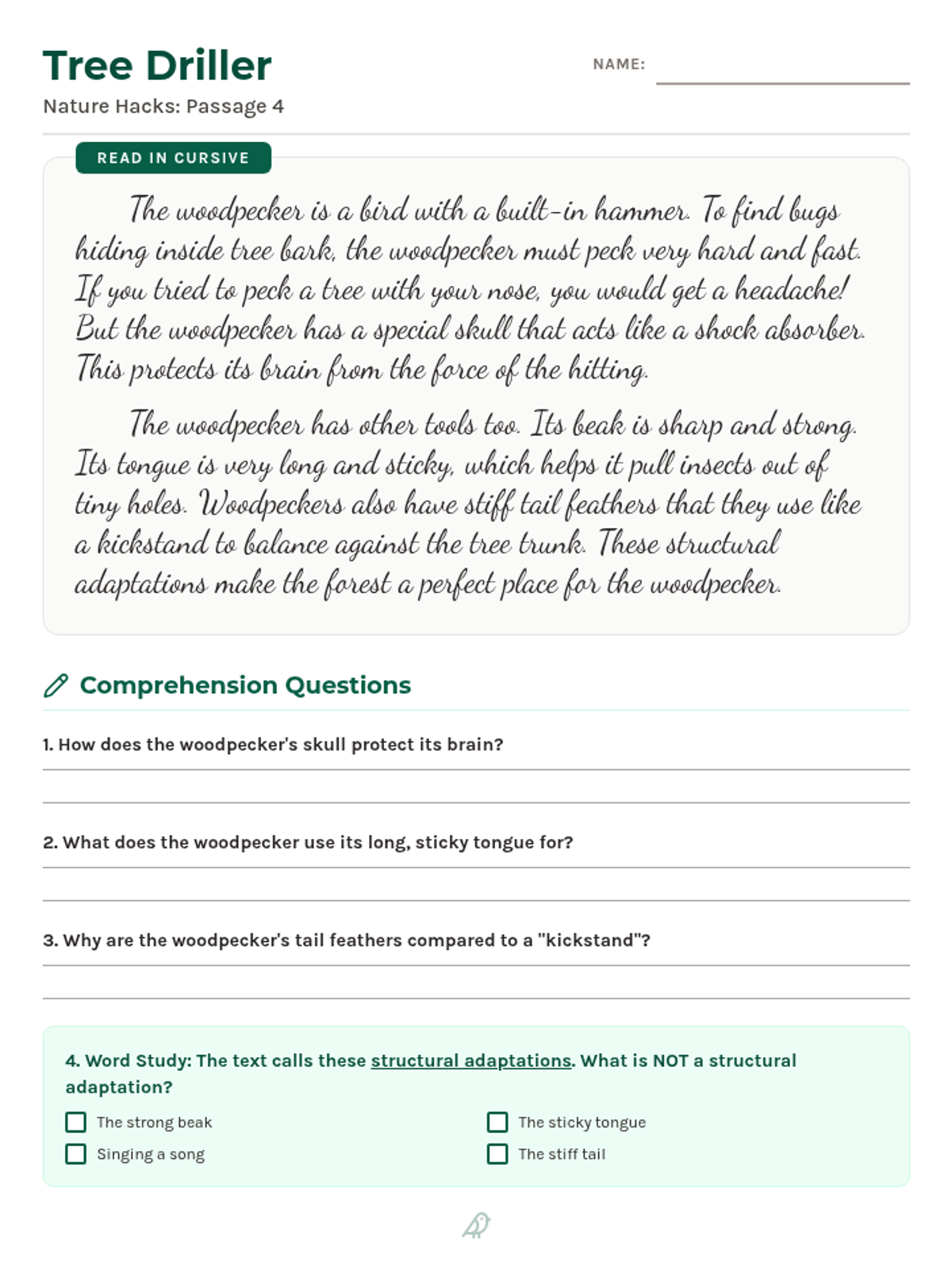
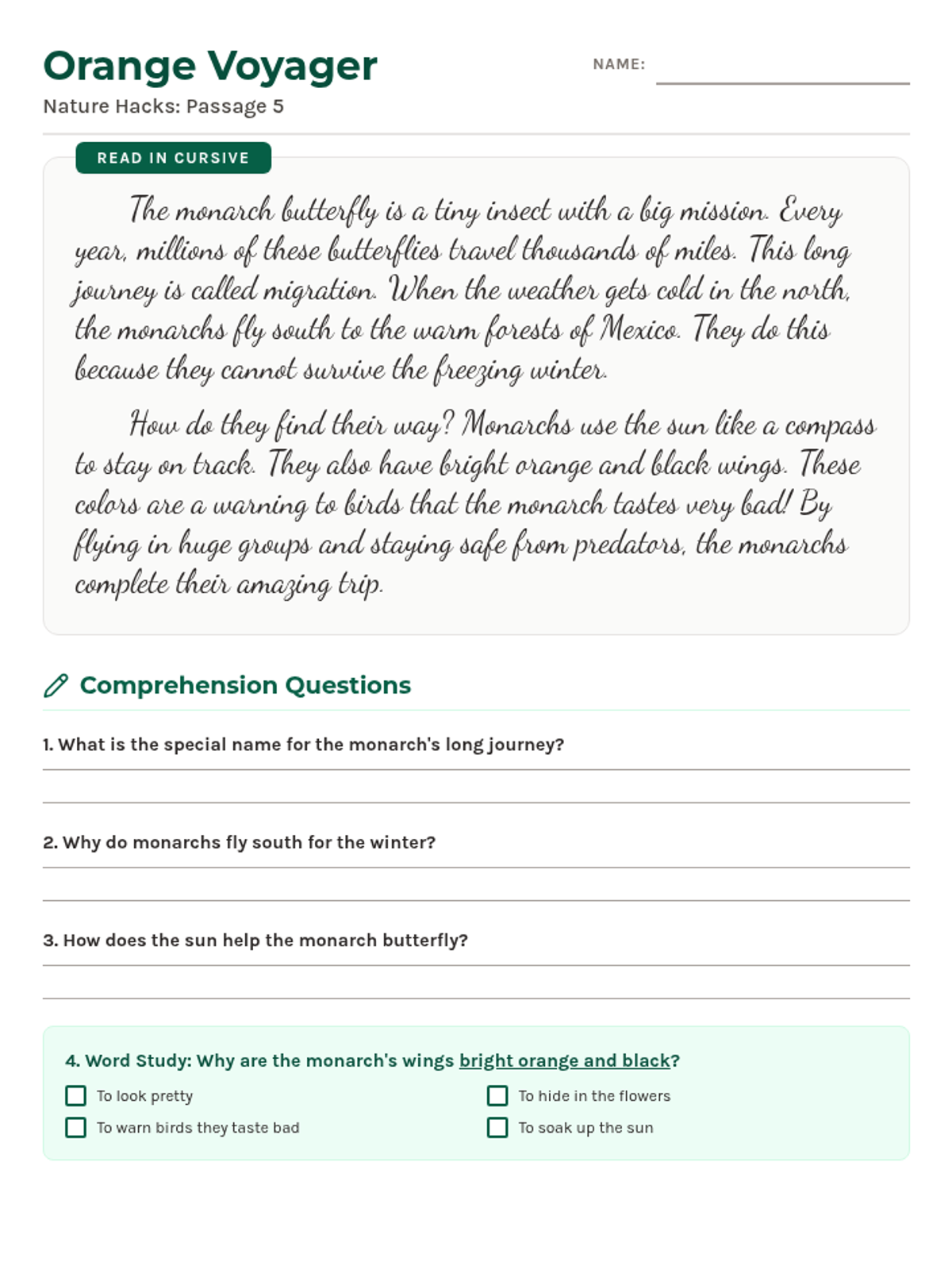
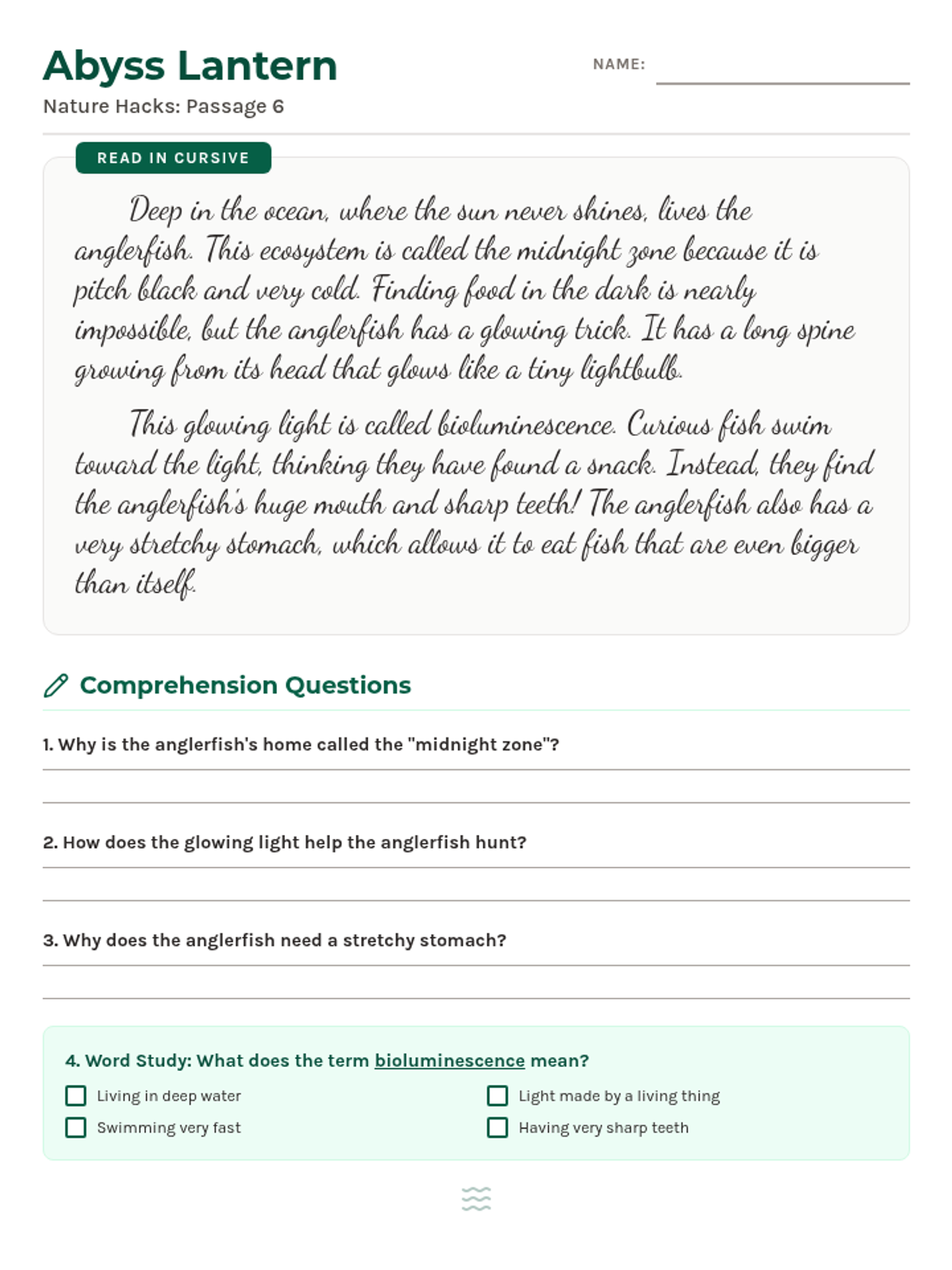
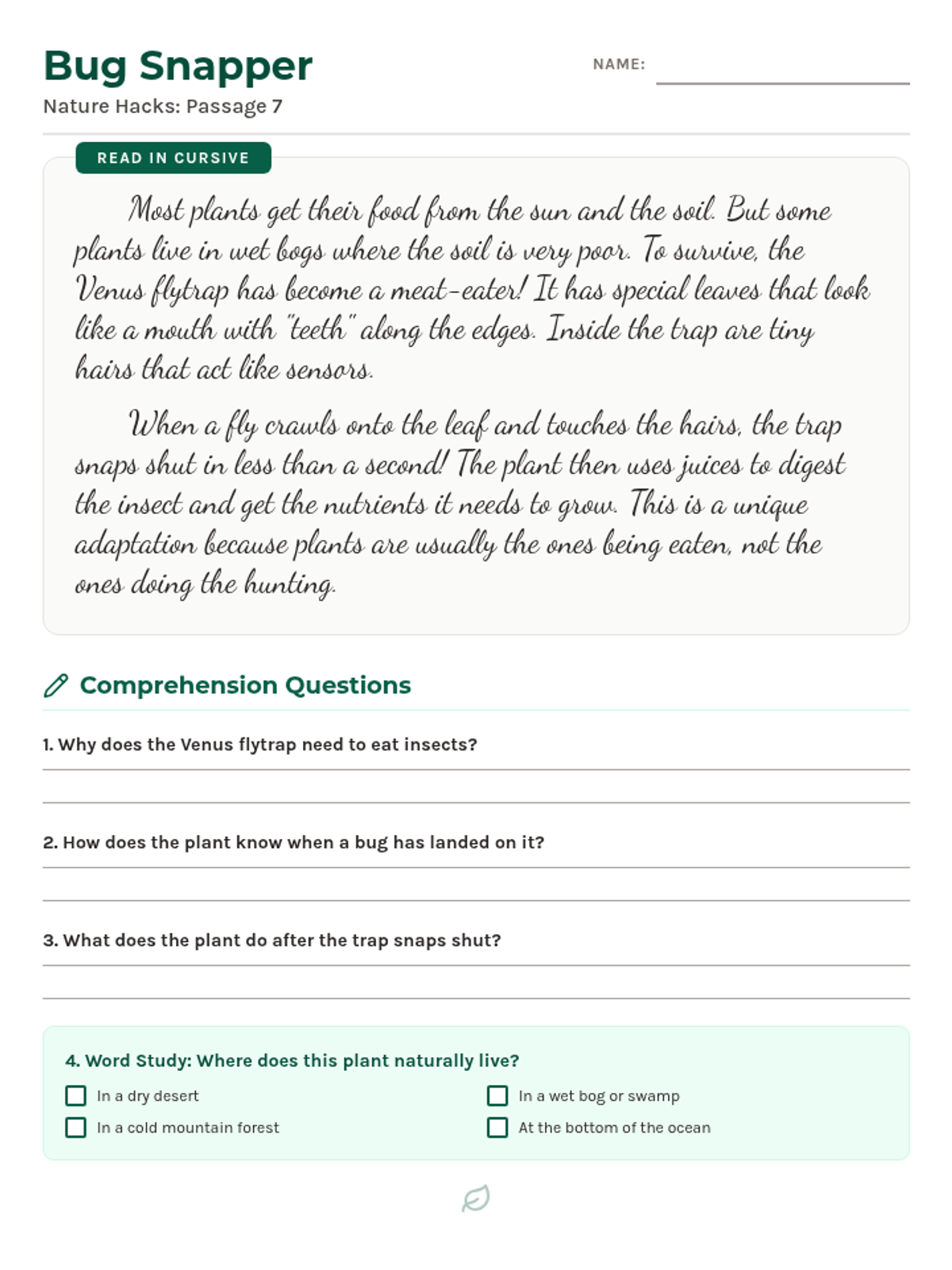
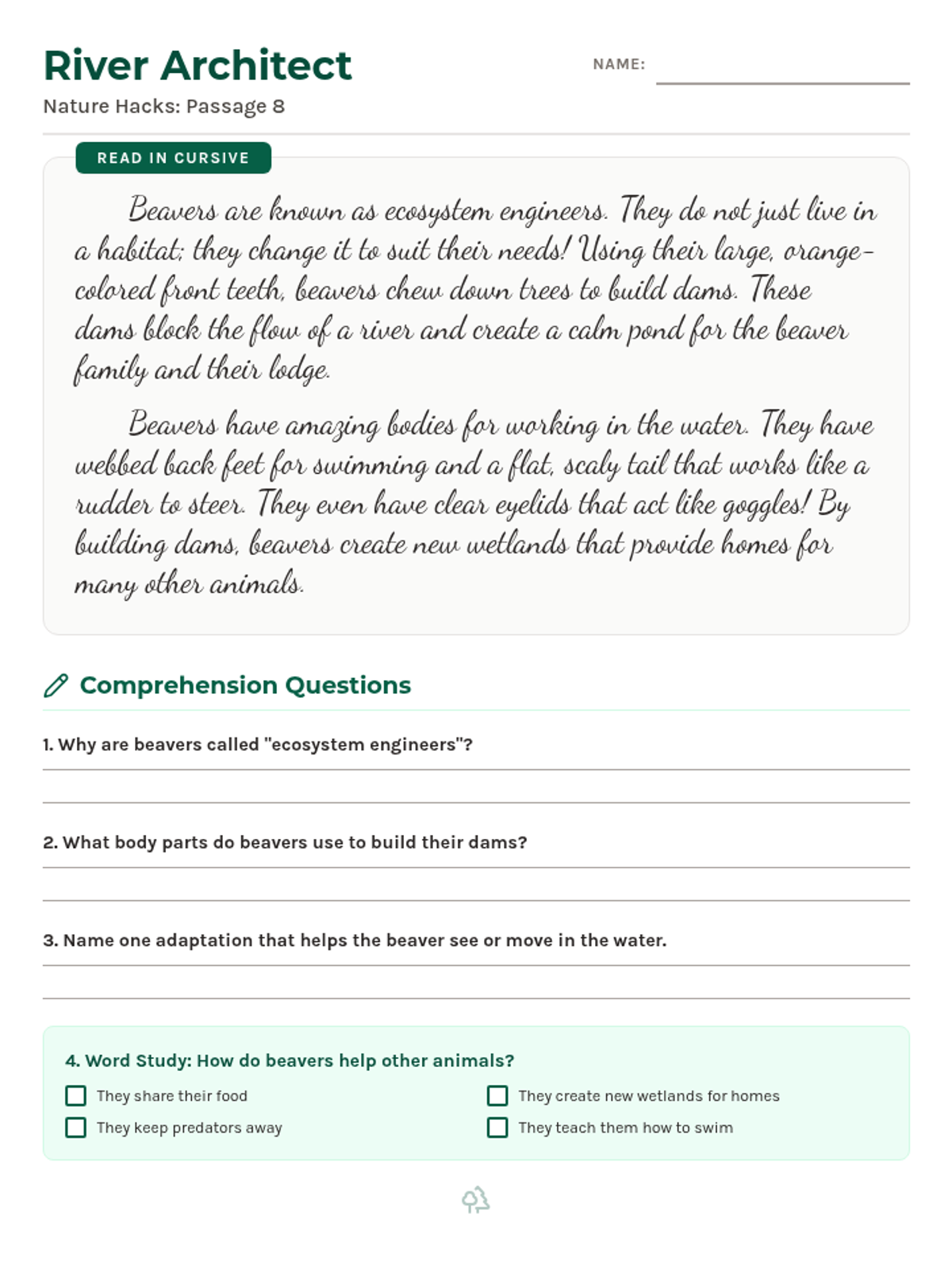
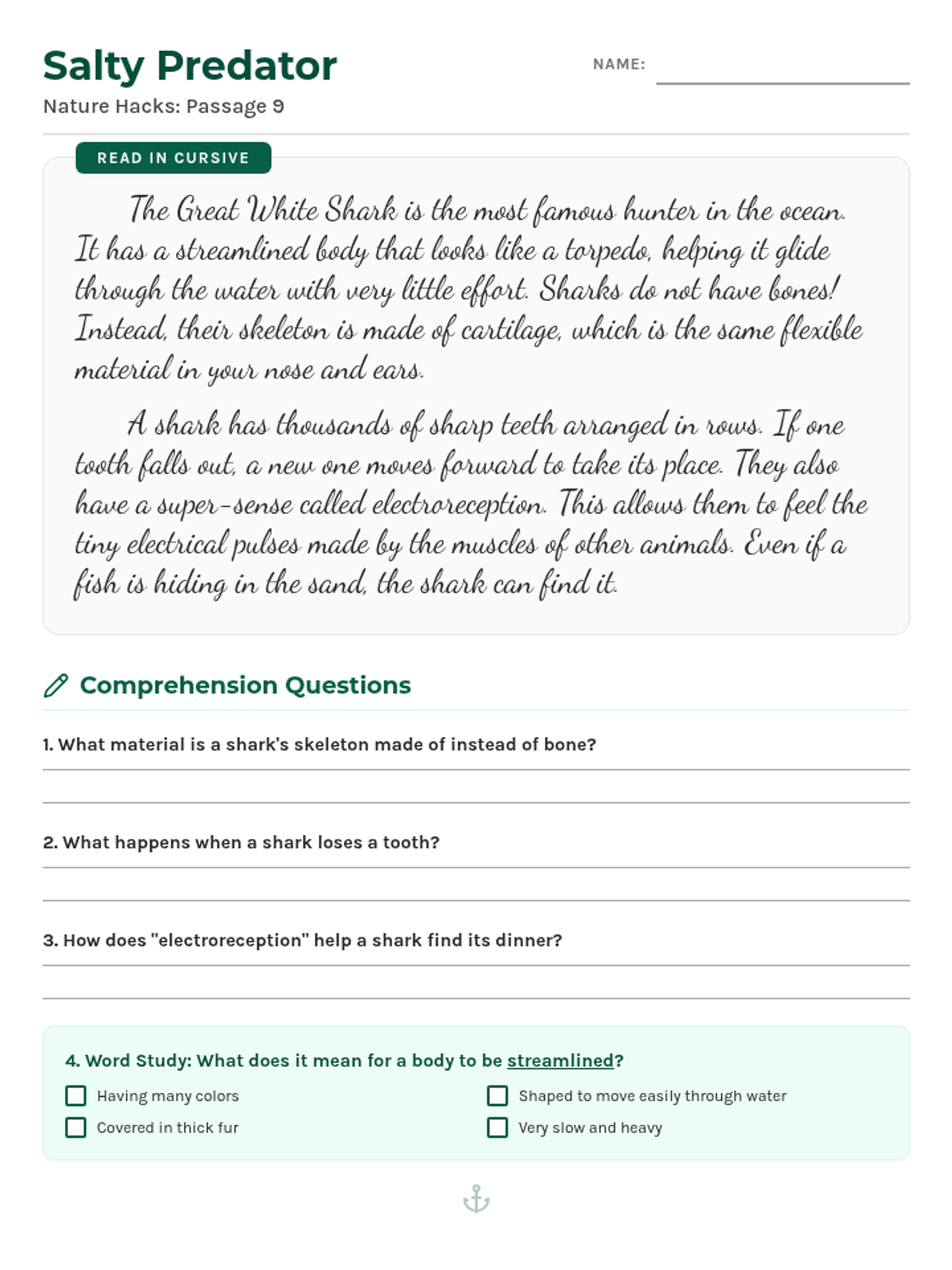
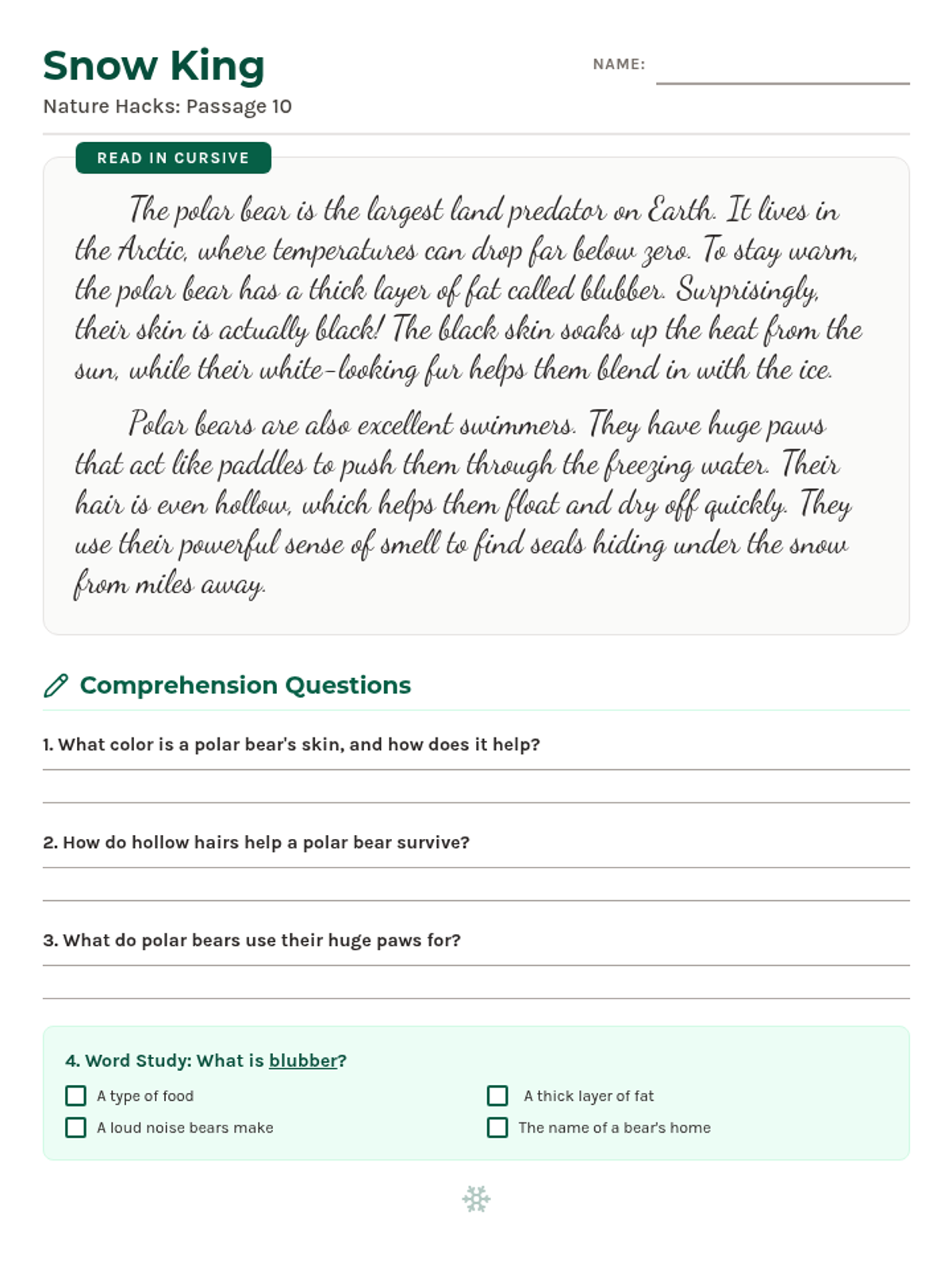
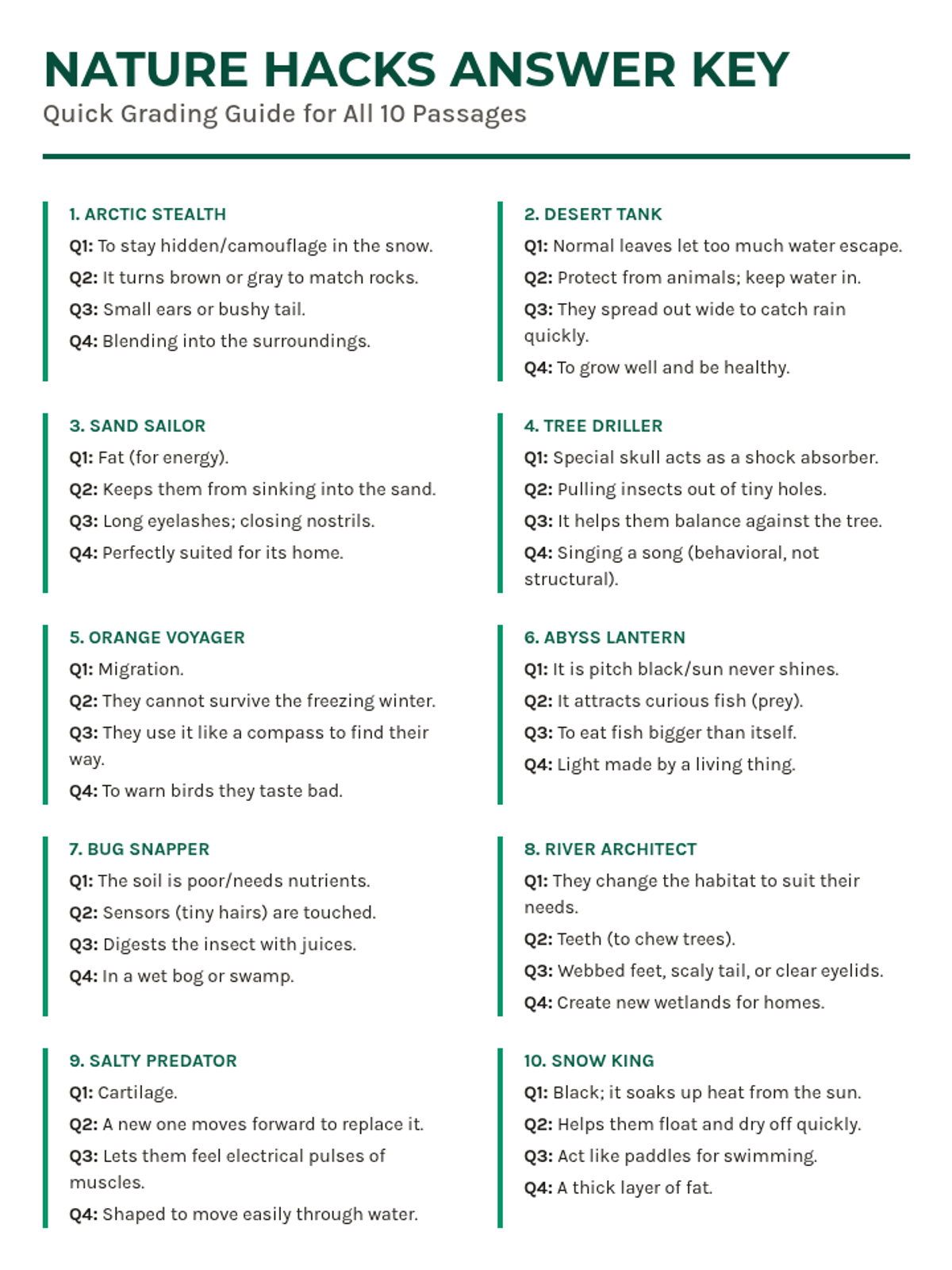
A comprehensive collection of 10 differentiated reading passages focused on animal adaptations and ecosystems, specifically designed to help students practice reading cursive while reinforcing key science concepts.
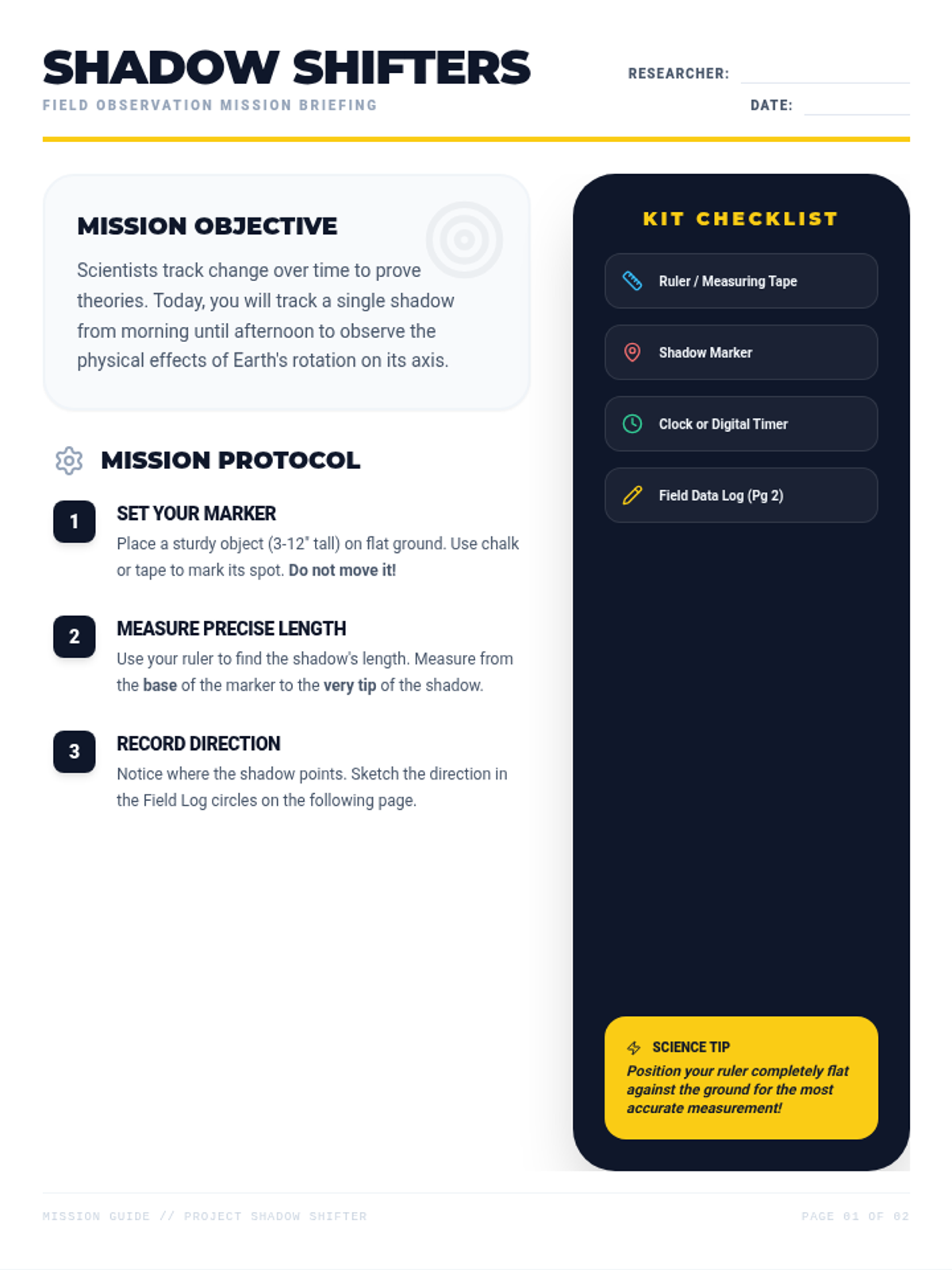
A hands-on, asynchronous observation lesson where students track the movement and size of shadows over the course of a single day to understand Earth's rotation and data collection.
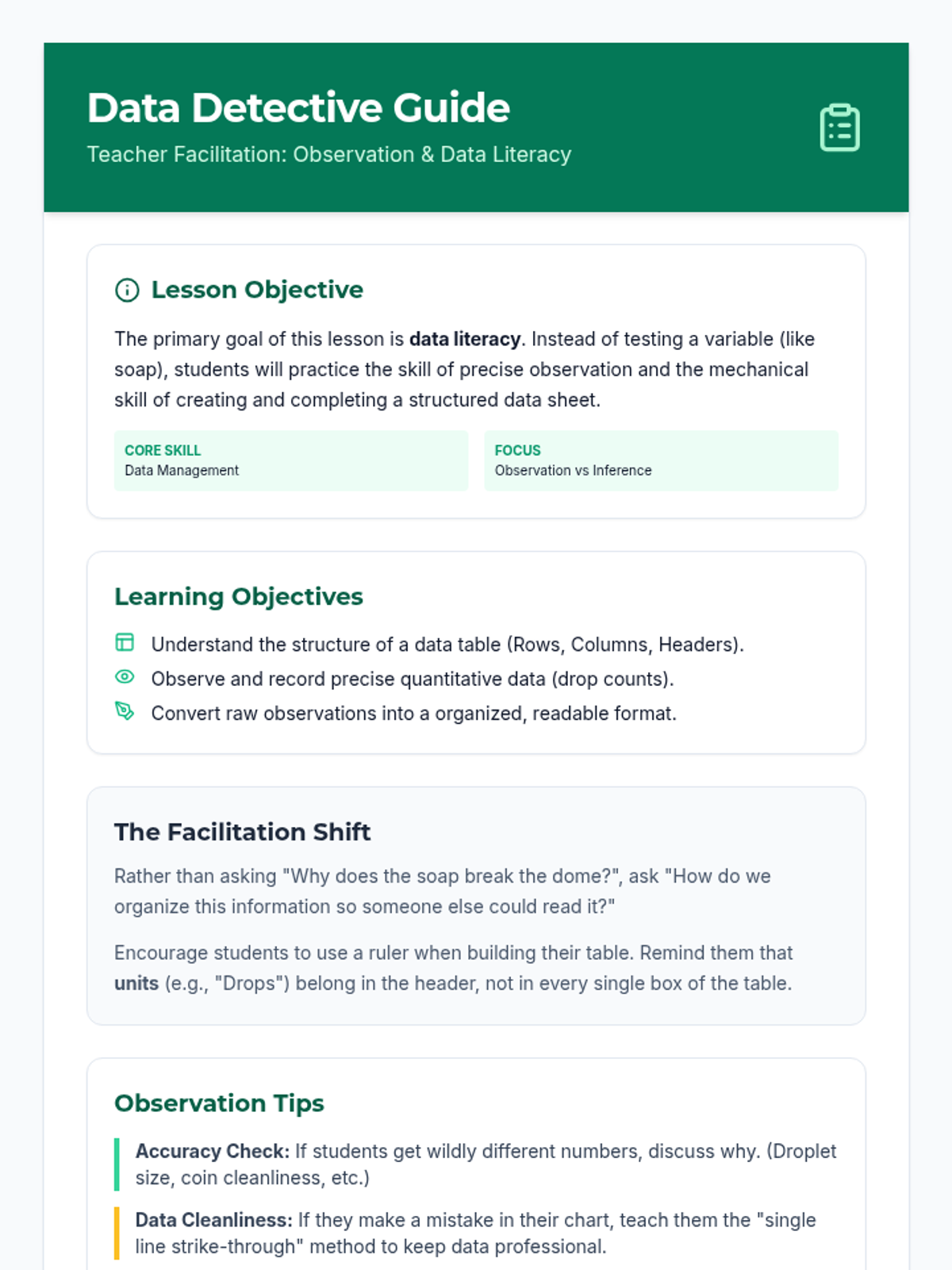
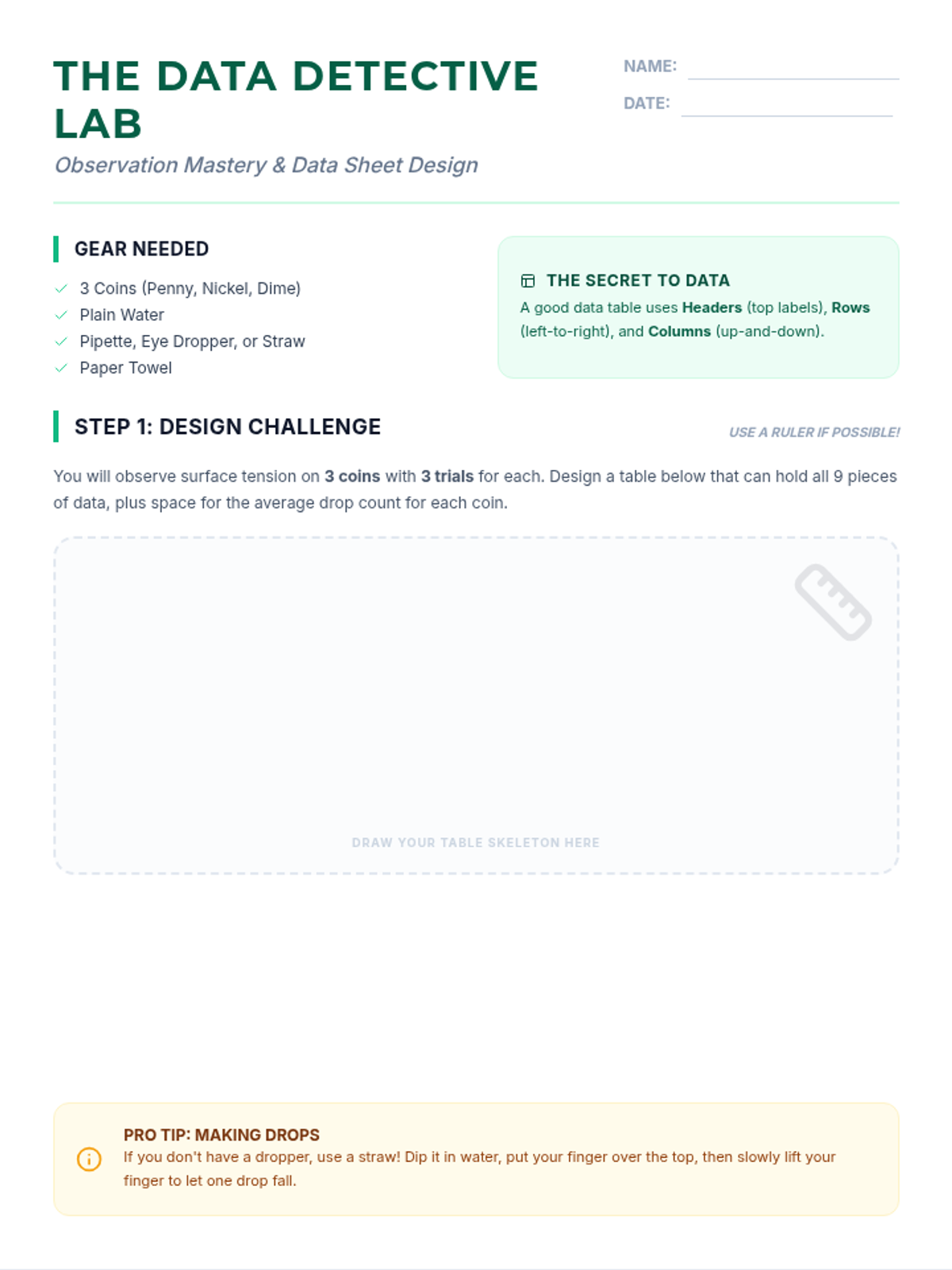
An introductory science lesson on surface tension where students conduct a hands-on experiment at home using coins, water, and soap to observe how molecules stick together.
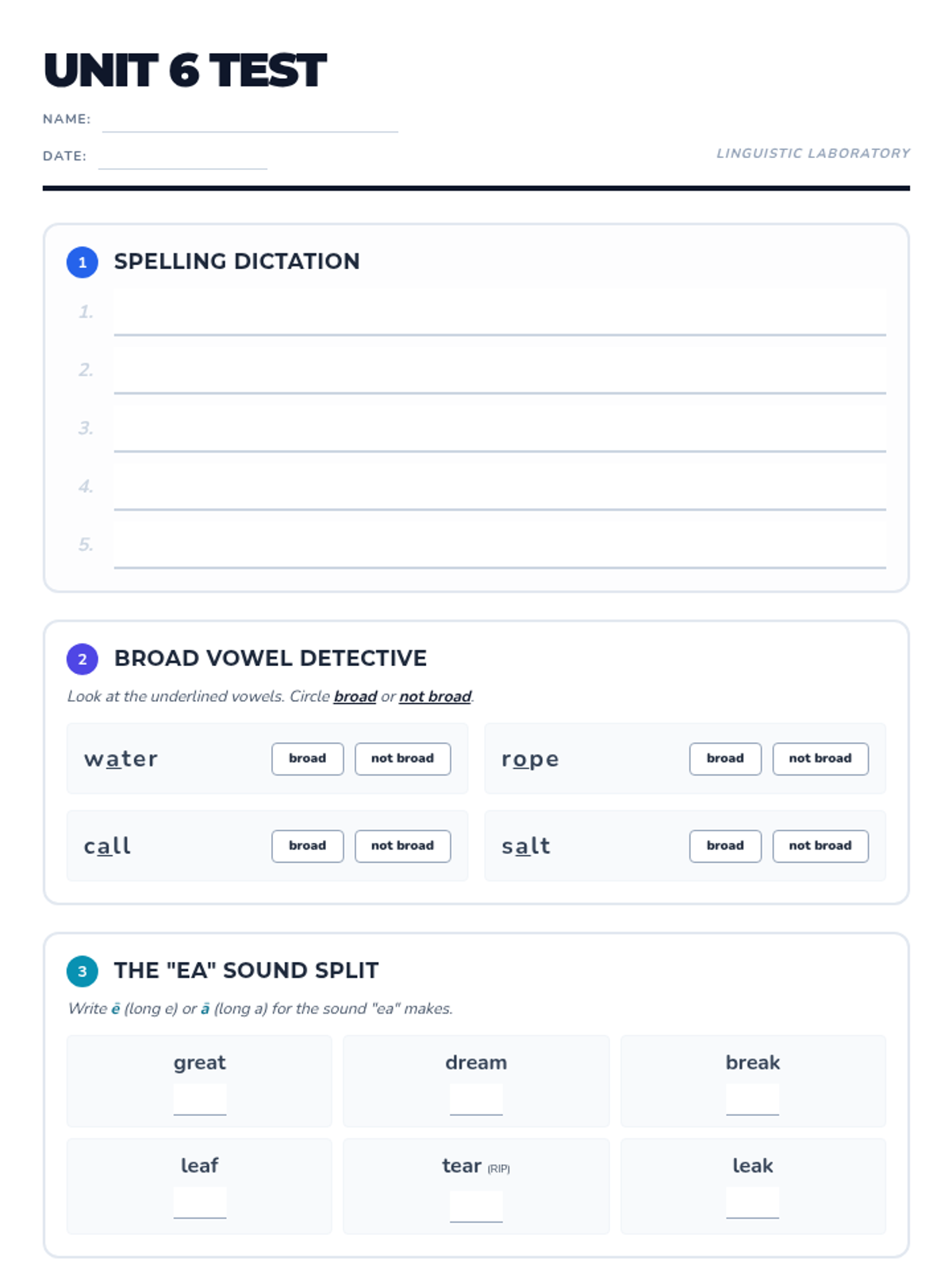
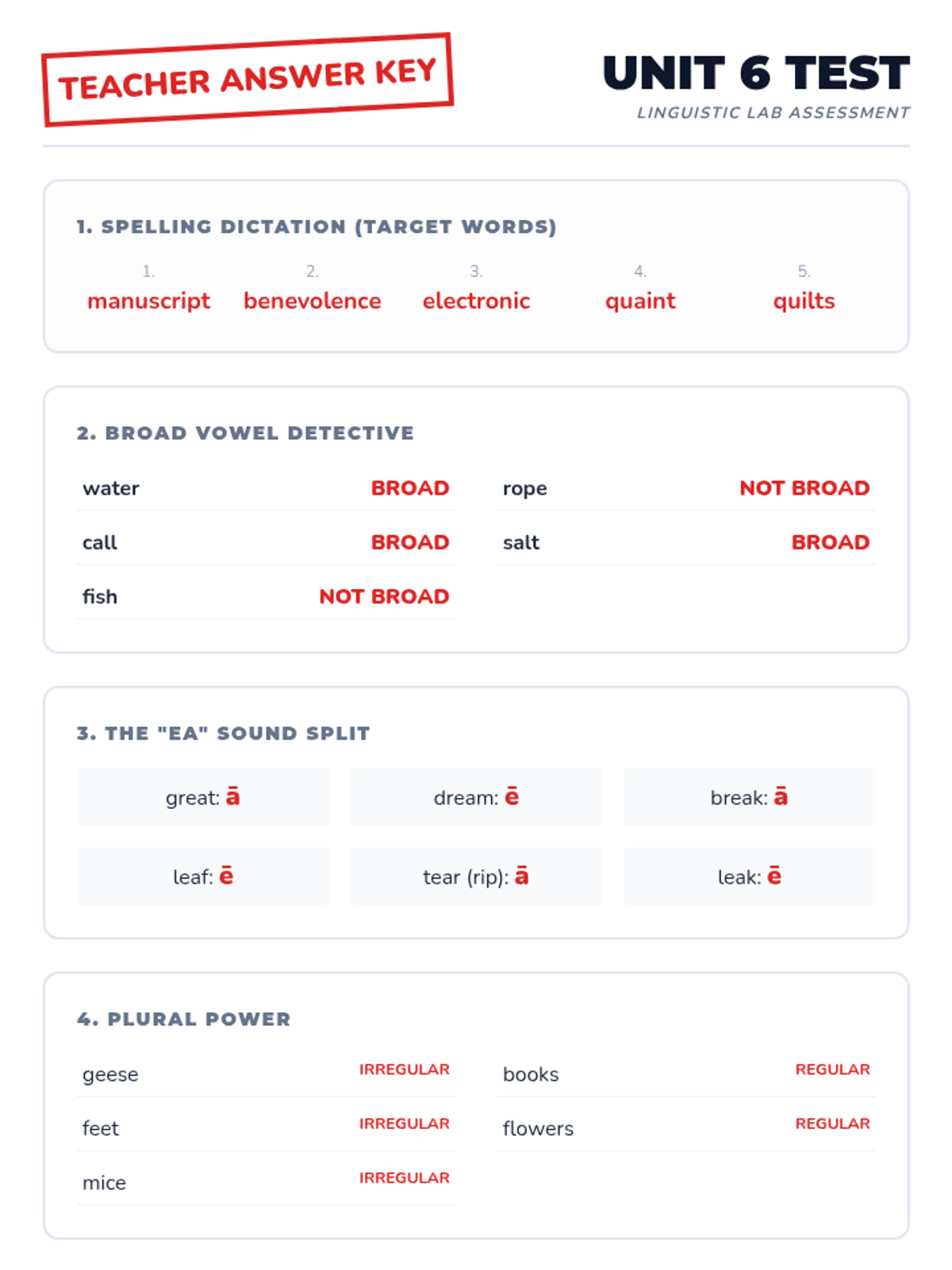
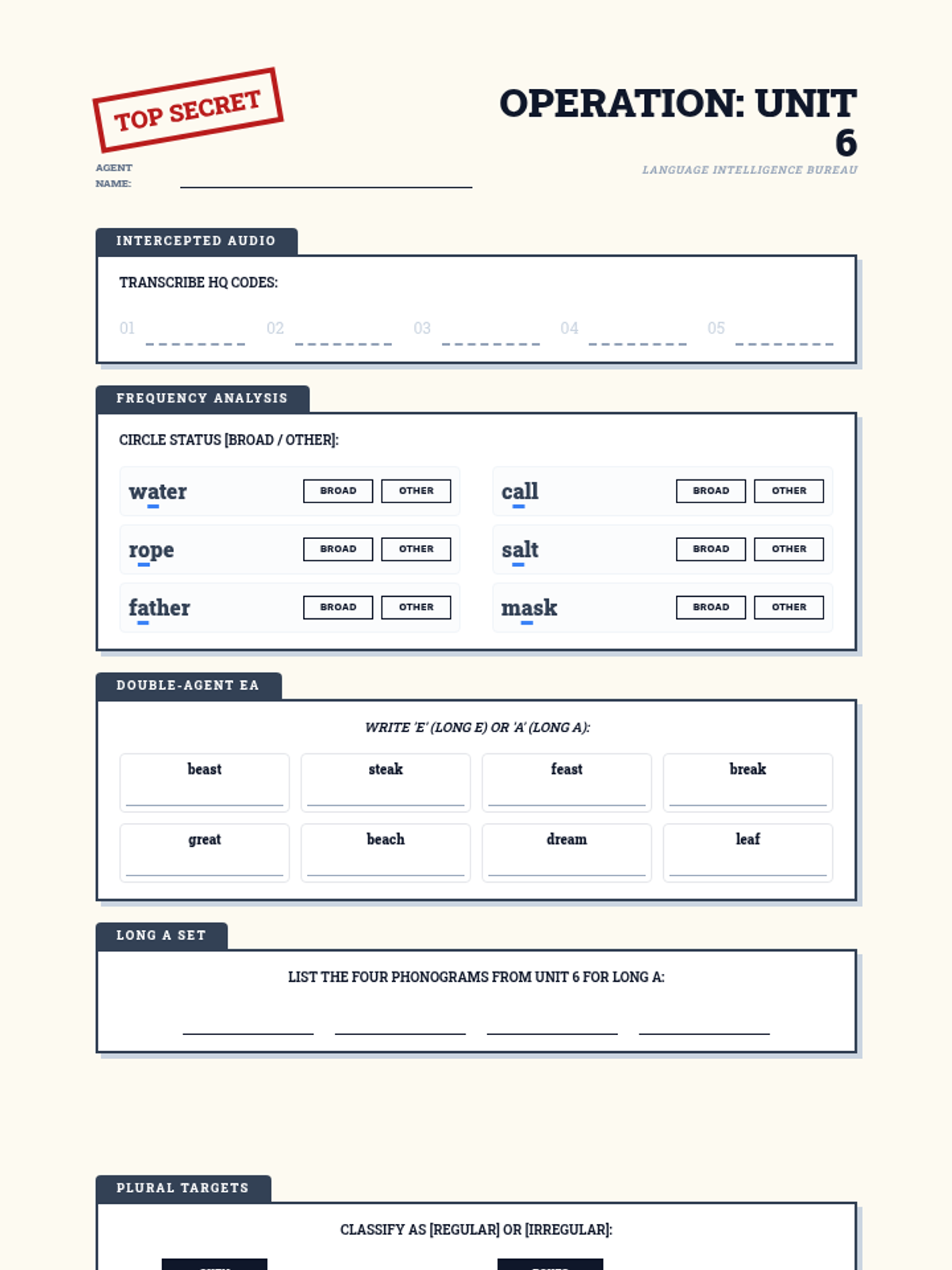
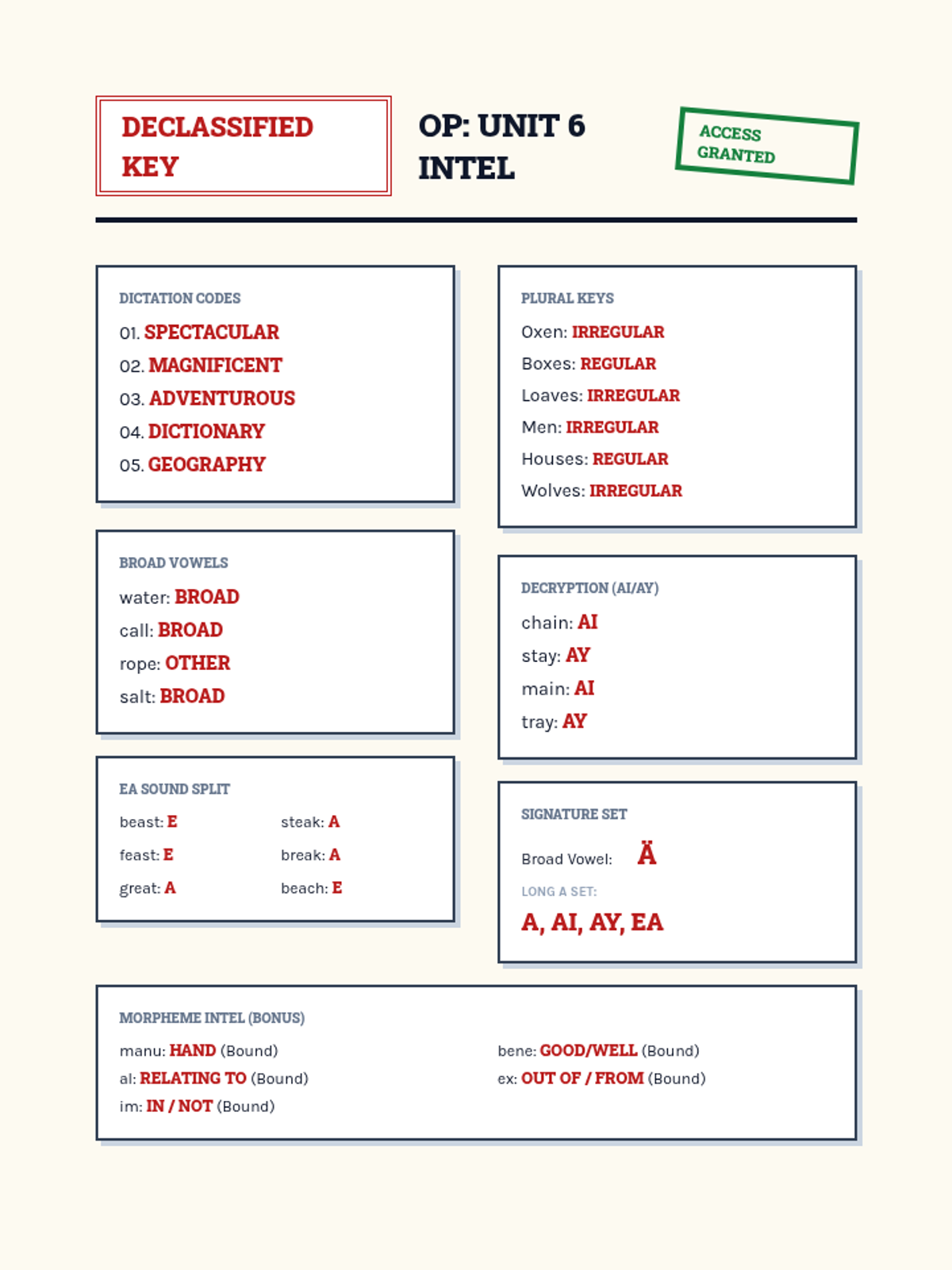
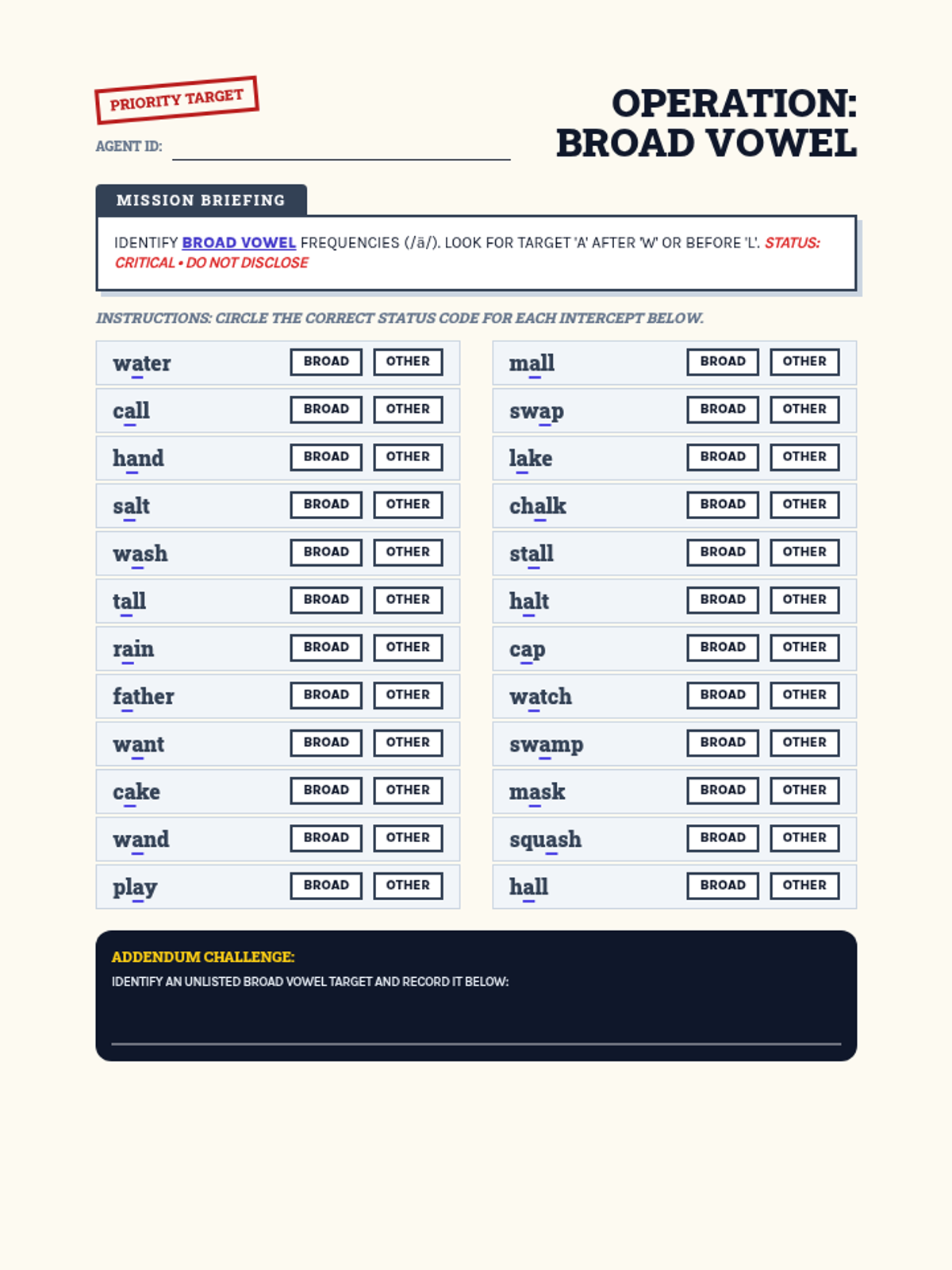
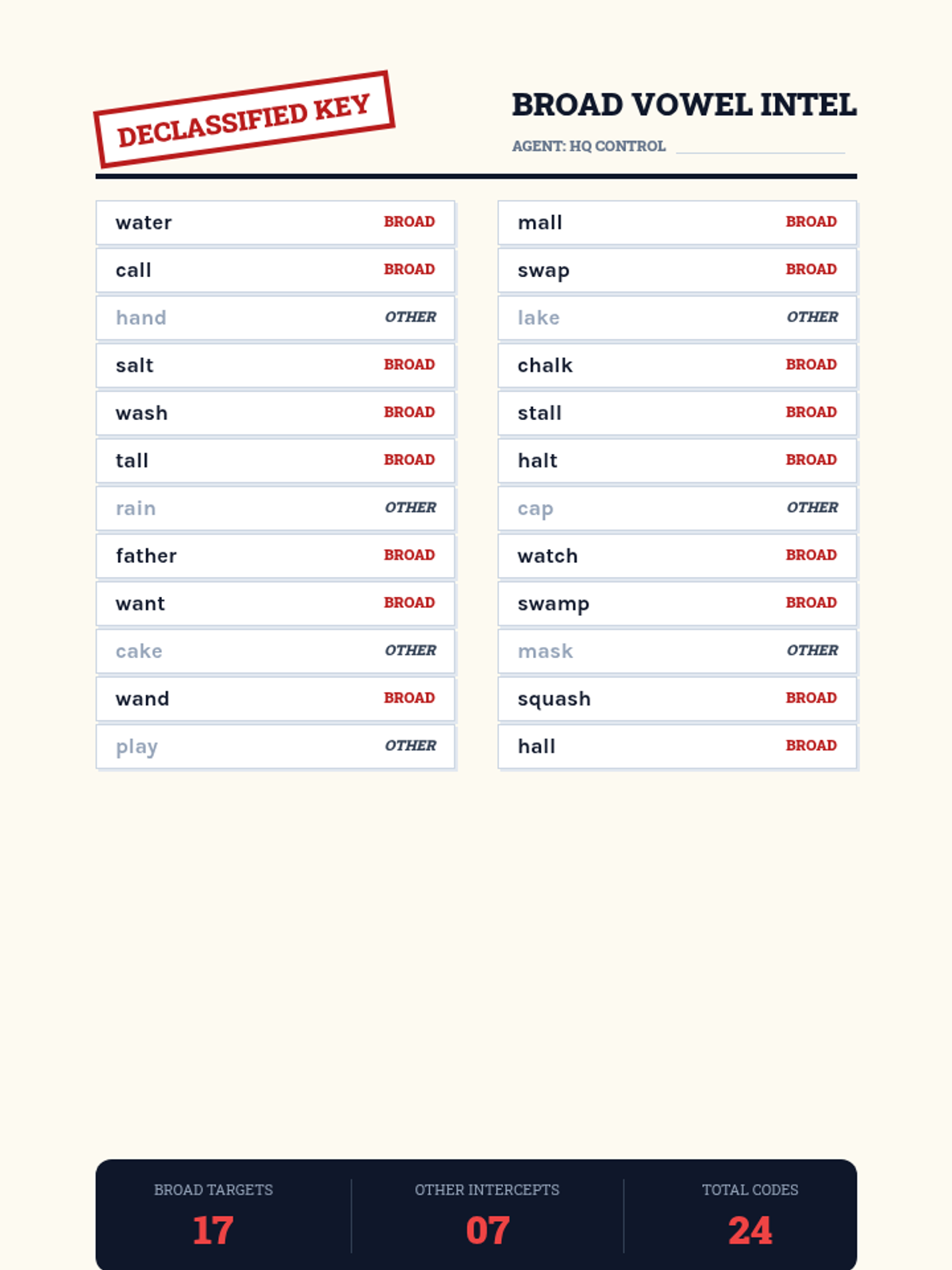
A comprehensive assessment covering phonograms, vowel sounds, plural classifications, and morphemic analysis. This lesson provides both the student test and the teacher answer key to evaluate student mastery of these linguistic concepts.