A simplified approach to writing where students choose a topic, craft a strong topic sentence, and provide three supporting details in a single-paragraph format.
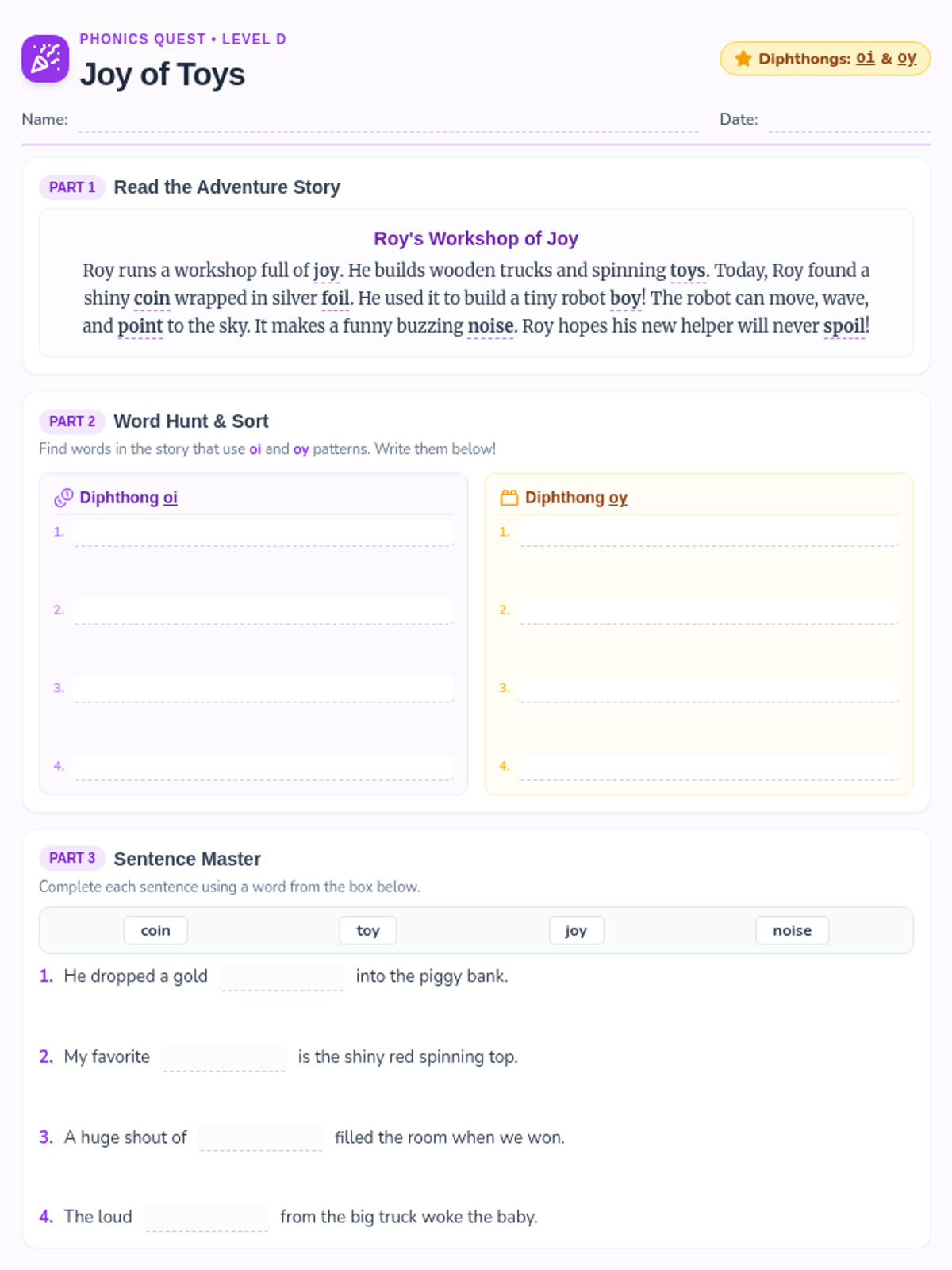
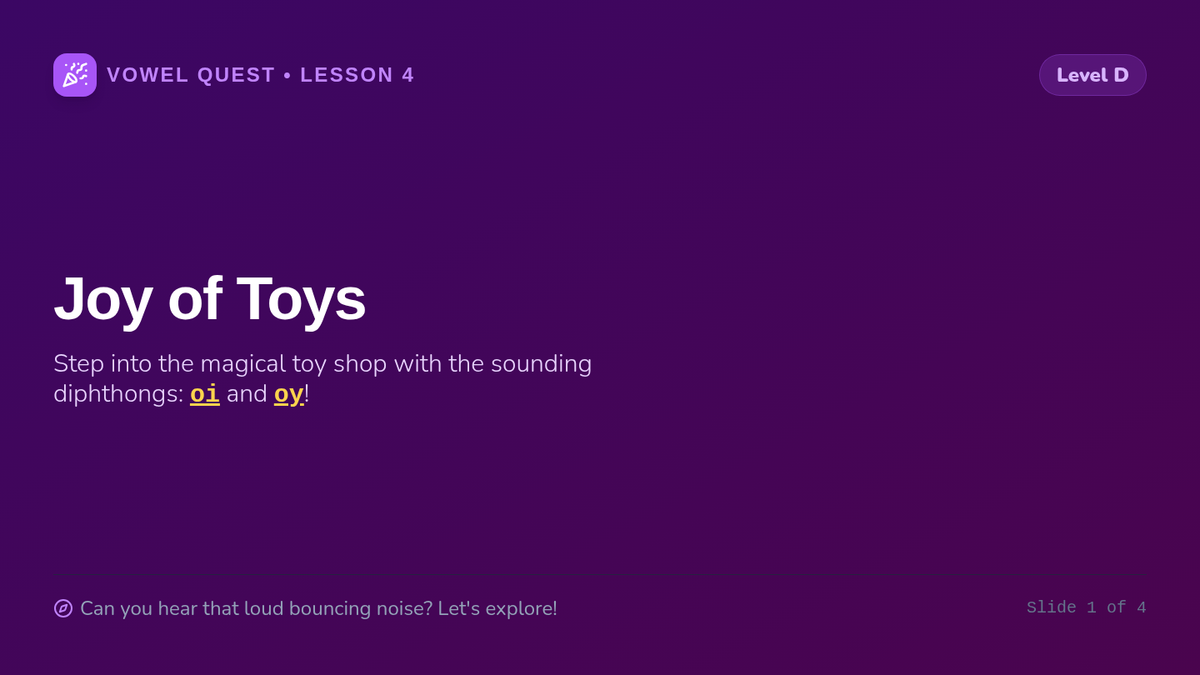
Discover diphthongs 'oi' and 'oy' (sounding like /oy/). Students explore a lively toy workshop where they find, spell, and sort treasure coins and clever toys.
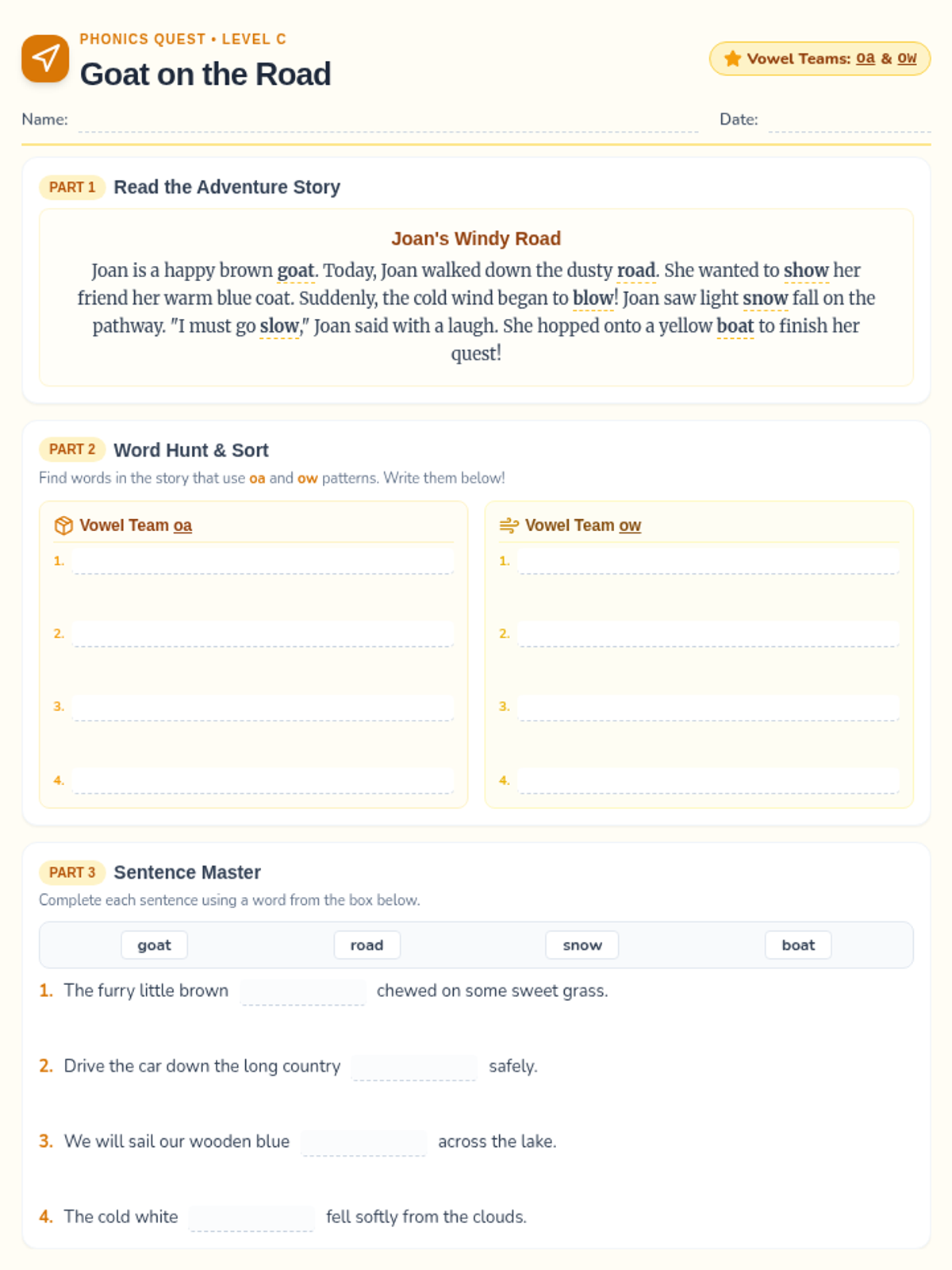
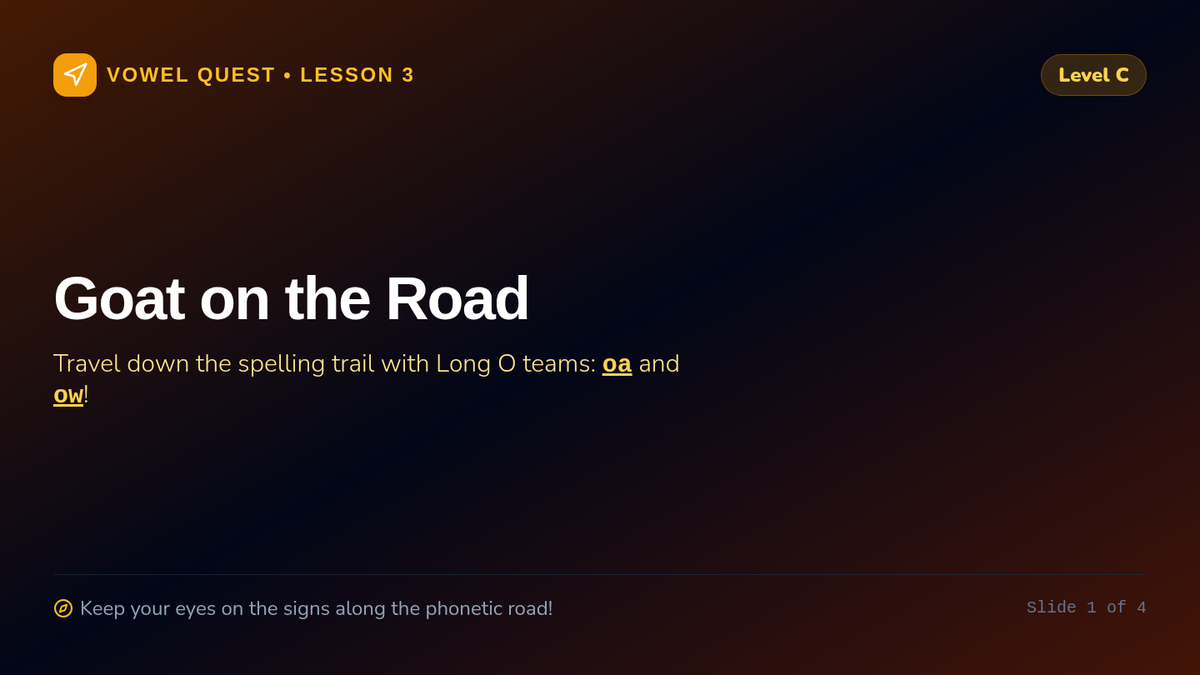
Navigate the long O sound spelled with vowel teams 'oa' and 'ow'. Students join a brave goat traveling down an old country road, collecting words along the journey.
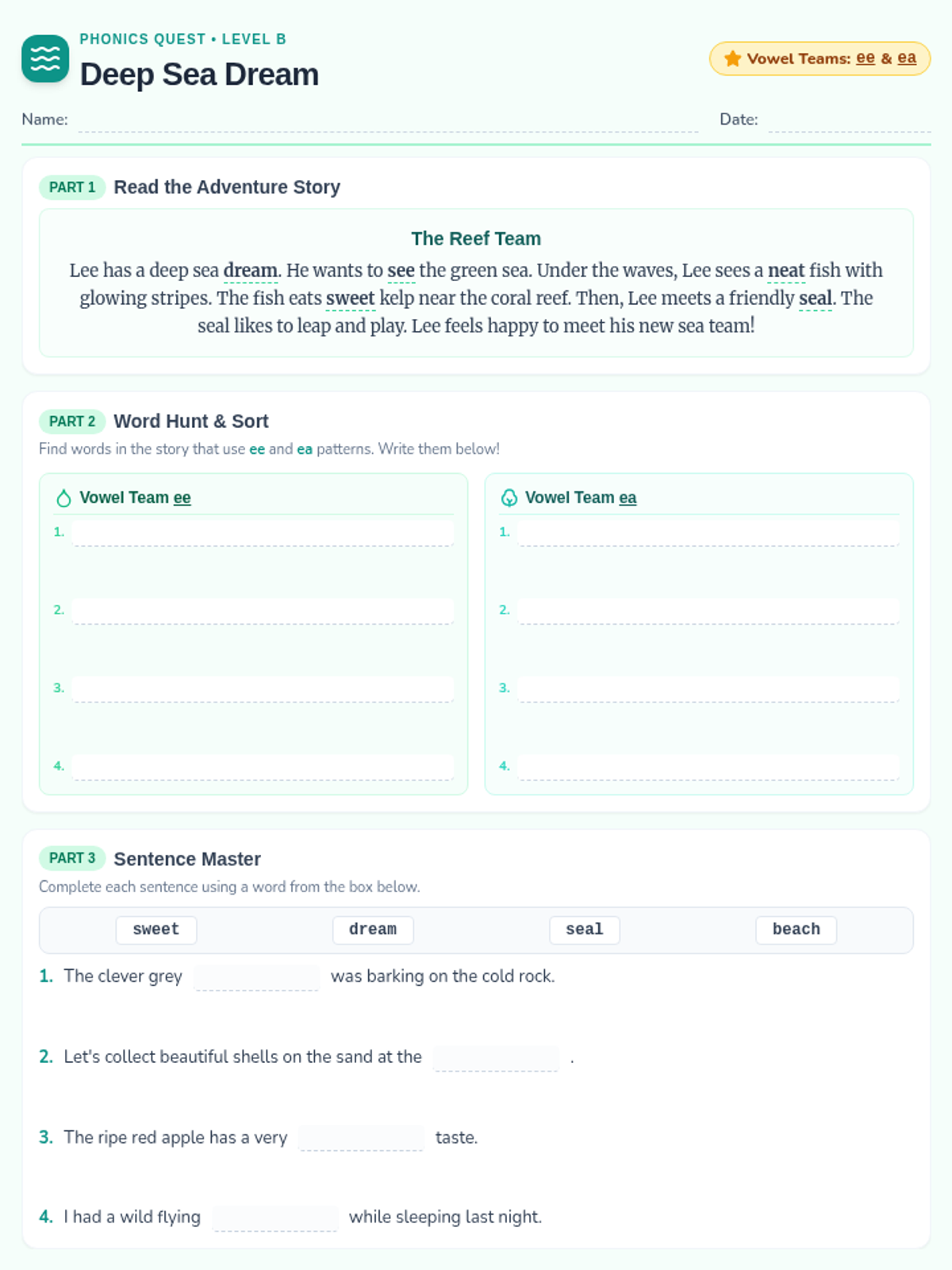
Explore the long E sound spelled with vowel teams 'ee' and 'ea'. Students dive deep into the ocean to meet colorful creatures and unlock spelling treasures.
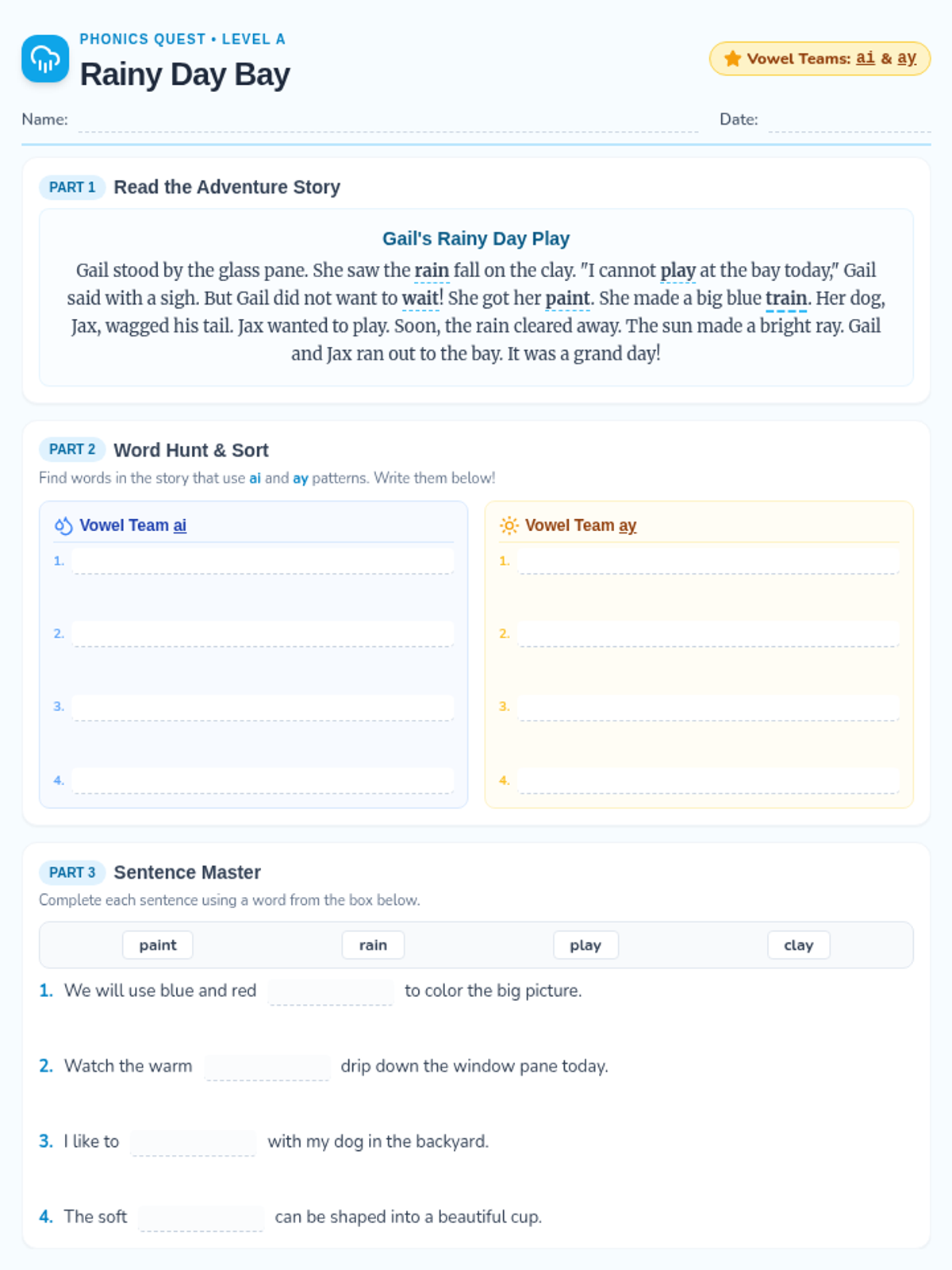
Master the long A sound spelled with vowel teams 'ai' and 'ay'. Students follow a rainy day adventure, hunt for target words, and build their spelling skills.
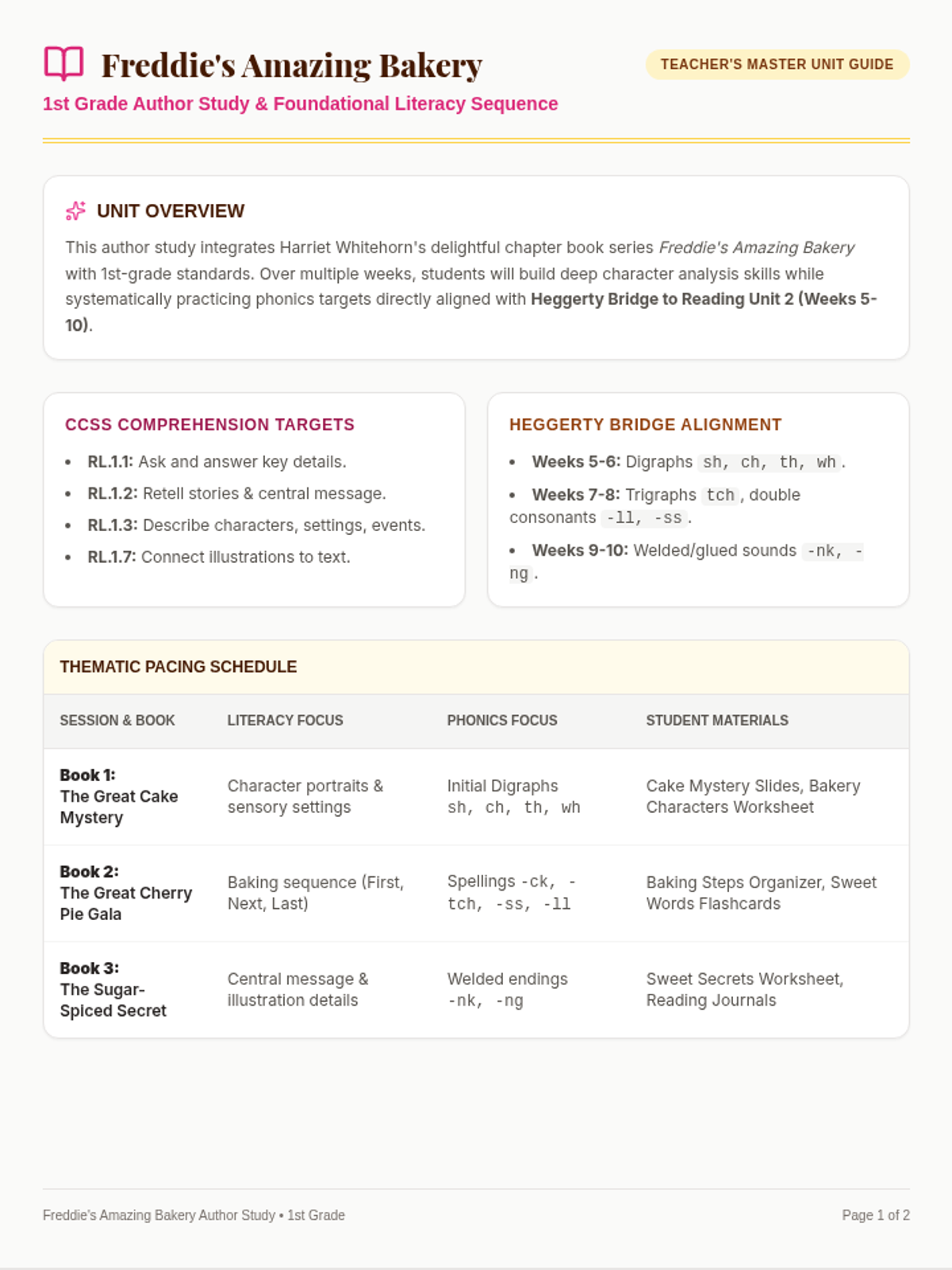
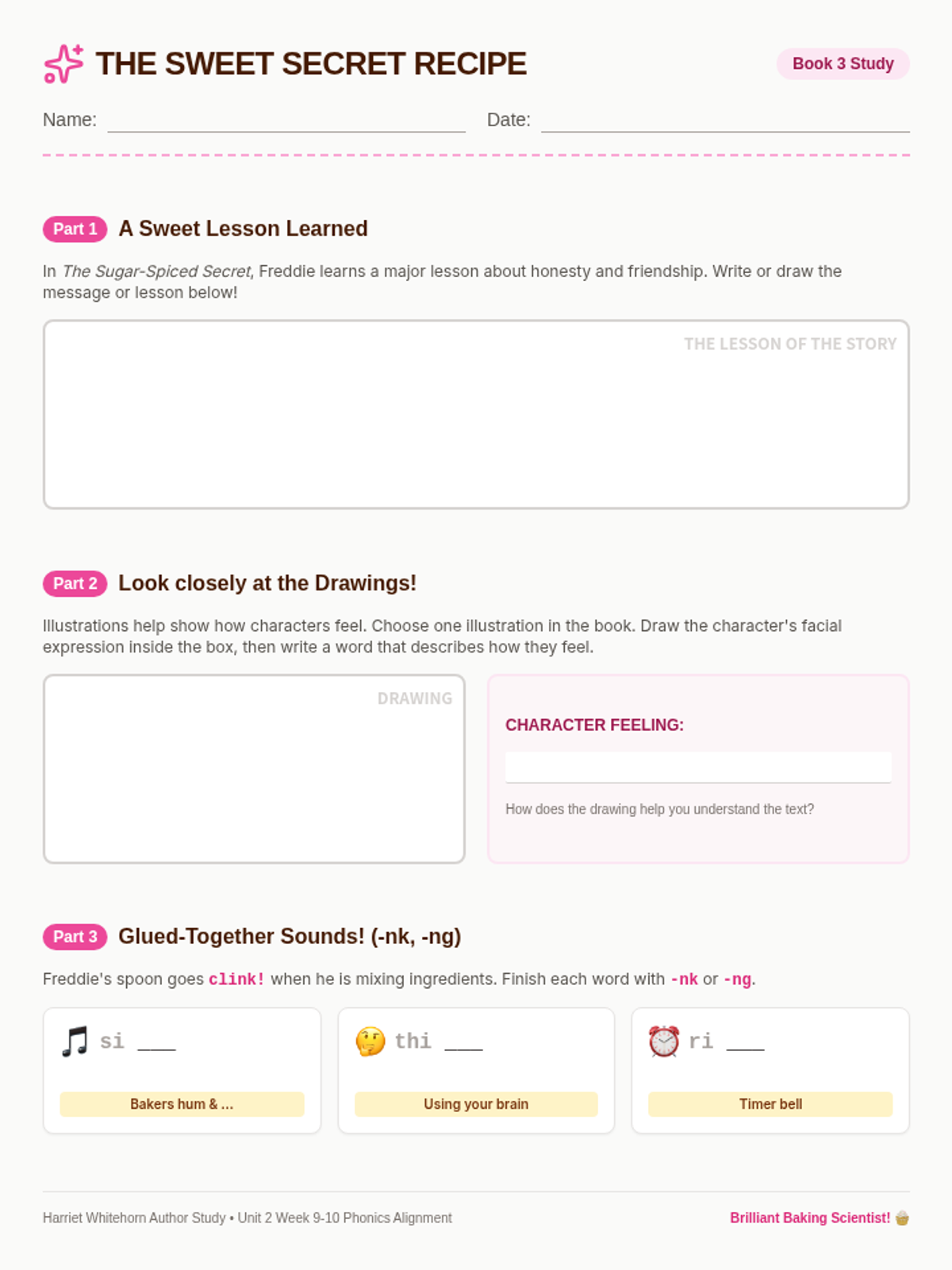
Focuses on identifying central message, lessons learned, and illustrations. Students explore the value of honesty and teamwork while practicing welded sounds (-nk, -ng) and inflectional endings.
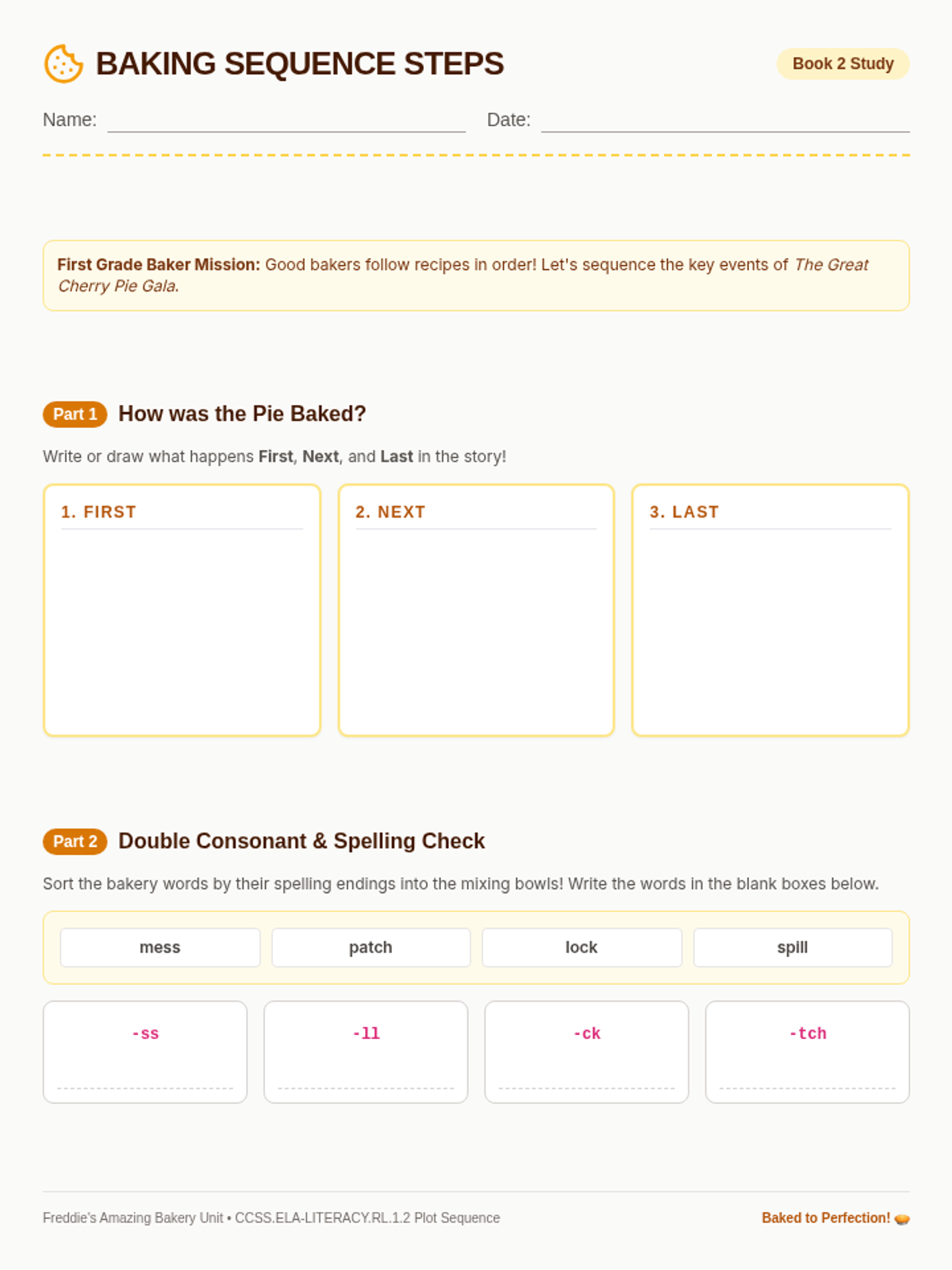
Focuses on story sequencing, plot events, and past tense verbs. Students retell key bakery events and identify digraph/trigraph spelling patterns (ck, tch), plurals (-es), and double consonants (-ll, -ss).
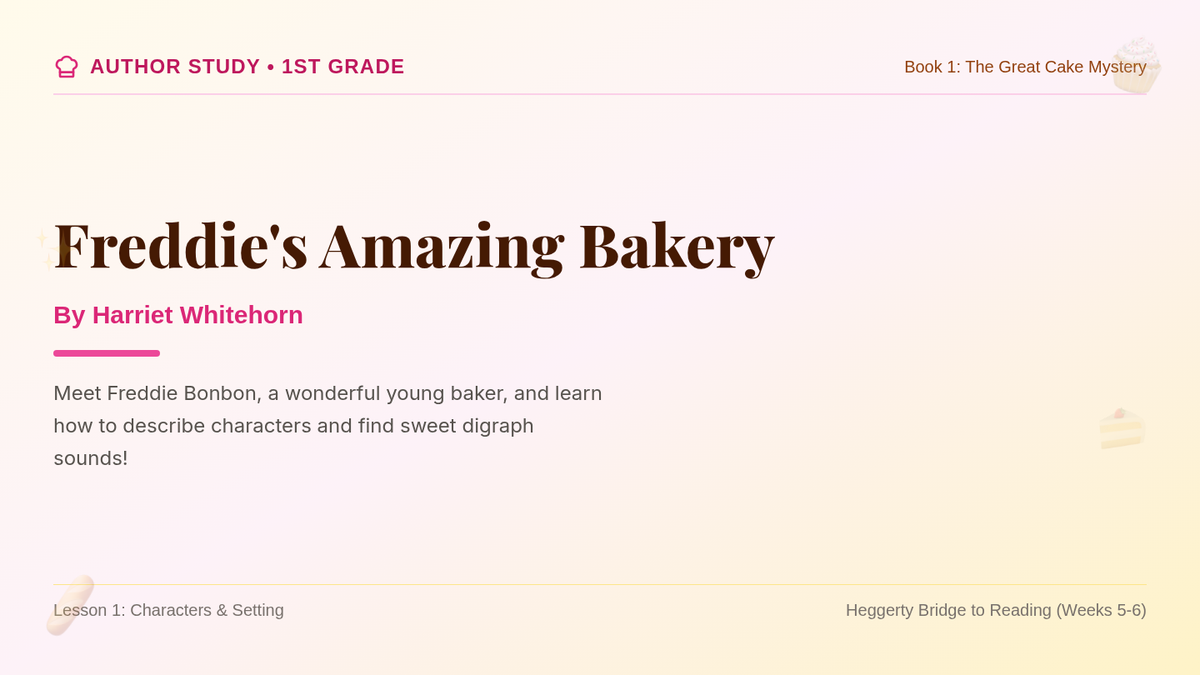
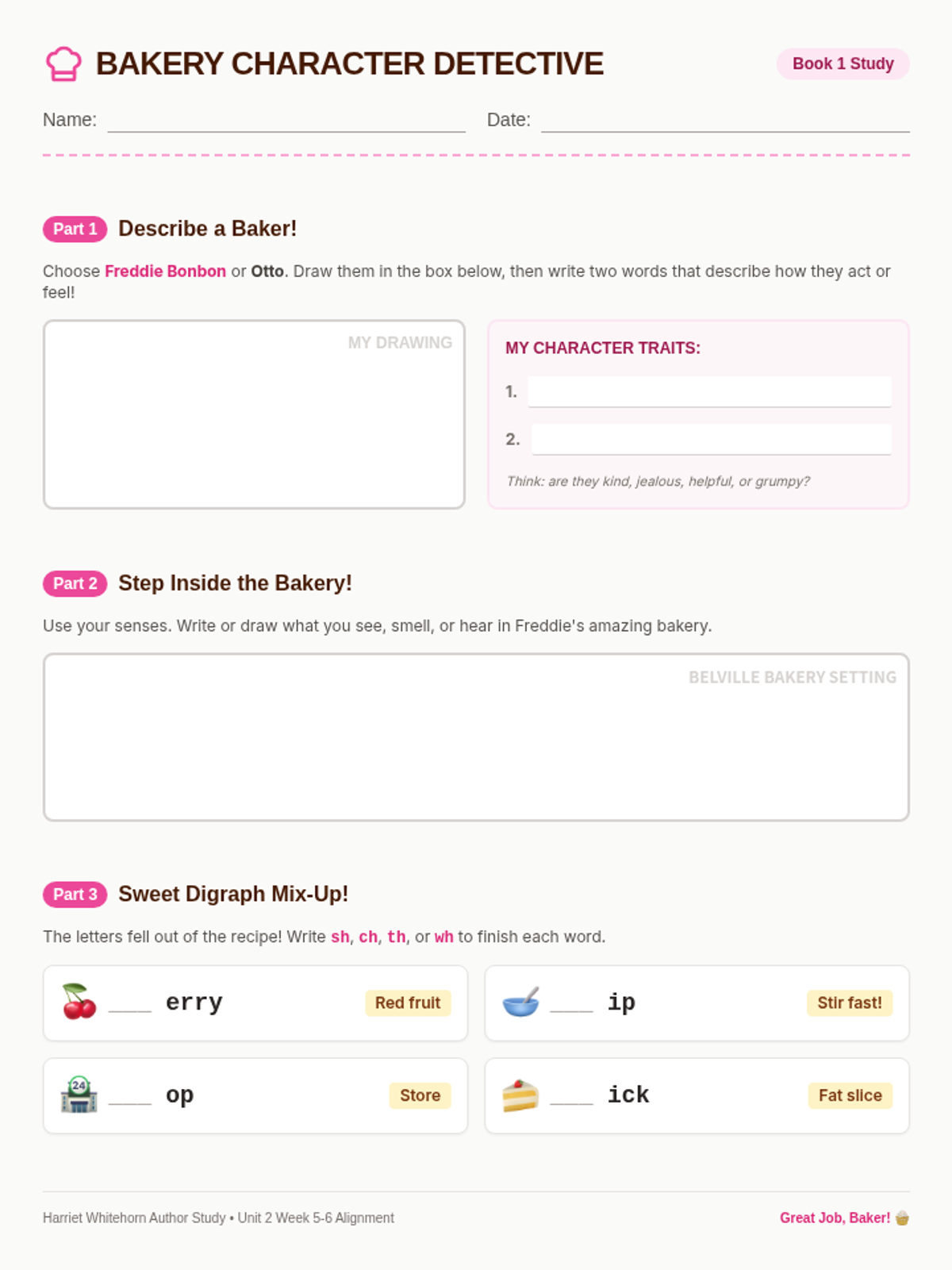
Focuses on analyzing character traits and setting using Book 1 of Harriet Whitehorn's series. Students identify character roles and map initial digraphs (sh, ch, th, wh) using bakery vocabulary.
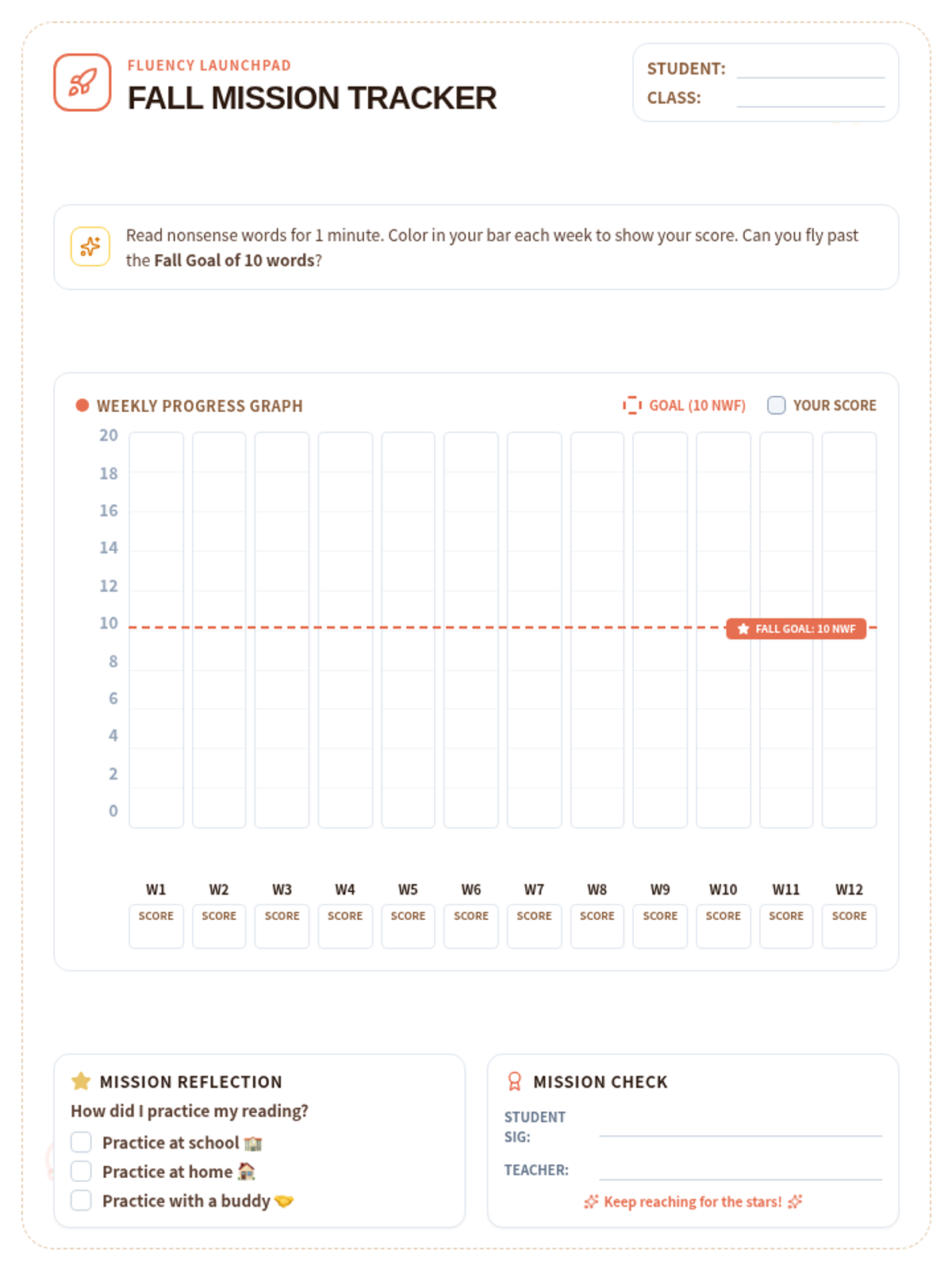
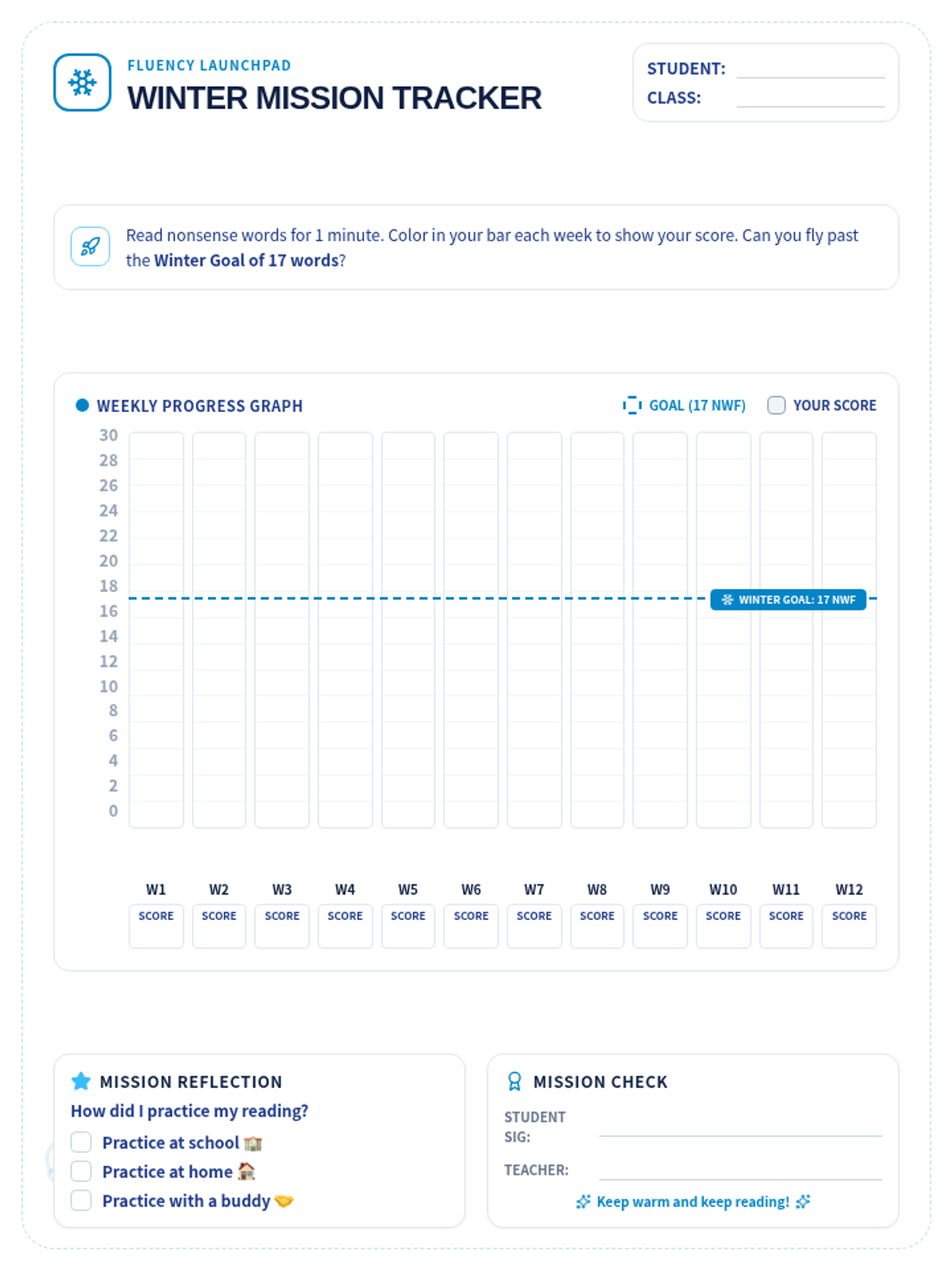
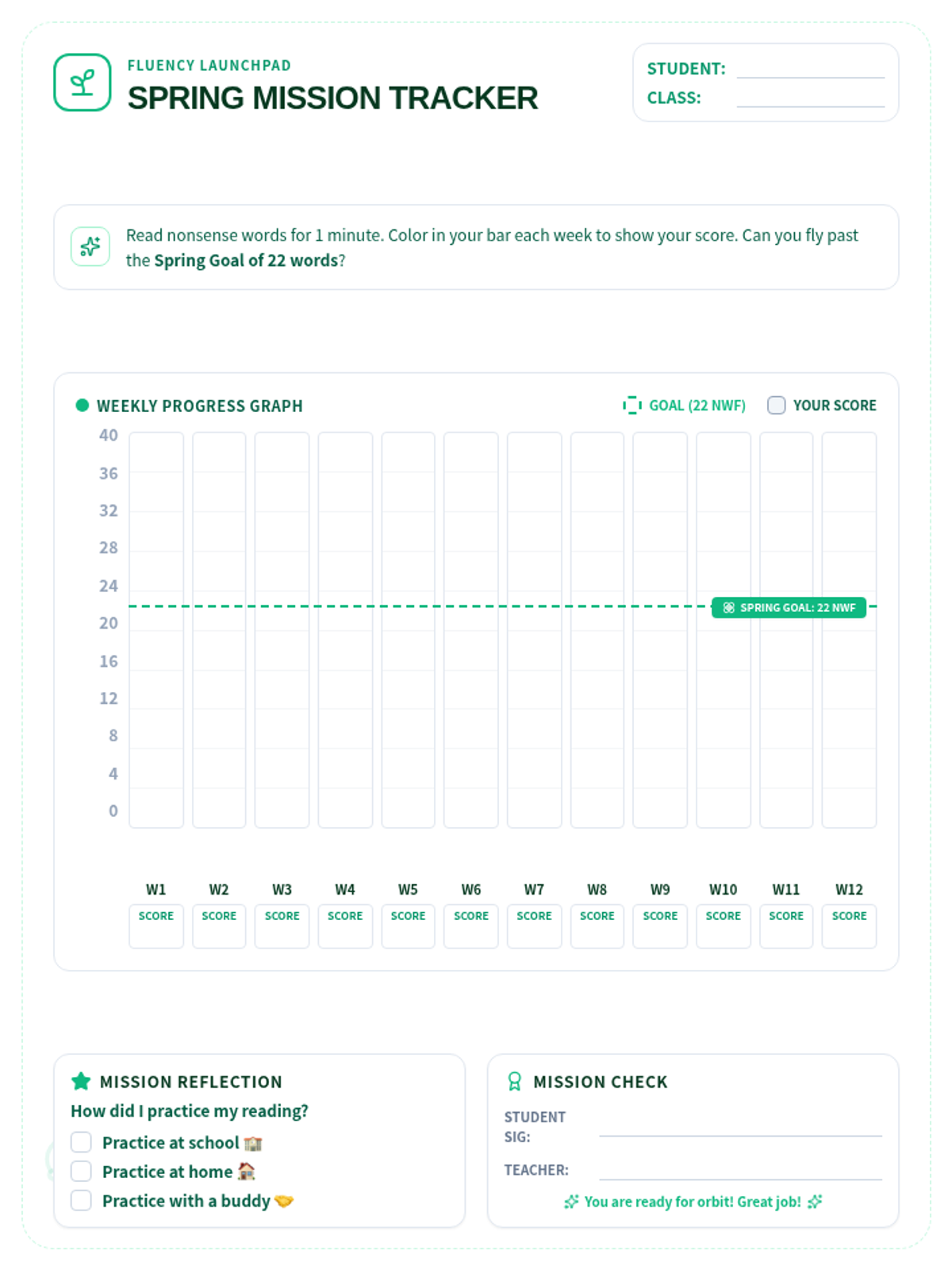
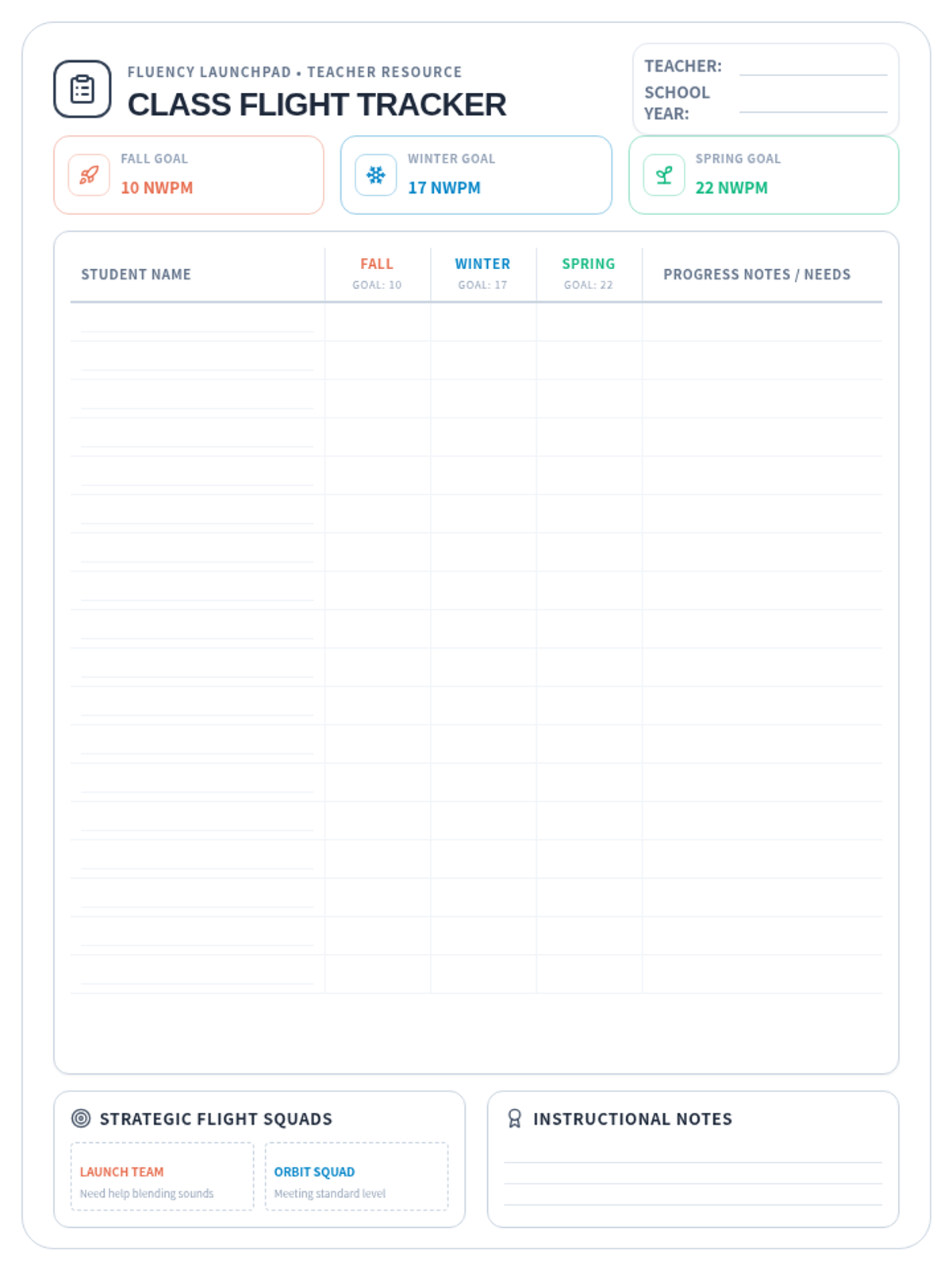
A collection of seasonal weekly progress trackers designed for first-grade students to monitor their Nonsense Word Fluency (NWF) progress across Fall, Winter, and Spring. Each tracker features a space-themed bar graph with targeted goal lines of 10, 17, and 22 words per minute respectively, complete with motivational reflection zones.
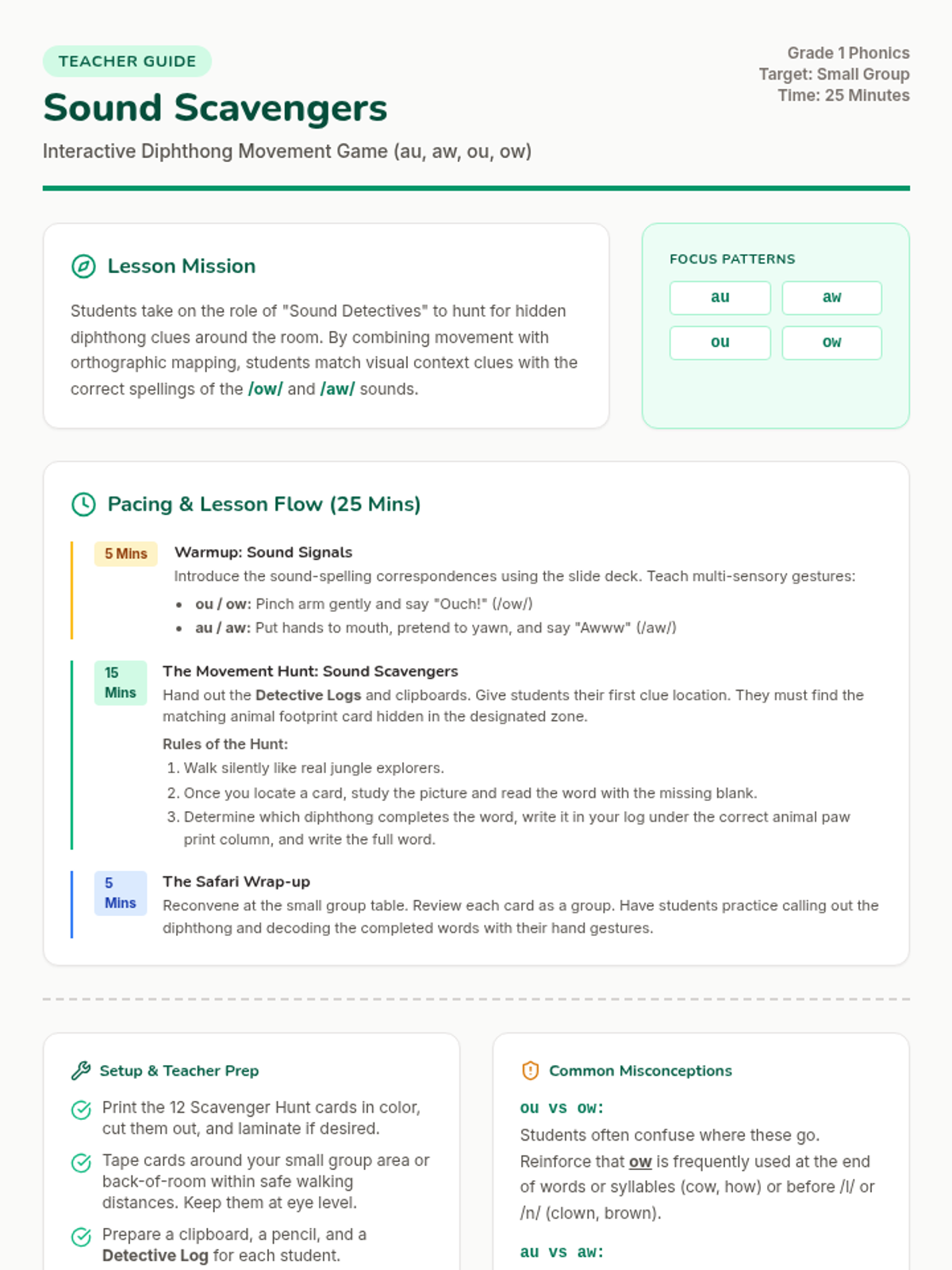
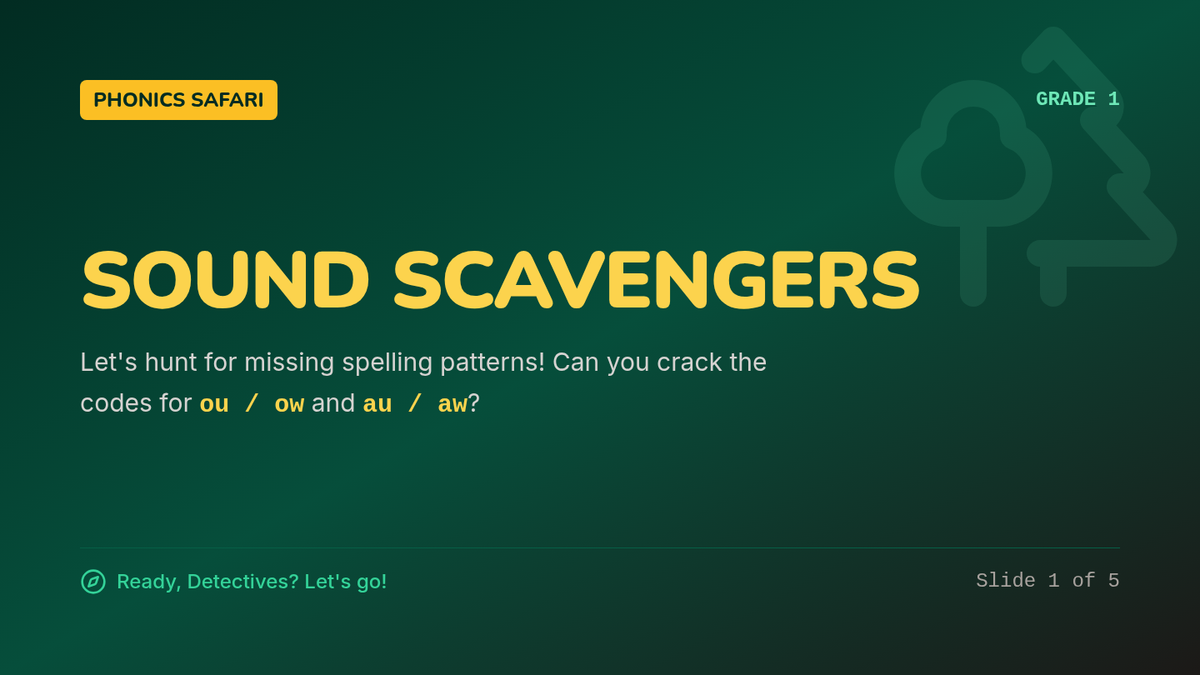
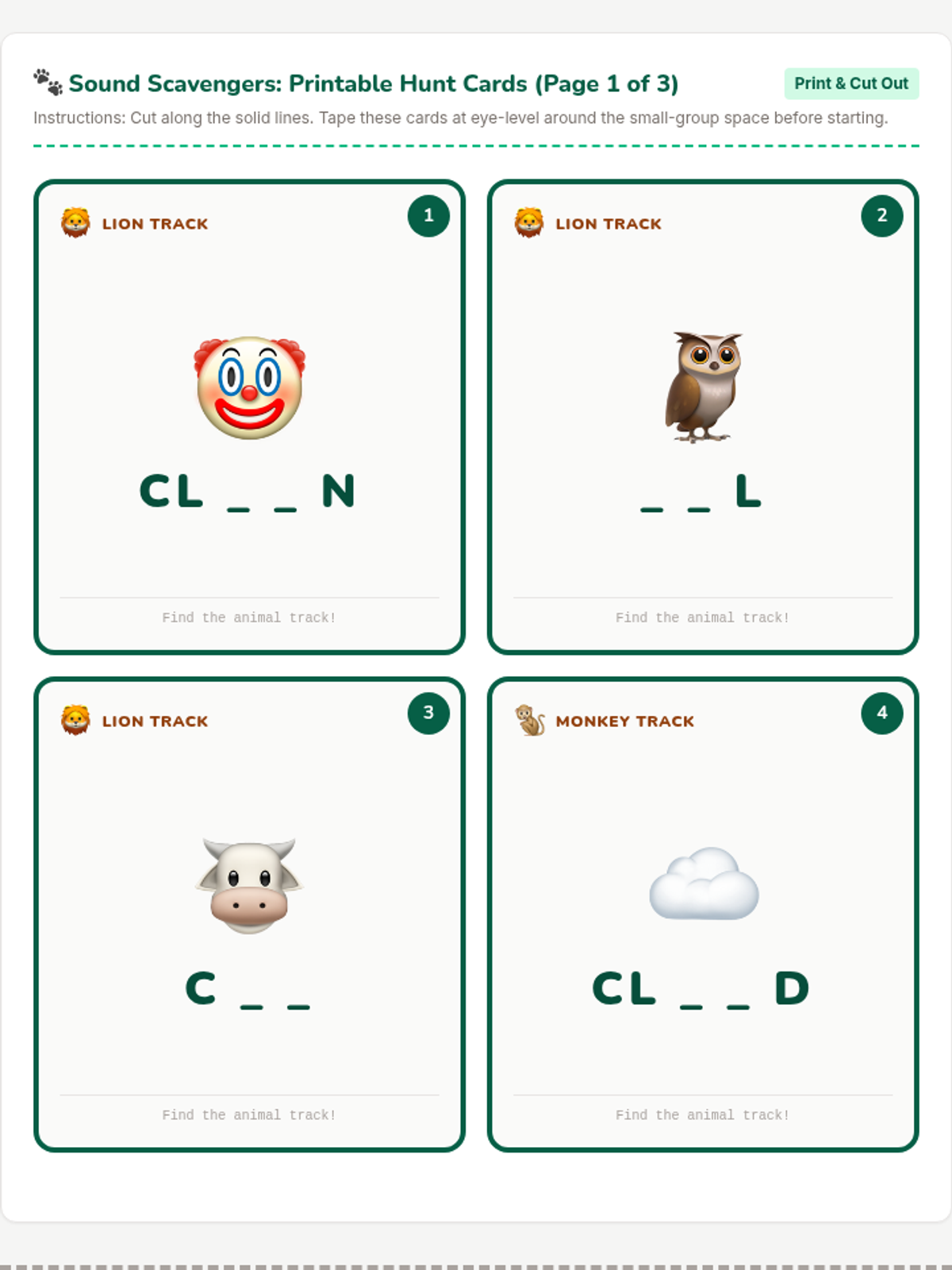
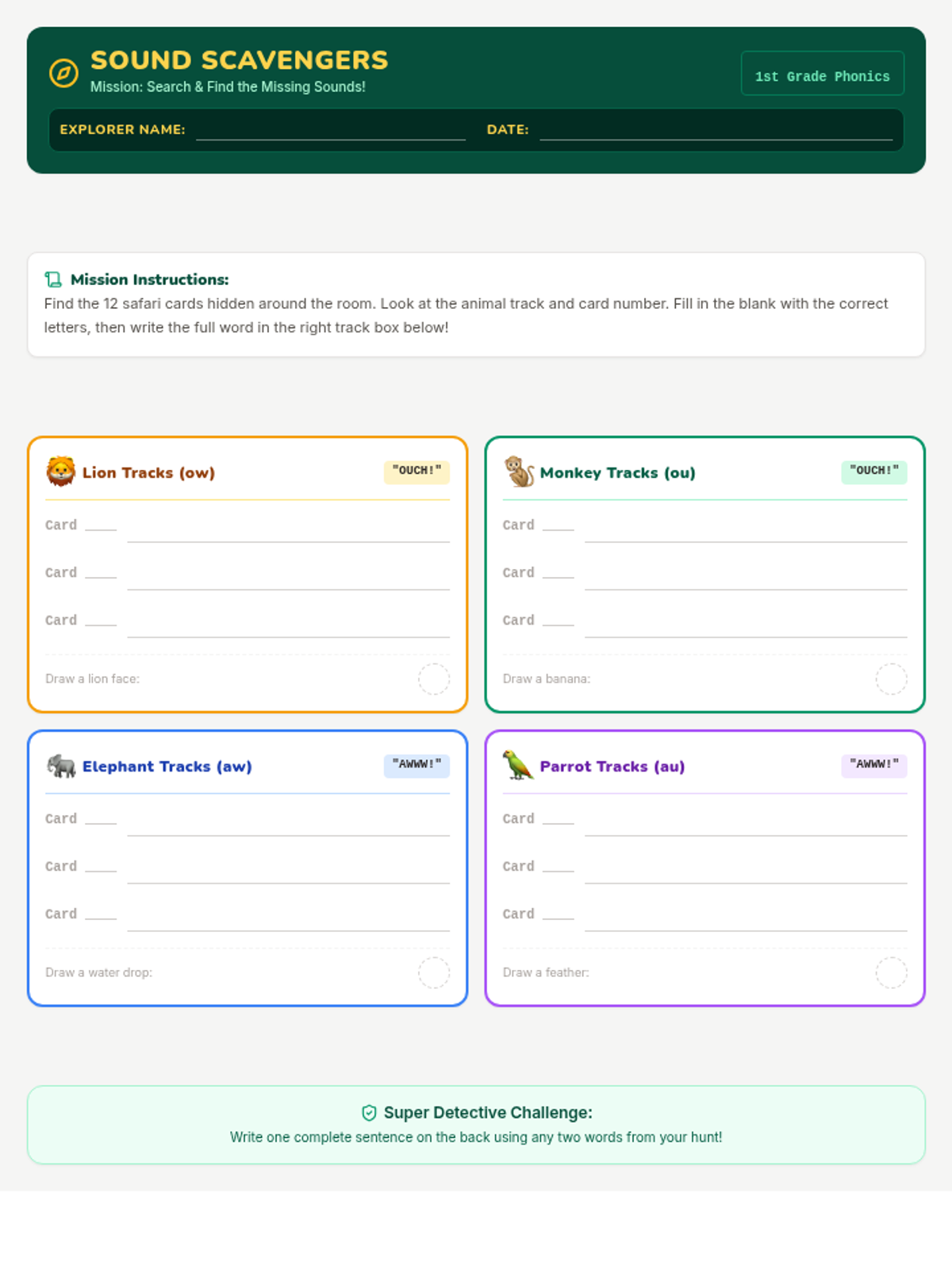
An interactive, movement-based phonics lesson where 1st graders hunt for diphthongs (au, aw, ou, ow) around the room, matching picture clues to spellings.
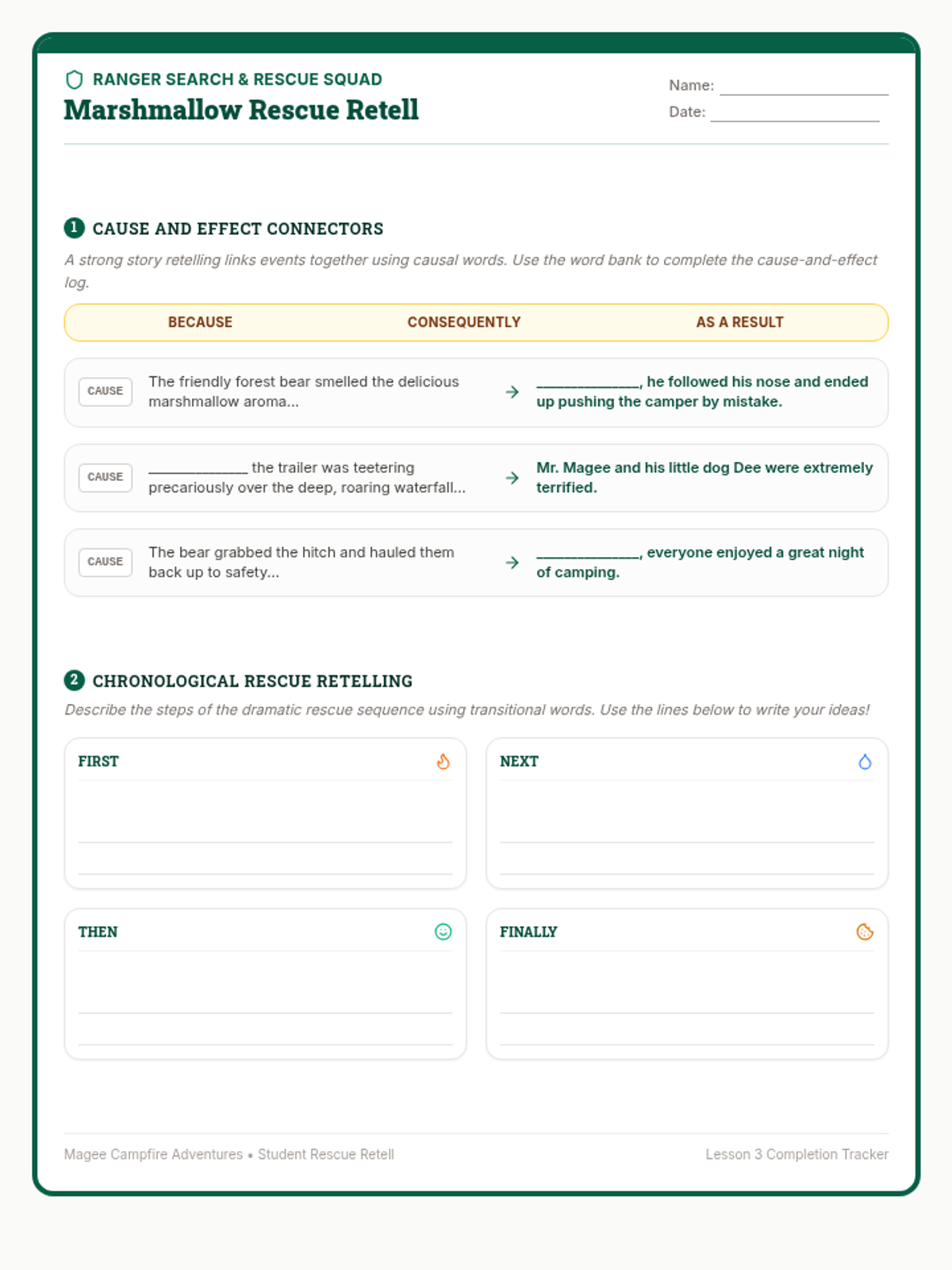
Synthesizes comprehension and oral/written language. Students use cause-and-effect language ('because', 'consequently', 'as a result') and transitional sequencers to retell the story climax and analyze how the friendly bear saved the day.
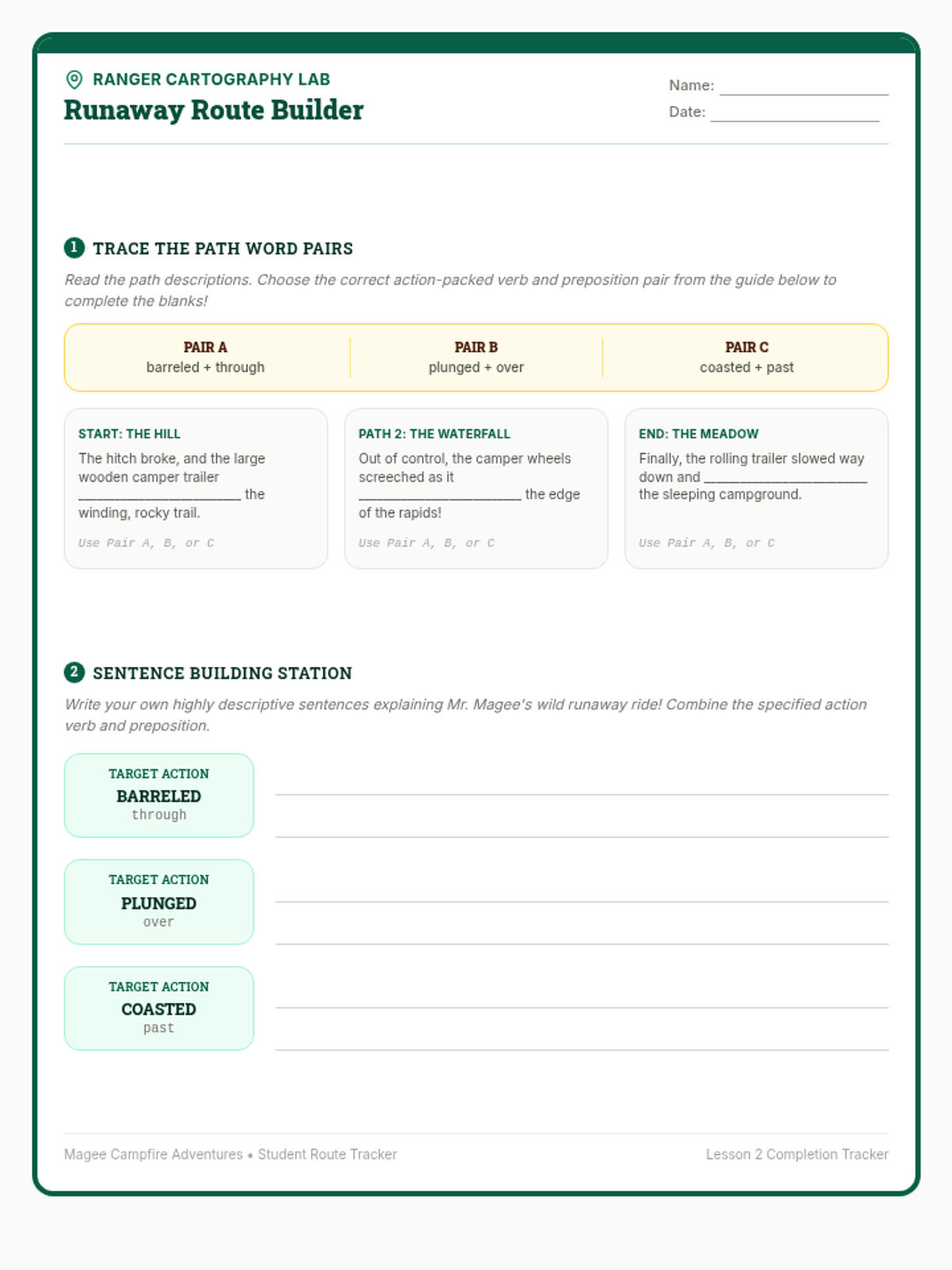
Targets expressive grammar in context. Students map and describe the runaway camper's wild path using precise spatial prepositions (e.g., down, past, over, through) and dynamic action/movement verbs, constructing high-quality descriptive sentences.
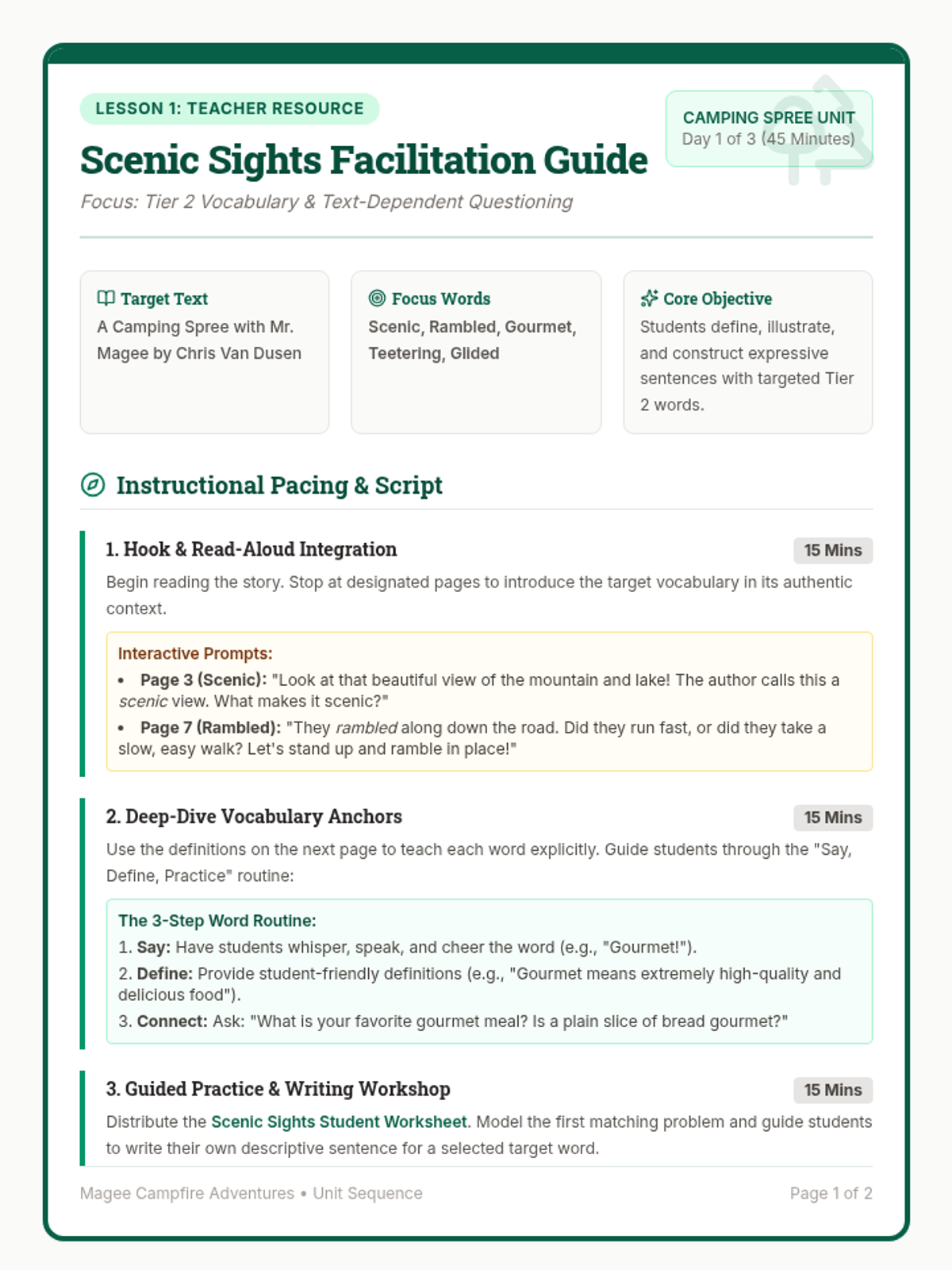
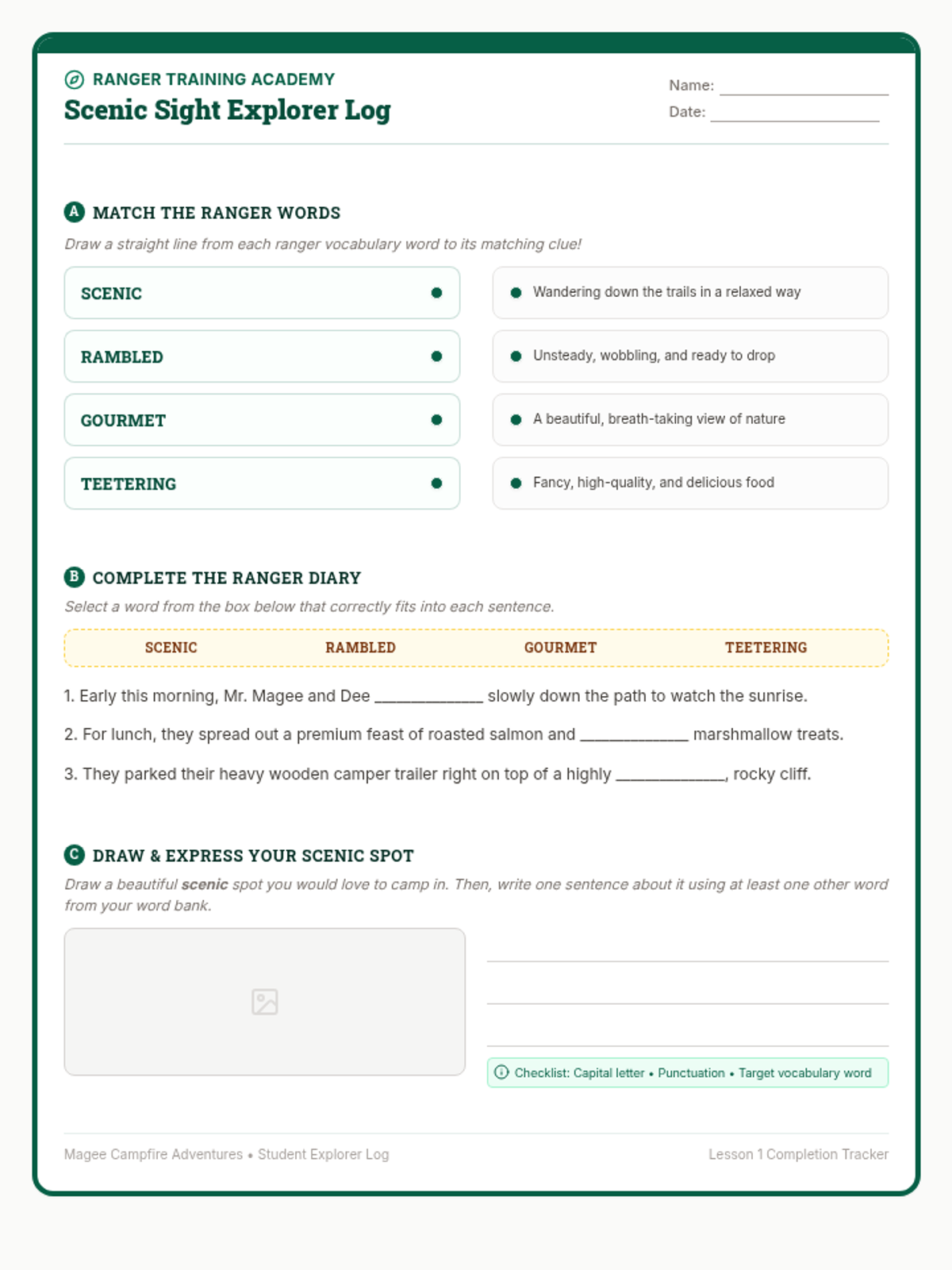
Focuses on rich vocabulary from the book, helping students understand and expressively use words like 'scenic', 'teetering', 'rambled', and 'gourmet' through interactive reading, oral vocabulary routines, and descriptive writing.
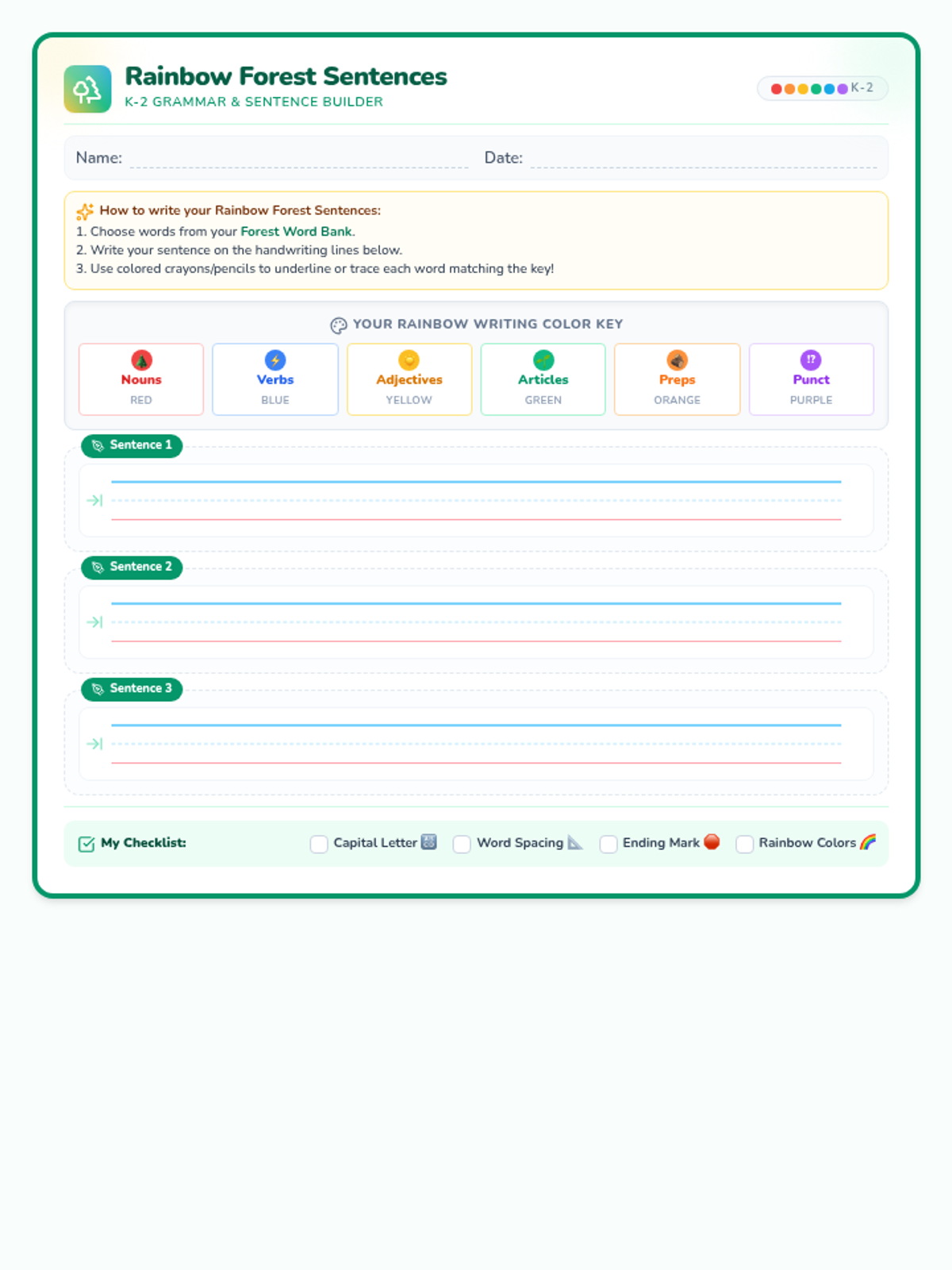
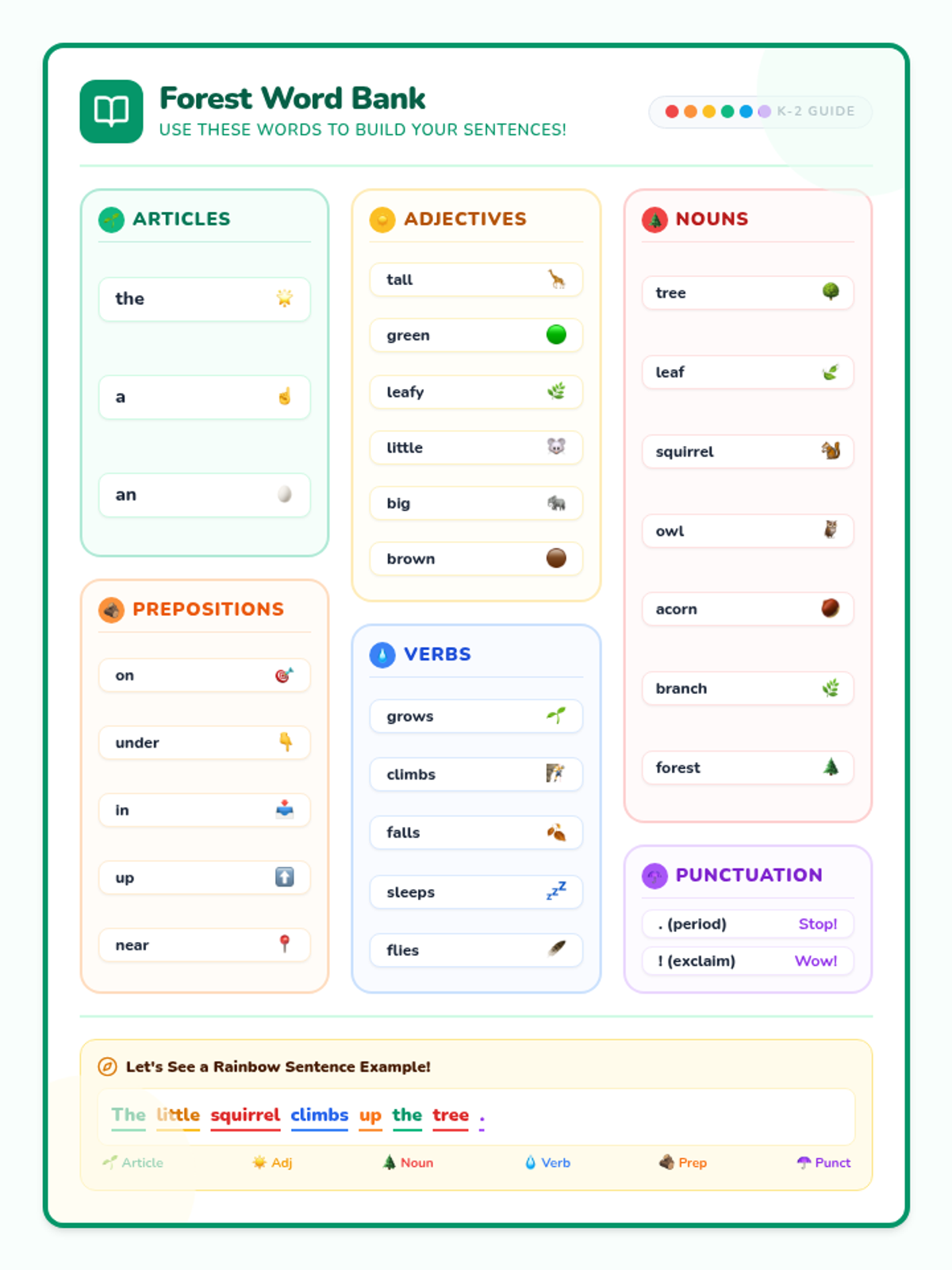
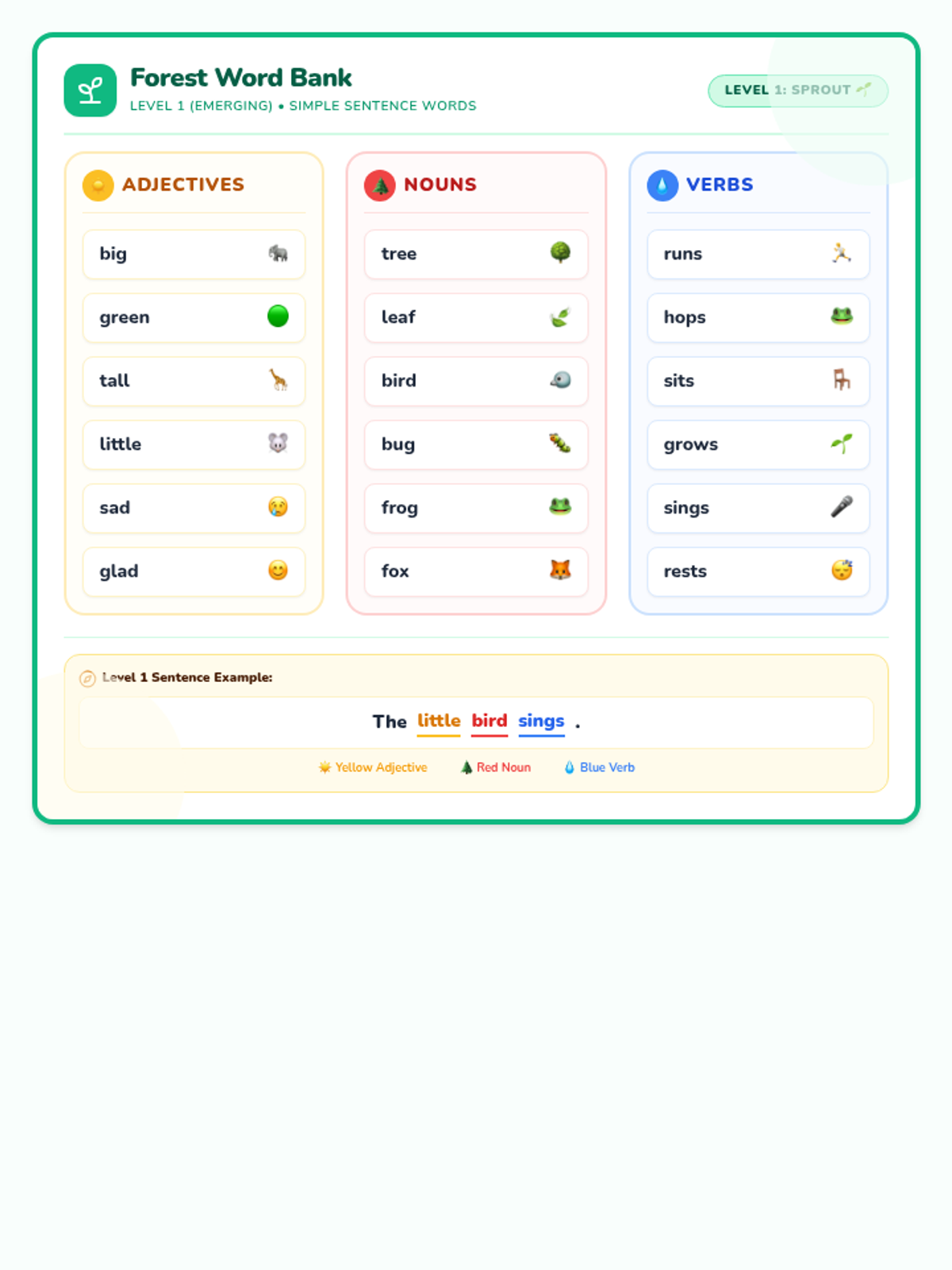
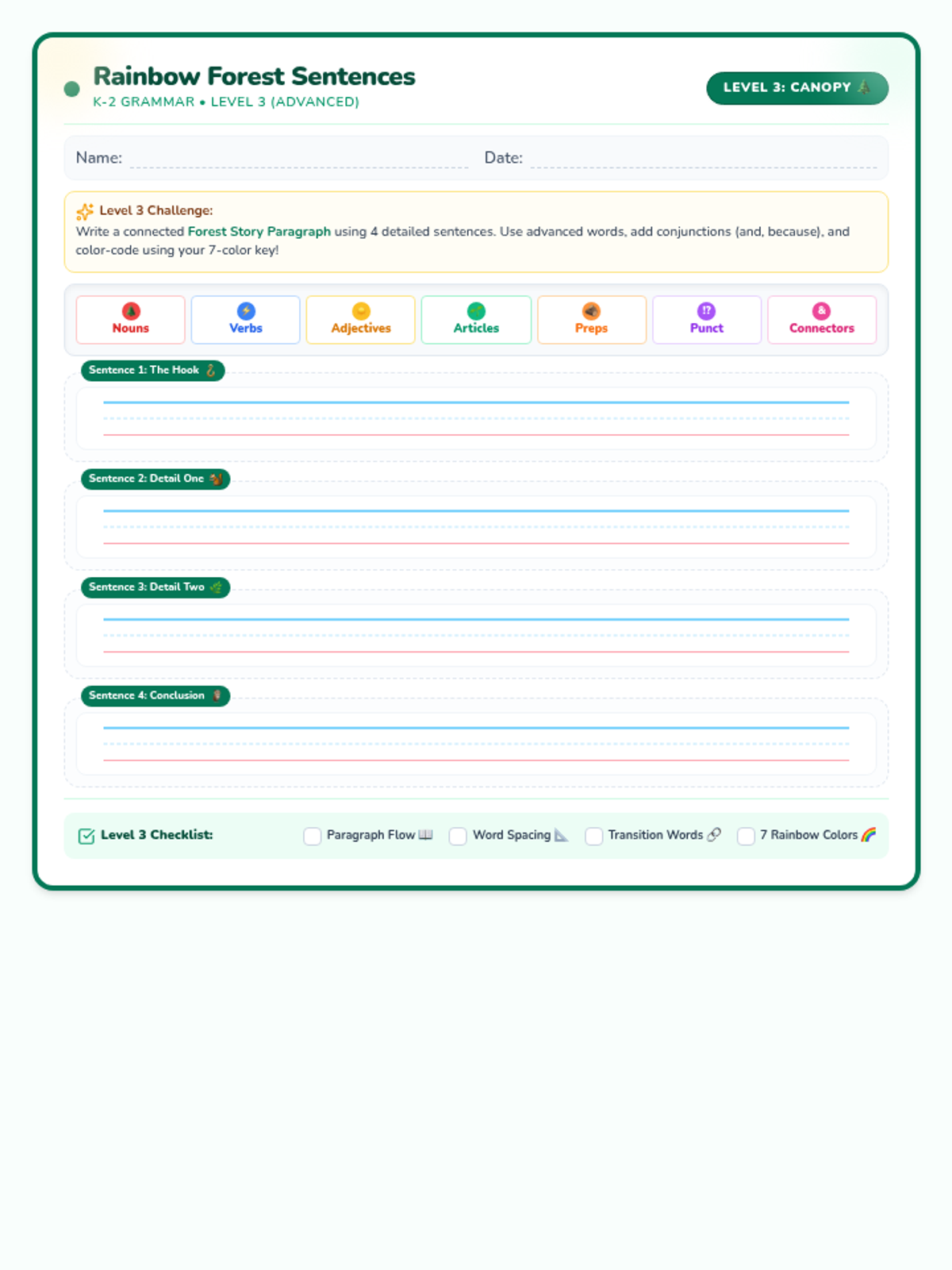
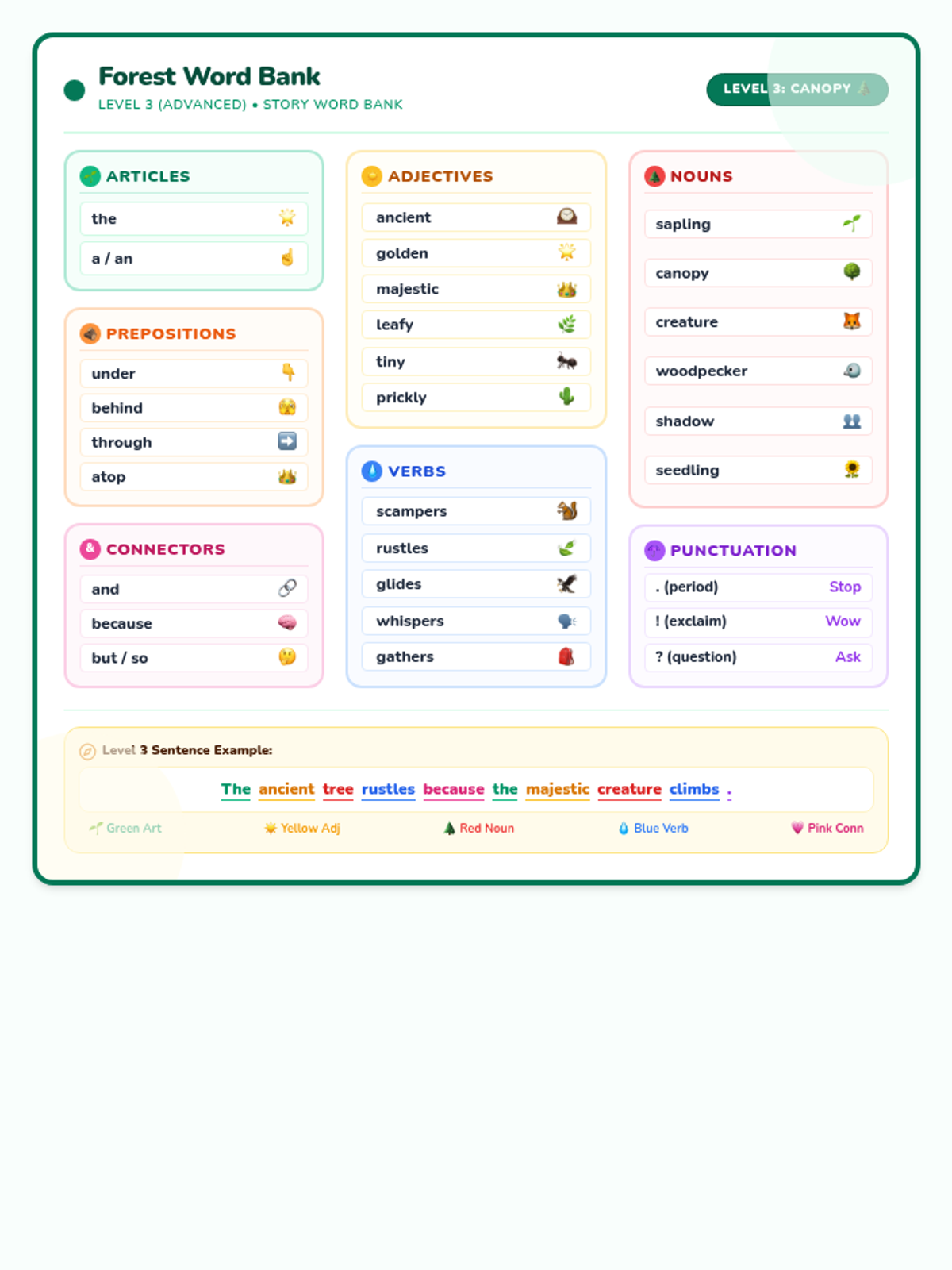
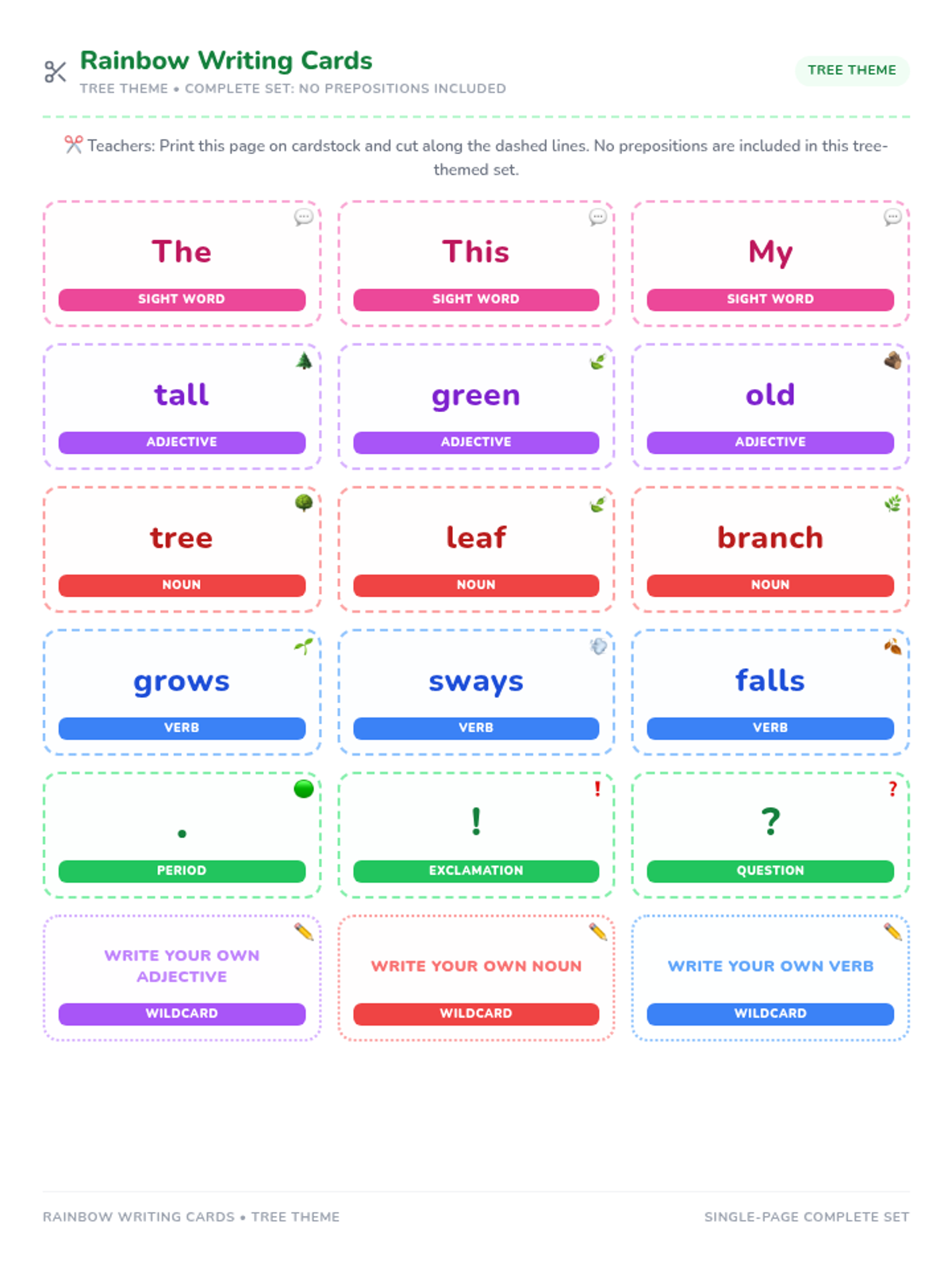
A sentence-building lesson for K-2 students. Using a tree-themed word bank, students write sentences on primary handwriting lines and color-code parts of speech to build foundational grammar and reading skills.
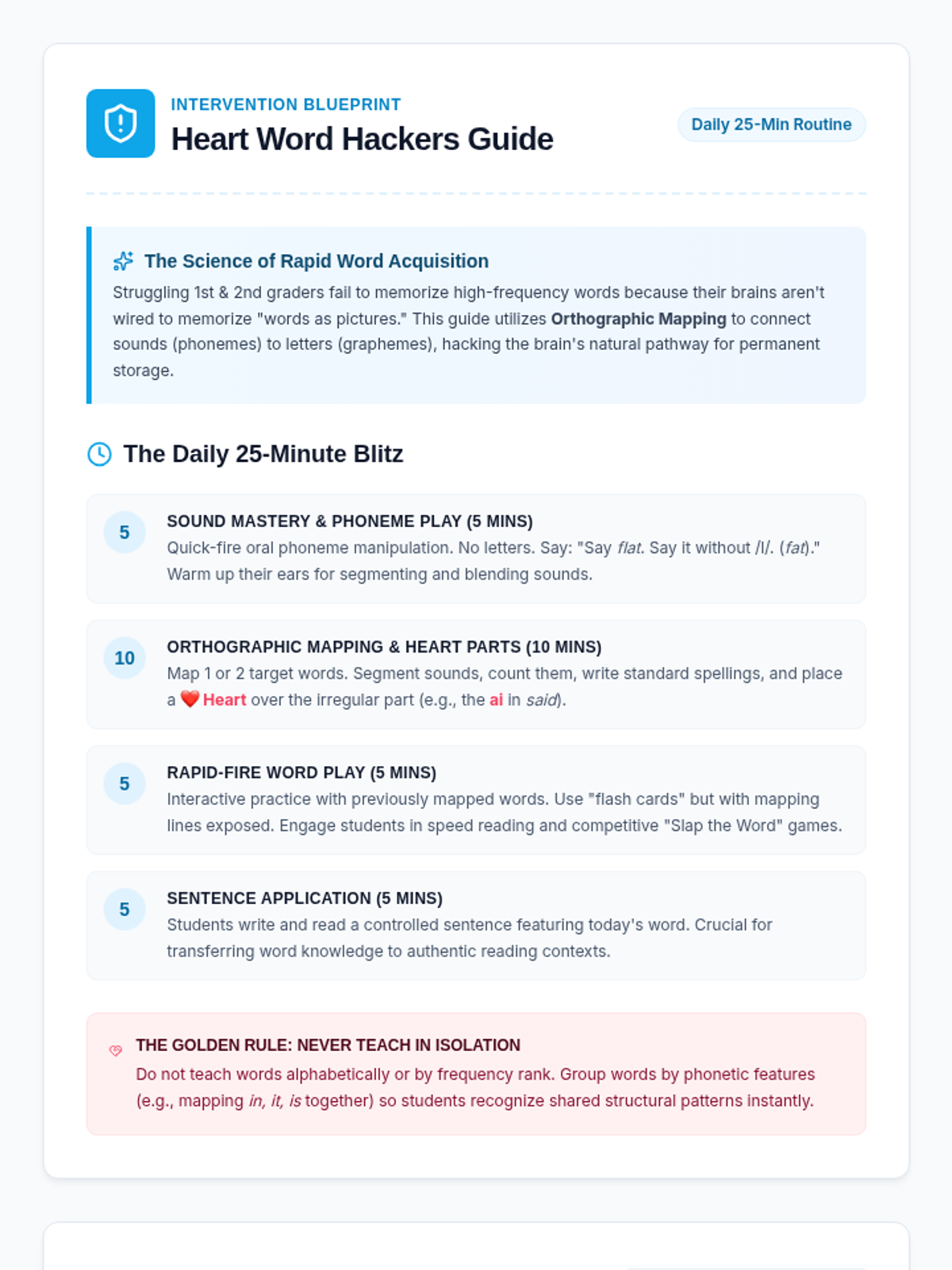
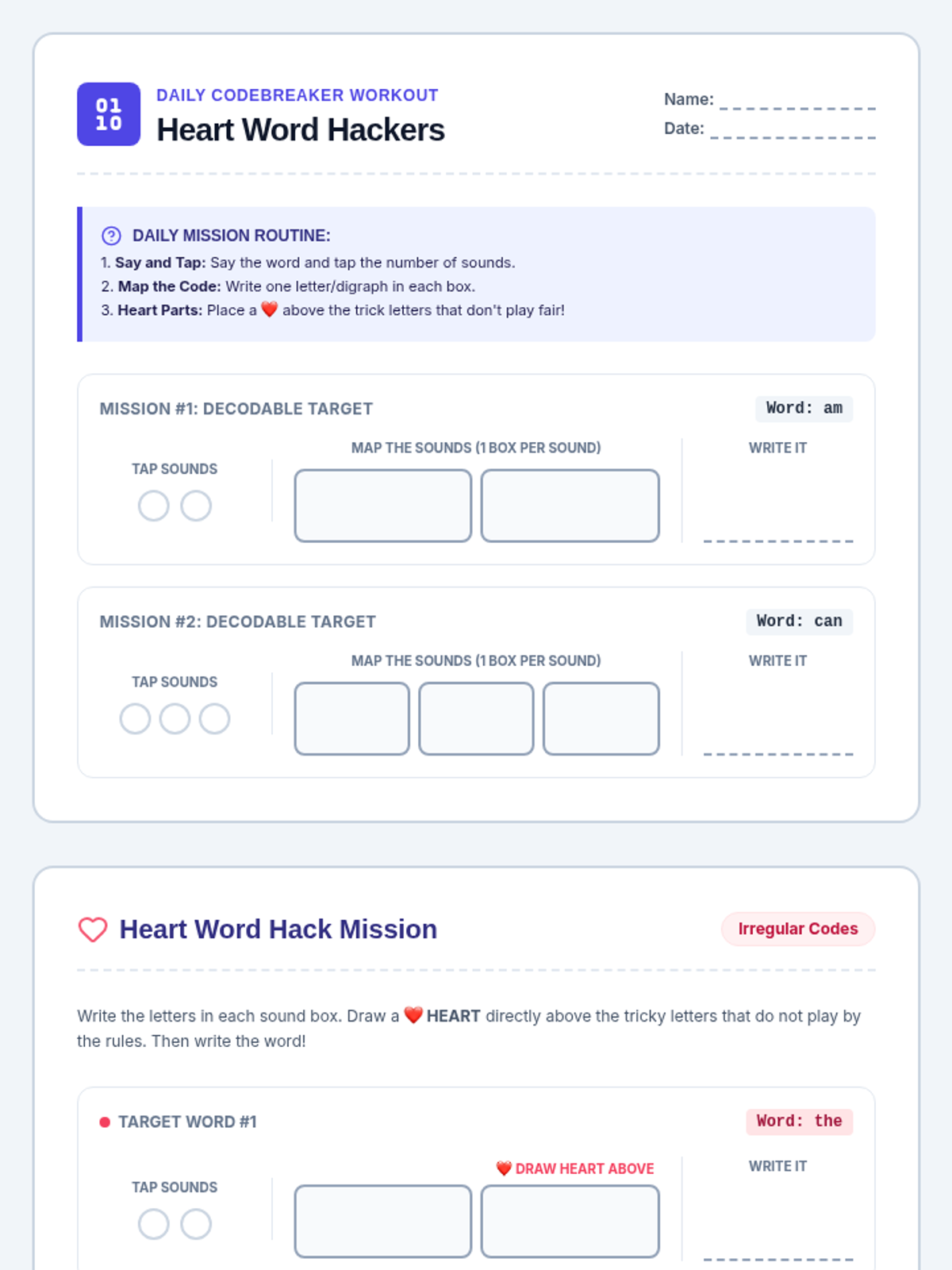
A high-intensity, evidence-based intervention lesson for rapidly teaching high-frequency words using orthographic mapping and phonetic grouping. Designed for daily 25-minute small group sessions with 1st and 2nd graders who have significant learning gaps.
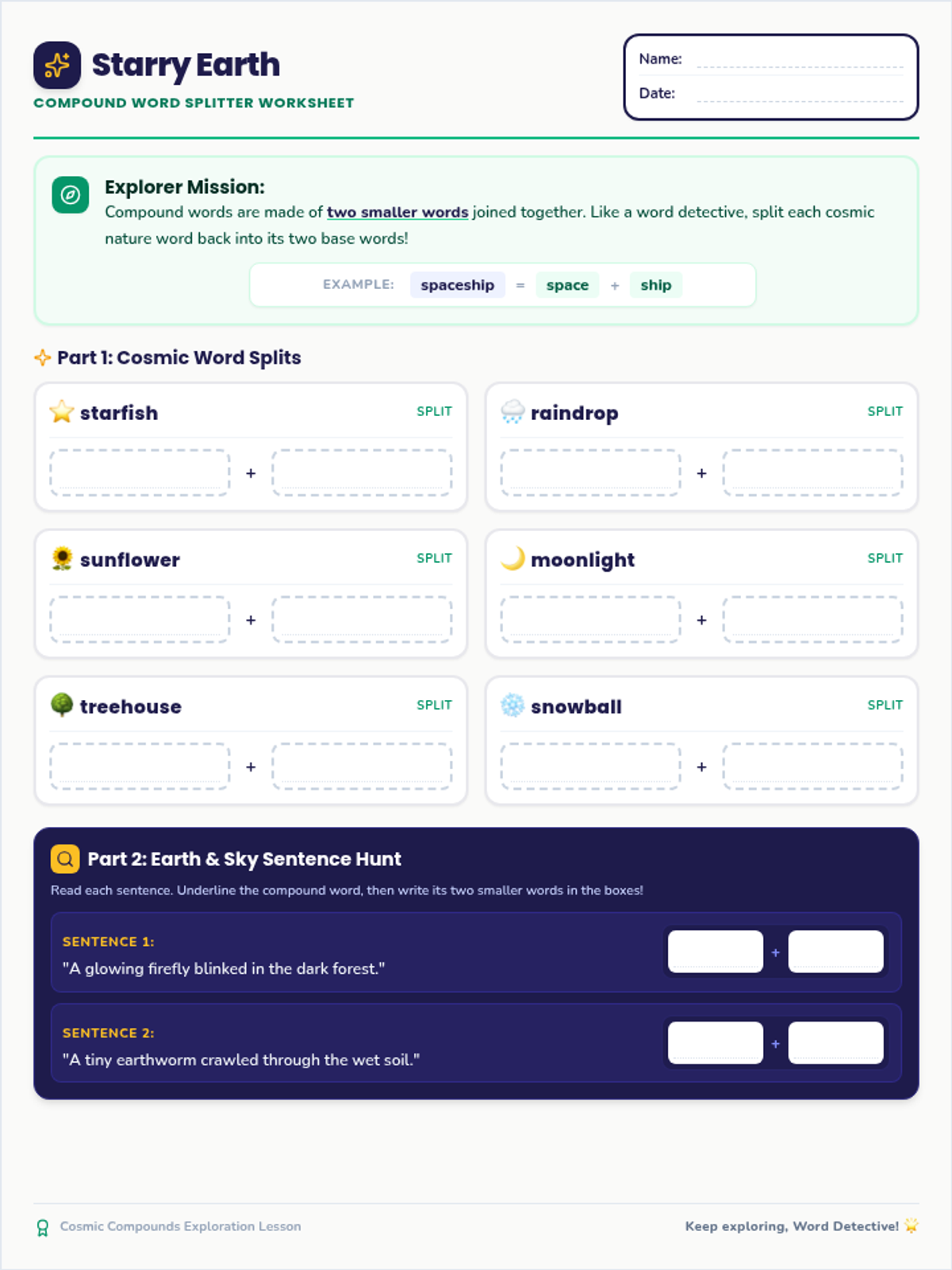
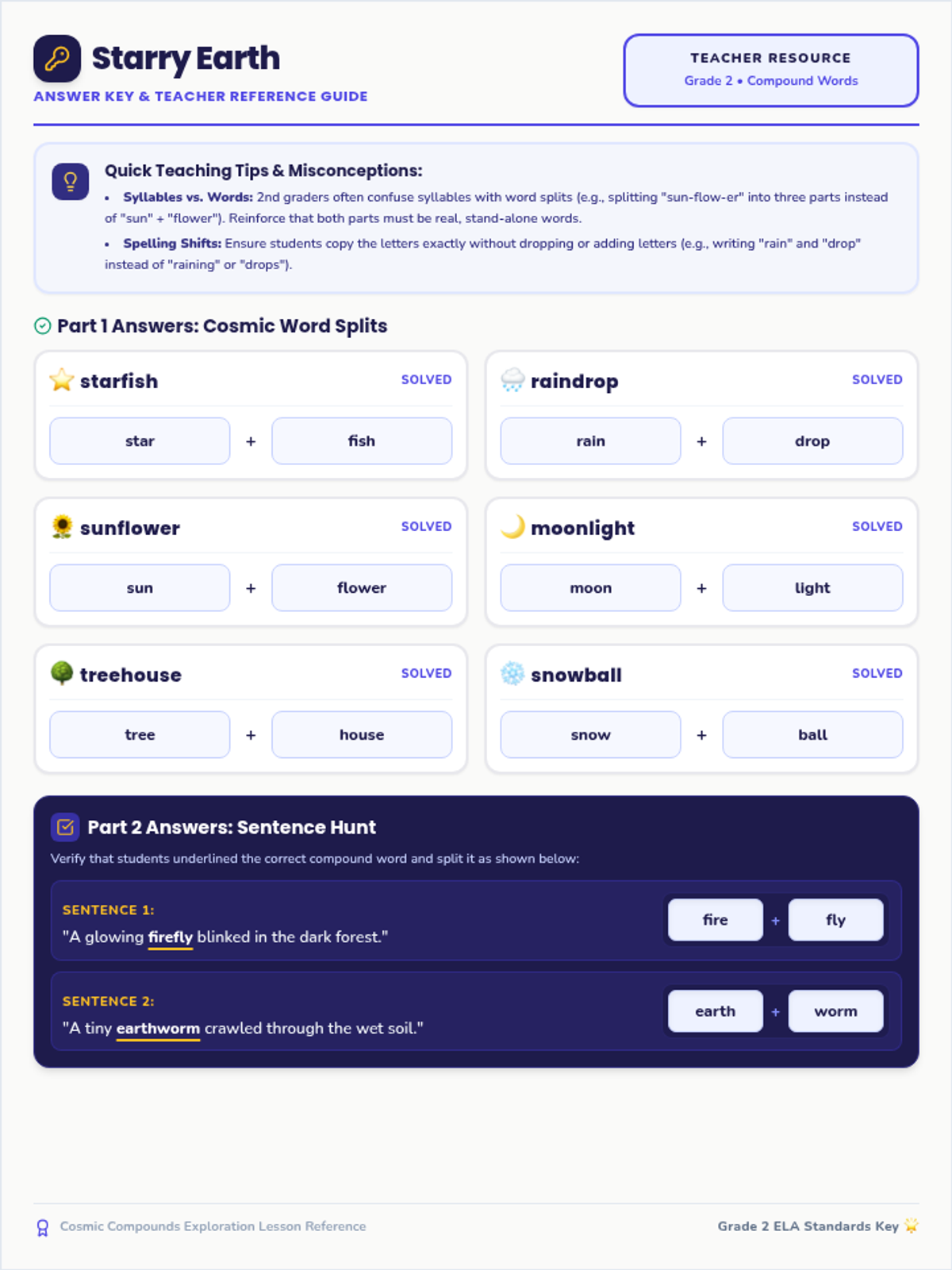
A second-grade English Language Arts lesson exploring compound words through a combined theme of space and nature. Students practice breaking compound words into their two constituent words.
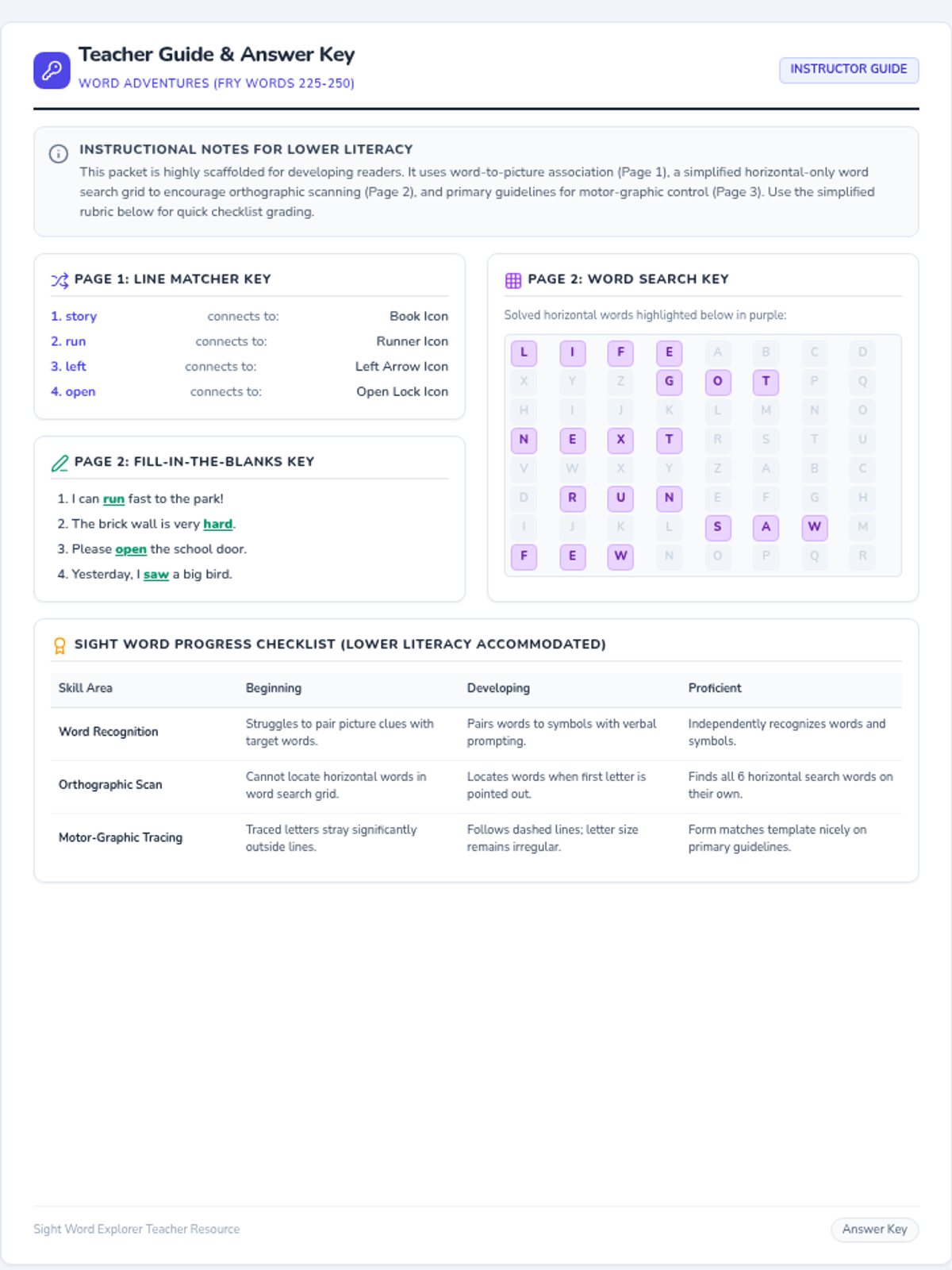
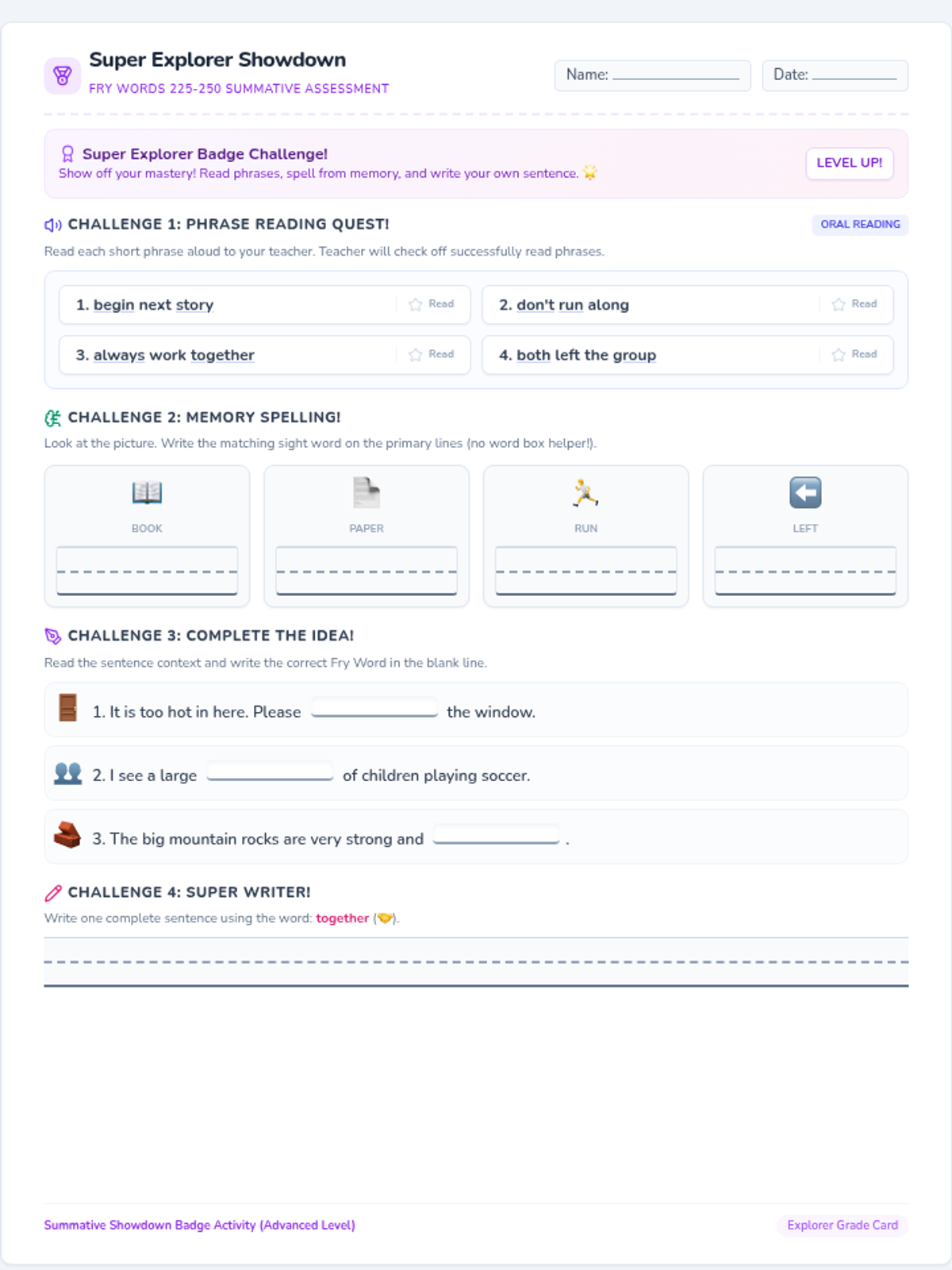
A highly visual and scaffolded sight word lesson focusing on Fry Words 225-250. Includes a multi-page student practice packet with picture clues and a complete teacher answer key and assessment guide.
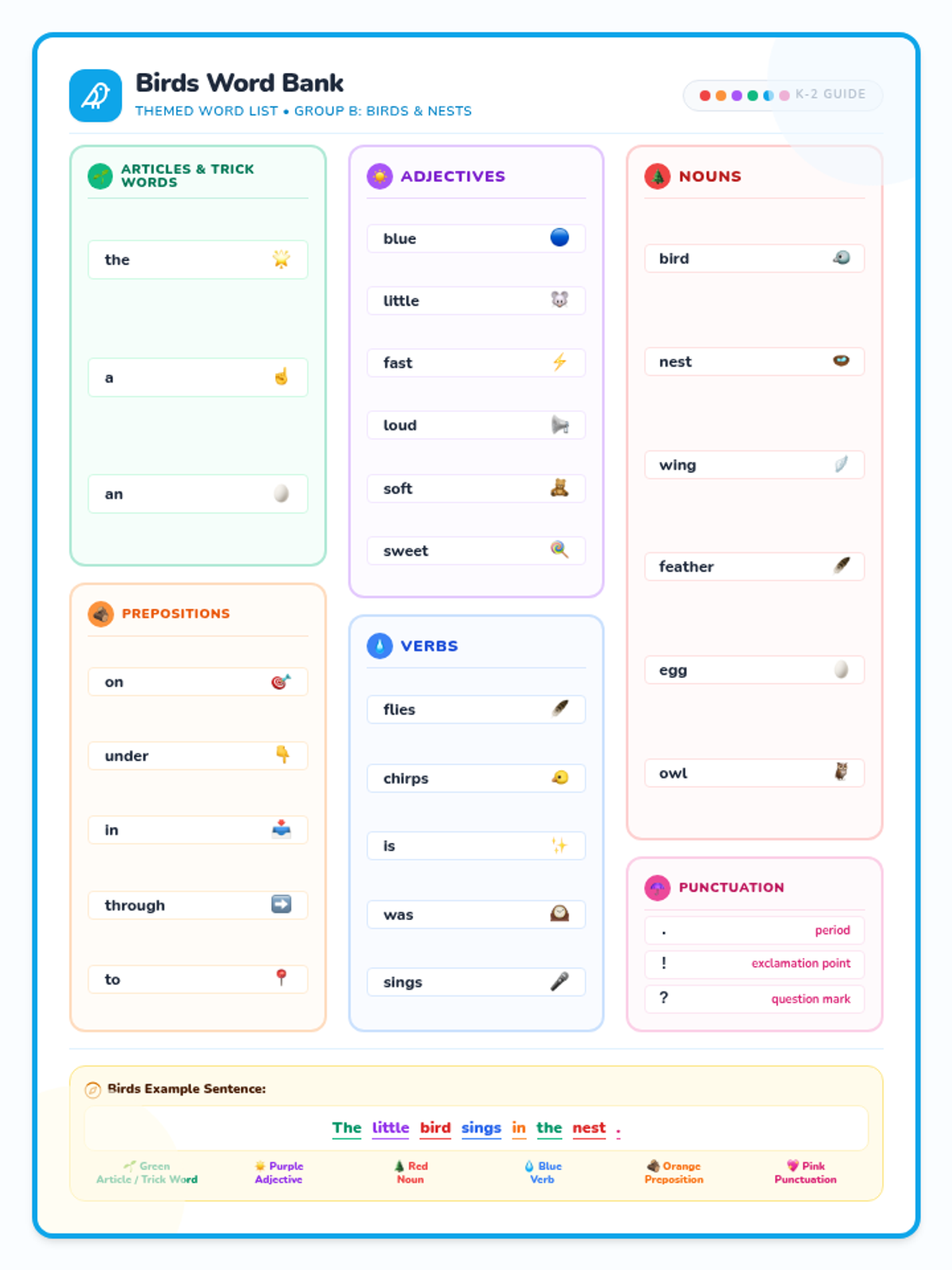
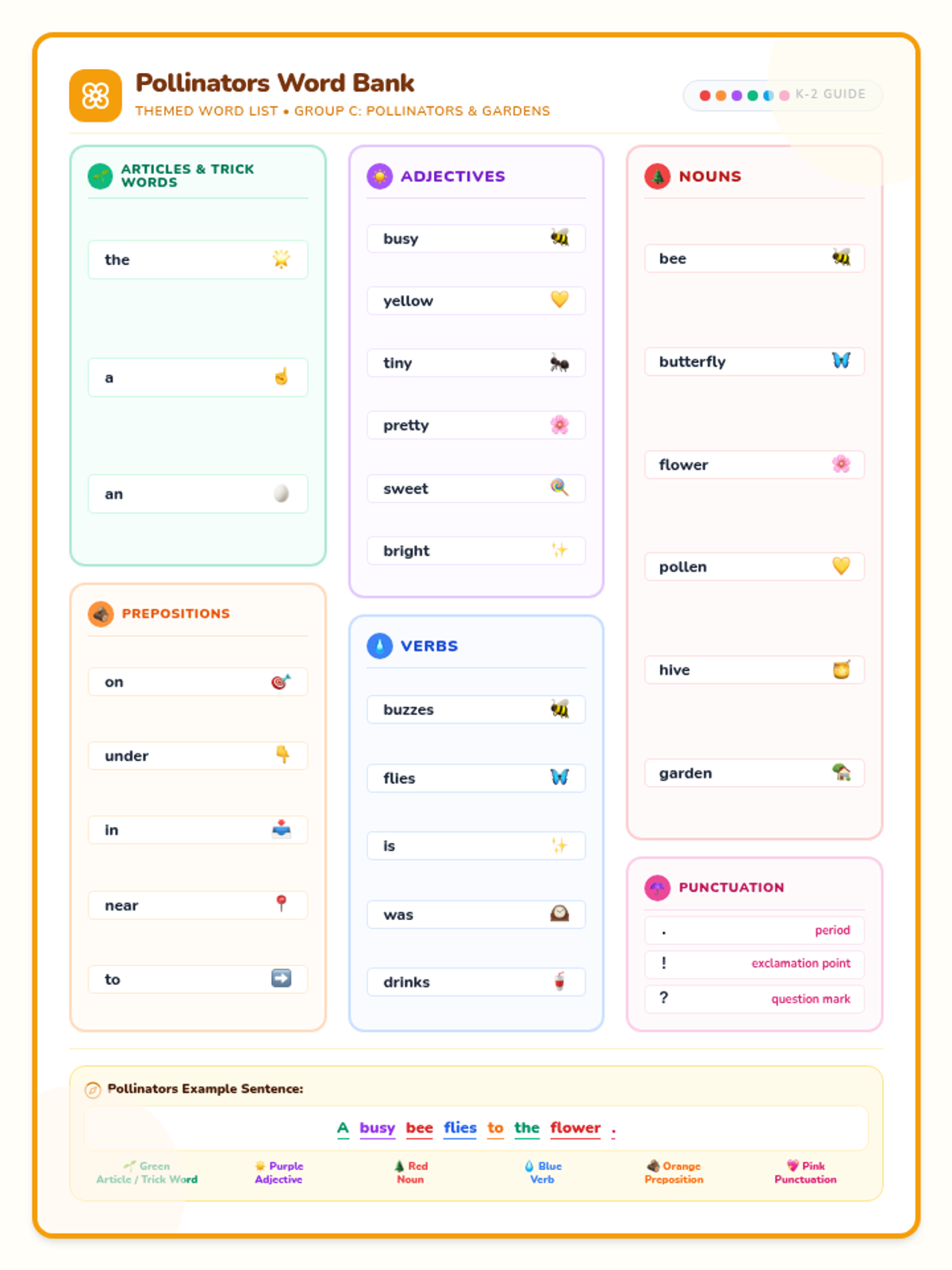
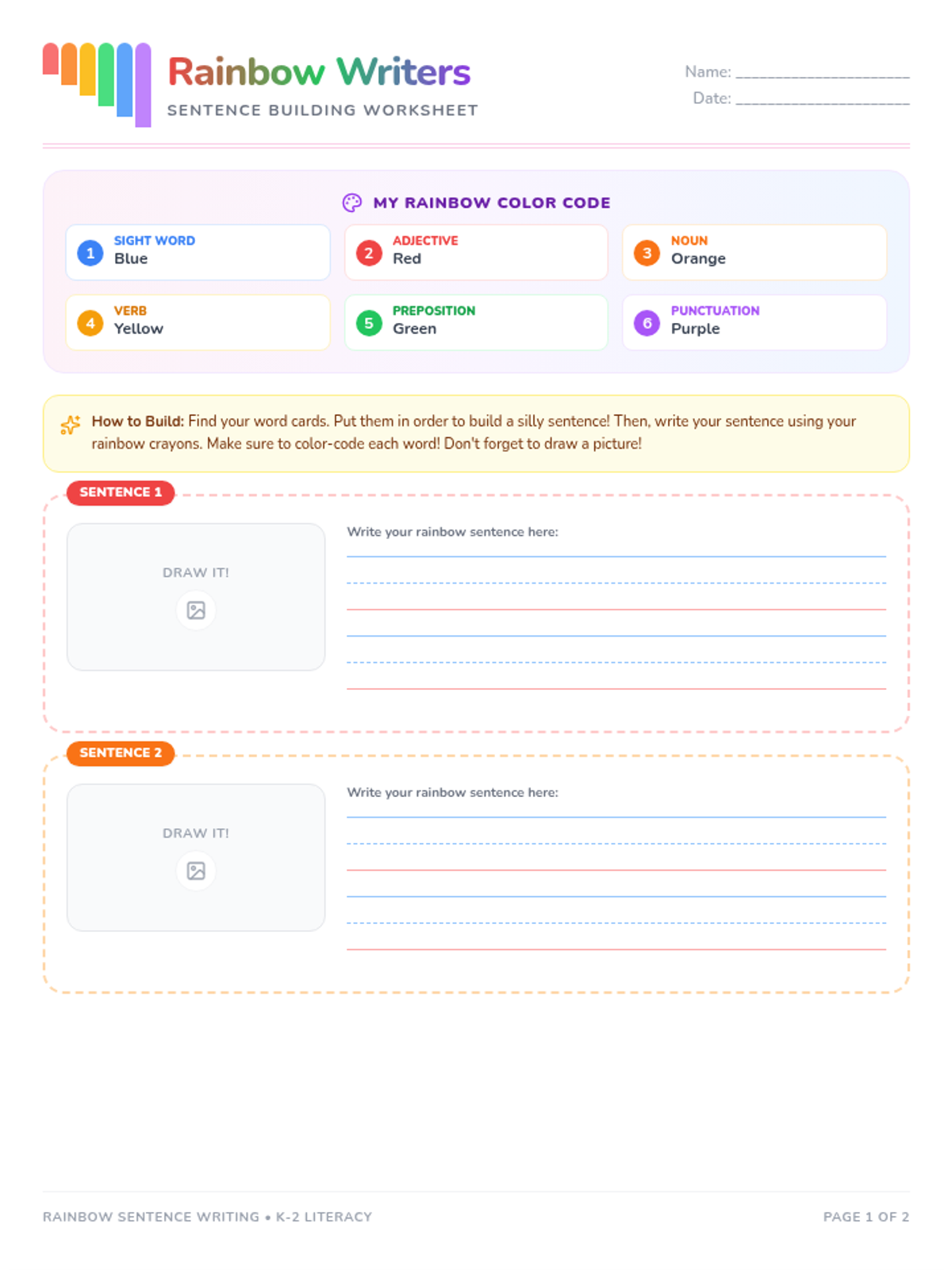
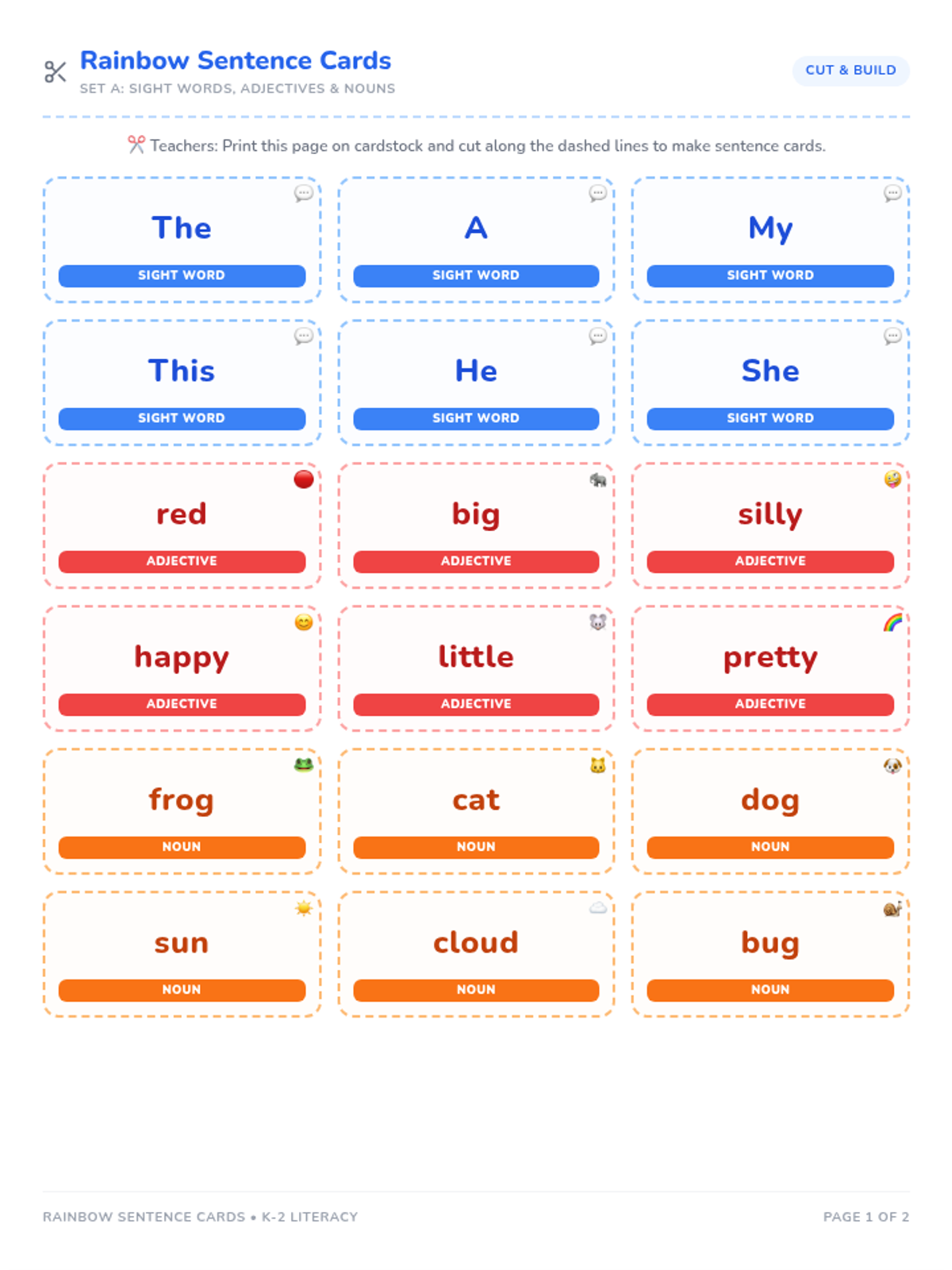
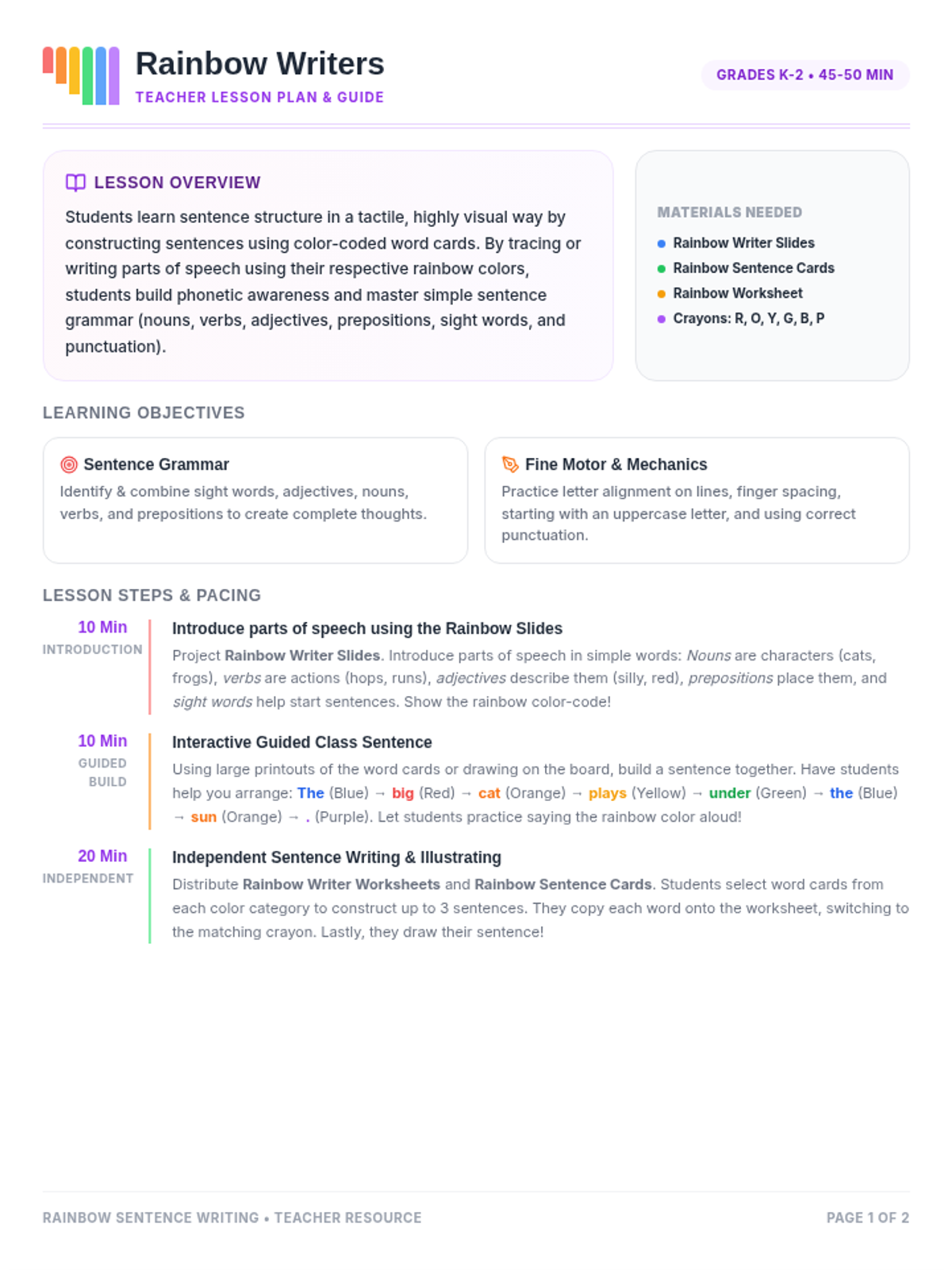
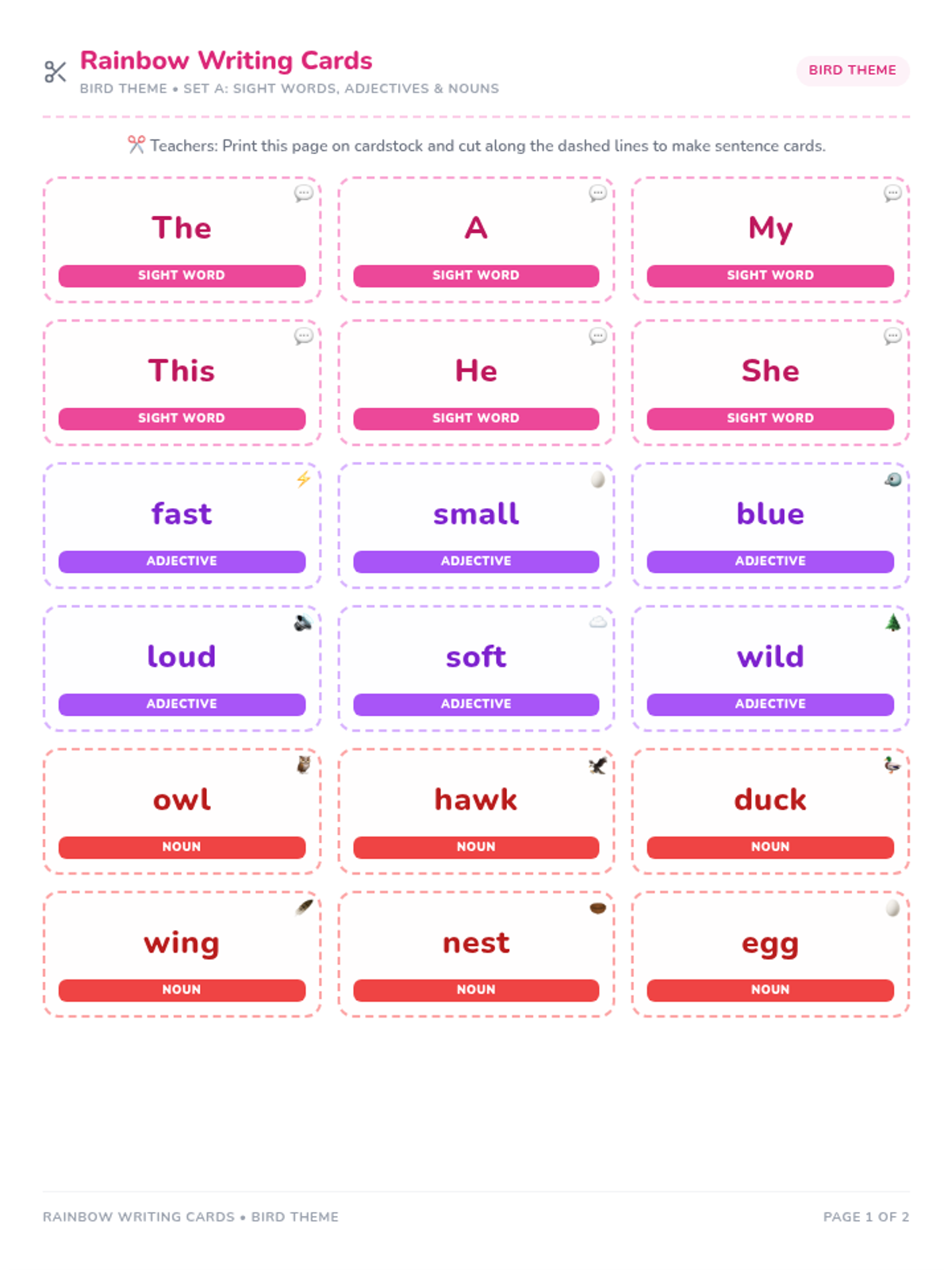
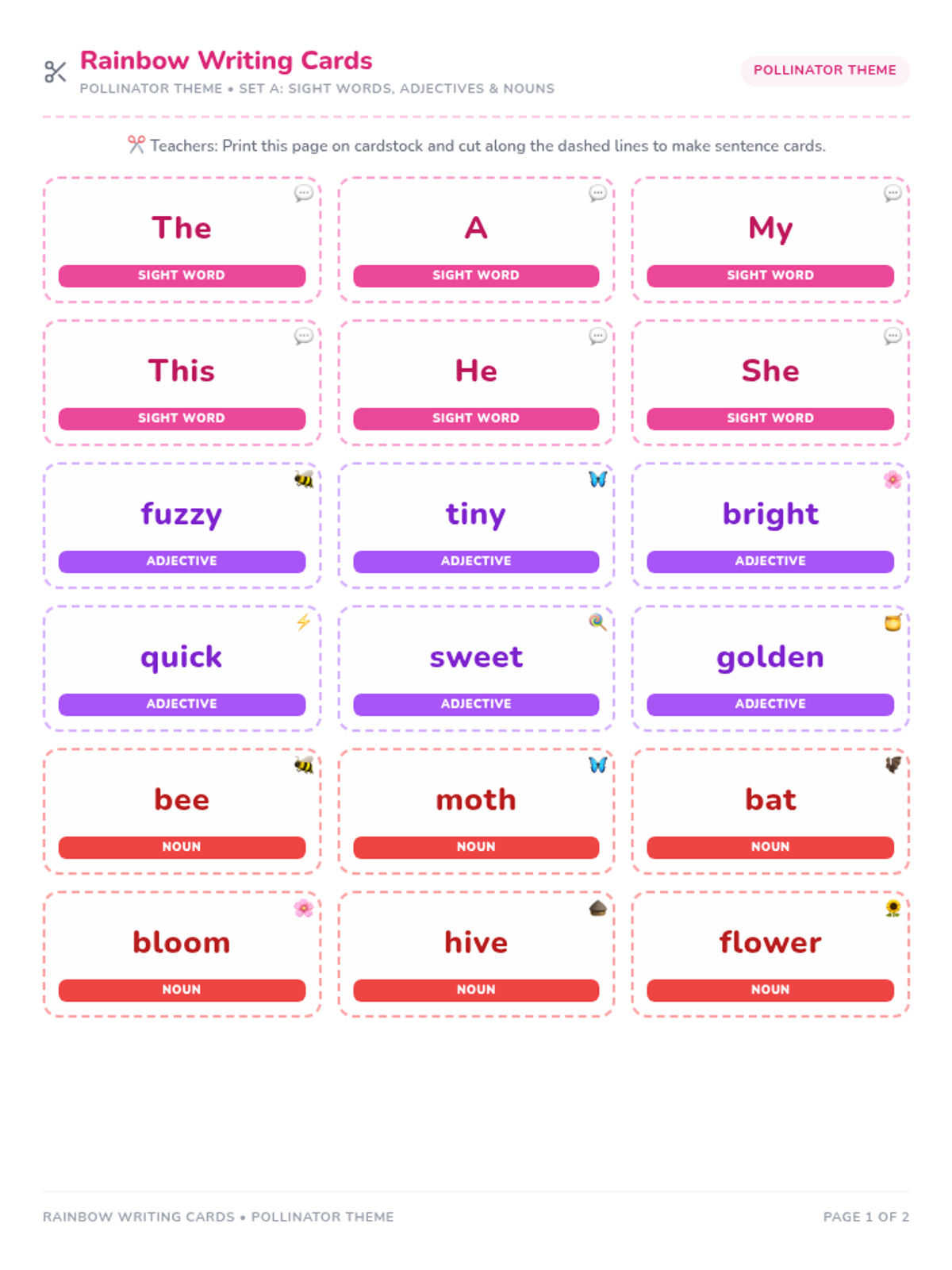
A colorful, K-2 sentence-building lesson where students use color-coded word cards to construct creative sentences. Students learn to identify and color-code nouns, verbs, adjectives, prepositions, sight words, and punctuation.
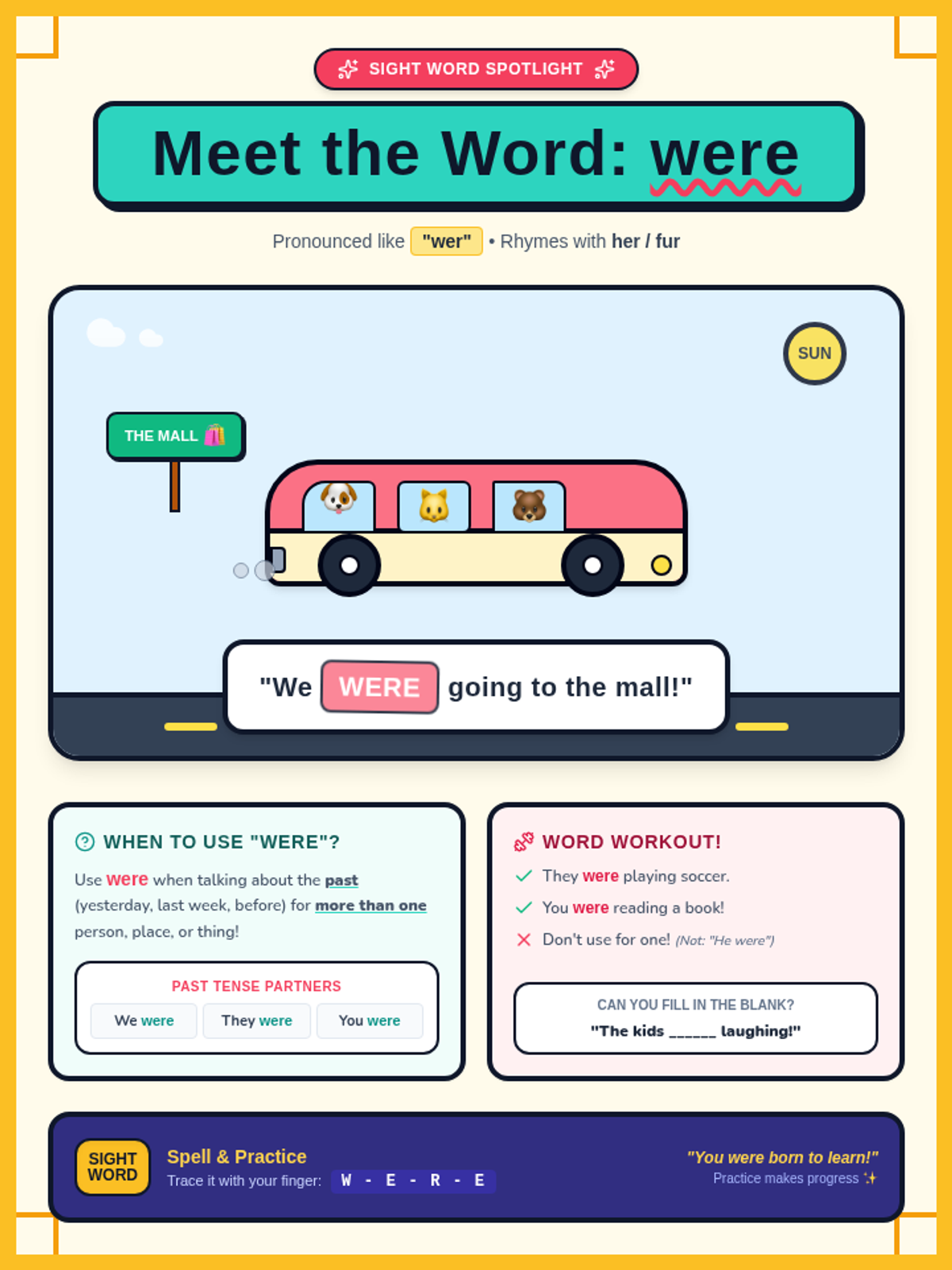
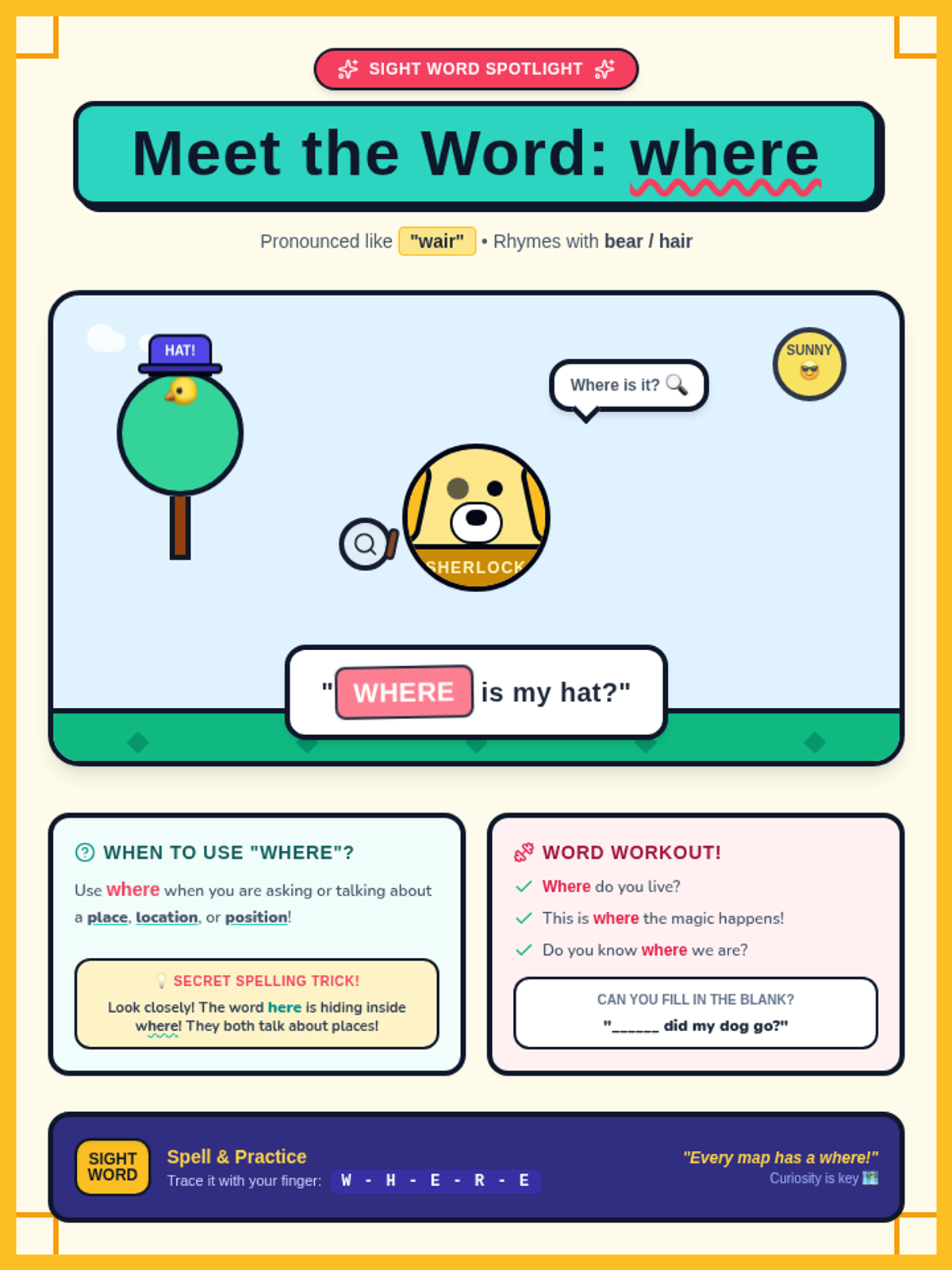
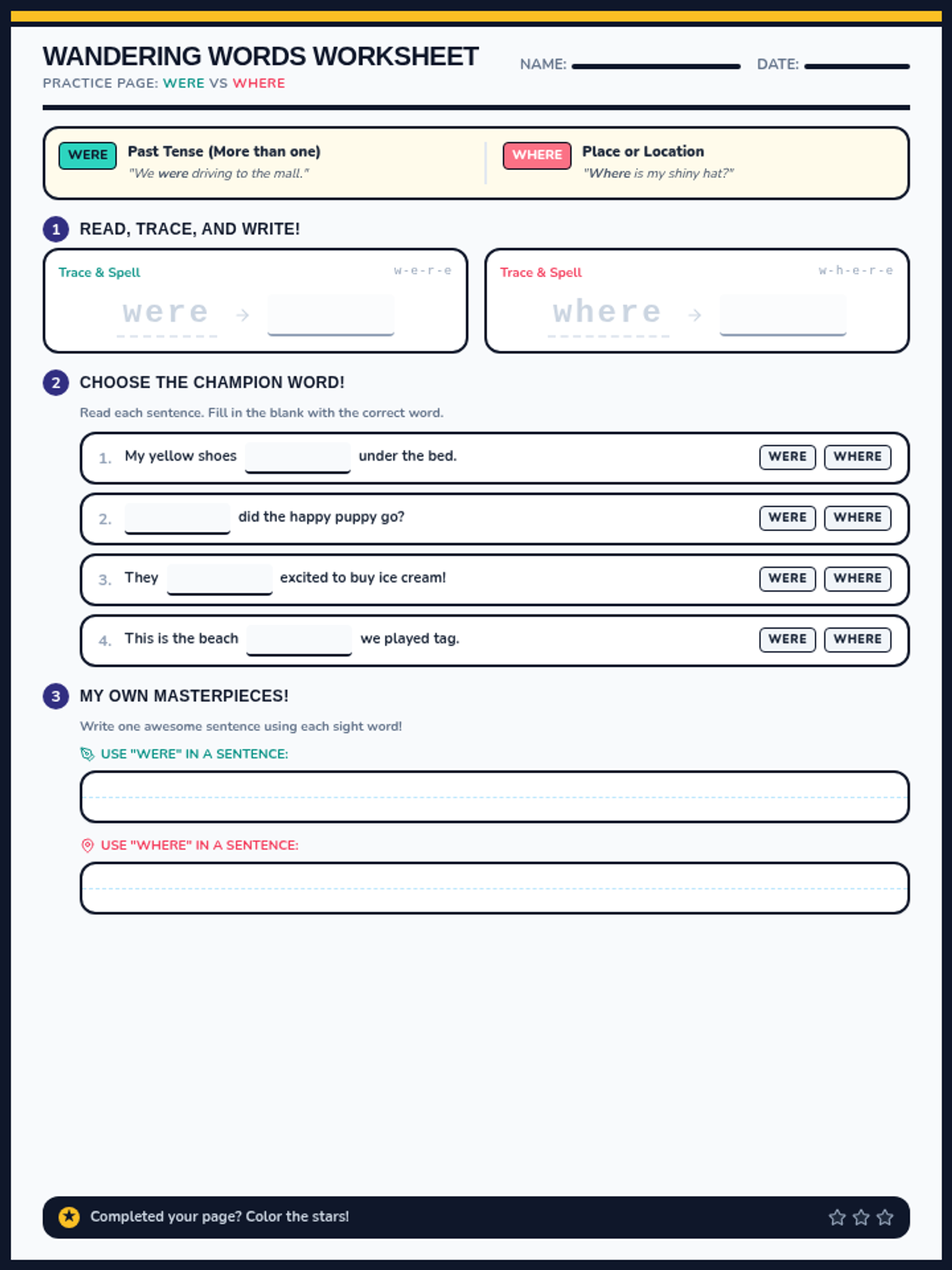
A primary sight word lesson focusing on mastering and distinguishing the high-frequency words 'were' and 'where' through highly visual classroom anchor charts and practice sheets.
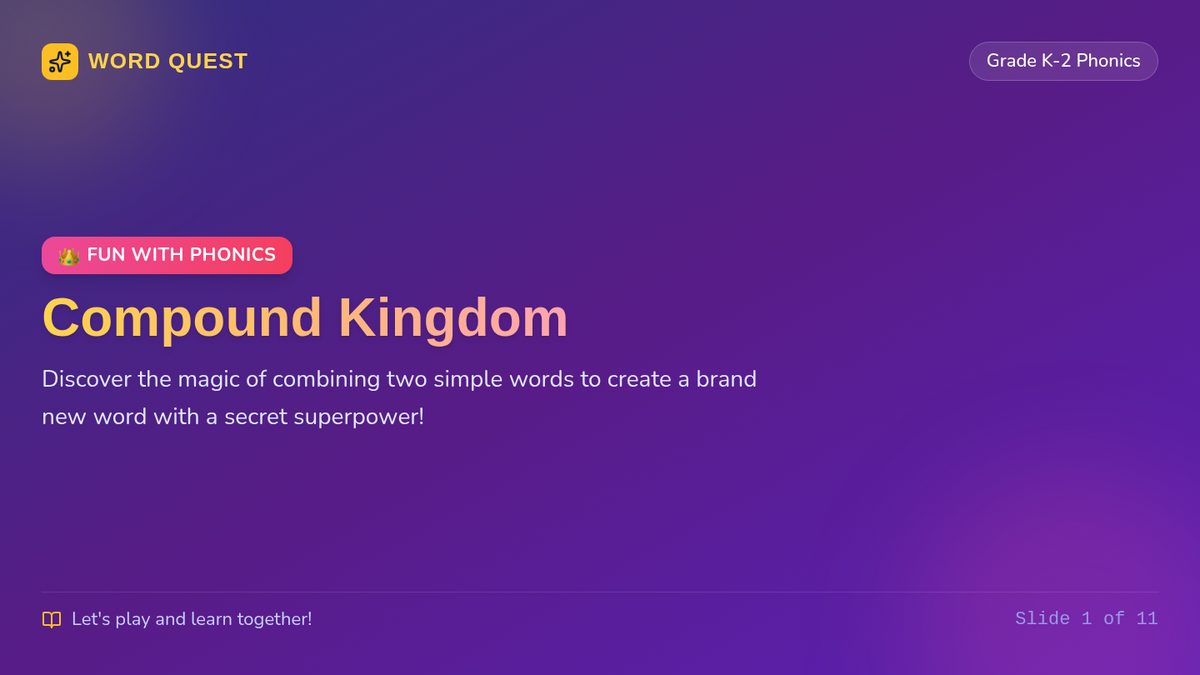
A foundational lesson on compound words for early elementary students. It features an engaging visual presentation where students discover how two individual words join together to create a brand new word with a new meaning.