A lesson focusing on words containing the 'ought' and 'aught' spelling patterns, exploring their meanings and syllable structures.
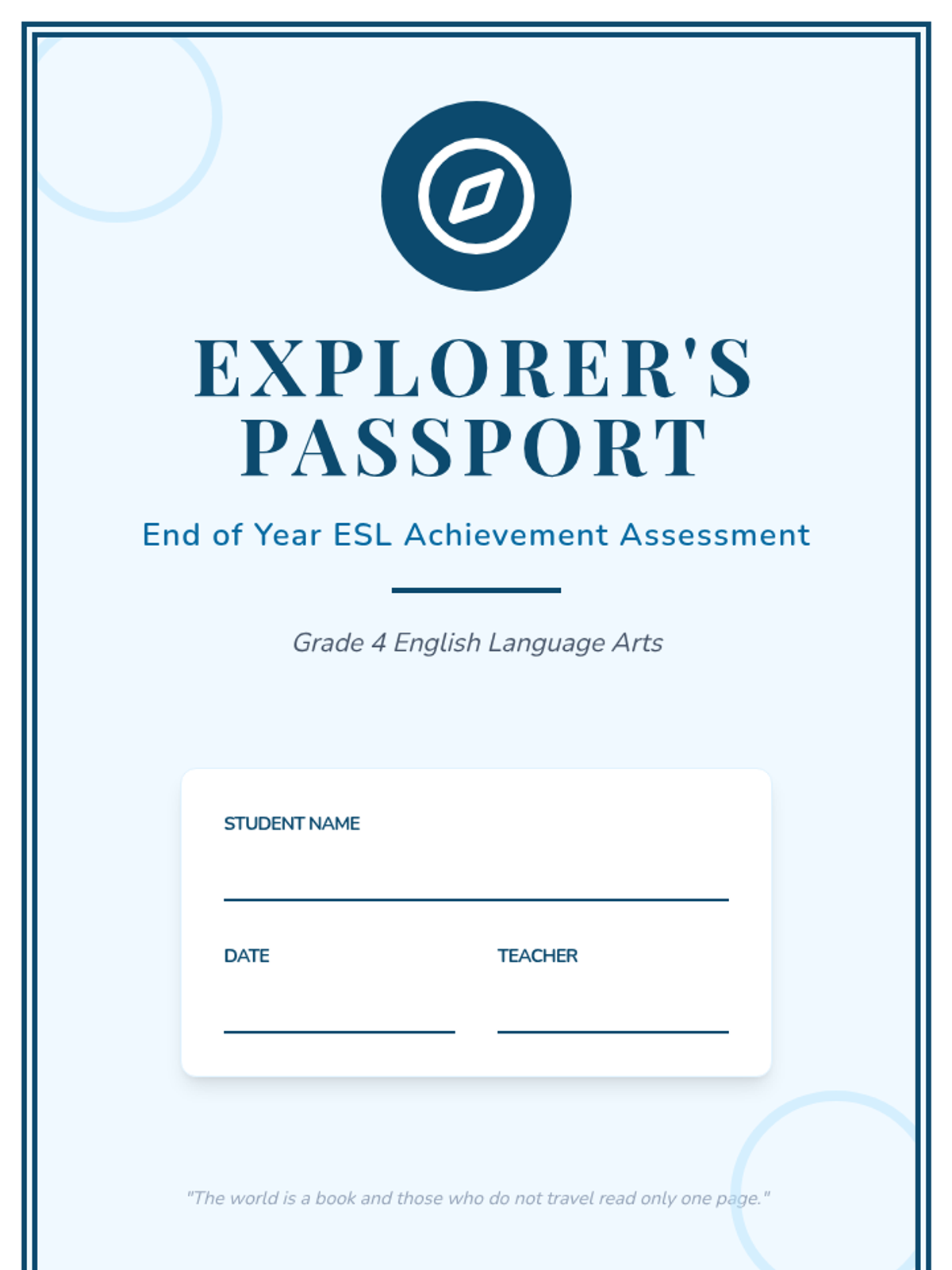
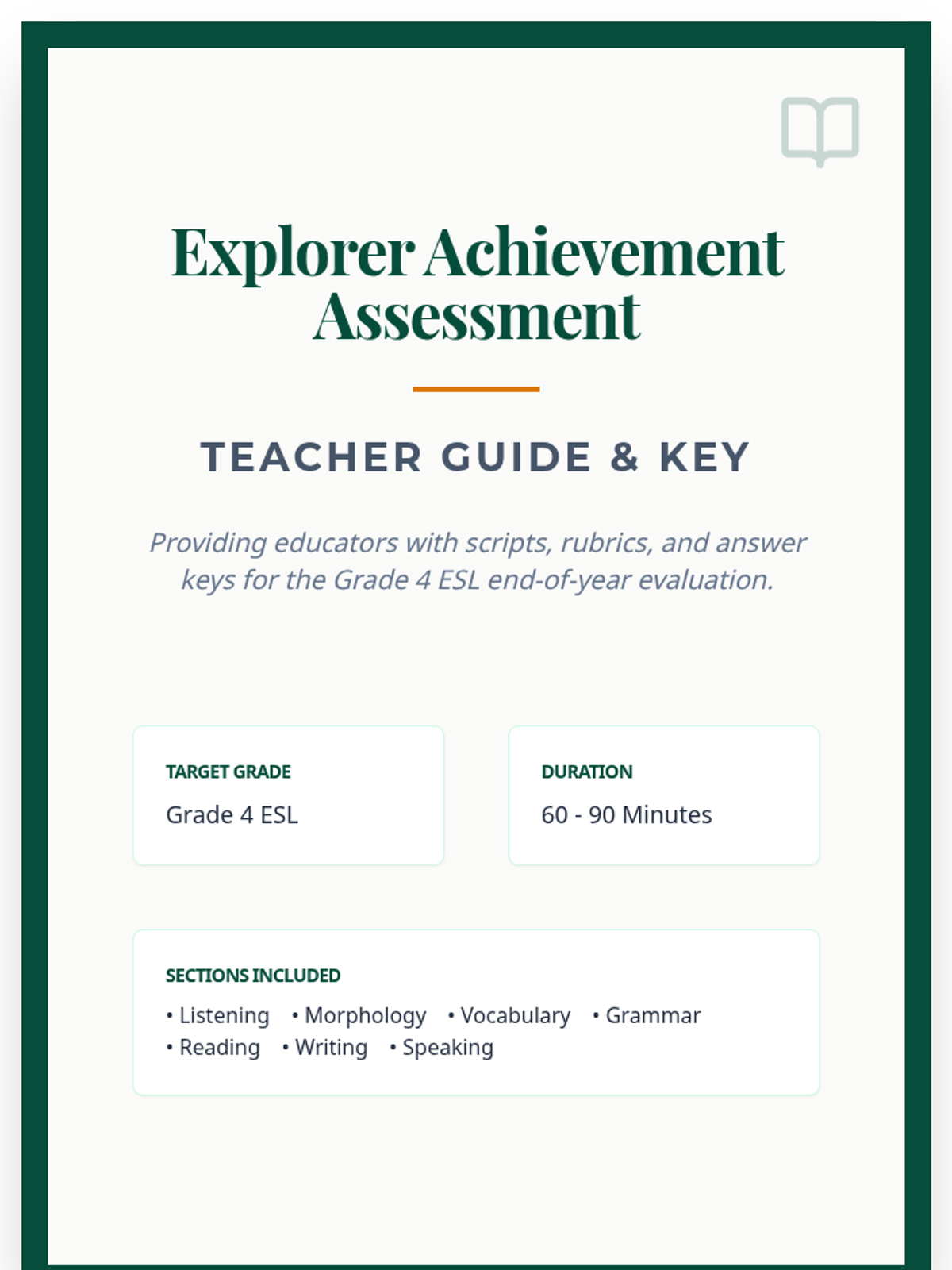
A comprehensive end-of-year assessment for Grade 4 ESL students, covering morphology, vocabulary, grammar, reading, writing, speaking, and listening.
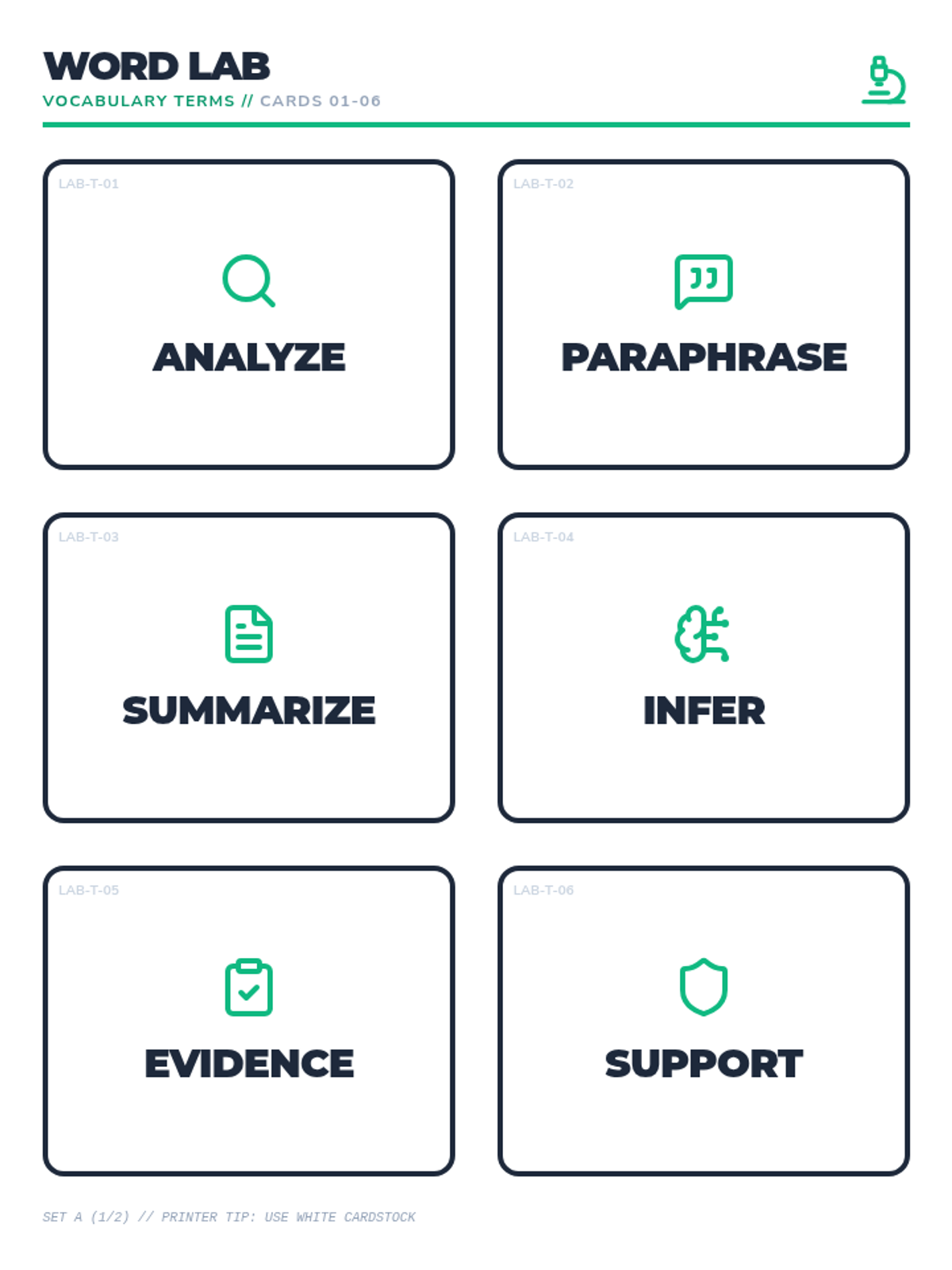
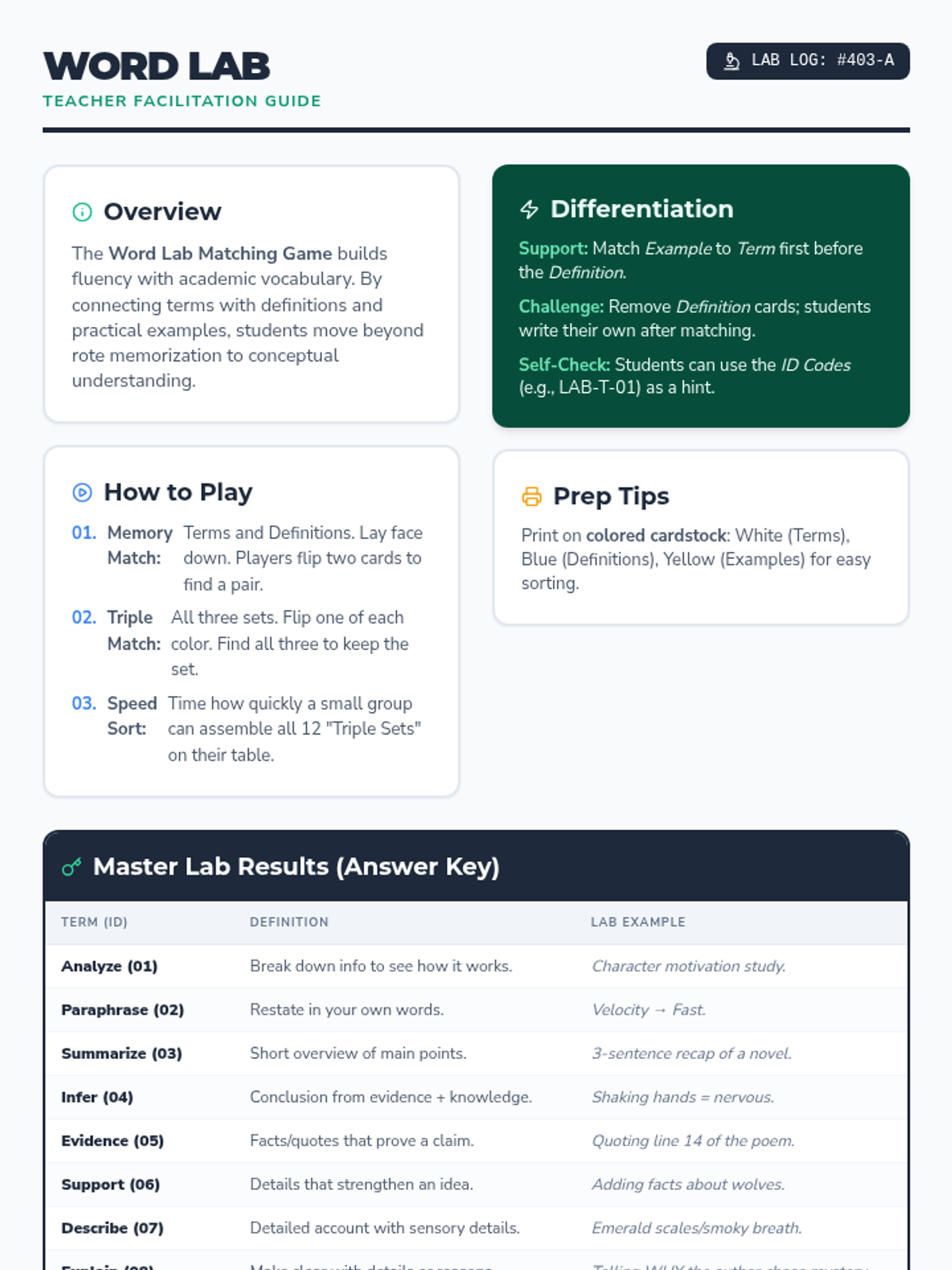
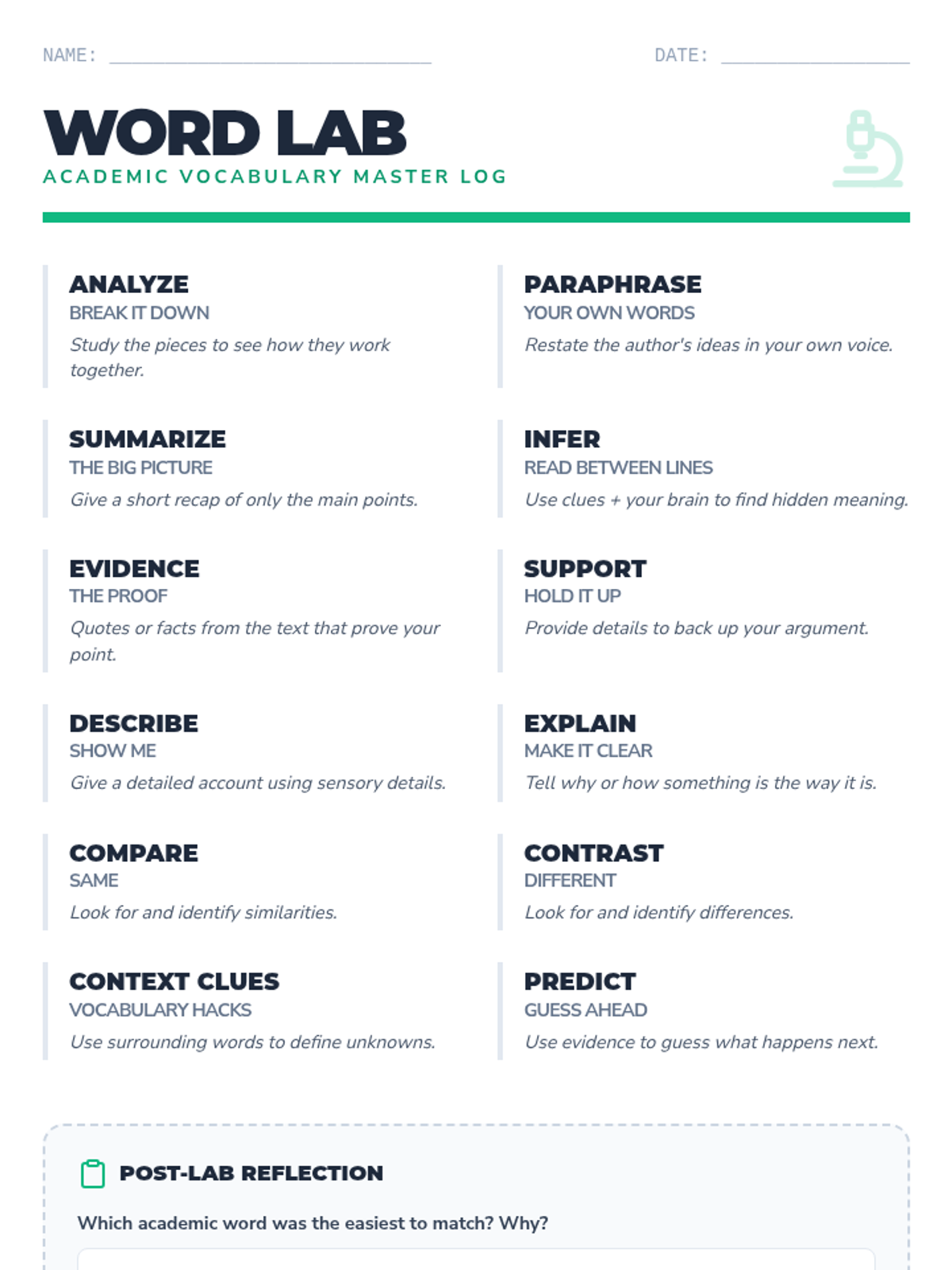
A lesson focused on mastering academic vocabulary used in reading comprehension questions. Students will learn to distinguish between common analytical verbs and concepts through a hands-on matching game and reference guides.
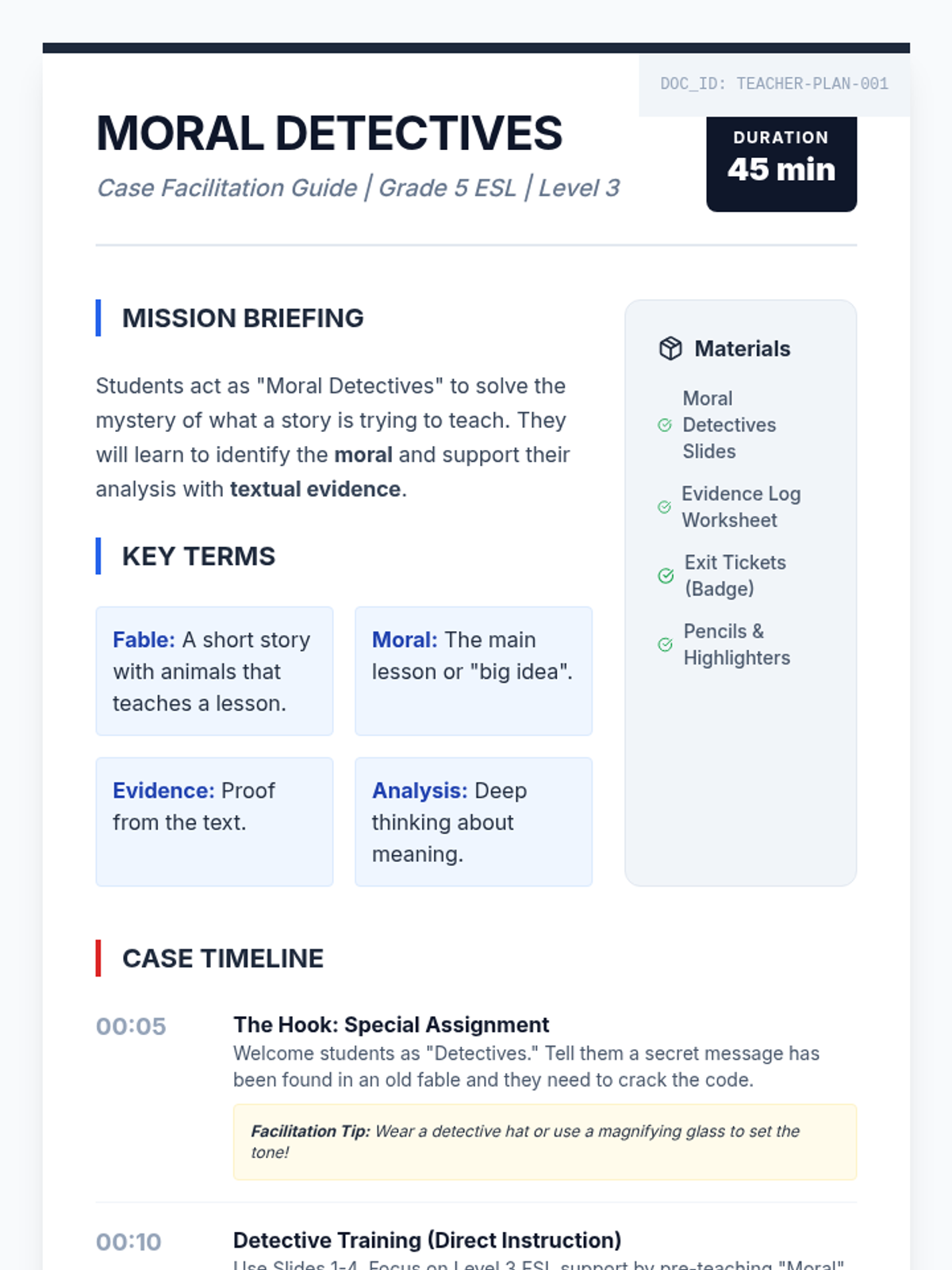
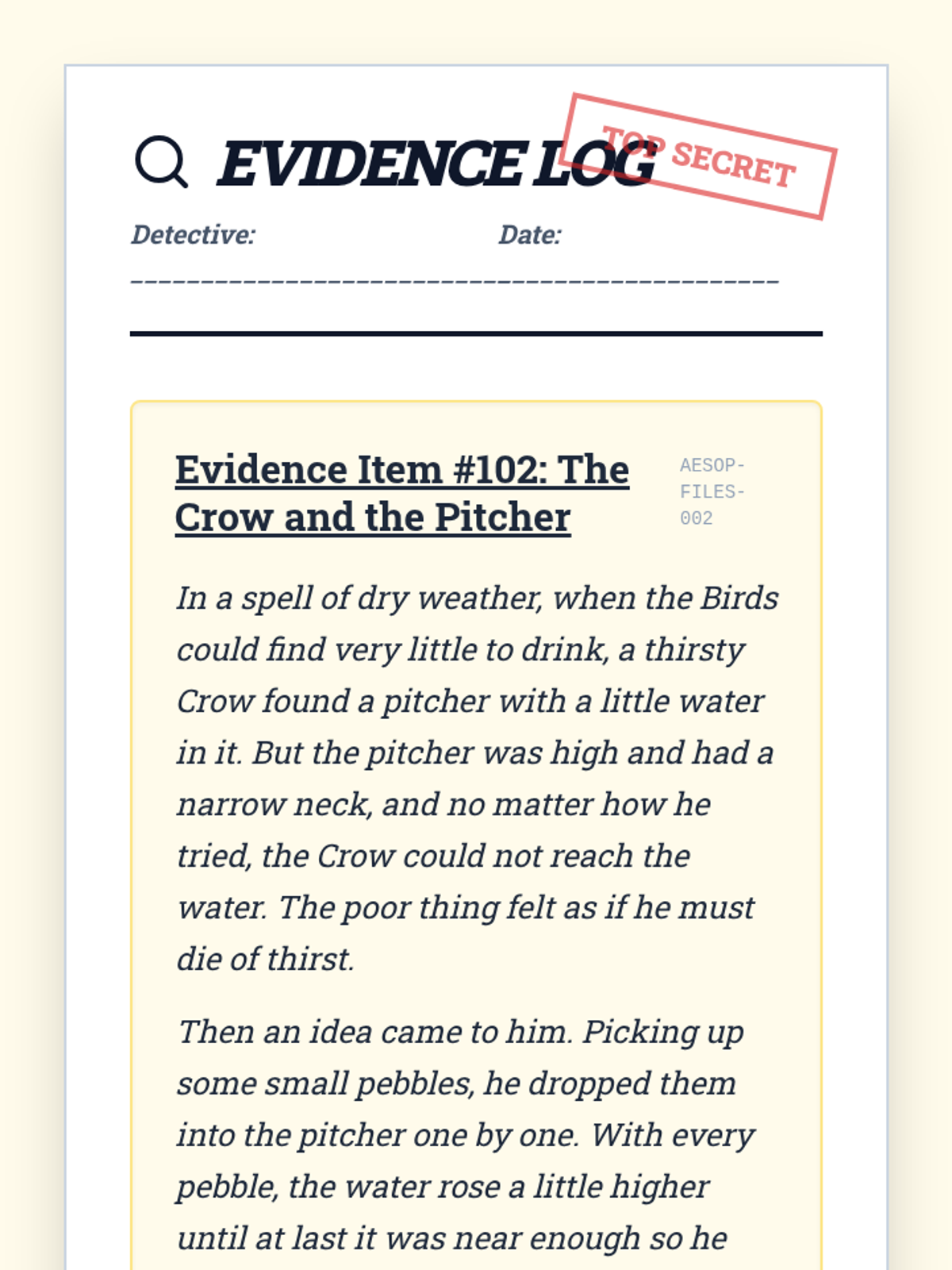
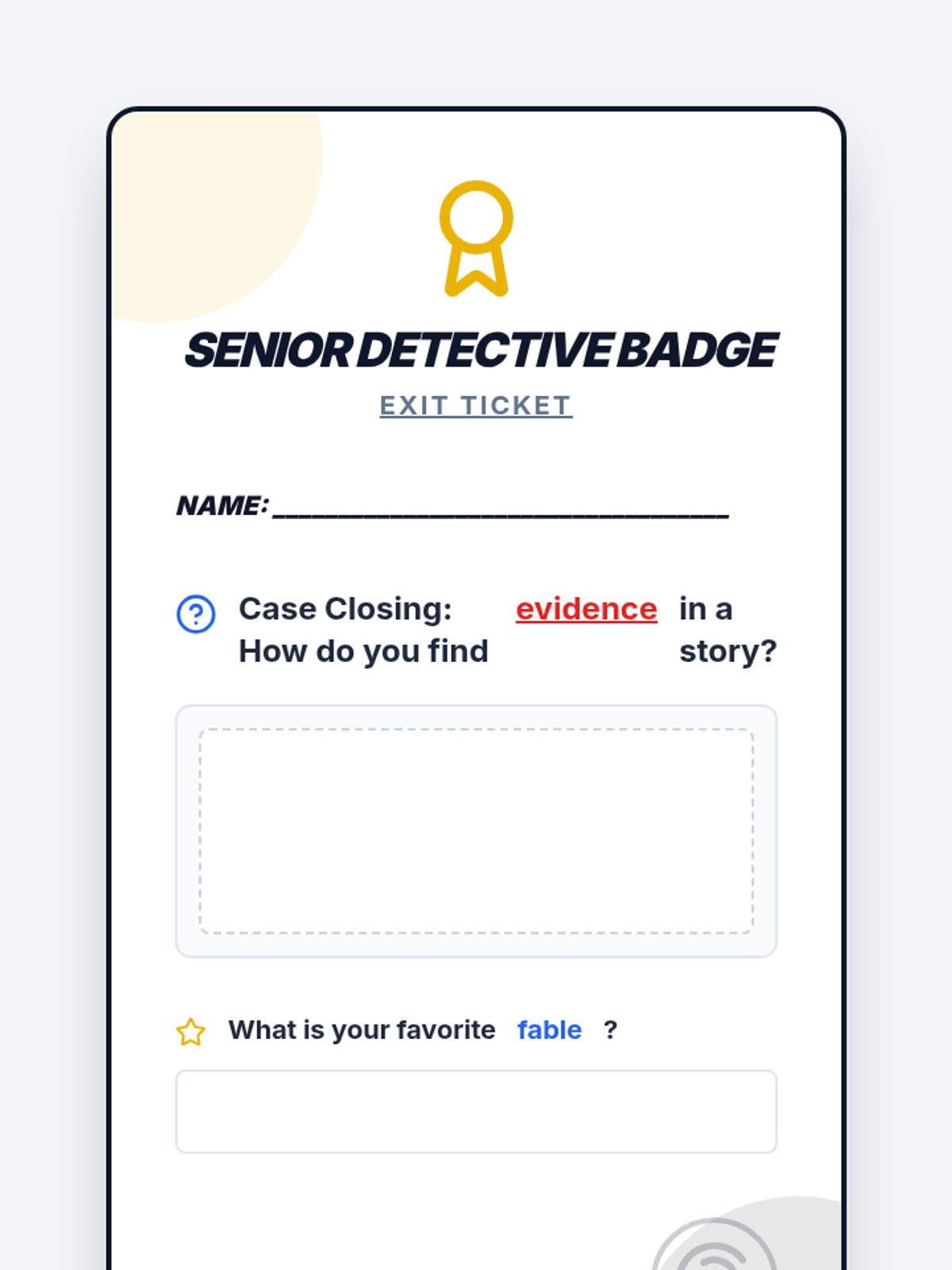
A 45-minute Grade 5 ESL lesson focused on identifying the moral of a fable and supporting it with textual evidence using a 'Moral Detective' theme. Students analyze 'The Lion and the Mouse' to practice drawing evidence from literary texts.
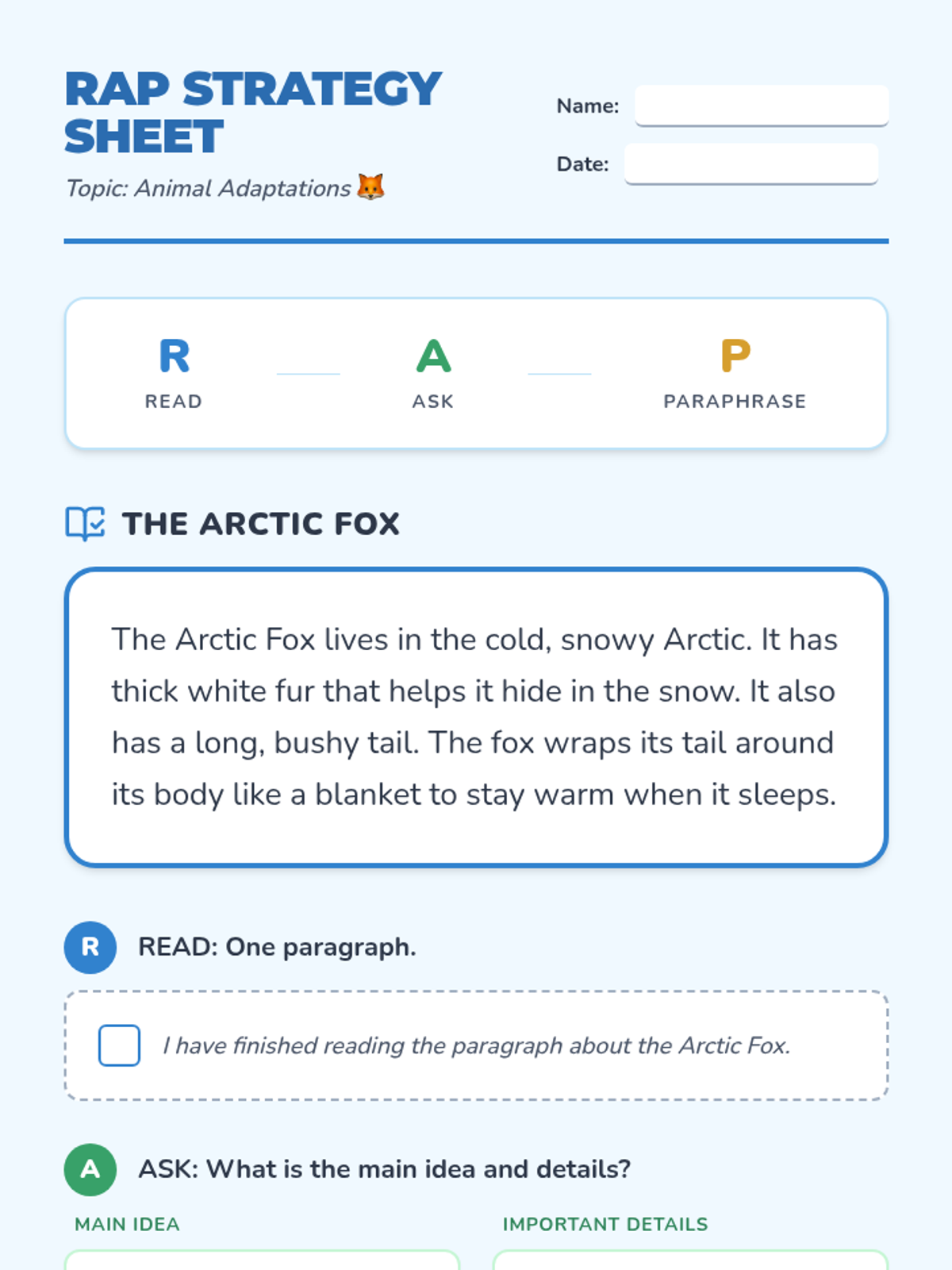
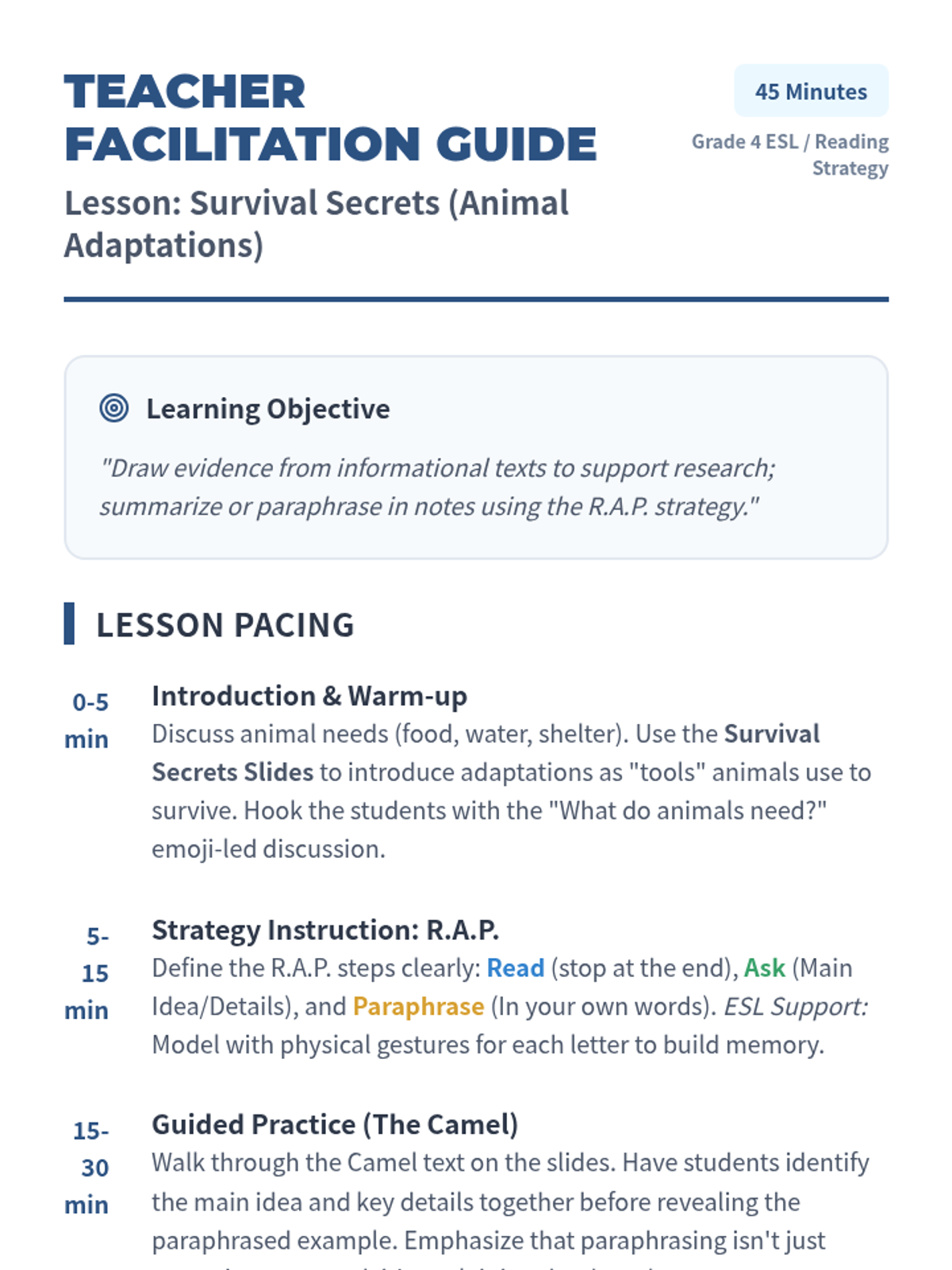
A 45-minute ESL lesson for 4th graders focused on using the R.A.P. (Read, Ask, Paraphrase) strategy to understand animal adaptations. Students will learn to identify main ideas and details while practicing their summarizing skills with informational texts about unique animal survival traits.
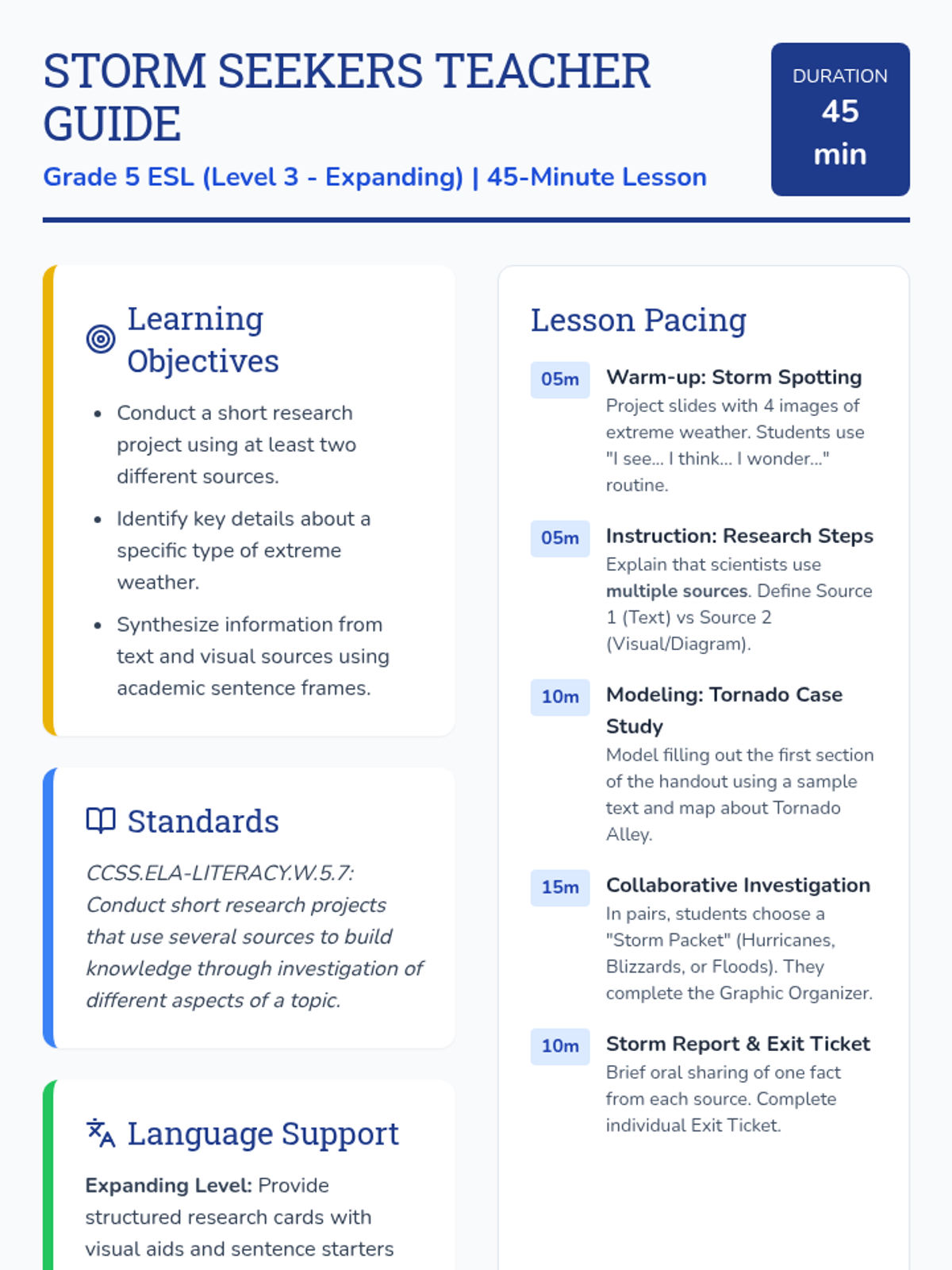
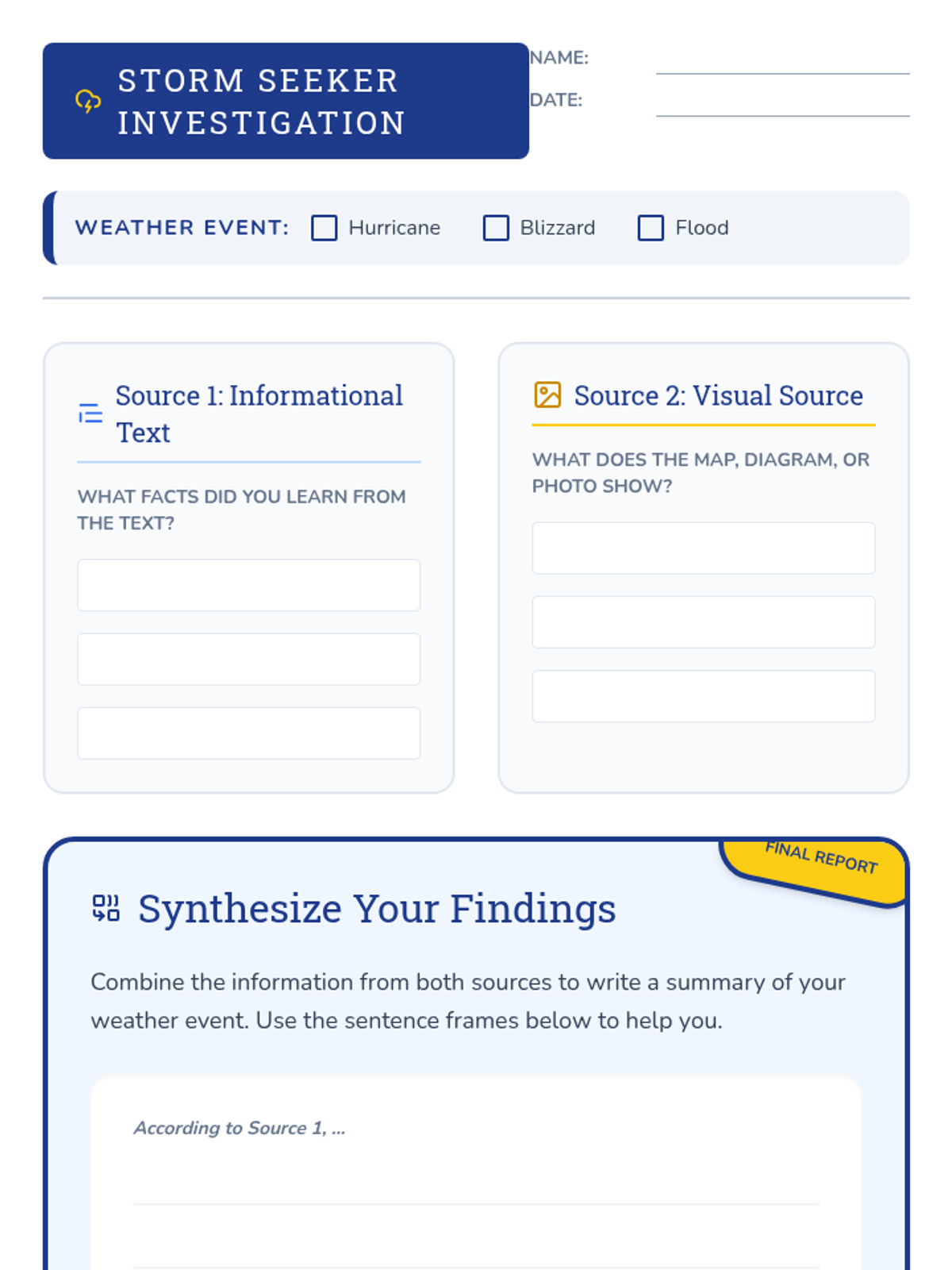
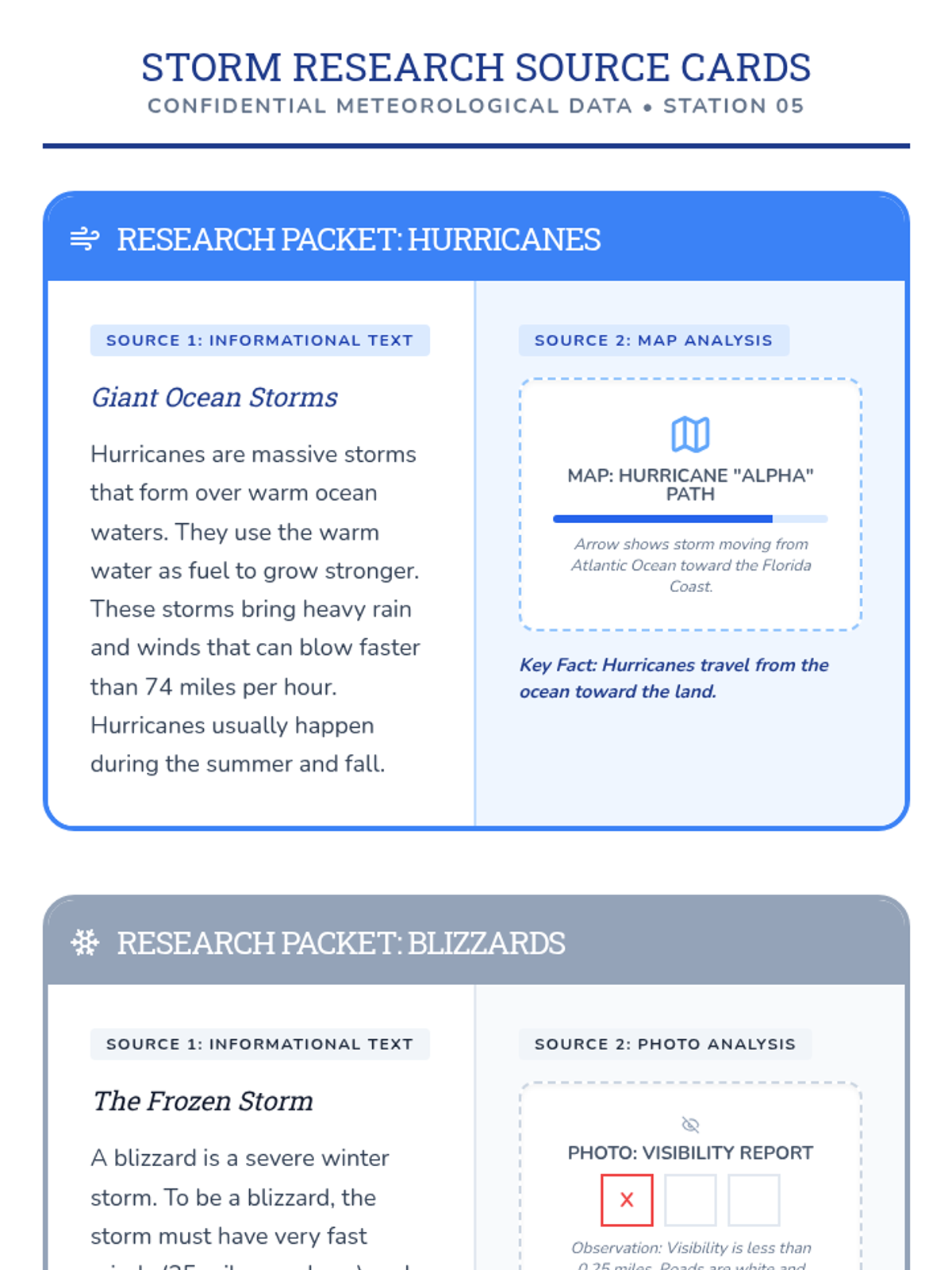
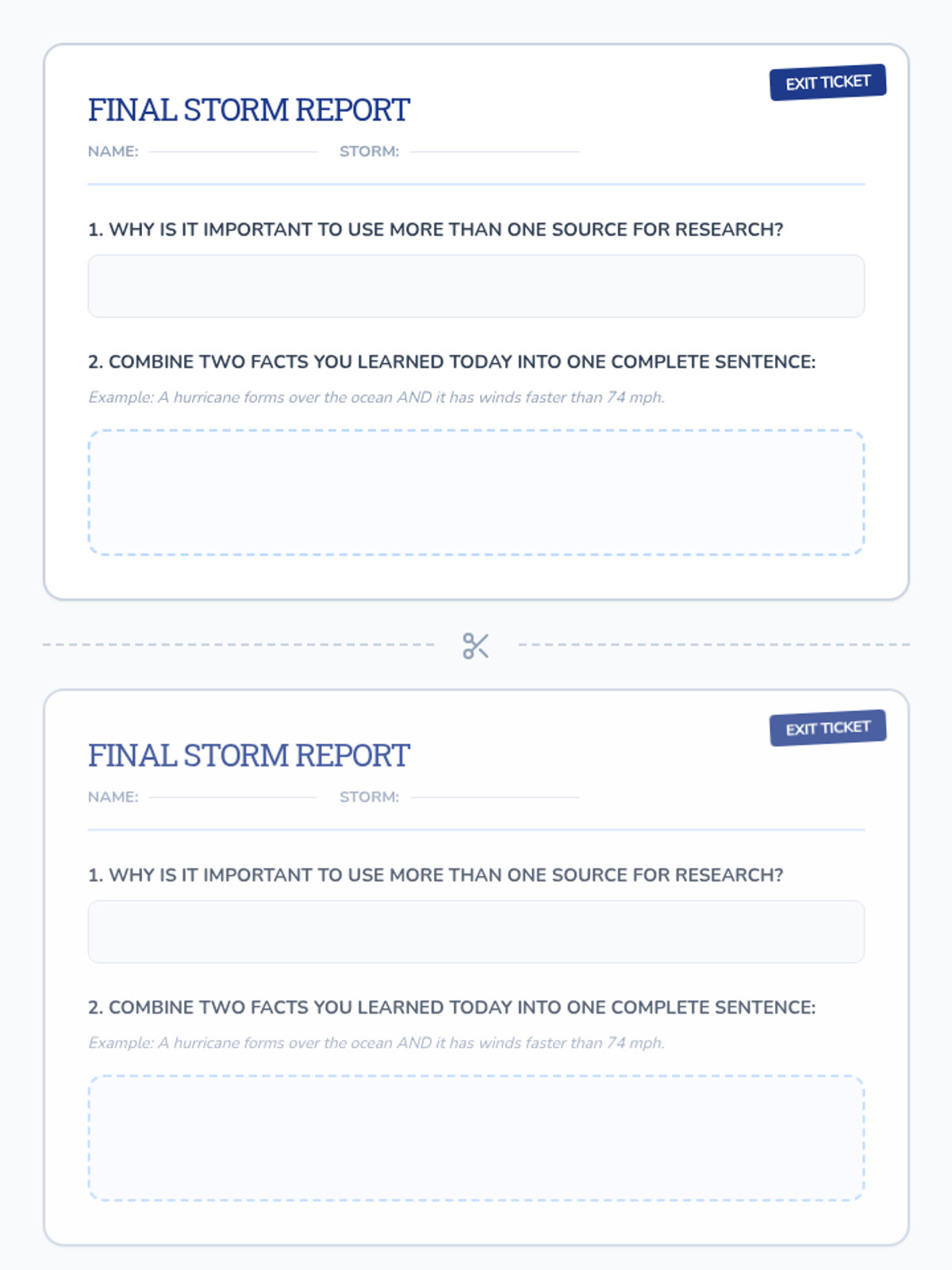
A 45-minute grade 5 ESL lesson focused on researching extreme weather using multiple sources. Students investigate tornadoes, hurricanes, or blizzards to build knowledge through structured investigation.
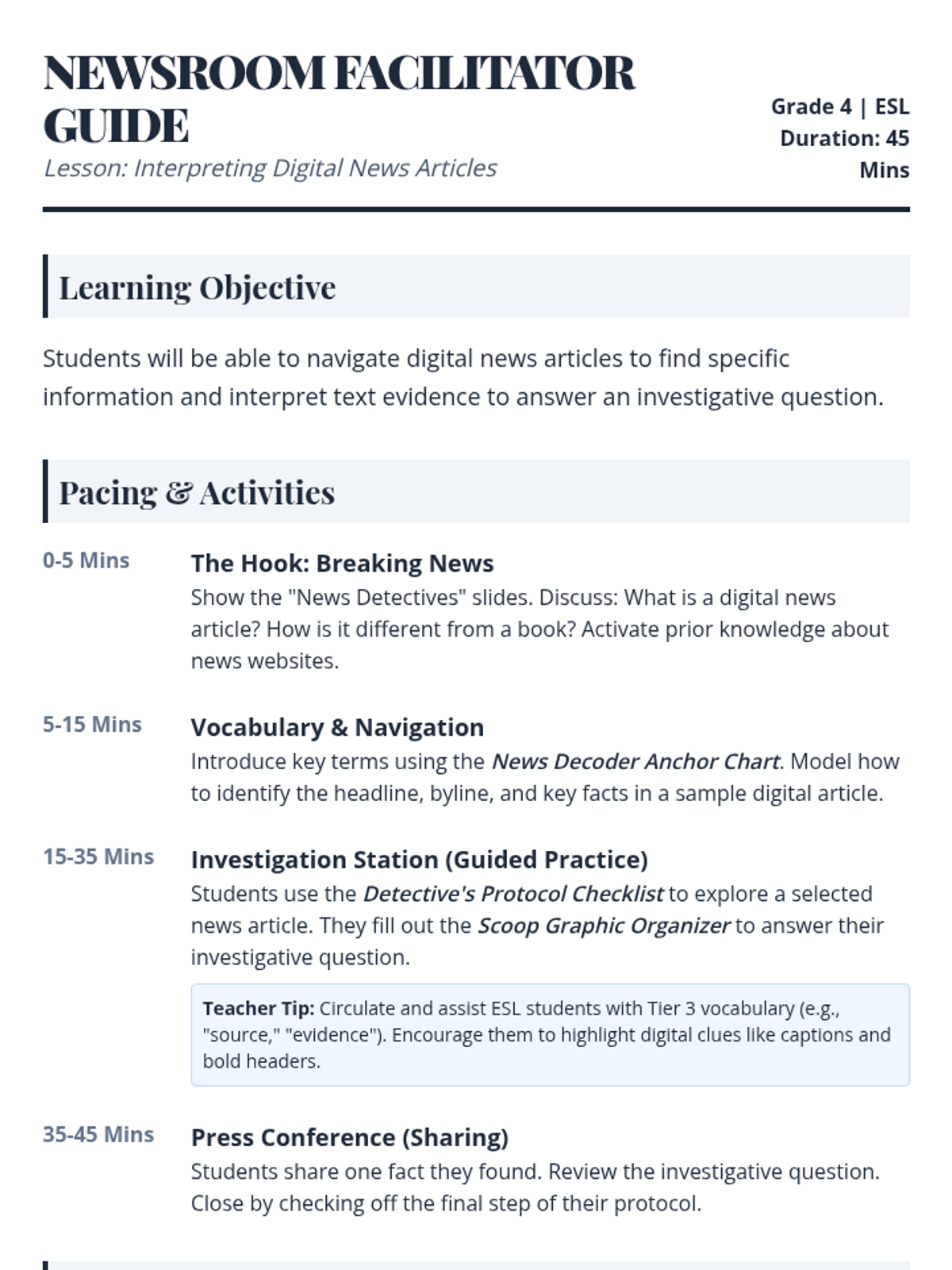
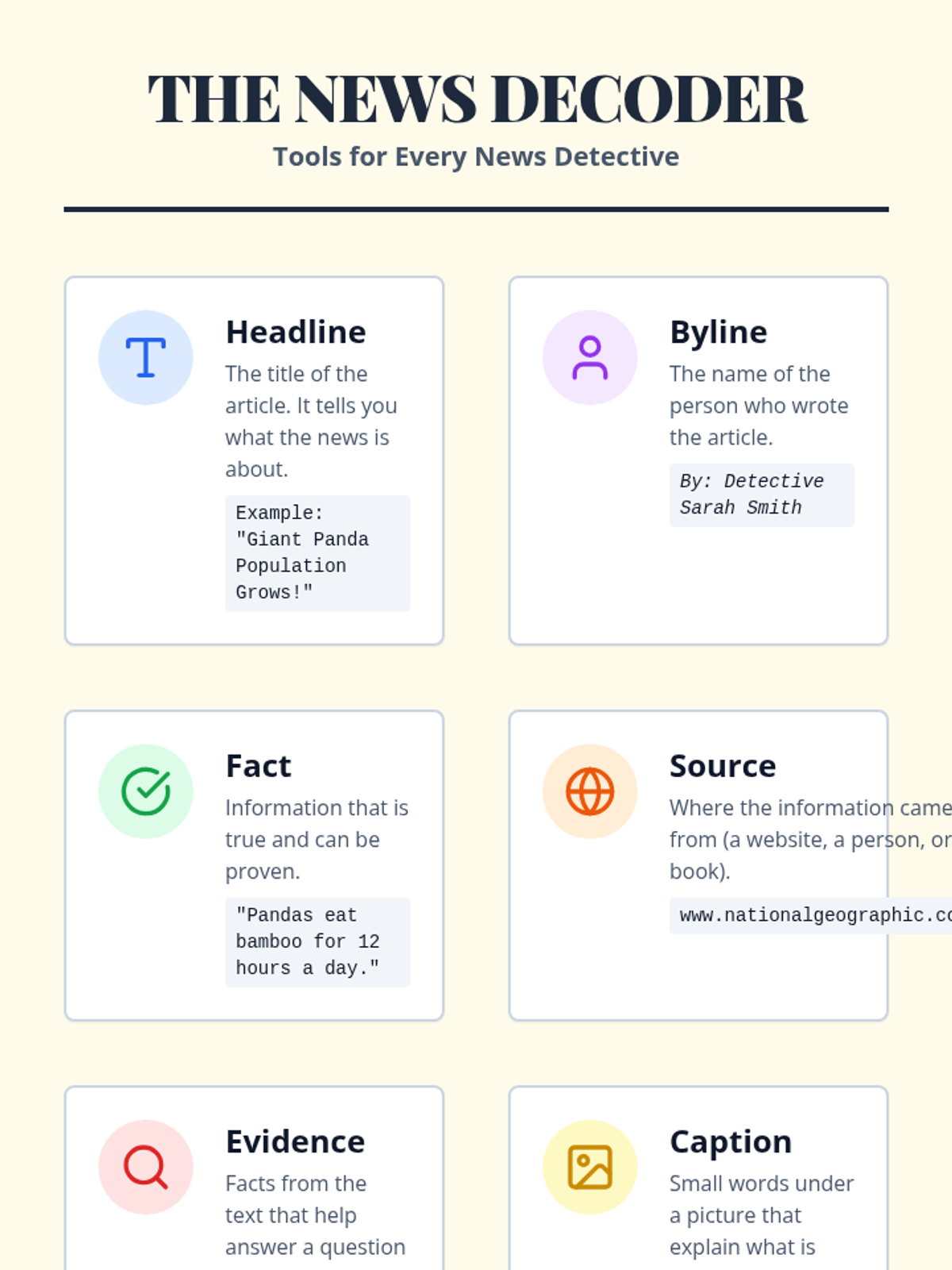
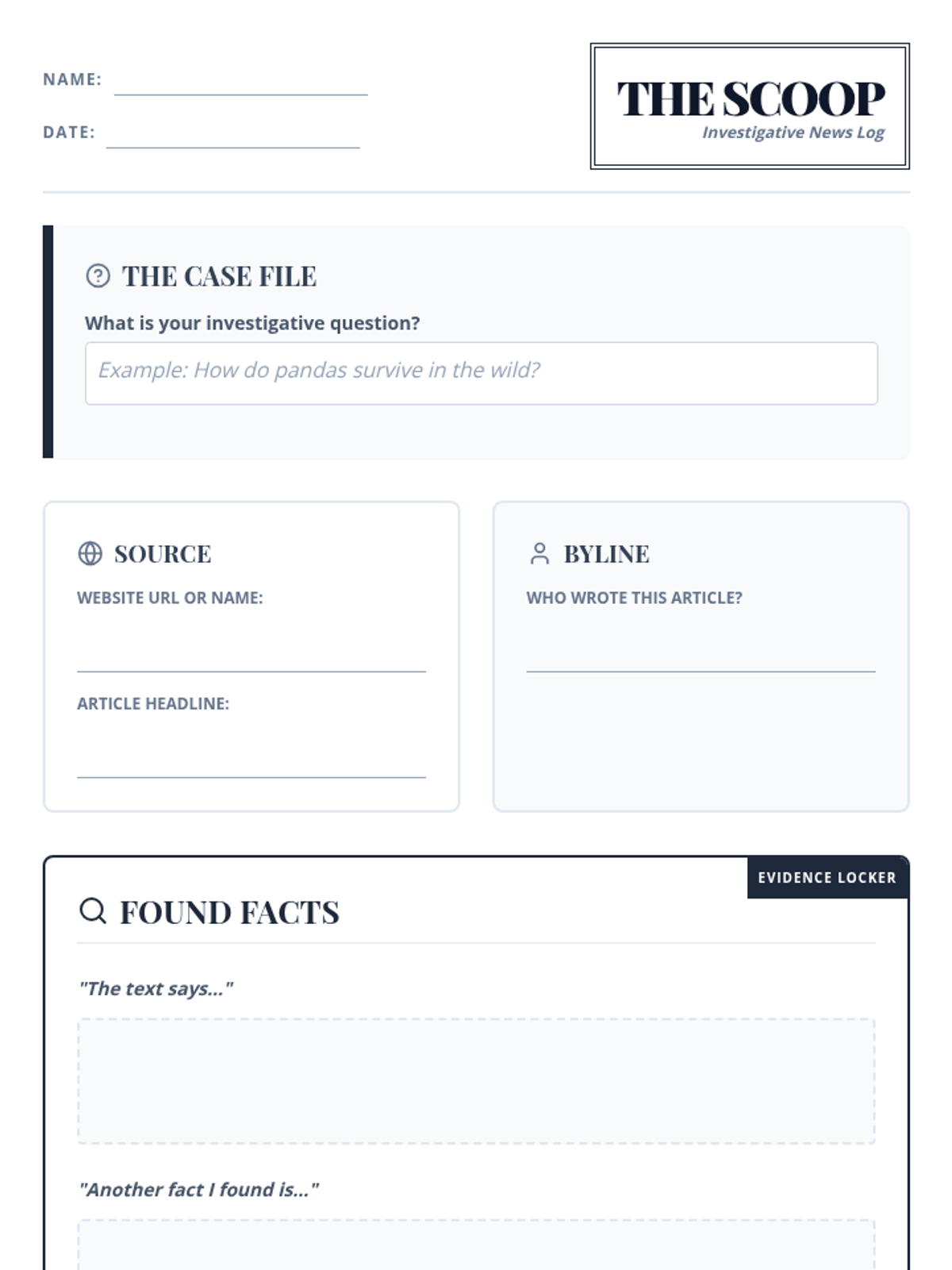
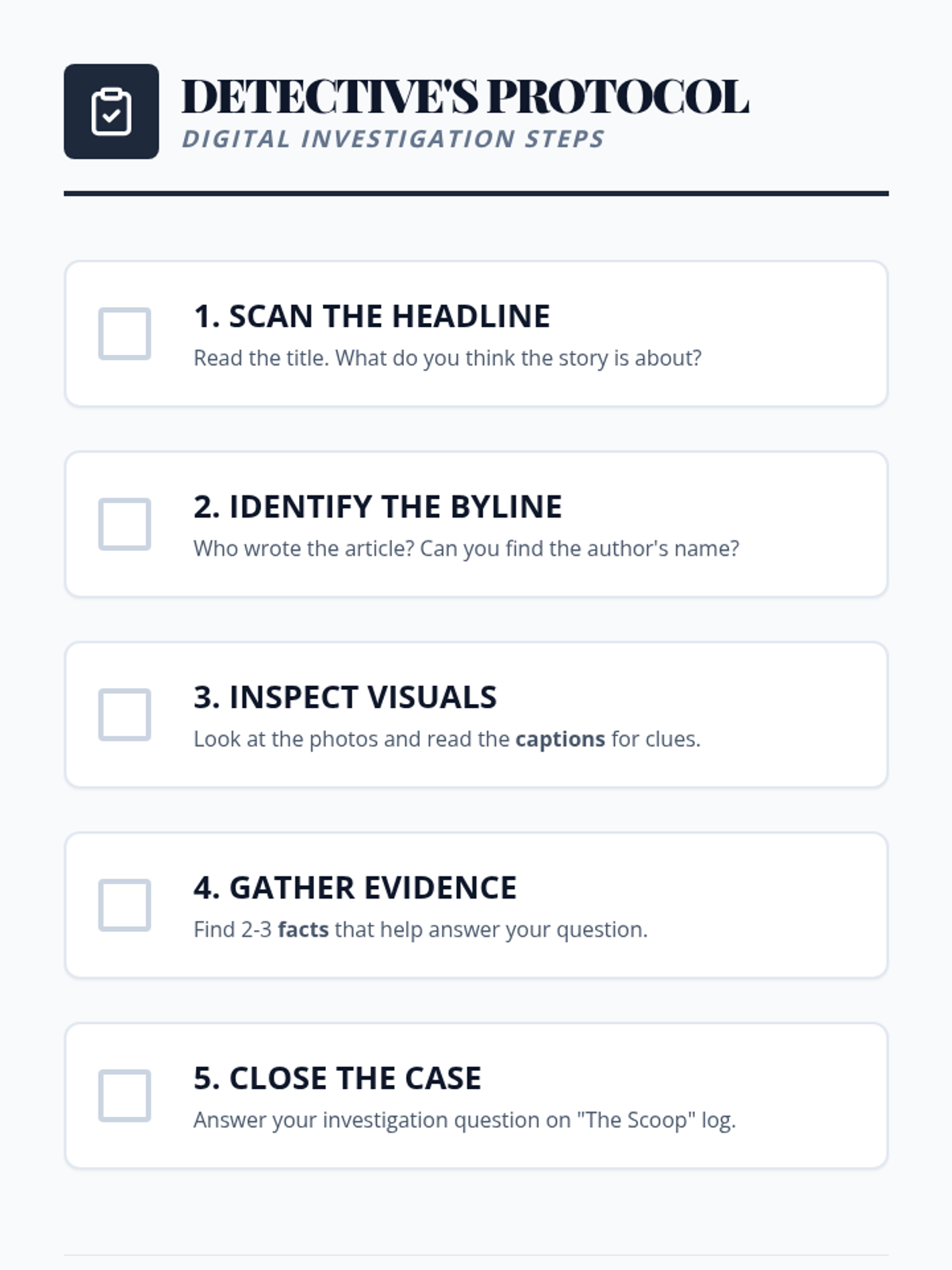
A 45-minute Grade 4 ESL lesson focused on interpreting information from digital news articles. Students learn to navigate digital news features, identify key facts, and answer investigation questions using text evidence.
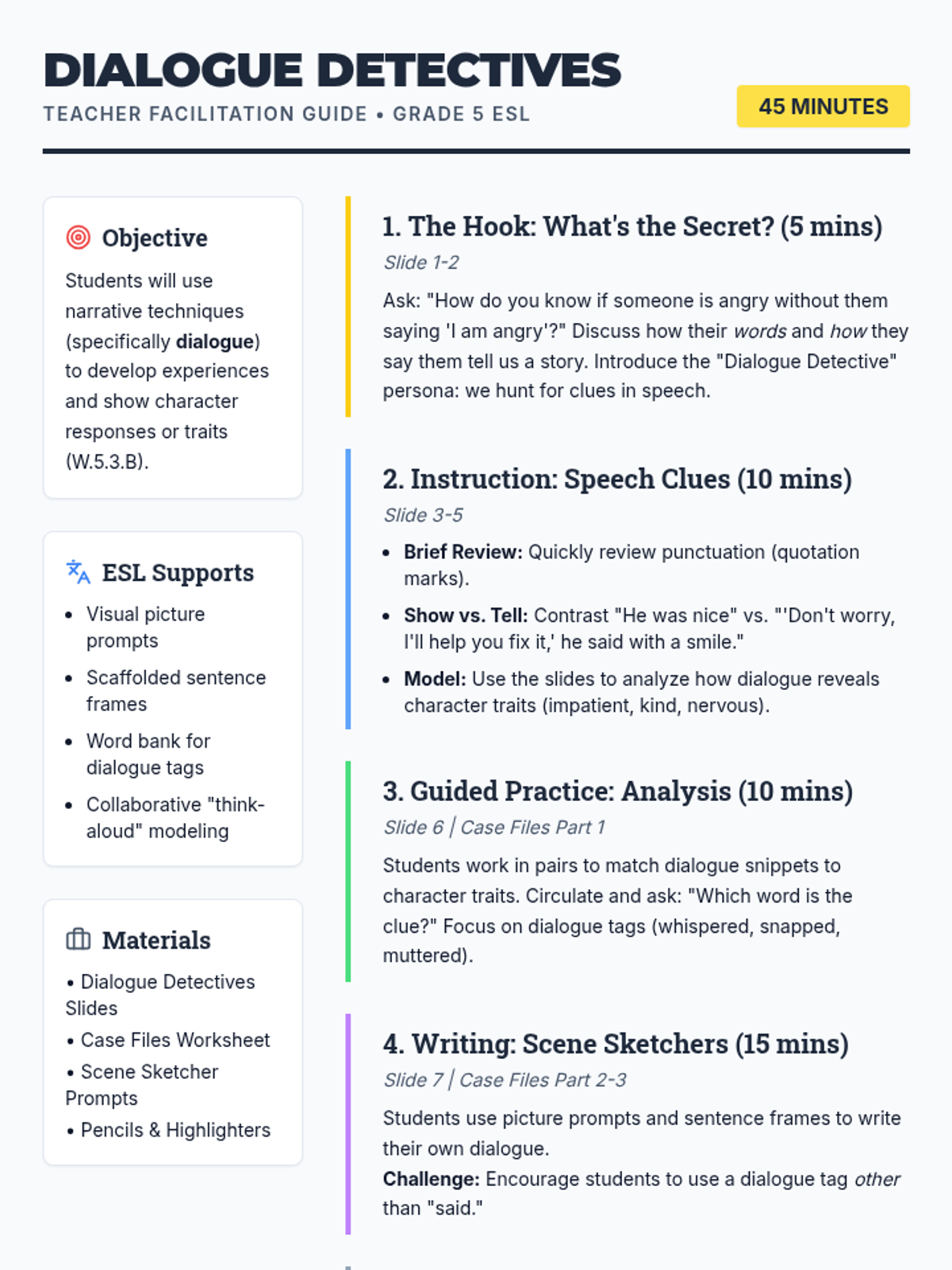
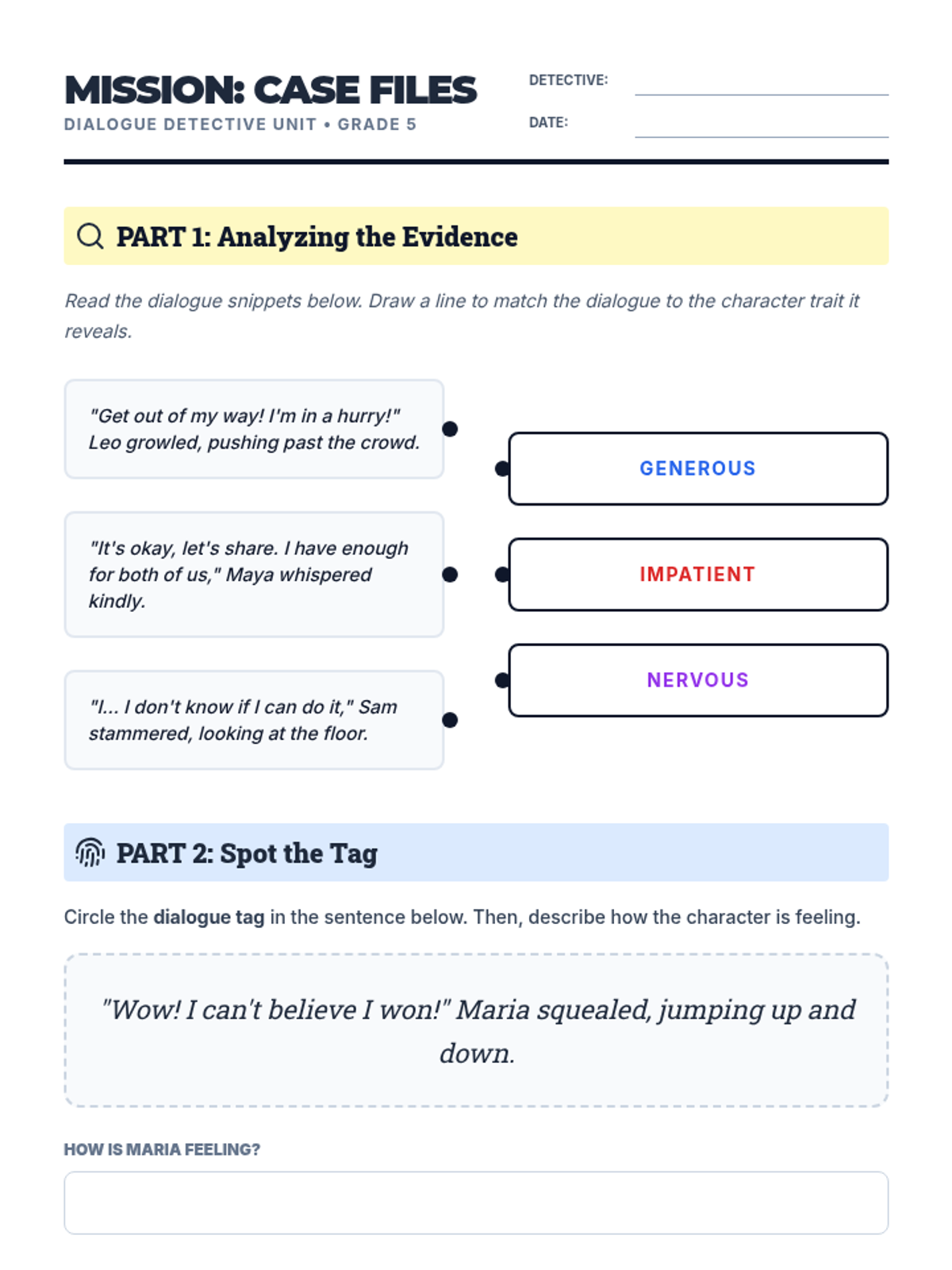
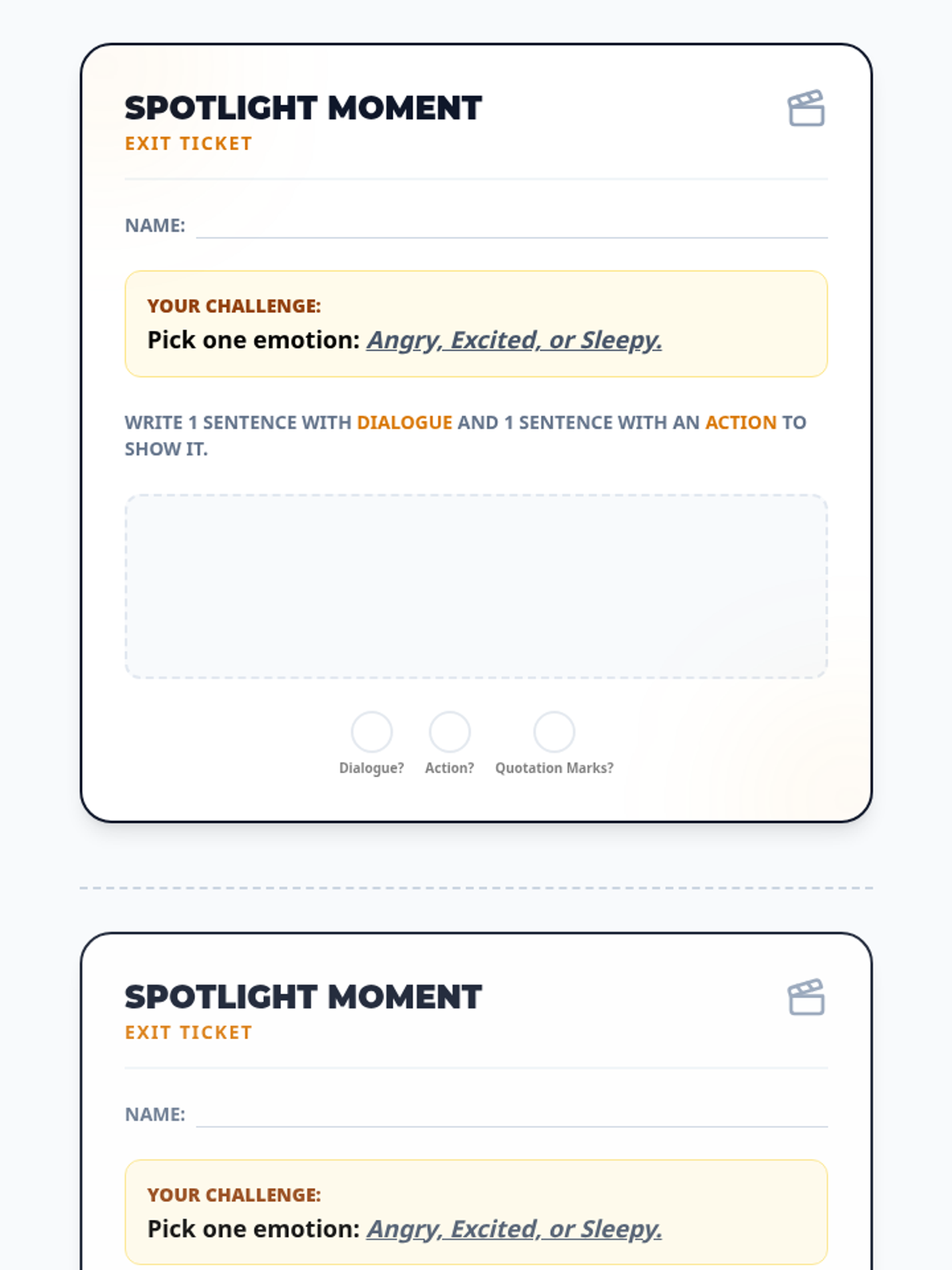
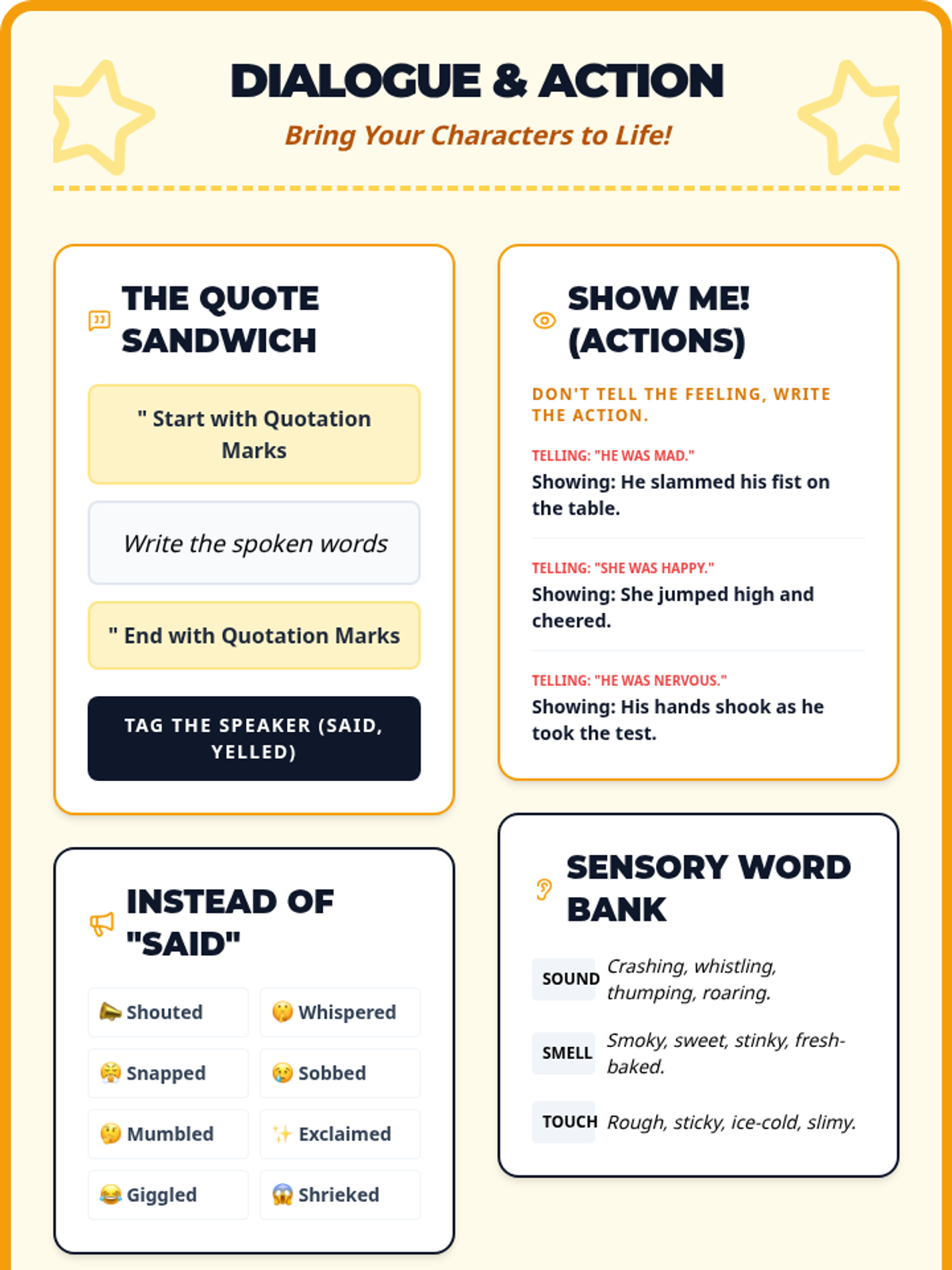
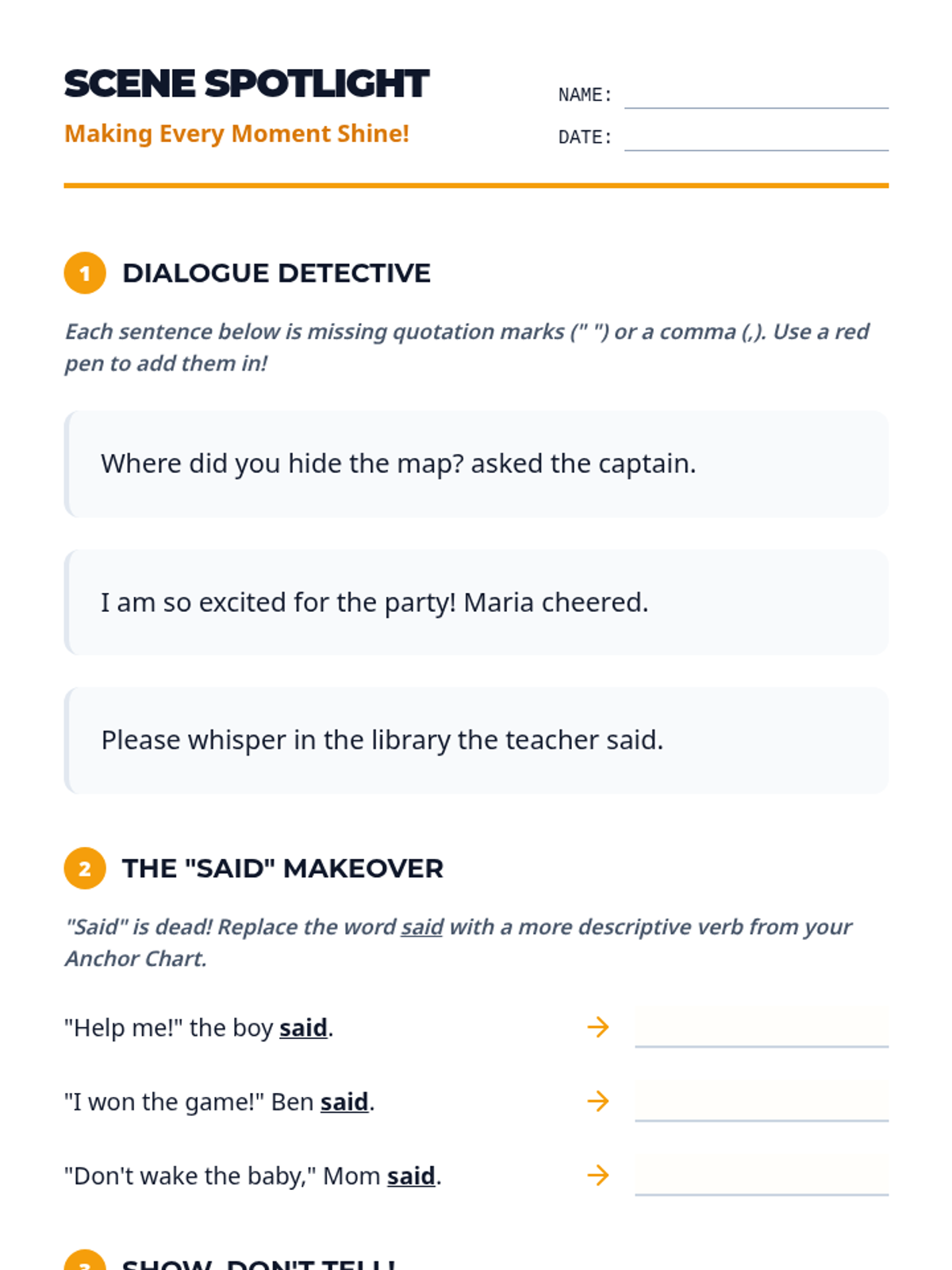
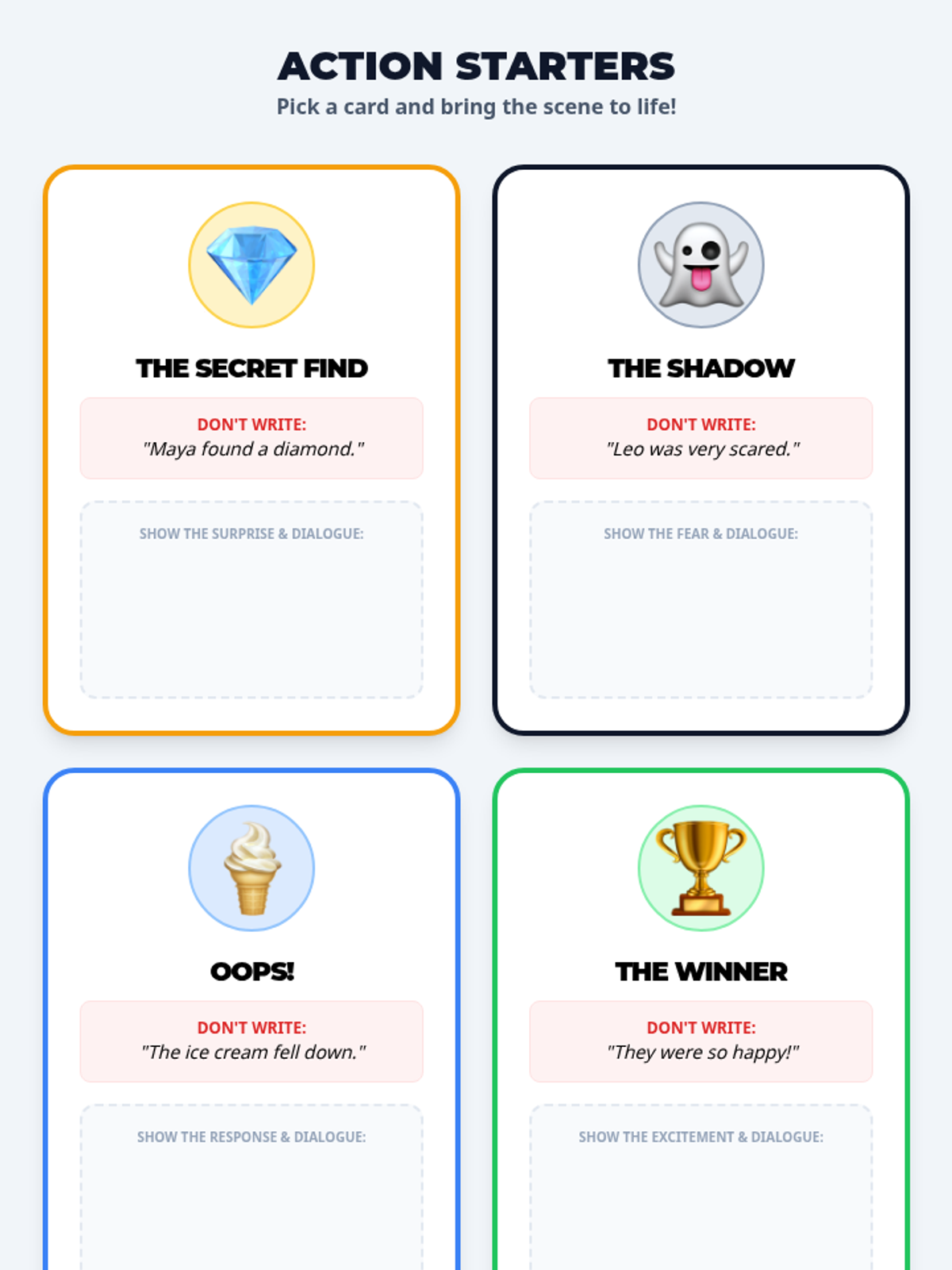
A 45-minute Grade 5 ESL lesson focused on using dialogue to reveal character traits and emotions. Students act as 'Dialogue Detectives' to analyze speech and write their own character-revealing conversations.
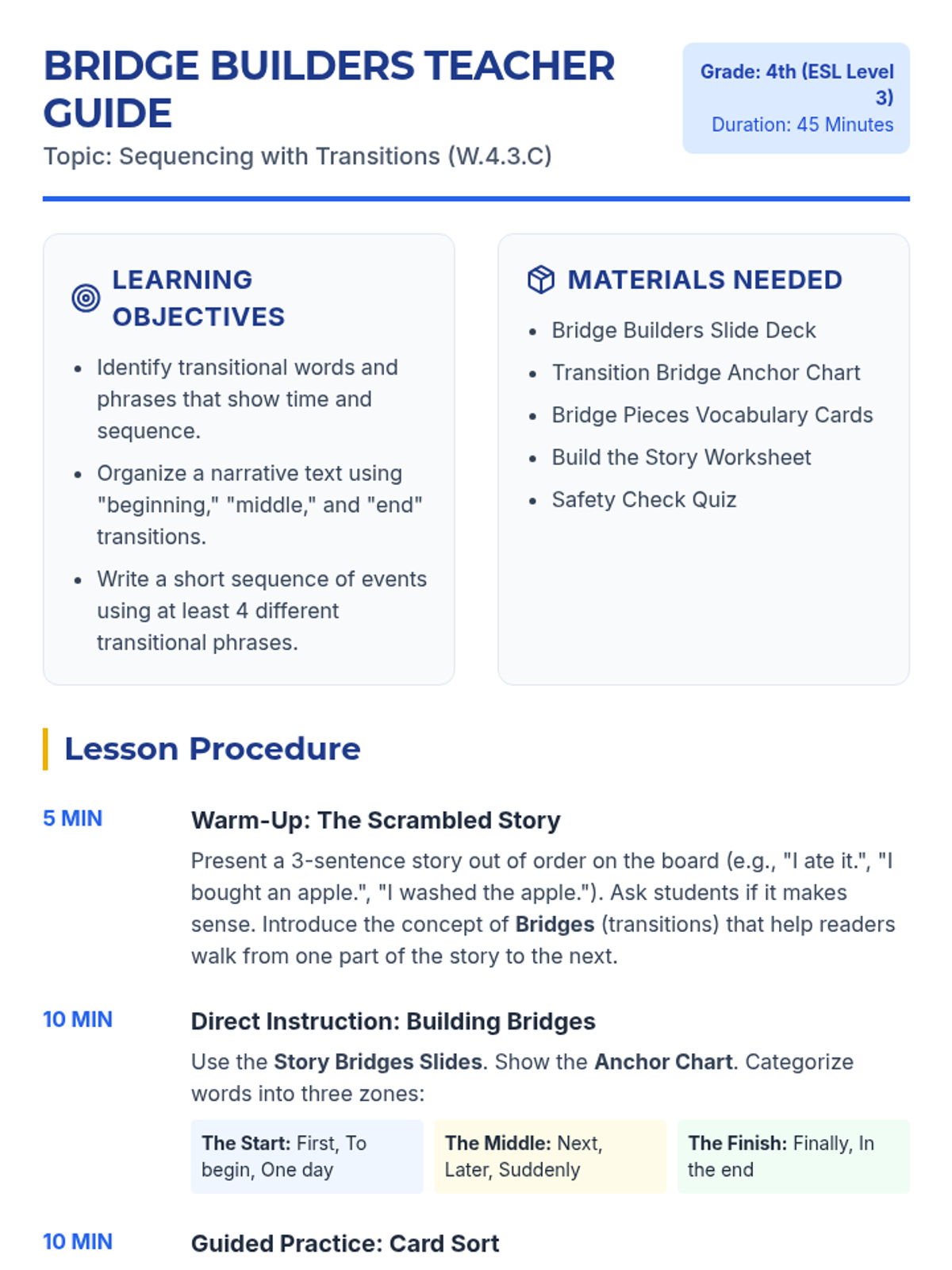
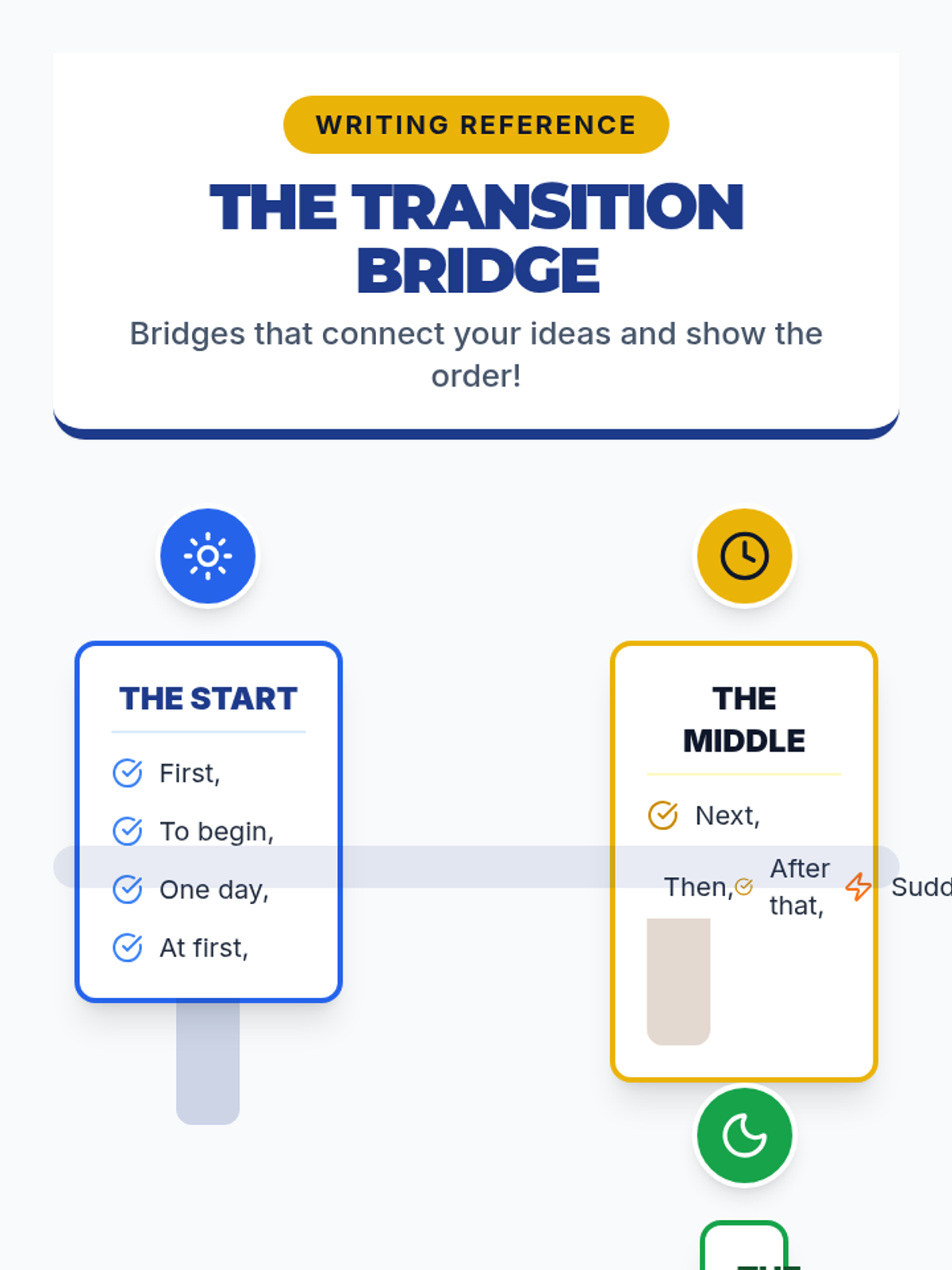
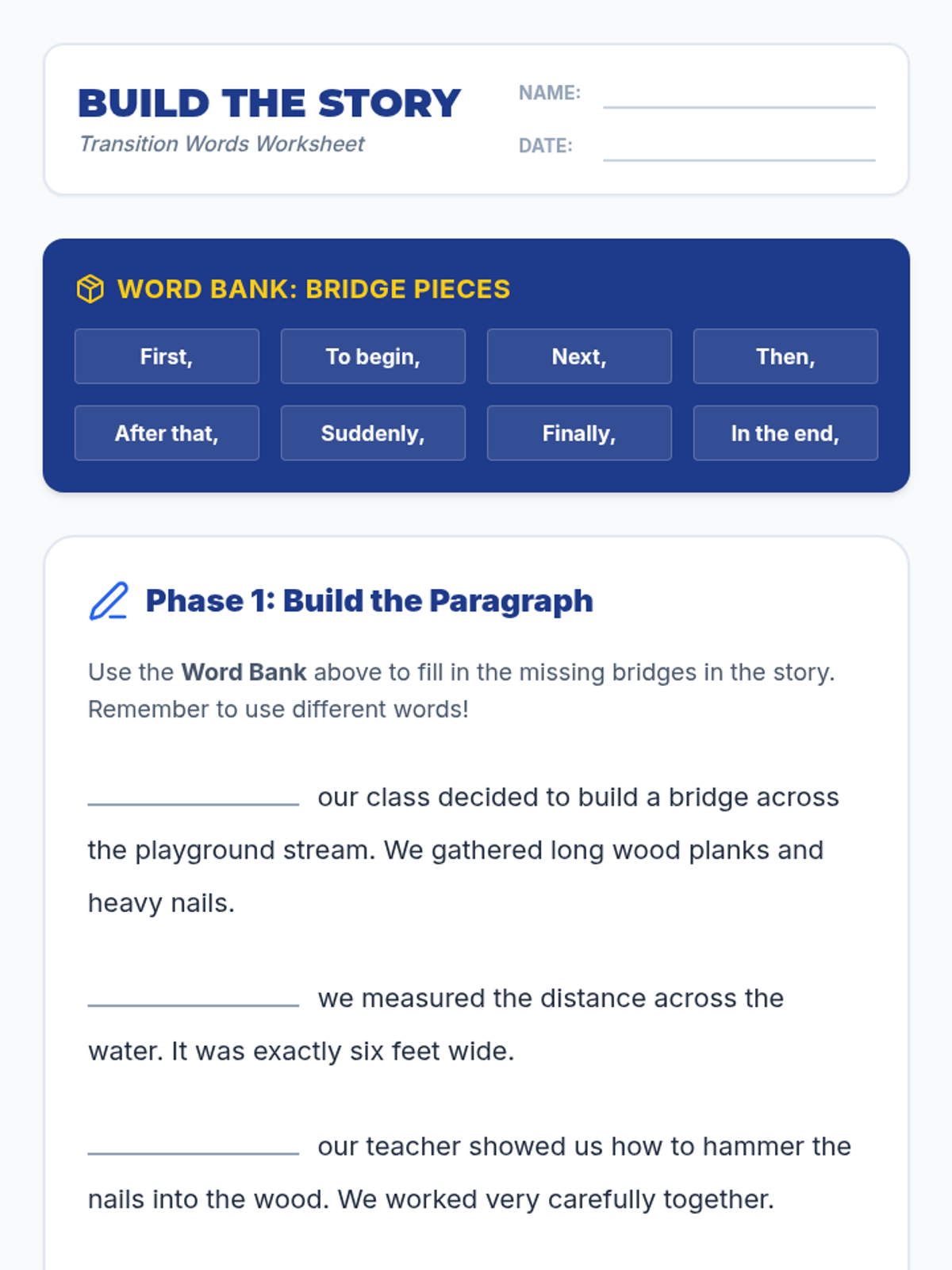
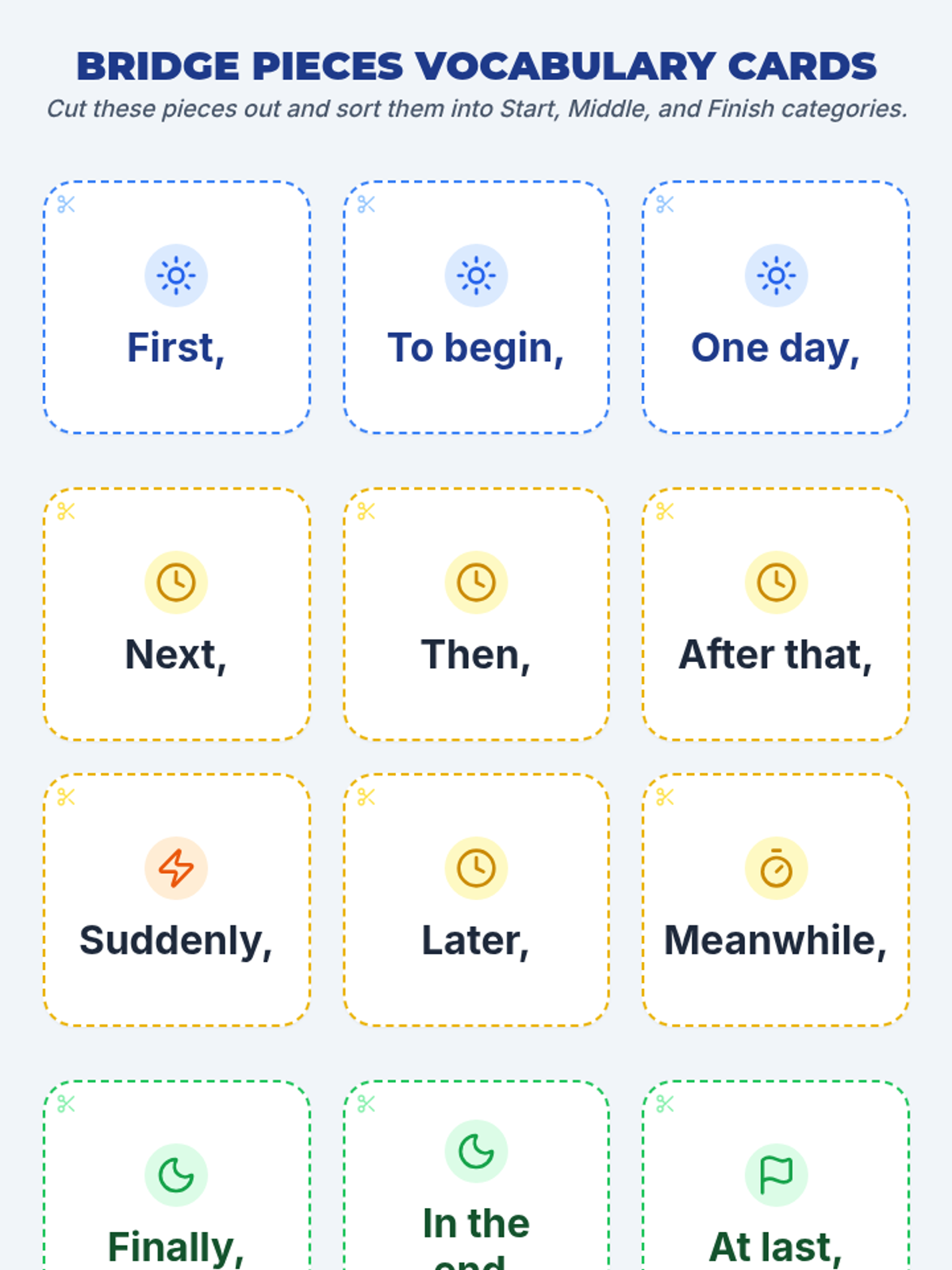
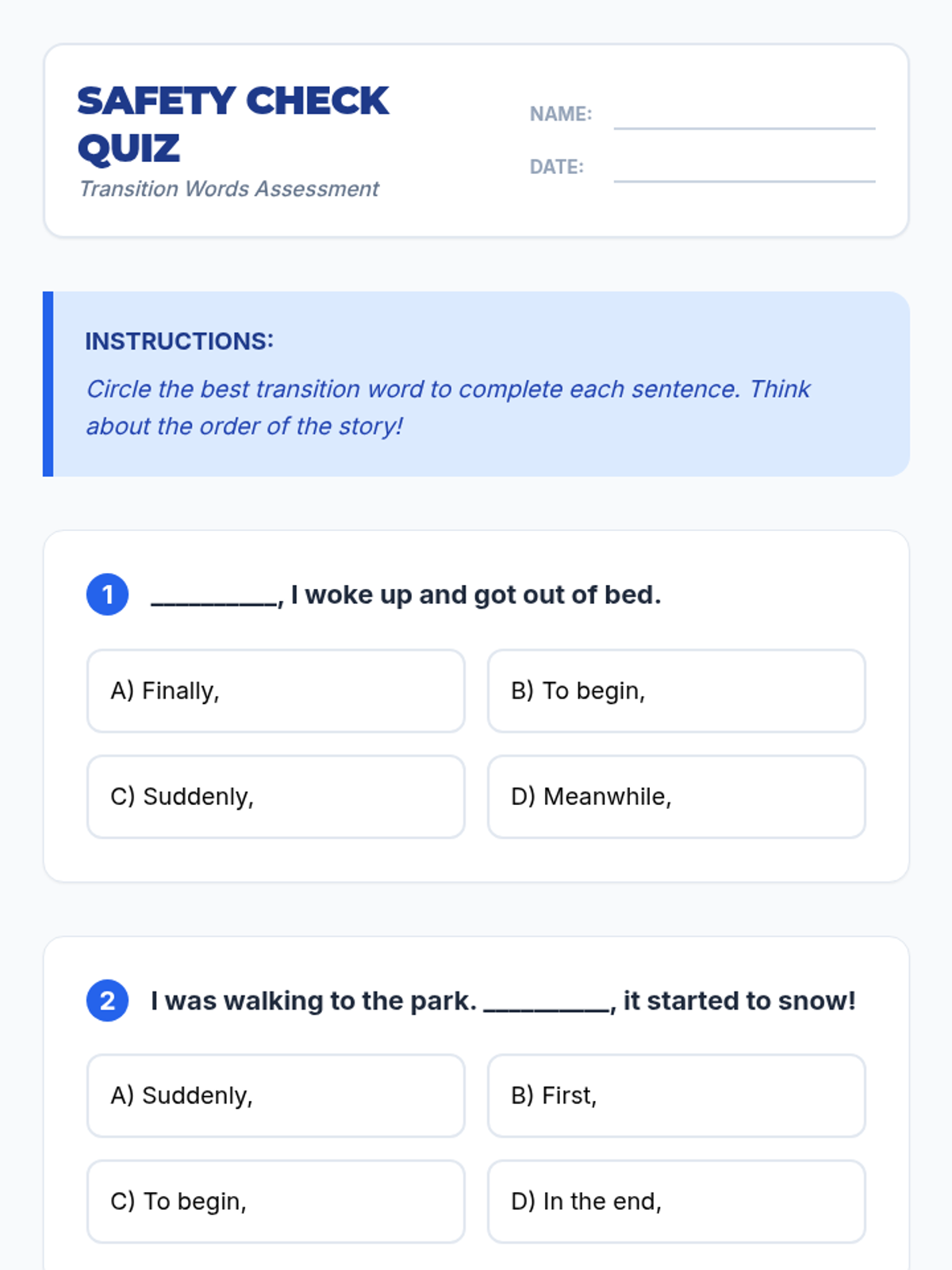
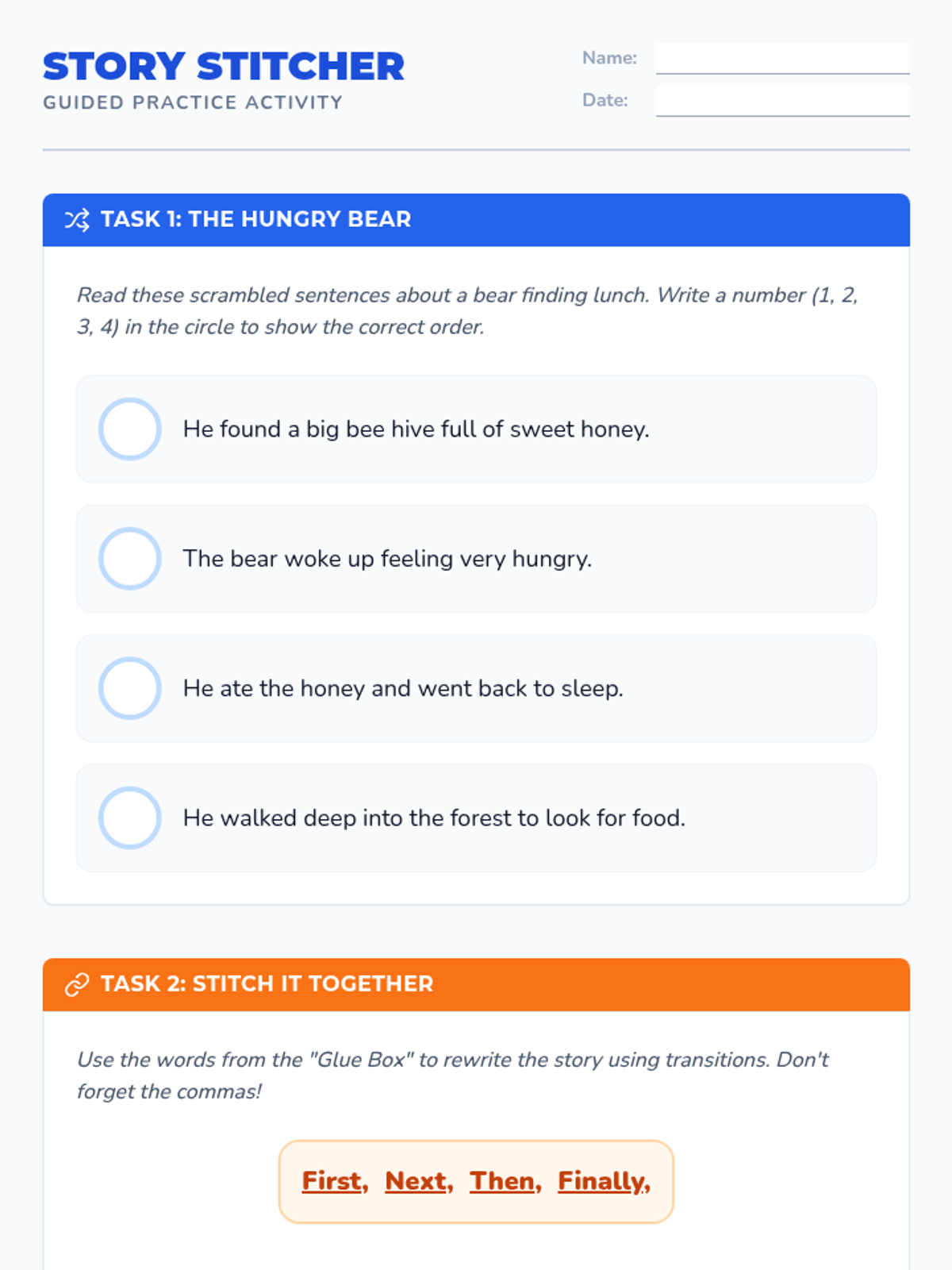
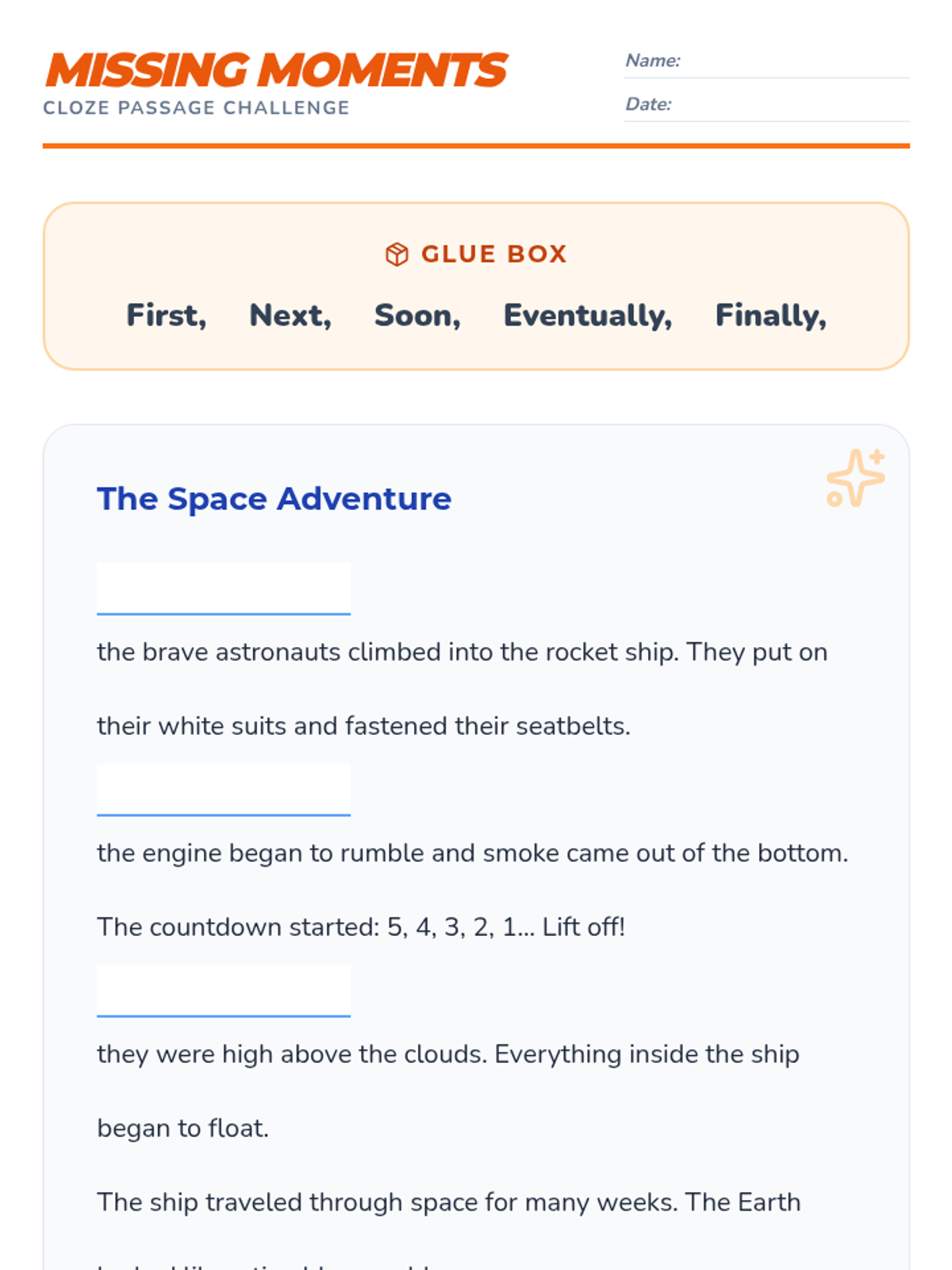
A 45-minute ESL lesson for 4th graders focused on using transitional words and phrases to sequence events, themed around building bridges between ideas.
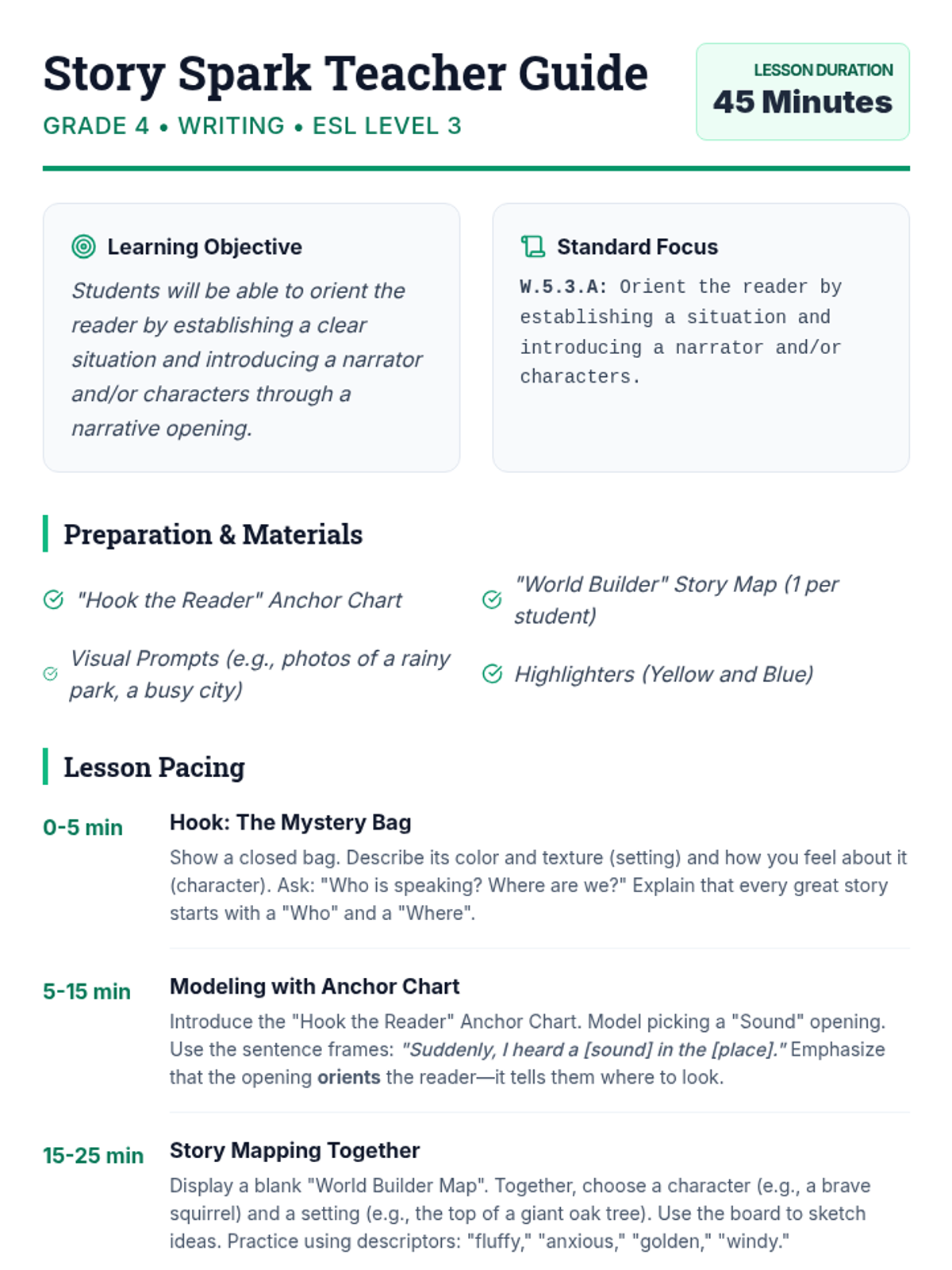
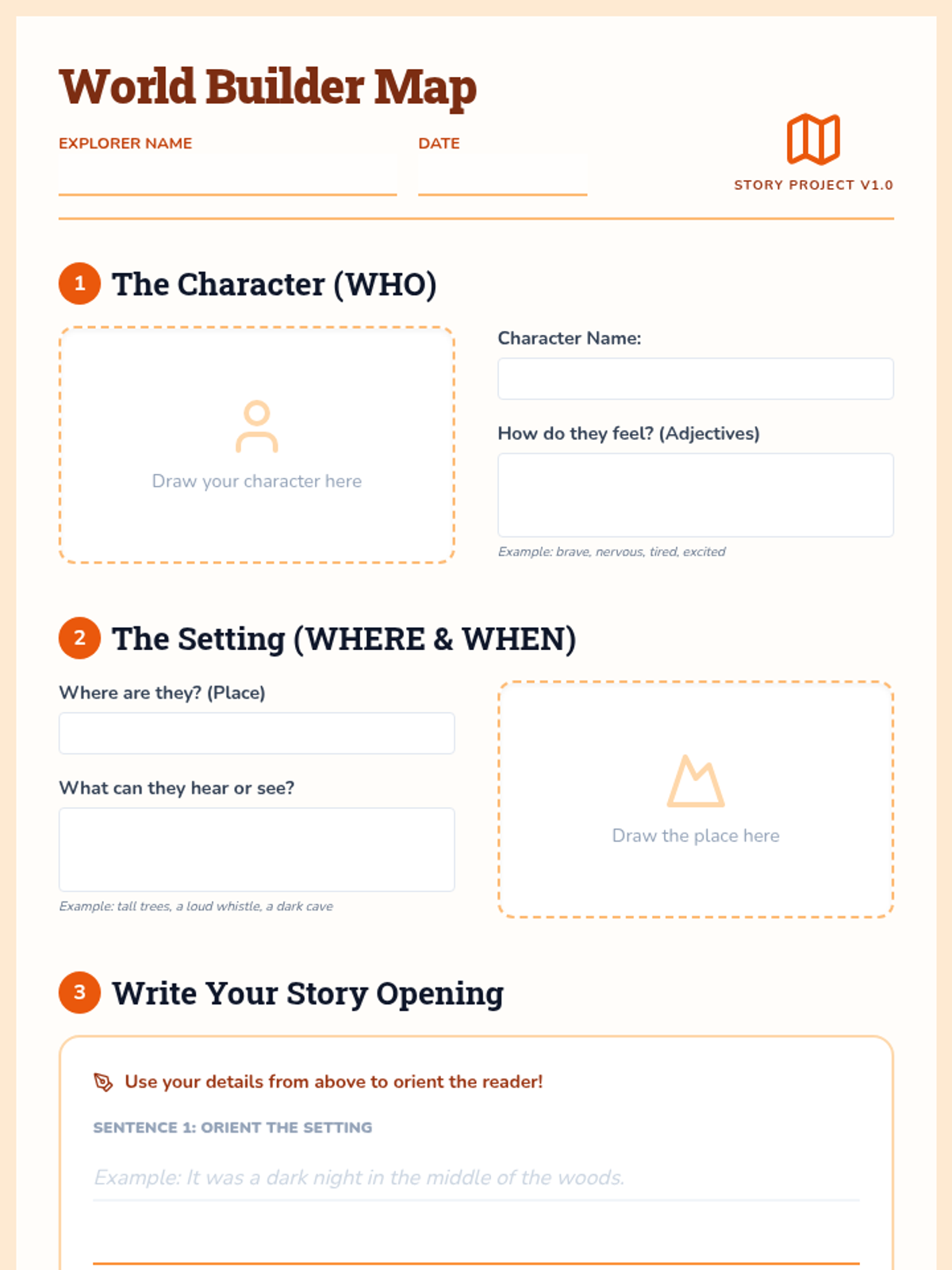
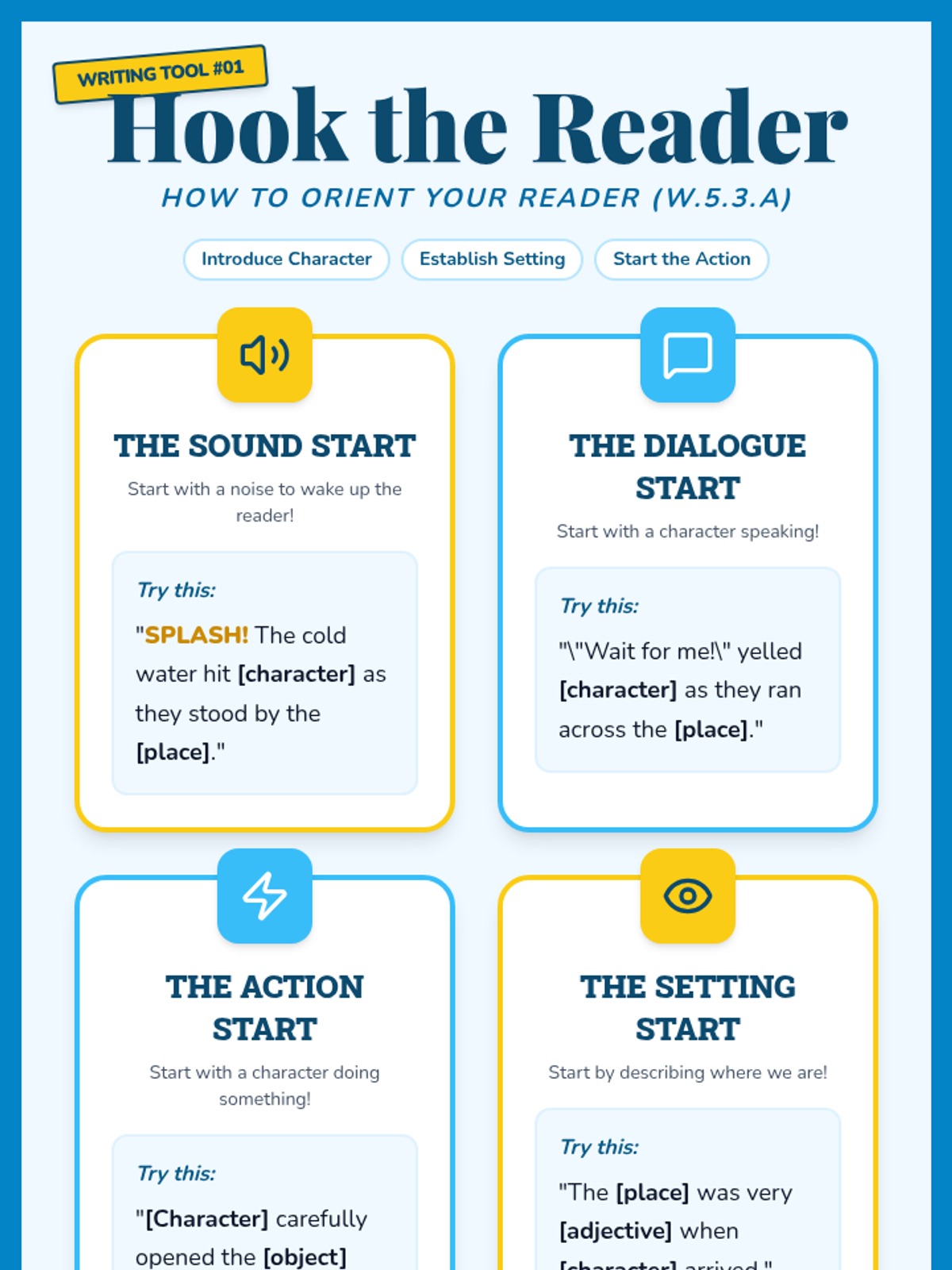
A 45-minute writing lesson for Grade 4 ESL students (Level 3) focused on establishing characters and settings to orient the reader. Students will use sentence frames and visual maps to craft the beginning of a narrative.
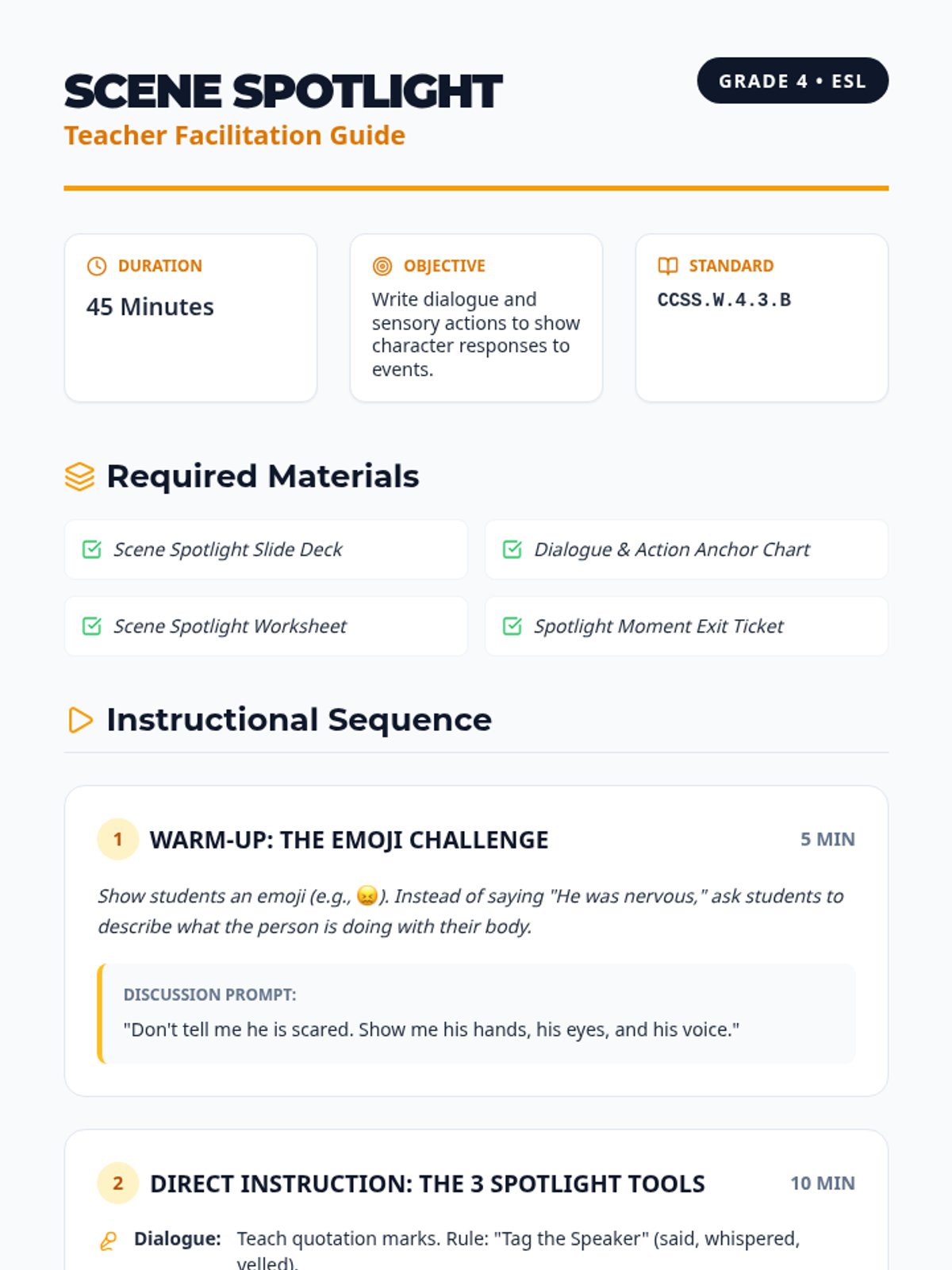
A 45-minute Grade 4 ESL lesson focused on CCSS W.4.3.B, teaching students to use dialogue, sensory details, and 'show, don't tell' actions to bring characters and scenes to life.
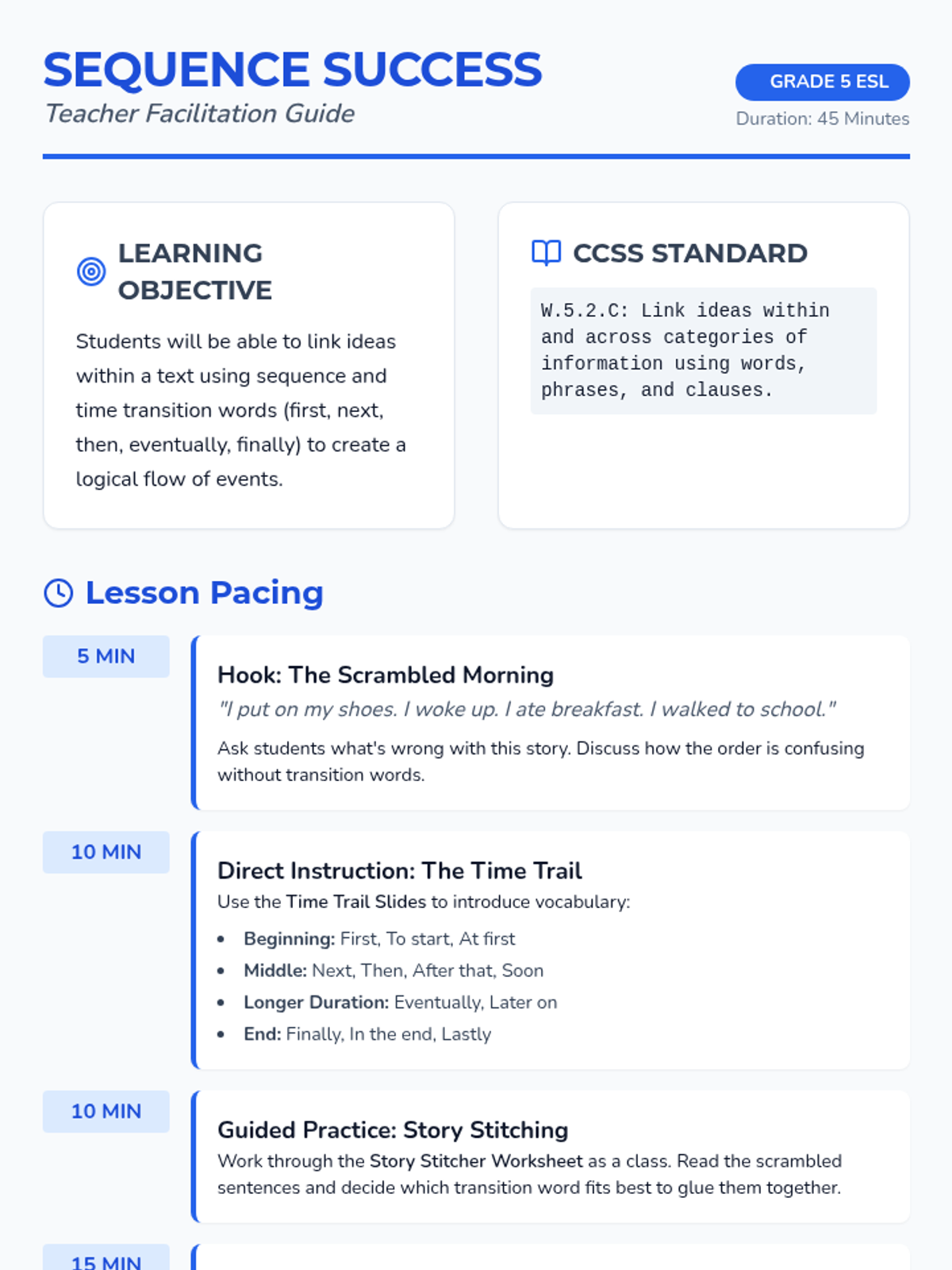
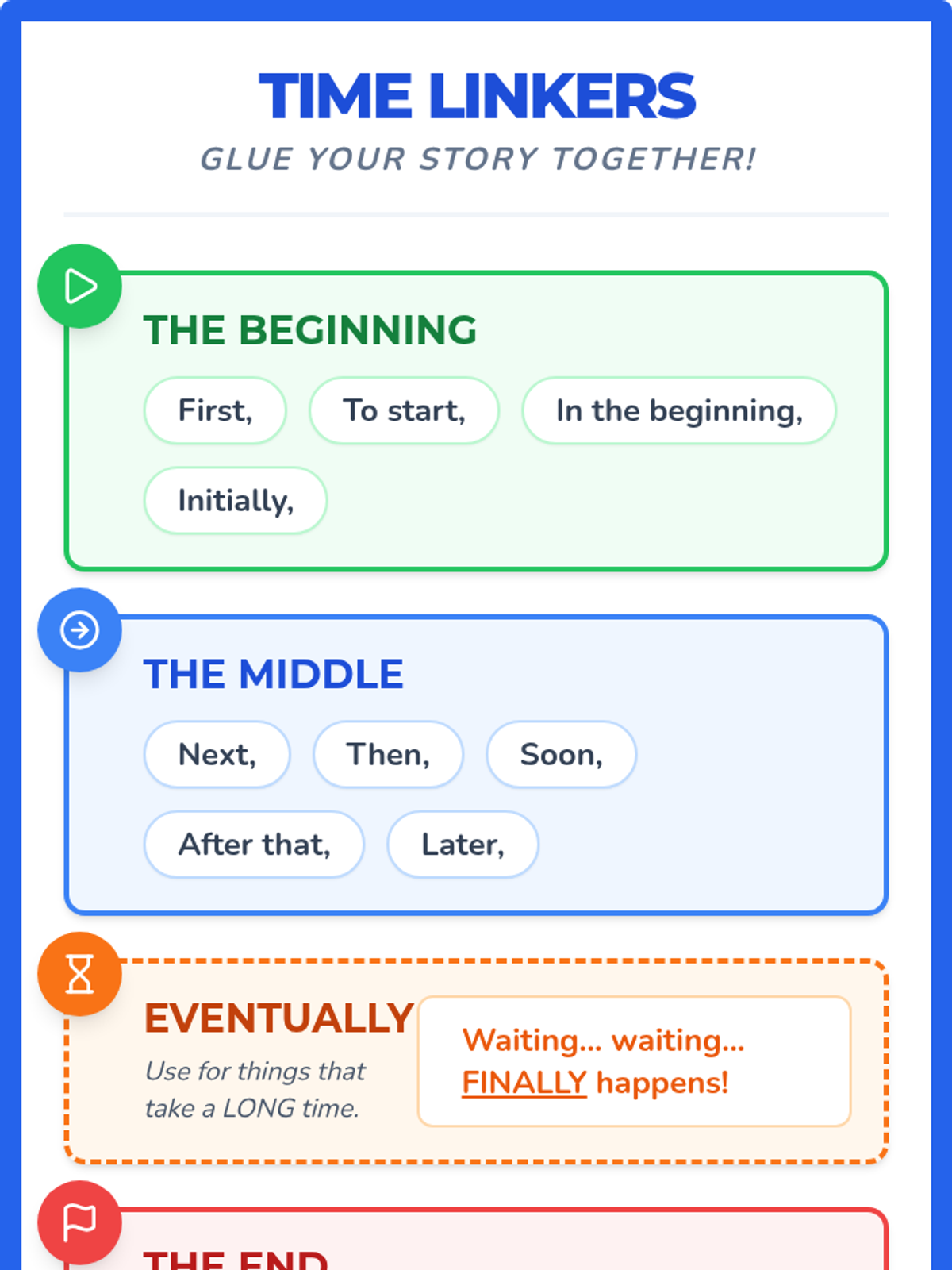
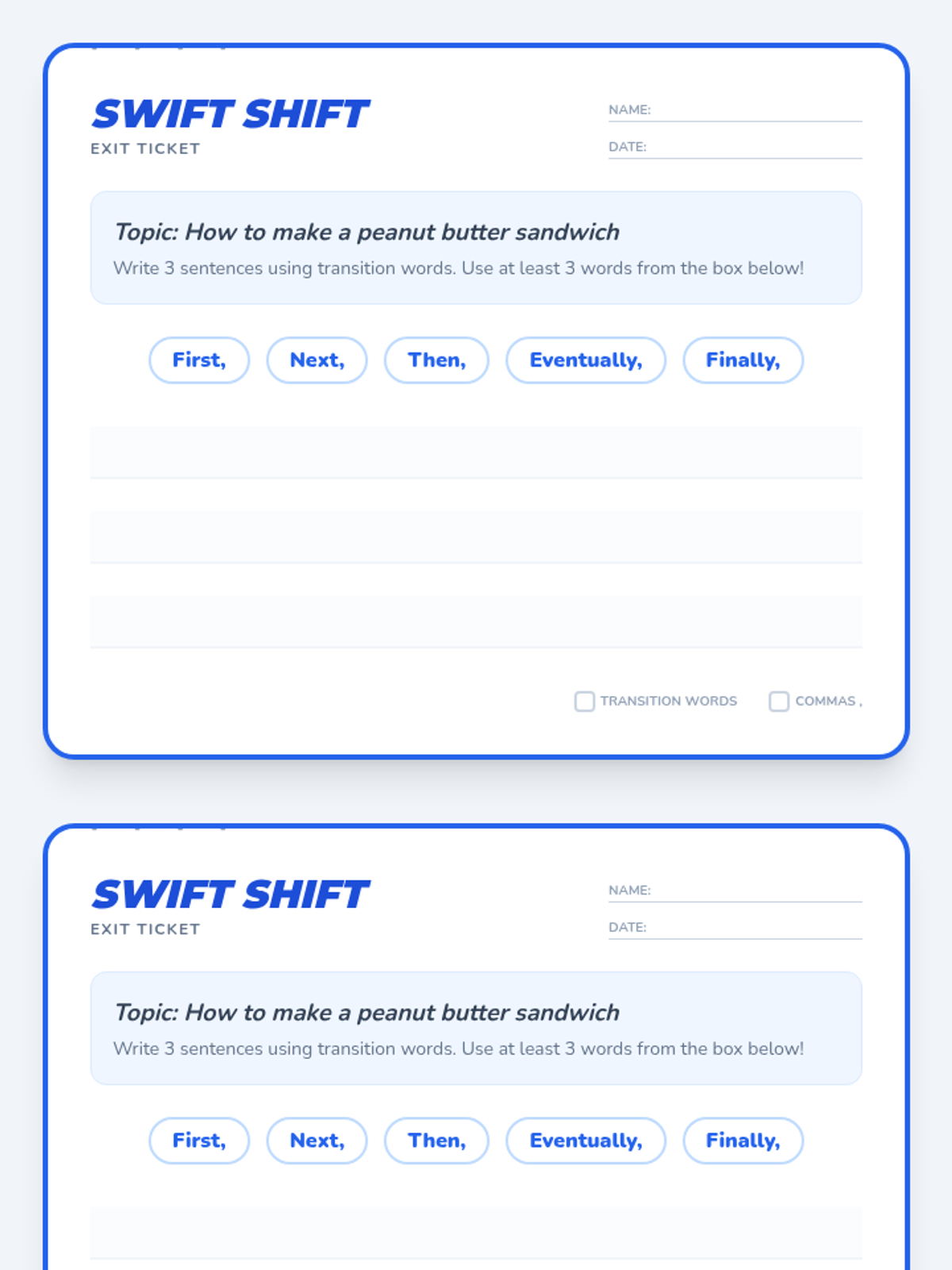
A 45-minute ESL lesson for 5th graders focused on using sequence and time transition words (first, then, eventually) to link ideas in writing. Students will practice organizing stories and instructions logically using a variety of transitional phrases.
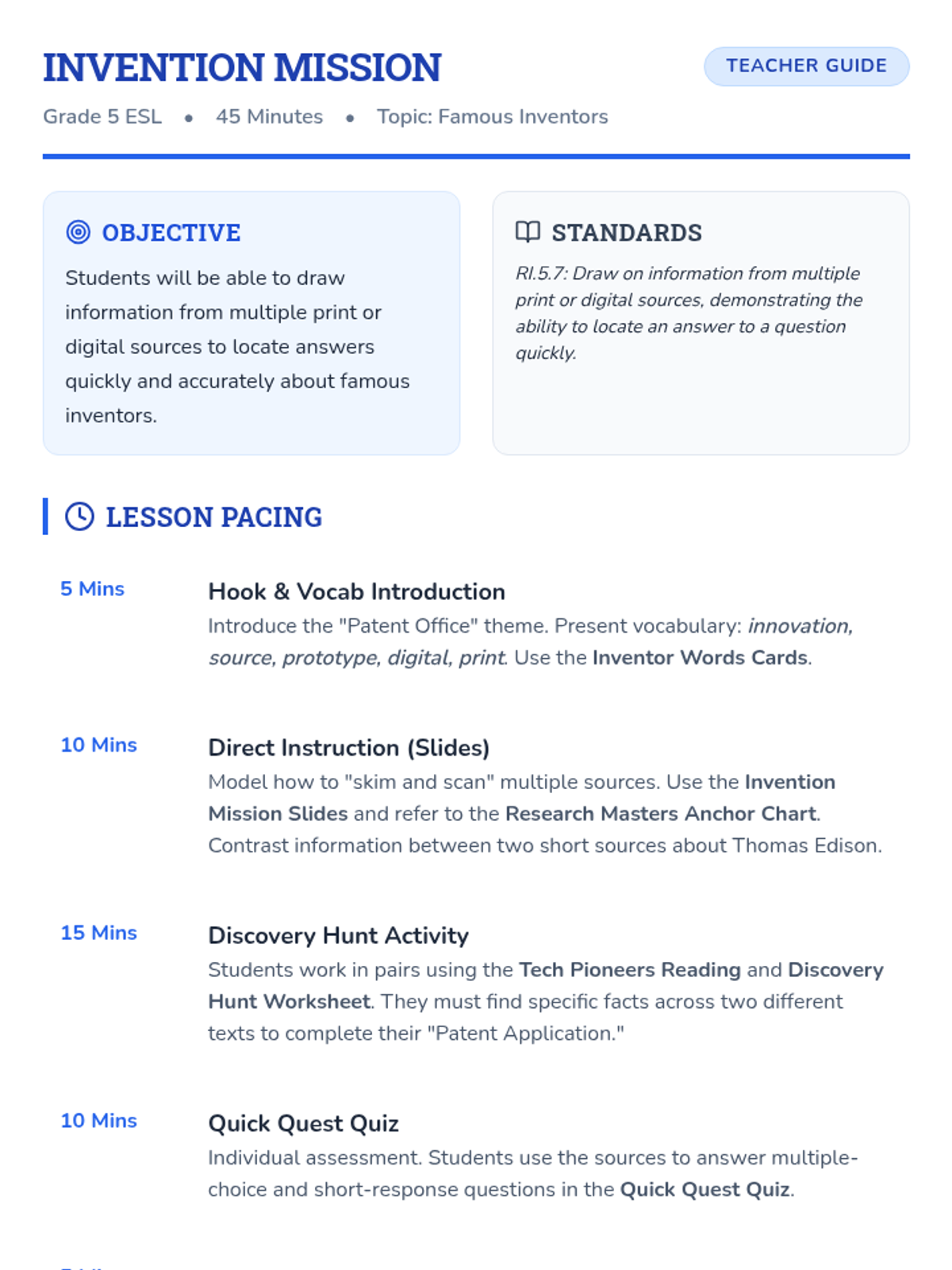
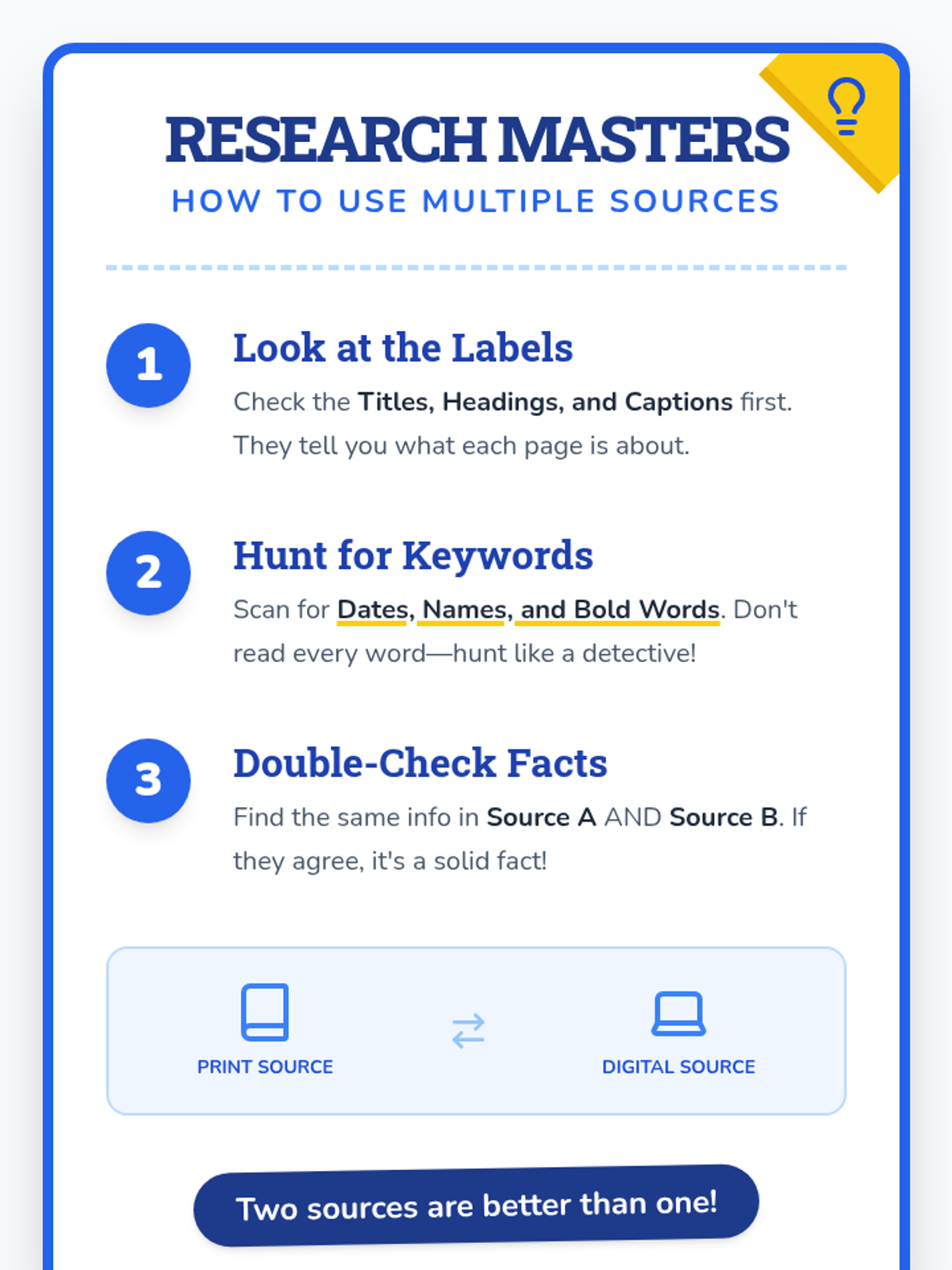
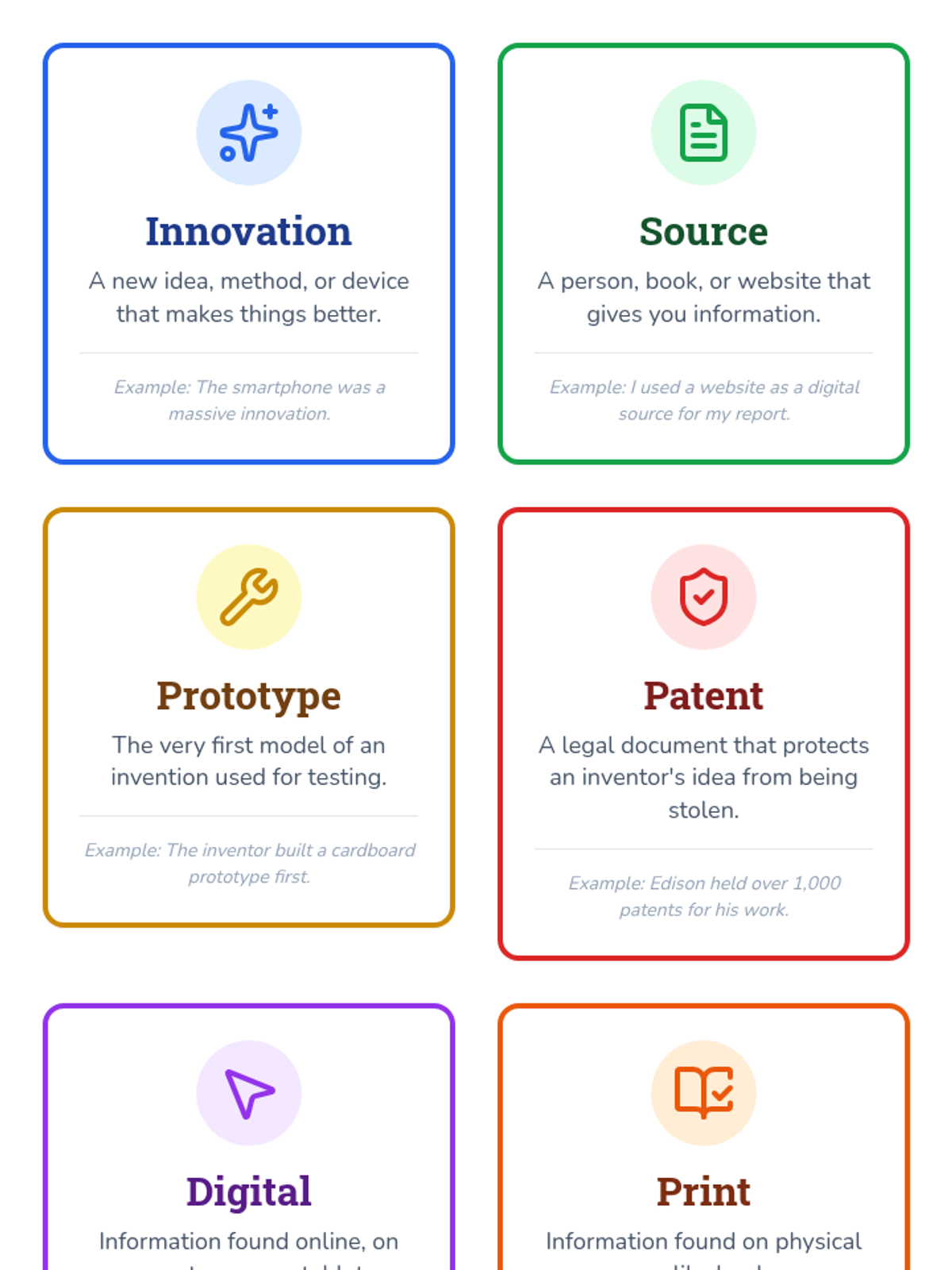
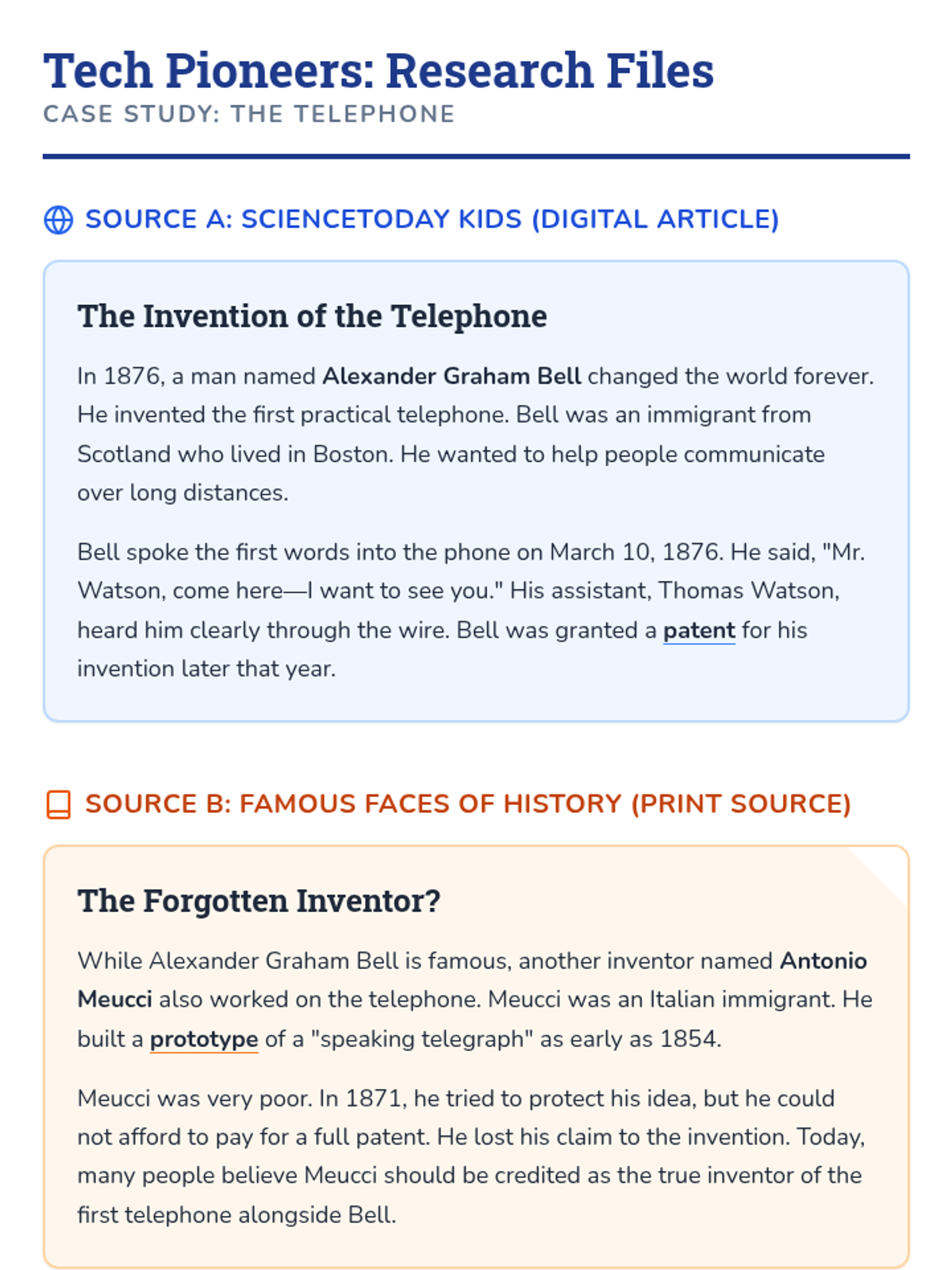
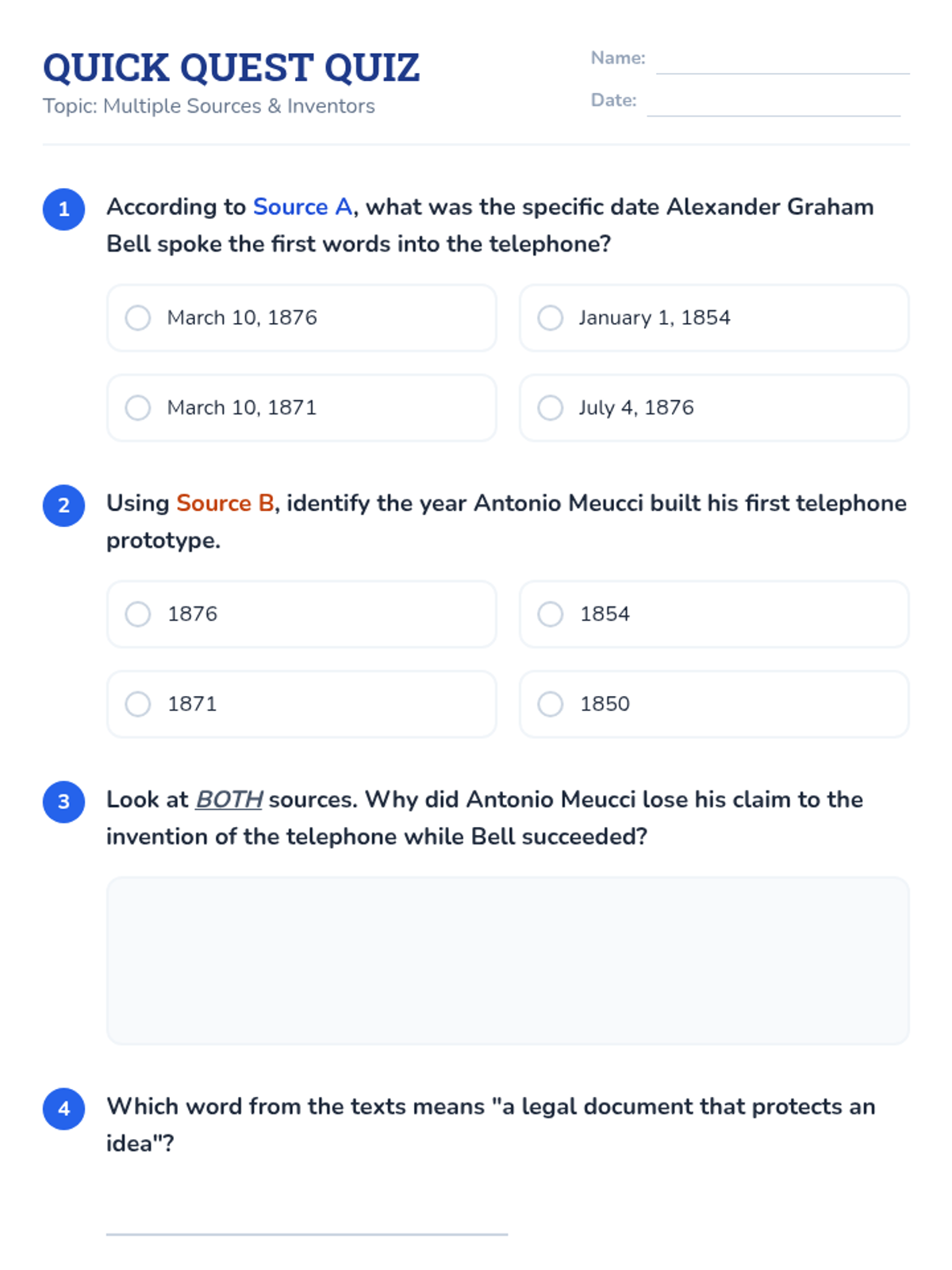
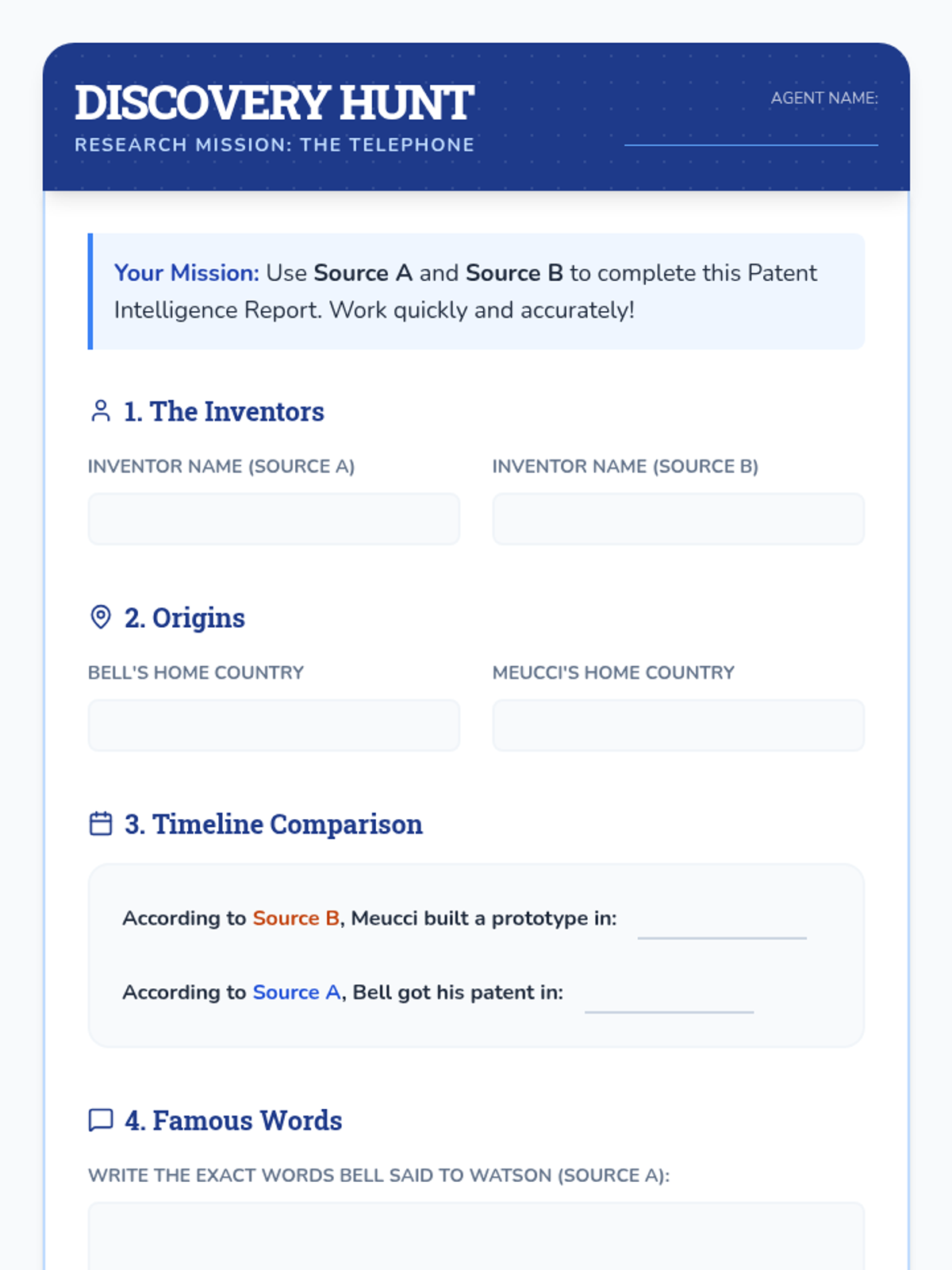
A 45-minute ESL lesson for 5th grade focusing on drawing information from multiple sources to learn about famous inventors. Students will develop research skills and vocabulary related to innovation.
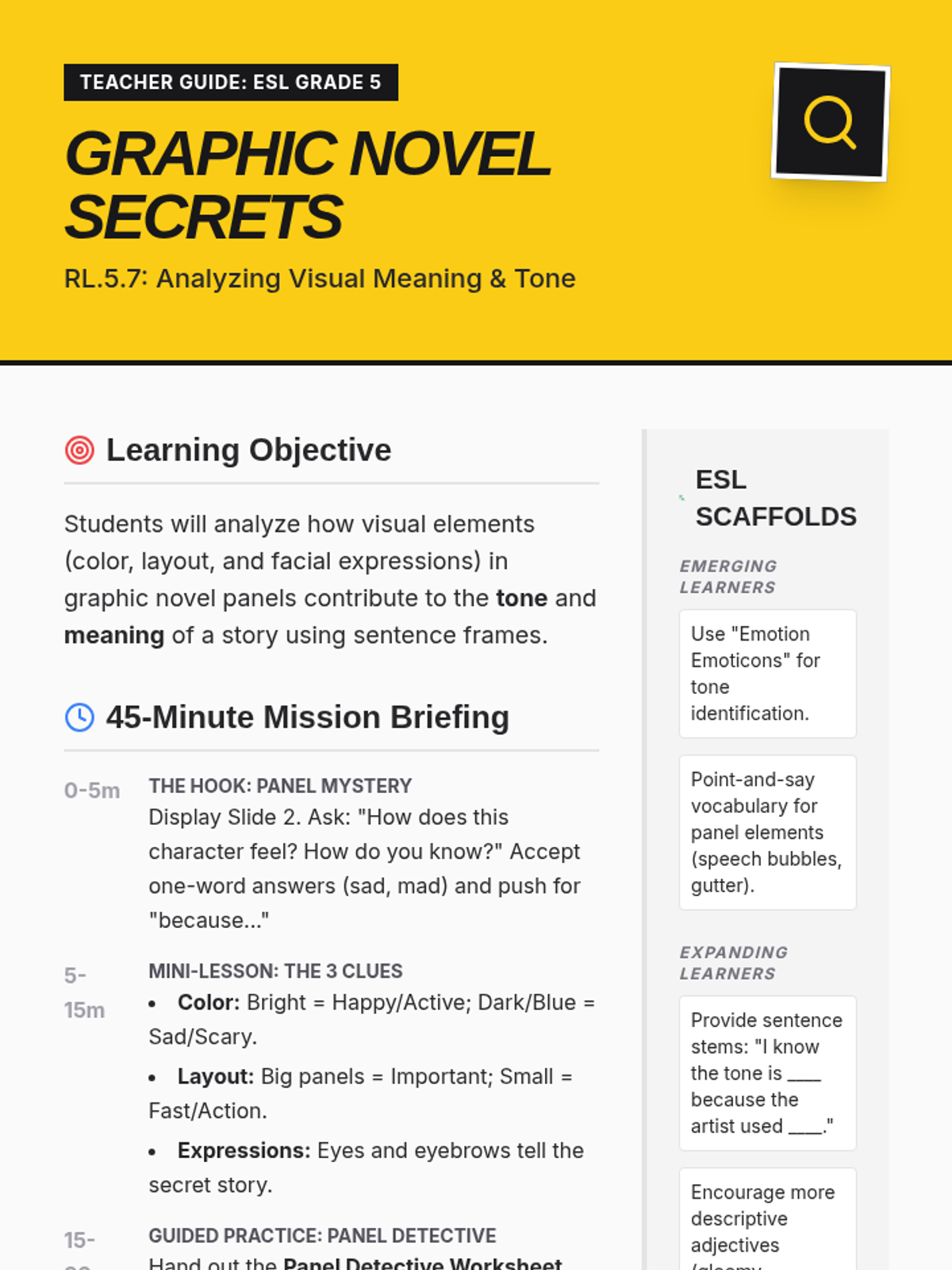
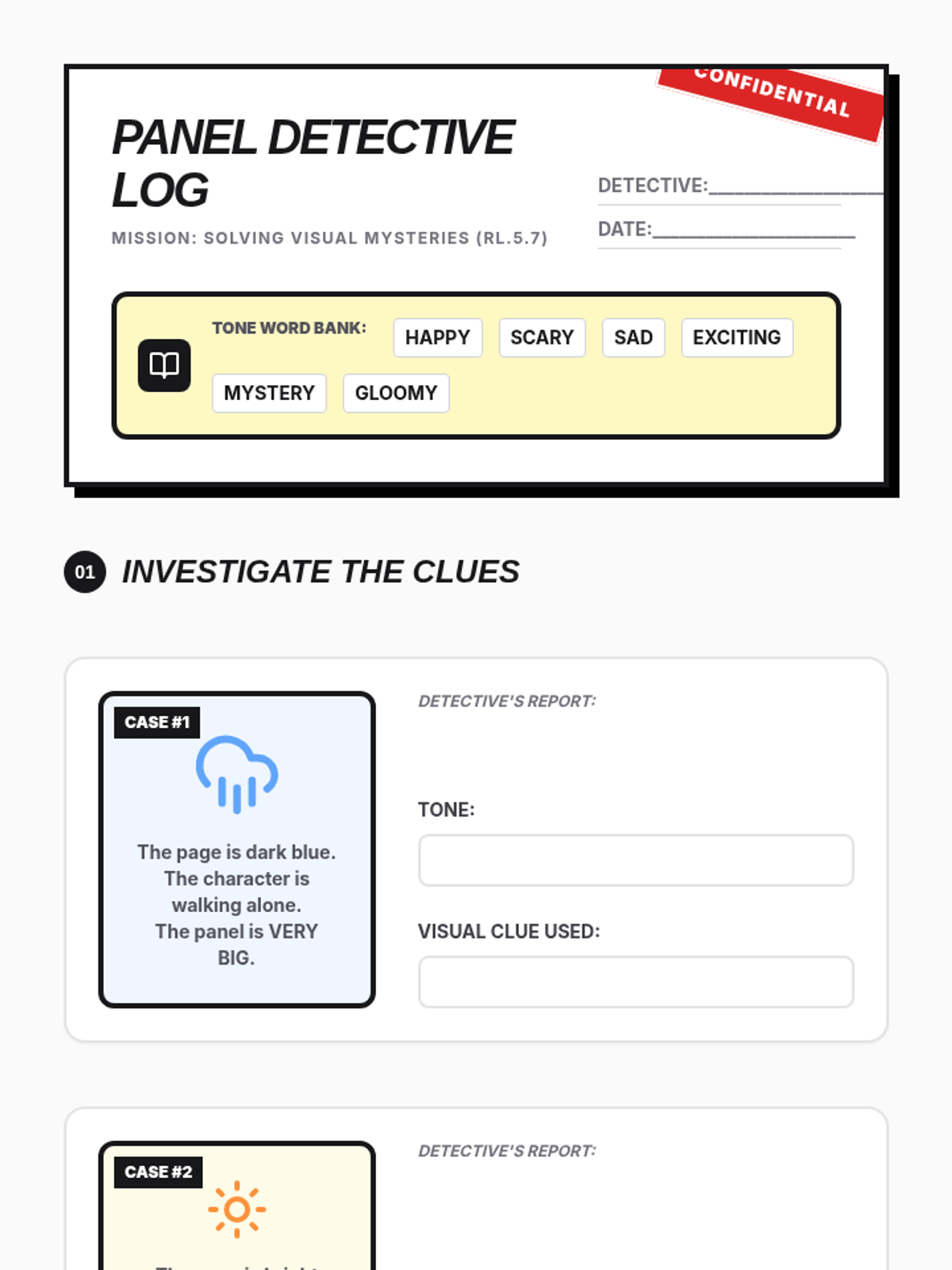
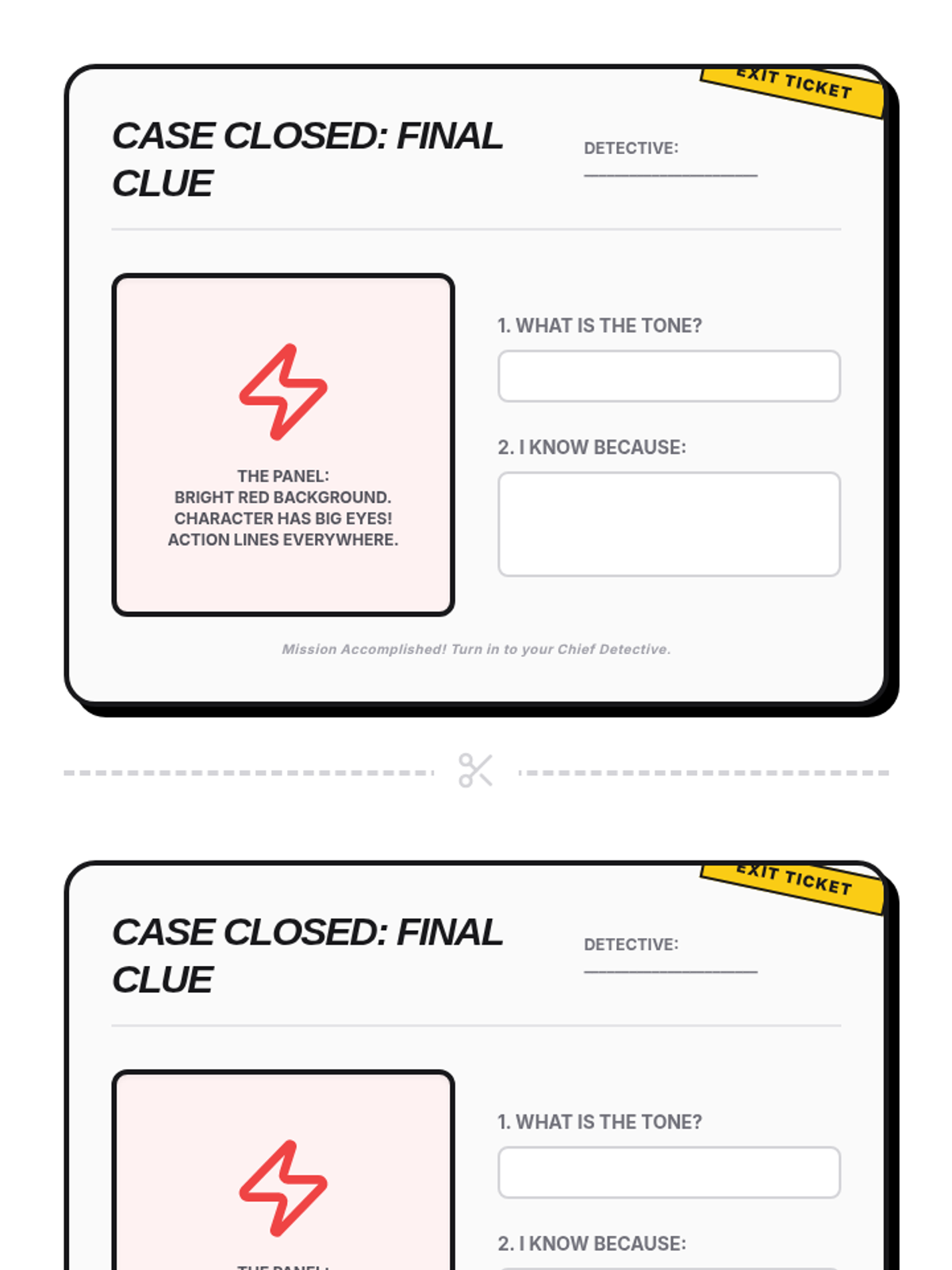
A grade 5 ESL lesson focused on RL.5.7, teaching students to analyze how visual elements like color, layout, and expressions in graphic novels impact tone and meaning. Students will use sentence stems and visual cues to decode 'visual mysteries' within panels.
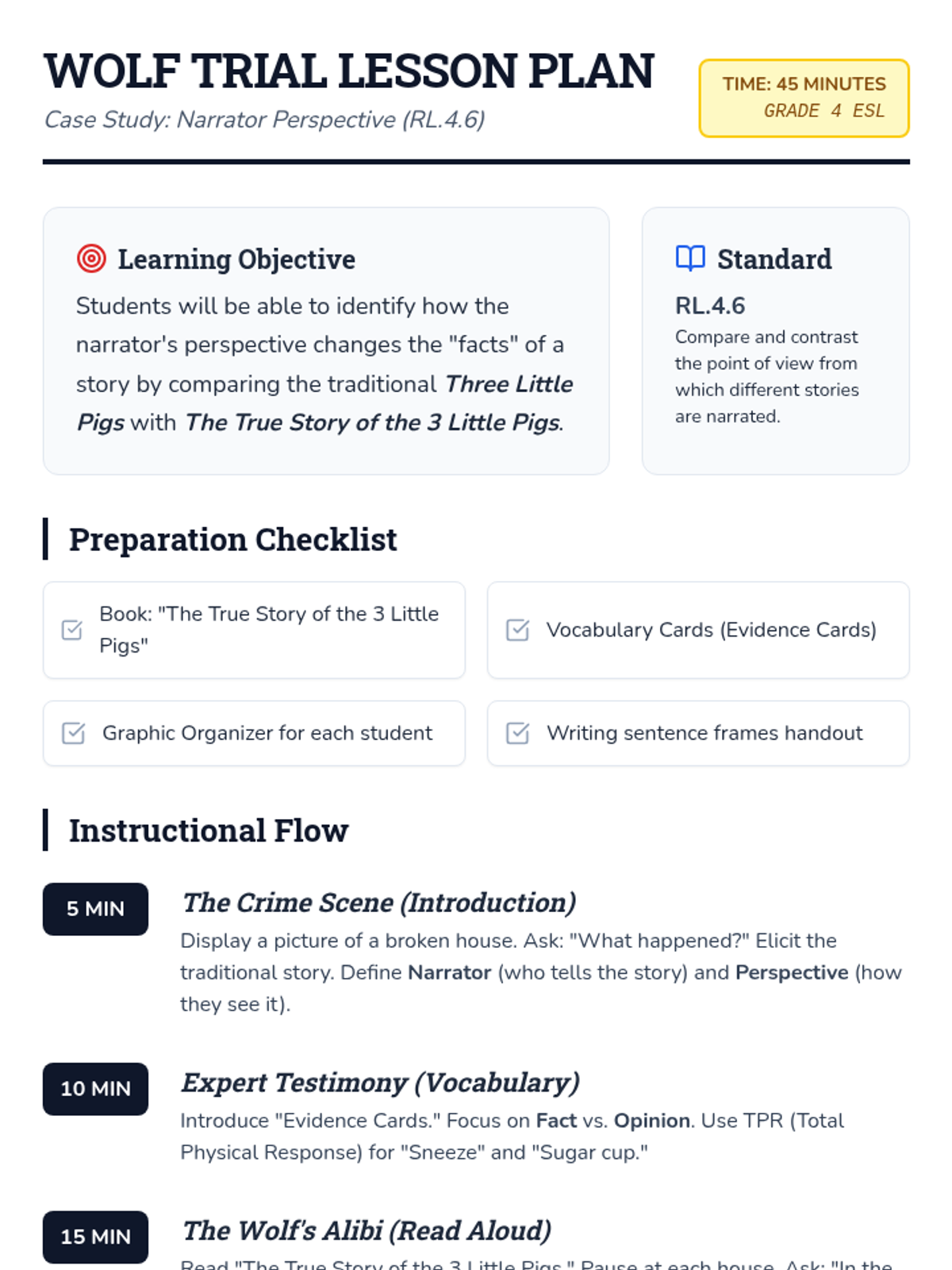
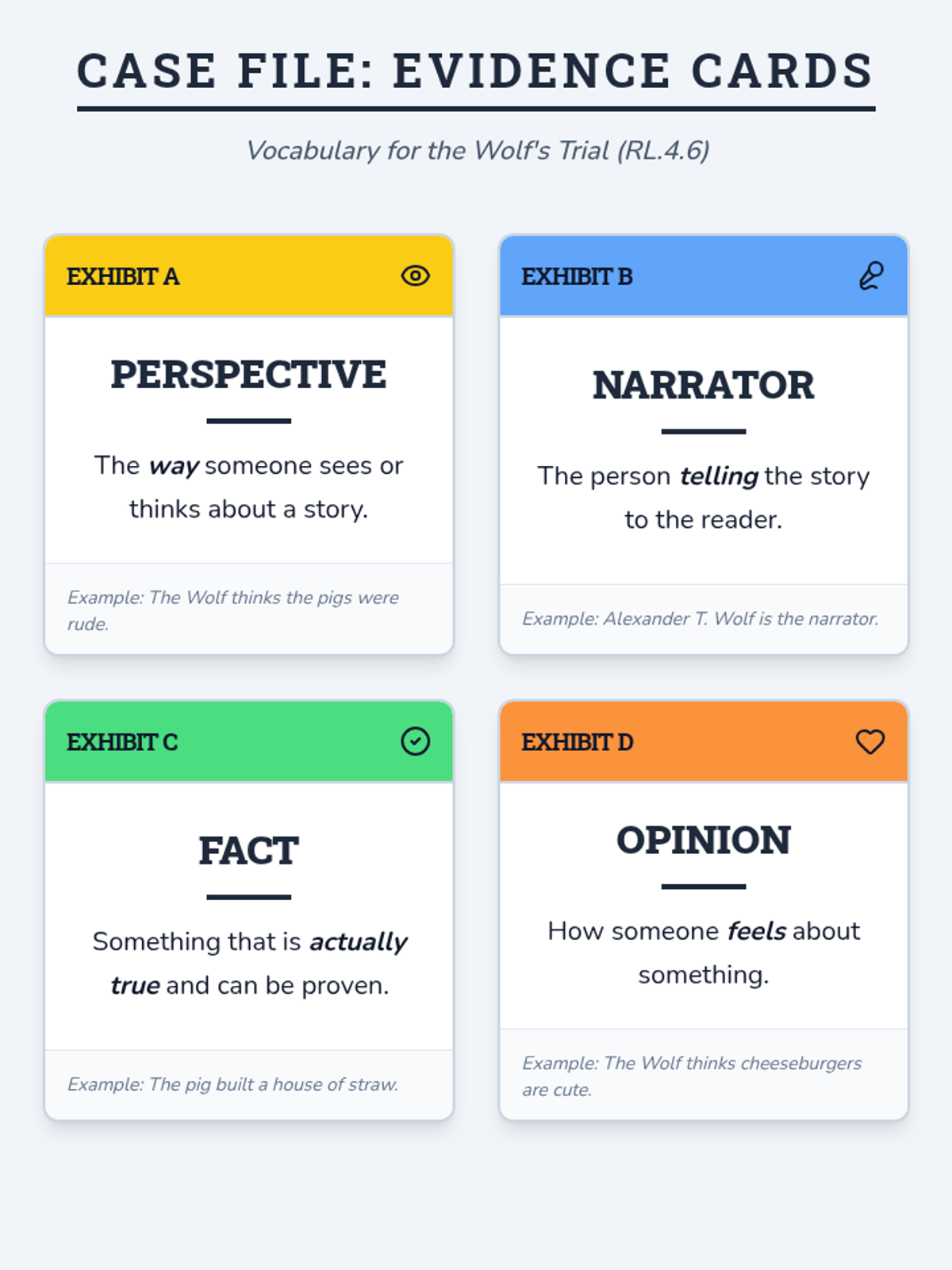
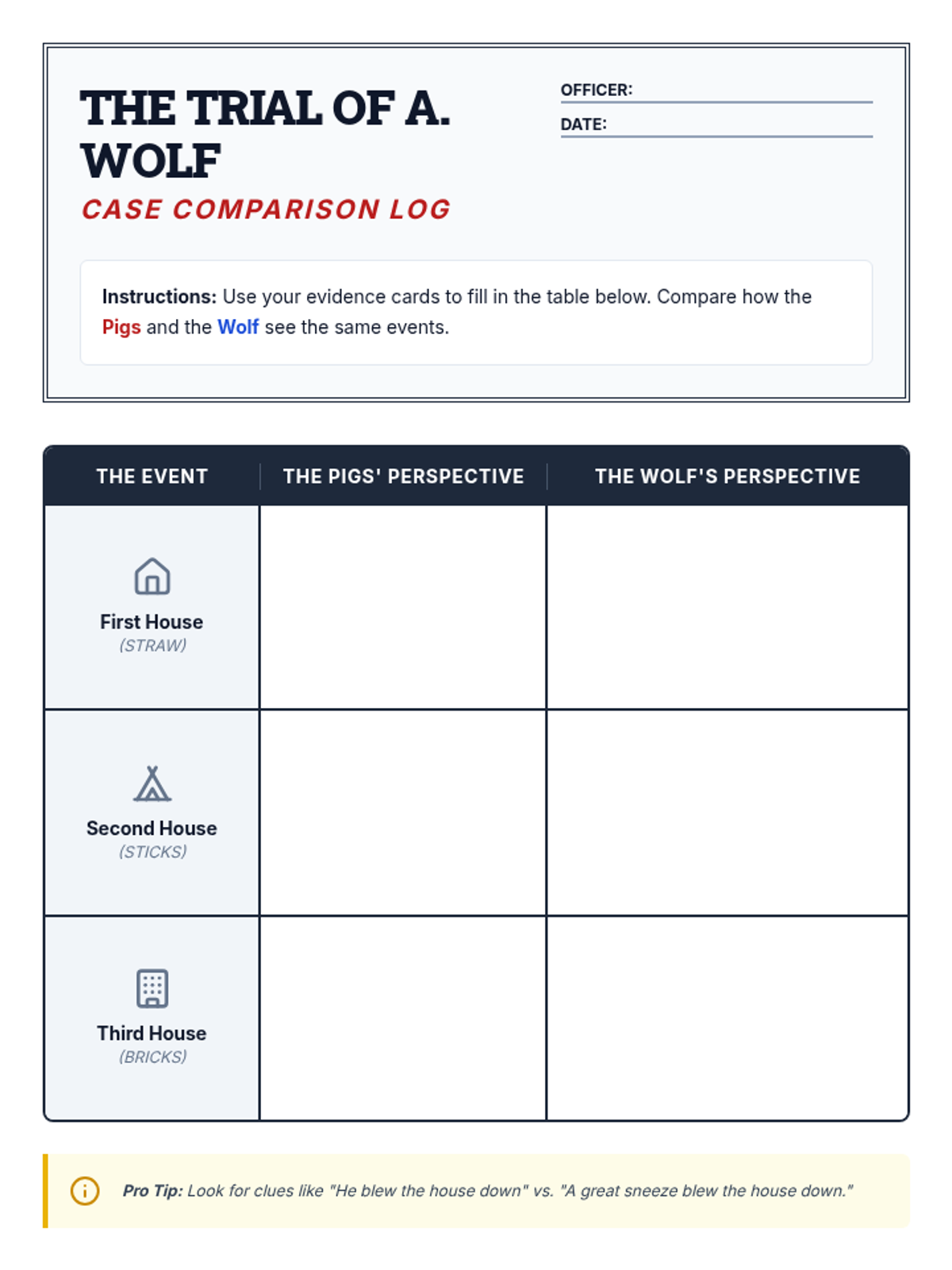
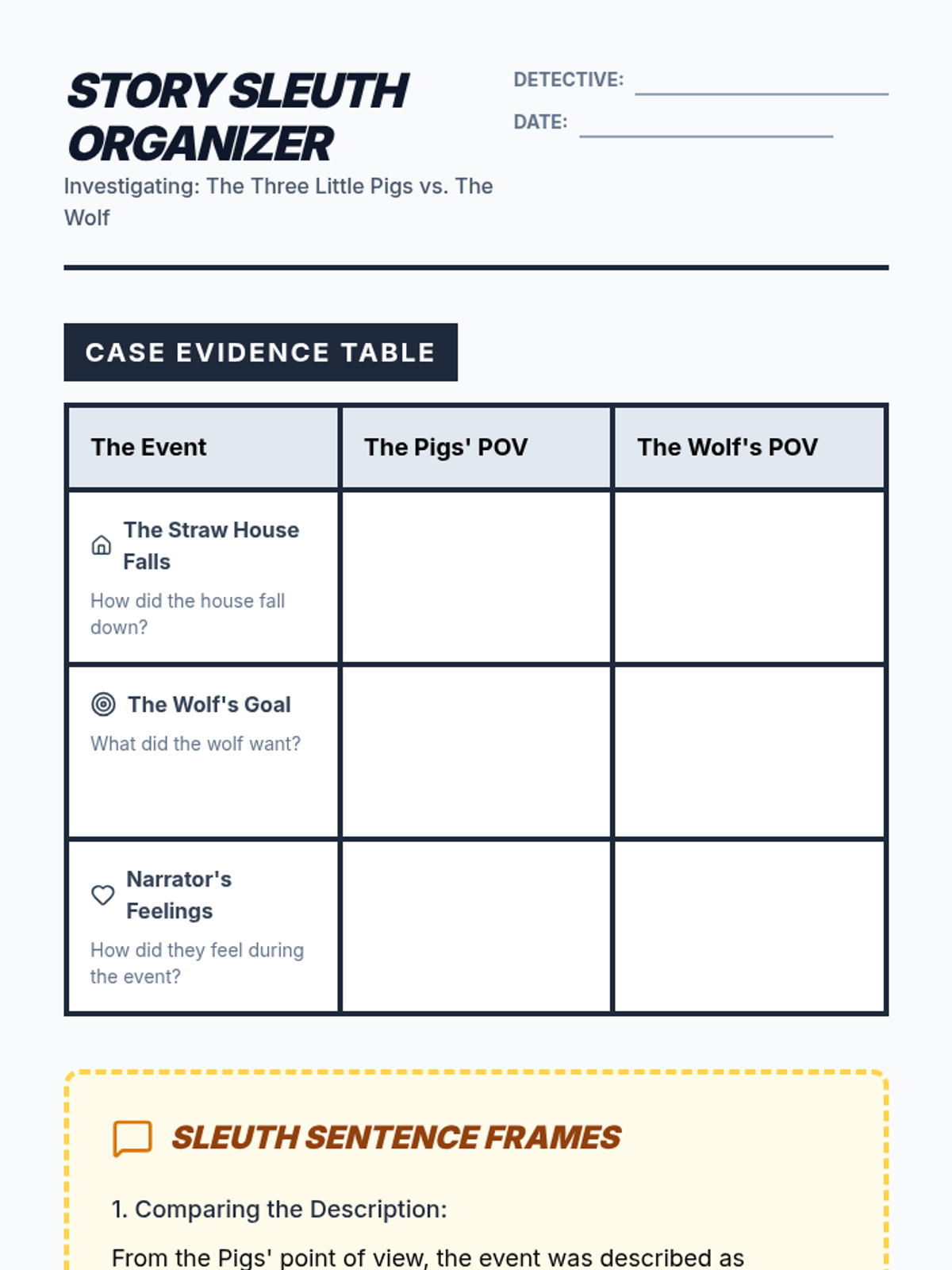
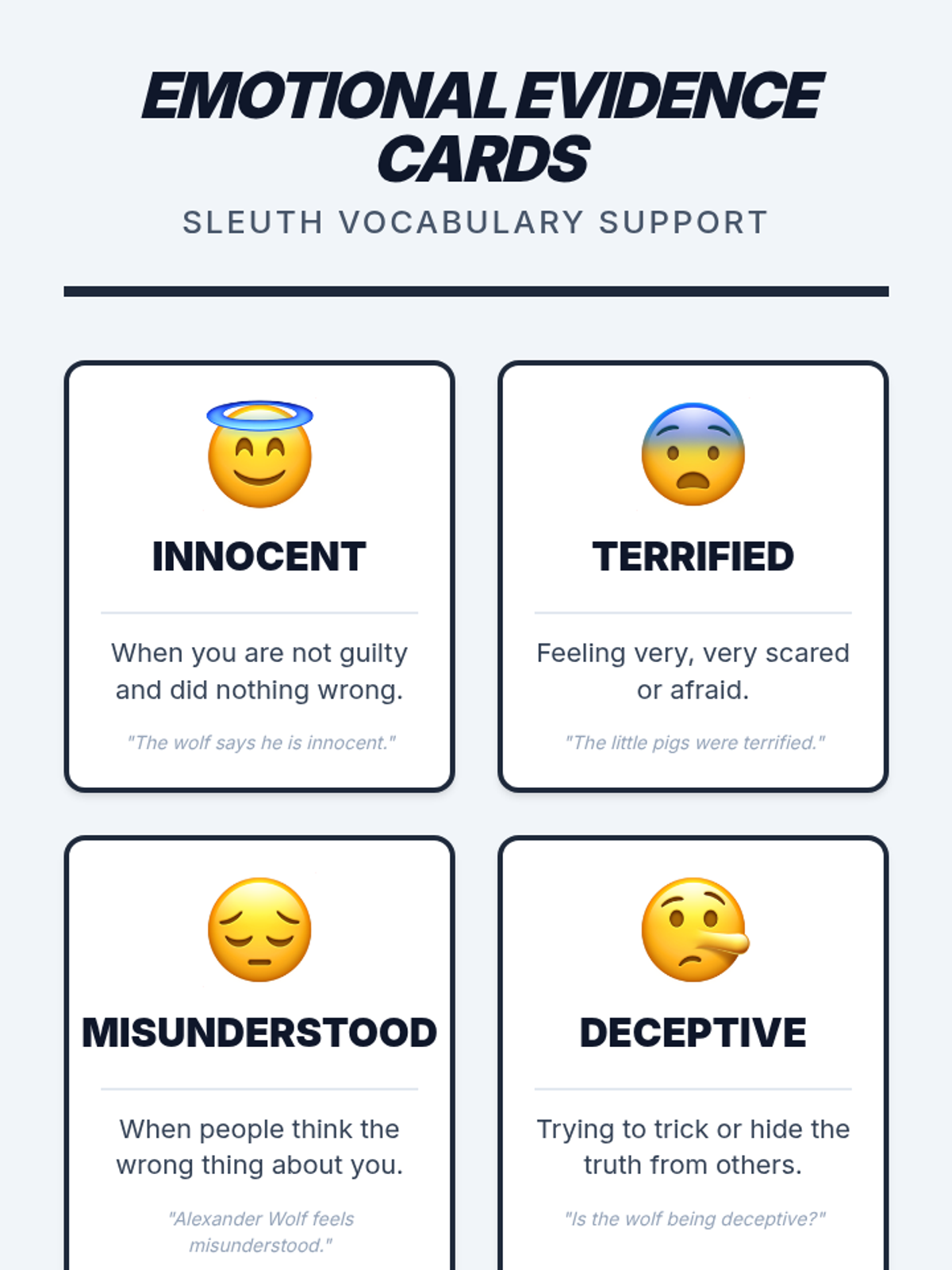
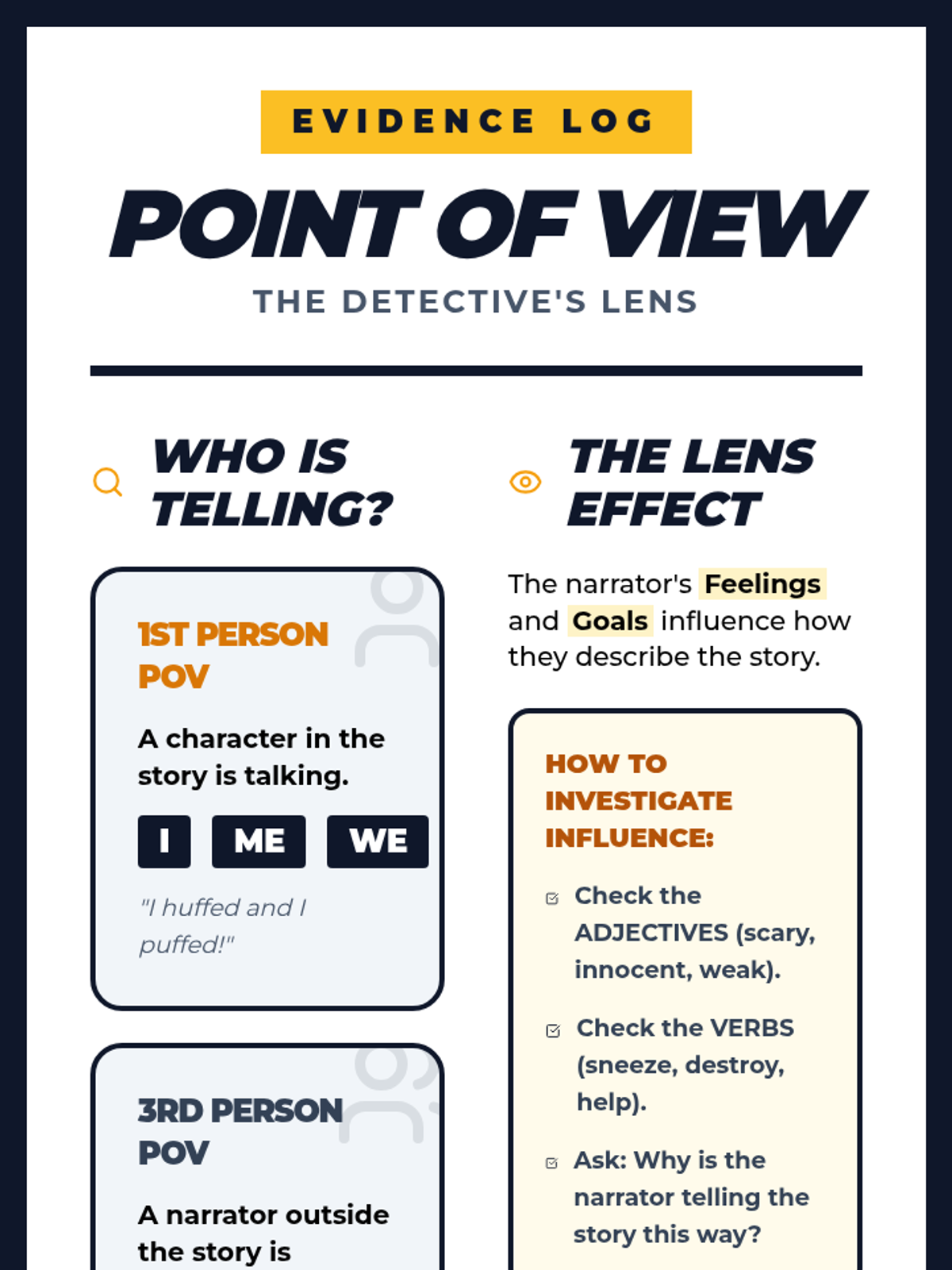
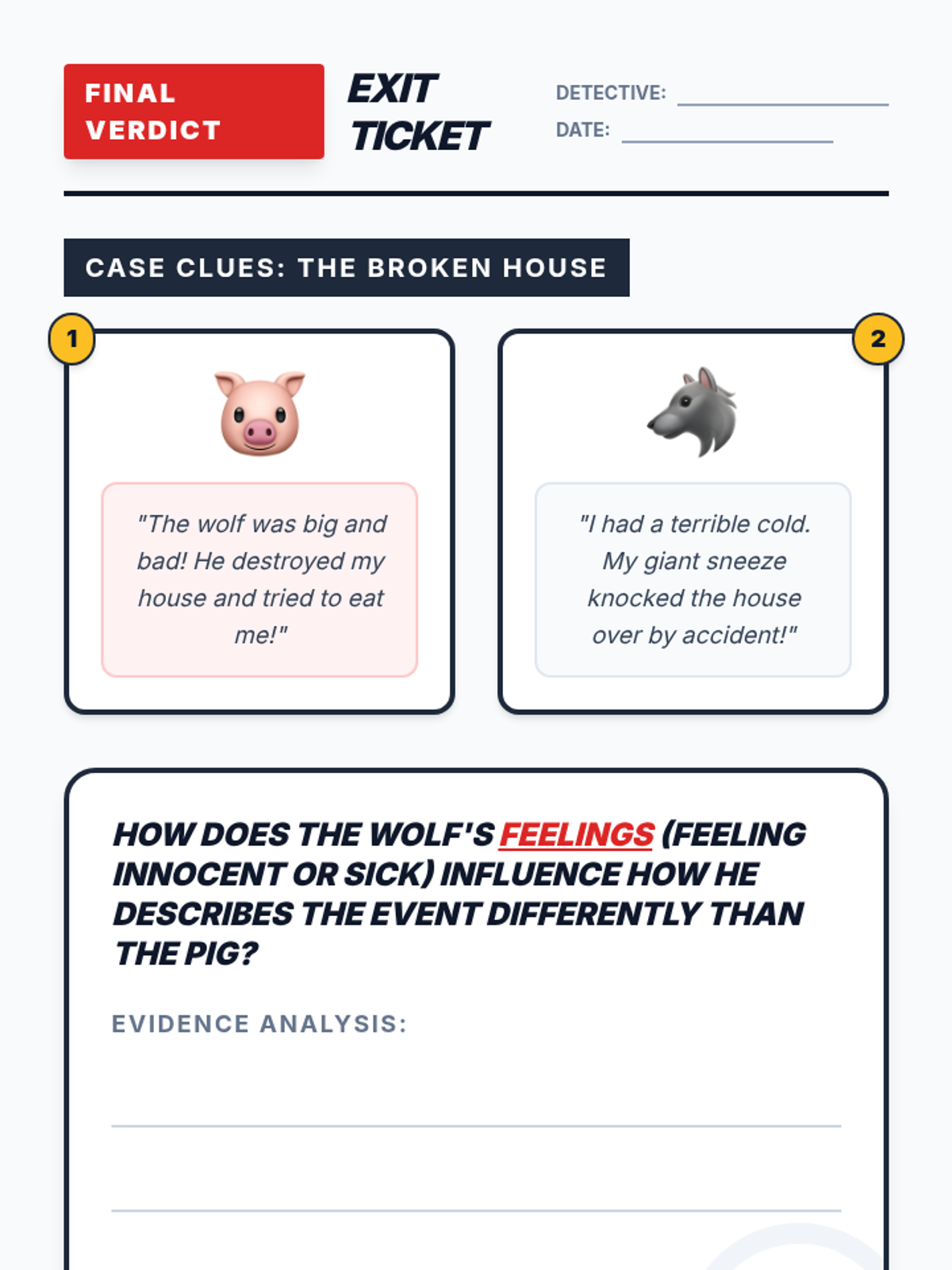
A Grade 4 ESL lesson focused on point of view using 'The True Story of the 3 Little Pigs'. Students compare the narrator's perspective to understand how it shapes the 'facts' of a story.
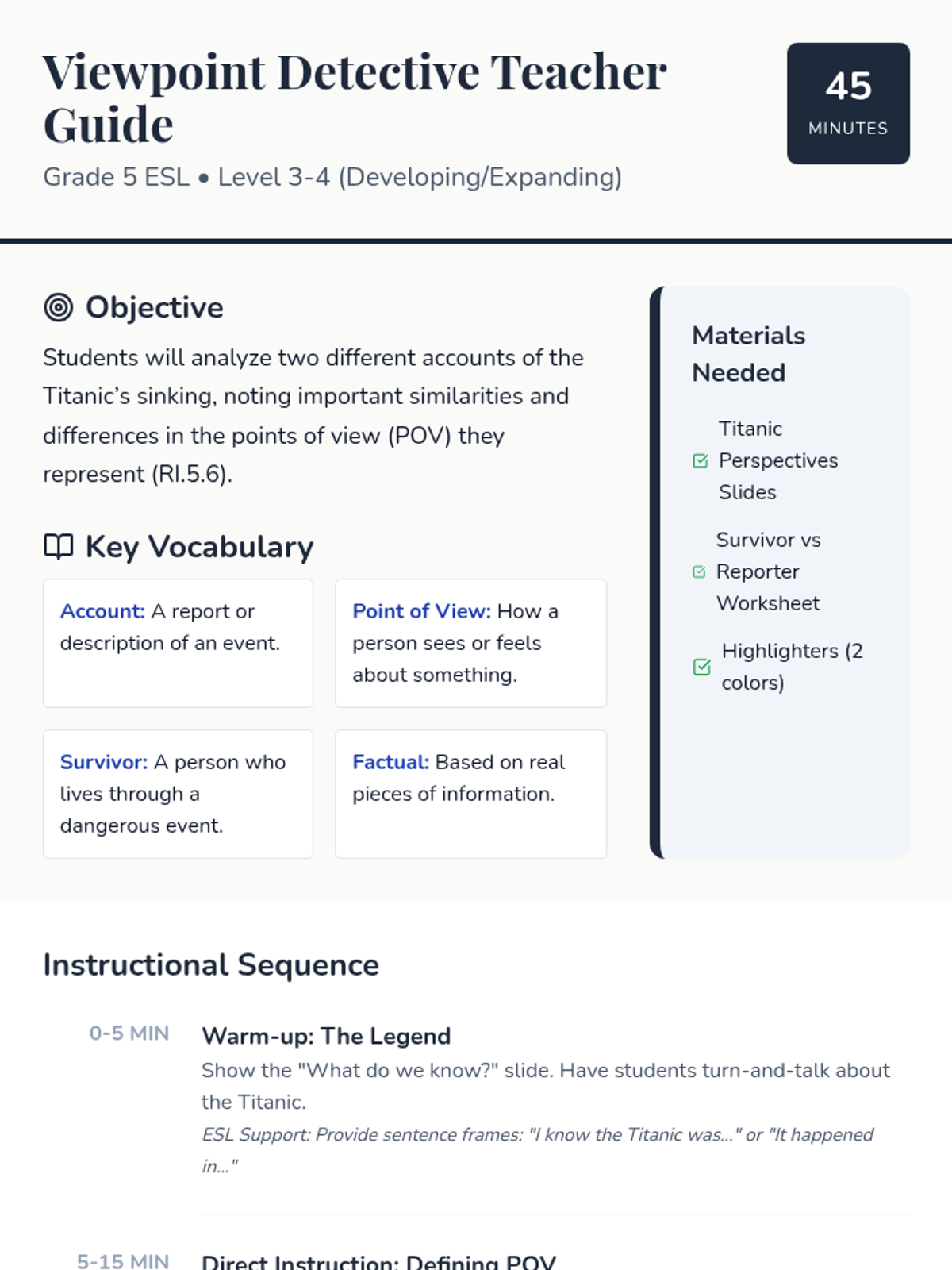
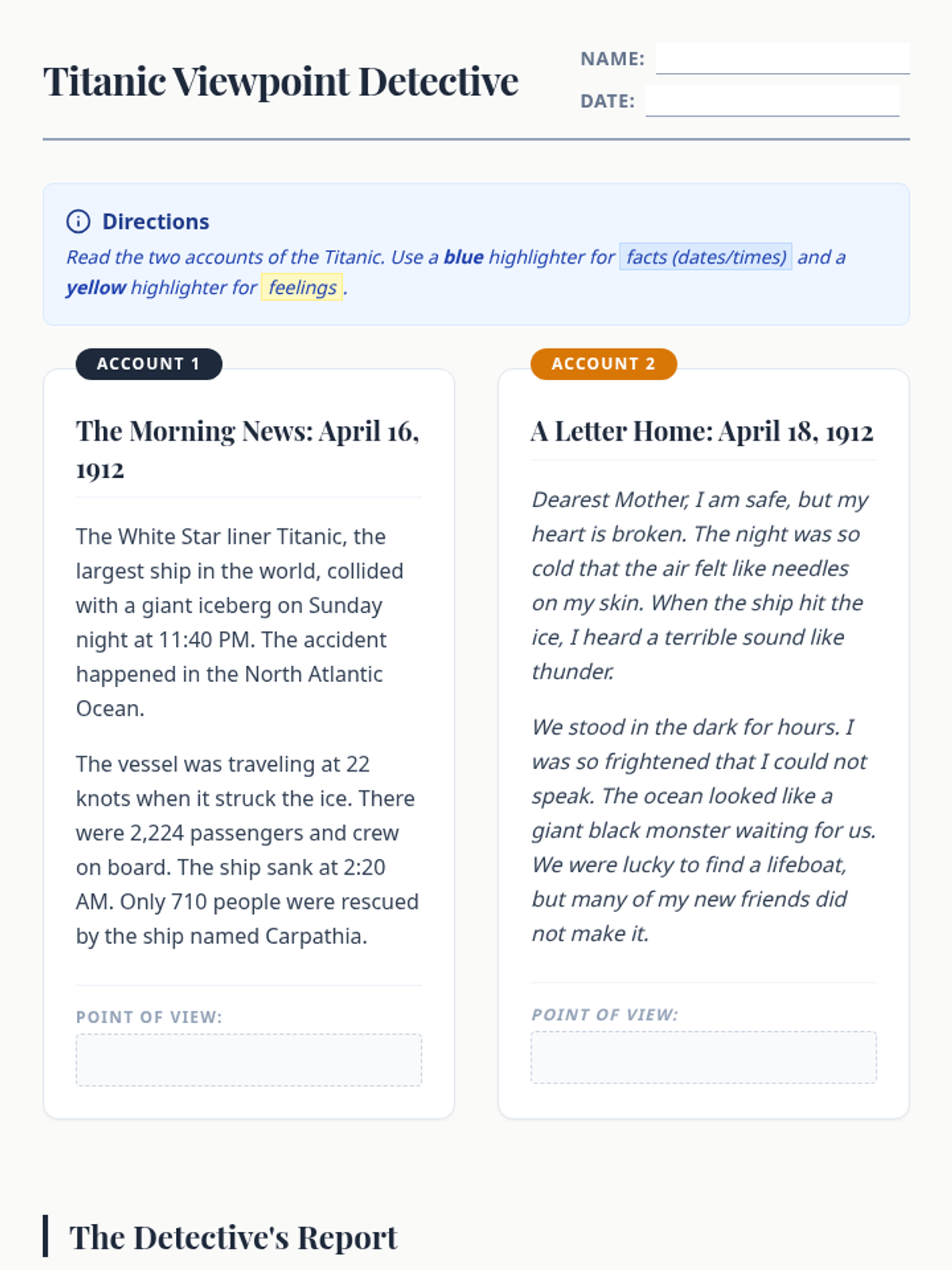
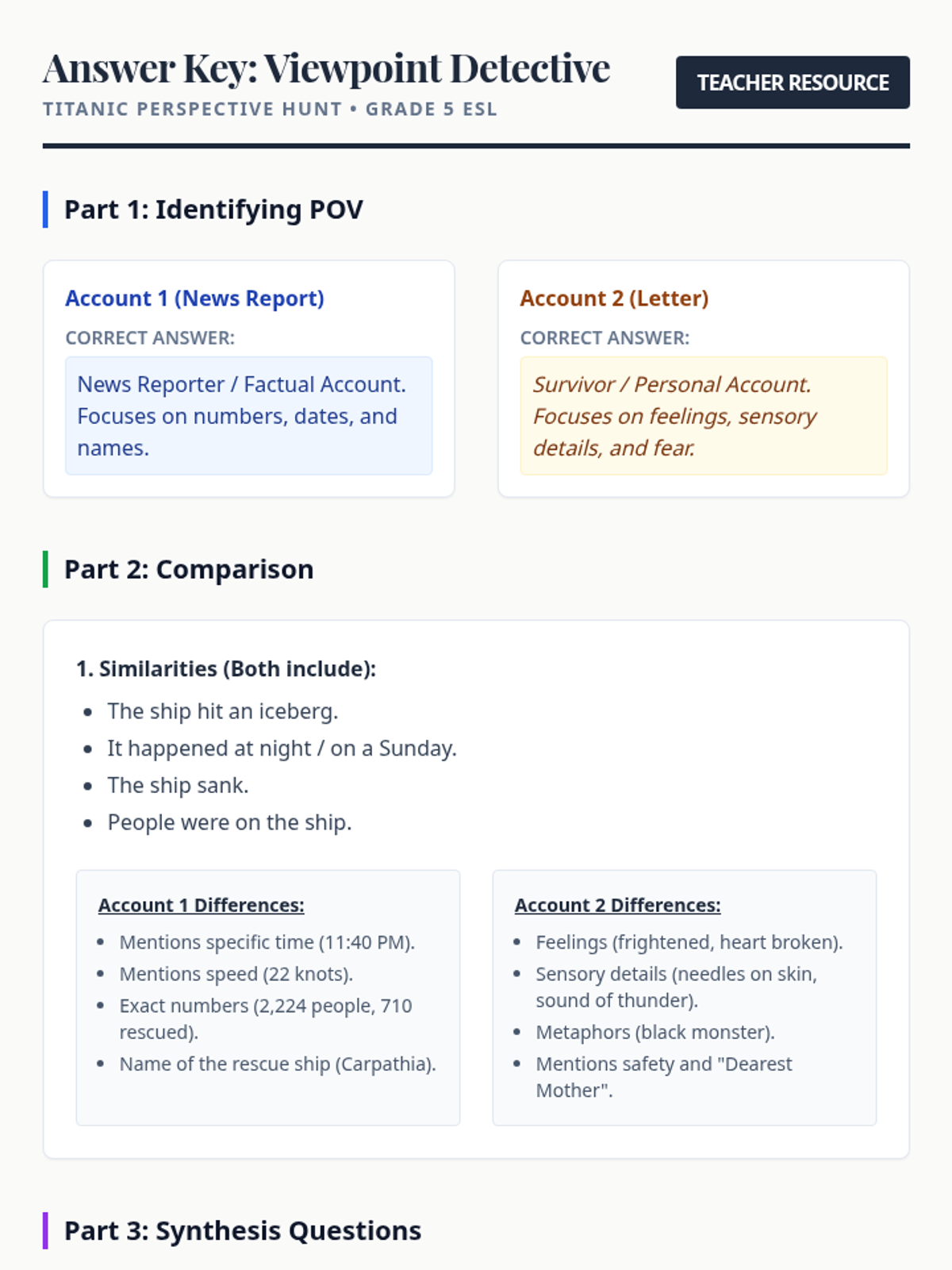
A 45-minute ESL lesson for Grade 5 students focused on analyzing two different accounts of the Titanic's sinking to compare points of view. Students will identify similarities and differences between a factual news report and an emotional survivor's account.
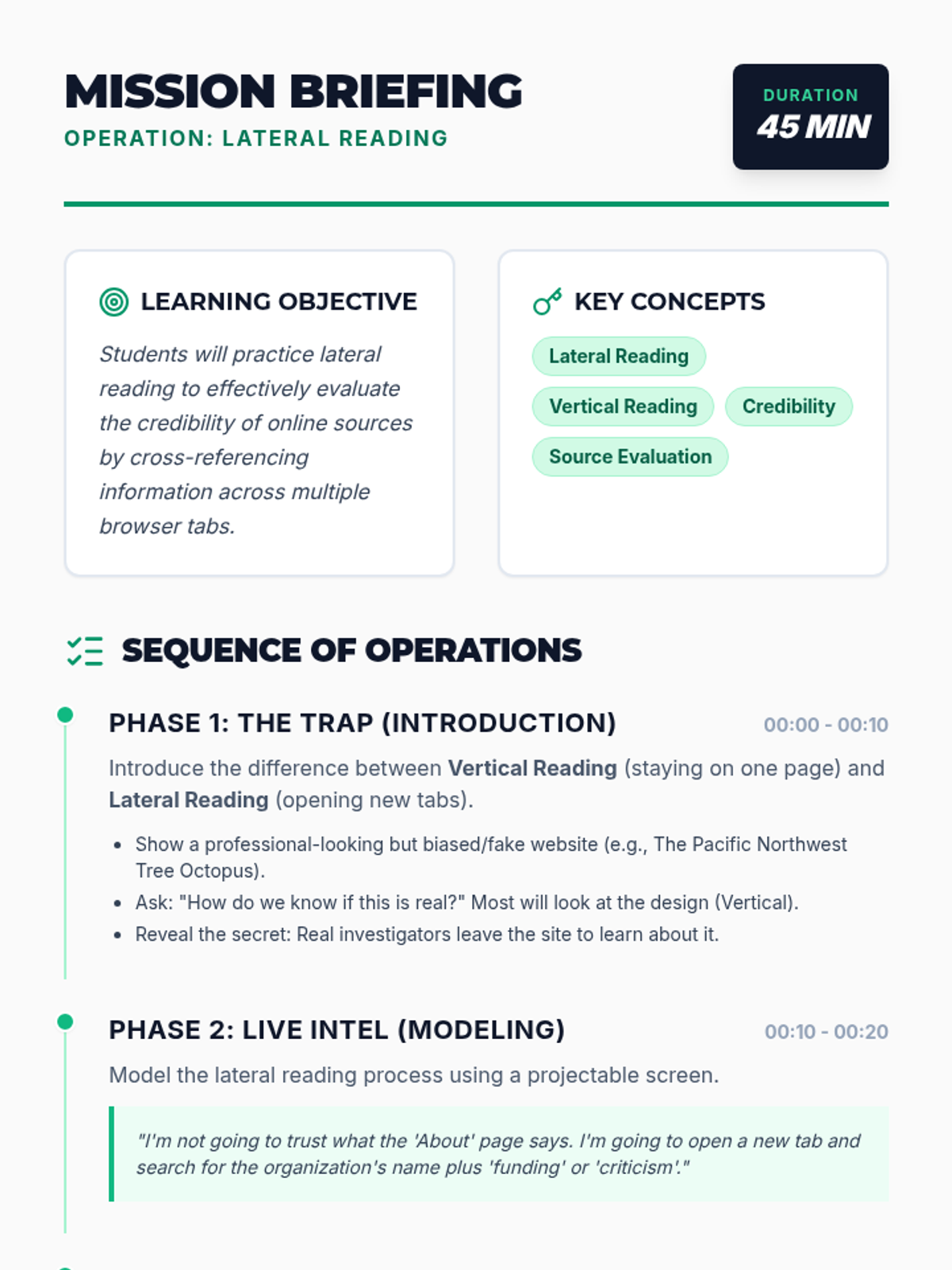
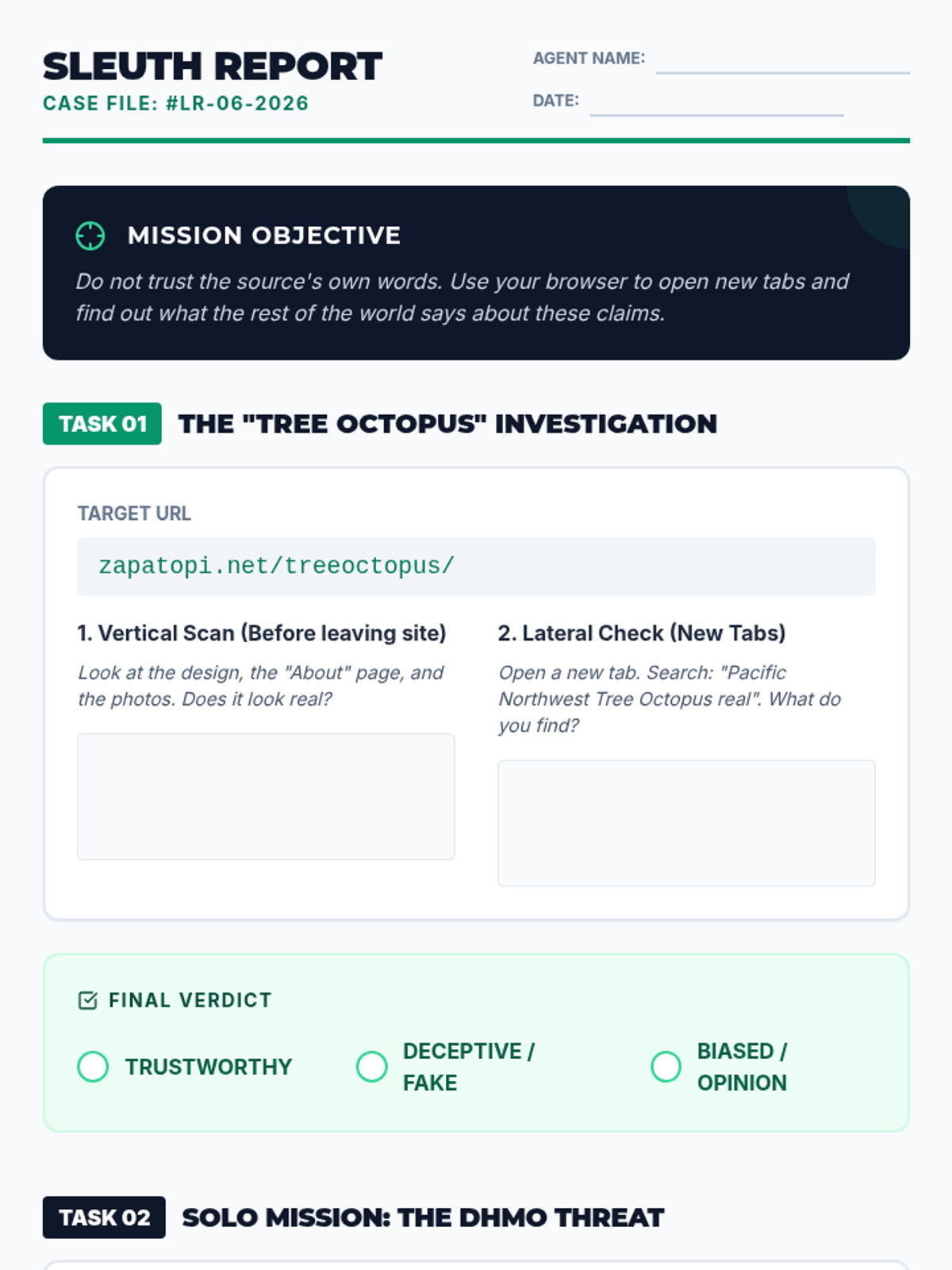
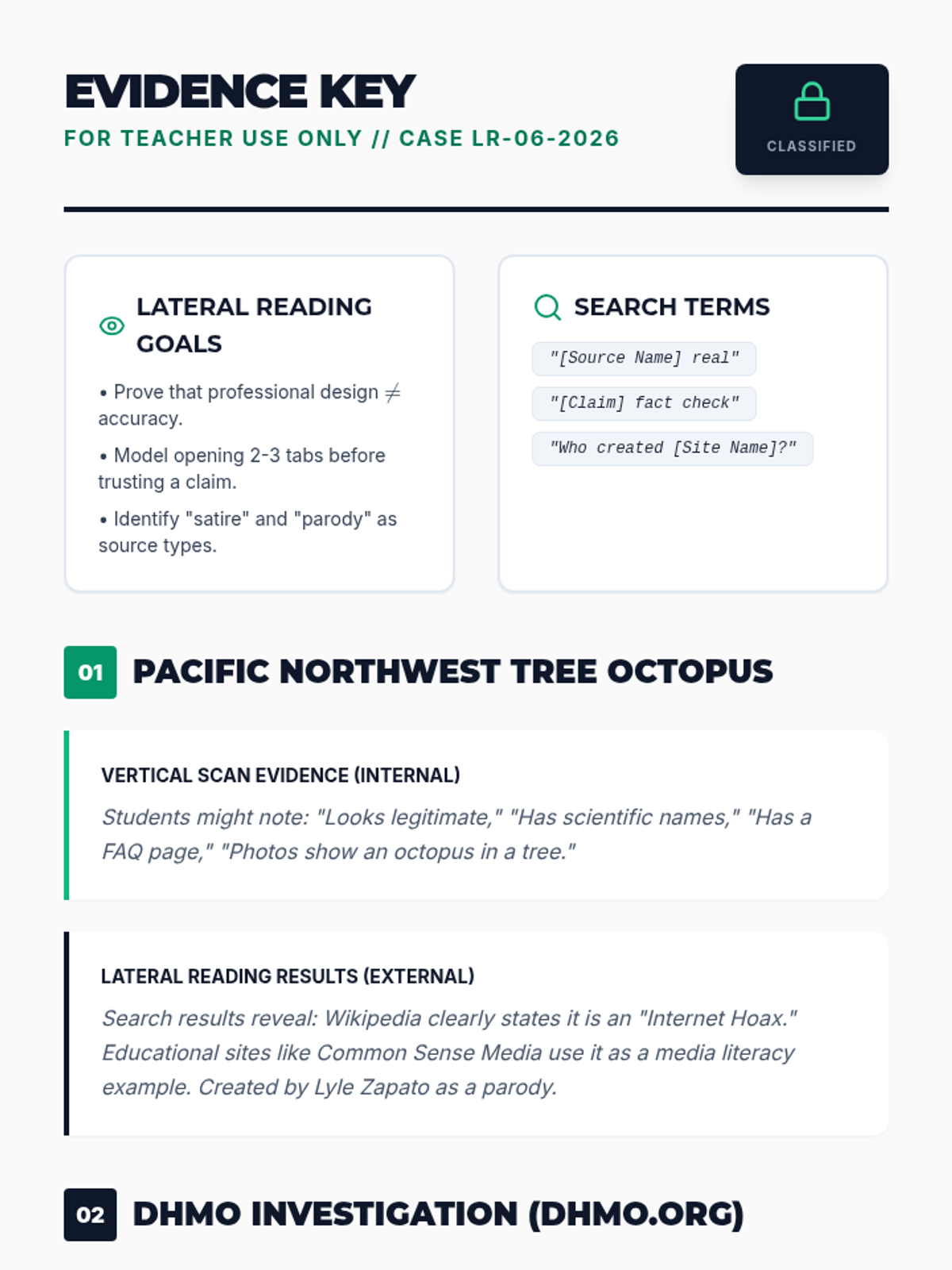
A 45-minute lesson teaching 6th-grade students how to evaluate online credibility using lateral reading techniques, moving from vertical reading habits to investigative cross-referencing.
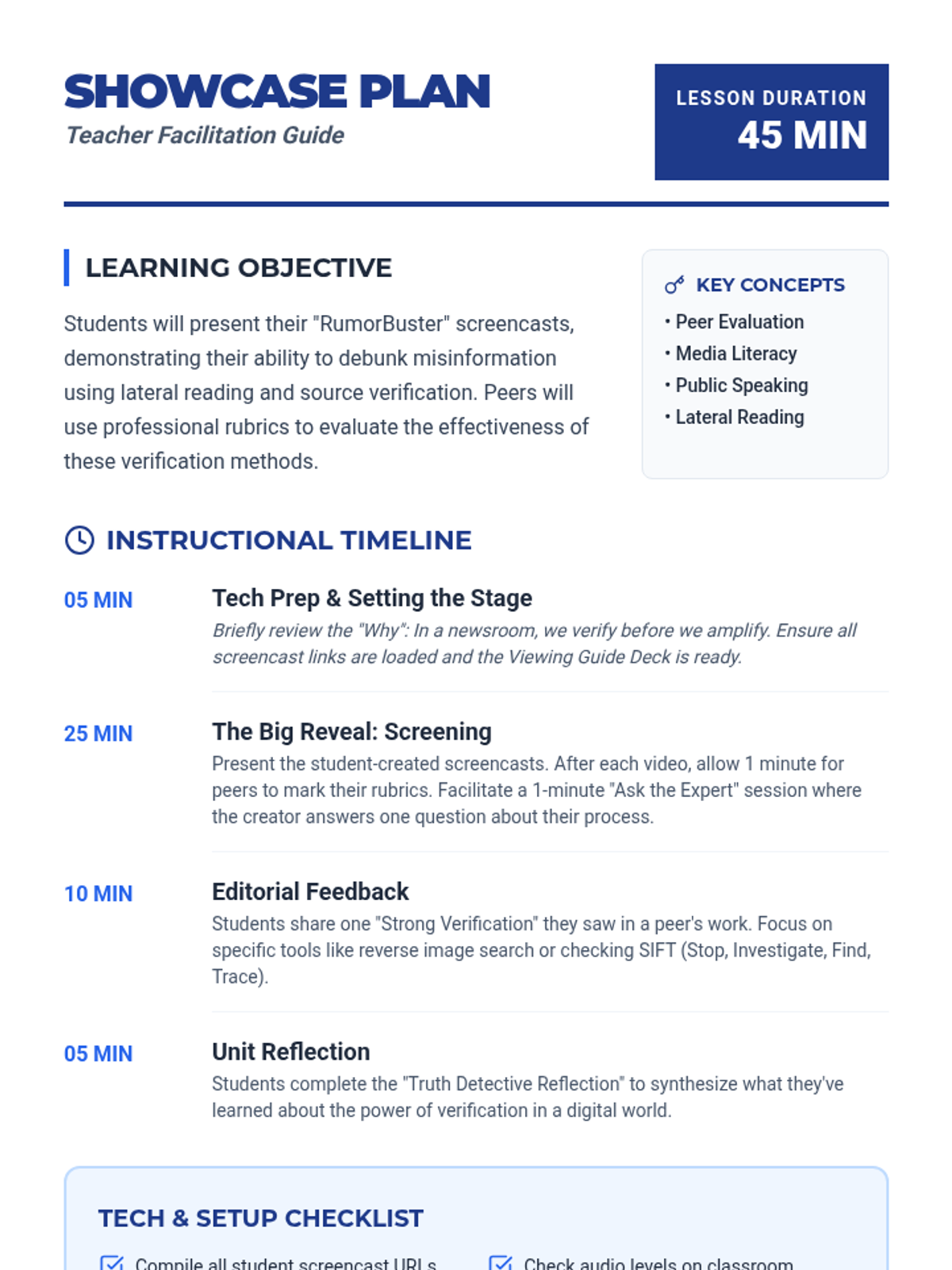
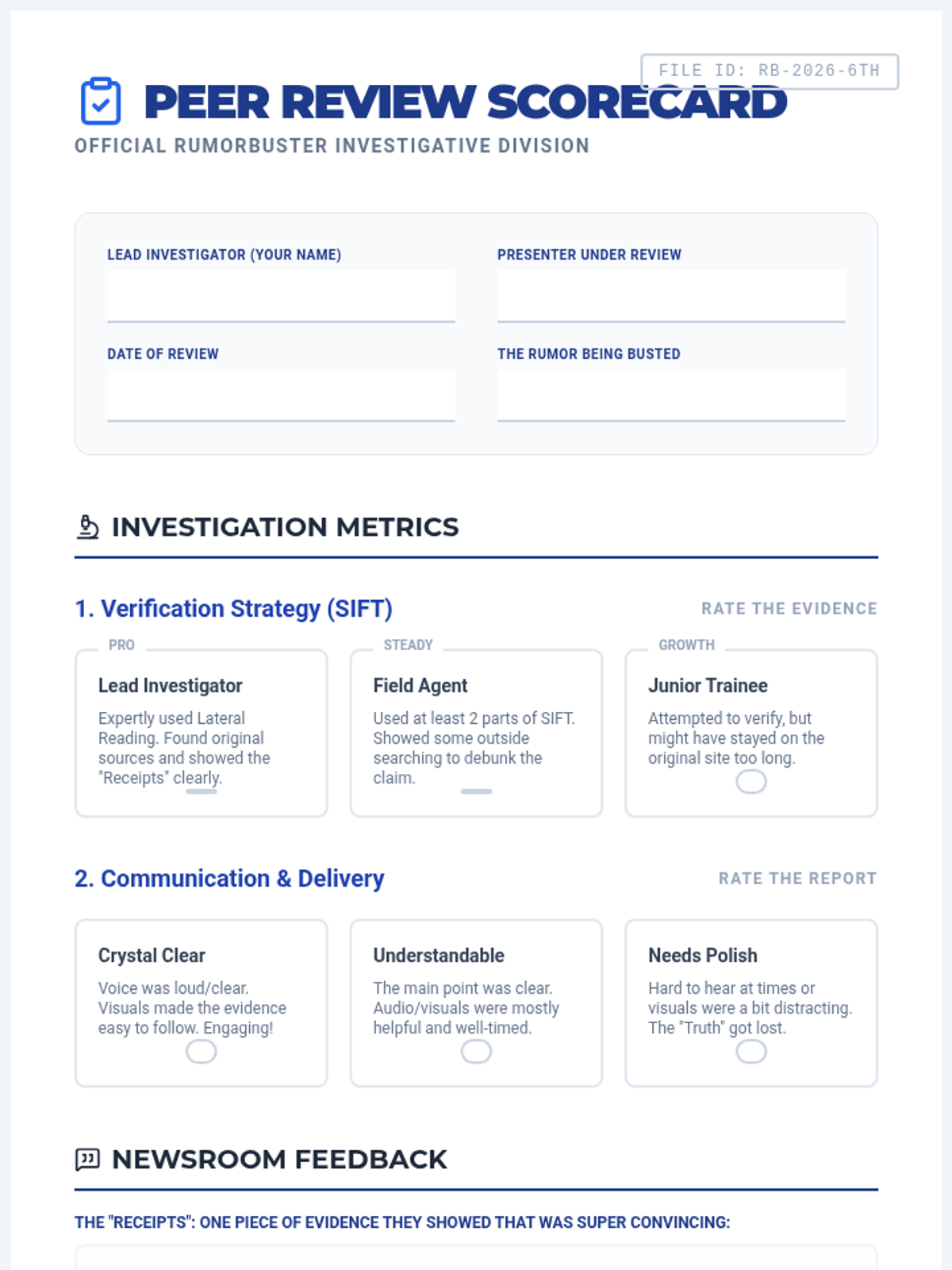
A 45-minute lesson where students showcase their media literacy investigations through screencasts, engage in peer evaluation using a professional rubric, and reflect on their growth as digital fact-checkers.
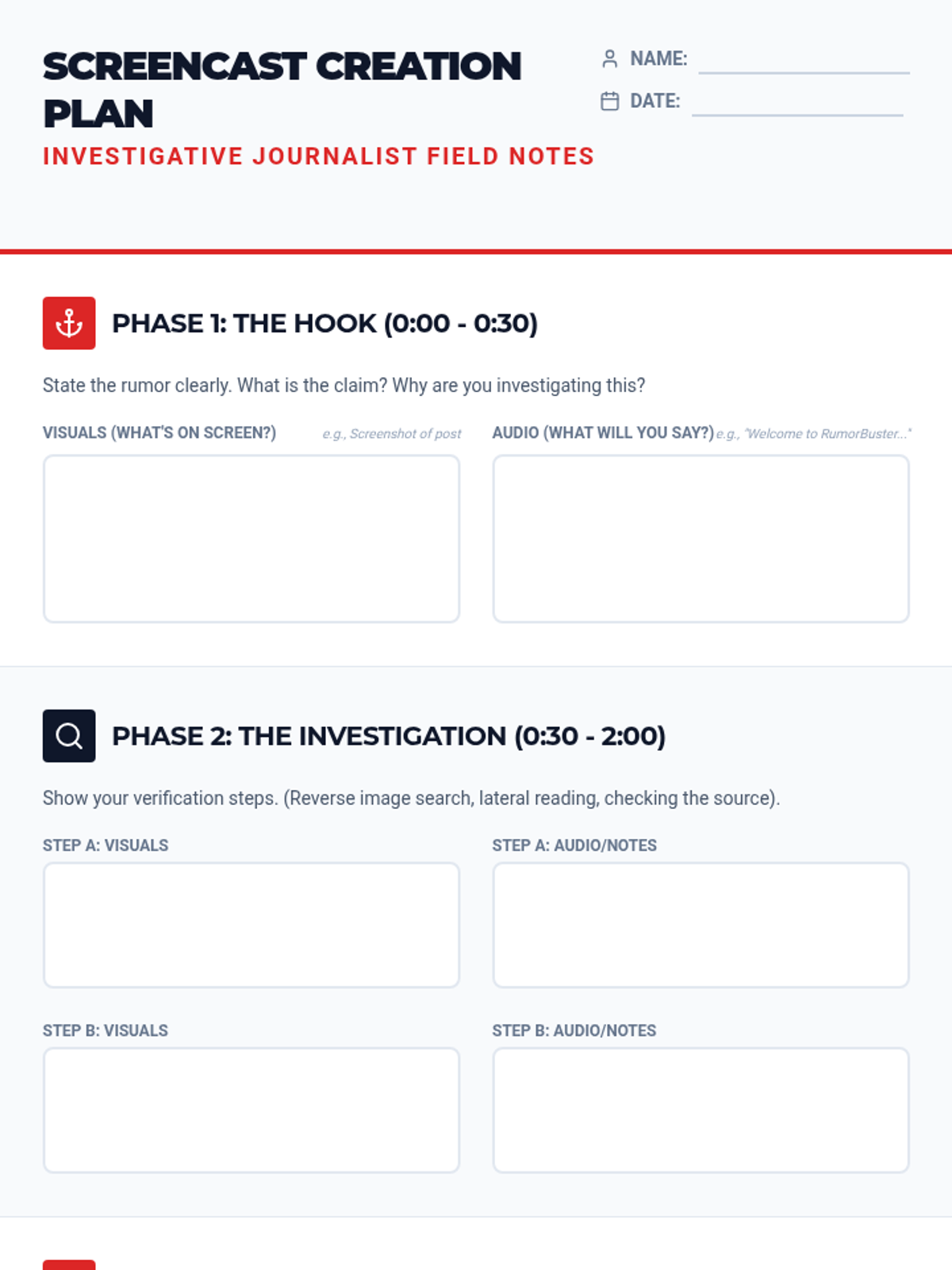
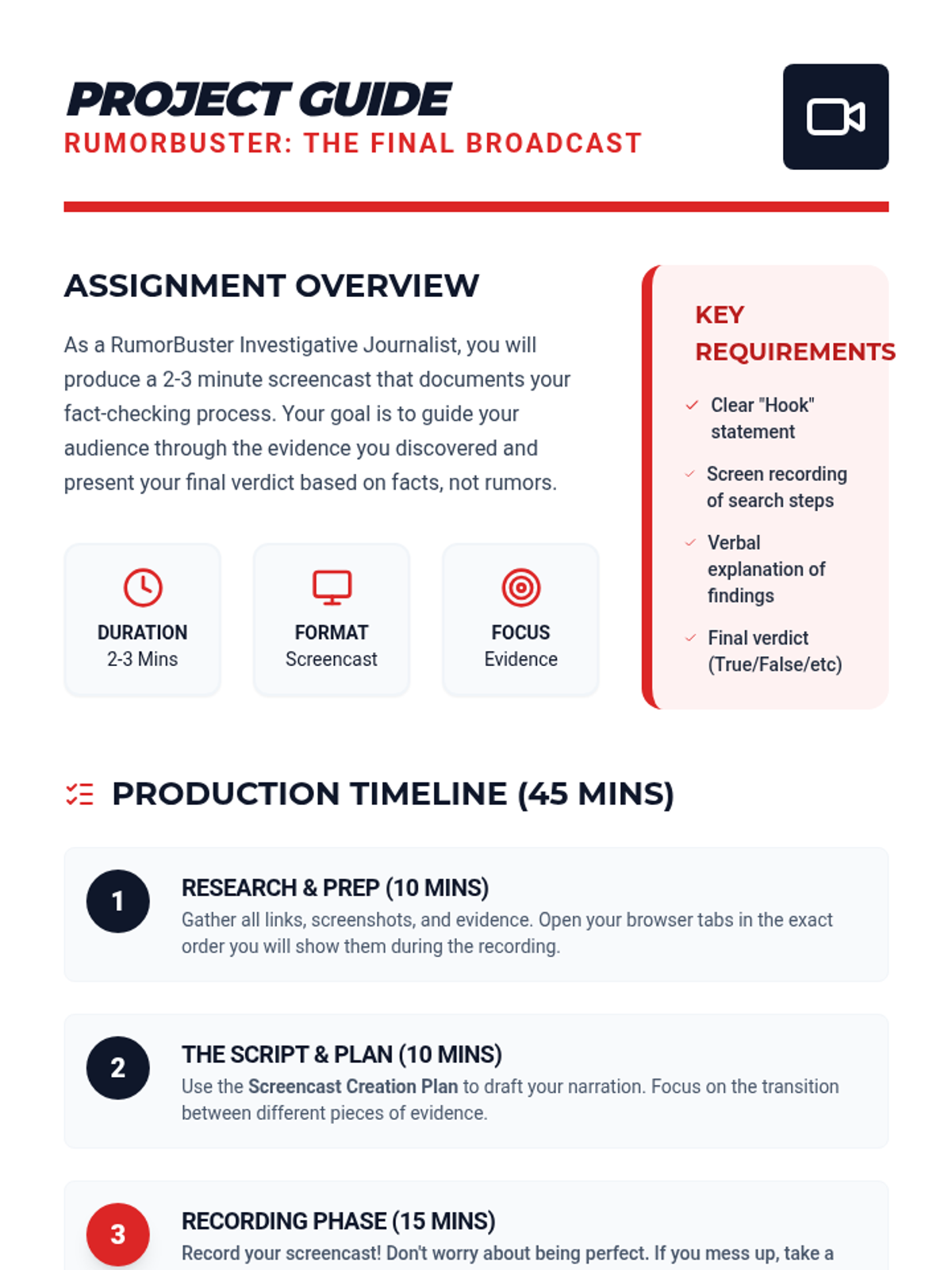
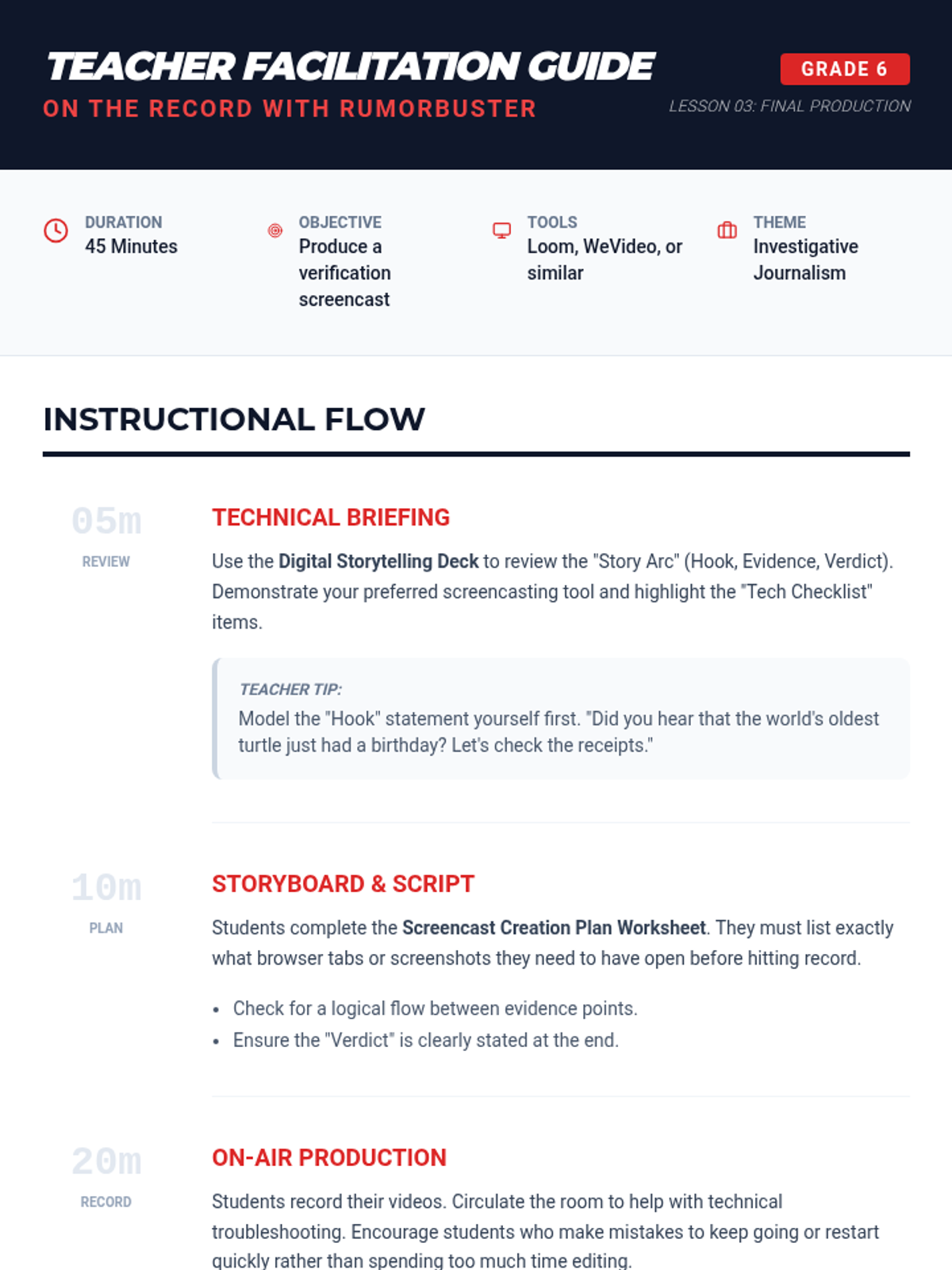
In this lesson, students step into the role of investigative journalists to create a screencast that documents their fact-checking process and final findings. They will learn to combine digital storytelling with technical screencasting skills to present evidence clearly and convincingly.
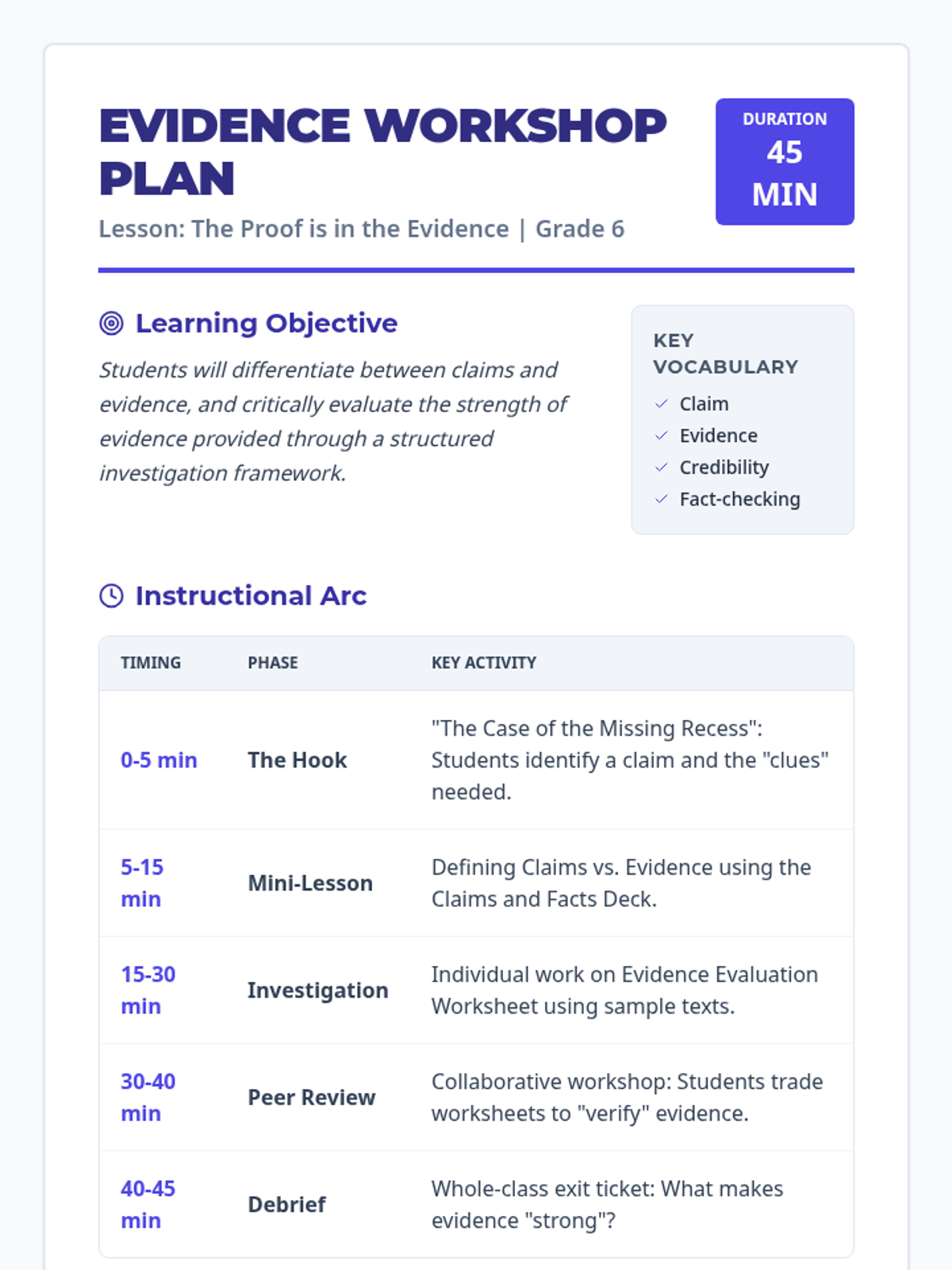
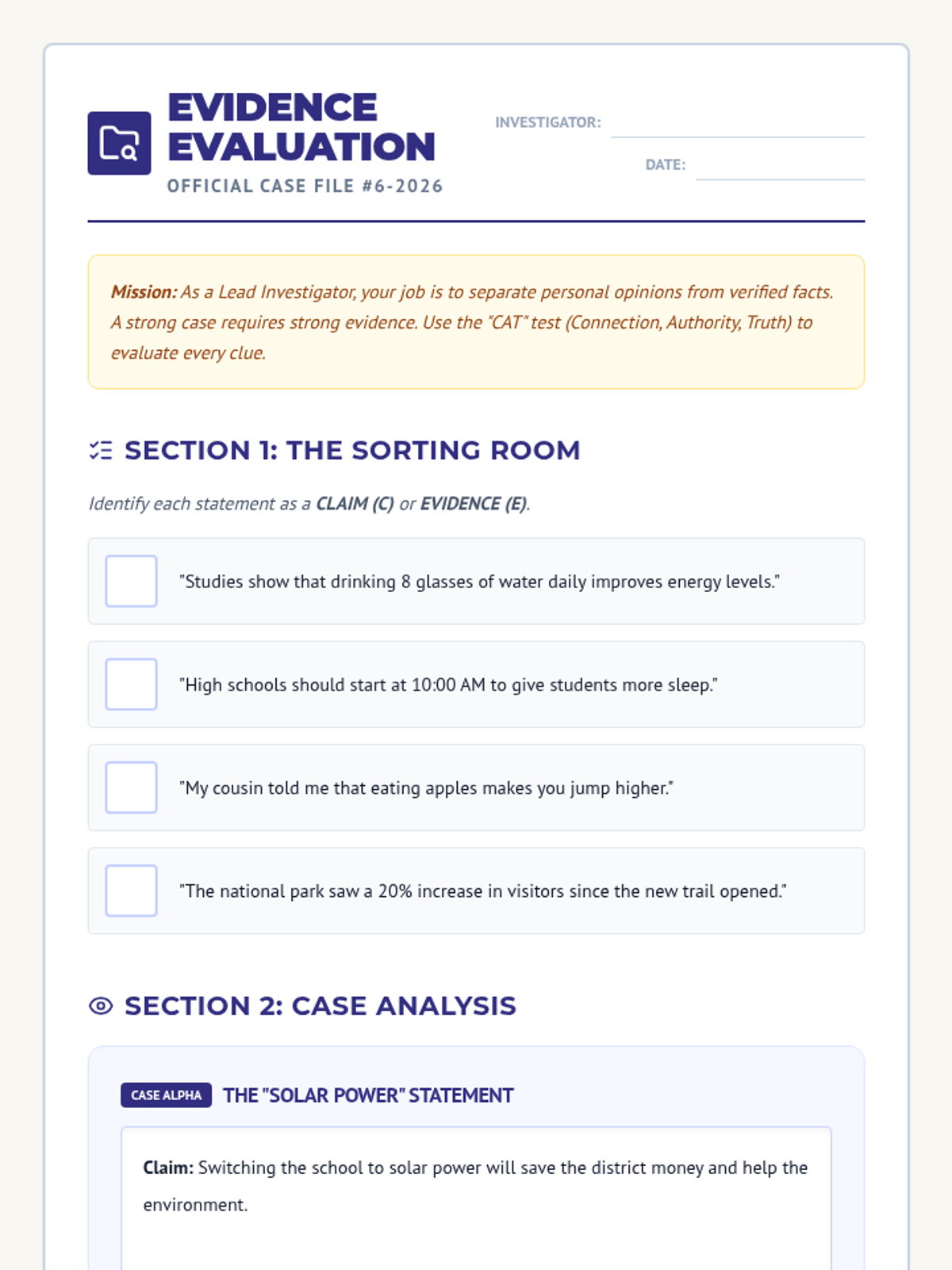
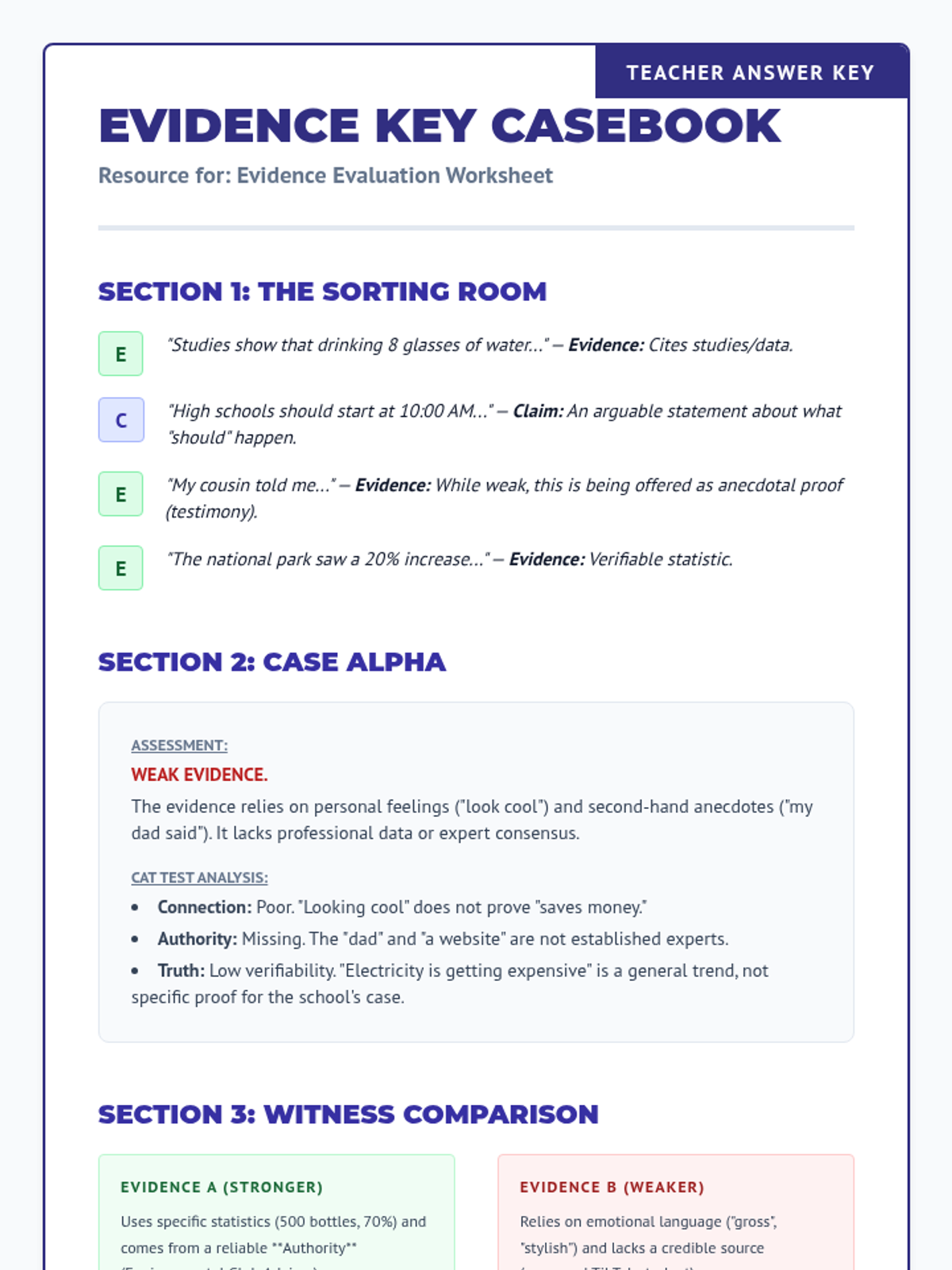
A 45-minute inquiry-based lesson where 6th-grade students learn to identify claims and evaluate the quality of supporting evidence through a detective-themed investigation.
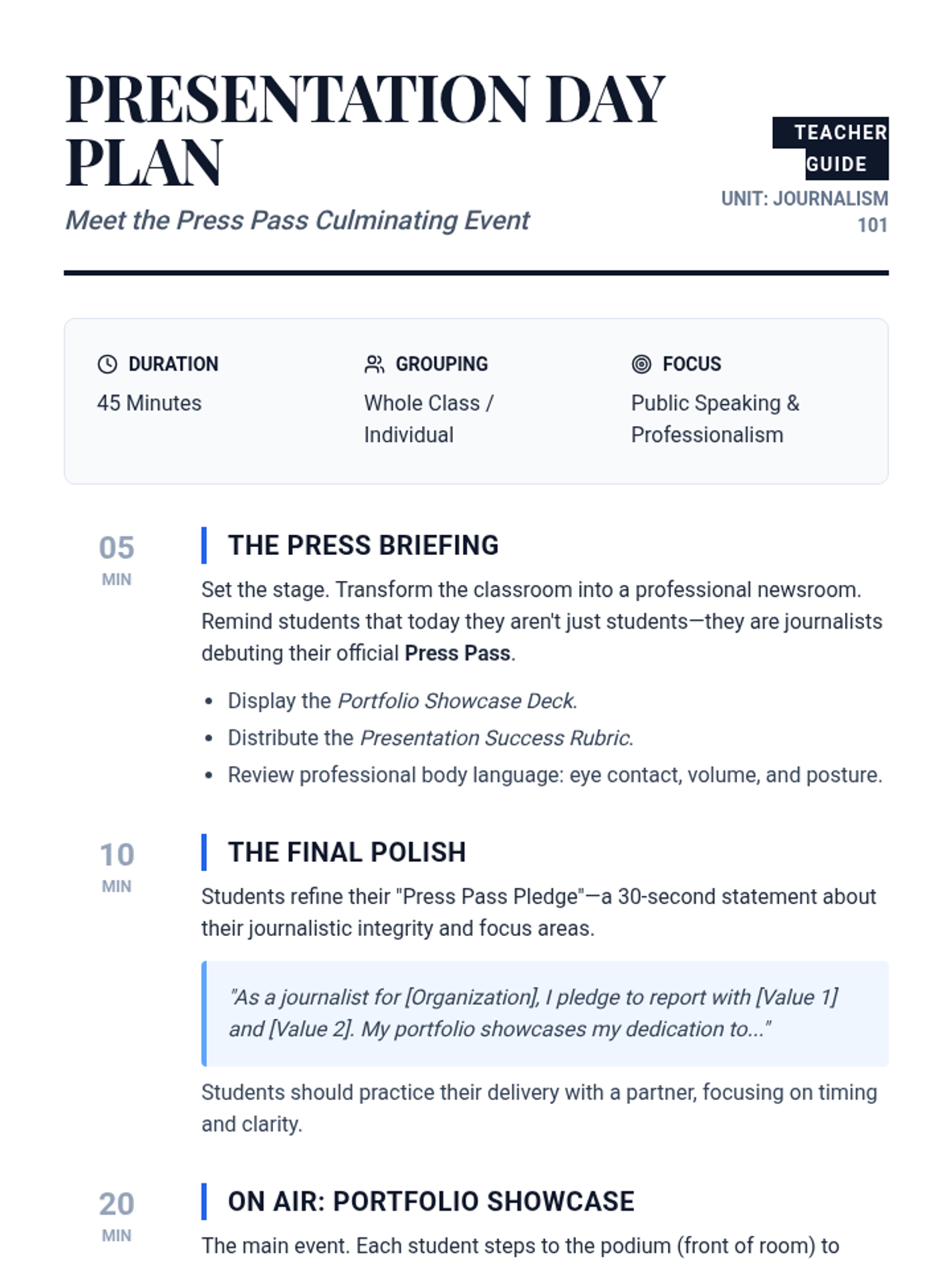
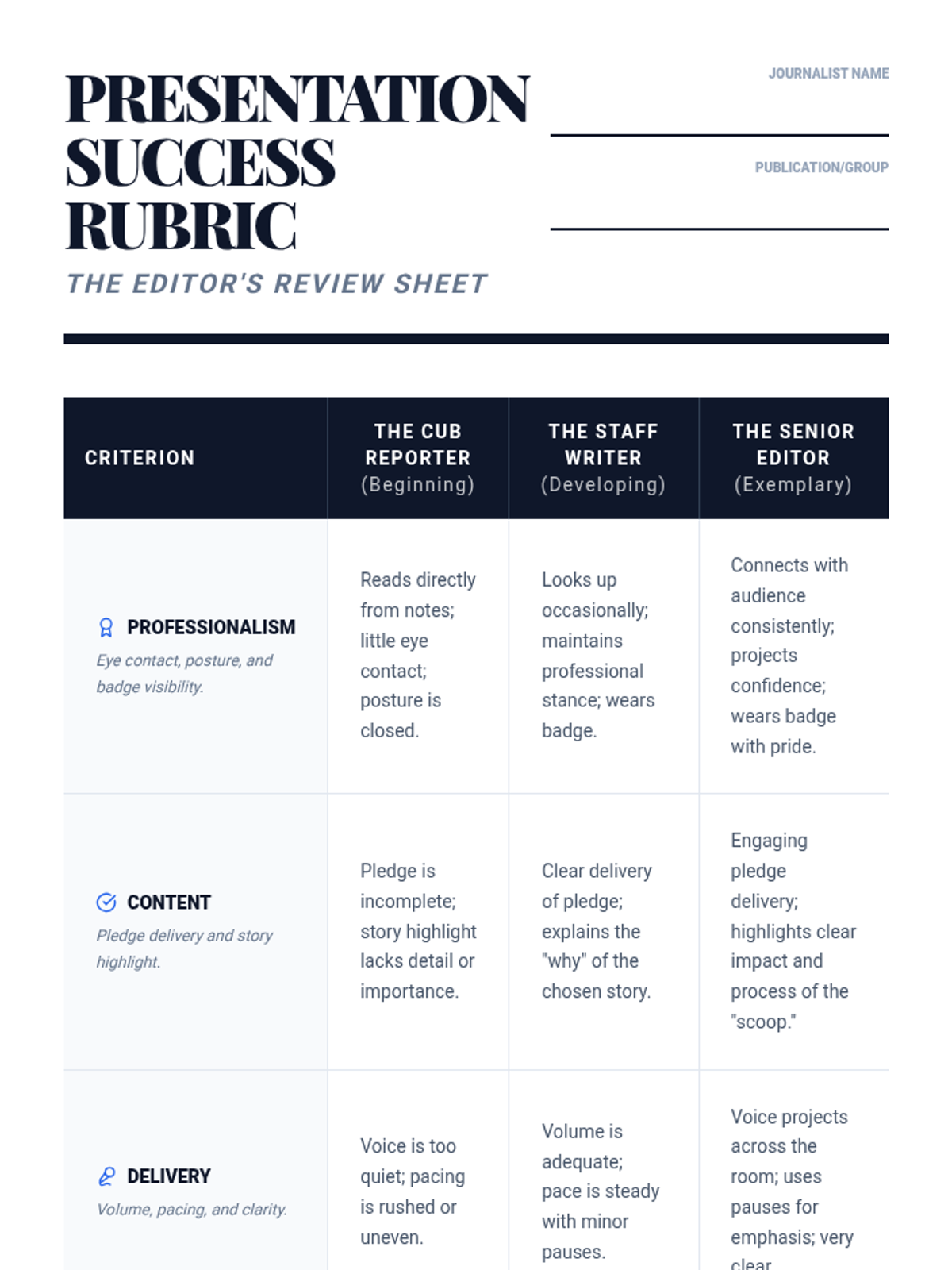
A culminating lesson where 6th-grade students showcase their journalism portfolios, focusing on professional public speaking and peer feedback in a newsroom-style environment.
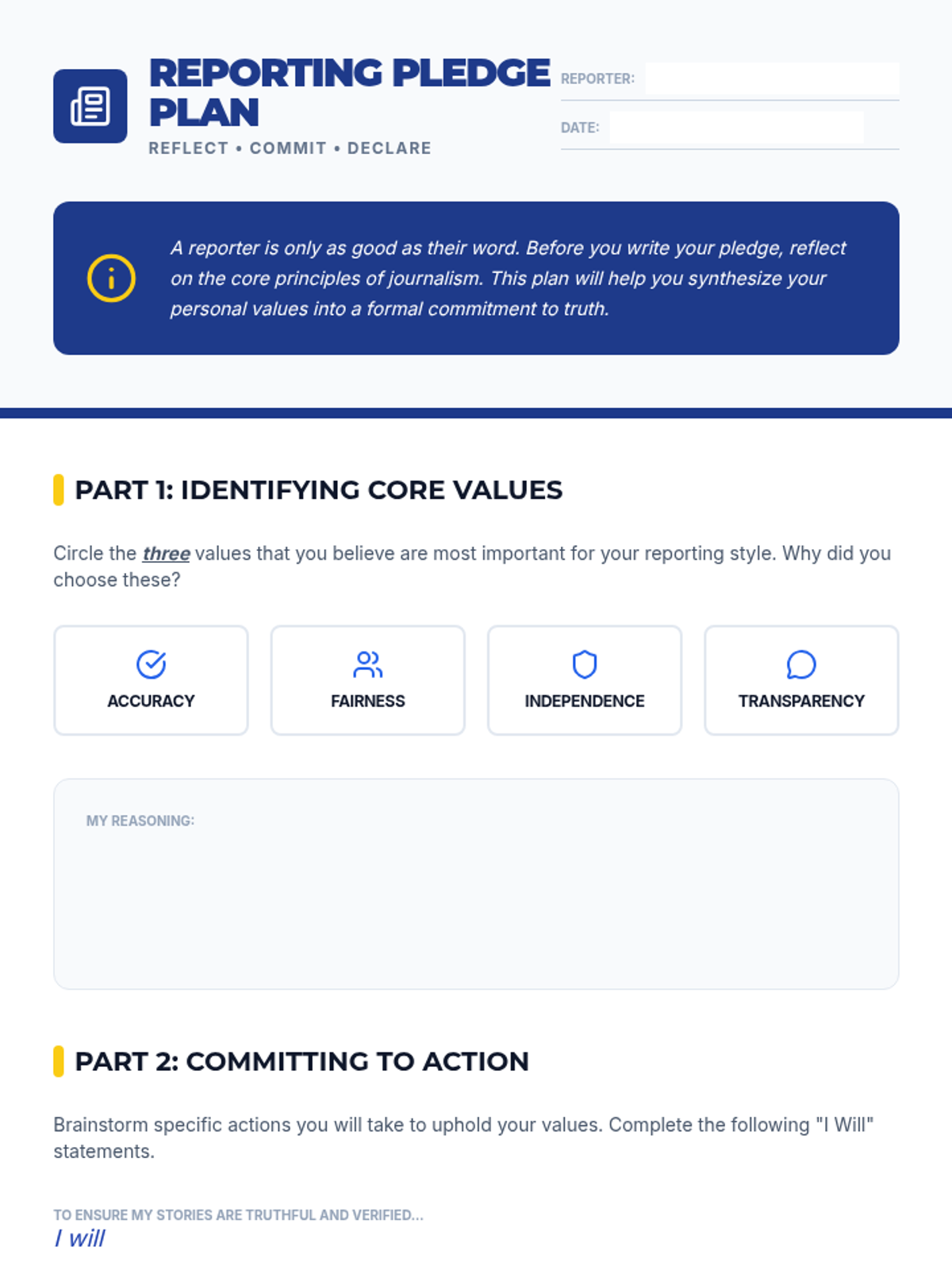
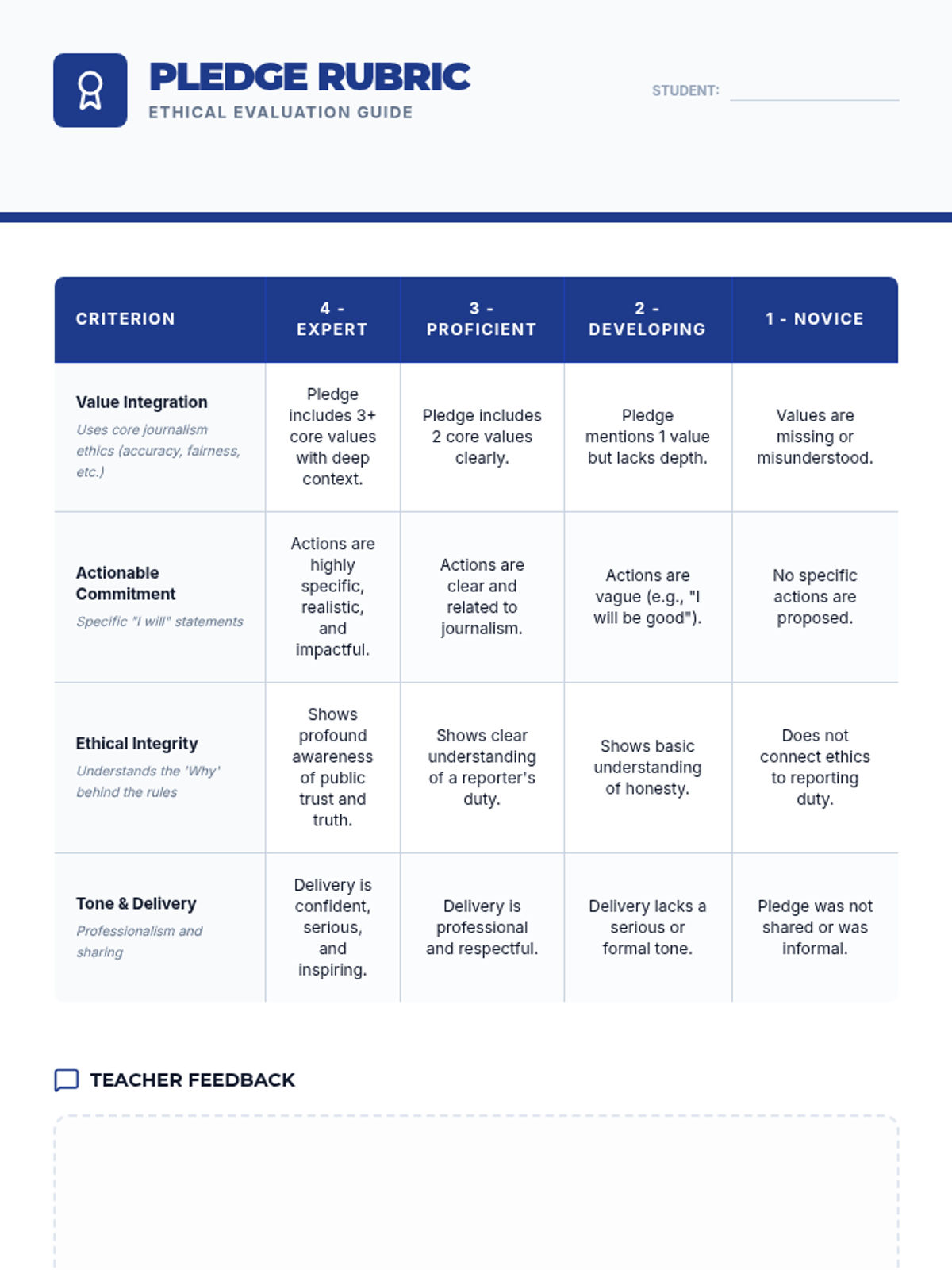
A 45-minute journalism lesson where 6th-grade students synthesize their understanding of ethical reporting to create a personal journalism pledge. Students explore the core values of integrity and trustworthiness through reflection and drafting.
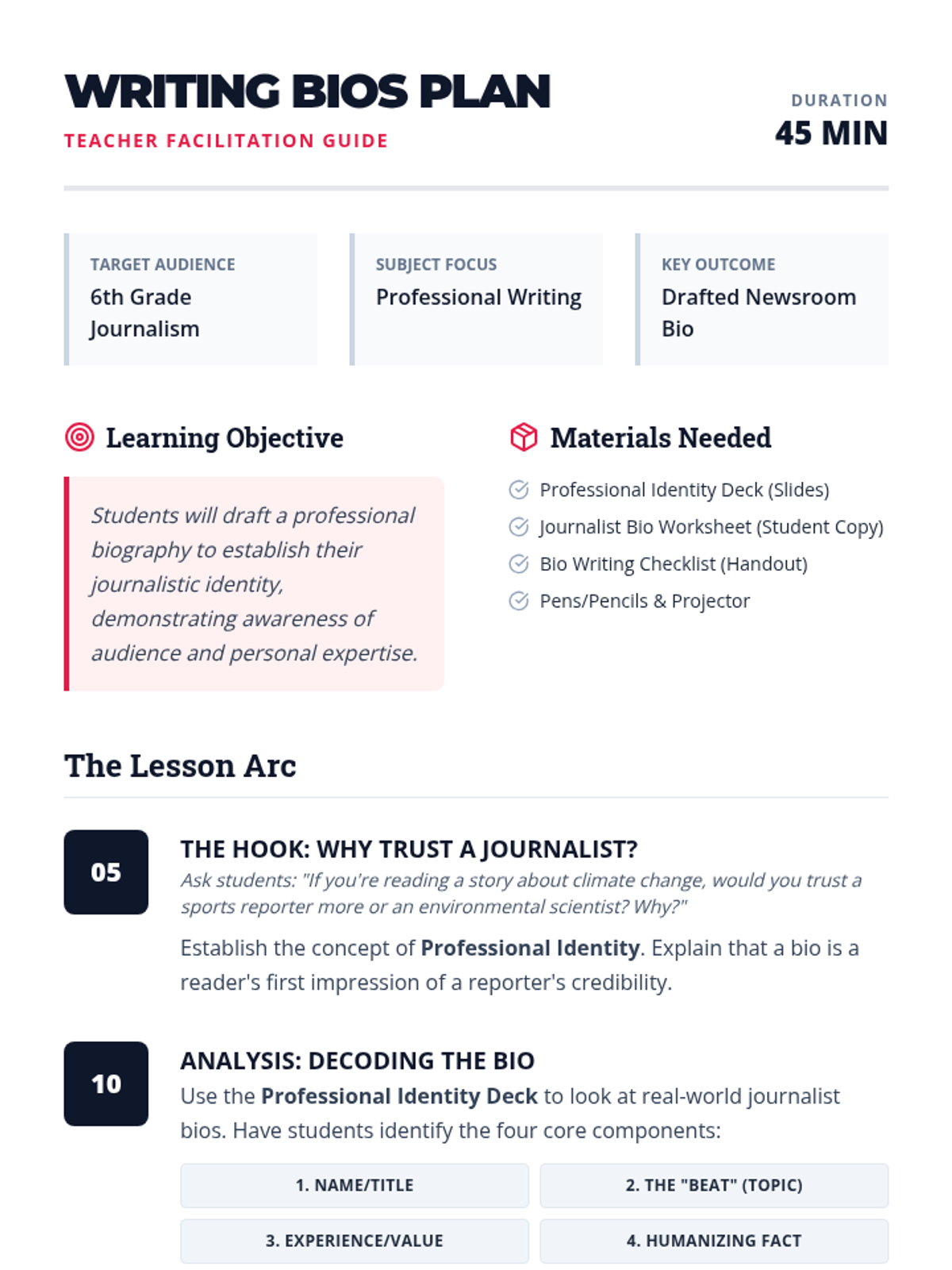
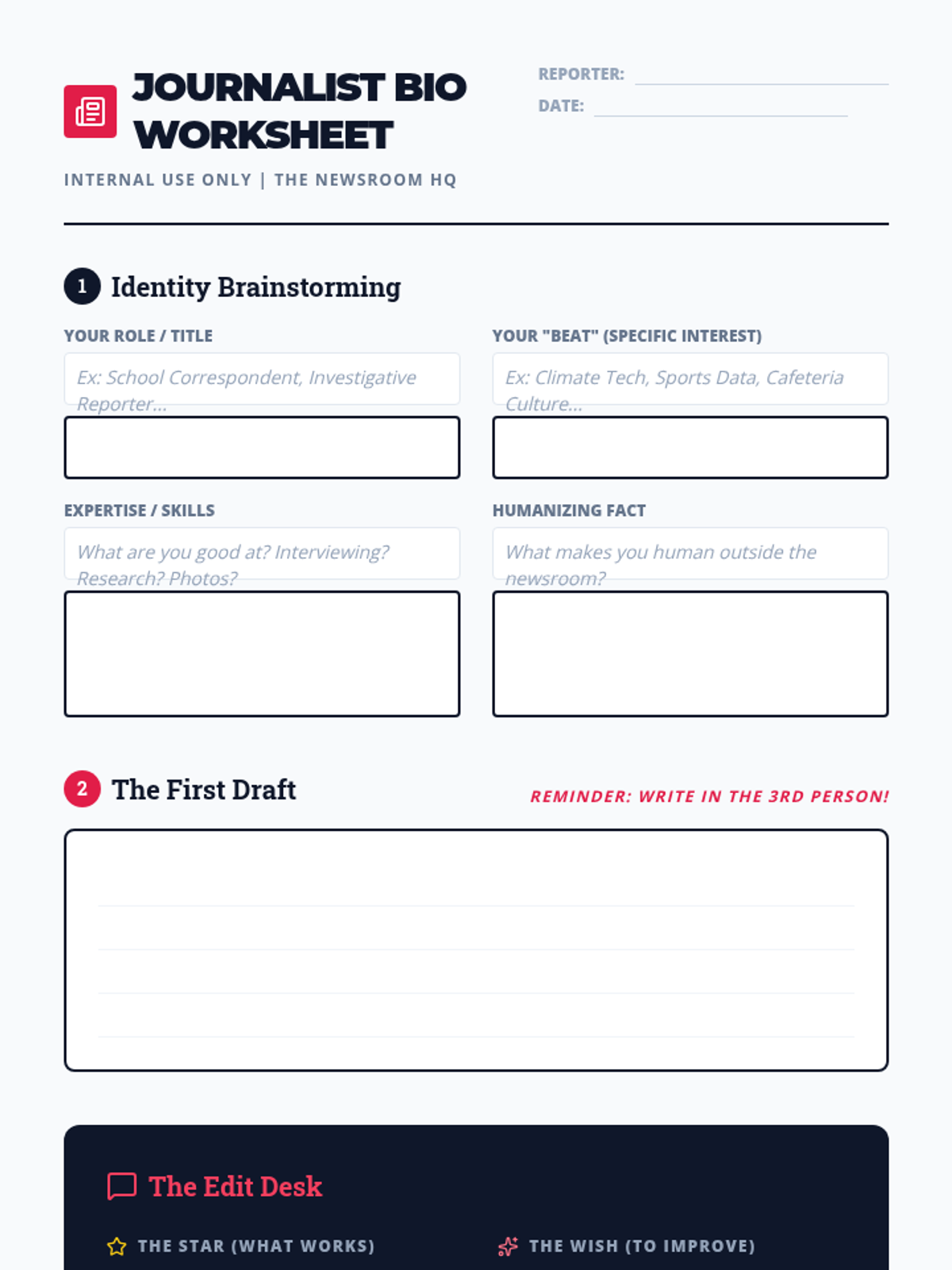
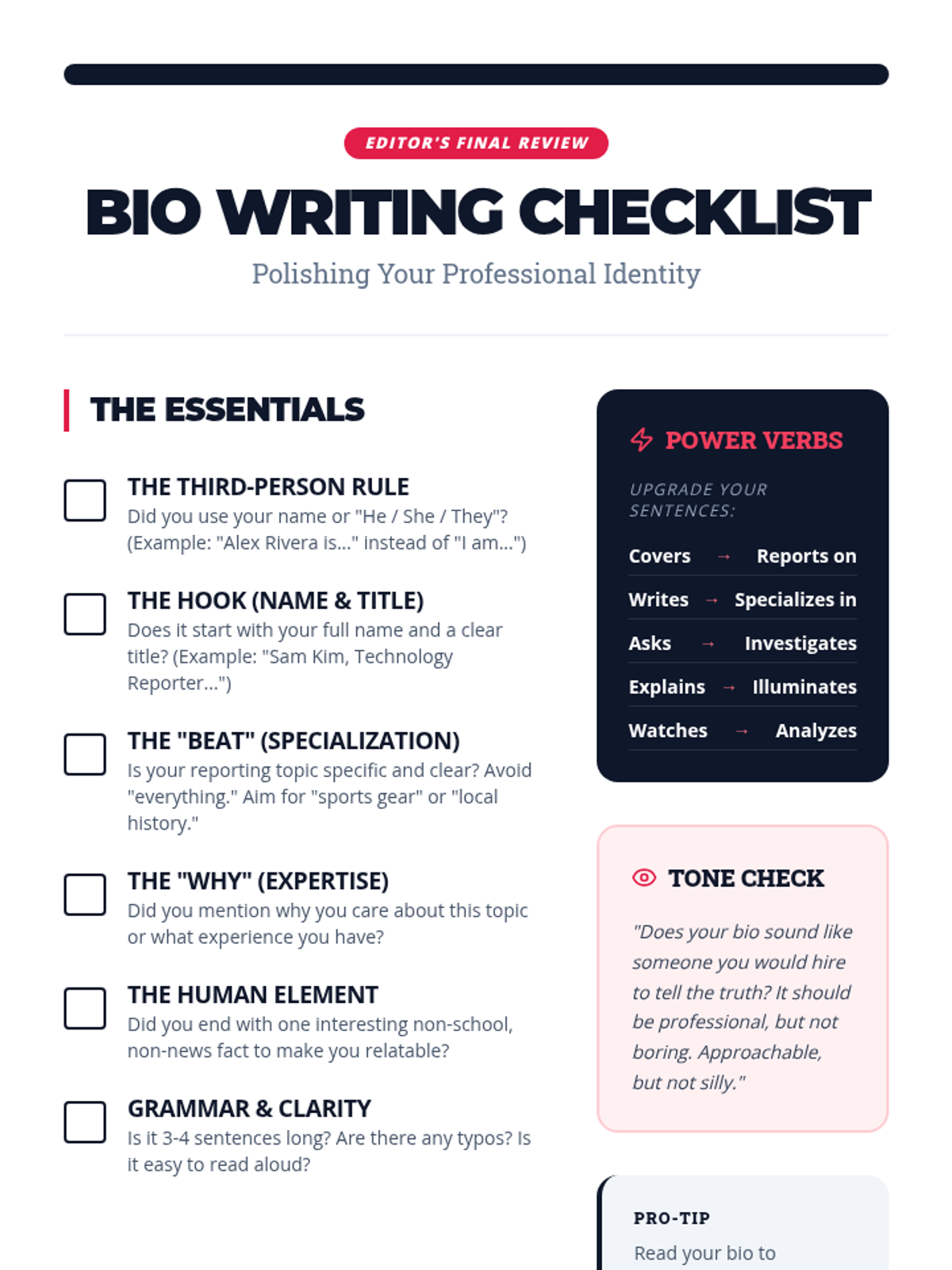
A 45-minute lesson for 6th-grade students to develop their professional journalistic identity by drafting and refining their own newsroom bios. Students analyze professional examples, identify core components, and engage in a peer feedback loop.
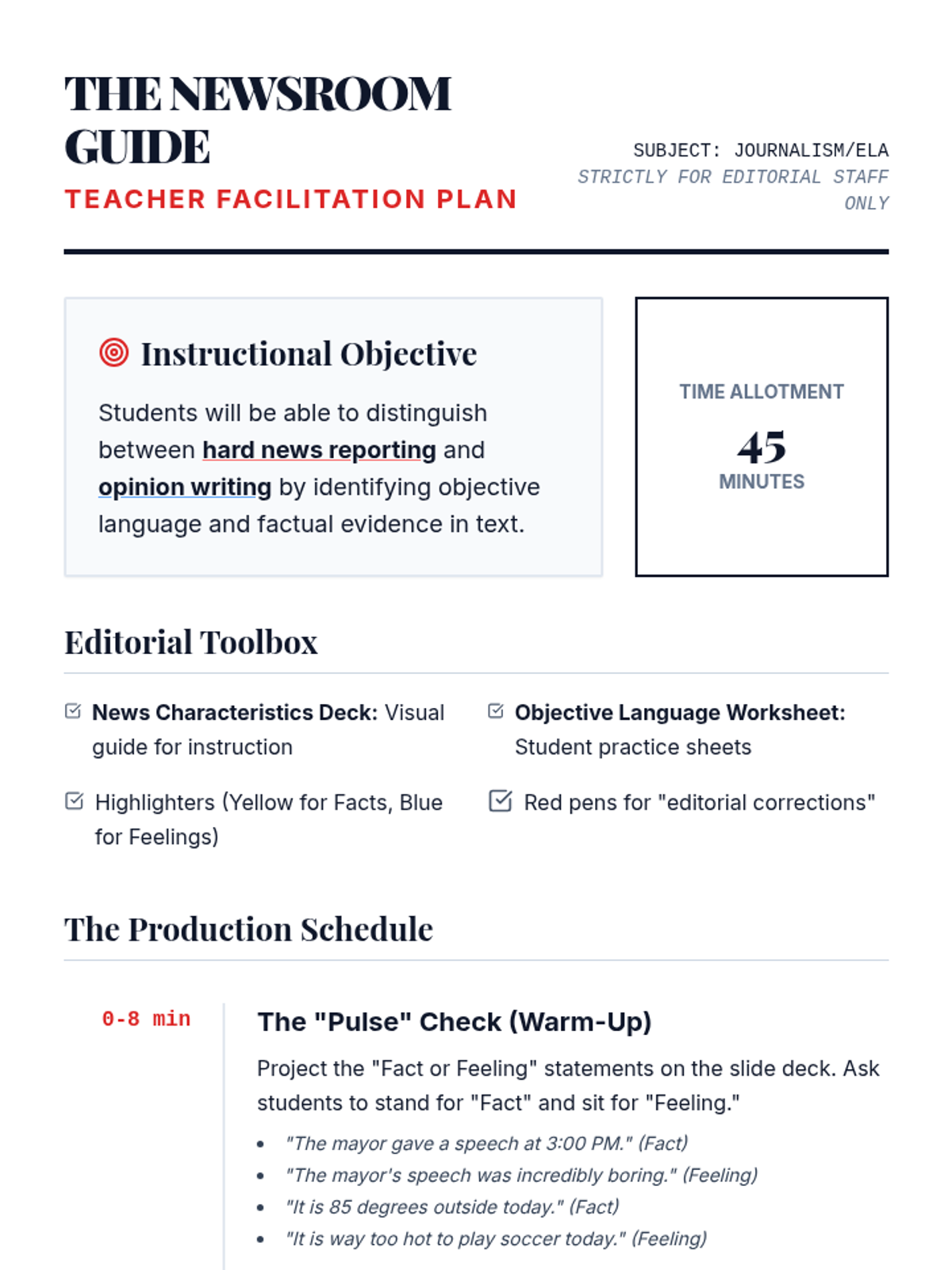
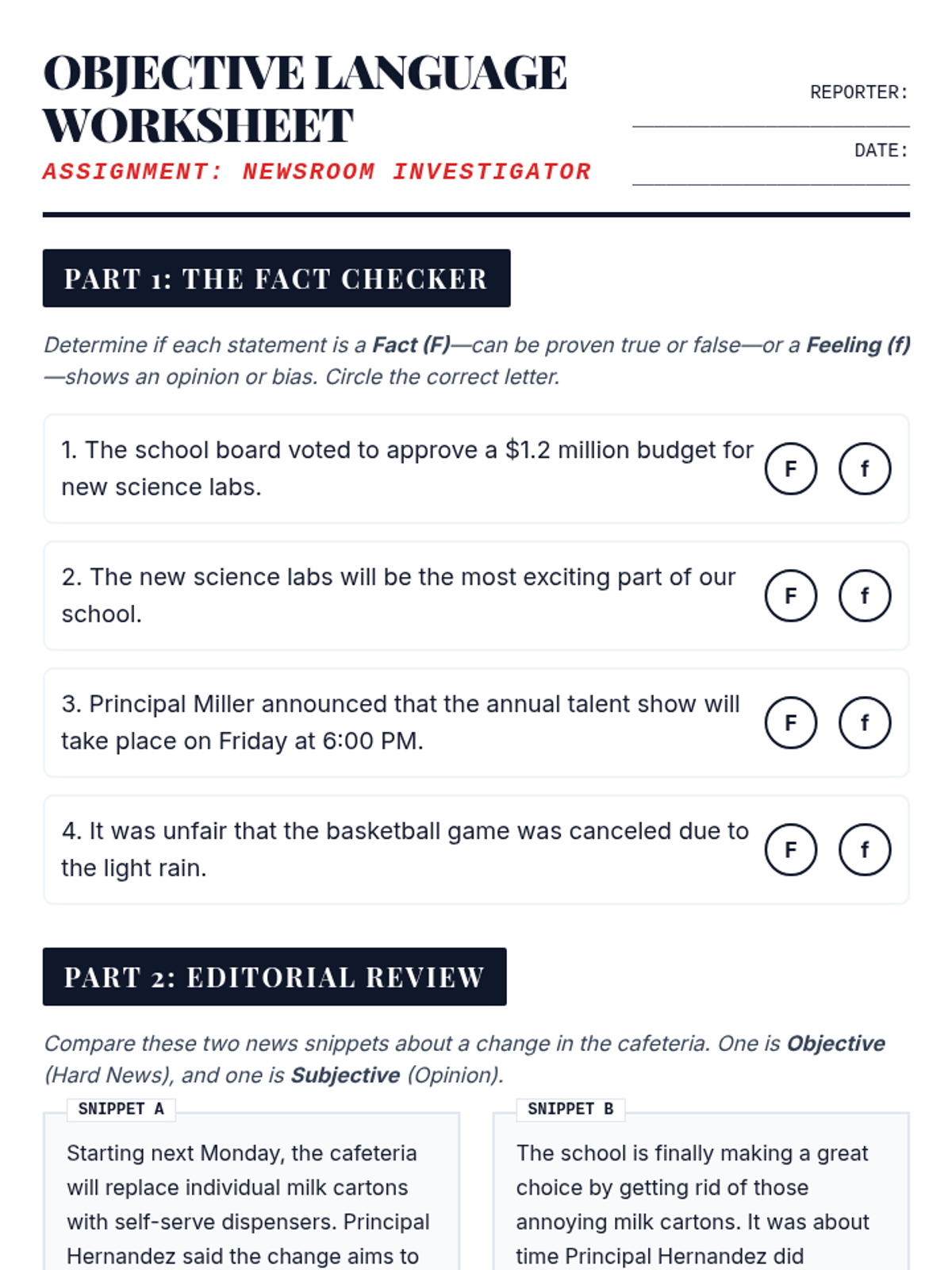
A 45-minute lesson where students become newsroom investigators, learning to distinguish between objective hard news reporting and subjective opinion pieces through hands-on analysis and writing practice.
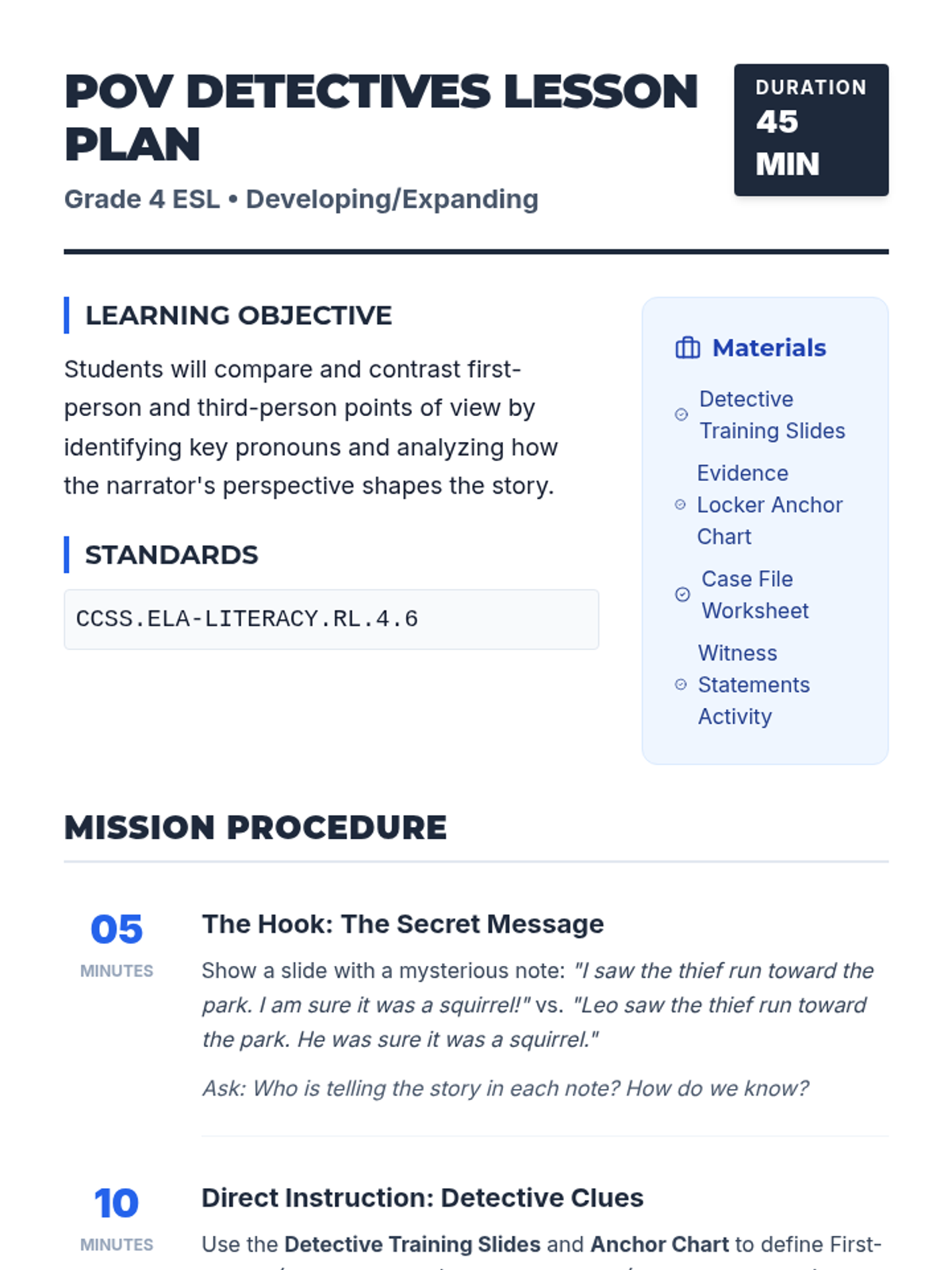
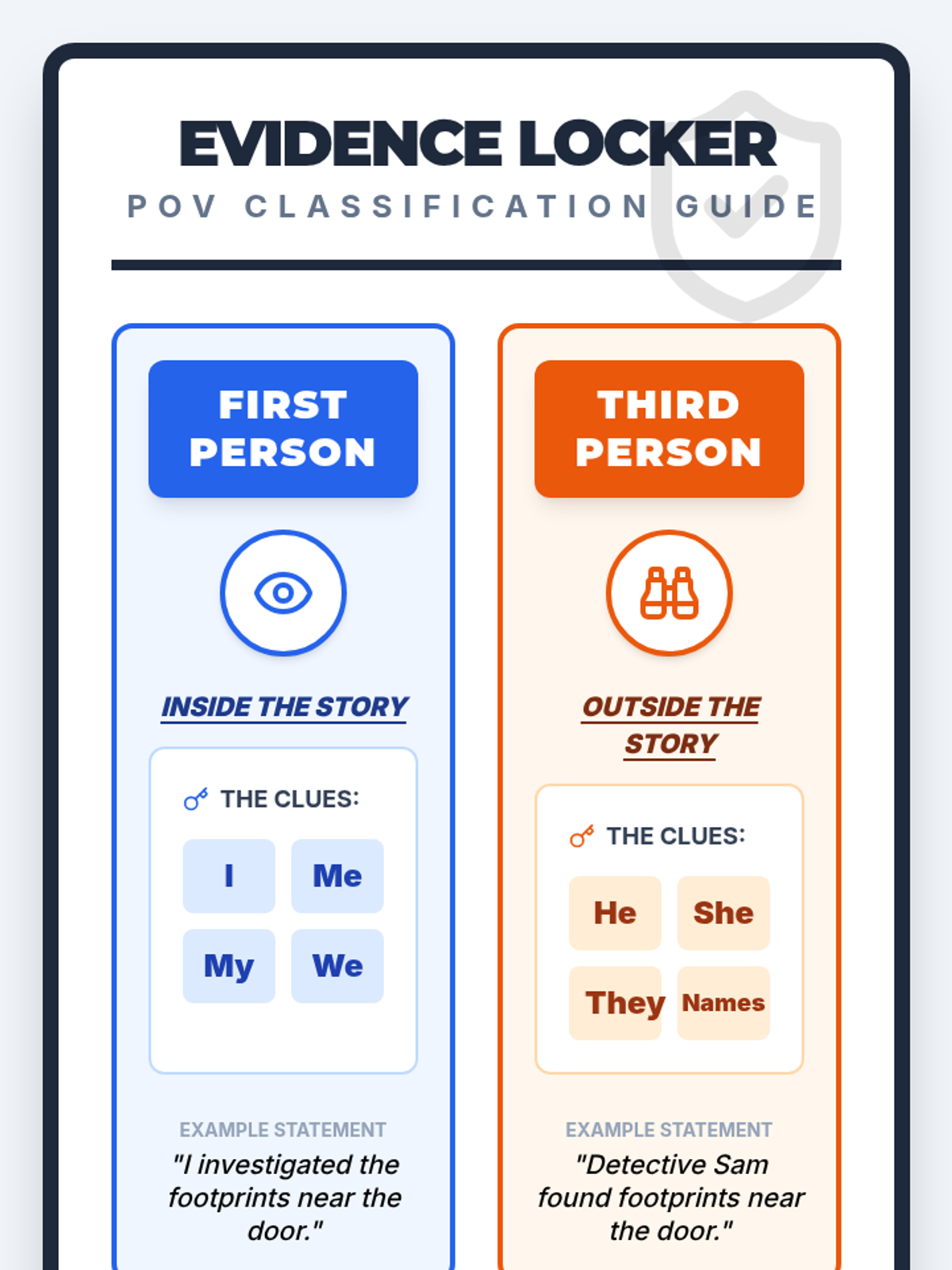
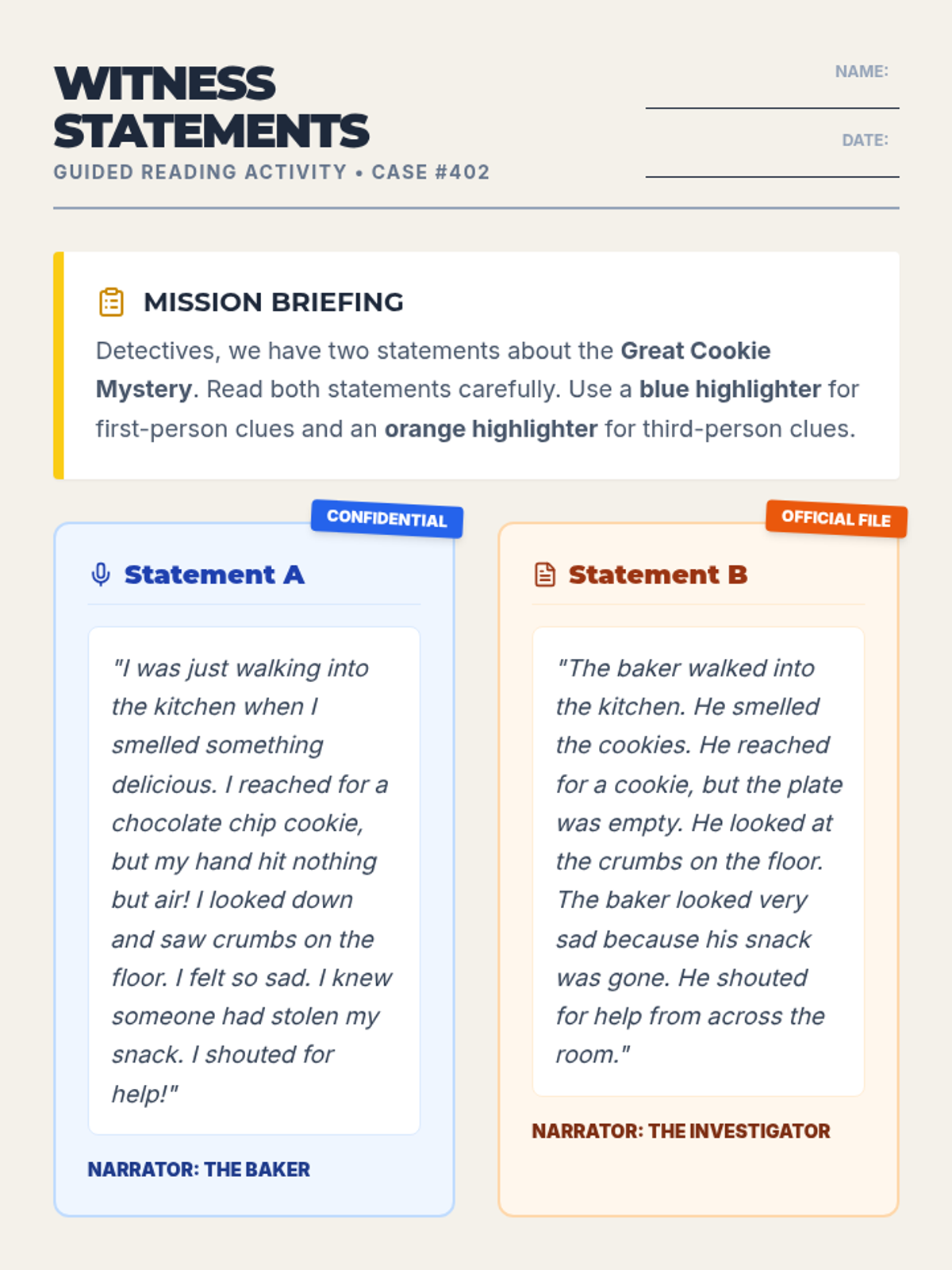
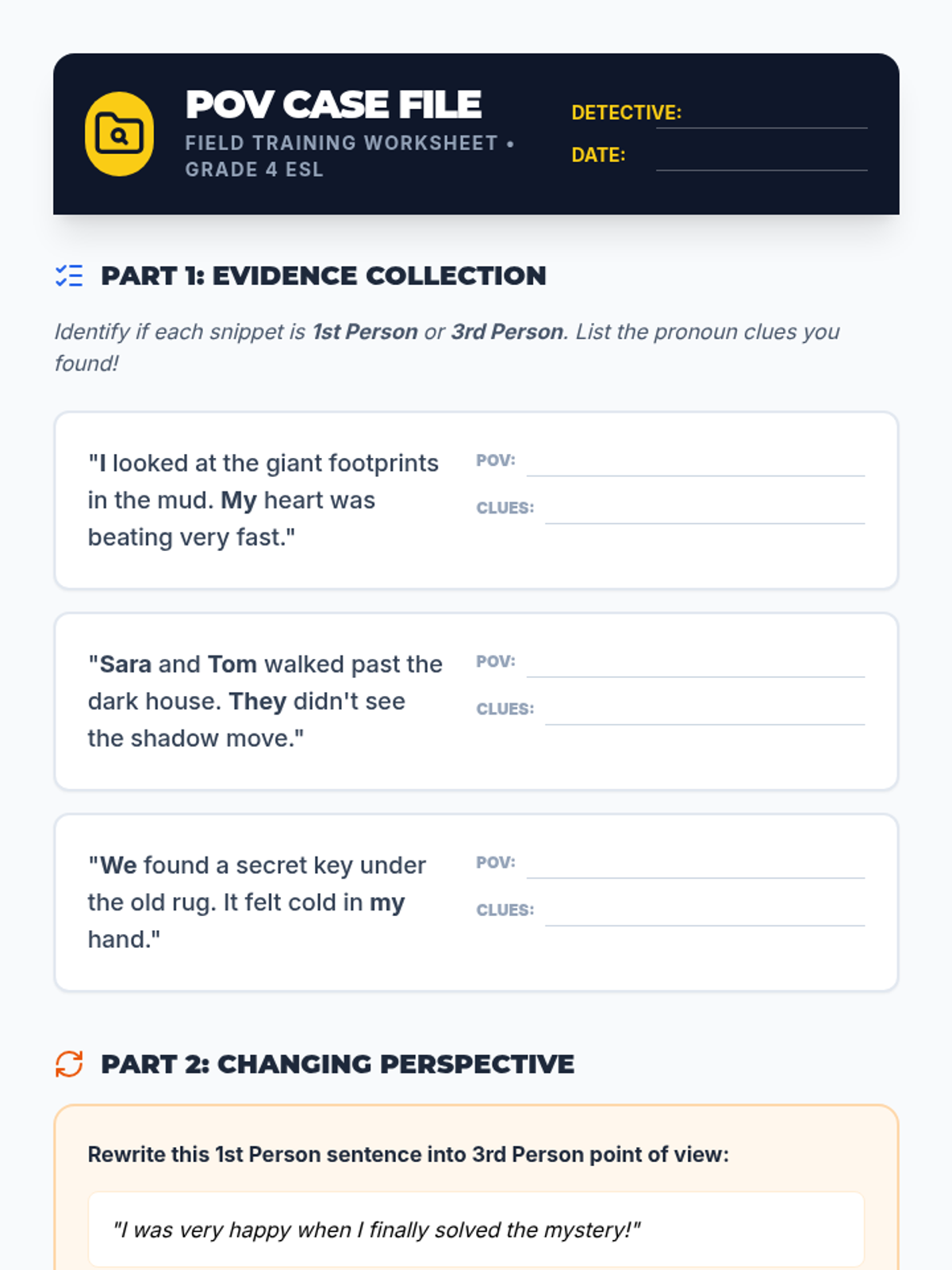
A 45-minute lesson for Grade 4 ESL students (Developing/Expanding) focused on identifying, comparing, and contrasting first-person and third-person points of view using a detective-themed 'case file' approach.
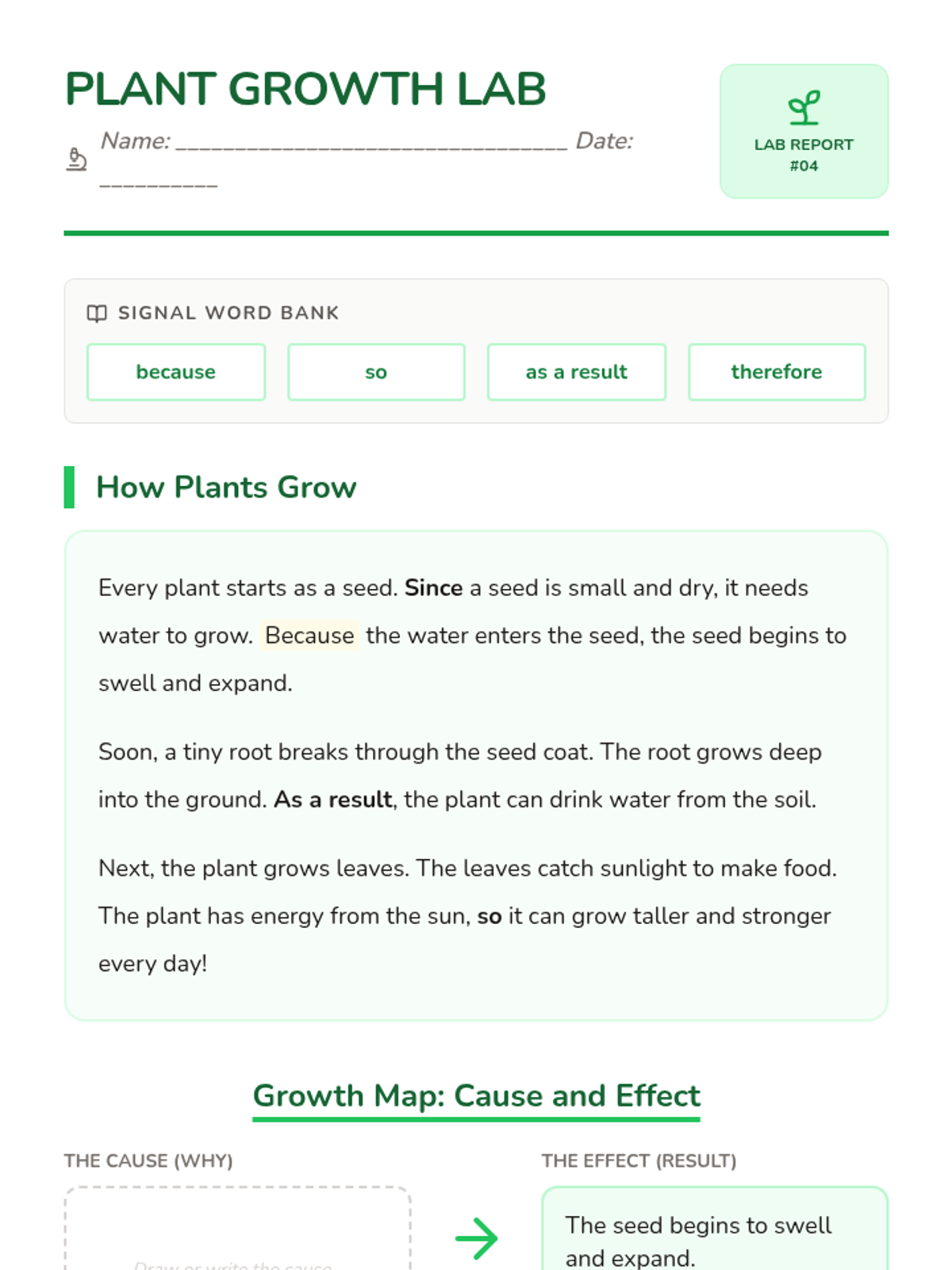
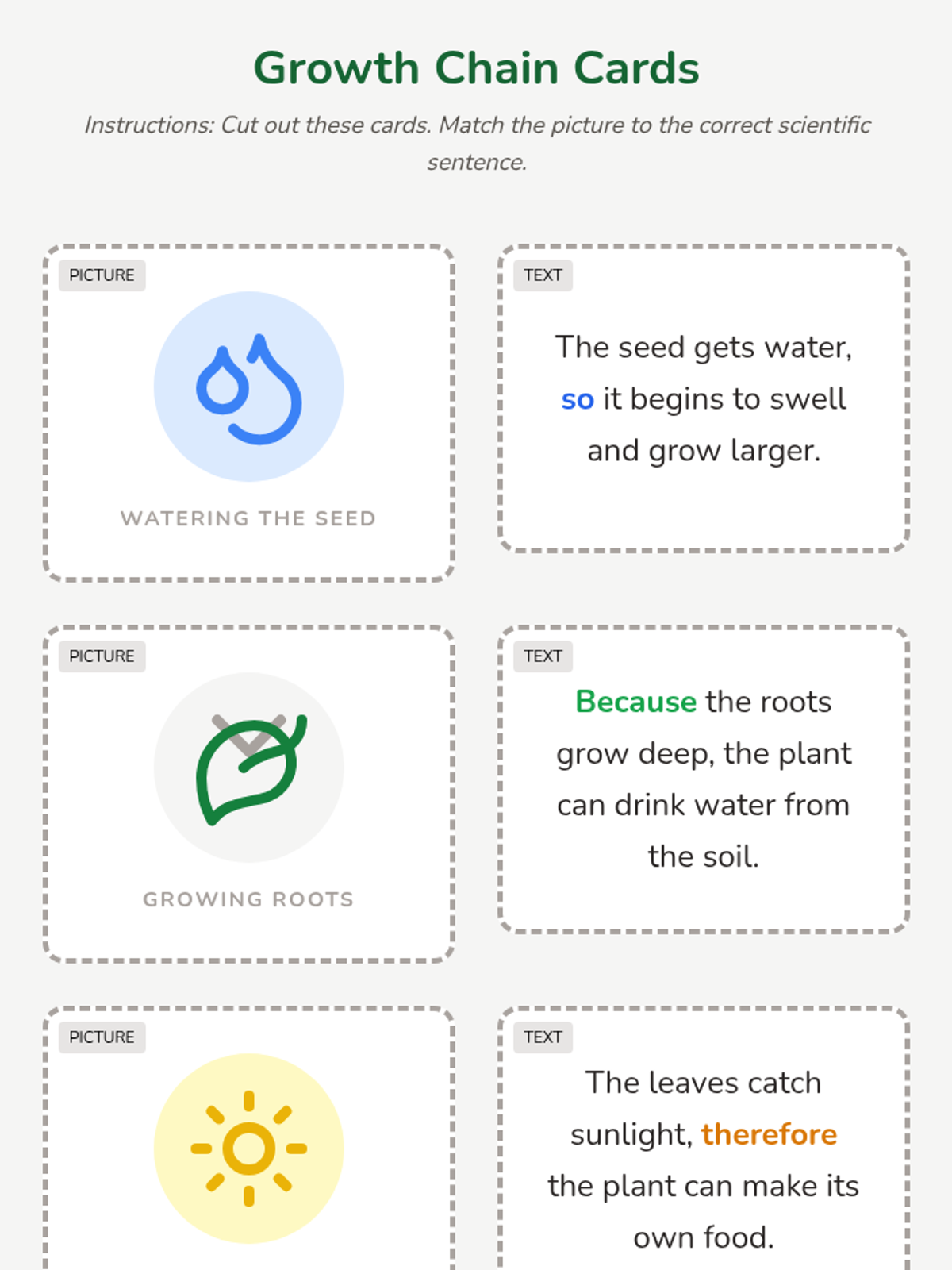
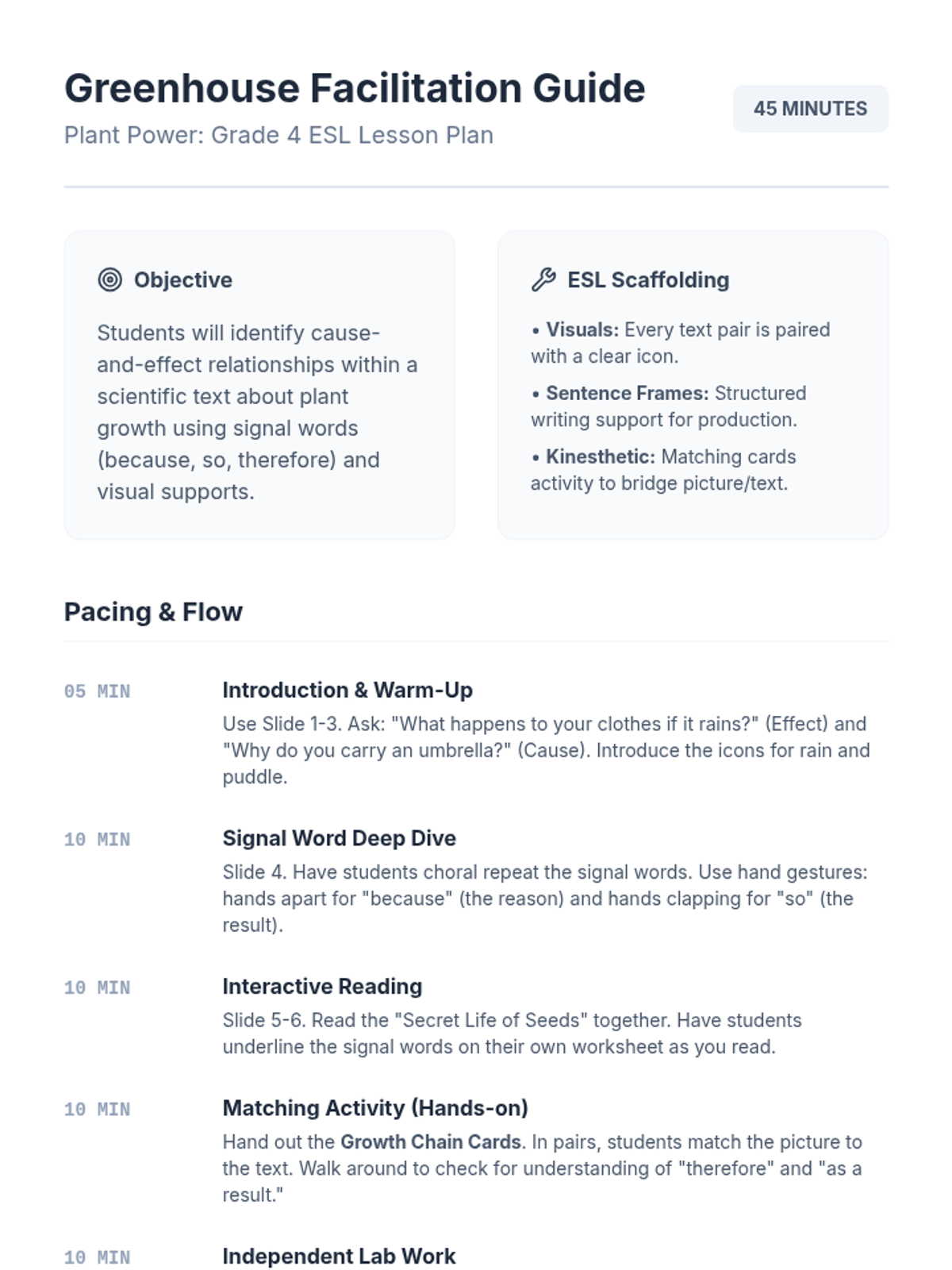
A 45-minute ESL lesson for 4th graders focused on identifying and describing cause-and-effect relationships in a scientific text about plant growth. Students use visual organizers, signal words, and sentence frames to master the concept.
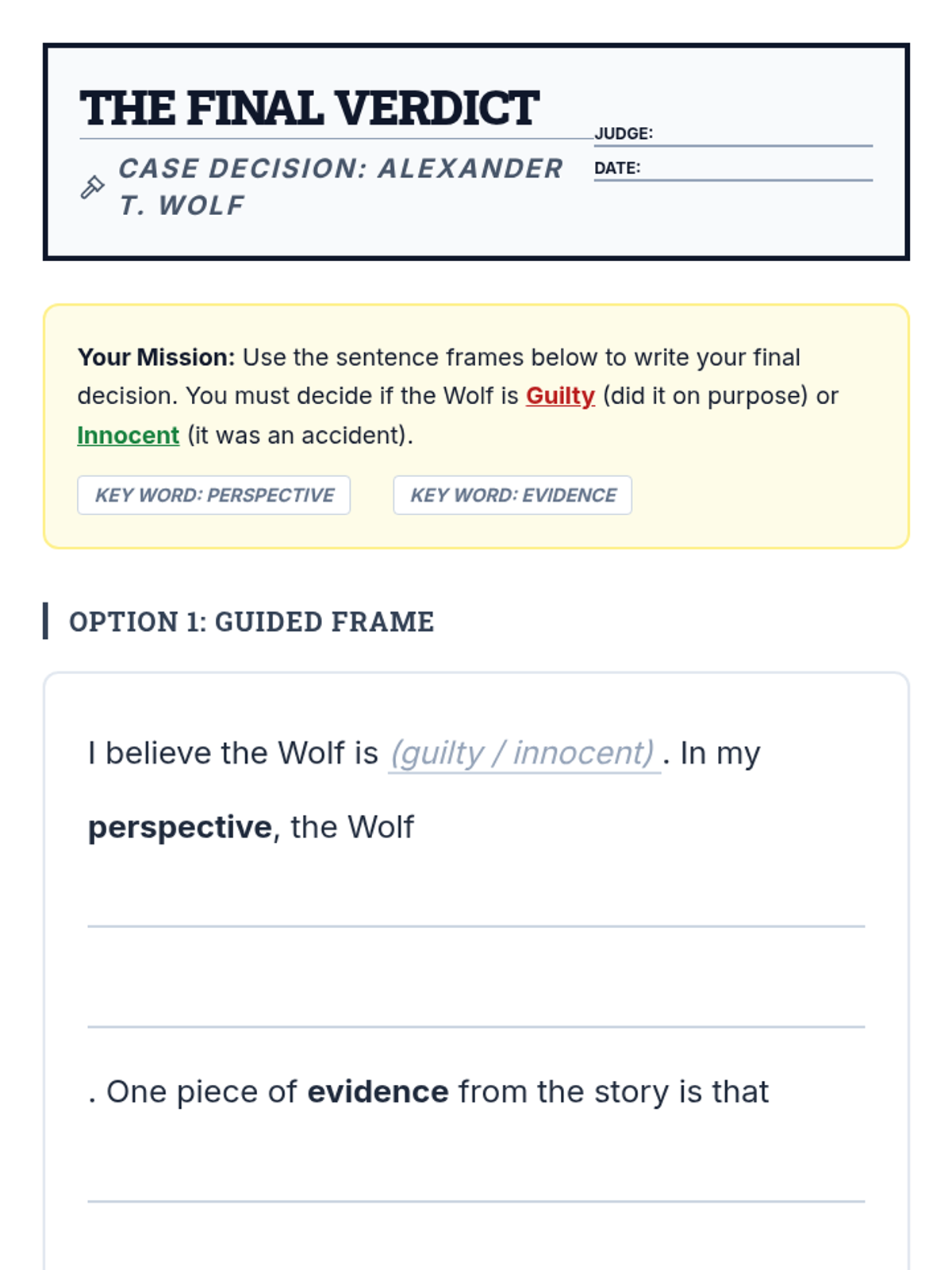
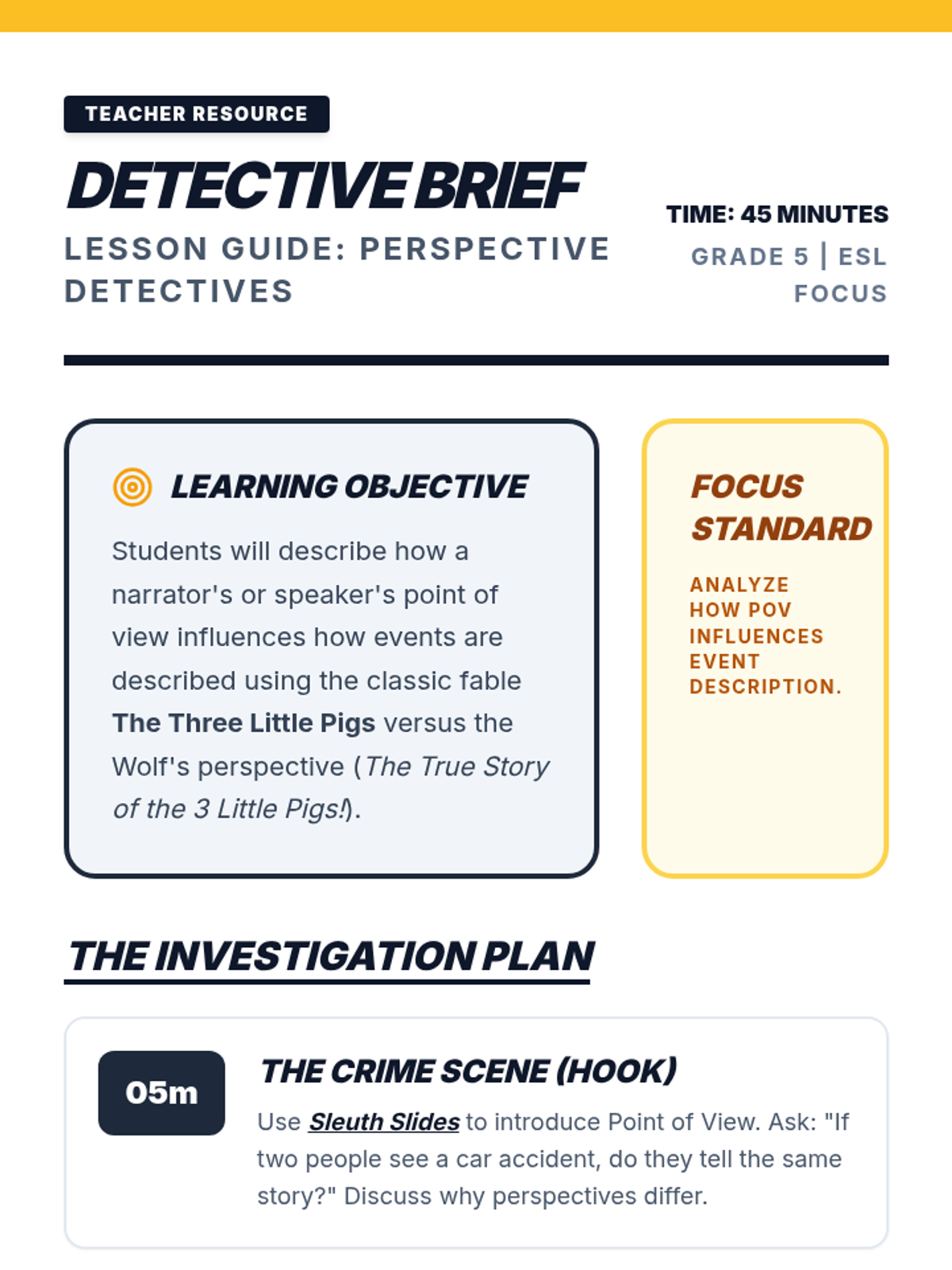
A 45-minute ESL lesson for 5th graders to analyze how point of view influences the description of events using the classic fable of The Three Little Pigs versus the Wolf's perspective.
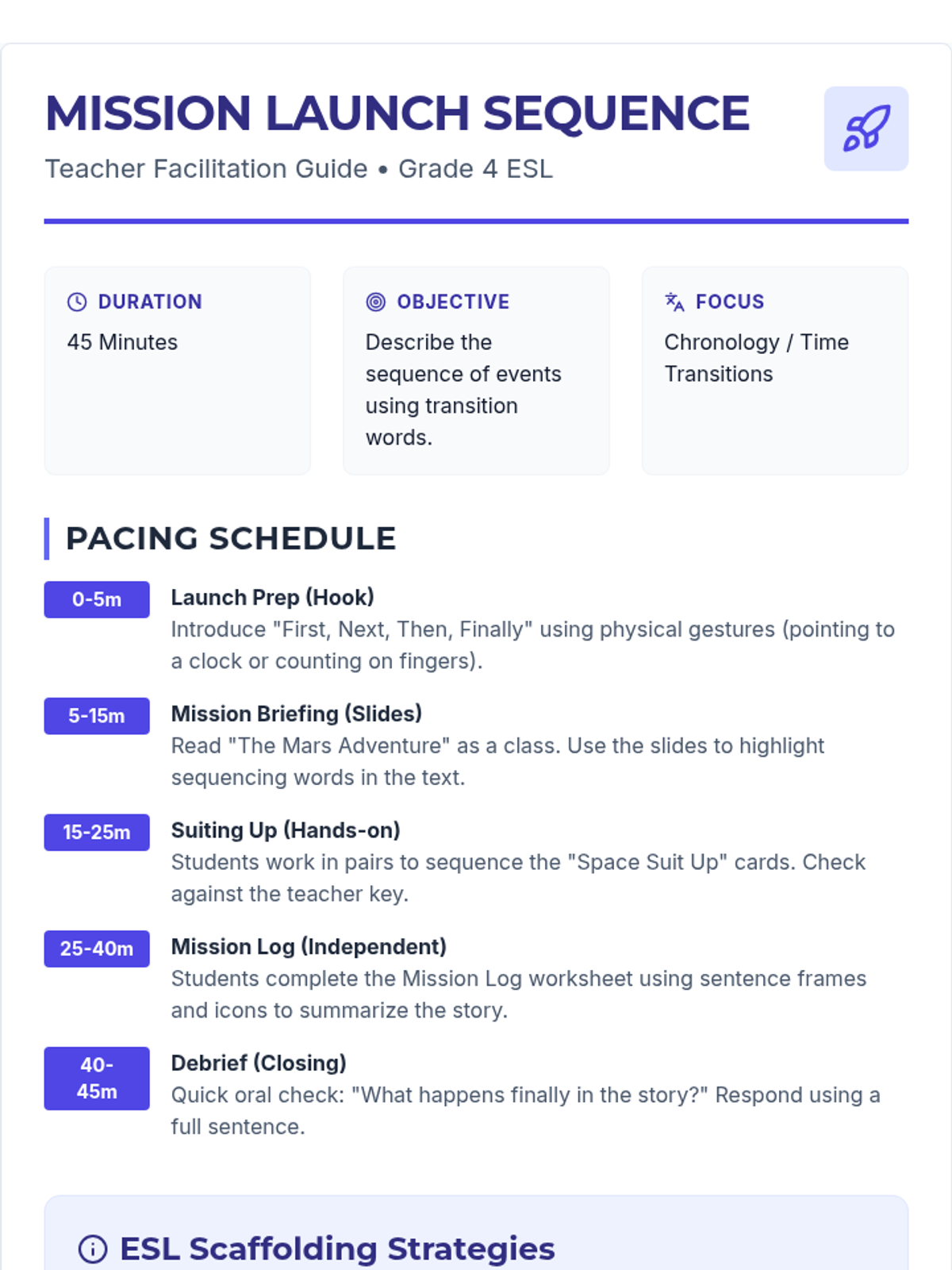
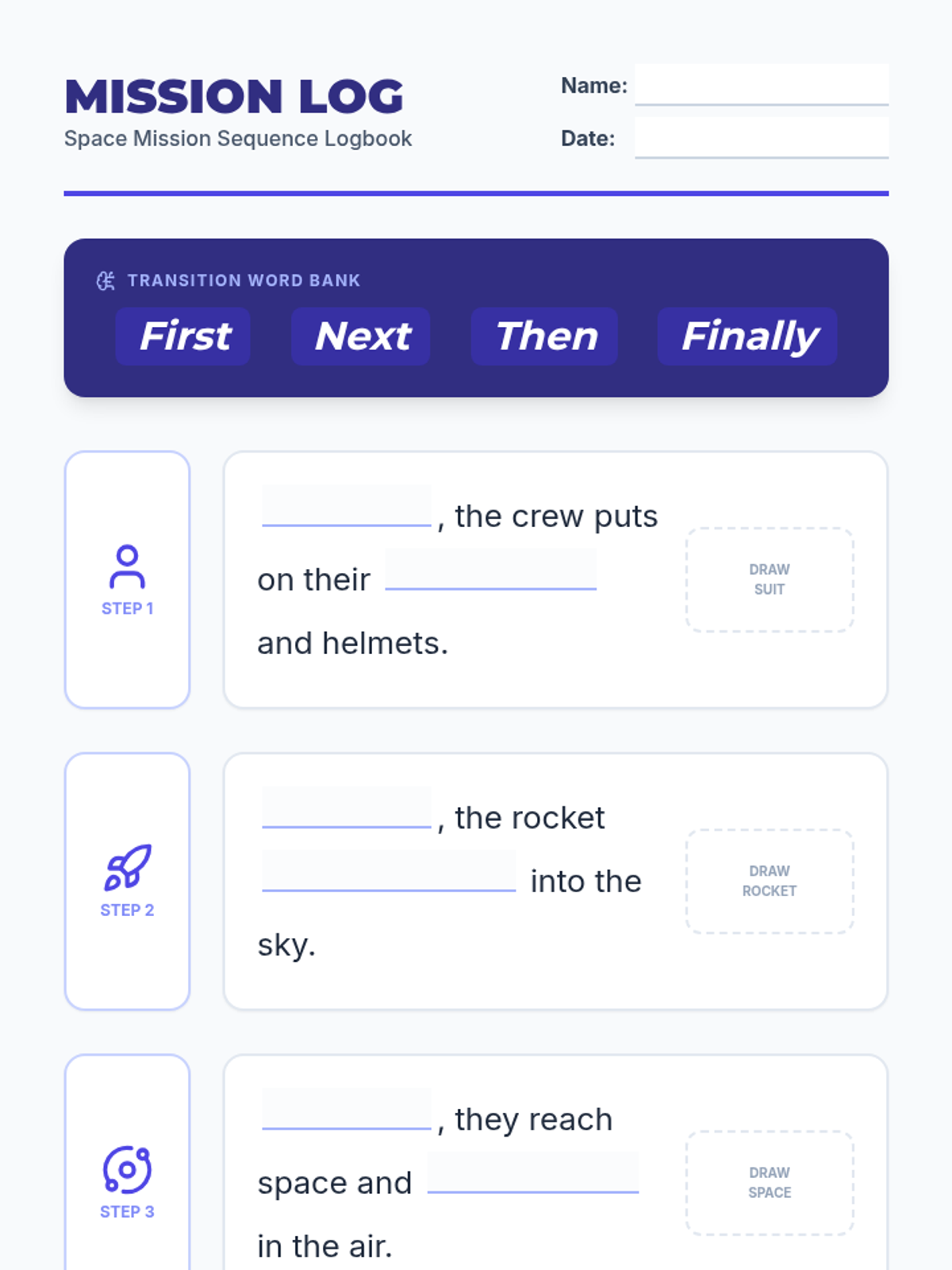
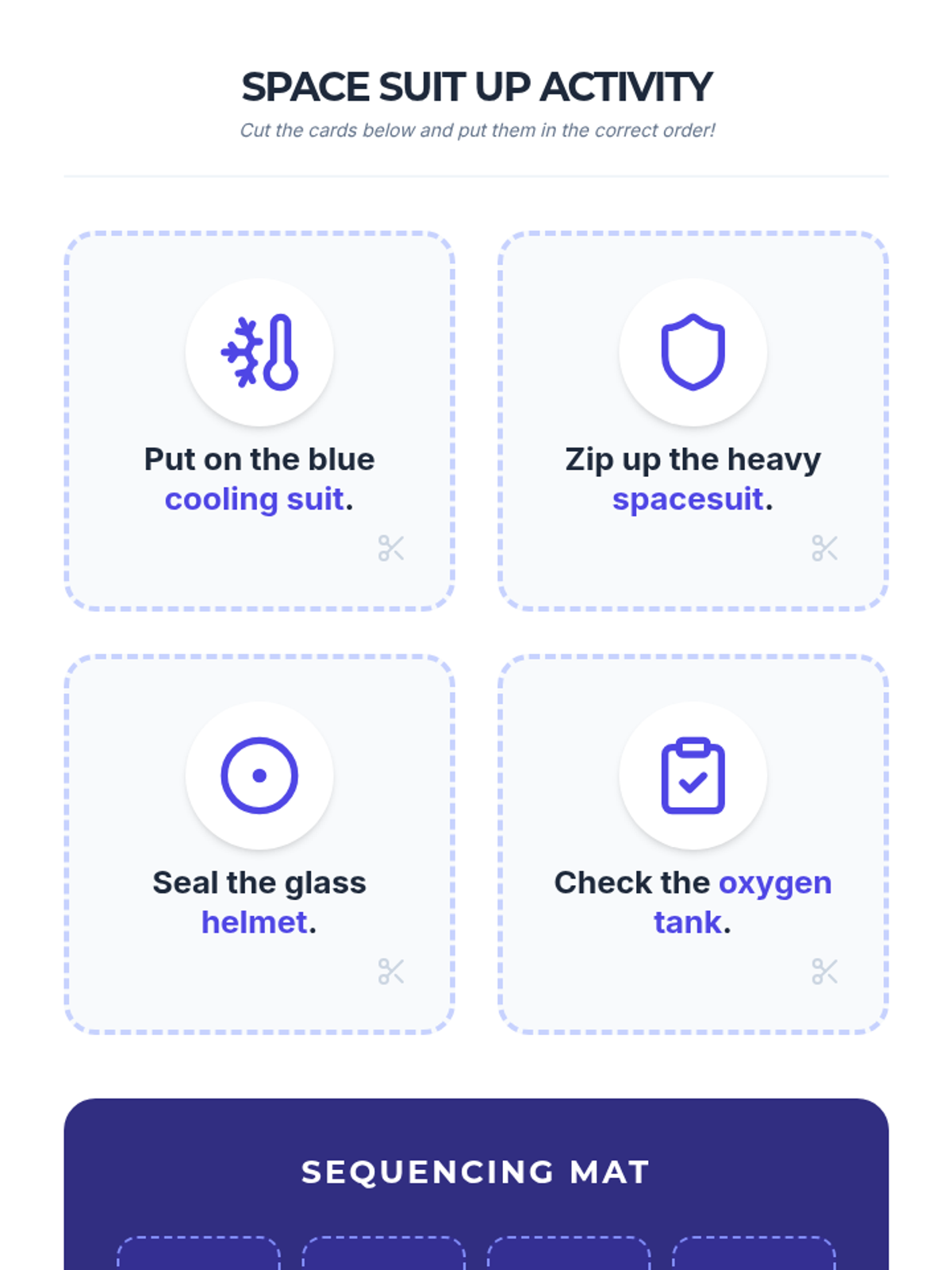
An engaging 45-minute ESL lesson for Grade 4 students focused on chronological order and sequencing through the exciting lens of a space mission. Students will use transition words, sequencing cards, and a scaffolded graphic organizer to master the order of events.
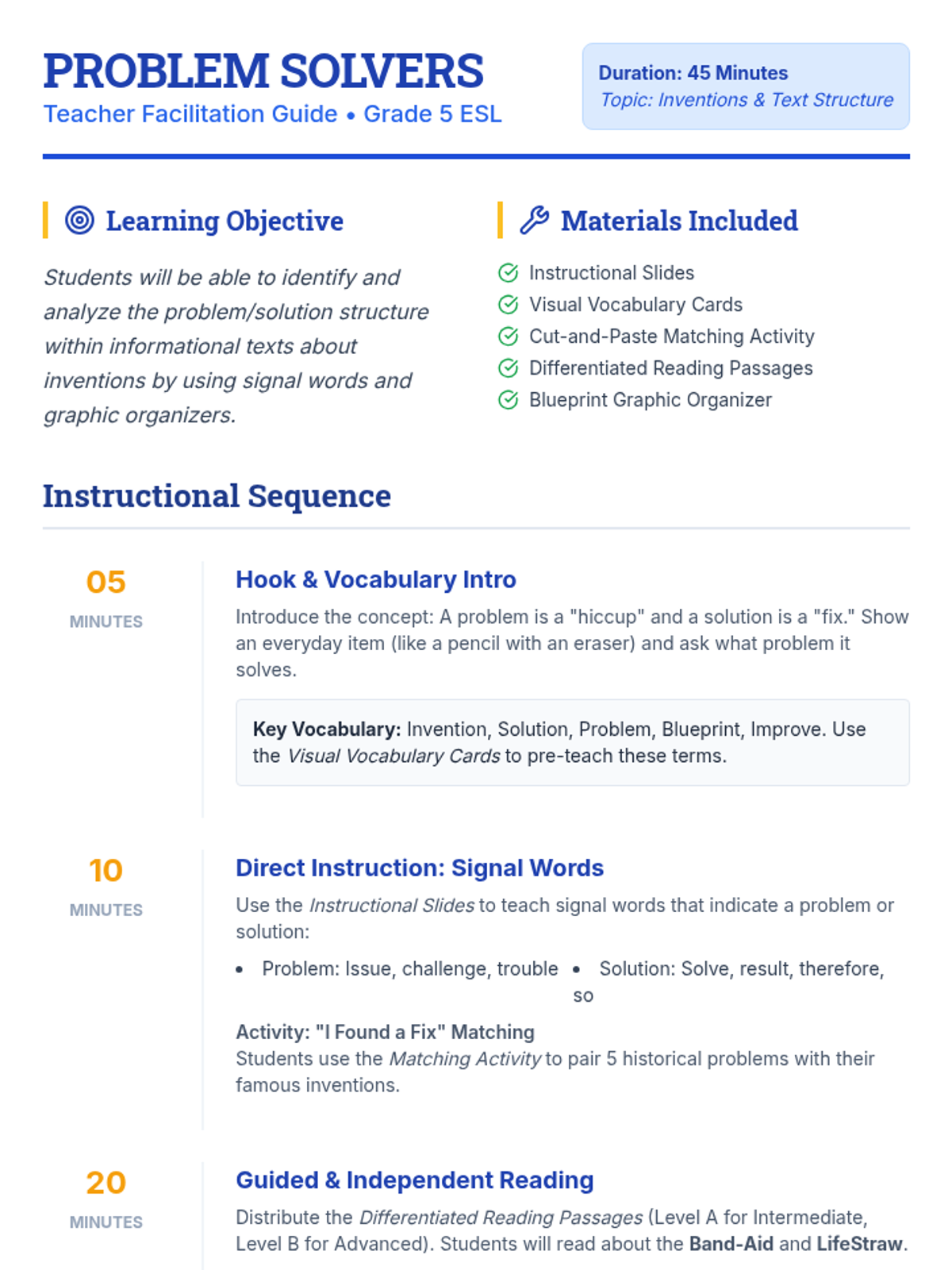
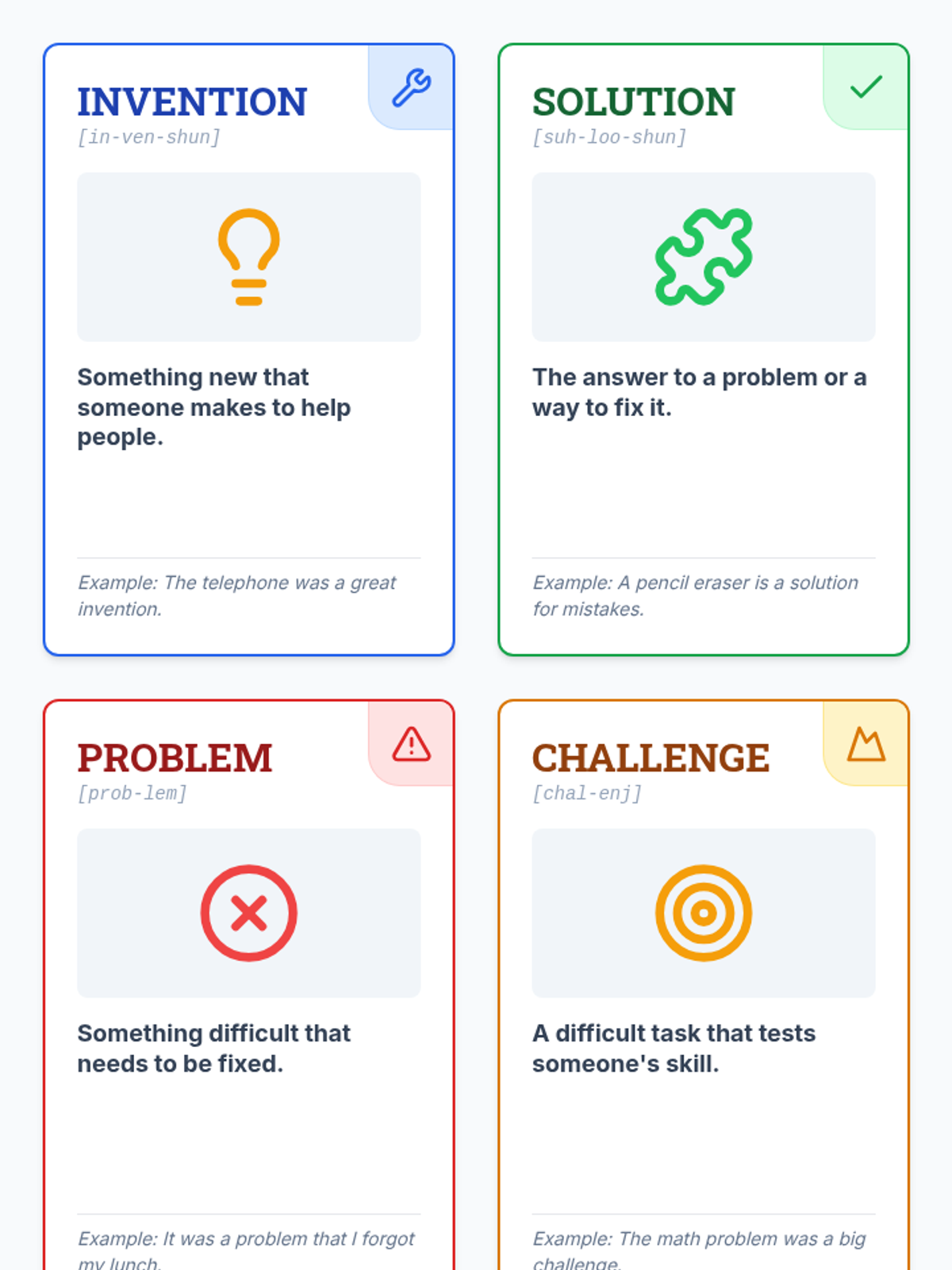
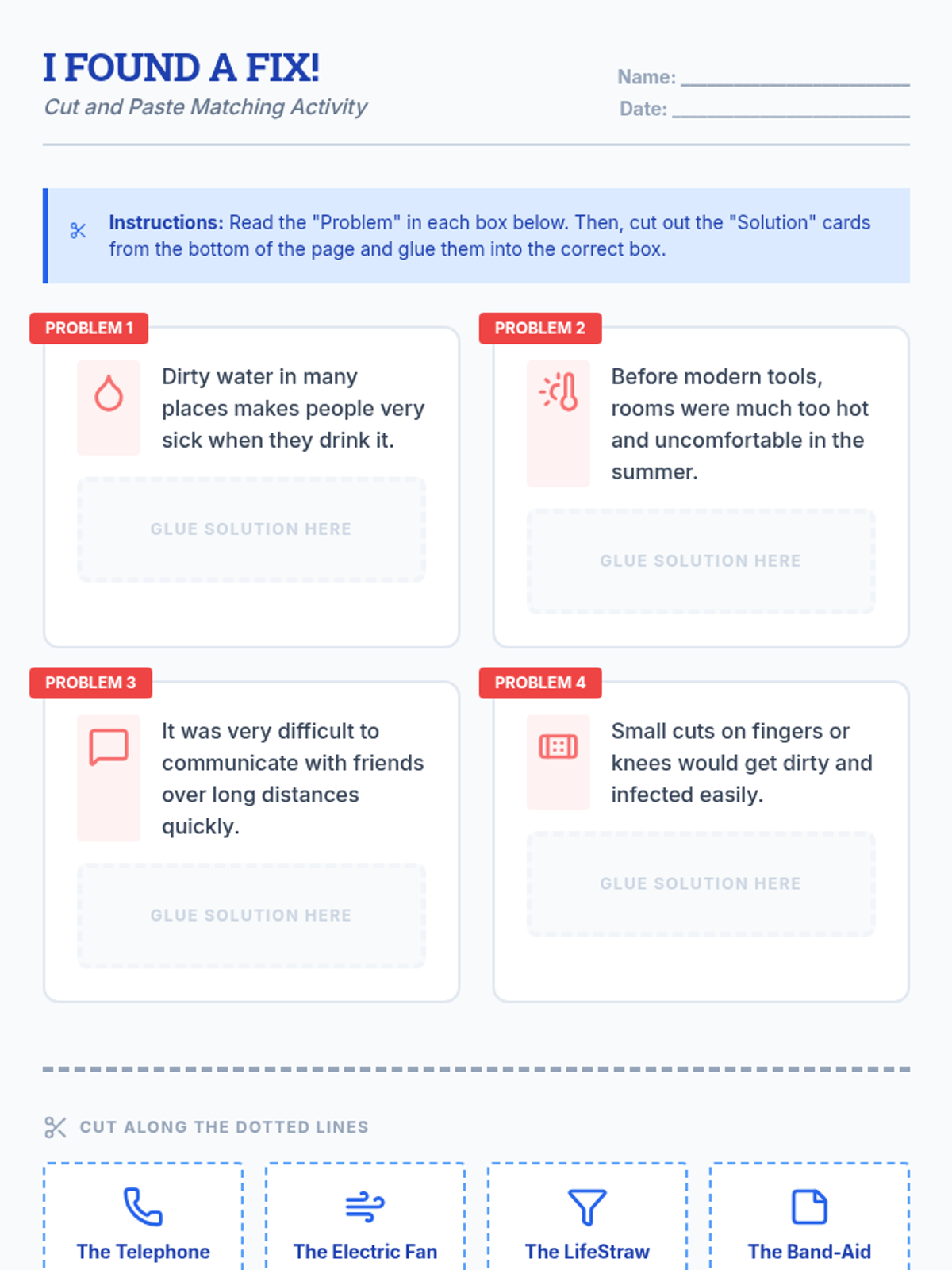
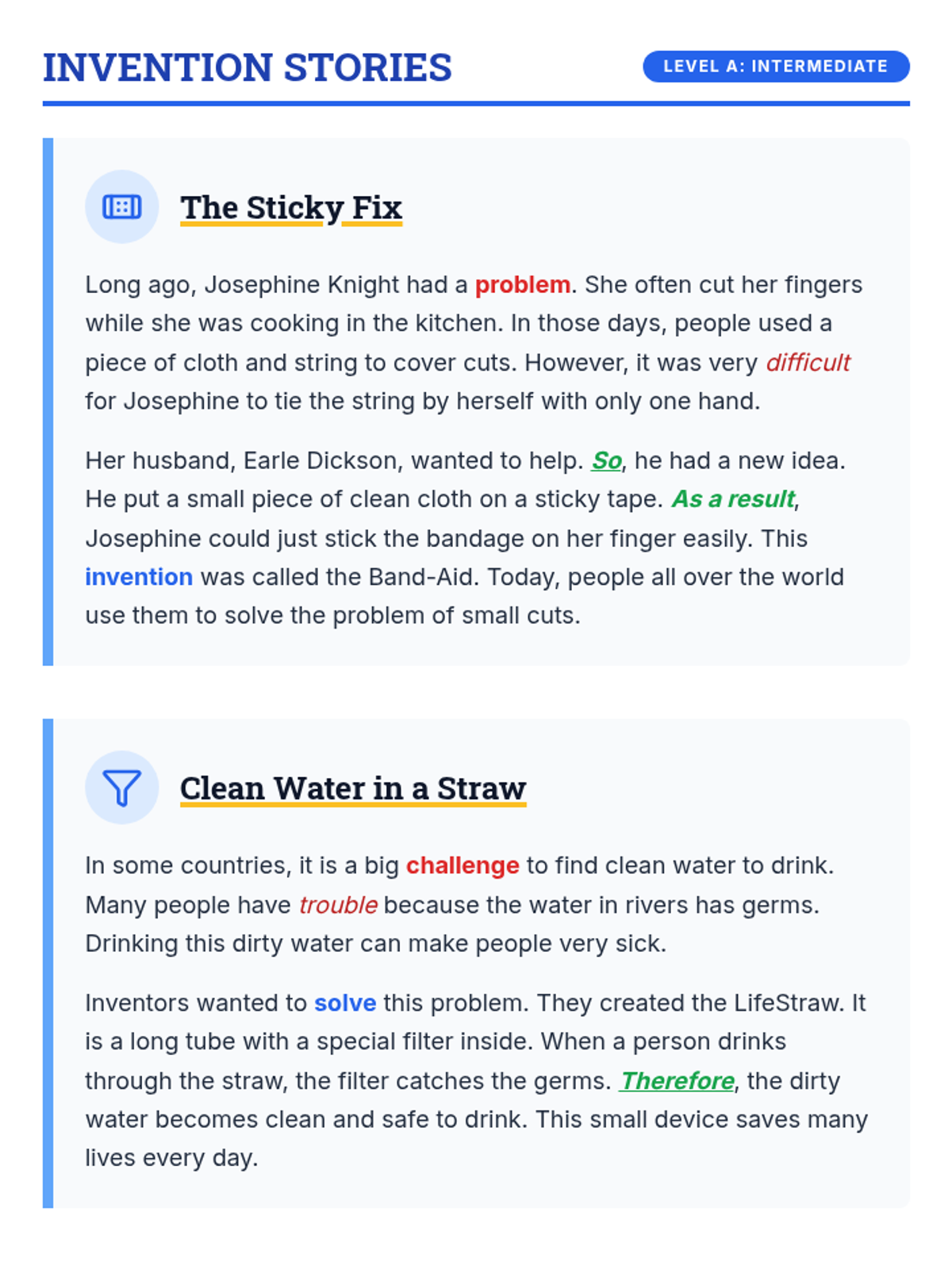
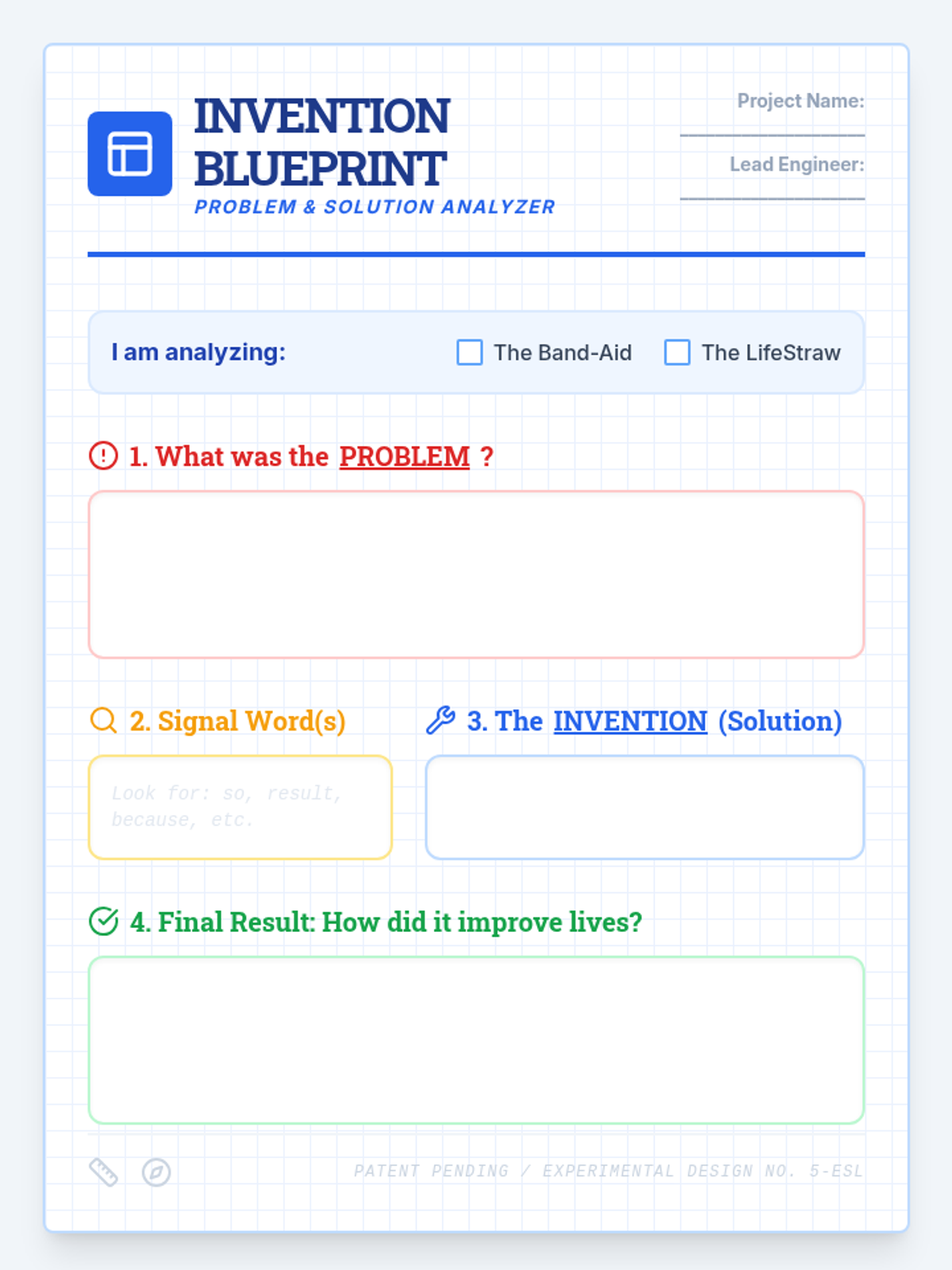
A 45-minute ESL lesson for grade 5 focusing on the problem/solution text structure through the lens of history's most helpful inventions. Includes differentiated readings, visual vocabulary, and hands-on matching activities.
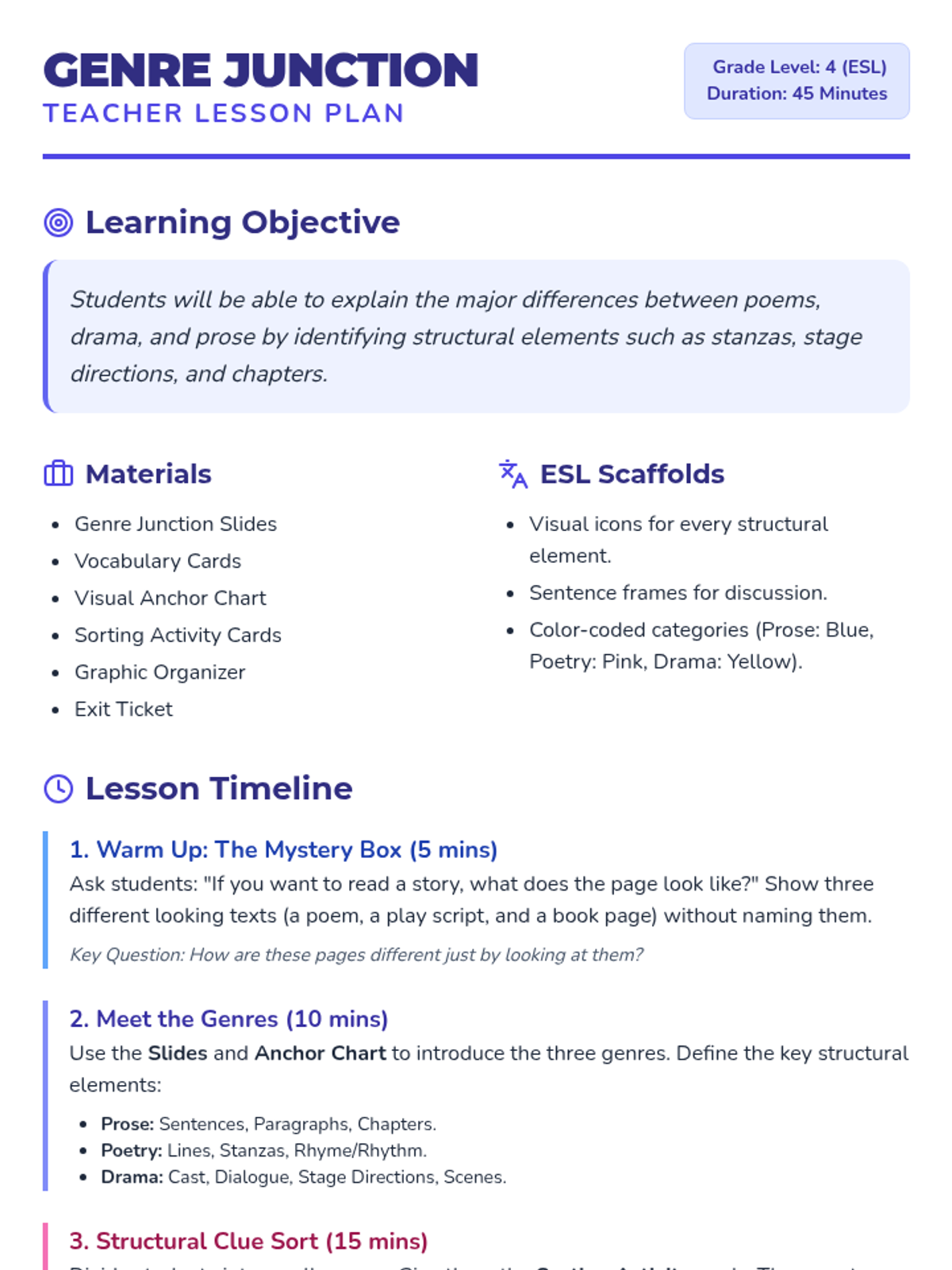
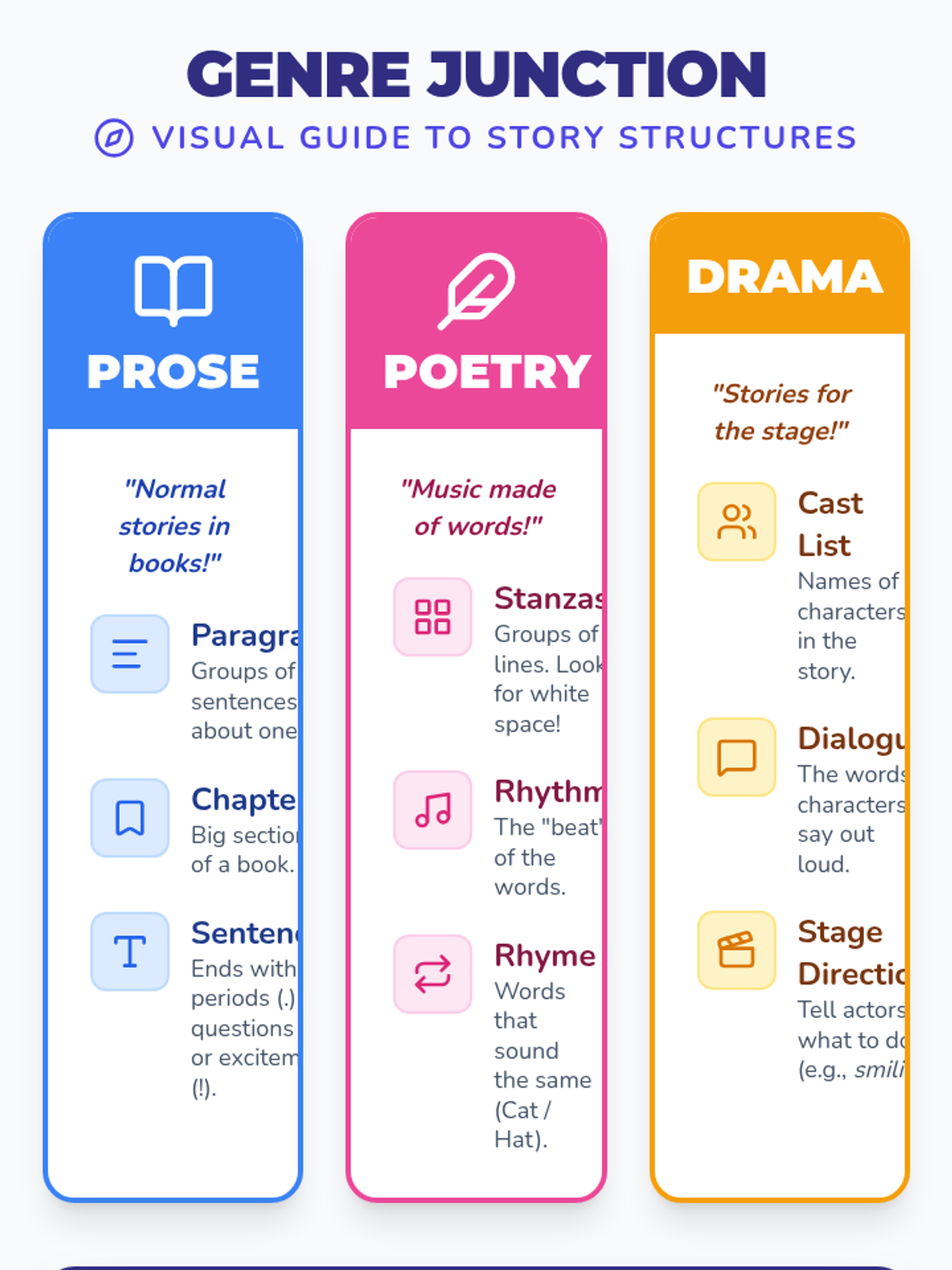
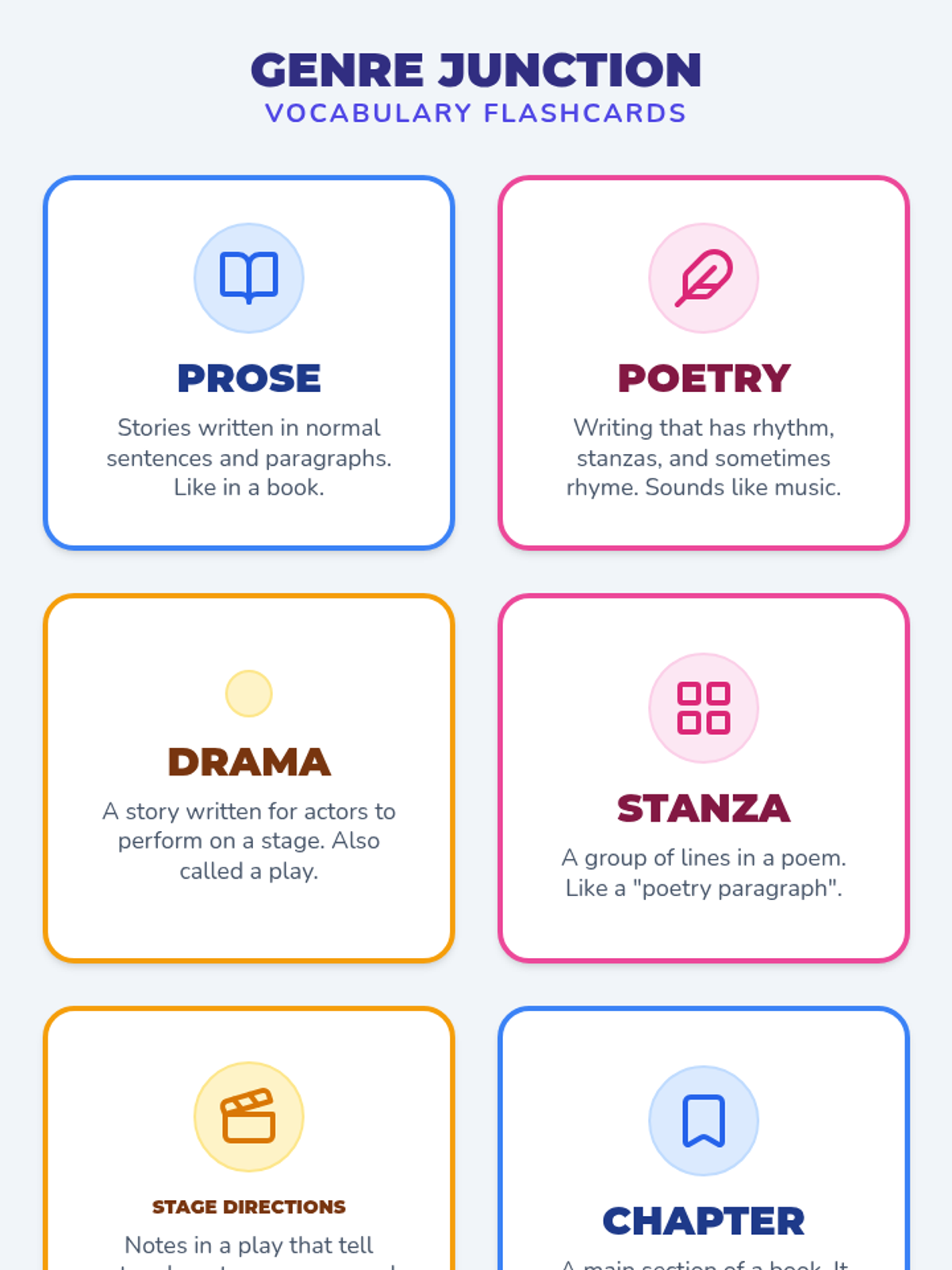
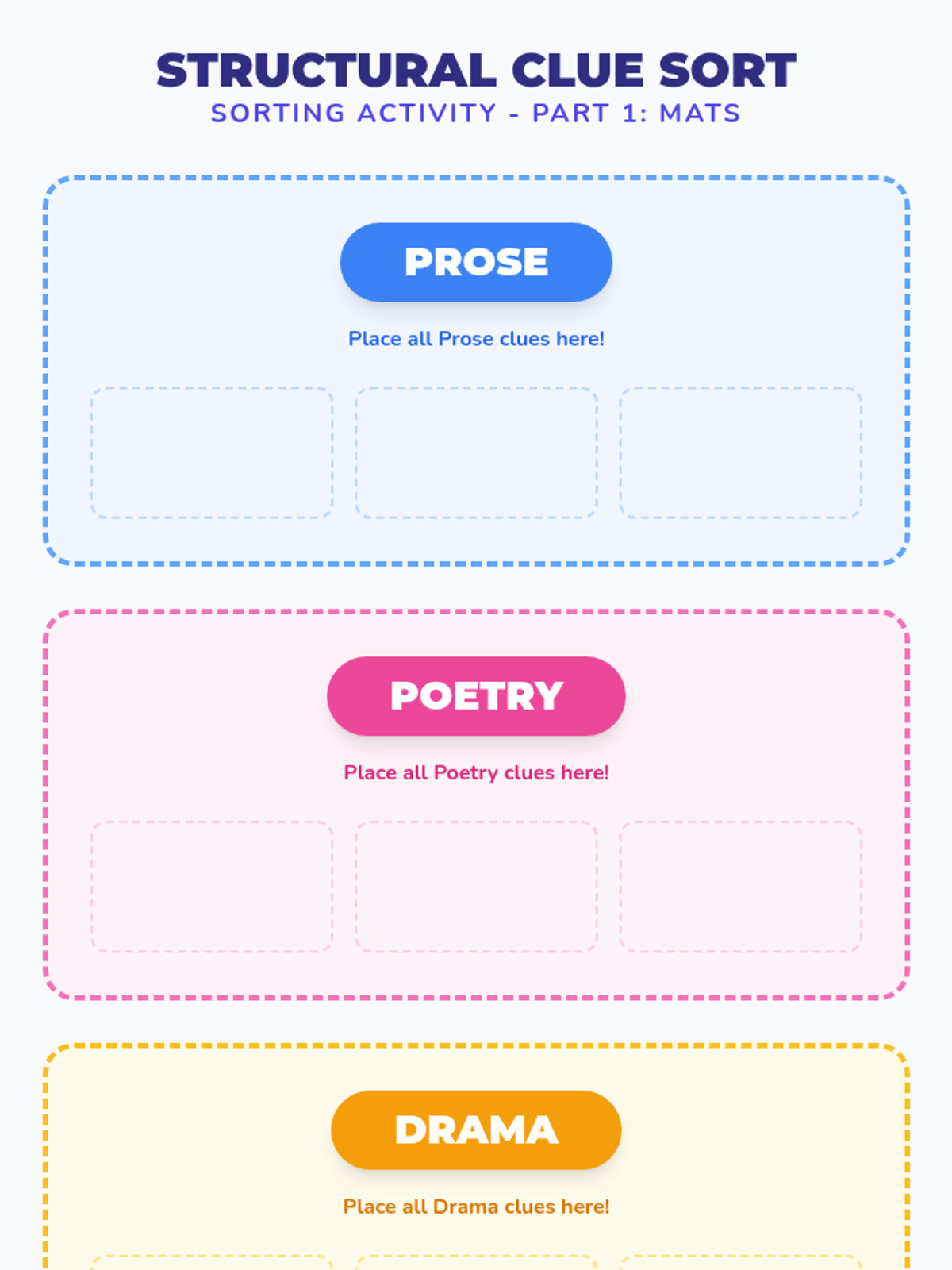
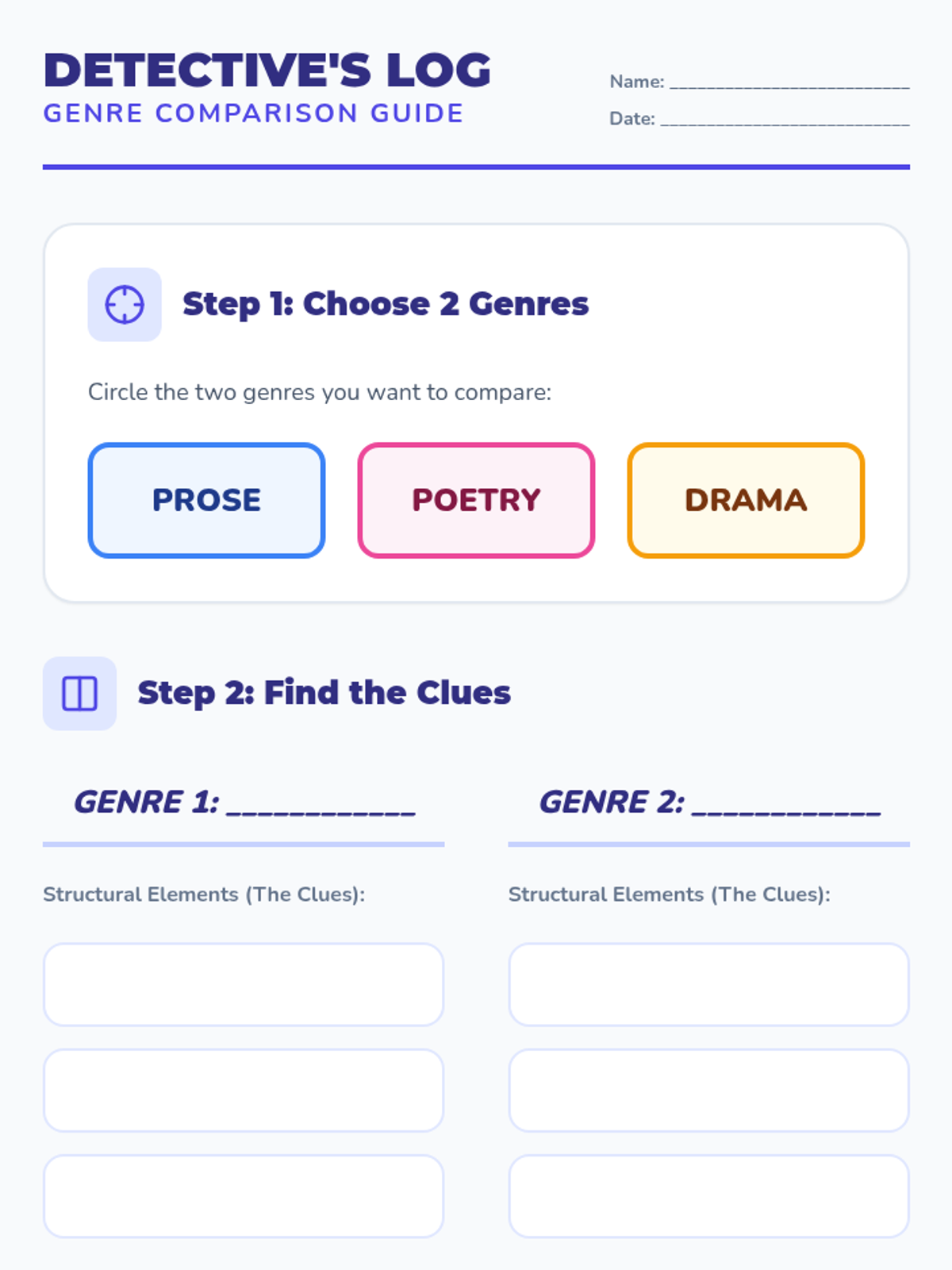
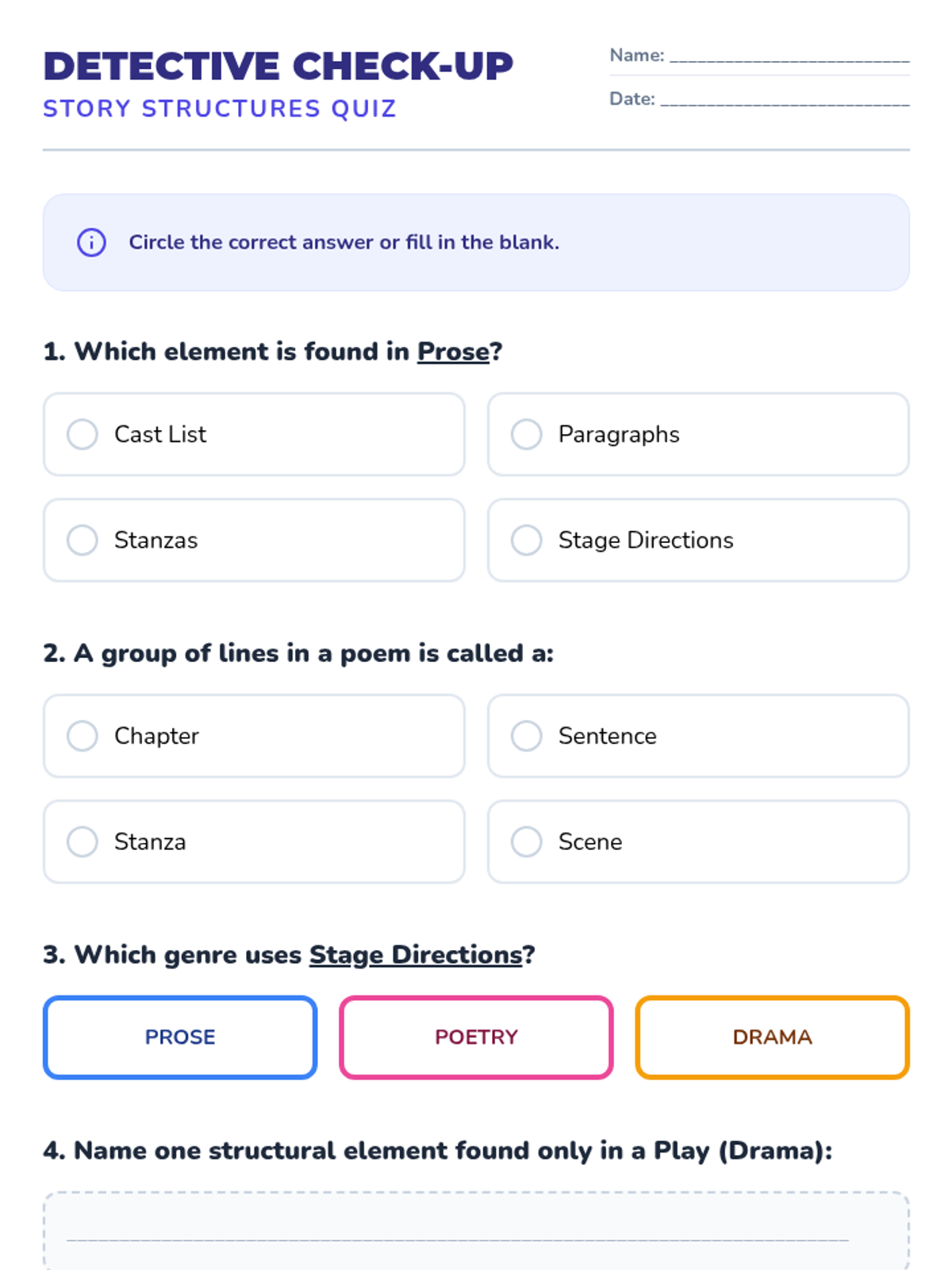
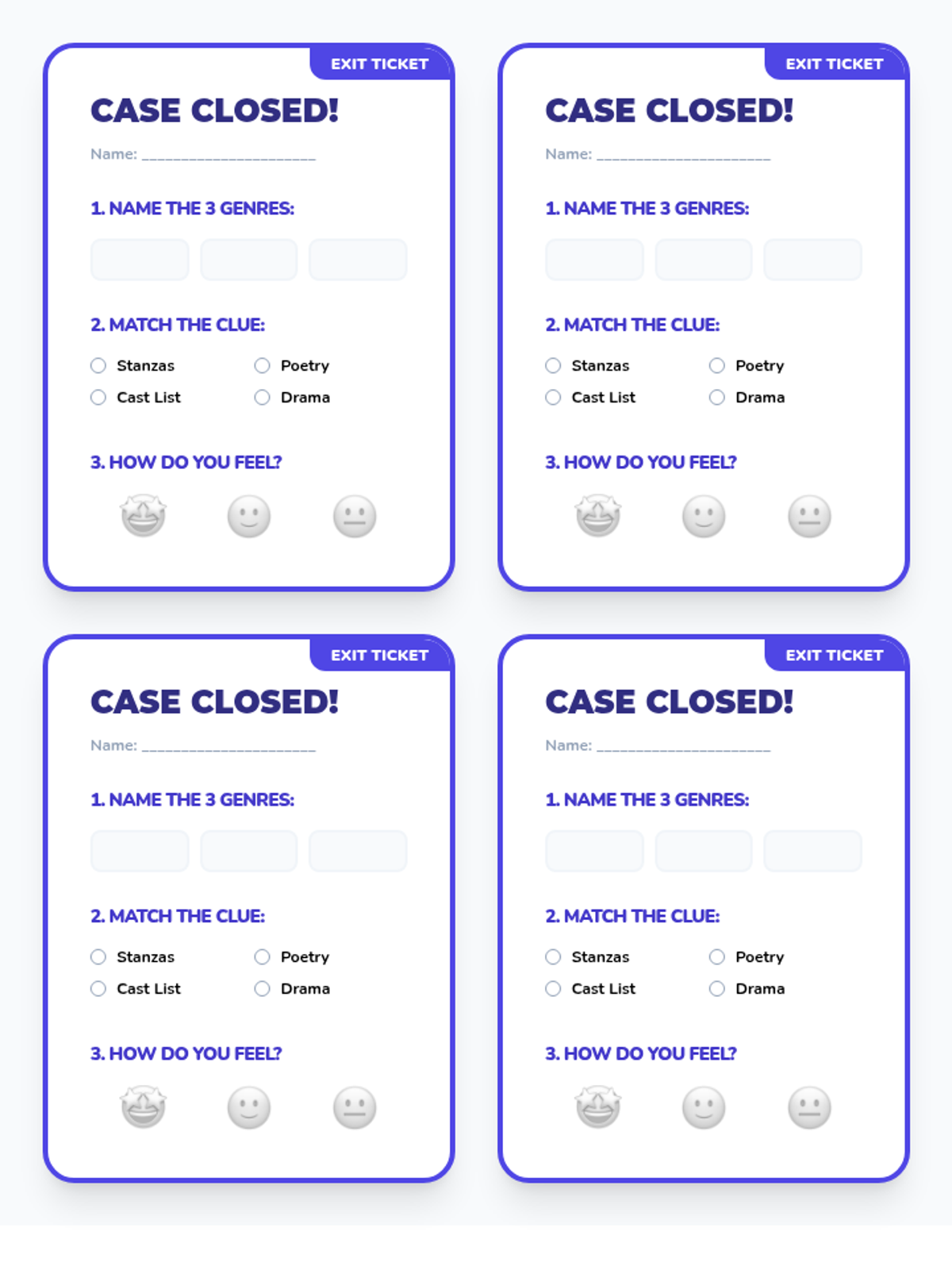
A 45-minute ESL lesson for grade 4 focused on identifying and comparing the structural elements of prose, poetry, and drama. Students act as genre detectives to find clues like stanzas, stage directions, and chapters.