This lesson helps 3rd-grade students master the area of rectilinear shapes by teaching them to decompose complex shapes into simpler rectangles using horizontal and vertical splits.
A foundational introduction to perimeter for 3rd graders, focusing on defining perimeter as the distance around a shape and calculating it by adding all side lengths.
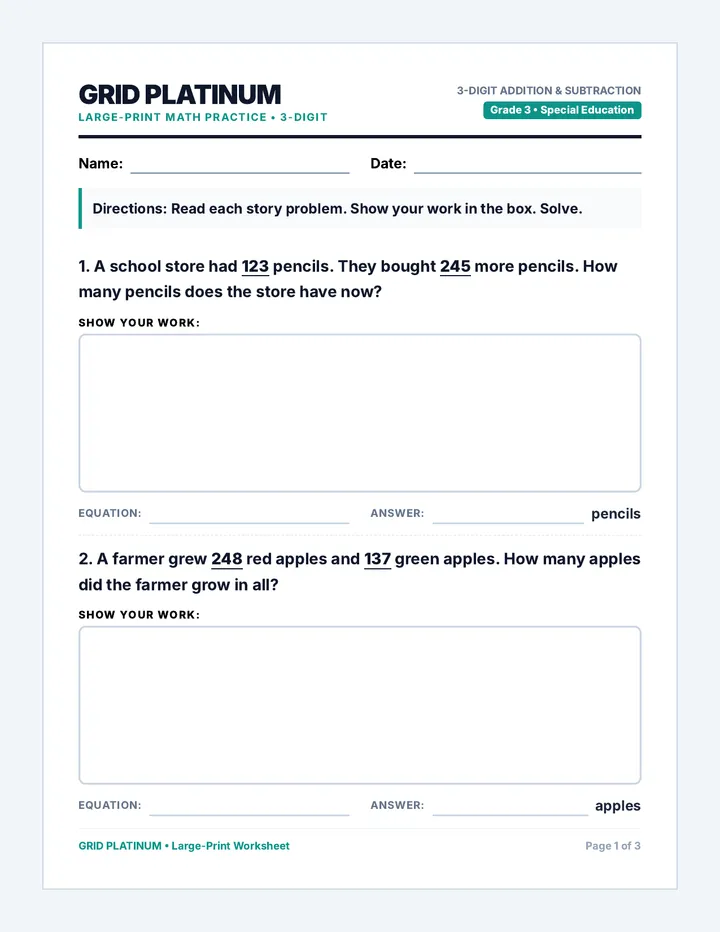
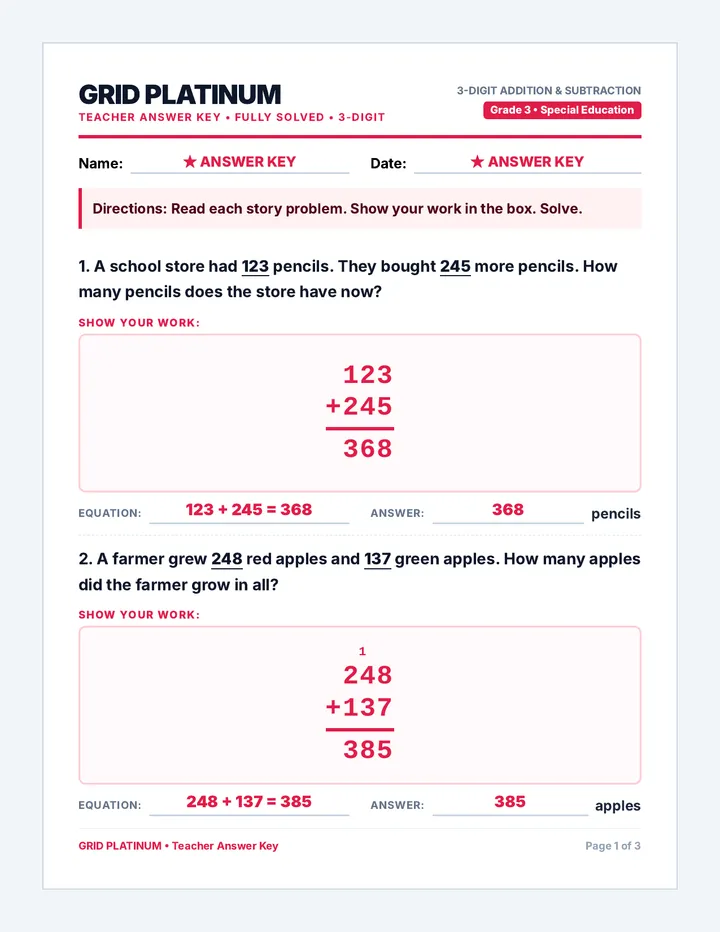
A 3rd-grade space-themed lesson where students solve 2-step addition and subtraction problems involving 3-digit numbers using the 5-step Mission Control protocol.
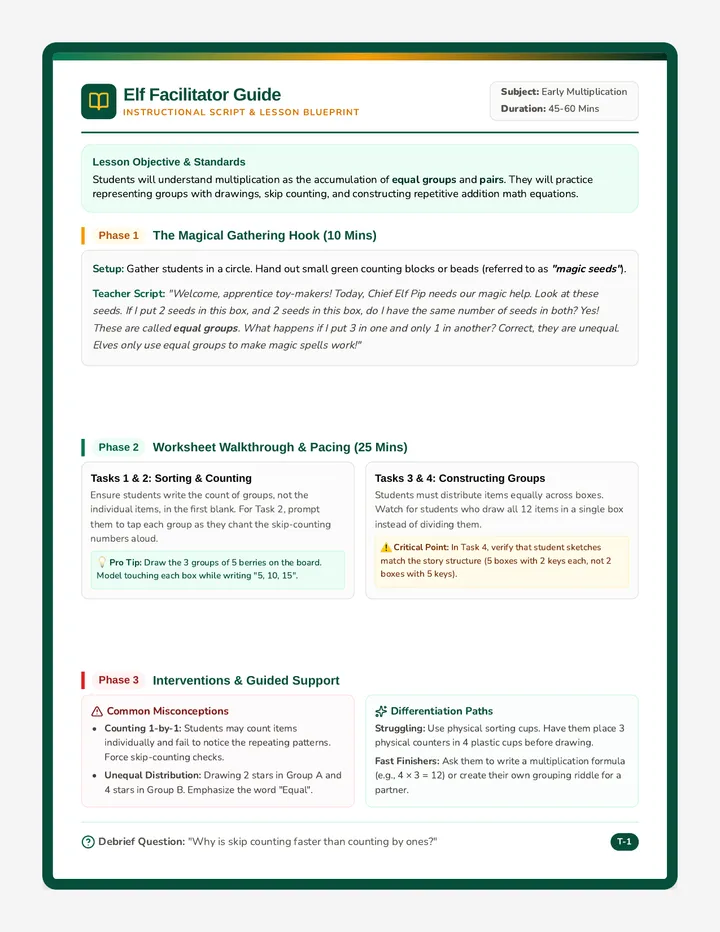
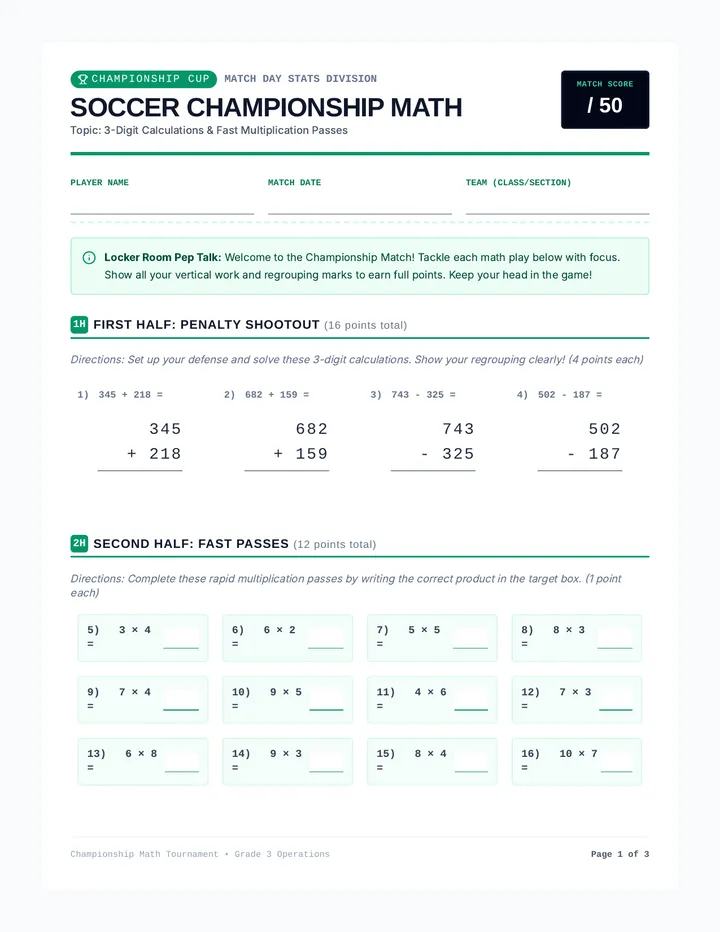
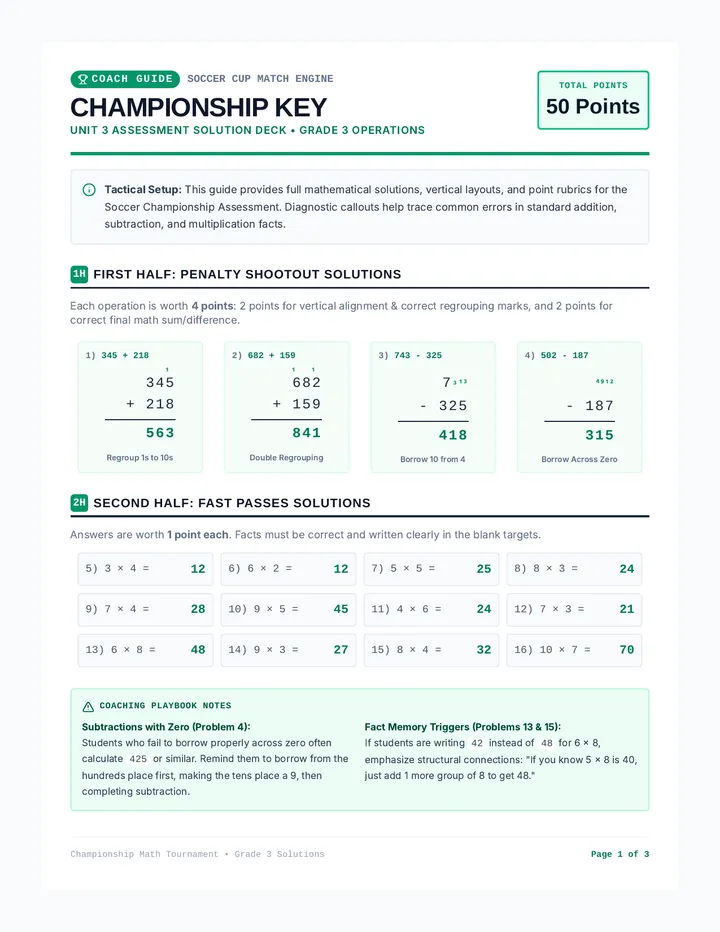
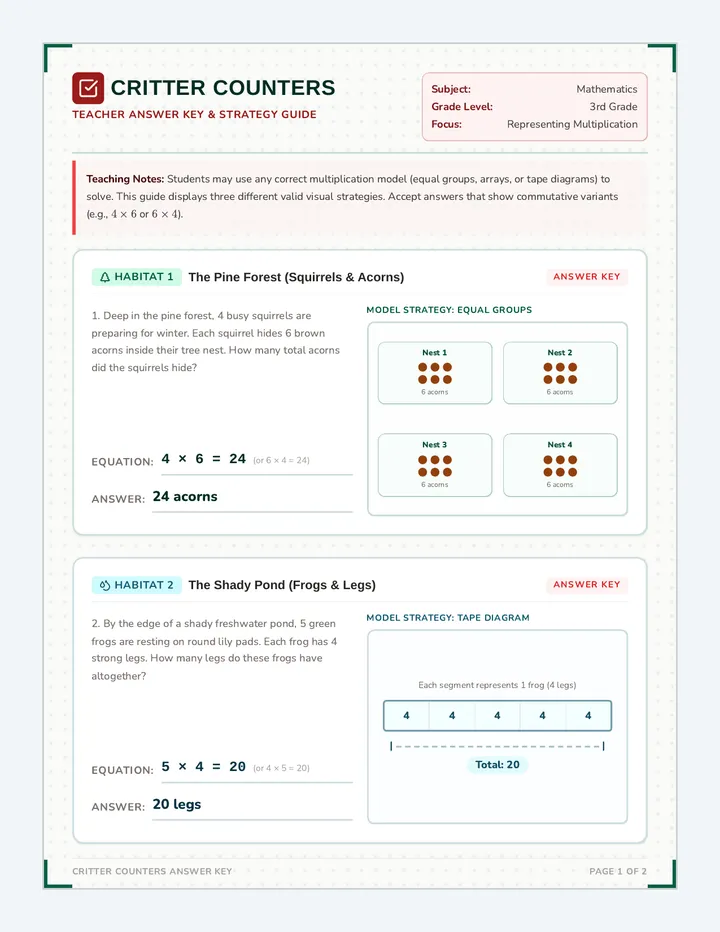
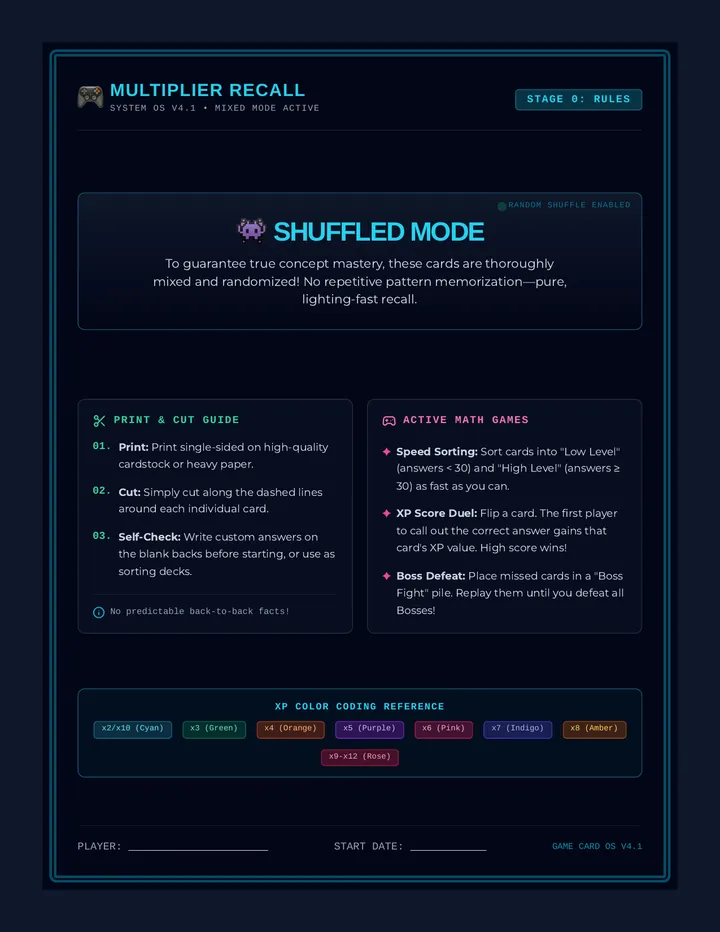
A practice-focused lesson designed to reinforce multiplication fluency for facts up to 12 through engaging, arcade-themed activities and drills.
A foundational lesson on the distributive property for 3rd-5th graders, using area models and the 'breaking apart' strategy to simplify complex multiplication.
A three-part introductory lesson on decimals that uses visual models and real-world scenarios to connect fractions with denominators of 10 and 100 to their decimal forms.
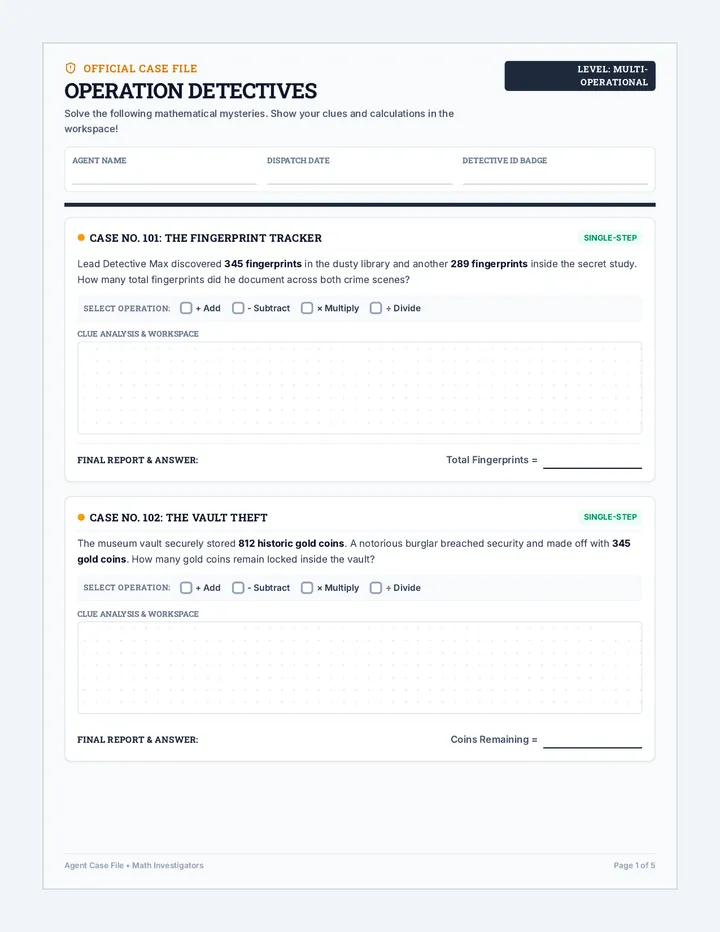
A comprehensive lesson on solving multi-step word problems using all four operations, framed within a detective mystery theme to engage students in critical thinking and algebraic reasoning.
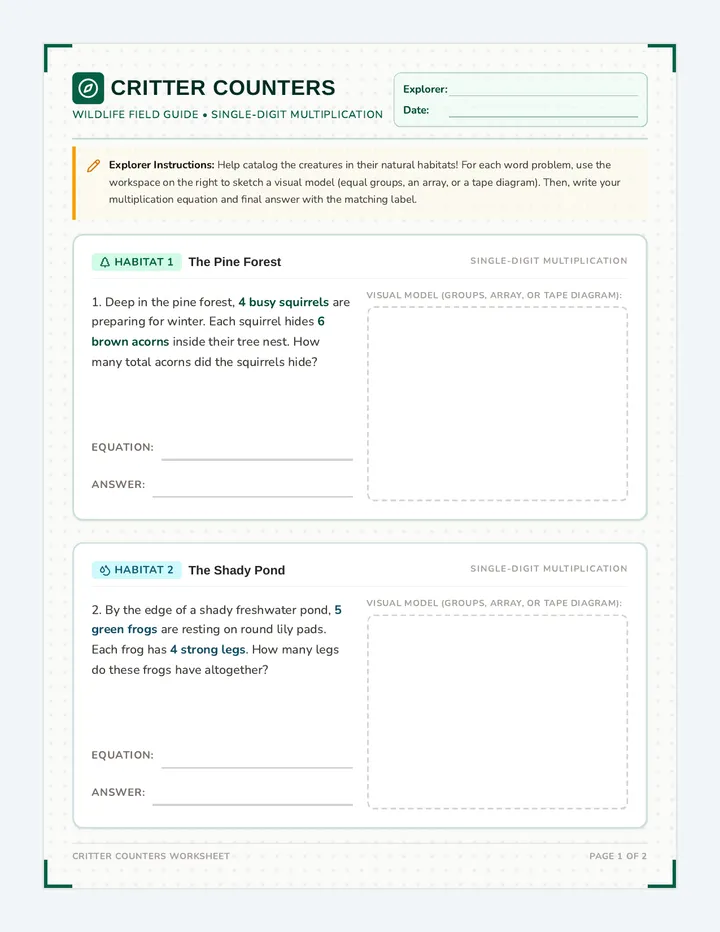
A comprehensive lesson on multiplication facts 1-12 using arrays and skip counting strategies, styled as architectural blueprints.
A comprehensive lesson focused on identifying, naming, and comparing fractions using visual models, number lines, and real-world applications. Students move from basic identification to complex comparisons of fractional parts.
A comprehensive introduction to simplifying fractions using a 'Shrink-O-Matic' lab theme. Students learn to identify common factors and divide to reach the simplest form through differentiated practice and visual models.
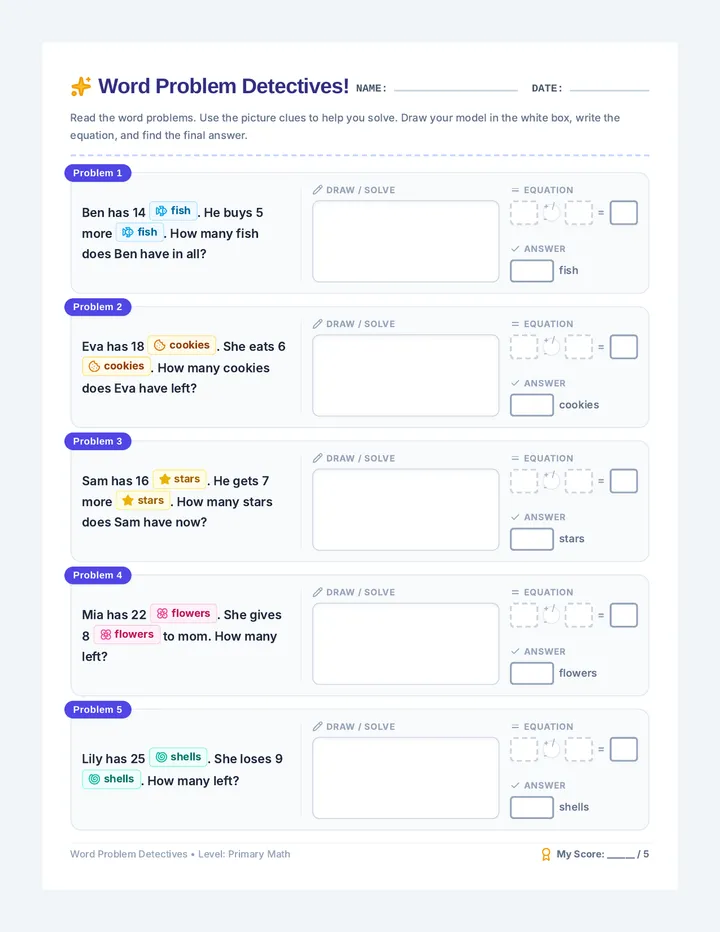
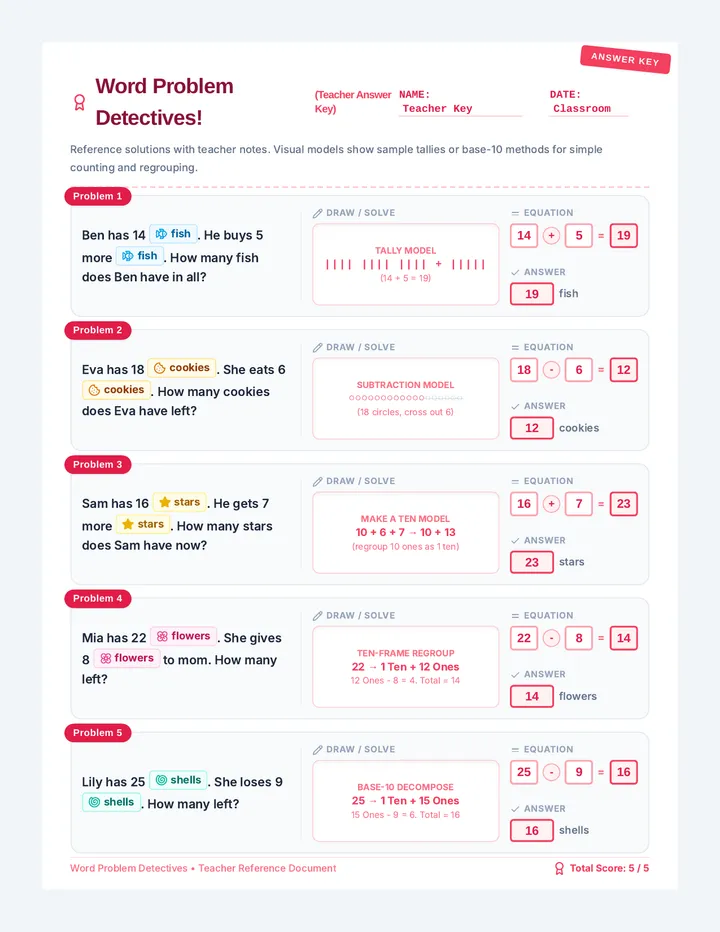
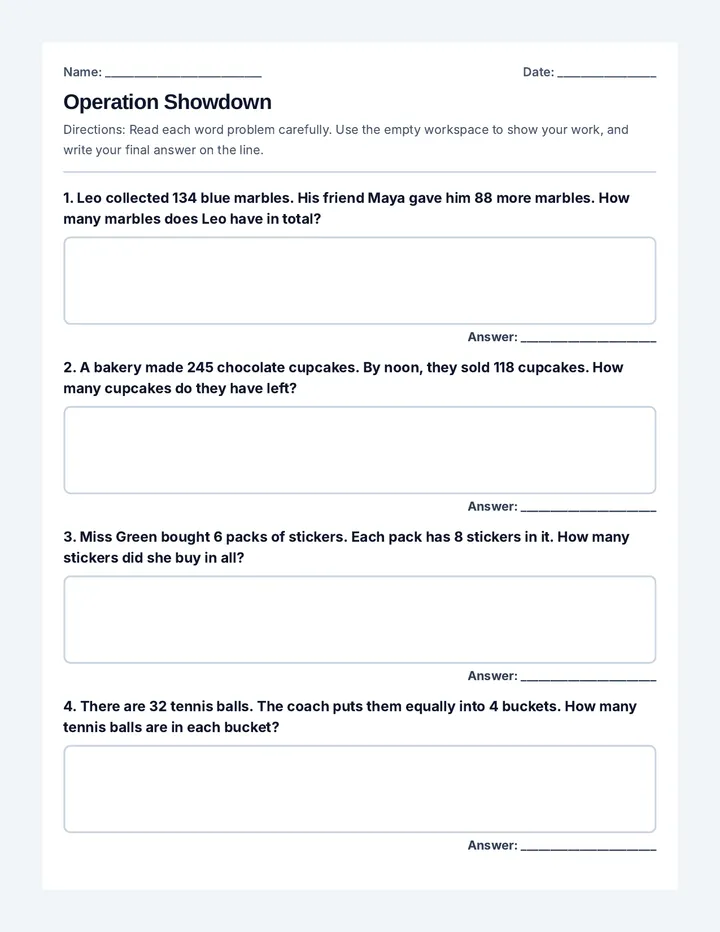
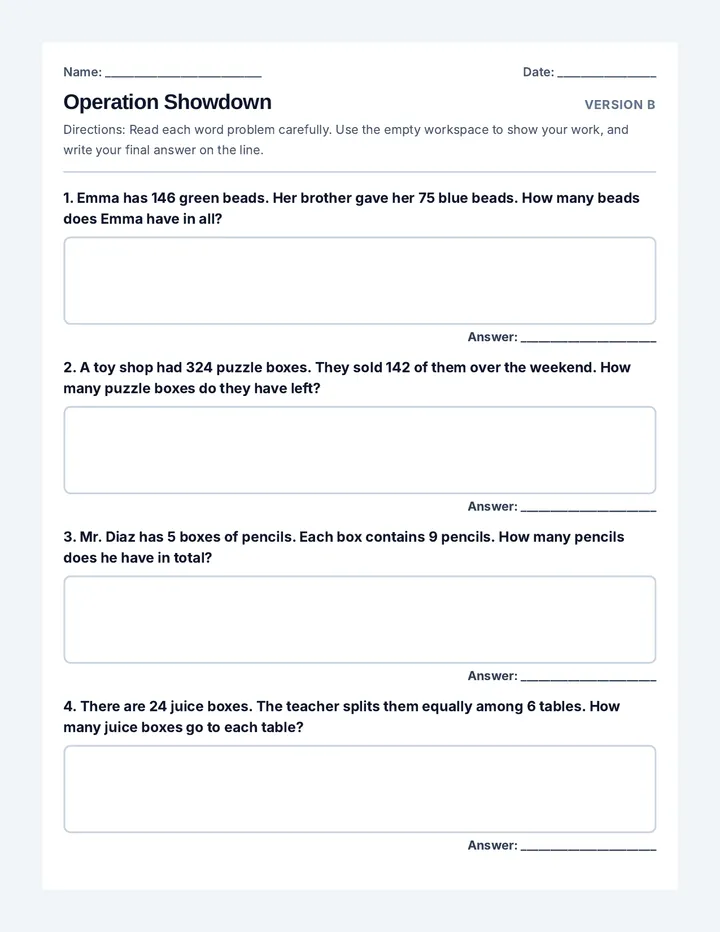
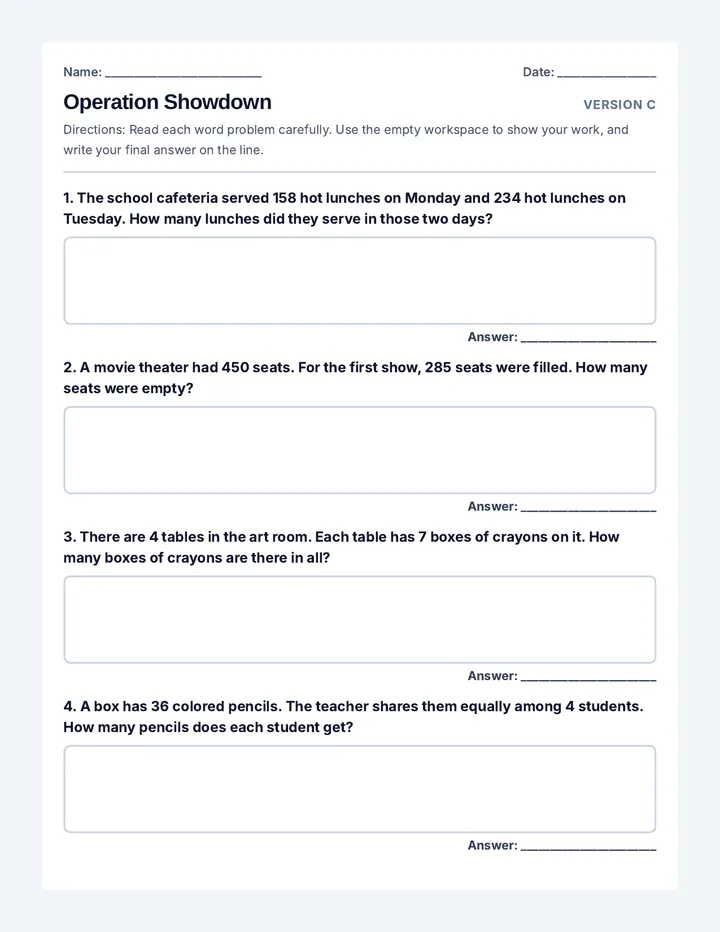
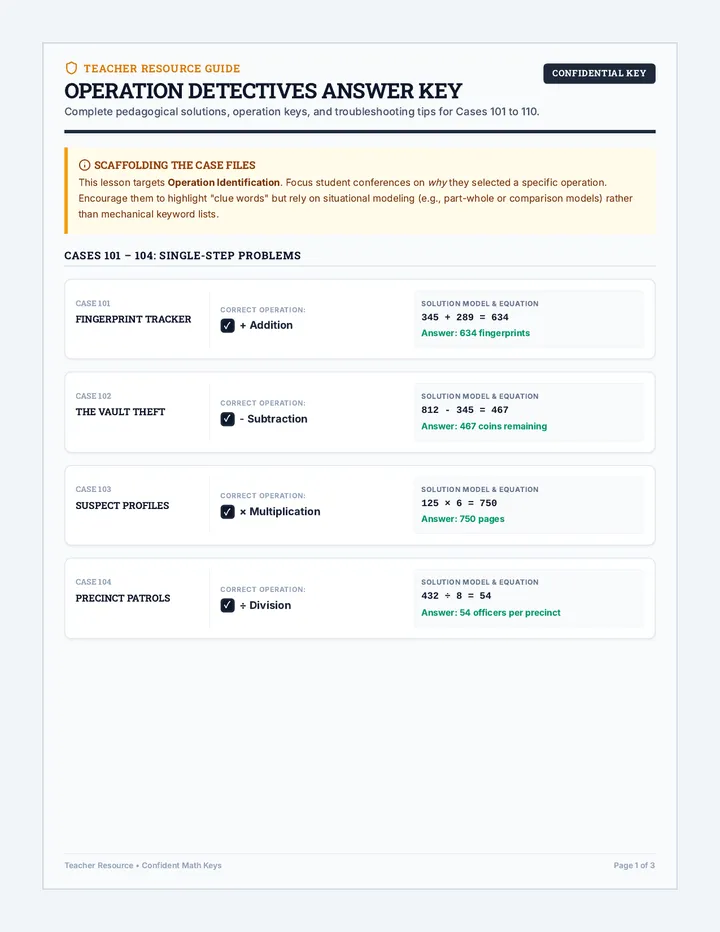
A lesson focused on decoding word problems using addition, subtraction, multiplication, and division facts through a detective-themed investigation. Students learn to identify key operations and solve tiered challenges of increasing complexity.
An introductory lesson on fractions for 3rd grade, focusing on equal parts, naming fractions, and visual representations using circles and rectangles. Students act as 'Factory Inspectors' to ensure all parts are equal and correctly labeled.
A cross-curricular lesson for 1st-3rd graders that combines basic rhythm notation with addition and subtraction. Students decode musical patterns to solve "math mysteries" and perform rhythms.
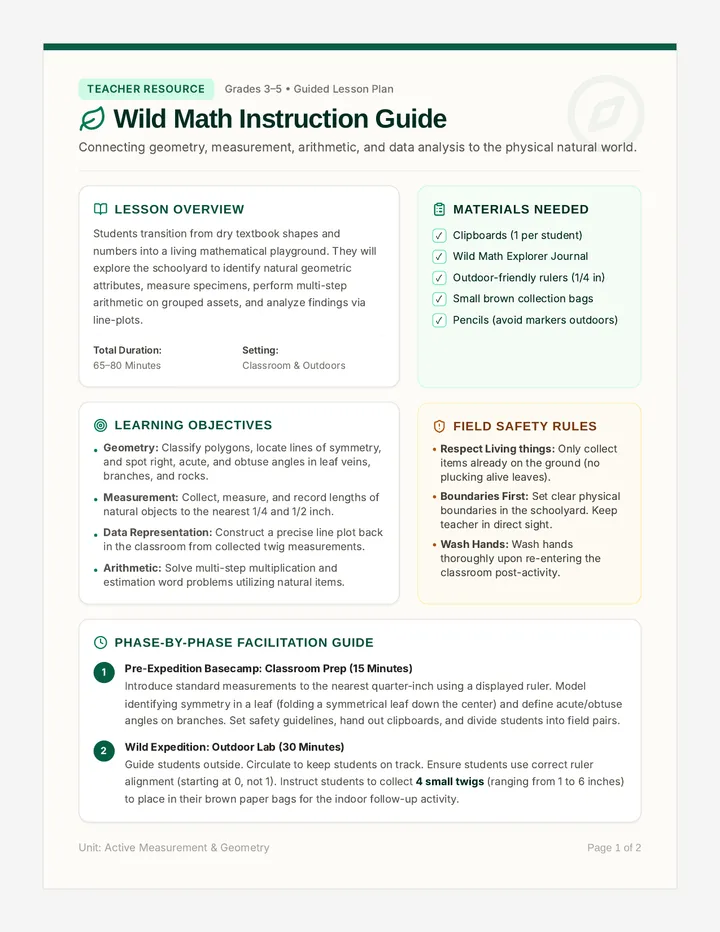
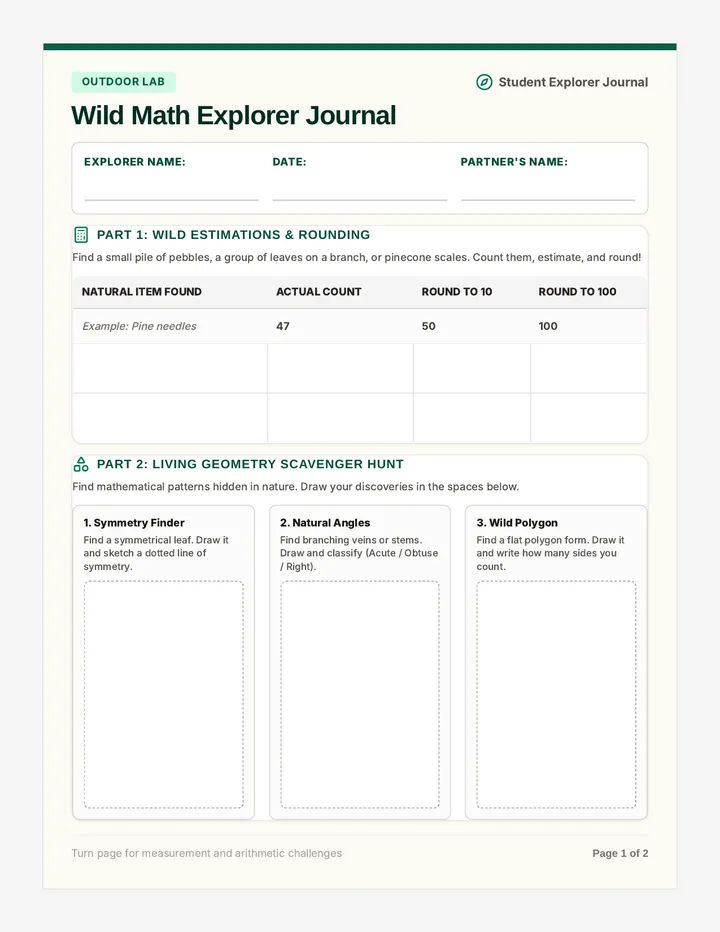
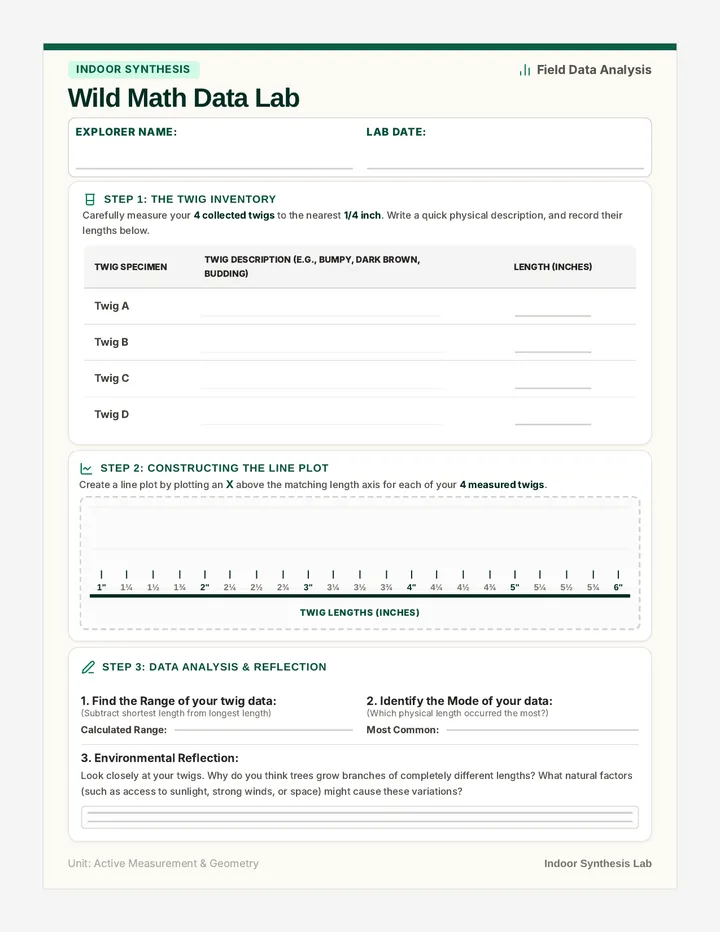
A hands-on lesson where students measure various 'specimens' to the nearest half-inch and organize their data into a line plot to identify patterns.
A lesson focused on mental math strategies for double-digit addition, specifically exploring how to maintain a sum while changing addends (conservation) and how to efficiently add increments of tens and ones.
Compose new shapes from smaller shapes and decompose larger shapes into smaller ones.
Identify and distinguish 3D shapes (cubes, cones, cylinders, spheres) and find them in the real world.
Identify and describe 2D shapes (circles, triangles, squares, rectangles) by their sides and vertices.
A 3rd-grade math expedition where students solve 2-step addition and subtraction word problems using a 5-step safari protocol: Jungle Scan, Expedition Goal, Scout the Trail, Mapping the Model, and Final Report.
Final mastery check of AZ 3.G.A.2 skills: partitioning shapes, identifying unit fractions, and explaining the relationship between parts and the whole area.