A Kindergarten to 1st Grade lesson where students become 'Shape Detectives' to distinguish between squares and rectangles by investigating side lengths and using the concept of 'equal' sides.
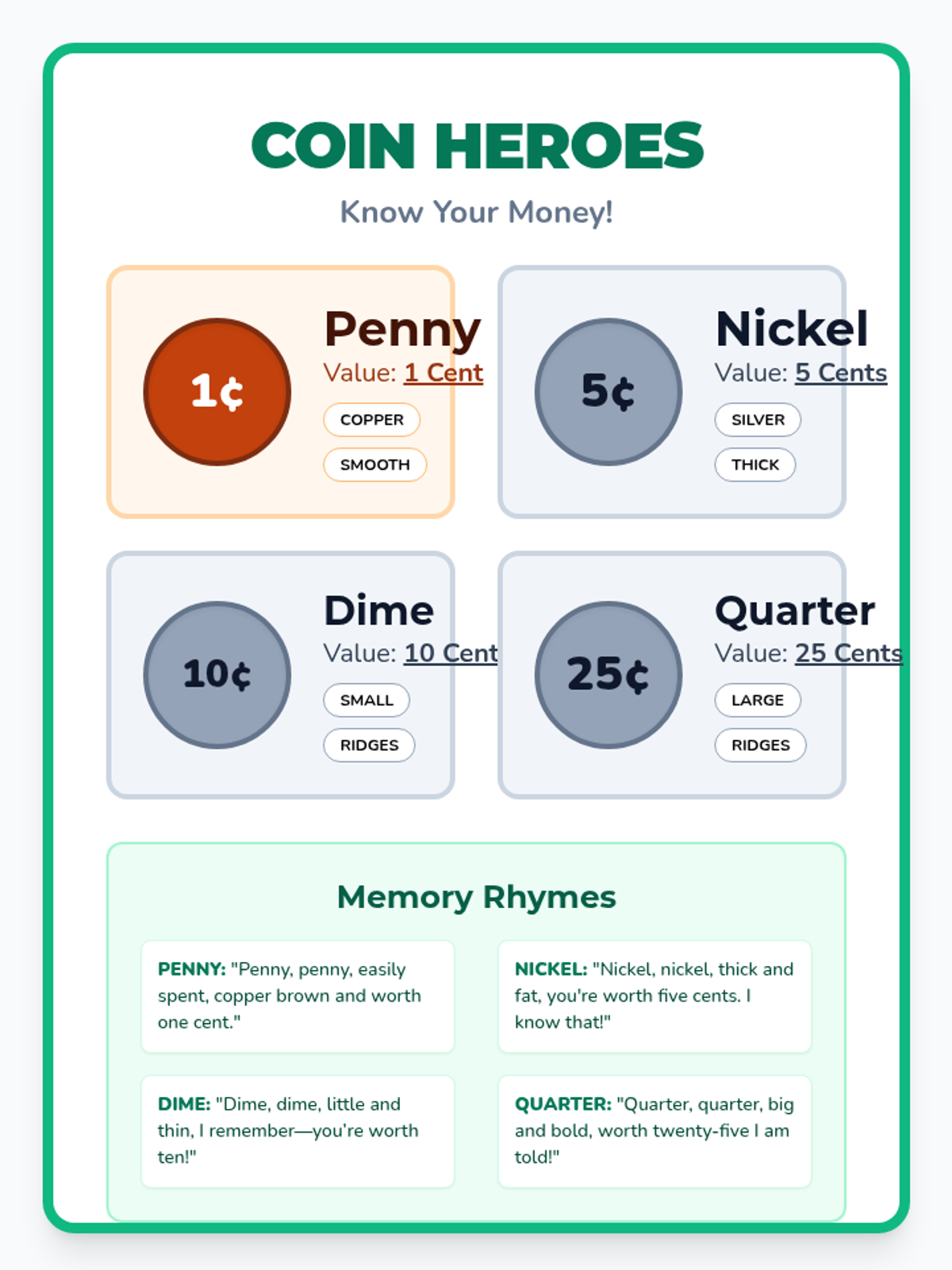
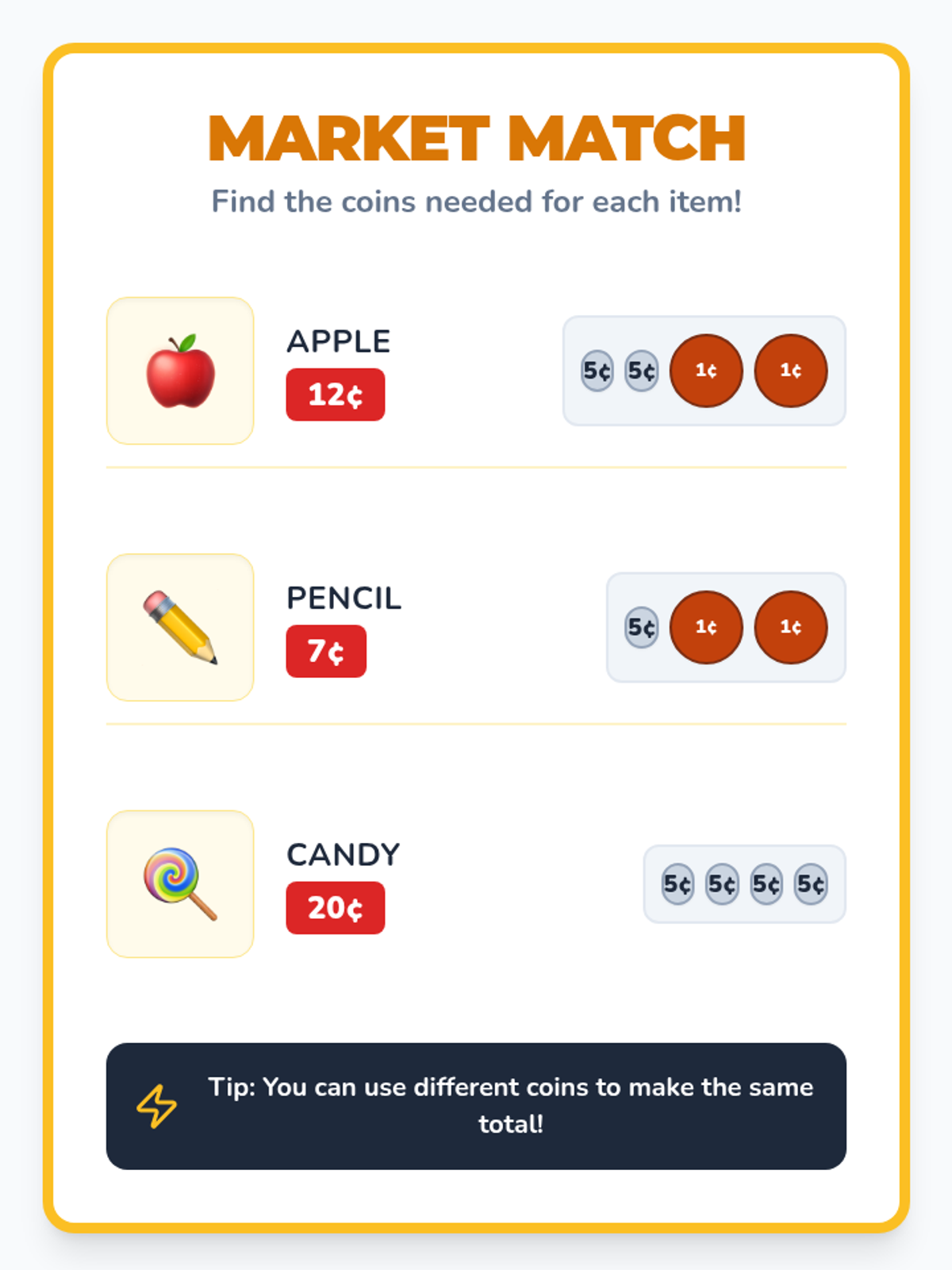
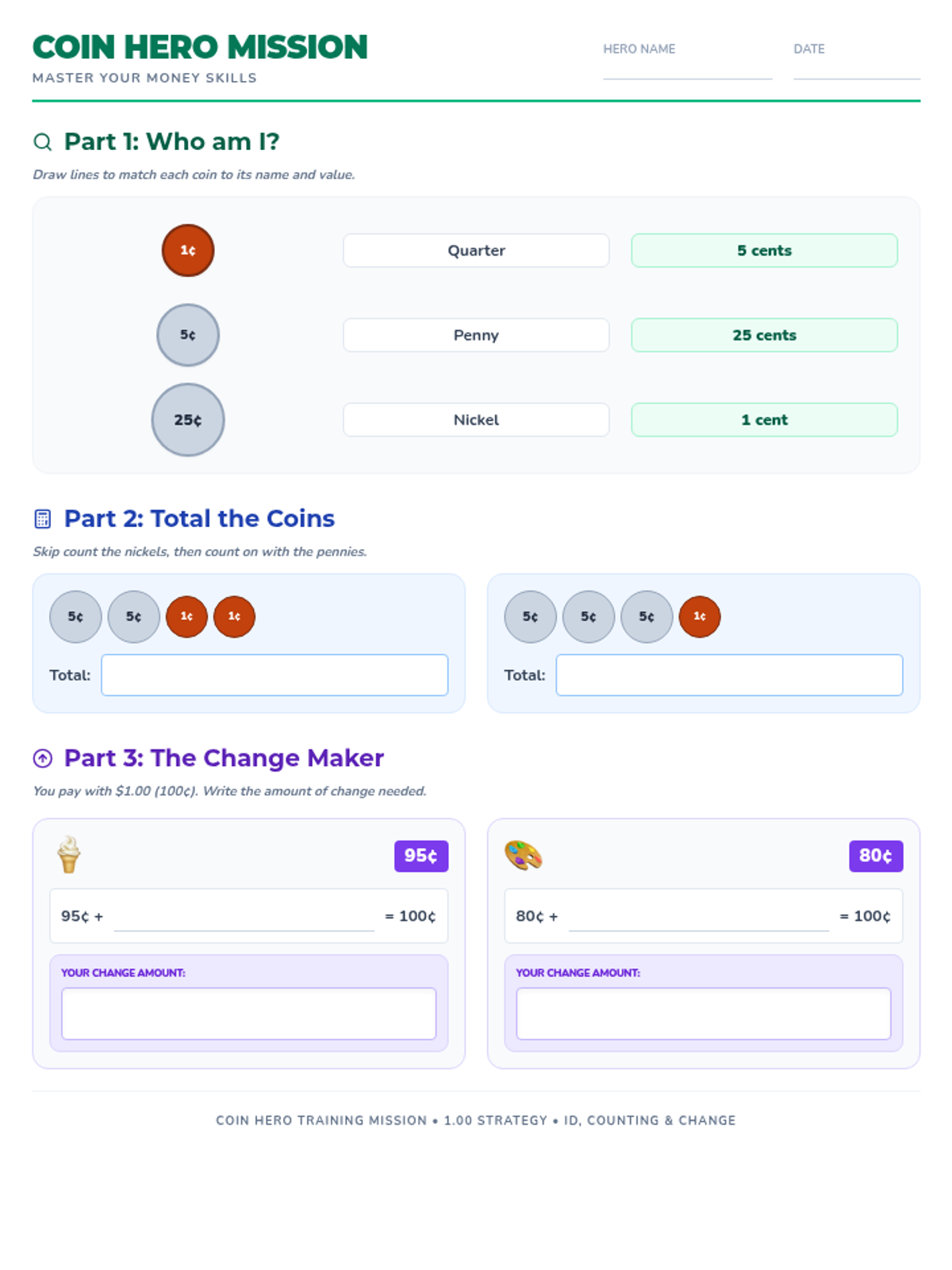
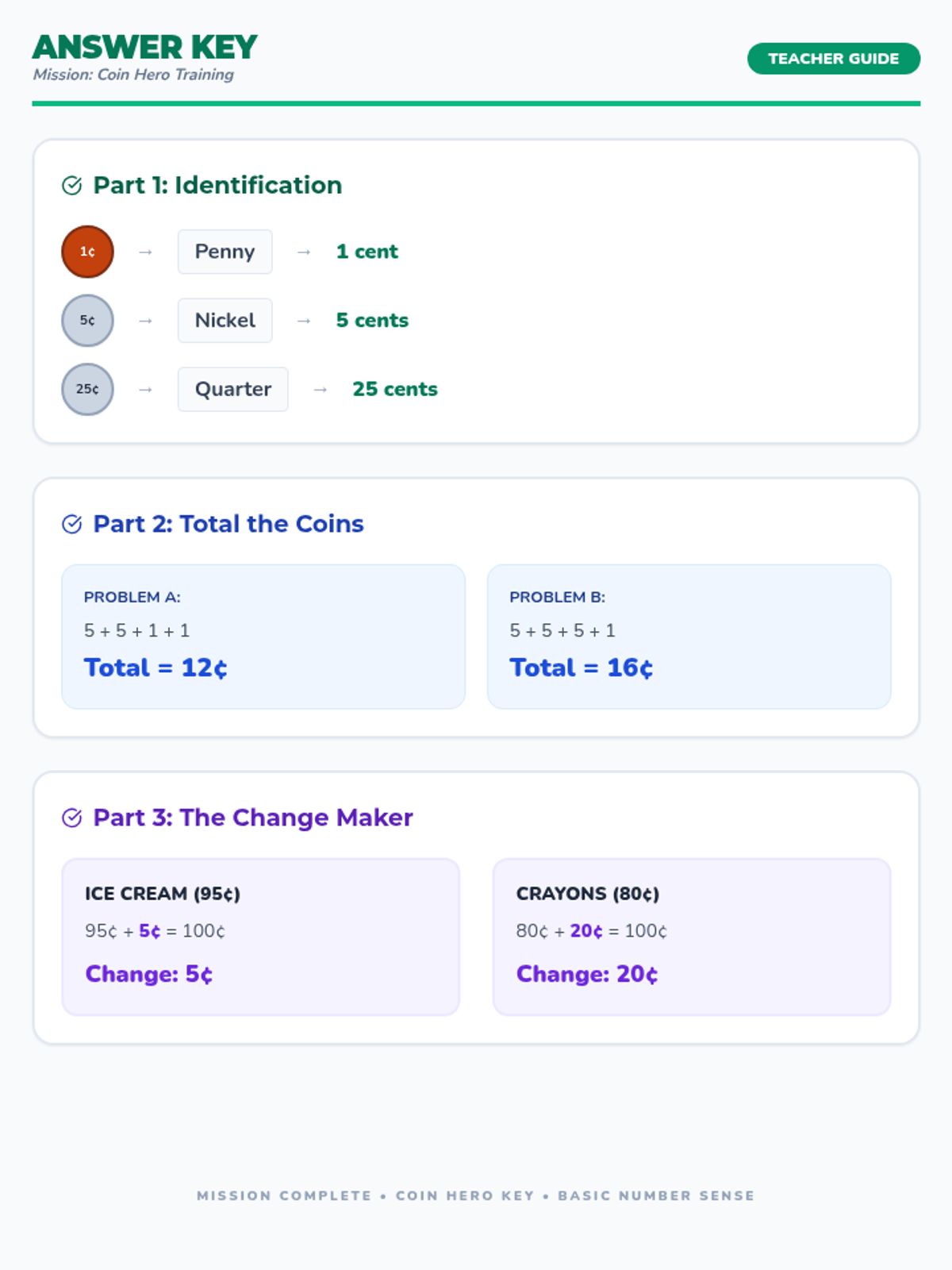
A collection of visual anchor charts and posters designed to teach basic coin identification, counting, and making change from a dollar. These materials use large visuals and clear strategies for early elementary students.
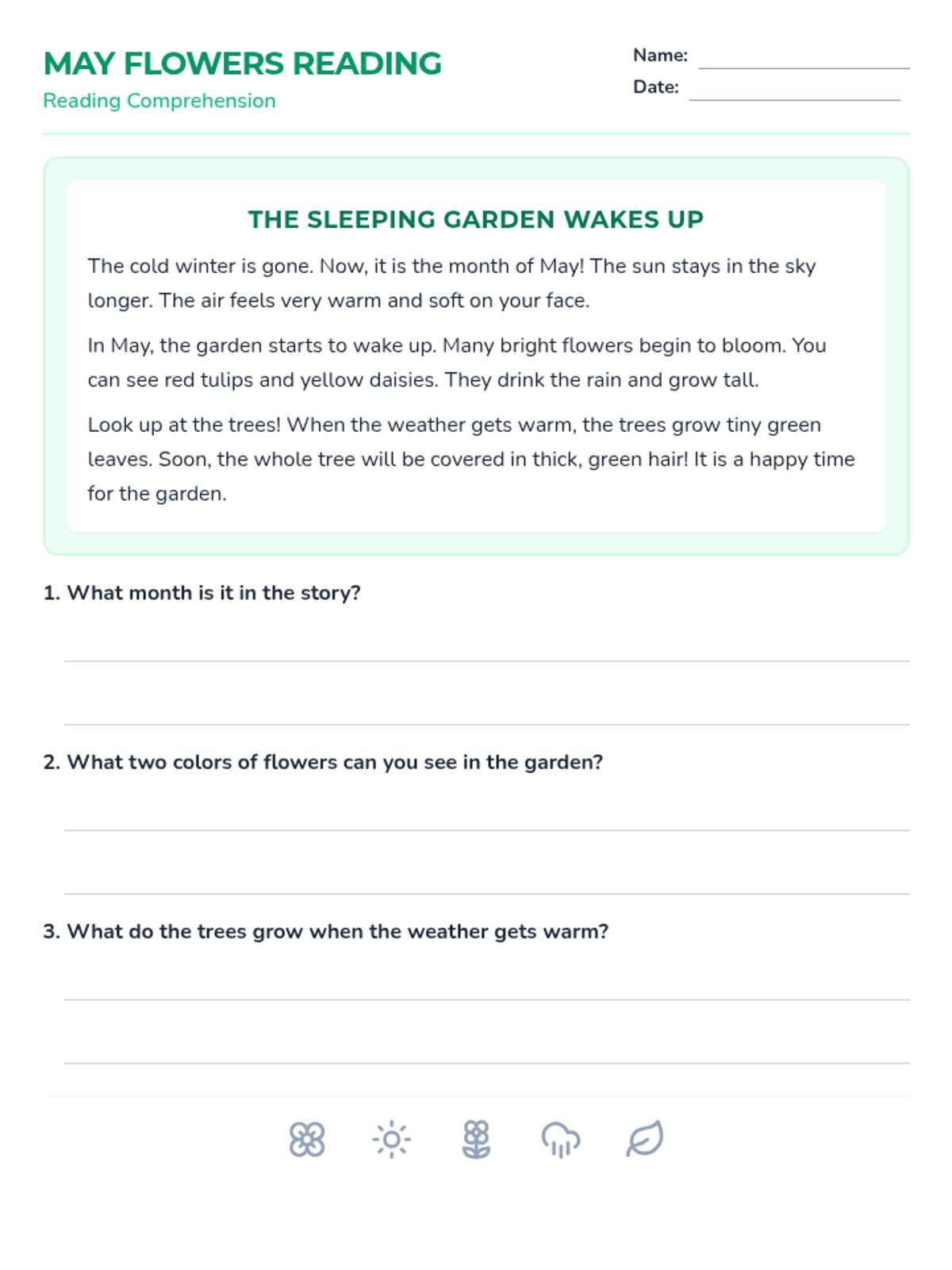
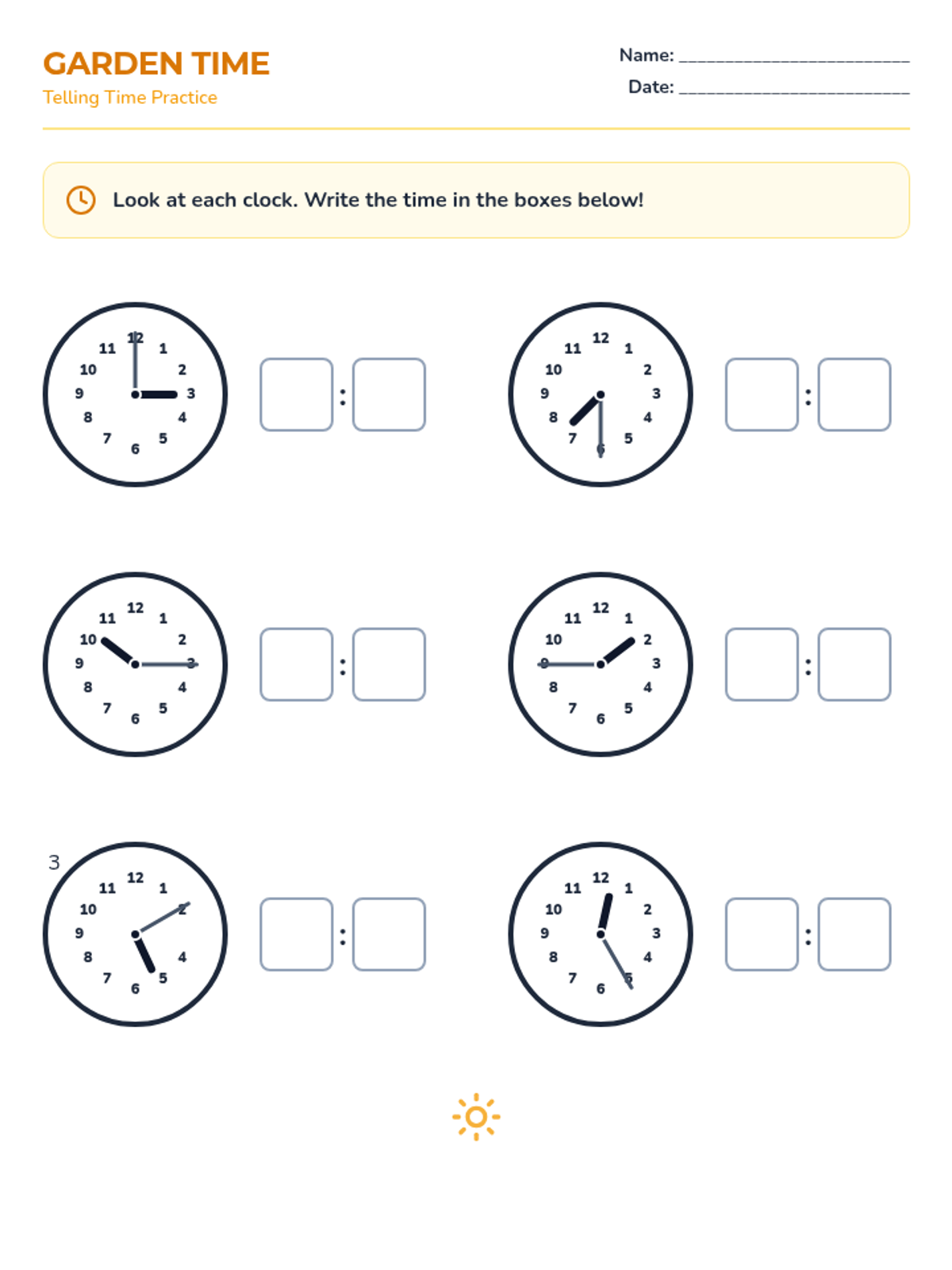
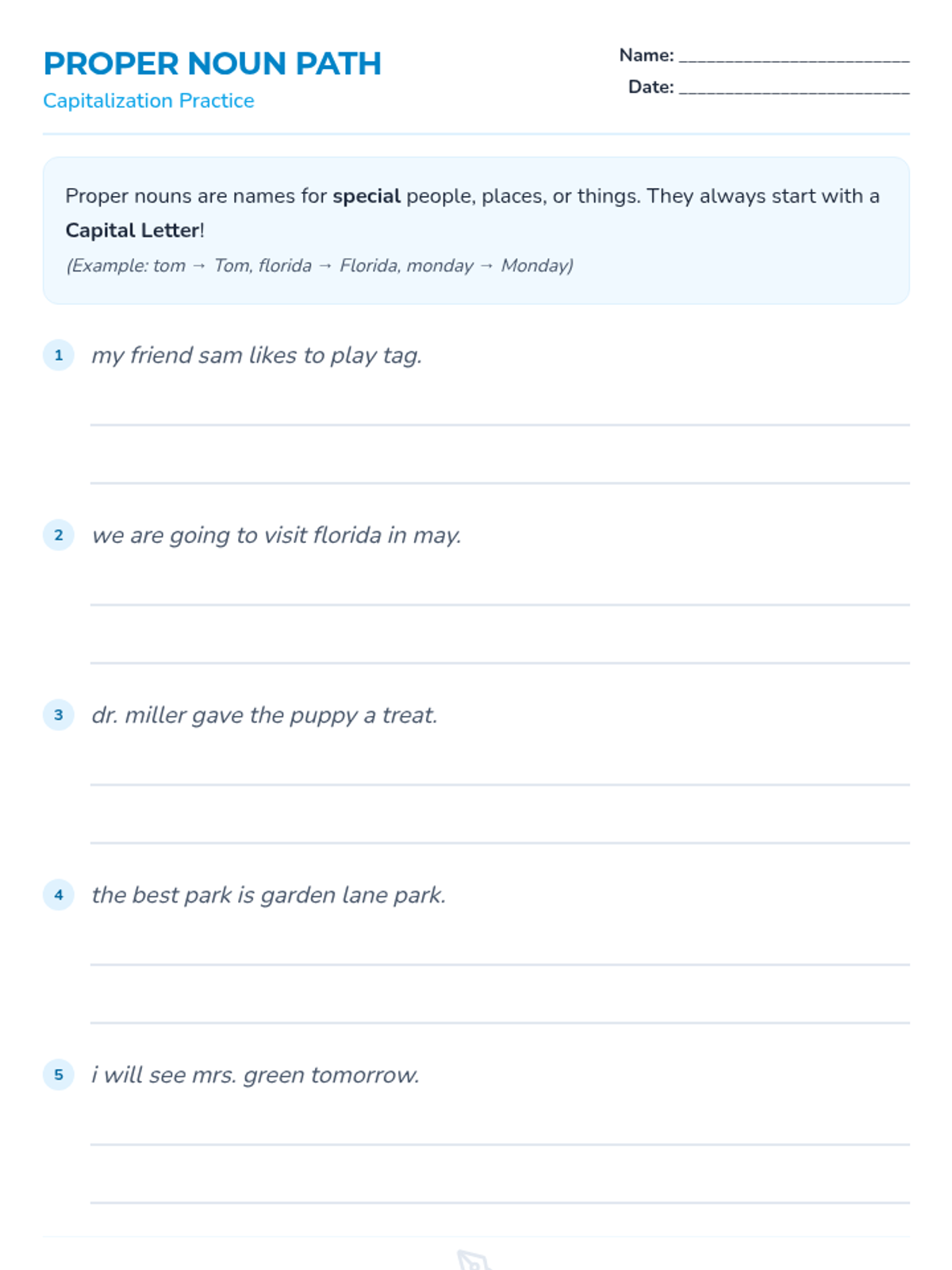
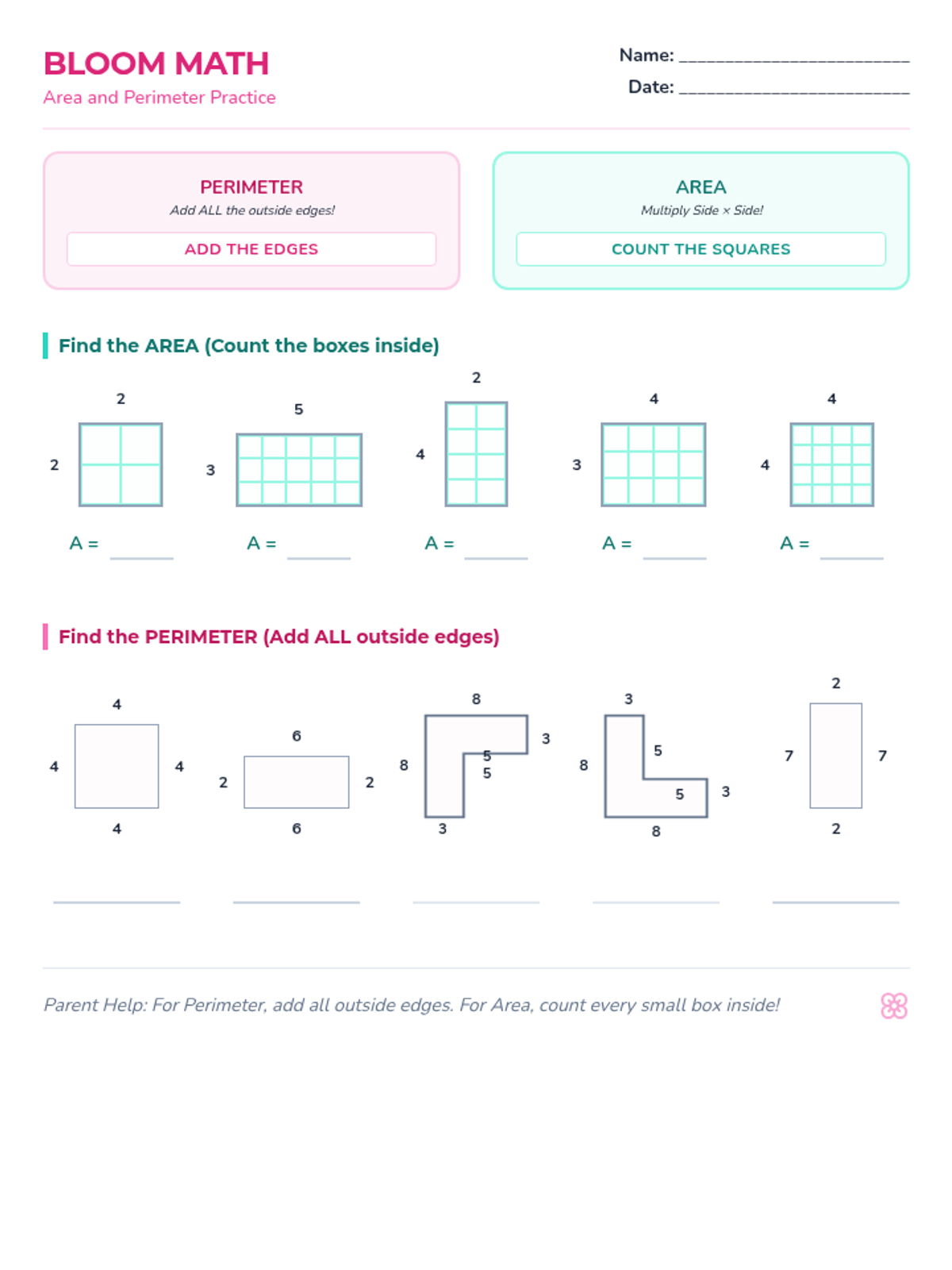
A set of four independent practice worksheets themed around springtime growth, focusing on reading comprehension, time-telling, grammar, and geometry.
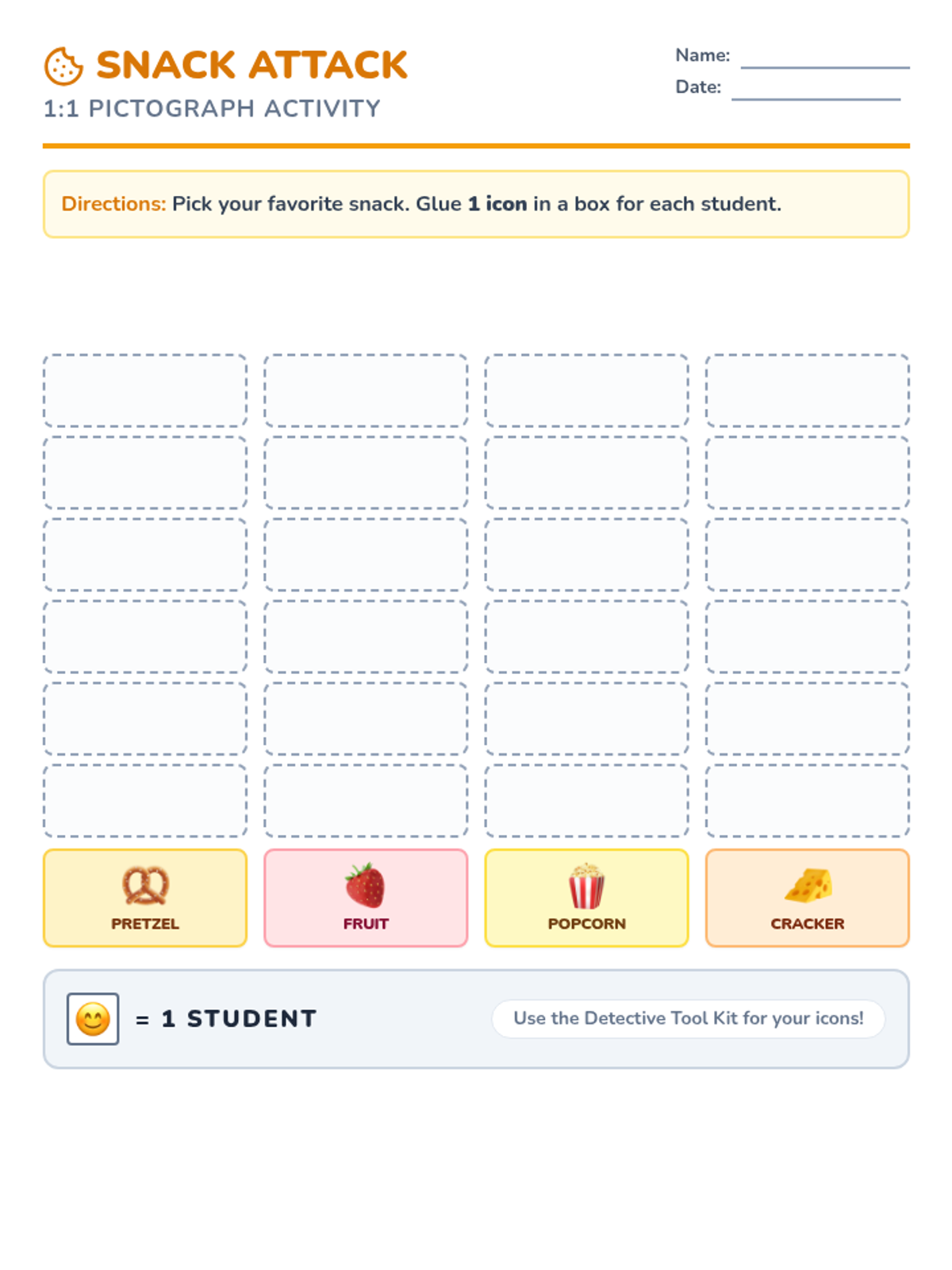
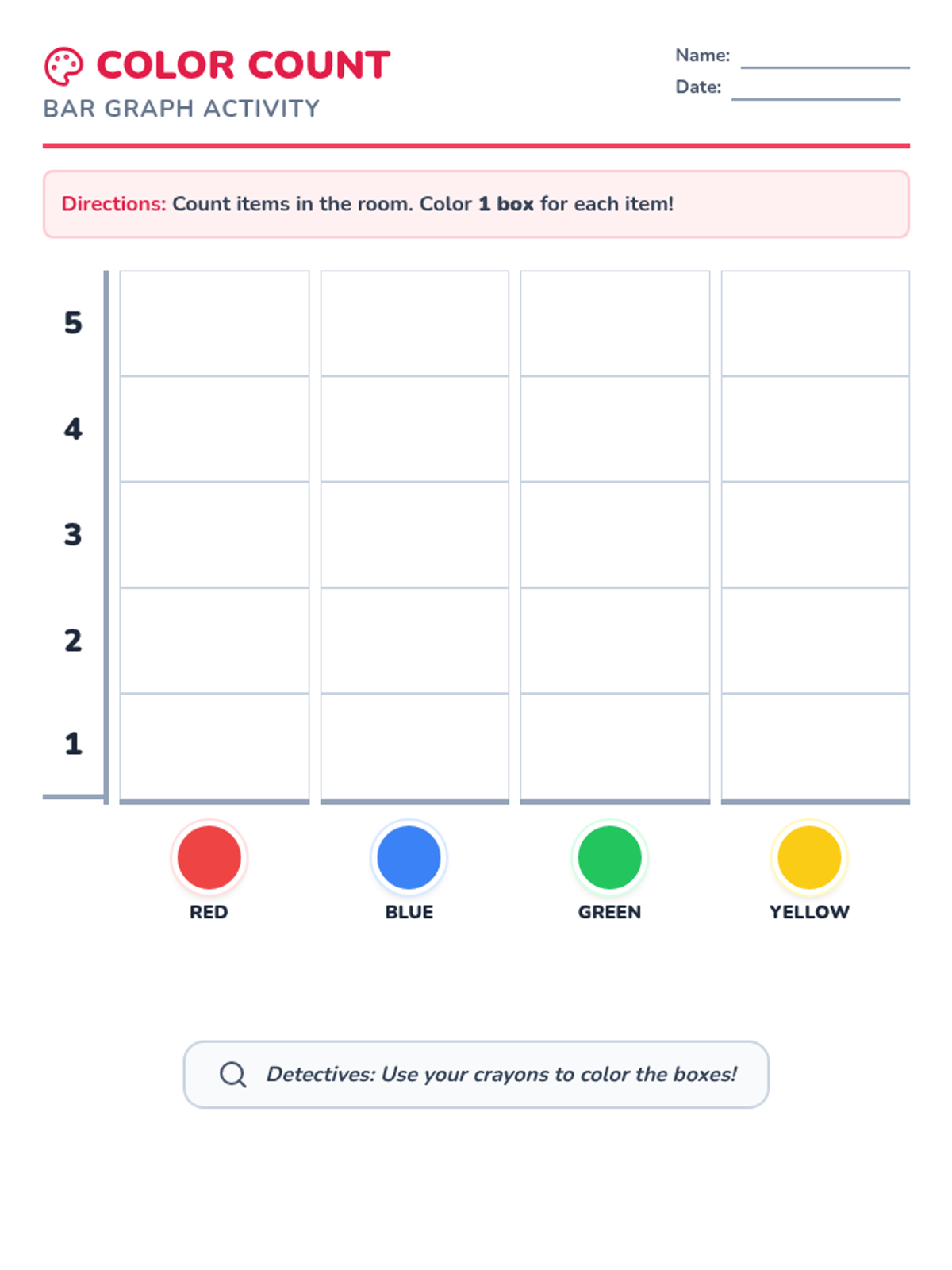
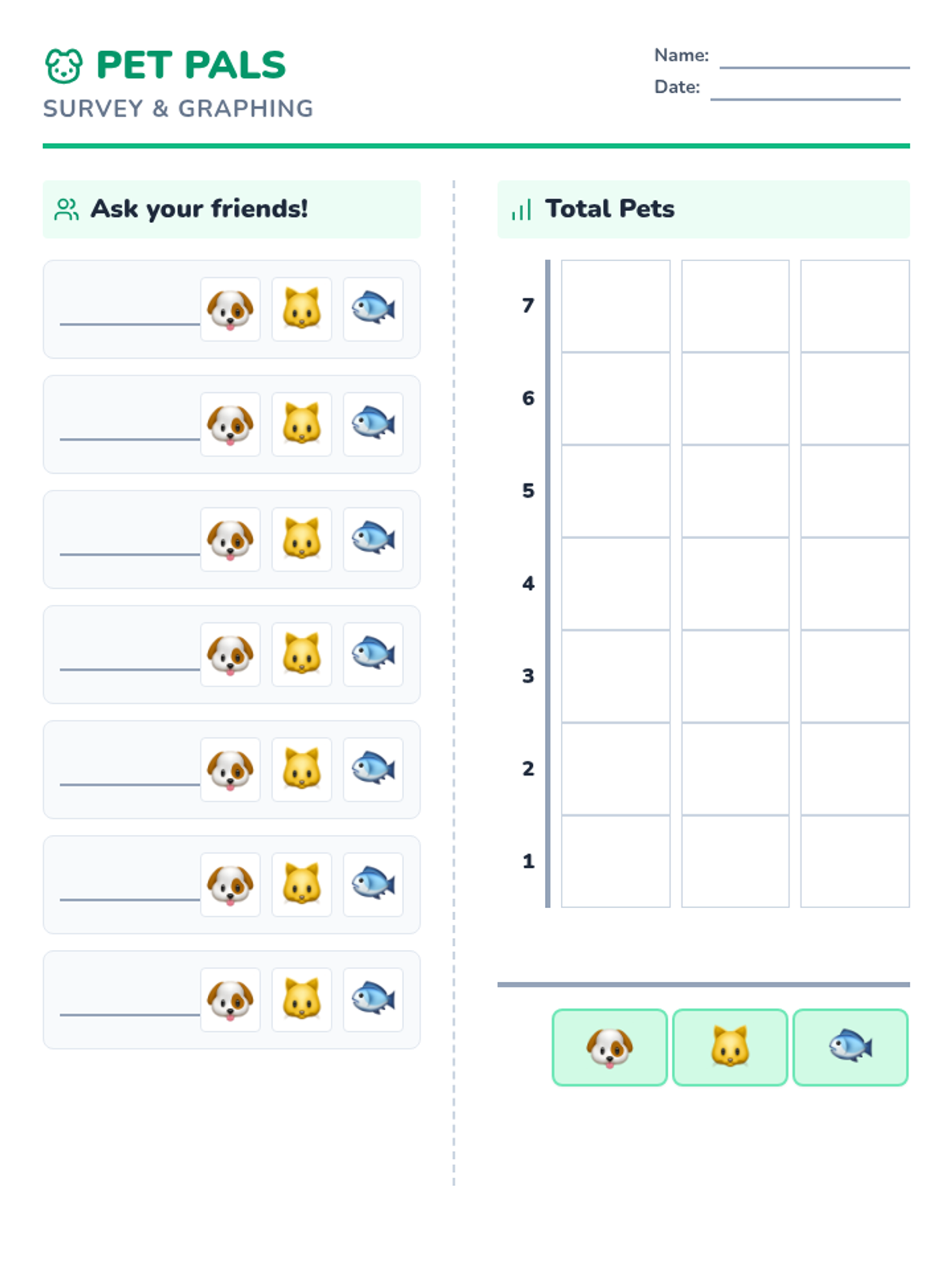
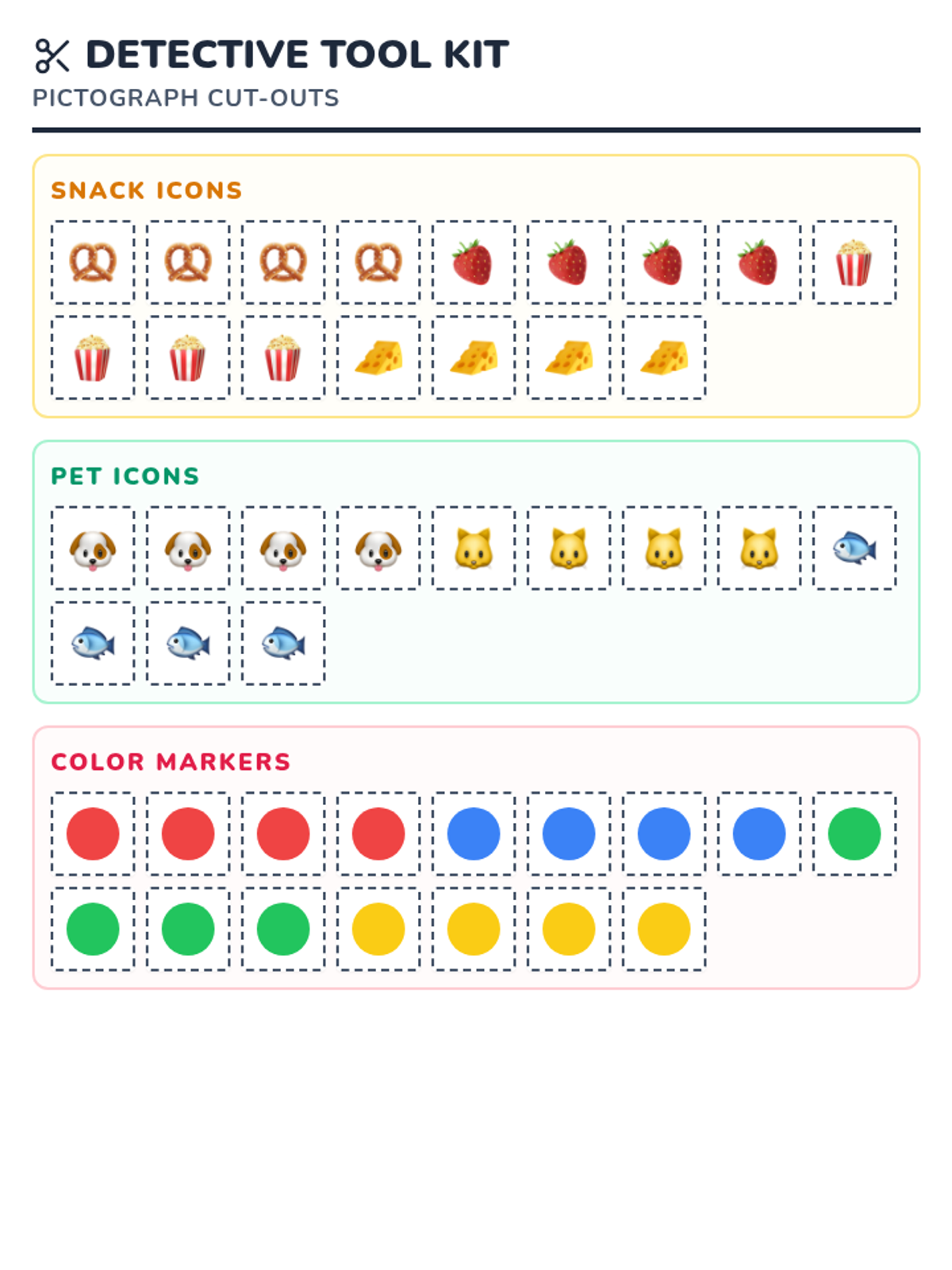
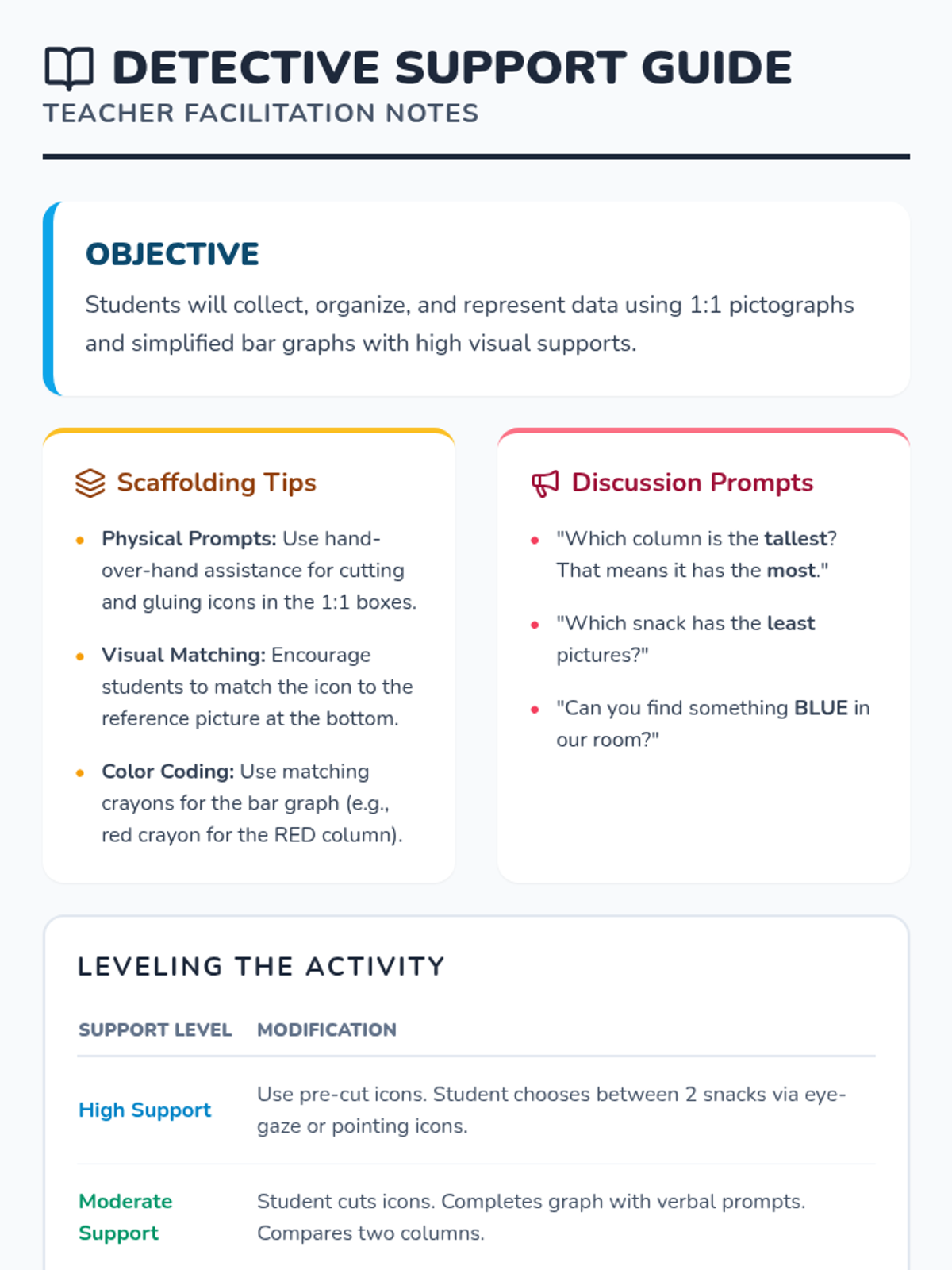
A hands-on graphing lesson designed for Essential Skills students, focusing on 1:1 pictographs and bar graphs using snack, color, and pet data with heavy visual supports.
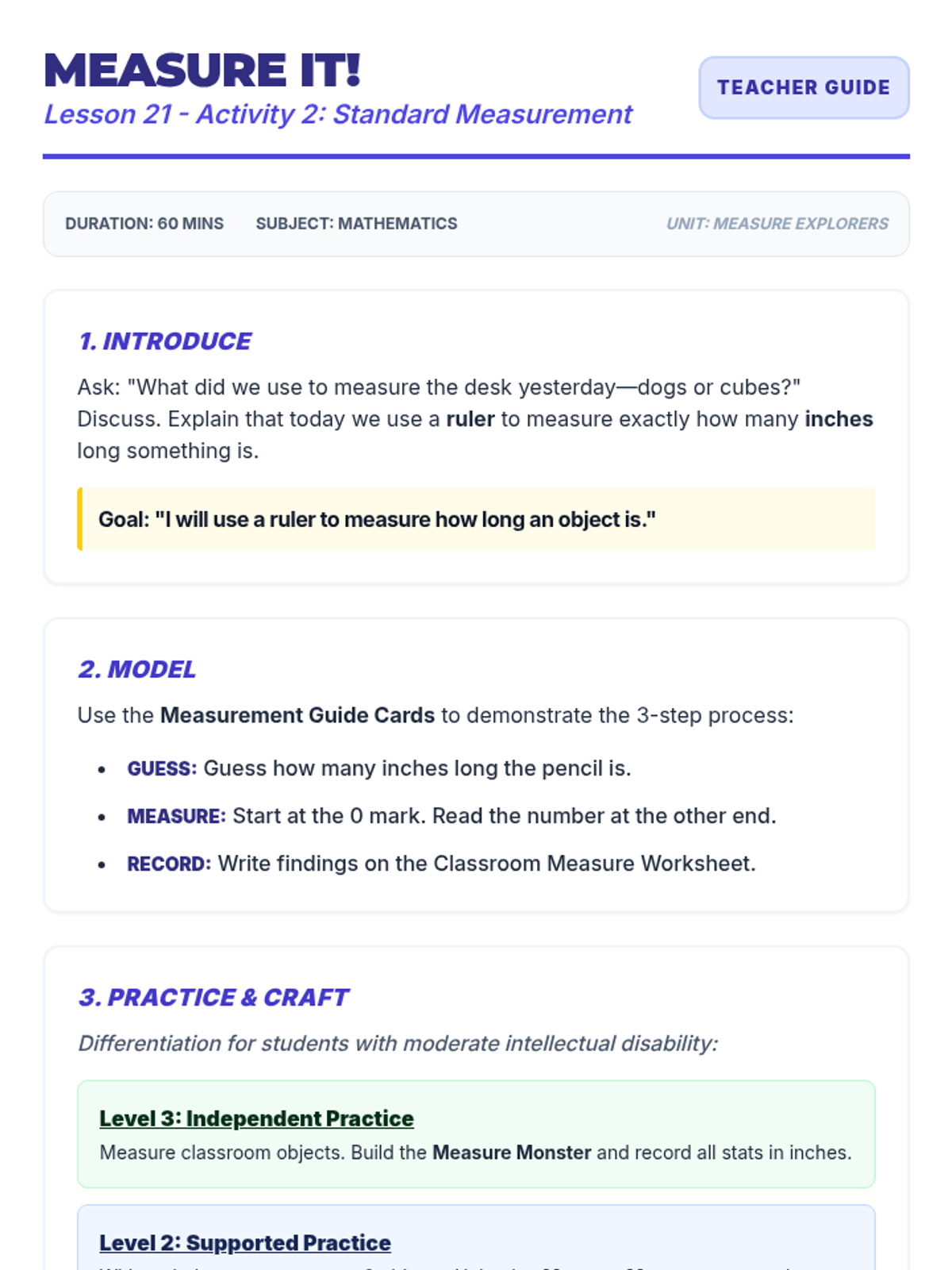
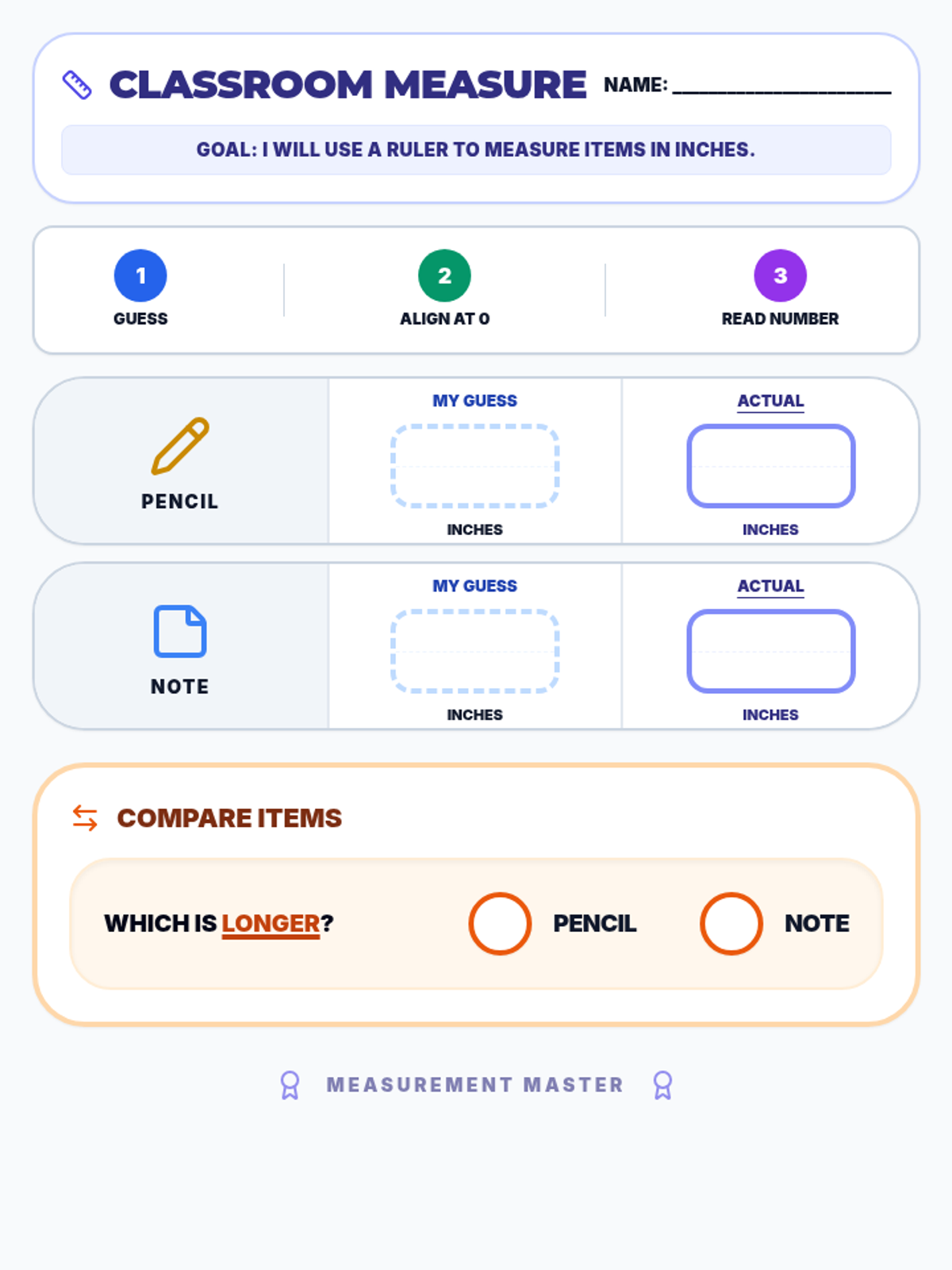
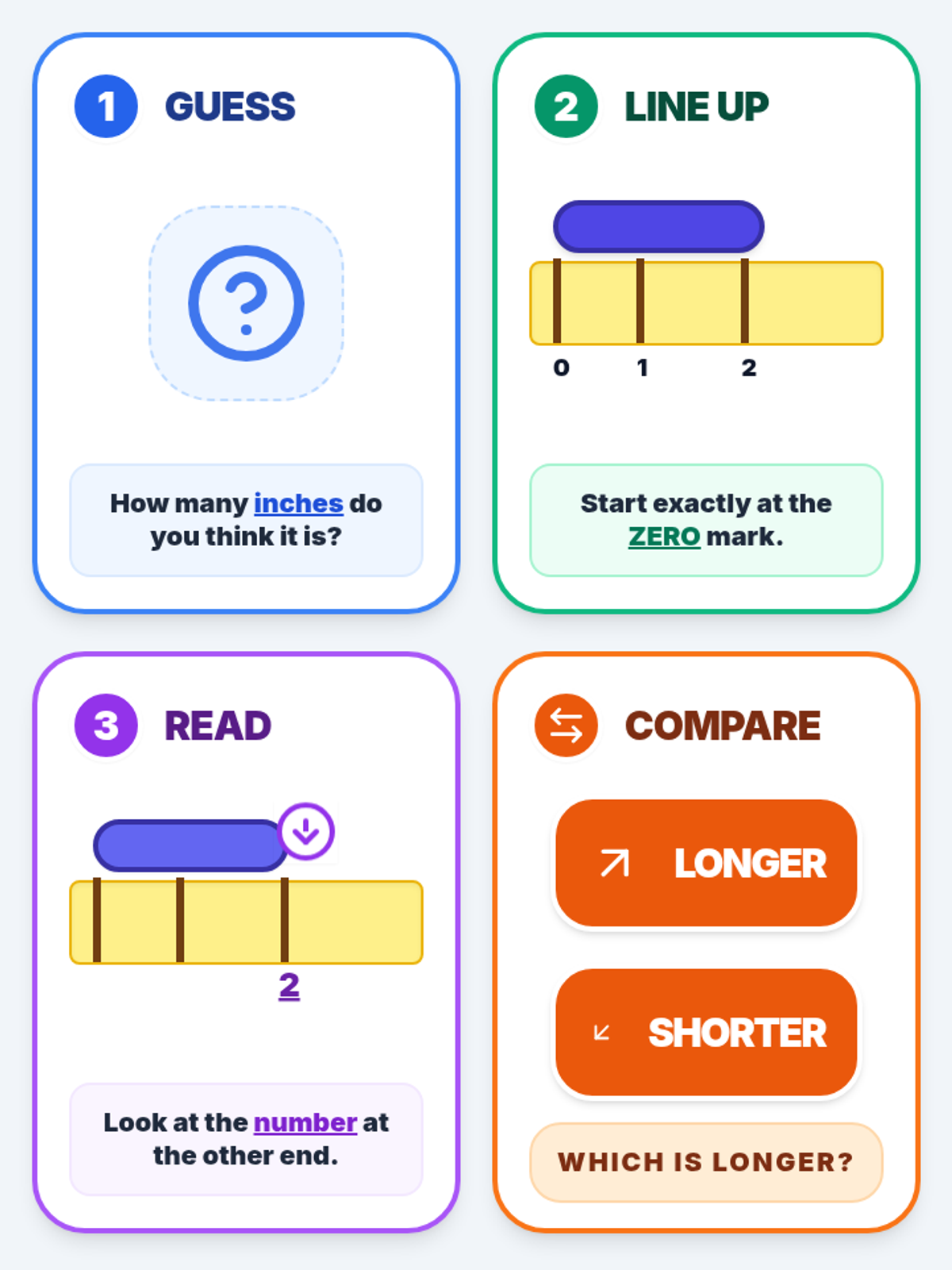
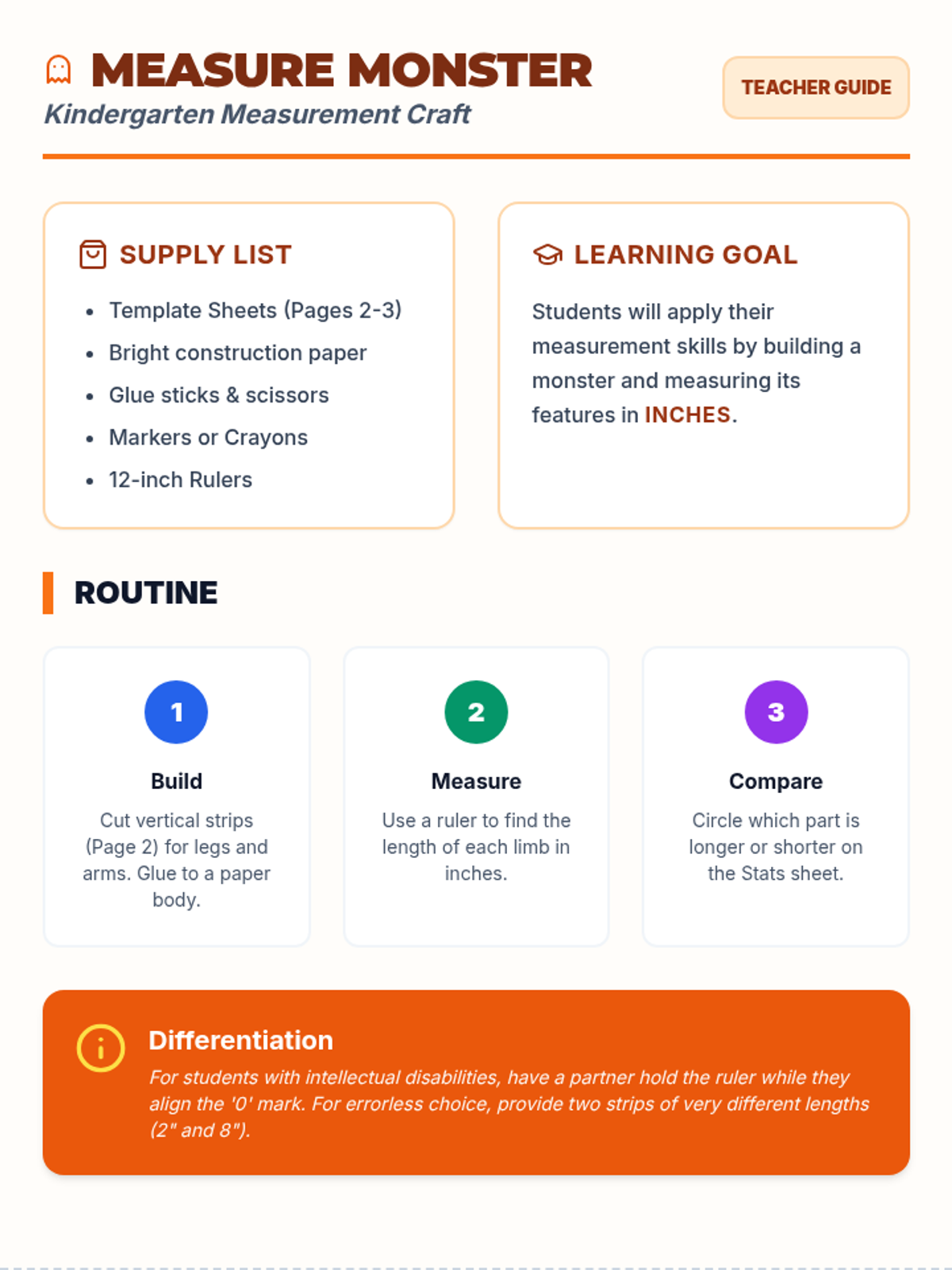
Introducing standard measurement using inches and rulers, focusing on estimating, measuring, and comparing classroom objects with tiered supports.
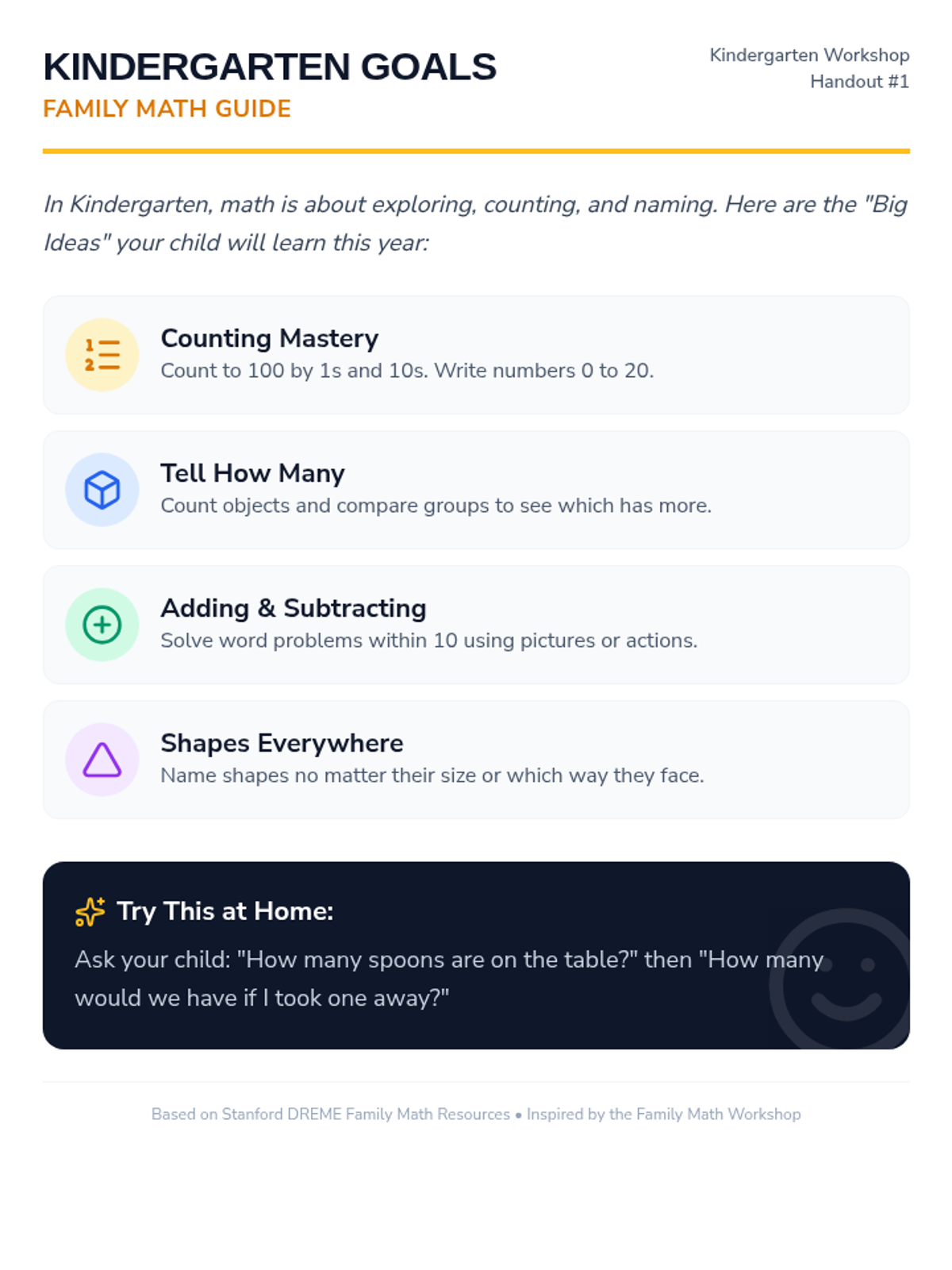
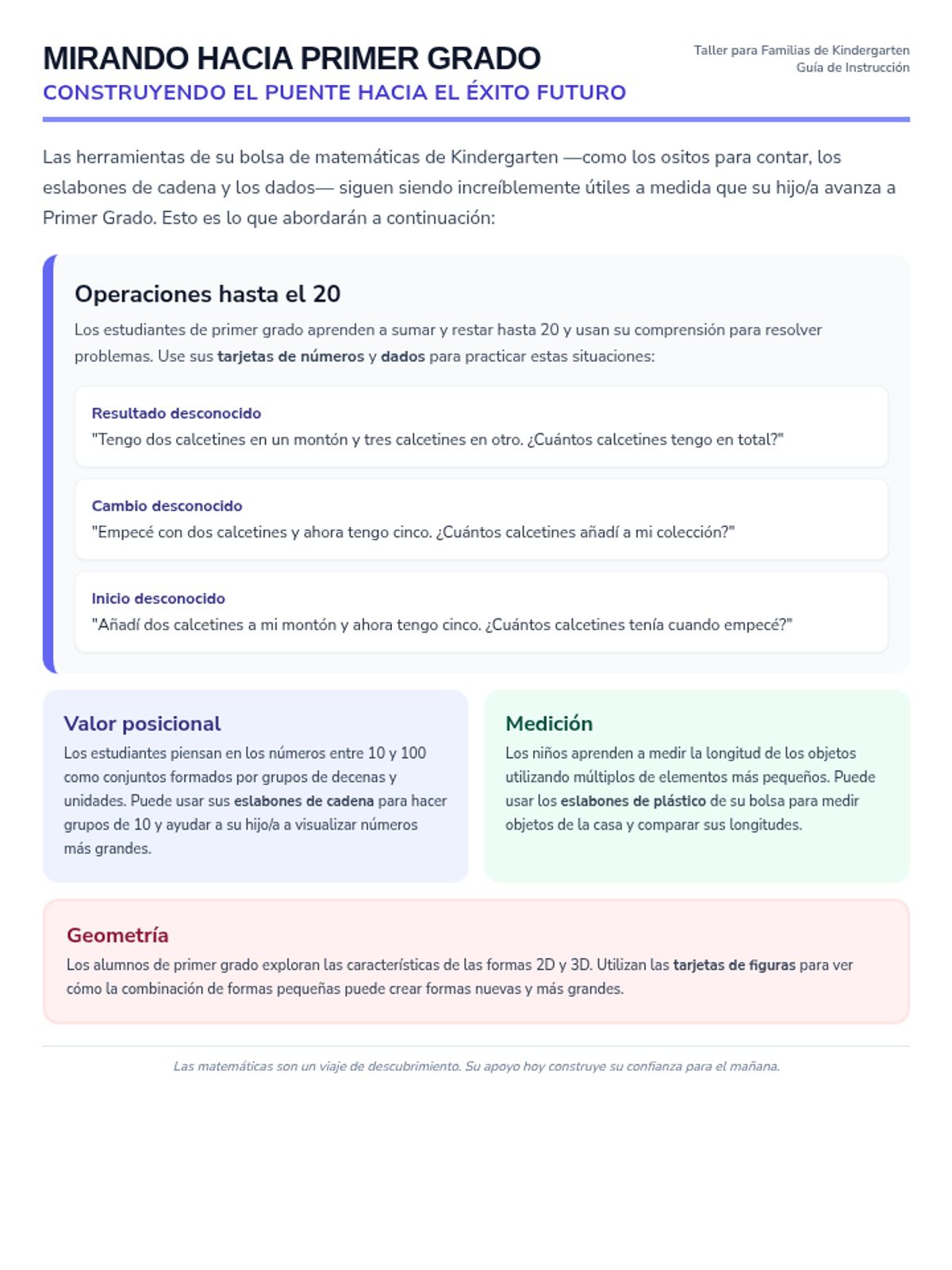
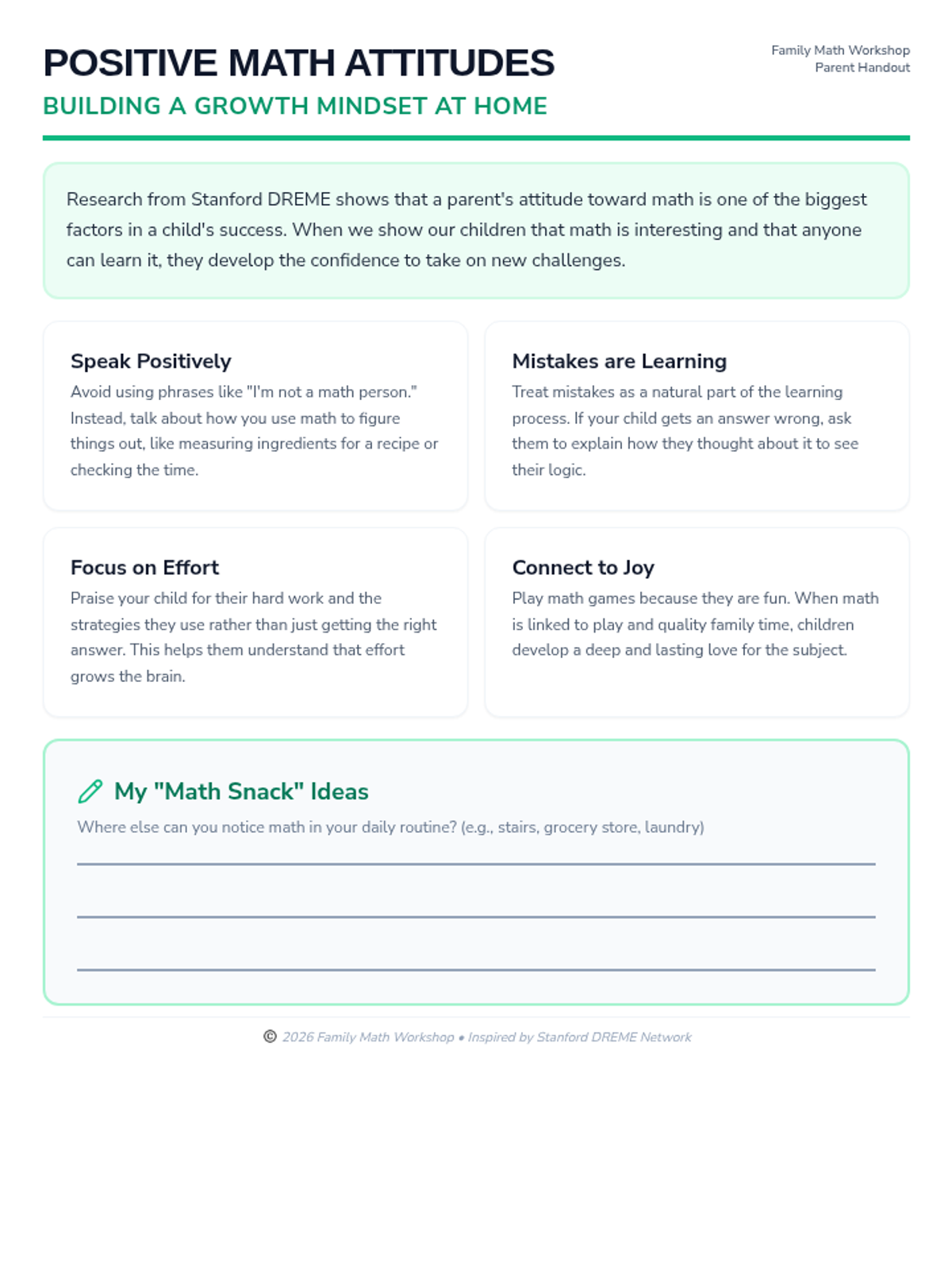
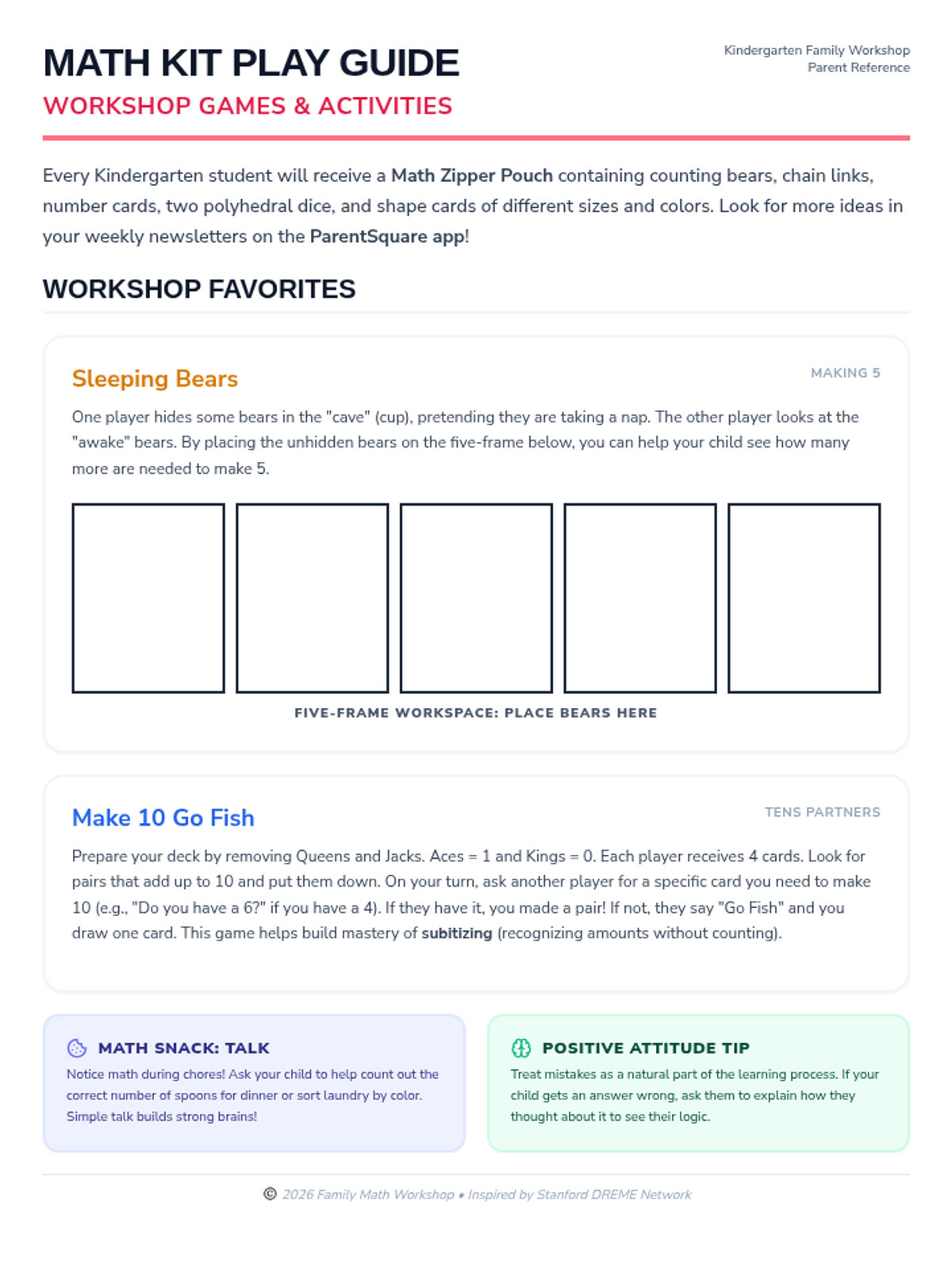
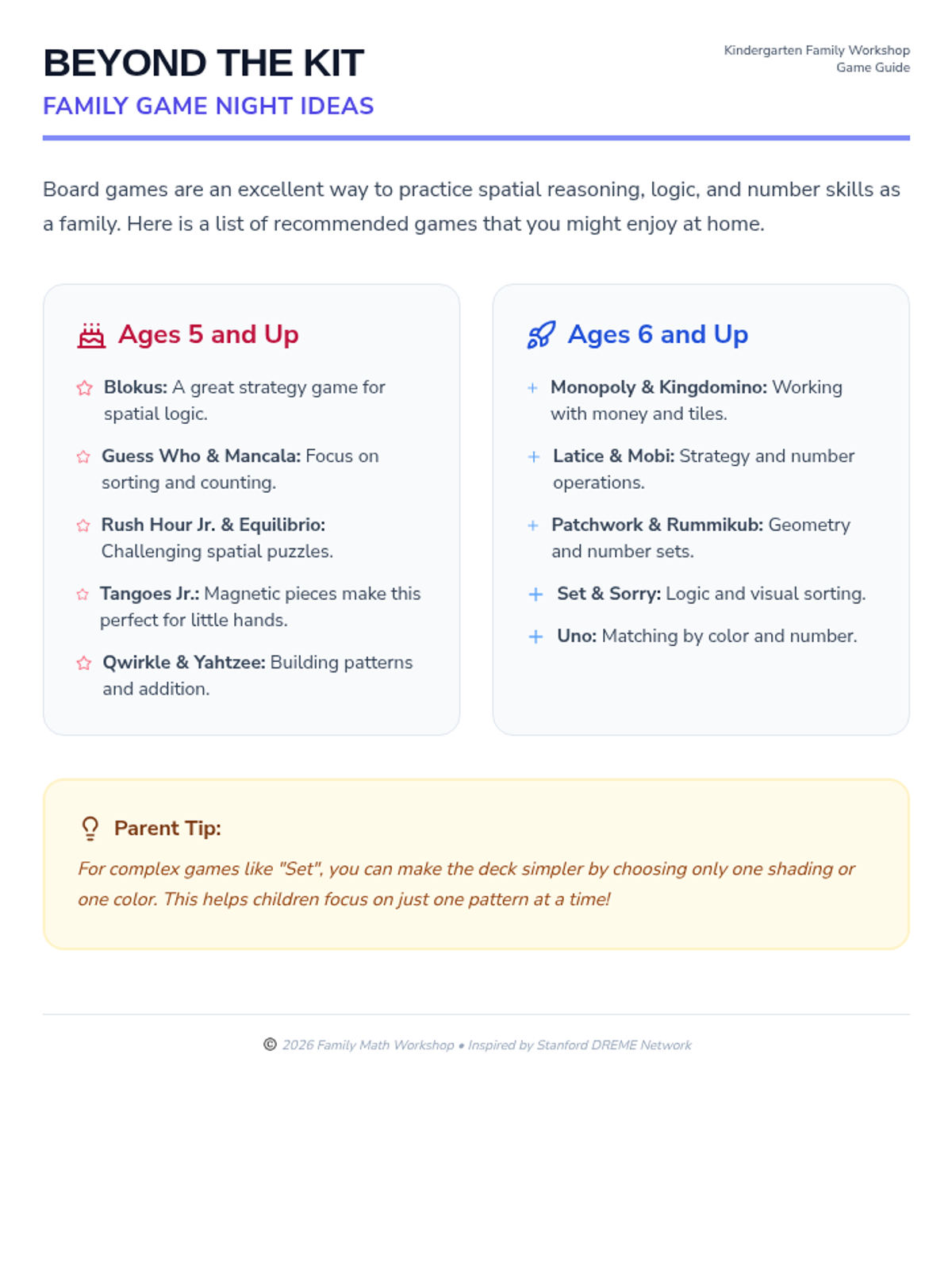
A comprehensive workshop for Kindergarten parents and guardians focused on building positive math attitudes and supporting math learning at home through play and daily routines. Based on Stanford DREME research.
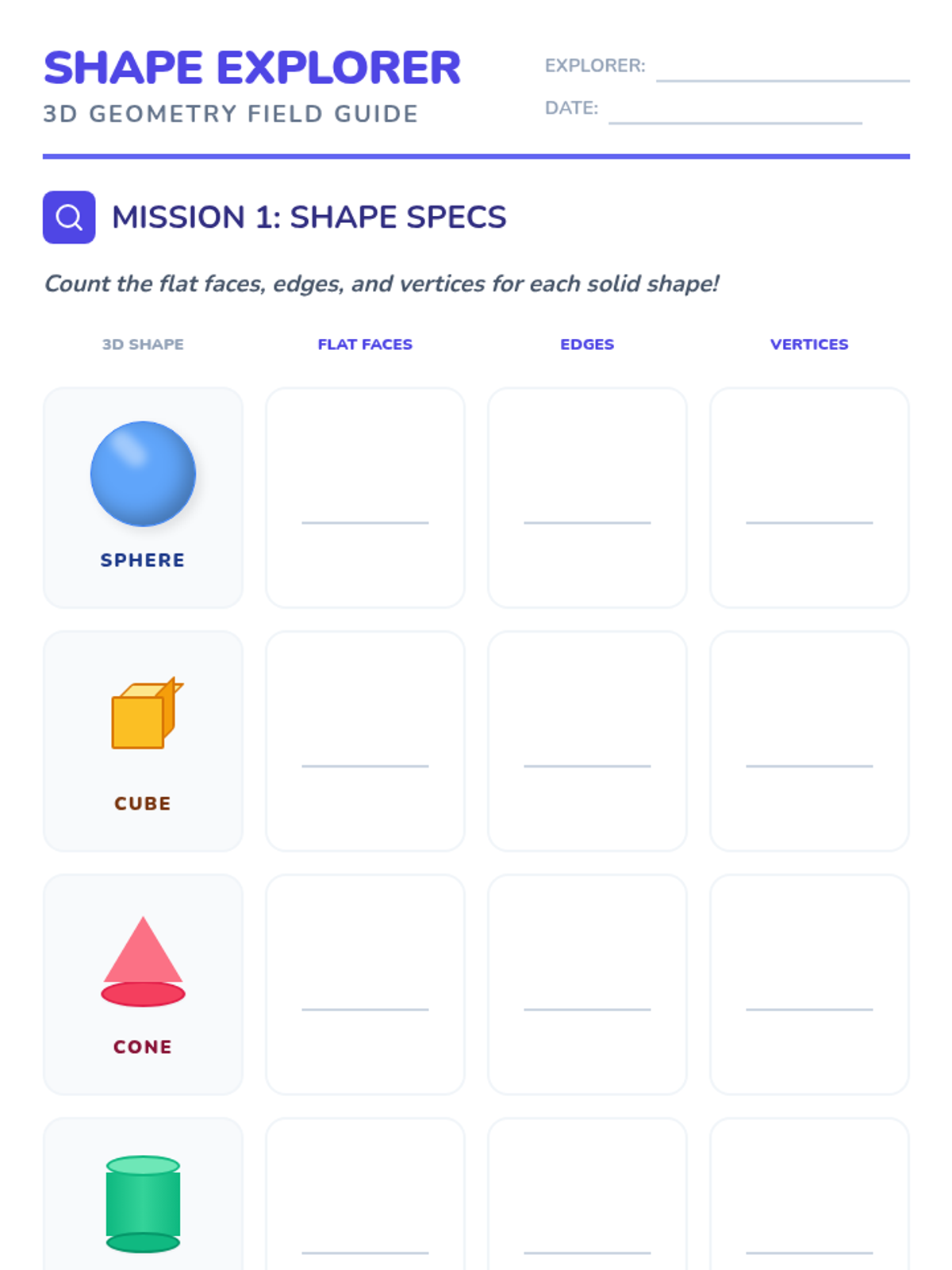
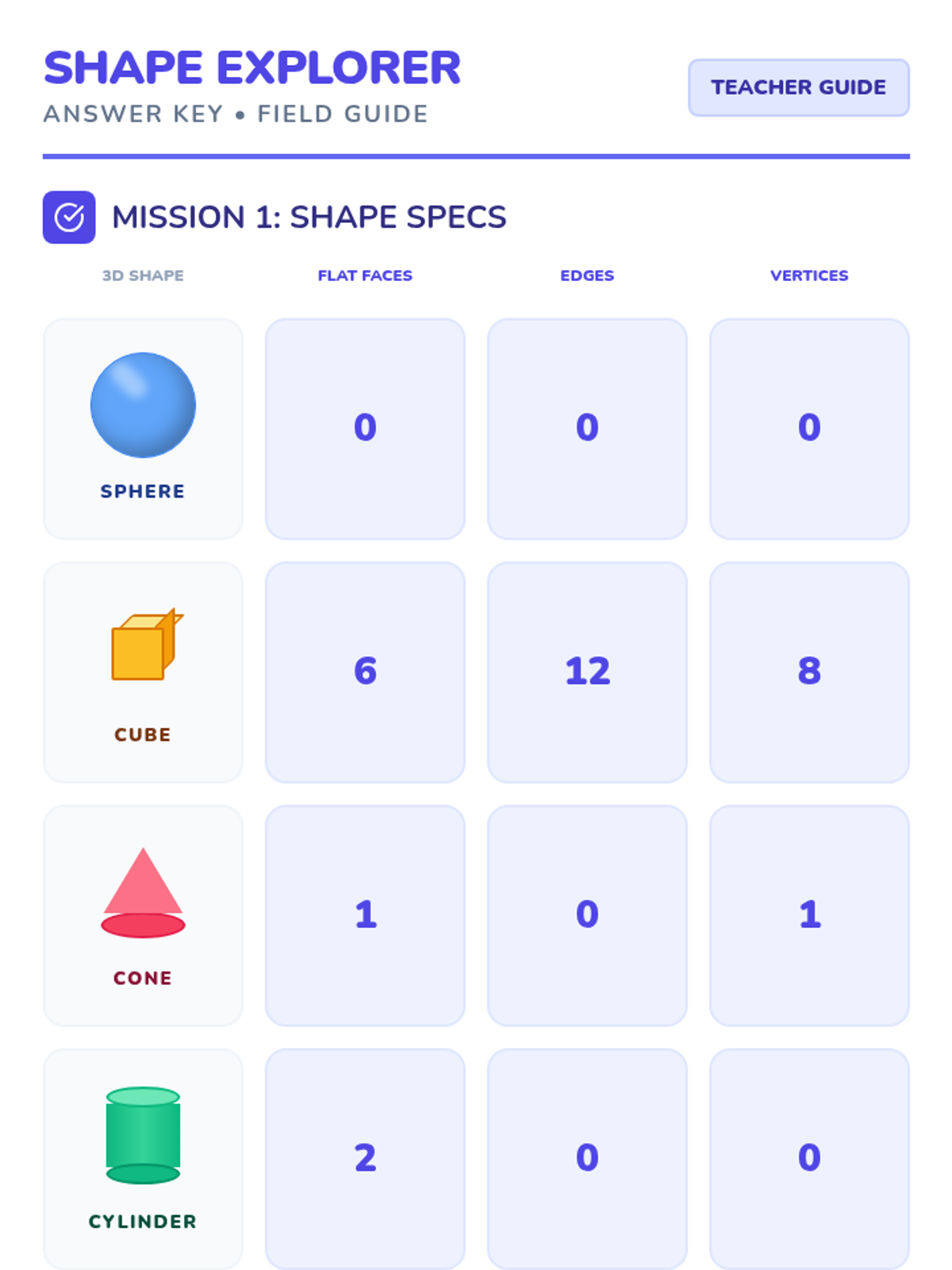
A fun, hands-on introduction to 3D shapes where students explore the properties of spheres, cubes, cones, and cylinders through a 'Shape Expedition' theme. Students identify faces, edges, and vertices and learn how to decompose composite structures into their component shapes.
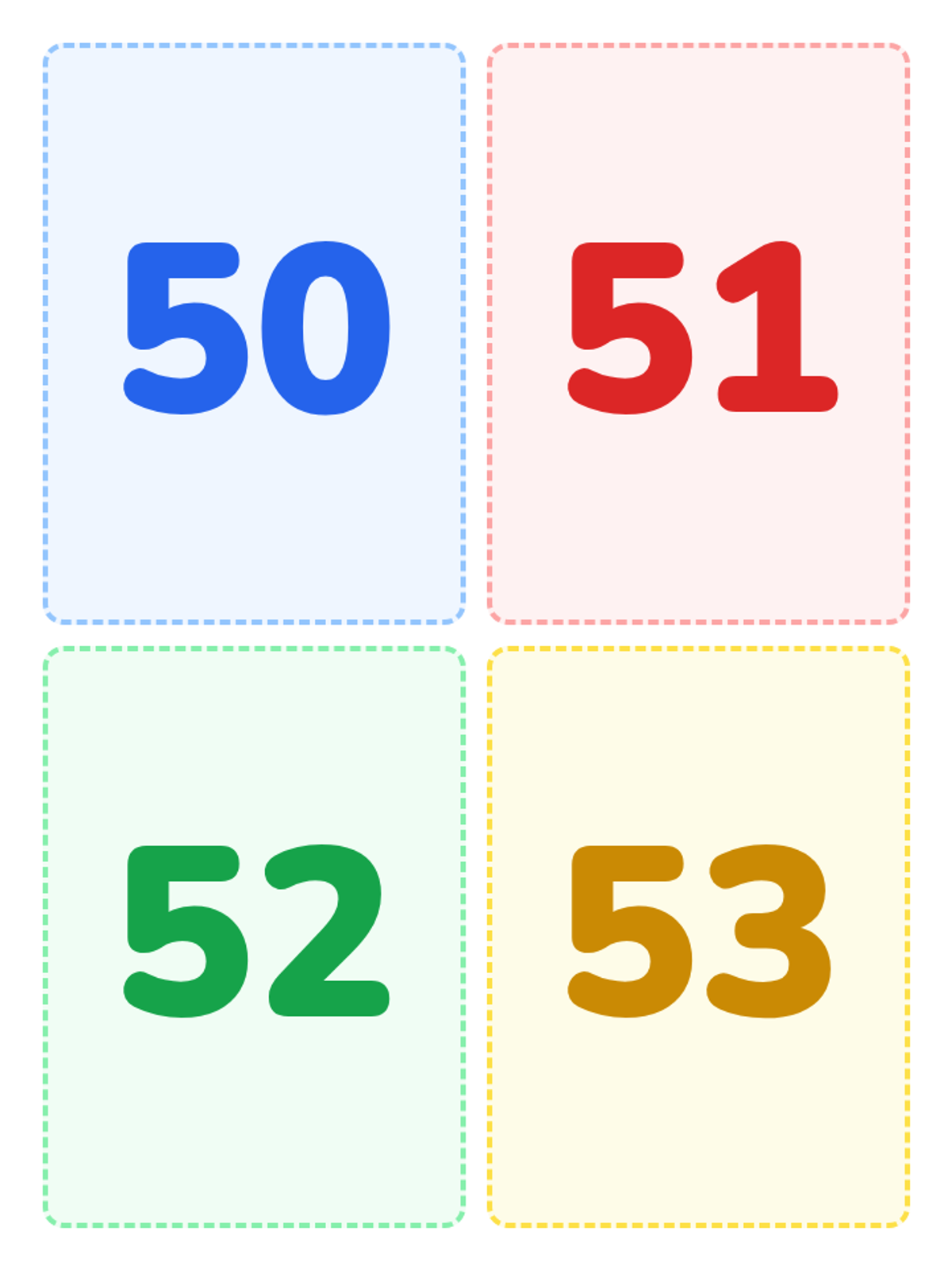
A set of resources focused on mastering numbers 50-100 through hands-on flashcard activities and games designed for kindergarten learners.
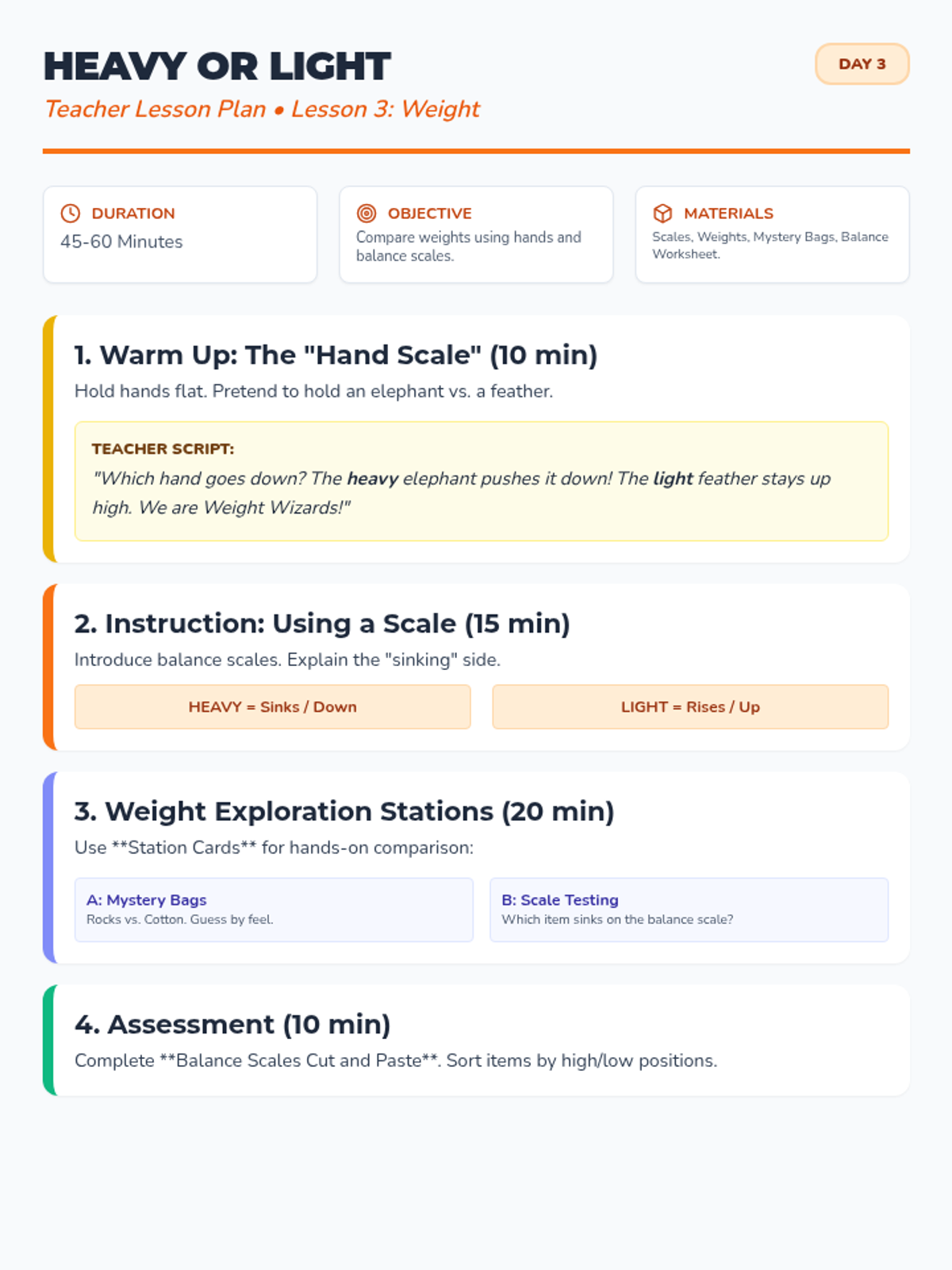
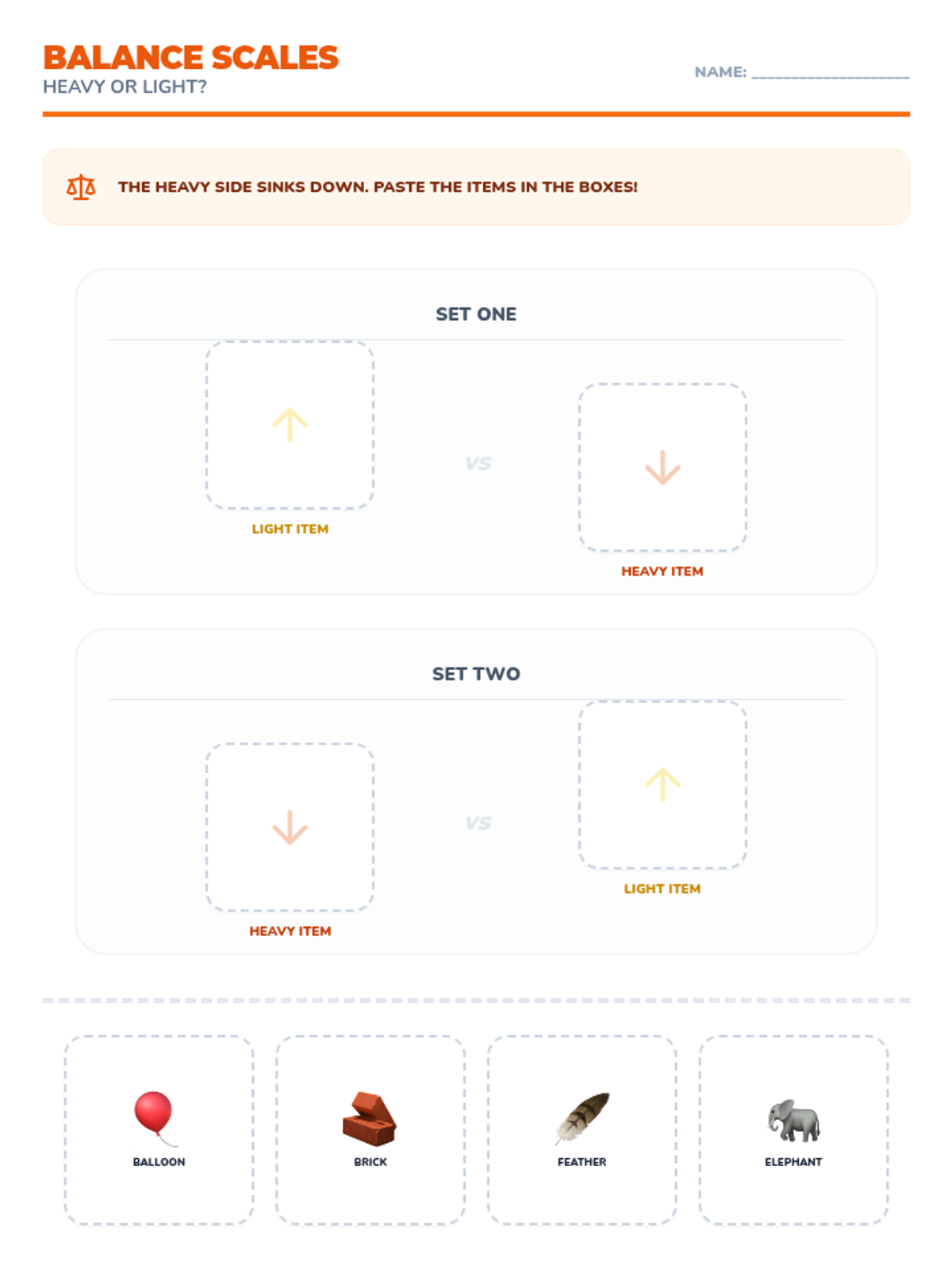
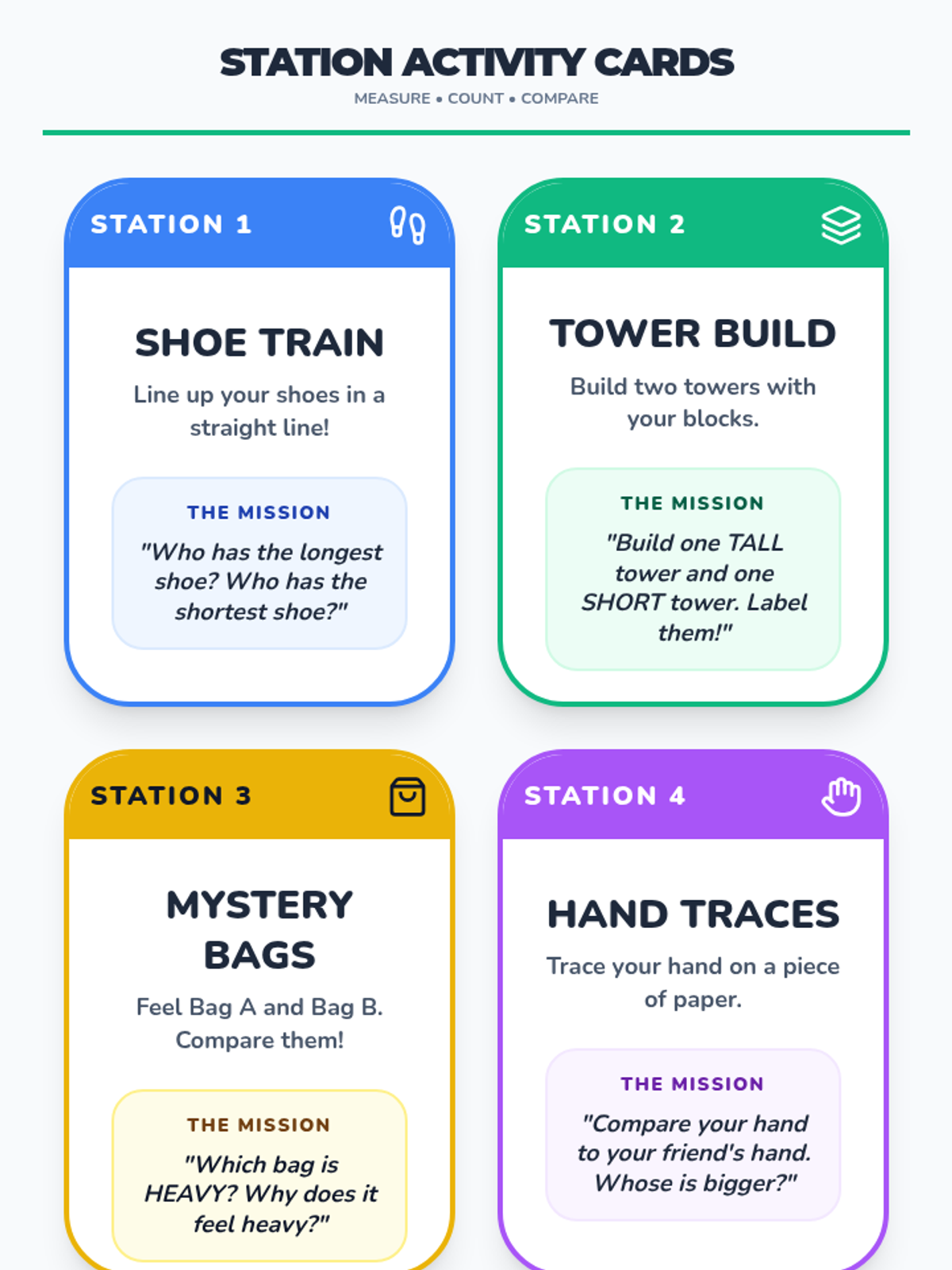
Exploring weight by comparing heavy and light objects using hands and balance scales.
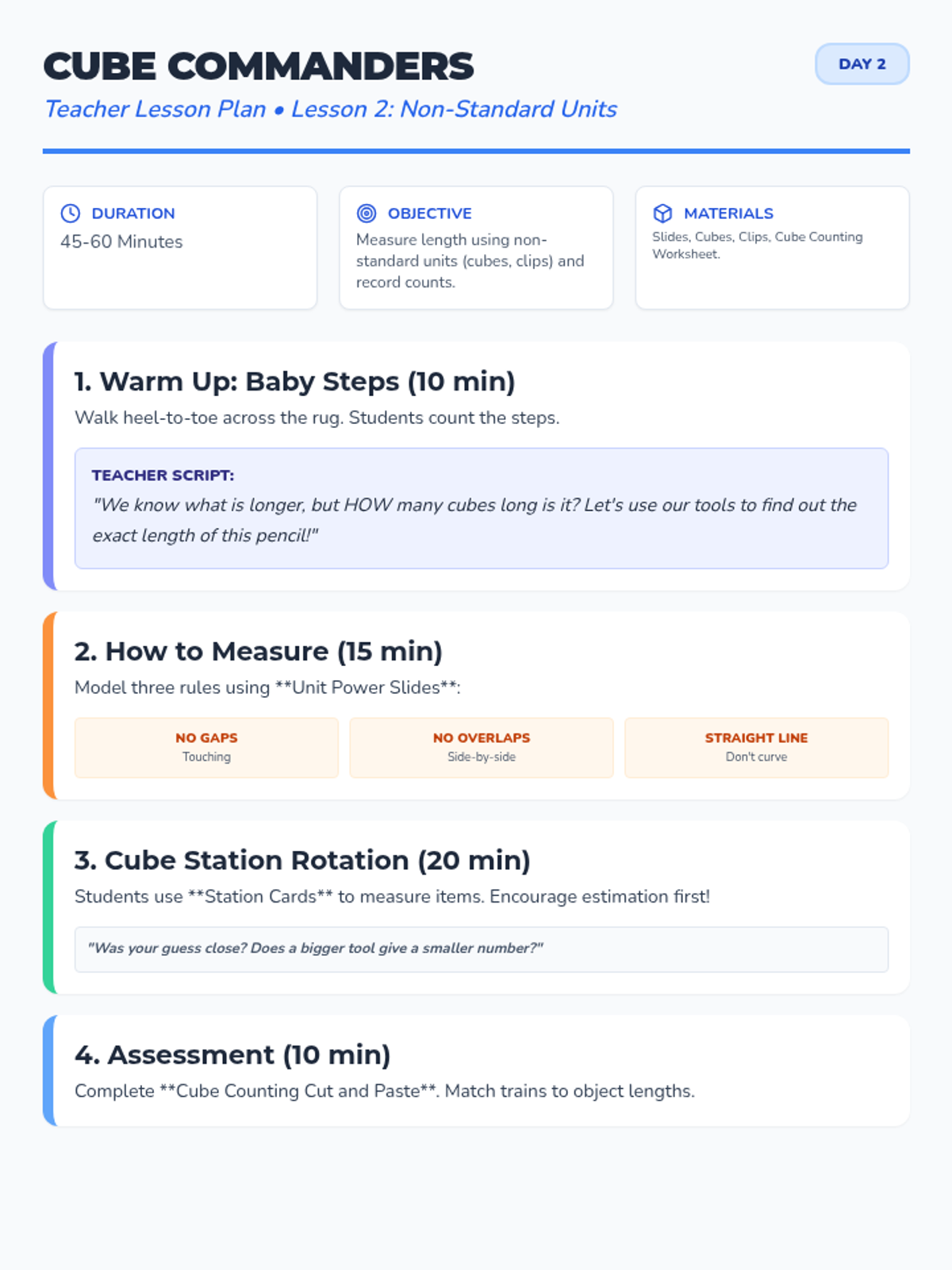
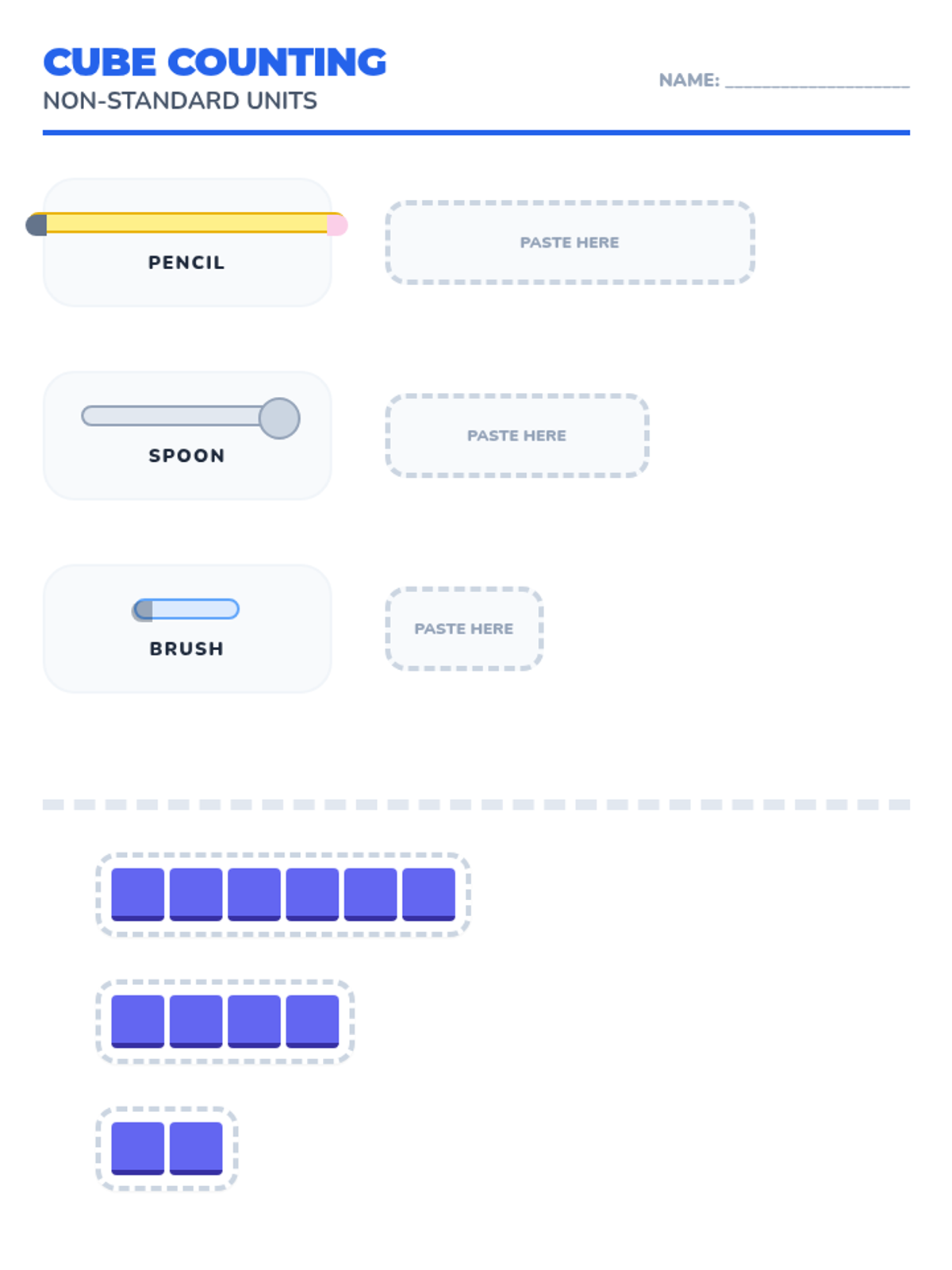
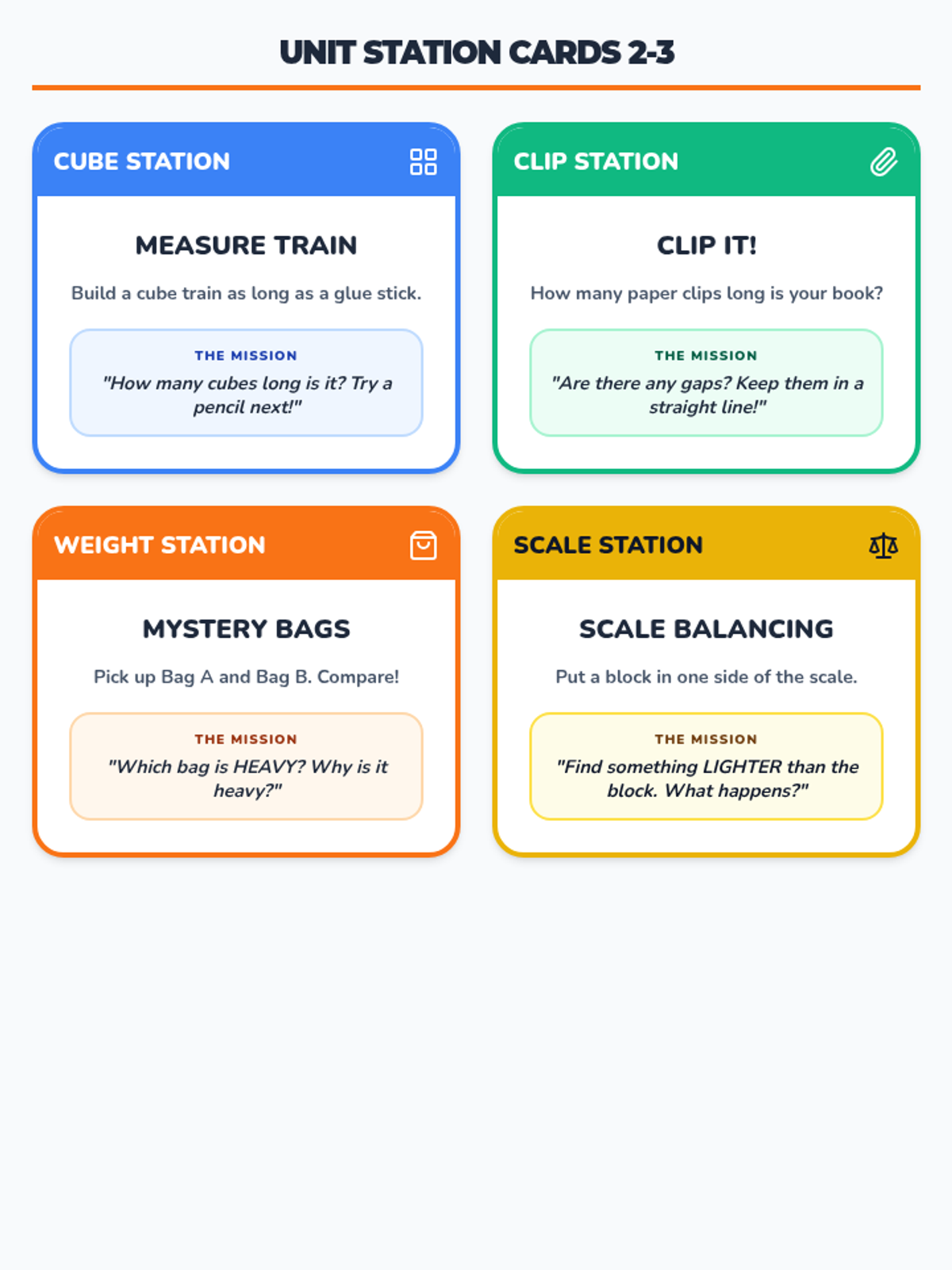
Learning to measure objects using non-standard units like snap cubes, paper clips, and handprints.
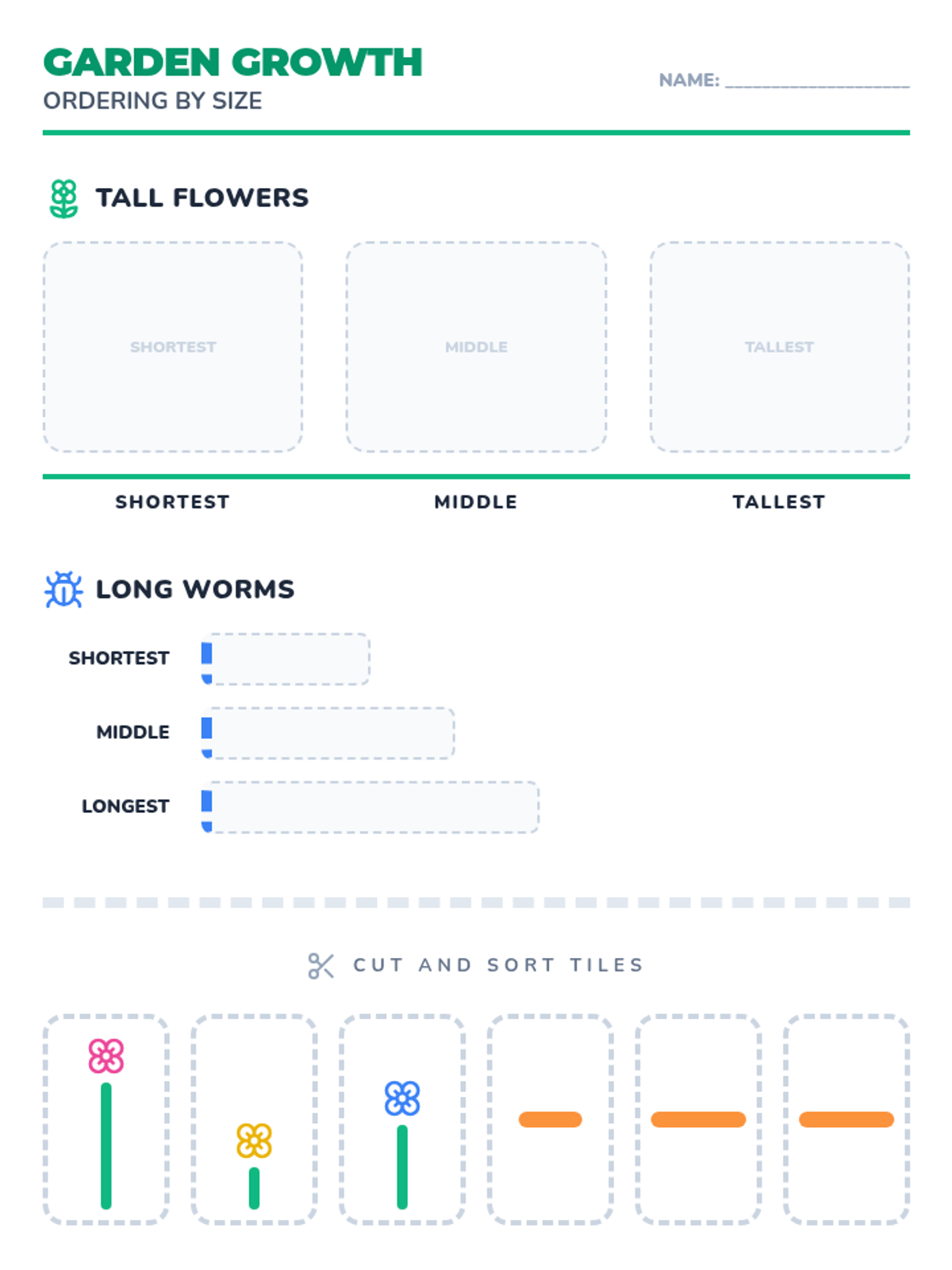
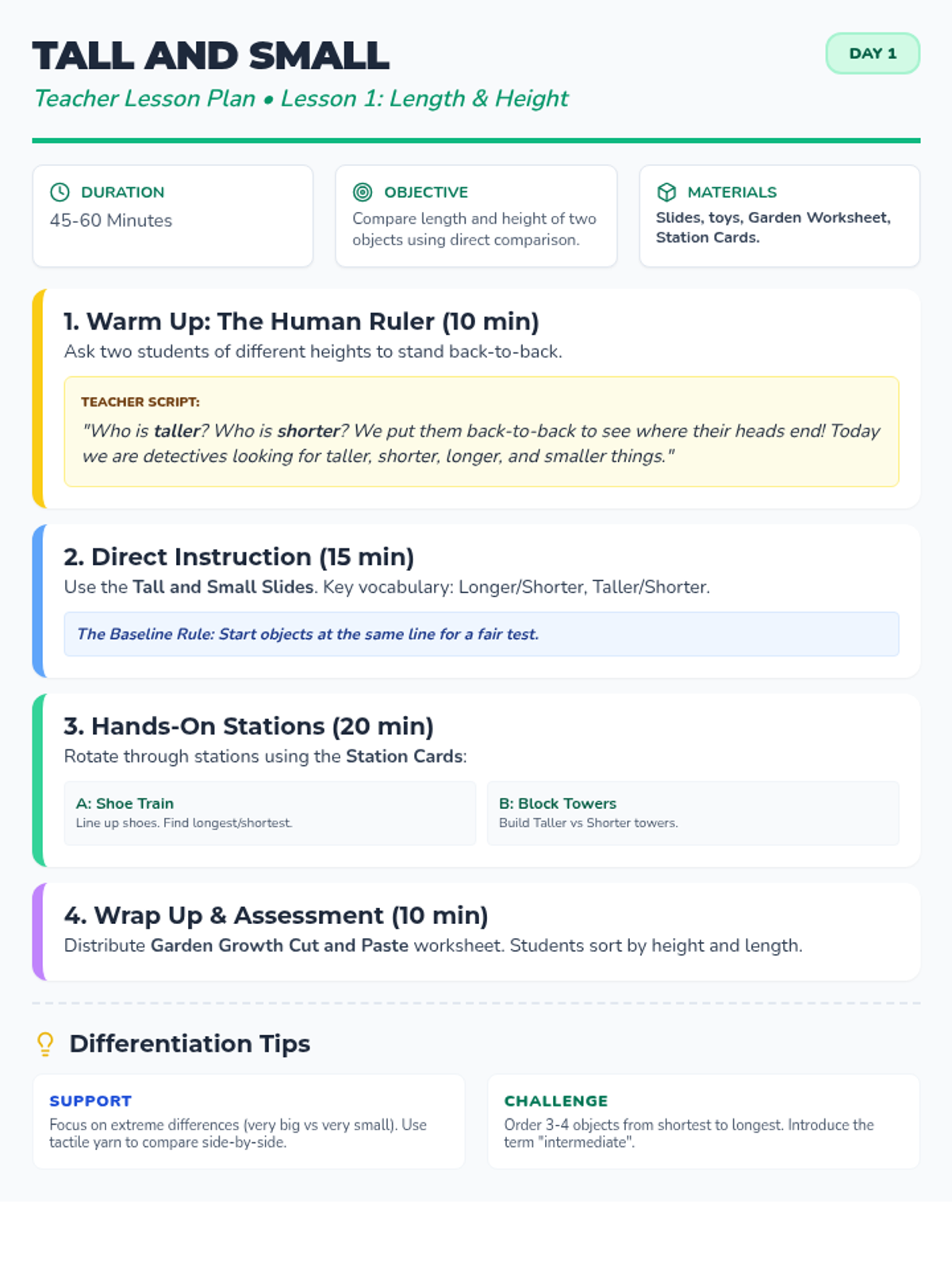
Introduction to comparing length and height using terms like 'longer', 'shorter', 'taller', and 'smaller'.
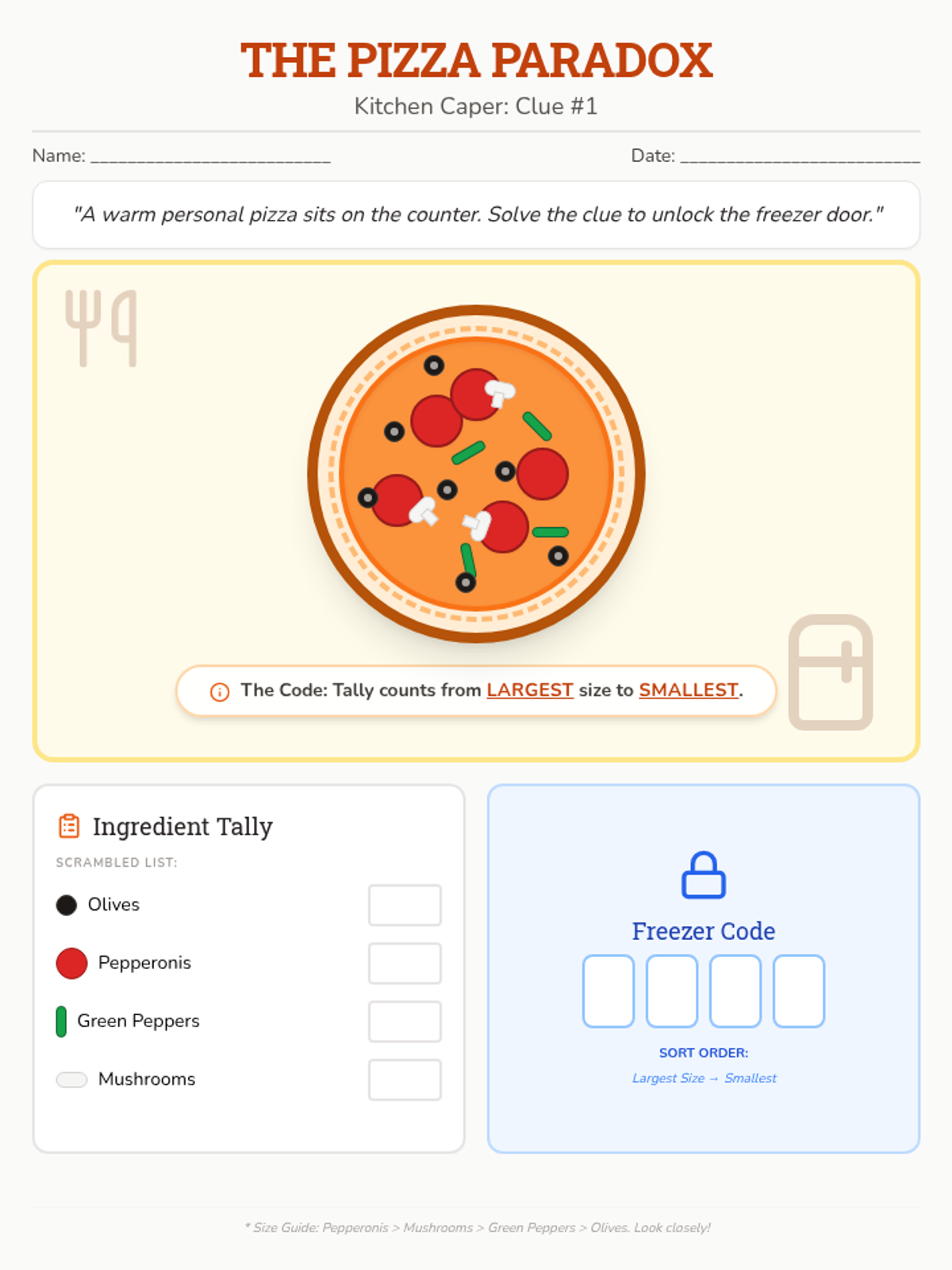
A mini-mystery centered around a kitchen scene where students use observation and logic to solve a visual puzzle.
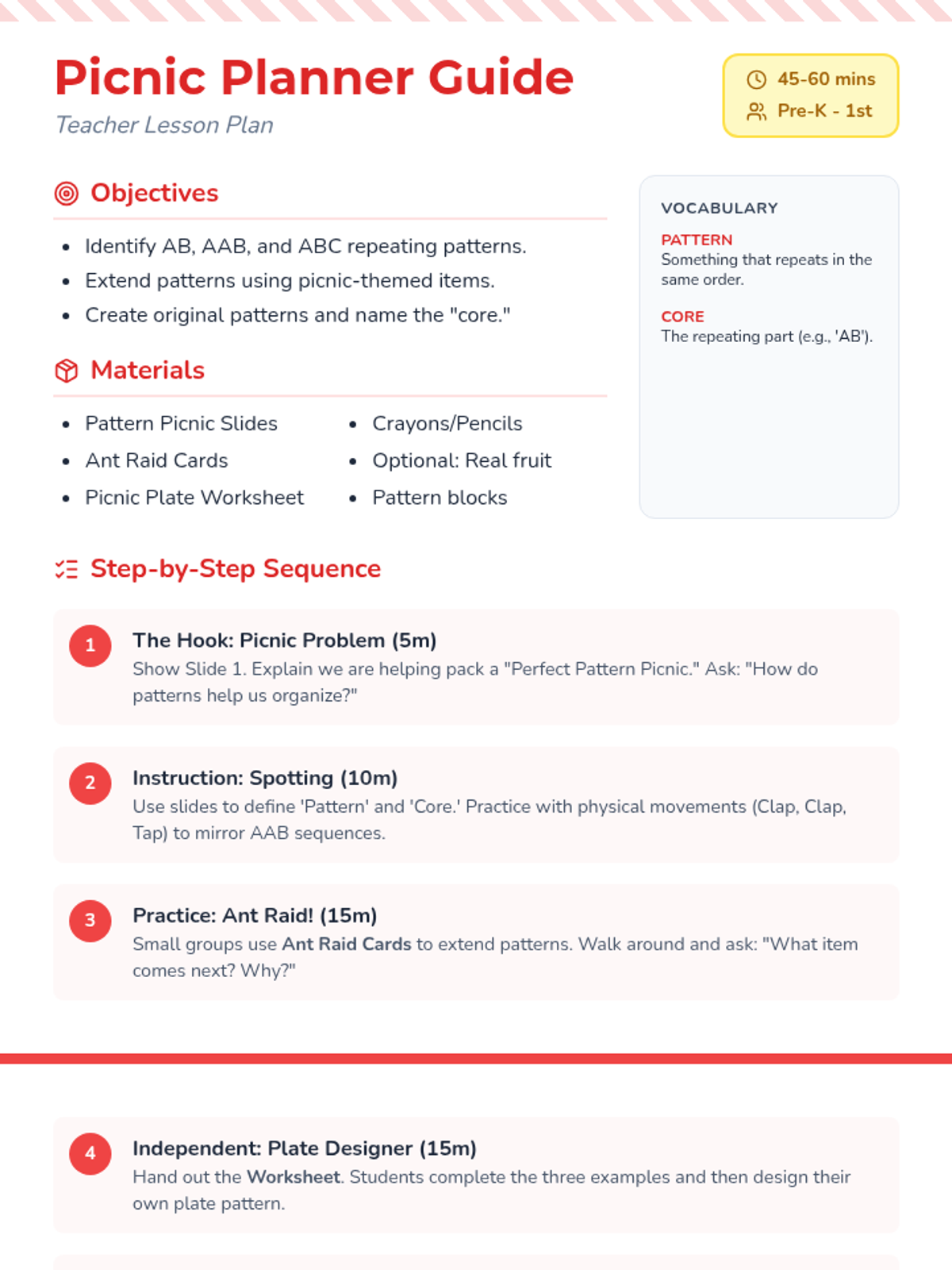
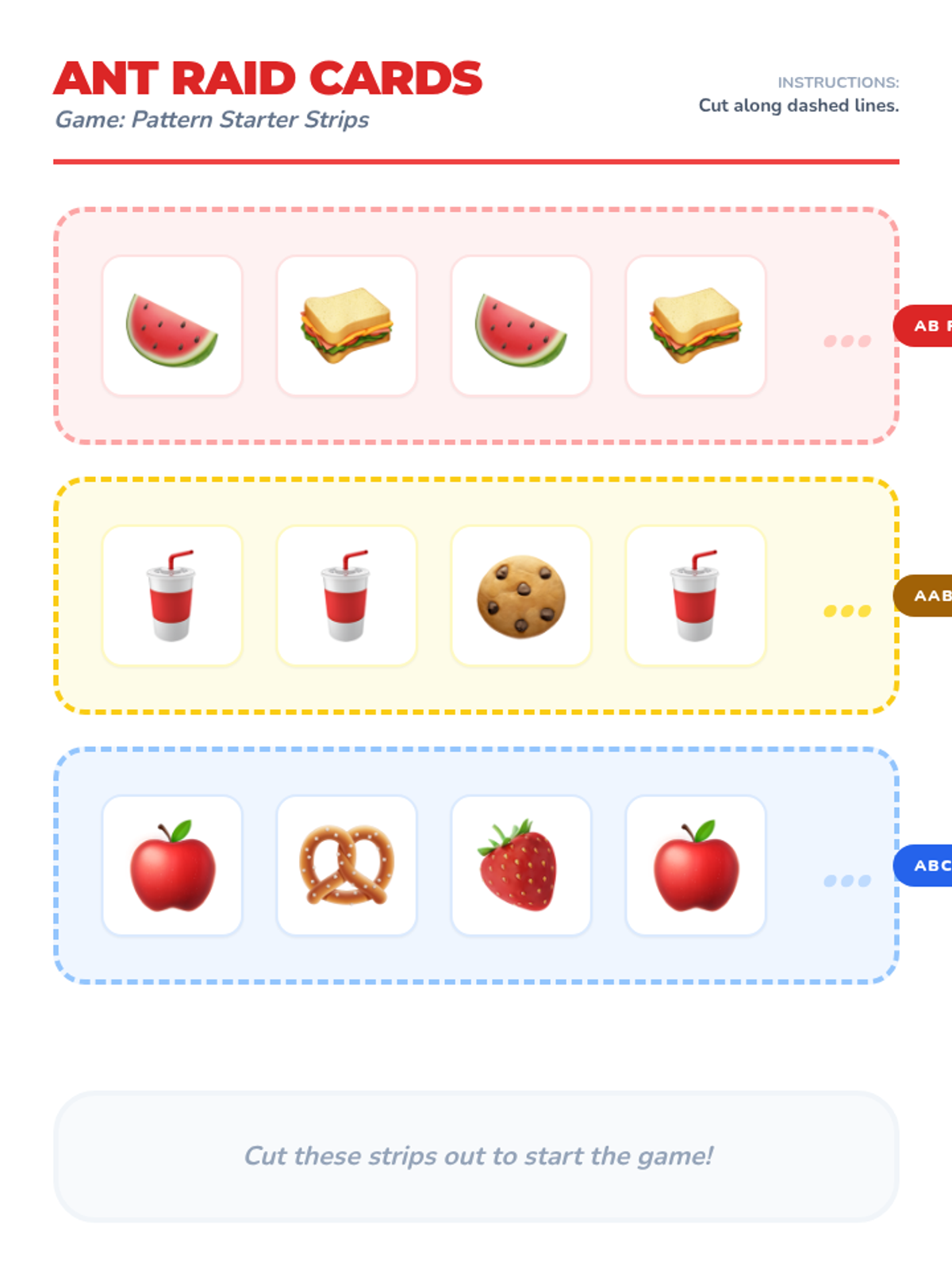
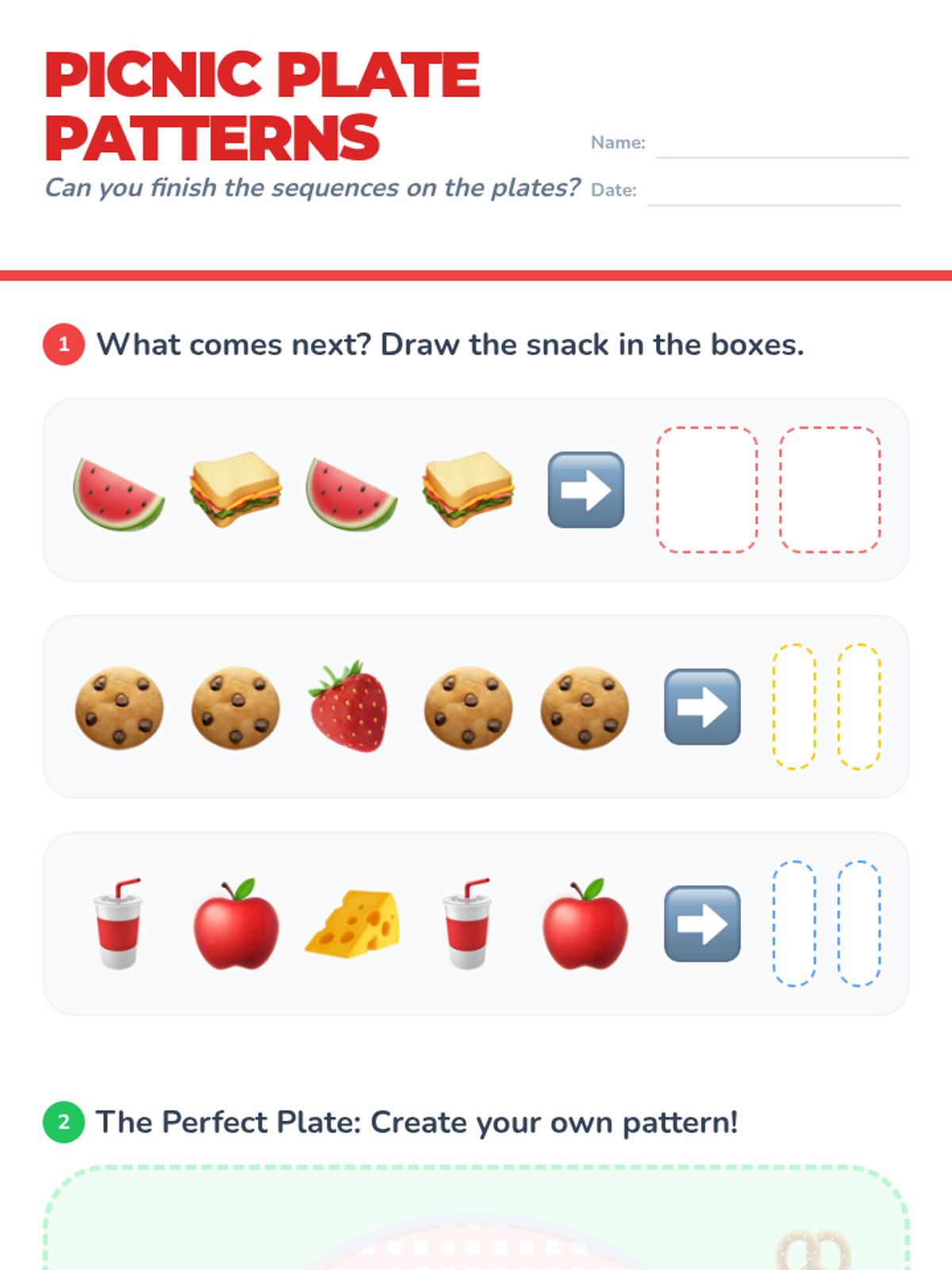
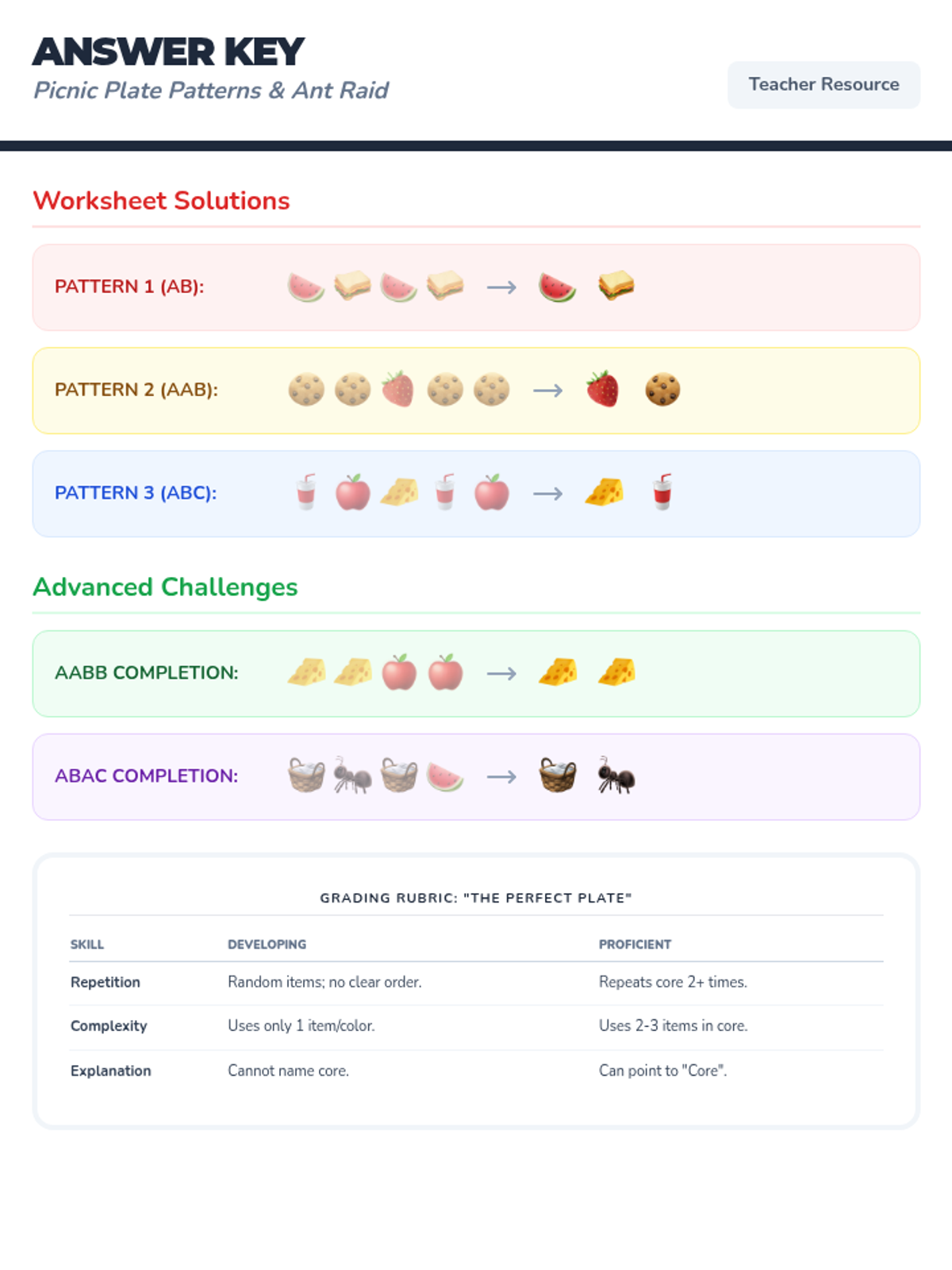
A hands-on lesson where students explore visual patterns using picnic-themed items to build early algebraic thinking skills. Students identify, extend, and create their own sequences using fruits, snacks, and picnic gear.
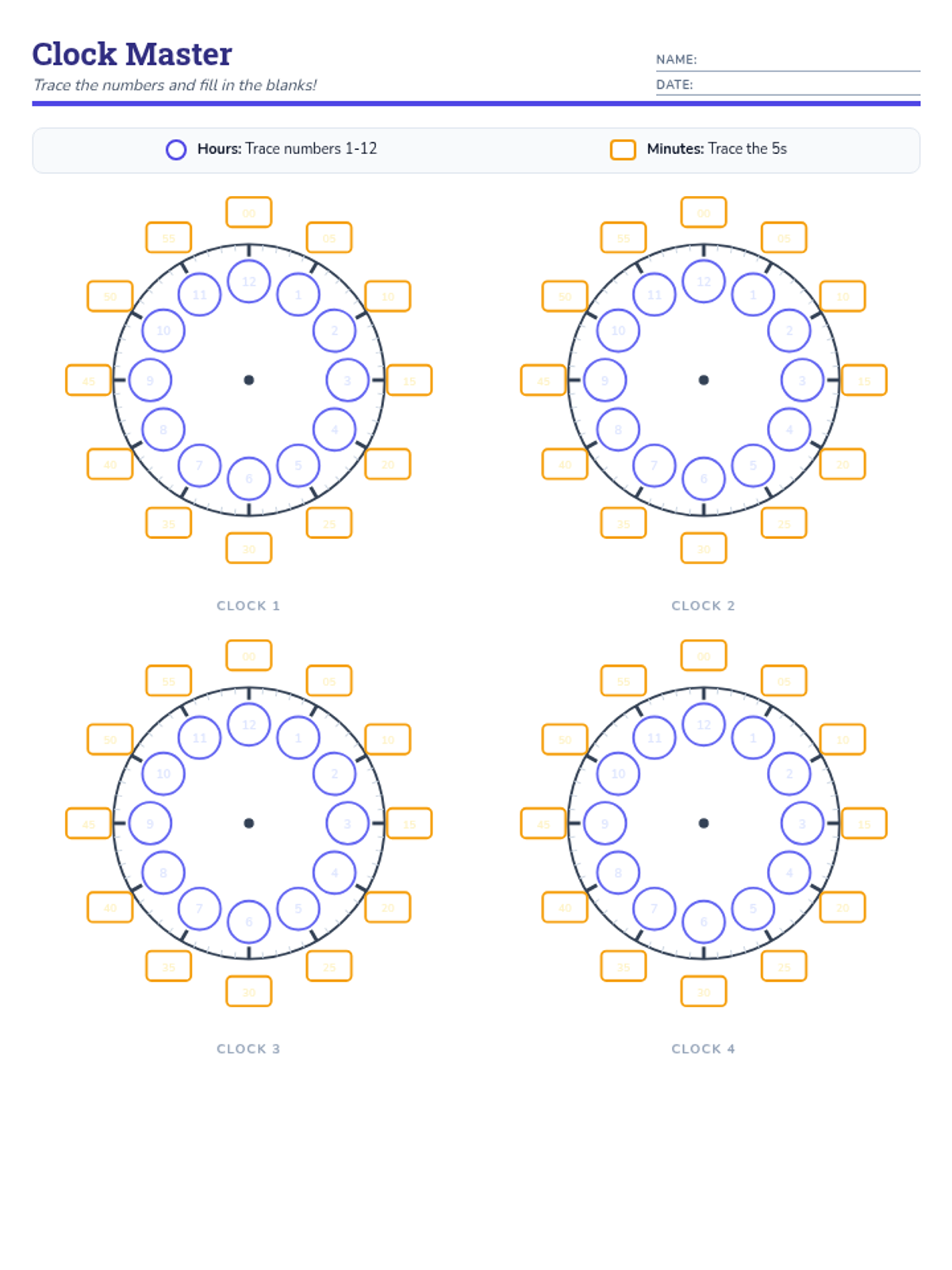
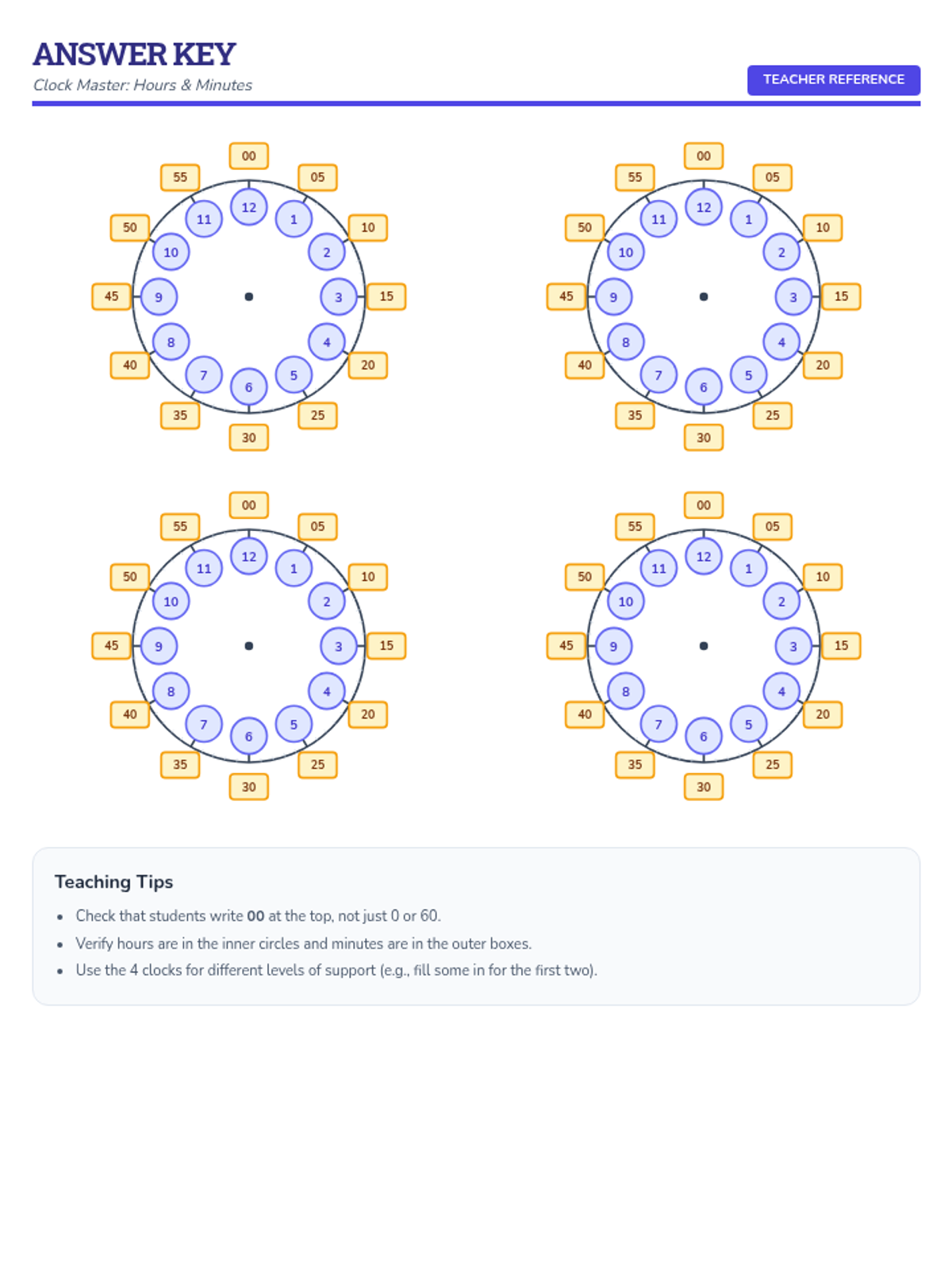
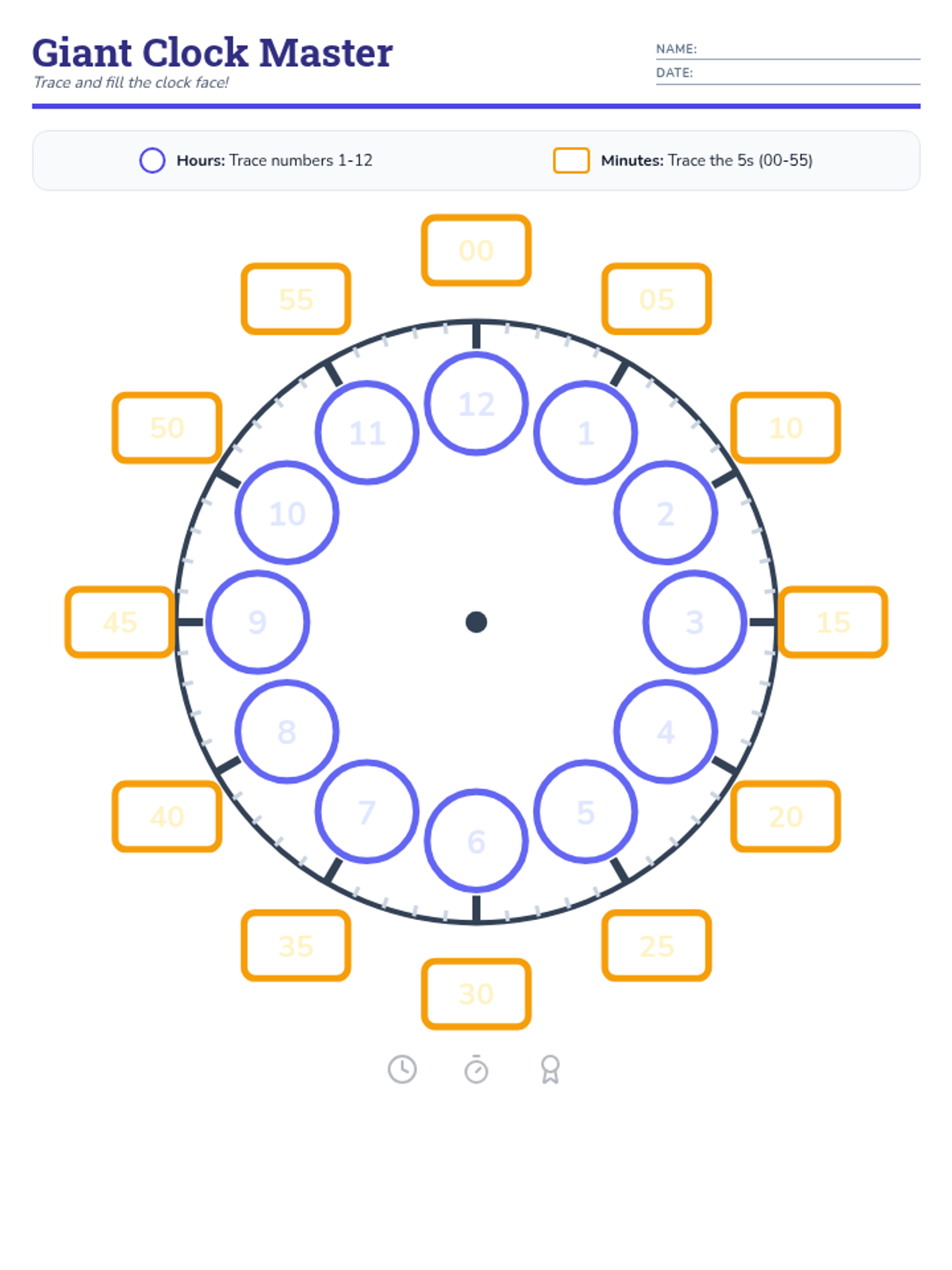
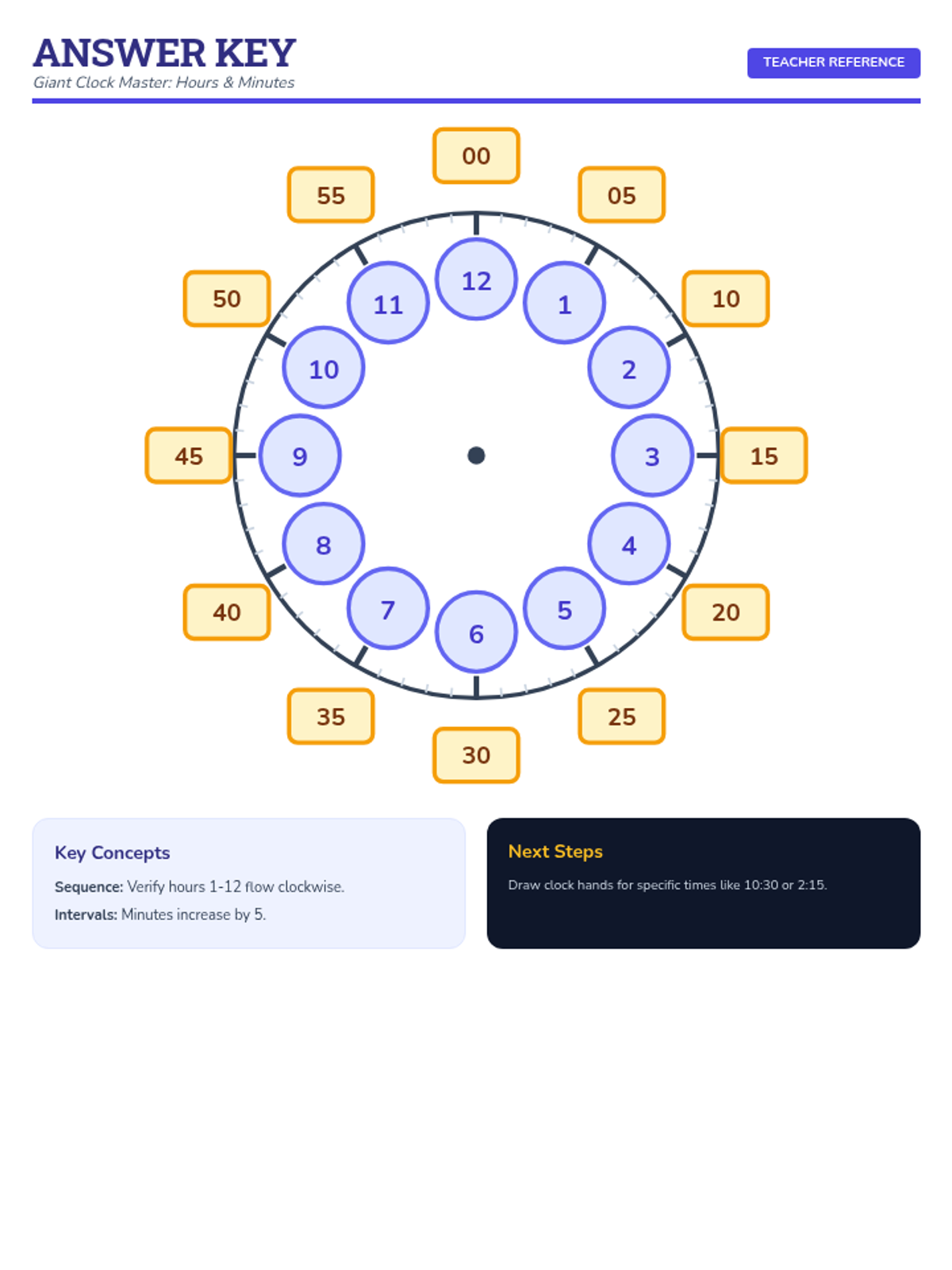
A foundational lesson on clock anatomy, focusing on identifying hour numbers and five-minute increments. Students practice spatial reasoning and number sequencing within a circular layout.
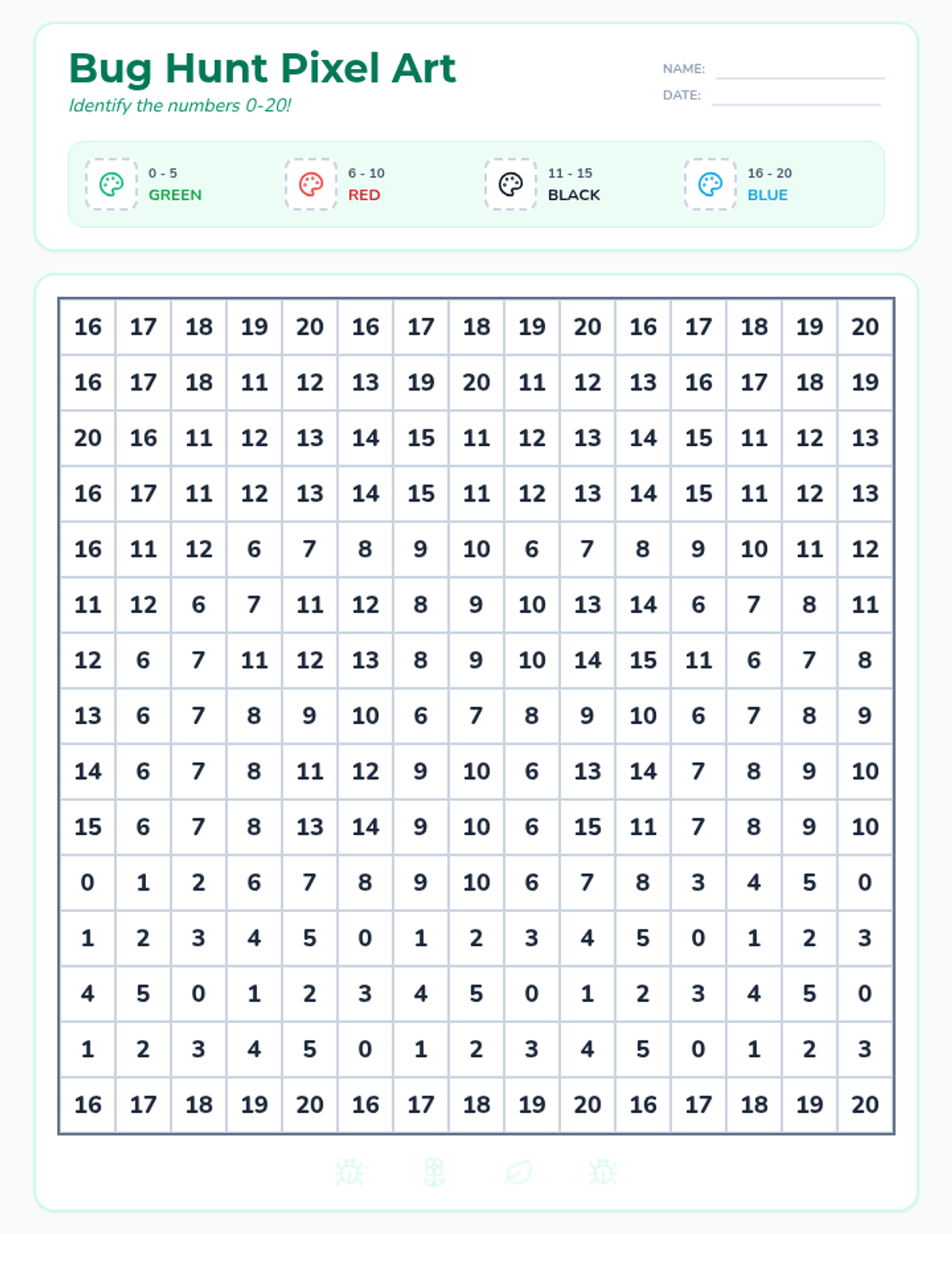
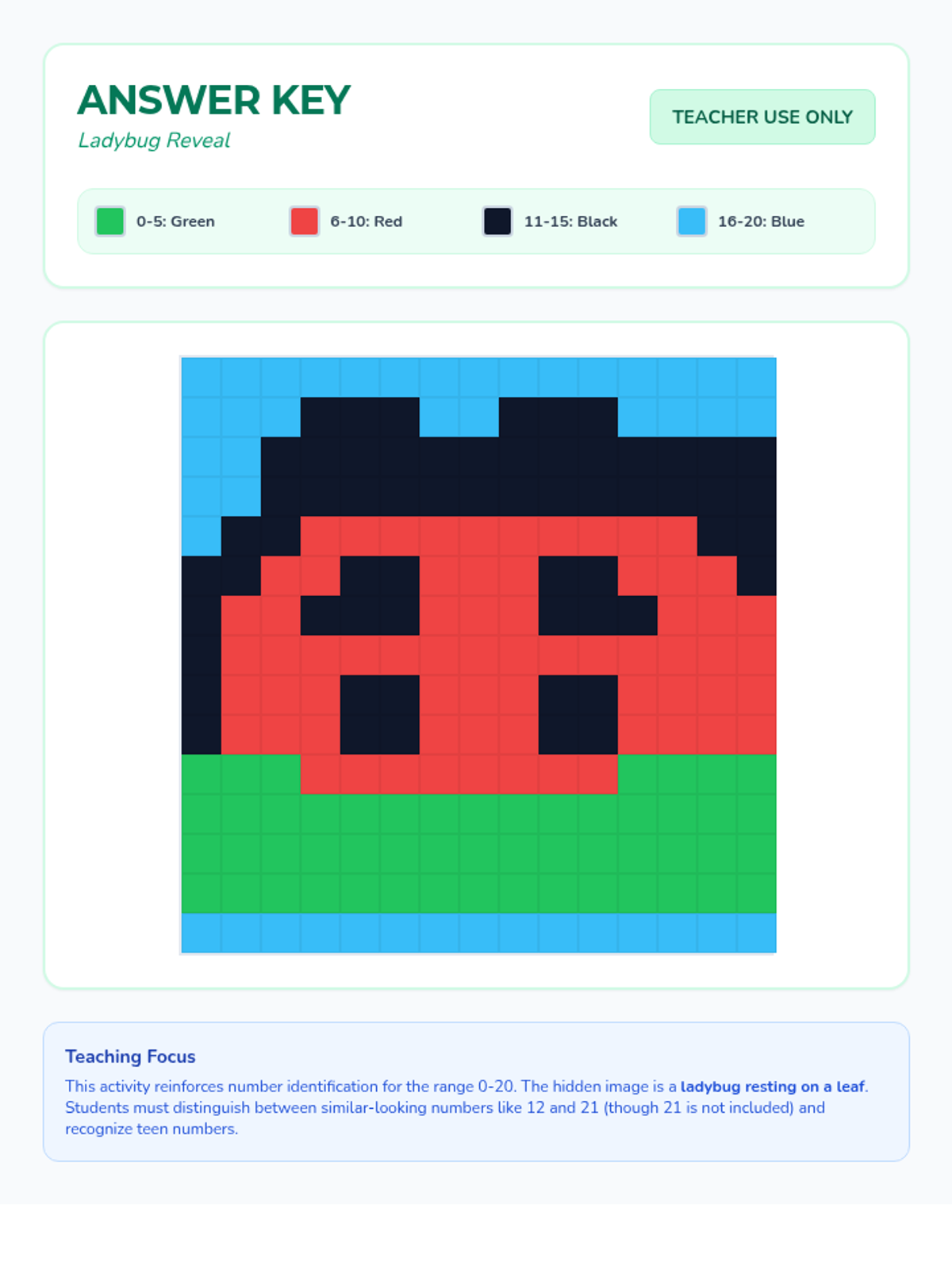
A fun, hands-on activity where students identify numbers 0-20 to reveal a hidden garden critter. Perfect for practicing number recognition and fine motor skills.
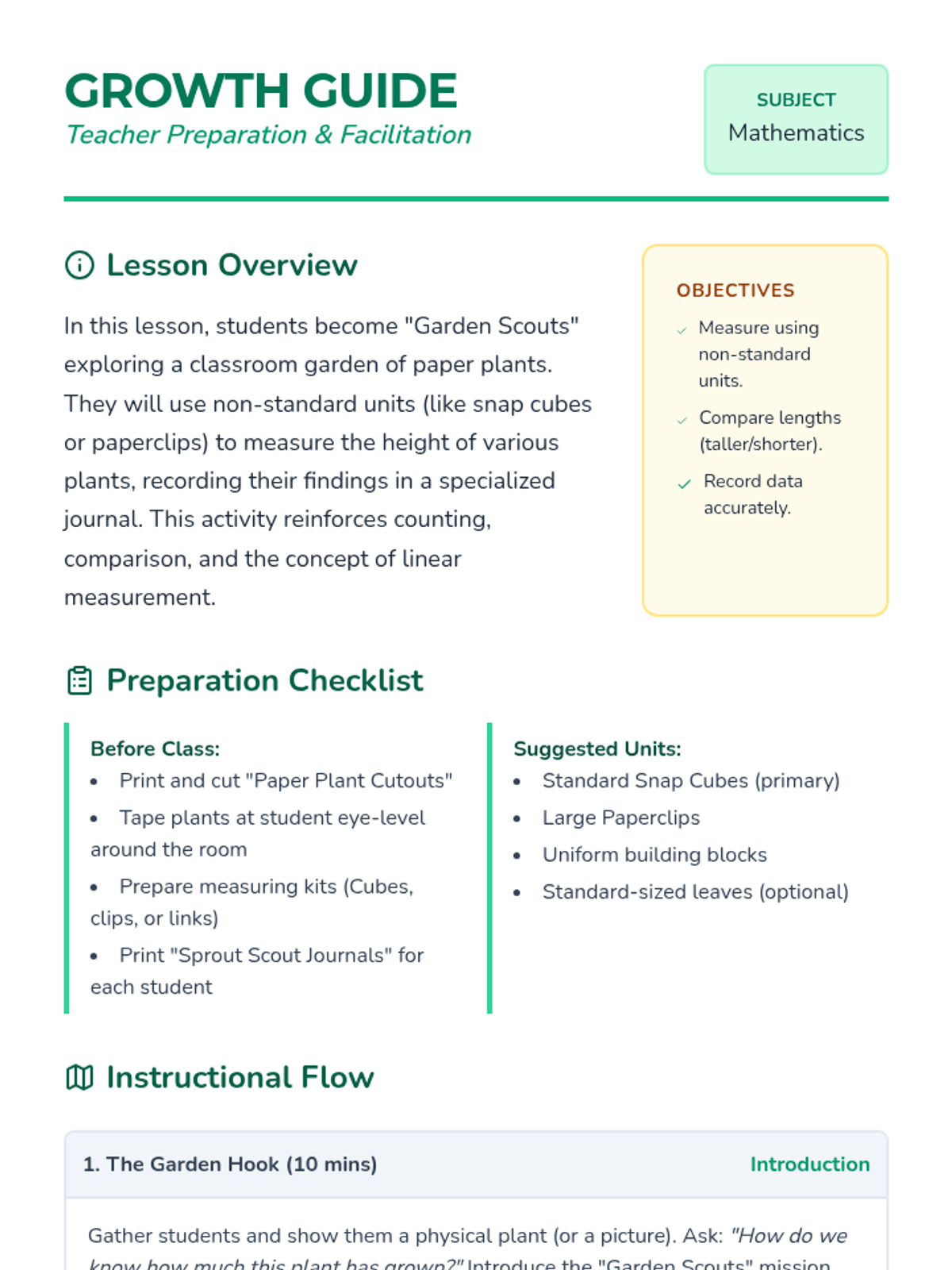
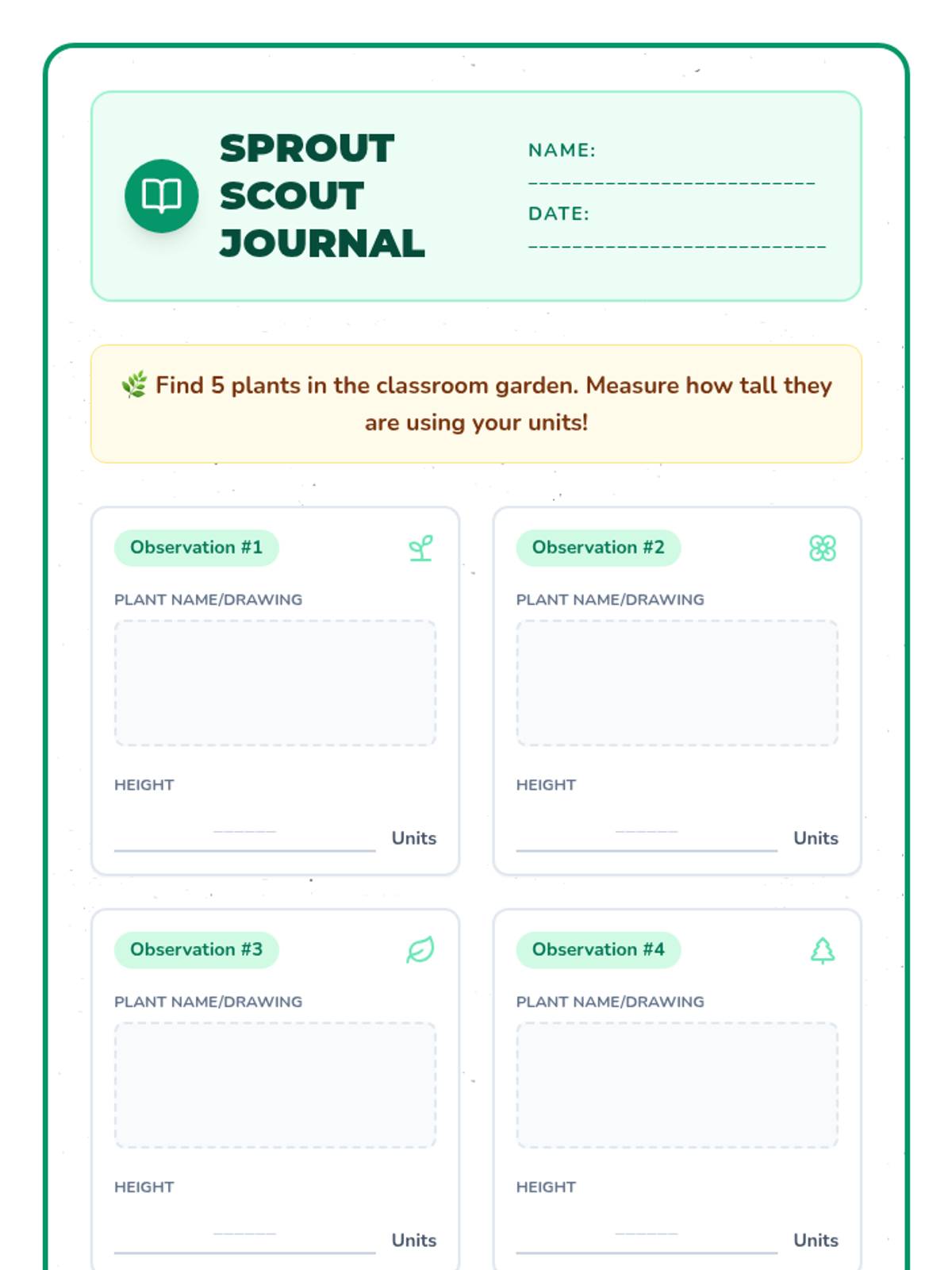
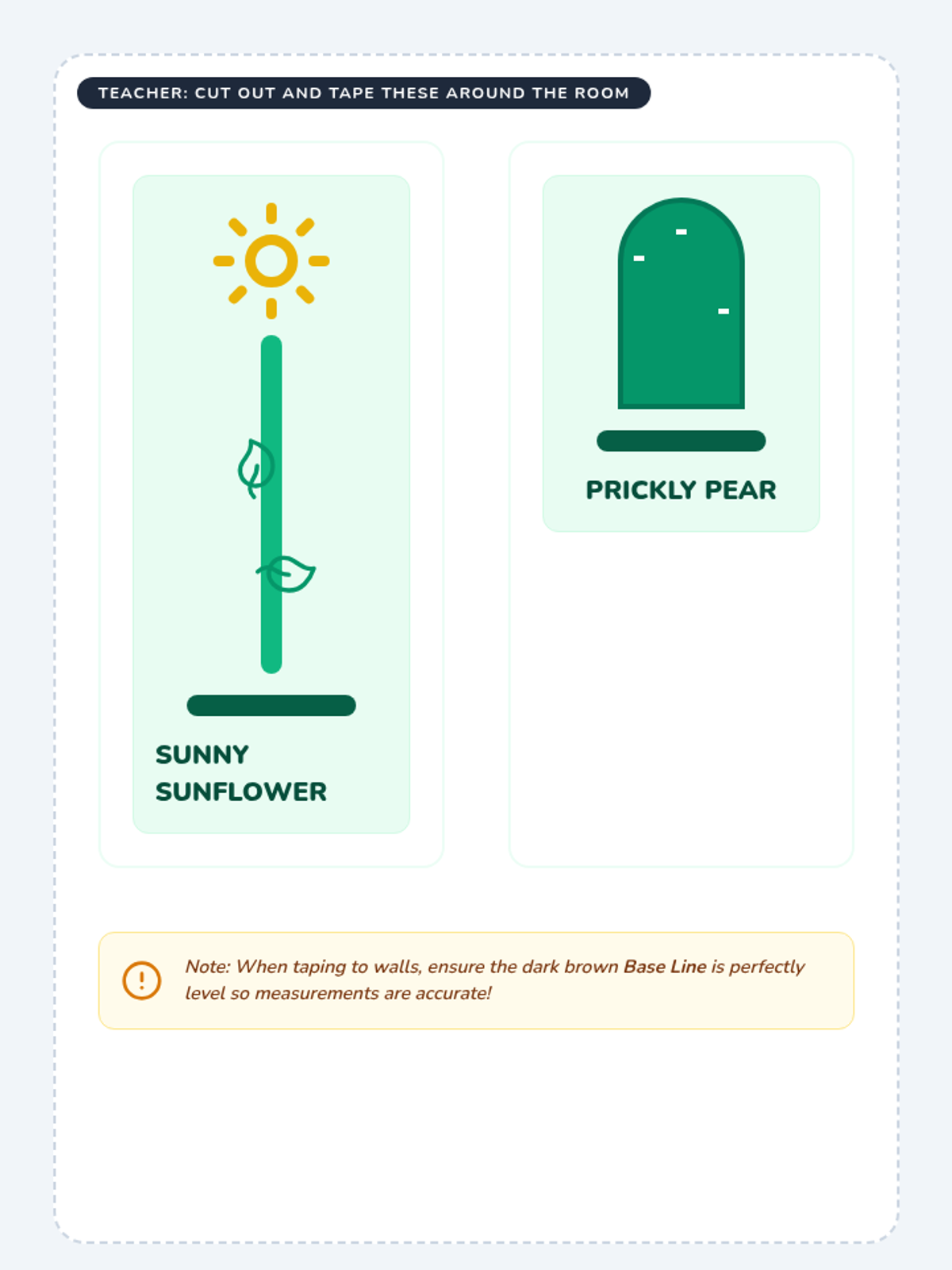
A hands-on measurement lesson where students use non-standard units to measure paper plants, fostering number sense and comparison skills through movement-based learning.
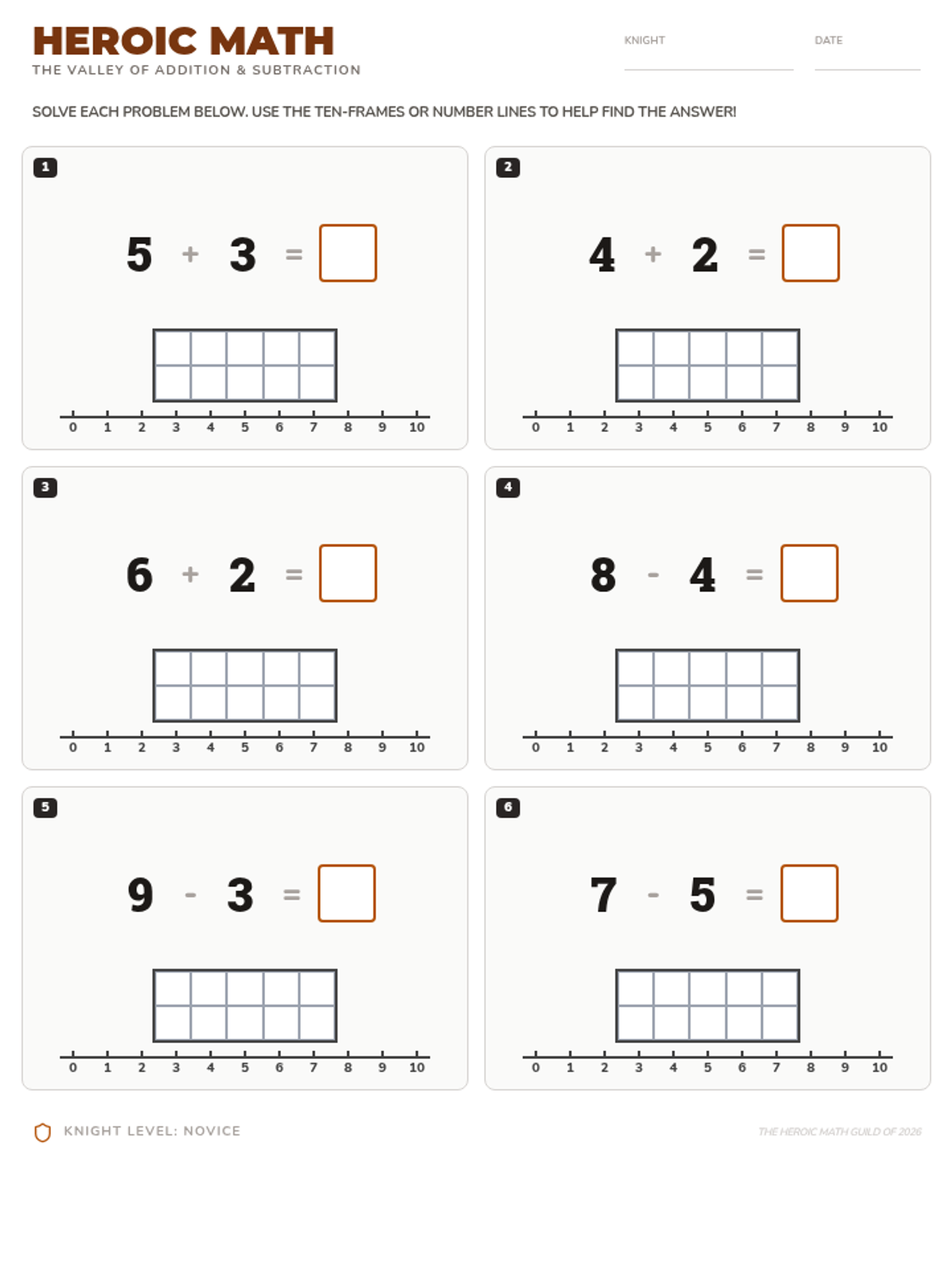
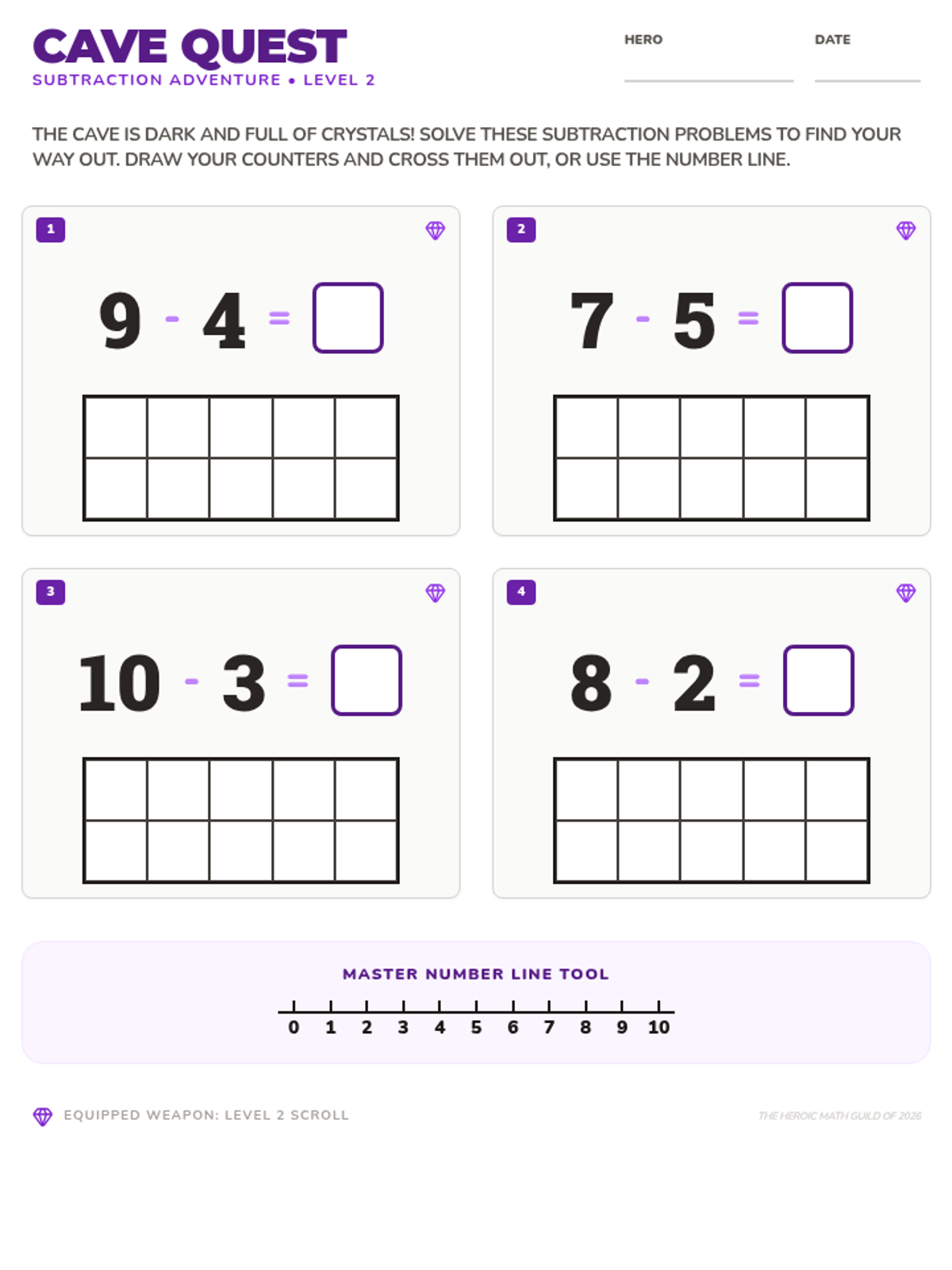
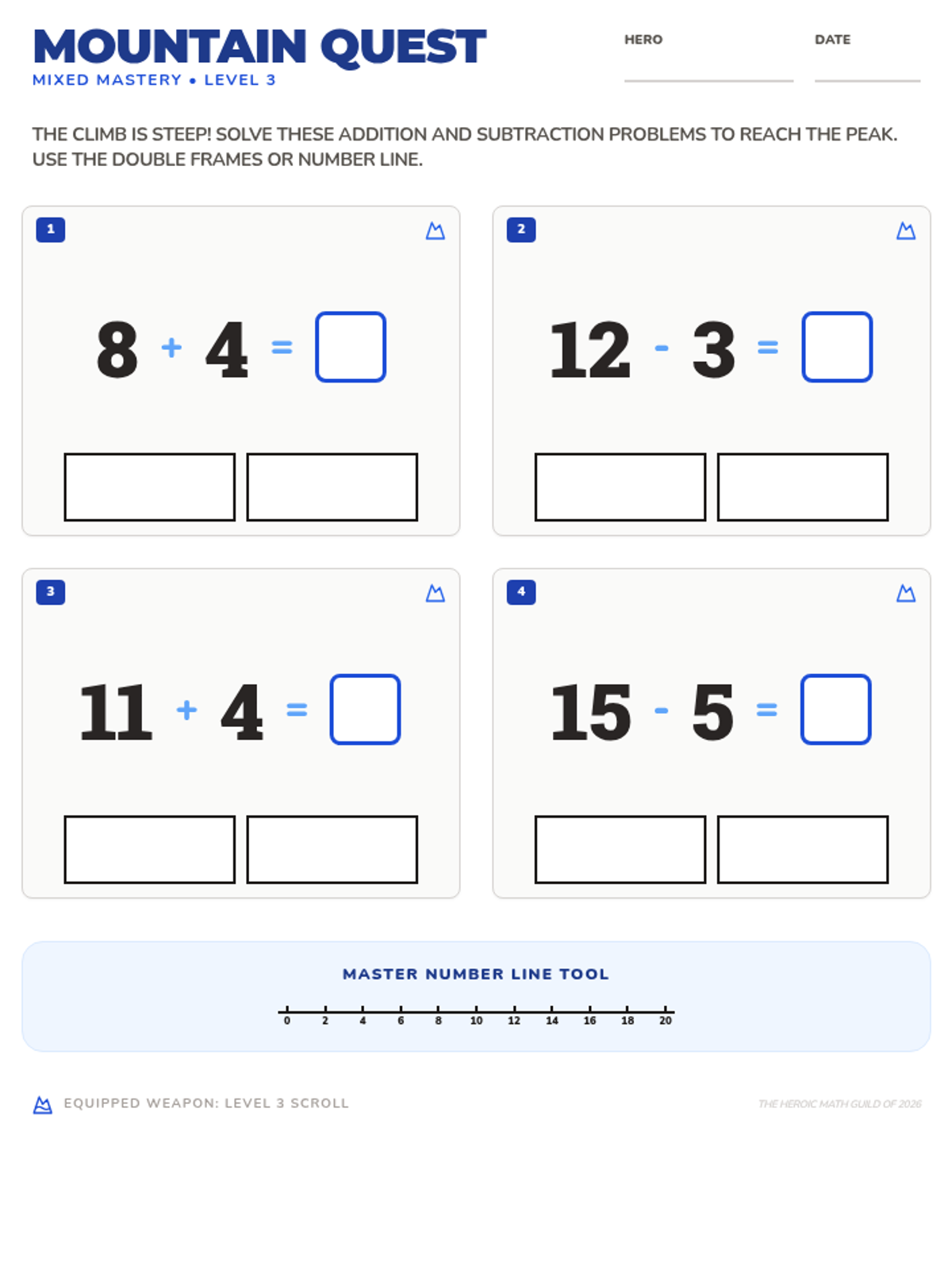
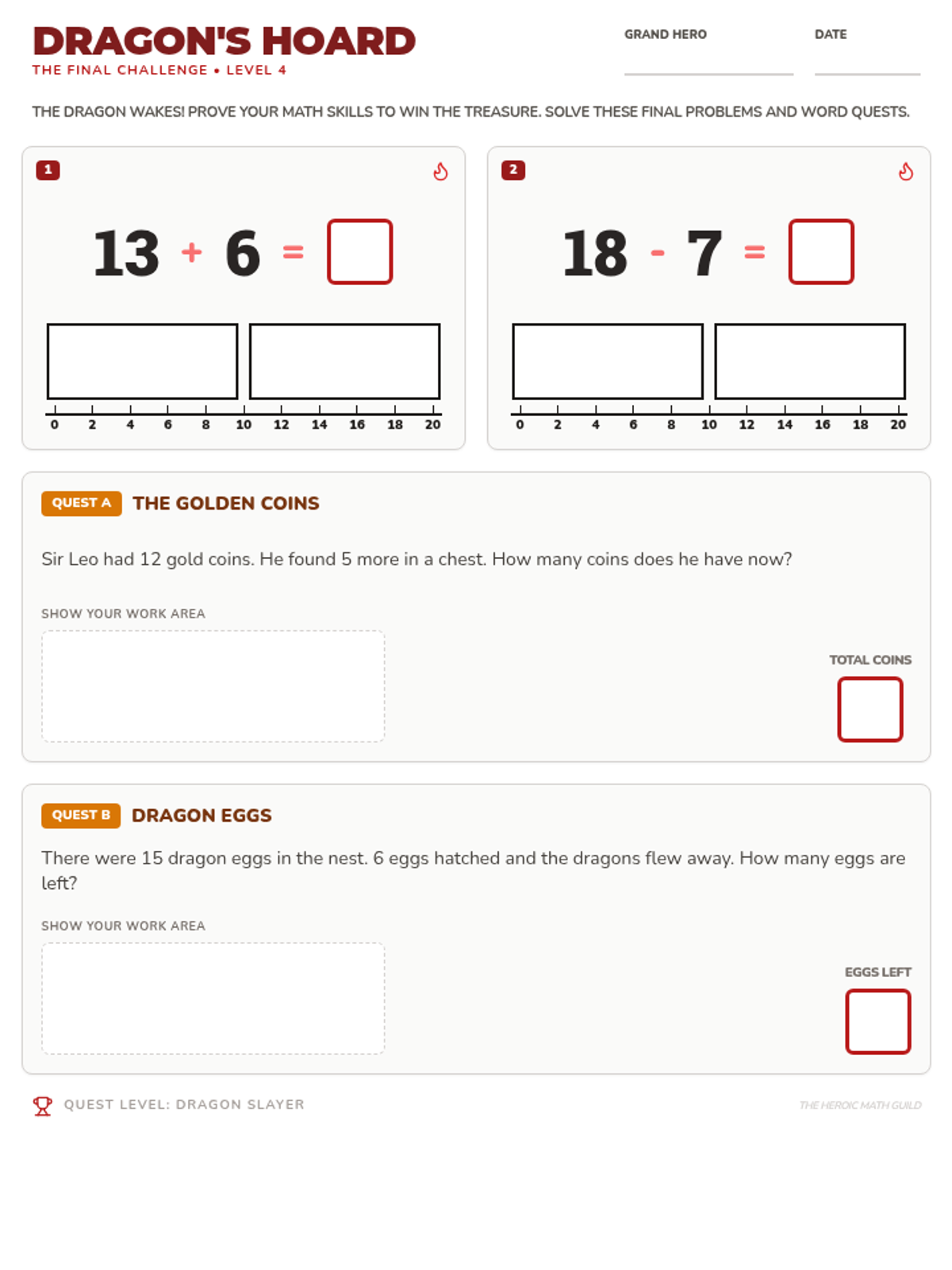
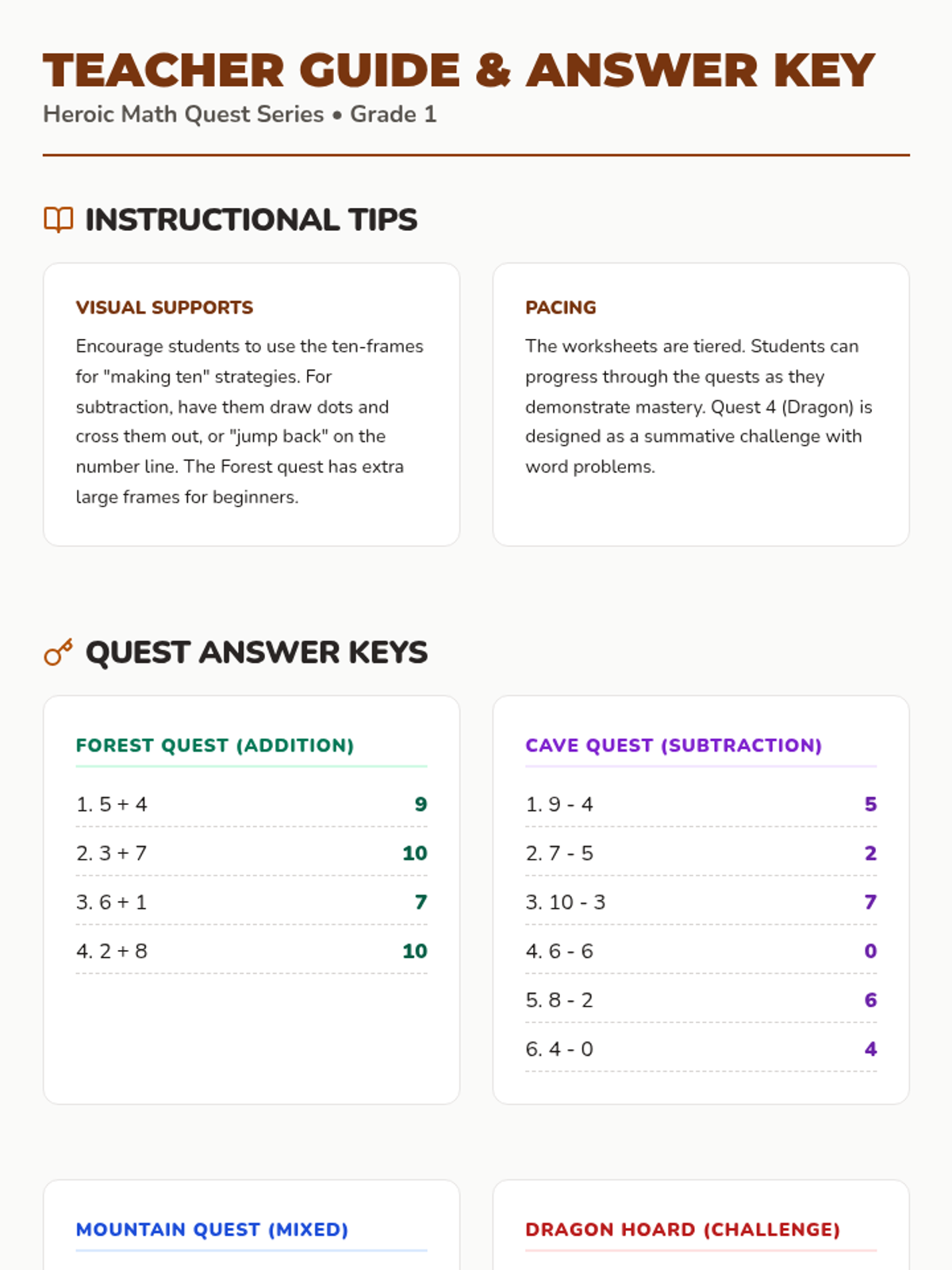
A series of math quests where students practice addition and subtraction within 20. Through medieval-themed challenges, students build fluency using ten-frames and number lines.