A 7th-grade writing lesson focused on using various phrase types (noun, adjective, adverb, prepositional, appositive, and participial) to expand simple kernel sentences into rich, descriptive prose without adding new clauses.
A comprehensive lesson on analyzing poetry using the TPCASTT method, featuring a deep dive into Robert Frost's 'The Road Not Taken' and a gallery walk of diverse poems.
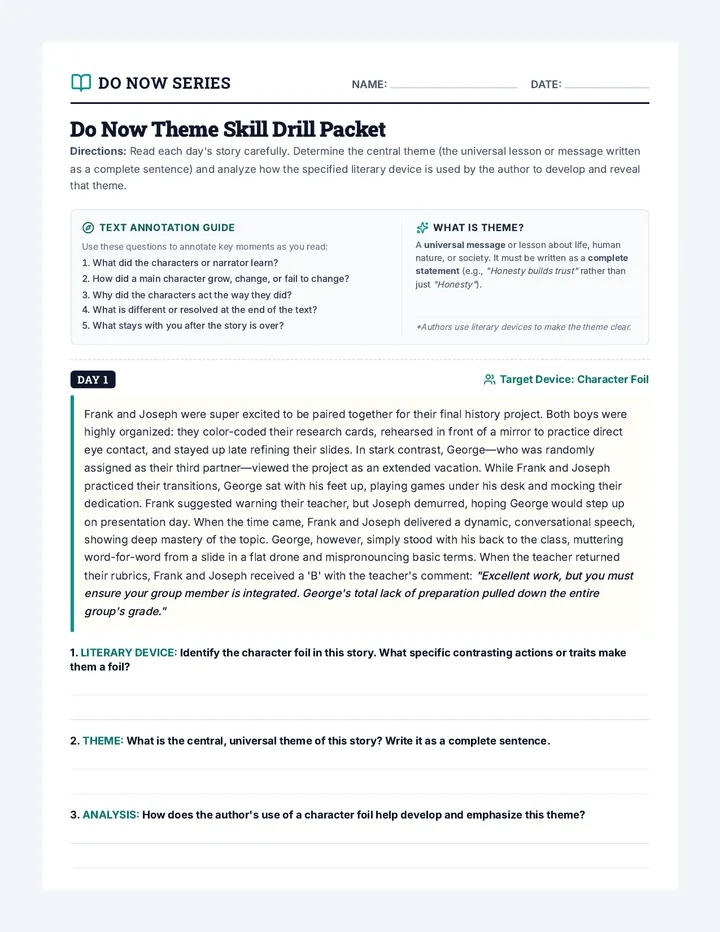
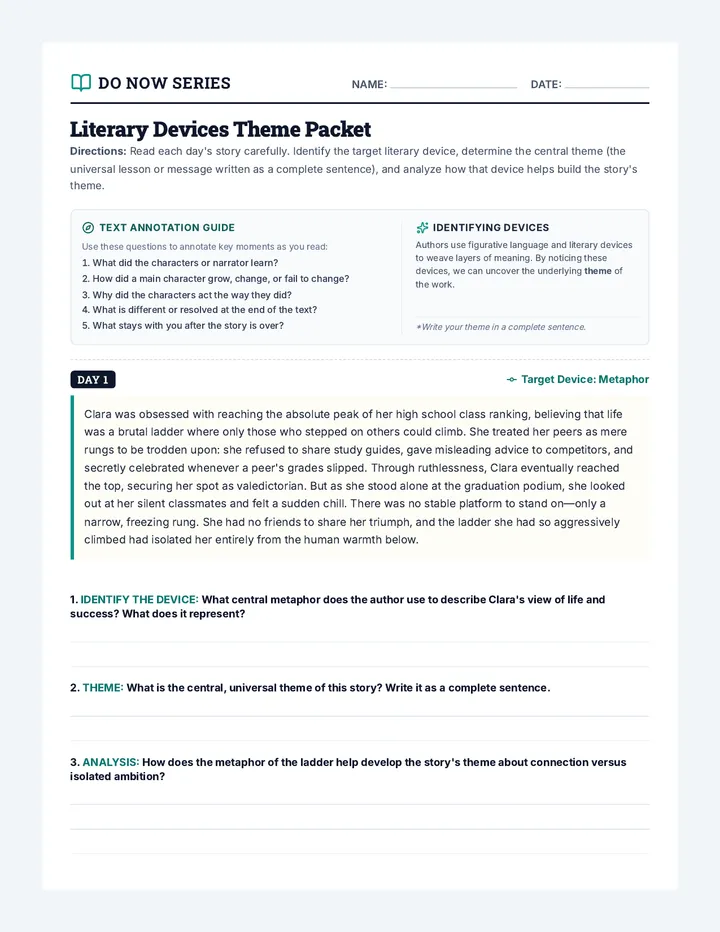
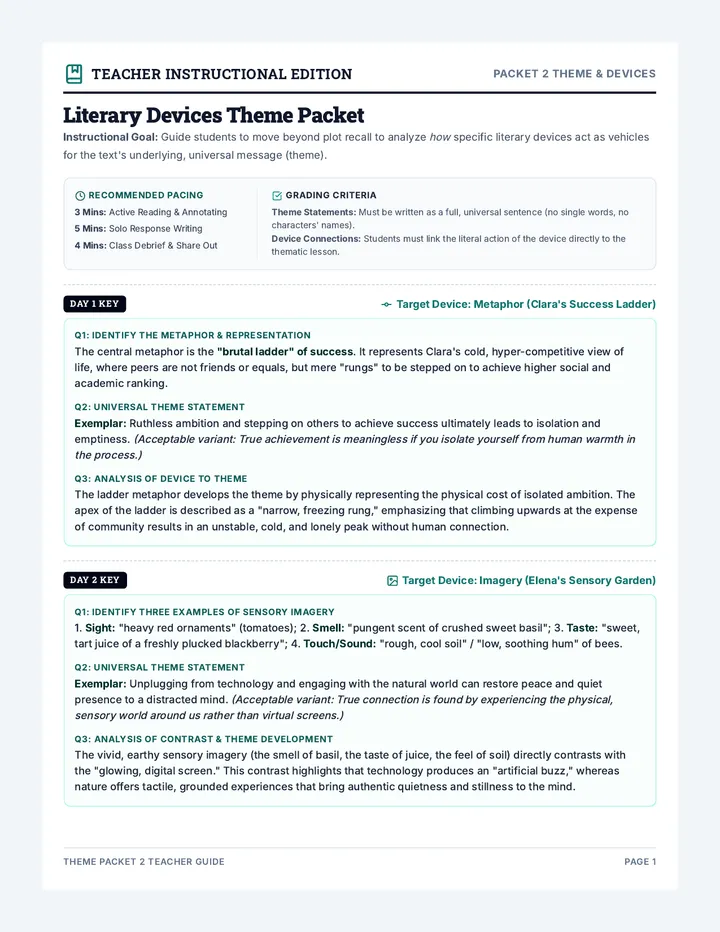
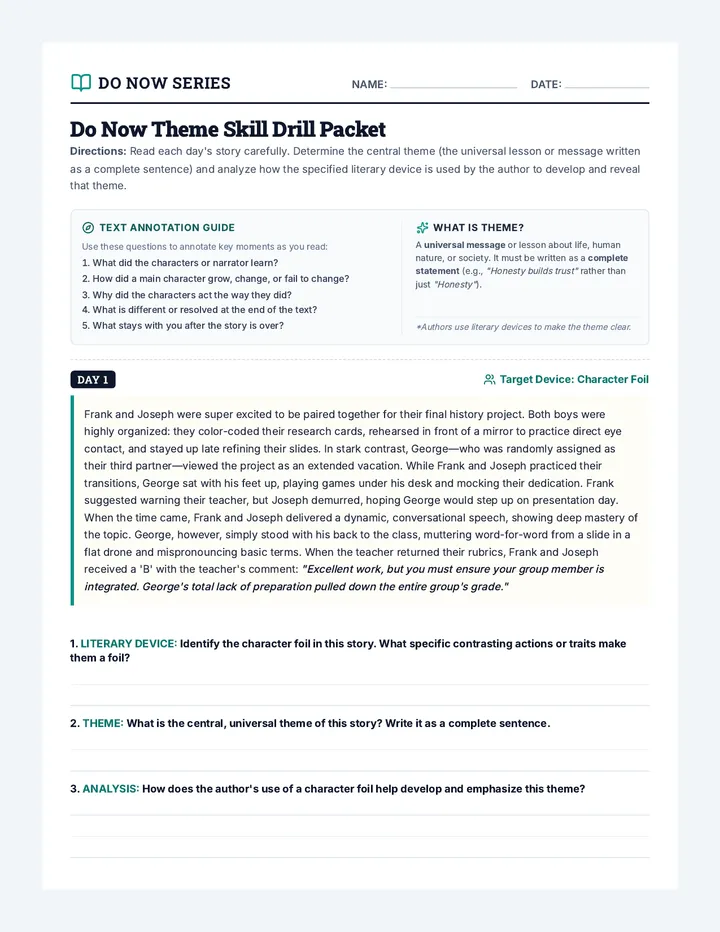
A lesson focused on identifying the central message and supporting it with text evidence from the story 'Seasons of Life'.
A comprehensive lesson on demonstrative pronouns and adjectives (this, that, these, those) themed around a museum gallery. Students learn to distinguish between near and far, singular and plural, and the difference between demonstrative pronouns and adjectives.
A comprehensive guide and graphic organizer to help 5th-grade students structure their historical essays with clear evidence and logical flow.
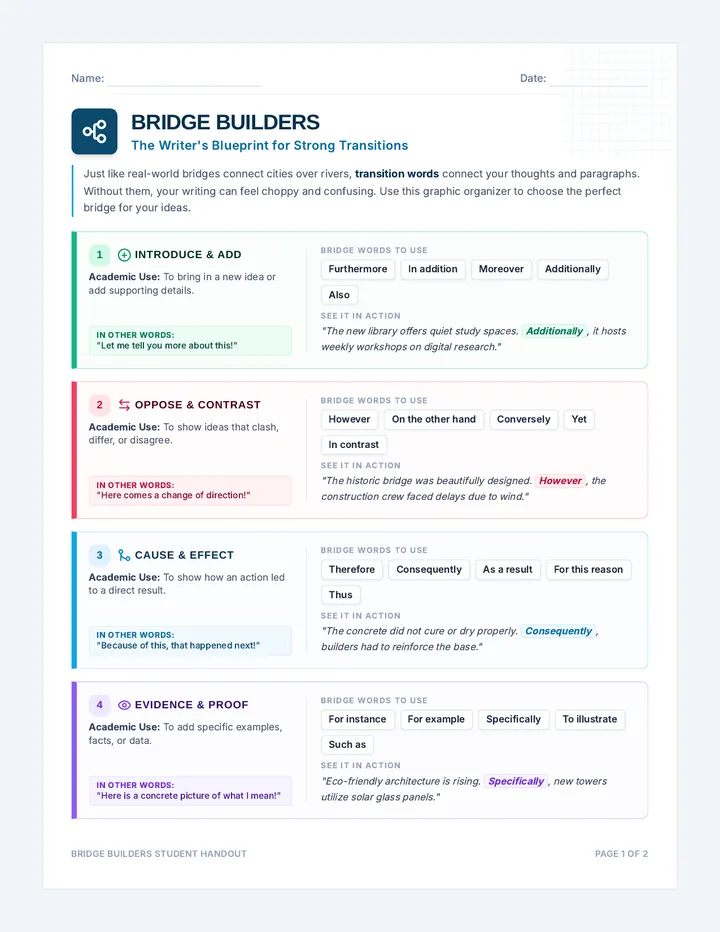
A lesson on identifying and using common transition words to create cohesion in writing. Students will categorize transitions by purpose (Addition, Contrast, Cause/Effect, Time) and use them to link ideas.
A comprehensive lesson on identifying and using main verbs and primary auxiliary verbs (be, do, have) in sentences. Includes a structured lesson plan, a practice handout, and a detailed answer key with monitoring tools.
A fun, hands-on lesson for 3rd graders to explore morphology by spinning and combining prefixes, bases, and suffixes. Students learn how affixes change the meaning and tense of base words.
A lesson exploring the encounter between Odysseus and Polyphemus, focusing on character traits and cleverness through differentiated readings and assessments.
A lesson focusing on identifying and analyzing the five stages of plot structure using the novel Al Capone Does My Shirts as a primary example. Students explore the arc of Moose Flanagan's journey on Alcatraz.
A collection of versatile graphic organizers designed to help students analyze fiction and nonfiction picture books. Each organizer focuses on a specific reading skill, providing a structured framework for student response.
A toolkit of success criteria and structured practice materials for IMSE Orton-Gillingham dictation routines, focusing on word mapping and sentence conventions.
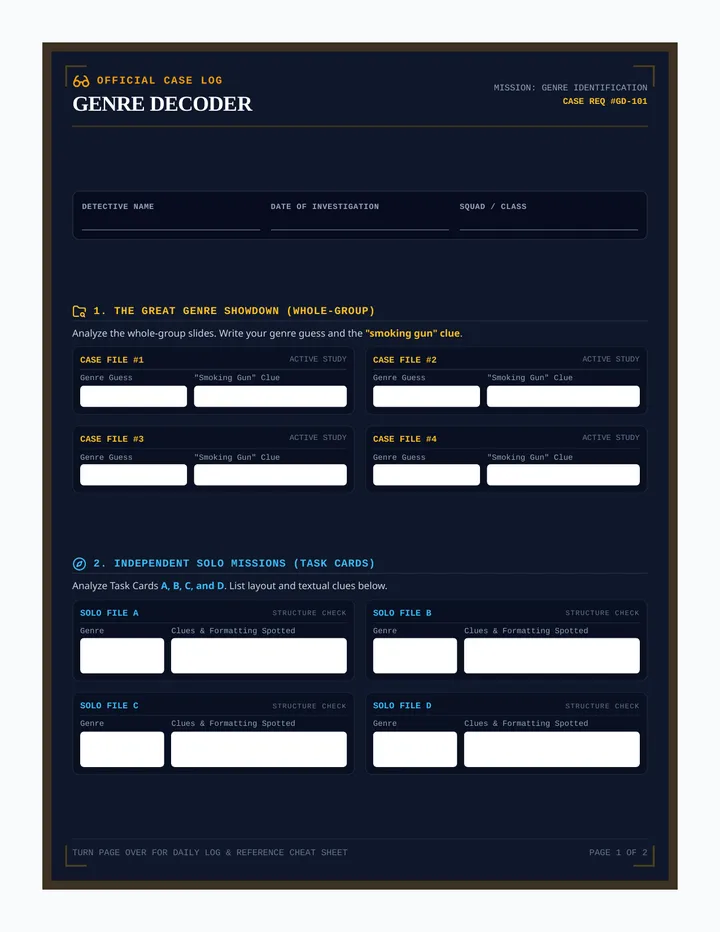
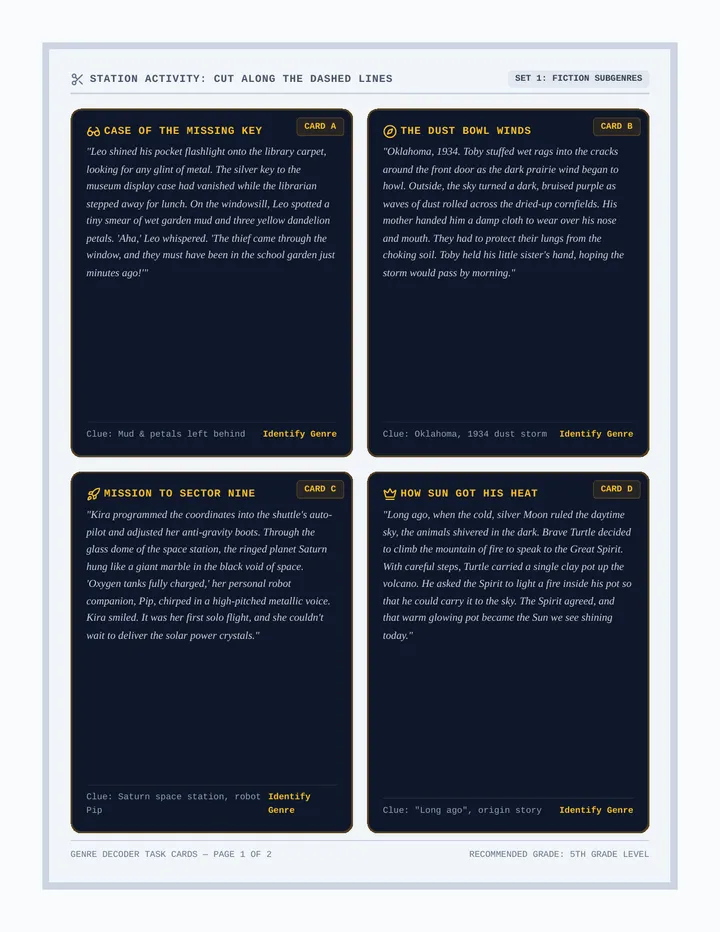
A comprehensive lesson on demonstrative pronouns and adjectives (this, that, these, those), focusing on distance and number through a detective-themed investigation.
A deep dive into the classic Greek myth of Theseus and the Minotaur, focusing on characterization, plot structure, and the complex nature of heroism.
A foundational lesson designed to guide high school students through the complex process of writing their first academic research paper. It covers source evaluation, citation mechanics, and structural outlining with a focus on transitioning toward college-level standards.
Refining the persuasive piece through peer review and assessment using the secret agent field manual rubric.
Drafting the final mission report (persuasive essay) using the evidence and structure gathered in previous sessions.
Students use a master blueprint graphic organizer to structure their persuasive arguments and address counter-intelligence (counter-arguments).