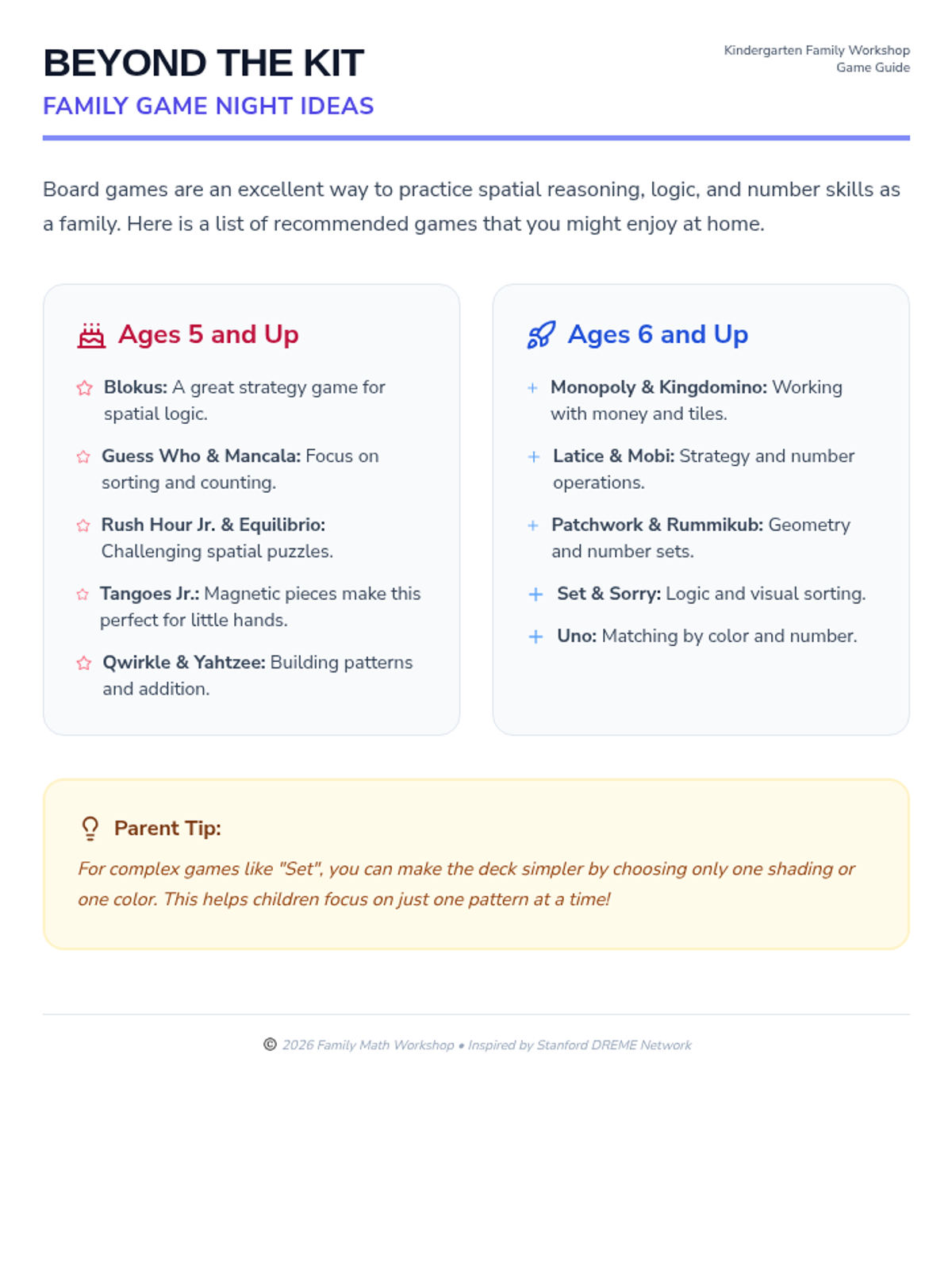
A multi-sensory math and art lesson for 1st and 2nd graders to explore 2D shape attributes through tactile creation and observation. Students identify shapes by sides and vertices while building textured geometric masterpieces.
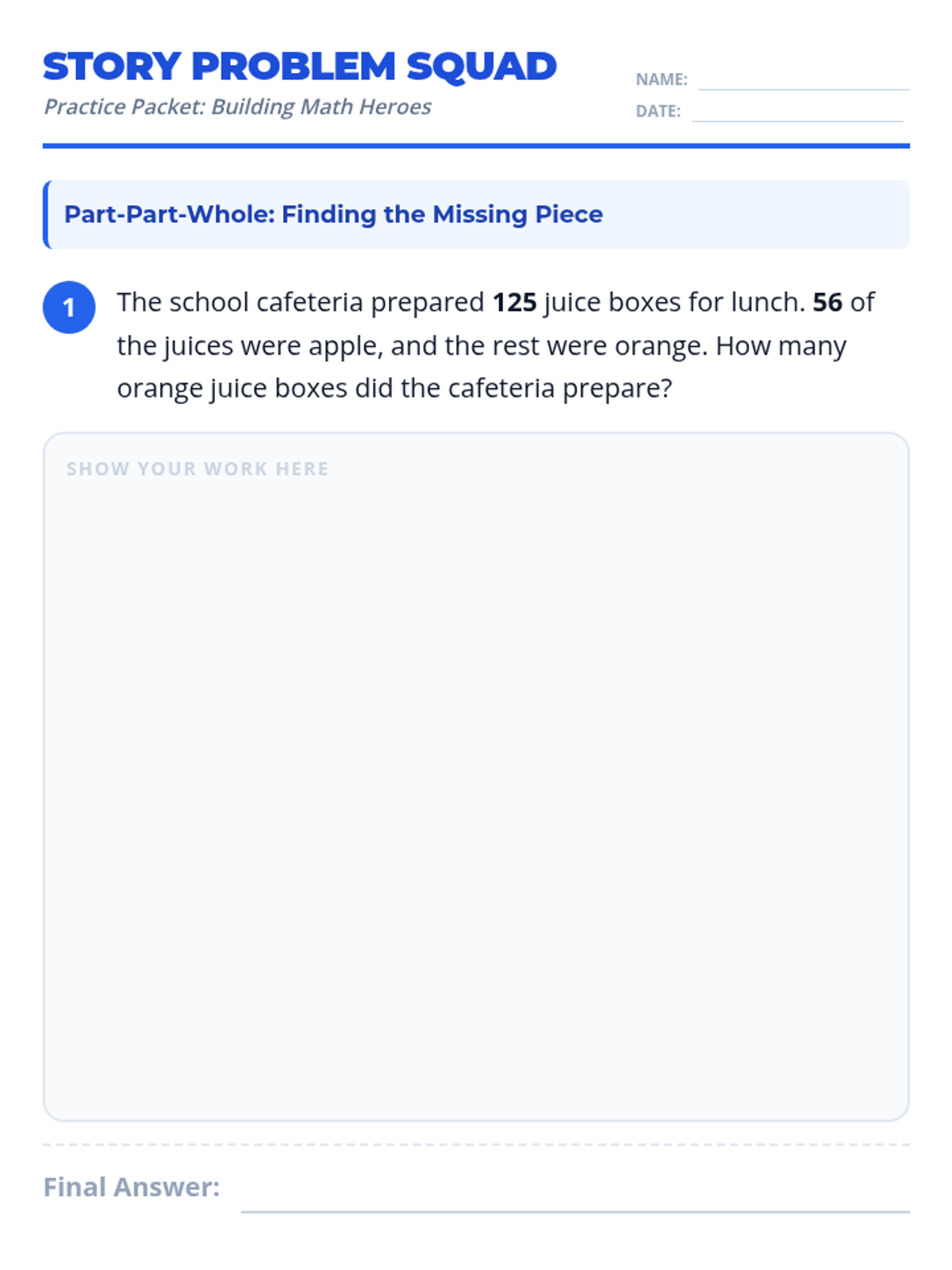
A beginner's guide to identifying basic 2D shapes and their properties, specifically focusing on sides and corners.
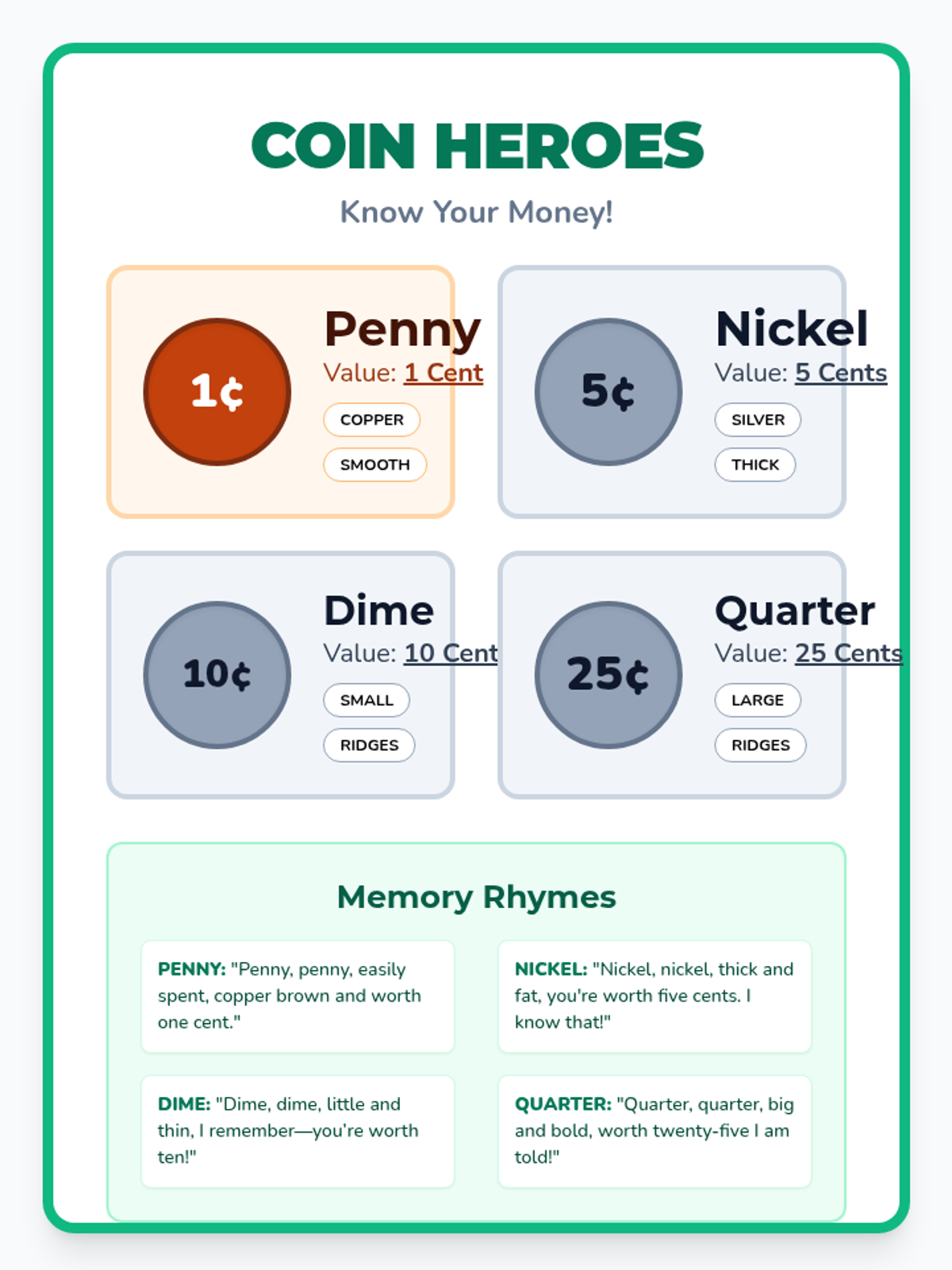
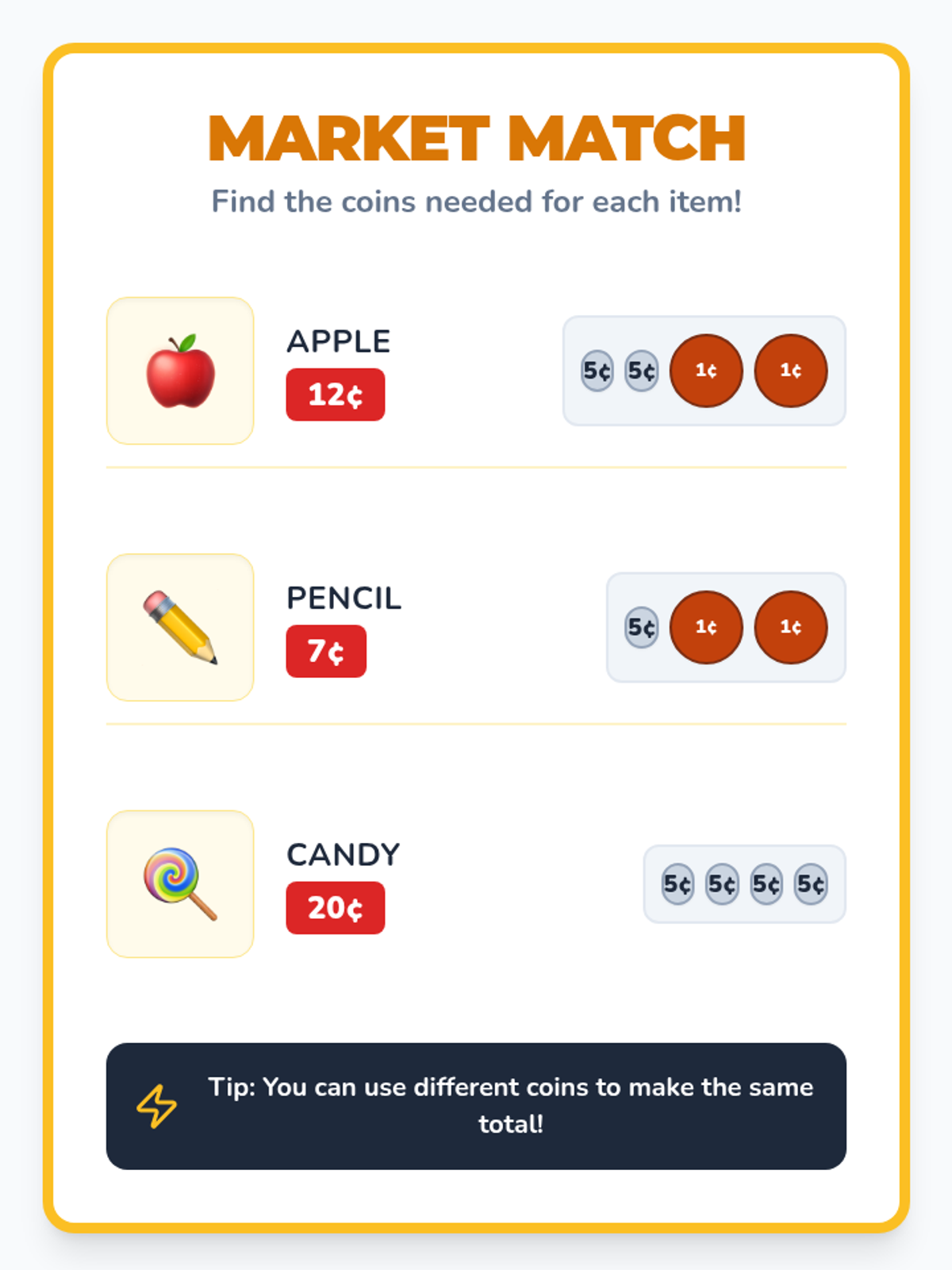
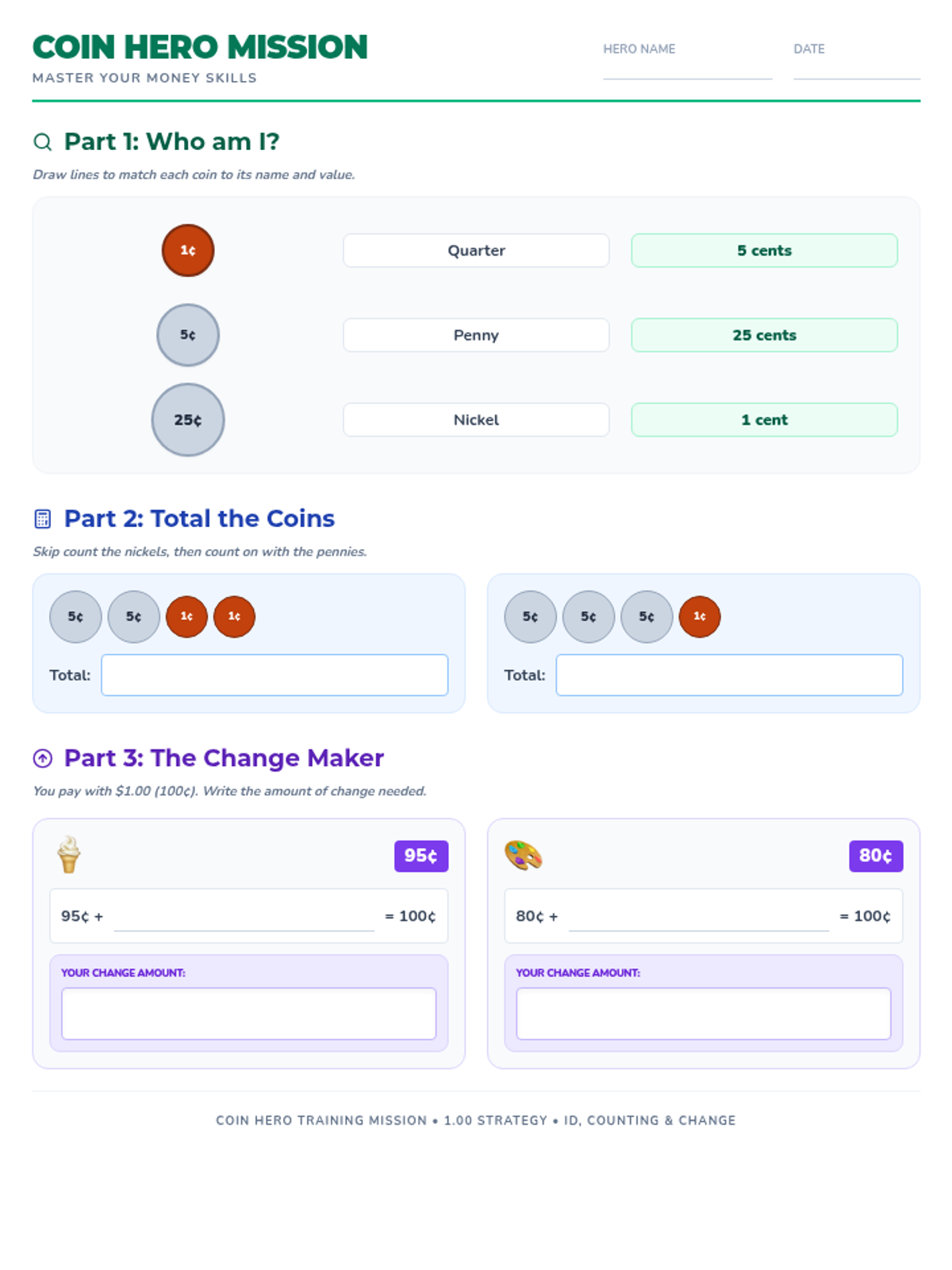
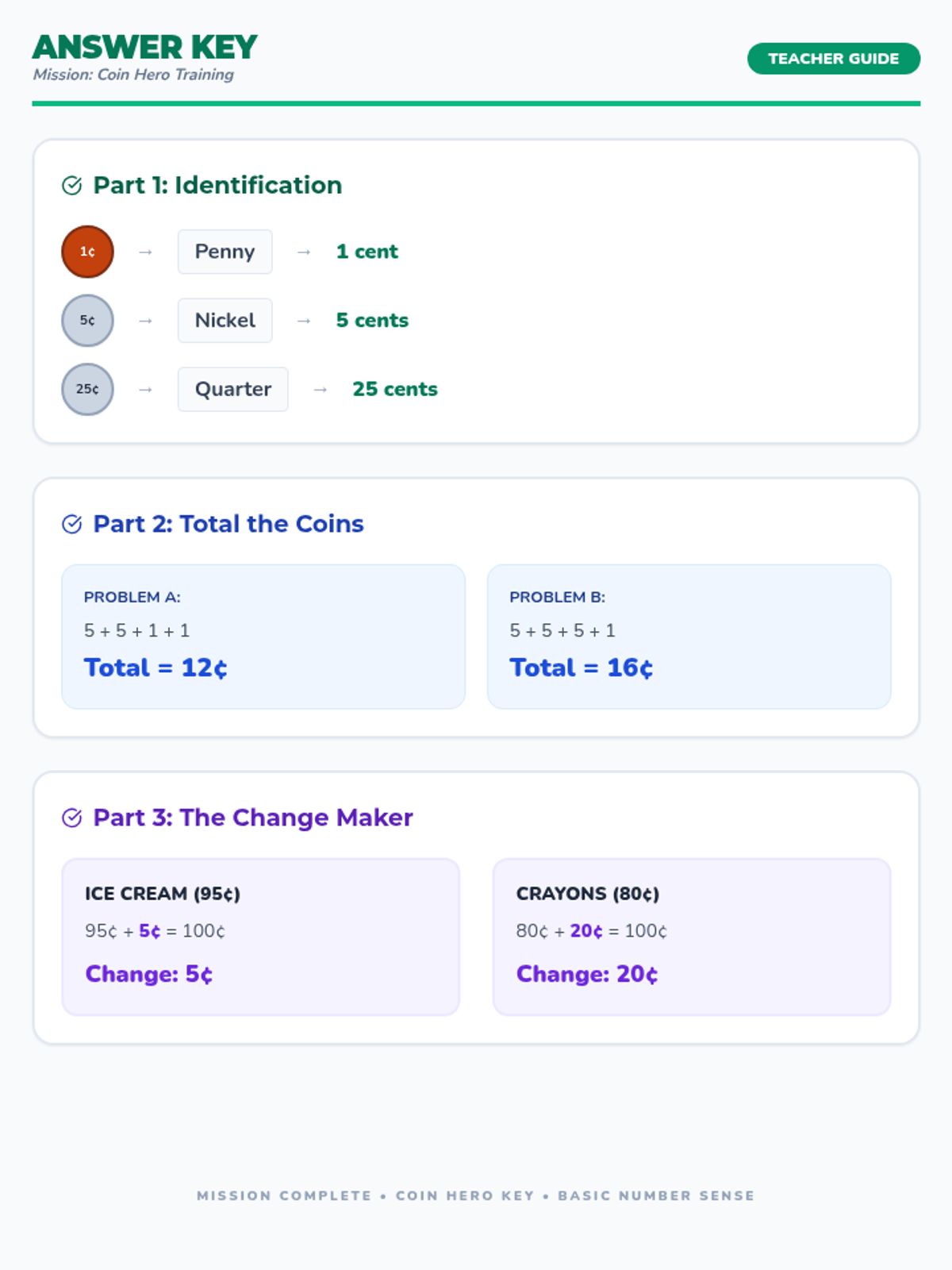
A fast-paced remediation lesson focused on identifying US coins and mastering the skill of counting mixed change up to one dollar.
A fundamental geometry lesson for identifying and counting the properties of basic polygons.
A foundational math lesson focused on the 'counting on' strategy within the range of 1-20. Students use space-themed visuals and hands-on centers to practice starting from any given number and continuing the sequence.
A foundational lesson on using a physical ruler to measure objects to the nearest whole inch, featuring hands-on practice and assessment.
An animal-themed foundational lesson on place value up to 50. Students help zoo keepers count their animals by grouping them into "Ten-Towers" and "Single Snacks," making place value concrete and engaging for young learners.
A comprehensive set of resources designed to help first graders master one-to-one correspondence for numbers 1-15 using garden-themed visuals, ten frames, and hands-on activities.
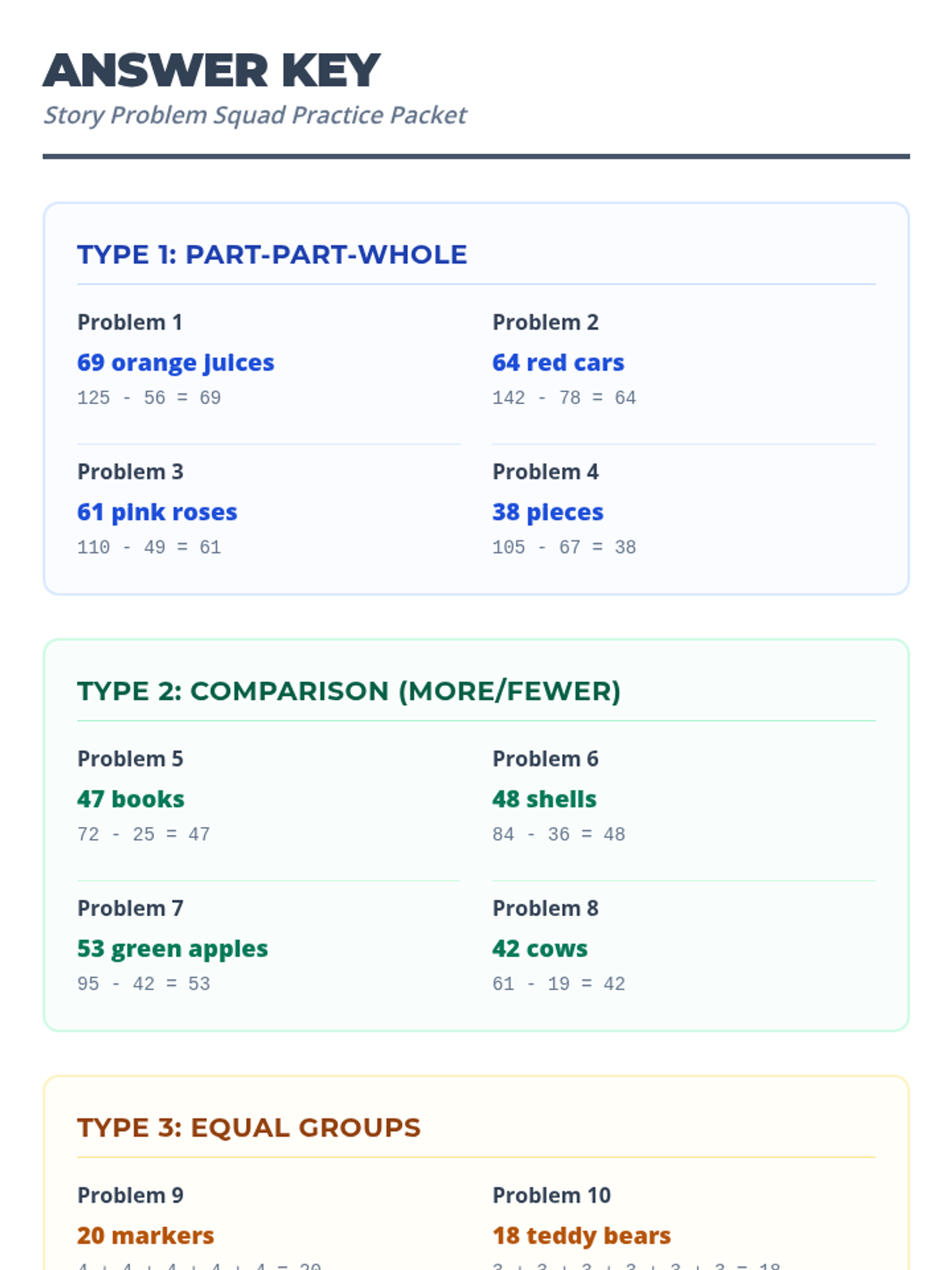
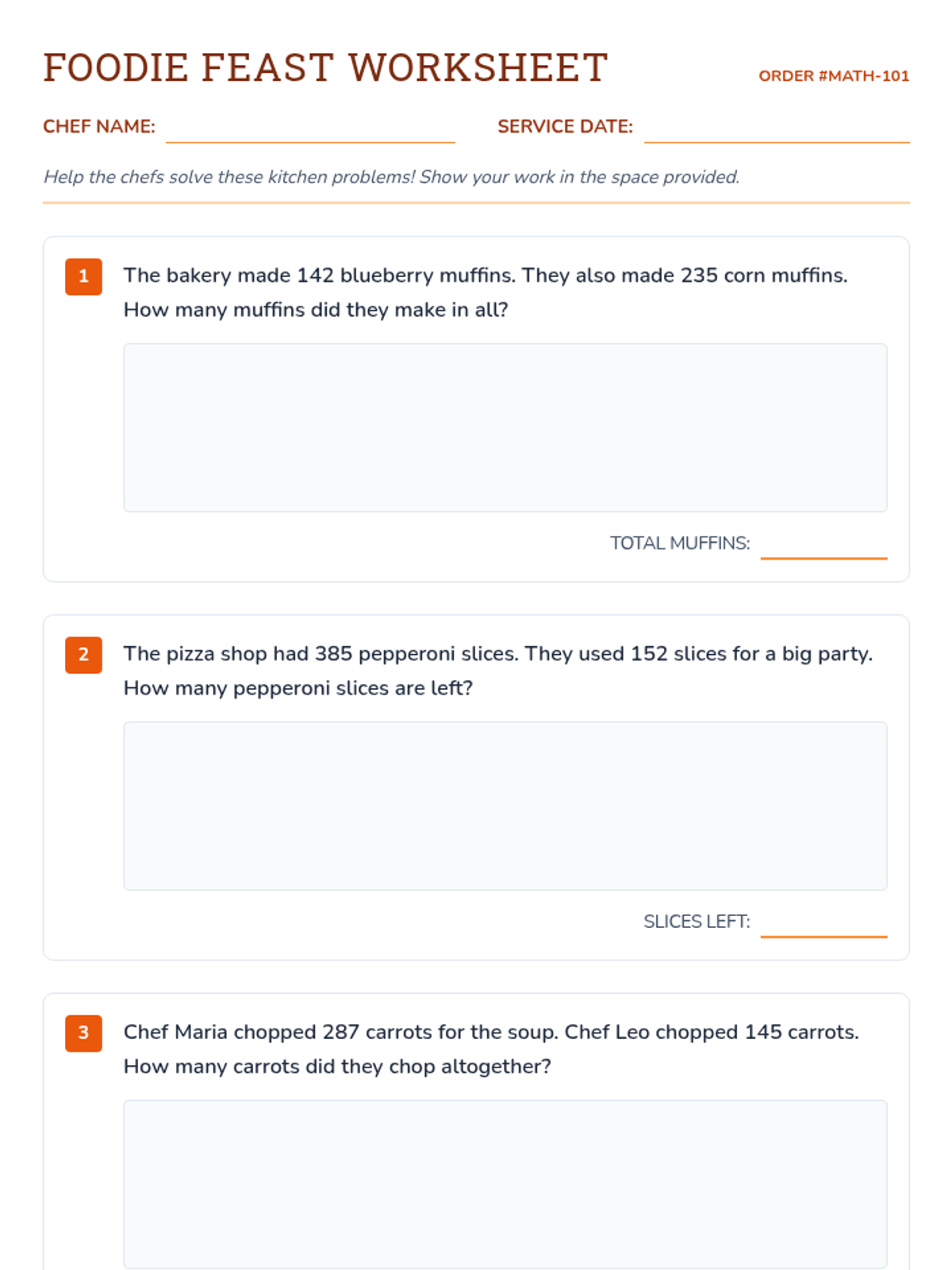
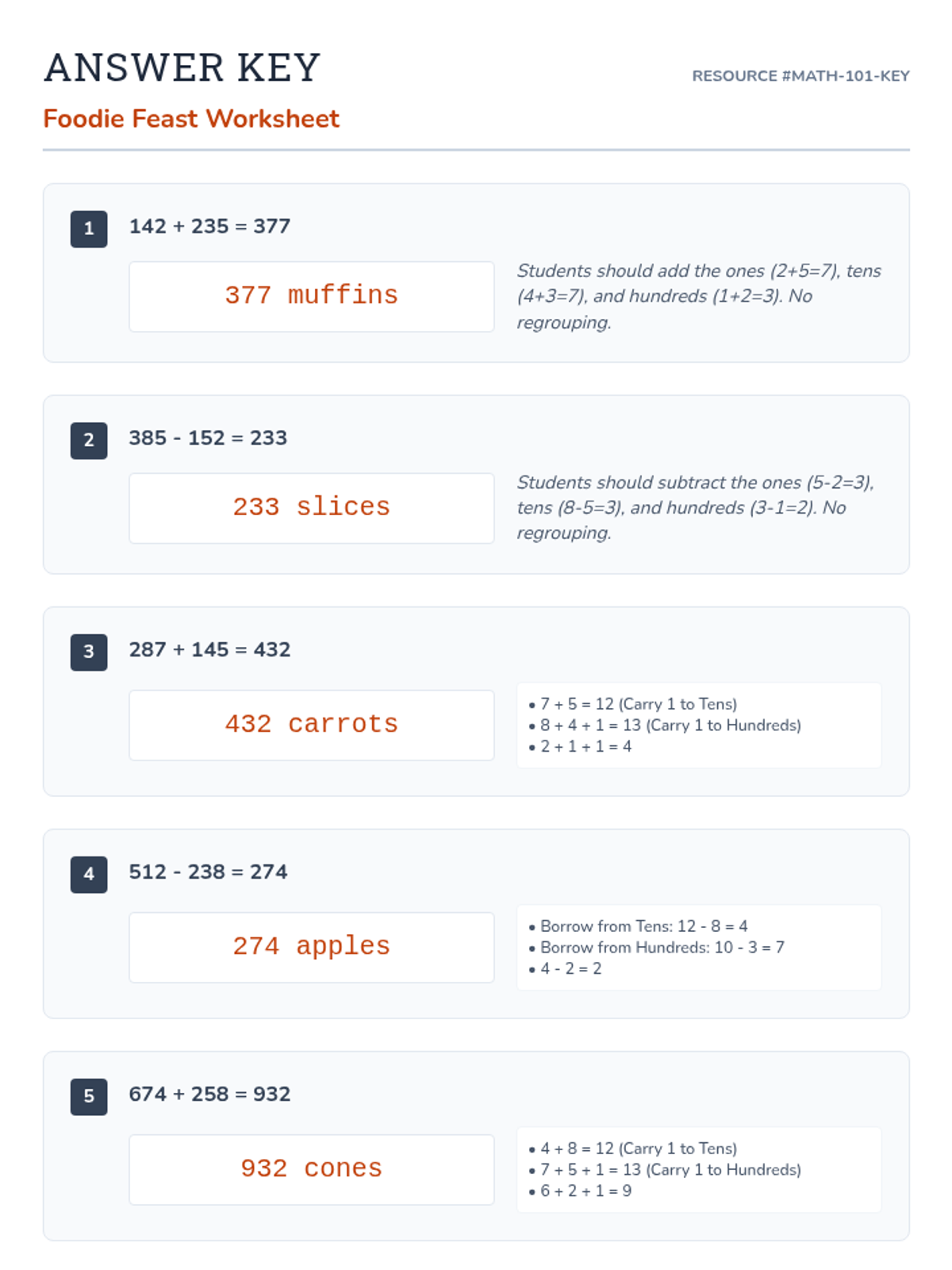
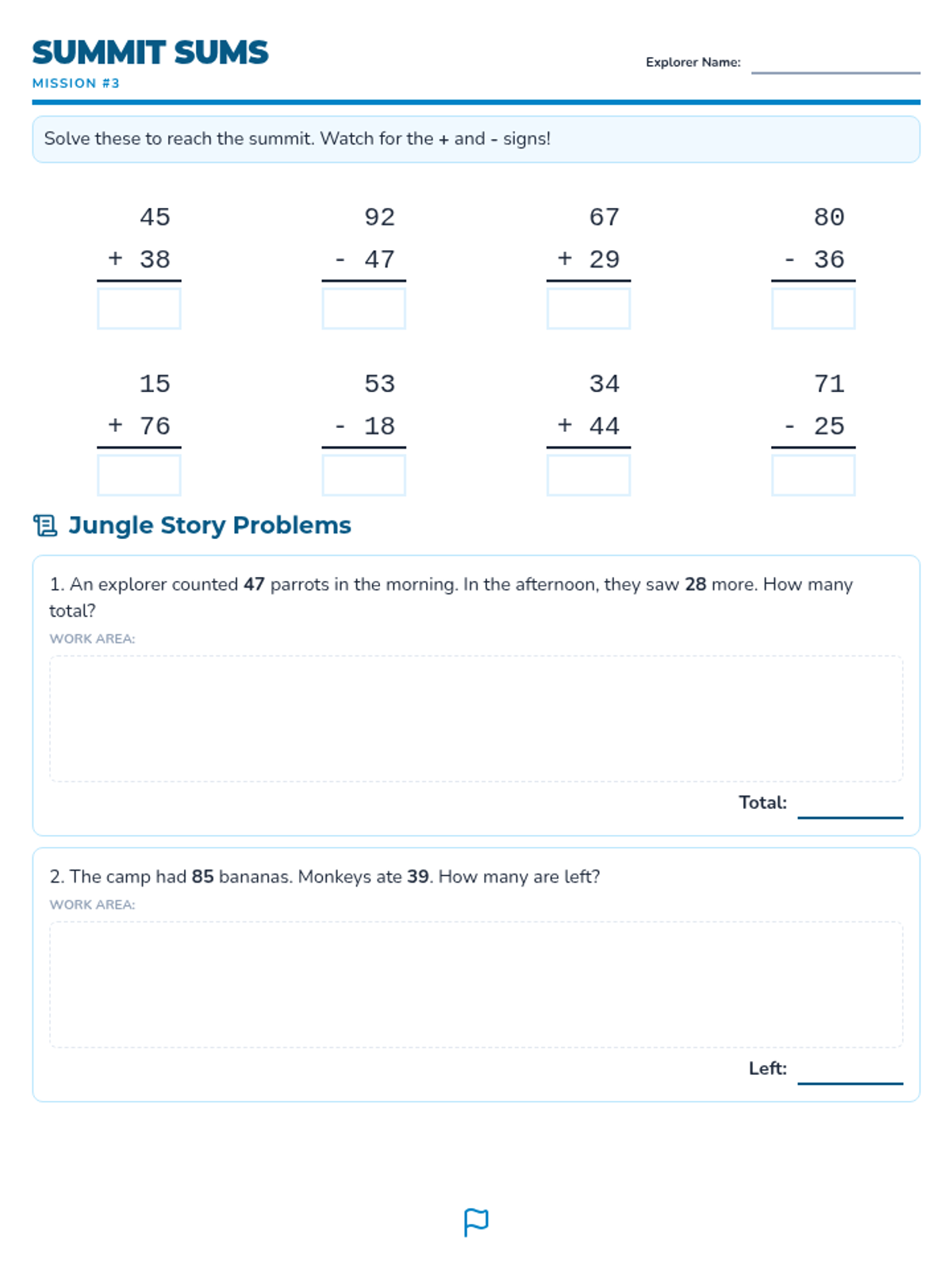
A comprehensive lesson for Grade 1 special education students to master addition facts up to 20 using diverse strategies like number lines, drawing, and manipulatives. Includes visual instruction, hands-on practice, and small group activities.
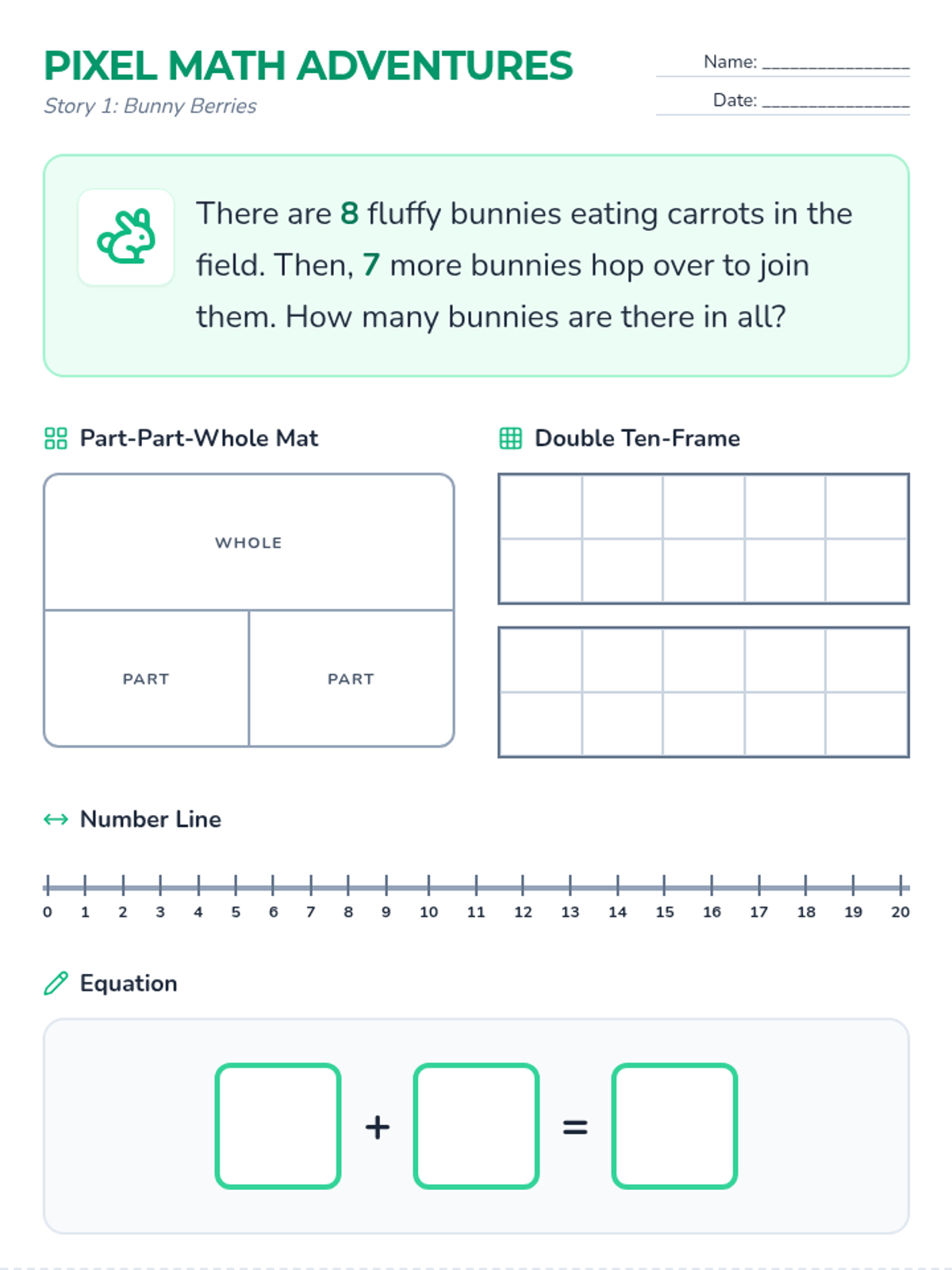
A 20-minute introductory lesson for first graders to identify addition and subtraction 'clue words' in word problems and solve using ten frames and number lines. Optimized for students with Specific Learning Disabilities (SLD) through clear visual supports and structured templates.
A focused lesson for 1st grade special education students to identify clues in word problems and decide whether to add or subtract within 20, themed around a safari animal adventure. Includes visual supports like number lines and animal keyword anchors.
A fun, interactive lesson where students become 'Number Detectives' to master counting to 100 through games and pattern recognition.
A playful introduction to adding two one-digit numbers using hungry monsters and their favorite snacks. Students move from counting objects to understanding addition sentences.
A comprehensive lesson on multiplication facts 1-12 using arrays and skip counting strategies, styled as architectural blueprints.
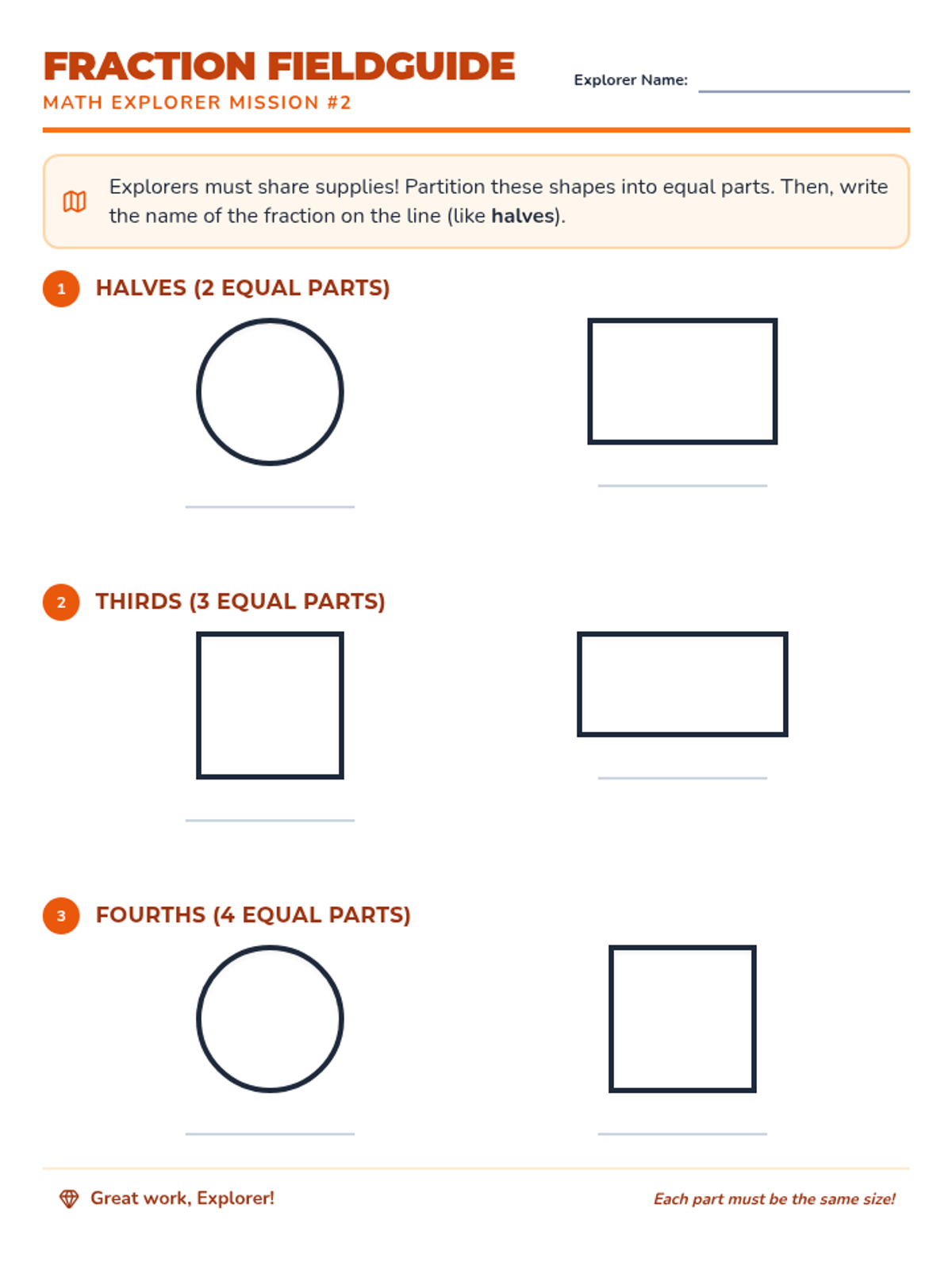
A comprehensive lesson focused on identifying, naming, and comparing fractions using visual models, number lines, and real-world applications. Students move from basic identification to complex comparisons of fractional parts.
A cross-curricular lesson for 1st-3rd graders that combines basic rhythm notation with addition and subtraction. Students decode musical patterns to solve "math mysteries" and perform rhythms.
A hands-on lesson where students measure various 'specimens' to the nearest half-inch and organize their data into a line plot to identify patterns.
A lesson focused on mental math strategies for double-digit addition, specifically exploring how to maintain a sum while changing addends (conservation) and how to efficiently add increments of tens and ones.
Compose new shapes from smaller shapes and decompose larger shapes into smaller ones.
Identify and distinguish 3D shapes (cubes, cones, cylinders, spheres) and find them in the real world.
Identify and describe 2D shapes (circles, triangles, squares, rectangles) by their sides and vertices.
A hands-on activity for early learners to distinguish between tall and short objects through visual sorting and comparison.
A visual exploration of 2D geometric shapes, focusing on identifying names and properties through an architectural-themed Tarsia puzzle.