Students will explore the fascinating world of seabirds, identifying unique physical adaptations (like pouches, wings, and flippers) and explaining how these "built-in tools" help birds survive in ocean environments.
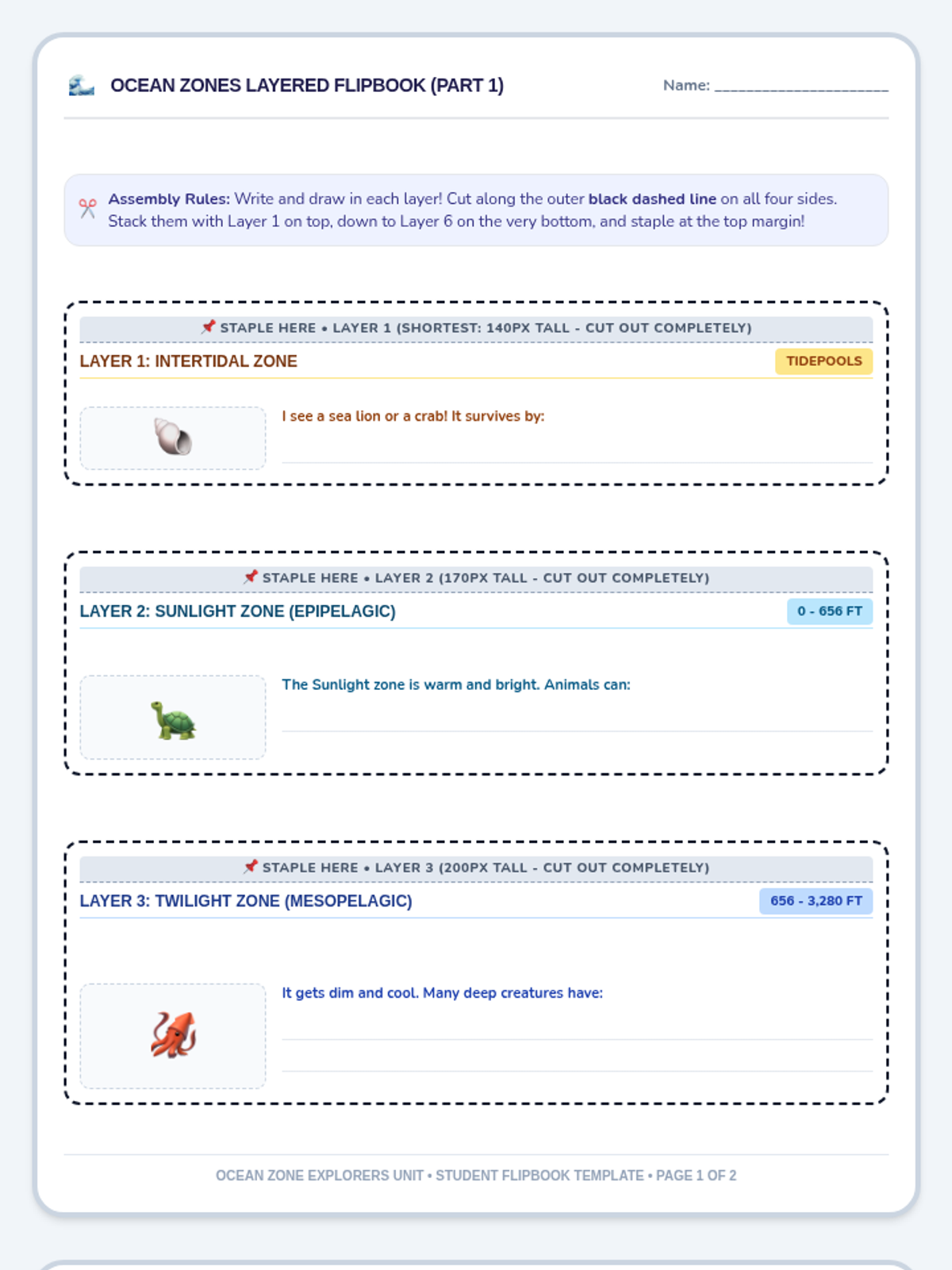
Express new expertise through a multi-page layered flipbook template and structured cooperative writing prompts.
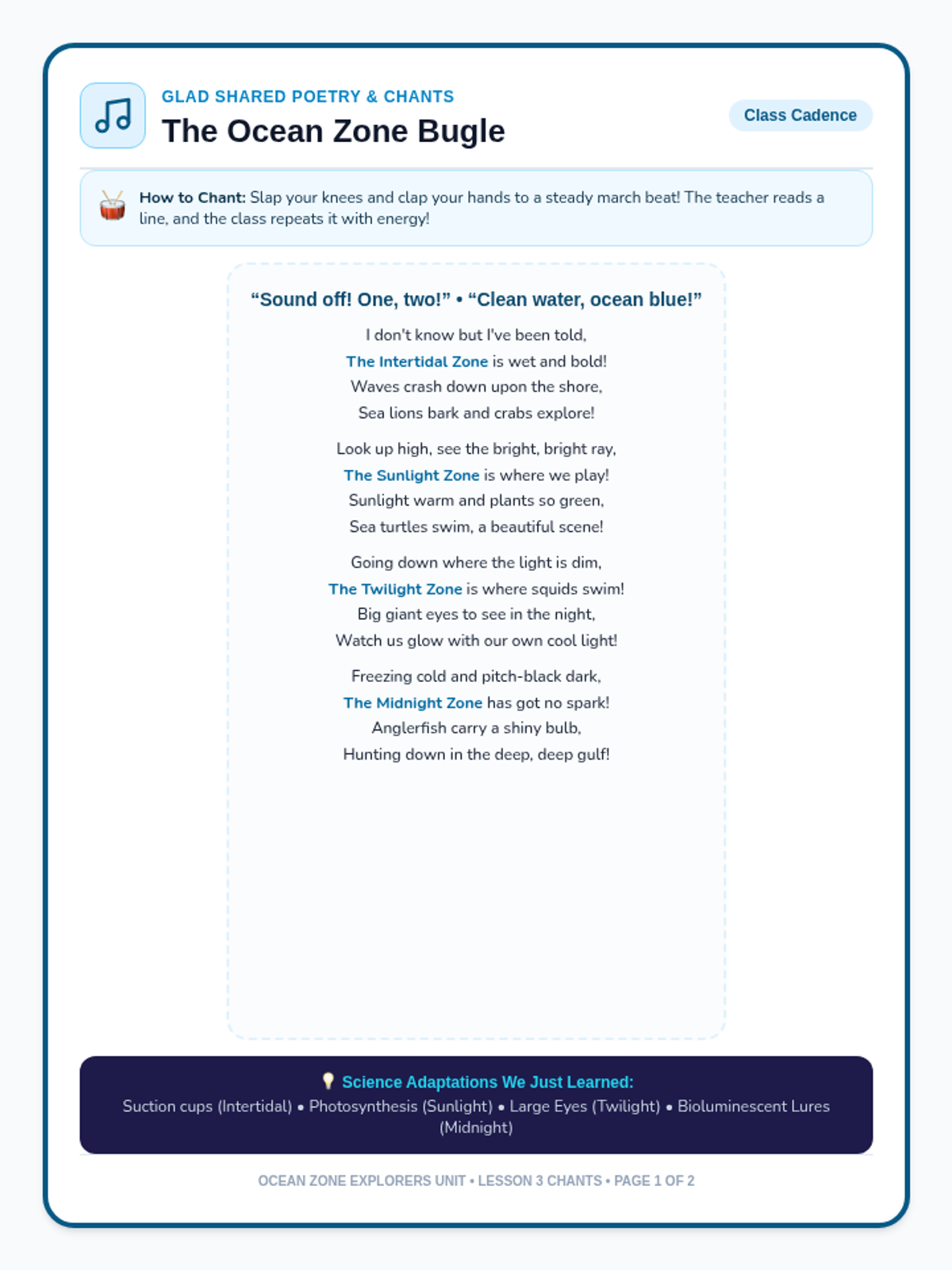
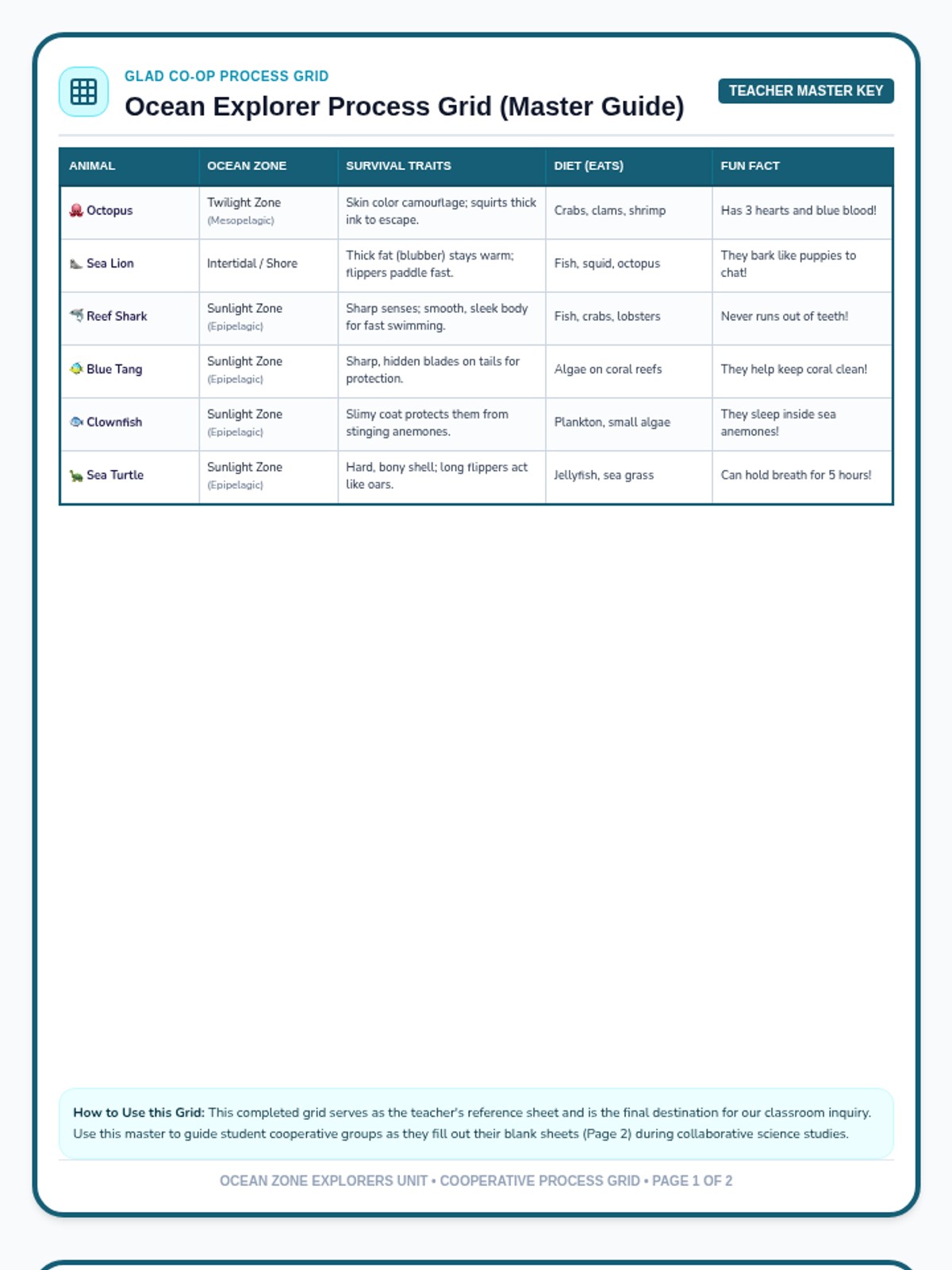
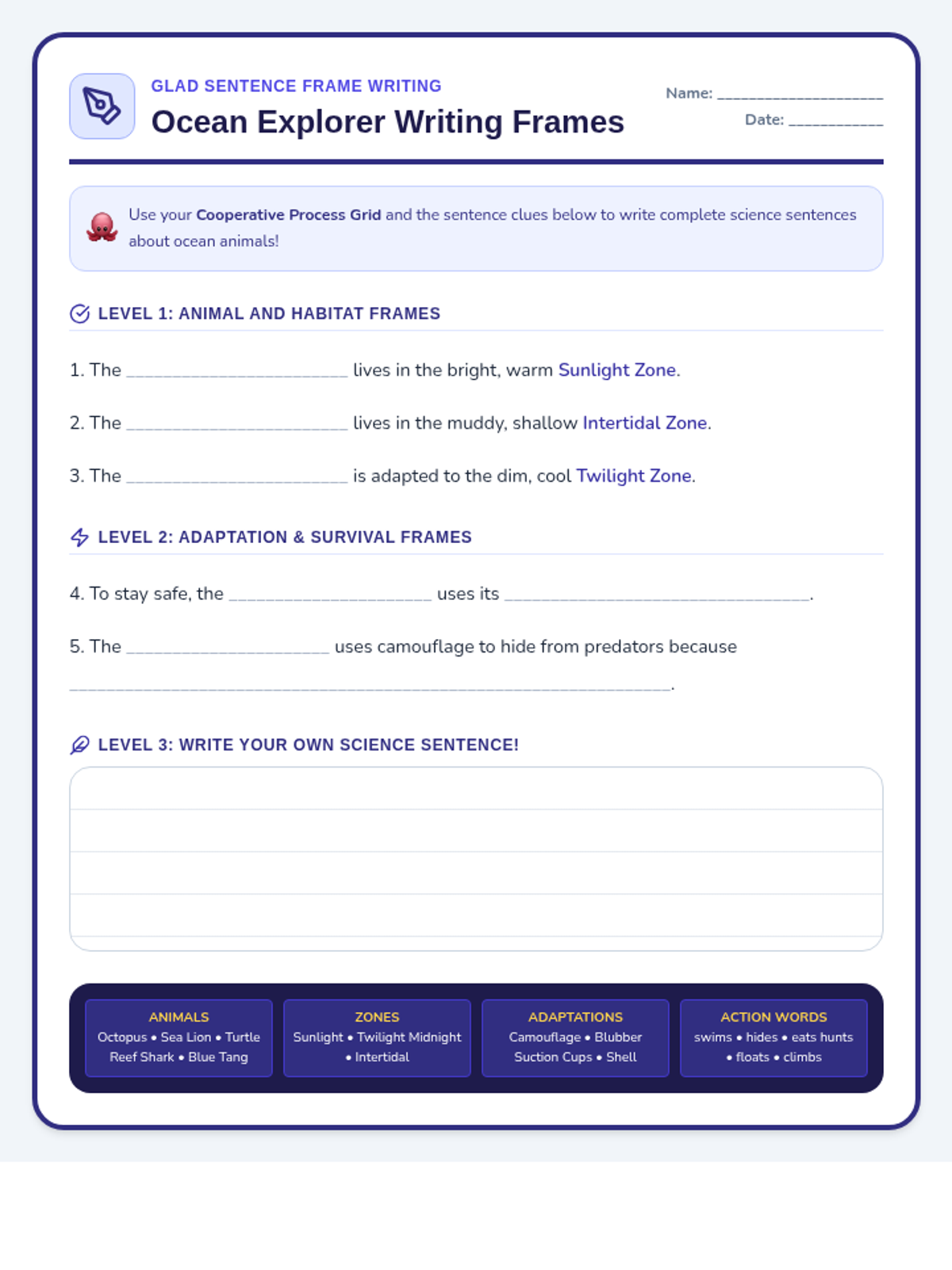
Sing and chant about ocean adaptations, fill out a collaborative Process Grid of focus animals, and use differentiated sentence frames for group writing.
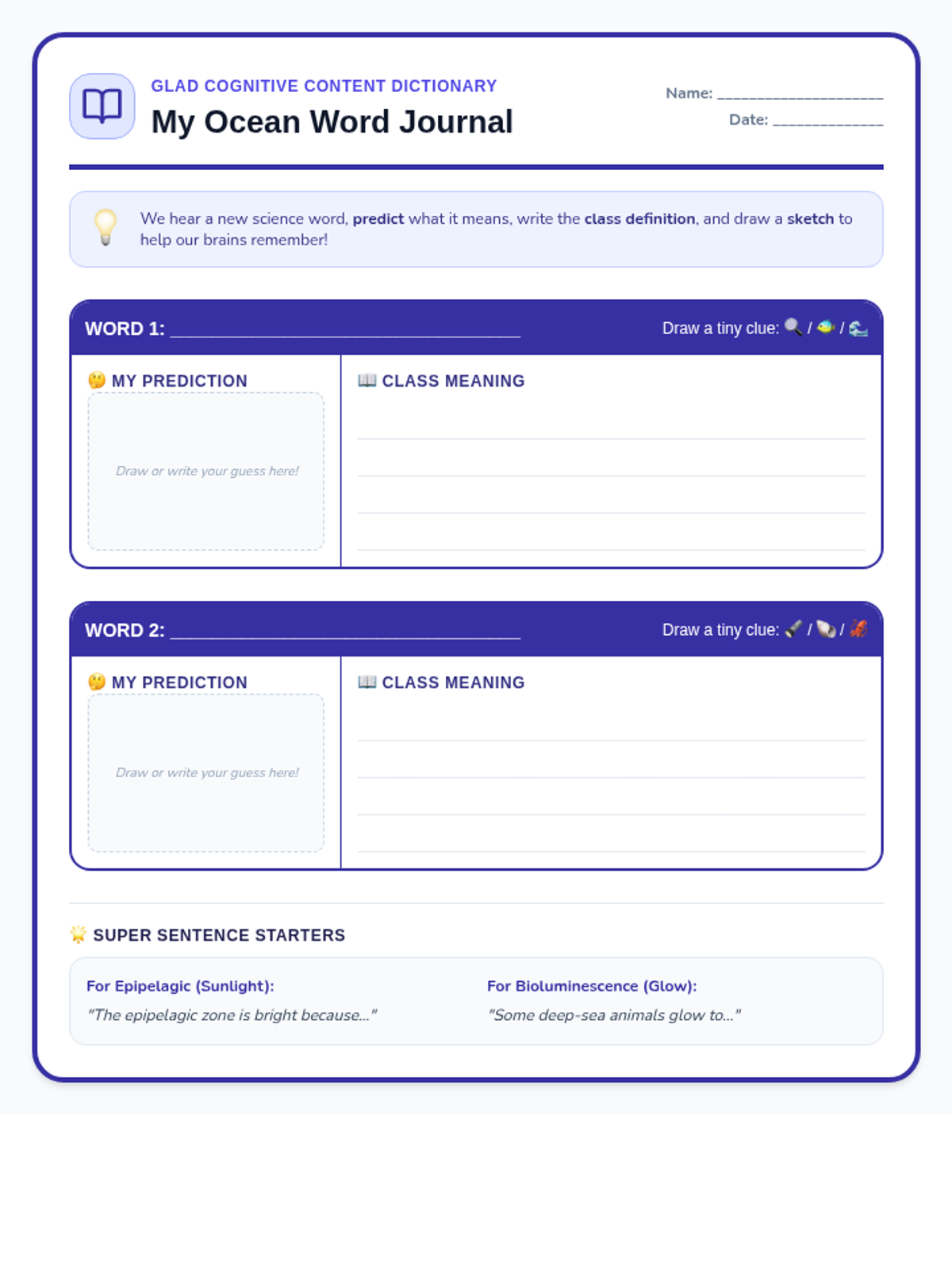
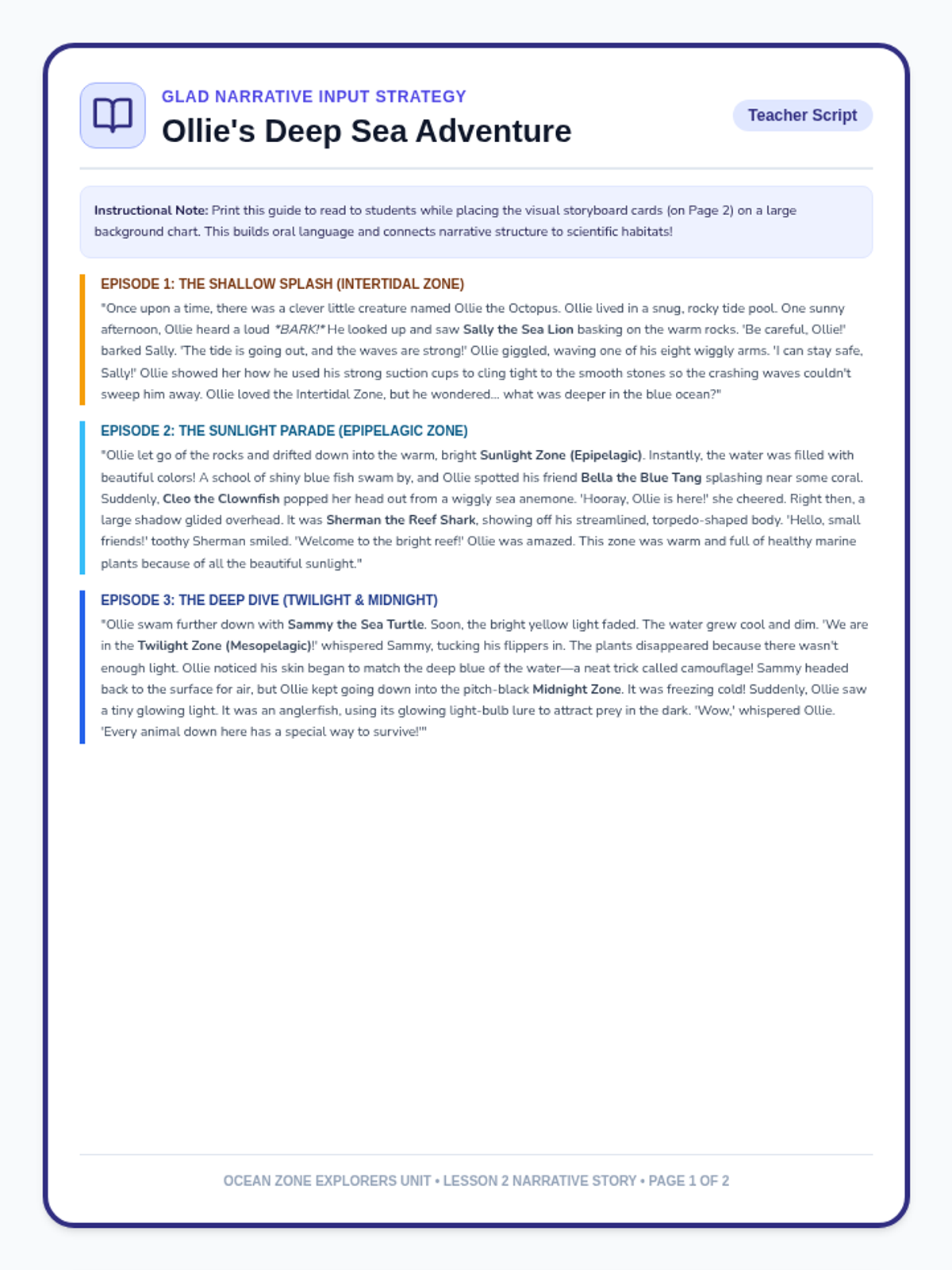
Build vocabulary and deep comprehension using a interactive Cognitive Content Dictionary (CCD) and the story of Ollie the Octopus's Deep Sea Adventure.
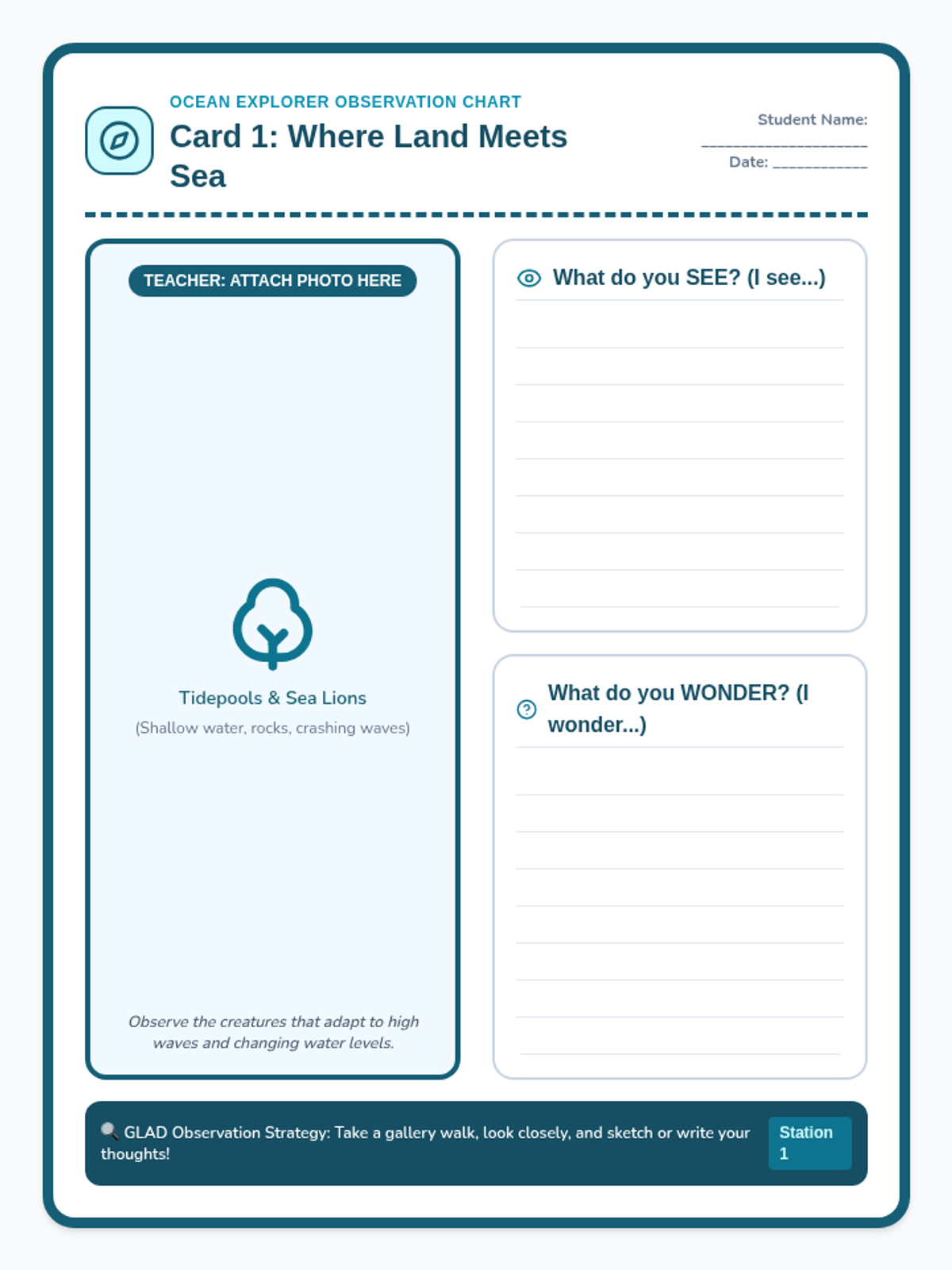
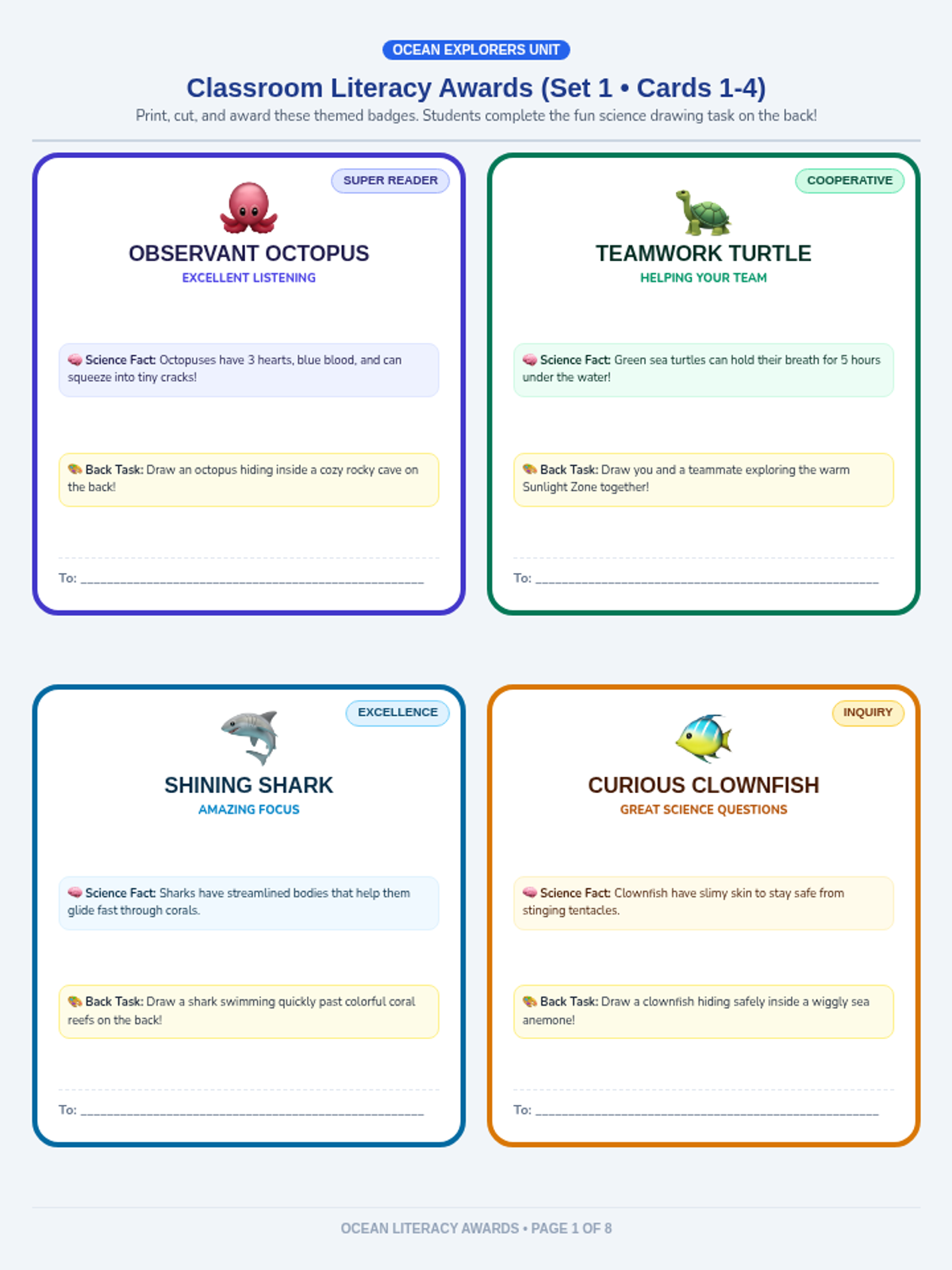
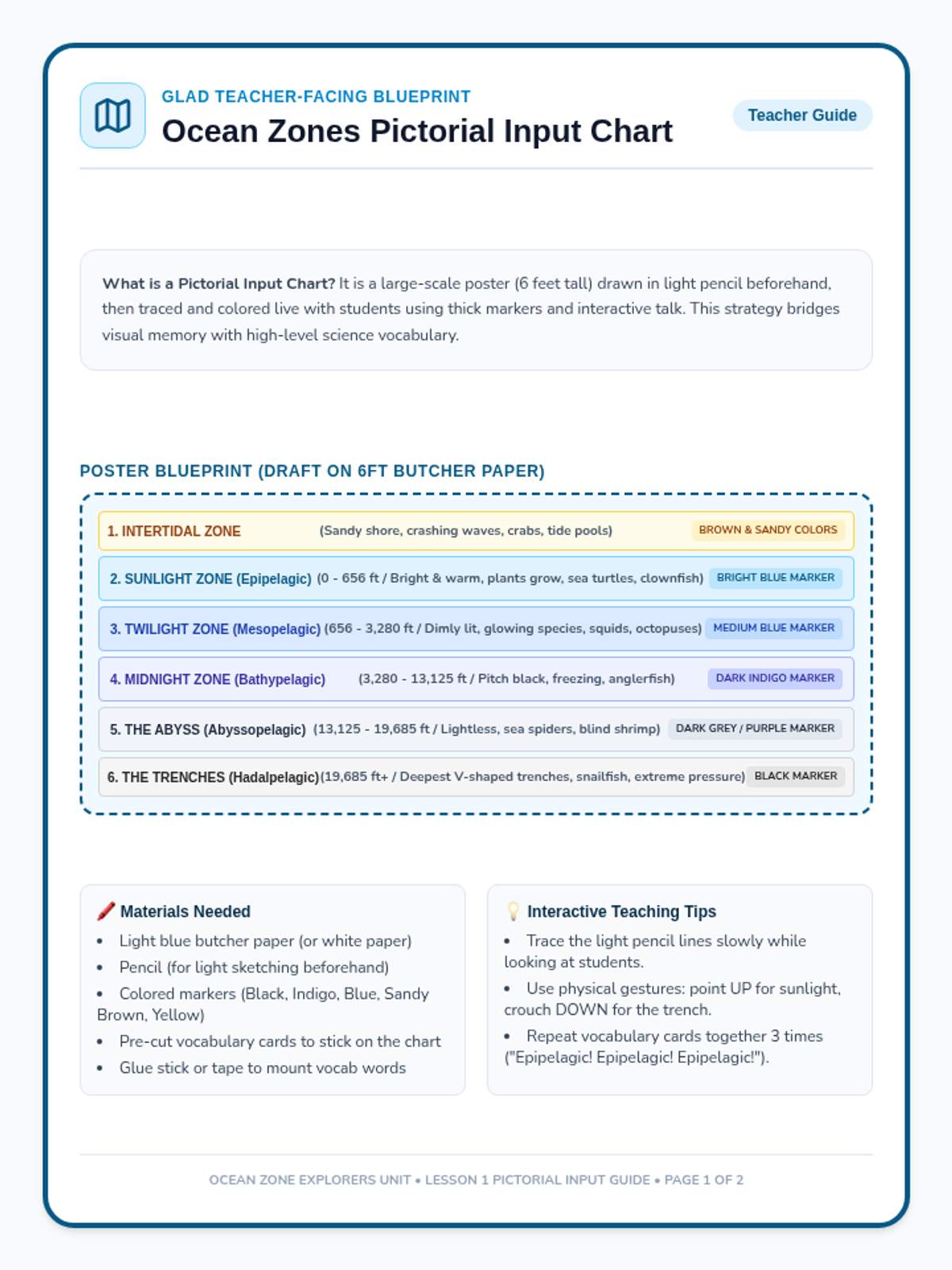
Spark curiosity with high-interest Observation Charts, positive-behavior Literacy Awards, and a large-scale visual blueprint for the multi-zone ocean chart.
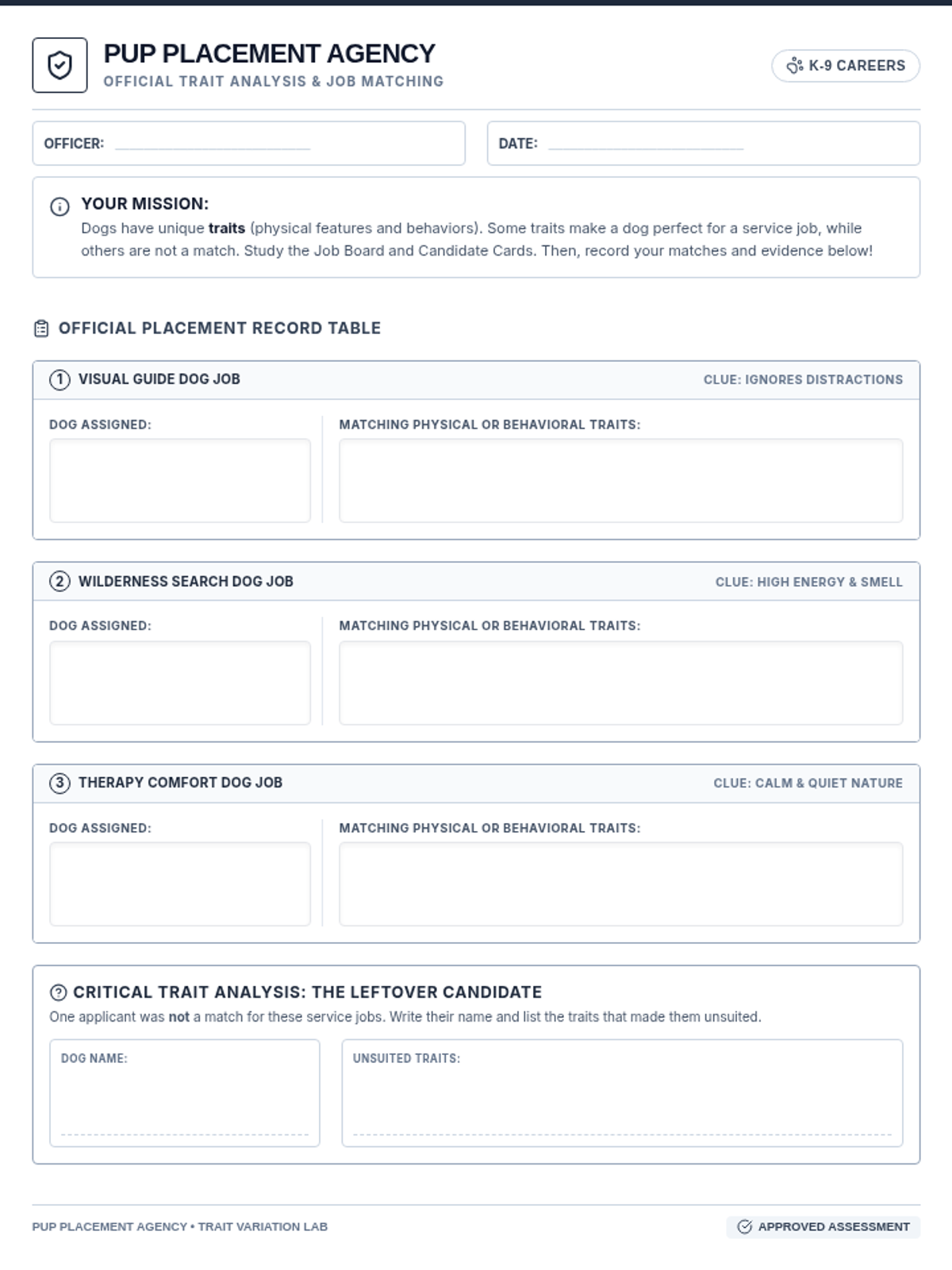
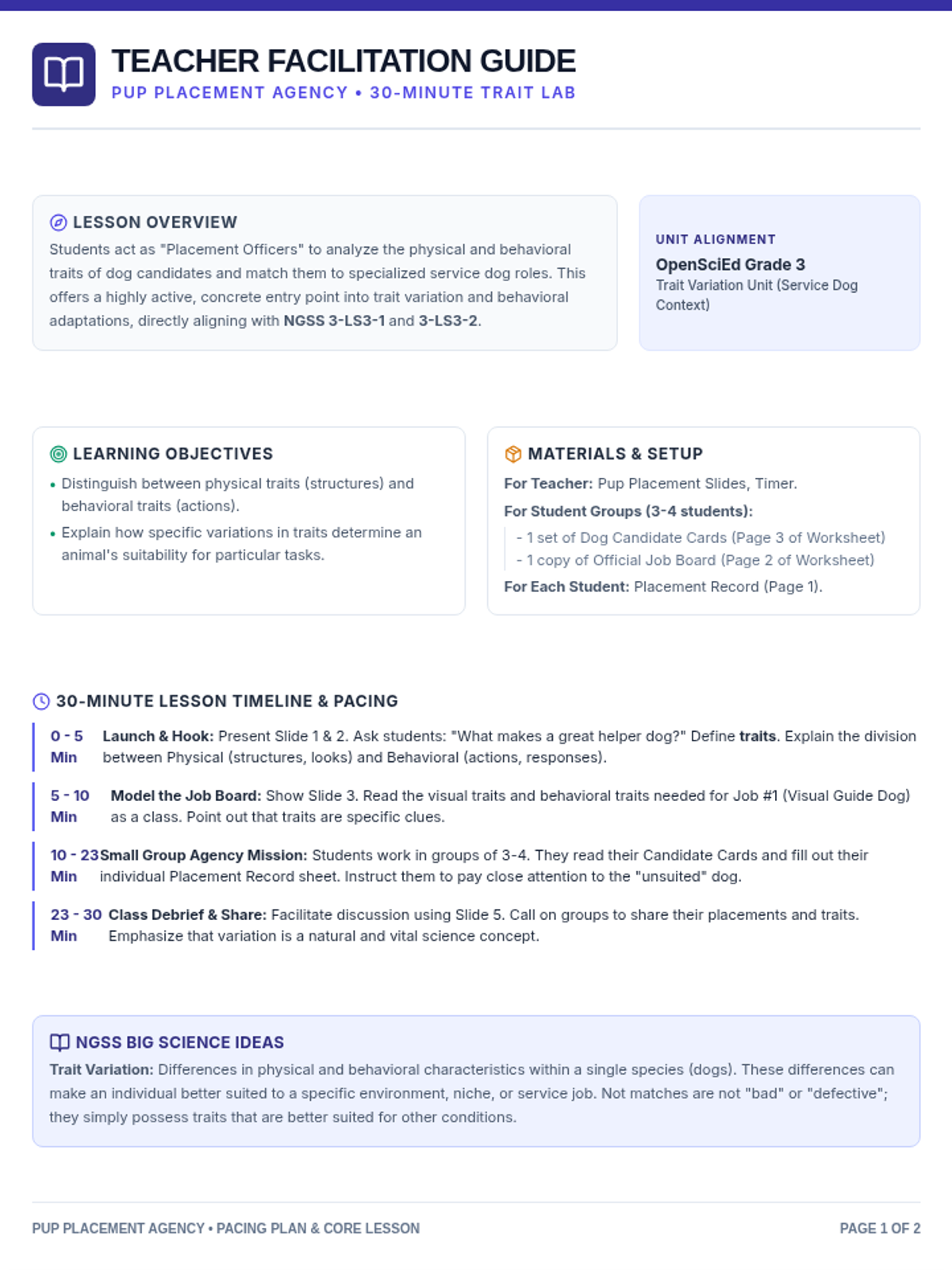
A highly differentiated 30-minute lesson where students act as 'Placement Officers' for the Pup Placement Agency. They analyze physical and behavioral traits of dog candidates and match them with appropriate service dog jobs, aligning with the OpenSciEd Grade 3 Trait Variation unit.
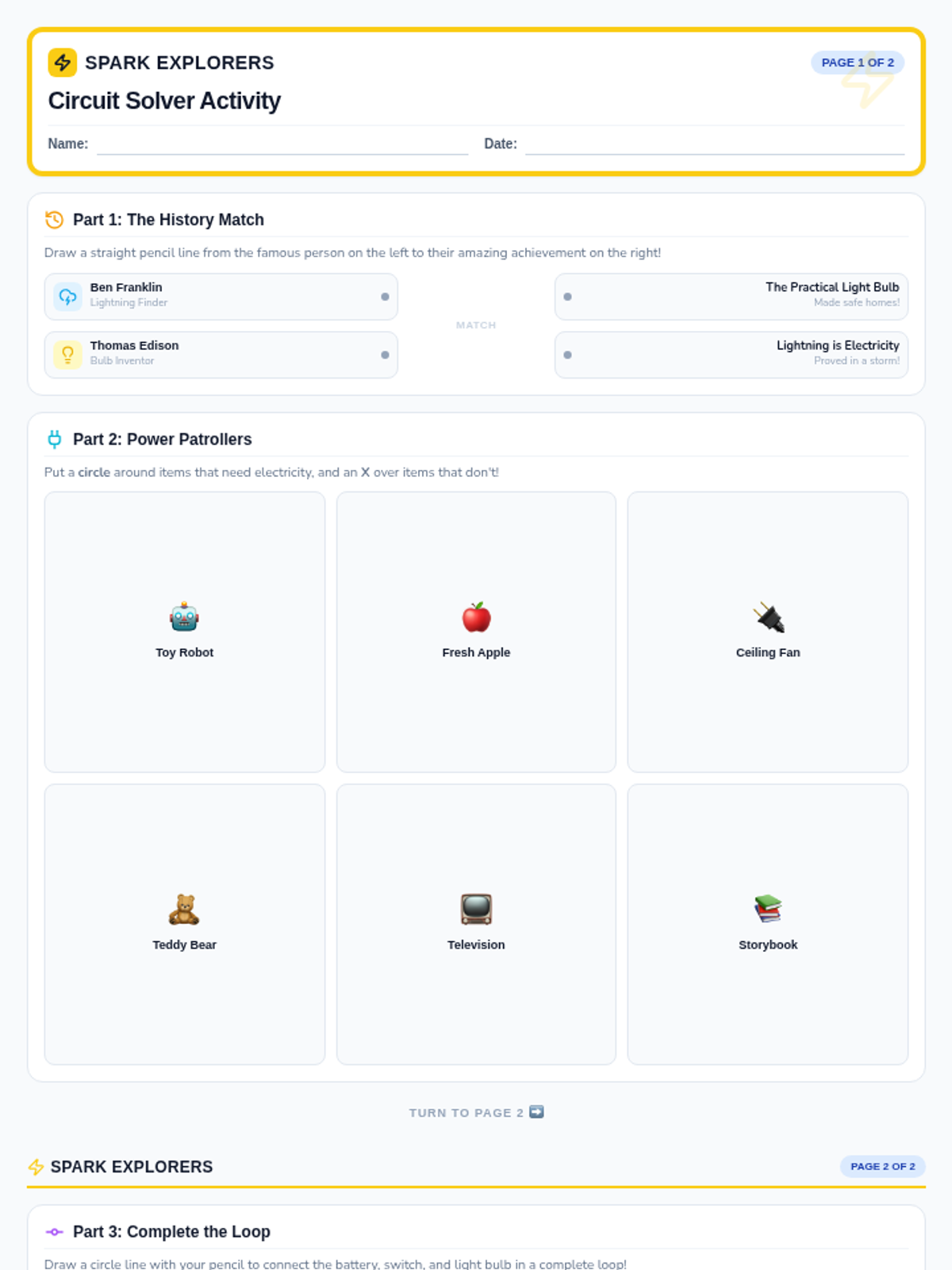
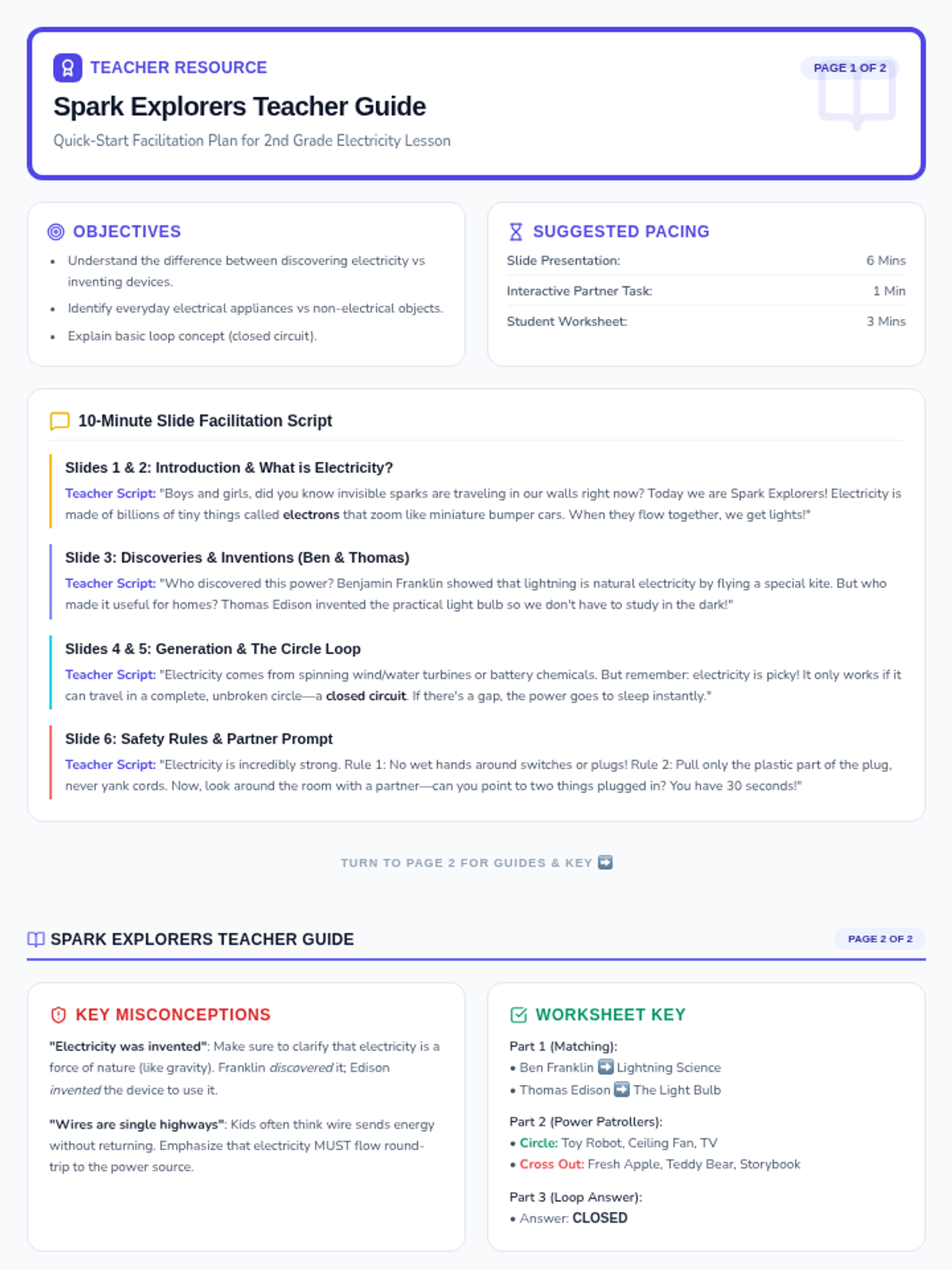
An engaging, kid-friendly lesson introducing 2nd graders to the wonders of electricity, exploring its discovery, how it works through simple circuits, and how it is generated safely.
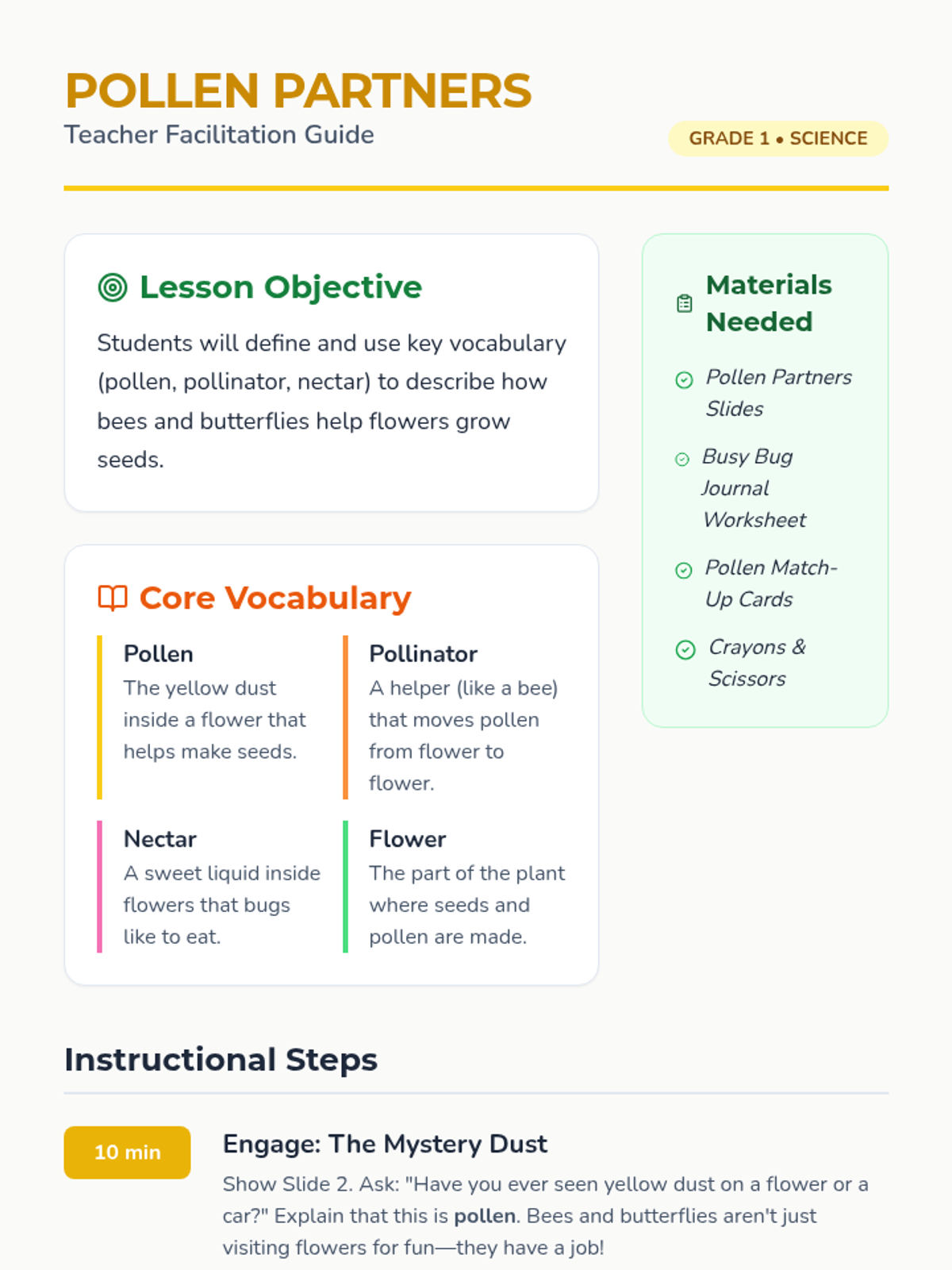
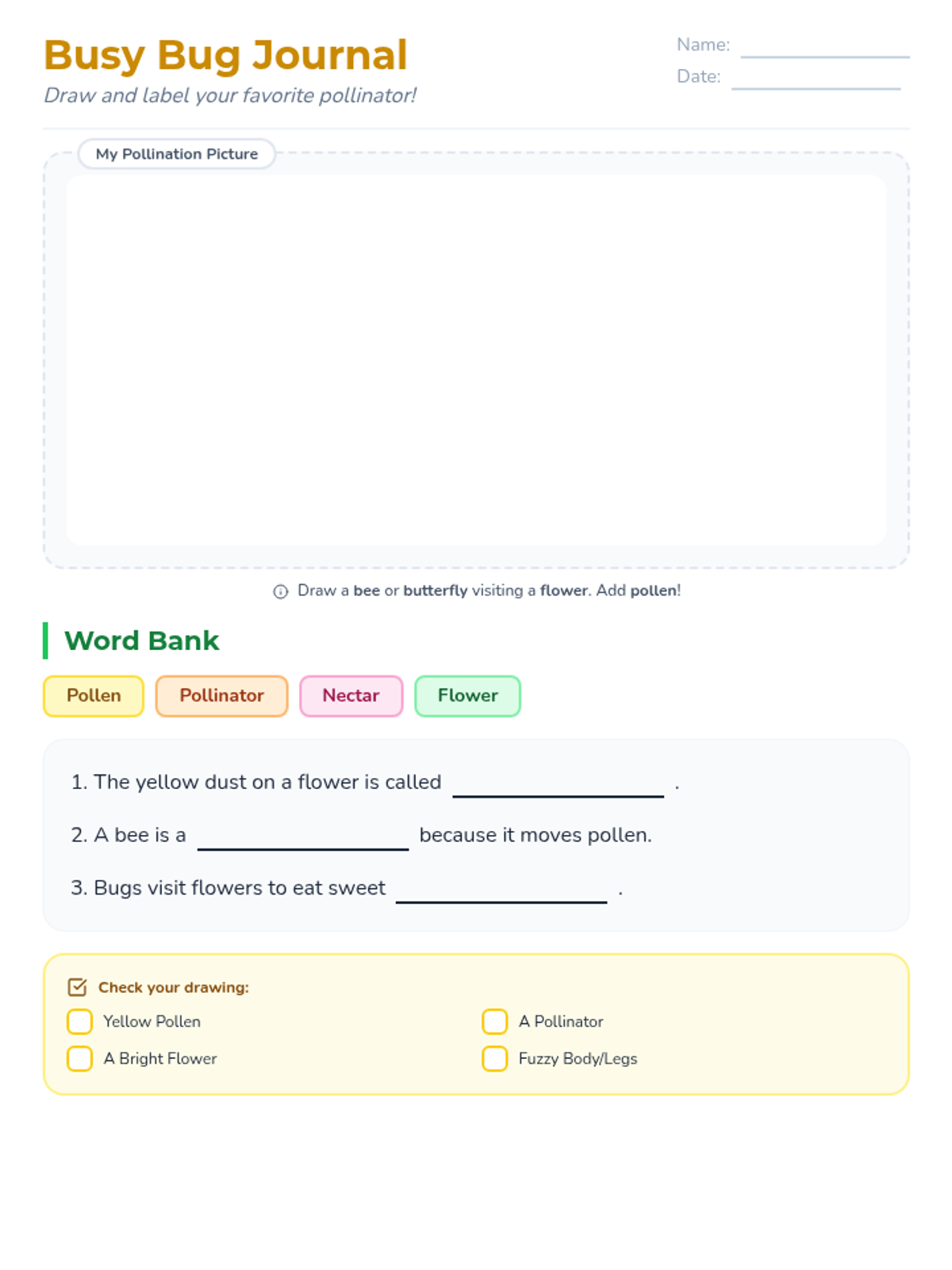
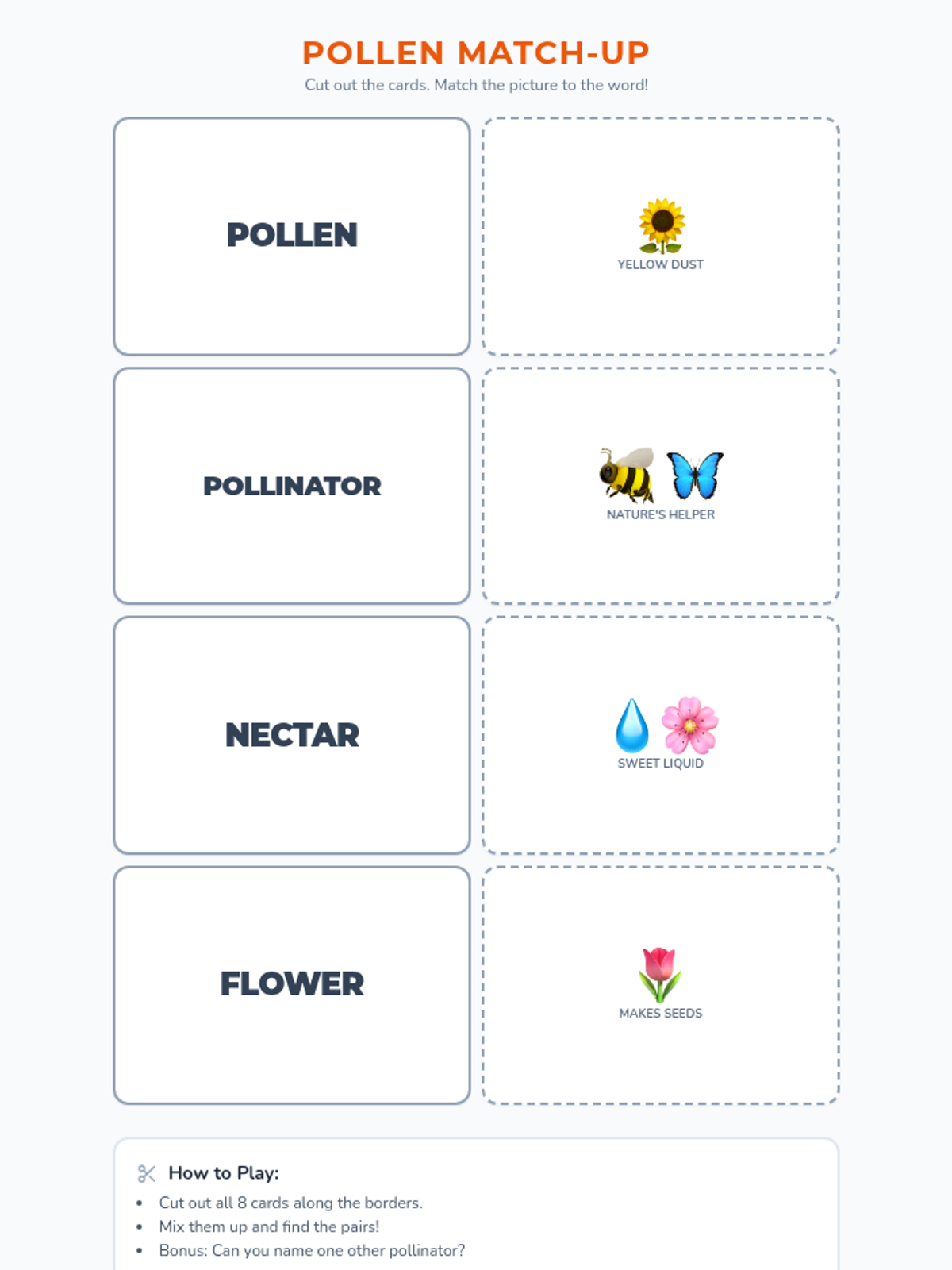
A hands-on follow-up lesson for first graders focusing on the vocabulary of pollination, specifically the roles of bees and butterflies as they move pollen between flowers.
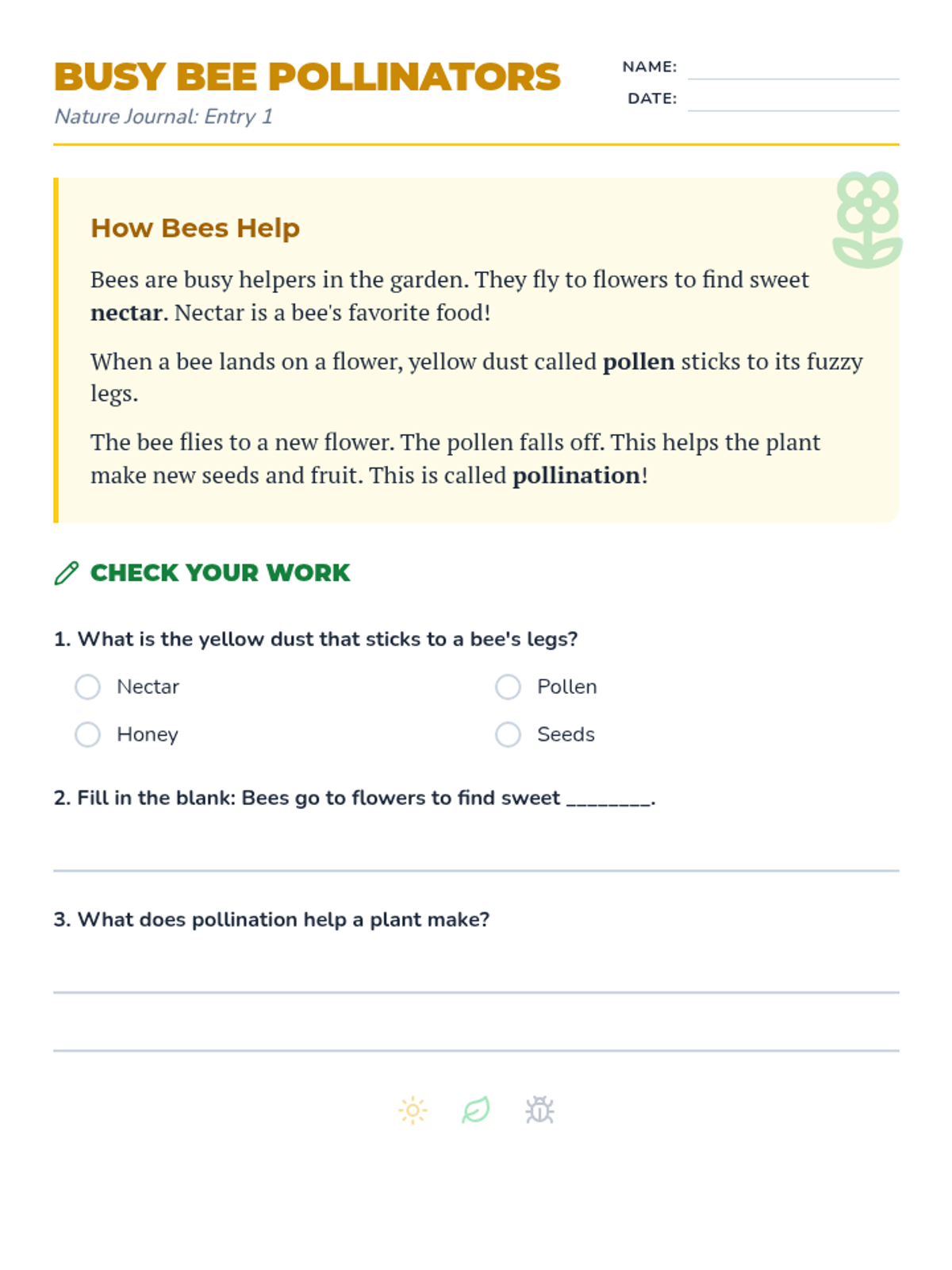
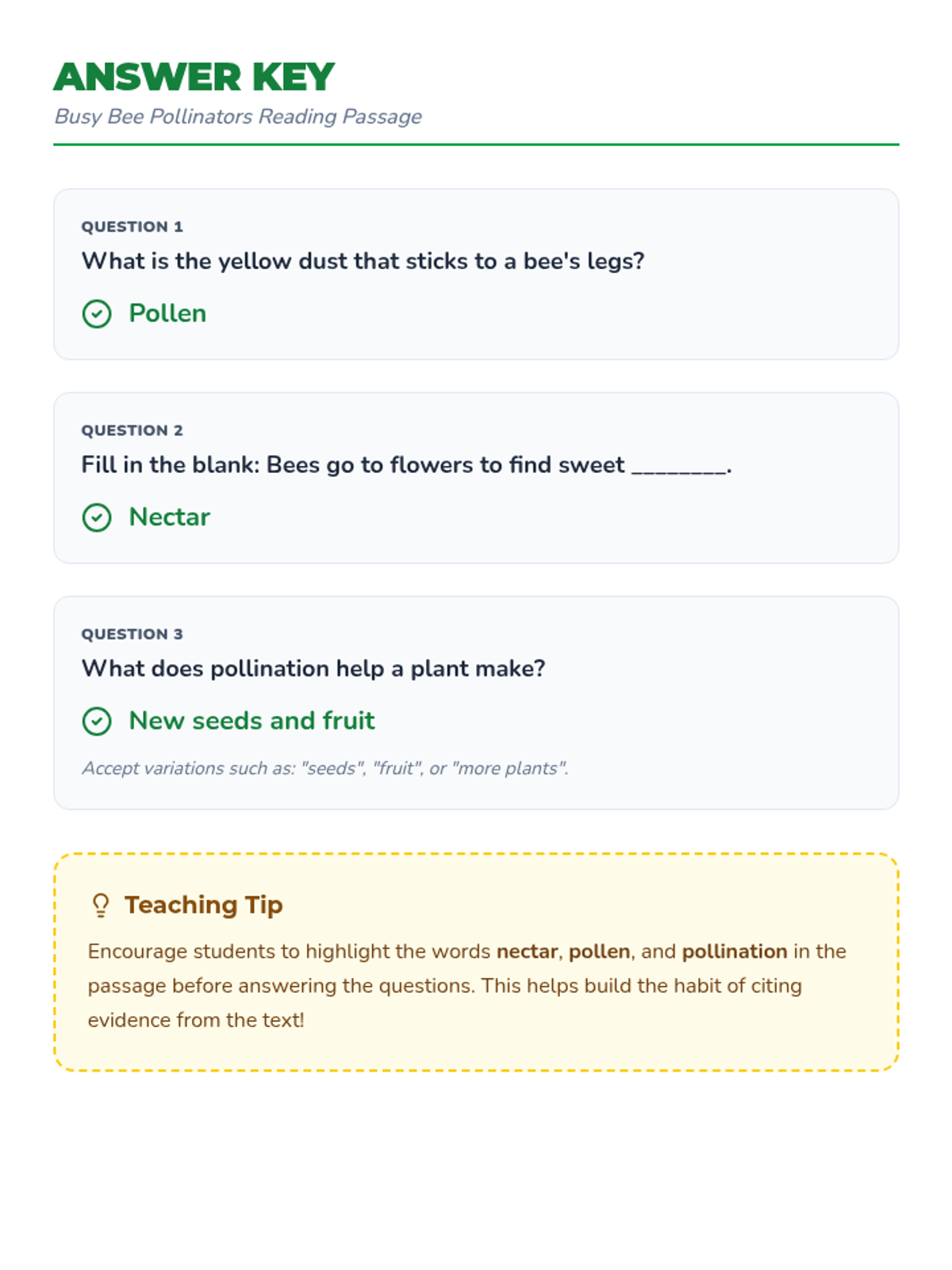
Students will learn how bees move pollen from flower to flower to help plants grow seeds and fruit.
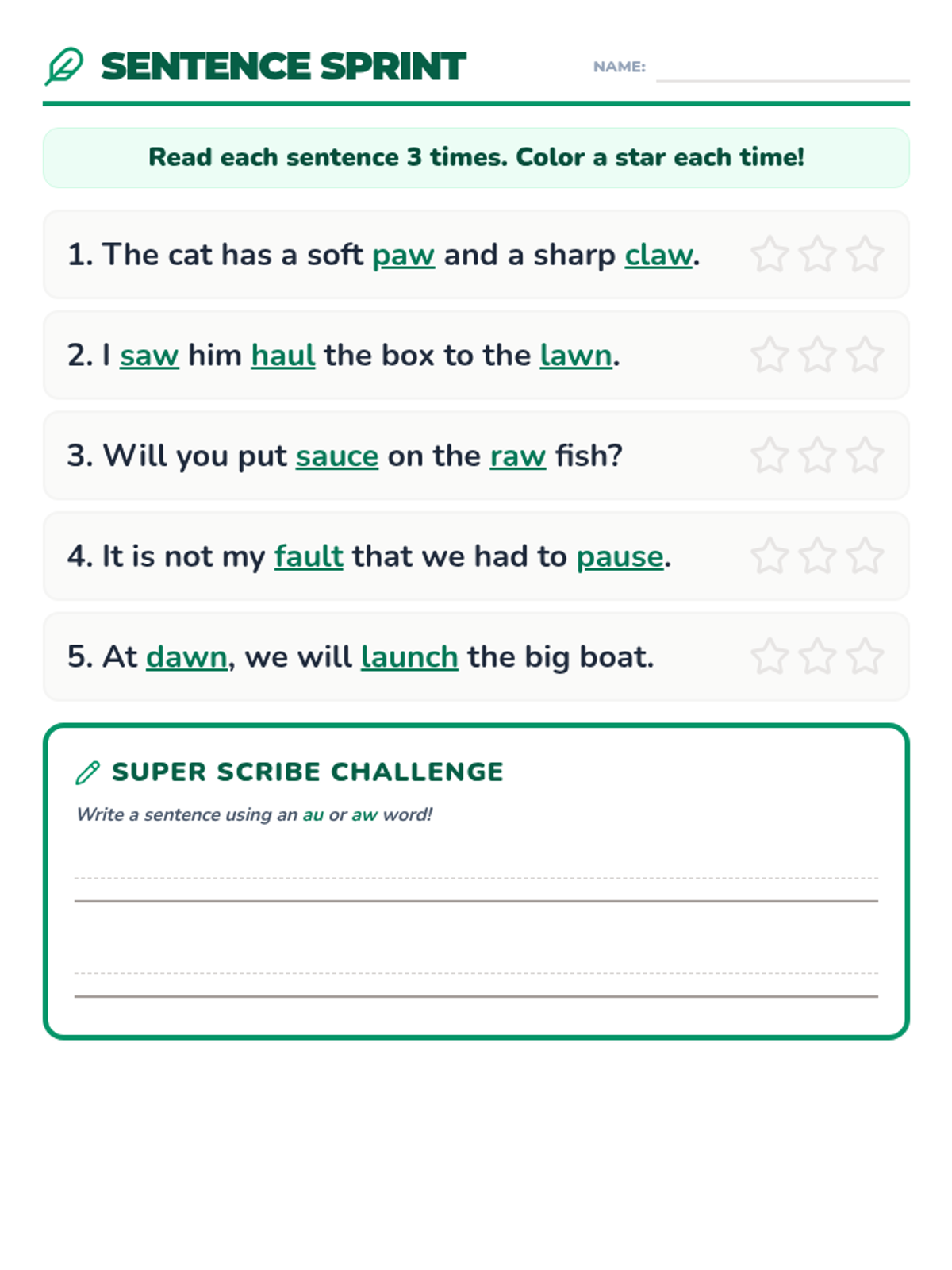
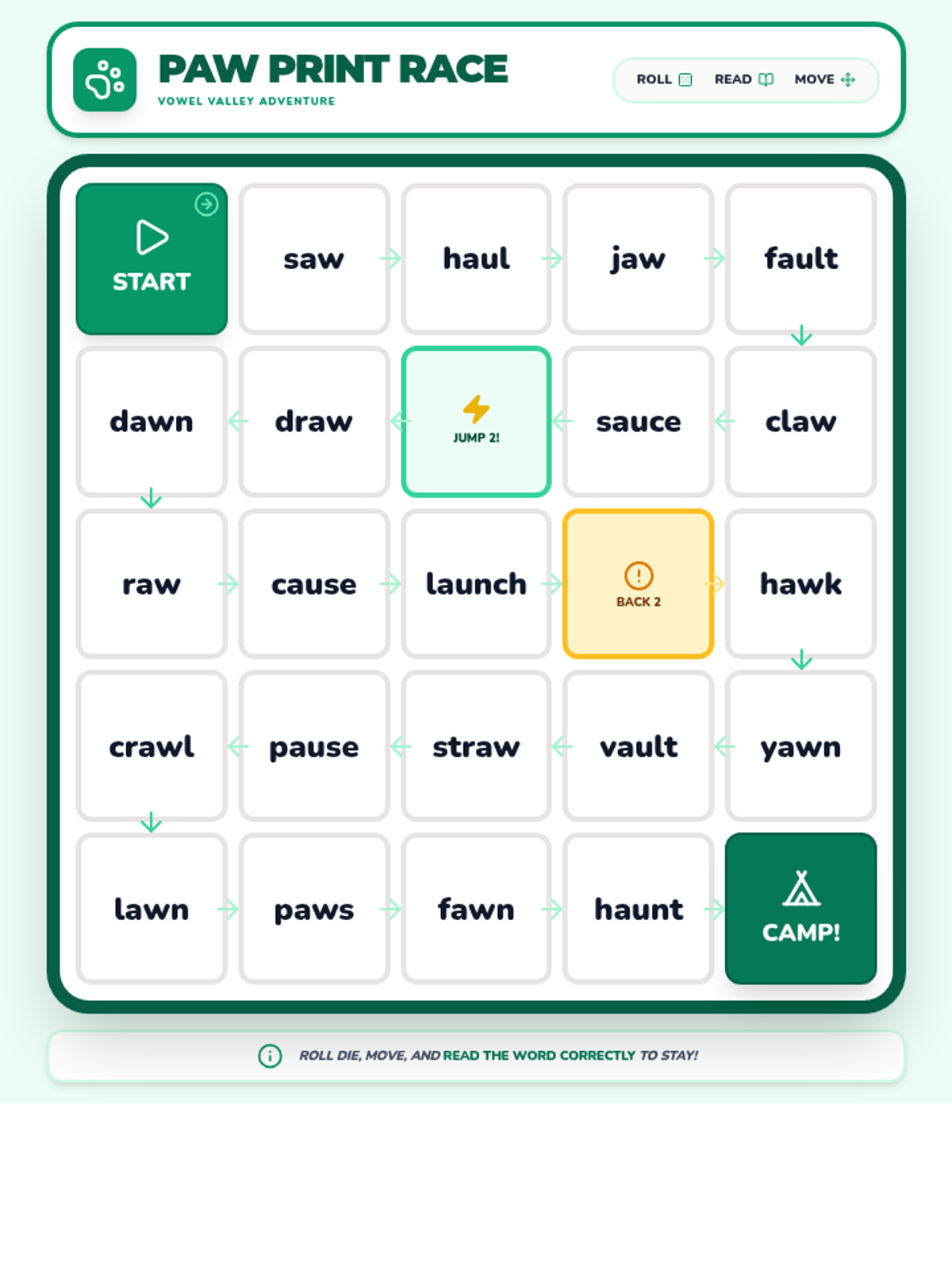
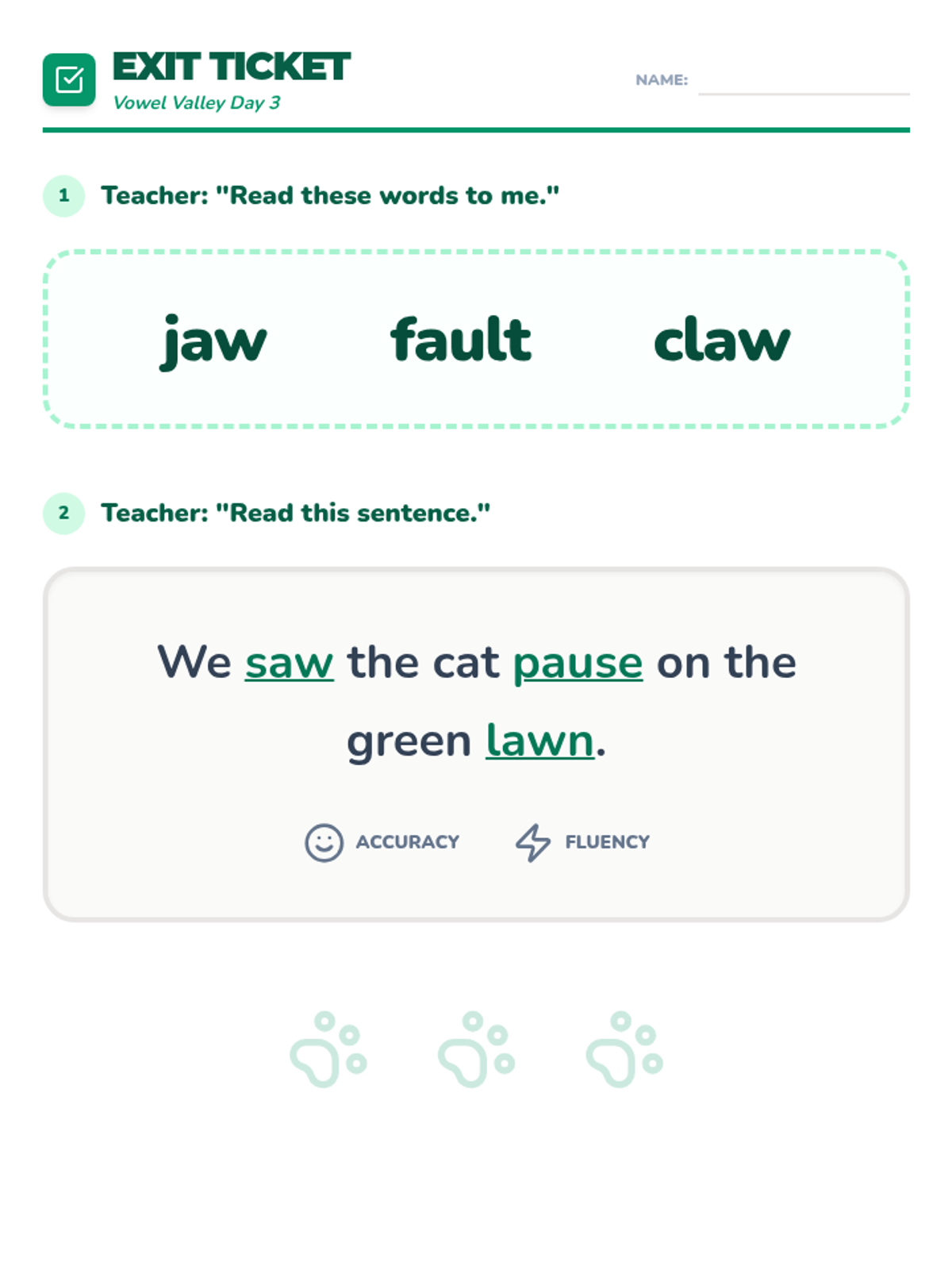
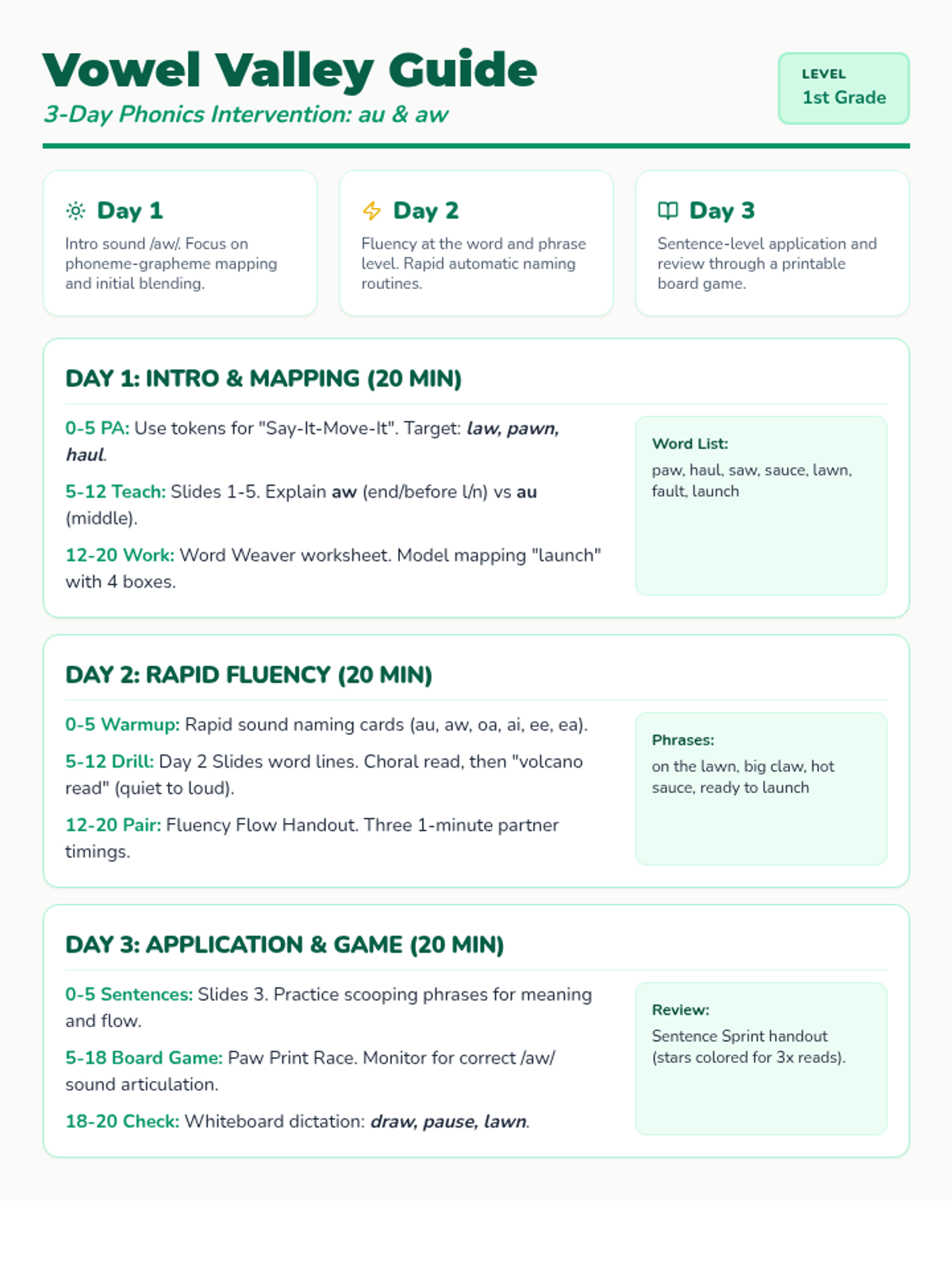
Applying 'au' and 'aw' knowledge to sentence reading and a collaborative board game review.
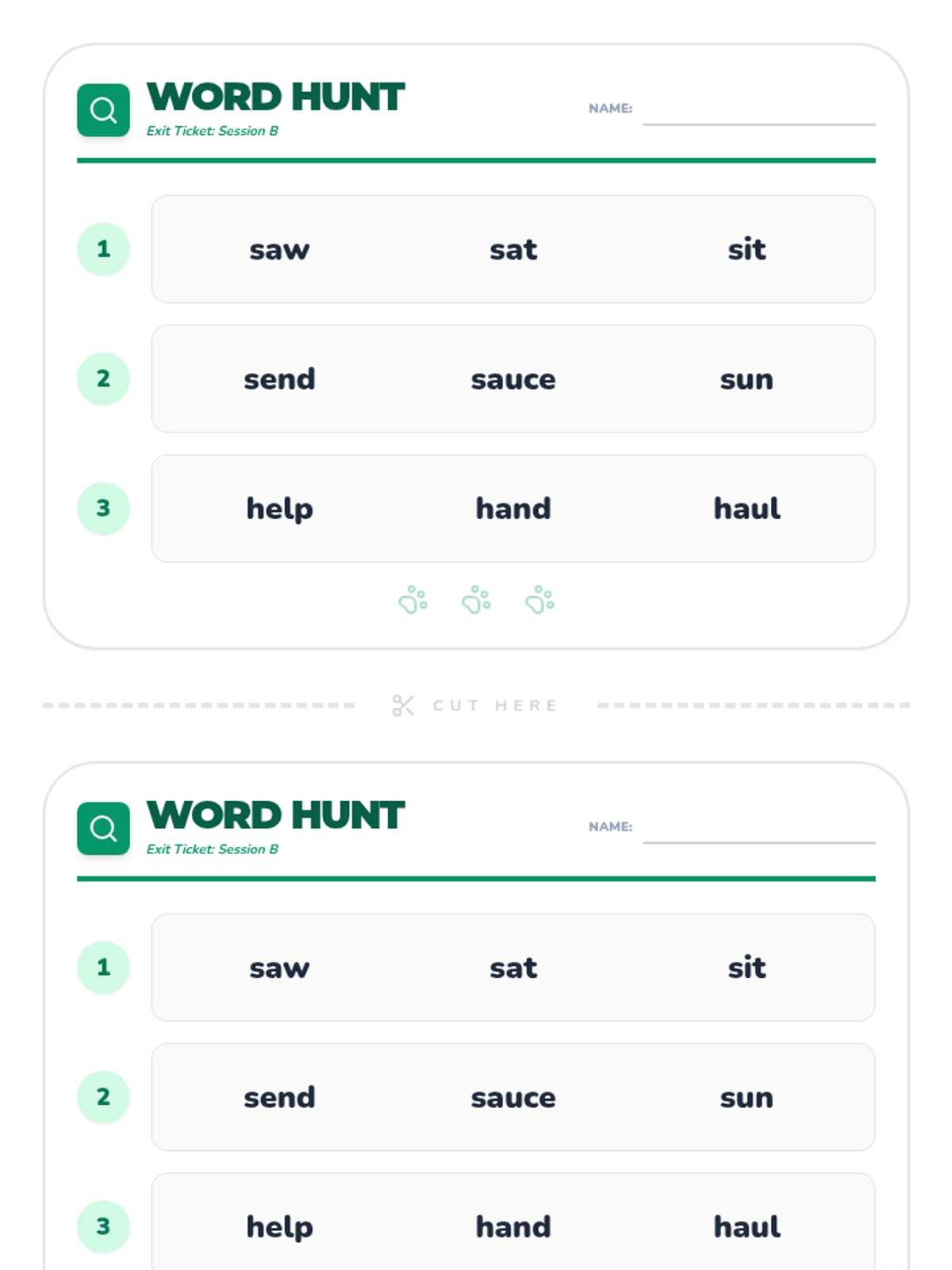
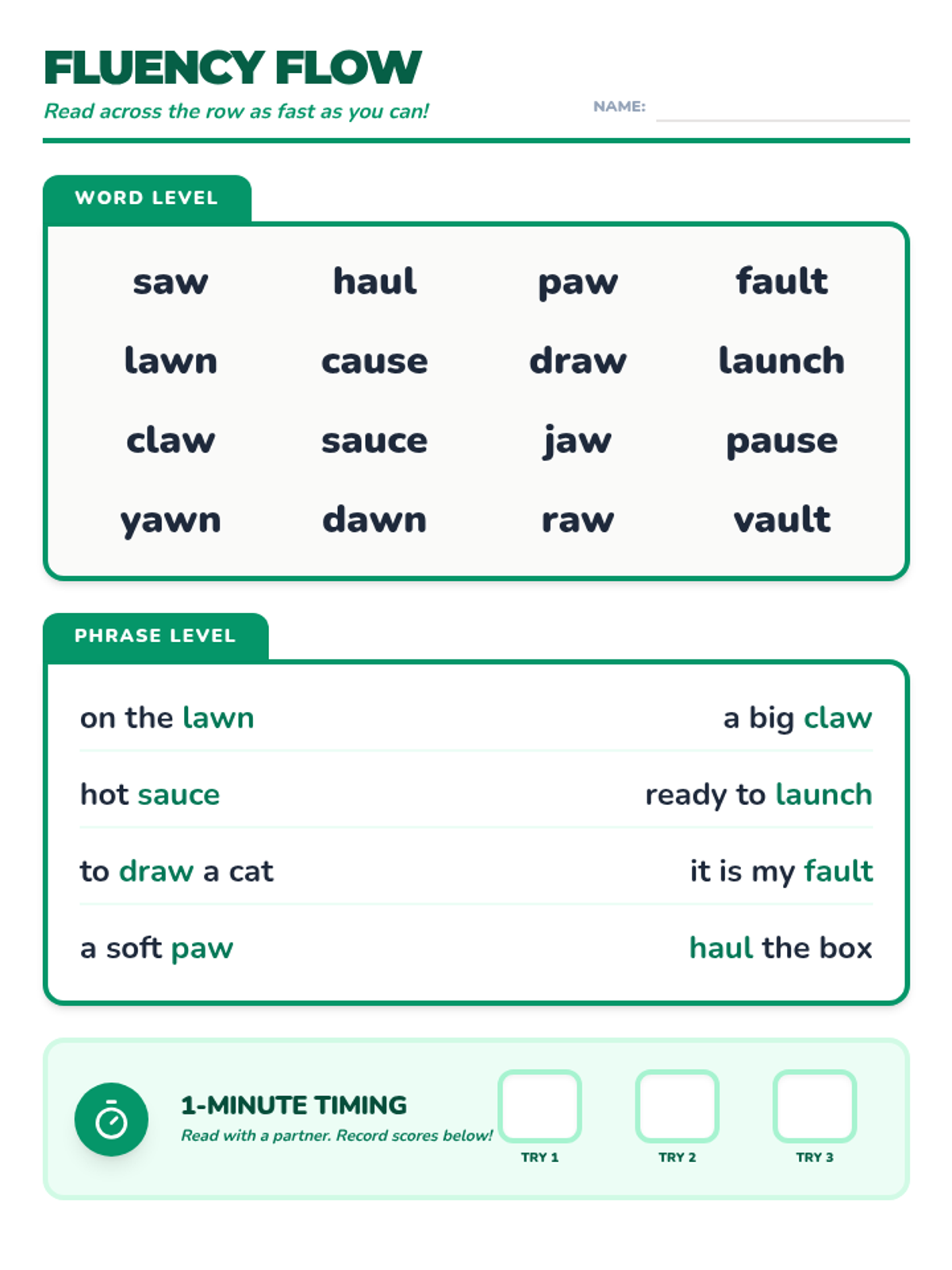
Building fluency with 'au' and 'aw' words and phrases through repetitive practice and blending routines.
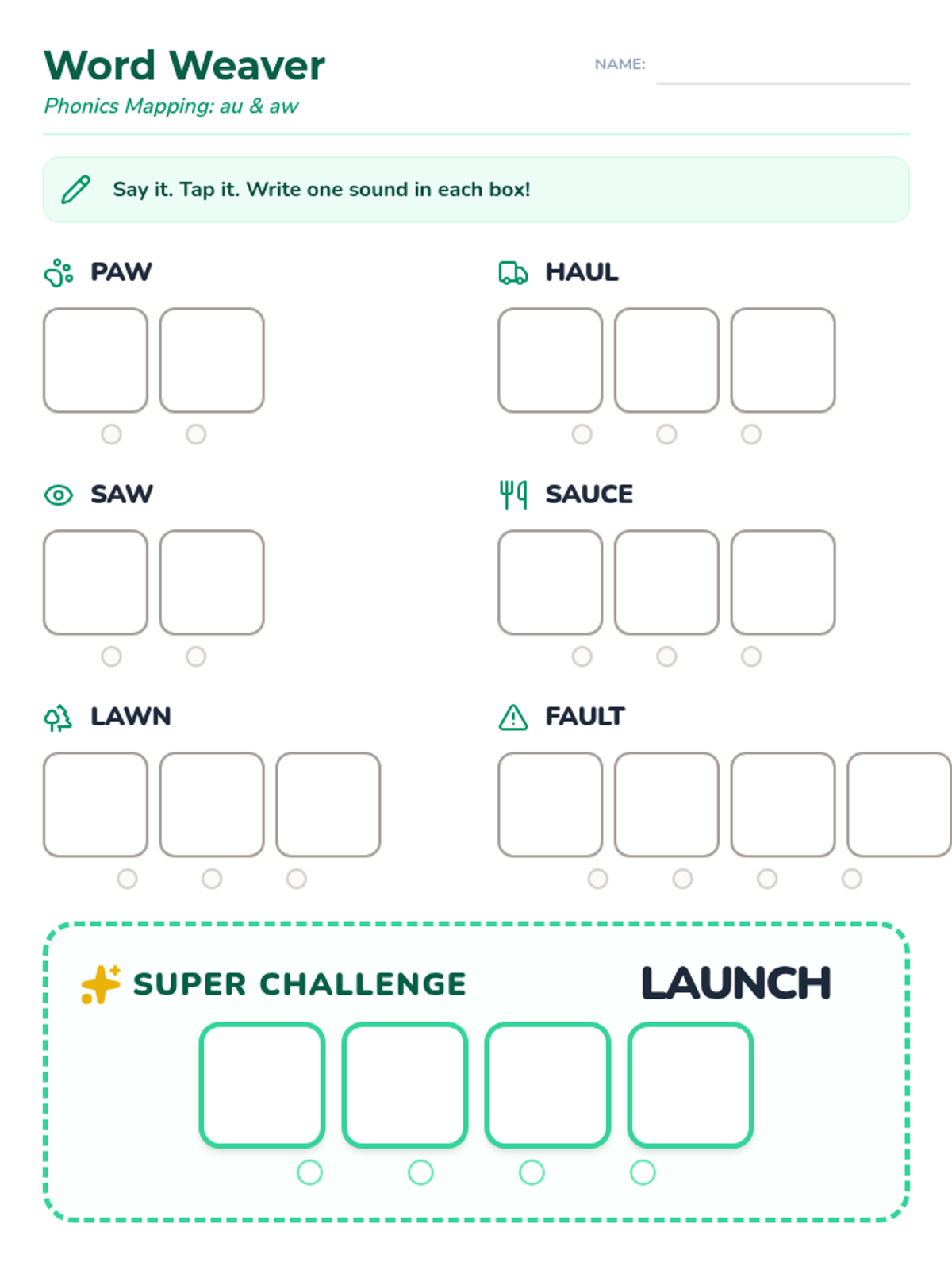
Introduction to the 'au' and 'aw' diphthongs, focusing on phoneme-grapheme mapping and initial word decoding.
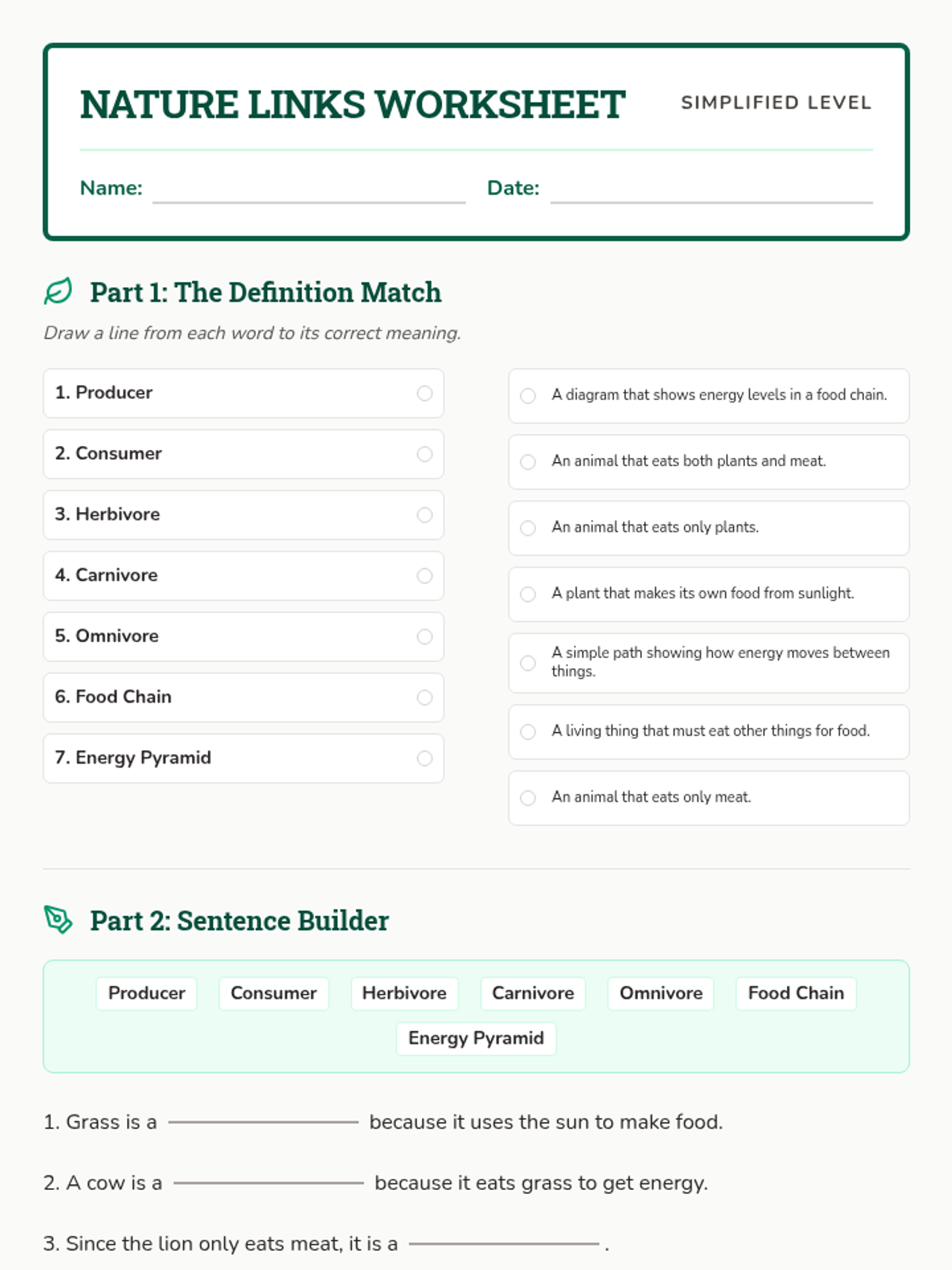
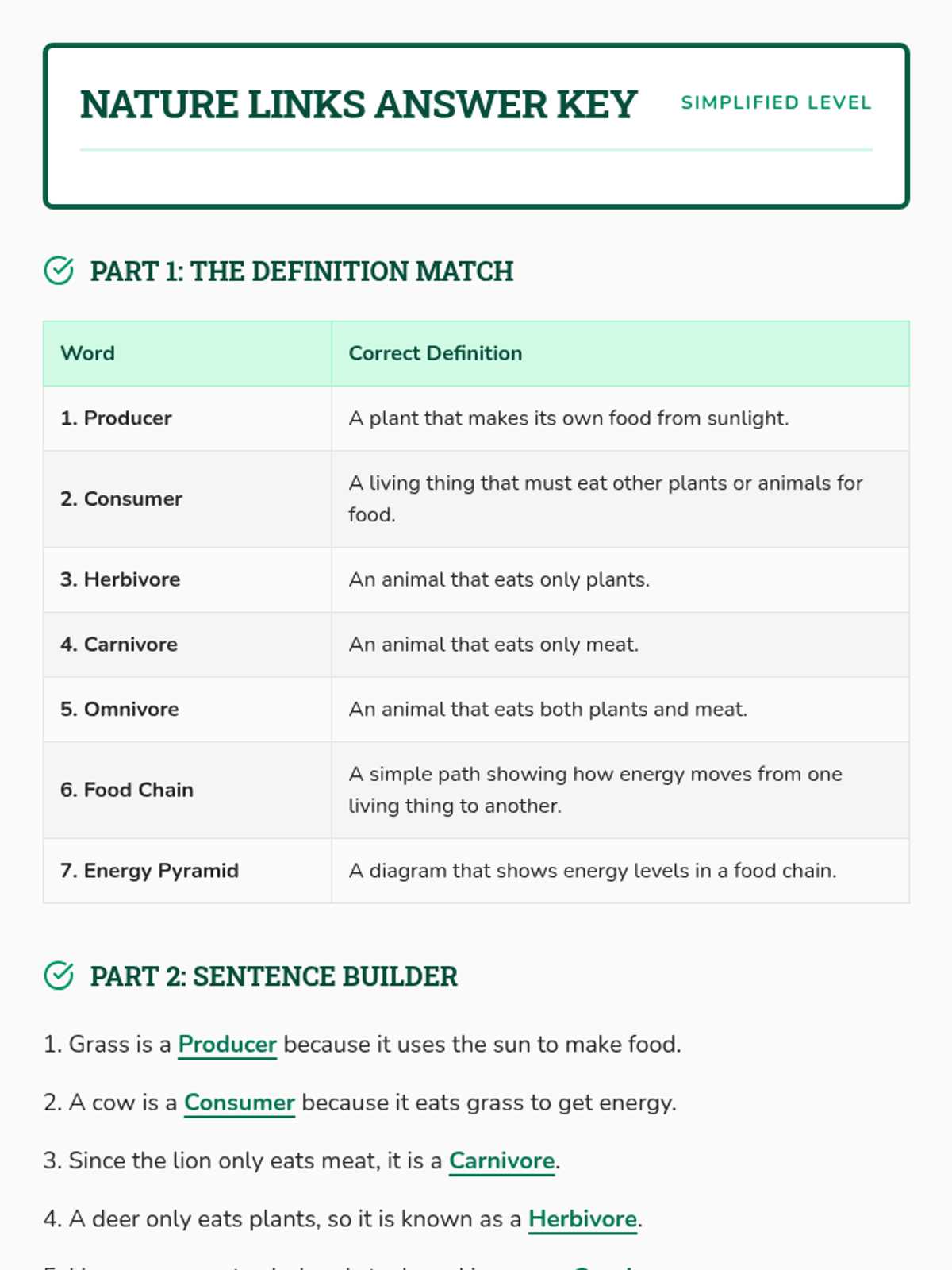
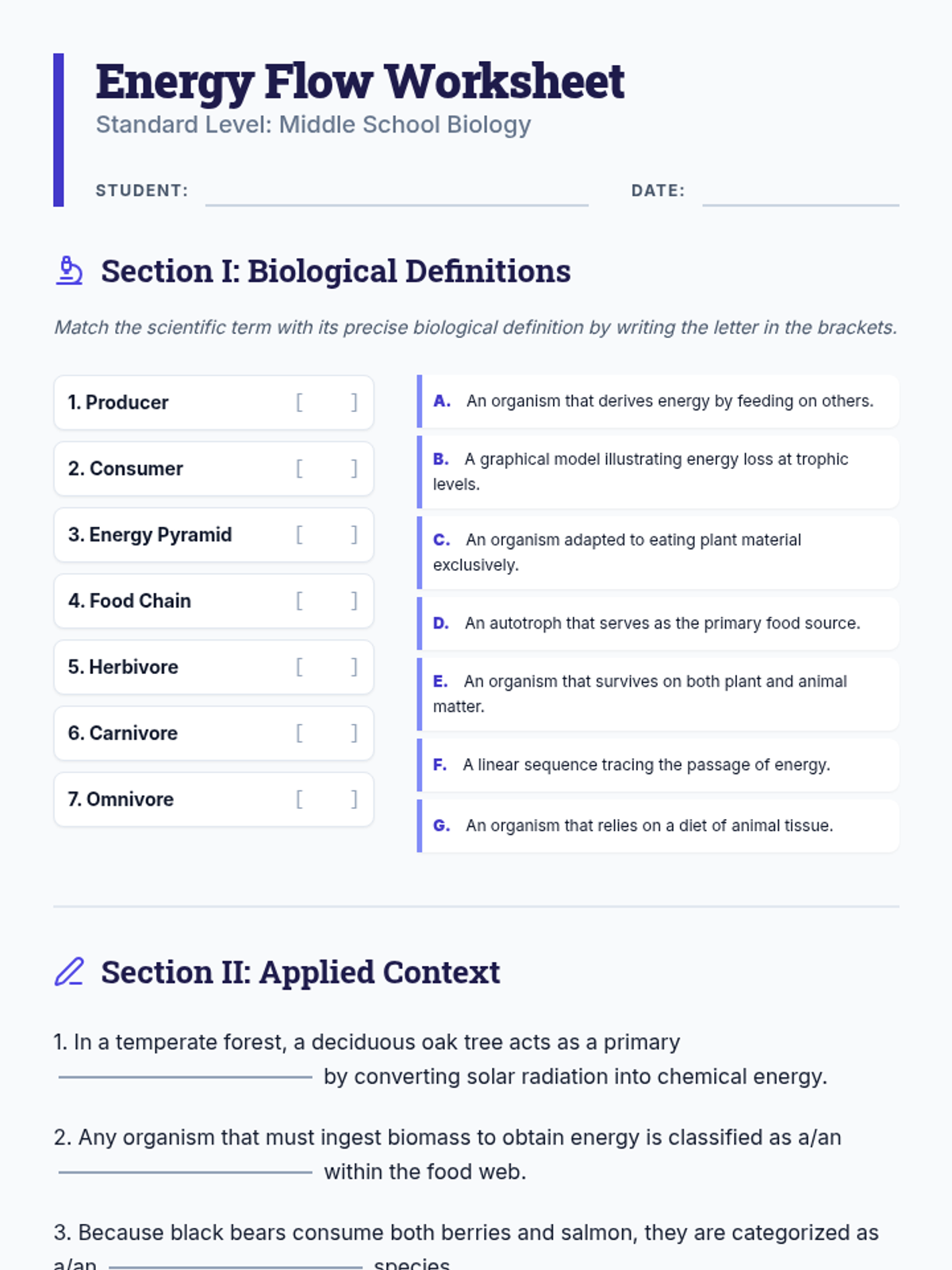
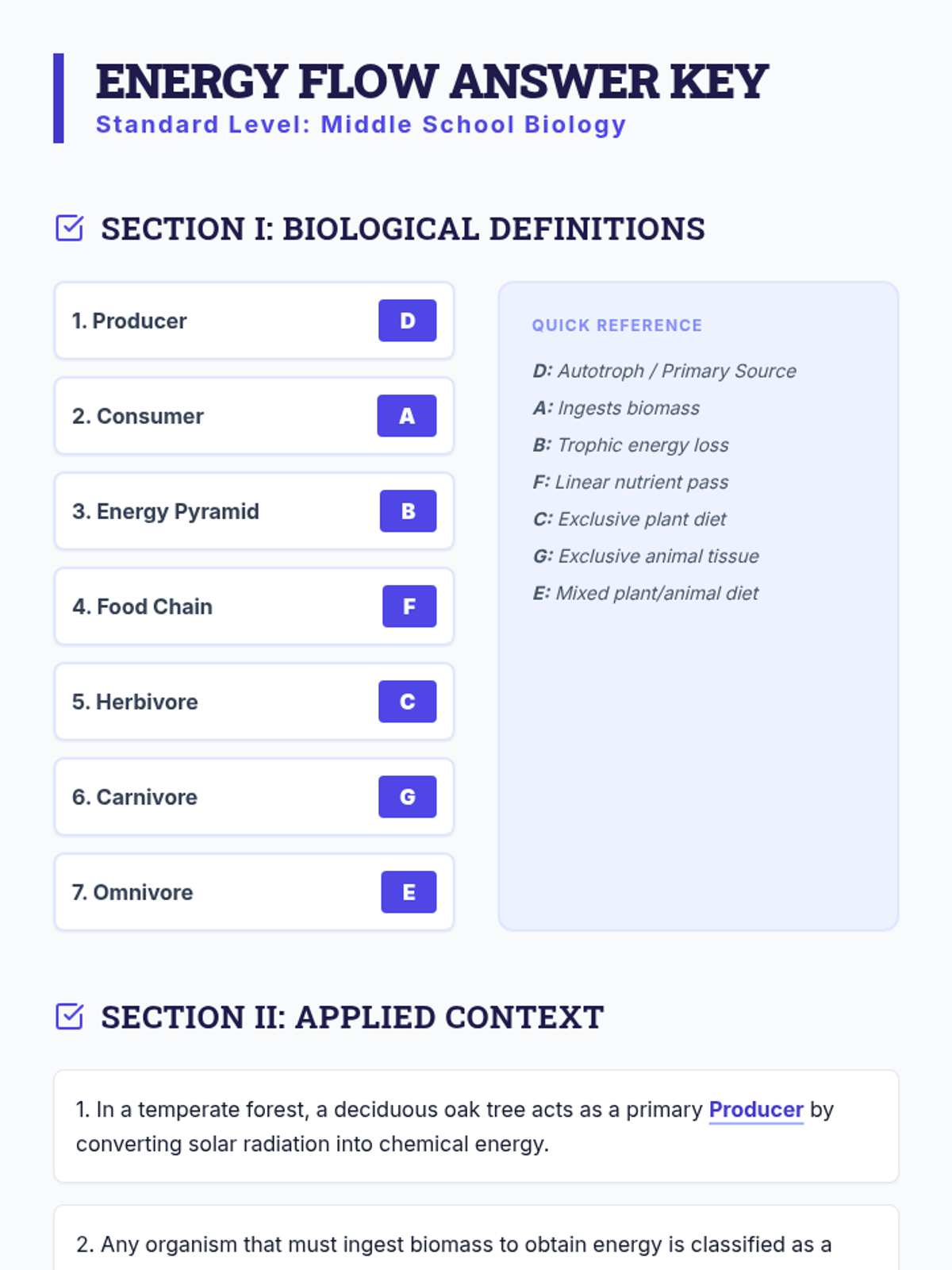
A lesson focusing on ecosystem vocabulary including producers, consumers, and energy flow through food chains and pyramids. Includes tiered materials for elementary and middle school levels.
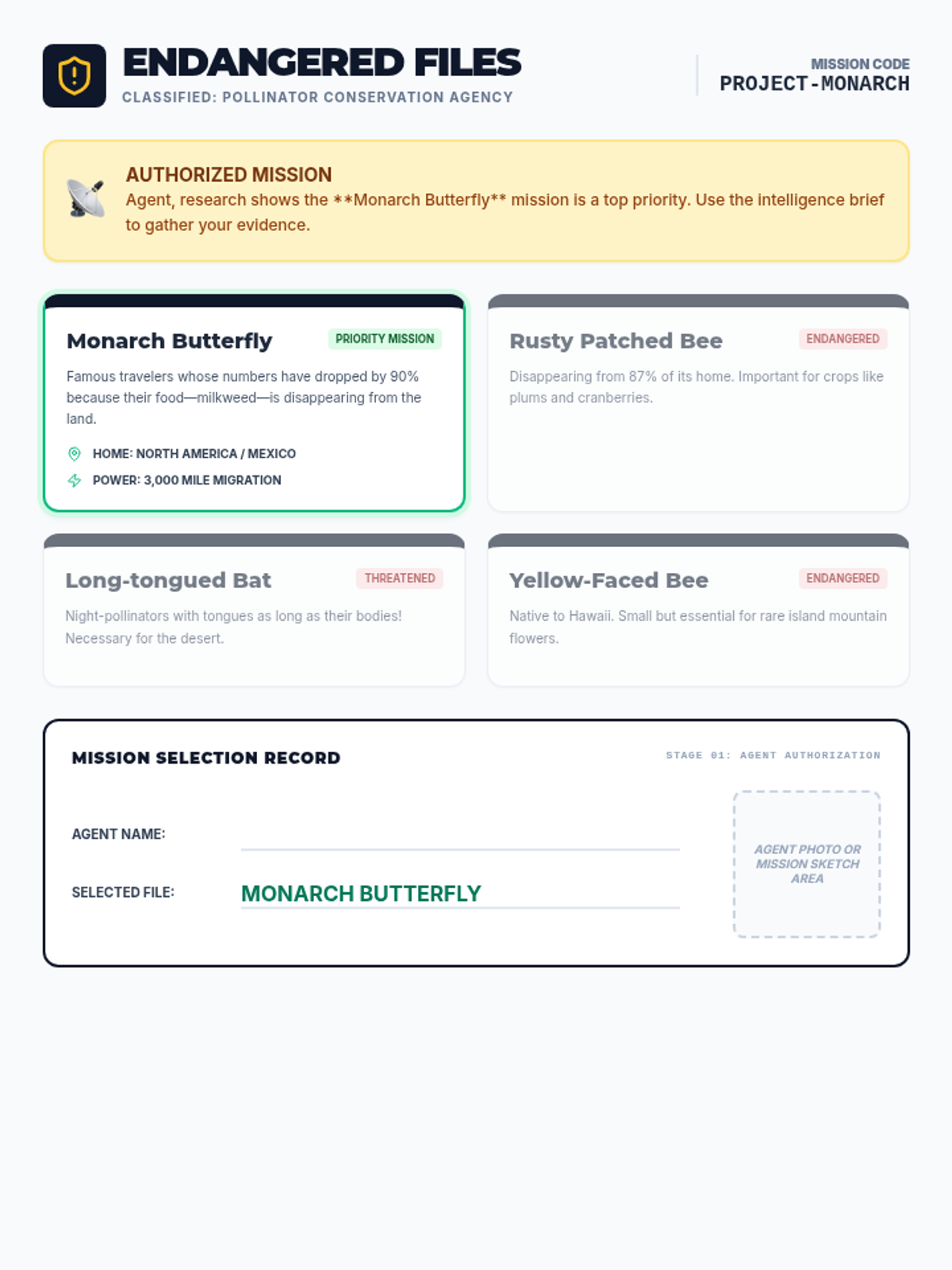
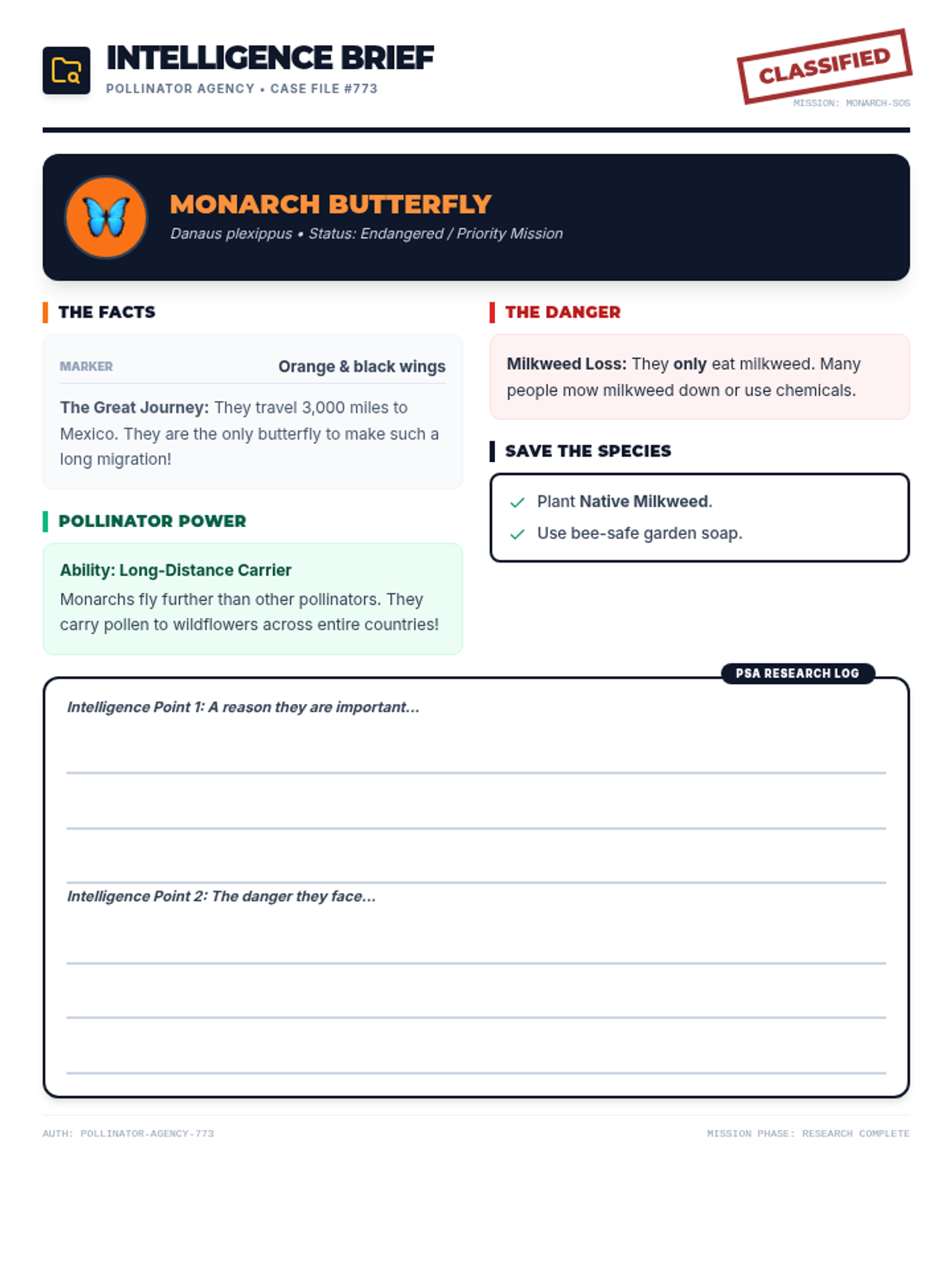
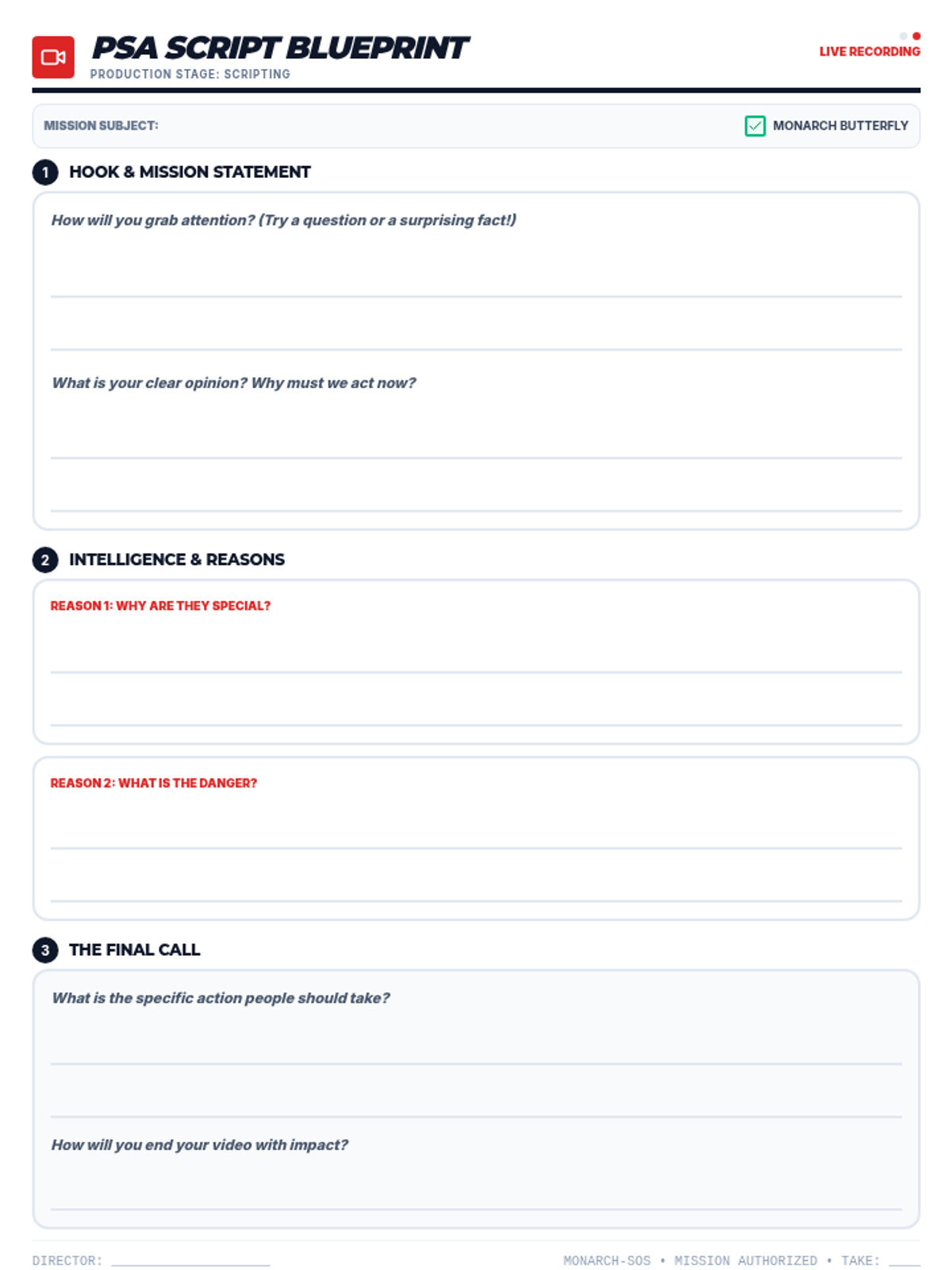
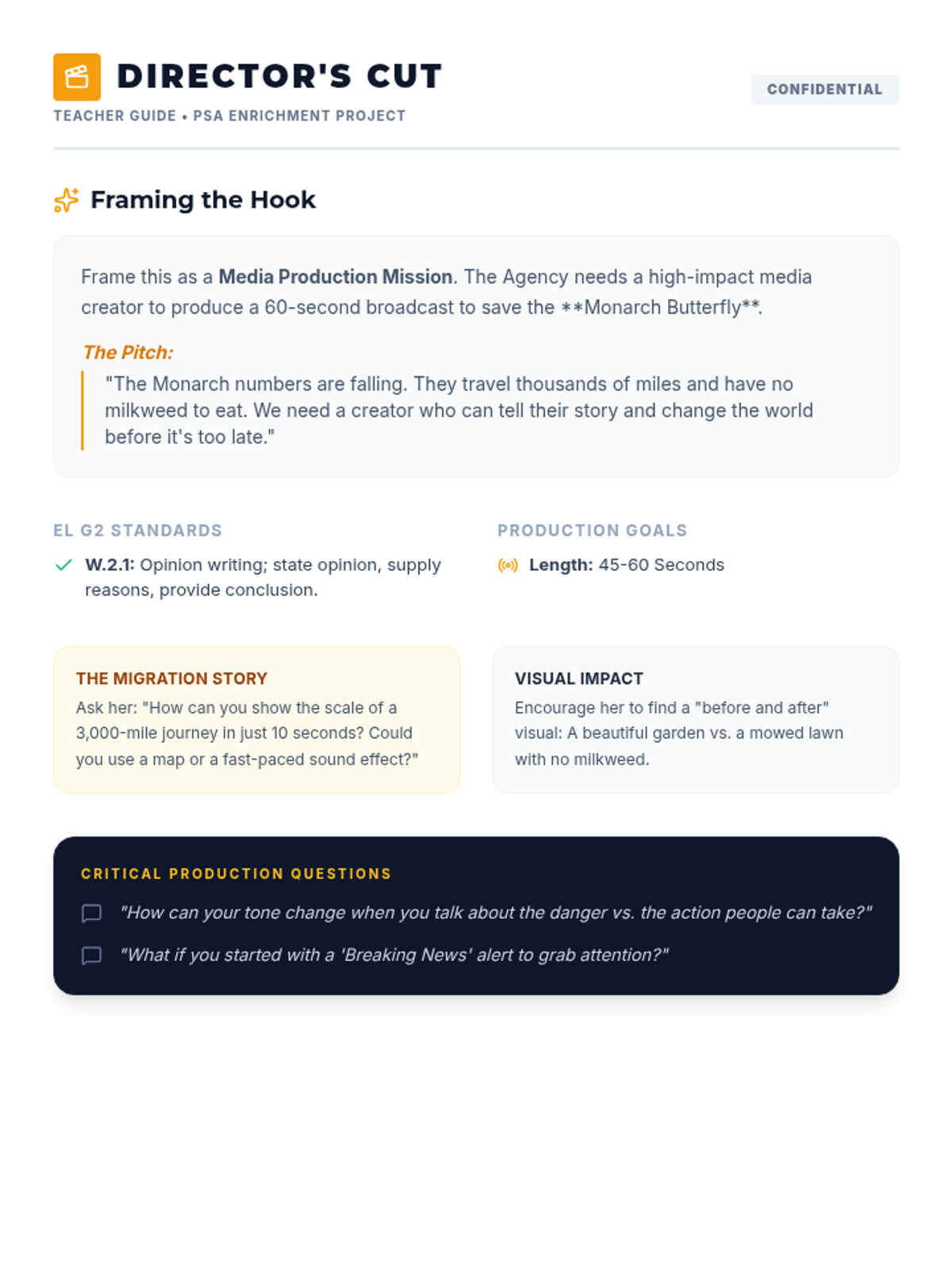
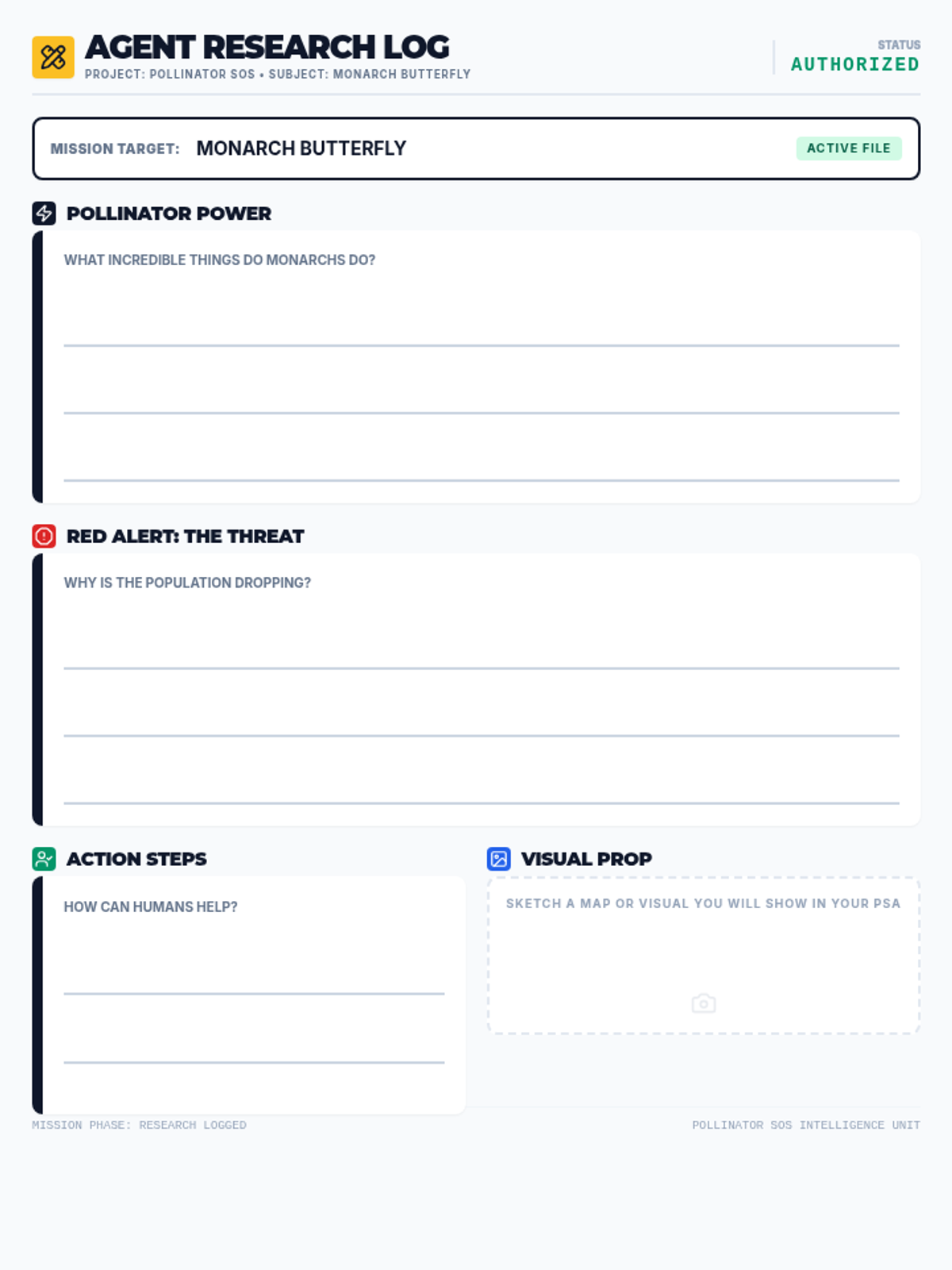
An enriching alternative to the Unit 2 opinion writing piece. Students act as conservation agents, creating a Public Service Announcement (PSA) to advocate for the protection of an endangered pollinator.