This lesson traces the shift from Keynesianism to Neoliberalism following the 1973 Oil Crisis, studying Thatcherism, Reaganomics, and Structural Adjustment Programs.
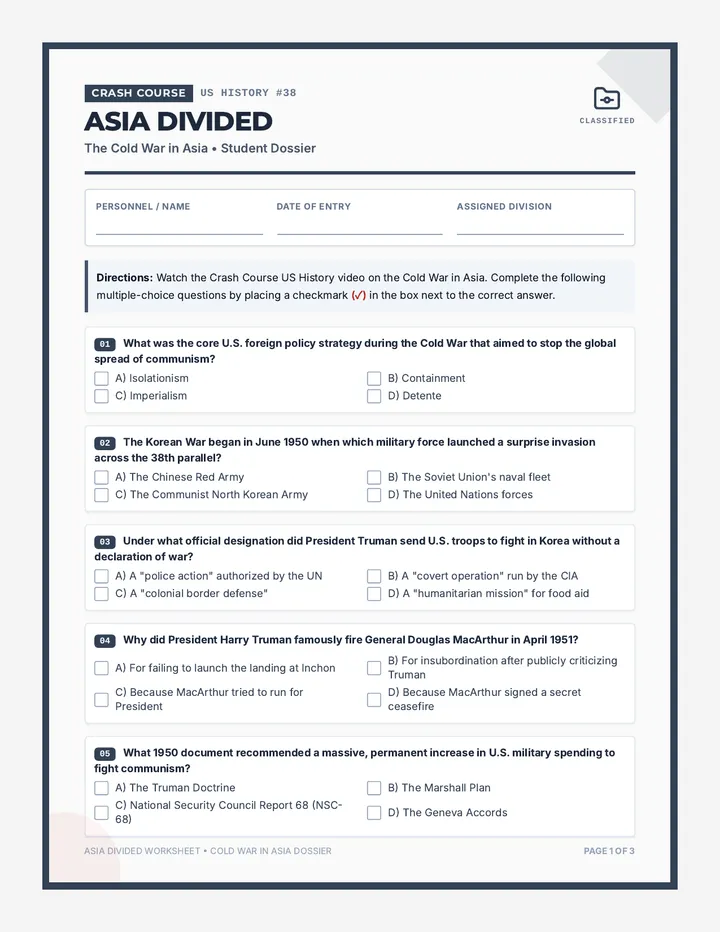
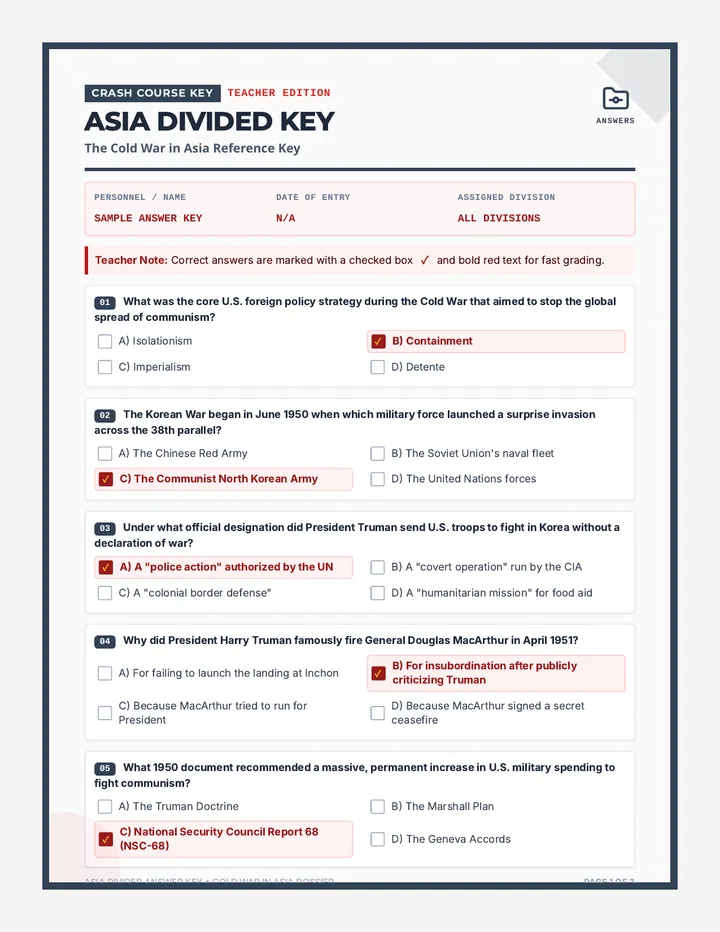
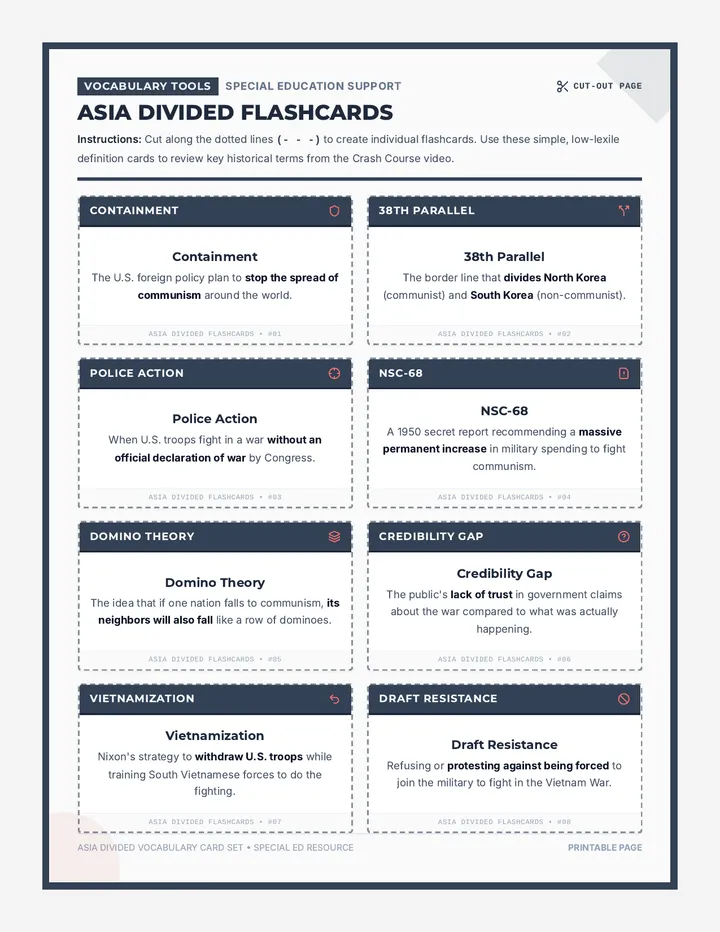
A comprehensive lesson on the Korean War (US.61) covering the Domino Theory, China's entry, the 38th parallel, and the peninsula's final division. This lesson includes a presentation, student handouts, primary source analysis, and teacher resources.
A comprehensive 35-minute lesson on the Korean War, covering its causes, major events, and long-term consequences as part of the Cold War. Students explore the Domino Theory, the 38th Parallel, and the impact of Chinese intervention.
A high-speed strategic briefing on the early Cold War policies of containment, covering the Truman Doctrine, the Marshall Plan, and the Berlin Airlift. Students analyze how the U.S. attempted to stop the spread of communism through economic aid and military posturing.
A 35-minute lesson analyzing the Cold War policies of containment, the Truman Doctrine, the Marshall Plan, and the Berlin Airlift. This lesson uses a military-intelligence 'briefing' theme to engage students in strategic historical analysis.
A 40-minute introductory lesson exploring the geopolitical, military, and economic motivations behind the US involvement in the Panama Canal's construction and Panamanian independence.
An advanced high school lesson focused on analyzing complex global challenges through cultural competence and systems thinking to promote social justice and interdependence.
This lesson examines the ideological clash between Booker T. Washington and W.E.B. Du Bois regarding the best path for African American progress in the post-Reconstruction South. Students will perform a critical analysis of primary sources and compare their distinct strategies for civil rights, education, and social status.