A comprehensive assessment and review sequence covering the Pythagorean theorem, special right triangles, trigonometric ratios, and real-world applications for 10th-grade geometry students.
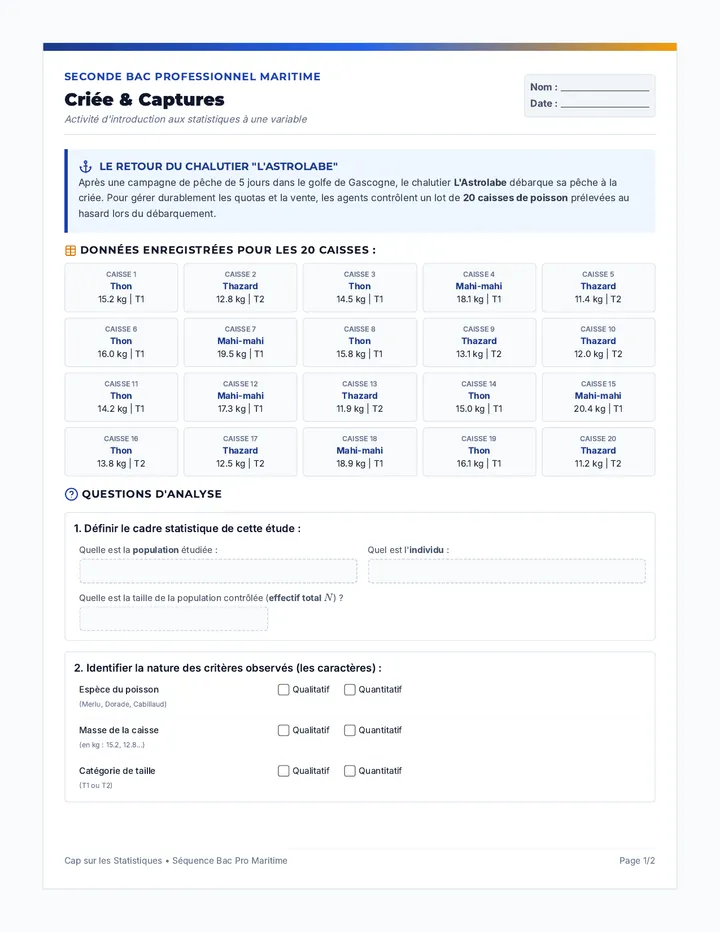
Séquence clé en main sur le module de chimie « Comment caractériser une solution ? » du programme de Seconde Bac Pro, contextualisée dans l'univers de la marine et de l'analyse des eaux.
A comprehensive introductory lesson set for the SAM Podcast Project-Based Learning program. This lesson incorporates critical parent communication tools alongside specialized teacher lesson plans linking core academic subjects like KSSM Mathematics to real-world digital podcast applications.
Slaid Pembelajaran (Slides) 5 slaid interaktif untuk sesi Google Meet/Google Classroom yang membimbing murid melukis Graf Laju-Masa mengikut kaedah Contoh 10 & 11 Buku Teks Matematik Tingkatan 4 KSSM. Tulisan bersaiz minimum 24px untuk keterbacaan digital yang cemerlang.
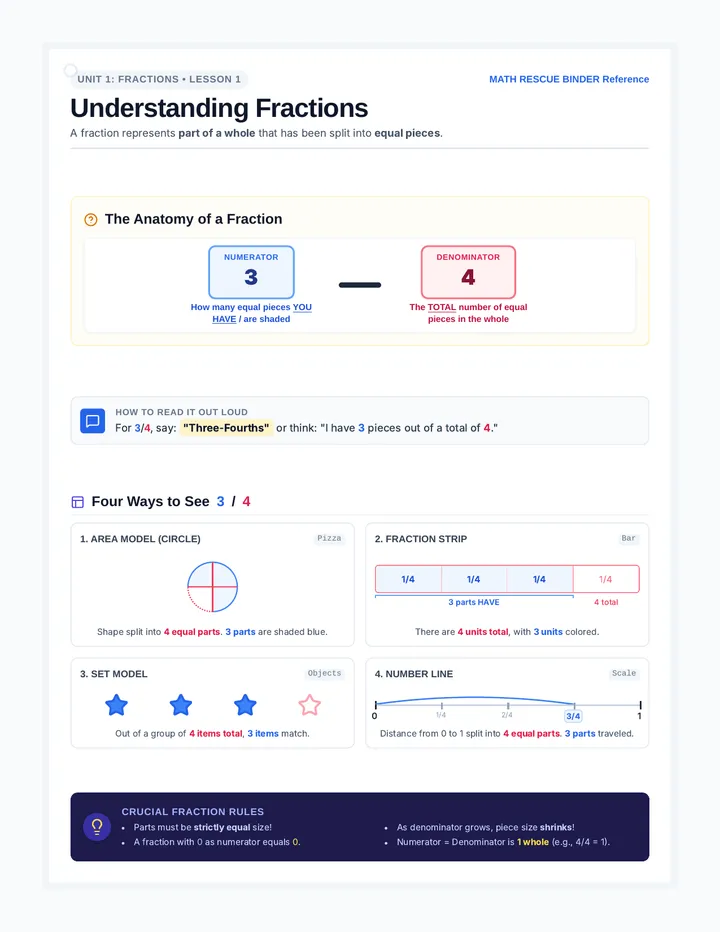
An intensive high-school math intervention binder focused on rebuilding foundational rational number operations, equivalent representations, and visual modeling for resource room or co-taught classrooms.
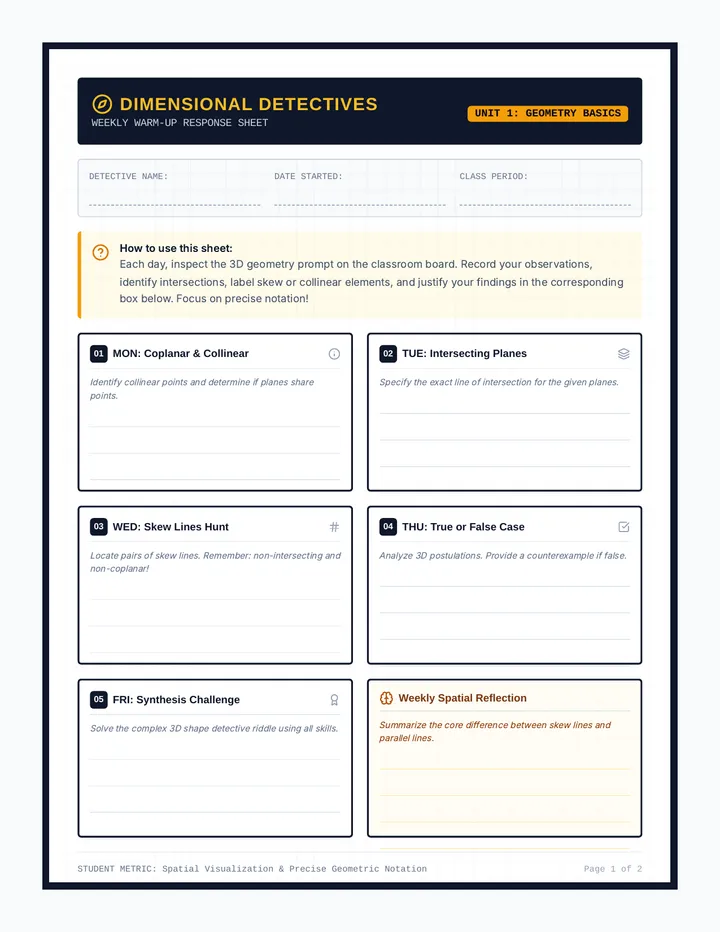
A geometry lesson focusing on visualizing 3D relationships, including intersecting planes, collinear points, coplanar lines, and skew lines in space. Includes projection-ready slide decks, task cards, and a weekly response sheet.
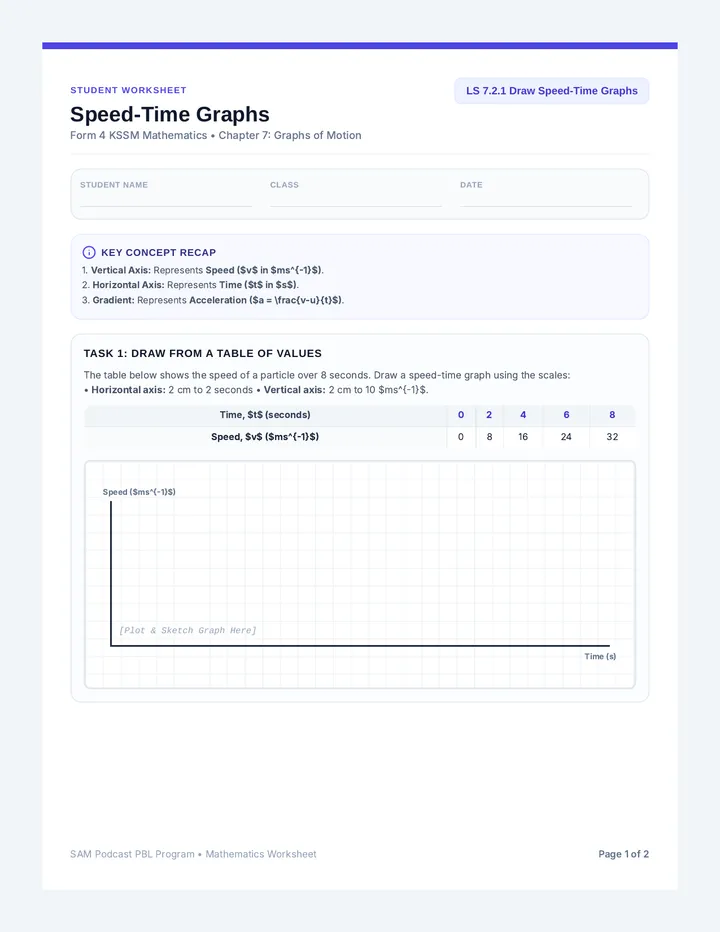
Student Worksheet (2 pages) aligned with KSSM Form 4 Mathematics (Chapter 7). Features step-by-step guidance, plotting grids for Examples 10 & 11, and the "SAM Drone Mission" collaborative task with handwriting-friendly whitespace.
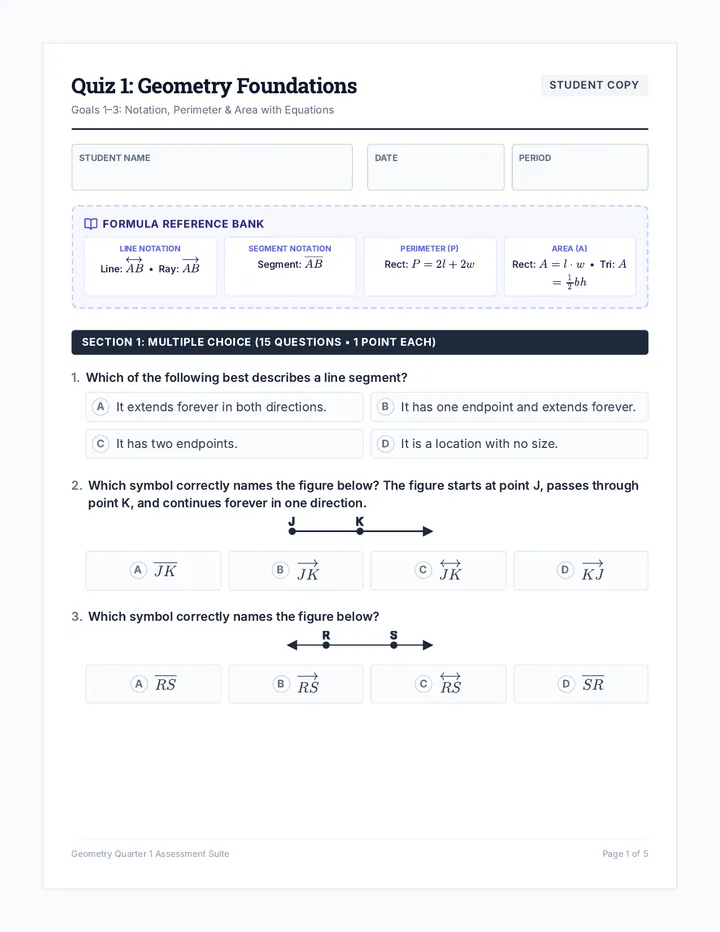
Comprehensive quarterly assessment suites for high school self-contained geometry and statistics. These modules cover foundational geometric properties (lines, segments, angles) and key statistics elements (shape, center, spread, outliers, z-scores, and normal distributions).
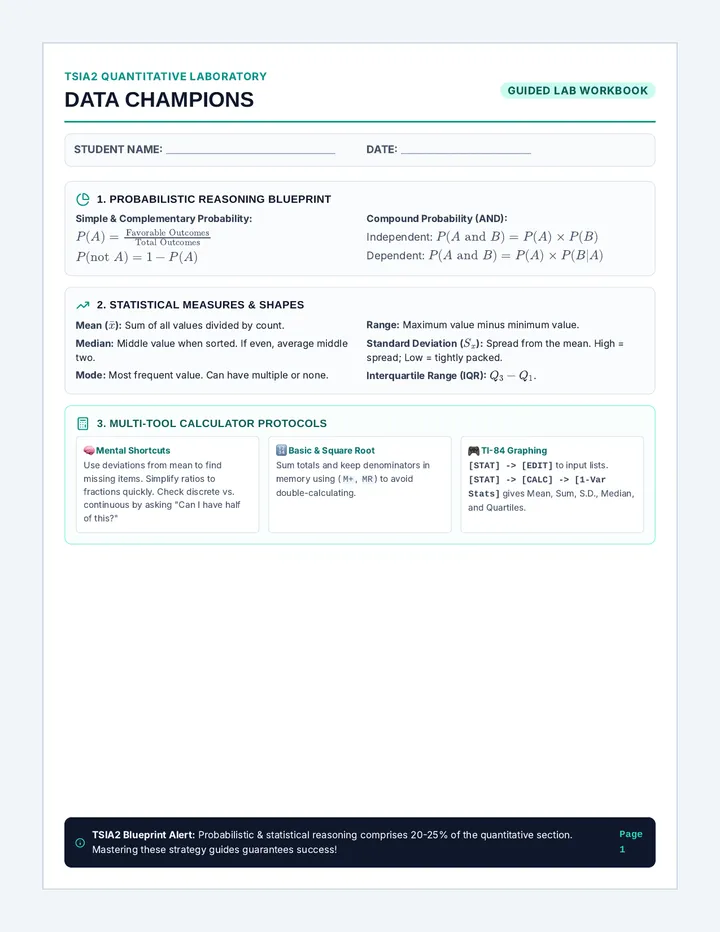
A comprehensive TSIA2 math lesson focusing on Probabilistic and Statistical Reasoning, including classifying data, computing probability, and analyzing measures of center and spread. Features a guided workbook with multi-tool calculator strategies, an independent practice worksheet, and a detailed teacher answer key.
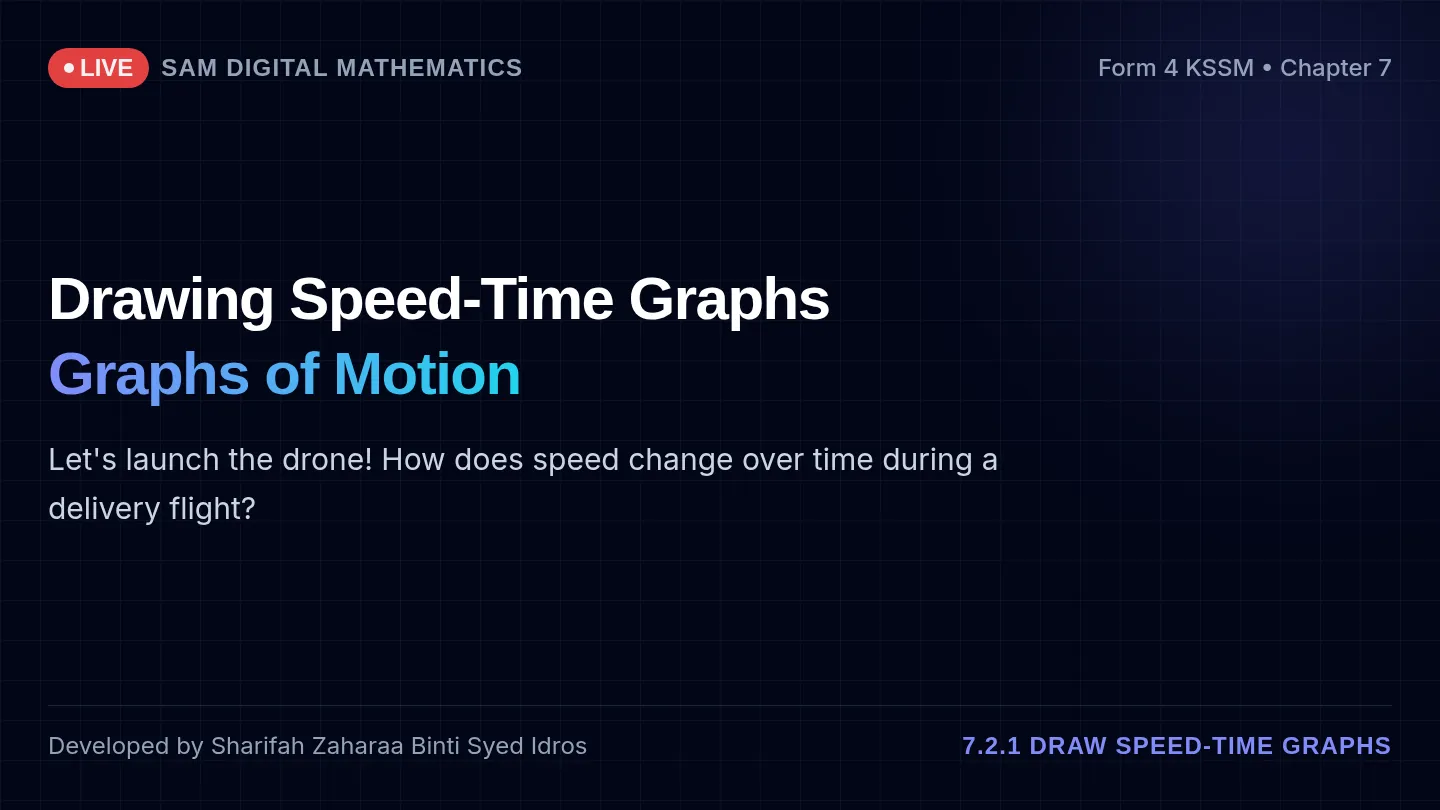
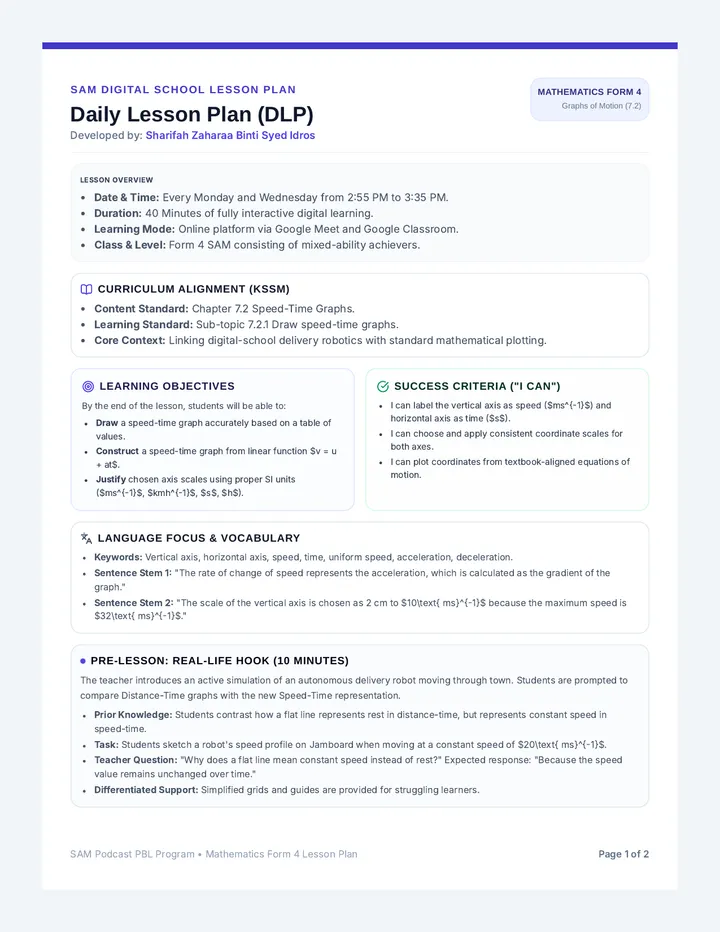
Mathematics Form 4 Lesson Plan (Chapter 7: Graphs of Motion) for learning standard 7.2.1 Draw speed-time graphs. Structured elegantly using bullet points and clear sentences for a highly readable and clean layout, fully aligned with Textbook Examples 10 & 11.
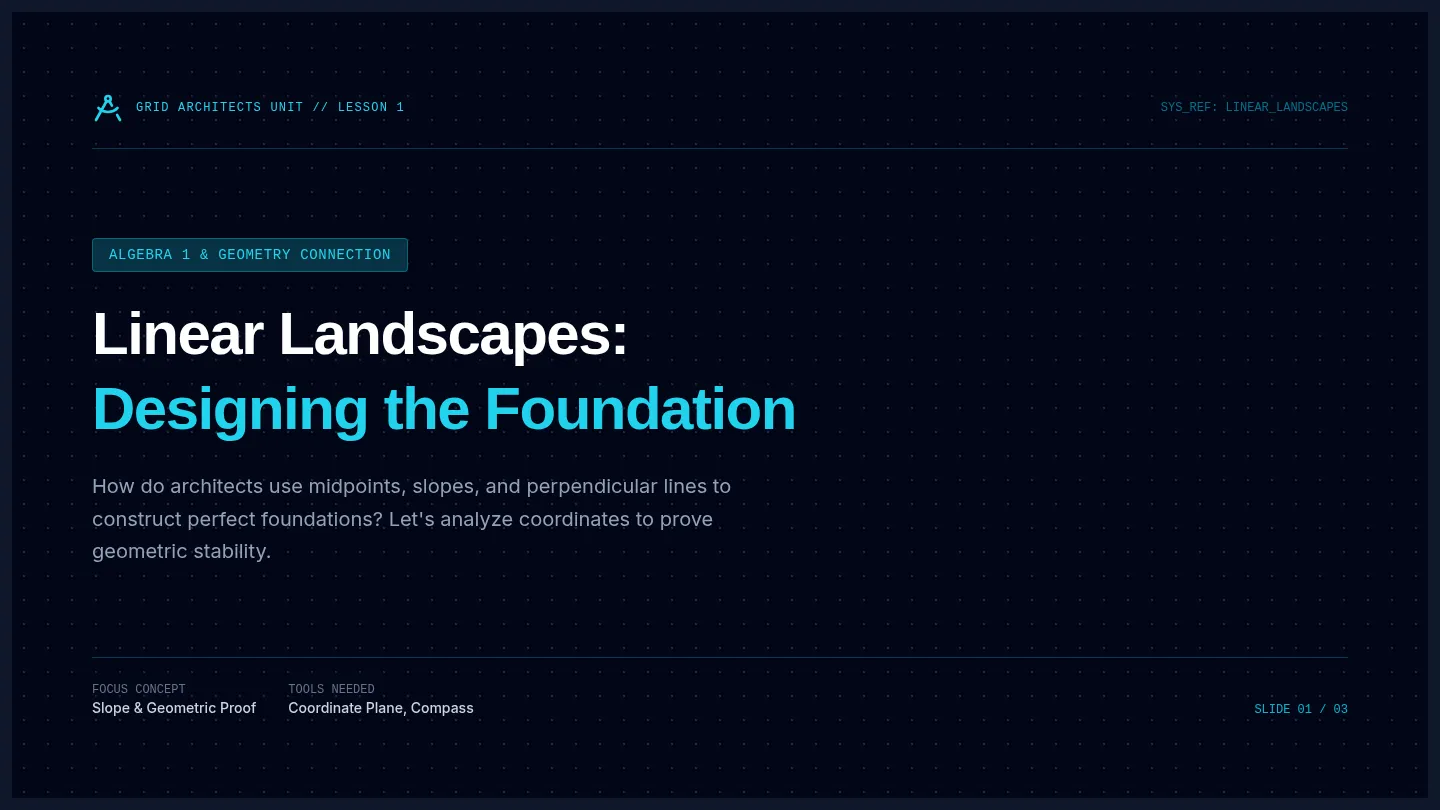
A high-leverage coordinate geometry unit bridging Algebra 1, Algebra 2, and Geometry. Students analyze lines, slopes, polygons, parabolas, and system intersections on the coordinate plane through an architectural blueprint lens.
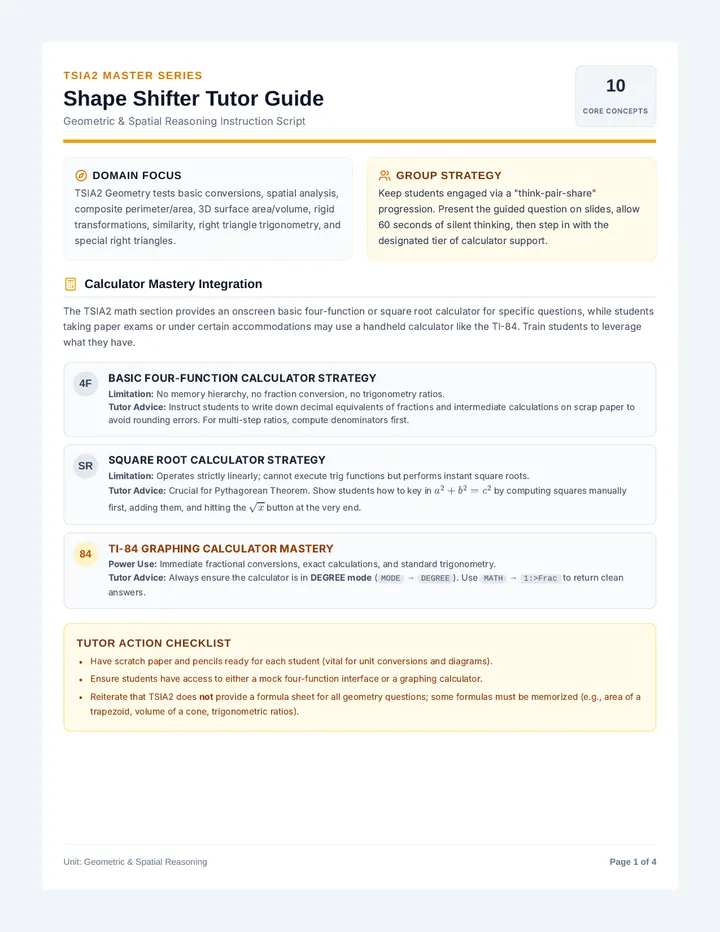
A comprehensive TSIA2 mathematics lesson targeting Geometric and Spatial Reasoning. Includes a scripted tutoring guide, guided slides, a printable practice worksheet, and detailed answer keys.
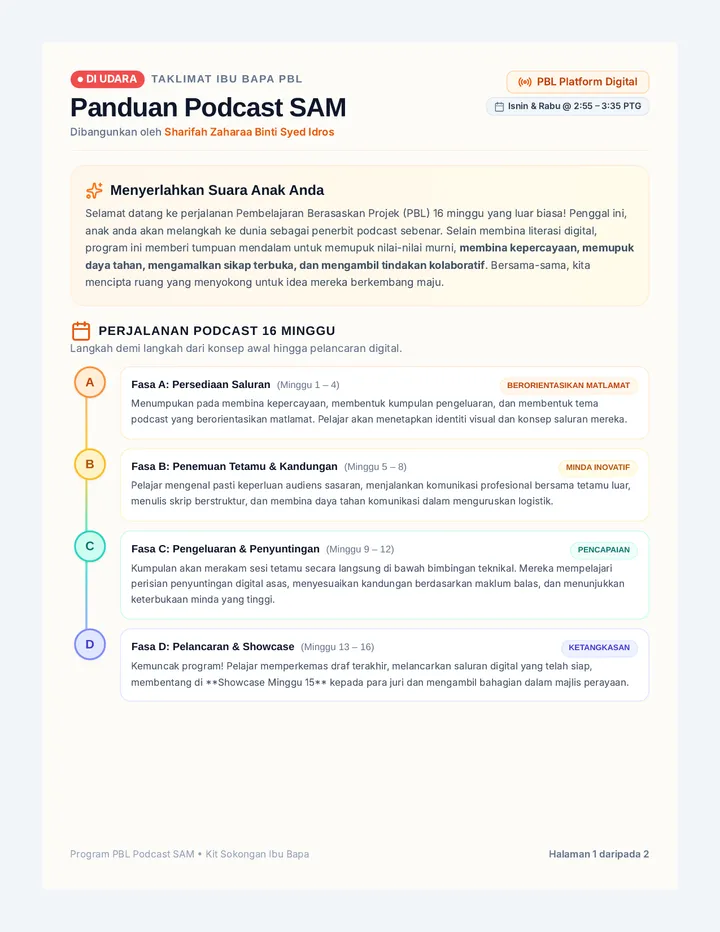
Satu Panduan Taklimat Ibu Bapa dan Kit WhatsApp Sedia-Salin 2 halaman yang komprehensif, mesra, dan penuh inspirasi dalam Bahasa Melayu untuk program Pembelajaran Berasaskan Projek (PBL) Projek Podcast SAM. Merangkumi peta jalan visual 16 minggu, butiran jadual kelas (Isnin & Rabu jam 2:55-3:35 petang), panduan sokongan rumah, dan templat mesej siaran mudah alih yang dioptimumkan.