A comparative study of the 18th-century Pugachev Rebellion in Russia and the American Revolution, exploring how imperial taxation and local grievances led to vastly different outcomes.

A high-energy, carnival-themed lesson for middle schoolers to explore the nuances between fairness and justice. Students act as judges at the 'Fairness Fair' to analyze real-world equity scenarios.
A lesson exploring the migration across Beringia, focusing on using evidence to make inferences about ancient people's lives and motivations. Includes a quiz, an exit ticket, and a teacher discussion guide.
A comprehensive lesson introducing Lev Vygotsky's sociocultural theory of cognitive development. Students will explore the Zone of Proximal Development, the role of Scaffolding, and the importance of the More Knowledgeable Other through collaborative activities.
A 45-minute ESOL lesson exploring the Battle of Puebla and Cinco de Mayo. Students analyze informational texts and poetry to answer essential questions about making oneself heard and the value of research, culminating in a sensory writing and speaking activity.
A focused 20-minute analysis of Horace Mann's 12th Annual Report to the Massachusetts Board of Education, exploring the ideals and motivations behind the American Common School Movement.
A foundational introductory lesson for a unit on the Harlem Renaissance, designed for students reading at a 2nd-grade level. The lesson focuses on initial vocabulary exposure and self-assessment of prior knowledge.
An introduction to the fundamental concepts of political science required for both AP US and Comparative Government, including sovereignty, legitimacy, authority, and the core differences between states, nations, and regimes.
A comprehensive 6-group jigsaw reading activity for 10th-grade history students exploring the social, legal, and political dimensions of the Chinese Exclusion Act through primary sources and case law.
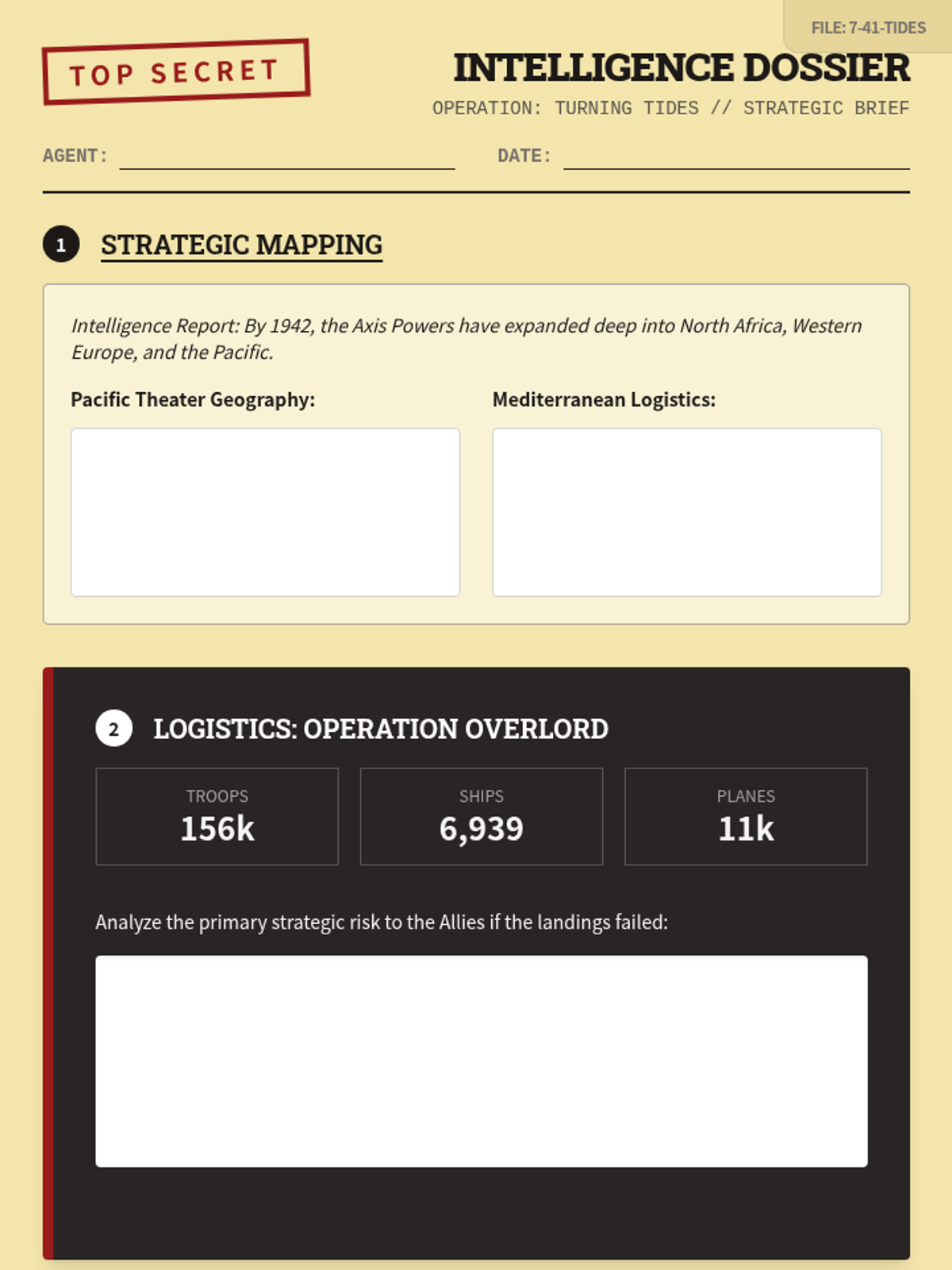
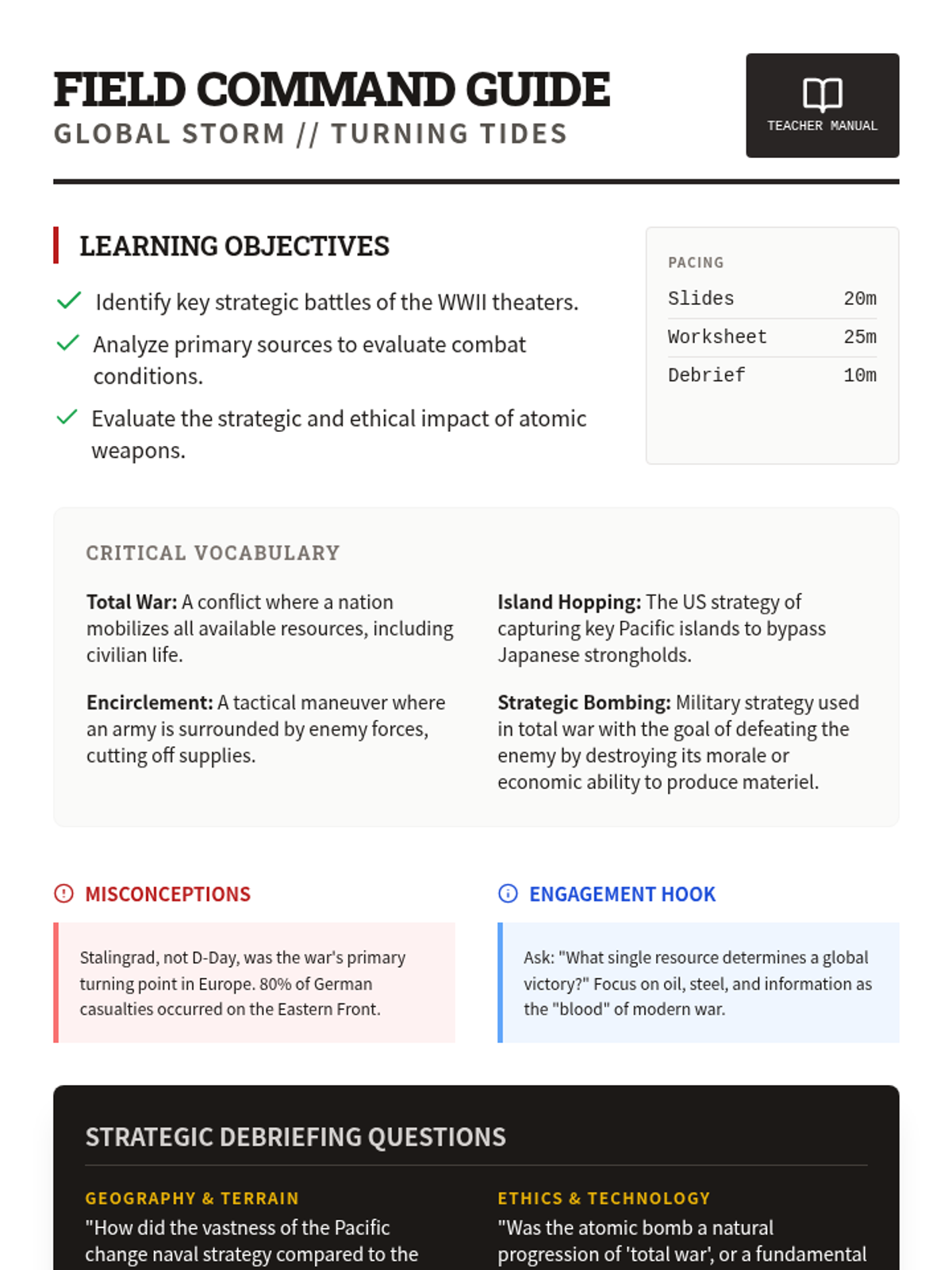
An intensive primary source analysis lesson for AP History students focusing on the diverse perspectives and global scale of WWII using the HIPP analysis framework.