In this final workshop, students synthesize their knowledge to transform bland sentences into vivid descriptions. They apply revision strategies to add precise adjectives and adverbs, focusing on clarity and mental imagery.
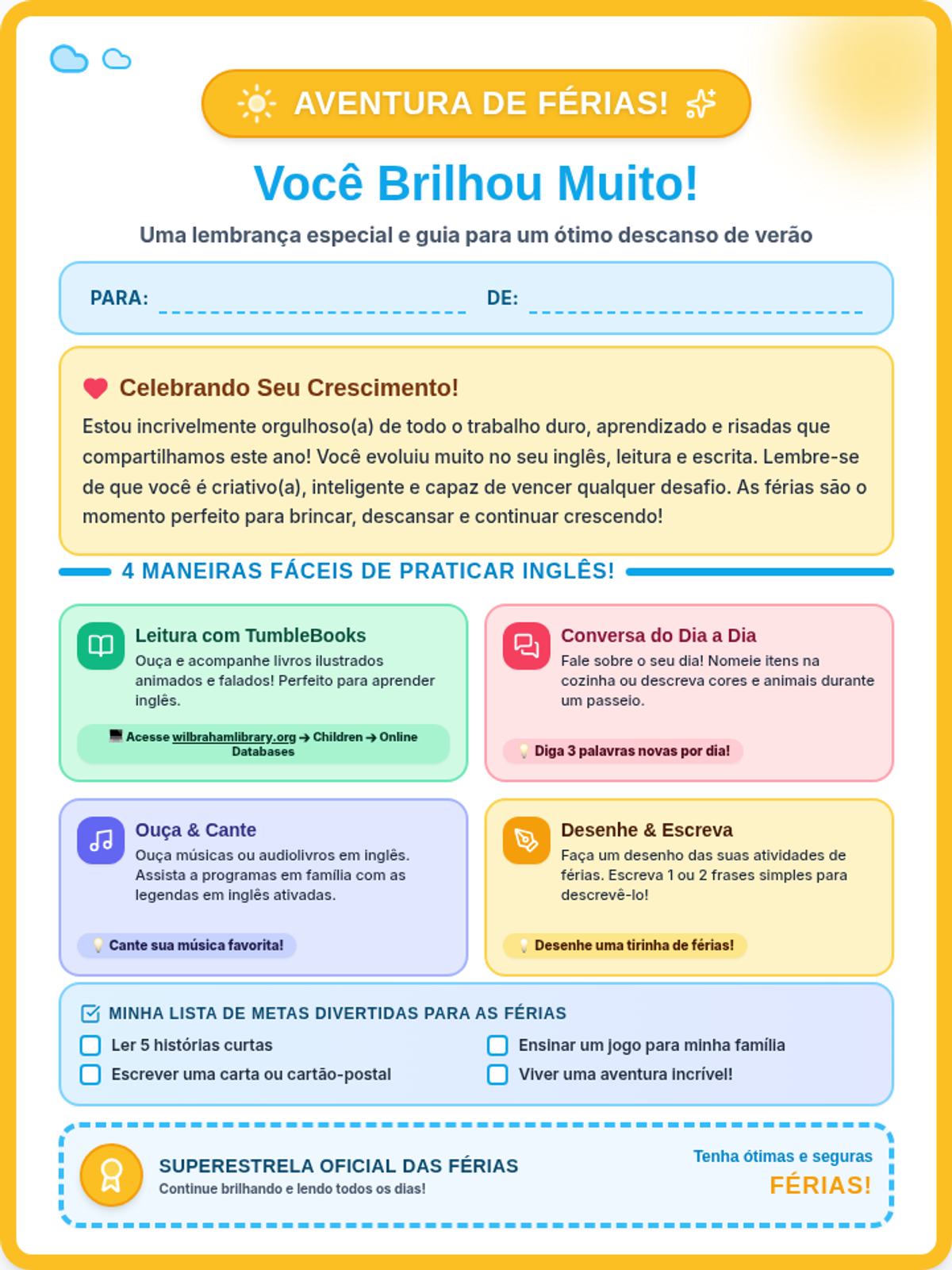
A lesson designed to celebrate student growth and guide families with actionable, low-stress English practice tips over the summer break.
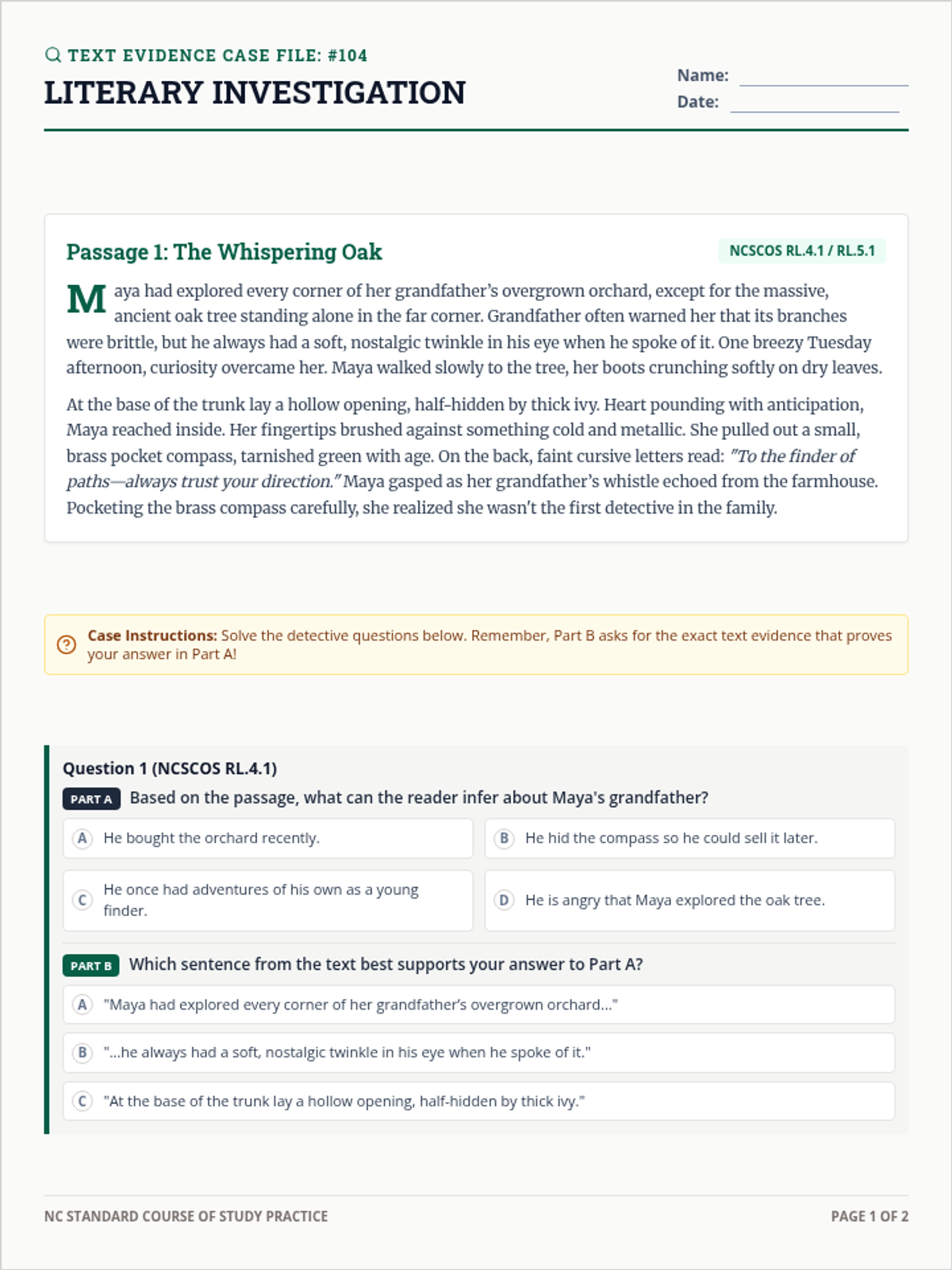
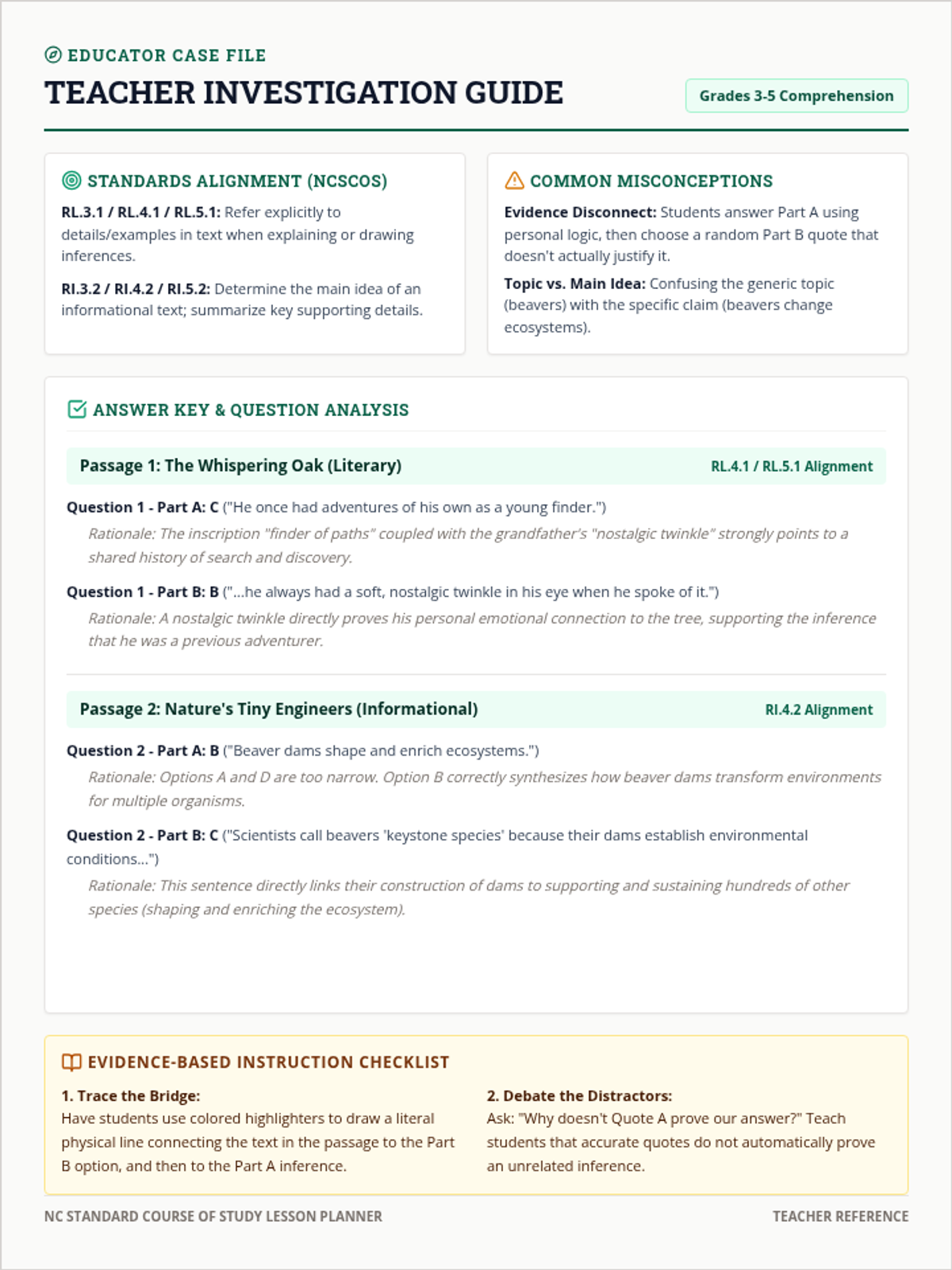
A reading comprehension lesson focused on standard-aligned Part A/Part B questioning strategies for Grades 3-5, aligned to the North Carolina Standard Course of Study (NCSCOS) for literal and inferential comprehension.
A vocabulary and morphology lesson focusing on the academic and STEM suffix -cian, representing highly skilled occupational roles. Students explore word roots, spelling transformations, and professional definitions.
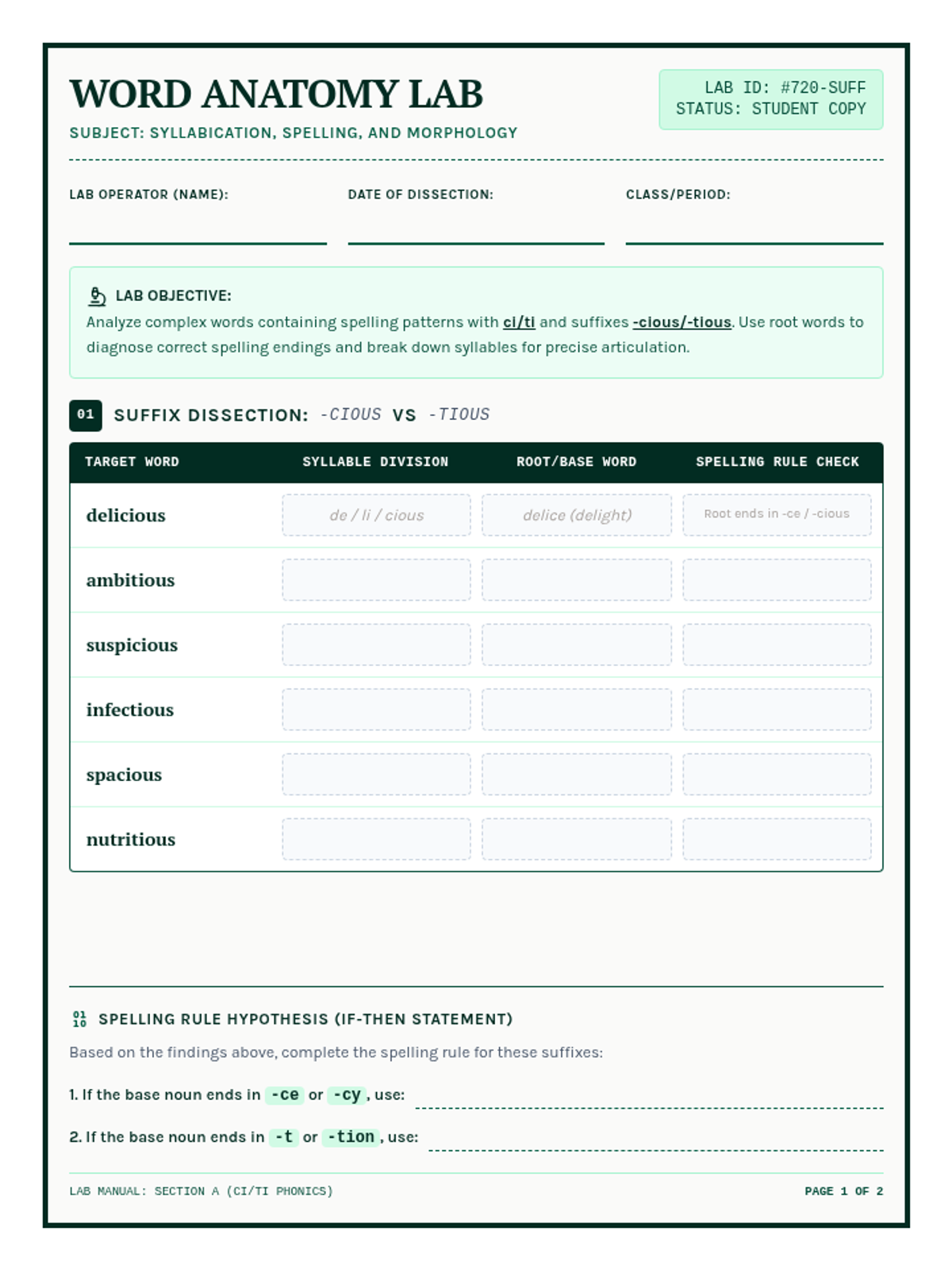
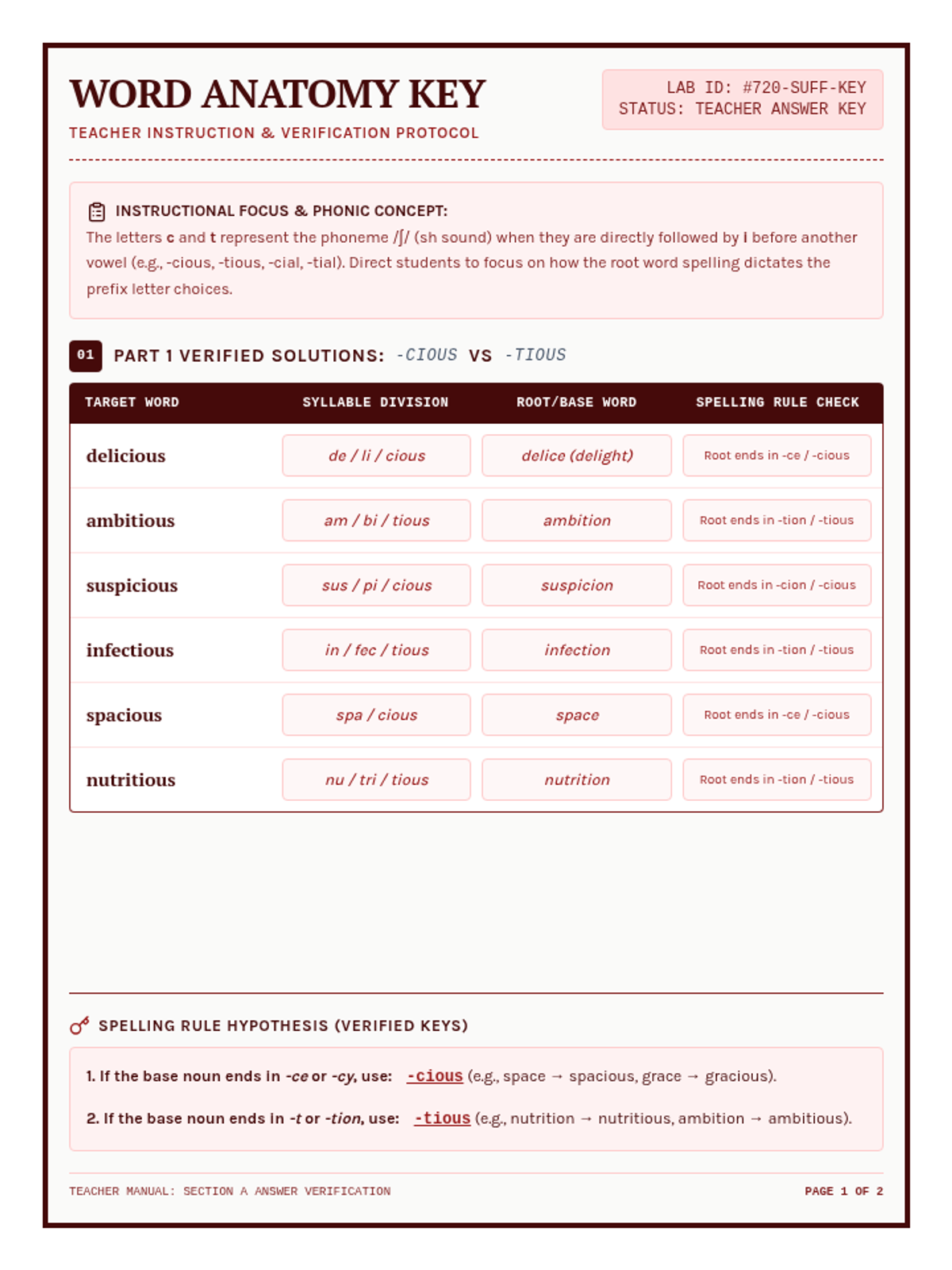
A masterclass in decoding, spelling, and analyzing 3- and 4-syllable words containing ti, ci, tious, cious, tial, and cial. Students explore phonics, spelling rules, and morphology through structured word breakdown.
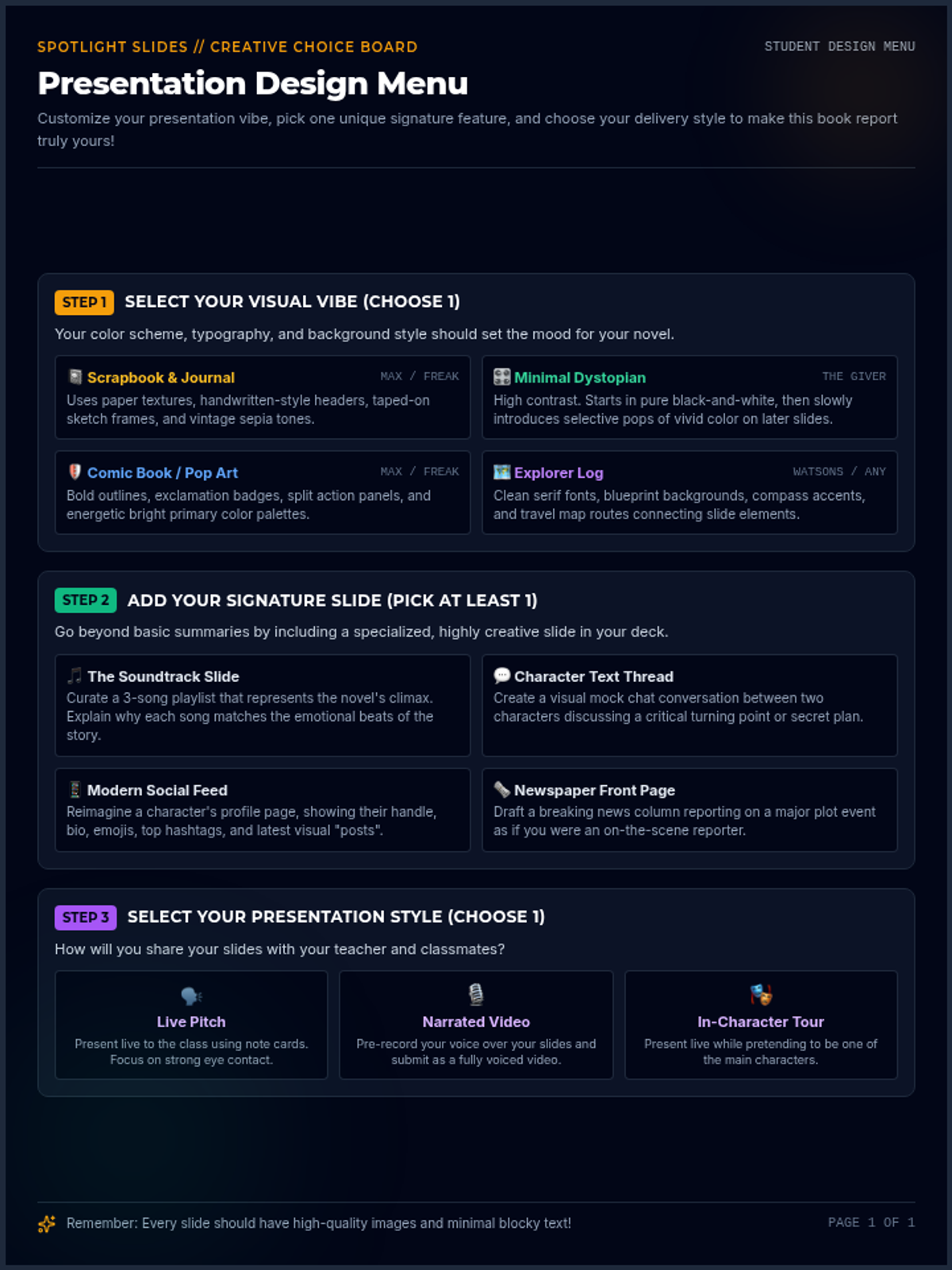
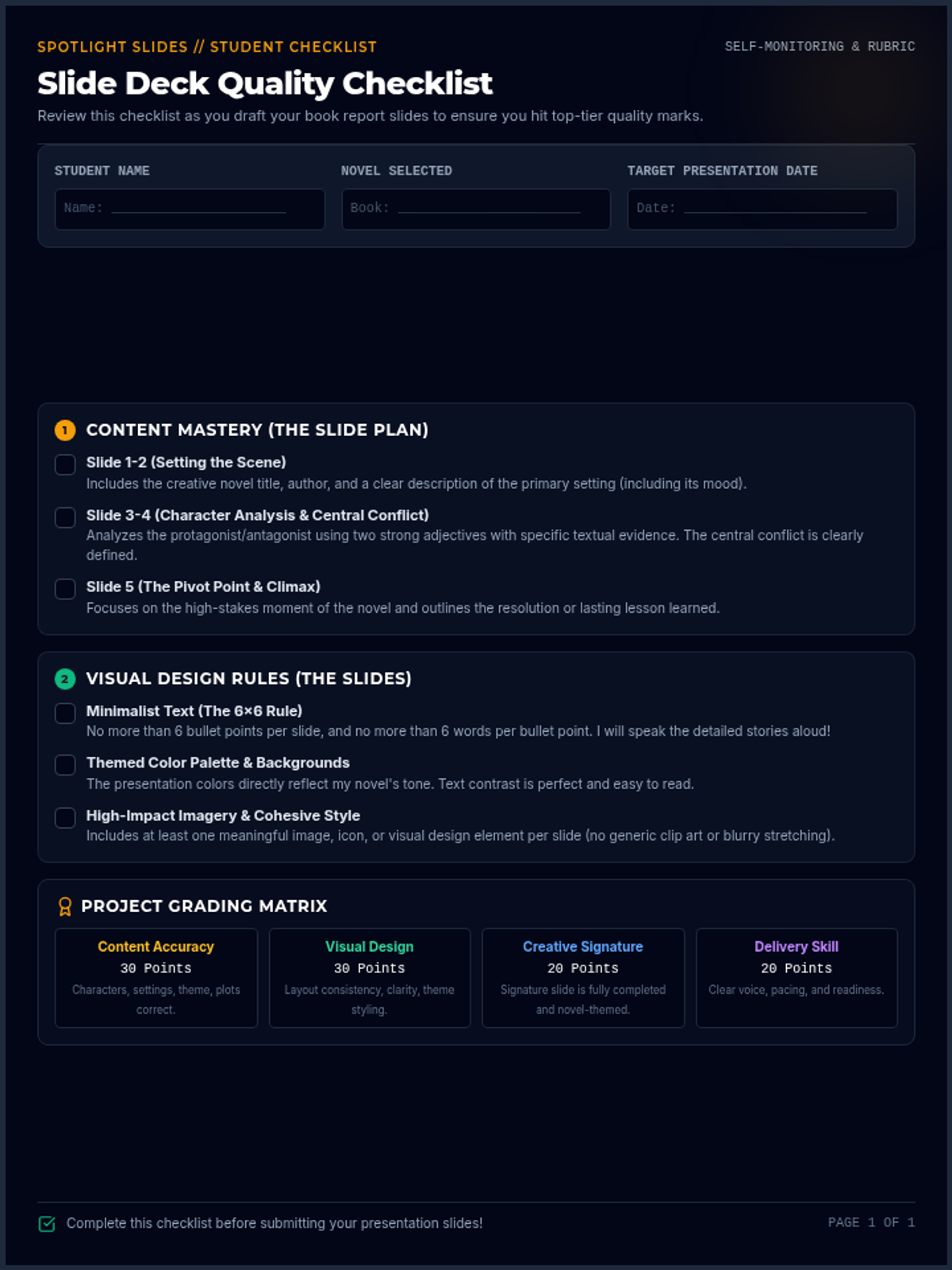
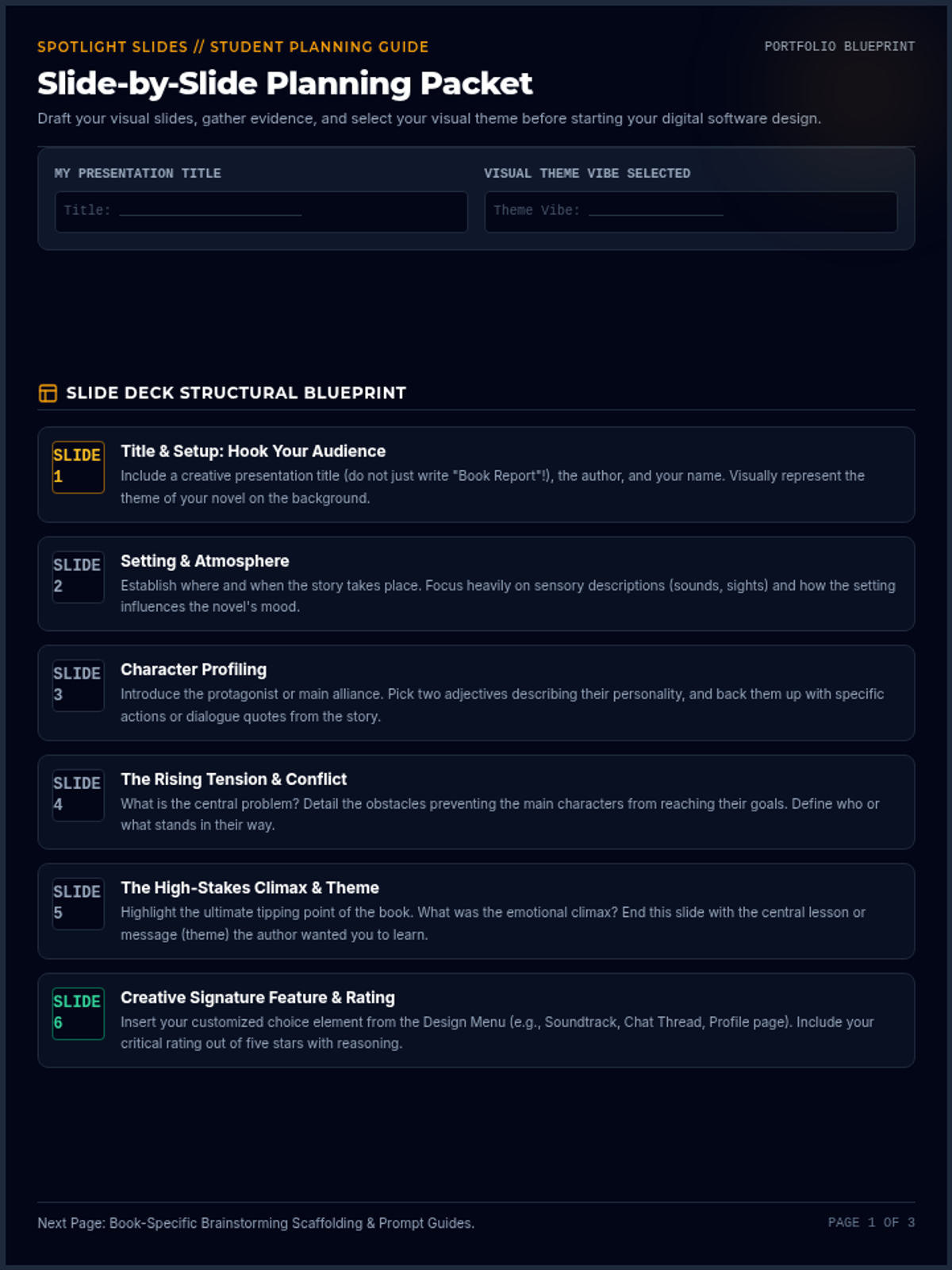
A comprehensive toolkit for guiding students through designing, planning, and executing a highly creative digital book report presentation on one of four shared class novels.
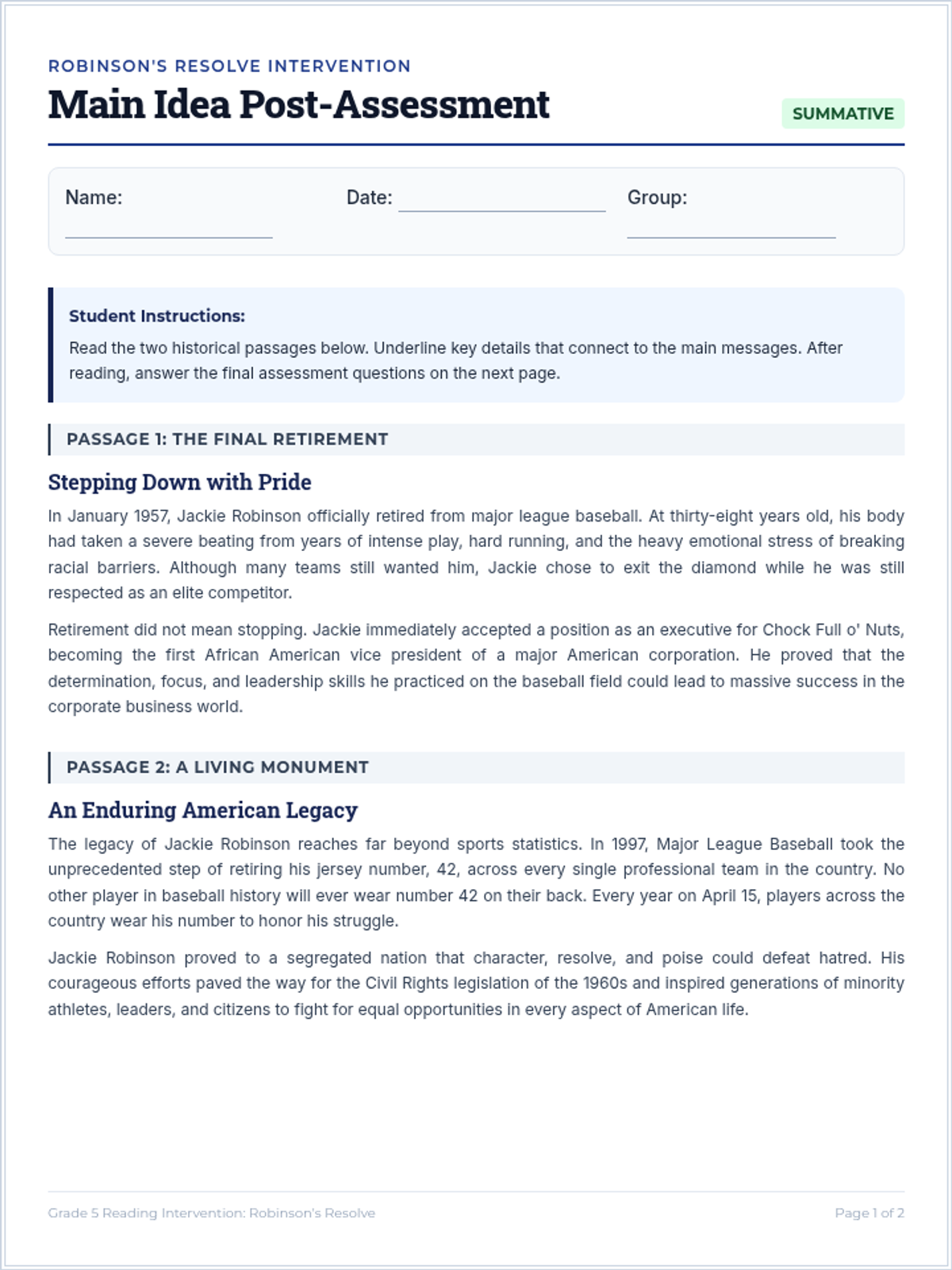
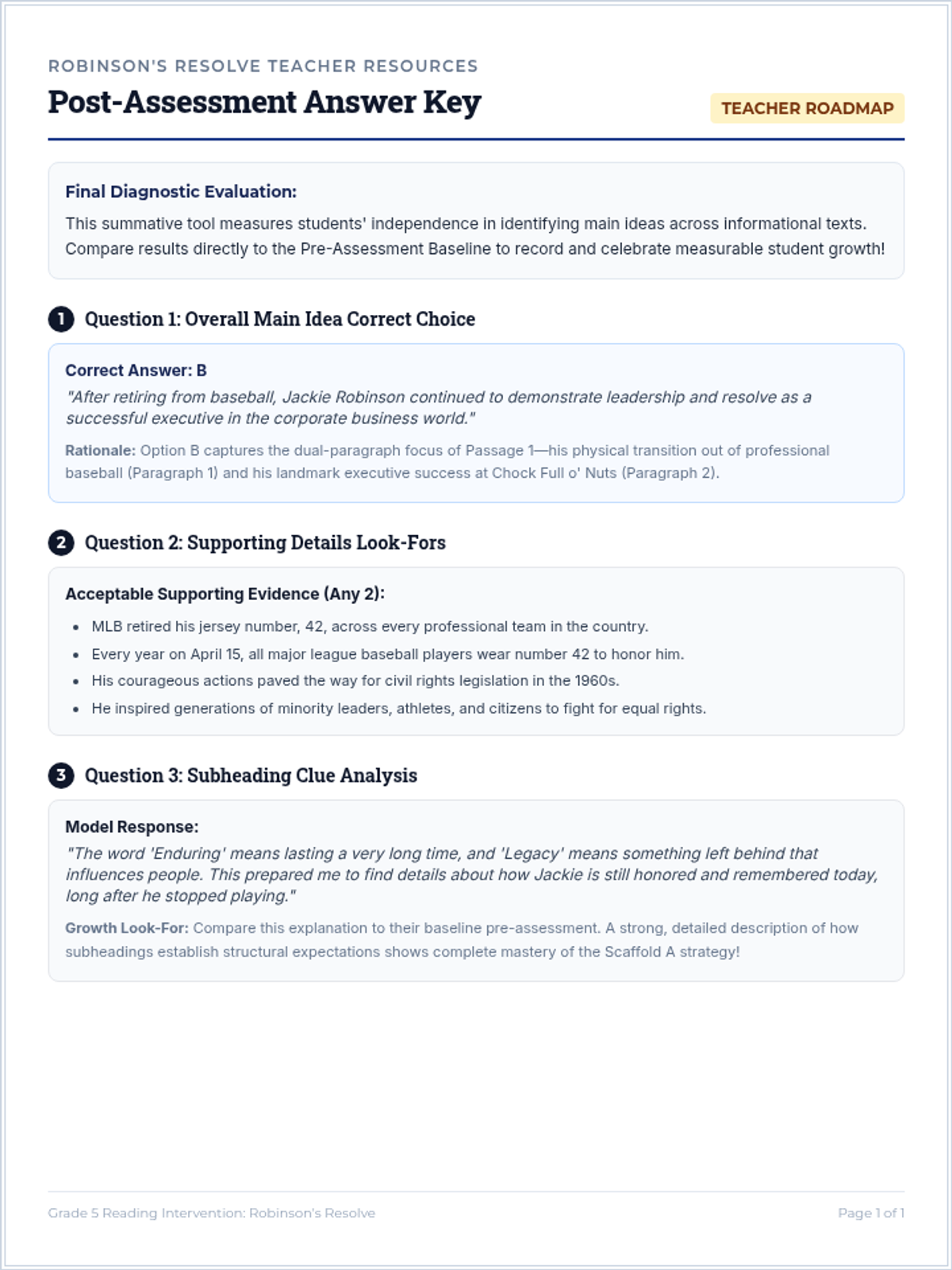
Administer the post-assessment to evaluate final progress in identifying main ideas. Students celebrate their growth and reflect on Jackie Robinson's life as a model of resolve.
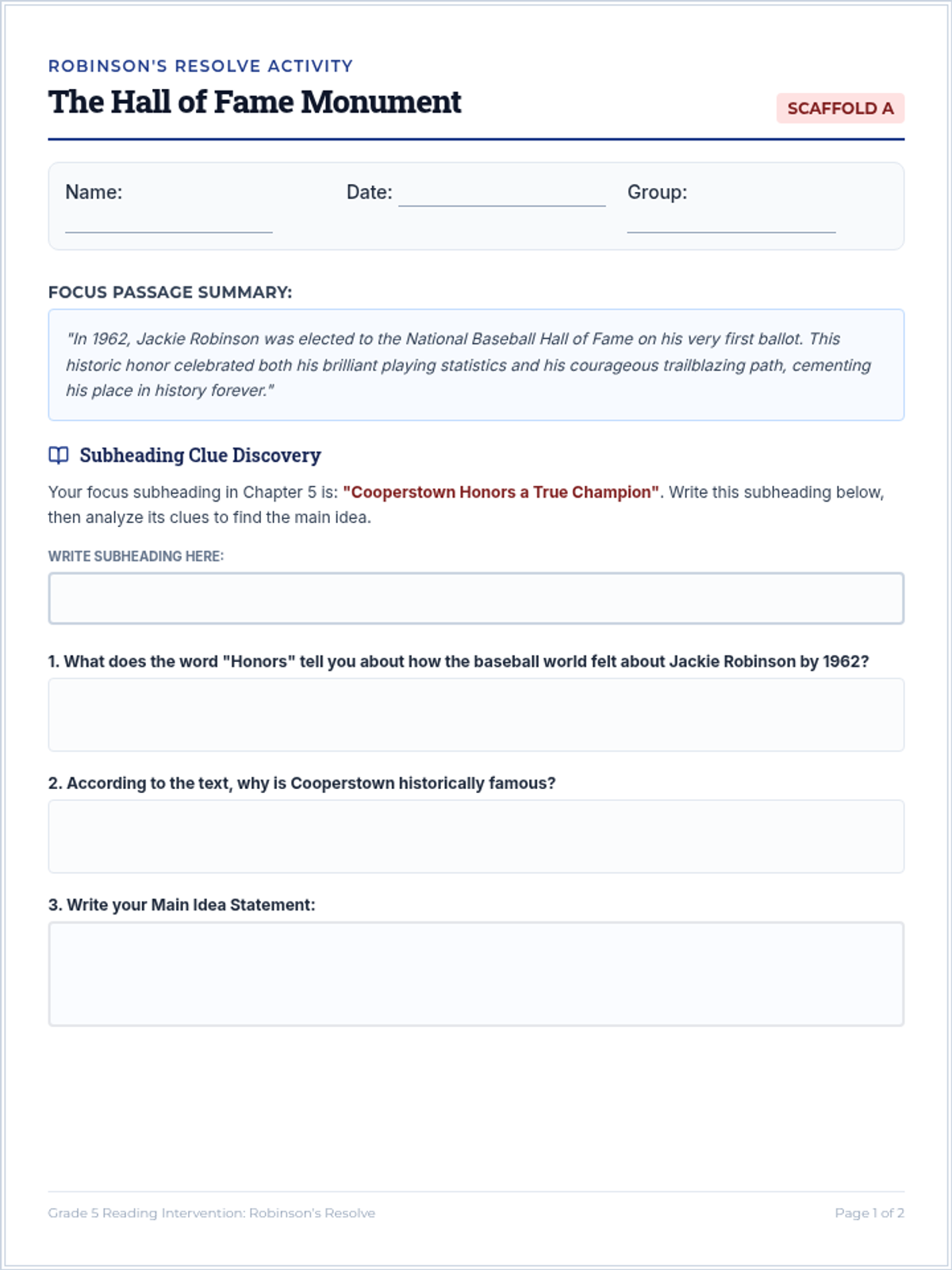
Examine Jackie Robinson's Hall of Fame induction and his lasting legacy. Students synthesize multiple main ideas across the biography to explain how his resolve changed sports and society.
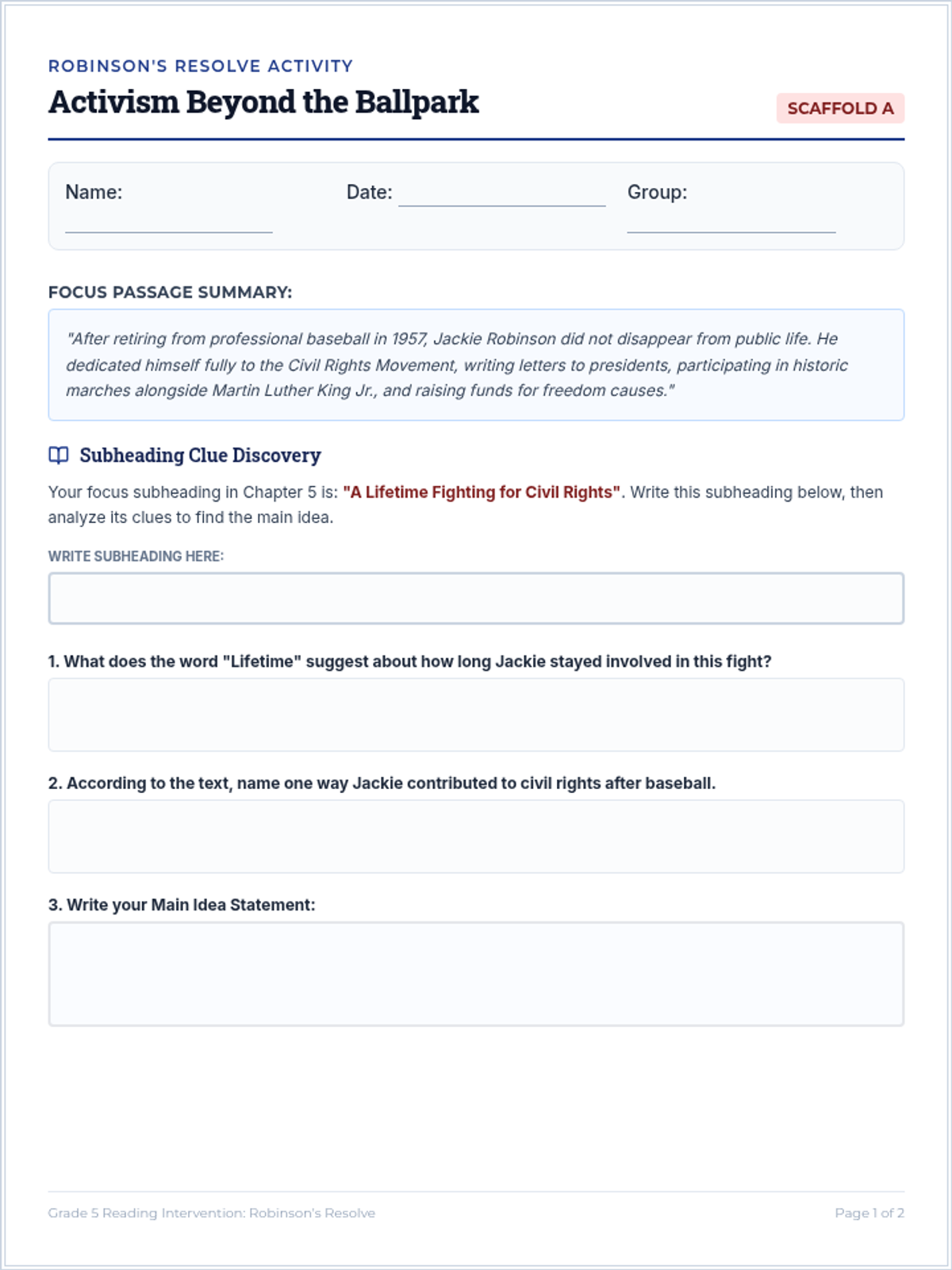
Explore Jackie Robinson's life after retirement from baseball, including his leadership in the Civil Rights Movement and business ventures. Students identify main ideas in speeches and articles.
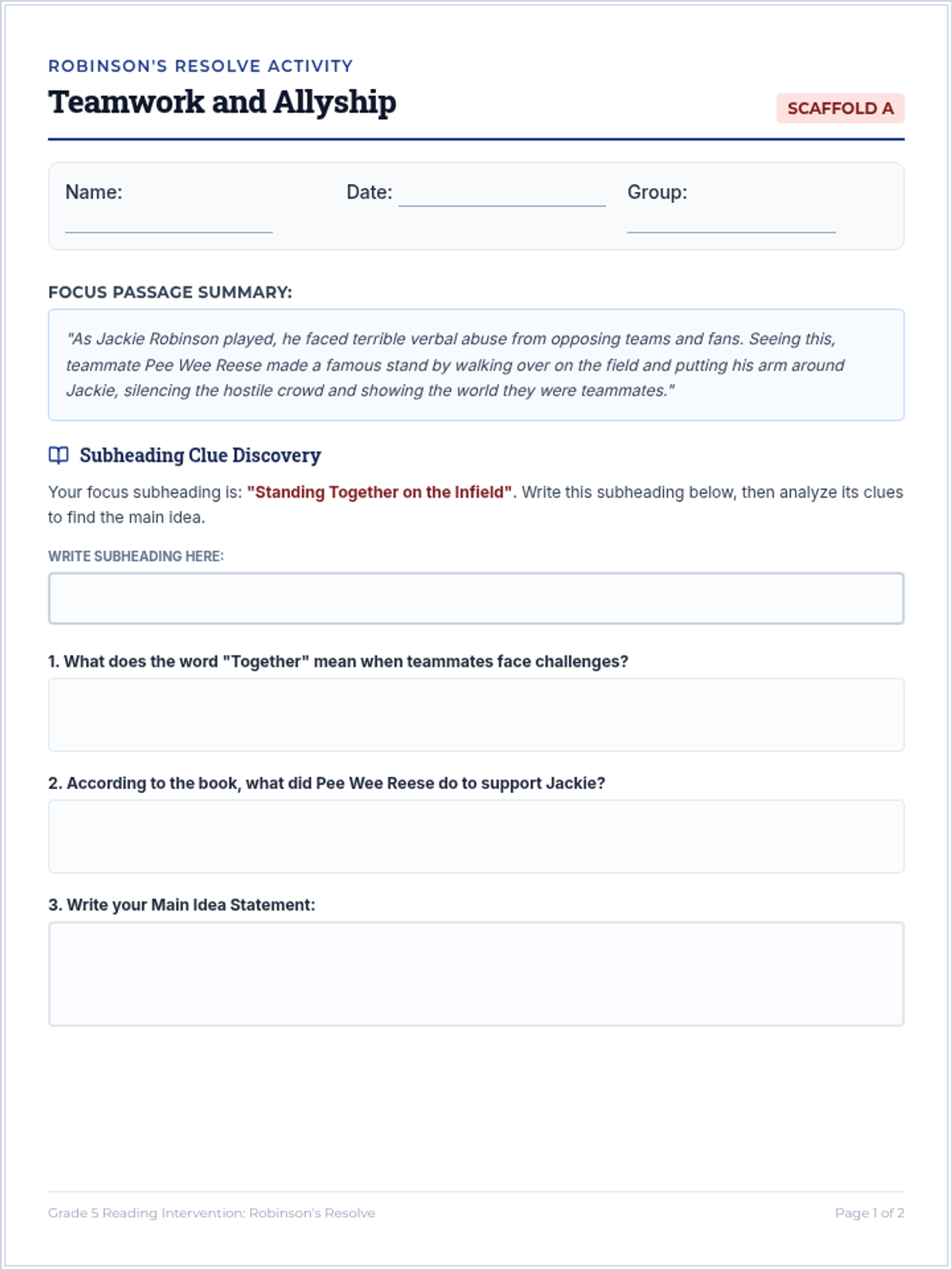
Examine the support Jackie Robinson received from teammates like Pee Wee Reese and the public. Students identify how key details show team solidarity and support the main idea.
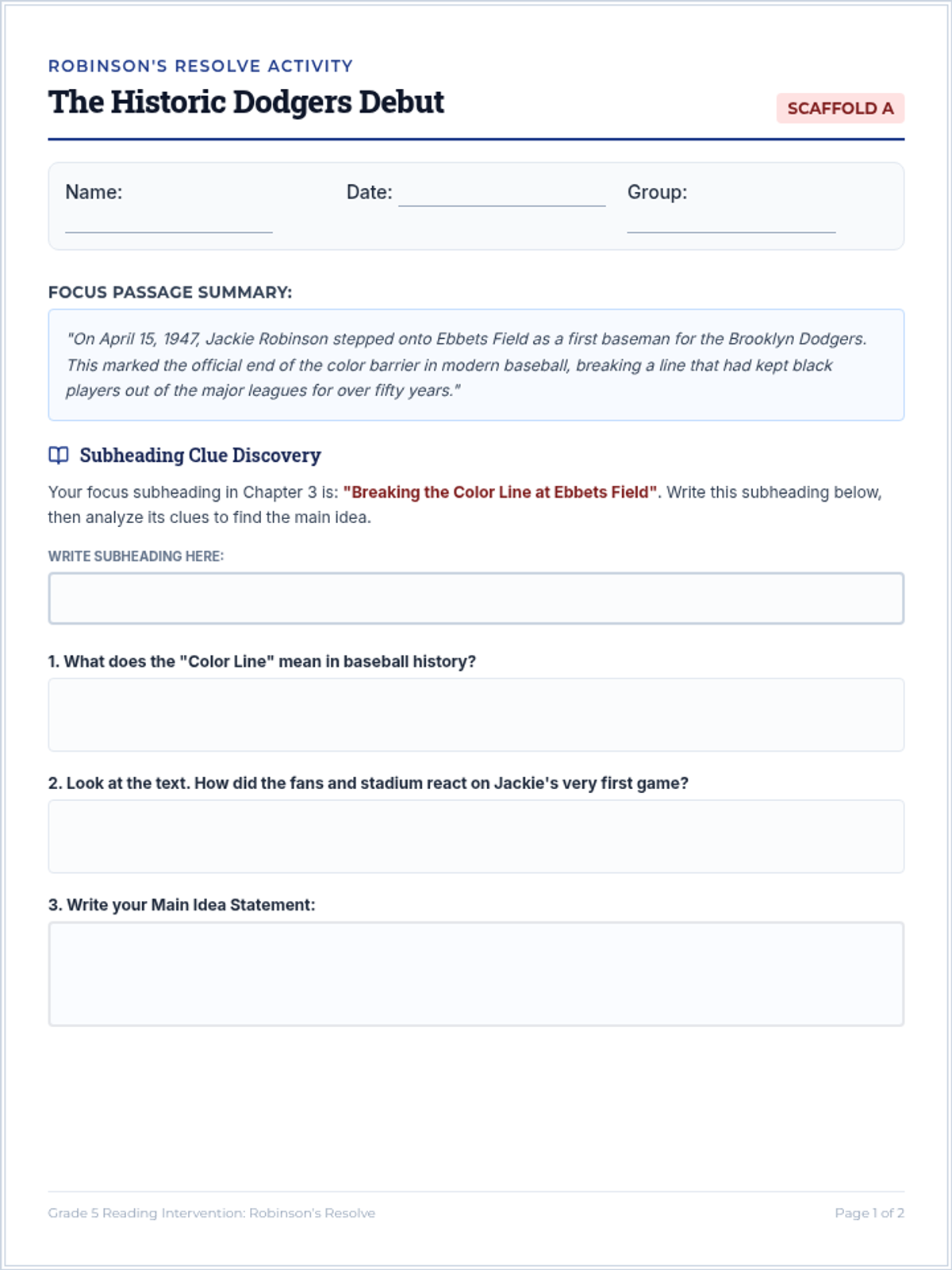
Focus on Jackie Robinson's major league debut on April 15, 1947, with the Brooklyn Dodgers. Students practice identifying main ideas and key details of historical descriptions of this barrier-breaking day.
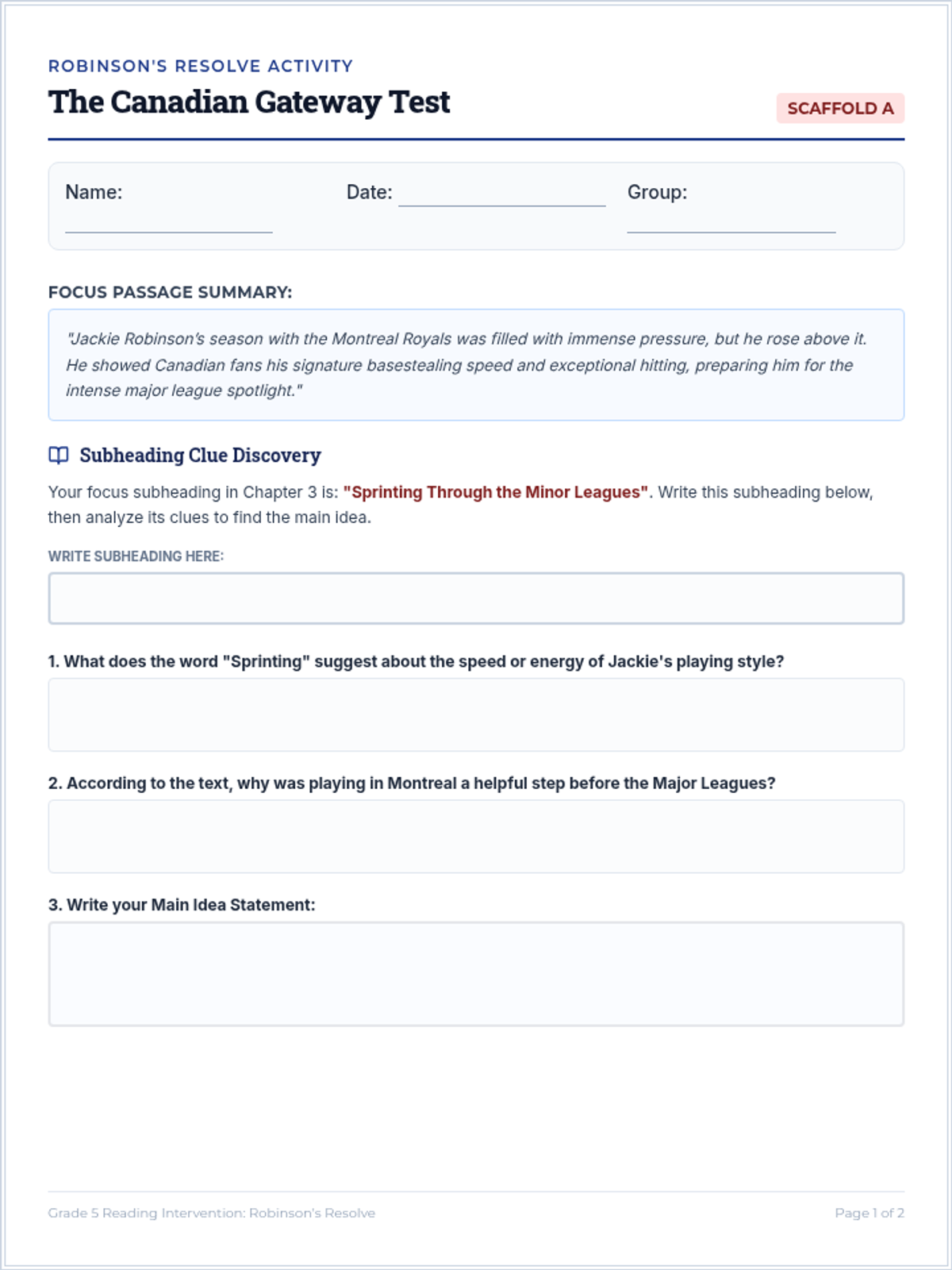
Analyze Jackie Robinson's path through the minor leagues with the Montreal Royals. Students identify main ideas and key details as they examine his preparation for the major leagues.
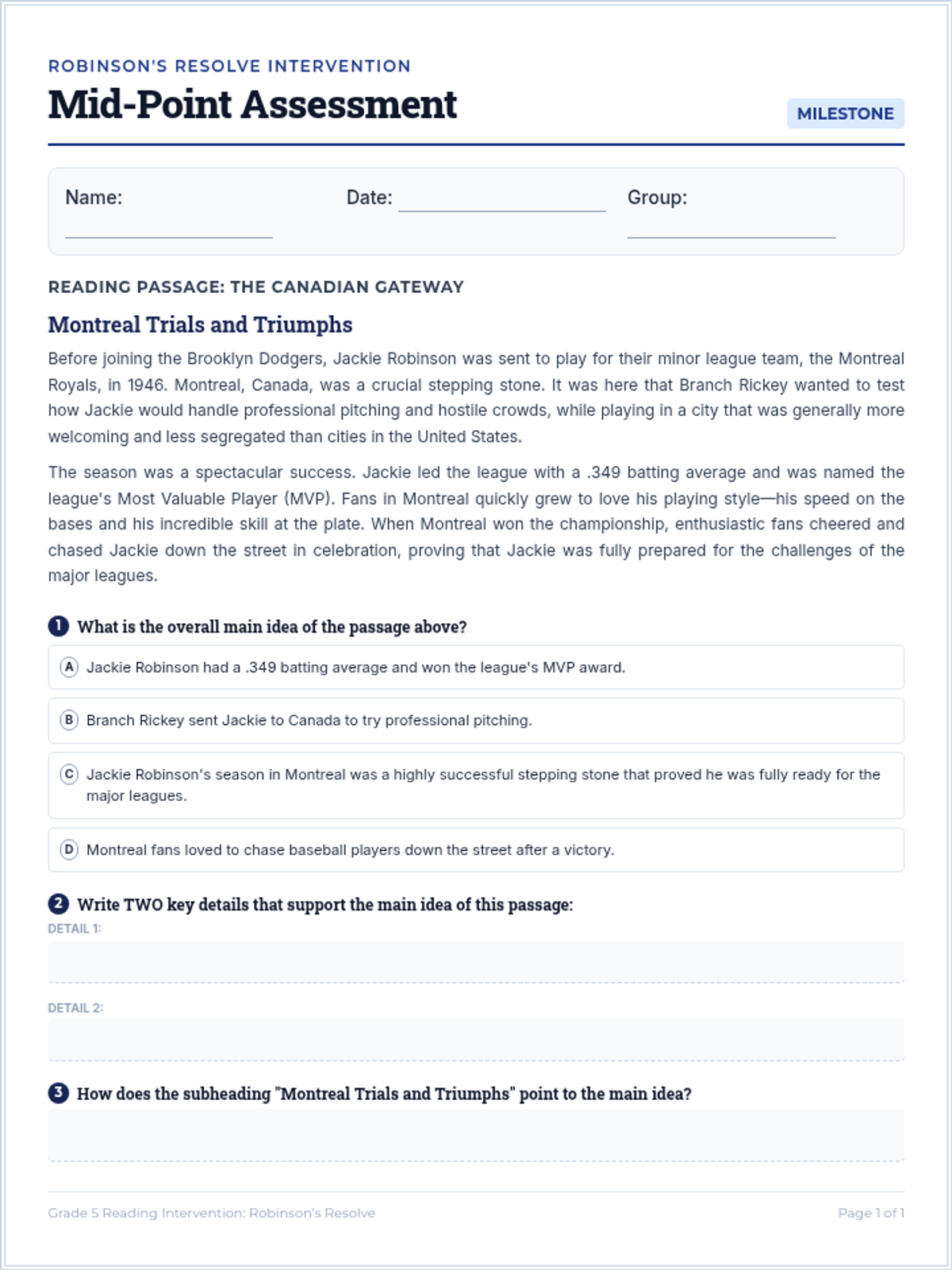
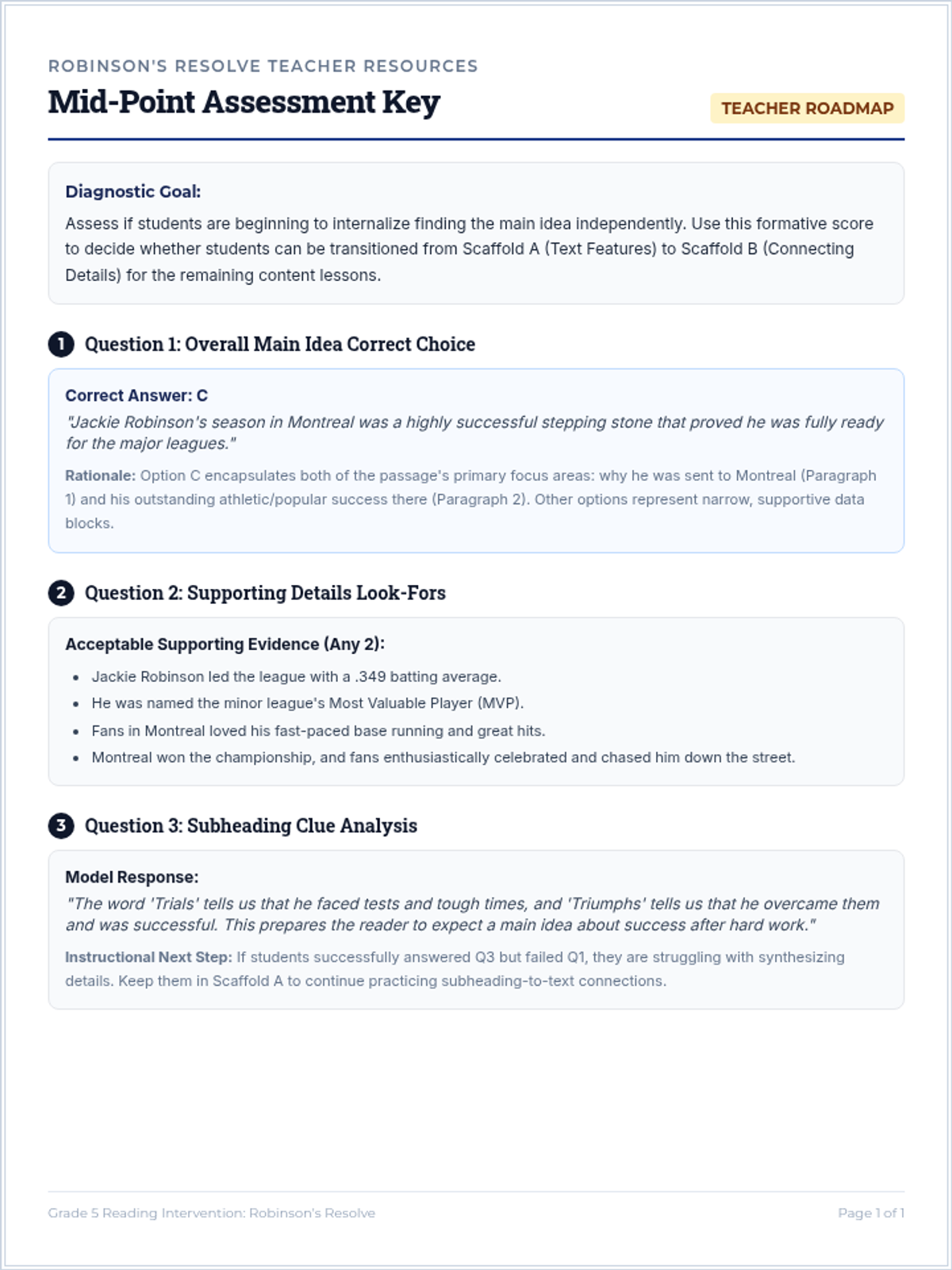
Administer the mid-point assessment to evaluate progress in identifying main ideas. Students reflect on their growth and target areas for refinement during the second half of the intervention.
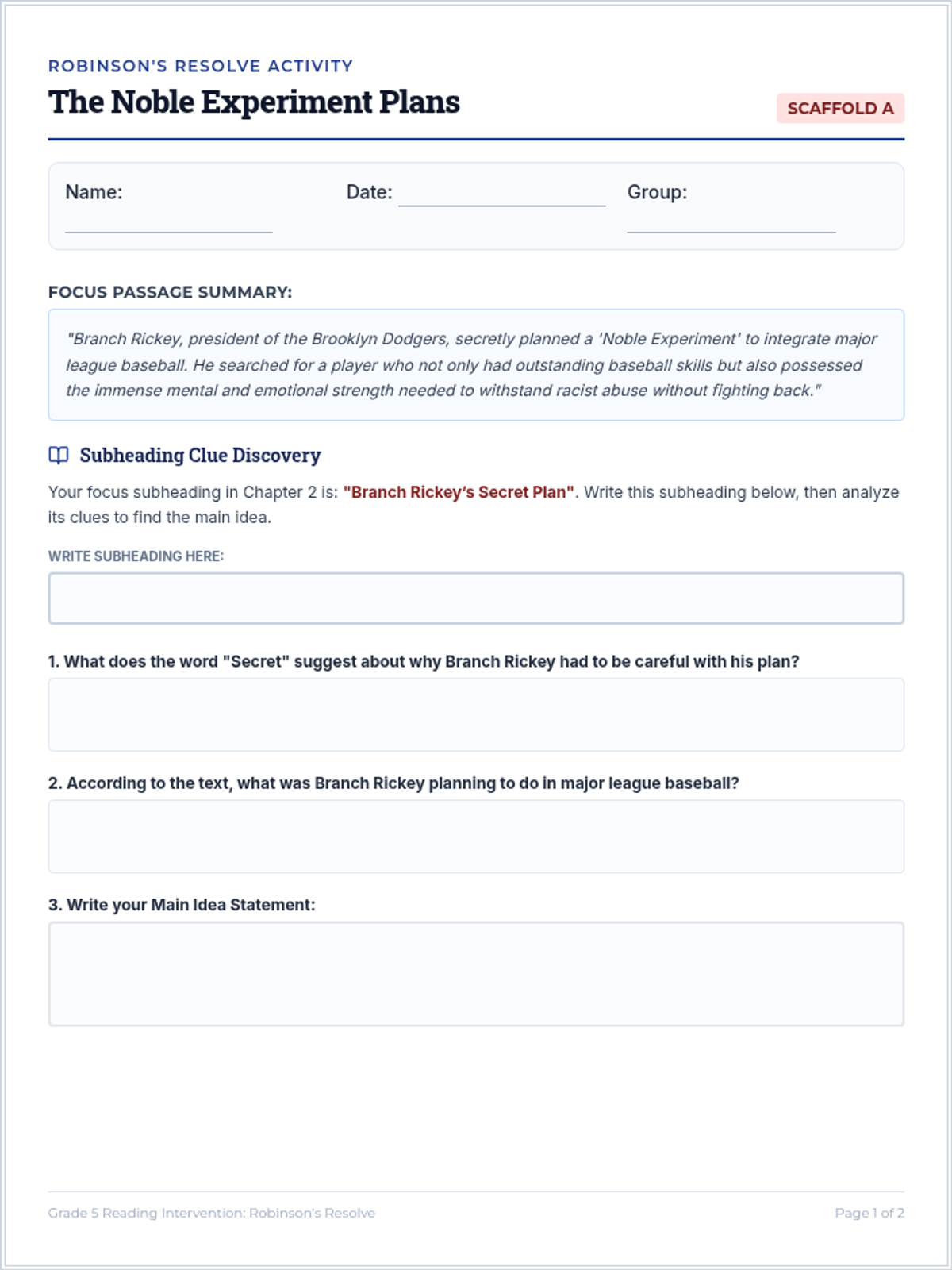
Introduce Branch Rickey's search for the right player to break baseball's color barrier, and the 'Noble Experiment'. Students find main ideas using a text features or key details path.
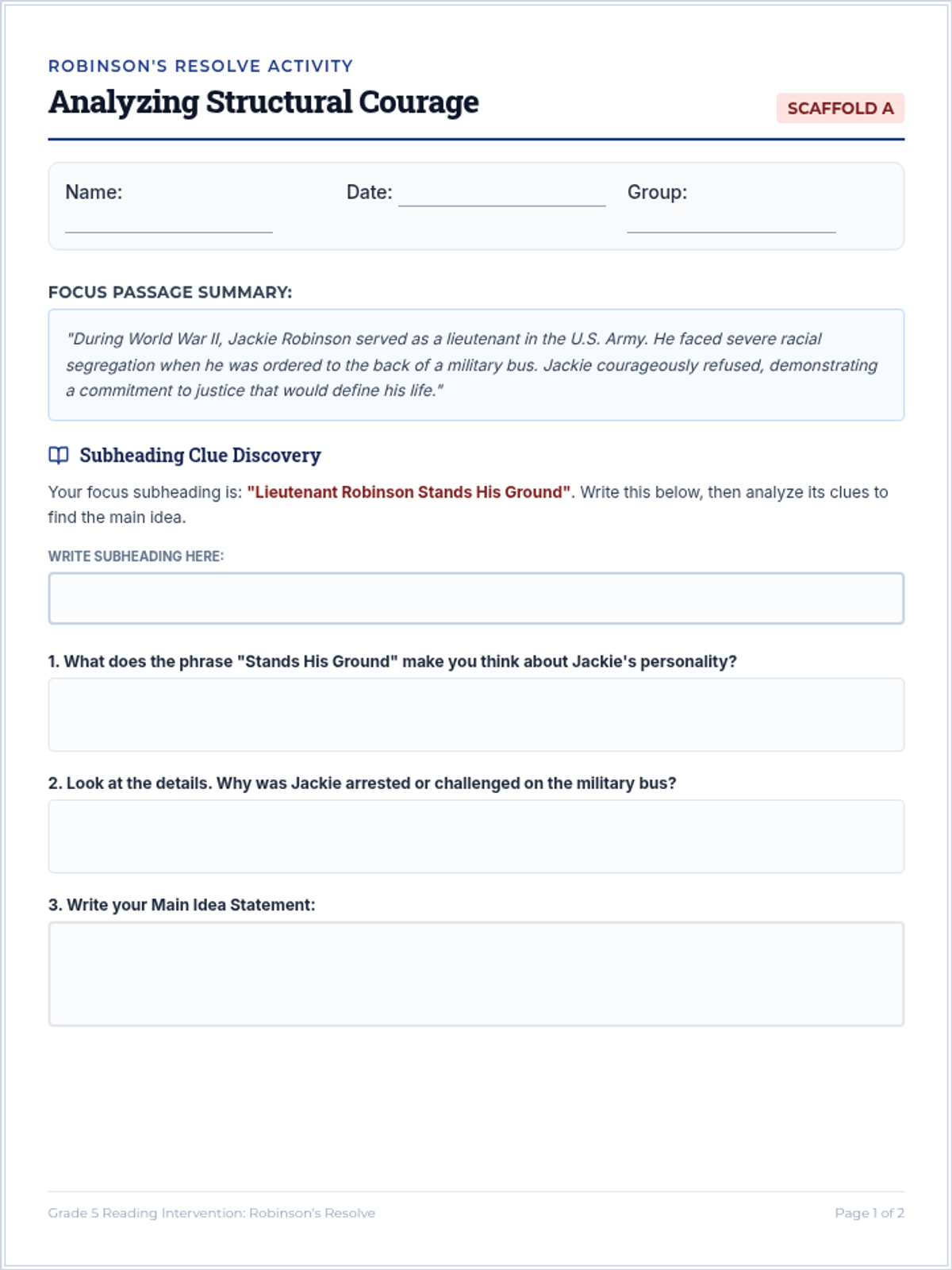
Explore Jackie Robinson's military service, his fight against racial segregation in the army, and how these events shaped his resolve. Students identify main ideas of sections with dense historical detail.
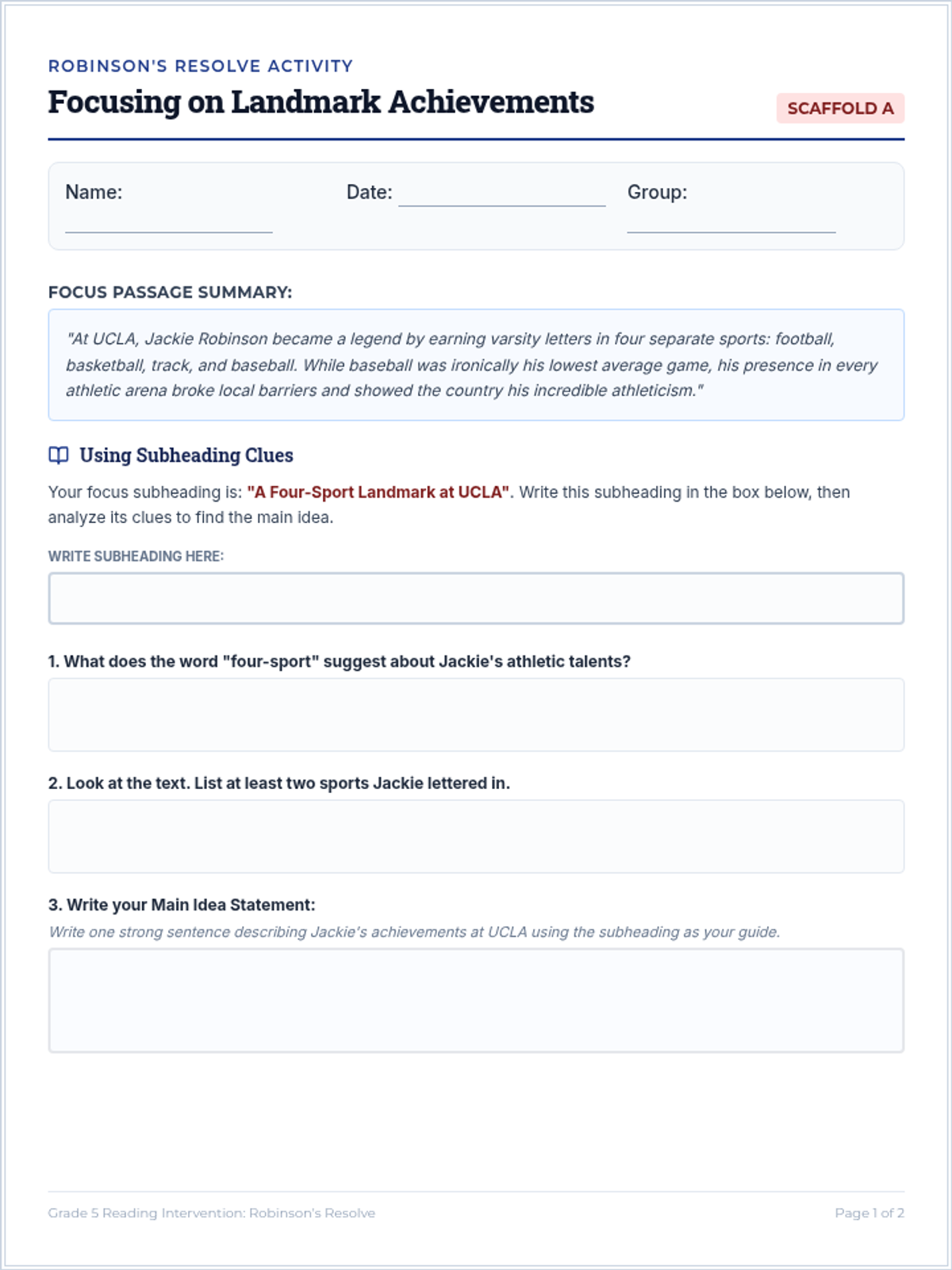
Examine Jackie Robinson's multi-sport excellence at UCLA. Students learn to determine the main idea of paragraphs describing his early athletic accomplishments.
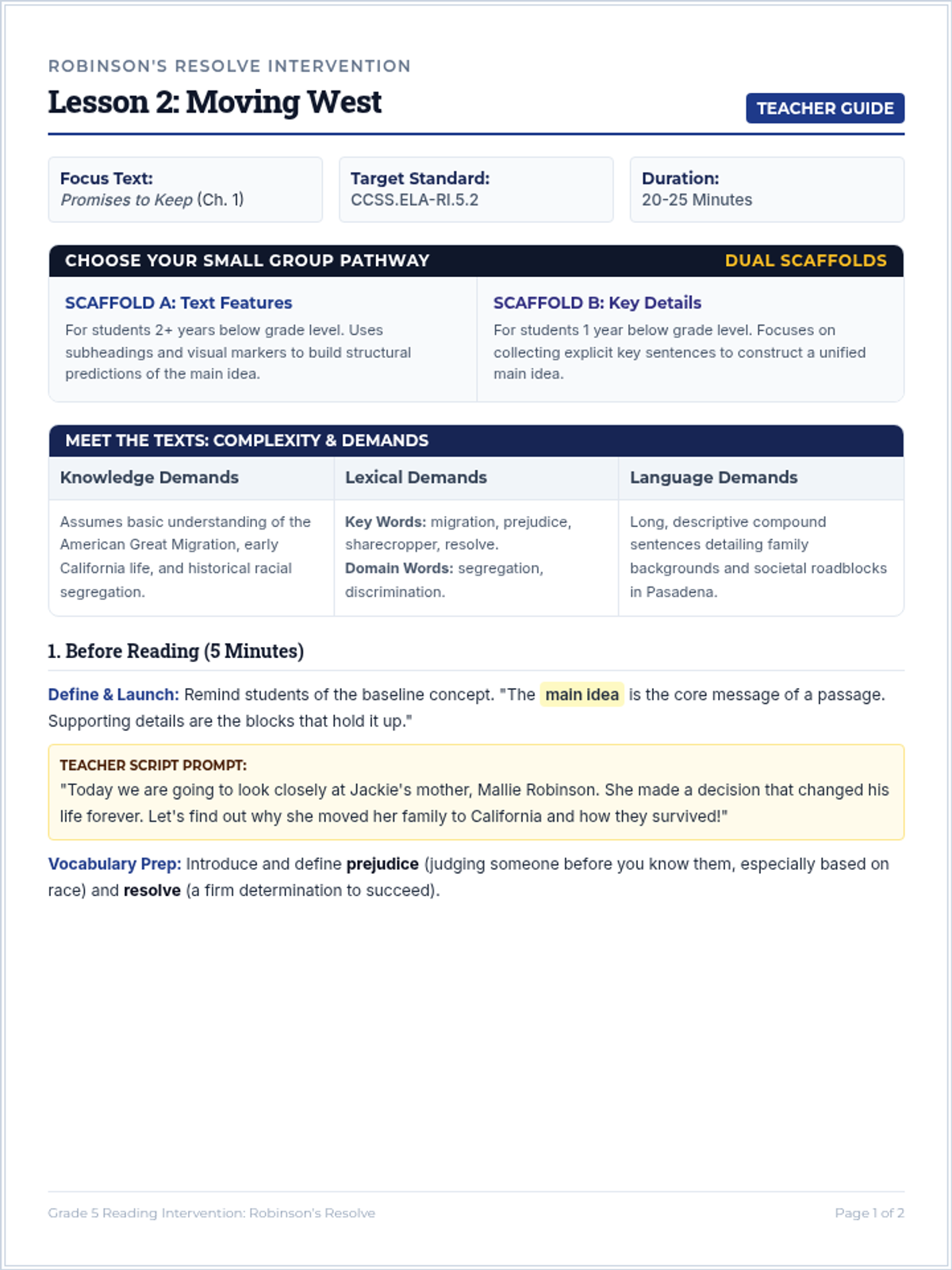
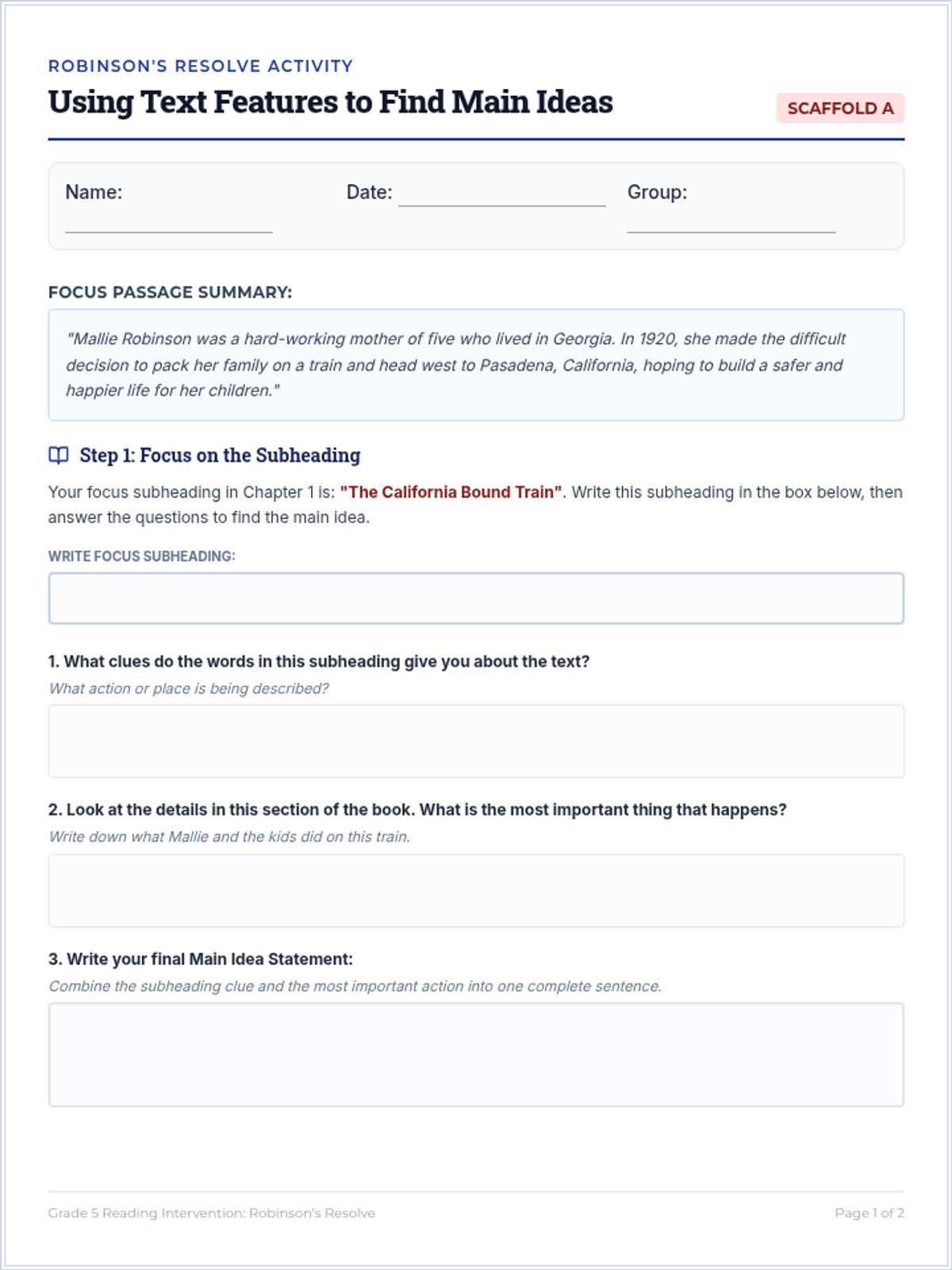
Explore Jackie's family move to Pasadena, California. Students practice identifying main ideas by analyzing either text features (Scaffold A) or connecting key details (Scaffold B).
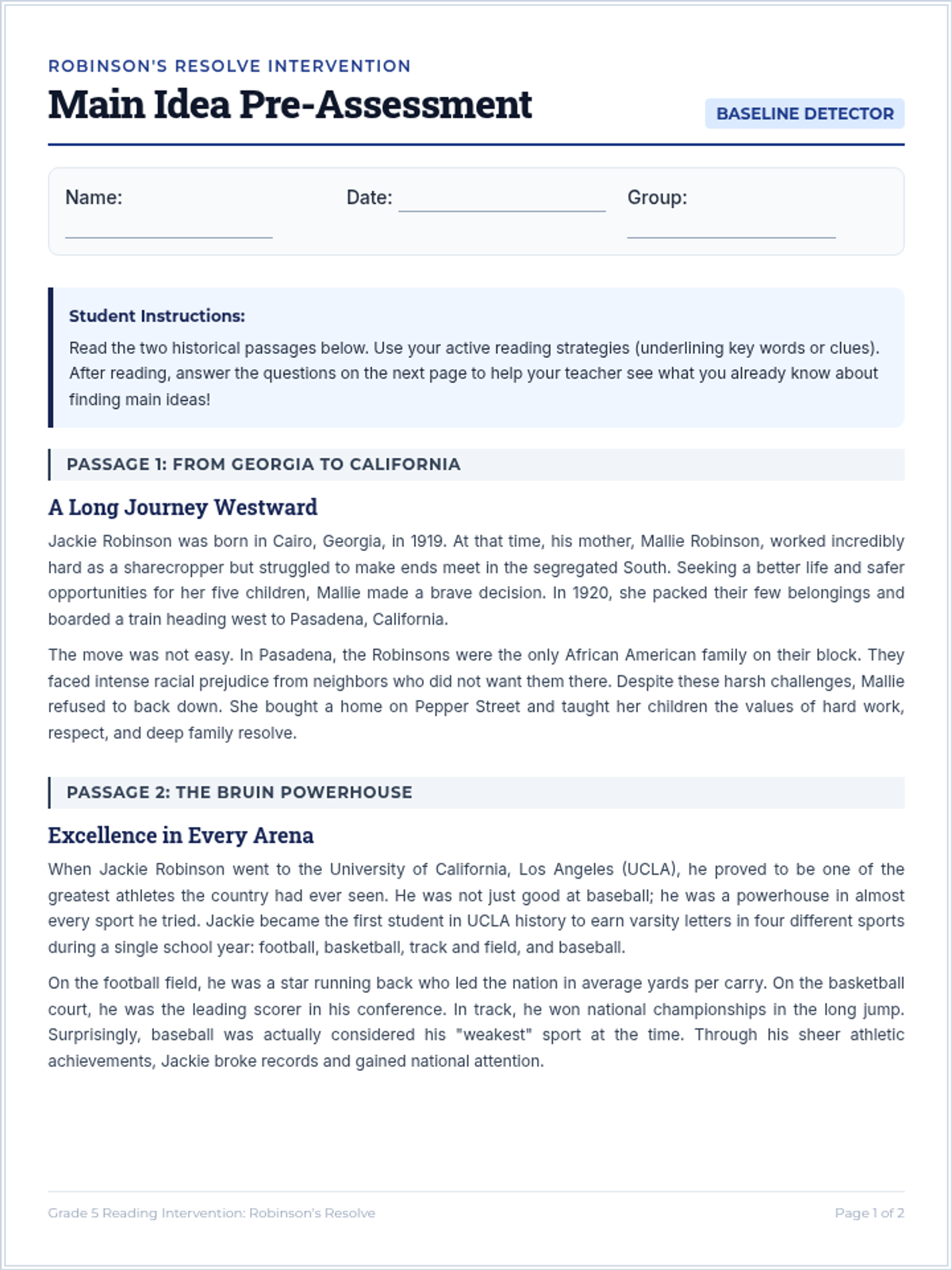
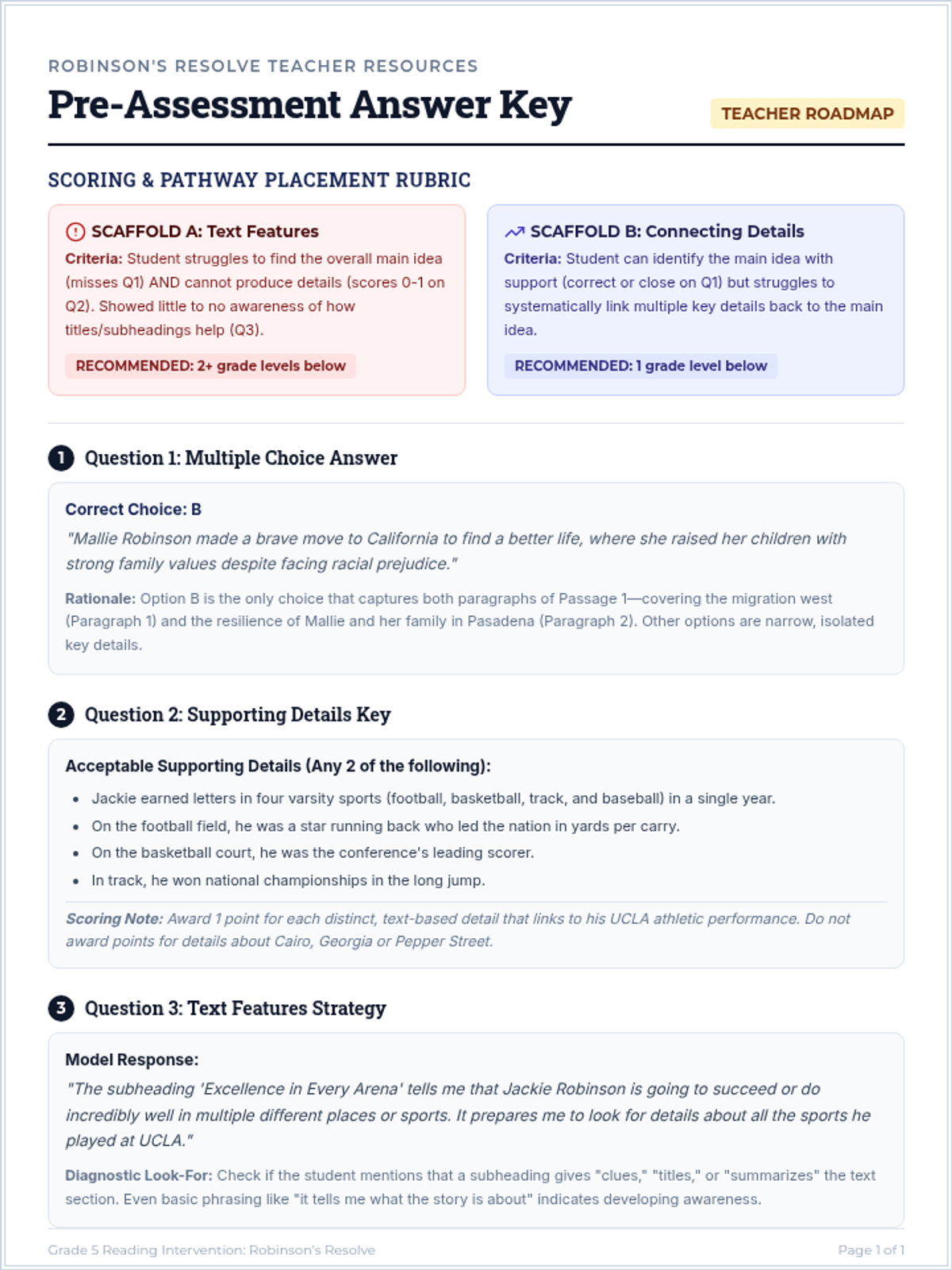
Administer the pre-assessment to establish a baseline of students' ability to identify main ideas and key details. Introduce the core concepts of main ideas, details, and text features to launch the intervention.
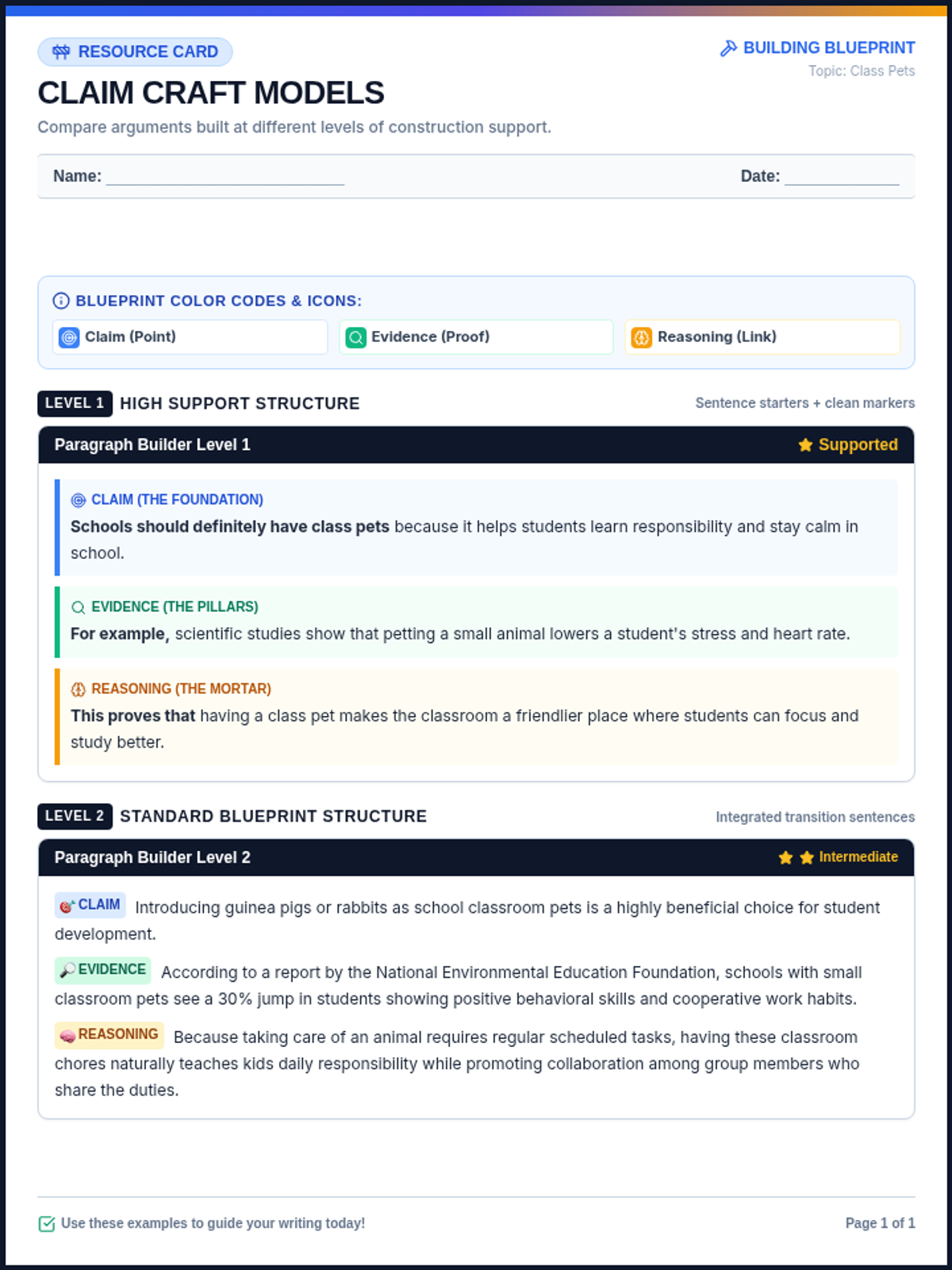
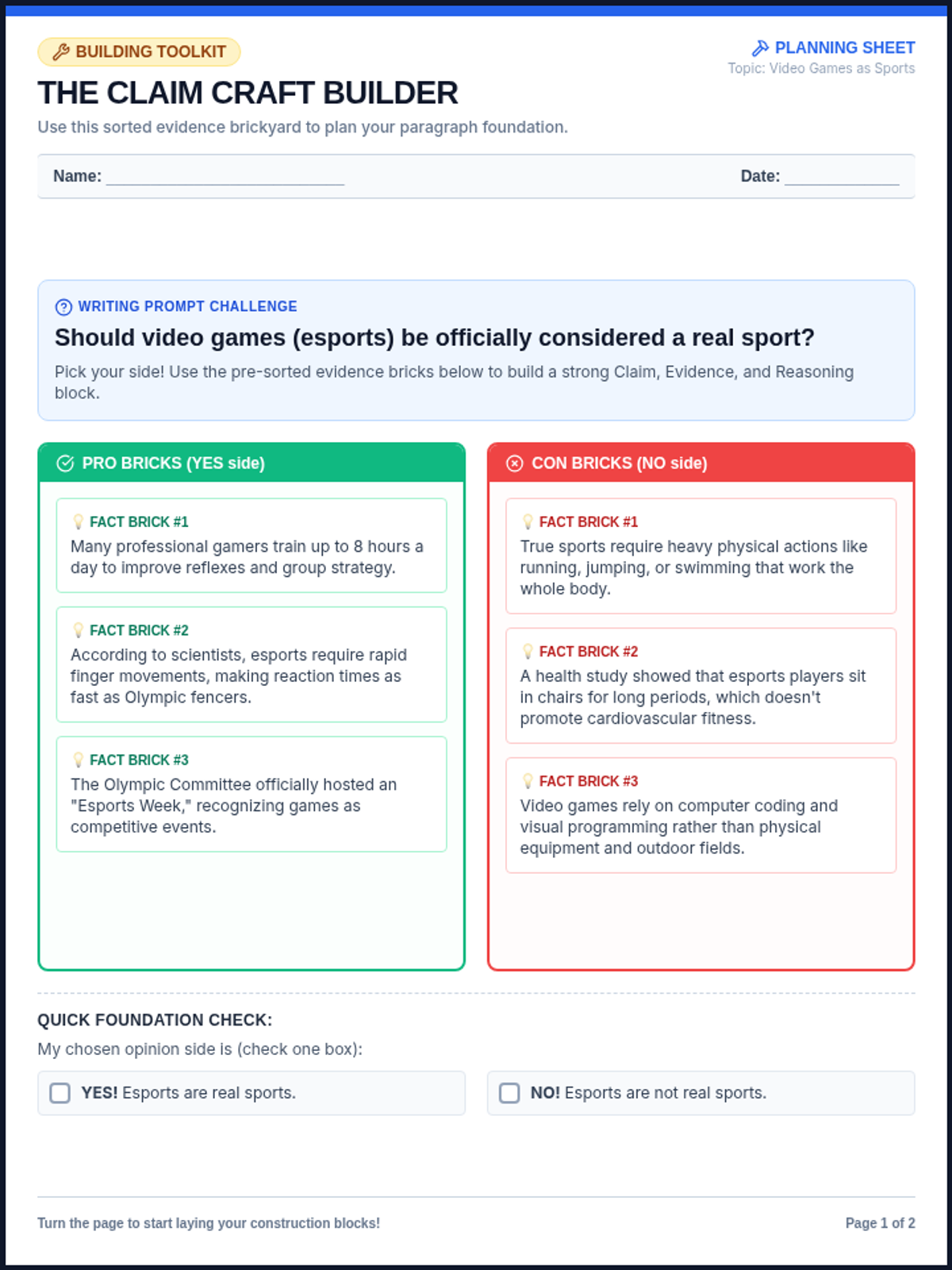
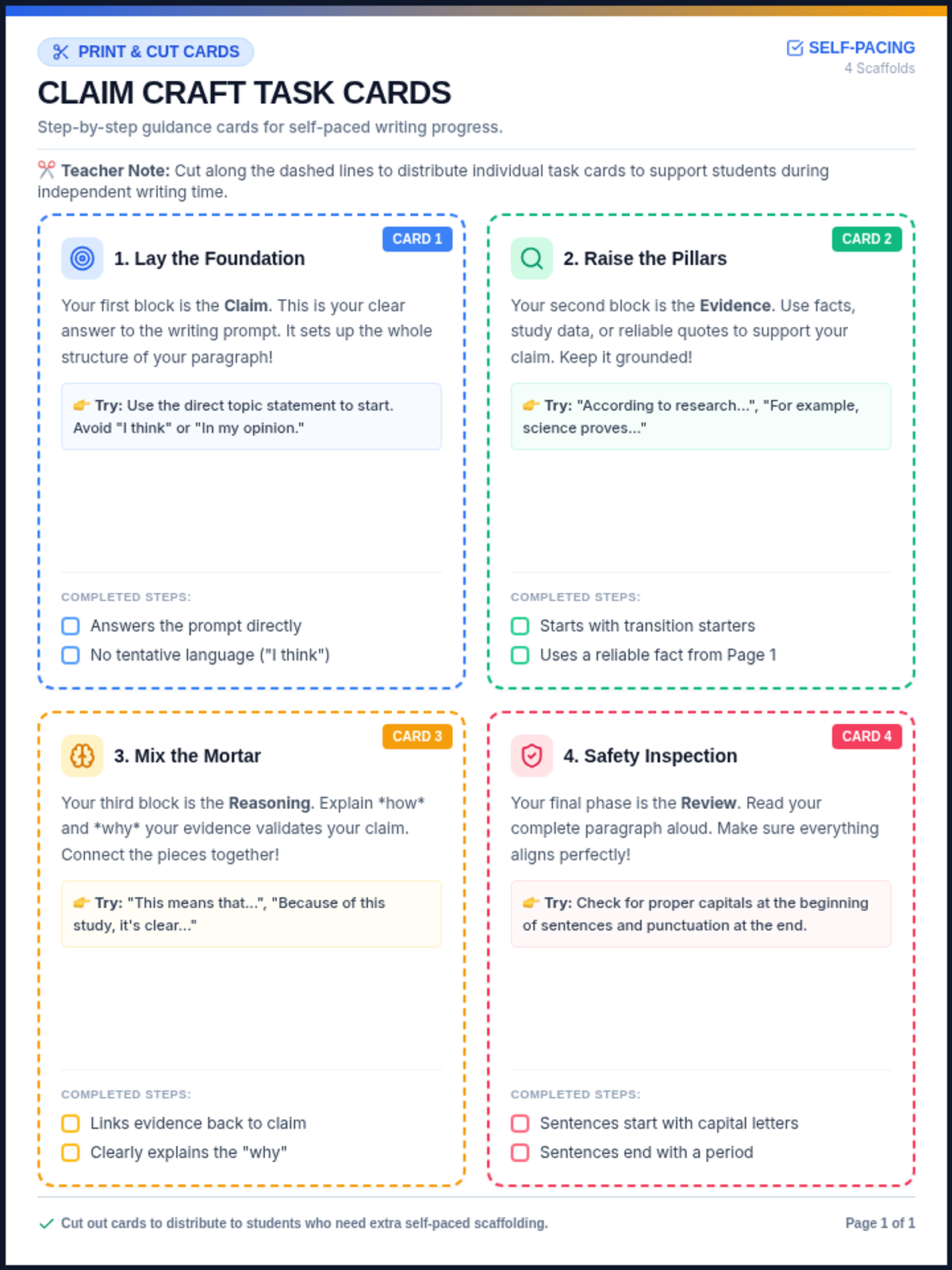
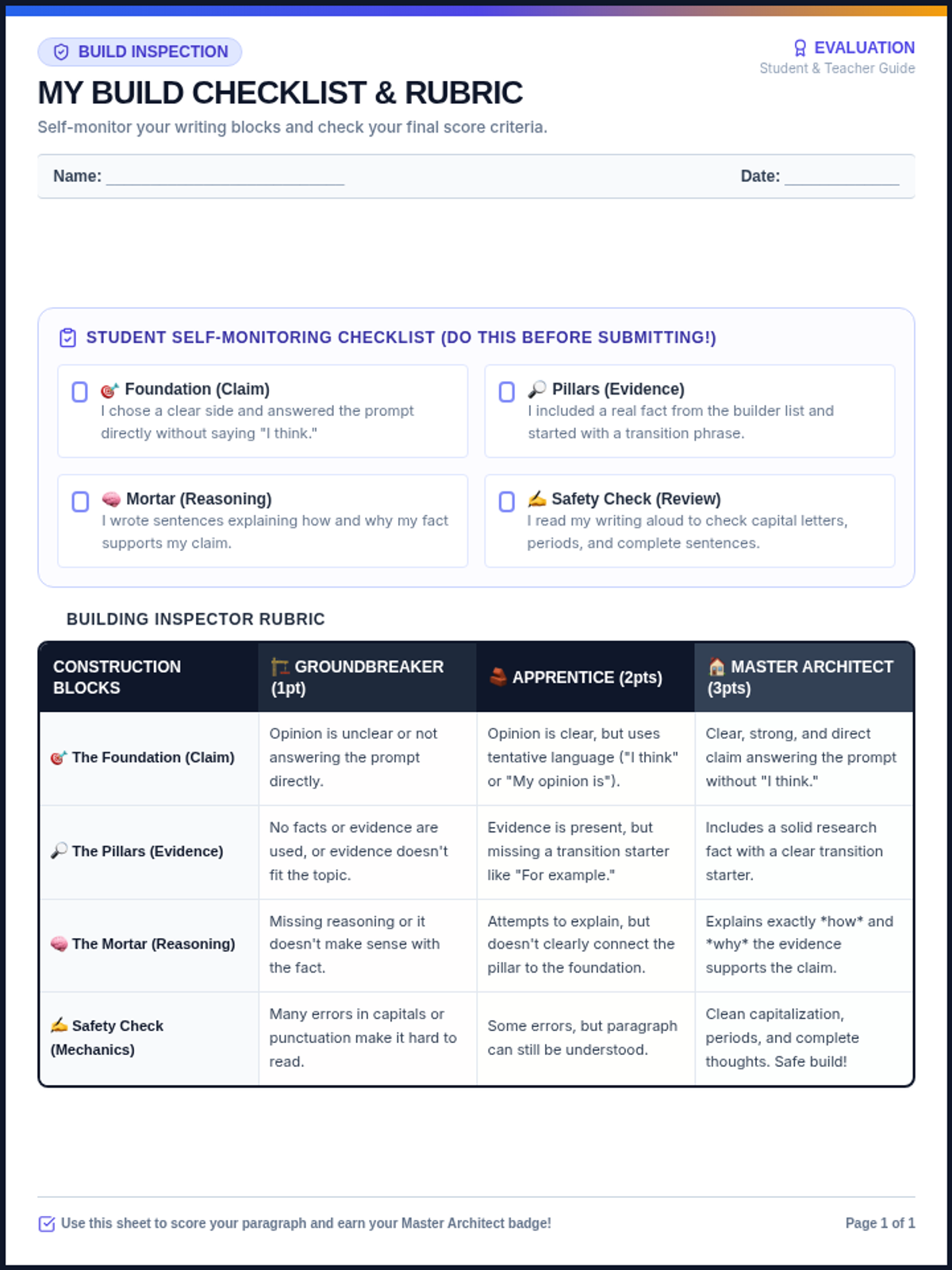
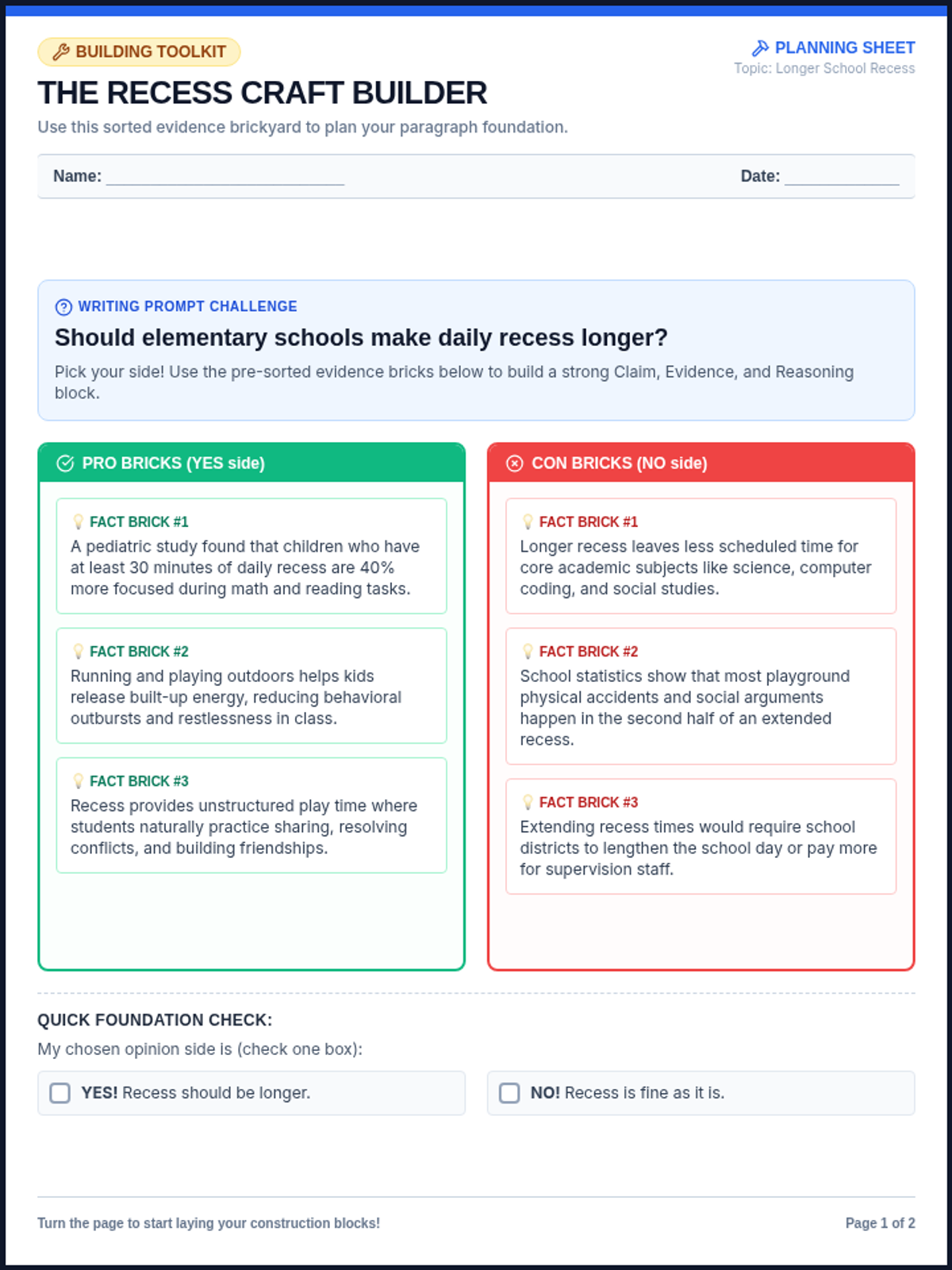
A differentiated argumentative writing lesson focused on scaffolding the Claim-Evidence-Reasoning (CER) framework using a hands-on crafting and construction theme. Perfect for diverse learners, providing high-support sentence frames, visual icons, and step-by-step task cards.
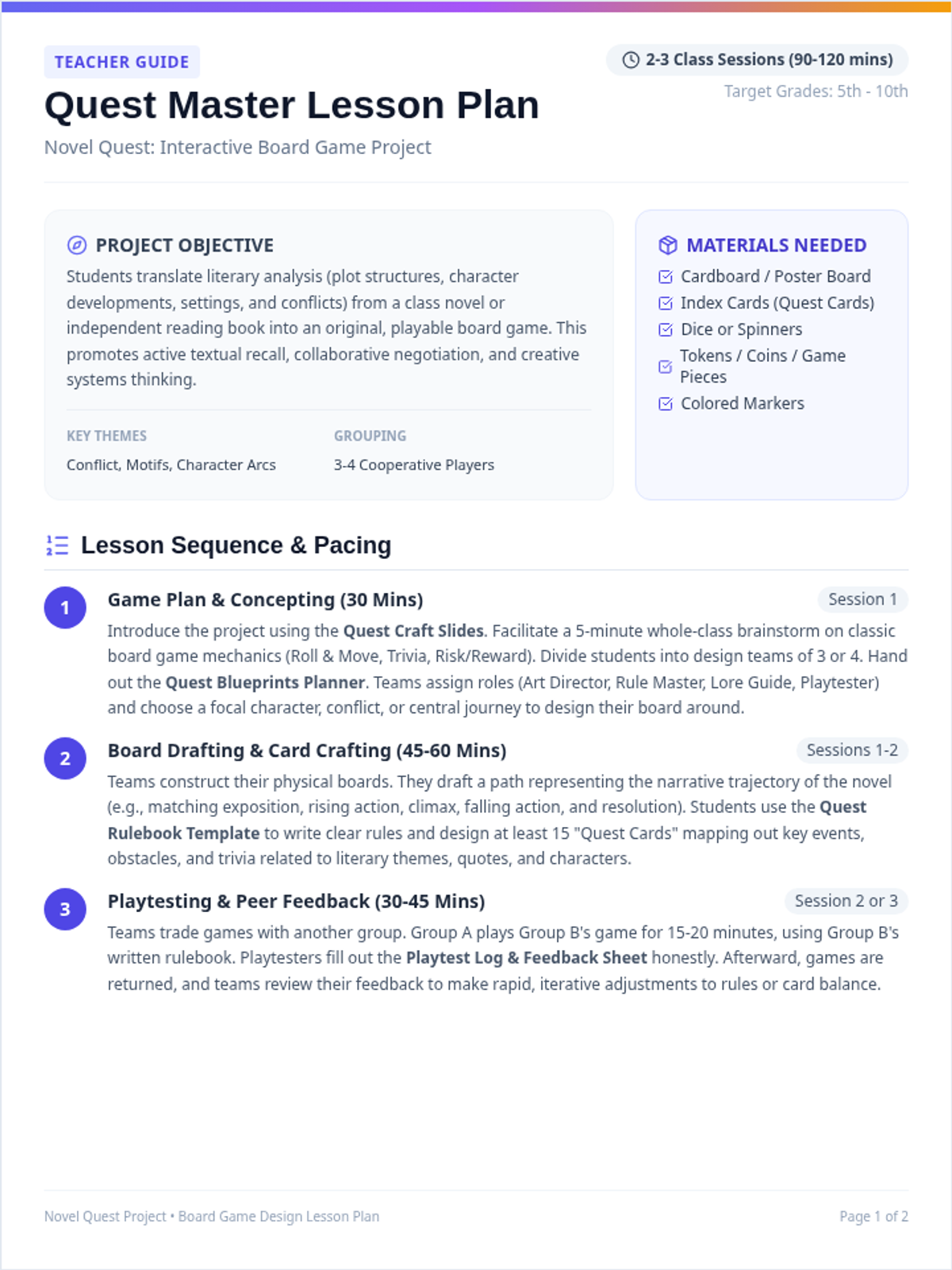
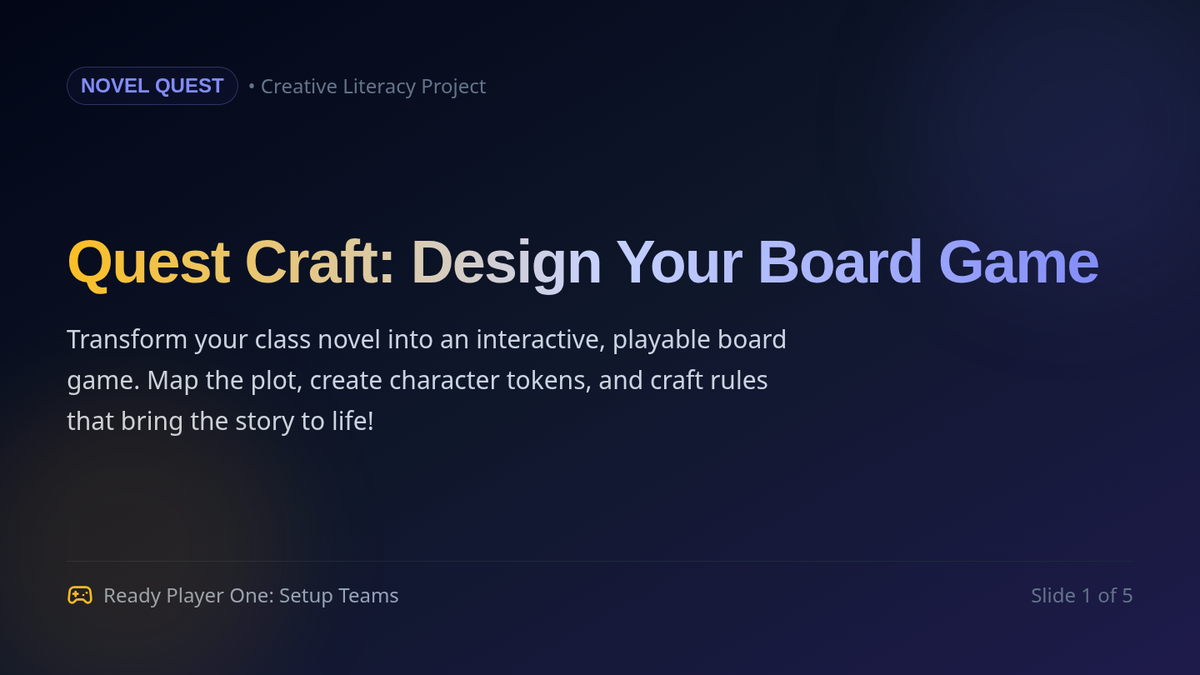
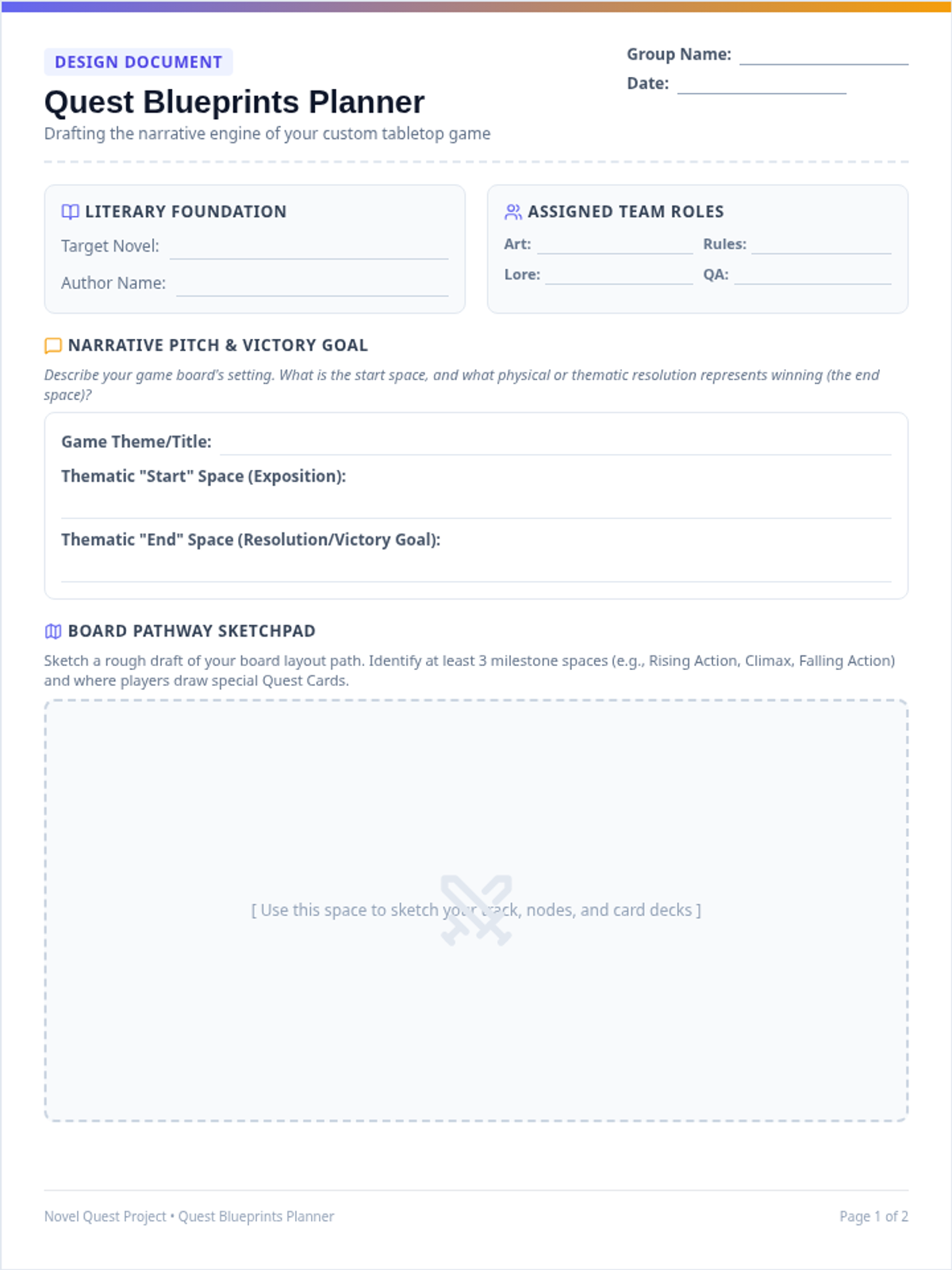
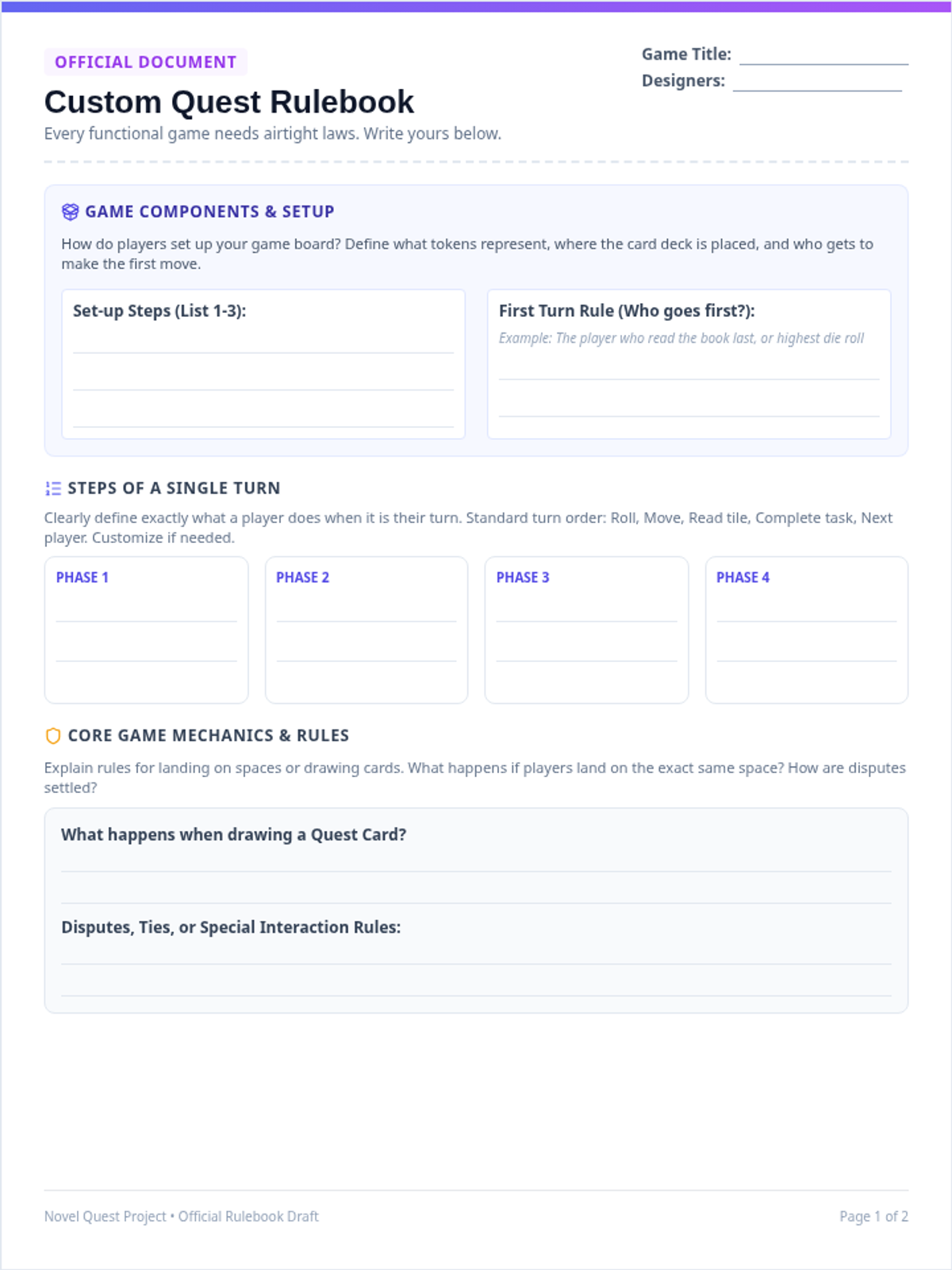
A hands-on cooperative project where students analyze a novel's plot, characters, and settings by transforming them into an original board game. Students design, draft, and playtest their games to show textual comprehension.
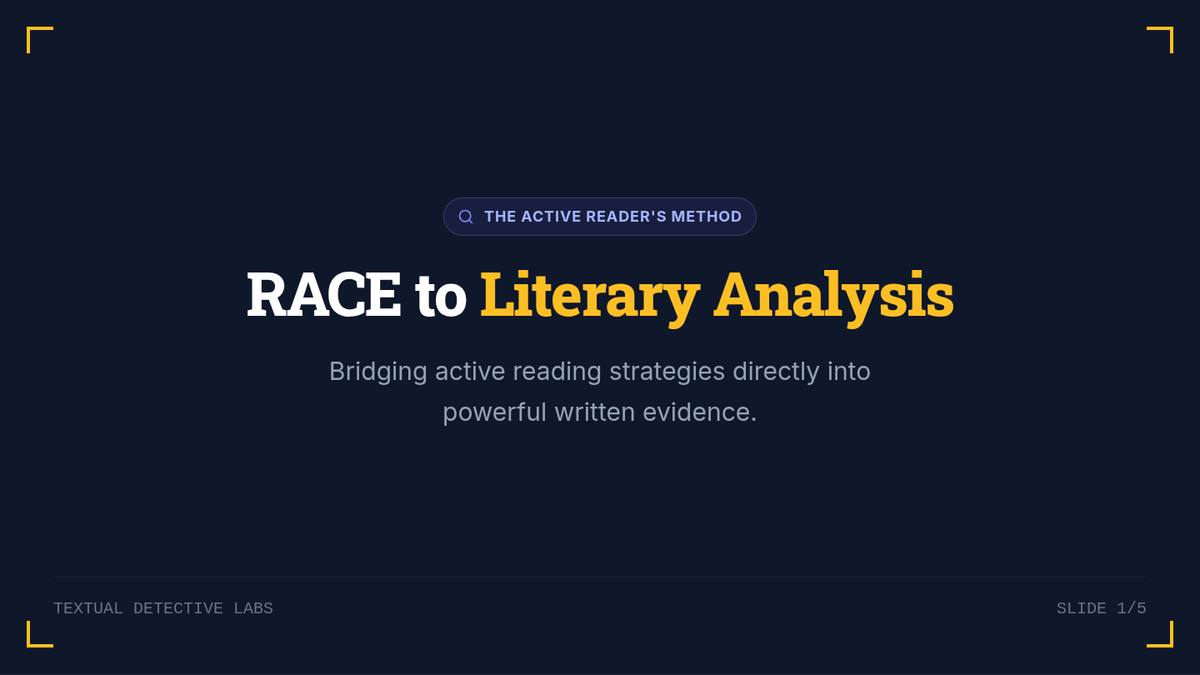
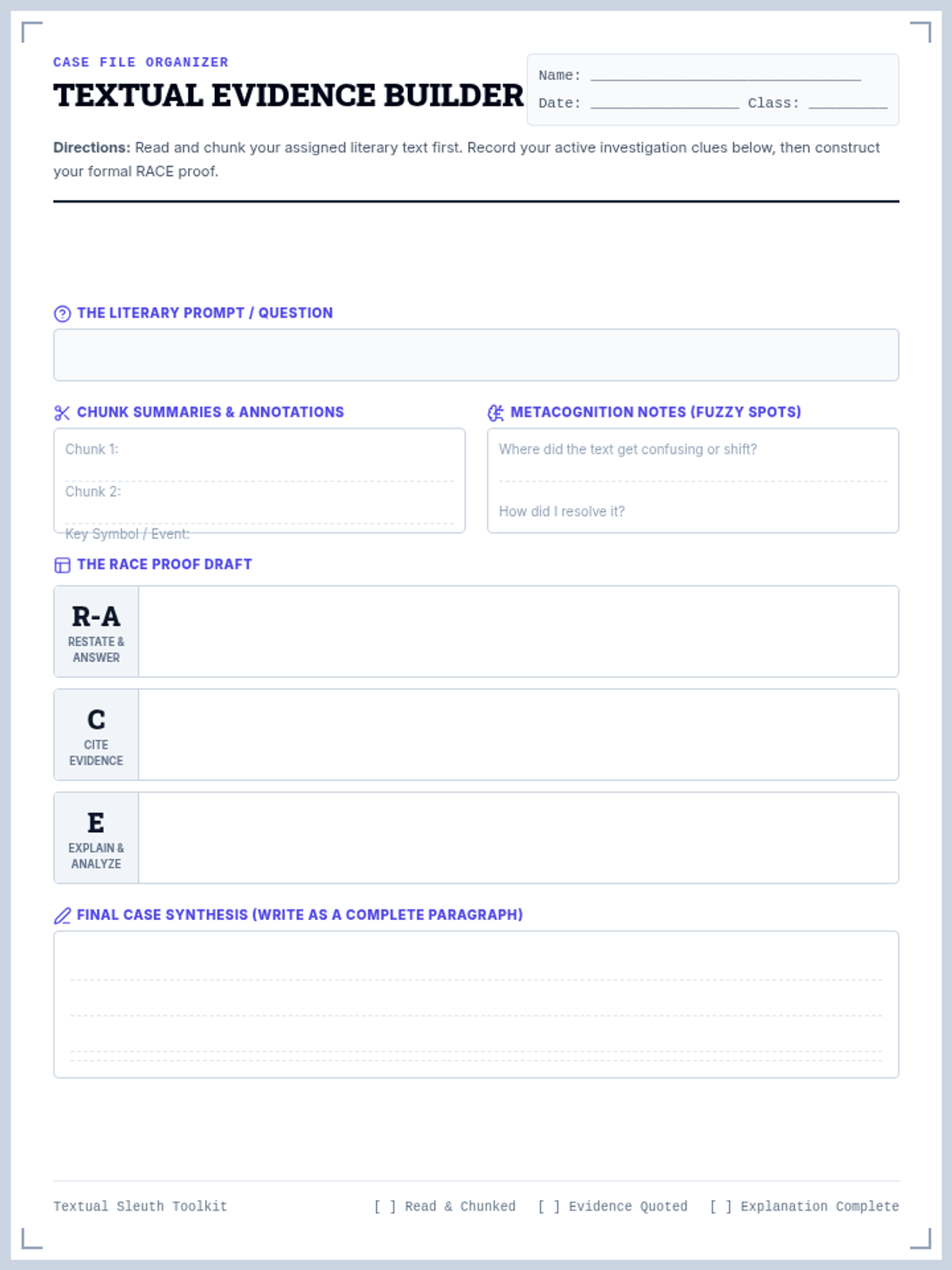
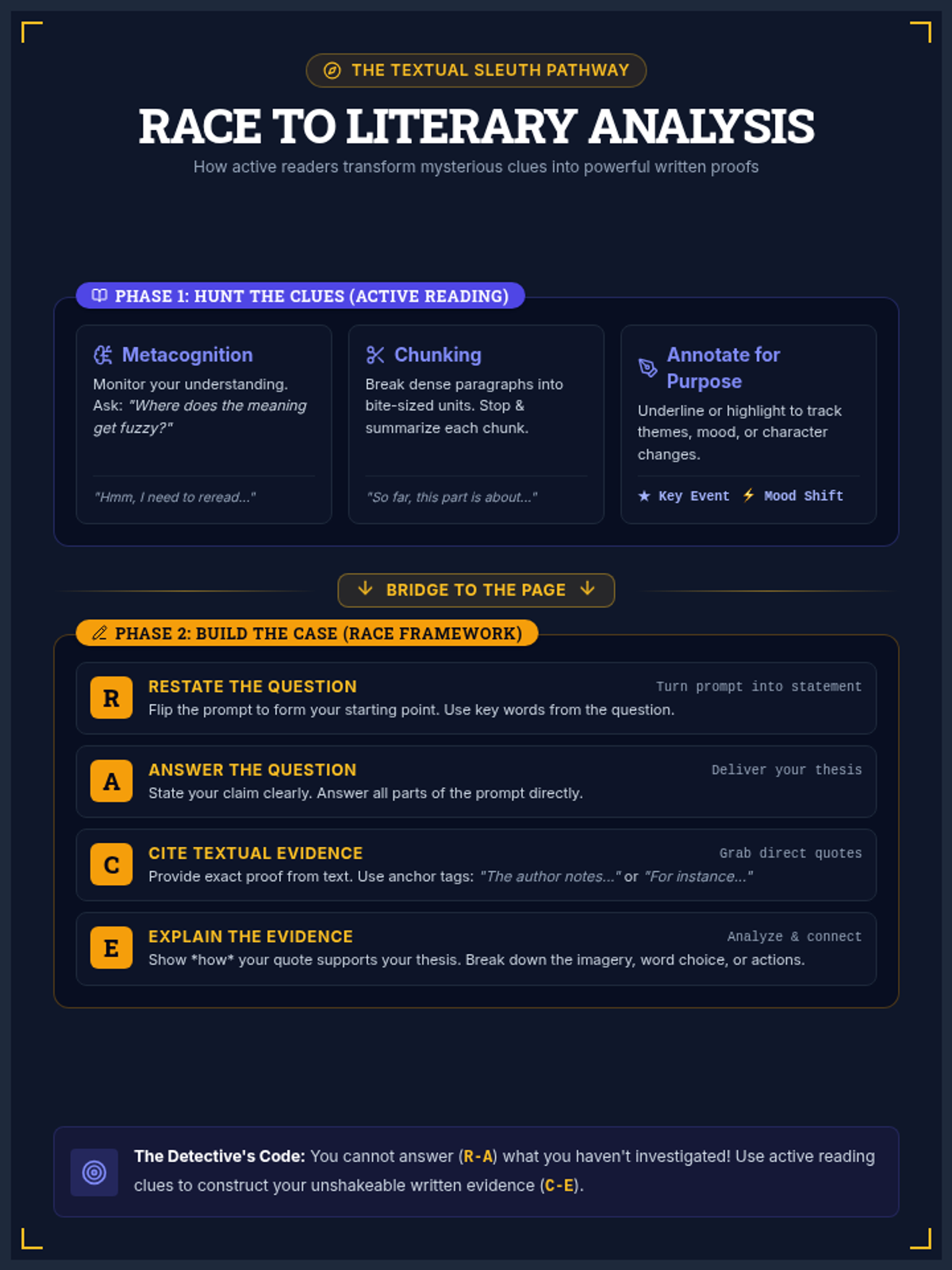
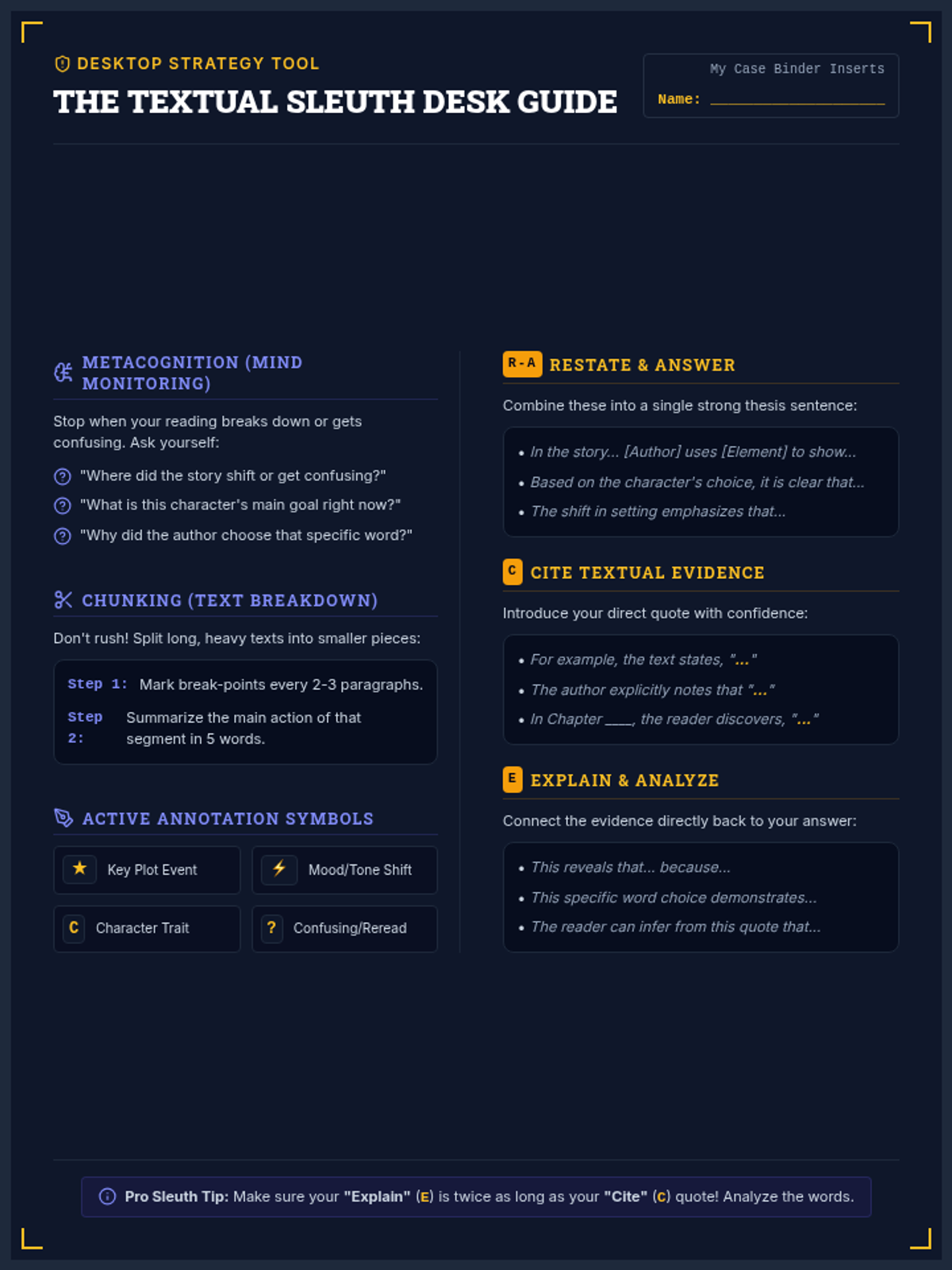
A comprehensive lesson designed to bridge active reading strategies (Metacognition, Chunking, and Annotating) directly into structured literary analysis writing using the RACE framework. Includes visual anchors, reference tools, presentation slides, and graphic organizers.
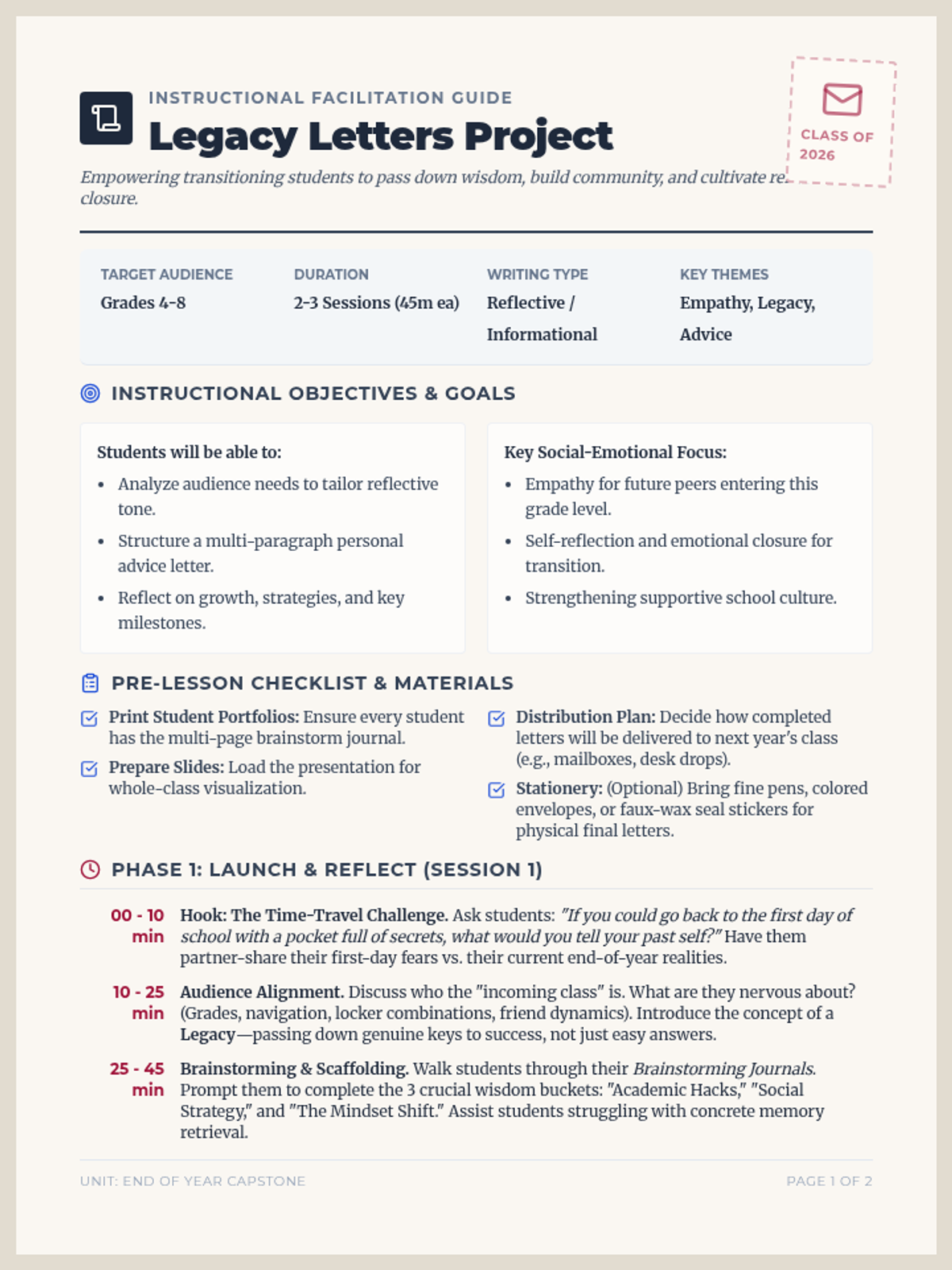
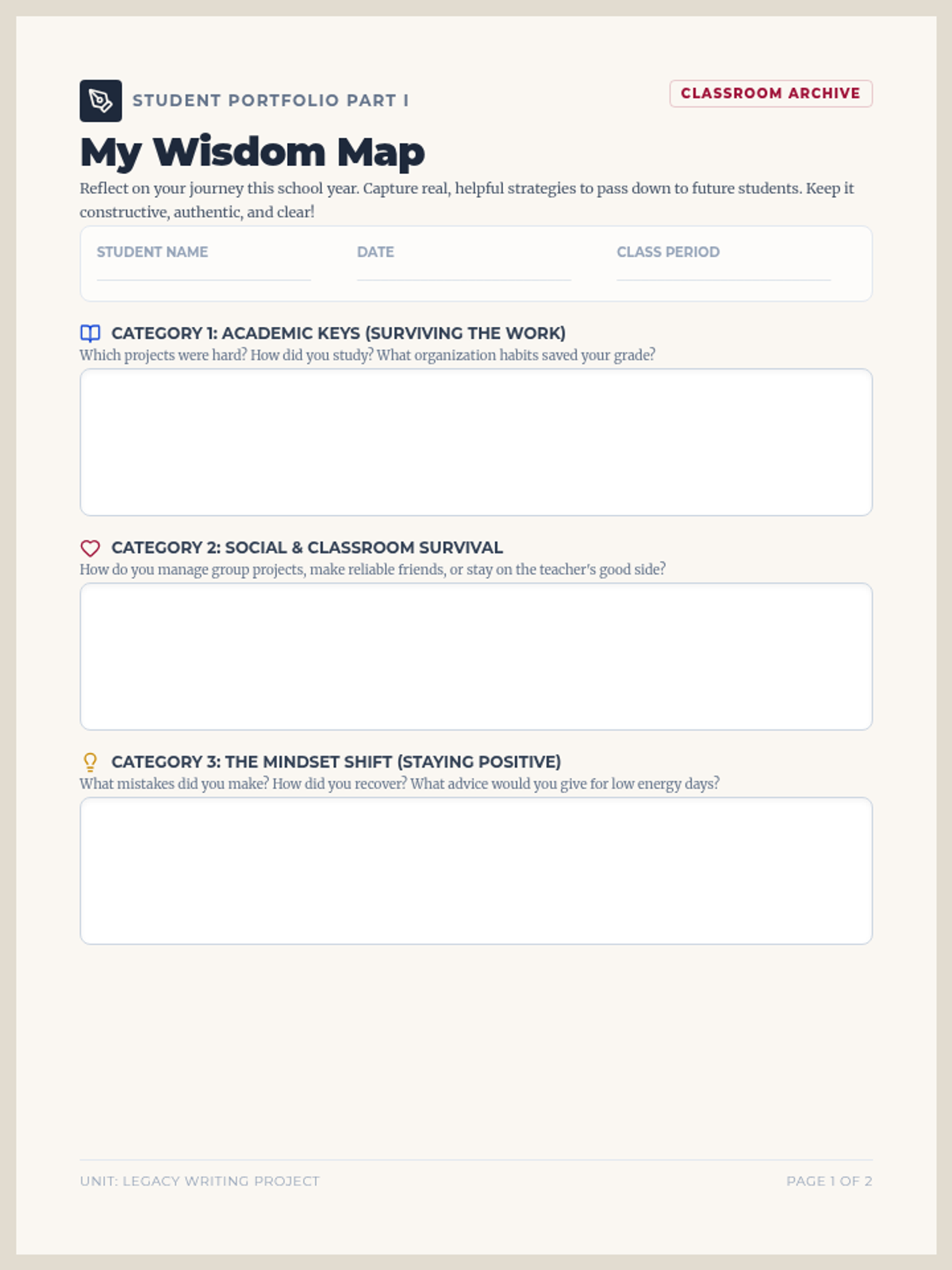
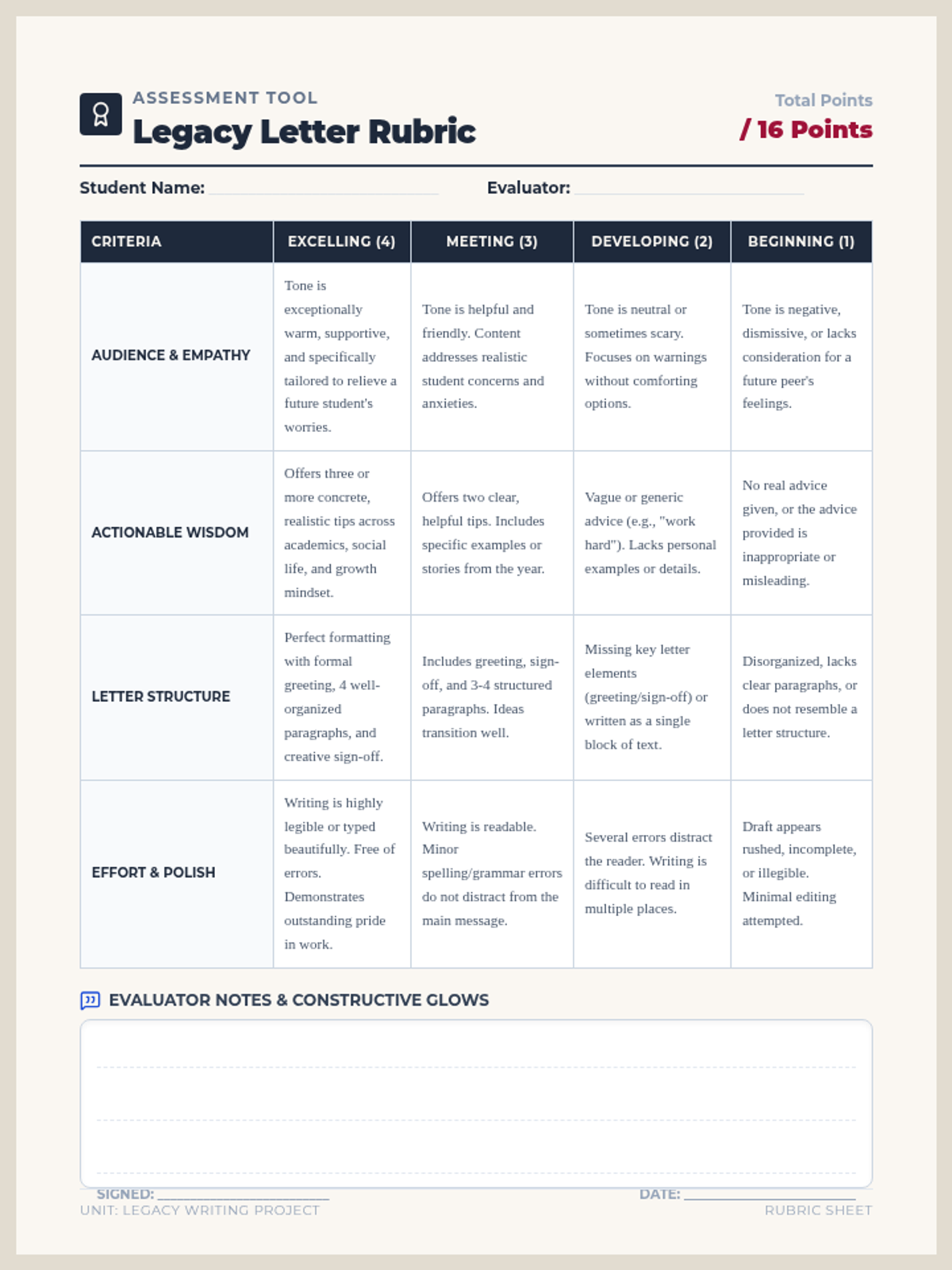
A reflective end-of-year writing project where graduating or transitioning students write letters of wisdom, strategies, and encouragement to the incoming class.
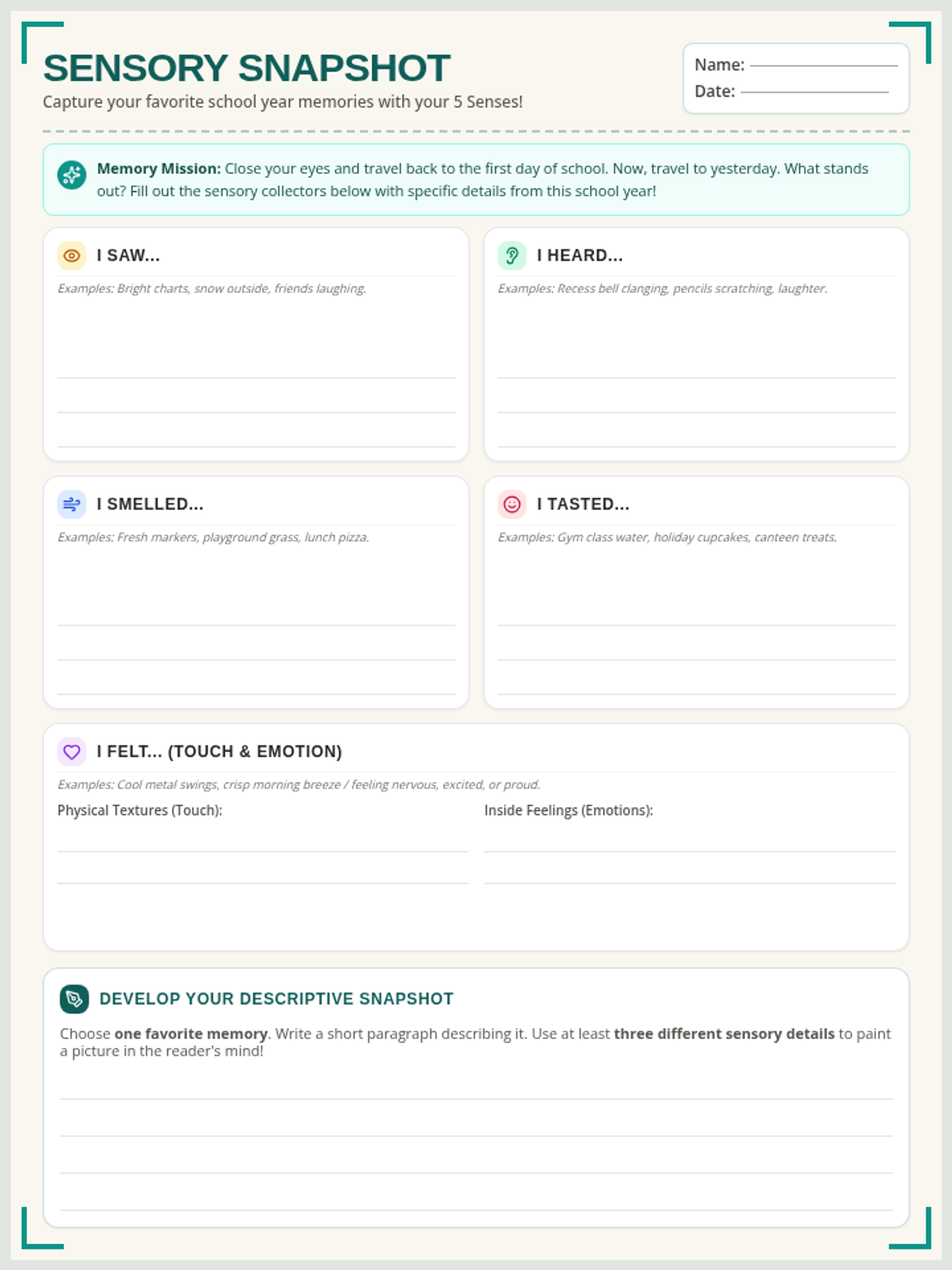
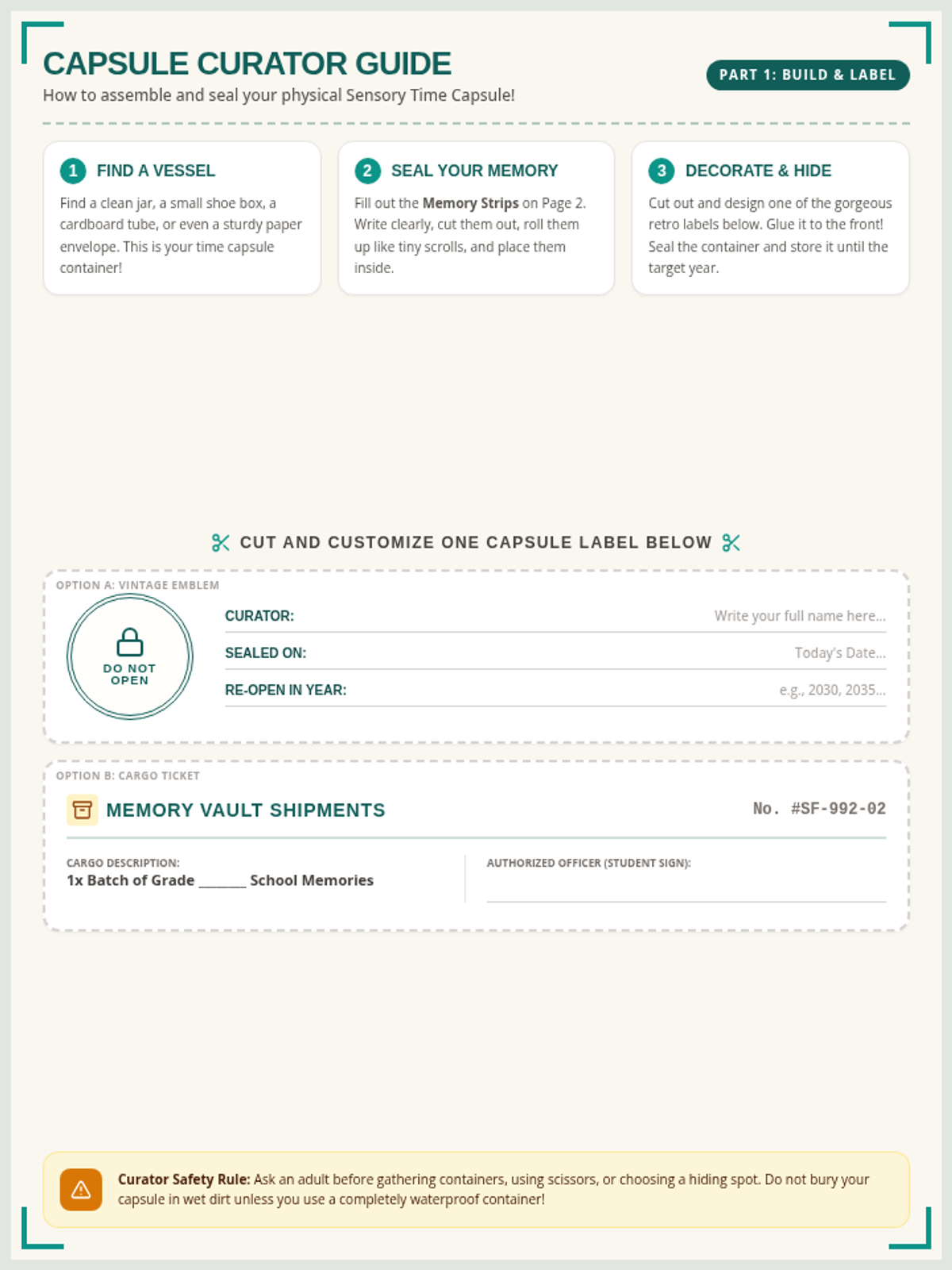
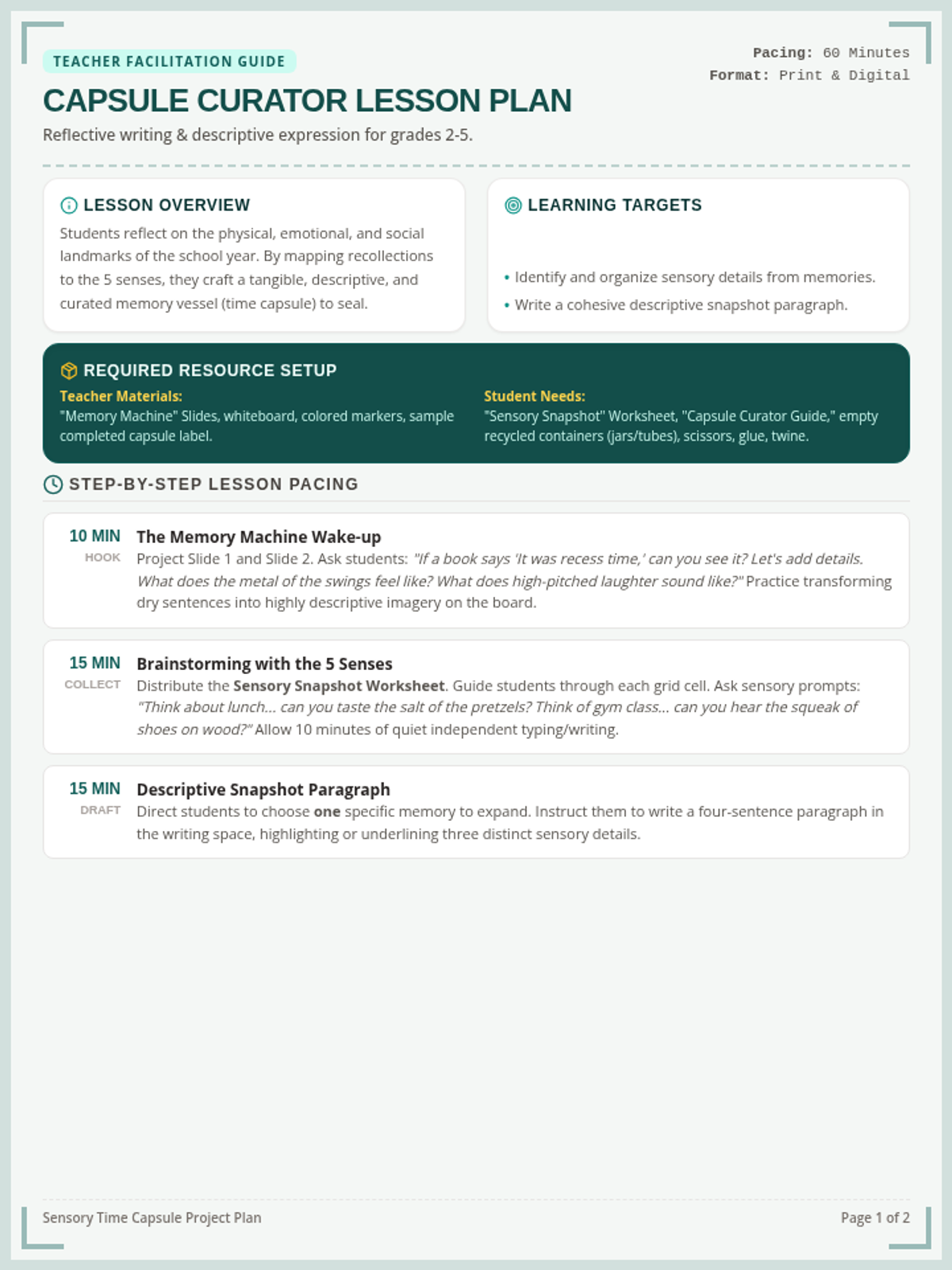
A reflective writing and crafting lesson where students in grades 2-5 use sensory details to capture their favorite school year memories, creating a physical or digital time capsule to celebrate their growth and transition to summer.
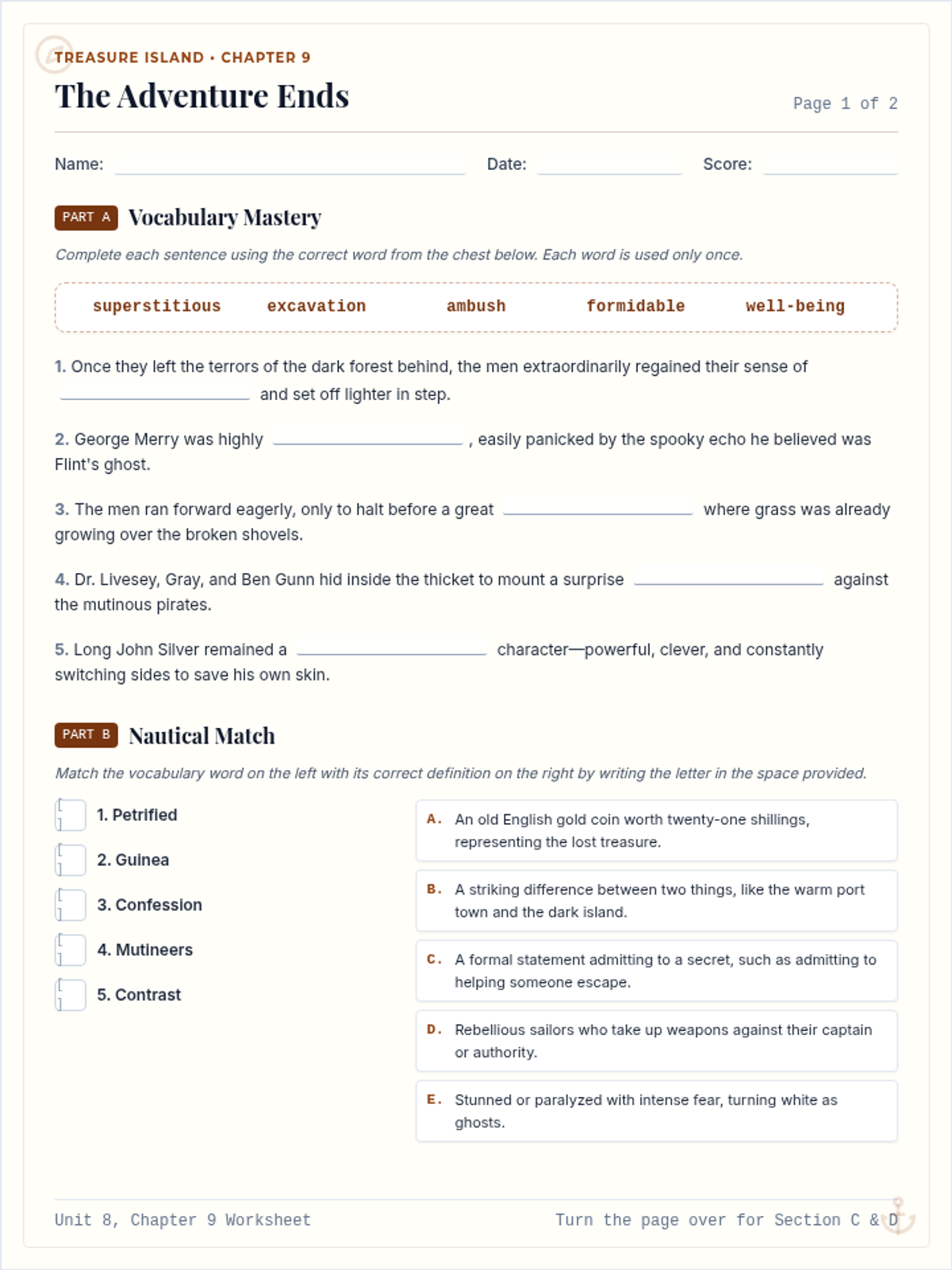
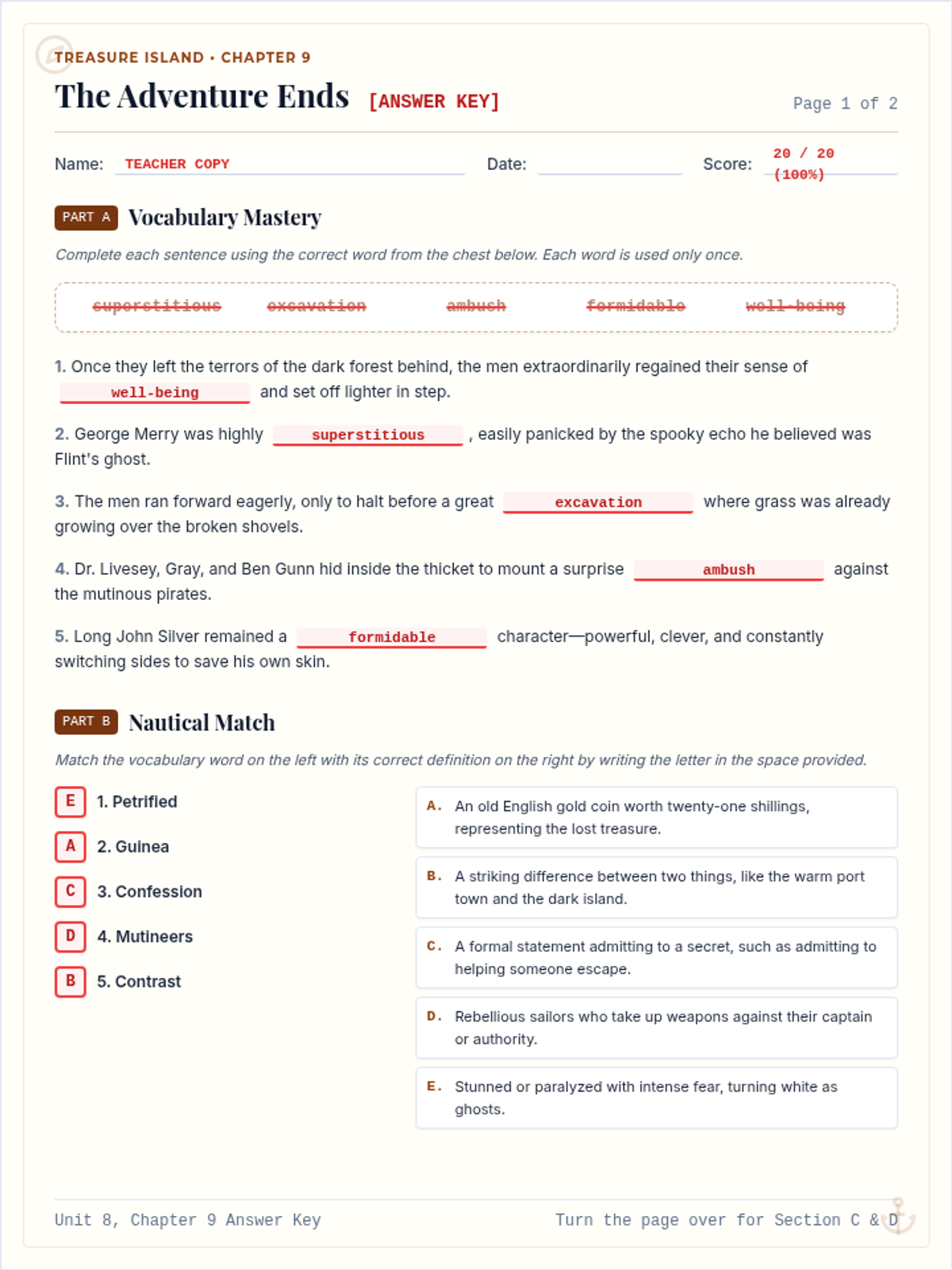
A reading comprehension and vocabulary lesson based on the final chapter of Treasure Island.