A lesson on identifying functions from tables and graphs using the 'Function Factory' metaphor. Students explore the unique output rule through visual and numerical patterns.
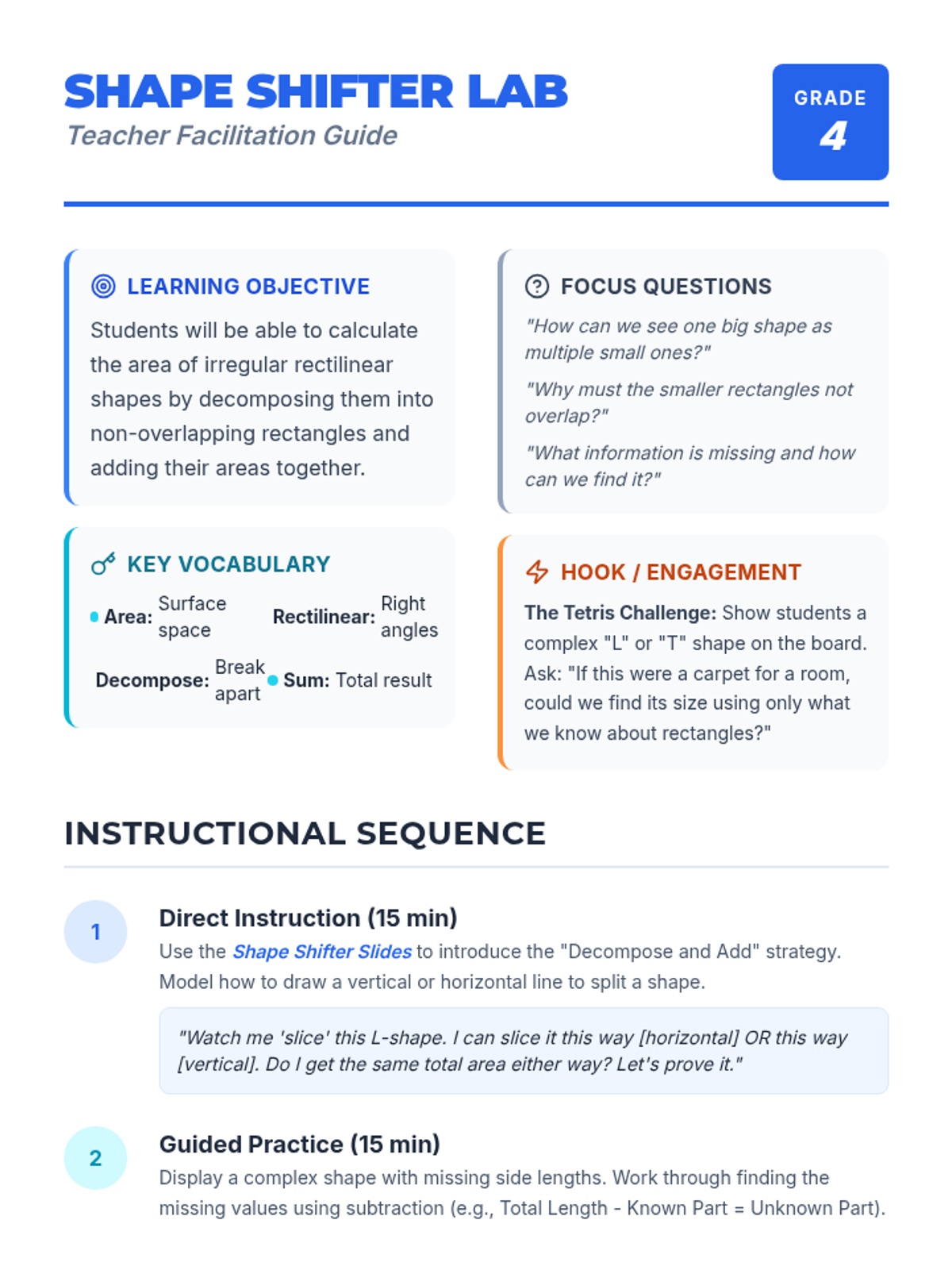
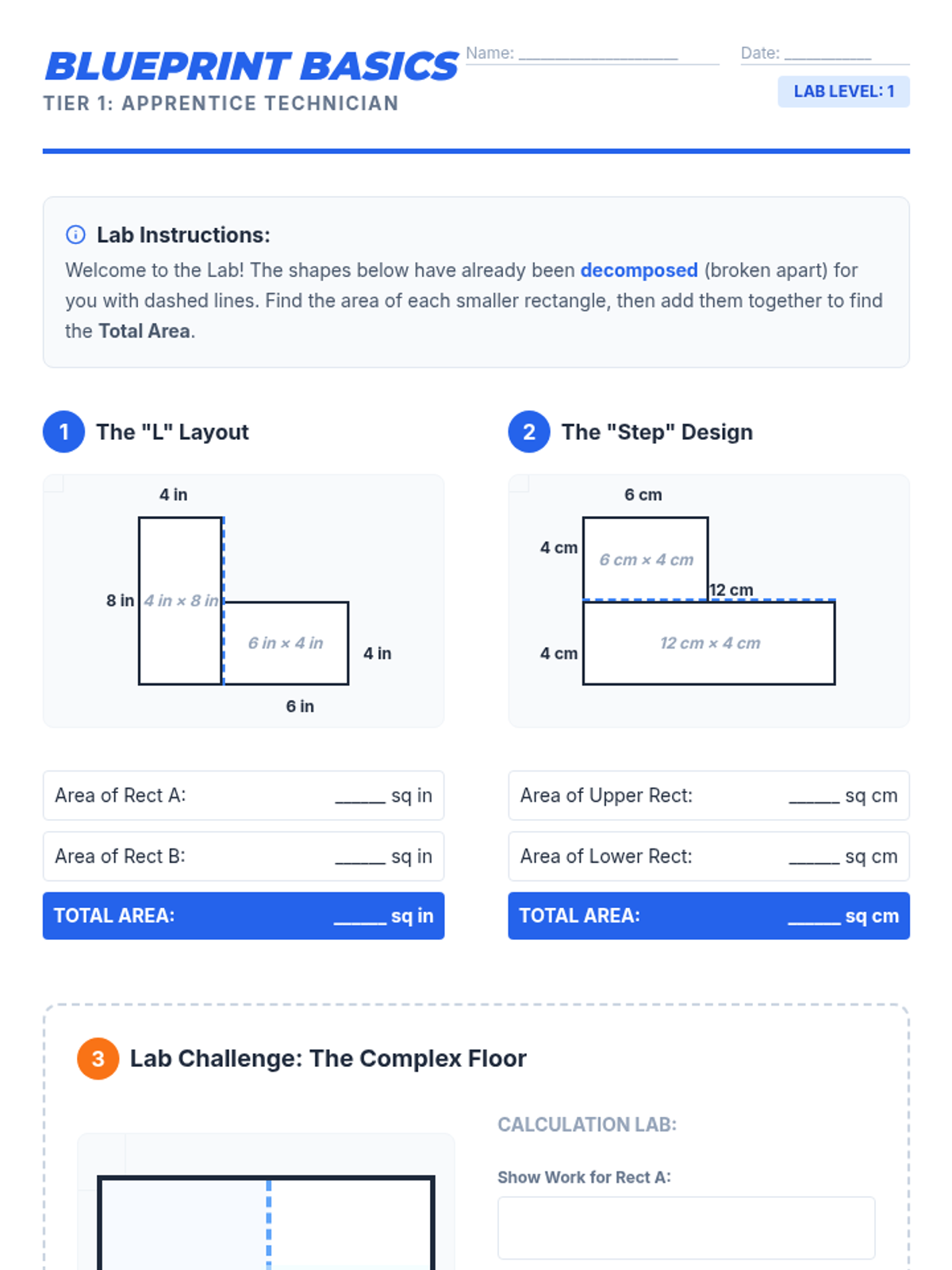
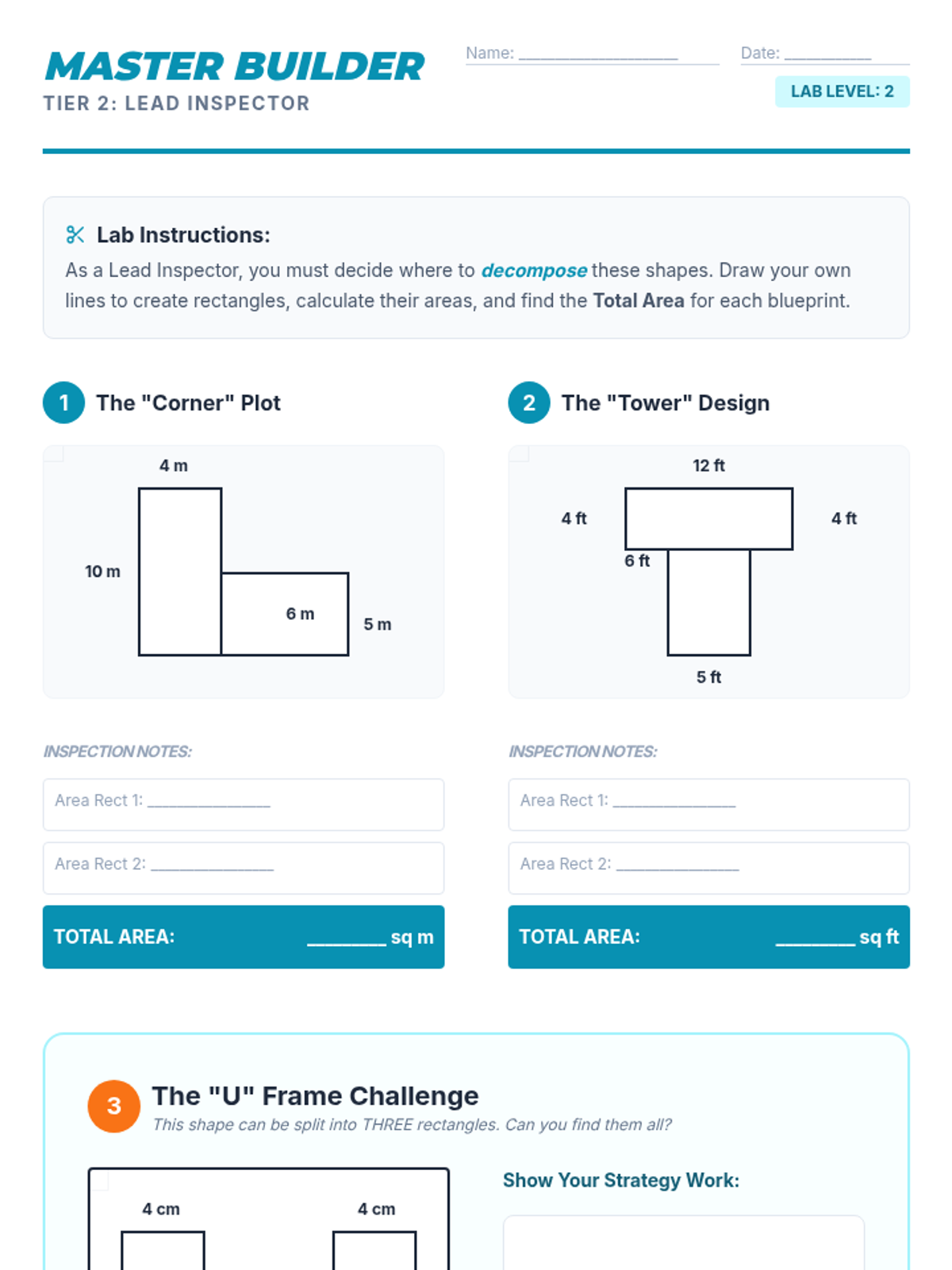
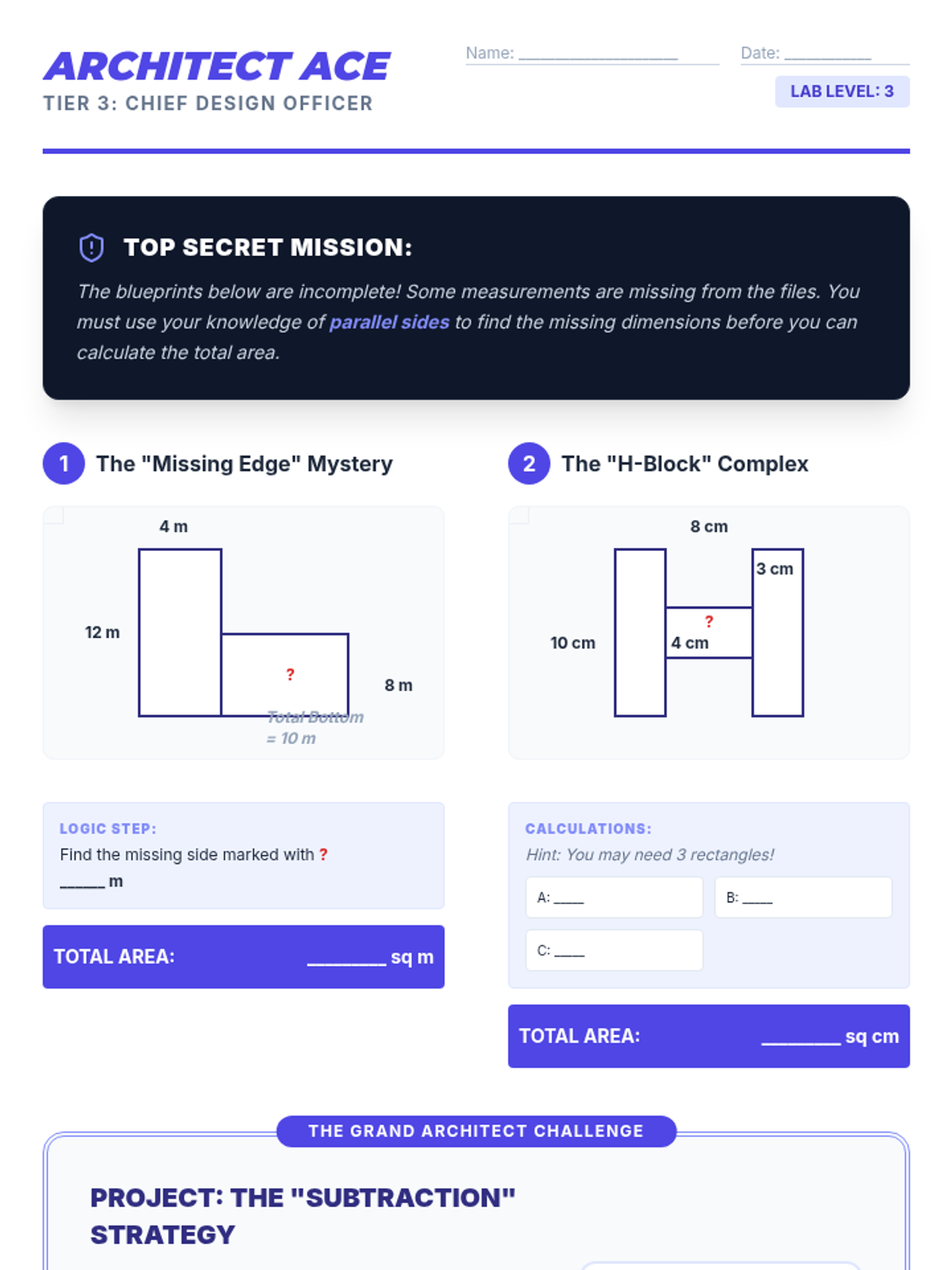
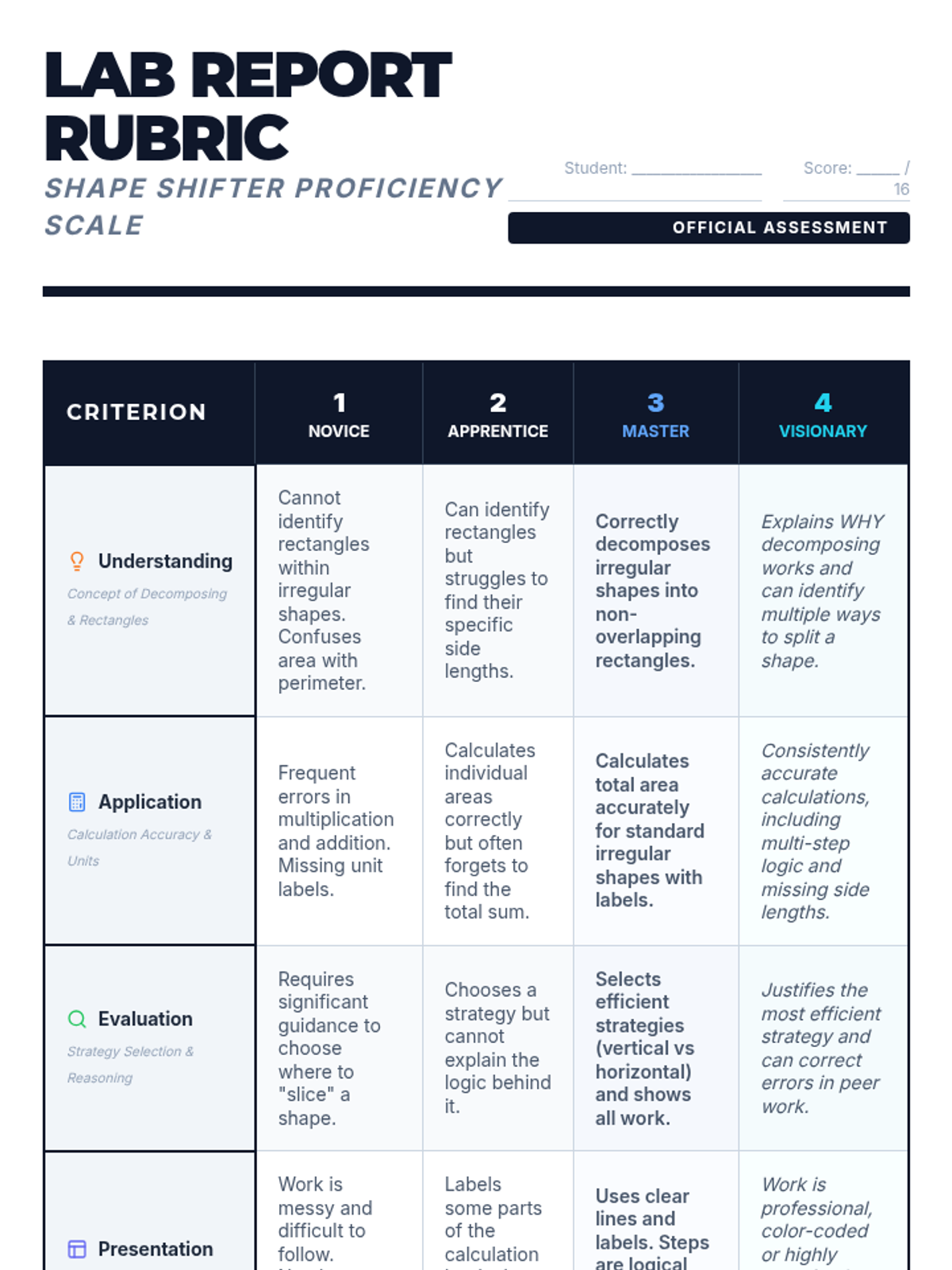
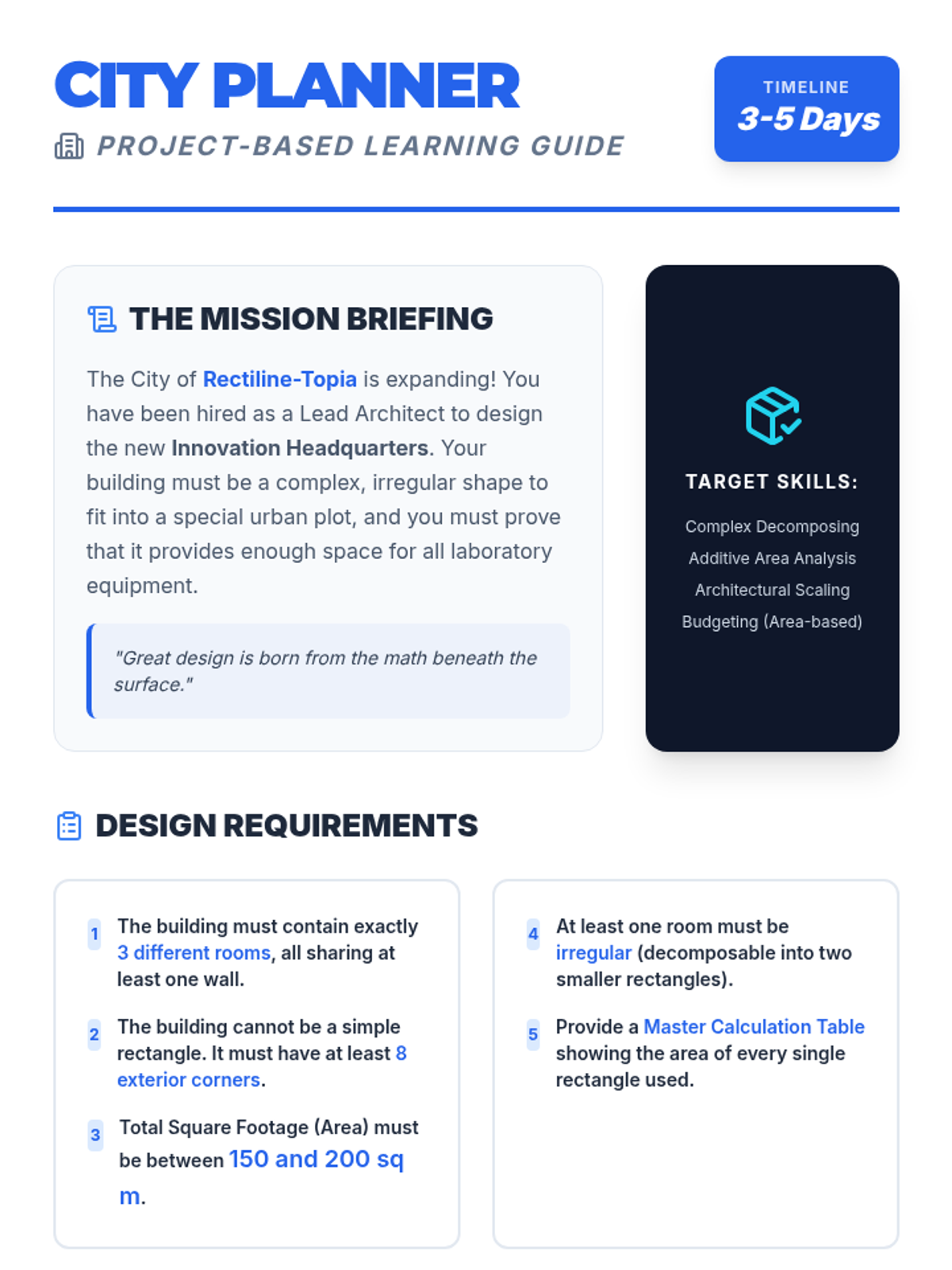
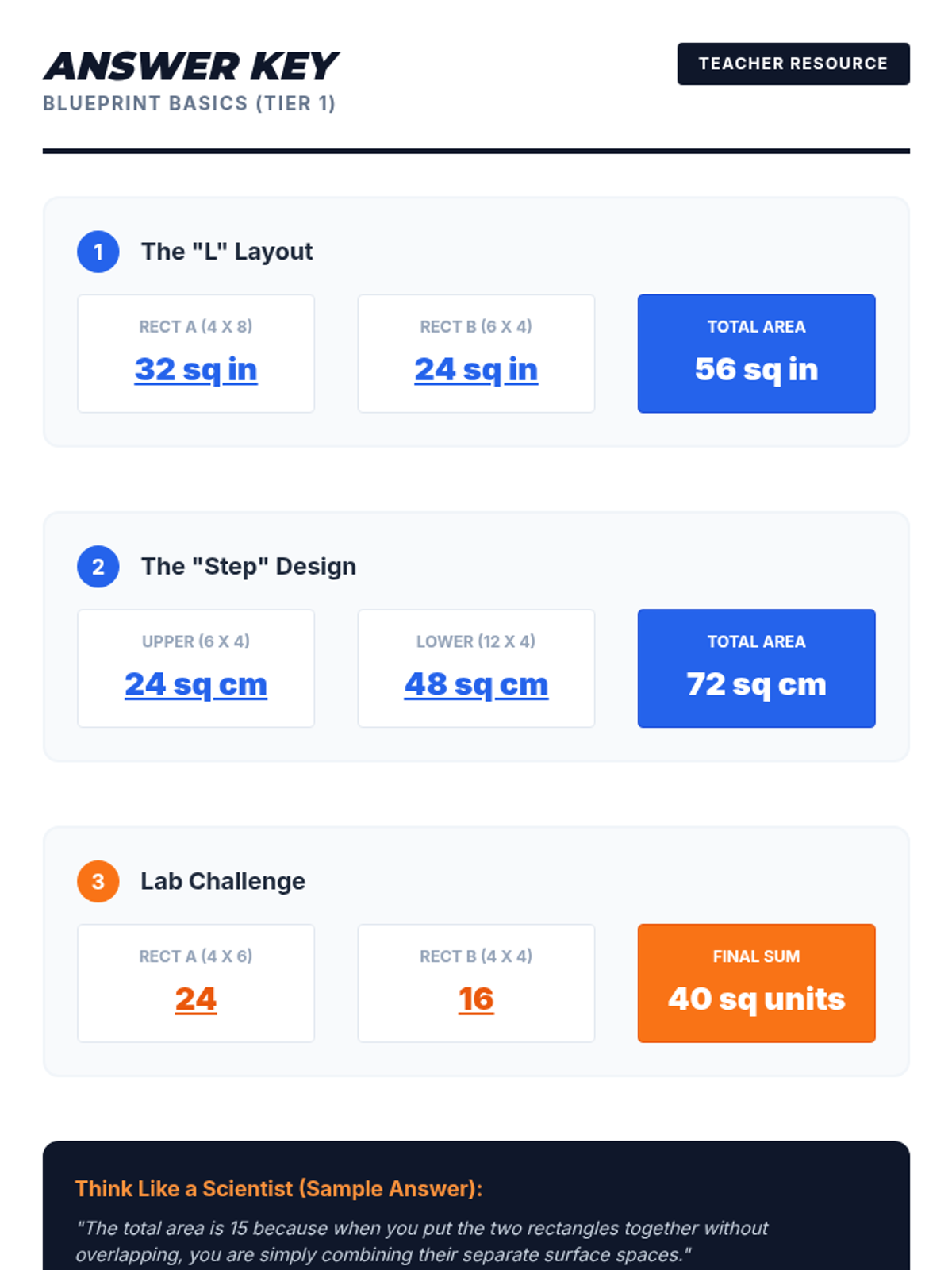
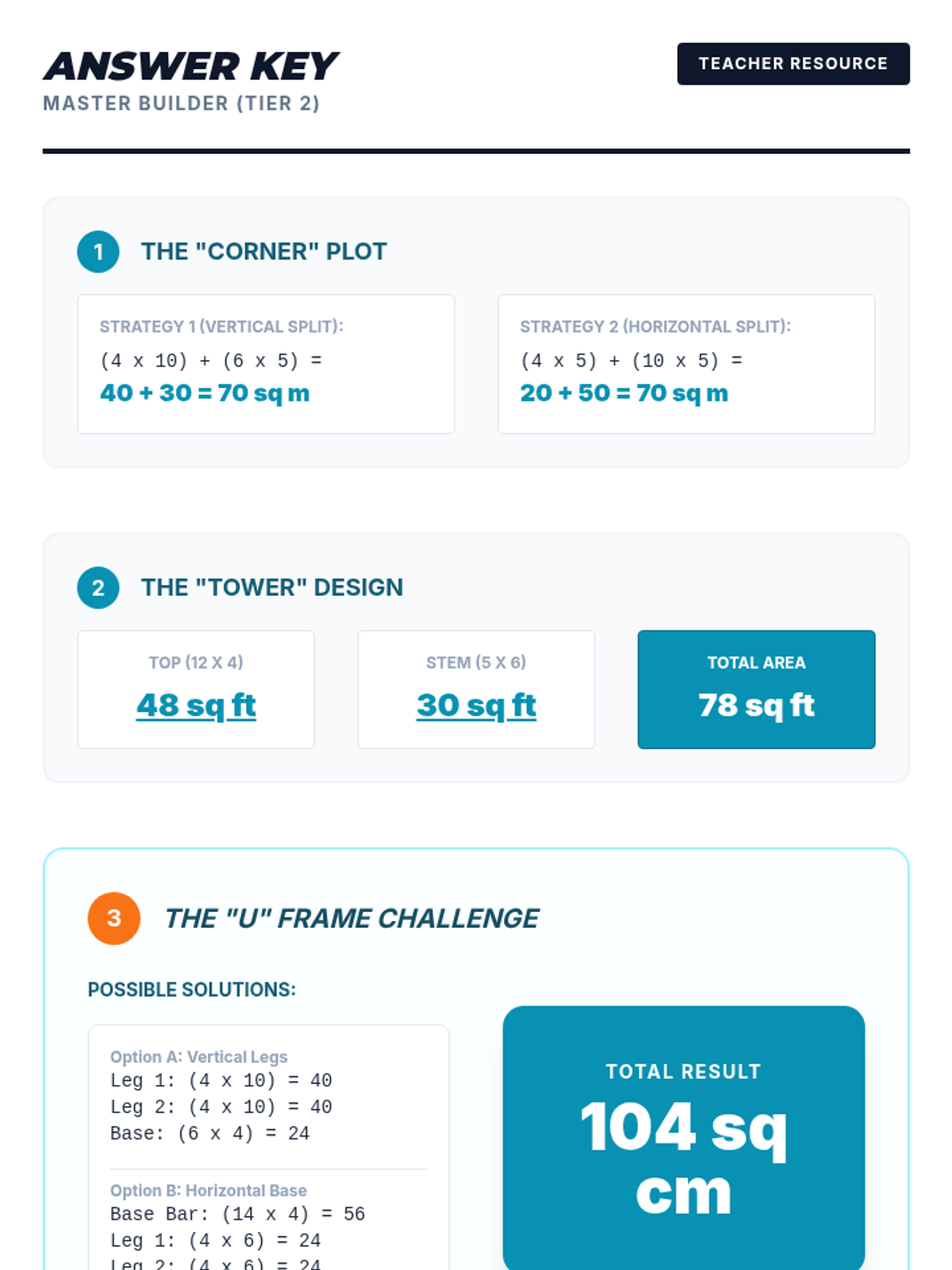
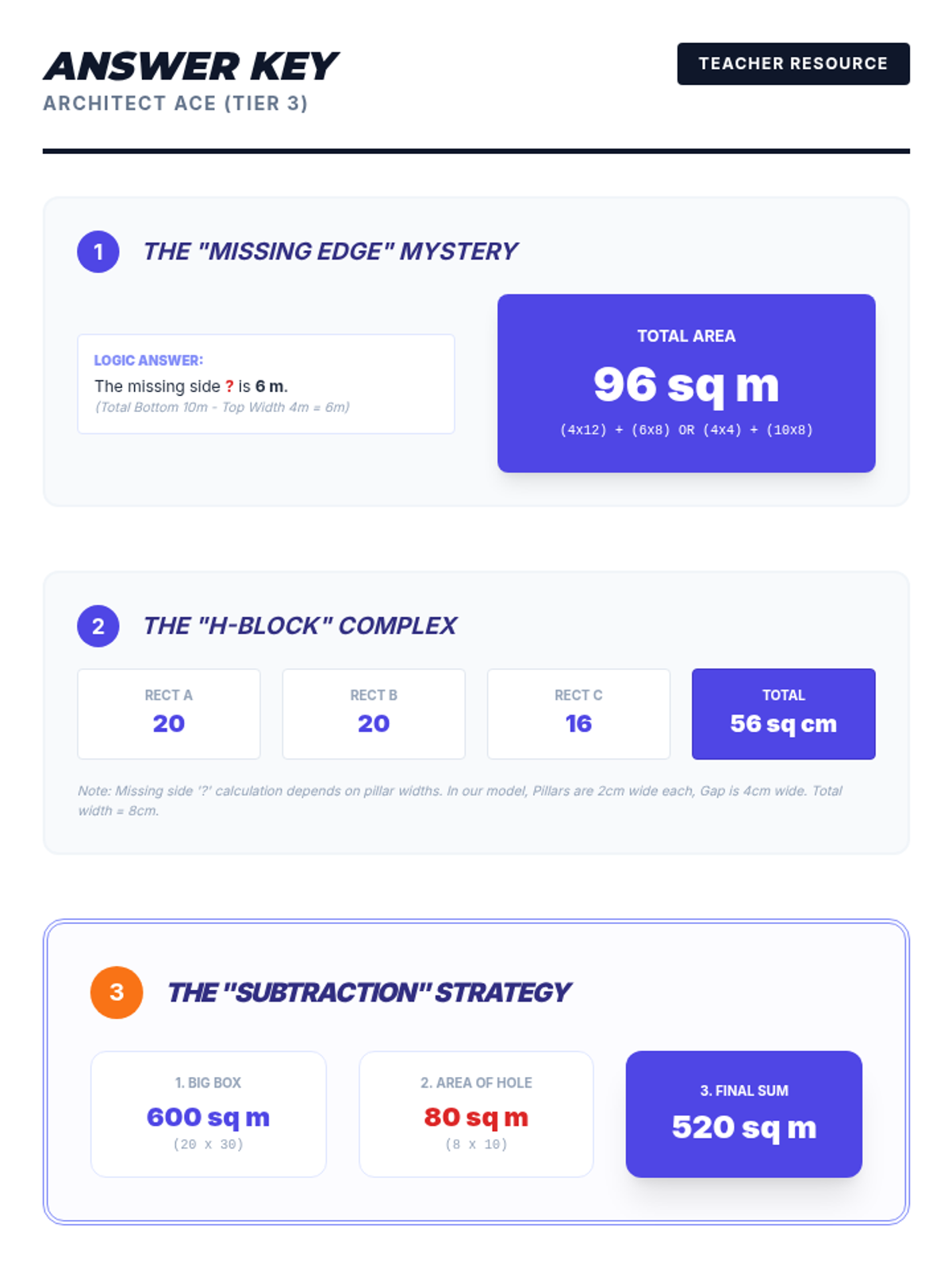
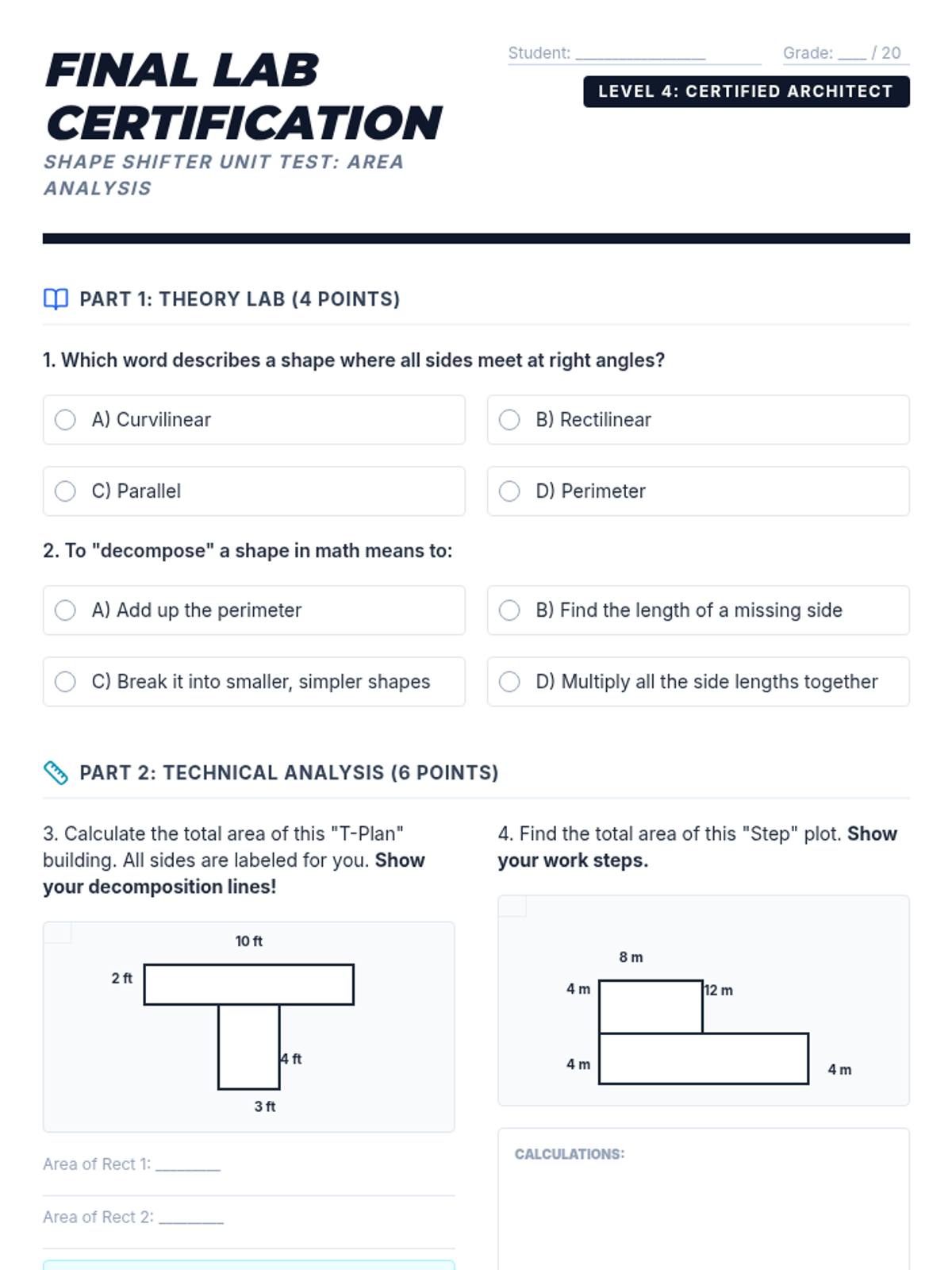
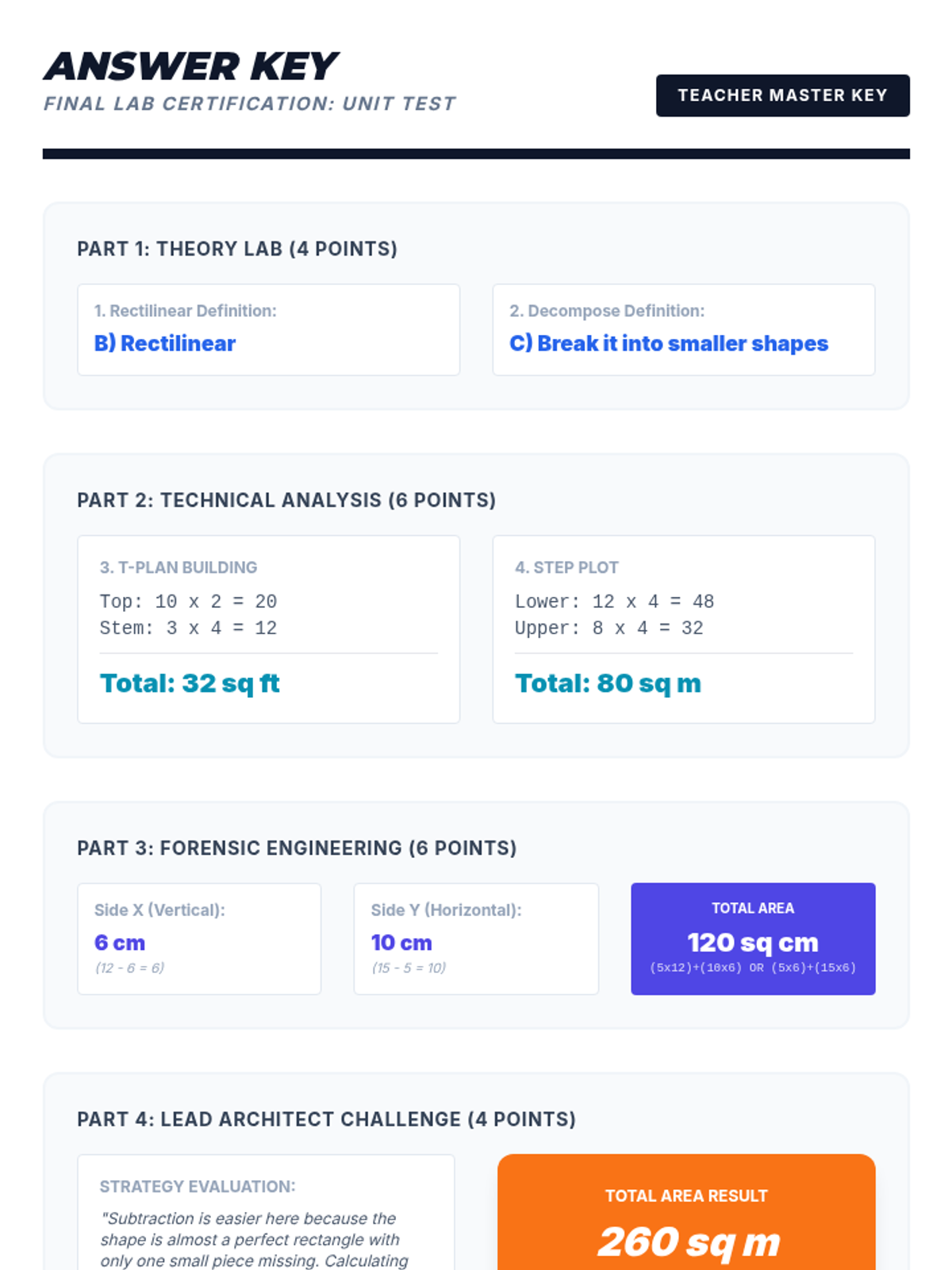
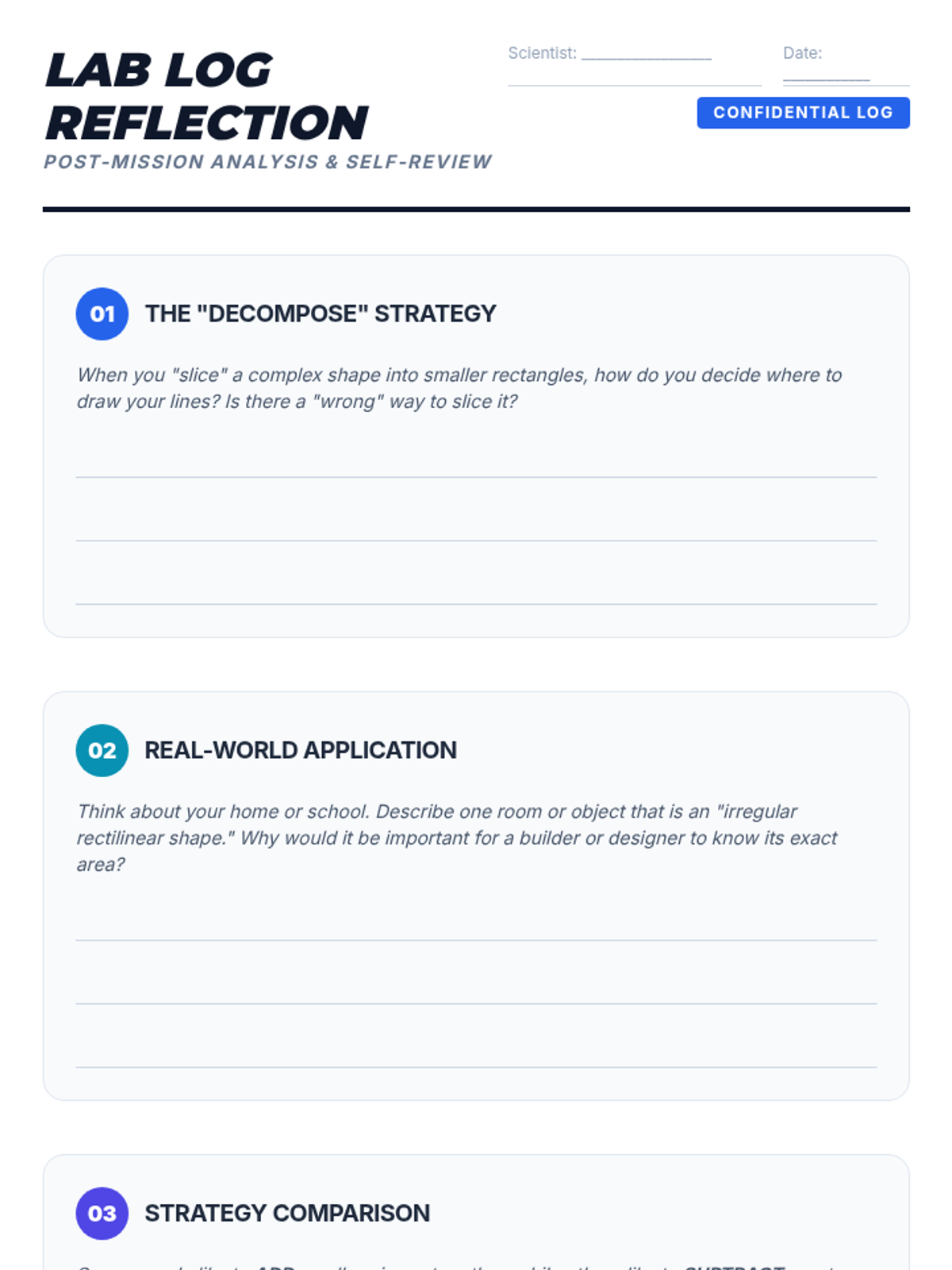
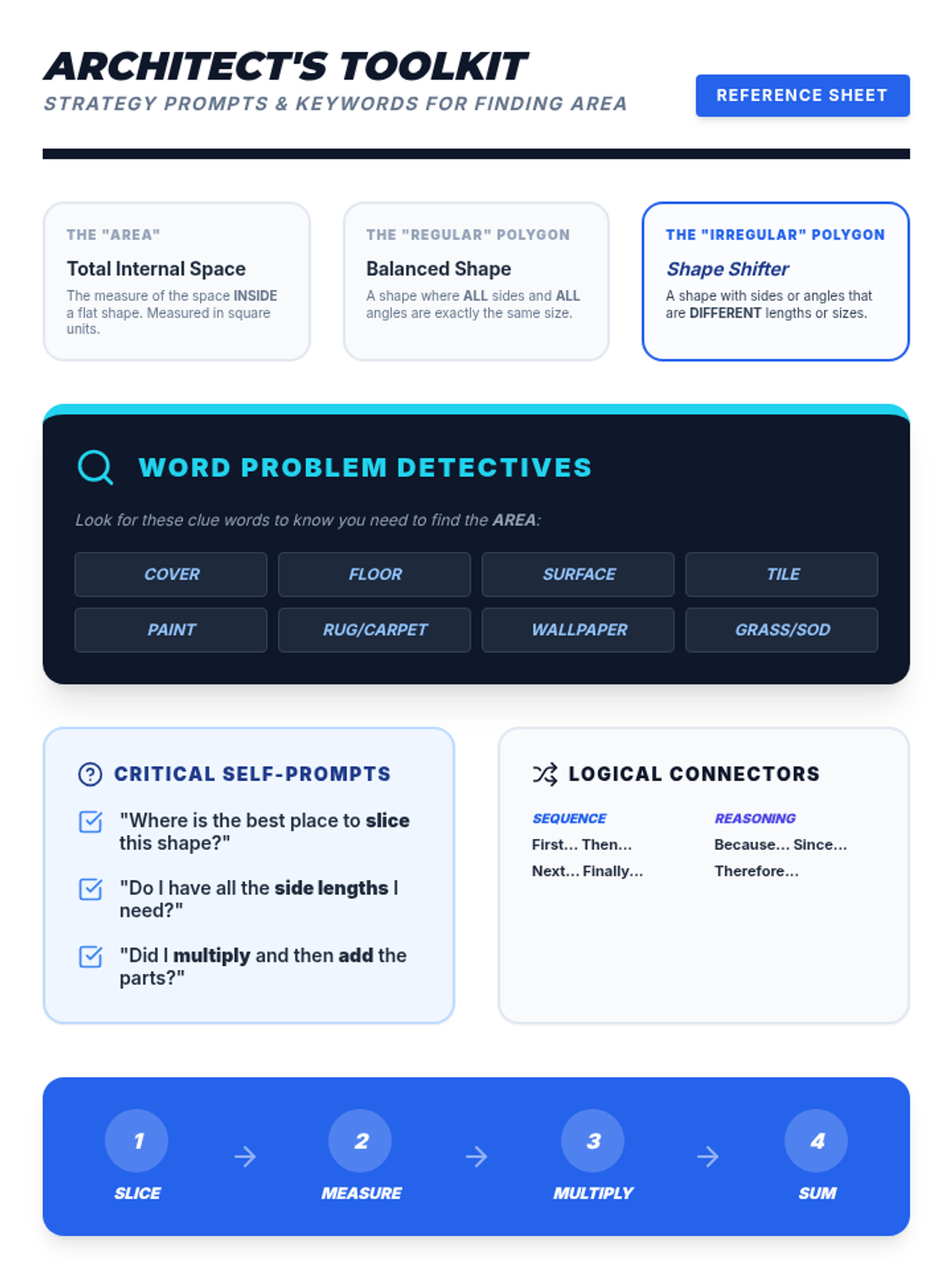
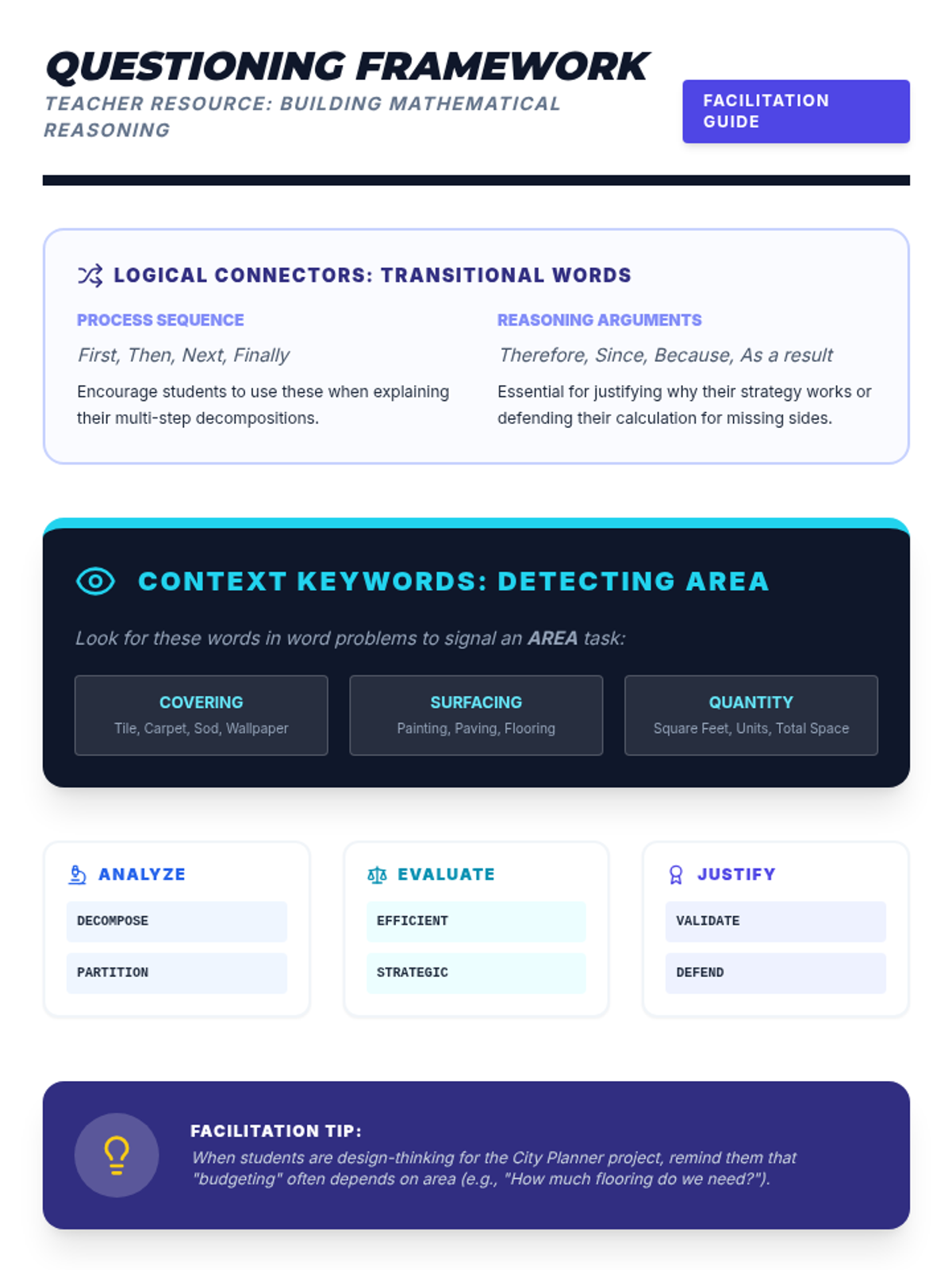
A comprehensive lesson on calculating the area of irregular rectilinear shapes by decomposing them into smaller rectangles. Includes tiered practice, a project-based learning guide, and a detailed assessment rubric.
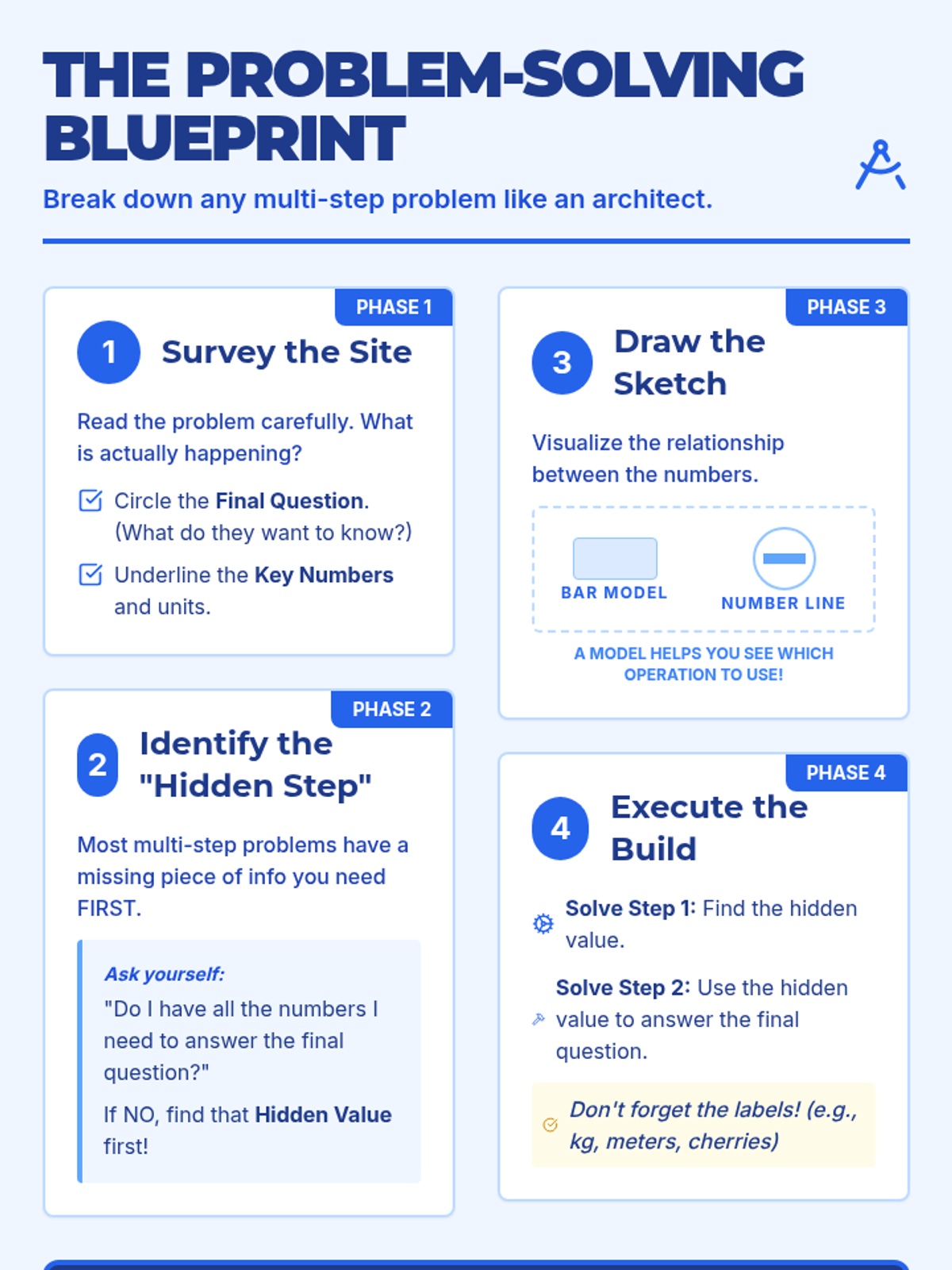
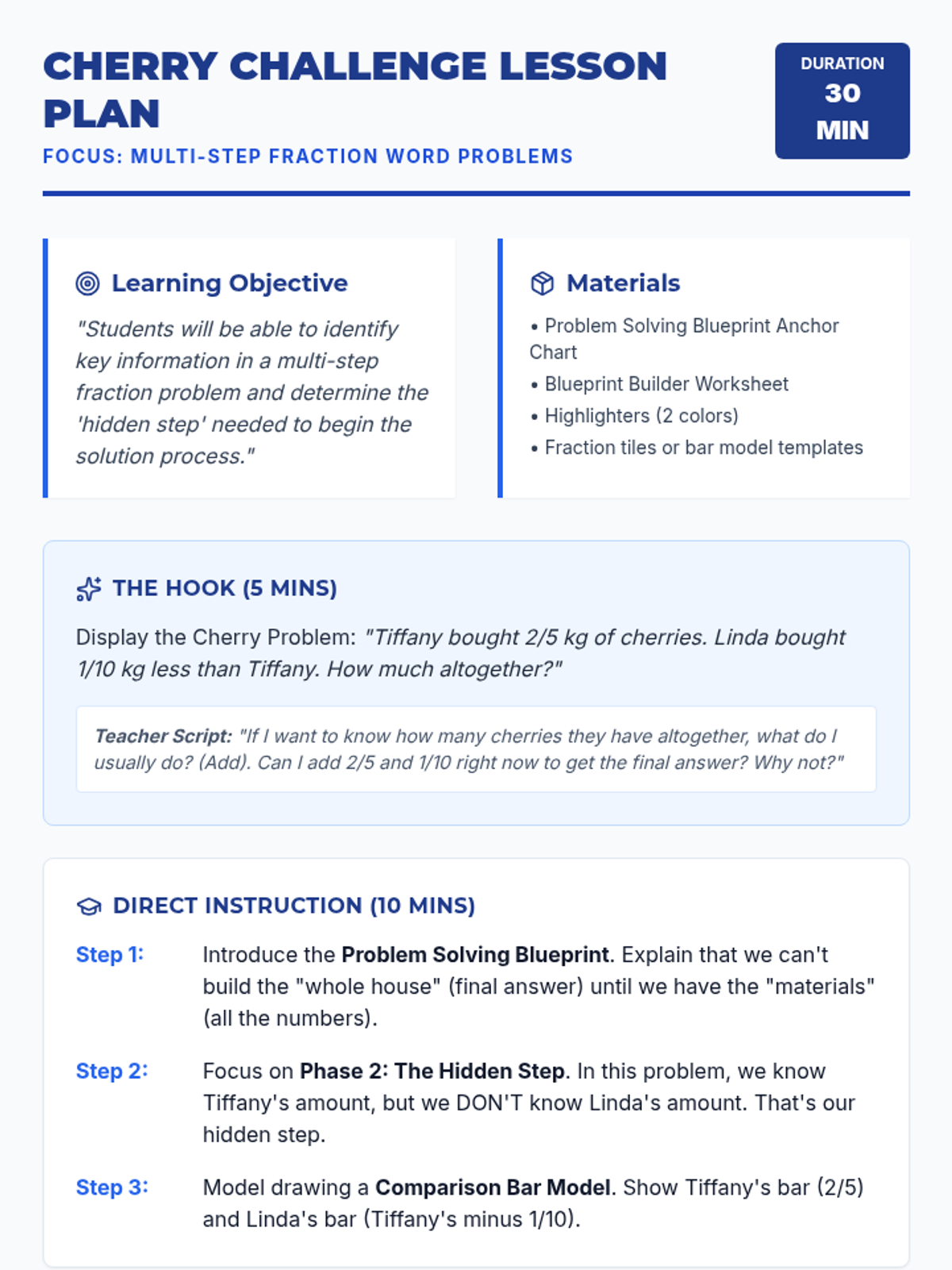
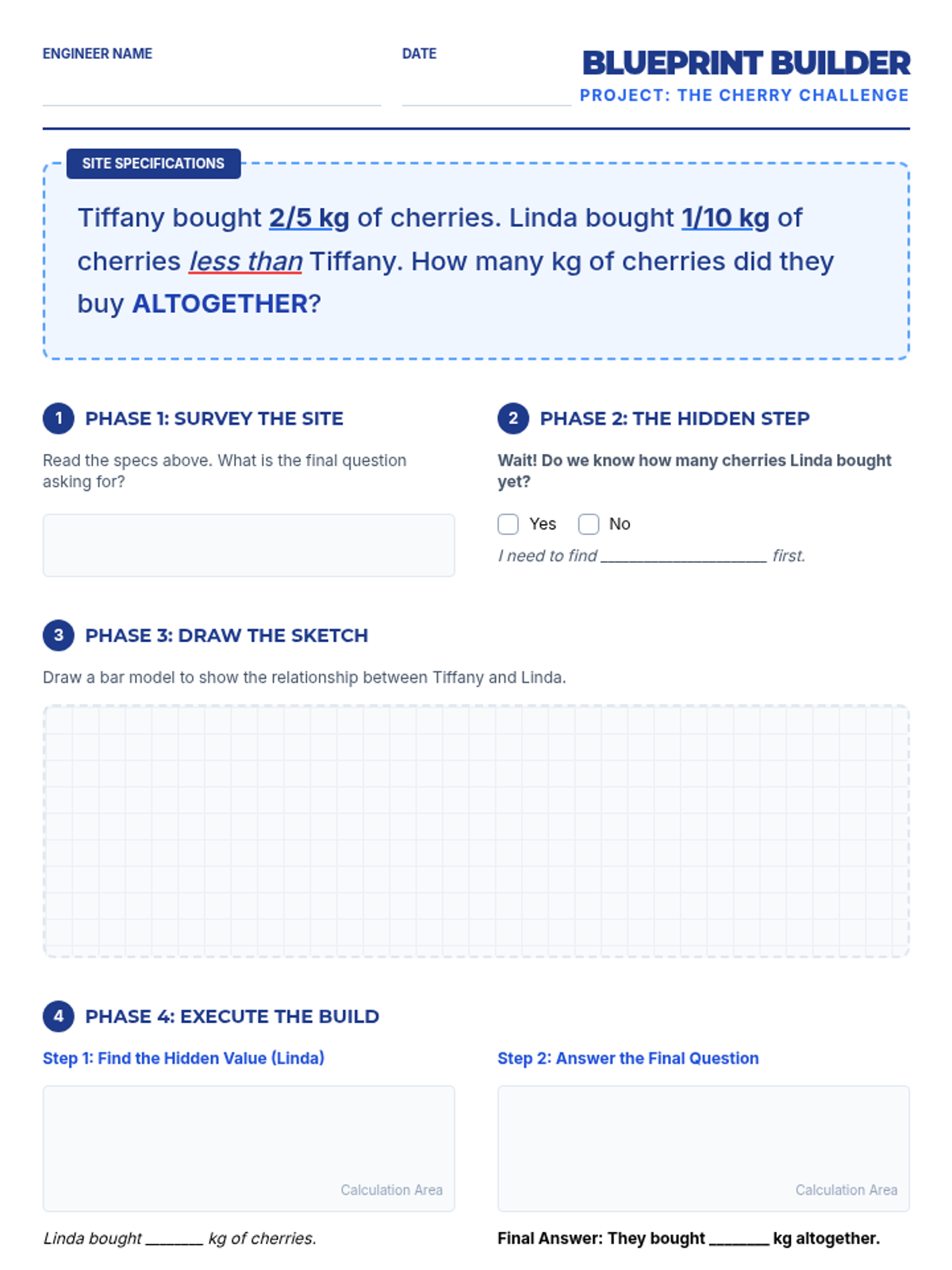
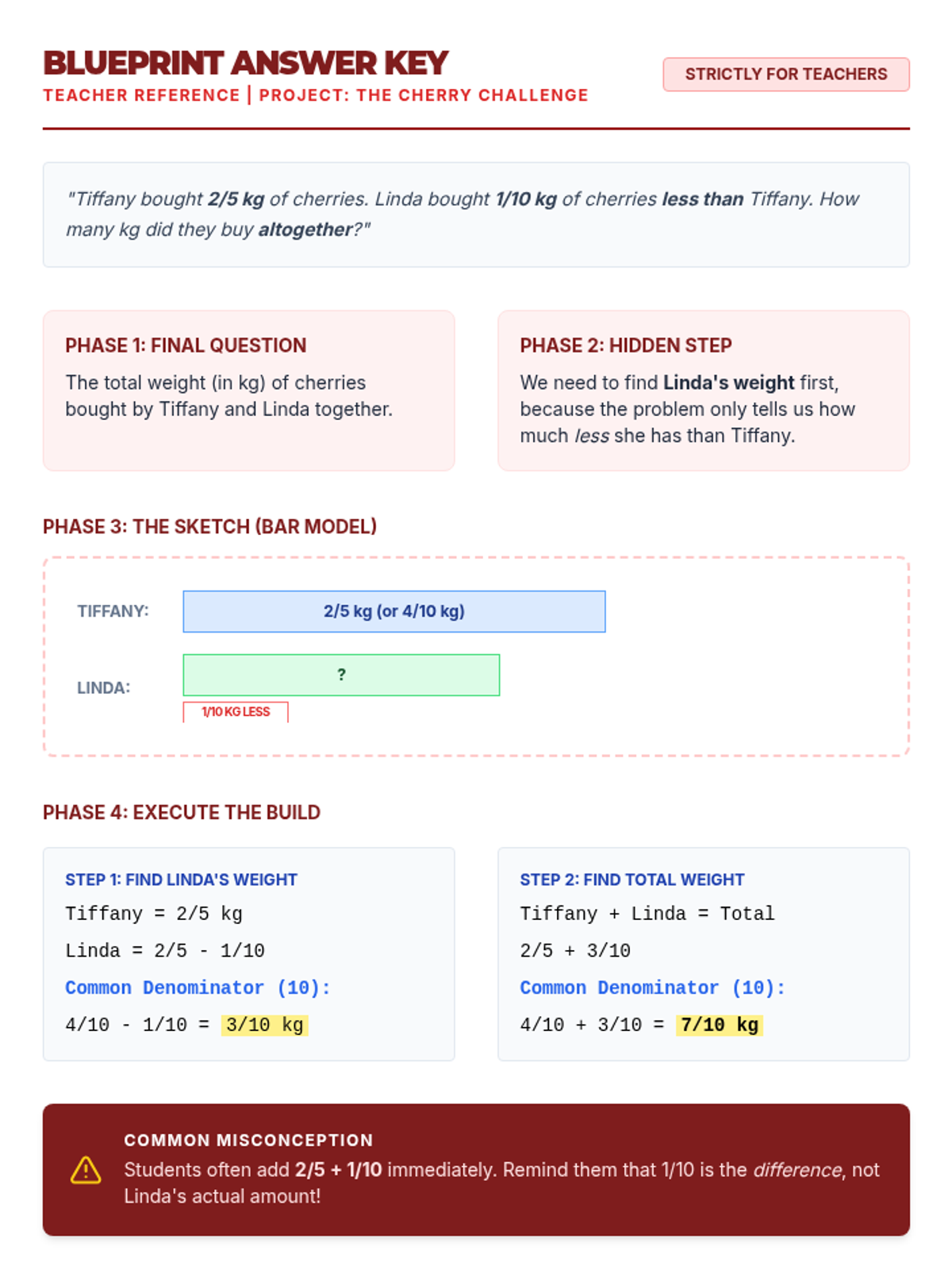
A mini-lesson designed to help students identify key information and break multi-step fraction word problems into manageable parts.
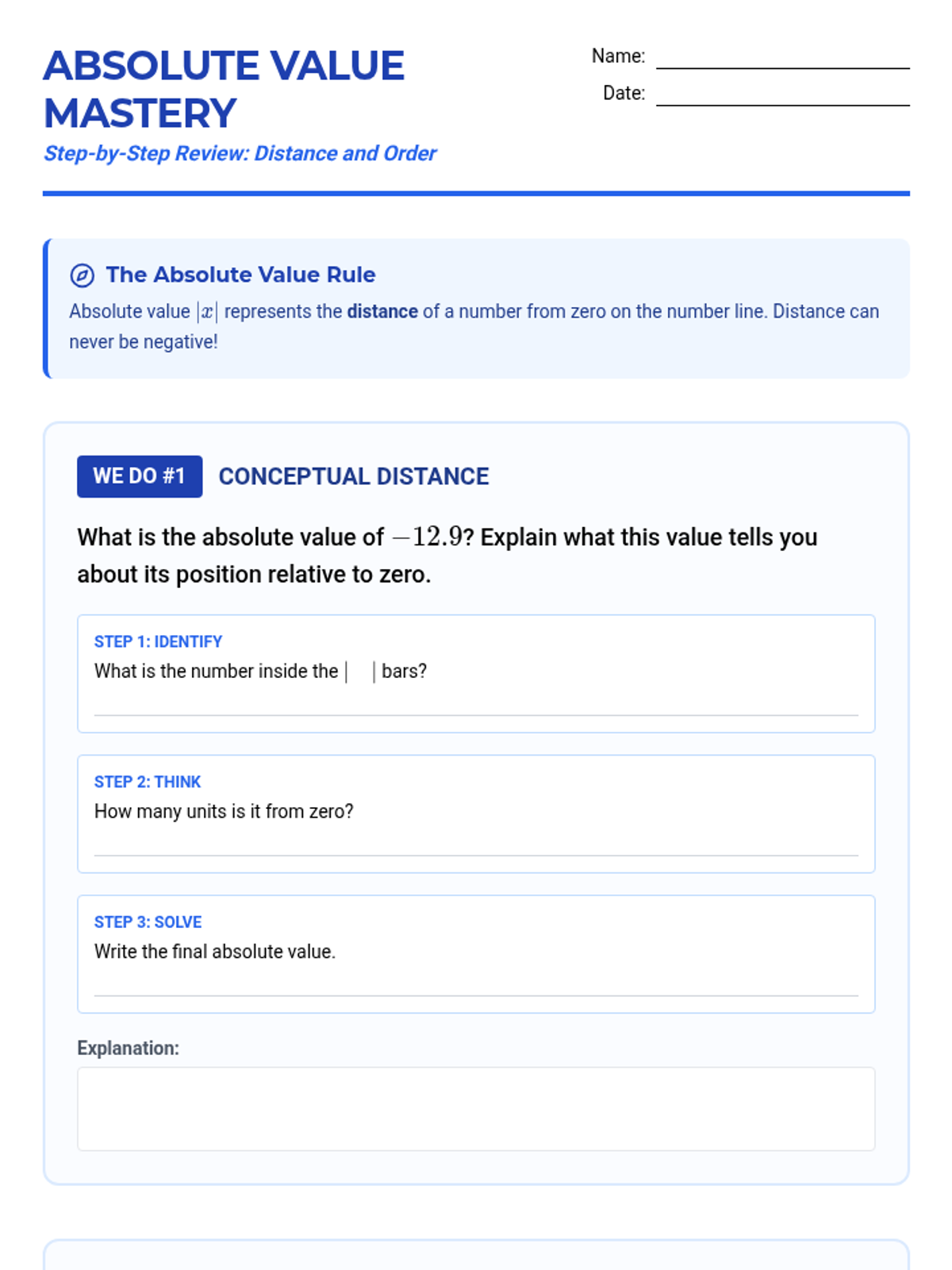
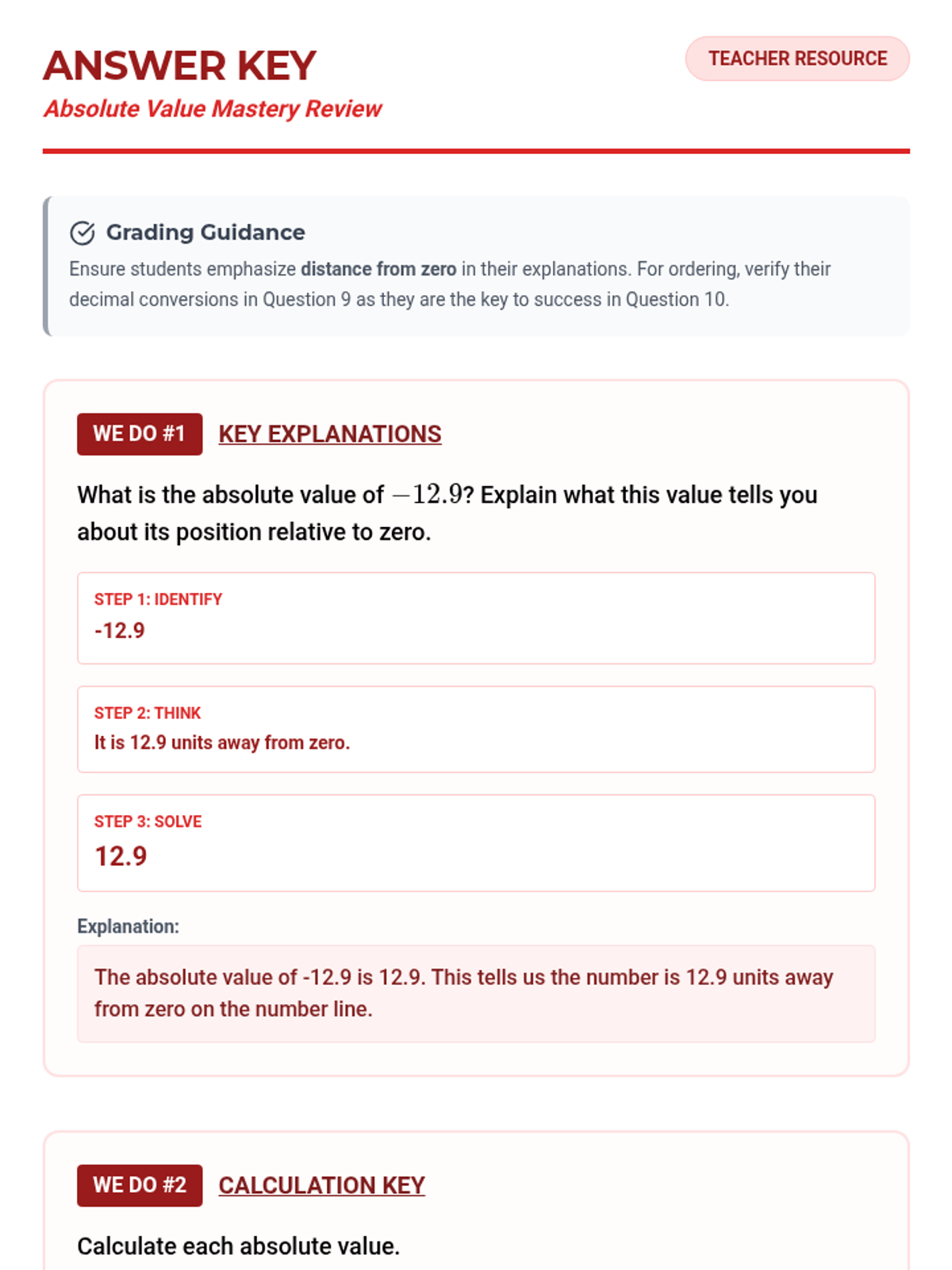
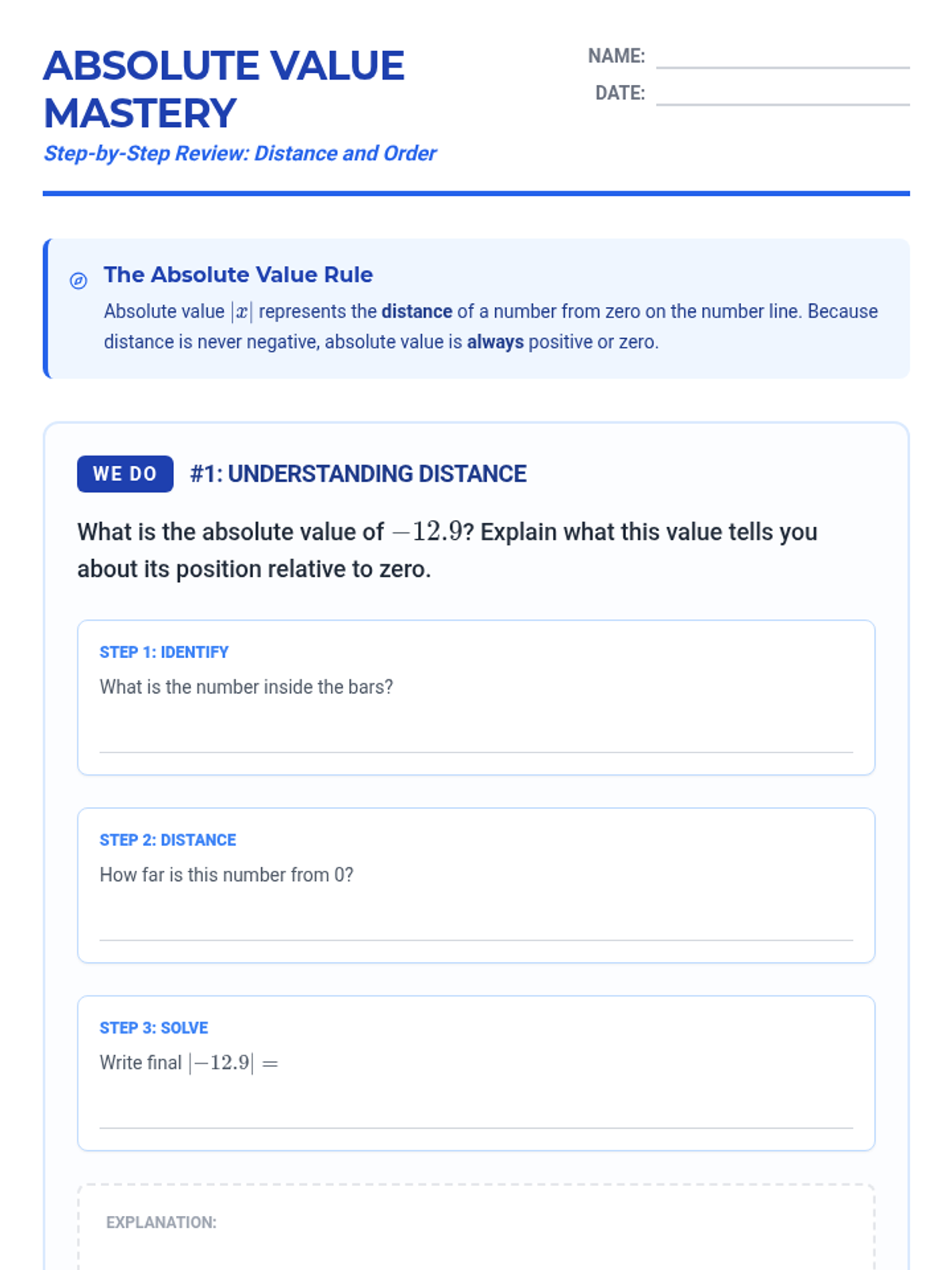
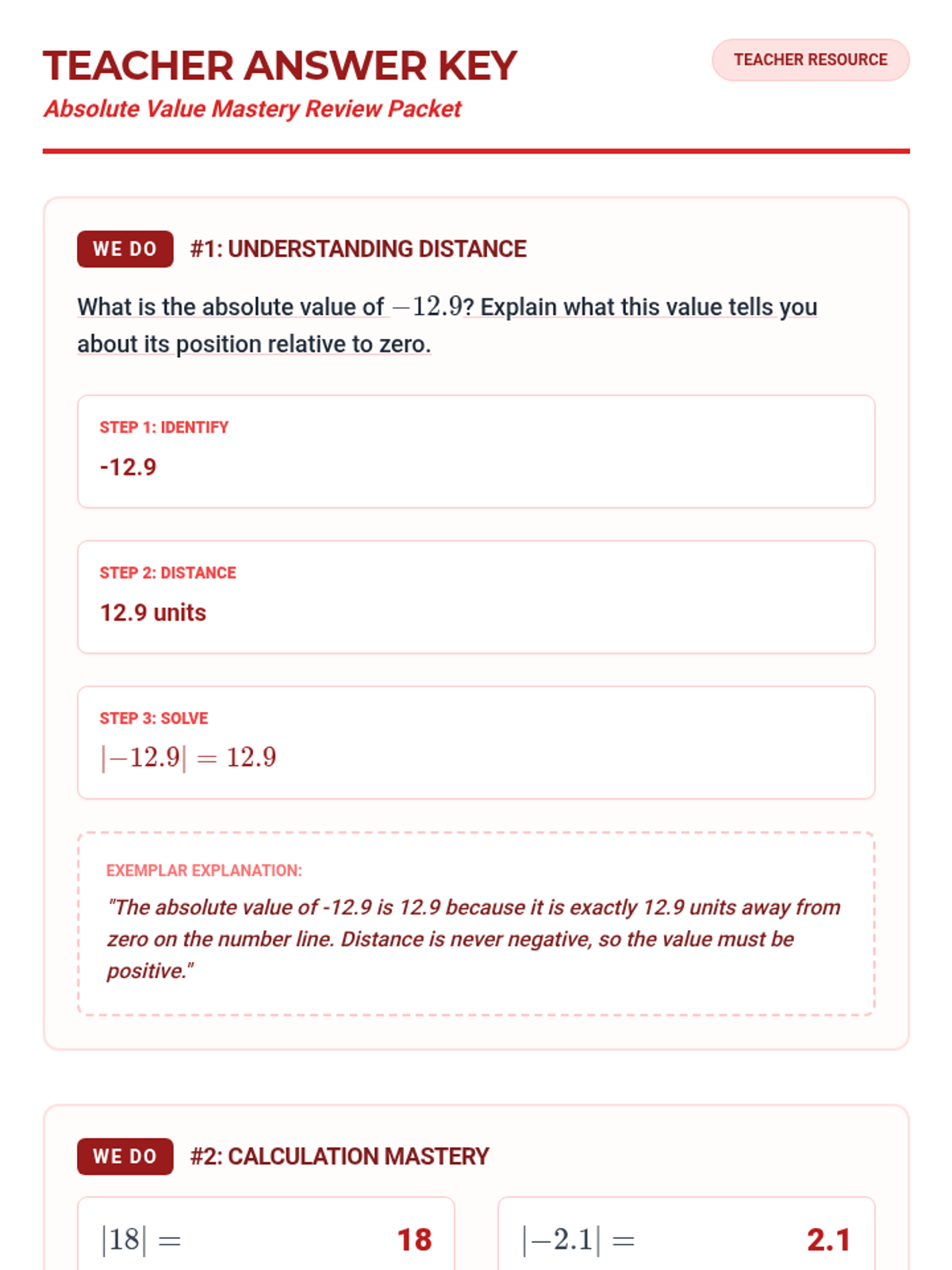
This lesson focuses on understanding absolute value as distance from zero and comparing rational numbers. It includes a student review packet and a corresponding answer key to reinforce skills from the lesson, with a special emphasis on ordering mixed rational numbers.
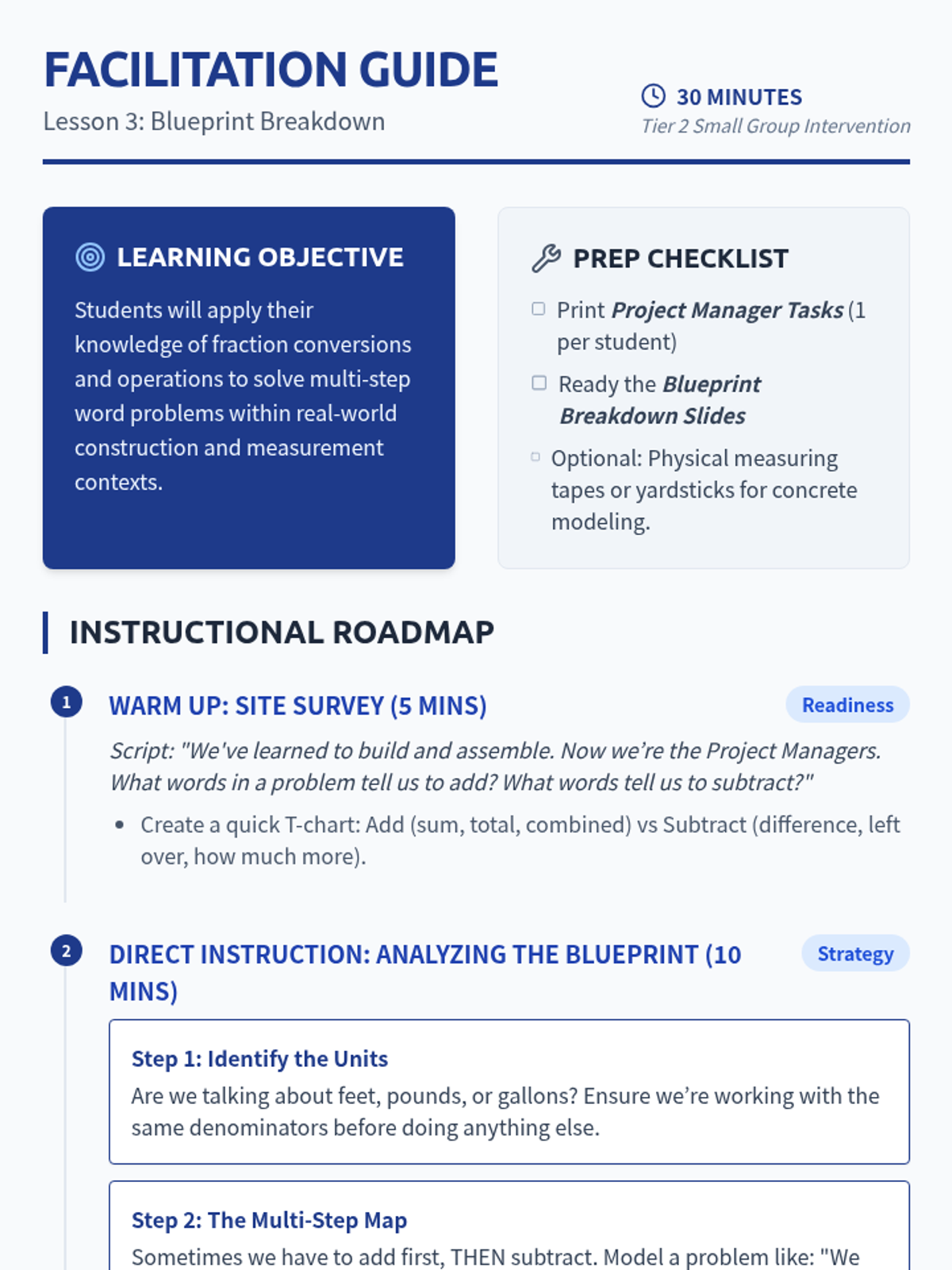
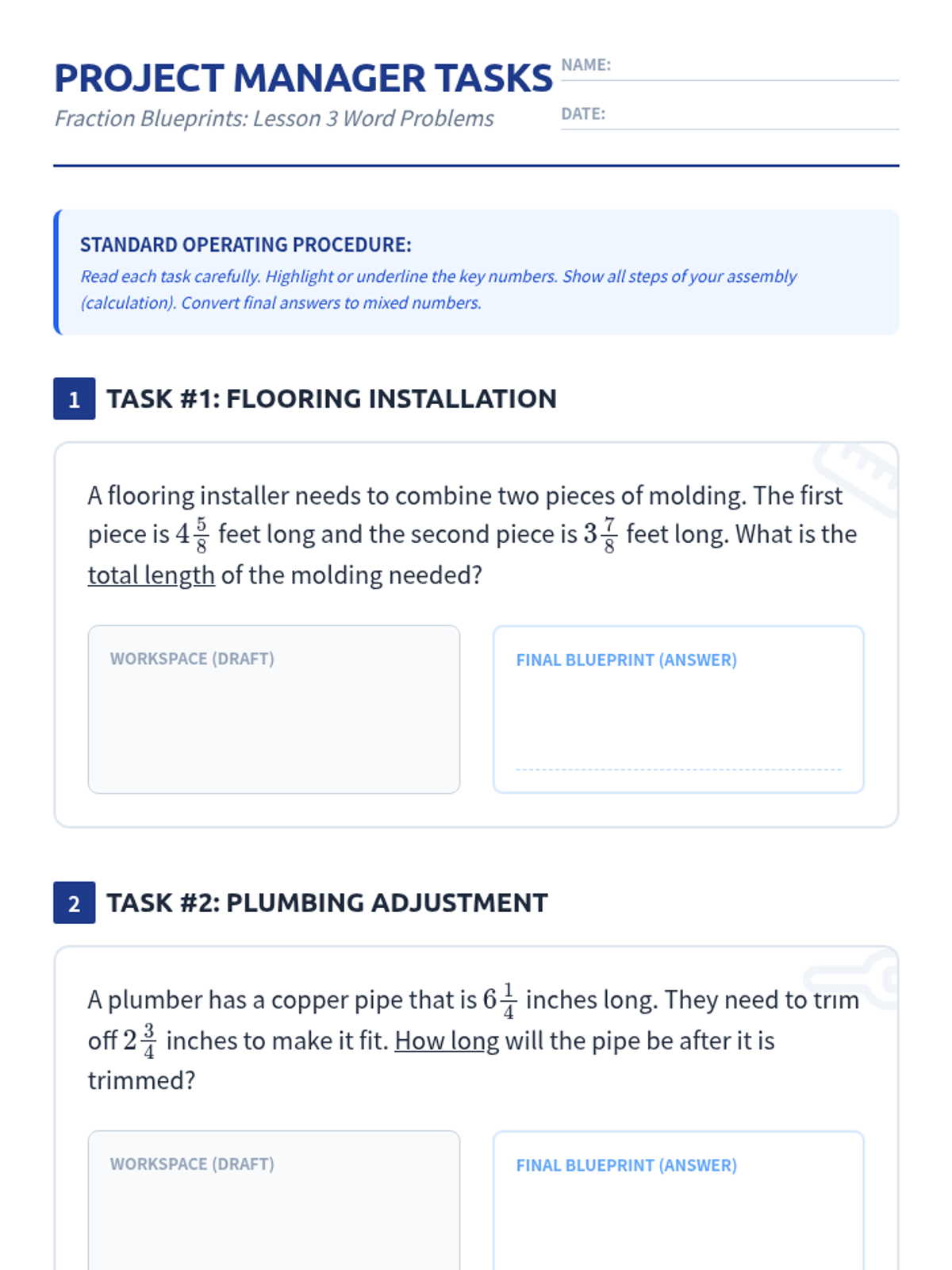
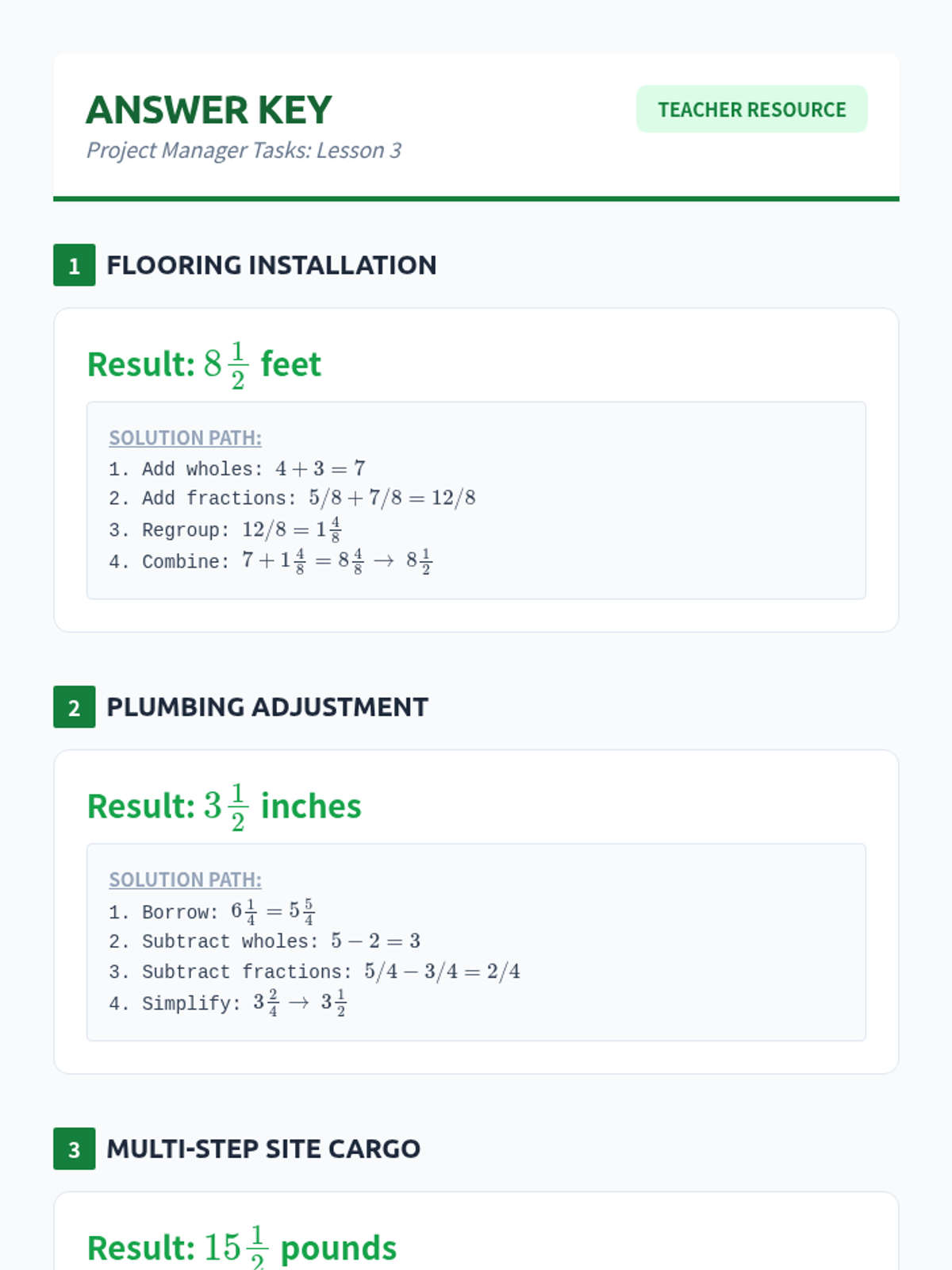
Students apply their fraction operations to solve multi-step word problems involving measurement and construction scenarios.
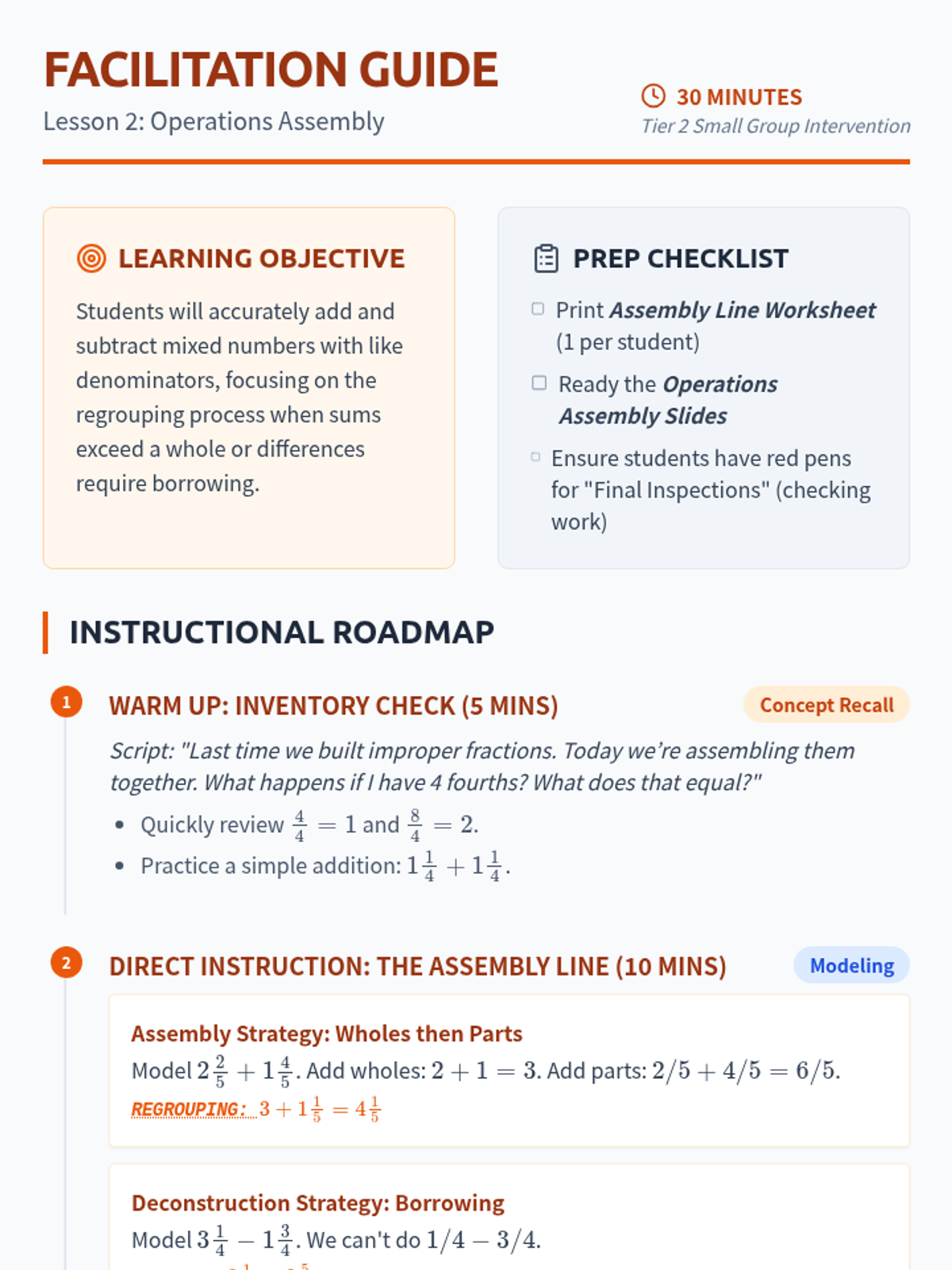
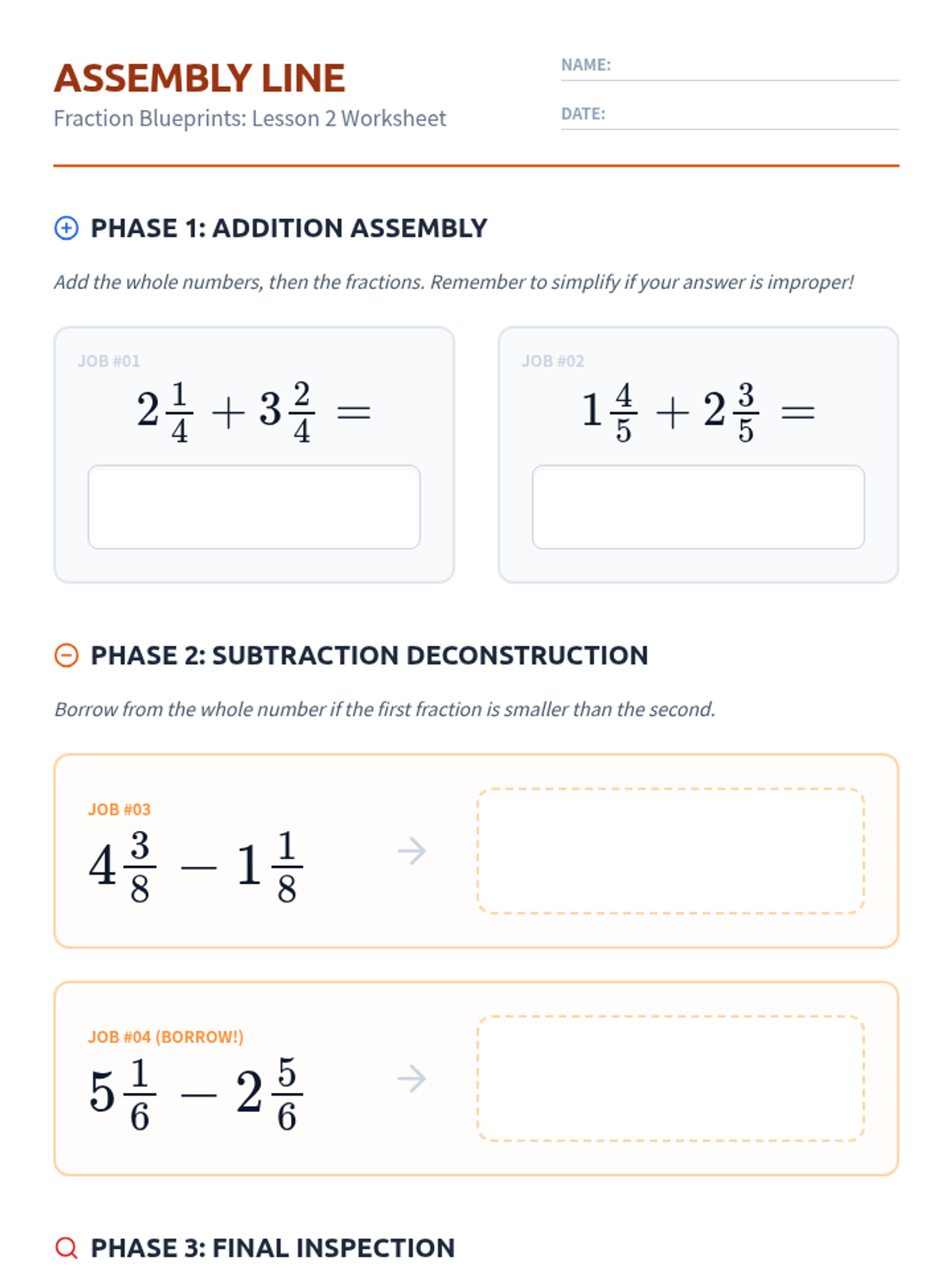
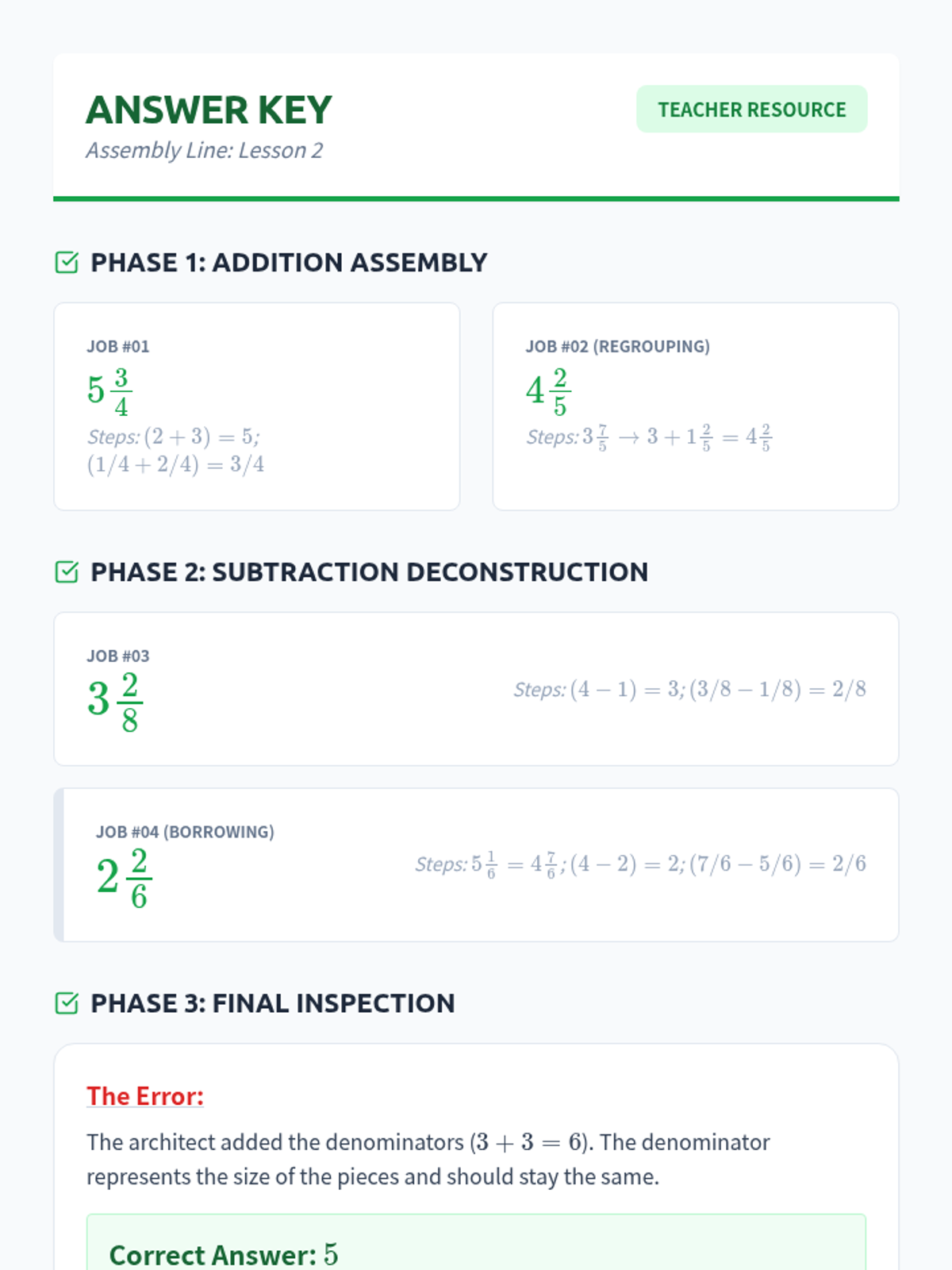
Focuses on adding and subtracting mixed numbers with like denominators, emphasizing the regrouping process and visual decomposition.
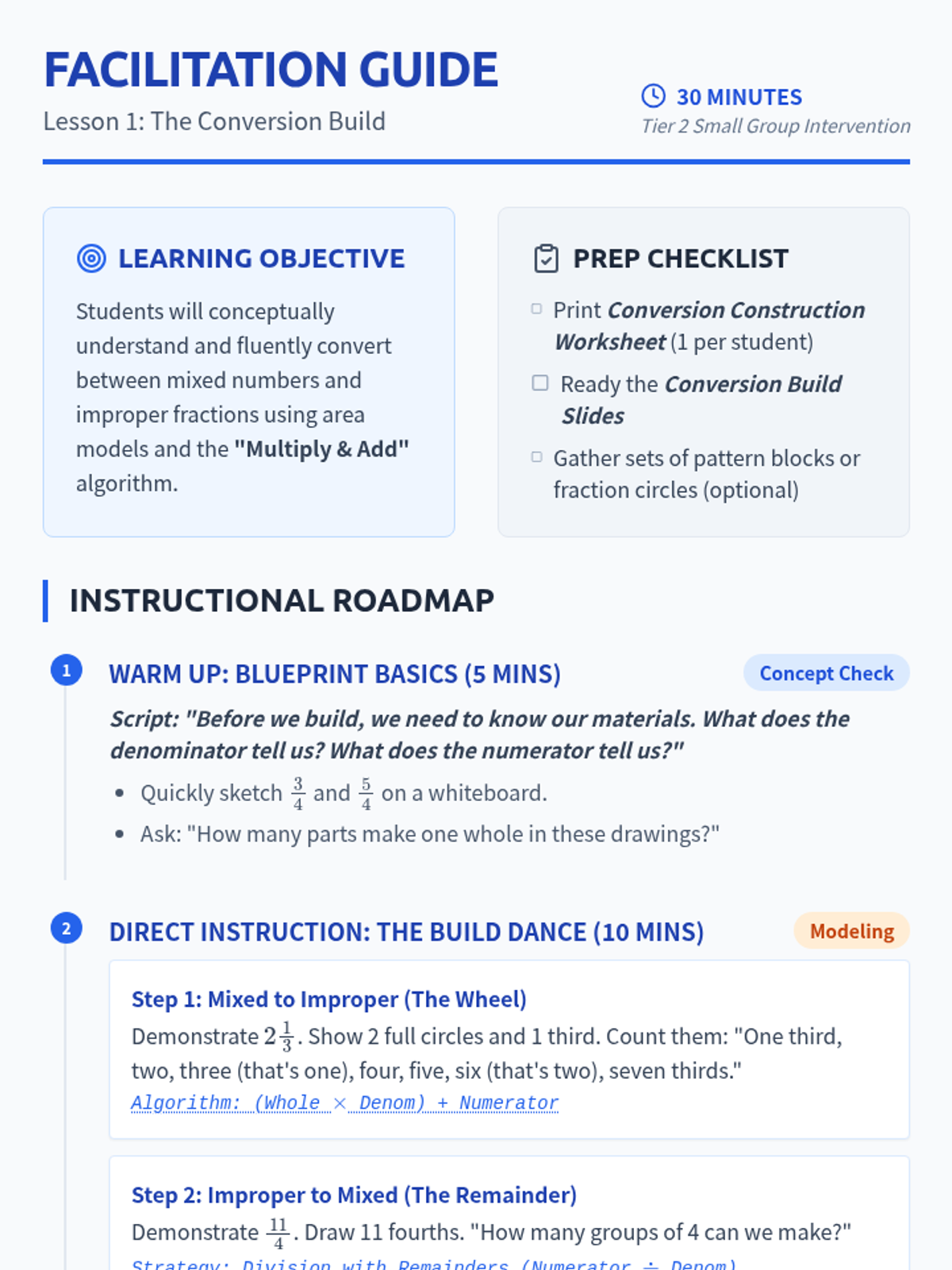
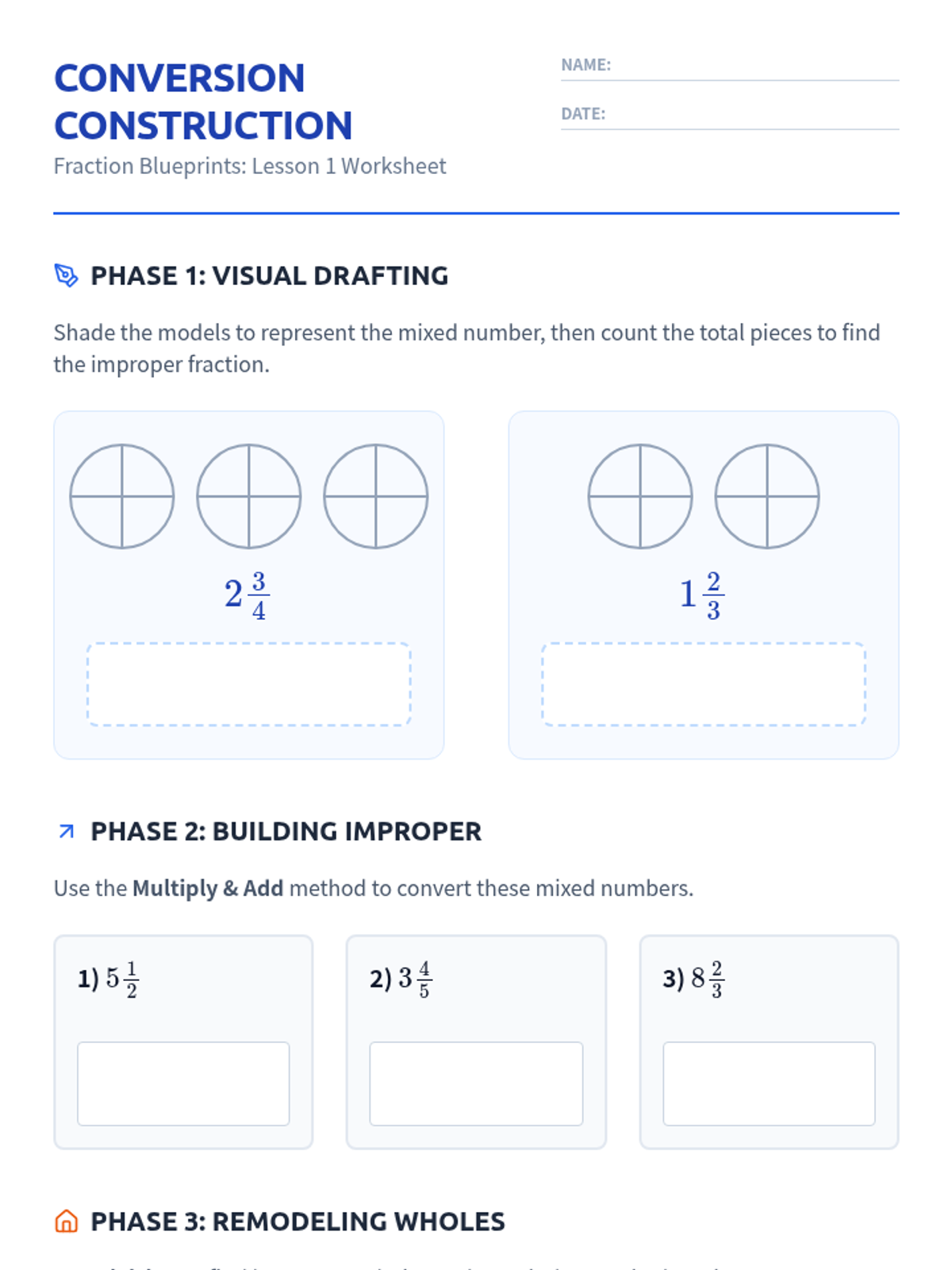
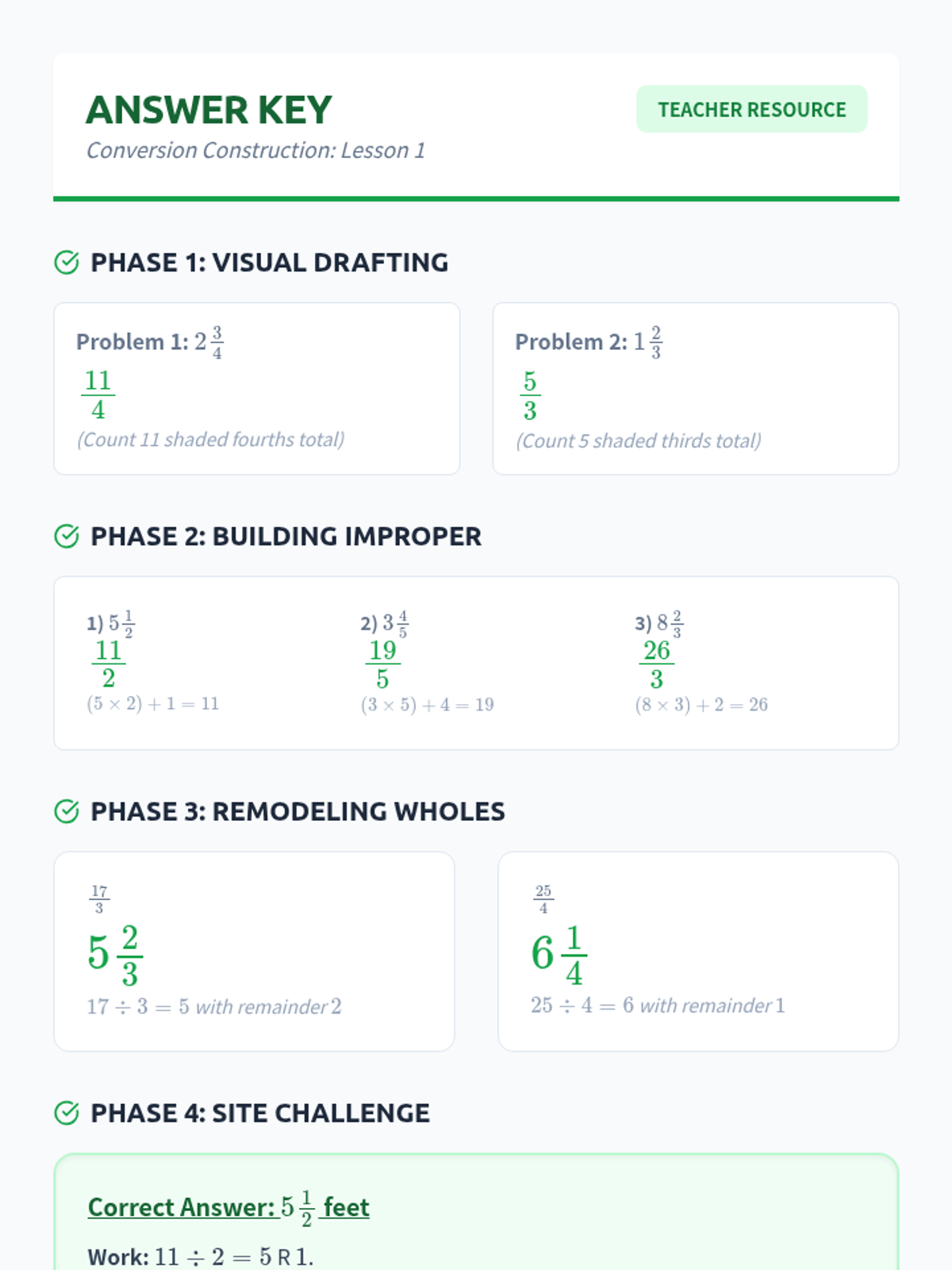
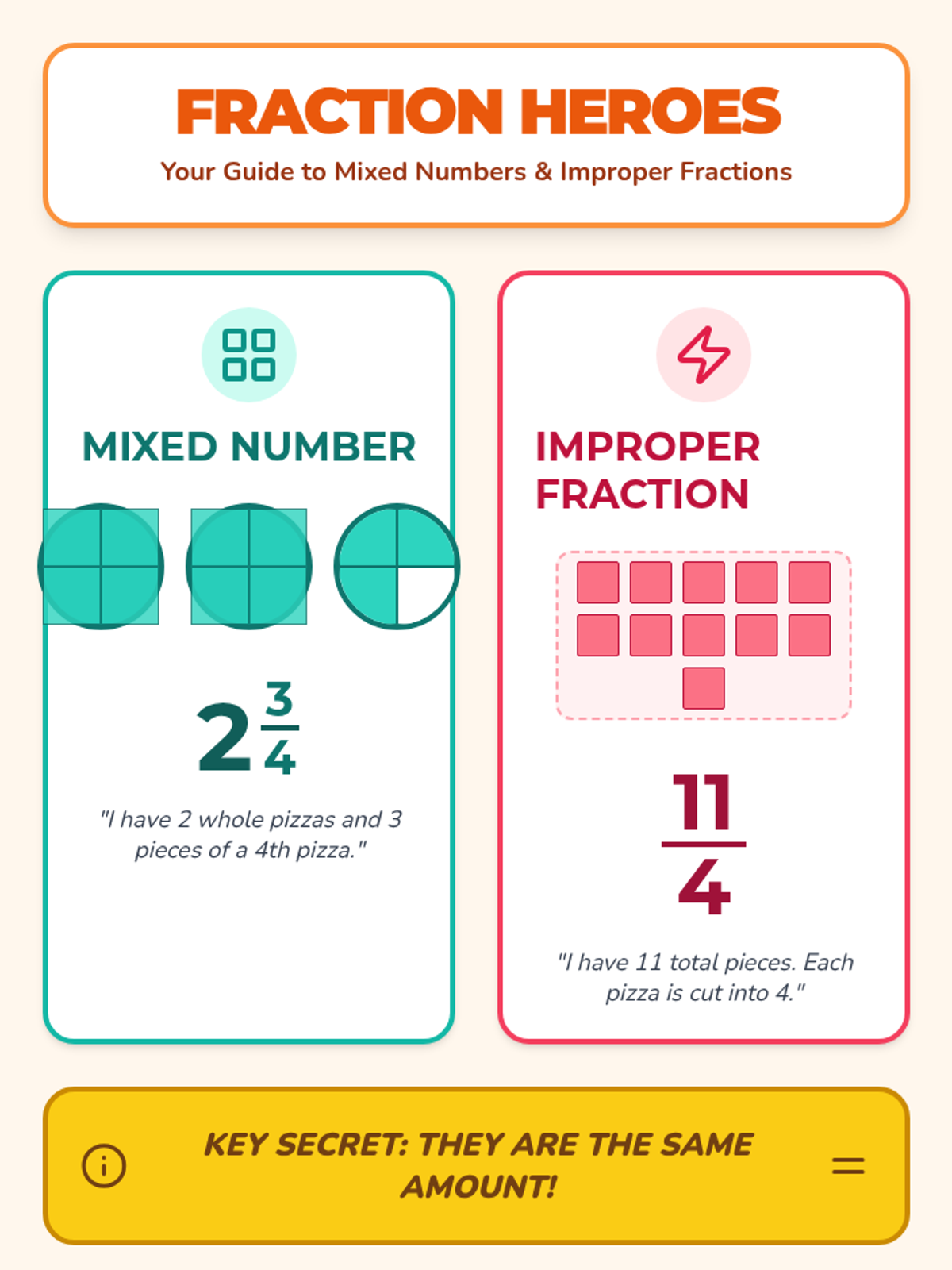
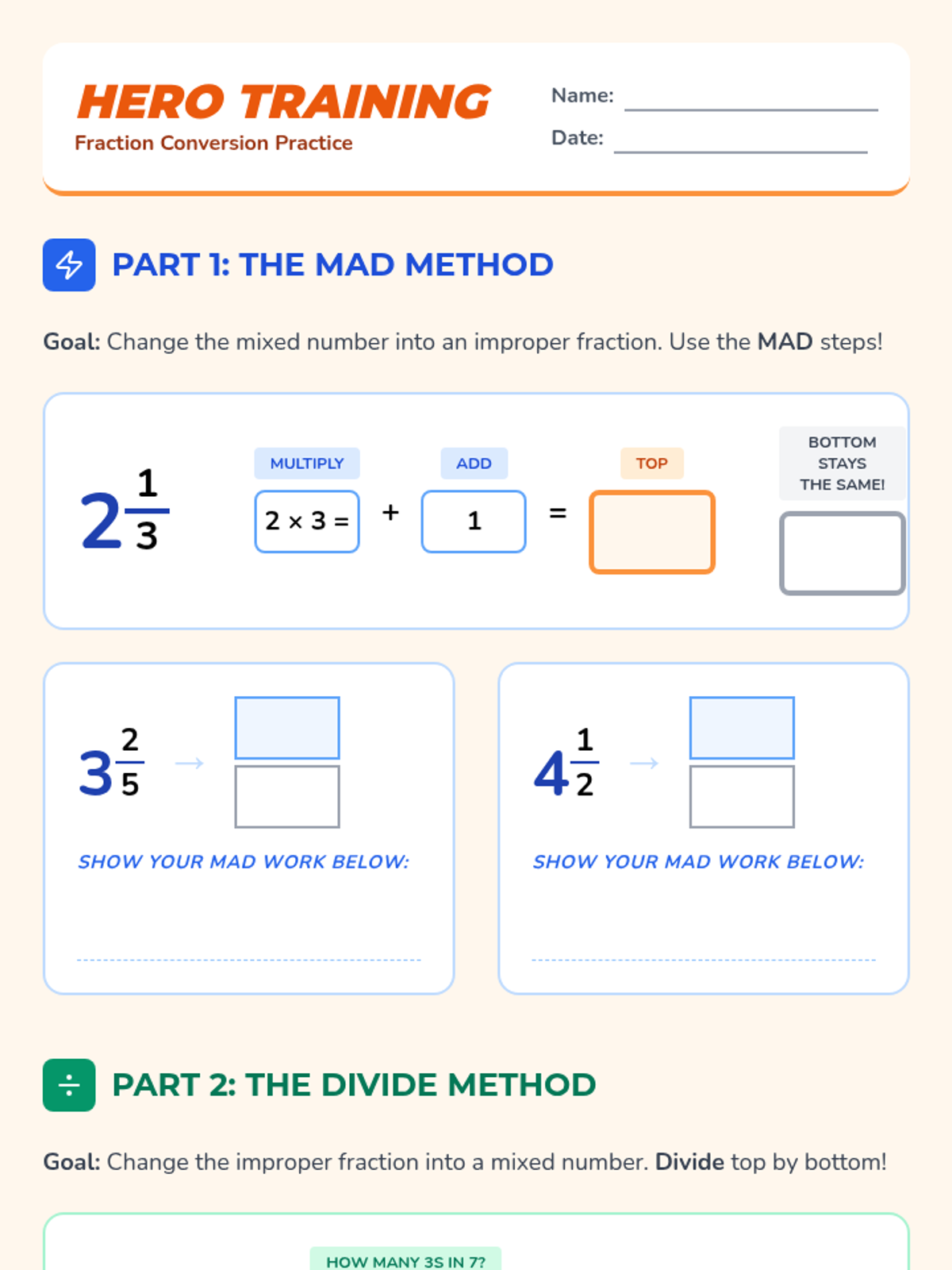
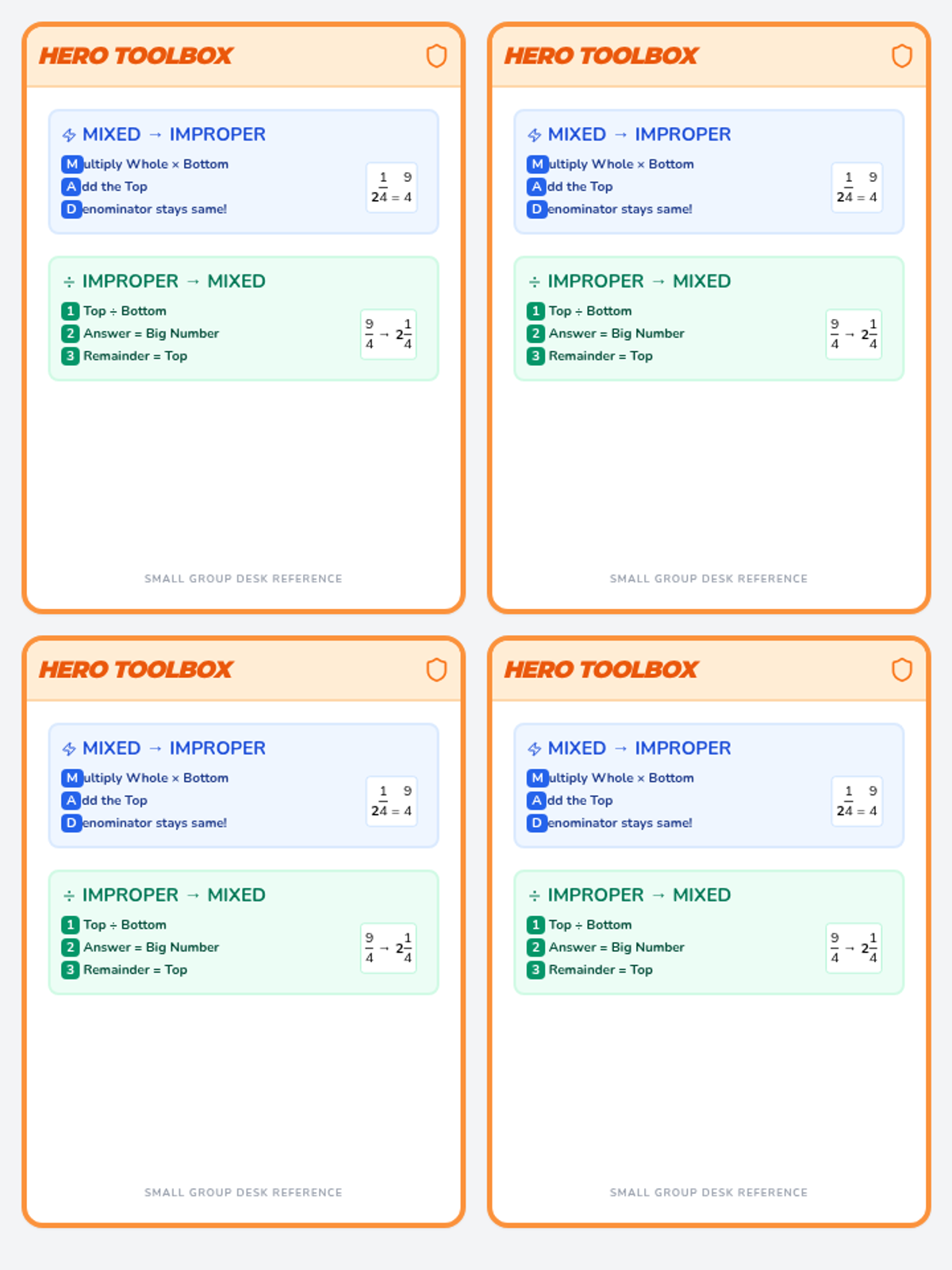
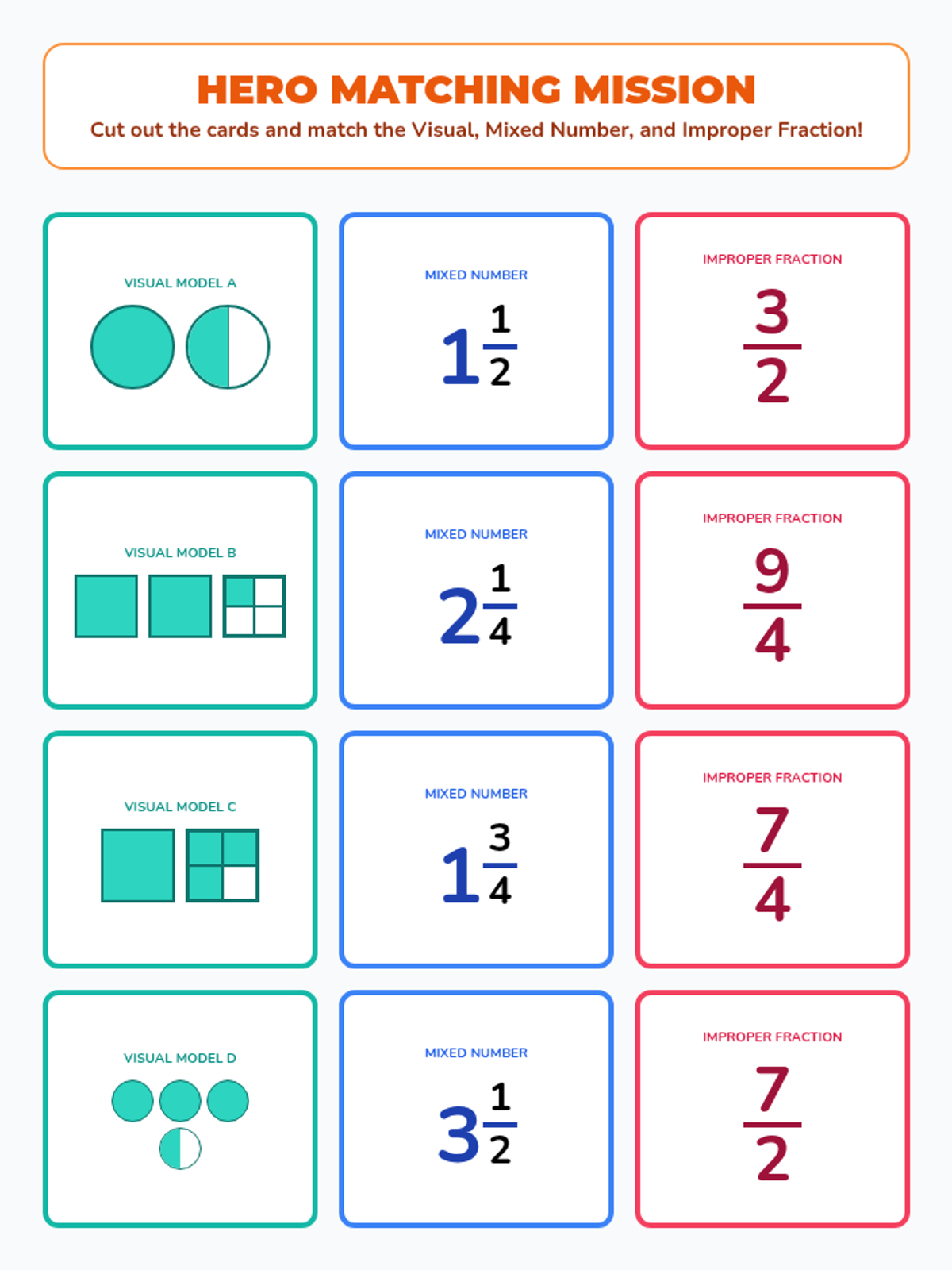
Focuses on the conceptual link between mixed numbers and improper fractions using visual models and the 'Multiply and Add' method.
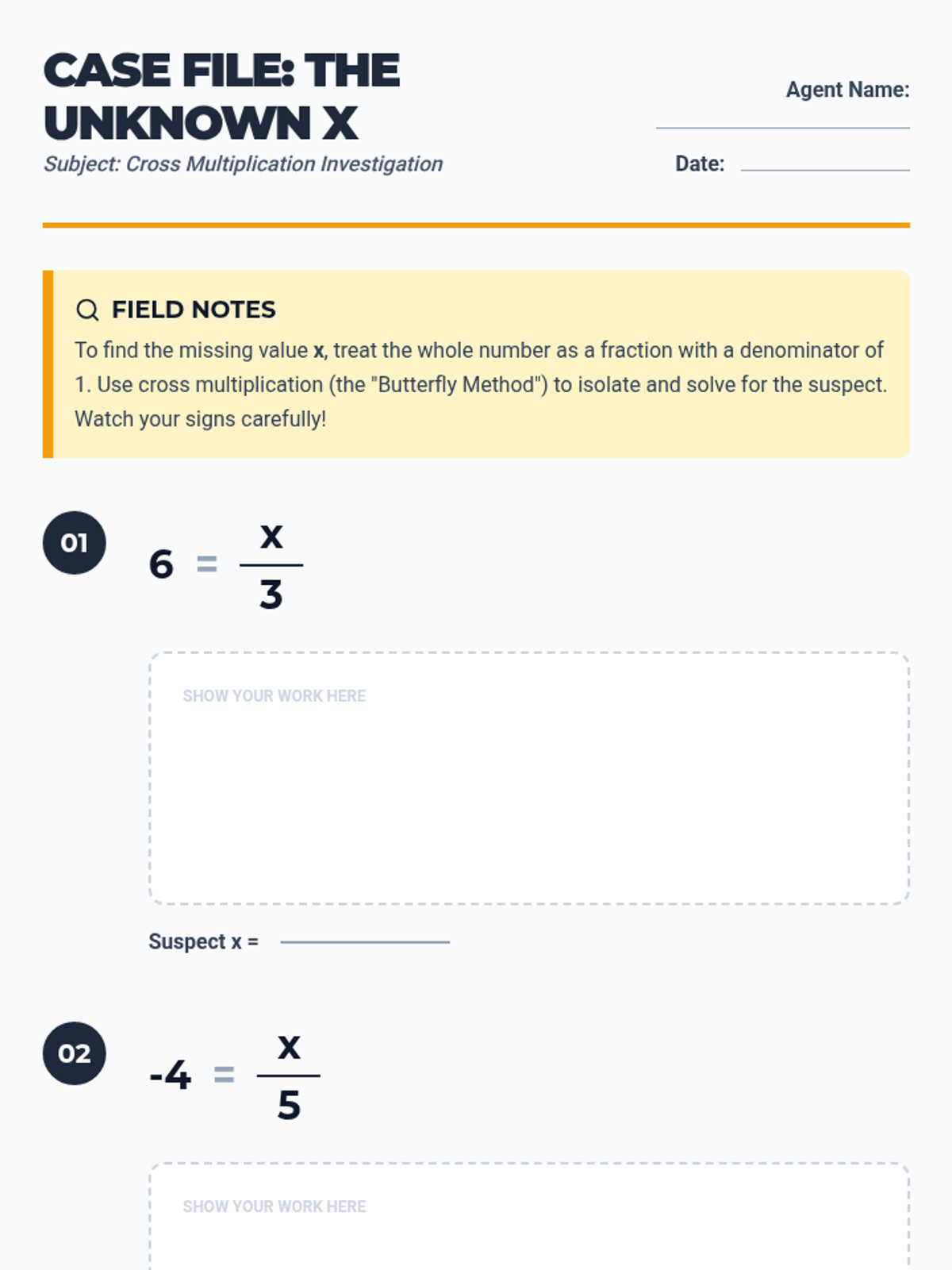
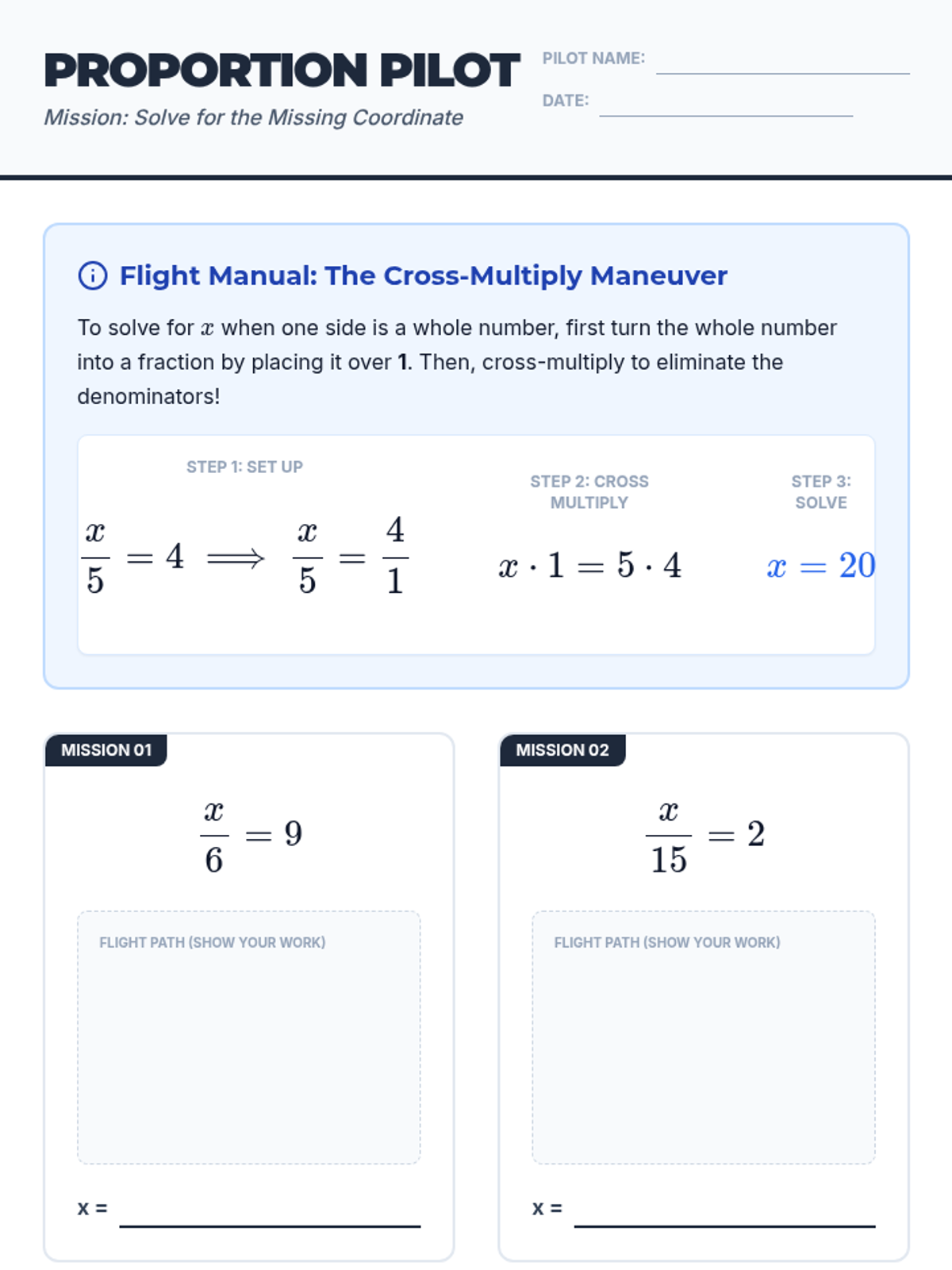
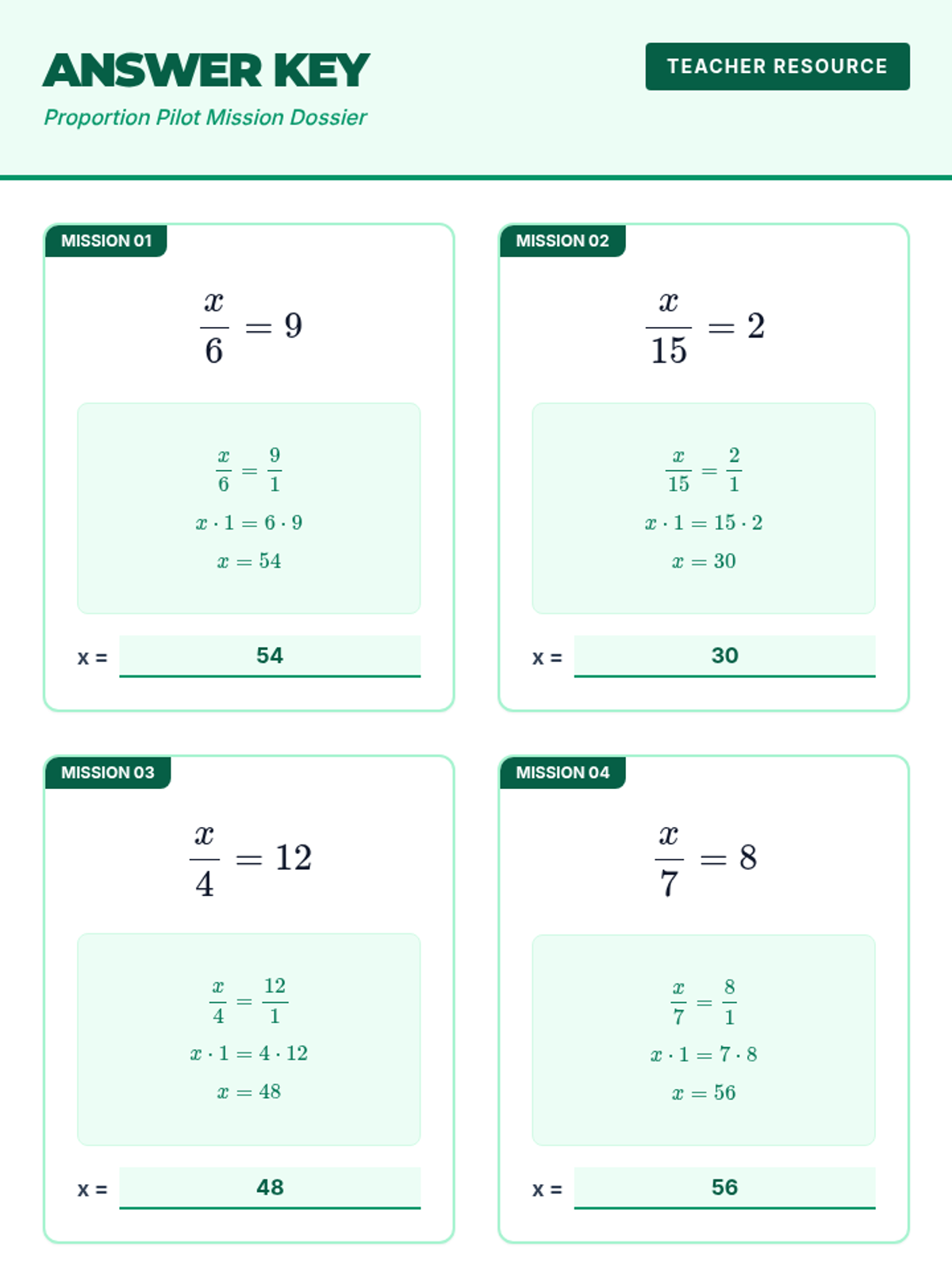
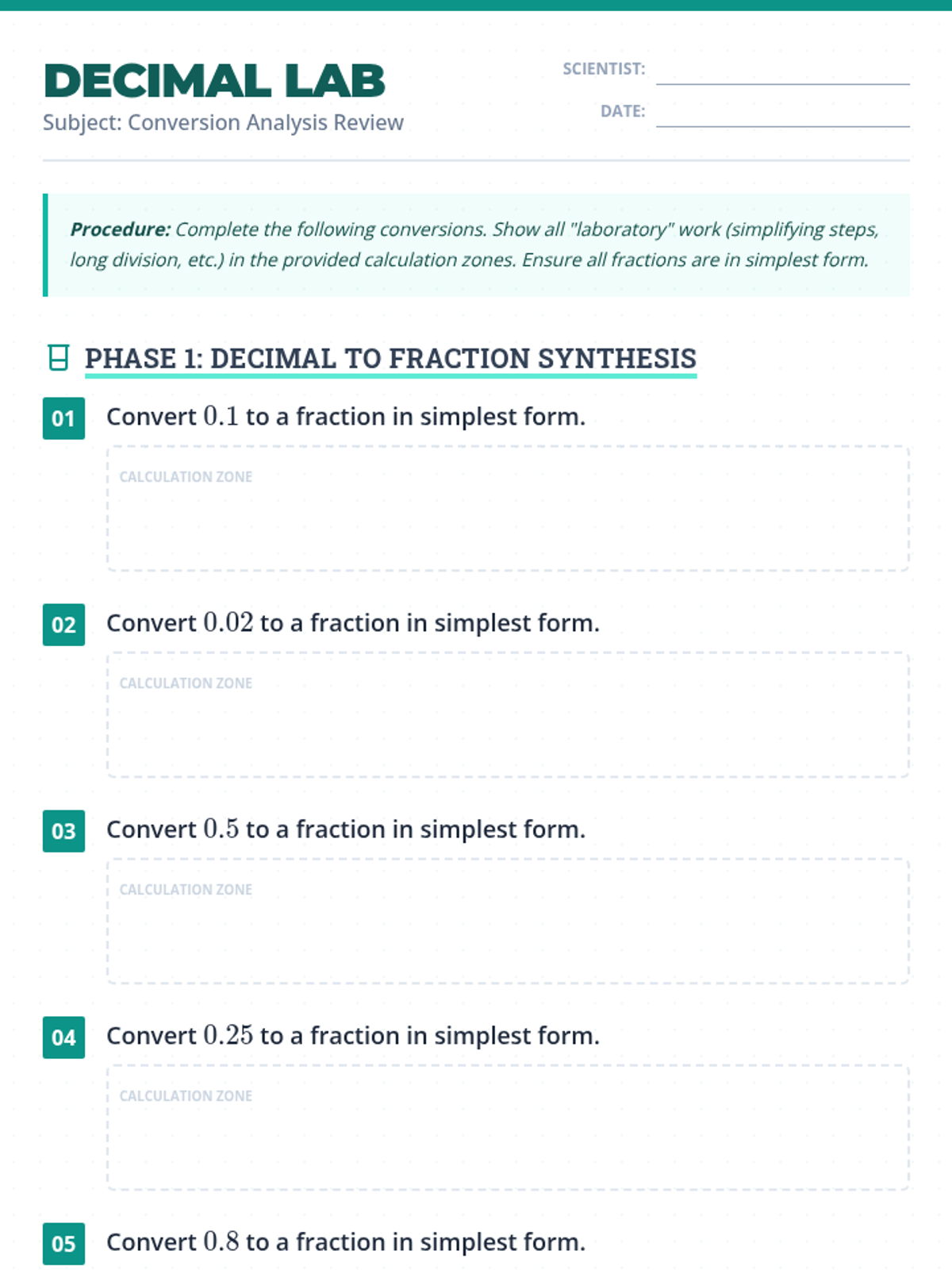
A focused practice set on solving basic proportions using cross multiplication where students solve for an unknown numerator with a whole number constant.
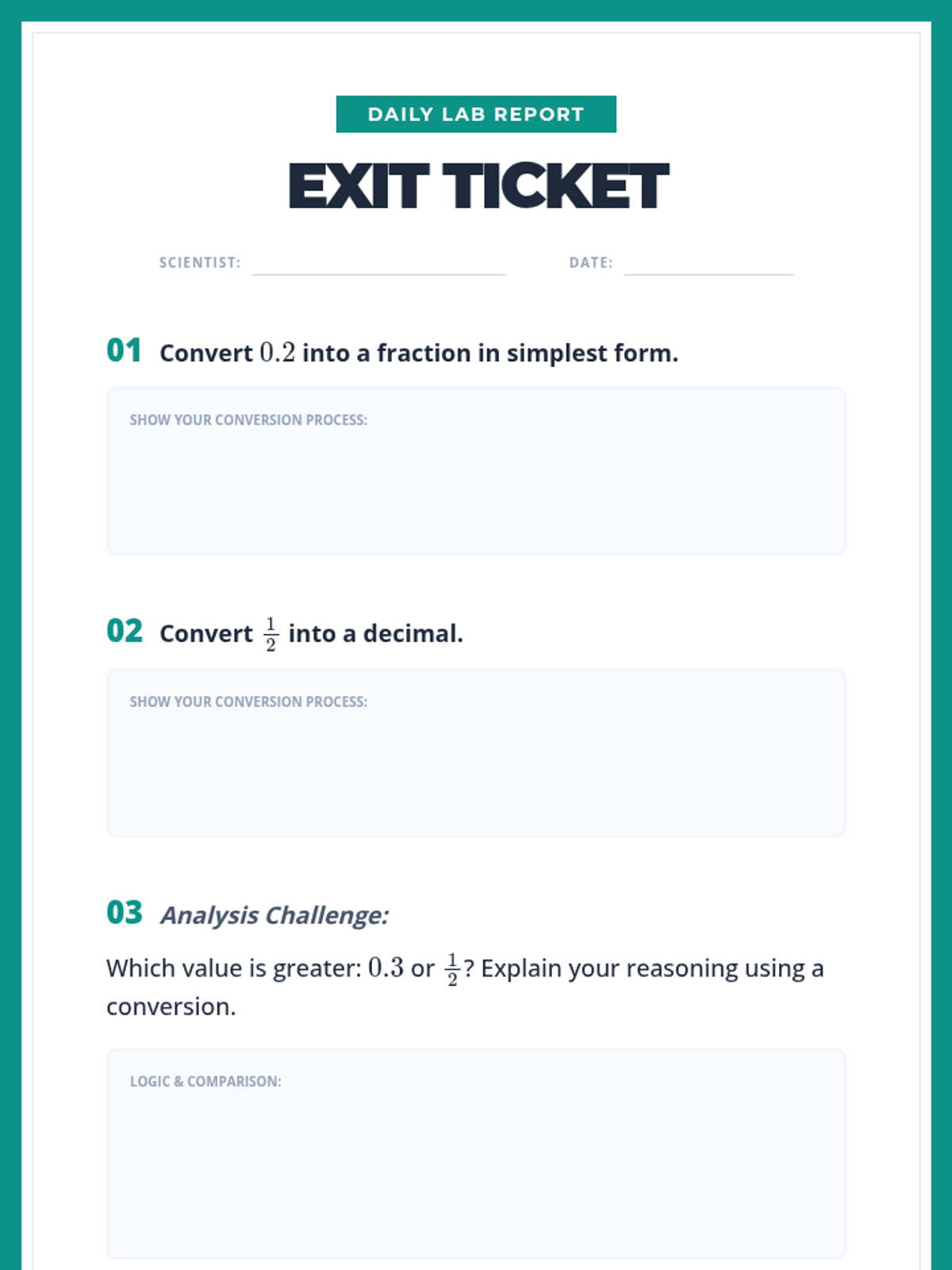
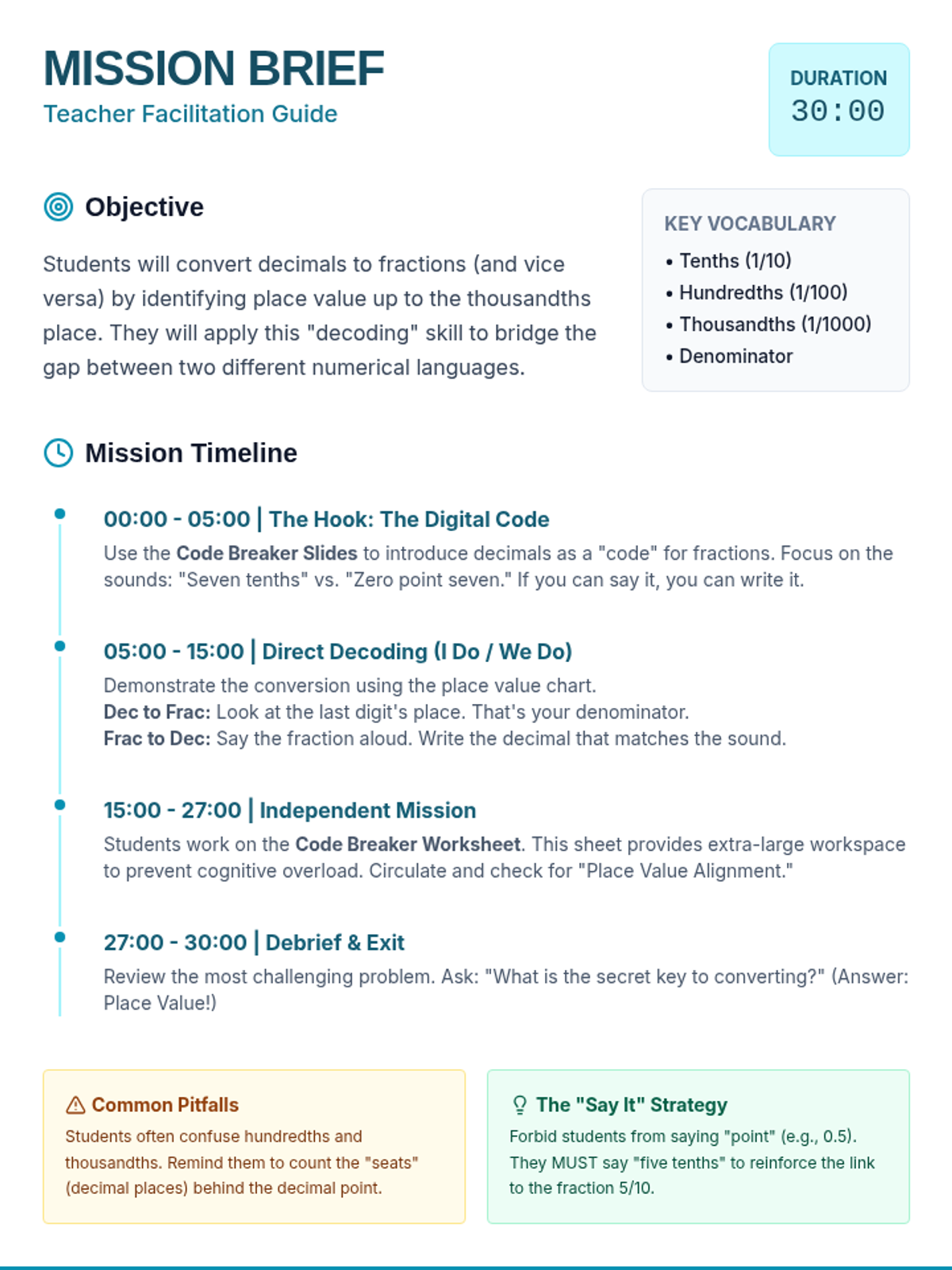
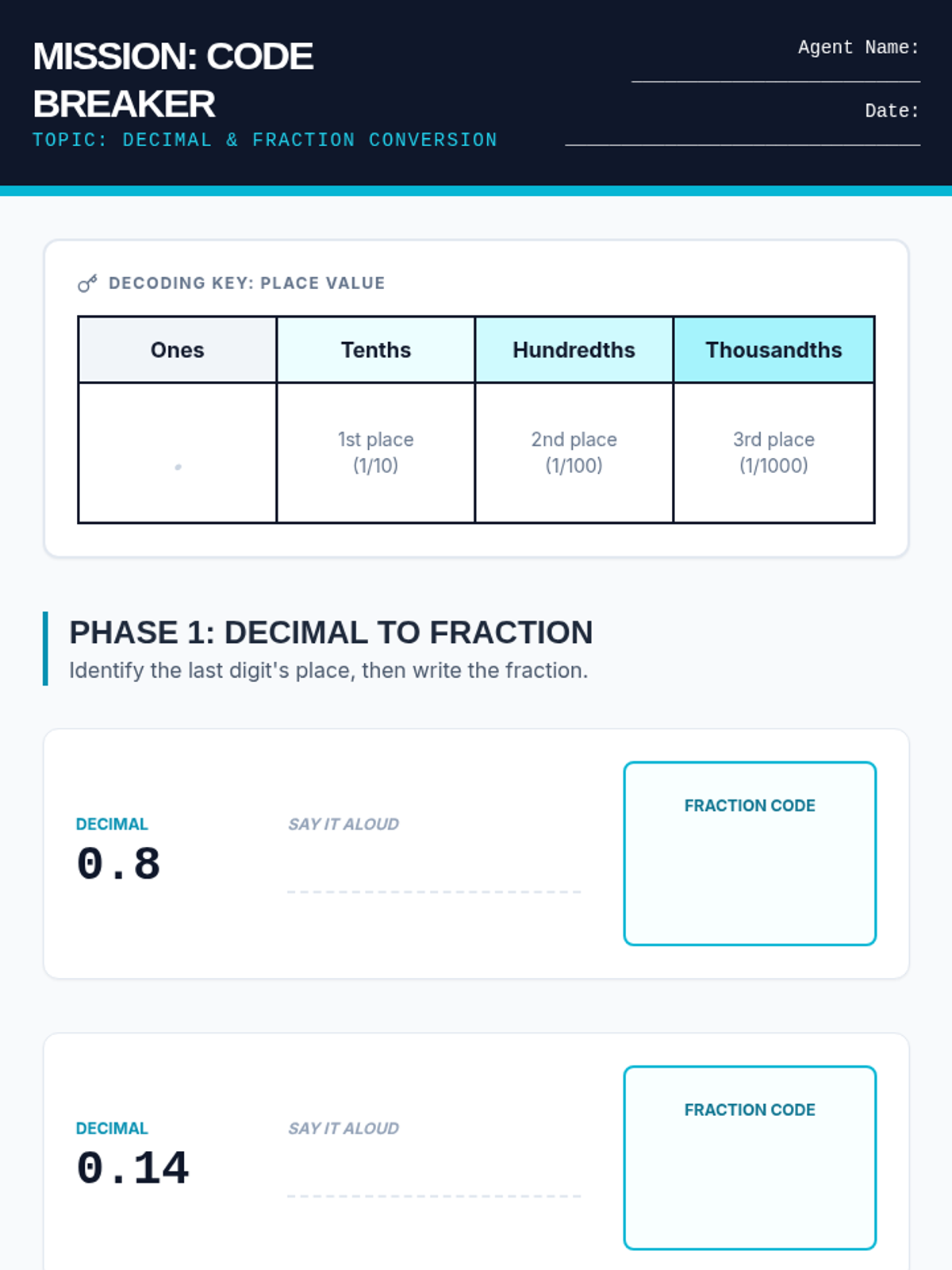
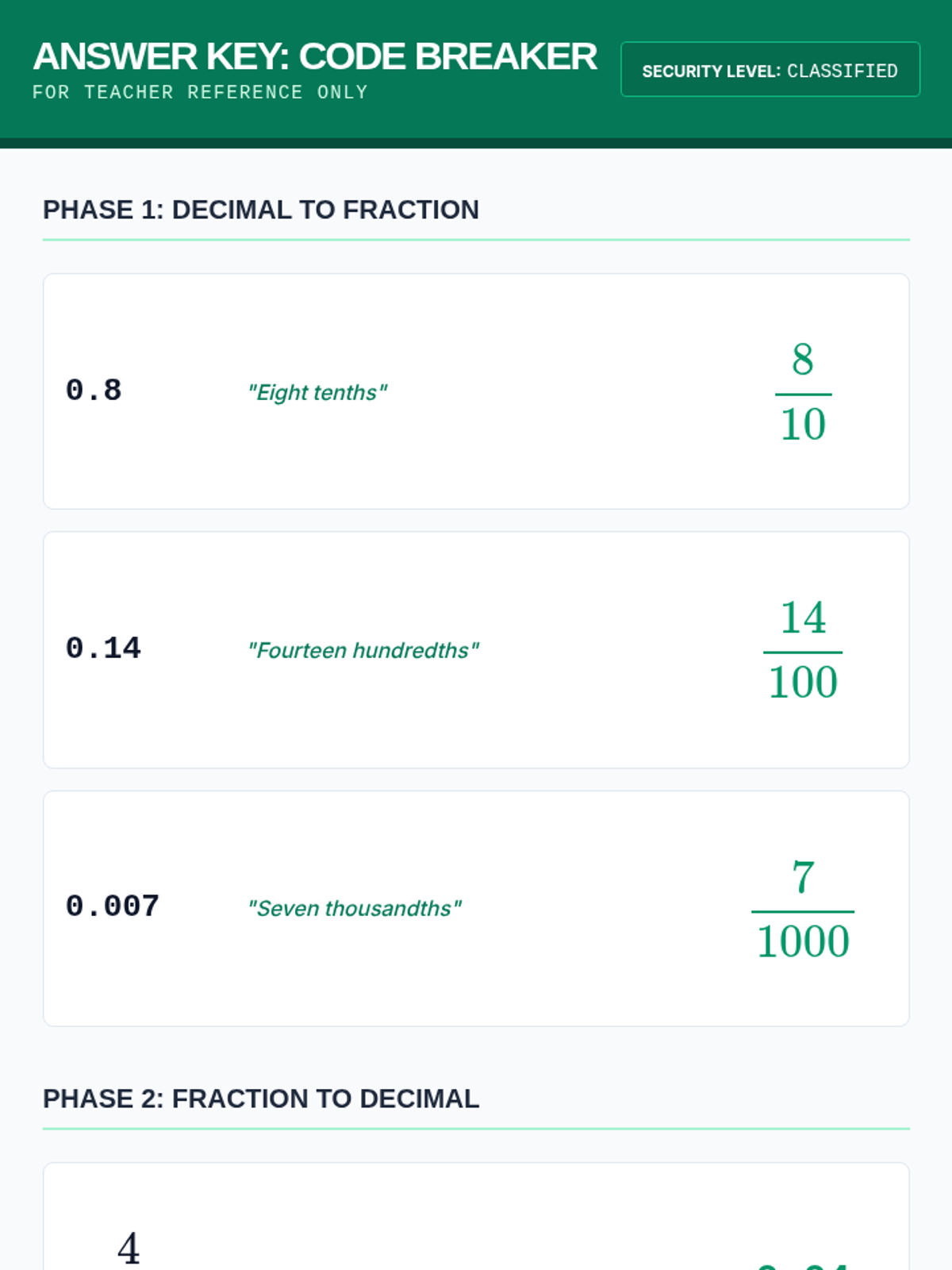
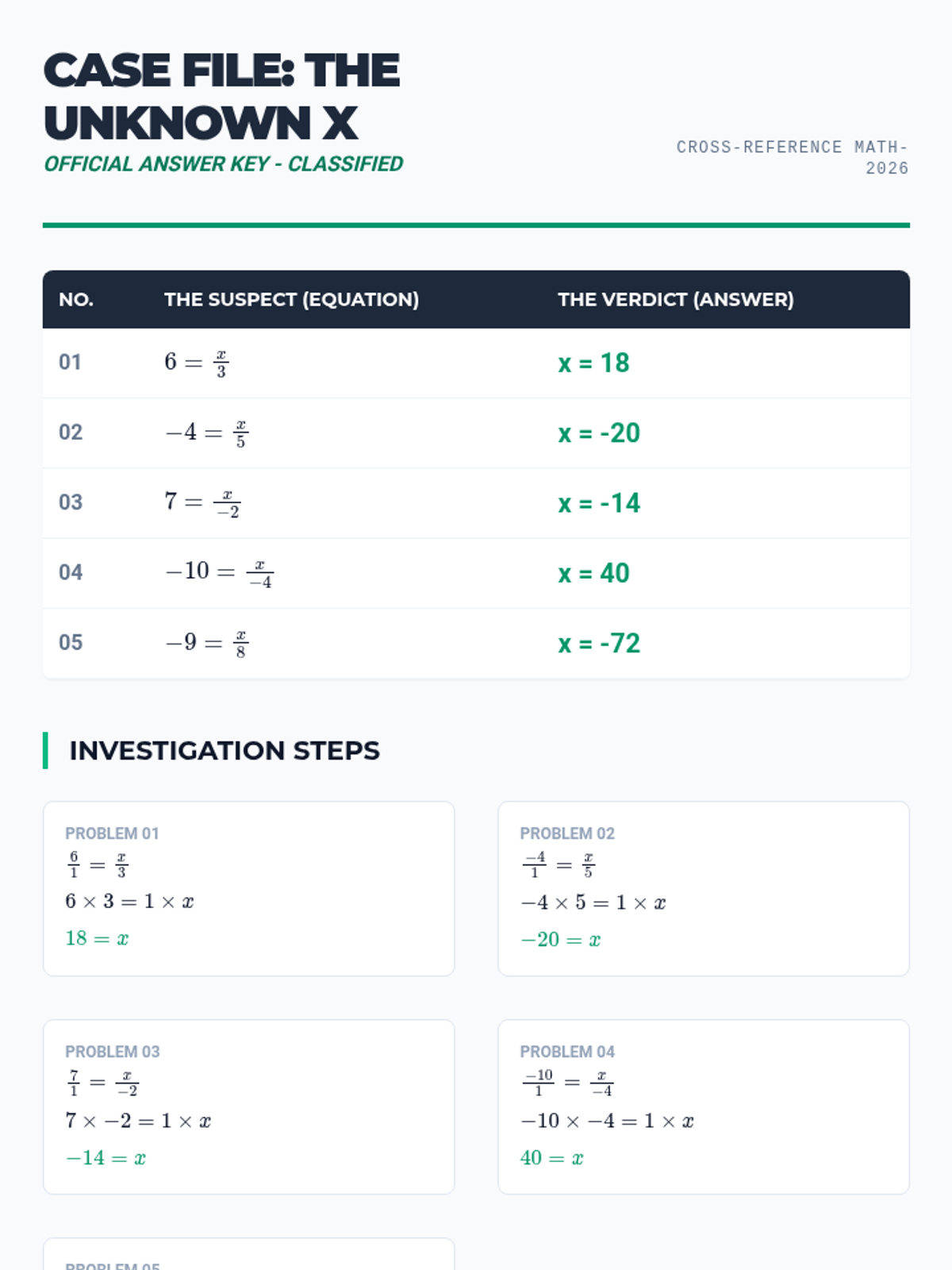
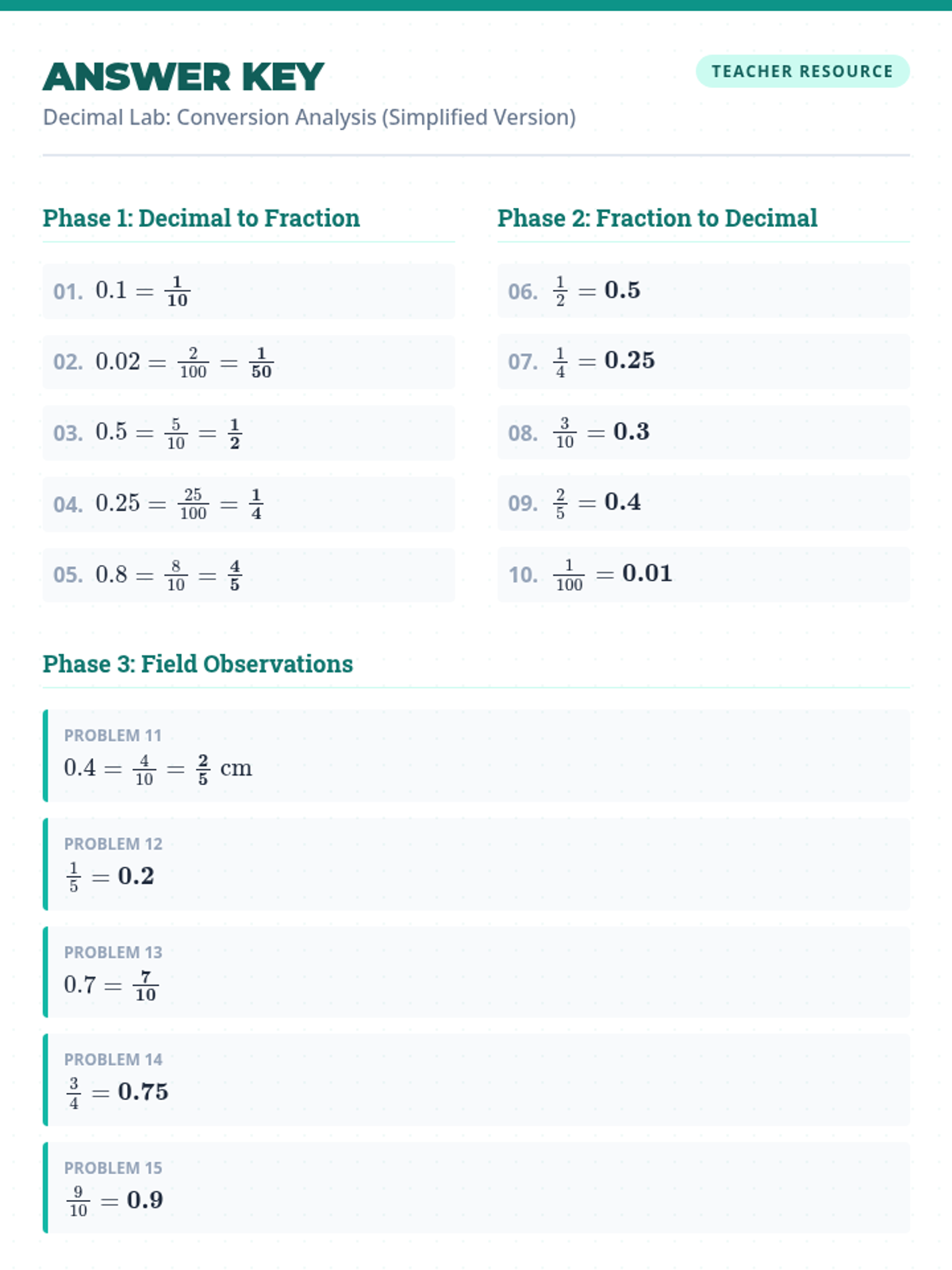
A comprehensive review lesson on converting between decimals and fractions, designed with a laboratory theme to encourage precision and experimentation.
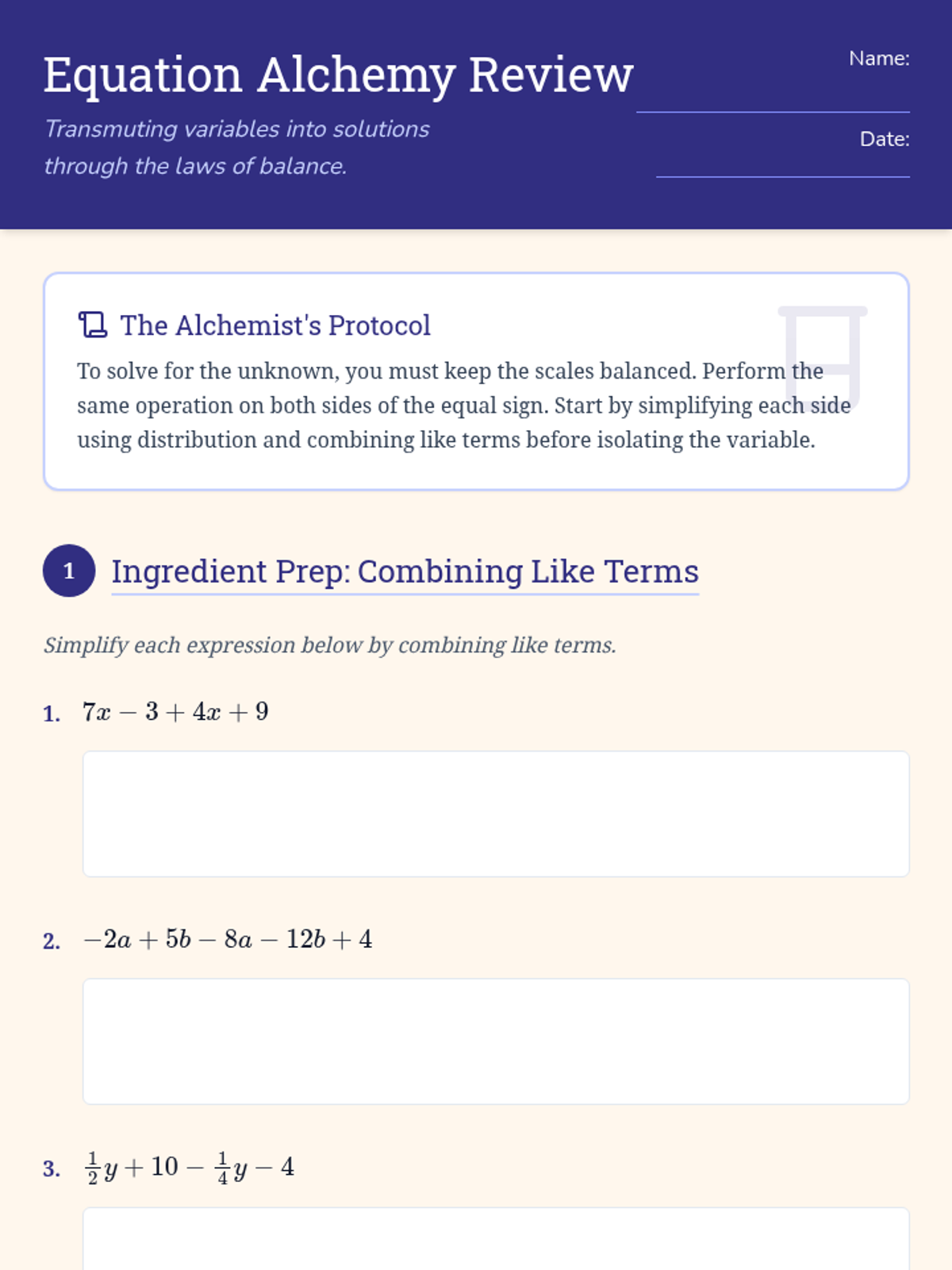
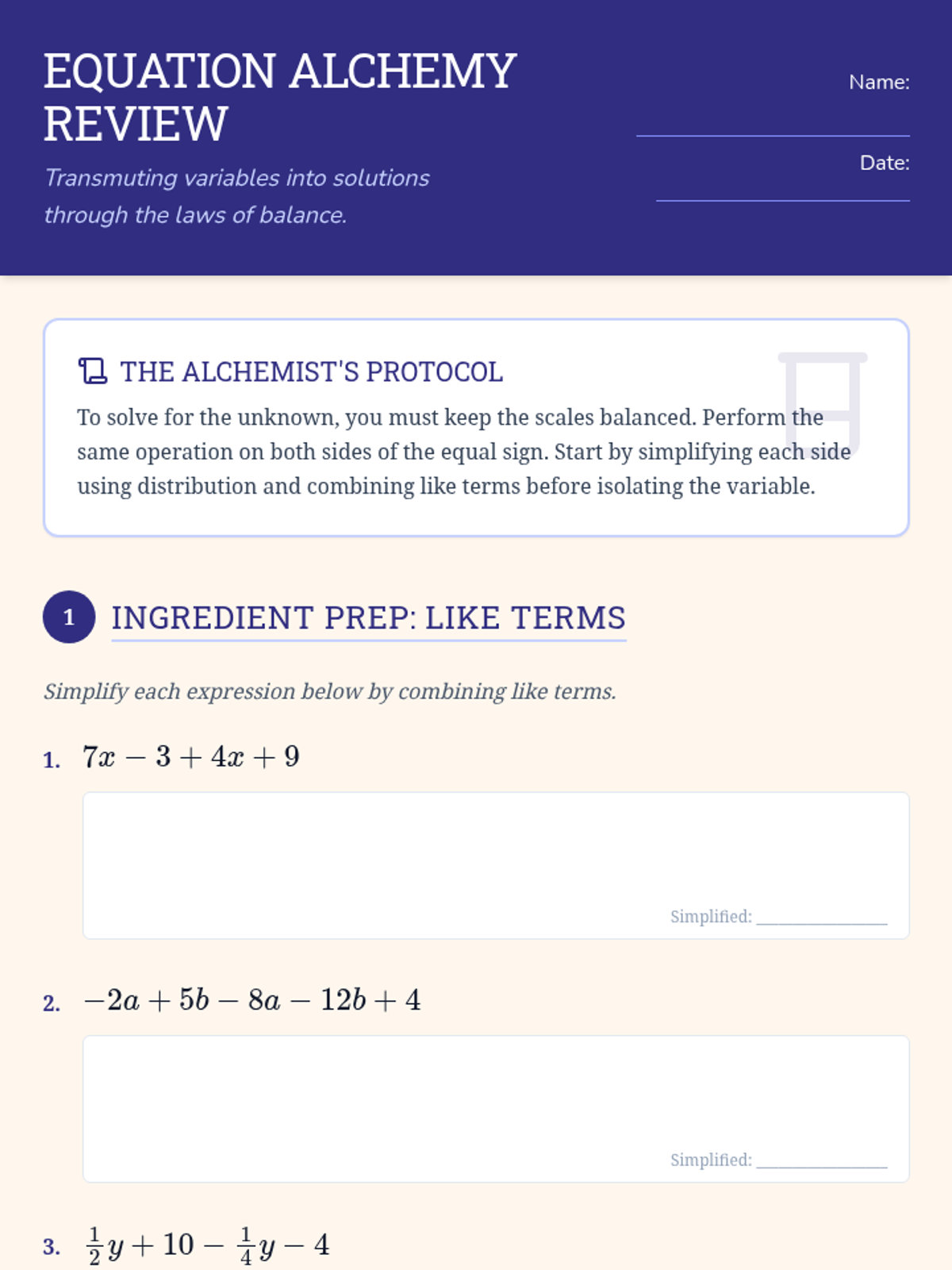
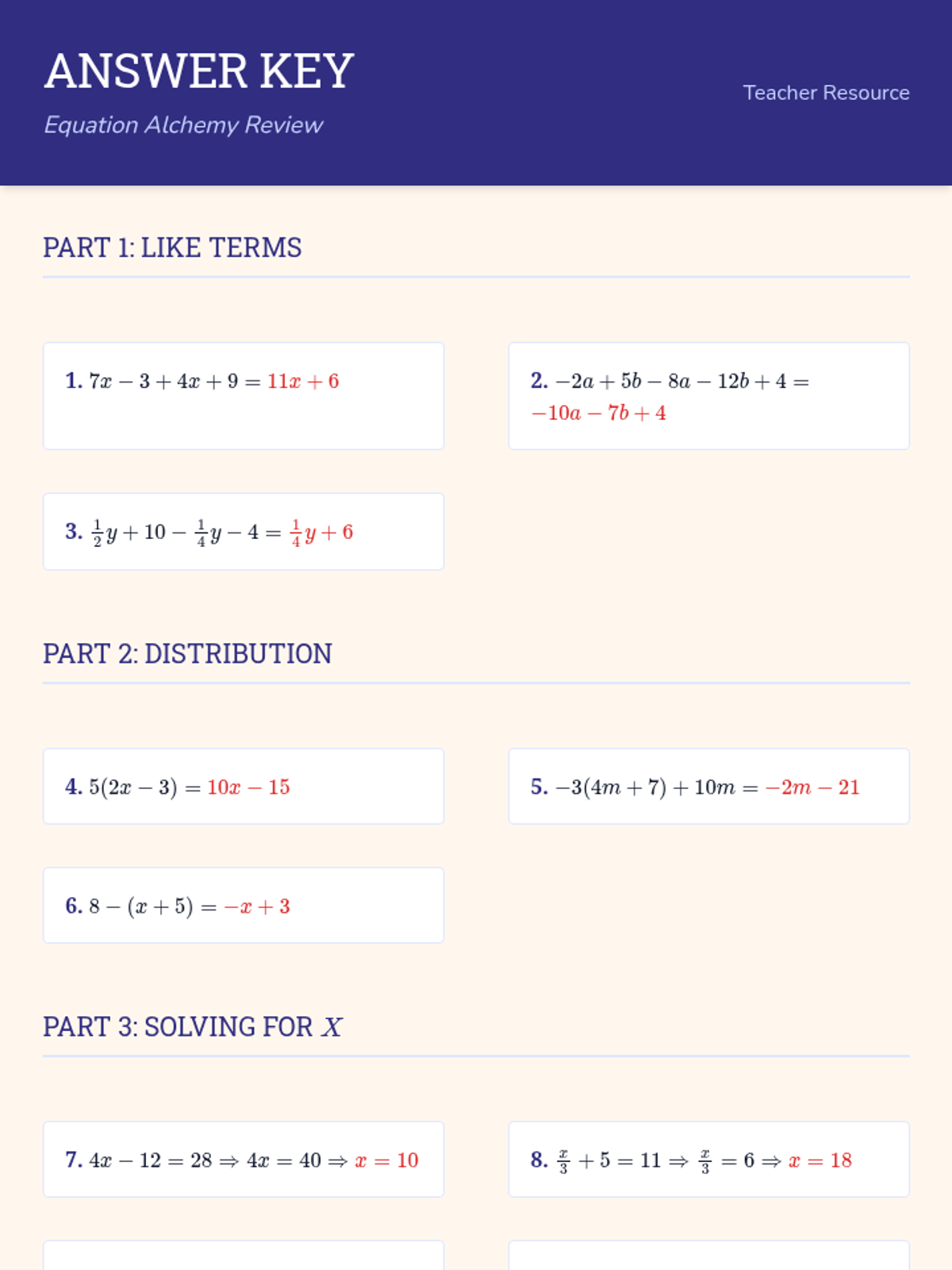
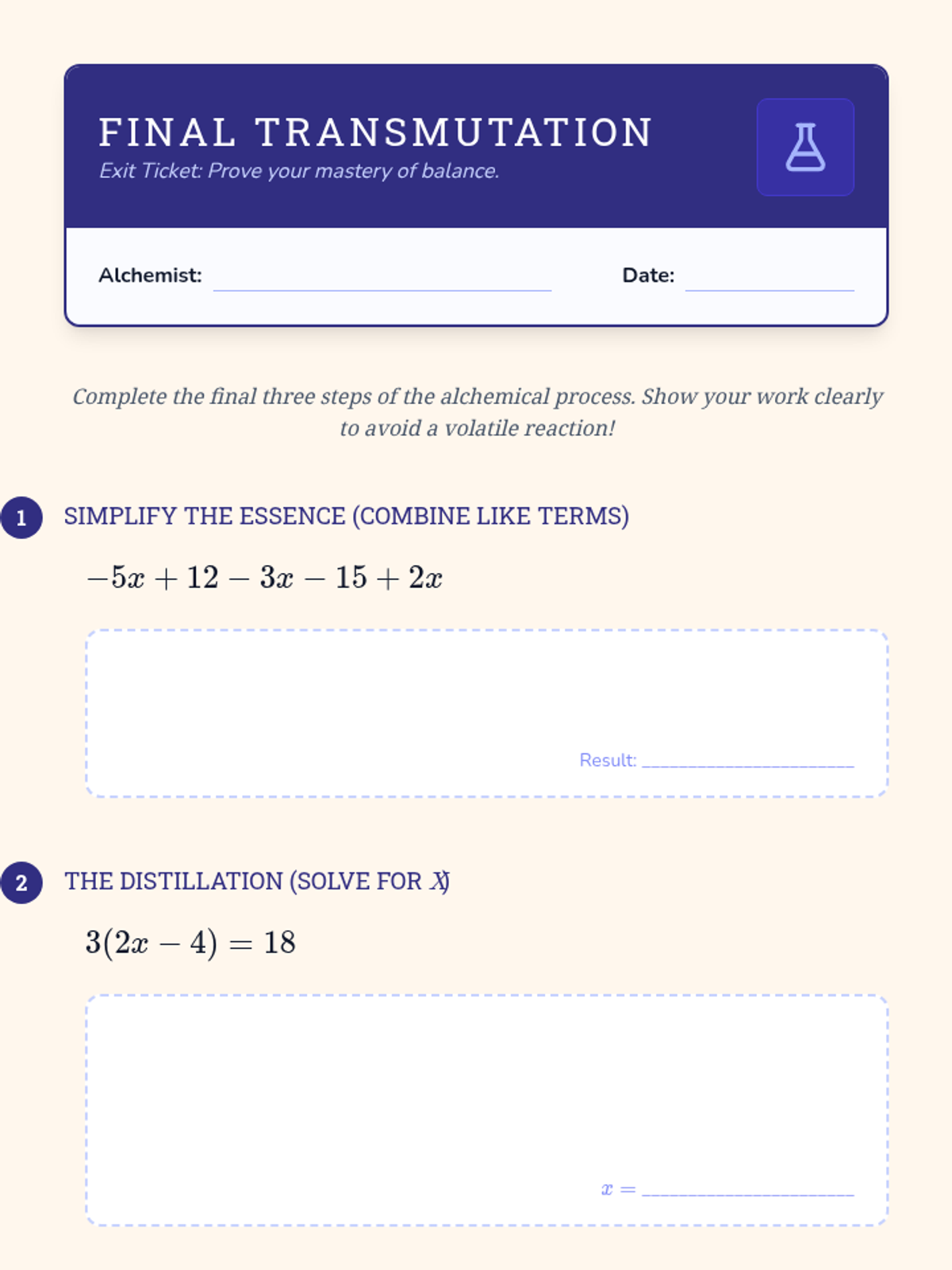
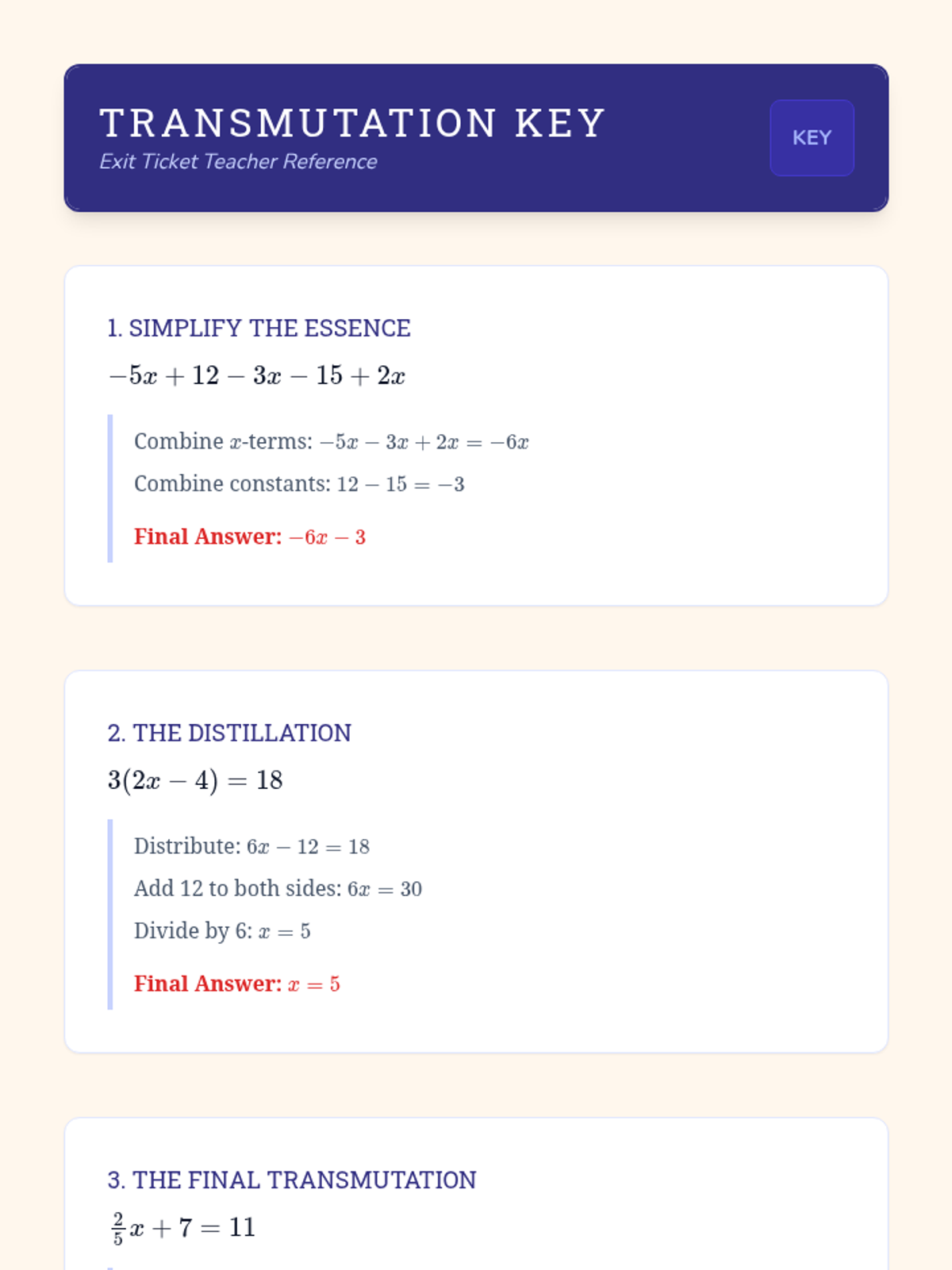
A comprehensive review of linear equation fundamentals, focusing on combining like terms, the distributive property, and solving multi-step equations with integers and fractions.
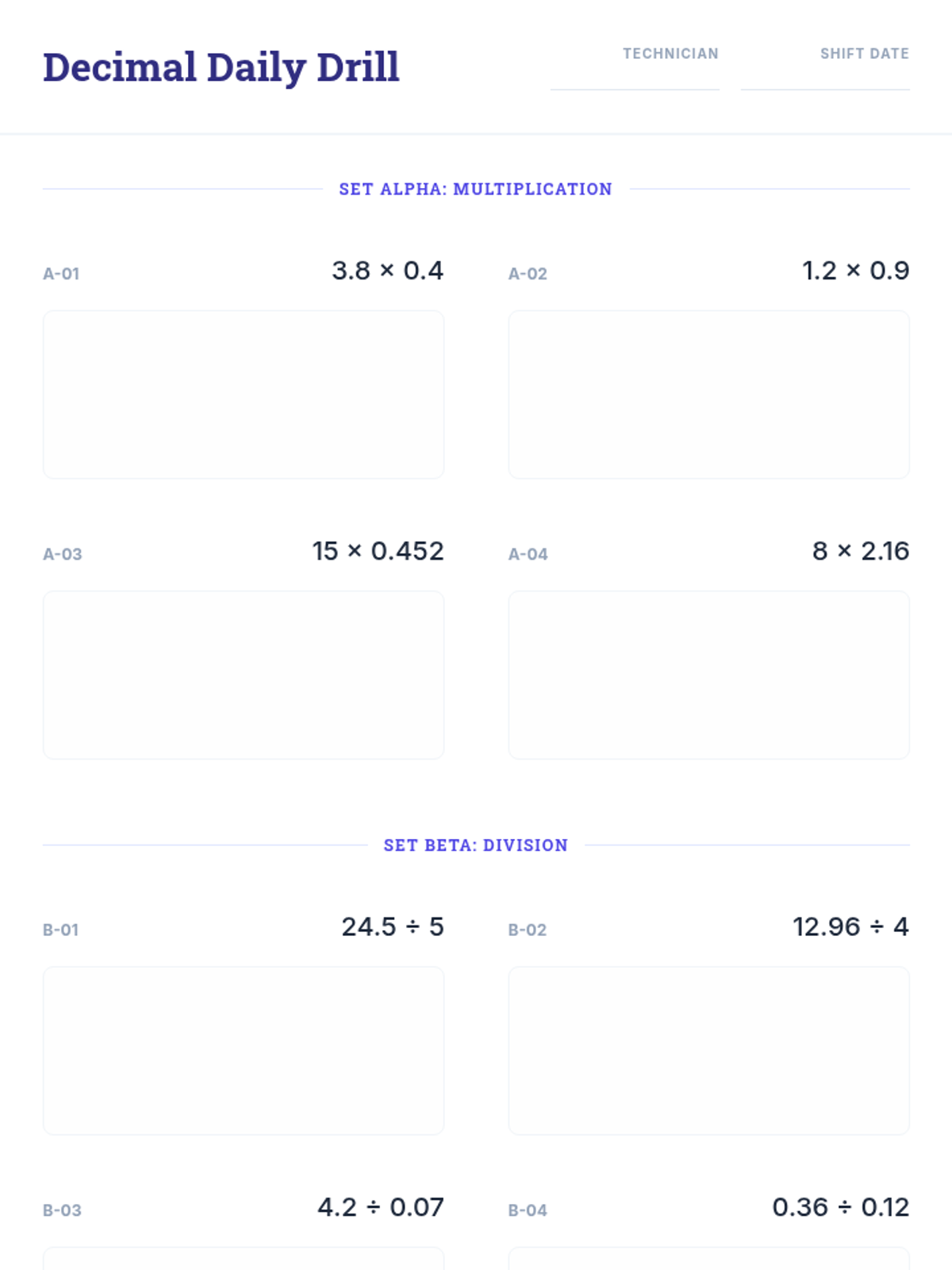
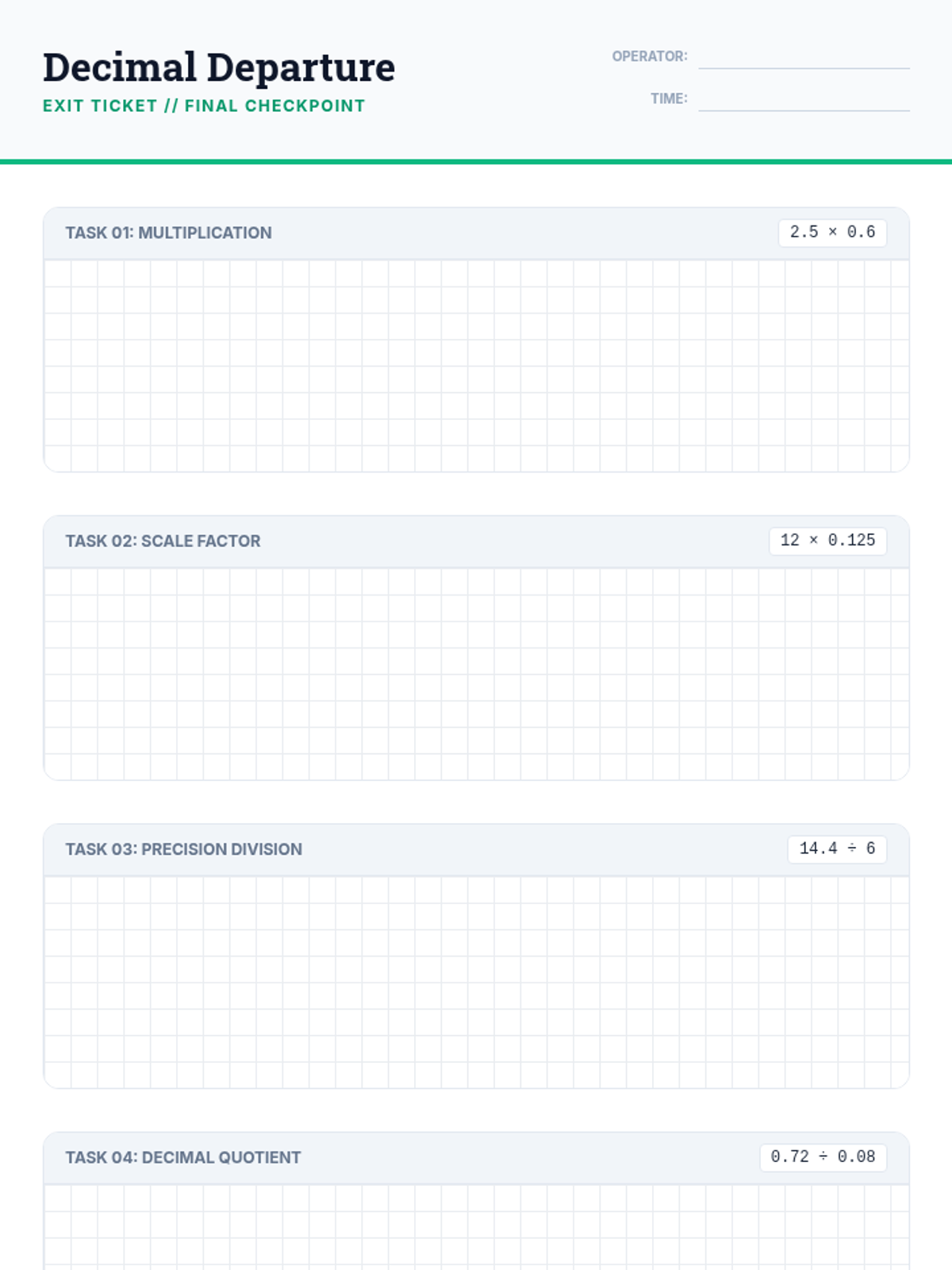
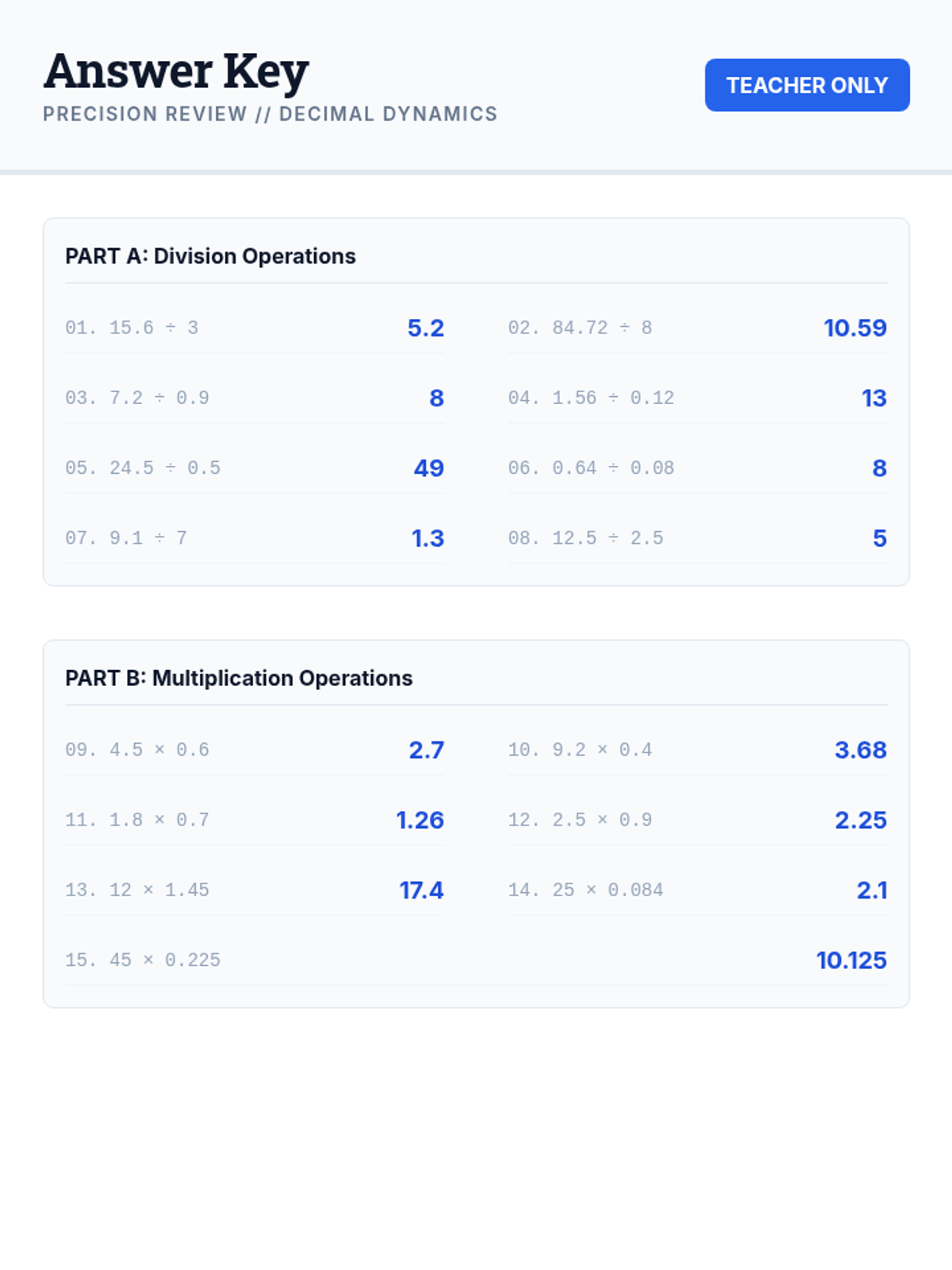
A comprehensive lesson focused on mastering decimal multiplication and division through structured problem-solving and technical precision.
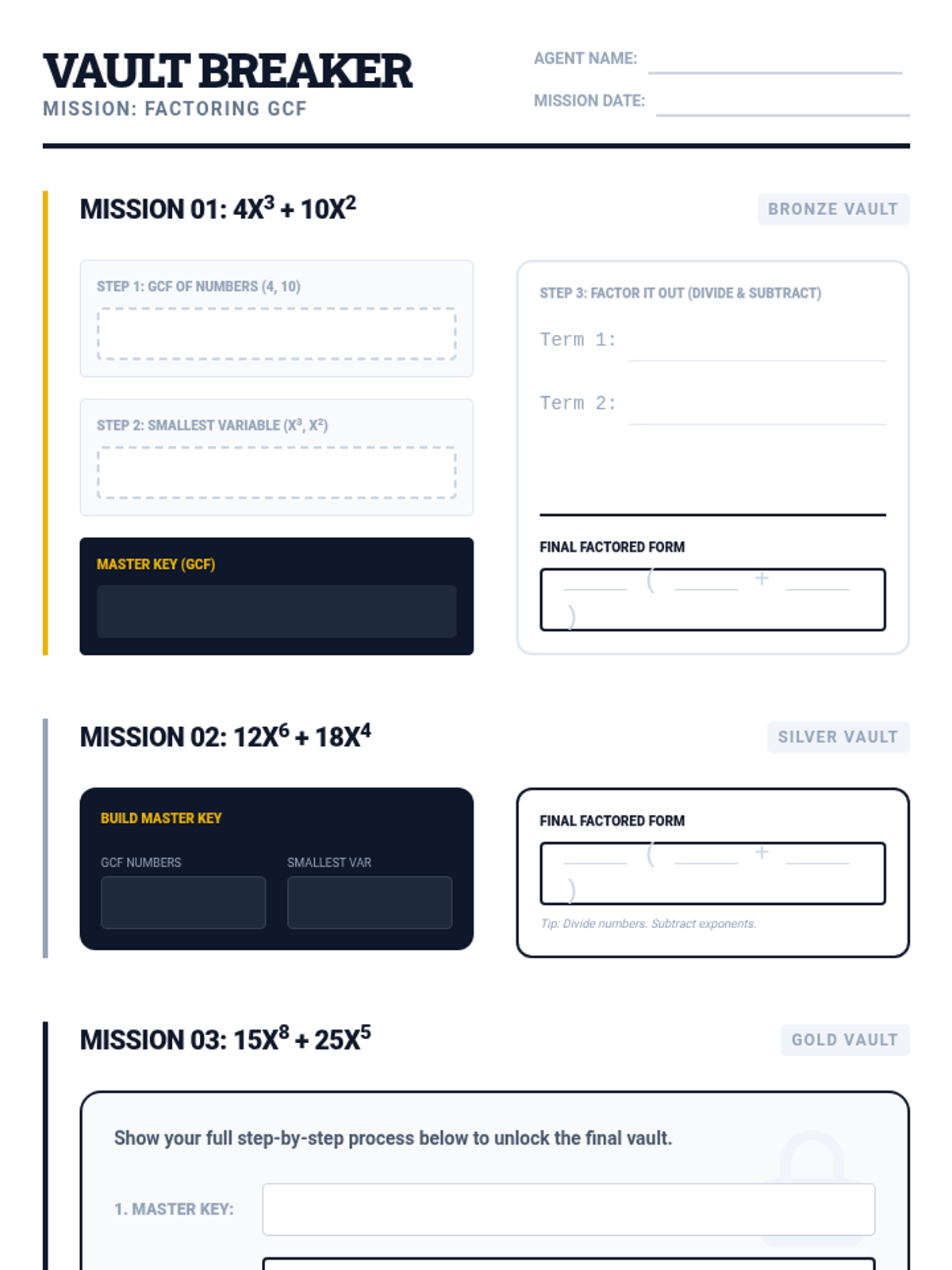
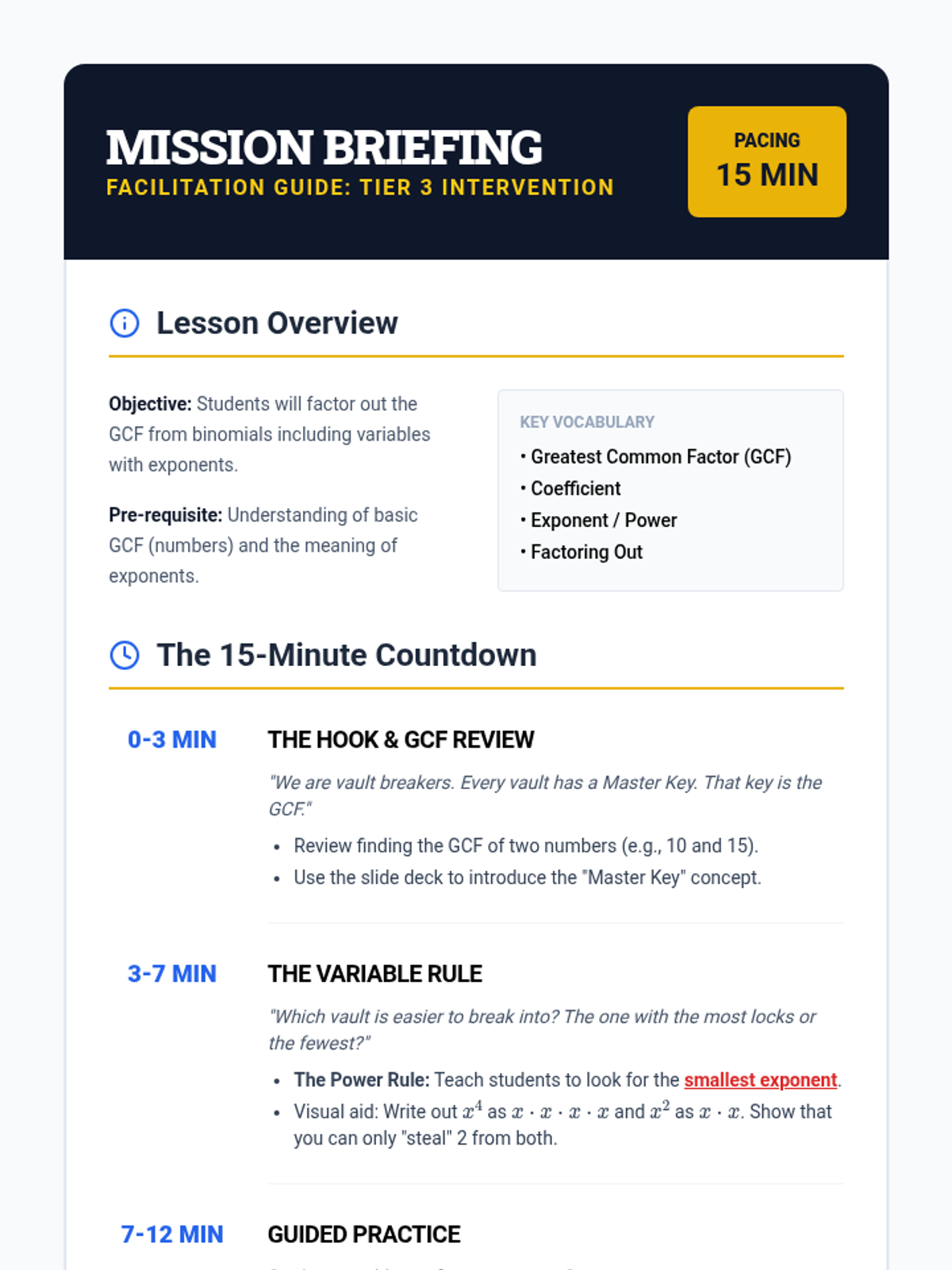
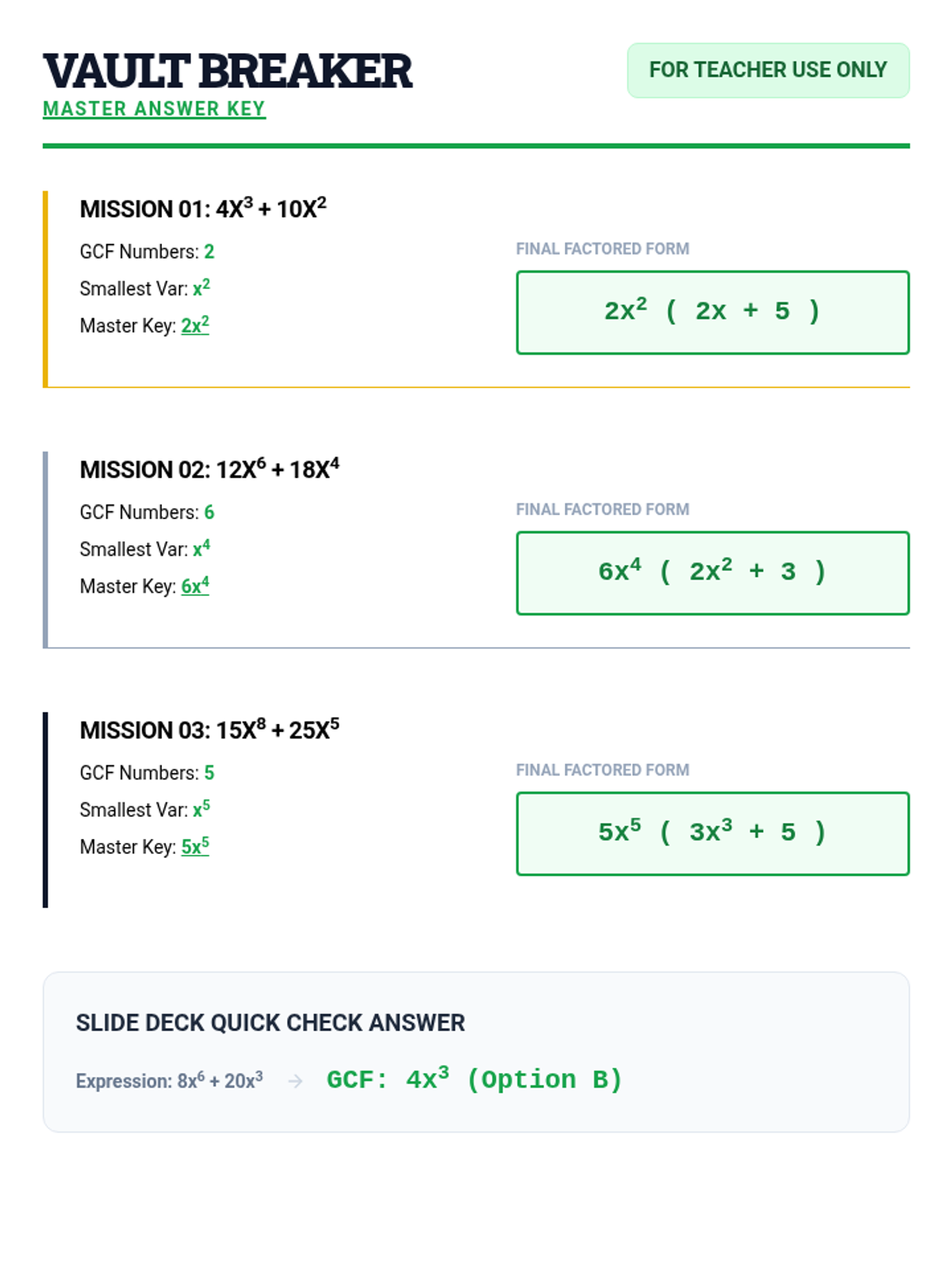
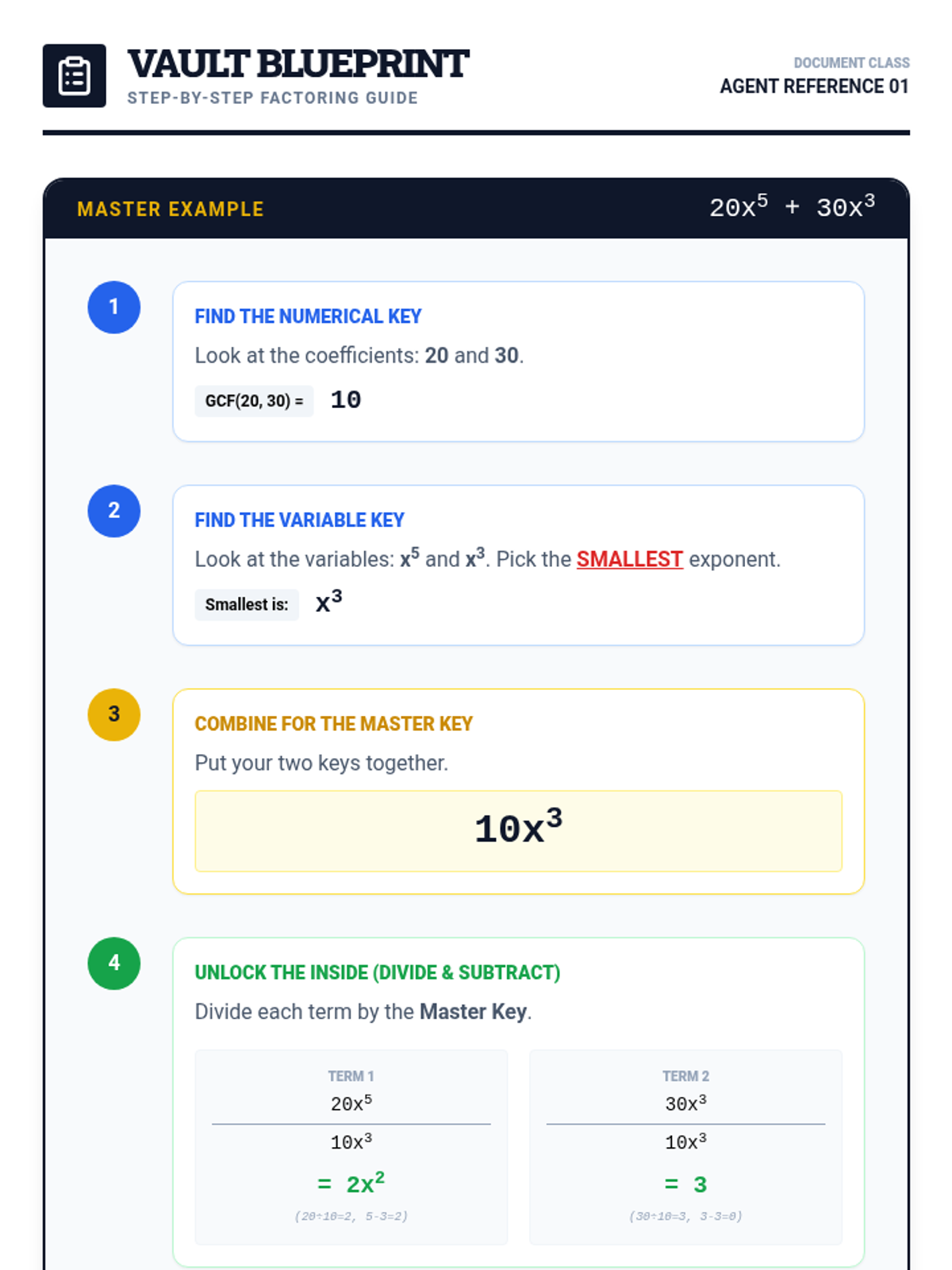
A targeted 15-minute Tier 3 intervention lesson on factoring out the greatest common factor (GCF) from expressions with variables and exponents, using a step-by-step 'Vault Breaker' theme.
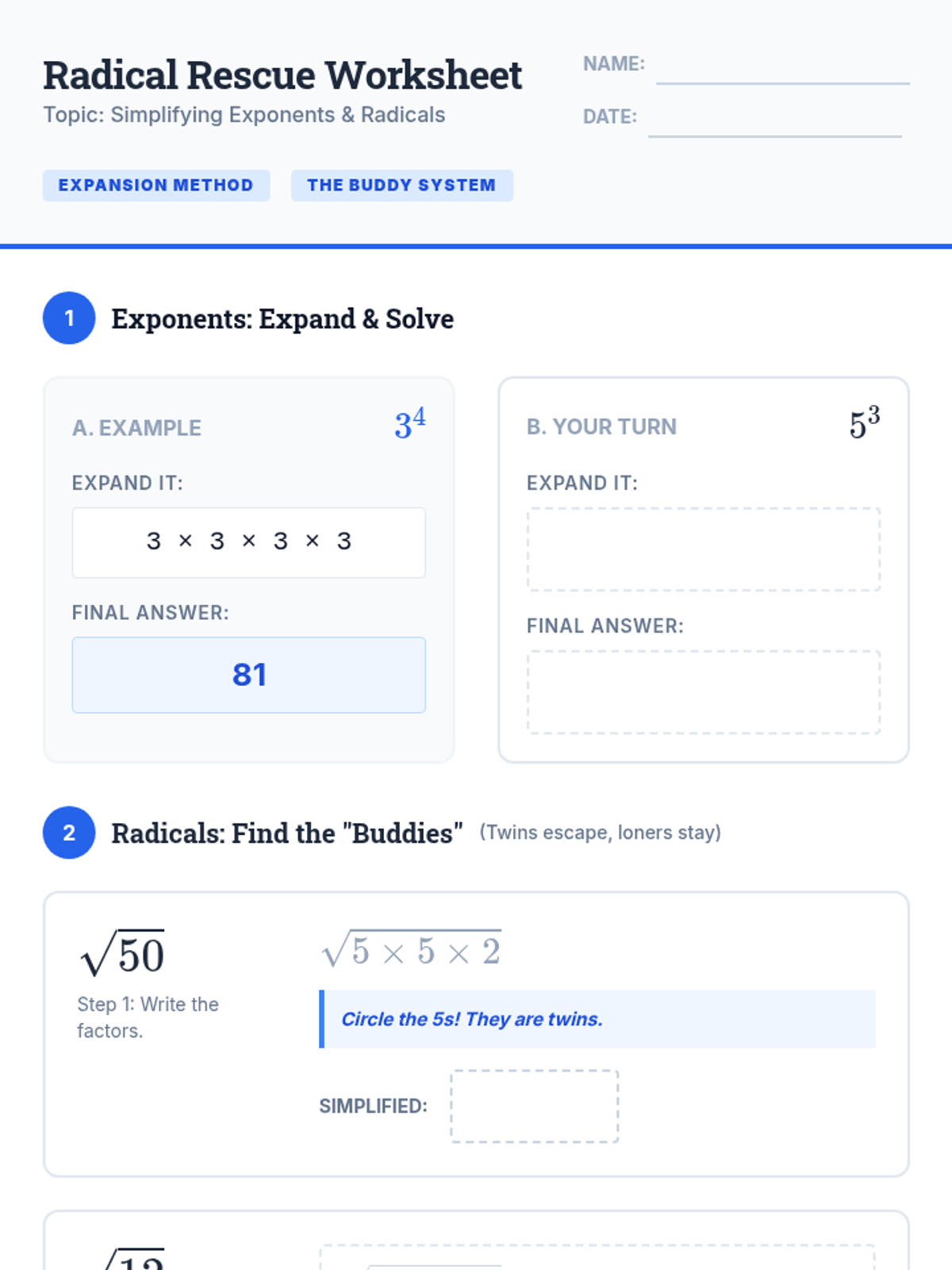
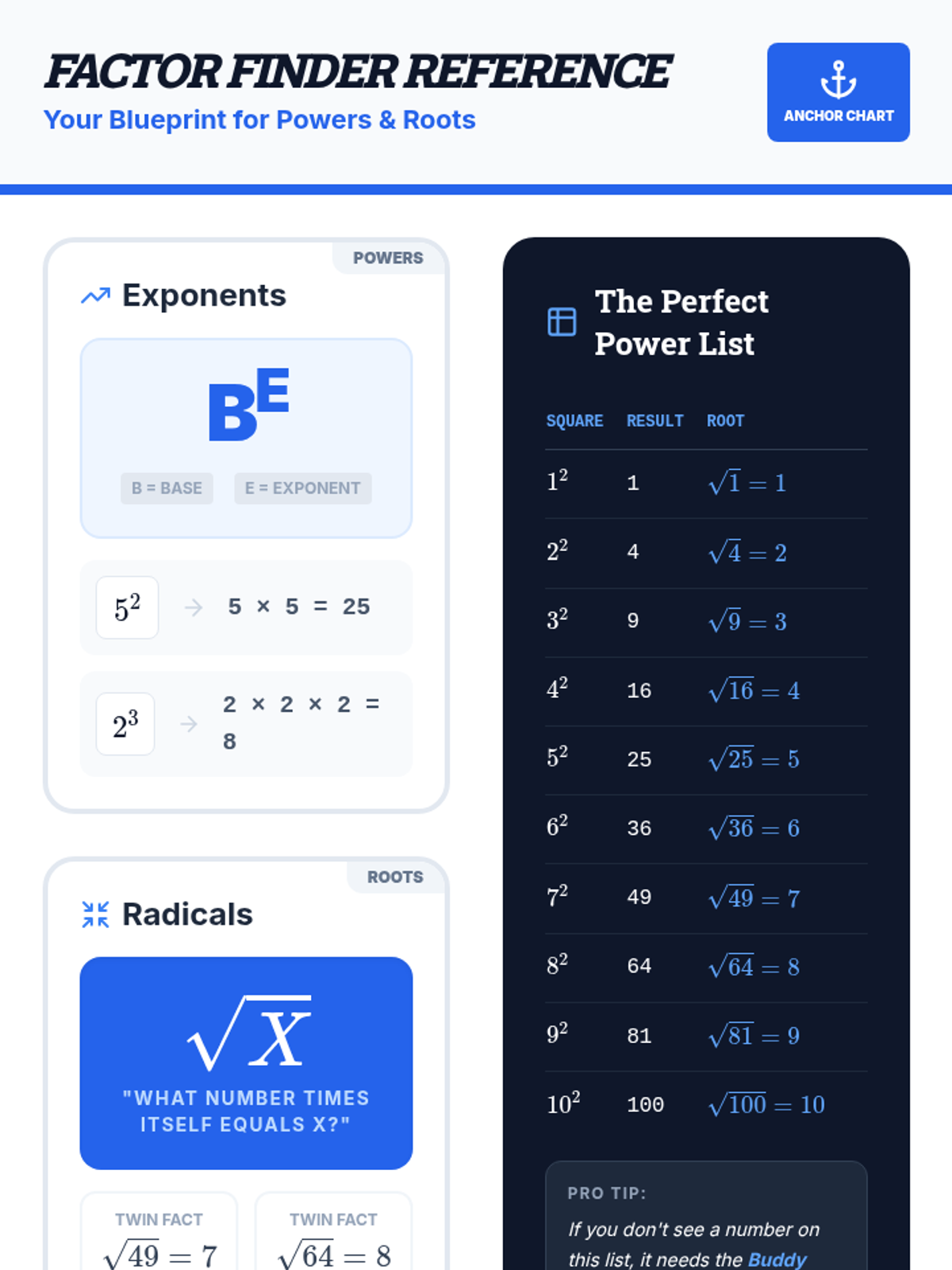
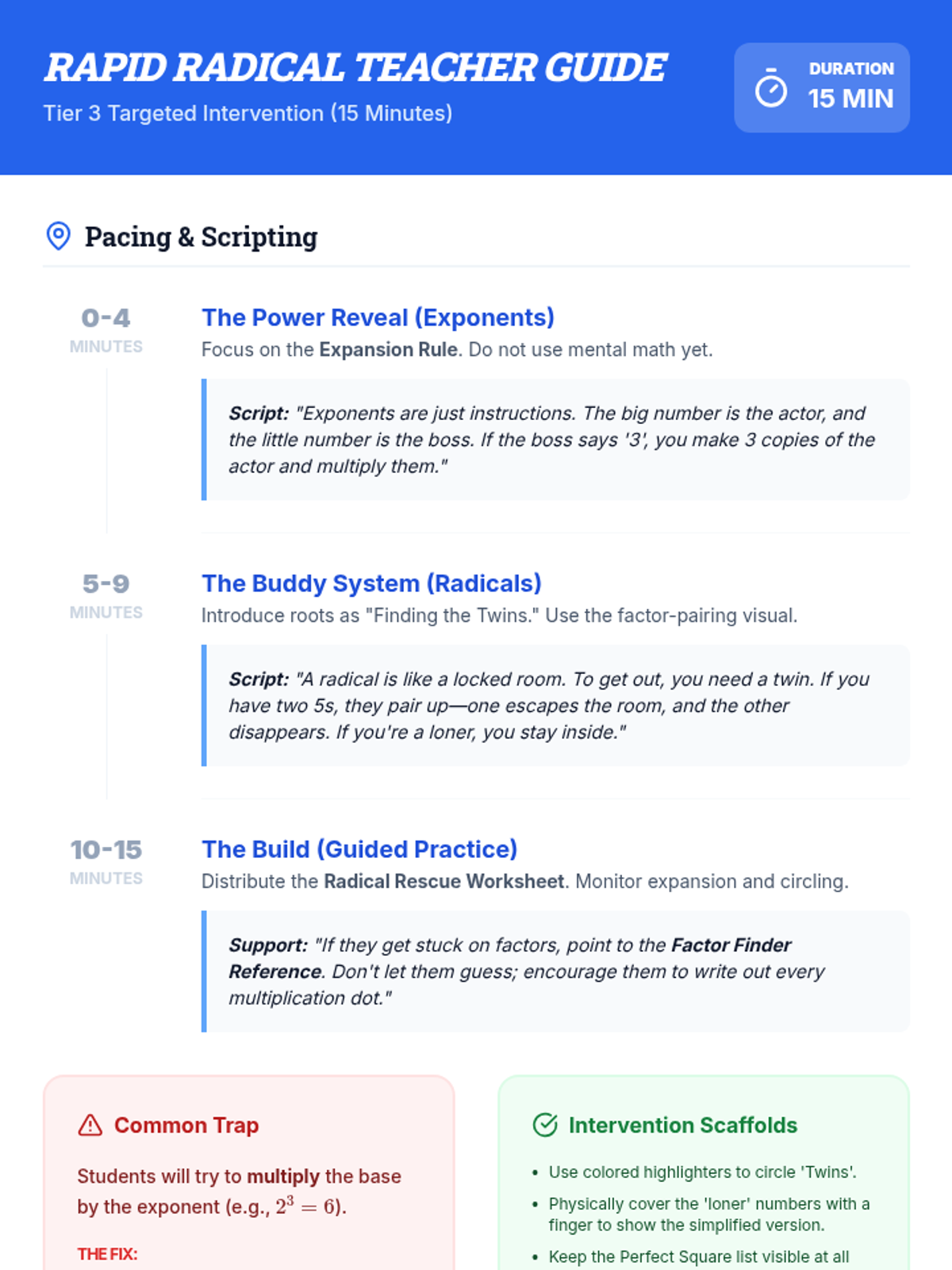
A high-intensity, 15-minute intervention focused on foundational understanding of exponents and radicals for Tier 3 students, using visual expansion and the 'buddy system' for simplifying.
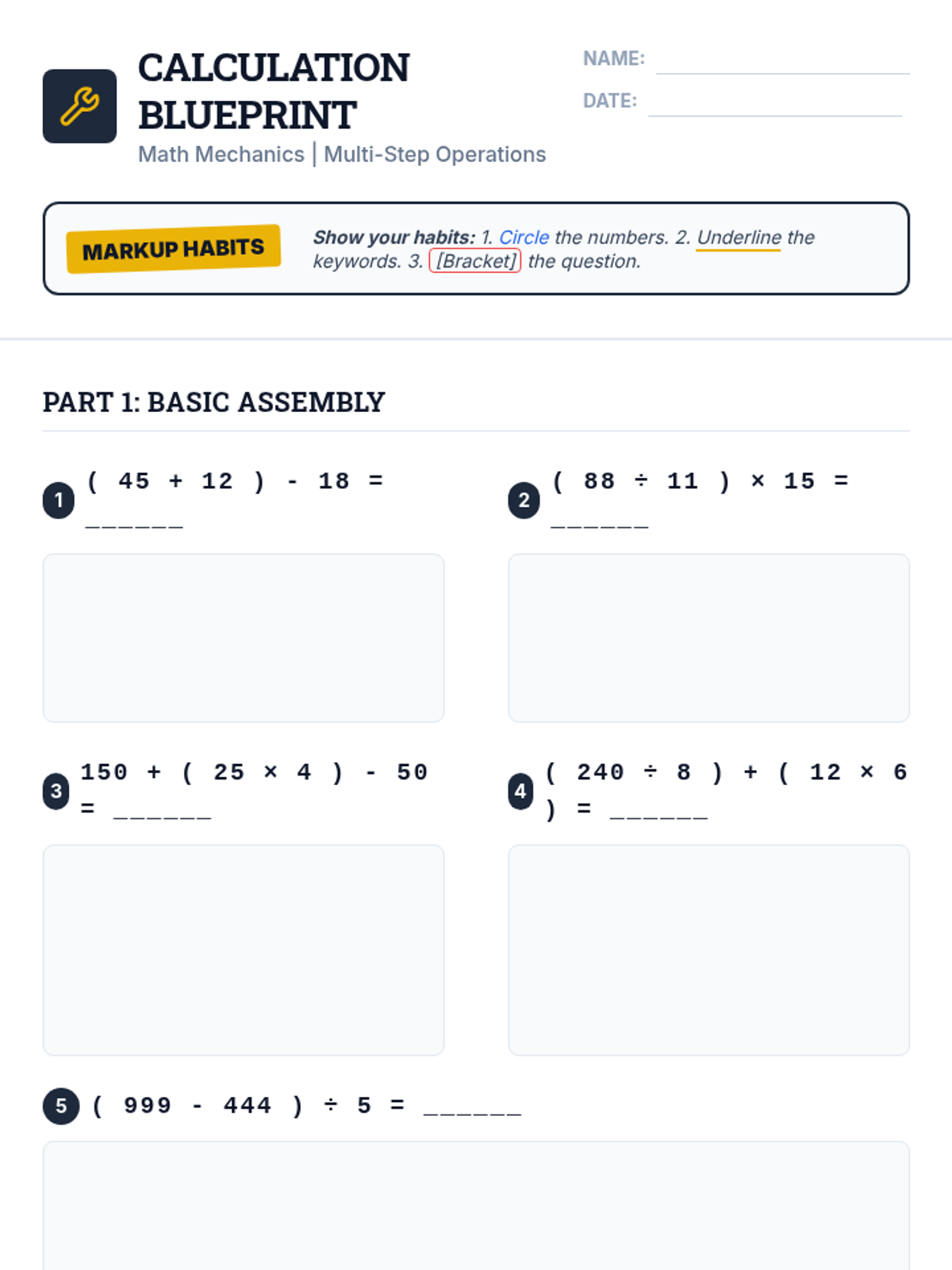
A comprehensive lesson on solving multi-digit, multi-step equations, featuring a workshop-themed approach to mathematical operations and annotation habits.
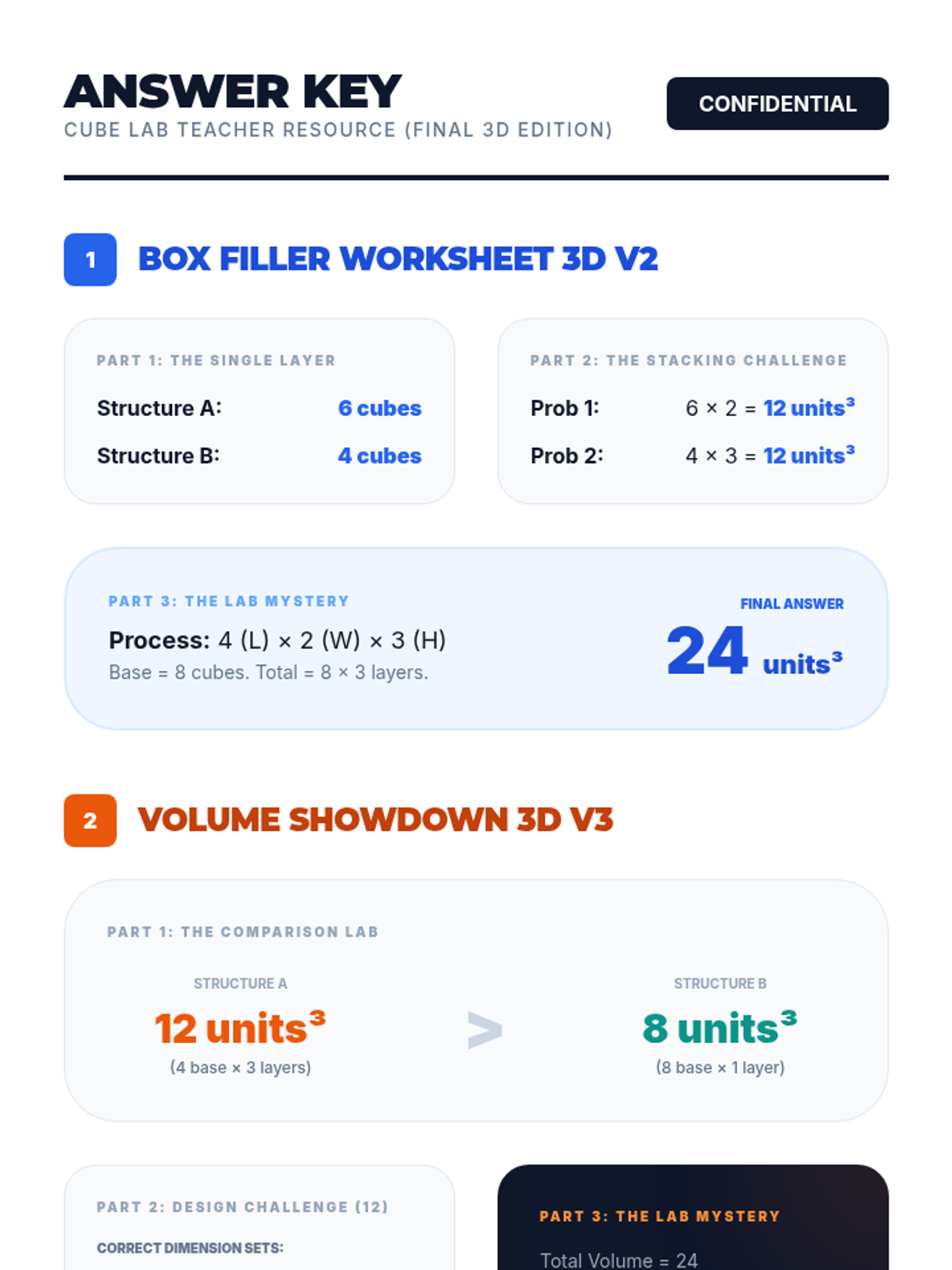
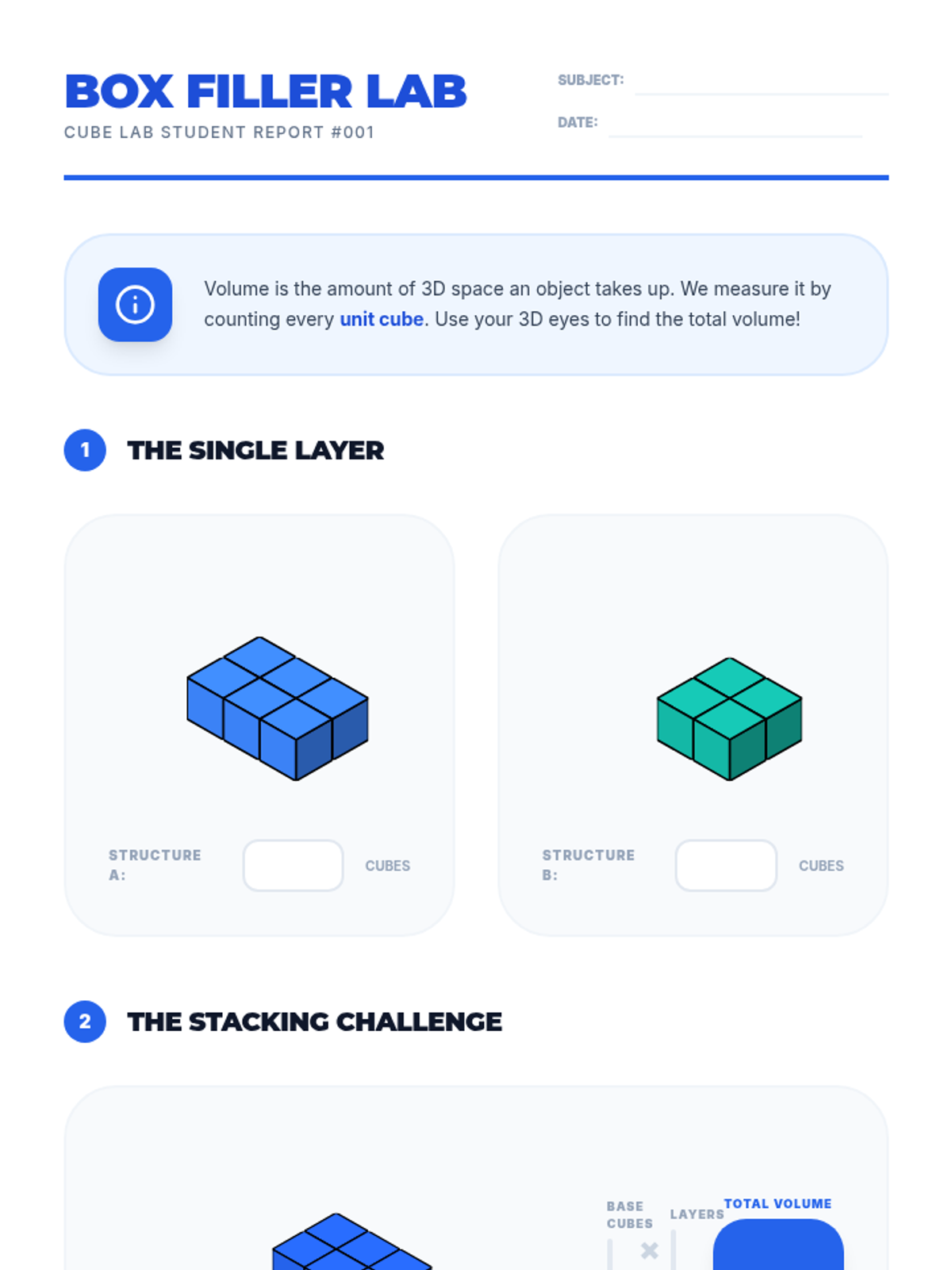
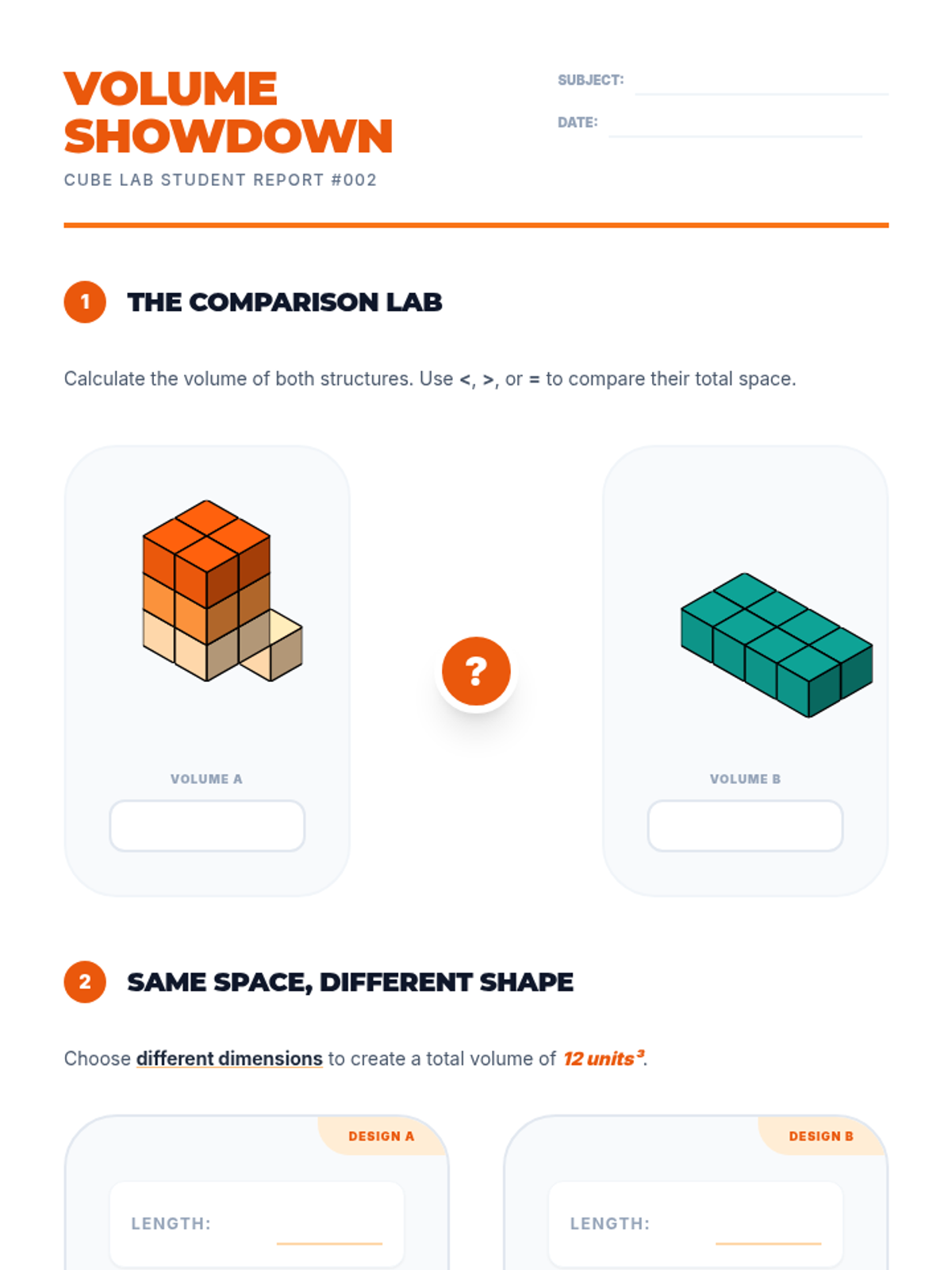
A visual introduction to volume where students explore the concept of space by filling transparent boxes with cubes. They will learn to count unit cubes and compare volumes of different rectangular prisms.
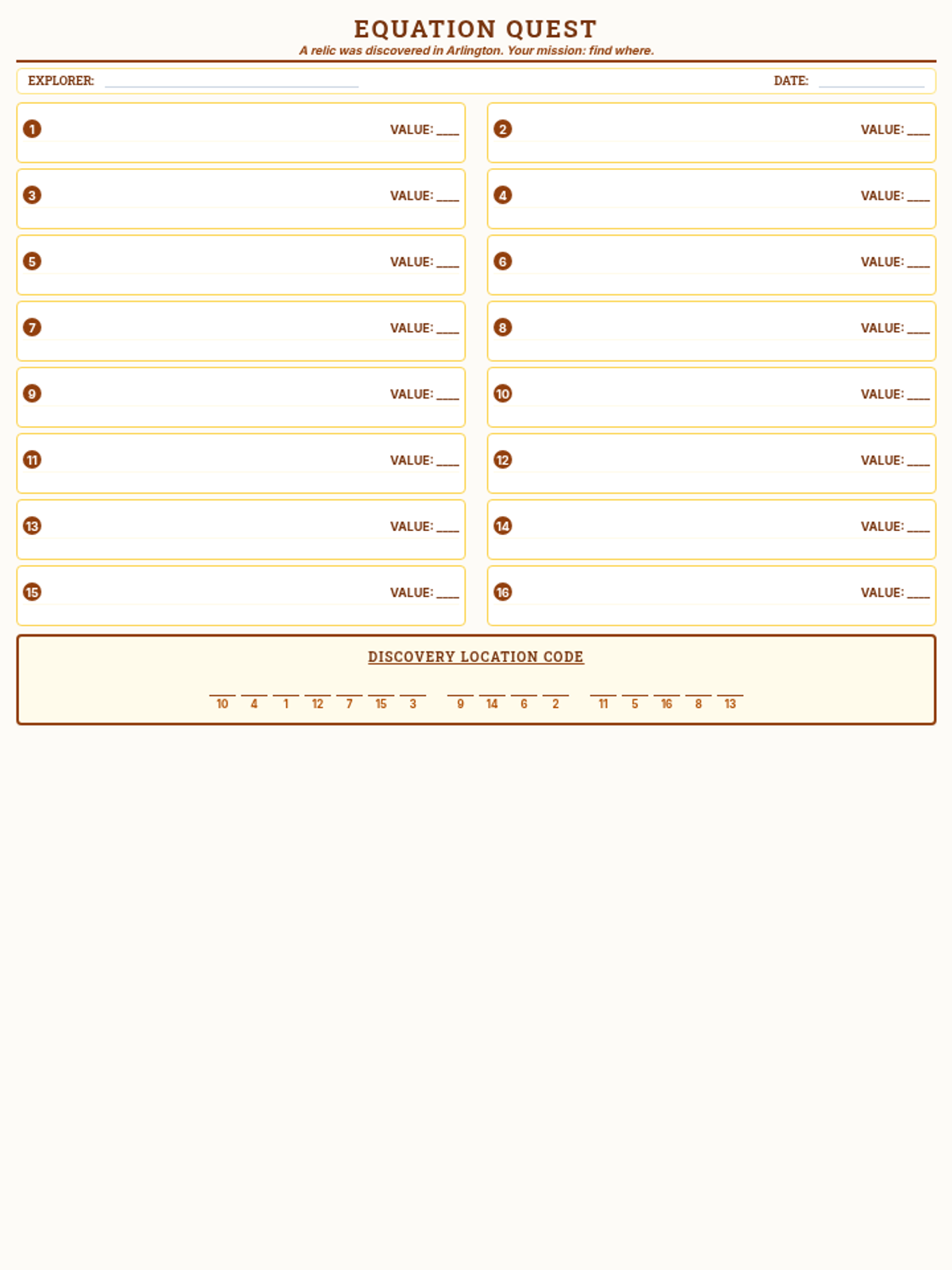
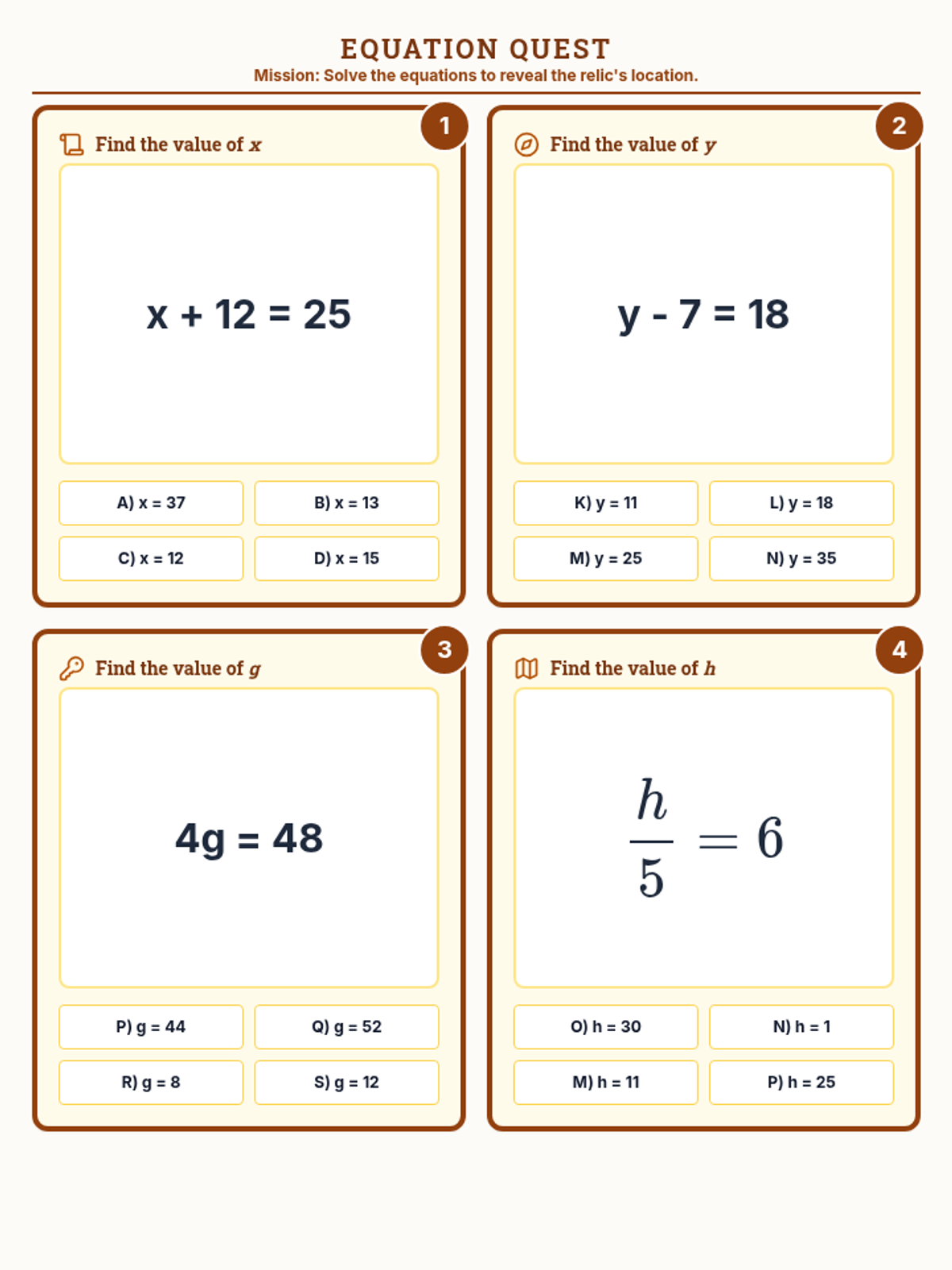
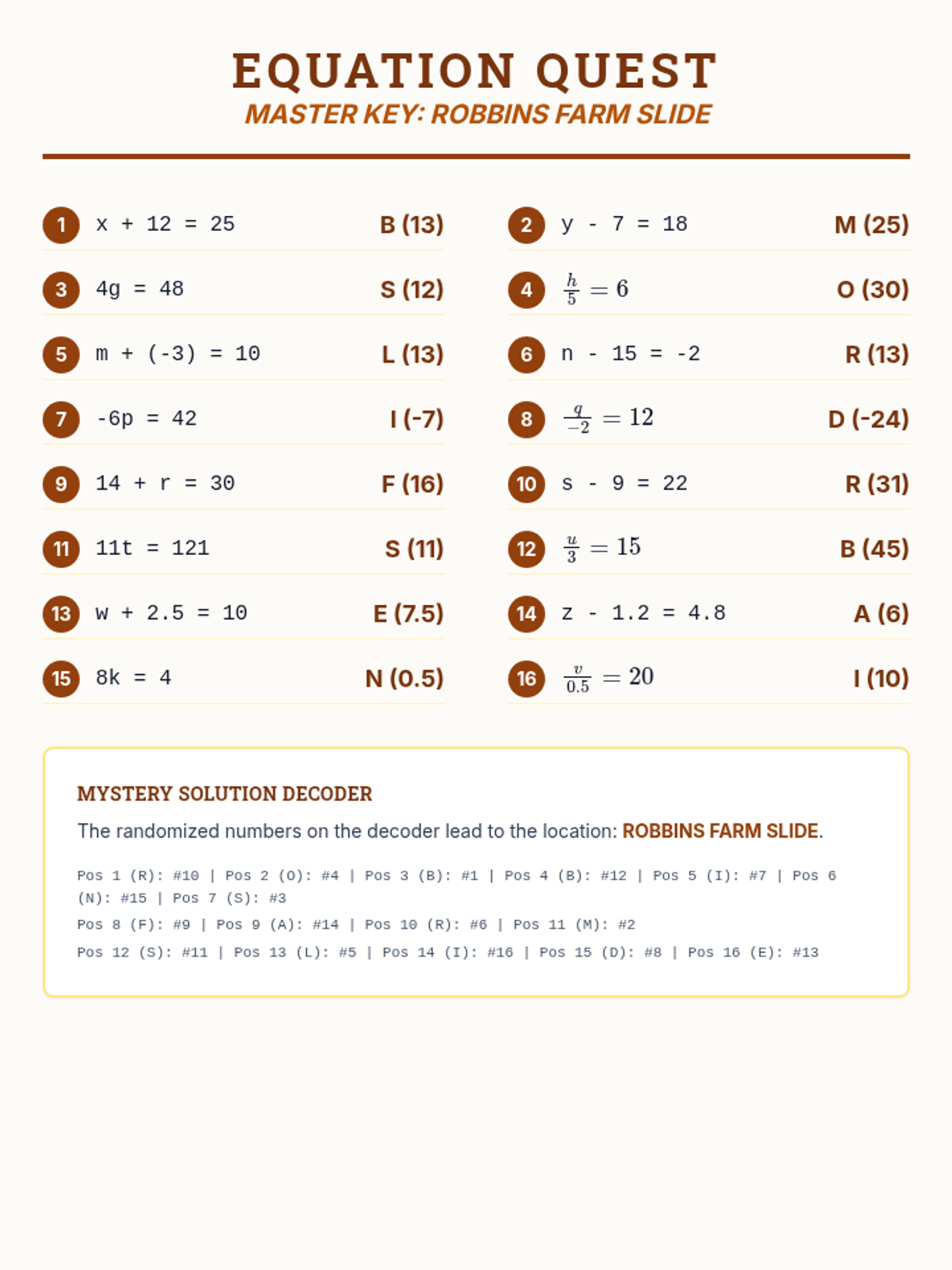
A lesson focused on identifying the value of a variable that satisfies a one-step equation through substitution and mental math.
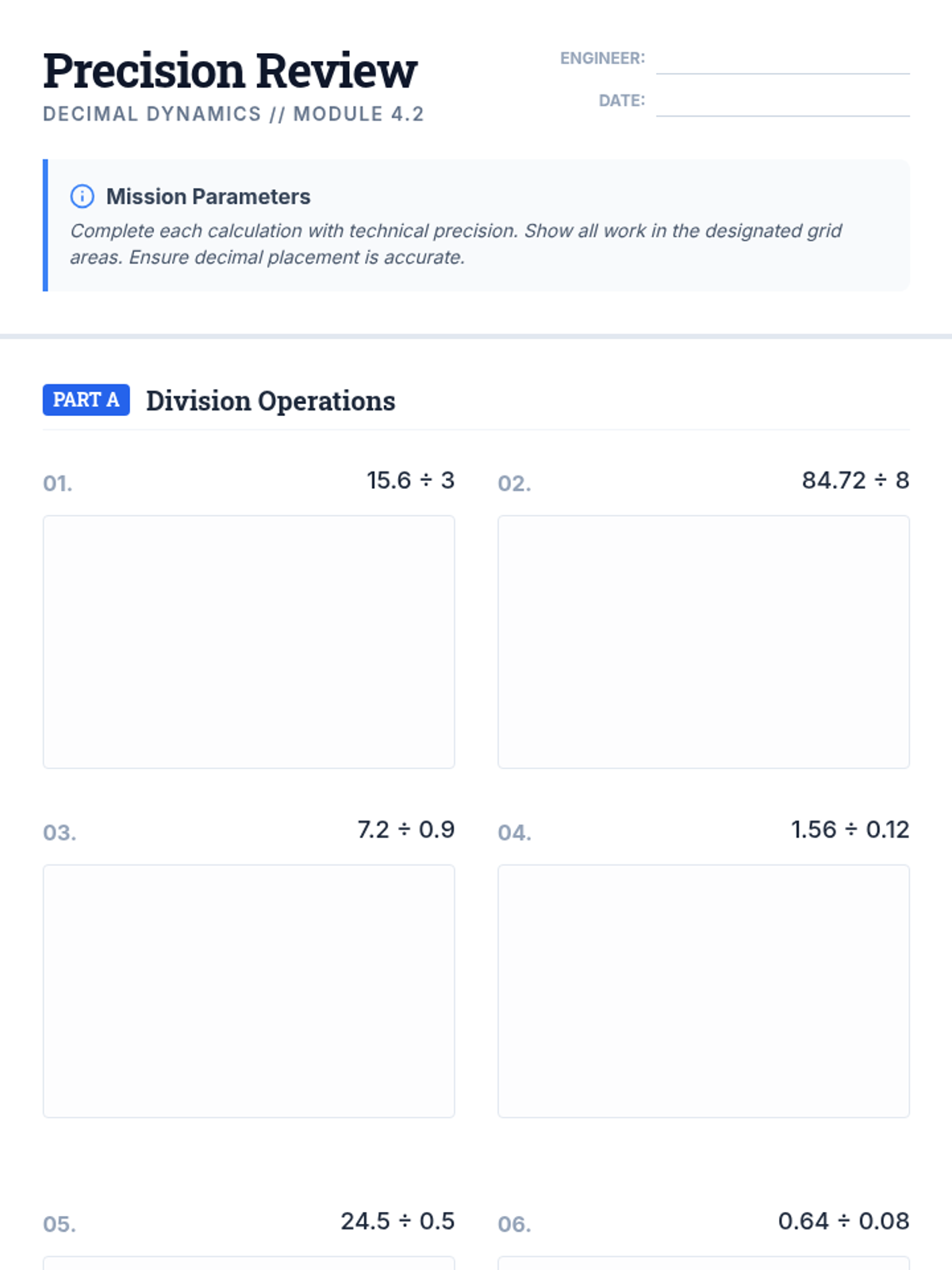
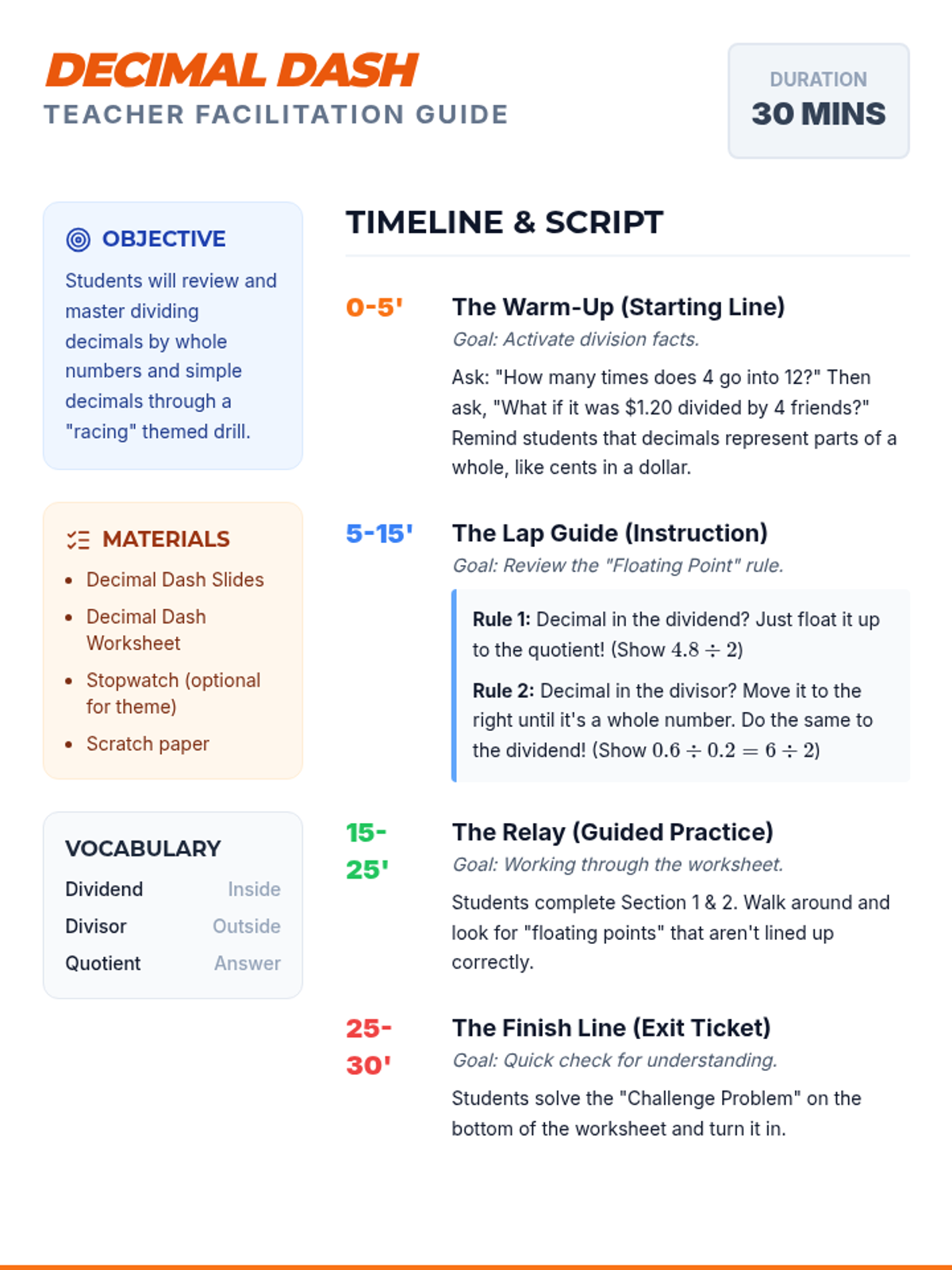
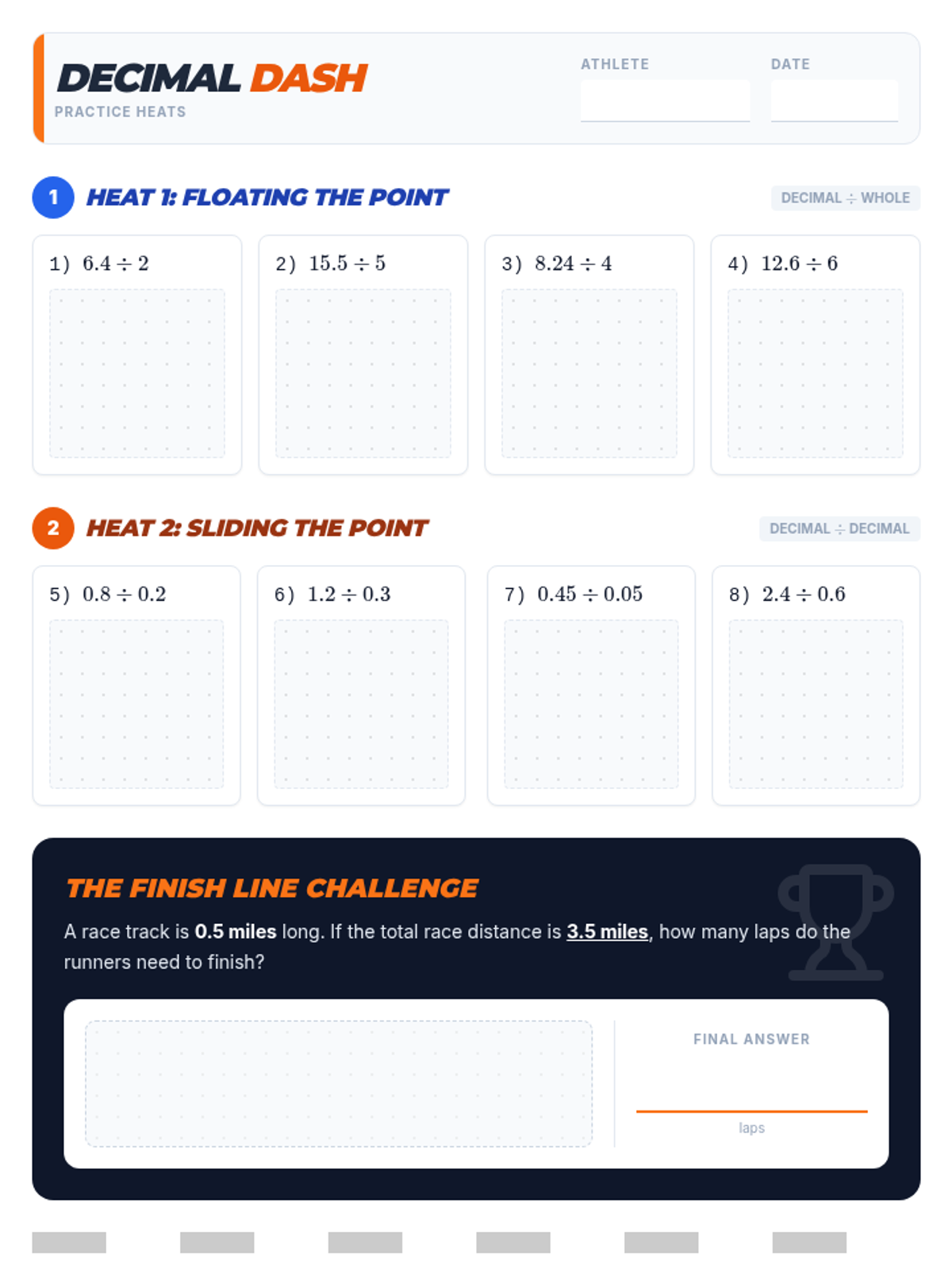
A high-energy, 30-minute review session covering decimal division basics, including dividing decimals by whole numbers and simple decimal-by-decimal operations.
A focused lesson on using cross-multiplication to solve algebraic proportions where one side is a whole number.
A fast-paced, 30-minute mission where students learn to decode the relationship between decimals and fractions using place value as their key.
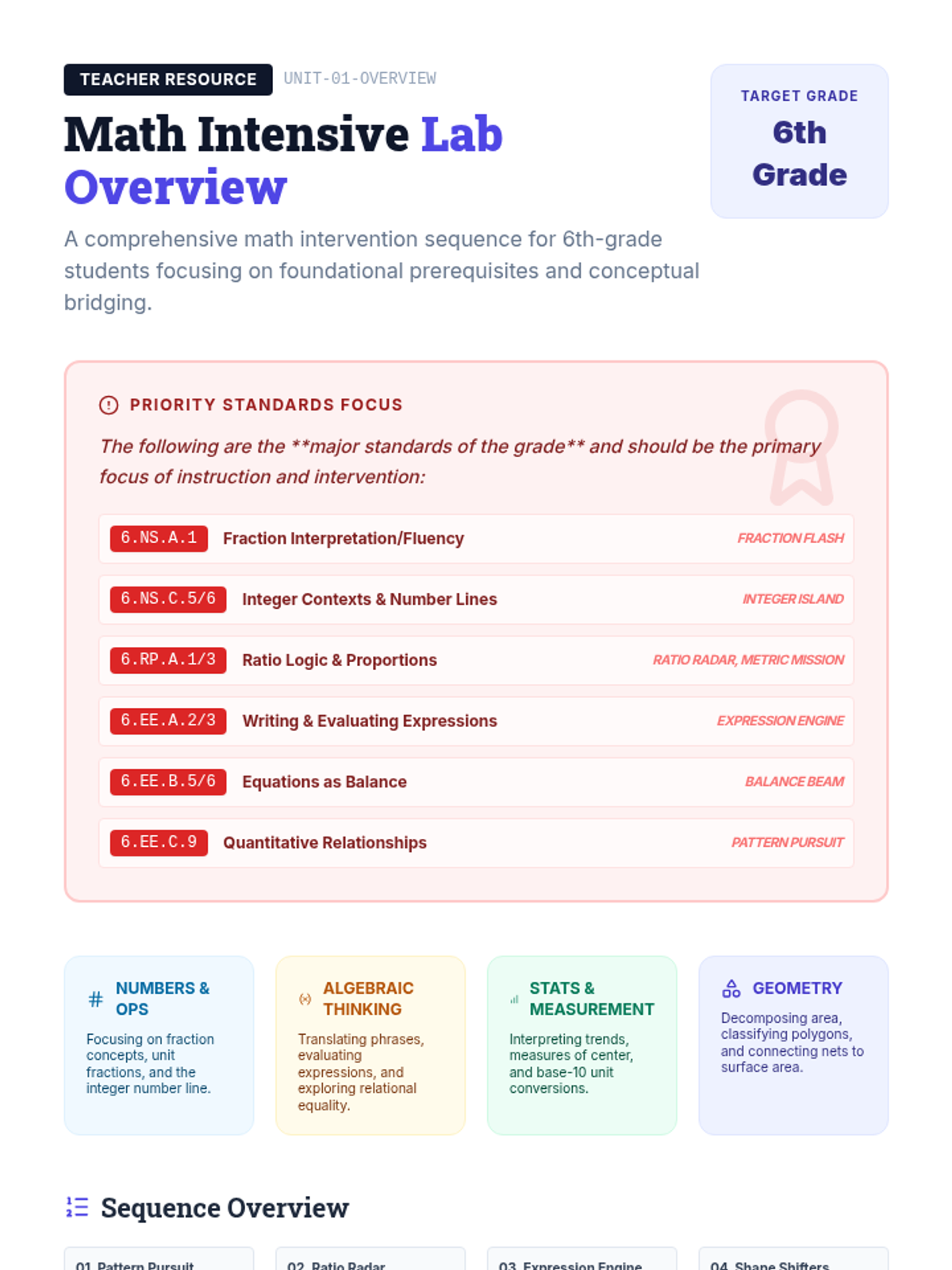
General administrative and planning resources for the Math Intensive Lab sequence, including the unit overview and sequence-wide instructional supports.
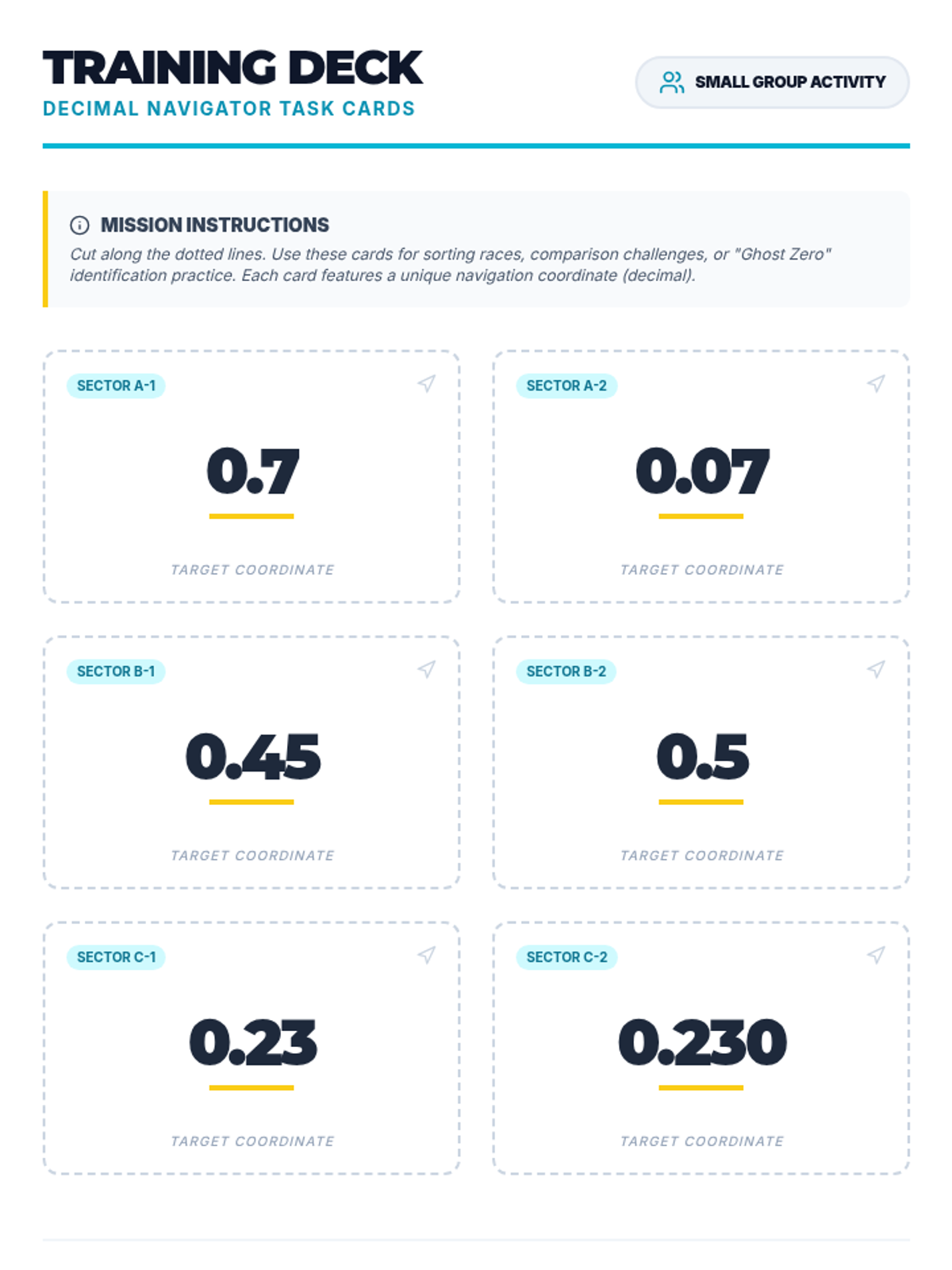
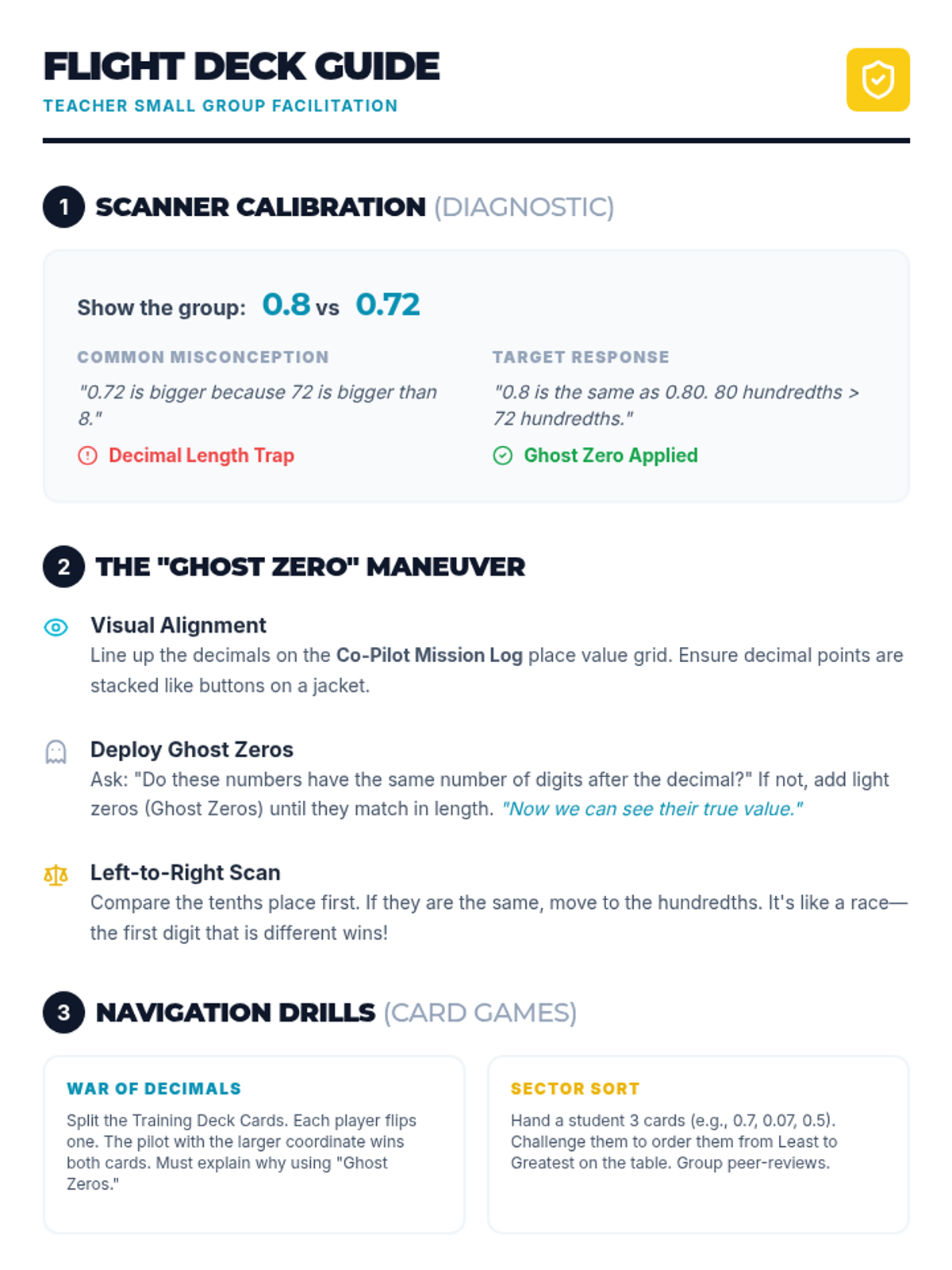
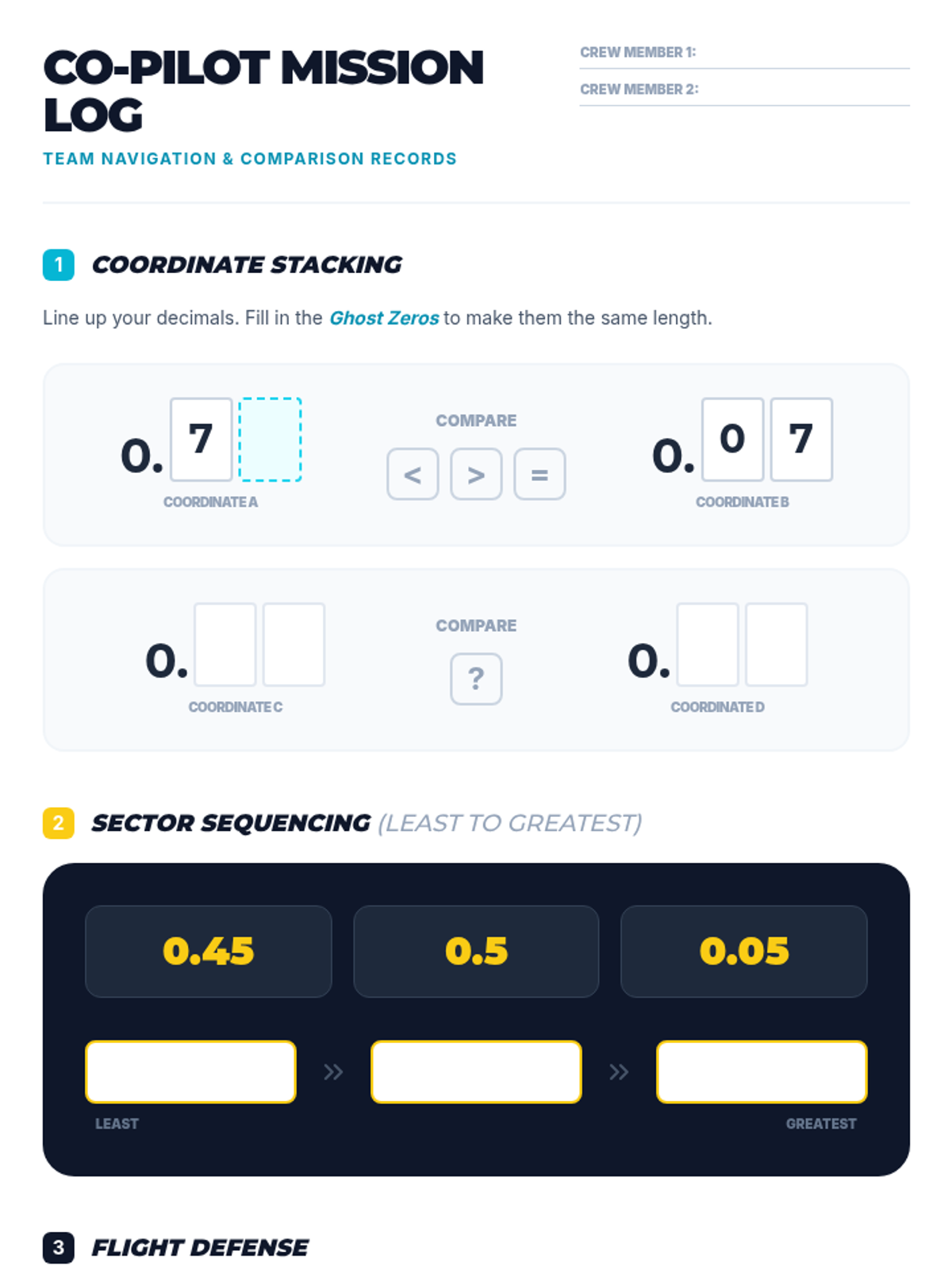
A visually-driven lesson focused on comparing and ordering decimals using the 'Ghost Zero' strategy and place value analysis within a galactic navigation theme.
Tier 2 intervention materials for students needing extra support with mixed numbers and improper fractions. This lesson provides visual scaffolds, simplified language for struggling readers, and hands-on practice activities to reinforce foundational fraction concepts.
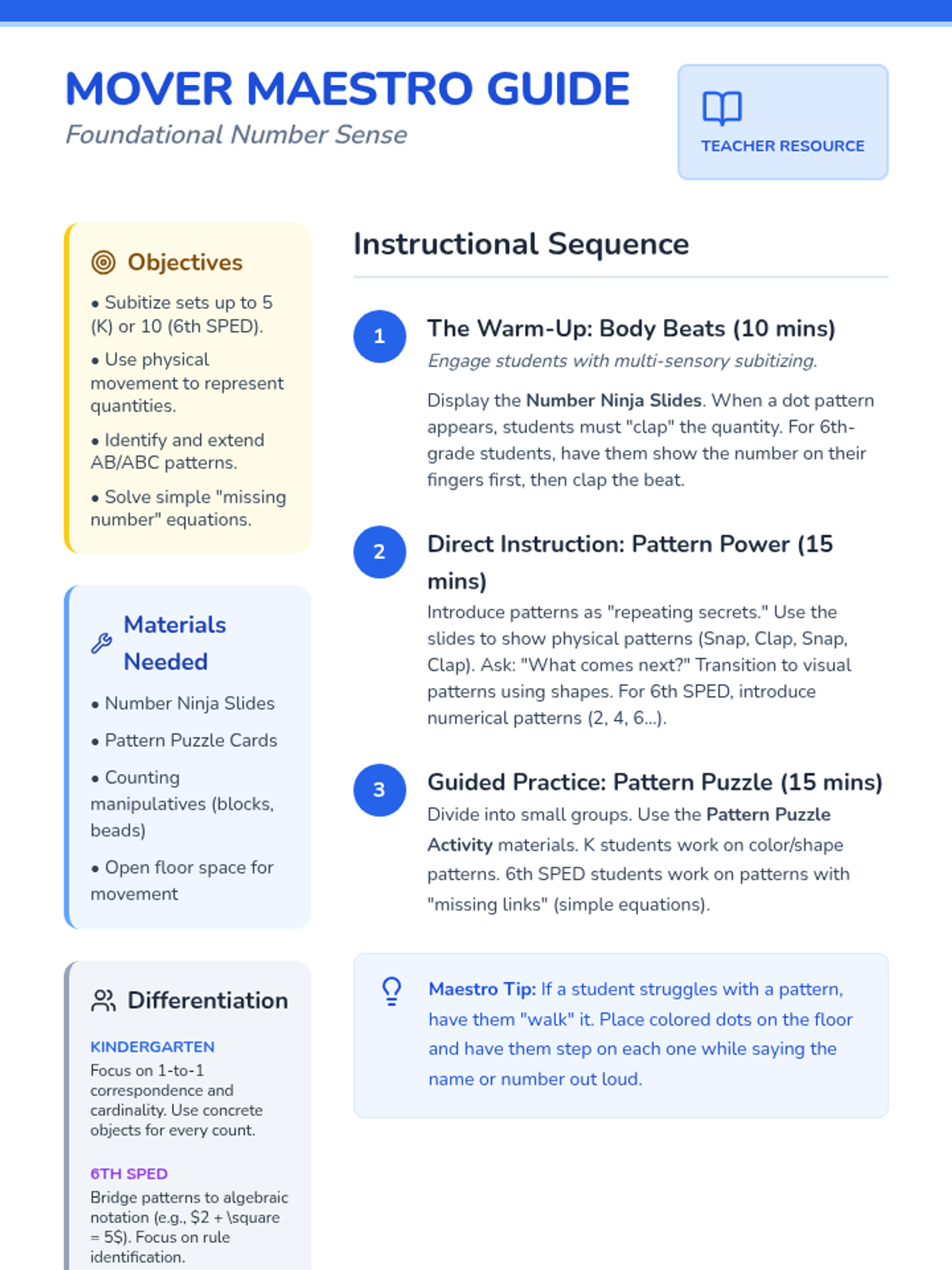
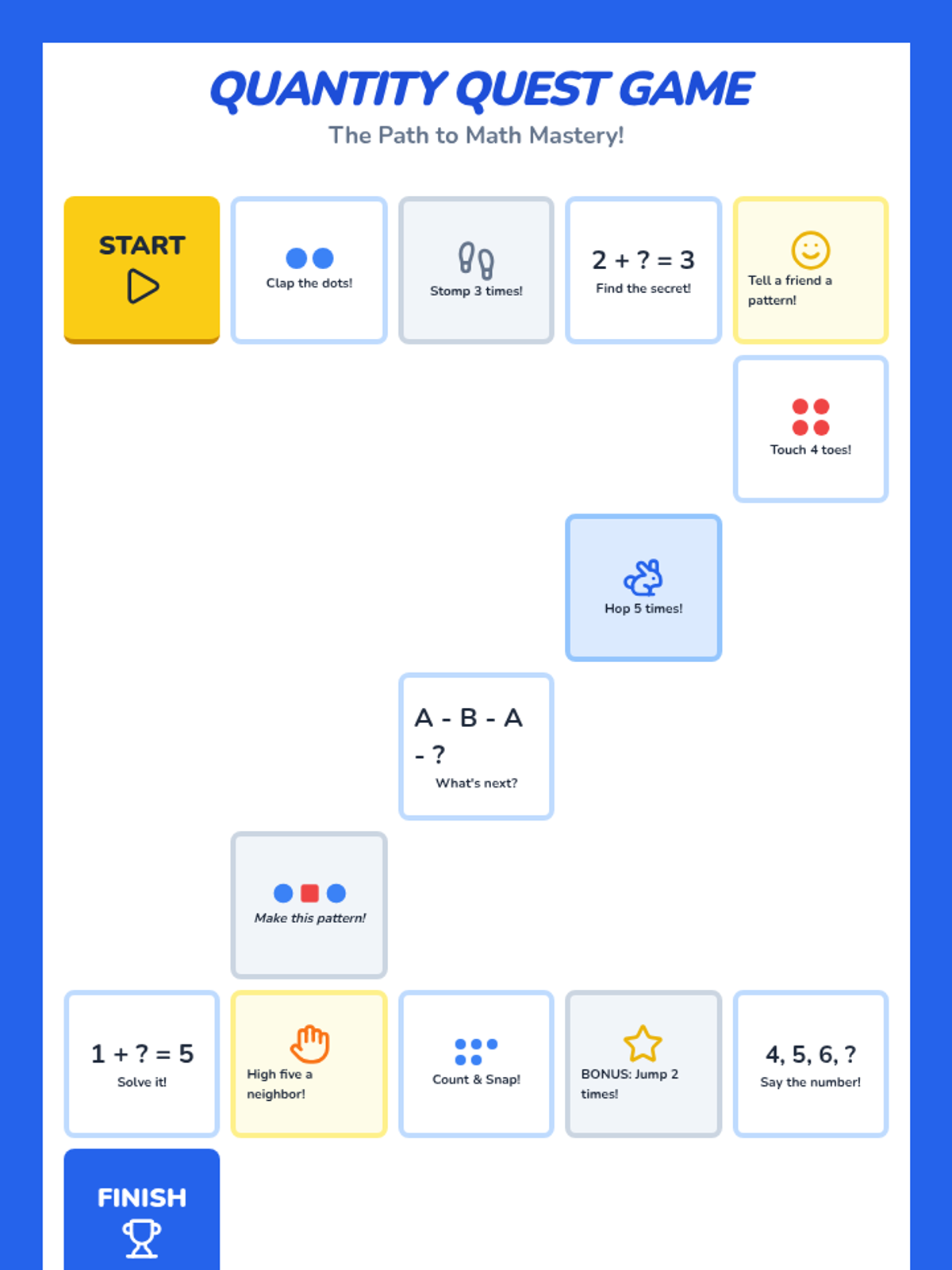
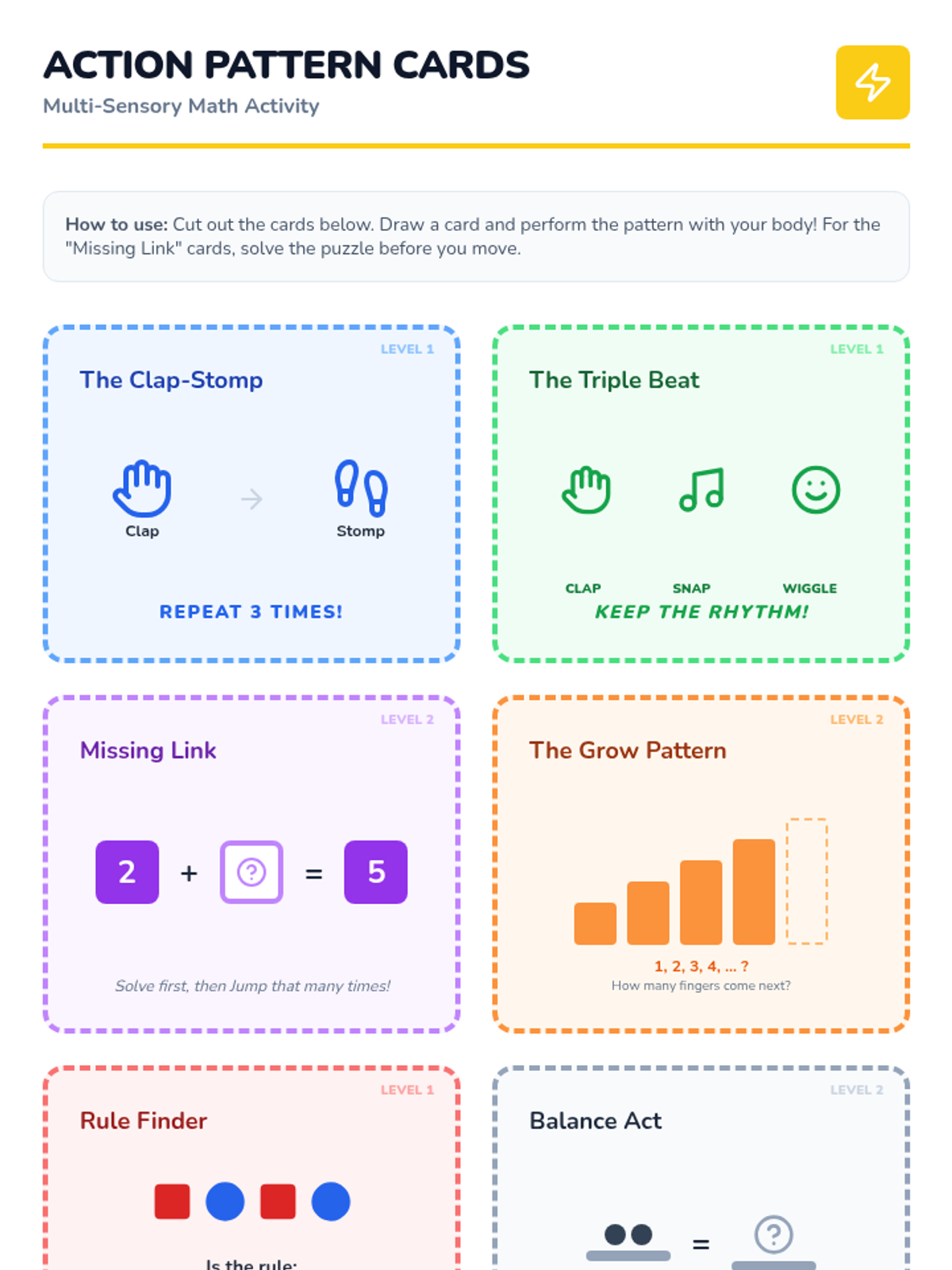
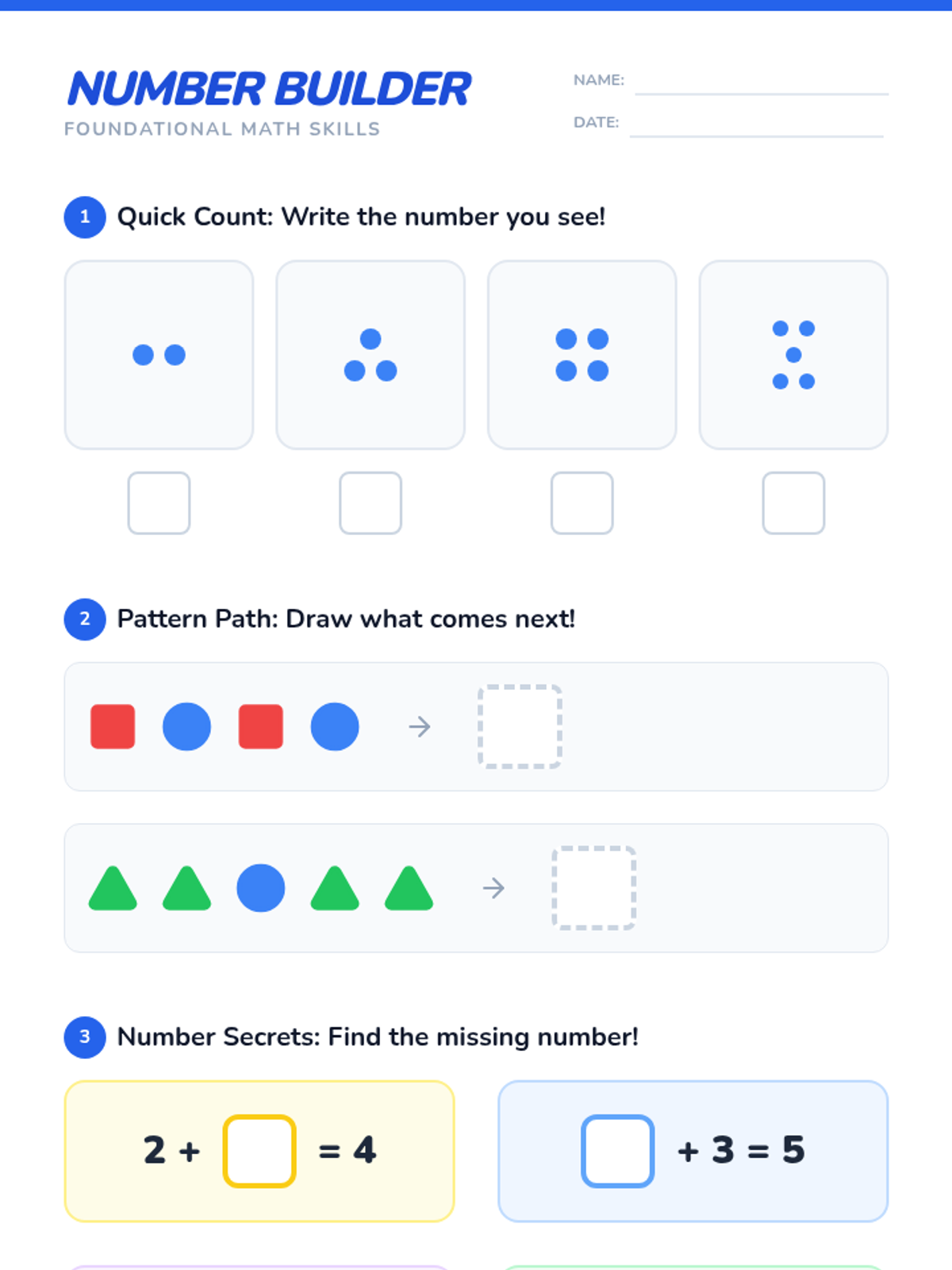
This lesson focuses on building number sense through hands-on activities, bridging concrete counting with abstract pattern identification and simple equation solving.
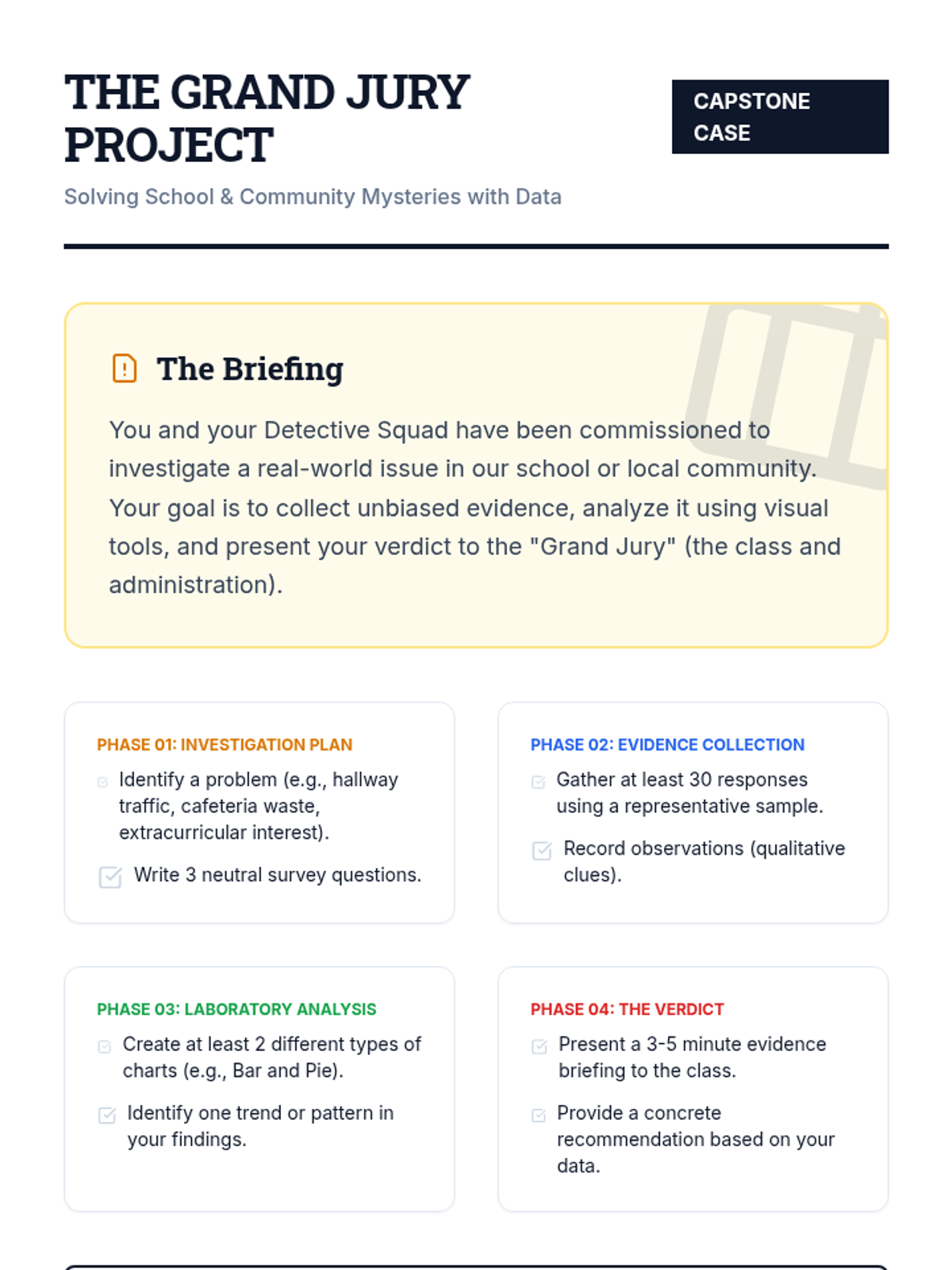
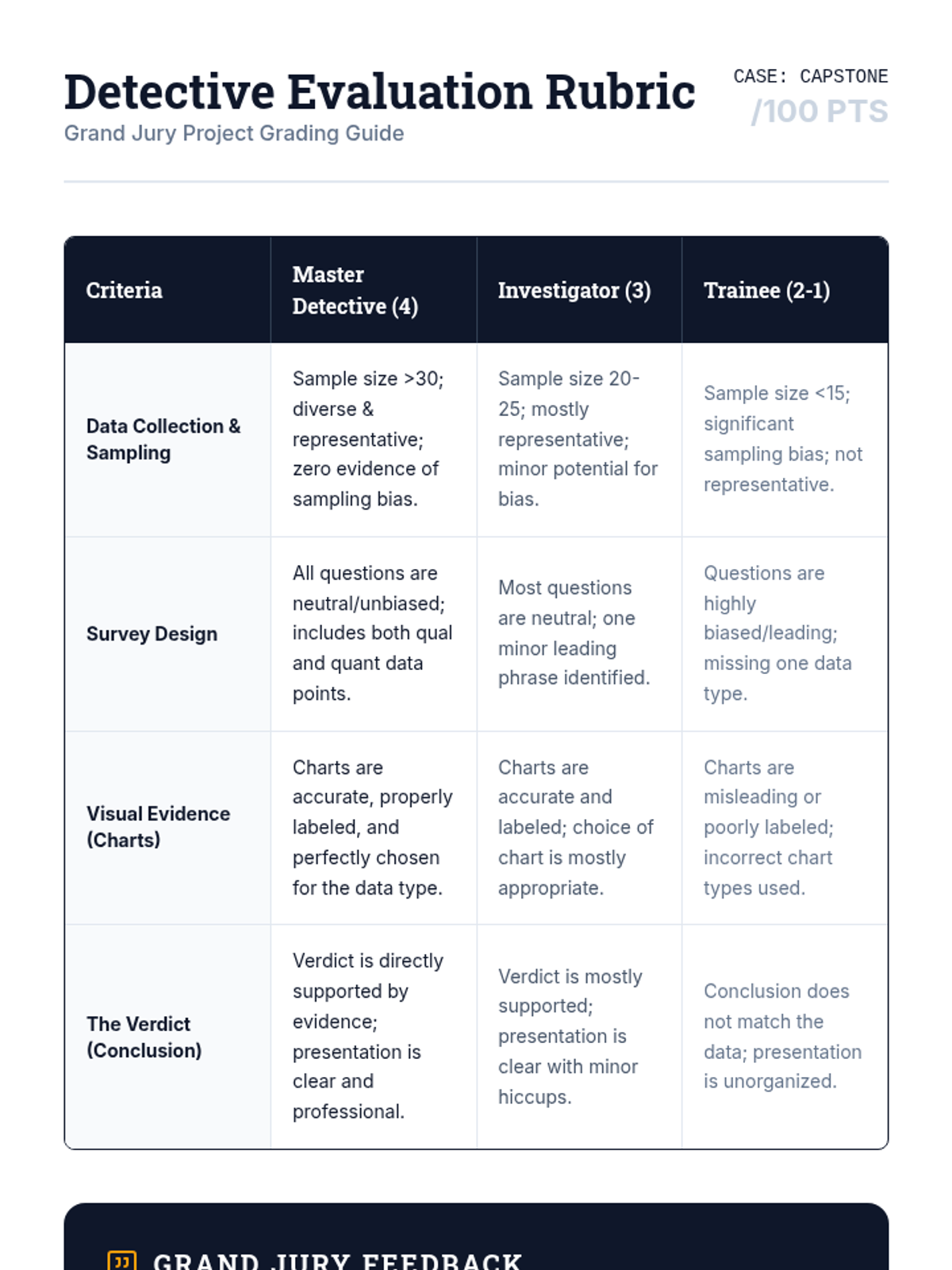
The capstone of the unit where students work in squads to solve a real-world community or school issue using the data skills they've developed.
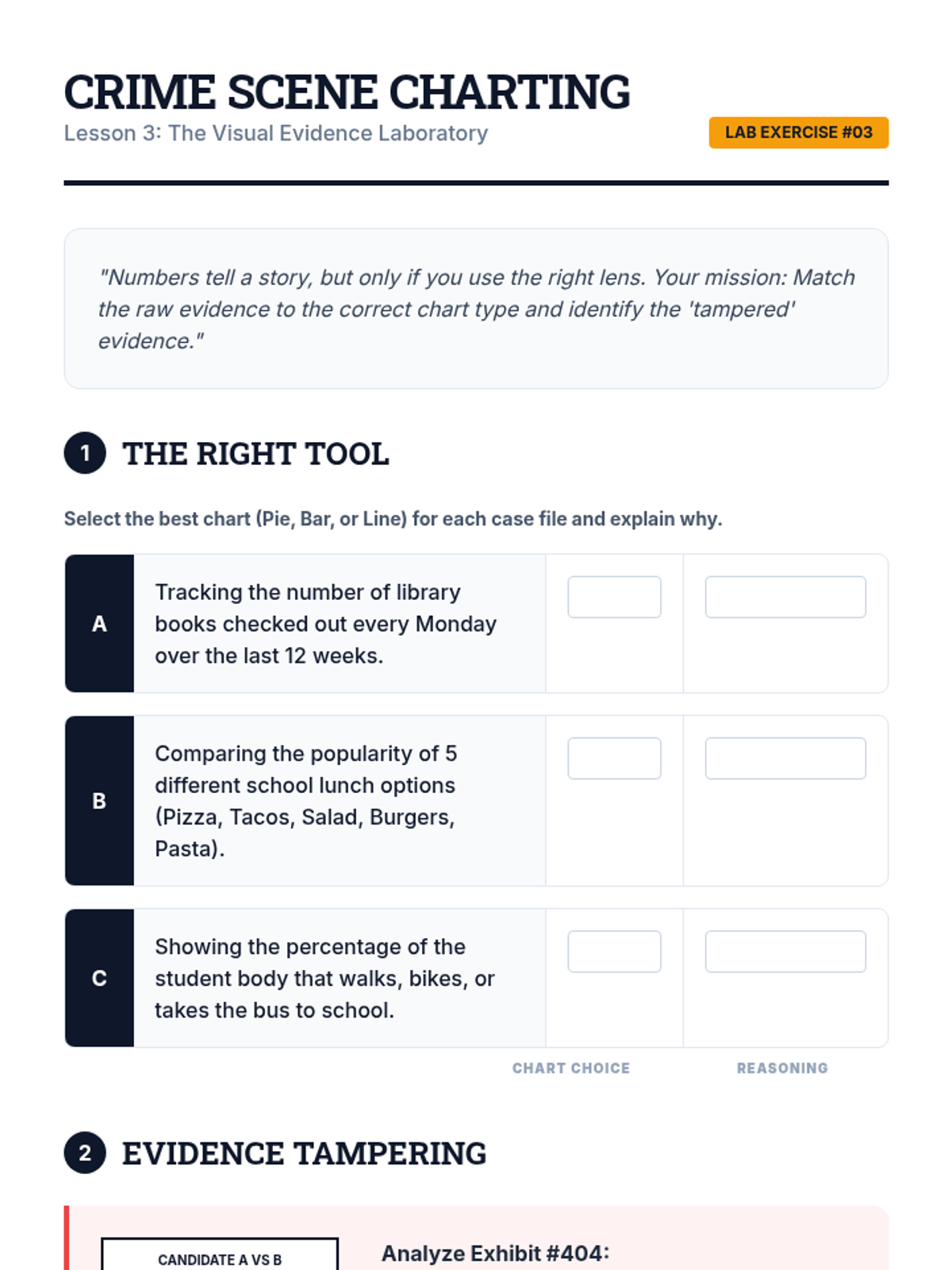
Focuses on transforming raw data into visual evidence. Students learn to choose the right chart for their 'case' and how to spot misleading visualizations.
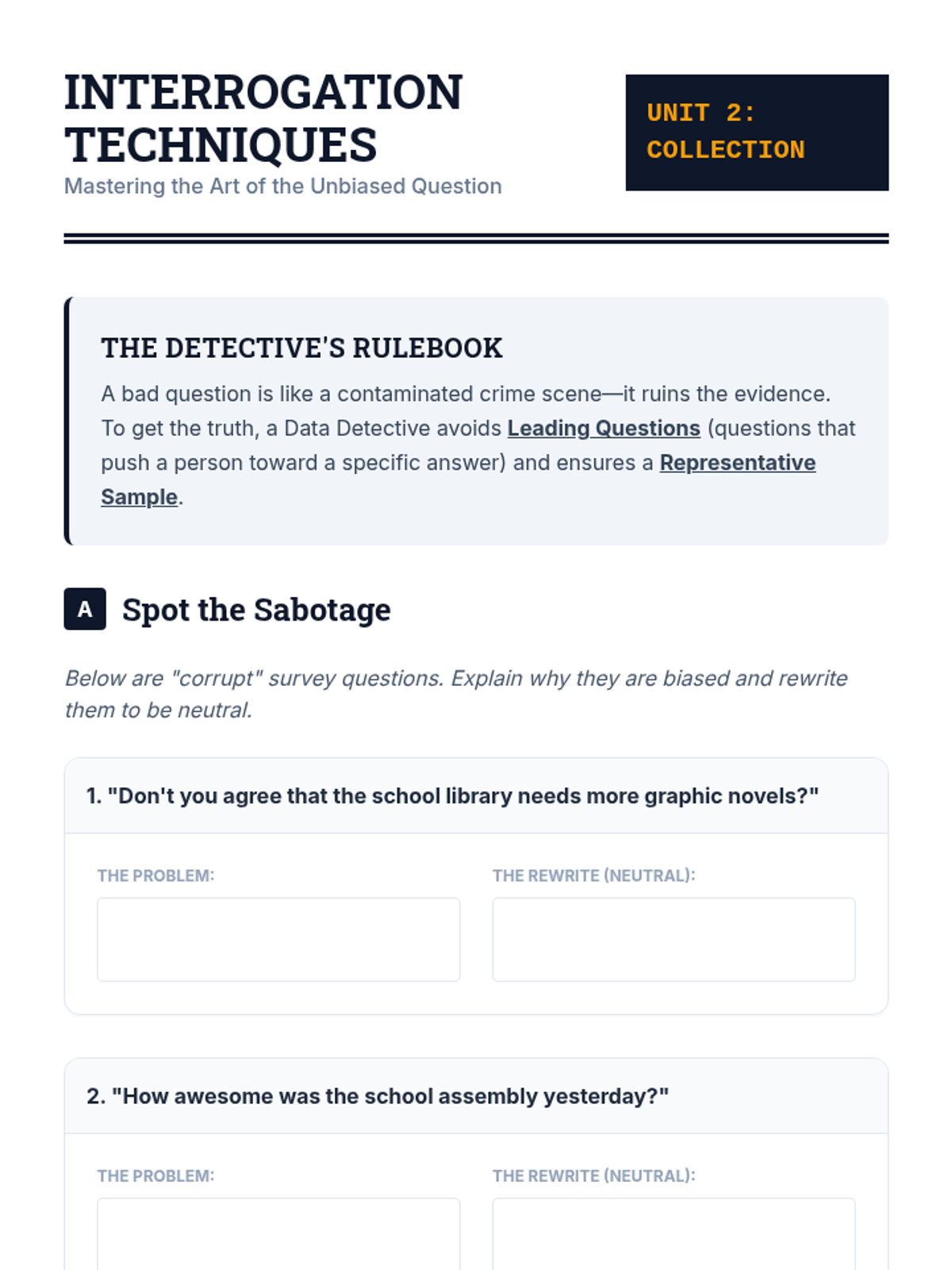
Students learn the art of gathering high-quality data through surveys and observations, focusing on creating unbiased questions and selecting representative samples.
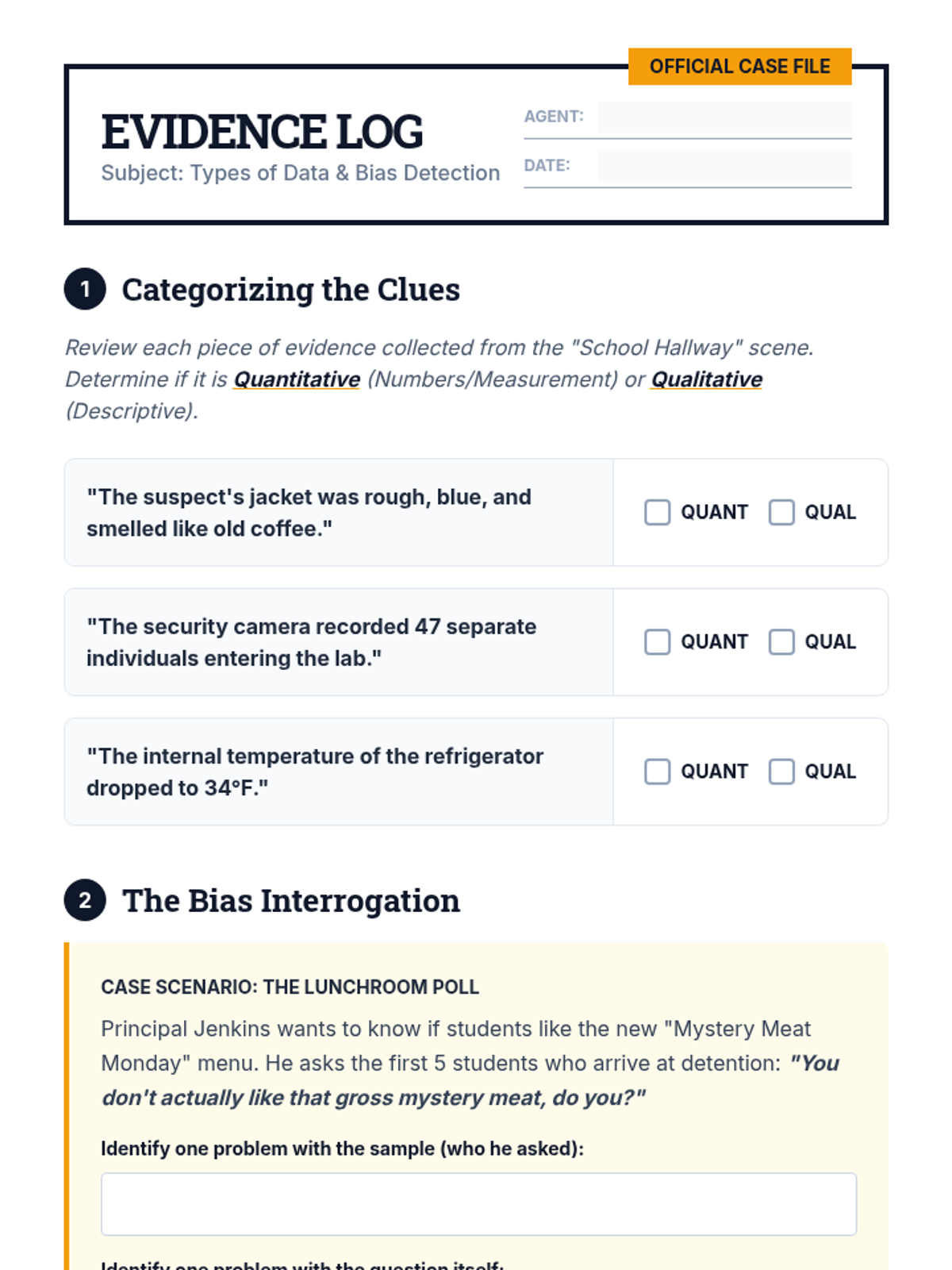
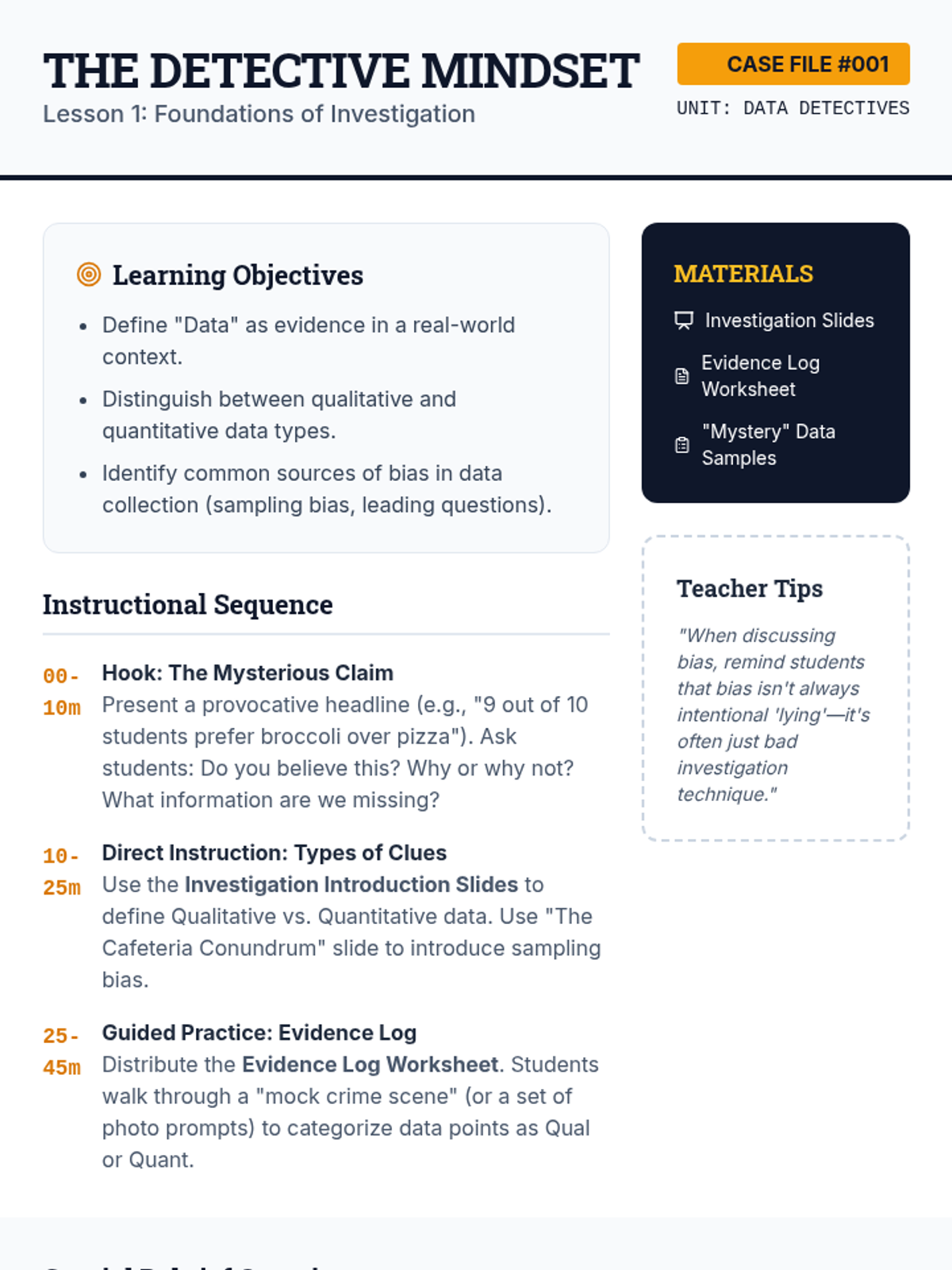
Students are introduced to the 'Data Detective' mindset, learning to distinguish between qualitative and quantitative data and identifying potential biases in datasets.
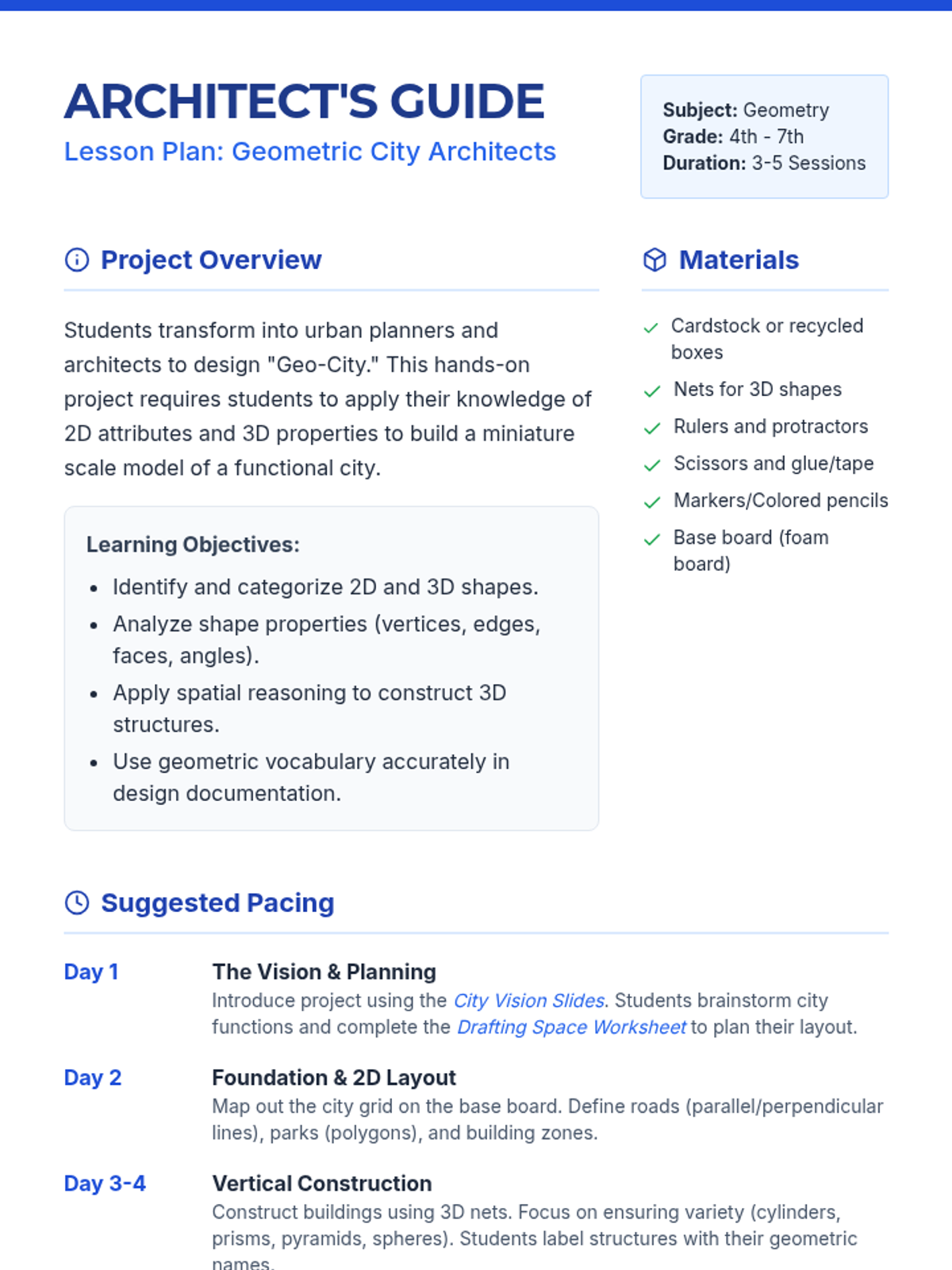
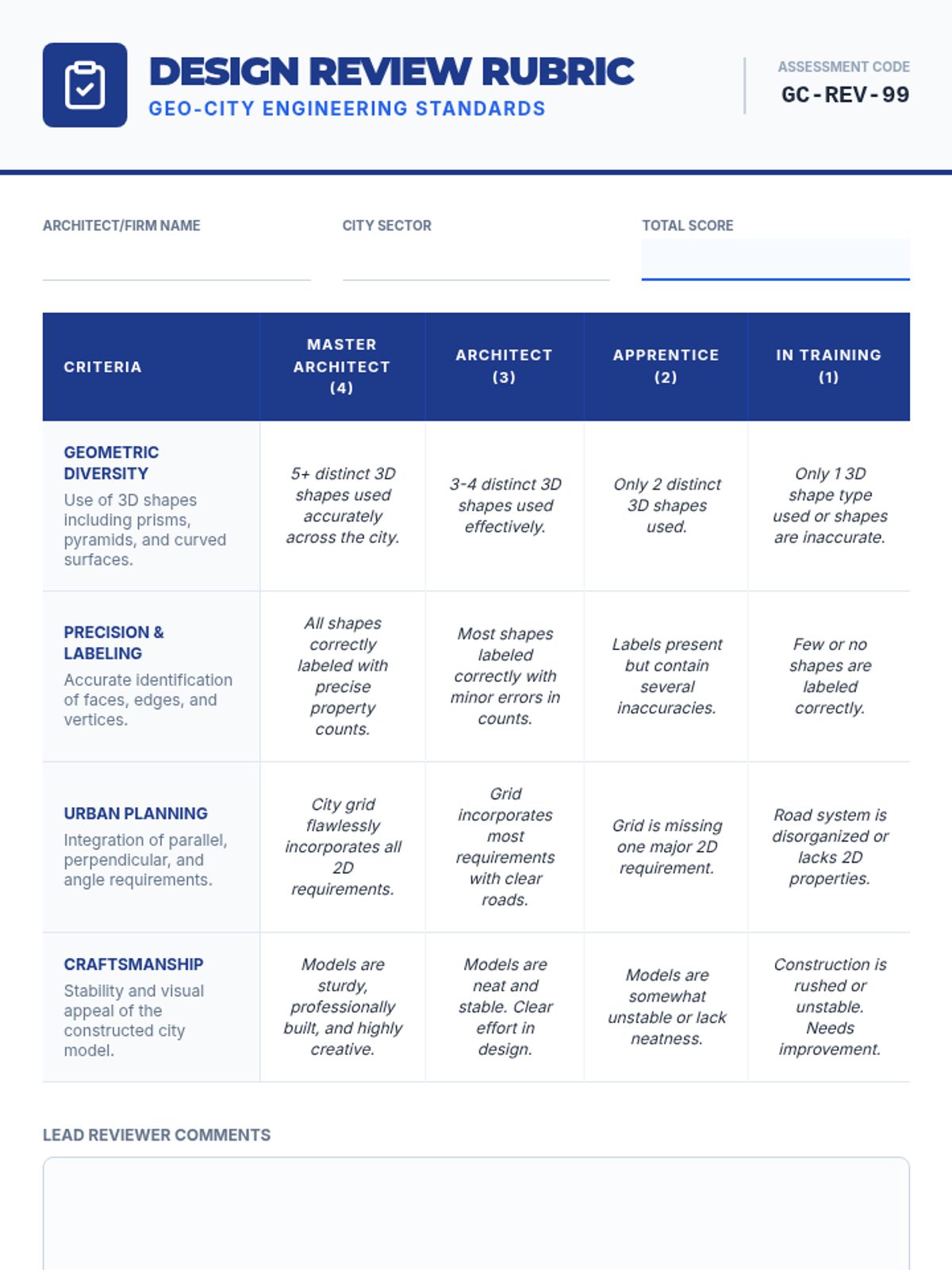
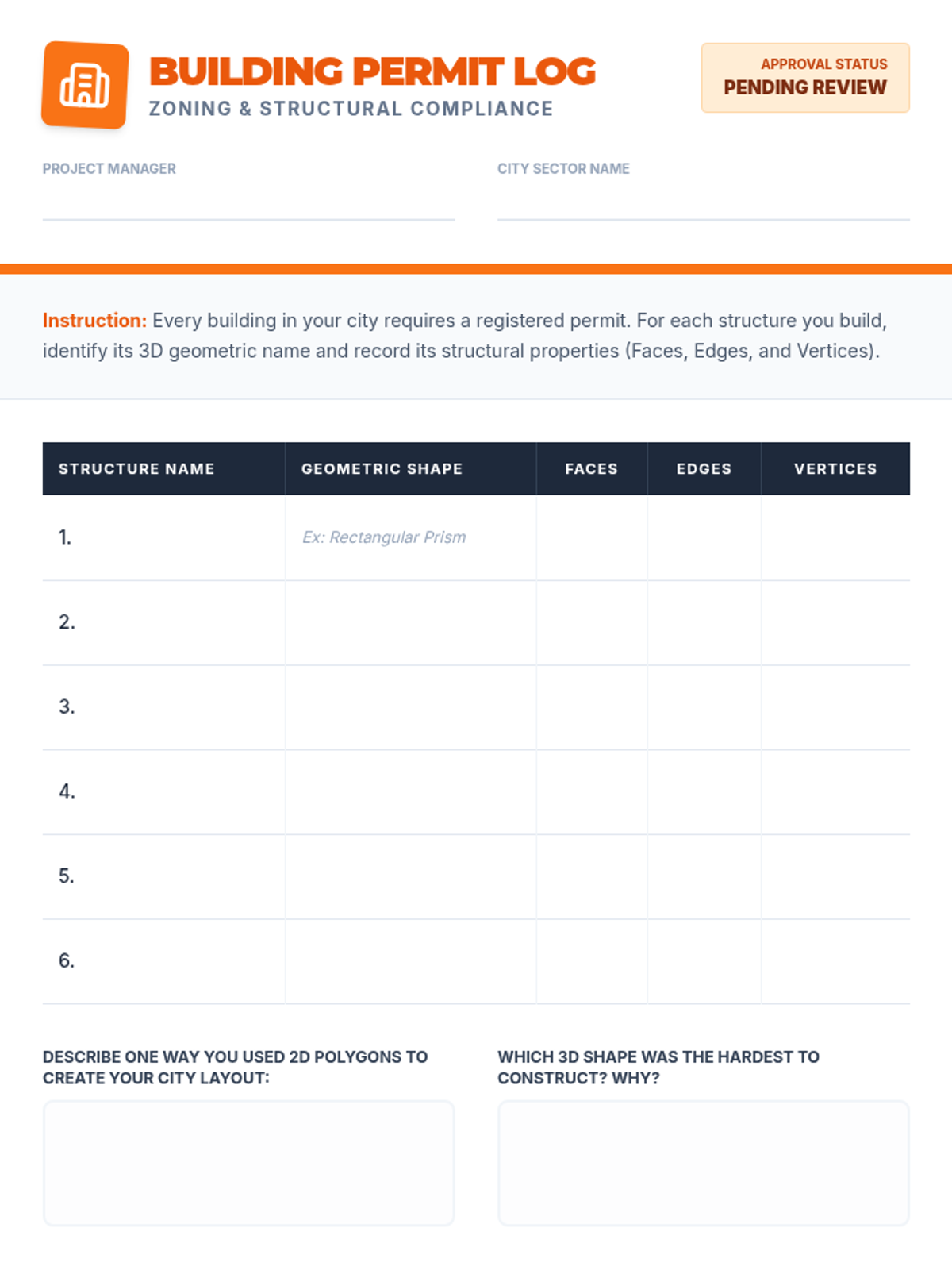
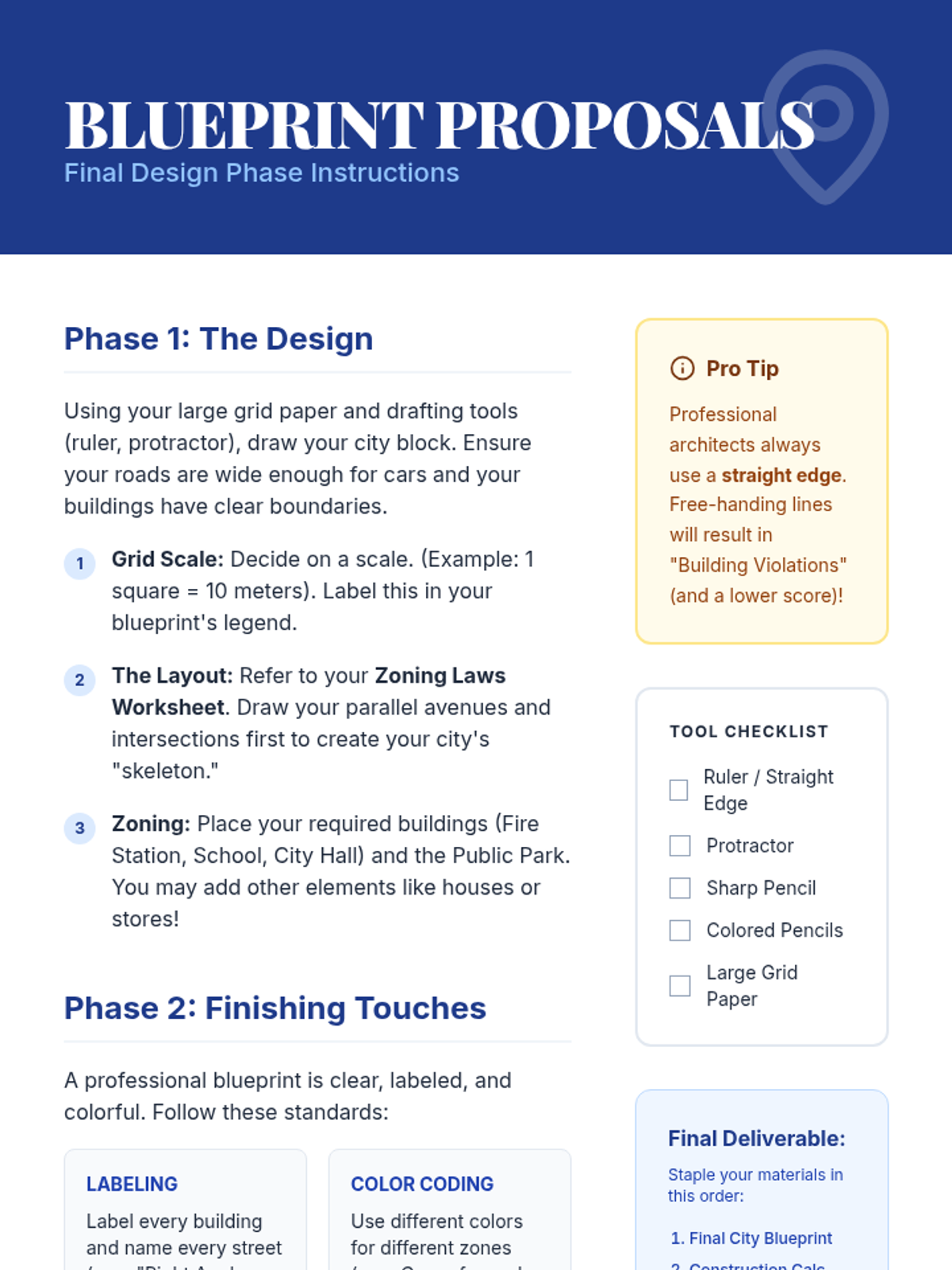
A project-based learning lesson where students design a miniature city using 2D and 3D geometric shapes to master geometry vocabulary and spatial reasoning.
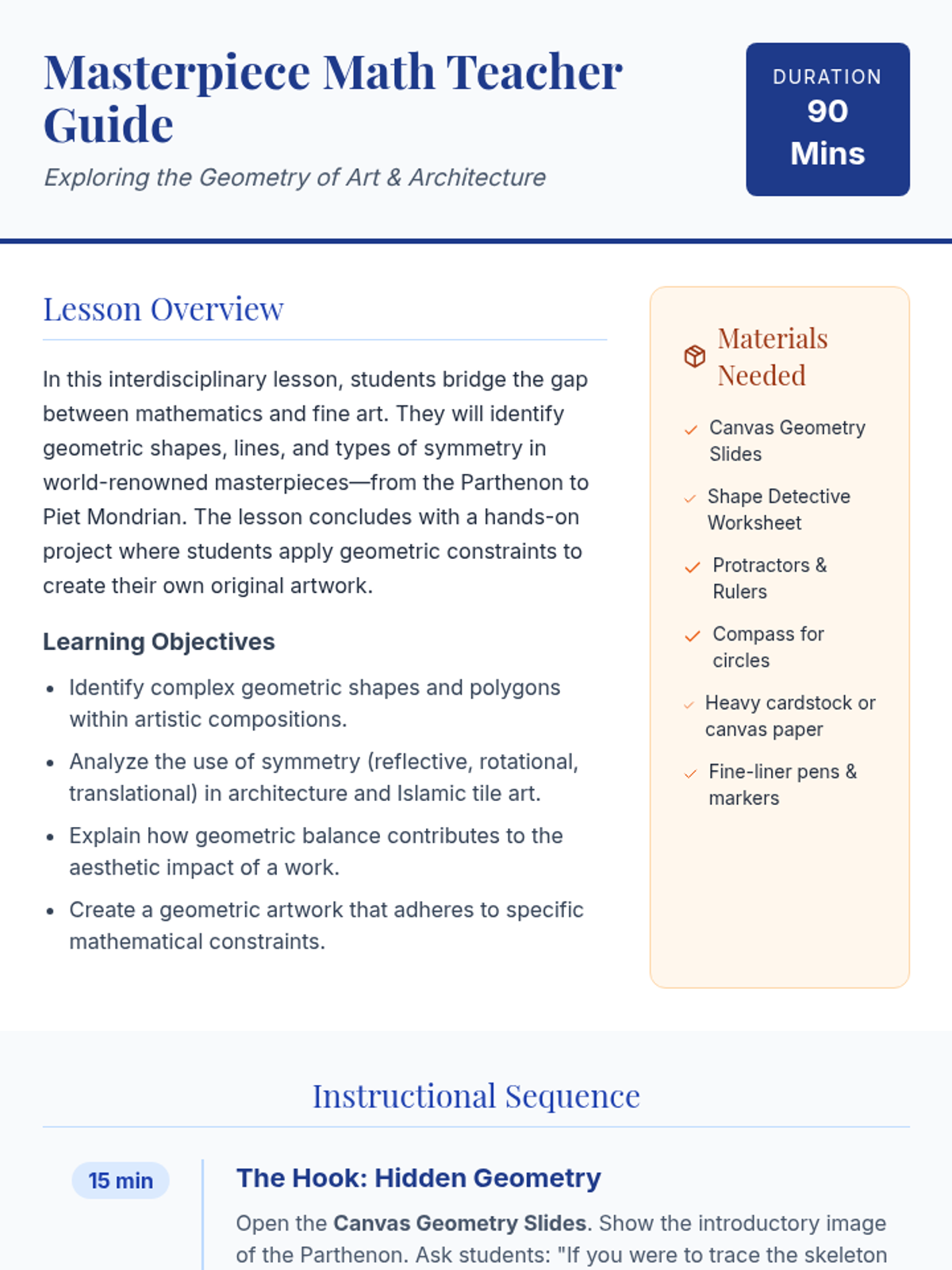
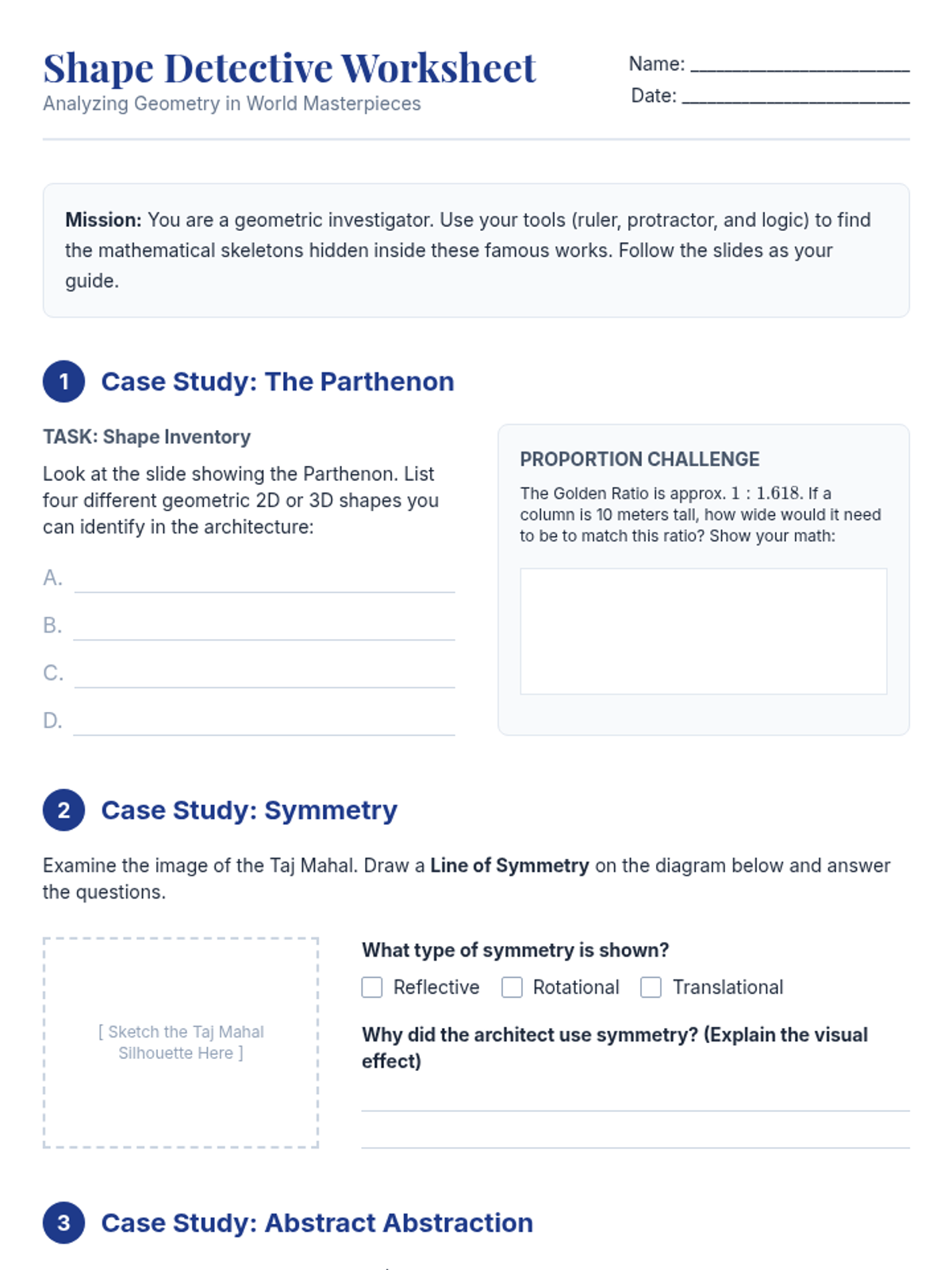
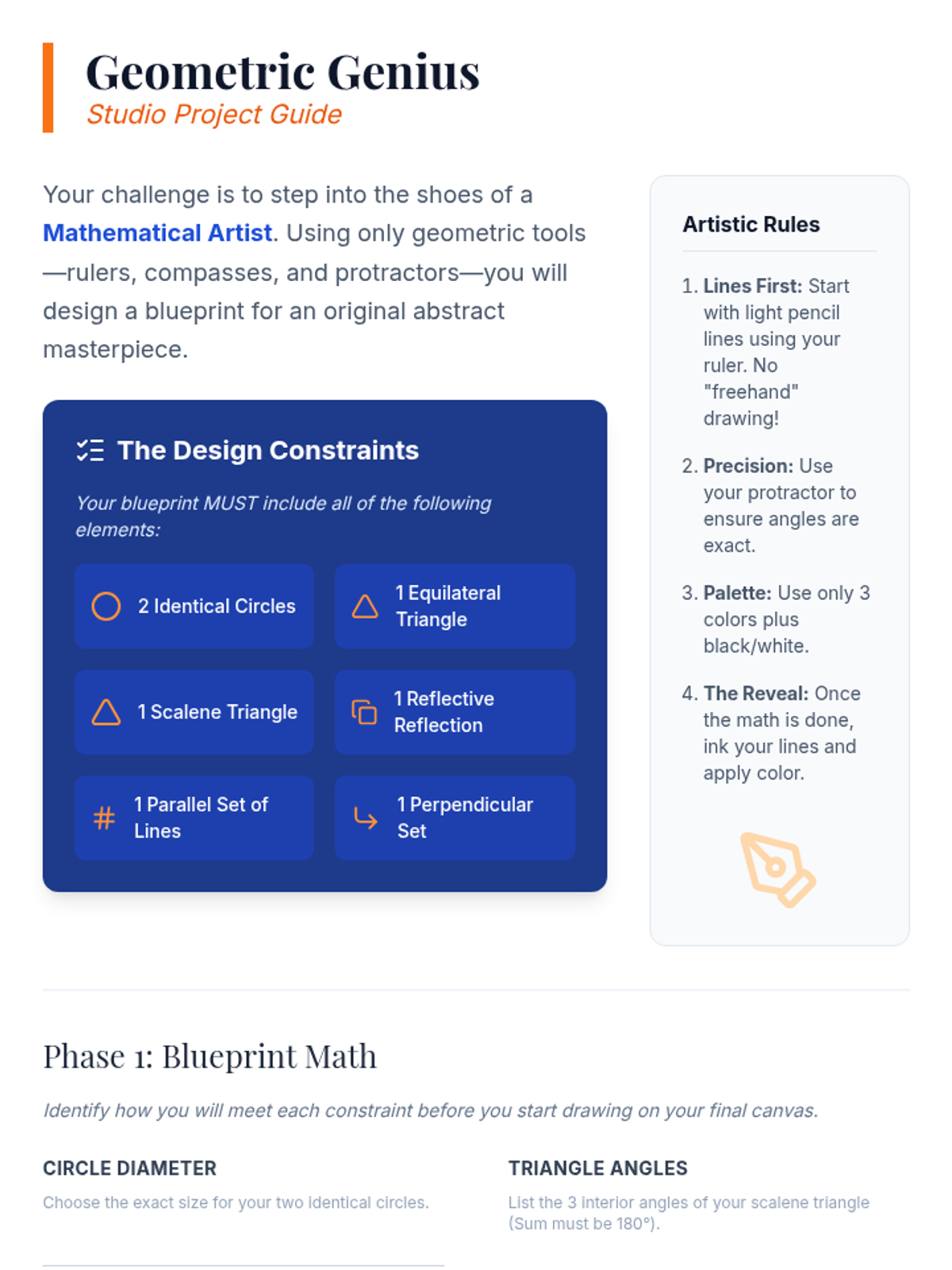
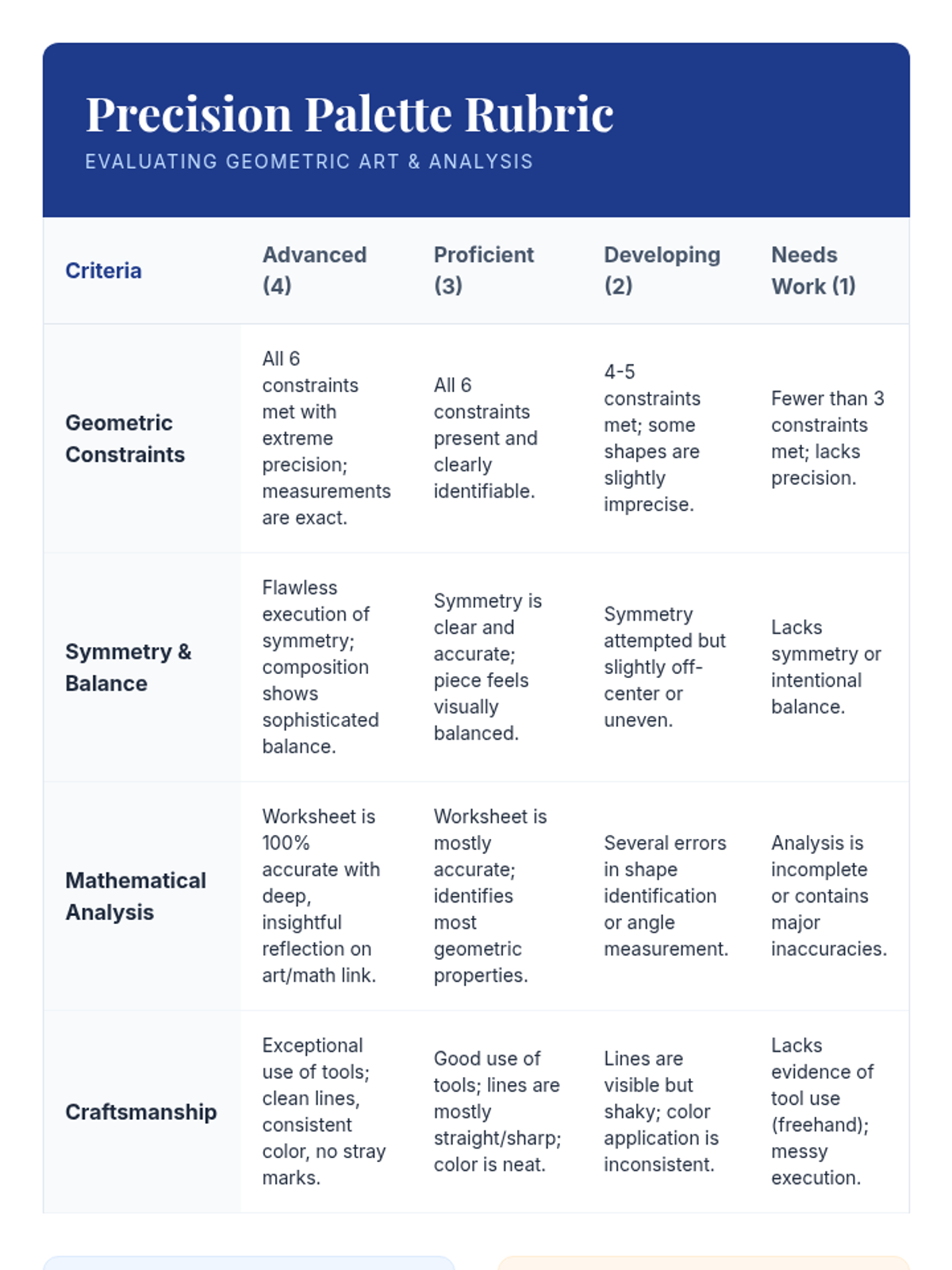
An interdisciplinary exploration of geometry in world-famous art and architecture, where students analyze symmetry and shape before creating their own geometric masterpieces.
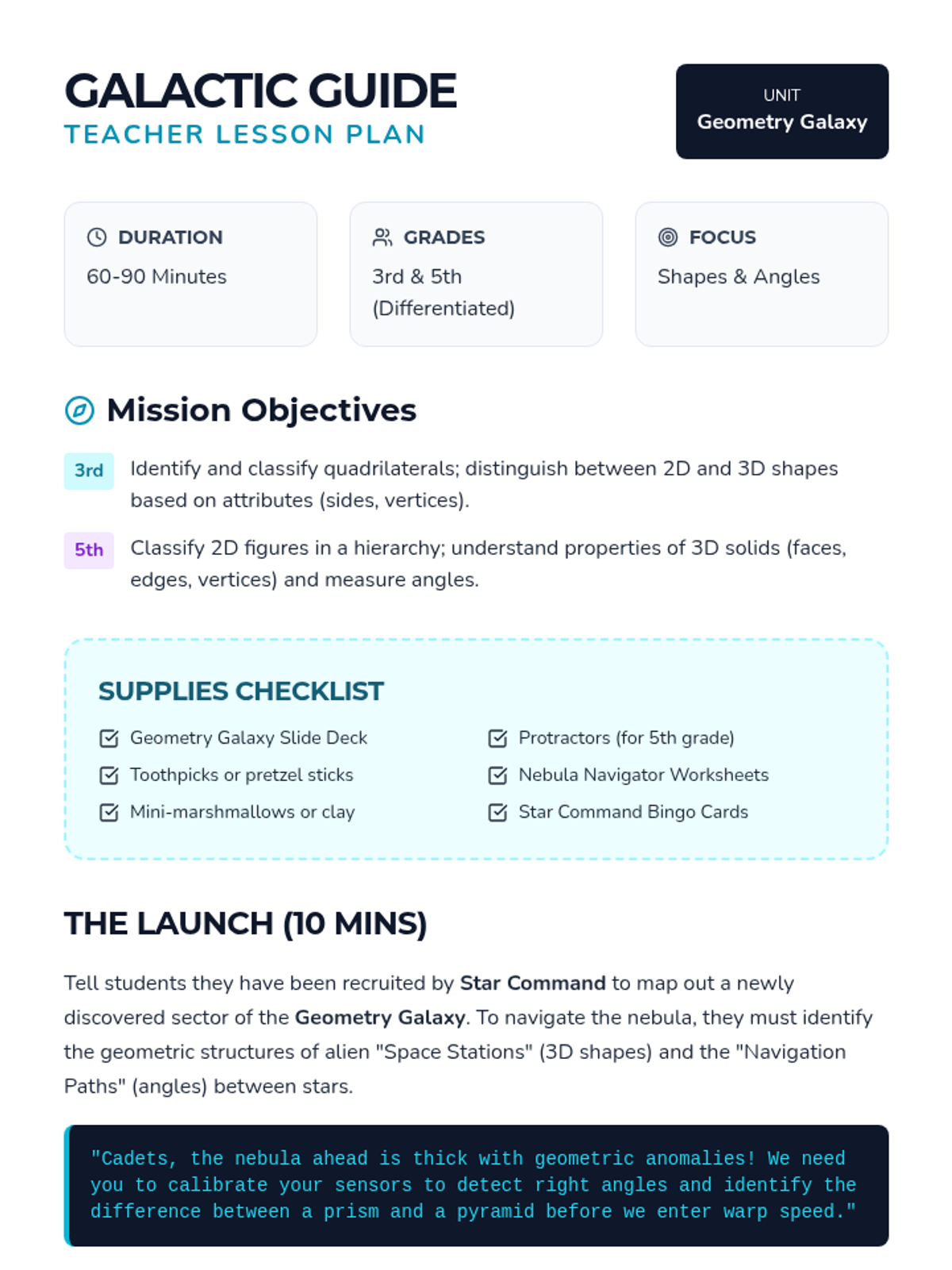
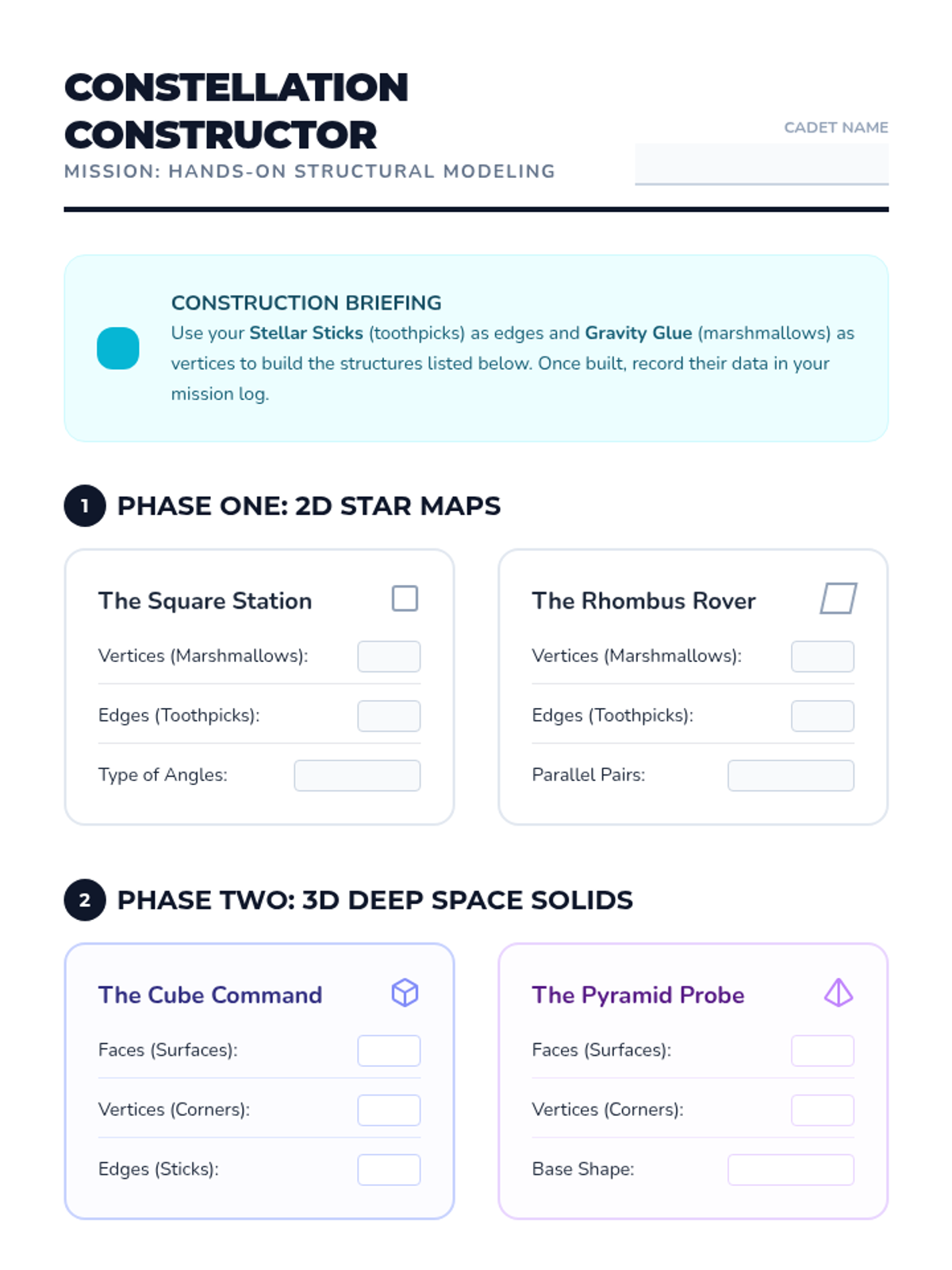
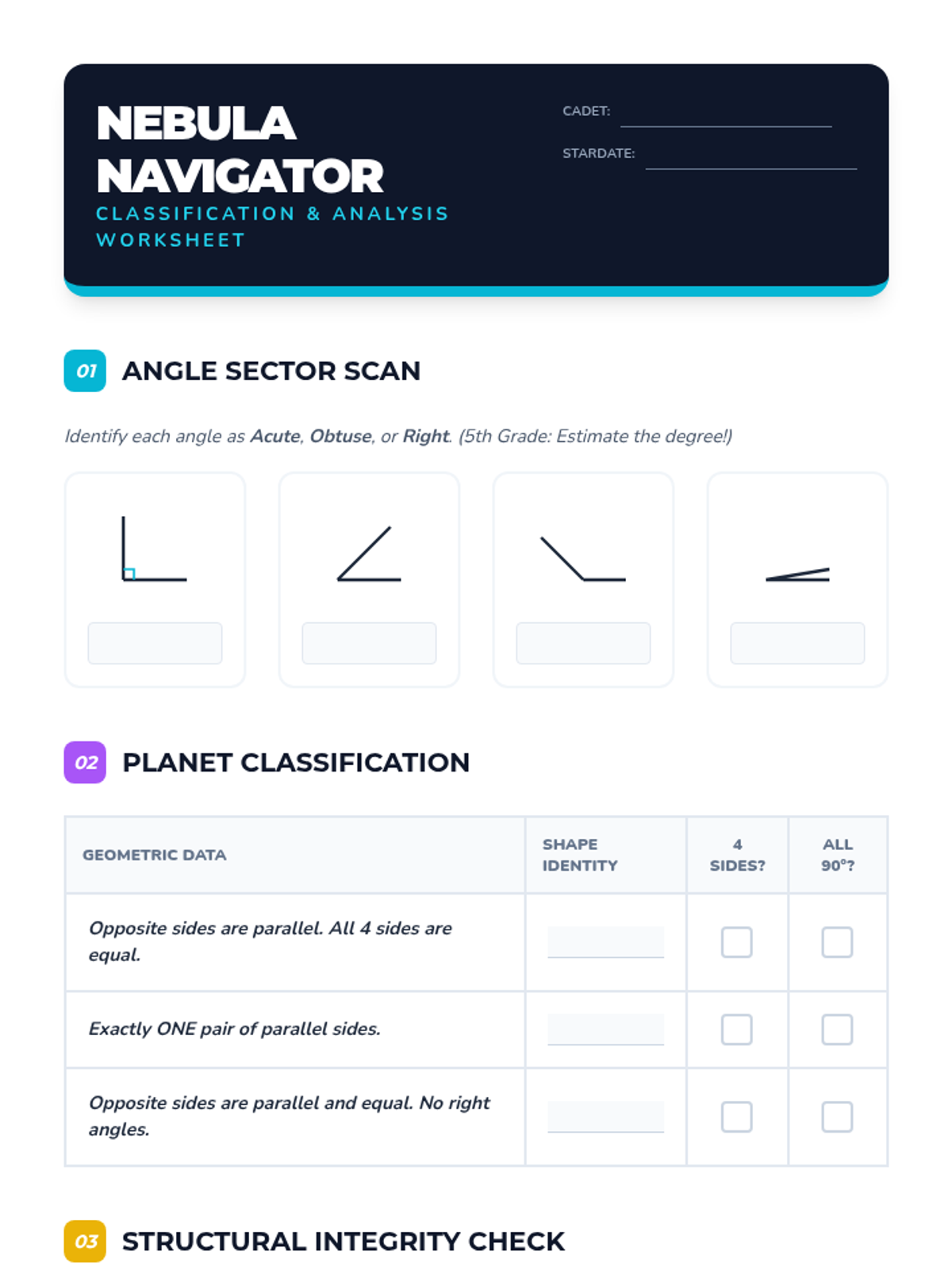
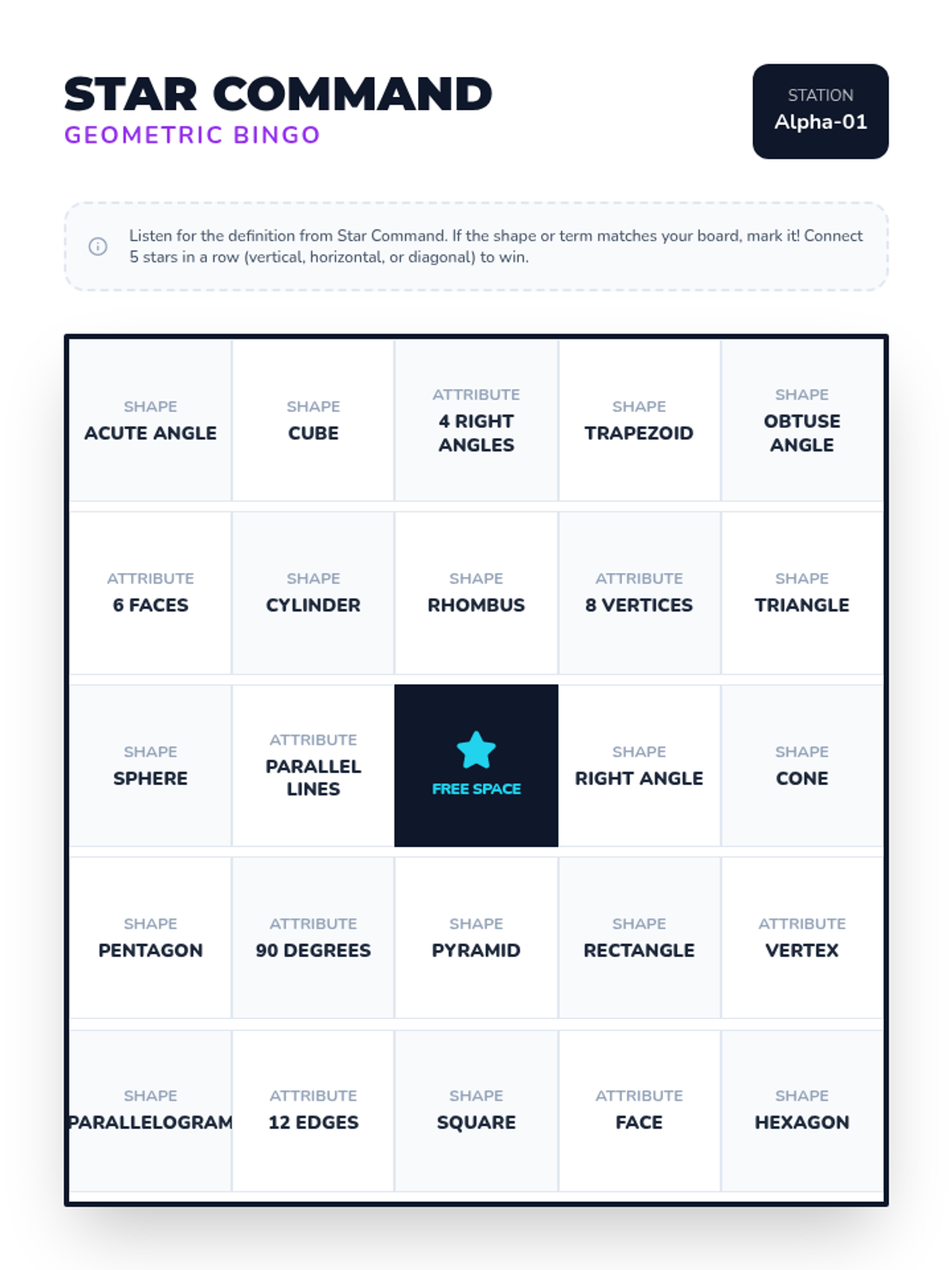
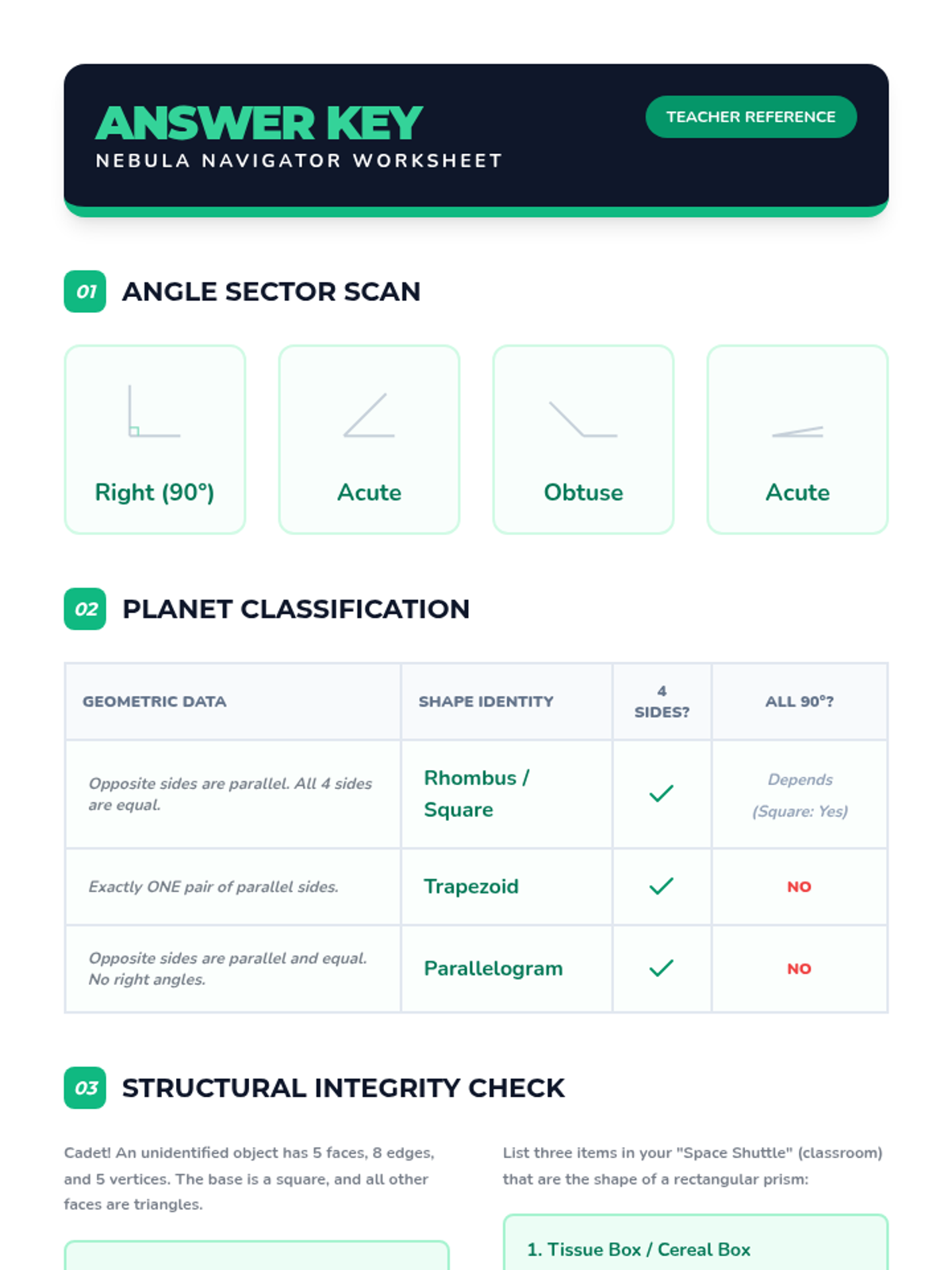
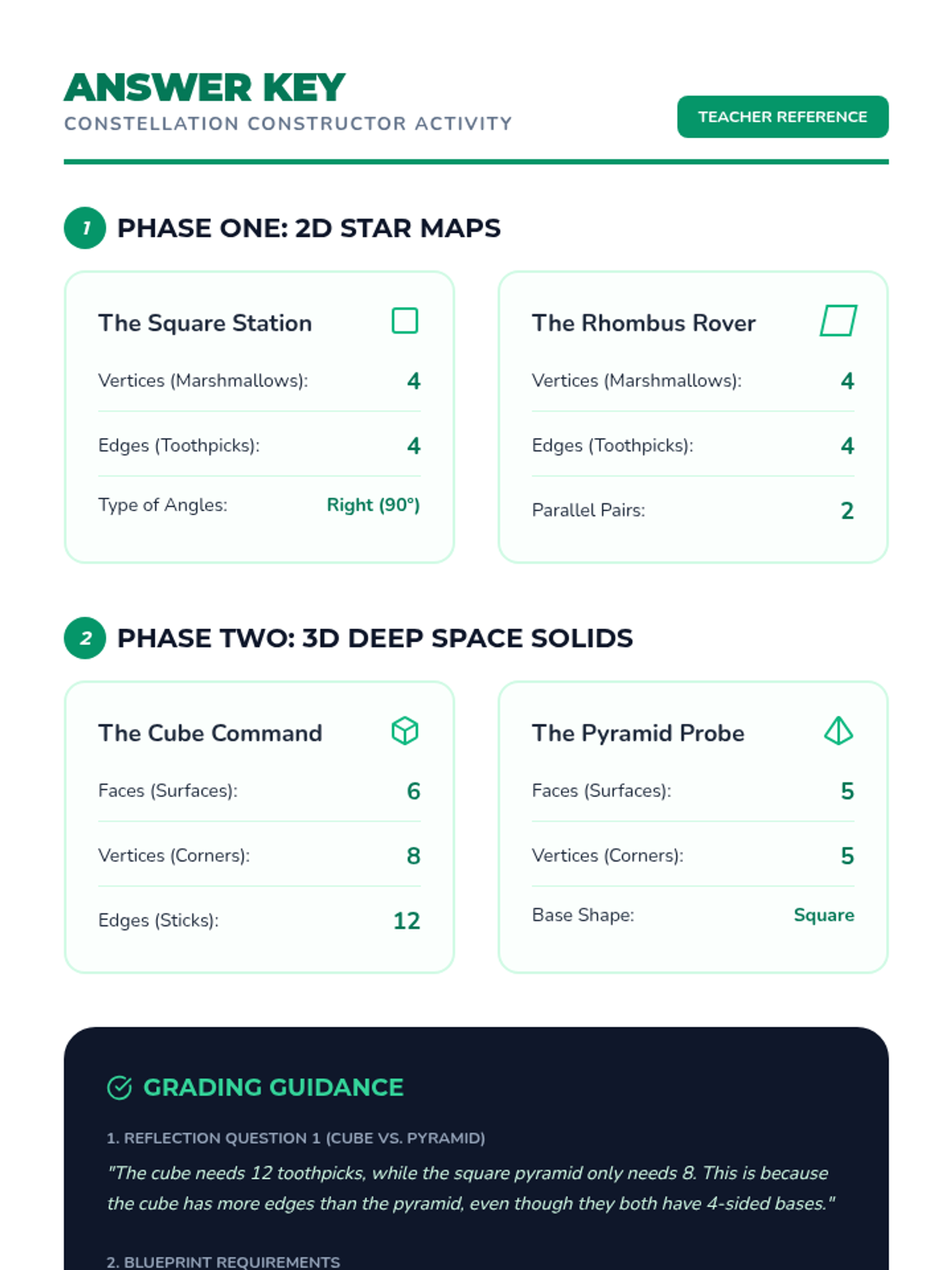
A comprehensive geometry lesson that explores 2D and 3D shapes and angles through a space exploration lens, designed for 3rd and 5th-grade students. Students will navigate the 'Geometry Galaxy' to identify, classify, and build geometric figures using spatial reasoning.
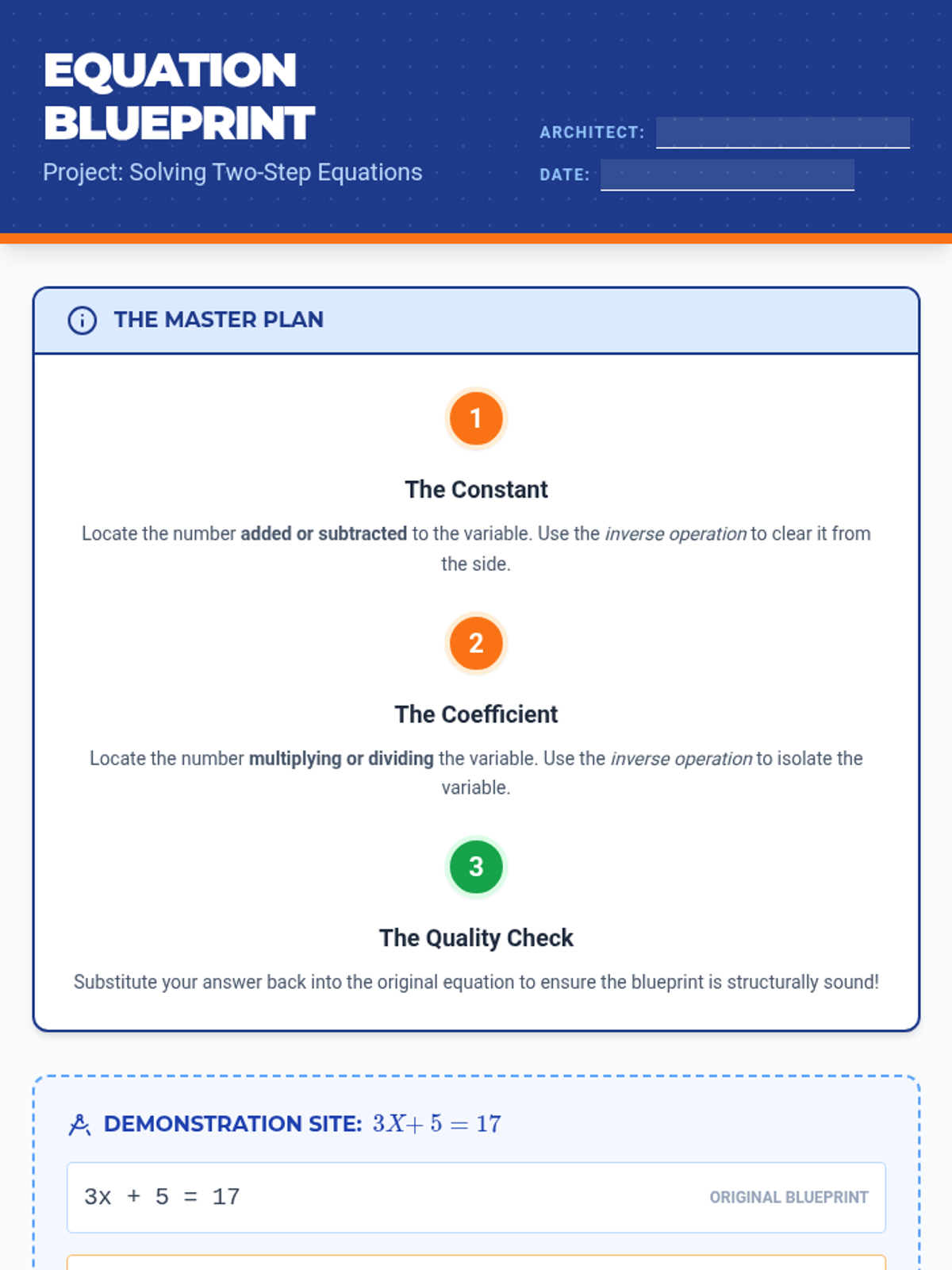
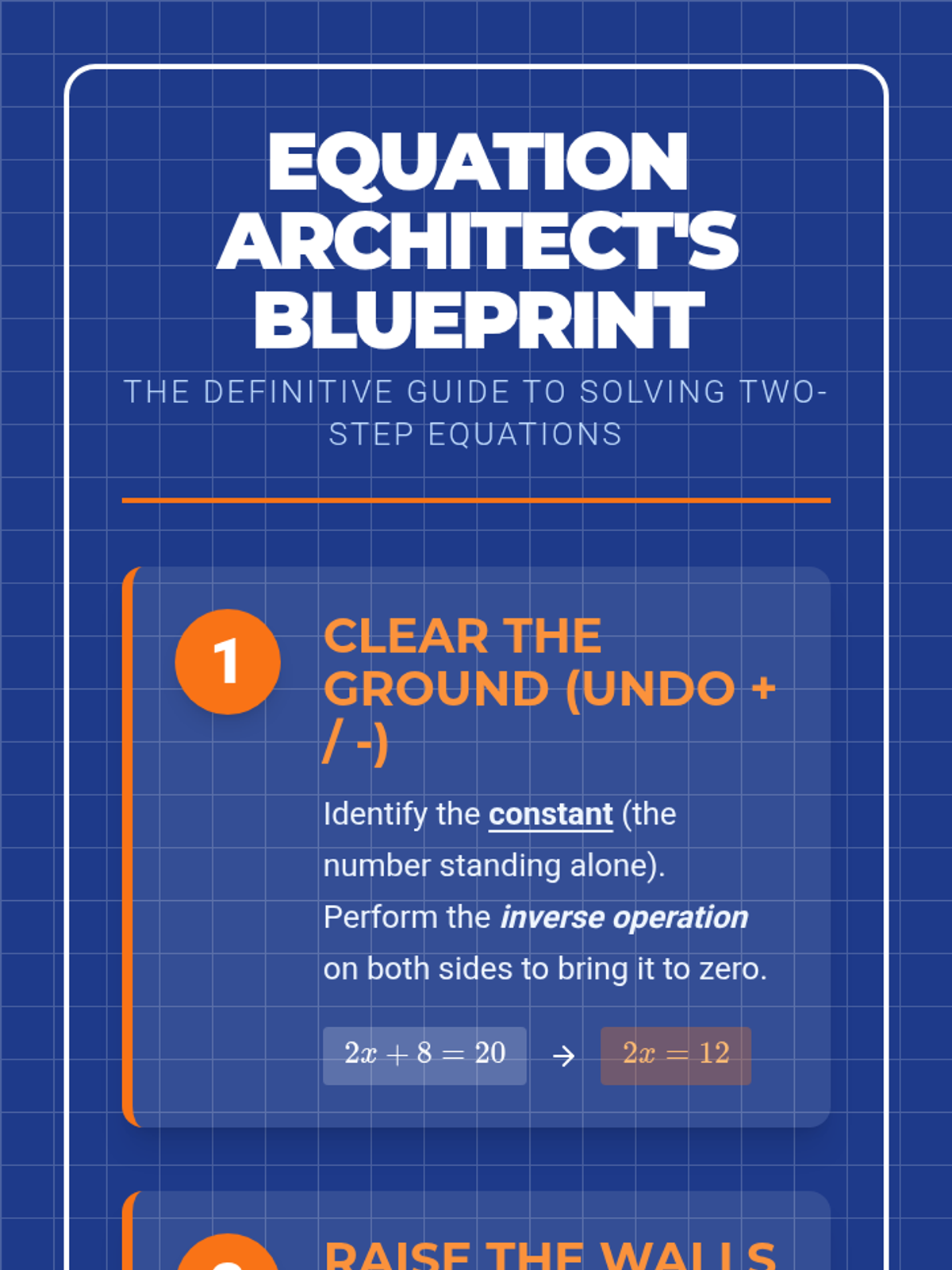
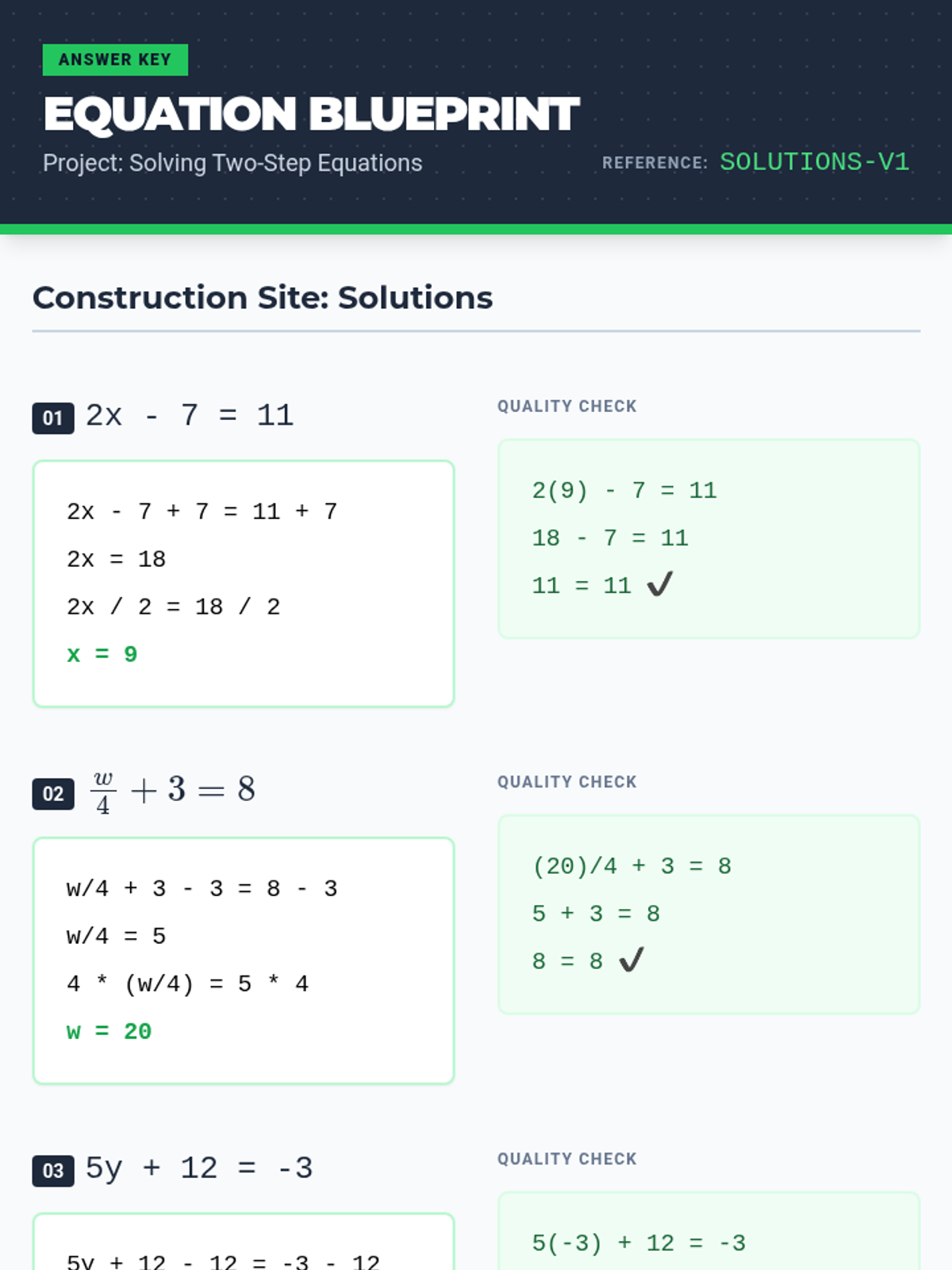
A foundational lesson on solving two-step equations using inverse operations, framed through a construction and blueprint theme. Students will learn to 'deconstruct' equations to find the value of the variable.
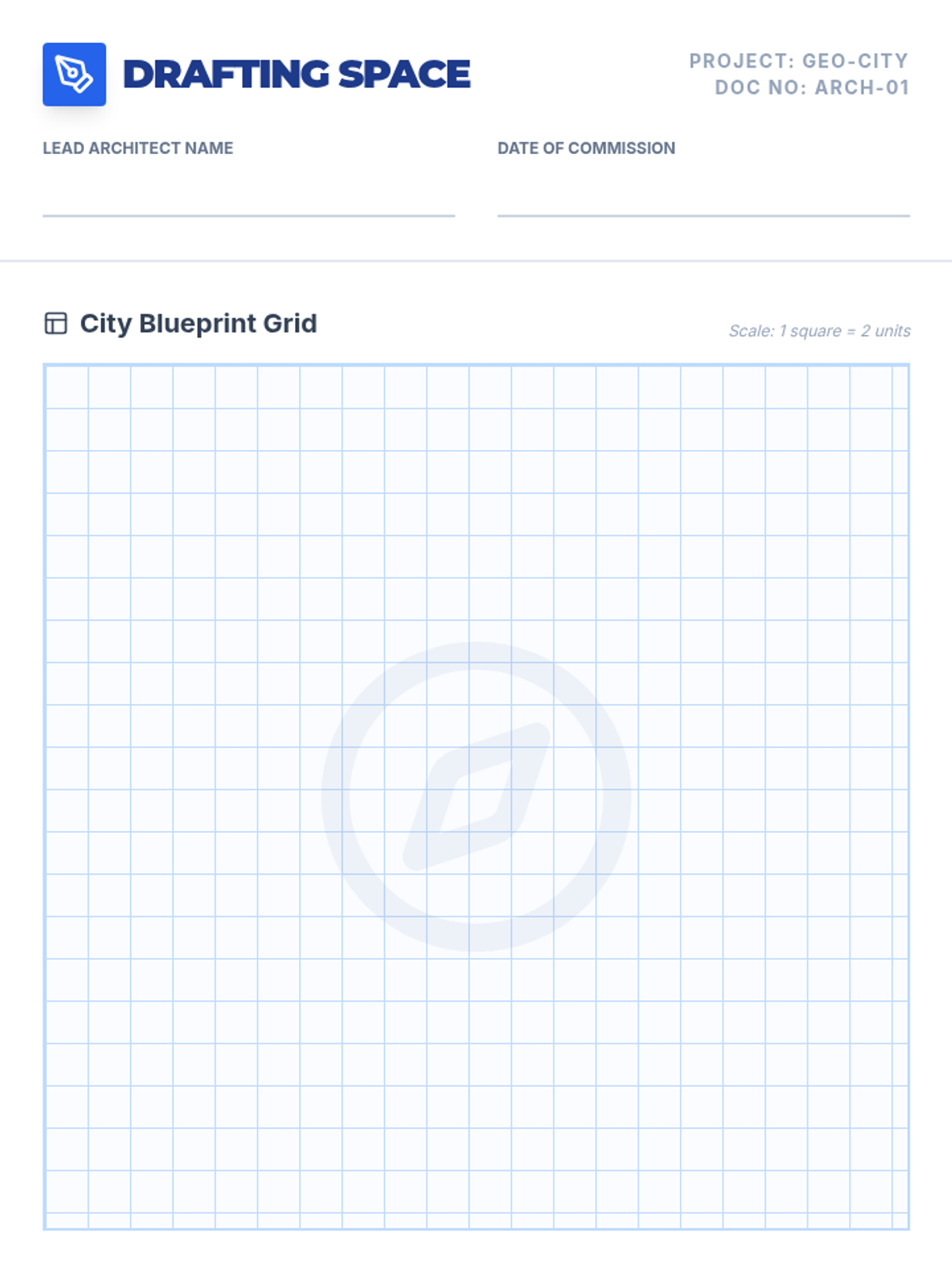
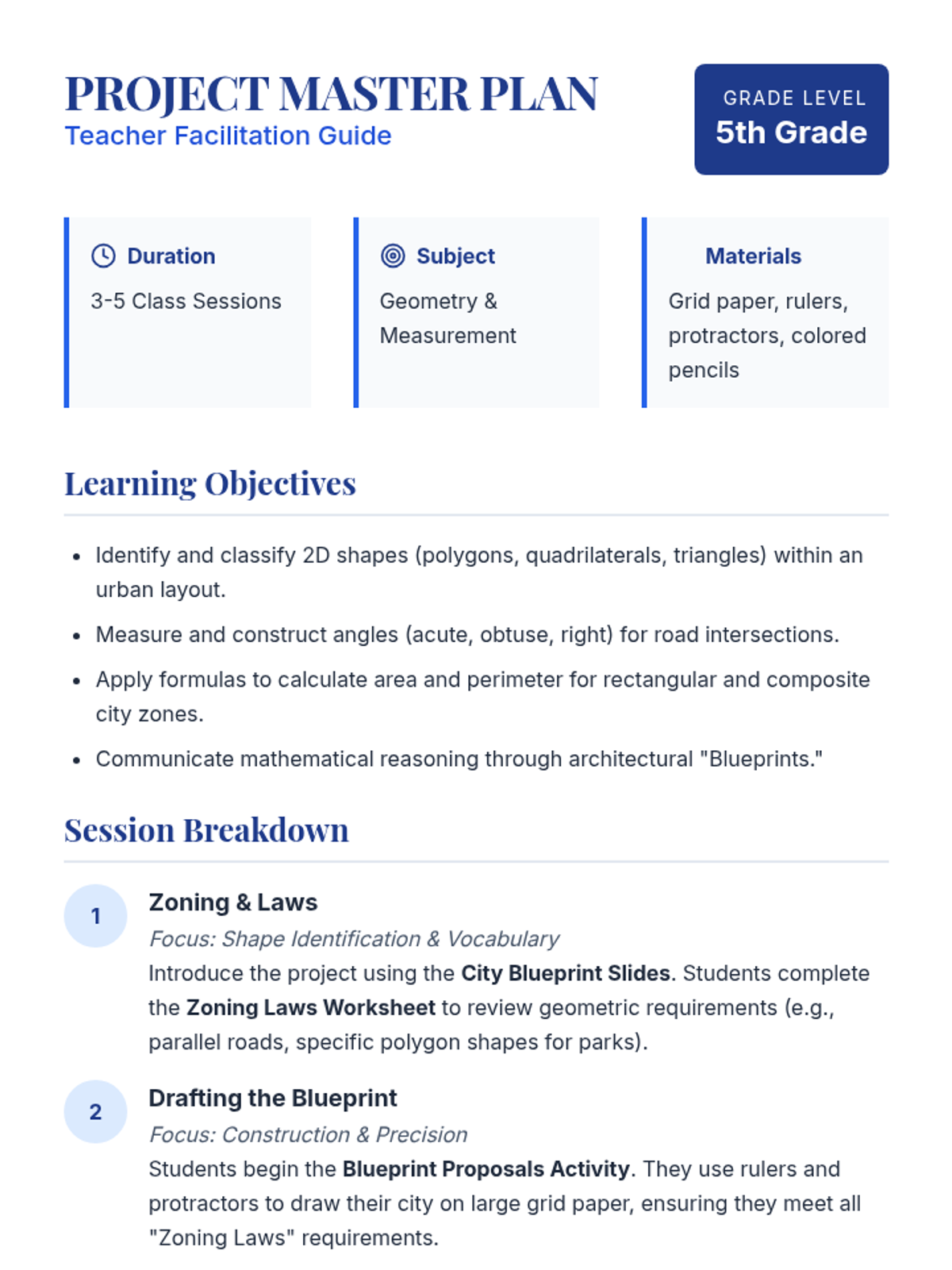
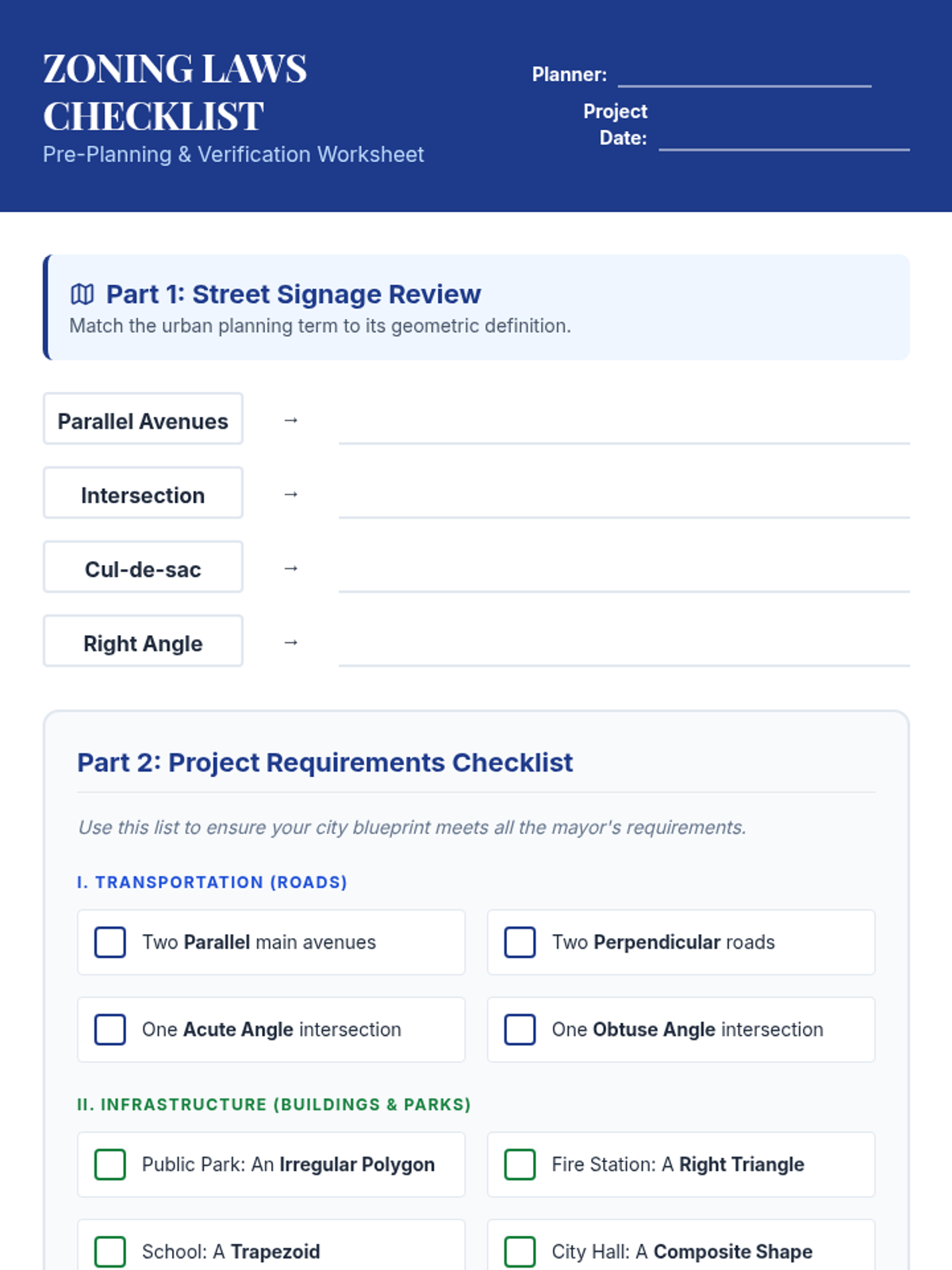
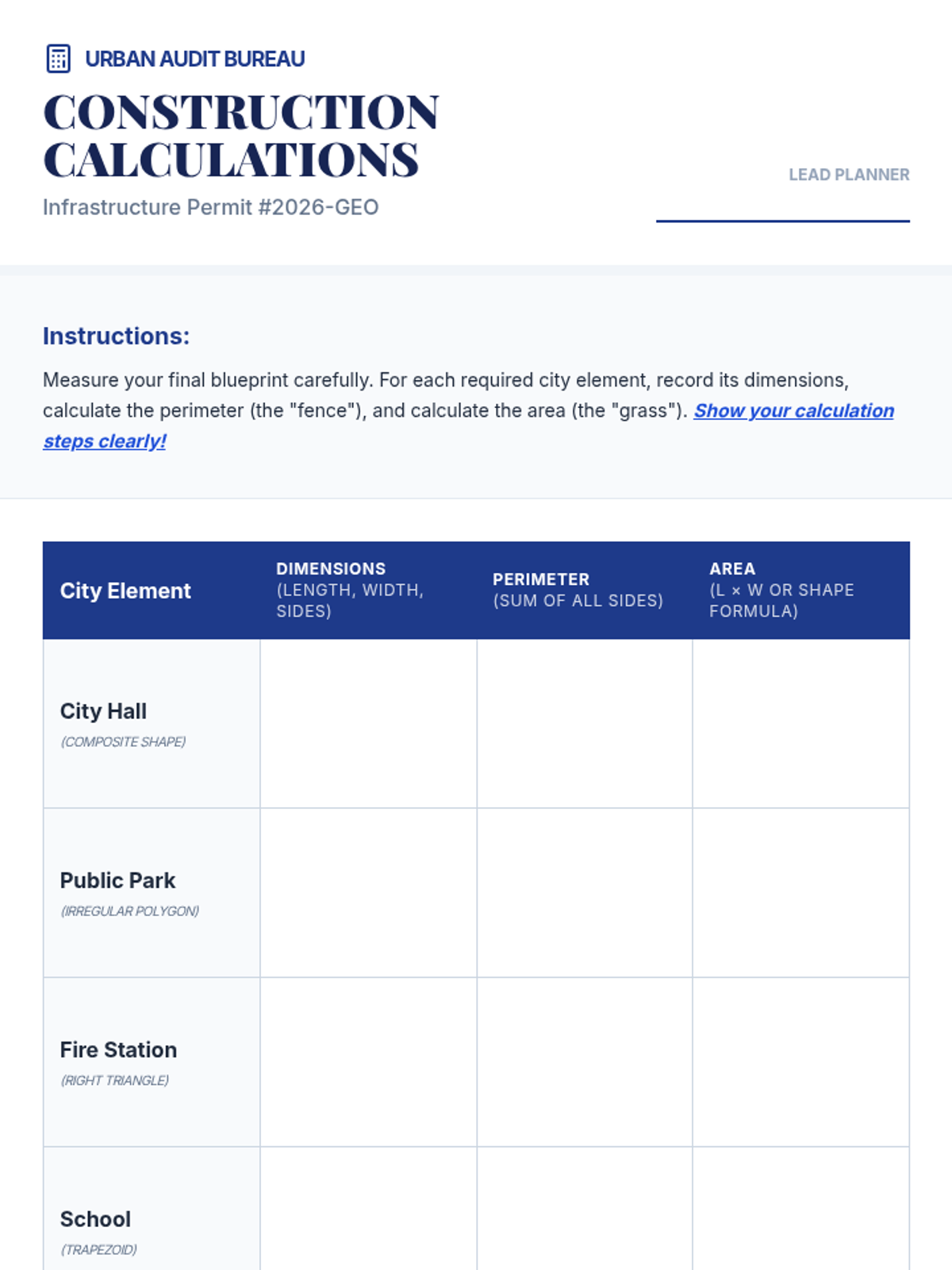
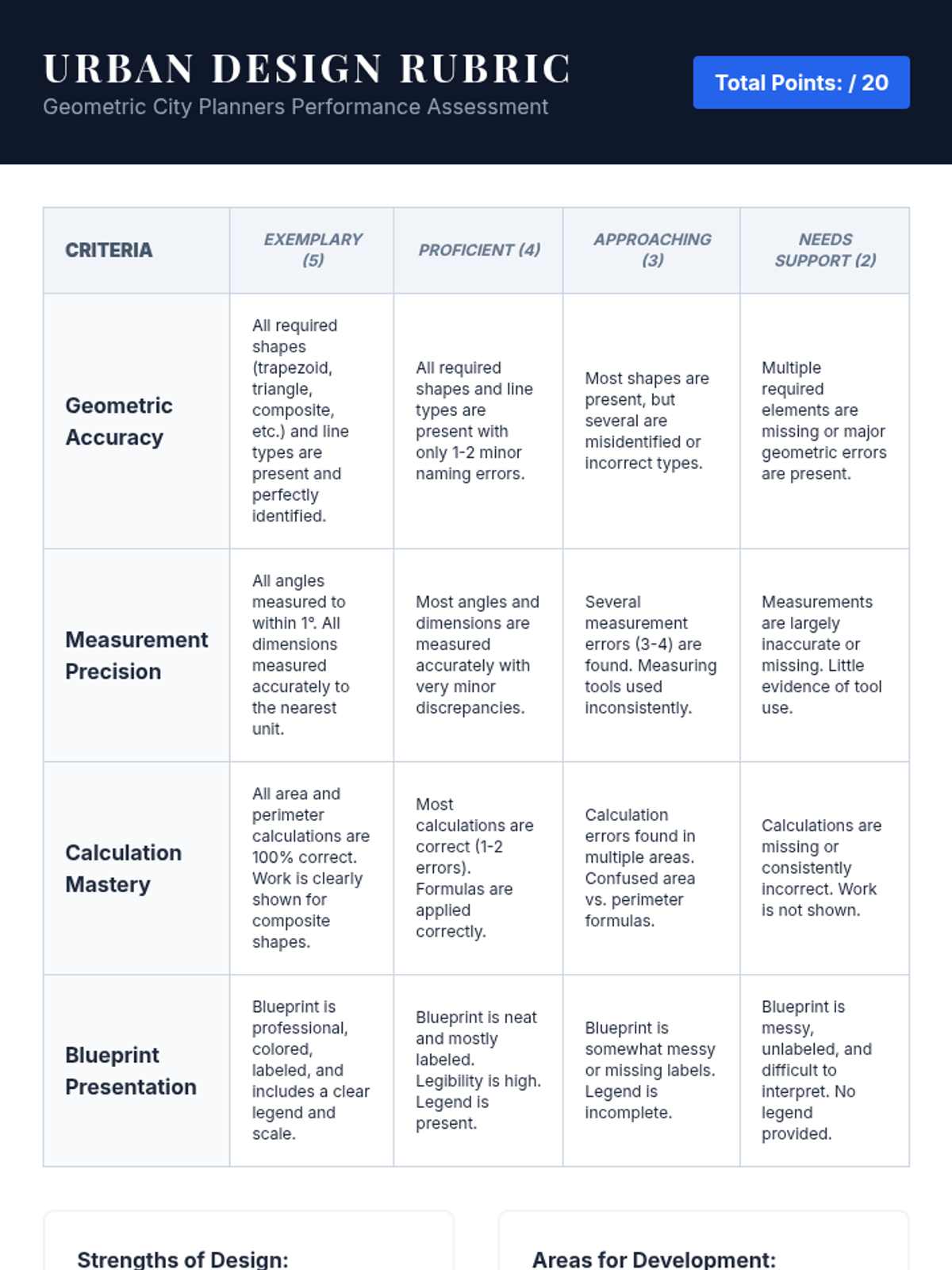
A hands-on geometry project where students act as urban planners to design a city using specific geometric shapes, angles, and area/perimeter calculations. Students will bridge the gap between abstract geometry and real-world architecture.
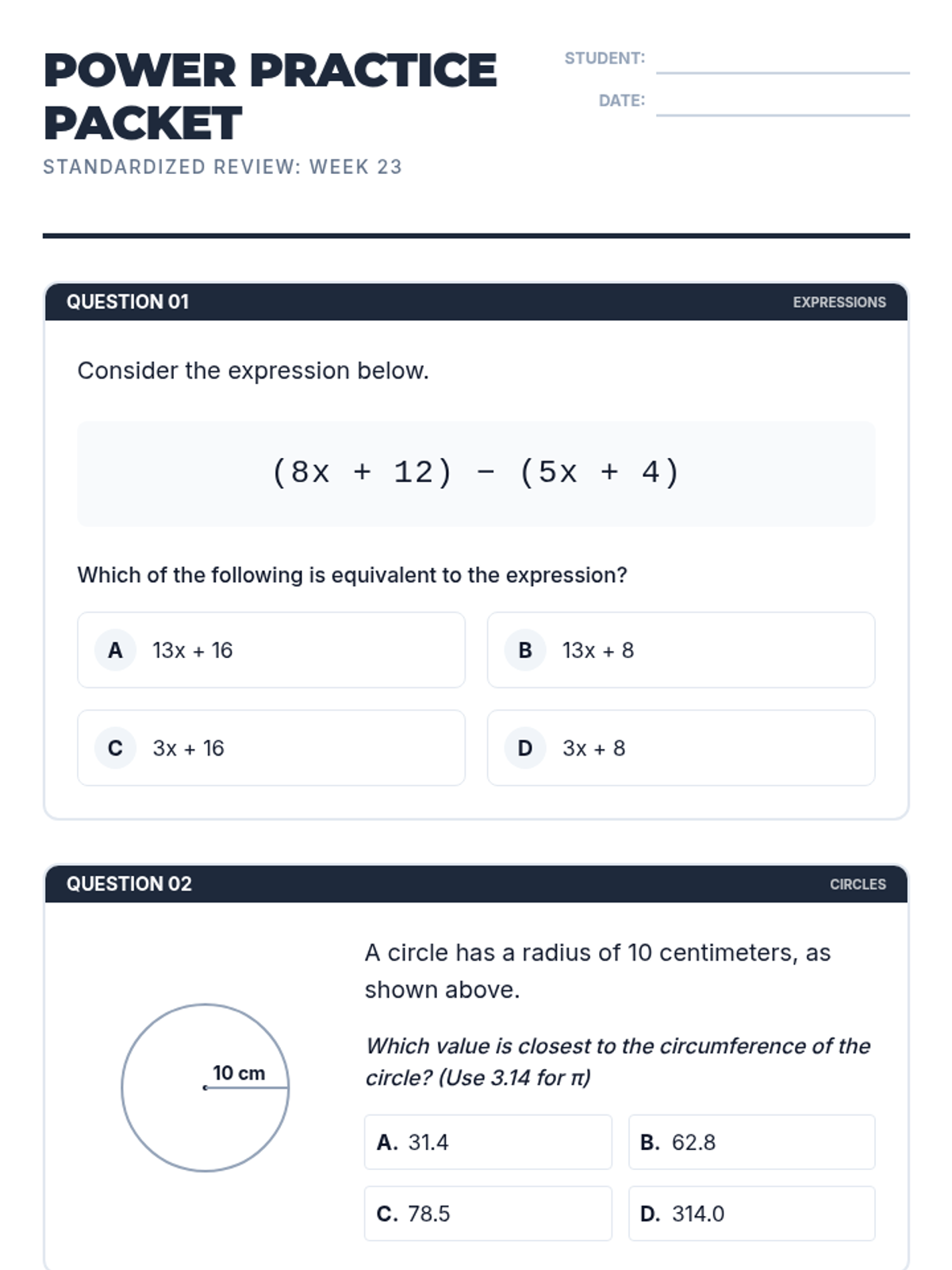
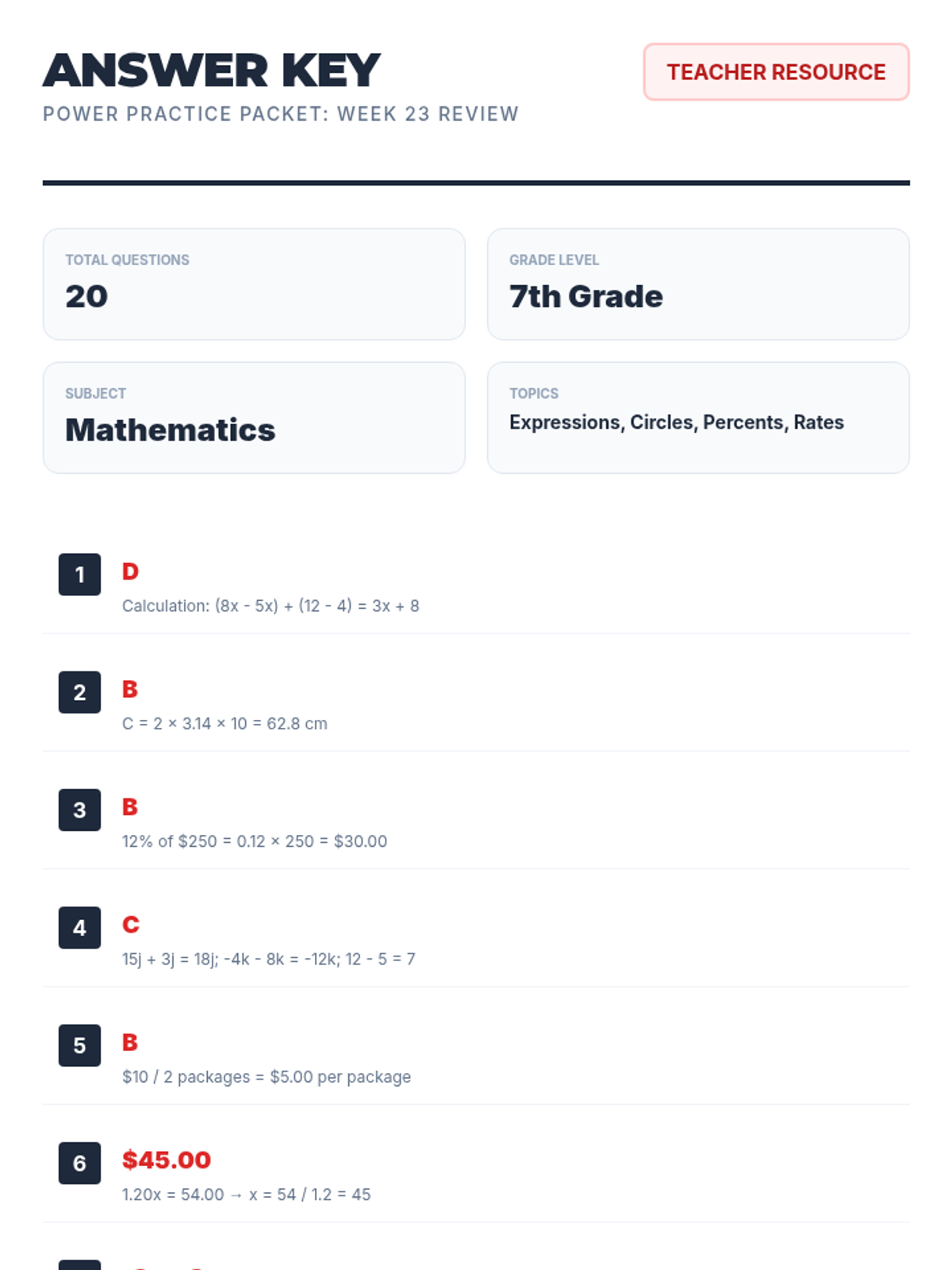
A comprehensive 20-question review packet and answer key covering 7th-grade math topics including linear expressions, circle circumference, percentage word problems, and unit rates.
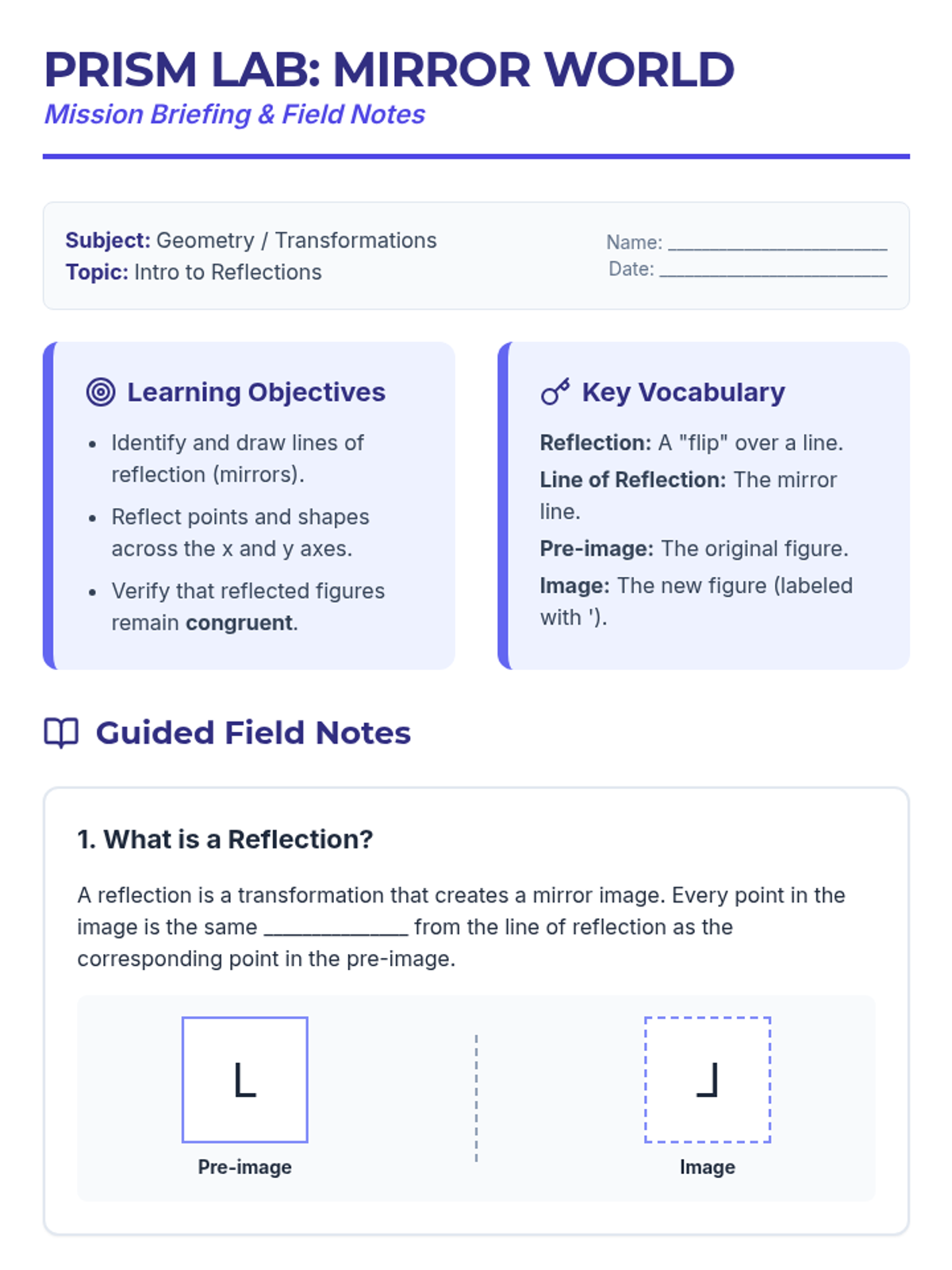
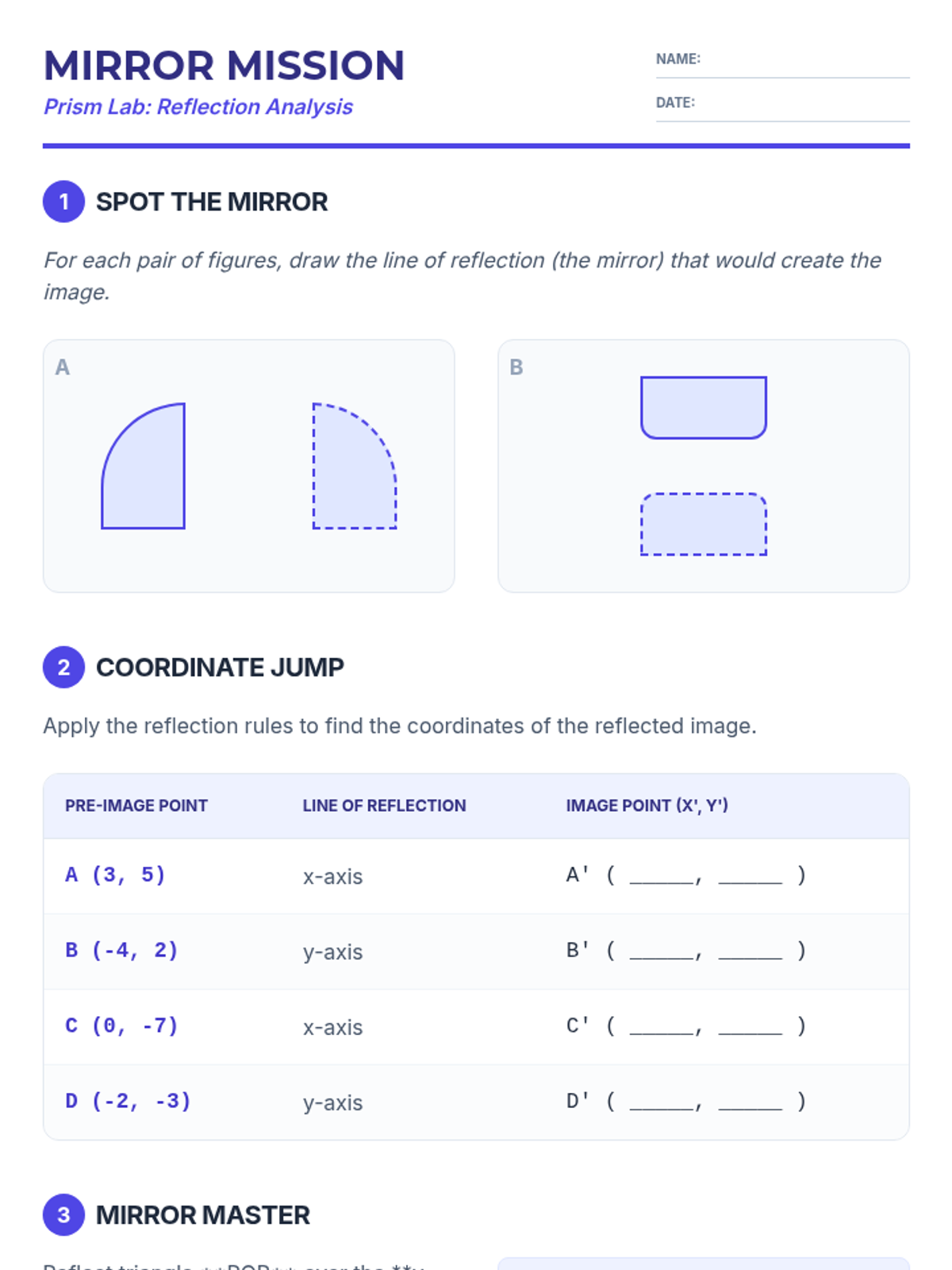
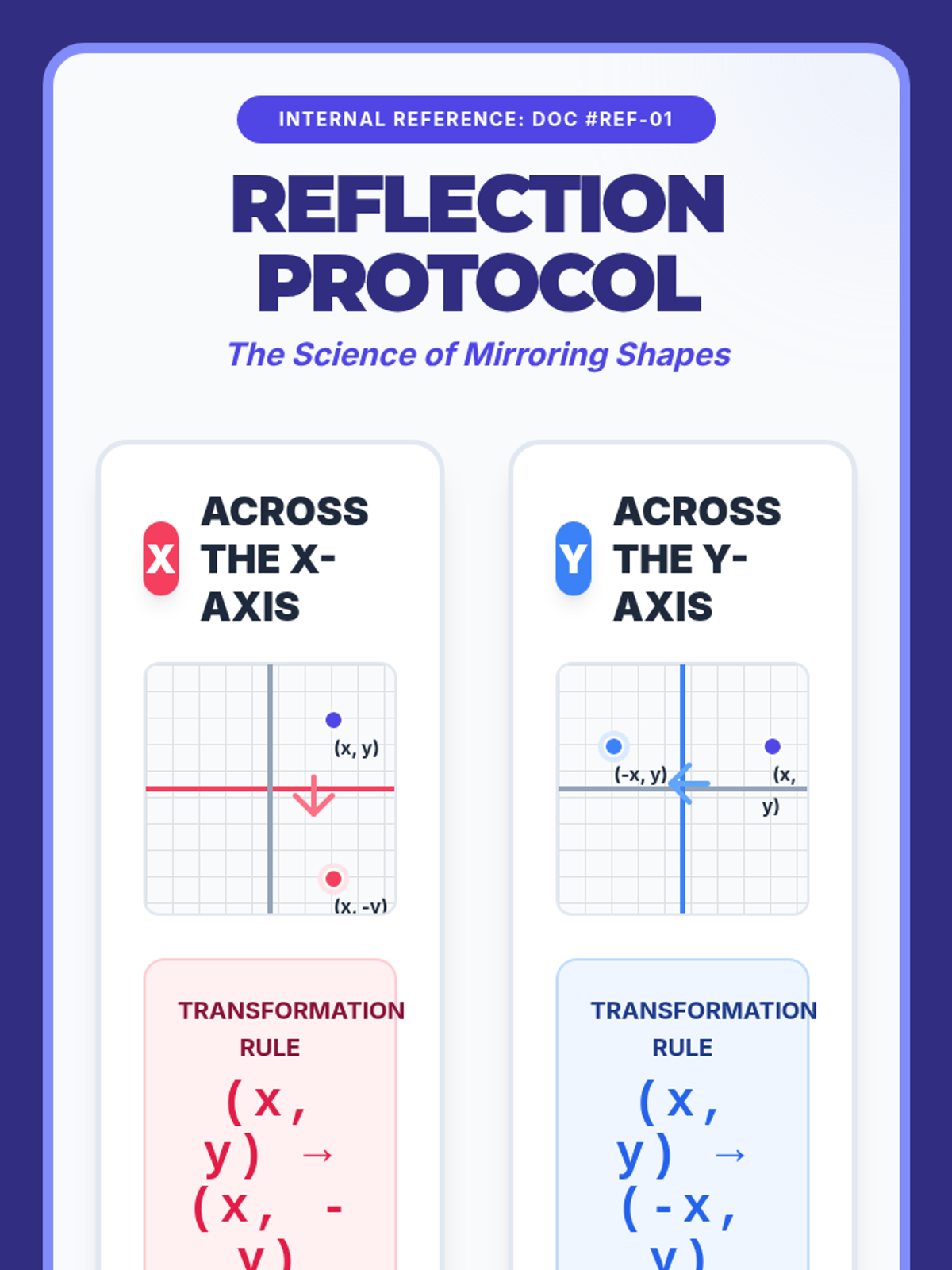
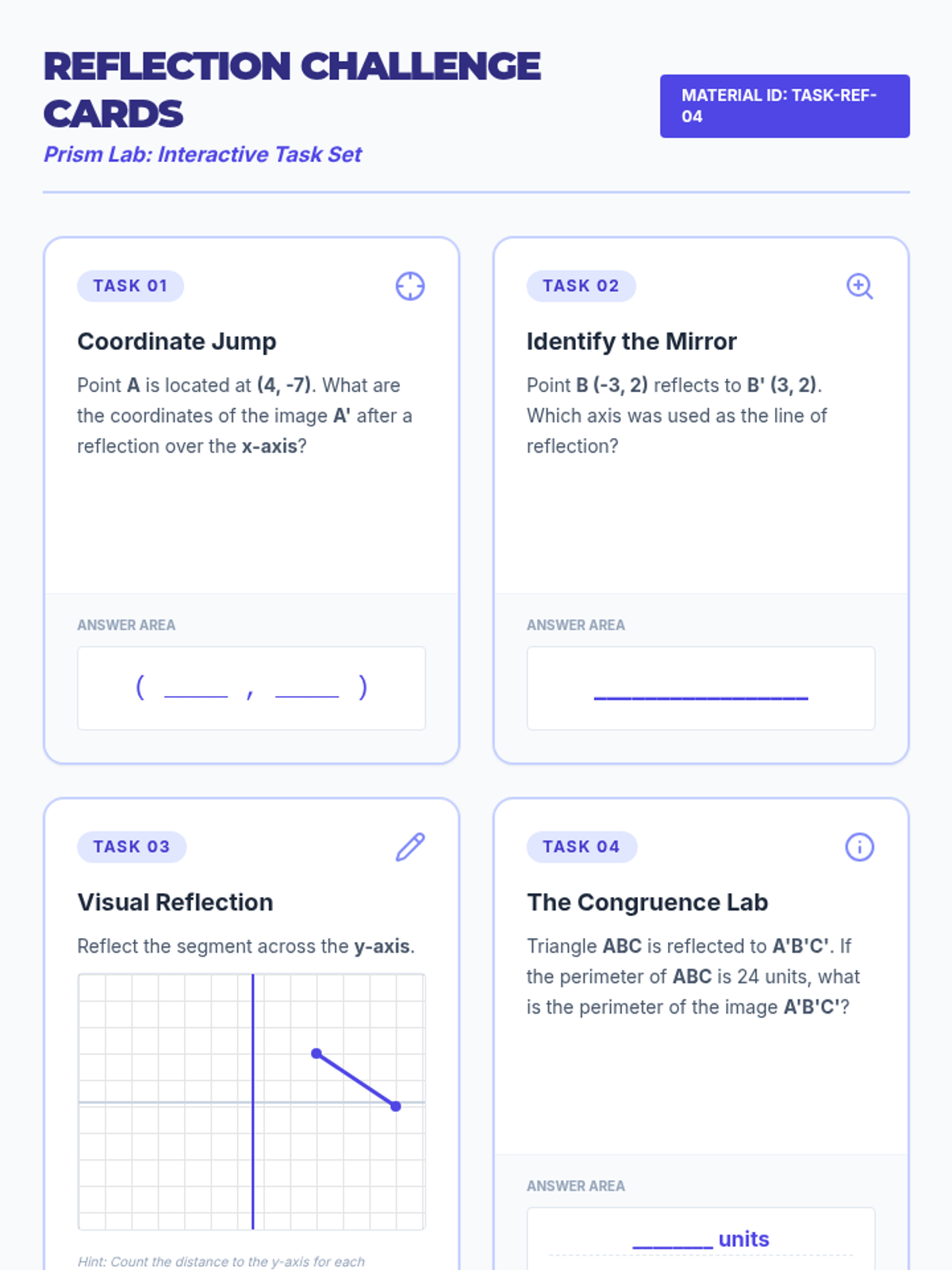
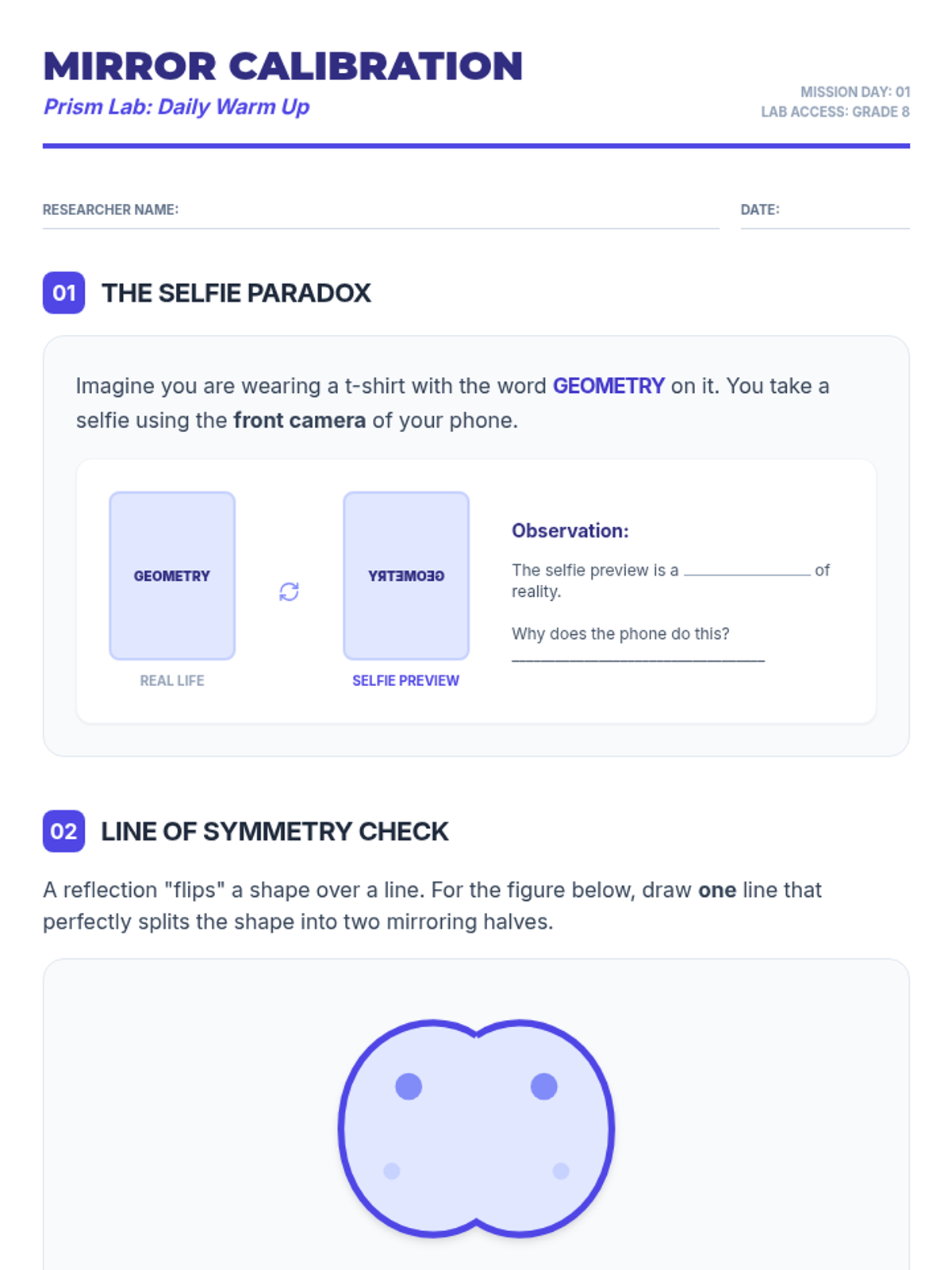
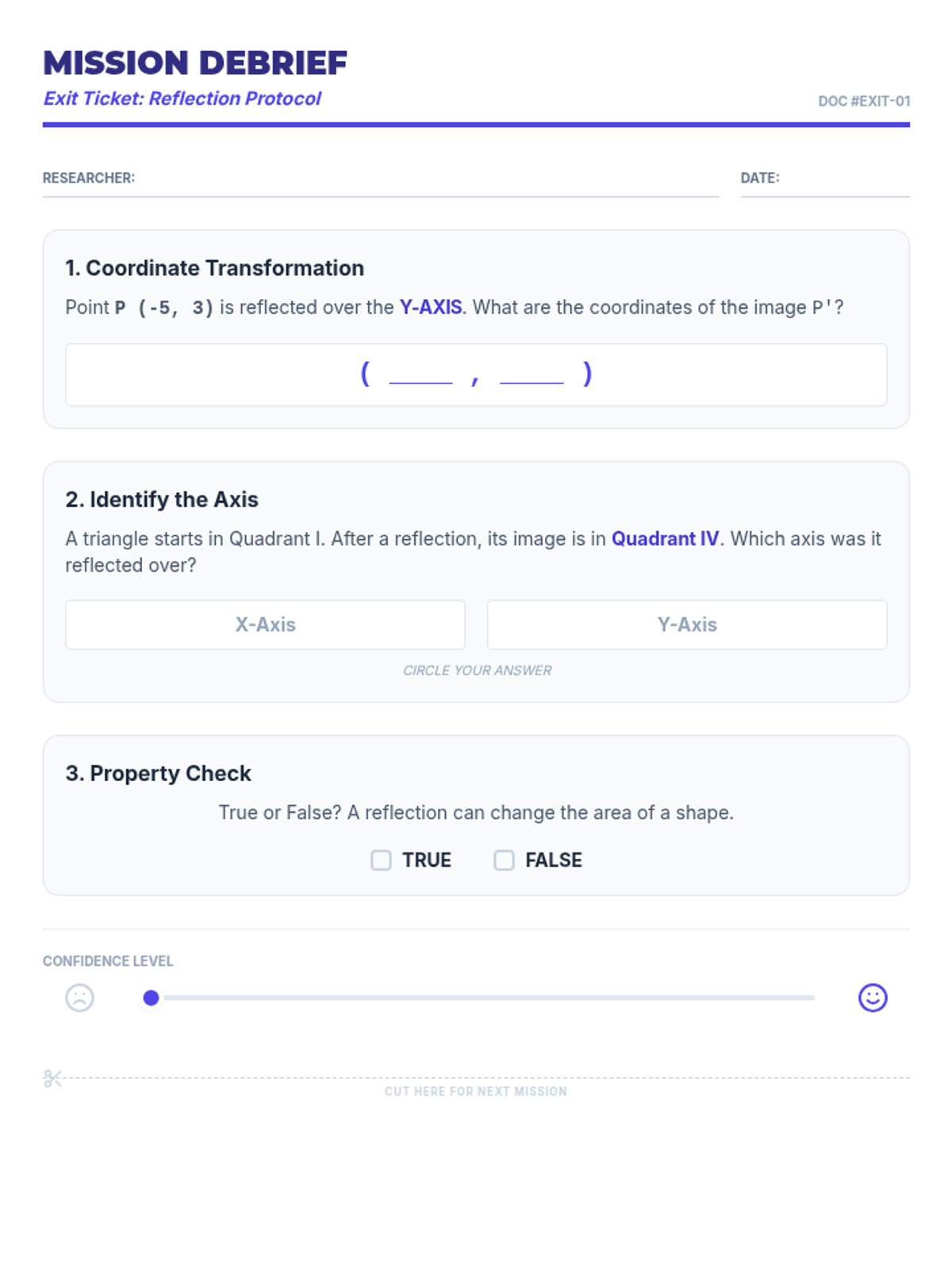
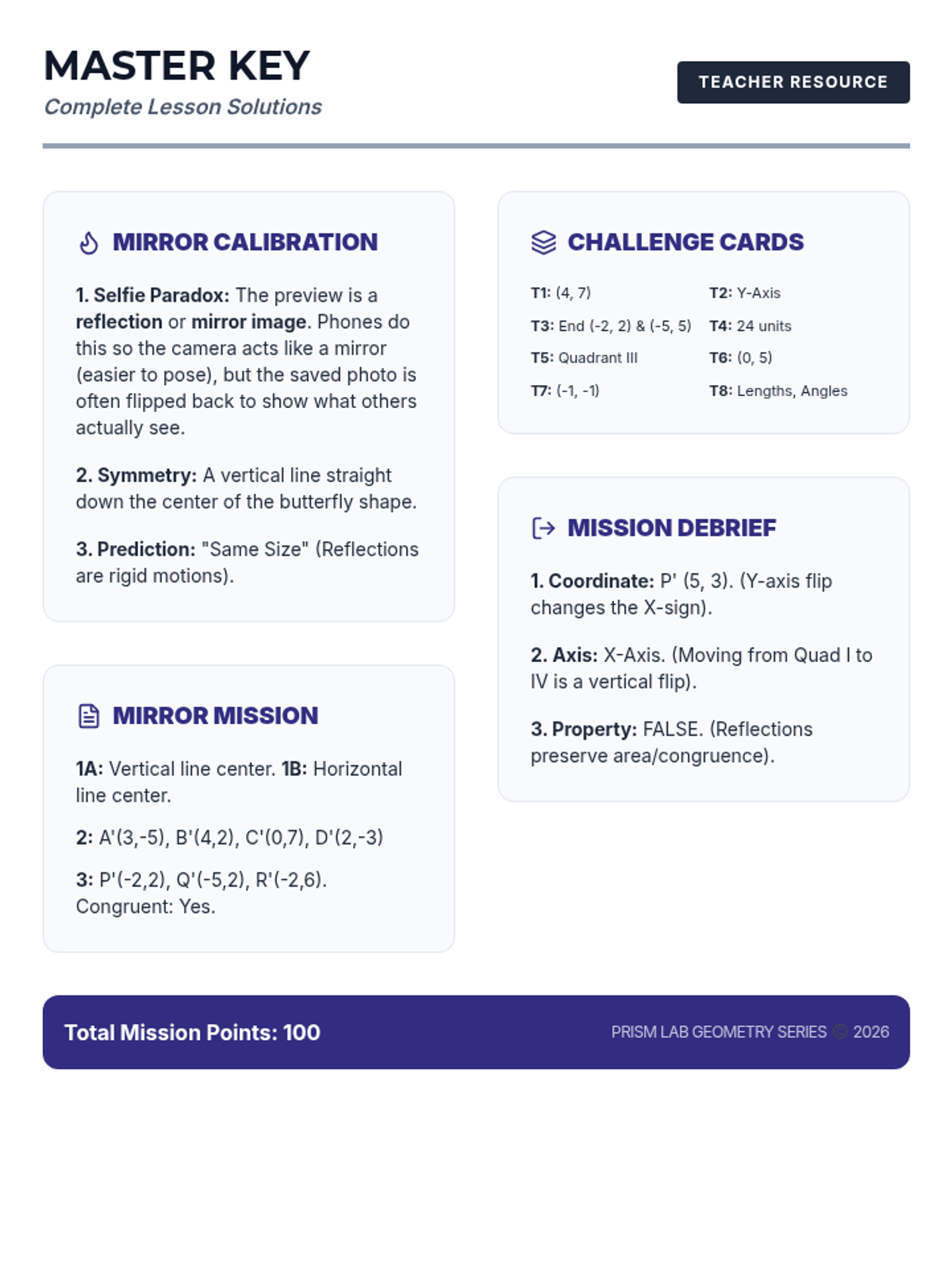
An introductory lesson on geometric reflections, covering lines of reflection, x and y-axis reflections, and the concept of congruence.