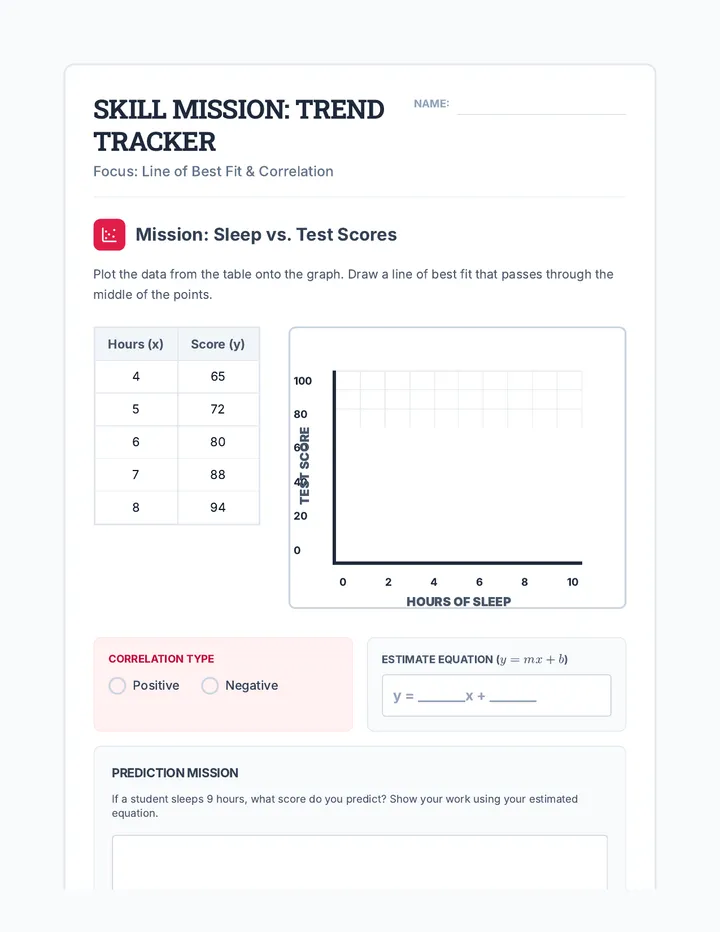
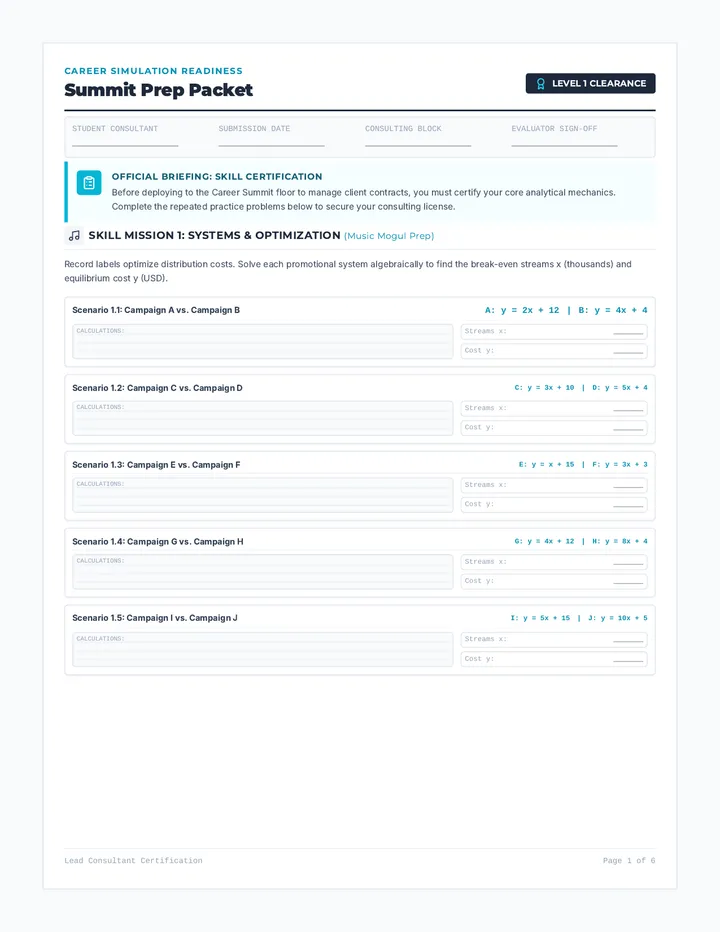
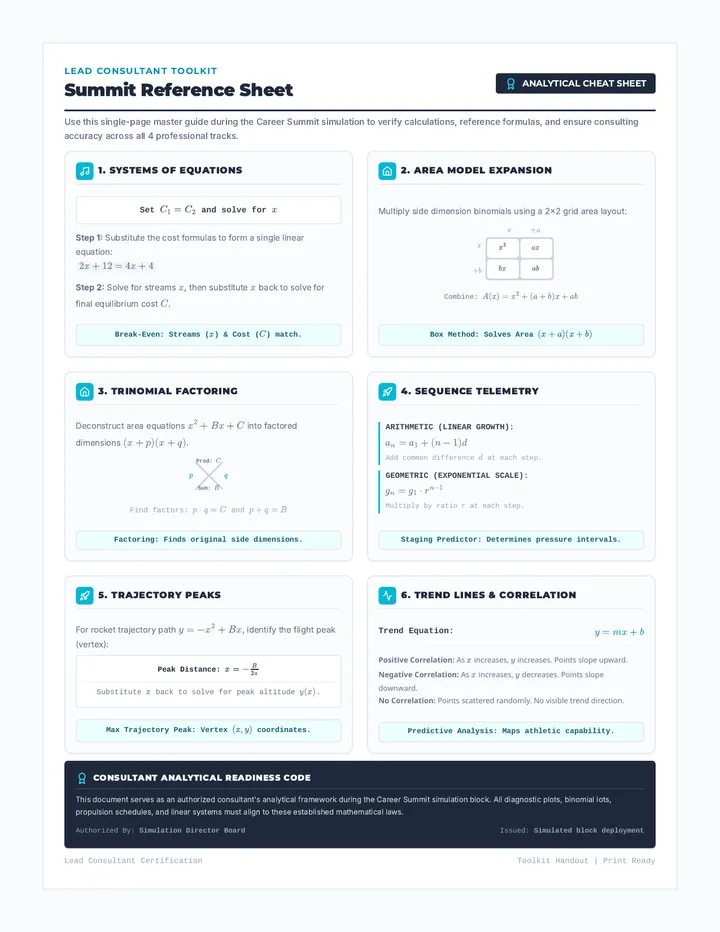
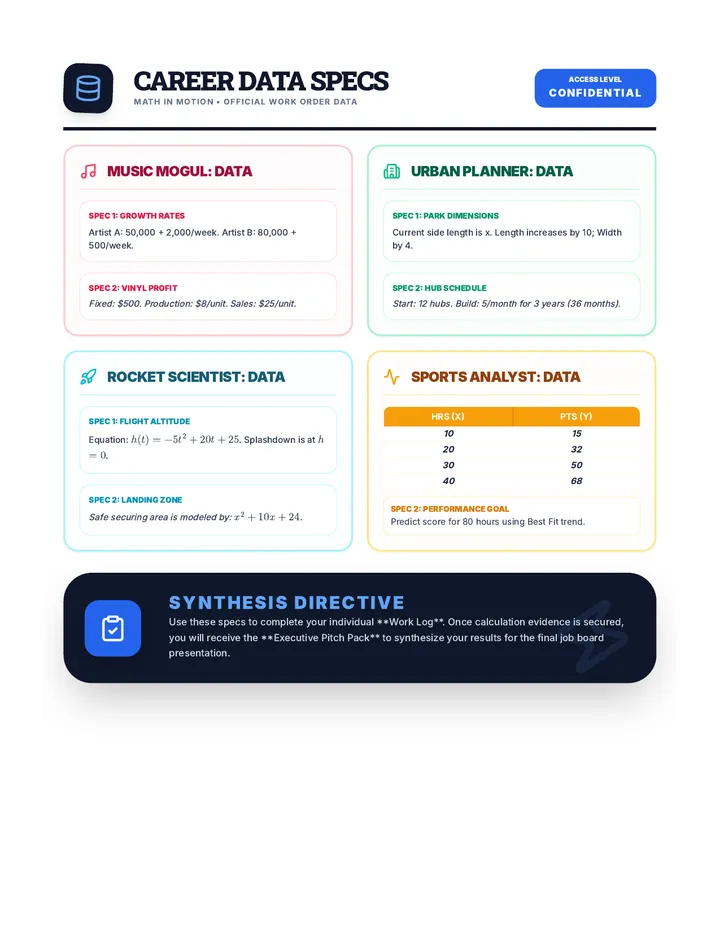
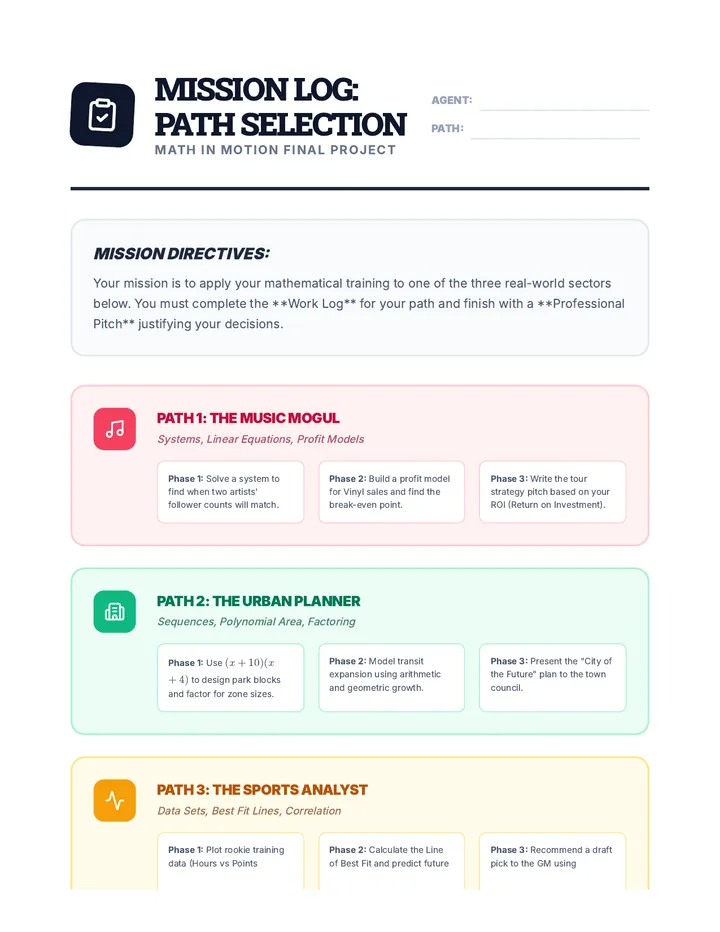
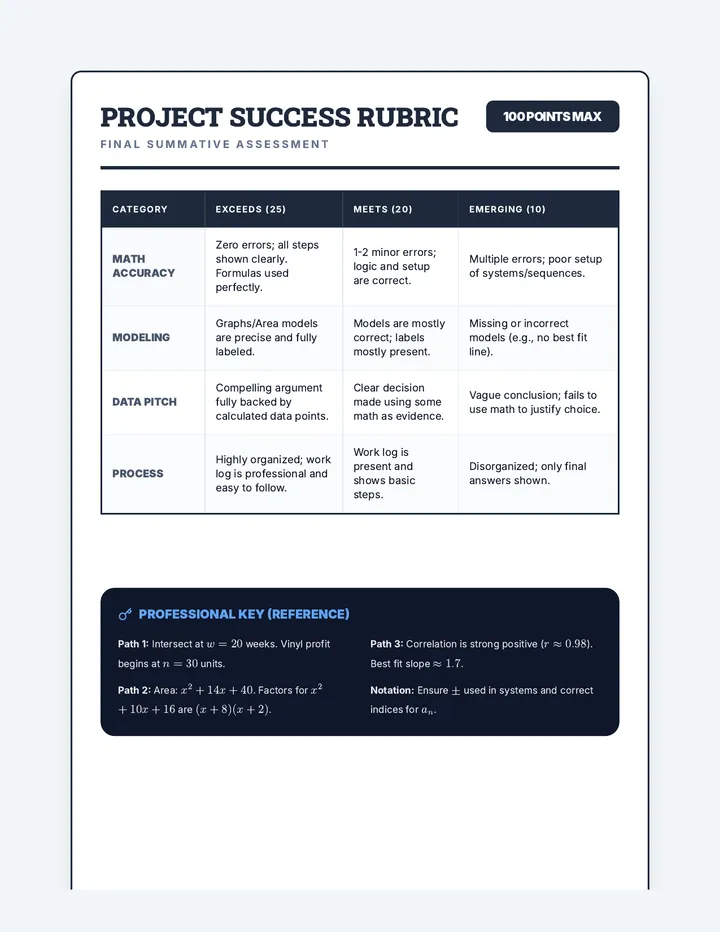
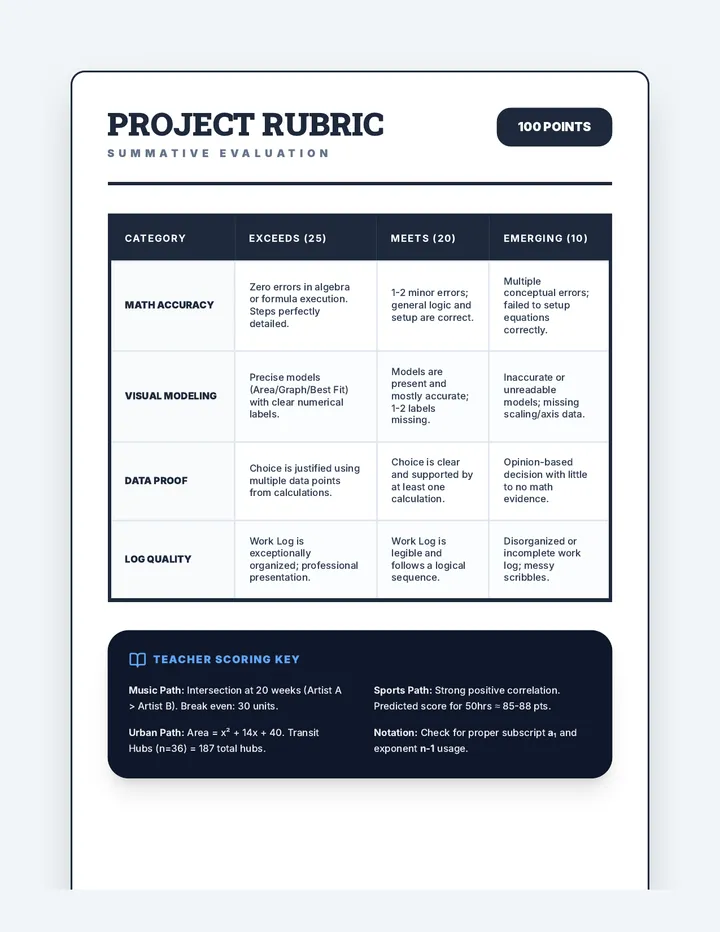
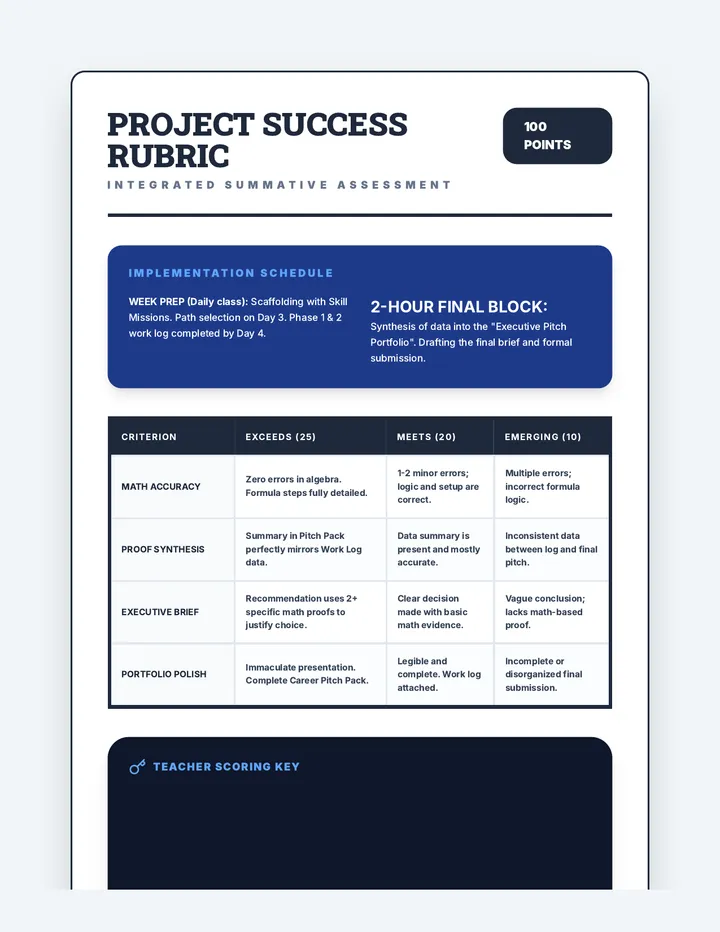
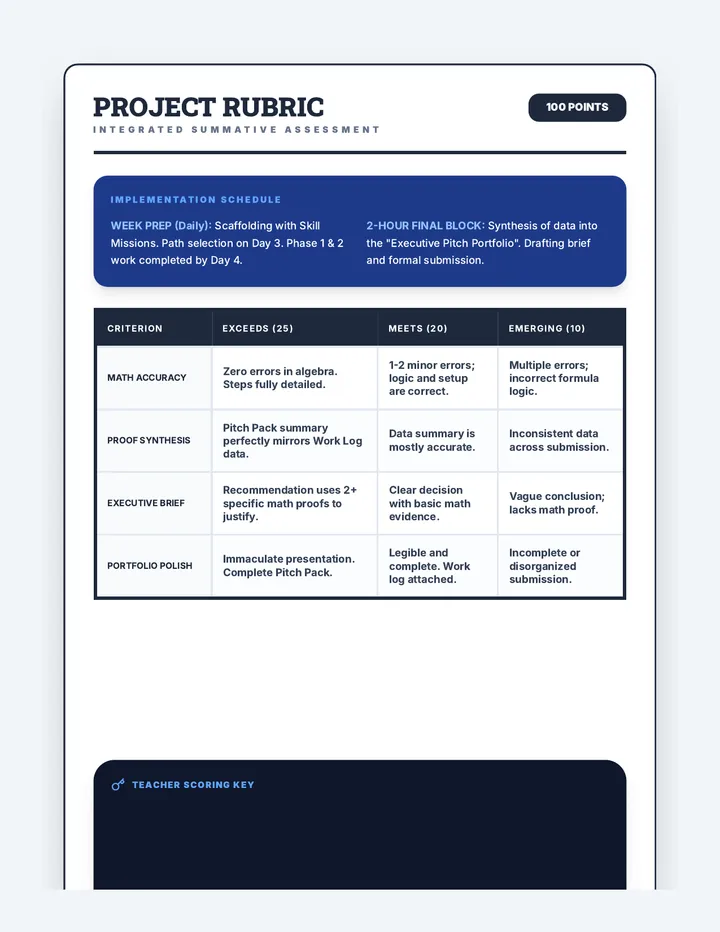
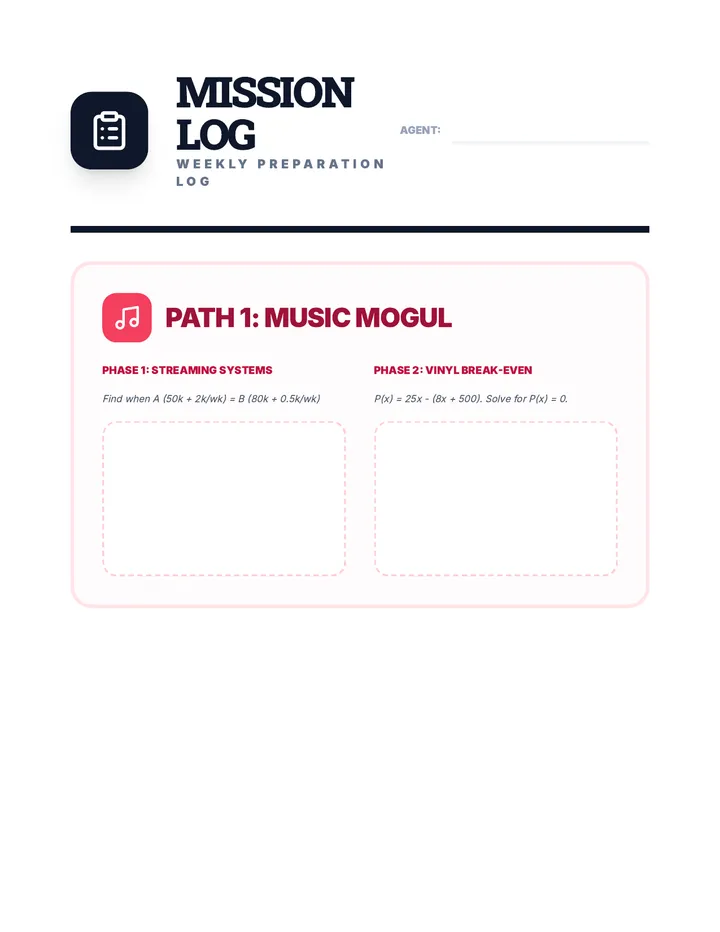
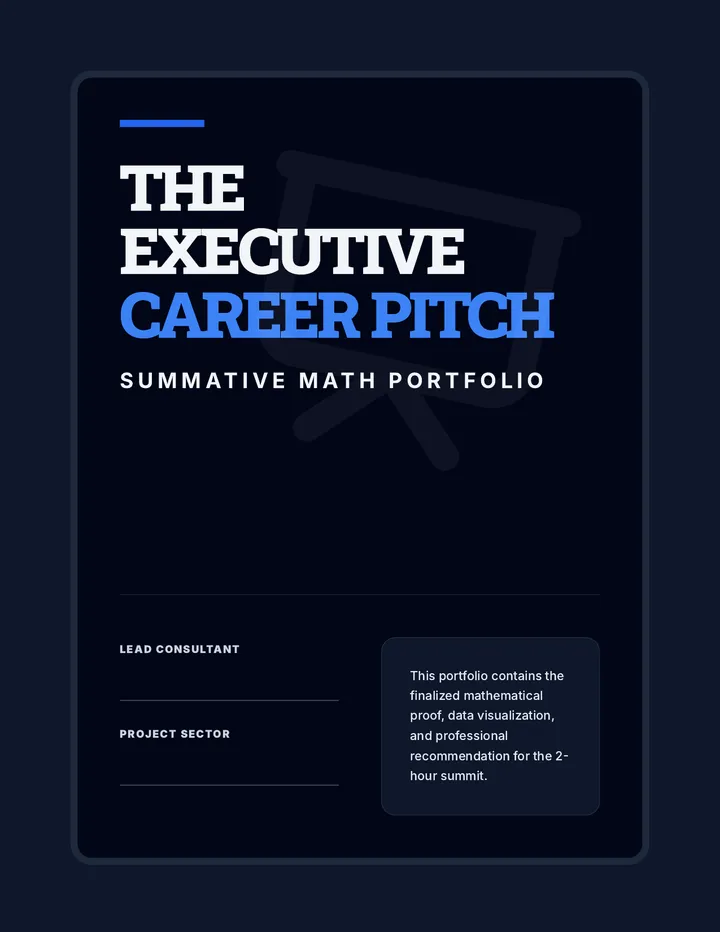
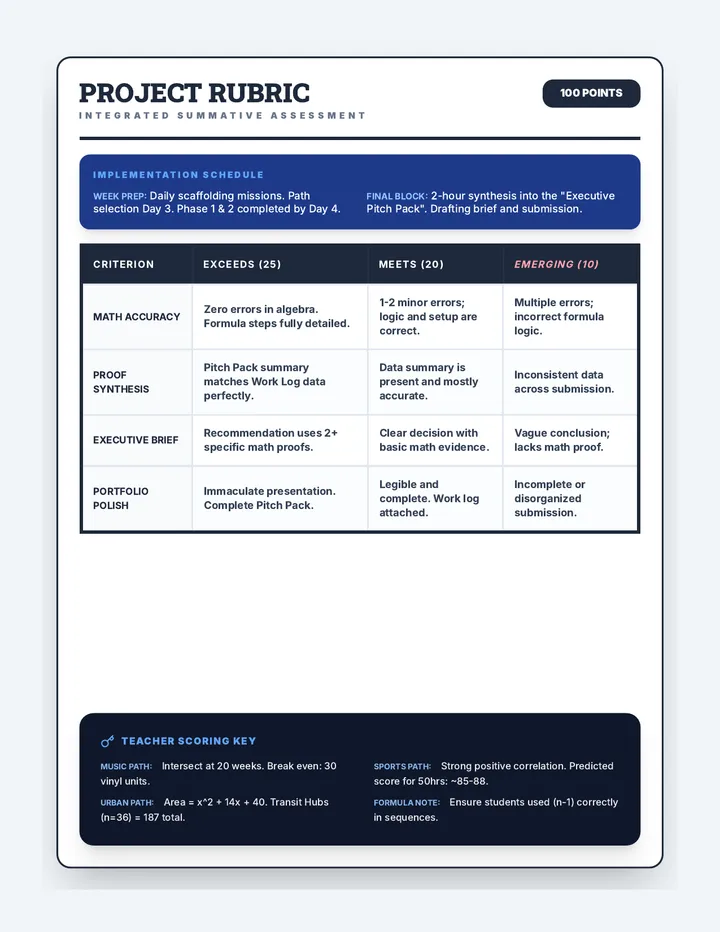
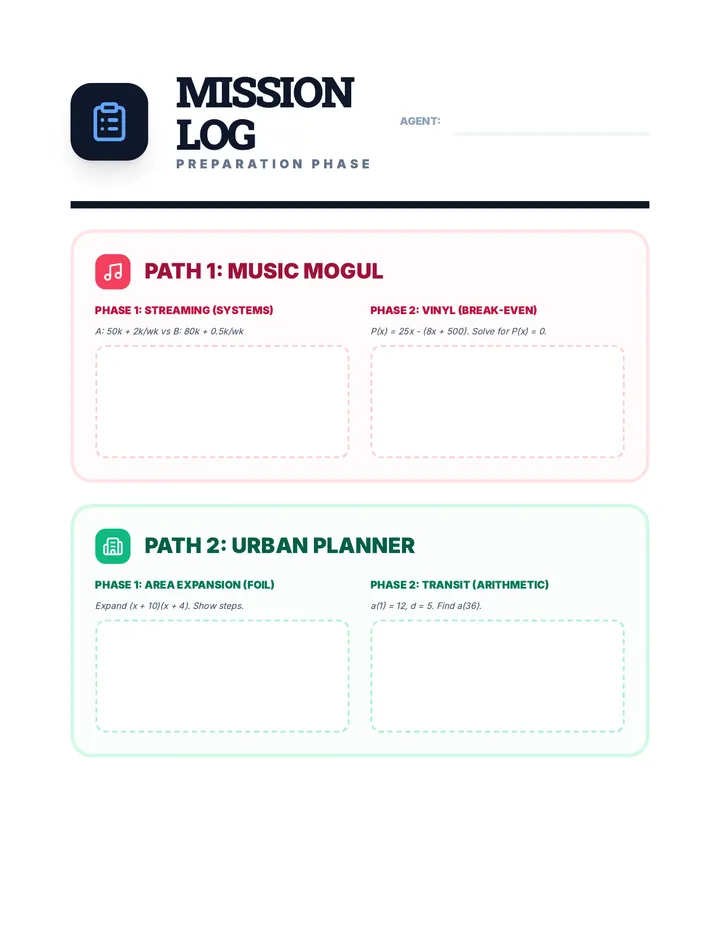
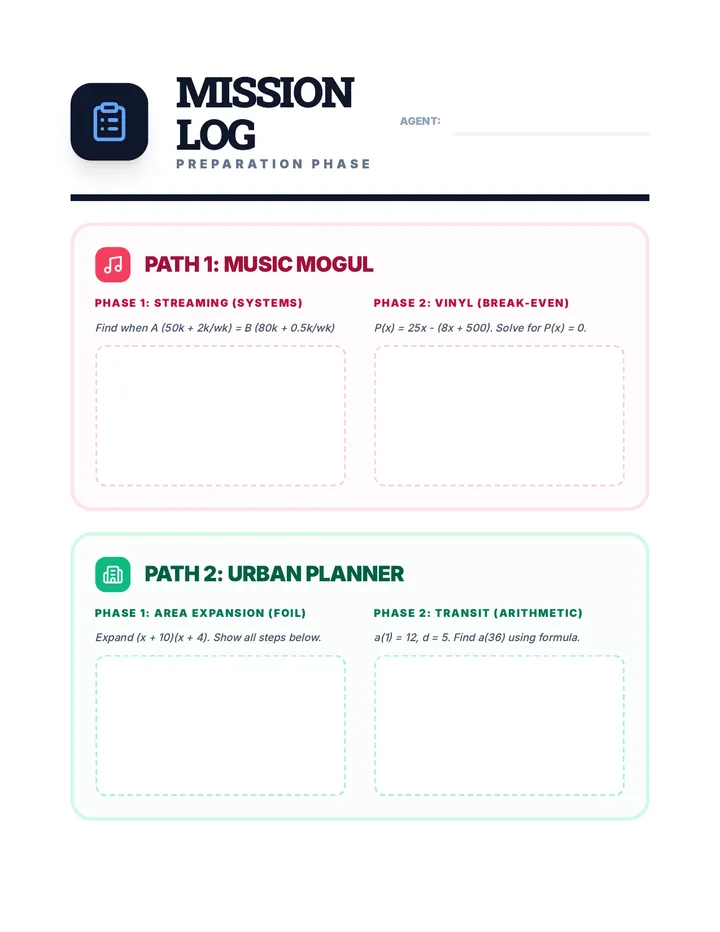
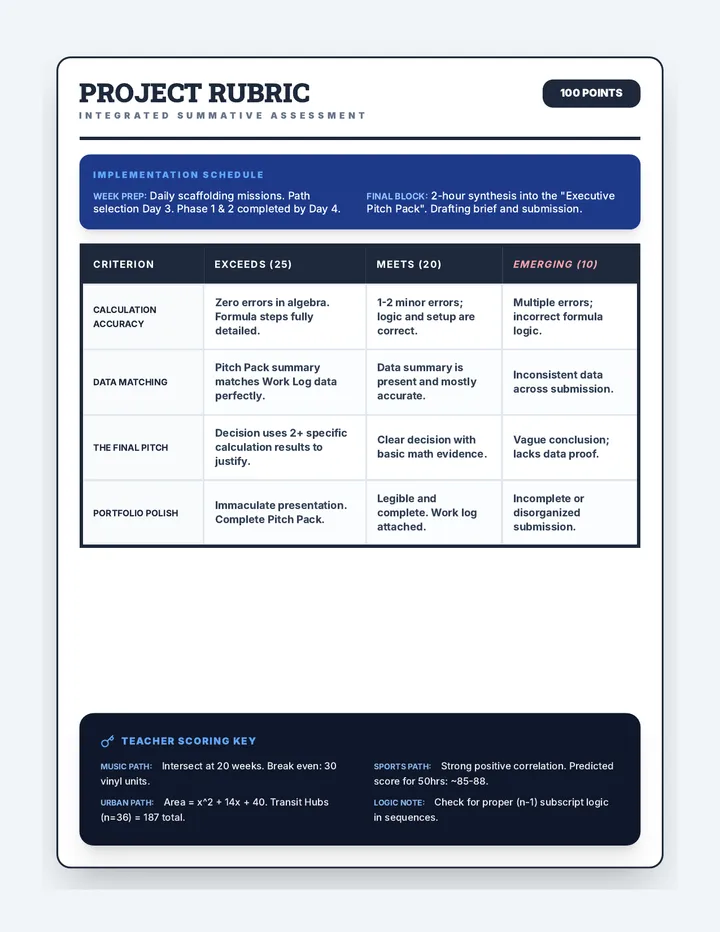
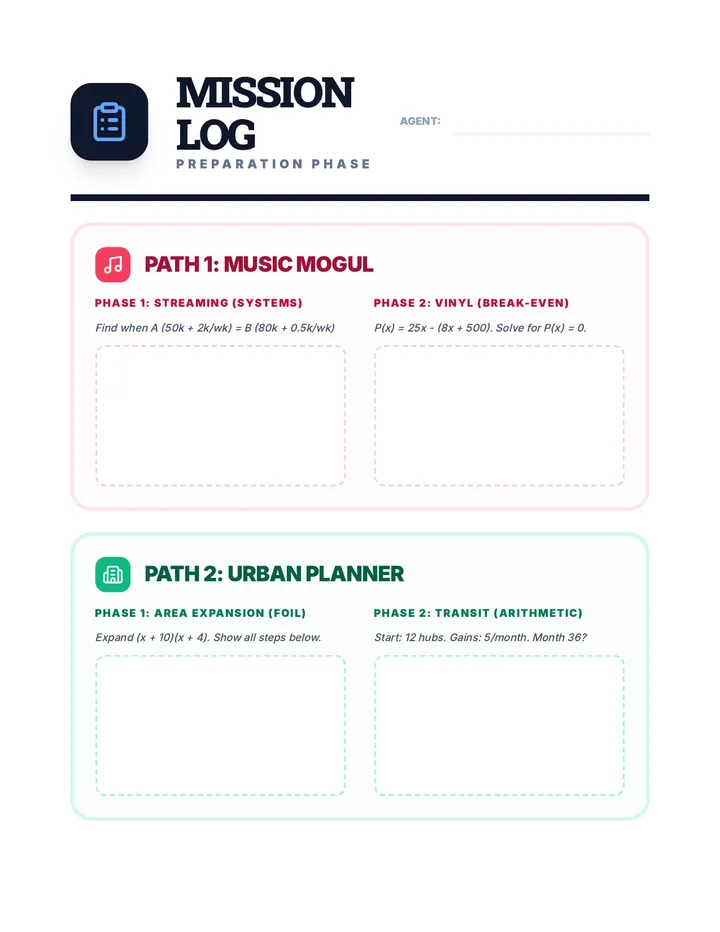
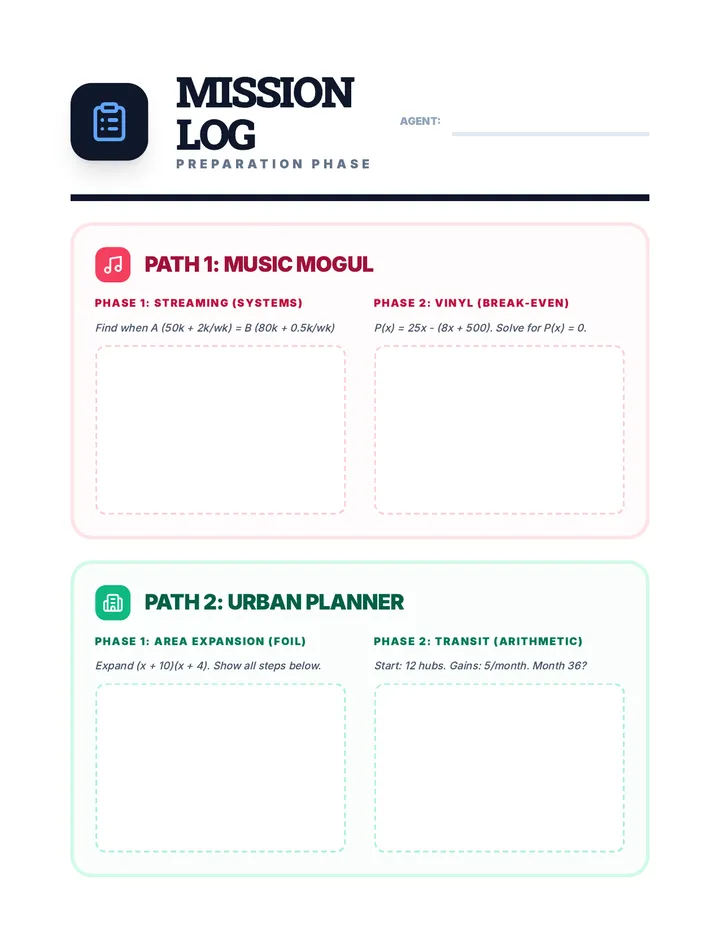
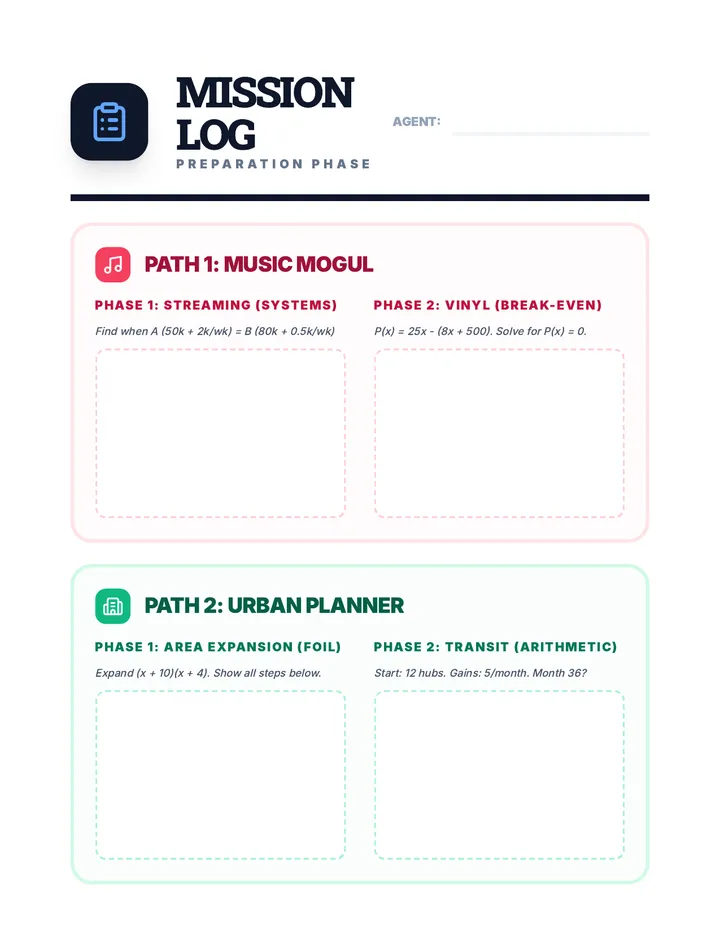
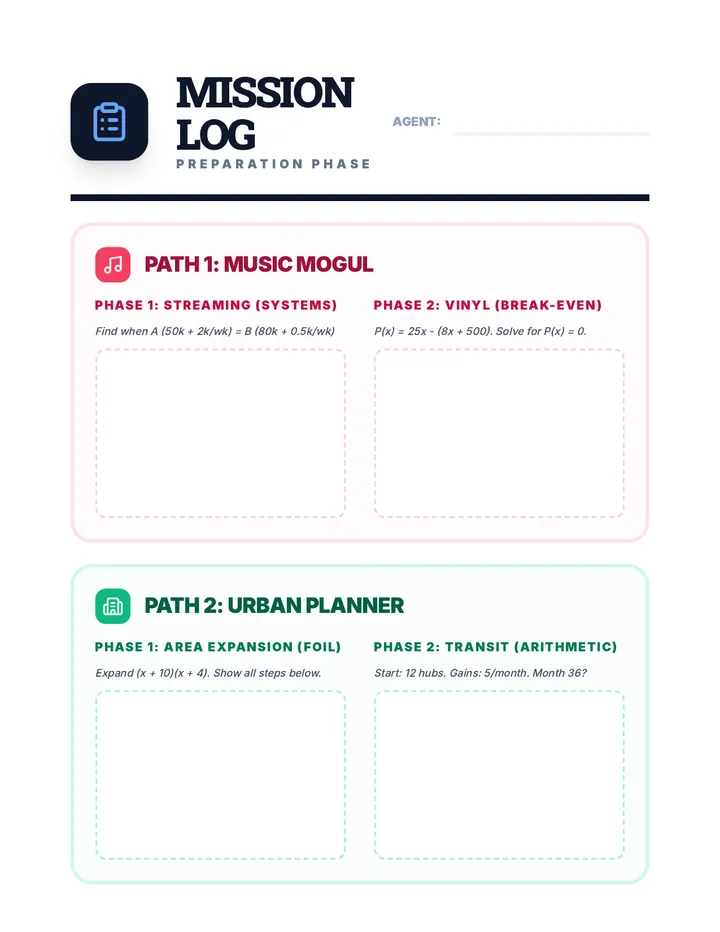
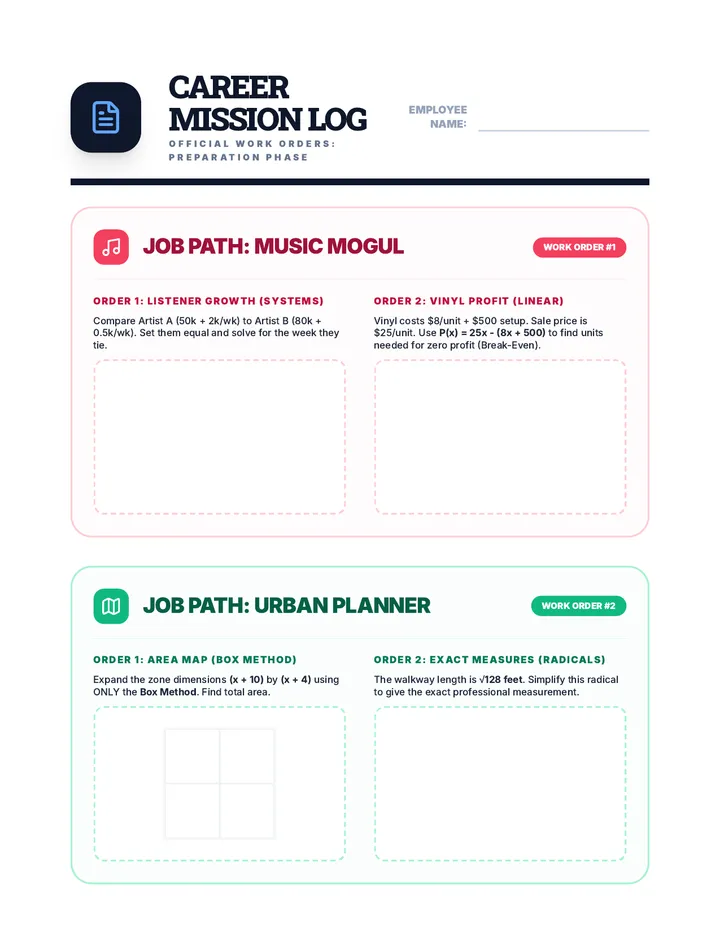
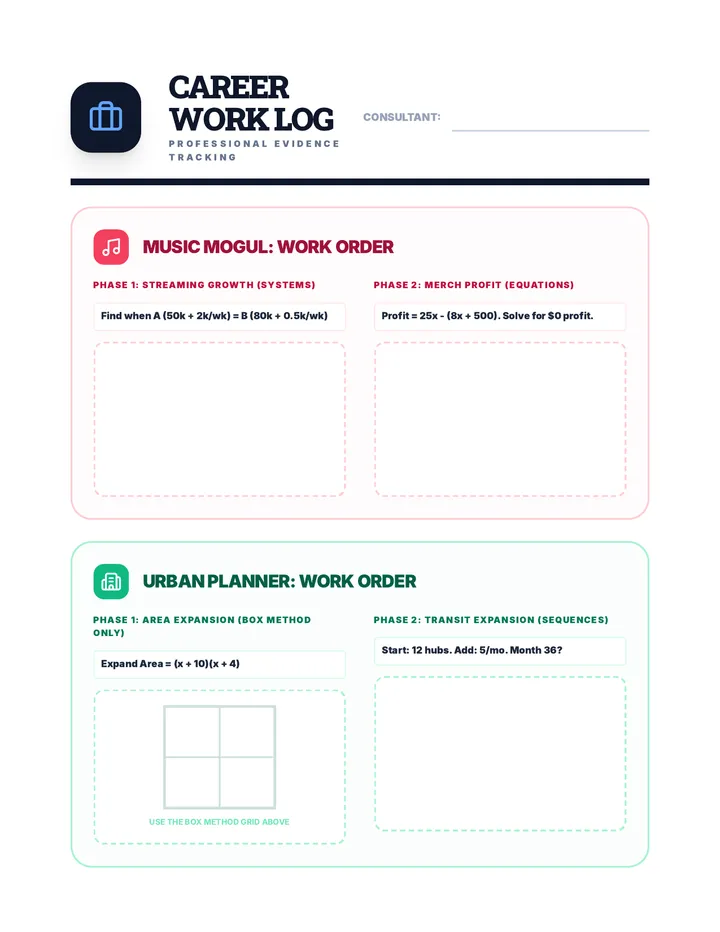
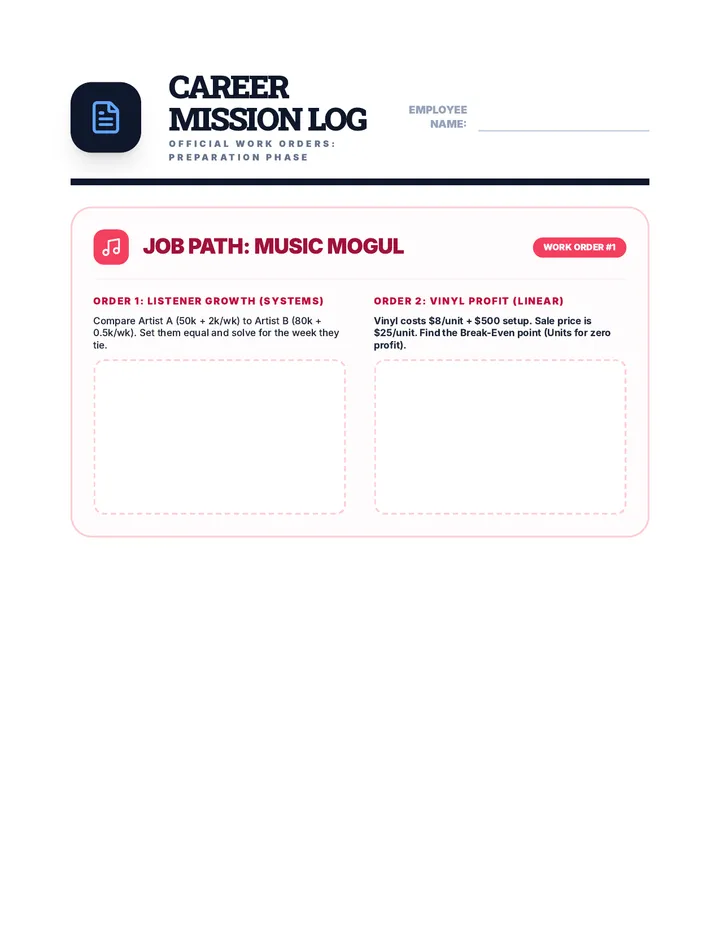
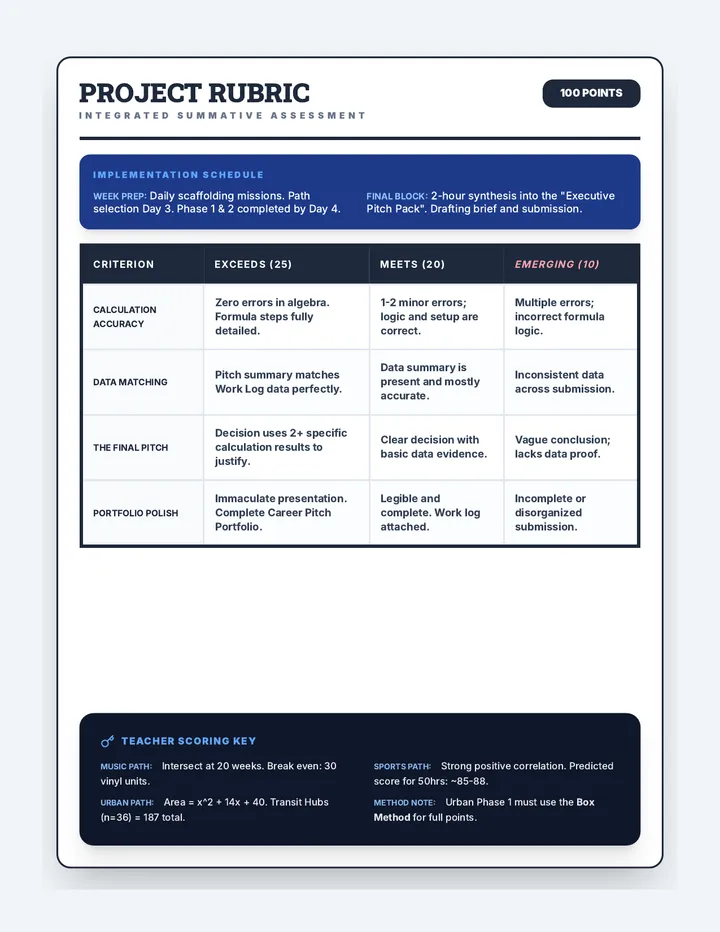
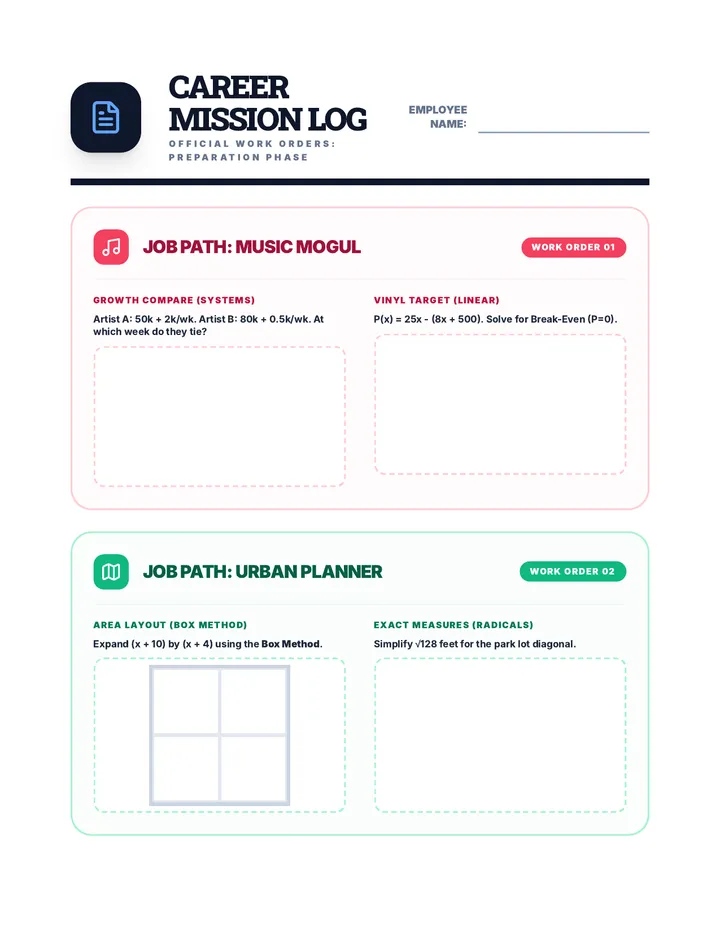
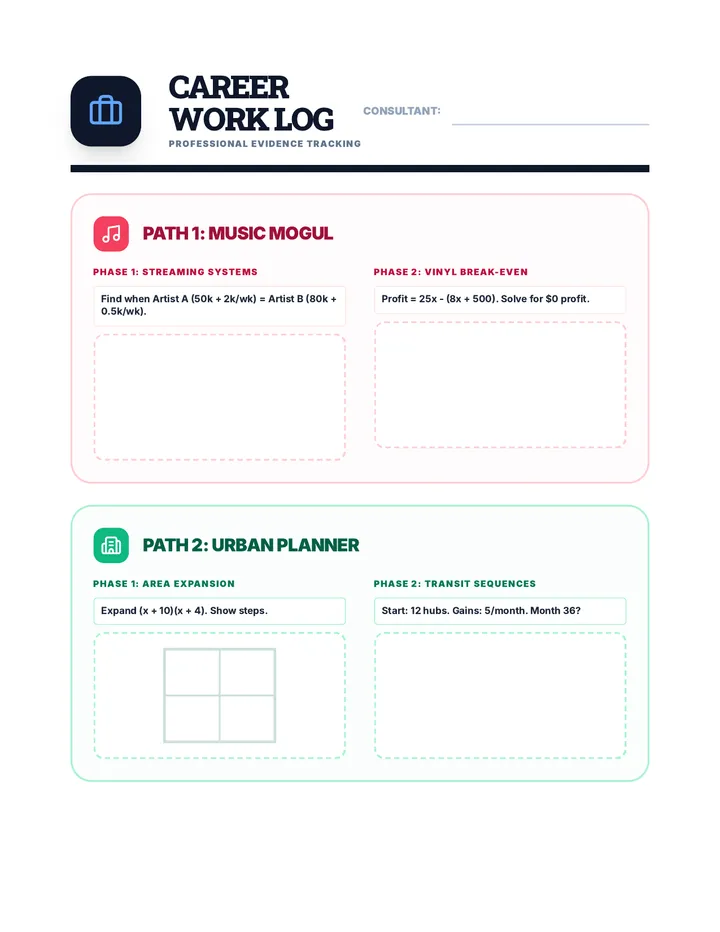
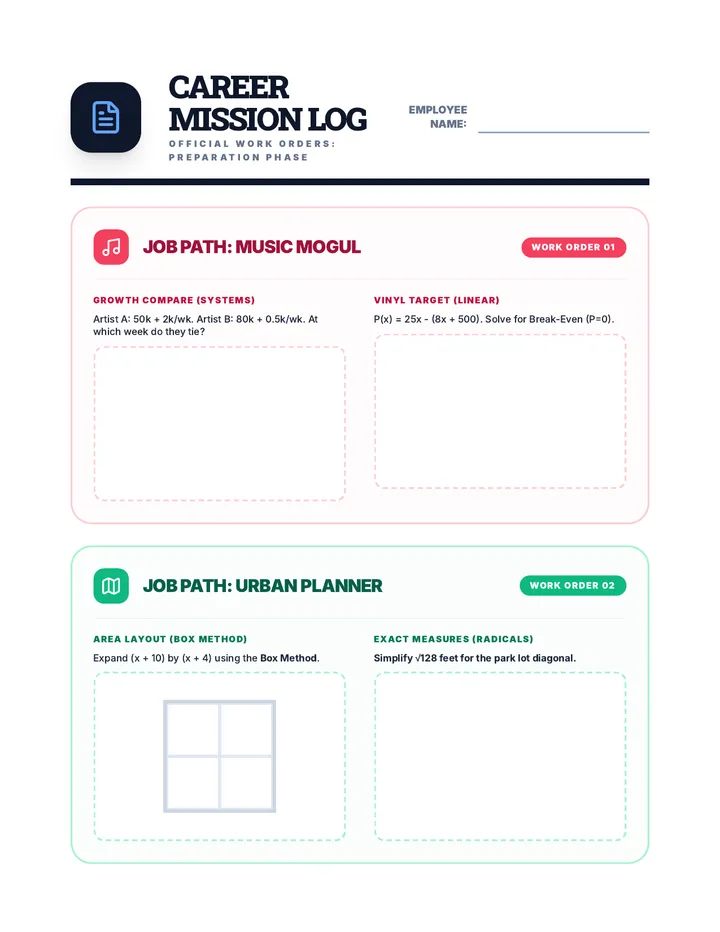
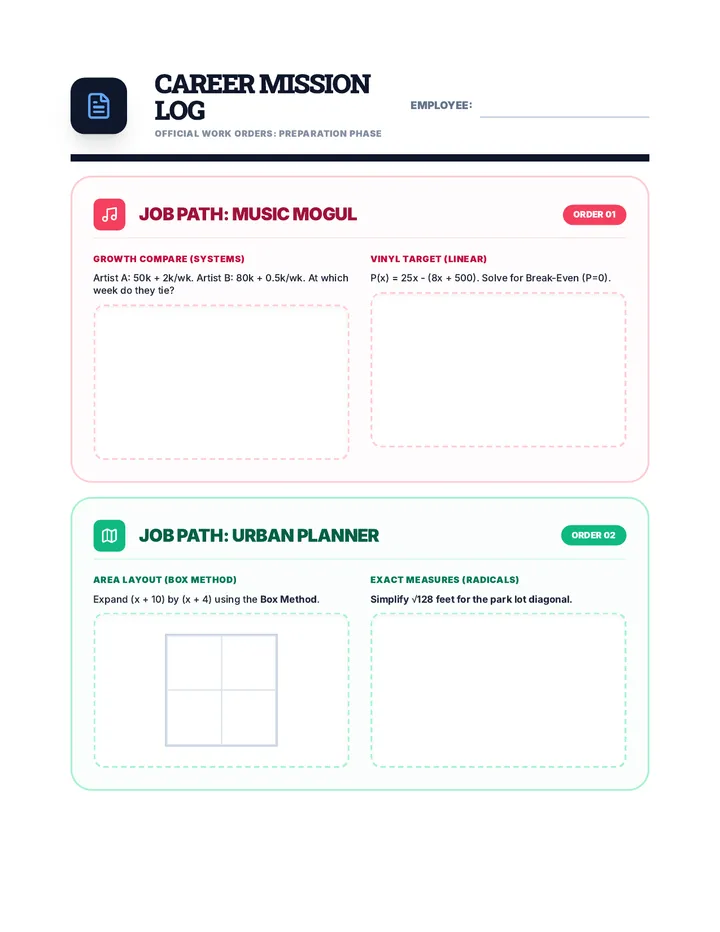
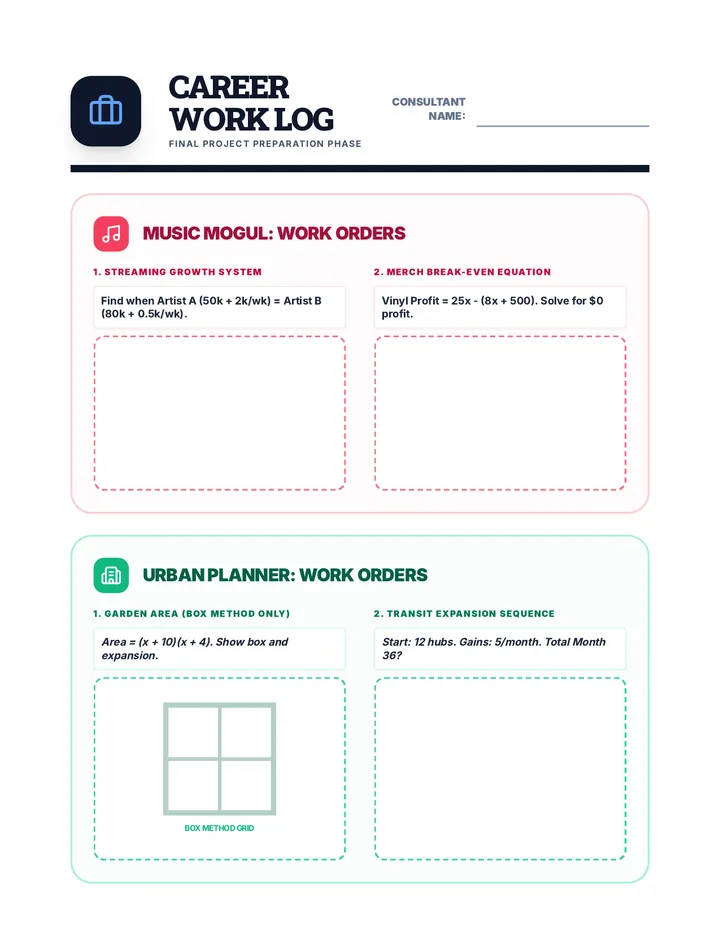
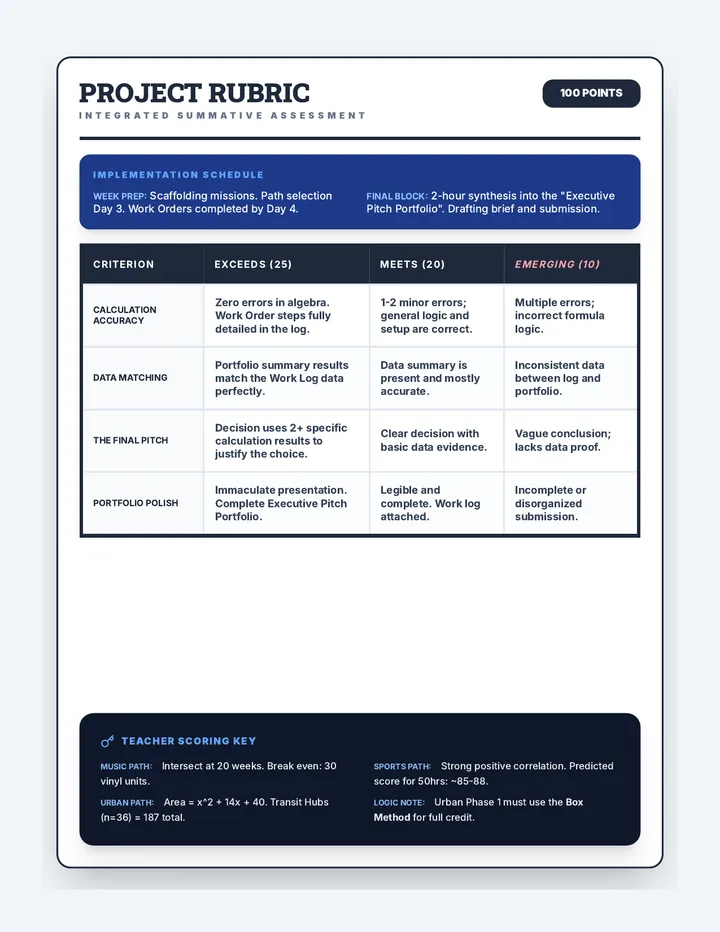
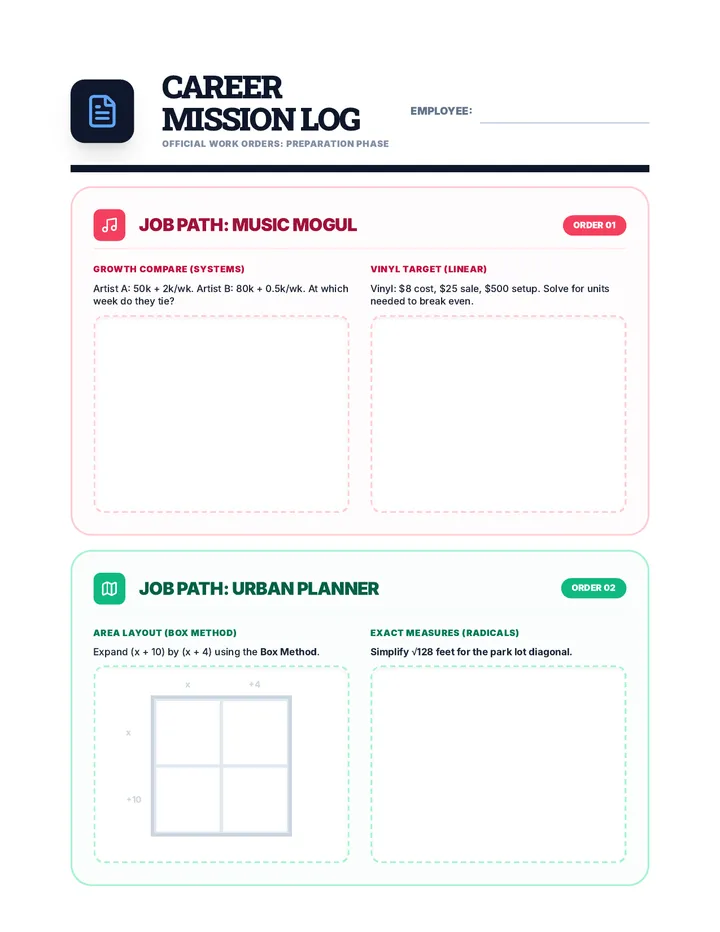
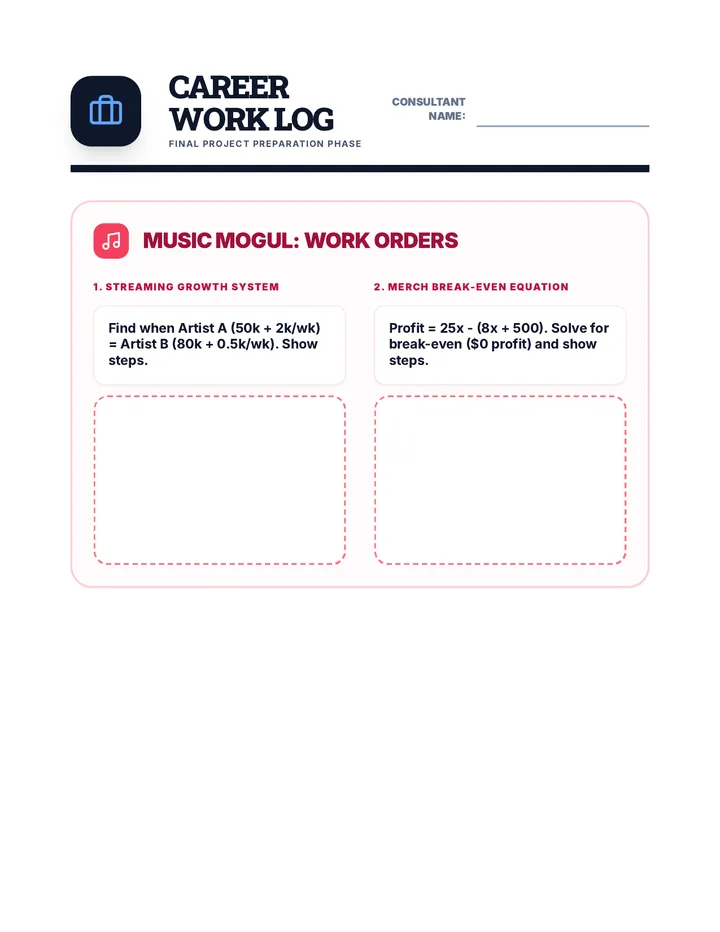
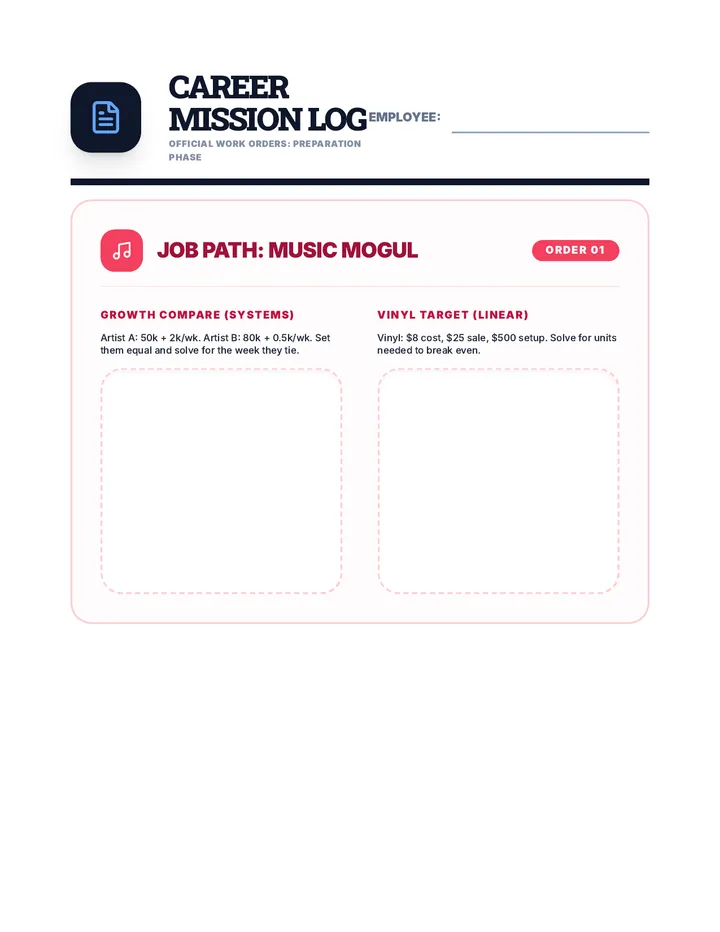
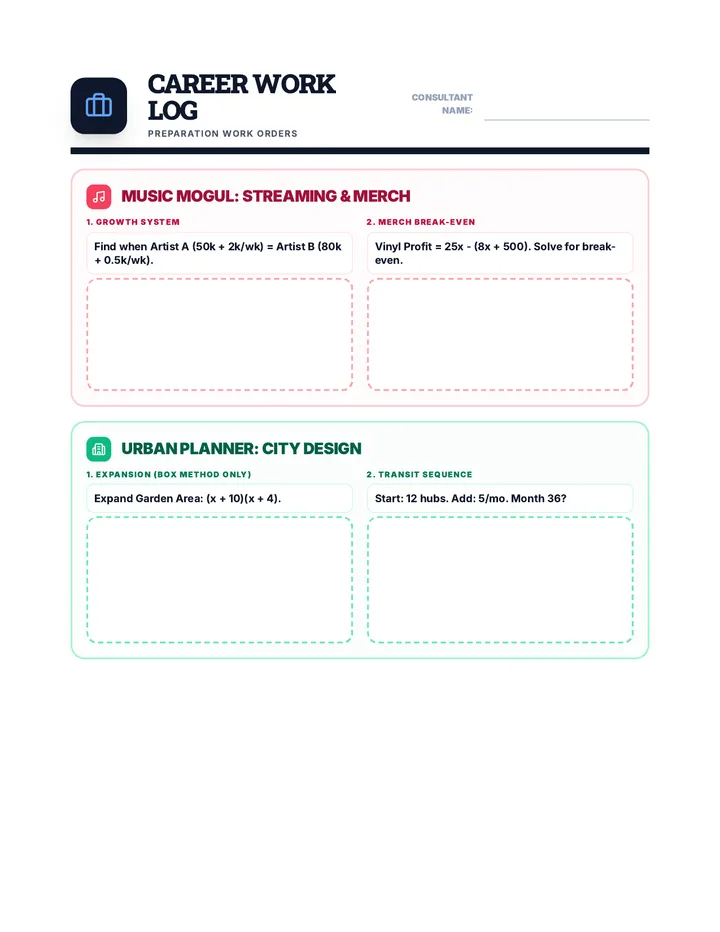
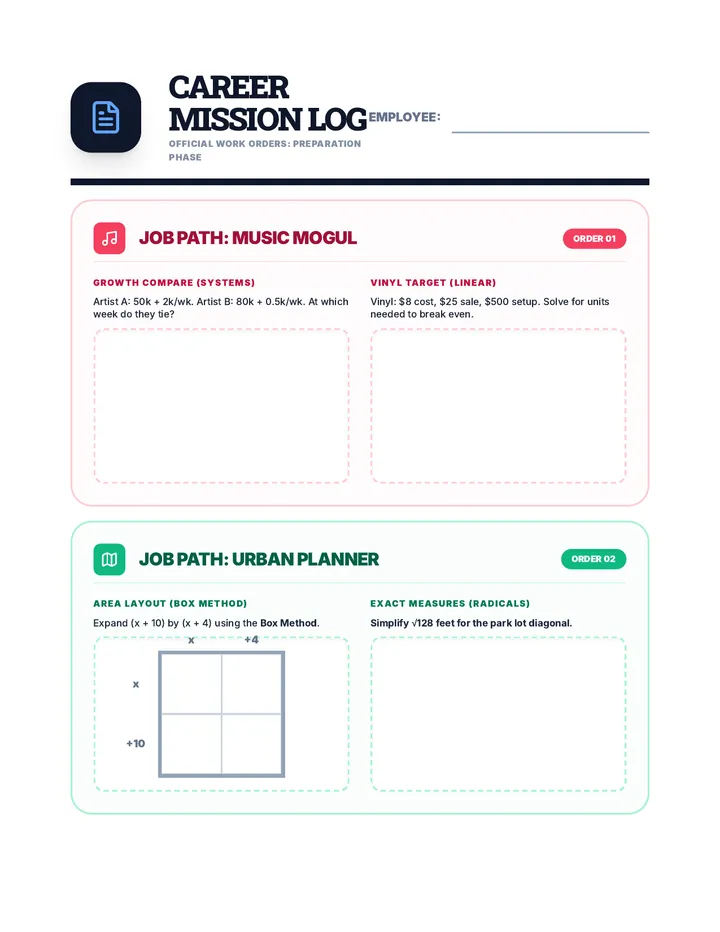
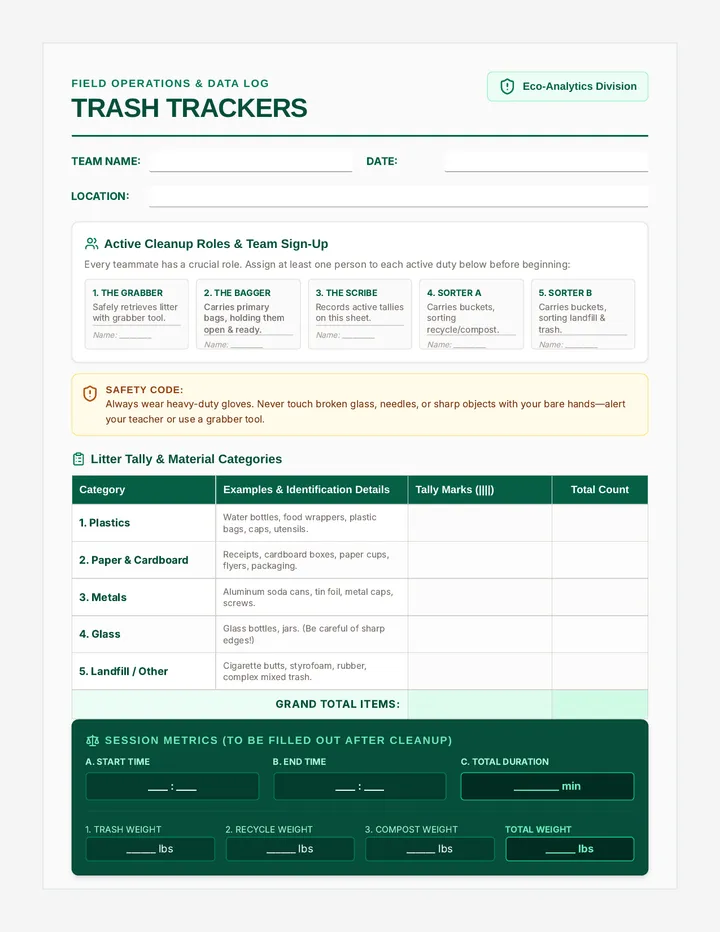
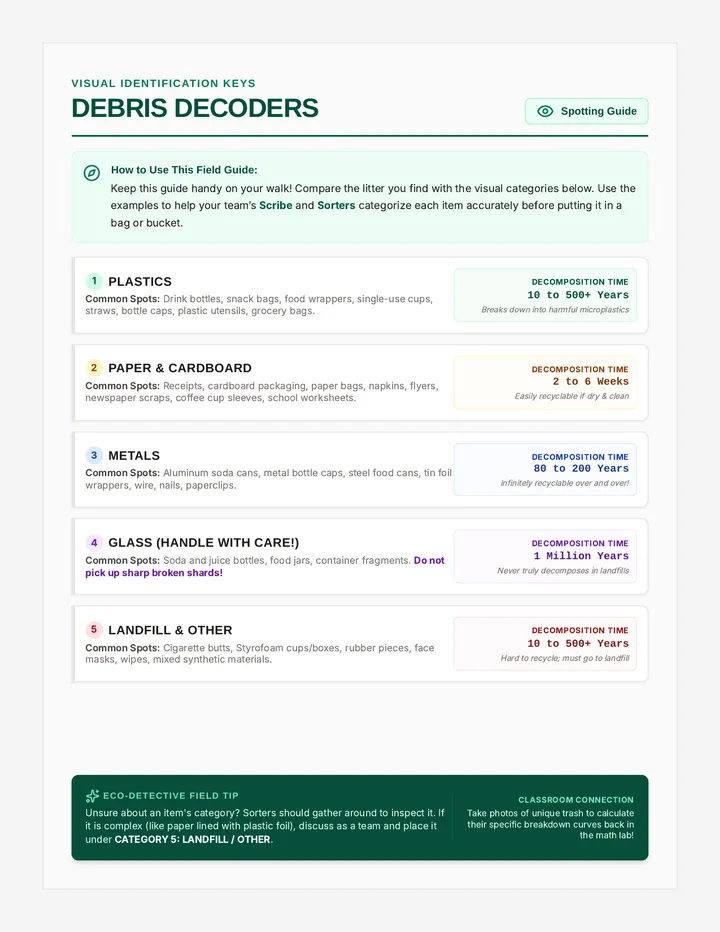
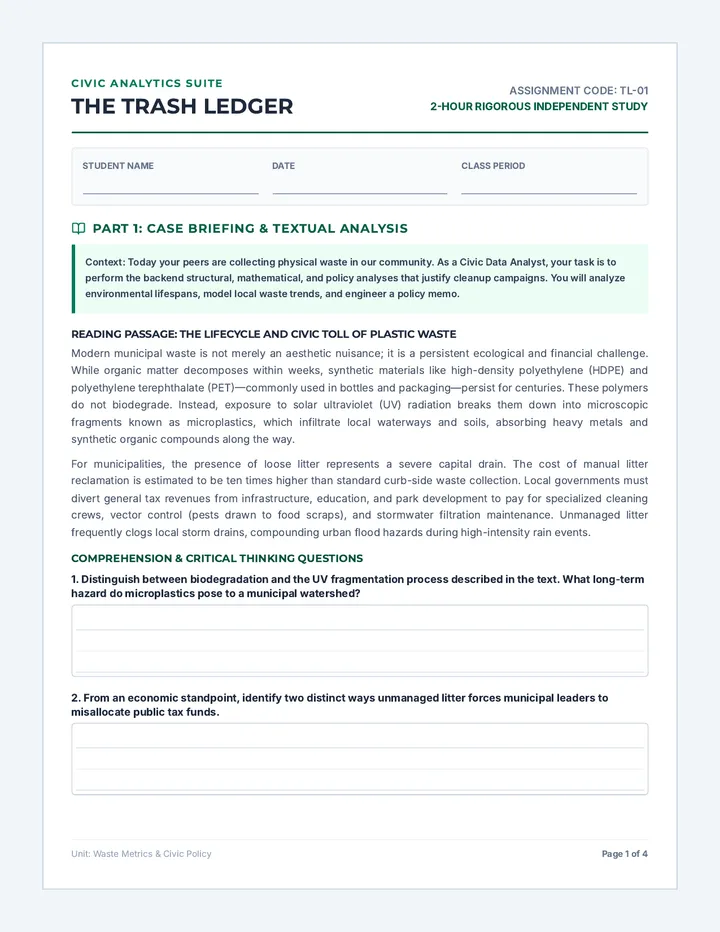
The capstone of the unit where students work in squads to solve a real-world community or school issue using the data skills they've developed.
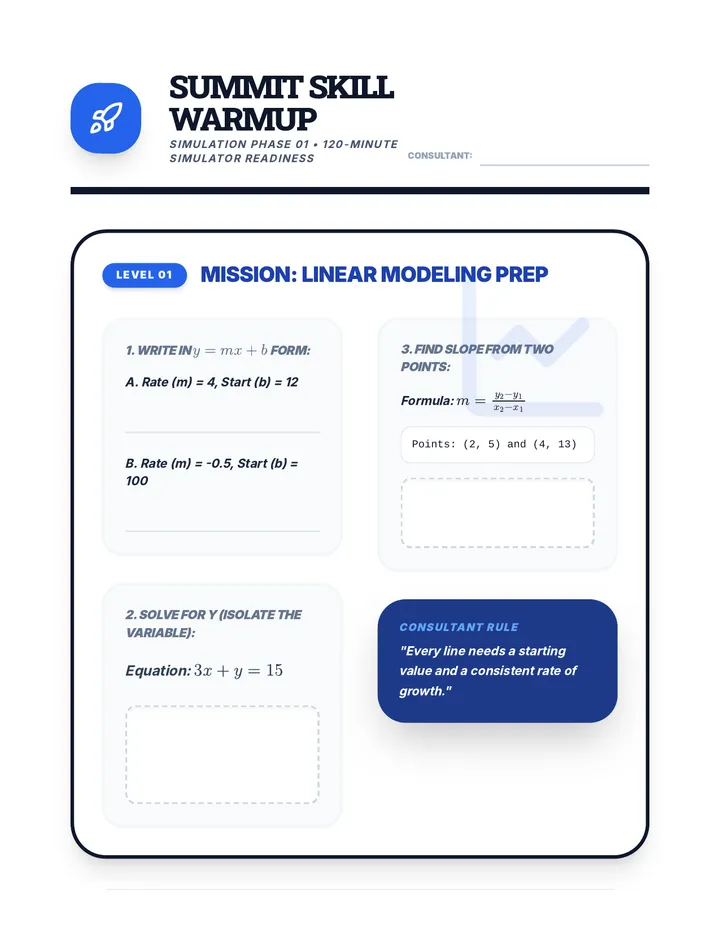
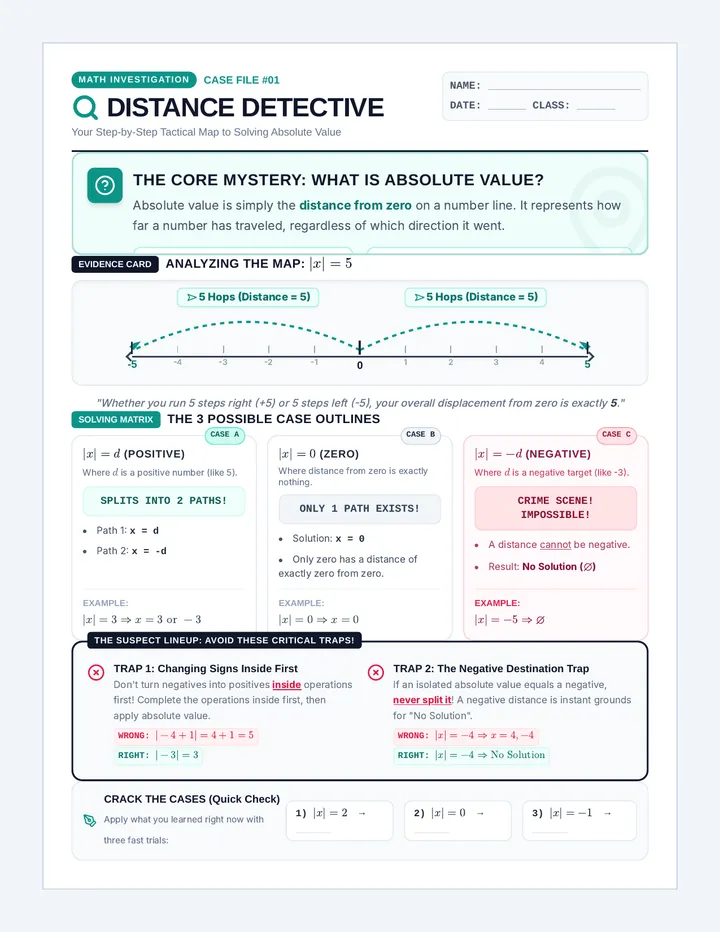
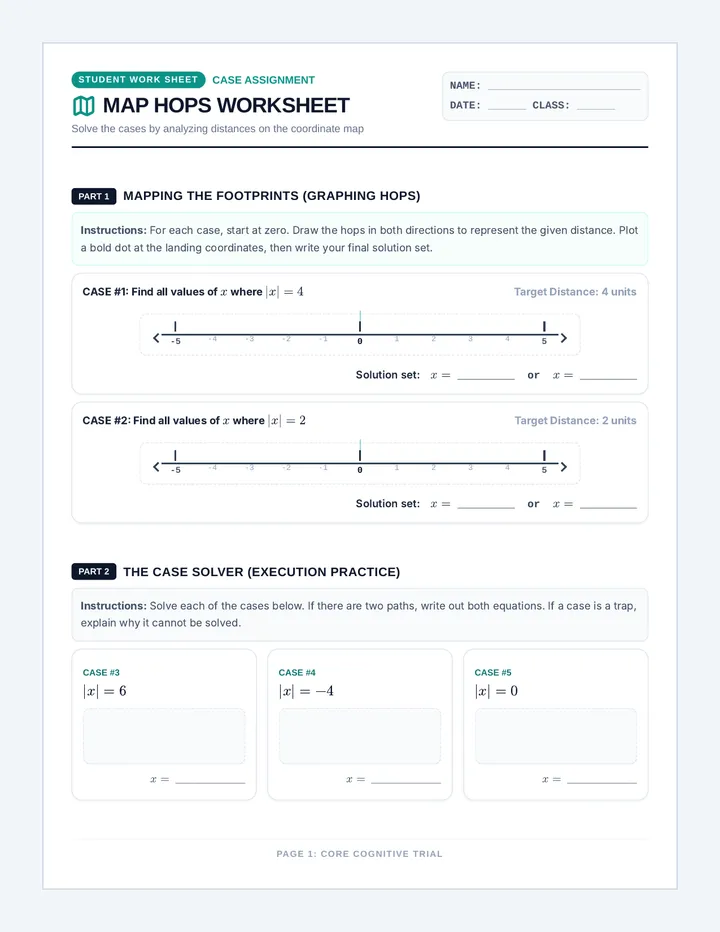
A lesson focused on identifying the value of a variable that satisfies a one-step equation through substitution and mental math.
A focused lesson on using cross-multiplication to solve algebraic proportions where one side is a whole number.
General administrative and planning resources for the Math Intensive Lab sequence, including the unit overview and sequence-wide instructional supports.
Focuses on transforming raw data into visual evidence. Students learn to choose the right chart for their 'case' and how to spot misleading visualizations.
Students learn the art of gathering high-quality data through surveys and observations, focusing on creating unbiased questions and selecting representative samples.
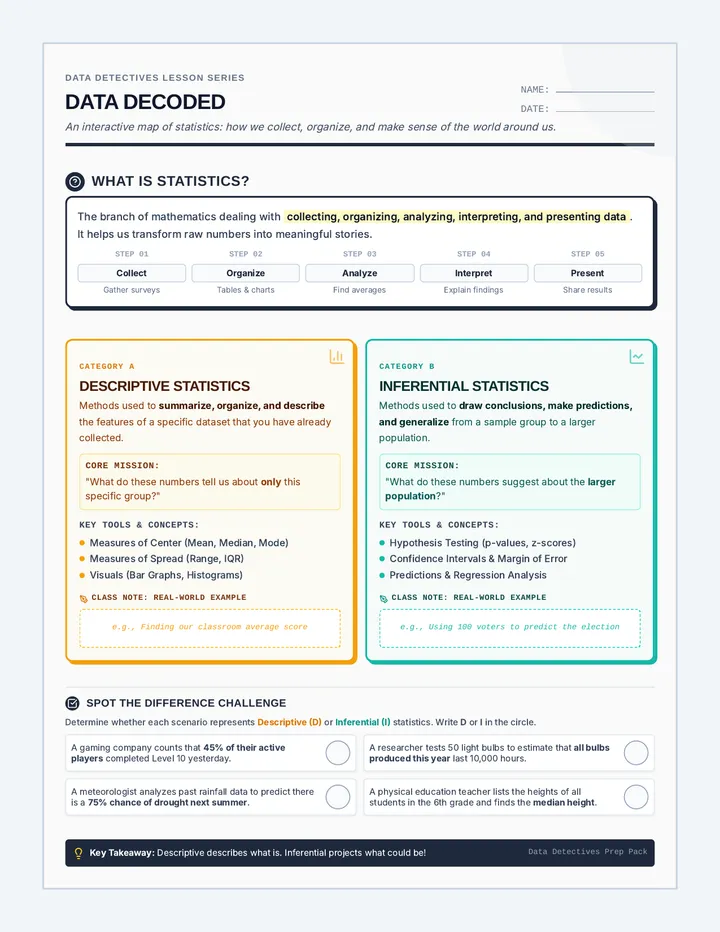
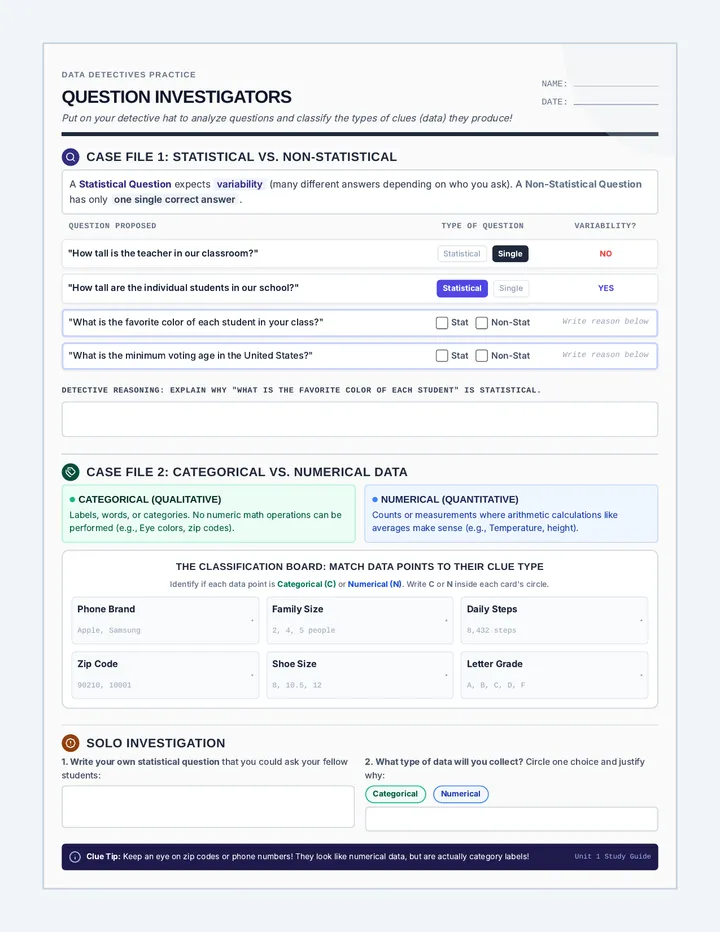
Students are introduced to the 'Data Detective' mindset, learning to distinguish between qualitative and quantitative data and identifying potential biases in datasets.
A project-based learning lesson where students design a miniature city using 2D and 3D geometric shapes to master geometry vocabulary and spatial reasoning.
An interdisciplinary exploration of geometry in world-famous art and architecture, where students analyze symmetry and shape before creating their own geometric masterpieces.
A foundational lesson on solving two-step equations using inverse operations, framed through a construction and blueprint theme. Students will learn to 'deconstruct' equations to find the value of the variable.
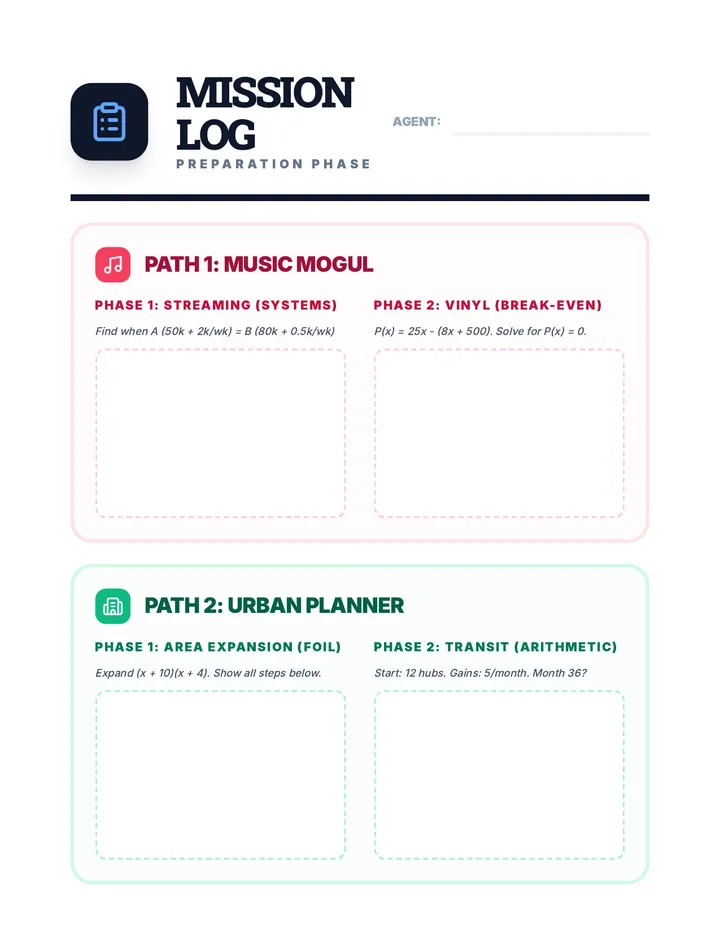
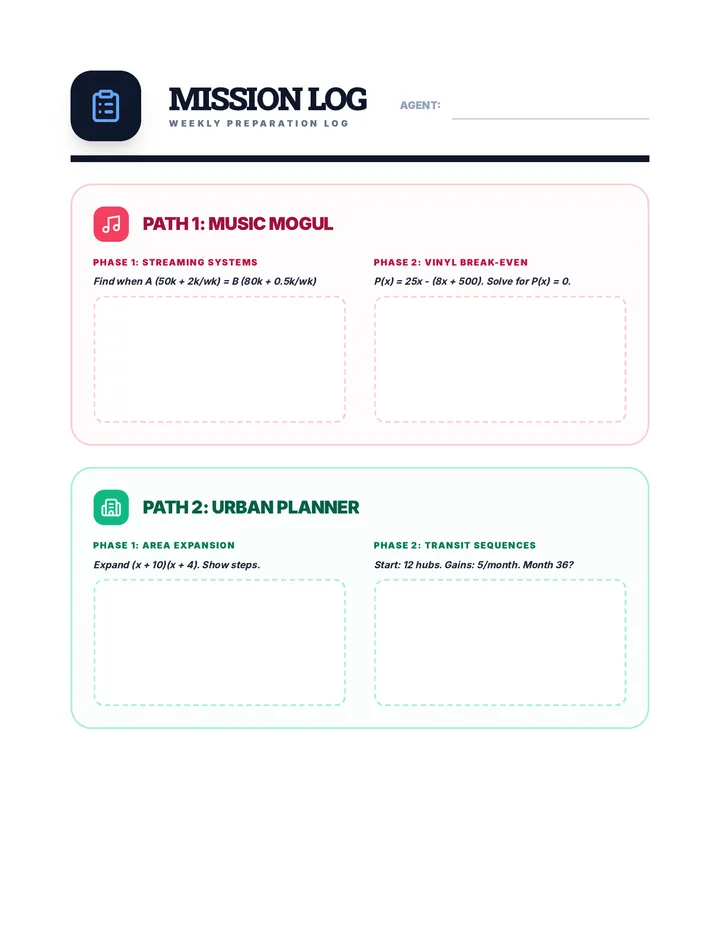
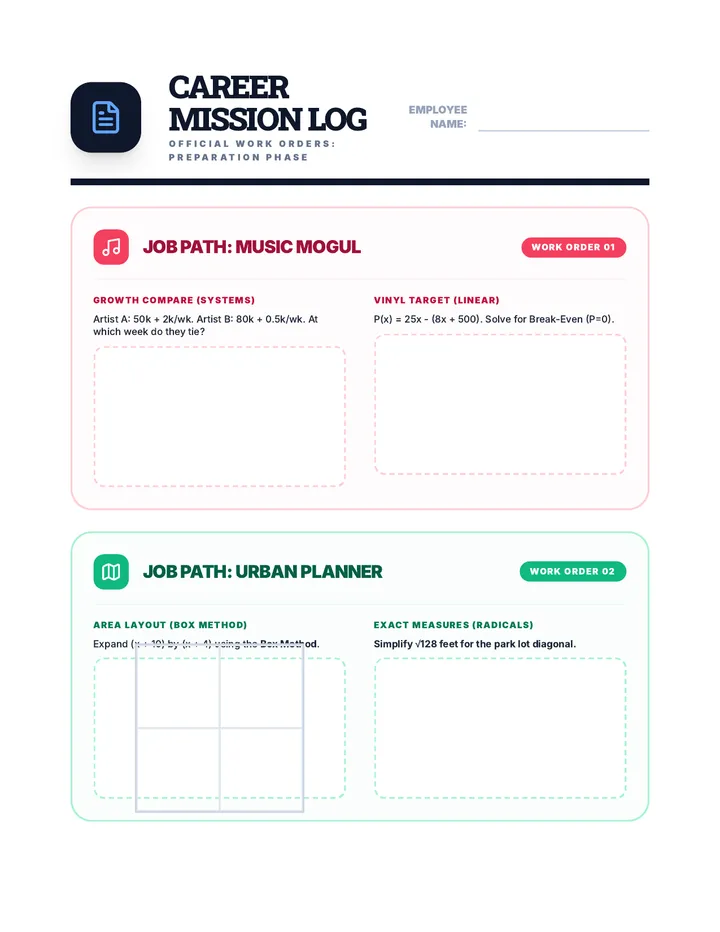
A hands-on geometry project where students act as urban planners to design a city using specific geometric shapes, angles, and area/perimeter calculations. Students will bridge the gap between abstract geometry and real-world architecture.
A comprehensive 20-question review packet and answer key covering 7th-grade math topics including linear expressions, circle circumference, percentage word problems, and unit rates.
An introductory lesson on geometric reflections, covering lines of reflection, x and y-axis reflections, and the concept of congruence.
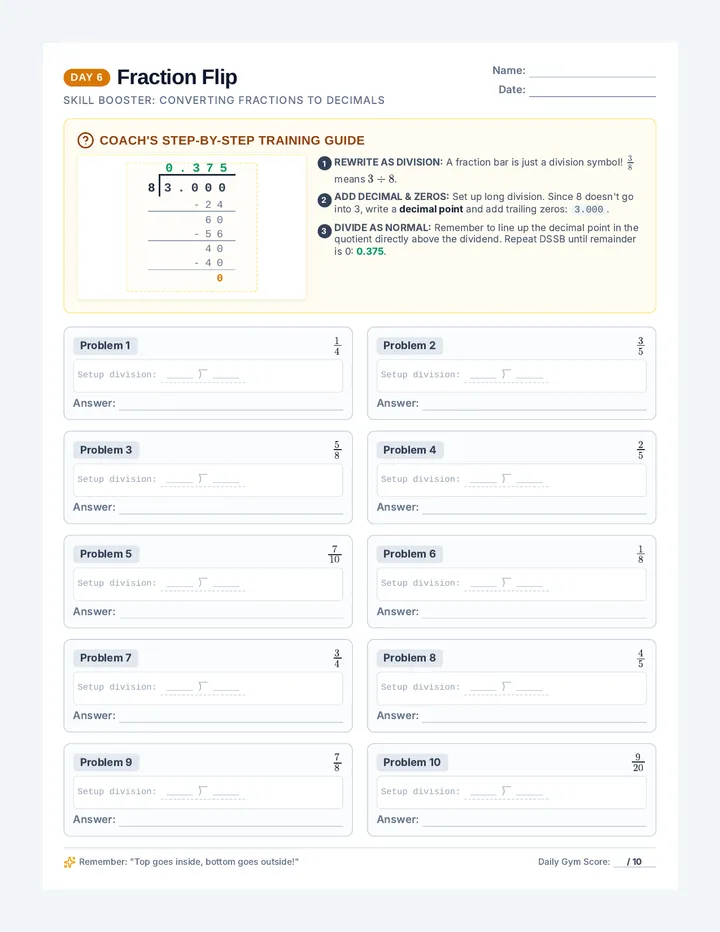
A comprehensive lesson on converting fractions to terminating decimals using long division and equivalent fractions with denominators of 10, 100, or 1,000. Students will act as 'Decimal Architects' to rebuild fractions into their decimal equivalents.
A comprehensive math lesson focusing on practical life skills: budgeting for multiple items and mastering ratio identification and simplification. This lesson integrates real-world shopping scenarios with structured mathematical organizers.
A final assessment and review day to track progress towards identifying coins and performing money calculations with 80% accuracy.
Applying both addition and subtraction to multi-step real-world scenarios using a set of interactive scenario cards.
Practicing subtraction skills to calculate change and budget remaining money from a $20 limit.
Introduction to adding money amounts up to $20 using a calculator based on shopping lists and grocery scenarios.
Focuses on identifying the names and values of pennies, nickels, dimes, and quarters through matching and visual aids.
A cumulative review and assessment of ratio and rate concepts through a 'Lab Challenge'.
Students solve complex, multi-step ratio problems using a variety of visual models.
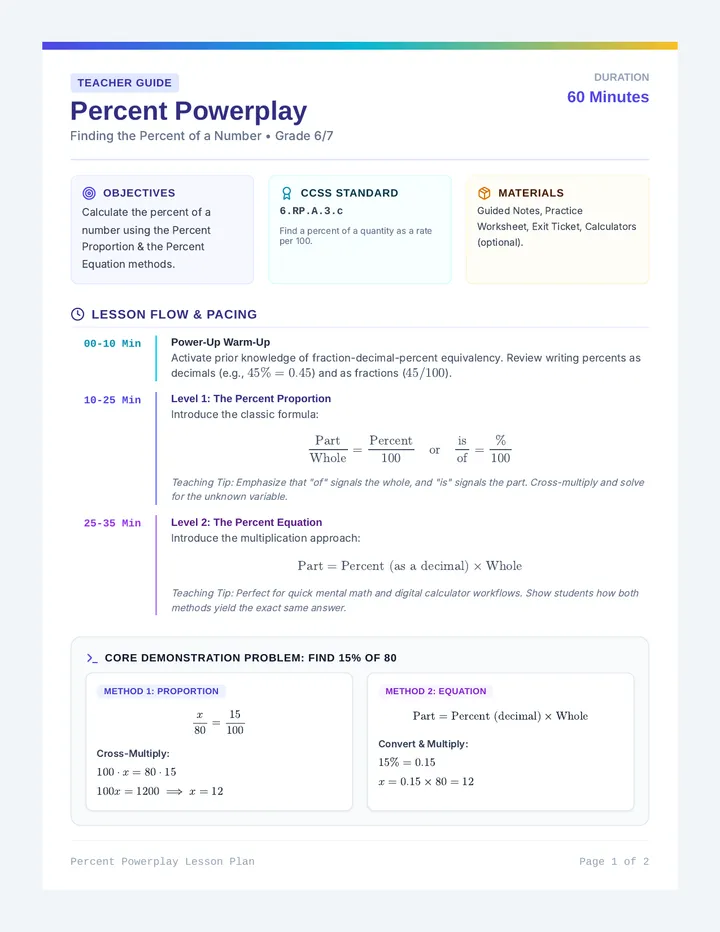
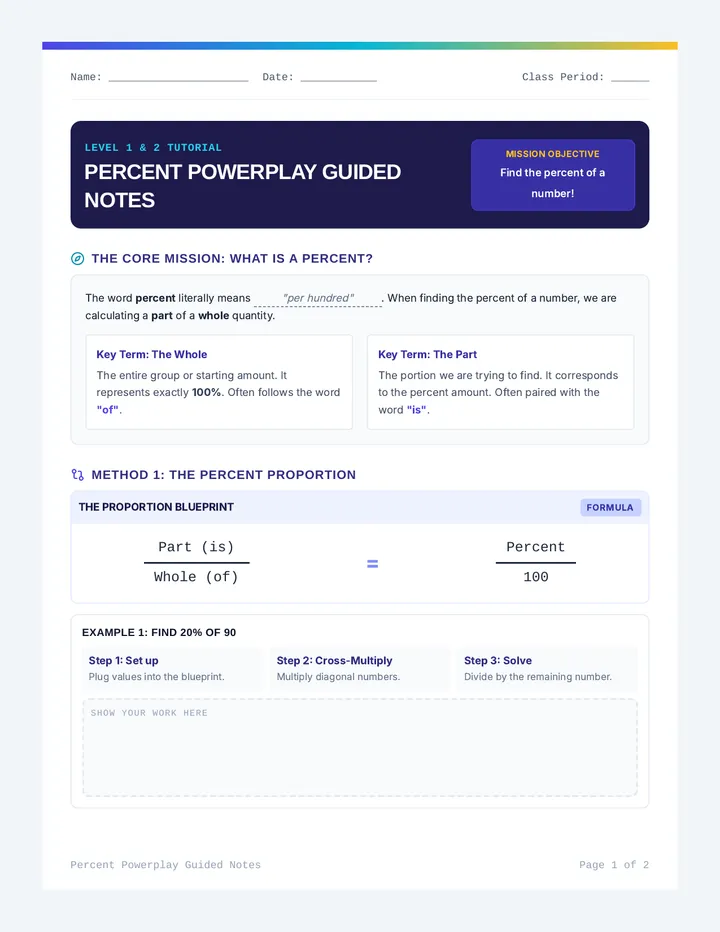
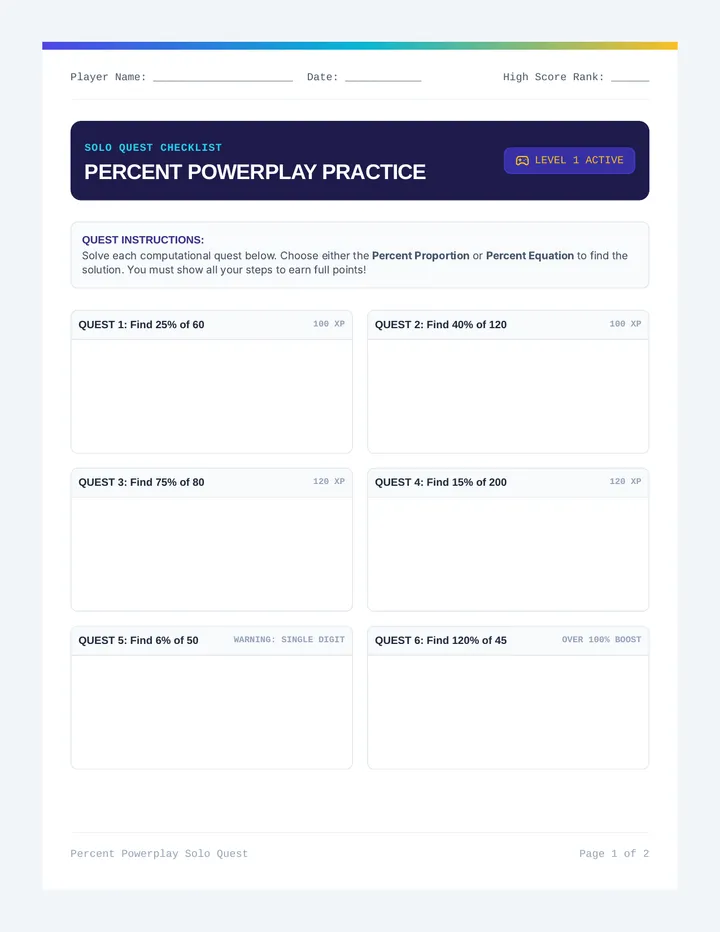
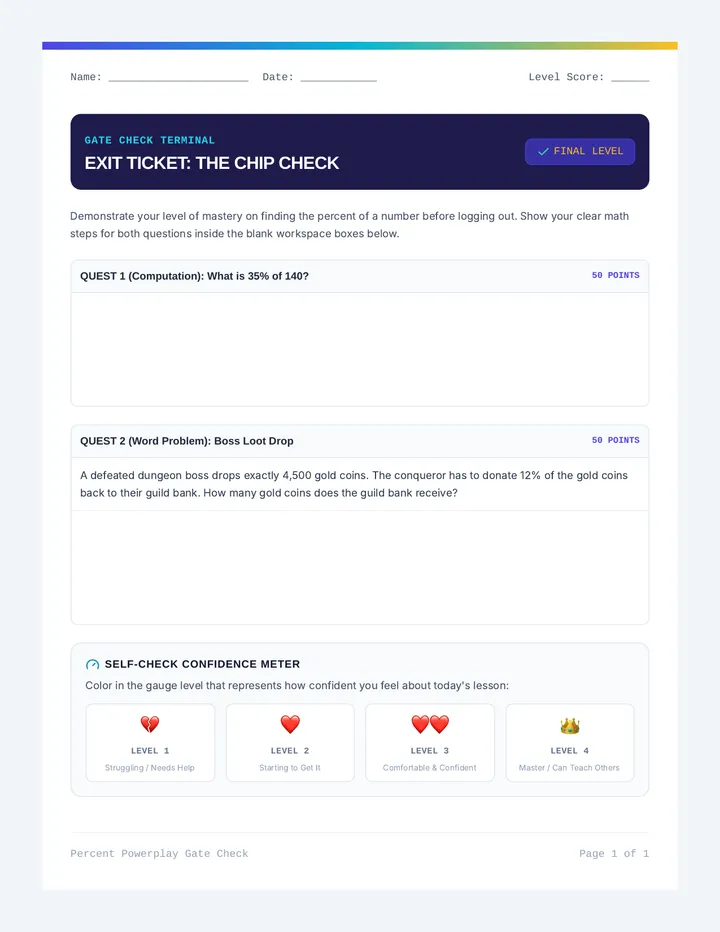
Students find the whole given a part and the percent, or find the part given the whole and percent.
Students define percent as a rate per 100 and represent percents using 10x10 grids.
Students solve problems involving constant speed using unit rates and ratio reasoning.
Students apply unit rate reasoning to find the 'better buy' in shopping scenarios.
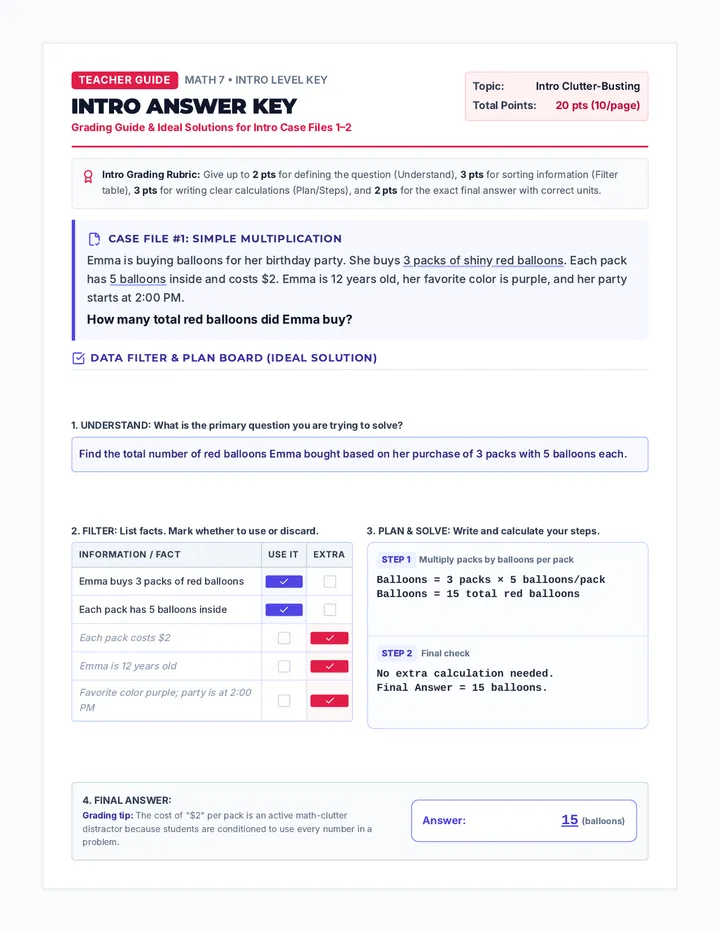
Students transition from ratios to unit rates, understanding the concept of 'per 1'.
Students use double number lines to solve ratio problems involving distance, time, and scaling.
Students organize equivalent ratios into tables to identify patterns and solve problems.
Students explore equivalent ratios using simple multiplication and division strategies.
Students use tape diagrams to represent part-to-part and part-to-whole relationships visually.
Students learn to use ratio language to describe a relationship between two quantities. Focus on "for every" language and identifying parts and wholes.
A hands-on multiplication workshop where middle school students use multiple 'engineering tools' (arrays, number lines, and decomposition) to master multiplication facts up to 15x15.
A targeted intervention session providing differentiated pathways for students based on their mastery of domain and range: enrichment projects, error analysis, and foundational reteaching.
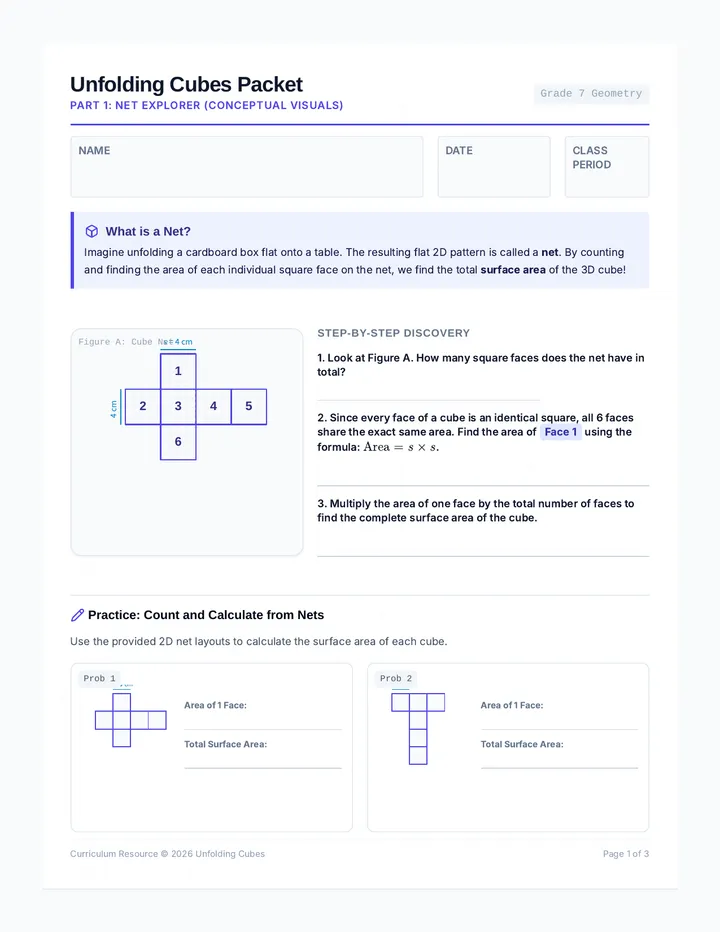
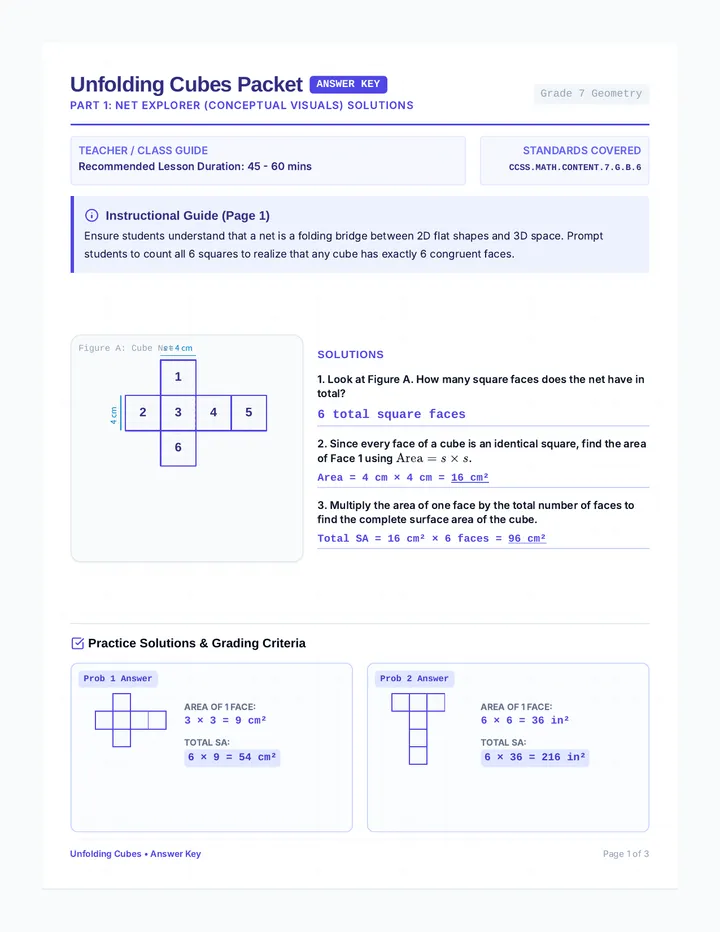
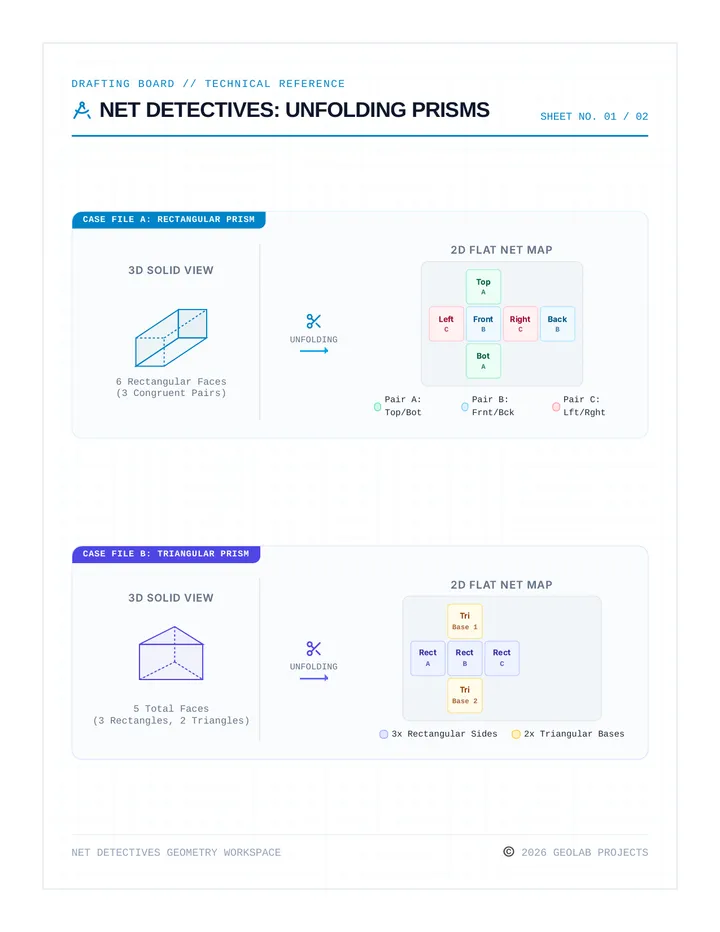
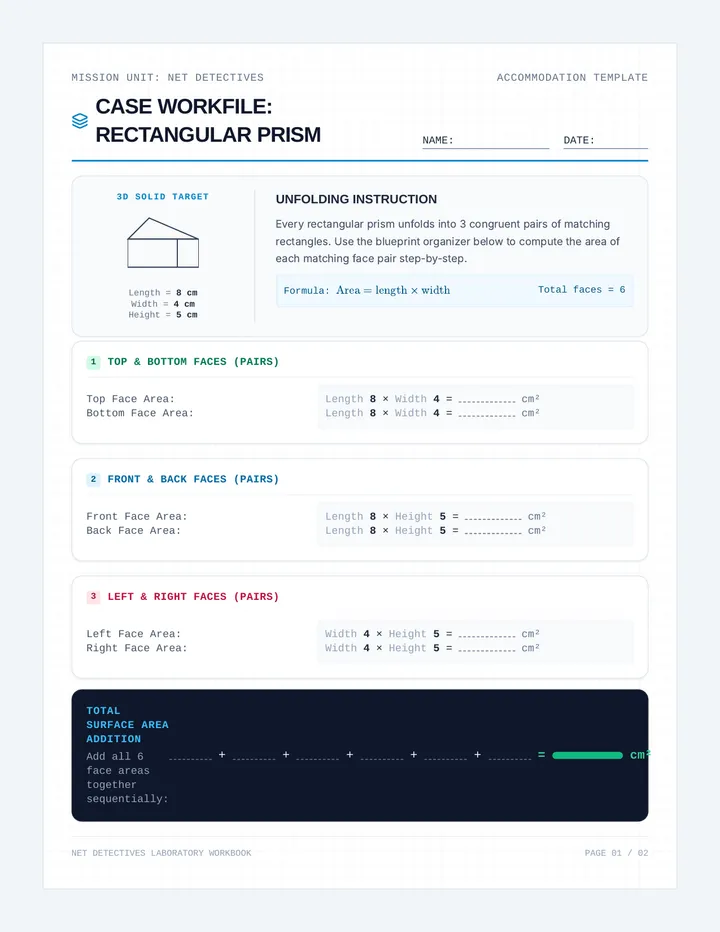
Connects 2D representations to 3D volumes by exploring nets of prisms and pyramids to calculate surface area conceptually.