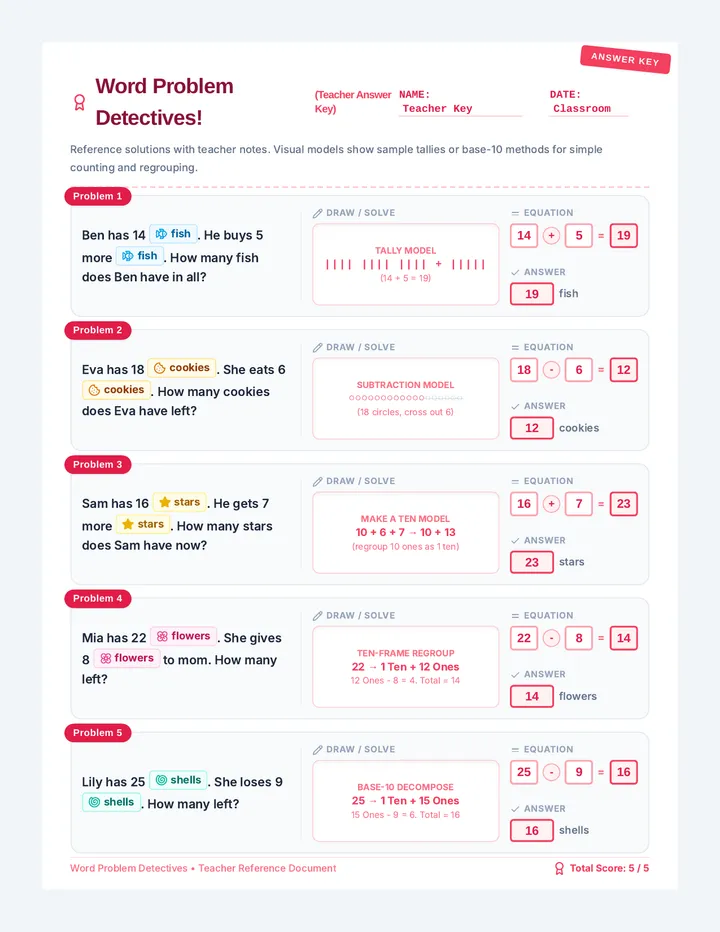
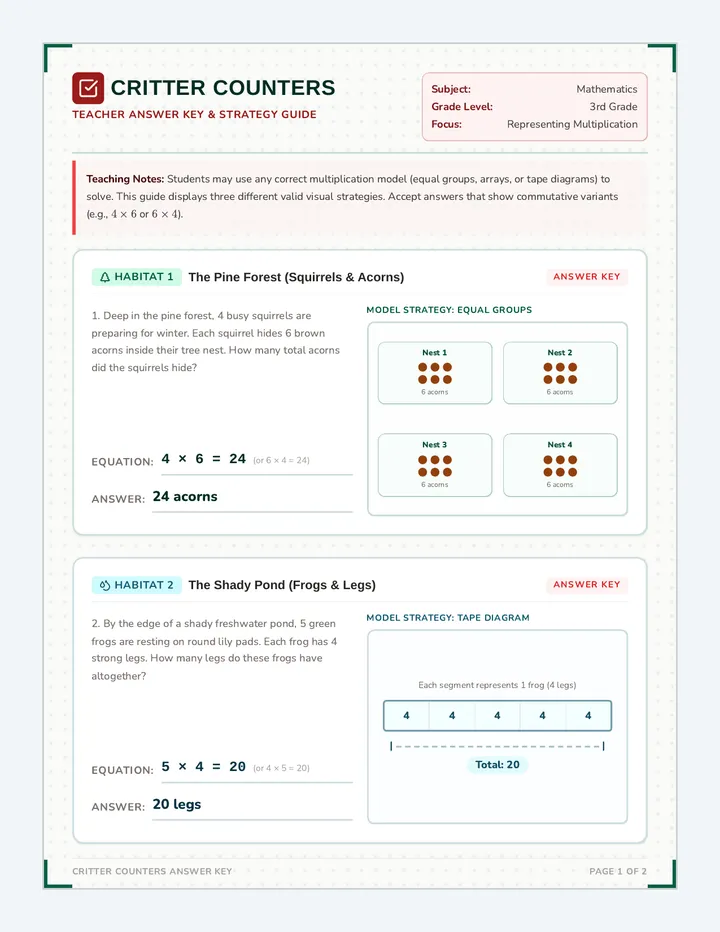
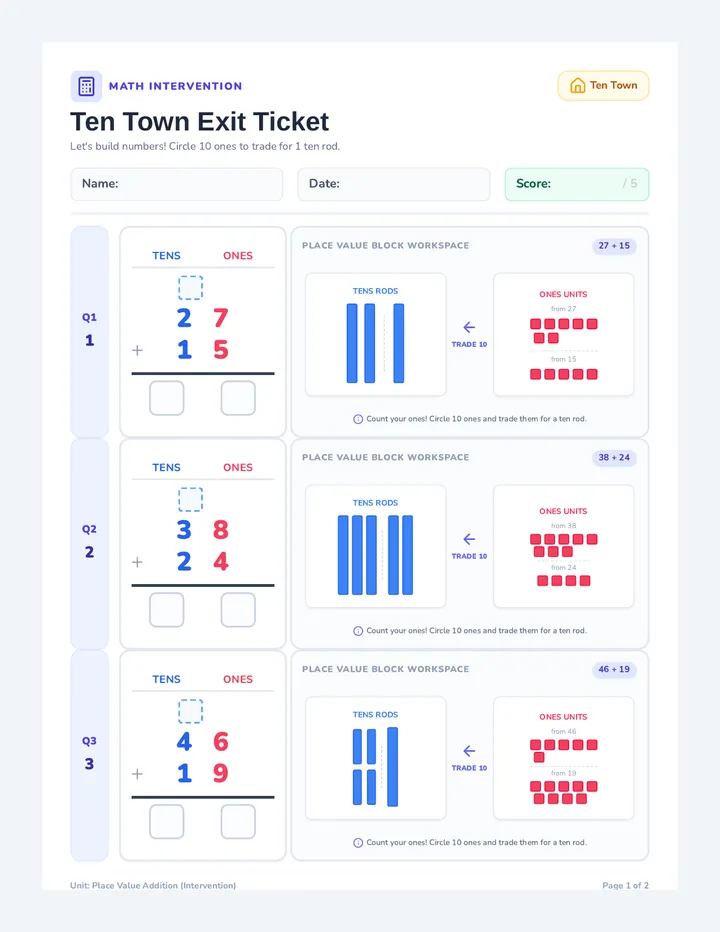
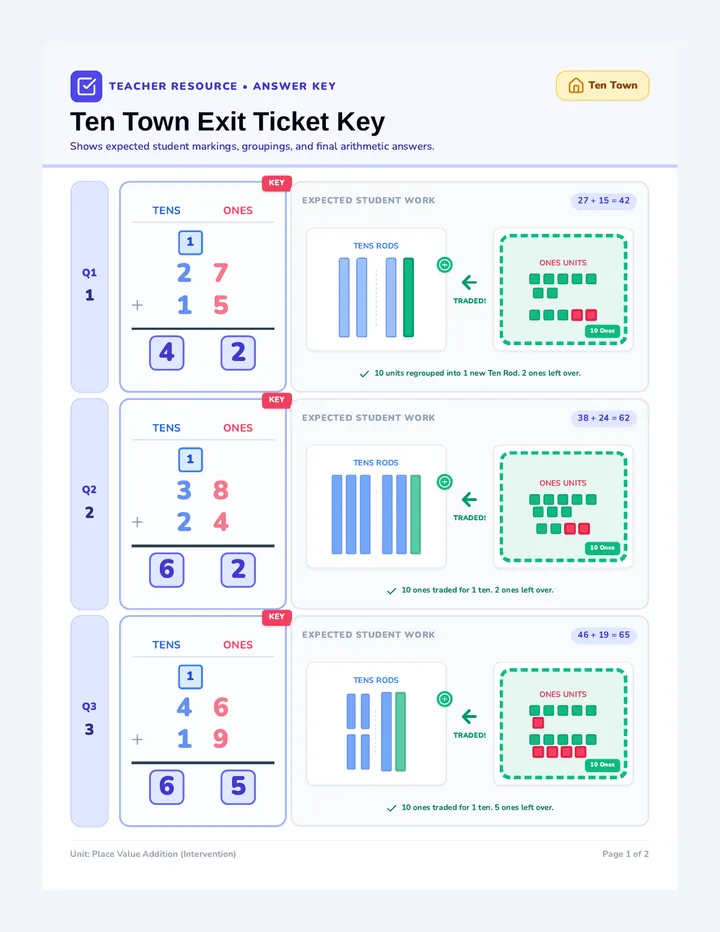
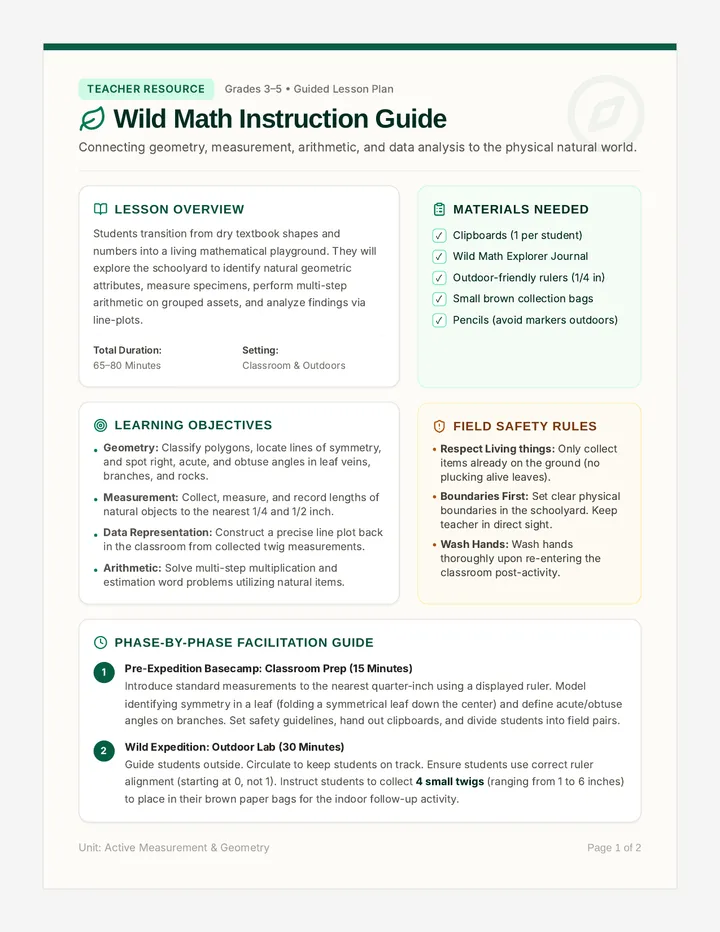
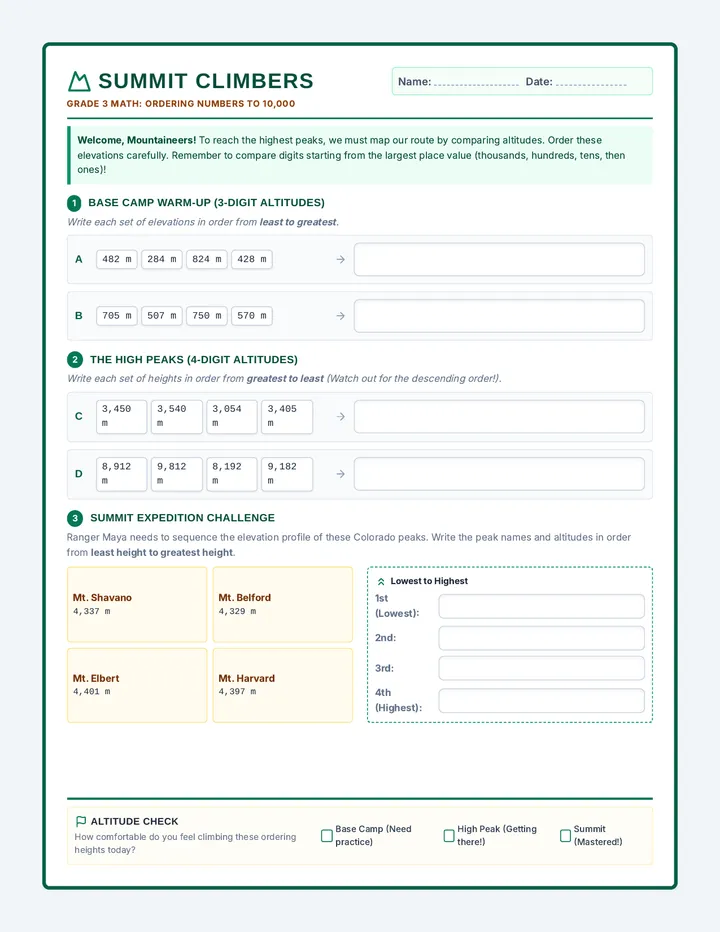
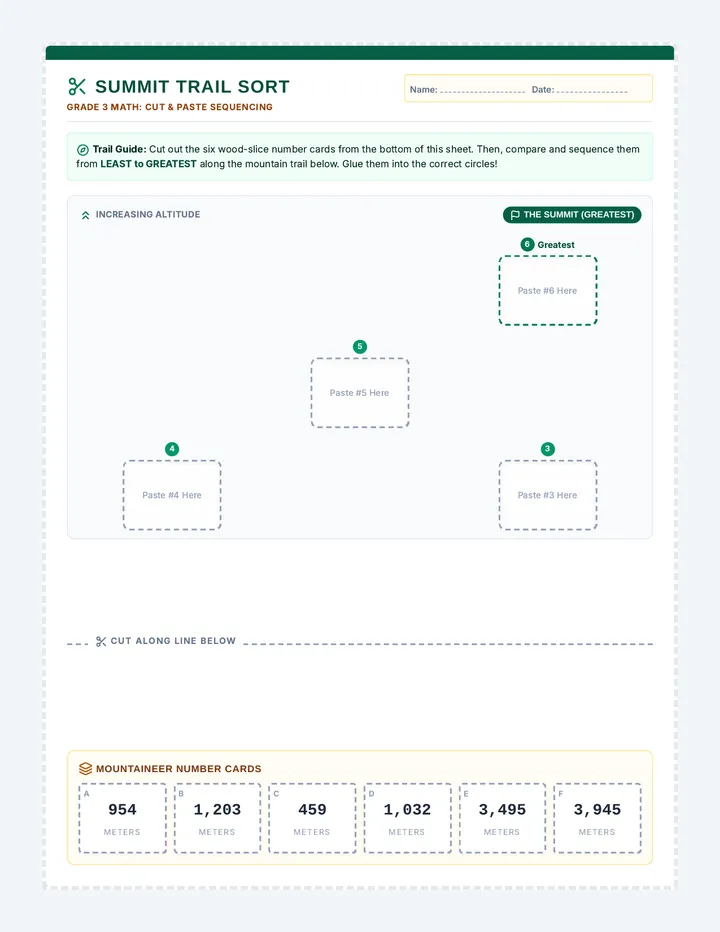
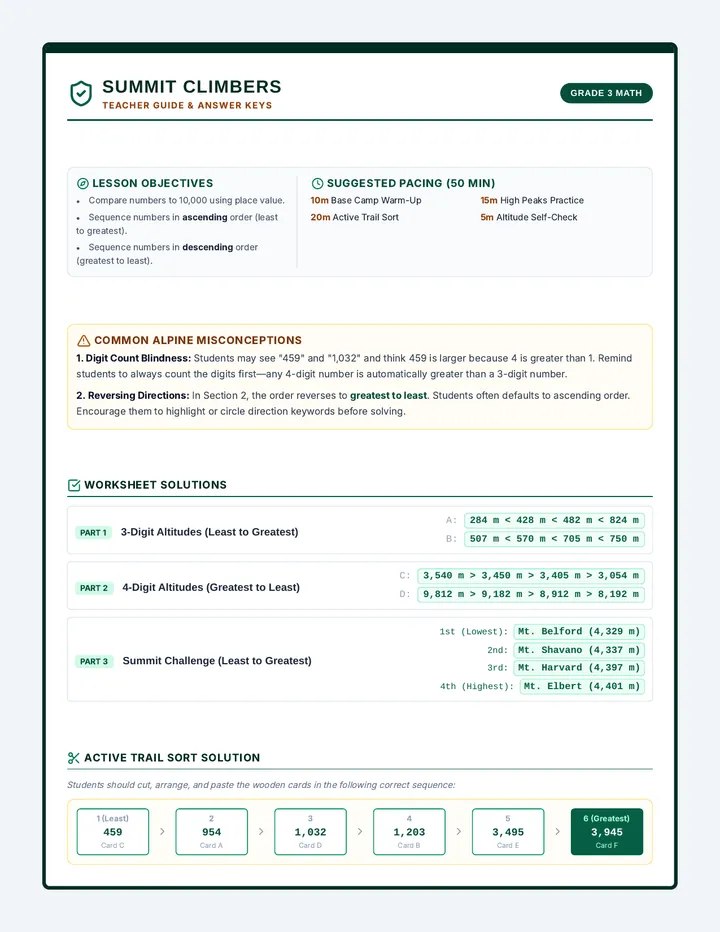
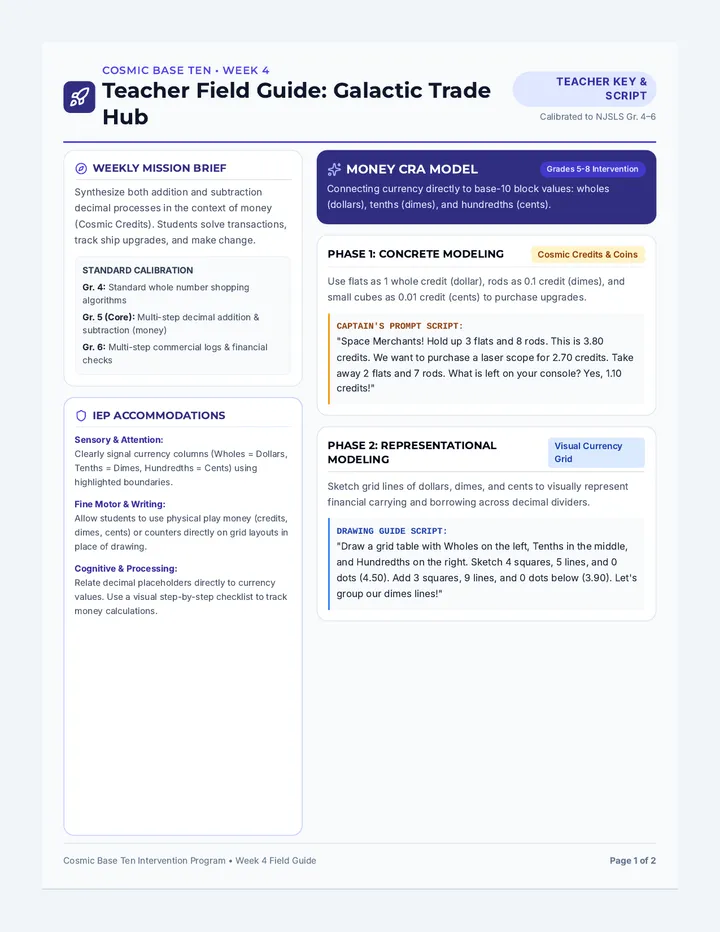
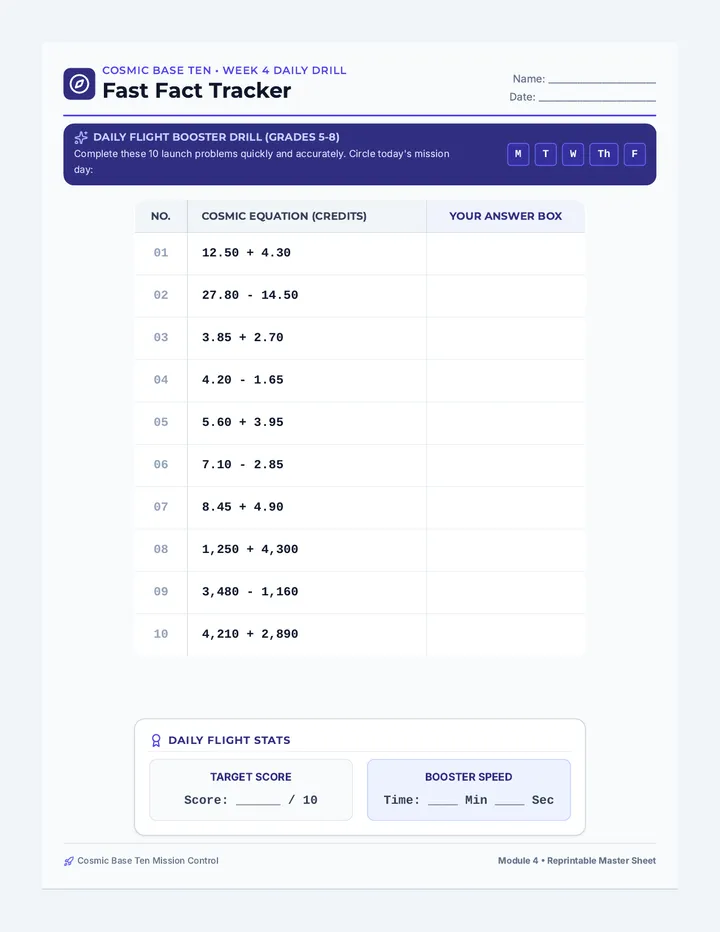
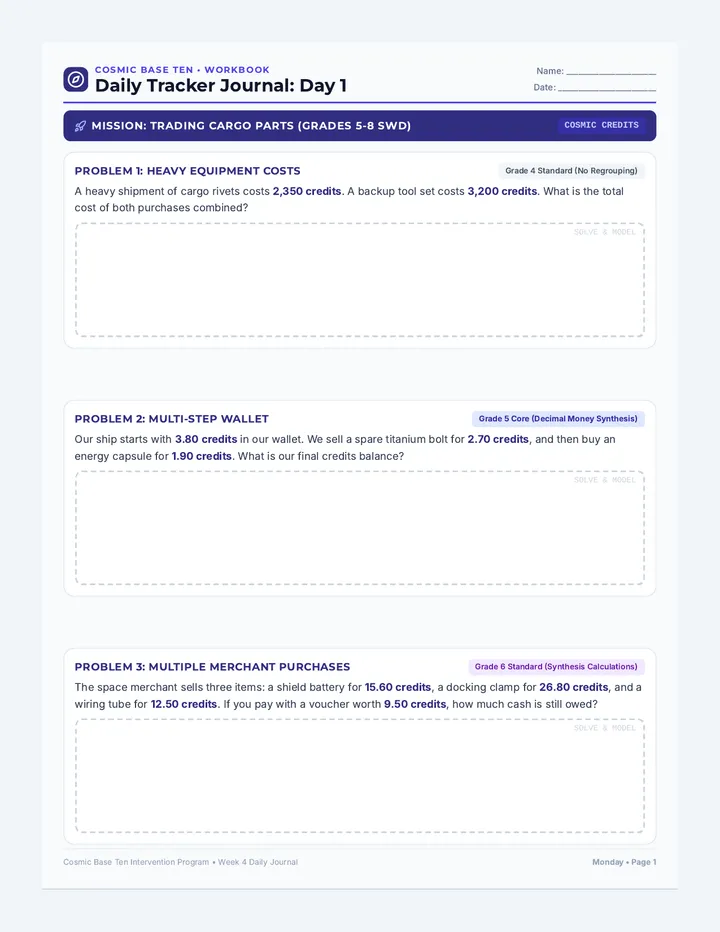
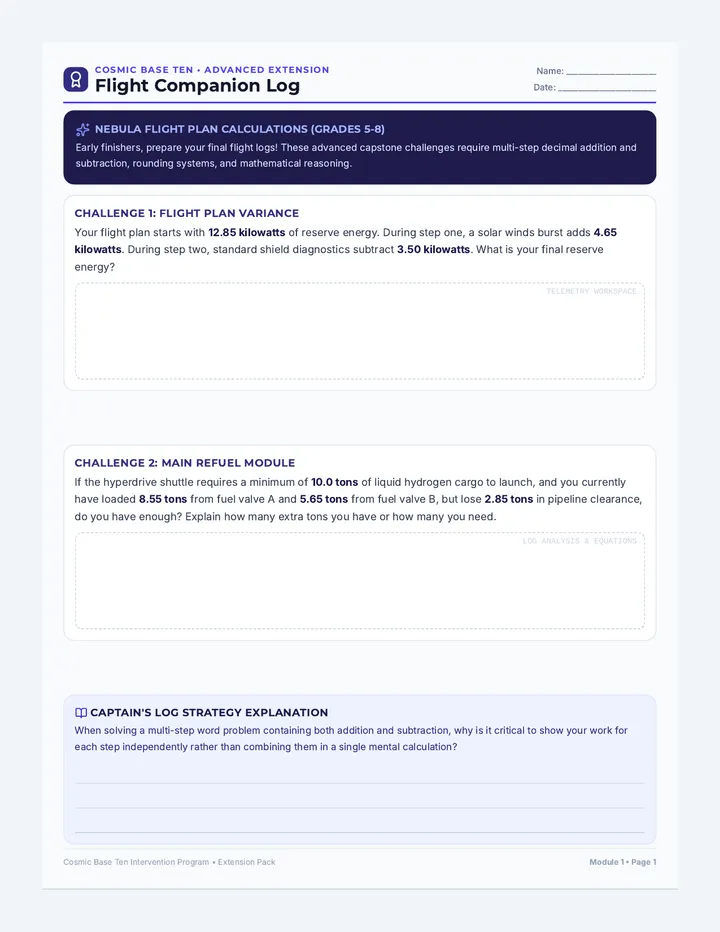
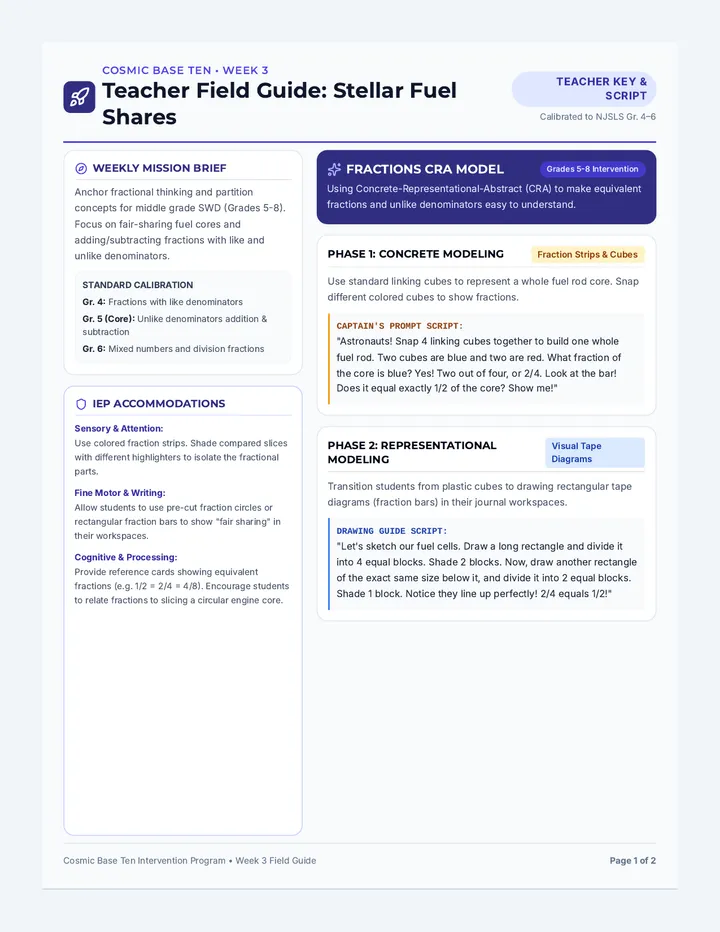
A hands-on activity where students practice two-digit addition and subtraction with regrouping through a set of forest-themed task cards.
A hands-on introduction to basic budgeting and grocery shopping. Students practice identifying prices, comparing costs, and making simple purchasing decisions using dollars and cents with high visual support.
A multiplication mastery lesson focusing on pattern recognition (1s, 2s, 3s, 5s, 10s, 11s) for special education students. Includes a scaffolded 12x12 chart and teacher answer key.
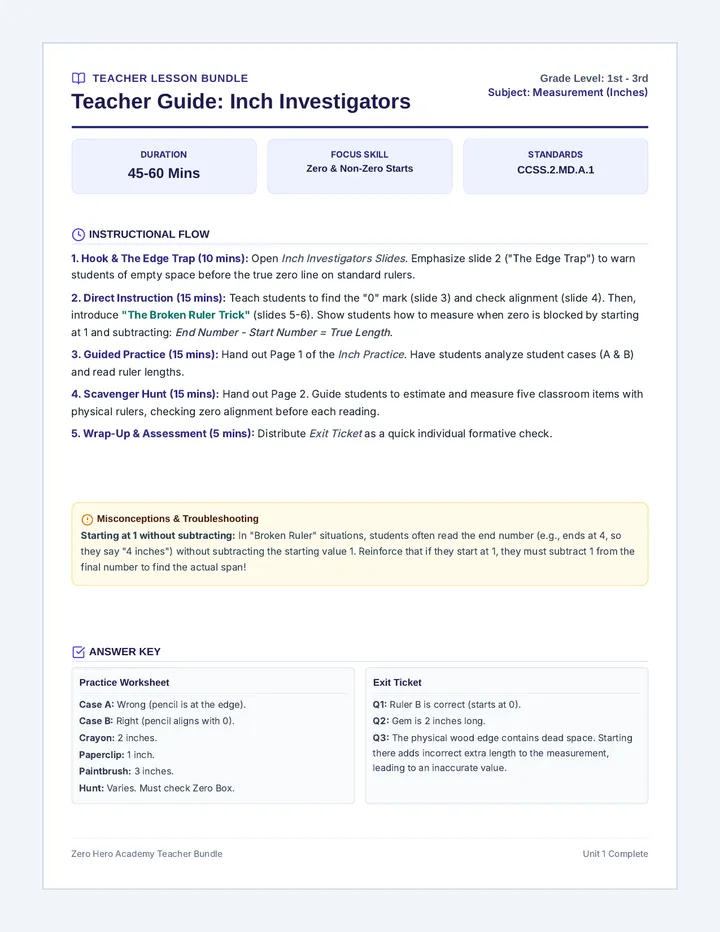
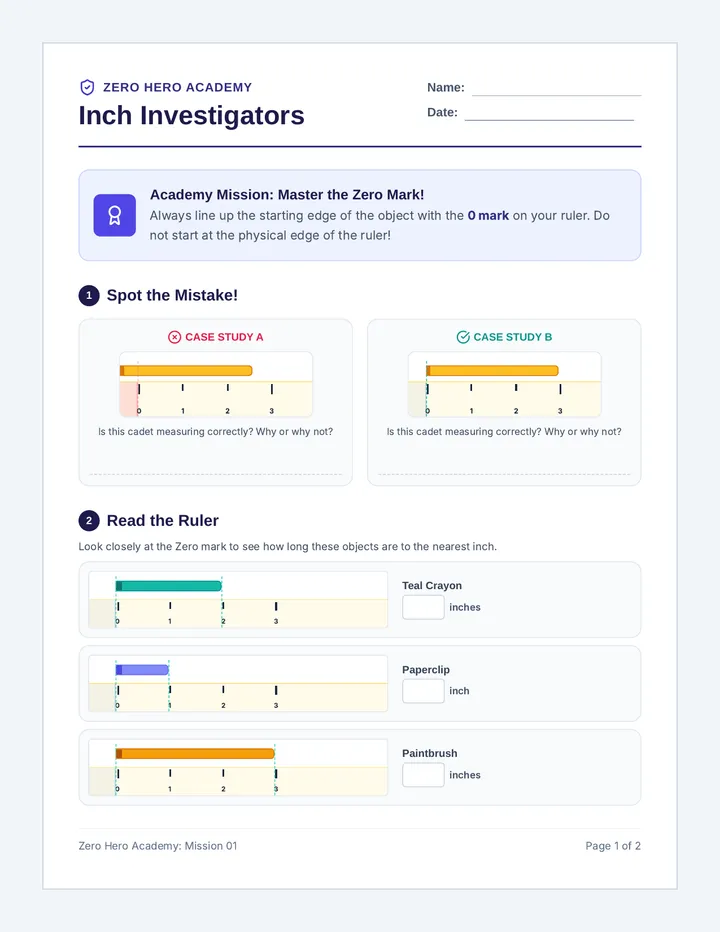
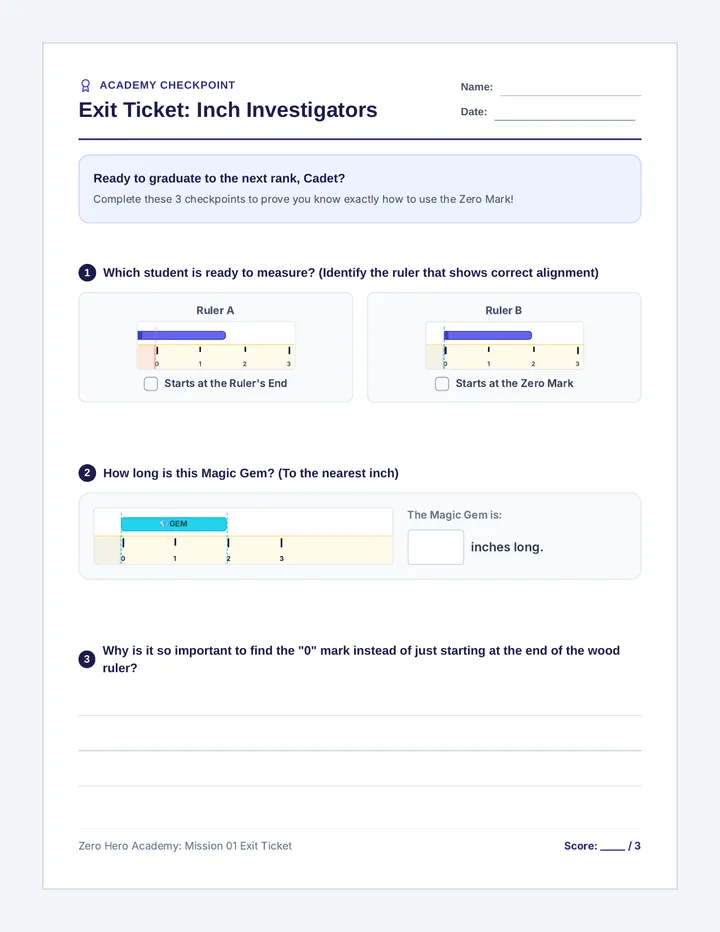
A hands-on lesson focusing on recognizing and converting units of length including inches, feet, yards, and meters. Students use visual models and step-by-step guides to master measurement relationships.
A comprehensive 3rd grade math lesson focused on understanding the relative sizes of inches, feet, and yards, and mastering conversions from larger units to smaller units through a construction-themed Megacity simulation.
An assessment-focused lesson helping students master three-digit place value and expanded form notation through structured identification and expanded form writing.
A ninja-themed lesson teaching the '-10 plus 1' strategy for subtracting 9 from numbers up to 20 using double ten-frames.
A mental math sequence using double ten frames to master the -9 strategy (subtract 10, add 1). Students use visual relationships to build fluency in the 9-20 range.
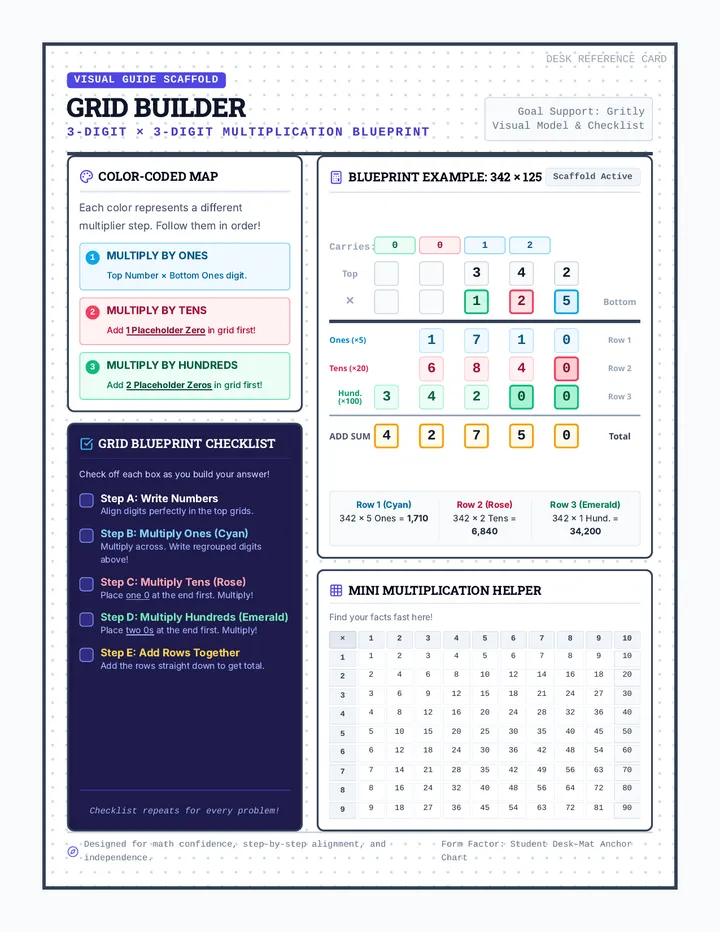
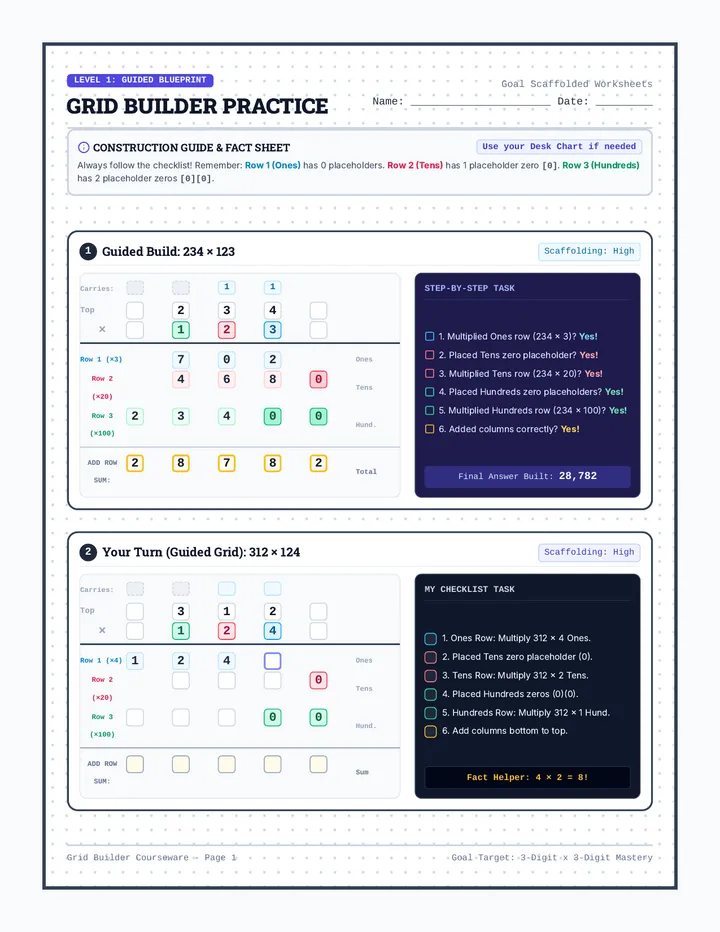
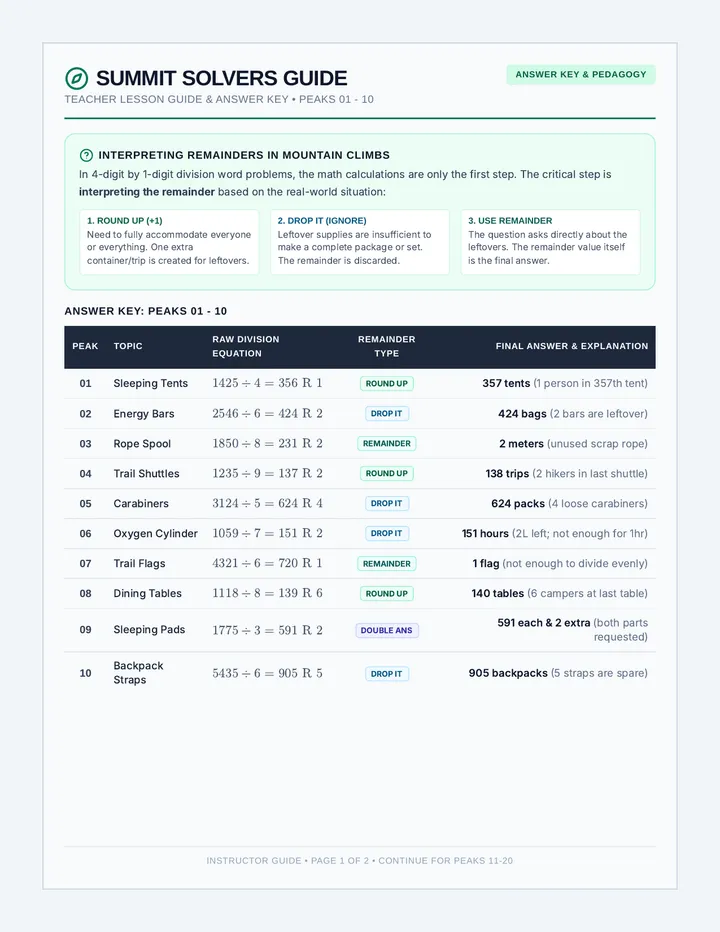
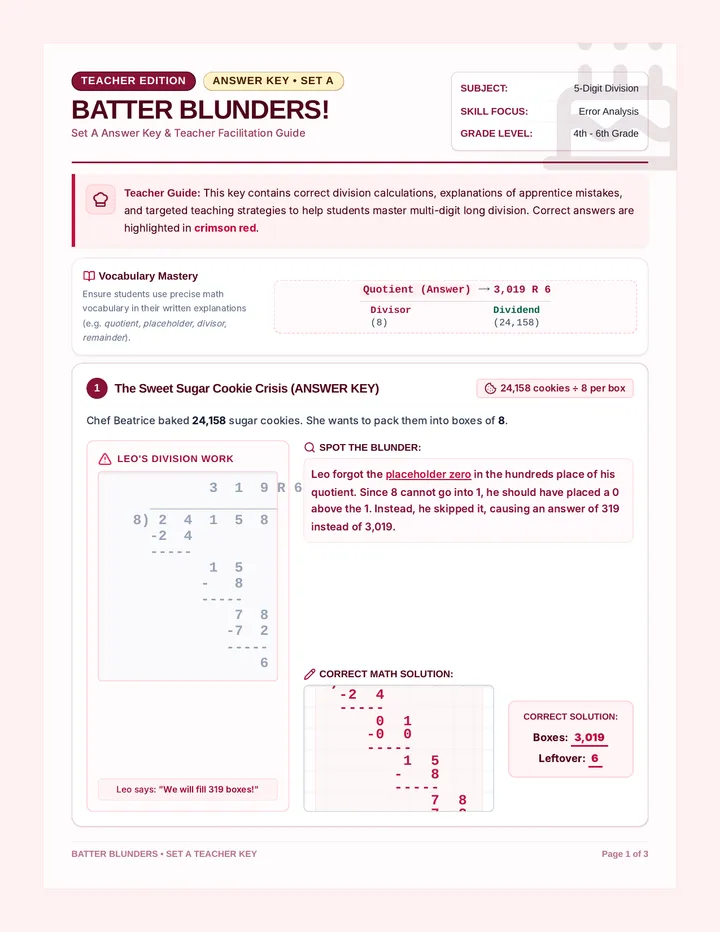
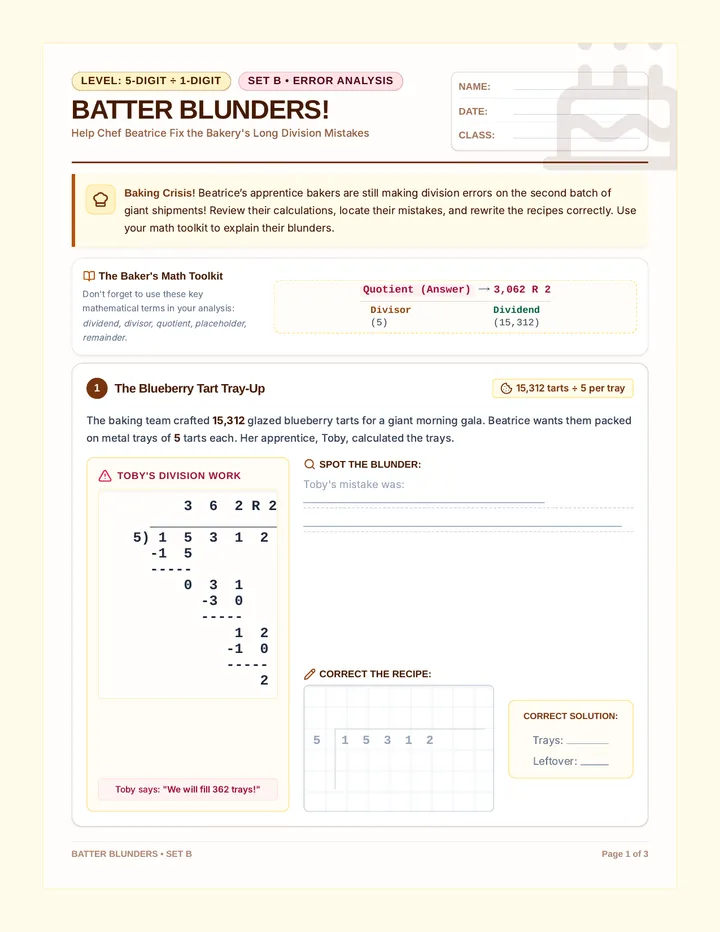
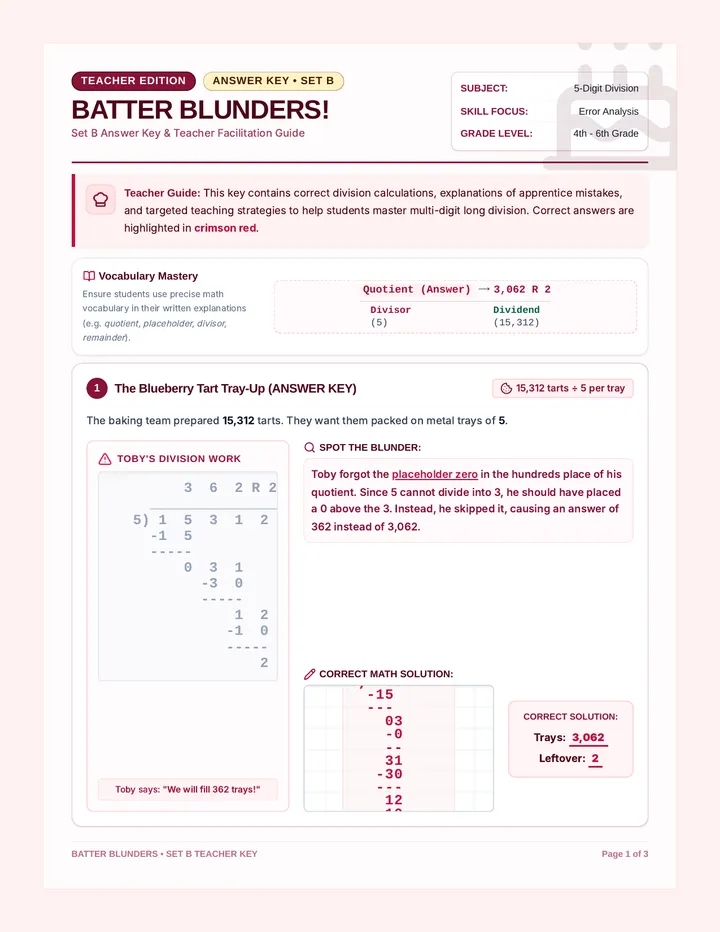
A lesson focused on mastering multi-digit multiplication and long division using visual grids and procedural checklists.
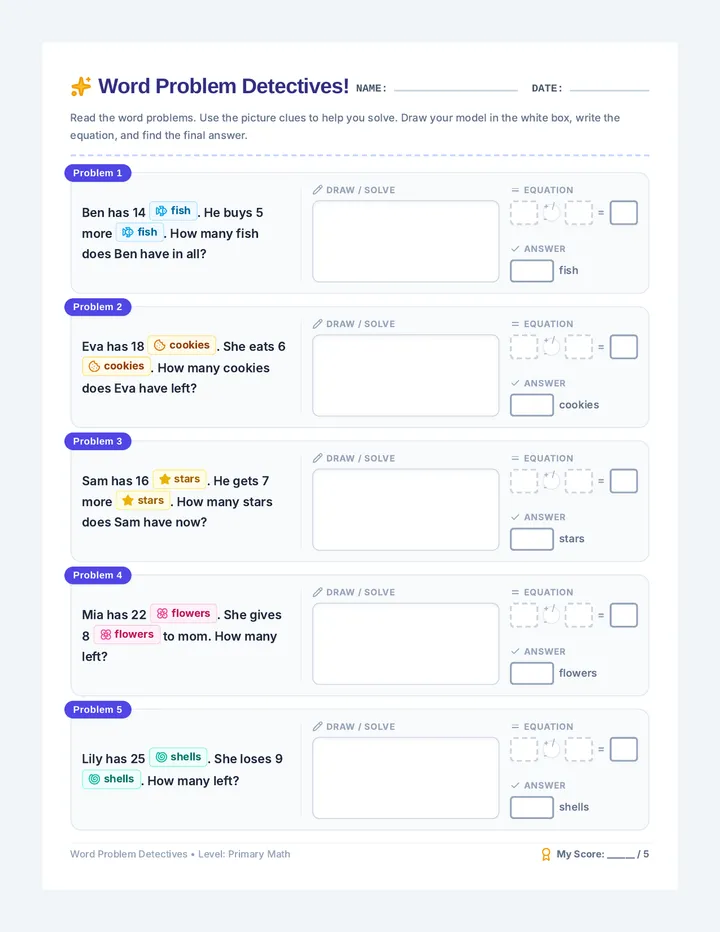
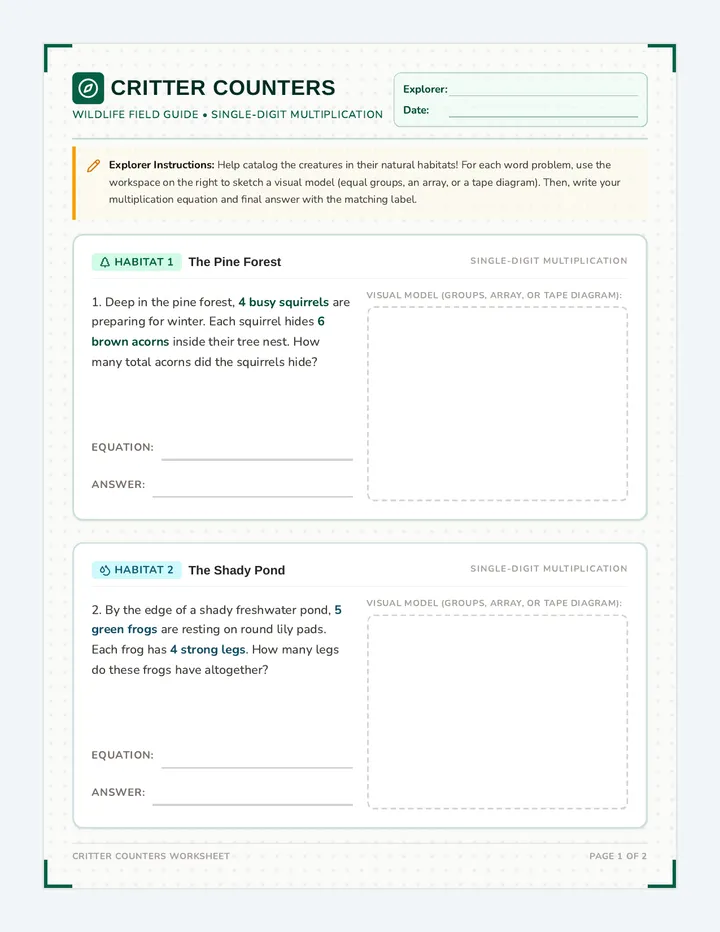
A math lesson for 3rd graders focused on solving one-step word problems using all four operations through a camping-themed lens. Students will learn and apply the '3 Read Strategy' to navigate mathematical stories and select the correct operation.
A 2nd-grade lesson focused on the 'bridging to 10' strategy for subtraction, using ten-frames and number lines to decompose subtrahends and simplify calculations.
A foundational lesson on solving one-step word problems using all four operations. Students learn to identify bolded keywords and use ten-frame visual scaffolds to organize their mathematical thinking.
A 4th-grade math lesson focusing on multi-step addition and subtraction problems. It incorporates specific executive function supports, such as structured checklists and visual pauses, to help students with impulse control manage their mathematical workflow.
Students learn to add multiples of ten to any 2-digit number by drawing base-ten blocks (sticks and dots). This lesson focuses on visualizing the addition of 'tens' to the existing value while the 'ones' remain constant, all within 100.
Students practice identifying facts and opinions through a seaside-themed sorting activity.
Students distinguish between internal and external character traits using coastal character profiles.
Students use context clues to determine the meaning of unknown vocabulary words in coastal sentences.