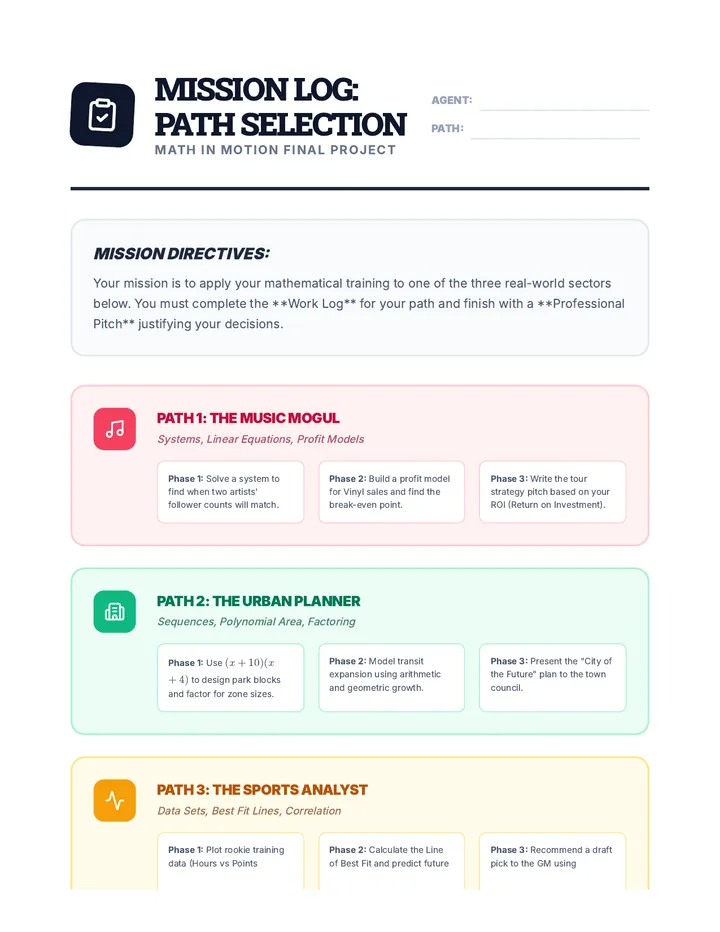
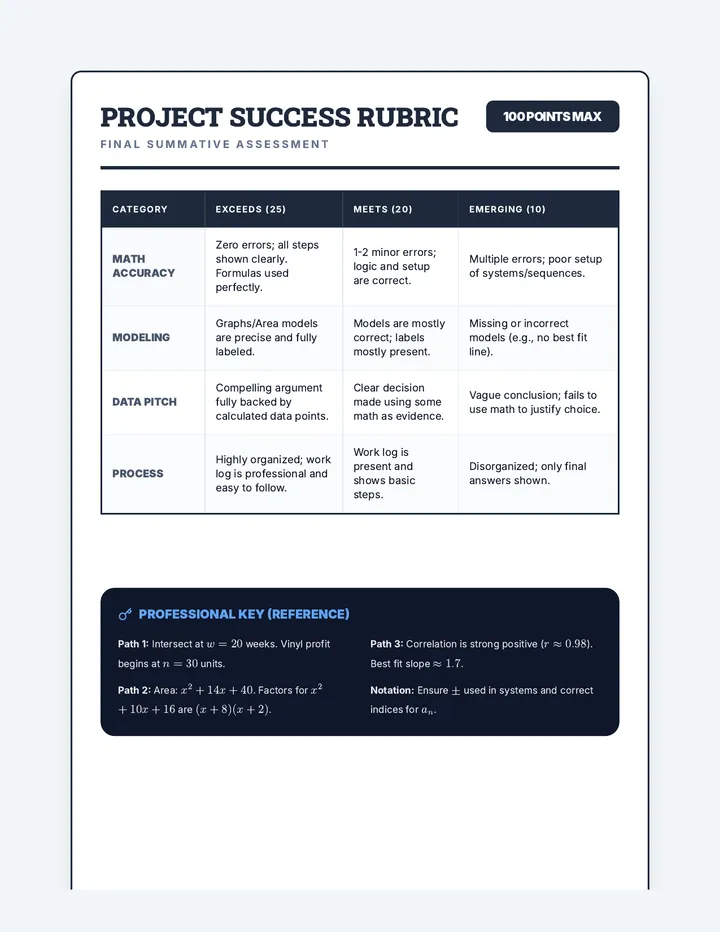
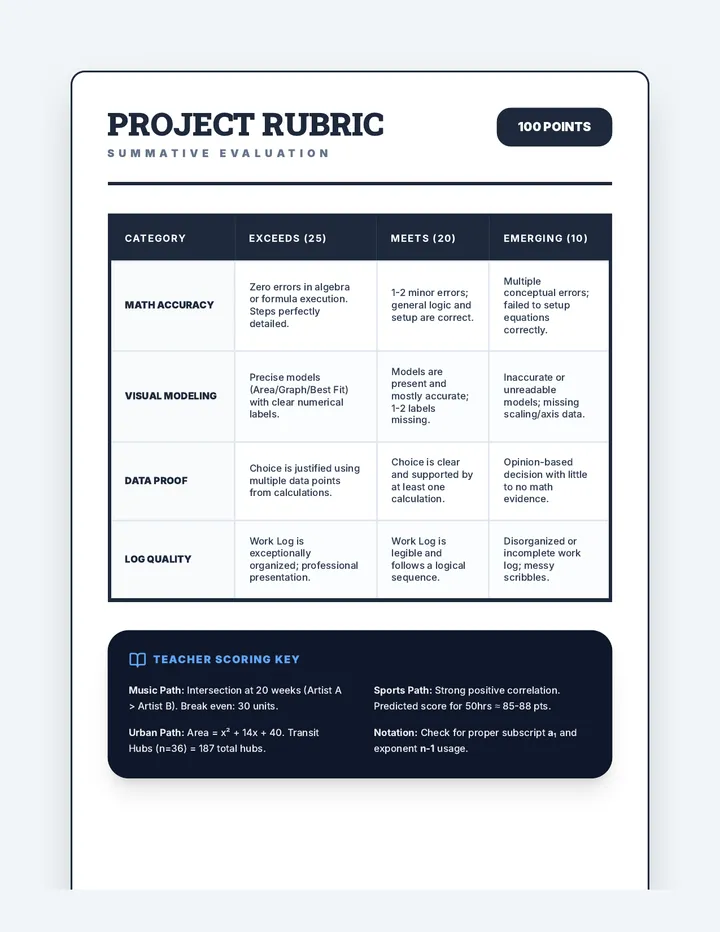
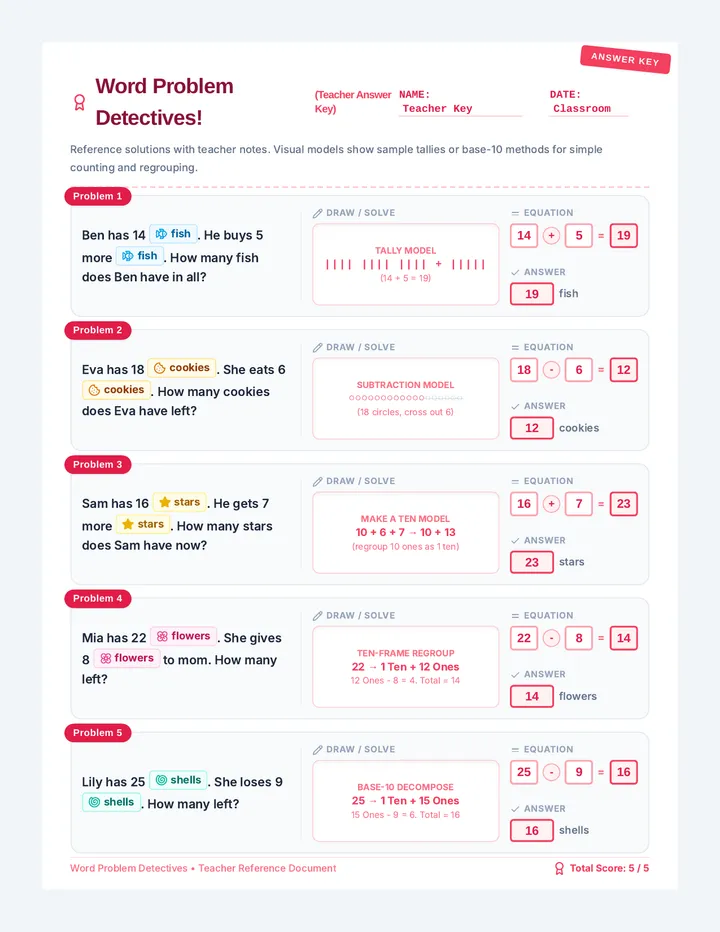
Problem Solver Squad Slides
An engaging detective-themed slide deck that teaches grade 2 students how to solve 1- and 2-step word problems using the 'Detective Toolkit' strategy. Includes clear examples and visual guides for both addition and subtraction scenarios.
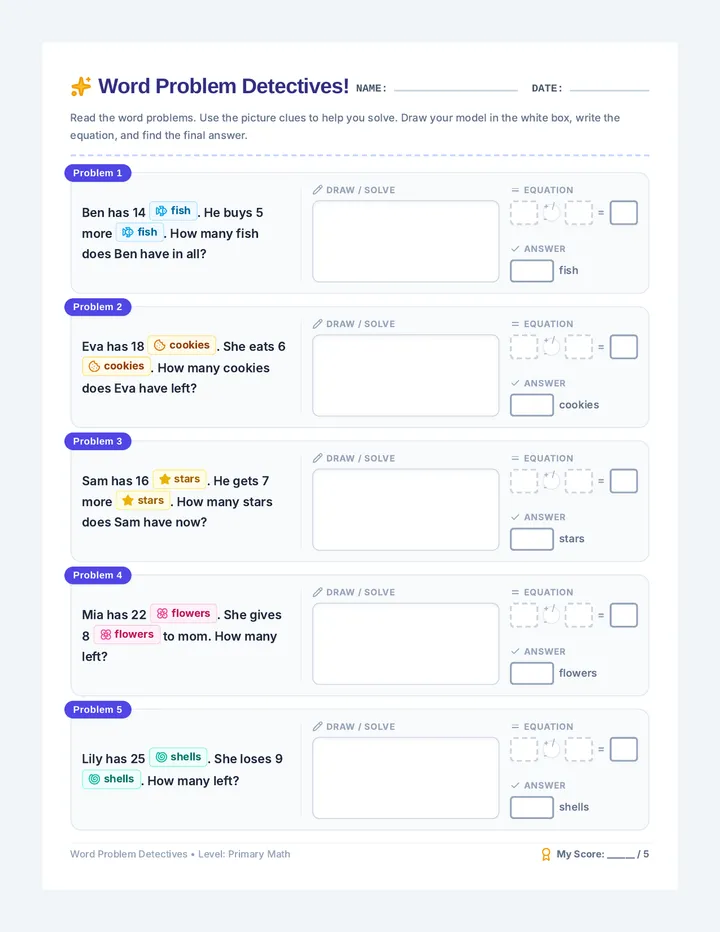
Problem Solver Squad Assessment
A 2-page detective-themed formative assessment for grade 2 students, featuring 1-step and 2-step addition and subtraction word problems within 100. Revised for print-friendliness with robust layout and minimal ink usage.
Problem Solver Squad Answer Key
A teacher-facing answer key for the Problem Solver Squad assessment, including step-by-step solutions and a guide to common student misconceptions.
Problem Solver Squad Slides Grade 4
Grade 4 detective-themed slides covering multi-step word problems with all four operations. Includes worked examples for multiplication/addition and division/subtraction scenarios.
Problem Solver Squad Assessment Grade 4
A 2-page formative assessment for Grade 4, featuring multi-step word problems involving multiplication, division, addition, and subtraction. Revised for print-friendliness with robust layout and minimal ink usage.
Problem Solver Squad Answer Key Grade 4
Teacher-facing answer key for the Grade 4 Problem Solver Squad assessment. Includes full calculations for multi-step problems and instructional tips for common student errors.
Problem Solver Squad Elite Slides Grade 4
Elite 'Specialist' level slides for Grade 4, featuring 3-step word problems, remainder interpretation, and multi-operation budget scenarios. High-contrast, high-stakes detective theme.
Problem Solver Squad Specialist Assessment Grade 4
An advanced, high-rigor formative assessment for Grade 4. Features 3-step problems and complex budget logic. Revised for robust printing with minimal ink and precise layout boundaries.
Problem Solver Squad Elite Answer Key Grade 4
Advanced teacher's answer key for the Elite Specialist Grade 4 assessment. Includes alternative strategies, detailed multi-step breakdowns, and specific pedagogical warnings for high-rigor word problems.