A comprehensive lesson focused on mastering possessive pronouns (his, hers, ours, theirs, yours) and regular plurals (-s, -es) through visual prompts and structured practice.
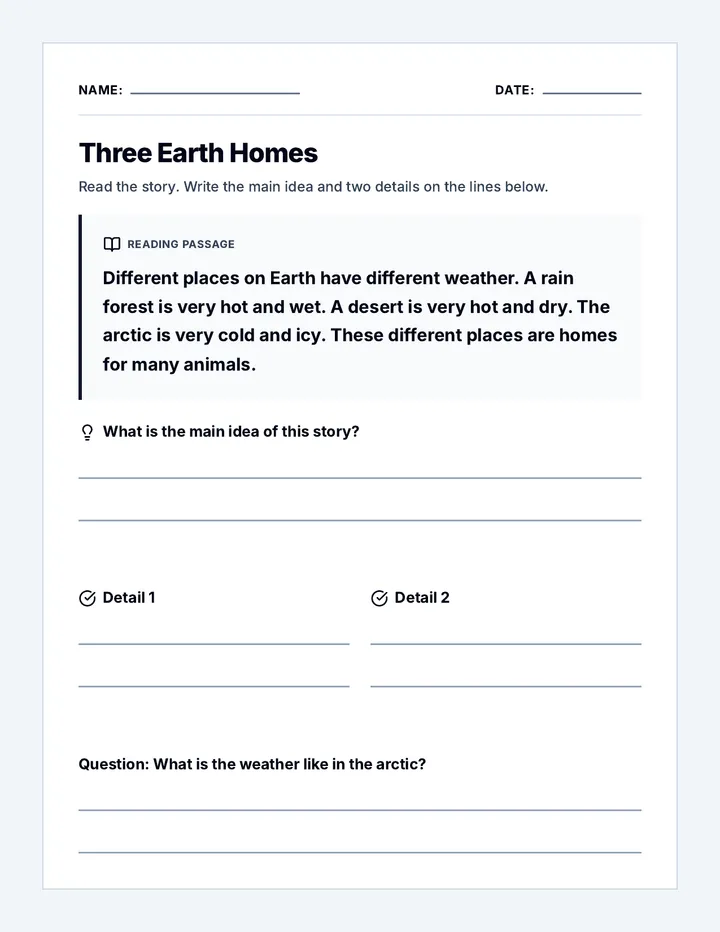
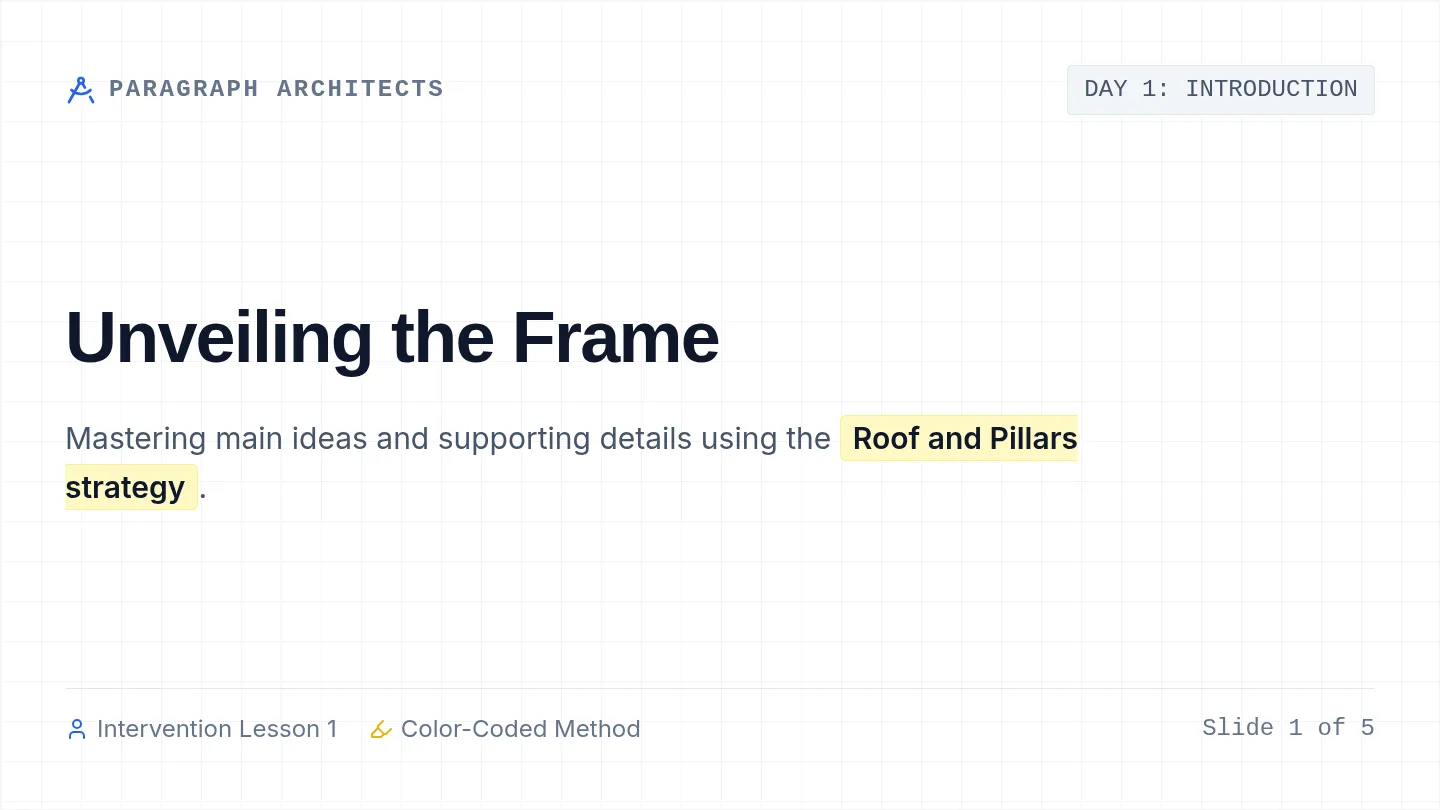
A targeted reading intervention lesson focused on identifying the main idea and supporting details using high-interest, low-readability texts. Designed for students who decode well but struggle with comprehension.
Cumulative review of all consonant-le patterns through mixed word lists, sentence reading, and a final fluency passage.
Practice decoding and encoding consonant-le words that include r-controlled or magic e syllables, such as 'purple' and 'beetle'.
Explore how the first syllable (open or closed) determines the vowel sound in consonant-le words, contrasting pairs like 'apple' and 'maple'.
Introduce the consonant-le syllable type and the 'count back 3' rule for dividing words. Focus on words with closed first syllables like 'bubble' and 'candle'.
Synthesizes fiction and non-fiction by comparing the architectural impossibility of a 30-story sideways school with real skyscraper engineering and the laws of gravity.
Connects the absurdity of Wayside School to real-world concepts of probability and logic through informational texts about unusual events and 'impossible' occurrences.
Introduces the unique episodic structure and quirky characters of Wayside School, focusing on identifying perspective and interpreting absurd humor.
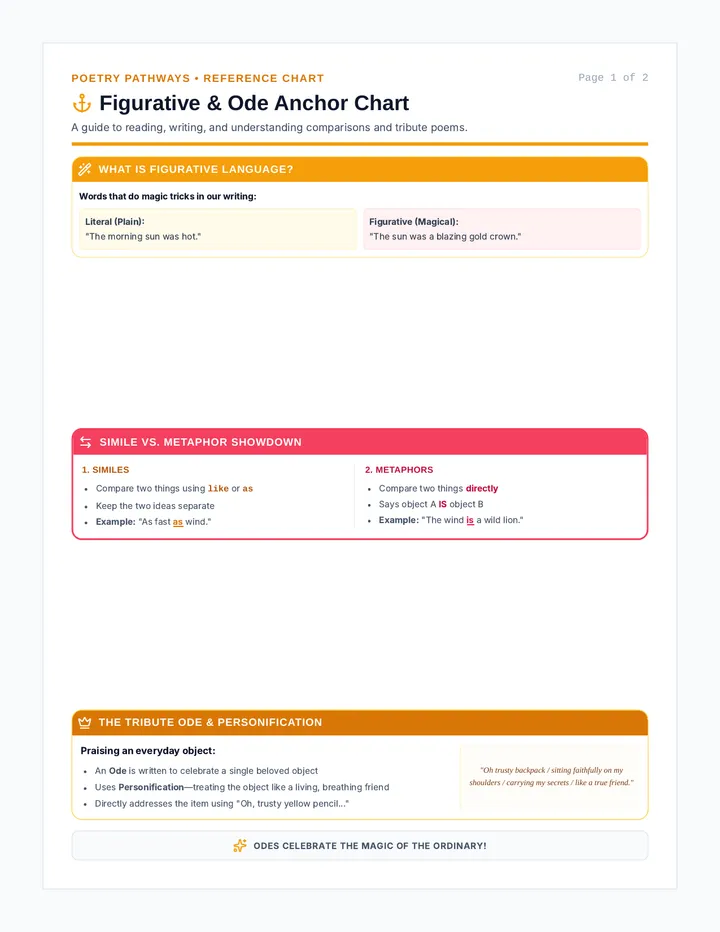
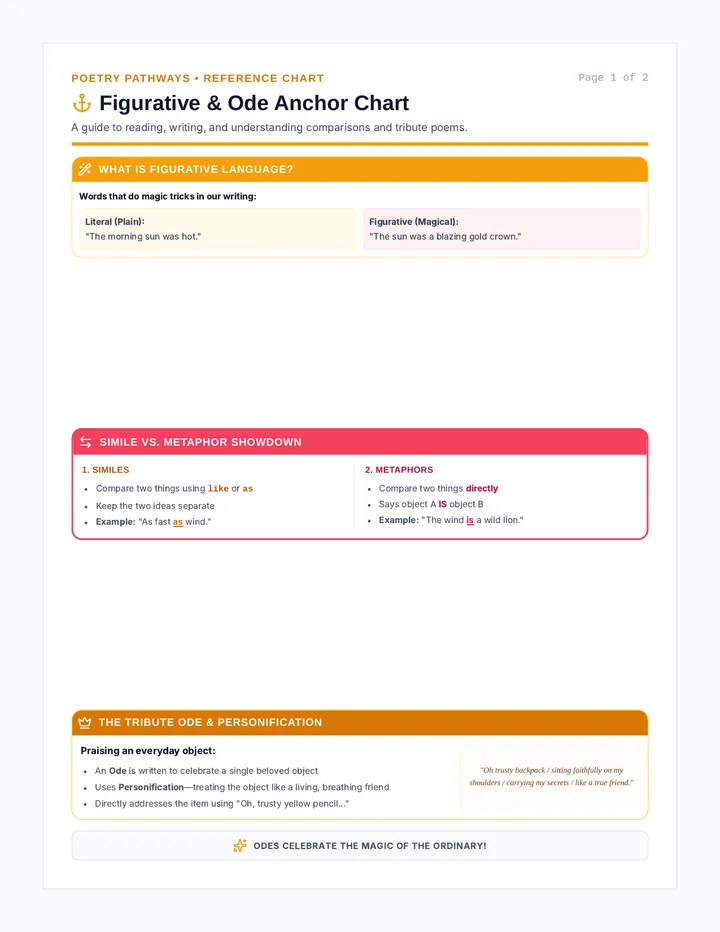
An introductory lesson exploring various types of figurative language through clear examples and integrated practice questions.
Integrates fiction and non-fiction by comparing Ivan's fictional life at the Exit 8 Big Top Mall with real-world gorilla habitats and behaviors.
Explores non-fiction texts about gorillas to identify main ideas, key details, and domain-specific vocabulary.
Focuses on identifying Ivan's perspective, recounting key story elements, and understanding character-specific vocabulary in the early chapters of 'The One and Only Ivan'.
Foundational literacy support for the Nature's Balance unit, focusing on CVC/CVCe blending, unit vocabulary, and sentence frames.
A lesson for 2nd graders to identify and understand the theme of friendship and sharing through a short woodland story.
A reading comprehension unit for 2nd graders focusing on main idea, WH-questions, and cause-and-effect through an engaging exploration of bee life.
Students will learn to identify the main idea and supporting details in biographical texts about famous inventors, synthesizing information to understand their overall impact.
Students will explore how inventors identified problems (causes) and developed solutions (effects), using real-world examples like the lightbulb and the windshield wiper.
A collection of foundational homework worksheets covering reading comprehension, arithmetic, grammar, and basic fractions with a nature-inspired 'Meadow Scouts' theme.
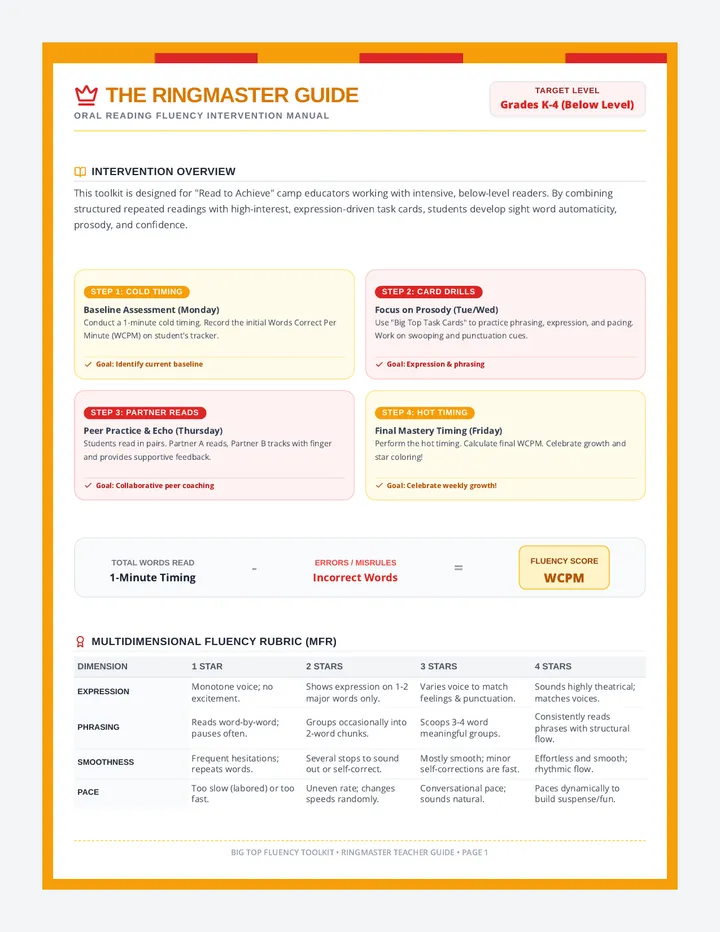
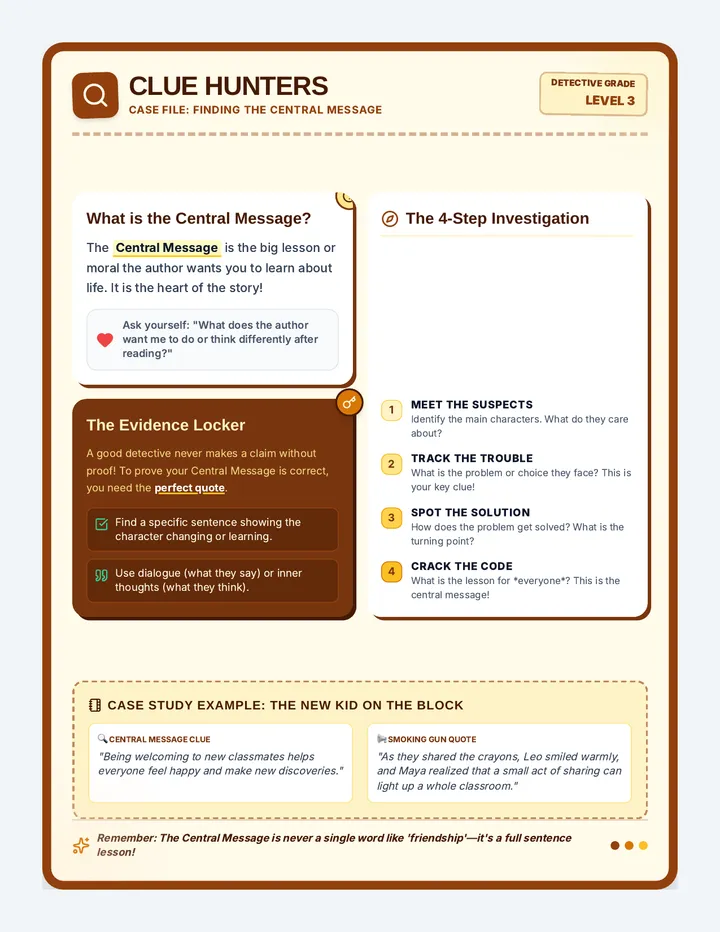
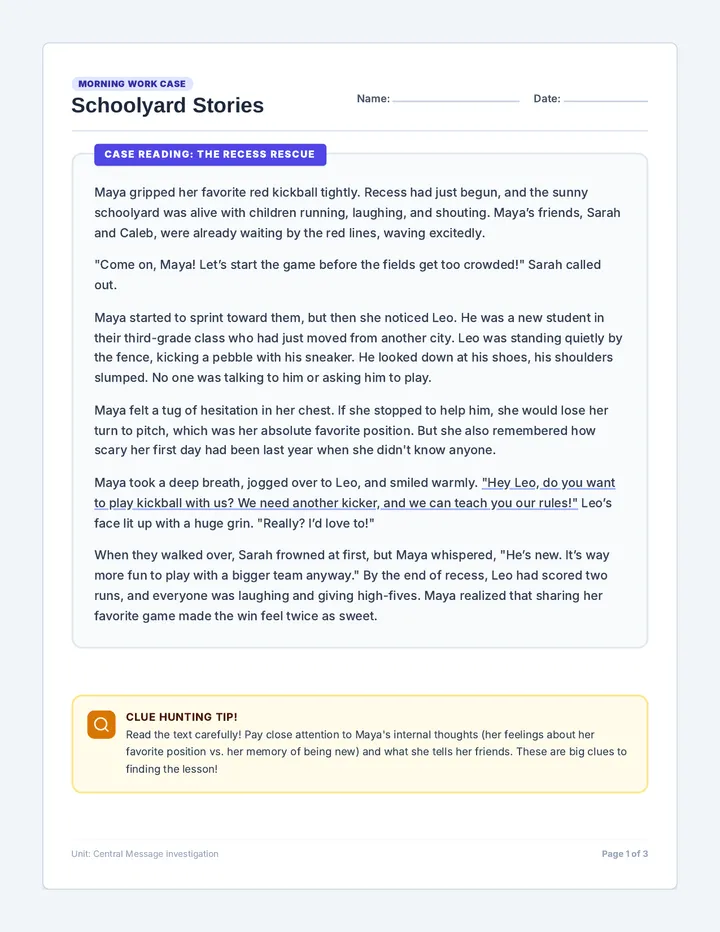
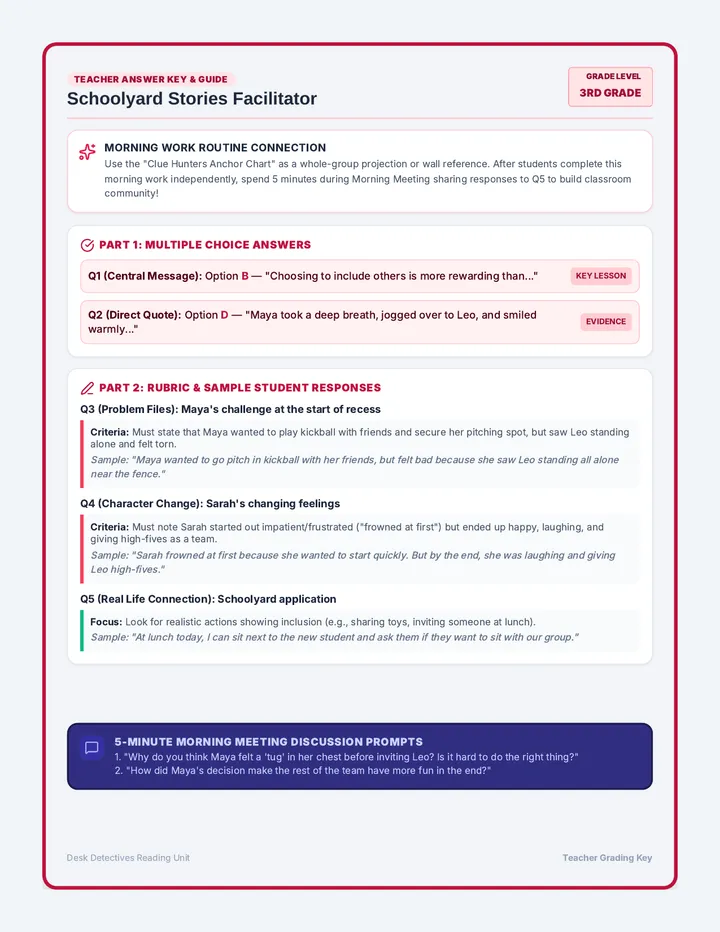
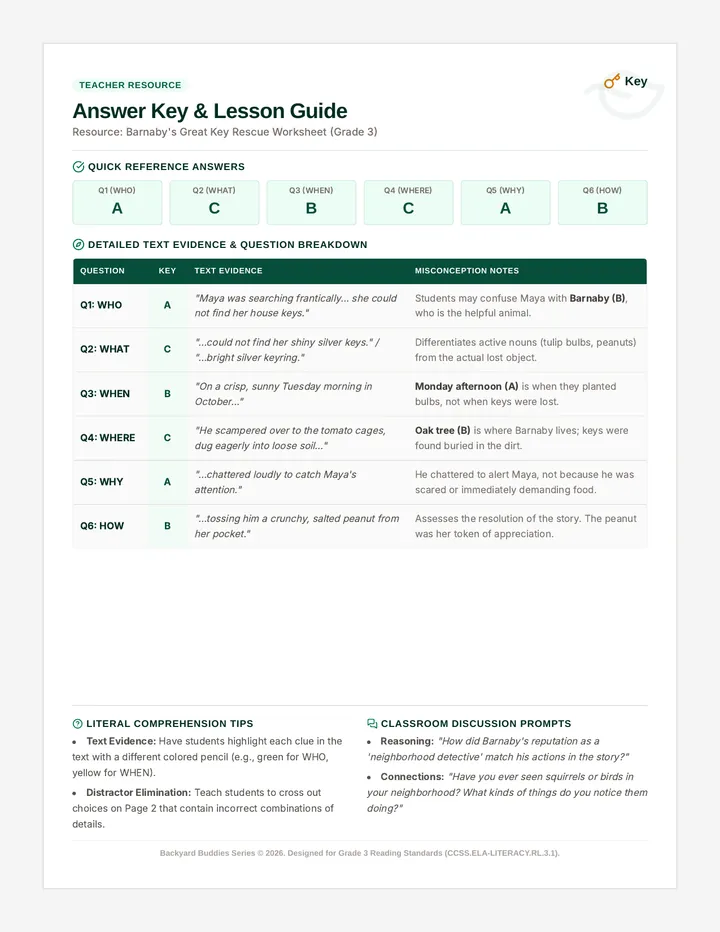
A reading intervention lesson designed to help 3rd and 4th graders master main idea, cause and effect, and sentence completion through a detective-themed series of activities. Students act as 'Reading Detectives' to uncover clues and solve literacy mysteries.
A bridge between decoding and fluent reading, this lesson focuses on mastering R-controlled vowels through speed drills, phrase scooping, and repeated reading of short, engaging passages. Students will shift from individual sound isolation to smooth, connected reading.
A comprehensive writing unit designed for newcomer multilingual learners to draft a fictional story about a clever rabbit. This lesson includes vocabulary building, structured planning with a brain frame, and scaffolded drafting.
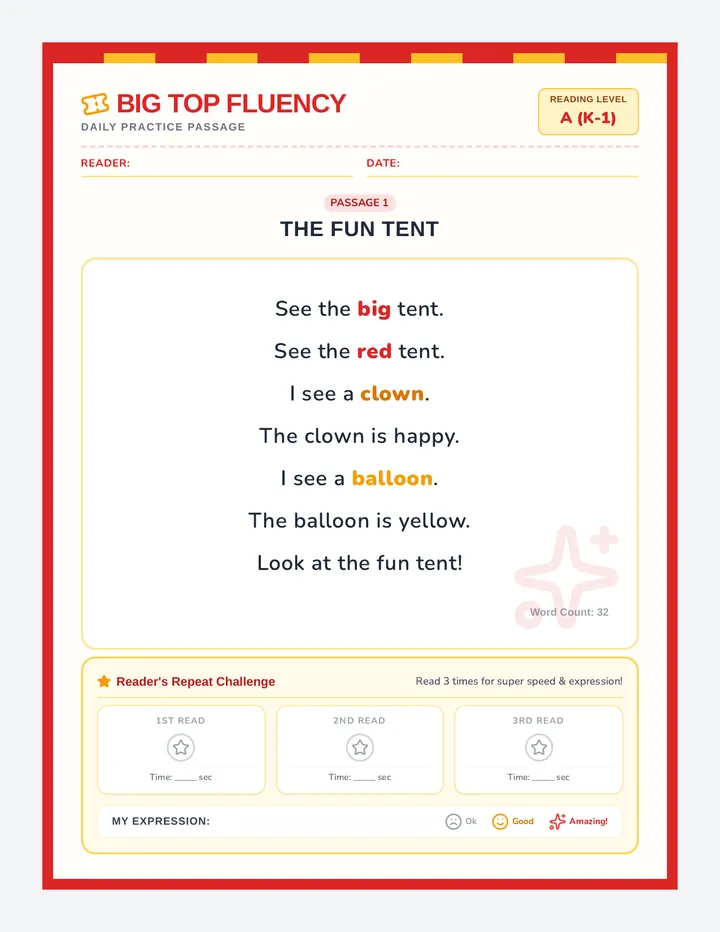
A collection of 10 short stories designed for beginning readers, focusing on CVC words and high-frequency sight words with visual comprehension support.
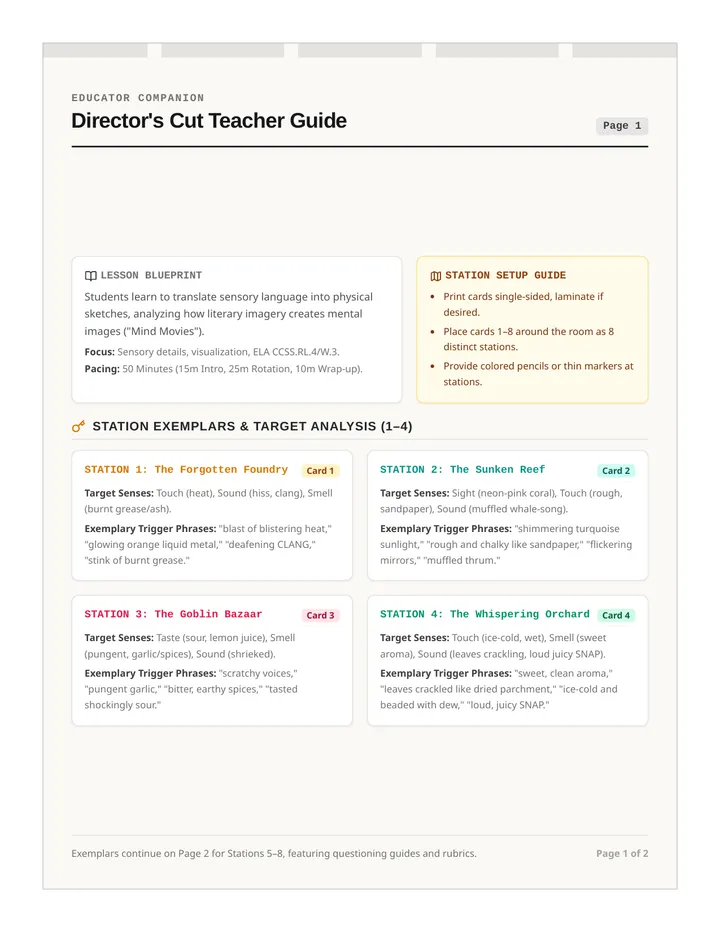
A lesson focused on mastering academic vocabulary used in reading comprehension questions. Students will learn to distinguish between common analytical verbs and concepts through a hands-on matching game and reference guides.
Students will identify and compare four major text structures: chronology, comparison, cause/effect, and problem/solution. Through an architectural 'blueprint' theme, ESL students will learn signal words and structural patterns to improve reading comprehension.
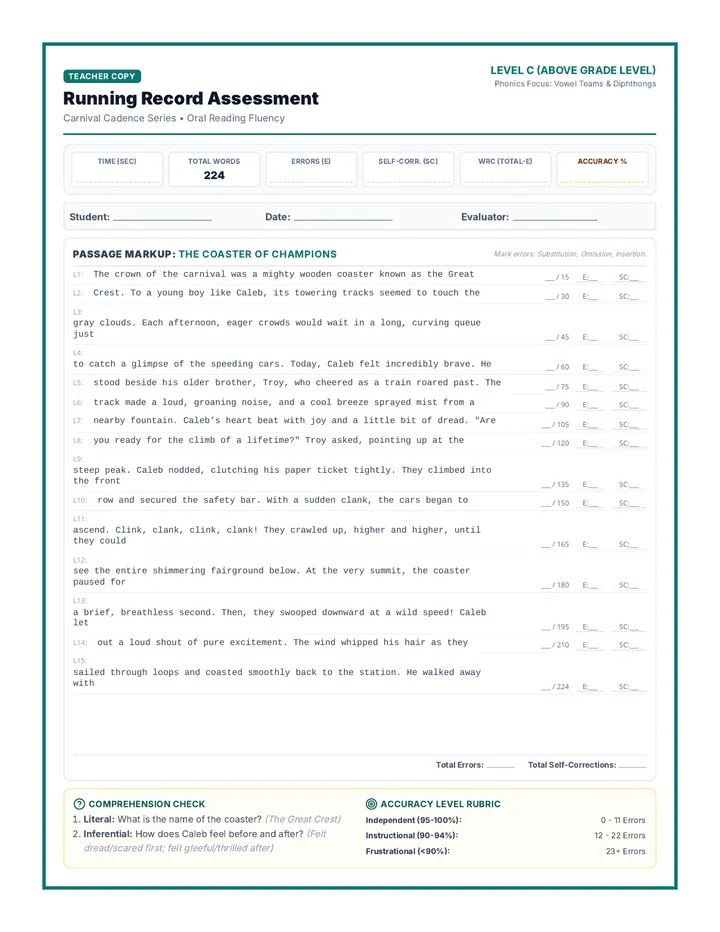
A focused lesson on decoding and blending words with the -tch trigraph, using a kitchen-themed approach to engage students in fluency drills.
A collection of comprehension resources for the book 'Mallory vs. Max', focusing on character development and plot events for second-grade readers.
A set of materials for assessing and practicing 47 key graphemes, including high-visibility flashcards and a comprehensive teacher tracking sheet.
A set of visual supports designed to help 3rd-grade students engage in meaningful academic conversations during EL Education Module 3 lessons. Includes a desktop conversation mat and a set of cue cards with specific sentence stems for peer interaction.
A reading comprehension lesson focusing on identifying and decoding common initial consonant blends through a garden-themed story.
A handwriting practice lesson focused on spring-themed sentences, designed to help 1st and 2nd grade students improve their letter formation and sentence structure while celebrating the season.
A hands-on board game experience where students explore the forest of compound words, practicing how to decompose words and match visual parts to create new ones.
A phonics-focused lesson exploring the African savanna using CVC, VCe, and consonant digraphs through a decodable reading passage and comprehension check.
A comprehensive reading unit focused on building independent reading stamina while reinforcing plot summarization and main idea identification. This lesson provides students with a 'quest' framework to make focused reading more engaging.
A comprehensive Socratic Seminar lesson for 'The Nantucket Sea Monster' by Darcy Pattison. Students explore themes of media influence, public perception, and the nature of truth through collaborative discussion.
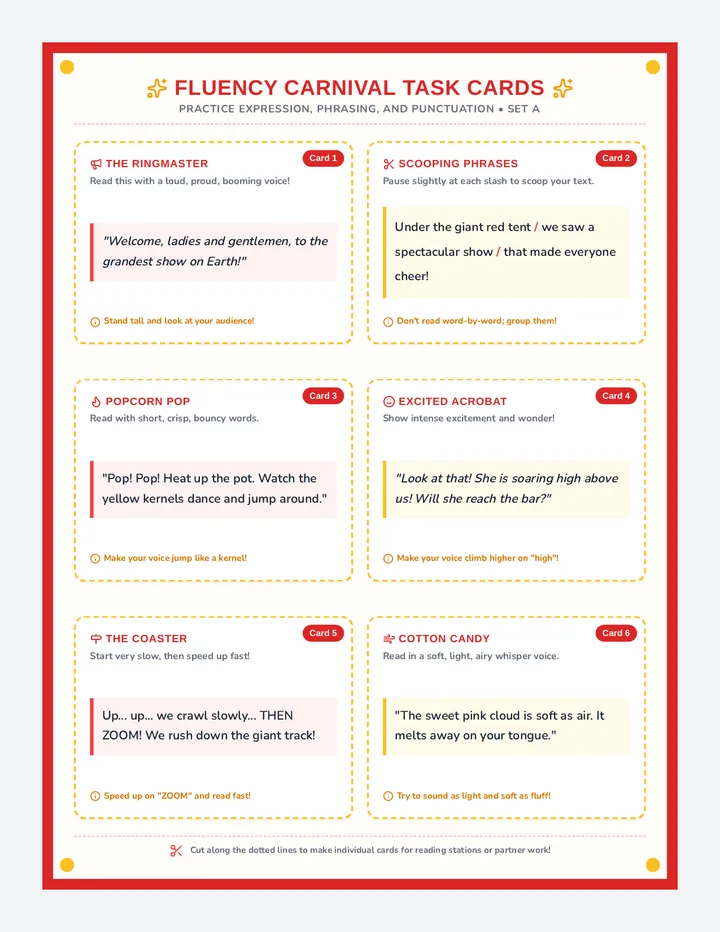
A high-energy introduction to onomatopoeia where students categorize sound-effect words using comic-book styled task cards. Students will explore how language can mimic sounds from animals, nature, and the kitchen.
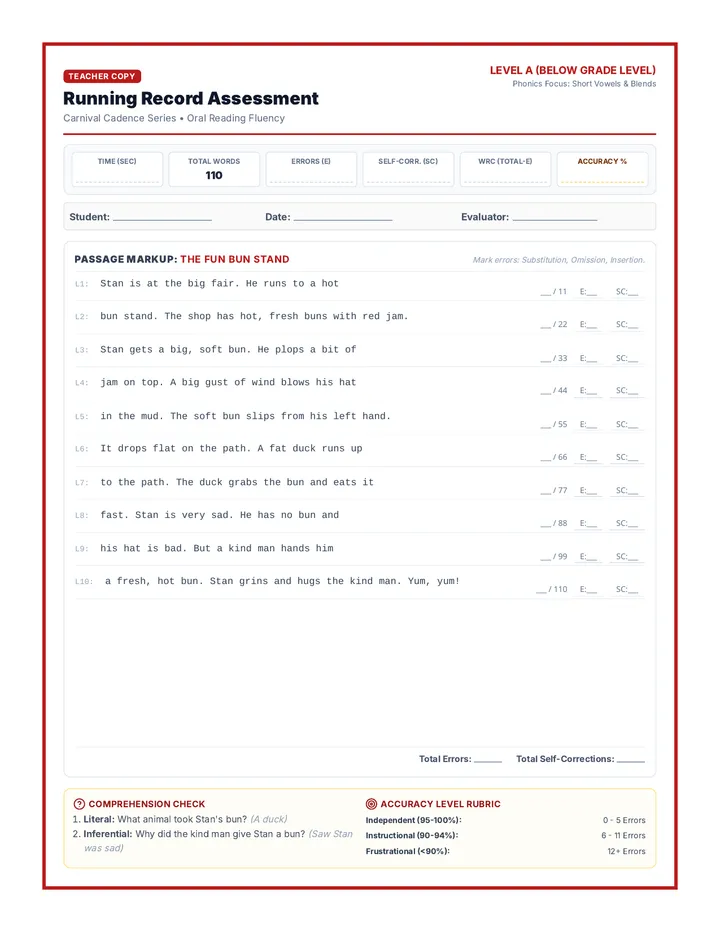
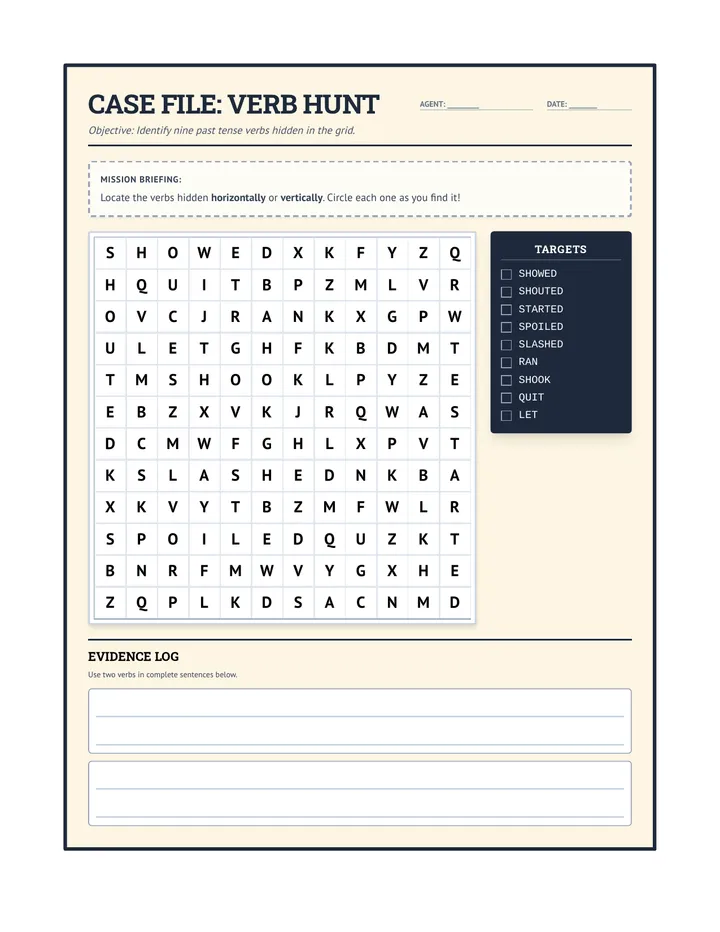
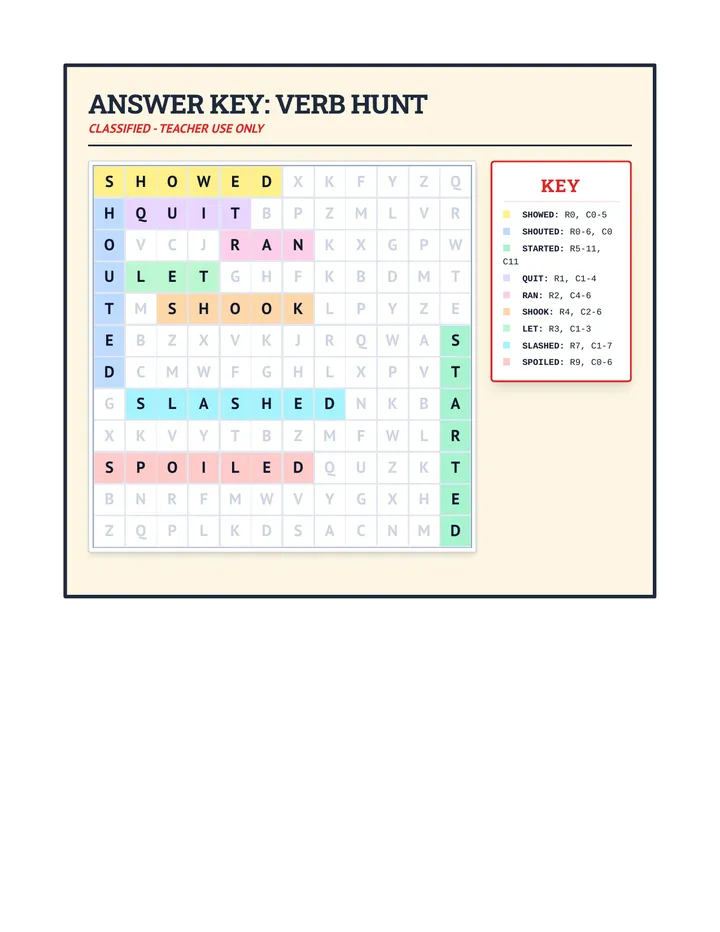
A foundational grammar lesson where students identify and categorize nouns, verbs, and adjectives through the lens of a typical school day.
A choice-based writing lesson where students select an opinion prompt and use provided short articles to gather evidence for their persuasive pieces.
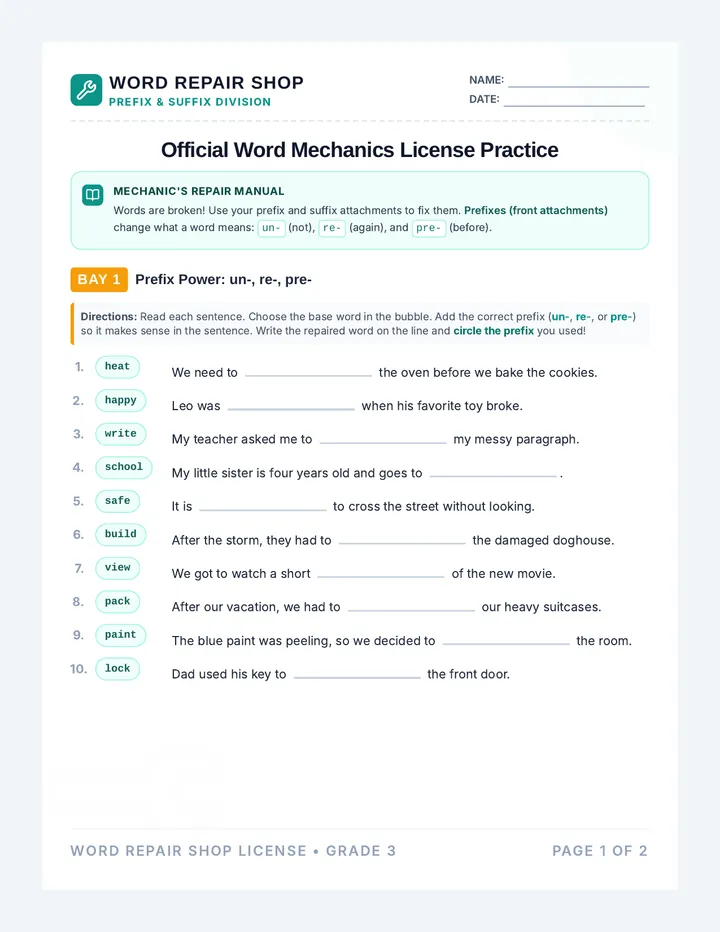
A grammar lesson focusing on identifying complete sentences and repairing run-on sentences using a 'Fix-It Shop' theme. Includes high-support visuals and oral practice frames for ESL students.
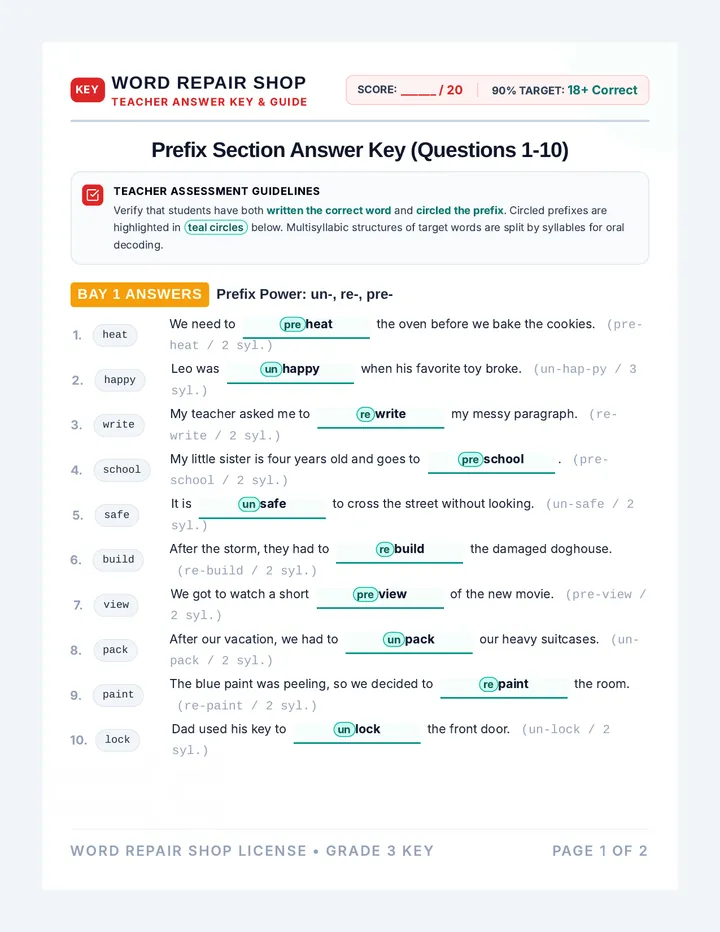
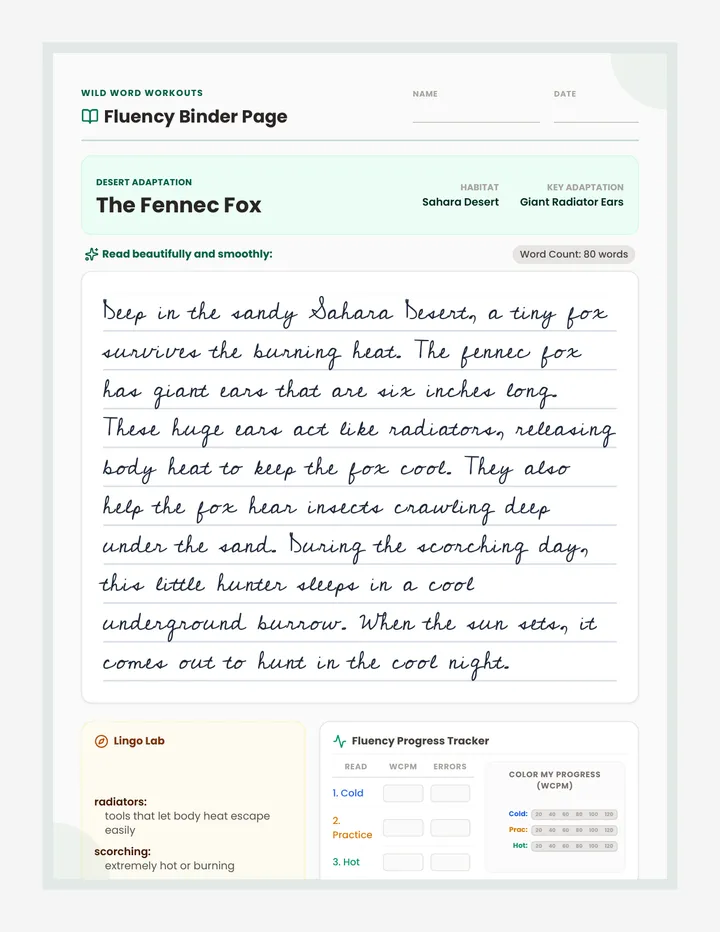
A structured literacy lesson focusing on the suffixes -ly, -tive, -less, -ment, and -ness, featuring a reading passage about Red Sox star Jarren Duran and comprehension exercises.
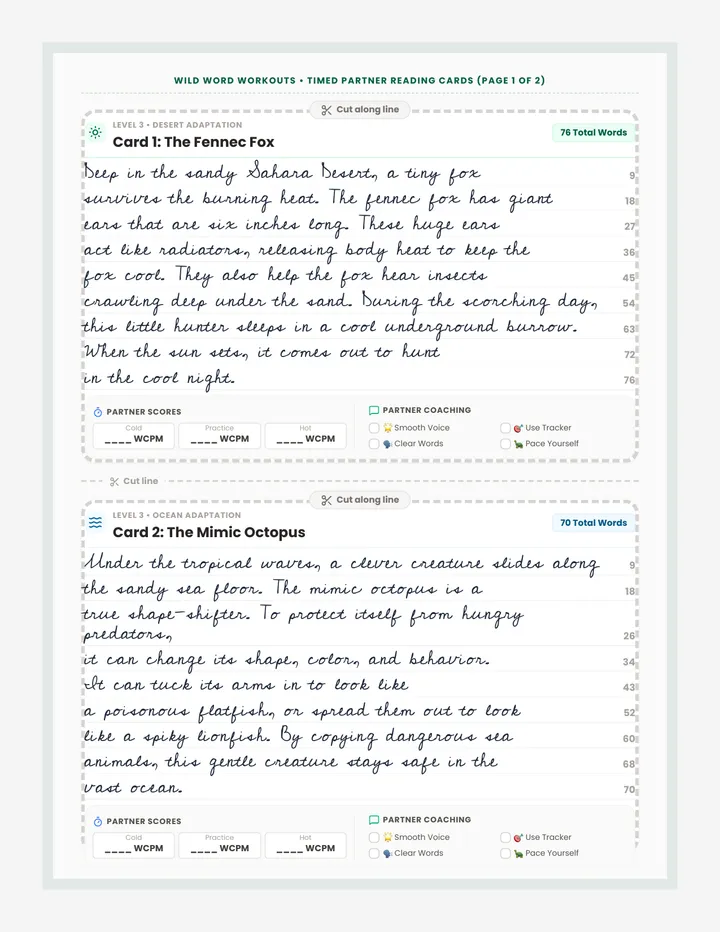
This lesson introduces students to active reading strategies and stamina-building techniques to improve focus and comprehension during independent reading. It uses an 'explorer' theme to frame reading as a mission of discovery.
Focusing on sequence and main idea in The Tortoise and the Hare, while refining sentence endings and punctuation for better flow.
Exploring how small details lead to big results in the story of The Lion and the Mouse, focusing on identifying the moral and building complex sentences.