Introduction to the possessive particle 'de' (的) to express relationships like 'my mother' and 'your brother'.
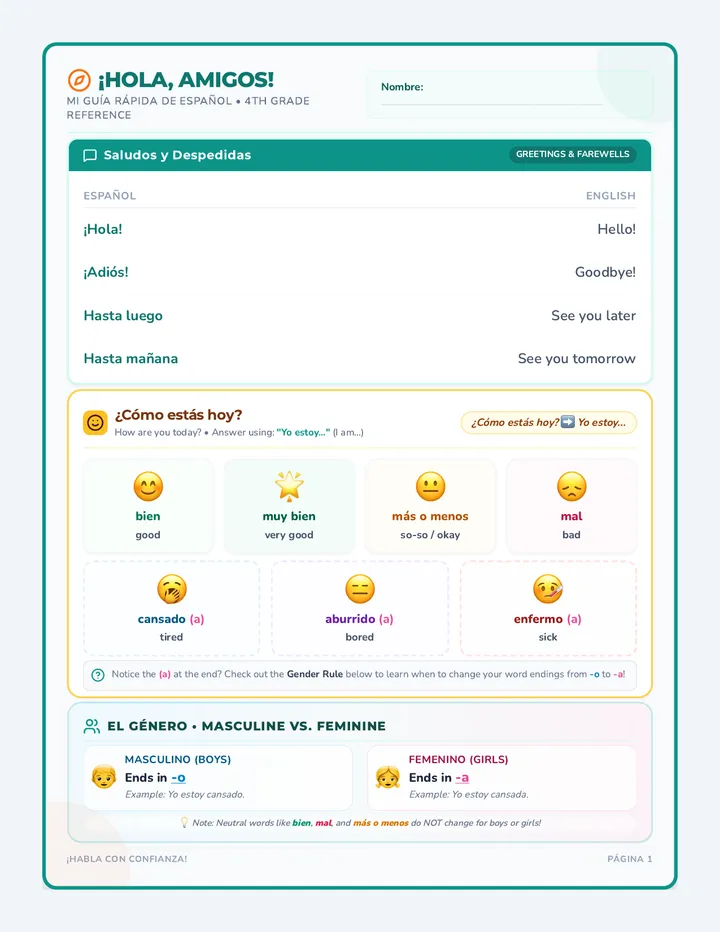
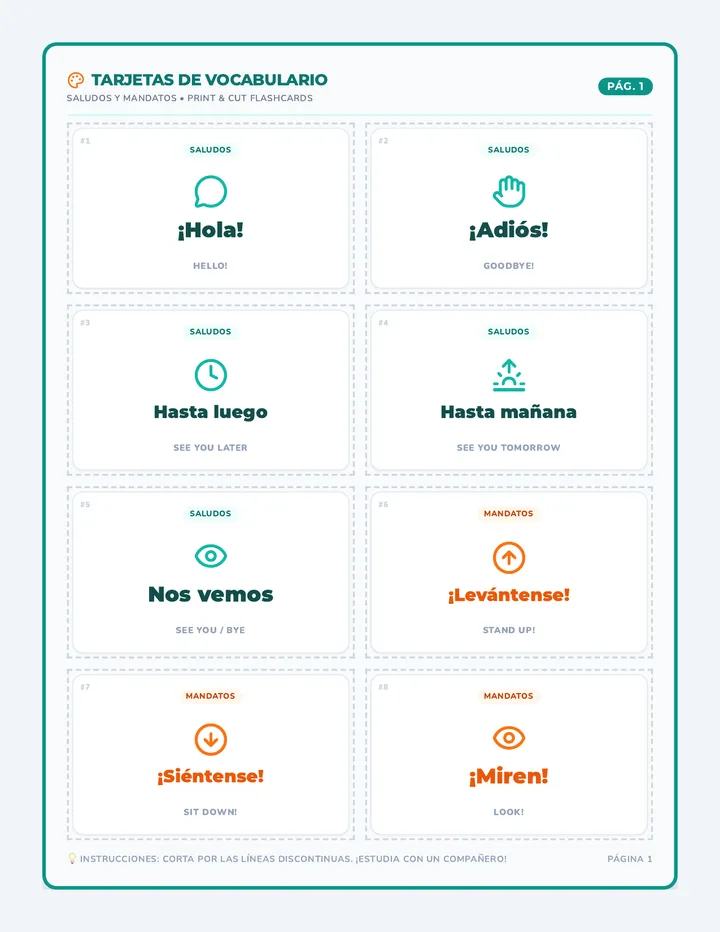
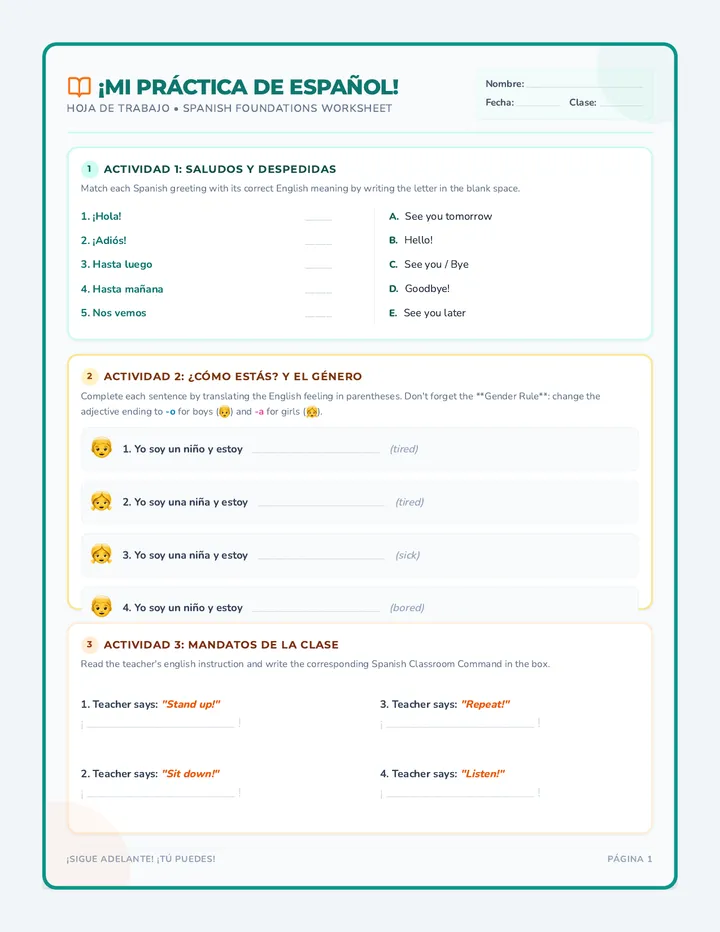
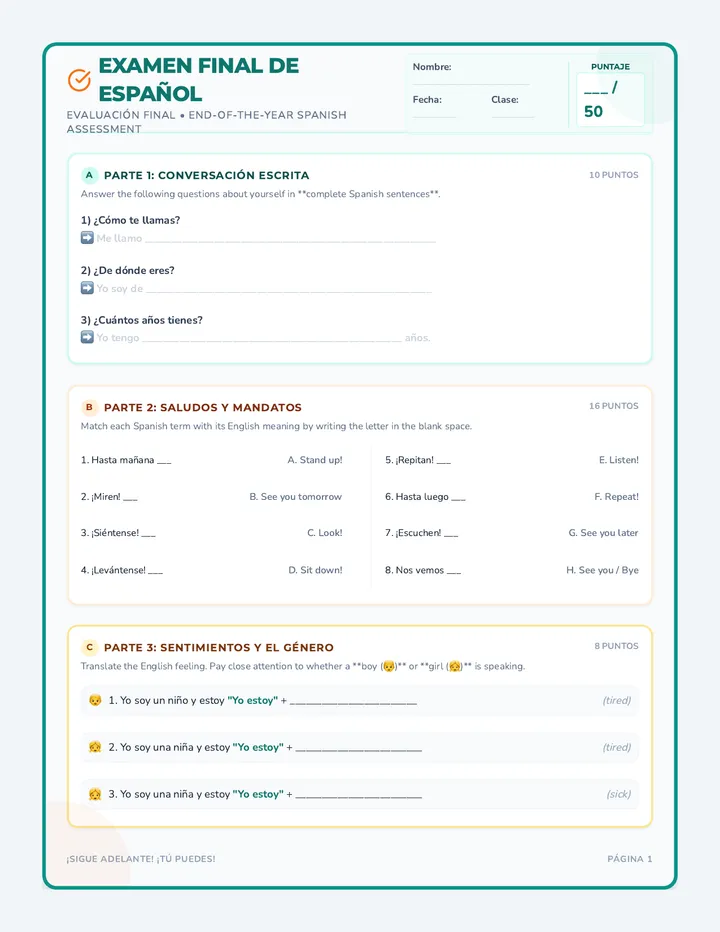
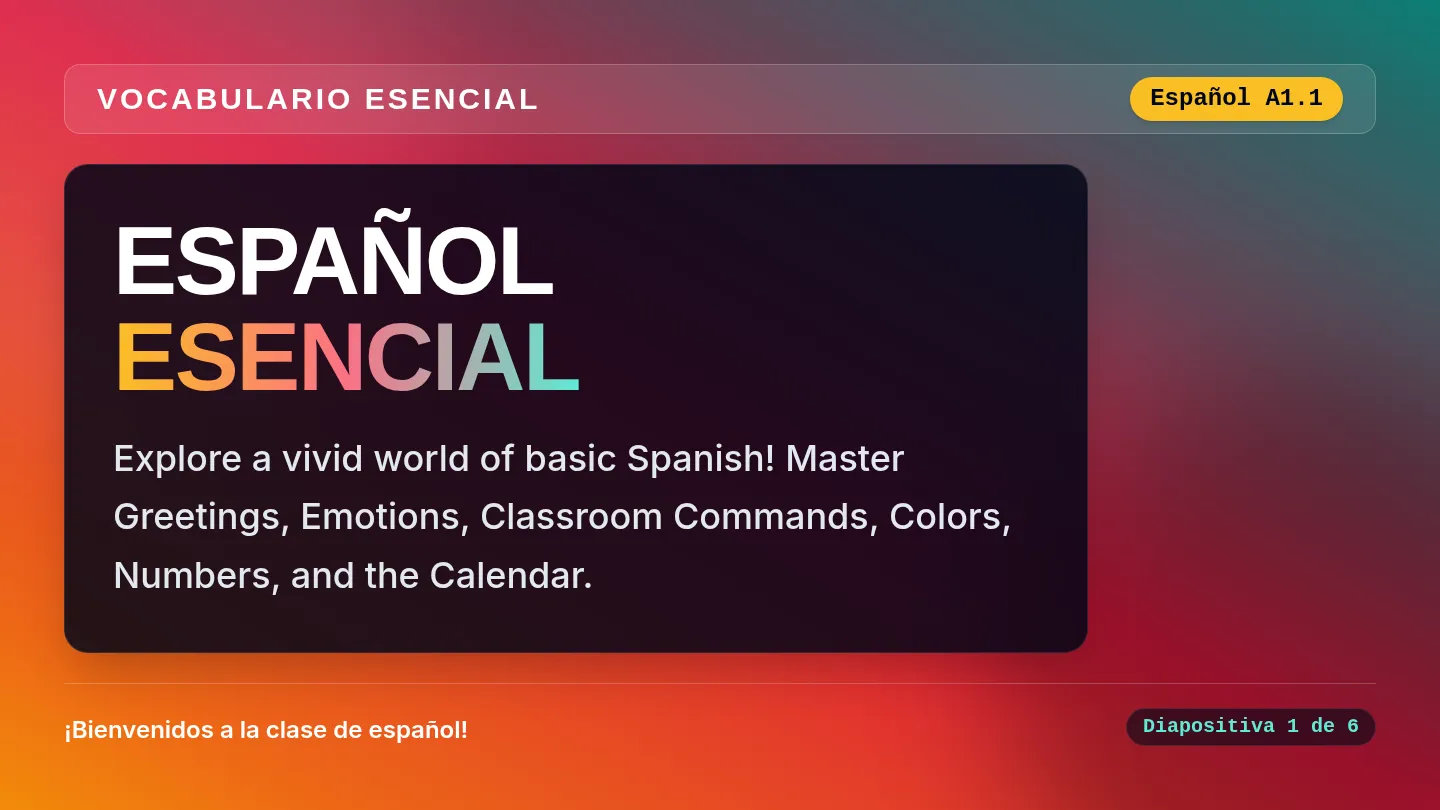
An interactive and engaging unit designed to teach elementary students fundamental Spanish conversational skills, vocabulary, and classroom routines.
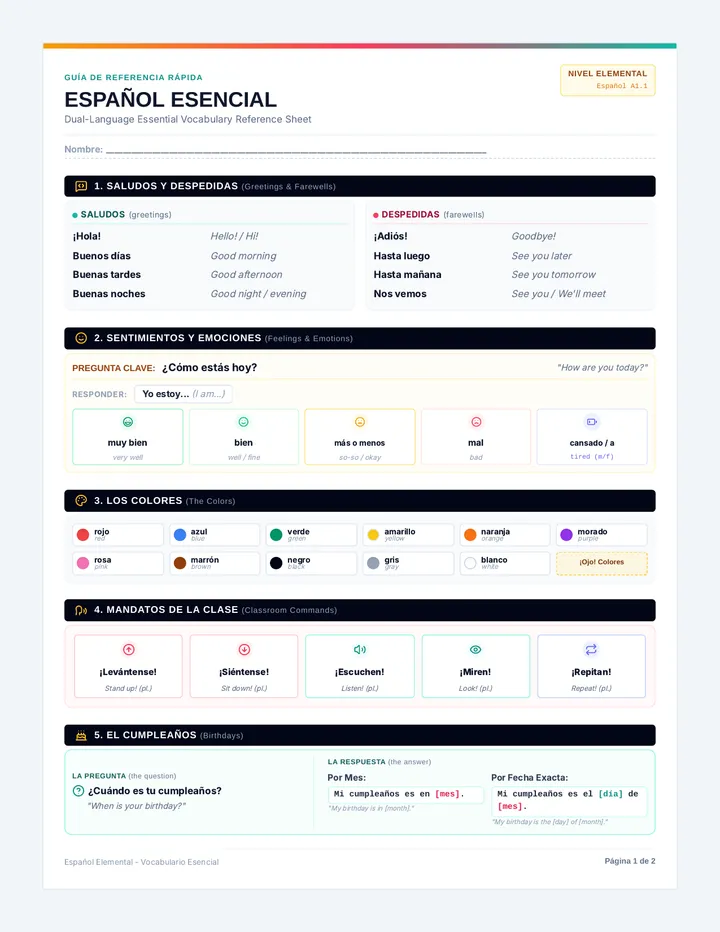
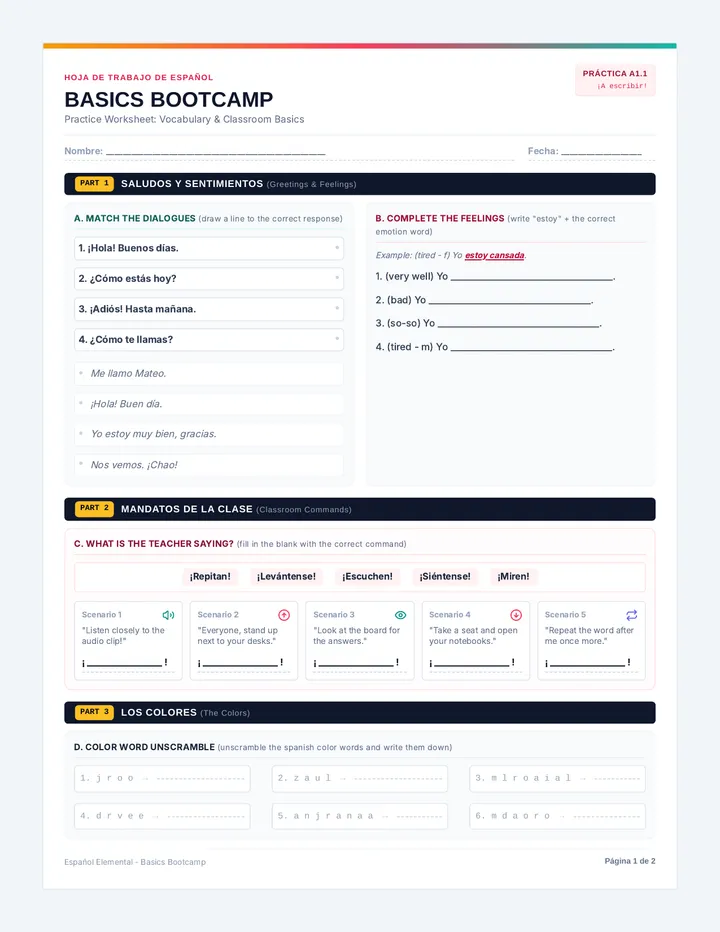
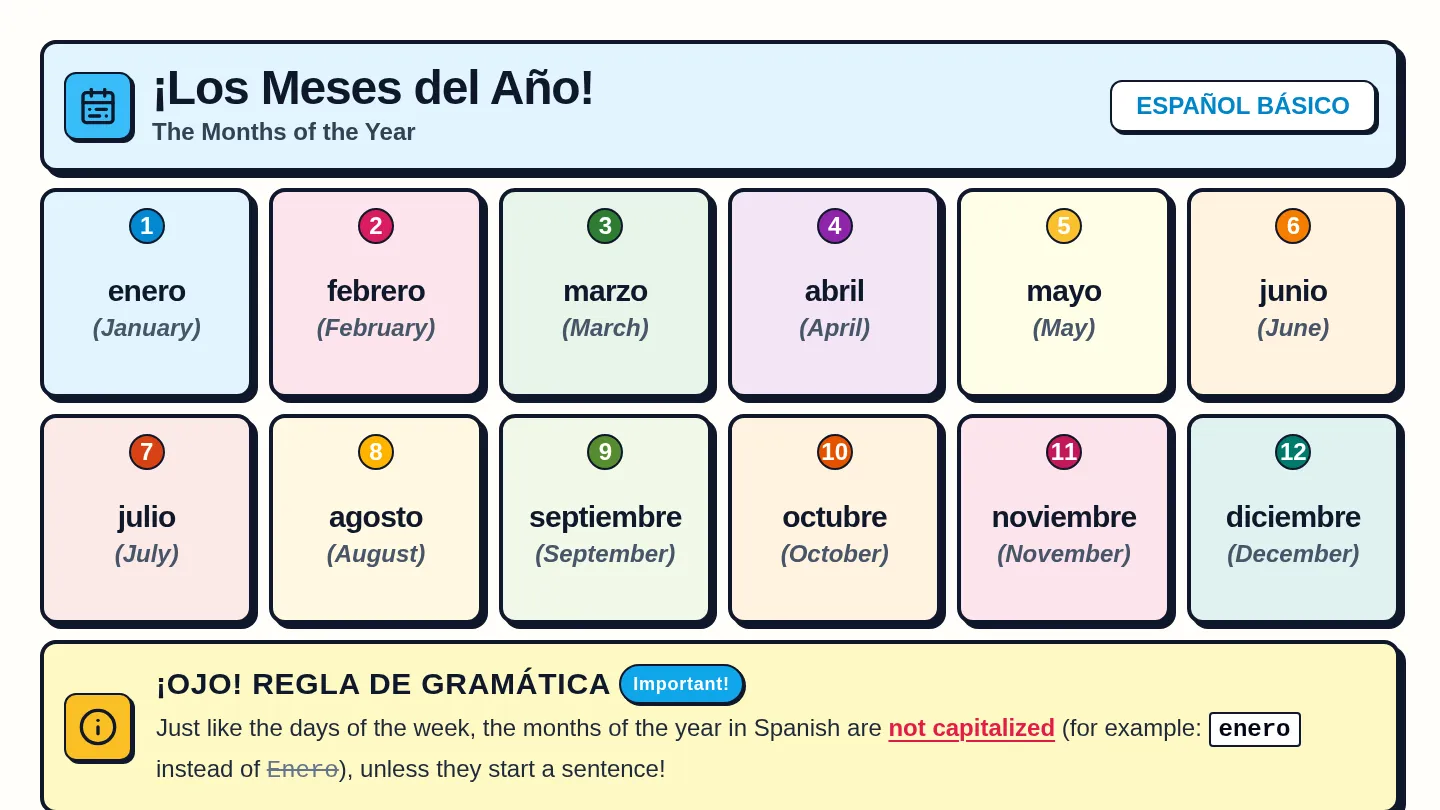
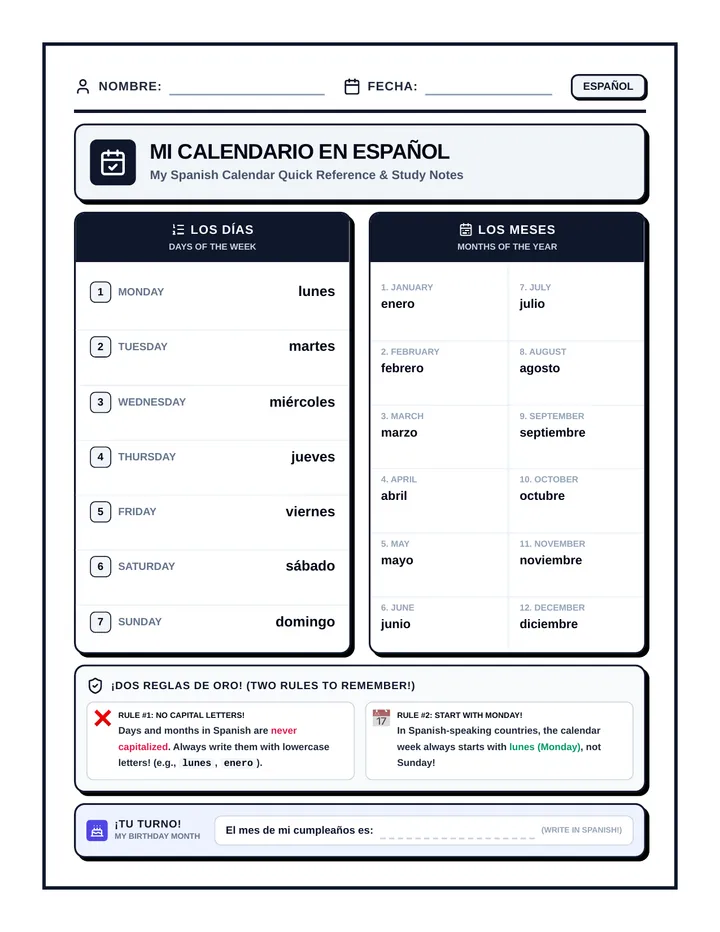
A foundational Spanish lesson covering basic conversational items: greetings, emotions, colors, numbers 0 to 40, and calendar systems (days of the week, months, and birthdays).
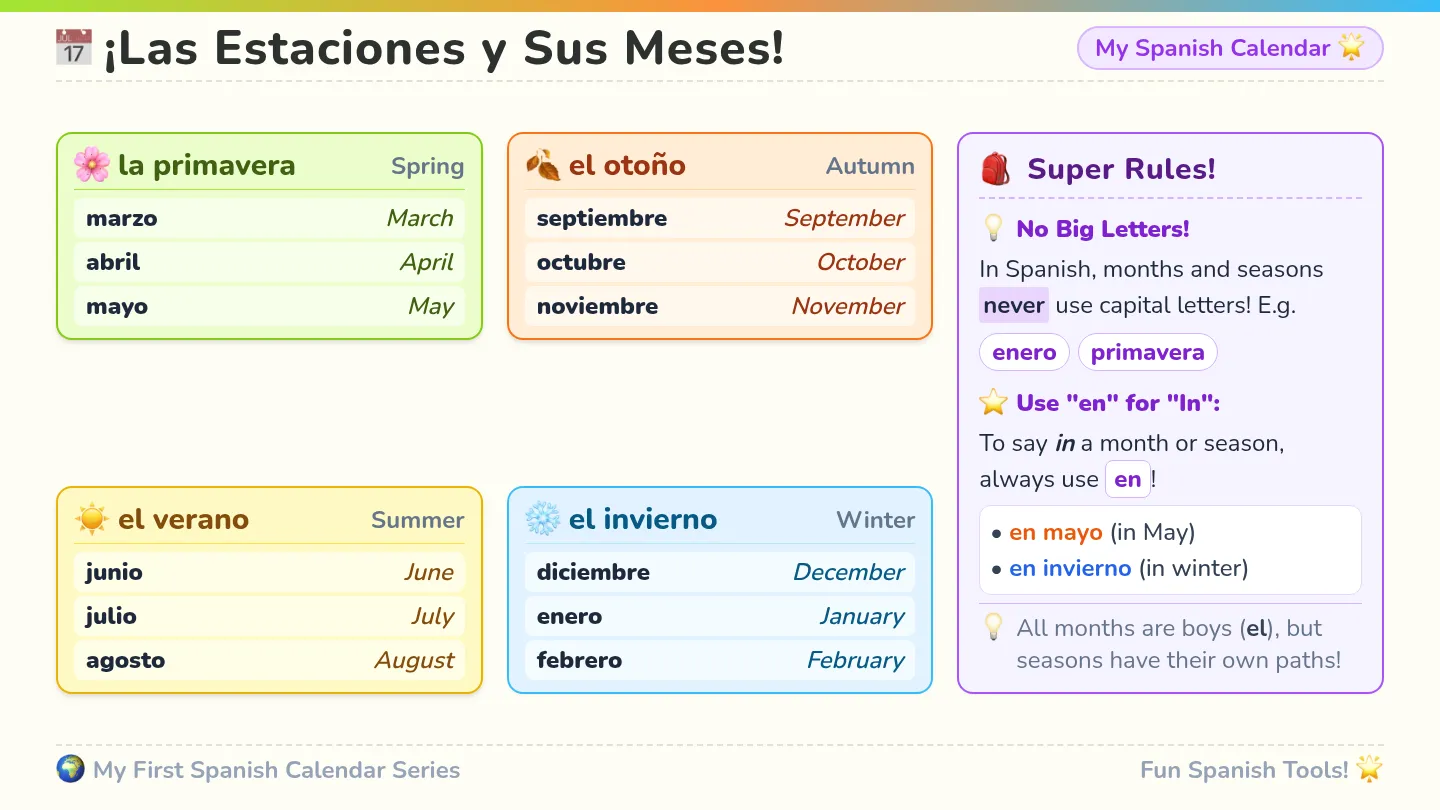
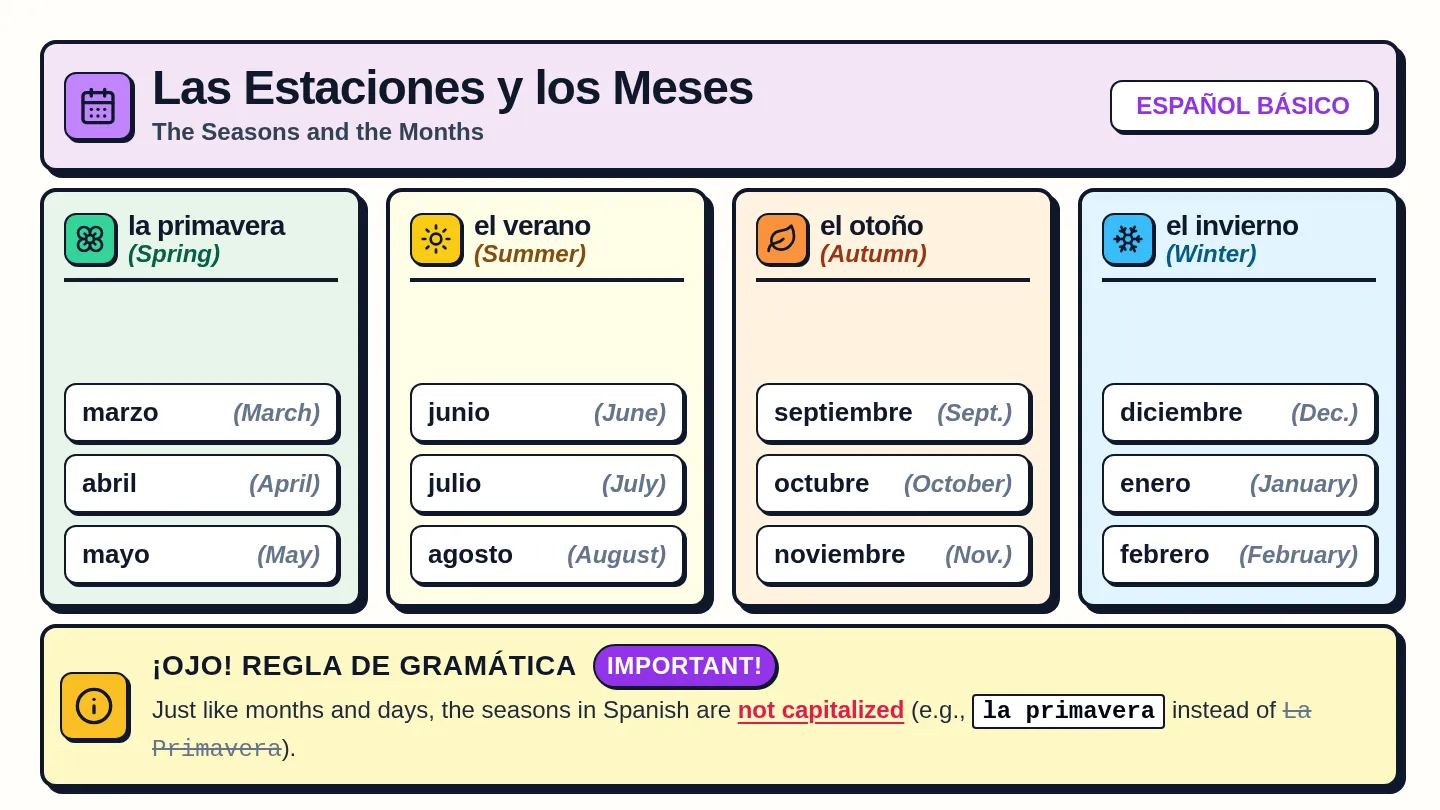
An academic lesson on Spanish months, seasons, and key capitalization rules, tailored specifically for older beginners and adult learners.
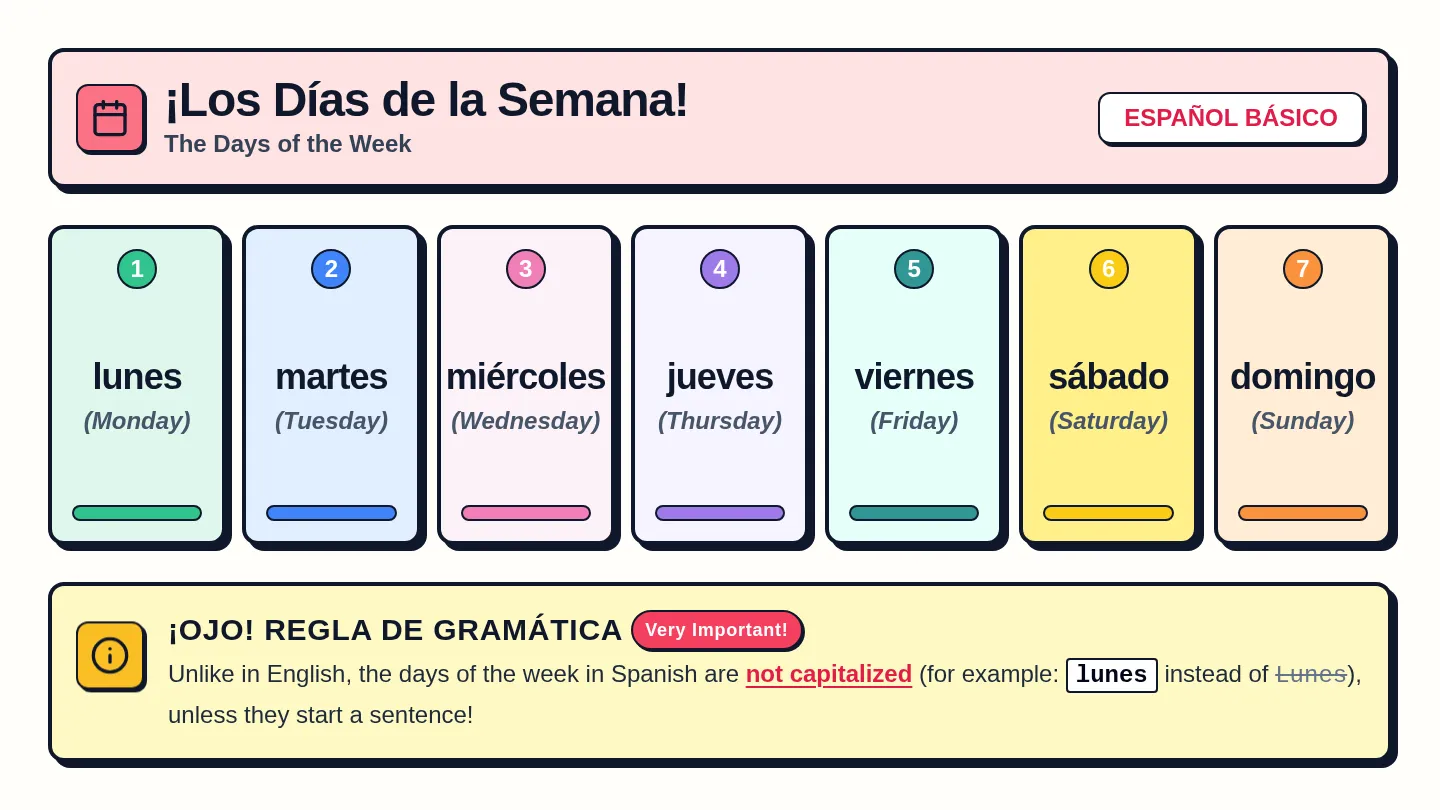
An introductory lesson on Spanish calendar vocabulary, teaching students the days of the week, correct pronunciation, and important capitalization rules.
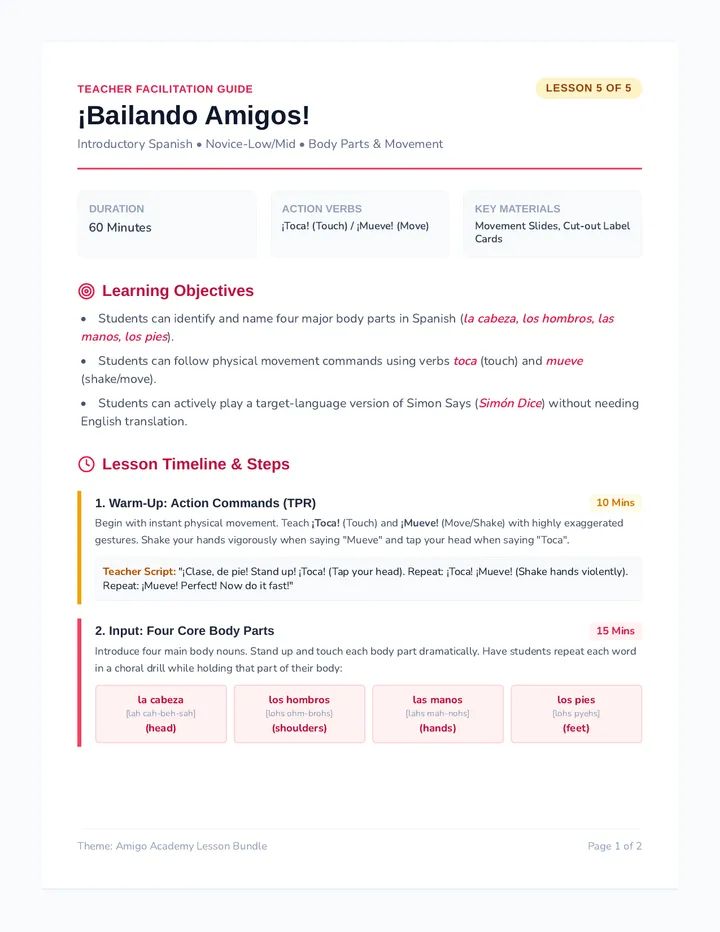
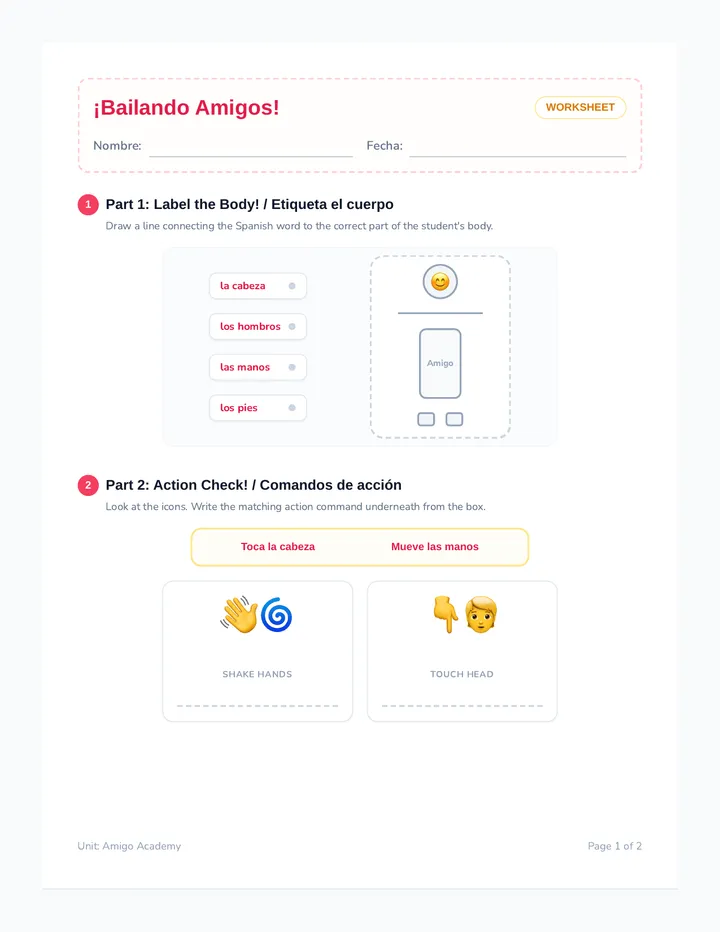
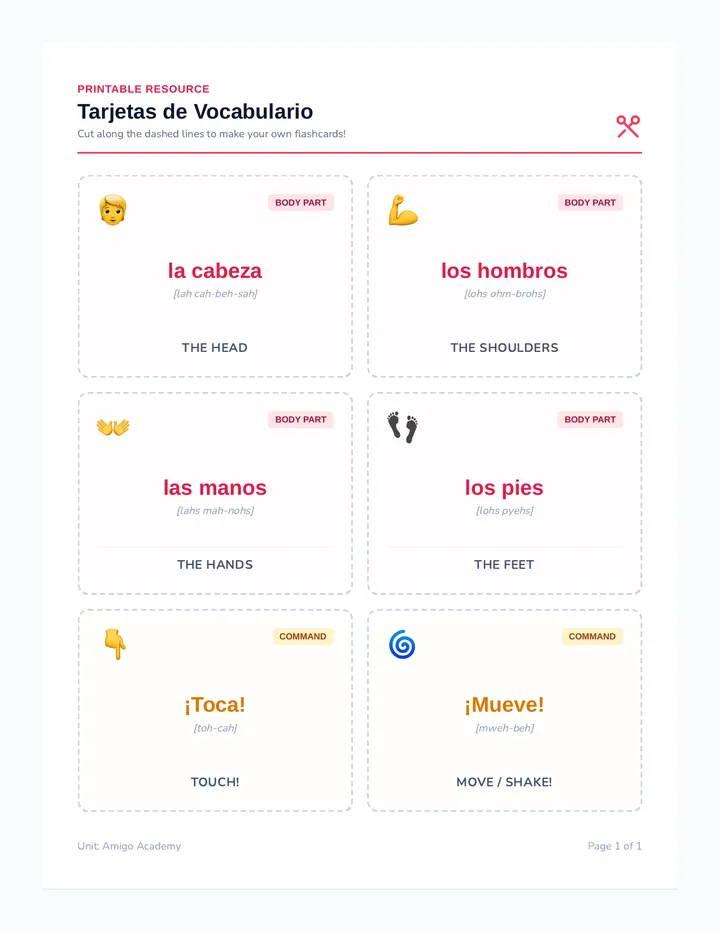
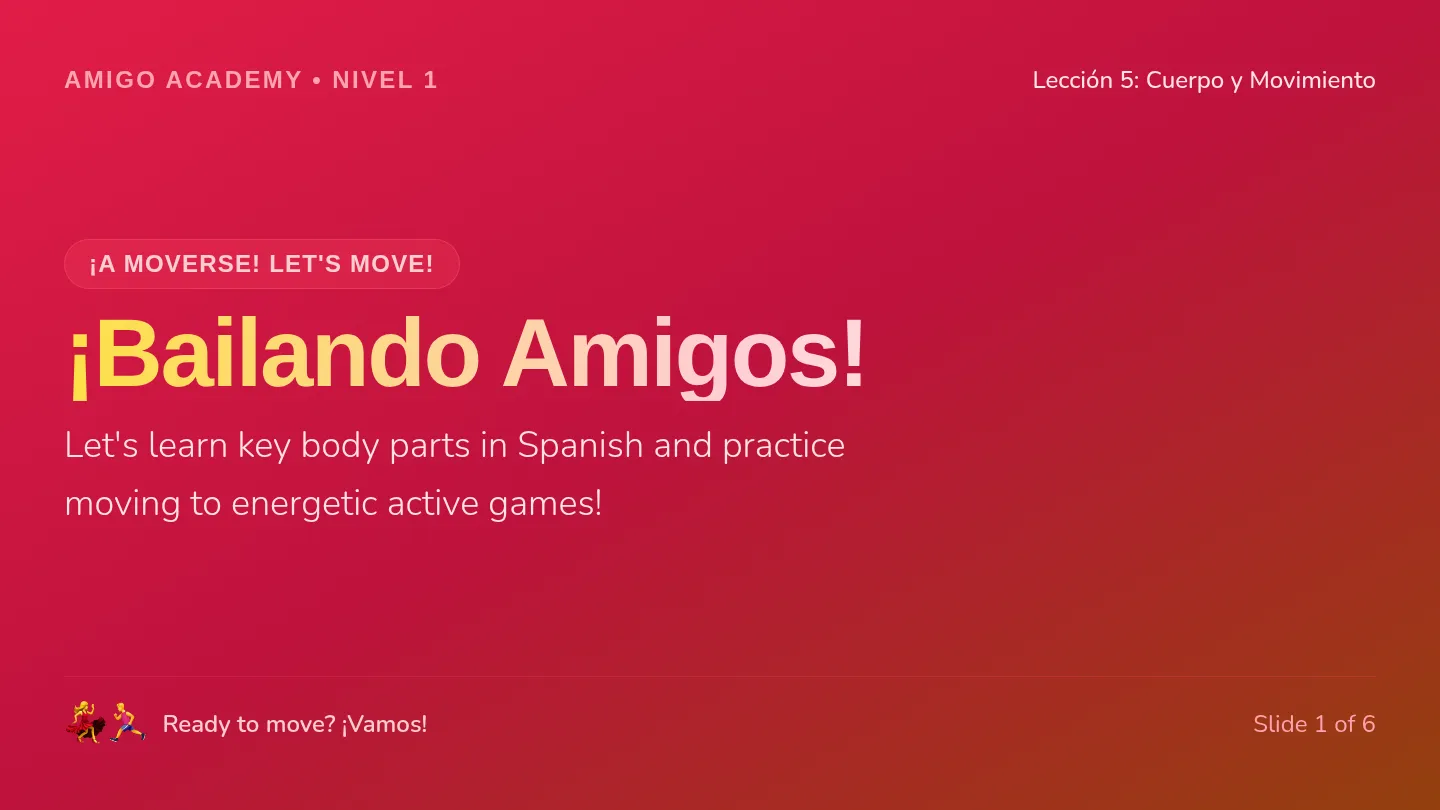
An active, movement-based beginner Spanish lesson teaching high-frequency body parts (cabeza, hombros, manos, pies) and physical action verbs (toca, mueve) through rhythmic dances and interactive 'Simón Dice' games.
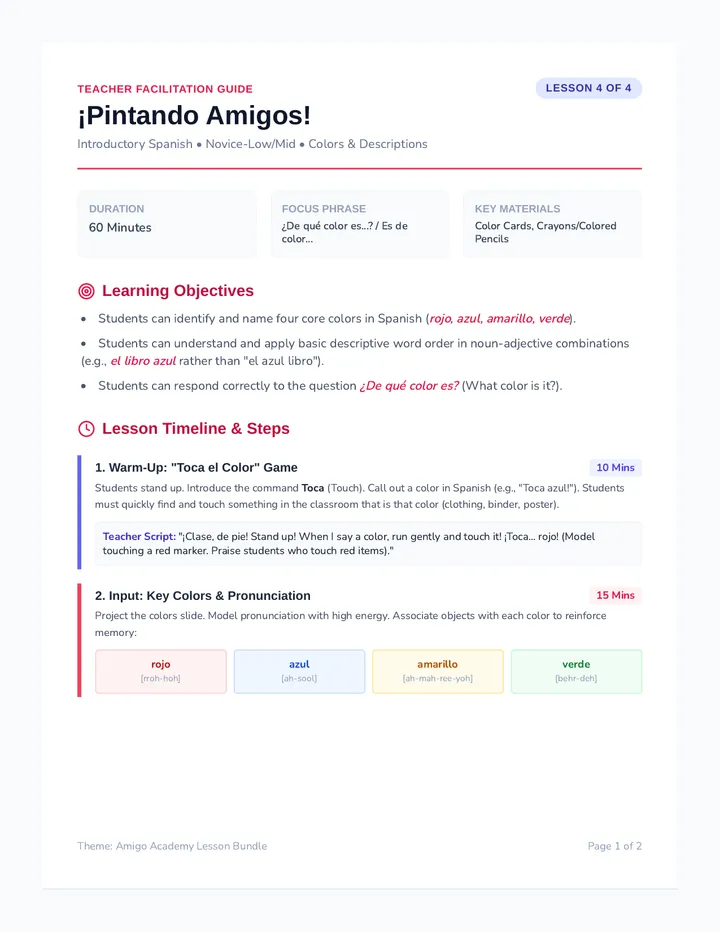
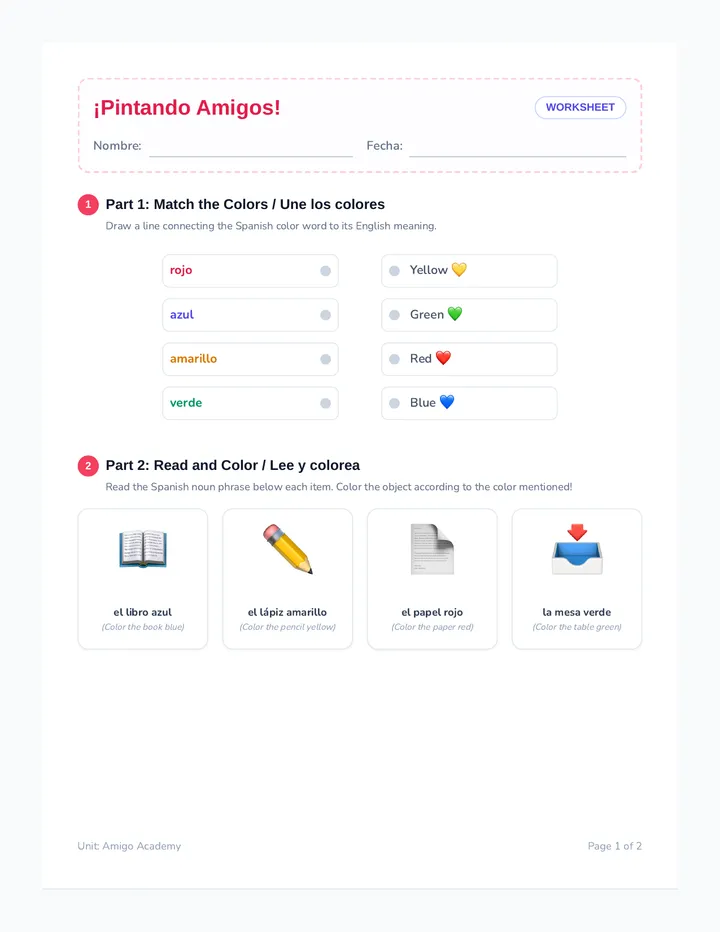
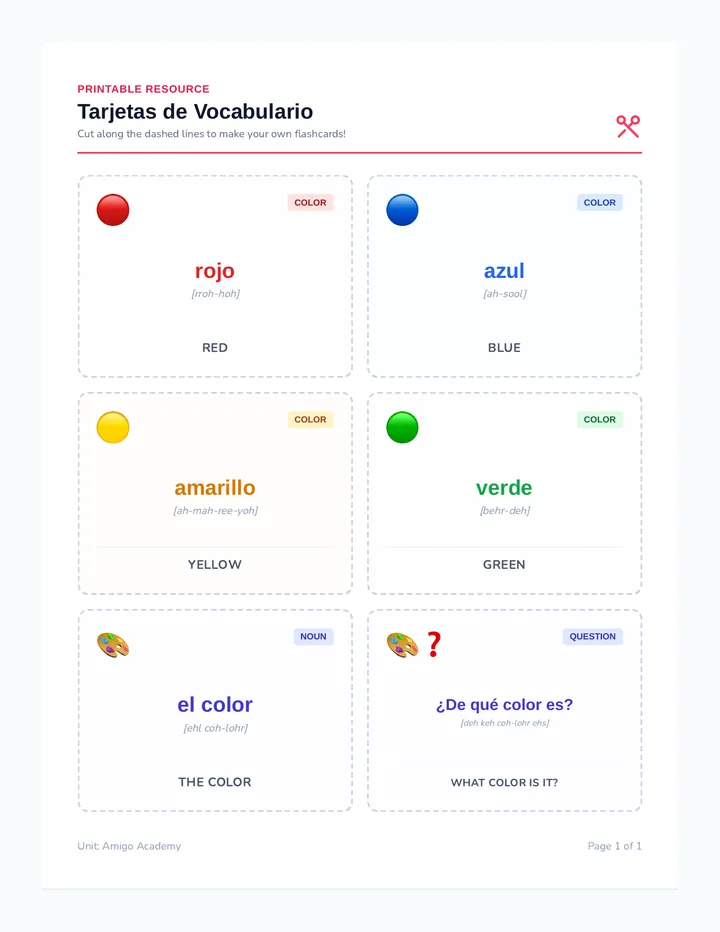
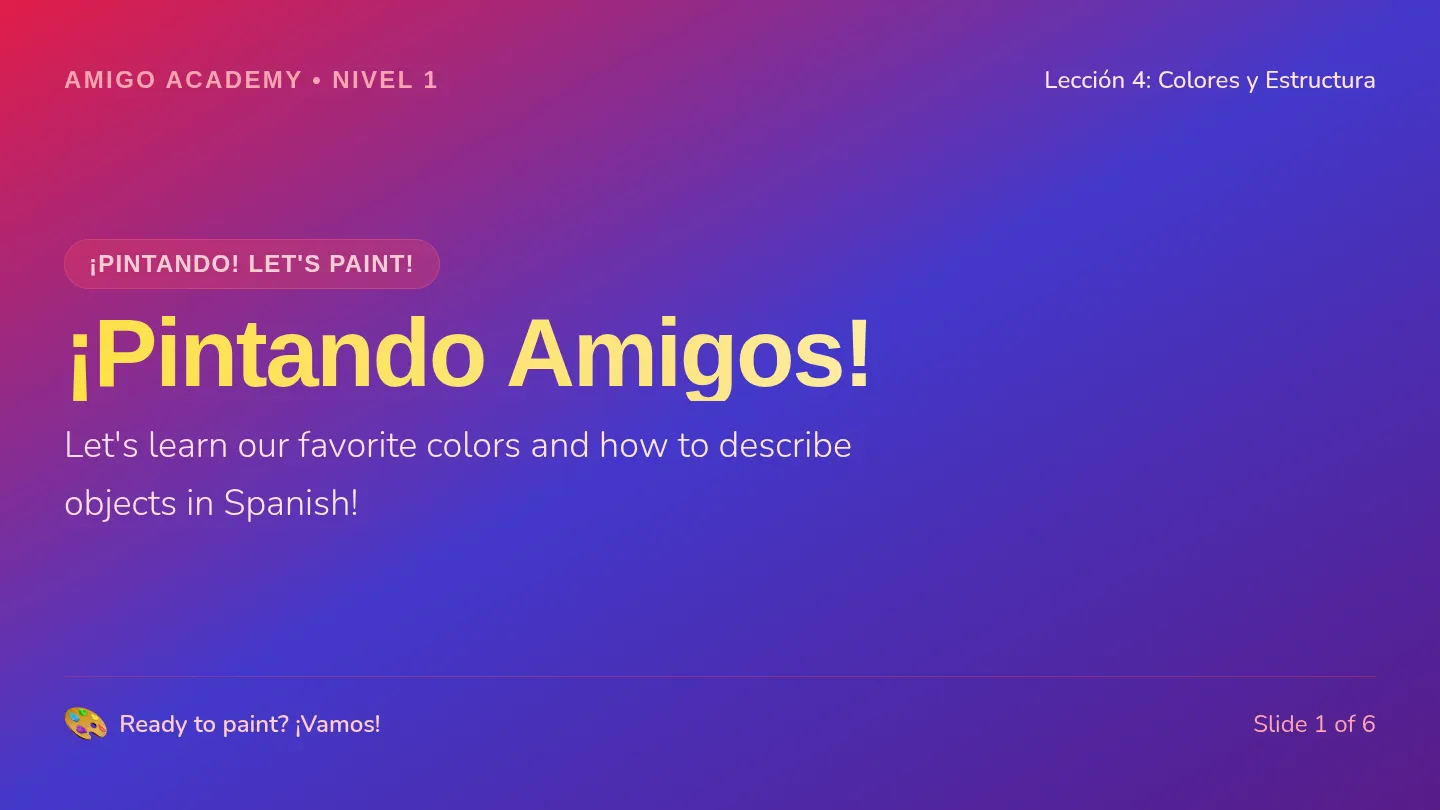
A vibrant beginner Spanish lesson teaching high-frequency colors (rojo, azul, amarillo, verde) and basic agreement/descriptive word order (e.g., 'el libro azul') through active color hunts and creative sorting activities.
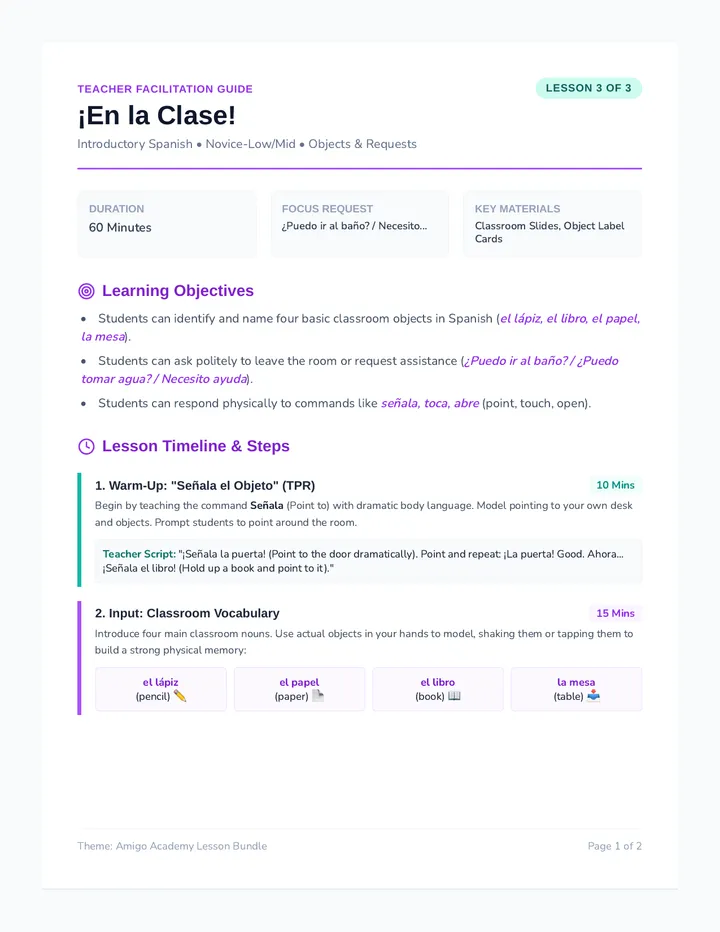
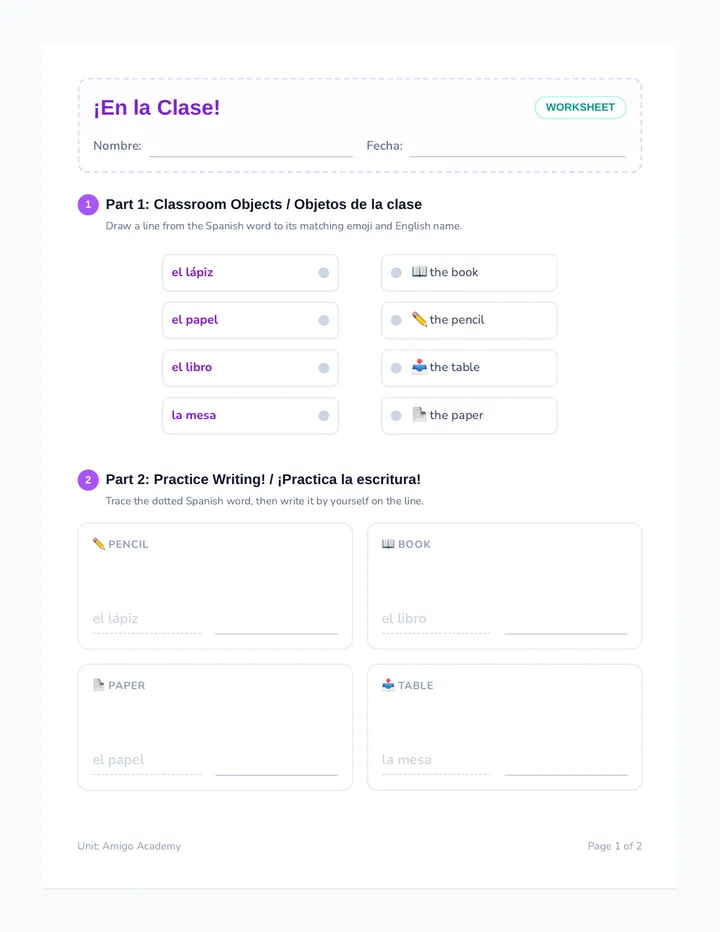
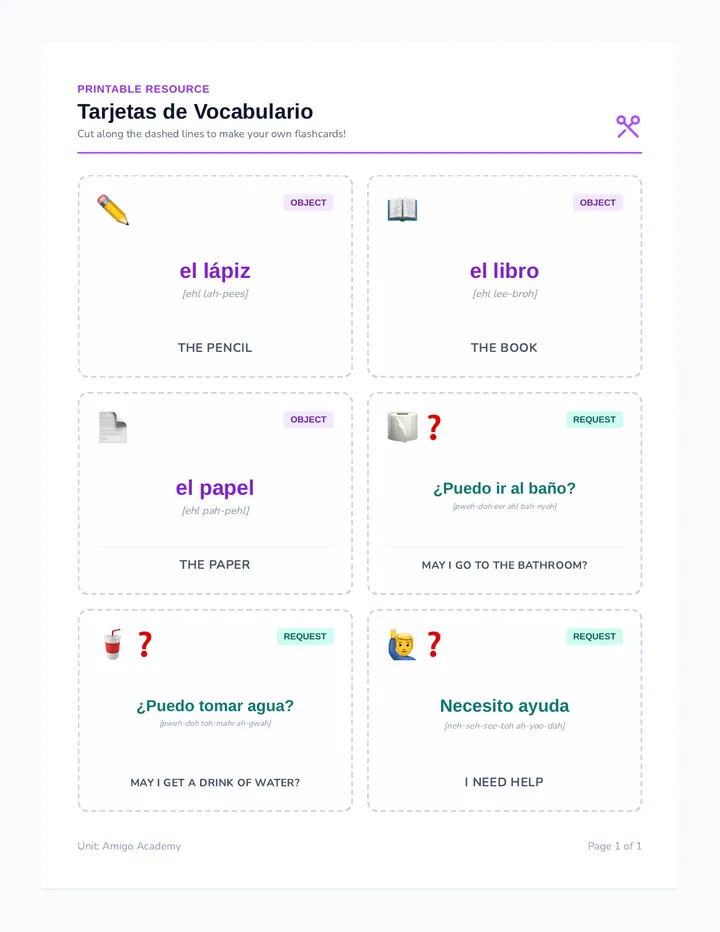
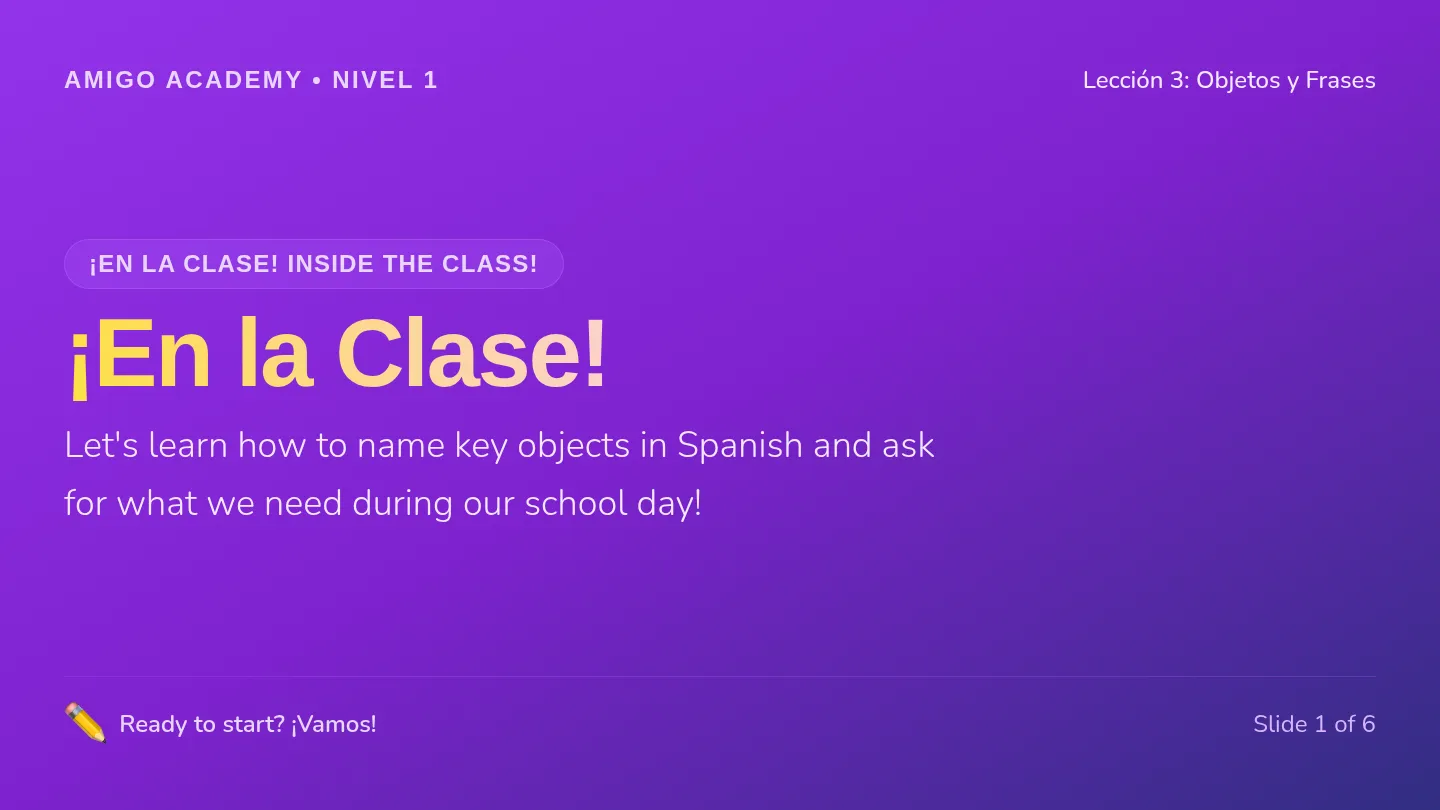
A beginner Spanish lesson teaching high-frequency classroom objects (lápiz, papel, libro) and essential classroom requests (¿Puedo ir al baño?, Necesito un lápiz) using physical pointing activities and visual matching cards.
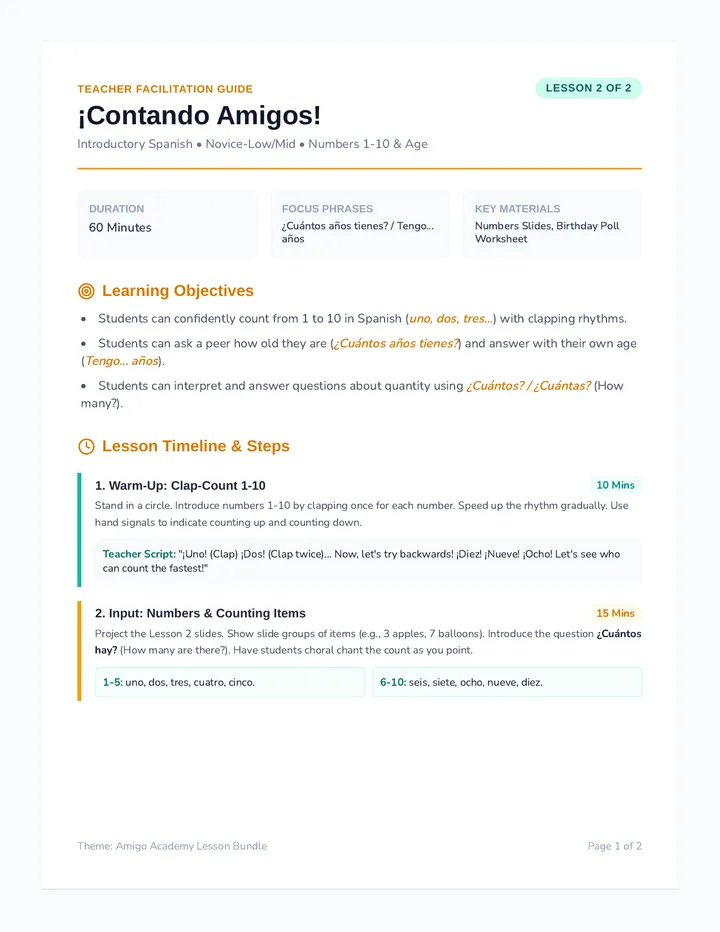
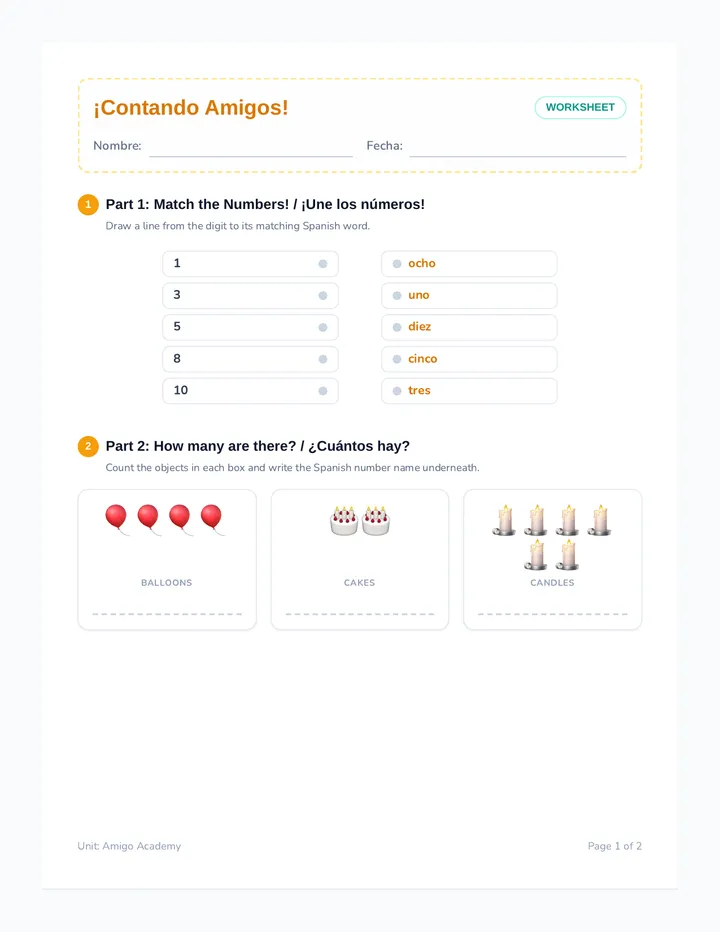
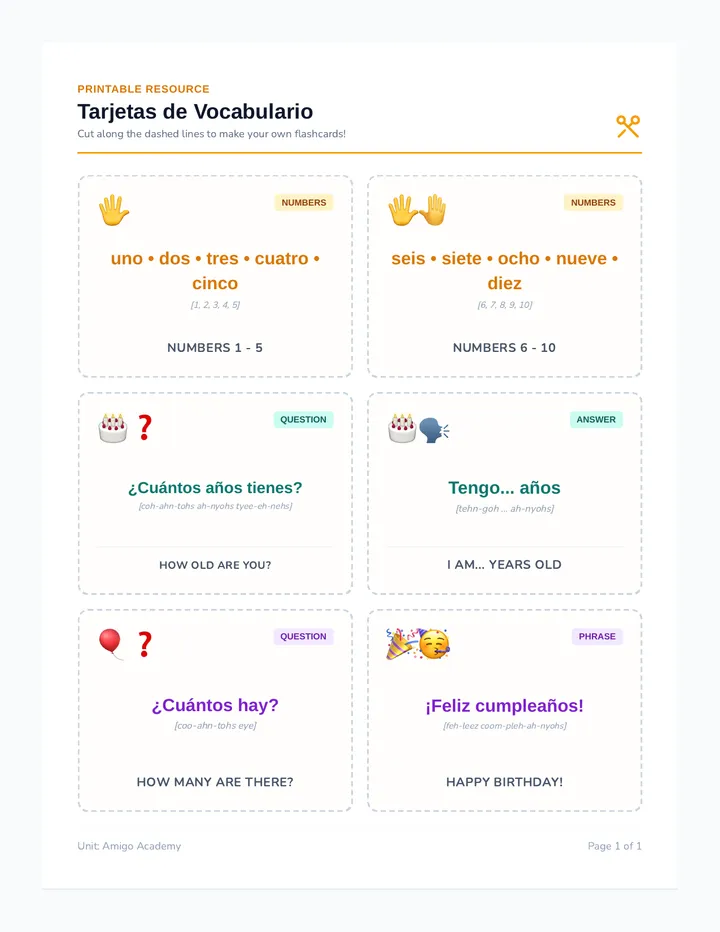
An engaging beginner Spanish lesson focusing on numbers 1-10, asking and answering age questions (¿Cuántos años tienes? Tengo... años), and conducting a classroom birthday/age poll.
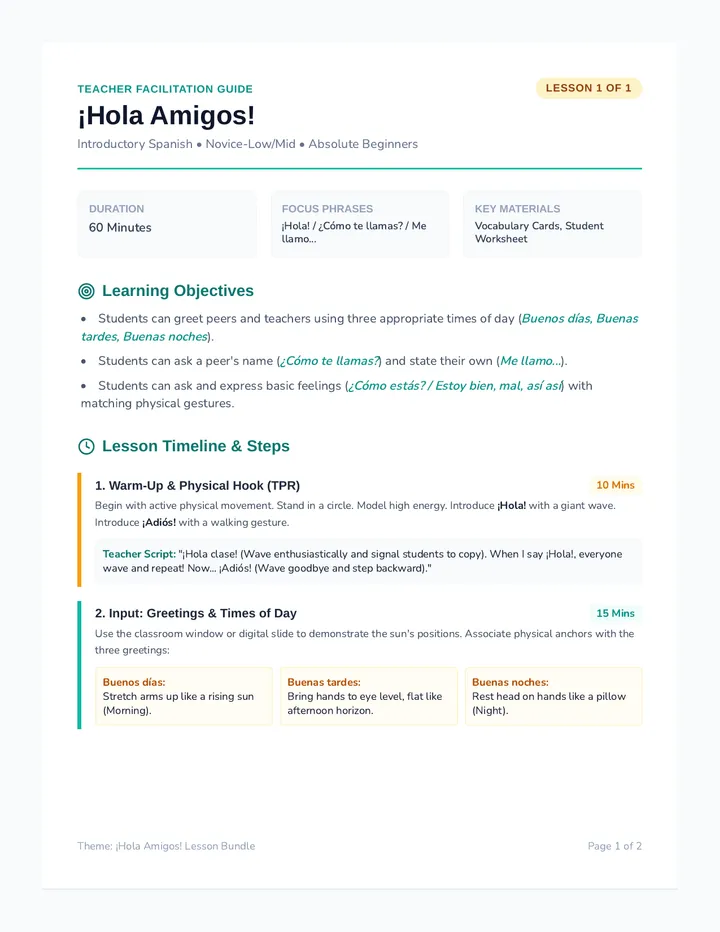
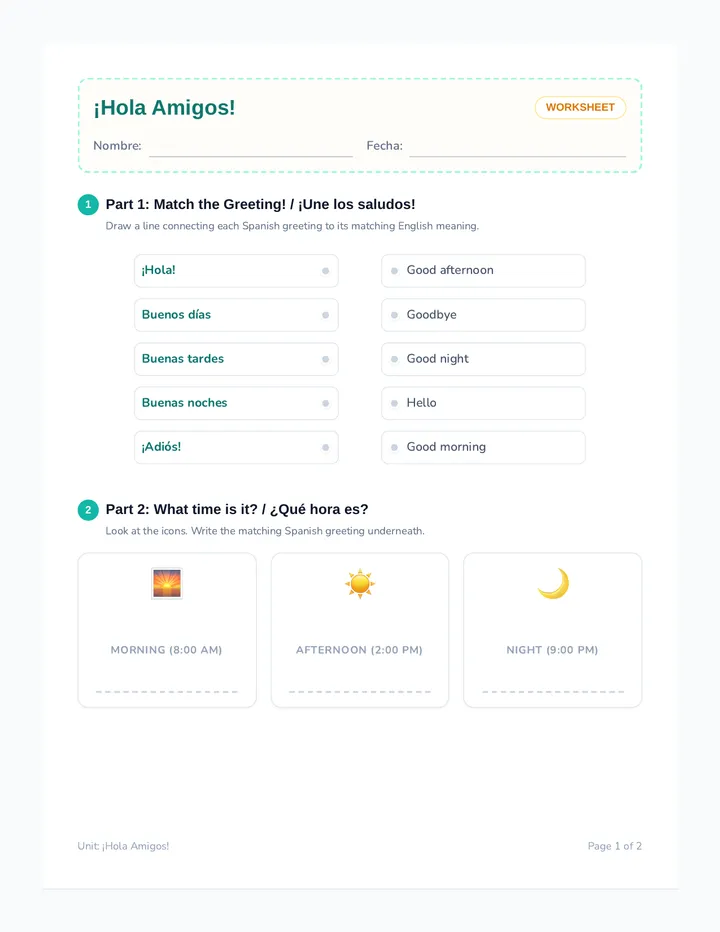
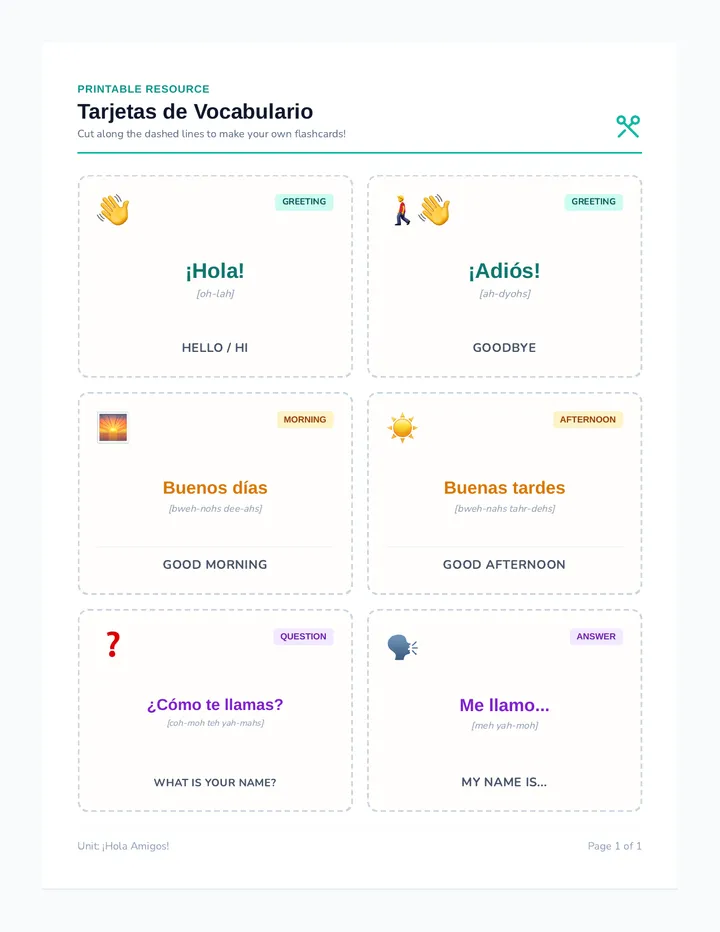
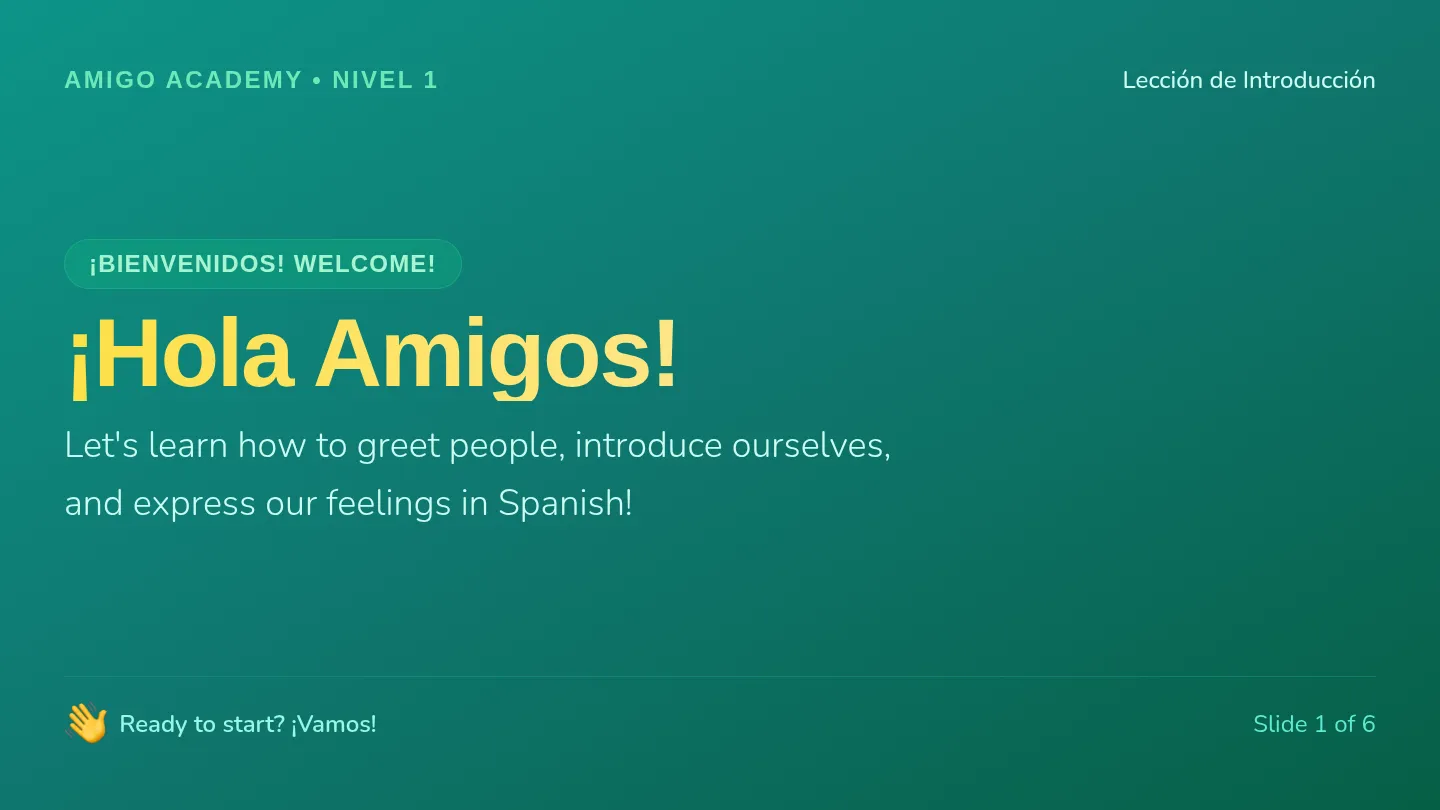
An introductory Spanish lesson for absolute beginners (Novice-Low/Mid) focusing on high-frequency greetings, self-introductions (¿Cómo te llamas? Me llamo...), and basic feelings expression through active physical response (TPR) and collaborative speaking activities.
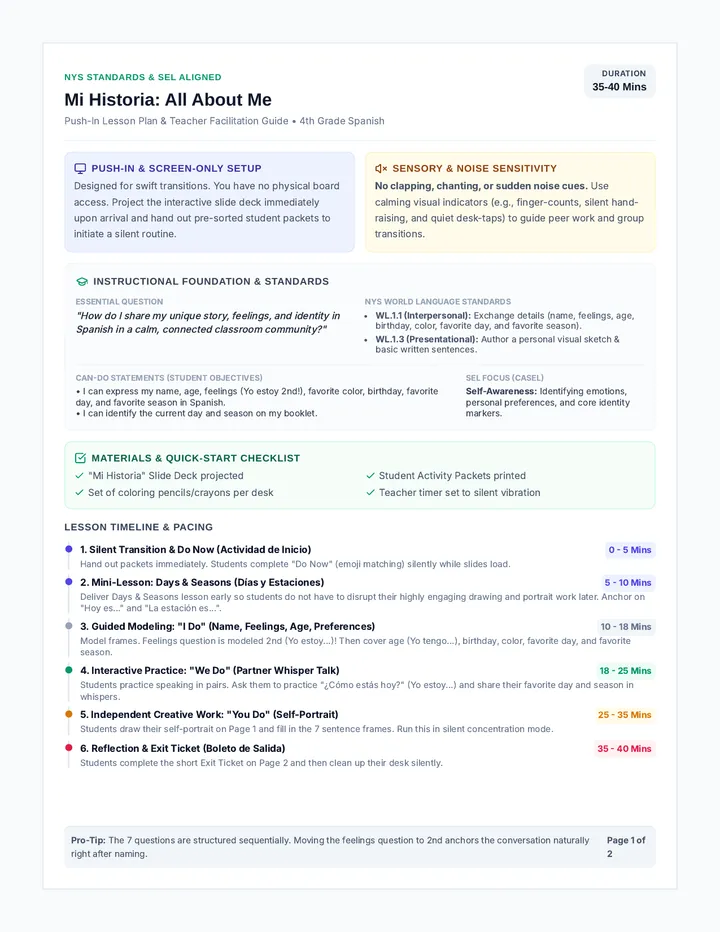
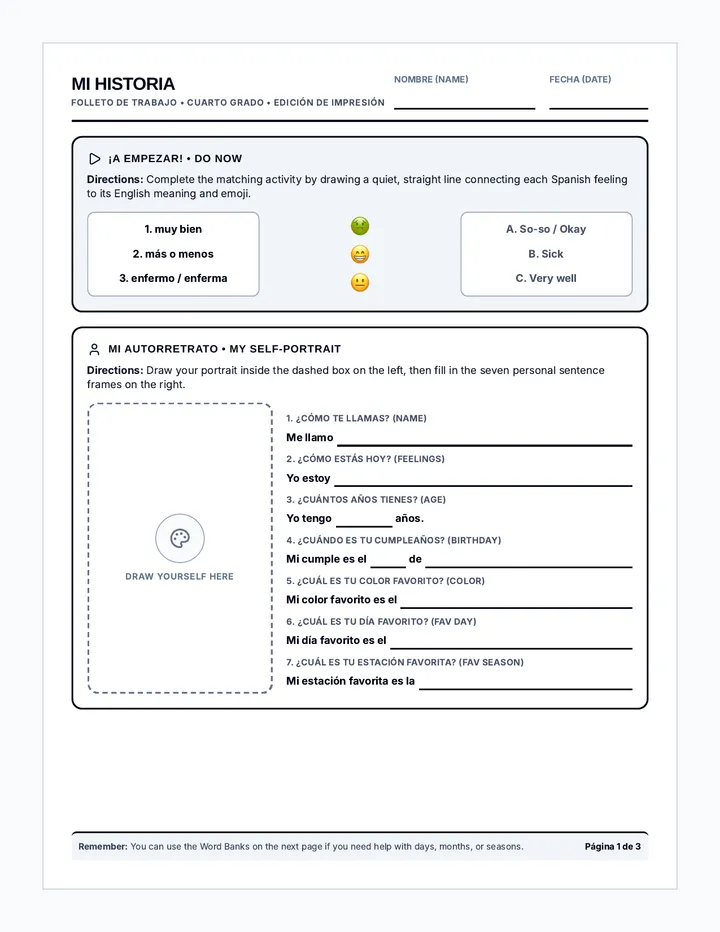
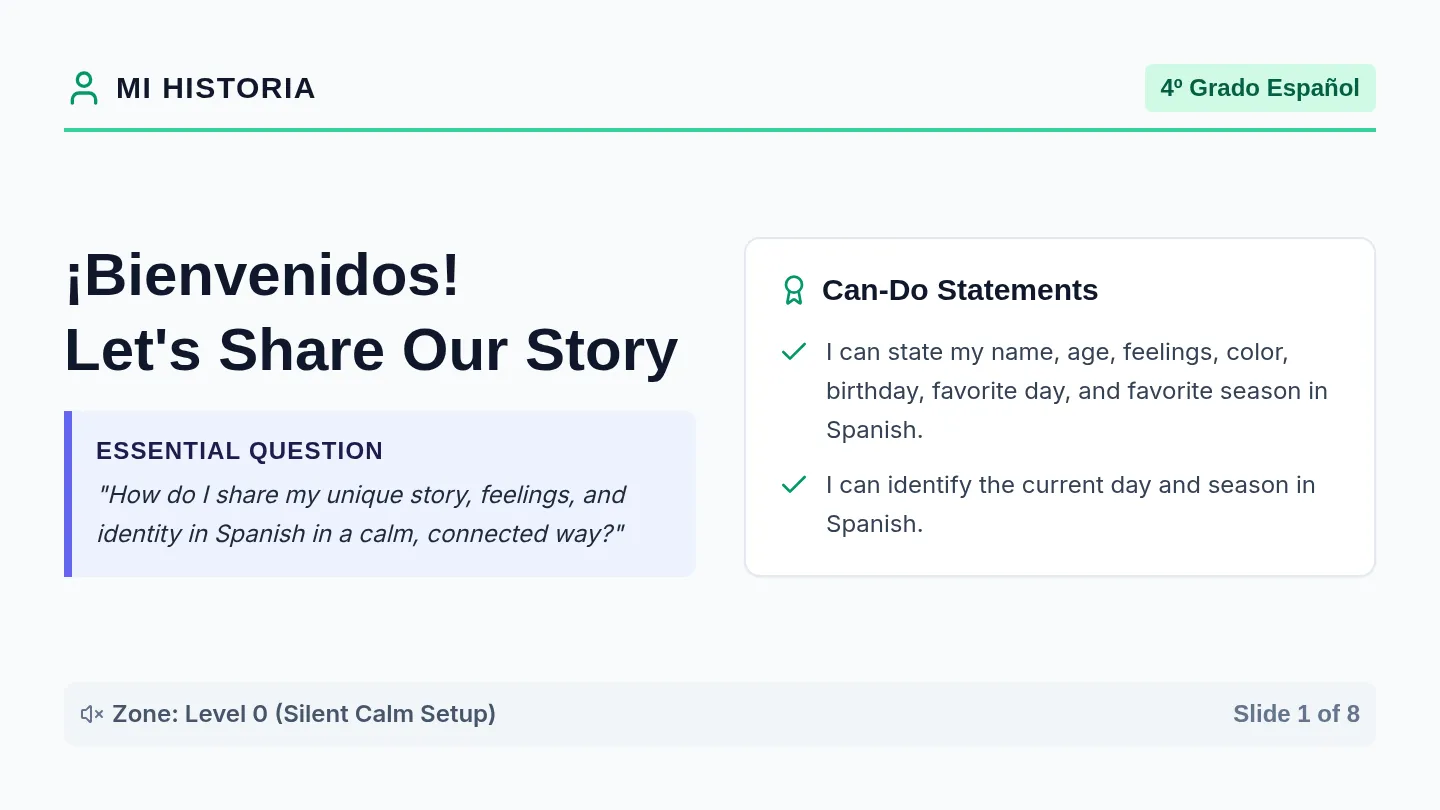
A 4th-grade Spanish lesson focusing on self-introduction, feelings, age, colors, and birthdays, featuring a mini-lesson on days and seasons. Tailored for push-in teaching in a screen-only, sensory-sensitive room using highly structured, low-noise visual guides and calm transitions.
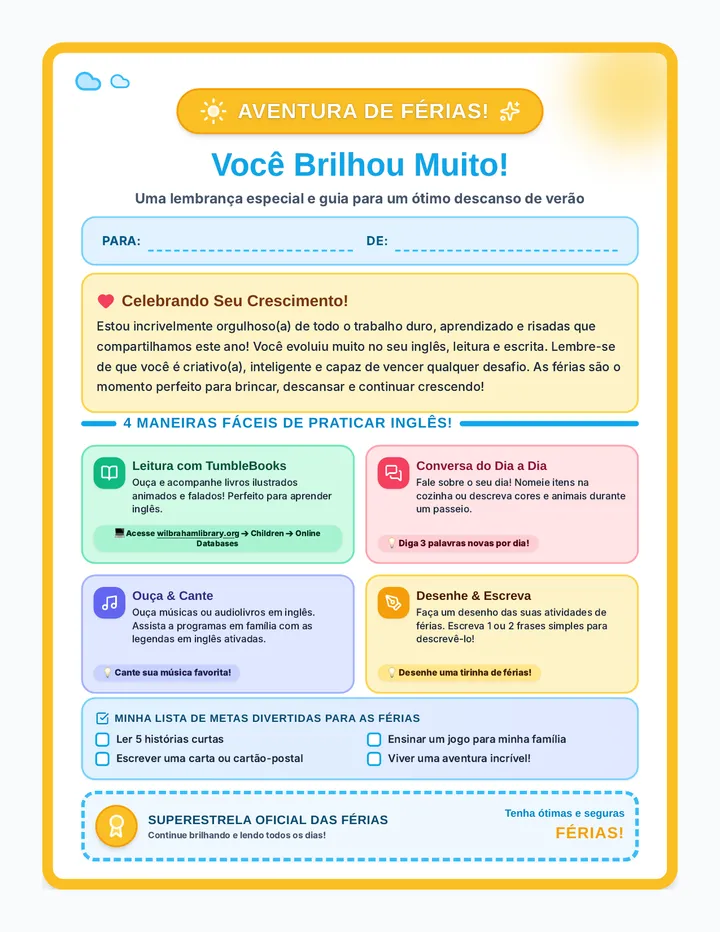
A lesson designed to celebrate student growth and guide families with actionable, low-stress English practice tips over the summer break.
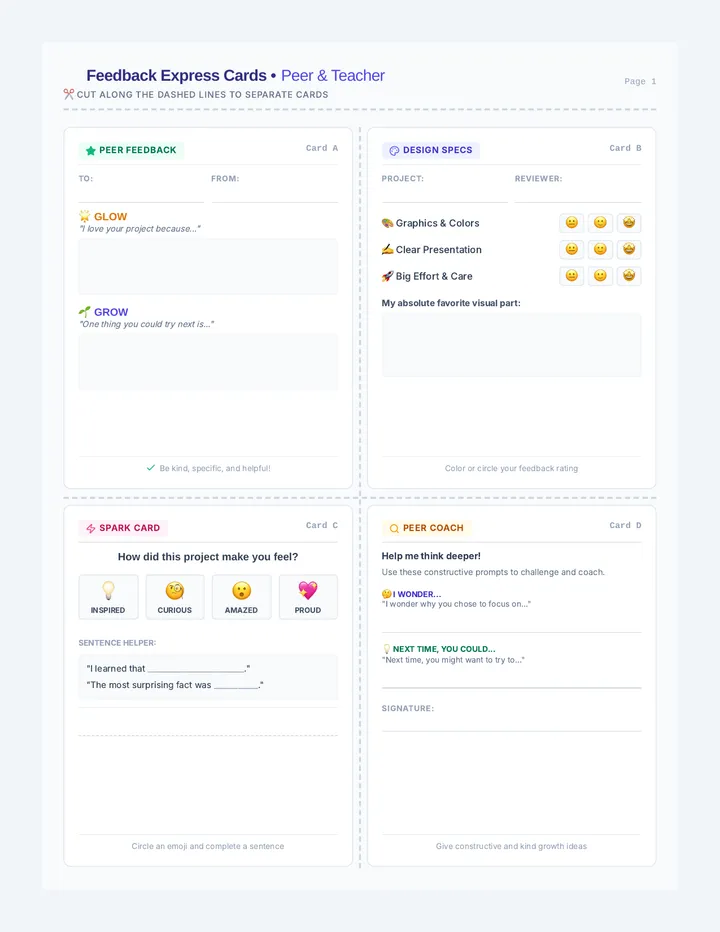
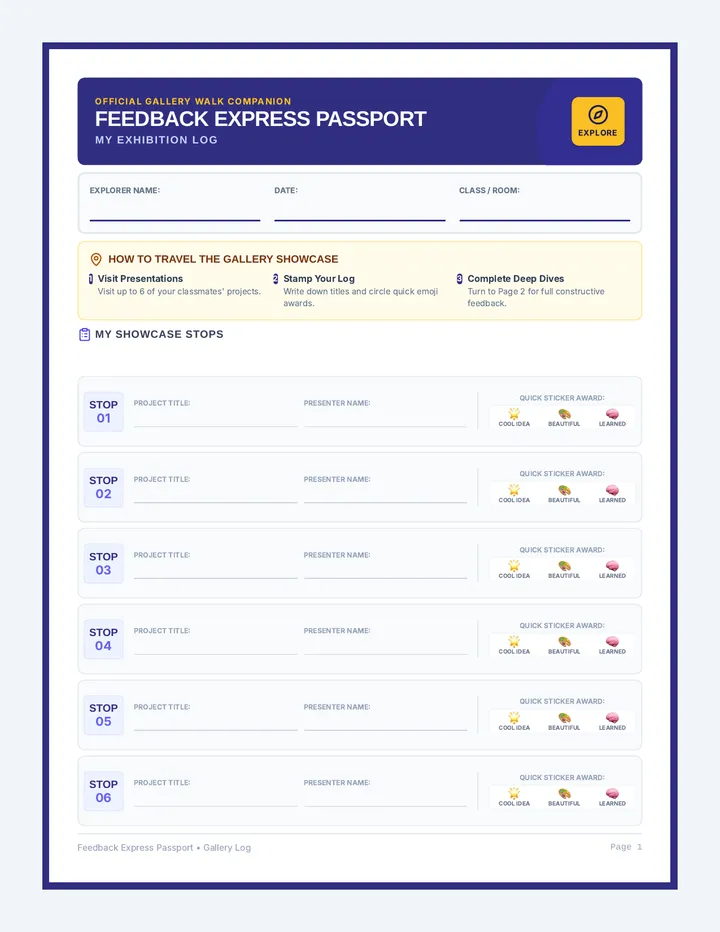
A visual feedback toolkit designed for elementary and middle school classrooms, families, and peers to provide meaningful project feedback. Includes emoji-rich rating systems, structured review guides, and sentence starter frames.
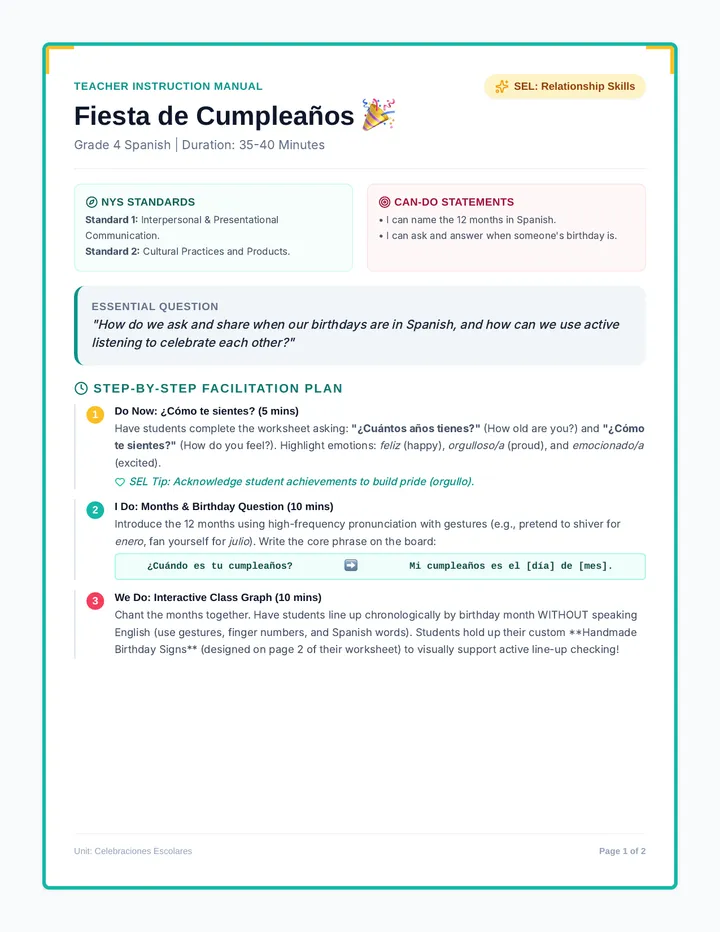
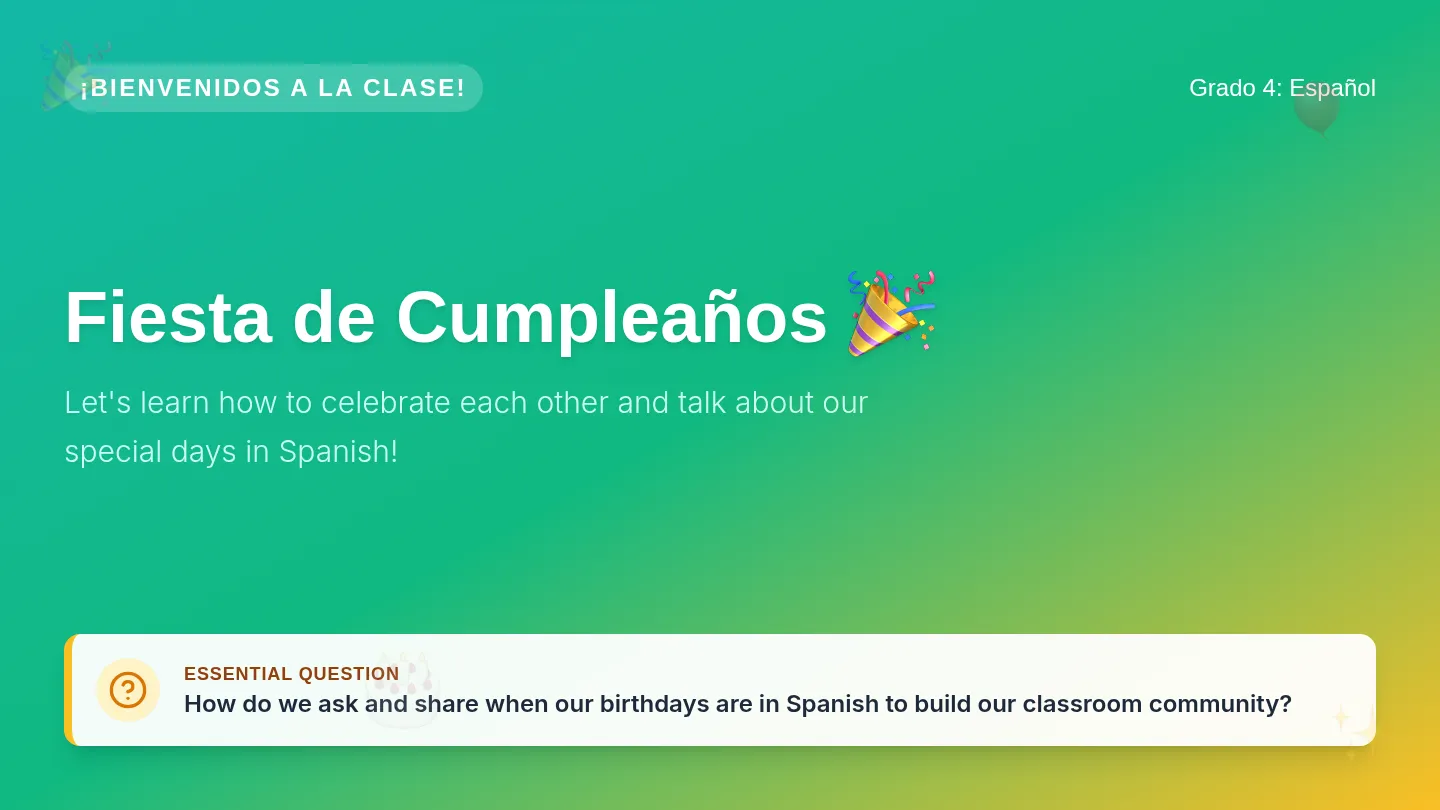
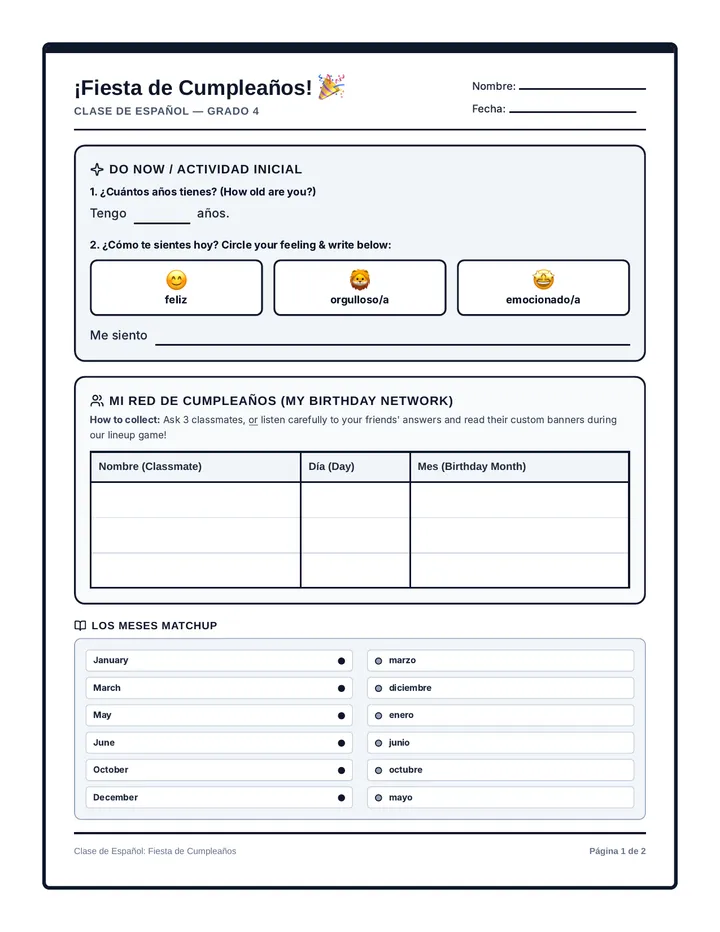
A 35-40 minute Spanish lesson for 4th Grade focusing on the months of the year, asking and answering '¿Cuándo es tu cumpleaños?', and practicing relationship skills by active listening and celebrating classmates. Includes a Do Now with age and emotions (feliz, orgulloso/a, emocionado/a), I Do, We Do, You Do, Station Rotations, and an Exit Ticket.
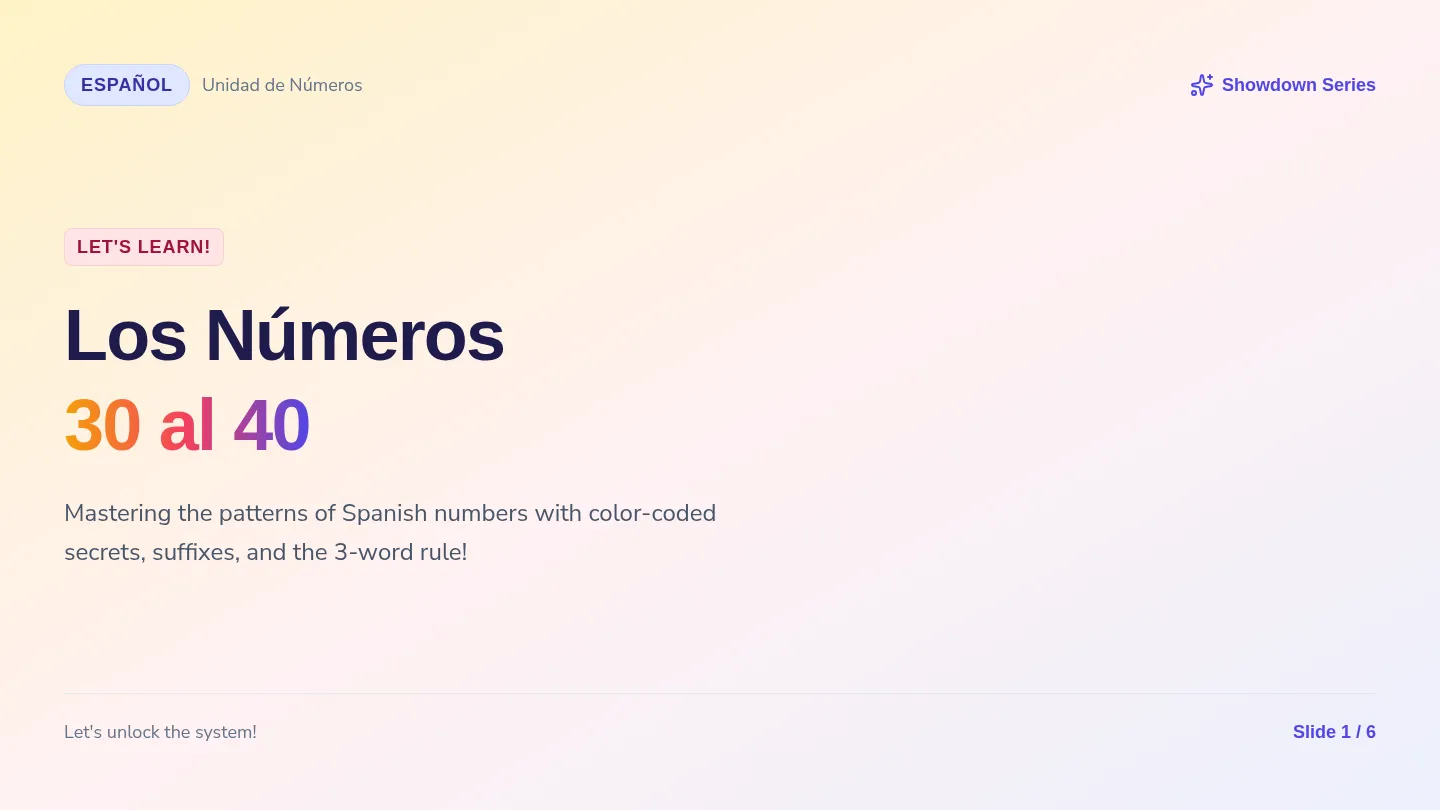
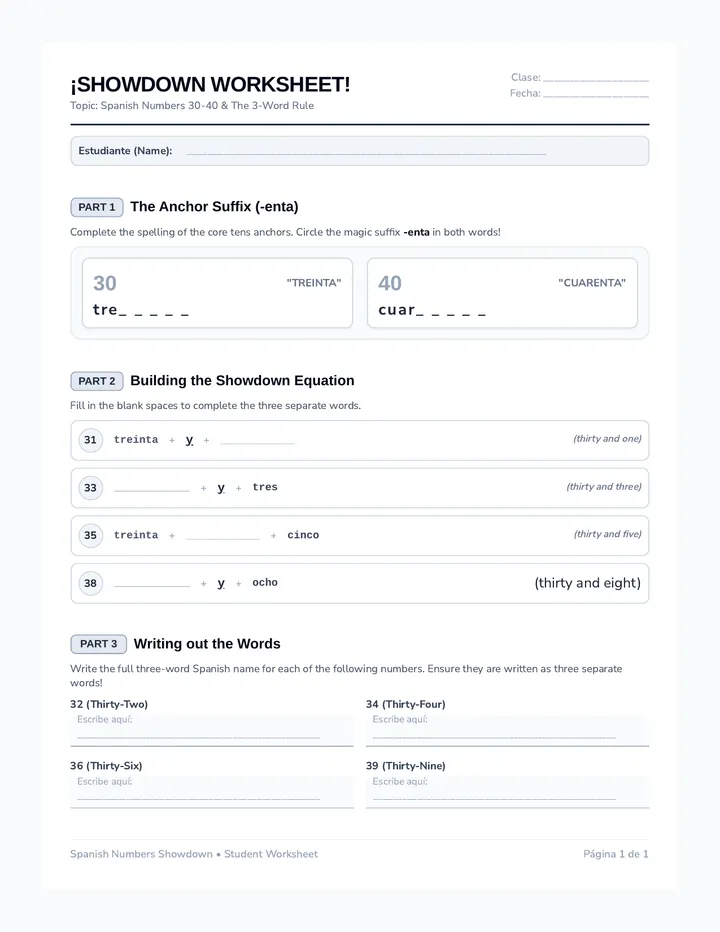
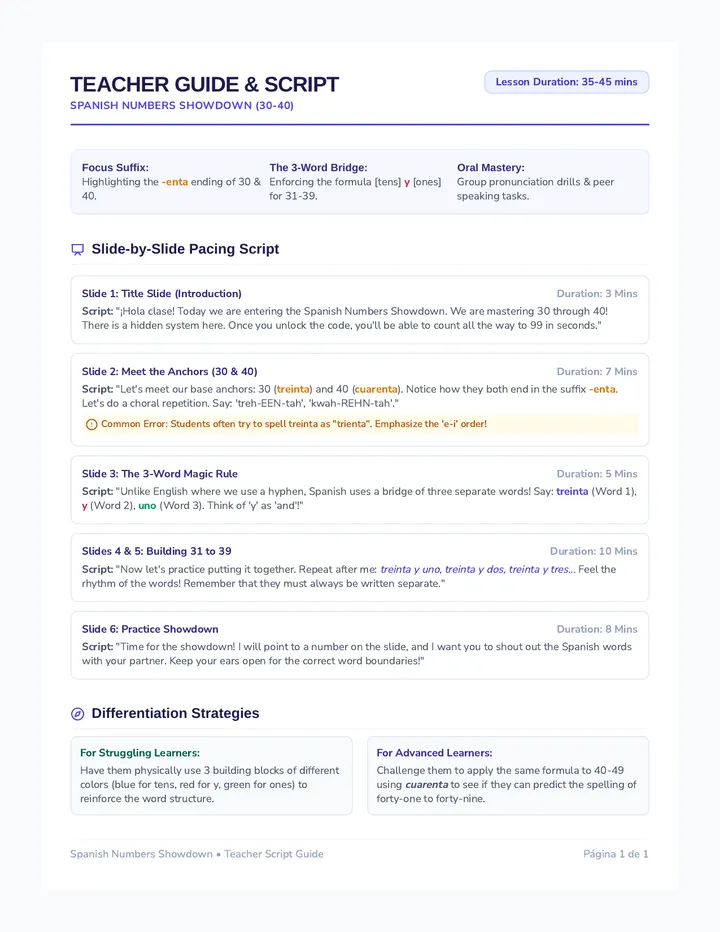
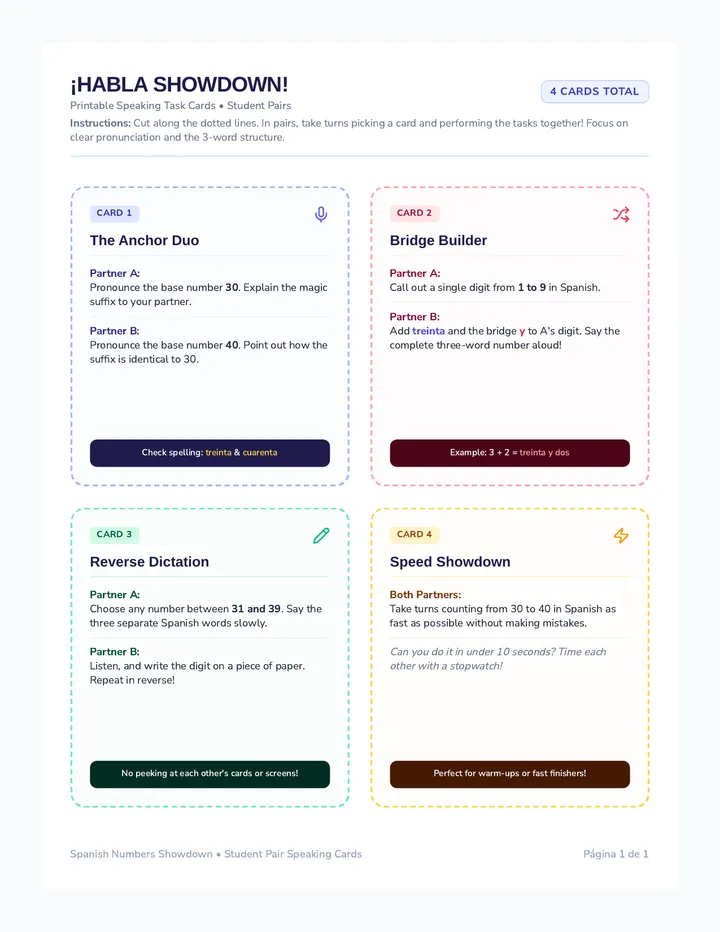
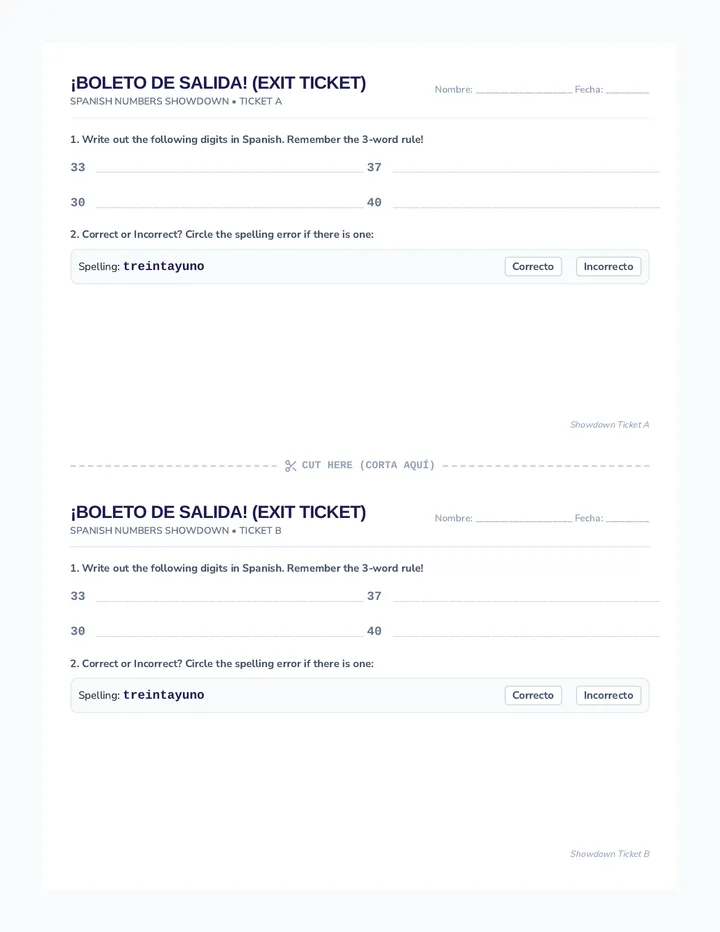
A structured, color-coded lesson introducing Spanish numbers 30 to 40, highlighting key linguistic rules like the "-enta" suffix and the three-word structure of numbers 31-39.
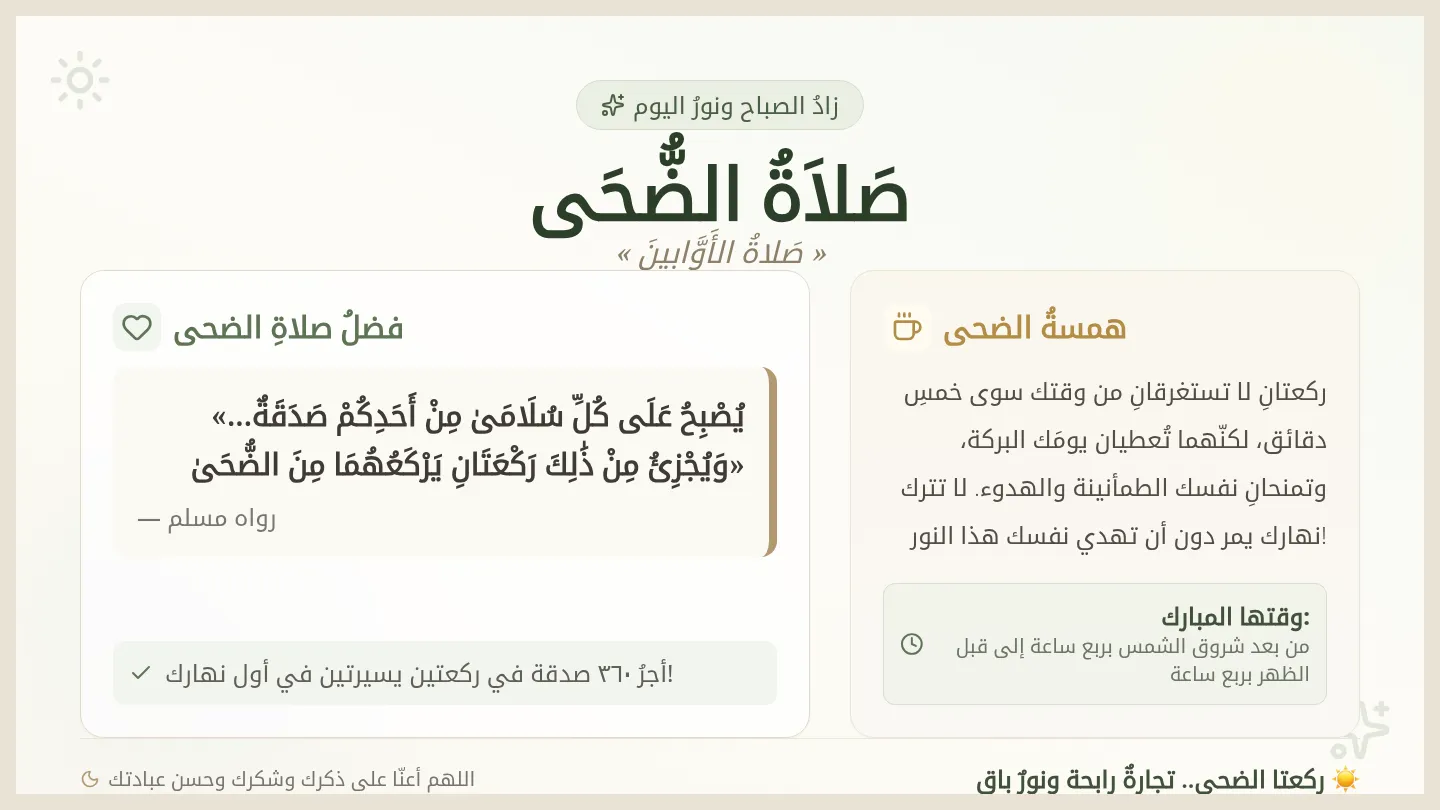
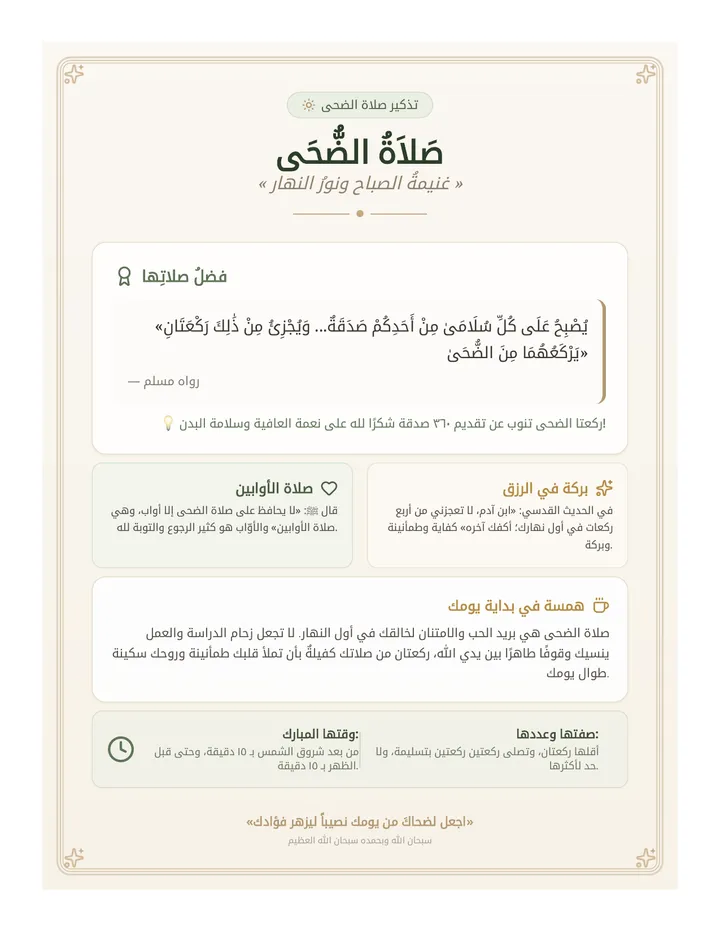
A lesson focusing on the Duha prayer reminder, offering both a digital slide for morning screens and a printable classroom poster to foster a peaceful, spiritual morning routine.
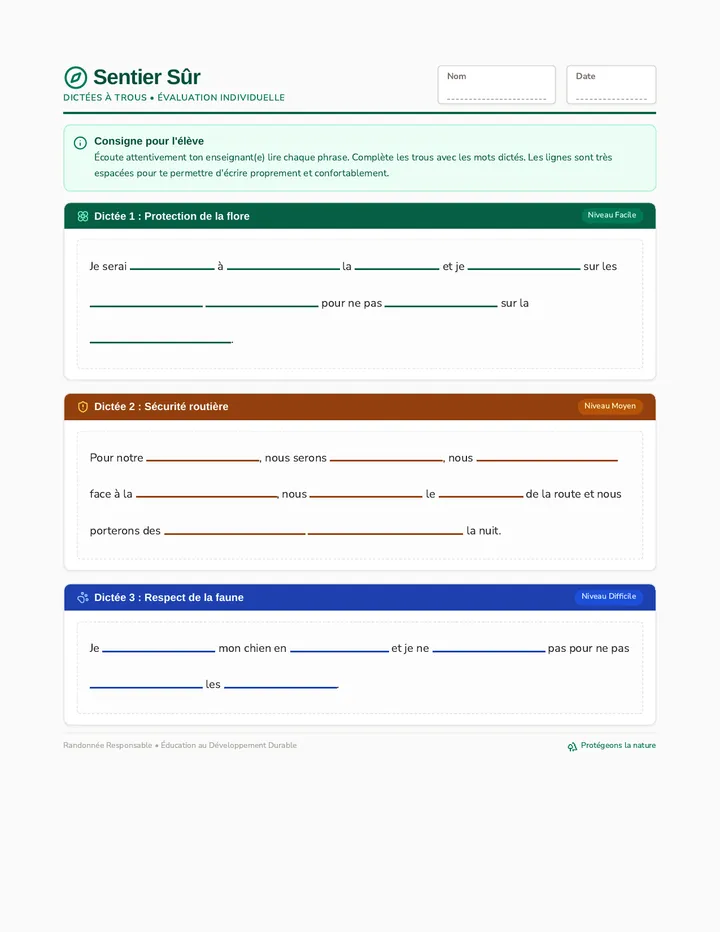
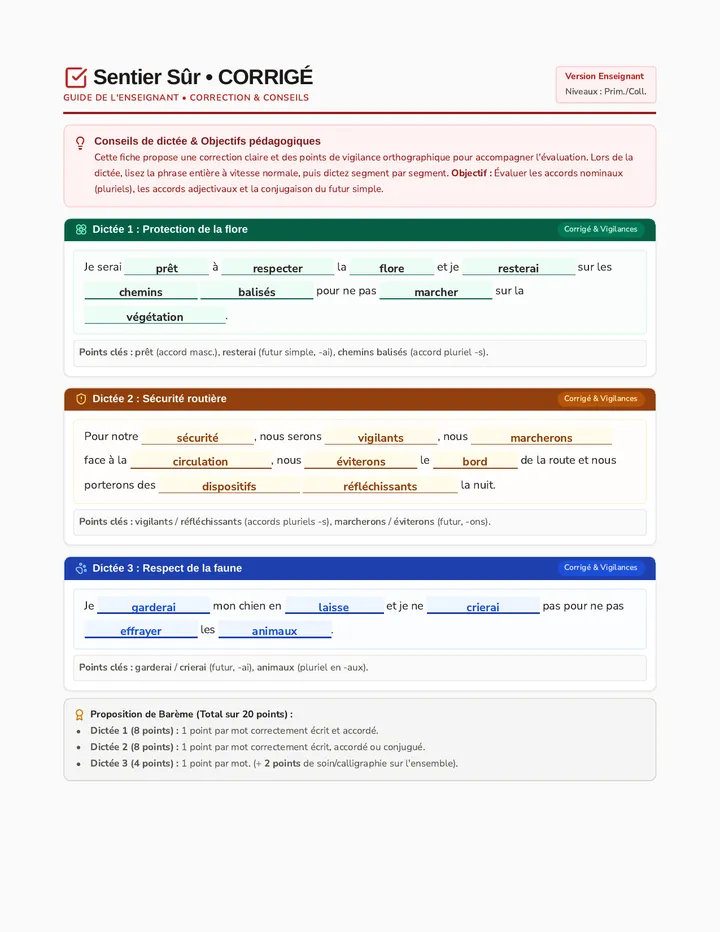
Une leçon de français et de civisme pour apprendre à respecter la nature et les règles de sécurité lors d'une randonnée à travers trois dictées à trous thématiques.
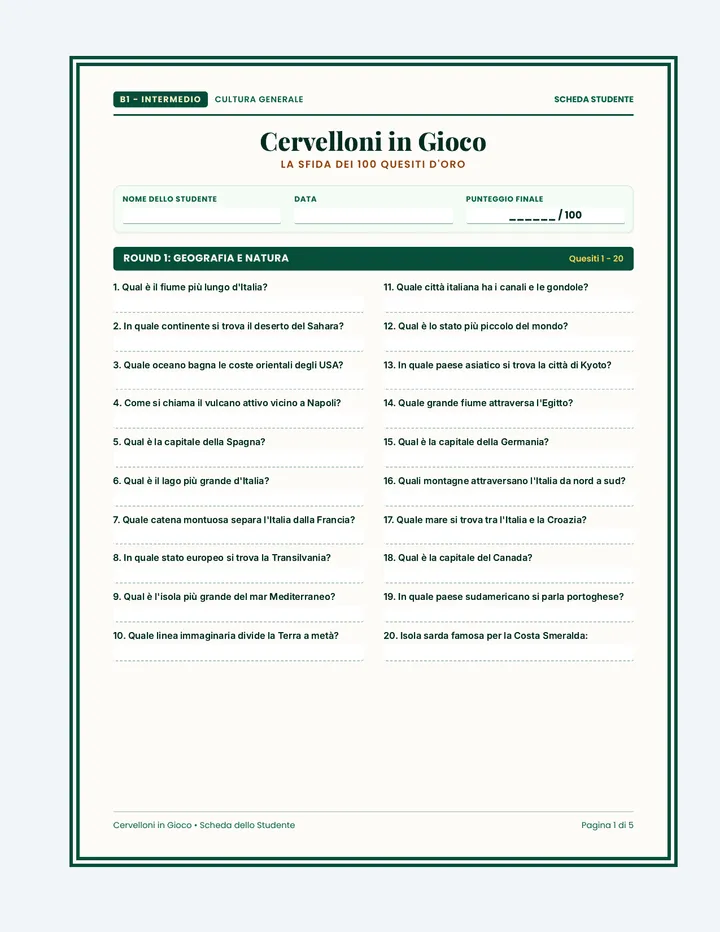
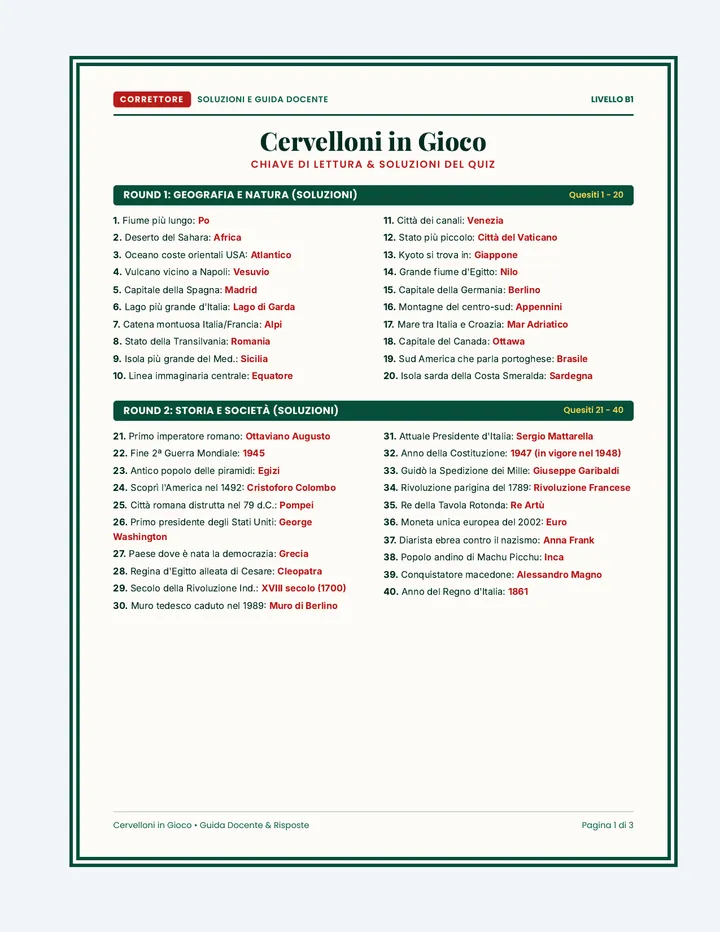
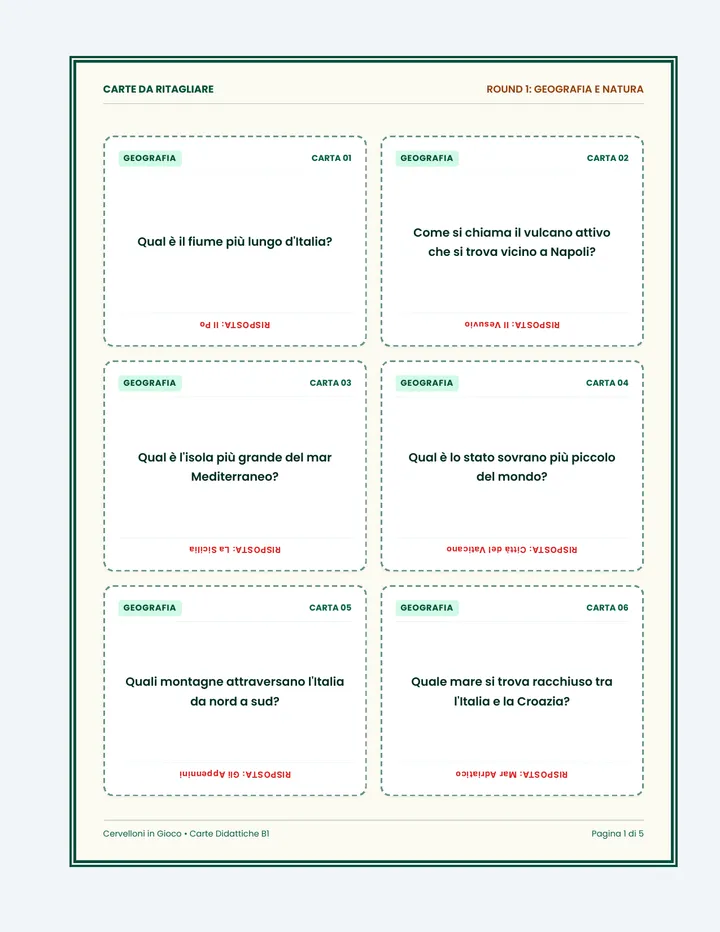
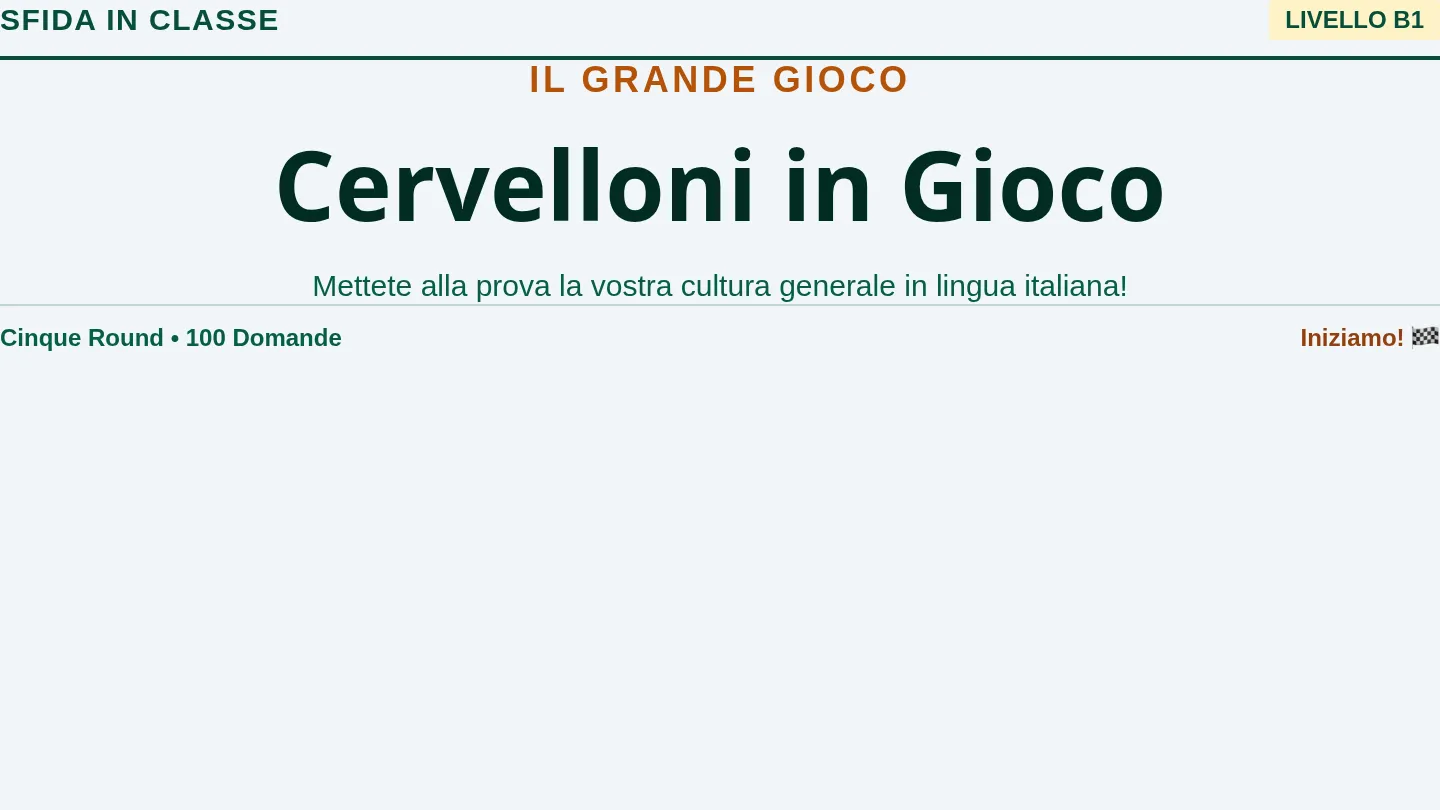
Un'entusiasmante sfida di cultura generale in lingua italiana per studenti di livello B1. Include un quiz di 100 domande con foglio risposte, carte da ritagliare e una presentazione interattiva per la classe.
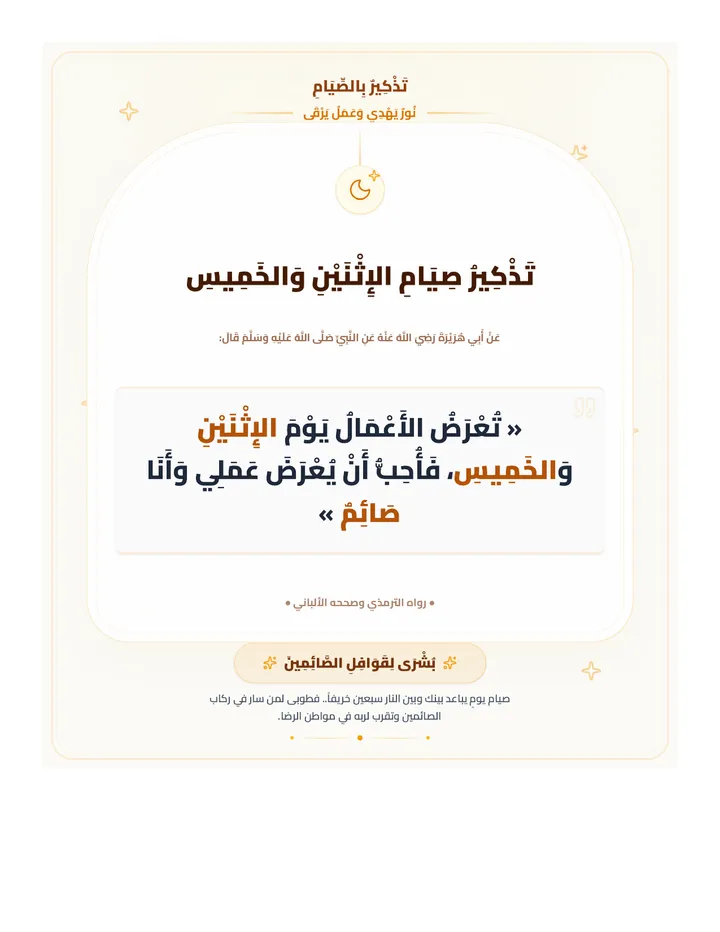
A premium, cohesive collection of beautifully designed spiritual and religious reminders for daily, weekly, and seasonal practices, featuring high-contrast connected Arabic typography, elegant arches, and glowing celestial themes.
A highly focused, 20-minute introductory lesson designed for young beginner English Language Learners from Syria and DR Congo, centering on belonging, kindness, and writing practice within a supportive classroom community.
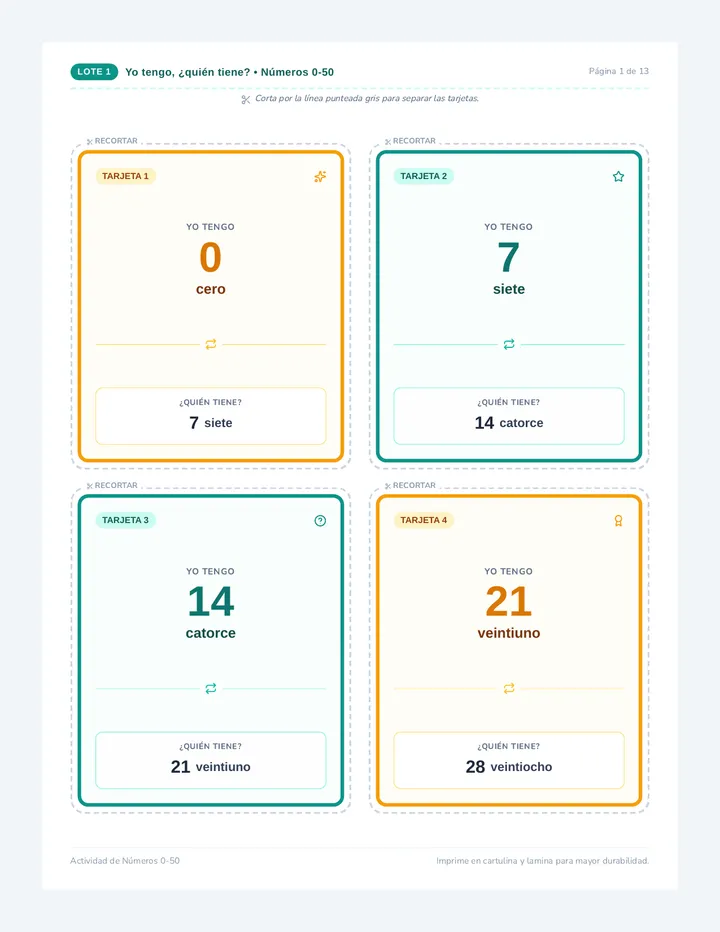
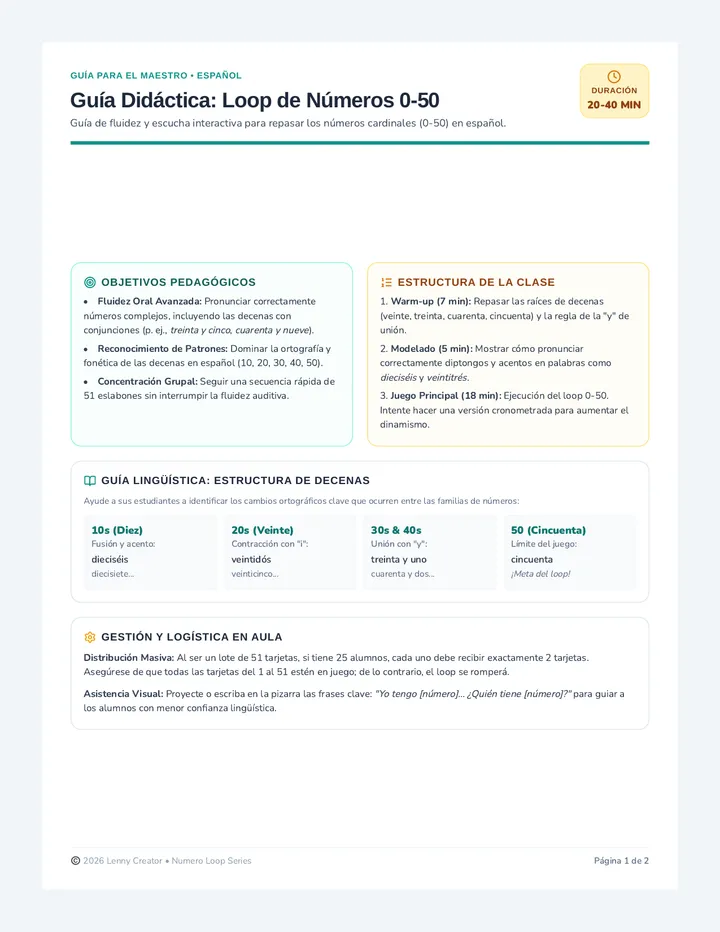
A dynamic Spanish language lesson centered on a 'Yo tengo, ¿quién tiene?' loop game for numbers 0-50. Students develop active listening and rapid oral recall skills while building classroom community through collaborative play.
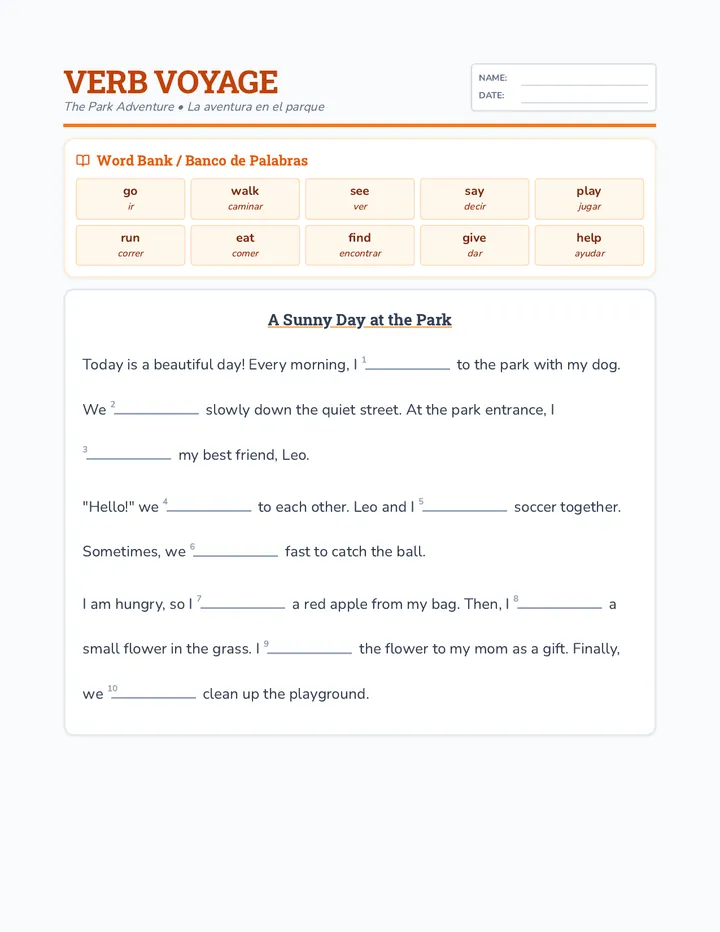
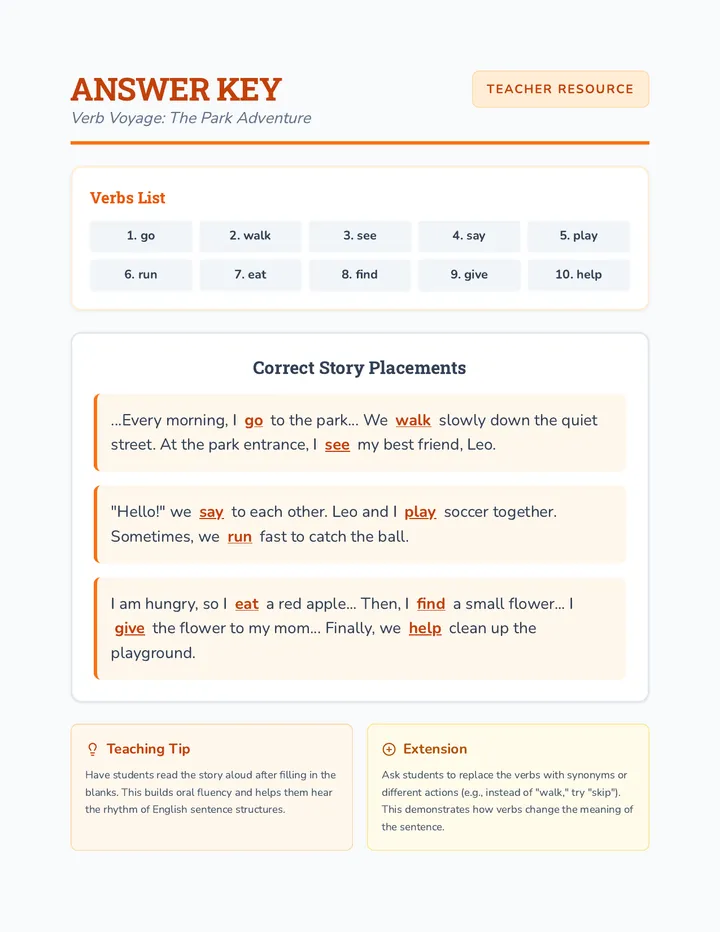
A foundational lesson for ESL students to practice high-frequency English verbs through a bilingual (English-Spanish) fill-in-the-blank adventure story.
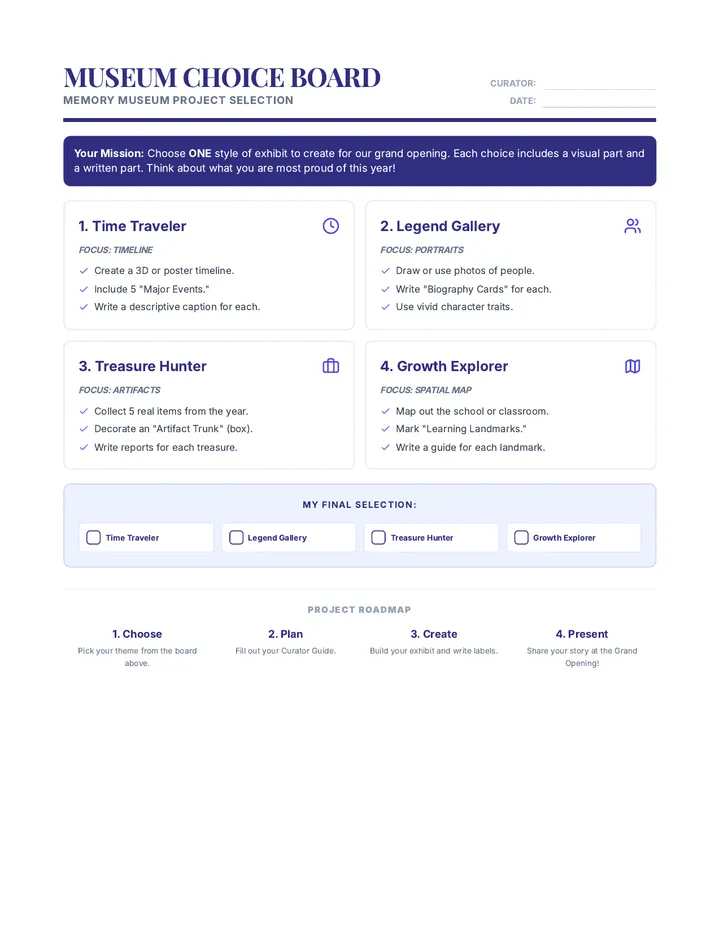
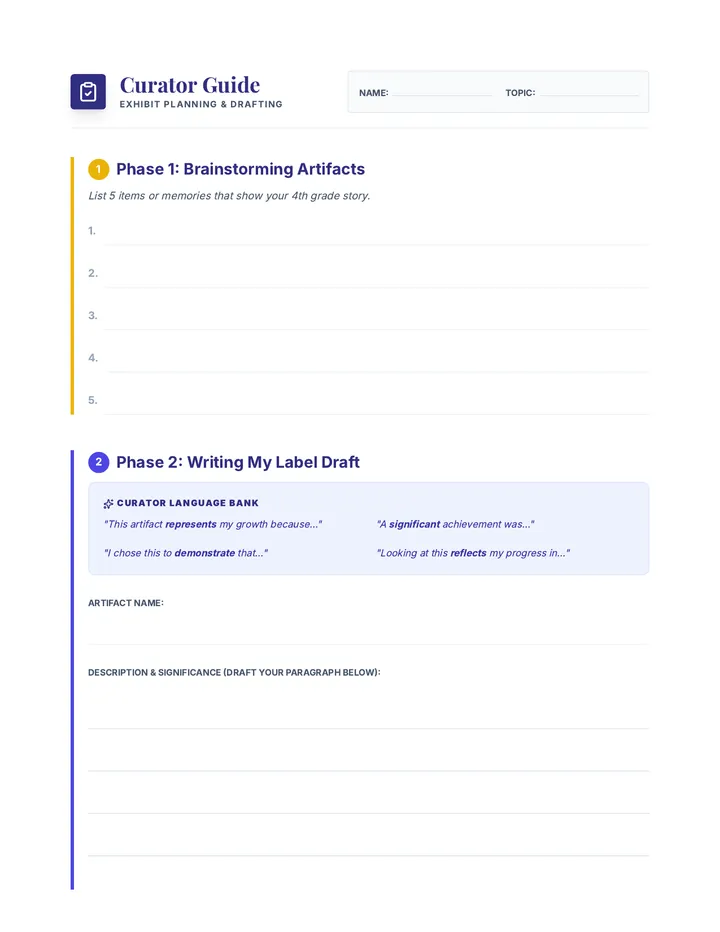
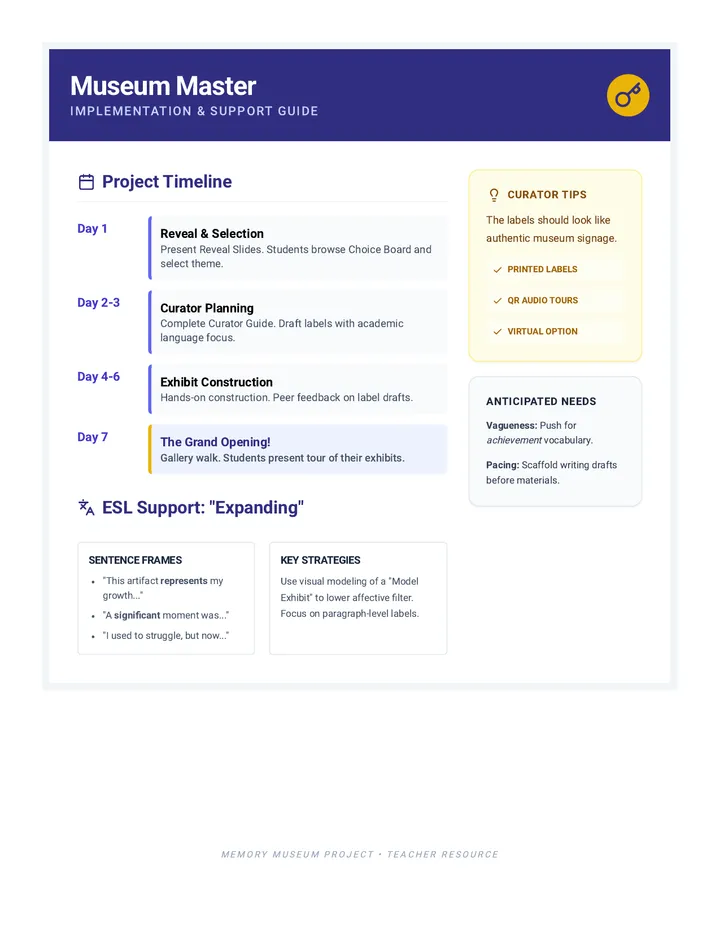
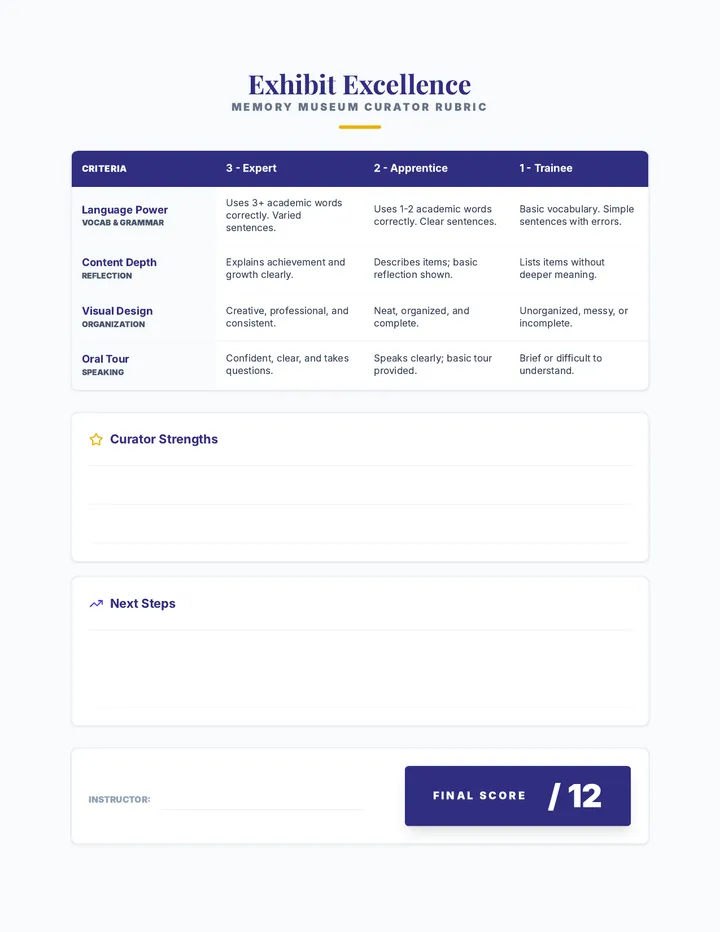
Students select, plan, and create a personalized museum exhibit that demonstrates their language proficiency and reflects on their 4th-grade experience.
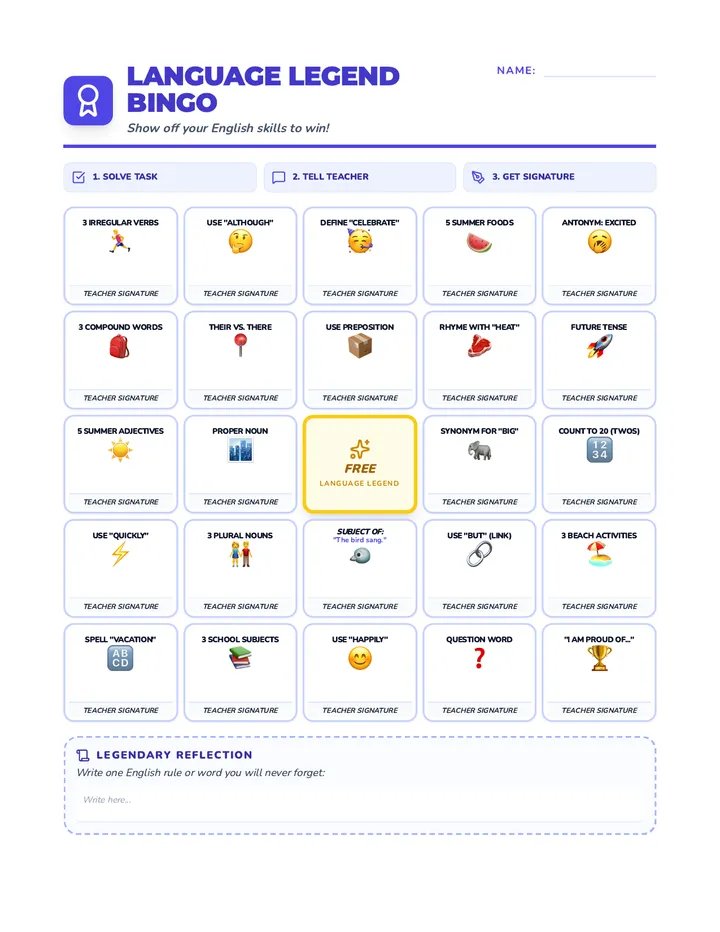
A high-energy, collaborative lesson for ESL students to celebrate the end of the school year through interactive games, vocabulary review, and reflection.
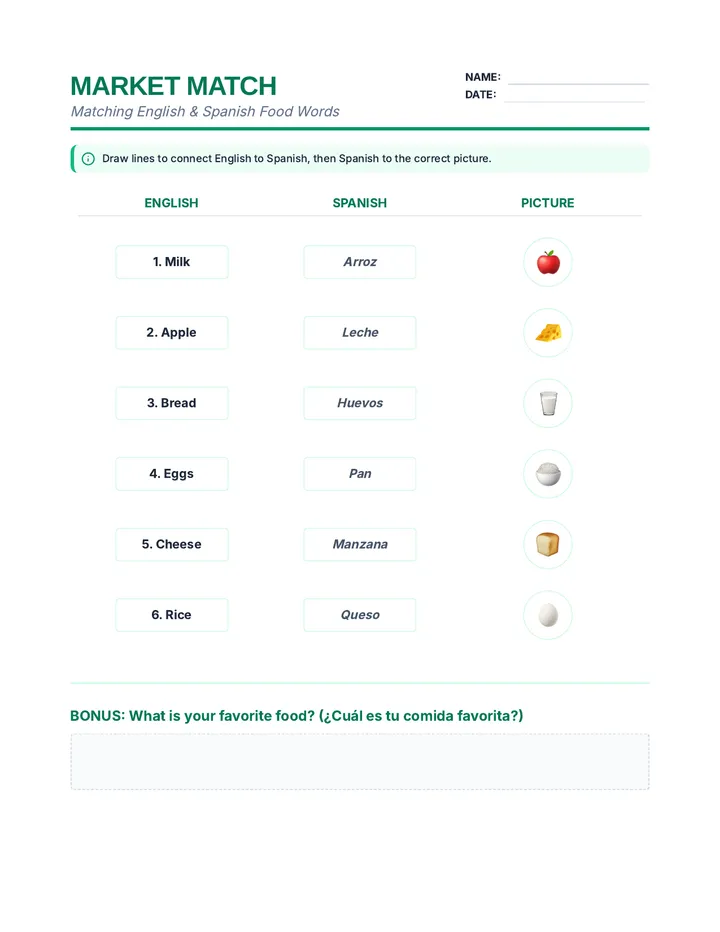
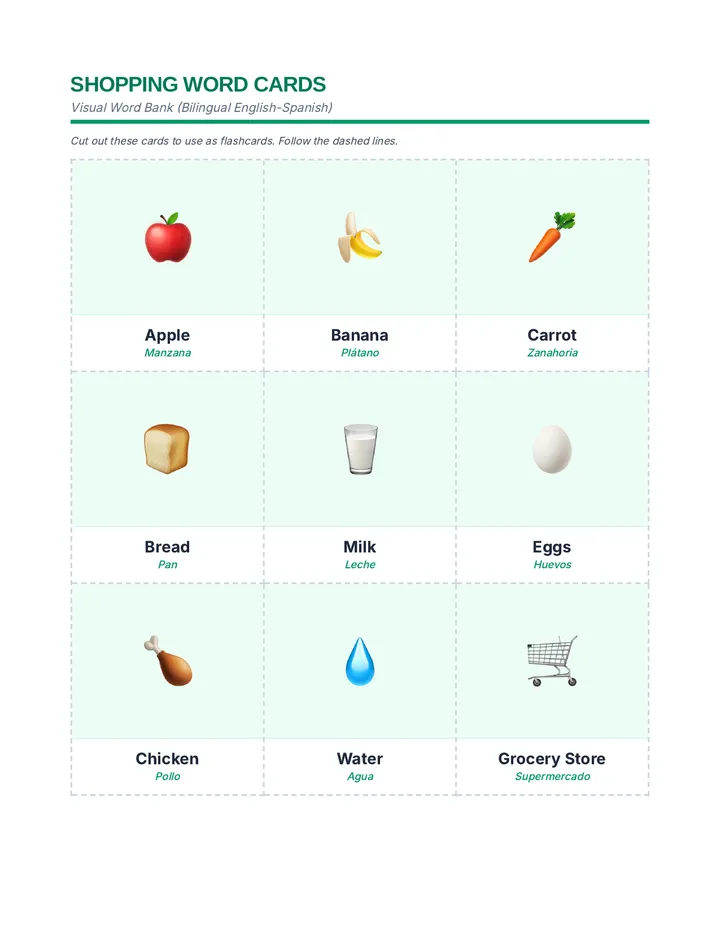
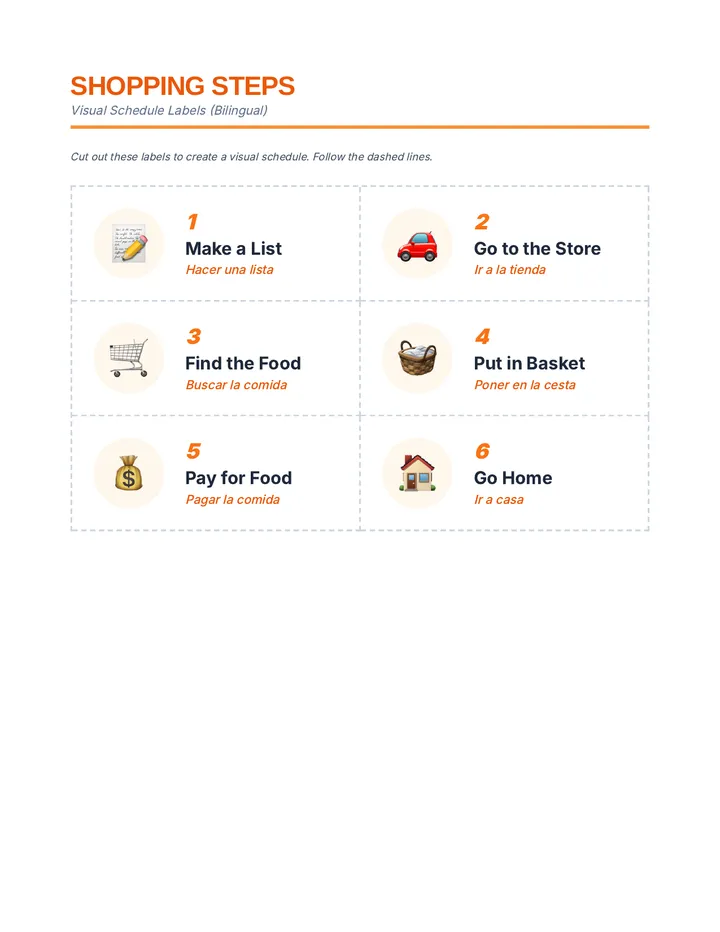
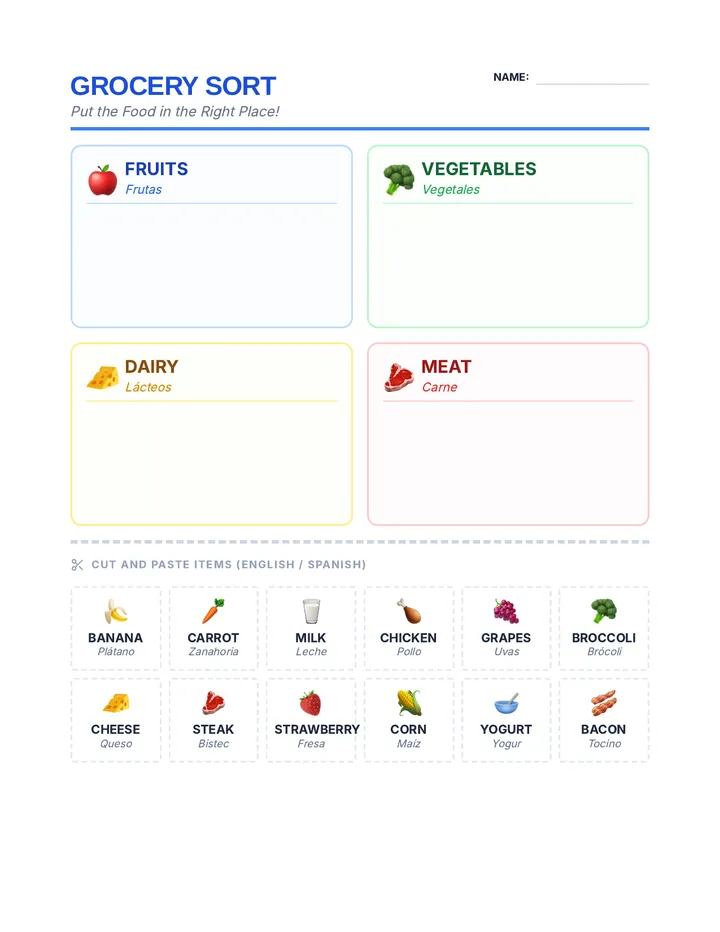
A beginner-friendly ESL lesson focusing on essential food and grocery shopping vocabulary, featuring bilingual English-Spanish support and visual aids. Students learn to identify common items and the sequential steps of a shopping trip.
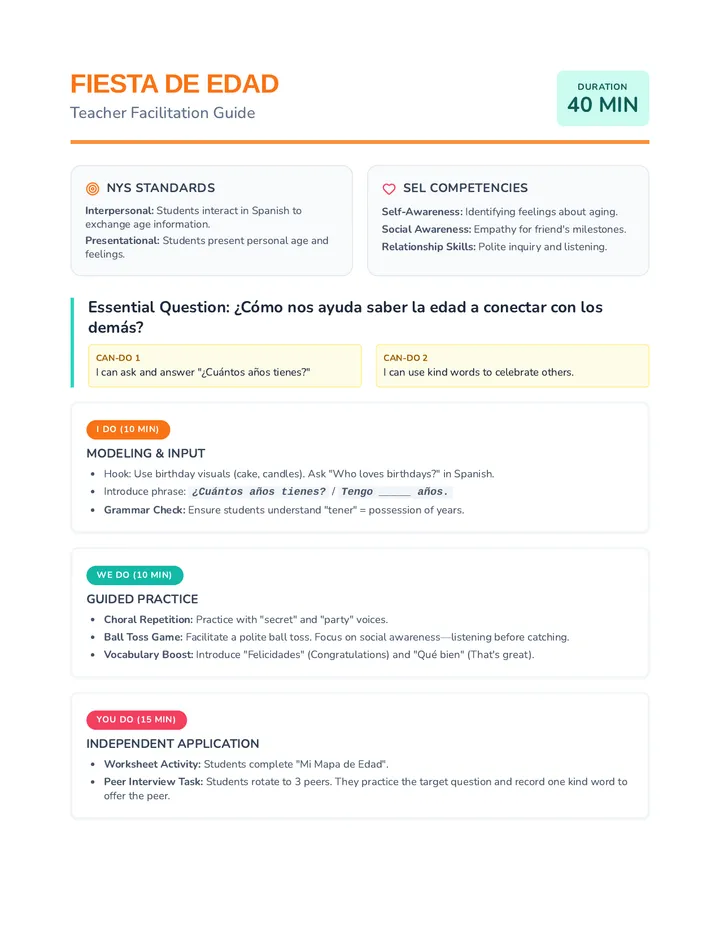
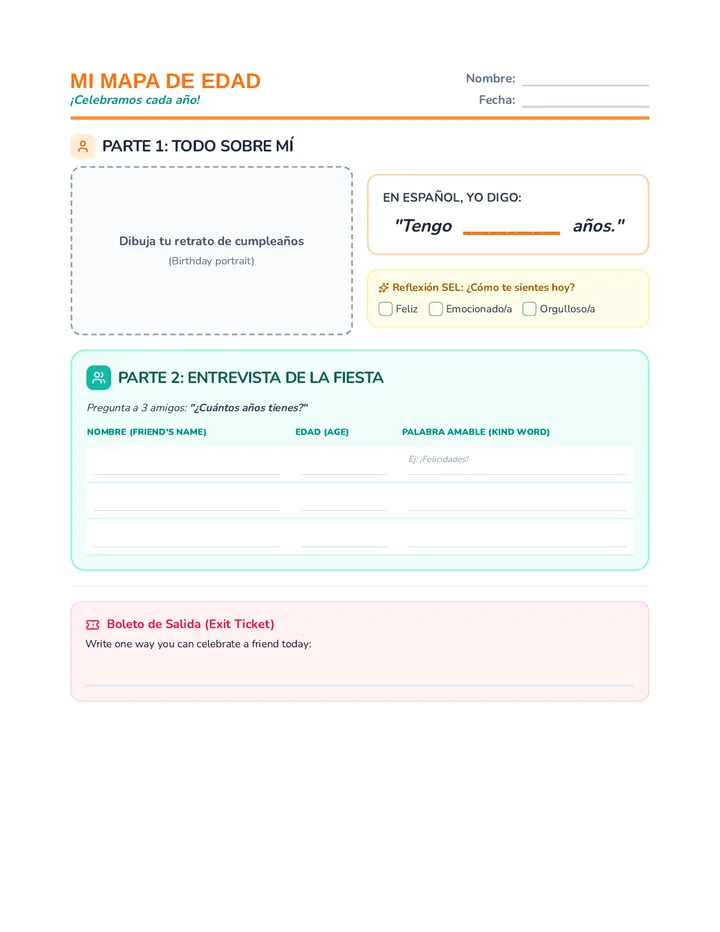
A 4th-grade Spanish lesson focused on asking and telling age, integrating SEL competencies like self-awareness and relationship skills through a 'Fiesta' theme. The lesson follows the I Do, We Do, You Do framework and aligns with NYS World Language standards.
A vibrant 4th-grade Spanish lesson on expressing age, integrating SEL self-awareness by exploring personal growth and feelings about growing older. Includes NYS Checkpoint A standards alignment.
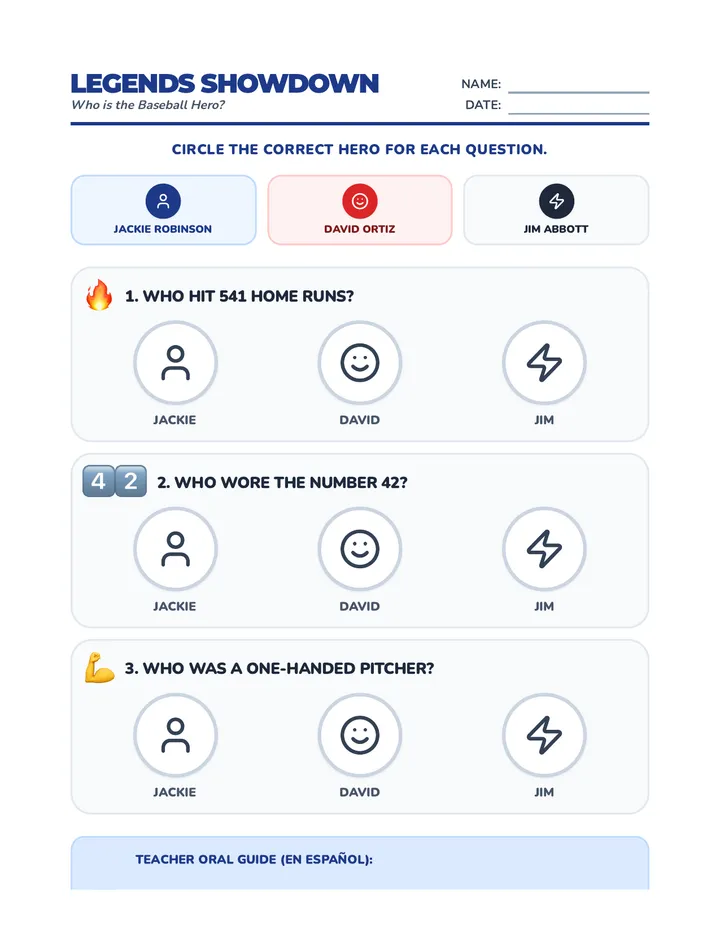
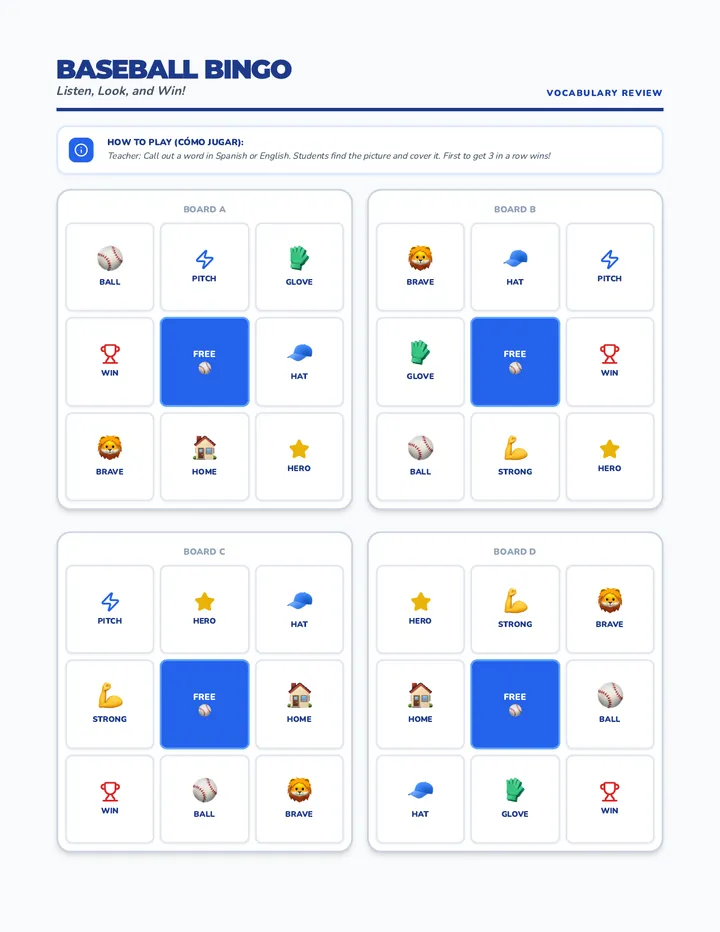
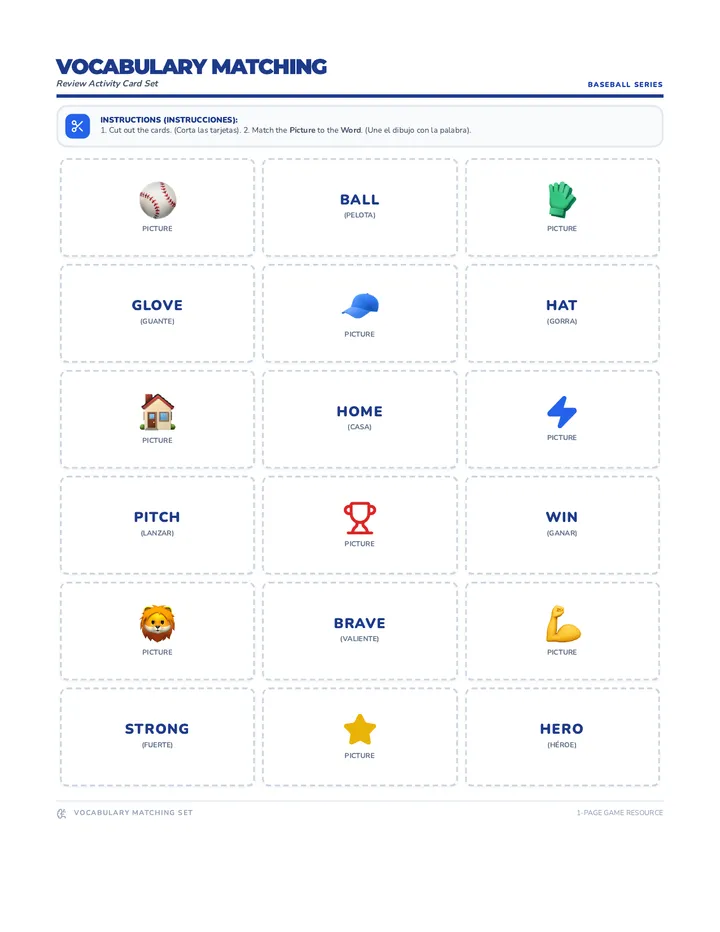
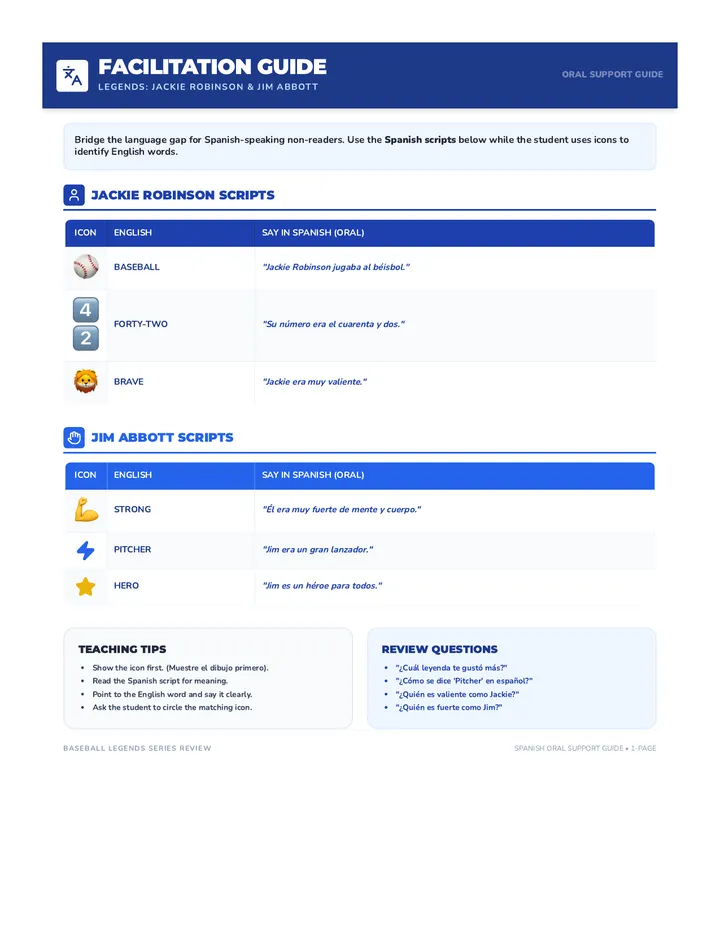
A review lesson covering Jackie Robinson, David Ortiz, and Jim Abbott, using visual identification to reinforce key facts.
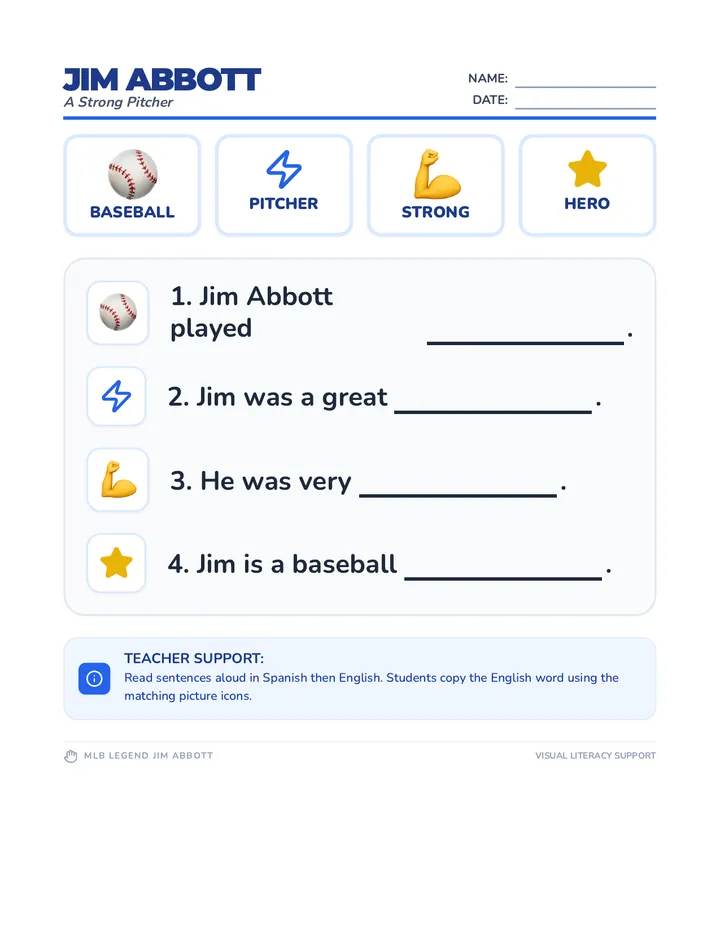
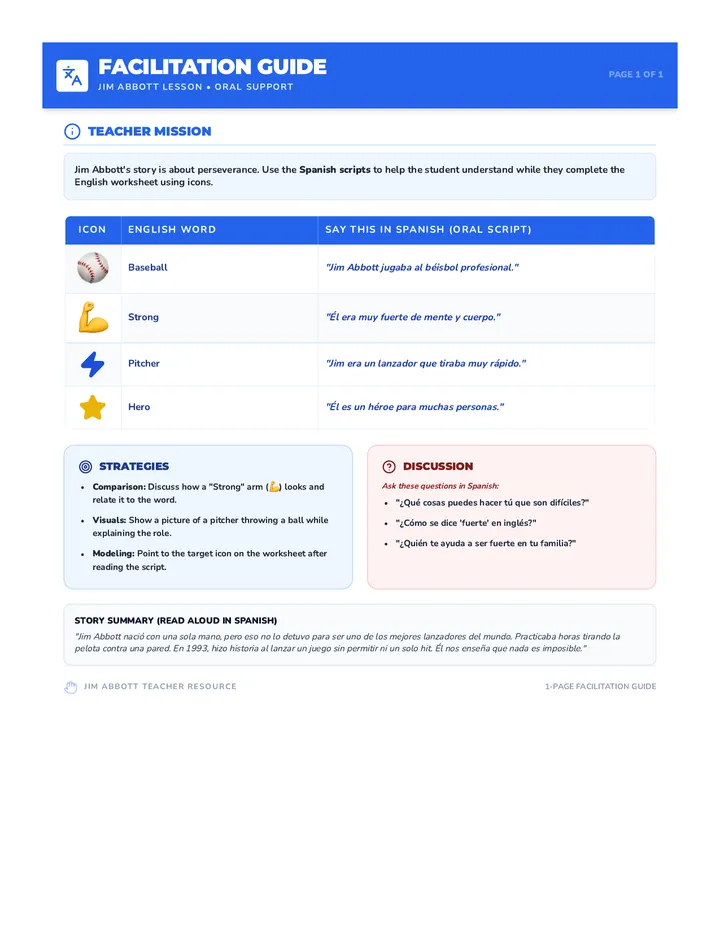
A visually supported lesson about Jim Abbott, a famous pitcher who played with one hand, focusing on his strength and success.
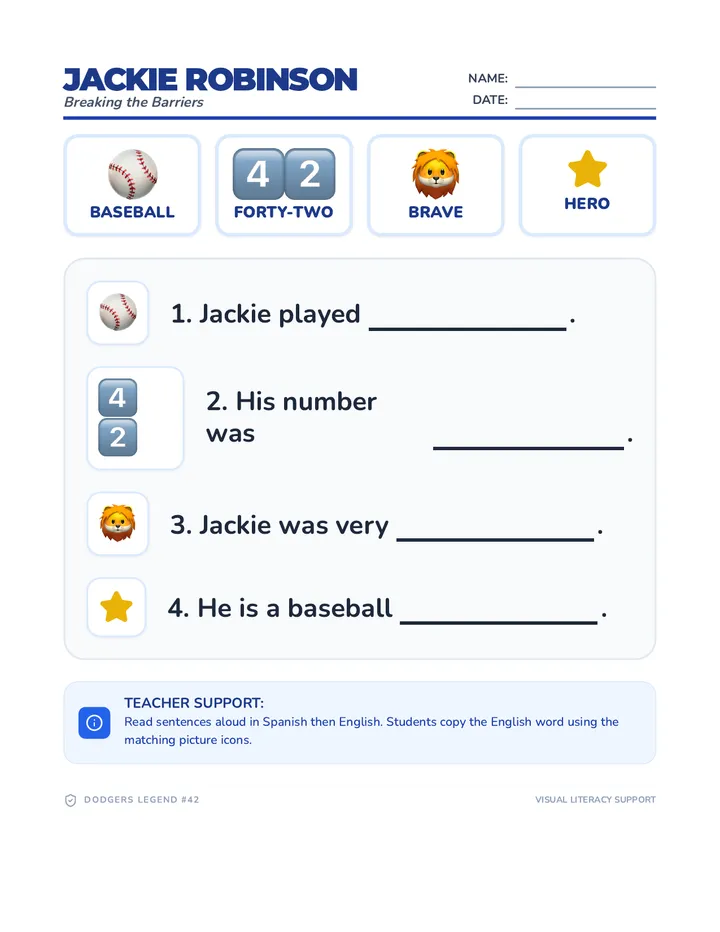
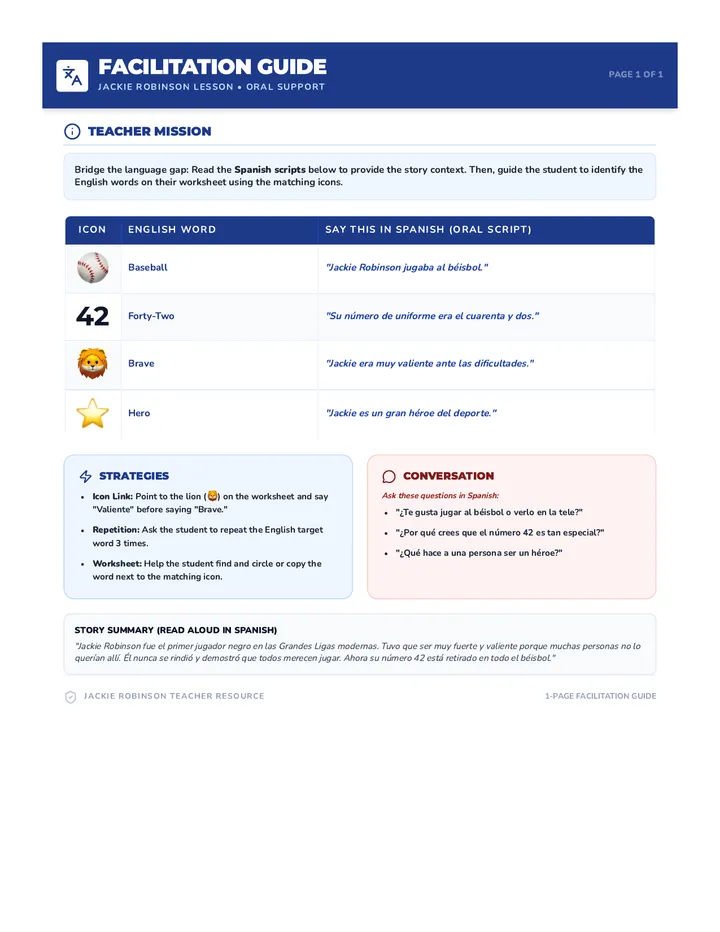
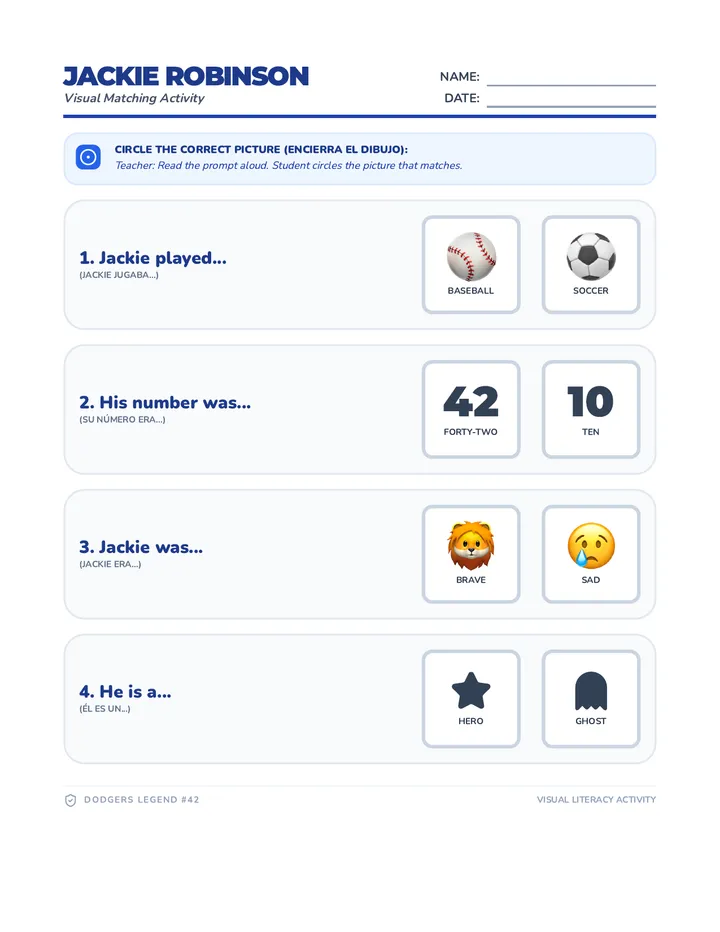
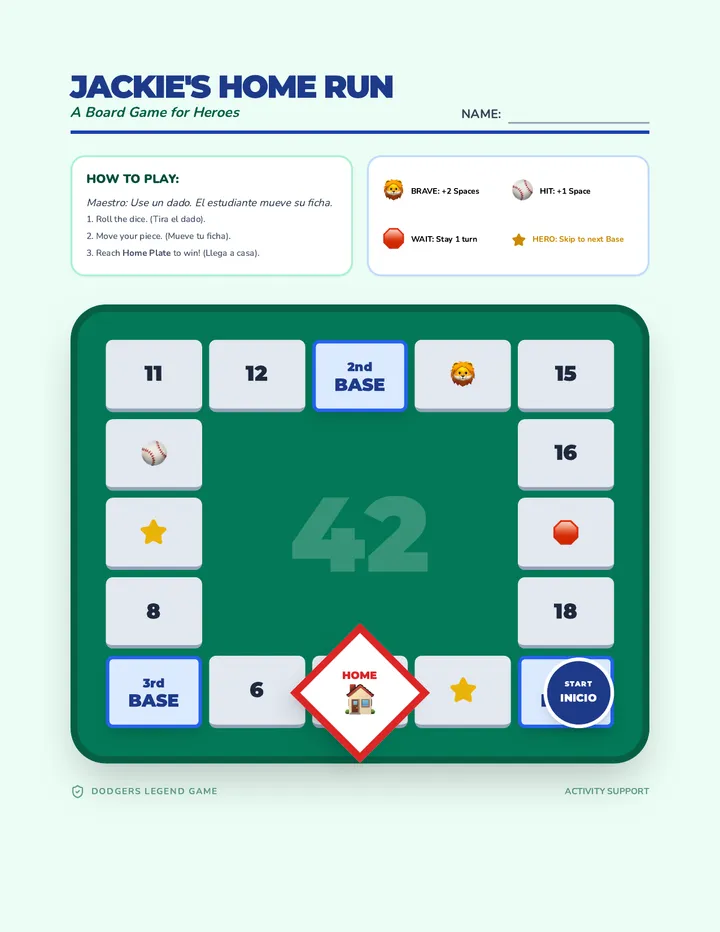
A visually supported lesson about Jackie Robinson's life and legacy, focusing on his courage and the number 42.
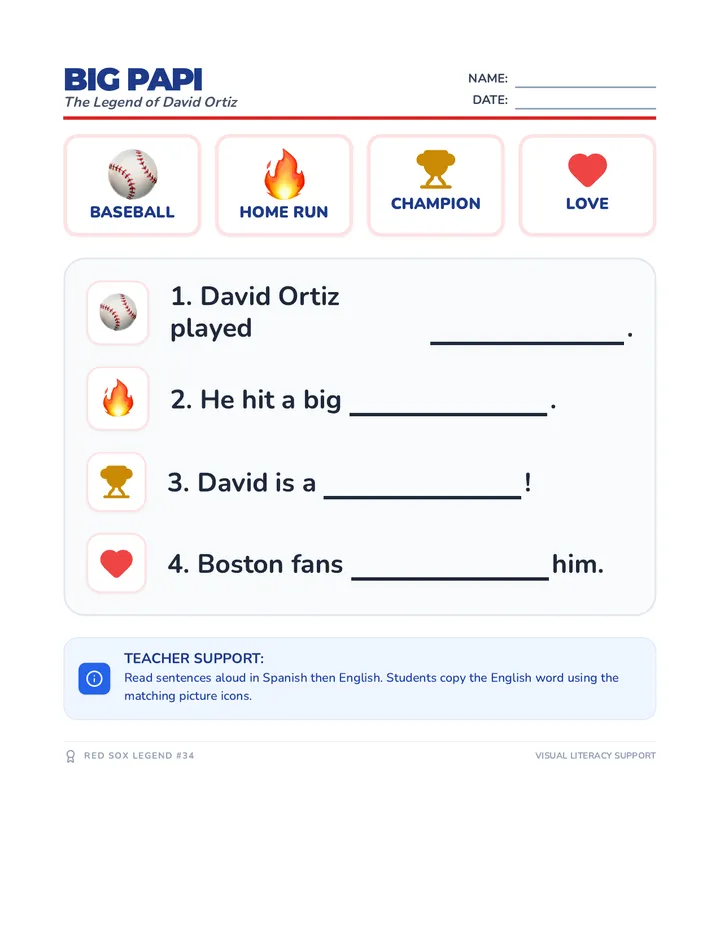
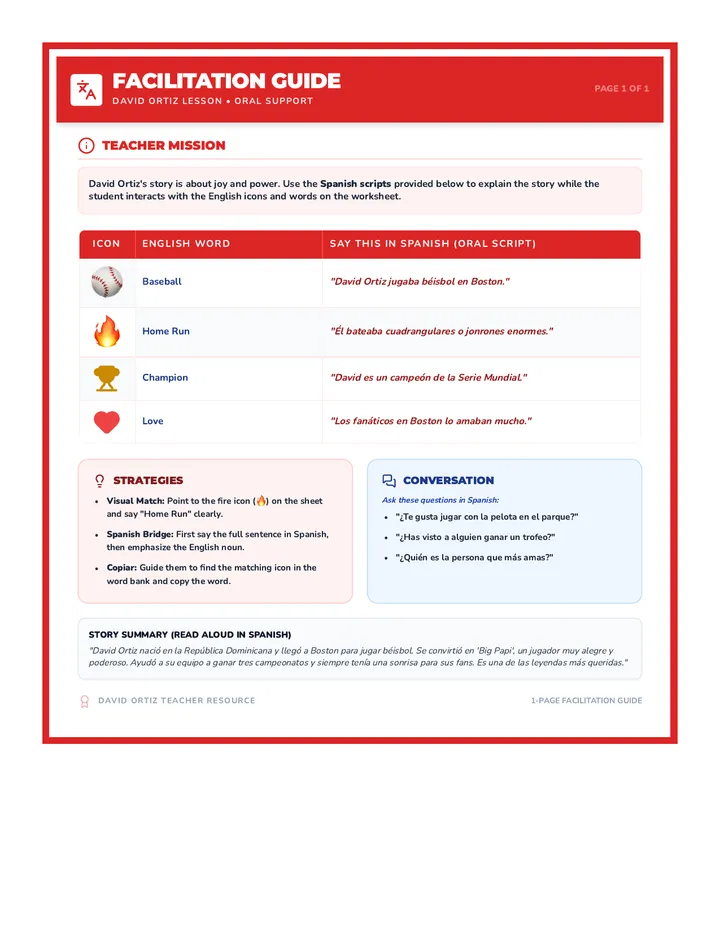
A visually-heavy introductory lesson about the life and career of baseball legend David Ortiz, designed for students with limited literacy in their native Spanish.
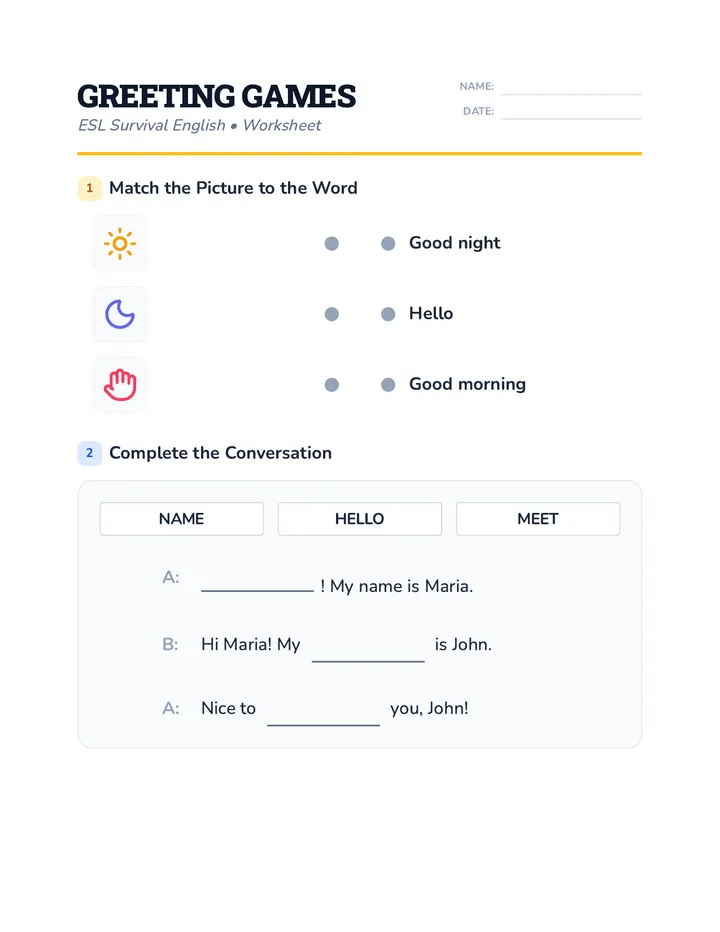
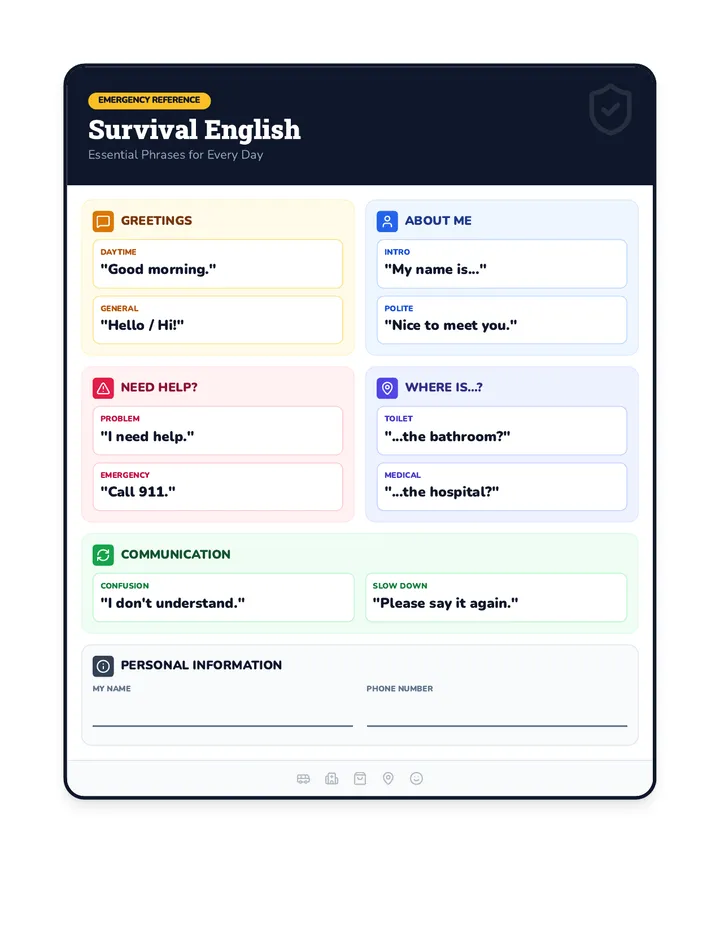
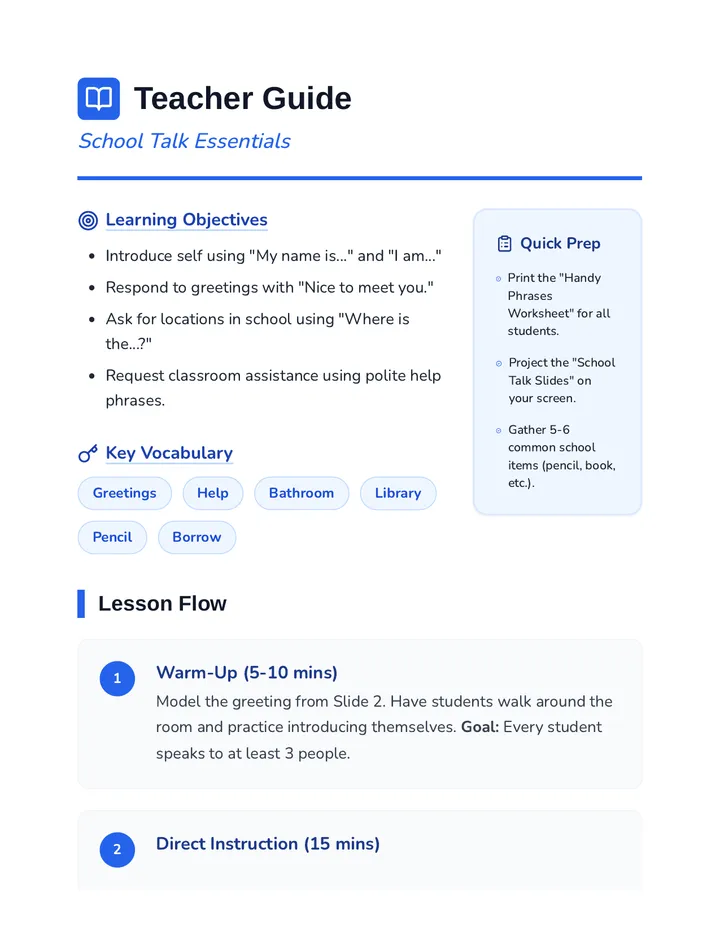
A foundational lesson for beginner ESL students focusing on essential greetings and survival English phrases for daily life. Students will learn to introduce themselves, ask for help, and navigate basic social interactions.
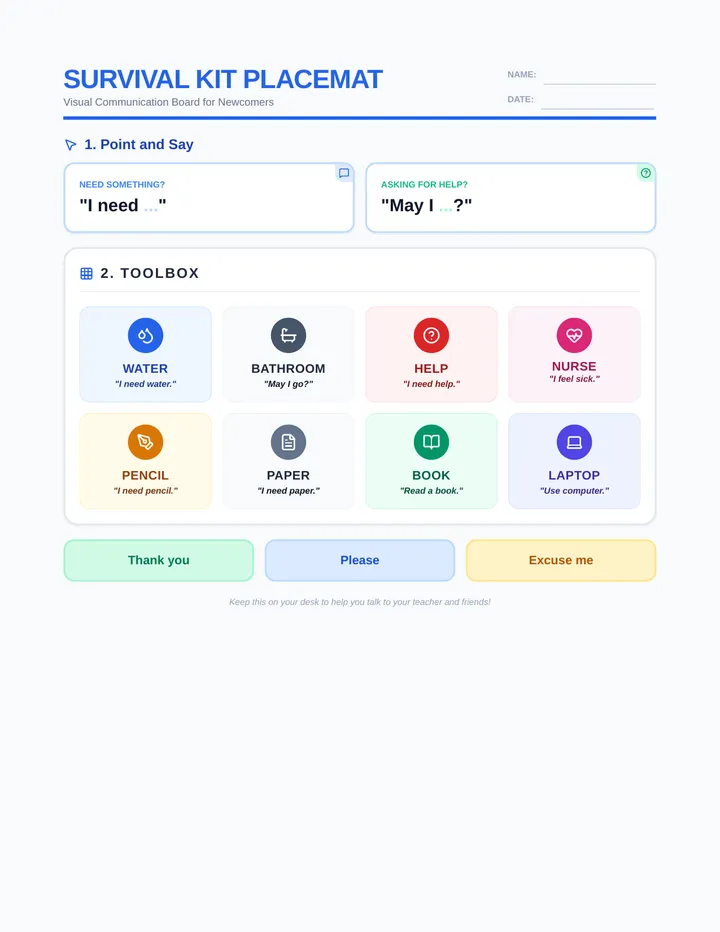
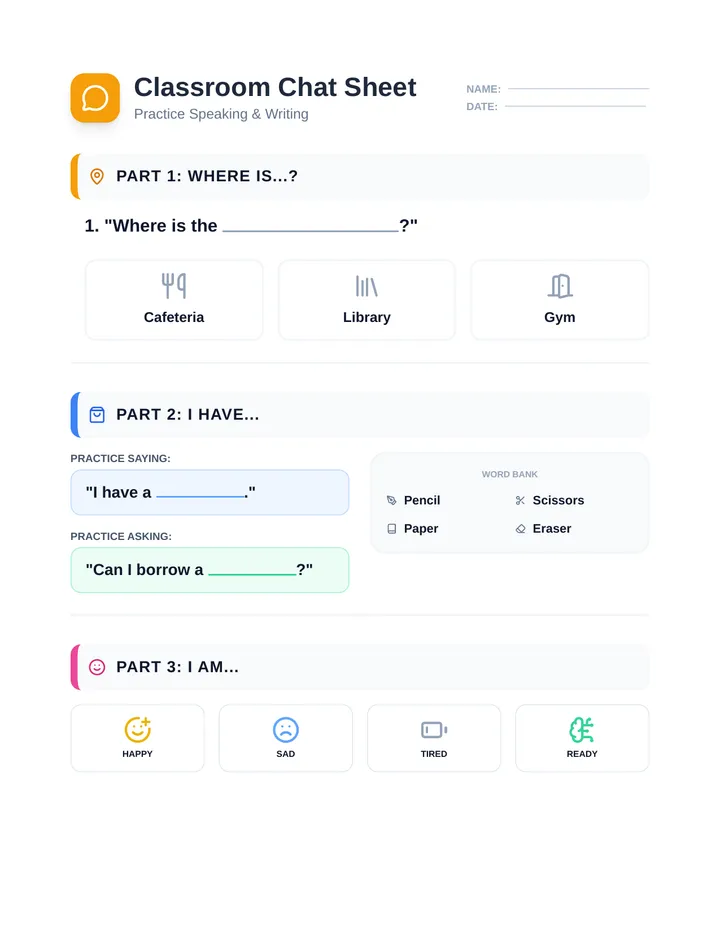
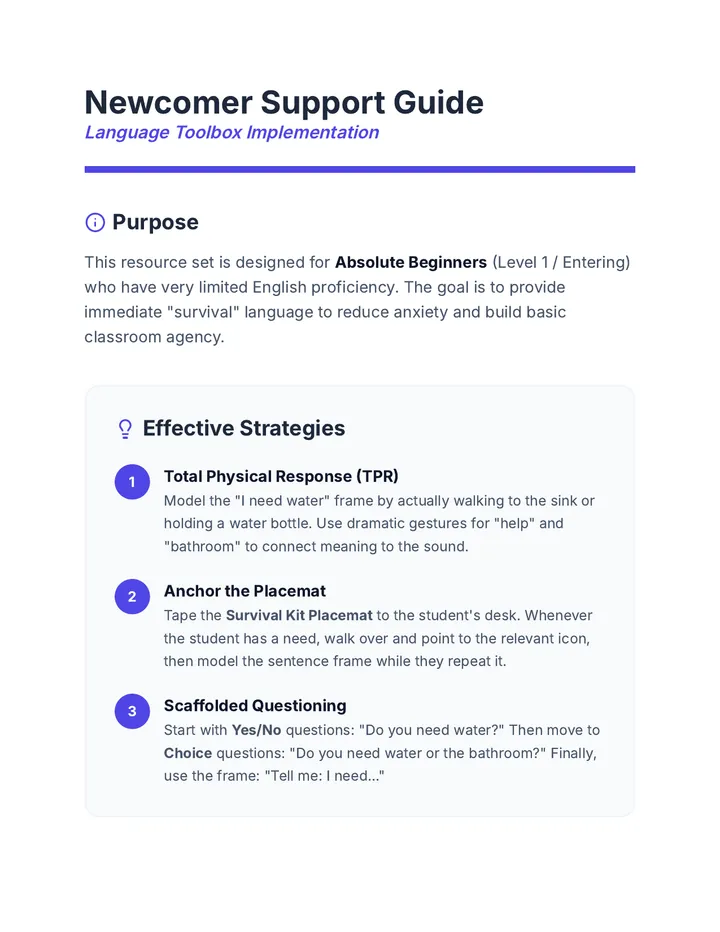
Essential communication tools for newcomer English learners to navigate their school environment. This lesson provides visual word banks and scaffolded sentence frames for basic needs and classroom interactions.
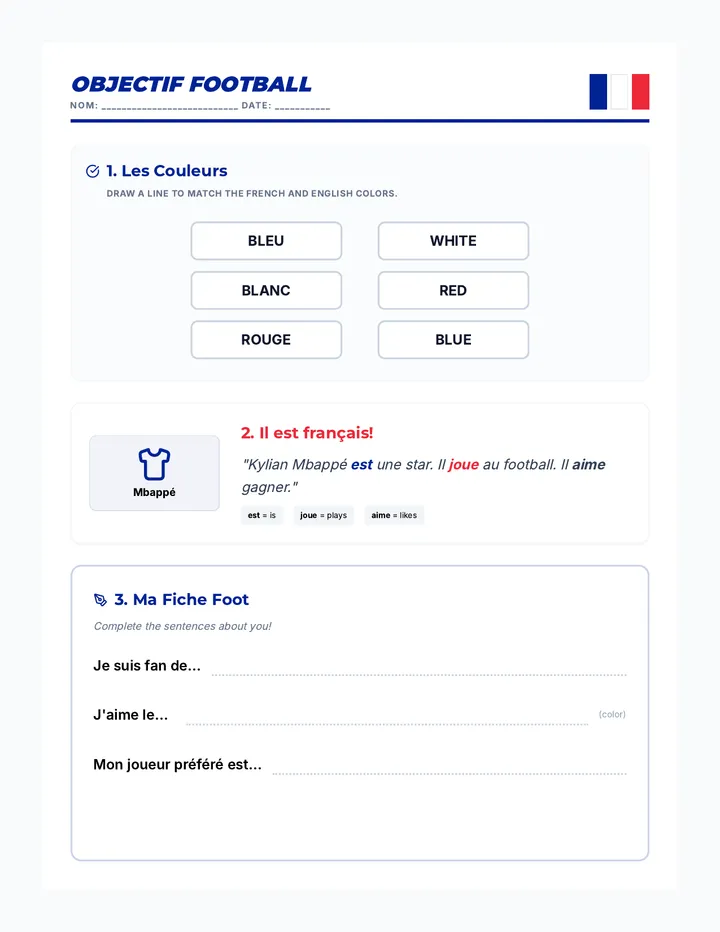
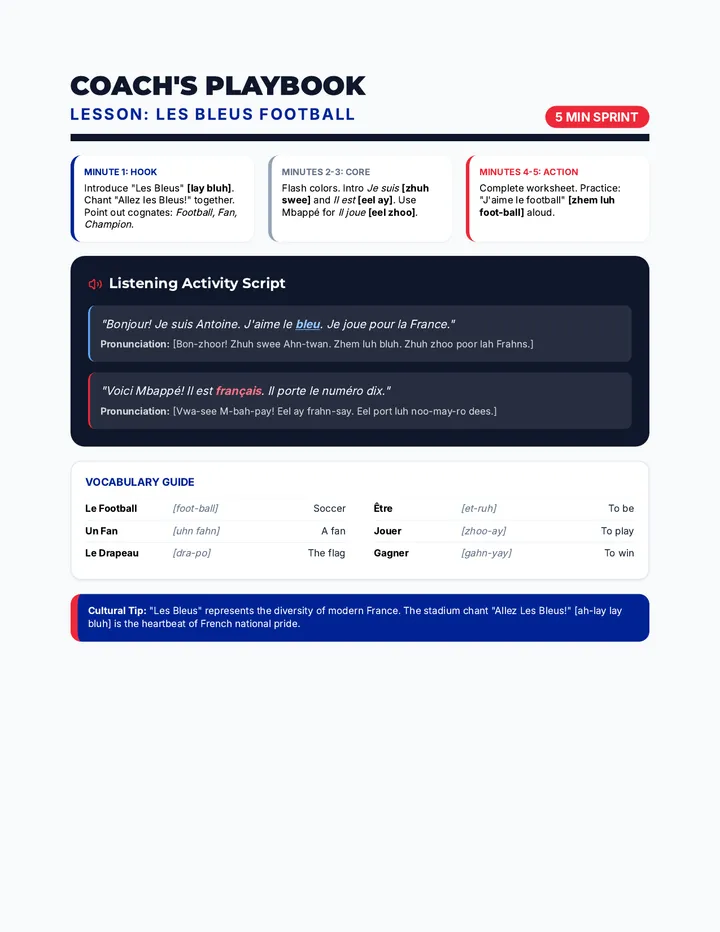
A high-energy, 5-minute introduction to French through the lens of football (soccer). Students learn basic verbs, colors, and national pride while exploring famous French players like Kylian Mbappé.
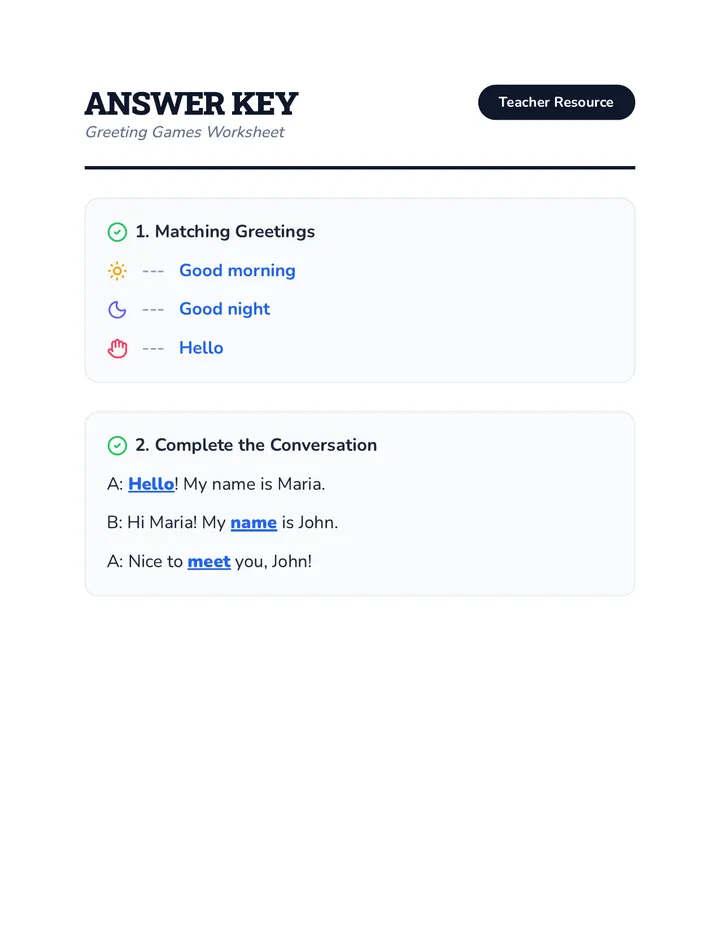
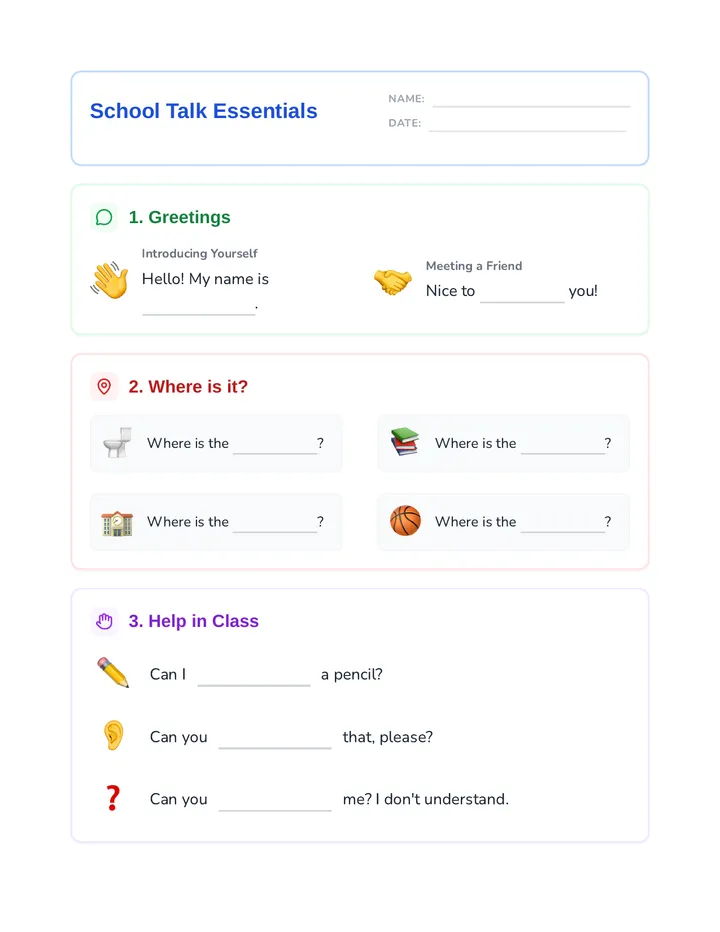
A beginner-friendly ESL lesson focused on mastering essential greetings and practical school-based help phrases through visual prompts and sentence starters.
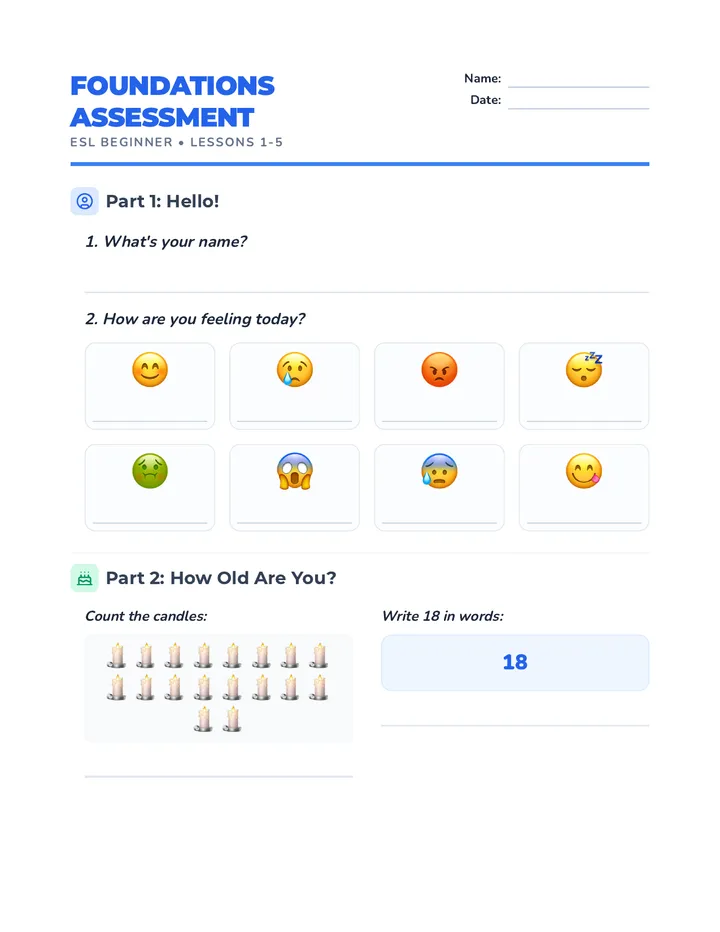
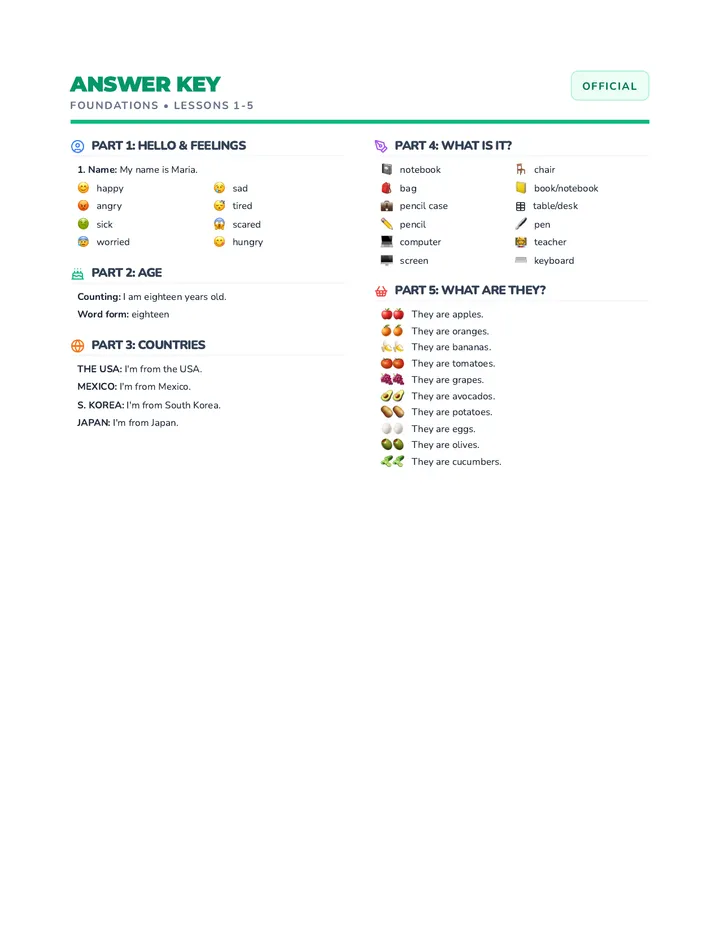
A comprehensive assessment designed for beginner ESL students covering personal introductions, feelings, numbers, countries, classroom objects, and plural food items.
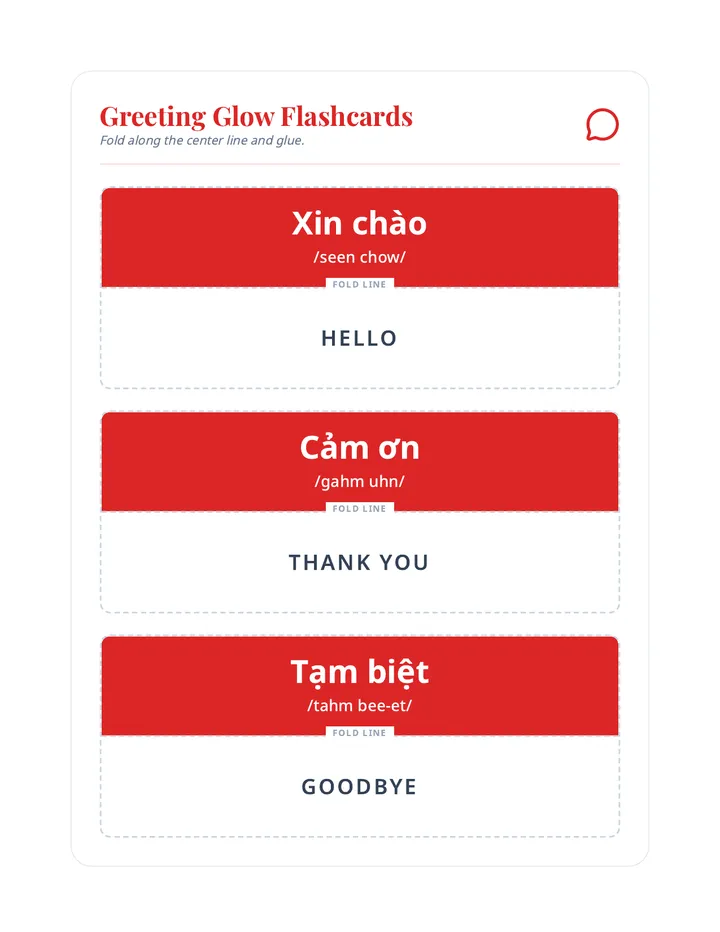
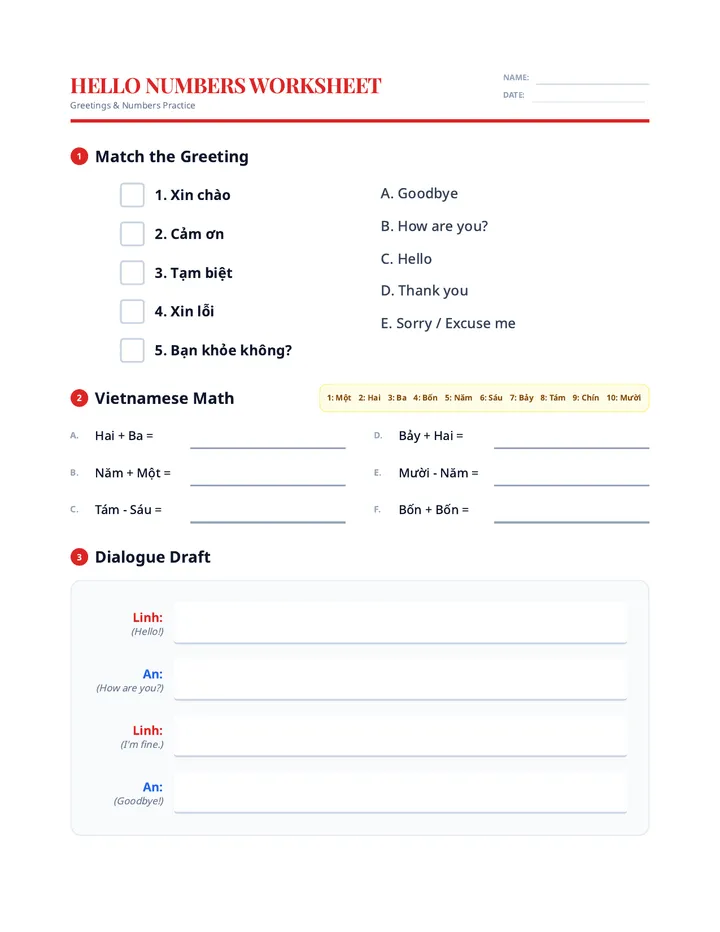
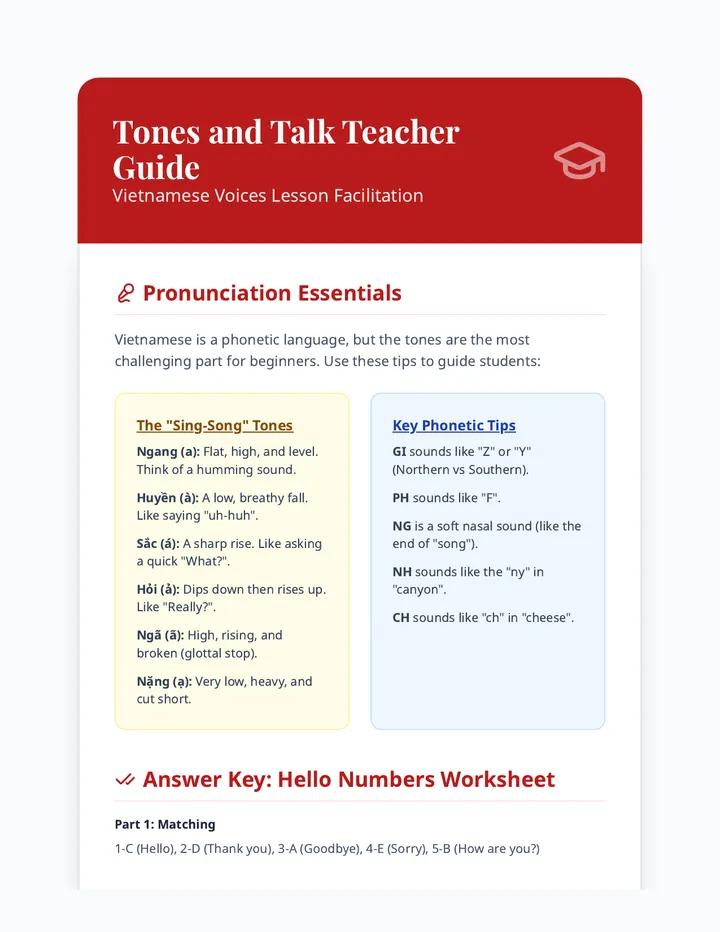
An introductory lesson to Vietnamese covering essential greetings and numbers 1-10, focusing on basic pronunciation and conversational phrases.
A foundational vocabulary lesson for K-5 heritage learners focusing on nature elements and common animals through visual flashcards and practice activities.
An introductory Spanish lesson for elementary students focused on food vocabulary, ordering in a restaurant, and market shopping. Students will learn essential nouns and polite phrases through interactive slides, creative menu design, and roleplay activities.
A focused lesson on the ASL signs for black and white, featuring visual sign descriptions and teaching tips for high-contrast colors.
A collection of family invitation flyers for the English Language Education (ELE) showcase and recognition ceremonies across various grade levels. Each flyer includes specific timing, location details, and a return slip for RSVPs.
A collection of invitation forms in multiple languages for the English Language Growth Recognition Ceremony, ensuring all families can participate and celebrate student success.
A phonics-focused lesson for 4th graders targeting the prefixes un-, re-, mis-, dis-, non-, and in- through an engaging narrative and sentence-completion practice.
A multisensory lesson focusing on the phonetic distinction between the English short /ɪ/ and long /i/ sounds, specifically designed for students bridging from Spanish.