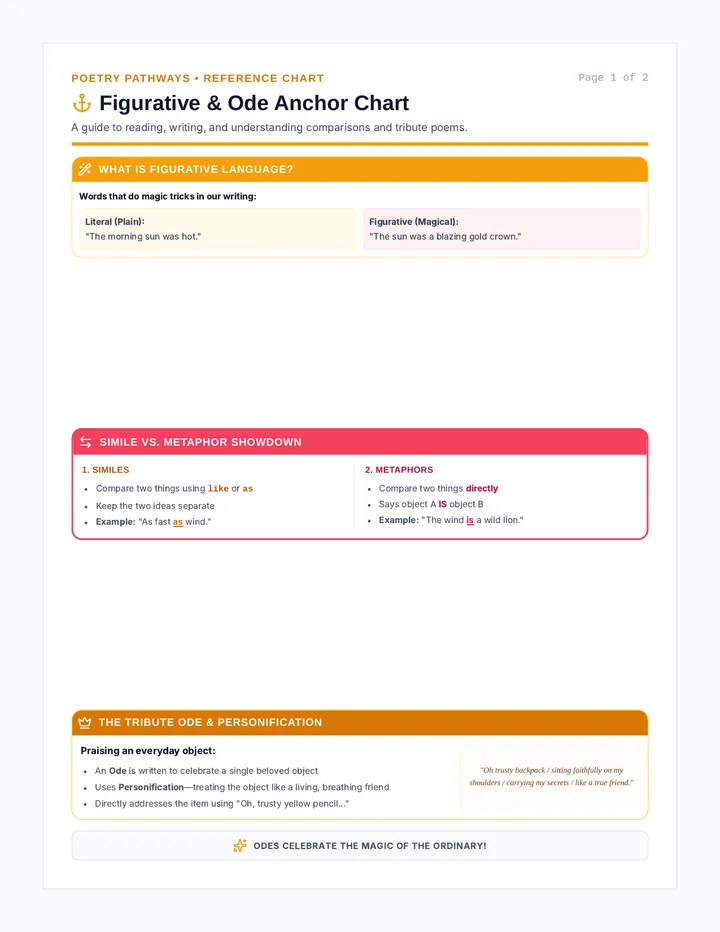
In this lesson, students explore how poets use specific word choices to create a distinct tone. They will analyze short poems to identify the author's attitude and practice manipulating tone through their own writing.
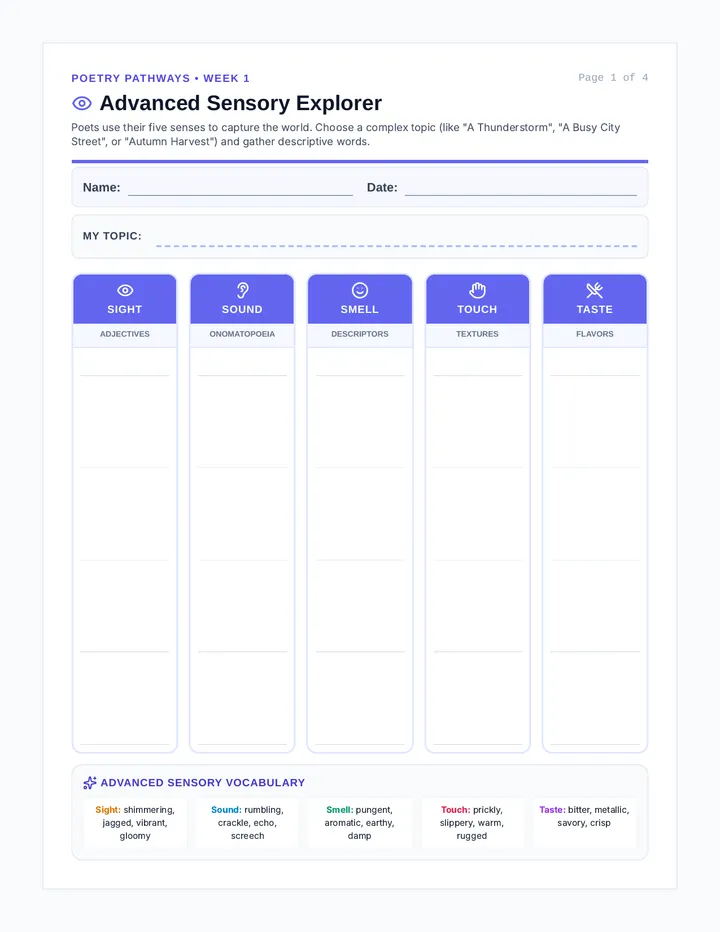
A deep dive into descriptive writing where students analyze sensory details, vivid adjectives, and figurative language.
A deep dive into explanatory texts where students identify sequential steps, cause-and-effect relationships, and 'how-to' structures.
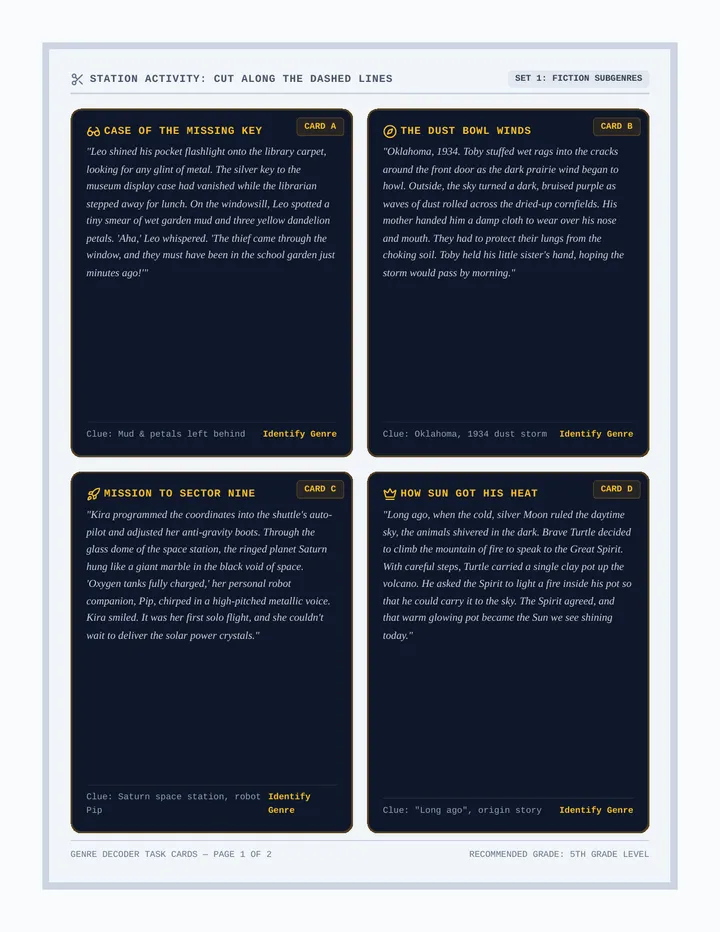
A deep dive into entertainment-focused writing where students identify plot elements, character dialogue, and the author's use of humor or suspense.
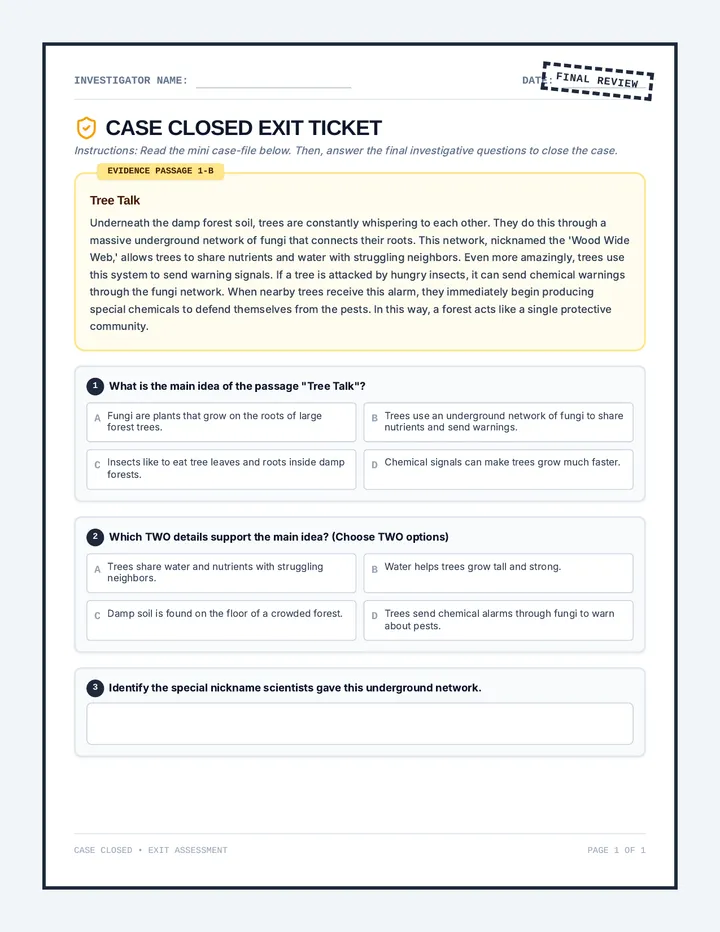
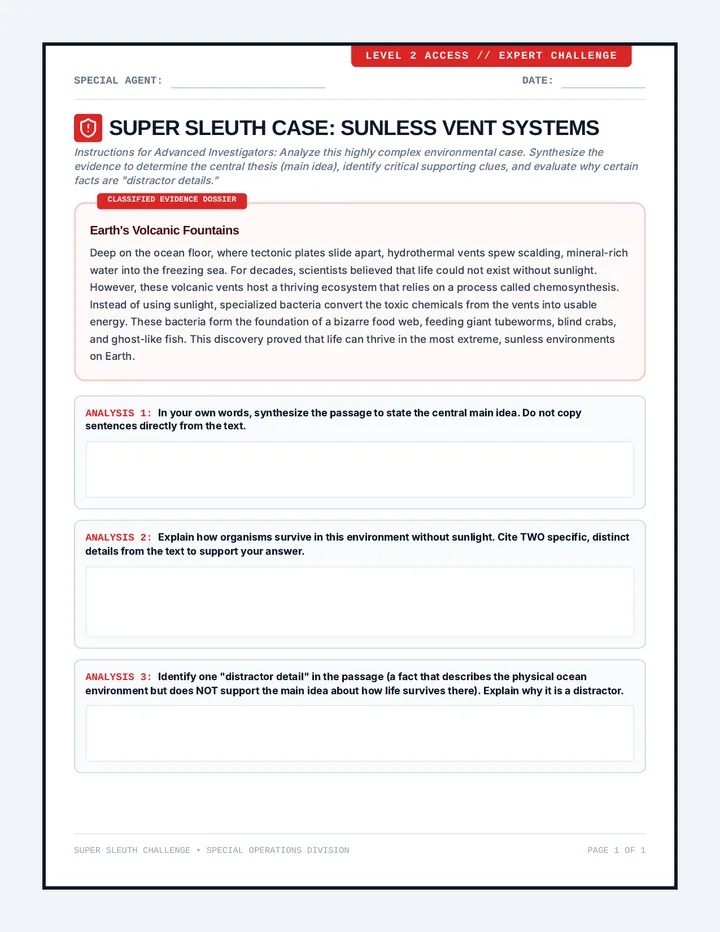
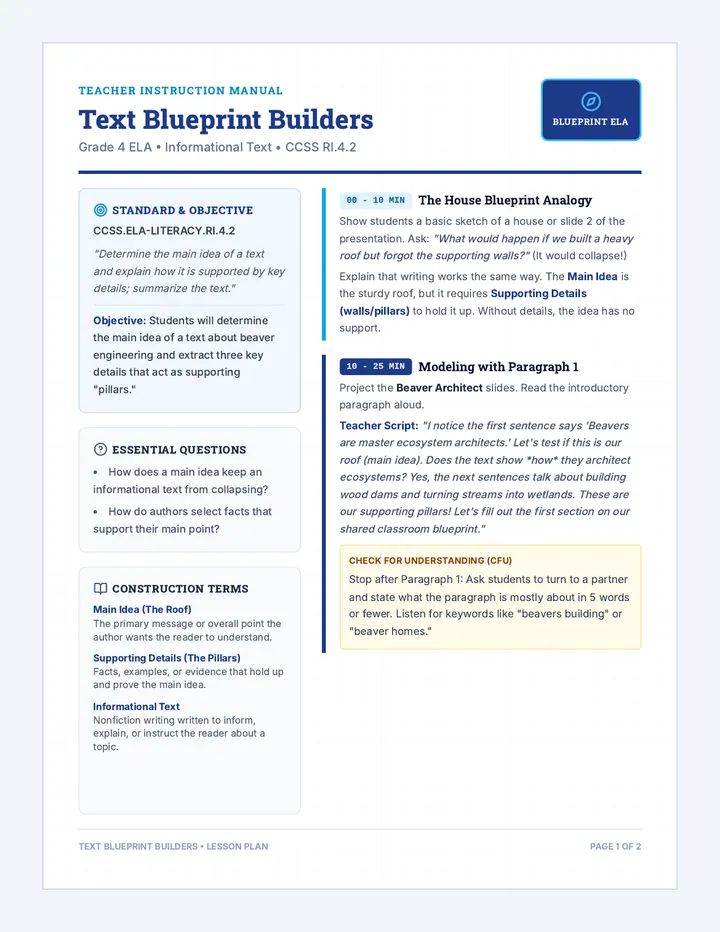
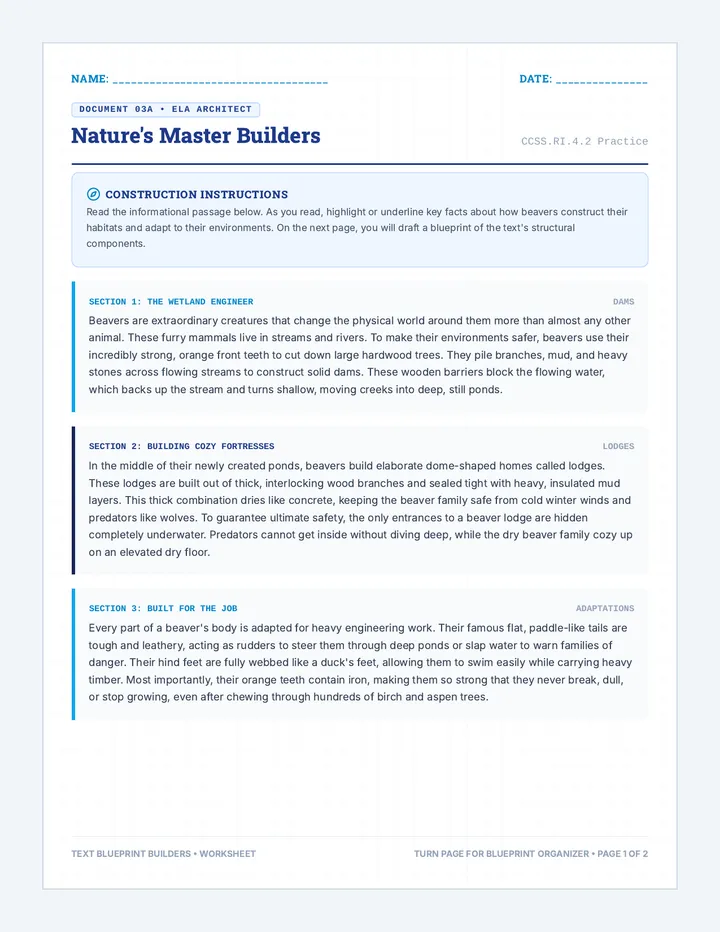
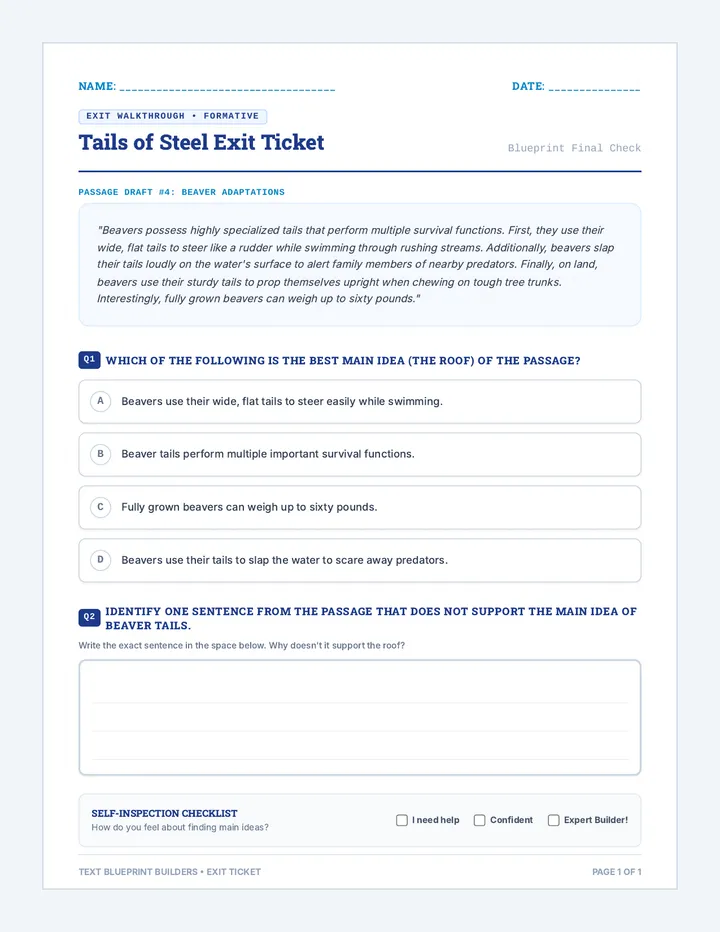
A deep dive into informative texts where students distinguish between facts and opinions, identify text features, and analyze the main idea.
A deep dive into persuasive writing where students identify opinions, calls to action, and emotional language to understand how authors try to influence readers.
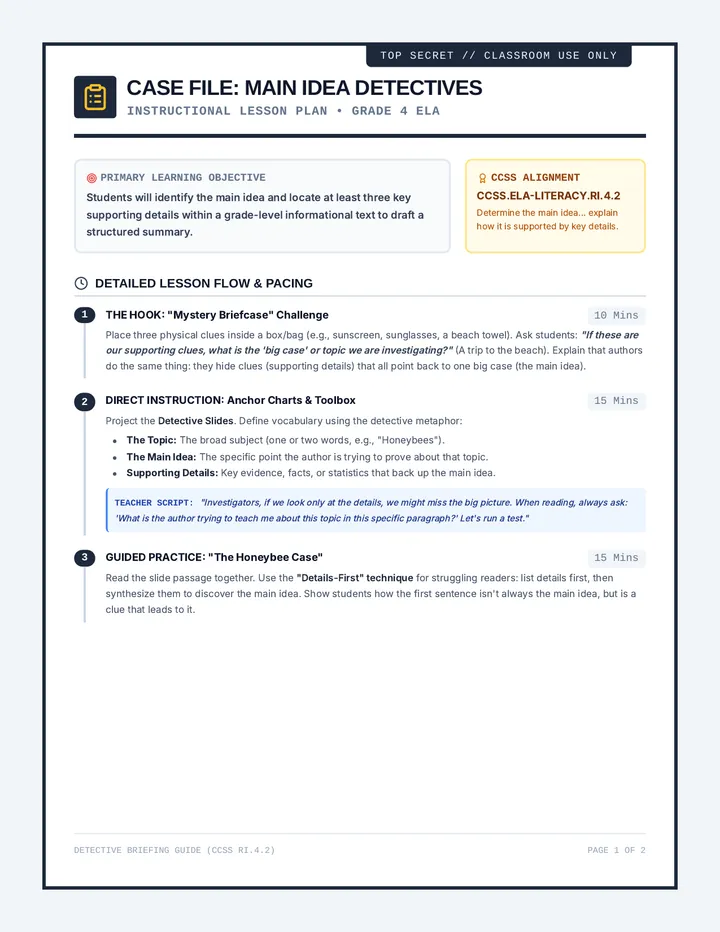
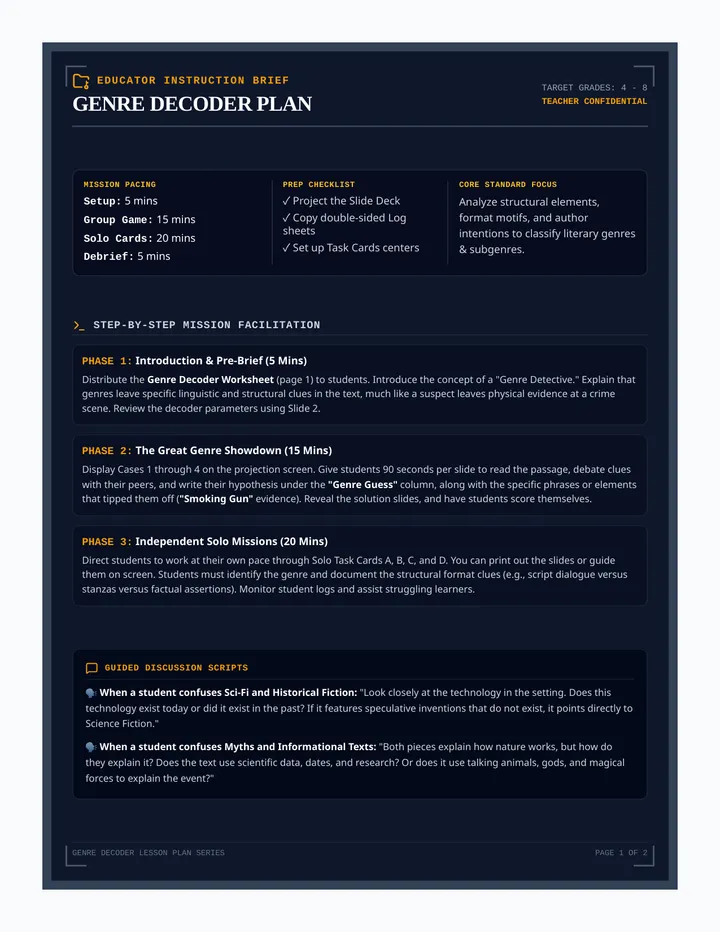
A 4th-grade lesson where students become 'Purpose Detectives' to identify why authors write specific texts using the PIE (Persuade, Inform, Entertain) framework and text evidence.
Final review and assessment of Step 4.2 skills, including spelling dictation and sentence reading.
Fluency-focused activities and games to reinforce automaticity in reading VCe multisyllabic words.
Focus on complex 4.2 words containing blends and digraphs. Students practice reading and spelling words like 'stampede' and 'shrine'.
Introduction to two-syllable words containing one closed syllable and one VCe syllable. Students practice identifying syllable types and dividing words correctly.
An introduction to Book 3, focusing on Jack's growing anxiety about his friends 'outgrowing' the apocalypse and the initial mysterious signals from the outside world.