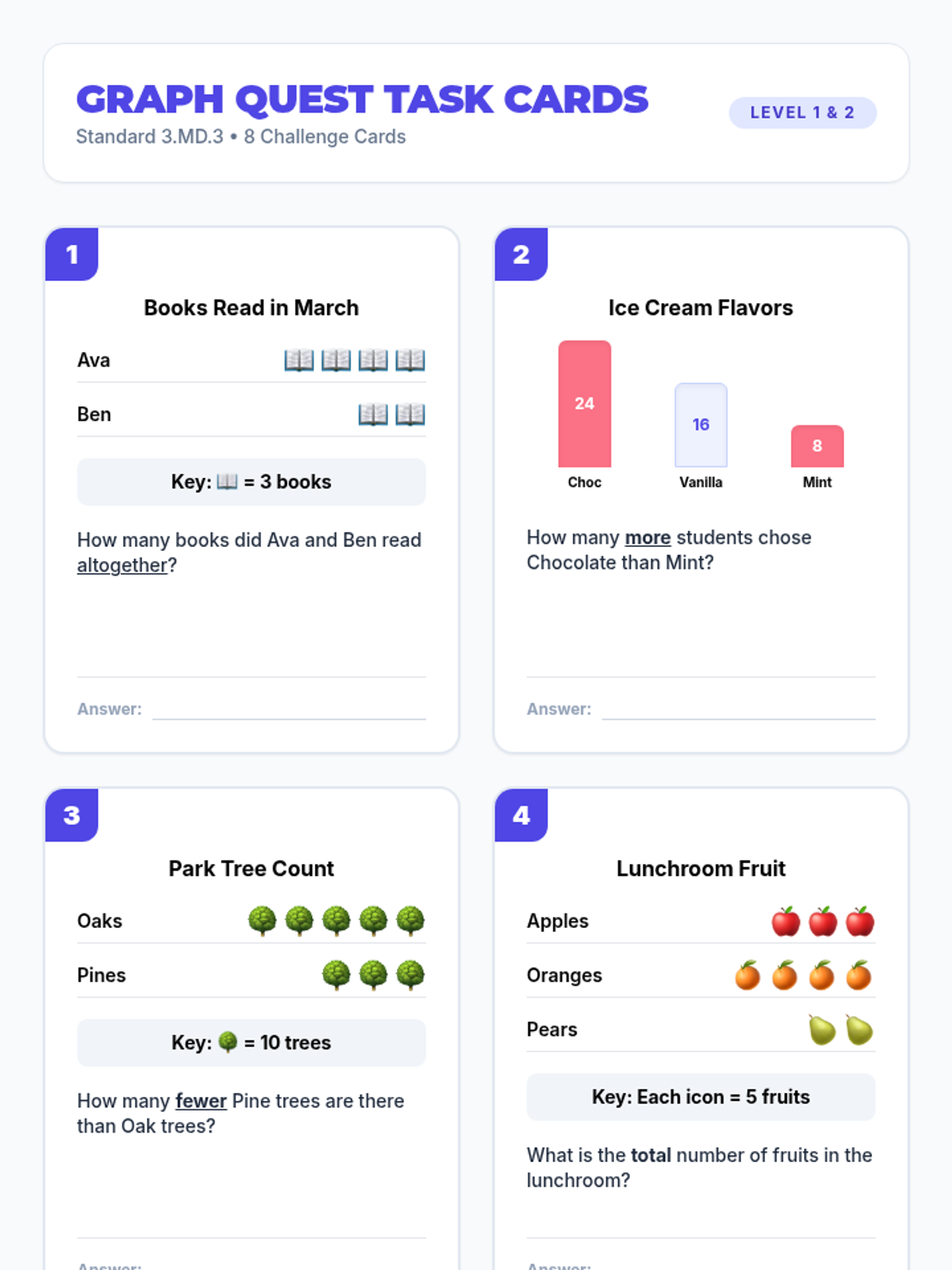
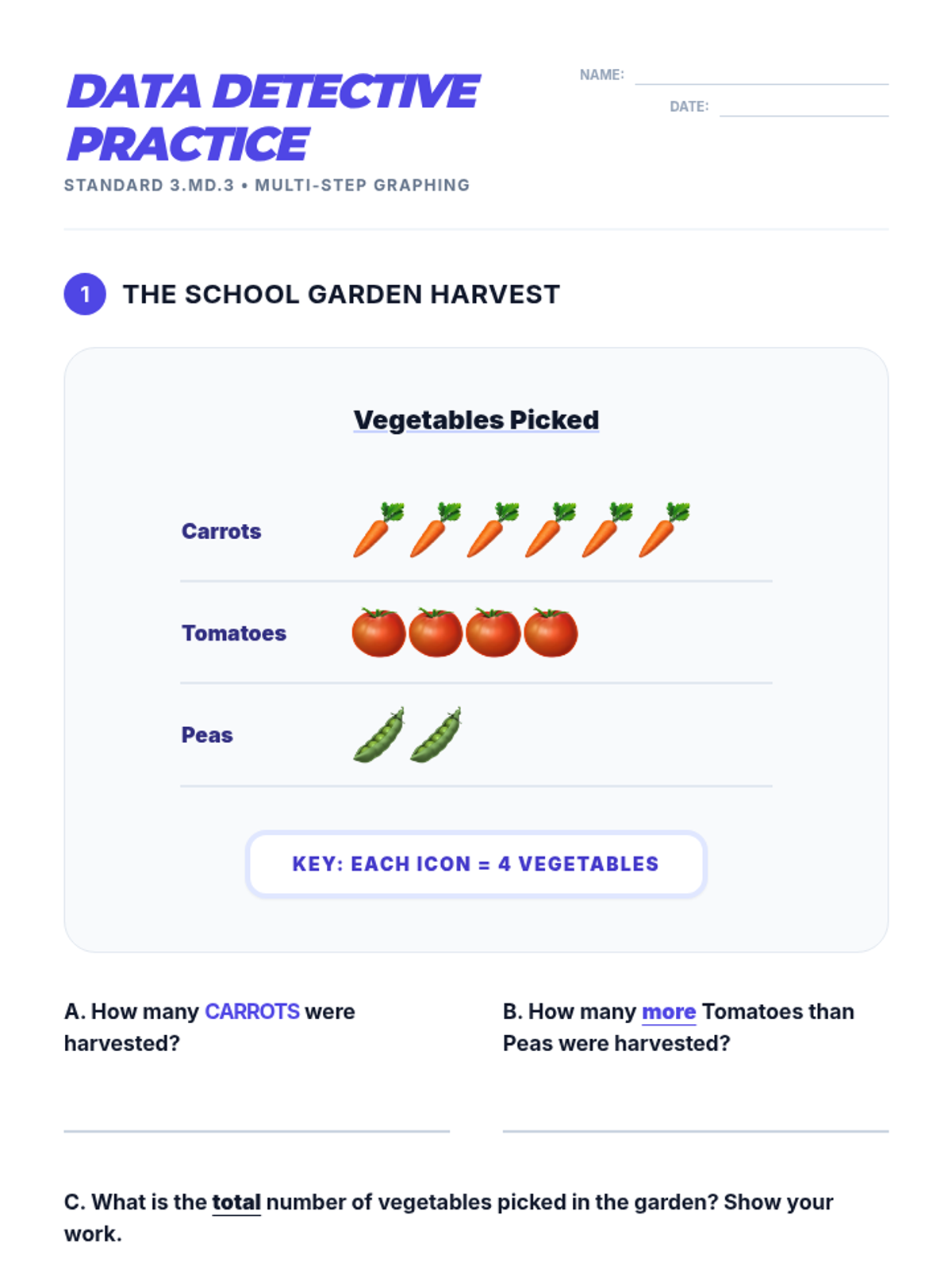
A weekly series of 'Do Now' activities focused on standard 3.MD.3, featuring scaled bar graphs and picture graphs with DOK 1 and 2 questions.
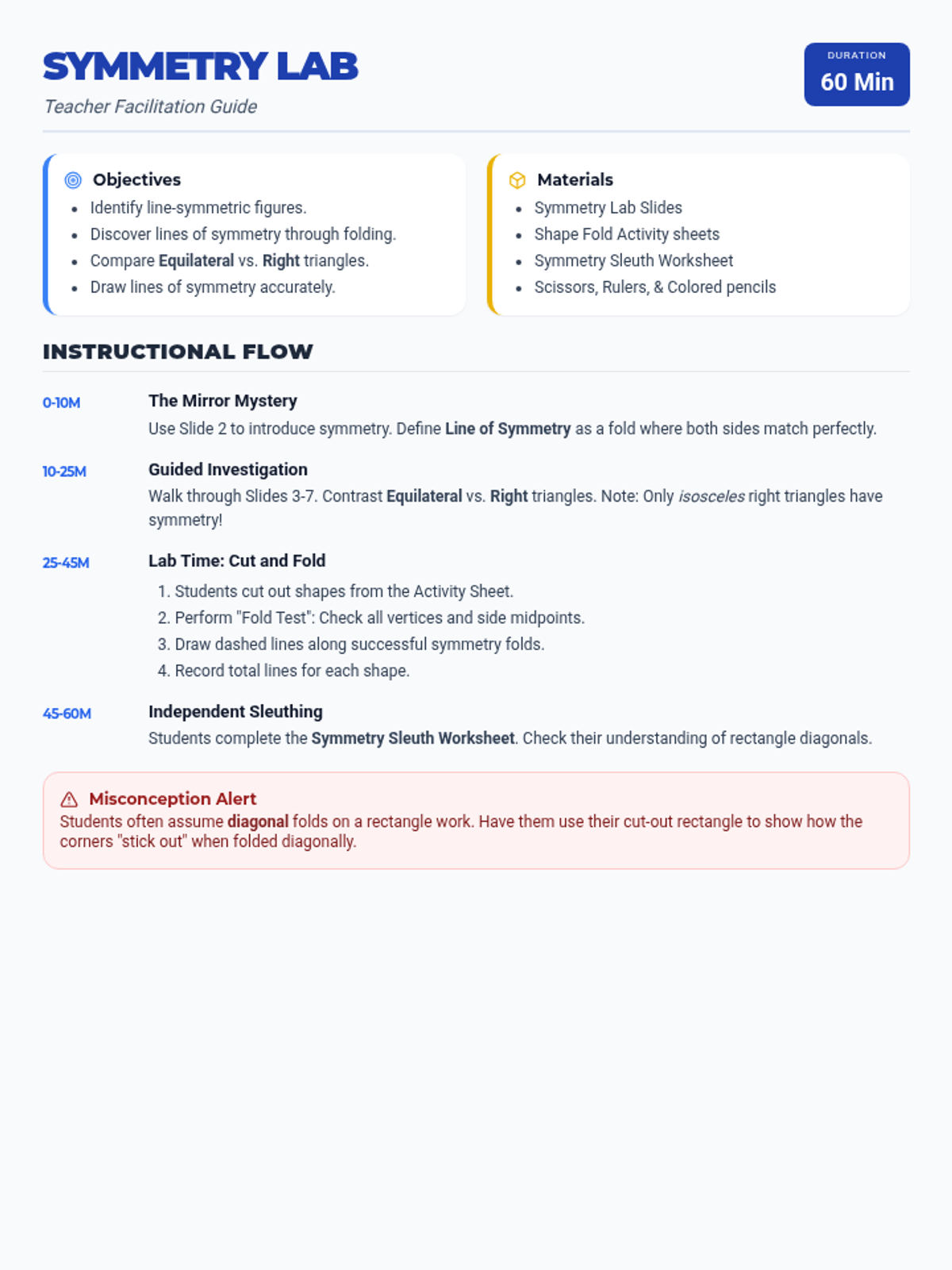
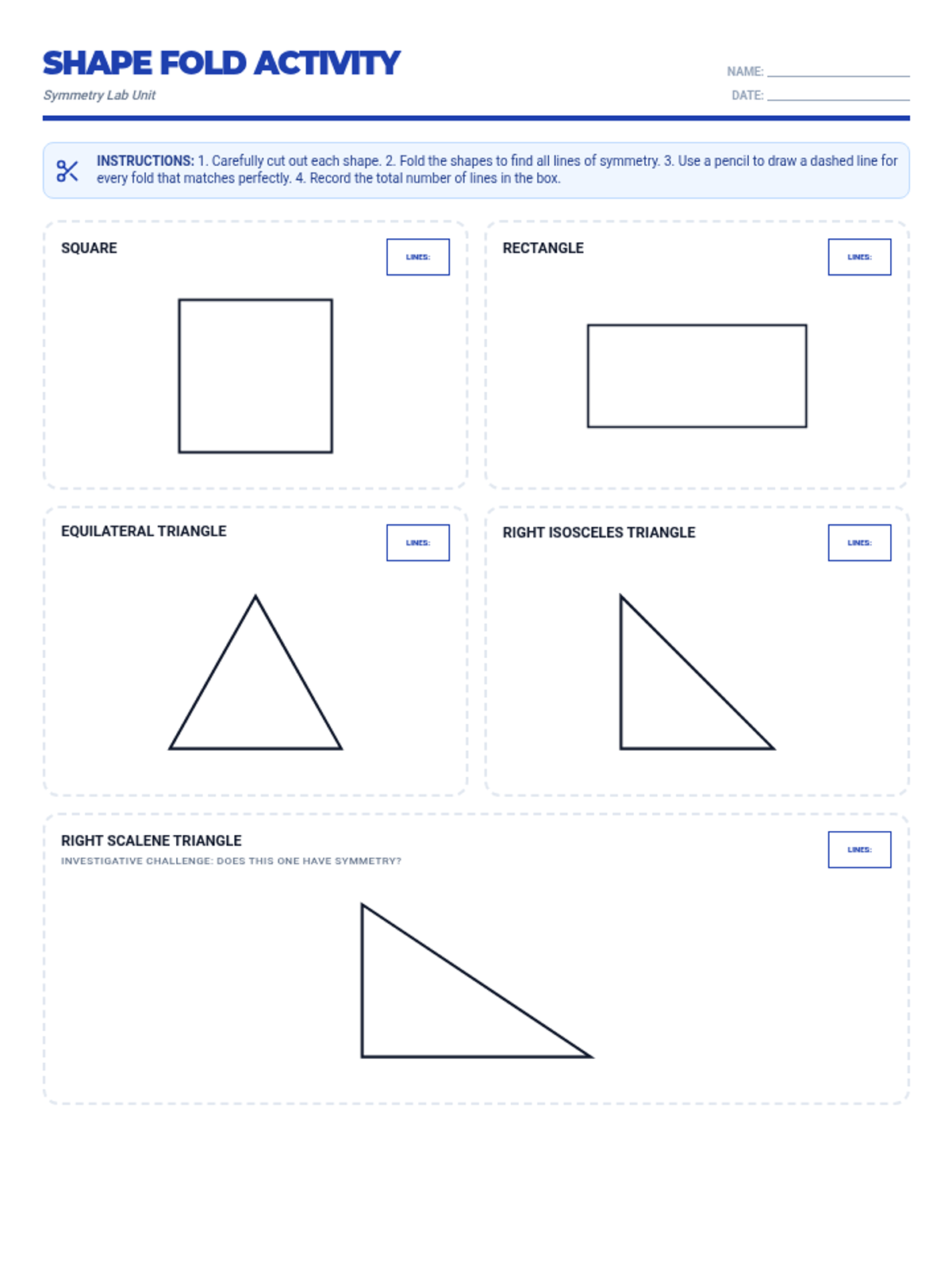
An investigative lesson where students use a 'cut and fold' technique to discover lines of symmetry in quadrilaterals and triangles.
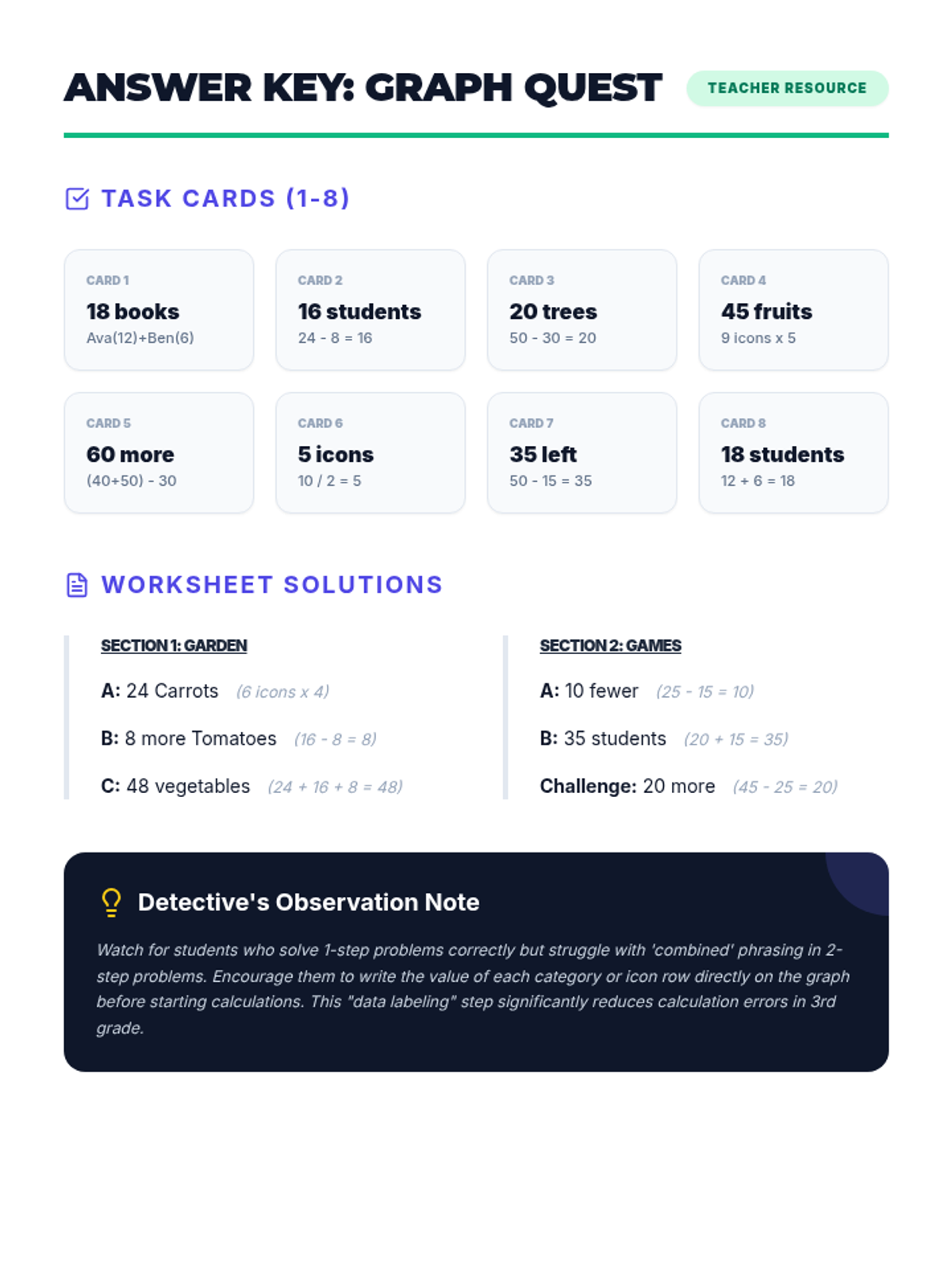
A comprehensive lesson on interpreting scaled picture graphs and bar graphs, focusing on one- and two-step data problems. Students will analyze data from a virtual 'Data Arcade' to solve 'how many more' and 'how many fewer' challenges.
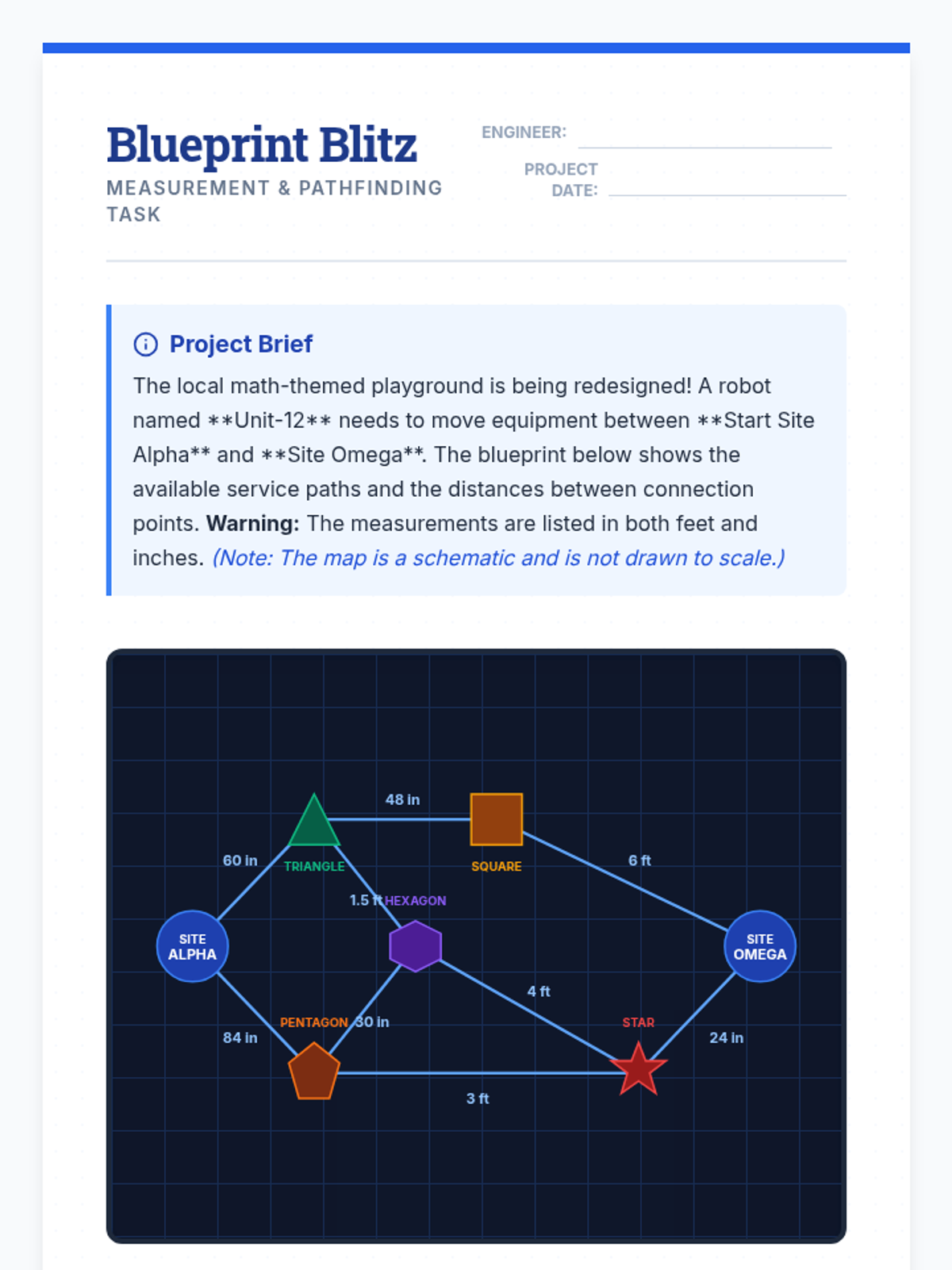
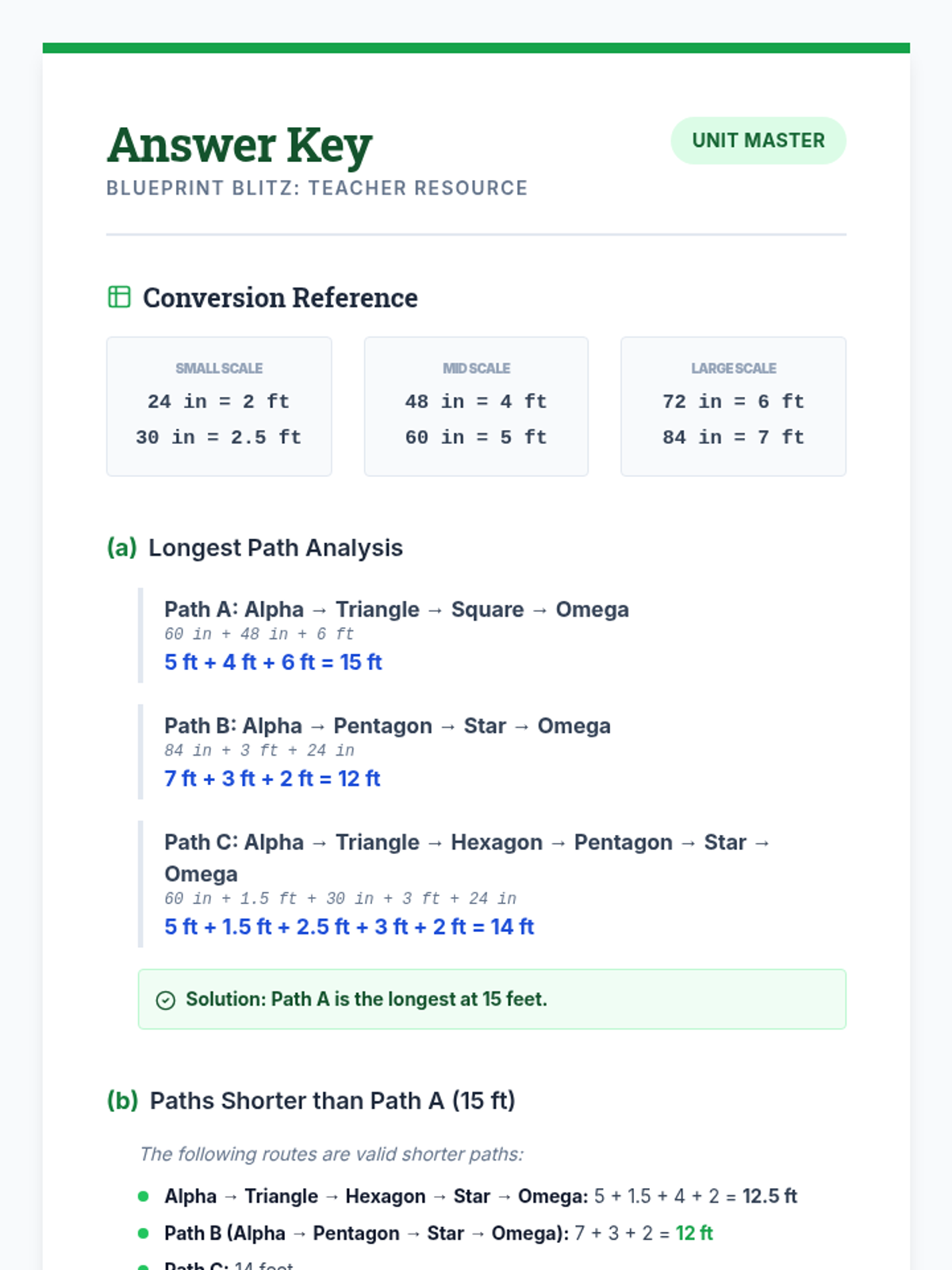
A lesson focused on unit conversion (feet and inches) through the lens of navigating a complex blueprint map. Students will calculate total distances of various paths and find the most efficient route.
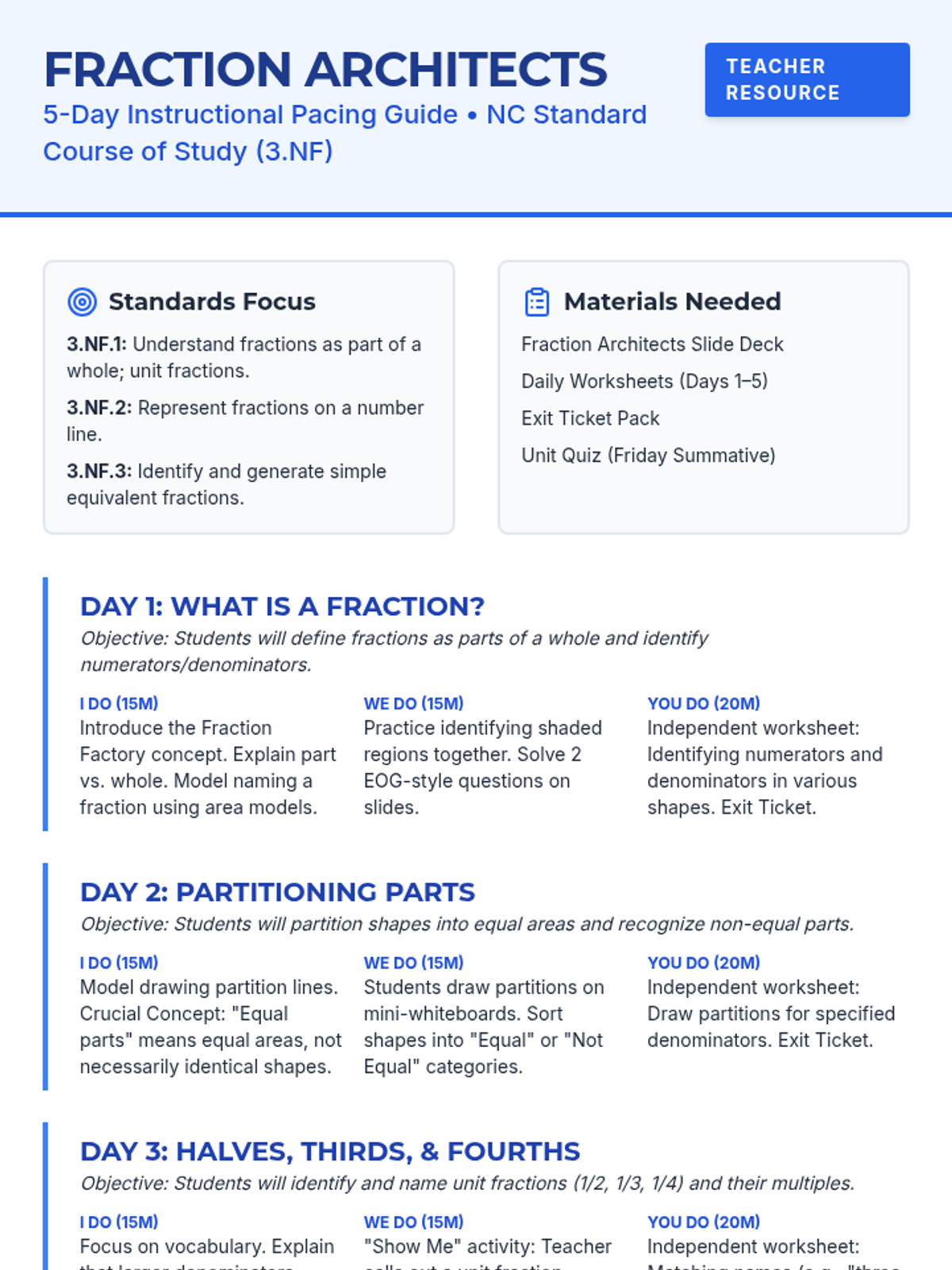
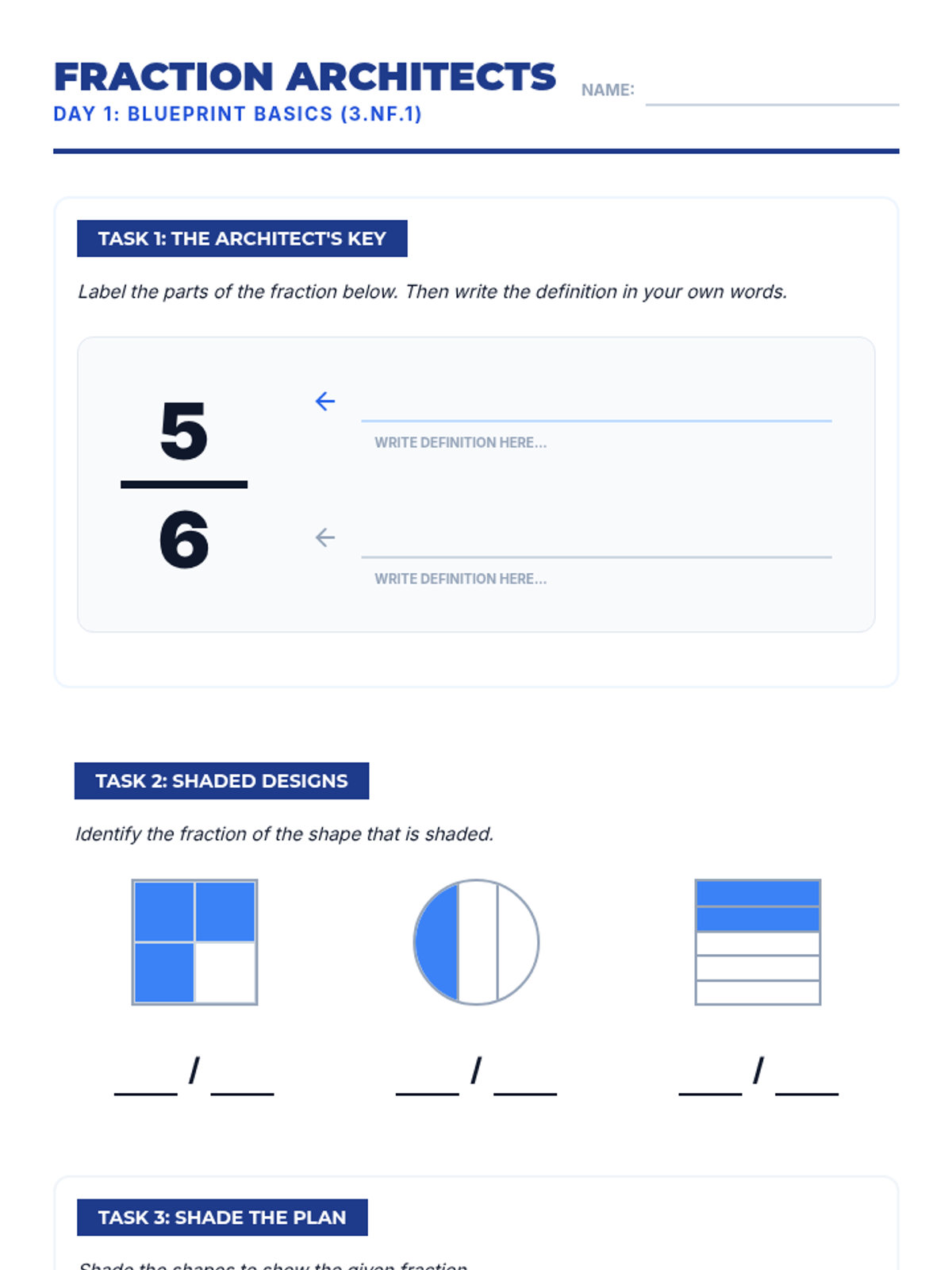
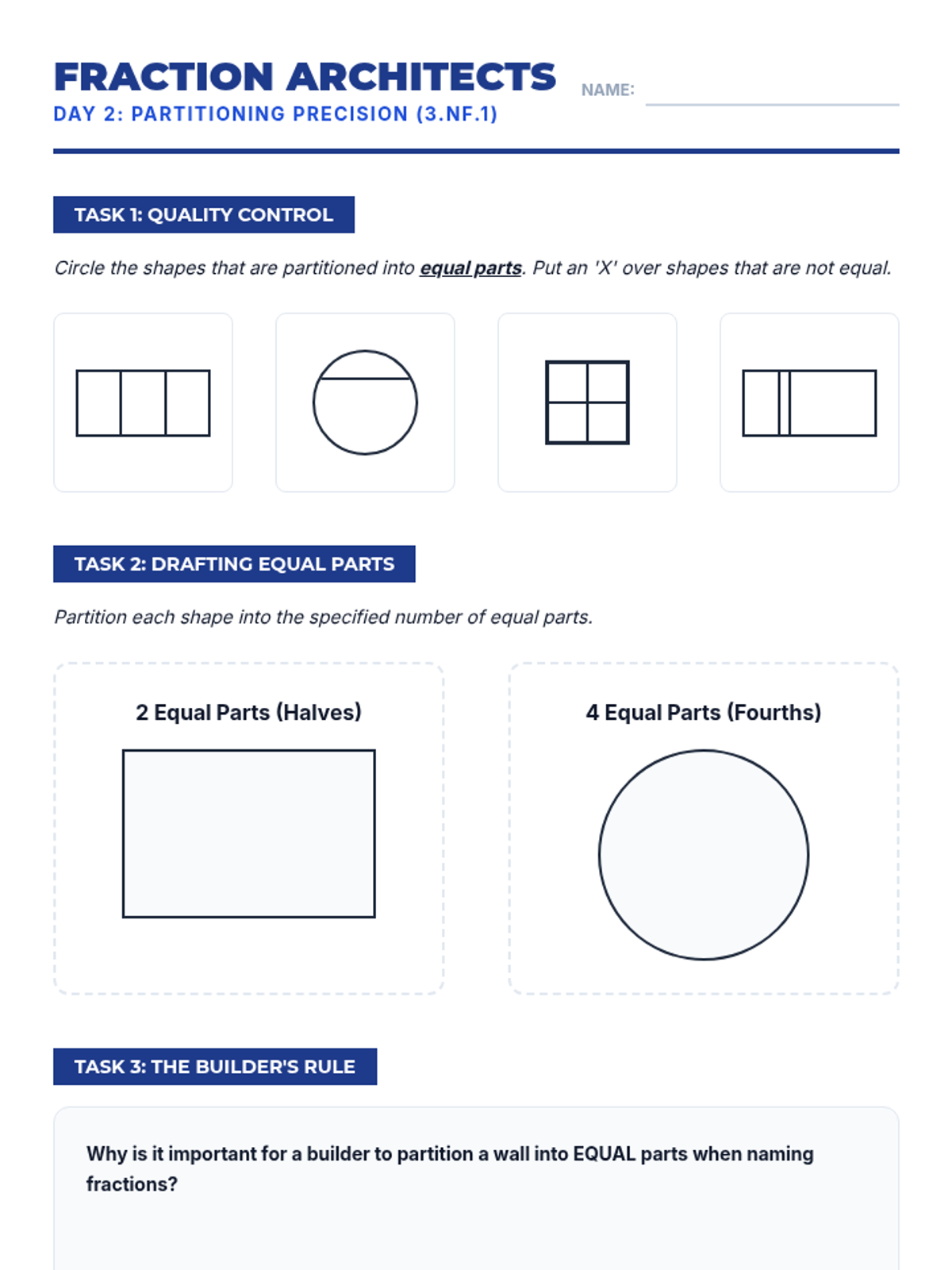
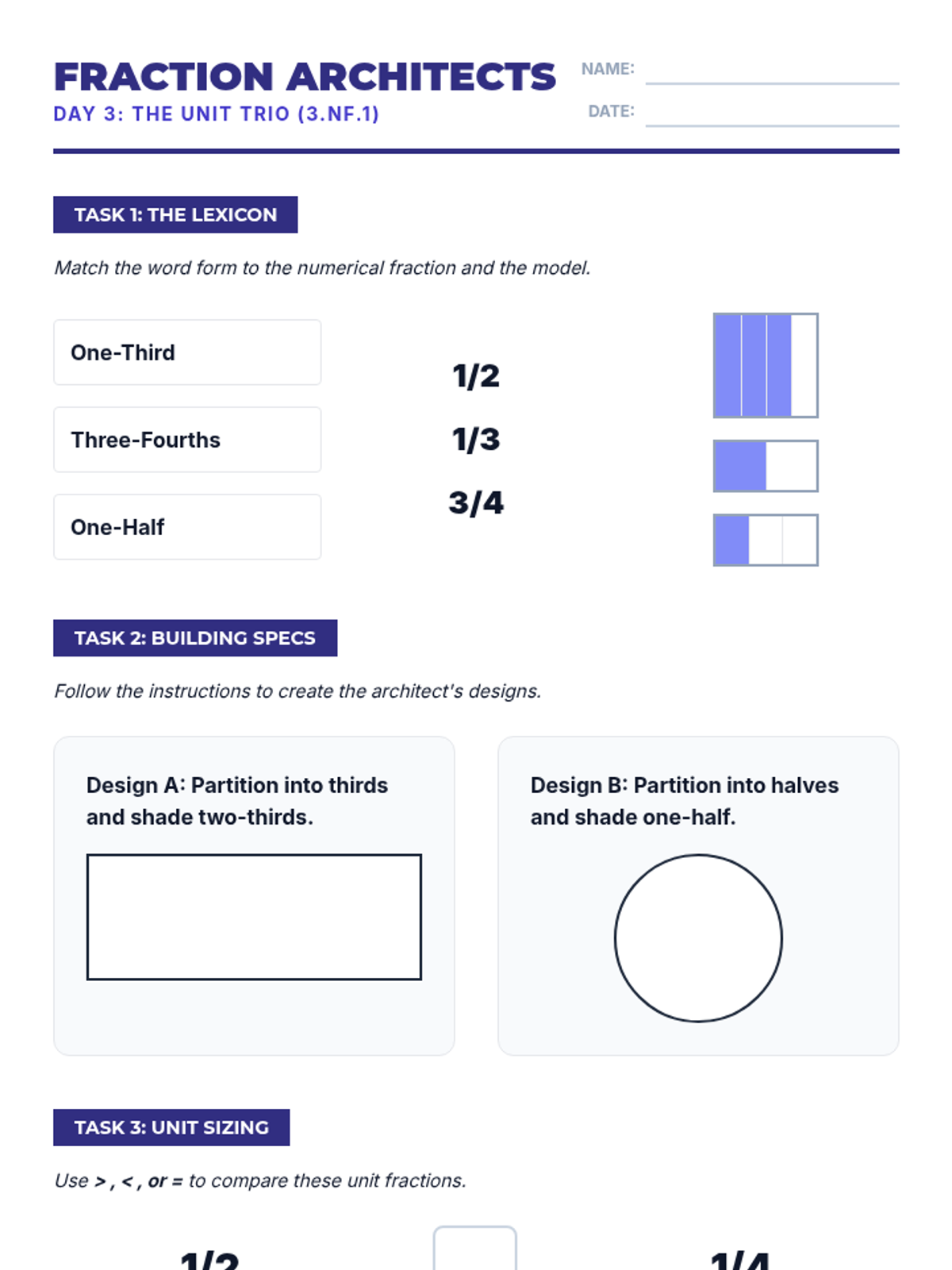
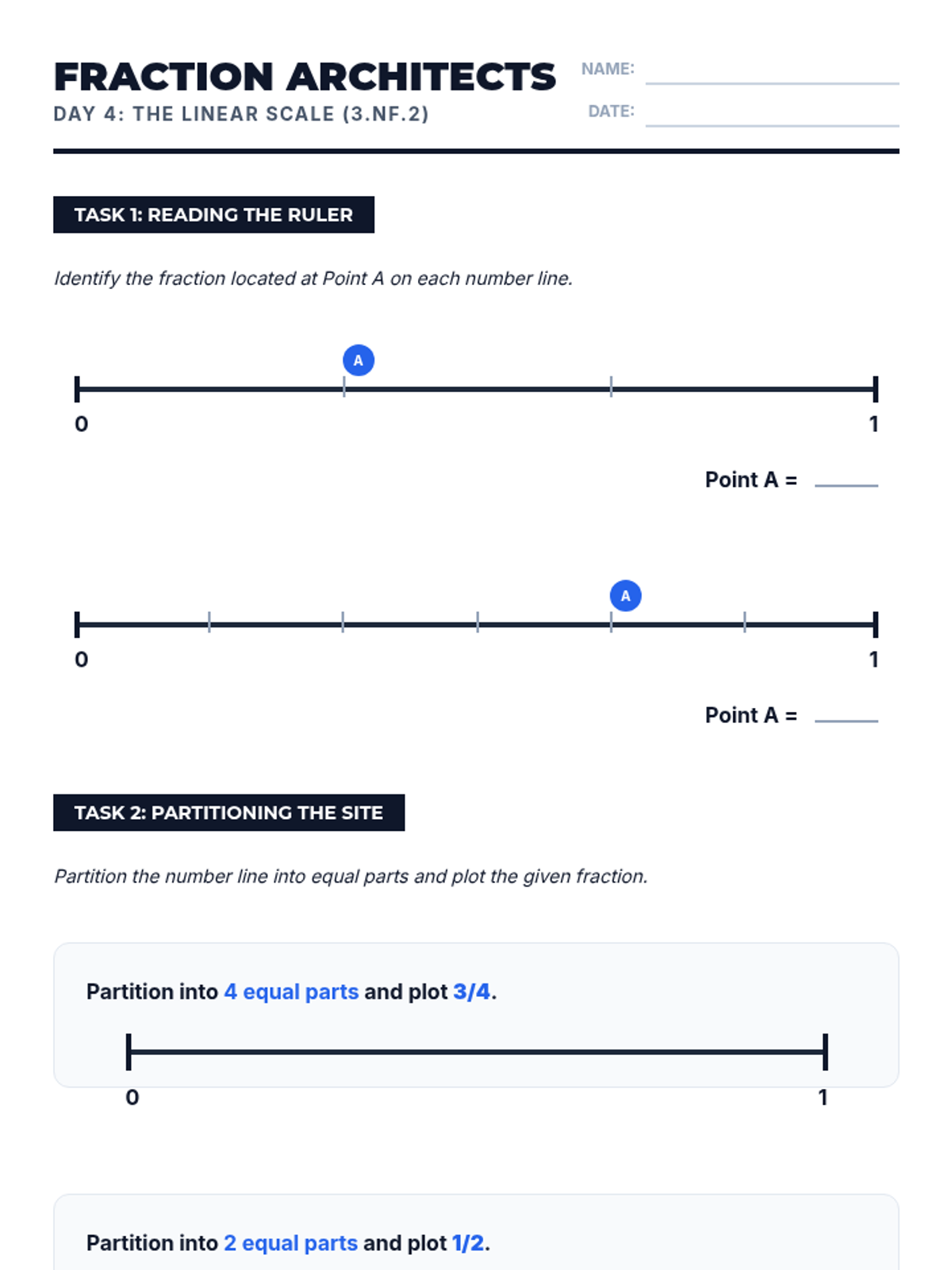
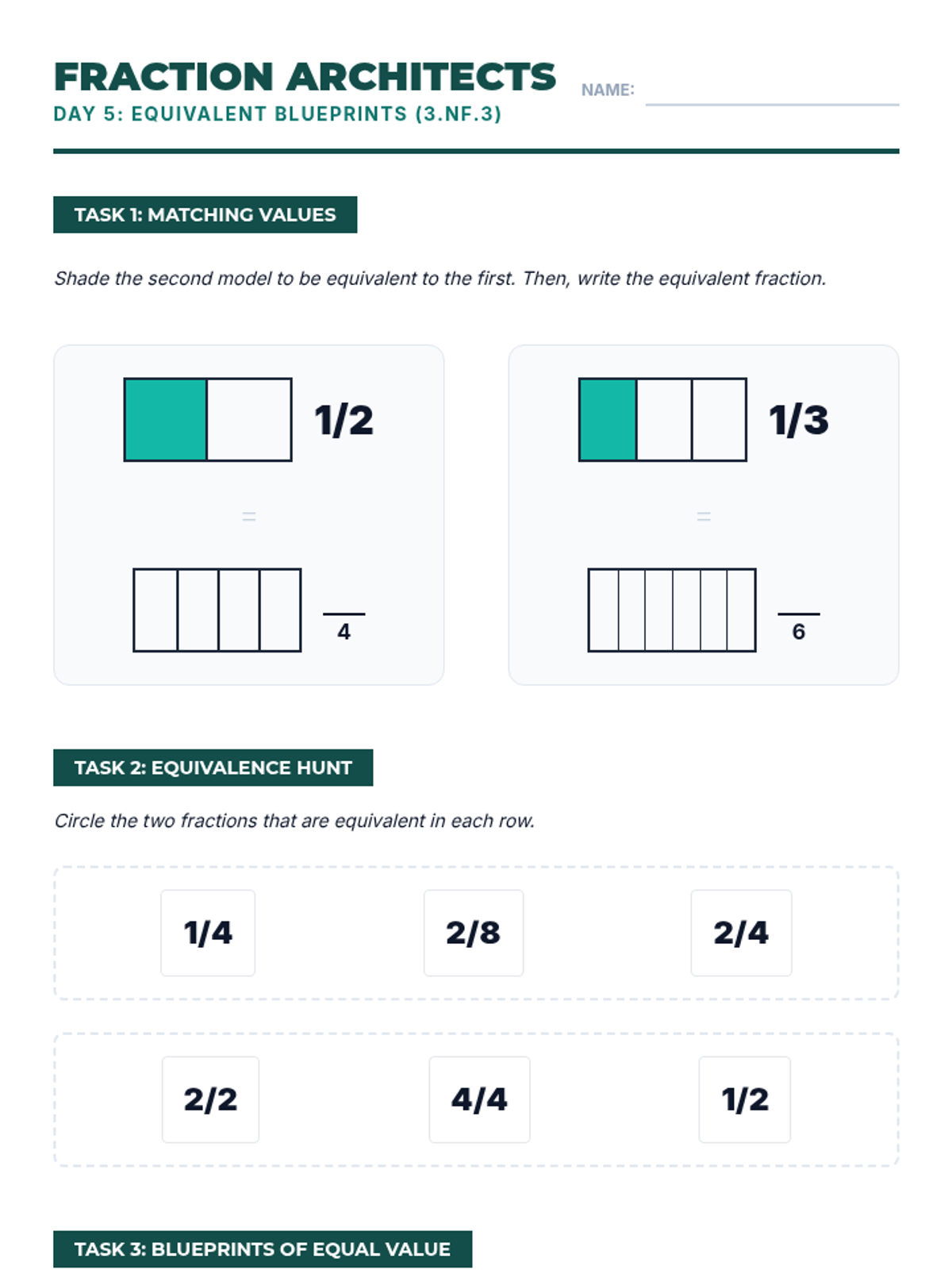
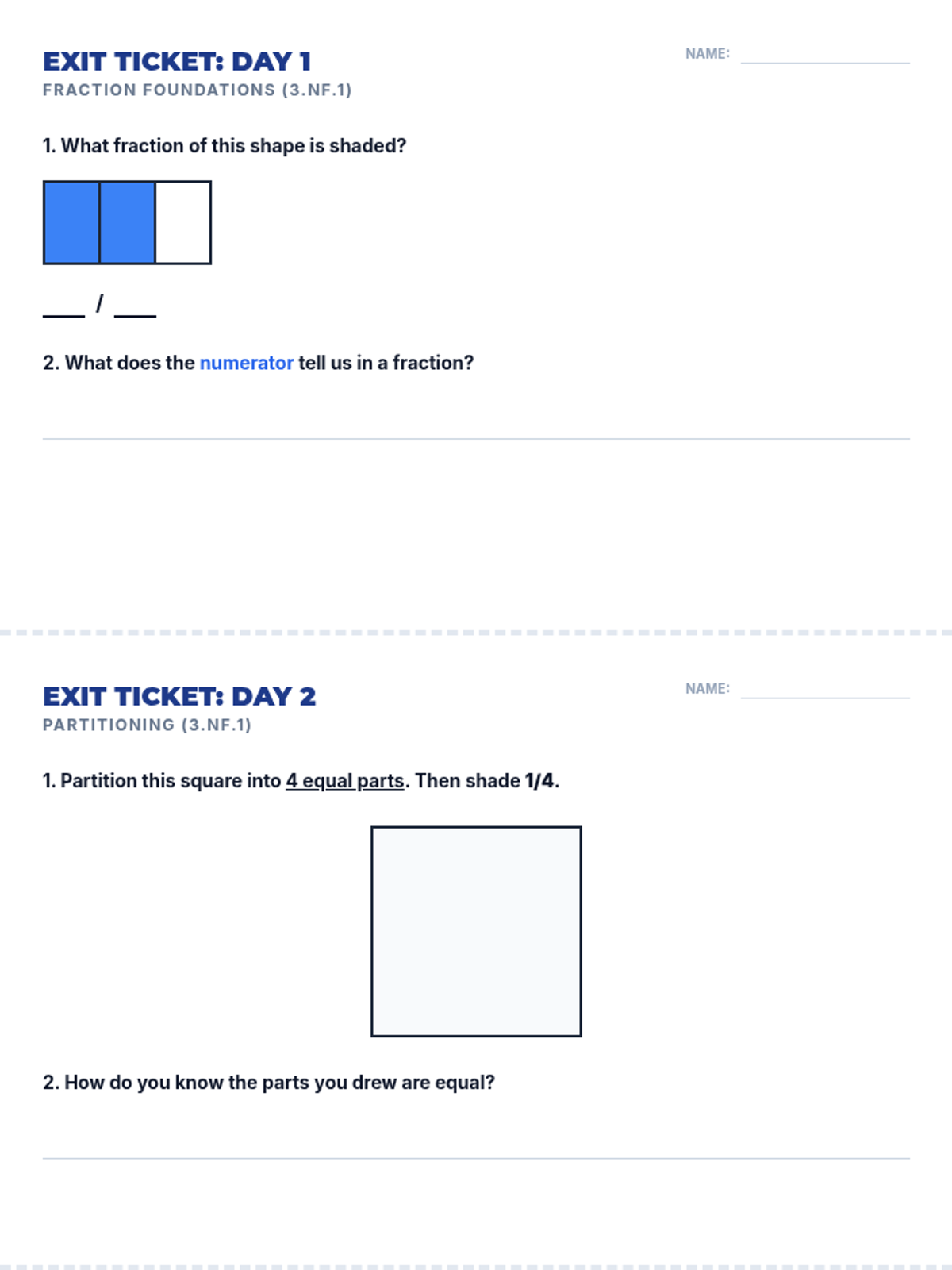
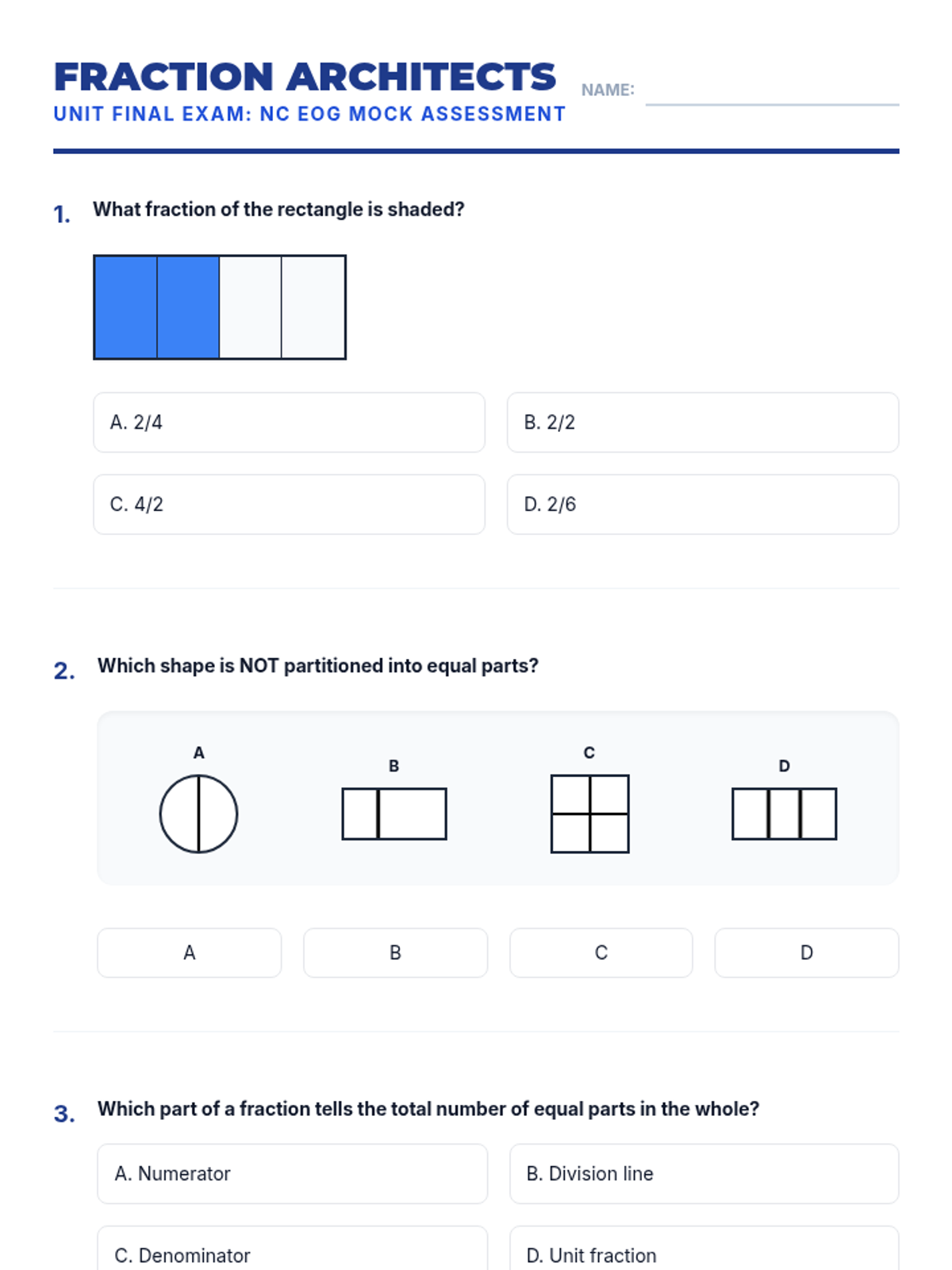
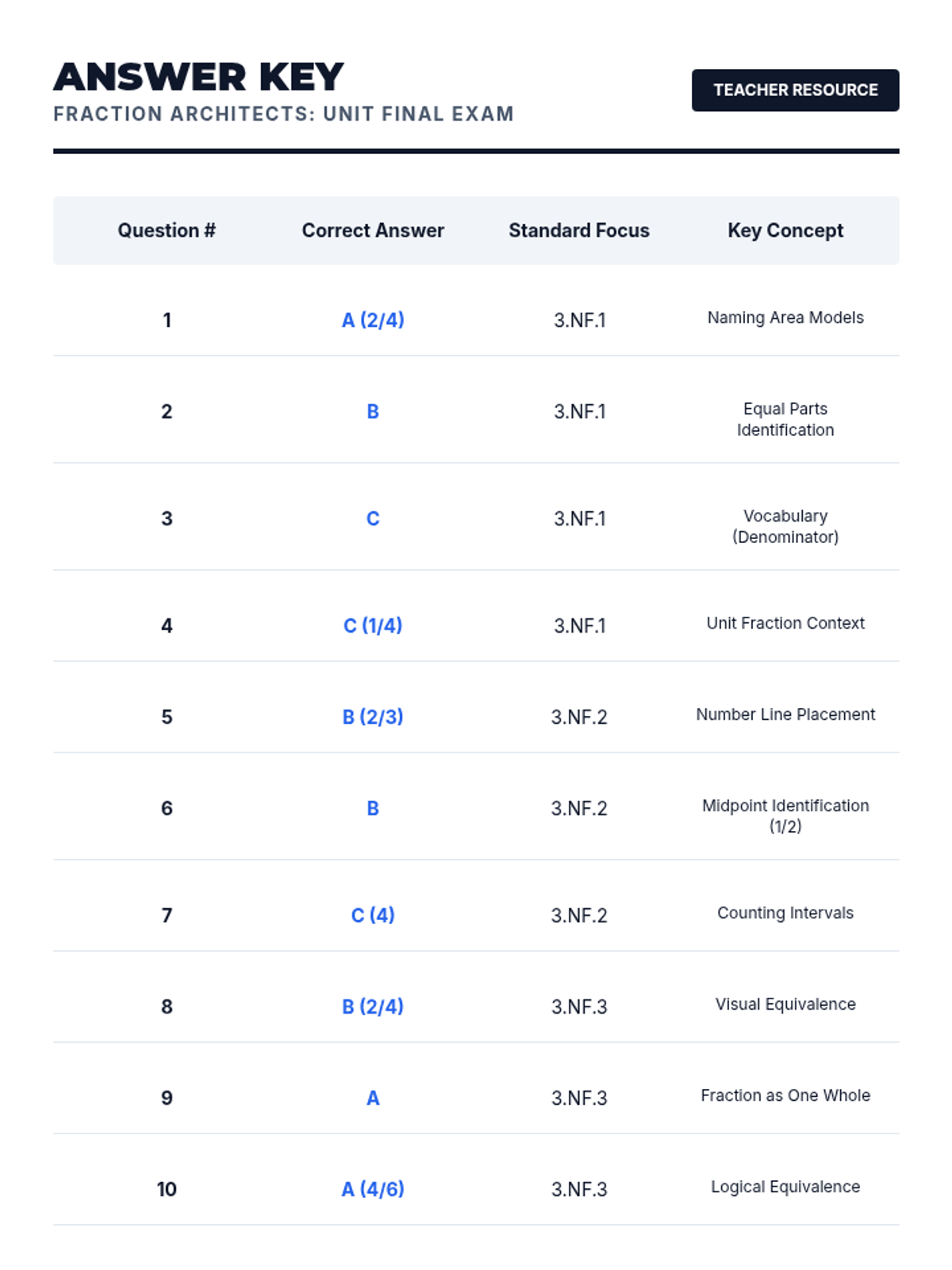
A comprehensive 5-day lesson covering the basics of fractions, partitioning shapes, unit fractions, number lines, and equivalent fractions using the I Do, We Do, You Do model.
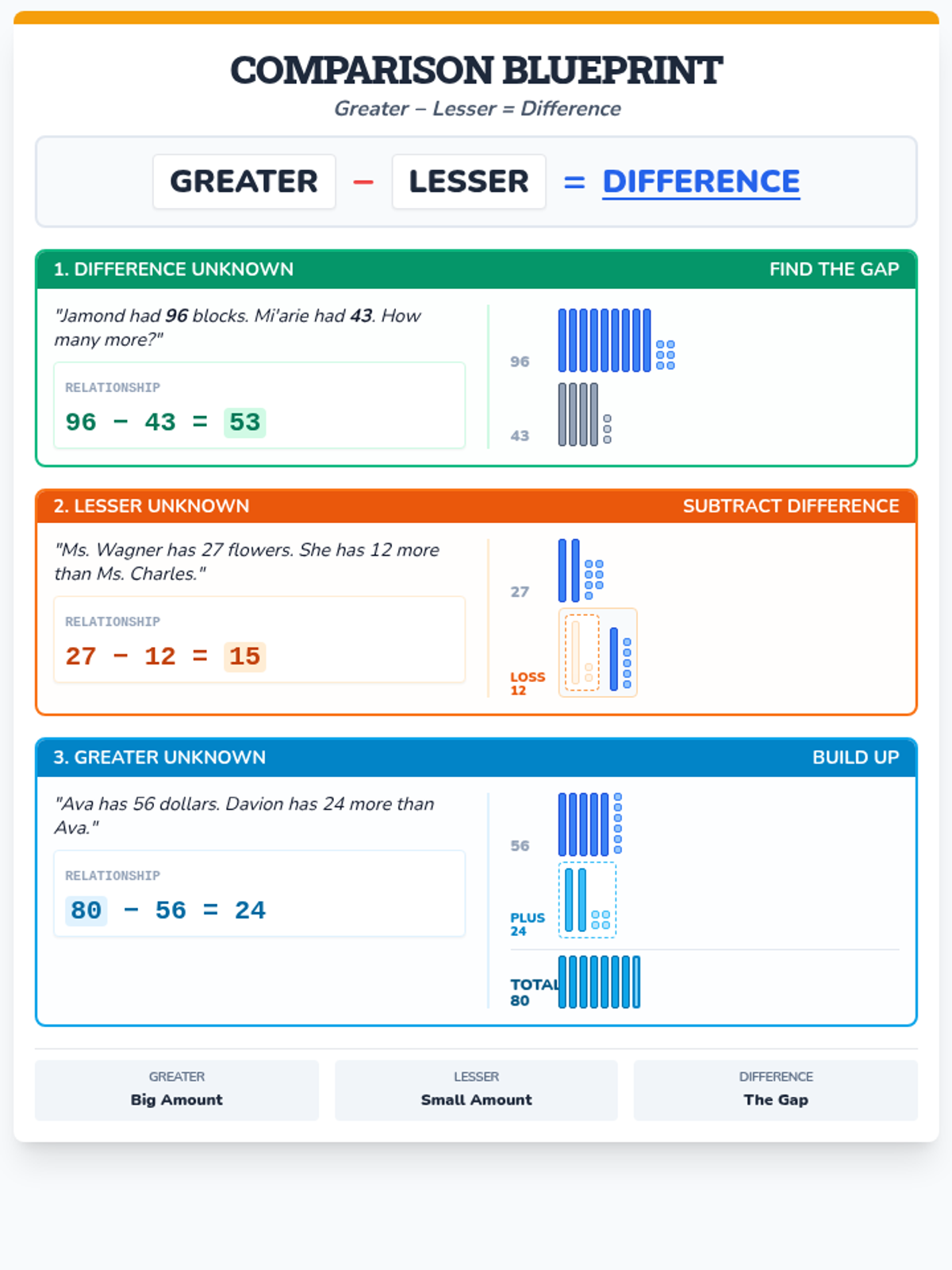
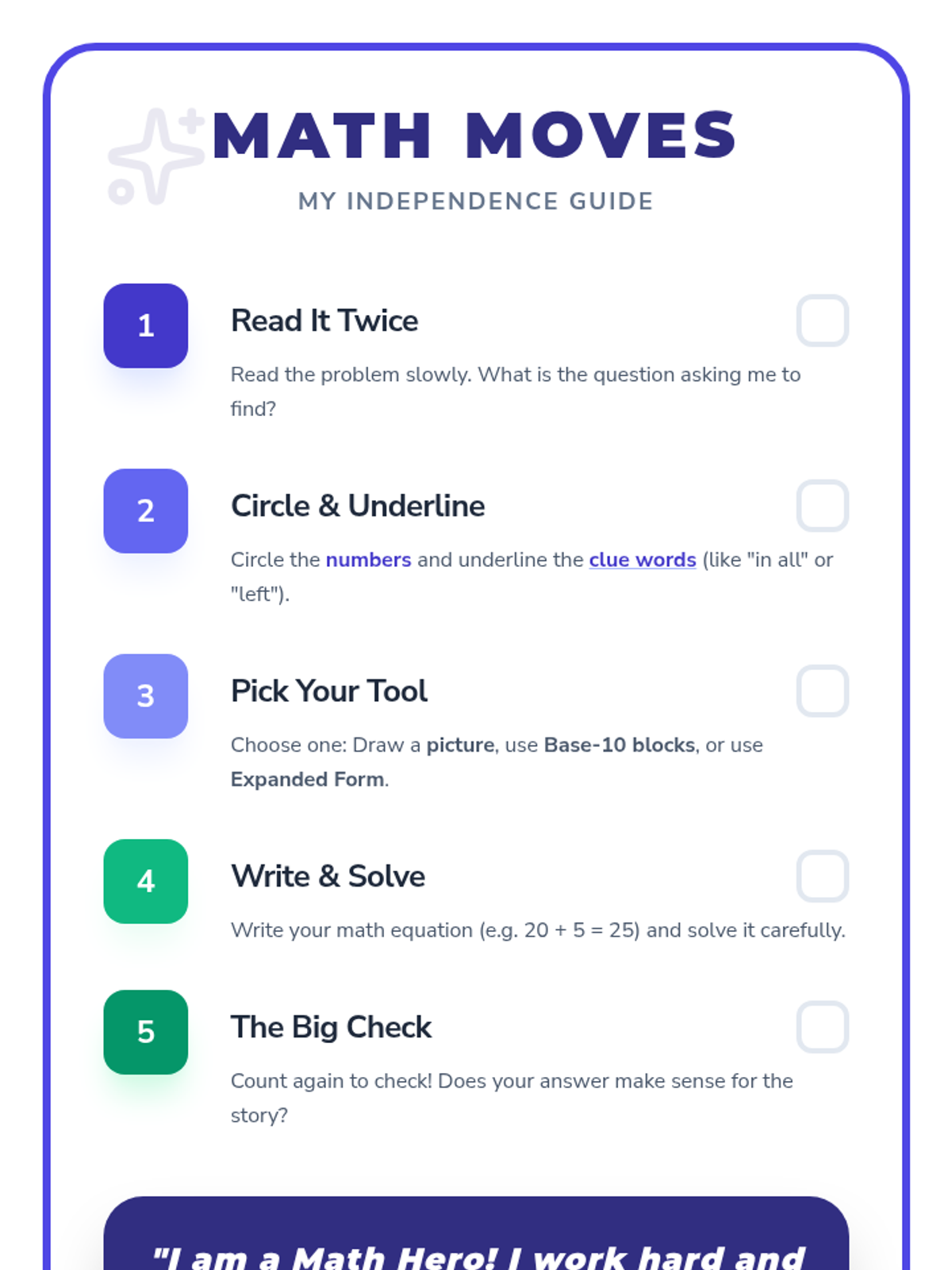
A comprehensive lesson on understanding and solving comparison story problems using the Greater-Lesser-Difference relationship and base ten block visuals.
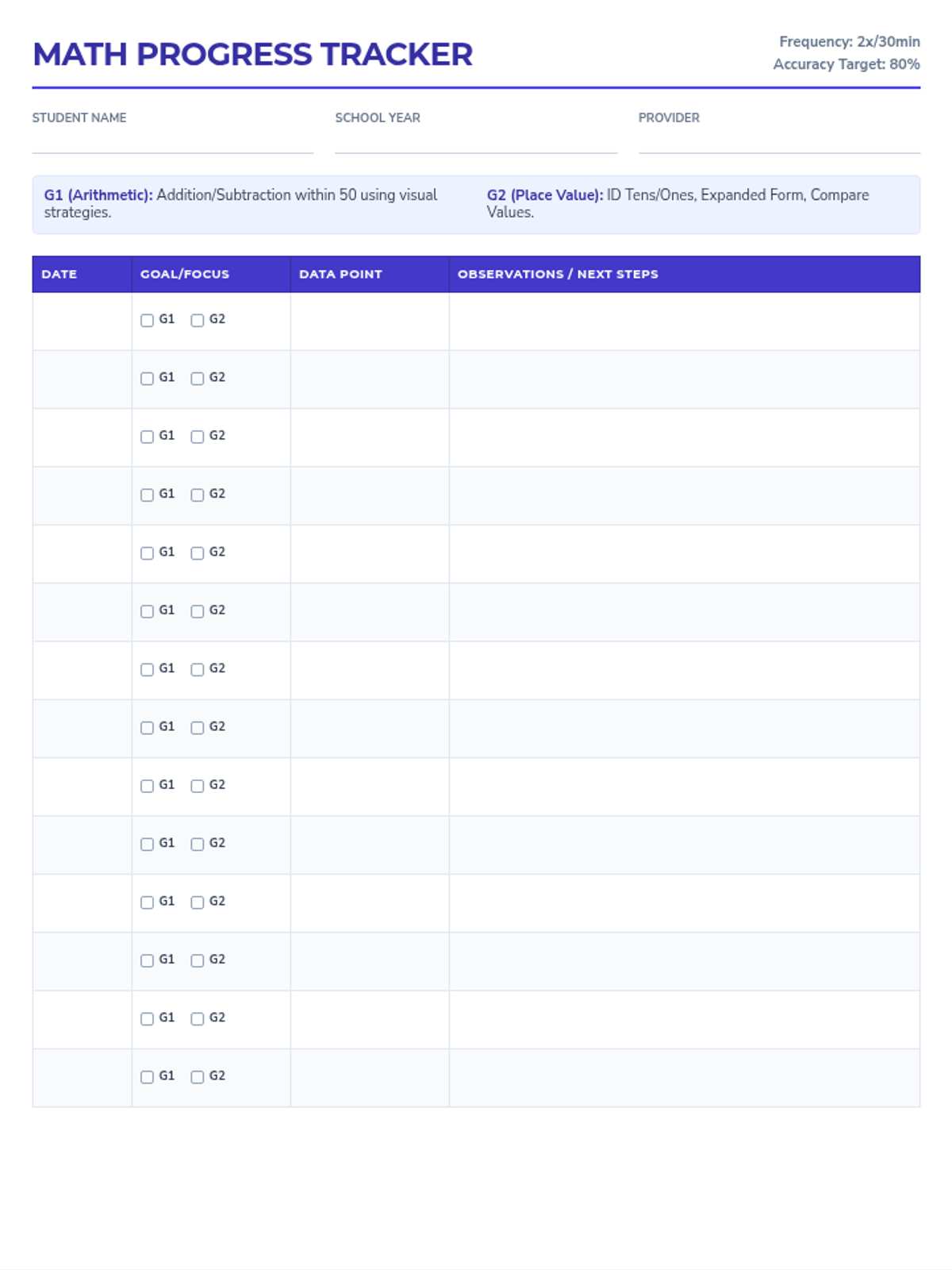
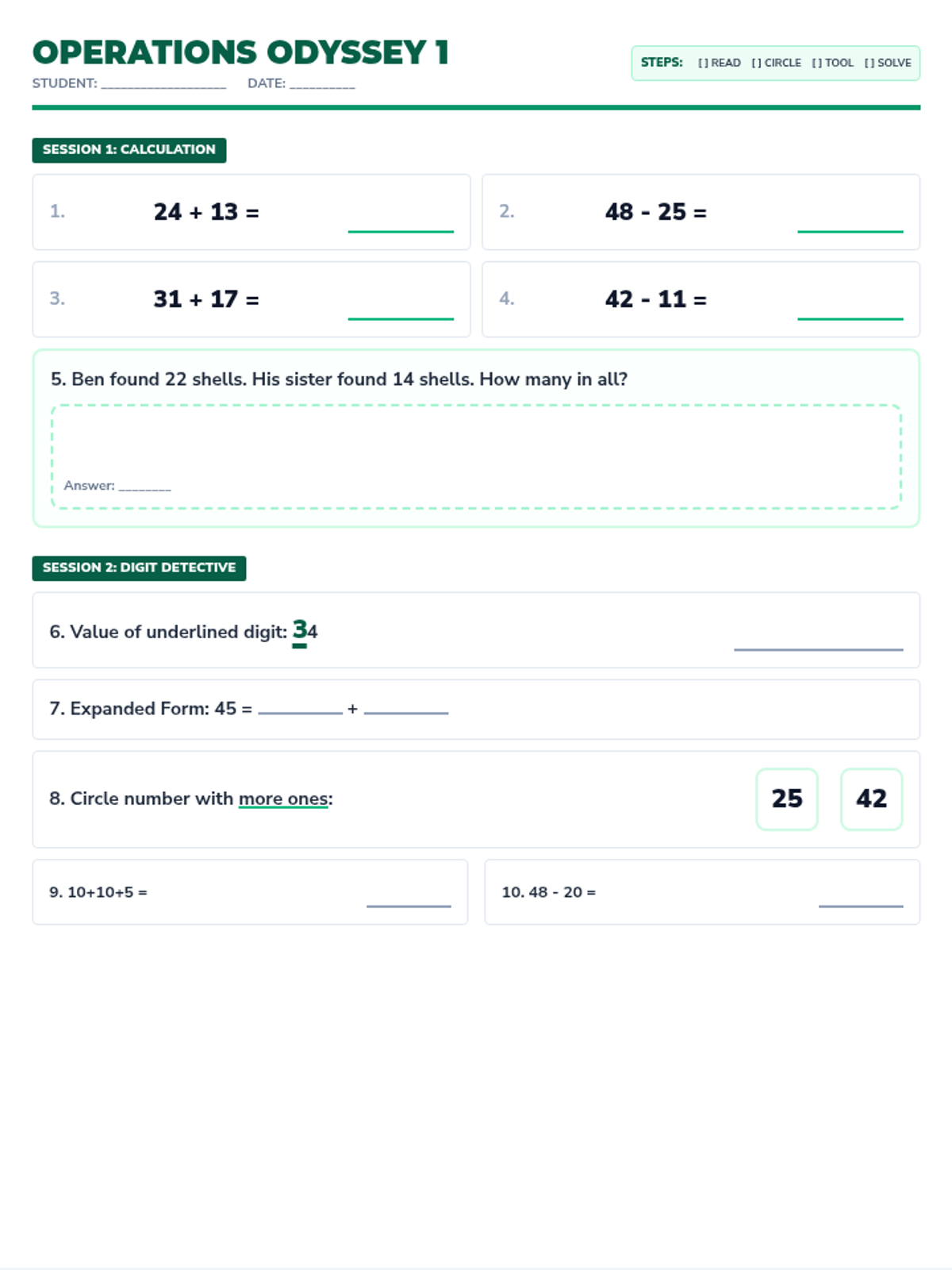
A comprehensive tracking system for monitoring student progress in basic arithmetic and place value concepts, designed for bi-weekly service delivery.
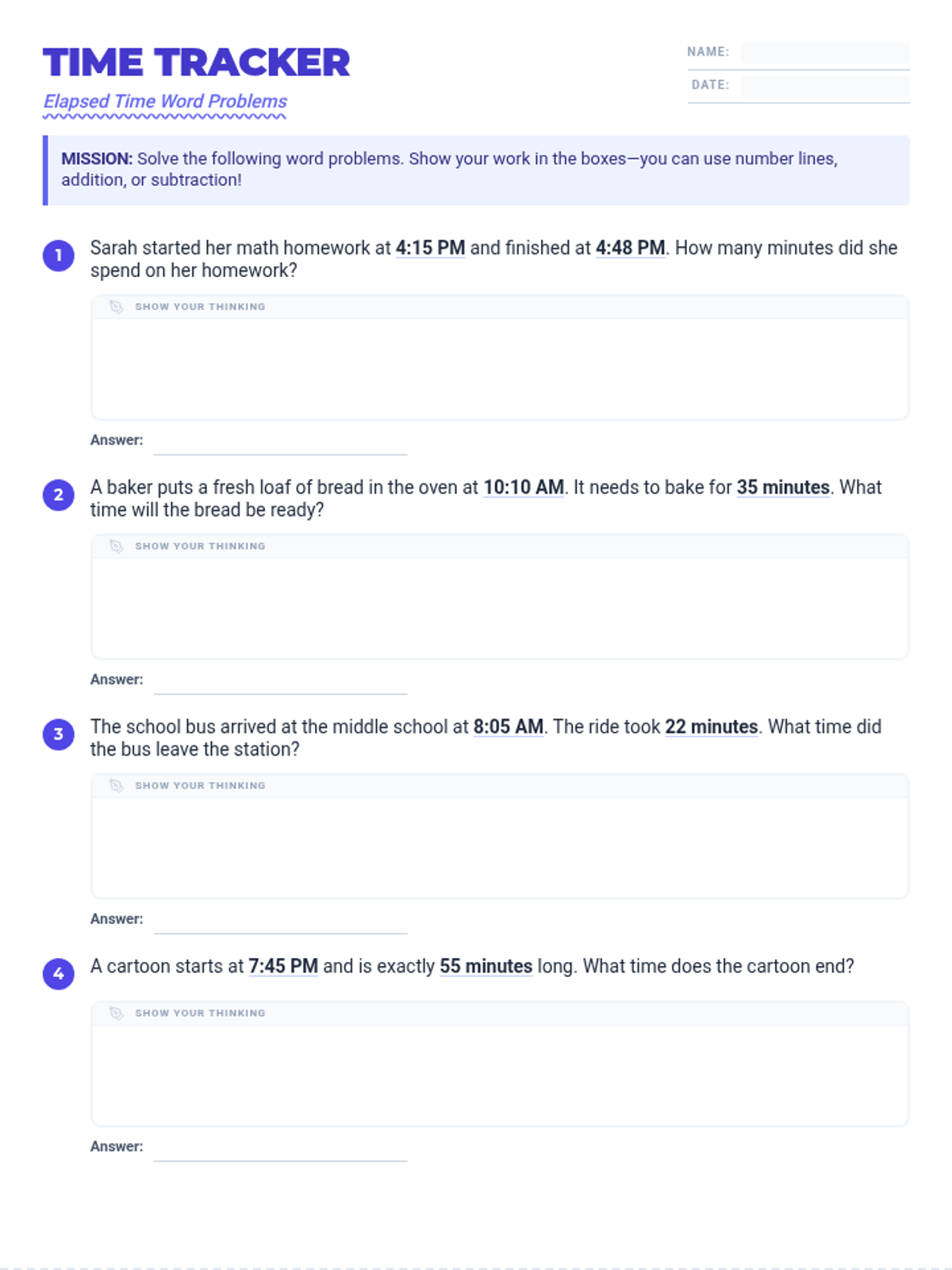
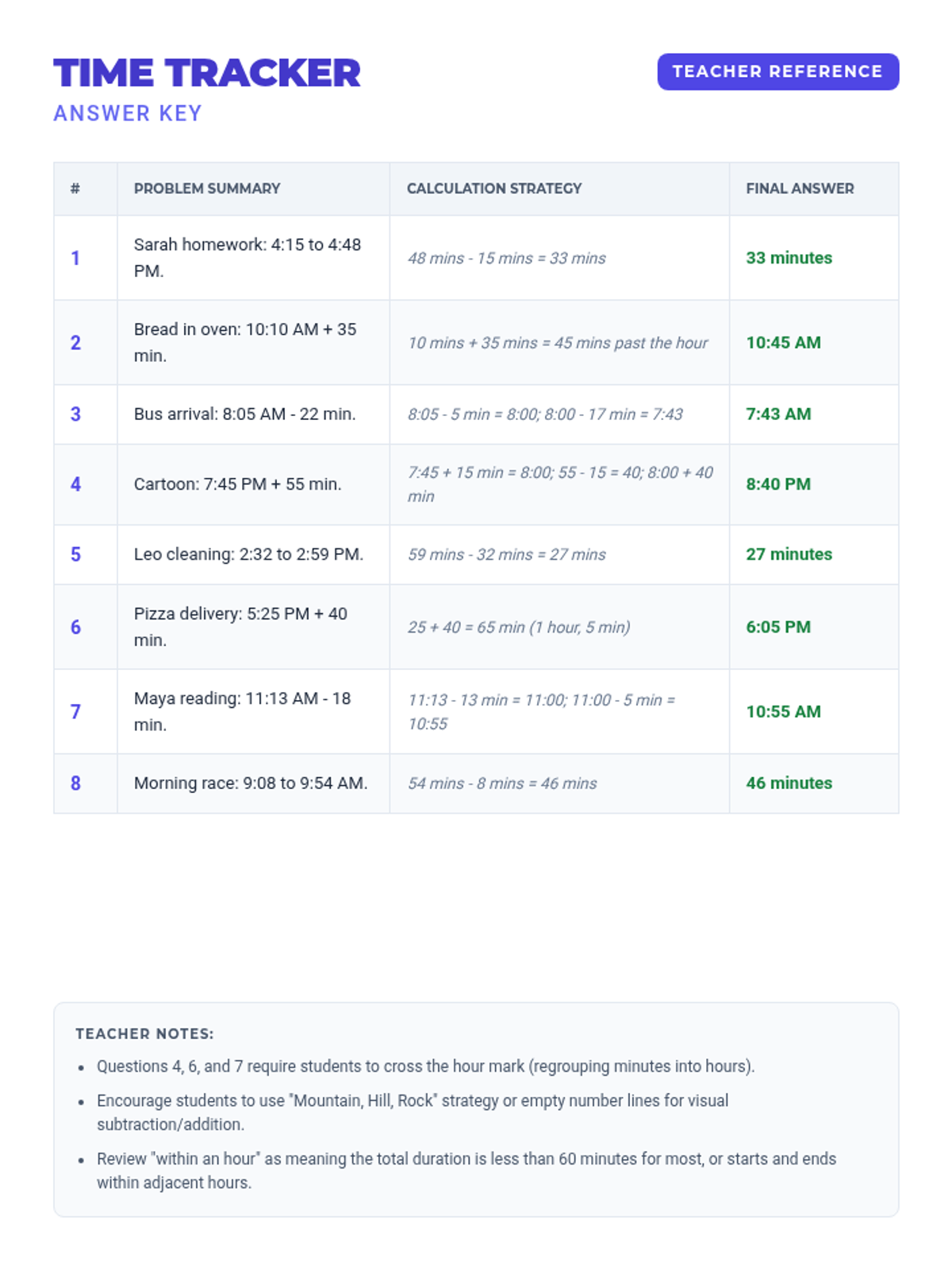
A practice-focused lesson on calculating elapsed time within a single hour, including word problems that cover finding start times, end times, and durations.
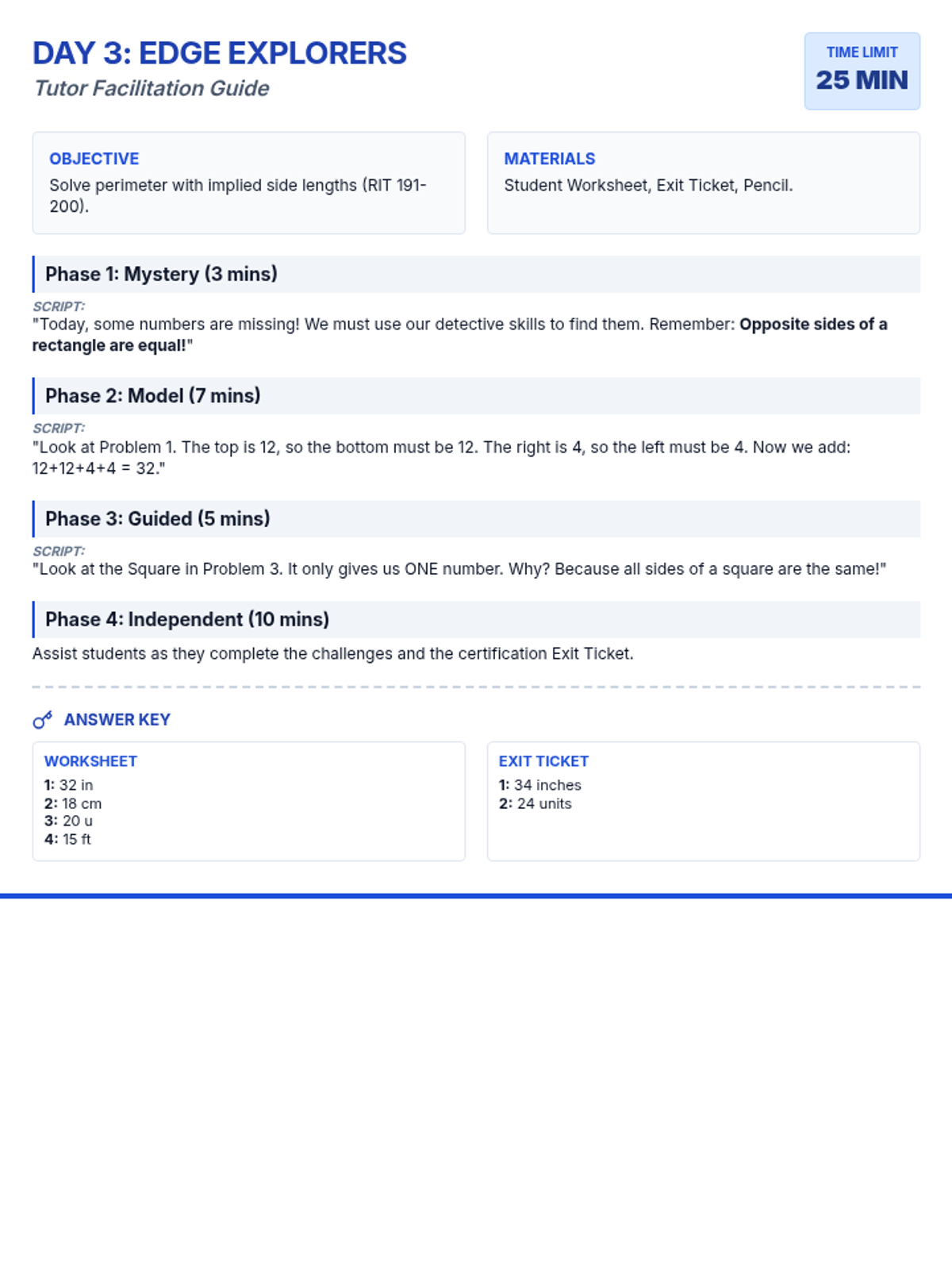
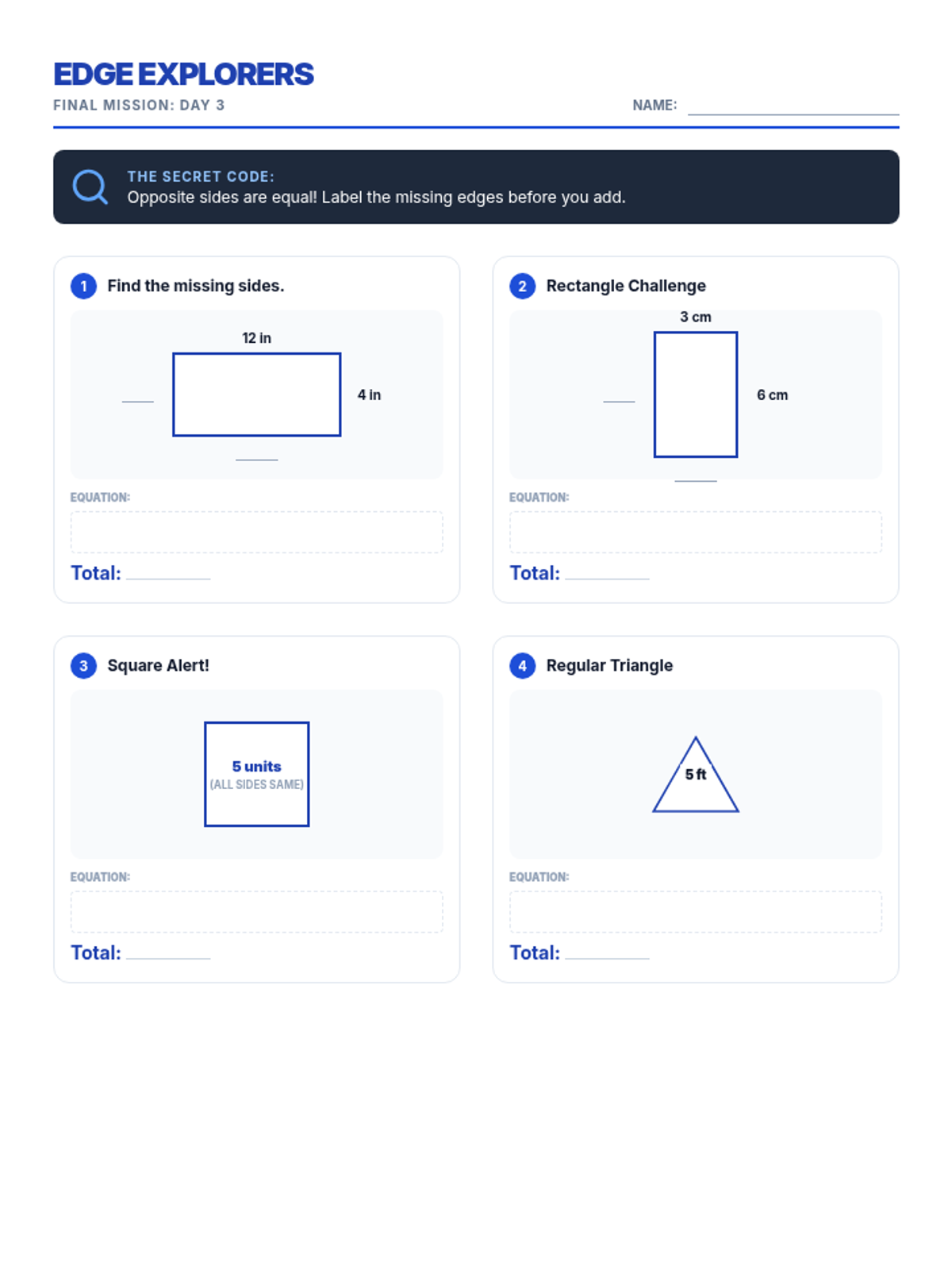
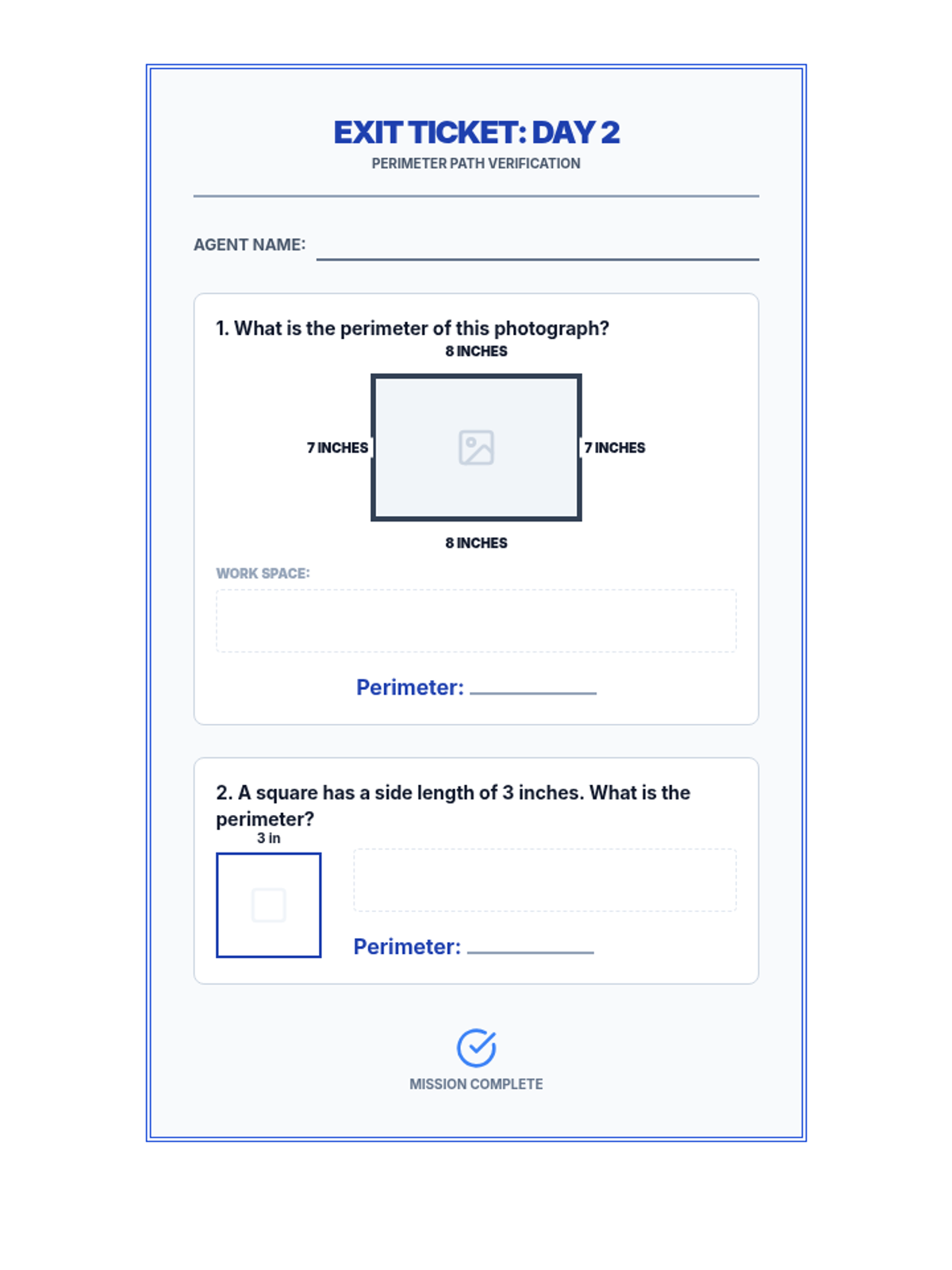
Students solve perimeter problems where some side lengths are implied or shapes are complex (191-200 focus).
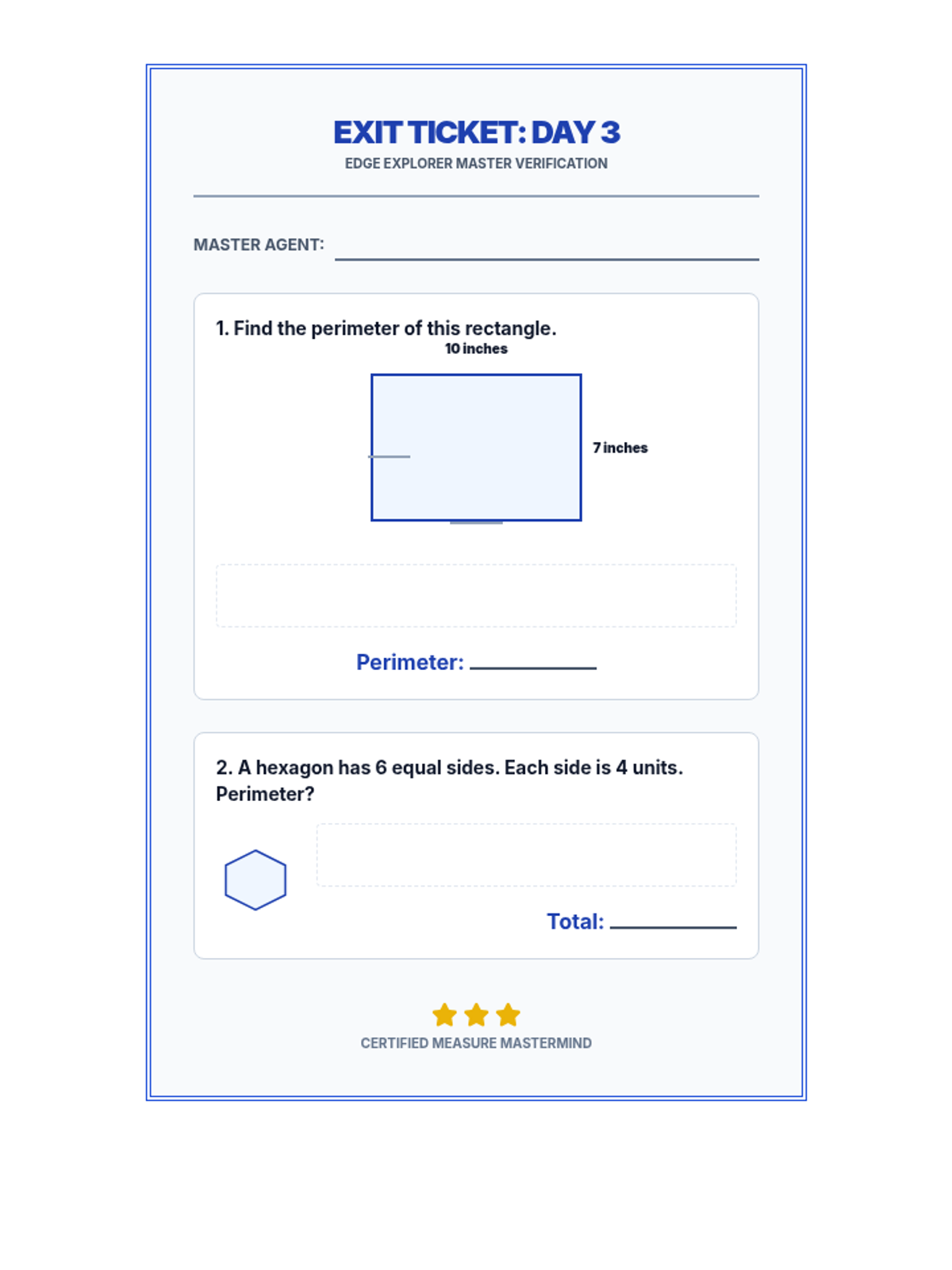
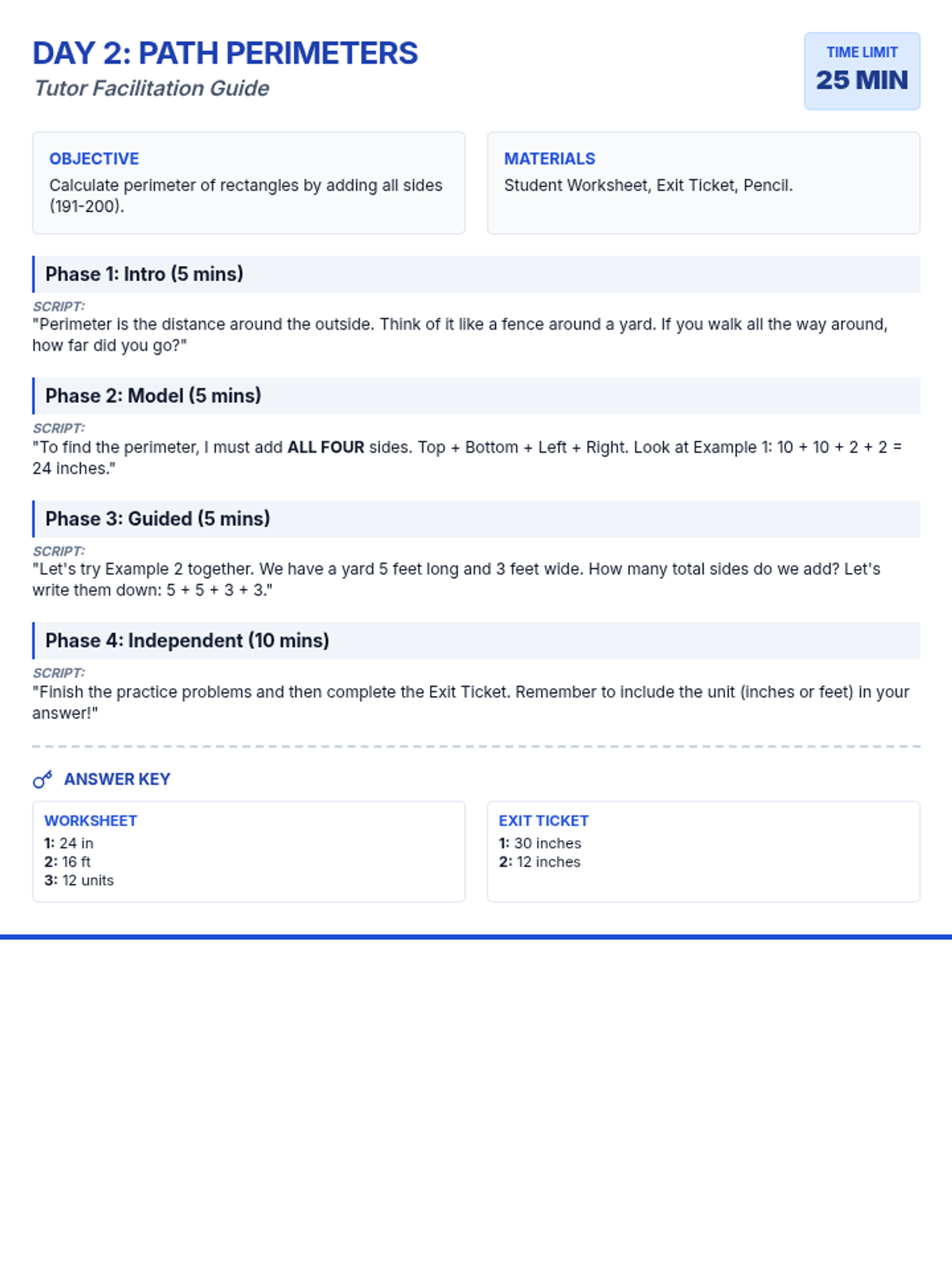
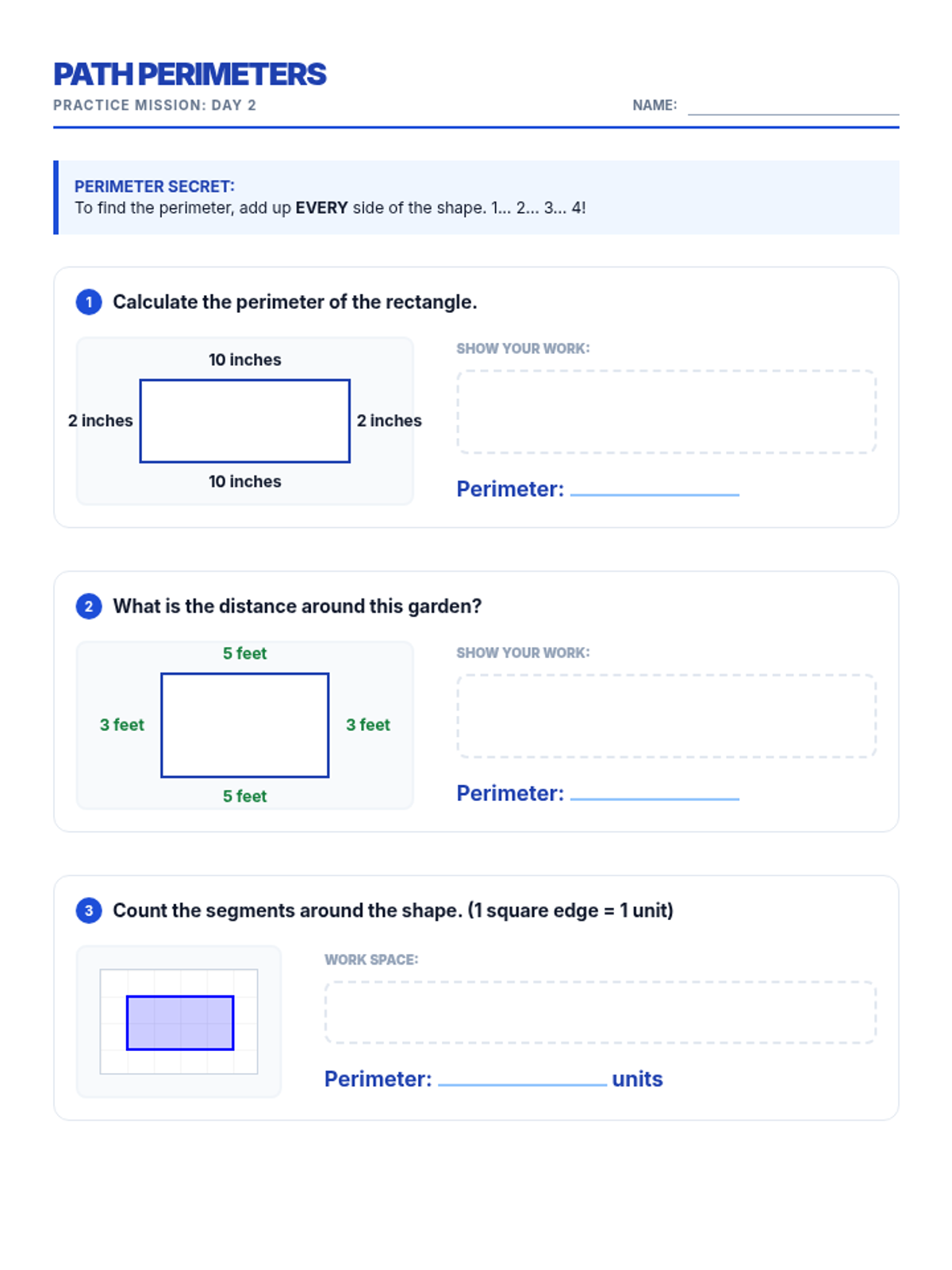
Students transition from basic counting and addition to calculating the perimeter of rectangles (191-200).
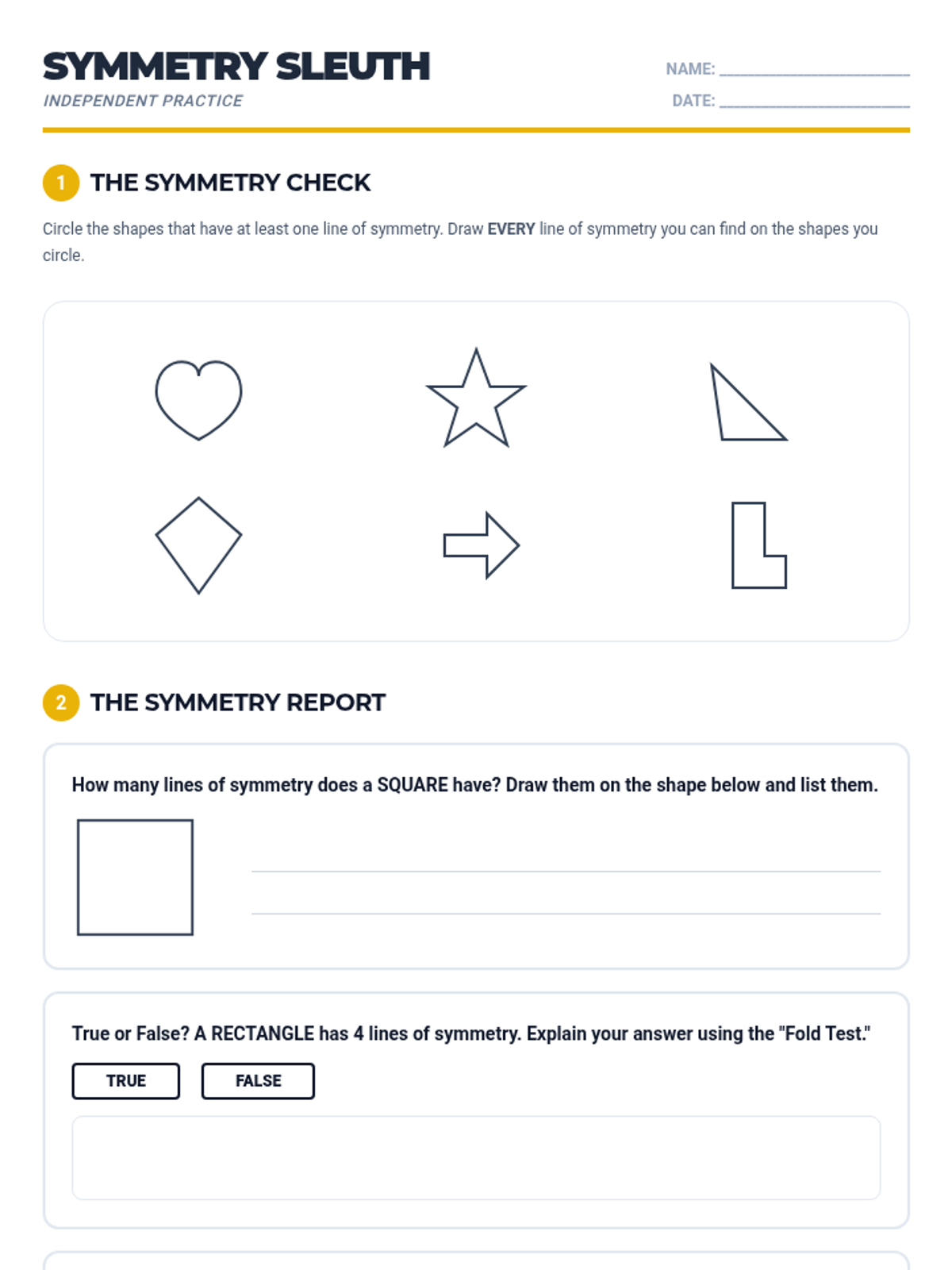
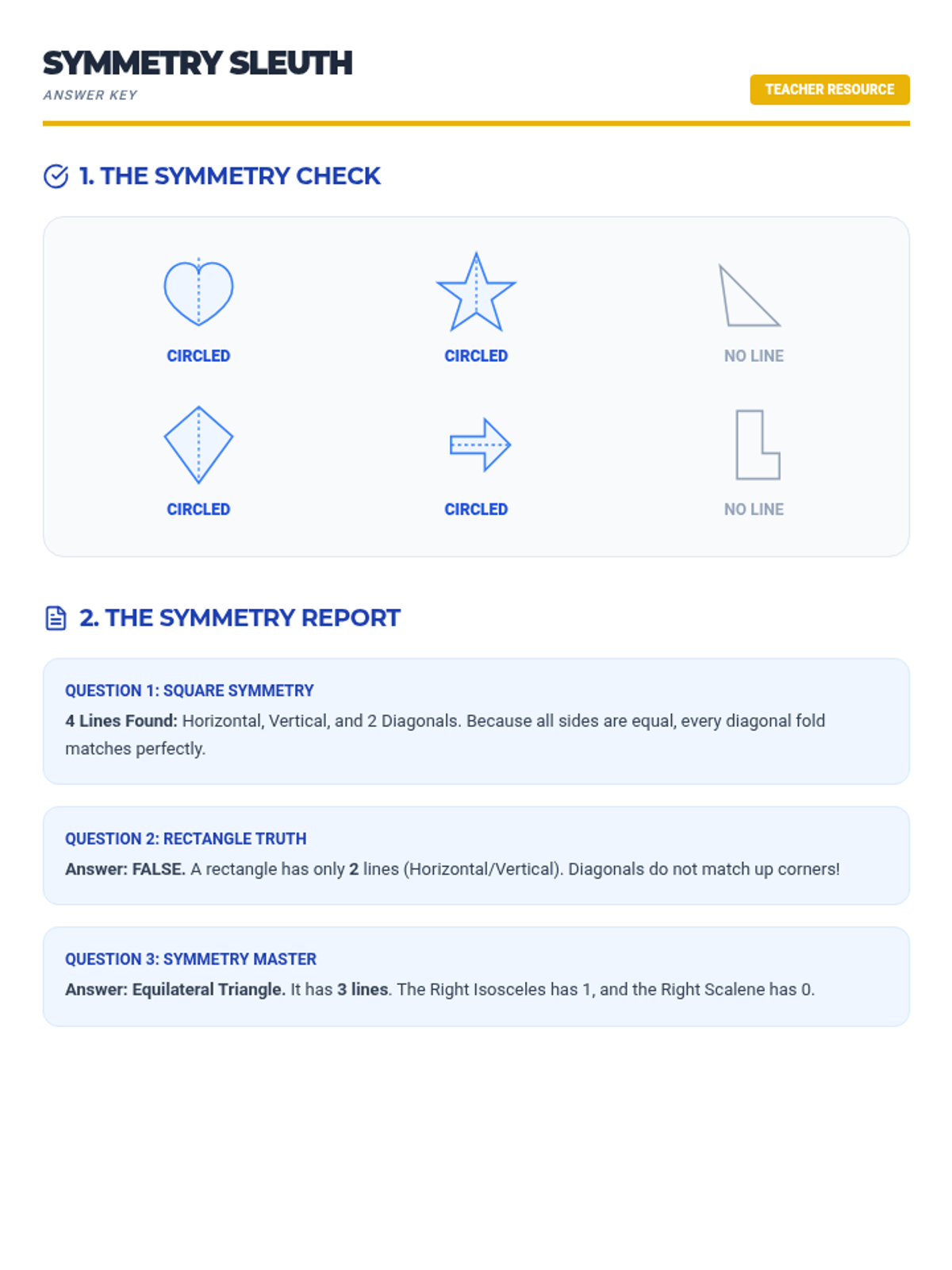
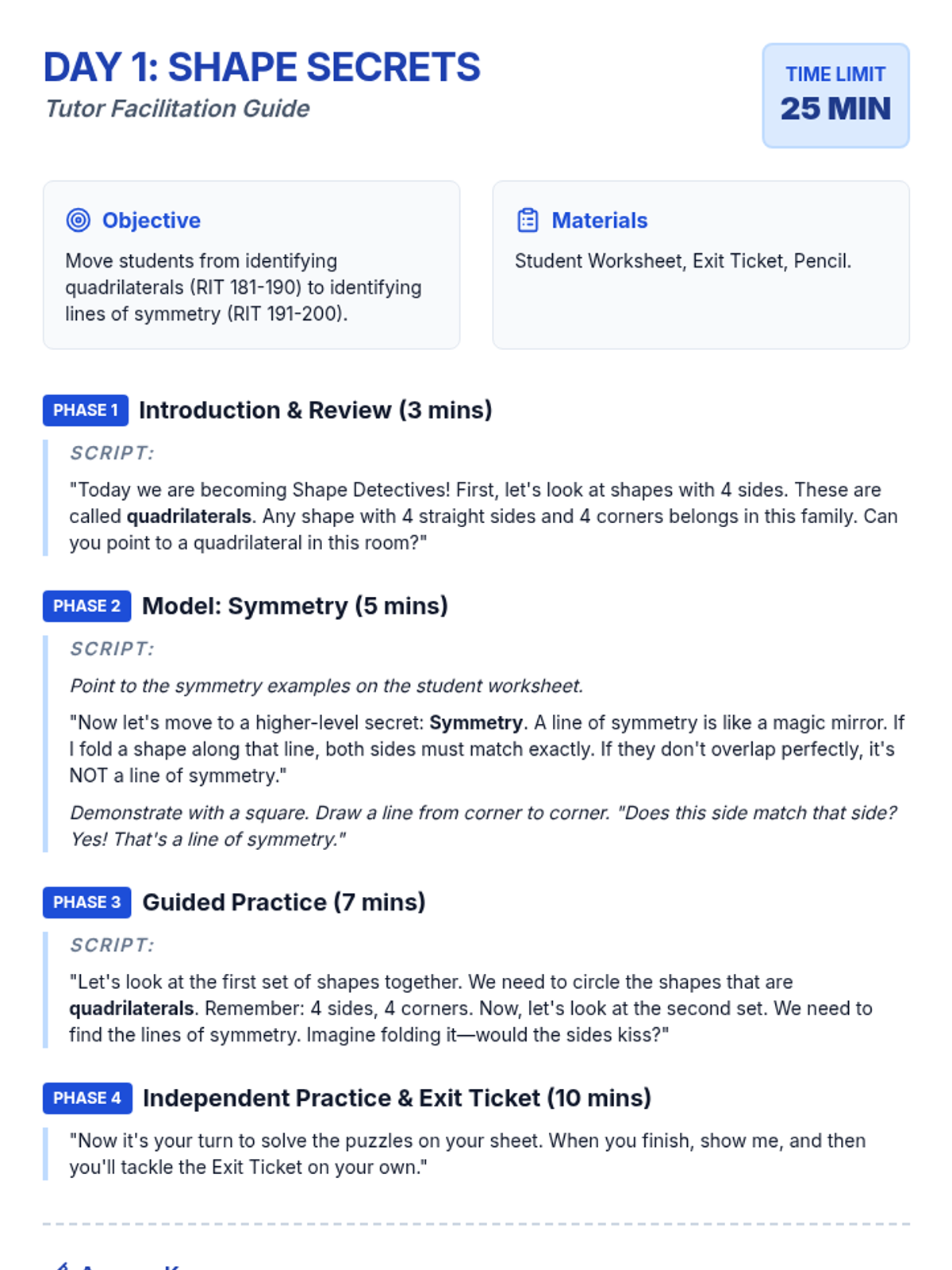
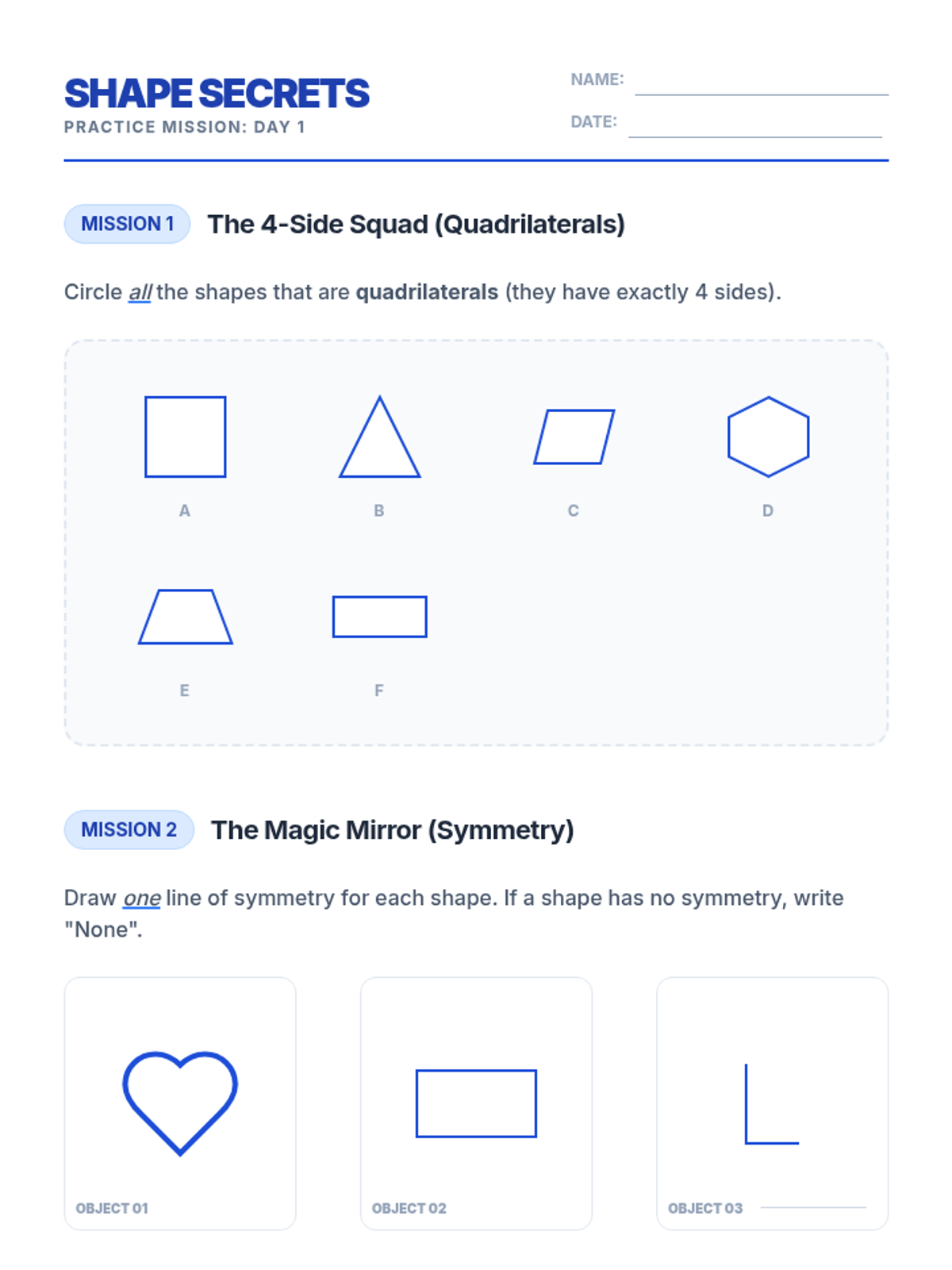
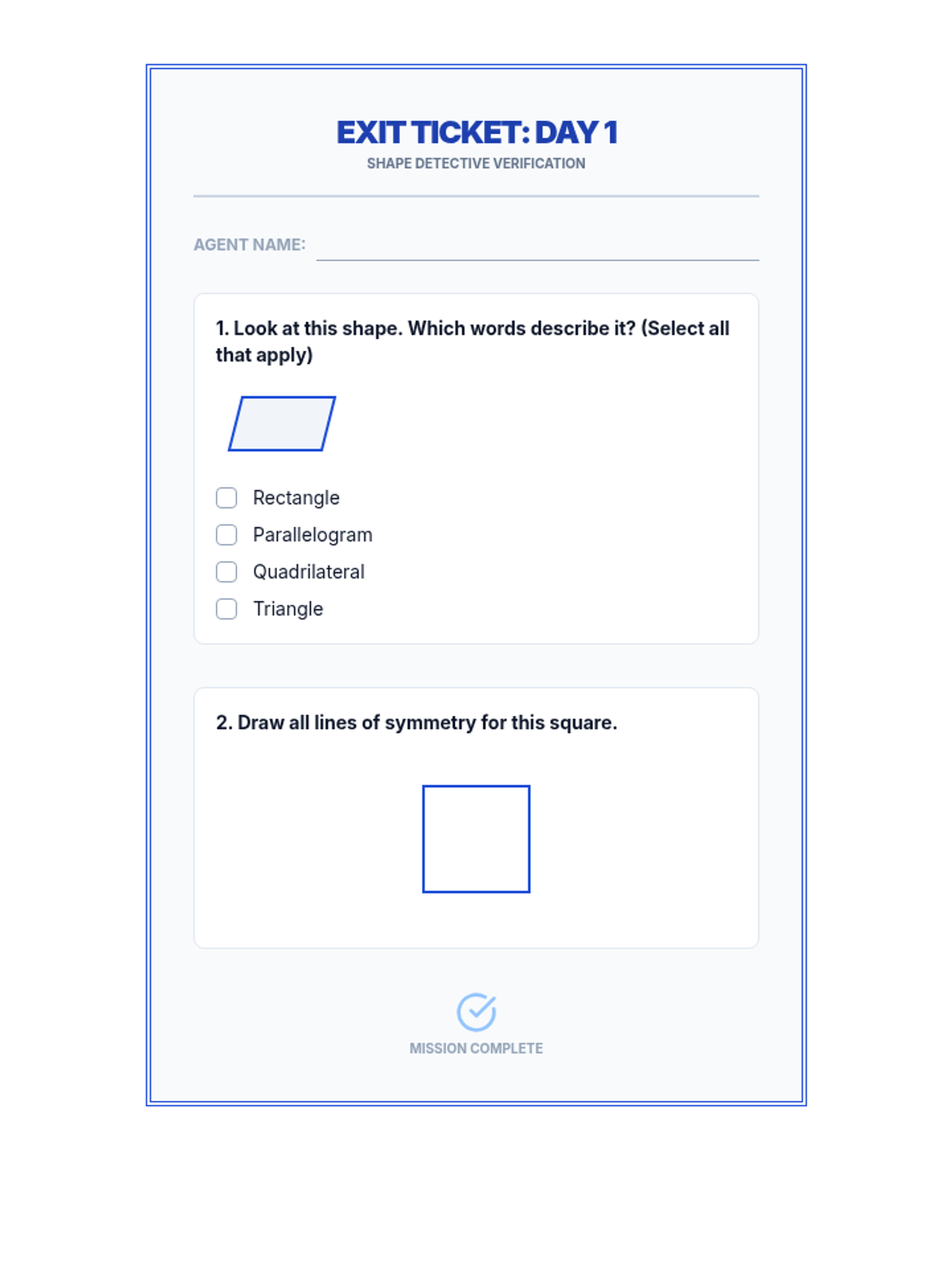
Students identify attributes of quadrilaterals (181-190) and explore lines of symmetry in 2D shapes (191-200).
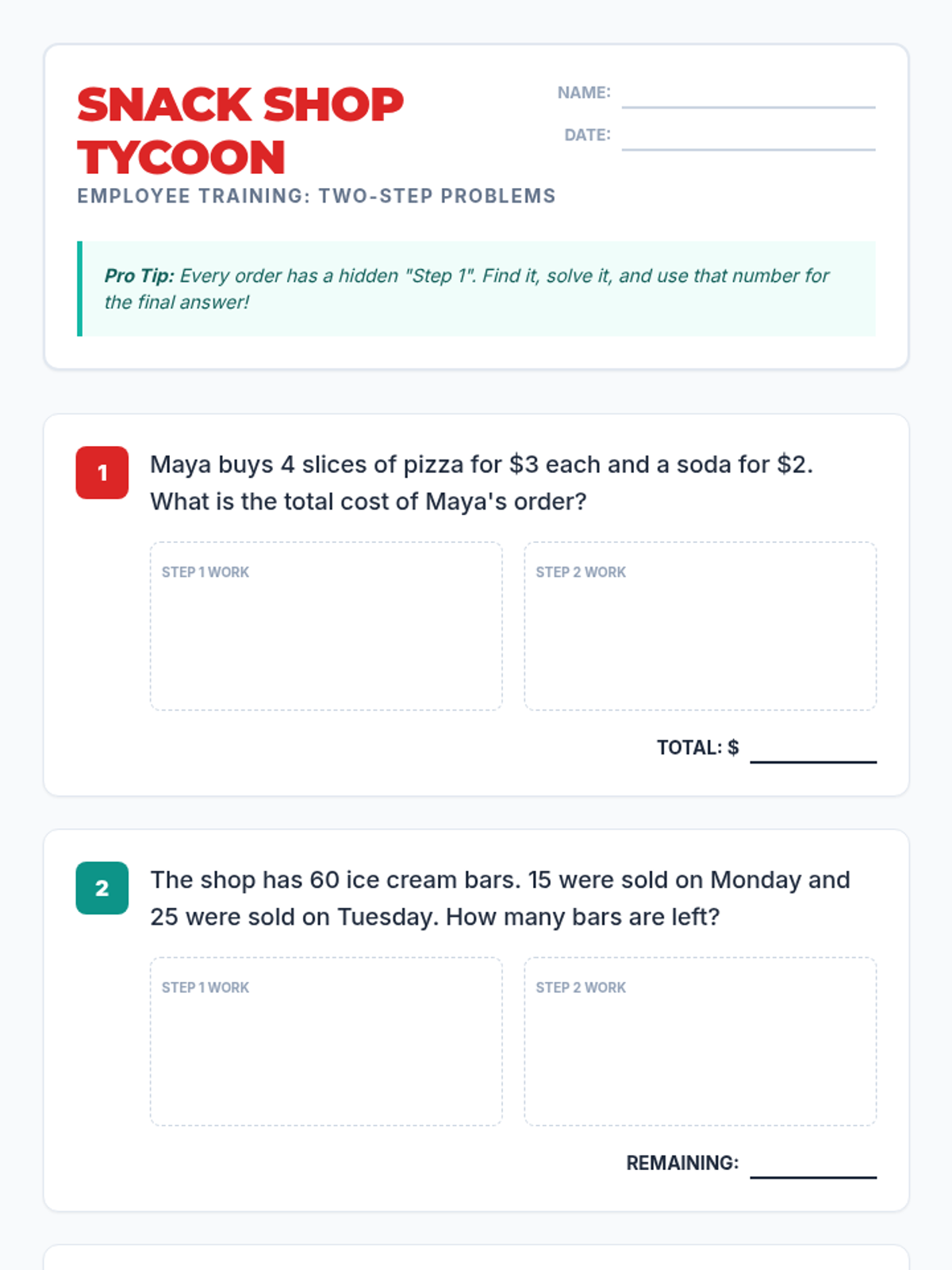
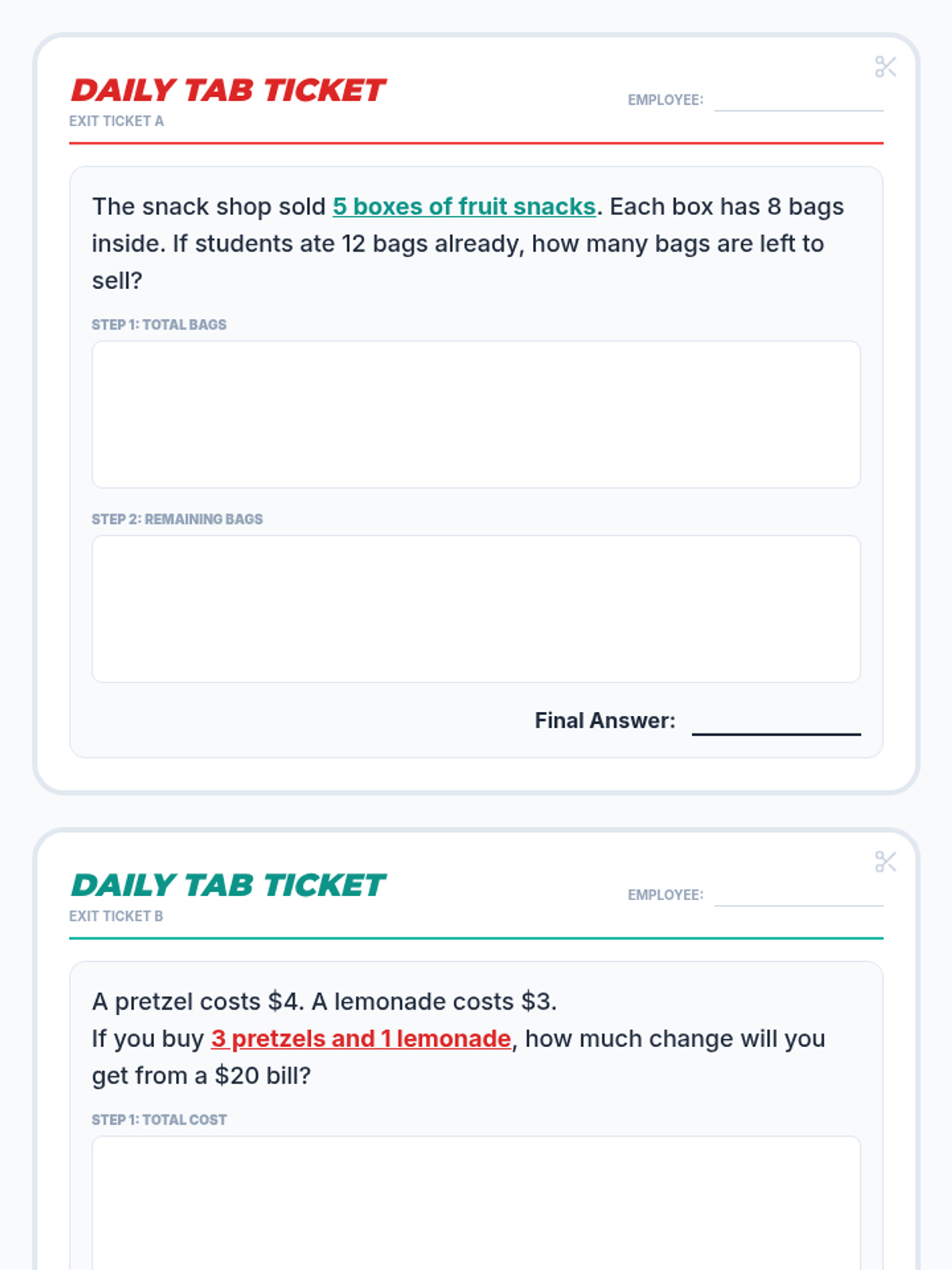
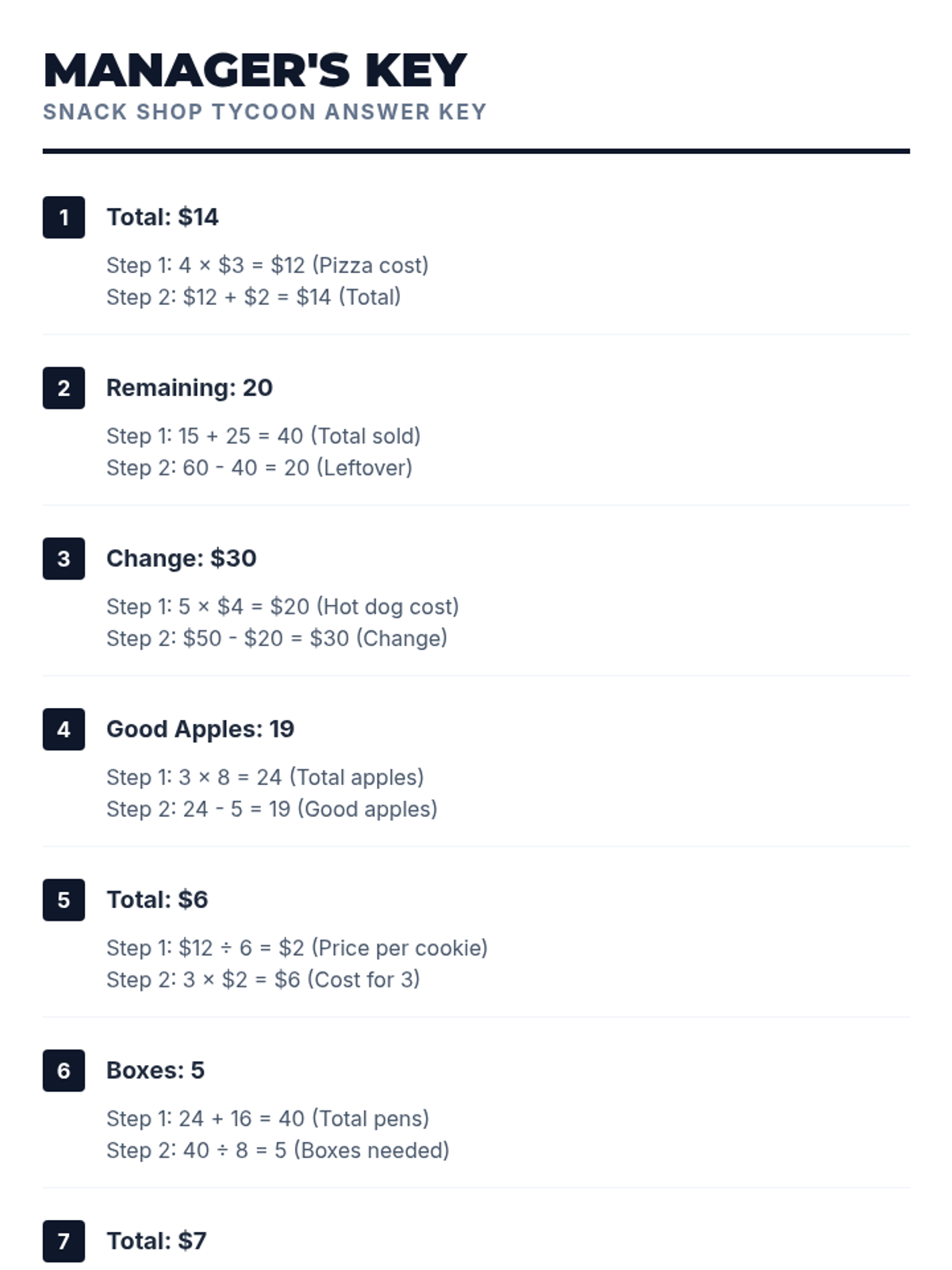
A math lesson focused on solving two-step word problems using the four operations, themed around managing a busy snack shop. Students learn to break down complex problems into manageable steps.
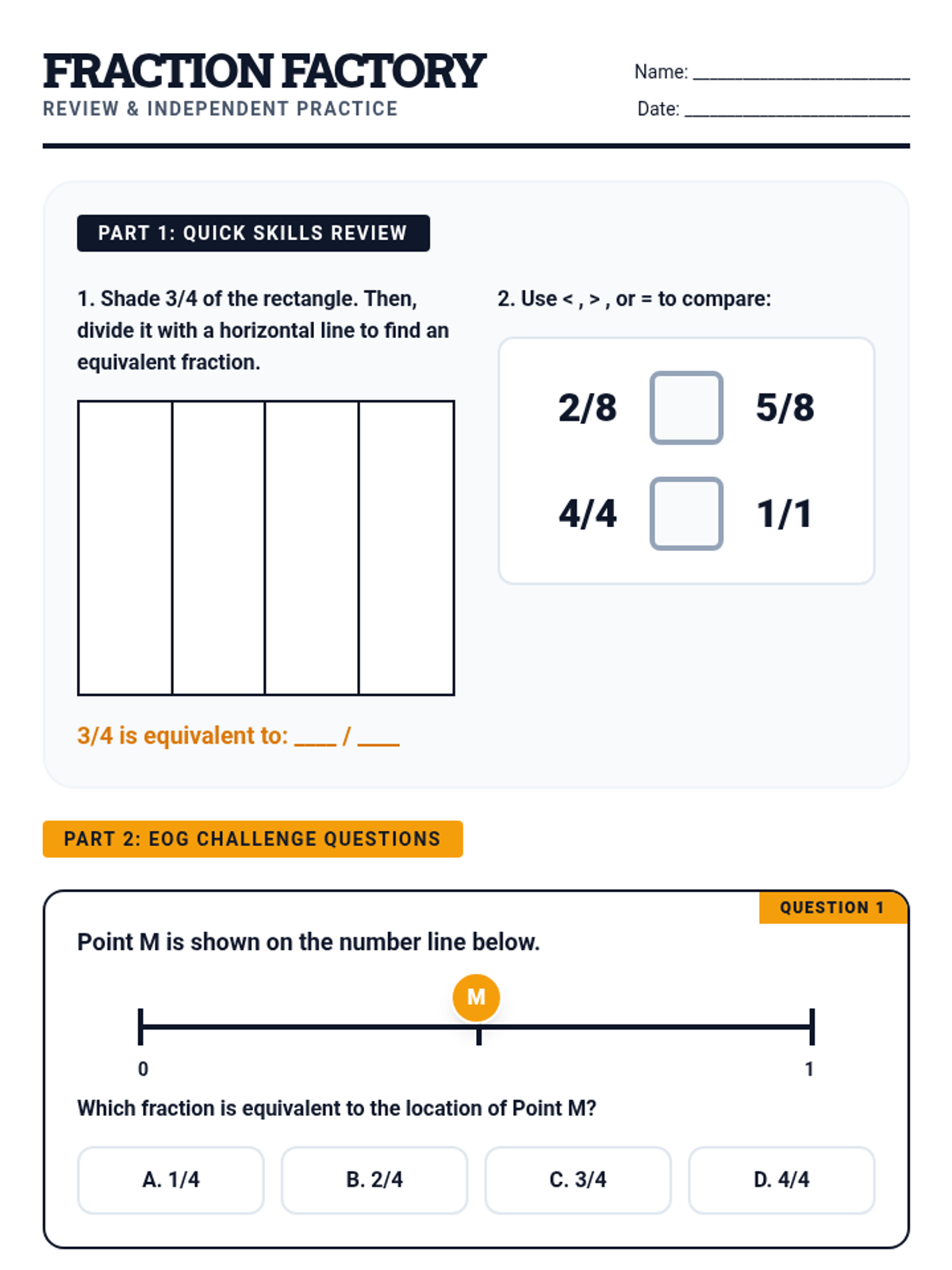
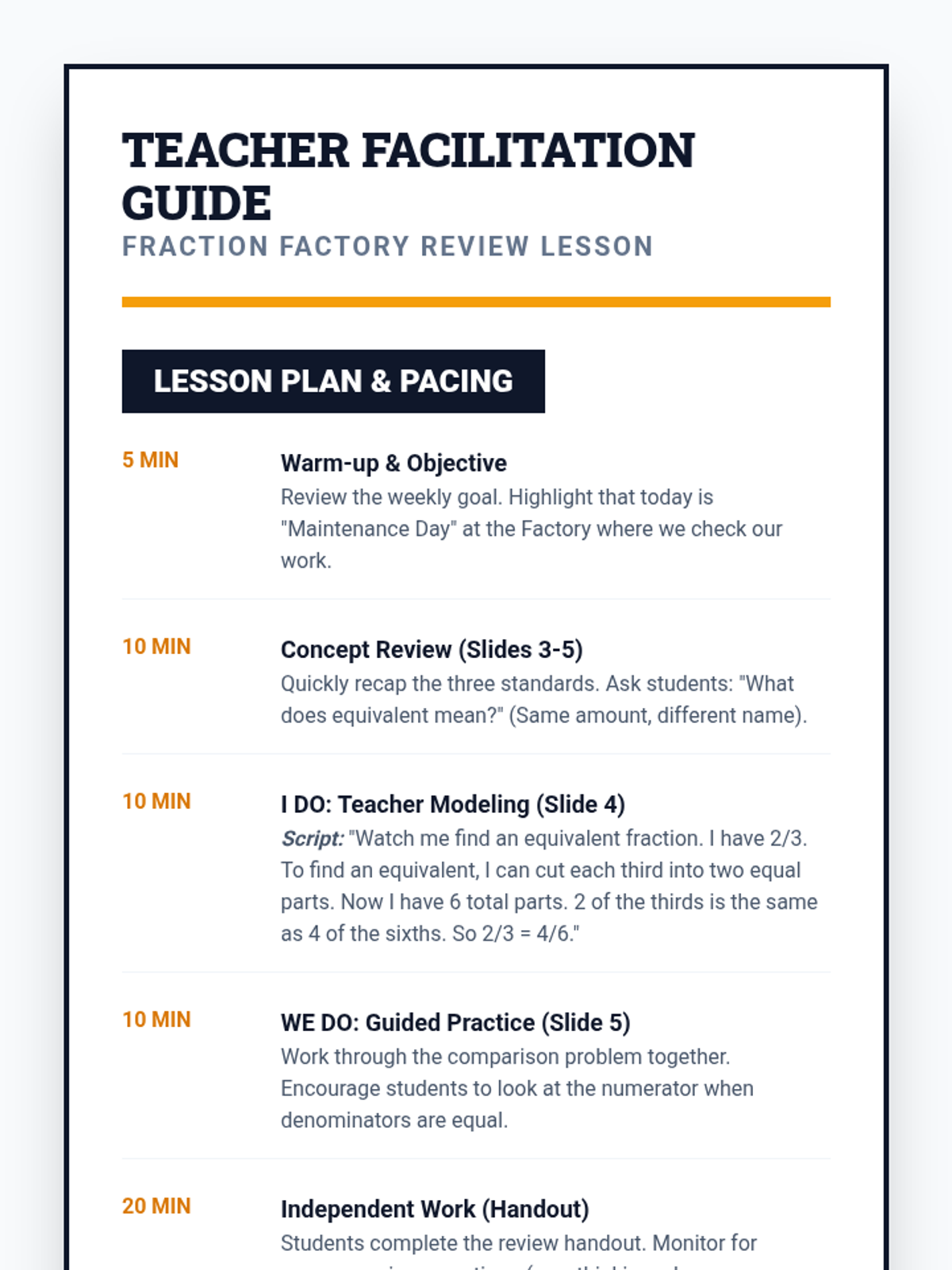
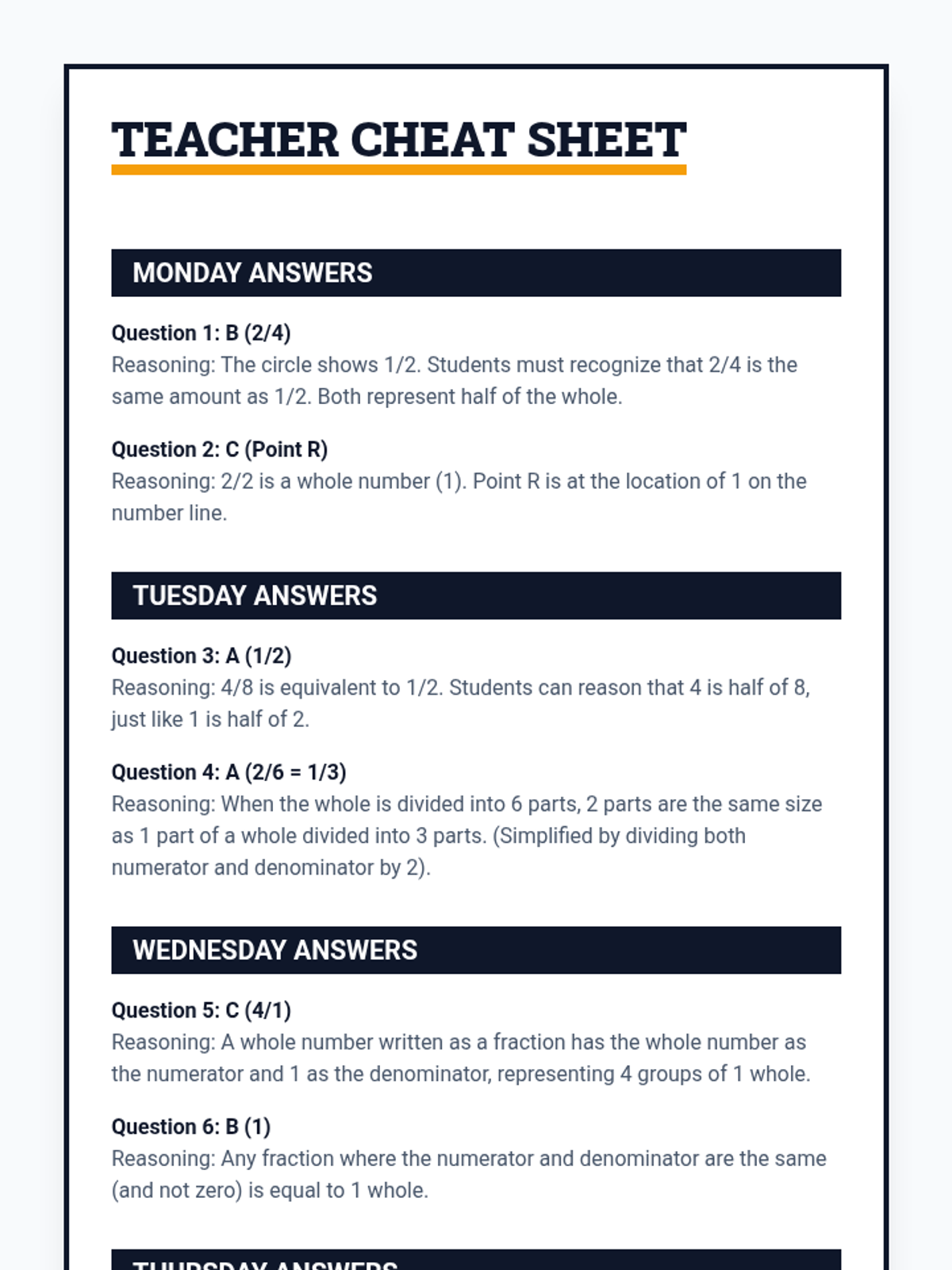
A comprehensive review lesson designed to synthesize the week's learning on equivalence, whole numbers, and comparisons, featuring guided instruction and EOG-style assessment.
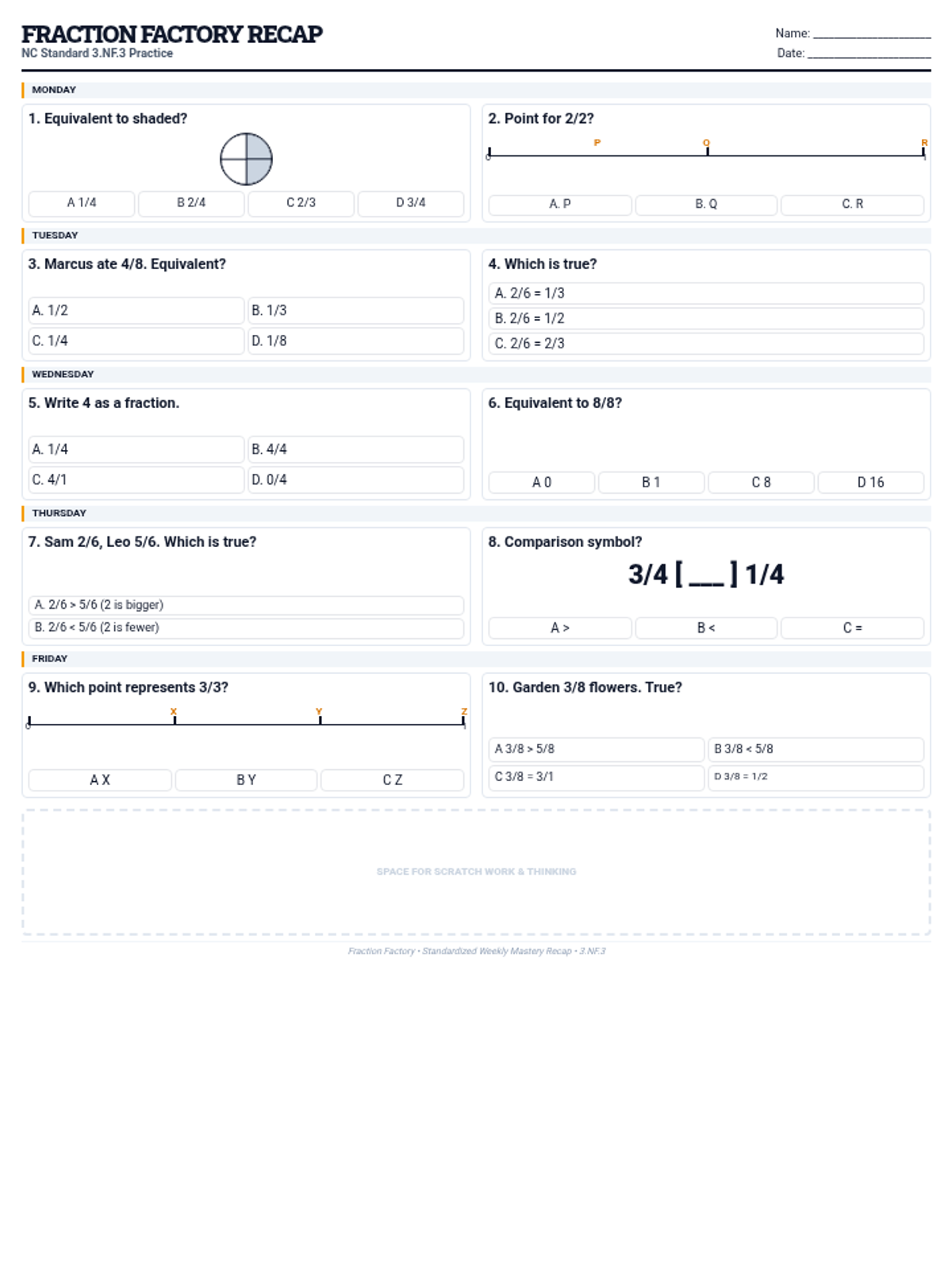
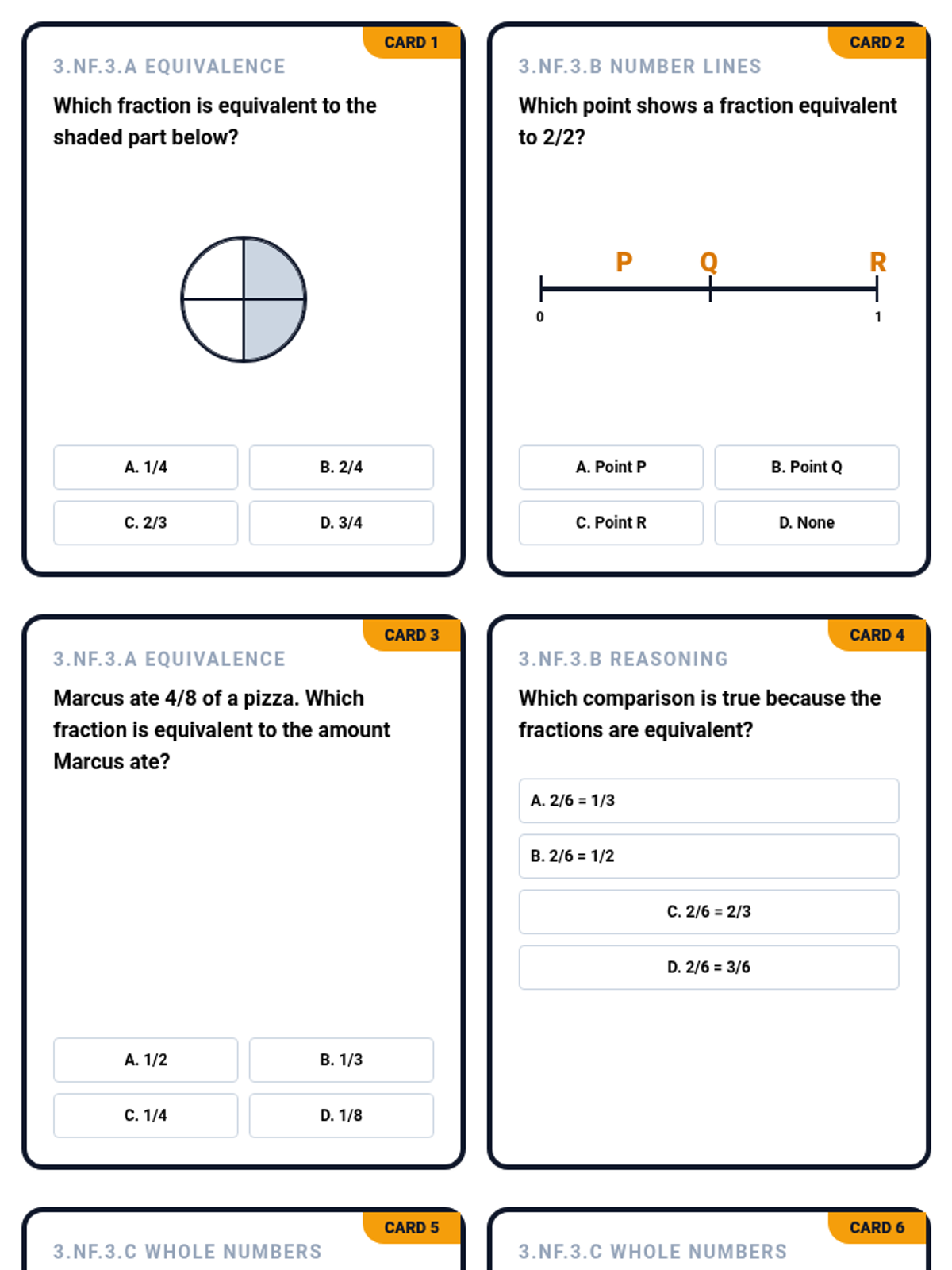
Daily warm-ups and practice for equivalent fractions, whole numbers, and comparisons designed to prepare students for EOG-style questions.
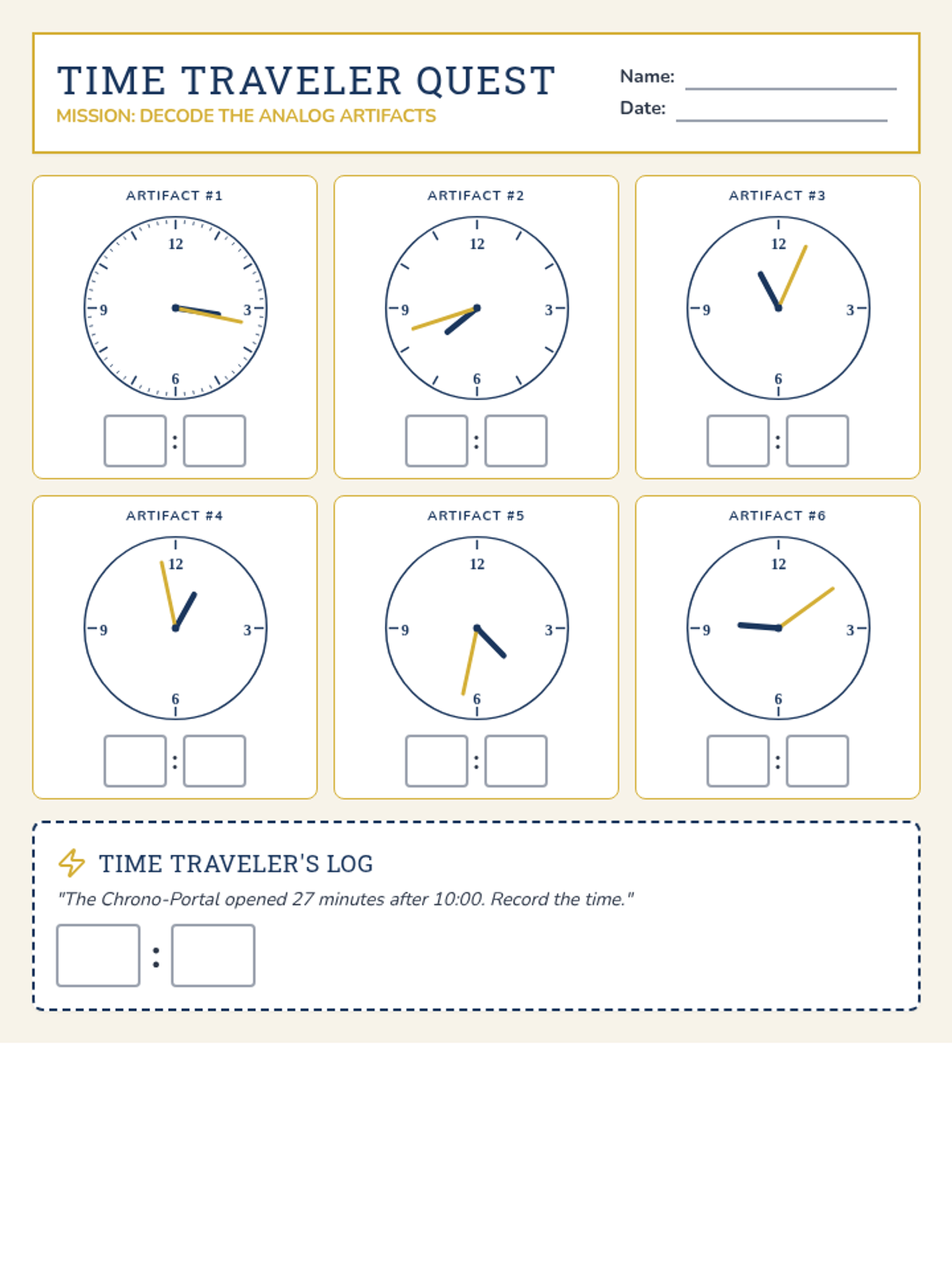
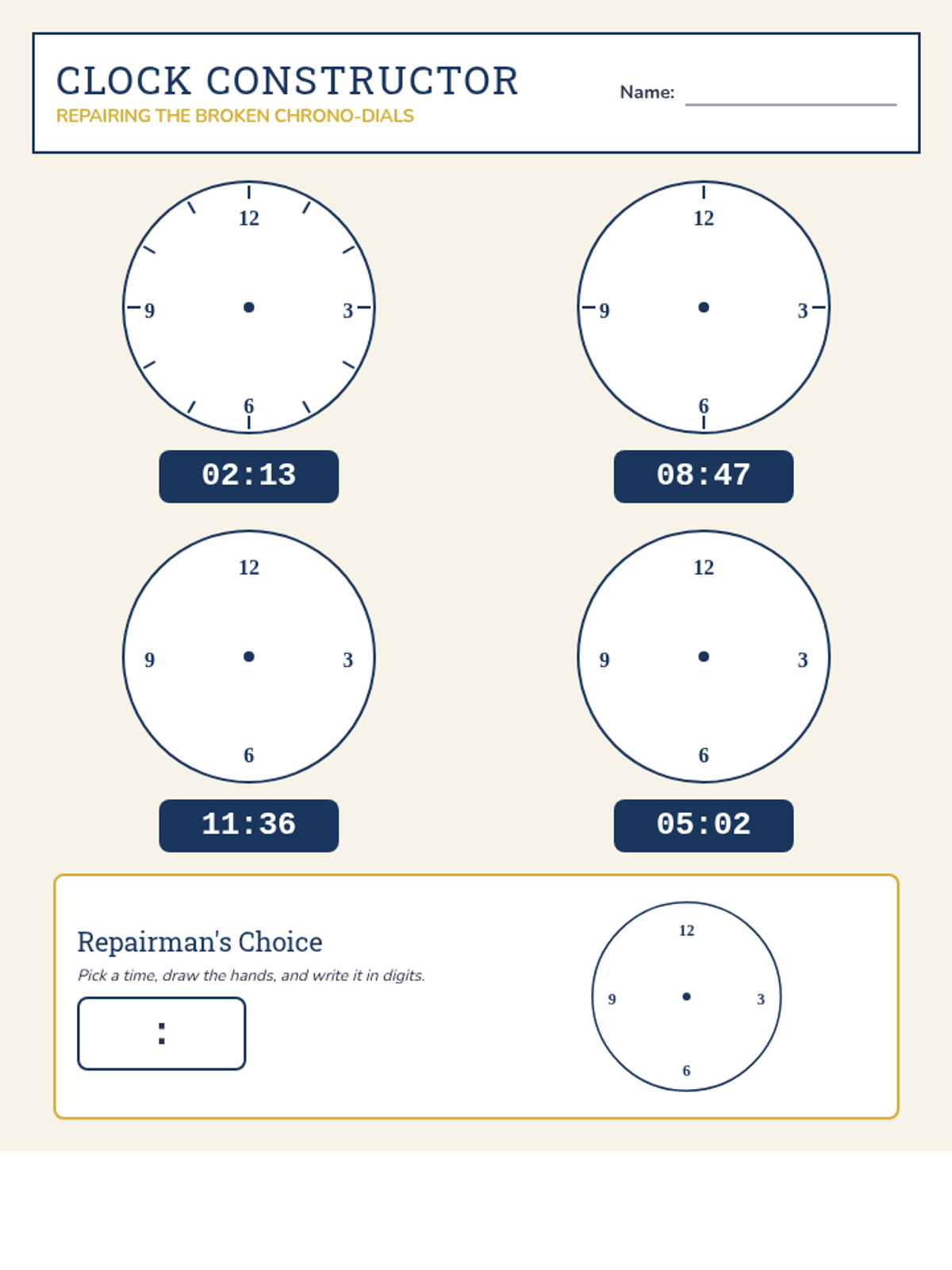
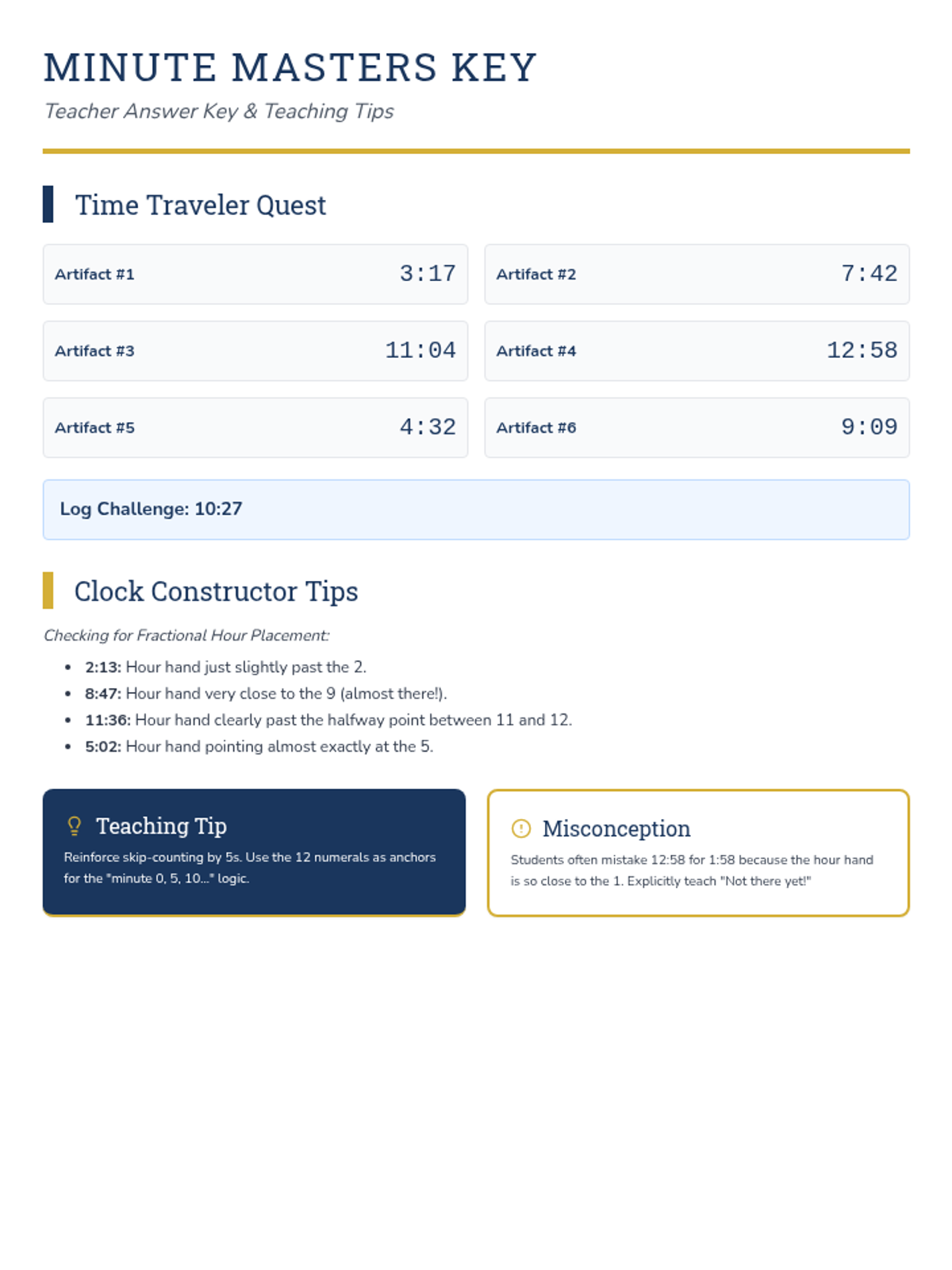
A comprehensive lesson on telling time to the minute, focusing on reading analog clocks and representing time accurately. Students will practice reading intricate clock faces and drawing hands to represent specific times.
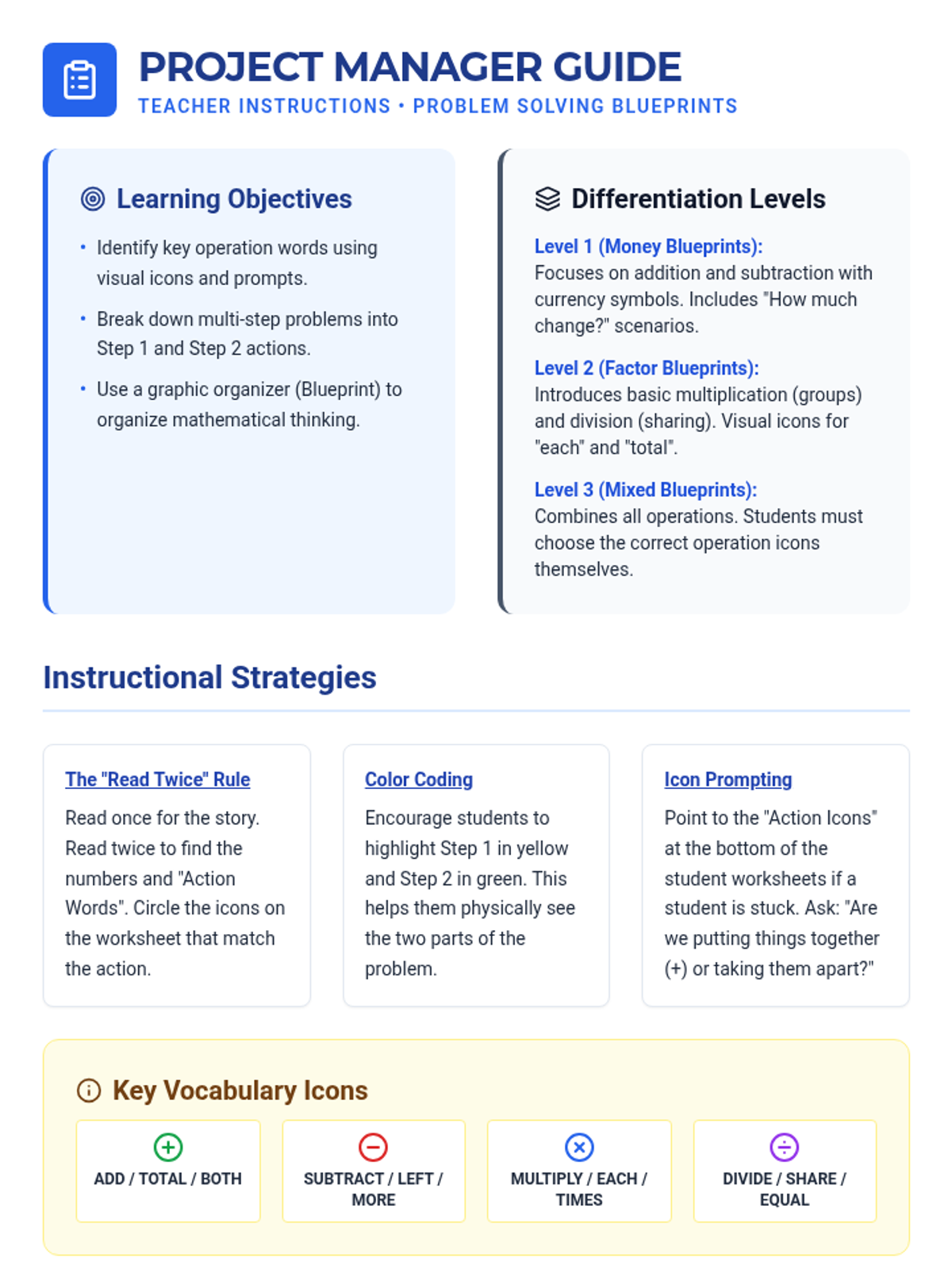
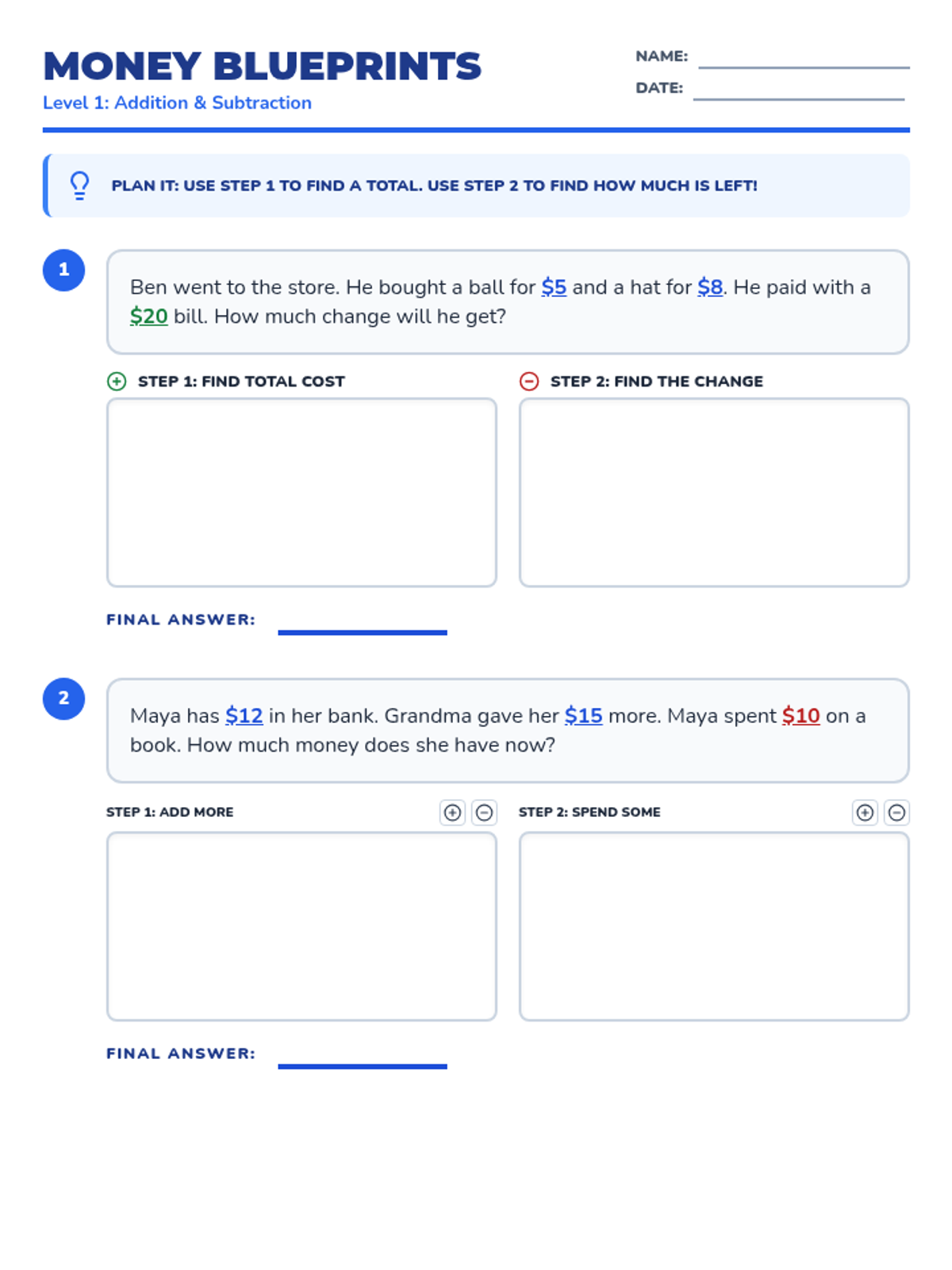
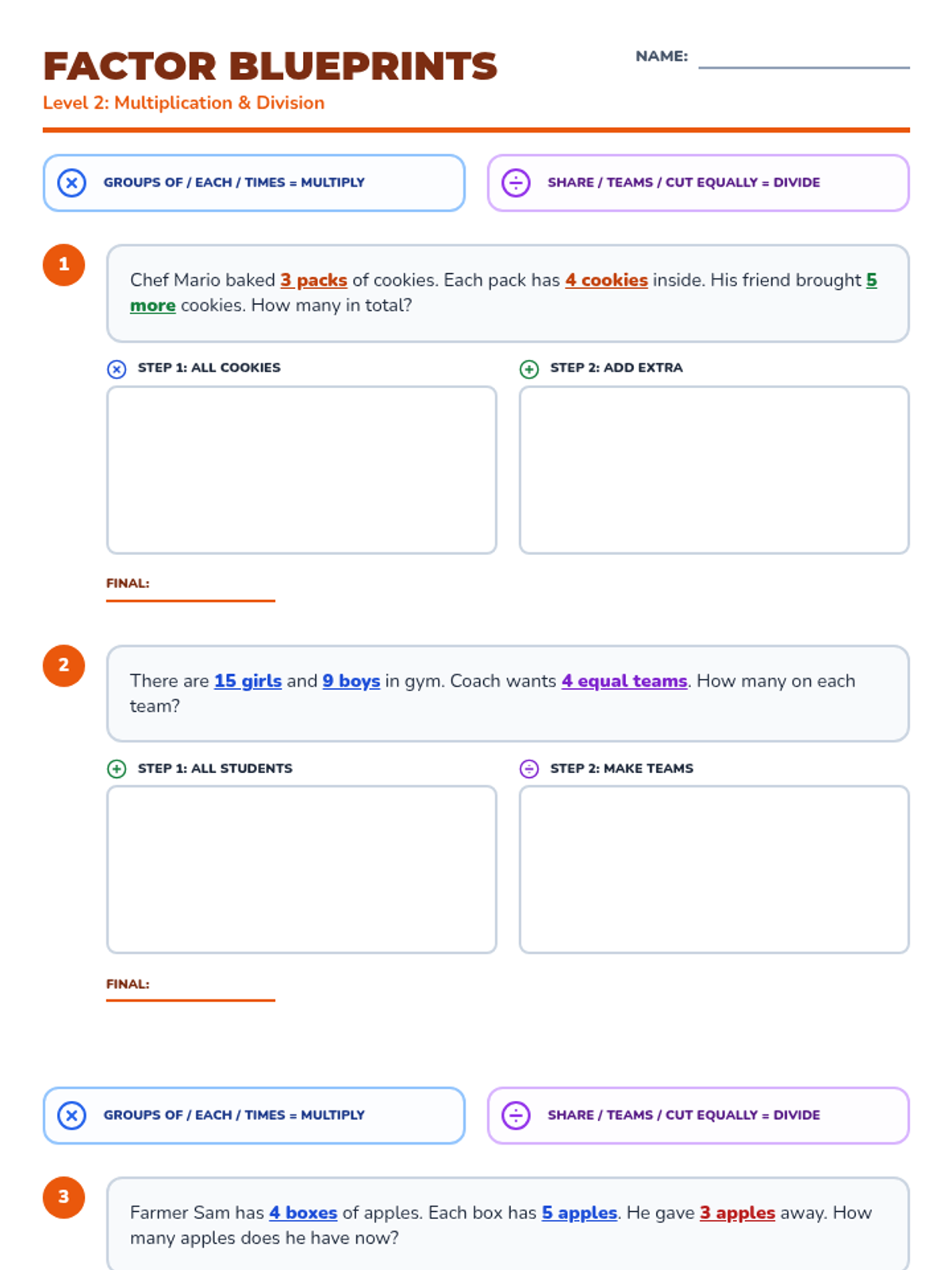
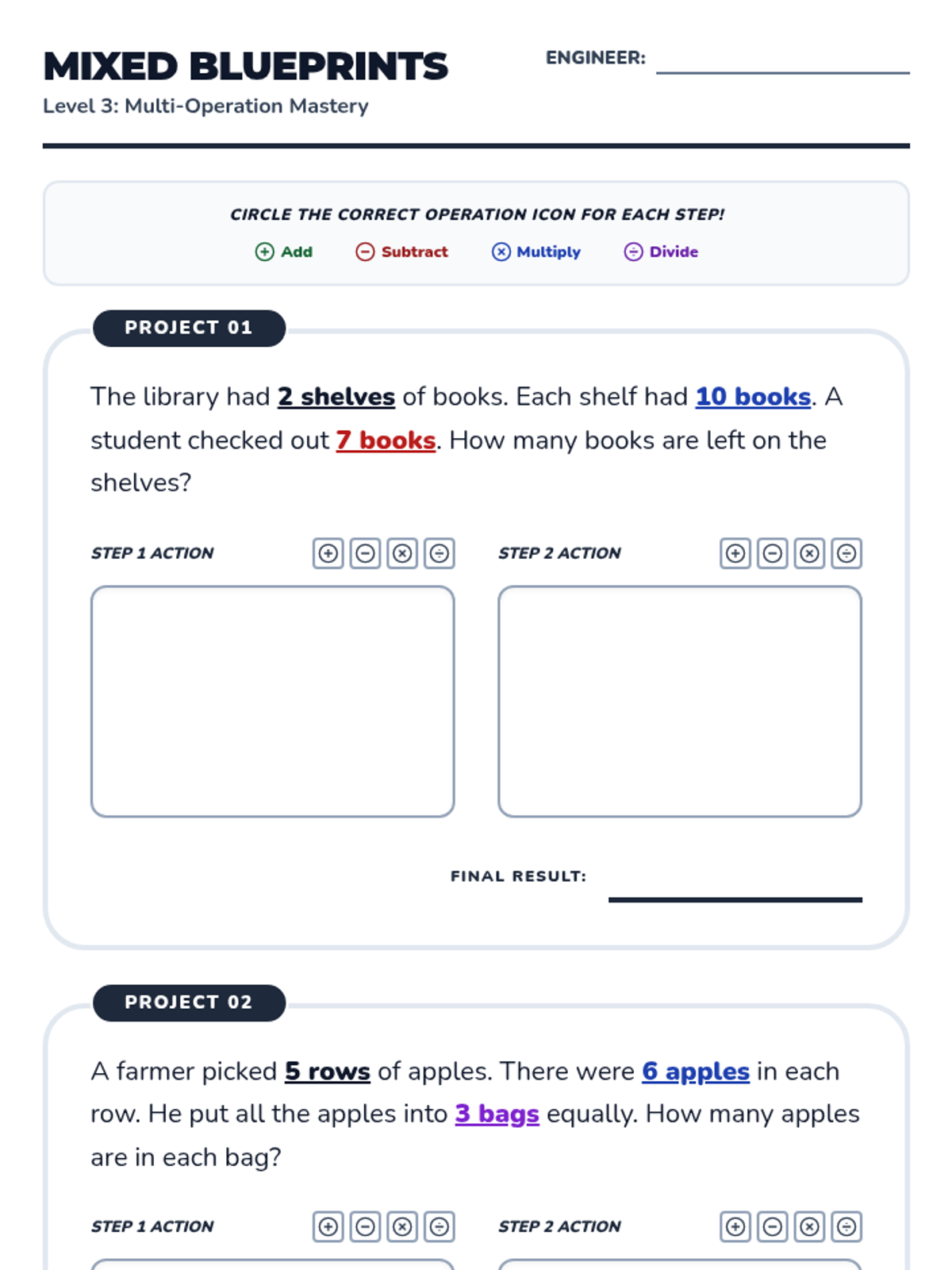
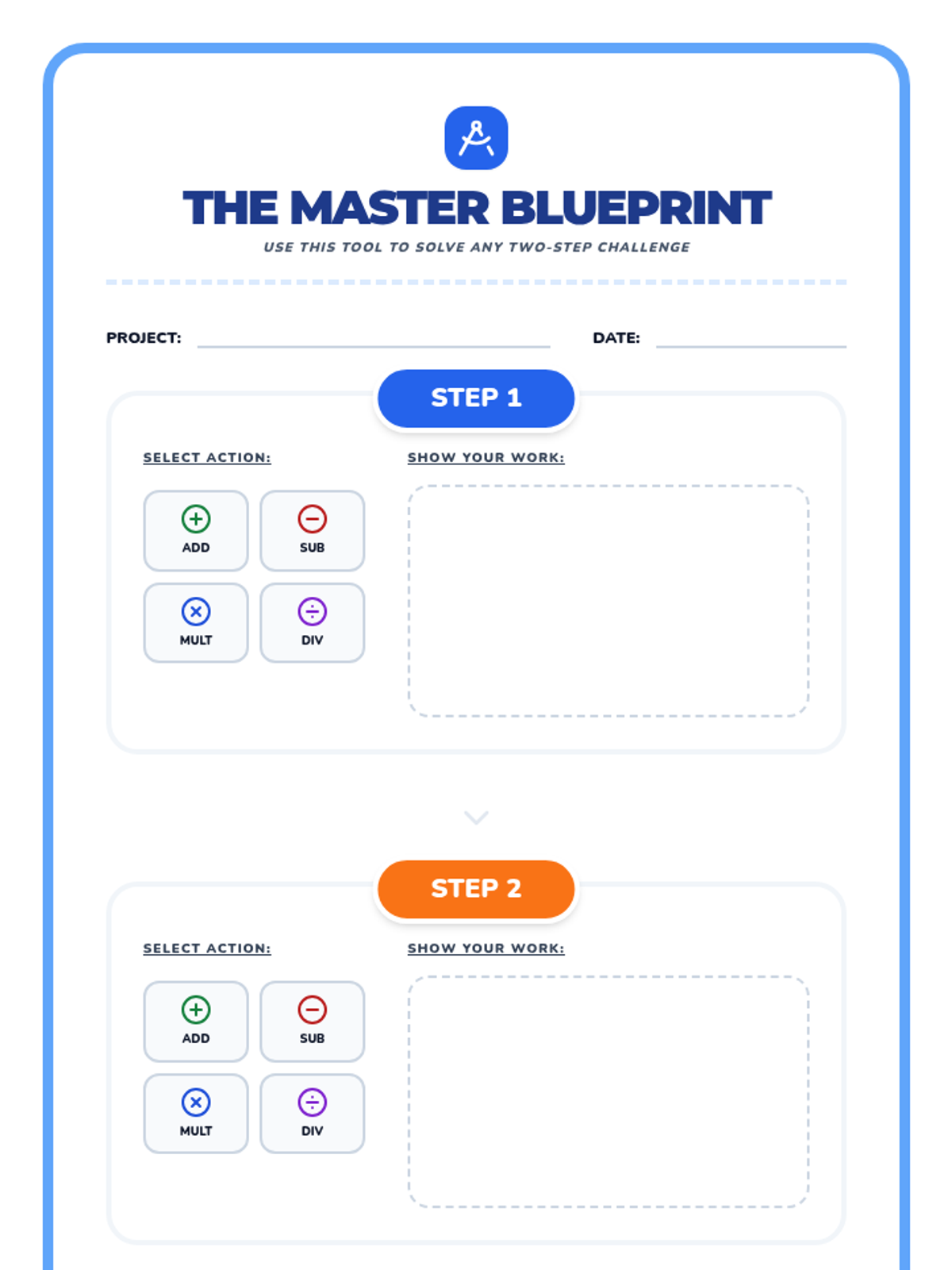
This lesson introduces students to multi-step word problems using a consistent graphic organizer (the Blueprint). It includes differentiated materials for various skill levels and operational focuses.
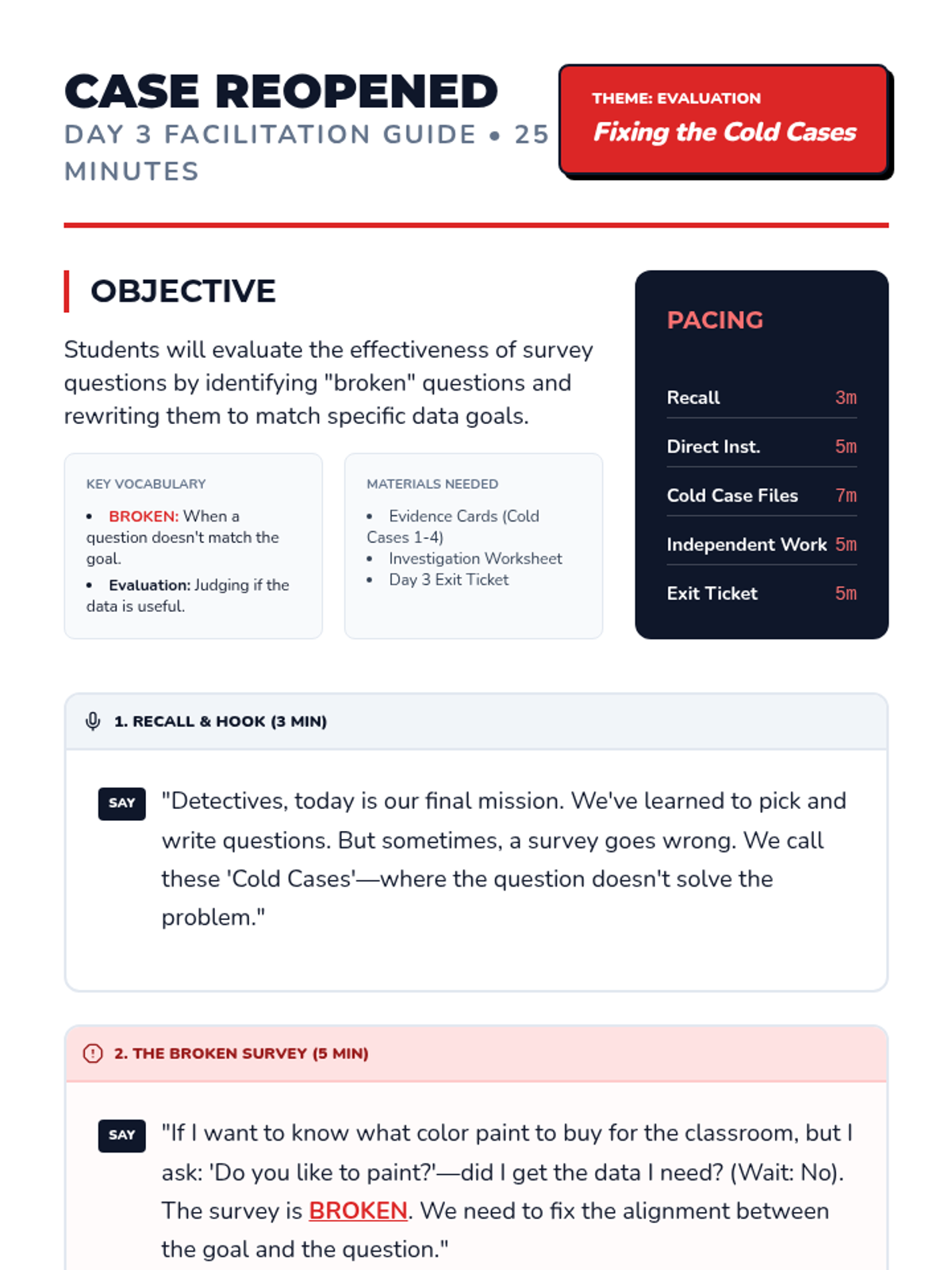
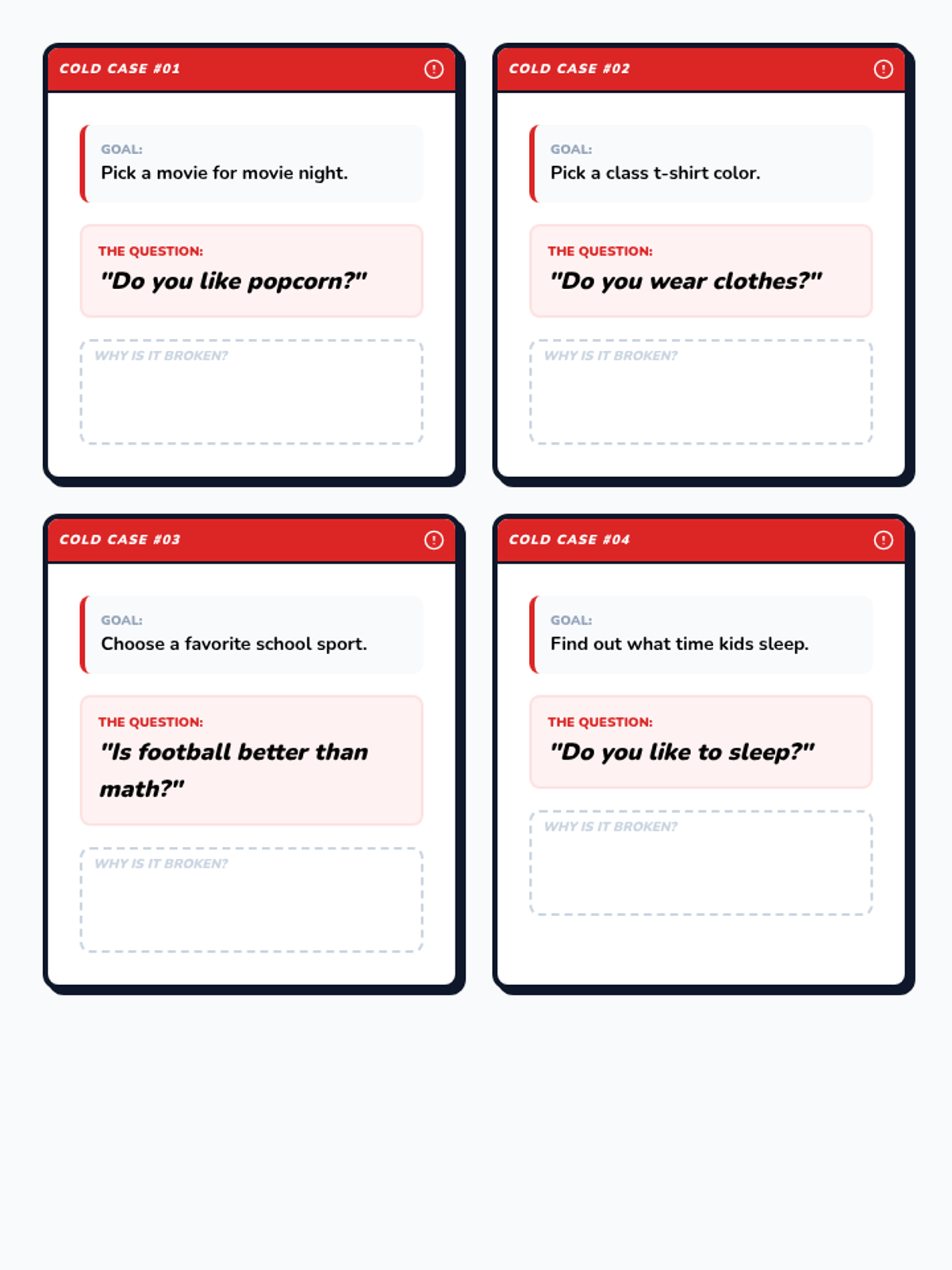
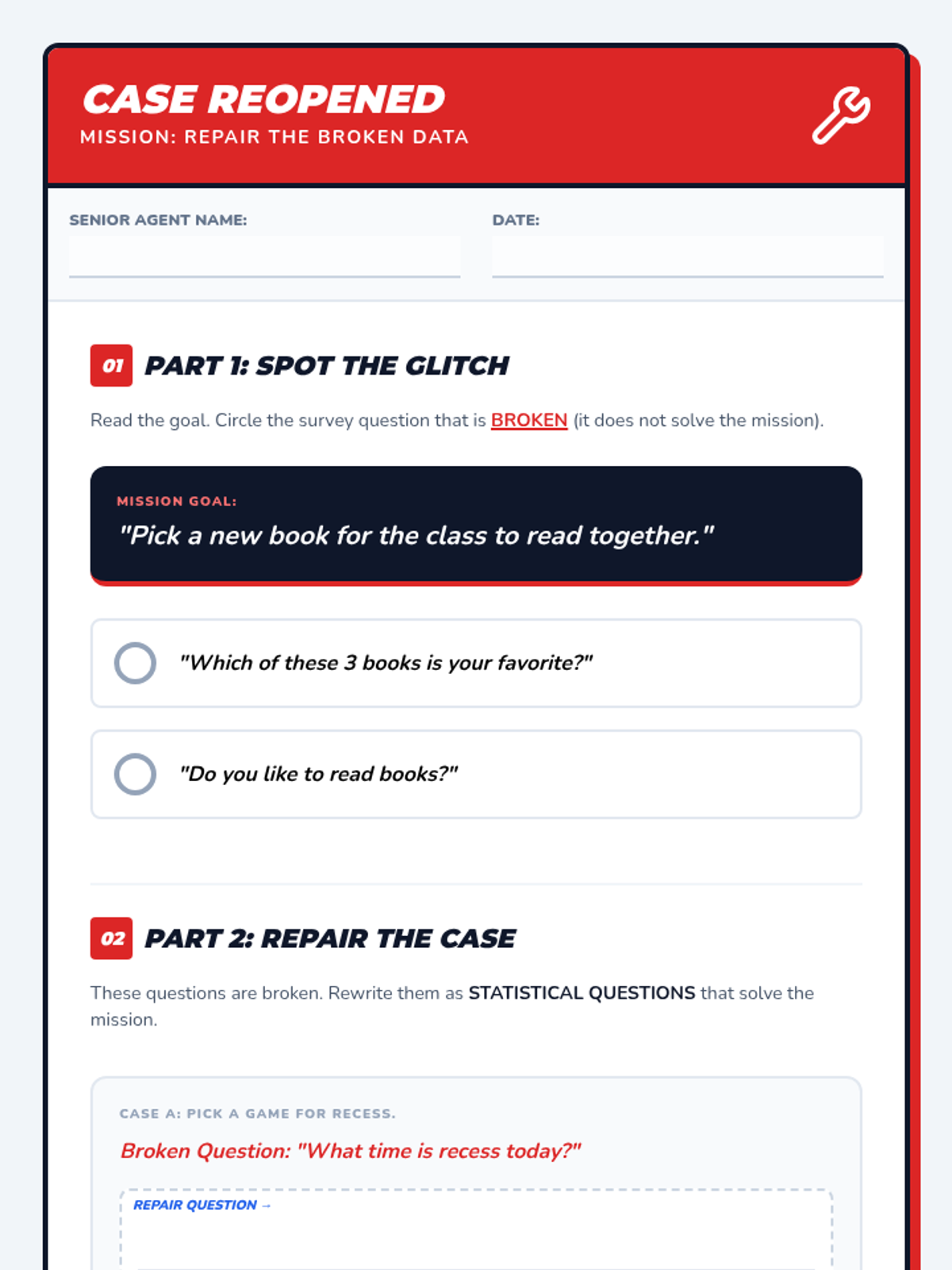
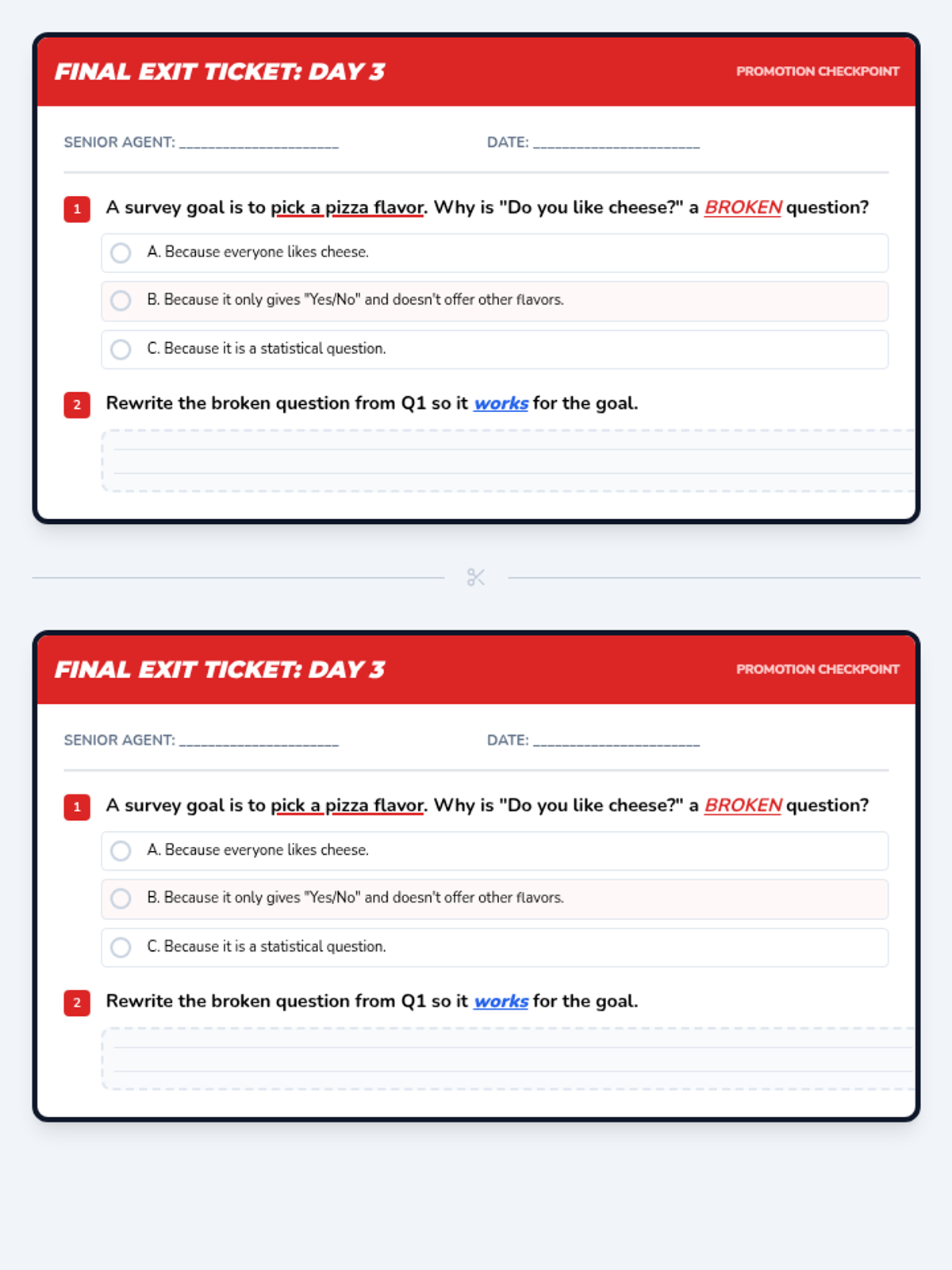
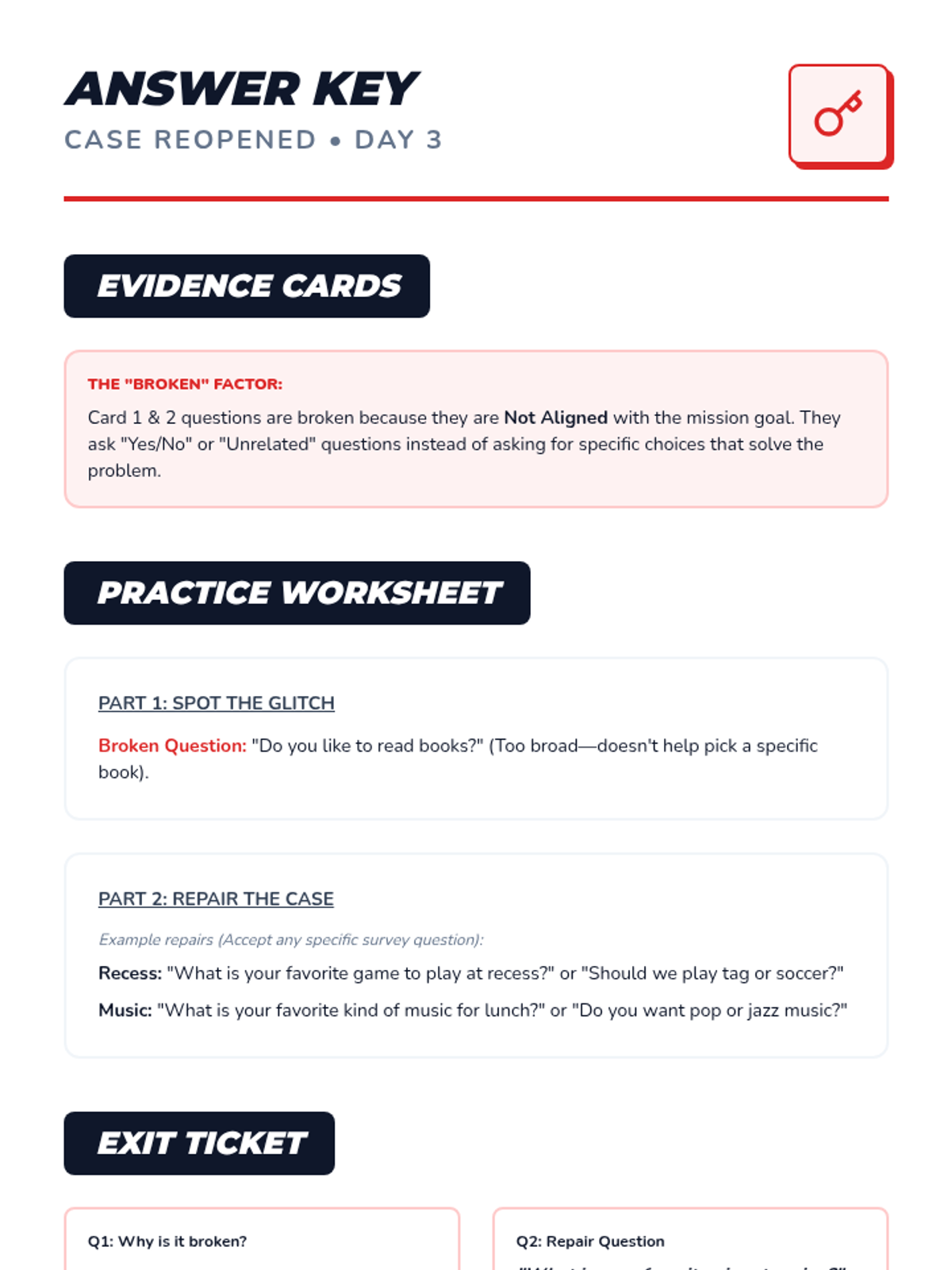
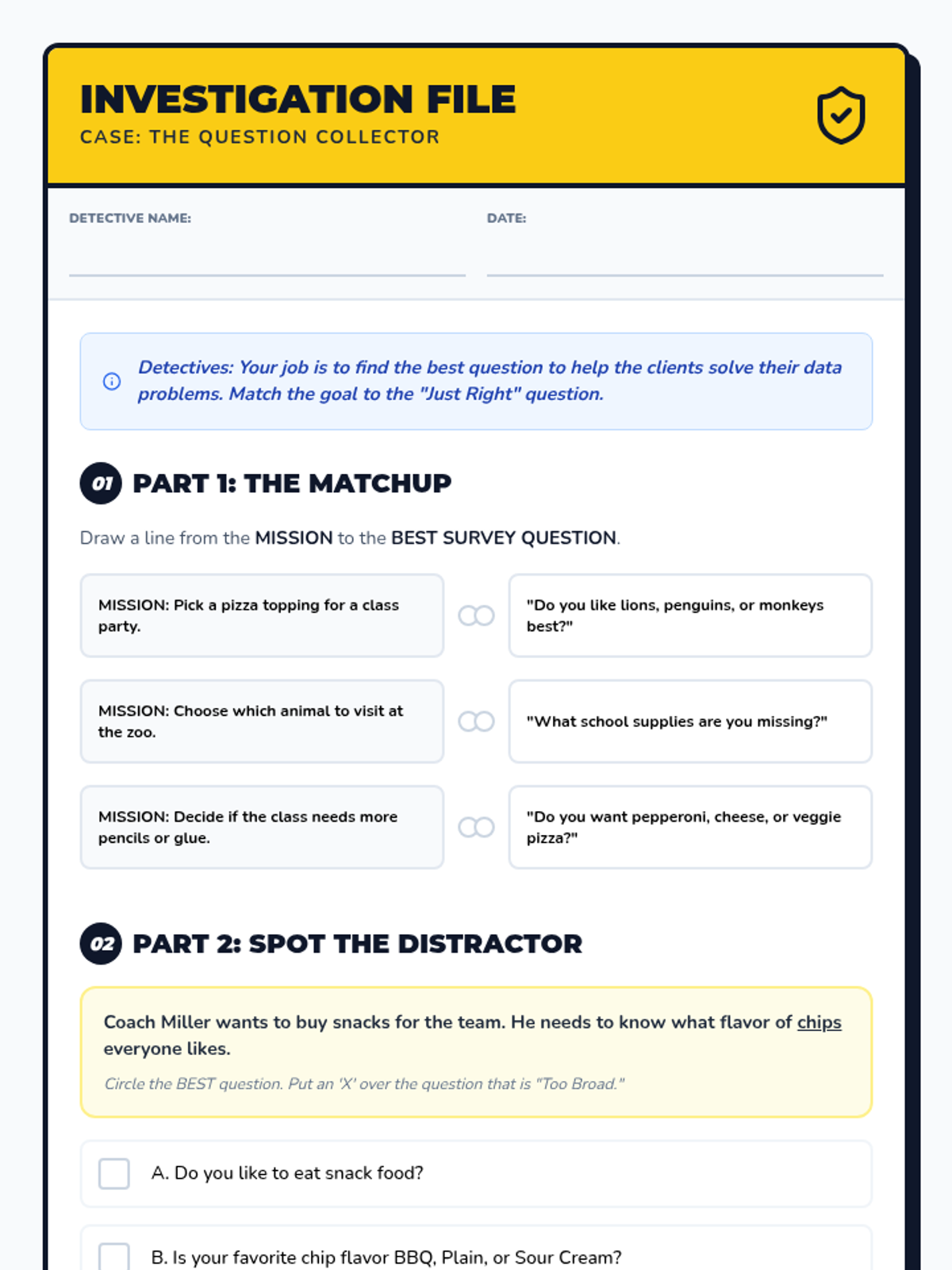
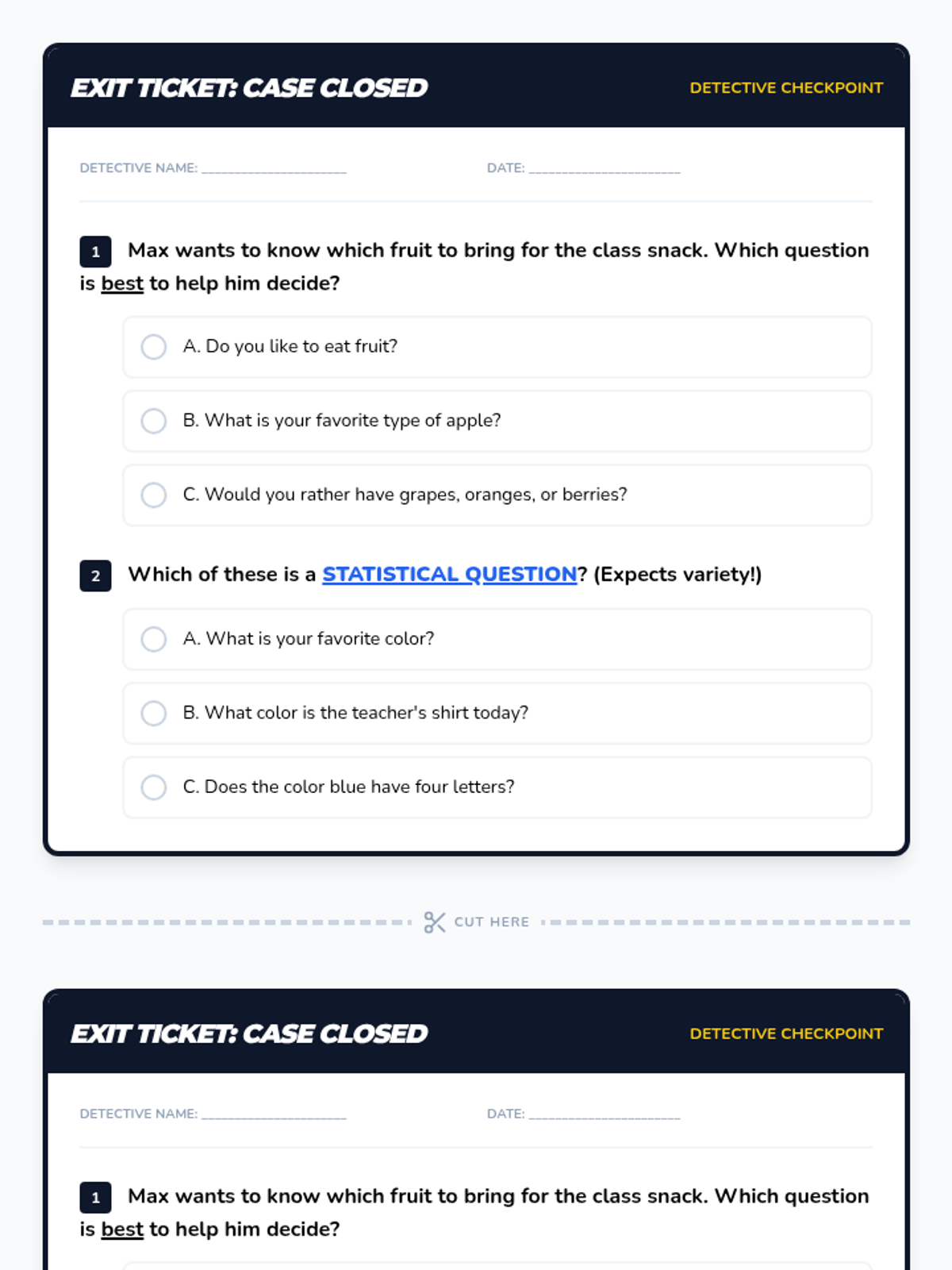
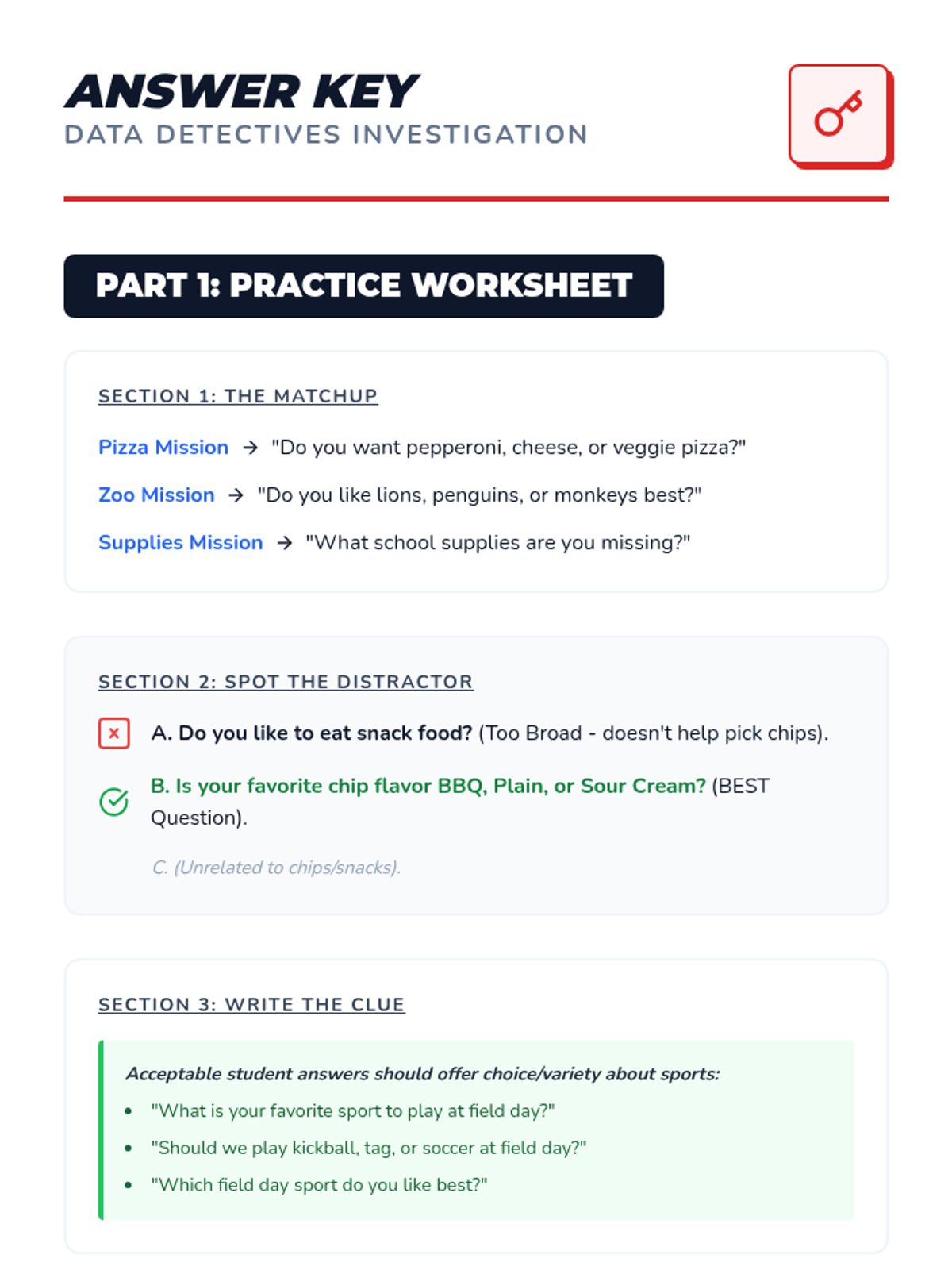
The final mission where students evaluate the effectiveness of data collection. They analyze "broken" surveys where the question didn't match the goal and practice rewriting them for accuracy.
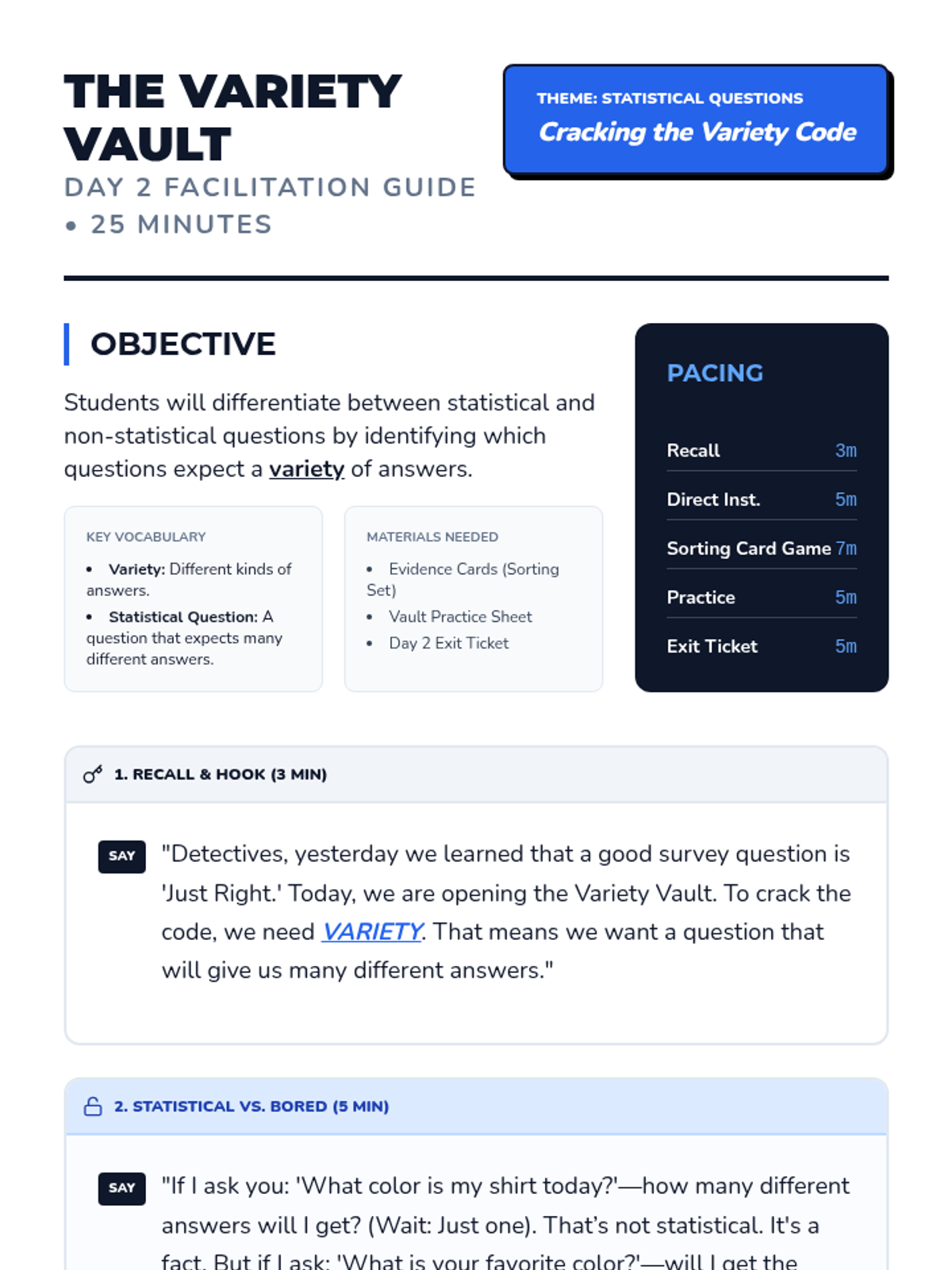
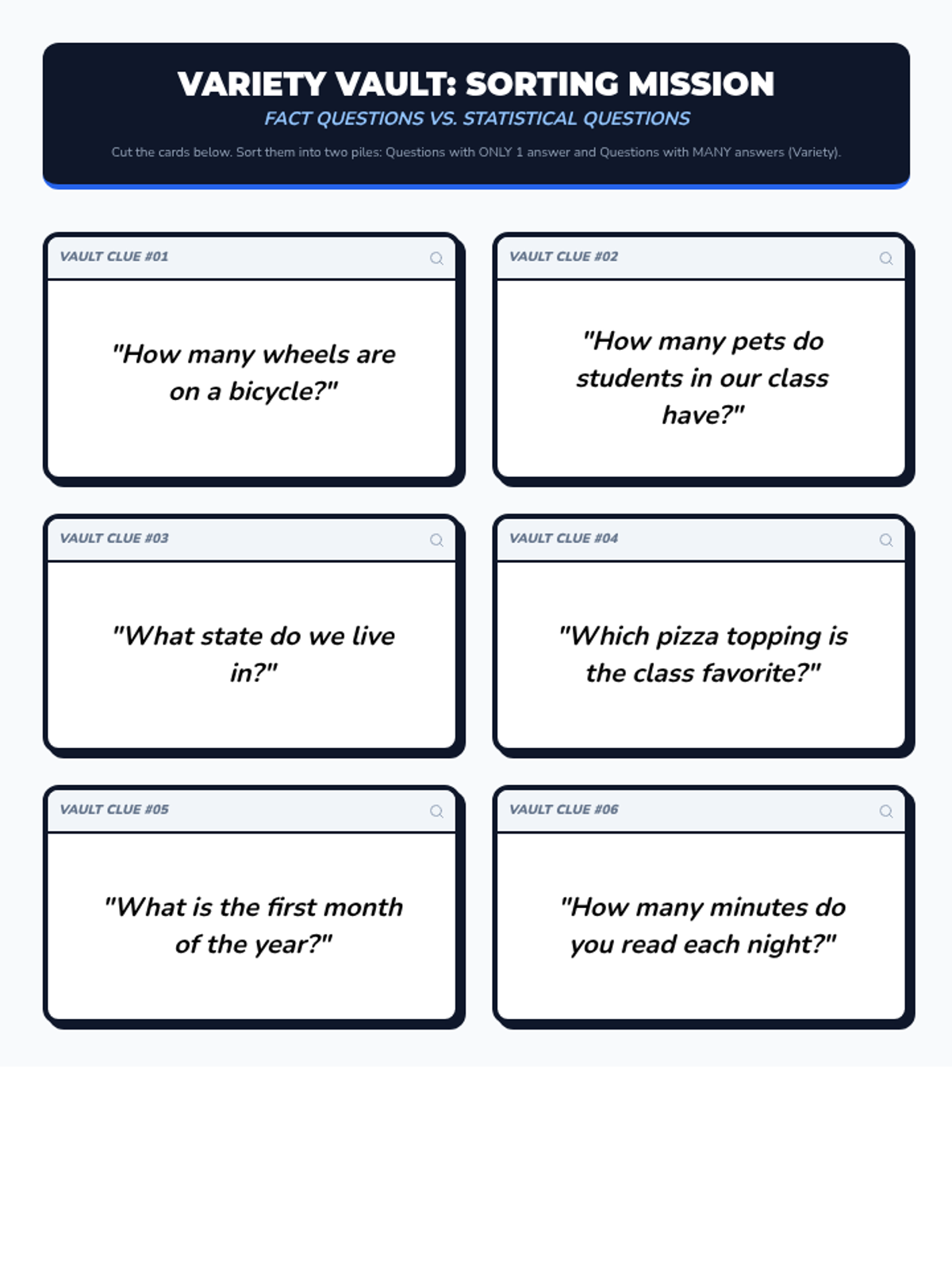
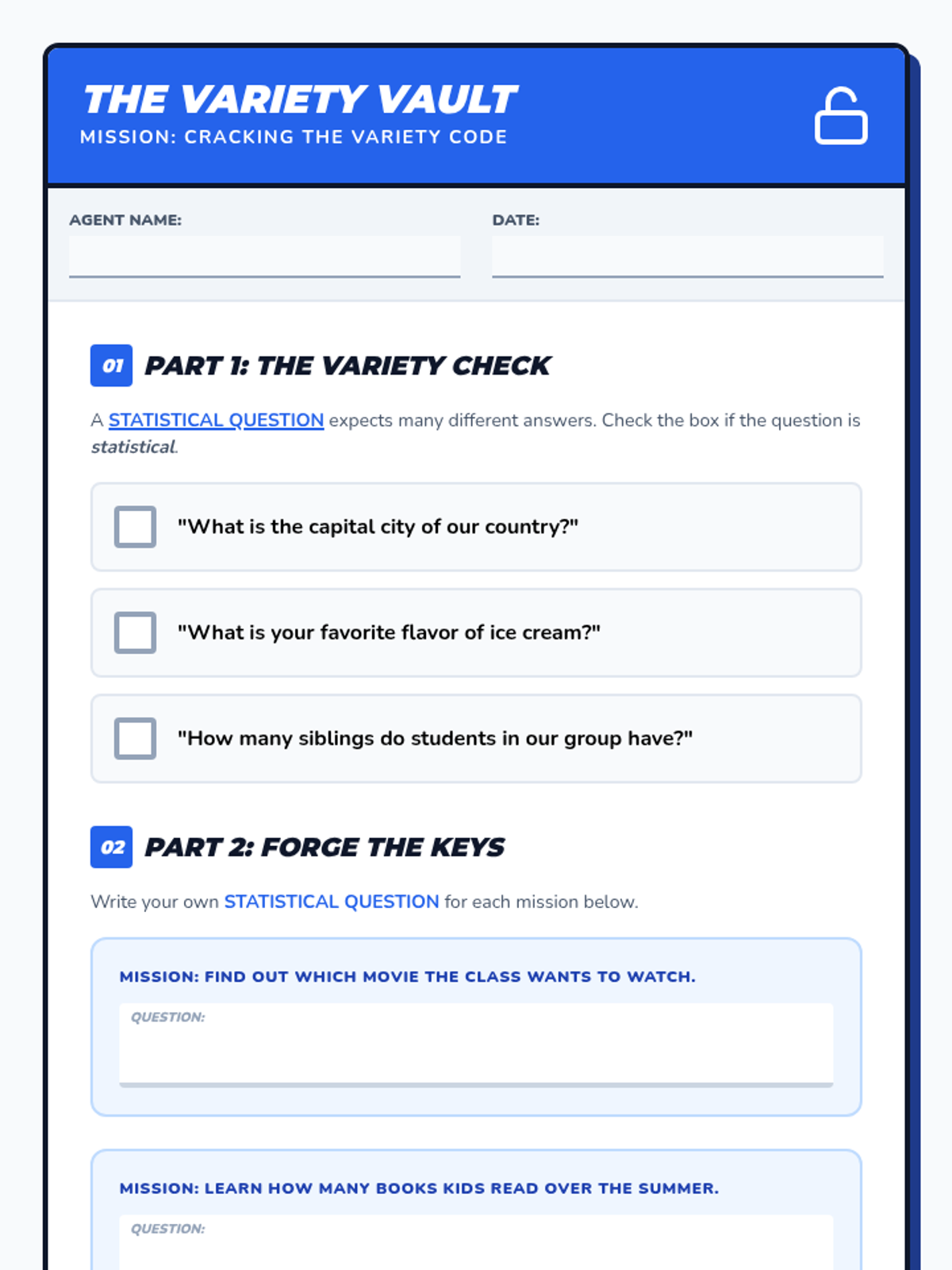
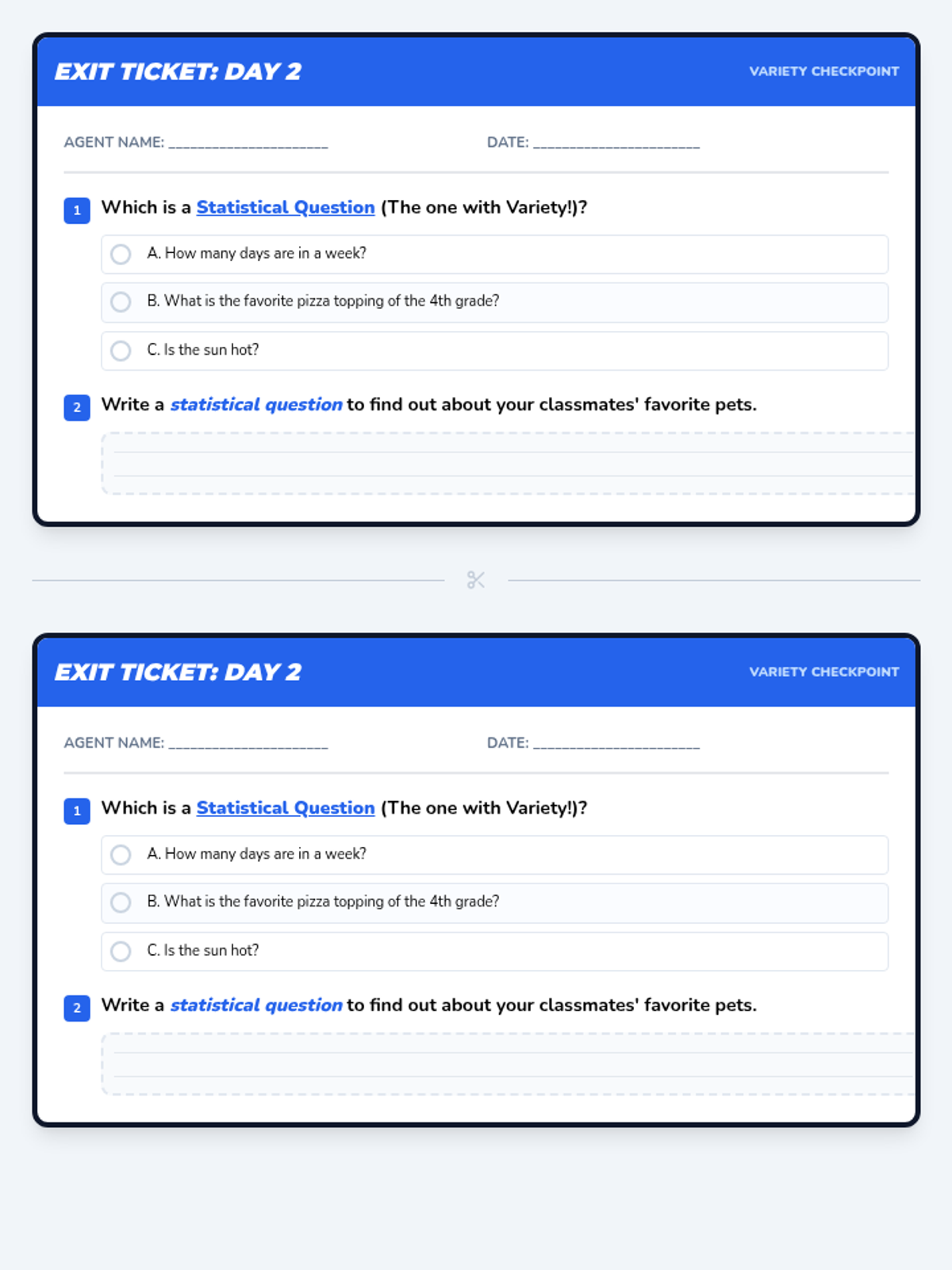
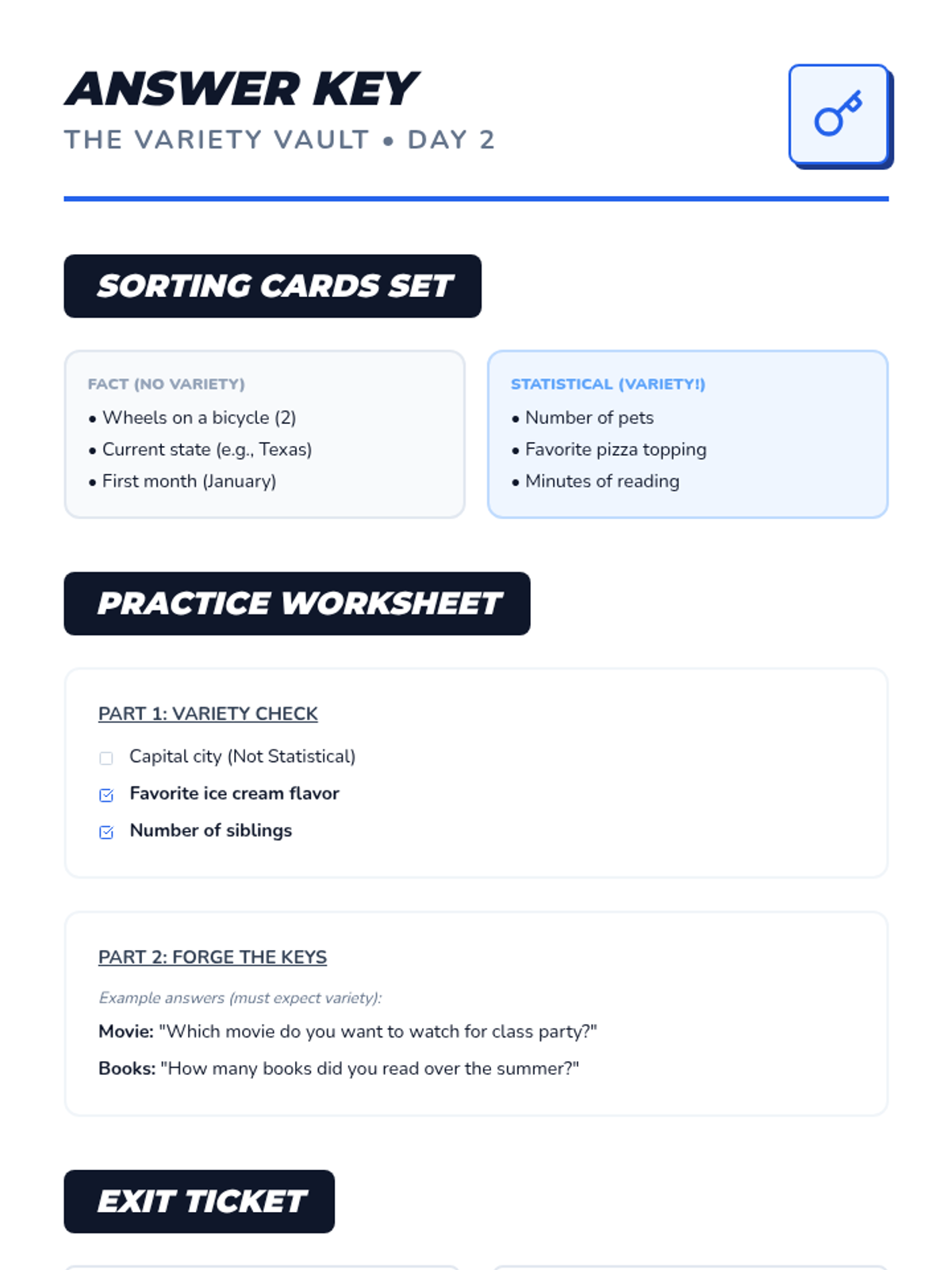
Focuses on differentiating between statistical and non-statistical questions. Students learn that a good survey question must expect a variety of answers to be useful for data collection.
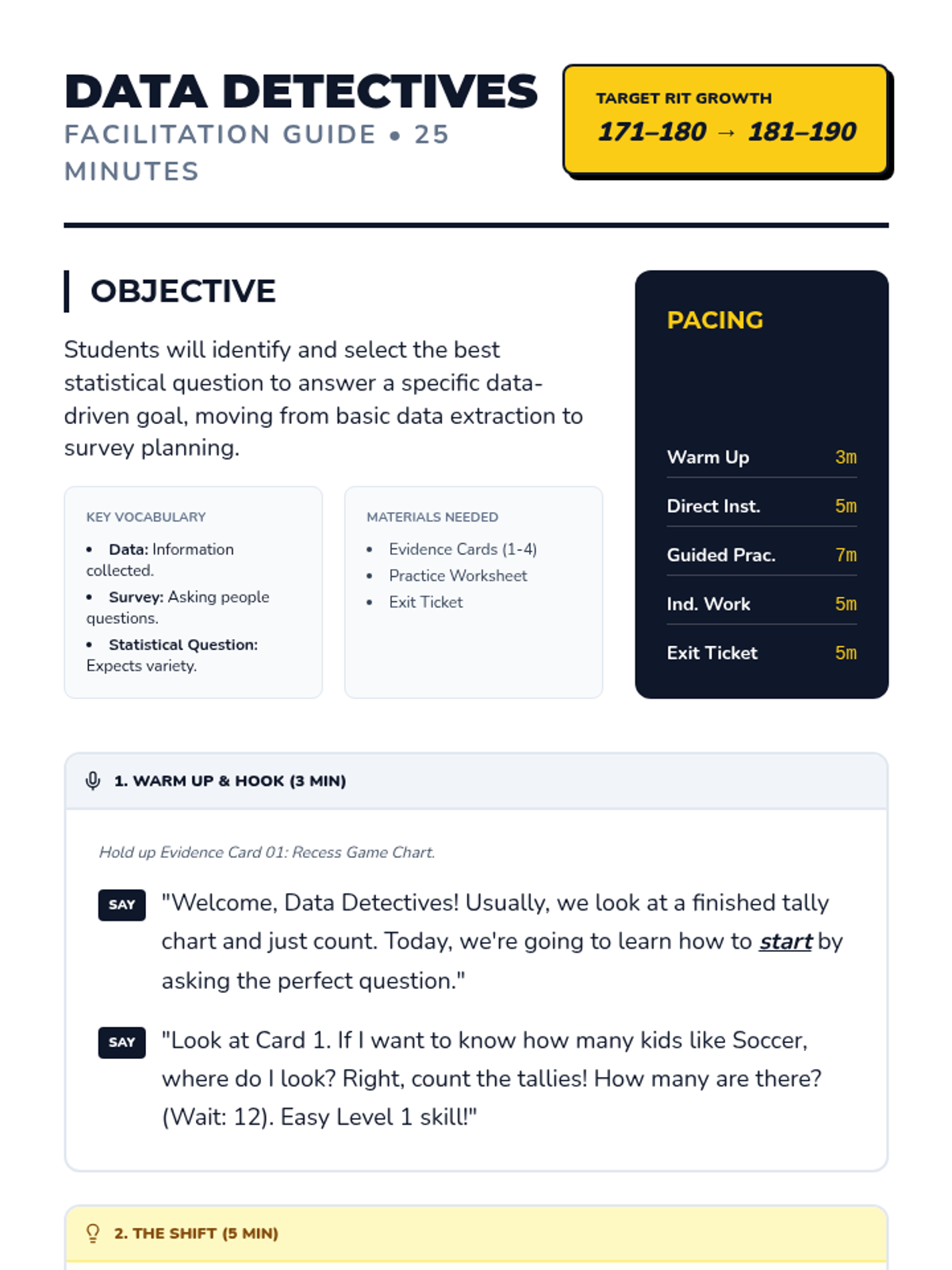
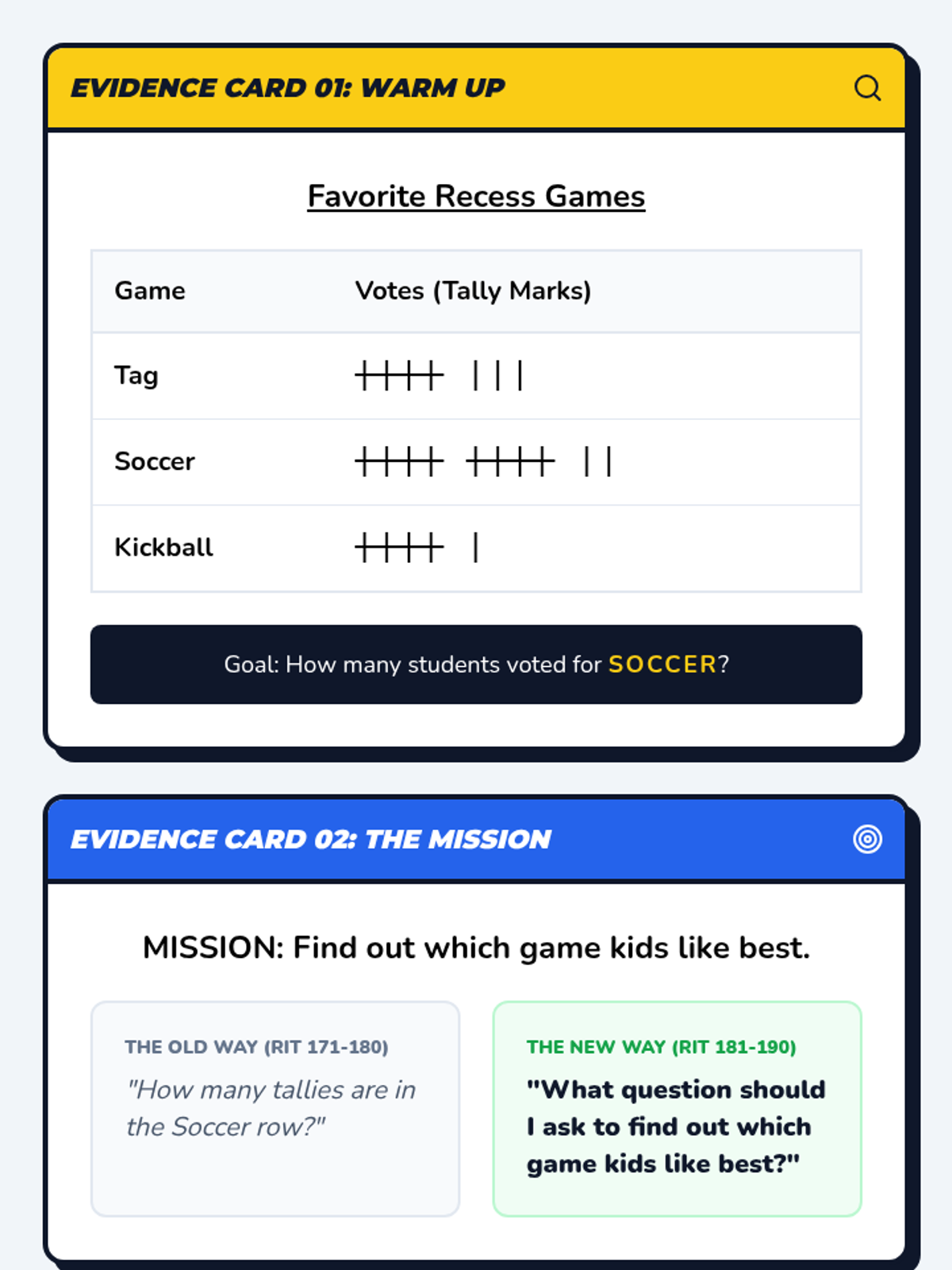
A 25-minute small group lesson designed to move students from RIT 171-180 to 181-190 by shifting from basic data interpretation to formulating and selecting effective statistical questions.
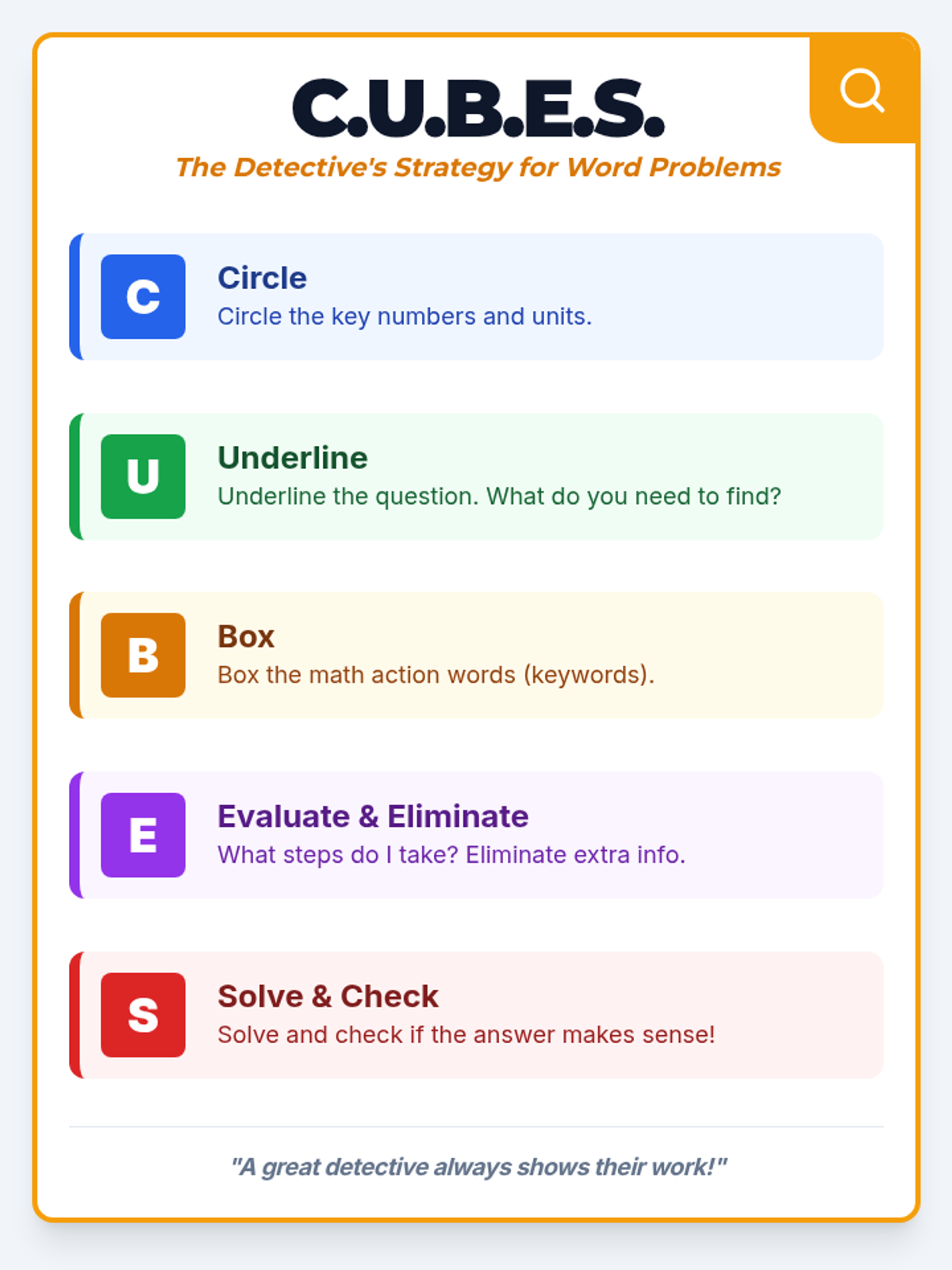
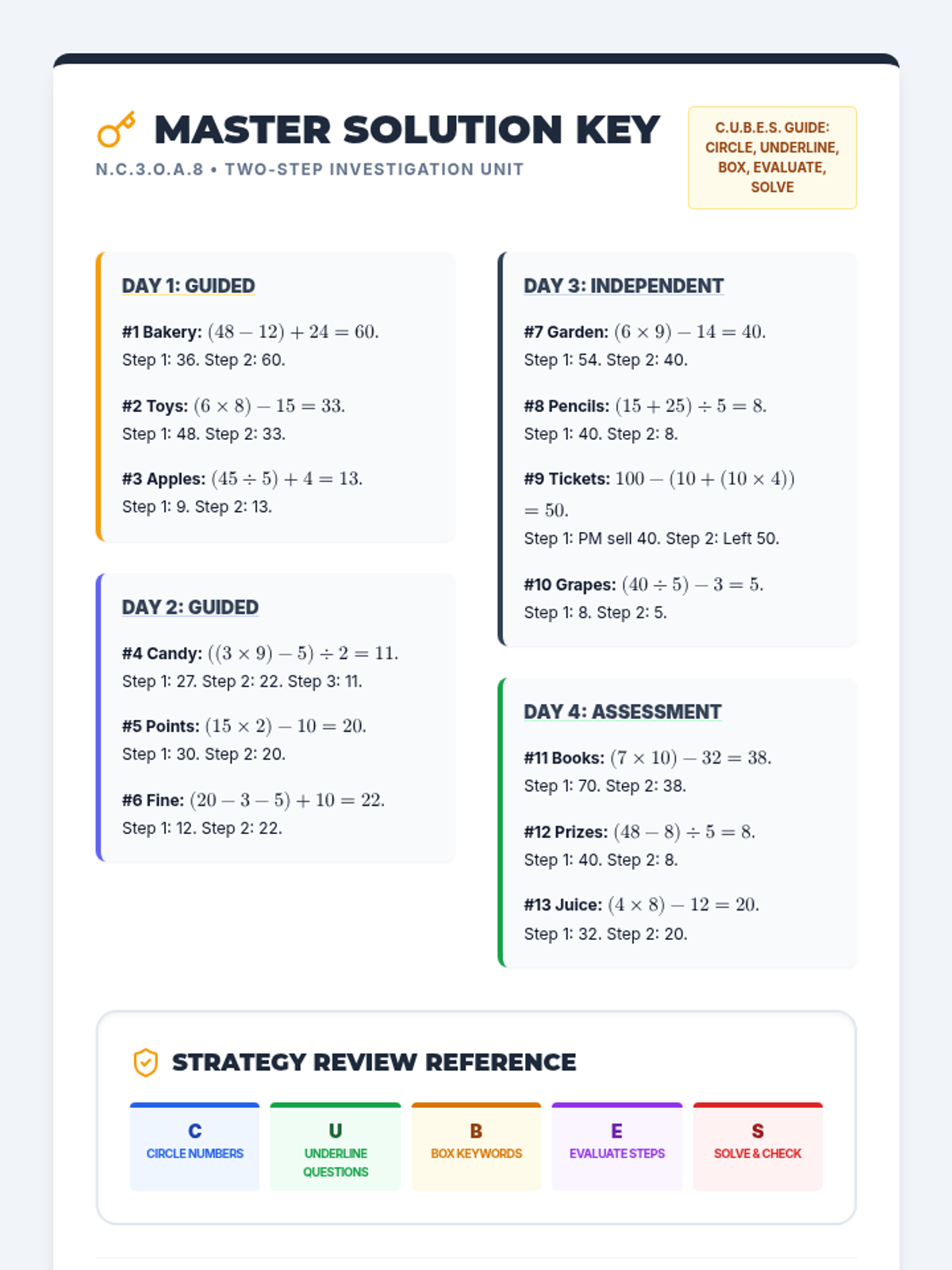
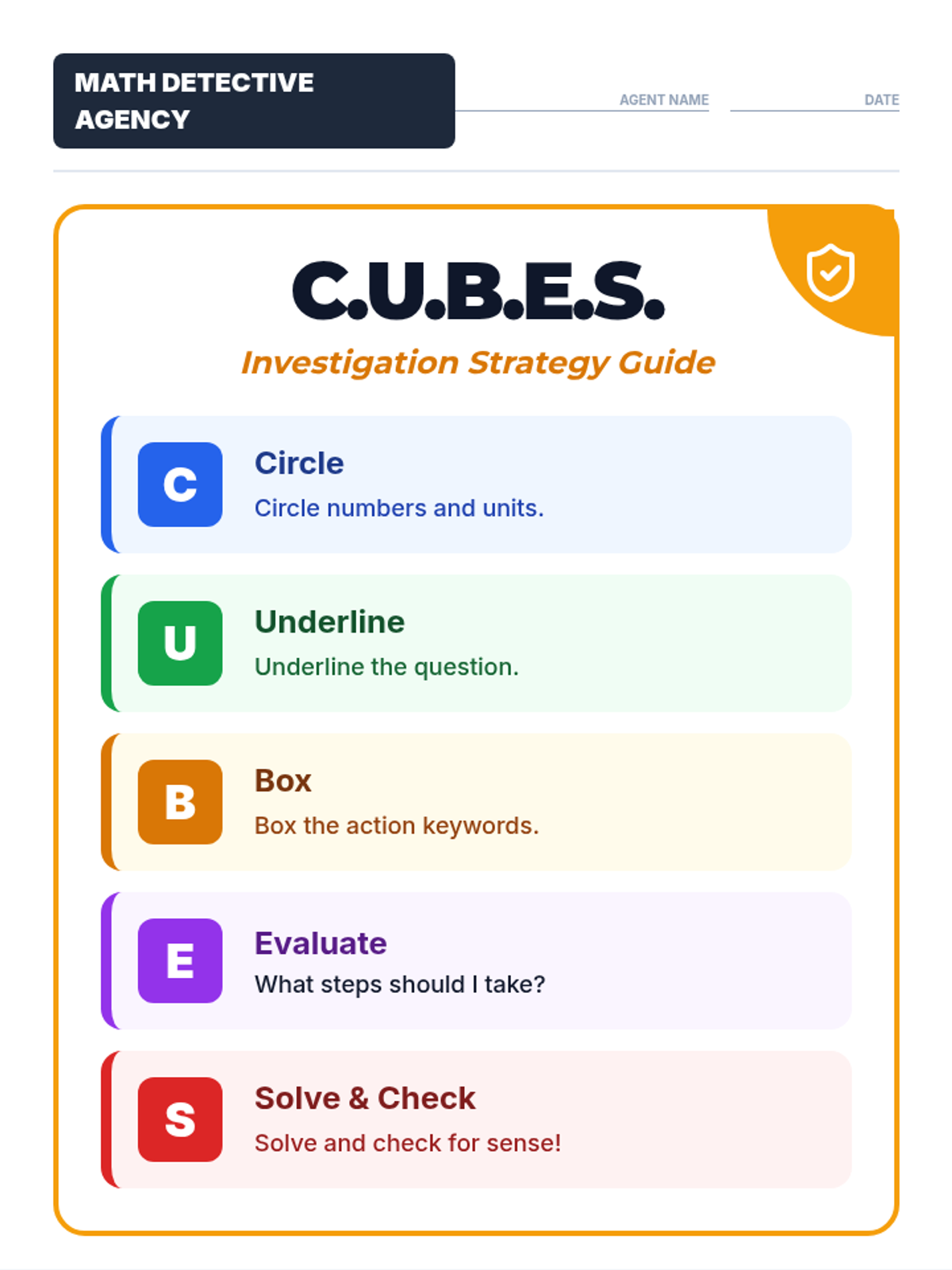
A 4-day intensive on solving two-step word problems using all four operations, featuring the CUBES strategy, variable equations, and reasonableness checks.