A 2nd-grade math lesson that introduces fractions (wholes, halves, and quarters) using real-world food examples, an engaging video, and a creative 'Fraction Picnic' drawing activity.
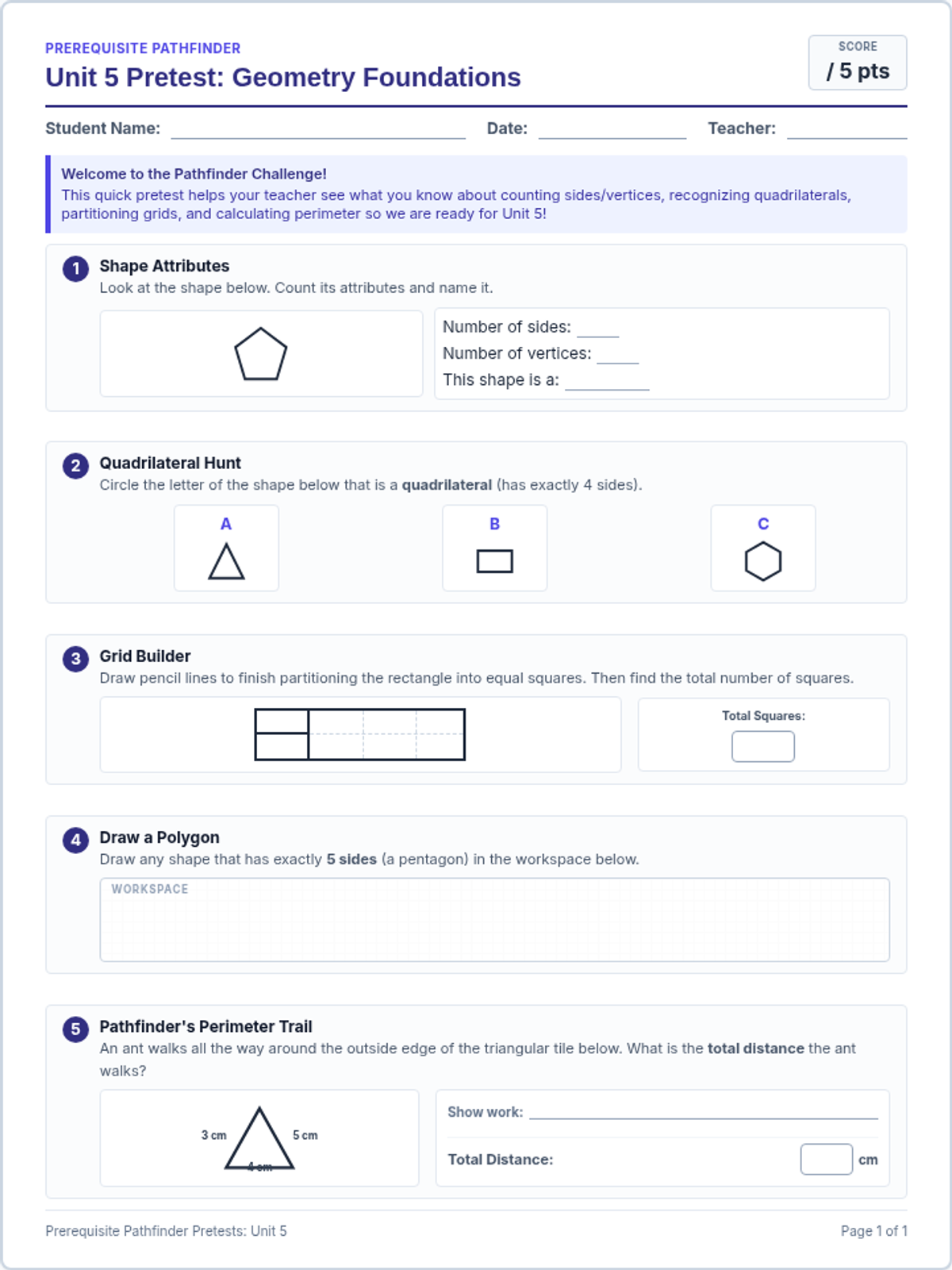
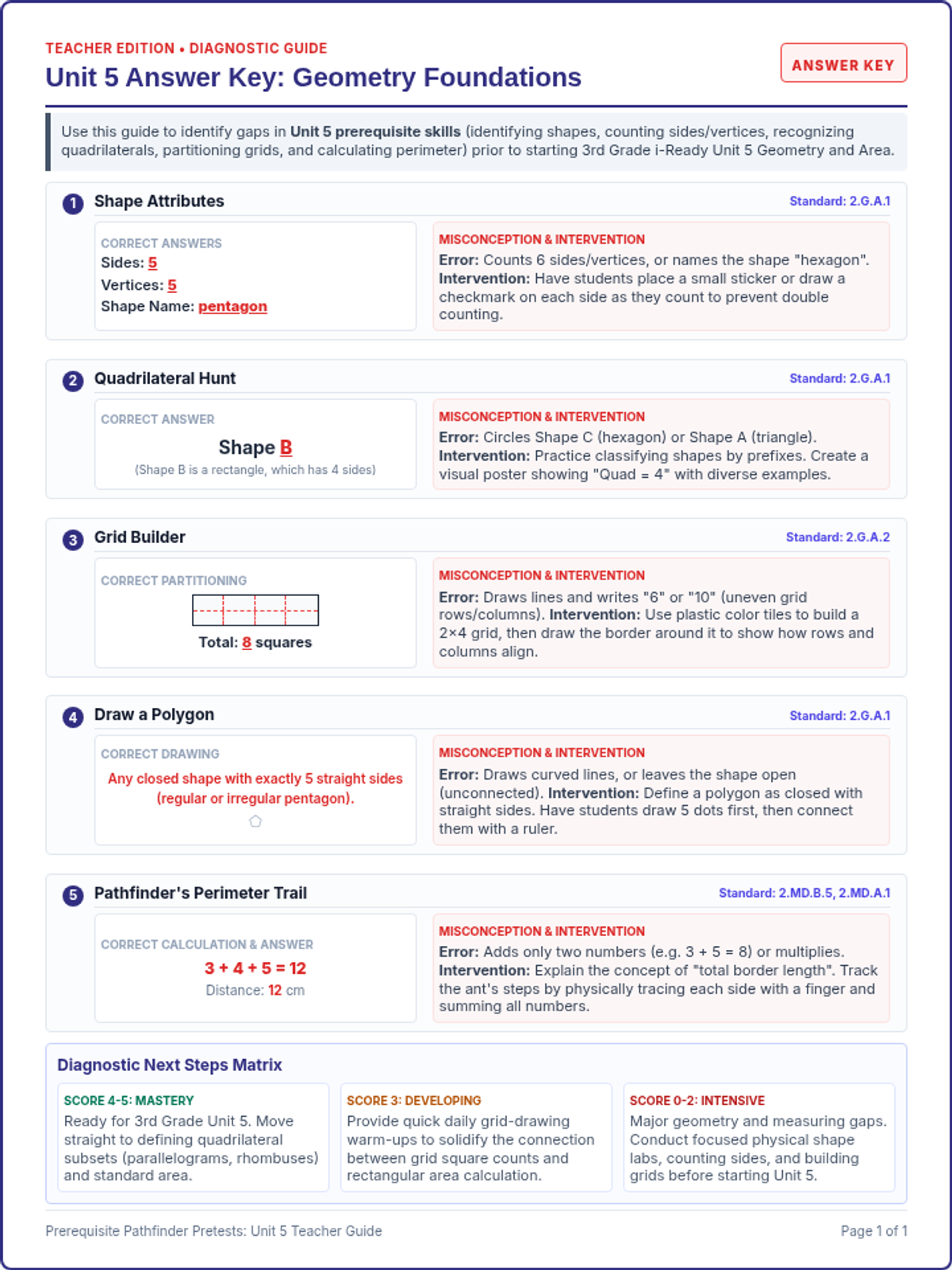
Investigates student recognition of shape attributes, partitioning rectangles into grids, and counting vertices prior to 3rd-grade geometry and area.
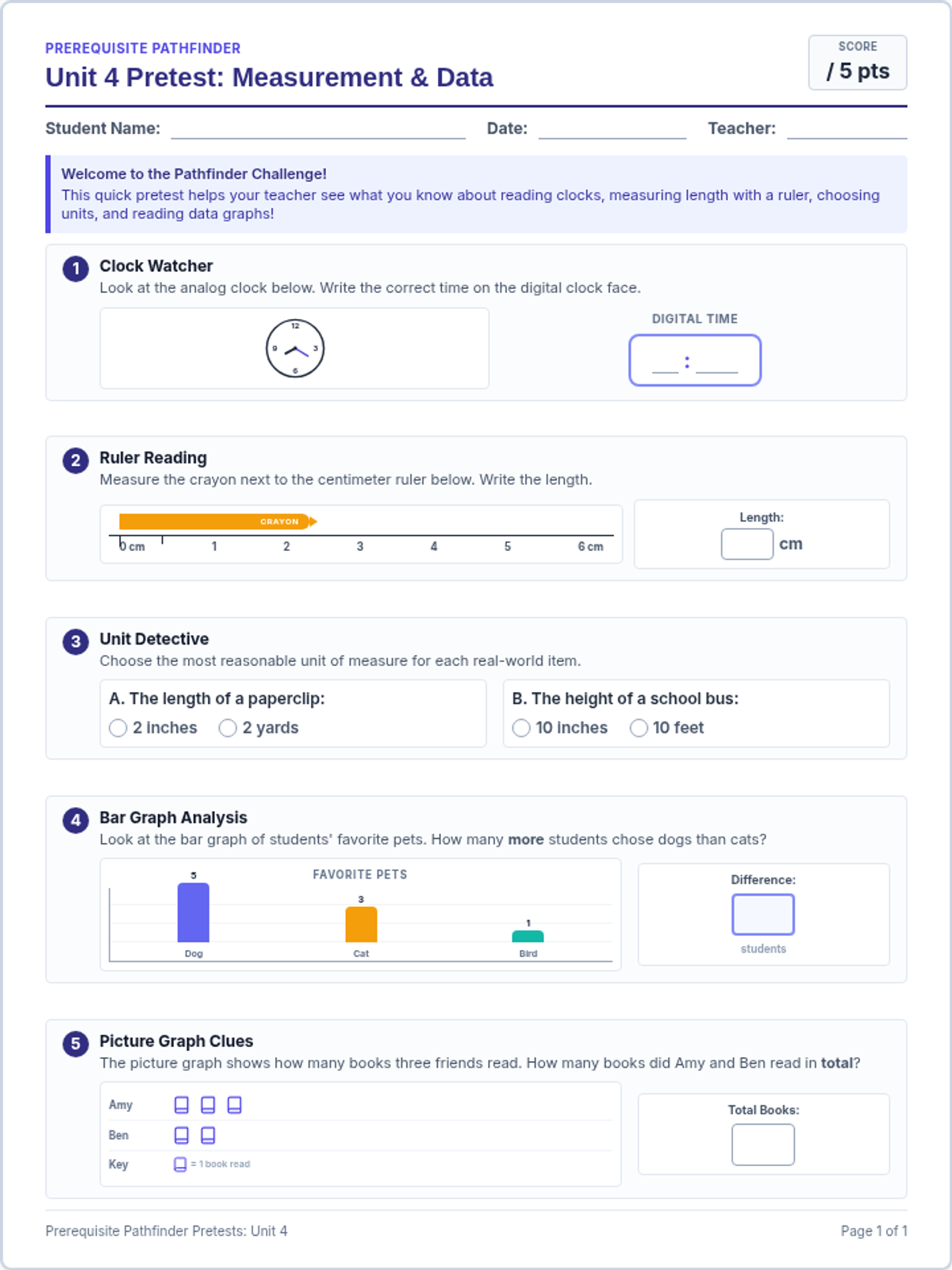
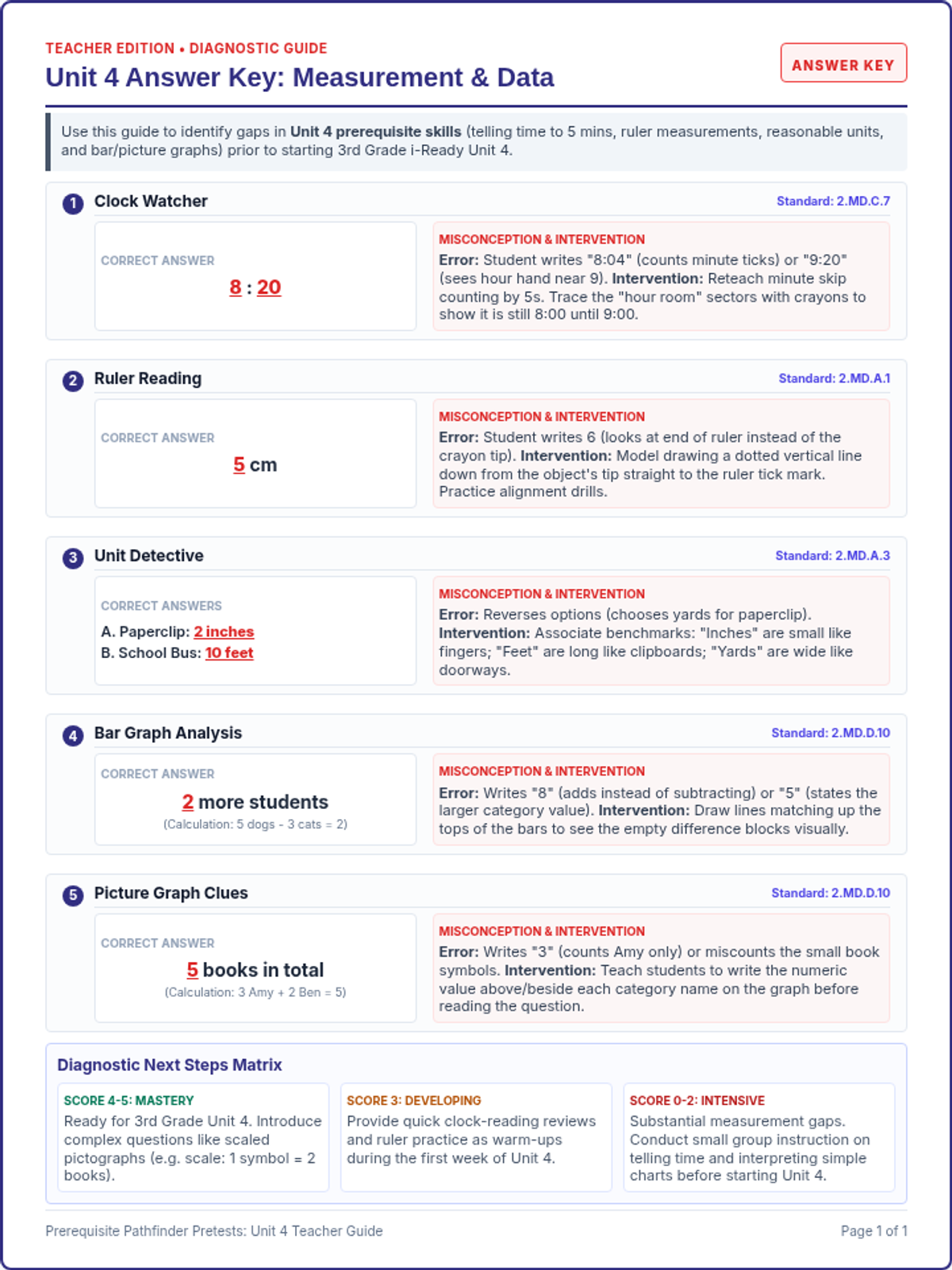
Evaluates prerequisite skills for time, measurement, and bar/picture graphs to ensure readiness for complex measurement topics.
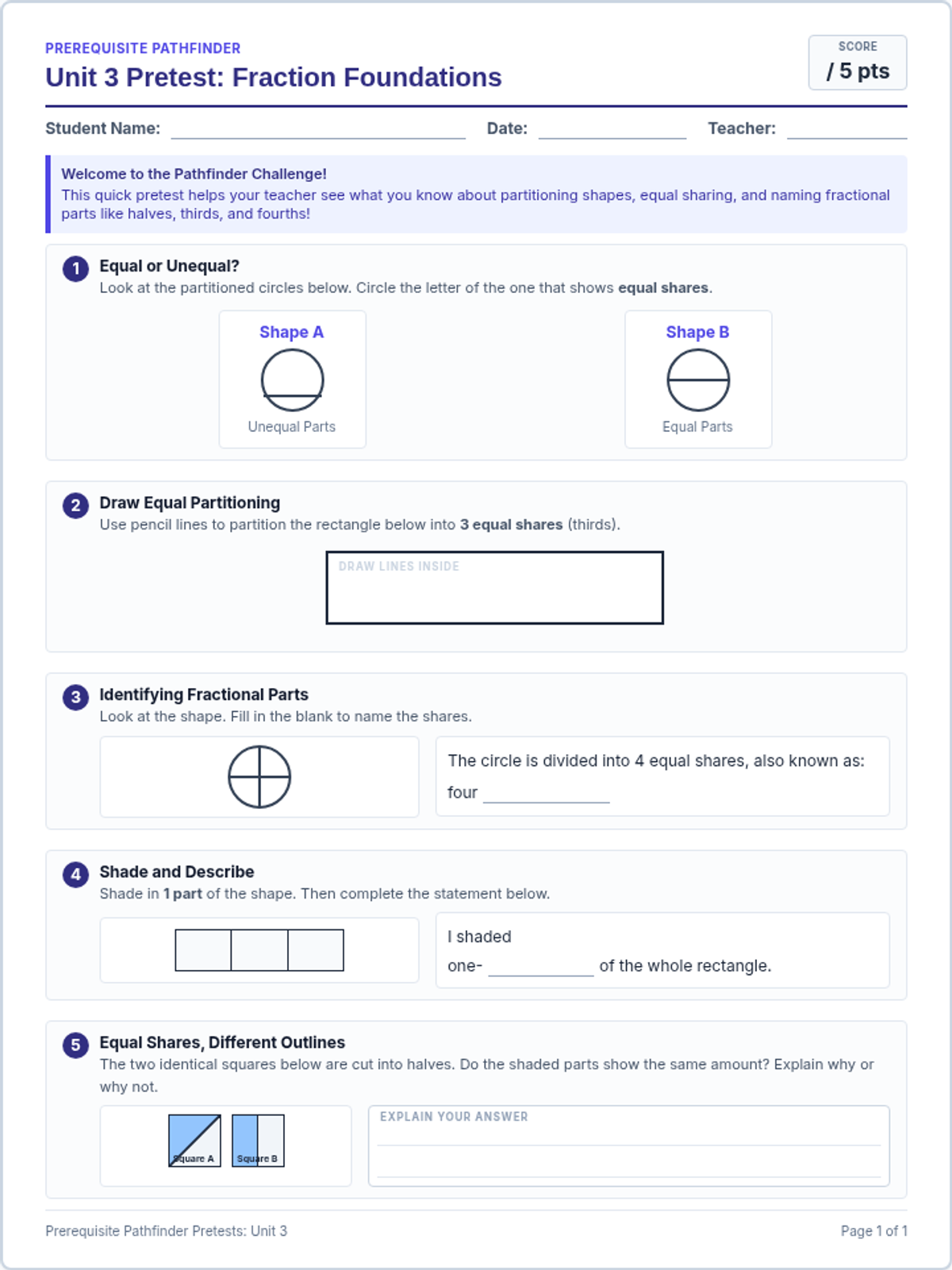
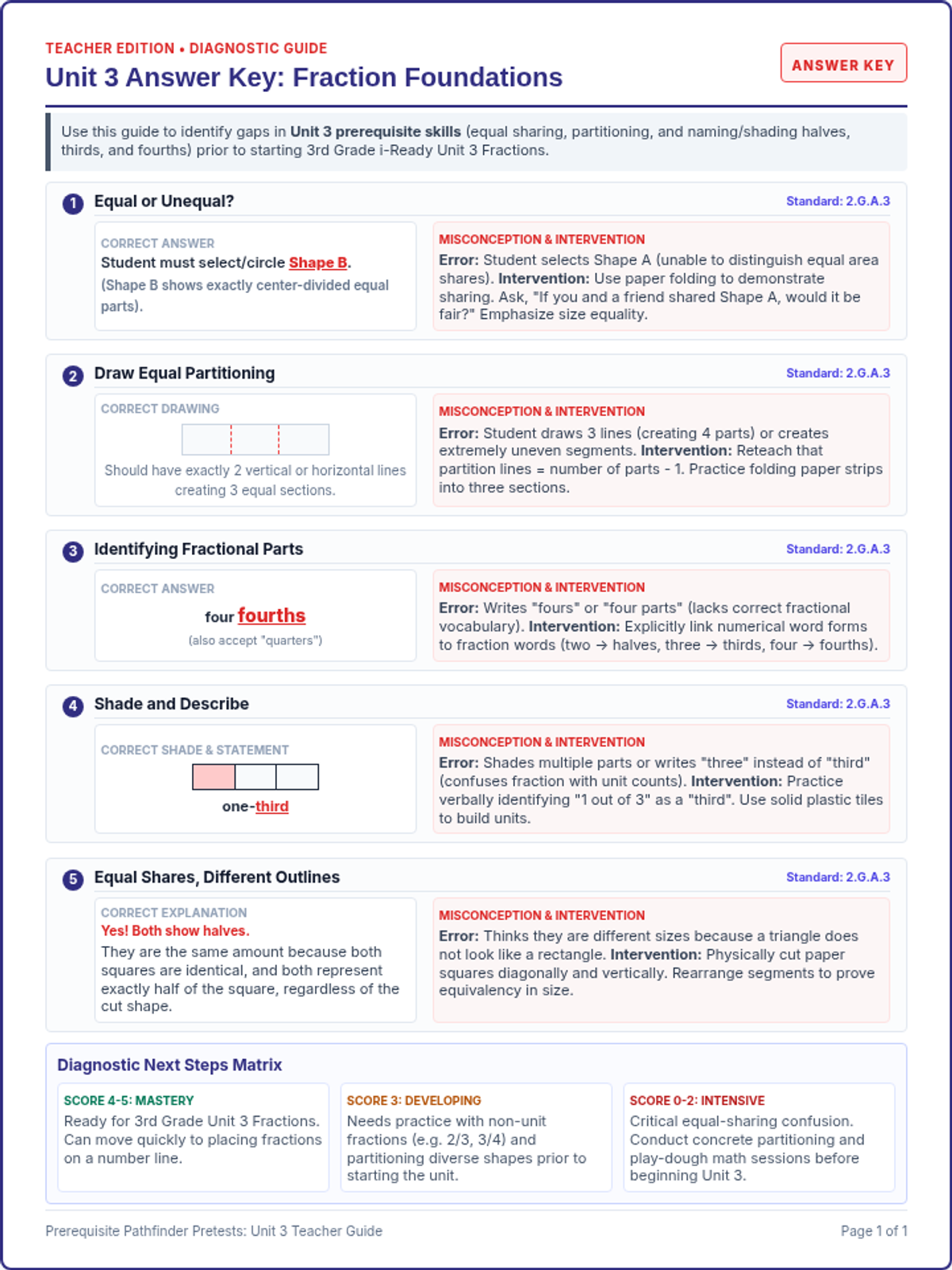
Assesses understanding of equal shares, partitioning shapes into halves, thirds, and fourths, and naming fraction parts prior to 3rd-grade fraction units.
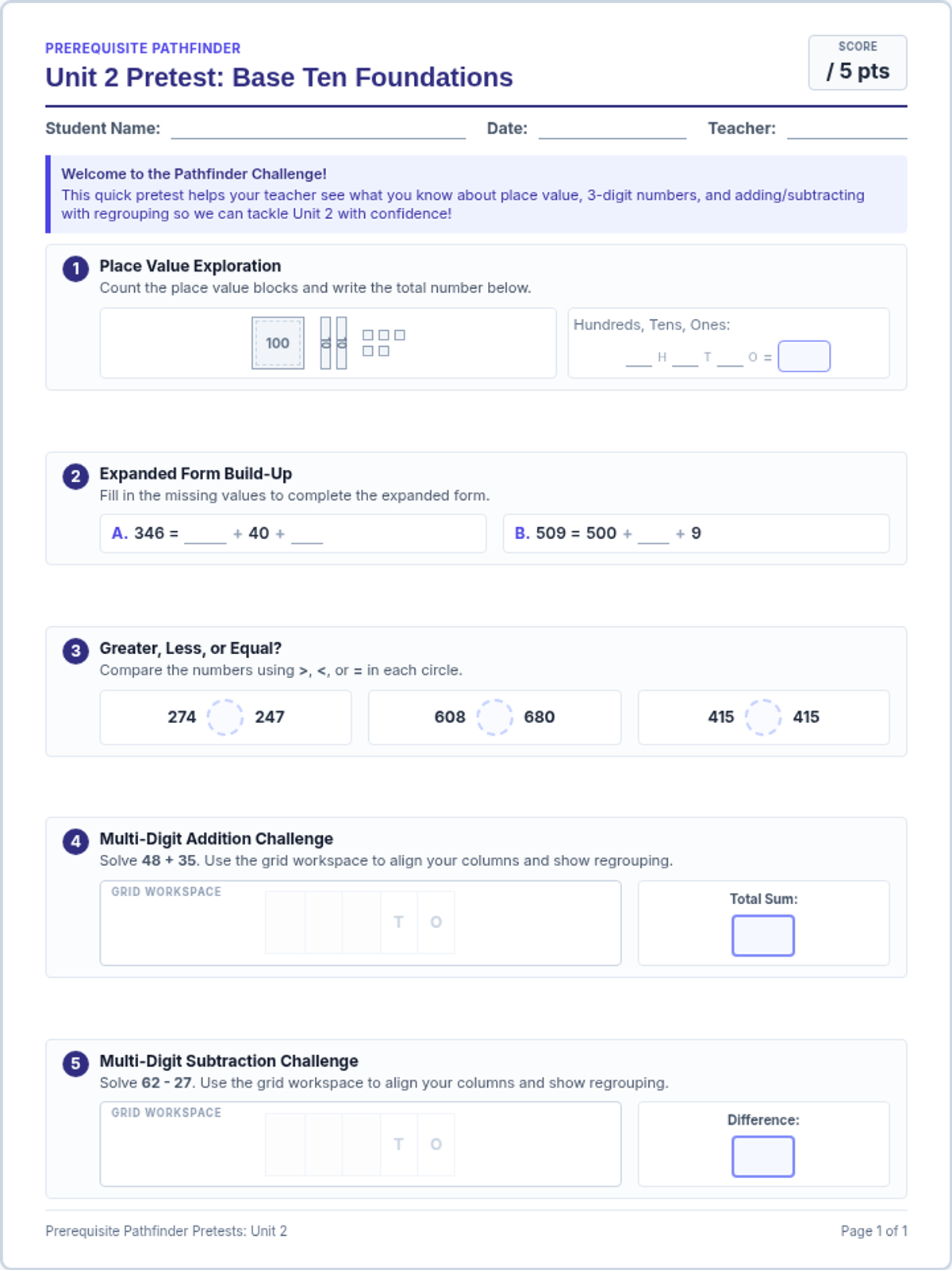
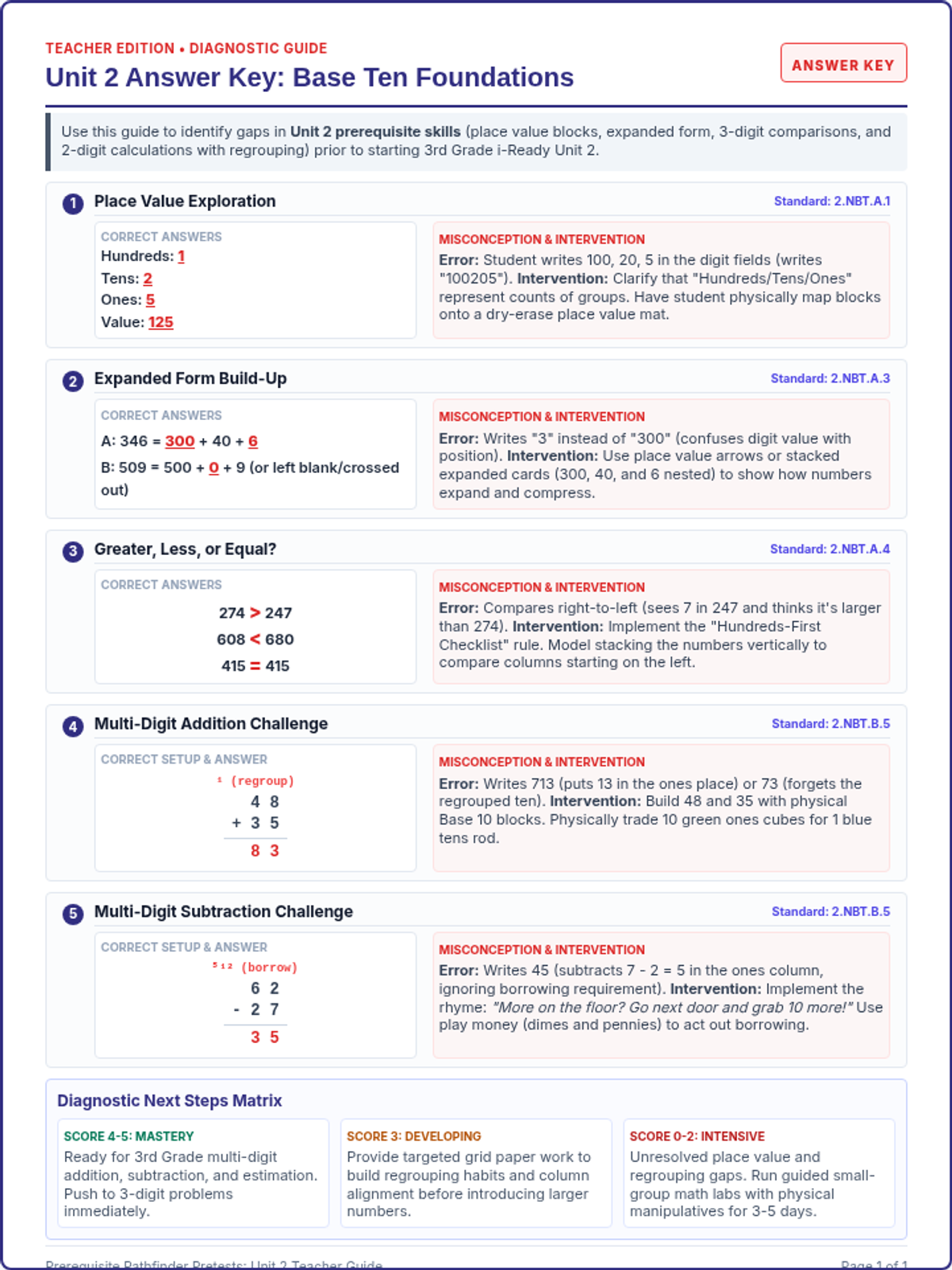
Diagnoses readiness for 3rd-grade place value, multi-digit addition, subtraction, and estimation, based on 2nd-grade standards.
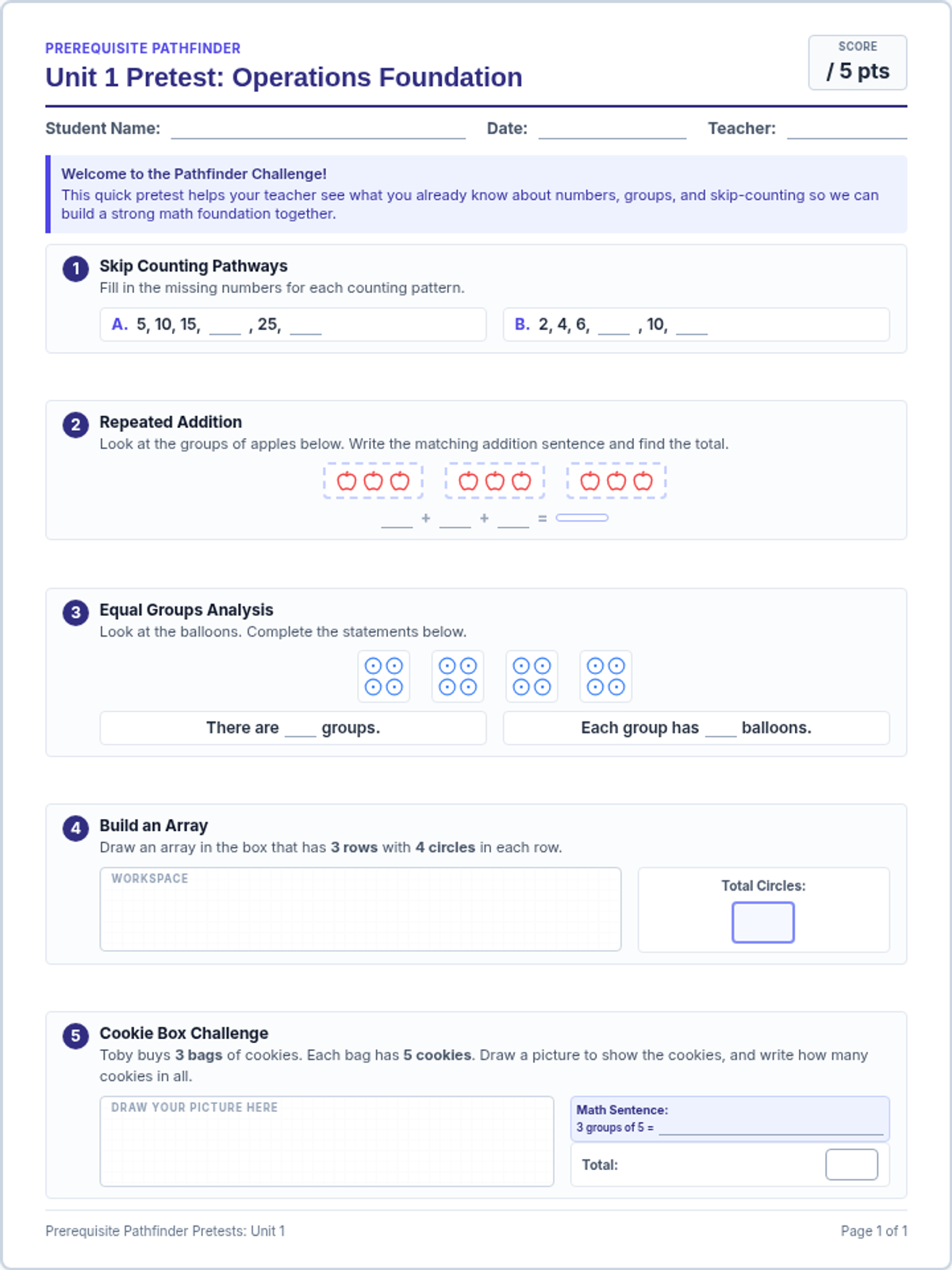
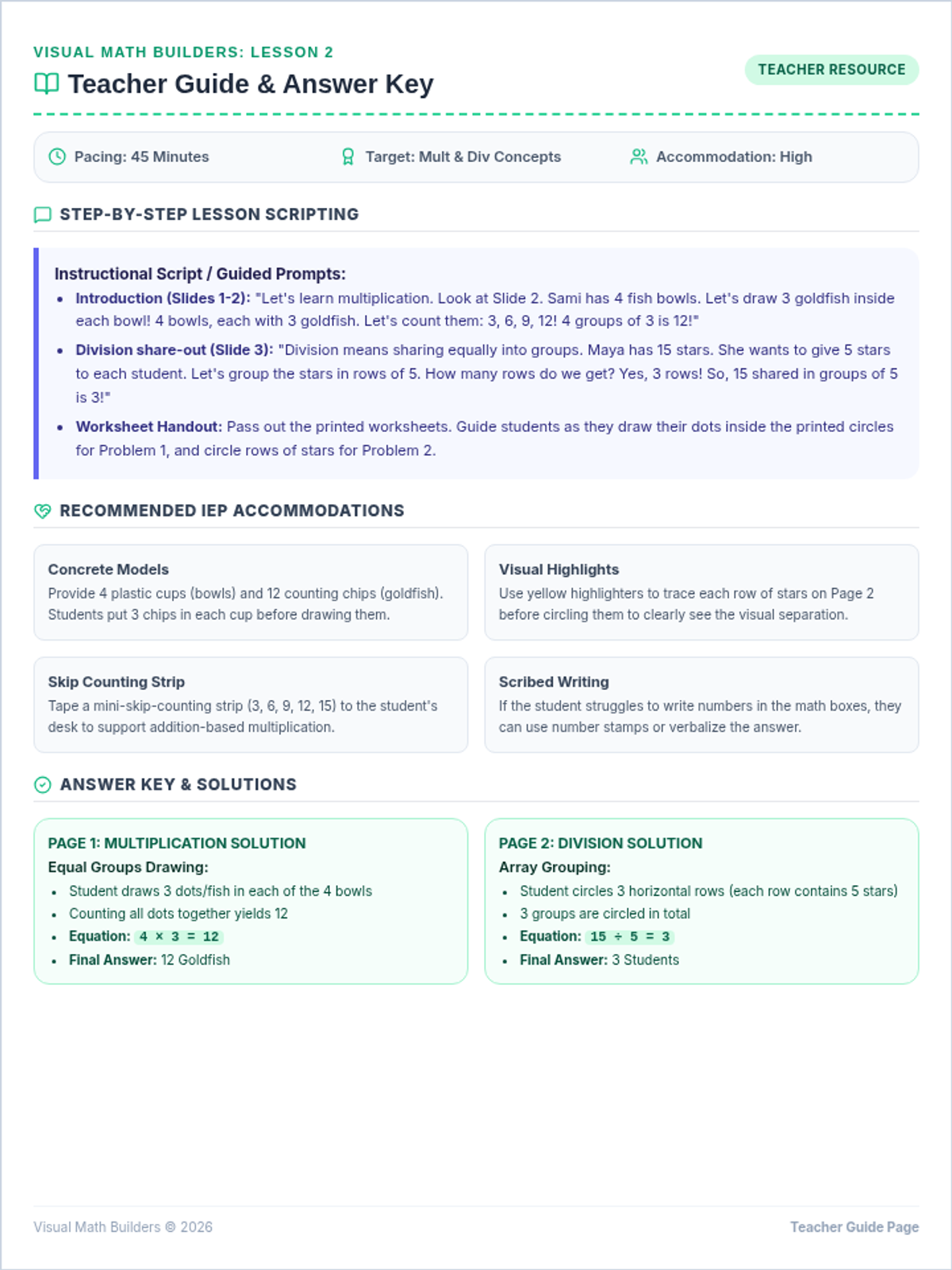
Focuses on prerequisite skills for multiplication and division, including equal groups, skip counting, arrays, and repeated addition.
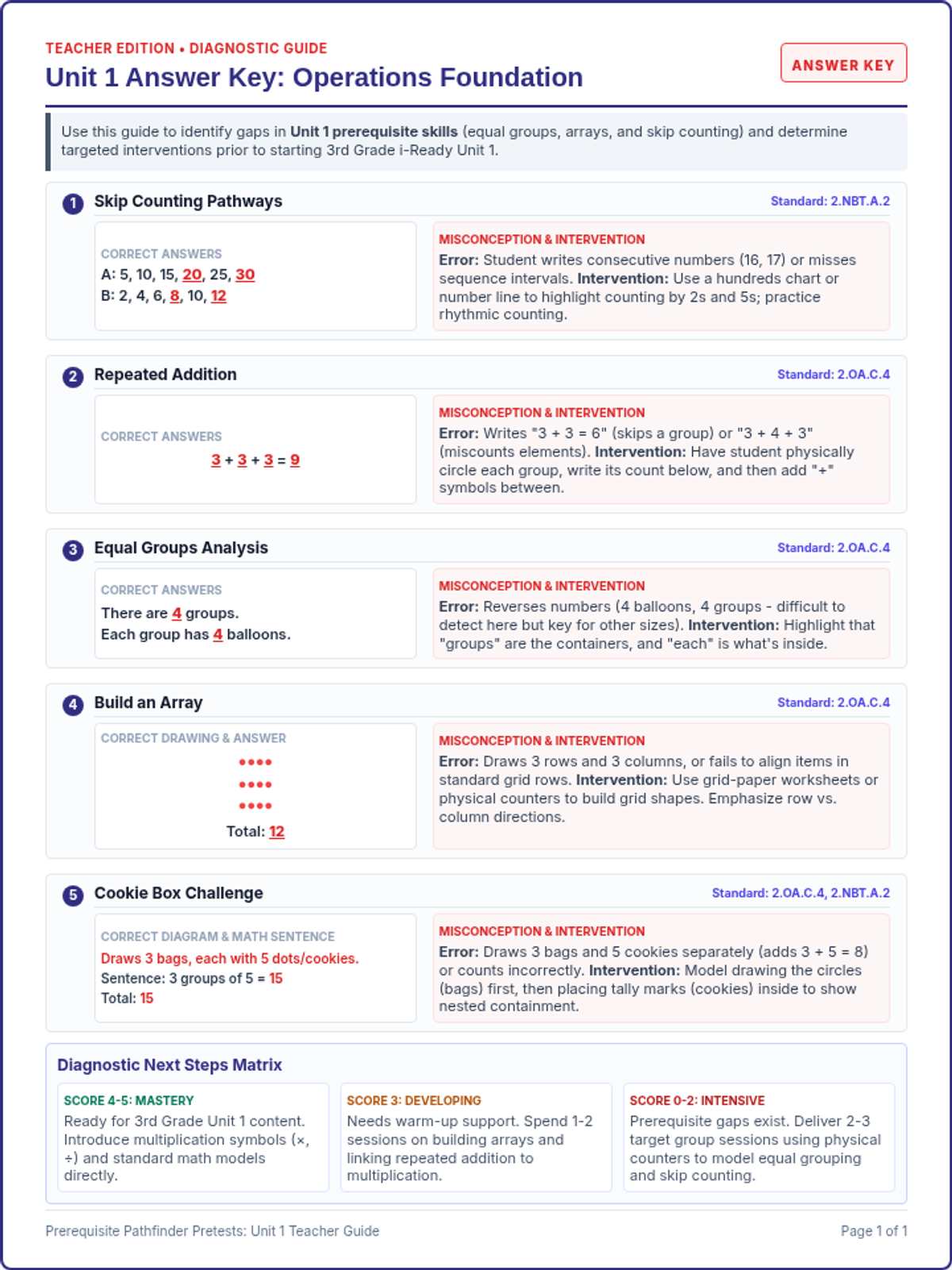
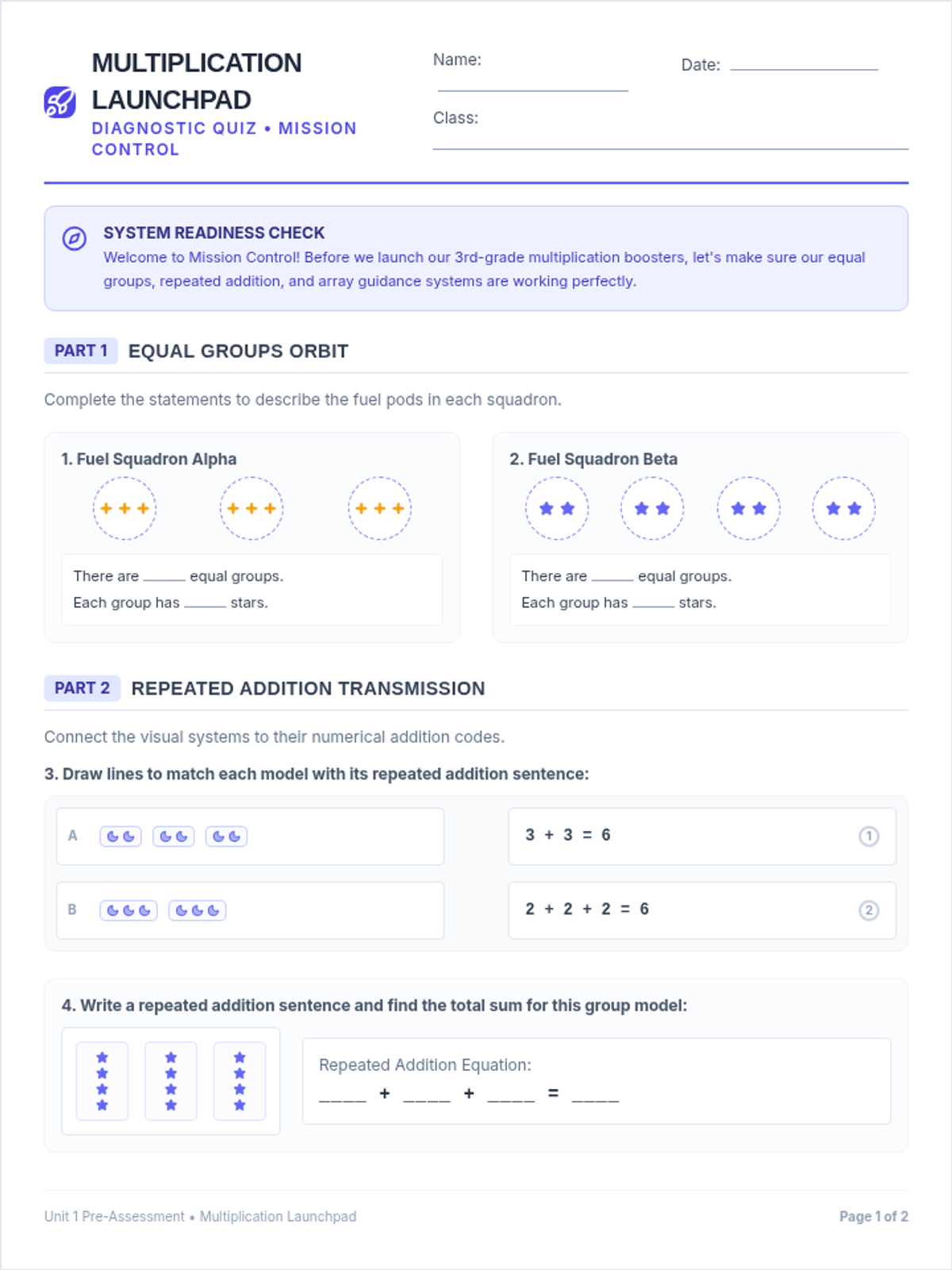
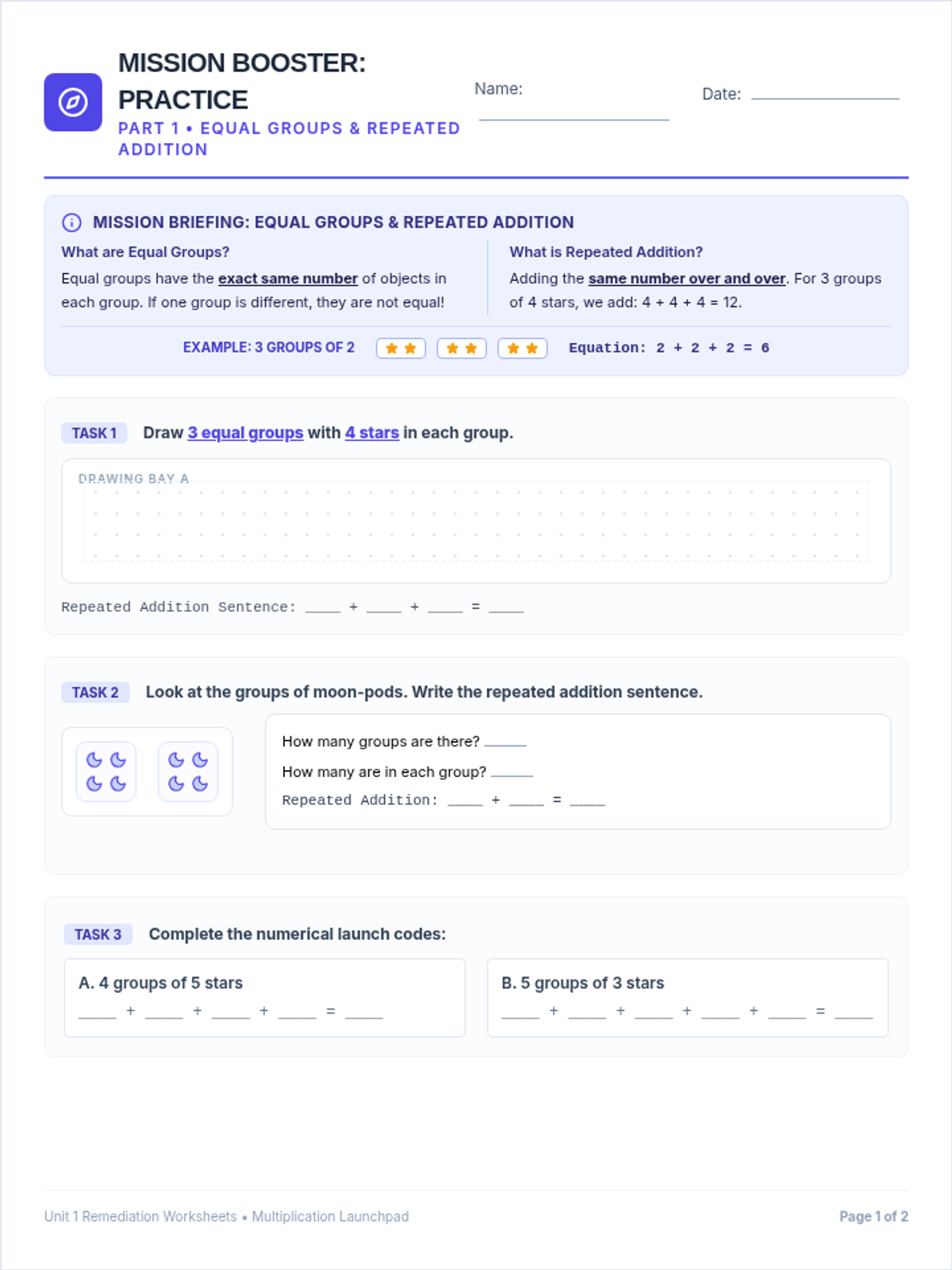
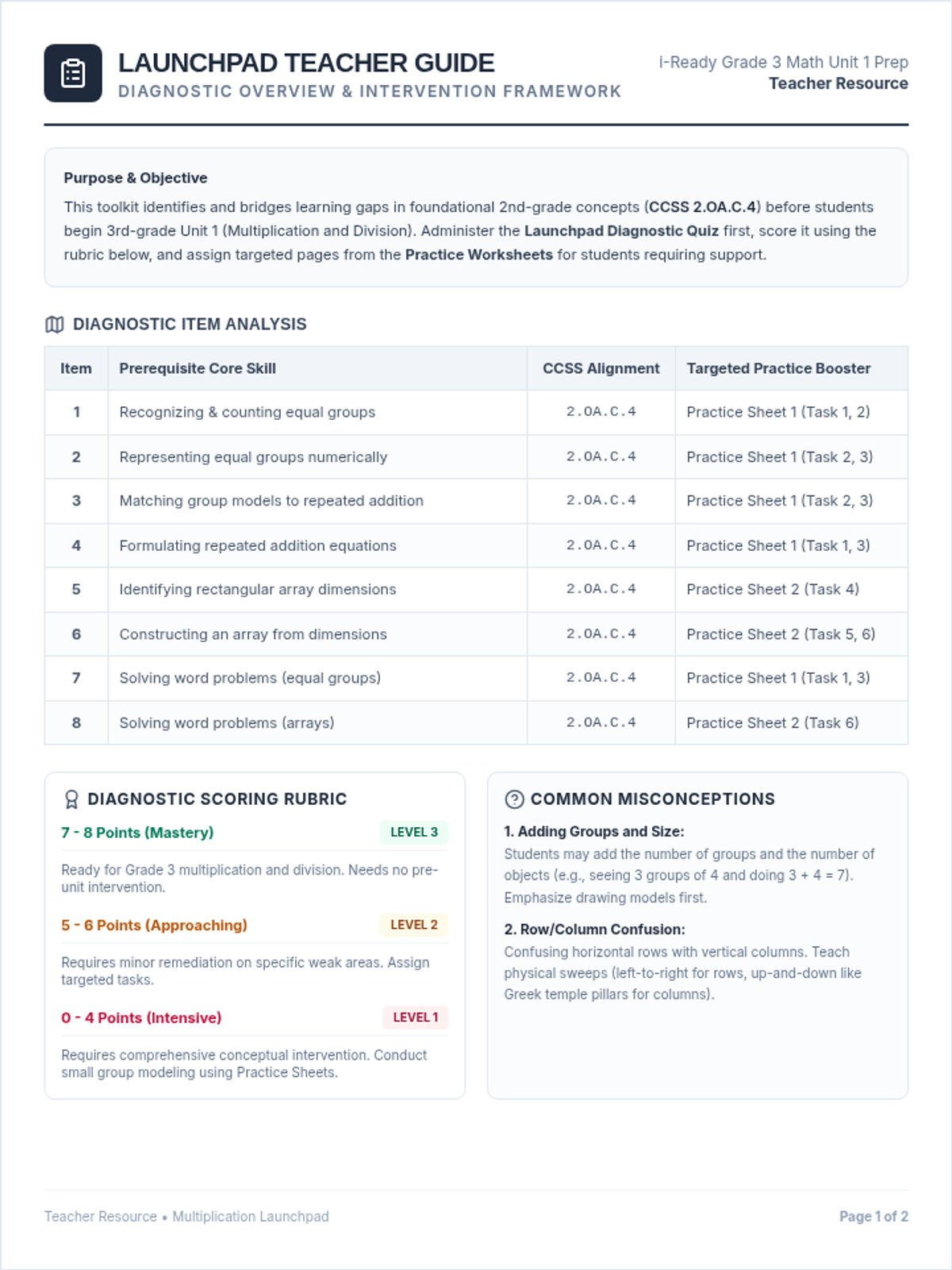
A diagnostic pretest and intervention package designed to assess and remediate 2nd-grade prerequisite math skills (equal groups, repeated addition, and basic arrays) before starting 3rd-grade Unit 1 Multiplication and Division. Includes a student quiz, targeted intervention worksheets, and a comprehensive teacher guide with rubrics and answer keys.
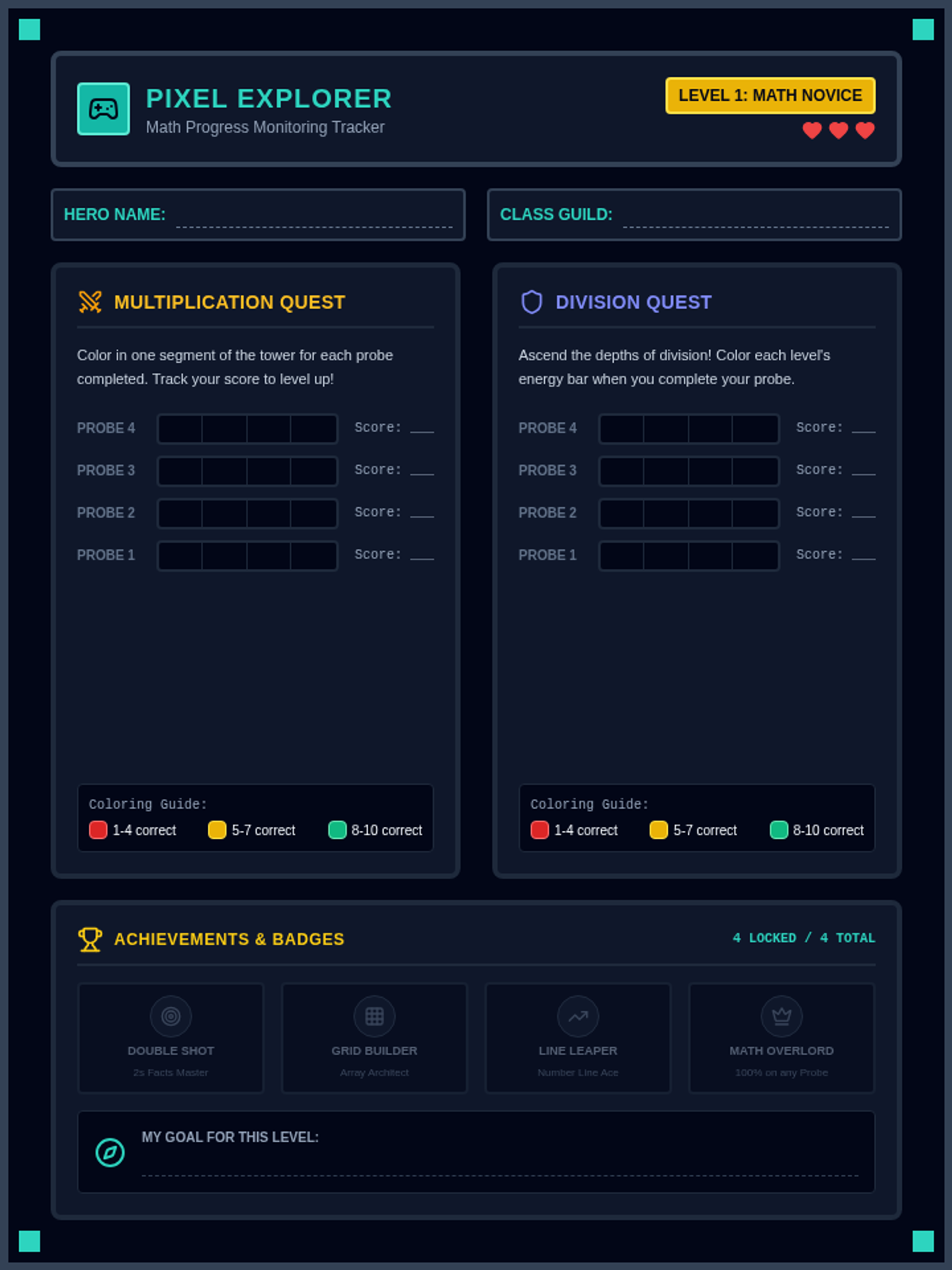
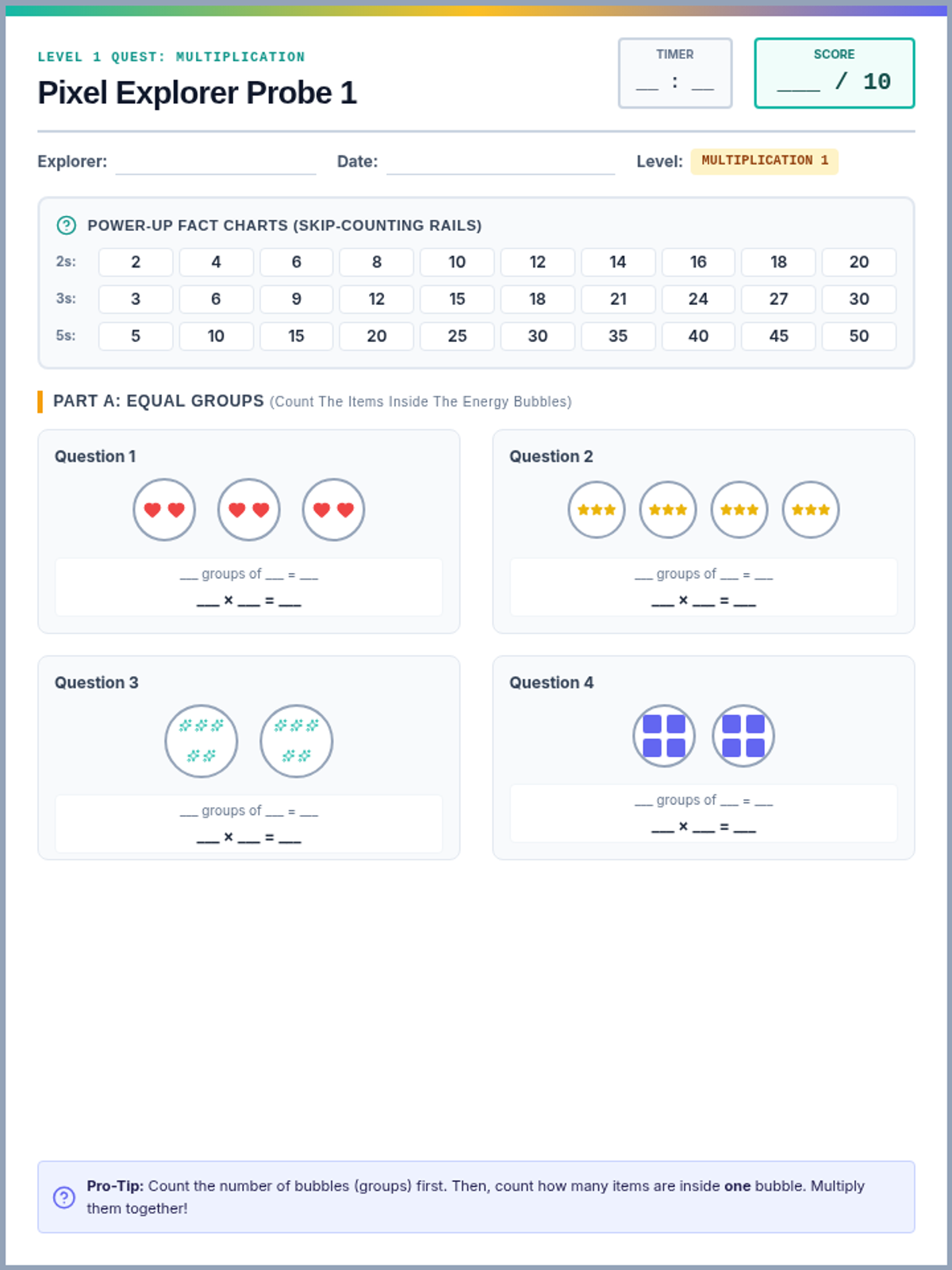
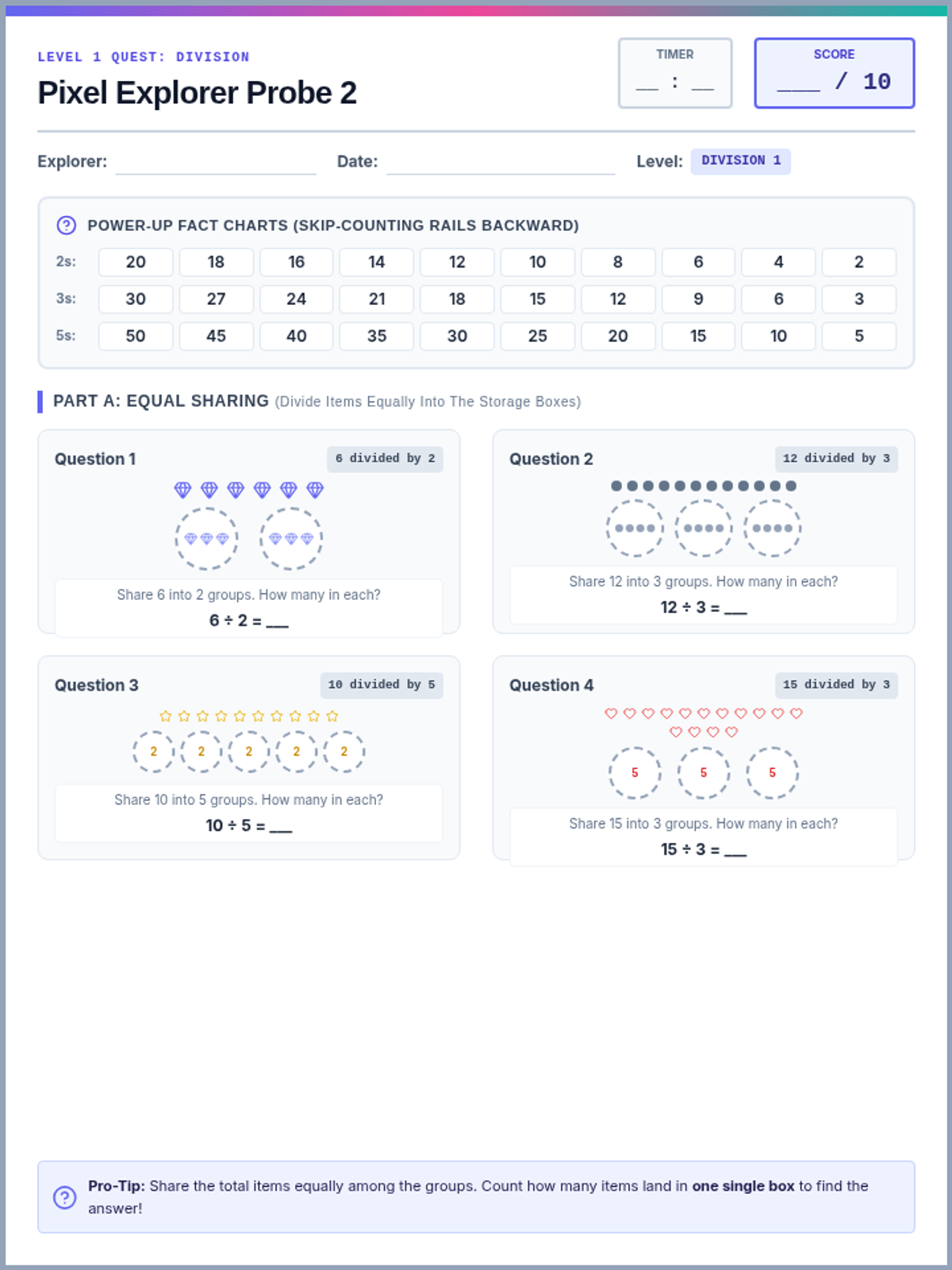
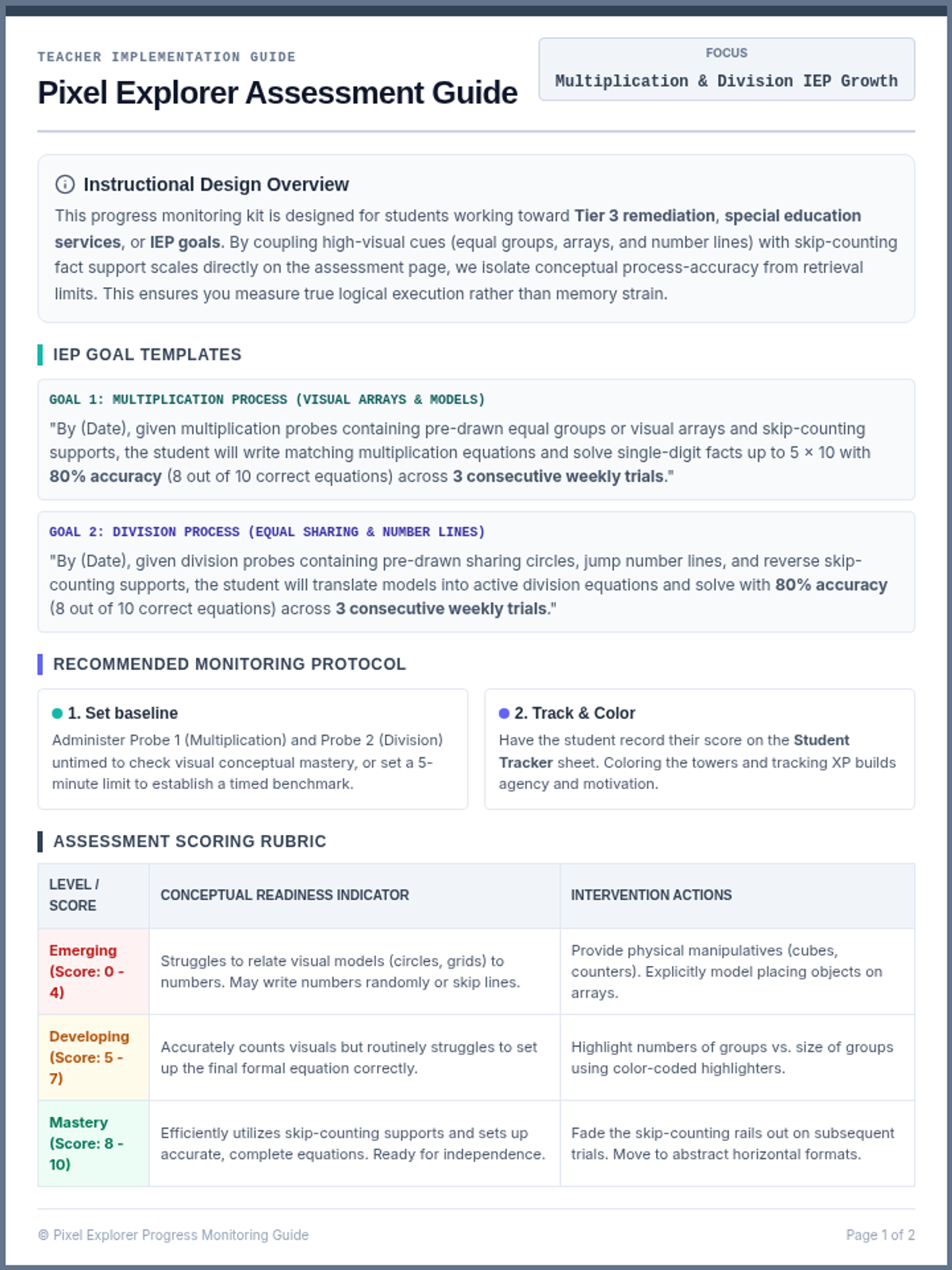
A structured progress monitoring kit for division and multiplication, designed with retro-game aesthetics. Includes two highly-scaffolded visual probes, an interactive student tracker, and a comprehensive teacher guide with IEP goals.
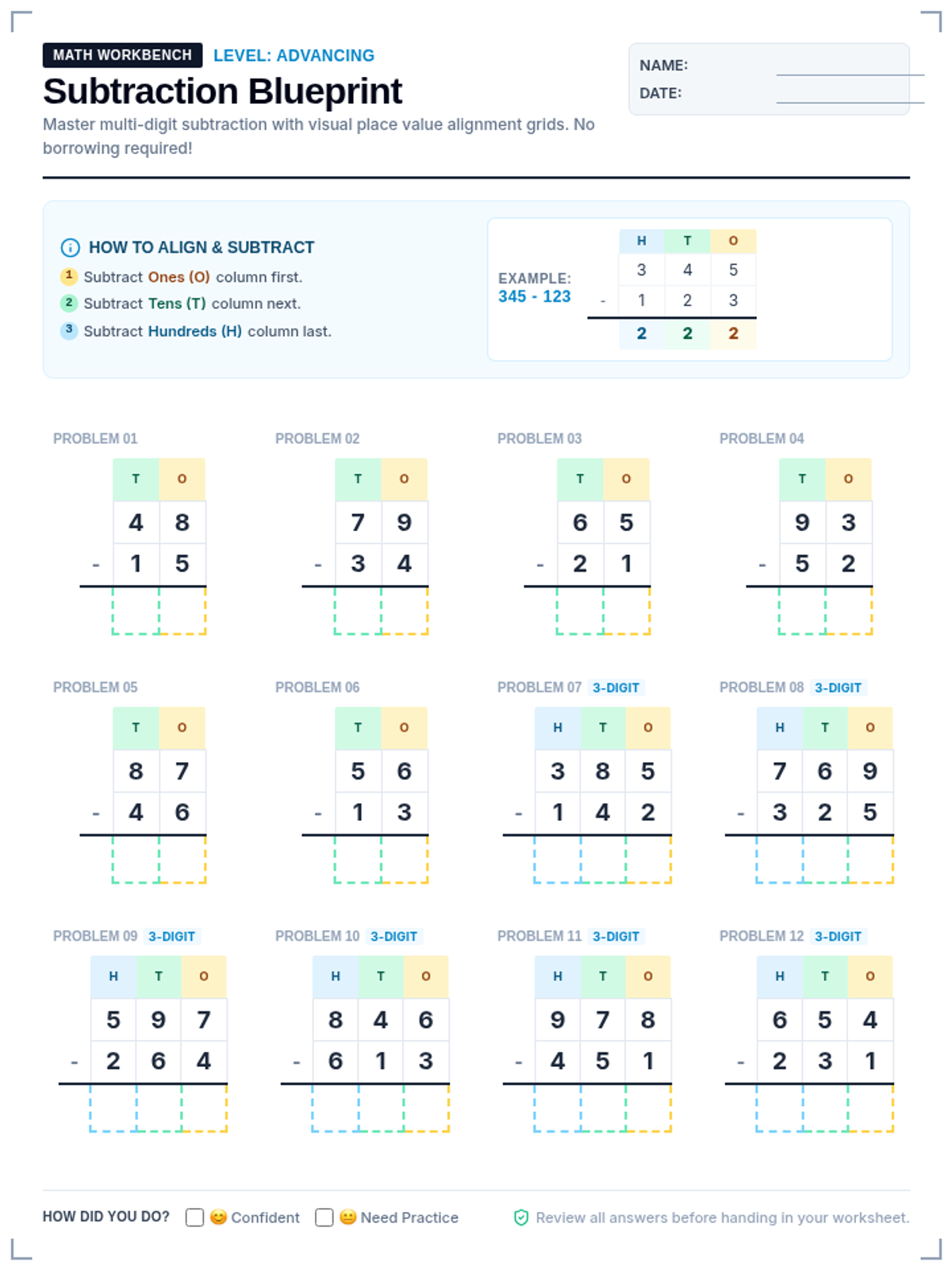
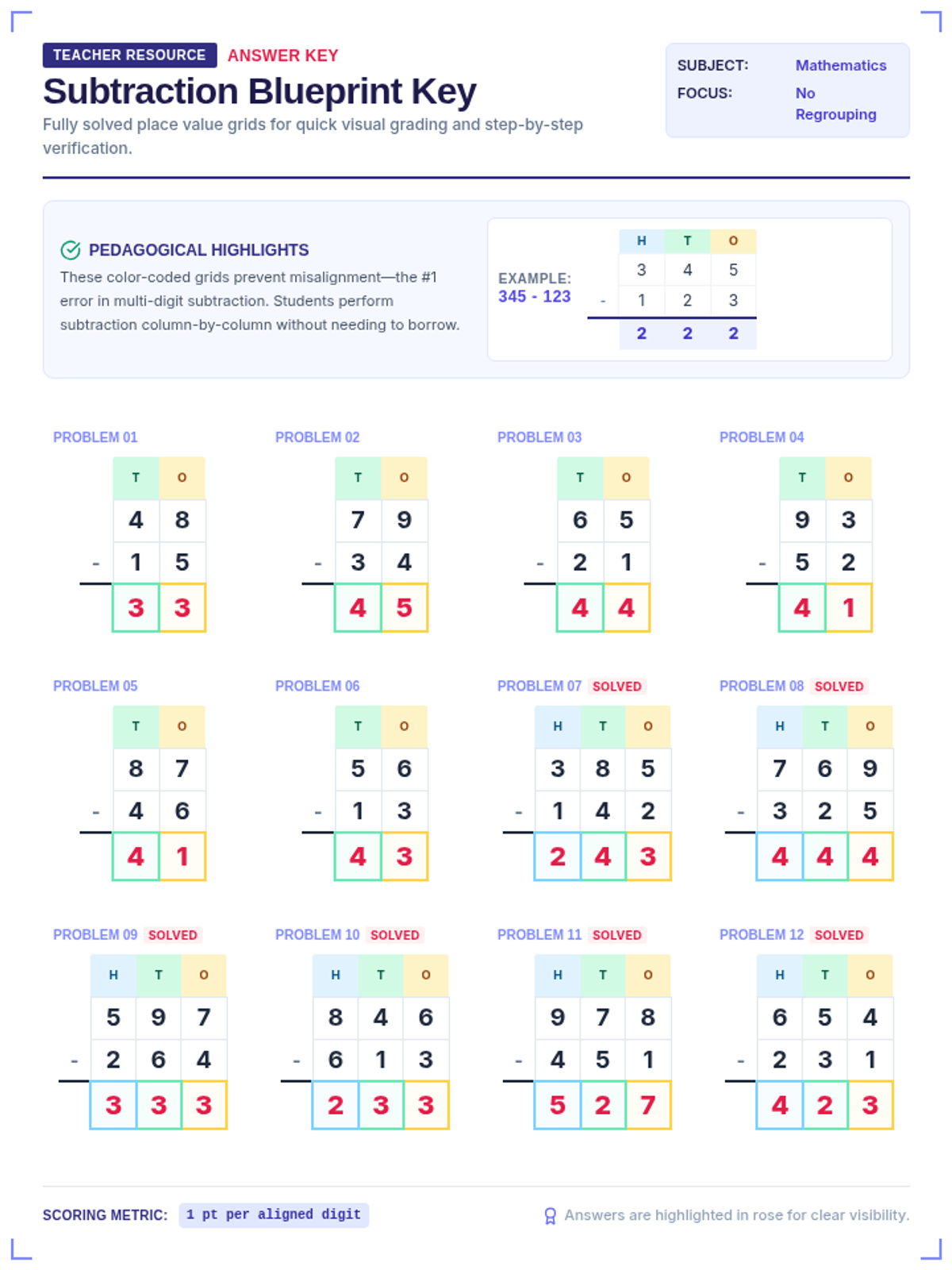
A lesson introducing subtraction without borrowing using color-coded grids and place value alignment. Students practice aligning digits in tens and ones columns before expanding to hundreds.
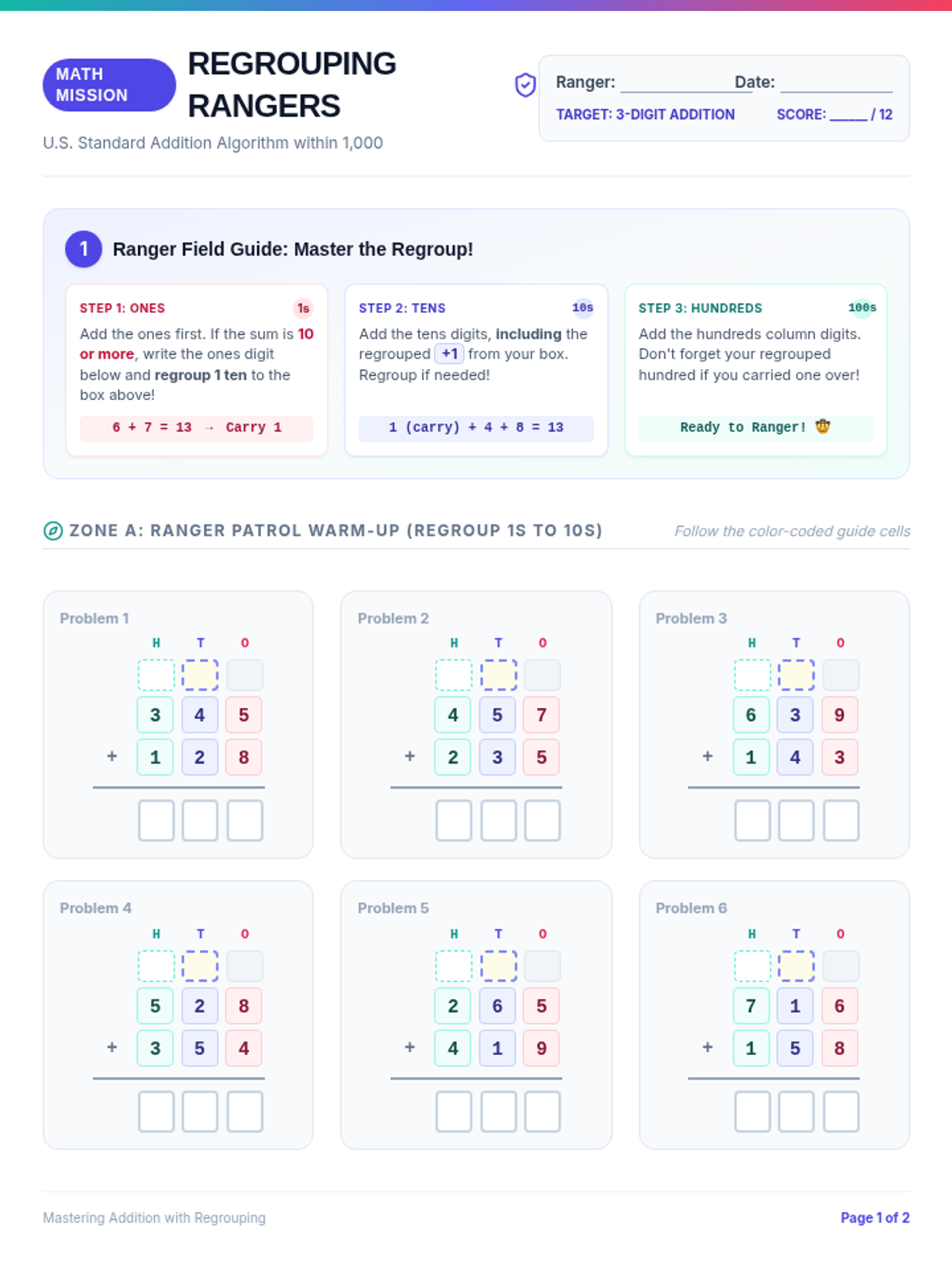
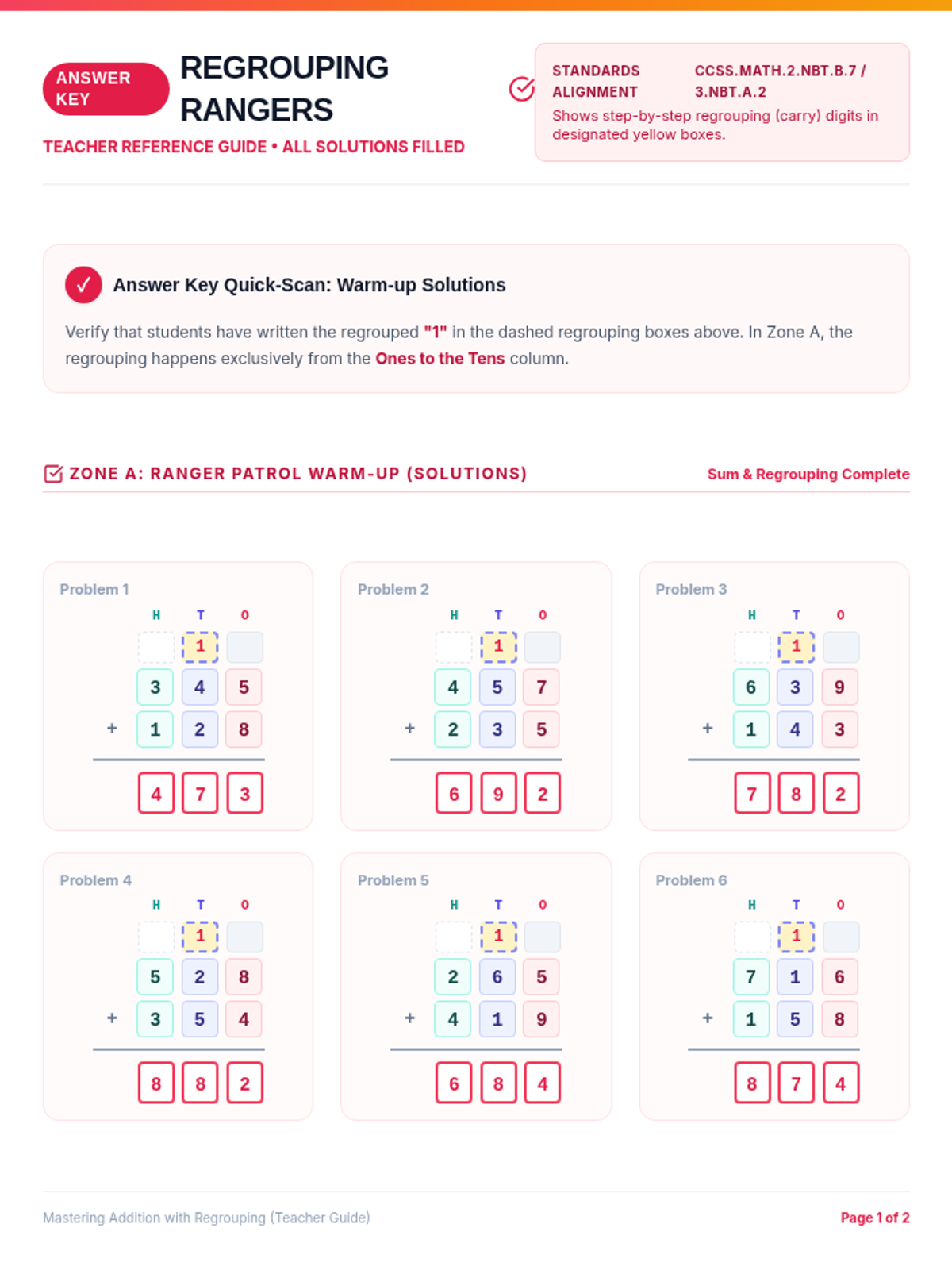
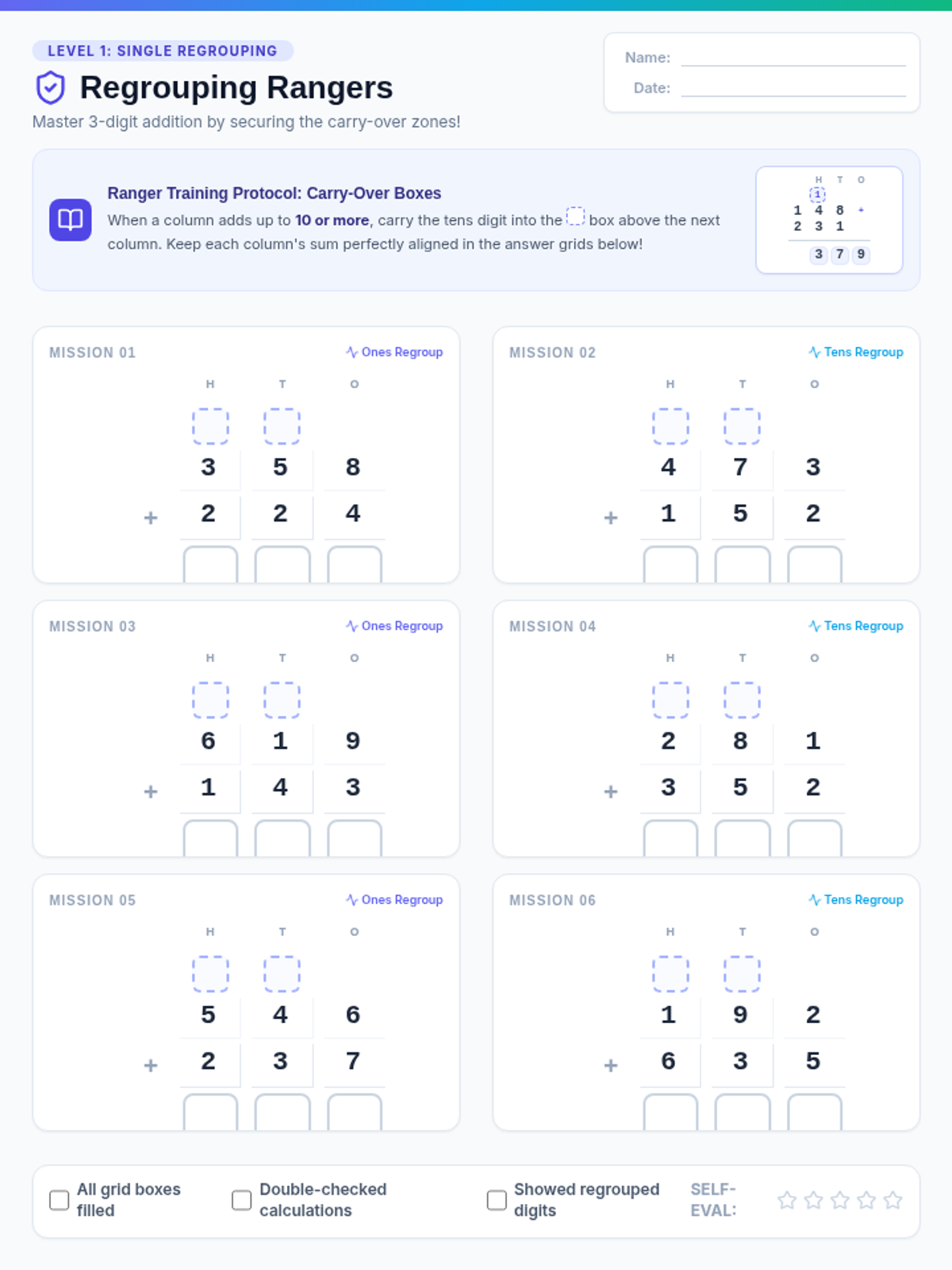
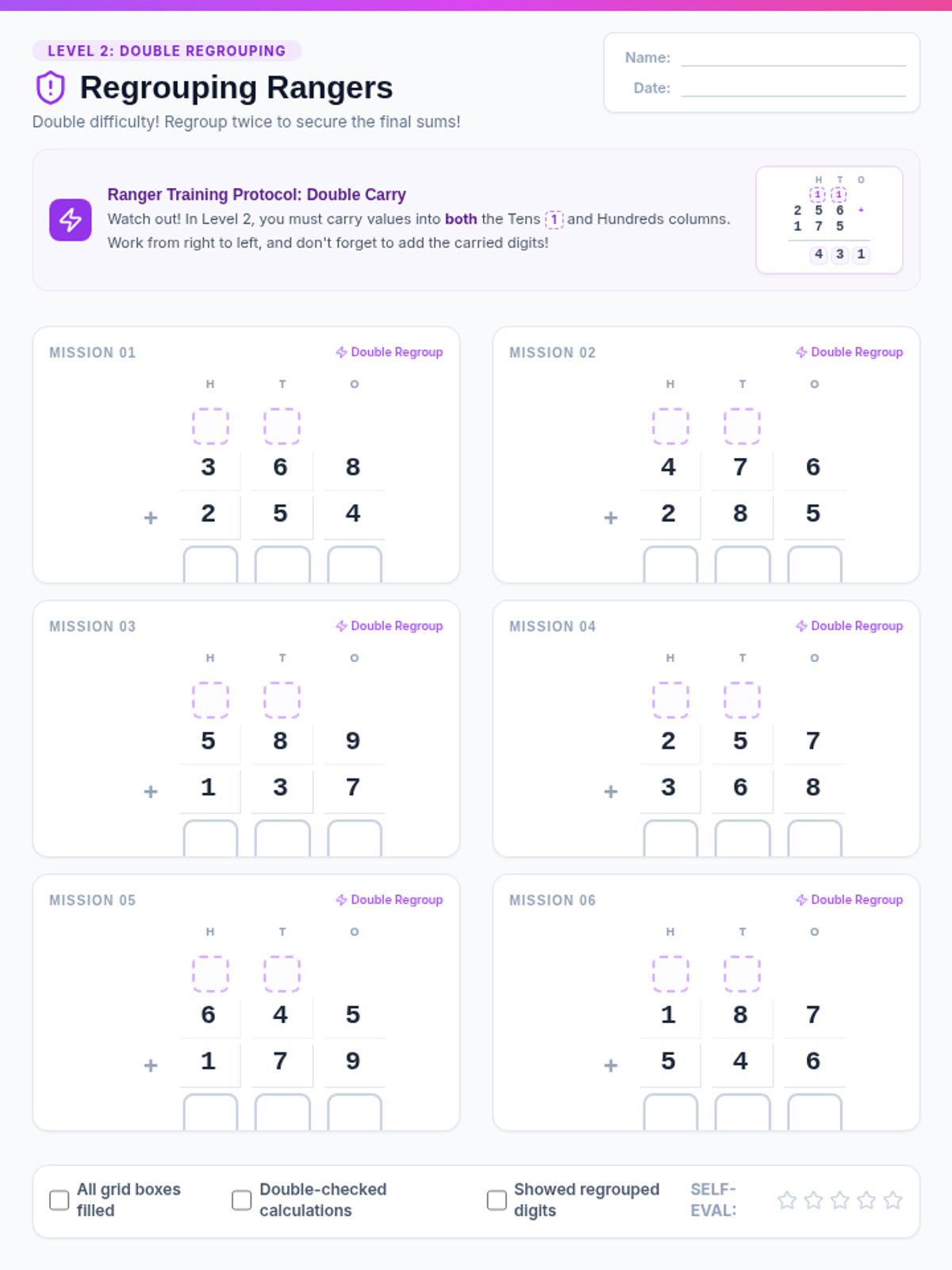
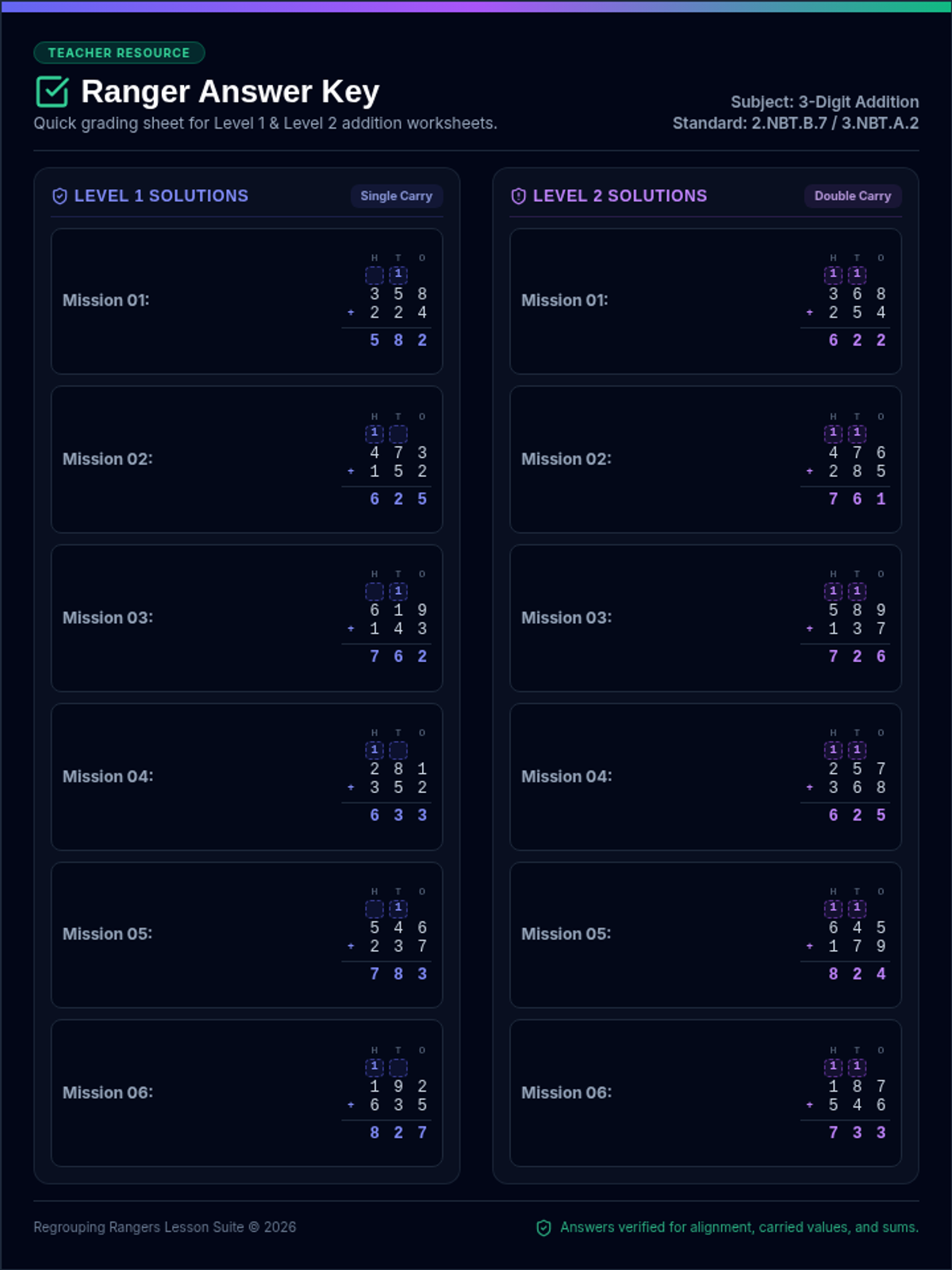
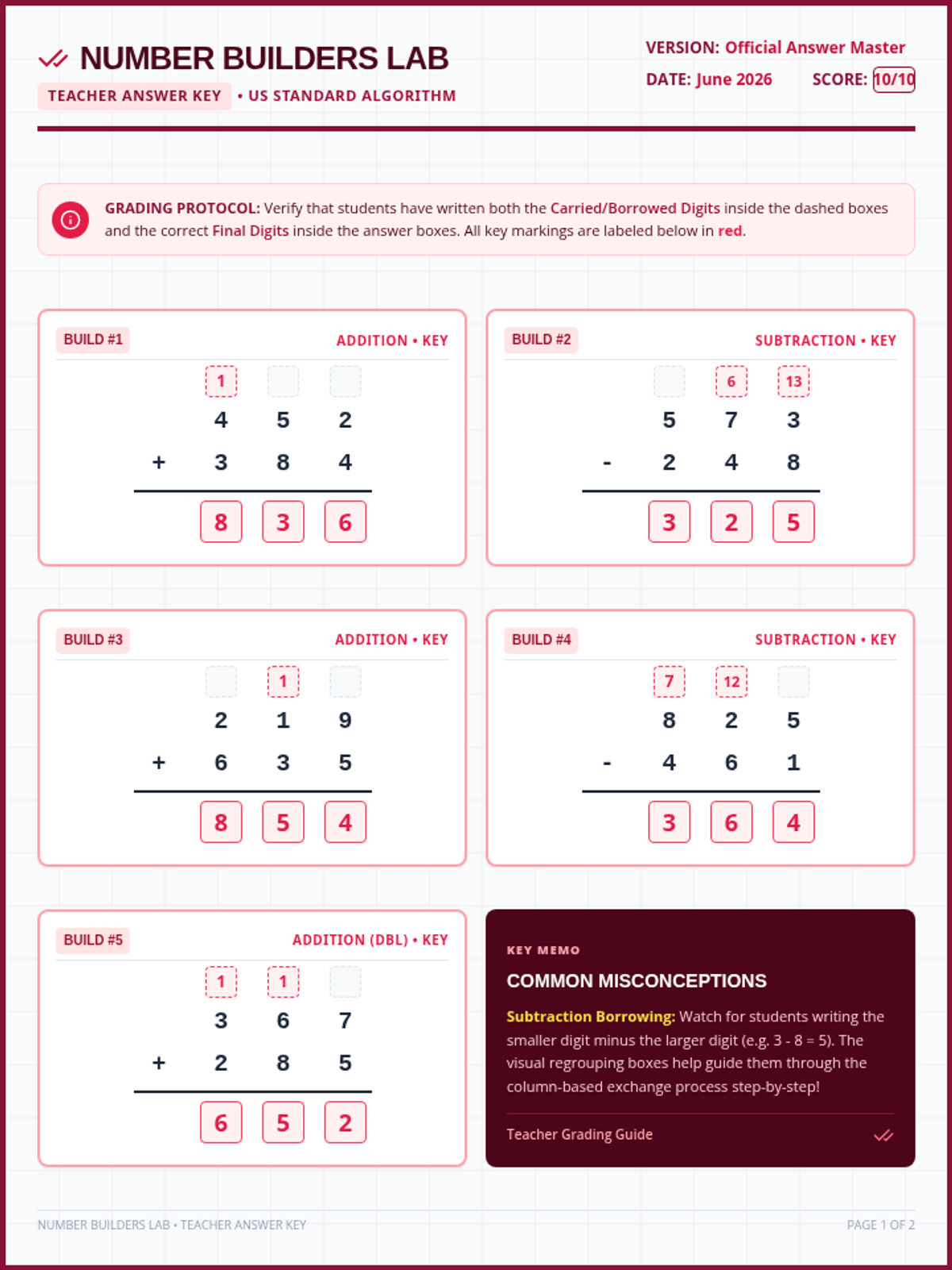
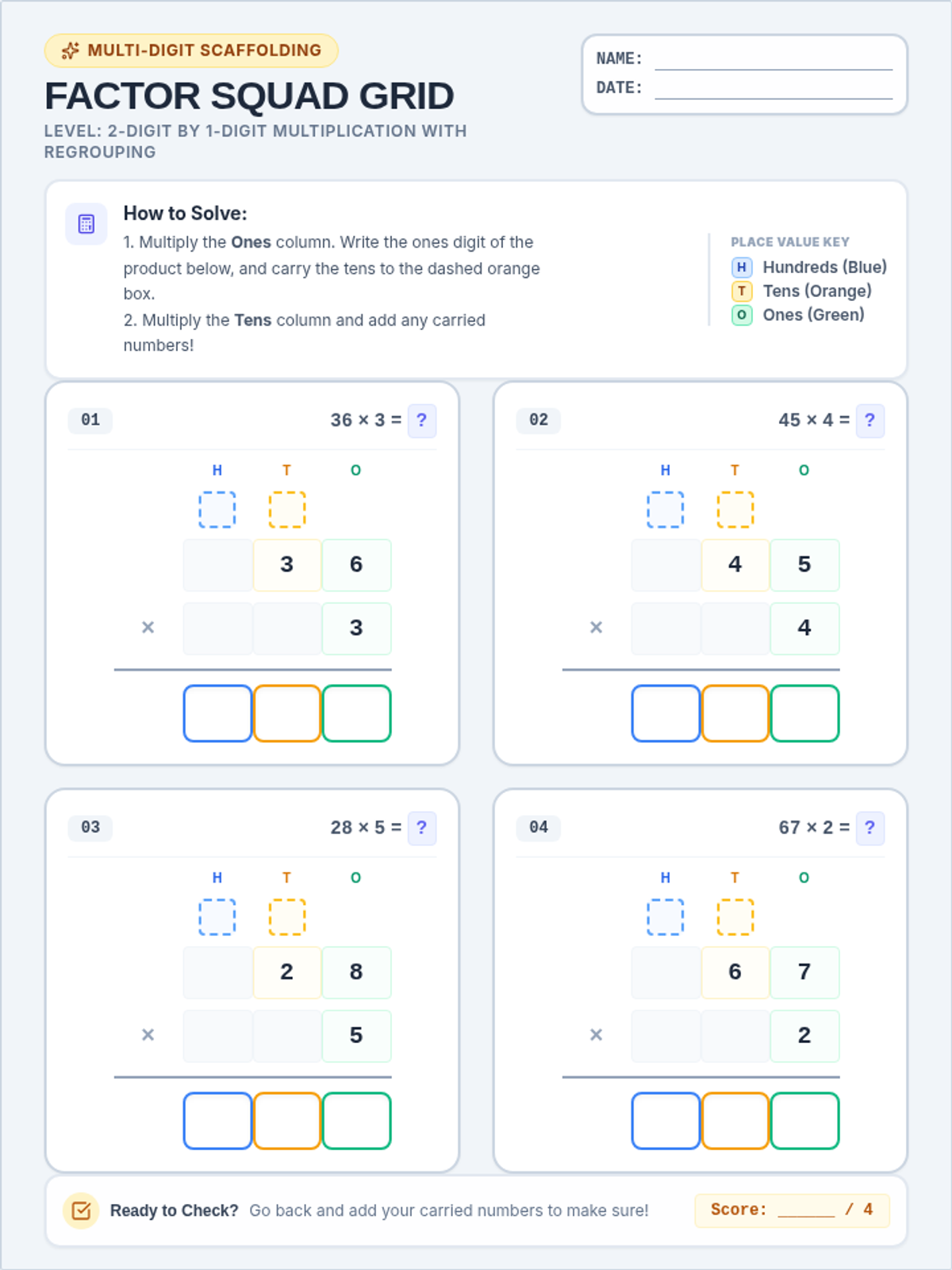
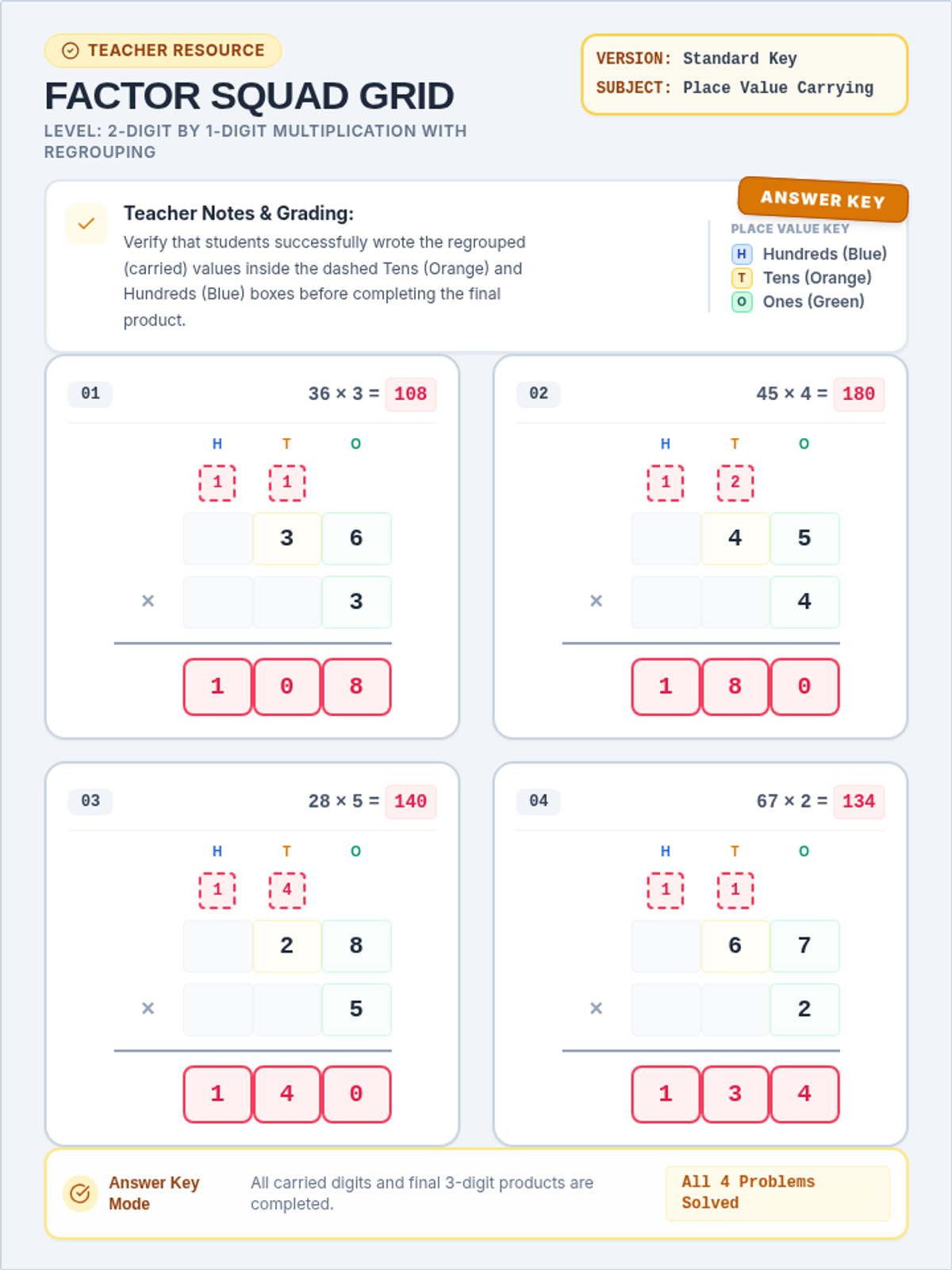
A highly visual, structured lesson teaching the standard U.S. addition algorithm within 1,000 with regrouping. It features color-coded grid worksheets, place-value scaffolding, and step-by-step slides designed with dedicated carryover/regrouping boxes for student support.
A math mastery lesson featuring leveled printable worksheets for addition within 1000. It includes custom grid layouts, visual cues, and dedicated regrouping boxes above the tens and hundreds columns to support students as they master single- and double-regrouping strategies.
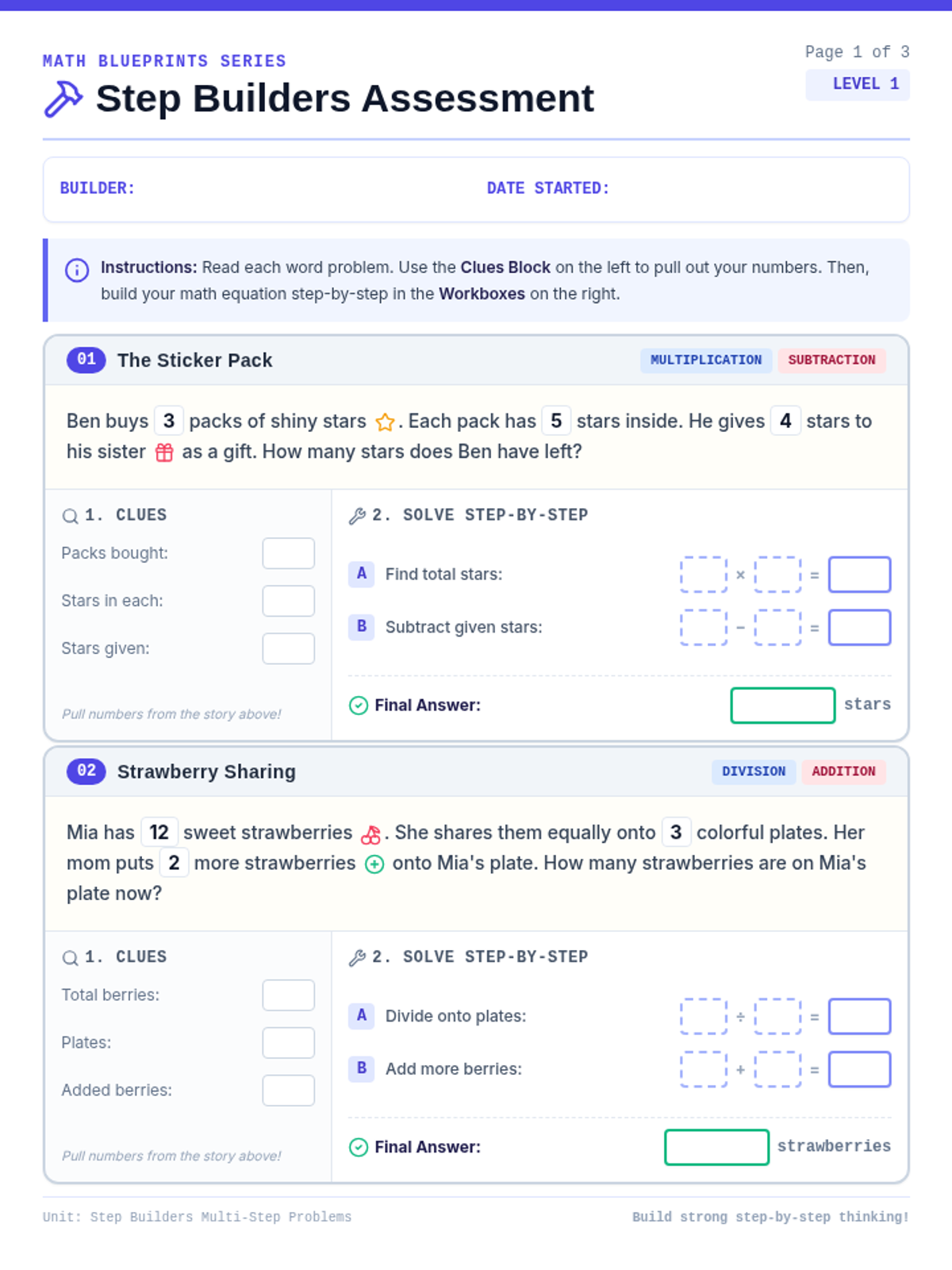
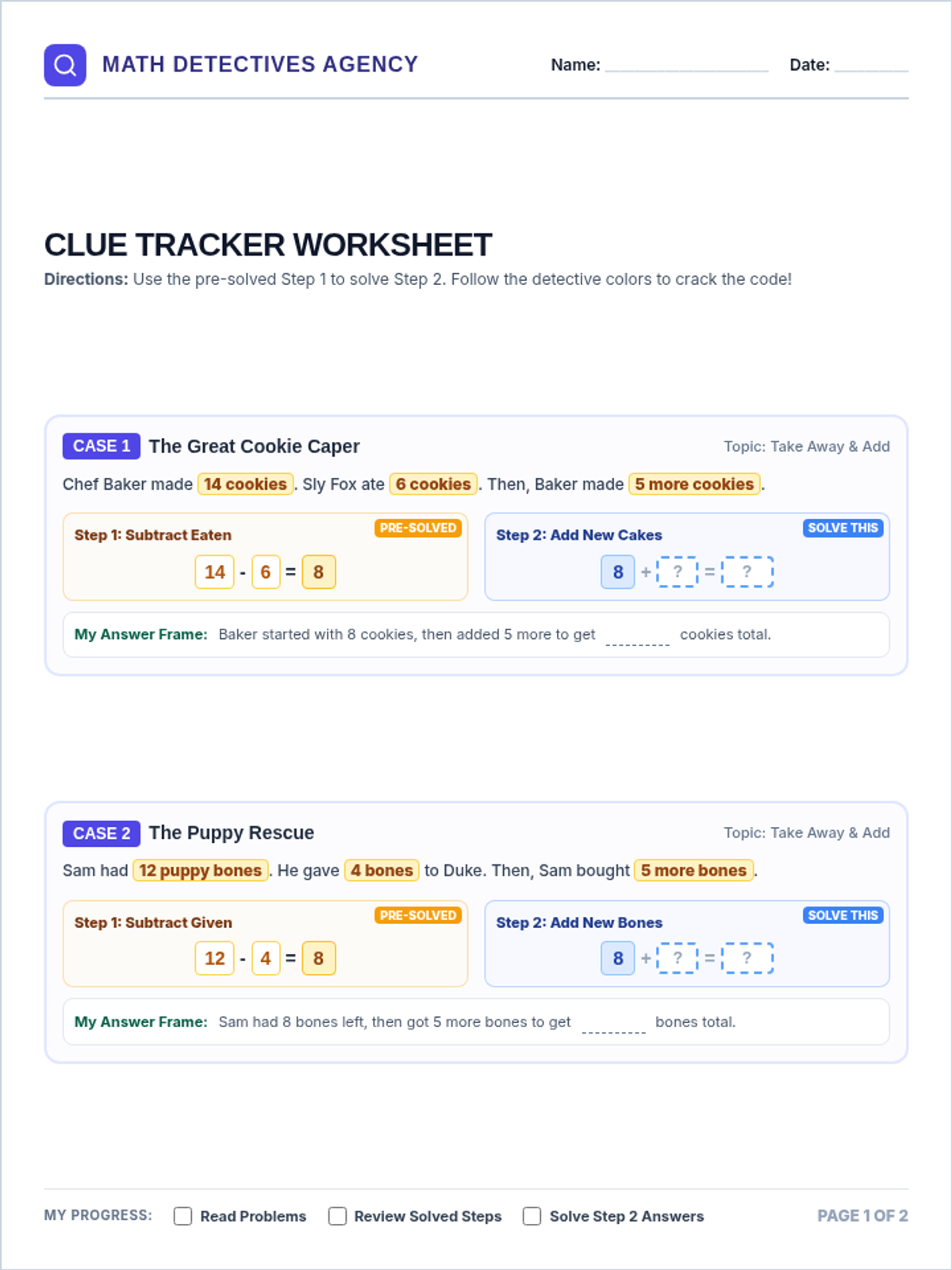
An assessment and supporting resources for students who struggle with multi-step word problems. It features simplified language, rebus-style icon clues, and a step-by-step graphic organizer workspace embedded in every problem.
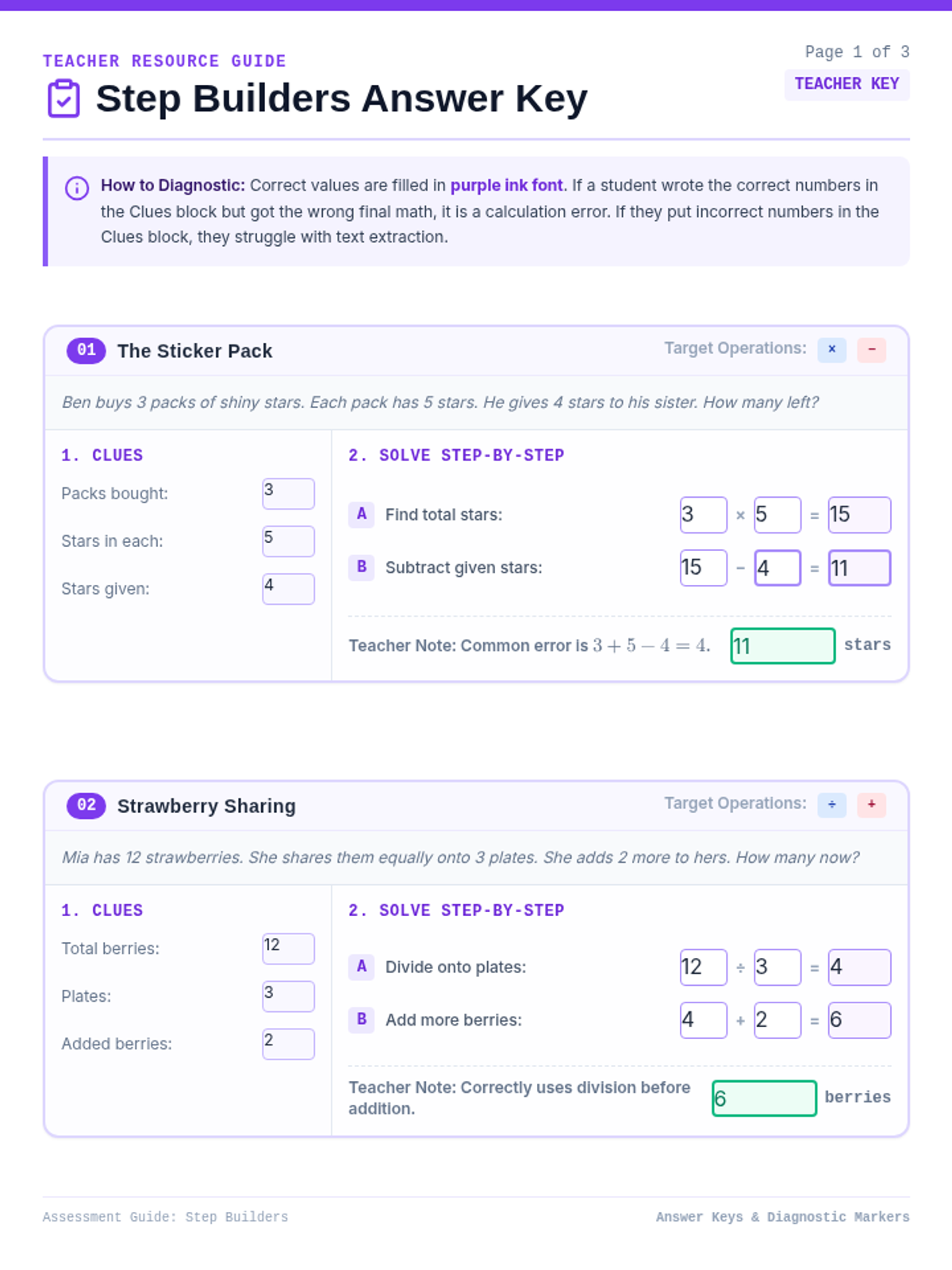
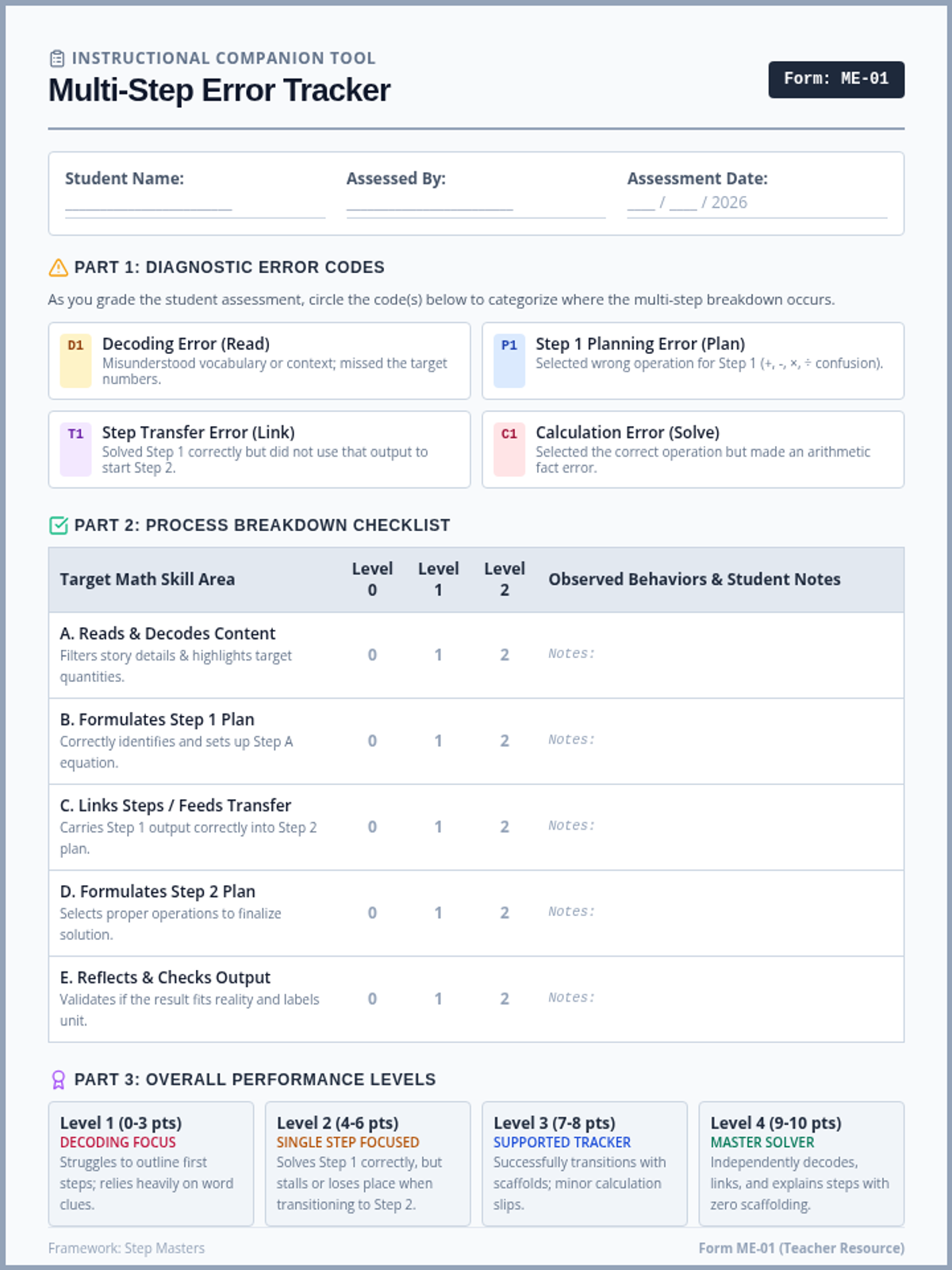
A scaffolded math toolkit designed to help students break down multi-step word problems using visual graphic organizers, reading accommodations, and a detailed teacher error-tracking framework.
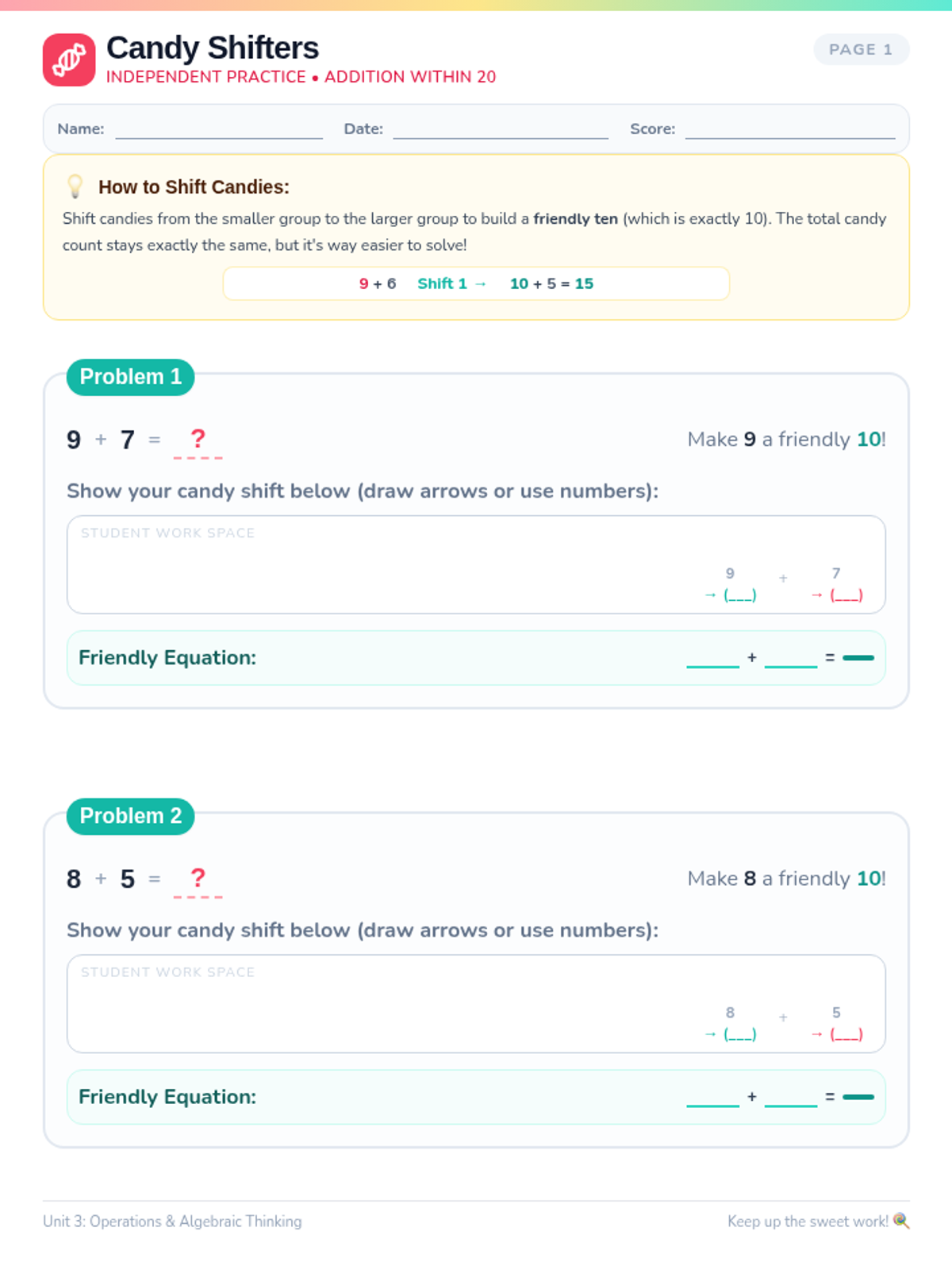
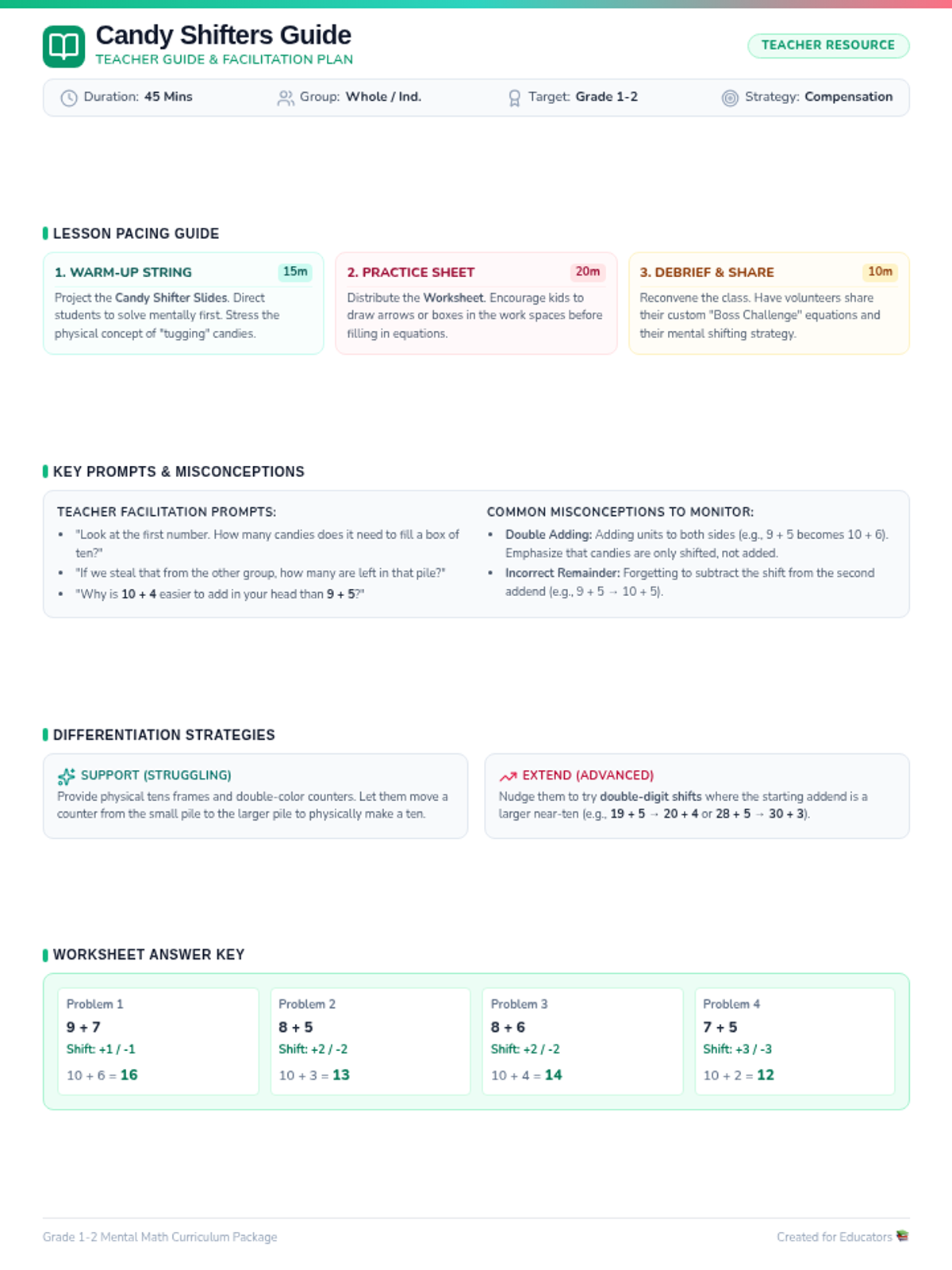
A mental math lesson introducing the compensation strategy for addition within 20 using a playful candy shop theme. Students shift amounts between addends to create 'friendly tens' (e.g., 9 + 5 becomes 10 + 4), practicing this mentally during a slide-guided warm-up and on paper with a themed student worksheet.
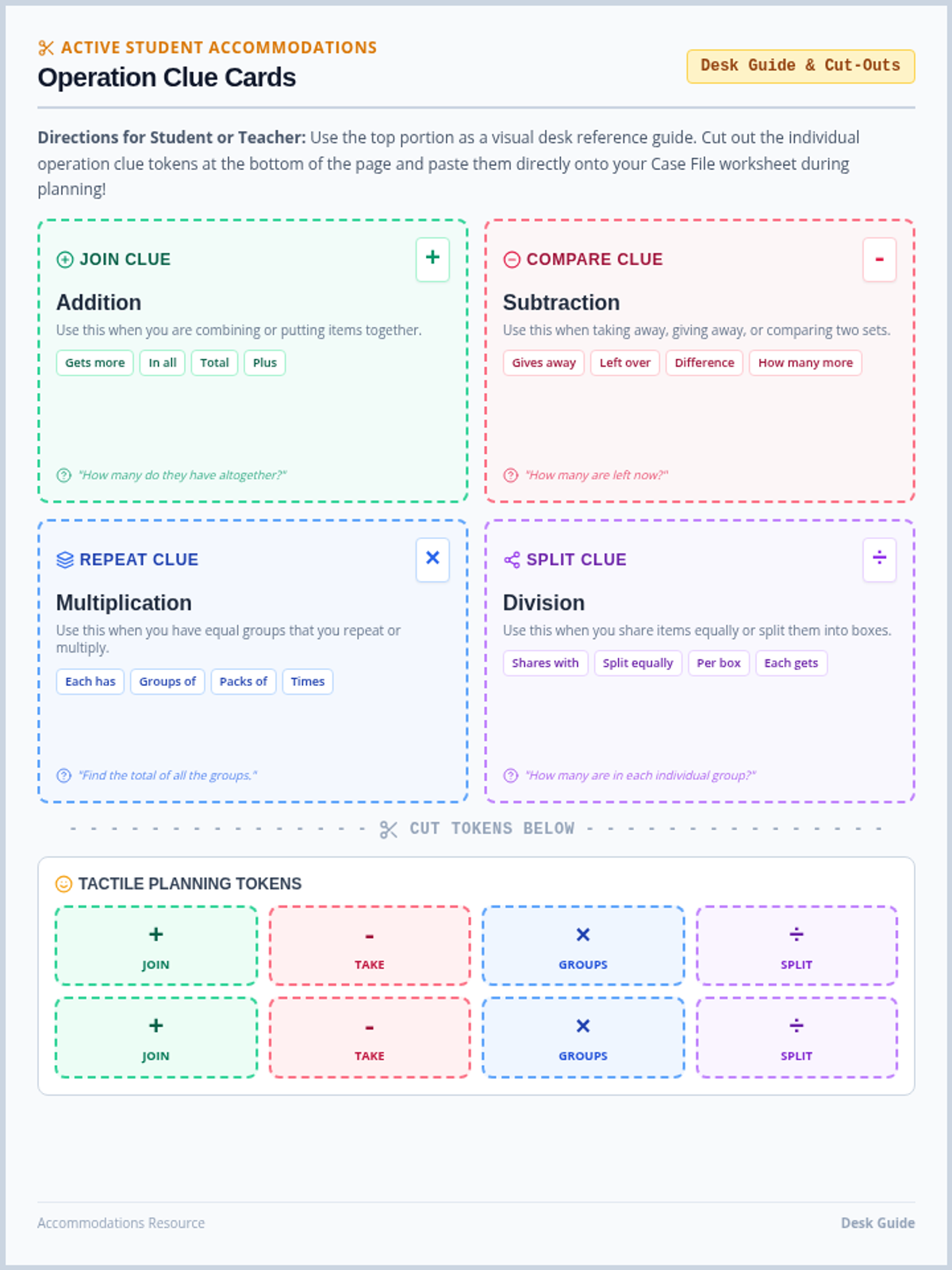
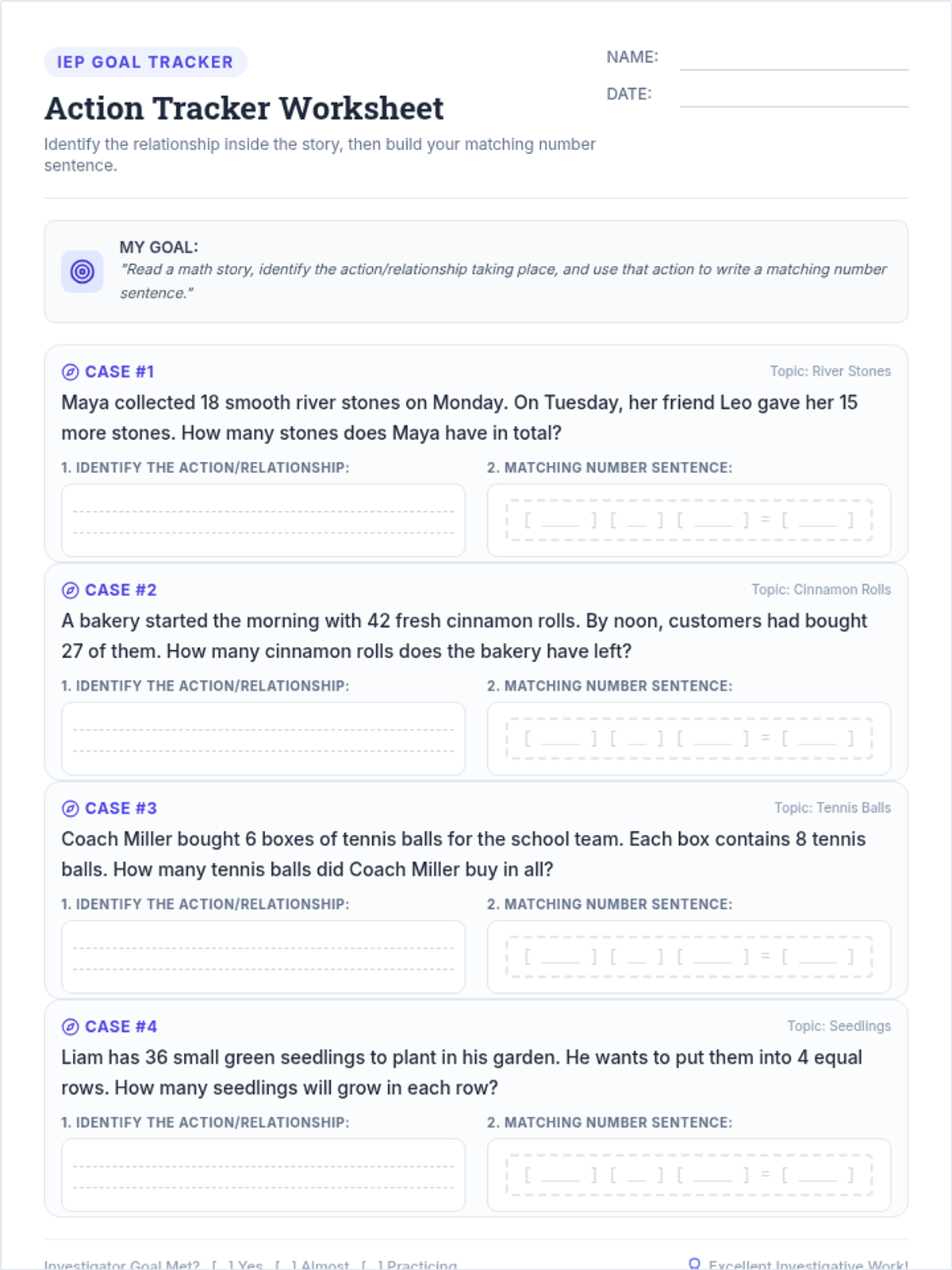
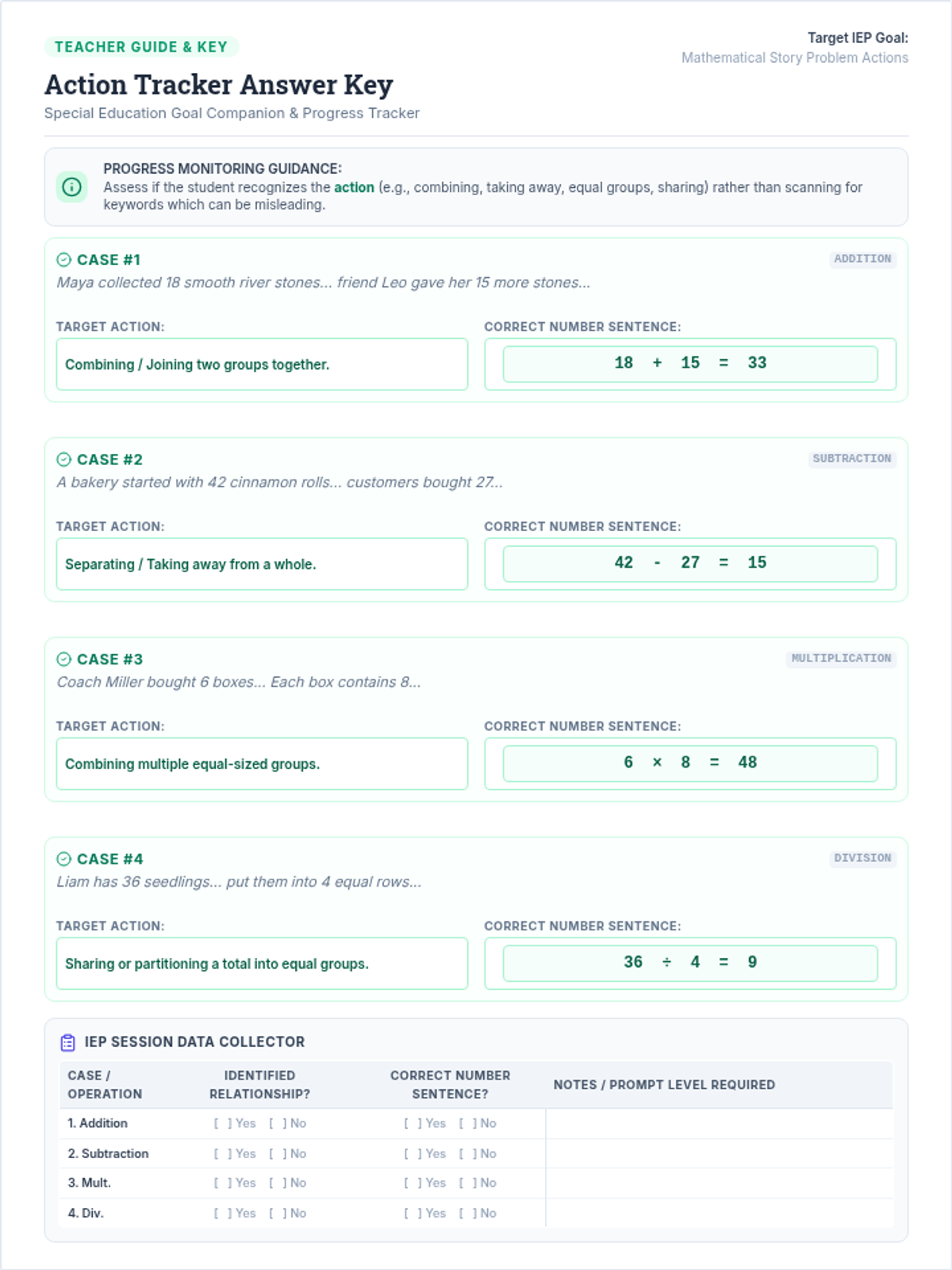
A targeted lesson designed to help students analyze word problems, identify the underlying action or relationship (joining, separating, grouping, or sharing), and translate them into correct number sentences across all four basic operations.
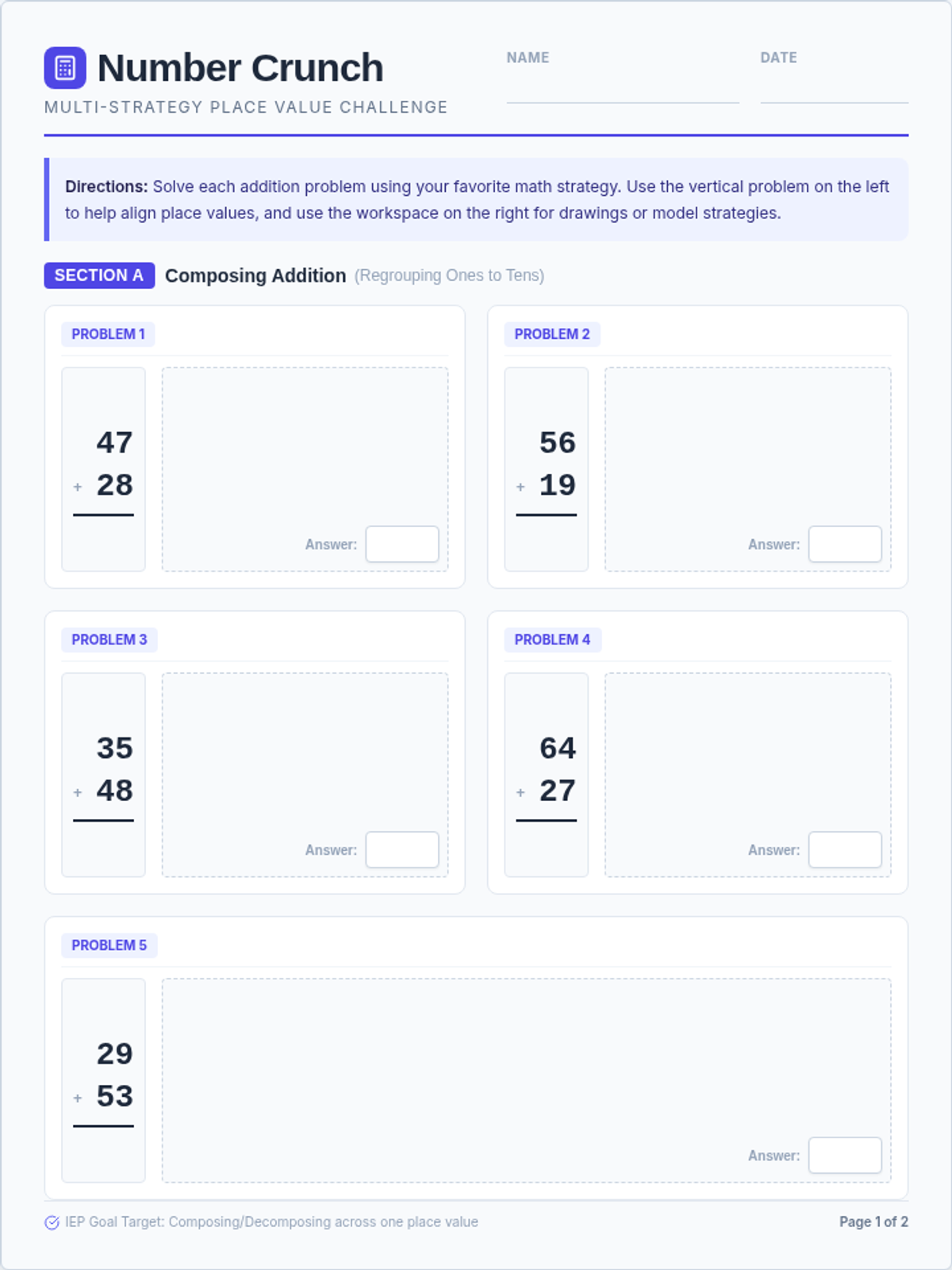
A targeted lesson focused on building student confidence and accuracy in composing and decomposing numbers across a single place value in addition and subtraction, utilizing their preferred problem-solving strategy.
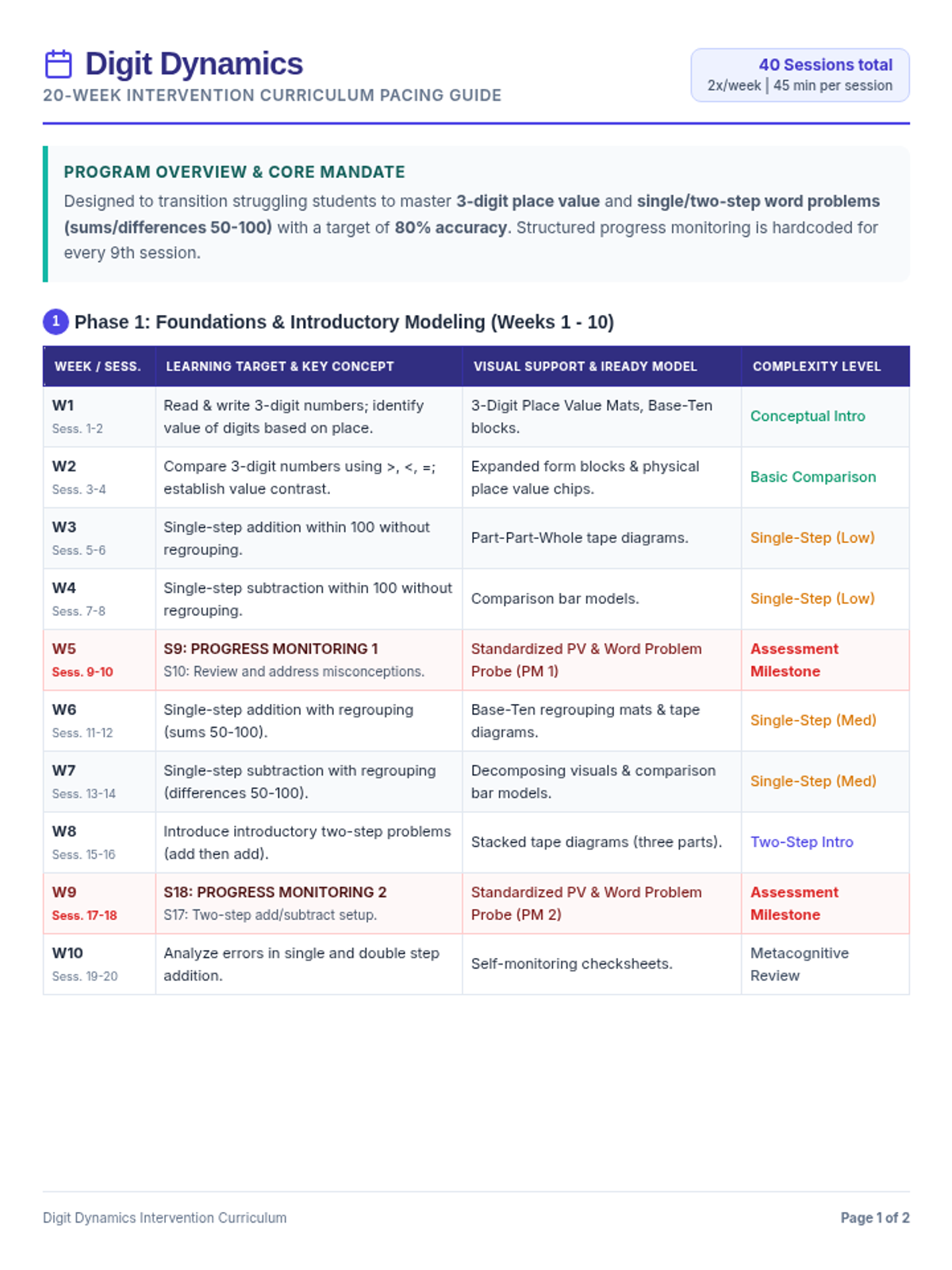
Weeks 16-20 (Sessions 31-40) focusing on advanced problem solving, error analysis, self-regulation checklists for 80% accuracy, and the Session 36 Progress Monitoring milestone.
Weeks 11-15 (Sessions 21-30) focusing on multi-step addition and subtraction word problems (sums/differences 50-100) using visual schemas and Session 27 Progress Monitoring.
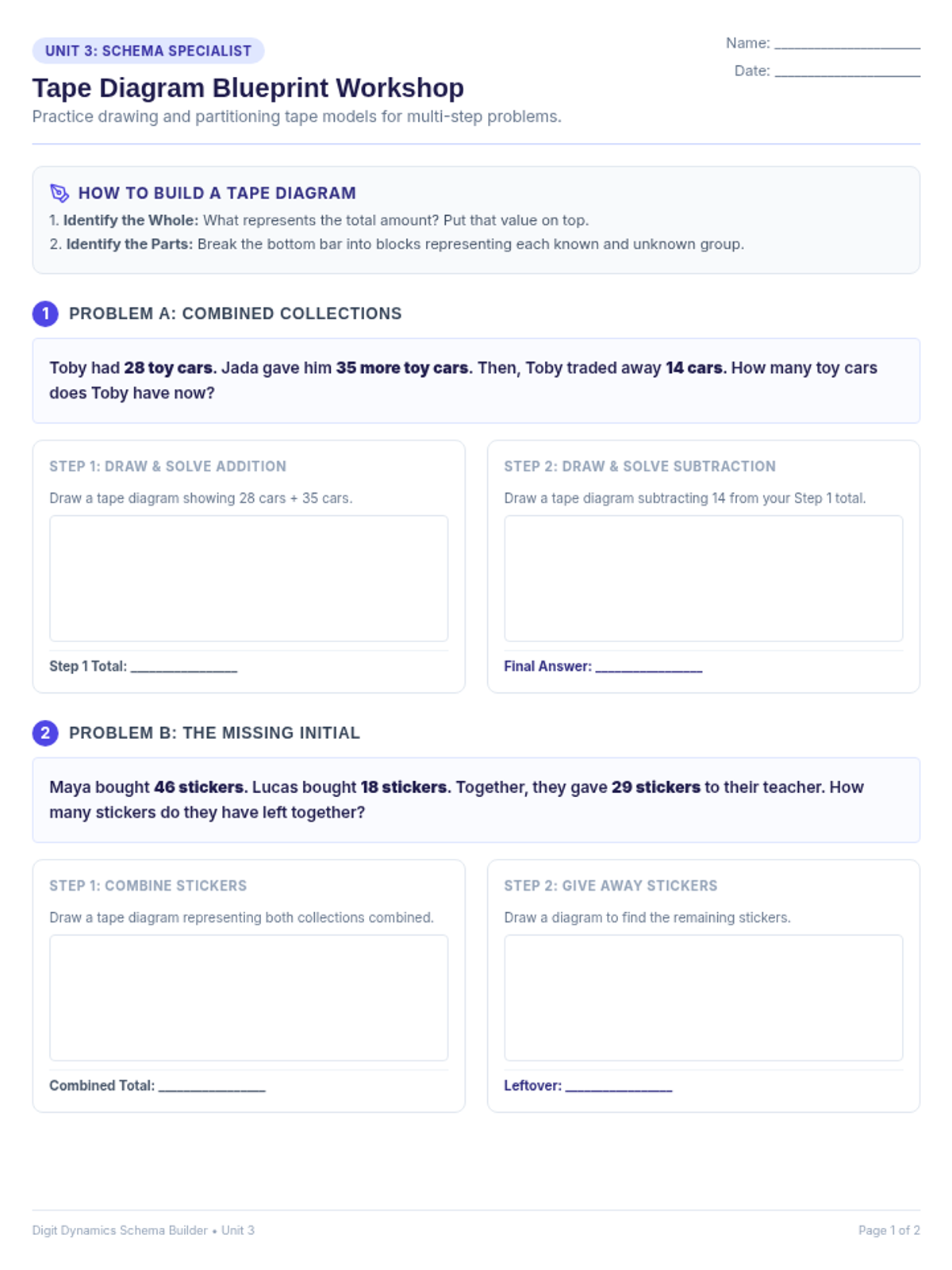
Weeks 6-10 (Sessions 11-20) focusing on introducing bar models and tape diagrams to represent addition and subtraction word problems within 100, plus Session 18 Progress Monitoring.
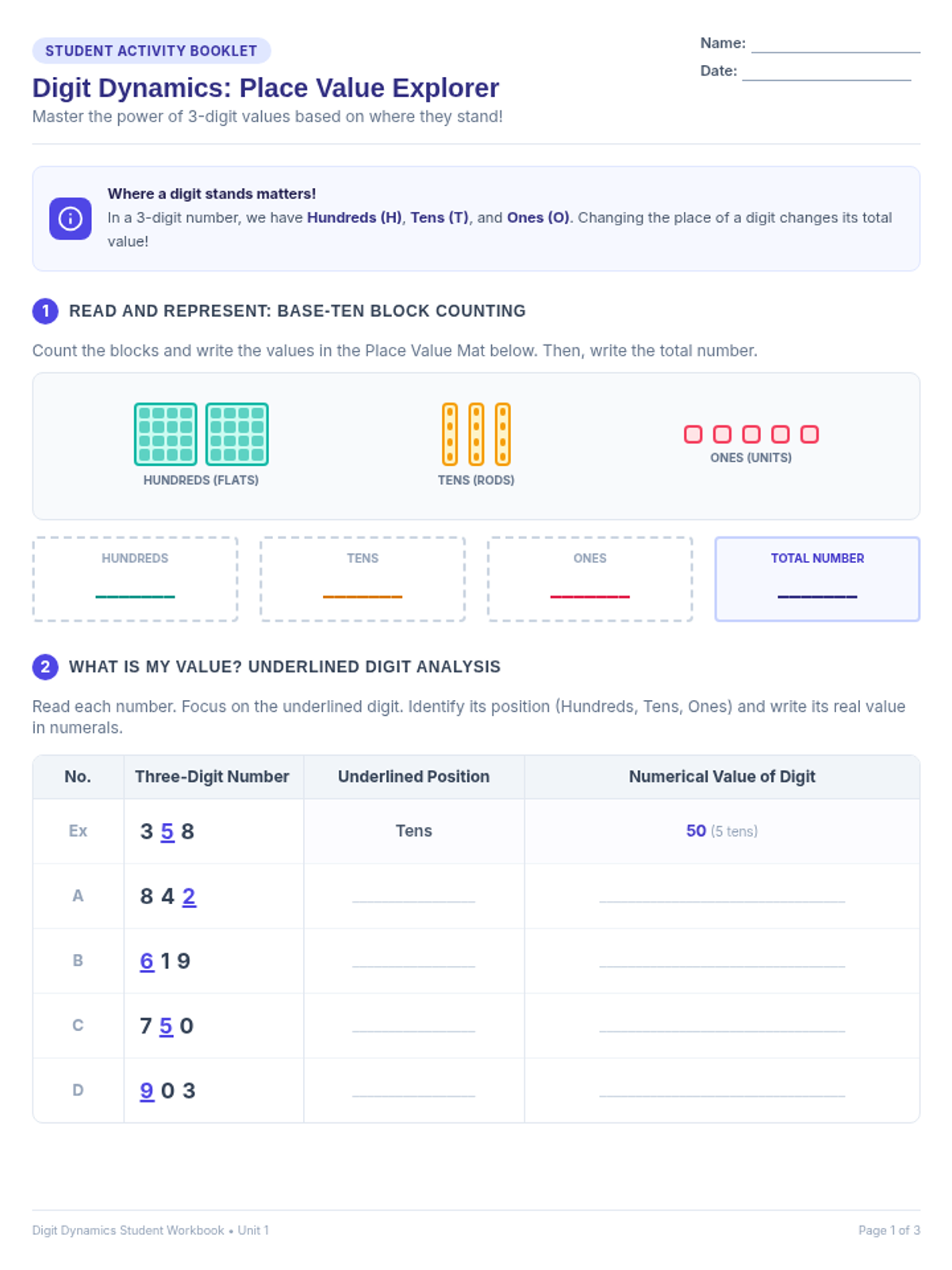
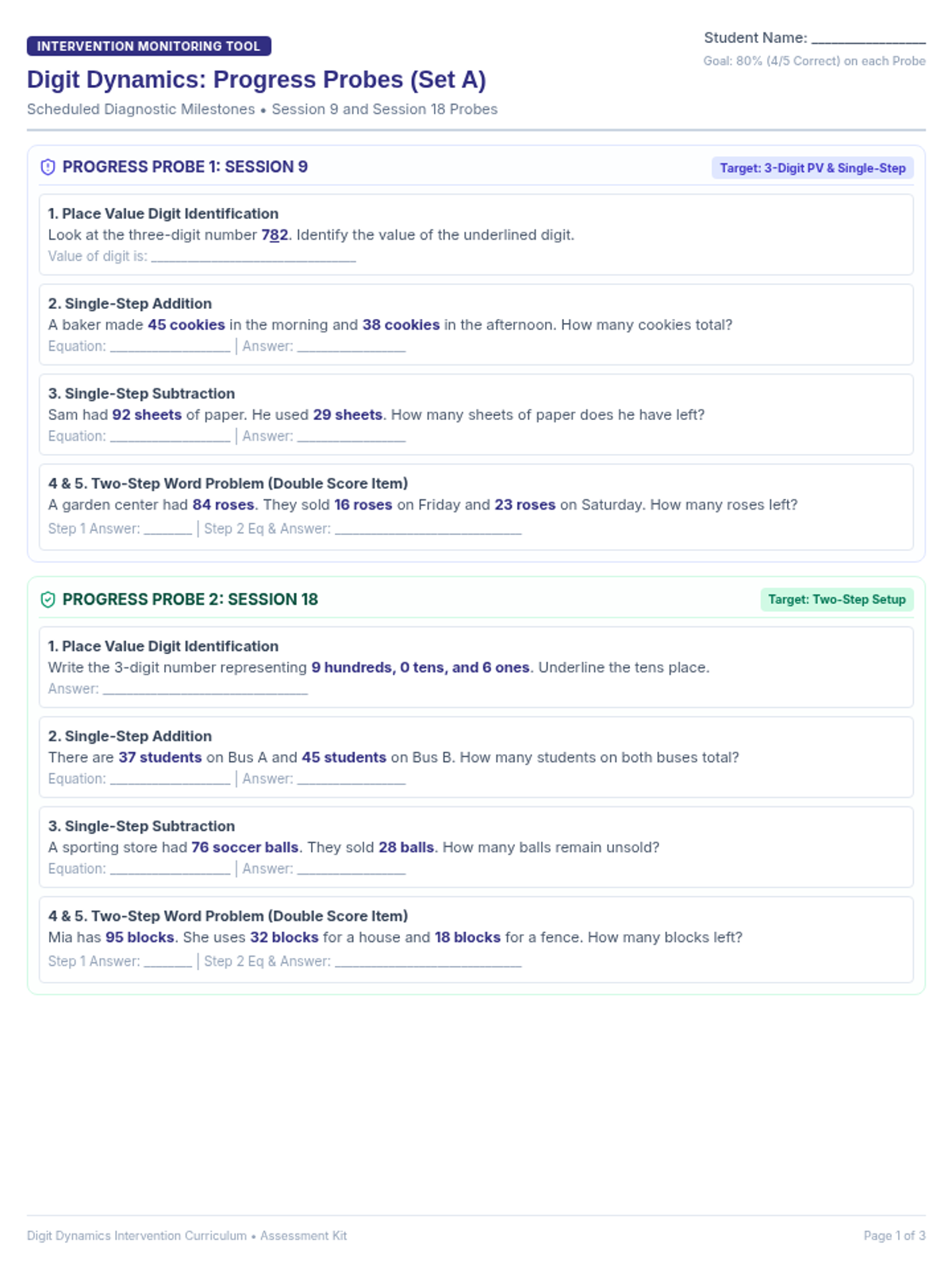
Weeks 1-5 (Sessions 1-10) focusing on 3-digit place value foundations, base-ten visual modeling, and single-step operations. Includes the Session 9 Progress Monitoring milestone.
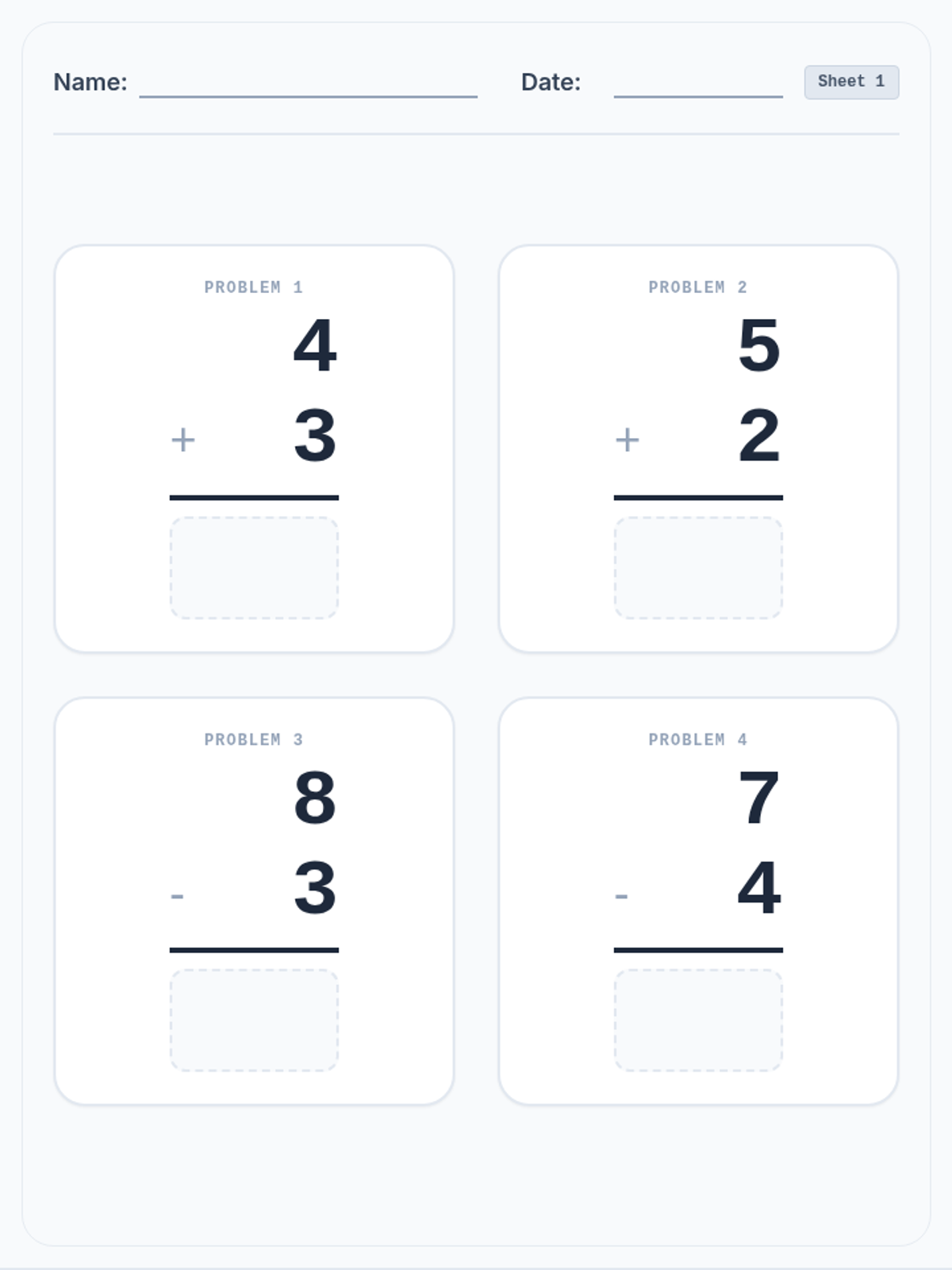
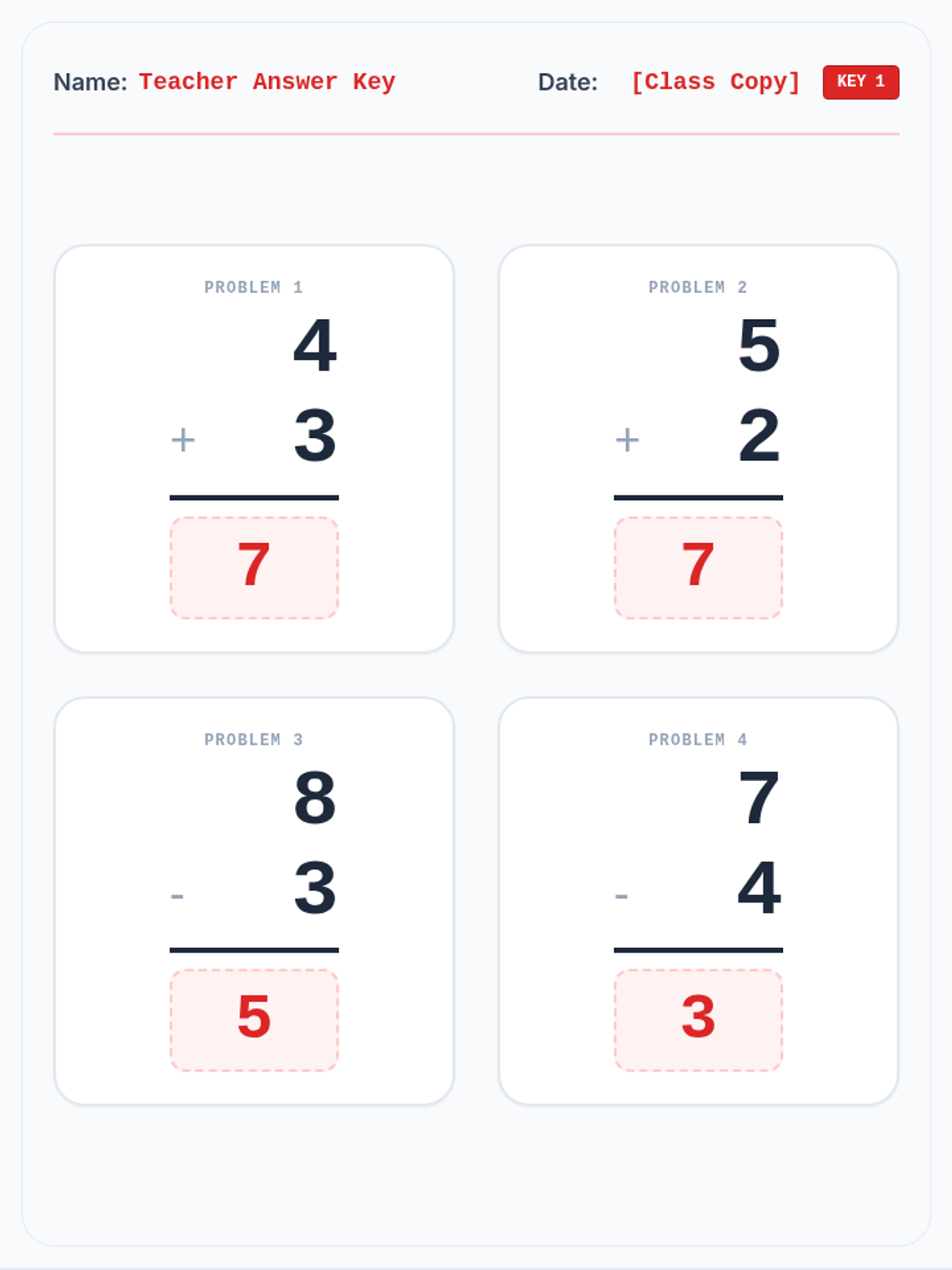
A collection of 20 high-frequency printable math worksheets designed to build addition and subtraction fluency within 20, containing standard vertical algorithm problems.
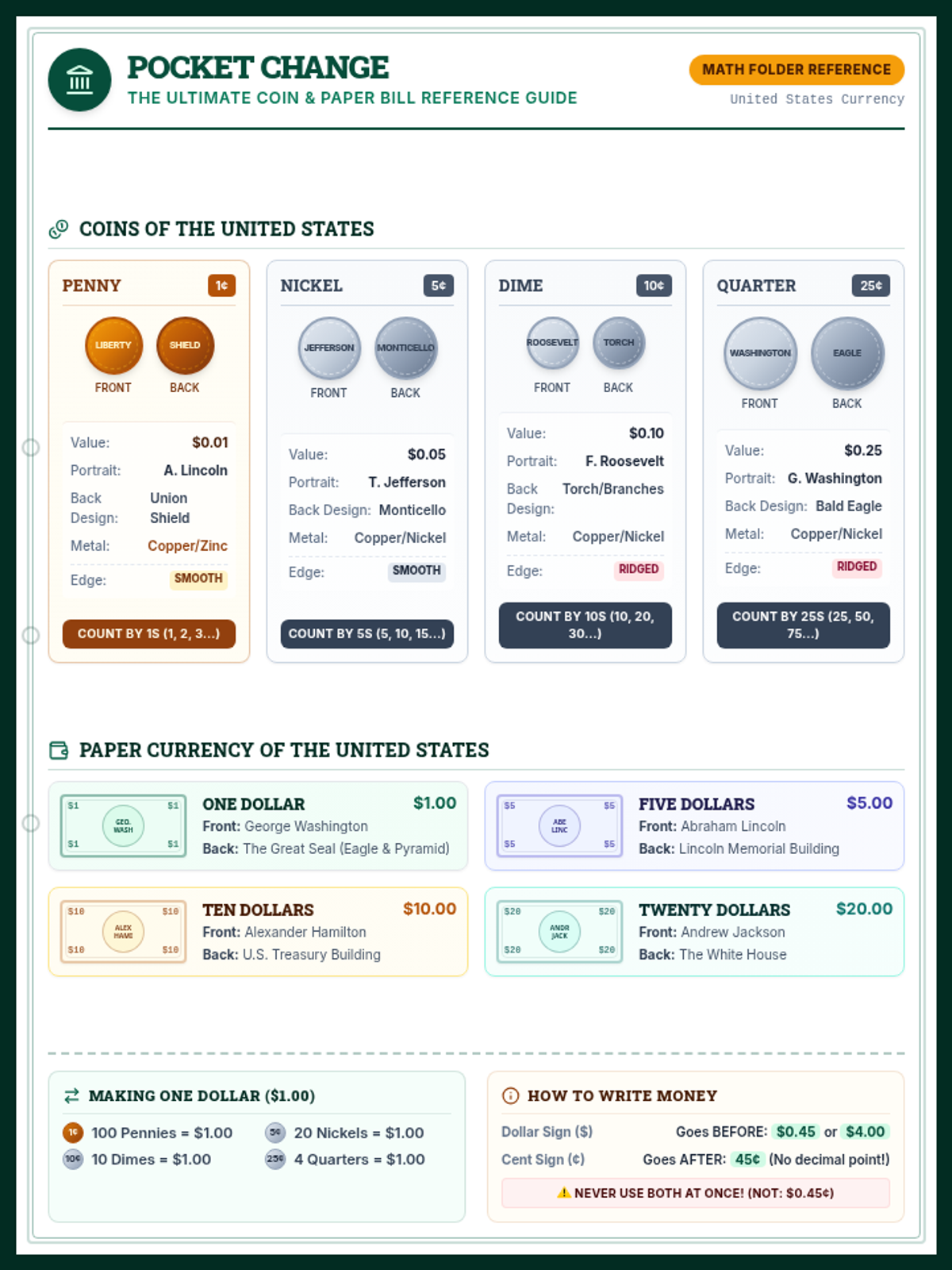
A comprehensive lesson on identifying and understanding US coins and bills, their values, and their key visual features.
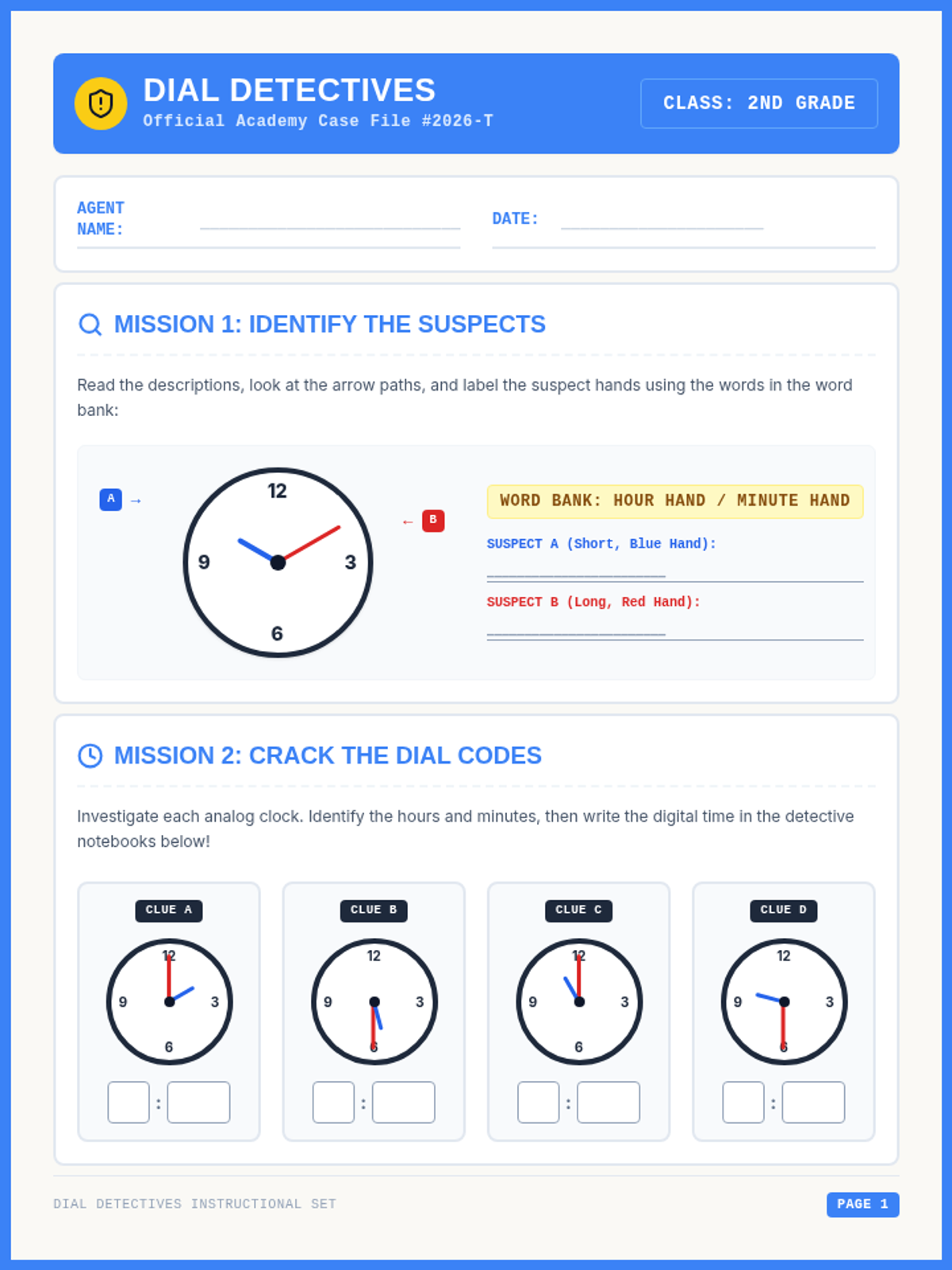
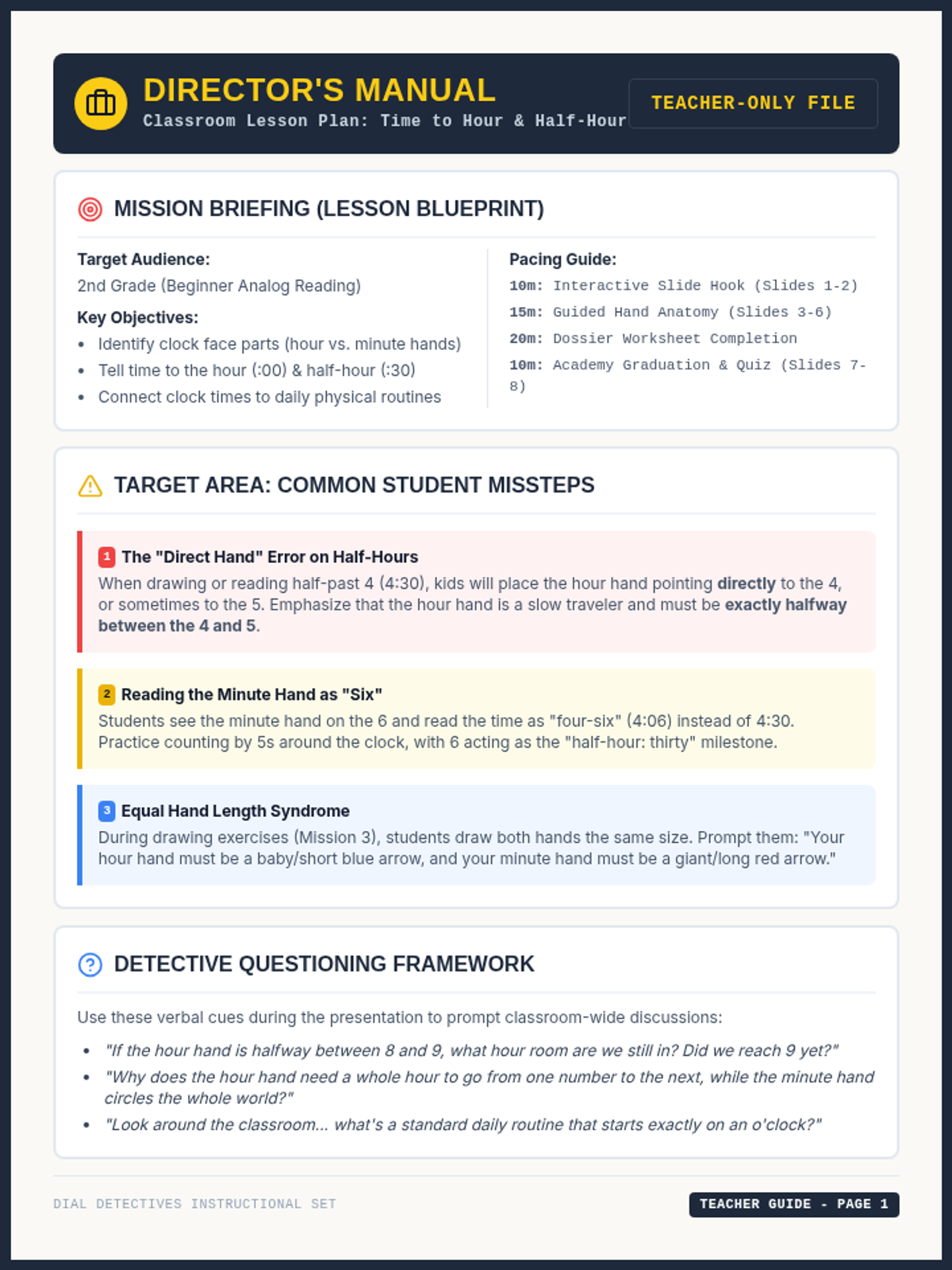
A second-grade beginner's lesson on reading analog clocks to the hour and half-hour, connecting time-telling to daily routines through a fun detective-themed investigation.
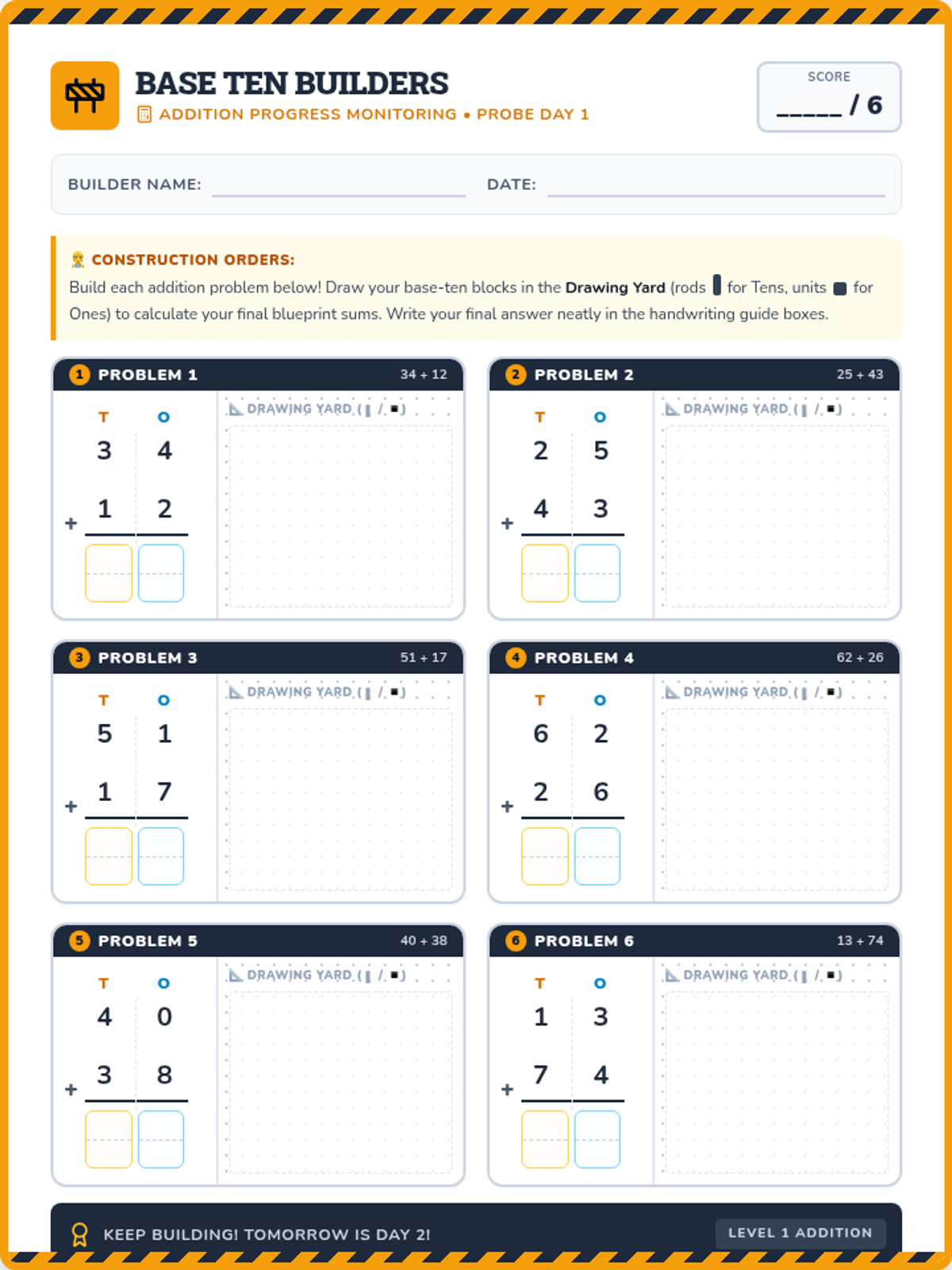
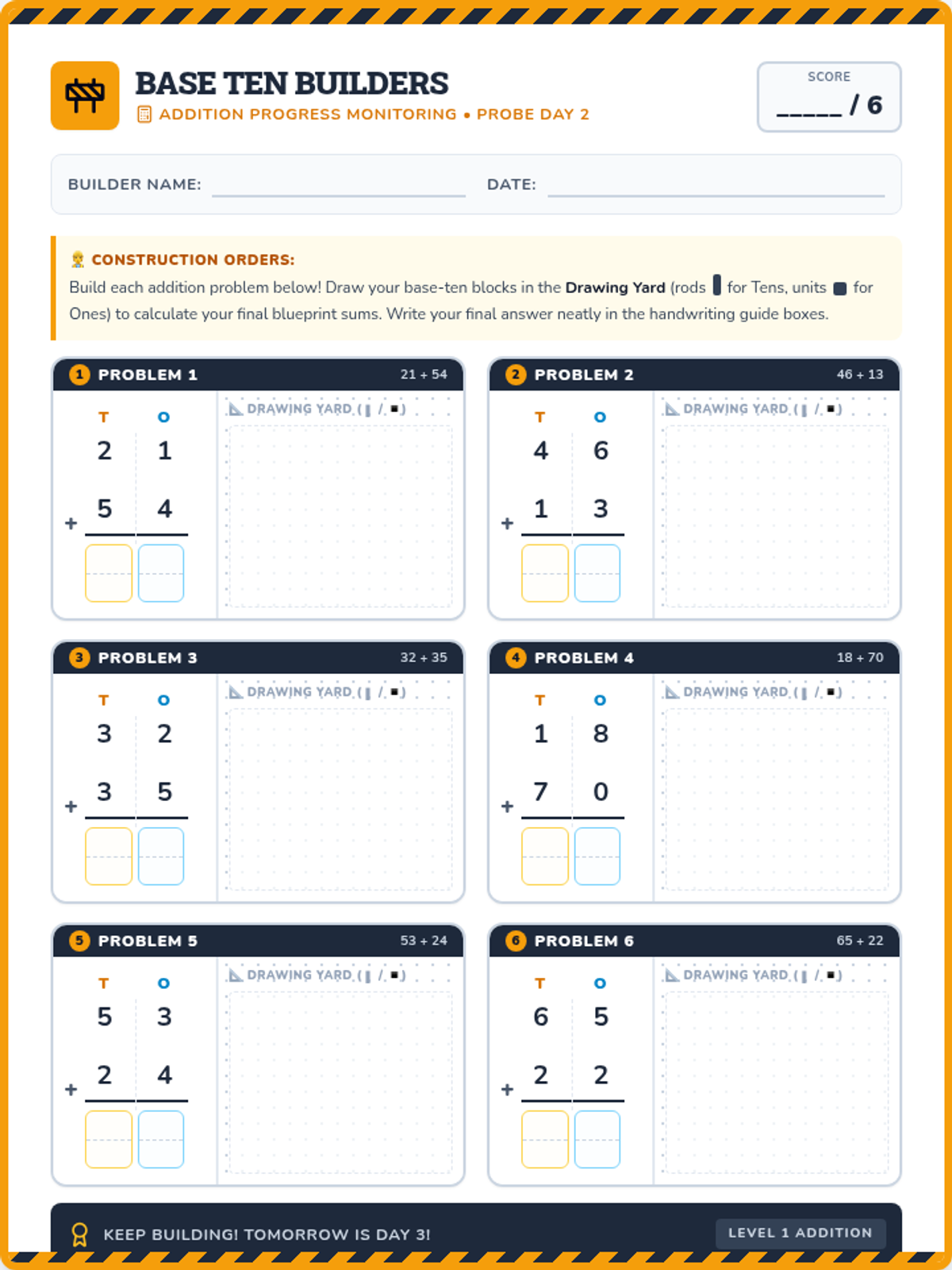
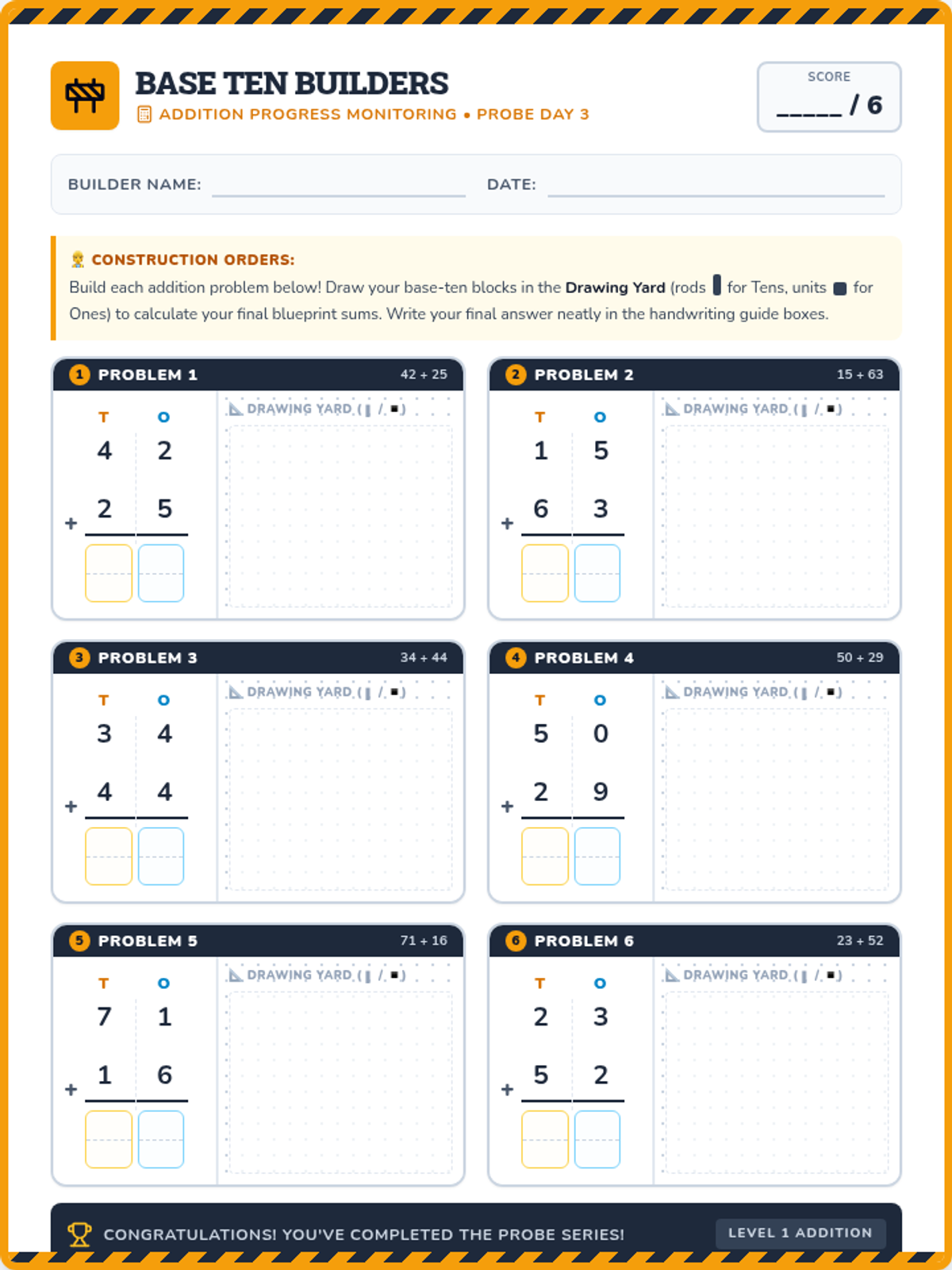
A progress monitoring set of three double-digit addition probes (within 100, no regrouping) featuring strict place value column labels, spacious builder-themed drawing yards for drawing base-ten blocks, and dotted visual handwriting guides.
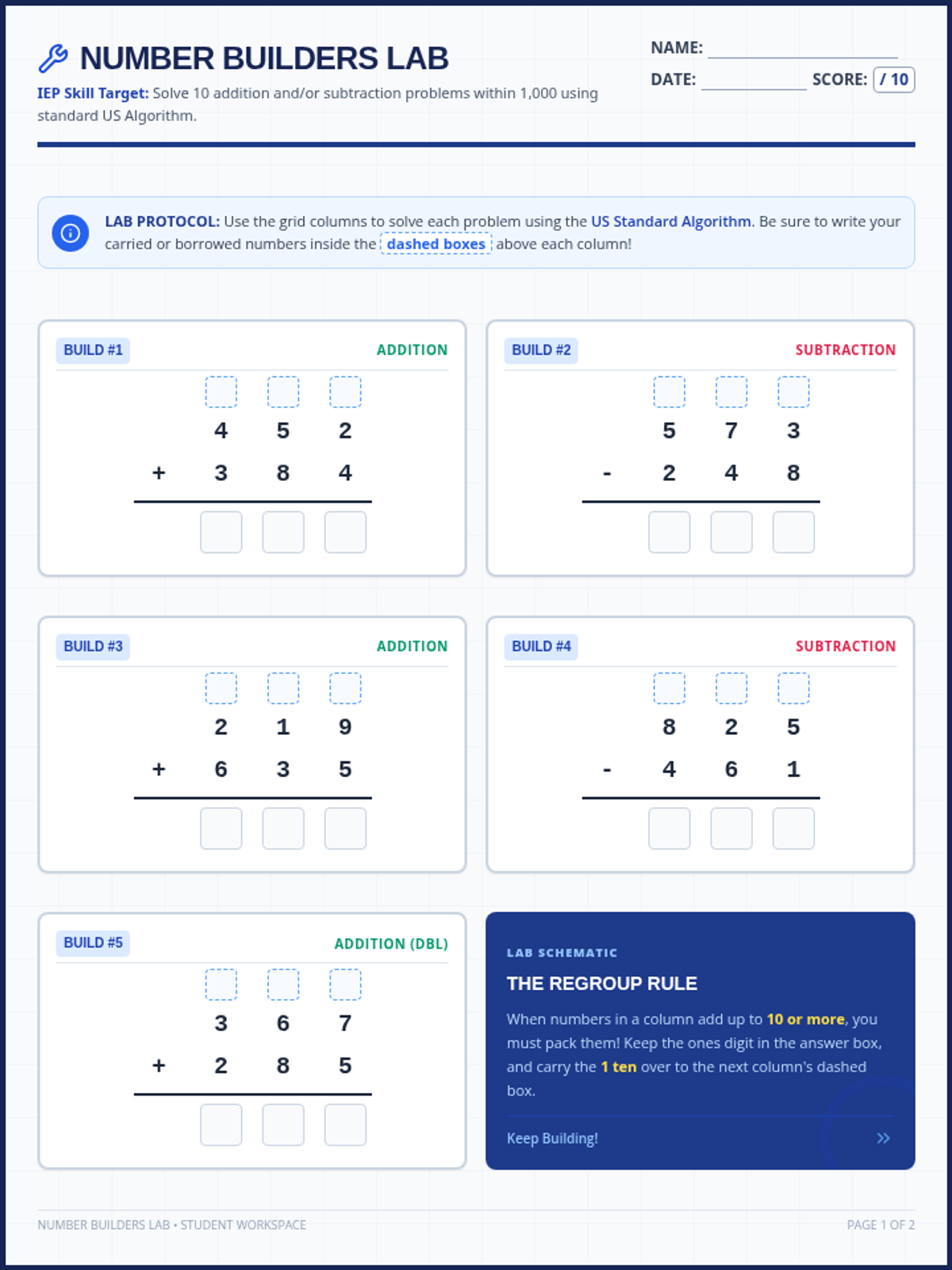
A highly scaffolded addition and subtraction lesson within 1,000, designed to help students master the US standard algorithm through decomposition and visual regrouping aids. Includes name, date, clear instructions, visual regrouping boxes, and structured workspace templates.
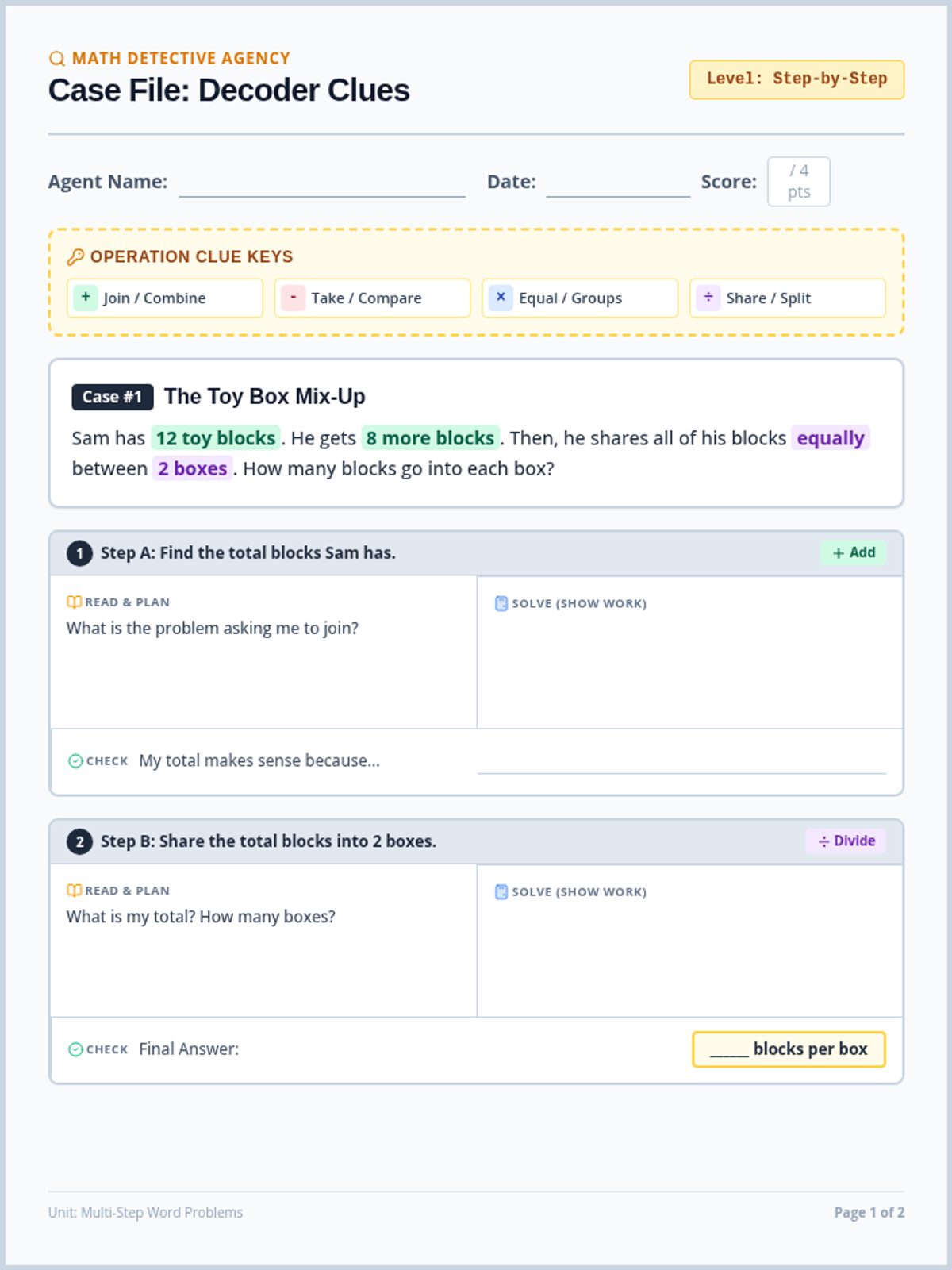
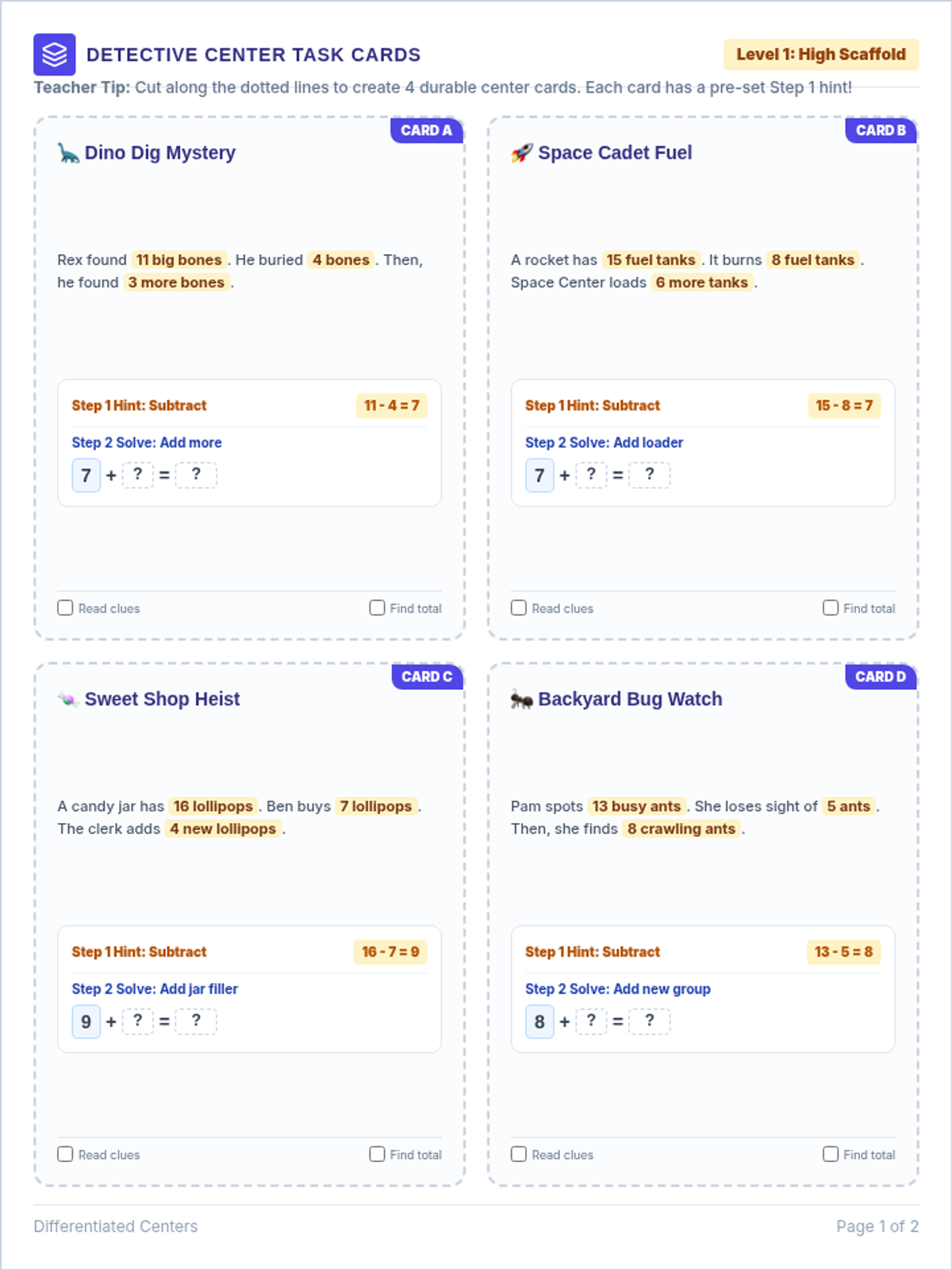
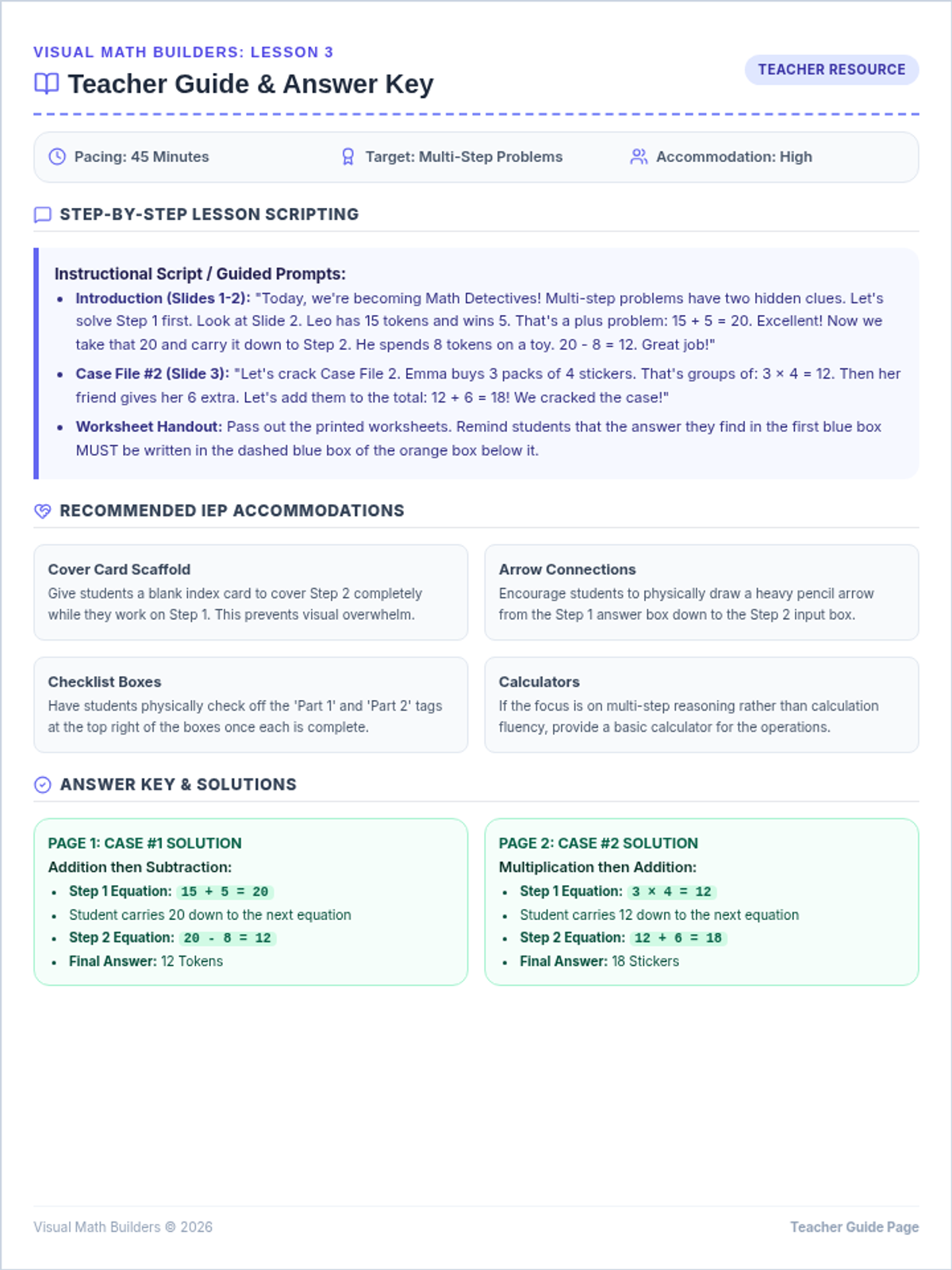
A structured lesson designed for IEP students to master multi-step word problems using a 'Math Detectives' theme. Includes visual guides, color-coded step-by-step scaffolds, sentence frames, and partially-completed templates.
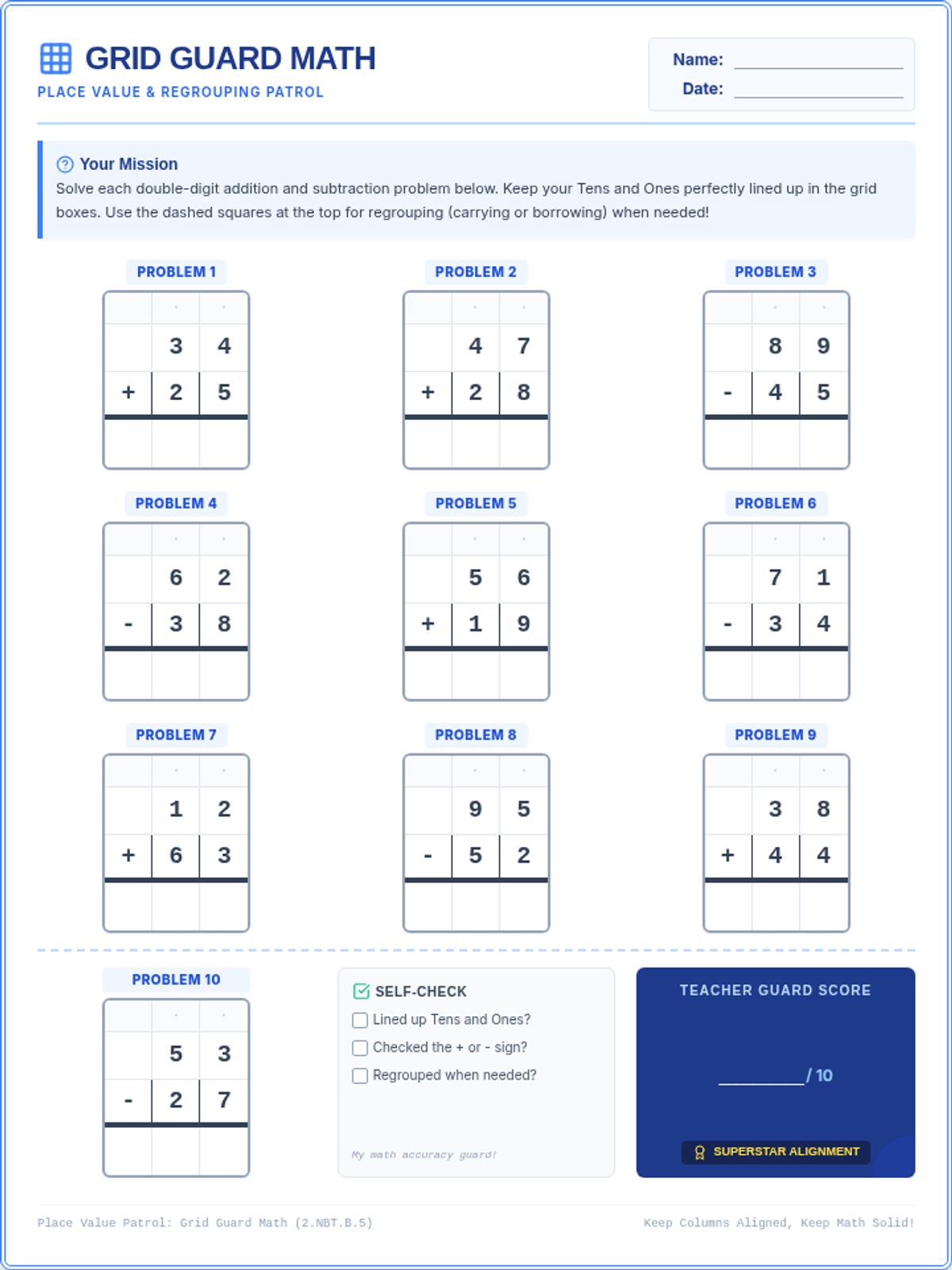
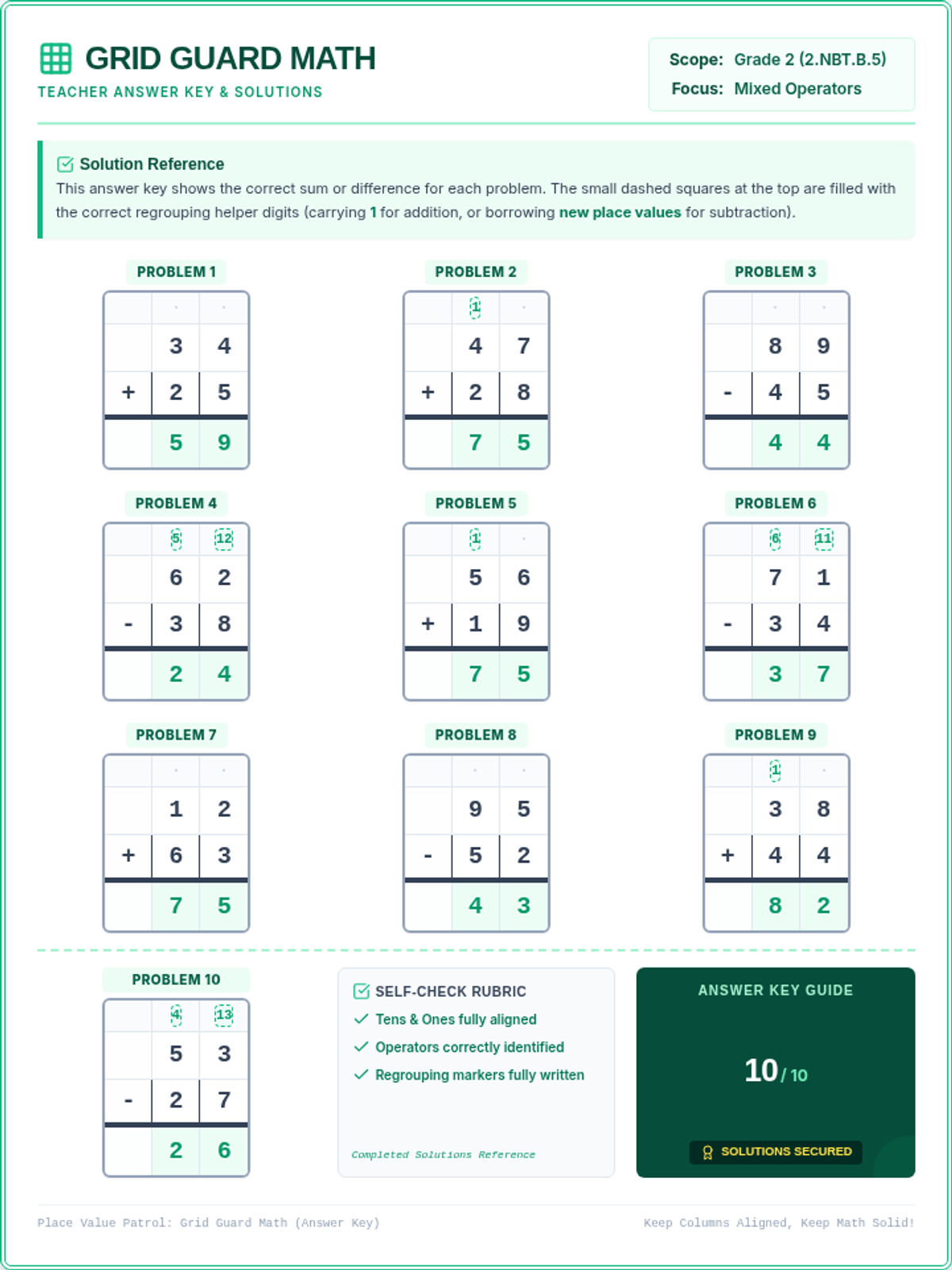
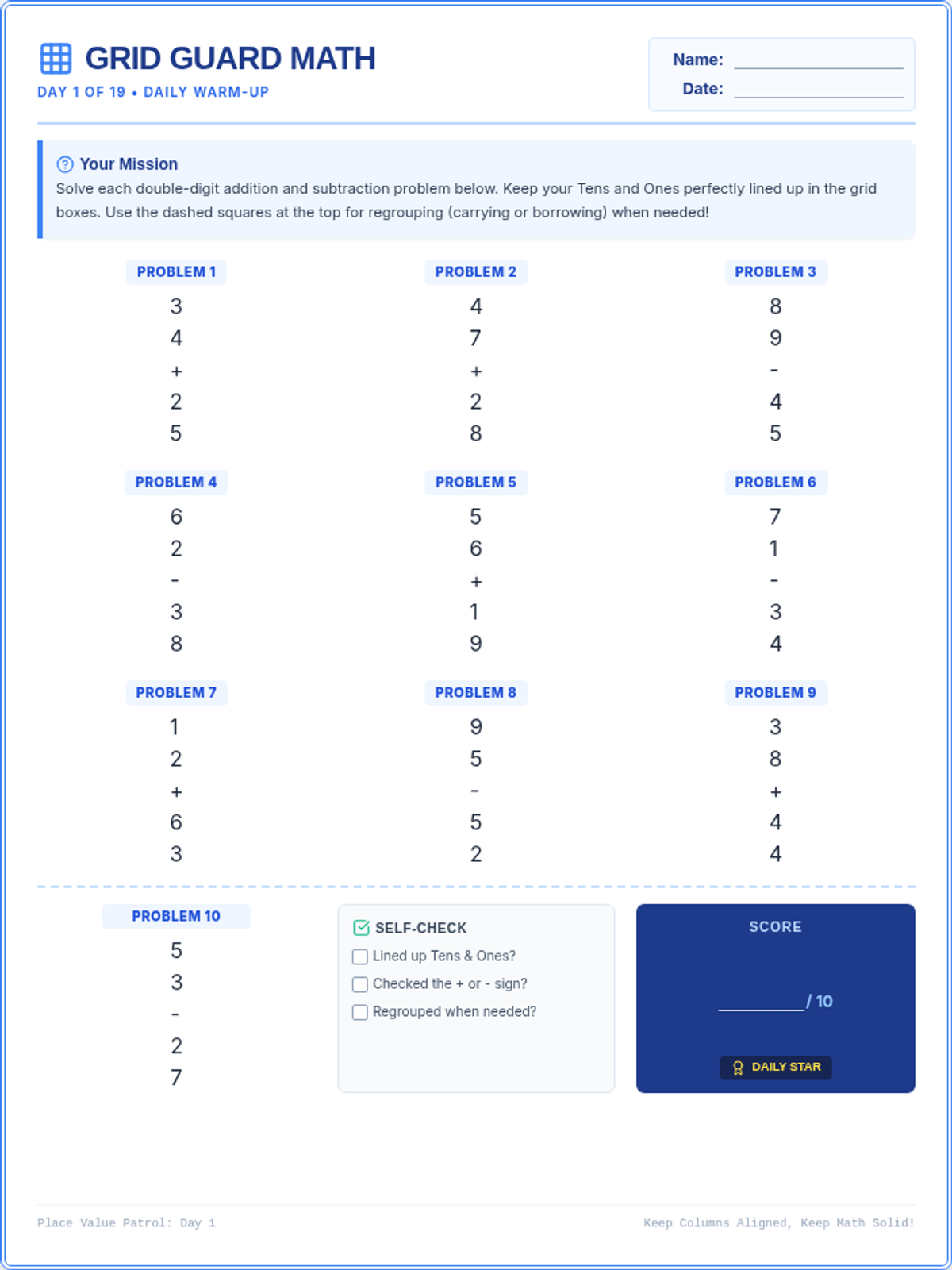
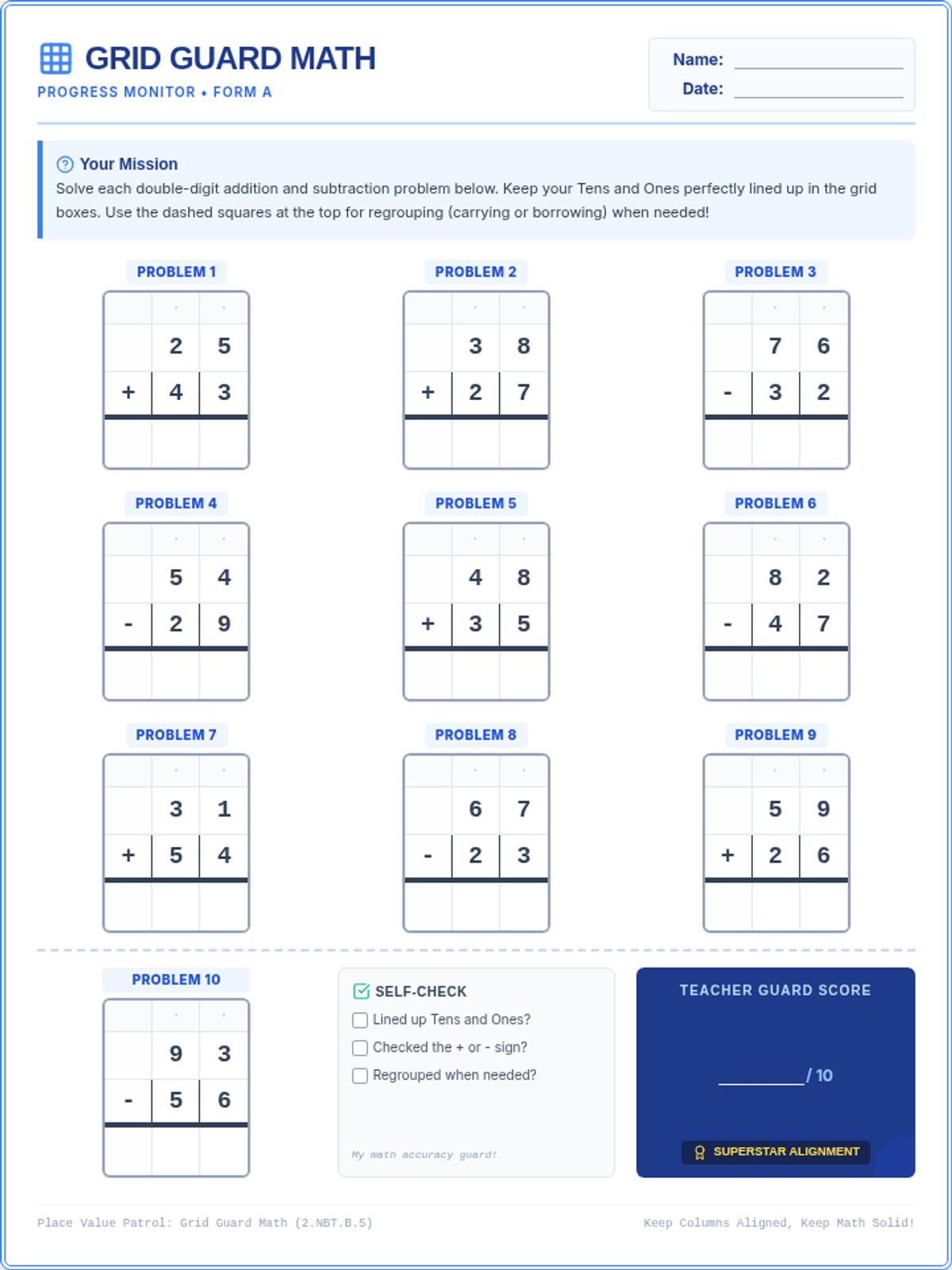
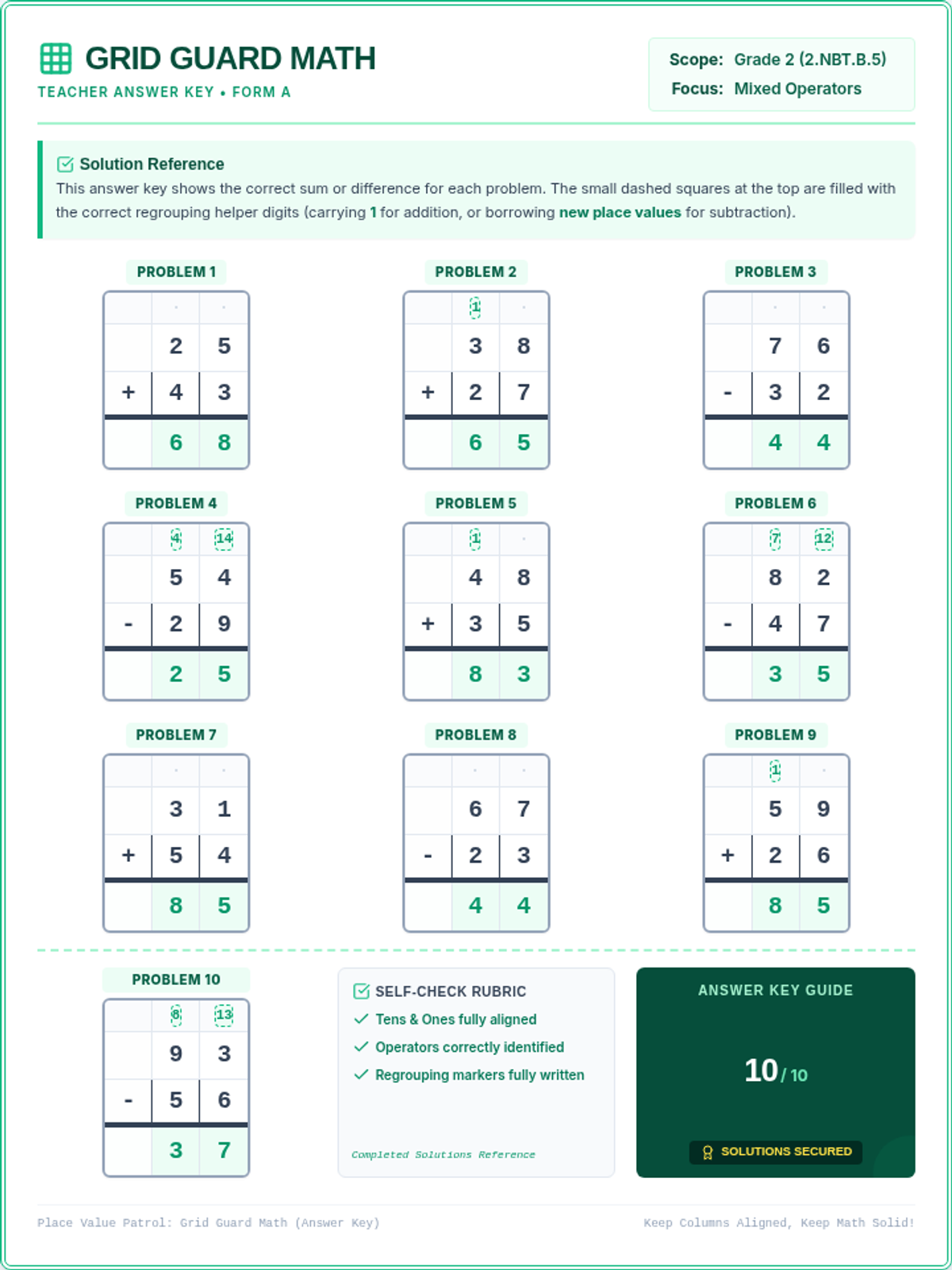
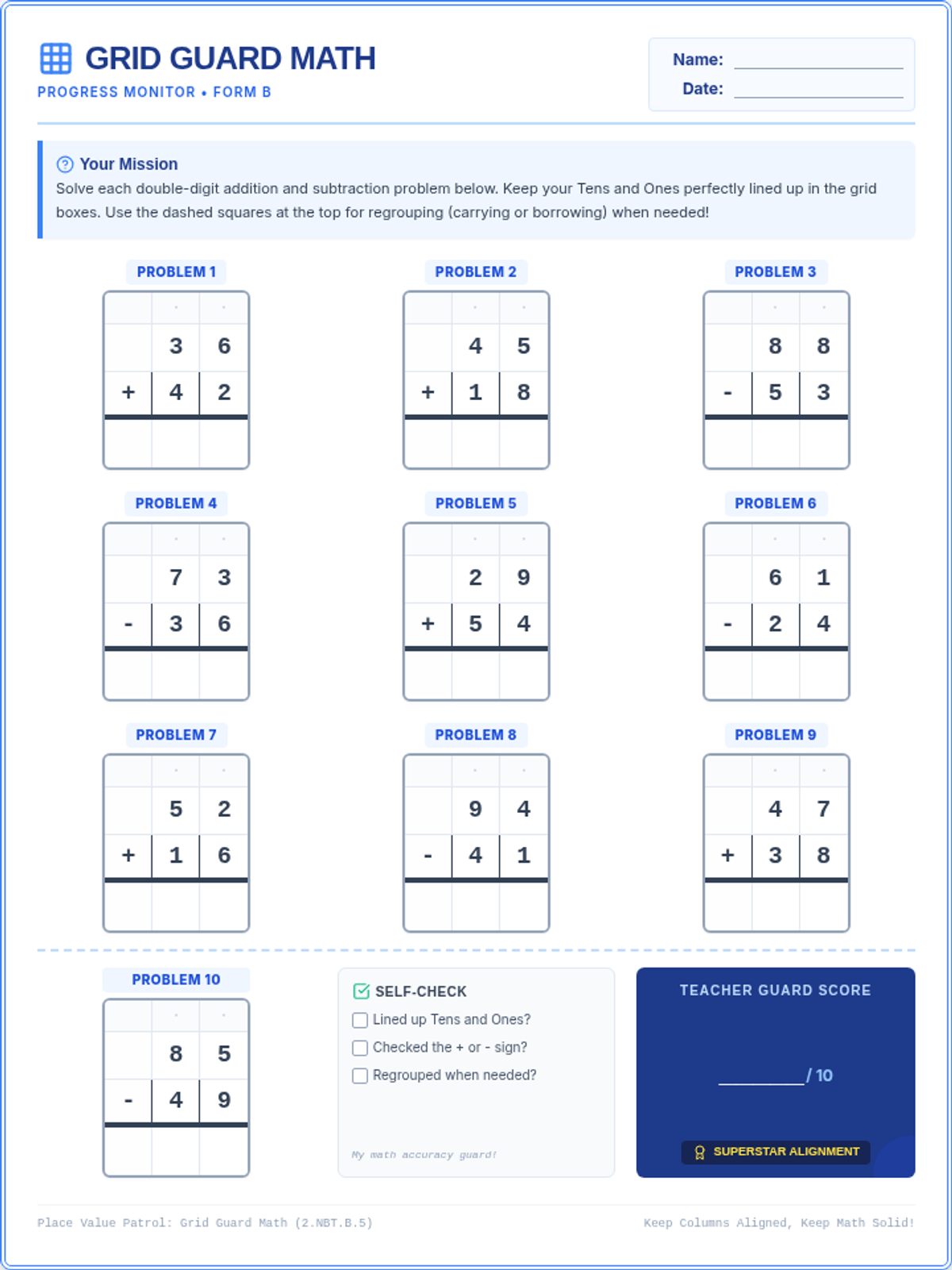
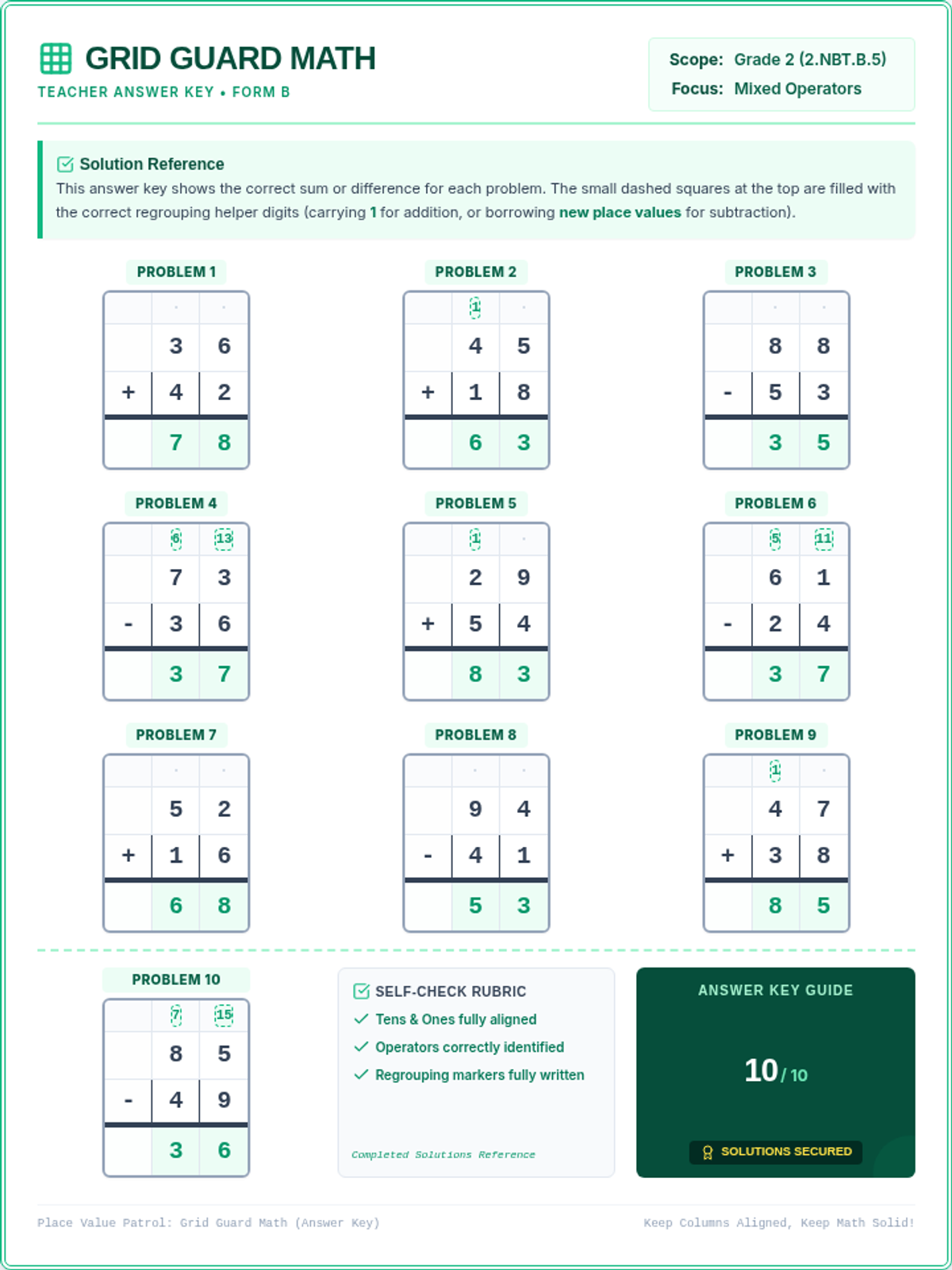
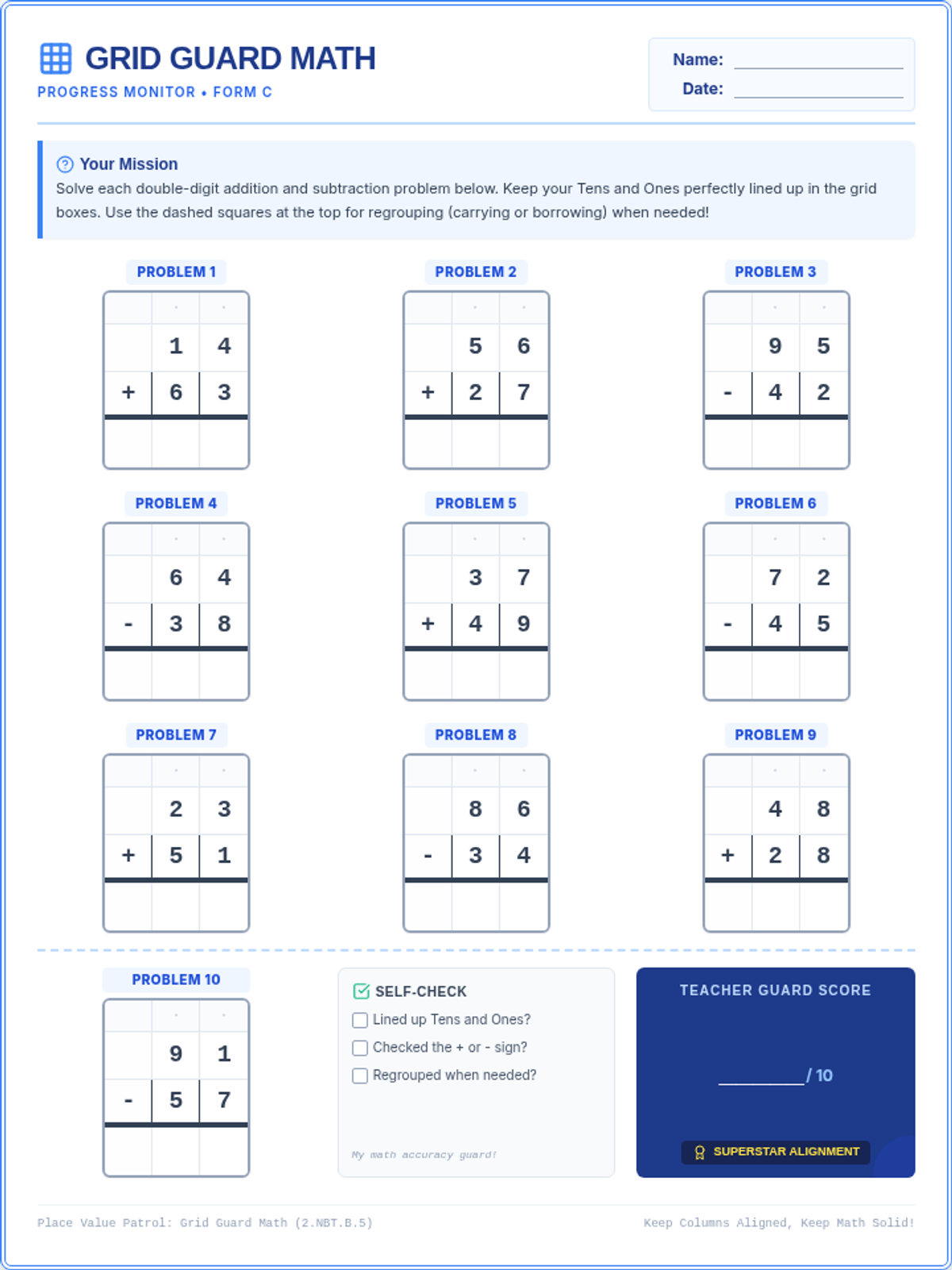
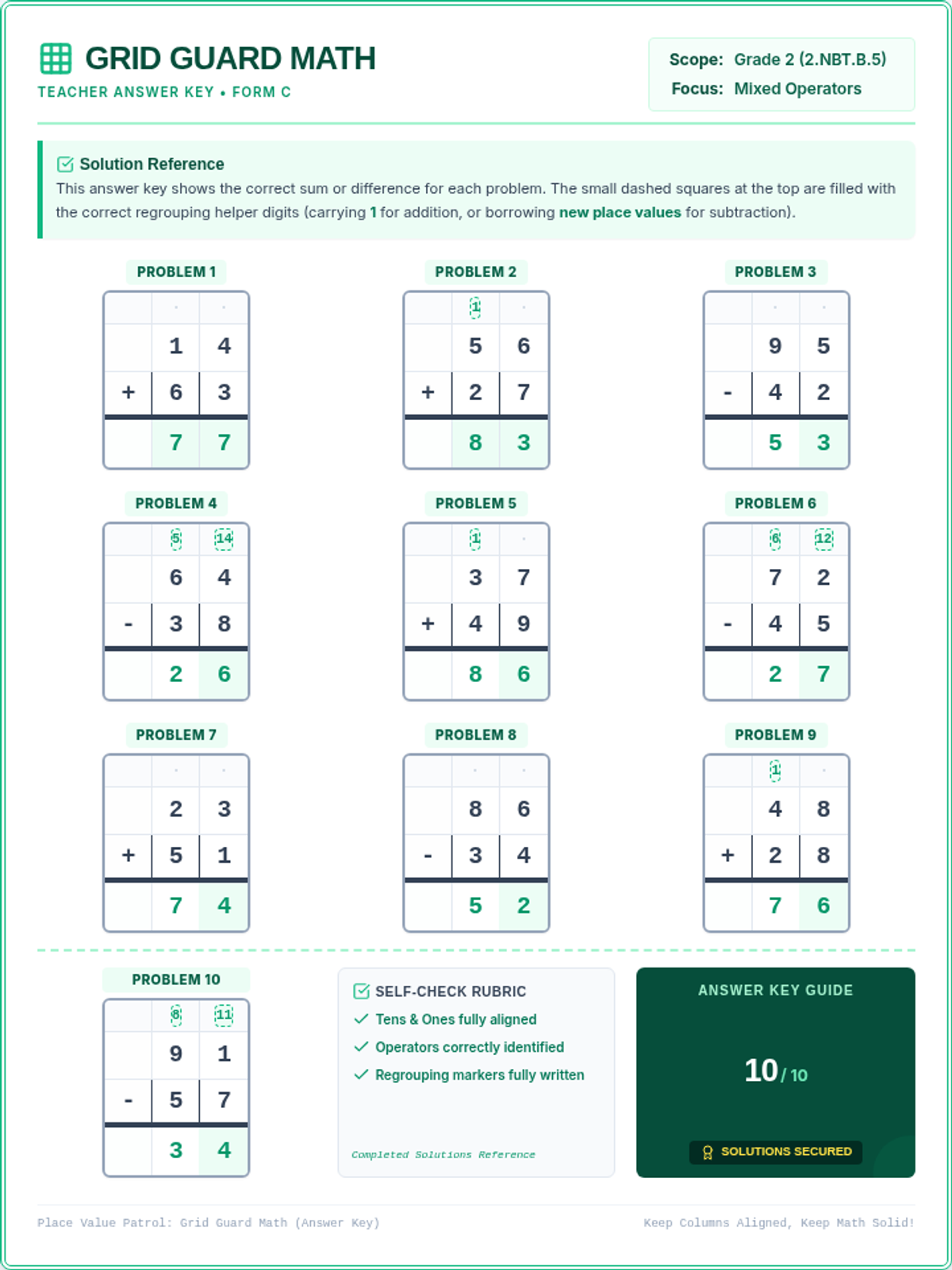
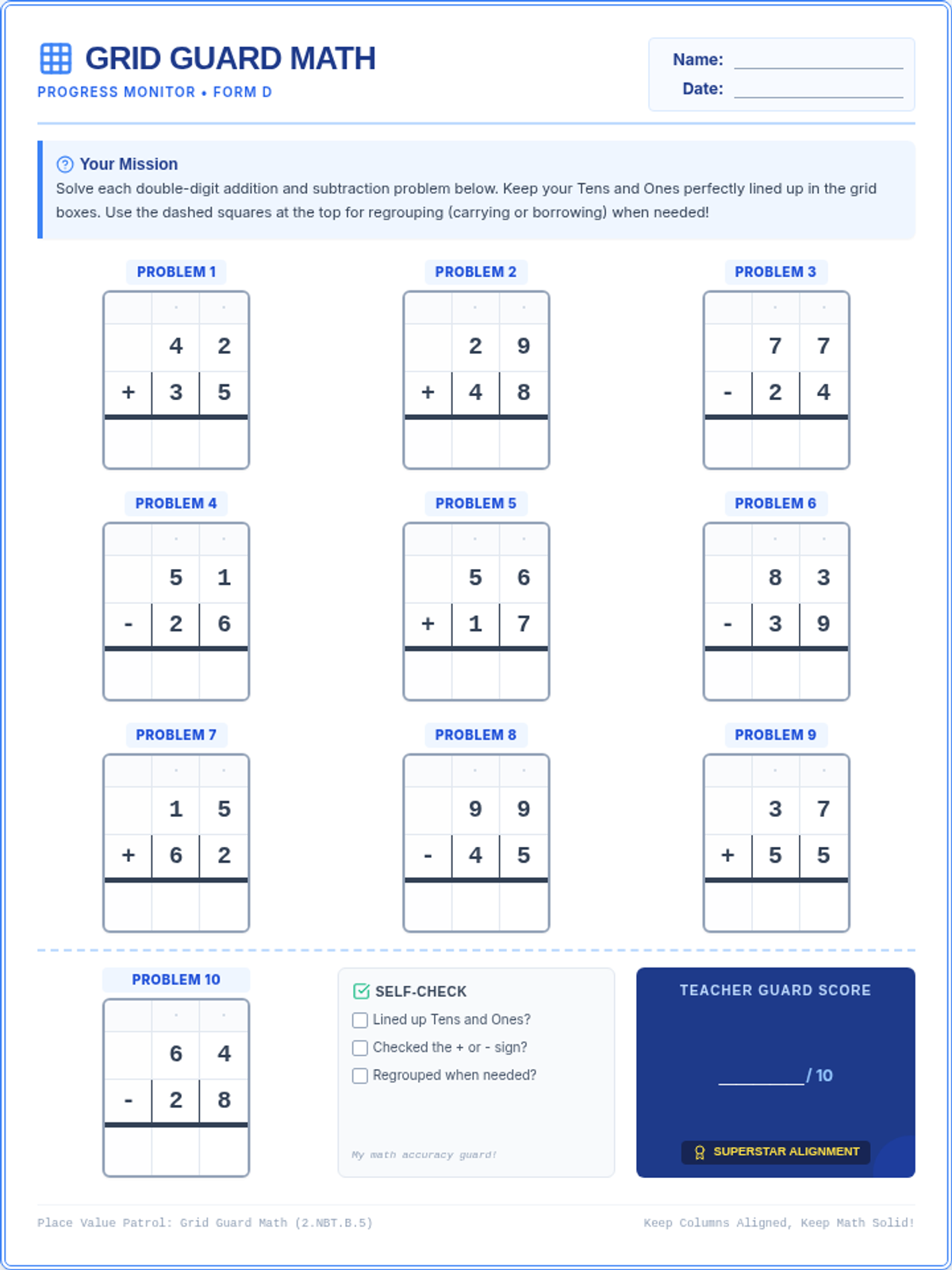
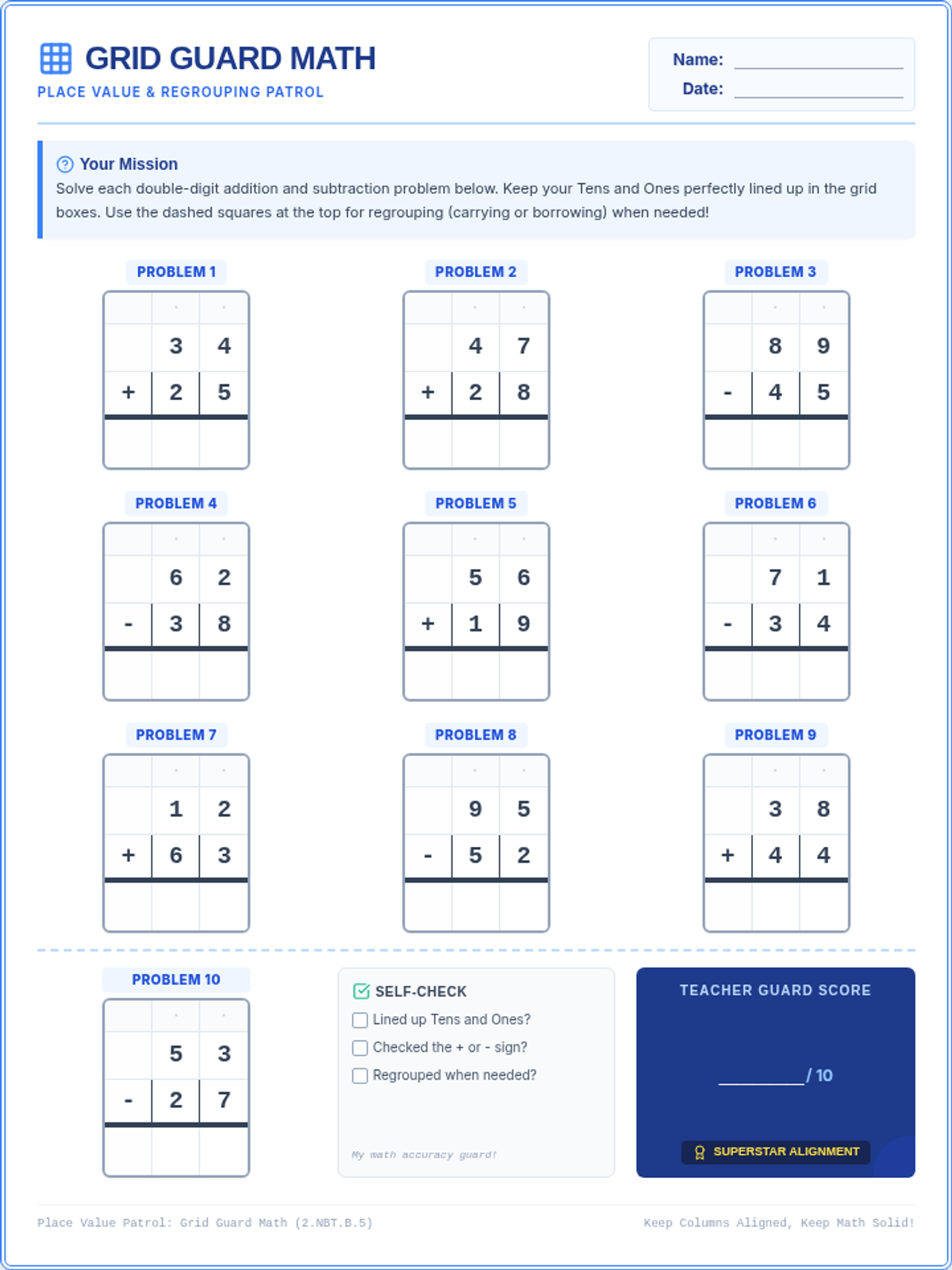
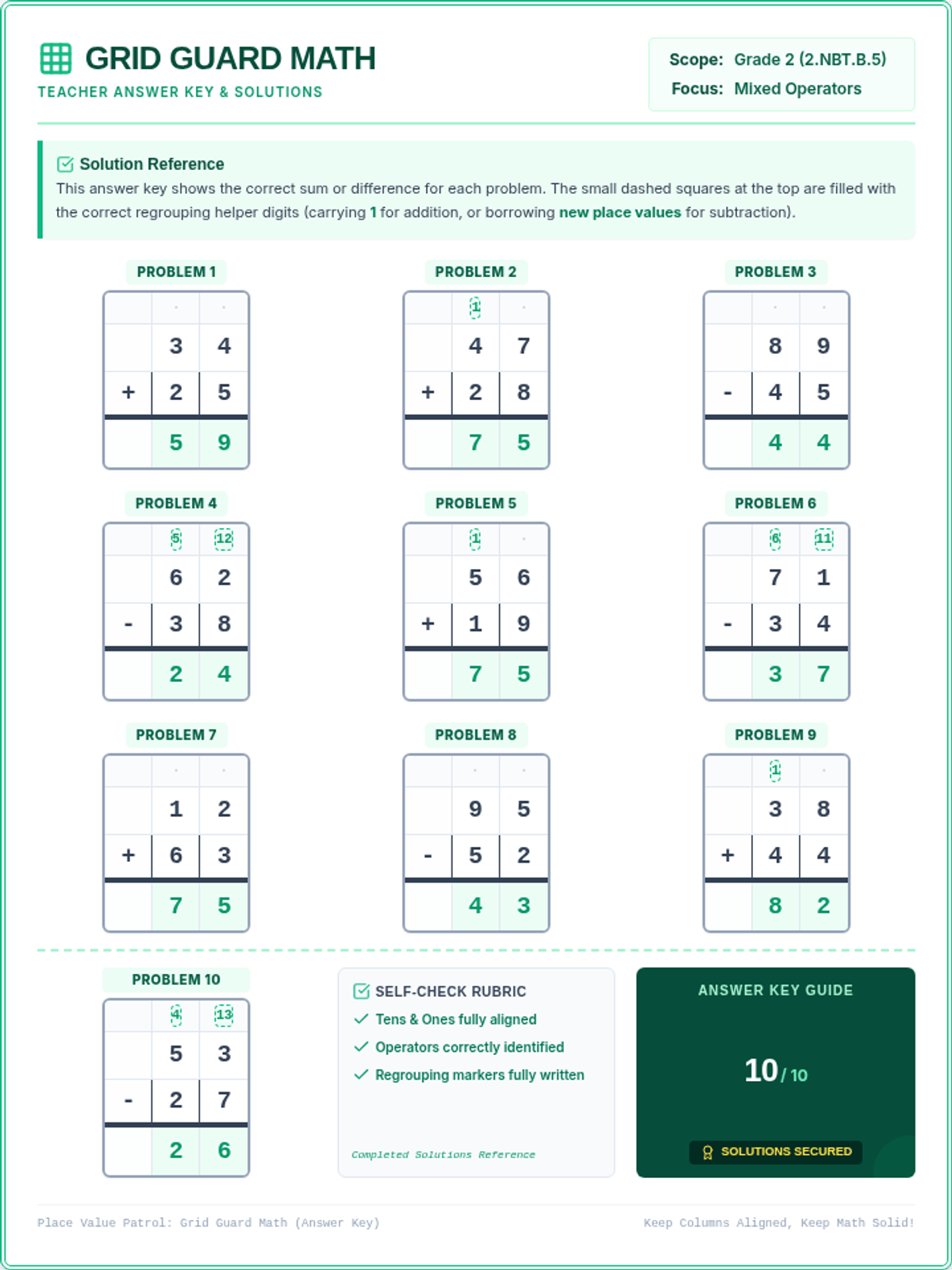
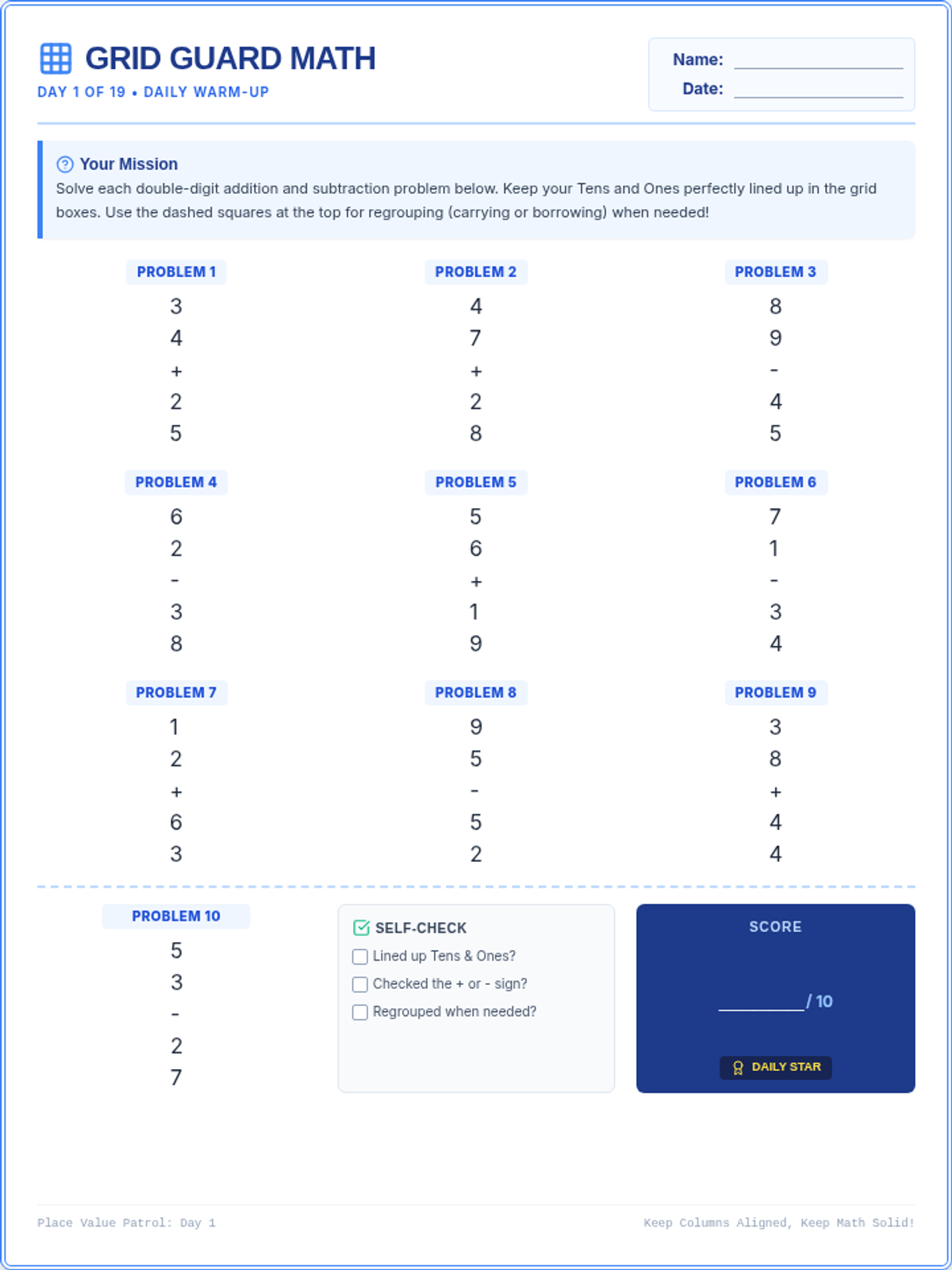
A math lesson teaching vertical 2-digit addition and subtraction with grid alignment boxes to reinforce place value and regrouping.
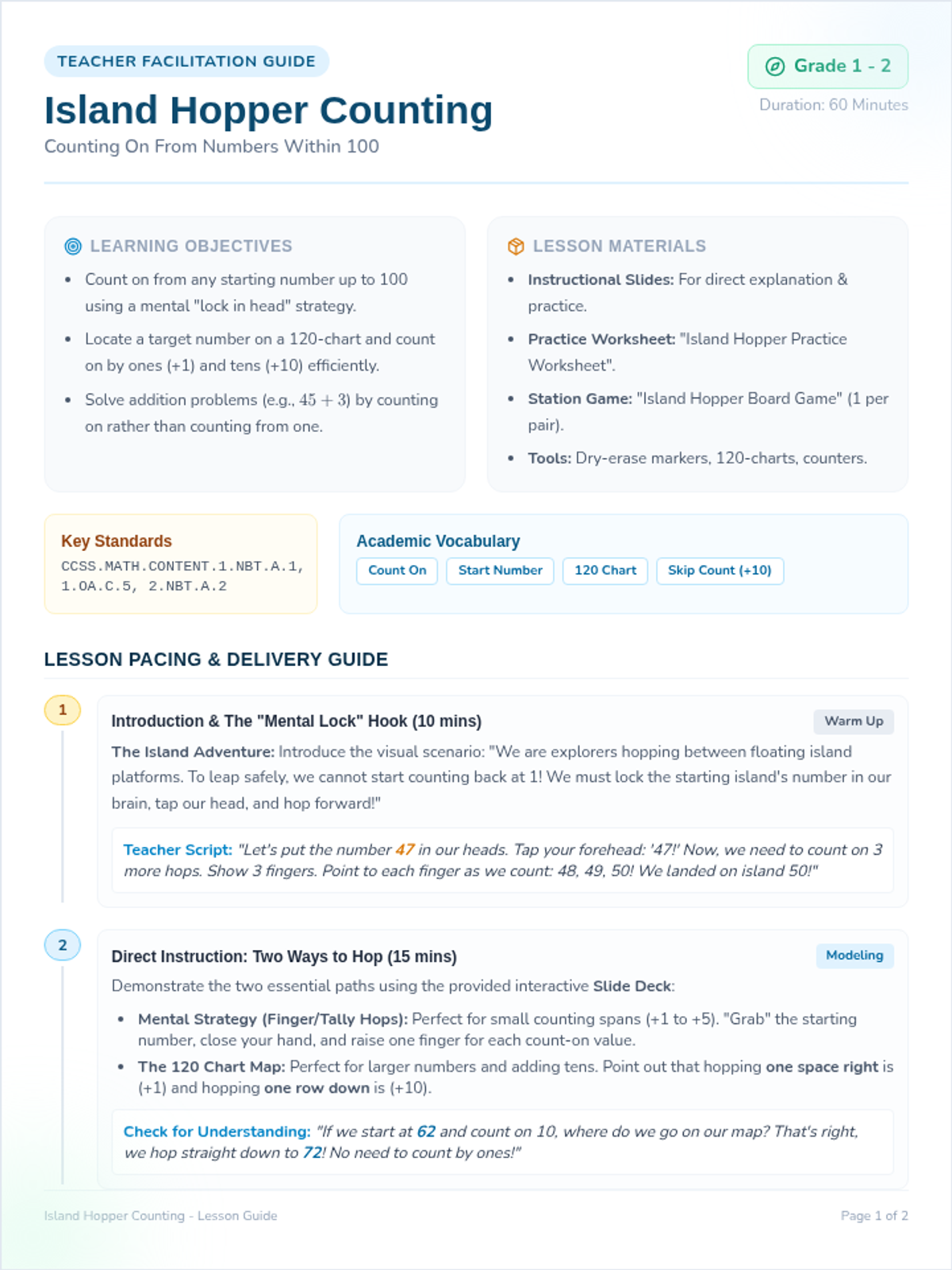
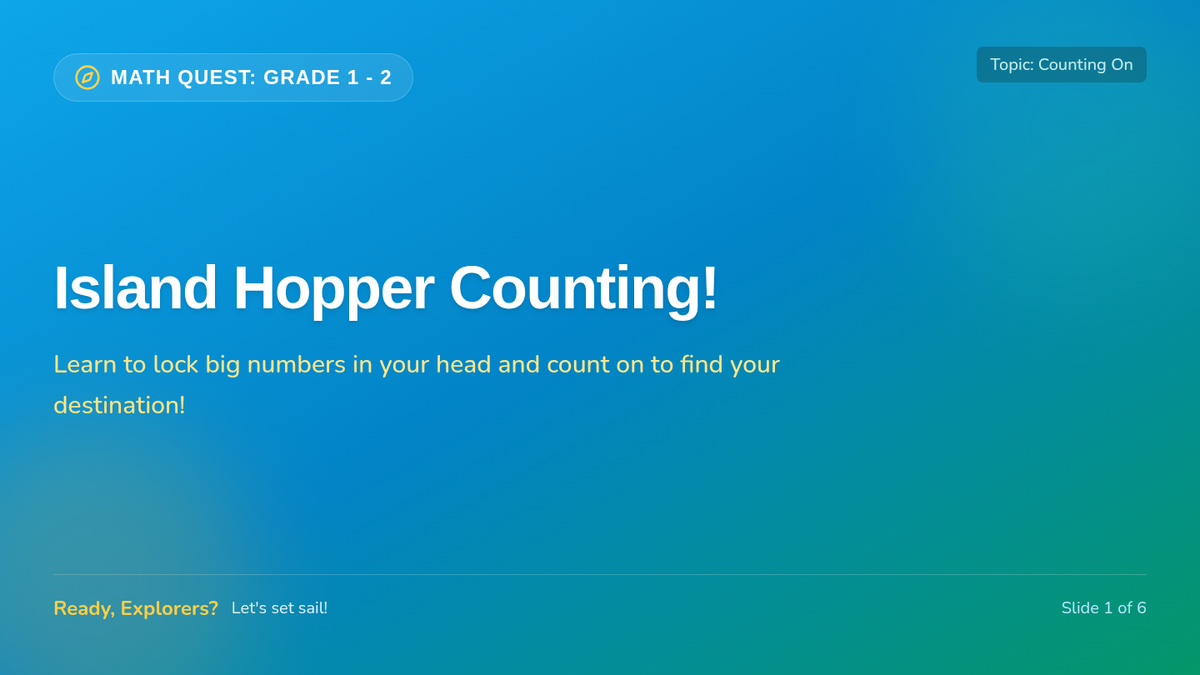
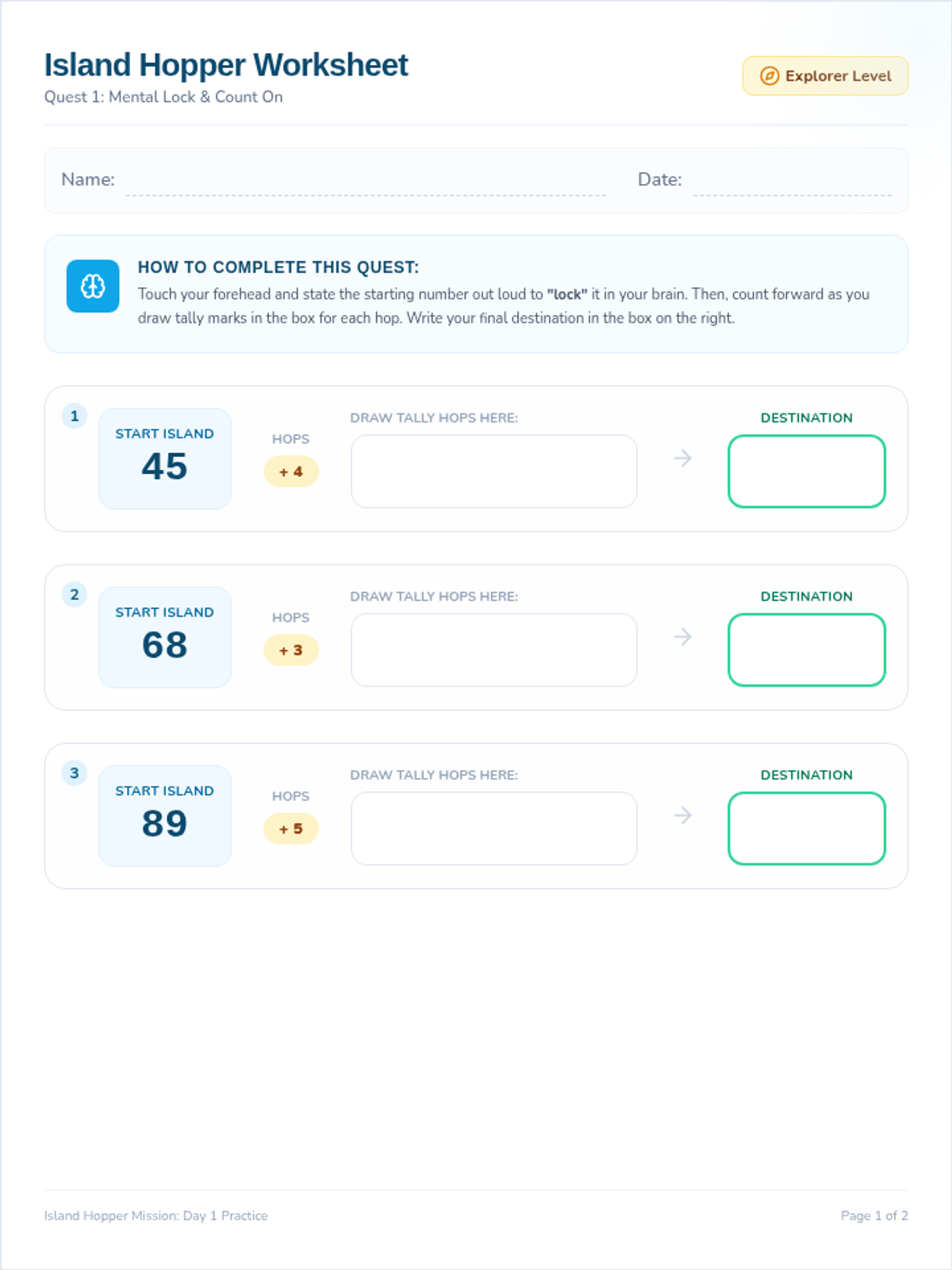
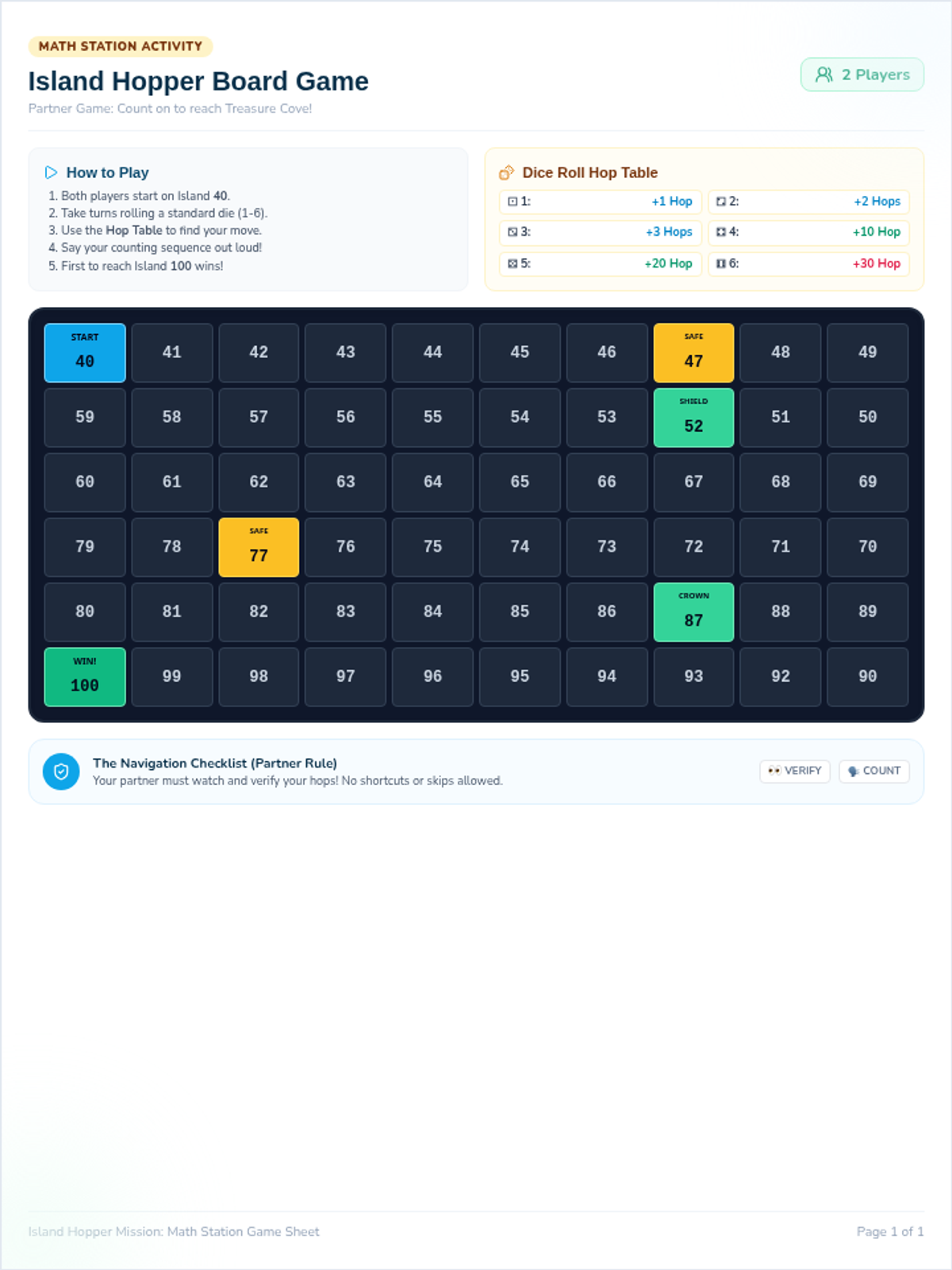
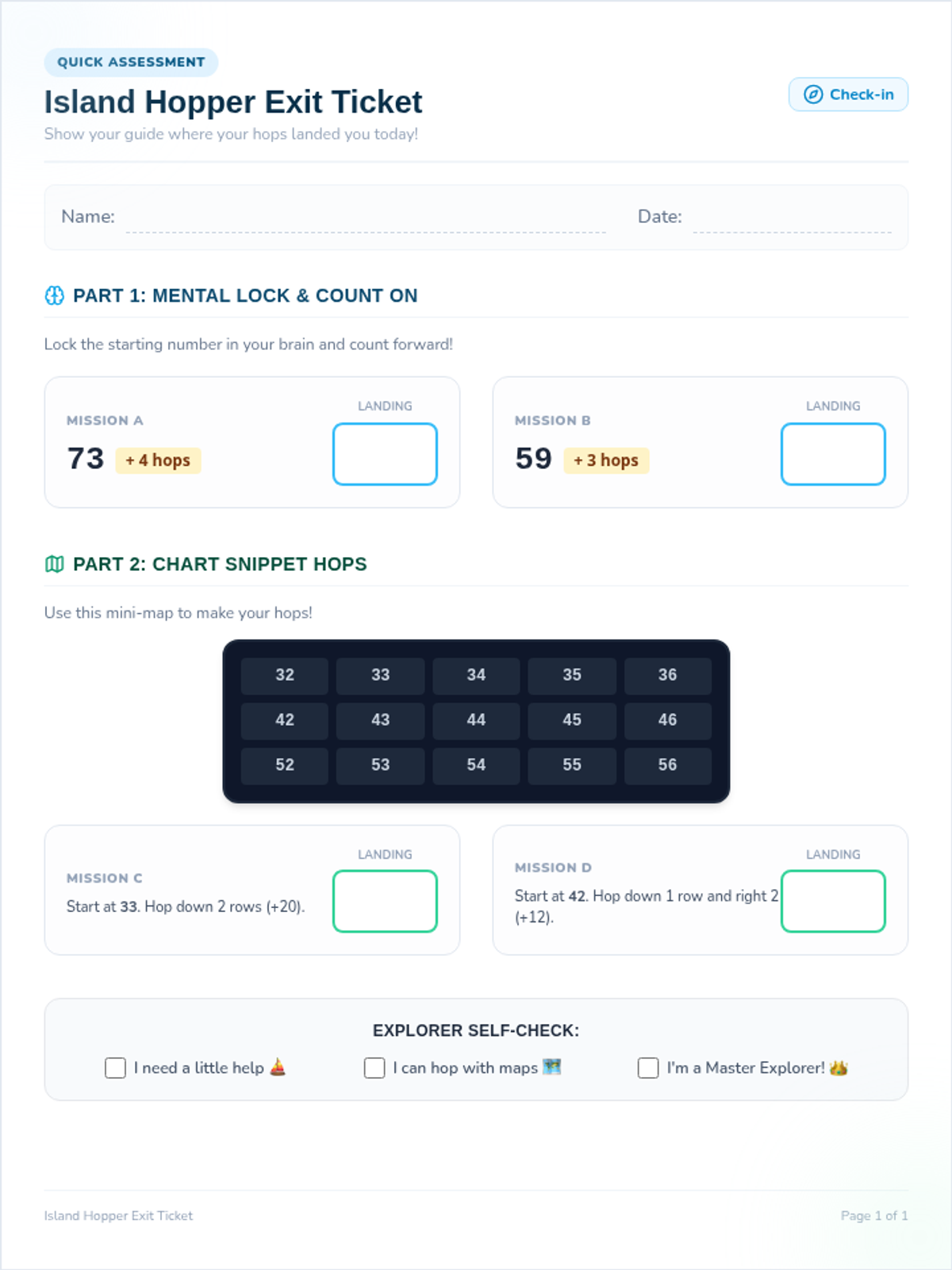
A complete, active math lesson bundle focused on counting on from numbers within 100. Students learn mental math strategies (holding a number in their head) and how to navigate a 120-chart to count on by ones and tens. Includes a comprehensive lesson plan, interactive teaching slides, student worksheets, a partner board game, and an exit ticket.
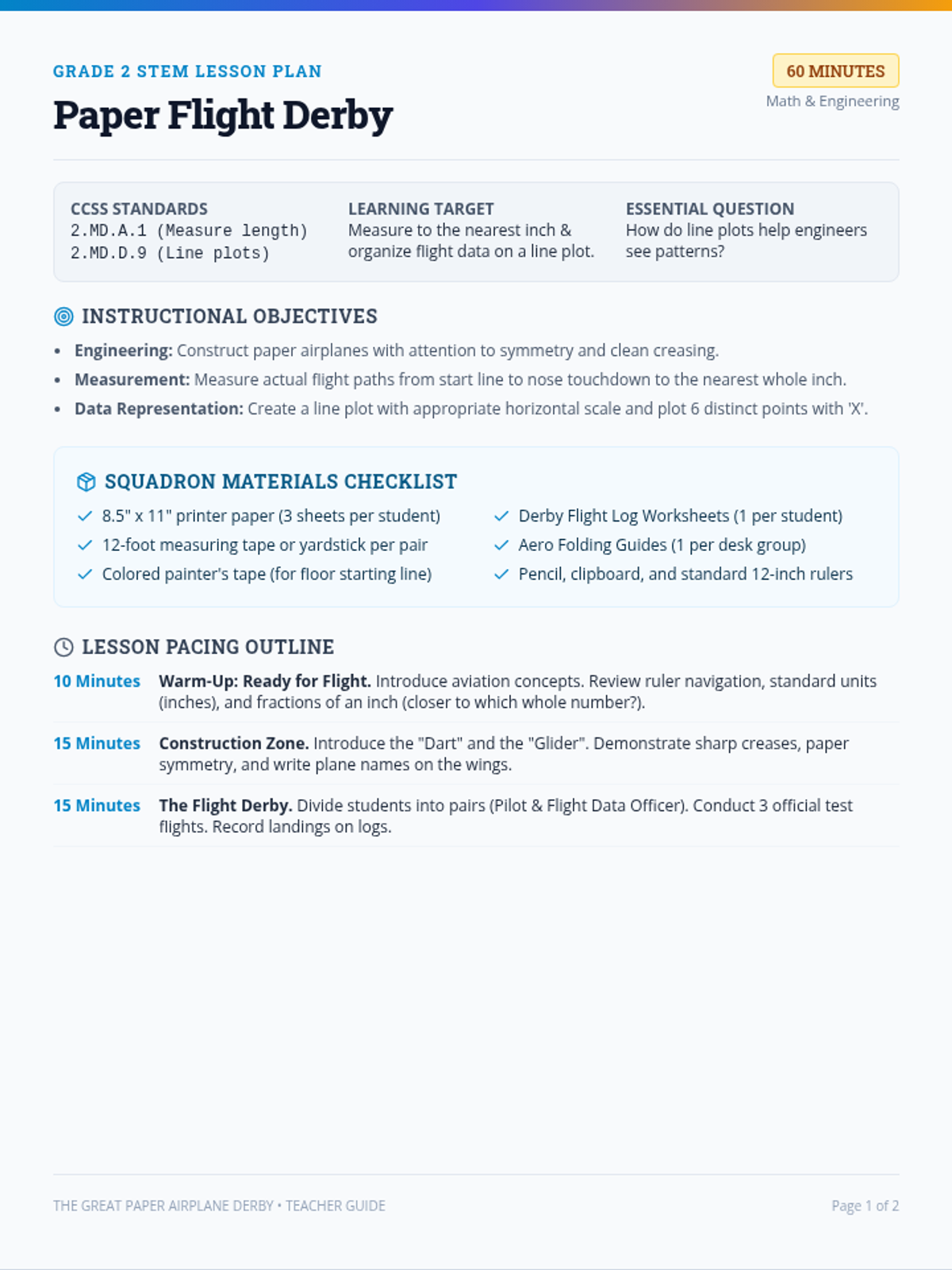
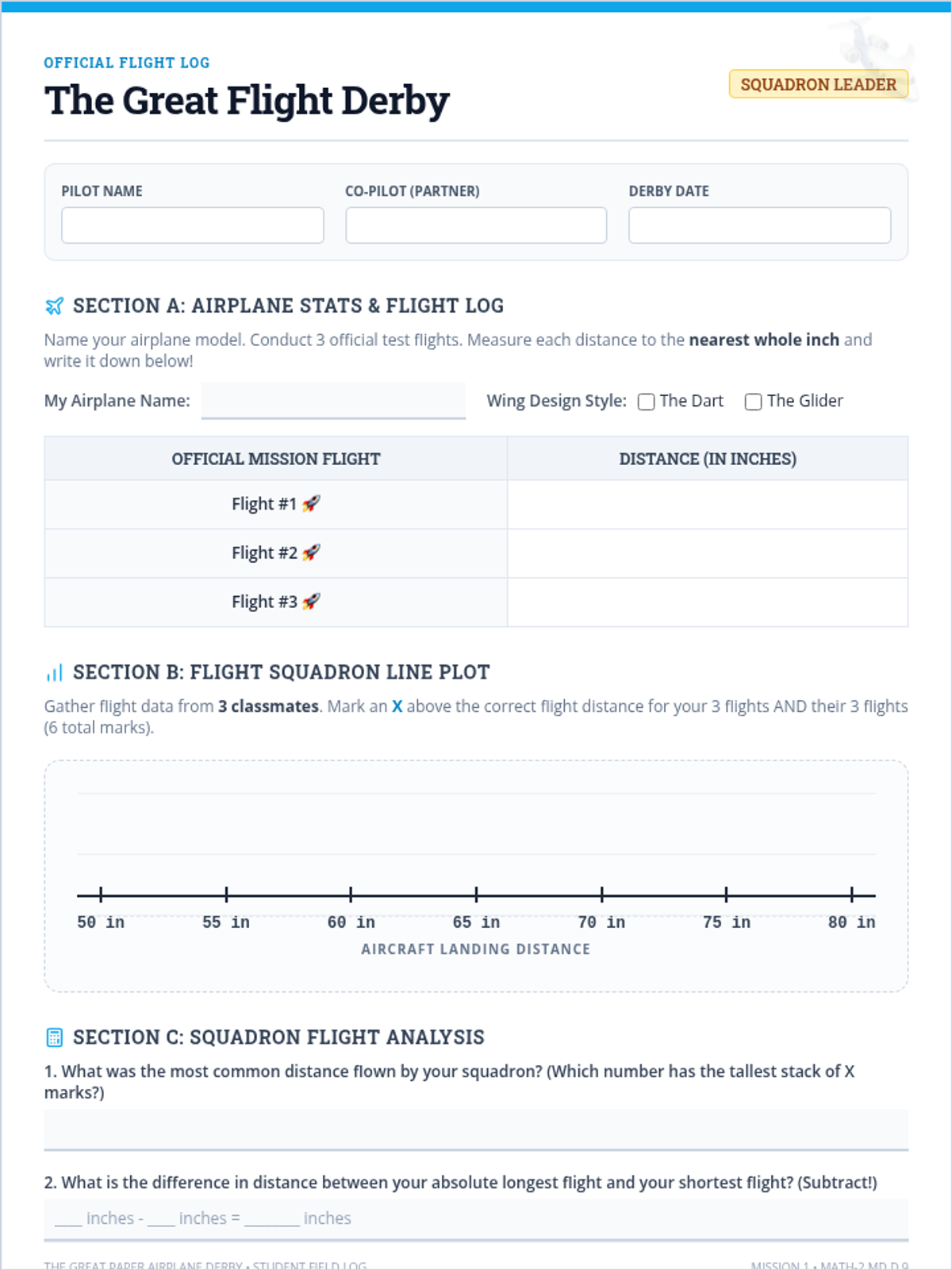
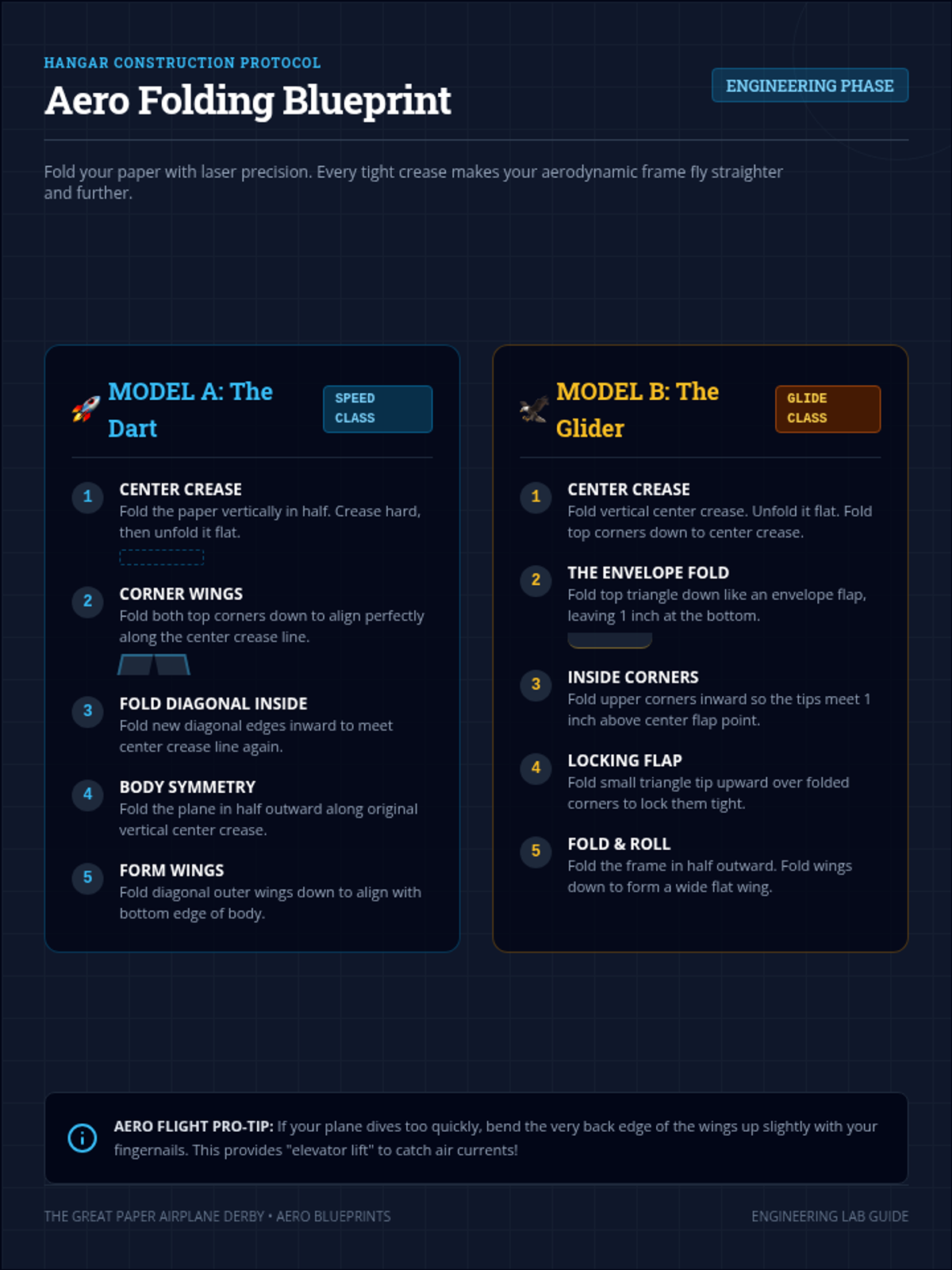
A hands-on STEM lesson for second graders merging engineering and math. Students fold paper airplanes, measure flight distances to the nearest inch, and organize their data into a line plot.
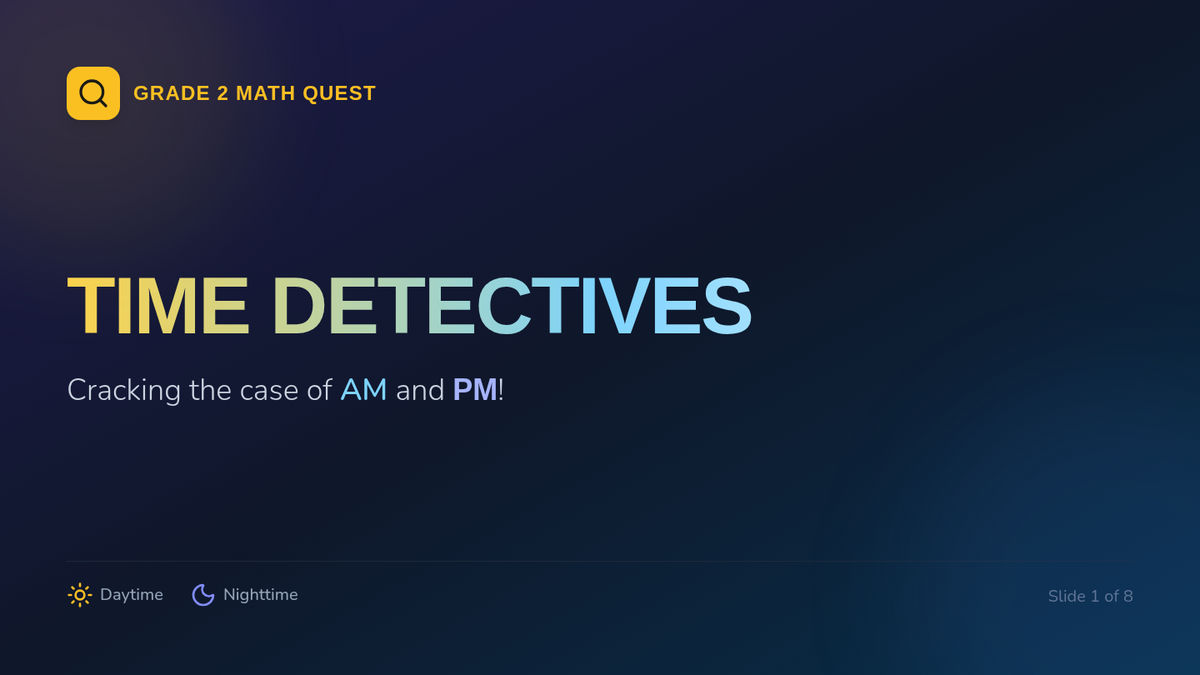
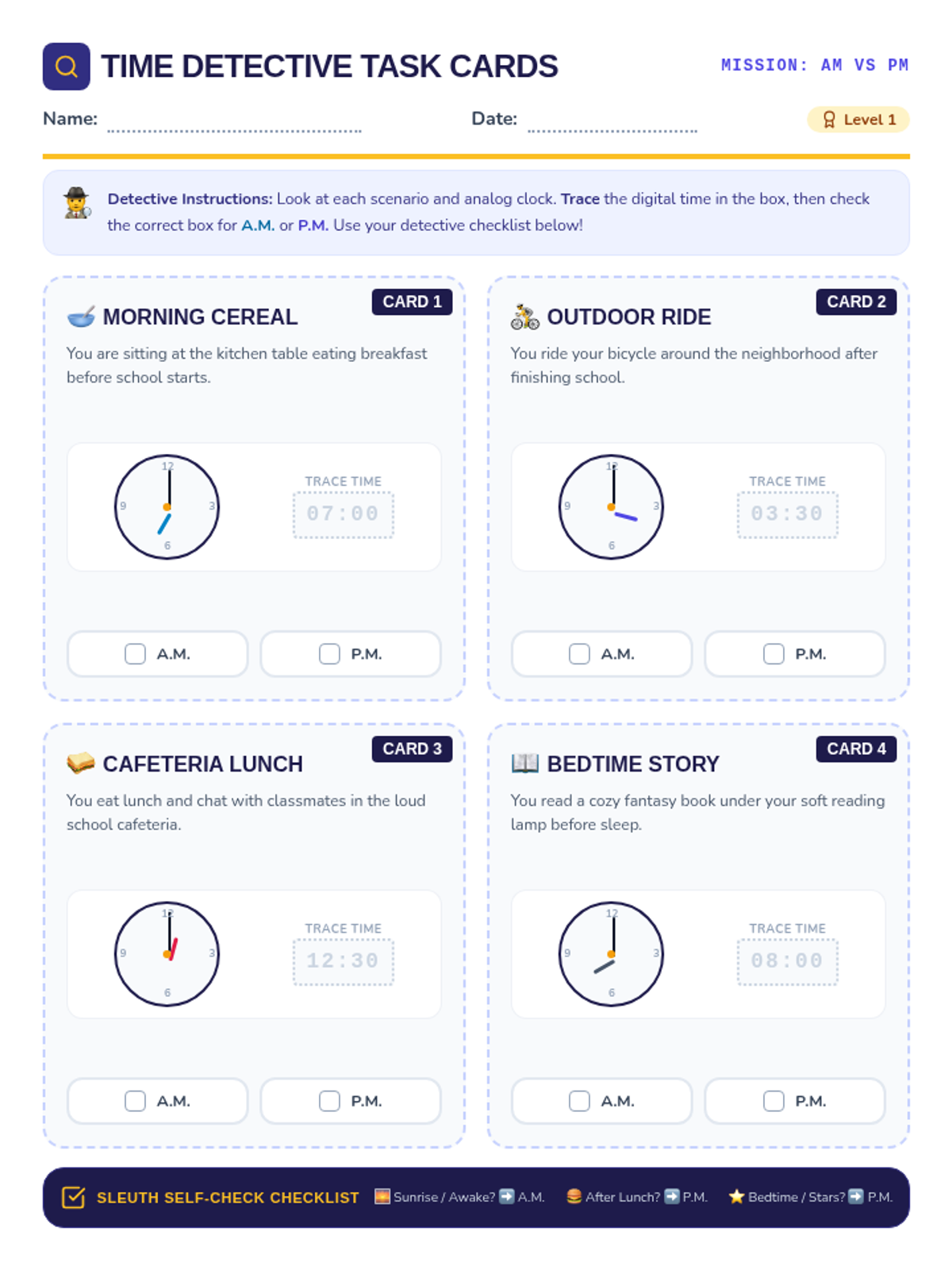
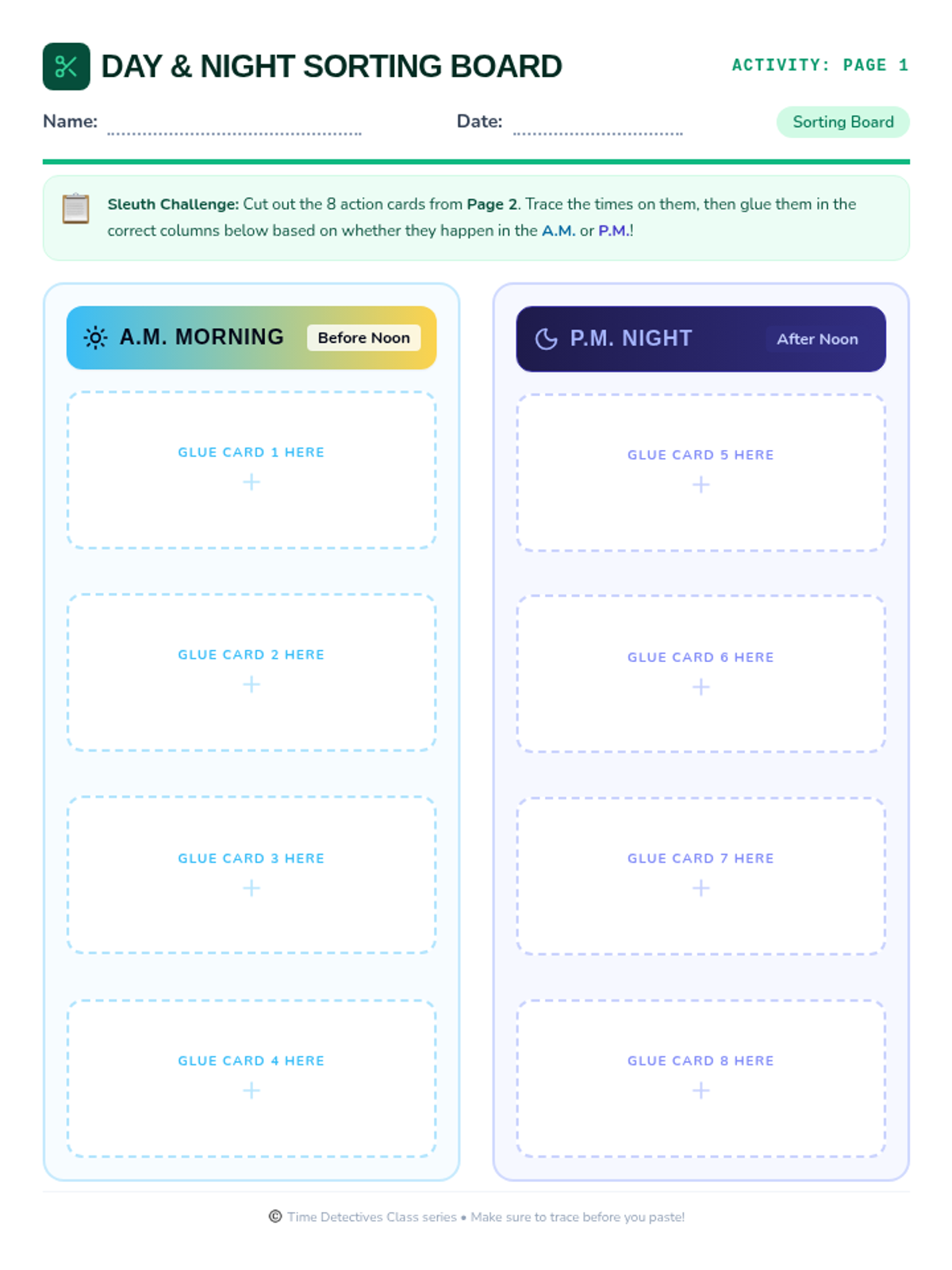
A hands-on, highly visual math lesson for 2nd-grade students to master distinguishing between AM and PM using real-world scenarios, analog/digital clocks, and self-checking strategies.
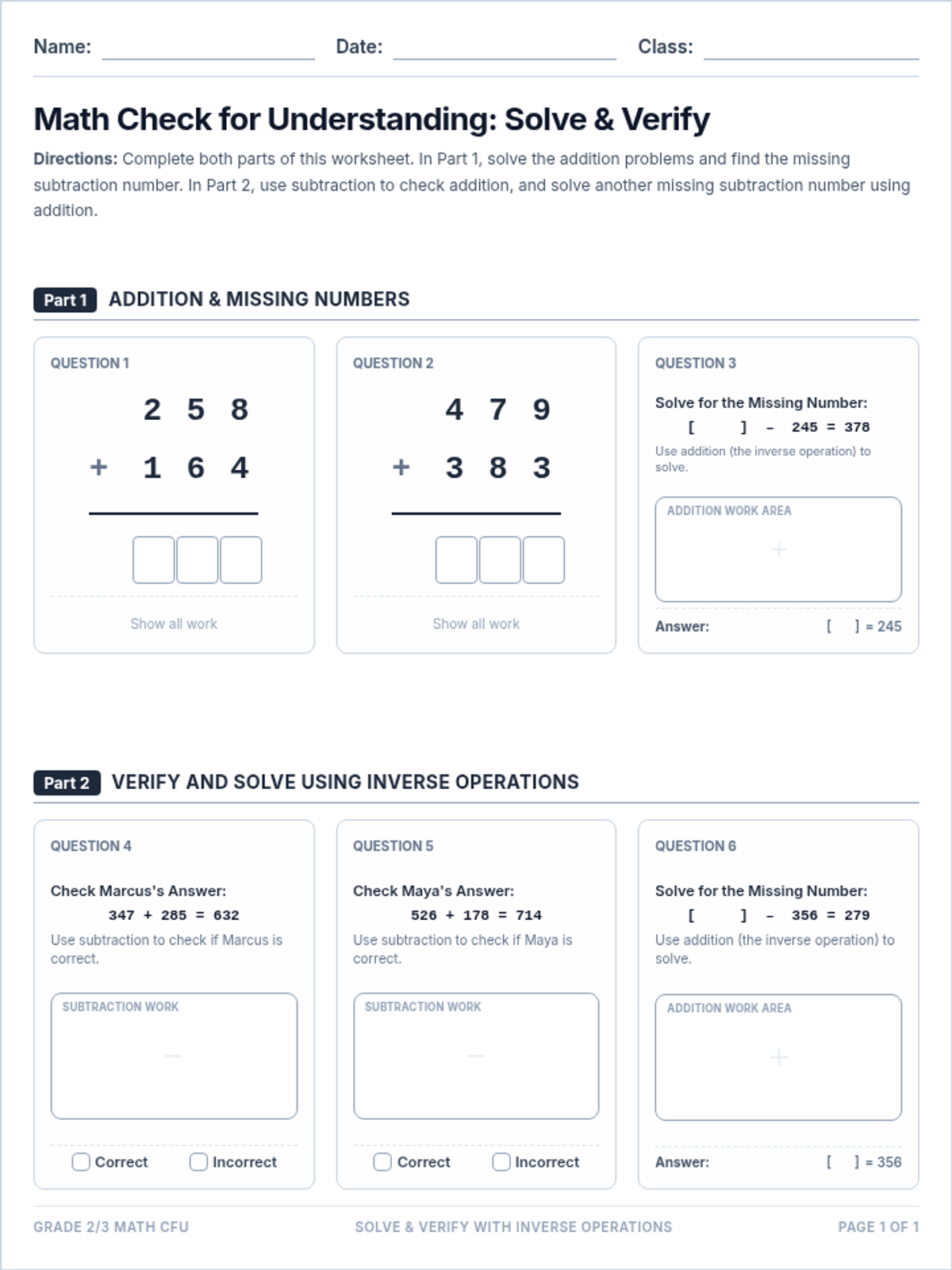
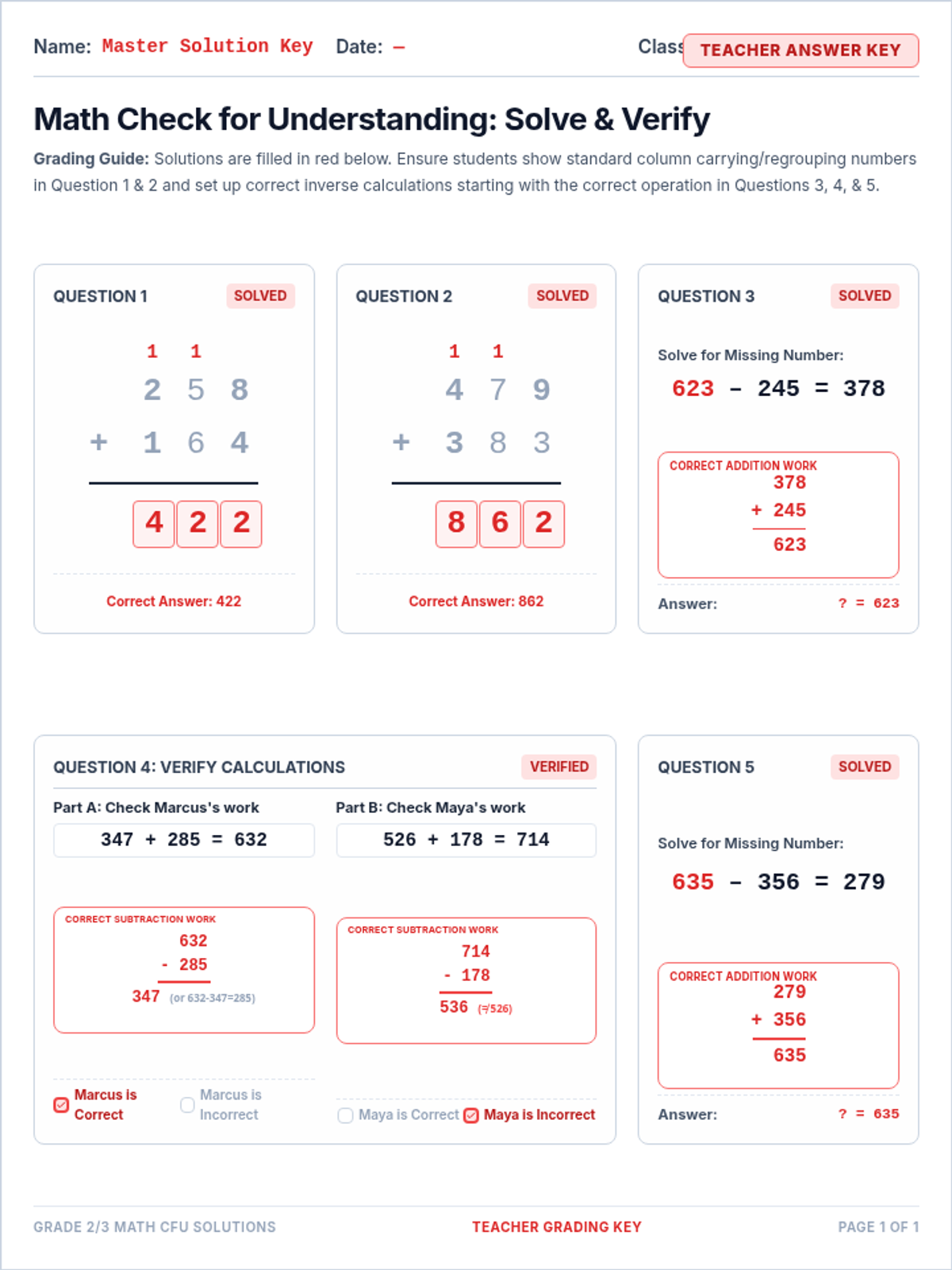
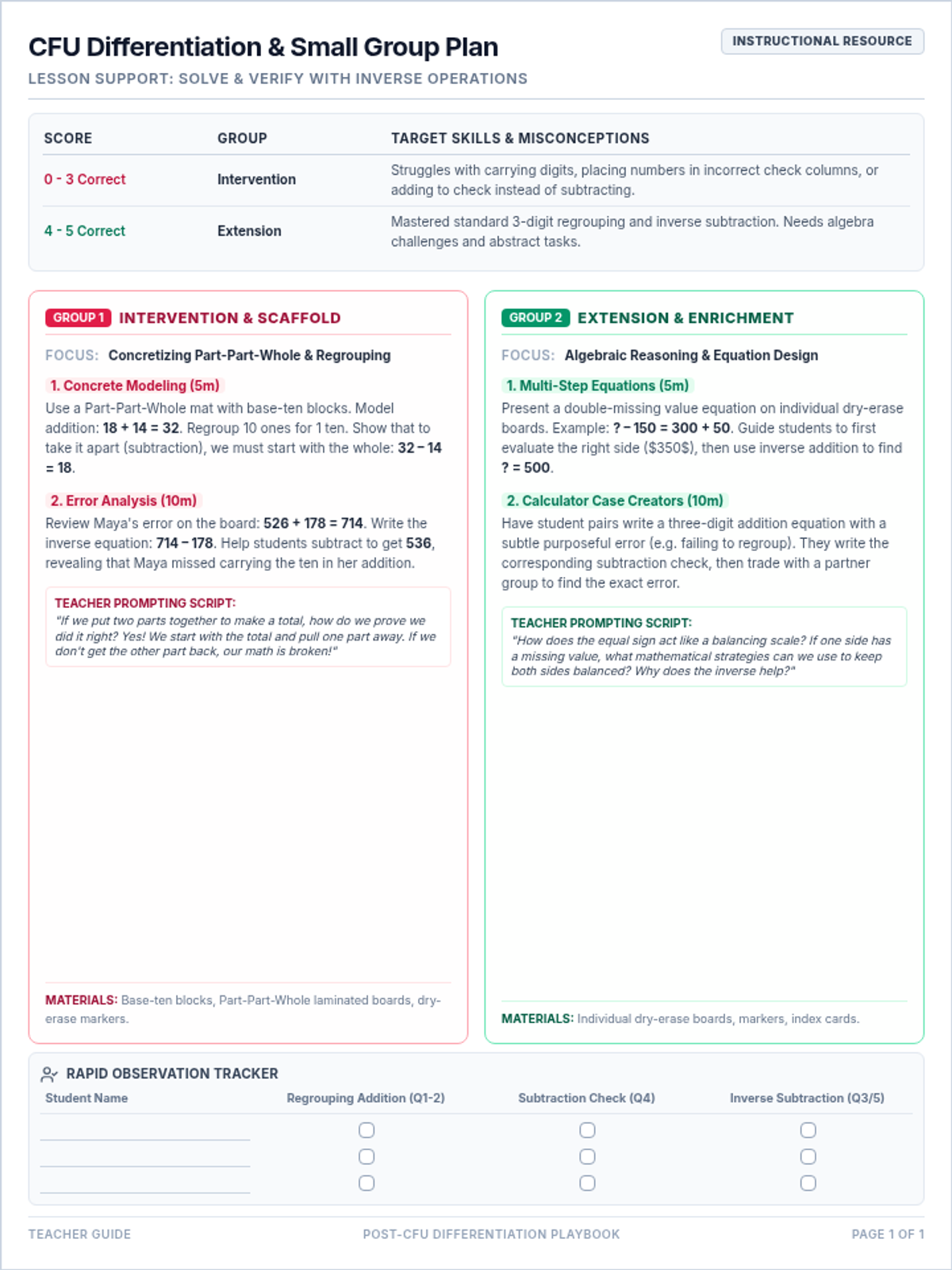
An engaging math lesson where students act as detectives to solve addition problems with regrouping and verify calculations using inverse operations.
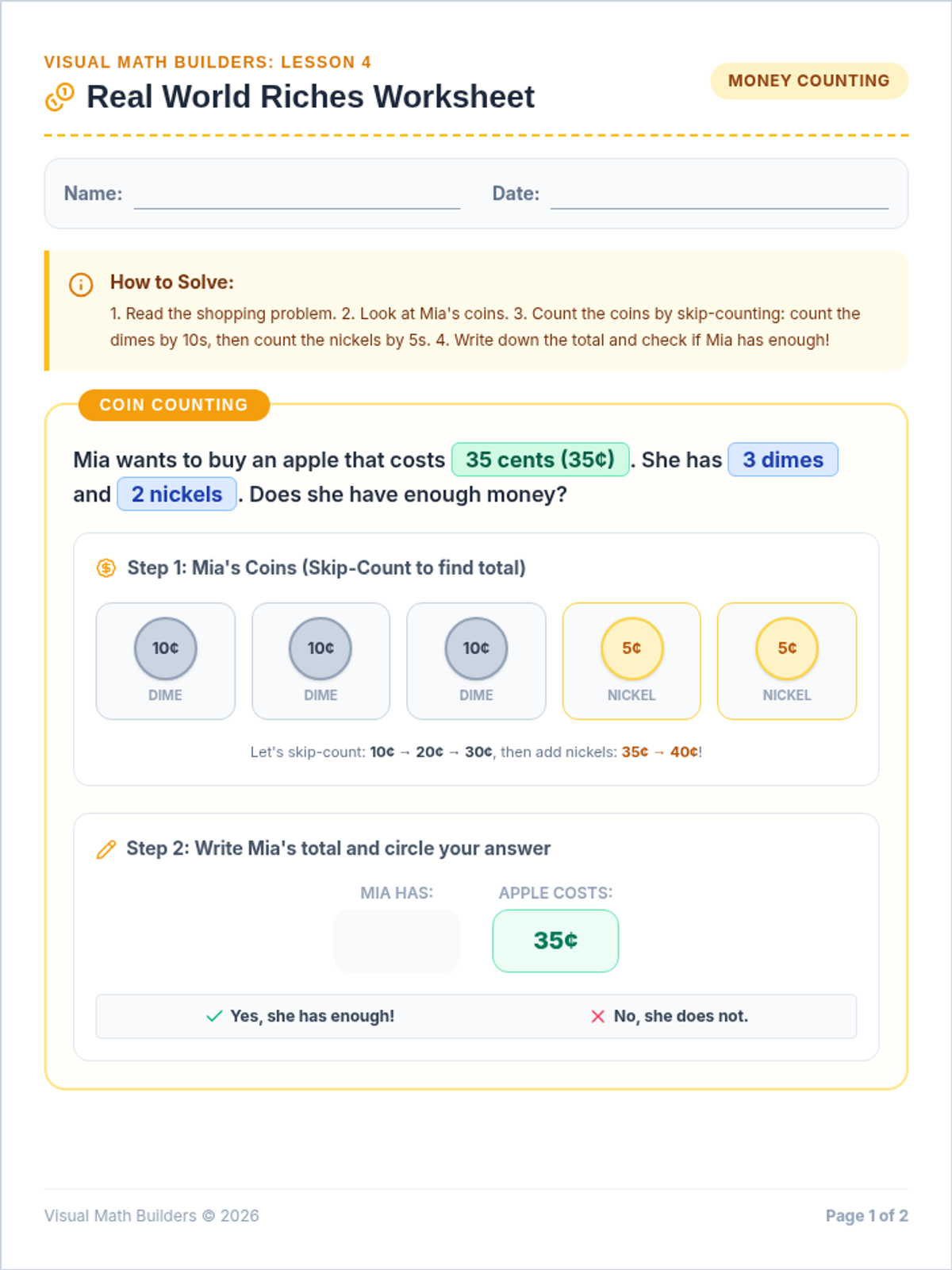
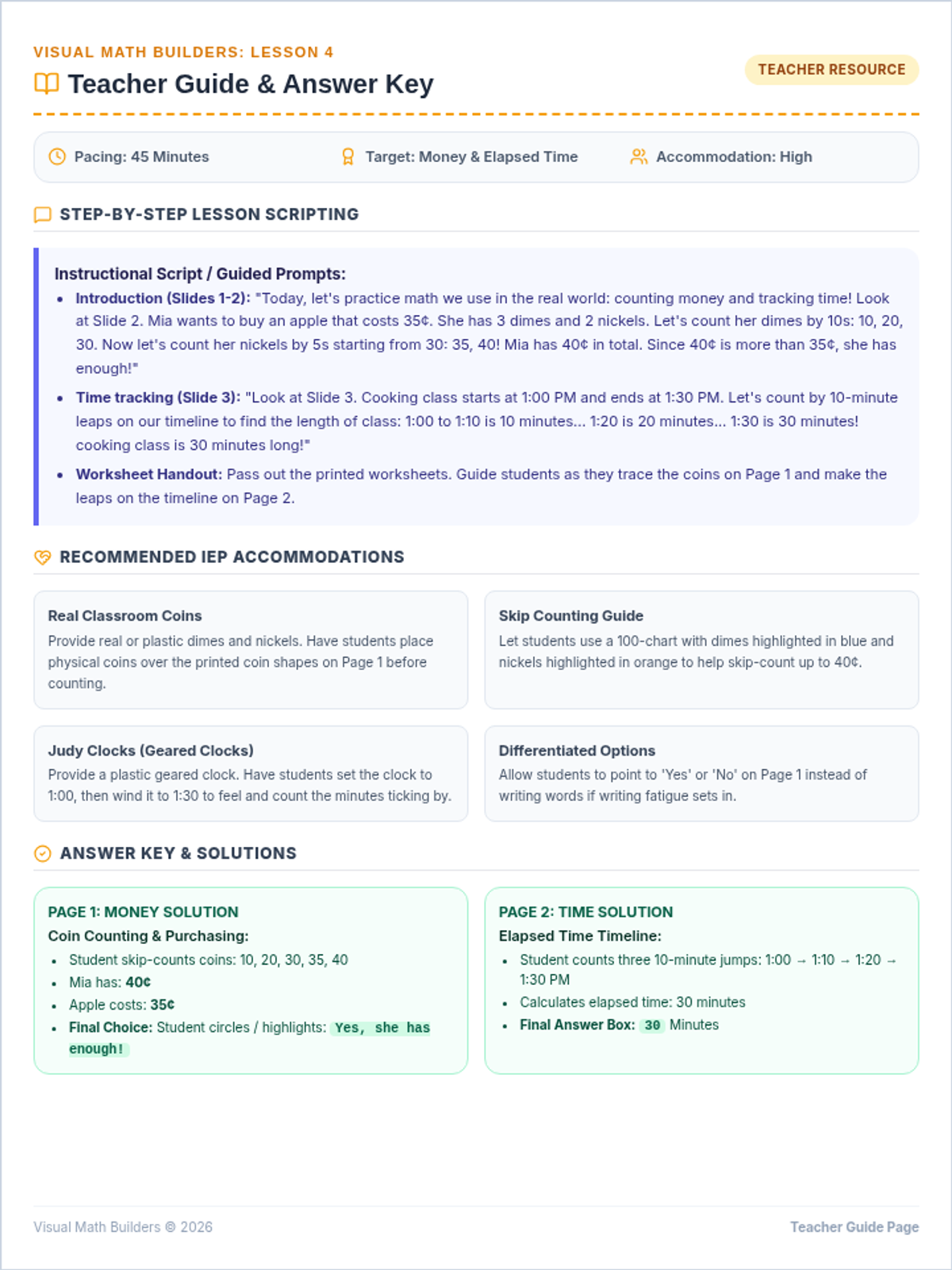
Targets practical, real-world application of math with highly visual scaffolding for coin counting, purchasing decisions, and elapsed time scenarios.
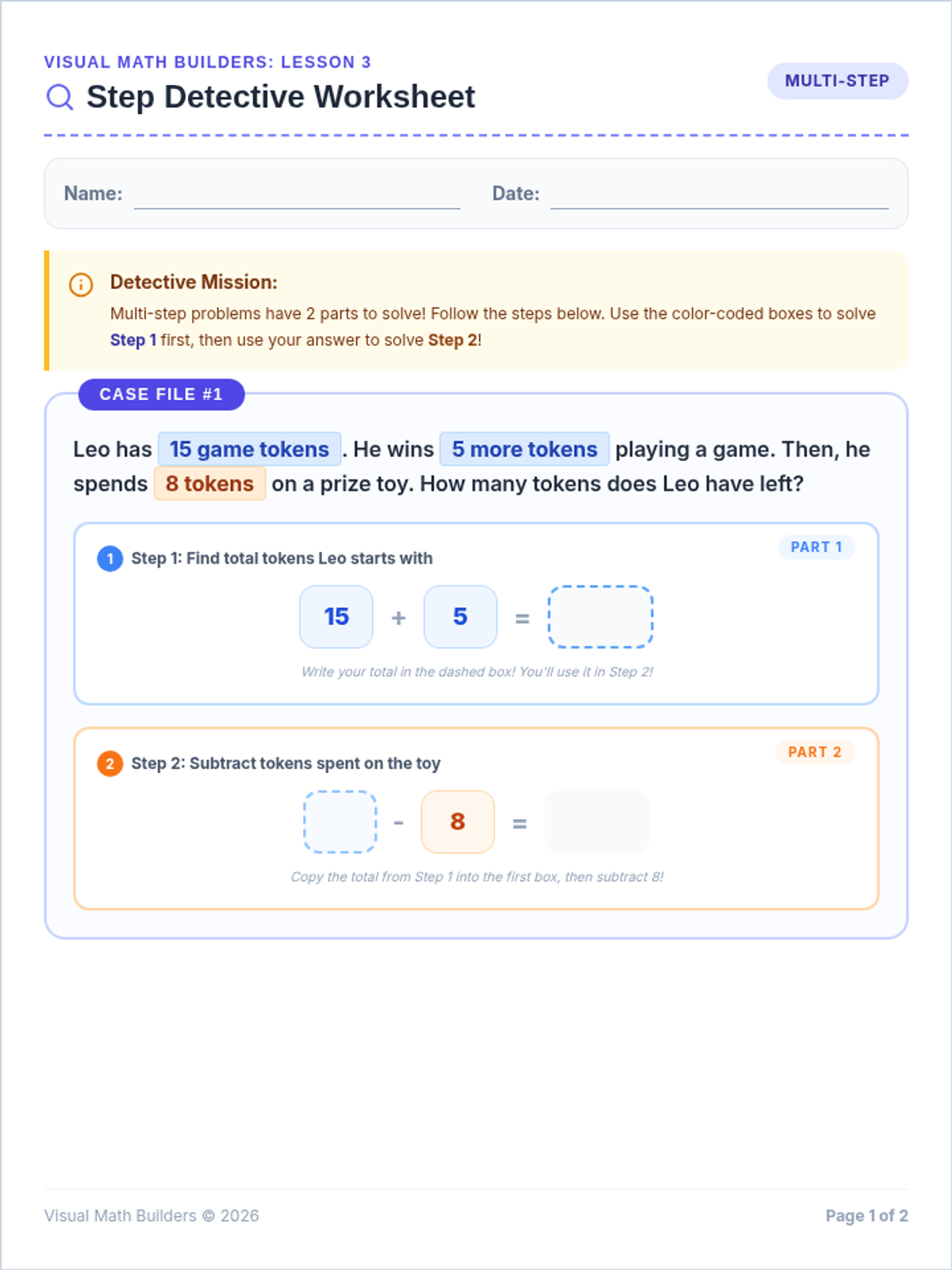
Breaks down multi-step math word problems into bite-sized, color-coded, sequentially numbered parts, helping students systematically parse and solve equations without visual overload.
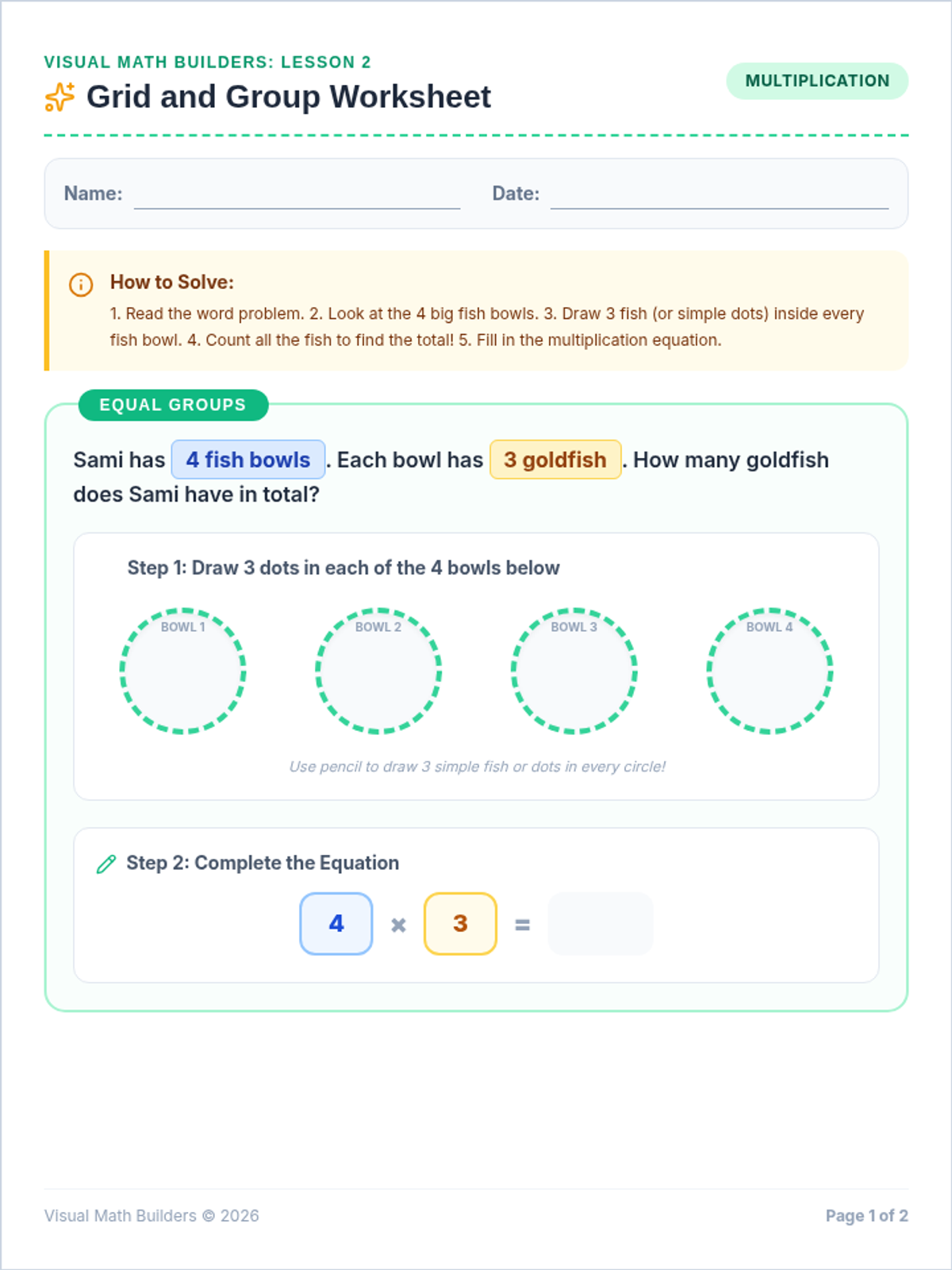
Covers multiplication and division word problems utilizing visual aids such as equal group drawings, array grids, and visual modeling templates to scaffold core concepts.
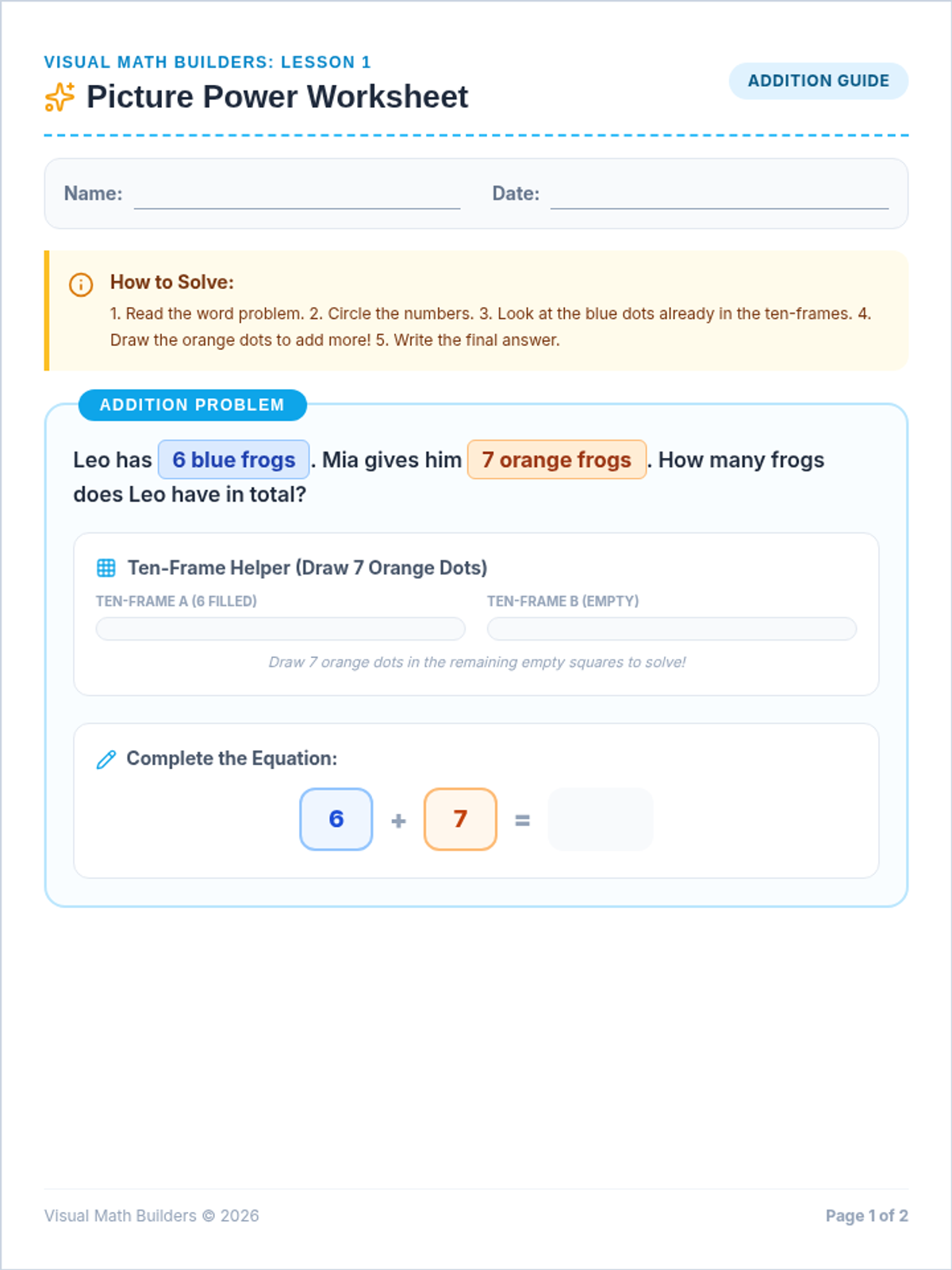
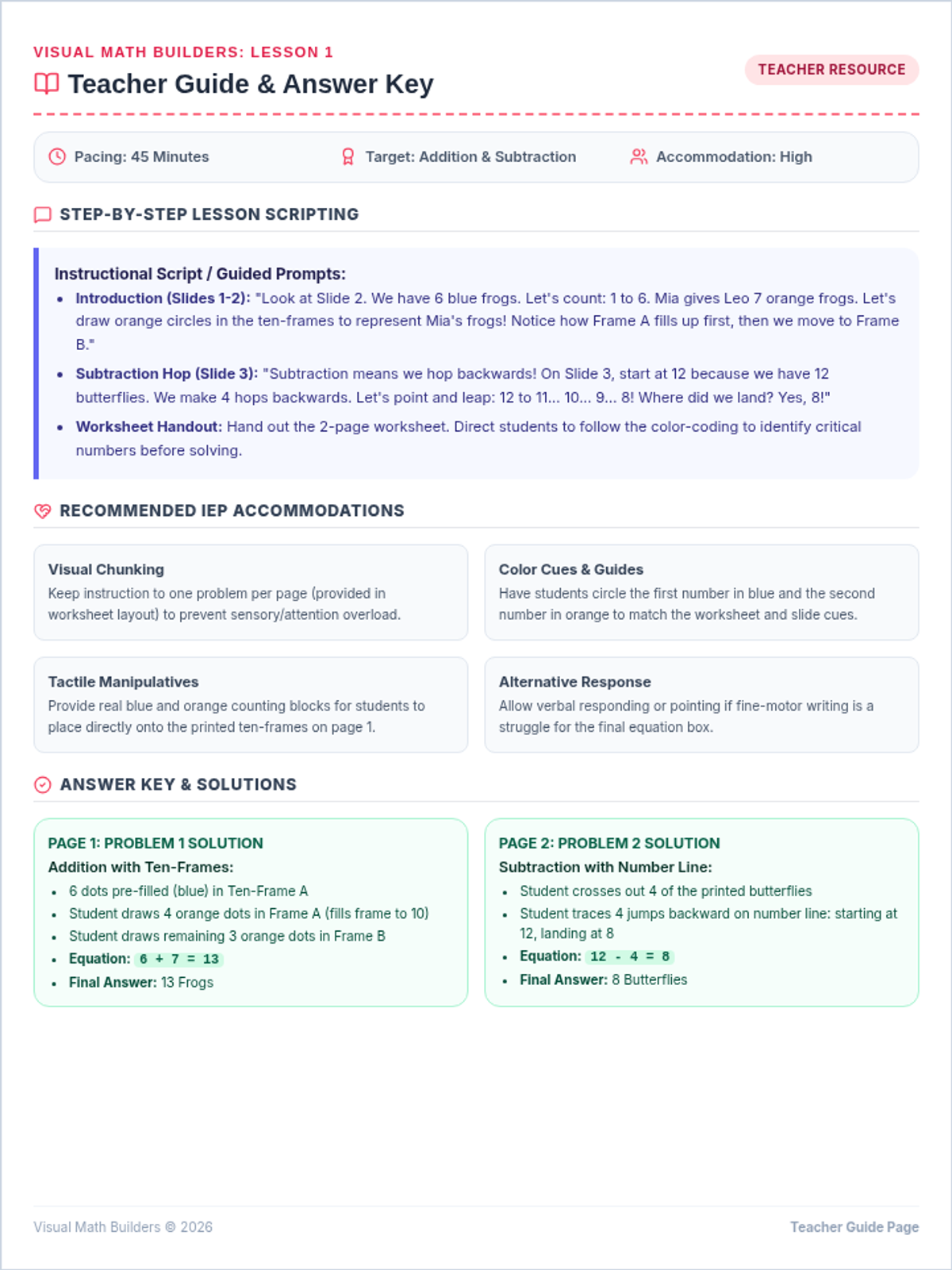
Focuses on addition and subtraction word problems with visual aids including built-in picture representations, ten-frames, and number lines to support student conceptual understanding.
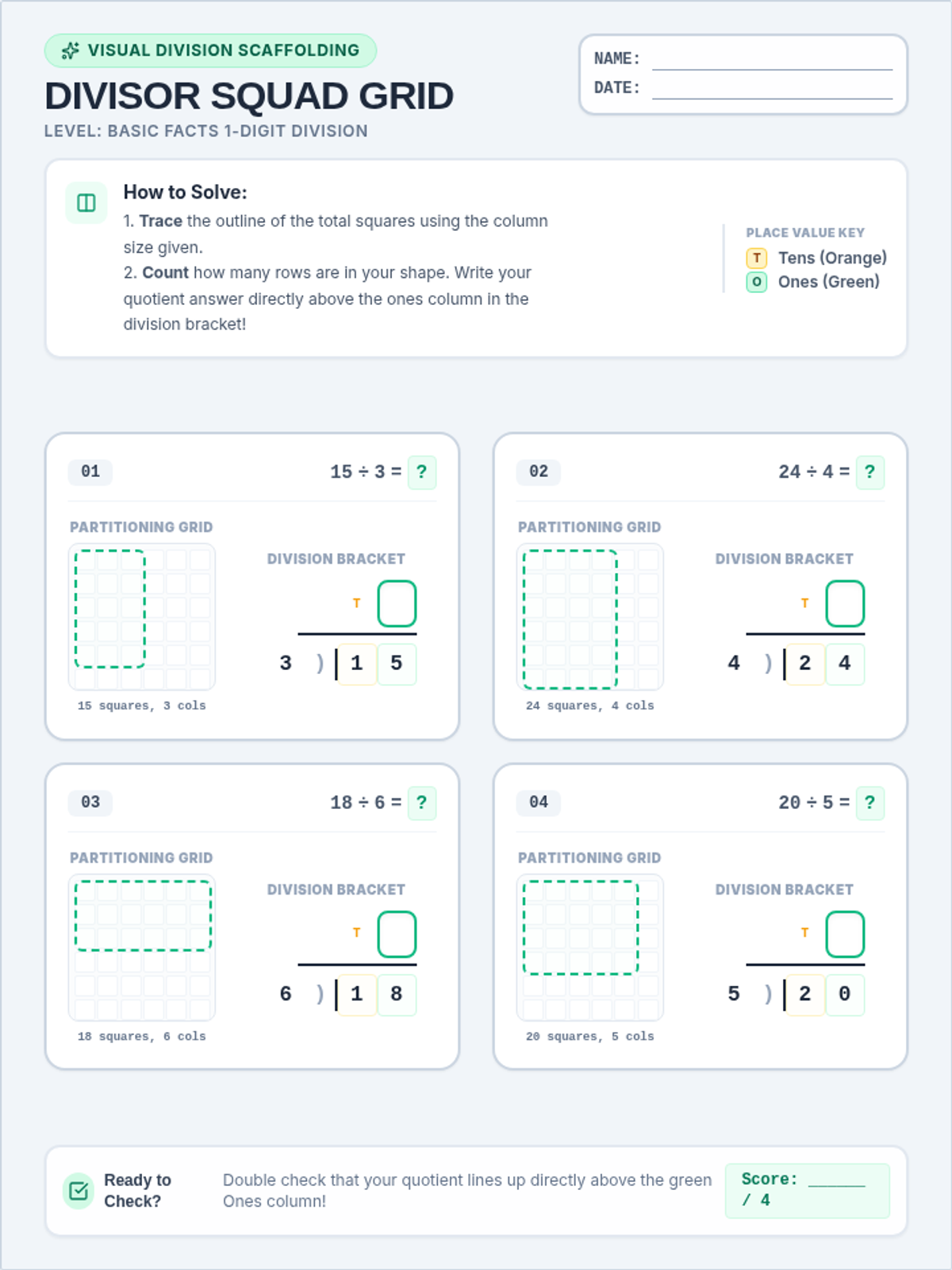
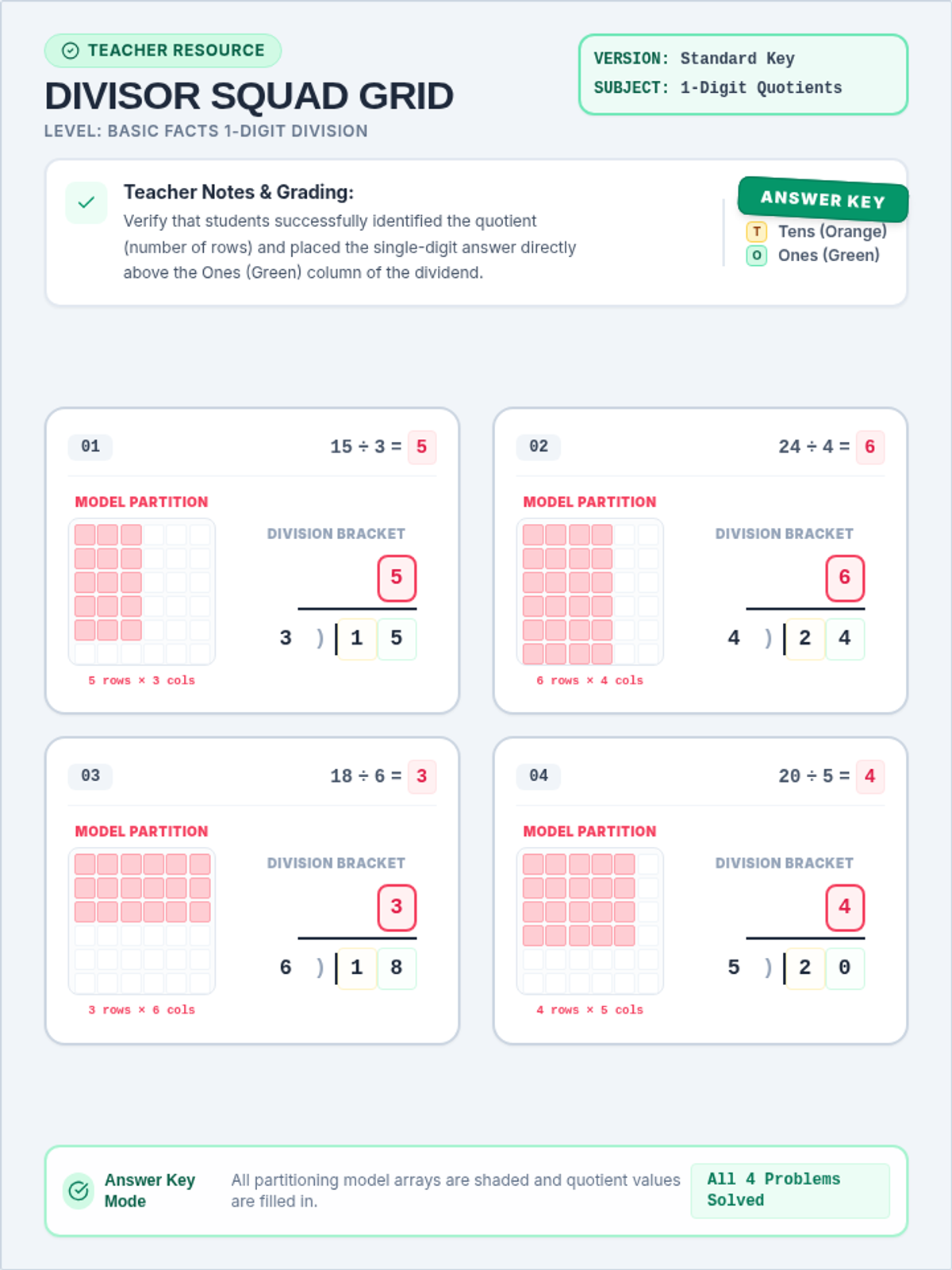
A basic division lesson focused on partitioning total values into equal rows and columns using visual grids. Students trace arrays to solve 1-digit quotient division facts with confidence.
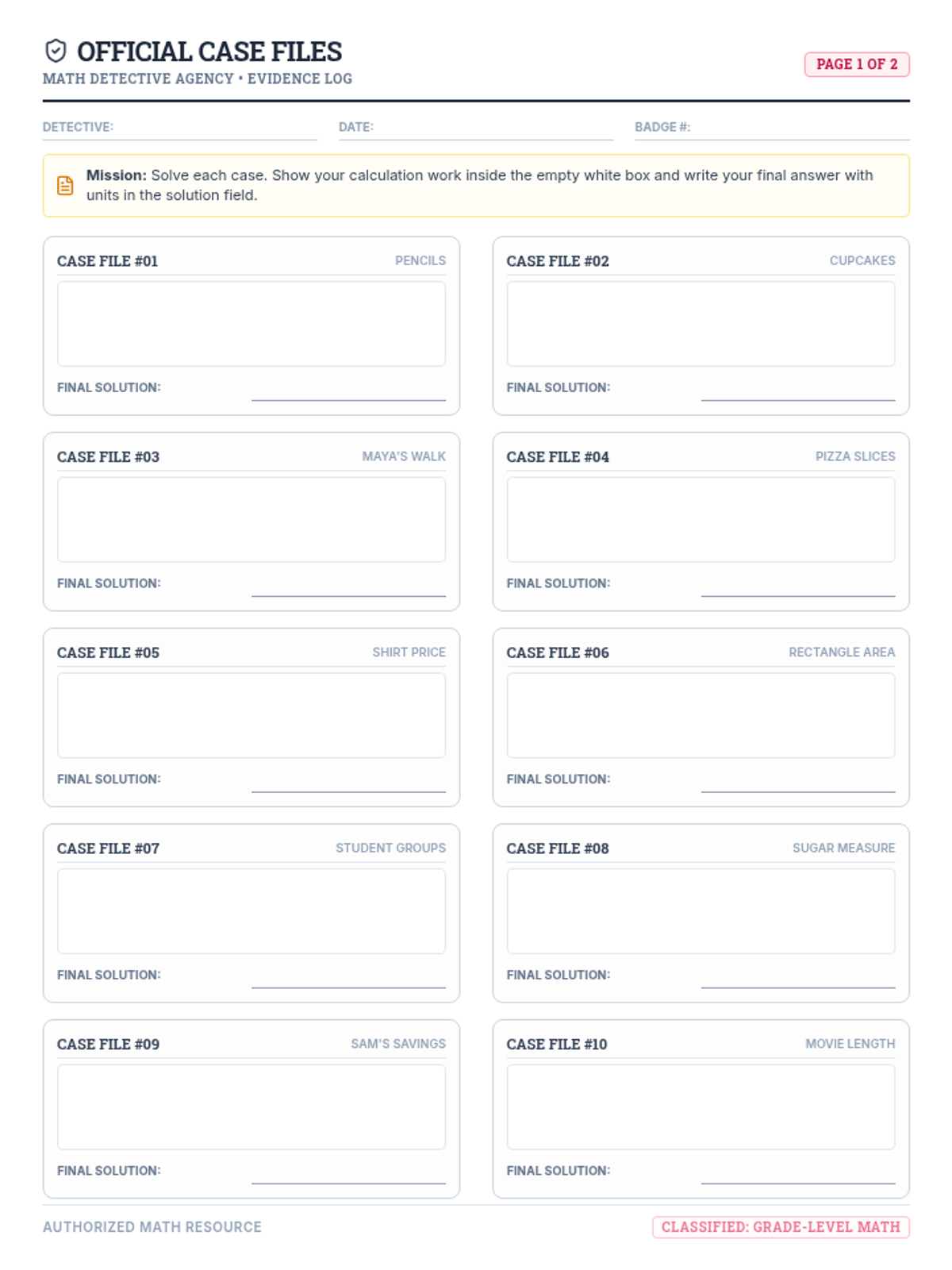
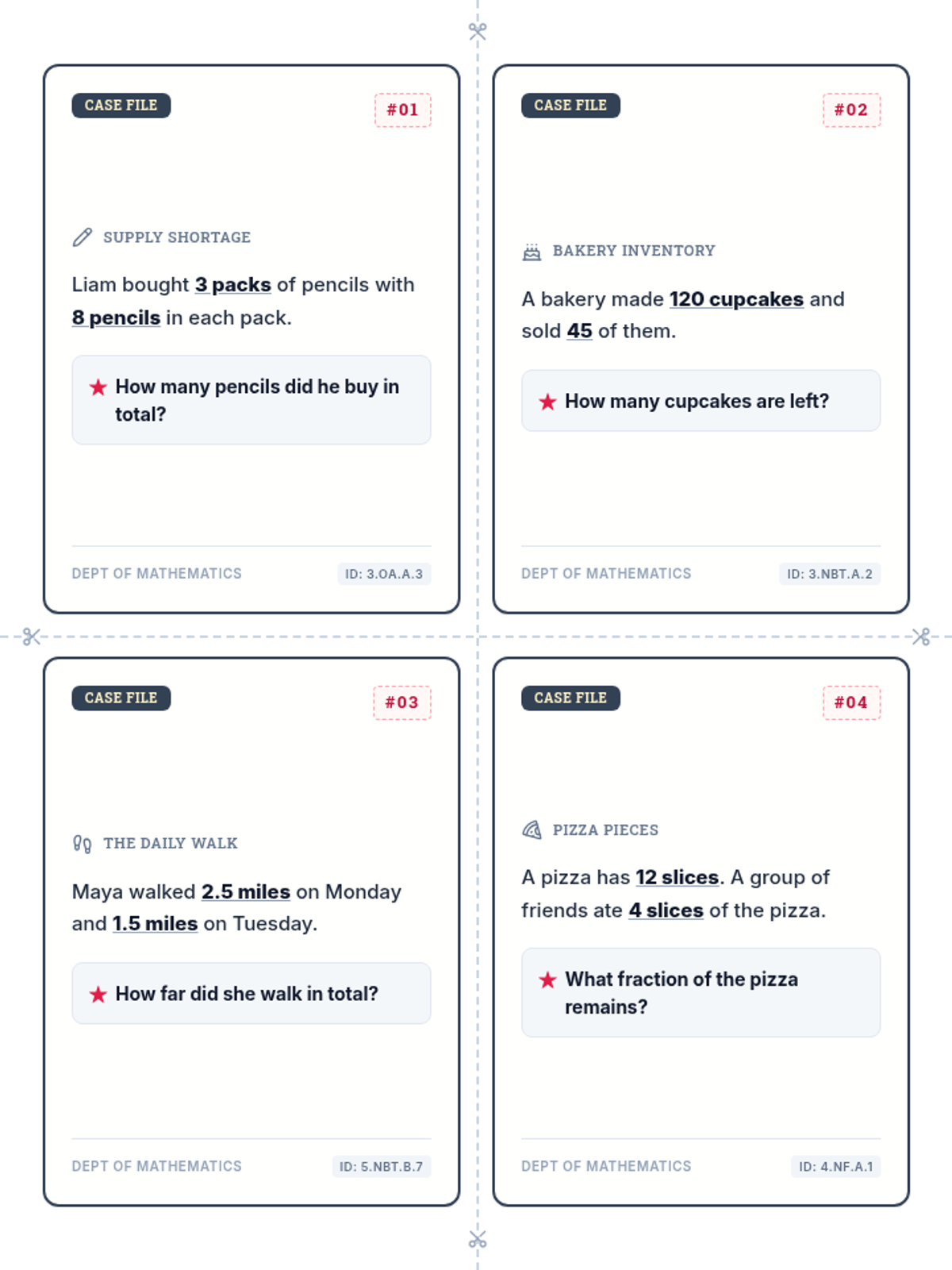
A high-engagement math activity set where students solve 20 distinct word problems structured as 'Case Files'. Perfect for independent practice, centers, or cooperative learning stations.
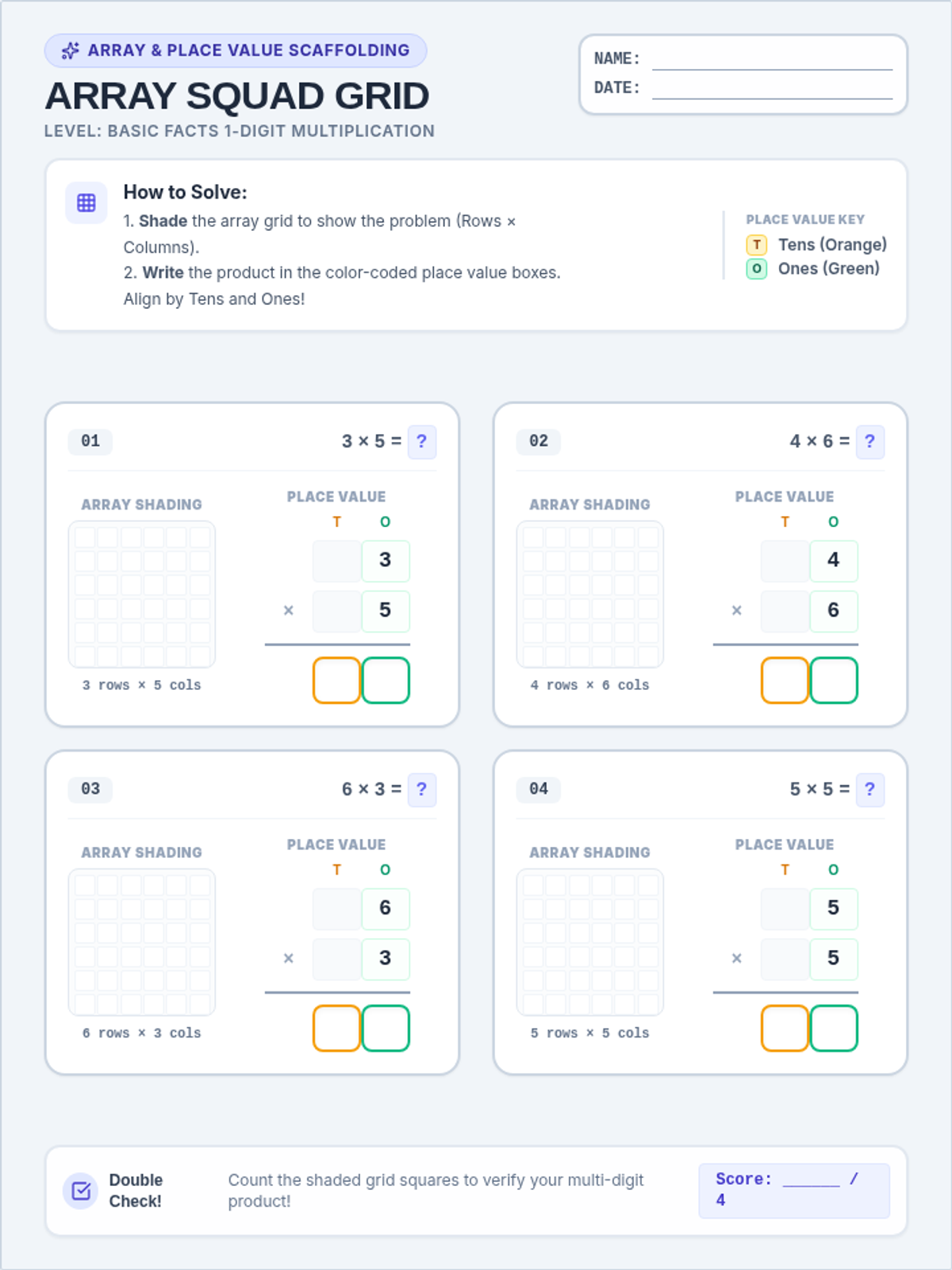
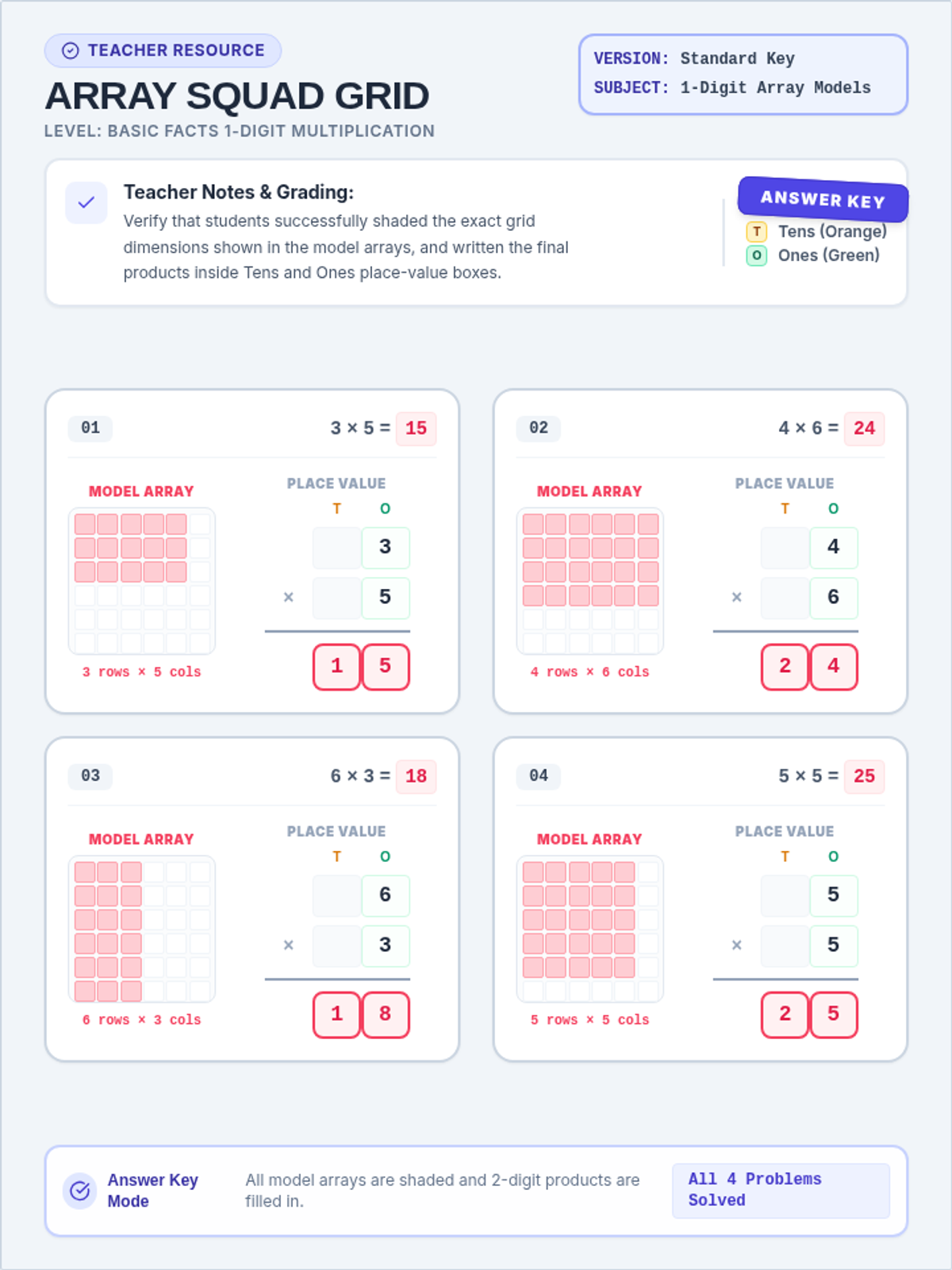
A basic multiplication facts lesson focused on 1-digit by 1-digit operations. Students utilize visual array grids and factor alignment boxes to connect concrete array representations with abstract products.