Focuses on TEKS 5.4C: generating numerical patterns from additive ($y = x + a$) and multiplicative ($y = ax$) rules. Students learn to distinguish between the two types of relationships in input-output tables.
A comprehensive lesson focusing on the relationship between decimals, fractions, and money. Students use coin images, number lines, and place value charts to master tenths and hundredths in real-world contexts.
A quick 15-minute review focusing on finding the least common denominator to compare fractions with different denominators.
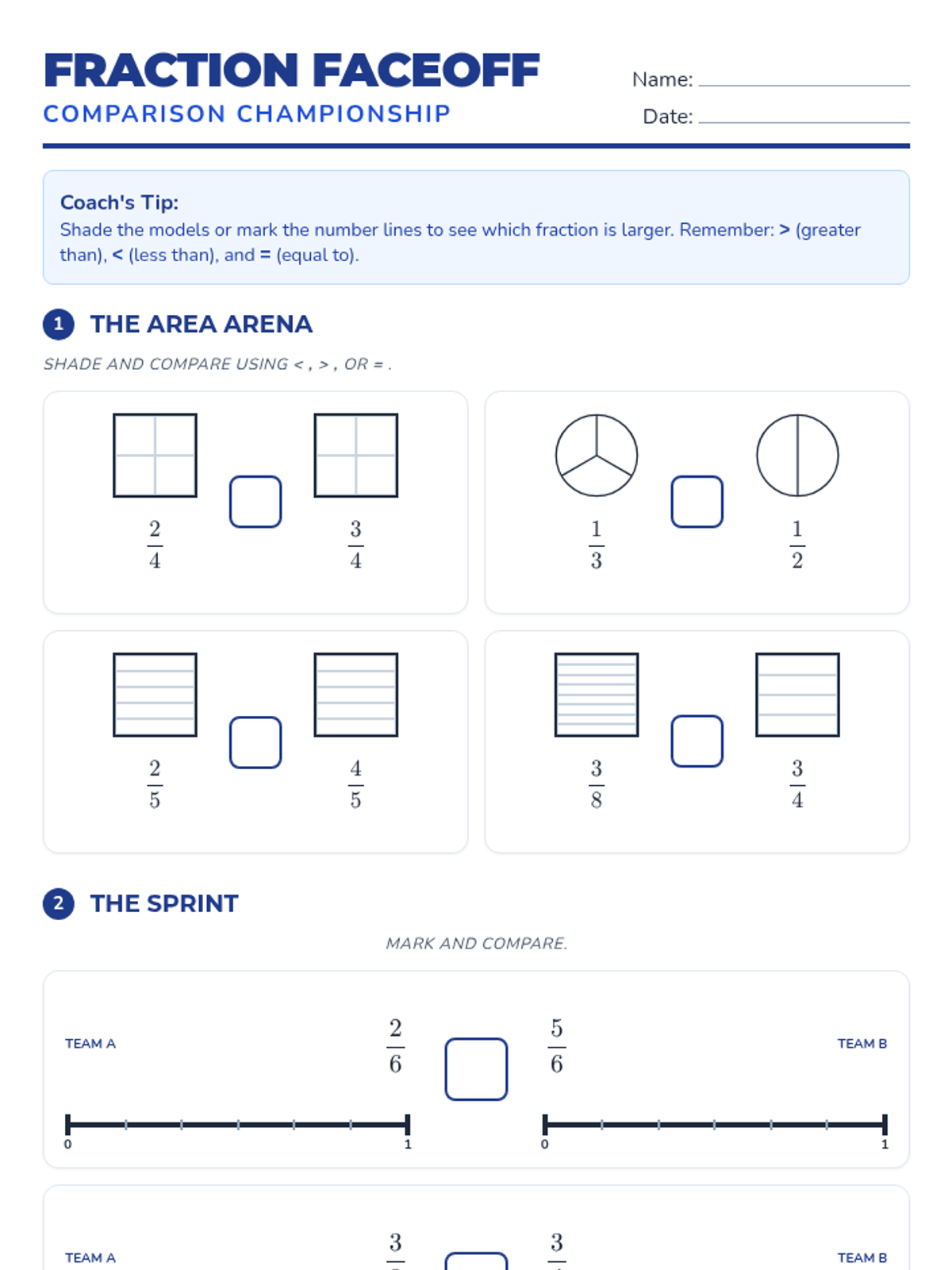
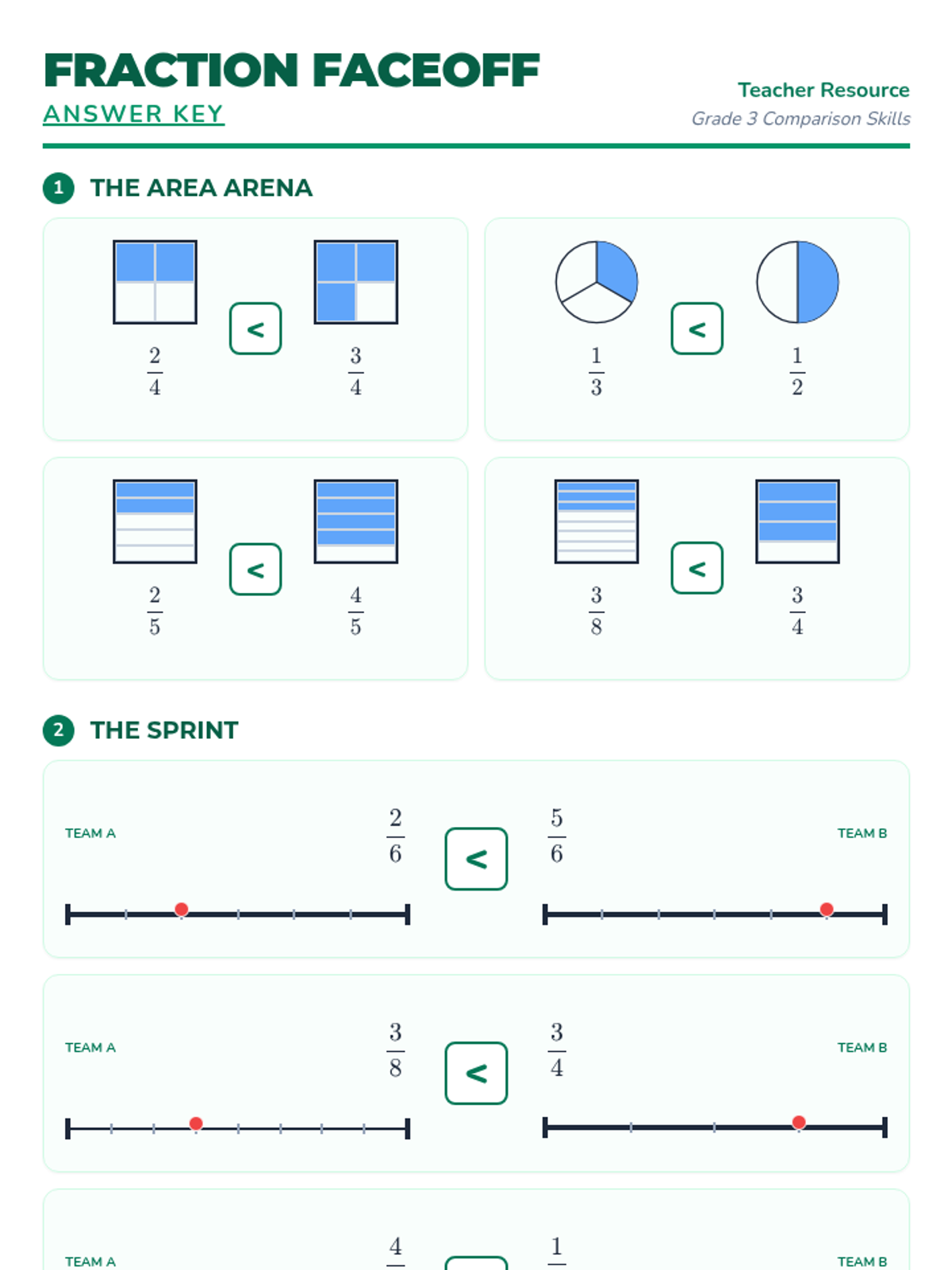
A lesson focused on comparing fractions with unlike denominators by using 1/2 as a benchmark. Students will learn to determine if a fraction is greater or less than 1/2 to quickly compare two different fractions.
A lesson focused on comparing fractions with denominators that share common factors but are not multiples of each other. Students will learn to find the least common multiple to create common denominators for comparison.
Cumulative review and assessment of all Fraction Factory skills.
Understanding the relationship between multiplication and division of fractions.
Dividing whole numbers by unit fractions using visual models.
Using area models to multiply two fractions together.
Visualizing and calculating fractions of a whole number.
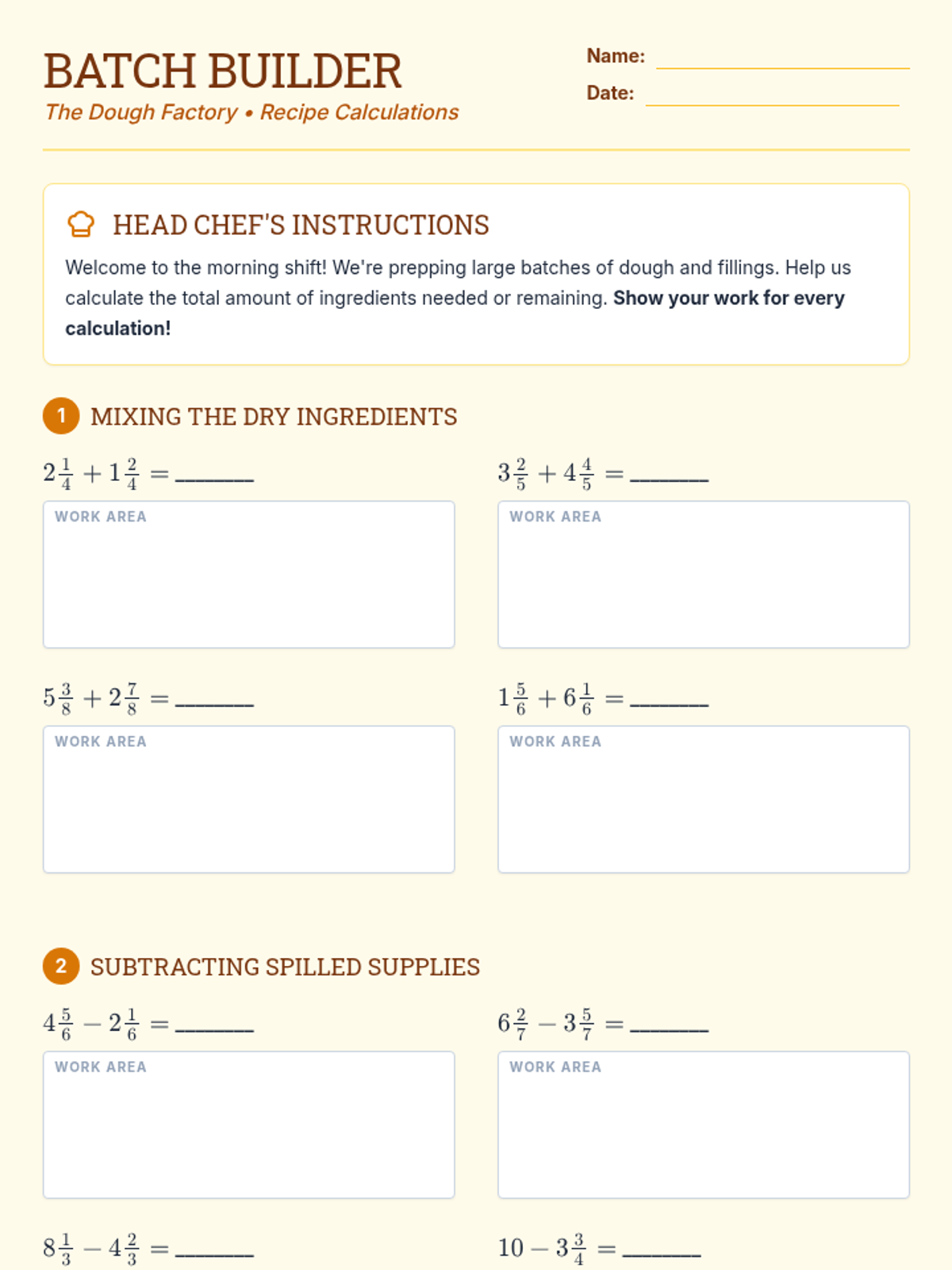
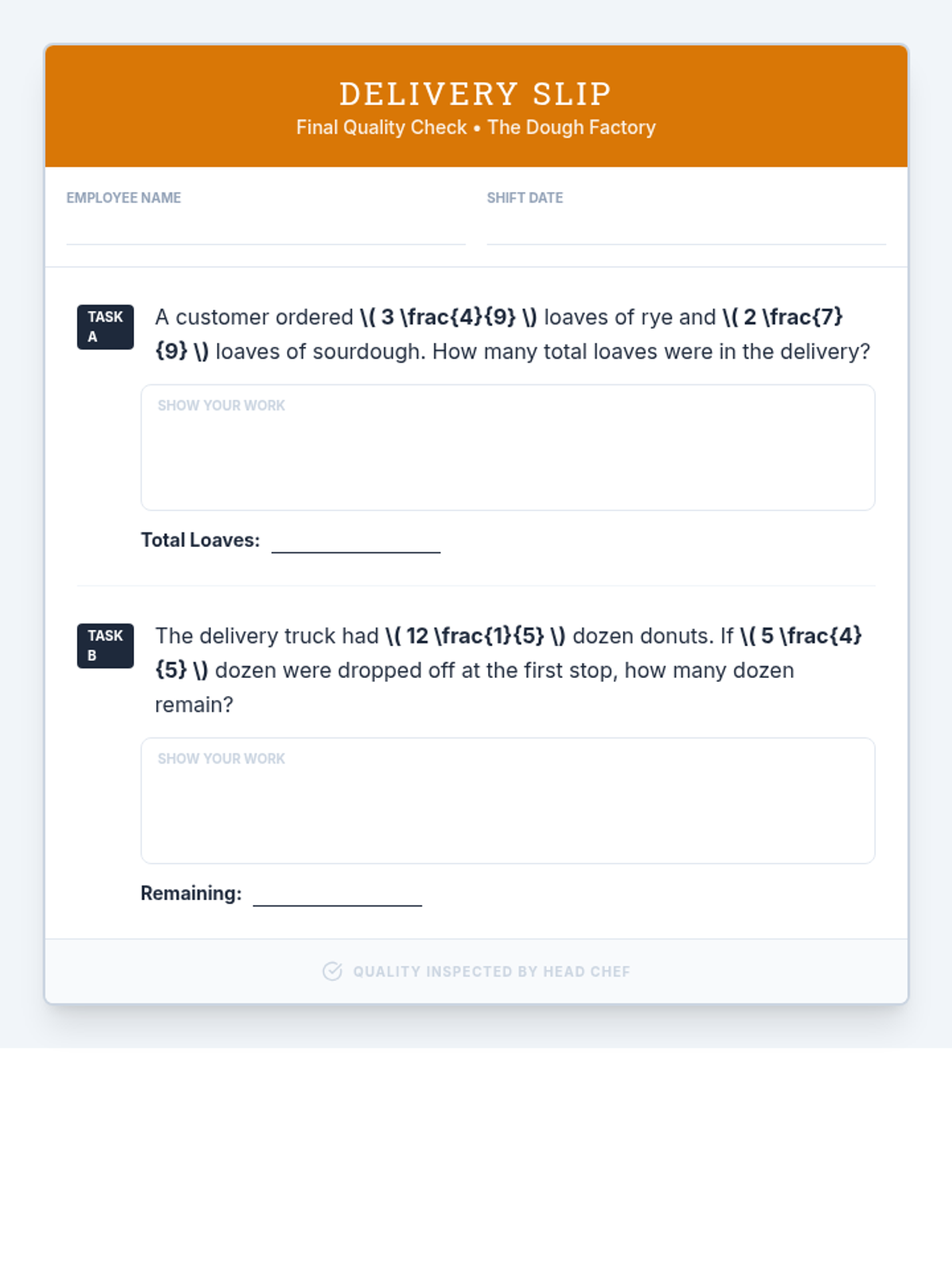
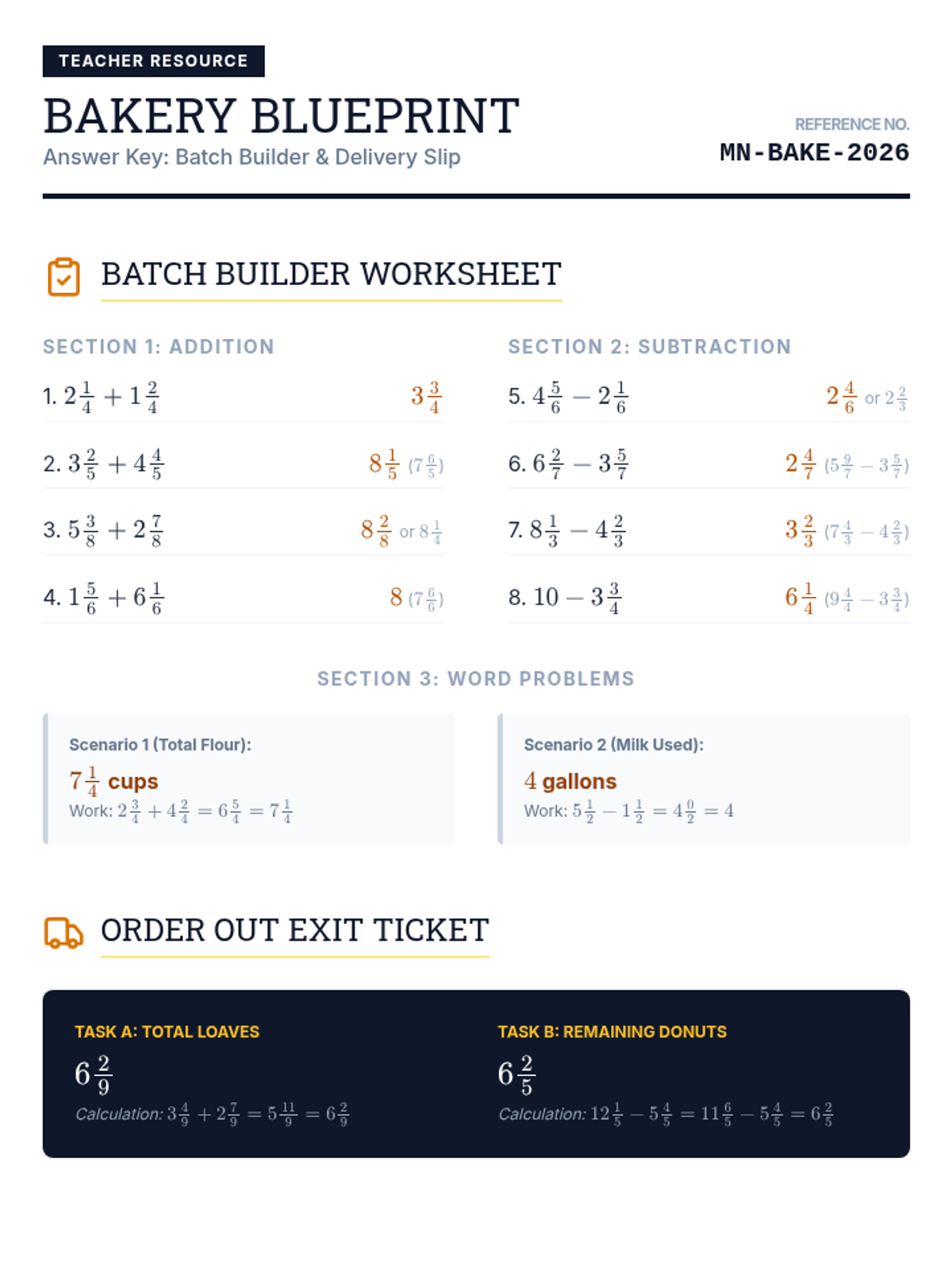
Applying addition and subtraction skills to real-world factory scenarios.
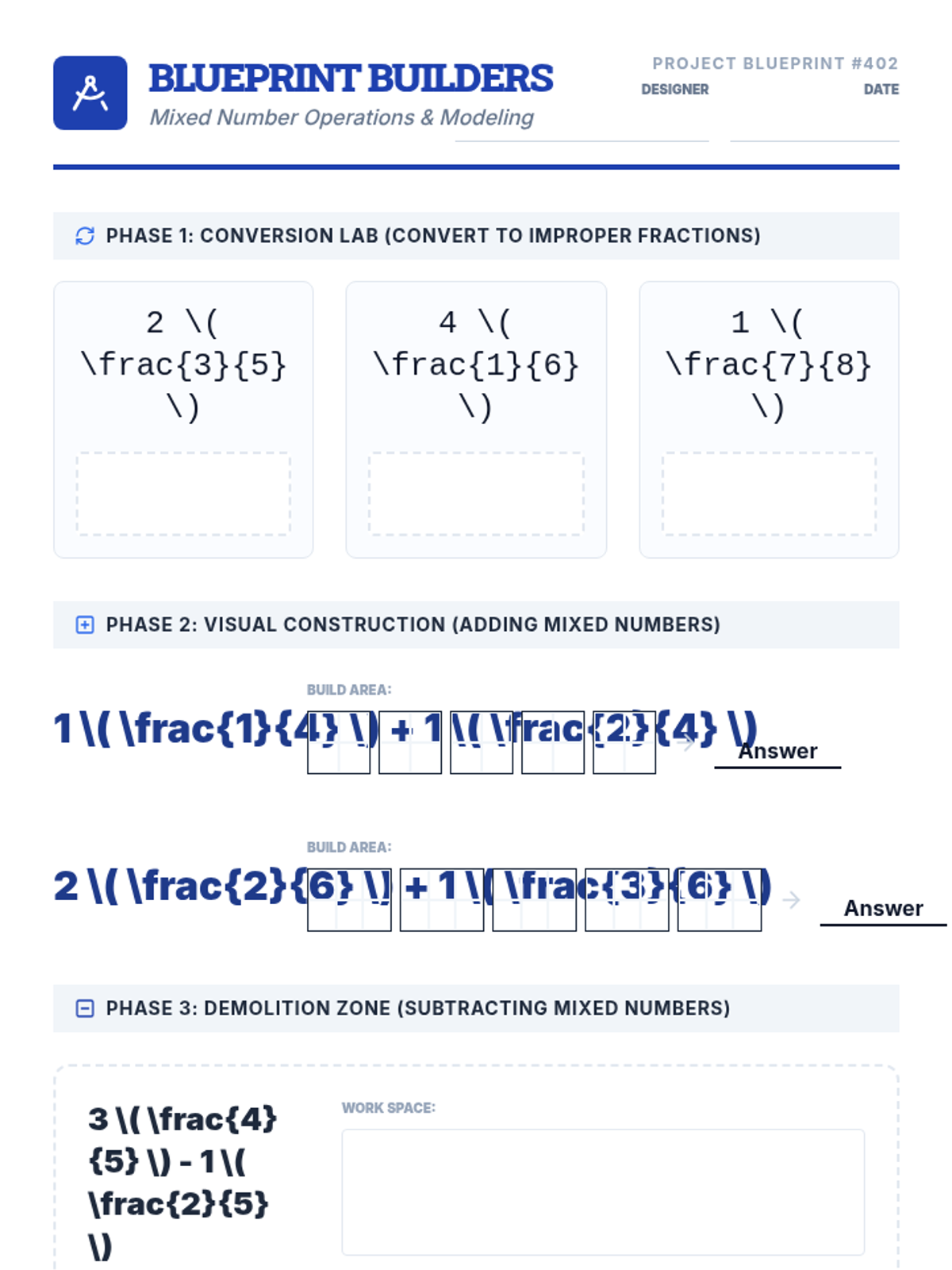
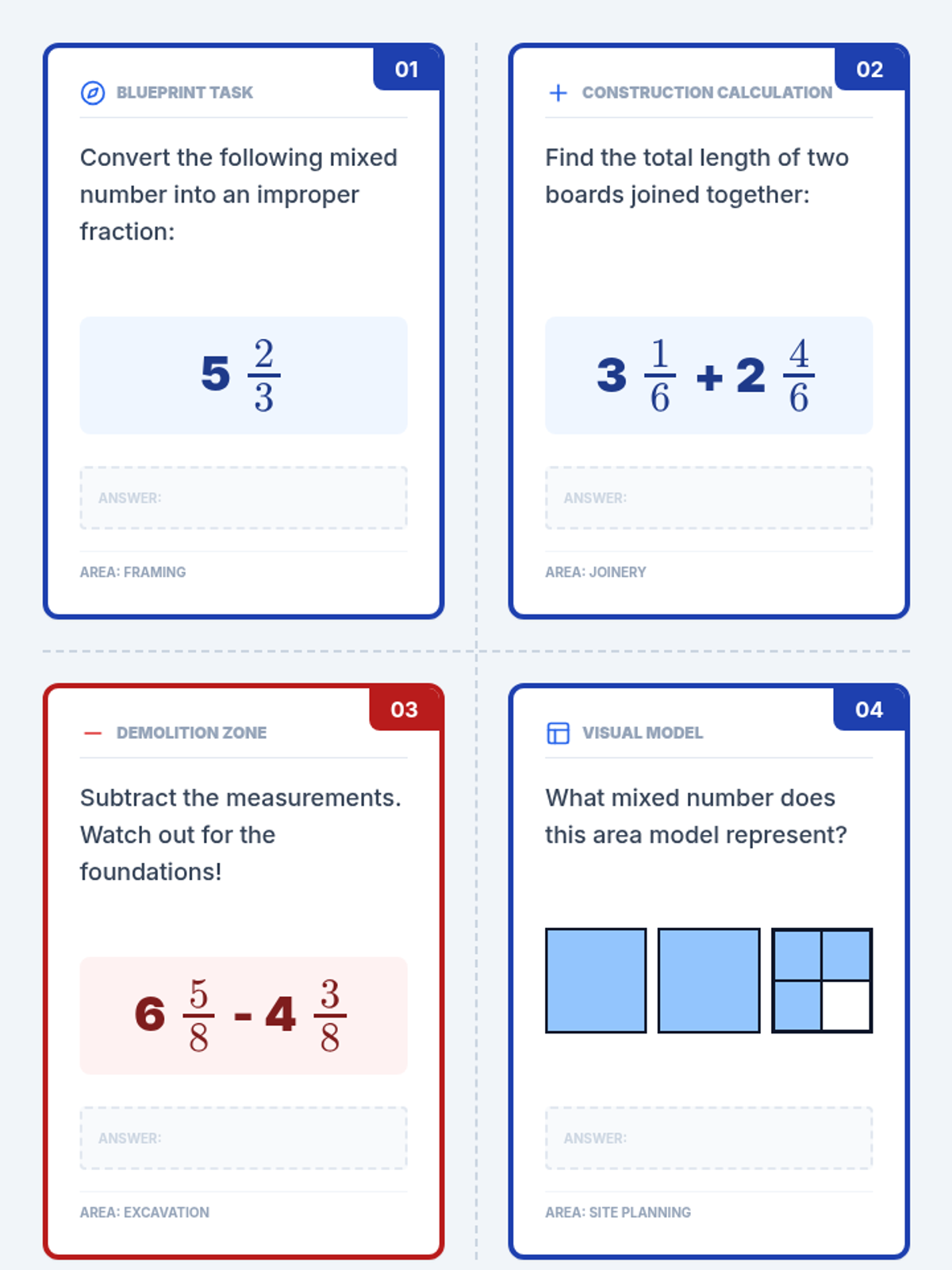
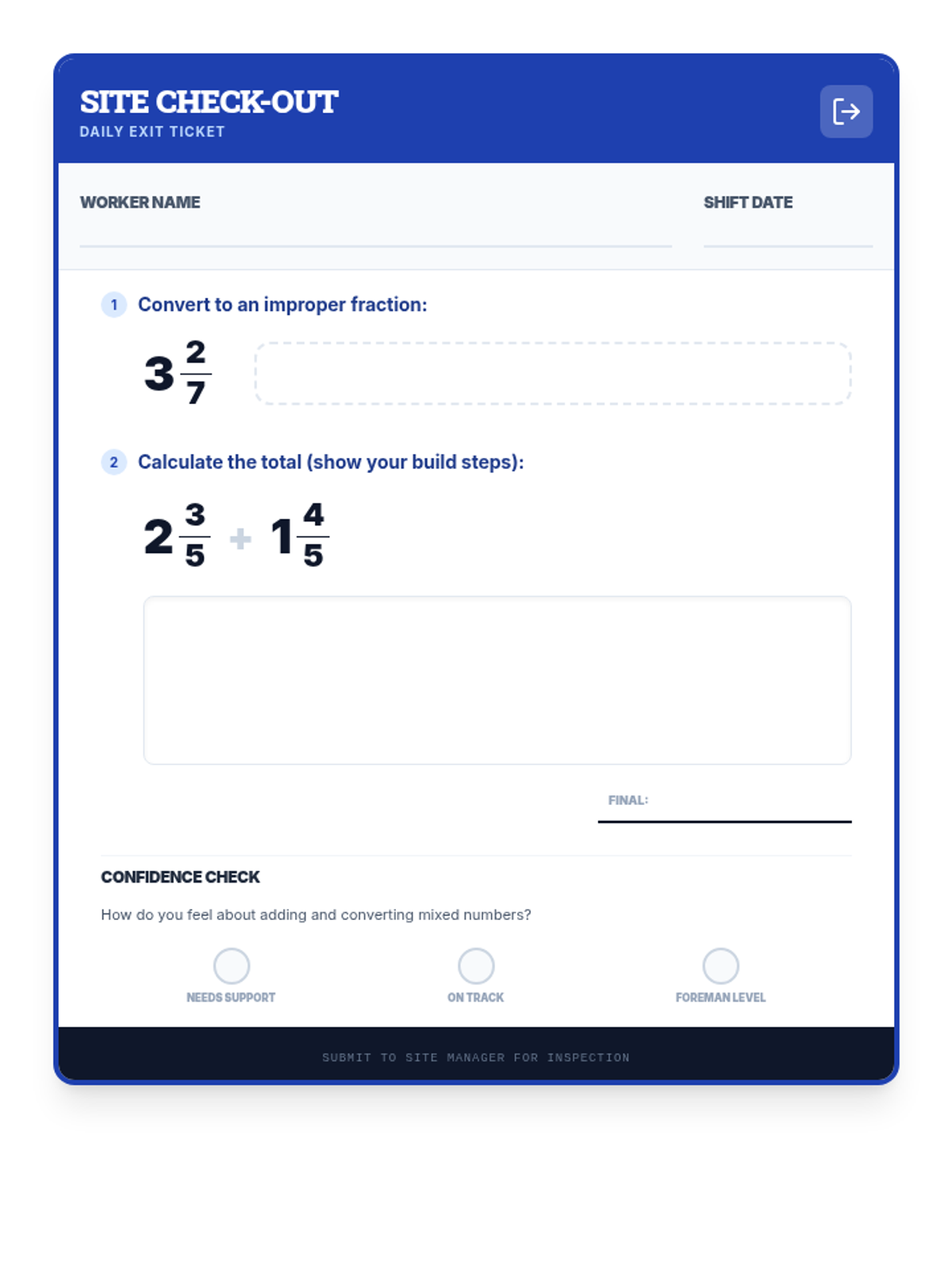
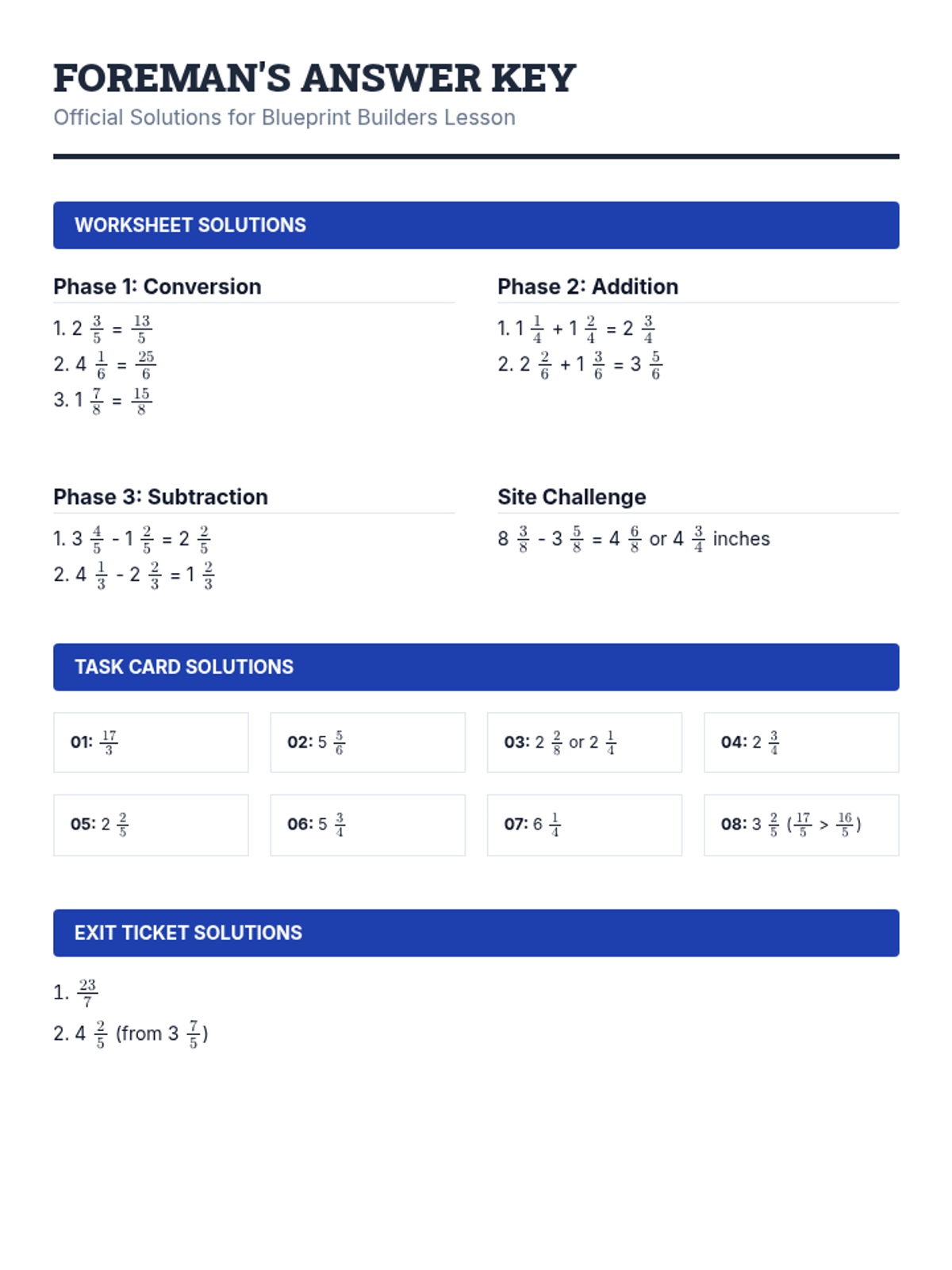
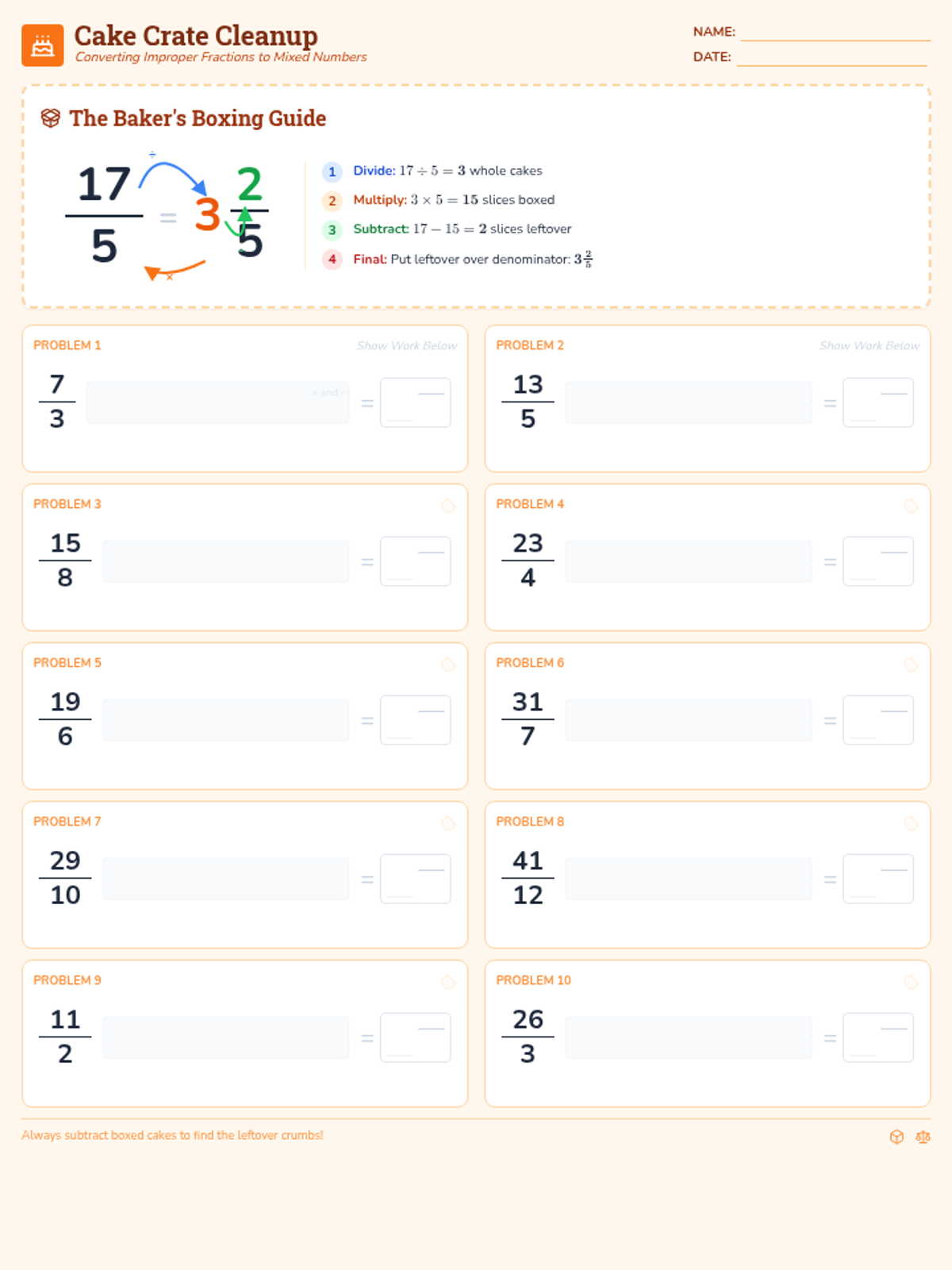
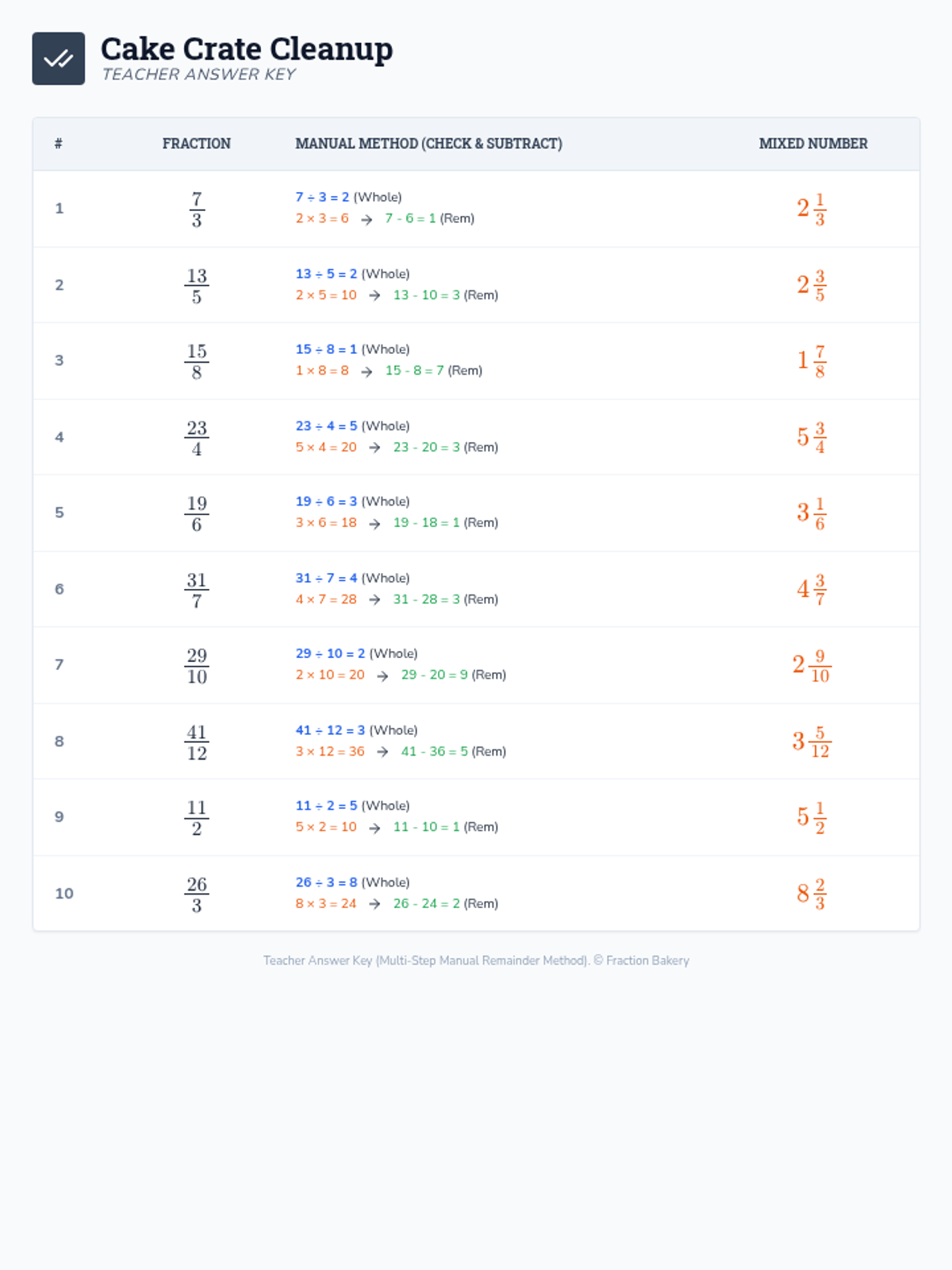
Converting between improper fractions and mixed numbers for addition and subtraction.
Finding common denominators to add and subtract unlike fractions.
Adding and subtracting fractions with identical denominators.
Ordering and comparing fractions with different denominators.
Comparing fractions to the 1/2 benchmark to estimate and understand magnitude.
Learning to find the simplest form of a fraction using greatest common factors.
Using multiplication and division to create fractions with the same value but different numbers.
Locating and representing fractions on a number line to understand their value relative to zero and one.
Introduction to numerators, denominators, and representing parts of a whole and parts of a set.
A series of 10 worksheets focused on identifying and plotting the missing vertex to complete rectangles and squares across all four quadrants of the coordinate plane.
A lesson focused on converting decimals to fractions by identifying place value names and using them as denominators.
A STAAR-aligned review session that integrates patterns, tables, and graphing. Students tackle complex problems that require moving between all three representations.