A lesson focused on identifying and using past tense verbs through a detective-themed word search and sentence construction activity.
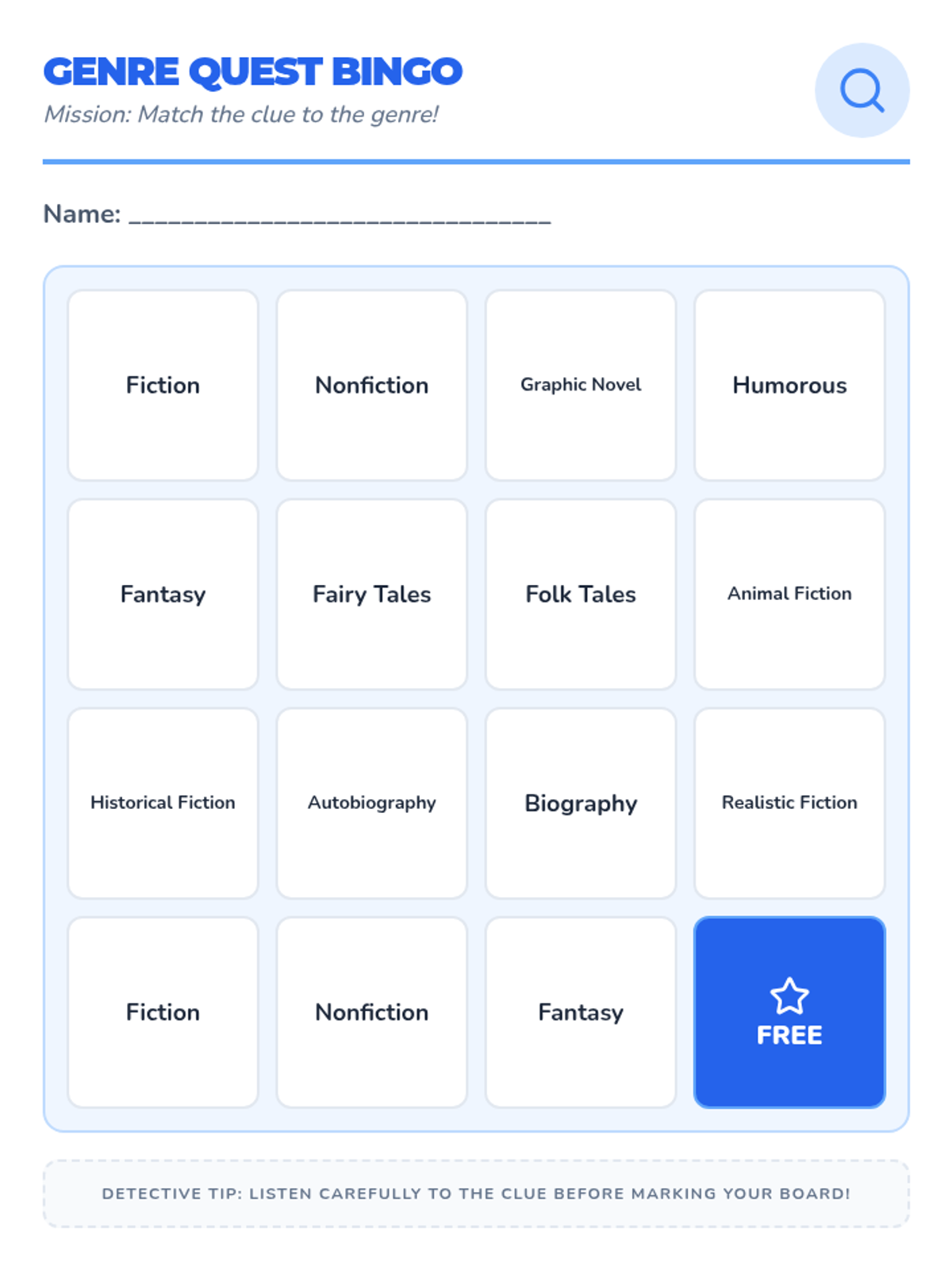
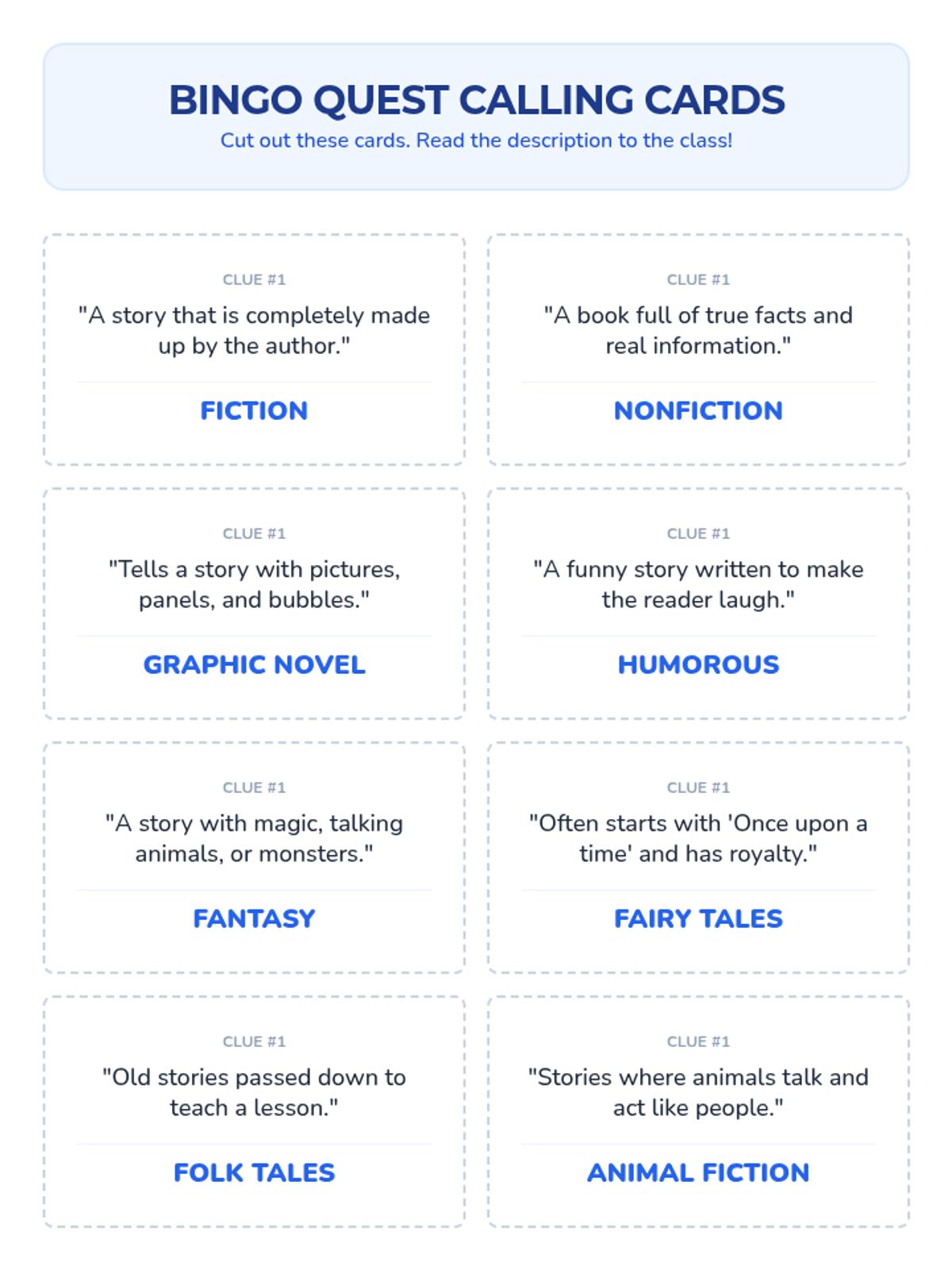
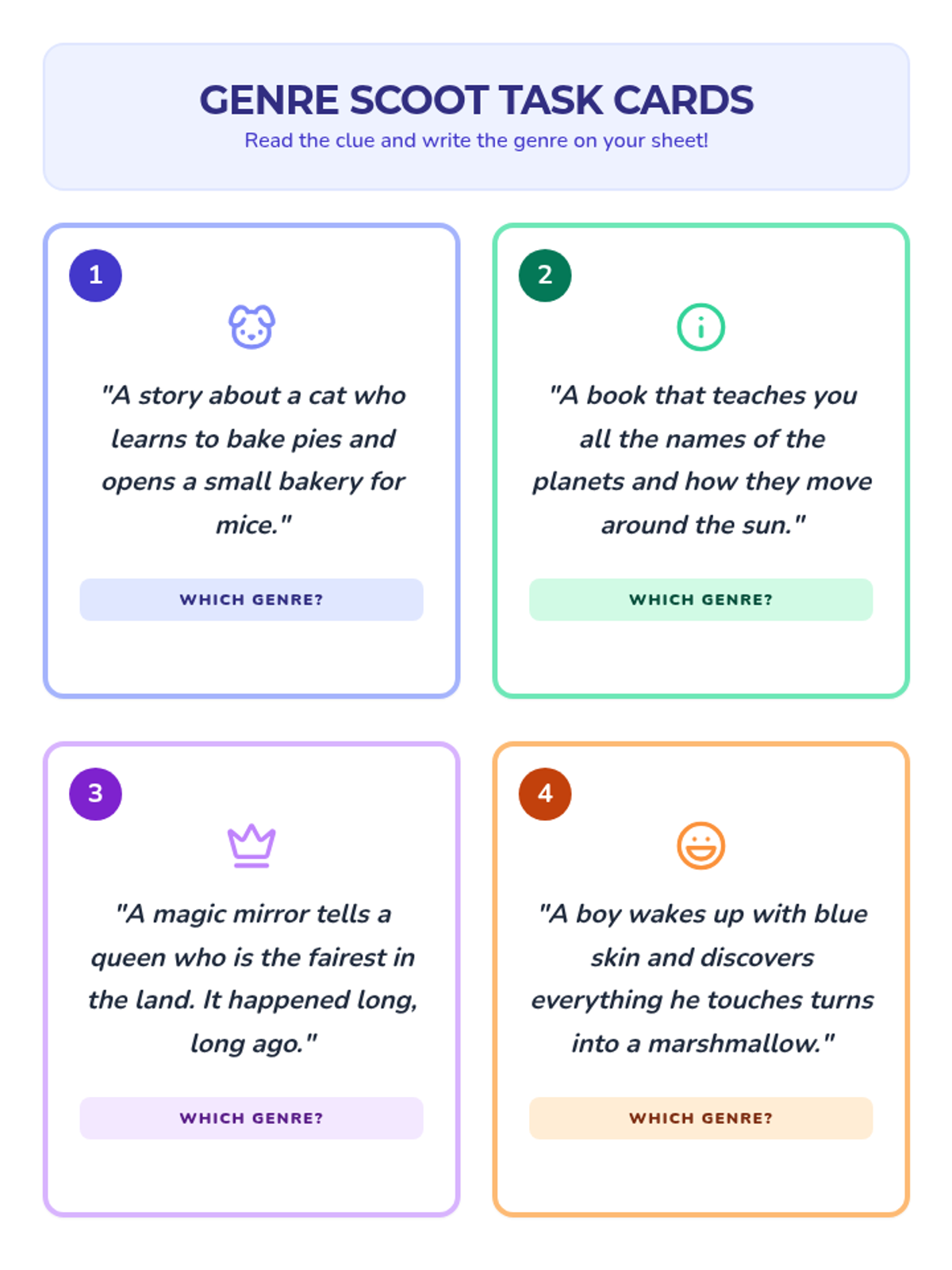
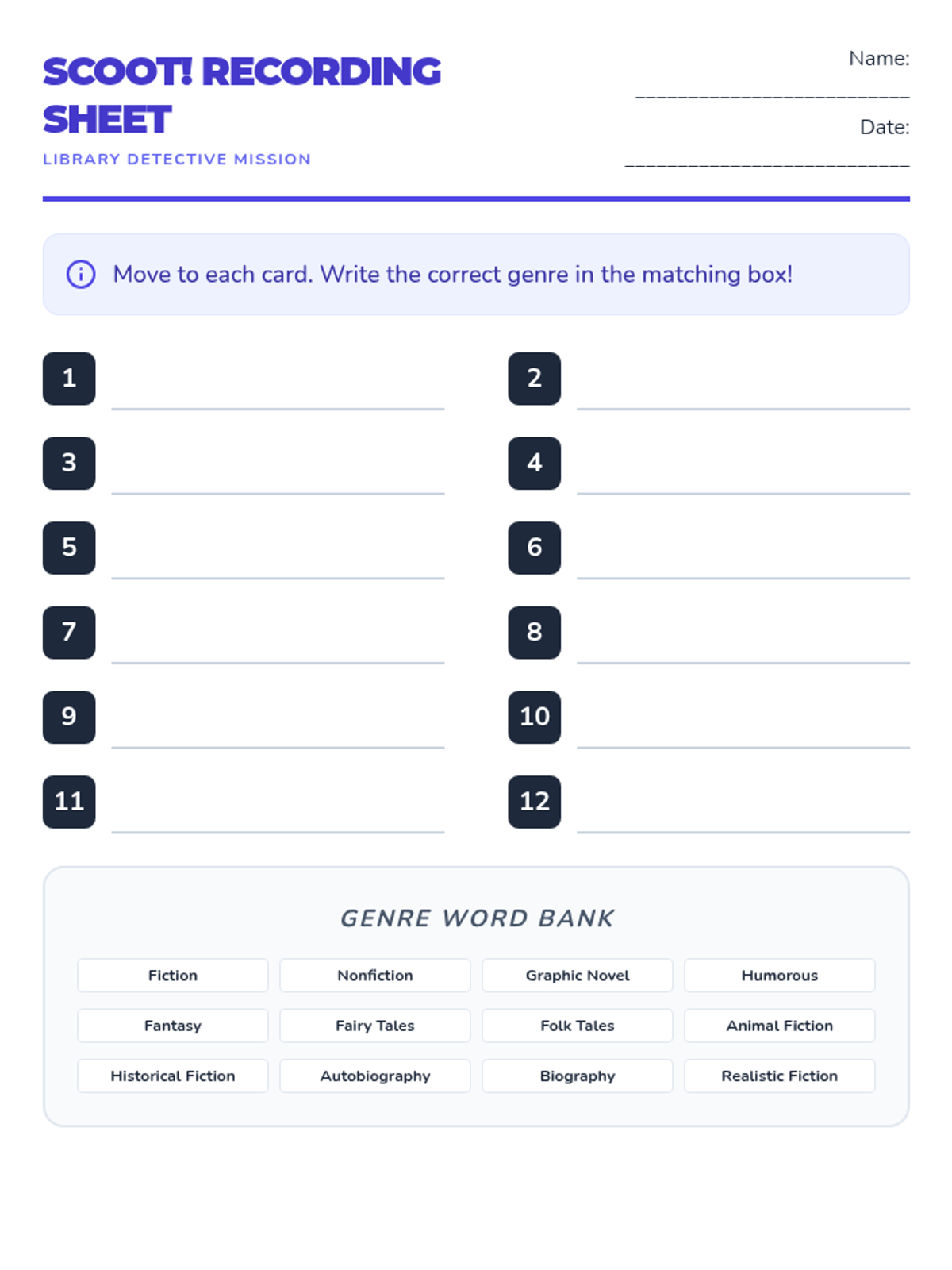
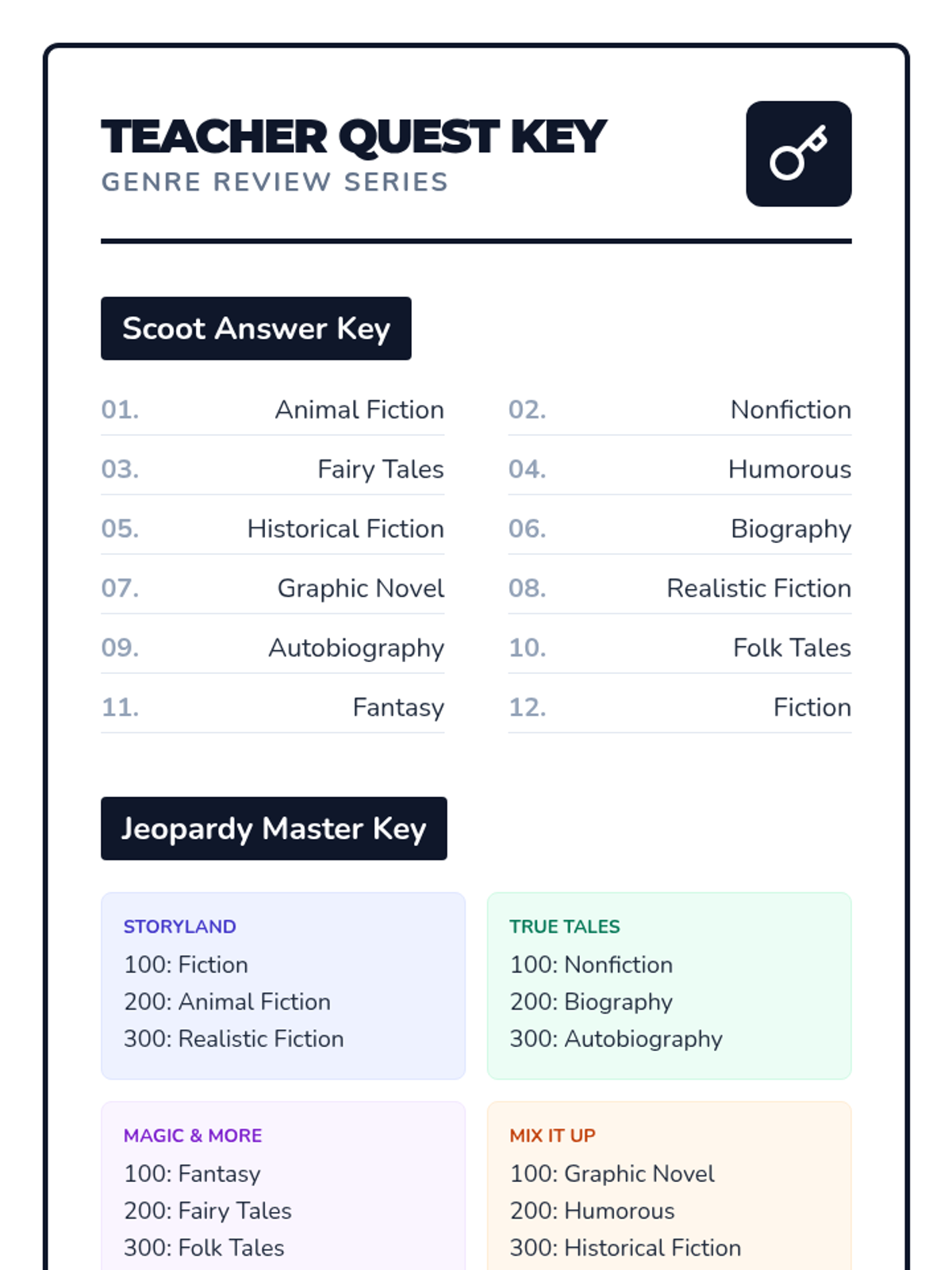
A comprehensive set of interactive games designed for K-3 students to master various reading genres through multiple play formats.
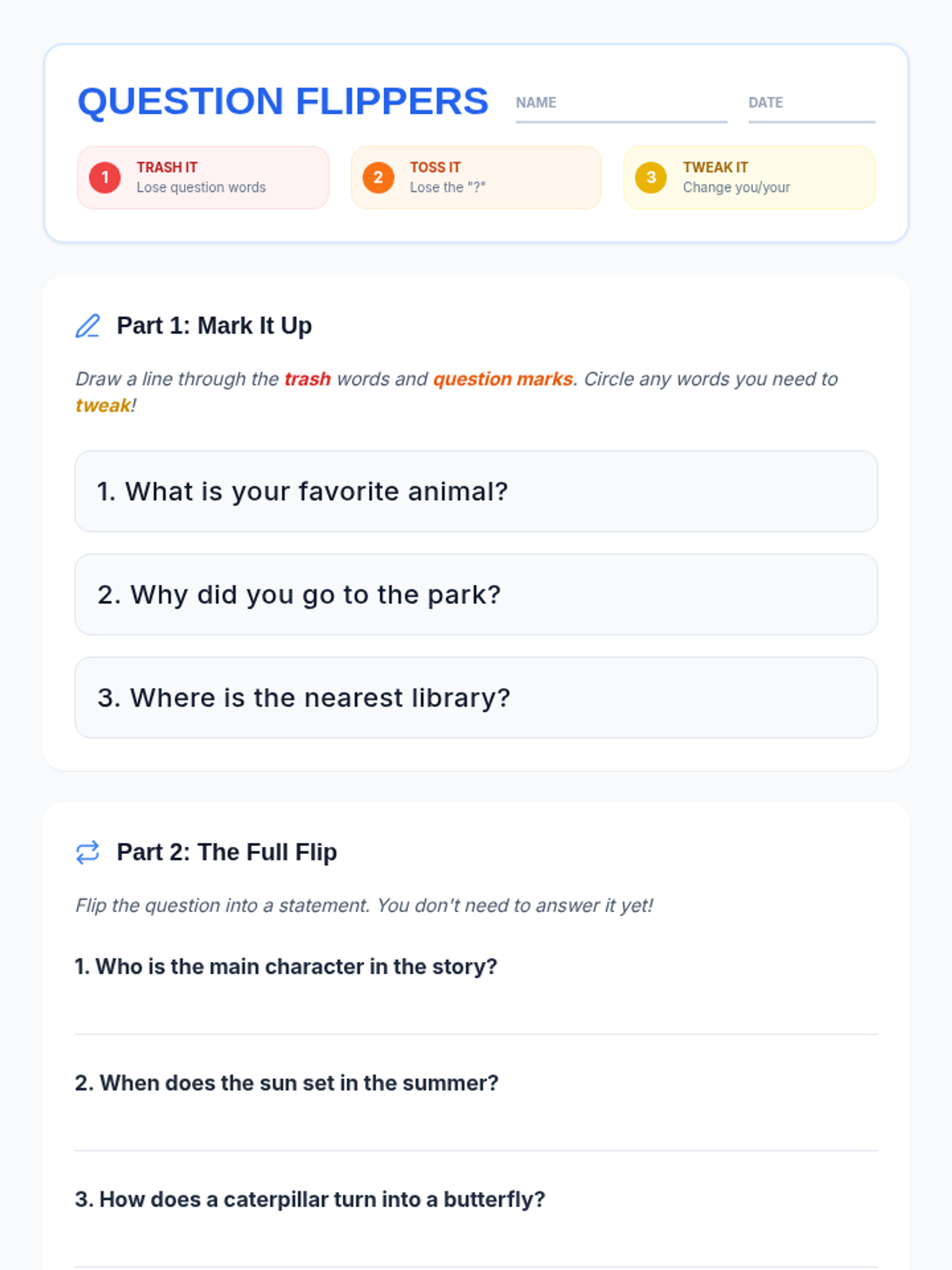
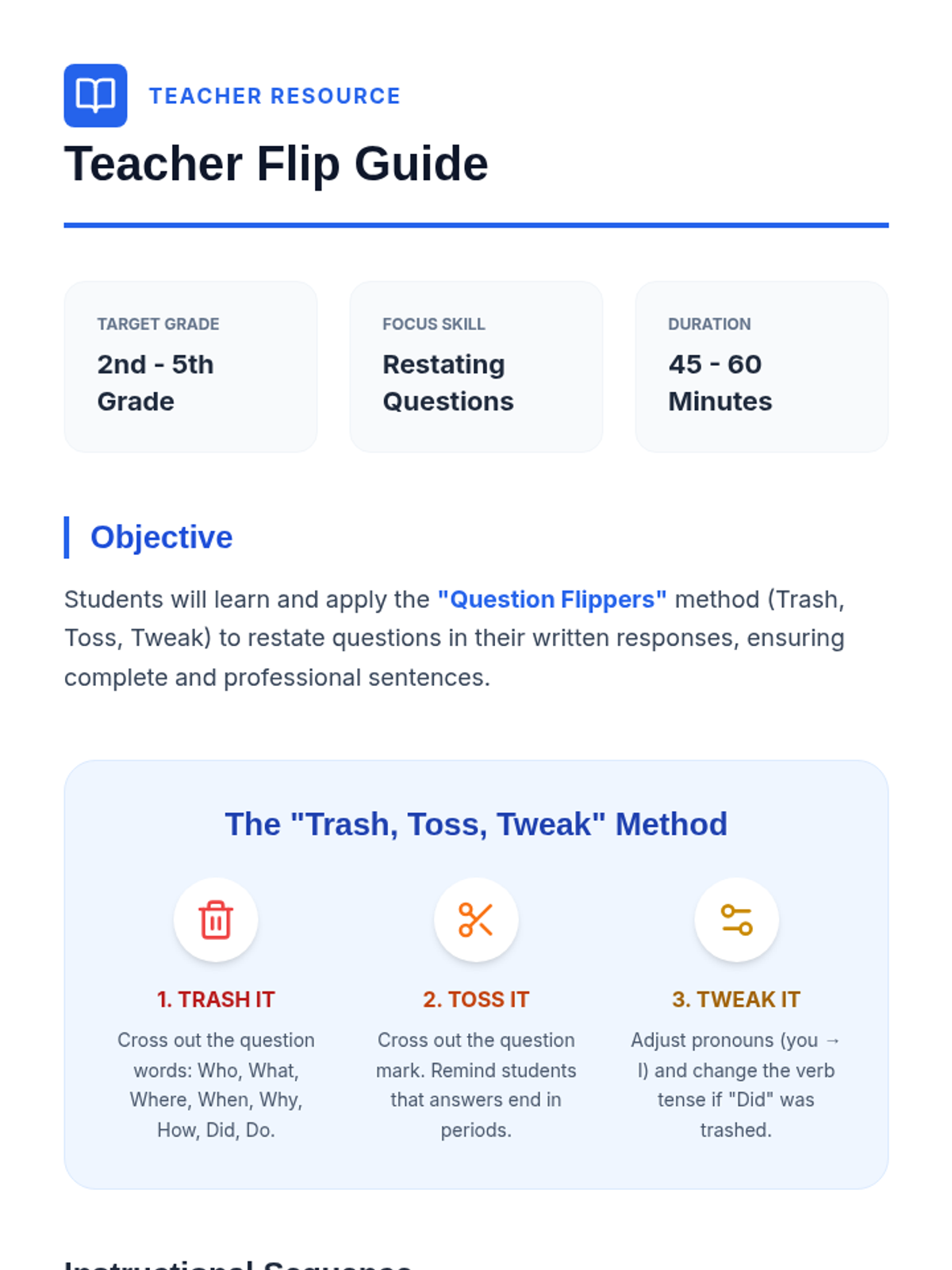
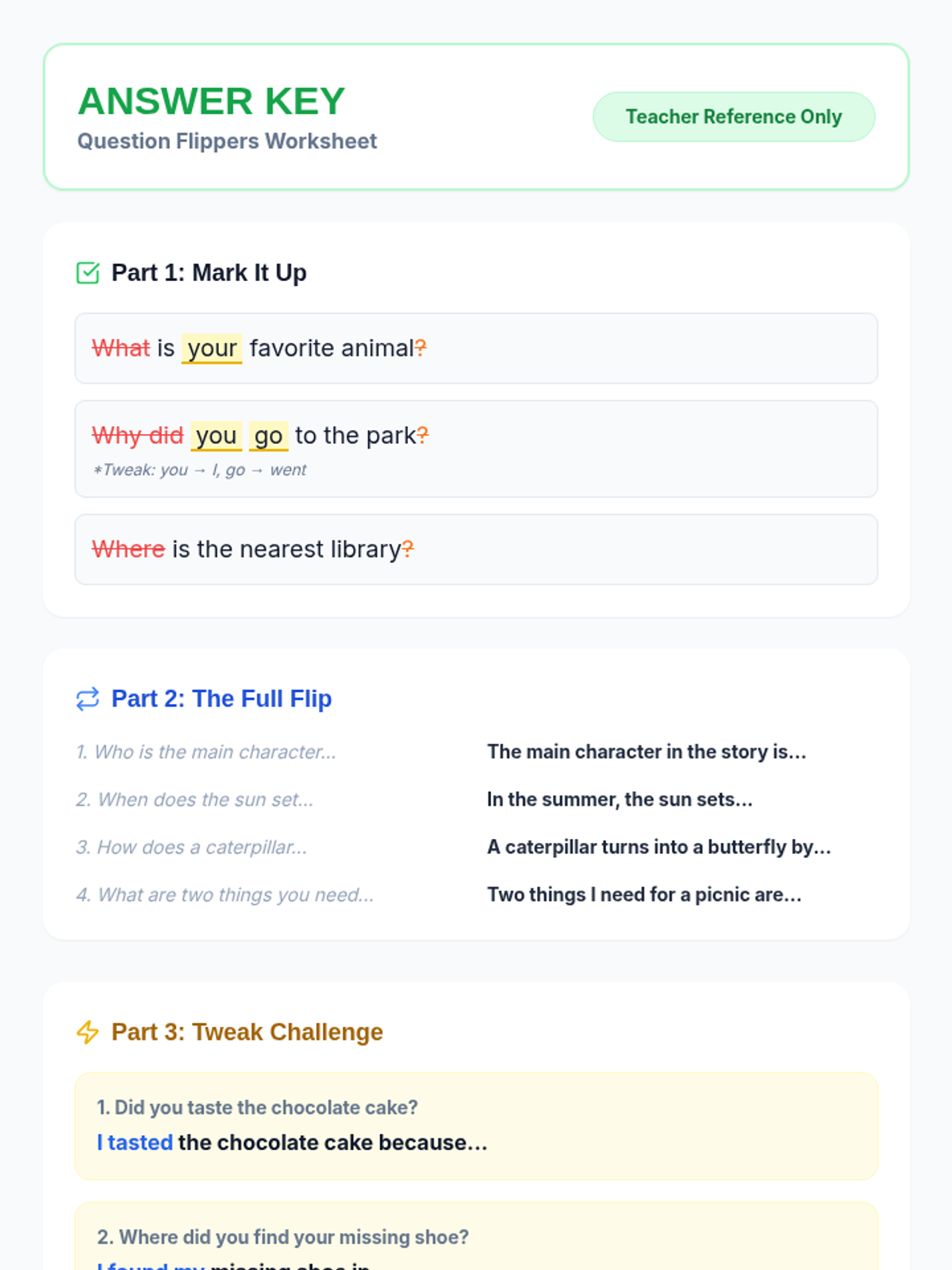
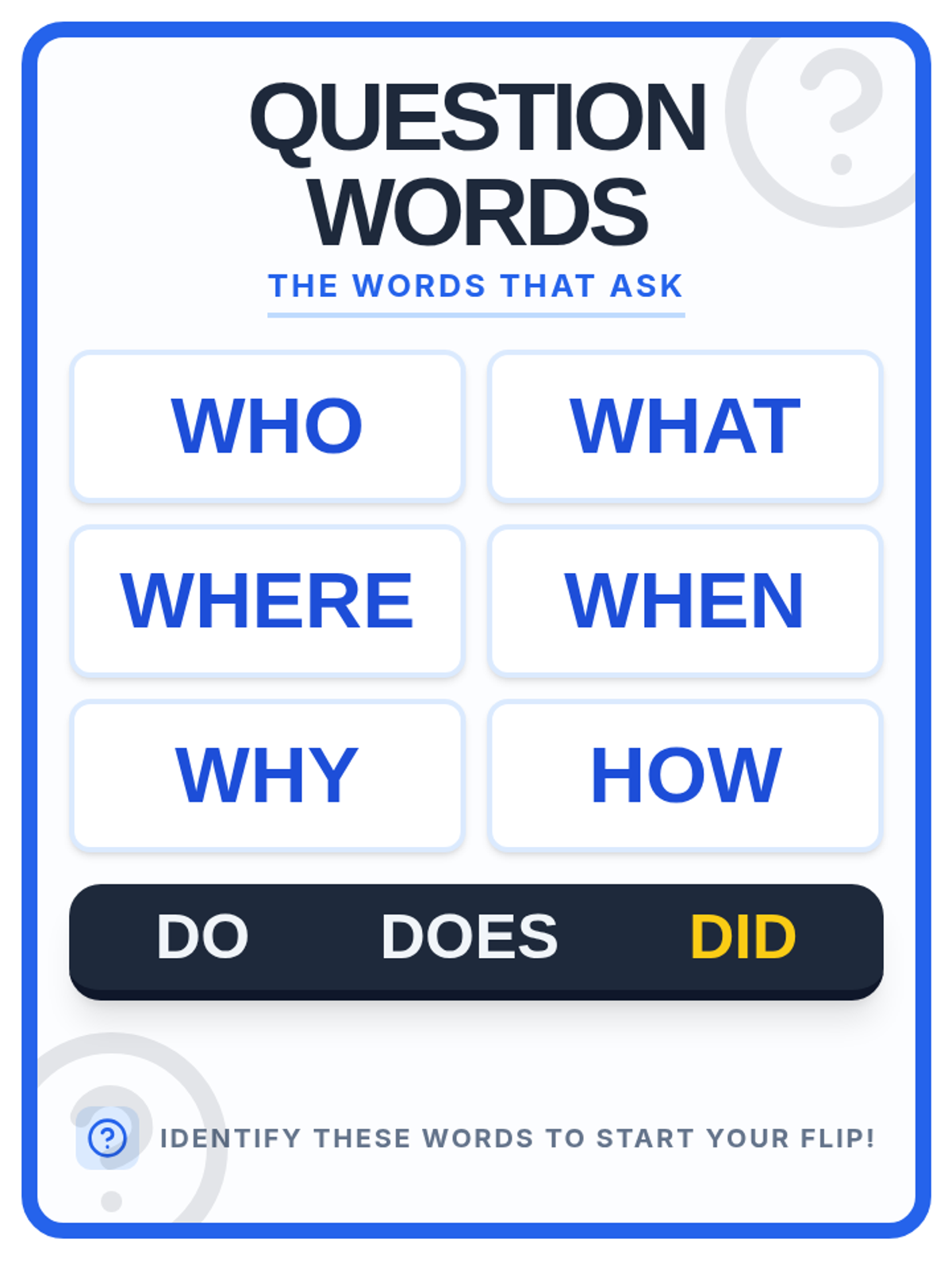
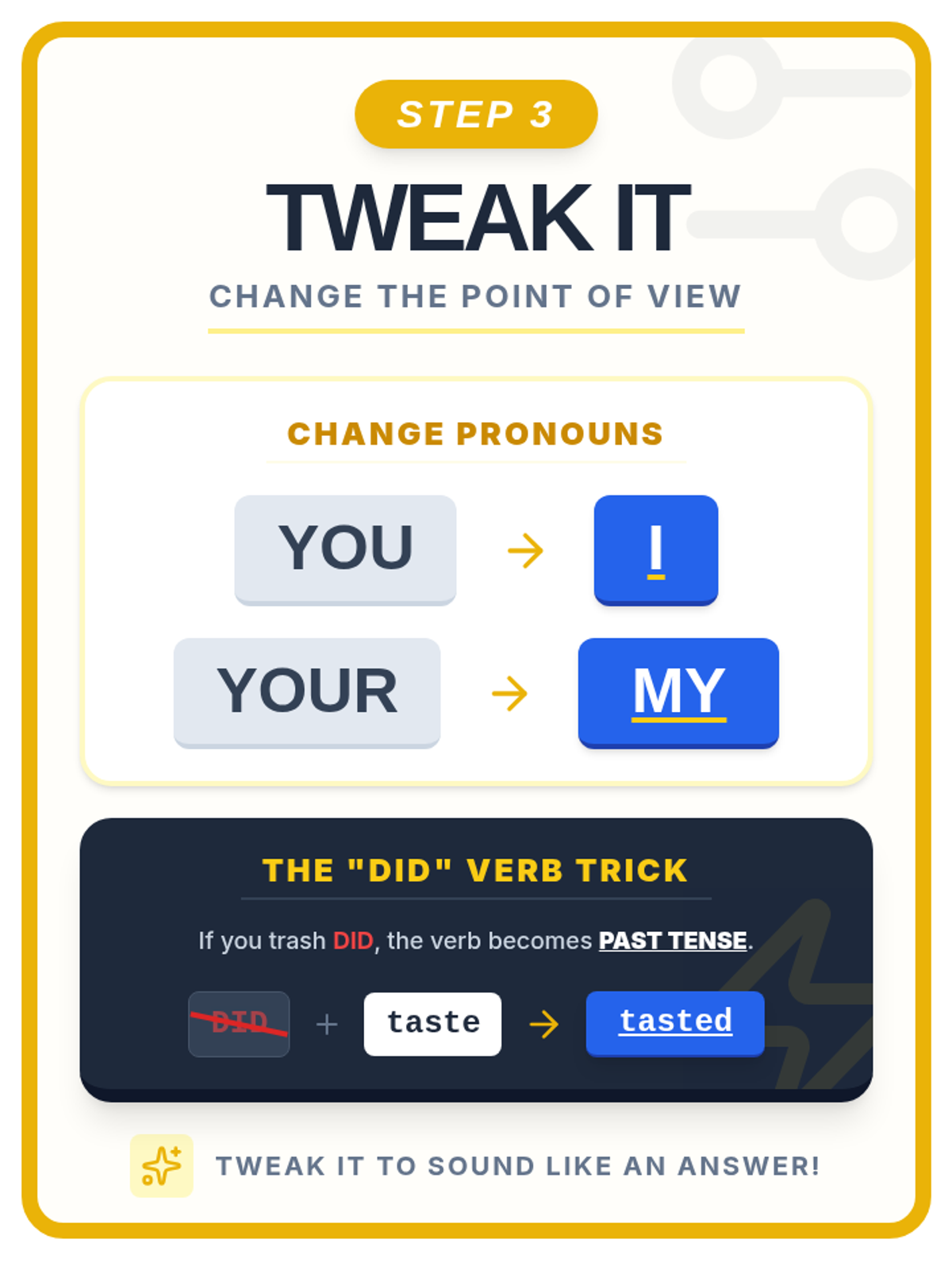
A step-by-step lesson teaching students how to restate a question in their written answers using the "Question Flippers" method: Trash, Toss, and Tweak.
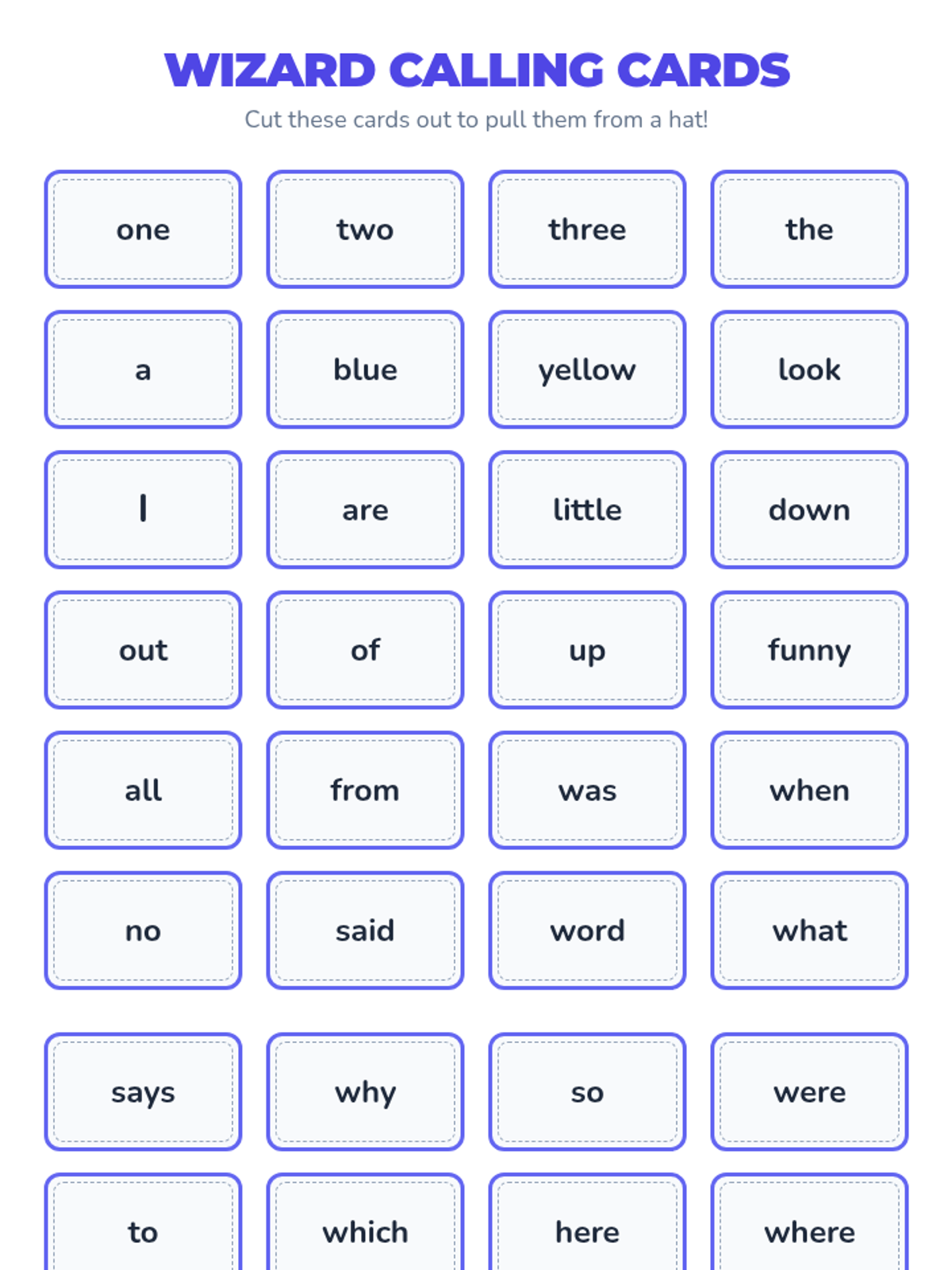
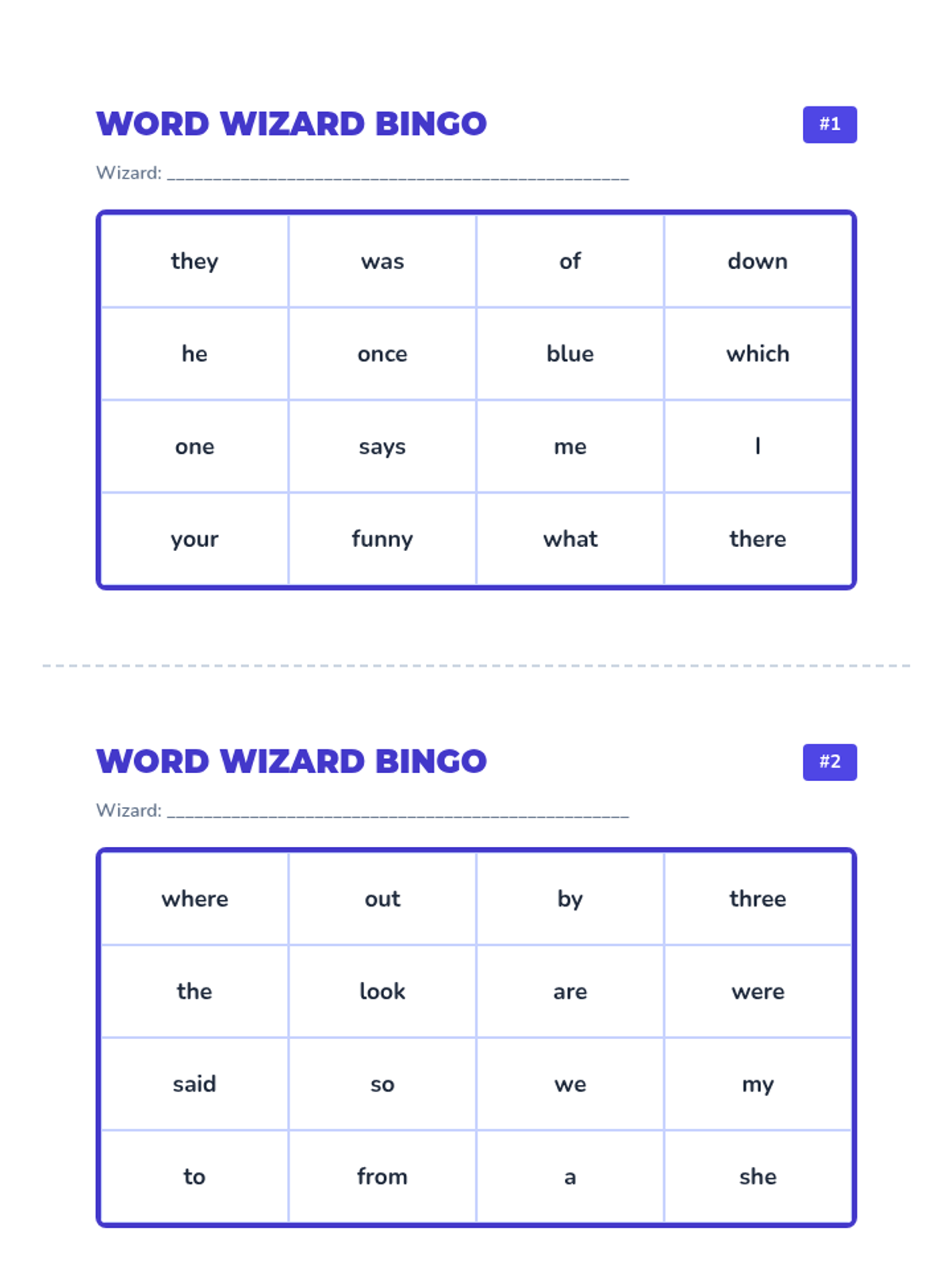
A fun, interactive bingo game designed to help 26 students master 45 high-frequency sight words through play and repetition.
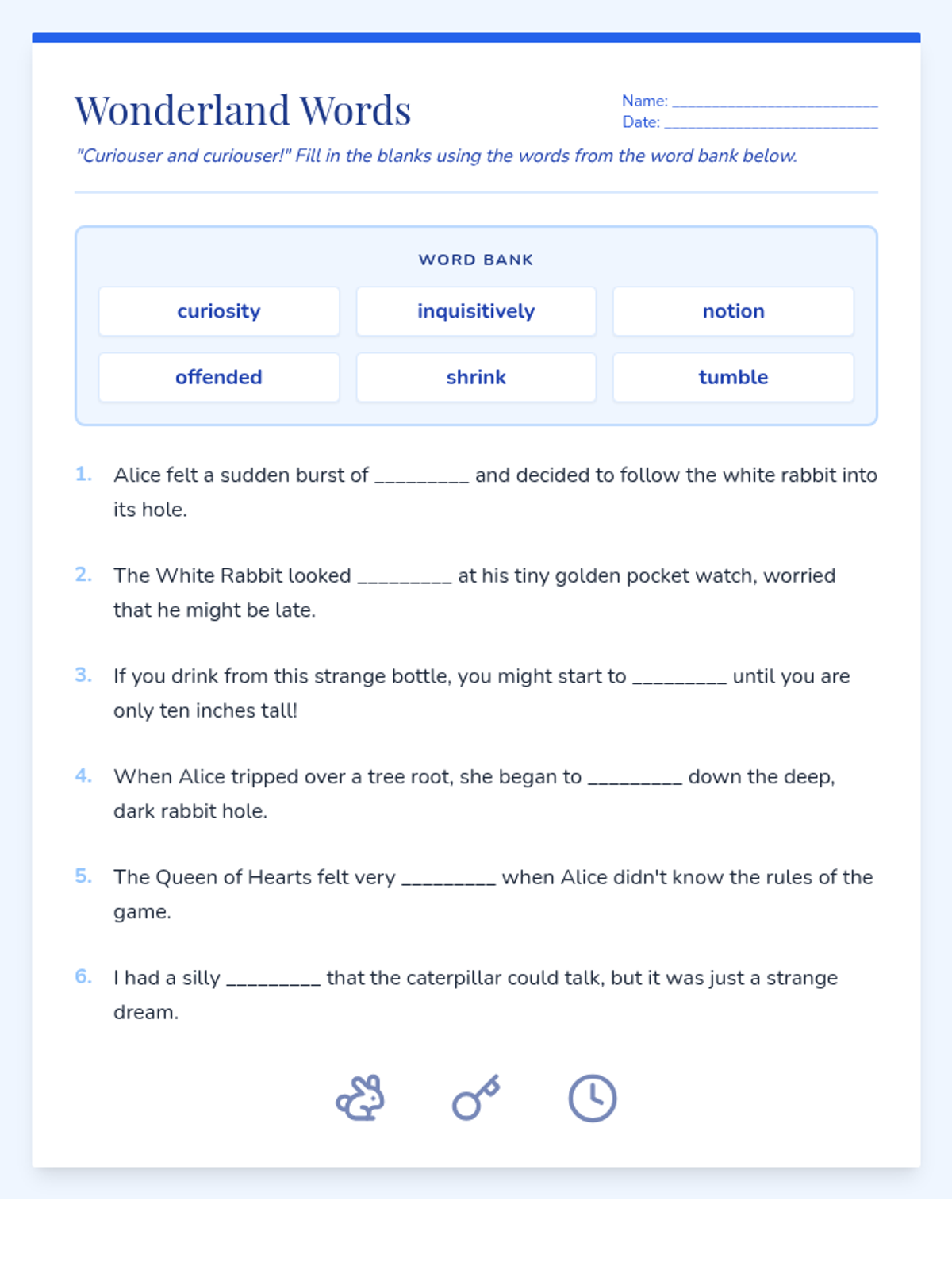
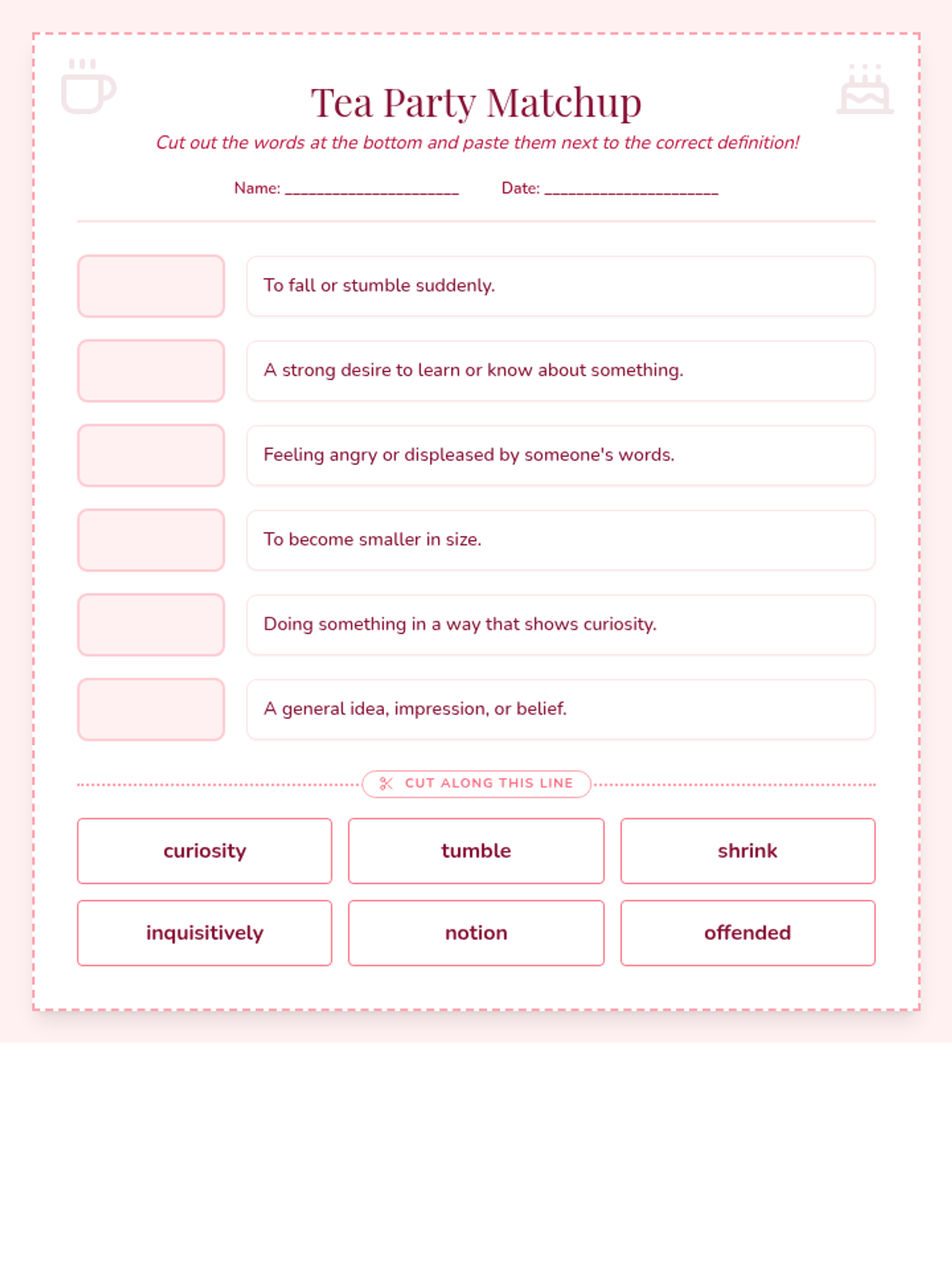
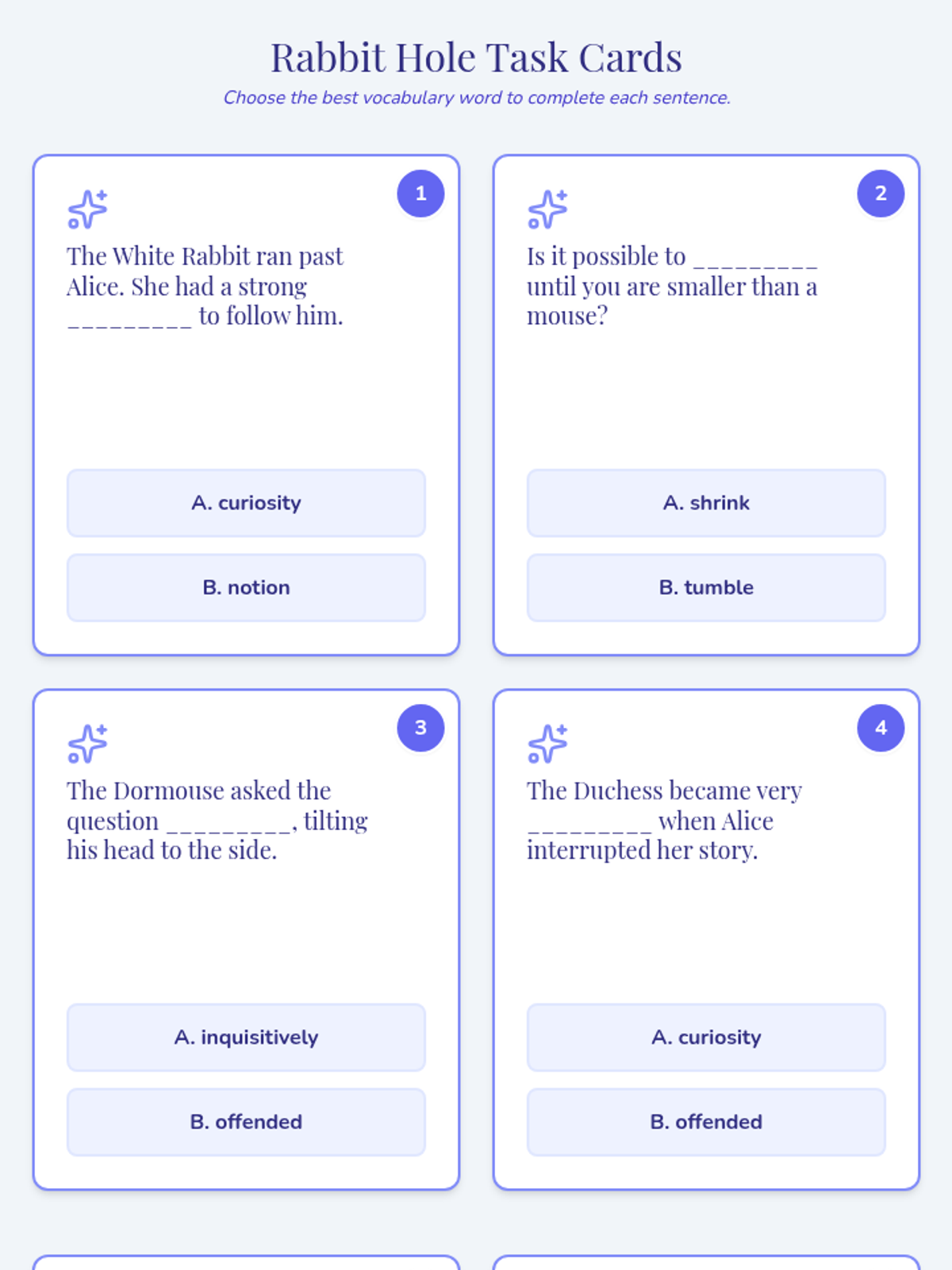
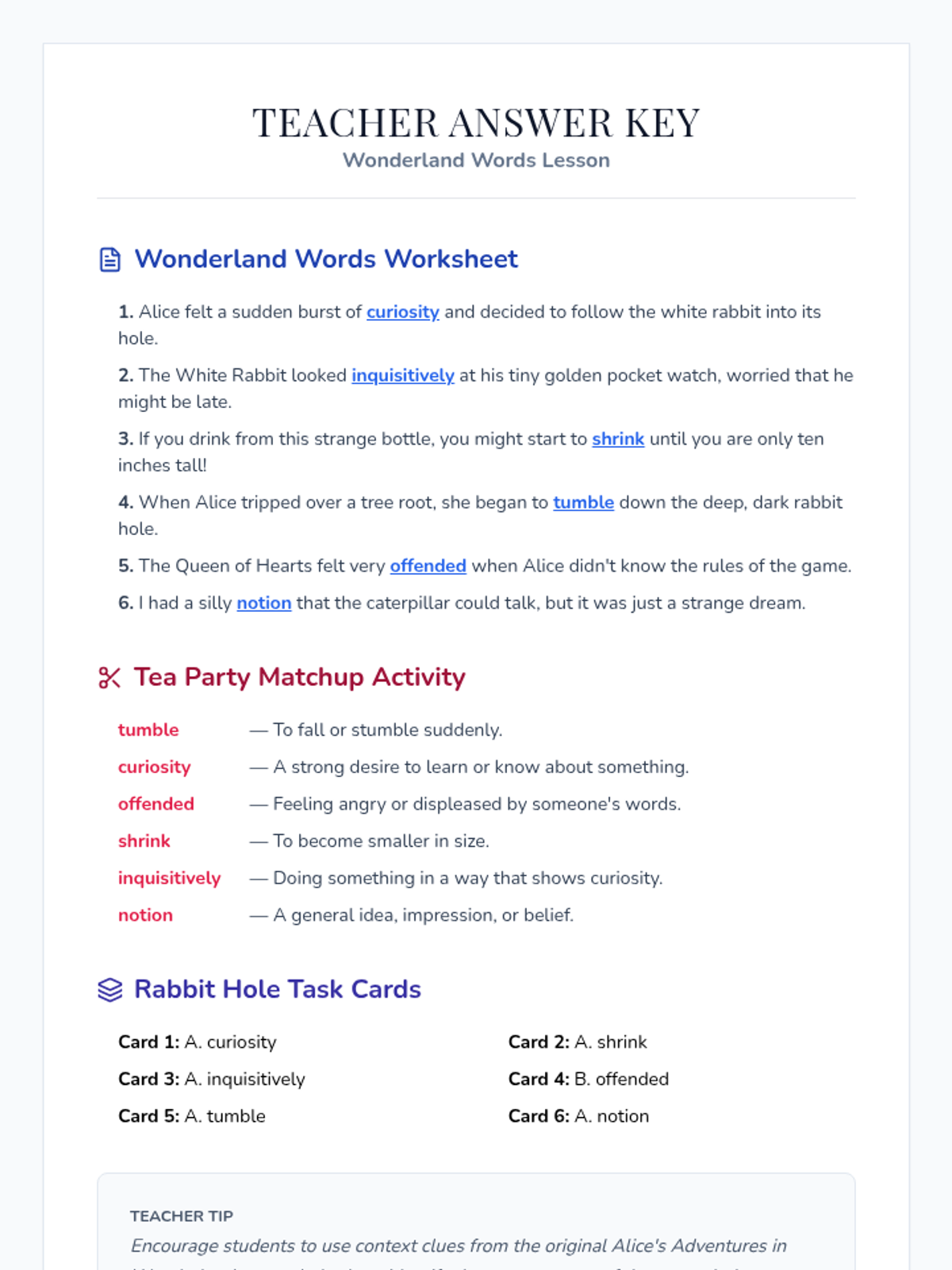
A vocabulary lesson based on words from Alice's Adventures in Wonderland, featuring interactive practice and assessment materials.
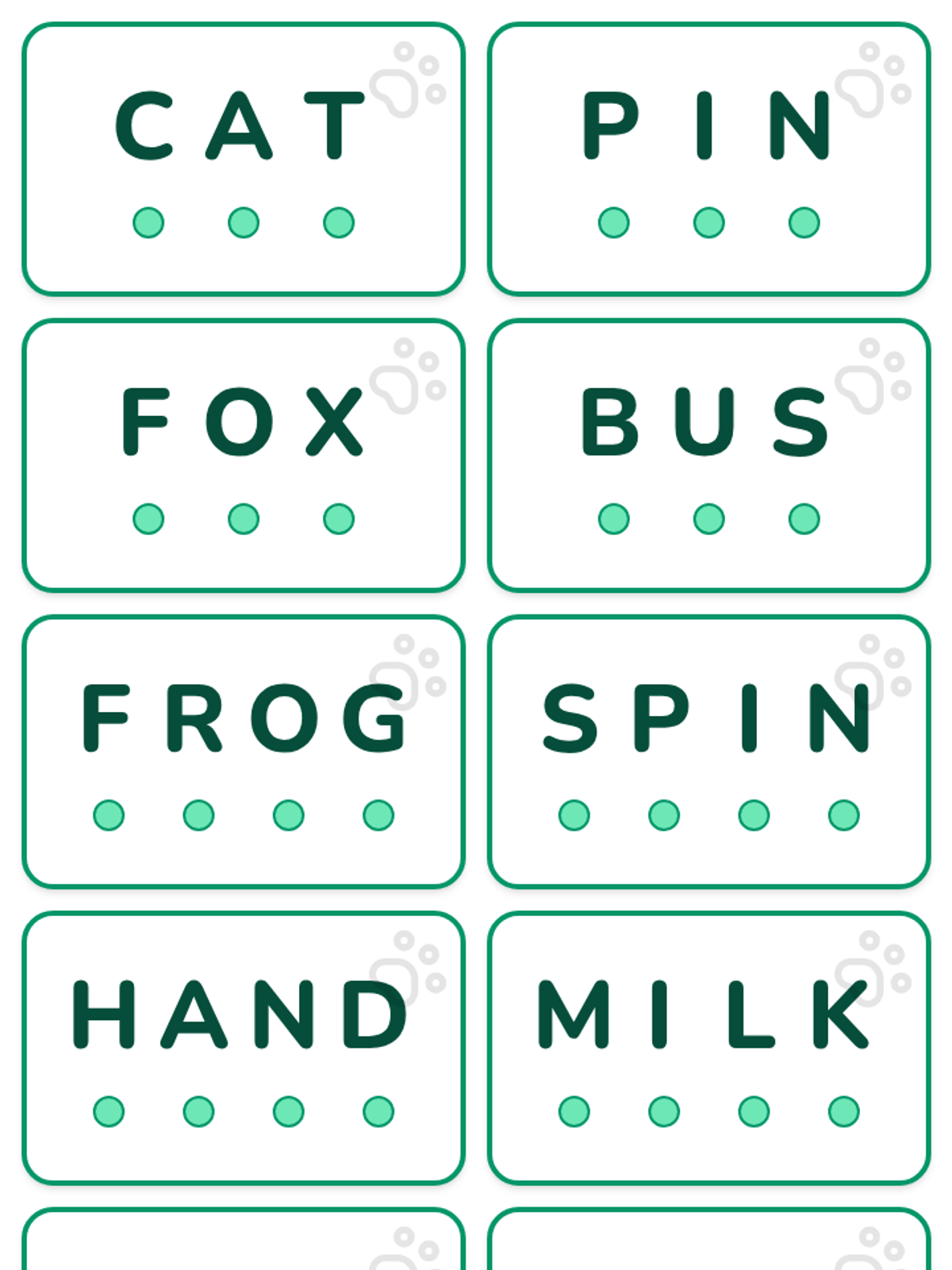
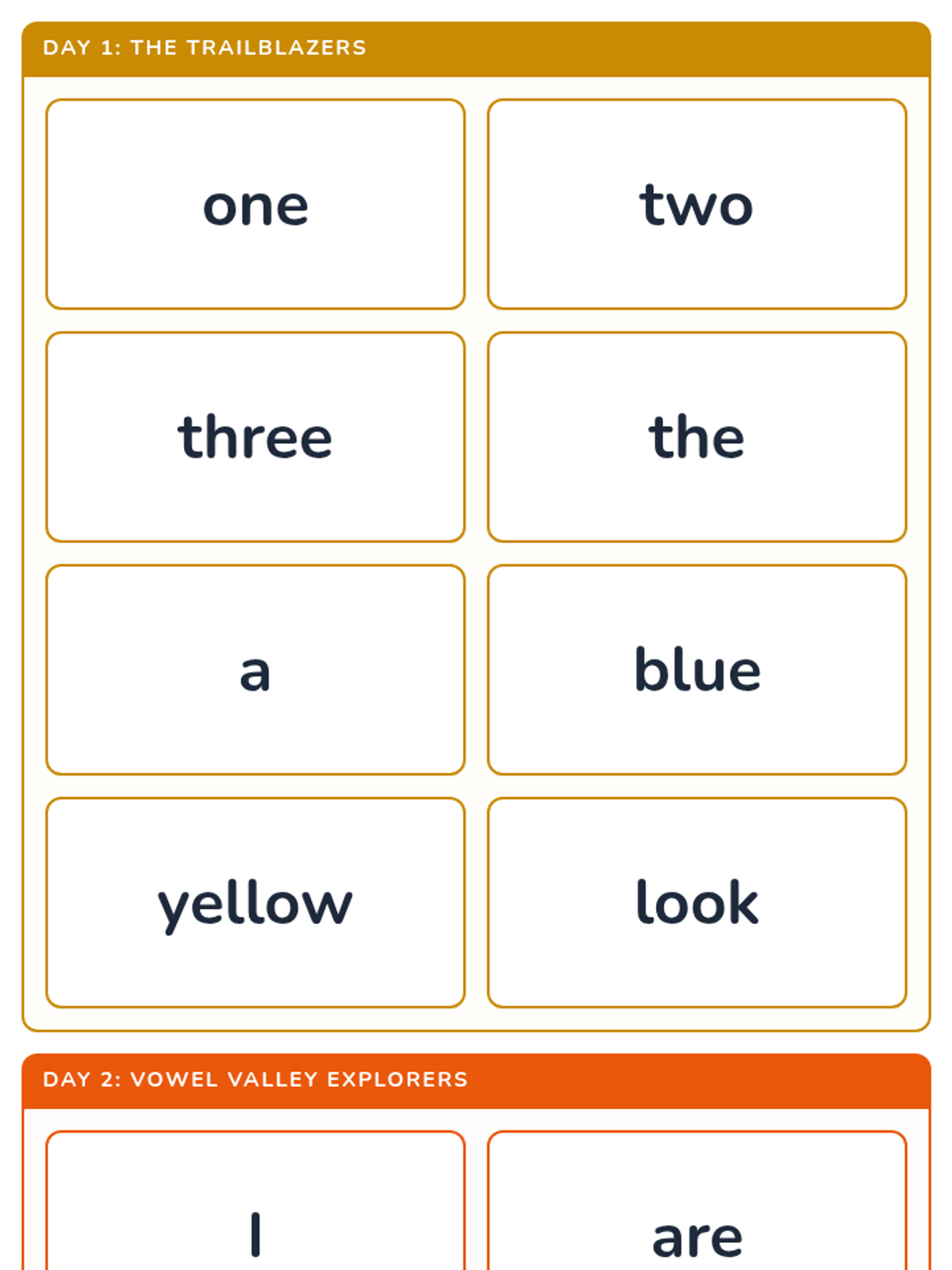
Visual aids for students to practice decoding short vowel words and recognizing high-frequency sight words.
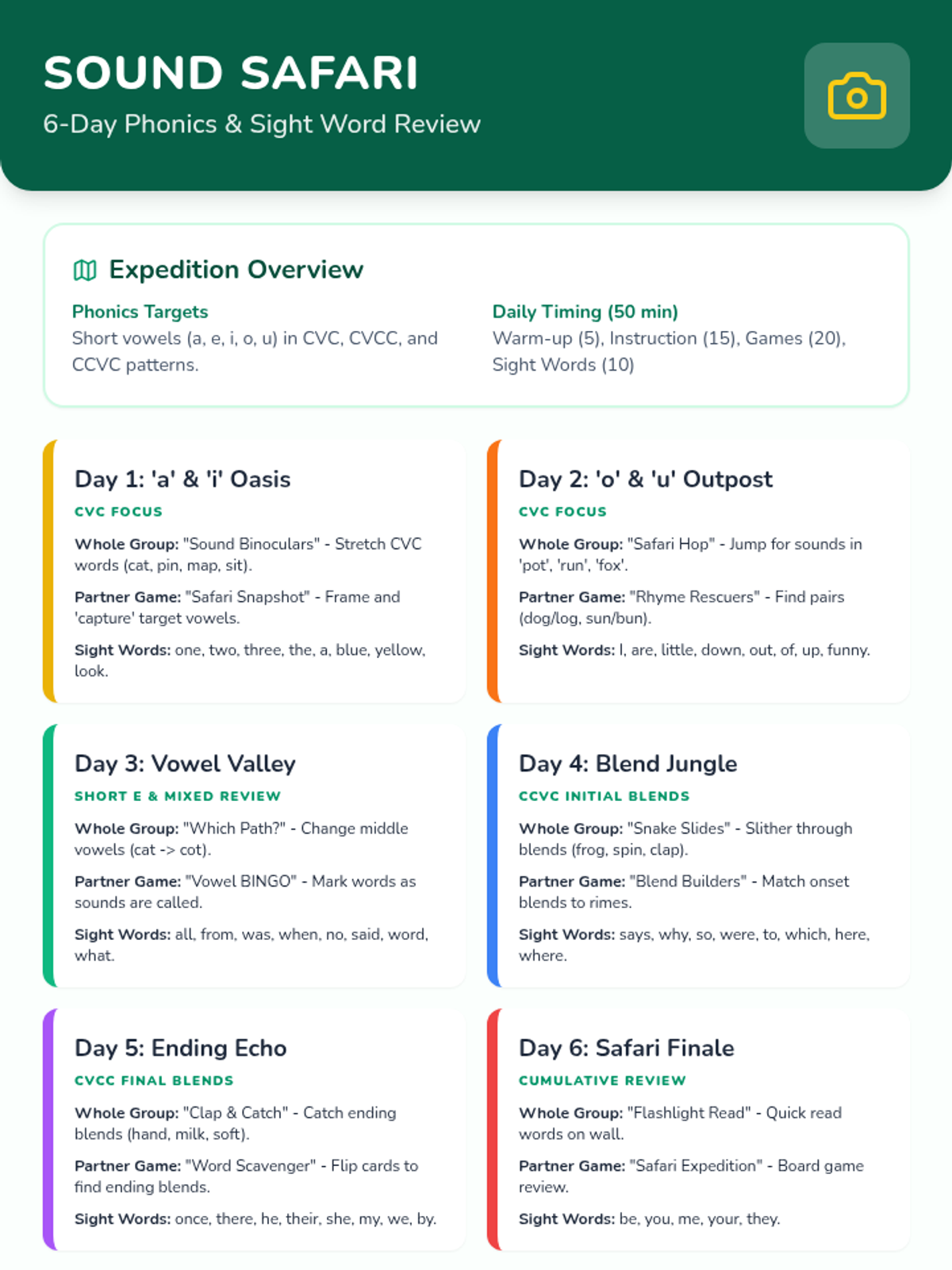
A 6-day comprehensive guide for teachers to lead a 50-minute daily phonics and sight word review block.
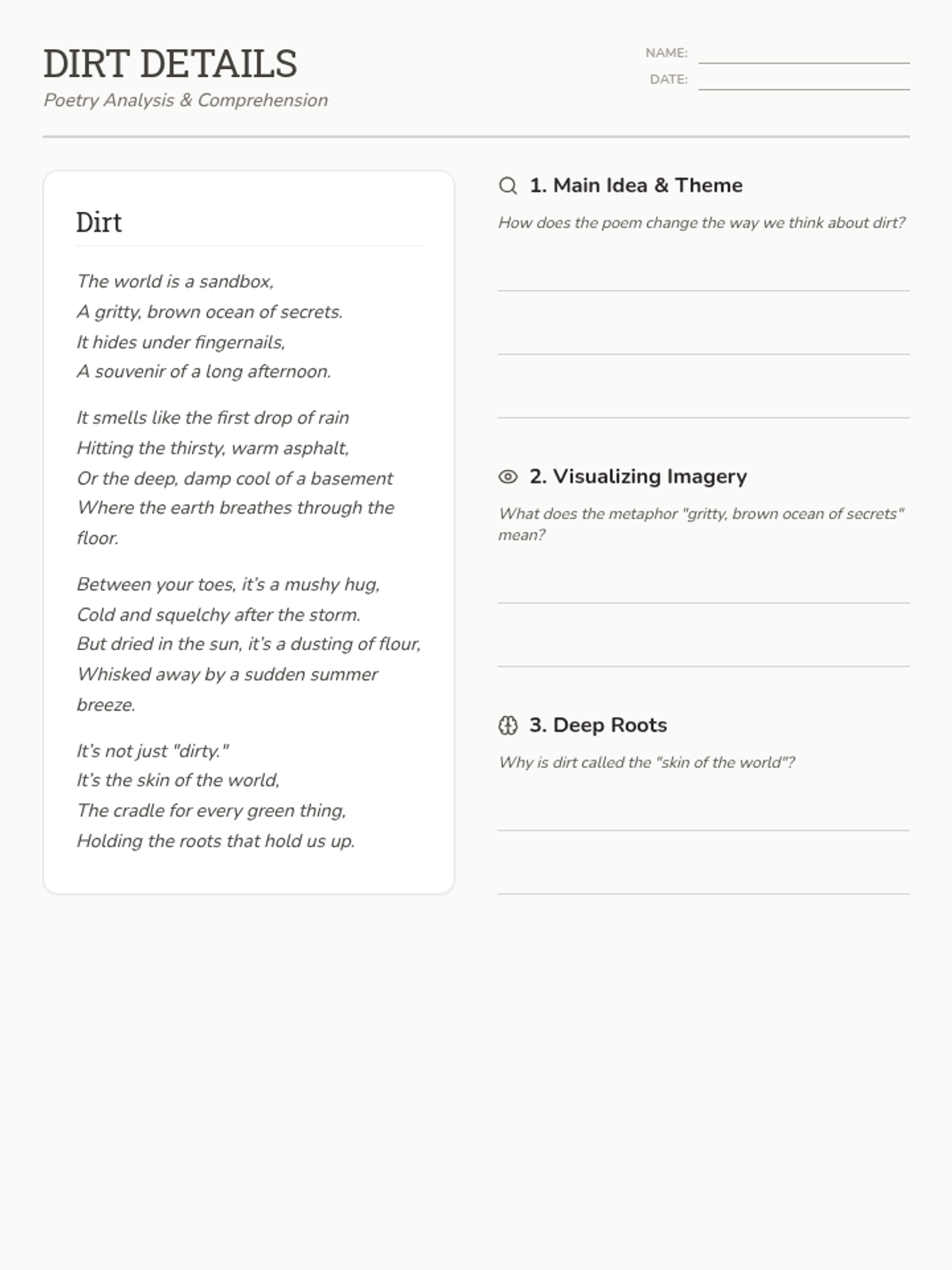
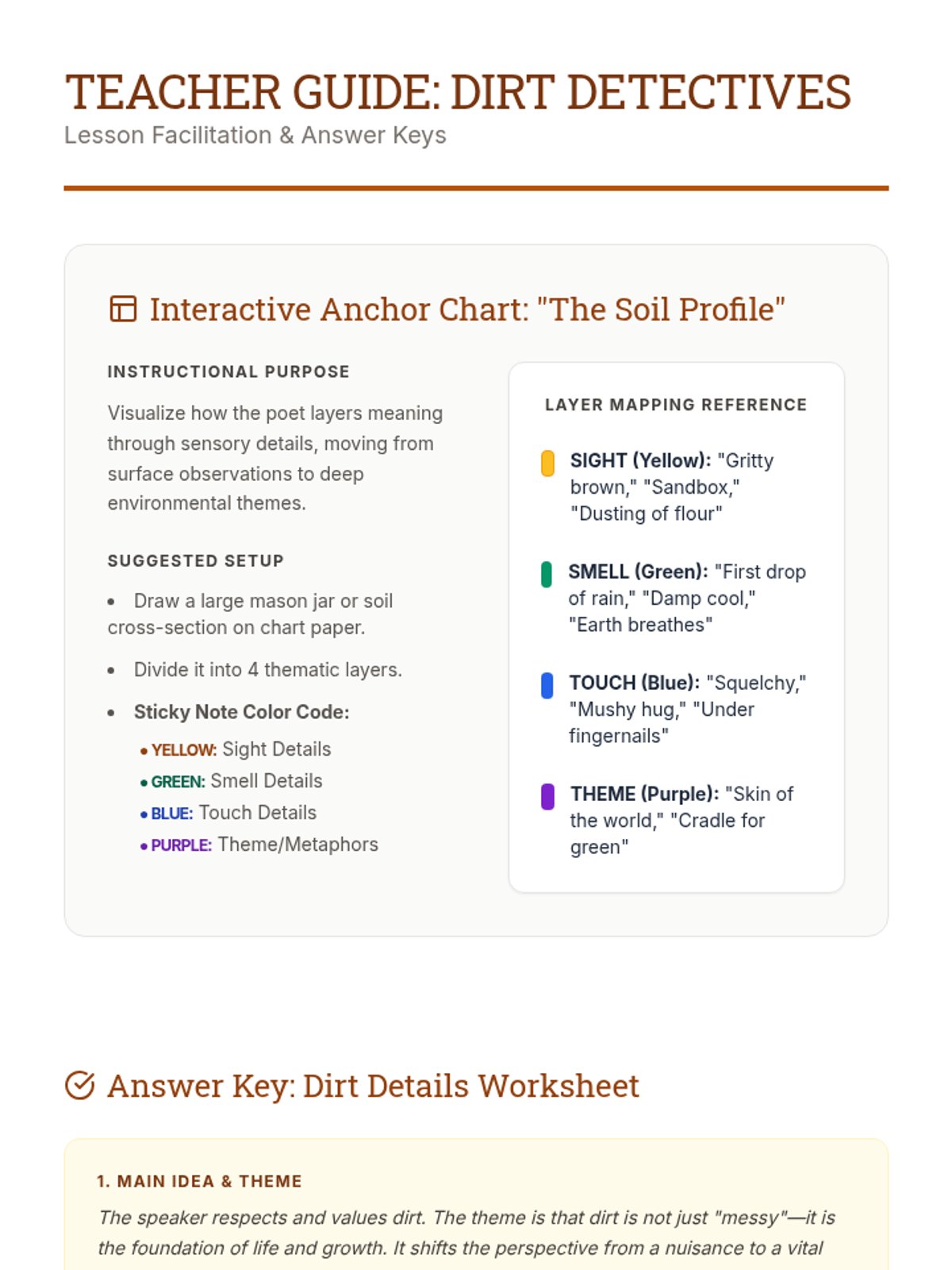
A sensory-focused exploration of the poem 'Dirt', focusing on identifying themes and mapping sensory imagery through interactive activities.
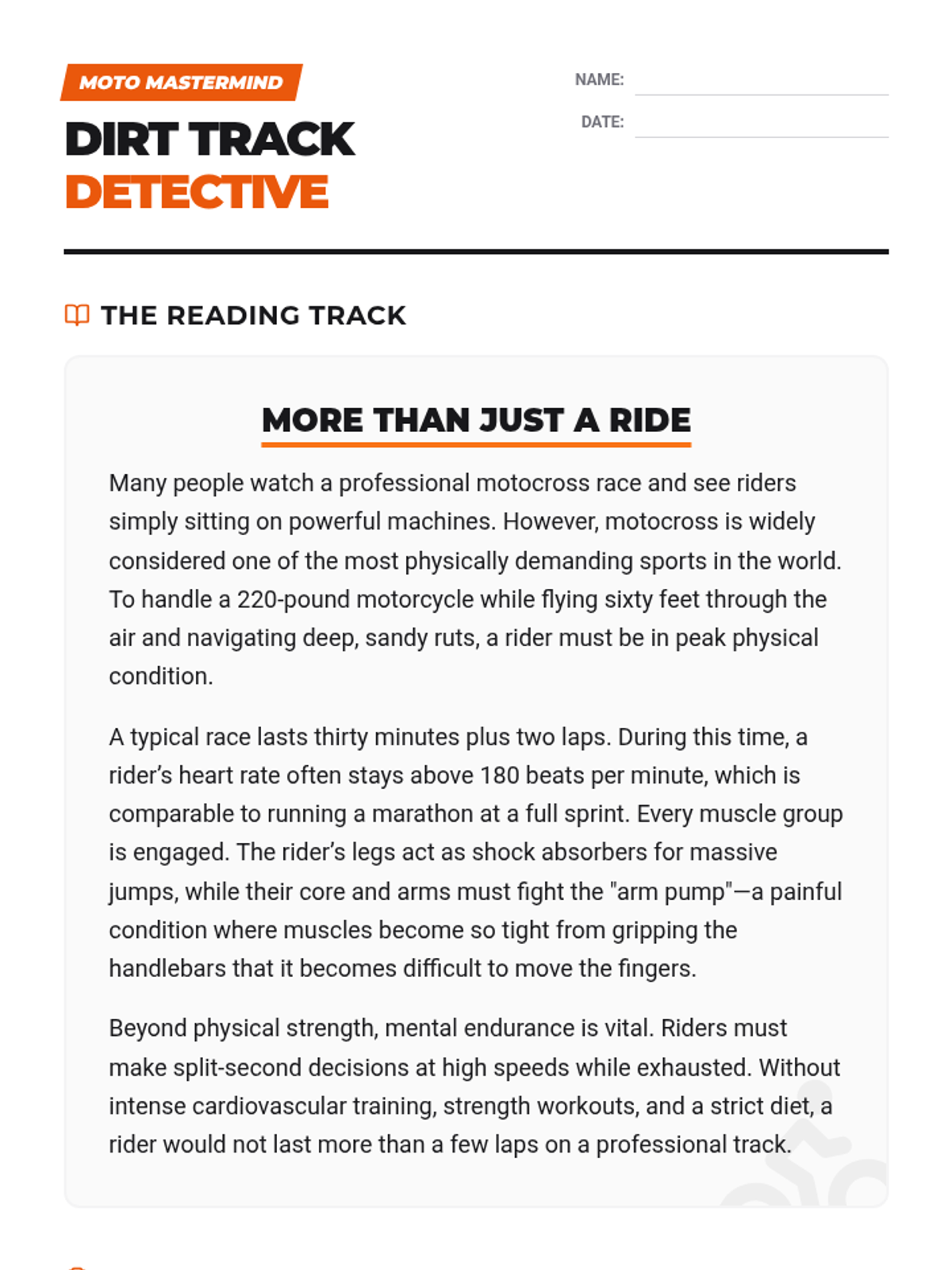
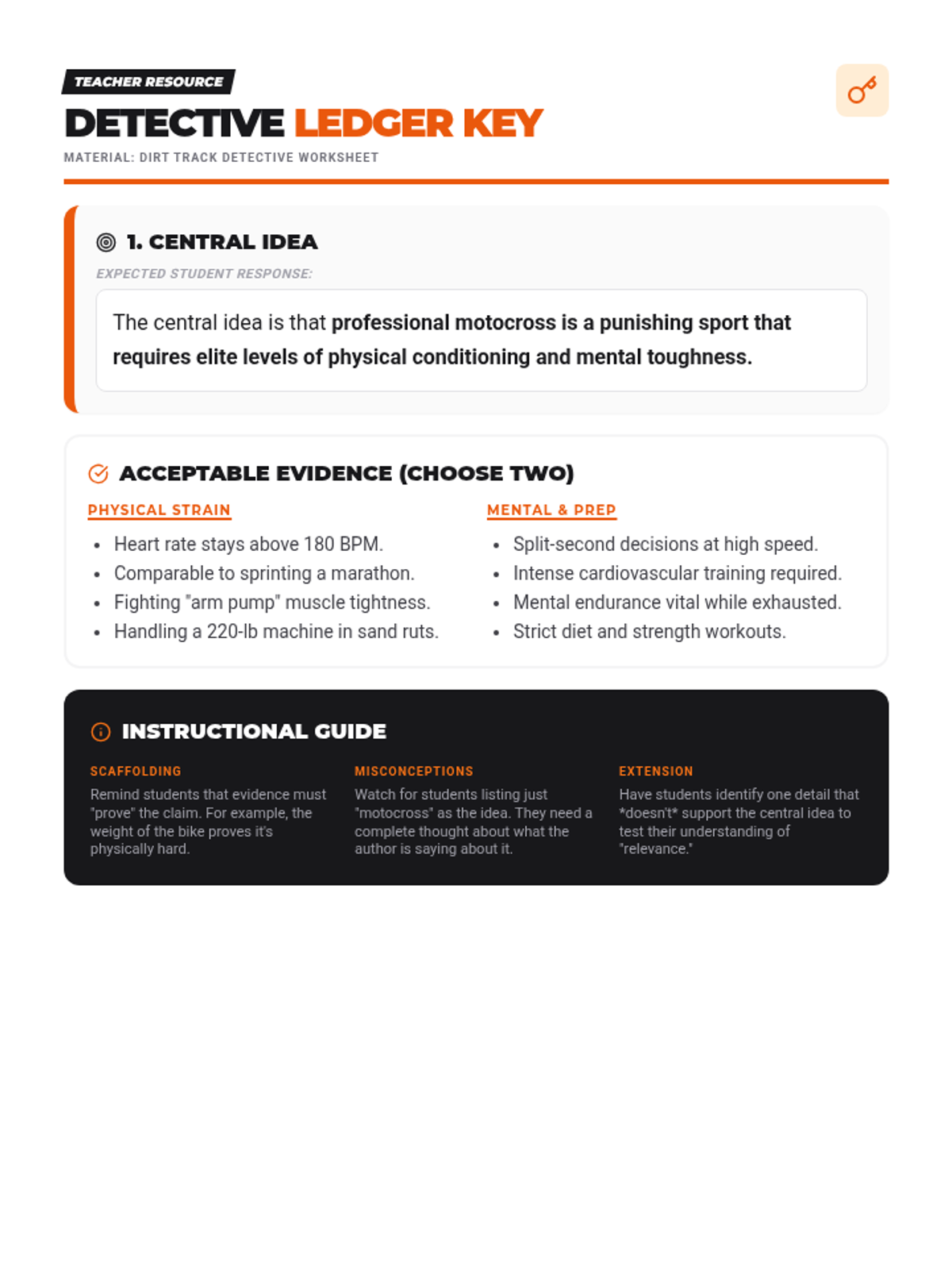
A high-energy lesson that teaches students how to identify central ideas and supporting evidence through the exciting world of motocross racing. Students will analyze a passage about the physical demands of the sport and use a scaffolded graphic organizer to map out their findings.
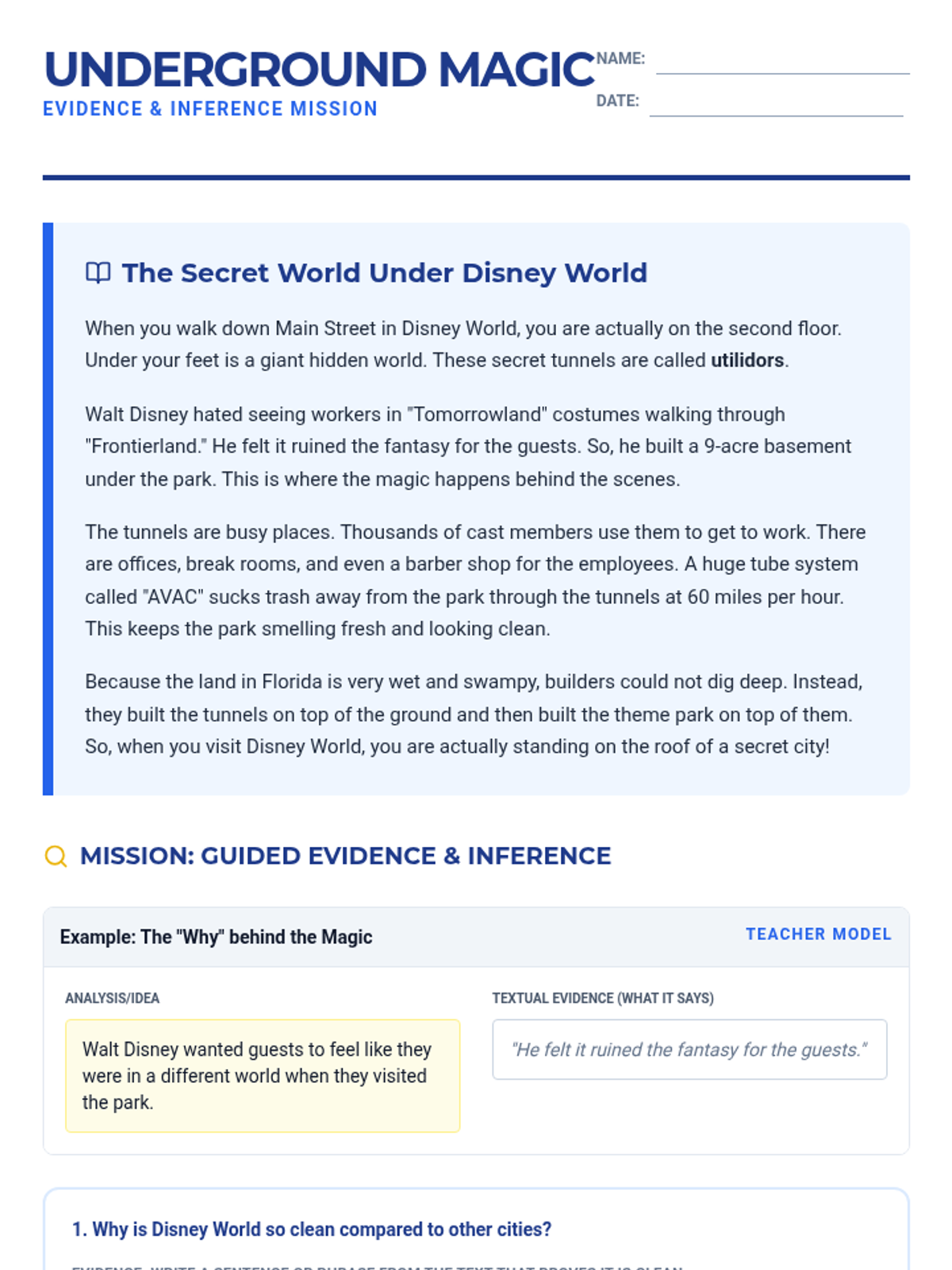
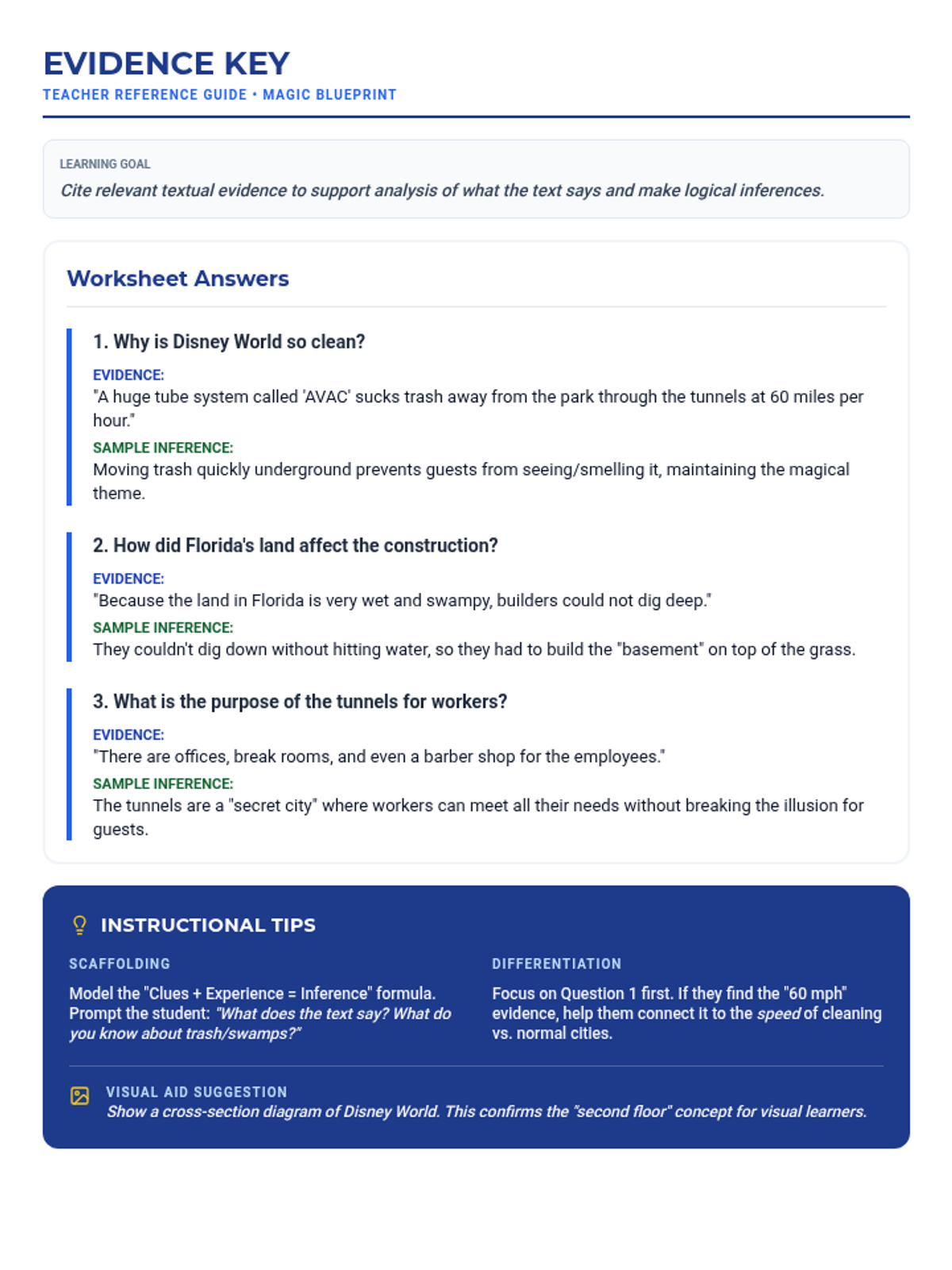
A reading comprehension lesson focused on citing evidence and making inferences about the hidden infrastructure of Disney World, designed for middle schoolers reading at a 5th-grade level.
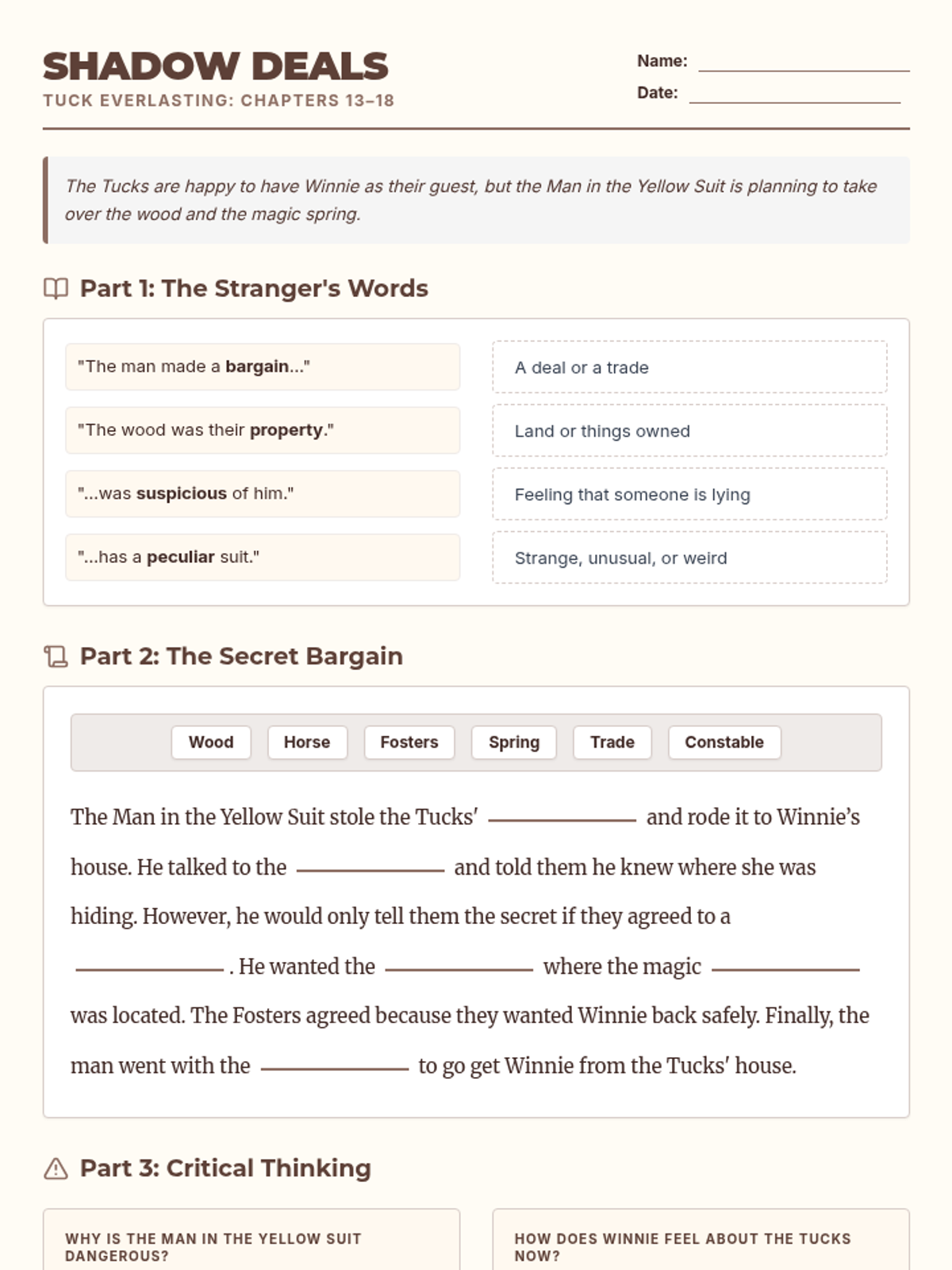
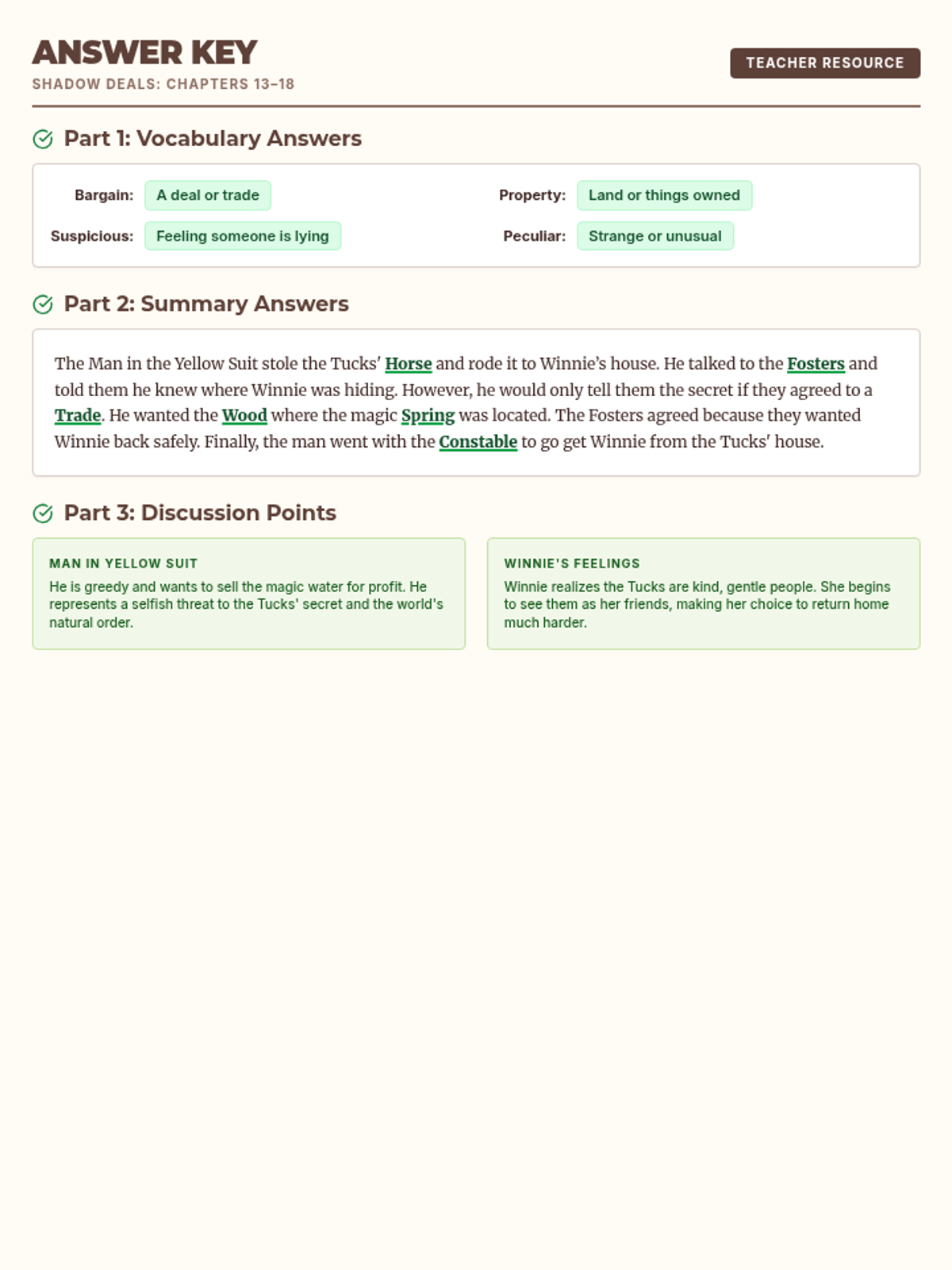
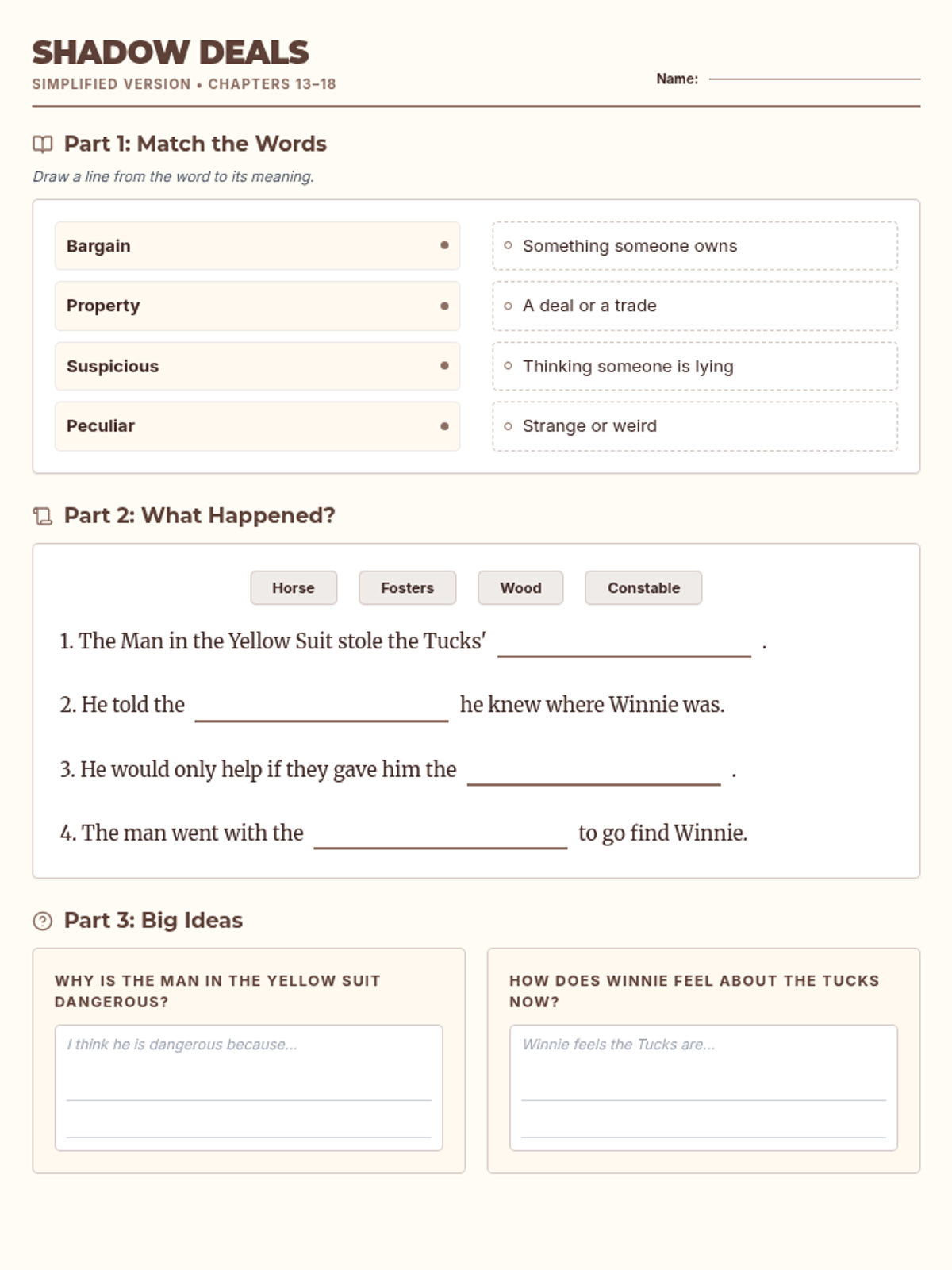
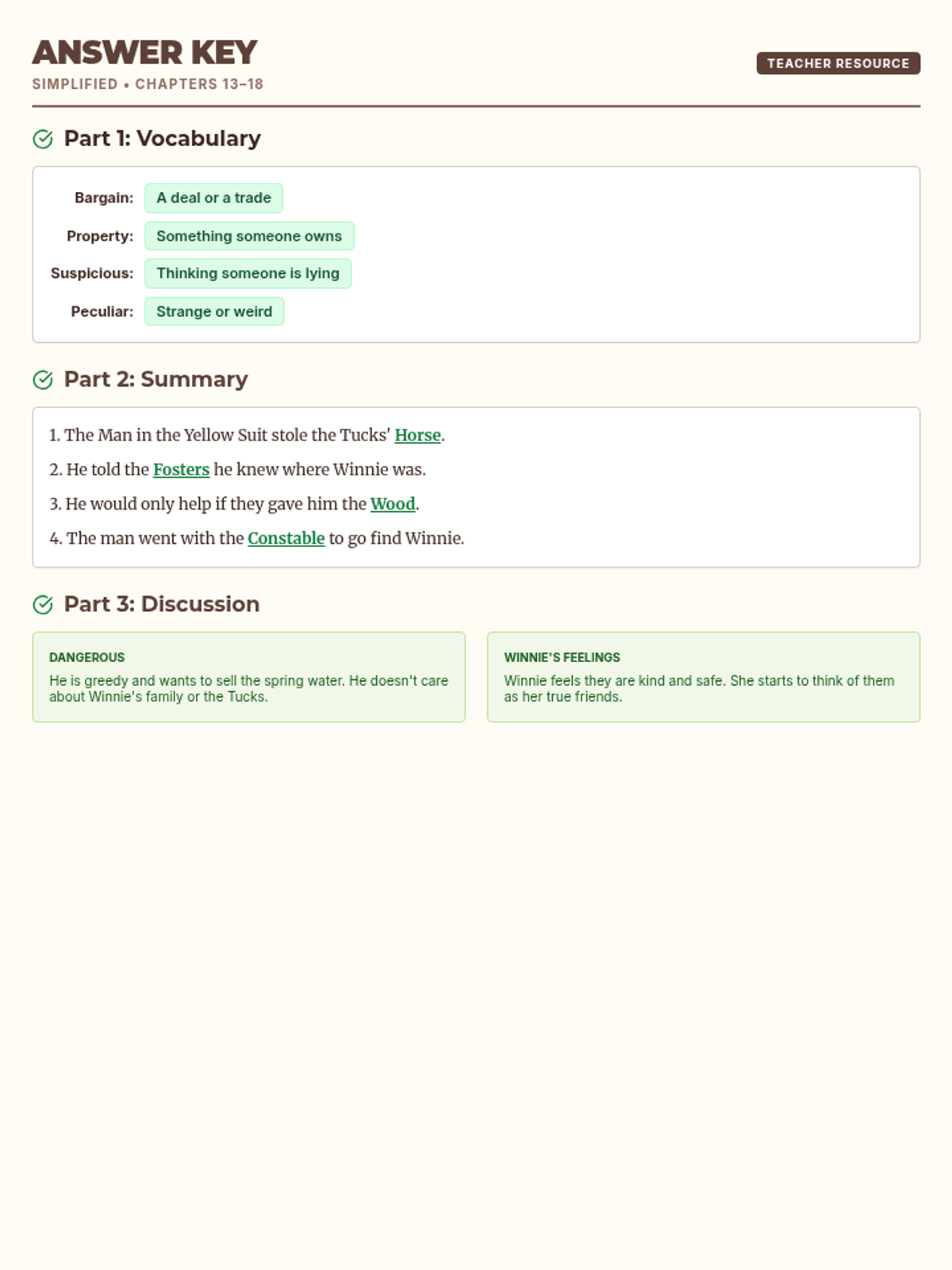
A lesson focusing on Chapters 13-18 of Tuck Everlasting, where the Man in the Yellow Suit makes a dark bargain with the Foster family to gain control of the magic spring. Students will analyze the plot through summarizing and vocabulary in context.
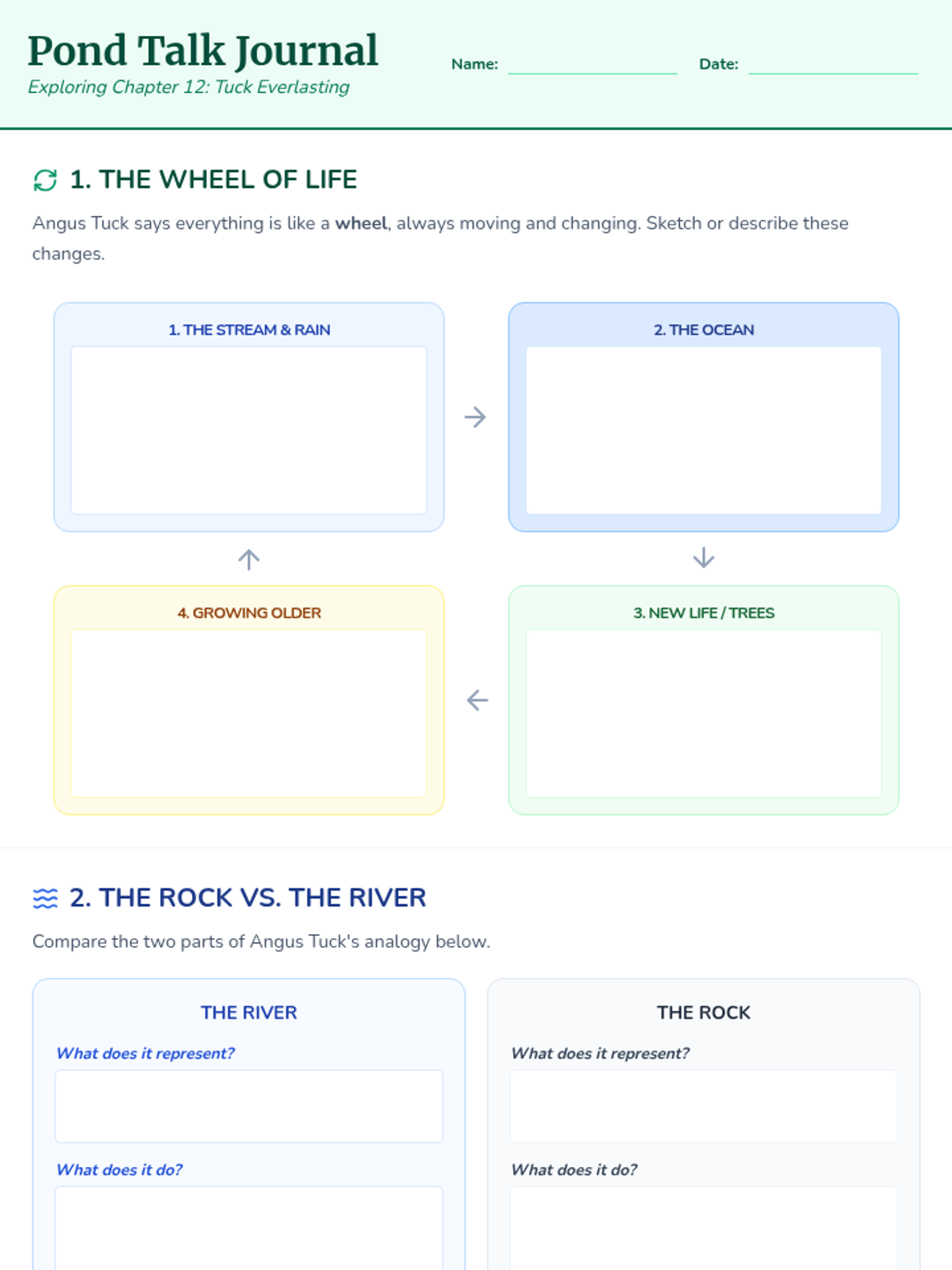
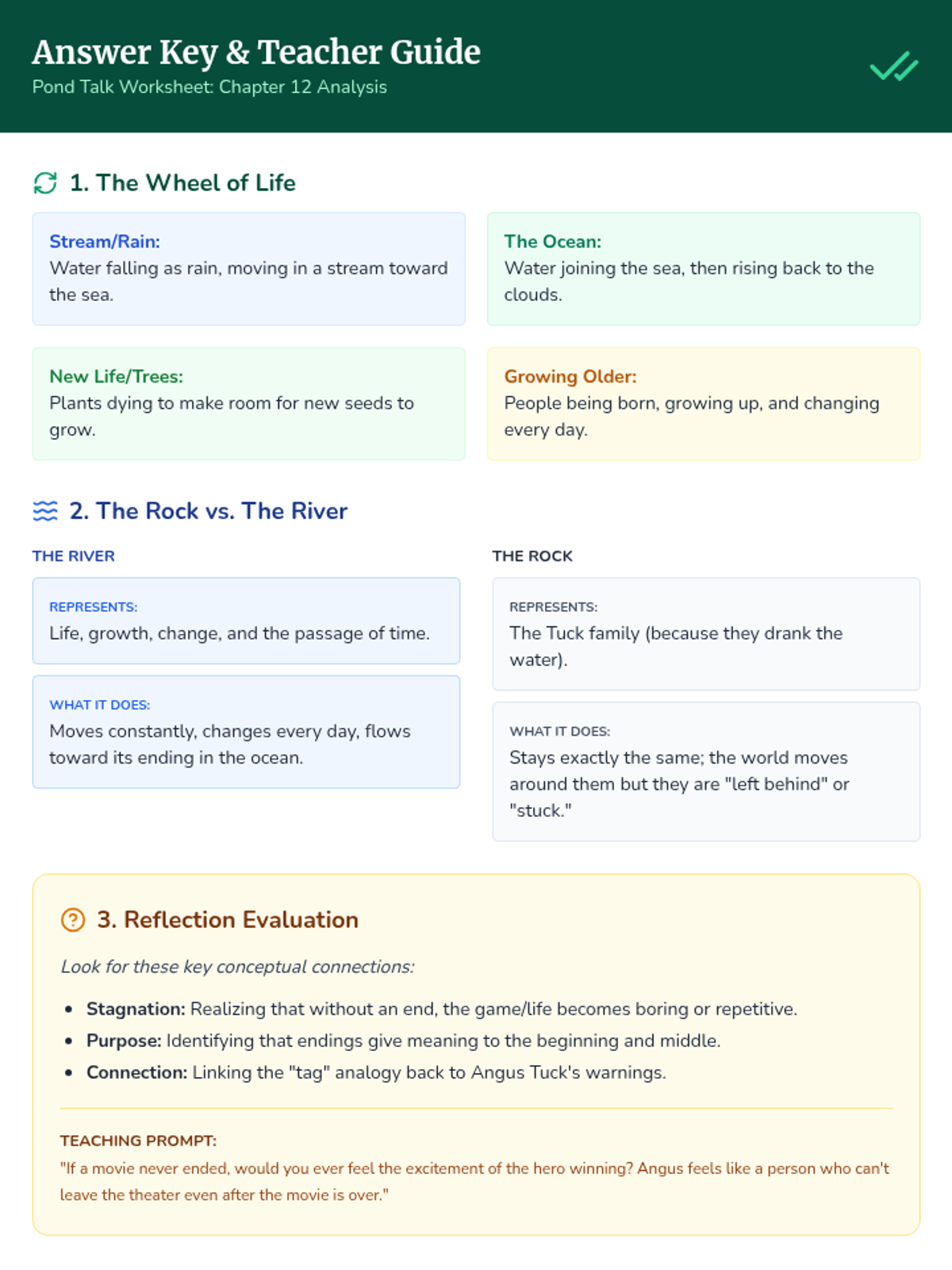
Explore the central metaphor of Tuck Everlasting through the comparison of the river and the rock. Students analyze Angus Tuck's explanation of the 'Wheel of Life' and reflect on why life must move forward.
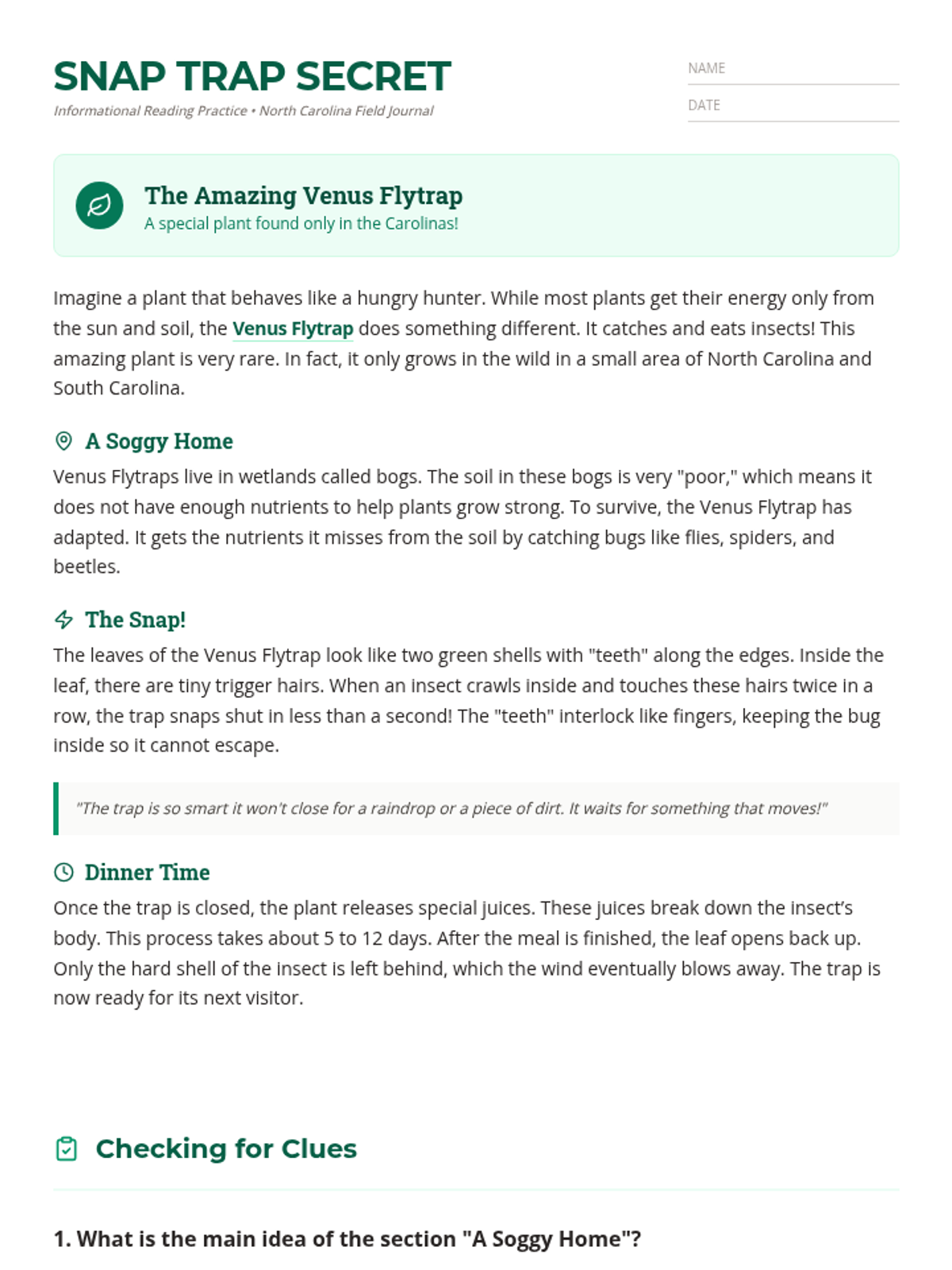
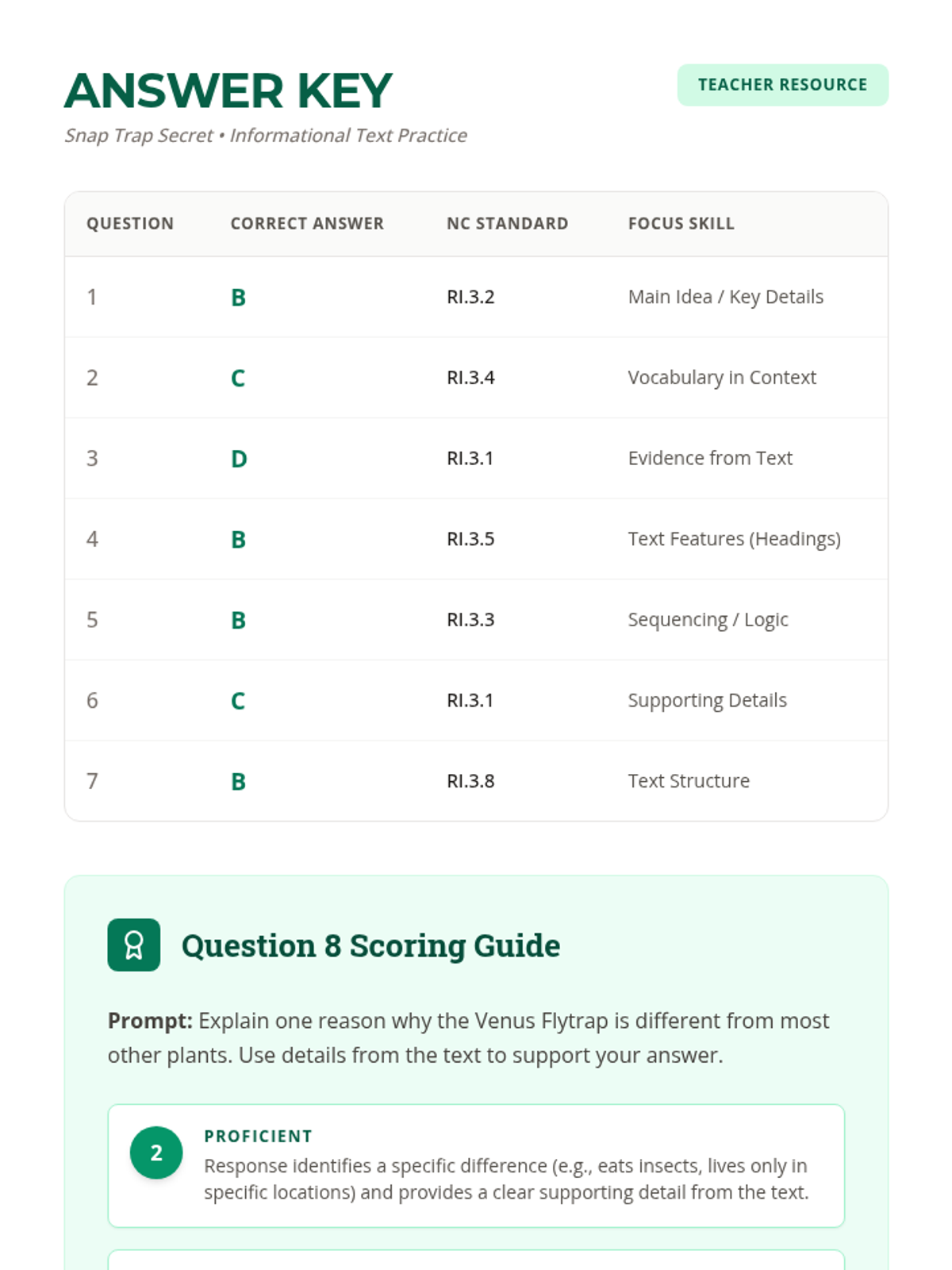
A practice lesson focused on Reading Informational Text standards for the NC EOG, featuring a local North Carolina wonder: the Venus Flytrap. Students will practice identifying main ideas, using text features, and determining word meanings.
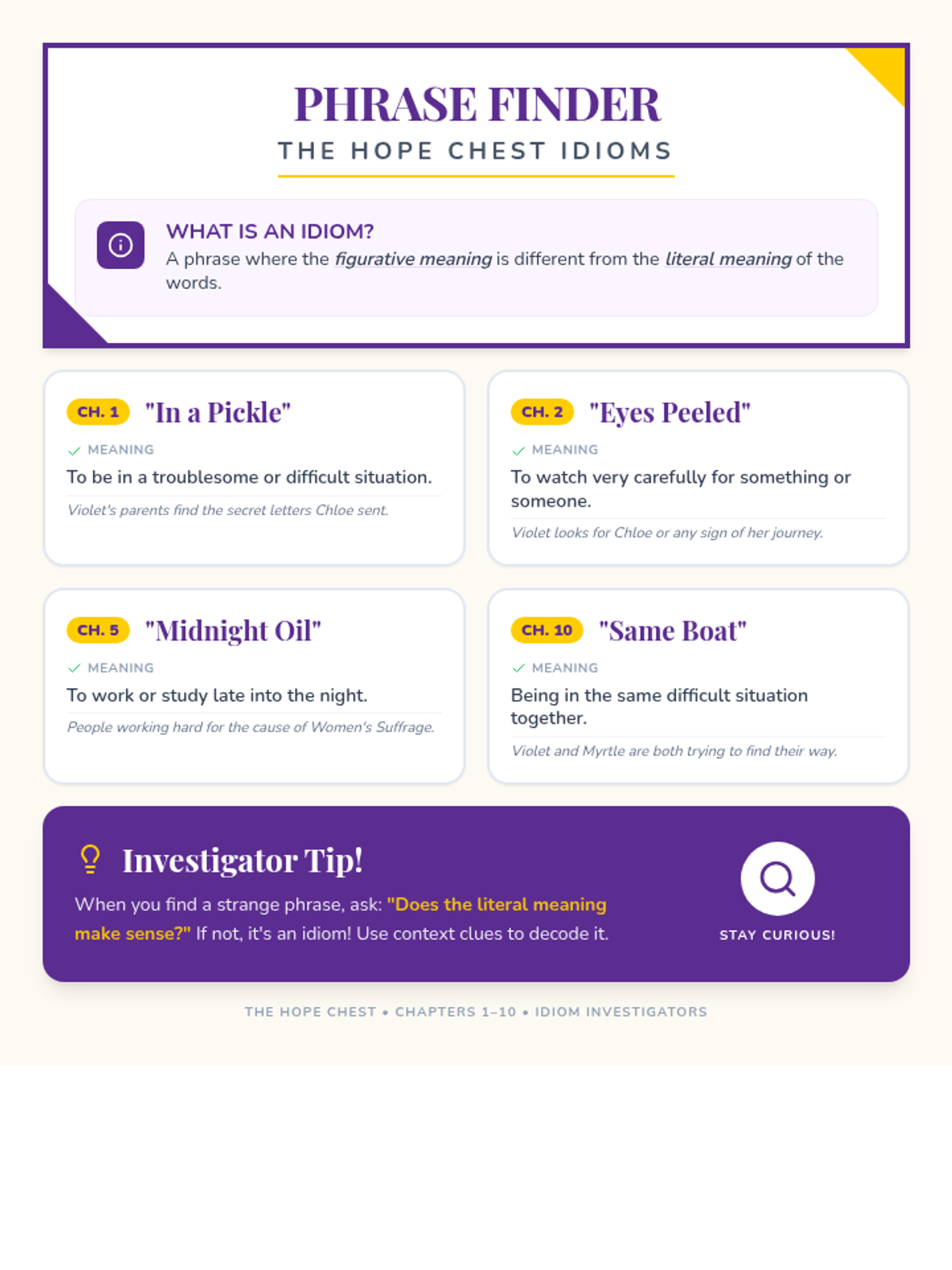
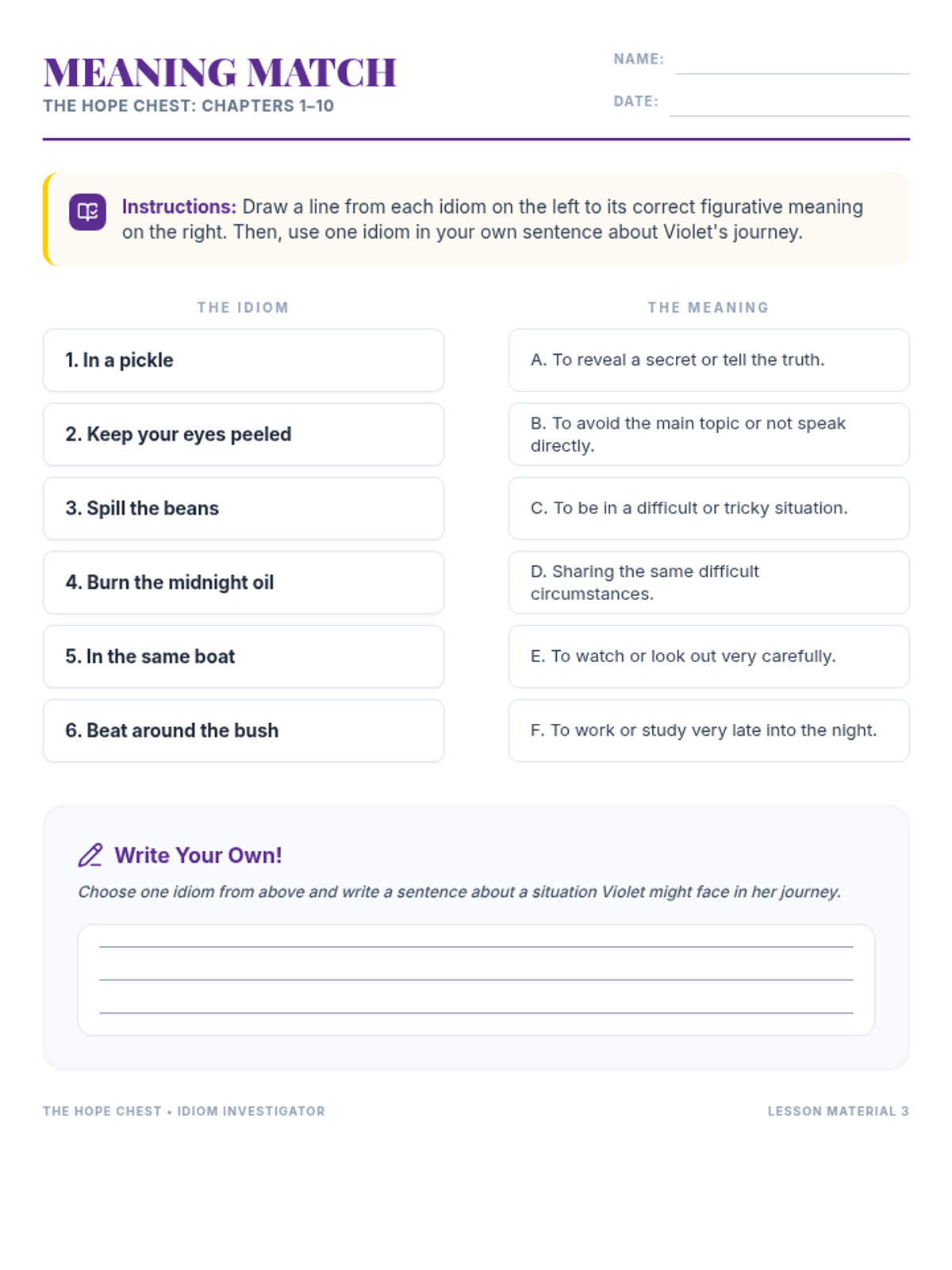
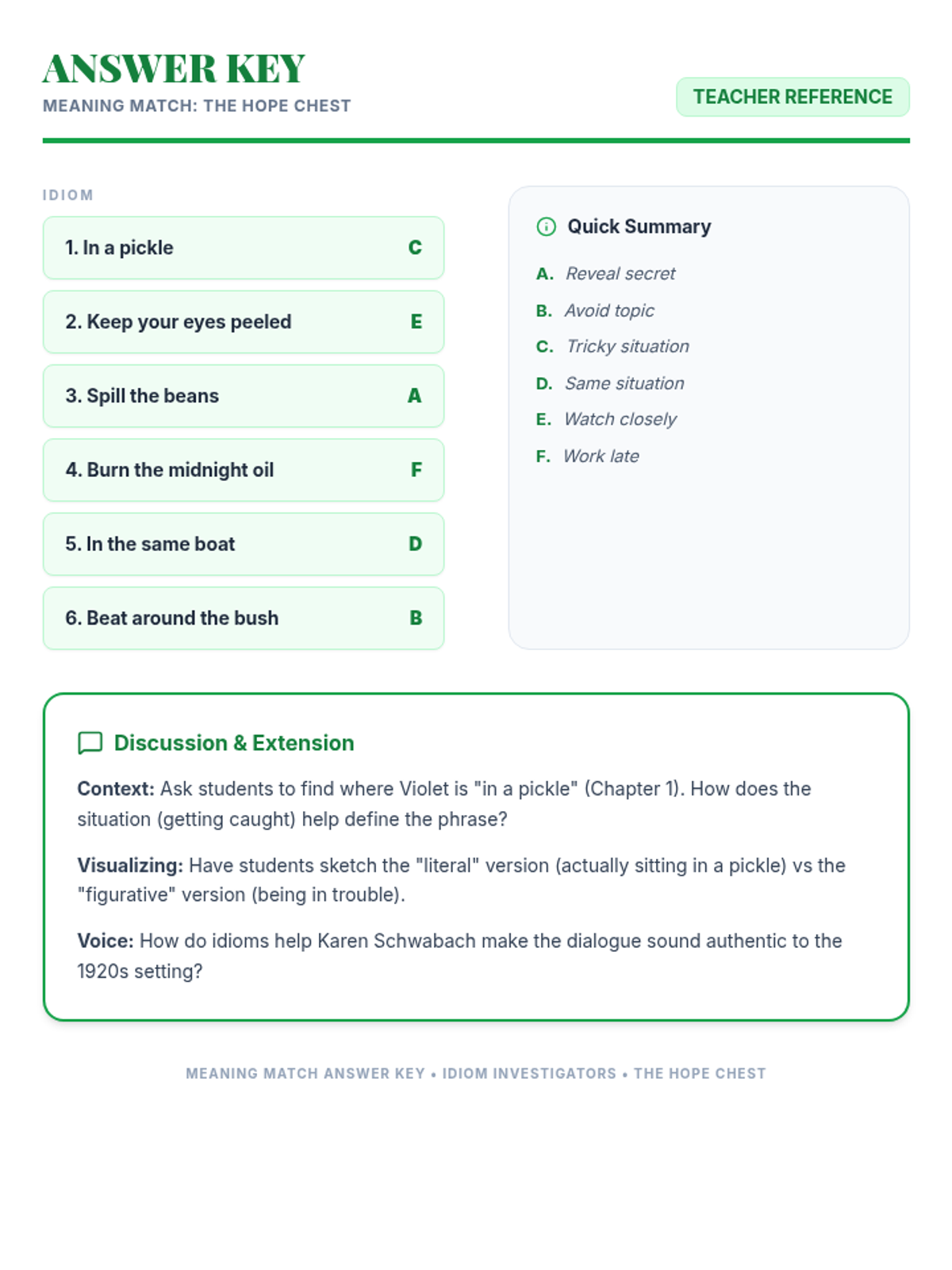
A mini-lesson exploring common idioms found in chapters 1-10 of *The Hope Chest*, helping students understand figurative language through the lens of Violet's journey.
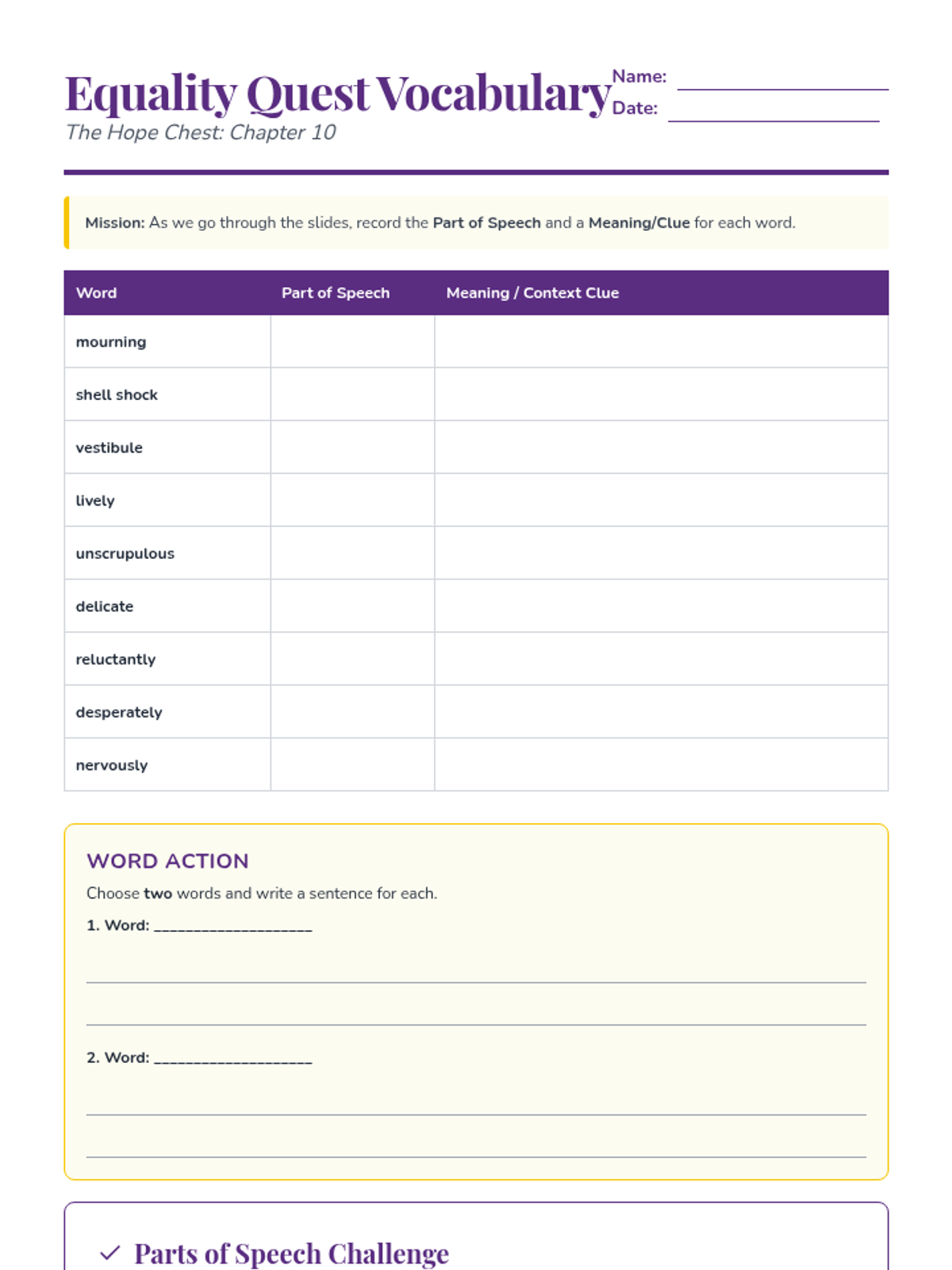
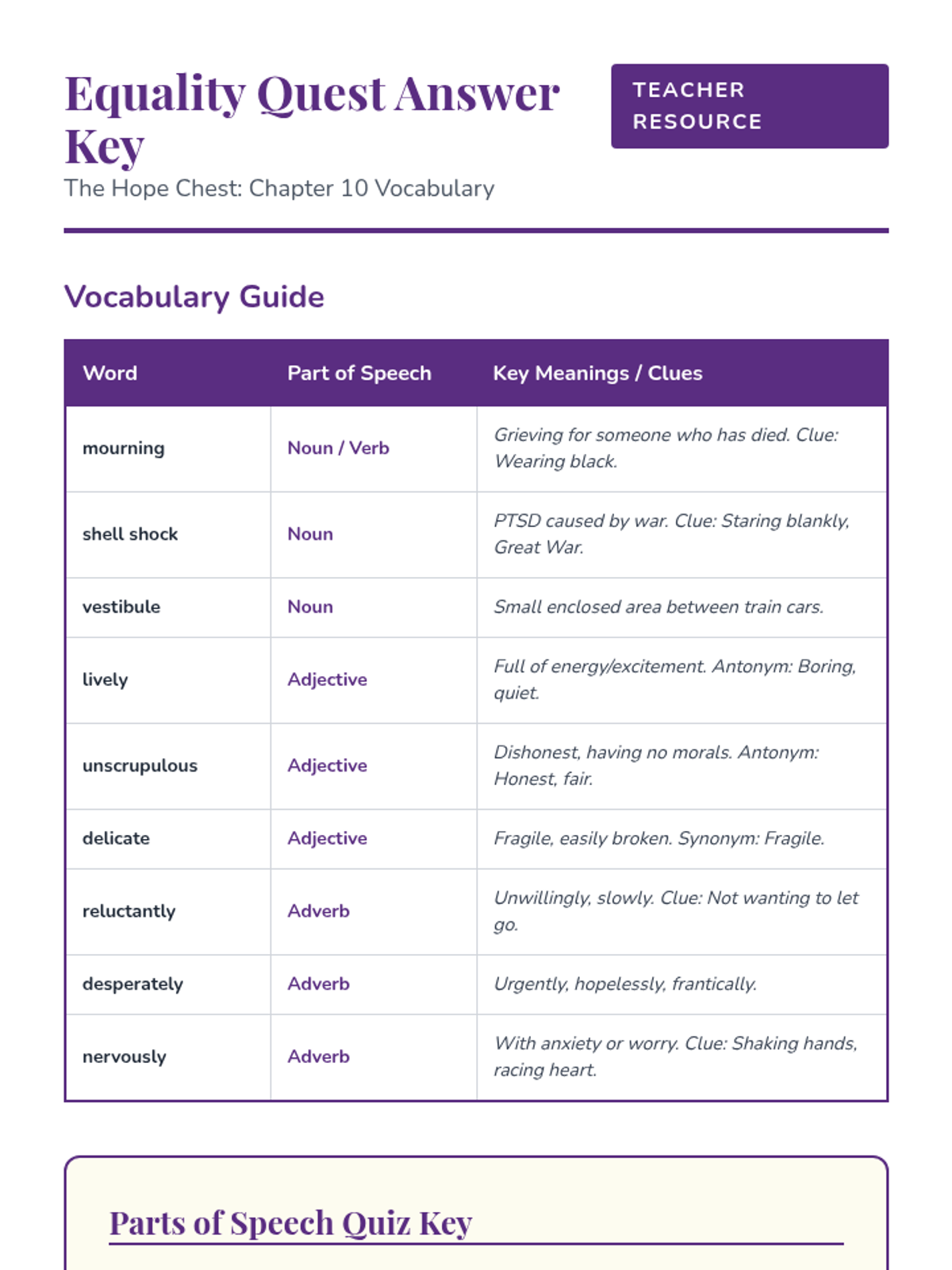
A deep dive into Chapter 10 of The Hope Chest, focusing on vocabulary development through context clues and parts of speech identification. Students explore the historical setting of the women's suffrage movement while building their word power.
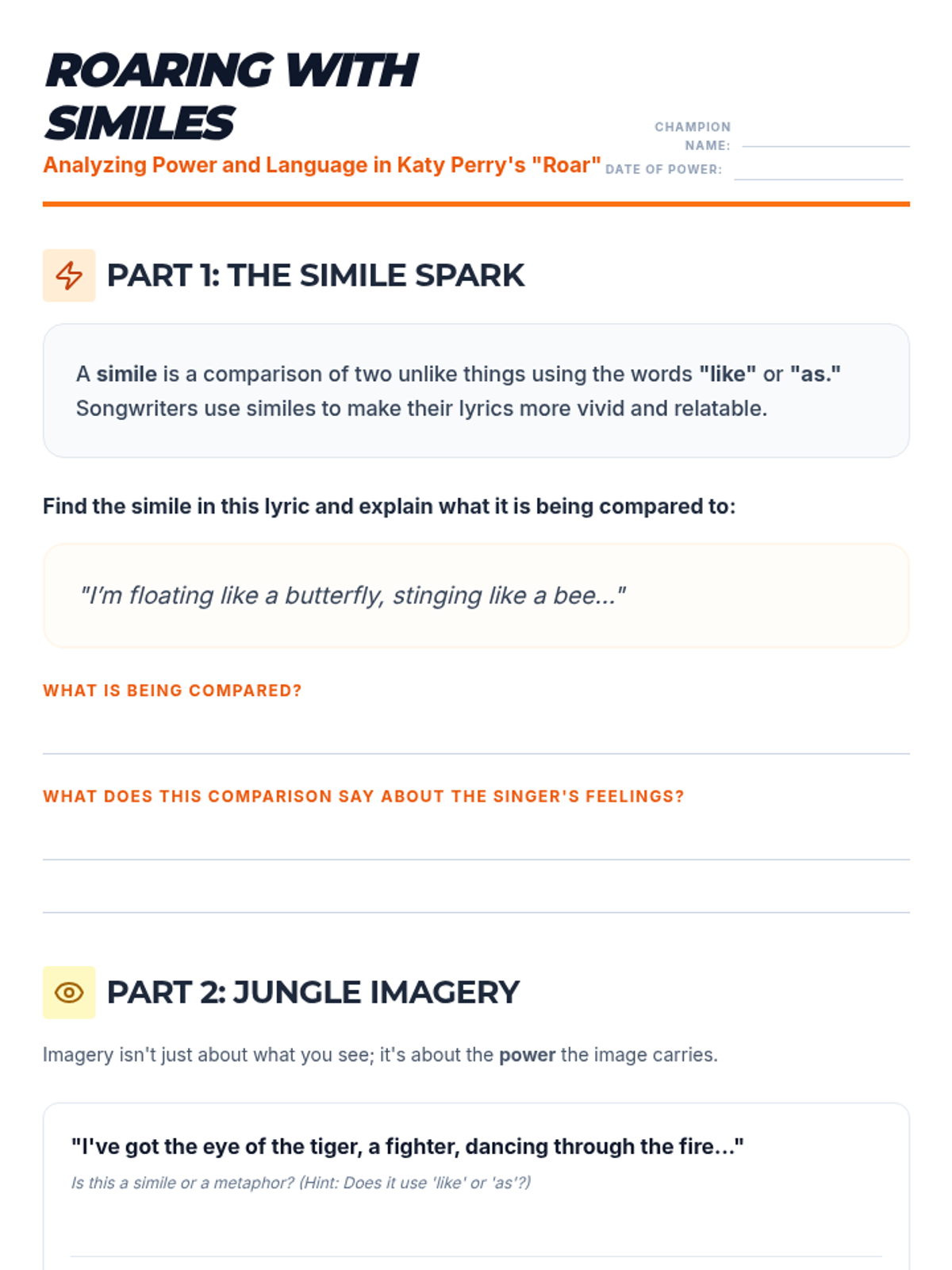
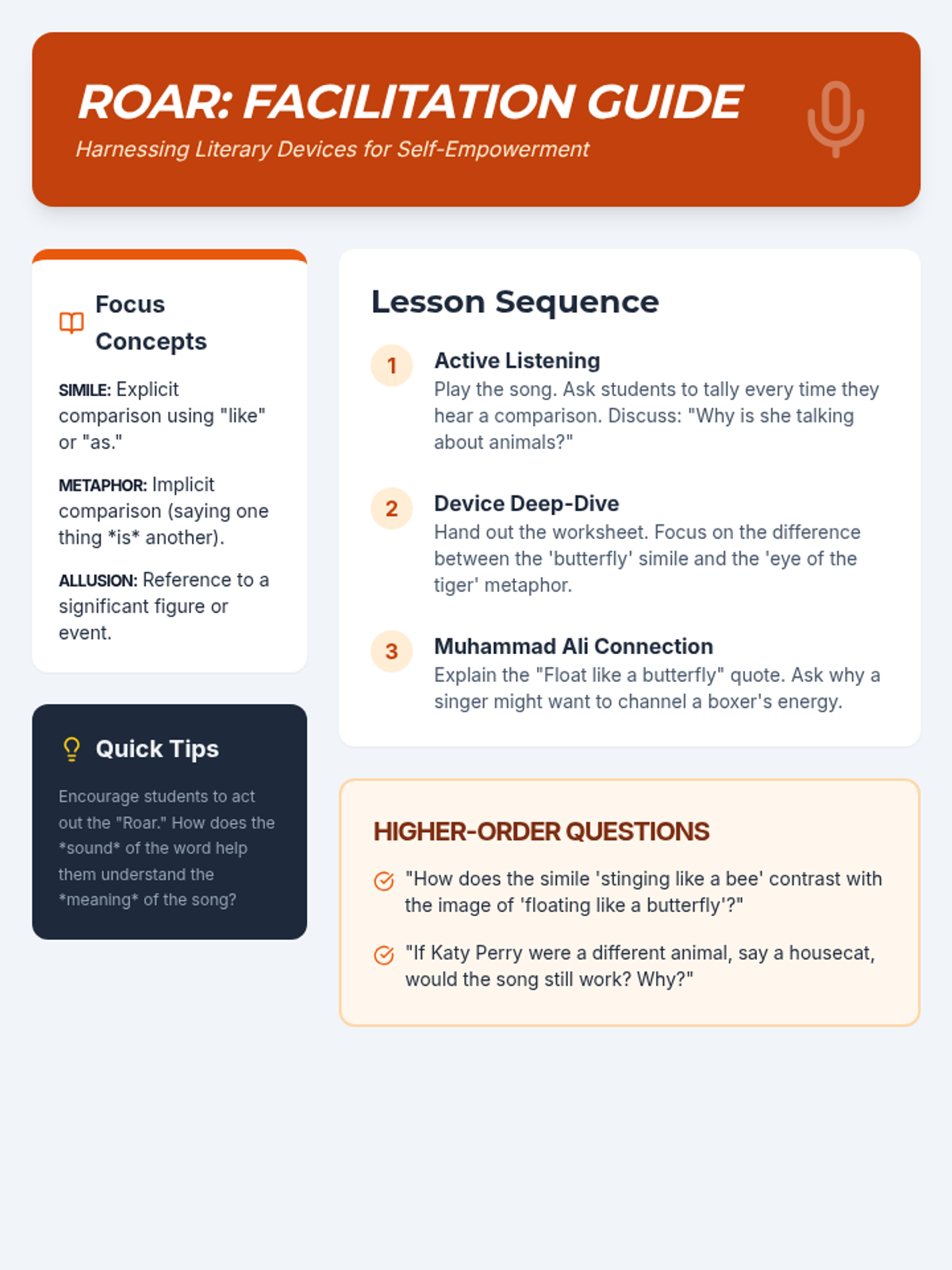
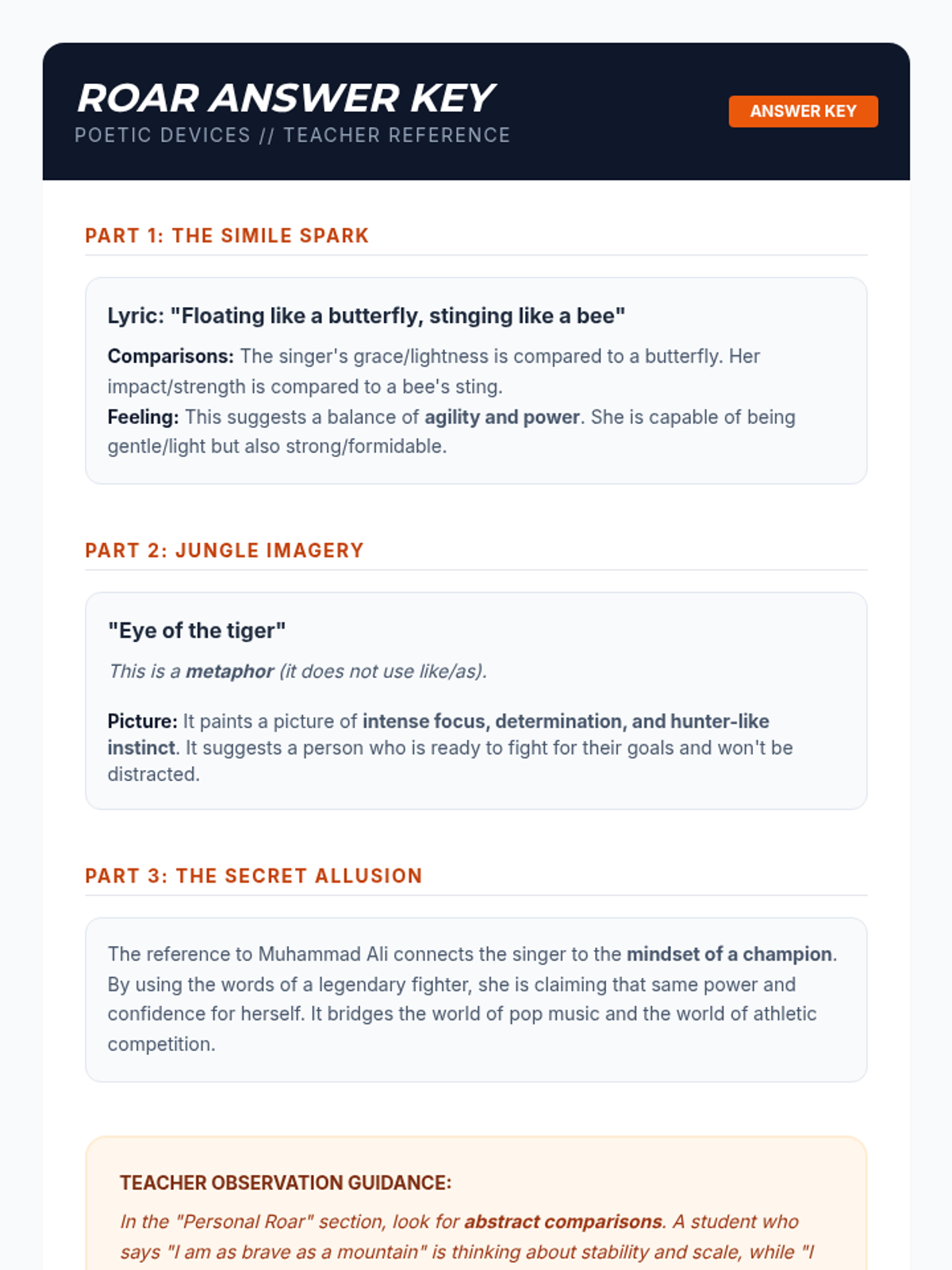
Students explore the use of similes and metaphors in Katy Perry's 'Roar' to express self-empowerment and strength. They analyze how these literary devices create vivid imagery and a powerful message.
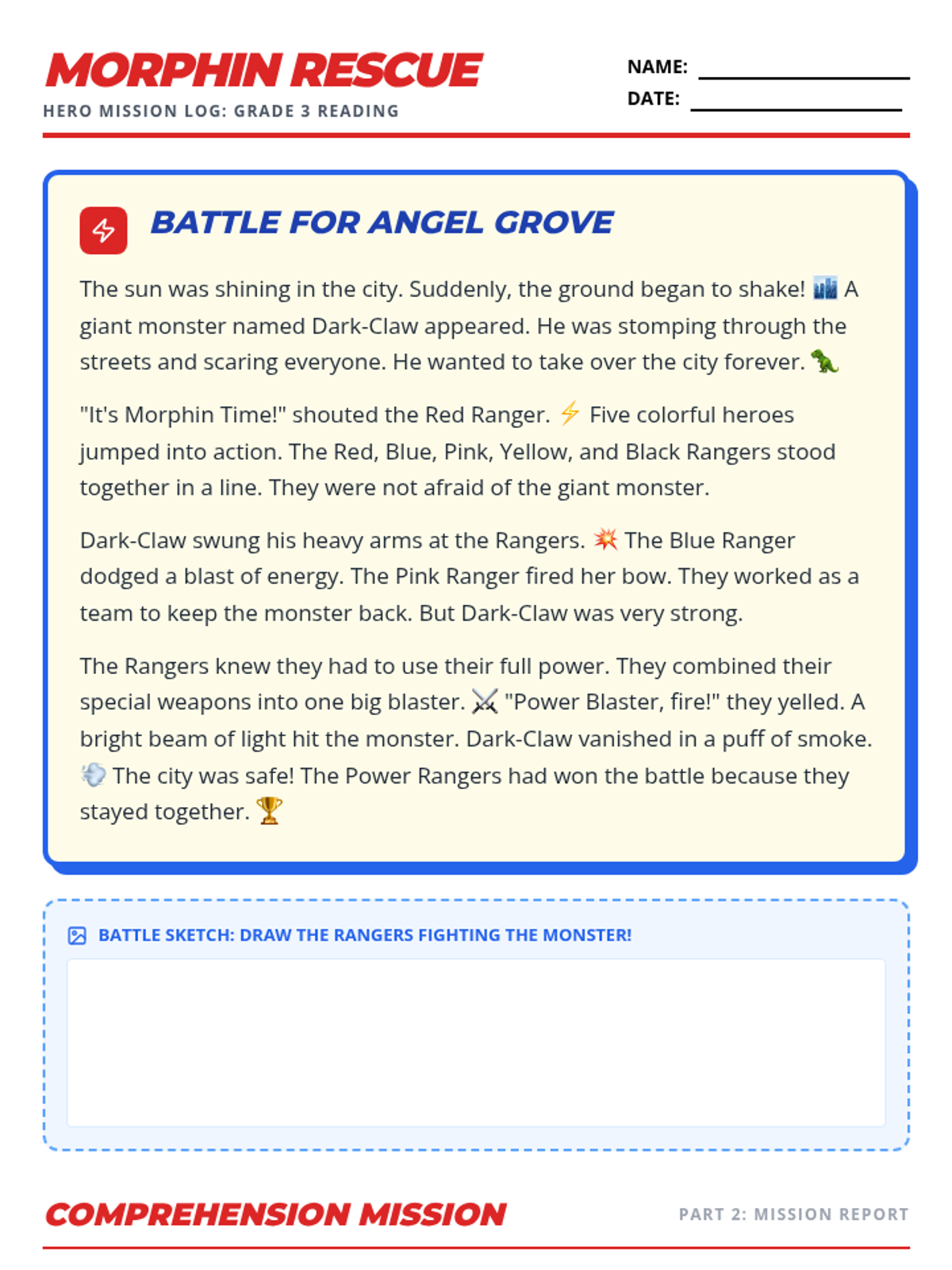
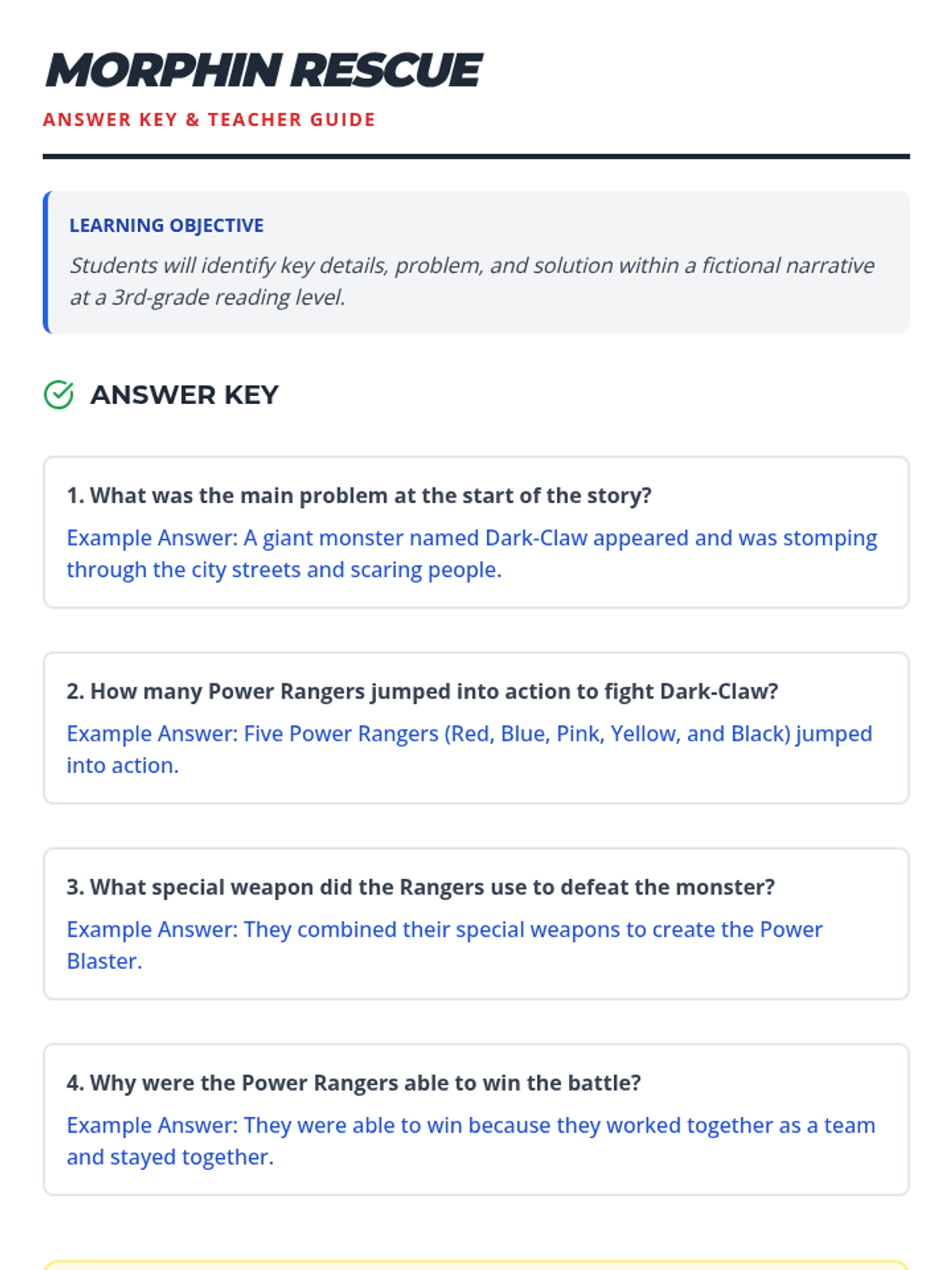
A high-action reading comprehension lesson focused on identifying plot elements and character actions in a superhero story.
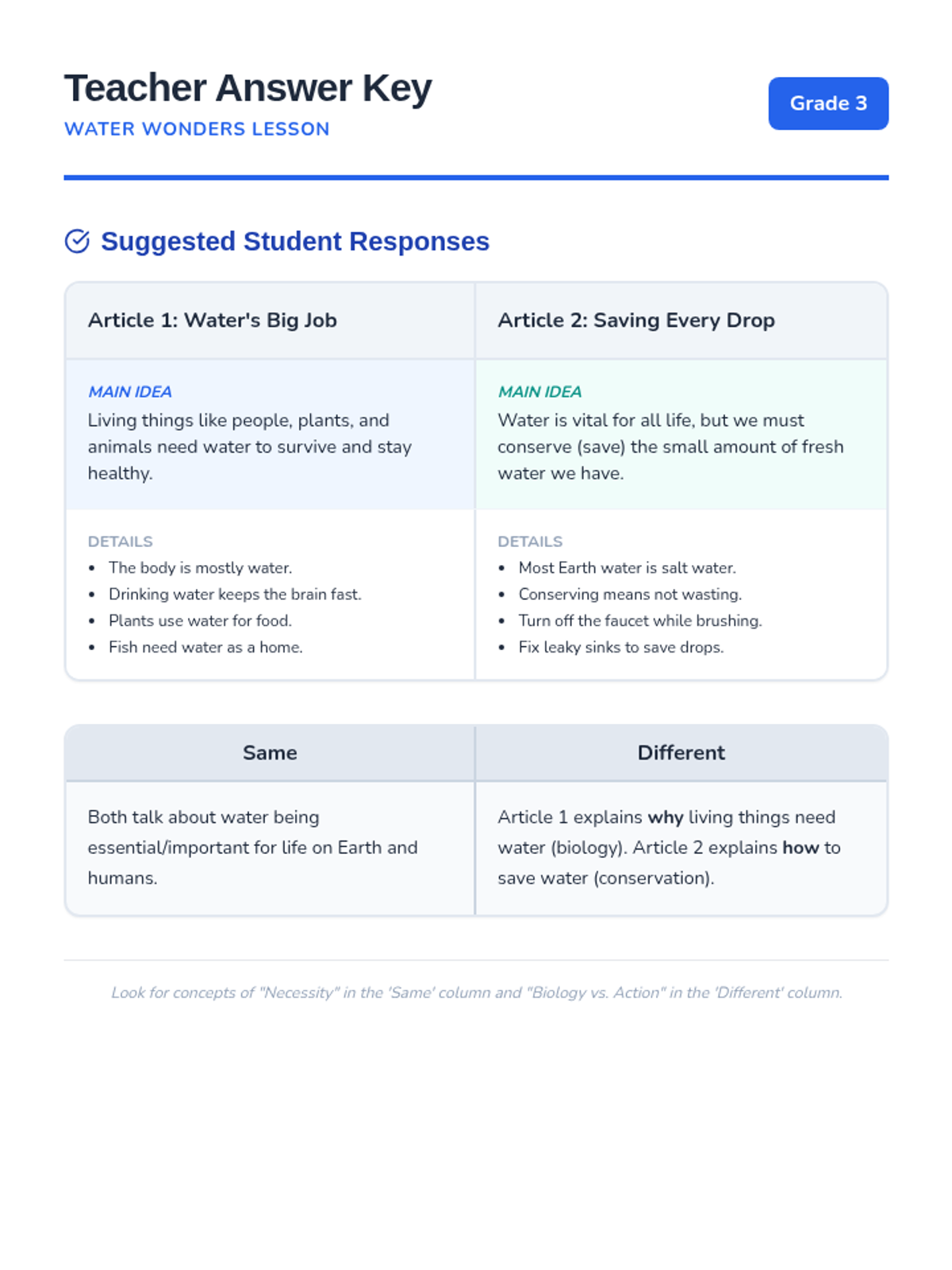
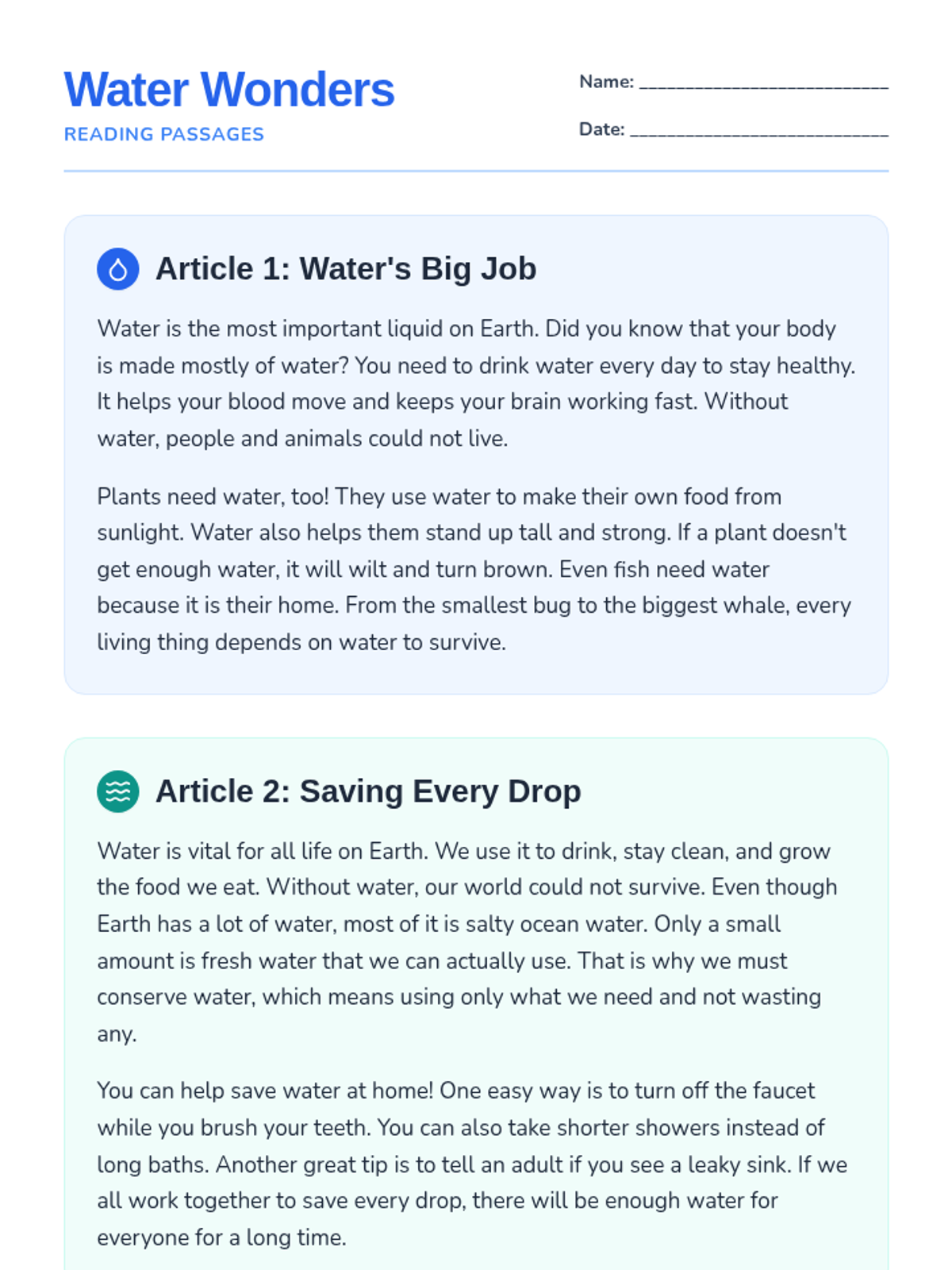
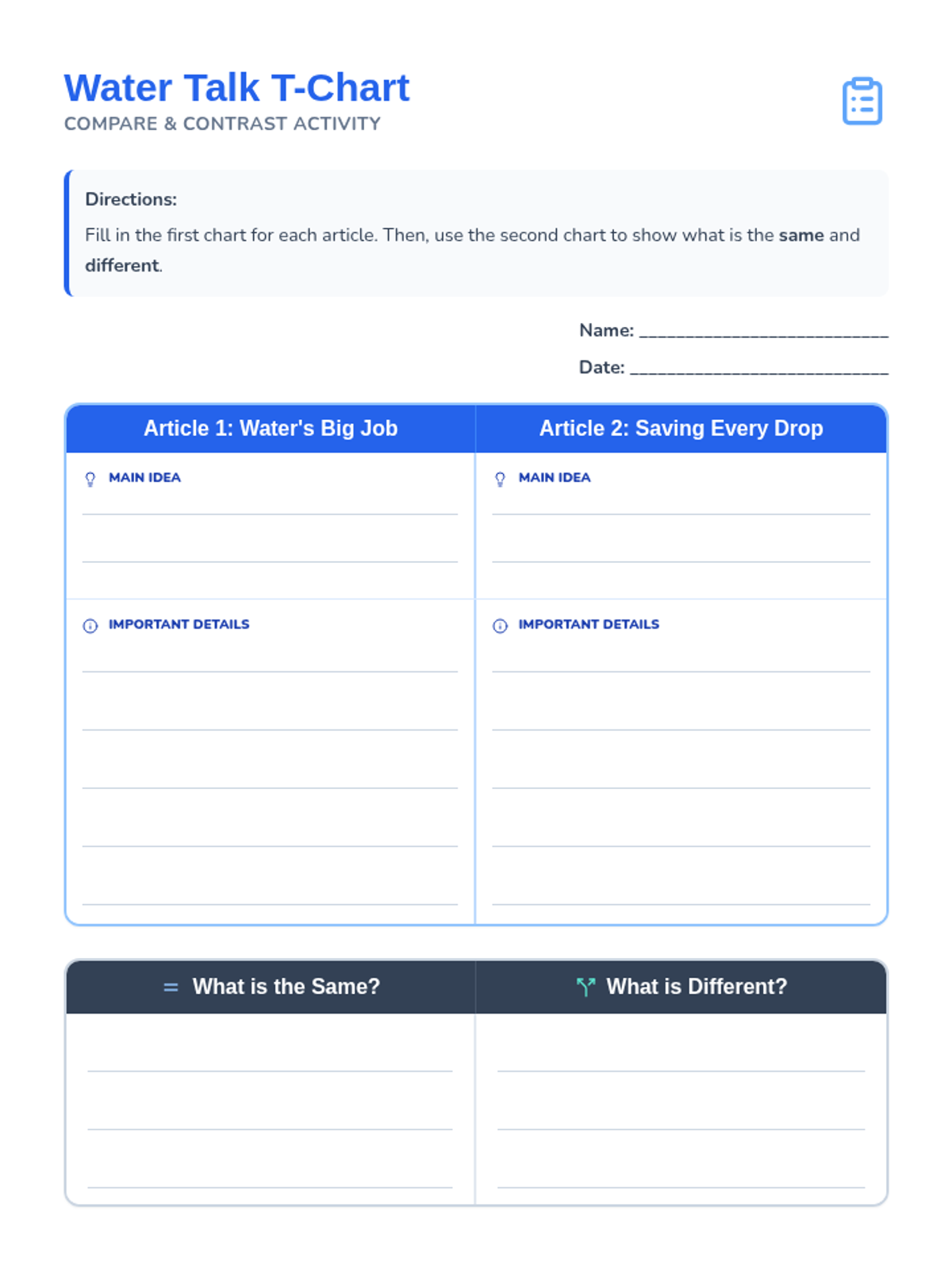
A grade 3 lesson focused on comparing and contrasting main ideas and details across two related texts about water. Students will learn about the biological importance of water and the environmental necessity of conservation.
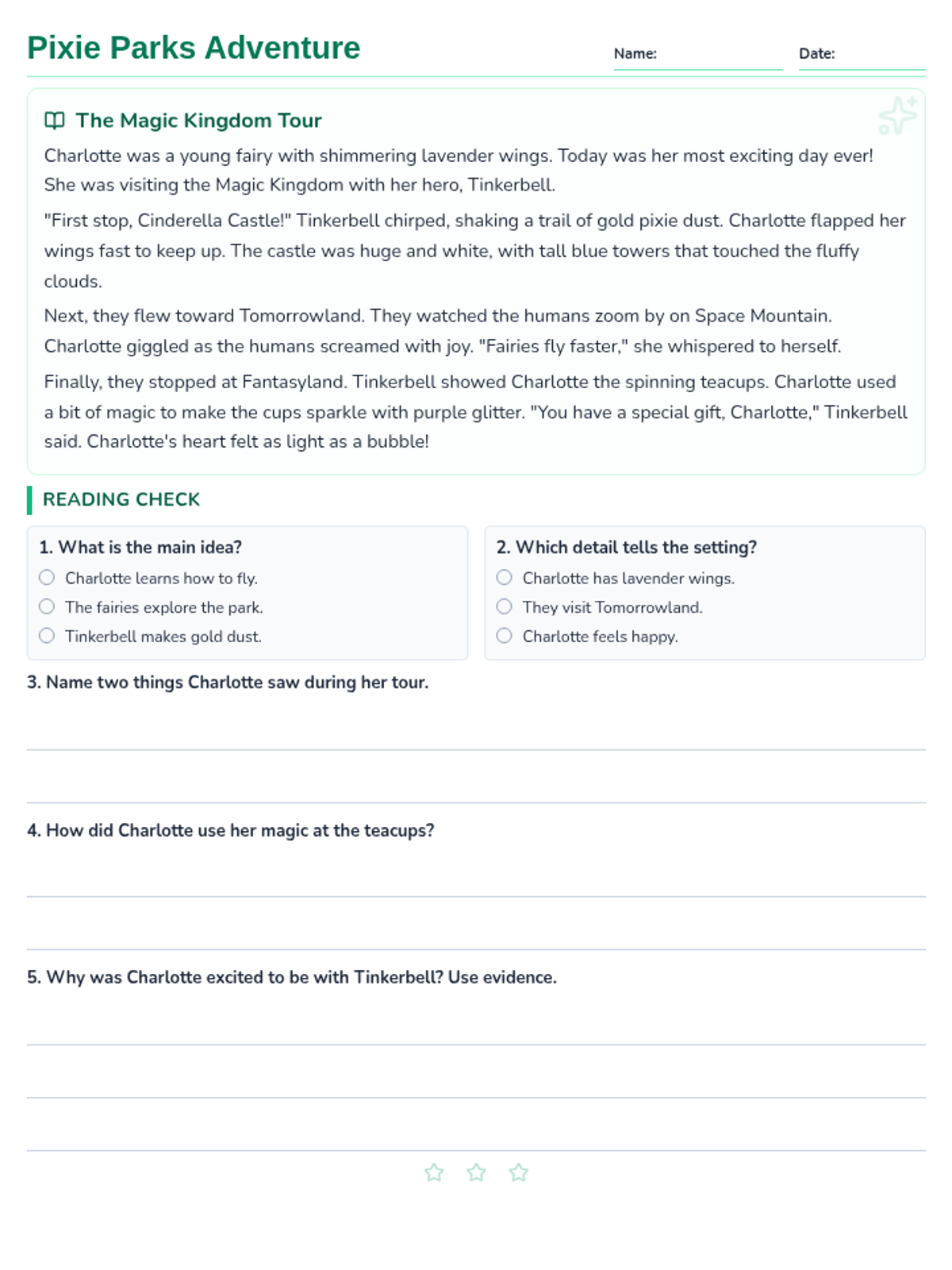
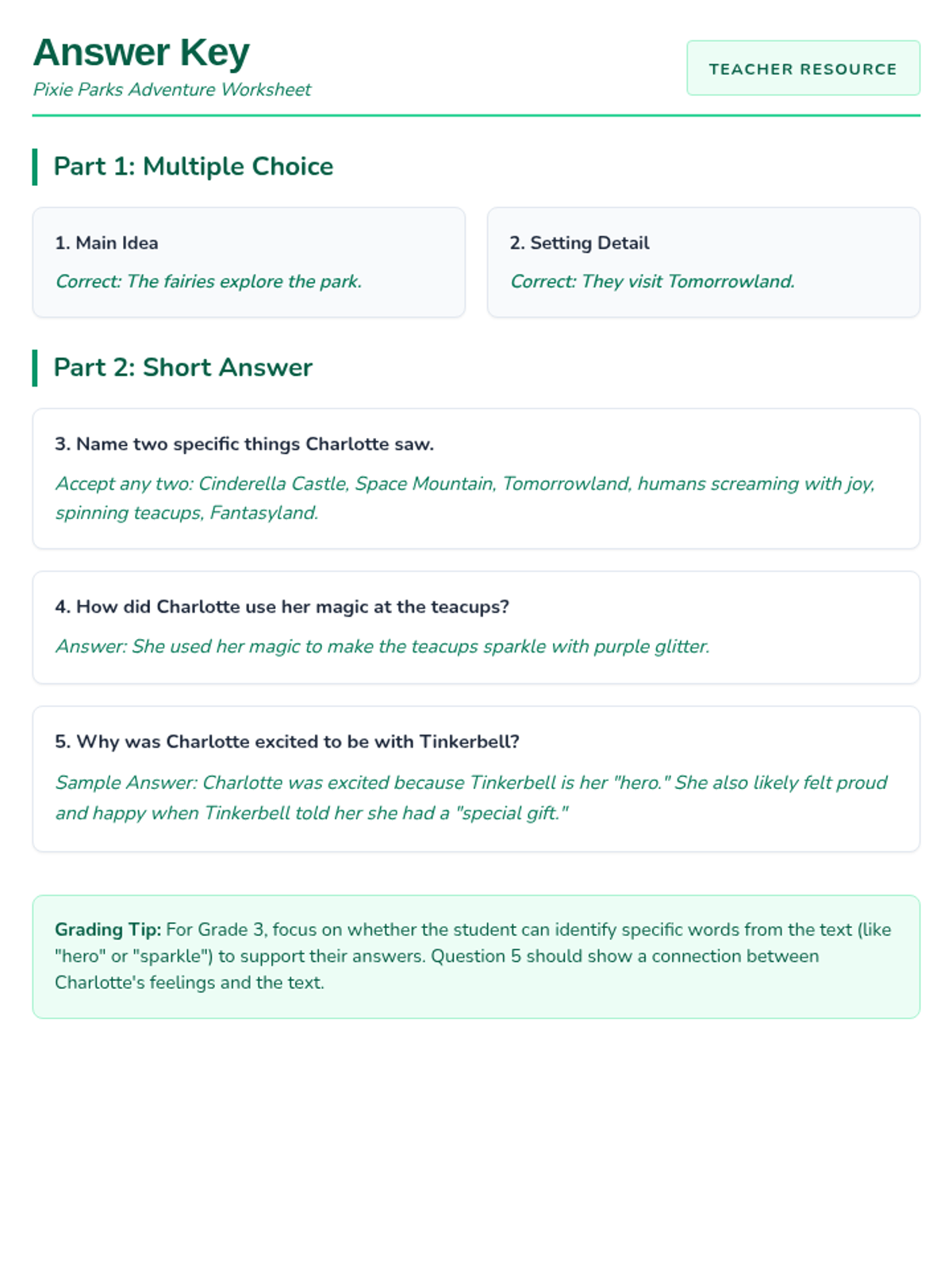
A lesson focused on reading comprehension through a magical story about fairies exploring a theme park. Students practice identifying main ideas and key details.
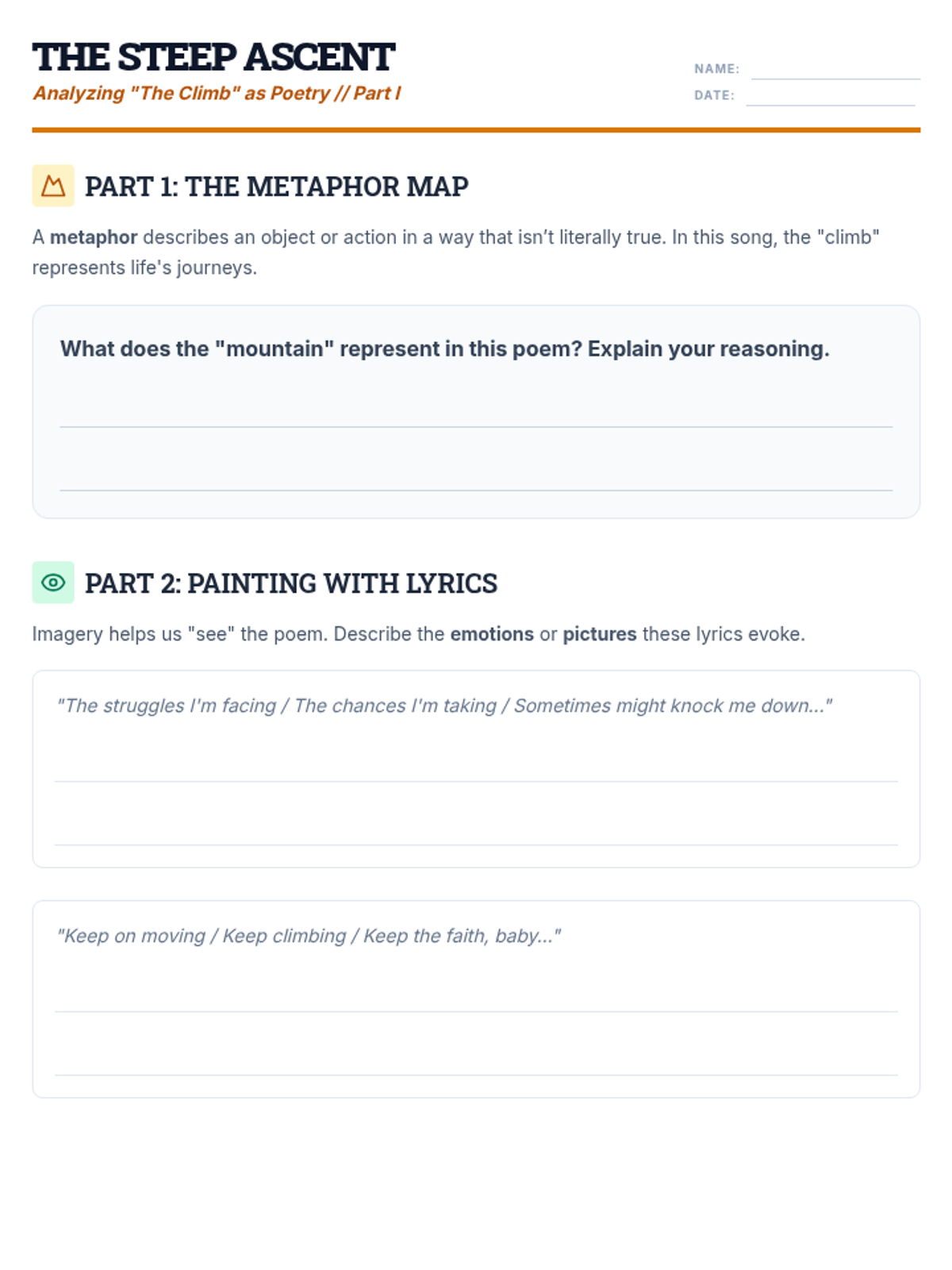
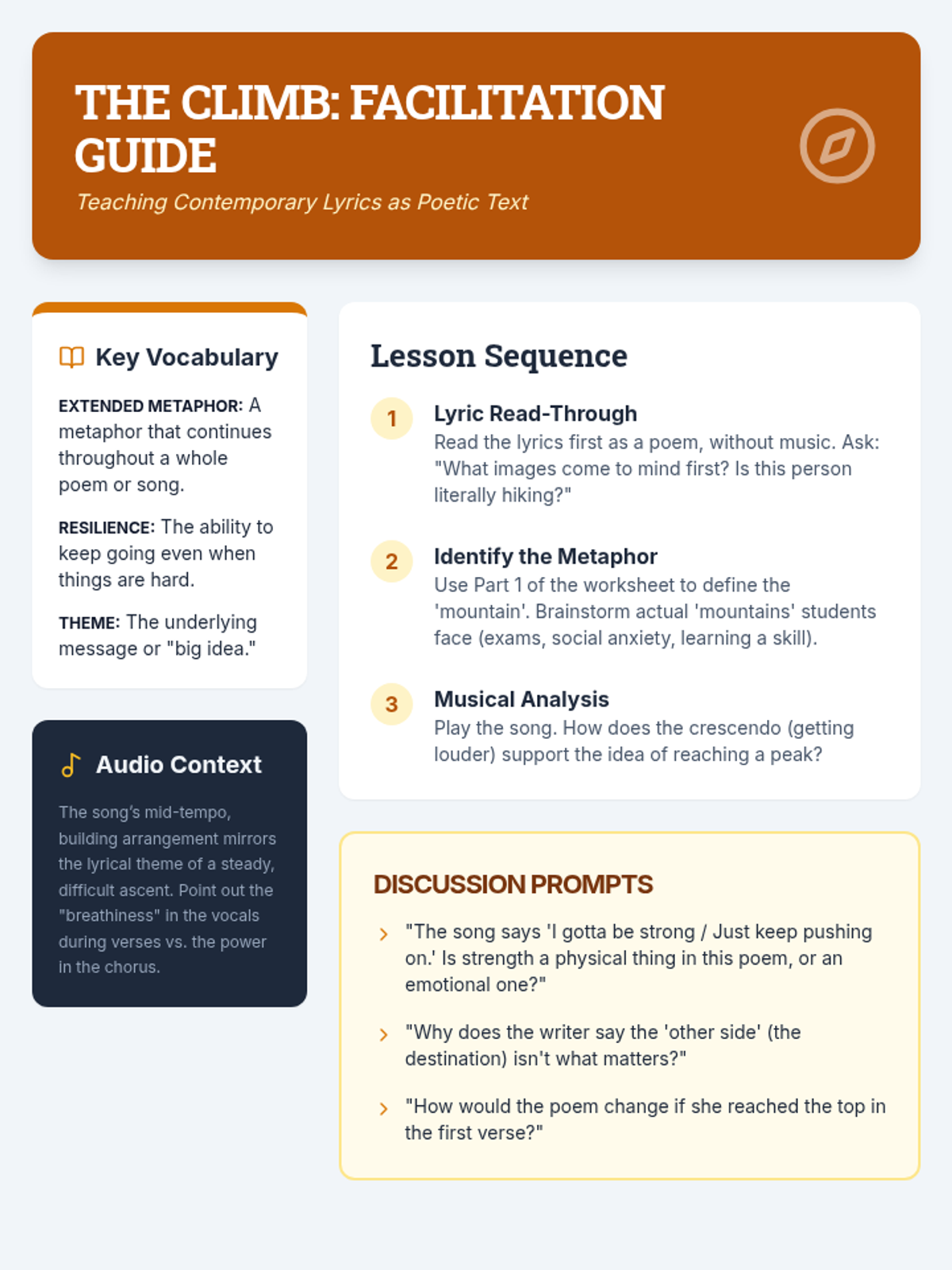
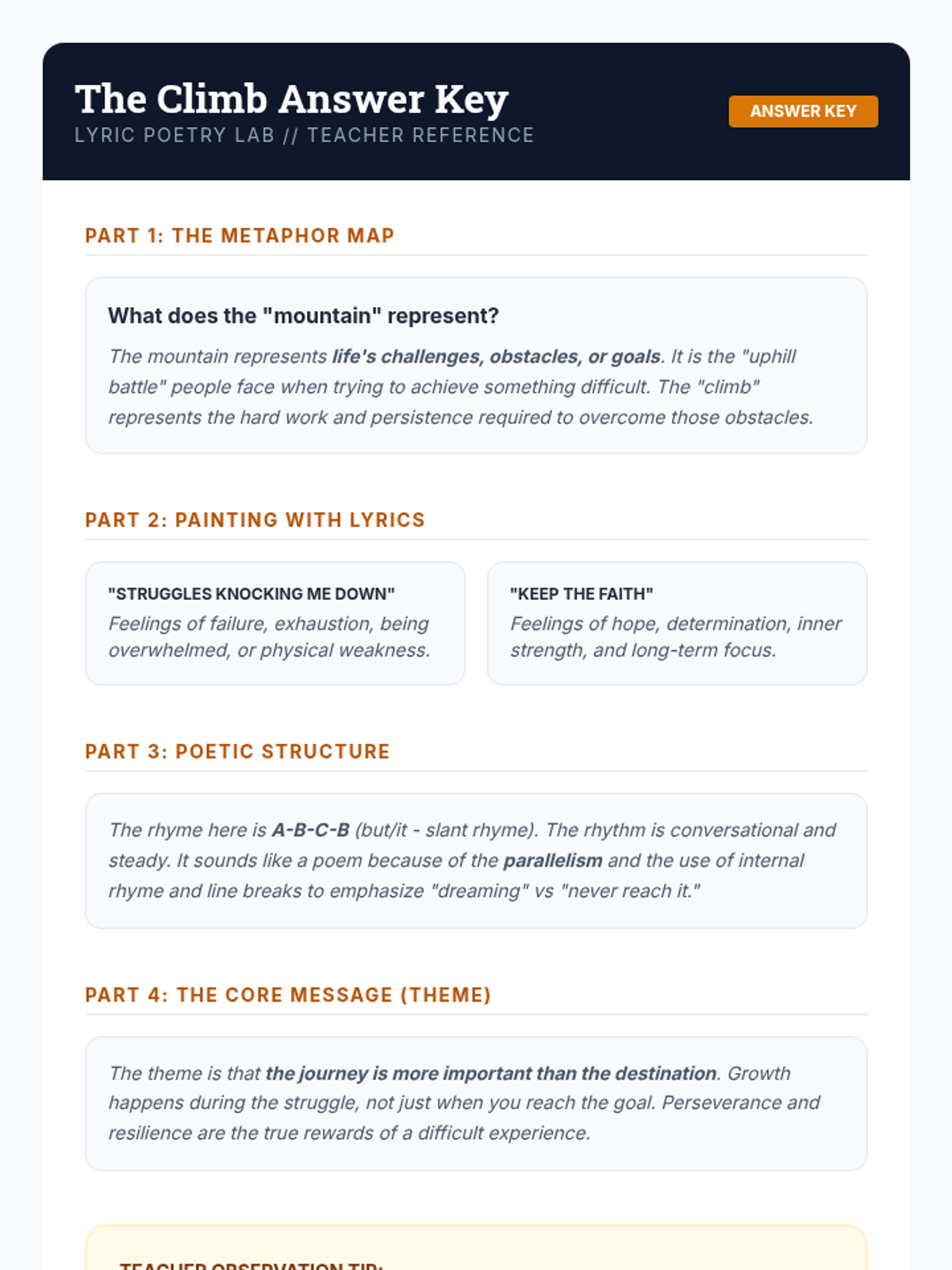
Students analyze the song 'The Climb' by Miley Cyrus as a poetic work, focusing on the central metaphor of a mountain climb to represent life's challenges and perseverance.
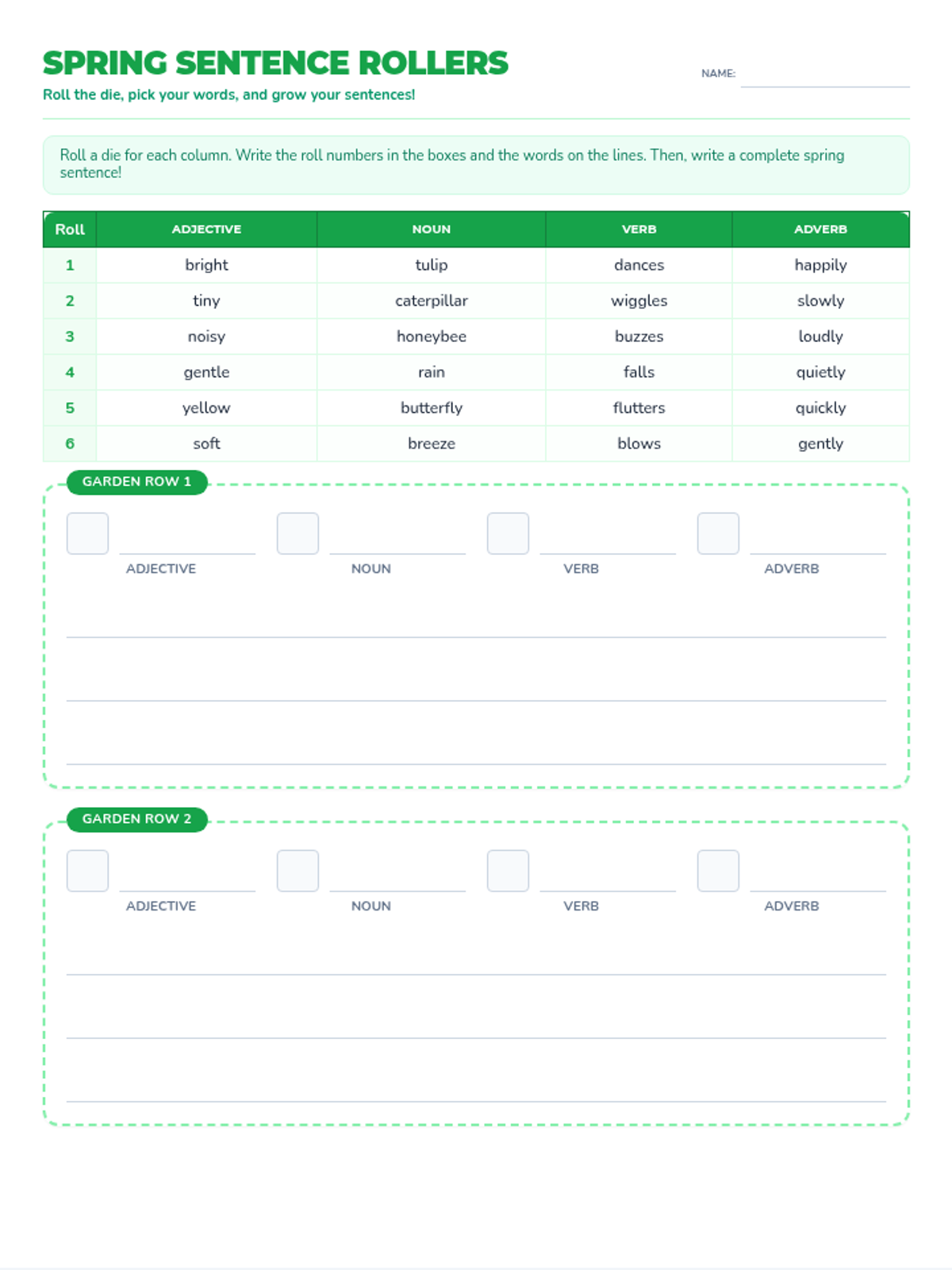
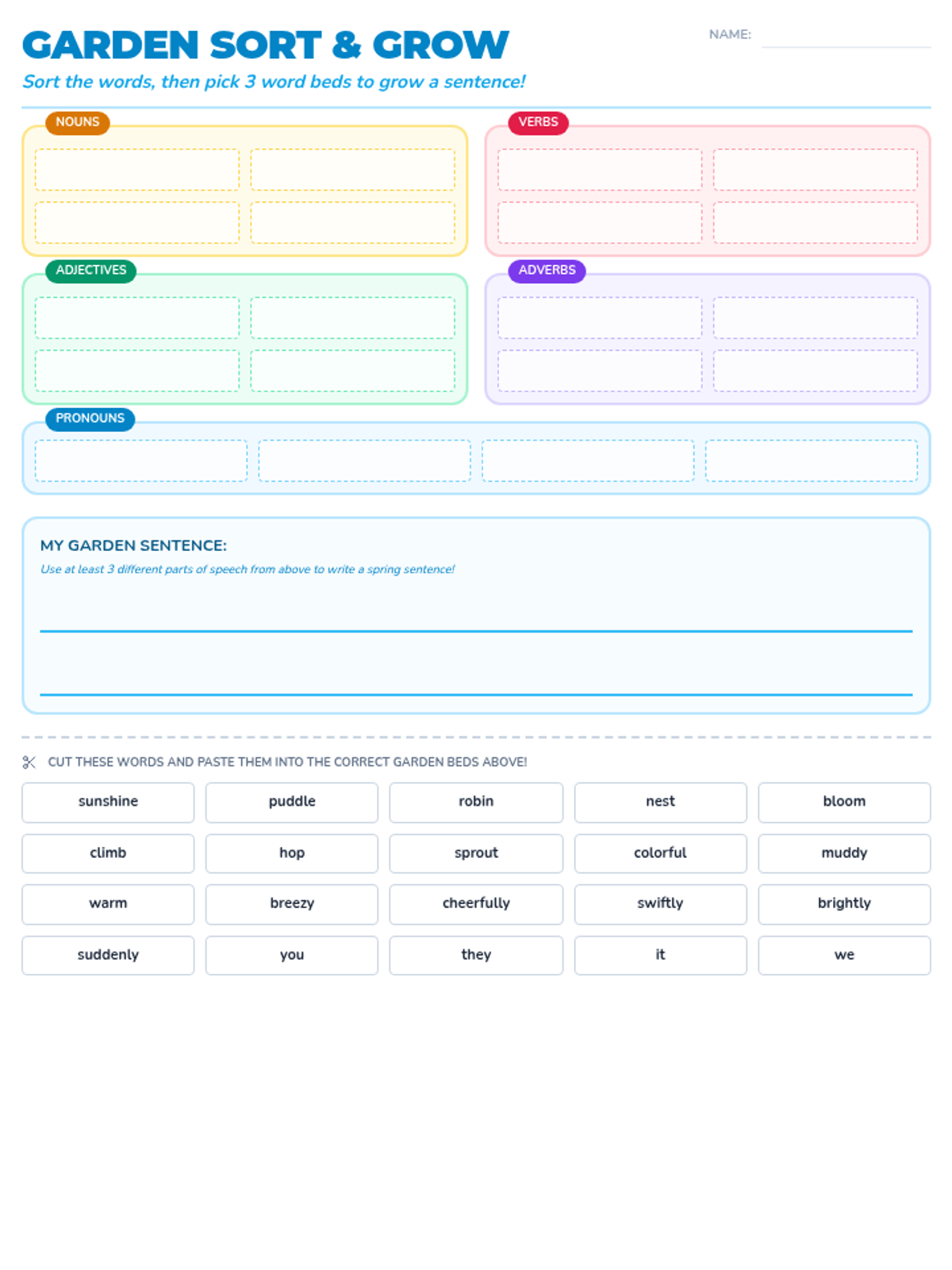
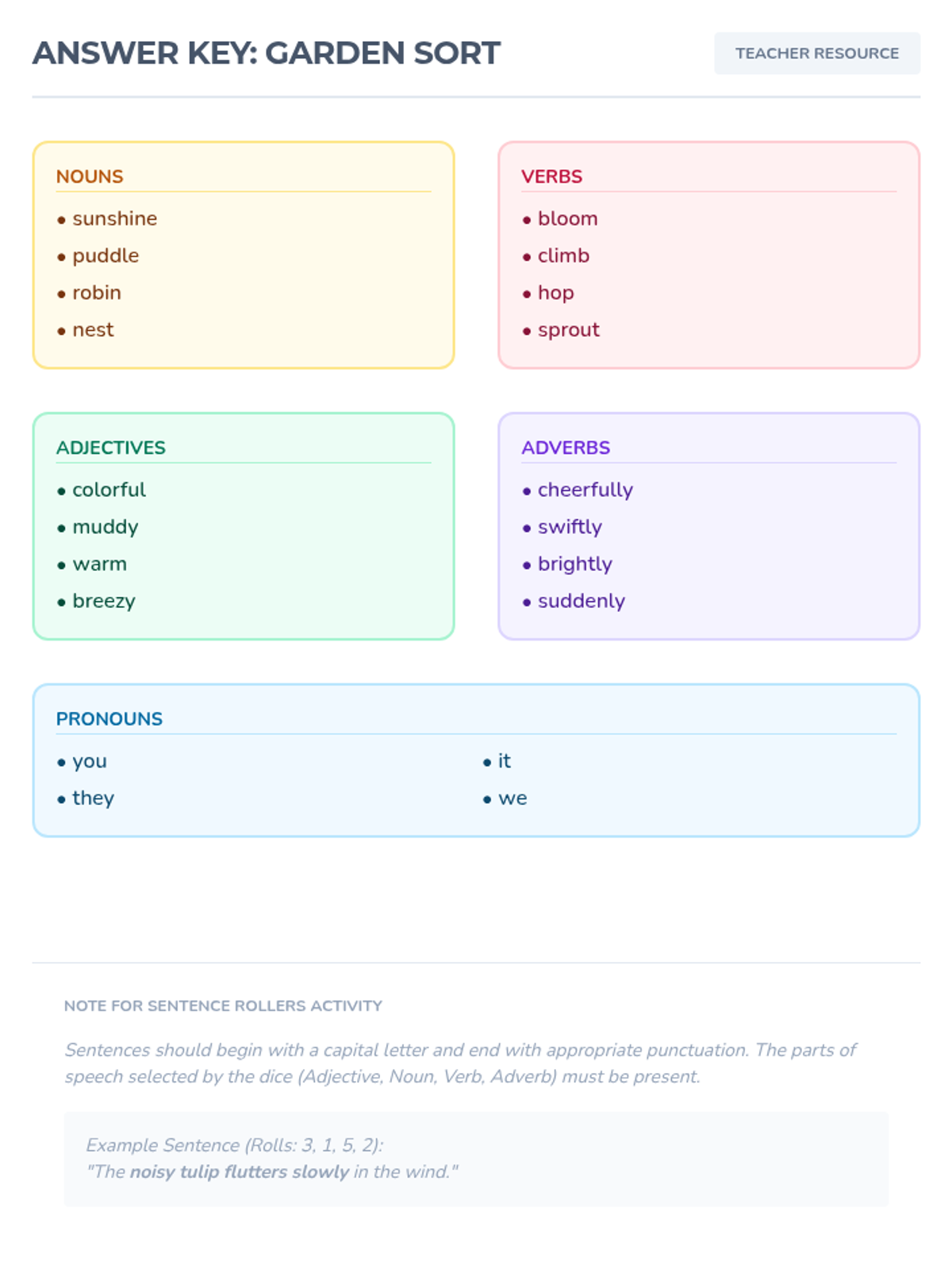
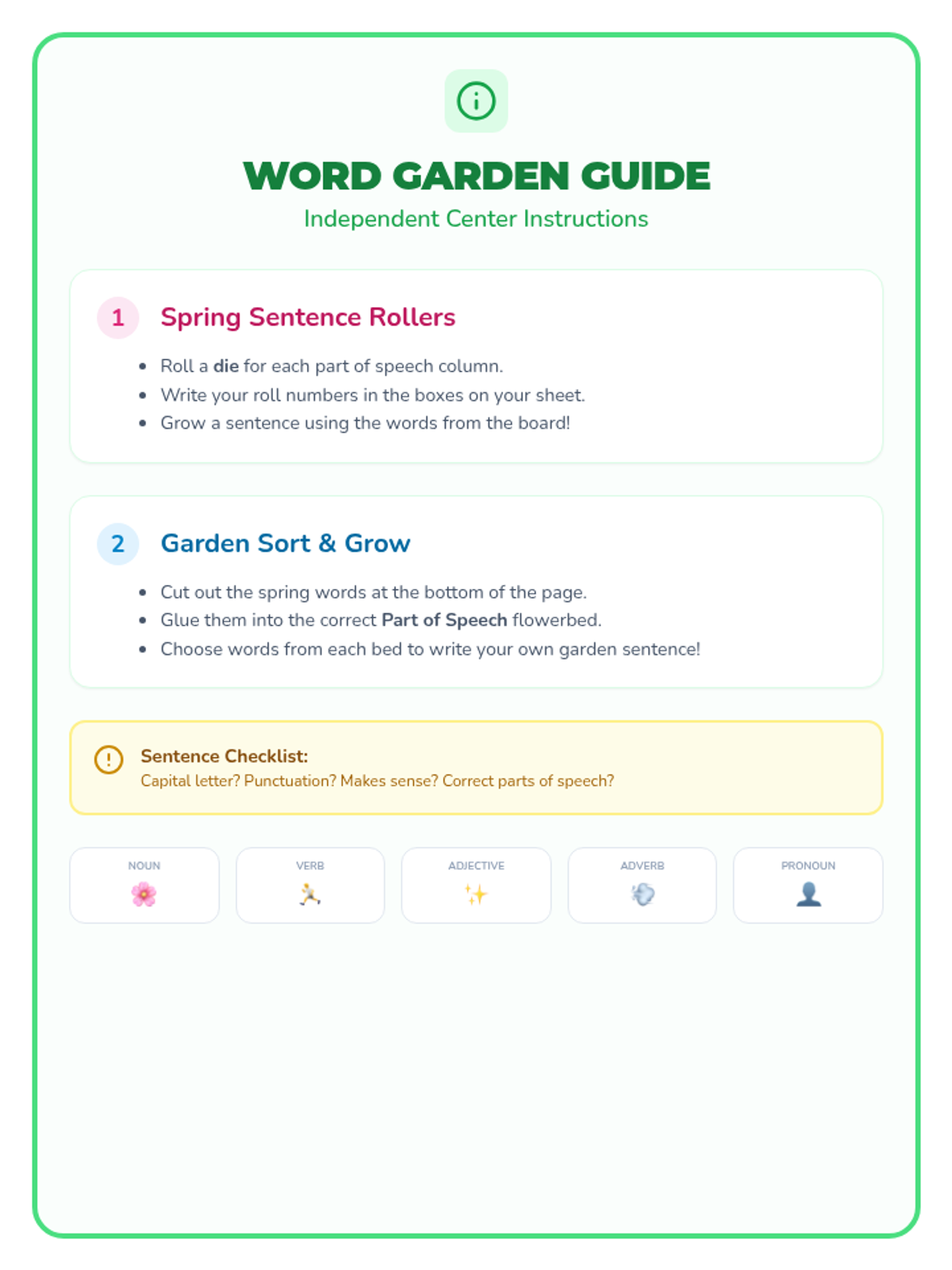
A spring-themed independent center focused on identifying and using nouns, verbs, adjectives, adverbs, and pronouns through interactive games and sorting.
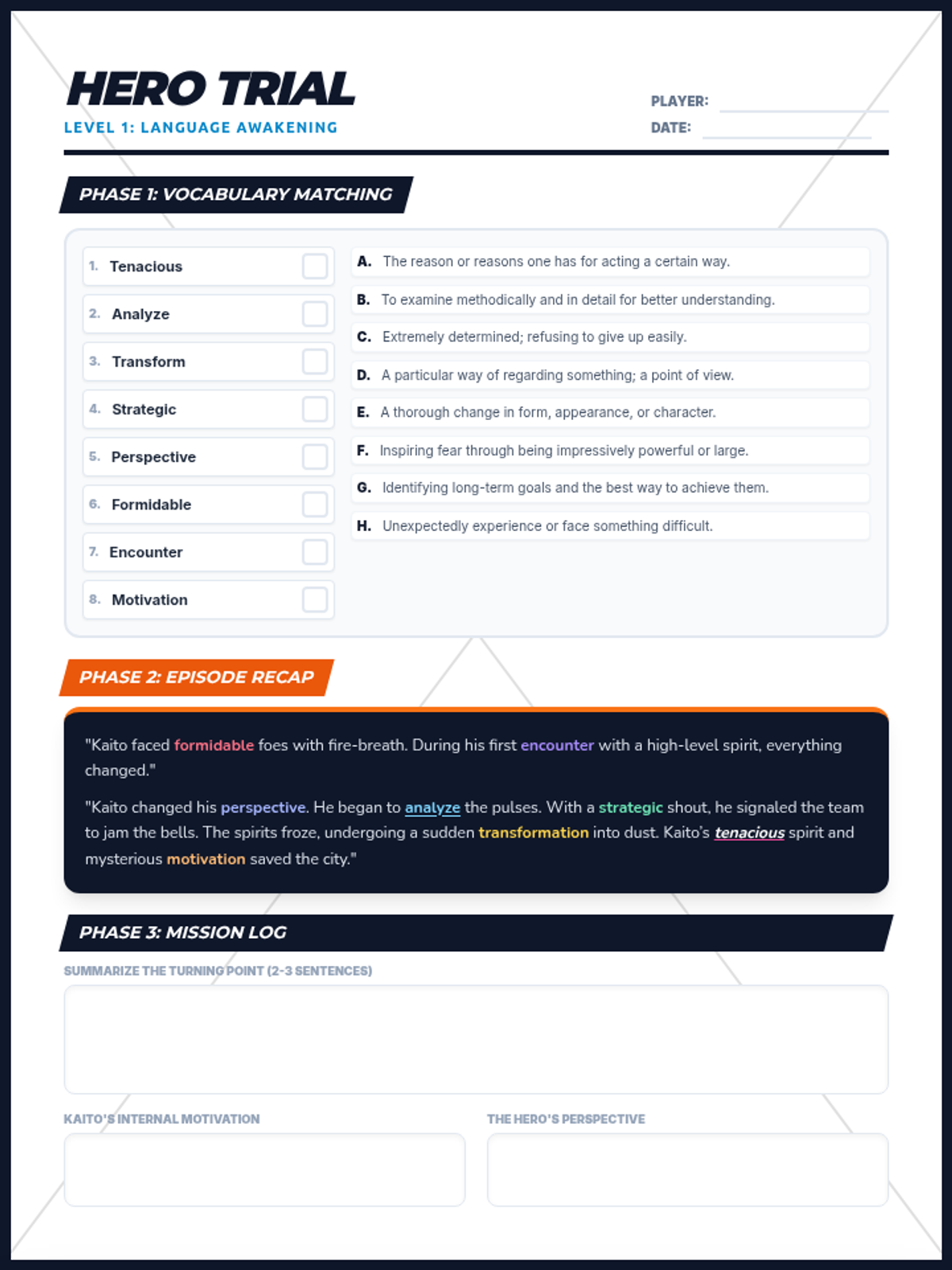
A student-focused lesson set in a vibrant anime world, focusing on Tier 2 vocabulary, narrative structure, and advanced plot analysis.
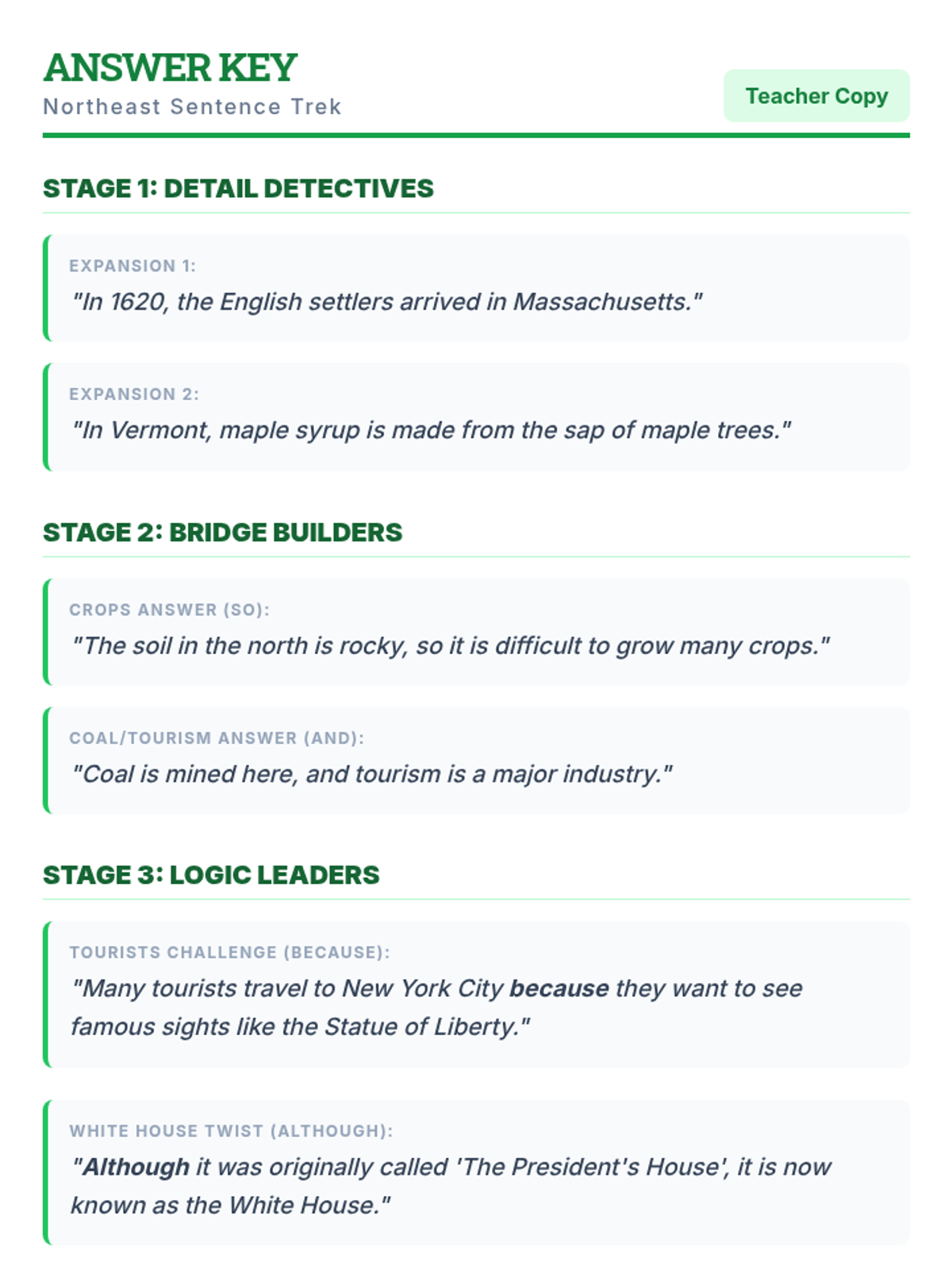
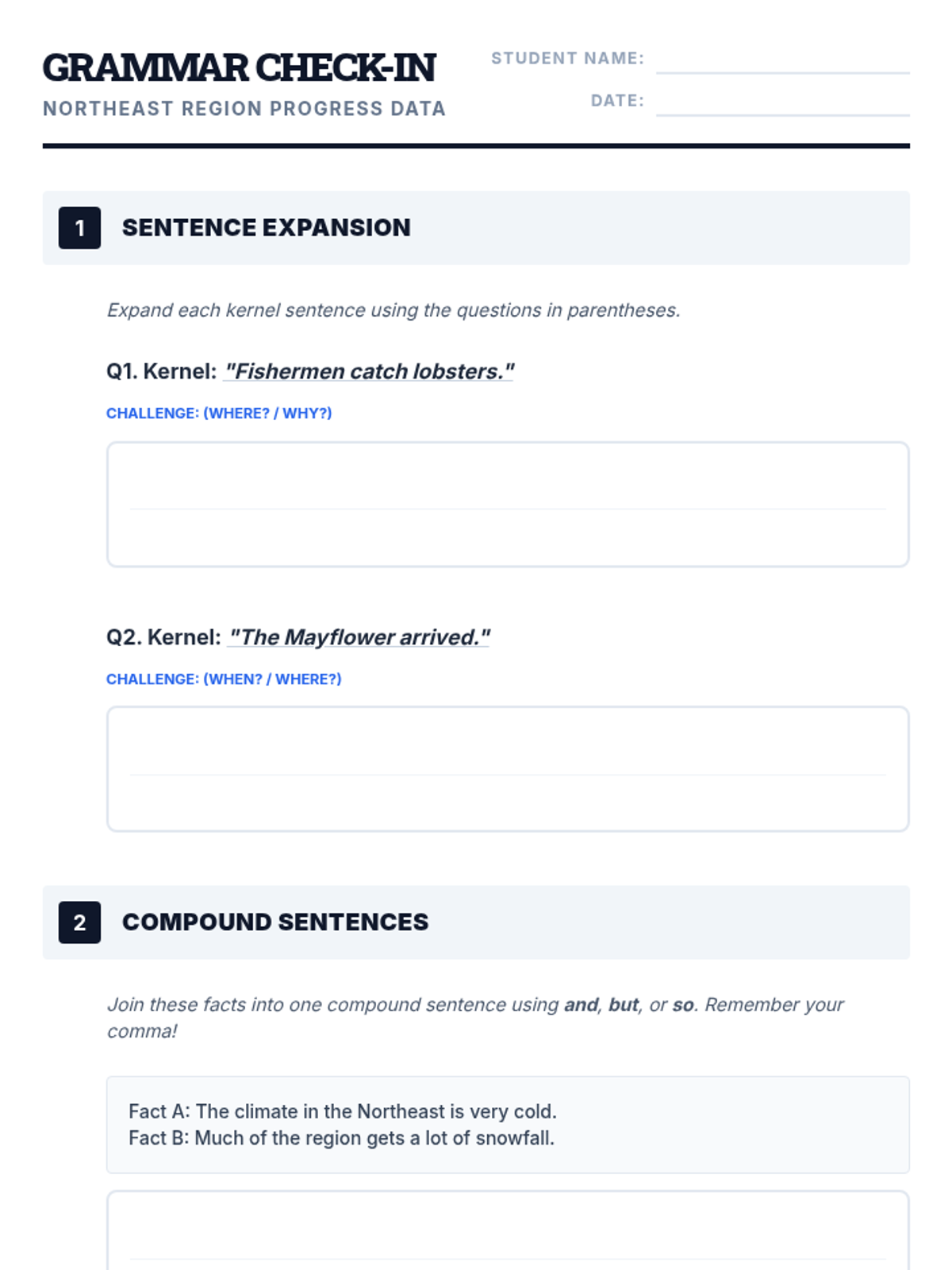
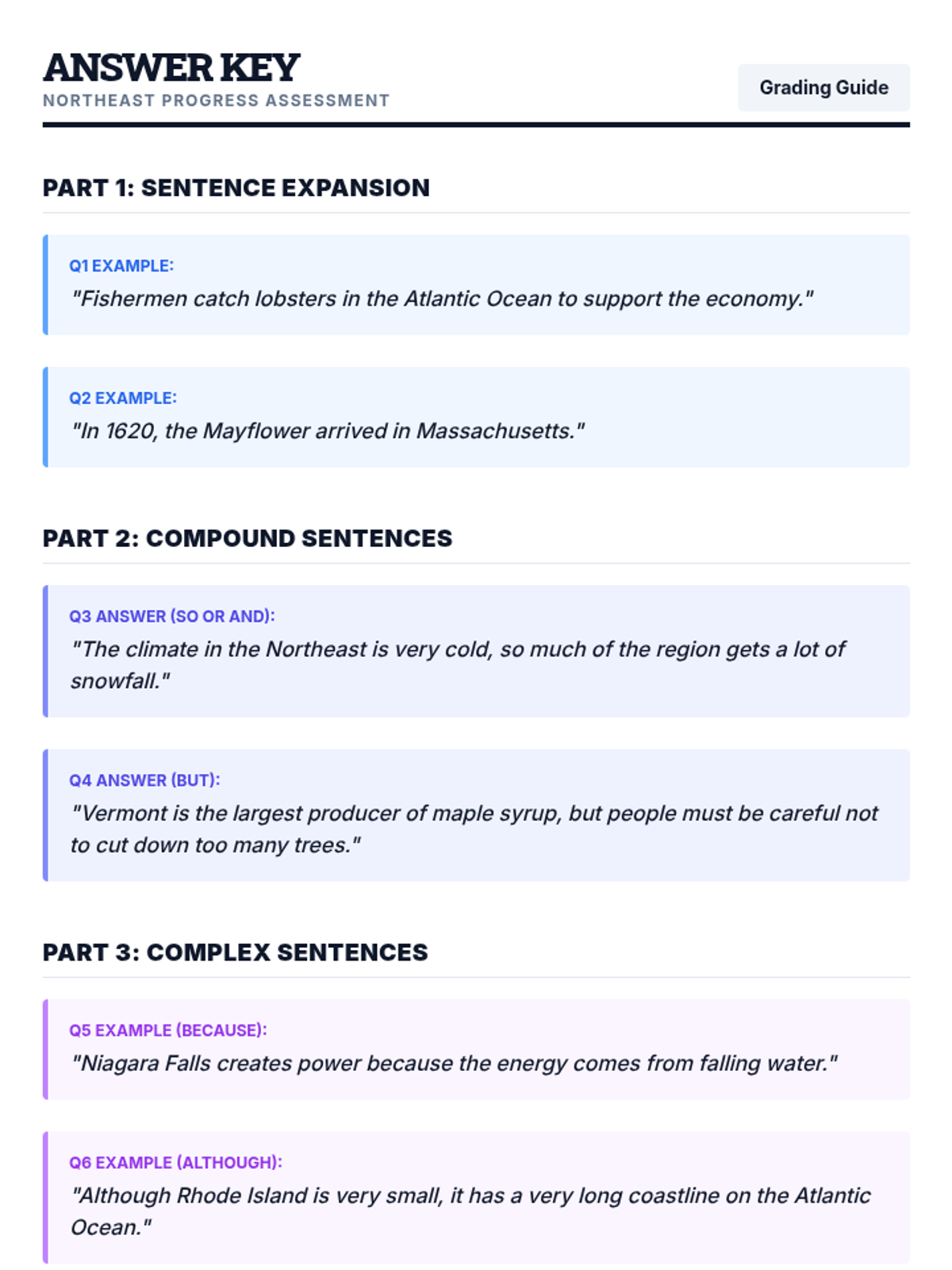
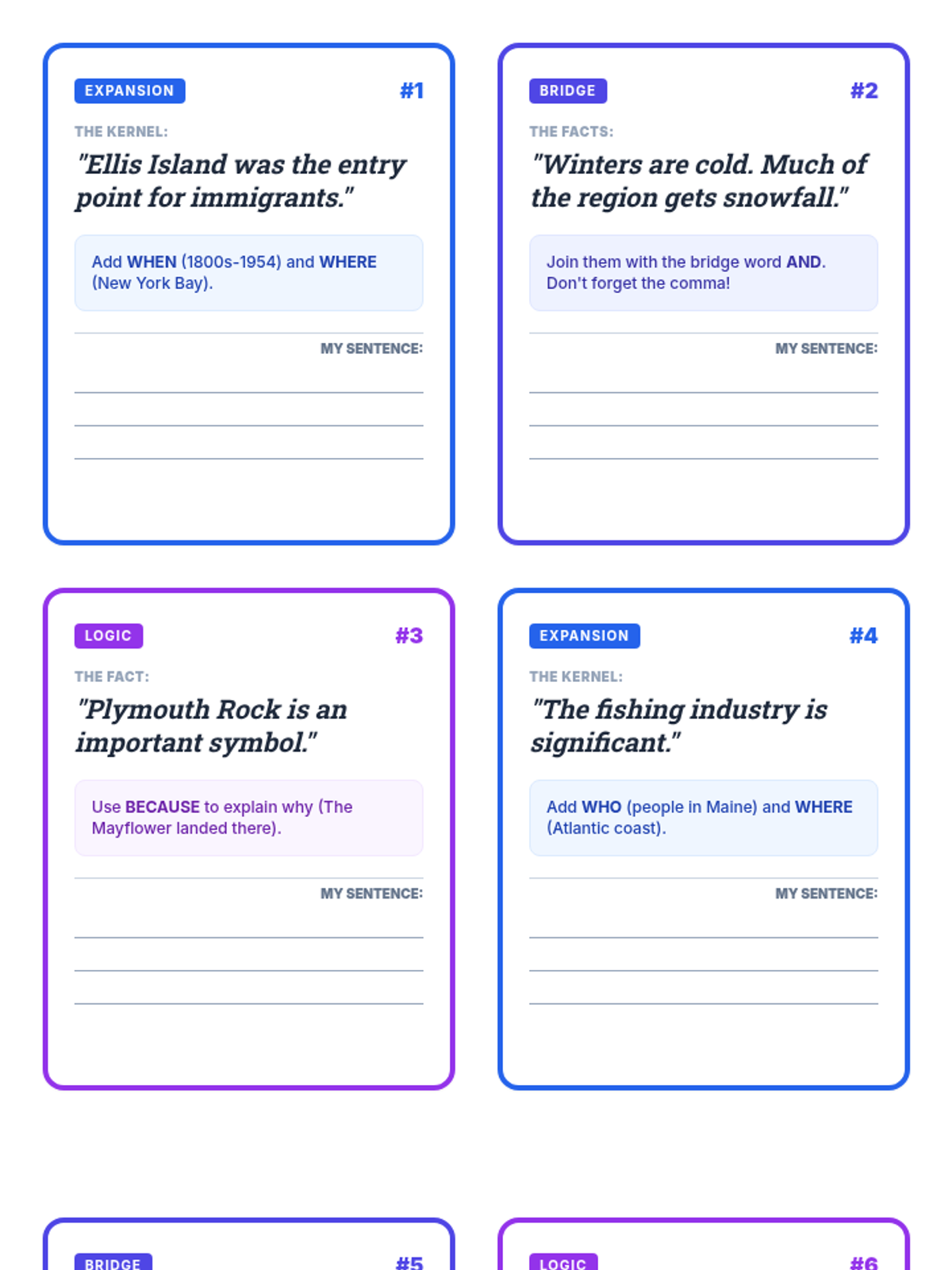
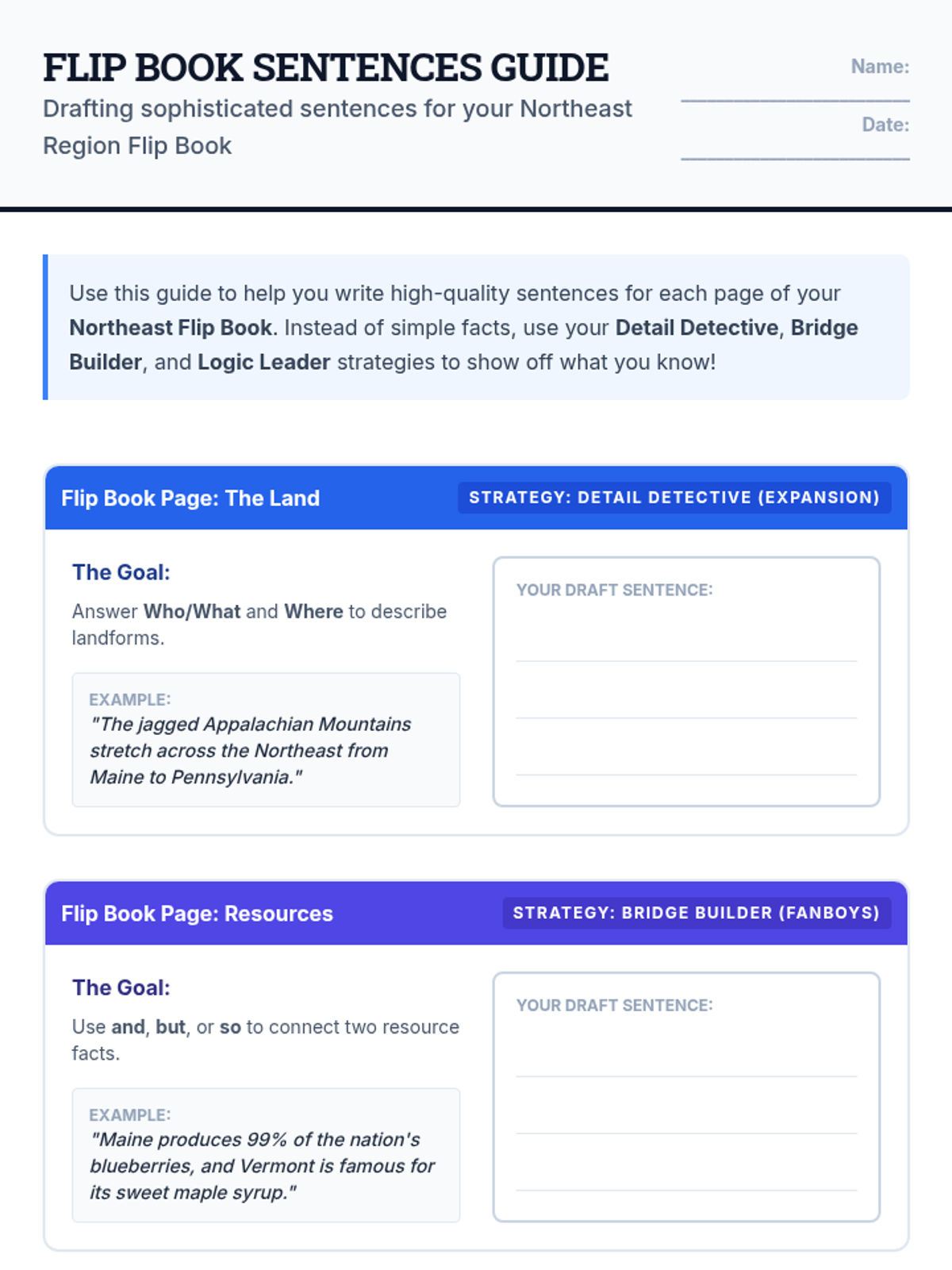
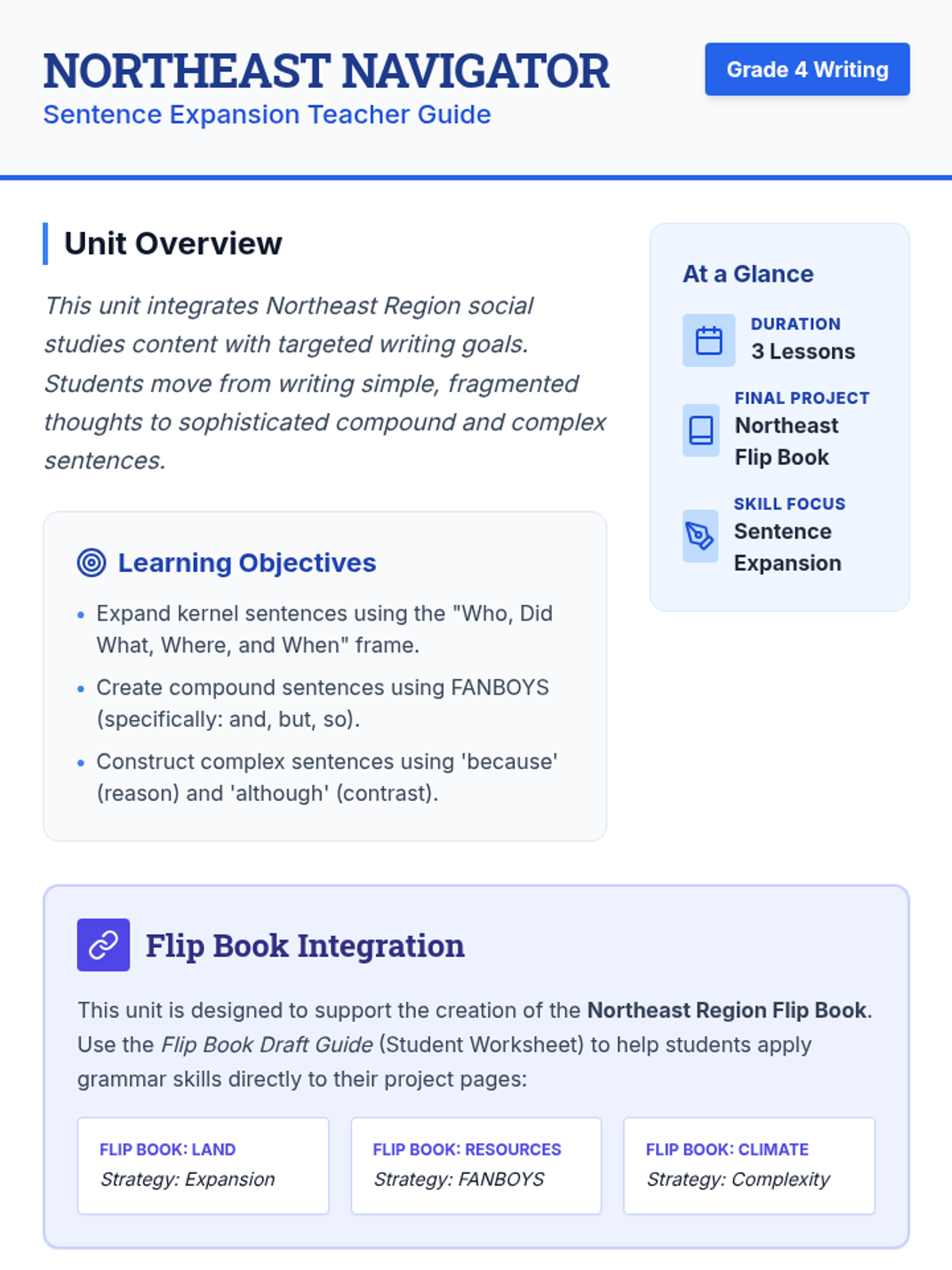
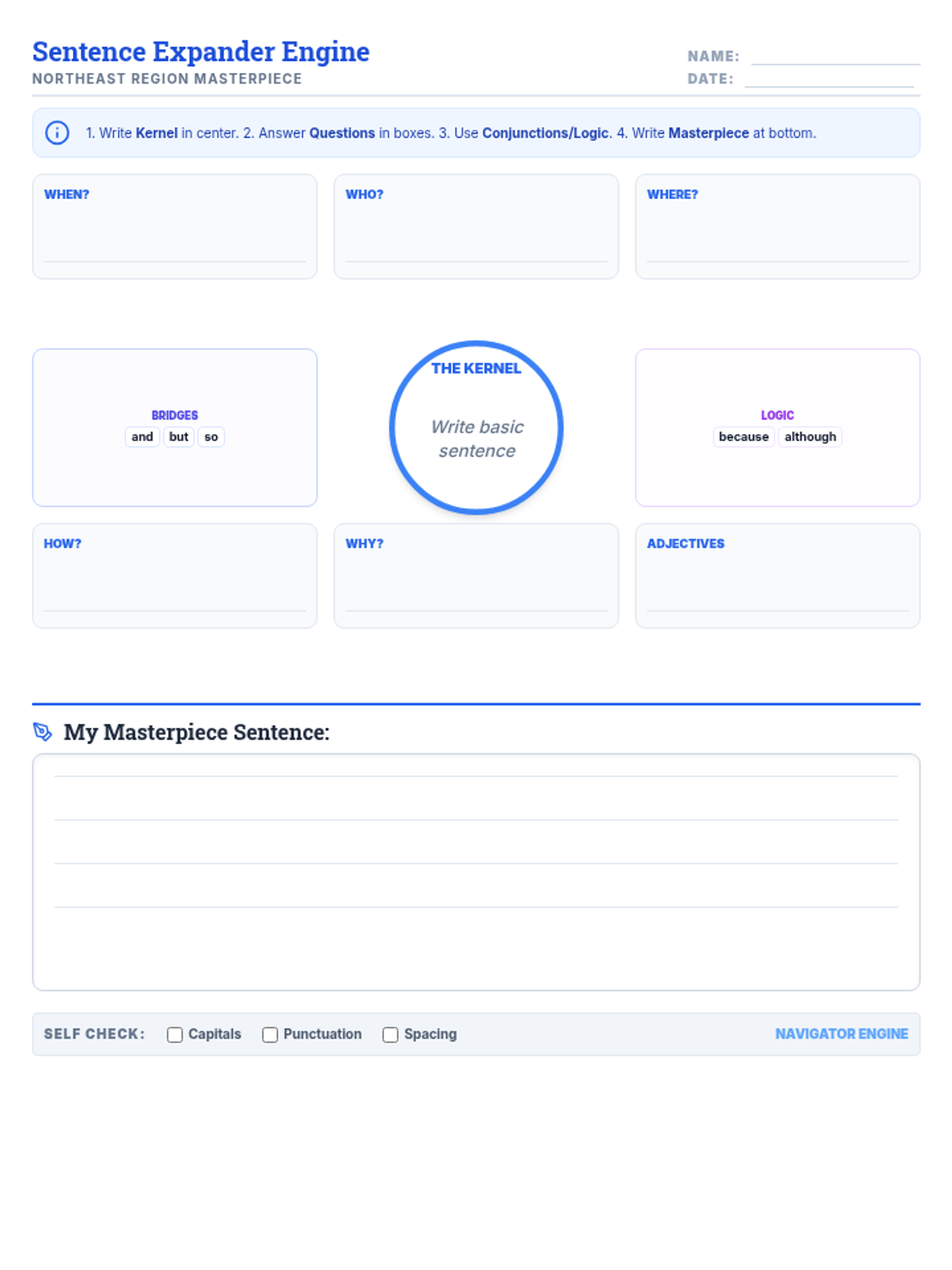
Students explore cause, effect, and contrast using 'because' and 'although' to create complex sentences about Northeast landmarks and natural resources.
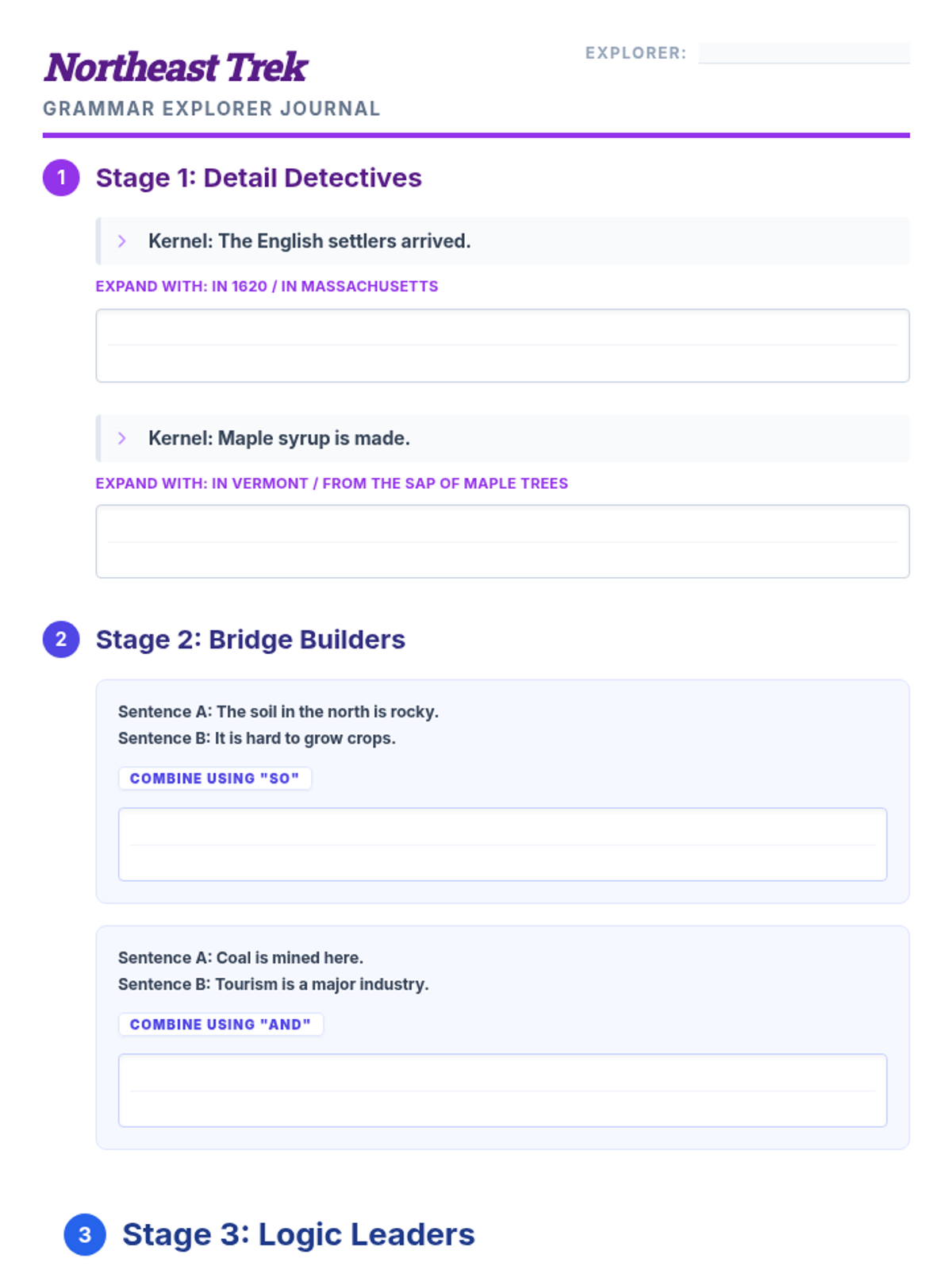
Students use coordinating conjunctions (FANBOYS) to combine simple facts about the Northeast's climate and economy into compound sentences.
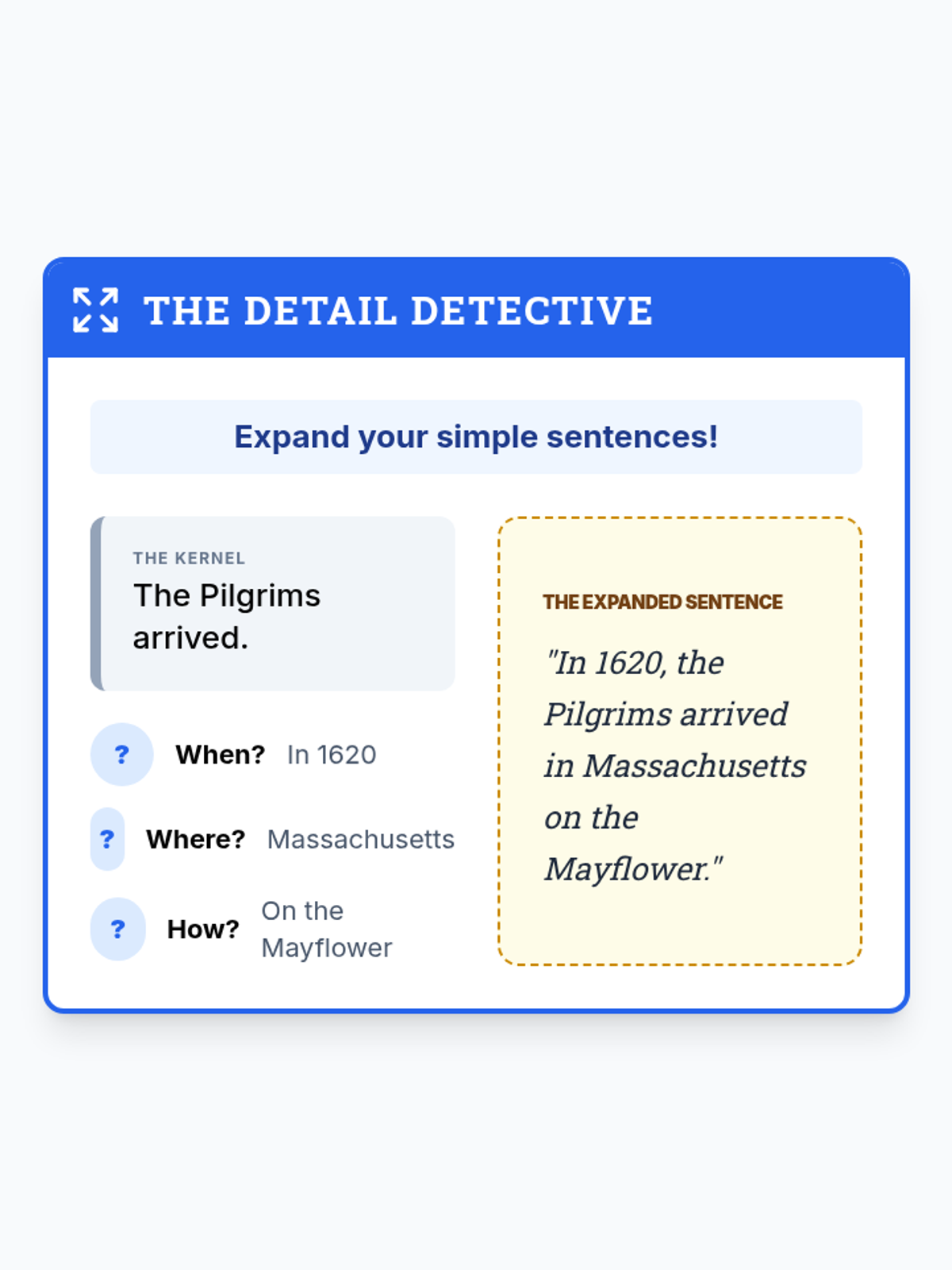
Students learn to expand simple sentences into descriptive ones by adding 'Who, What, and Where' details using facts about the history and geography of the Northeast region.