A reading comprehension lesson focused on citing evidence and making inferences about the hidden infrastructure of Disney World, designed for middle schoolers reading at a 5th-grade level.
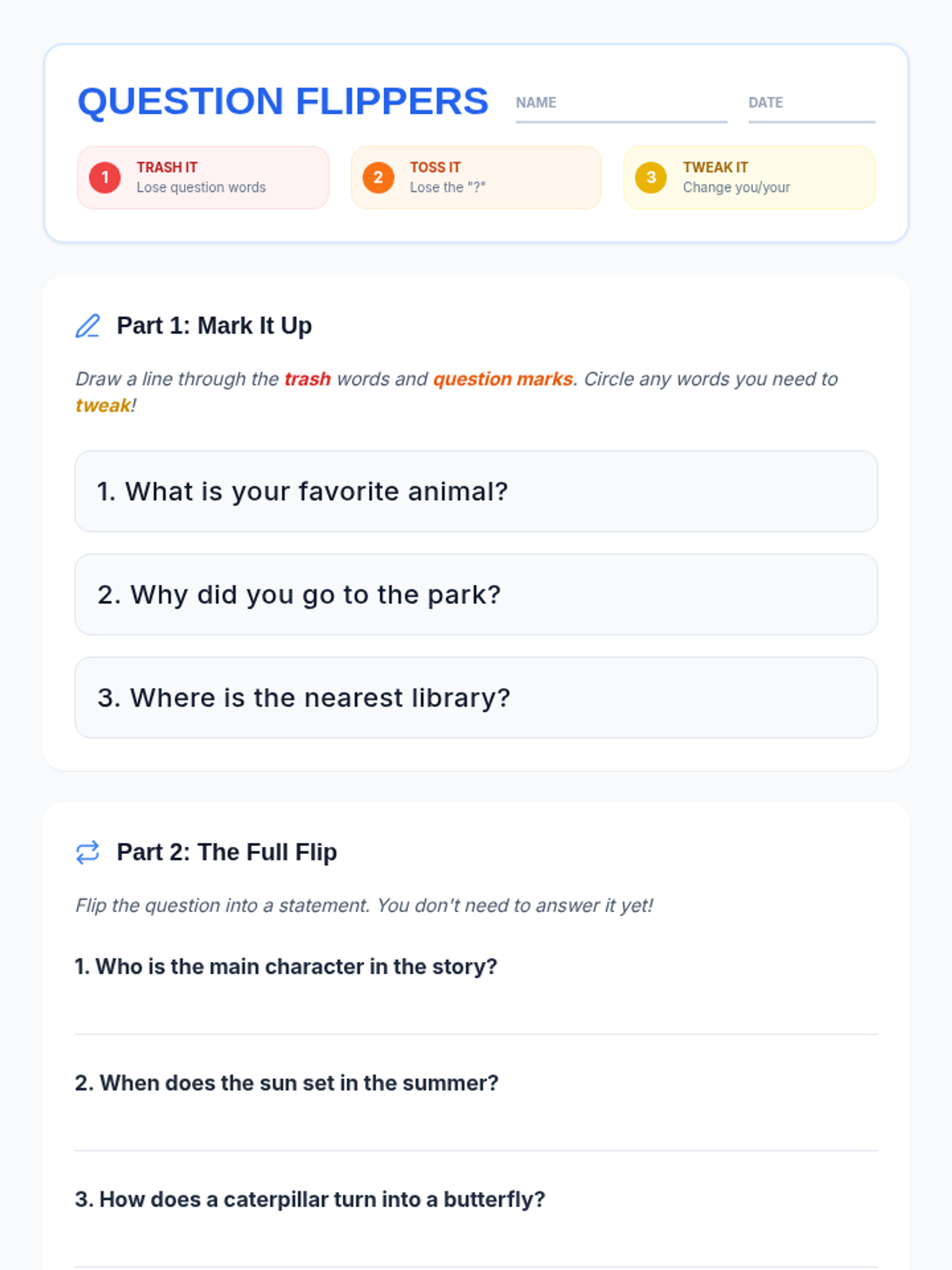
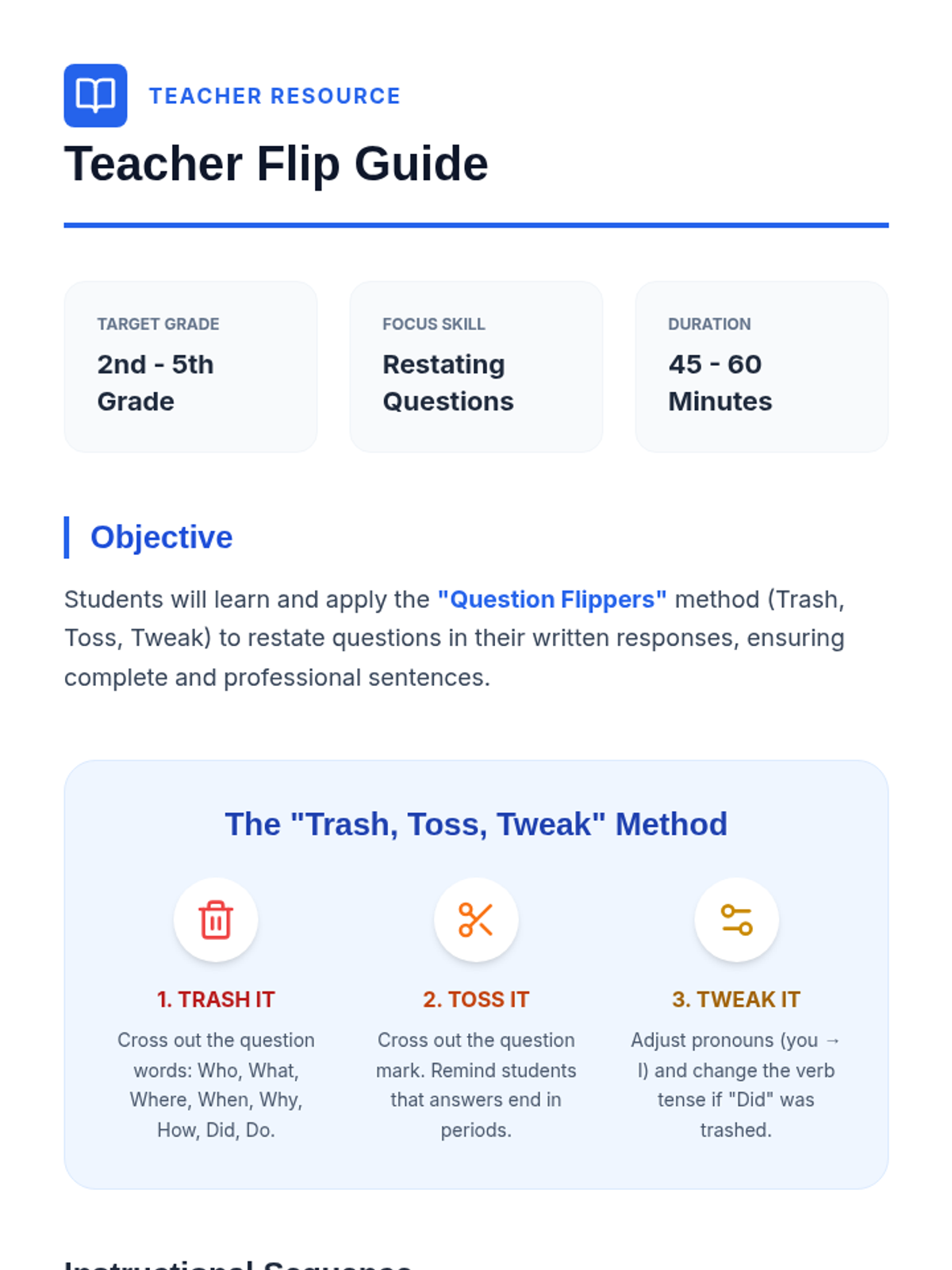
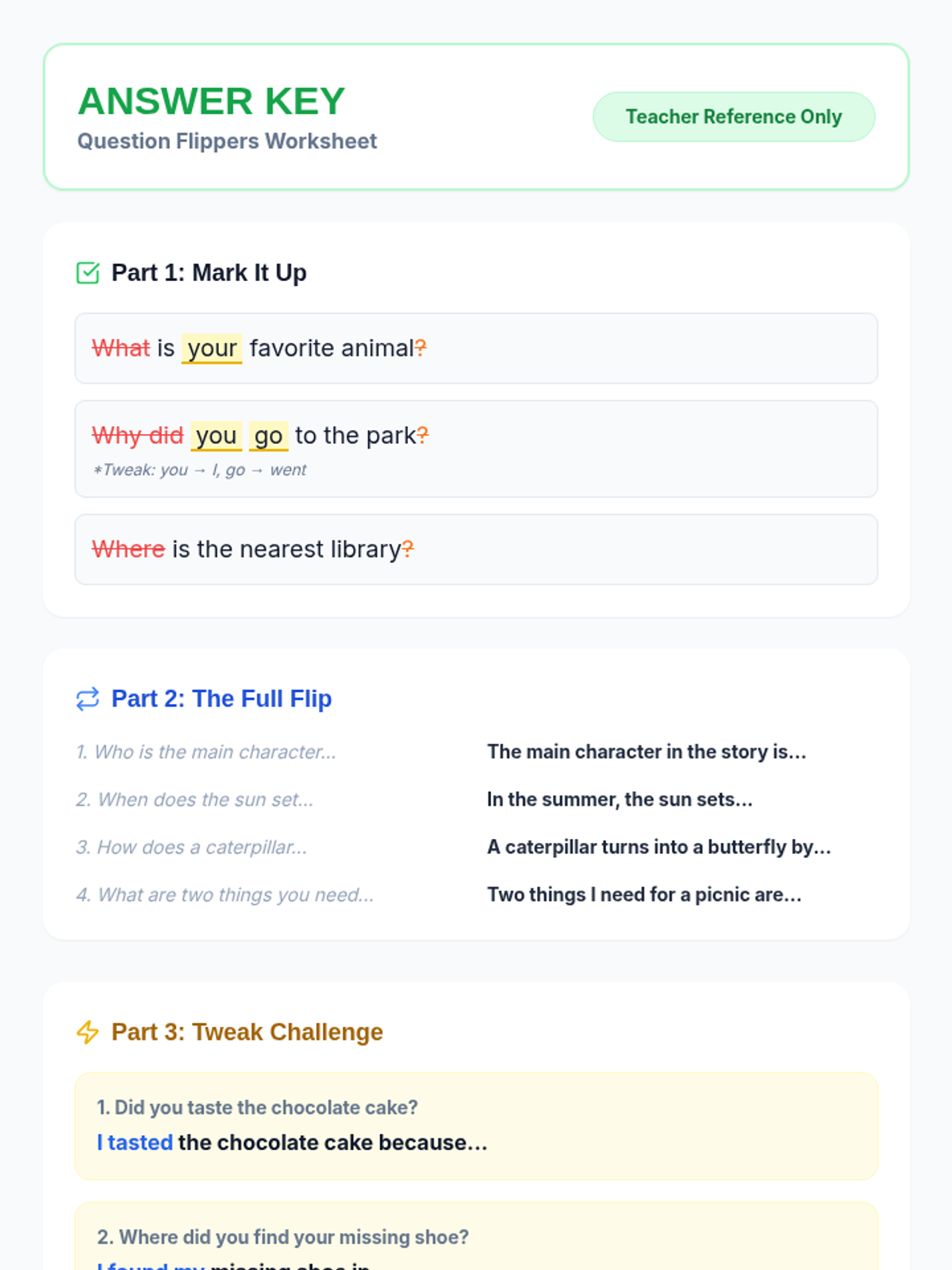
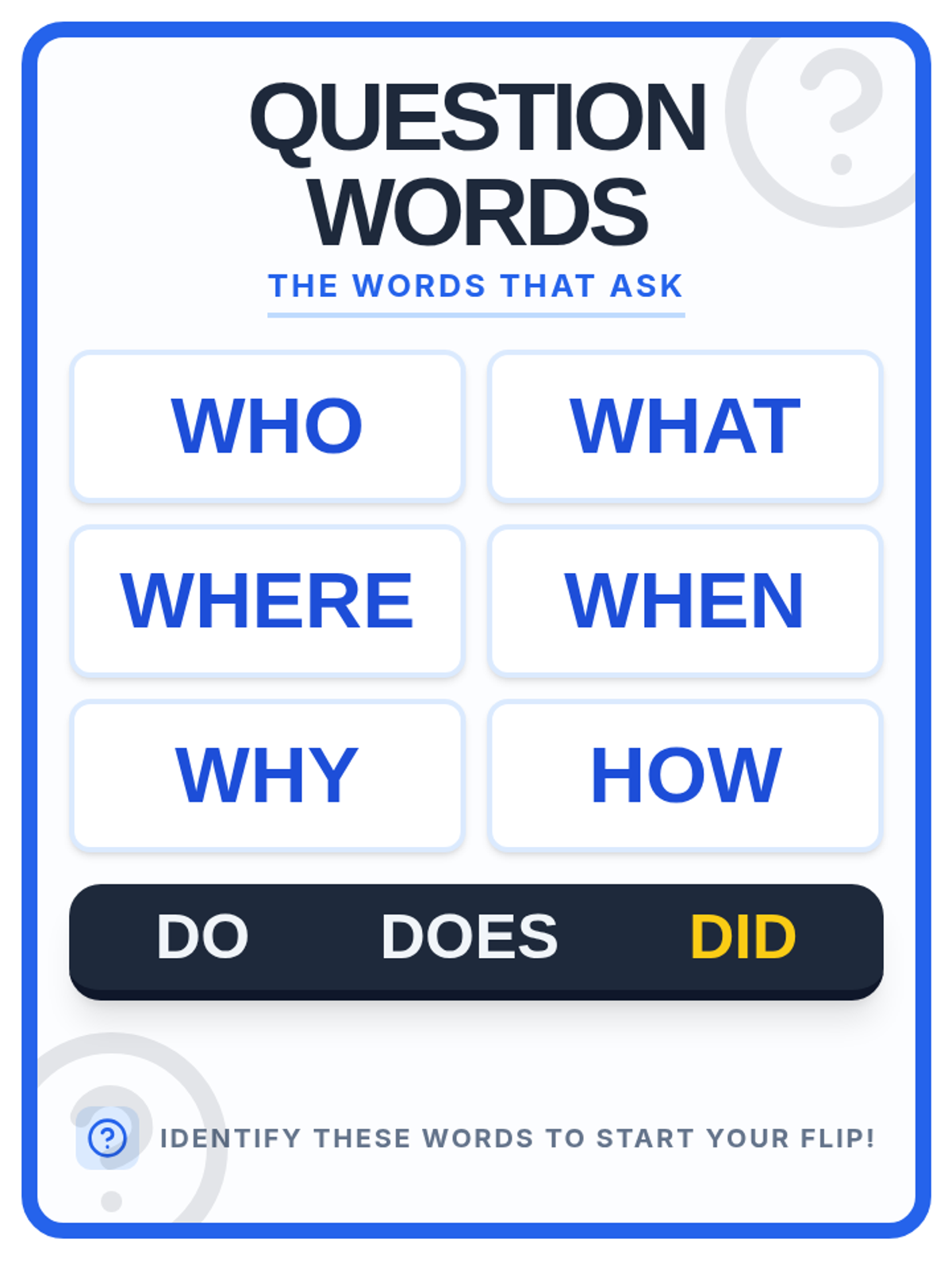
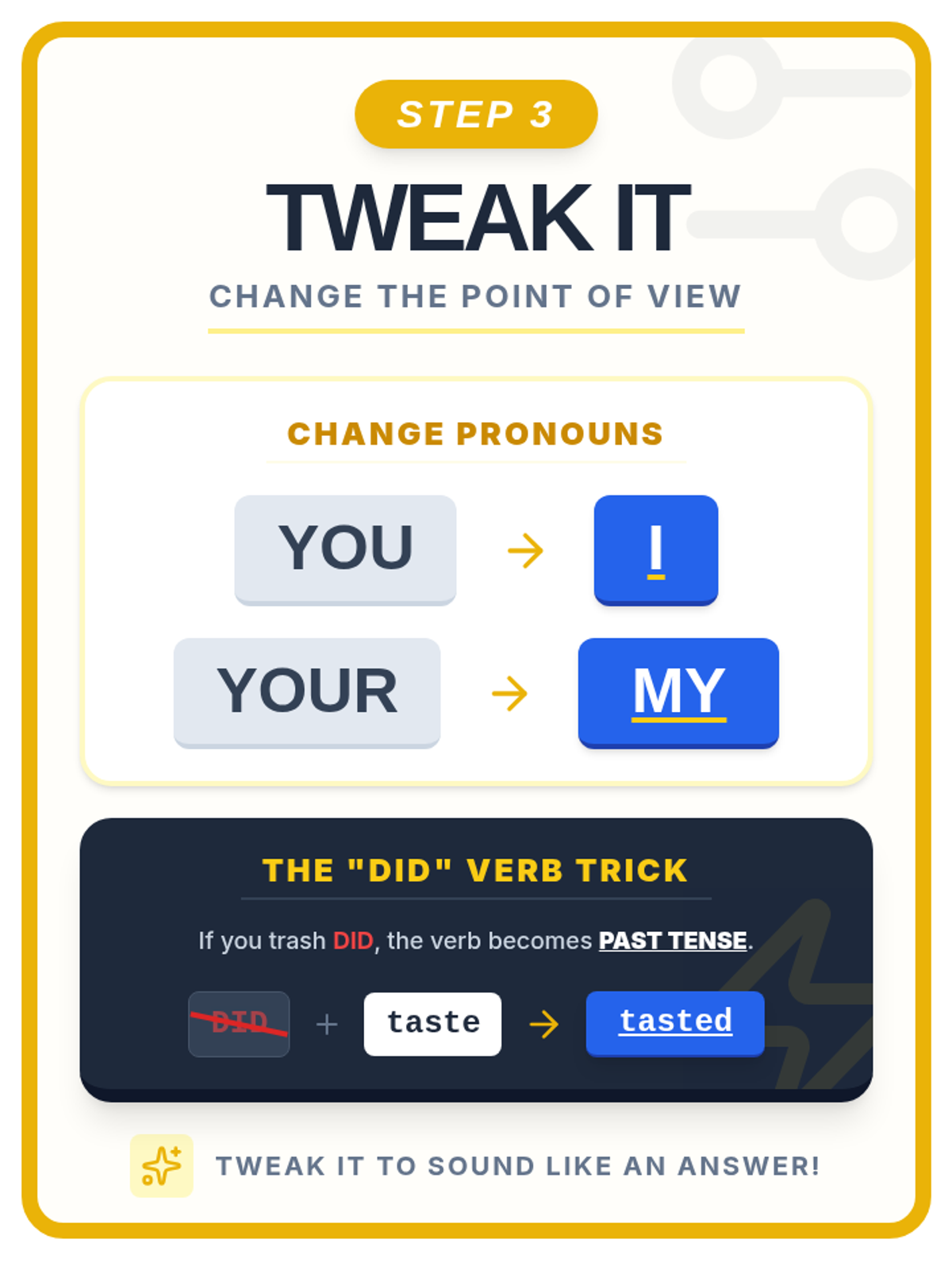
A step-by-step lesson teaching students how to restate a question in their written answers using the "Question Flippers" method: Trash, Toss, and Tweak.
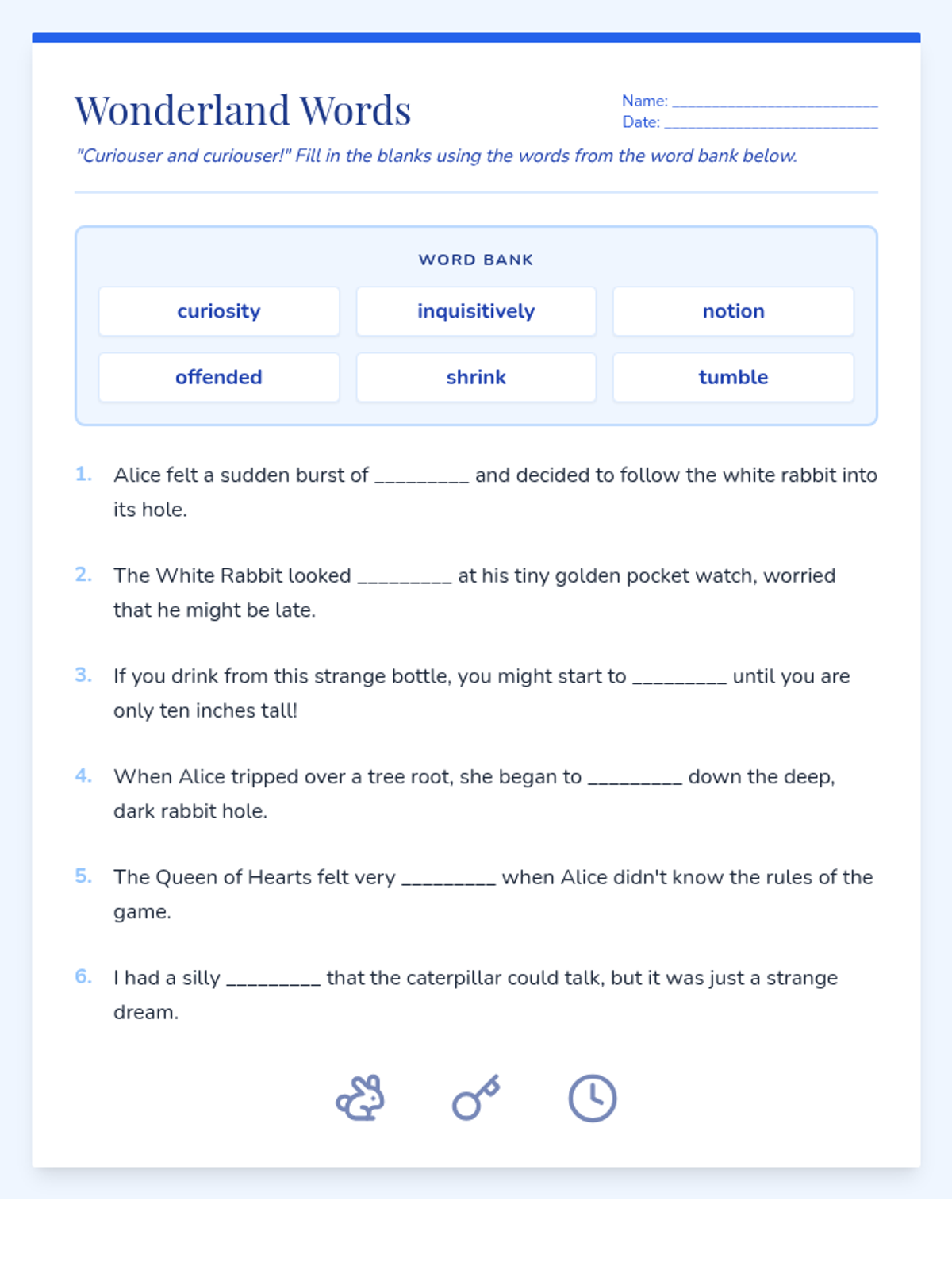
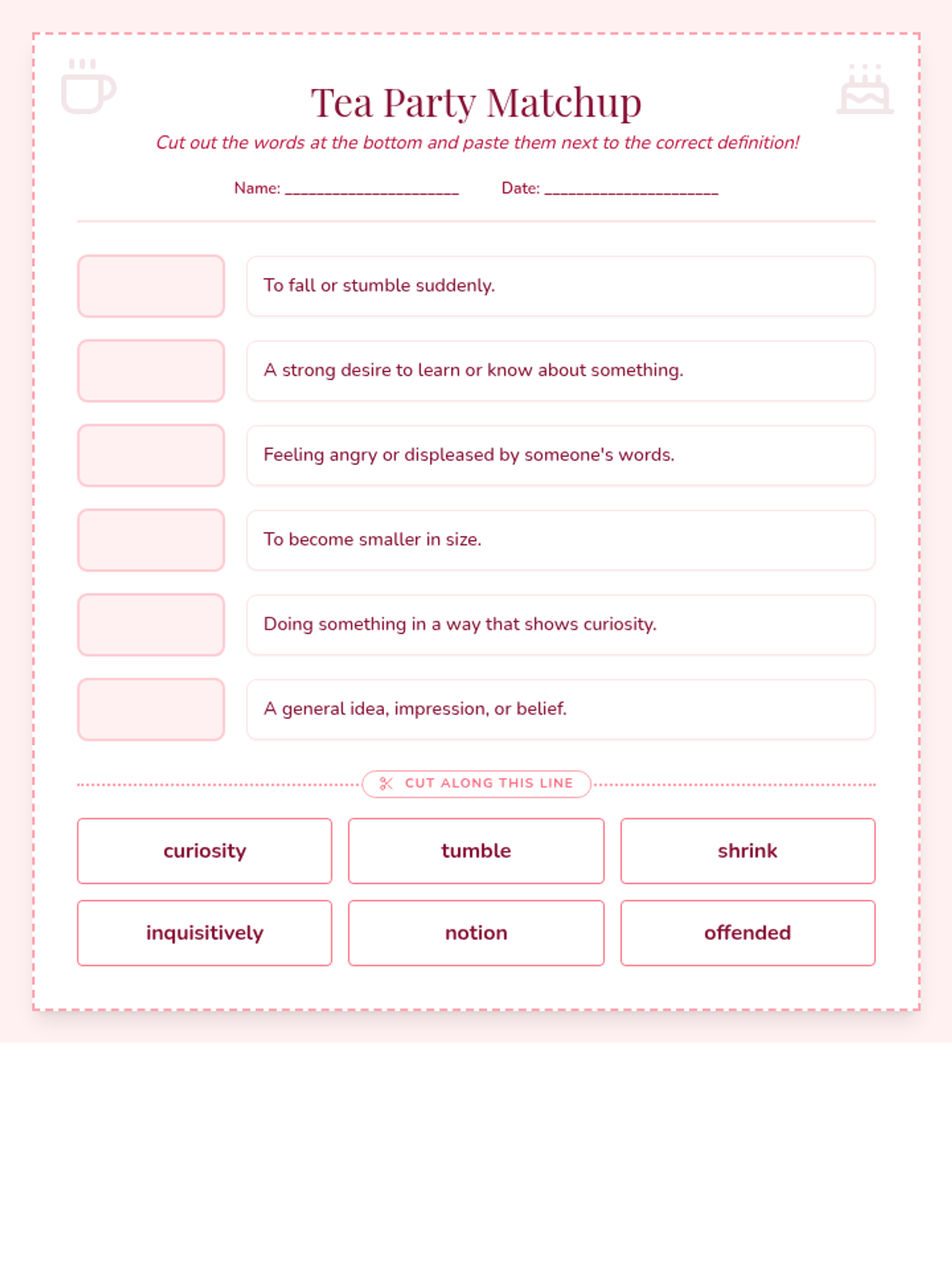
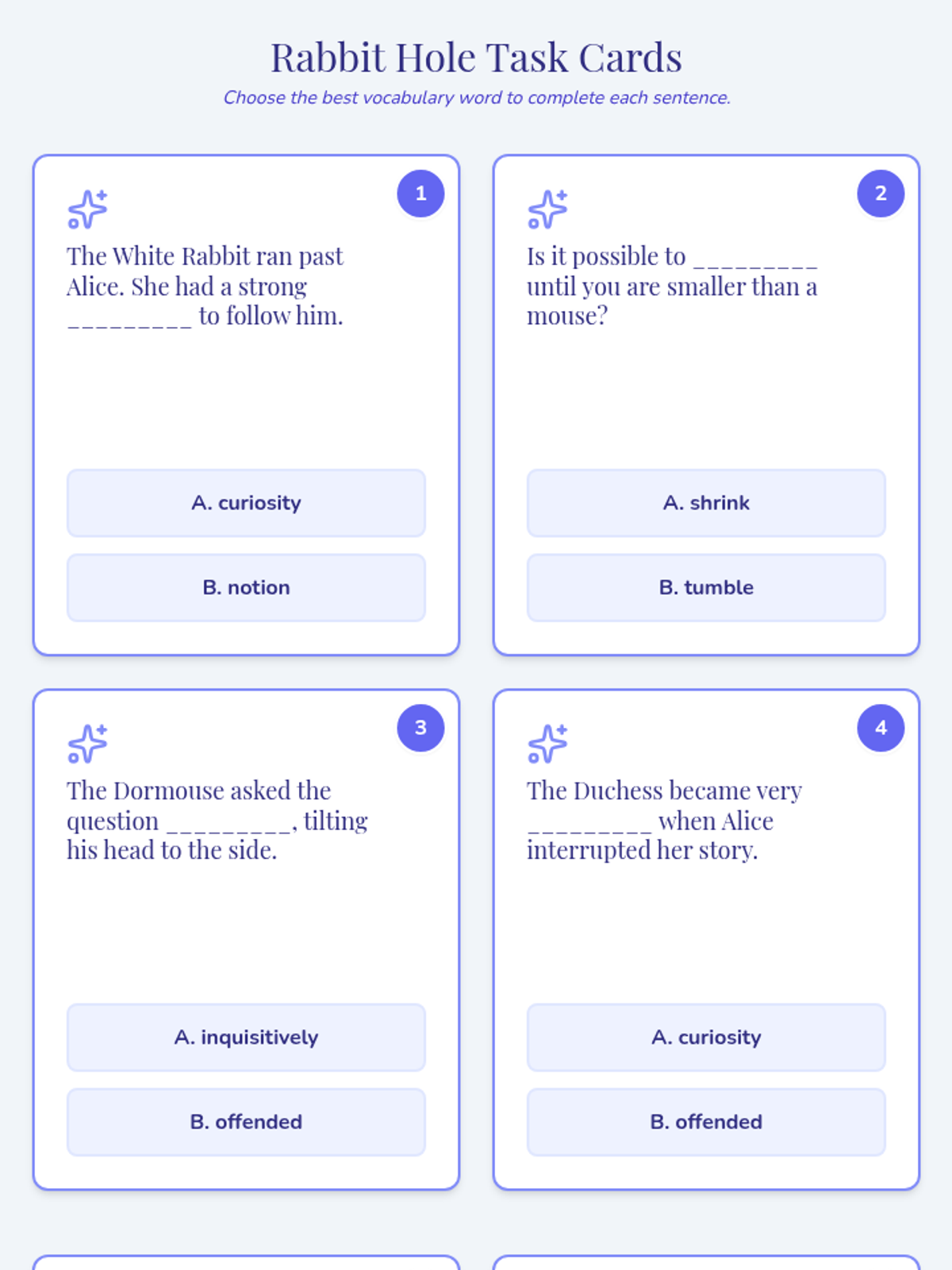
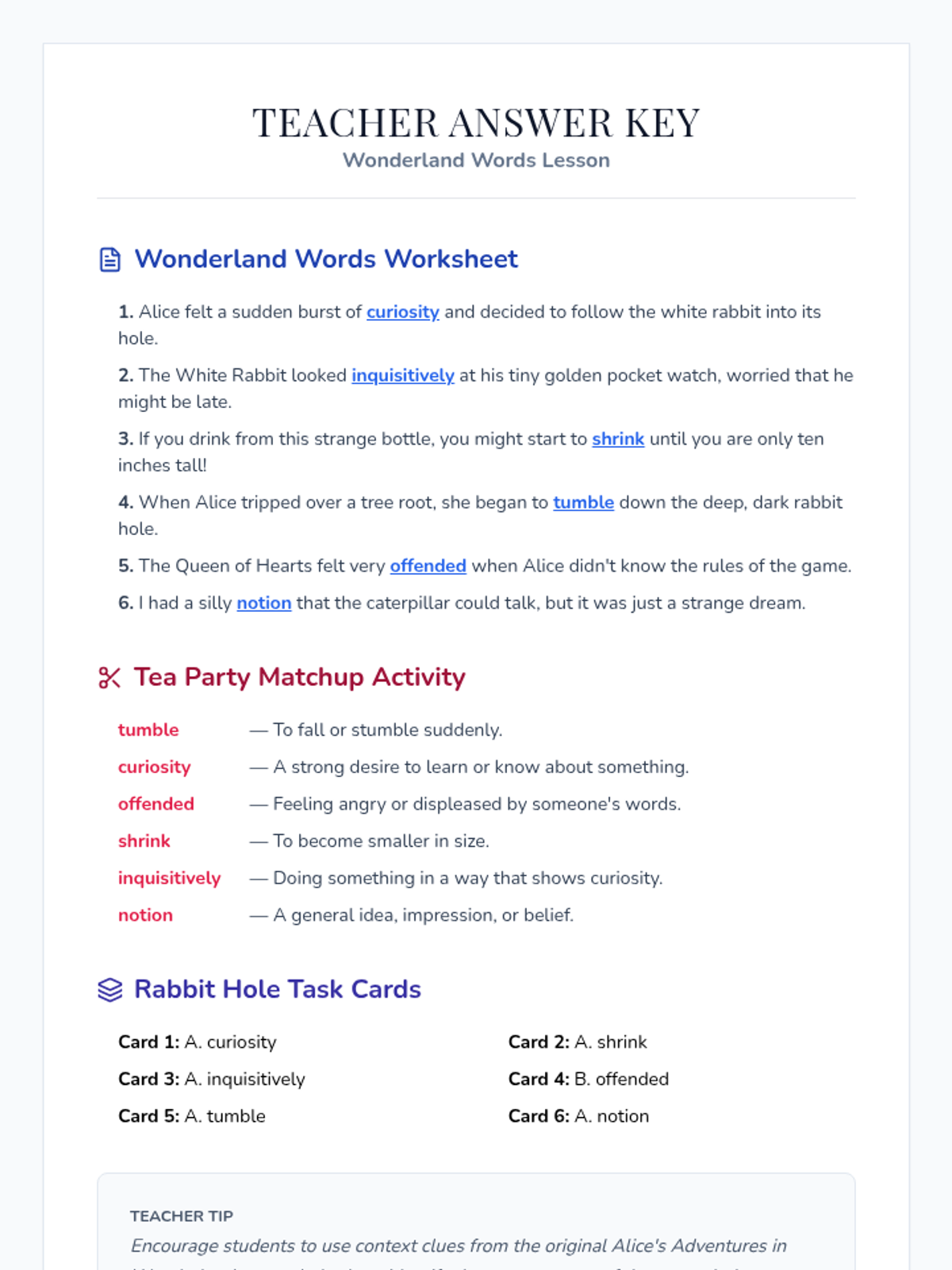
A vocabulary lesson based on words from Alice's Adventures in Wonderland, featuring interactive practice and assessment materials.
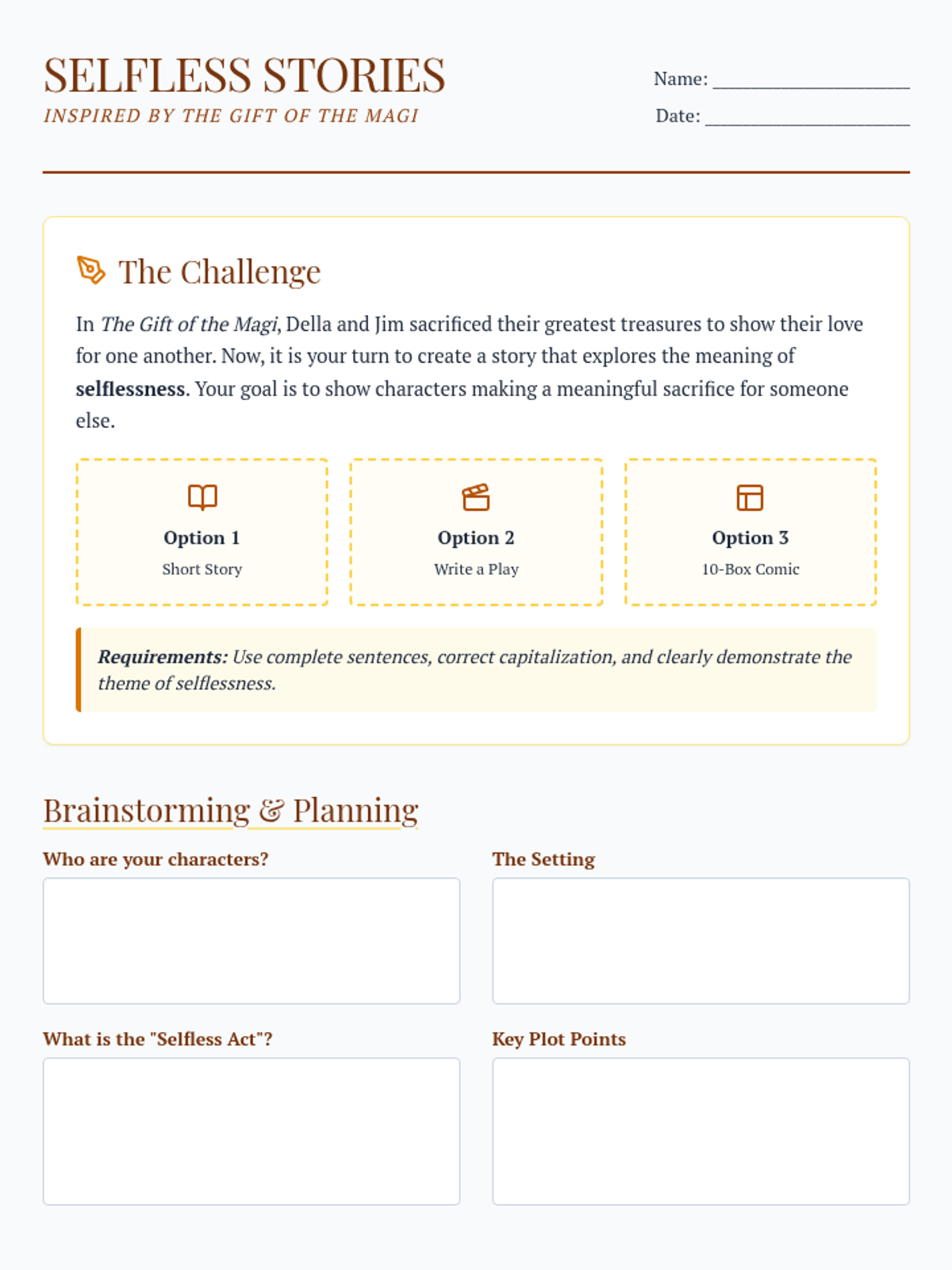
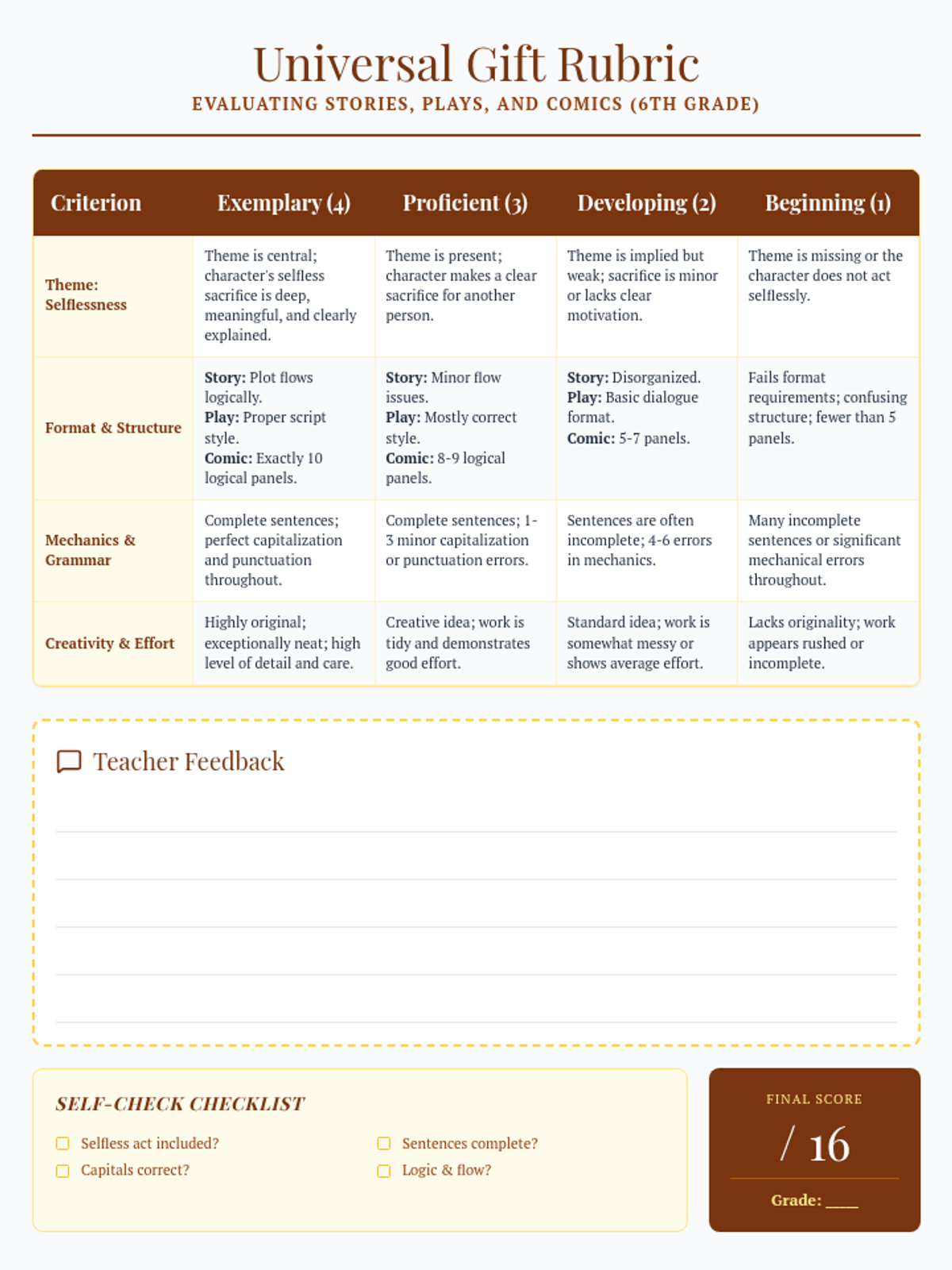
A creative writing and reflection lesson where 6th-grade students explore the theme of selflessness by crafting their own narrative, play, or comic strip inspired by 'The Gift of the Magi'.
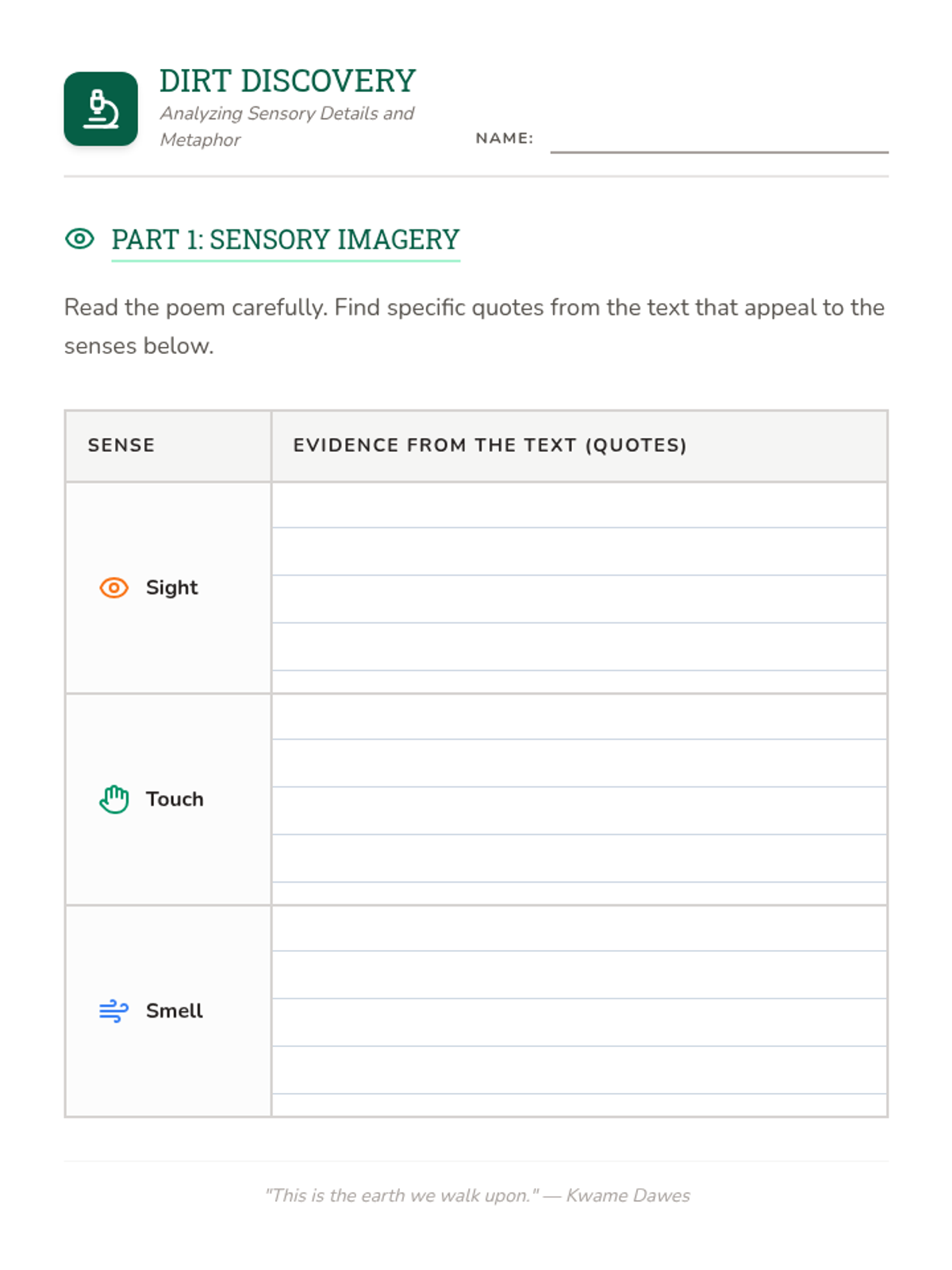
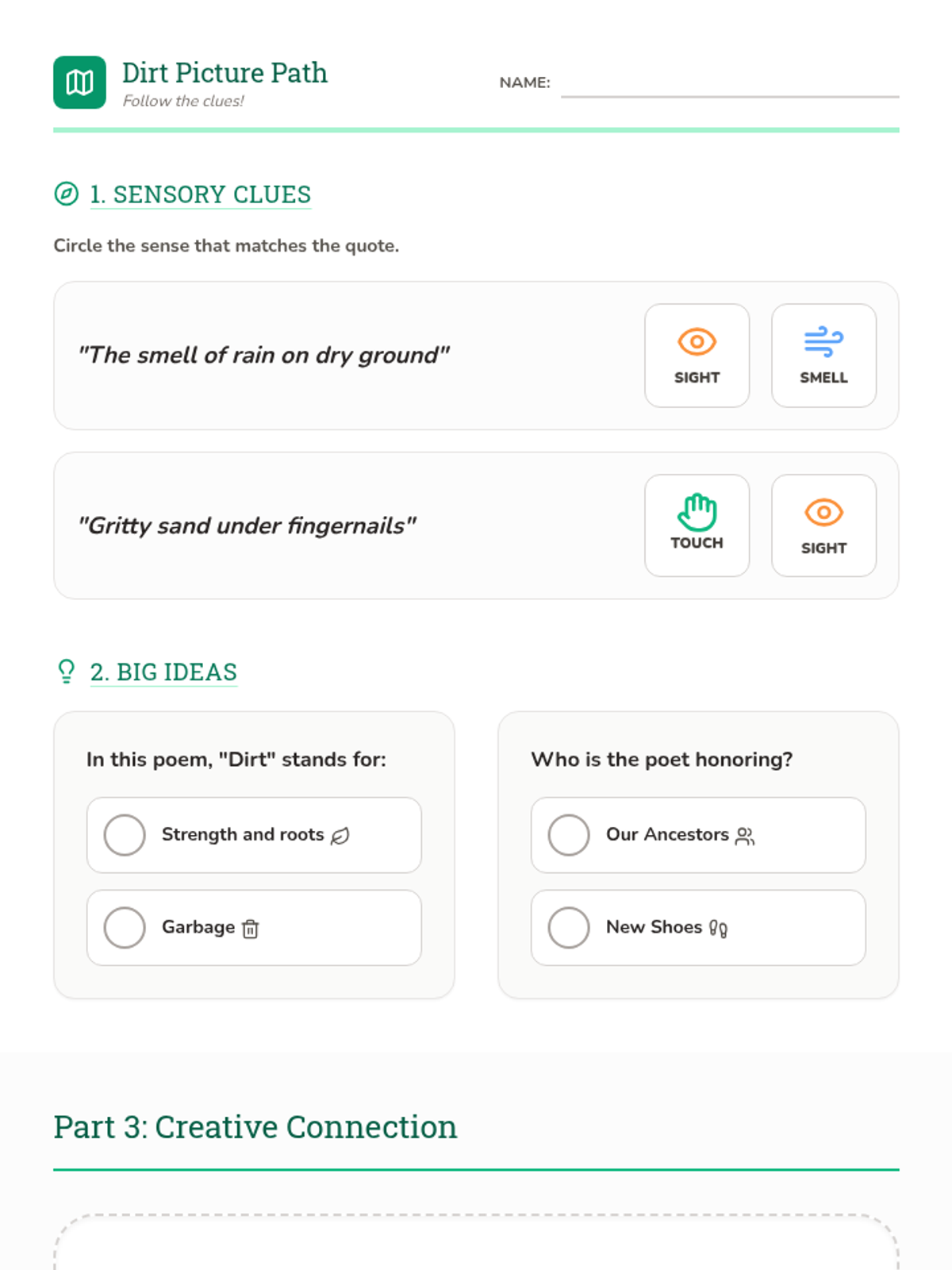
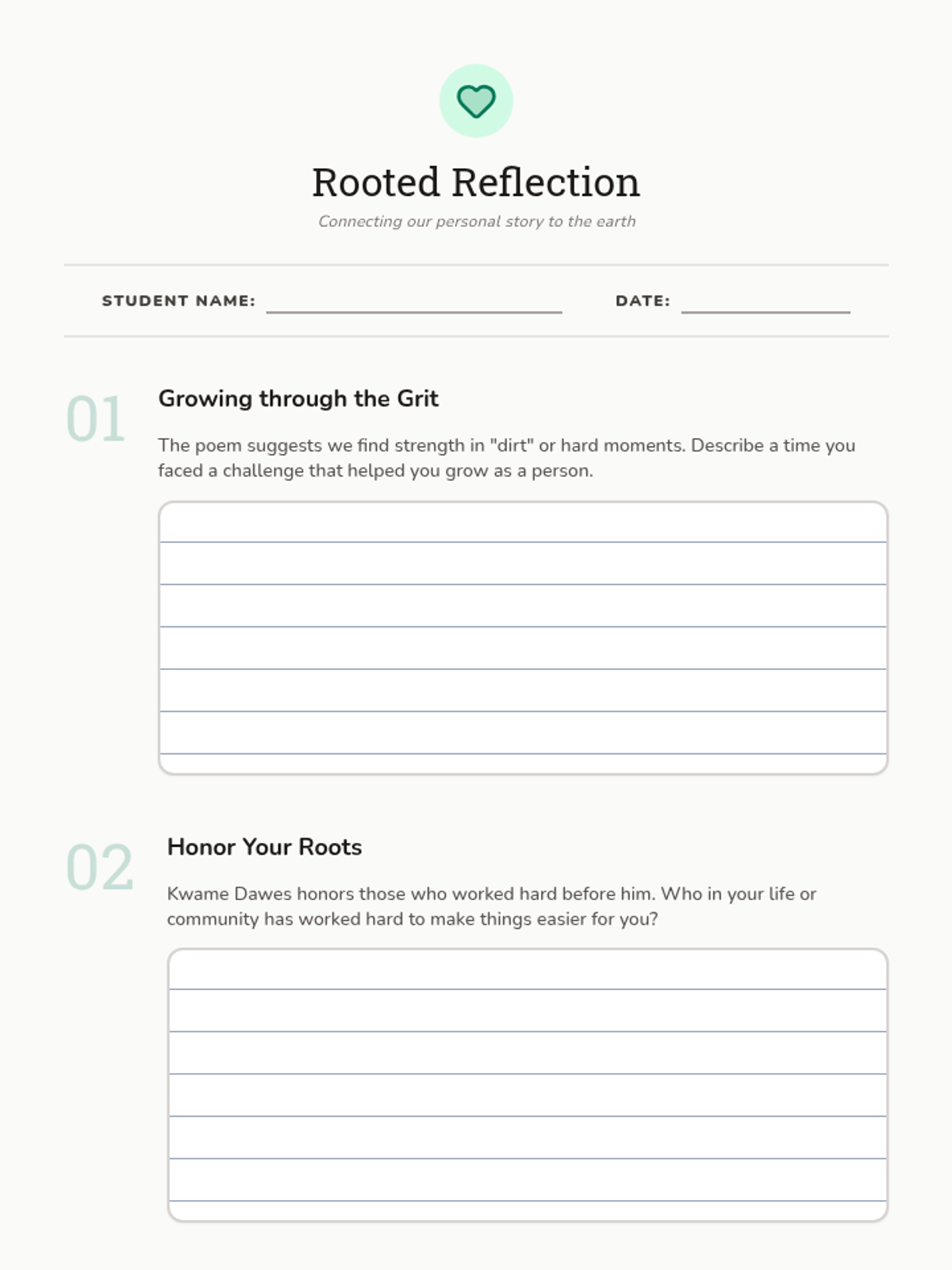
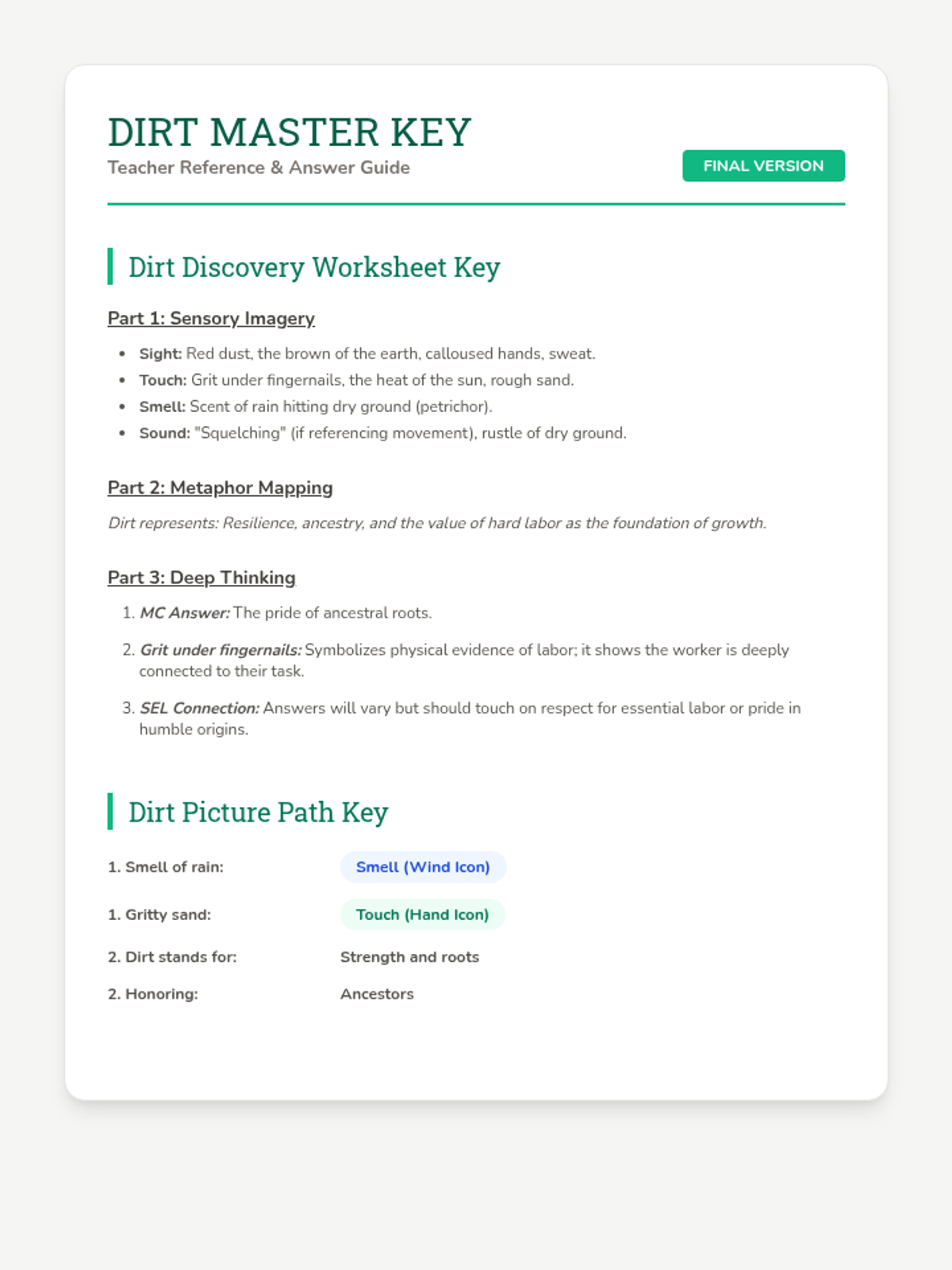
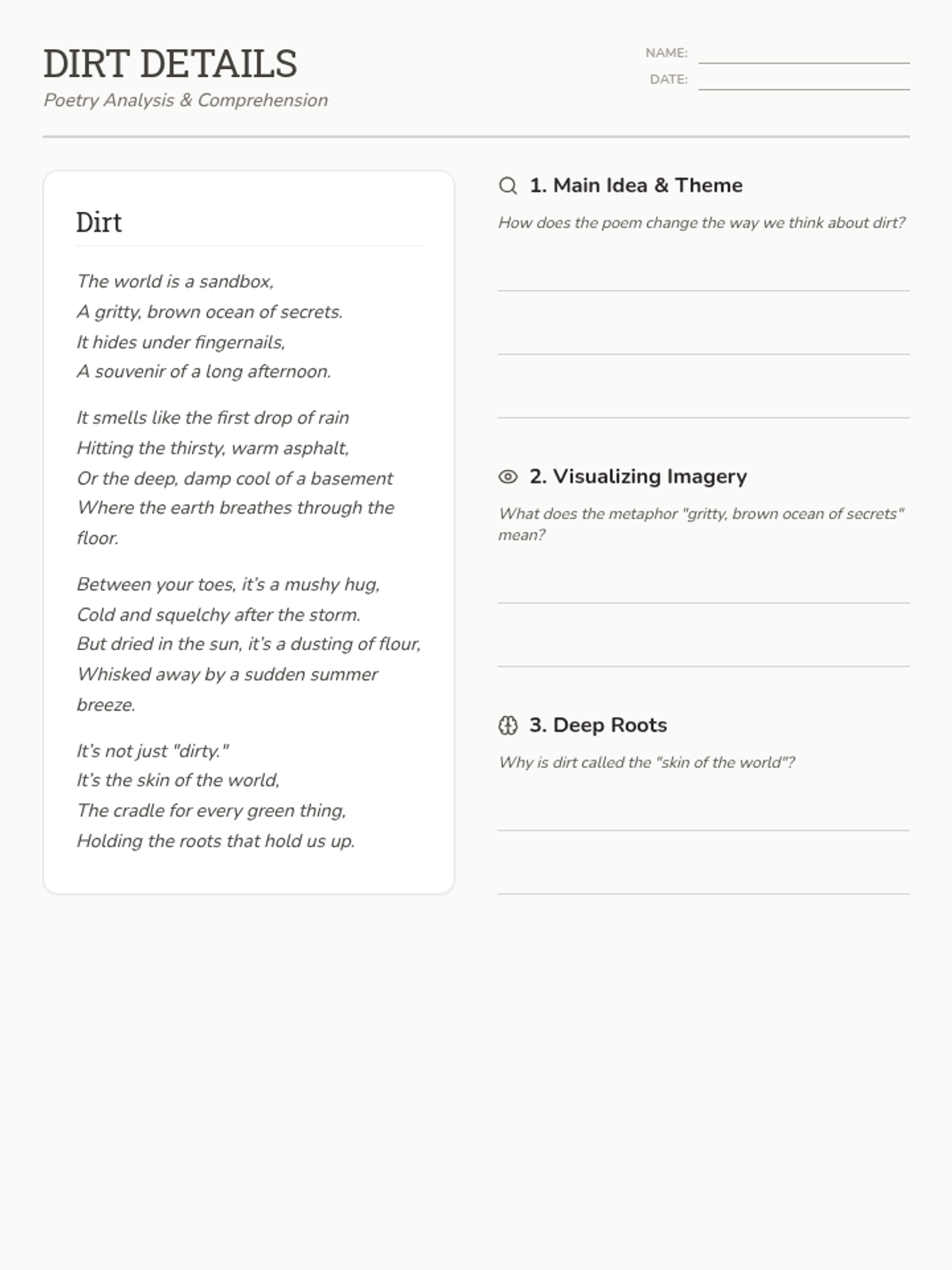
A comprehensive analysis of Kwame Dawes' poem 'Dirt,' focusing on sensory imagery, metaphors, and the social-emotional connections to ancestry and resilience. This lesson includes differentiated materials for varying reading levels.
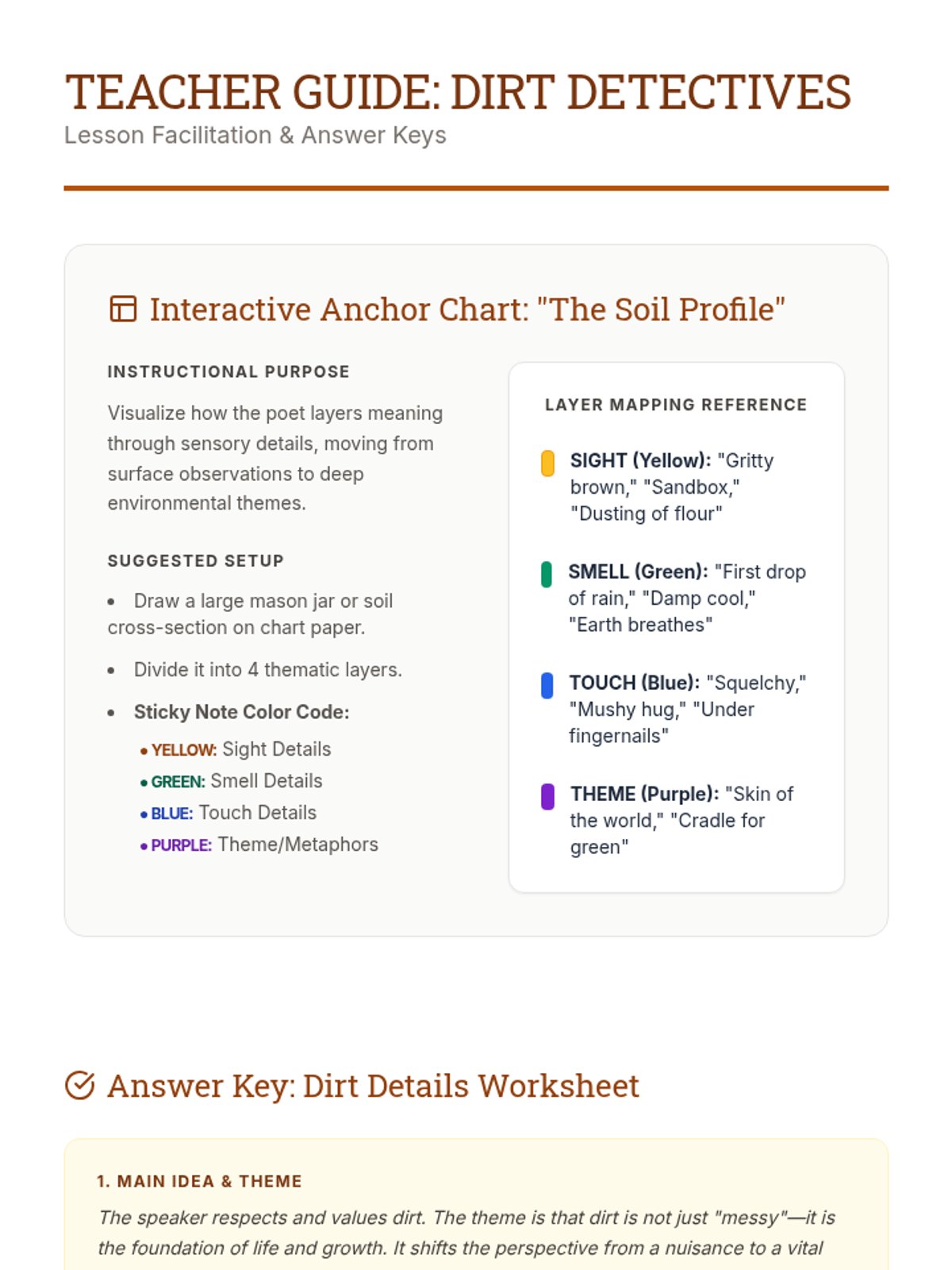
A sensory-focused exploration of the poem 'Dirt', focusing on identifying themes and mapping sensory imagery through interactive activities.
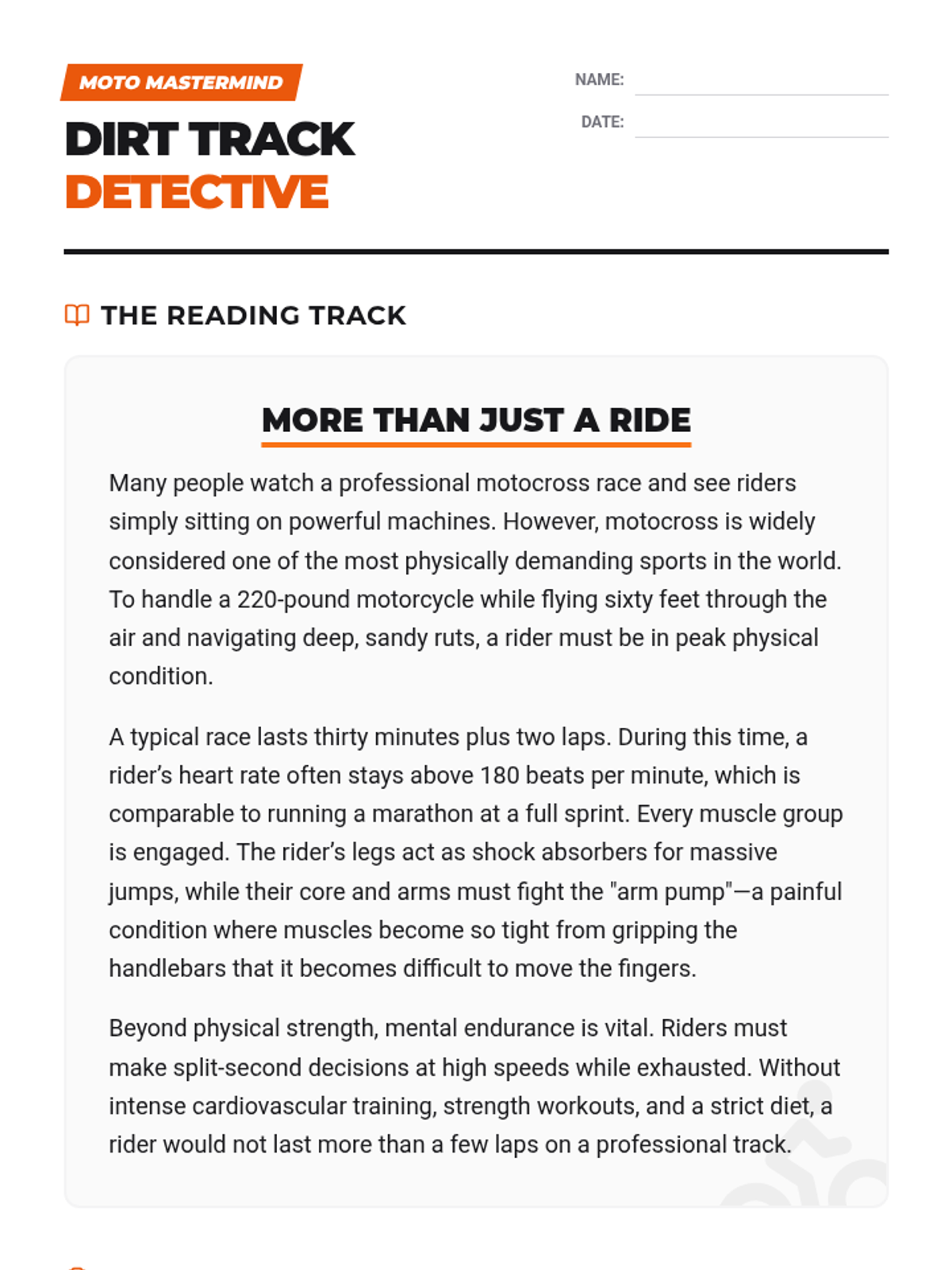
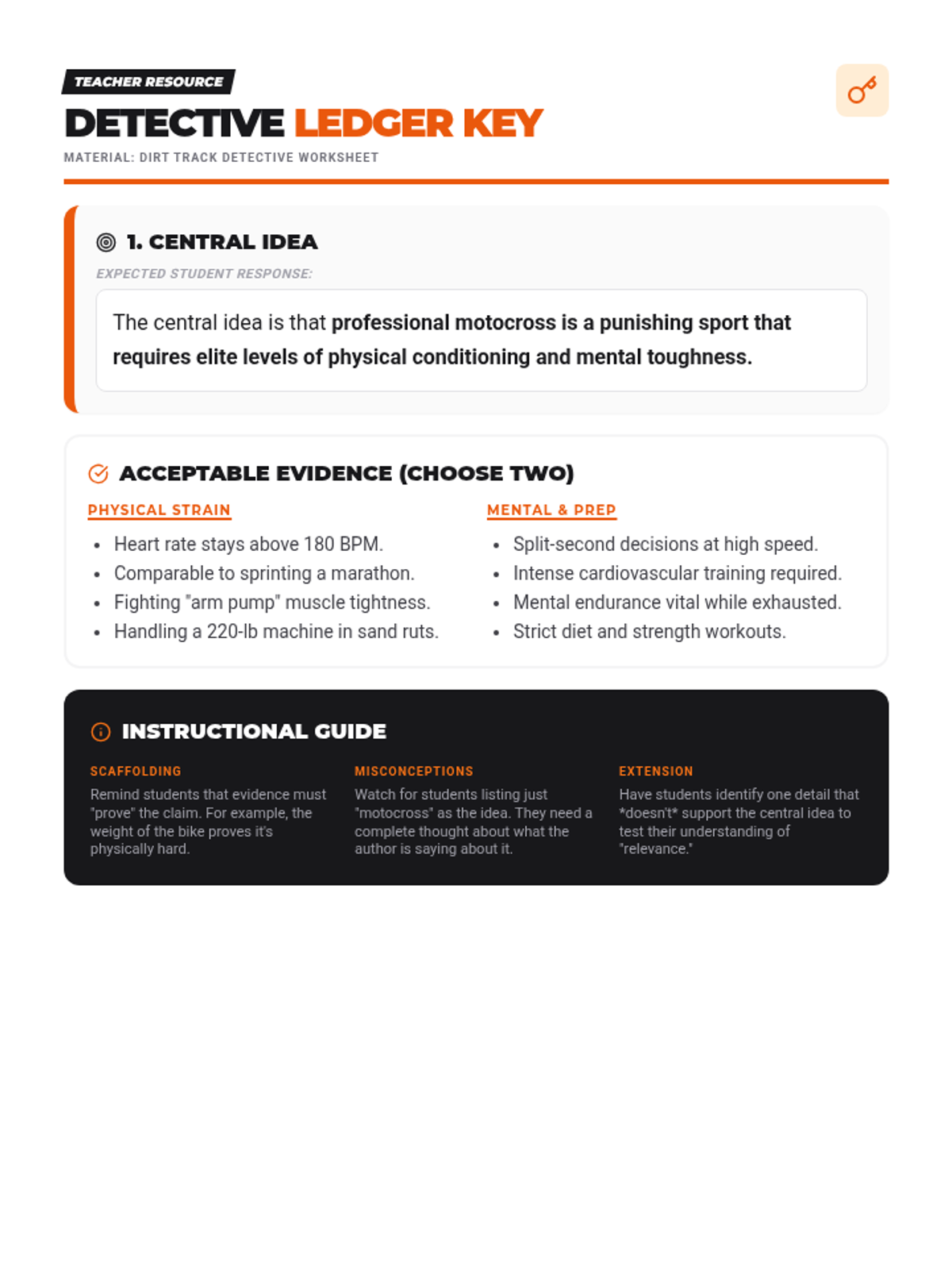
A high-energy lesson that teaches students how to identify central ideas and supporting evidence through the exciting world of motocross racing. Students will analyze a passage about the physical demands of the sport and use a scaffolded graphic organizer to map out their findings.
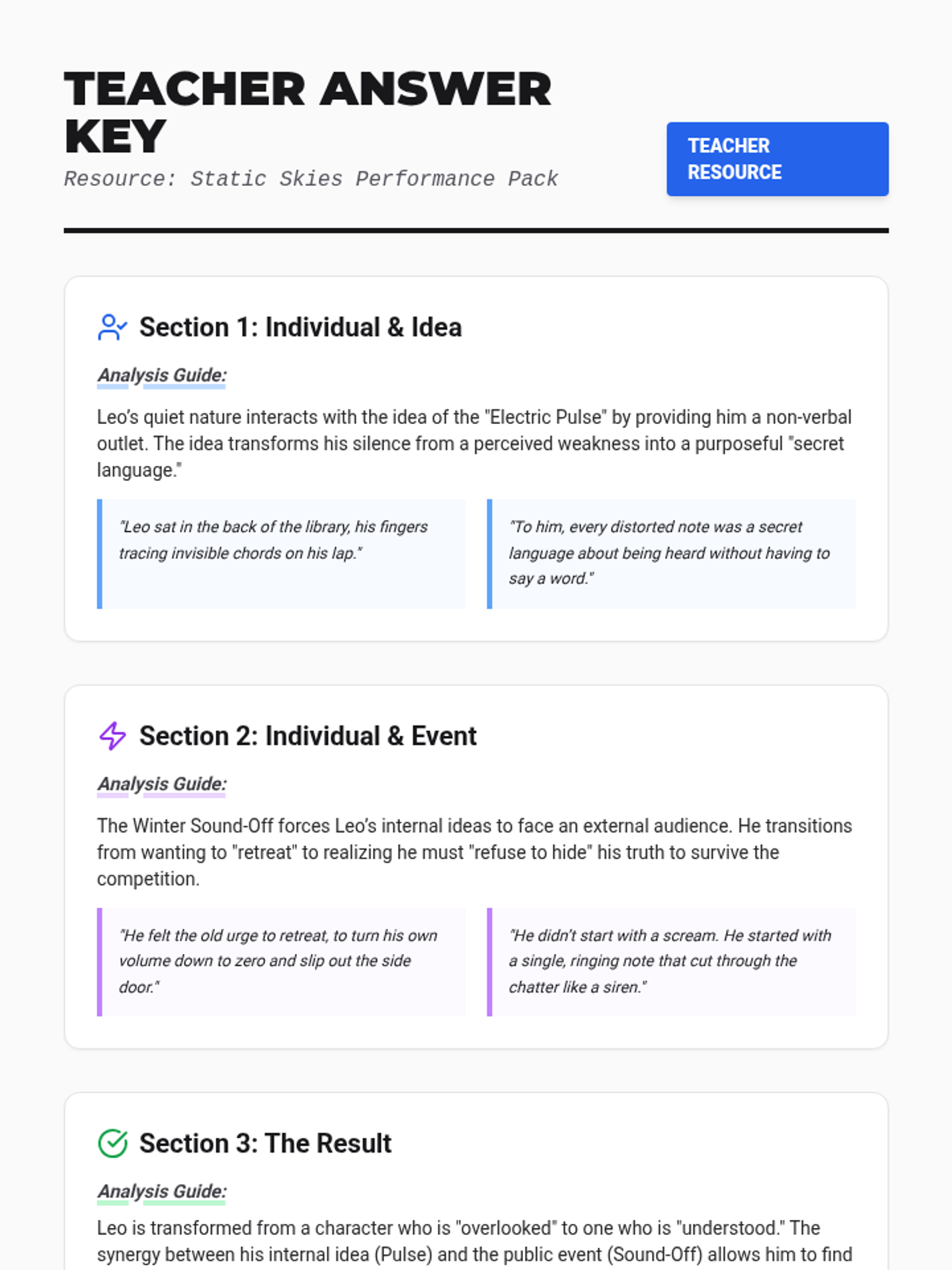
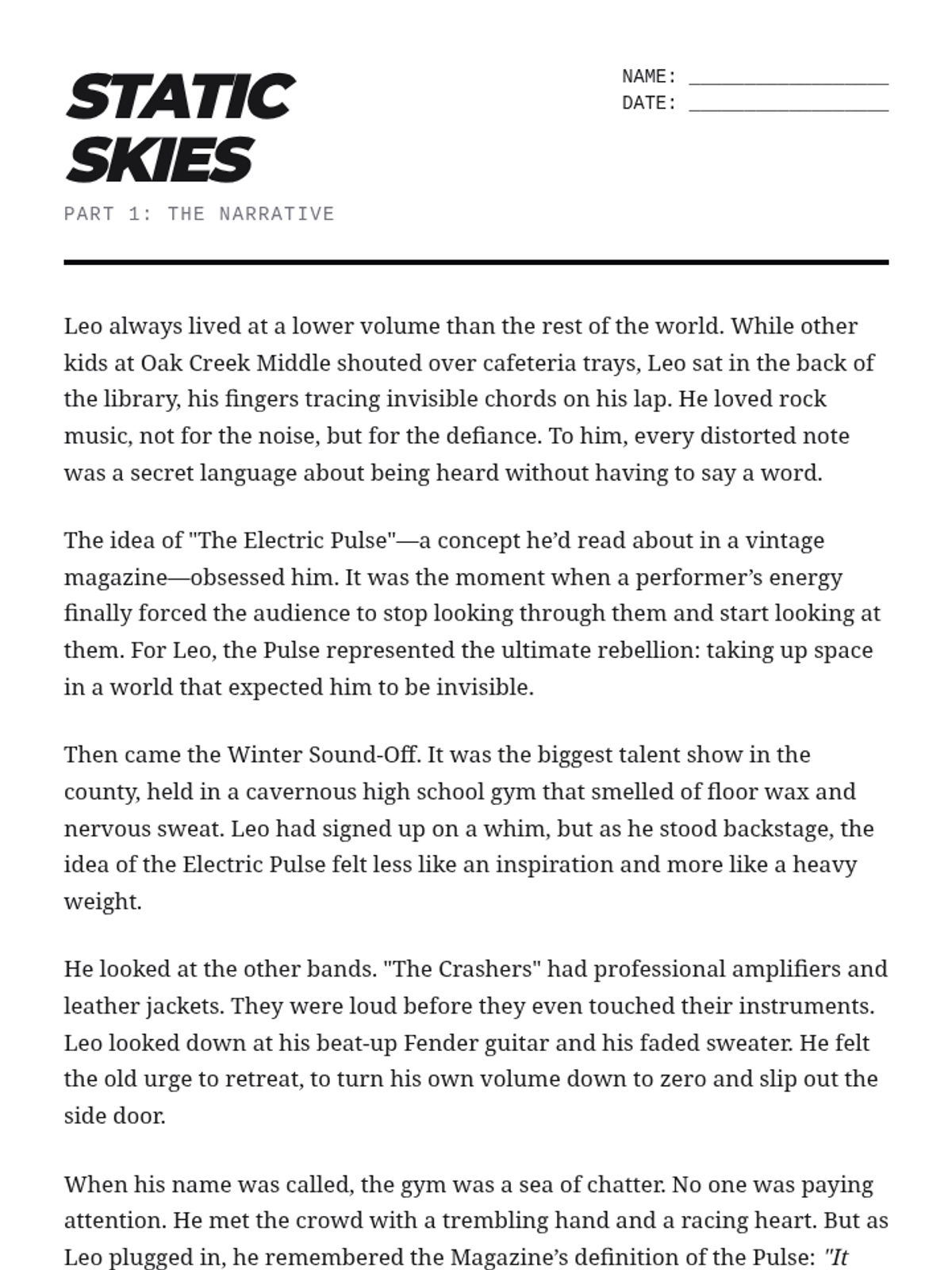
A focused activity set designed to help students analyze how individuals, ideas, and events interact within a rock-themed narrative. This lesson uses the high-energy world of rock music to teach literary analysis skills.
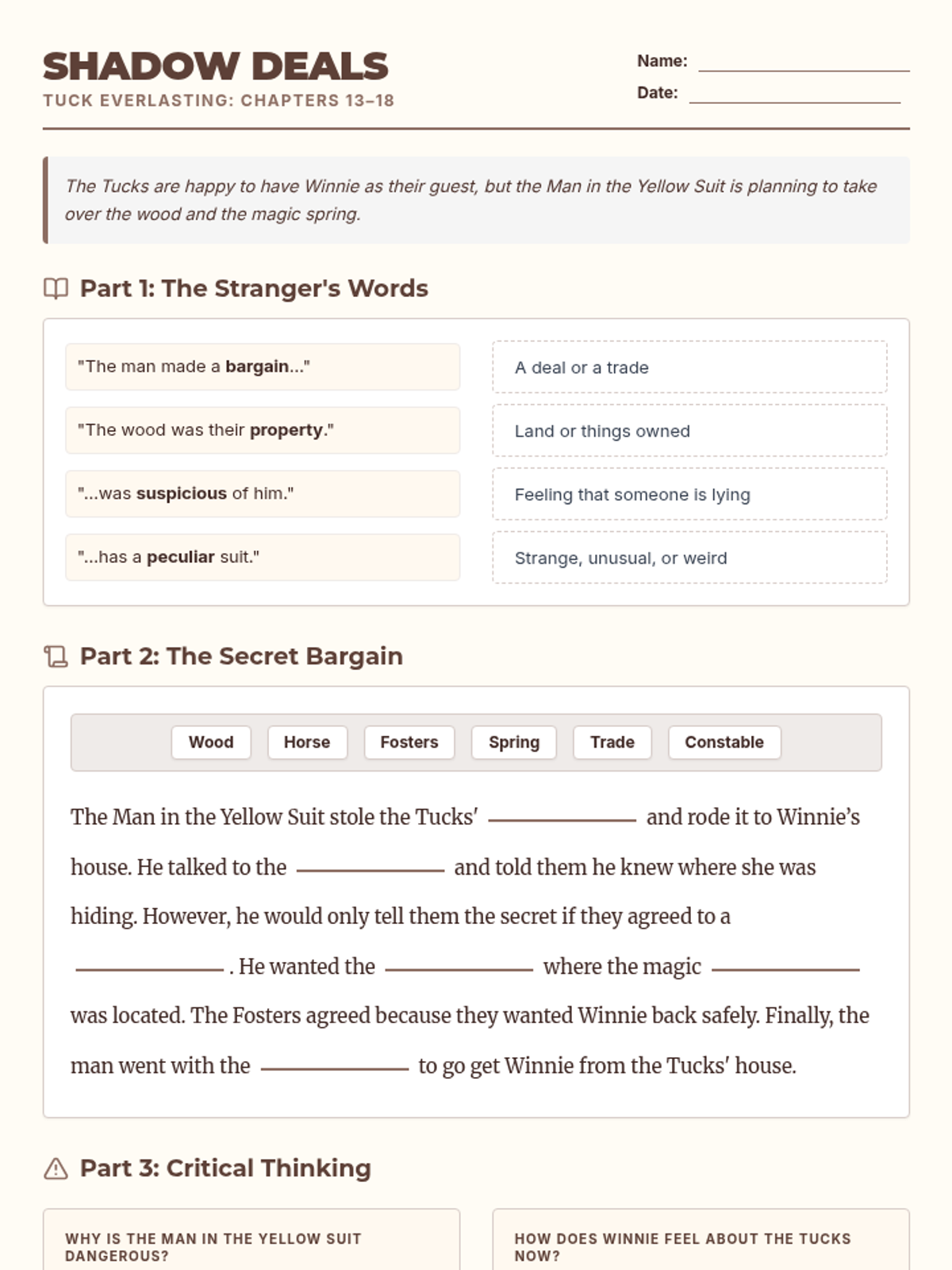
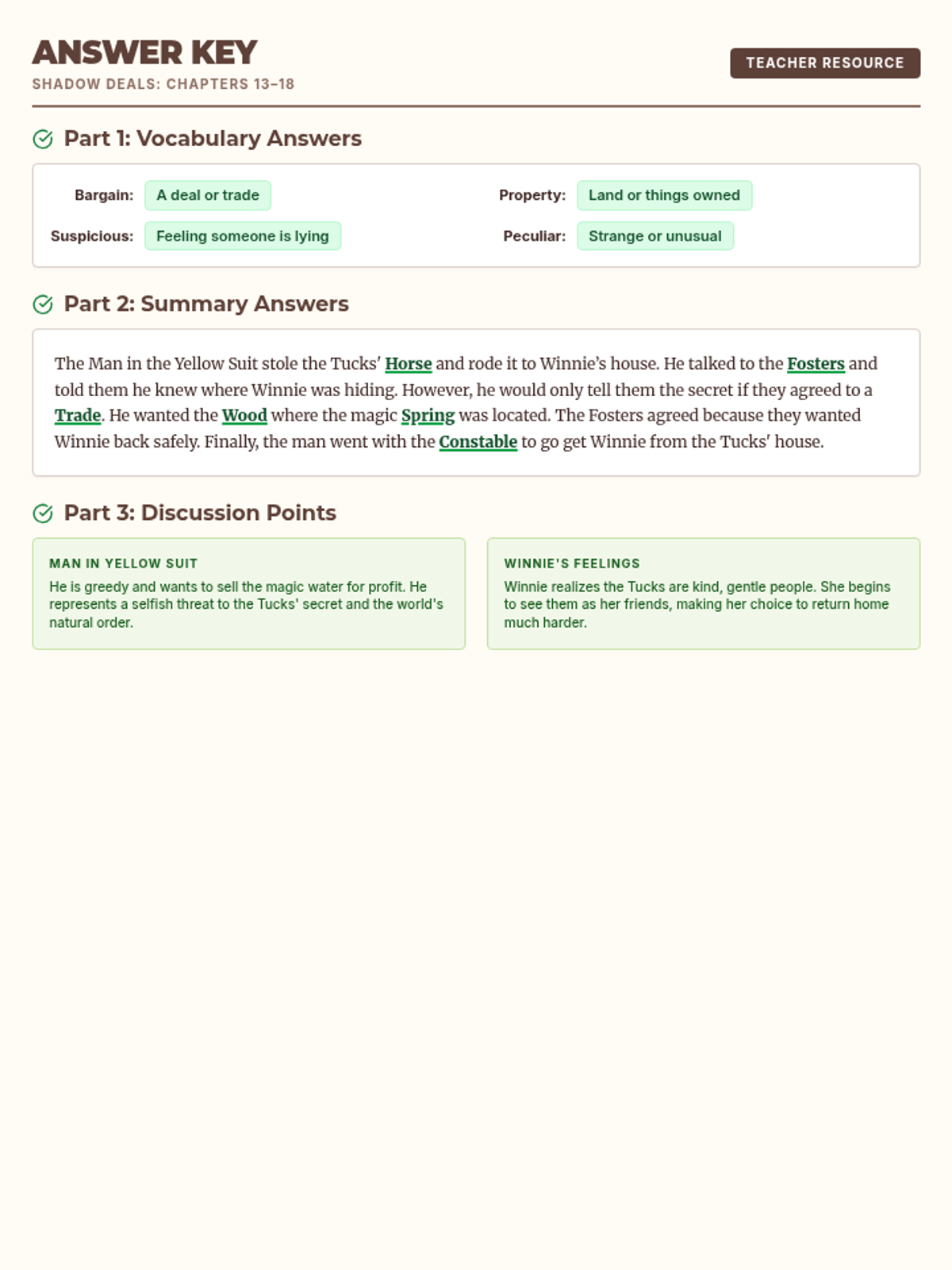
A lesson focusing on Chapters 13-18 of Tuck Everlasting, where the Man in the Yellow Suit makes a dark bargain with the Foster family to gain control of the magic spring. Students will analyze the plot through summarizing and vocabulary in context.
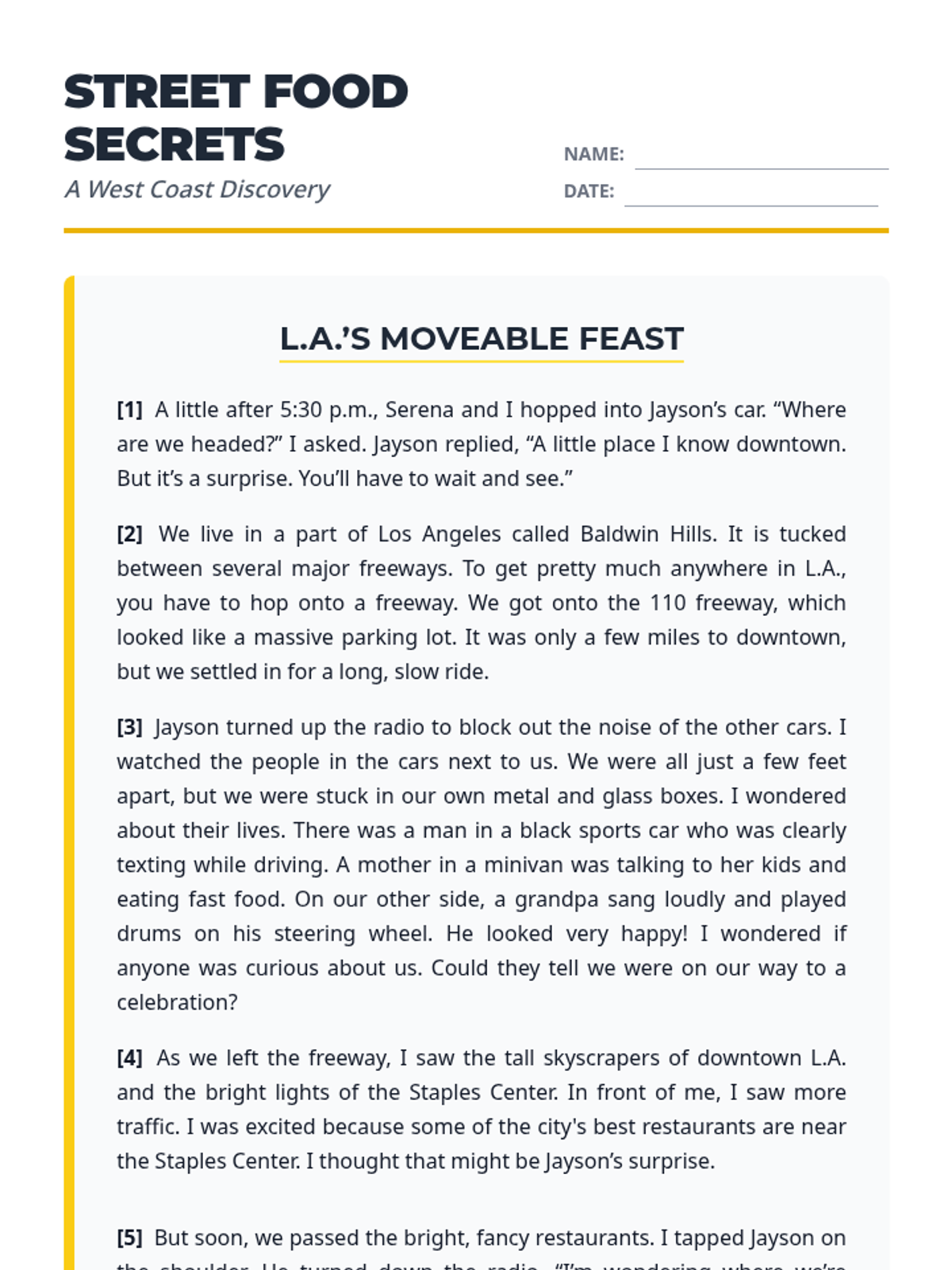
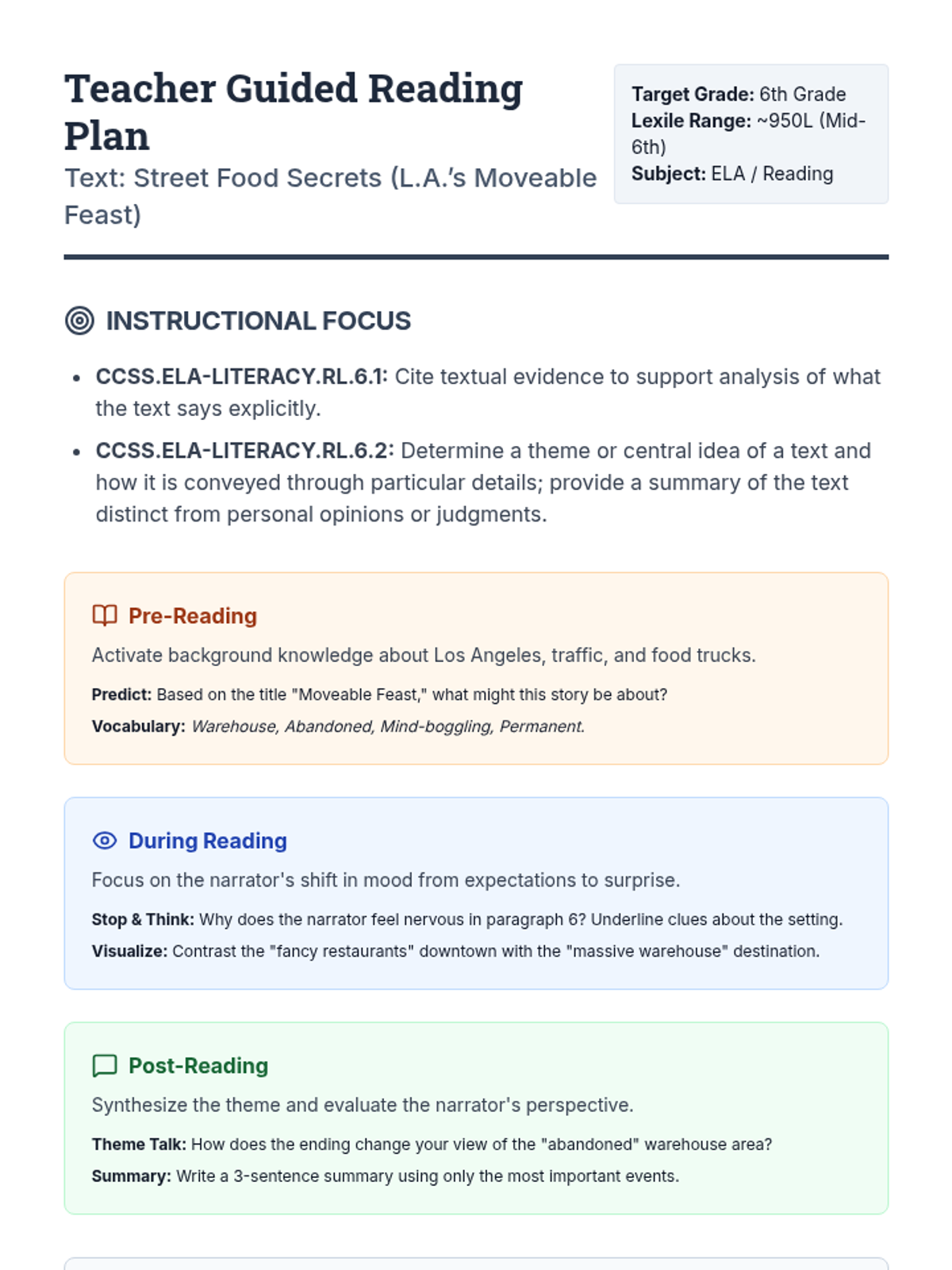
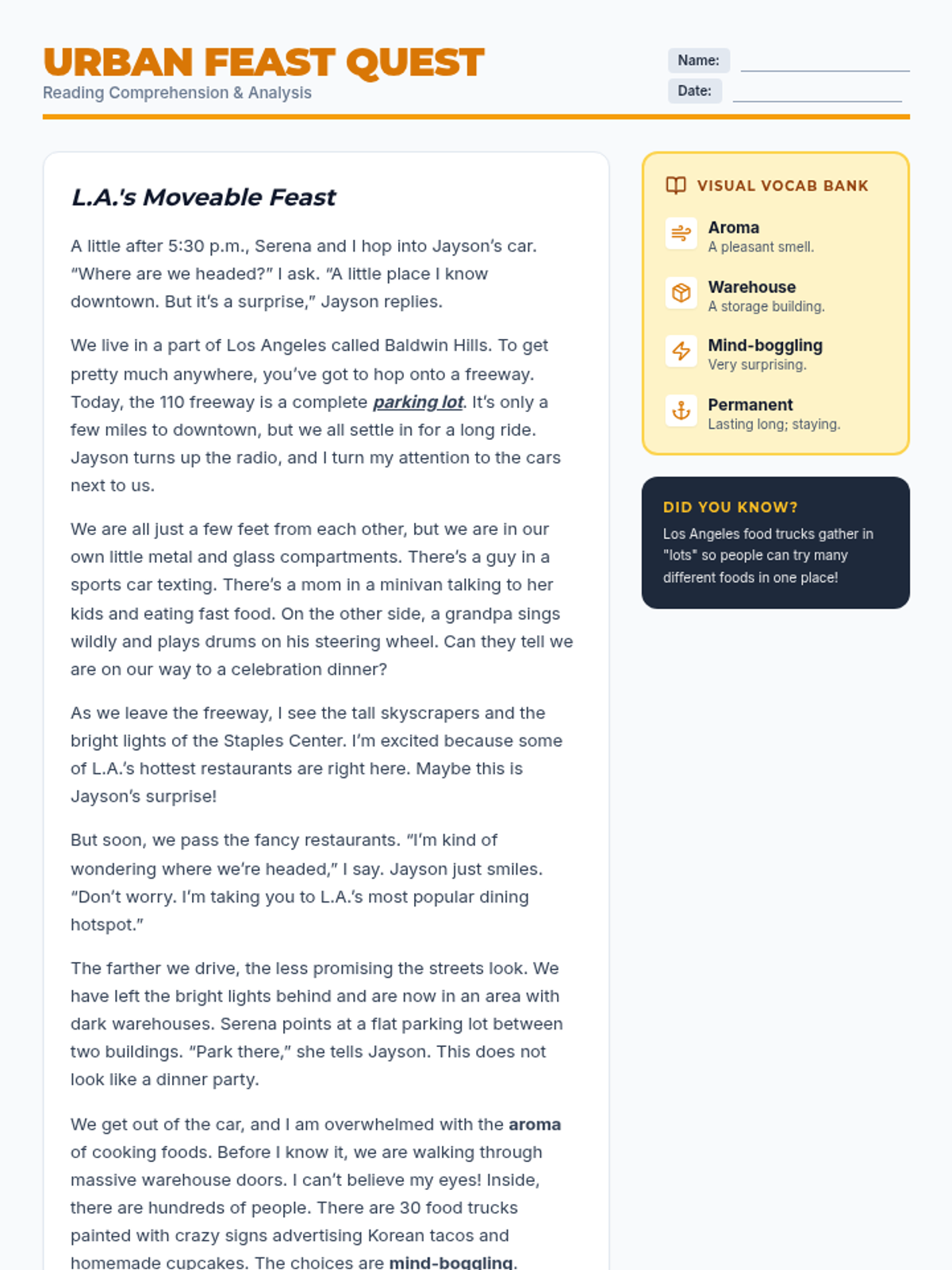
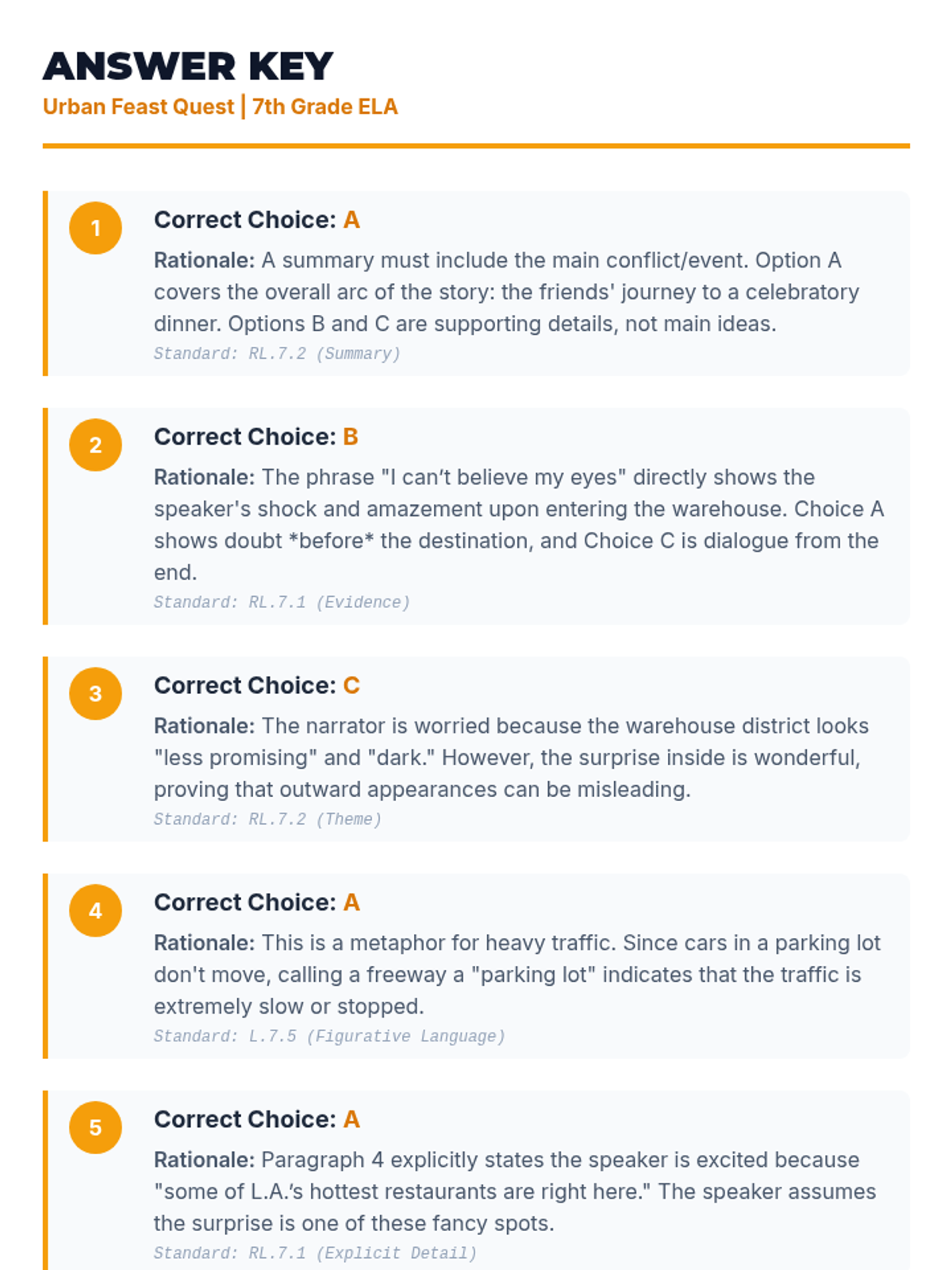
A reading lesson focused on the narrative 'L.A.\'s Moveable Feast', adapted for 6th-grade readers to practice summarization, identifying themes, and citing textual evidence.
Students read an adapted narrative about the Los Angeles food truck scene, focusing on identifying central themes, summarizing key events, and using context clues to understand figurative language and vocabulary.
Post-assessment reflection and a celebratory showcase where students share their finished narrative projects.
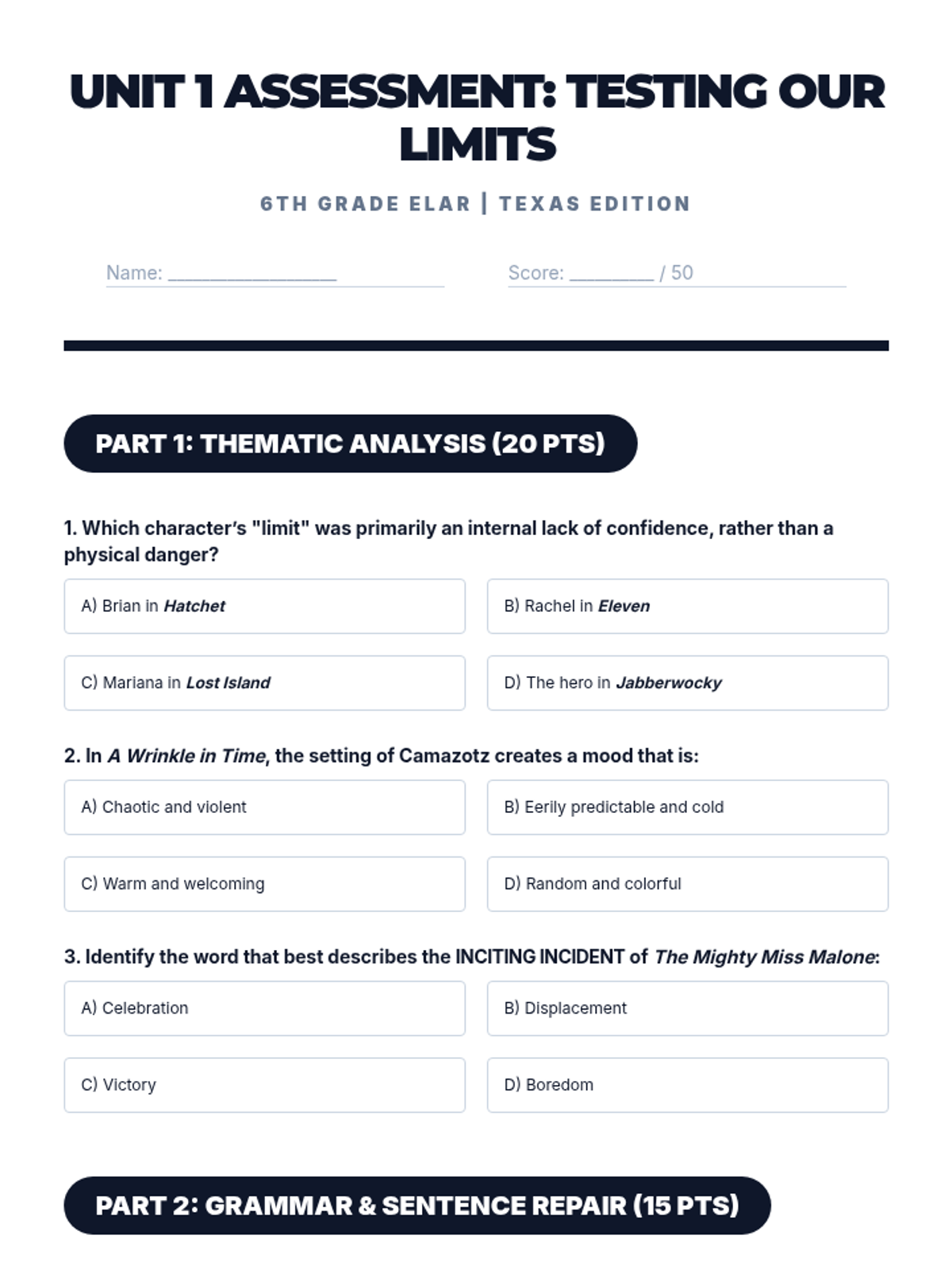
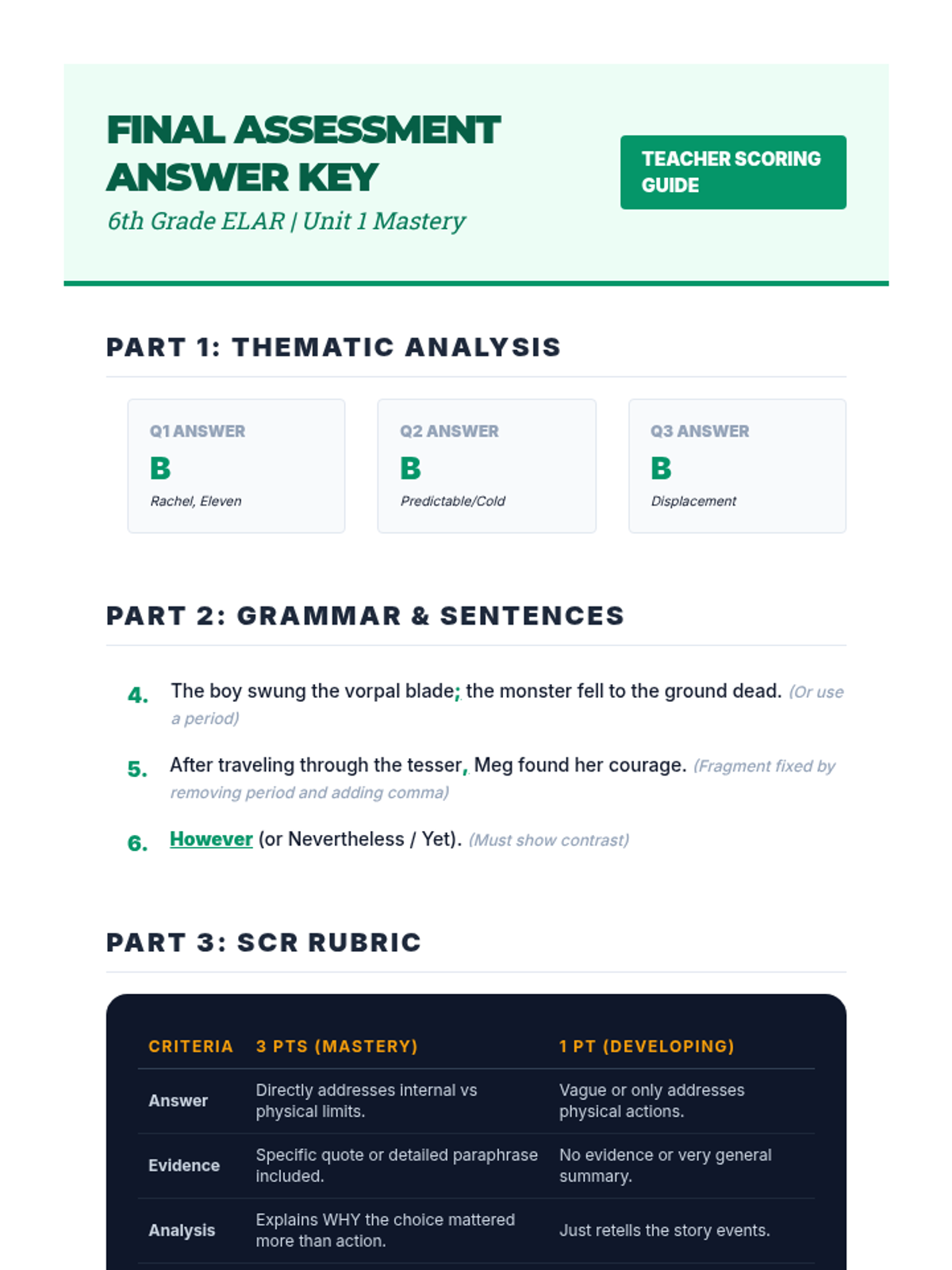
The final summative assessment for the 'Testing Our Limits' unit, evaluating comprehension, analysis, and grammar skills.
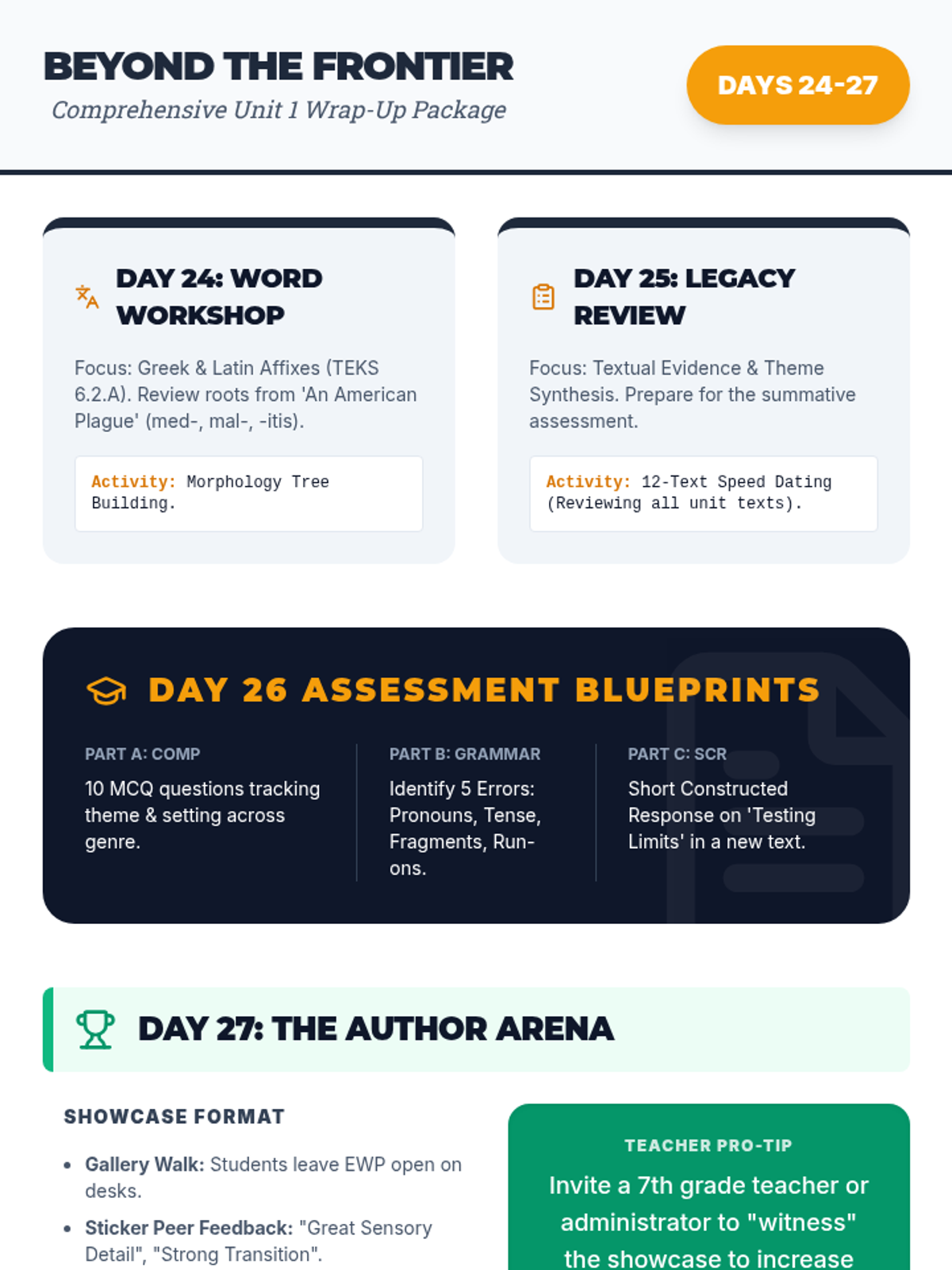
A comprehensive review of all unit texts, themes, and skills to prepare students for the final assessment.
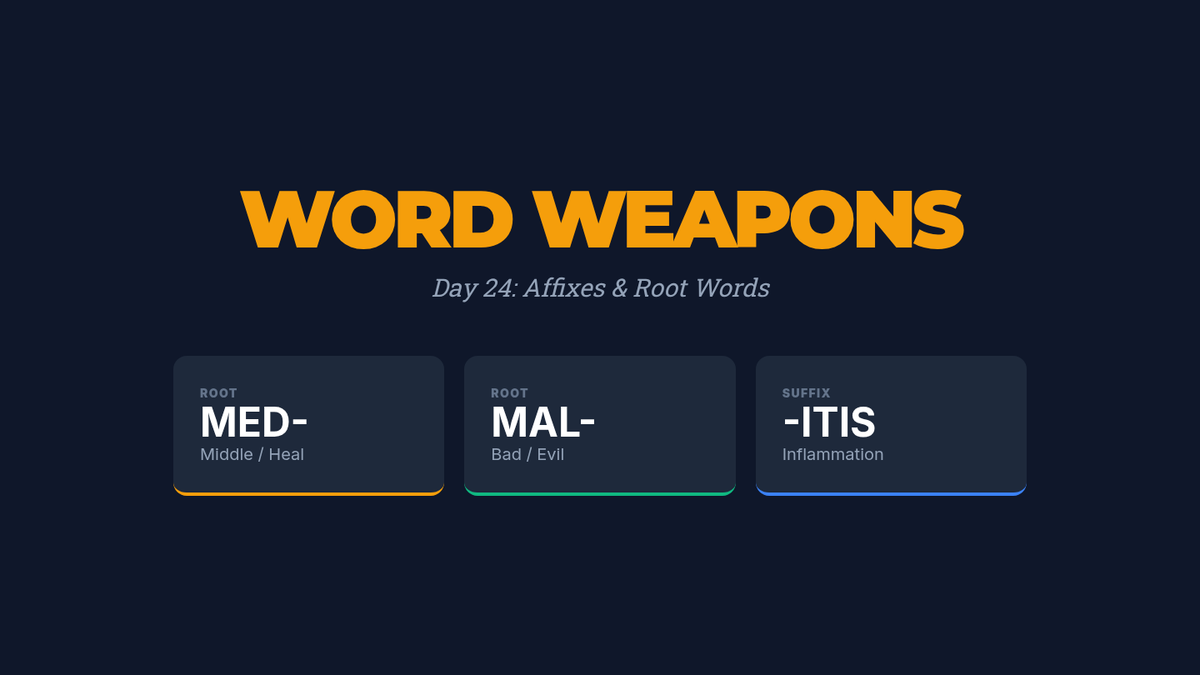
A workshop focused on affixes and root words to build linguistic strength, followed by reflection on the writing process and portfolio curation.
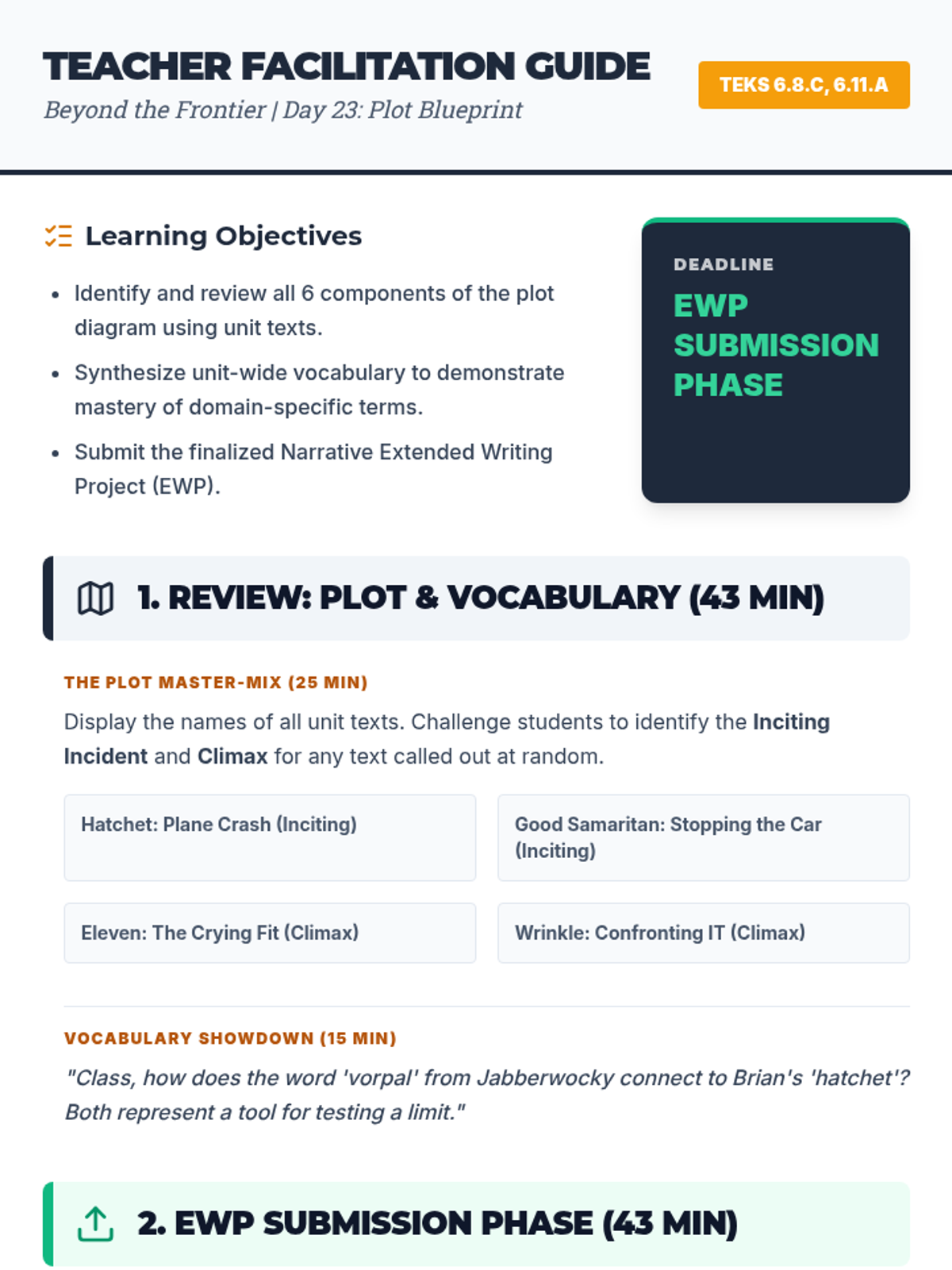
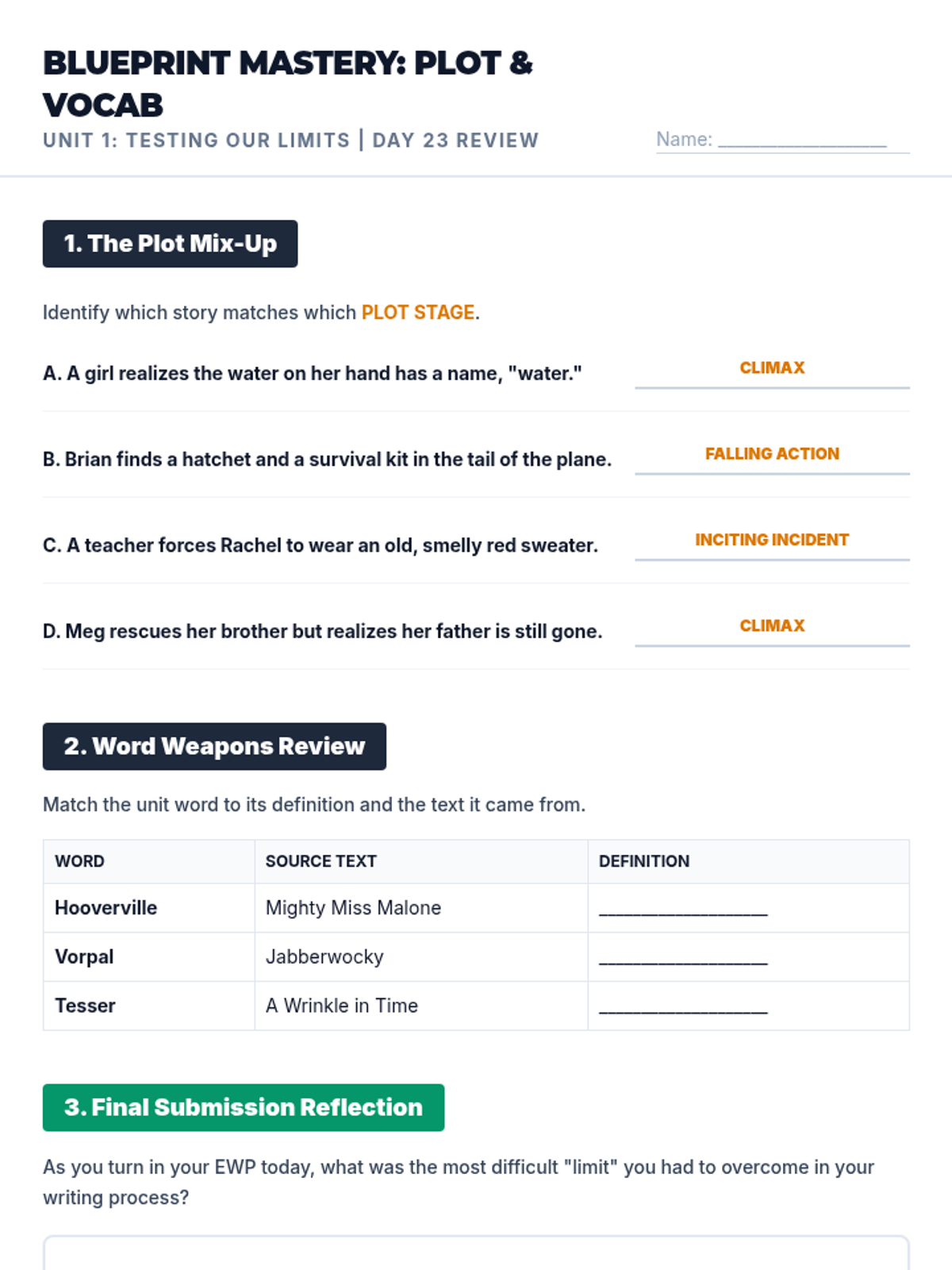
A deep-dive review of plot components and unit vocabulary, culminating in the final submission of the narrative writing project.
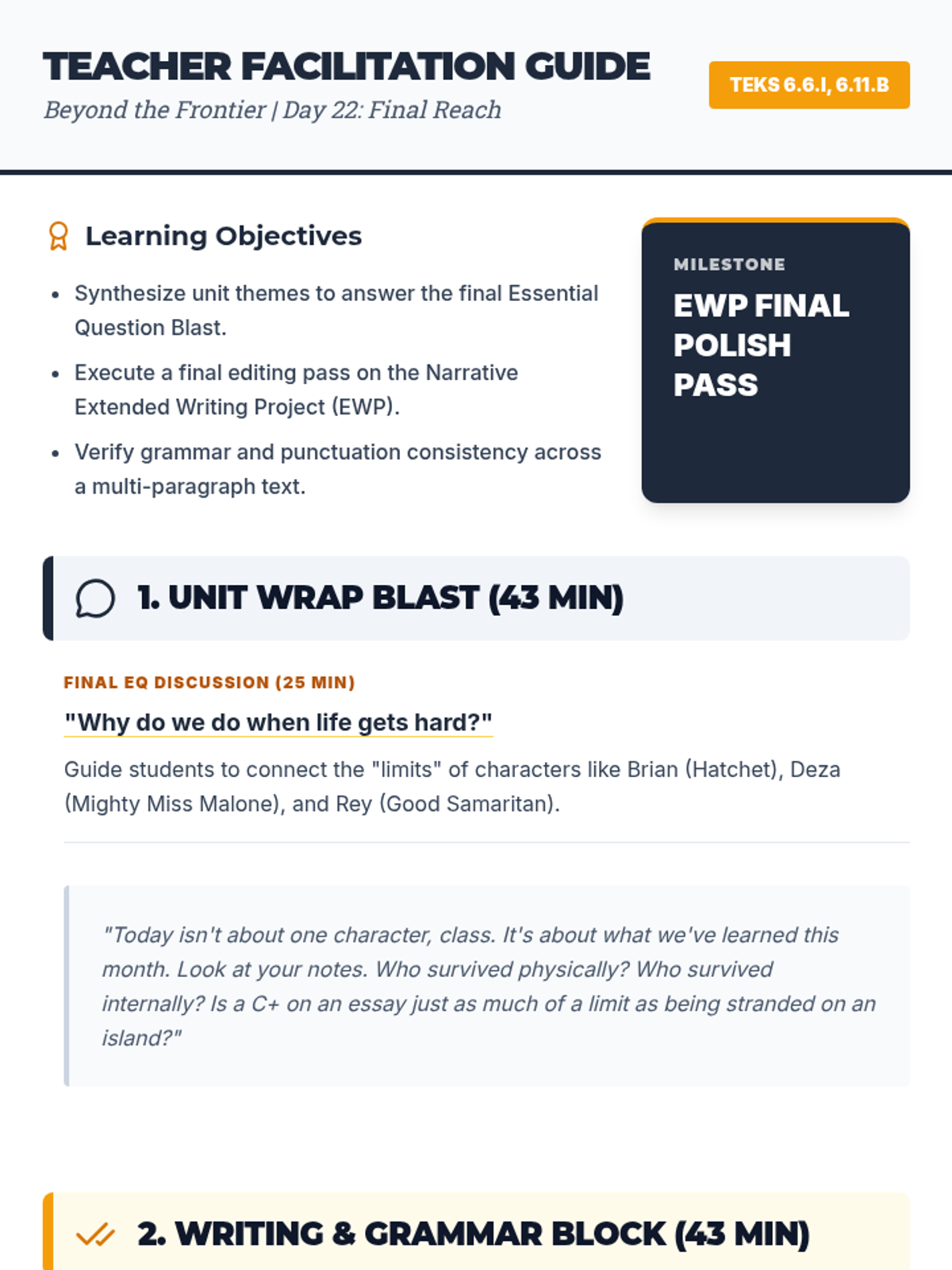
A final discussion of the unit's Essential Question followed by a focused editing pass to polish the Narrative Extended Writing Project.
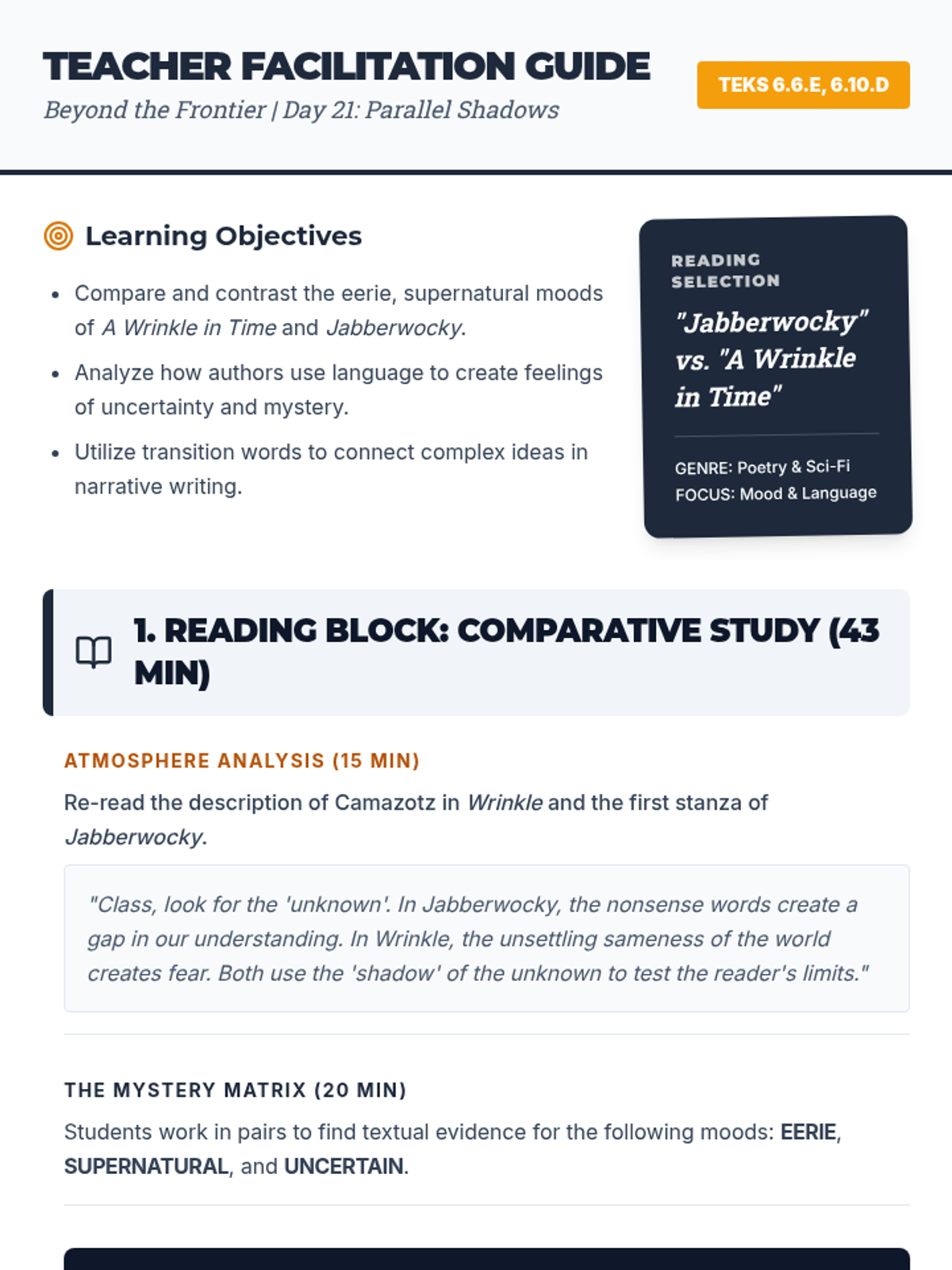
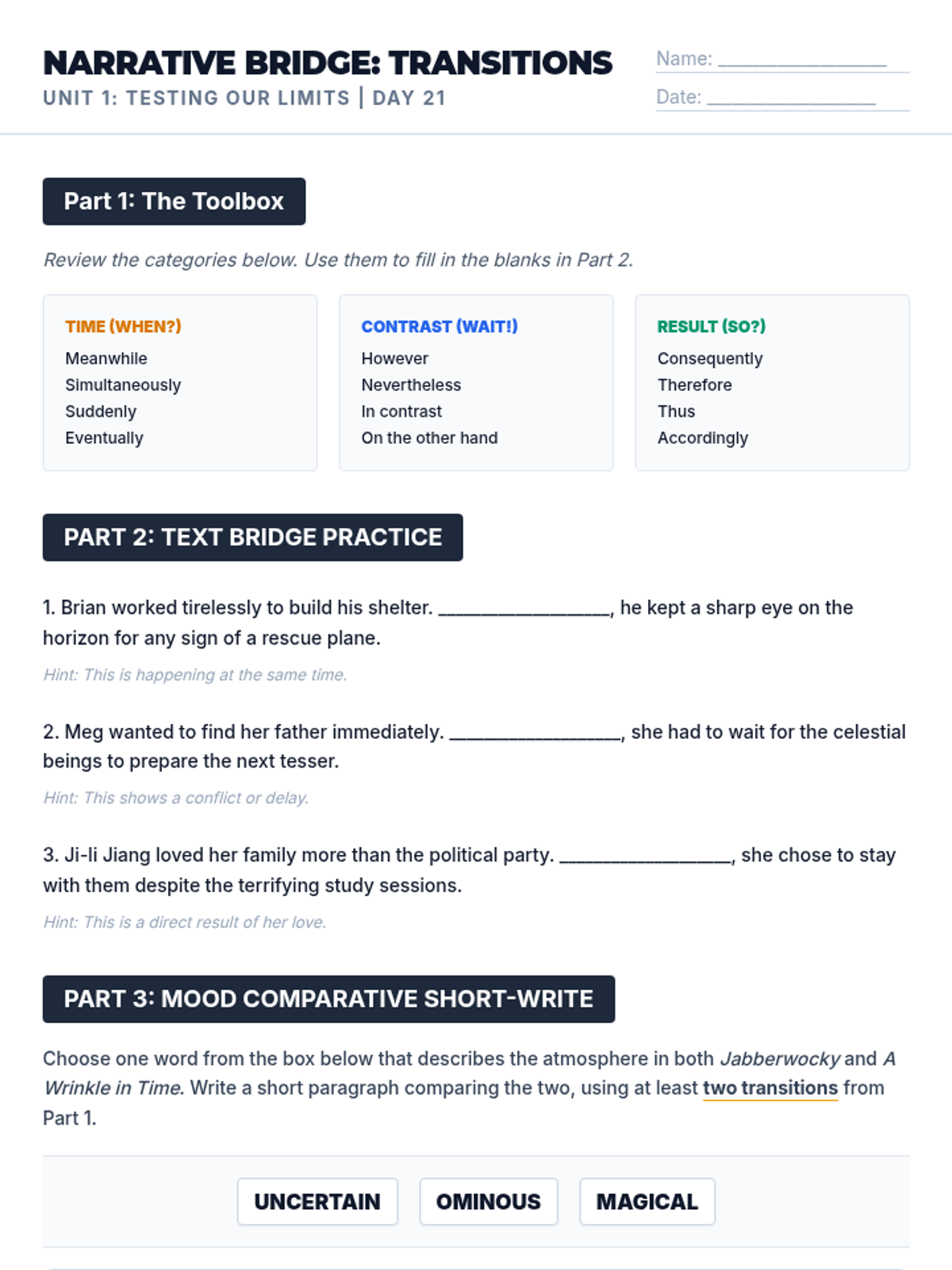
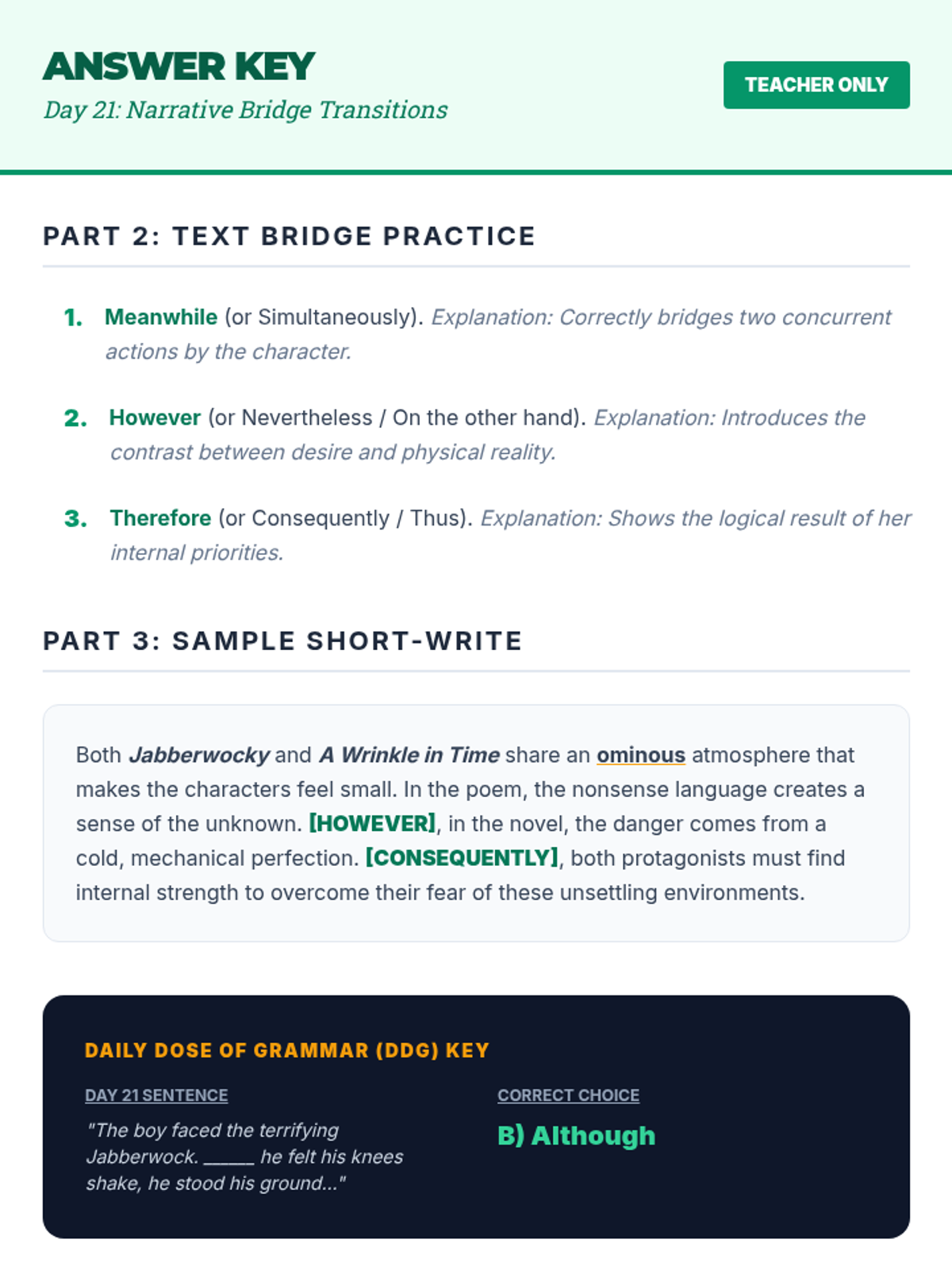
A comparative study between 'A Wrinkle in Time' and 'Jabberwocky', focusing on how authors create mood and uncertainty. Students also practice using transitions to link ideas in their writing.
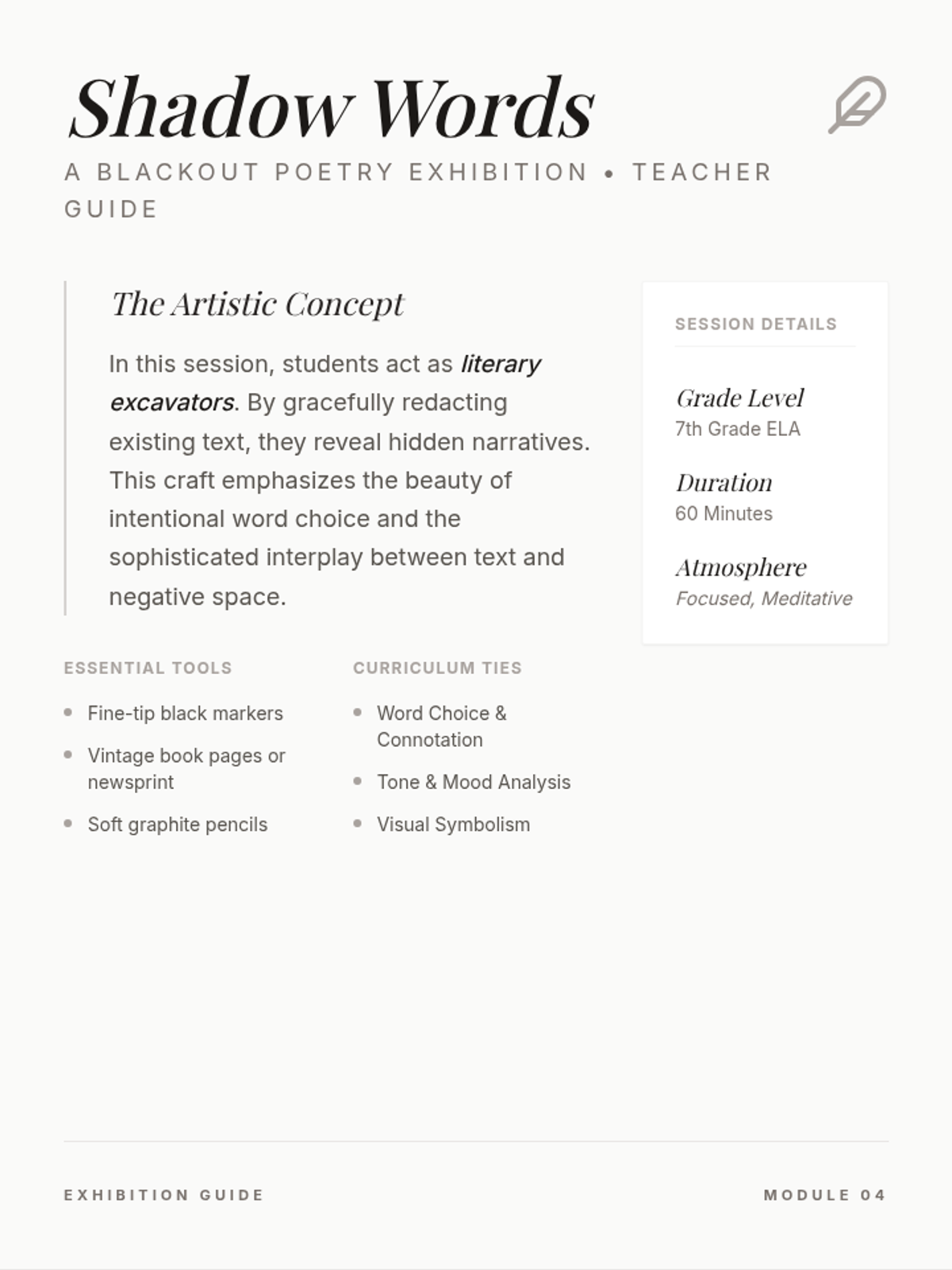
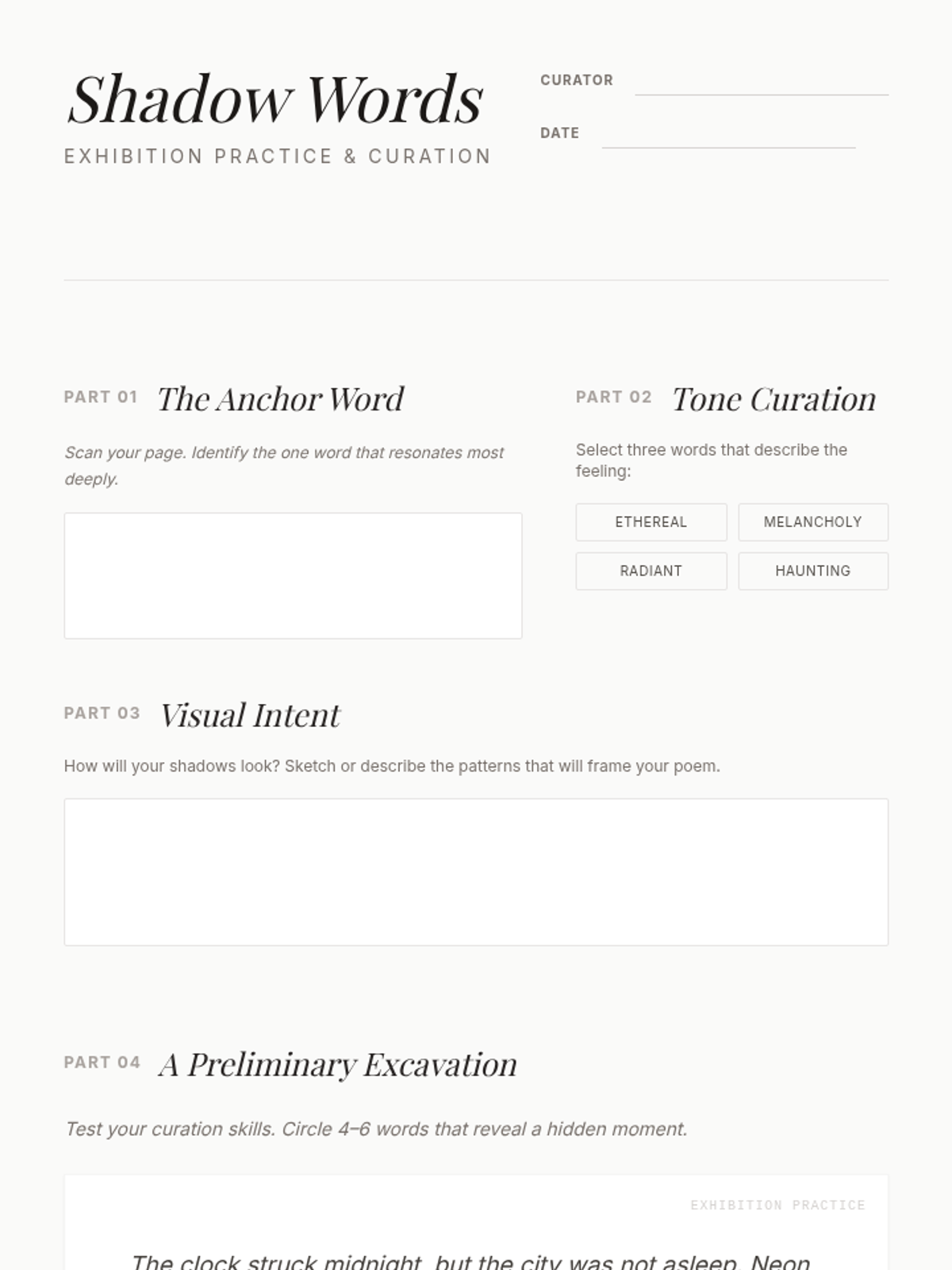
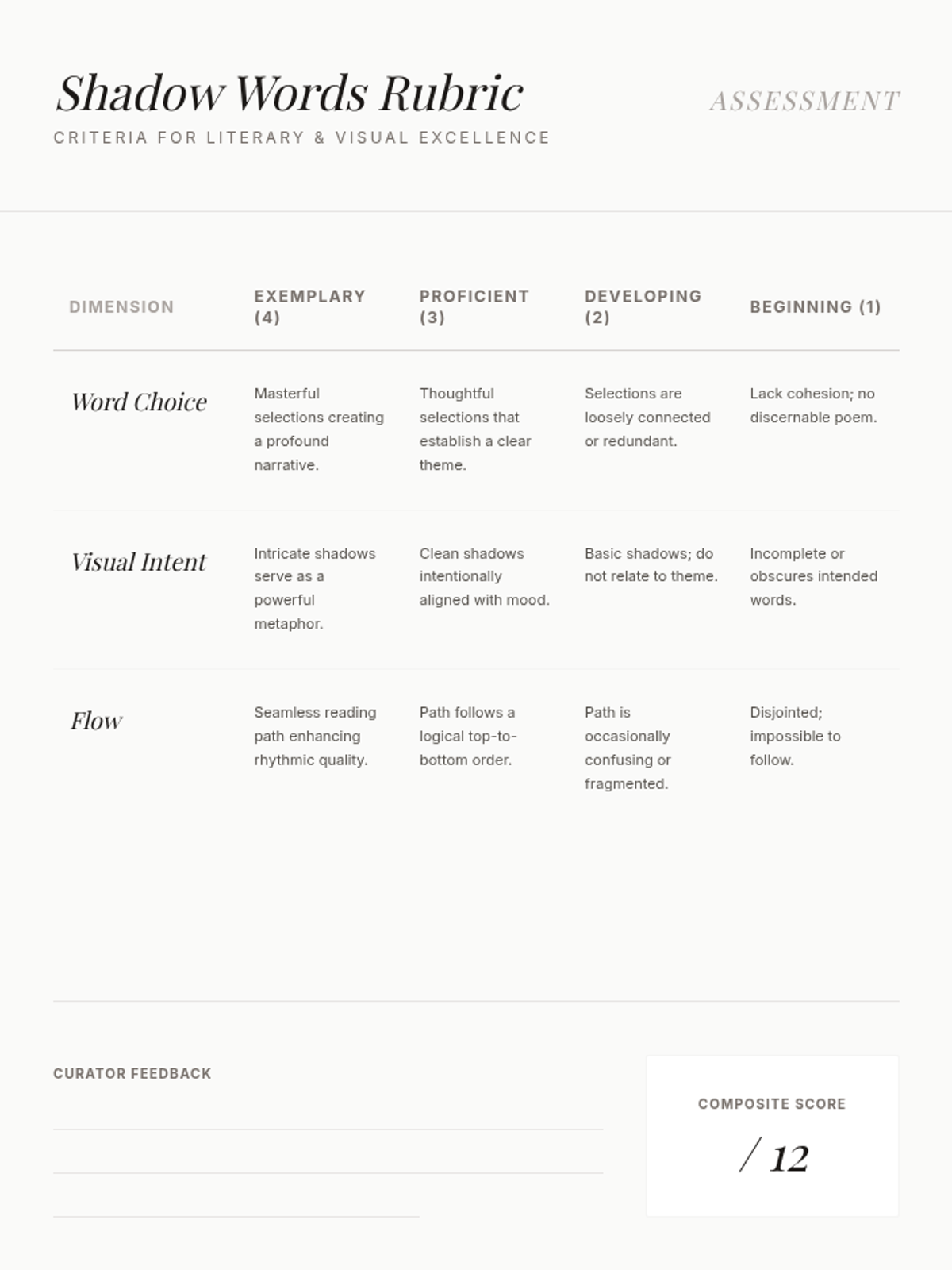
A highly creative ELA lesson where 7th-grade students transform existing text into original poetry through the craft of 'blackout' art. Using simple markers and old book pages, students explore word choice, tone, and visual symbolism.
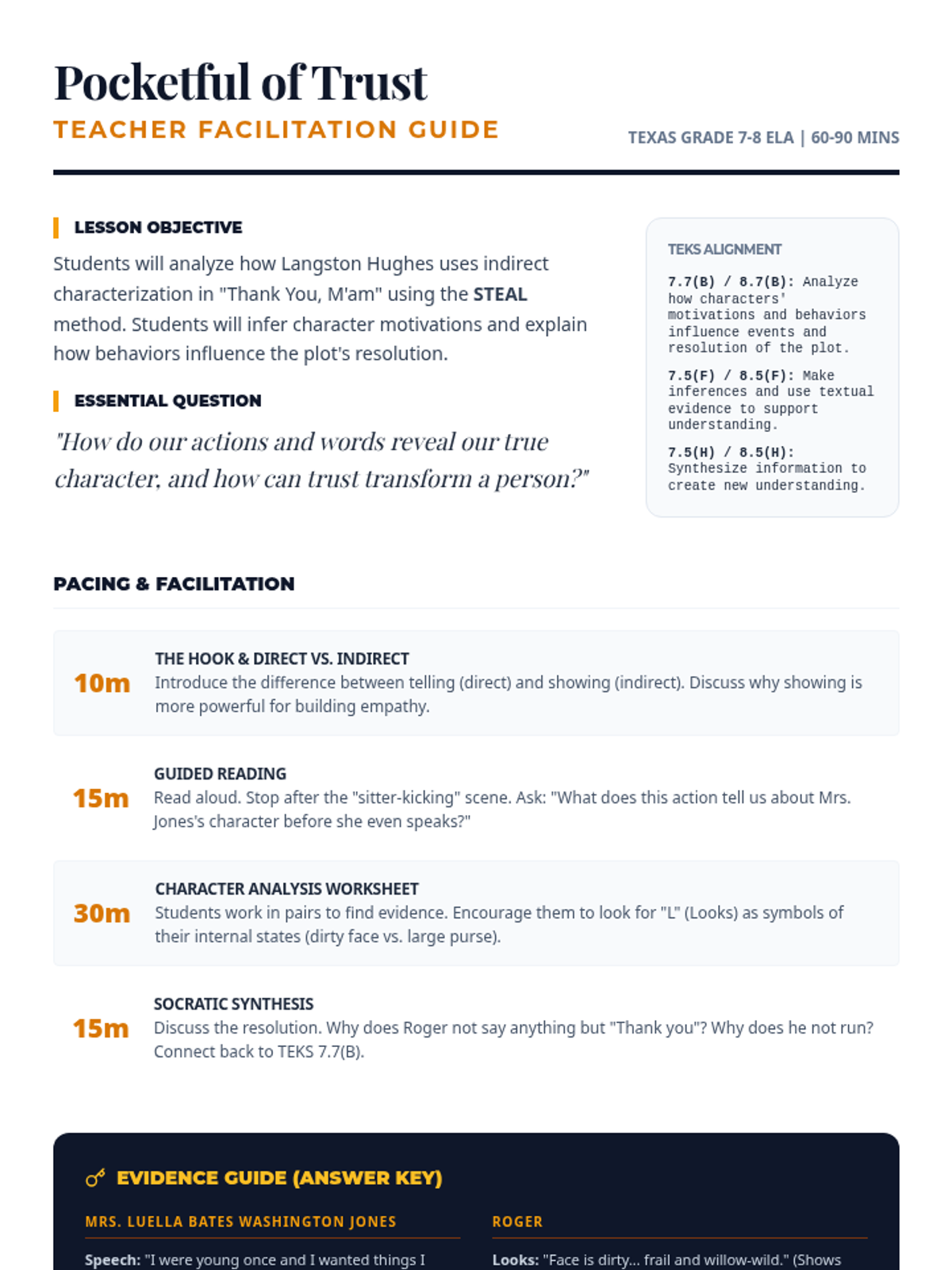
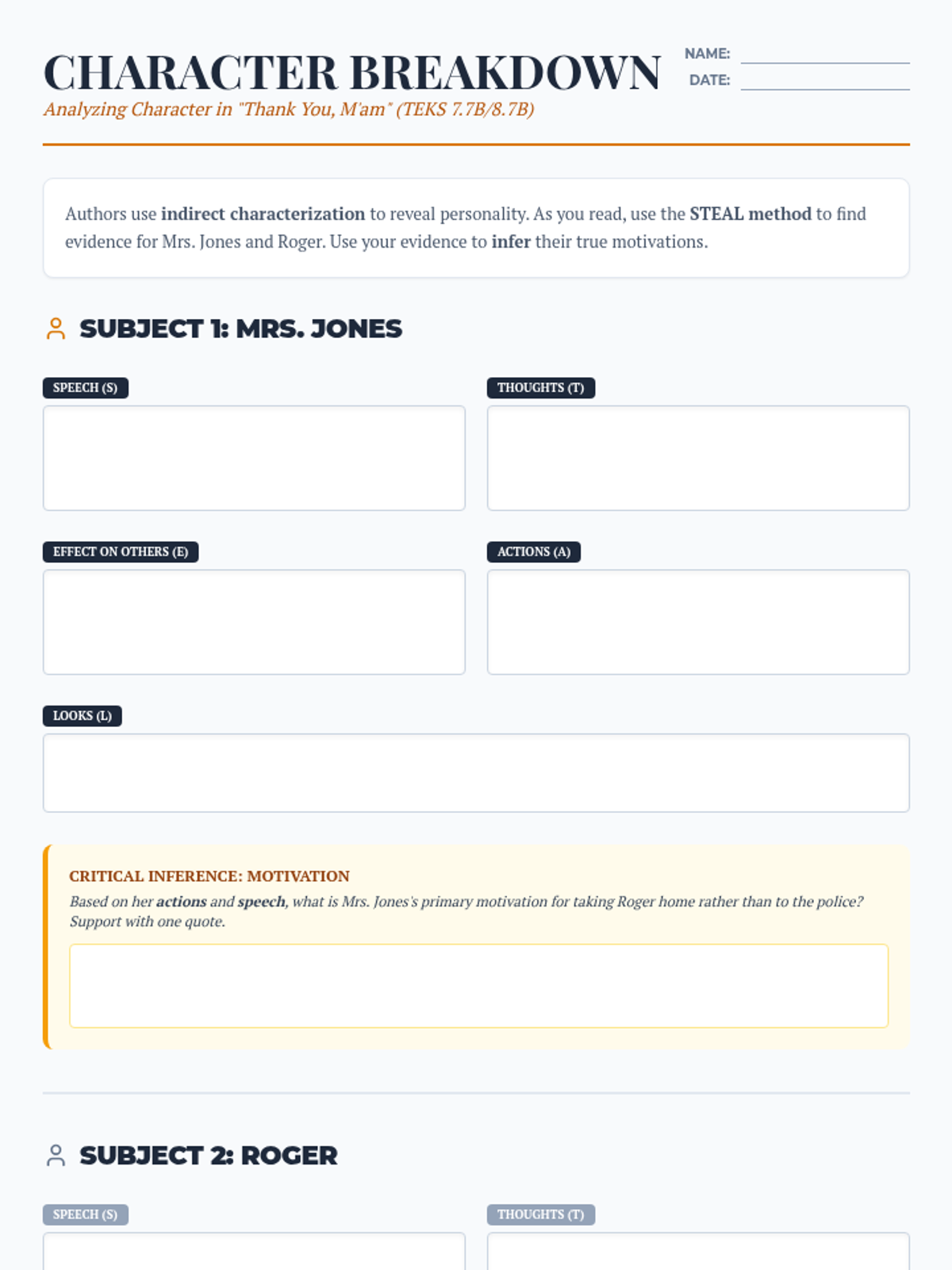
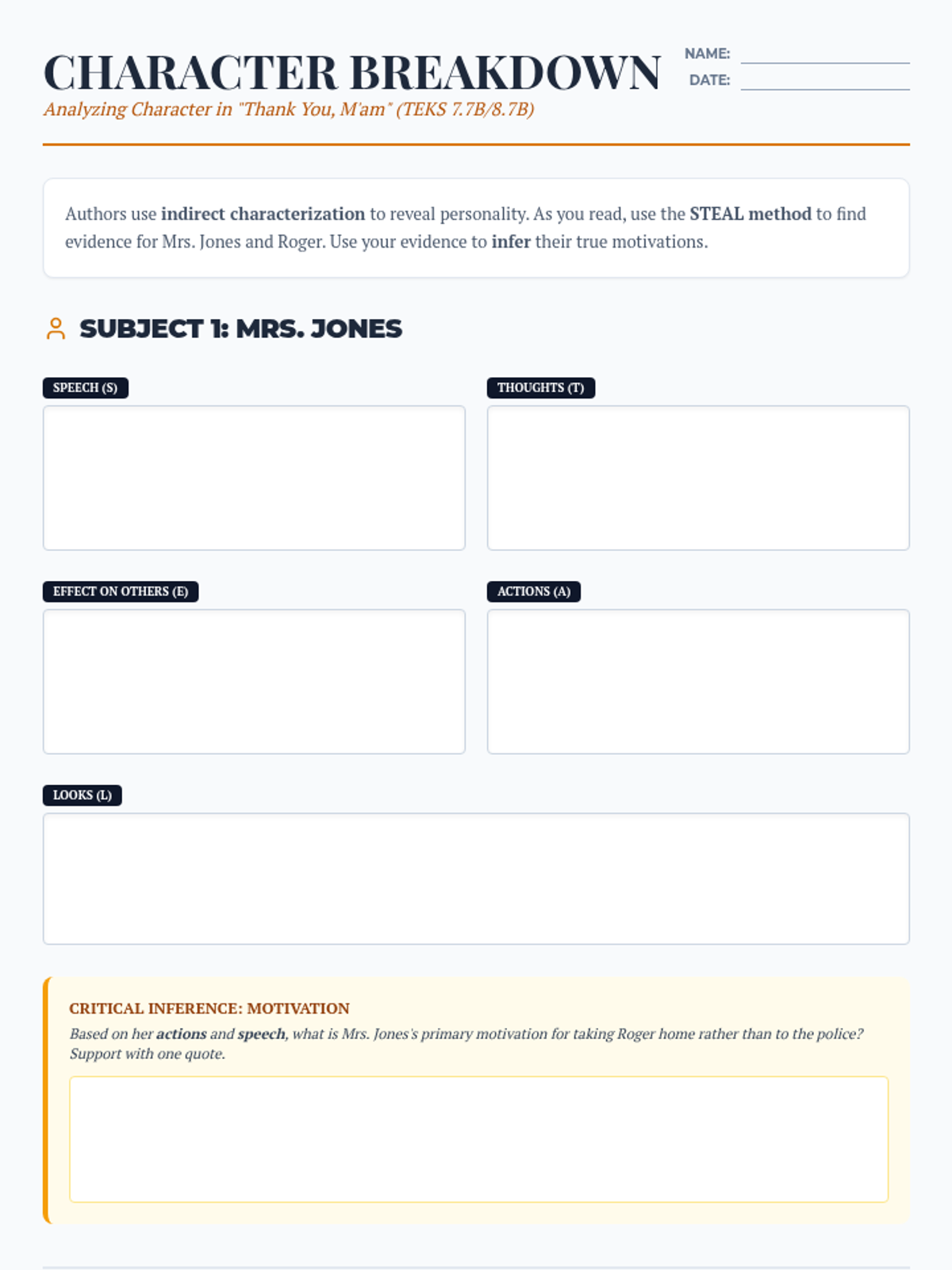
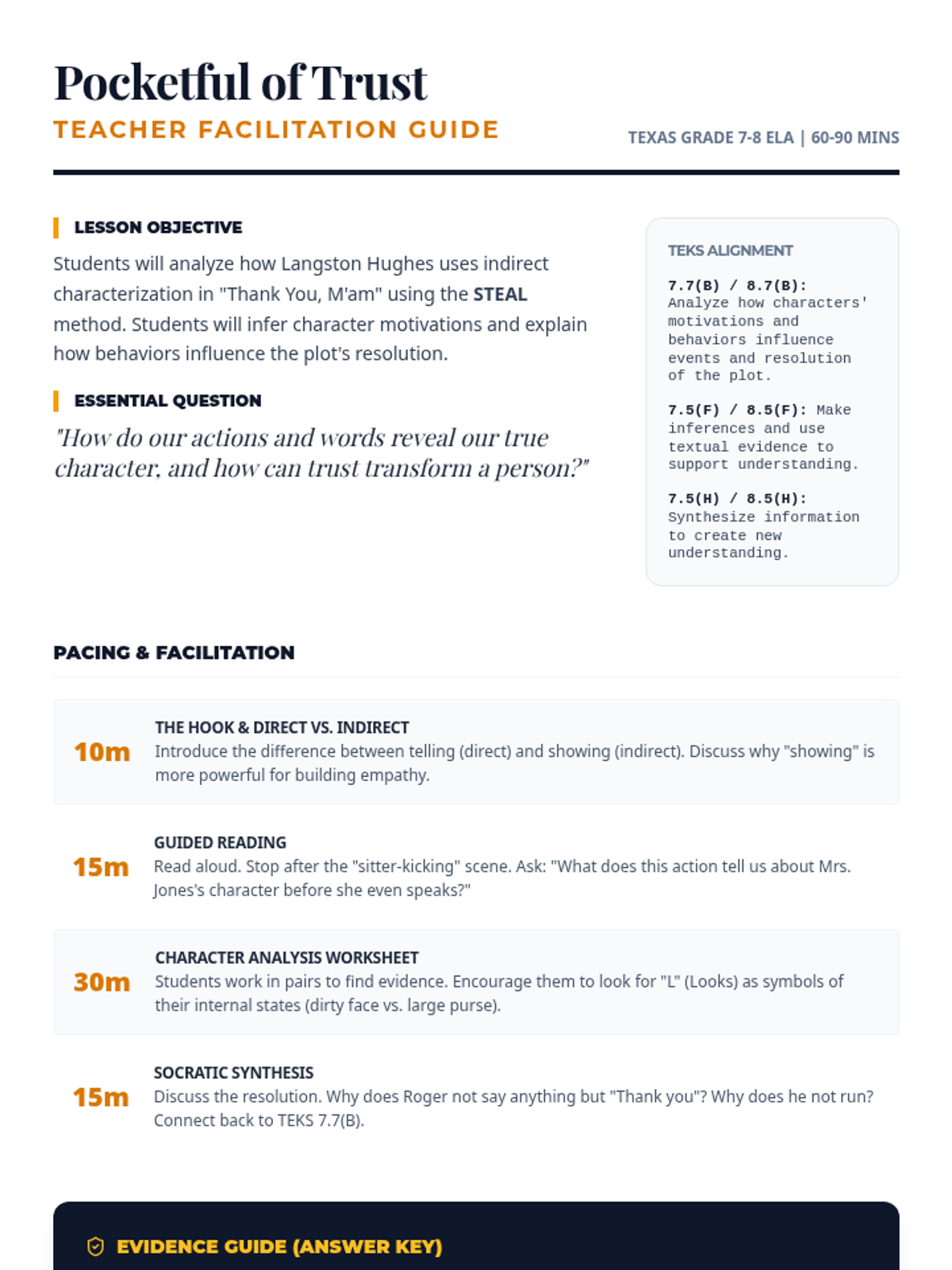
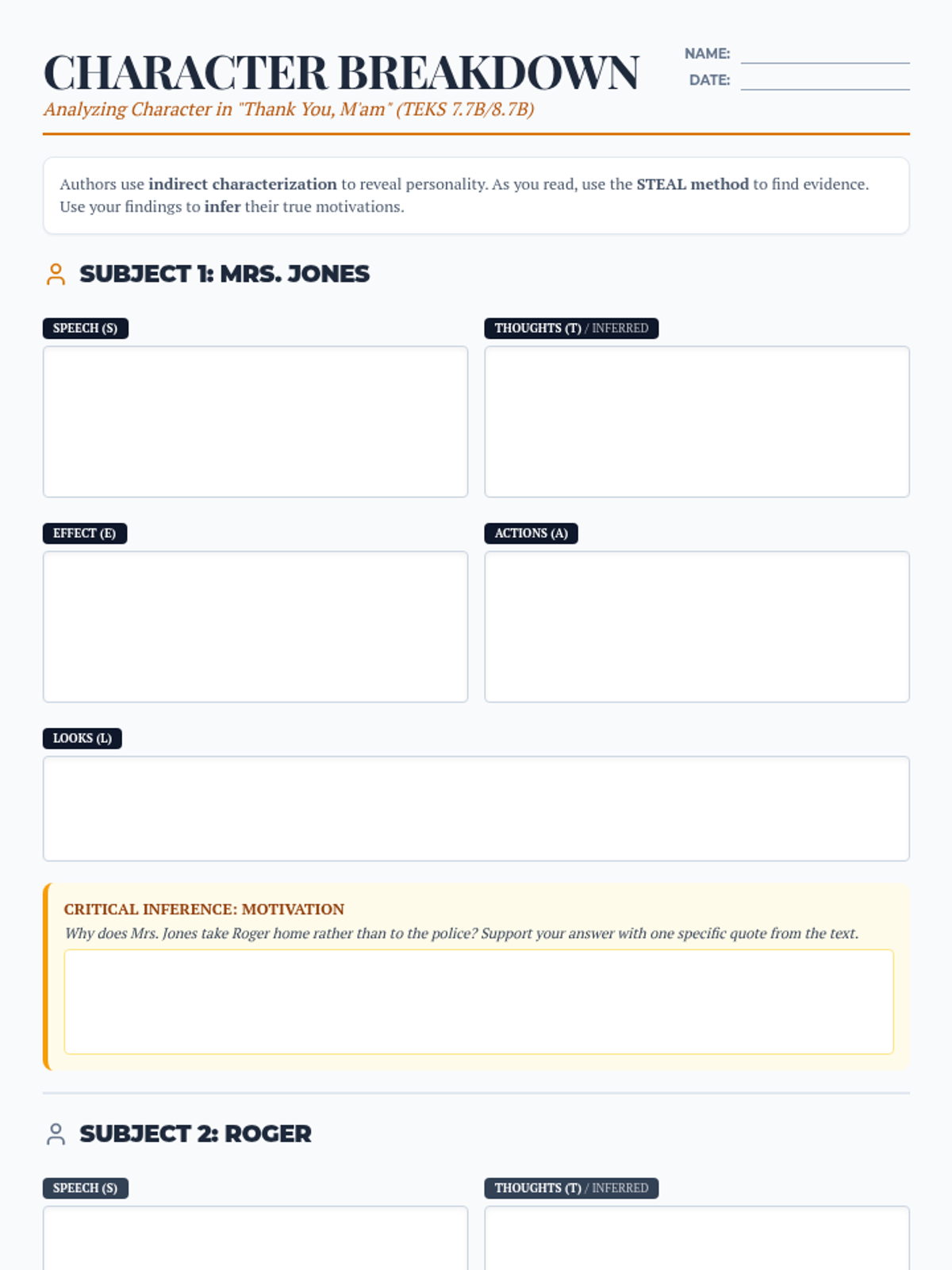
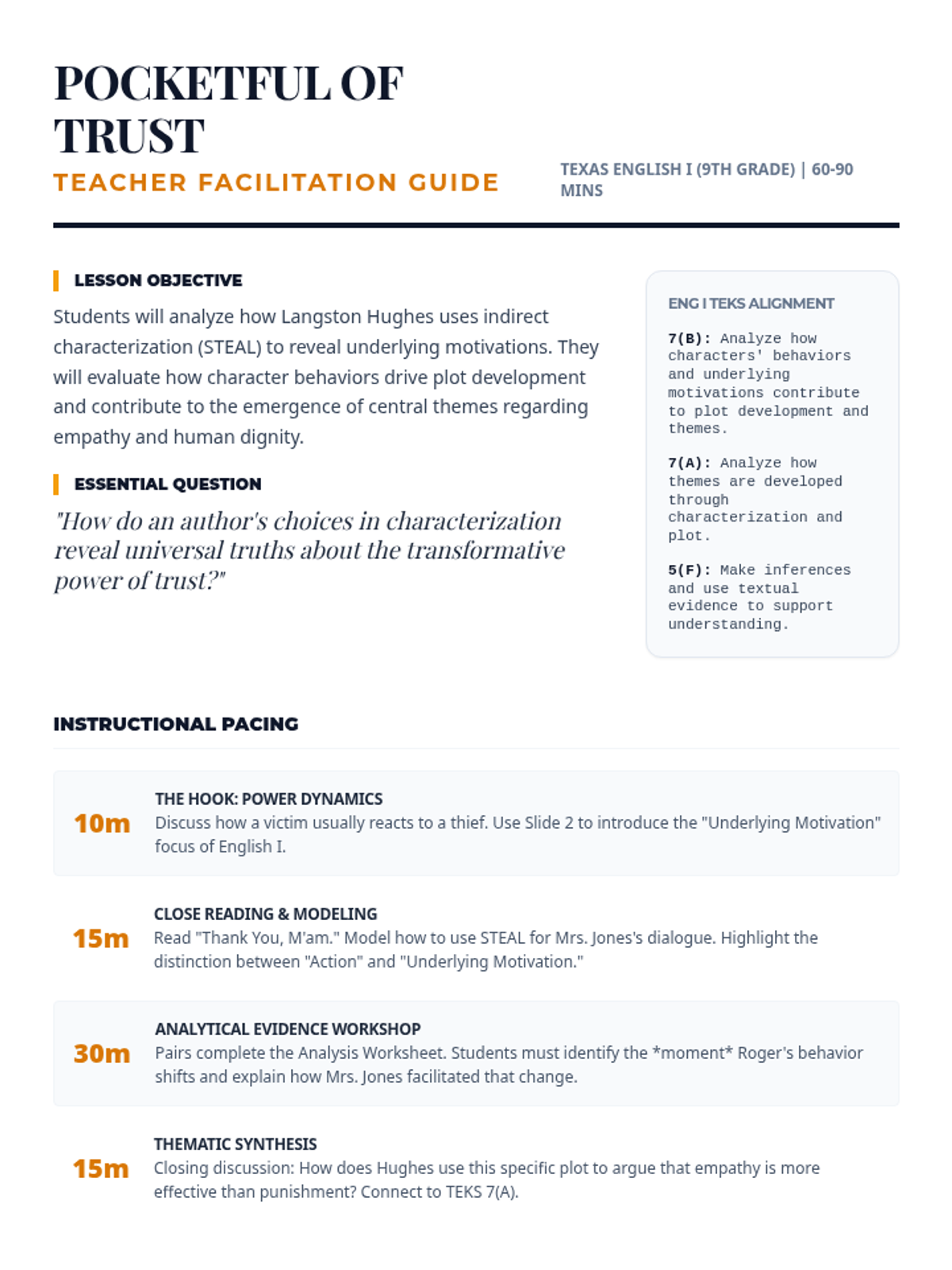
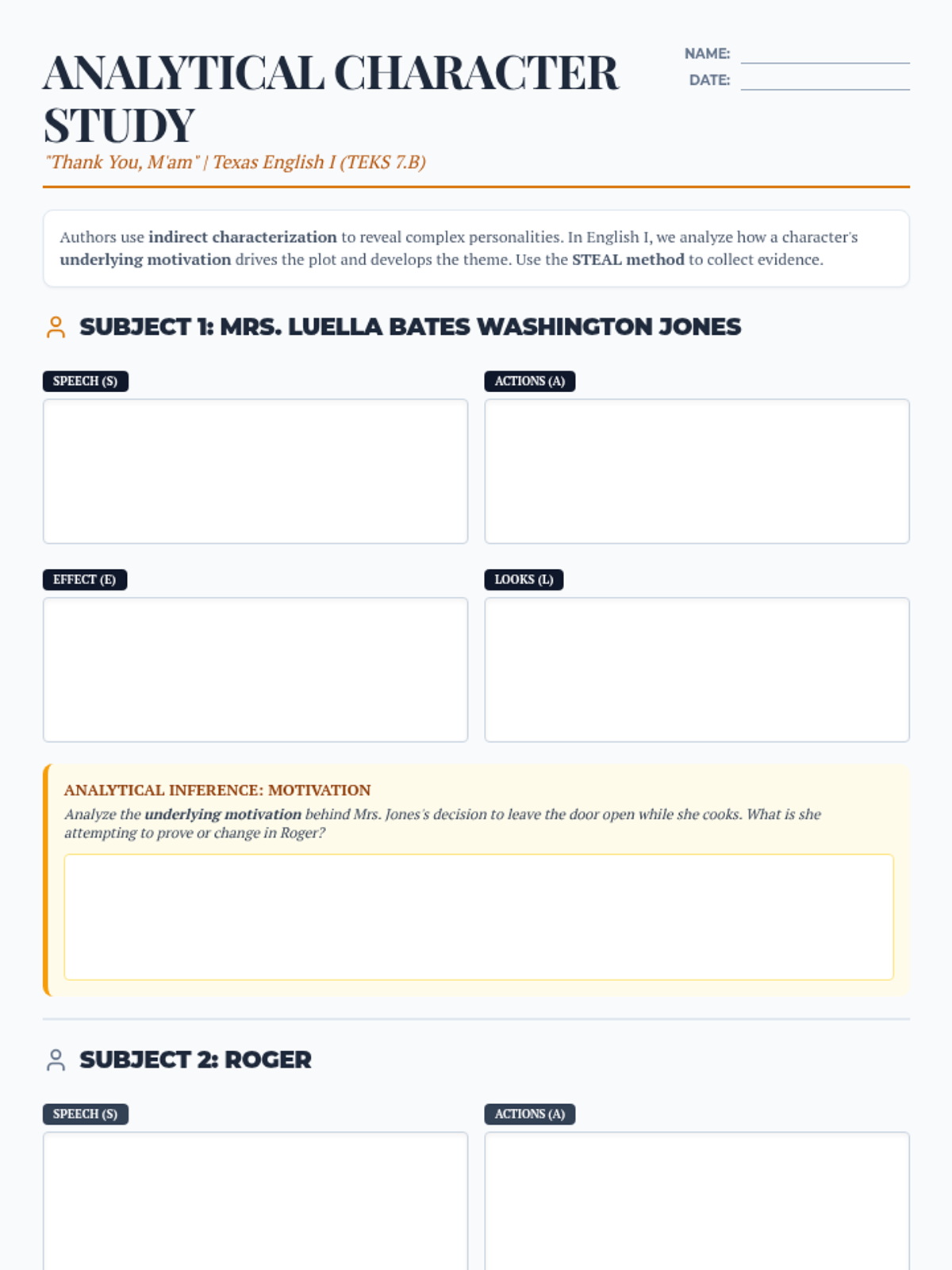
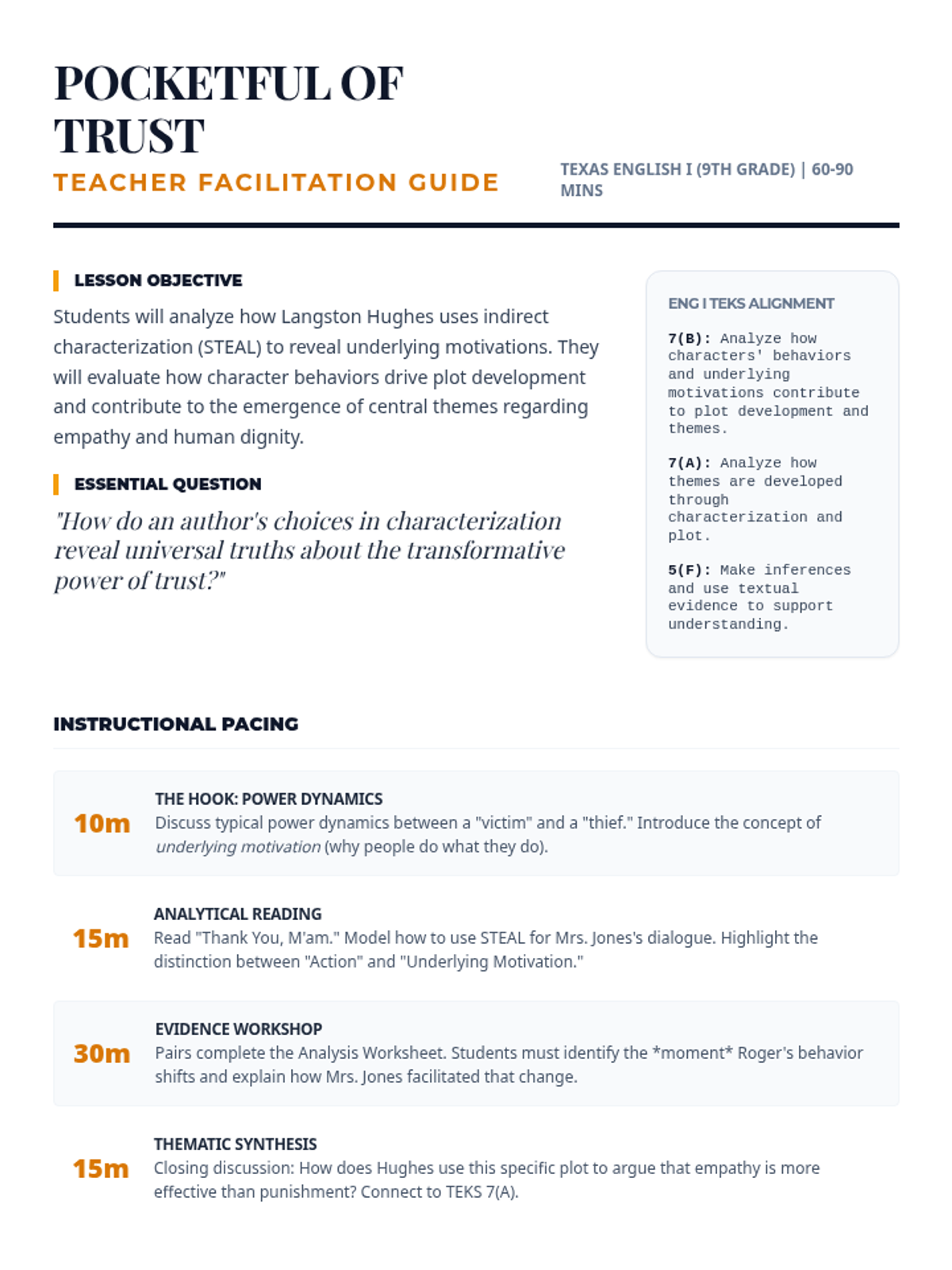
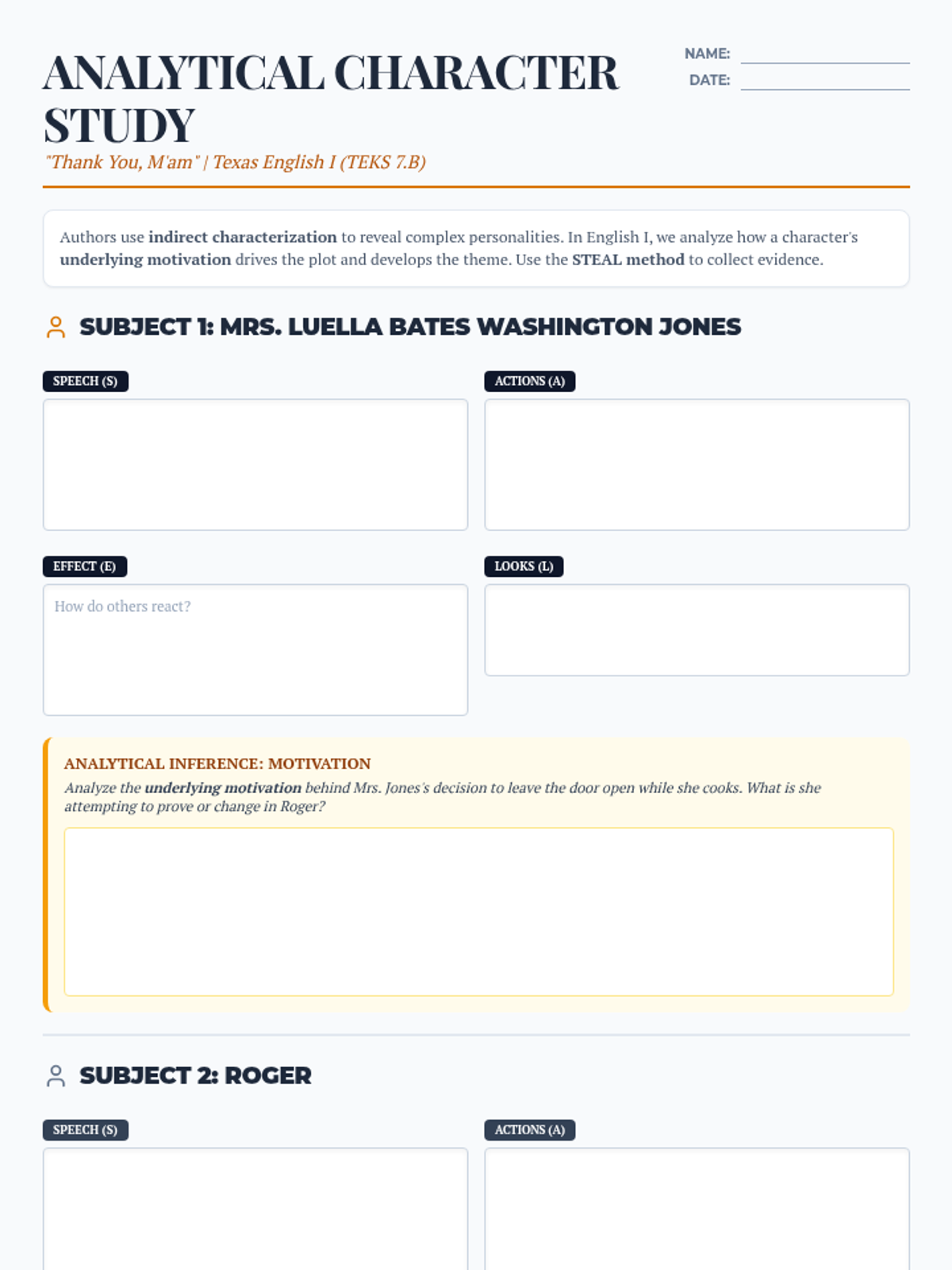
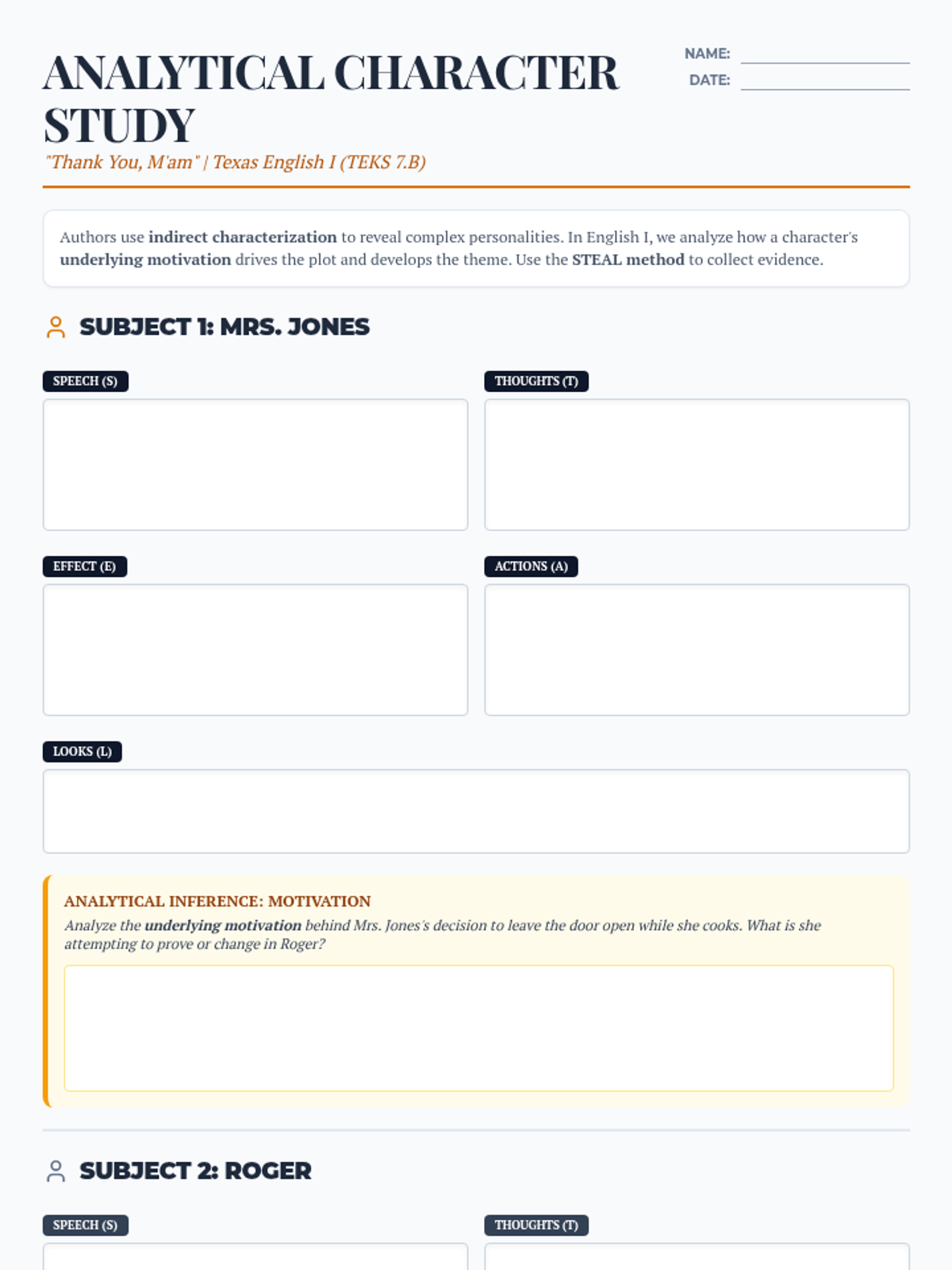
A TEKS-aligned lesson (Grade 7-8) exploring characterization in Langston Hughes's 'Thank You, M'am'. Students use the STEAL method to analyze how characters' motivations and behaviors influence events and the resolution of the plot (TEKS 7.7B).
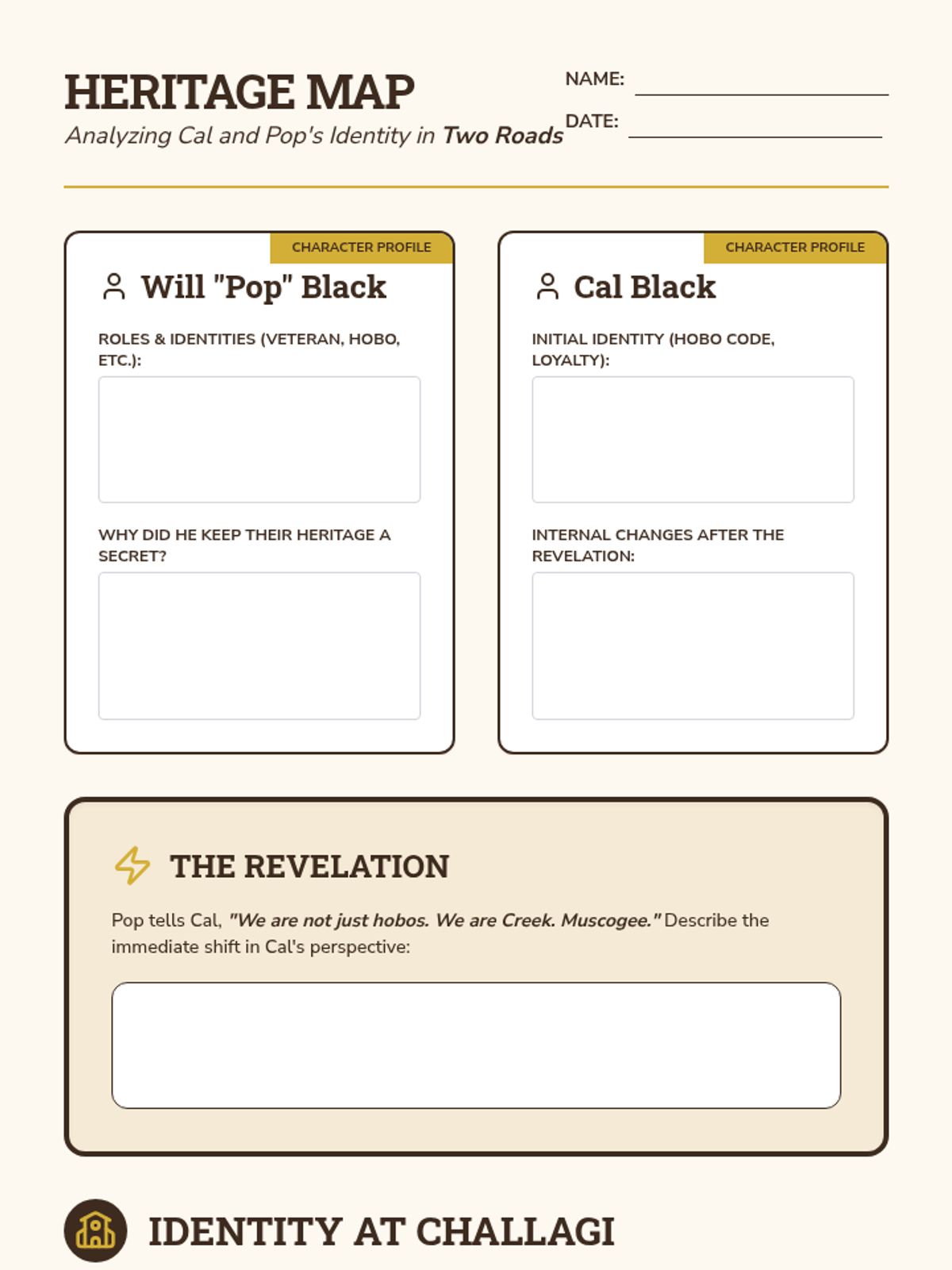
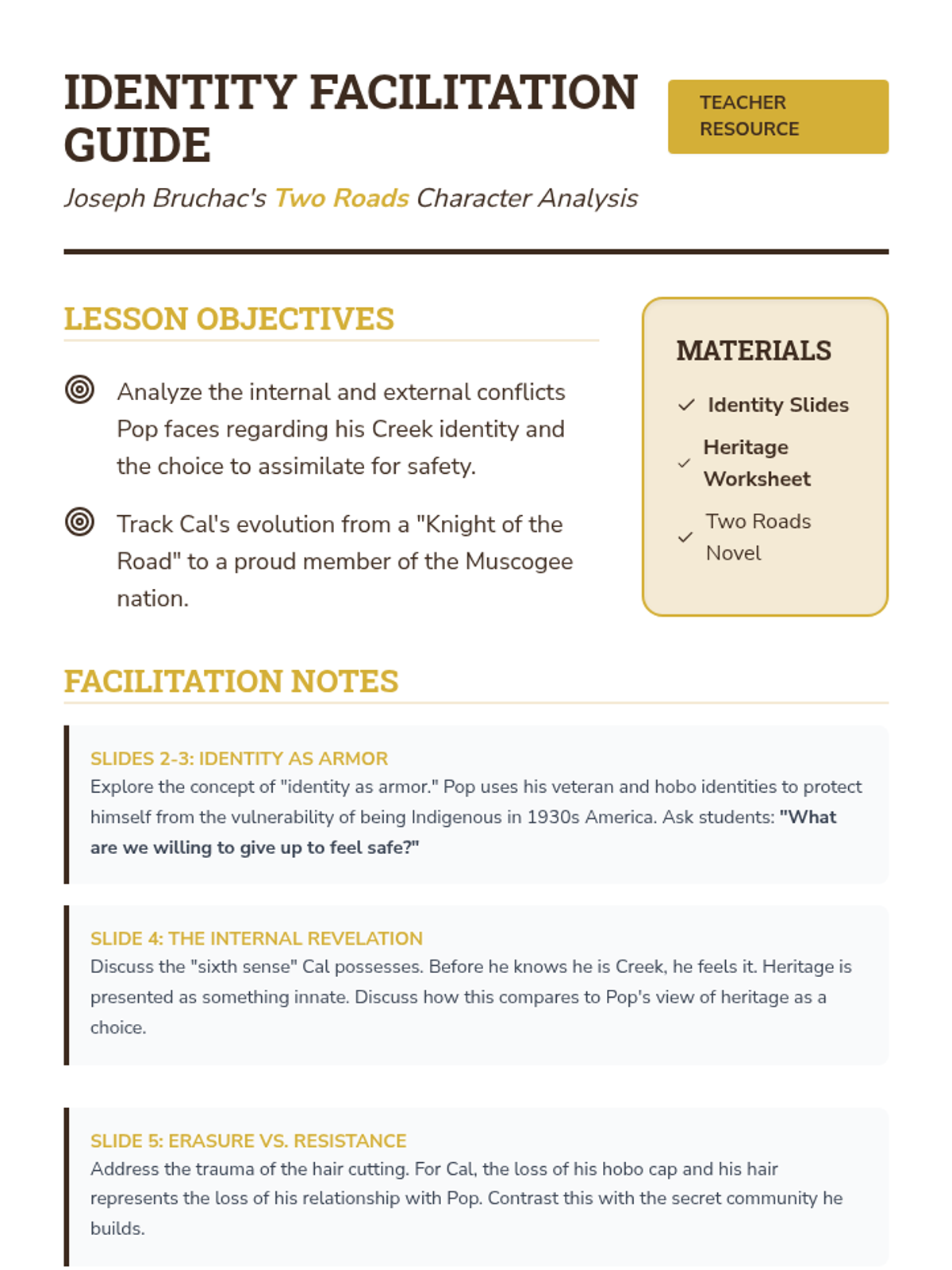
A slide-based analysis of Cal and Pop's evolving identities and Creek heritage in Joseph Bruchac's novel *Two Roads*. Students will explore how the Great Depression and historical boarding schools shaped the characters' understanding of themselves.
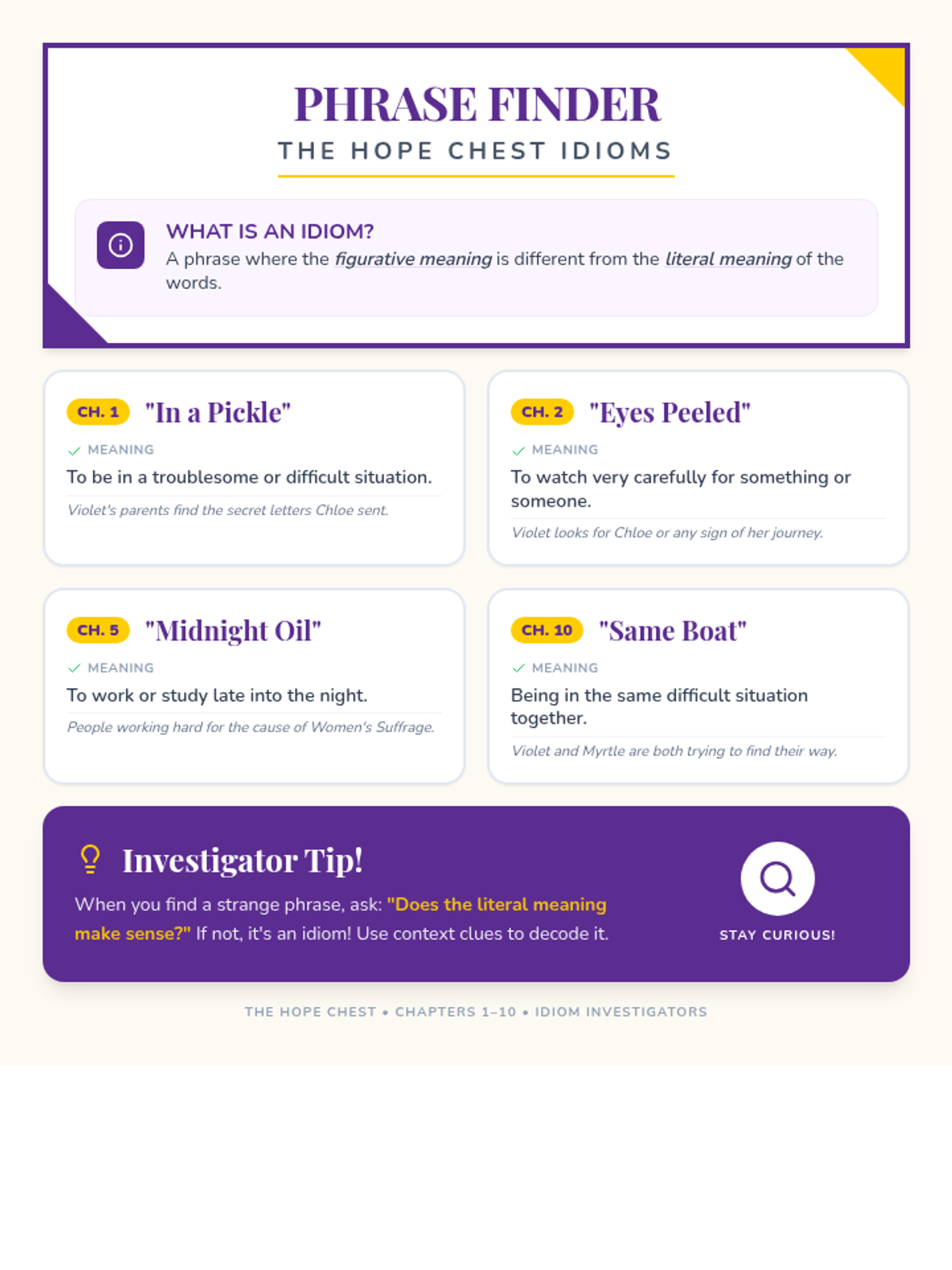
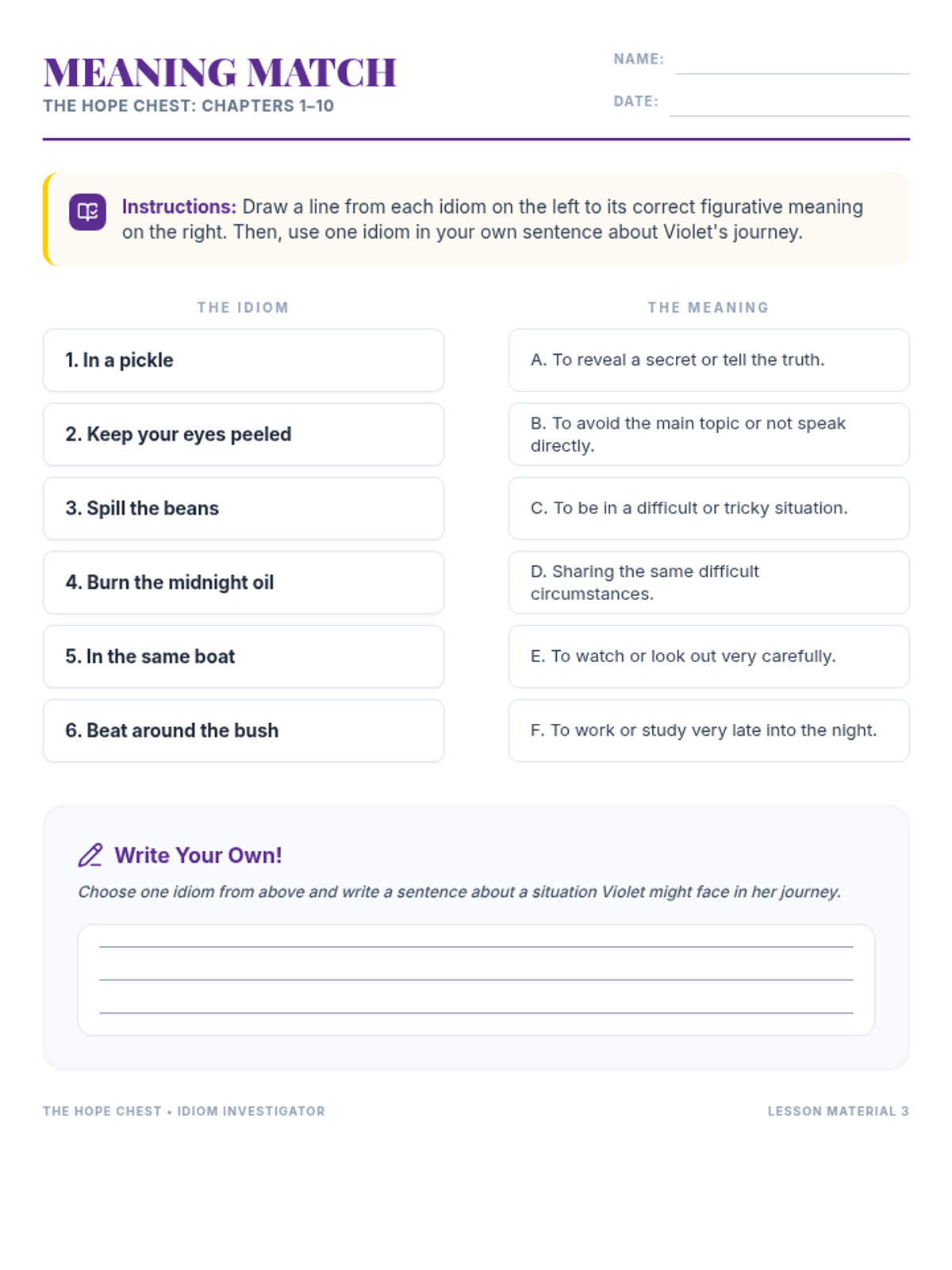
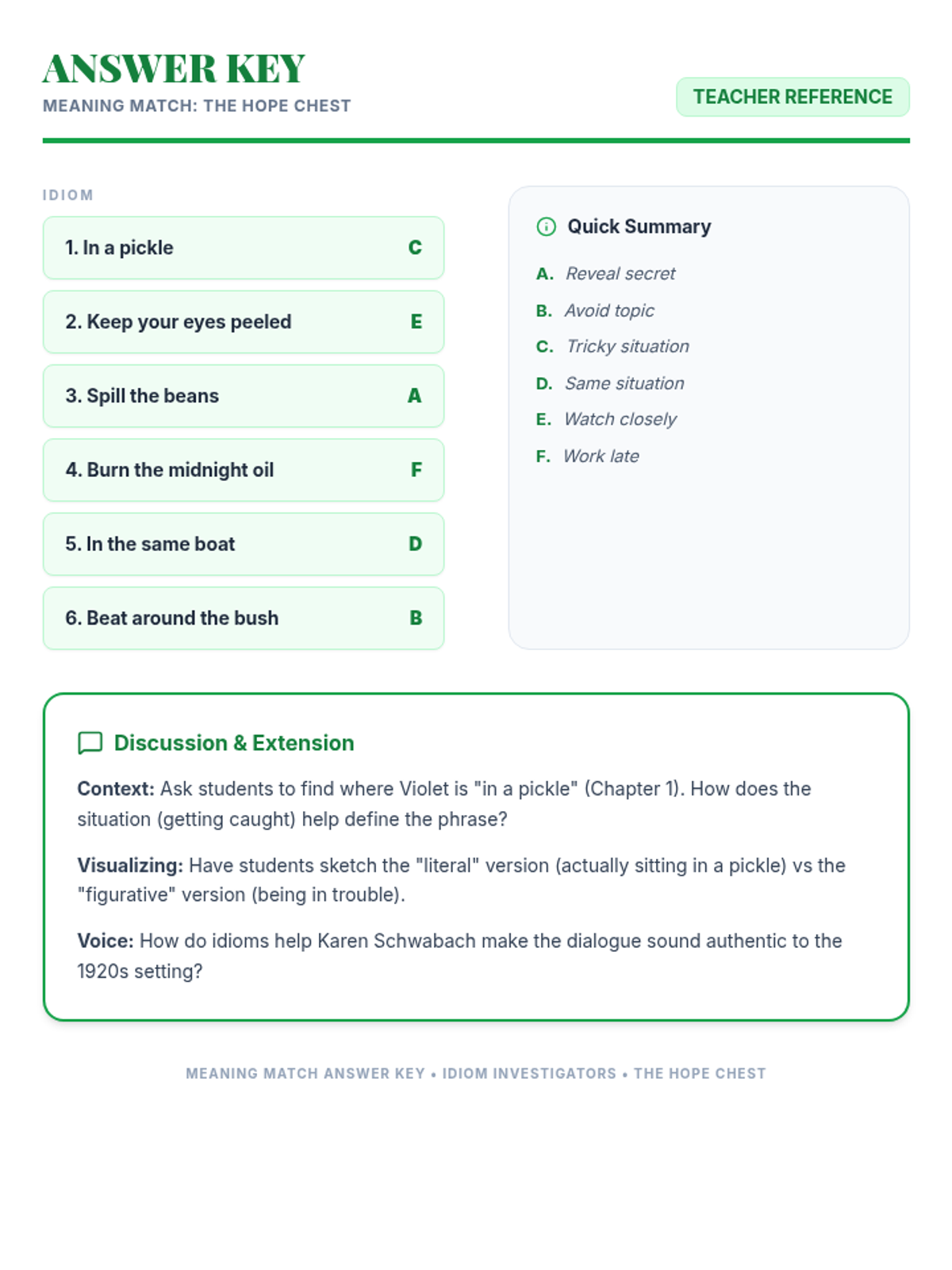
A mini-lesson exploring common idioms found in chapters 1-10 of *The Hope Chest*, helping students understand figurative language through the lens of Violet's journey.
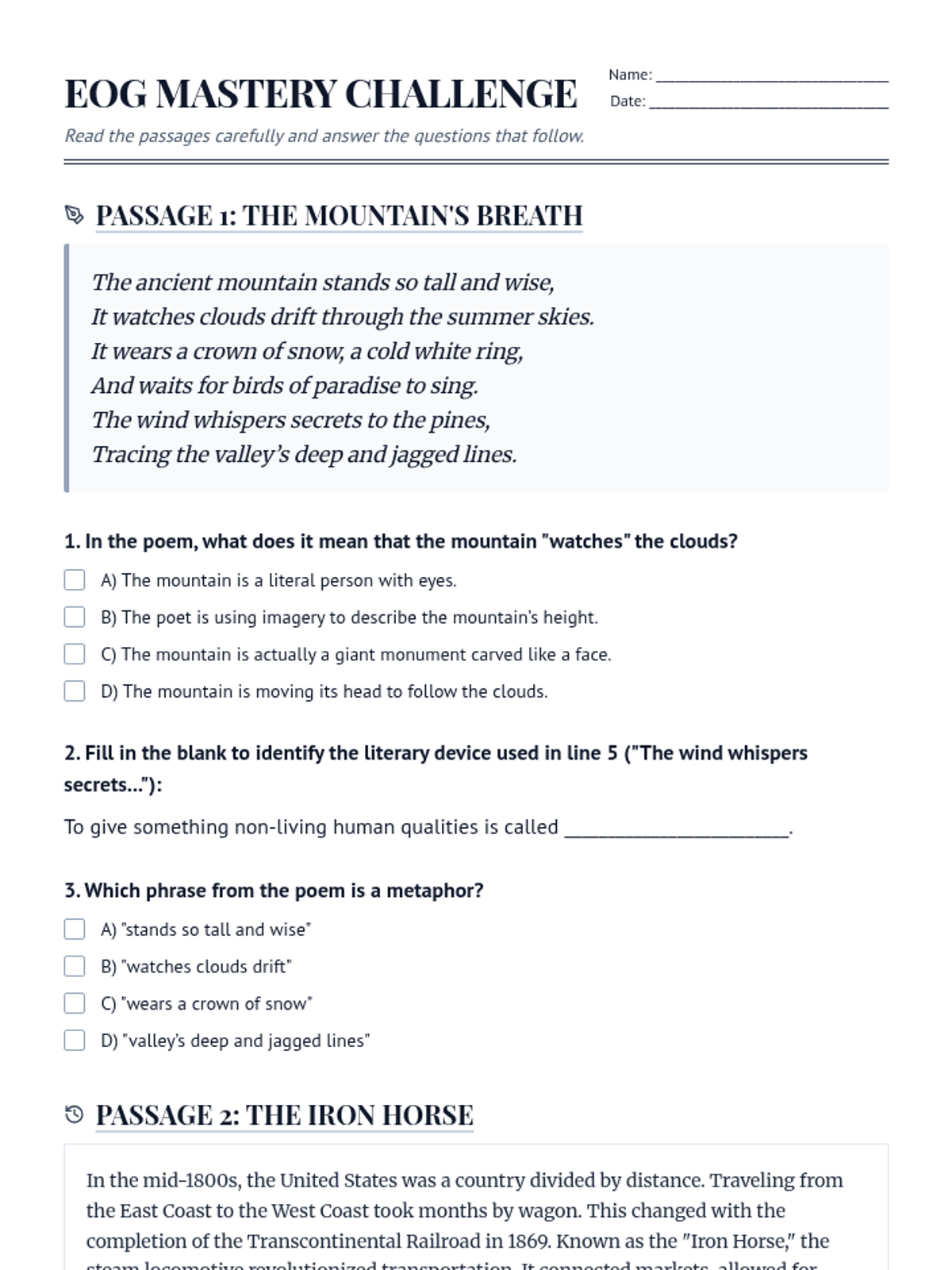
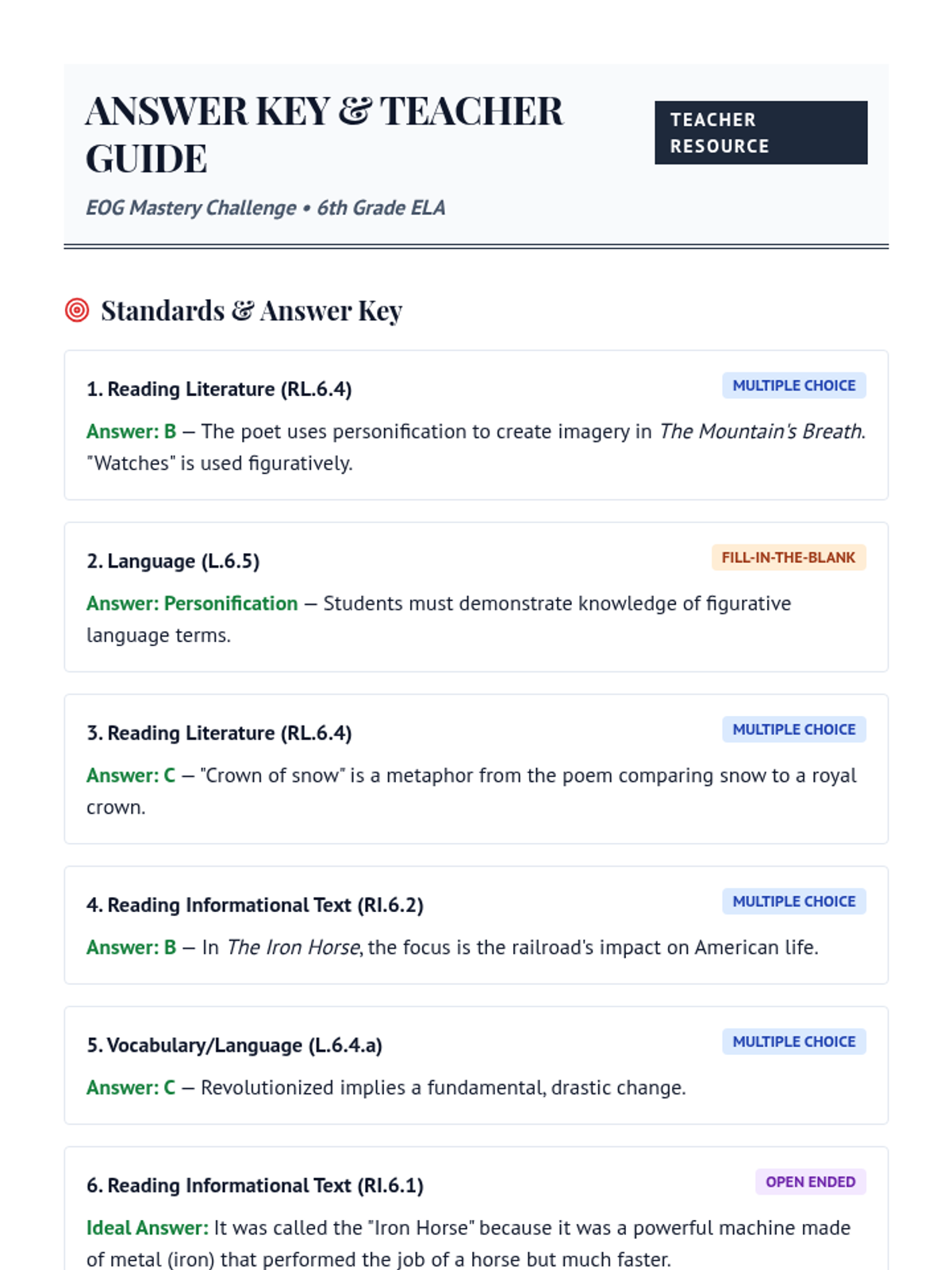
A comprehensive practice set for 6th grade ELA EOG preparation, featuring diverse passages in fiction, poetry, and historical nonfiction with a mix of question formats.