A 1st Grade science lesson focused on the 4-stage life cycle of a panda, utilizing a video observation and a cut-and-paste activity to reinforce sequencing and vocabulary.
A foundational toolkit for setting up a physical engineering and maker space, covering physical layout, collaborative roles, and essential classroom routines.
A synthesis lesson where students compare and sort the needs of all living things to identify patterns.
Explores the survival requirements of animals and humans, highlighting food, water, air, and shelter.
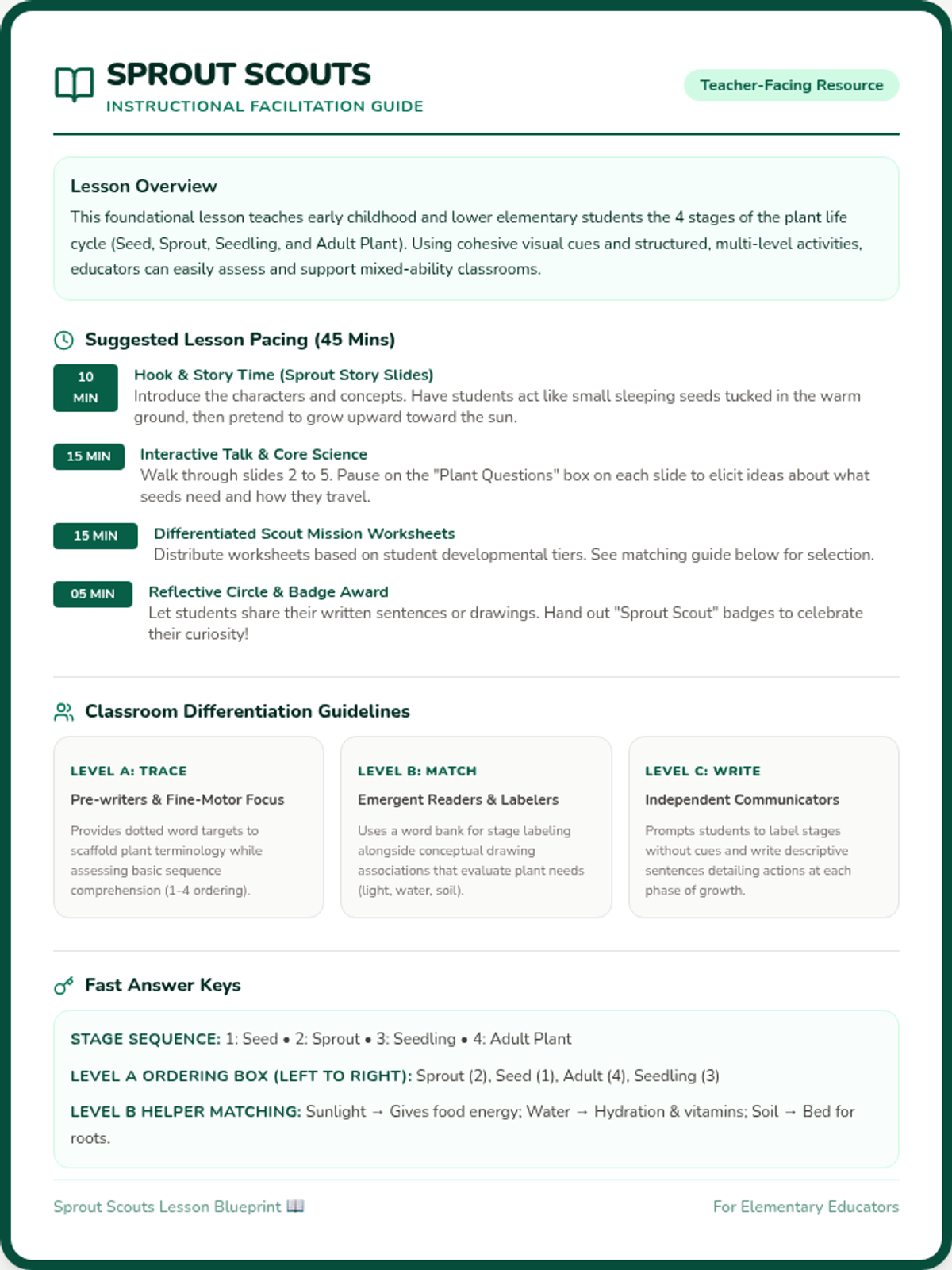
Focuses on what plants need to grow and thrive, including sunlight, water, air, and soil.
A 40-minute introductory lesson on the rainforest ecosystem for 1st grade, featuring a read-aloud and a collaborative KWL anchor chart activity. Students will explore what they know, what they wonder, and what they learned about this diverse habitat.
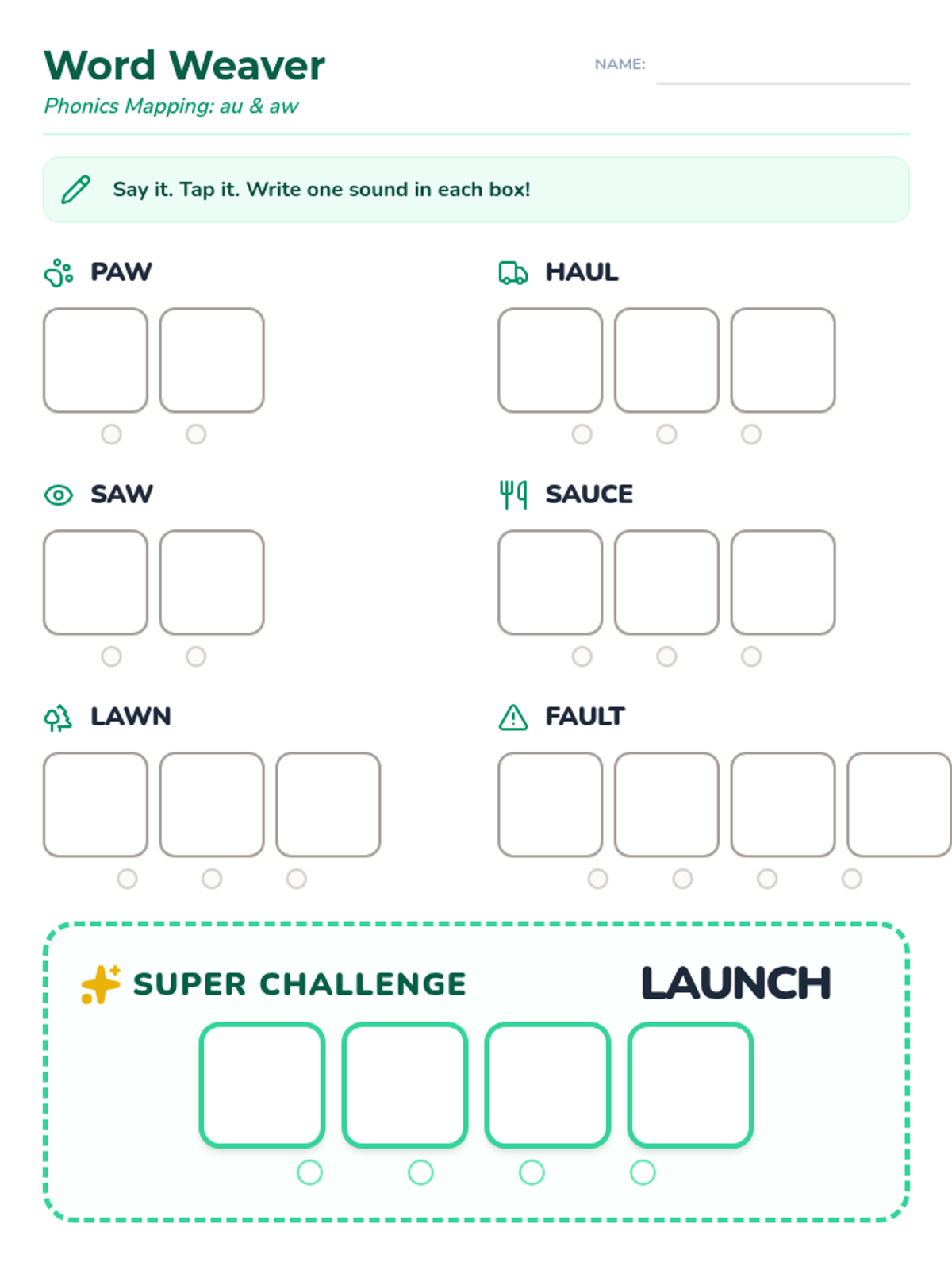
A phonics lesson focused on distinguishing between the nasal endings 'ng' and 'nk' through interactive sorting and visual aids. Students learn to hear the subtle 'k' click in 'nk' versus the continuous nasal 'ng'.
Final assessment of the Floss rule and heart words. Includes dictation and a creative word family exercise.
Fluency building and phonics games. Students practice rapid reading of bonus letter words and construct sentences.
Application through word sorting and decodable reading. Students identify word families and read words in context.
Focus on word building and dictation. Students use letter tiles to practice doubling final consonants and apply heart word knowledge in writing.
Introduction to the bonus letters f, l, s, and z. Students learn the rule that when a one-syllable word ends in f, l, s, or z after a short vowel, the letter is doubled. Includes the teacher guide for the full week.
A comprehensive week-long unit reviewing short vowels through explicit instruction, multisensory practice, and decodable text application.
A 20-minute outdoor investigation where students compare the diversity of life in two different micro-habitats to understand patterns of biodiversity. This lesson integrates art through scientific sketching and a nature color hunt.
A hands-on gardening lesson that turns natural distractions into learning opportunities. Students learn seasonal planting, water conservation, tool safety, and wildlife cohabitation through the lens of being 'Earth Architects'.
A 30-minute introductory lesson for K-1 students to learn about skin's protective role and the sense of touch through a texture-sorting activity.
A 30-minute introductory lesson for K-1 students about the skin's layers and its role as a protective shield for the body.
A hands-on inquiry lesson where students use their senses to investigate objects, build descriptive vocabulary, and form scientific hypotheses about the unknown.